Sounds, Shapes, and Shades
Shawn Smith, conductor
Thomas Leslie, guest conductor
Mickayla Hunter, graduate conductor
Xinbo Li, graduate conductor
7:30 PM | FEB. 12, 2026 | CONCERT HALL | MUSIC BUILDING
English Folk Song Suite RALPH VAUGHAN WILLIAMS 1872–1952
I . March: Seventeen Come Sunday
II . Intermezzo: My Bonnie Boy
III . March: Folk Songs from Somerset
Xinbo Li, graduate conductor
Overture to Candide LEONARD BERNSTEIN 1918–1990
Trans by Clare Grundman
Mikayla Hunter, graduate conductor
Sanctuary FRANK TICHELI b 1958
Thomas Leslie, guest conductor
Variations on a Korean Folk Song JOHN BARNES CHANCE 1932–1972
Mikayla Hunter, graduate conductor
Colonial Song .
. PERCY GRAINGER 1882–1961
Xinbo Li, graduate conductor
Blue Shades FRANK TICHELI
Piccolo
Kalina Rencher
Flute
Rebekah Fife
Madison Franklin*^
Camille Hunsaker
Mickayla Hunter^
Daniel Woodfield
Oboe
Hailey Wilkerson
Marisa Wride*
English Horn
Caroline Seamons
Bassoon
Madi Sarahs
Zach Smith*
E-flat Clarinet
Luke Rasmussen
Clarinet
Reuben Allan*
Hyehyun Pak
Eliza Palmer
Rachel Pearson
Melissa Wilson
Jordan Yardley
Bass Clarinet
Tristan Carlson
Melissa Coulter
Shawn Smith, conductor
Contrabass
Clarinet
Amber Christiansen
Alto Saxophone
Jonathan Crane*
Eli Thomas
Tenor Saxophone
Jeff Sass
Baritone
Saxophone
Hamish Reeves
Trumpet
Carter Glass
Ila Goodrich
Casey Harris
Katie Myers
Caden Randolph
Abe Smith*
Horn
Kanani Annandale
Eric Coons
Spencer Landen*
Kirstyn Millner
Chase Tovey
Trombone
Aneisha Booth*
Elisia Hellwig
Daniel Spencer
Bass Trombone
Peter Merrill
Euphonium
Madeline
Chadburn*^
Luke Lehmuller
Tuba
Emma Hogge*
Elliot Richards
Percussion
Luke Banks
Sean Caviness
Connor Chase
Ben Smith*
Alex Wolfersberger
String Bass
Neal Baird
Piano
Emma Hooper
Harp
Annalise Drewes
*Principal
^Graduate Student
Program Notes
The English Folk Song Suite was written in 1923 and includes three movements . The first is a march entitled “Seventeen Come Sunday” and begins with the folk song of the movement's name with the melody in the woodwinds . It is followed by the folk song “Pretty Caroline,” which features a solo clarinet and cornet, and the last melody in the first movement is “Dives and Lazarus,” which features the lower instruments with the upper woodwinds playing against them .
The second movement is “Intermezzo: My Bonnie Boy,” which opens with an oboe solo to the tune of “My Bonnie Boy” and is interrupted by the tune “Green Bushes,” which is more upbeat and dance-like than the slow, emotional opening . The movement ends with a fragment of the original melody .
The third movement is a march called “Folk Songs from Somerset,” which opens with a light introduction of four measures before the first melody, the folk song “Blow Away the Morning Dew,” played by a solo cornet . The second melody, “High Germany,” is played by the lower instruments and transitions into “The Tree So High” and “John Barleycorn” before repeating back to the beginning of the movement .
Historically, the piece is considered to be a cornerstone work in the literature and one of the earliest serious works for wind band .
The Overture to Candide was written by Leonard Bernstein for his operetta, Candide . It was first performed alone as a concert piece by the New York Philharmonic in 1957 . Bernstein was known for being an expressive conductor, and the stylistic contrasts in this work are indicative of his brilliance .
The operetta follows the storyline of its hero, Candide, through a series of adventures as he tries to reconnect with his lover, Cunegonde . The three main tunes in the overture are from three scenes in the operetta . The opening of the overture quotes the “Best of All Possible Worlds” scene . This scene
features Candide and three other classmates as their teacher, Pangloss, teaches them of the most ideal world . The first motif in the overture comes from when each classmate takes turns objecting to the aspects of the perfect world . When the overture becomes more lyrical, it is quoting the scene called “Oh, Happy We,” in which Cunegonde and Candide are singing about getting married . In this scene, they are ironically singing about different goals in harmony . The overture then grandly finishes with themes from the “Glitter and Be Gay” scene . In this scene, Cunegonde sings about her newfound jewels as a new mistress to the Grand Inquisitor . Both lyrical and grand elements make the Overture to Candide a fantastical addition to the program .
Frank Ticheli composed Sanctuary to honor famed conductor H . Robert Reynolds . As a personal tribute to Mr . Reynolds, who was a horn player in his earlier days, Ticheli chose the solo horn to be the work's main musical messenger . The opening prologue grows out of a set of pitches that were derived from the letters of his first name (Harrah) . The music contains echoes of the lyrical moods of two of Reynolds’s favorite works: Percy Grainger's Hill Song No. 2 and Colonial Song .
The word sanctuary conjures a rich array of images . It can imply a place of solitude, comfort, rest, prayer, protection . It can suggest a place that is strong and imposing or one that is very small and private . All of these images are suggested at one point or another in the music . The opening bell sounds suggest peace and joyful reverence . The main horn melody is at once reflective and reassuring . There is also an underlying hint of nostalgia—a wistfulness, perhaps suggested by the simple three-chord progression that threads the entire work . But there is also an expression of strength and power in the work's dark imposing climax .
After the climax recedes, the main melody disappears for a period of time, replaced by flute and clarinet solo episodes that create repose, space, and distance . But, in the end, the three-
chord harmony returns and serves as a doorway for the final appearance of the main horn theme . The work ends with the quiet echo of the opening bells .
Variations on a Korean Folk Song is based on a folk tune that John Barnes Chance learned while serving in the army in Seoul, Korea . The original tune, “Arrirang,” has been heard as a song of love and heartbreak in many forms, dating up to 1,000 years ago . The original tune is based on the pentatonic scale, and one can hear the echoes of this heartbreak even in many styles of variation .
In the work, Chance introduces the original tune, “Arrirang,” then develops it in five different variations . Each of these variations develops the tune through means of changing time signatures, tempo, and style . Chance maintains the Eastern style through his continued use of the pentatonic scale and his percussive instrumentation like tempo block, gong, and cymbals .
Of his Colonial Song, Grainger writes:
No traditional tunes of any kind are made use of in this piece, in which I have wished to express feelings aroused by thoughts of the scenery and people of my native land, (Australia), and also to voice a certain kind of emotion that seems to me not untypical of native-born Colonials in general .
Perhaps it is not unnatural that people living more or less lonelily in vast virgin countries and struggling against natural and climatic hardships (rather than against the more actively and dramatically exciting counter wills of their fellow men, as in more thickly populated lands) should run largely to that patiently yearning, inactive sentimental wistfulness that we find so touchingly expressed in much American art; for instance in Mark Twain's Huckleberry Finn, and in Stephen C . Foster's adorable songs “My Old Kentucky Home,” “Old Folks at Home,” etc . I have also noticed curious, almost Italian-like, musical tendencies in brass band performances and ways of singing in Australia (such as a preference for richness and intensity of tone and soulful breadth of phrasing over more subtly and sensitively varied delicacies of expression), which are also reflected here .
Ticheli’s Blue Shades opens with a quick minor third—a critical interval that appears throughout the work and threads together its various tunes and melodies . After a brief swung moment led by the clarinets, strict time resumes and the listener is taken through a series of melodic episodes . As the music progresses, the minor third appears in countless iterations, from harmonic support in the low winds to persistent ostinatos passed between the woodwind and percussion sections . The first half of the work is laden with colorful techniques and percussion instruments, from fluttering flutes to vibraslaps and a rowdy cowbell .
A slow and quiet middle section recalls the atmosphere of a dark, smokey blues haunt beginning with a series of solos in the flute, oboe, clarinet, and bass clarinet . Additional instruments gradually join in, leading to the section’s high point, marked “Dirty” in the score .
The music then regains its momentum, accelerating into a driving walking bass in the marimba—derived from a melody heard much earlier in the piece—which accompanies an extended clarinet solo reminiscent of Benny Goodman’s iconic playing style . The work’s final section recapitulates many of the themes heard earlier in the work, layering in wailing chords in the brass, horn rips, and virtuosic runs in the upper woodwinds . The piece ends with a serene chord played by the flute and piccolo, humorously interrupted by the splash of a cymbal .
Guest Conductor Thomas Leslie
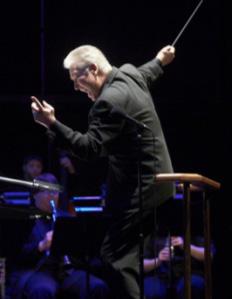
As director of the Division of Wind Band Studies and professor of conducting, Thomas Leslie has earned recognition for highquality performances of the UNLV Bands . During his tenure at UNLV, his bands have received critical acclaim from members of the international music world . Such
notables include composers Malcolm Arnold, Bruce Broughton, Eric Whitacre, and Frank Ticheli; United States Marine Band conductor emeritus Colonel John Bourgeois (Ret .); United States Air Force Band conductor Colonel Lowell Graham (Ret .); United States Navy Band conductor Commander John Pastin (Ret .); Dr . Harry Begian, director emeritus, University of Illinois; and Grammy Award–winning recording artists Eric Marienthal, Jimmy Haslip, Will Kennedy, Bernie Dresel, Mitchel Forman, and Russell Ferrante .
Recognized for a fresh, interpretative style among collegiate wind orchestras, Thomas Leslie and the UNLV Wind Orchestra continue to excel in their commitment to commission new works by the next generation of the world’s finest young composers . This ensemble, under Professor Leslie’s baton, has premiered numerous pieces commissioned by UNLV, Professor Leslie, and the Wind Orchestra . Professor Leslie has conducted and recorded 21 compact disc recordings with the UNLV Wind Orchestra . They are 1994 – The UNLV Wind Symphony; Ghost Train; Gawd$illa Eats Las Vegas; It Takes a Village; Monkey; No Mo’ Chalumeau; Chunk (all title tracks commissioned by Thomas Leslie); BCM… Saves the World; Bandanna, the complete Daron Hagen opera; 3 Steps Forward, the premiere disc in the new UNLV Wind Orchestra Series for Klavier Recordings; Spiritual Planet; 4 Flew Over the Hornet’s Nest; The Quest; Vegas Maximus; Concerto for Marienthal; Marquee Mojo; Lost Vegas; Ventanas; The Return; 24K Gould; and Quaternity, the newest release in this collection . All of these recordings have received noteworthy acclaim in professional review journals in addition to high praise from colleagues throughout the world . Several of the UNLV Wind Orchestra Series recordings have received nominations for Grammy Award consideration in the Best Classical Performance category .
As a high school band director, Leslie won numerous state and national championships while teaching in Iowa, Indiana, and Arizona . While teaching at UNLV (starting in 1985), Professor Leslie has been featured as an adjudicator and conductor throughout the United States . Additionally, he has been invited
to conduct performances and clinics internationally in Australia, Austria, Hungary, Ireland, Japan, England, Scotland, France, Switzerland, Germany, and Canada . Under his direction, the UNLV Wind Orchestra has appeared as an invited performing group at the College Band Directors National Association Conference in March 1994, the Music Educators National Conference Biennial Convention in April 1998, the American Bandmasters Association National Convention in March 2001, and numerous state music educator conferences . The UNLV Wind Orchestra performed as the featured ensemble at the Hokkaido Band Association Clinic in Sapporo, Japan, in May 2002, and was featured in a multiple-performance tour at the La Croix Valmer International Music Festival in St . Tropez, France, in June 2005 and June 2016 . The UNLV College of Fine Arts awarded Professor Leslie the College of Fine Arts Teacher of the Year Award in 2006 . Most recently, Maestro Leslie and the internationally acclaimed UNLV Wind Orchestra were awarded the American Prize for Best American Collegiate Wind Ensemble for the year 2020 .
Thomas Leslie received degrees in music education from the University of Iowa and Indiana State University . Elected in March 2012, Professor Leslie served office as the 75th president of the prestigious American Bandmasters Association and currently serves as a member of the ABA Nominating Committee, the ABA Membership Committee, and the ABA Past President’s Ad Hoc Committee . He was originally inducted to membership in 1997, and he hosted the national convention of this very distinguished group in Las Vegas in March 2001 . He continues to be a long-standing member of the College Band Directors National Association and has served as Western Division Chair for the National Band Association . Professor Leslie currently serves on the board of directors for the John Philip Sousa Foundation .
About the Conductor
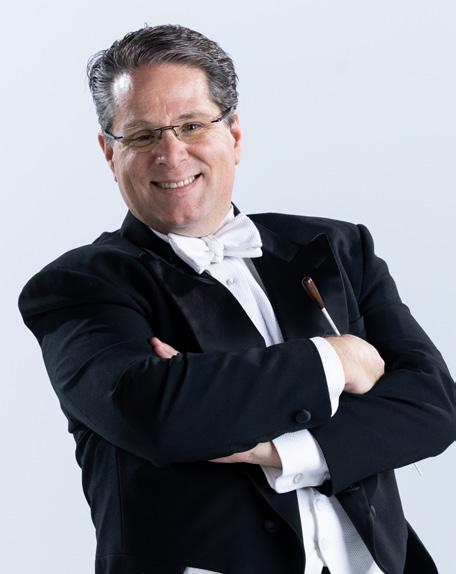
Shawn Smith serves as the director of the Brigham Young University School of Music, as well as professor of conducting and director of bands . Prior to his appointment at BYU, he spent 16 years as director of bands at the University of North Carolina at Charlotte and Texas A&M–Corpus Christi .
Smith holds a doctor of musical arts degree in instrumental conducting from Arizona State University, and master of music and bachelor of music education degrees from Louisiana State University and Boise State University, respectively .
In high demand as a band and orchestra conductor, clinician, and adjudicator, Smith has been invited to conduct professional and educational ensembles throughout the United States, South America, Central America, and Europe, including concerts with world-renowned trombonist Joseph Alessi, Grammy Award–winning chamber ensemble Eighth Blackbird, Tony-nominated Broadway and television star Derek Klena, “The President’s Own” United States Marine Band, and the United States Air Force Band .
Equally at home with opera and musical theater productions, Smith has conducted pit orchestras for The Marriage of Figaro and a six-week run of Les Misérables . His performances have been heard numerous times on American Public Media’s Performance Today, the most popular classical music radio program in the United States . In 2015 Smith was awarded second place for the American Prize in Conducting— Professional Band Division .
In the area of research, Smith has been published in the Journal of the World Association for Symphonic Bands and
Ensembles and in Alta Musica, and he has presented his research at national and international conferences in the United States, Europe, and South America . Smith has also presented numerous educational clinics, workshops, and speeches, most notably at the International Midwest Band and Orchestra Clinic in Chicago, Illinois, and at state music conferences throughout the United States .
As a public school teacher, Smith served as director of bands and orchestra at one of the largest high schools in Idaho, where he administered a very successful comprehensive instrumental music program .
An accomplished trumpeter, Smith has performed with the Corpus Christi Symphony (Texas), the Boise Philharmonic Orchestra (Idaho), the Acadiana Symphony (Louisiana), Keith Brion’s New Sousa Band, and the Temptations .
During his tenure as director of bands at Texas A&M–Corpus Christi, Smith received the Texas A&M System Teaching Excellence Award twice . Smith holds honorary memberships in Phi Mu Alpha Sinfonia, Sigma Alpha Iota, and Kappa Kappa Psi . He also holds memberships in the Utah Music Educators Association, the National Band Association, the College Band Directors National Association, and the World Association for Symphonic Bands and Ensembles .
Our Graduate Conductors
Xinbo Li
Xinbo Li holds a bachelor’s degree in music education from China Conservatory of Music in Beijing . Having won several awards nationally and internationally in classical voice and piano performance, she is in her second year studying wind band conducting at BYU where she has conducted the Wind Symphony, Symphonic Band and University Bands .
Mickayla Hunter
From the age of eight years old, Mickayla has enjoyed the versatility of the flute that enables her to play in solo, chamber music, orchestra and band settings . She also enjoys performing in trio with her harpist and cellist sisters . Mickayla will be receiving a Master's degree in Instrumental Conducting from BYU this Spring . She received dual Baccalaureate degrees from UVU in both Flute Performance and Music Education in May 2024 . She received her Associate's degree in Music-Flute Performance from BYU-Idaho April 2021 . Mickayla served as a member of the Nauvoo Brass Band as a Performing Missionary flutist 2021 and 2022 .
Mickayla was Lone Peak High School’s 2019 Sousa award recipient and was first chair flutist at Utah all-state and district honor bands . Mickayla was honored as the 2018-2019 Instrumental Lone Peak High School Music Sterling scholar, has been a concerto soloist multiple times with various bands and orchestras, and was a finalist for the Utah Symphony Salute to Youth . She had the honor of playing a flute solo for UVU Commencement May 2024 . Mickayla currently plays with the BYU Wind Symphony and was first chair in UVU's Wind Symphony and Symphony Orchestra . She was principal flutist in the BYUI Sinfonietta, BYUI Symphony orchestra, and in Lyceum Philharmonic .
Mickayla has 12 years of private flute and piano teaching experience . Her students have been first chair in their local school bands, have participated in marching band, and have played solos at UMEA Music conferences . As both a conductor and flutist, music has always been Mickayla’s means of expression to tell her story and her vehicle of communication to connect with others' hearts .
About the BYU Wind Symphony
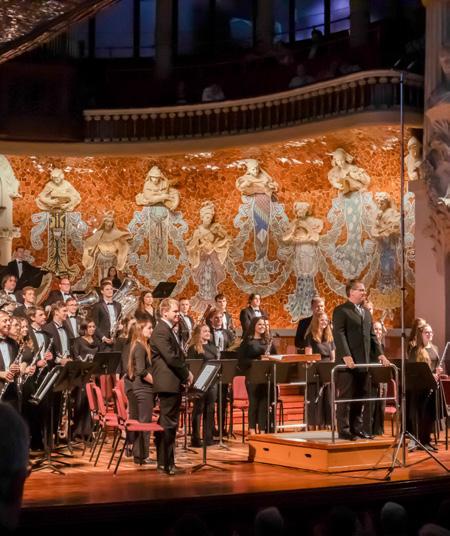
The finest woodwind, brass, and percussion players at Brigham Young University perform with the Wind Symphony, under the direction of Shawn Smith . The BYU Wind Symphony maintains an active performance schedule with programming that ranges from wind band classics to some of the newest wind repertoire . Participation in commissioning consortiums and hosting composers and guest conductors on campus offers ensemble members wonderful musical experiences .
The BYU Wind Symphony has performed with world-renowned artists including New York Philharmonic principal trombonist Joseph Alessi, Grammy Award–winning chamber ensemble Eighth Blackbird, Tony-nominated Broadway and television star Derek Klena, and the popular vocal trio Gentri . The ensemble has been honored with invitations to perform at national and division conferences of the College Band Directors National Association, the American Bandmasters Association National Conference, and the international conference of the World Association for Symphonic Bands and Ensembles .
As BYU’s premier wind band, the ensemble has performed throughout the United States and in over twenty countries, including China, Japan, South Korea, Mongolia, Australia, New Zealand, and many European countries . Recent concert tours include Australia (May 2018), Texas (May 2019), Spain/ Portugal (May 2023), South Korea (July 2024), and Brazil (May 2026) . Their latest album, Latin Dances, was released in 2024 and is available on all streaming services .