






EXECUTIVE EDITOR

EXECUTIVE EDITOR

In an era where the lines between information and influence are increasingly blurred, I want to take a moment to pull back the curtain on how we build this magazine. Specifically, I want to address the "Great Divide" in our industry: the distinction between editorial and advertorial content.
To the casual observer, they might look similar—both feature high-quality photography, polished prose, and expert insights. However, the soul of these two formats couldn’t be more different.
Editorial Content is driven by curiosity and service. We identify a story because it is timely, important, or inspiring. We answer to you, the reader. If a product is featured in an editorial spread, it’s there because we believe it’s the best in its class, not because a check was written.
Advertorial Content (often labeled as "Sponsored Content" or "Special Promotion") is driven by commercial intent. It is paid space where a brand uses our aesthetic to tell their specific story. While we ensure these partnerships align with our tastes, the ultimate "editor" of that page is the advertiser
Trust is the only reason you pick up this magazine. If you suspect that a glowing review of a skincare line or a travel destination was bought and paid for, our recommendations become worthless. Once a reader feels "tricked" by a hidden advertisement, that relationship is often broken forever.
SB Magazine has a "voice," it speaks the truth—even when that truth is unflattering. Independence allows us to be your advocate in the marketplace.
Ironically, the wall between the two helps our partners. Advertorials are effective because they live within an ecosystem of high-integrity journalism. If the entire magazine were for sale, the "prestige" of appearing in our pages would vanish. By keeping the editorial pure, we maintain a premium environment that brands want to be associated with.
You will always know when you are reading the independent voice of our staff versus a collaborative partnership with a brand. We use clear signposting—labels, distinct fonts, or border treatments—to ensure you are never guessing.
We believe that you deserve the unvarnished truth in our features, and we believe our advertisers deserve a beautiful stage for their messages. By keeping the two in their rightful places, we ensure this magazine remains a source of inspiration you can rely on.
Thank you for your continued trust and for being a part of our community.
PUBLISHER
G. Byron May
OWNERS
G. Byron May
Seva May
Noble Feldman
EXECUTIVE EDITOR
Seva May
ADVERTISING COORDINATOR
Byron May
CREATIVE DIRECTOR
Logan May
PHOTOGRAPHY
Michael Lee, IcedUp Photography
ACCOUNT EXECUTIVES
Stephanie Pringle
Seva May
Virginia St. John
CONTRIBUTING WRITERS
Teddy Allen
Kevin Hinson
Katey Mueller
GRAPHIC DESIGN
May Marketing Group
Emily Hammon
HOW TO REACH US
318.221.7264 • Fax 318.676.8850
850 Stoner Ave.
Shreveport, LA 71101
ADVERTISING
318.221.7264 ext #104
WEBSITE www.sbmag.net
SUBSCRIPTION QUESTIONS
subscriptions@sbmag.net
POSTMASTER
Send address changes to SB Magazine, Inc., 850 Stoner Ave., Shreveport, LA 71101. SB Magazine is published monthly by SB Magazine, Inc., 850 Stoner Ave., Shreveport, LA 71101. Advertising Rates on request. Subscription Rate: $16 per year. Views expressed herein are those of the authors and do not necessarily constitute the view of SB Magazine, Inc . SB Magazine reserves the right to accept or reject advertisements. Third Class Postage Paid at Shreveport, LA 71101.
Copyright © 2023 SB Magazine, Inc.


JULY 15, 2026




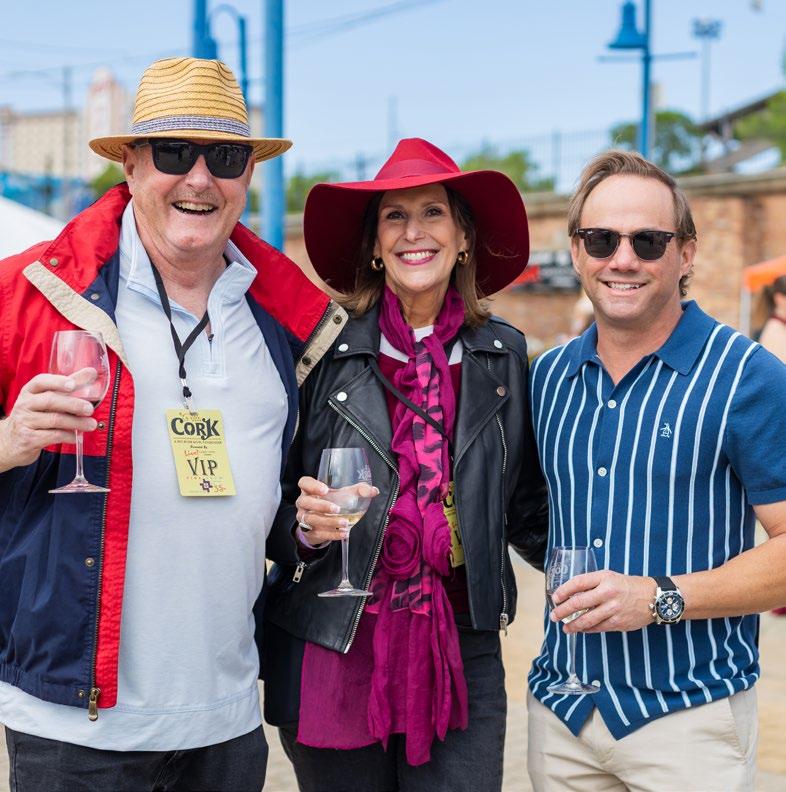
The 20th annual CORK Wine Festival returned to the heart of downtown Shreveport on Saturday, March 28, 2026, transforming the upper pavilion of Festival Plaza into a premier destination for oenophiles and foodies alike. This landmark anniversary event, a key fundraiser for the Red River Revel, featured an impressive selection of over 95 wines from around the globe, ranging from bold reds like Freakshow and Mollydooker Shiraz to refreshing whites and specialty wine-based cocktails. To cap off the afternoon, the festival hosted a Thrifty Liquor pop-up shop, allowing attendees to purchase bottles of their favorite discoveries on-site, ensuring that the spirit of the celebration lasted long after the final pour.






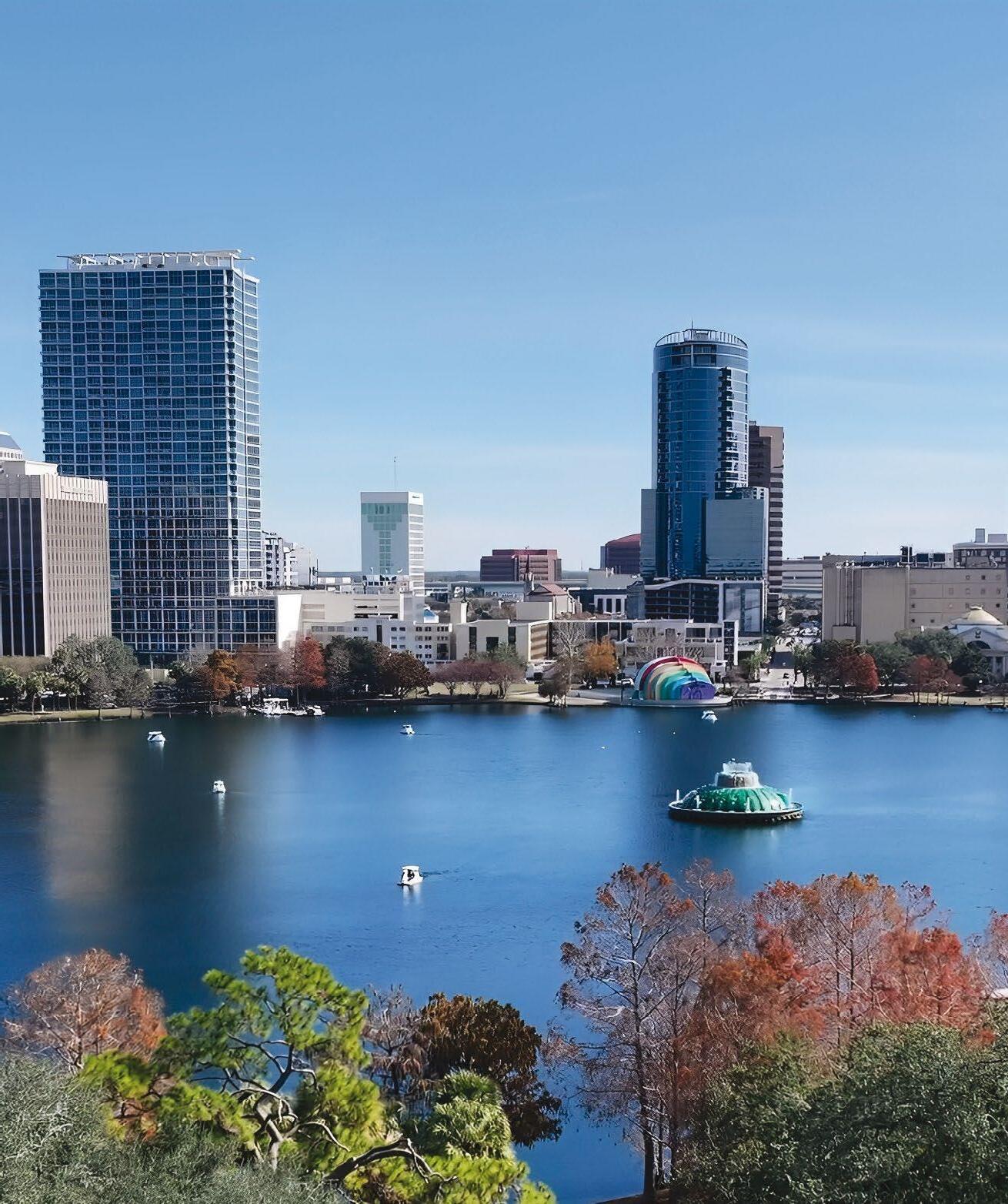
Adventure Fun Park: The go-to destination for energetic families. 424 Ashley Ridge Blvd.
Risen Rock Climbing Gym: Over 10,000 square feet of climbing zones. 1060 Chinaberry Drive.
Surge Entertainment Center: The place to be for kids, teens and families looking for a one-stop entertainment center. 2950 E. Texas Street.
Jump Swim School: Lessons for the entire family. 7141 Youree Drive. shreveport@jumpswimschools.com.

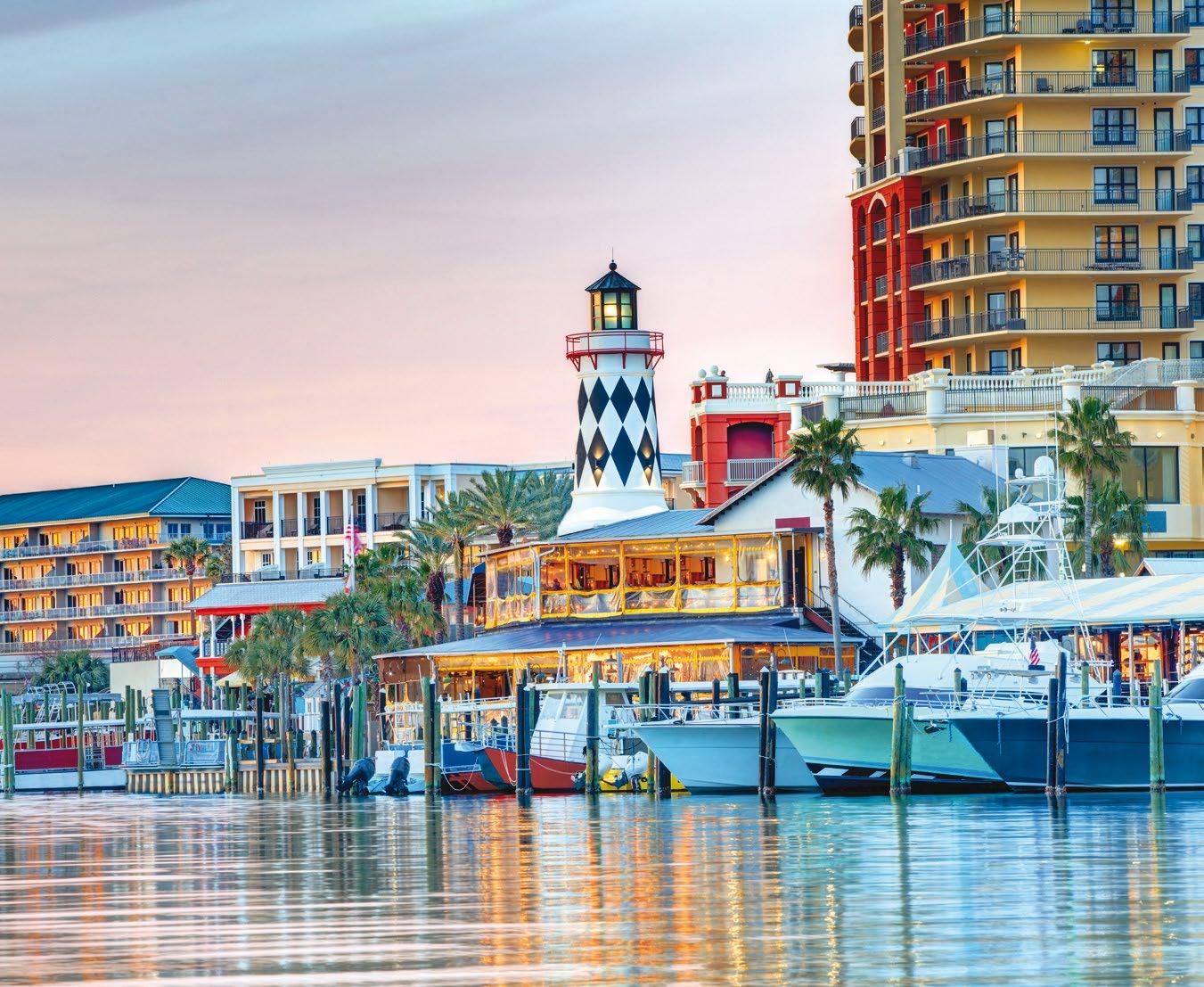
Gulf Shores/Orange Beach, AL: A popular, close-to-home beach destination for many Louisiana families.
Pensacola, FL: Offers historical sites like Fort Pickens and family-friendly beaches.
Hot Springs, AR: Features Hot Springs National Park, lakes, and family attractions in the Ozark Mountains.
Outdoor Adventure: Rent a cabin at Postcard Cabins in the Homochitto National Forest (Mississippi).
Camp Hardtner
2393 Camp Hardtner Rd., Pollock, LA (318) 765-3794 camphardtner.org Grades: 2-12
Rates: $475-1,350
Camp Istrouma
25975 Greenwell Springs Rd., Greenwell Springs, LA (225) 261-2089 campistrouma.com
Grades: 1-12
Rates: $200-$470
Camp Stanislaus

New Orleans: Visit the Audubon Zoo, the Audubon Aquarium and Insectarium, or take a ride on the Natchez Steamboat. Family-friendly activities include walking through the French Market and taking a Pirates of the Quarter tour.
North Louisiana/Natchitoches: Explore the Kisatchie National Forest, the Louisiana Sports Hall of Fame, and Poverty Point World Heritage Site.
Cajun Country: Enjoy swamp tours in LaPlace, visit the Children's Museum of Acadiana in Lafayette, or take the Tabasco Factory tour on Avery Island.
304 South Beach Blvd., Bay St. Louis, MS (228) 467-9057 campstanislaus.com
Ages: 8-15 Rates: $930
Camp Ozark
155 Camp Ozark Drive Mt. Ida, AR 71957 870) 867-4131
• Guided National Parks Tour and leave the driving to the professionals! These can be anywhere from 7-14 days and include multiple parks and famous frontier sites.
• 4-5-7-day Family Cruise from Galveston. There are various cruise lines with different attractions for all ages with food and entertainment already included in the cruise fare!
• Overnight train trip to St. Louis and visit landmarks and lots of family activities. Hotel near the train station, visit the St. Louis Zoo (it's free admission!) and spend hours at City Museum.
• Spotlight 6-day guided tour of Washington DC to celebrate the 250th birthday of our country
State Parks: Rent cabins or camp at Louisiana State Parks like Fontainebleau State Park, which offers trails and beach access
St. Mark's offers six weeks of flexible programming for rising Preschool 2 through 8th grade students. Dates: June 8-12 June 15-19 June 22-26 June 29 - July 2 July 6-10 July 13-17
Contact Jamie Chapman at jchapman@smc.school.
Live Act: The new, faith-based performing arts organization, offers a one week acting camp, July 27-Aug 1, 9:00 – Noon, culminating in a live performance on Saturday at 2:00. Contact seva@ liveactorg.com
Stage Center: Provides performing arts camps, including specialized options like musical theatre camps for grades K-8. They also offer internships for students to work behind the scenes and in production.
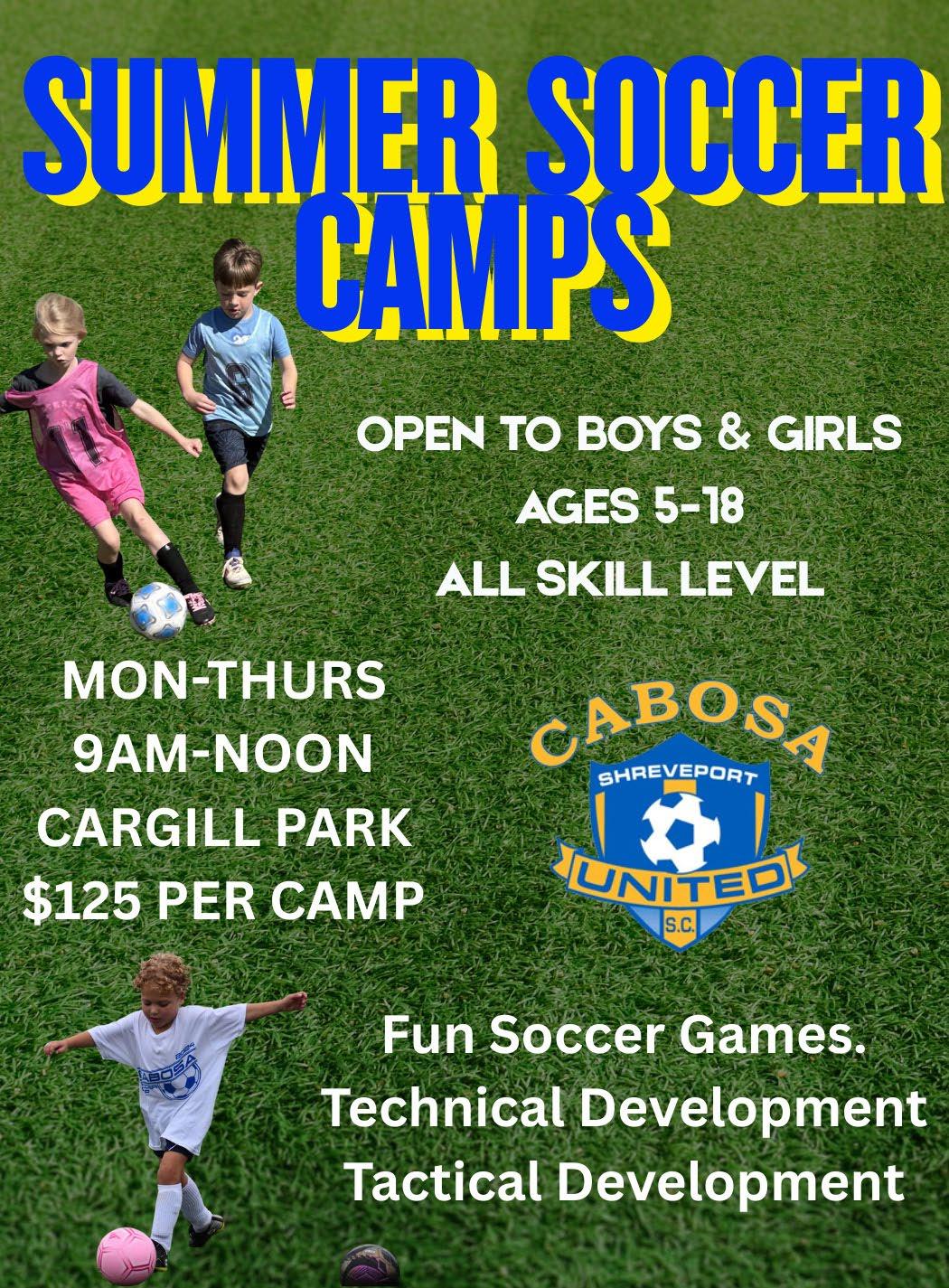
Cabosa: Summer soccer camps for boys and girls age 5-18, all skill levels. Monday-Thursday, 9am to noon at Cargill Park.
Cranium Camp: Get and keep your brain in shape this summer. Learning RX, 8856 Youree Drive. 318-797-8523 Executive and ACT Camps: Score higher on the ACT with Learning RX. By Appointment. 318-797-8523









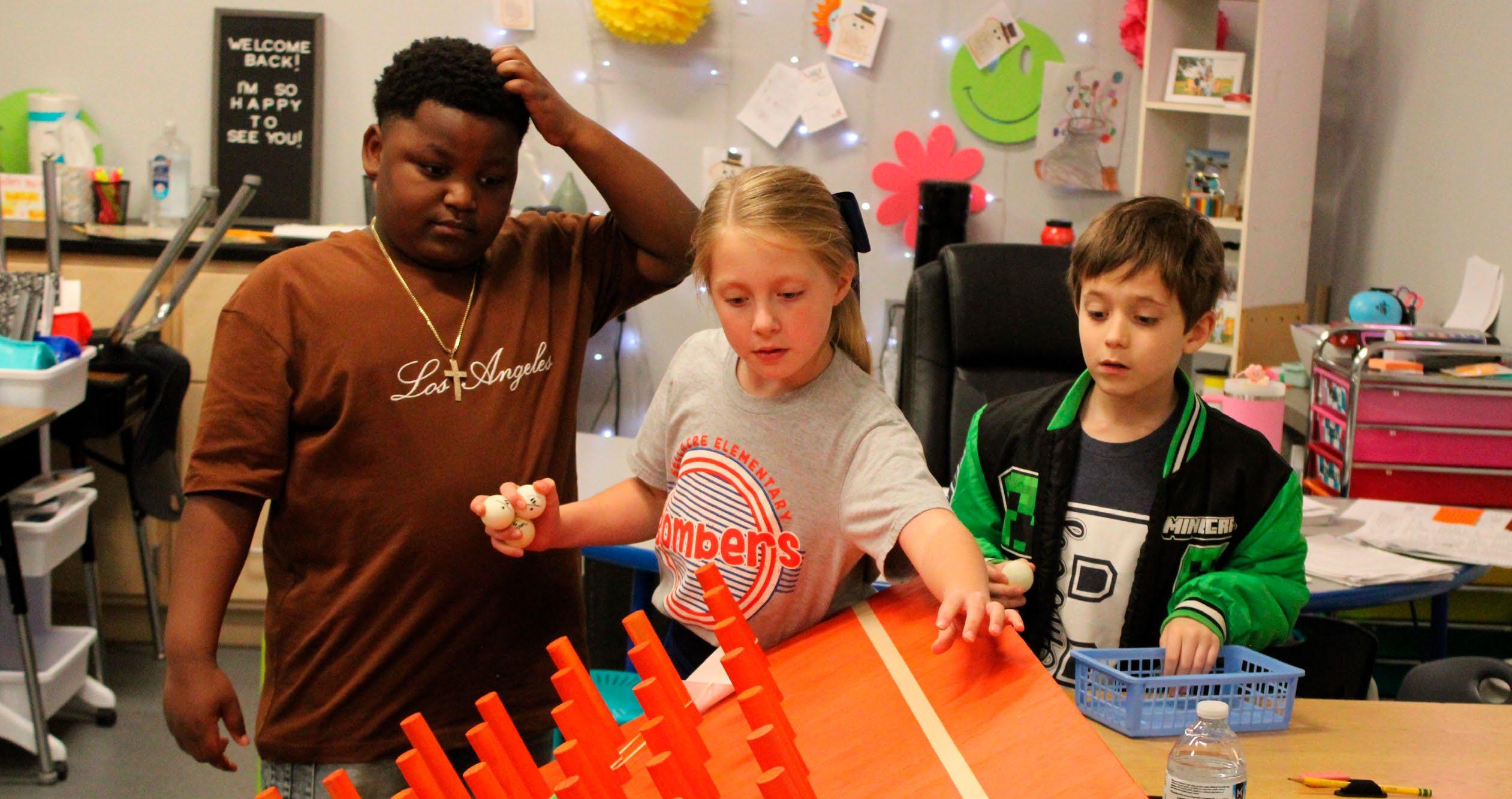
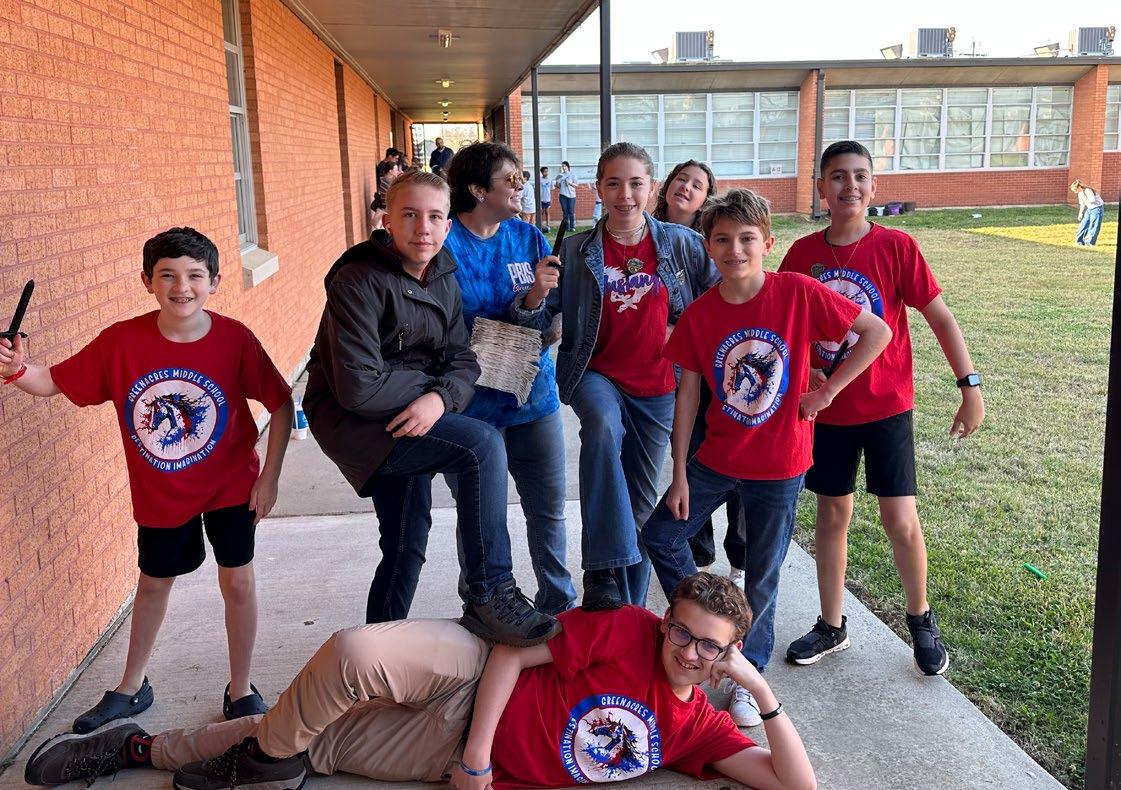
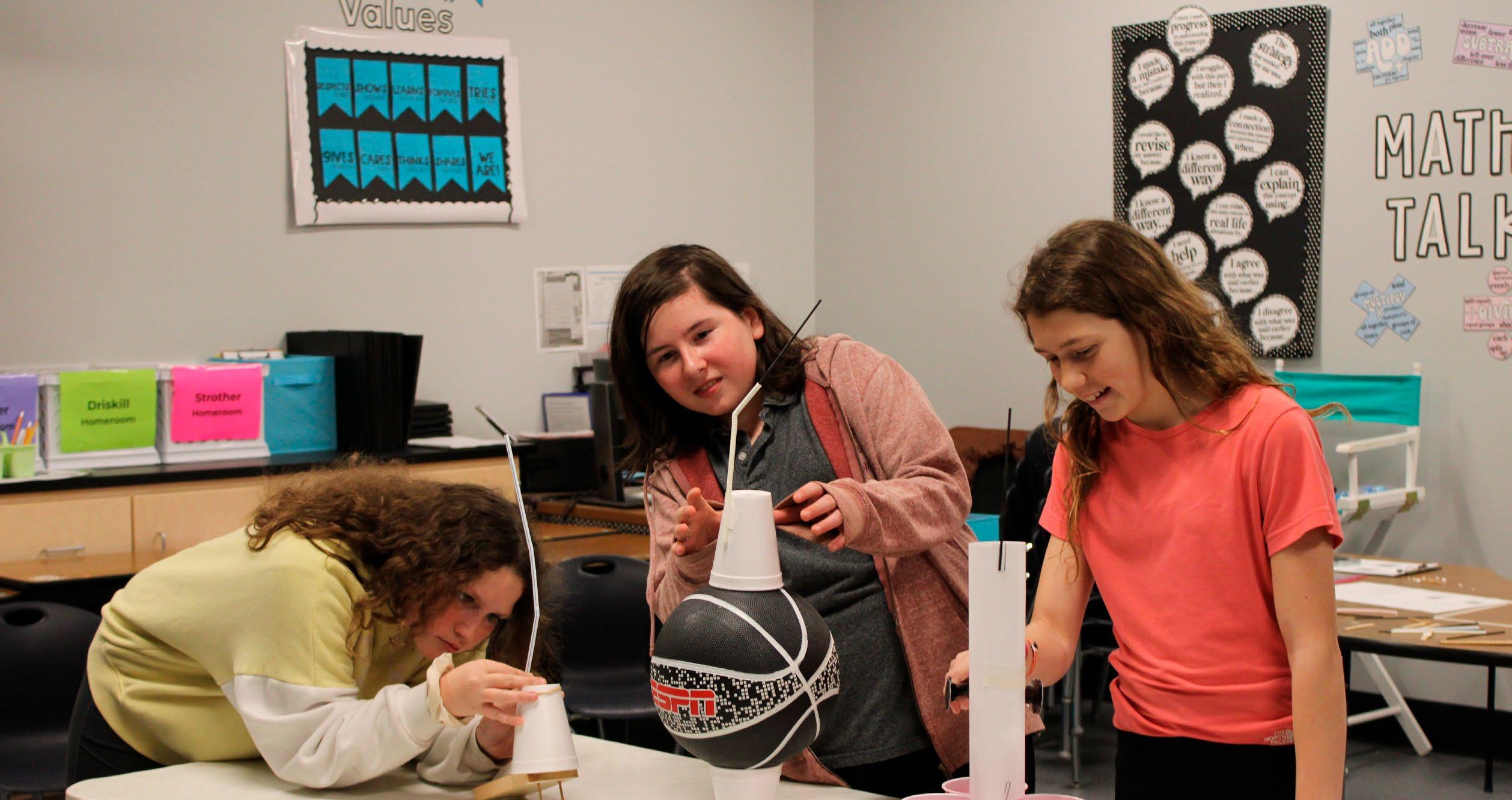
NASA has launched four, remarkable explorers into space for a flyby of the moon. As the first crewed mission of NASA’s Artemis program, this flight will demonstrate life support systems for the first time with a crew and lay the foundation for an enduring presence on the Moon ahead of future missions to Mars. It took a team to build Artemis and prepare it for flight. One can imagine that as the rocket lifted off from Launch Pad 39B, mothers and fathers, teachers, and students all over the world were encouraged. What began as dream, is now a reality. What was once a creation of an imagination, became another momentous event in our history. It may have very well begun in an after-school club called Destination Imagination.
DI – Destination Imagination is a global educational non-profit that teaches the creative process through a series of STEAMbased (Science, Technology, Engineering, Arts, and Mathematics) challenges.
What makes DI unique is that students must create and present their solutions entirely on their own—without adult interference— building skills in teamwork, critical thinking, and creativity.
In Louisiana, teams recently gathered for their State Tournament on March 21, where they showcased months of hard work. Throughout the school year, students have been meeting regularly, designing solutions, building props, writing scripts, and practicing both their Team Challenge and Instant Challenge skills. Many teams participated in events like Skills Day and “Super Saturday,” which help them prepare for the spontaneous, teamwork-focused Instant Challenge portion of the competition. Several Louisiana teams performed exceptionally well at State and have now qualified
for Destination Imagination Global Finals. This international competition, scheduled for May 21–24 in Kansas City, brings together top teams from around the world. Last year’s “Globals” featured over 600 teams from across the United States and 13 countries, with more than 30,000 students participating in DI worldwide in 2025. Qualifying for Globals is considered a huge honor and a testament to a team’s dedication, creativity, and perseverance.
• Project Management Skills: Teams must manage a budget (usually under $150) and a timeline. They learn to prioritize tasks and handle "Scope Creep" before they even hit high school.
• The "No Interference" Rule: This is DI’s golden rule. Adults cannot help. This fosters extreme self-reliance and confidence, as students know every success (and failure) belongs entirely to them.
• Risk-Taking and Resilience: DI encourages "failing forward." If a structure collapses during a tournament, the team must pivot instantly. This builds the "grit" necessary for higher education and the workforce.
• Collaborative Leadership: Unlike many school projects where one person does the work, DI challenges are too complex for one person. Students must learn to integrate diverse ideas and resolve internal conflicts.
• Rapid Problem Solving: The "Instant Challenge" portion of the competition requires teams to solve a complex puzzle in under five minutes, sharpening their ability to think on their feet.
Many leaders in creative and technical fields credit their success to the foundational skills they built in programs like Destination Imagination (and its predecessor, Odyssey of the Mind).
Fabregas, a former DI participant, often cites the program as the catalyst for his career in digital media and storytelling. He has noted that the "Instant Challenges" specifically prepared him for the fastpaced, unpredictable nature of the entertainment industry, where pivot-on-a-dime thinking is a daily requirement.
While many individual engineers remain behind the scenes, both NASA and SpaceX have historically recruited from DI and similar "creative problem solving" alumni pools. Why? Because these programs teach and through trial and error. An engineer who spent their childhood building weight-bearing structures out of balsa wood (a classic DI challenge) has a more intuitive grasp of structural integrity than one who has only studied it in a textbook.
As the CEO of Novaby, a global creative agency specializing in Augmented Reality (AR), Beabout has highlighted how the interdisciplinary nature of DI—blending technical engineering with theatrical performance—directly mirrors the modern tech landscape. Her ability to visualize 3D spaces and manage complex, multi-layered projects started with the "Team Challenges" in DI.
Many alumni move into "Human-Centered Design." The empathy required to understand a challenge's "client" (the Appraisers) and the collaborative nature of the teamwork serves as a blueprint for nonprofit leaders and teachers who must solve systemic problems with limited resources. The "Alumni Edge": A study by the University of Virginia found that DI participants were significantly more "engaged" in their learning and scored higher on critical thinking assessments than their peers. In a job market increasingly dominated by AI, the human creativity fostered by DI is becoming a premium professional asset.
Destination Imagination offers an incredible opportunity for students to start building a future. Competing encourages DI students to venture outside their comfort zones. It builds emotional intelligence and fosters deep social bonds through the spirit of teamwork. The process to « get there « sparks motivation and often develops a passion for the work itself.
Winning a spot at the Global competition is an honor. However, attending Globals comes with significant financial costs, including travel, lodging, registration, and materials. This is especially challenging for teams not affiliated with traditional schools. This year, two homeschooling teams (middle school and high school) from Louisiana have qualified and must rely entirely on community support and donations to attend. Additionally, an independent middle school team competing without school affiliation—is heading to Globals for the first time, making their achievement even more remarkable.
Beyond their own success, these teams are part of a larger effort to rebuild and grow DI across Louisiana. Following the COVID-19 pandemic, participation in the state dropped significantly. Louisiana once had over 100 teams competing at the state level, but that number has declined in recent years. Now, these dedicated students— especially the homeschooling teams—are working to inspire others to join, encouraging both homeschoolers and traditional students to get involved next season.
These teams have spent the entire school year working toward this goal, and the opportunity to compete on a global stage is both a privilege and a life-changing experience. With community support, they hope not only to represent Louisiana at Globals, but also to help rebuild a thriving DI program for future students. If you followed Artemis and the achievements of NASA and the space program, or you marvel at how things are built, or you are in awe of writers and performers, you can be a part of Destination Imagination. Help send a student to the Global competition.
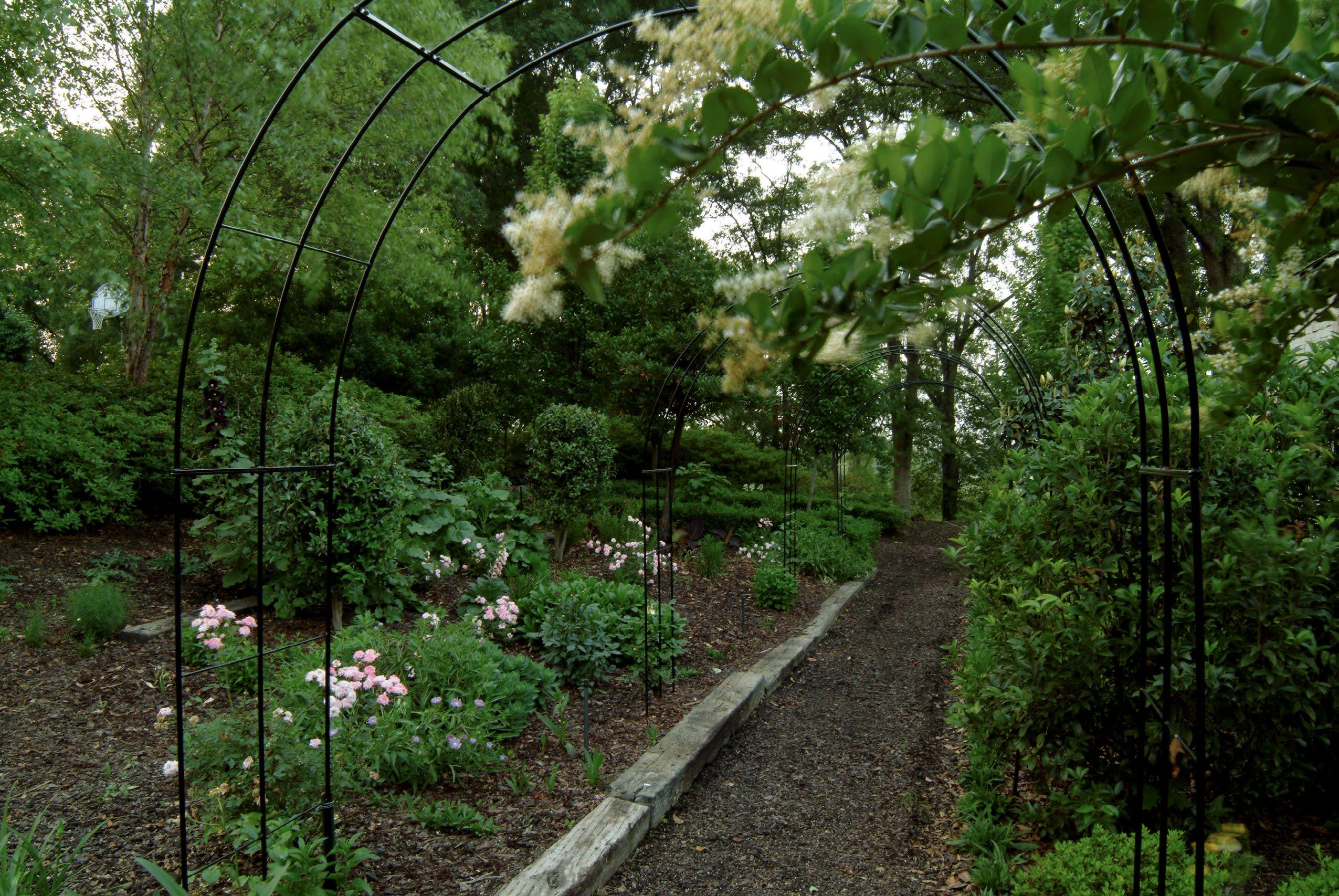
For decades, the arrival of spring in Shreveport, Louisiana, has been signaled not just by the blooming of azaleas, but by the anticipation of a cherished community event: Le Tour des Jardins. This annual pilgrimage into the city's most exquisite private sanctuaries is more than a showcase of horticultural beauty; it is the living legacy of a visionary circle within the Northwest Louisiana Master Gardeners (NWLAMG), brought to life through the determination of figures like May Elizabeth Berry and the foundational guidance of Dr. Joe W. White. The tour’s journey from a fragile concept to a cornerstone cultural event is a testament to the power of a shared passion for the soil.
Le Tour des Jardins began in 1998, with the formation of the very first class of Master Gardeners in Northwest Louisiana. This program, a partnership between the LSU AgCenter and dedicated community volunteers, aimed to train individuals in research-based horticulture and stewardship. Among this inaugural group of enthusiastic students were May Elizabeth Berry, DeAnn Almond, and Lou Osburn.
These budding horticulturists quickly formed a tight-knit bond, united by their love for gardening and a collective desire to share that passion with the wider community. Mayy Elizabeth Berry carried a compelling vision. She was aware of the immense success of a private garden tour in Baton Rouge and recognized that Shreveport-Bossier possessed both the stunning landscapes and the public appetite to support a similar endeavor.
Berry was not one to let a grand idea remain abstract. However, she was equally pragmatic, understanding that
a project of this magnitude required a robust team. She pitched her concept to classmates DeAnn Almond and Lou Osburn, who immediately recognized its potential. Almond’s technical skills and Osburn’s talent for writing created a strong foundational triad with Berry’s visionary and promotional strengths. With a preliminary plan in hand, they approached their instructor and mentor, Dr. Joe W. White, the Area Horticulture Agent for the LSU AgCenter.
Dr. White’s influence on the landscape of Northwest Louisiana cannot be overstated. With a Ph.D. in horticulture from LSU and decades of experience as an extension agent since 1972, he was the region's preeminent "plant guru." His role was not merely academic; he was a connector, spending his career visiting homes and farms to diagnose soil problems, identify plant diseases, and field thousands of phone calls annually from anxious gardeners.
Dr. White understood the community's profound connection to the land. When
May Elizabeth Berry and her team presented their idea for Le Tour des Jardins, he did not just grant official approval; he provided the essential backing of the university professionals and access to the LSU AgCenter's facilities and resources.
Dr. White’s endorsement transformed a volunteer idea into a program with institutional credibility. While Berry and her classmates provided the energy and execution, Dr. White provided the scientific grounding and the official framework necessary for the NWLAMG—which he officially organized as an association in 2000—to flourish and manage such a large-scale event.
The path to the first tour was anything but smooth. It was funded initially on "nerve, energetic members, and support by the Extension Service." The financial foundation was tenuous. Initial "seed money" arrived in the form of a $500 grant from Shreveport Green, but as logistics mounted, the funds quickly evaporated.
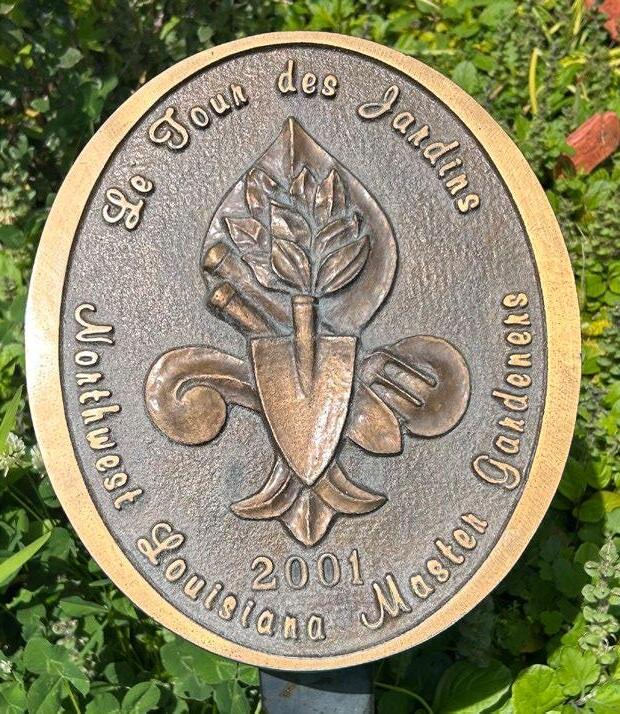
The logistics of that first year required inventing policies from scratch. The team had to secure insurance, which they successfully negotiated through the American Rose Society. They needed to find and vet garden owners brave enough to open their private spaces to the public. To thank these vital participants, DeAnn Almond designed elegant plaques,
initially molded from clay by local assistance found through Don Crow.
Despite the operational hurdles and financial strain, the first Le Tour des Jardins was an unequivocal success. Its impact was measured not in profit margins, but in the "happy faces, the smiles, and the eager questions asked" by a public delighted to gain inspiration from local gardens, large and small. It proved that the community was hungry for this connection to horticulture.
Following the event’s success the clay plaques were upgraded to permanent ones. The NWLAMG trademarked the name "Le Tour des Jardins" for their exclusive use, securing the tour’s unique identity.
In the more than two decades since its inception, Le Tour des Jardins has grown far beyond that first experimental weekend. It has weathered economic shifts and global pandemics. It was recently decided to hold the event every other year
Today’s tours often feature multiple private gardens throughout Shreveport and Bossier City, ranging from whimsical, small patio spaces to expansive, multi-acre estates. They have expanded to include modern components like "Education Stations" at each garden, where Master Gardeners teach on topics from pollinator habitats to rainwater harvesting.
The proceeds from Le Tour des Jardins continue to honor the fundraiser’s original intent, financing critical Master Gardener projects that enhance community knowledge and environmental stewardship. These initiatives include supporting 4-H summer camps, maintaining the historical Pioneer Heritage Center Gardens at LSUS, developing the Louisiana Super Plant Gardens, and providing community grants to local non-profits and schools.
When visitors stroll through the gates of a featured garden during Le Tour, they are witnessing the fruit of decades of cultivation. They are walking through a dream first planted by May Elizabeth Berry, nurtured by the wisdom of Dr. Joe W. White, and tended by generations of dedicated Master Gardeners. Le Tour des Jardins is not merely a tour of flowers; it is the enduring bloom of a community’s shared love for the earth.
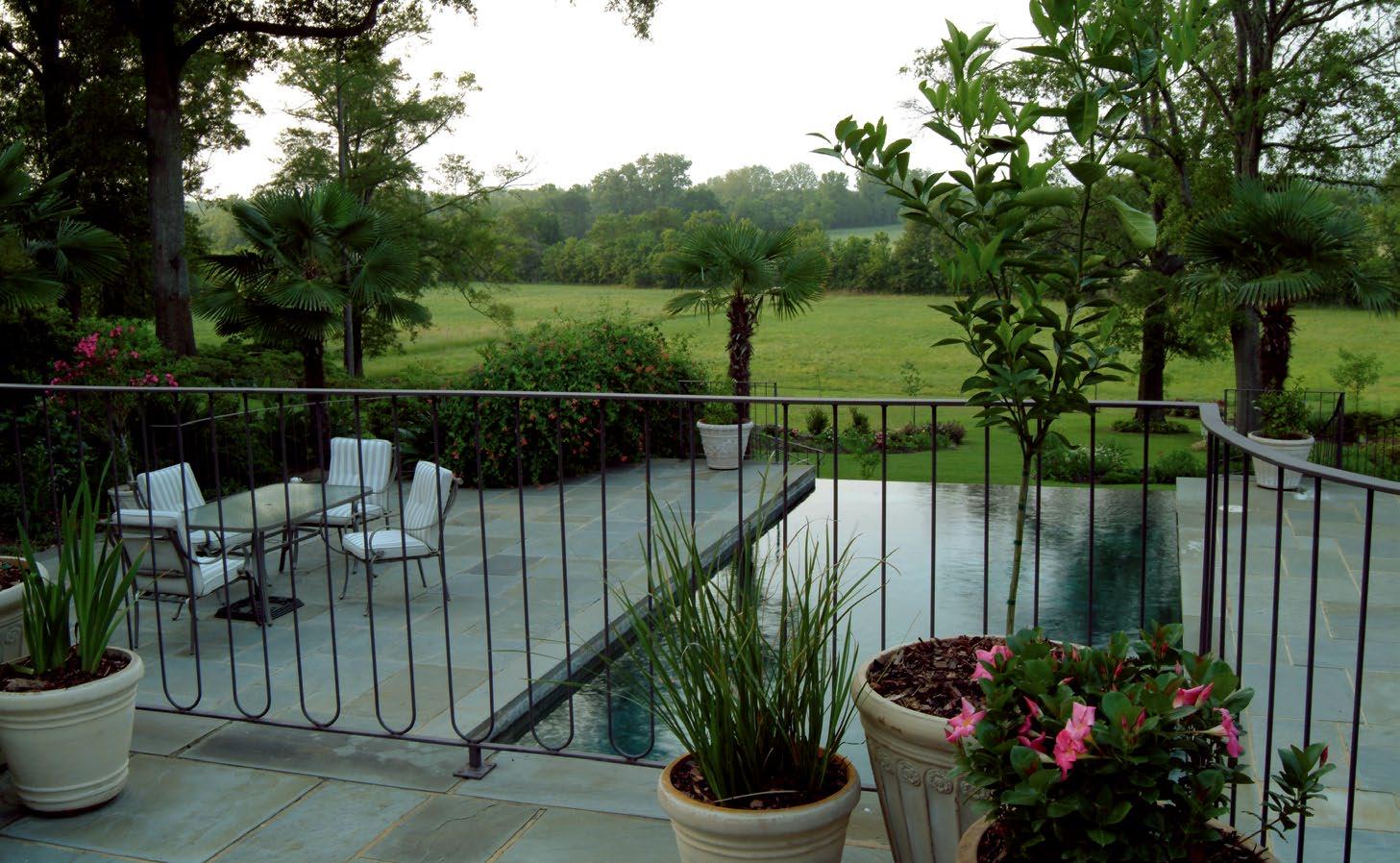
Photography from SB Magazine, July 2003, by the late Neil Johnson



By Adam Bailey
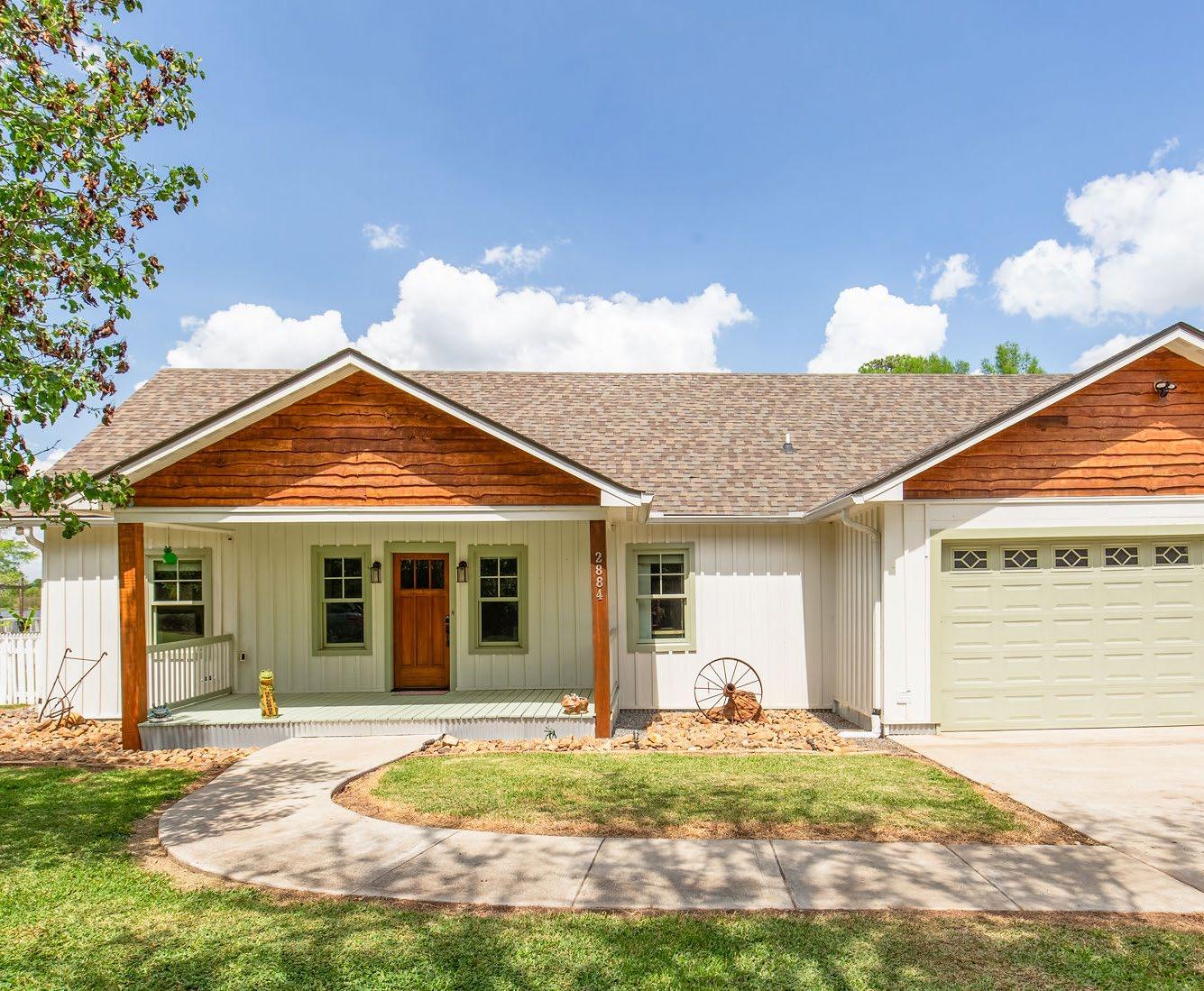
Not every home earns its setting. This one understands it.
“Lakefront” can be a flexible term. Sometimes it means spotting water somewhere beyond the fence line, framed between rooftops and docks—close enough to claim, but not always close enough to feel. You catch it if you’re looking for it. You point it out to guests. It’s there, technically. Here, the relationship is more measured—and far more believable.
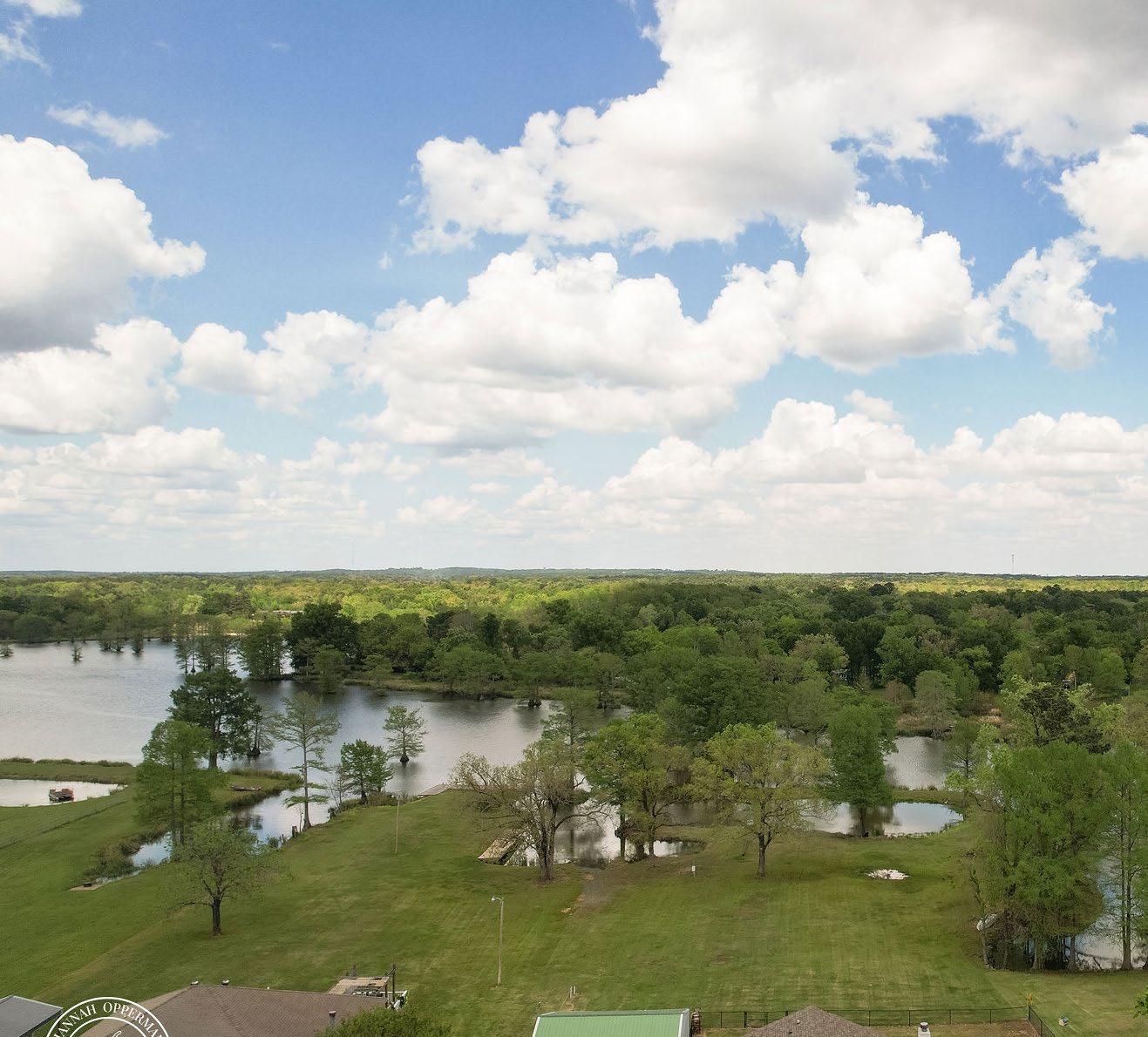
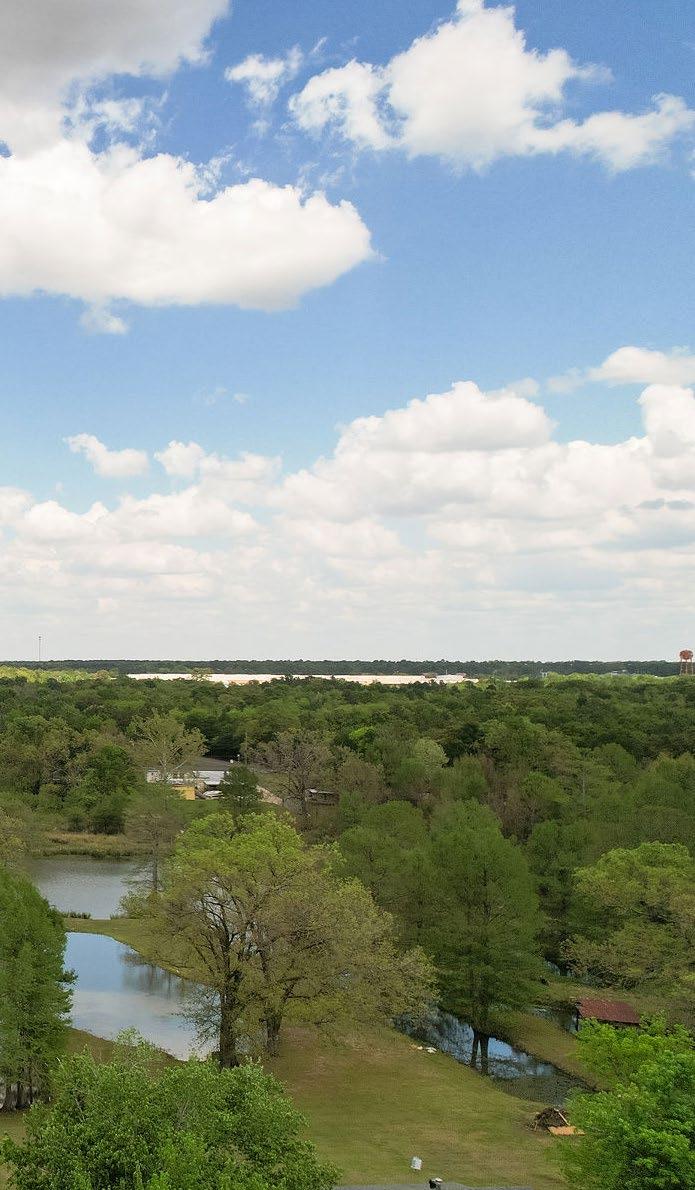
The property stretches across more than an acre with over 100 feet of Cross Lake frontage, but the water doesn’t crowd the house. It sits just far enough out to create a wider, quieter backdrop—something that reveals itself gradually. From inside, you notice it through the glass. From the yard, it opens up more fully. It’s not immediate, and that’s exactly the point.
“You’ve got the view and the access, but it doesn’t overwhelm the house,” says Joel Hall of RE/MAX
United. “There’s still yard. There’s still space to use.”
That distinction tends to separate homes you visit from homes you actually live in. The house doesn’t sit on the lake as much as it sits with
it—close enough to enjoy, far enough to breathe.
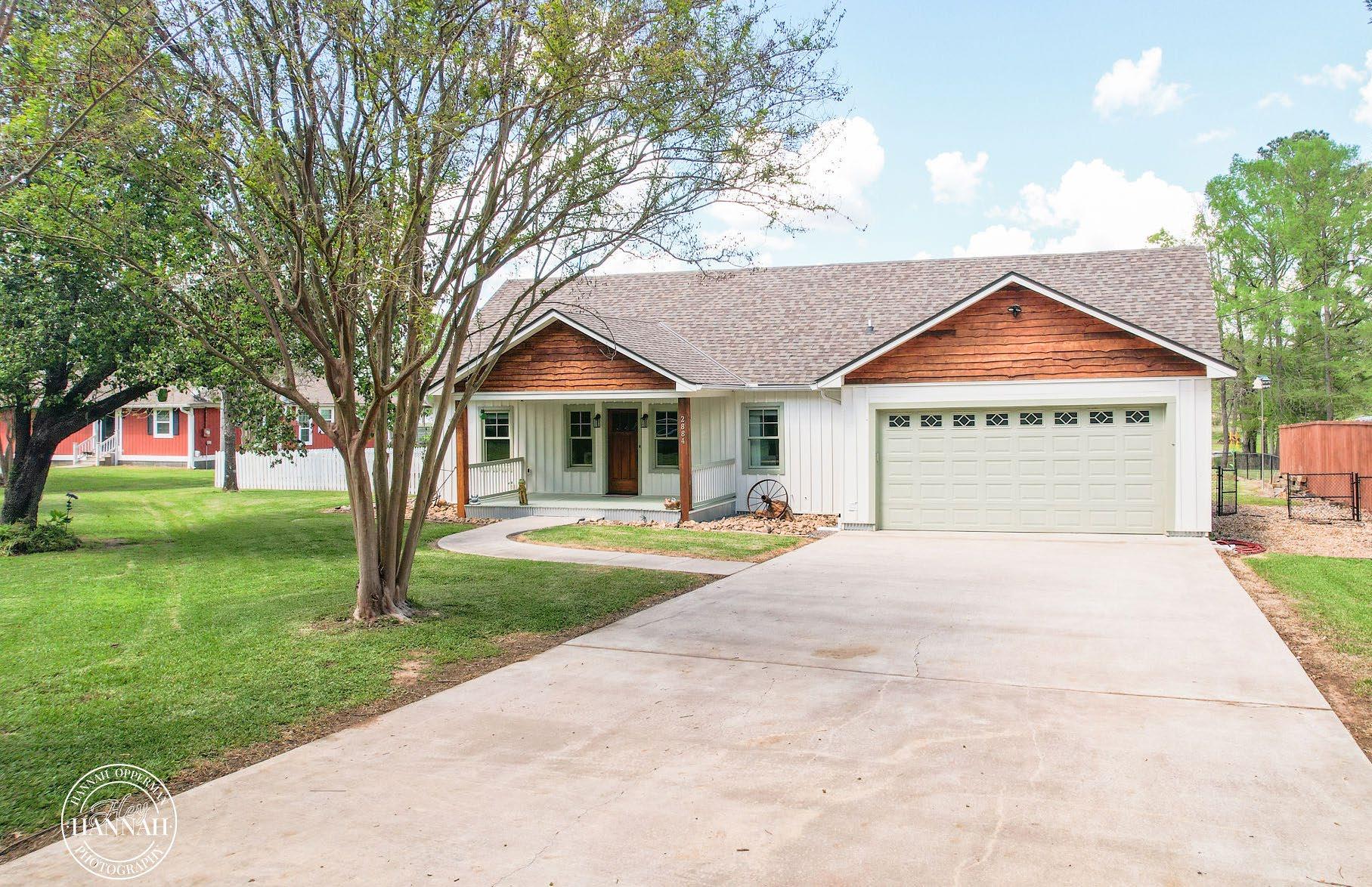
That same restraint carries into the architecture. Originally built in 1980 and renovated in 2019, the home leans into a modern
farmhouse vocabulary— board-and-batten details, warm wood tones, clean lines—but avoids the kind of over-styling that can date a

space before it ever settles in. It reads current without chasing trends, which is harder to pull off than it sounds.
At just over 2,500 square feet, the scale is intentional: four bedrooms, three baths, and a layout that opens where it makes sense. Nothing feels forced wide open for the sake of it, and nothing feels unnecessarily closed off.
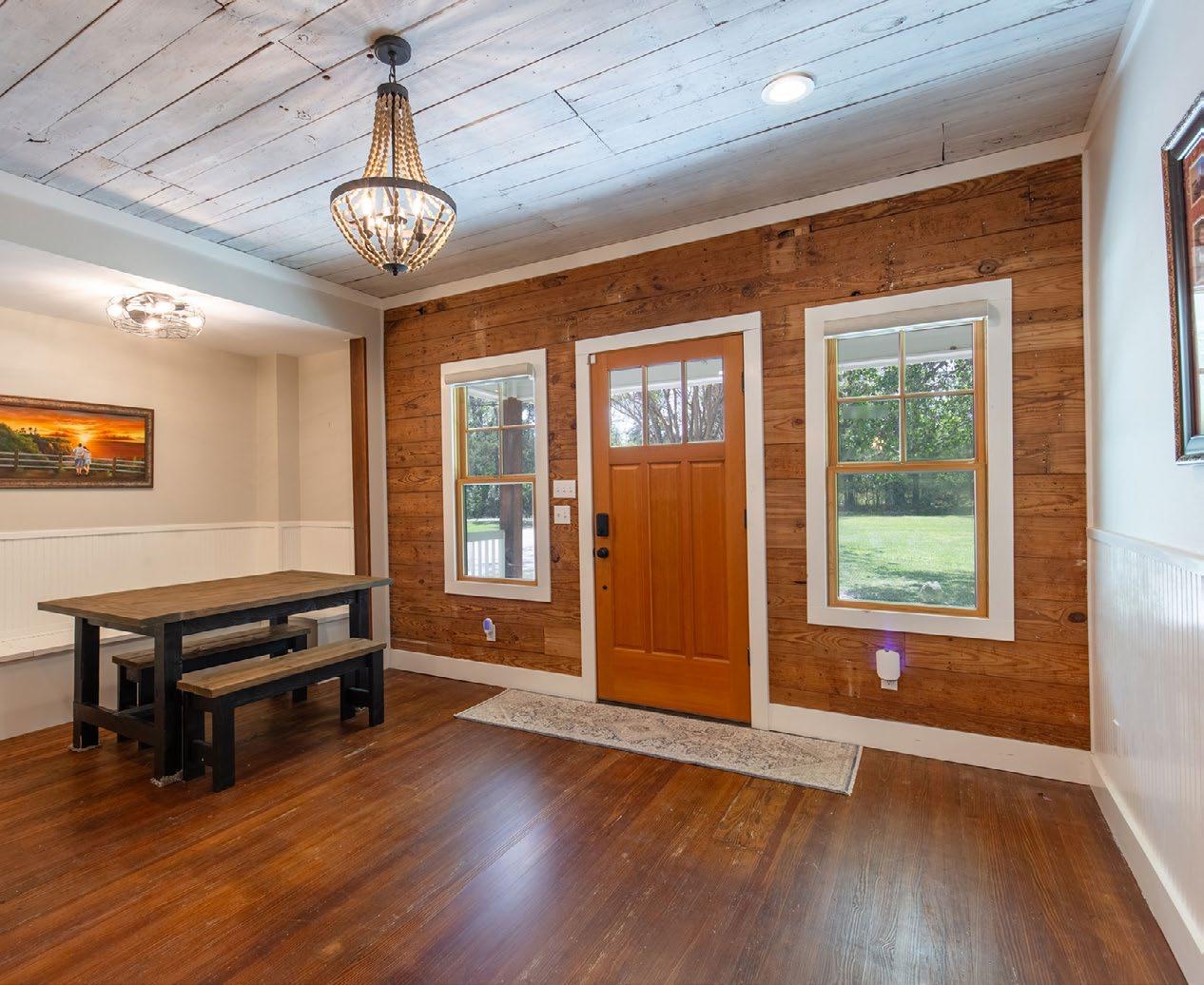
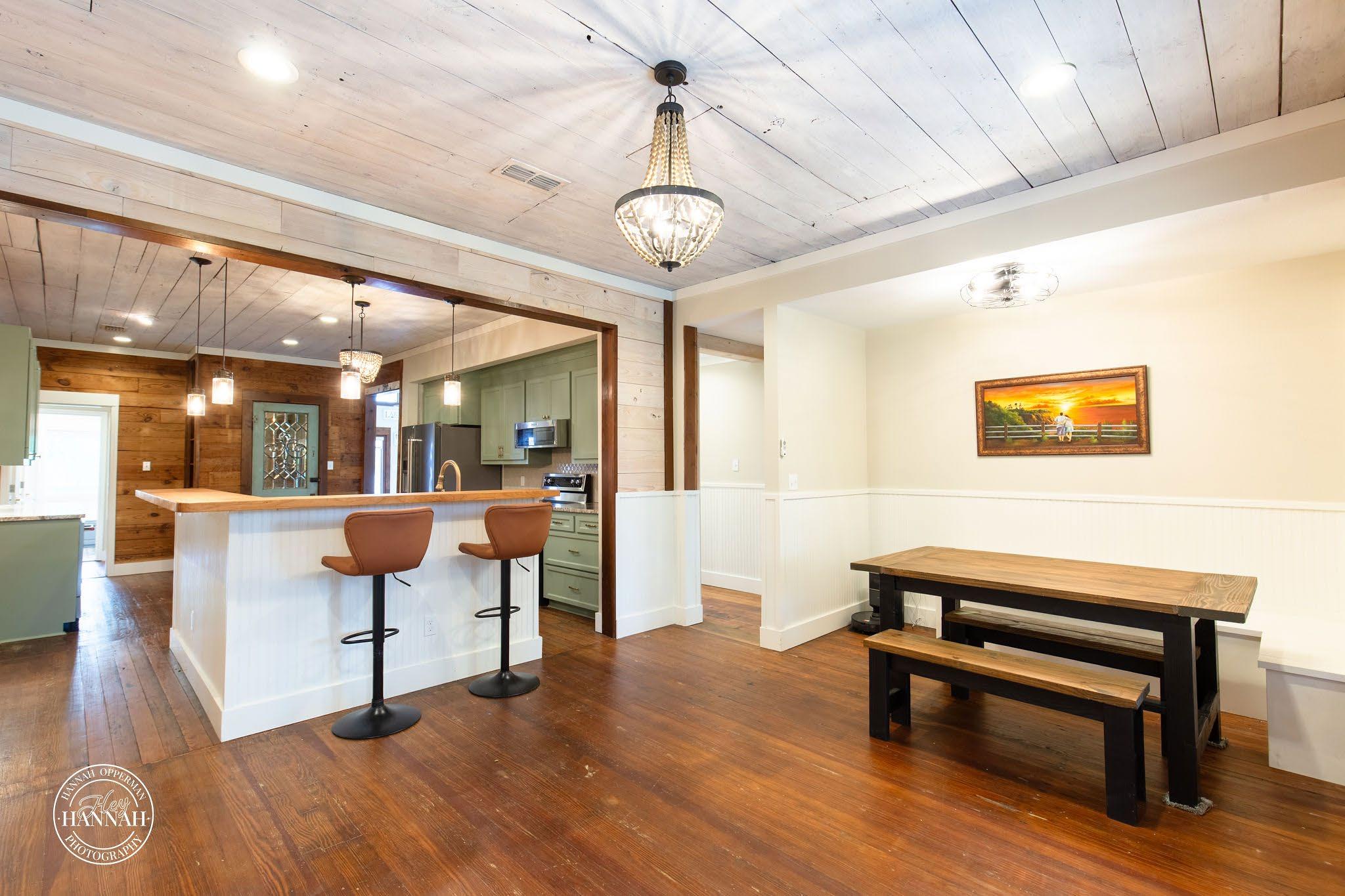
From the front entry, the plan reveals itself quickly. Living room to one side. Bedrooms to the other. And in the middle—the kitchen. Not tucked away. Not secondary. Right where everything intersects.
“The kitchen is really what ties the house together,” Hall says. “It’s one of the first things you see when you walk in, and everything moves around it—from the bedrooms to the living space.”
That placement does more than organize the layout— it shapes how the home functions day to day. It’s where people naturally stop, whether they mean to or not. Conversations start there, pause there, and often don’t move much further.
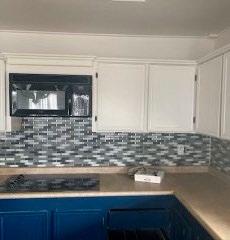
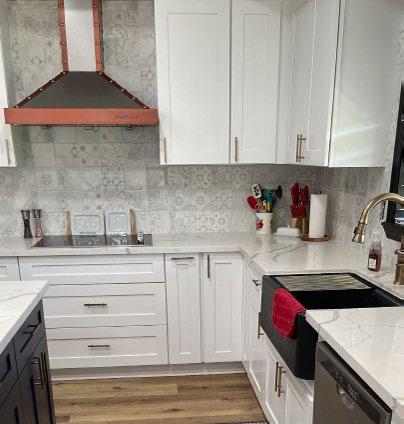
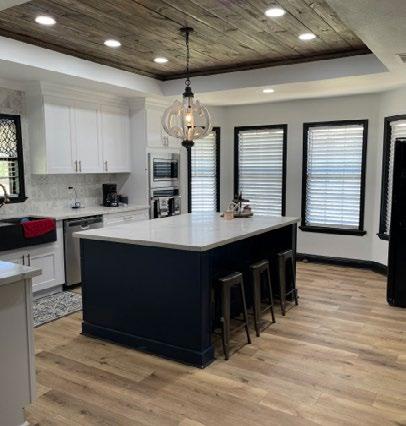
The finishes keep the tone grounded. Granite countertops bring durability, while a butcher block island softens the space with warmth and texture. Cabinetry is practical and well-placed, built for use

rather than display, and the appliances are integrated without demanding attention. It’s not trying to be a showcase kitchen. It’s trying to work—and it does.


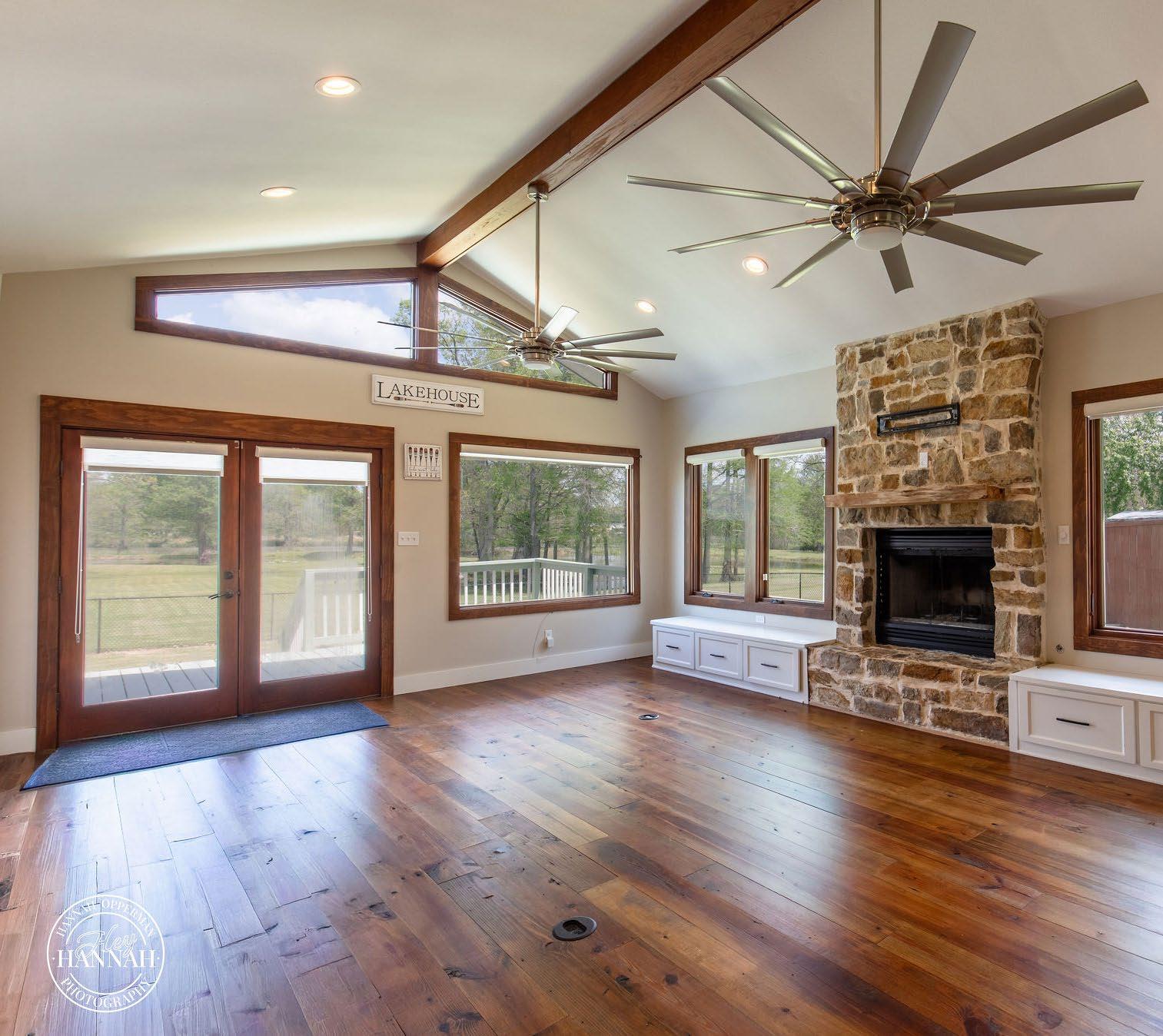
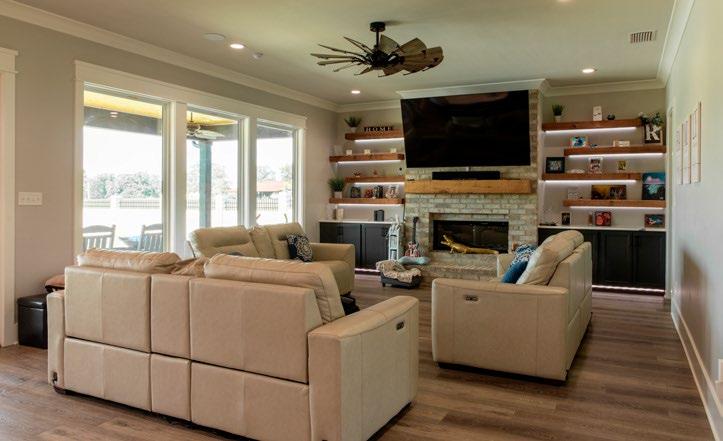
From there, the house eases into the living room, where everything slows down. The proportions feel settled and comfortable, anchored by a stone fireplace that gives the room a sense of permanence without making it feel heavy. Built-ins frame the space, adding structure without clutter.
And then there are the windows. They stretch across the back wall, pulling the lake back into view—but in
a way that feels understated. The water is there, shifting with the light, but it doesn’t dominate the room or dictate how it’s used.
“You notice it, but it doesn’t take over,” Hall says. “It just becomes part of the room.”
That balance is what makes the space feel livable. Some days the view is the focal point. Other days it’s simply a backdrop to everything else— morning coffee, a fire in the
evening, a house full of people or no one at all.
The pine floors running throughout reinforce that feeling, bringing a consistent warmth that carries from one space to the next. It’s a detail that doesn’t call attention to itself, but you notice it over time. The private spaces follow the same approach— comfortable, functional, and scaled with restraint.
The primary suite, located
on the first floor, takes advantage of the home’s rear orientation. Light filters in from the lake side, soft and indirect, giving the room a sense of calm without putting everything on display. It feels tucked away but not disconnected.
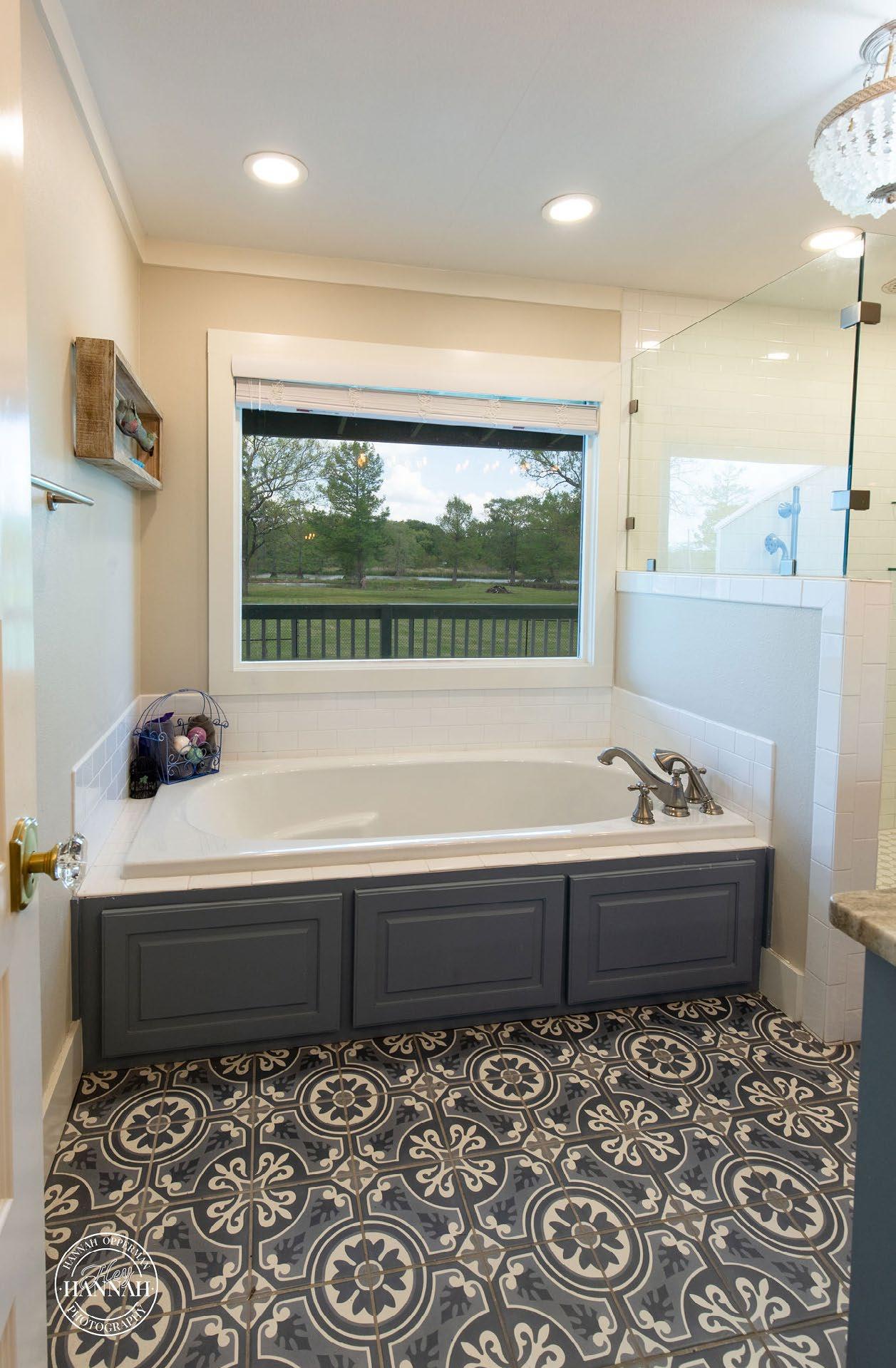
The bathroom keeps things straightforward: dual vanities, granite counters, a walk-in shower, and a soaking tub that feels practical rather than ornamental. The walk-in
closet is generous, but not excessive— enough to work with, without becoming its own separate space.
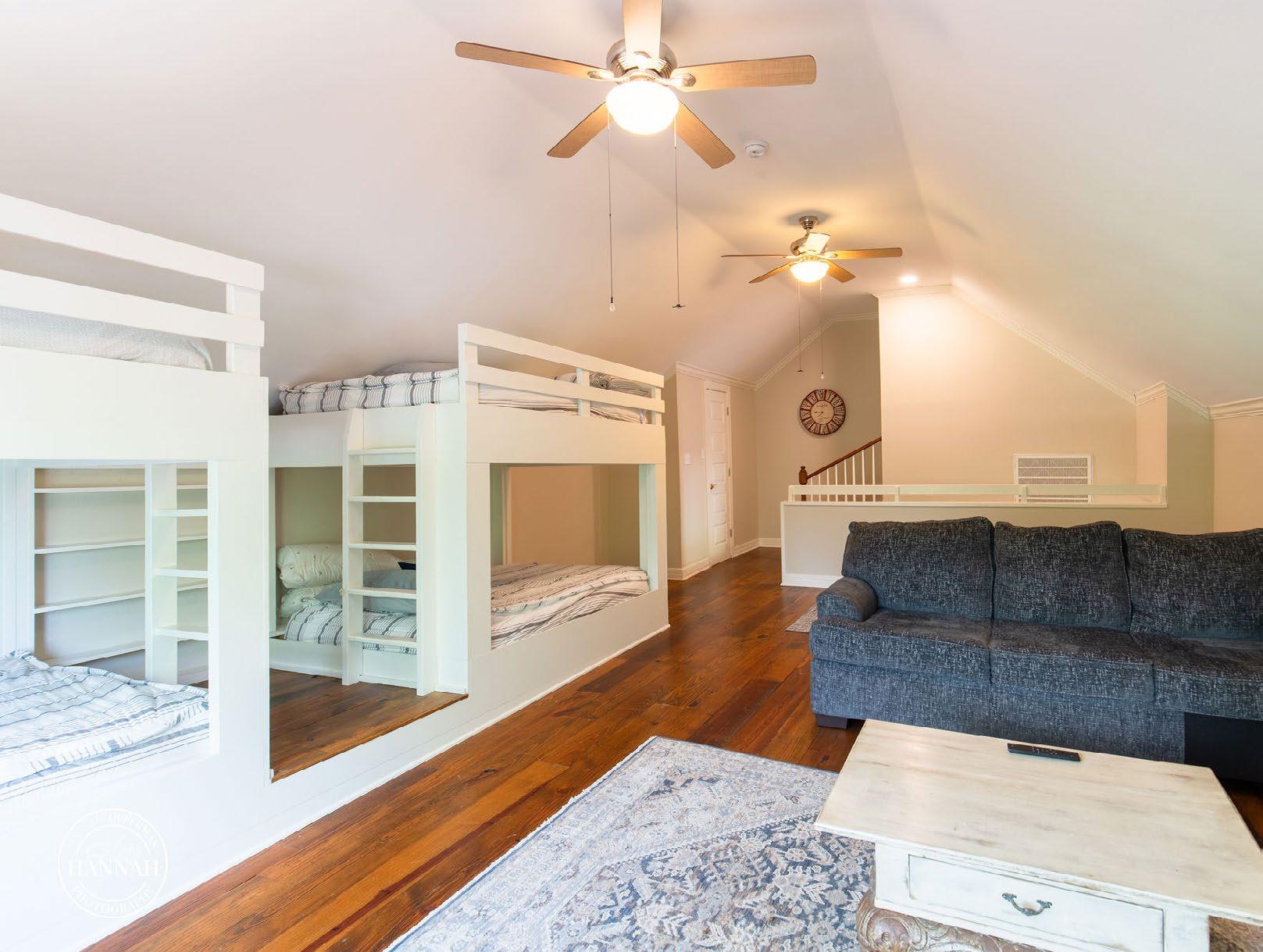
Upstairs, the fourth bedroom shifts the tone slightly. Built-in bunk beds give it flexibility, making it just as suited for kids as it is for guests or overflow space when the house fills up. It’s the kind of room that evolves depending on how the home is being used.
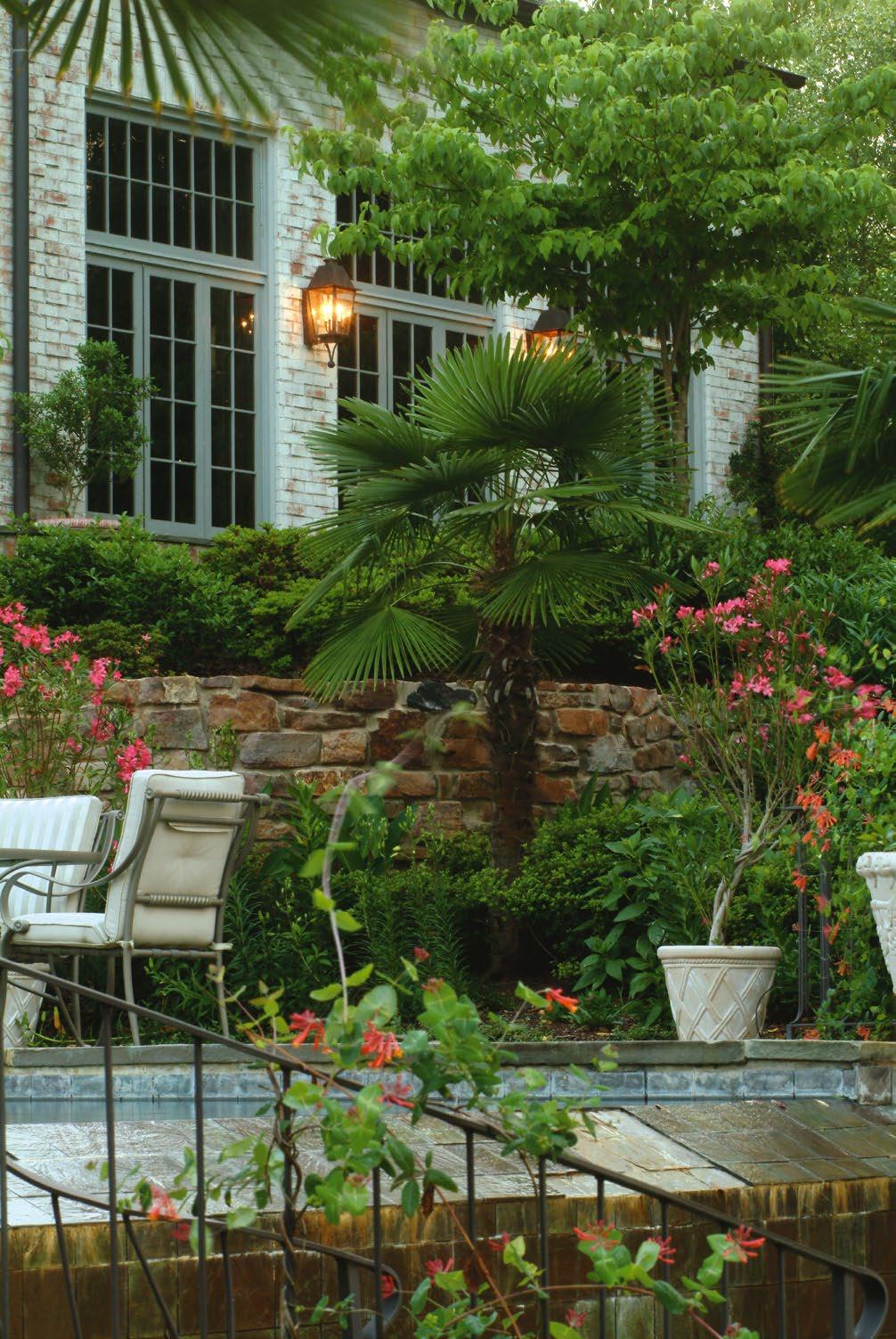
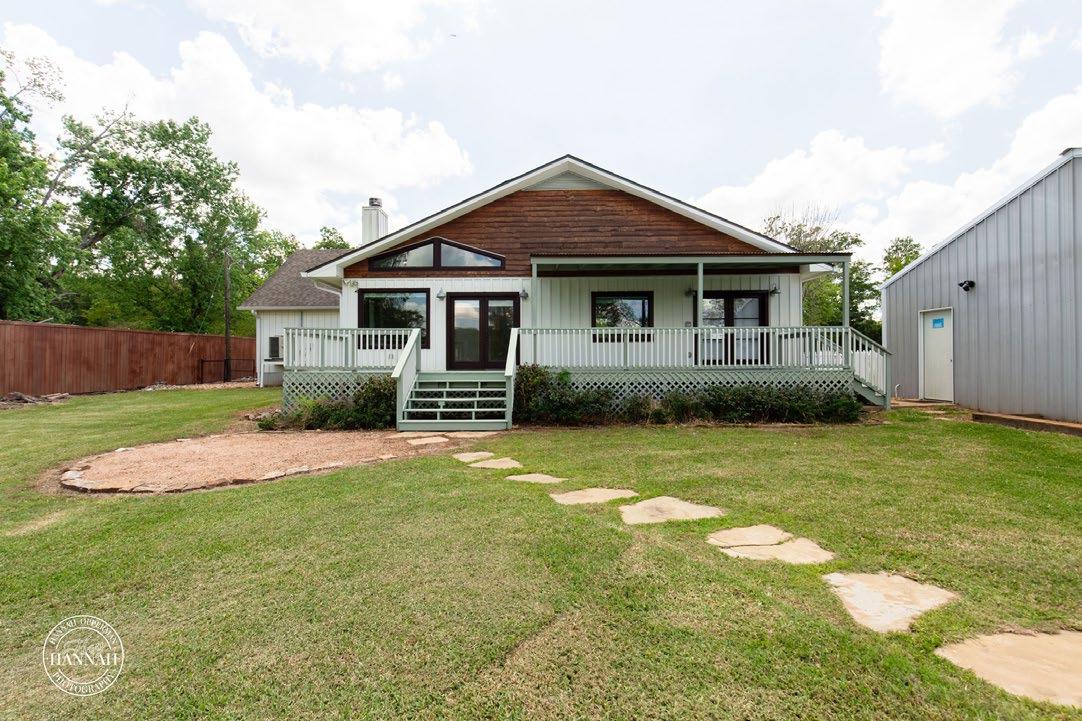
Out back is where the property fully opens. A covered patio transitions into a fenced yard, and from there the lot gradually stretches toward the lake.
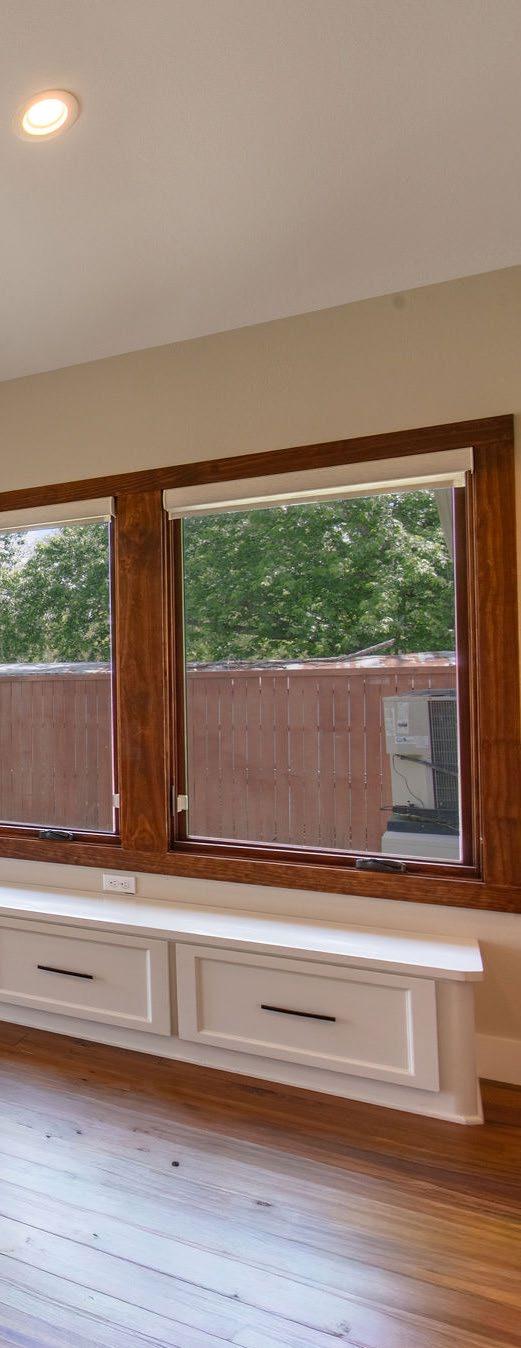


That depth changes everything. You’re not stepping straight from the back door into the water—you’re moving through space, which makes the lake feel more like a destination than a boundary.
“It’s not one of those properties where everything drops off right at the shoreline,” Hall says. “You’ve got room to actually enjoy the yard before you ever get to the water.”
That usable space is what makes the property feel complete. There’s room for gatherings, for kids to run, for quiet afternoons that don’t require much of anything at all. And beyond that, the lake is there when you want it.
A small inlet pond adds another layer of functionality, along with the ability to launch a small fishing boat directly from the property. It’s not something the house makes a big production out of—but it’s there, and it works.
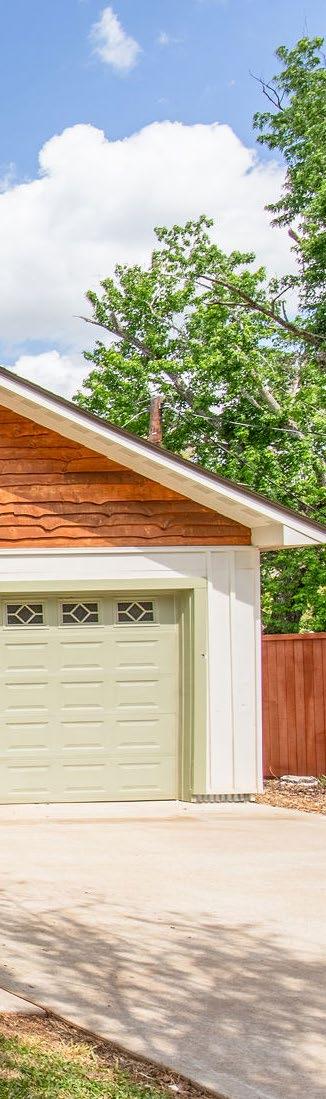
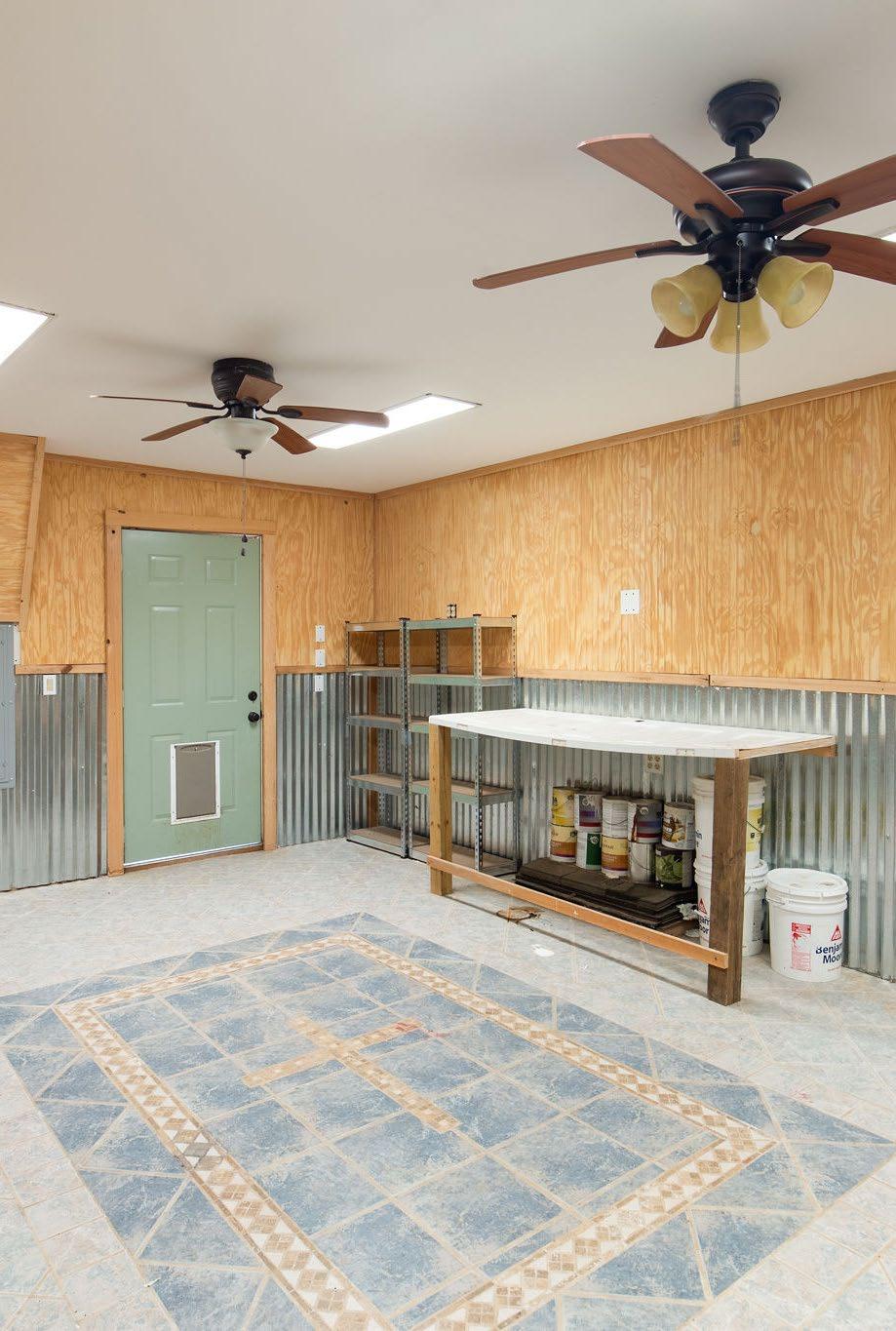
The supporting structures follow the same logic. A 30by-30 metal workshop with 220V power provides space for equipment, storage, or projects that need room to spread out. The attached twocar garage connects to a heated and cooled flex space that can shift depending on what the homeowner needs—studio, workspace, or something less defined. None of it feels excessive. It just feels accounted for.
Beyond the property itself, Cross Lake continues to do what it has always done for Shreveport. It slows things down. It gives people a reason to step outside. It turns weekends into something less scheduled. This stretch of the north shore tends to stay quieter than most,





especially in the evenings when the light drops behind the water and everything softens.
“There’s a reason people stay out here,” Hall says. “Once you get used to it, it’s hard to replace.”
That’s ultimately what this home understands. It doesn’t oversell the setting. It doesn’t overwork the interiors. It doesn’t try to be a statement piece or chase a trend that won’t last. Instead, it leans into the fundamentals—a layout that makes sense, spaces that feel natural, and a setting that’s allowed to unfold at its own pace.
Some homes are built to be noticed. This one is built to be lived in—day after day, season after season—until the setting and the structure start to feel like the same thing. The best homes aren’t the ones that impress you the first time—they’re the ones you never feel the need to leave.
Joel Hall of RE/MAX United represents this property. For more information, contact RE/ MAX United at 318-684-3030.

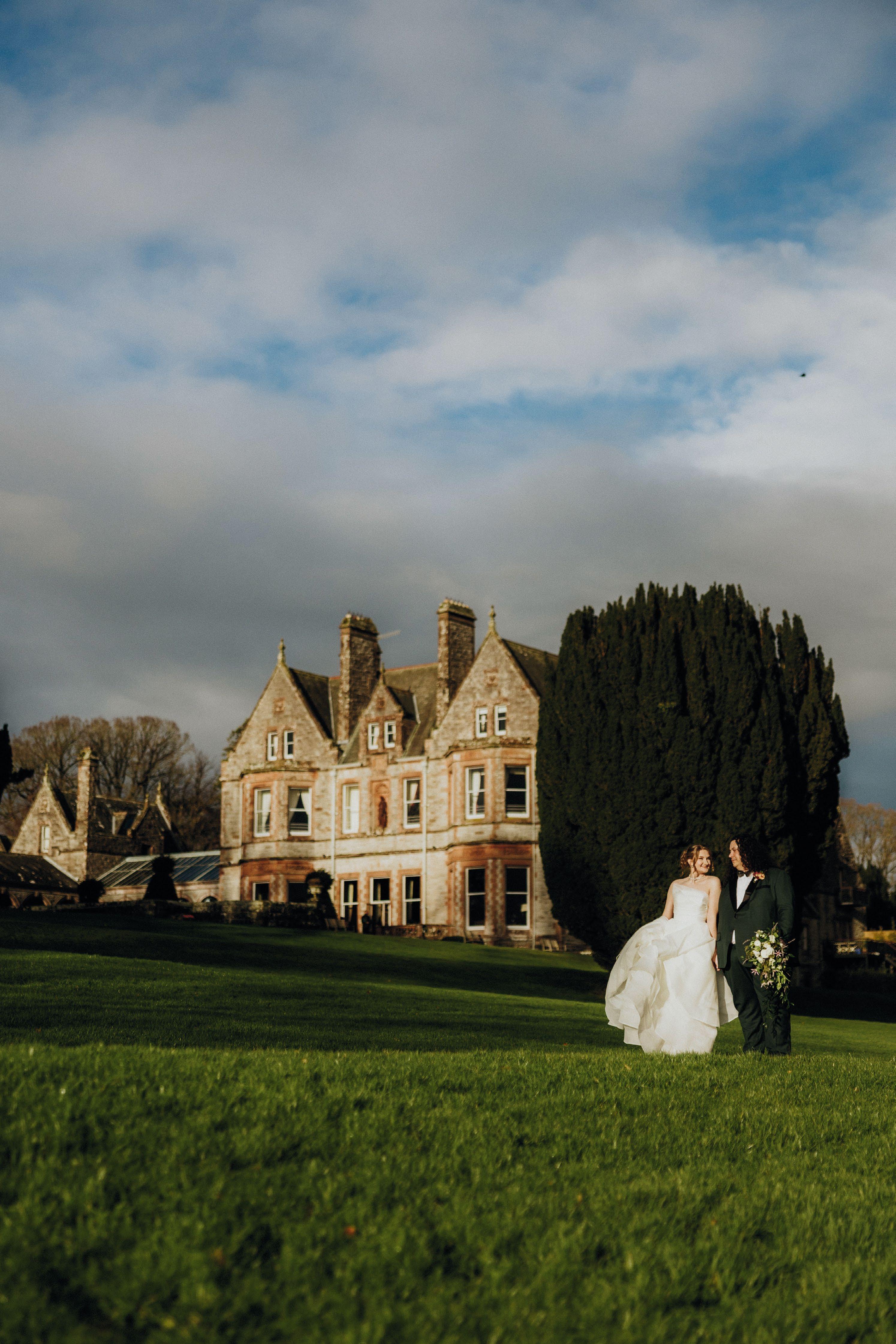
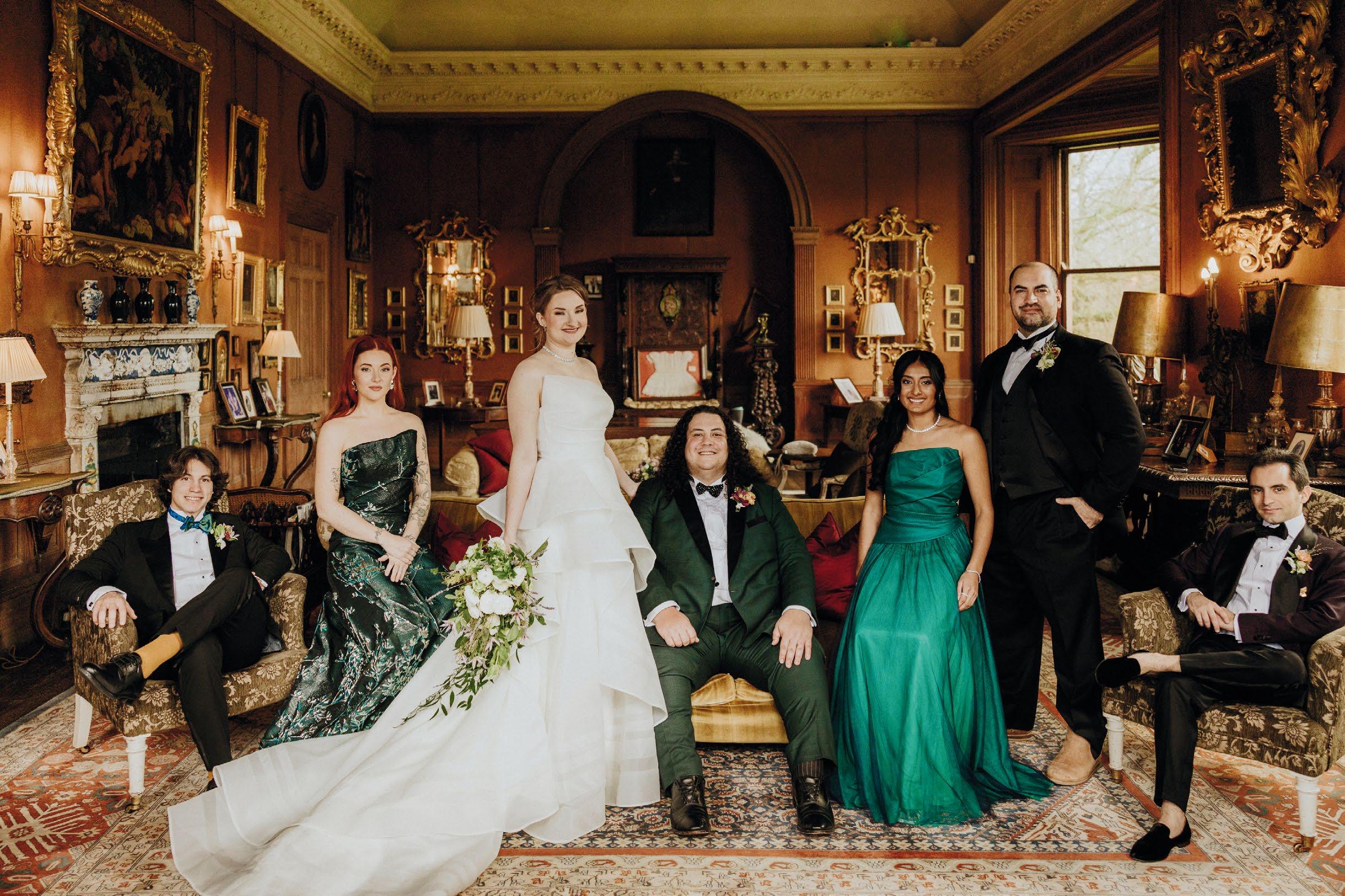
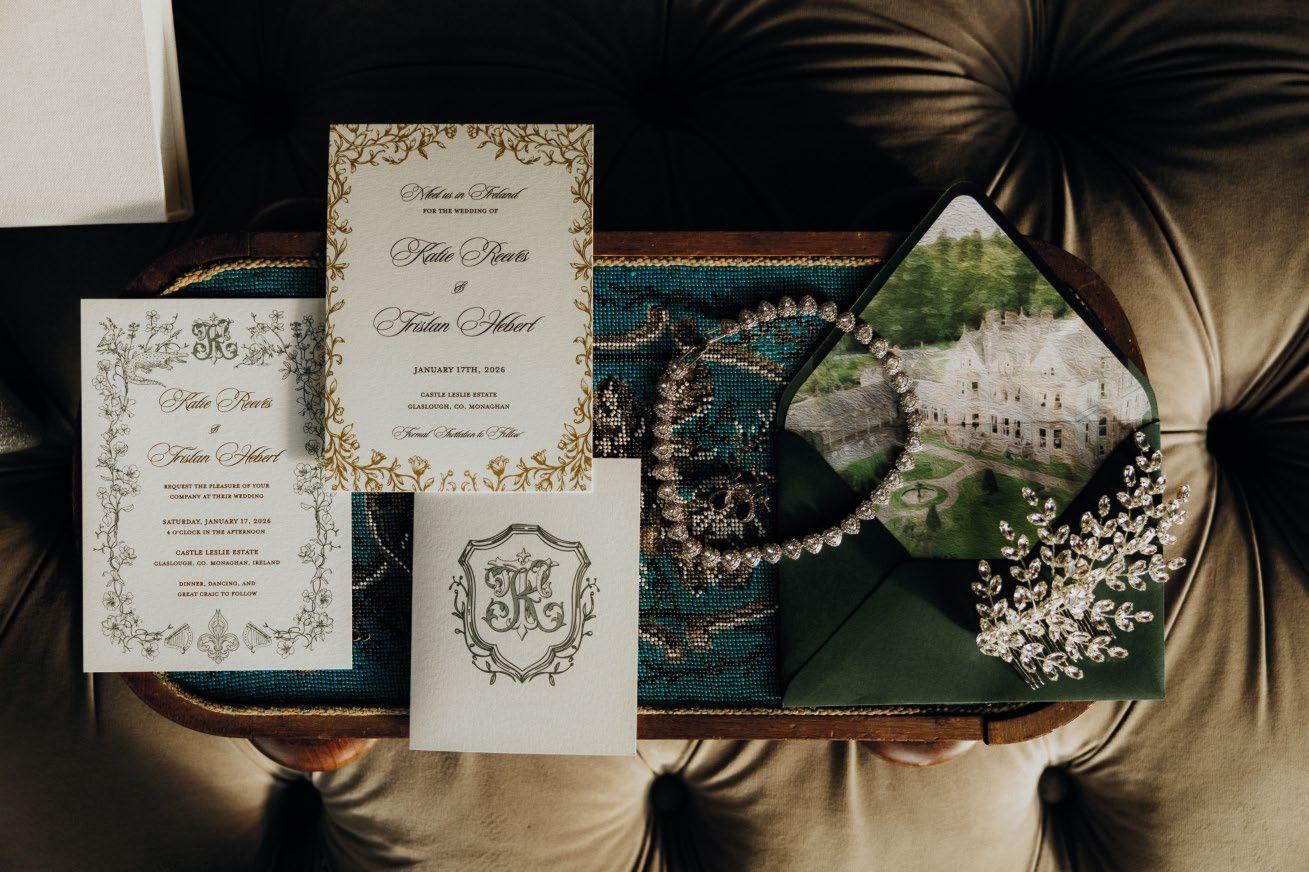
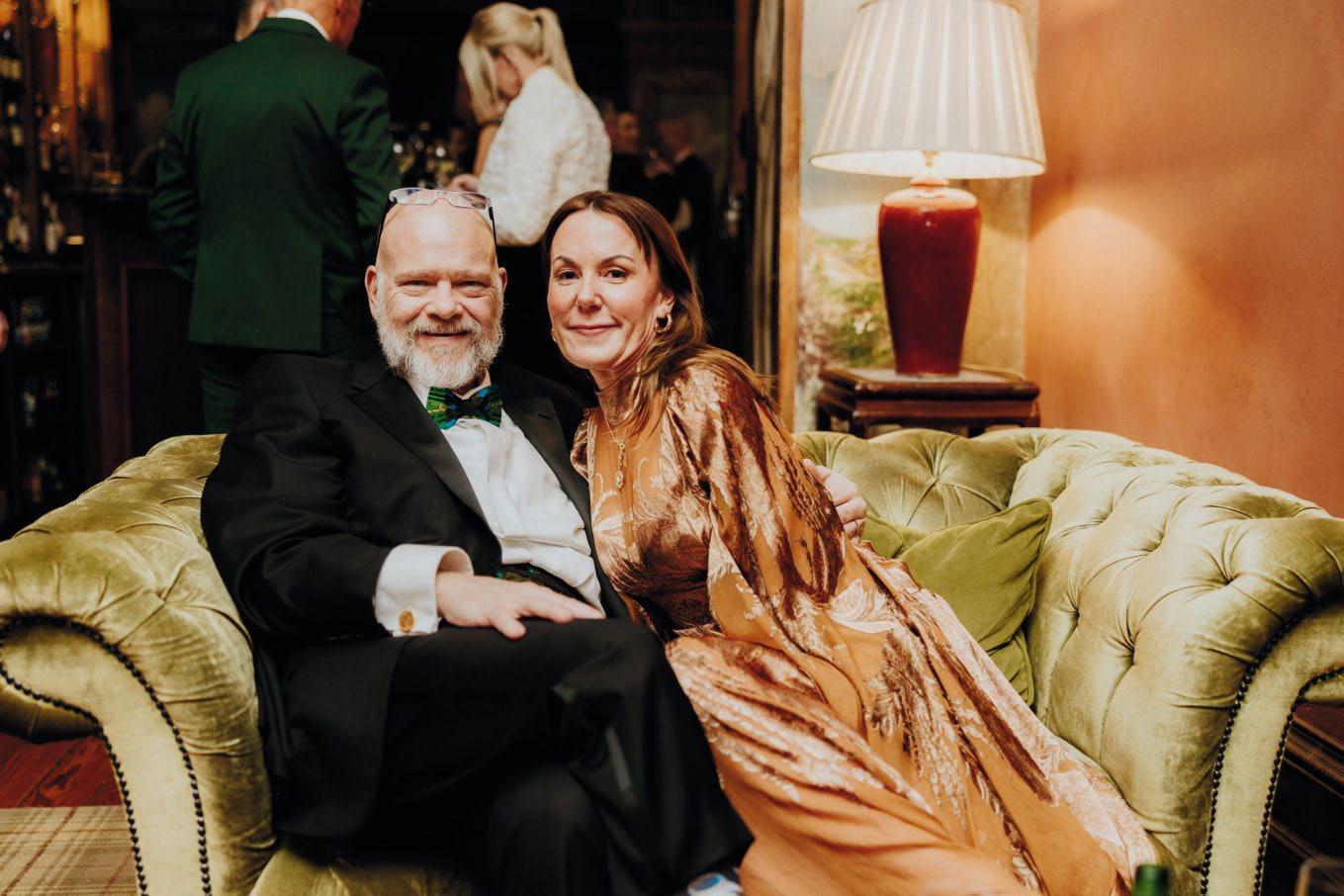
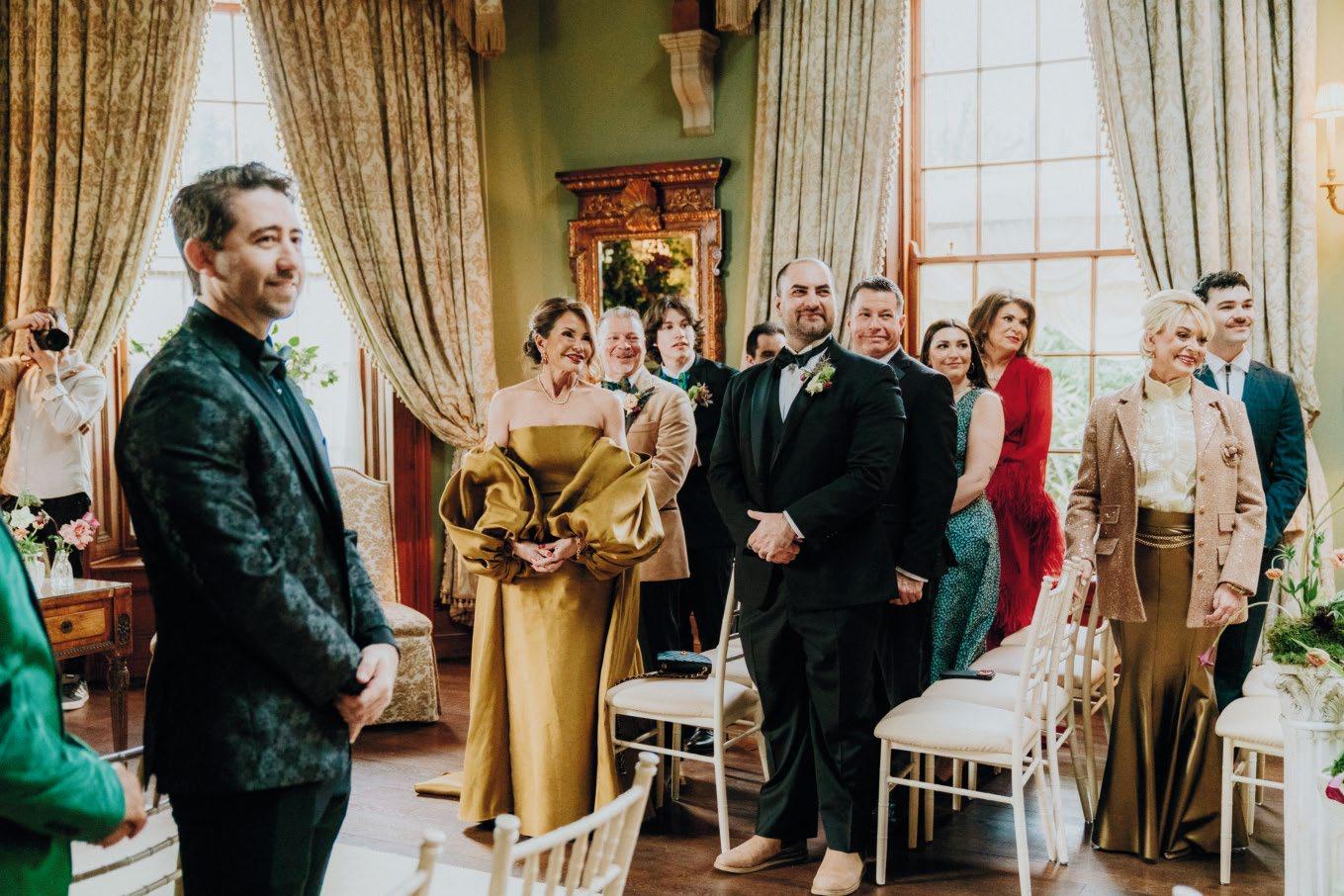
THE WEDDING OF JANUARY 18, 2026





THURSDAY
MAY|28|2026
7:00 PM

April 2025 marked the 32nd anniversary of BIG BAD VOODOO DADDY’S debut in the music scene. Since forming in the early '90s in Ventura, California, the band has performed over 150 shows annually and sold more than 2 million albums. Their legendary residency at the Derby nightclub in Los Angeles helped revive interest in swing music during the grunge era.
Co-founded by Scotty Morris and Kurt Sodergren, the band blends jazz, swing, and Dixieland with contemporary energy. The original lineup features Scotty Morris (lead vocals and guitar), Kurt Sodergren (drums), Dirk Shumaker (double bass and vocals), Andy Rowley (baritone saxophone and vocals), Glen "The Kid" Marhevka (trumpet), Karl Hunter (saxophones and clarinet), and Joshua Levy (piano and arranger).
The band's initial rise to fame included an appearance in the 1996 indie film Swingers, and their music has been featured in numerous films and TV shows, such as Despicable Me and Friends. They have performed live on various shows, including Dancing With the Stars and The Tonight Show with Jay Leno. and have played alongside distinguished symphony orchestras as well as for three U.S. Presidents.






Amazon isn’t done with us yet: the world’s largest retail giant is reupping its investment in northwest Louisiana. You are probably aware of their 3-million-square-foot warehouse that opened off North Market Street in 2024. On February 23rd Amazon and Louisiana’s top brass announced plans to invest $12 billion into their first data center campuses in the state of Louisiana. These campuses will be designed to support artificial intelligence and cloud computing and will span three sites across Caddo and Bossier Parishes. The Bossier Parish site will be north of Benton on a 1,089-acre site off Highway 3. Another will be northwest of
Blanchard on State Line Road. The third site has not been officially decided and will be announced soon. Construction on the Blanchard site has already begun.
According to the Louisiana Economic Development office, Amazon was given a wide-ranging array of tax incentives to build here. The data center is receiving an exemption from sales tax for many building materials, but also infrastructure-related hardware and software, such as fiber-optic connectivity and water conservation systems. In addition to this, they will be participating in Louisiana’s High Impact Jobs program and LED FastStart. While these are the first data centers to be built in Louisiana, Amazon has been investing in the state for some time now. Between 2010 and 2024, they had invested more than $4.7 billion in Louisiana, but in the form of fulfillment and sorting centers (four) and delivery stations (seven). These new
developments are expected to bring 540 jobs (the Amazon warehouse on North Market, a robotics fulfillment center, currently employs more than 2,000 people as well as an additional 1,700 indirect jobs throughout the community. These data centers will be owned and developed by STACK Infrastructure, a Denver-based global company launched in 2019 that specializes in digital infrastructure but will be leased to Amazon. STACK currently operate a total of 123 data centers, with 44 operational and another 79 planned or under construction, across 11 countries and 32 markets. STACK claims the construction of these facilities will employ up to 1,500 construction workers and operations will launch in phases over the next few years. The purpose of spreading the three sites apart is a fail-safe; if one site goes down, the others can still operate. The tax breaks given to them will last for 20 years, with an option for an additional ten years after that, because of a bill passed in the 2024 Louisiana Regular Session that gave the
exemption to data centers built before 2029.
These benefits will not be limited just to Amazon, either. As part of the deal, Amazon is investing $400 million in our local water infrastructure to service these data centers so as not to be a burden on our water supply. They have also resolved to only use surplus water for the facility. Interestingly, because of our region’s climate, Amazon says water should only be needed to cool the data centers less than 13% of the time, likely during the hottest summer months. Apart from that, ambient air is expected to be sufficient. This innovation should reduce electricity demands by 25 to 35 percent. Any apprehension over the demand put on our electrical grid, a current hot-button issue surrounding the construction of facilities like this, can be assuaged by the fact that Amazon is working with SWEPCO to ensure they pay 100% of the costs associated with these new campuses. This includes all the expenses for new energy infrastructure and required upgrades, which of course benefits overall grid reliability for all SWEPCO customers in the area, not just Amazon’s facilities.
Some of these issues were expressed publicly on March 3rd at a town hall in Blanchard regarding the State Line Road site. STACK’s Director of Wet Utilities Kevin Greer and SWEPCO’s Vice President of Customer Experience and New Business Development, Paul Pratt, were there to answer questions. Greer explained that Amazon “has a very strong water-positive goal...essentially, it’s to offset or reintroduce more water into ecosystems than they draw out of it.” Used water that has been treated multiple times will be pumped back into Caddo Lake, and it must meet all drinking water standards. Greer also said STACK and Amazon Web Services (AWS) have made commitments to pay for improvements that don’t even necessarily involve the project, and reassured residents that they would pay for all water infrastructure they needed (obviously, any commitments STACK/ AWS makes to Blanchard residents, they are also making to Shreveport and Bossier residents). These upgrades will enable Blanchard to replace 75-year-old infrastructure (presumably Shreveport
will be able to do something similar), as well as add new fire hydrants and water meters. Mr. Pratt explained that STACK/ AWS have committed to paying for any infrastructure upgrades needed for electricity as well.
Local and state leaders are excited about this development. “Amazon is making a long-term commitment to Louisiana because our state delivers – prime sites, strong infrastructure and a skilled, hardworking workforce ready to support the next generation of technological innovation,” Governor Jeff Landry said. “Investments of this magnitude put Louisiana at the center of operations relied on across the country and connect our communities to jobs that power how Americans live, work and do business,” he finished. Our resident mayor Tom Arceneaux is likewise enthused about the announcement: “This project means more than square footage and servers – it means new opportunities for our people and stronger support for local businesses. This data center is an investment in our present and a stake in our future.” Mr. Arceneaux also had this to say on his weekly “Mornings with the Mayor” television interview with KSLA: “For the next 3-5 years it’ll mean a real boom in construction and sales tax for local governments. It’s going to produce a lot of jobs and economic activity.” Amazon sounds like they’re fond of Louisiana and here to stay, too: “We’re creating hundreds of high-paying jobs and making substantial investments in local infrastructure. We’re grateful for our strong partnerships with local leaders and proud to deepen our commitment to Louisiana,” said Amazon Chief Global Affairs and Legal Officer David Zapolsky.
It hasn’t all been smooth sailing, however: the Arceneaux administration was sued in mid-January by Mooringsport mayor Tyler Gordon and two Shreveport residents, Michael Craft and Mary Blakemore, for a judicial review of alleged withheld information by the Shreveport City Council during approval of the new centers. The petitioners allege that the City of Shreveport “violated its constitutional and statutory obligations” by overturning the Municipal Planning Commission’s (MPC) denial of a special use permit needed to begin construction. The city responded to the
nine-page suit in February with their own nine-page suit by arguing none of those plaintiffs had legal standing to challenge the city council’s decision because “none of the plaintiffs have demonstrated, or can demonstrate, a property injury sufficient to qualify them as an ‘aggrieved party,” but also that it did give adequate notice and even held a public hearing on November 13th last year. As far as whether this lawsuit will stall development, Mayor Arceneaux conceded that, “It will stall some of the development because they’re going to wait until the end of the lawsuit,” but they are “very confident about the outcome of the lawsuit.” The case is still ongoing, and this litigation is the likely holdup of the west Shreveport site.
Mayor Arceneaux remains optimistic in the face of this opposition, though: “If people bother to look at the contracts and look at the public service commission rules and regulations, they will see that rates are not going to go up because of this data center. Both of those have been public record for quite some time. If you have questions, there is a website that will answer your questions. Most people that contacted me about the data center were in favor of it.” (the website the mayor is referring to is on KSLA’s website where they have a page dedicated specifically to these data centers; on the homepage, it’s on the far right on the toolbar). When asked if he thought he had sufficiently answered the concerns of this opposition over water and utilities, Mayor Arceneaux responded wryly, “I think we have provided correct answers to their questions, I do not think it matters to them.”
But if our community prospering matters to you, there are many reasons to be thrilled over the upcoming developments. Hundreds of high-paying jobs, outside capital revamping our infrastructure at no cost to us, and greater visibility on the national scale. Clearly, our city and state leadership believe in us, Amazon believes in us...and so far, Shreveport-Bossier residents are rising to the occasion.

If you find yourself in downtown Shreveport on a humid June evening and see a suspiciously high concentration of sequins, vintage tuxedos, and people humming "There’s No Business Like Show Business" into their martinis, don't worry—you haven't stumbled into a time rift. You’ve just found The Robbys.
The Robbys is the annual crown jewel of the Robinson Film Center (RFC), a high-octane gala that is part Oscar-night glamour, part themed house party, and 100% essential to the survival of independent cinema in North Louisiana. It’s the night where the "Hollywood of the South" stops pretending to be Atlanta or New Orleans and embraces its own quirky, cinephile soul.
Long before the RFC became the neon-lit anchor of Texas Street, the event was a formal viewing party of the Oscars. But as the RFC grew from a dream of the Red River Film Society into a two-screen powerhouse with a full-service bistro (the legendary Abby Singer’s), the fundraiser evolved into
something far more personal.
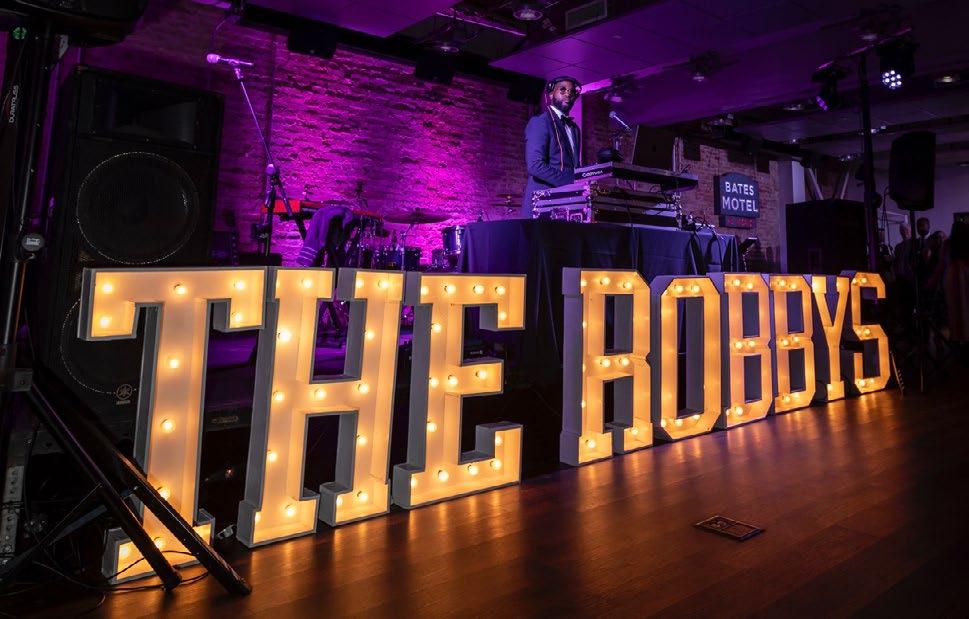
Now, instead of just watching Hollywood give itself trophies, Shreveport gives out its own. The "Robby Awards" celebrate local filmmakers, supporters, and even the "best dressed" attendees. It’s an evening designed to remind the community that while movies might be made in Tinseltown, the culture of film lives right here at home.
What makes The Robbys unique is the transformation. Every year, the RFC staff and a small army of volunteers take the center’s three floors and turn them into an immersive cinematic playground based on a theme.
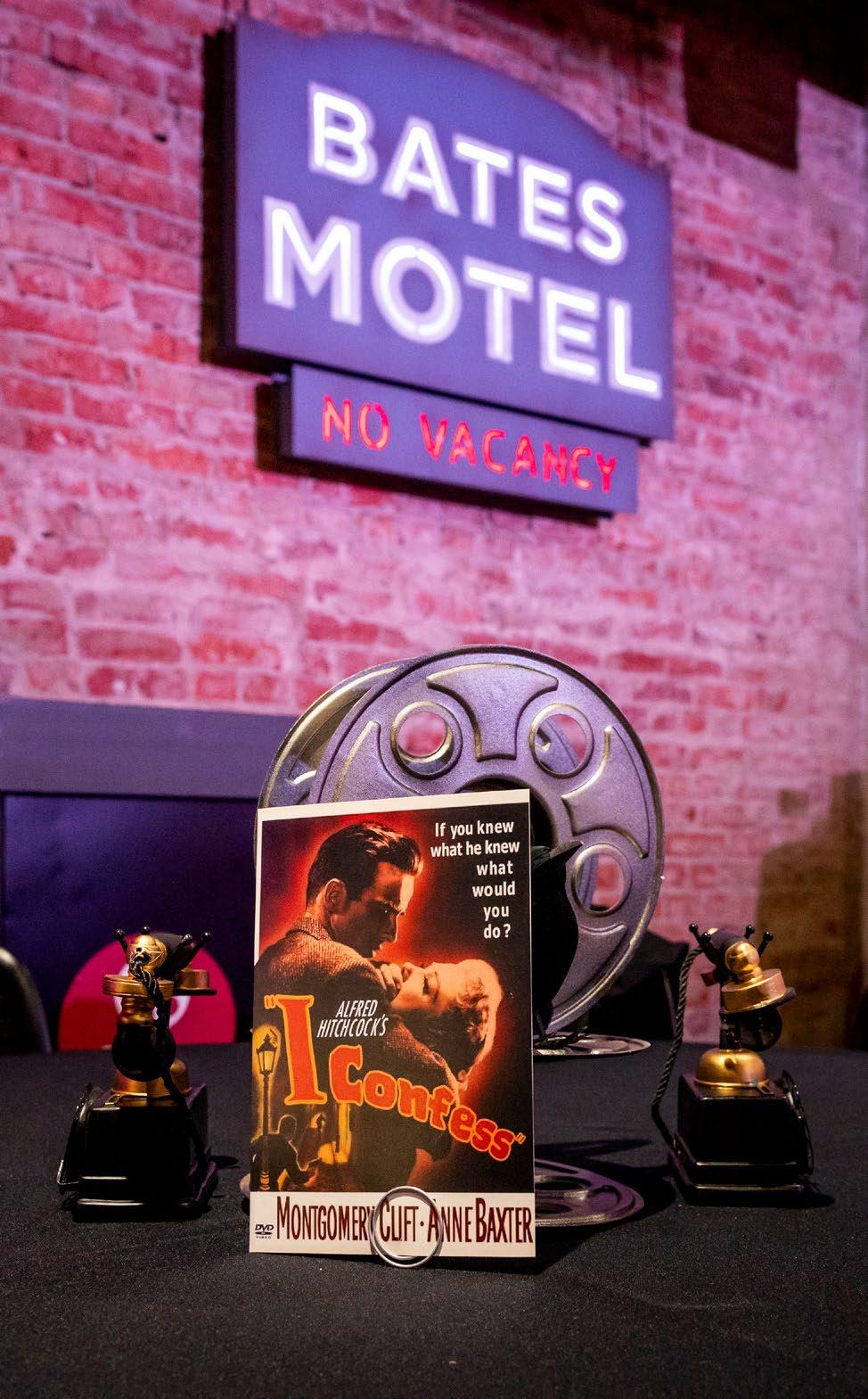
Take, for instance, the recent 2025 gala. The theme was "The Magic of Musicals," turning the lobby into a neon Wicked wonderland and the upstairs event space into a highenergy Grease lightning set. In 2024, they went darker with a Hitchcock theme, where guests dodged (plastic) crows in a The Birds room and peeked through binoculars in a Rear Window lounge.
As one event chair famously put it:
"You can’t be overdressed at The Robbys, but you can definitely be underdressed."
The red carpet starts at the sidewalk, where photographers snap "paparazzi" shots of local doctors, teachers, and artists as they arrive. Inside, the air is thick with the scent of Abby Singer's famous shrimp and grits and the sound of live bands like Identity Crisis playing movie themes that make you want to dance—or at least look cool while holding a themed cocktail.
While the karaoke room (a staple of the night) and the open bar are major draws, the "why" behind the party is what keeps the lights on. The RFC is a 501(c)(3) nonprofit, and The Robbys is its primary engine for funding.
The proceeds go directly toward:
Film Education: Supporting programs that reach over 6,000 students annually, from
summer film camps to the Teen Film Council.
Community Impact: Keeping the "Silver Screenings" (for seniors) and "Heels & Reels" series affordable.
Economic Vitality: Maintaining a venue that brings over 30,000 people to downtown Shreveport every year.
Even the furniture gets in on the action. In 2026, the RFC launched the "Is This Seat Taken?" campaign, allowing patrons to name seats in the Willis Knighton and Kennedy theaters. It’s a way to ensure that even when the party ends, your legacy remains—engraved on a plaque for the next generation of moviegoers to see.
The highlight for many is the awards ceremony itself. Unlike the Oscars, which can feel like a four-hour marathon of "who-is-that-sound-editor?", The Robbys are punchy and local. They recognize:
•Filmmaker of the Year
•Young Filmmaker of the Year (the future of Louisiana film)
•Best Short Film
•The "Style" Awards: Best Dressed Pair, •Leading Lady, and Leading Man.
It’s a moment where the community looks at itself and says, "We’re doing something cool here." It’s the validation that comes from knowing your city isn't just a "shooting location"—it’s a place where stories are told and celebrated.
The Robinson Film Center is more than just a place to see a movie; it’s the heartbeat of the Shreveport arts scene. And The Robbys? That’s the heartbeat at 120 beats per minute. Whether you’re there to answer the “what if” question, to experience the thrill of cool visual effects, or just to see if your neighbor can hit the high notes in "Bohemian Rhapsody"
during karaoke, the gala is a testament to the power of film to bring a city together.
So, grab your ticket for a memorable night at the Robbys, Saturday, June 6th. This year’s theme is “Science Fiction in Cinema.” If you’re planning to wear something Sci-Fi-Fabulous, here are ten of the Greatest Sci-Fi Movies of All Time, one from each decade:
•Frankenstein (1910) The first film version of the Frankenstein novel by Mary Shelley.
•Metropolis (1927). A landmark silent science fiction film.
•The Invisible Man (1933) Featured pioneering visual effects.
•Dr. Jekyll and Mr. Hyde (1941) Nominated for three Academy Awards
•The Day the Earth Stood Still (1951) “Klaatu barada nikto” Google that.
•Planet of the Apes (1968) The longest running American Sci-Fi franchise.
•Aliens (1979) The perfect Sci-Fi horror film. Fun fact – I went into labor the same night we watched this film.
•Robo Cop (1987) Hailed as one of the greatest sci-fi and action films ever made. The Matrix (1999) Considered to be culturally, historically, and aesthetically significant.
•Avatar (2009) The second behind Gone with the Wind as the highest-grossing movie of all time.
•Dune (2021) The 2020 release date was delayed due to the Covid 19 pandemic.
Let your creative juices flow! For Ticket information: (318) 459-4122



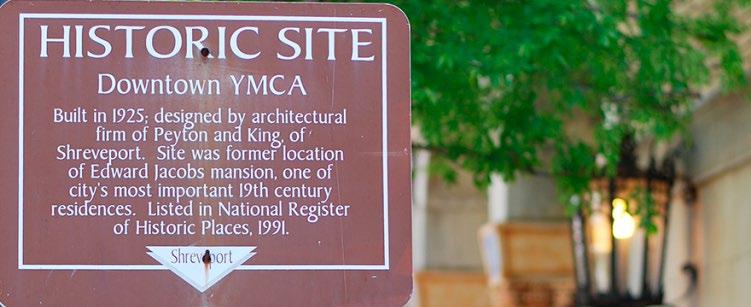
Downtown Shreveport’s YMCA looks like the kind of building that belongs in a black-and-white movie—grand columns, twin bell towers, and an Italian-Renaissance façade that still whispers “city center” more than anything else. In October 2025, that hulking, brick-and-architectural-drama on McNeil quietly turned one hundred, a rare milestone for any civic institution in America, let alone a single, aging YMCA in Northwest Louisiana—so rare that, in February 2026, the City Council adopted a resolution formally honoring its 100-year anniversary.
The Downtown YMCA didn’t just open in 1925; it arrived fully formed as a civic temple. Funded by a $545,000 campaign in 1923— roughly ten million dollars adjusted for inflation—the building was meant to be more than a gym. It was a place for housing young professionals, feeding downtown workers, hosting night-school classes, and giving thousands of children their first real exposure to basketball, swimming, and organized sports. Inside those walls, the YMCA became a kind of off-the-court community hub—think high-school tournaments under the rafters, early swim meets, and decades of games that never made the scoreboard but shaped local character.
Through World War I and World War II, the Downtown YMCA took on a distinctly American role—it housed returning veterans, fed churchgoers, and served as a makeshift community center when other institutions hadn’t yet found their footing. The top two floors once held small, rented rooms—tiny, ten-by-ten cells where traveling salesmen, young executives, and veterans crashed between shifts and Sunday mornings. In the 1960s, those rooms gave way to new program space, but the legacy of the YMCA as a place of sanctuary remained.
By the 1980s and ’90s, the building had added a racquetball court and a women’s locker room, subtle acknowledgments that the world
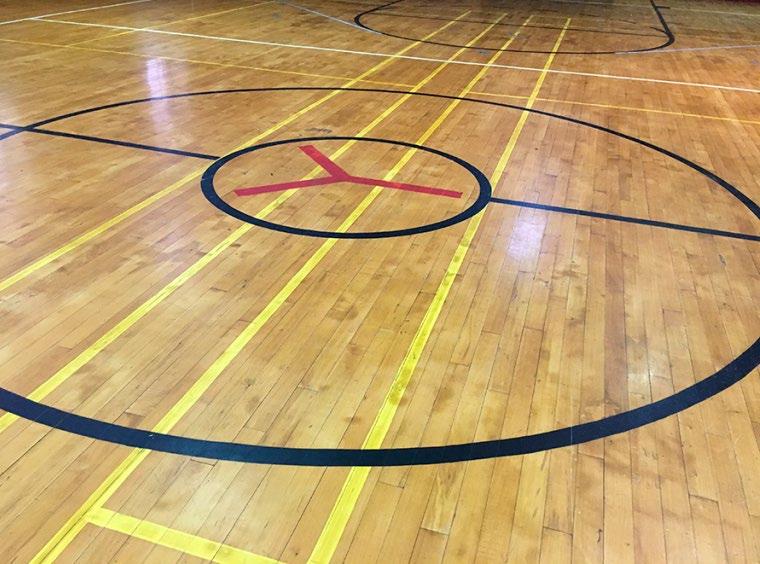
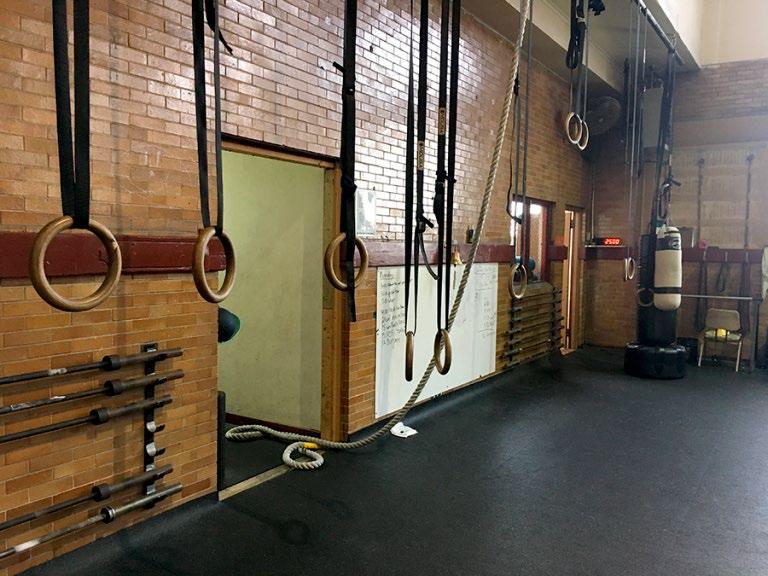
and the YMCA’s membership had changed. Today, the gym still echoes with the squeak of sneakers and the thud of basketballs, but the programming has expanded far beyond traditional leagues. The Downtown YMCA now hosts summer camps, spring break camps, and winter camps that keep kids engaged and connected when school is out, while also offering programs for adults and seniors who need more than a typical workout.
The YMCA serves people at every point on the spectrum of ability and performance. The Y has programs for those living with Parkinson’s, for cancer survivors, and it partners with the local school system so students in Adaptive PE can safely use the facilities. They are working with Navy SEALs training and swift-water training programs. On any given day, you might see someone rebuilding their strength after treatment sharing gym equipment with an elite athlete.
The Downtown YMCA’s exterior—Italian Renaissance in style, with twin bell towers and Corinthian columns—looks like something imported from another era, not a downtown gym that’s been patched and rebuilt multiple times. The building’s designer, Clarence W. King, gave Shreveport a civic landmark that stands out among the otherwise utilitarian sprawl of mid-century Louisiana. Those triple-arched entrances and twin spires invite a ceremonial entry that most gyms never attempt—you don’t just walk through the front doors, you’re welcomed into a space meant to be sacred in its own way.
Over the last decade, the YMCA has invested in mechanical upgrades and a multi-year rehab that preserved the original masonry while modernizing the interior. The result is a graceful balancing act between restoration and reinvention—a century-old building that still feels sturdy enough to carry the city’s youth—and its seniors, families, and service members—for another hundred years.

The Downtown YMCA’s story isn’t about wins and losses—it’s about consistent presence. For Shreveport, the YMCA has been there through booms and busts, through segregation and slow integration, through the rise of big-box gyms and the decline of inner-city investment. It has adapted but never abandoned its core mission. In February 2026, when the City Council honored the YMCA with a special resolution, the ceremony wasn’t just a pat-on-the-back—it was a quiet acknowledgment that the building has quietly shouldered the virtues of access, discipline, and community that sports are supposed to teach but often fail to deliver.
The real legacy of the Downtown YMCA at 100 is not just a gym that turned a century old. It’s a scoreboard for the city itself—tracking endurance, resilience, and the quiet victories that happen far beyond the final buzzer.

I'm exci ted to share that I've off icially launched Tri State Insurance & Financial Services.
Wi th 29 years experience, I've made the move to become independentso I can better serve you
W hat does that mean for you?
More options from multiple toprated carriers
Coverage tailored specif ically to your needs
An advisor who works for you
I've built my career on trust, relationships, and protecting what matters most - your family, your business, and your future. The commi tment hasn't changed. Now, I simply have more tools to serve you even better.
I would truly appreciate the opportuni ty to earn your business.
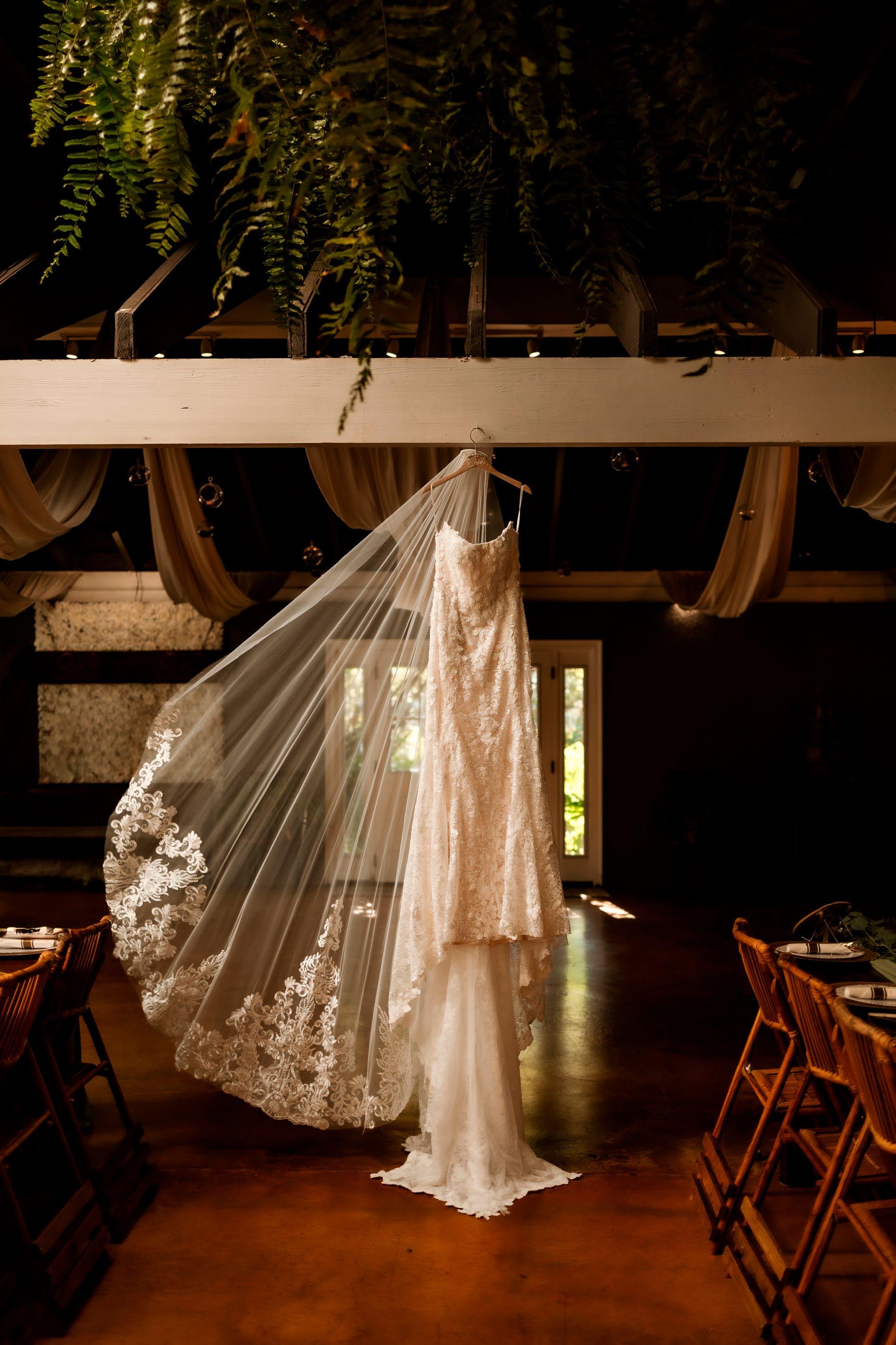
Miranda Holomon approaches photography not merely as a profession, but as a medium for visual poetry, a skill she has meticulously refined over the last five years. Based in Northwest Louisiana yet frequently found chasing light across international borders, Miranda balances her life as a devoted wife and mother of three with a profound passion for storytelling. Her work is defined by a commitment to "documenting your fable," a philosophy that treats every client’s history with the reverence of a classic folk tale. Whether she is preserving a sacred vow or capturing the fleeting, unscripted laughter of a family, Miranda possesses a rare ability to freeze time. In her hands, a simple shutter click becomes an enduring heirloom, turning the transient moments of today into a timeless legacy.

Dr. Marlon D. Henderson is a native of Shreveport, Louisiana. He is a graduate of Northwood High School, where he was Cla ss Valedictorian. Dr. Henderson graduated from Louisia na State University in Baton Rouge with a Bachelor of Scienc e. He received his Doctorate of Dental Surgery from Louisiana State Un iversity




Dr. Marlon D. Henderson currently serves as President of the Diverse Dental Society (DDS). His 2026 DDS theme is “Building Bridges for the Advancement of Oral Health Equity.” He is a Fellow in the American College of Dentists (ACD) and a Fellow in the International College of Dentists (ICD). He is currently participating in the ACD’s Sweet Spot Leadership Program. And, Dr. Henderson is a Past President of the National Dental Association (NDA).
In his spare time, Dr. Henderson enjoys traveling, all things LSU, attending music festivals, and family time with his wife Nikki and son Maxwell.



By Donesa Walker, MEd, BCCS
When the final school bell rings, most families welcome the break. Schedules loosen, mornings slow down, and the pressure of homework fades. But beneath that well-earned rest lies a challenge educators quietly anticipate each year: summer brain drain.
Research shows students can lose two to three months of academic progress over the summer, particularly in reading and math. What is less commonly discussed is that this seasonal slowdown does not just affect children. Adults and seniors experience it as well—often in more subtle but equally impactful ways. In regions like Louisiana, where intense heat and humidity are part of daily life, the effects can be even more pronounced.
The encouraging news is that summer does not have to be a season of decline. With a few intentional habits, it can become a time of cognitive strengthening for every generation. Why Summer Brain Drain Happens During the school year, children are consistently engaging in structured cognitive activity such as reading, problem-solving, and sustained attention. When that stimulation drops, the brain follows. Like muscles in the body, cognitive skills weaken when they are not used regularly.

This decline is not just about forgetting facts. It reflects a slowdown in core cognitive skills including processing speed, working memory, attention, and reasoning. These are the foundational skills that make learning possible in the first place.
For adults and seniors, the effects often show up as increased forgetfulness, slower recall, reduced focus, and mental fatigue. Without consistent mental engagement, these changes can become more noticeable over time.
The Louisiana Heat Factor Summer in Louisiana brings more than just sunshine. High heat and humidity place
additional stress on the body and brain. Even mild dehydration can negatively affect attention, memory, and processing speed.
For older adults, this risk is even greater. As we age, our natural thirst signals become less reliable, making it easier to become dehydrated without realizing it. Electrolytes such as sodium, potassium, and magnesium are essential for proper nerve signaling and brain function. When these are depleted through sweating, cognitive performance can decline further.
Simple strategies can make a meaningful difference. Drinking water consistently throughout the day, incorporating electrolyte-rich beverages when needed,
balancing caffeine intake, and consuming hydrating foods like fruits and vegetables all support optimal brain function.
Hydration is not just about physical health. It is a direct investment in mental clarity and cognitive performance.
A Cross-Generational Opportunity
One of the greatest advantages of summer is time. Families often have more opportunities to be together, and this creates a powerful environment for shared cognitive engagement.
When children, parents, and grandparents participate in activities together, everyone benefits. Children strengthen their learning skills. Adults maintain mental sharpness. Seniors support memory, processing, and emotional connection.
These shared experiences are not only beneficial for the brain, they are also deeply meaningful. They build relationships while strengthening the very skills that support lifelong learning.
Maintaining cognitive strength over the summer does not require rigid schedules or formal instruction. In fact, the most effective strategies are often the simplest.
Reading for just 15 to 20 minutes a day can help maintain comprehension, vocabulary, and focus. Real-life tasks such as cooking, planning outings, or managing a small budget engage reasoning and sequencing skills in a natural way.
Perhaps most effective of all is game-based learning. Games create an environment where thinking is required, but fun remains the focus. This combination leads to stronger engagement and better cognitive outcomes across all ages.

Scrabble builds vocabulary and verbal reasoning. Chess strengthens planning and problem-solving. Uno improves attention and processing speed. Monopoly develops math and strategic thinking. Bananagrams enhances word retrieval and speed. Sequence supports visual processing and pattern recognition. Ticket to Ride builds planning and sequencing skills. Memory games strengthen recall and attention. Yahtzee improves probability and decision-making. Pictionary encourages visualization and communication.
Each of these games offers a unique way to engage the brain while bringing people together across generations.
Preventing summer brain drain is not just about avoiding academic setbacks. It is about maintaining momentum. Children who stay mentally active return to school more confident and ready to learn. Adults remain productive and focused. Seniors support long-term cognitive health and independence.
The long-term impact of small, consistent efforts can be significant. Over time, these habits contribute to stronger thinking, better learning, and improved quality of life.
Conclusion
Summer should still feel like summer—restful, flexible, and full of meaningful moments. The goal is not perfection, but consistency. A little reading, a little thinking, and a lot of connection can go a long way.
When families choose to engage their minds together, they create an environment where everyone benefits. Summer becomes more than a break. It becomes an opportunity.

Louisiana Blue gave me a care manager who works on our behalf. She’s wonderful. With her, you feel like you have somebody in your corner. Right Card. Right Care.
1. Metalbug Music Fest: May 2, 2026, featuring 16 bands, heavy metal, and crawfish at Straight Jackets Venue. https:// ticketbud.com/events/a665c6a2-e030-11f09543-42010a7170d8

2. Tequila Fest 2026 is BACK! The Pre- Cinco celebration. Sunday, May 3 (3 PM - 9 PM) at Festival Plaza. A Pre-Cinco de Mayo celebration featuring drinks, music, and food. For tables contact 318-639-7387 or 318286-9213. Must Be 21+ To Attend https:// www.eventbrite.com/e/tequila-fest-2026tickets

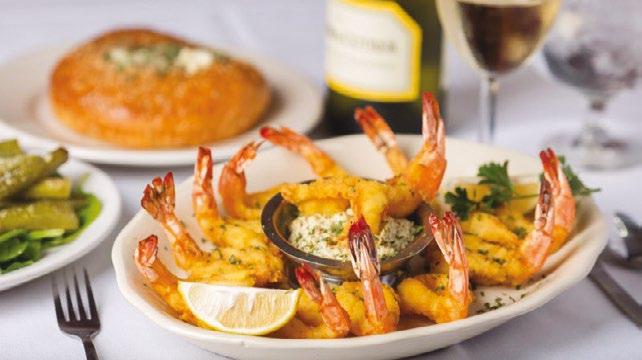
3. The Eddie E. Hughes Foundation is proud to once again host the Stuffed Shrimp Festival on Mother’s Day May 10, 2026. It’s family fun stuffed with great food, laughter, and good times for everyone. https://downtownshreveport.com/event/ shreveport-stuffed-shrimp-festival/





4. Mudbug Madness Festival: Memorial Day Weekend, May 22-24, 2026. A massive festival downtown featuring crawfish, Cajun/Zydeco music, and activities.
5. Red River Rumble F1 Powerboat Showdown: Starting May 23, 2026, at the Shreveport Aquarium. https://www. visitshreveportbossier.org/event/red-river-rumble-f1powerboat-showdown/15576/
6. Kenny Wayne Shepherd Band: Ledbetter Heights 30th Anniversary Tour. June 13th, 8:00 PM at the Margaritaville Resort Casino. Tickets available at https://www.ticketmaster.com/
7. Live Thoroughbred Horse Racing returns to Louisiana Downs May 2nd. Gather your friends for an opening day of excitement, great food, and casino entertainment. Check out the race schedule at https://ladowns.com/ racing/
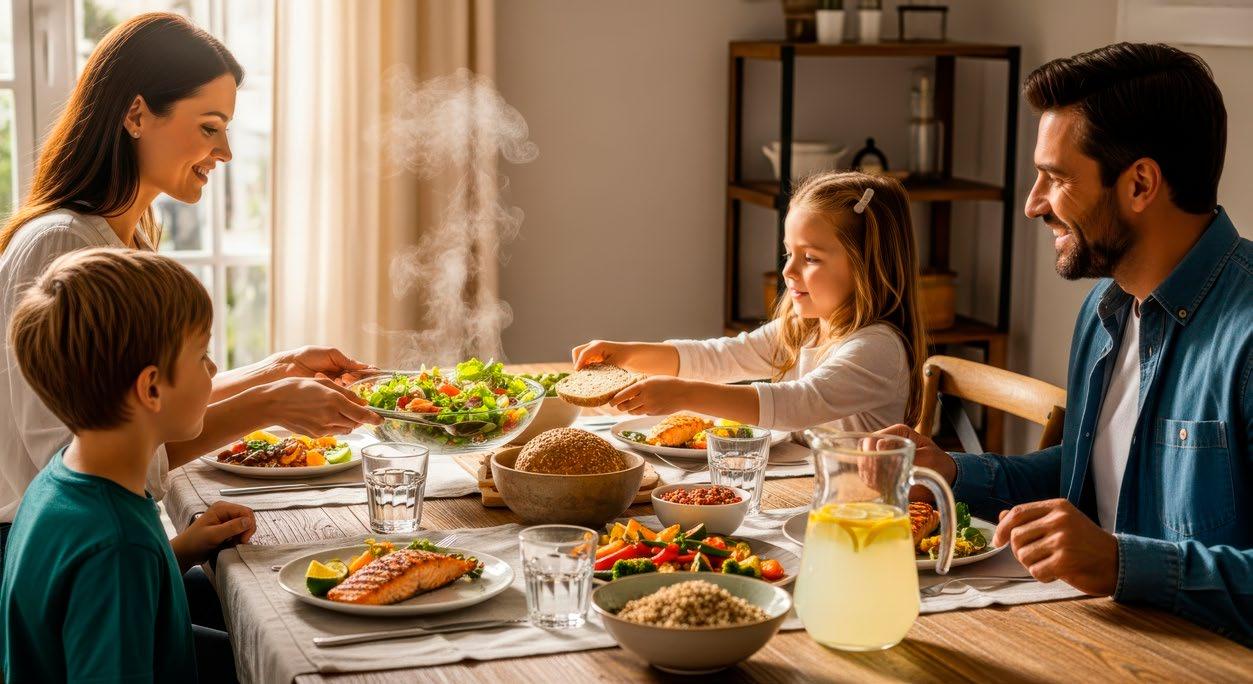
Mother’s Day is the perfect occasion to slow down and show appreciation for the woman who usually handles it all. While brunch gets a lot of the spotlight, an elegant, homecooked dinner feels more intimate and allows for a relaxed evening of celebration.
This Pan-Seared Salmon with Lemon Mascarpone Sauce is a standout choice for 2026. It strikes the perfect balance between "restaurant-quality" and "manageable at home," featuring bright spring flavors and a velvety sauce that feels incredibly indulgent.

Lemon Mascarpone
Pan-Seared Salmon with Lemon Mascarpone Sauce
Prep time: 15 mins | Cook time: 15 mins | Servings: 4
Ingredients
For the Salmon:
• 4 (6-oz) Salmon fillets (skin-on preferred for crispiness)
• 2 tbsp Olive oil
• Salt and freshly cracked black pepper
• 1 tbsp Fresh chives, finely chopped
• 1 tbsp Fresh dill, roughly chopped
For the Lemon Mascarpone Sauce:
• 1/2 cup Mascarpone cheese (at room temperature)
• 1/4 cup Heavy cream
• 1 large Lemon (zested and juiced)
• 1 clove Garlic, minced
• 1 tsp Honey (to balance the acidity)
• A pinch of salt

Instructions
In a small saucepan over low heat, combine the mascarpone, heavy cream, and minced garlic. Whisk gently until the cheese has melted into a smooth, creamy consistency. Stir in the lemon juice, lemon zest, and honey. Season with a pinch of salt. Keep on the lowest heat setting, stirring occasionally, while you cook the fish.
Pat the salmon fillets completely dry with paper towels (this is the secret to crispy skin!). Season both sides generously with salt and pepper.
• Heat the olive oil in a large non-stick or cast-iron skillet over medium-high heat.
• Once the oil is shimmering, place the salmon fillets in the pan skinside down.
• Press down lightly with a spatula for a few seconds to ensure even contact. Sear for 4–5 minutes without moving them until the skin is golden and crispy.
Carefully flip the fillets. Cook for another 2–3 minutes, or until the internal temperature reaches 52°C (125°F) for medium-rare or 63°C (145°F) if you prefer it fully opaque and firm.
Ladle a generous spoonful of the warm lemon mascarpone sauce onto the center of each plate. Place the salmon fillet (skin-side up to show off the crunch) directly on top of the sauce.
Garnish with the fresh chives and dill. The residual heat from the fish will wake up the aromatics of the herbs just as you serve it.
Recommended Sides
To turn this into a complete Mother's Day feast, consider pairing the salmon with:
• Roasted Asparagus: Tossed in olive oil and sea salt, roasted at 200°C for 10 minutes.
• Israeli Couscous or Lemon Risotto: To soak up that extra mascarpone sauce.
• A Chilled Glass of Sauvignon Blanc: Its high acidity cuts beautifully through the creamy sauce.
Pro Tip: If Mom isn't a fan of salmon, this exact sauce works wonders over pan-seared chicken breasts or even roasted cauliflower steaks for a vegetarian option!

As the mercury rises and the days stretch long, humans reach for iced tea and air conditioning. For our feline companions, however, summer isn't just about lounging in sunbeams—it can be a season of significant physical stress. Cats are descendants of desert-dwelling ancestors, but the modern house cat (especially long-haired or flat-faced breeds) can struggle with extreme heat just as much as we do.
Caring for a cat in the
summer requires a proactive approach to hydration, grooming, and environmental management. Here is everything you need to know to keep your kitty "feline" fine until autumn.
1. HyDratIon: the golDen Rule
Cats have a low thirst drive by nature, which becomes a liability when temperatures soar. Dehydration can lead to lethargy, sunken eyes, and in severe cases, kidney issues.
• Freshness is Key: Change water bowls at least twice a day. Bacteria grow faster in warm water, and cats are notoriously picky about "stale" tastes.
• The Fountain Effect: Many cats prefer running water. Investing in a pet fountain can encourage more frequent drinking through the sound and movement of the stream.
• Wet Food Transition: If your cat usually eats dry kibble, consider mixing in some wet food or "soups" during the summer. This is an easy way to sneak extra moisture into their diet.
• Ice, Ice Baby: Drop a few ice cubes into their water dish. Some cats find the clinking sound and the cold temperature fascinating and will "play-drink" more often.
2. recognIzIng anD
PReventIng HeatstRoke
Unlike humans, cats don't sweat through their skin to cool down. They sweat
slightly through their paw pads and rely heavily on grooming (evaporative cooling from saliva) and finding cool surfaces. Watch for these red flags:
• Rapid panting (Cats rarely pant; if they do, it's often an emergency).
• Bright red tongue or pale gums.
• Drooling or thick saliva.
• Lethargy, stumbling, or vomiting.
Pro Tip: If you suspect heatstroke, do not plunge your cat into ice water. This can cause shock. Instead, drape them in lukewarm, damp towels and get them to a vet immediately.
3. Creating a "Cool Zone" Your home might feel comfortable to you at 75°F (24°C) but remember that

cats wear a permanent fur coat.
• Airflow Matters: Keep fans running at floor level. While fans don't cool the air, they help move it, assisting in the evaporation of saliva from the cat's fur.
• The "Cooling Mat" Trick: You can buy gel-filled cooling mats, but a DIY version works just as well. Freeze a plastic water bottle, wrap it in a thick towel, and place it in your cat’s favorite hiding spot.
• Curtains Closed: Block out the "greenhouse effect" by keeping blinds or curtains
drawn during the hottest parts of the day (usually 10 AM to 4 PM).
• Tile is Best: You may notice your cat ditching the plush sofa for the bathroom tile or the kitchen floor. These surfaces pull heat away from their bodies. Ensure they have access to these uncarpeted areas.
4. grooming and skin CaRe You might be tempted to shave your long-haired cat to "help them cool down," but proceed with caution. A cat's coat provides a layer of
insulation against the heat and protects their delicate skin from sunburn.
• The Daily Brush: Brushing is vital in summer. Removing trapped undercoat and loose fur allows for better air circulation against the skin.
• Sunburn Protection: White cats or those with thin hair on their ears and noses are highly susceptible to skin cancer (squamous cell carcinoma). Limit their time in direct window sunlight, or apply pet-safe, non-toxic sunscreen to exposed areas.
• No Shaving (Unless advised): Unless your vet recommends it for matting, avoid a "lion cut." Shaving removes their natural protection against UV rays and can make it harder for them to regulate their temperature.
5. outdooR safety: tHe HigHstakes Heat
If your cat has access to the outdoors, summer presents unique hazards beyond just the temperature.
• Pavement Check: If the pavement is too hot for your hand, it’s too hot for their paws. Hot asphalt can cause painful burns and blisters on paw pads.
• Chemical Hazards: Summer is the season for lawn fertilizers, pesticides, and weed killers. Ensure your cat doesn’t walk through freshly treated grass, as they will lick the chemicals off their paws later.
• The Engine Check: On cooler summer nights, cats might crawl under cars or
into wheel wells. Always give your hood a tap before starting the engine.
• Sheds and Garages: Cats love to explore, but they can easily get trapped in a shed or greenhouse where temperatures can reach 120°F (49°C) in minutes. Always check before locking up your garden structures.
6. PaRasite PReventIon
Warm weather is the peak season for "hitchhikers." Fleas, ticks, and mosquitoes thrive in the humidity.
• Heartworm Risk: Mosquitoes carry heartworm. Even indoor cats should be on a year-round preventative, as mosquitoes easily find their way inside through screens.
• Flea Explosions: A single flea can lead to an infestation of thousands in a matter of weeks during a hot summer. Maintain a strict schedule for topical or oral preventatives.
7. summer tReats: felIne style
Who doesn't love a popsicle in July? You can make "Cat-sicles" to keep your pet entertained and hydrated.
1. Take the liquid from a can of tuna (packed in water, not oil).
2. Dilute it slightly with water. 3. Freeze it in an ice cube tray. 4. Serve one cube in a bowl as a cooling, hydrating snack.
By making these small adjustments to your daily routine, you can ensure your cat stays relaxed and healthy. Summer should be a time of lounging and play, not a struggle against the elements. Keep a close eye on their behavior, keep the water flowing, and enjoy the sunny season with your cool cat!
Provide multiple water stations and add ice cubes. Environment Keep blinds closed and ensure access to tile/stone floors. Grooming Increase brushing frequency to remove insulating undercoat. Health Apply pet-safe sunscreen to white ears/noses. Safety Check sheds/garages before closing them for the day.

You can’t have Vacation Bible School without glue and construction paper, no more than you can have a legal trial without manila folders.
And you can’t have summertime without having VBS.
“Real” school ends this month, which means the best kind of summer school is right around the corner.
“Gimme a V, gimme a B, gimme an S! …”
I loved Vacation Bible School, a summer staple in the Bible Belt.
No detention. No homework.
And the Kool-Aid flowing free and easy … A little slice of heaven on earth.
VBS was a license to steal, a poor analogy here but you get the point.
Ahhh, the calming smell of varnish on unfinished wood. You VBS Veterans know what I’m talking about
I, too, am a card-carrying member of the Vacation Bible School days, where we learned arts and crafts and the books of the

By Teddy Allen Contact Teddy at teddy@latech.edu
There’s an art to it
Old Testament all at the same time.
If you’ve missed out on VBS, it’s an annual time at the local church of fun and learning and various activities for the elementaryschool crowd, usually lasting each morning for a week. Or until the coconut cookies run out.
Once you get to be a certain age, like 13 or so, you don’t get “fired” from VBS so much as you graduate. No more worlds to conquer, no more key chains to make.
By junior high, the Bible is hopefully your companion, but kiddy scissors and jumbo crayons have sort of lost their luster. And your hands are too large to put in plaster, at least cost-effectively.
You can always return to VBS as a volunteer though, the likes of whom make the week possible in the first place. Otherwise, you’d have the preacher and minister of music and the secretary babysitting a few dozen children for a hot summer week. And you’d have at least three resignations the following Sunday morning.
Vacation Bible School. We did every kind of craft you can think of, short of learning how to apply makeup and fake fingernails.
Paper plates turned into turkeys, thanks to some feathers and watercolors.
Macaroni was, we learned for the first time, a dual threat. You could eat it for a snack,
then use the uncooked part to decorate your Father’s Day gift. Who knew you could paint macaroni?
I have at my house to this day a 5-by-7 piece of construction paper with a black-andwhile photograph glued to its middle. The picture of me and my sisters is cut into an almost-circle, the edges of the “frame” are jagged (because we used those special “teeth” scissors”) and the border is crushed eggshells somehow glued to the paper. And spraypainted red and silver. (You’d think it’s the eggshells that make this piece so expensive, but actually, it’s the sentiment.)
We illustrated Bible stories with things we made from pinecones and egg crates and toilet paper holders and scotch tape and clothespins. (This must be what attending “McGyver” Baptist Church would be like!)
We didn’t turn water into wine, but our teachers knew how to make a pop bottle turn into a decorative candle holder. If the teachers were totally exhausted or at wit’s end or turned heathen, we fell back on the simple “Outline of Your Hand” painting.
Did I accidentally knock a kid down a hill outside Piney Grove Baptist one Carolina summer morning at VBS? Yes. Did he break his arm? Yes. Did my dad wear me out? Yes. But worse, he made me stay home a day from Vacation Bible School. And because of it, he missed out on getting a John 3:16-inscribed Father’s Day carburetor made from tin foil, paper clips and a Pop-Tarts box.

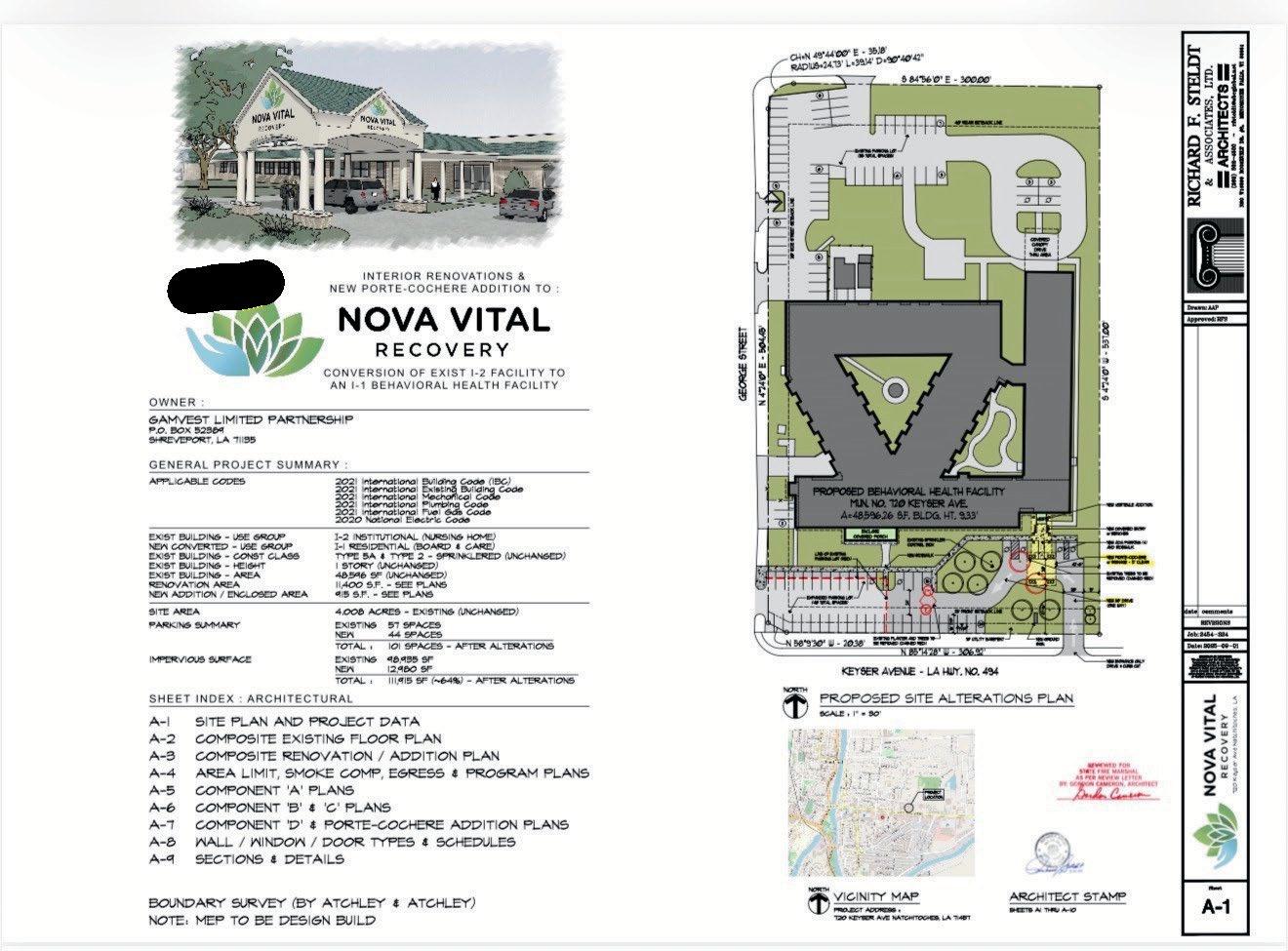
Nova Vital Recovery Intensive Out Patient Program (IOP) Announces the acquisition and Merger of the Magnolia Recovery IOP and Sober Living Houses



Other Nova Vital Recovery Locations
Nova Vital Recovery Center Residential TreatmentCenter Lincoln 4396 US-80, Ruston,LA | 318.224.4967
Nova Vital Recovery Center Intensive Out Patient Program Monroe 701 Bres Ave, Monroe, LA 71201
Nova Vital IOP 3007 Knight Street, Suite 300.Shreveport, LA. 71105
Founders | KitGambleand Dr.Randy Davis ExecutiveDirector/ChiefOperating Officer | JimHenry