The right of Helen Grimes to be identified as the author of this work has been asserted in accordance with the Copyright, Designs and Patents Act 1988.
All rights reserved. No part of this publication may be reproduced, stored in a retrieval system or transmitted in any form, or by any means, without the prior written permission of the author, nor be otherwise circulated in any form of binding or cover other than that in which it is published and without a similar condition being imposed on the subsequent purchaser.
Every effort has been made to ensure that all the information in this book is accurate. However, due to differing conditions, tools and individual skills, the publisher cannot be responsible for any injuries, losses and other damages that may result from the use of the information in this book.
First published 2026 by: Bustle & Sew Station House West Cranmore Shepton Mallet BA4 4QP
www.bustleandsew.com
WelcometotheAugustMagazine
In August we can tell that the season will soon be changing once more as summer draws to a beautiful golden close. All around our house the hedgerows are heavy with glossy blackberries waiting to be gathered, whilst my kitchen garden has beans, courgettes and more lettuce than I could ever eat (sure the chickens will help me out here!) In the Engineer’s greenhouse there are ripe tomatoes for the picking. There is a richness to the countryside that comes only at the close of summer. It is a lovely time to slow down for a while, enjoy the longer evenings, and perhaps find a peaceful hour or two for stitching.
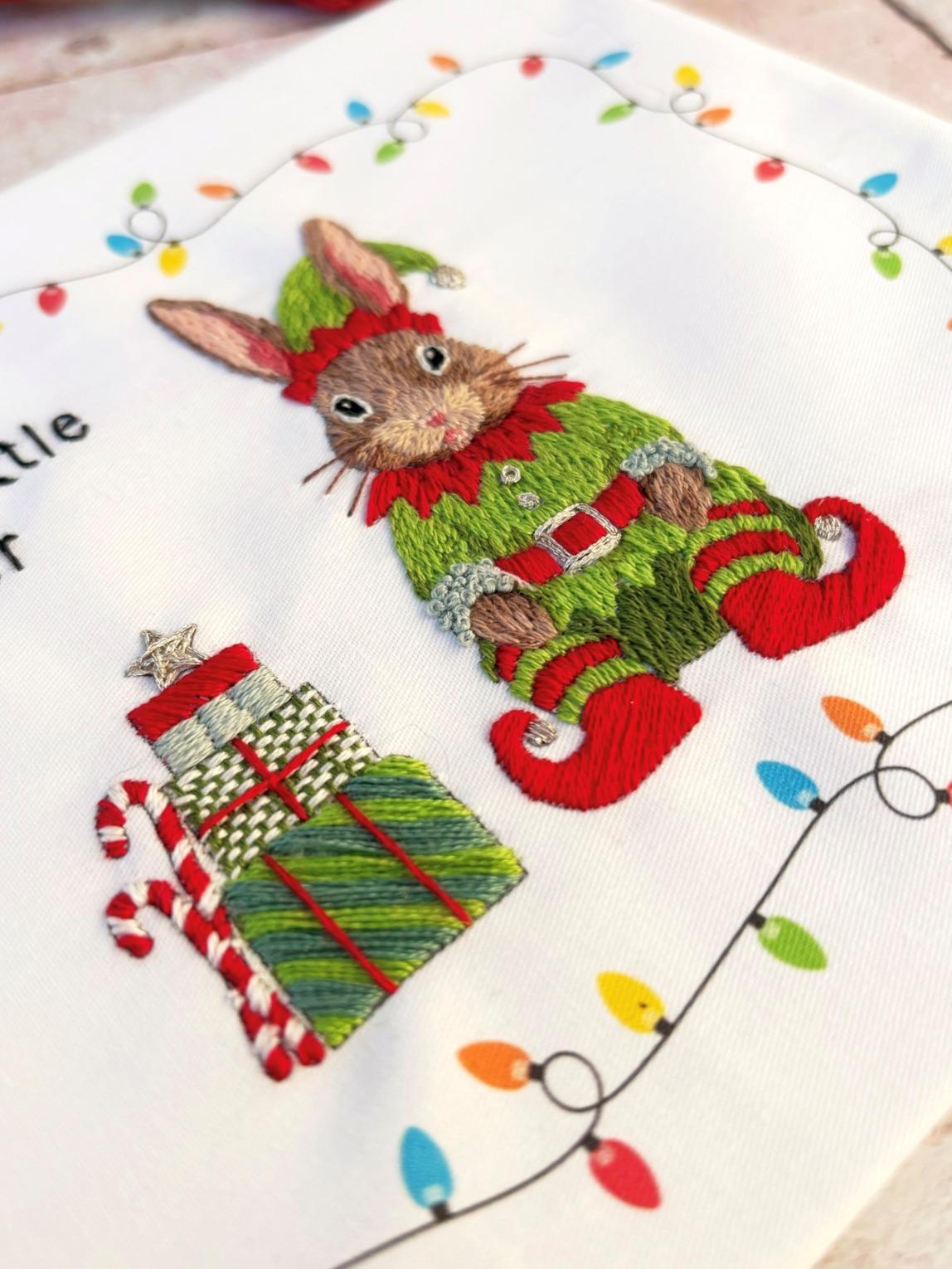
This month's magazine celebrates all that late summer has to offer, with projects inspired by the season alongside articles exploring the traditions and treasures of the countryside. And, although I don’t want to remind you of the approach of Christmas, I have also included another seasonal pattern - Santa’s Little Helper - a baby brother for last month’s Carol Singing Rabbit.For many of us, handmade gifts and festive stitching are part of the pleasure of Christmas, and starting now means there's plenty of time to enjoy every stitch without feeling rushed.
I hope you'll find something here to inspire you, whether you're picking blackberries for a crumble, gathering flowers from the garden, or simply enjoying a quiet afternoon with needle and thread.
The September edition will be published on Thursday 27 August in four weeks time. Until then…
Very best wishes
August has a character entirely its own. It possesses a slower rhythm than the months that precede it. The headlong rush of June and the busy times of July and the end of the academic year are behind us now, so we’re tempted to linger a little longer over breakfast in the garden, to wander country lanes without destination, and to sit quietly beneath the shade of listening to the gentle drone of bees and other insects. August is a month that encourages us to savour the here and now, for even while the days remain warm and welcoming there is an almost imperceptible awareness that summer is passing its peak and autumn is just around the corner.
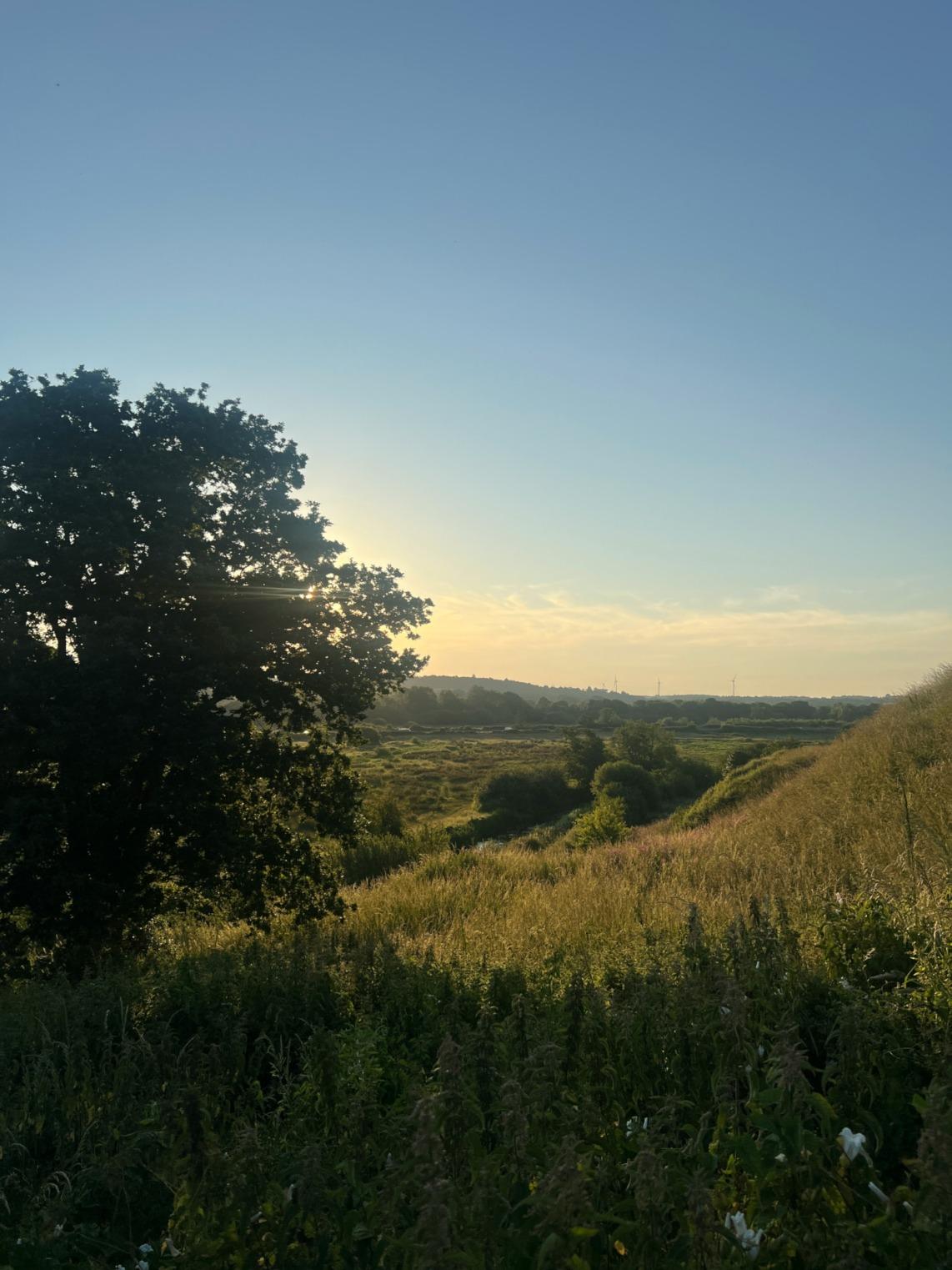
In the countryside around my house, the wheat fields ripple like liquid gold beneath the breeze, while the green tassels of the maize seem to reach for the sky. The hedgerows, so fresh and green in June, have become rich and tangled, heavy with the promise of
August
harvest. Elderberries deepen from green to glossy black, hips begin to colour on the wild roses, and the first blackberries appear among the brambles, tempting us to pause and gather a handful or more for jams, jellies or simply to enjoy with a little clotted cream perhaps - yum!
Long before supermarkets and global food supplies, communities depended upon the successful gathering of crops before the weather changed. Medieval villages worked together to gather crops, and though today's machinery has replaced much of the manual labour of the past, the underlying sense of thankfulness for harvest home remains. Across the countryside churches continue to hold harvest festivals later in the season, decorated with sheaves of corn, fruit and vegetables that celebrate the harvest.
The month begins with Yorkshire Day on the first of August, a celebration of England's largest
county and its proud traditions. Across Yorkshire, towns and villages mark the occasion with civic ceremonies, brass bands, local food, and festivities that honour the county's history and landscape. It is a fitting beginning to the month, for Yorkshire's rolling dales, dramatic moors and spectacular coastline are nowhere more beautiful than during late summer.
The first of August is also Lammas Day, one of England's oldest seasonal festivals. Long before the modern harvest festival became established in churches, Lammas marked the beginning of the grain harvest. Its name comes from the Old English words meaning "loaf mass", referring to the first loaf baked from the newly harvested wheat. This loaf was traditionally taken to church to be blessed in thanksgiving for the year's first grain.
Nettles:From stingingplantsto fibre,andbeyond…
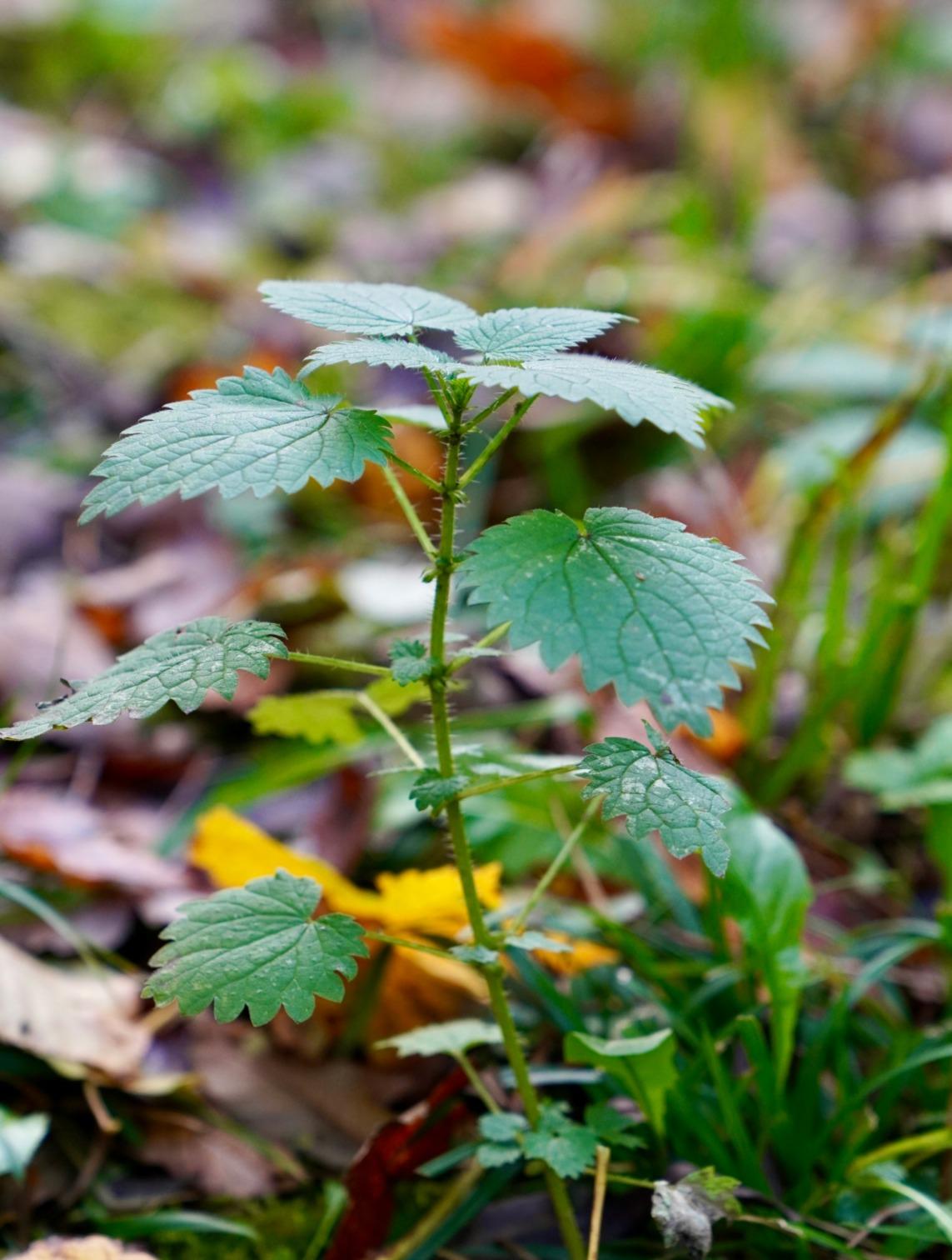
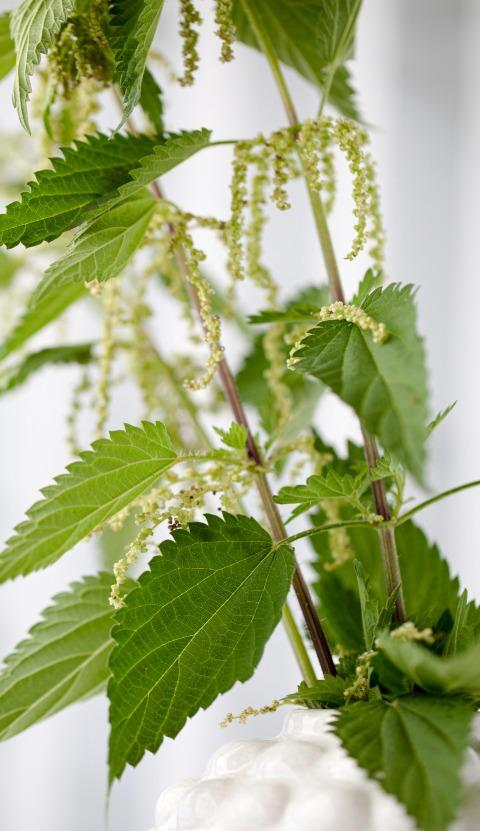
I’m sure that most, if not all, of us will have have brushed against a patch of nettles at some point, quickly retreating with a sharp intake of breath and a few choice words. They are among Britain's best known wild plants, thriving along hedgerows, woodland paths and forgotten corners of the garden. Yet hidden beneath those familiar stinging leaves lies one of the oldest textile fibres in Europe.
Long before cotton became commonplace and flax was widely cultivated, nettles were being gathered to make thread, rope and cloth. Long before cotton became widely available and flax was cultivated on a large scale, the common stinging nettle provided the population of Europe with a surprisingly fine and useful textile fibre. Although now regarded by many as a troublesome weed, nettles have a long history as a valuable wild resource, providing food, medicine, cordage and cloth.
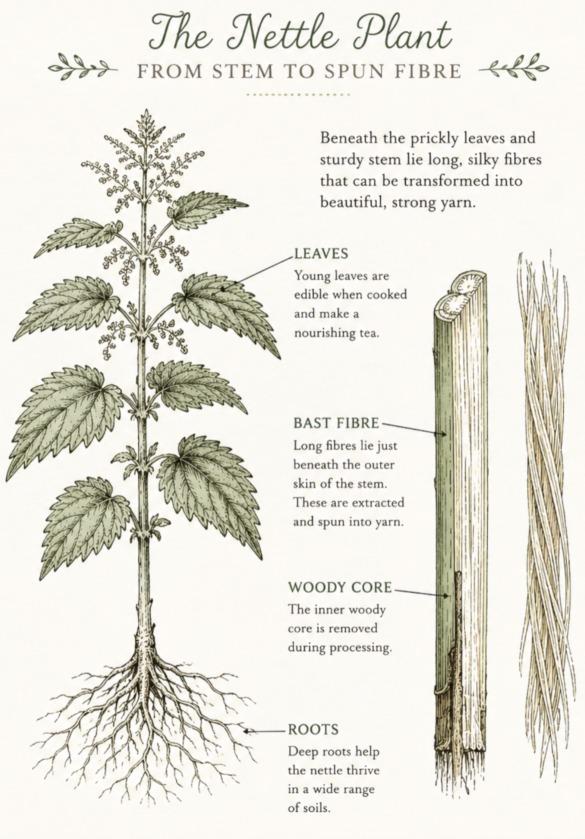
The fibres found in nettles are known as bast fibres, just like those in flax and hemp. They are located beneath the outer bark of the stem and are remarkably strong, with a silky sheen once properly prepared. Well-made
nettle cloth can range from coarse and robust to exceptionally fine. In fact, some historical examples are so delicate that they have been mistaken for linen.
Archaeological discoveries show that nettle fibres were being used in Europe over 2,000 years ago. Fragments of nettle cloth have been found in Bronze Age sites in Denmark, and throughout the Middle Ages people continued to use nettles where flax was scarce or expensive.
In Scotland and northern Europe, nettles were gathered from hedgerows and woodland edges. They were made into fishing nets, ropes, sacks and household textiles. The fibres' natural strength also made them ideal for bowstrings and cords.
Perhaps most remarkably, during the First World War Germany experienced severe shortages of imported cotton. Large quantities of nettles were harvested to produce cloth for military uniforms. Researchers even selected particularly tall, fibre-rich plants to improve yields.
PreservingSummer’s Beauty……
TheMonthofAugust
There is no month in the whole year in which nature wears a more beautiful appearance than in the month of August. Spring has many beauties, and May is a fresh and blooming month, but the charms of this time of year are enhanced by their contrast with the winter season.
August has no such advantage. It comes when we remember nothing but clear skies, green fields and sweet-smelling flowerswhen the recollection of snow, and ice, and bleak winds, has faced from our minds as completely as they have disappeared from the earth - and yet what a pleasant time it is! Orchards and cornfields ring with the hum of labour; trees bend beneath the thick clusters of rich fruit which bow their branches to the ground; and the corn, piled in graceful sheaves, or waving in every light breath that sweeps above it, as if it wooed the sickle, tinges the landscape with a golden hue.
A mellow softness appears to hang over the whole earth….
Charles Dickens (1812-1870) from The Pickwick Papers, 1837
Willow has been one of the most useful trees in the British countryside for thousands of years. Its extraordinary flexibility, rapid growth and ability to regenerate after cutting meant that almost every part of the tree found a purpose. Long before modern manufactured materials existed, willow quietly supplied farmers, gardeners, craftsmen and even doctors with a wide range of useful products.
One of willow's oldest uses was for making hurdles – portable woven fence panels that could be moved around fields as needed. Farmers used them to pen sheep during lambing, create temporary livestock enclosures and protect young crops. Their light weight made them easy for one person to carry, yet they were remarkably strong. Living willow was also planted to create hedges and windbreaks. The young stems could be woven together as they grew, producing dense, living fences that were both attractive and practical.
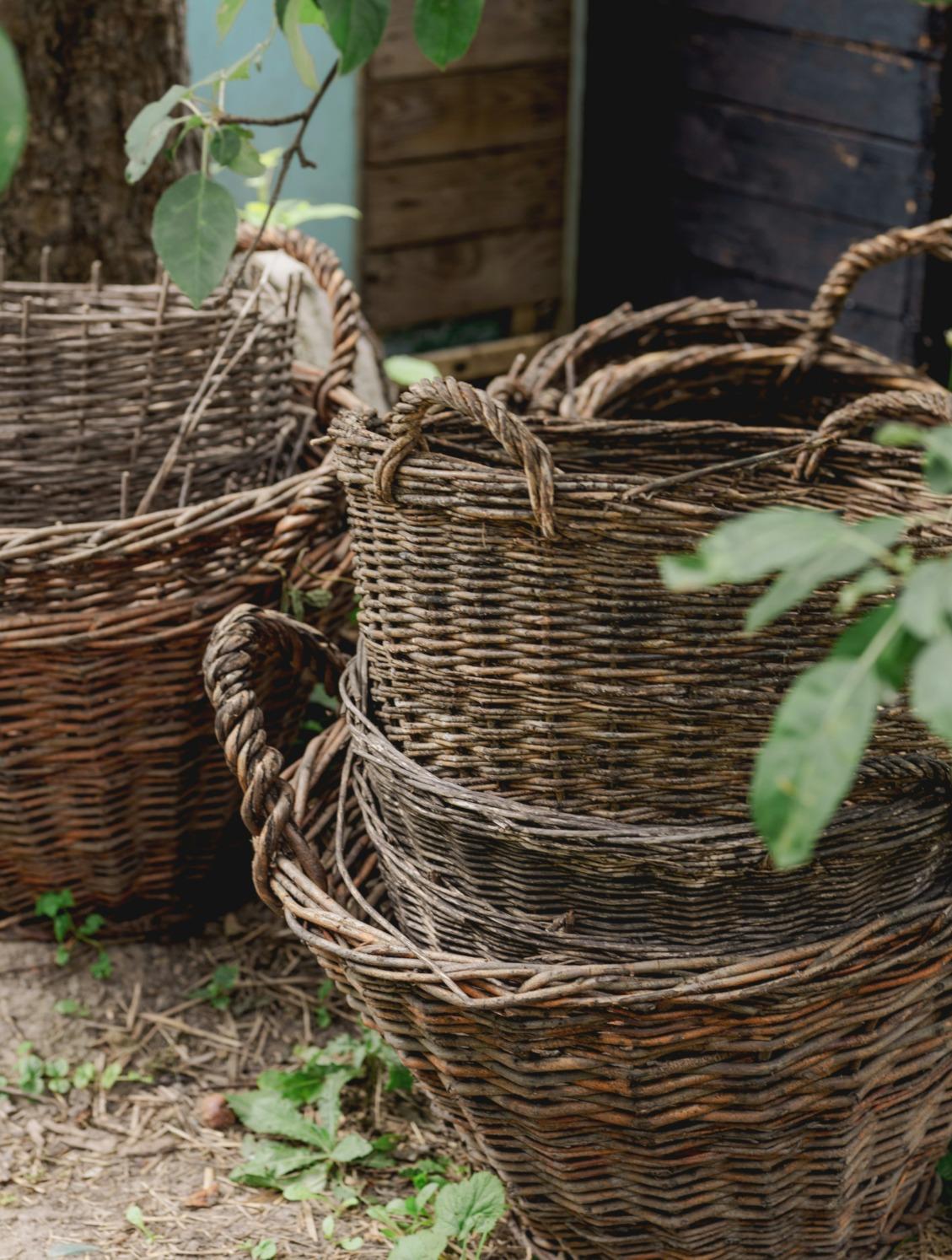
Long before the arrival of plastic trugs and lightweight crates, the basket was an indispensable companion. Every farm, cottage and market garden depended upon them. They were designed to last for many years, becoming smoother and richer in colour through constant use.
The story of English basket making begins with one of our most familiar native plants: the willow. Although often admired for its graceful branches sweeping over rivers and ponds, certain varieties of willow have been cultivated specifically for basket making for well over a thousand years. Archaeological discoveries show that woven baskets were already being made in Britain during prehistoric times, and the Romans found basket weaving to be an established craft when they arrived.
Long before Somerset became known for cider and cheddar cheese, it was famous throughout Britain as a source of willow. For centuries, the flat wetlands of the Somerset Levels produced some of the finest basket willow in the country, supporting a thriving rural industry that supplied basket makers from Cornwall to Scotland. The neatly tended willow plantations, known locally as withy beds, became an unmistakable part of the Somerset landscape and remain one of its most distinctive features today.
The word withy is an old English term for the long, flexible shoots of willow used in weaving. It appears in medieval documents and survives in many place names across the West Country. A withy bed was simply a plantation of willow grown specifically for harvesting these slender rods. Unlike ornamental willows grown for their graceful appearance, basket willows were managed as a crop, carefully cultivated to produce straight, un-branched stems of exceptional quality.
The Somerset Levels were almost perfectly suited to willow growing. This broad expanse of lowlying marshland stretches south of the Mendip Hills (where I live!) and west towards the Bristol Channel. For much of history it was a landscape shaped by water. Rivers such as the Parrett, Tone, Brue and Cary meandered across the floodplain, while winter floods regularly covered large areas of farmland. Although these conditions could make agriculture difficult, they created ideal growing conditions for willow.
The damp, fertile soils encouraged rapid growth, while the plentiful water ensured that the trees rarely suffered drought. Willow thrives where its roots can remain cool and moist, and the Levels provided exactly the environment it preferred. Generations of growers recognised this natural advantage and gradually established extensive withy beds along riverbanks, drainage channels known as rhynes, and reclaimed marshland.
Willow has almost certainly been grown in here Somerset since Roman times, but organised commercial cultivation expanded dramatically during the Middle Ages. Monasteries, always practical land managers, were among the first to recognise the value of willow as a renewable crop. Basketry was essential in medieval life. Baskets carried produce to market, stored grain, transported fish, gathered firewood and served countless domestic purposes. Every village required a steady supply, and willow became an important local commodity.
By the seventeenth and eighteenth centuries, willow growing had become firmly established as a specialist rural occupation. Families often combined willow cultivation with small-scale farming, cutting their rods during the quiet winter months before preparing them for sale or weaving. Knowledge passed from one generation to the next, with each grower understanding which varieties flourished best in particular soils and which produced the finest weaving rods.
During the nineteenth century as Britain's population grew and industry expanded, demand for baskets increased enormously. Railways required thousands of baskets for transporting parcels and luggage. Farms needed harvest baskets, dairies required carrying baskets, fishermen ordered creels and eel traps, laundries bought enormous linen baskets, and shops relied upon strong market baskets to deliver goods. The Somerset withy beds supplied much of this demand.
During the winter months the landscape came alive with activity as growers harvested the year's crop. Bundles of freshly cut willow rods stood stacked beside the fields, waiting to be sorted according to length and thickness before further processing. Harvesting followed a rhythm that had changed little for centuries. Once the leaves had fallen and the willow lay dormant, usually between November and February, each rod was cut cleanly near its base using a sharp billhook. The stools, as the rooted plants were known, remained alive beneath the soil and quickly produced fresh shoots the following spring. This annual coppicing could continue for decades, making willow one of the countryside's most sustainable crops.
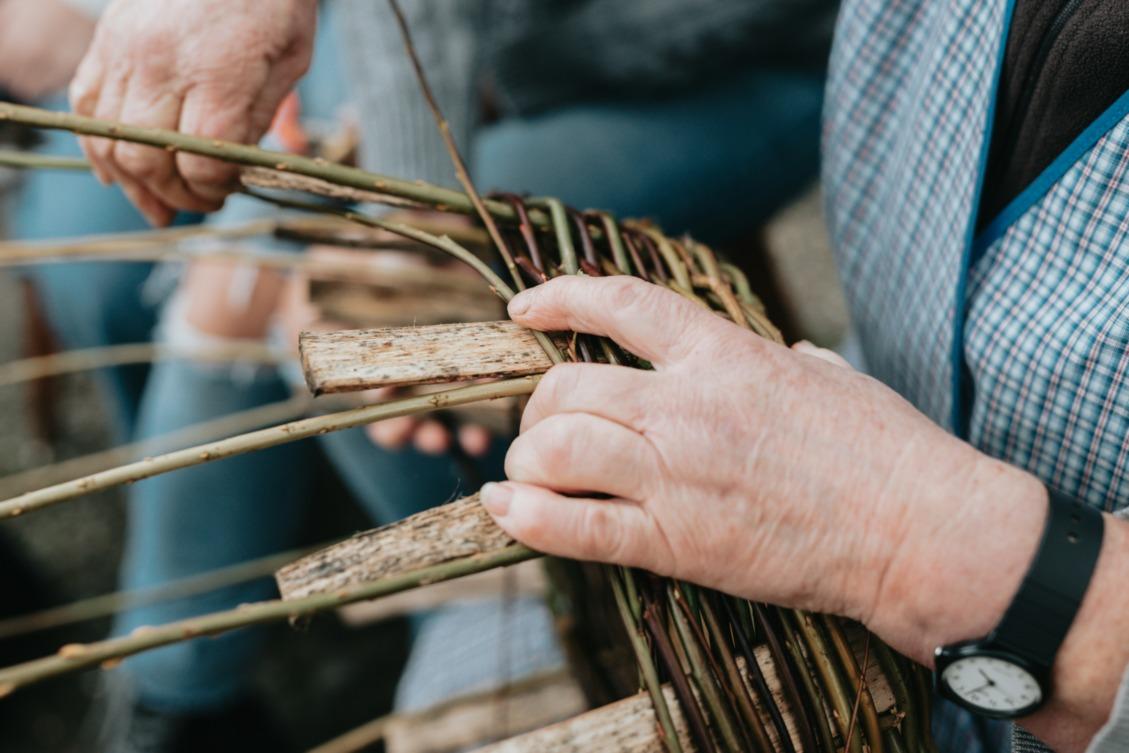
Not all willow was prepared in the same way. Some rods, known as green willow, retained their bark and were woven almost immediately. Others were dried before soaking to restore their flexibility. The famous buff willow required a more elaborate process. Bundles of rods were first boiled in long tanks for several hours, loosening the bark and altering the colour of the wood beneath. After boiling, the bark was removed using simple hand tools known as brakes, revealing the smooth, creamy stems so familiar in traditional English baskets.
The peeling season became an event in itself. Workers gathered in the spring to strip thousands of rods, their hands moving swiftly as each stem was drawn through the peeling brake. The freshly peeled willow was then spread out to dry in the sunshine, creating pale golden stacks that became a familiar sight across the Levels.
The twentieth century brought significant challenges. Metal containers gradually replaced many traditional baskets, followed later by plastics, cardboard and synthetic materials. Demand declined steadily, and many withy beds were abandoned. Workshops closed, and ancient skills risked disappearing altogether.
Fortunately, a small number of dedicated growers and basket makers refused to let the tradition die. They continued cultivating willow, teaching new apprentices and preserving the specialist knowledge accumulated over centuries. Their efforts laid the foundations for today's revival of interest in traditional basketry.
August is one of the most rewarding months of the year for anyone who enjoys cooking with local seasonal ingredients. Gardens, allotments and market stalls are full of seasonal produce, making it easy to prepare simple meals that are both colourful and full of flavour.
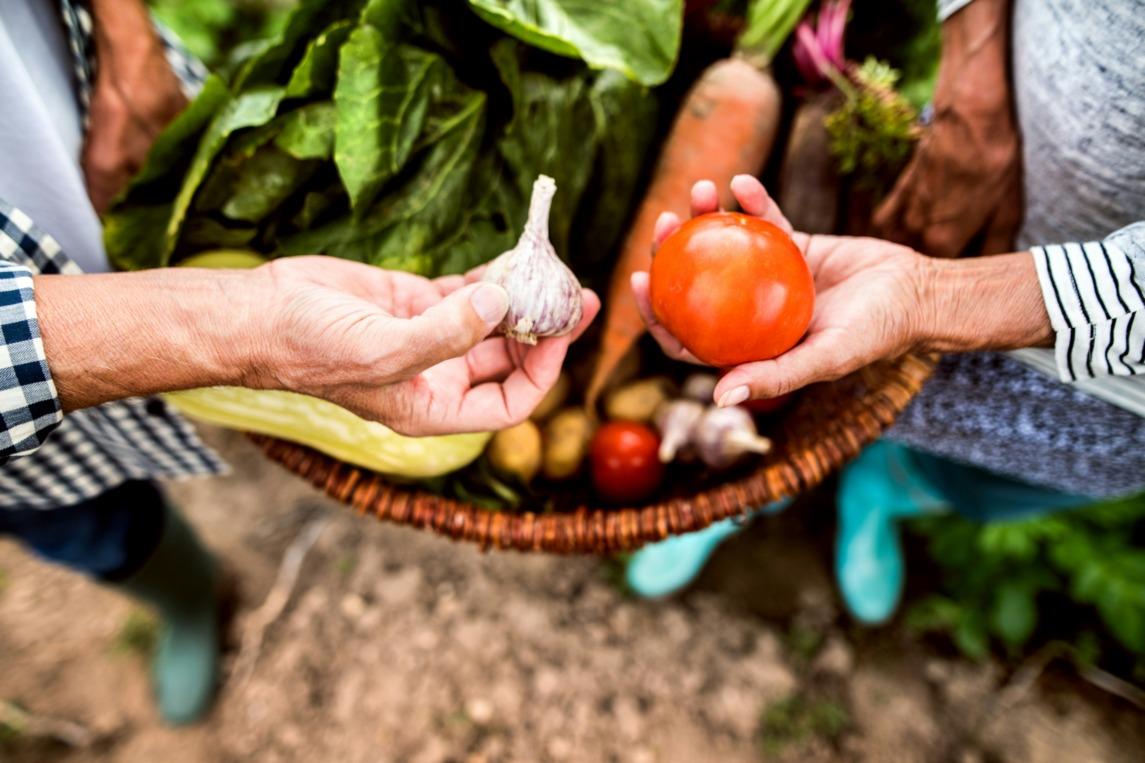
The English countryside reflects this abundance. Fields are busy with the cereal harvest, hedgerows are beginning to fill with blackberries, and kitchen gardens are producing vegetables faster than many gardeners can use them. Courgettes, beans, tomatoes, carrots, beetroot, onions and sweetcorn are all widely available, while herbs continue to grow strongly, adding fresh flavour to everyday cooking.
Vegetables are the real stars of the kitchen in August. Ripe tomatoes need little more than a drizzle of olive oil and a few fresh herbs. Runner beans and French beans are perfect served simply with butter, while beetroot, carrots and onions work equally well roasted or added to salads.
Courgettes (zucchini) seem to appear (almost overnight!)in generous quantities at this time of year and are wonderfully versatile, finding their way into soups, tarts, cakes and pasta dishes. Fresh herbs such as parsley, basil, mint and chives are also available, adding
their colour and flavour to everything from sandwiches to savoury bakes.
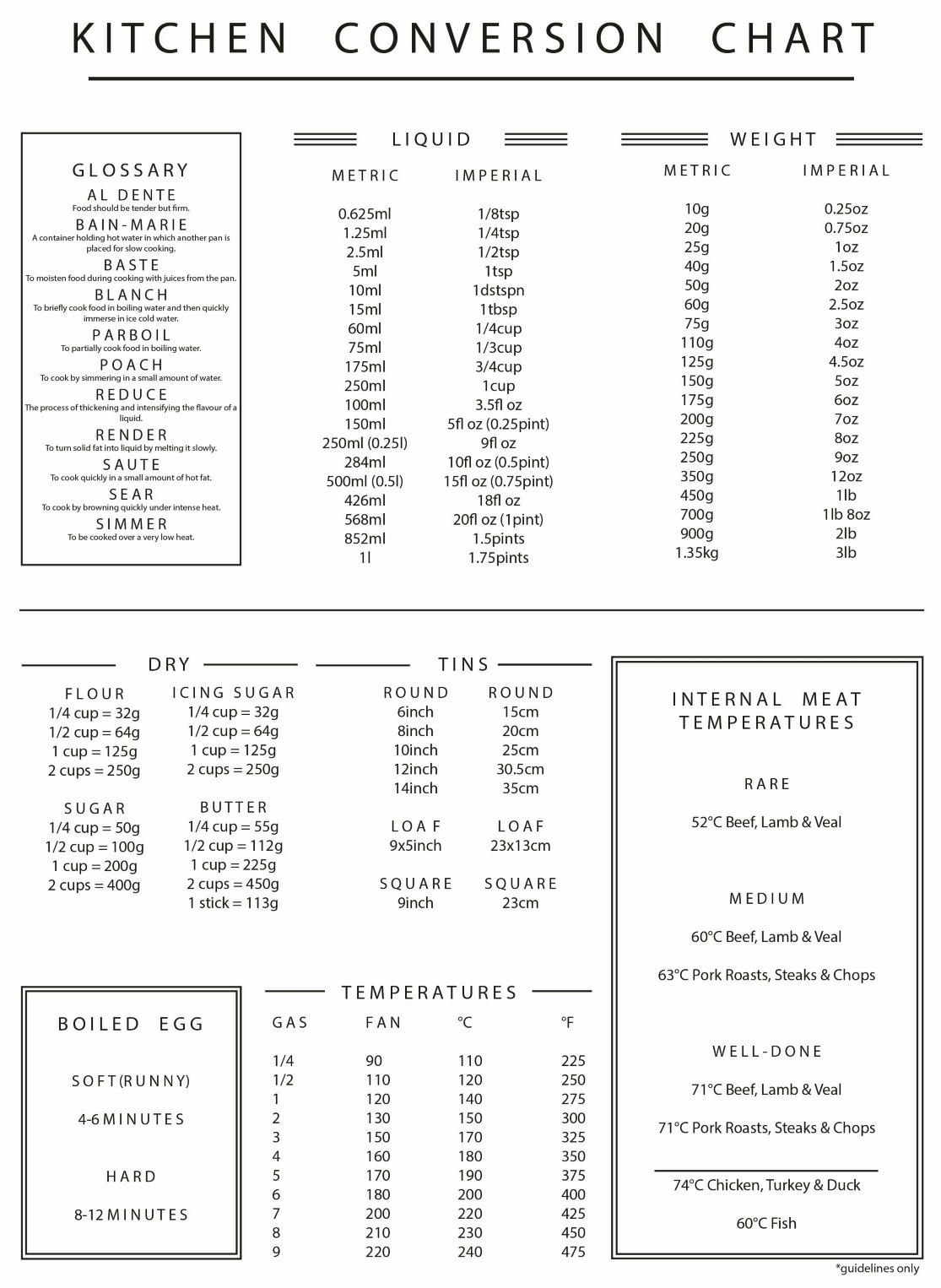
The recipes in this issue make the most of these seasonal ingredients without requiring complicated methods or hard-to-find items. They are designed for everyday cooking, whether you are preparing a quick lunch, an easy family supper or something to share with friends. There are a few traditional favourites alongside recipes with a more modern feel, but all have been chosen because they celebrate the flavours of late summer.
August is also a month when meals often move outdoors. A picnic in the park, lunch in the garden or supper on the patio can make even the simplest food feel special. Homemade quiches, savoury muffins, vegetable tarts and fresh salads all travel well, while seasonal fruit makes an easy dessert. It doesn't take much planning to put together a relaxed meal that can be enjoyed outside while making the most of the longer days.
Many people also find themselves with a surplus of produce at this time of year which can be frozen, turned into chutneys or sauces, or simply shared or swapped with neighbours and friends. As always, I hope these recipes encourage you to enjoy the best of the season, whether your vegetables come from your own garden, a local farm shop or the weekly market.
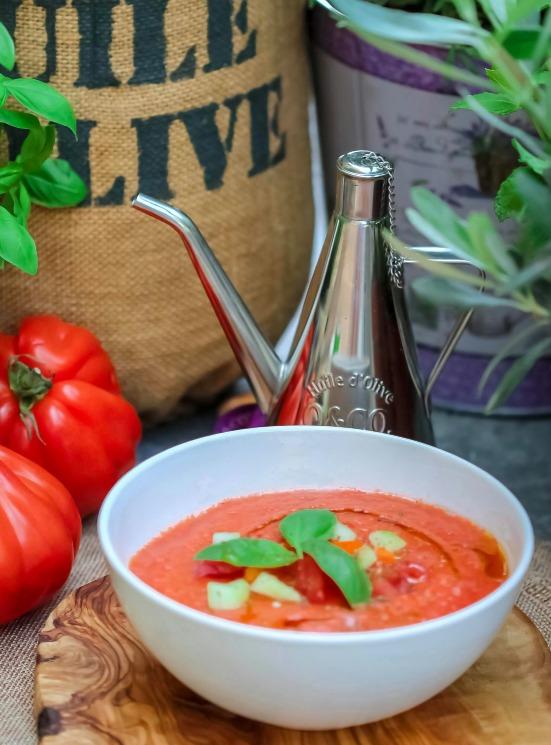
Gazpacho
Ingredients
● 1 doorstep slice of sourdough bread
● 1 Romano/red pepper
● 2 mini/1 standard cucumber
● 2 spring onions
● 1 small garlic clove
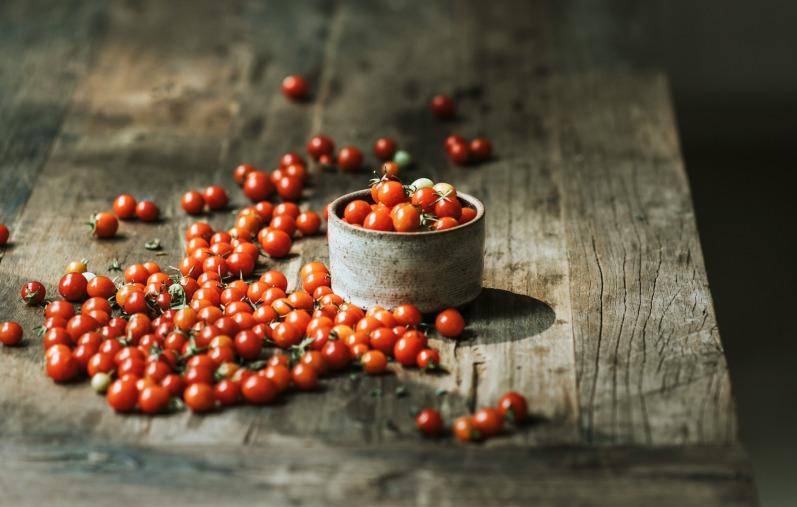
● 450g cherry tomatoes
● 1 tbsp red wine vinegar, plus more to taste
● small bunch of mint
● small bunch of basil
● extra virgin olive oil - the best you can get
● sea salt
● ice cubes – optional
Method
● Trim the crusts away from the bread. Tear it into chunks and pop it a small bowl of water to soak and soften for 5 minutes.
● Halve the pepper and remove the stalks and seeds. Roughly slice the mini cucumbers. Trim and roughly slice the onions. Peel and finely chop the garlic. You can finely slice a small amount of the tomatoes, peppers, cucumbers and onions and keep to one side as a garnish, if you like.
● Pop the tomatoes, peppers, cucumbers, onions, and half the garlic into a blender or processor with the vinegar, 2 tbsp of olive oil and a generous pinch of salt. Lift the bread out of the water and give it a gentle squeeze to remove some of the water. Add that to the blender too.
● Whizz everything up until smooth and pourable. You may want to add a dash of cold water if it seems a bit too thick. Taste and tweak with a little more garlic, vinegar and salt to your liking.
● Transfer to the fridge, along with the bowls you will be serving it in, for at least 30 mins, to ensure it is nicely chilled. It will keep well in the fridge for 3-4 days if well covered.
● Stir well and serve in the chilled bowls, garnished with some freshly chopped mint and basil, any finely sliced veg you kept to one side, a drizzle of olive oil and a couple of ice cubes, if you like.
A retro summer classic; perfect to enjoy on a hot, sunny day. The idea of a cold soup doesn’t appeal to everyone, but I do recommend giving this recipe a try. If your ingredients are fresh, ripe, and in season, this dish really gives them the chance to shine, without loosing their freshness in the heat of cooking.
A(very)Little HistoryoftheLead Pencil
APerfectSummer’sDay
Summer is perfect now.
The wheat says so, when in the dawn it drips with half-an-hour’s rain, and gleams like copper under the fresh, dim sky; it cries aloud the same when it crackles in the midday sun, and the golden sea of it washes murmurously to the feet of the hills.
In the hedges and fields the agrimony wands and mullein staves, the climbing vetch, the cushioned bird’s-foot lotus, the myriads of ragwort and sow thistle, are golden too.
The meadowsweet and honeysuckle flowers and the wild carrot seeds give out sweet scents, but not so strong as not to be drowned, when the wind blows, by a thousand lesser scents from field and wood and farmyard.
Wood pigeons coo in the high-shaded storeys of the beeches and in the wet willow copses where bushes and herbage have grown so dense that hardly a bird’s nester or a lover would care to penetrate them. In the dark wood alleys, all day long, hang insects whose wings seem to be still in their swiftness, like golden lamps.
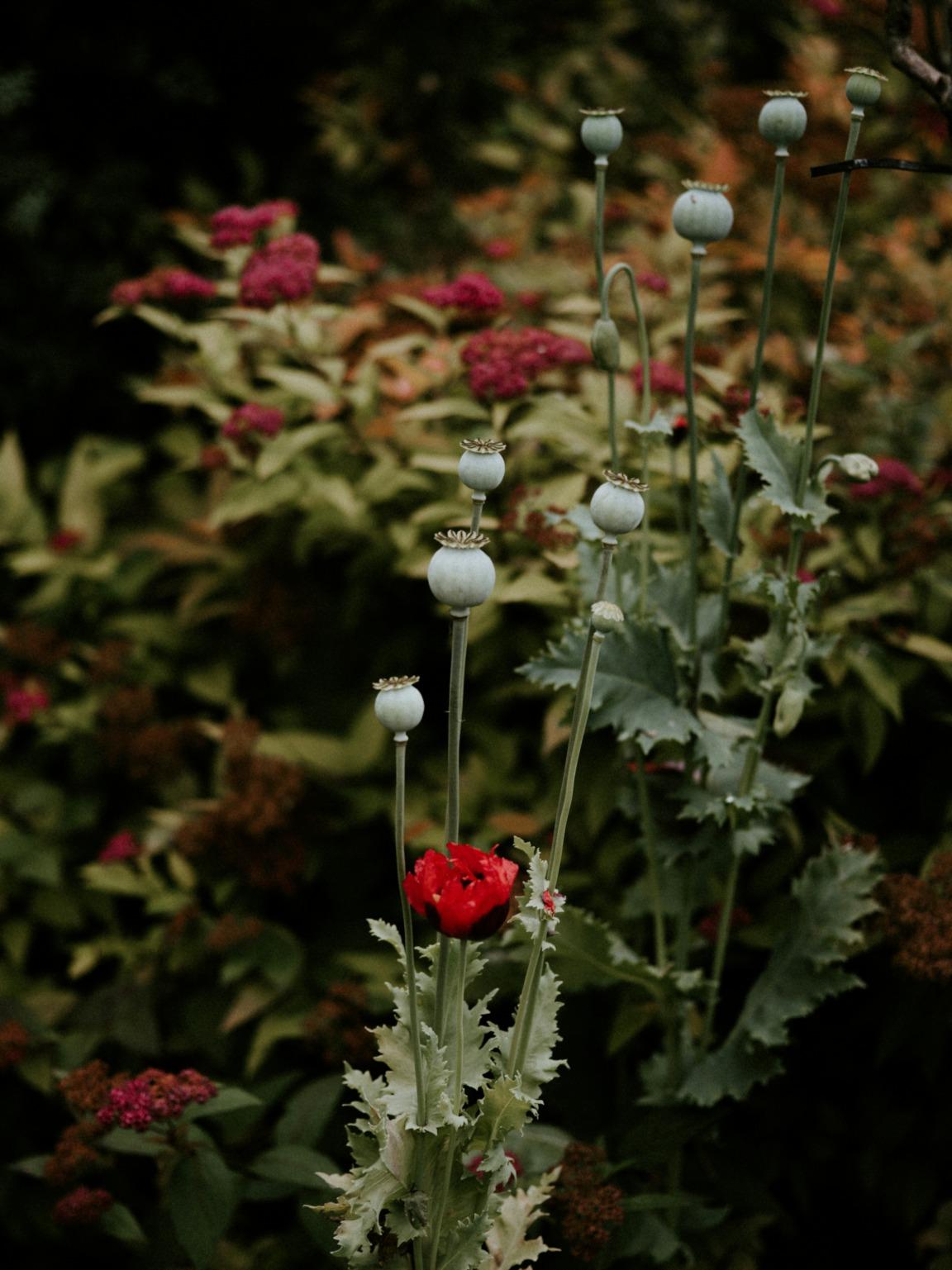
The gardens have amber lilies, fuchsia trees, phloxes, poppies, hollyhocks, carnations, snapdragons, rockets and red flax rising above rose of Sharon and lemon-scented balm and yellow stone-crop where the tortoiseshell butterflies worship with opening wings.
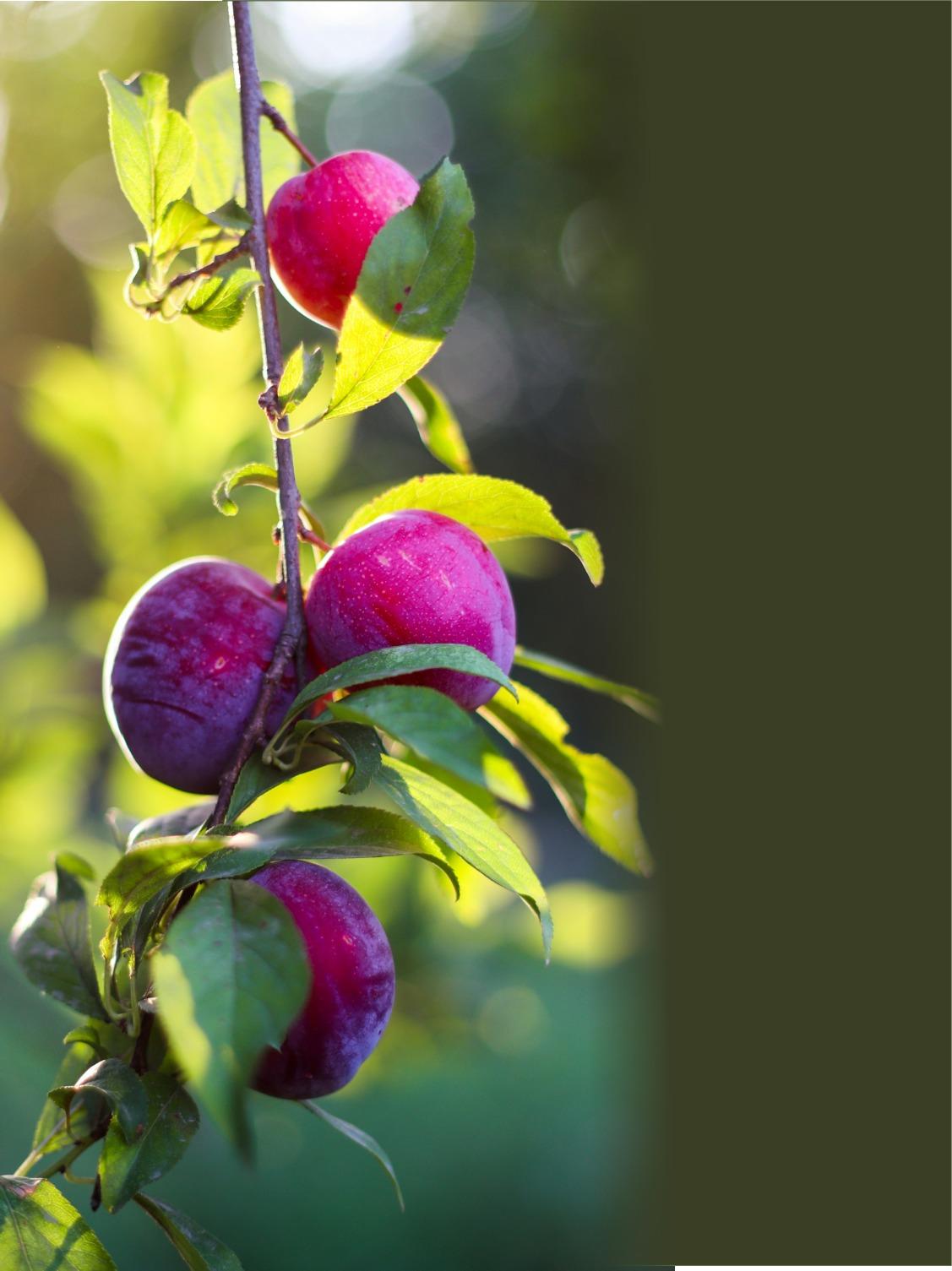
And on the garden walls, the purple plums ooze and heave in the sun with yellow wasps that give a touch of horror to the excellent and abounding life of perfect summer.
Edward Thomas (1878-1917) from The Heart of England 1906
Timetogo
blackberrying!
August, the last month of summer, brings the beginning of the wild harvest. The freshness of spring has mellowed into abundance, and the hedgerows are laden with flowers, fruits and seed heads, while insects hum among the leaves and you may well hear a rustling as the resident birds flit from branch to branch, in and out of sight. Hawthorn and hazel form the backbone of many of our hedgerows, their leafy branches interwoven with ash, field maple, spindle, elder and dog rose. Between them scramble climbing plants such as honeysuckle and traveller's joy, while grasses, wildflowers and ferns soften the verge below.
Perhaps no plant is more closely associated with the August hedgerow than the bramble. Its long, arching stems weave through shrubs and small trees, creating dense, thorny thickets that are as valuable to wildlife as they are familiar to country walkers. Although we usually think of it simply as the blackberry bush, the wild bramble is far more remarkable than its common name suggests. Botanists recognise hundreds of closely related native forms growing throughout Britain, each with its own subtle differences.
Earlier in the summer the bramble's delicate fivepetalled flowers filled the hedgerows with white, and
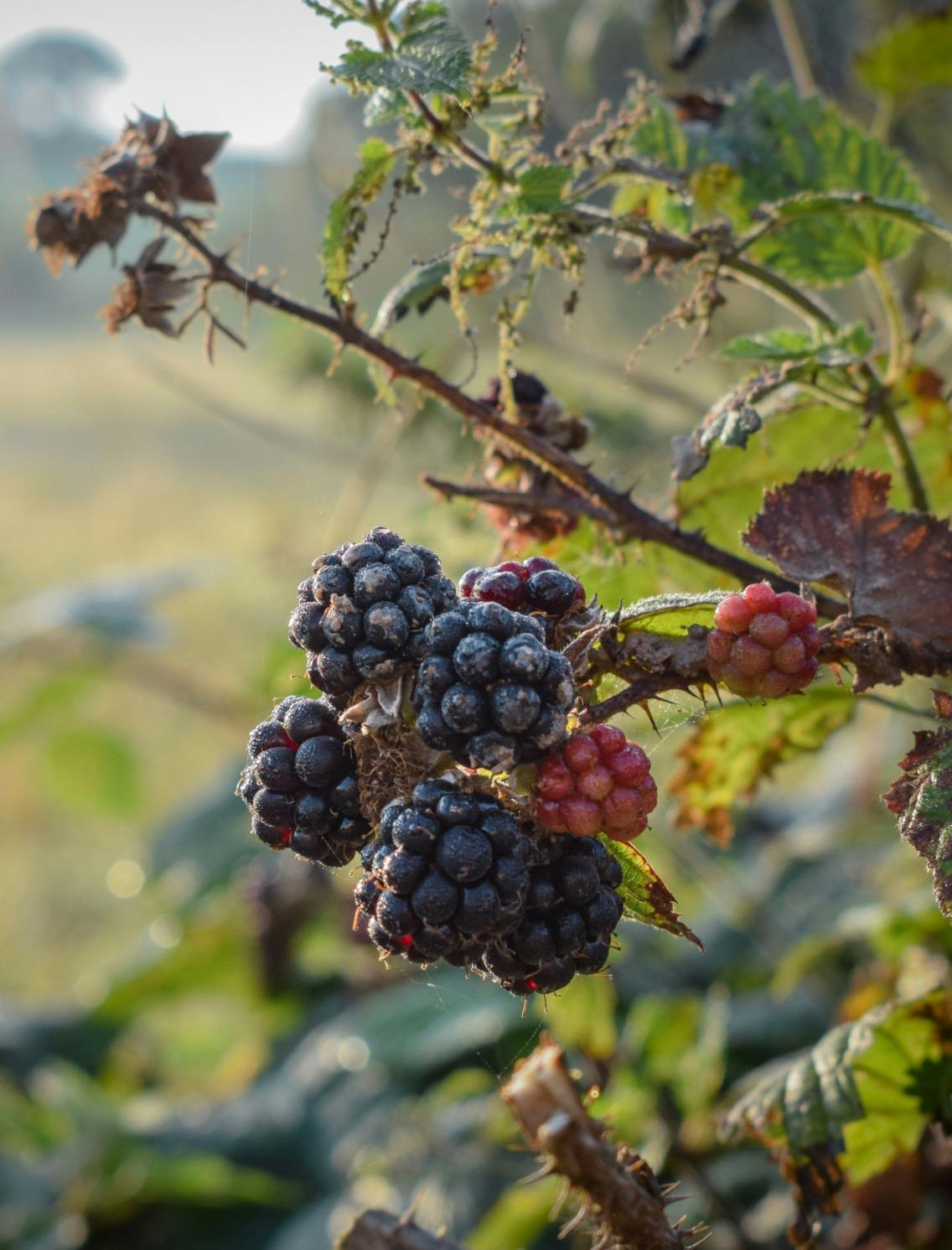
sometimes faintly pink, blossom. Their nectar attracted bees, hoverflies, butterflies and countless other insects, making the hedgerow one of the busiest places in the countryside. As the flowers fade, tiny green fruits begin to swell. They gradually turn red before ripening into the glossy blackberries that are such a welcome feature of late summer and early autumn. Though you will still see bramble flowers in August (the bramble is one of the few plants that will carry both flowers and mature fruits on a single stem), it’s time to go blackberrying for those juicy ripe fruits!
Blackberry picking is one of our most enduring summer traditions. For many of us as children this was our introduction to the idea of foraging and free food. I remember going out with my mum, with us both carrying baskets, bowls or old ice cream tubs, off to search for the ripest fruit hidden among the prickly stems. Every experienced blackberry picker knows to look beyond the berries closest to the path, reaching carefully towards the top of the bush where the largest and sweetest fruit is usually to be found. The reward for your hard work will be a warm blackberry straight from the hedge, stained fingertips and enough fruit to
make a crumble, pie, jam or jelly when you return home.
The bramble gives generously to wildlife too. Its tangled branches provide safe nesting places for wrens, blackbirds and dunnocks, while hedgehogs and small mammals shelter beneath the prickly canopy. As autumn approaches, the ripe berries become an important source of food for birds, foxes and badgers. Even after the leaves have fallen, the maze of thorny stems continues to offer protection through the winter. More than ninety species of moth depend upon brambles as food plants for their caterpillars, making this humble plant one of the most valuable in the countryside.
Brambles have an ingenious way of spreading. Their long canes arch gracefully over neighbouring vegetation until the tip touches the ground. There it readily takes root, producing a new plant that soon sends up fresh shoots of its own. Birds help too, carrying seeds far beyond the original hedge after feasting on the berries. It is one reason why brambles appear in all kinds of unexpected places.
People have discovered uses for every part of the bramble. The leaves were once dried for herbal teas, while the flexible stems could be woven into simple bindings or rustic baskets. Farmers often welcomed bramble patches as natural stock-proof barriers, and today's cultivated blackberries owe their origins to generations of careful selection from wild plants growing in hedgerows much like these.
It’s impossible to write about blackberries without mentioning the tradition that you shouldn’t pick them after Michaelmas on the twenty-ninth of September because the Devil fell into a bramble bush after being cast out of Heaven and cursed the fruit. Whether told as a cautionary tale to children or simply repeated with a smile, the story has survived for centuries. There is practical wisdom behind it too, as cooler autumn weather often brings moulds and insects that make the berries less appetising.
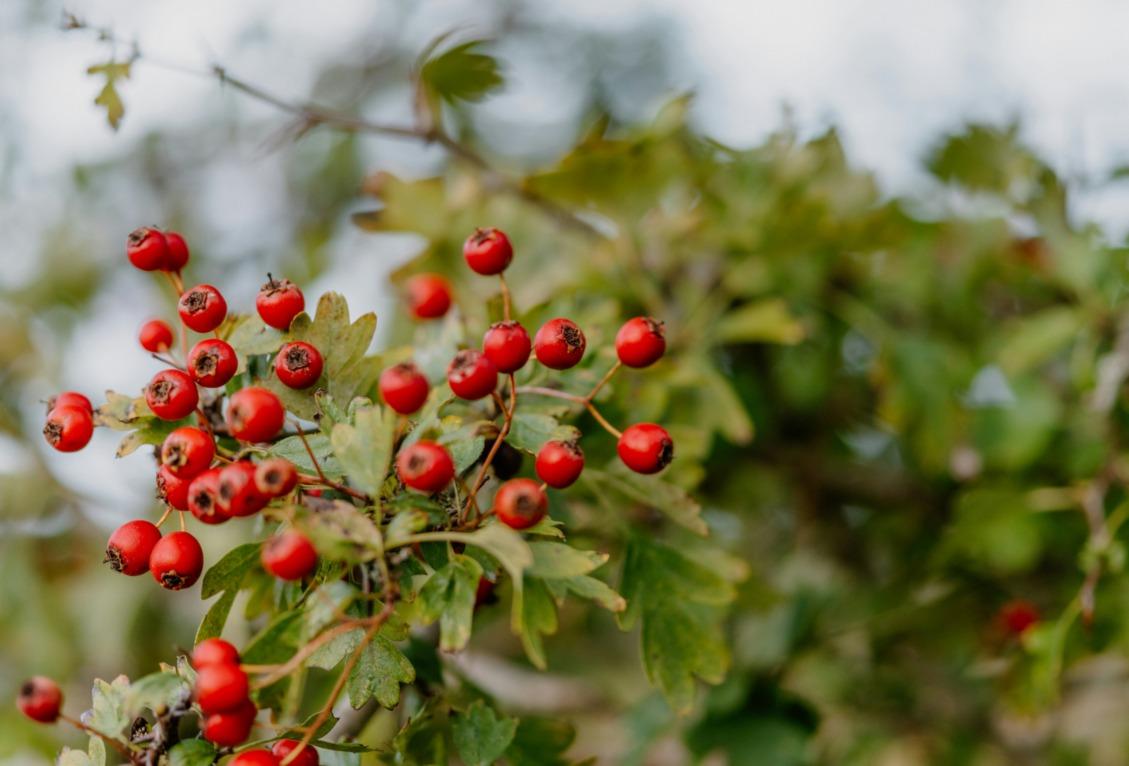
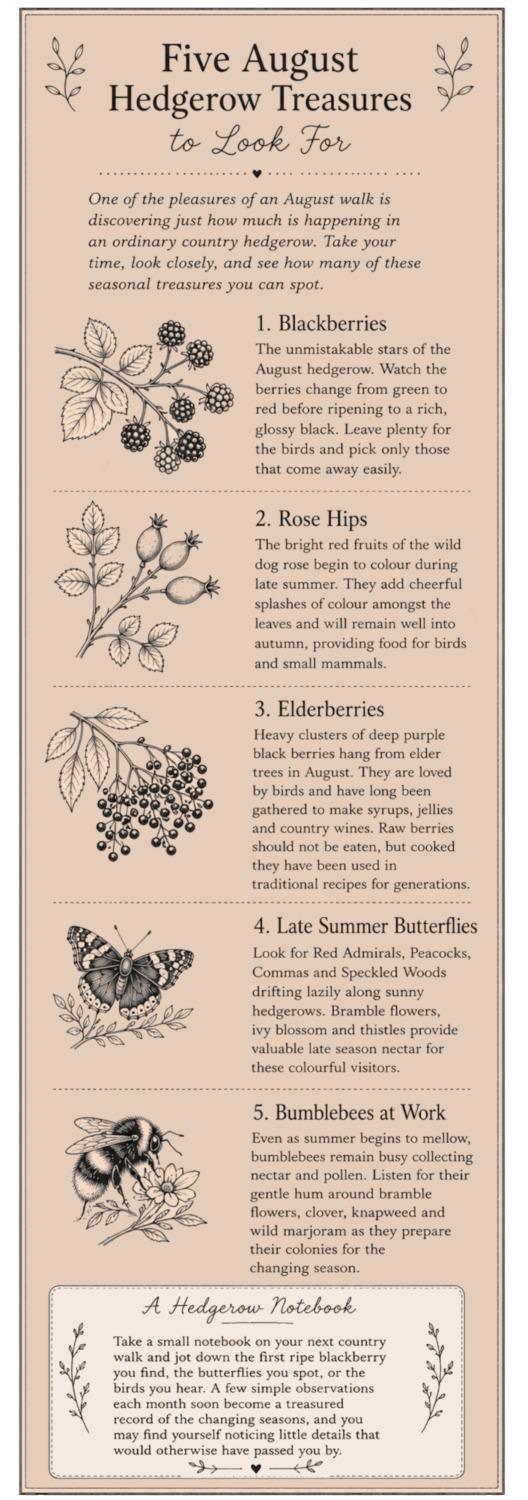
Brambles are only one part of the August hedgerow however. The elder hangs heavy with dark purple berries that we will soon be able to gather for syrups and cordials. Bright red rose hips are beginning to colour among the fading blooms of the dog rose. Haws and sloes are quietly swelling, promising autumn harvests yet to come. Wild clematis sends feathery shoots climbing through the hedge, while ivy prepares to flower just as many other plants are fading, ensuring late season nectar for insects.
Listen carefully and the hedgerow is full of sound. Goldfinches chatter as they search for seeds, wood pigeons coo from the taller trees and robins begin to reclaim their winter territories with gentle song while bees continue to gather pollen from the last of the summer’s flowers.