TEXAS: What incentives are available for business in Texas?
PENNSYLVANIA: Why go anywhere else?
INDUSTRY OUTLOOK: Life Sciences at the Inflection Point: Scale Up or Add More R&D? As executives pivot from experimentation to execution, the sector’s next phase will be defined by how well regions, companies, and partners scale technology, collaborate across ecosystems, and turn breakthrough science into sustainable economic value.
By David Hodes
INNOVATION AND STRATEGIES: Surging Demand, Data-Driven Systems Are Challenging Ongoing Airport Development
With global passenger traffic set to nearly double by 2045, there is an urgent need for strategic investment, innovation, and modernization to maintain competitiveness.
By David Hodes
INDUSTRY INSIGHT: Intermodal
Distribution: Domestic Shifts, Driver Shortages and AI Redefine Freight’s Future
As tariffs, labor constraints and technology converge, North America’s $40 billion intermodal sector is pivoting toward automation and predictive logistics.
By David Hodes
INDUSTRY INSIGHT: AI and Data Management Are Rewiring the Global Logistics System
Staying flexible while events around the world affect how, when and where products are able to move has become an increasingly difficult problem that only deep-dive data management can solve
By David Hodes
TENNESSEE: MADE IN TENNESSEE
RHODE ISLAND: Discover a Business-Friendly Environment
King Publishing, Inc. 1000 Stafford Court Birmingham, Alabama 35242 Tel: 205-862-5175
ONLINE MEDIA ASSISTANT Nick Boliek nick@dialedinmediagroup.com
SUBSCRIPTION CHANGES & REQUESTS 205-862-5175 or www.bxjmag.com
King Publishing, Inc., 1000 Stafford Court, Birmingham, AL 35242; www.bxjmag.com. Advertising rates are furnished upon request. Subscriptions are free to those who qualify. Non-qualified subscriptions are $69 in the U.S.; $89 in Canada and Mexico; elsewhere outside the U.S. is $99 for 10 issues. Back issue rate is $6 when available. Payment must accompany order. The views expressed in all articles and advertisements appearing in the Business Xpansion Journal magazine are solely those of the author and advertiser, respectively.
POSTMASTER: Send change of address notification to Business Xpansion Journal, 1000 Stafford Court, Birmingham, AL 35242. Subscribers can make address changes by calling 205-862-5175 or by e-mail at www.bxjmag.com.
1000 Stafford Court, BIRMINGHAM, AL 35242
TEL: 205-862-5175 Printed in the U.S.A.
Brain scientists at the Allen Institute created a brain wiring diagram containing 200,000 cells and 500 million synapses in a piece of a mouse’s brain to help understand the functional properties of neurons. Picture courtesy Allen Institute.
Life Sciences at the Inflection Point: Scale Up or Add More R&D?
BY: DAVID HODES
As executives pivot from experimentation to execution, the sector’s next phase will be defined by how well regions, companies, and partners scale technology, collaborate across ecosystems, and turn breakthrough science into sustainable economic value.
Managing the growth of the life sciences sector is more about what is coming than what is already in place.
Biopharma and medtech executives surveyed by Deloitte’s 2026 Life Sciences Outlook Survey reacted to questions about the coming years.
Here’s a brief look at what they said:
• Regulation was the most frequently cited trend expected to shape organizational strategy. In the United States, 36% of respondents highlighted restructuring within the Food and Drug Administration and the Department of Health and Human Services, while 39% cited economic policy changes, including tariffs.
• Nearly half of respondents (48%) identified accelerated digital transformation as a trend that is likely to have a substantial impact on their organizations in 2026—a statistically significant increase compared with 2025. Notably, 30% cited AI systems that can act autonomously to achieve goals, make decisions, and perform tasks. Despite these investments, only 22% of life sciences leaders said they have successfully scaled AI, and just 9% reported achieving significant returns on these efforts.
• One-third of respondents (33%) said connected care delivery is a top trend for 2026. Customer adoption of digital tools was cited by 35% of executives, while evolving customer needs and preferences were cited by 32%, highlighting the ongoing shift in care delivery and engagement models.
Researchers from the University of Illinois and Stockholm University discovered a bacteria protein that may be used as an antimicrobial to make food safer. Image courtesy the American Society for Biochemistry and Molecular Biology.
The key driver in life science economics is innovation and the scaling of technology, according to the survey that quoted Karl Gubitz, chief financial officer of Argenx, a global immunology company headquartered in Amsterdam: “Companies should focus on what they do best: discovering novel biology and building differentiated assets while remaining flexible in all other areas. As an industry, we need to deliver innovation. That’s the only path to ensure long-term sustainability.”
INNOVATION MATTERS
A McKinsey and Company report found that overall R&D productivity has been mostly flat in the biopharma/life sciences industry. “Development timelines still exceed a decade, R&D costs per asset on
average surpass $2 billion, and barely 13 percent of assets that enter Phase 1 trials make it to launch,” according to the report.
Typical failure modes that were reported include companies clinging to legacy processes that undermine standardization, neglecting change management, and implementing technology without clear business benefits. Additional pitfalls include conducting transformations in departmental silos while relying on inflexible systems plagued by low-quality, siloed data.
A survey by Deloitte U.S. Center for Health Solutions revealed that the vast majority (75%) of global life sciences executives are optimistic about 2026. Their optimism comes from strong growth expectations, with 68% of respondents anticipating revenue increases and 57%
Inside Montgomery County’s Thriving Life Sciences Ecosystem
Located just outside of Washington, D.C., Montgomery County, Maryland is home to a thriving life sciences industry. Anchoring the BioHealth Capital Region, which is ranked the third-largest biopharma cluster in the United States, the County has emerged as a premier destination for companies specializing in gene and cell therapies, vaccines, pharmaceuticals, manufacturing, and more. The County’s close proximity to 18 federal agencies and 36 federal labs, including the National Institutes of Health (NIH), National Institute of Standards & Technology (NIST), the Food and Drug Administration (FDA), top-tier higher education institutions, and a highly educated and diverse workforce, creates an environment where global corporations and emerging startups can easily attract and retain top talent.
Montgomery County is home to more than 350 life sciences companies doing ground-breaking and life-saving work, including global leaders like AstraZeneca, Novavax, and United Therapeutics, as well as smaller, innovative start-ups and growth-stage companies, creating a unique environment where emerging companies can scale quickly while benefiting from established expertise and infrastructure.
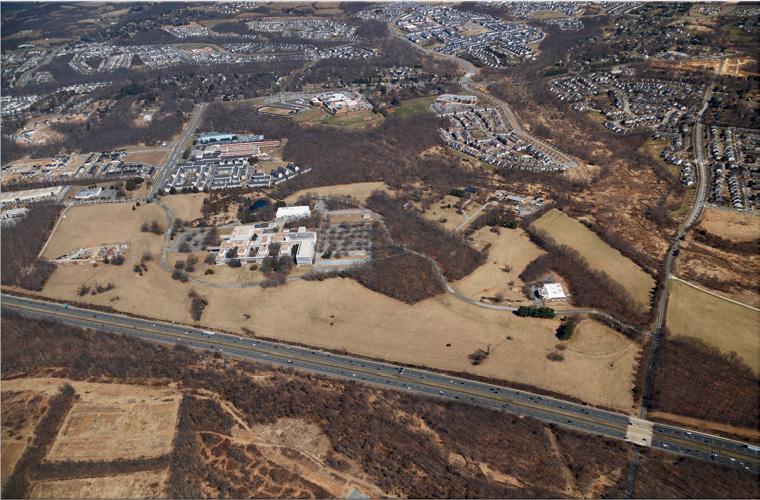
The County’s I-270 corridor provides continuous connectivity among innovative clusters of labs, headquarters, and readyto-develop sites from north to south of the County, including Germantown, Gaithersburg, and Rockville, which rank as three of the most ethnically diverse cities in the United States. Silver Spring—voted in 2024 as the best place for families to live by Fortune Magazine and located in the southeast of the County— is the location of the County’s first Tax Increment Financing for its Viva White Oak site, which features 280 acres of mixed-development and is expected to anchor additional life sciences companies, further expanding the local ecosystem. The former home to the COMSAT research facility, a 204-acre site in Germantown, is also available for development.
FUELING INNOVATION WITH TALENT
With 1 in 3 adults aged 25 and older holding an advanced degree, the region boasts one of the most educated workforces in the nation, which helps fuel the life sciences ecosystem. This deep talent pool is supported by a robust pipeline of education and
predicting margin expansions in 2025. Respondents also cited ongoing advancements in science and technology could lead to more breakthrough innovations.
THE INNOVATION PIPELINE
The industry was built on innovation that continues driving breakthroughs in health and wellness.
For example, Insilico Medicine, a multi-national biotech company headquartered in Cambridge, Massachusetts, created an AI-designed
training programs. The Universities at Shady Grove—ranked among the top 20 public universities in the country—and Montgomery College, the number one community college in Maryland, play critical roles in workforce development.
Together, these institutions help position Montgomery County as a thriving center for research, growth, and innovation. Initiatives like BioHub Maryland provide hands-on experience in biomanufacturing and research, ensuring that companies have access to skilled workers at every level. Montgomery County also boasts five Innovation Centers—located in Rockville, Germantown, Silver Spring, and Bethesda—giving start-ups the support and edge they need to scale and thrive.
A CULTURE OF COLLABORATION
The well-established infrastructure and ecosystem in the County fosters local government, public-private partnerships, academic institutions, and industry organizations working together to support companies in all stages of growth.
Recent investments, such as the launch of new biotech innovation labs in partnership with the Henry M. Jackson Foundation, are expanding access to lab space and resources for startups developing cutting-edge technologies.
Montgomery County is also home to the University of Maryland’s Institute for Health Computing (UM IHC), which leverages advanced computing, biomedical research, and clinical expertise to address critical health challenges, such as detecting bias in AI used in medical software, predicting disease spread, and improving diagnosis of antibiotic-resistant infections, and serves as yet another example of the County’s position as a leader in the life sciences industry.
THE FUTURE OF LIFE SCIENCES STARTS HERE
From breakthroughs in COVID-19 vaccines to pioneering organ transplant technologies, companies in Montgomery County, Maryland are delivering innovations that impact patients worldwide. As the life sciences industry evolves, Montgomery County remains focused on evolving with it by continuing to invest in infrastructure, expanding workforce development, and fostering the next generation of scientific breakthroughs. Visit thinkmoco.com
drug that has recently entered human trials.
There is a gene therapy breakthrough being used by Verve Therapeutics, based in Boston and recently acquired by Eli Lilly and Company, involving editing genes inside the body instead of using extracted cells, to permanently modify a gene linked to cardiovascular disease.
An organ-on-a-chip system, which are microfluidic devices that stimulate blood flow, mechanics, and tissue interaction, is a process recently commercialized by Emulate, Inc., based in Boston, with the
Available Acres: 204
3,600+ linear feet of direct highway frontage
Available Acres: 280 12 million sq. feet of mixed-use development
process originally developed at Harvard University’s human health research center, the Wyss Institute.
All these innovations point to a convergence of life sciences with AI, with biotech and advanced manufacturing, and with software engineering principles.
THE BRAIN TAKES CENTER STAGE
The Allen Institute in Seattle, an independent nonprofit bioscience research institute founded by Paul Allen, the co-founder of Microsoft, is taking life science innovation one step further: mapping the brain and giving away the data.
Researchers there use advanced single-cell molecular analysis techniques, such as single-cell RNA sequencing and electrophysiology, combined with advanced imaging technologies that provide a comprehensive view of how the brain is organized; the cellular makeup of the brain; how those cells connect, develop, and function; and the complex relationship between these factors.
Leading that effort is Nuno Maçarico da Costa, who joined the Allen Institute in 2013 as an assistant investigator in the neural coding
department, and works with the institute’s network anatomy group to create a wiring diagram of the mouse neocortex and its functional connectivity.
“We are working on mapping the connections between neurons in the brain at the very high resolution,” da Costa told BXJ. “You can imagine it as being a Google Map of the brain for scientists, where you have mapped every major road, every little road, every house, every room of every house, every window, and every door,” he said.
For scientists who might be interested in the connection in the brain between area A and area B, da Costa said, the brain map will help them determine how these two group interact in the brain, or even if a connection exists.
“The technology that we use, which is the electron microscopy, allows us yet higher resolution of the brain. It is also a technology that is used in the diagnostics of disease—not necessarily diseases of the brain,” da Costa said. “It’s not even just the brain where we have demonstrated scalability. Now other companies can take up and facilitate these diagnostics, because now you can load hundreds of samples at a time, and really accelerate the time between sample preparation and
diagnostics.”
Da Costa said that they mapped an area about the size of a grain of sand in the mouse’s brain. “The next step is to do a complete brain. It’s a big challenge, but many of us think it’s within reach. It still requires breaking some technological barriers, but it will be within reach in the next five to 10 years.”
THE SHARED ROAD TO SUCCESS
The Allen Institute follows a unique business plan in their life science research and development—scientists there share data openly, even before the data is published. “We put it out there not just for us to use, but everyone to use,” da Costa said. “This is something that belongs to everyone, and if other companies have a good idea about what to do with it, it’s out there for them to execute it, accelerating that process between generating high quality data and the different end uses that people might have.”
Other companies are creating open innovation platforms—actual collaborative digital ecosystems—such as Teva Pharmaceutical Industries and their platform Teva Rise, launched in November, 2025, “designed to harness the power of a variety of disruptive technologies,” according to a press release. It features initiatives for the company to partner with startups on AI, digital health and smart manufacturing solutions to accelerate innovations.
Coordinated collaboration is essential to realize the added value of and infrastructure requirements for global image data sharing in the life sciences, according to a white paper published by Cornell University researchers who “painted an ideal world scenario for how global image data sharing could work and benefit all life sciences and beyond.”
As this type of collaboration is in its infancy, researchers suggested several concrete measures can be taken today directed toward institutions, existing imaging communities, data initiatives, and national funders. “Our vision is that within the next ten years, most researchers in the world will be able to make their datasets openly available and use quality image data of interest to them for their research and benefit,” Cornell researchers reported.
They called for new funding mechanisms where, “in the spirit of true democratization,” funders would support cloud resources for smaller, resource strapped labs, while training and educating researchers on the benefits of and tools for most efficiently sharing data for maximal impact.
LIFE SCIENCES TOMORROW
Digital transformation, AI as a core strategy, coordinated collaboration, and faster innovation from lab to commercialization are all part of the current state and the future of life sciences.
But there’s more direct business development underway.
And after a recent lull, according to the life sciences and health care survey from Deloitte Center for Health Solutions, strategic partnerships, mergers and acquisitions are rising: 45% of surveyed biopharma leaders and 51% of medtech leaders see M&A as a top near-term strategic priority.
Major life science companies such as Bayer, Novartis, and Roche are committing to multi-billion investments in research and development, particularly in the U.S.
For example, Bayer, with sales in 2024 of $54 billion, spent $6 billion on research and development. In January, Bayer and Cradle, an AI software platform developer, have entered a three-year strategic collaboration to deploy Cradle’s scientific AI software platform for protein engineering.
Whatever the outcome over the next few years, life science CEOs right now are not focusing on innovation-led outcomes, according to a KPMG CEO outlook report, opting for operationalization and value creation rather than experimentation and pilot projects.
Though confidence in the strength of the industry is up, and the majority of life sciences CEOs expect to achieve earnings growth of more than 2.5 percent, the number of CEOs saying that they anticipate creating new AI-enabled products tumbled by two-thirds from 2023-2024.
Those expecting AI to provide an overall increase in innovation fell from 13 percent of respondents in 2024 to just 5 percent in 2025. “This may reflect a more pragmatic view on the challenges associated with integrating generative AI into existing systems and processes,” according to the KPMG CEO report. X
Surging Demand, Data-Driven Systems Are Challenging Ongoing Airport Development
BY: DAVID HODES
With global passenger traffic set to nearly double by 2045, there is an urgent need for strategic investment, innovation, and modernization to maintain competitiveness.
Developing airports is a key economic action that signals financial health for not only large cities with expanding populations and business opportunities, but smaller airport operators experiencing a boost in travelers.
Economic forecasters at the Airports Council International (ACI) say that aviation plays a central role in global economic development, at 3.9% of global GDP. Today, airport upgrades and new developments are underway. And they are coming at just the right time as critical issues pile up.
According to a report by the ACI, “World Airport Traffic Forecasts 2025-2054,” the industry must deal with such pressing issues as capacity constraints created by airport infrastructure limitations; aircraft delivery challenges; uneven regional growth and operational complexity driven by supply-chain disruptions; and geopolitical uncertainty and sustainability imperatives.
Vancouver Airport view from the control tower. Picture courtesy Vancouver Airport.
MORE PASSENGERS AS AIRPORTS PLAY CATCHUP
The ACI report also assesses passenger traffic as one of the more telling statistics for the need for continued updates and enhancements in airports.
The pandemic is still affecting passenger forecasts, according to a report by the American Society of Civil Engineers (ASCE). Enplanements in April 2020 were only 4% of what they were at the same time in 2019.
From 2020 to 2022, a steady rebound to the 2019 national benchmark for enplanements was seen as levels steadily climbed from 40% to 72% to 92% of the 2019 enplanement values. The number of U.S. passengers flown by air carriers rose above the pre-pandemic average level of 1 billion passengers in FY2017-2019 by 6.5%, to 1.1 billion in FY2024, according to an 2025 FAA report, “Air Traffic By The Numbers.”
By 2054, passenger traffic in Asia-Pacific is expected to be 10 billion passengers; in Europe, 5.1 billion passengers; and in North America, 4.1 billion passengers.
As passenger volumes increased, according to the Airports Council International-North America’s (ACI-NA) survey, the need for terminal improvements has been increasing by roughly 50% across two timeframes, 2021-2025 and 2023-2027.
The ASCE report found that the growing demand for air travel is also being fueled by economic growth in emerging economies, where an expanding middle class is increasingly opting for air travel over other modes of transportation. “As disposable incomes rise, more people are traveling for both business and leisure, creating a heightened demand for efficient and advanced airport facilities,” according to the report. “This surge in passenger numbers is prompting governments and private investors to
Daytime aerial view of Vancouver Airport. Developers built a full digital twin of the airport (a real-time 3D replica) that integrates live operational data across terminals and airfield. Picture courtesy Vancouver Airport.
pour resources into expanding and upgrading existing airport infrastructure to accommodate the increasing traffic, thus driving the market forward.”
The ASCE report also noted that the FAA estimates $67.5 billion in capital development projects are needed between 2025 and 2029 for everything from surface access and terminal safety to security and others. That amount includes approximately 18,100 projects and reflects development needs for 3,287 existing airports and five new airports.
IT, AI SLOW BUT SURE ADOPTION
With an increasingly larger passenger load coming, airports will be challenged to handle them efficiently as possible based on current airport structures.
So far, the transition to less congested passenger handling has been slow but steady.
And simply building larger airports is not seen as the best alternative. Recently the International Air Transportation Association (IATA) introduced their One ID initiative to streamline passenger movement through the airport and onto their flights by using advanced sharing of information and a contactless process at the airport based on biometric-enabled identification.
Getting all necessary authorizations and demonstrating admissibility to travel prior to departure helps passengers be ready to fly before they arrive at the airport. By showing their face using biometric feature assistance, passengers don’t need to repeatedly present travel documents. Passengers remain in control of their
personal data and are provided with informed consent before sharing their credentials.
The IATA hopes that this system of passenger management can cut down on airport congestion and decrease the amount of time for passenger processing operations.
A report by the Société Internationale de Télécommunications Aéronautiques (SITA), an airport technology development company, found that the introduction of biometric-enabled technology has remained relatively flat, with the percentage of respondents indicating that they had no plans to introduce biometrics reduced slightly from 30% to 25%.
To get to a new level of understanding for passenger handling, airports are spending more on IT development and related applications. The SITA report found that when asked what their most transformational IT initiatives are, a number of airlines specifically mentioned using AI to create business value, “wanting to get ahead of the curve on the ubiquity of AI.”
The report also found that 74% of airlines use AI within customer service applications with tools like chatbots and customer feedback aggregators.
AI is also helping airlines with disruption management, including keeping customers informed as proactively as possible, with 50% of airlines employing AI for automated predictive alerts prior to flight disruption events. “While most remain at the midpoint, airlines are clearly gaining ground in their journey towards fully leveraging AI tools,” according to the SITA report.
THE DATA-DRIVEN IN-DEMAND INFRASTRUCTURE REDO
The global aviation infrastructure market size was valued at approximately $120 billion in 2023 and is projected to reach around $180 billion by 2032, according to a report by Dateintelo, a business research company.
Airports are evolving from transport hubs to integrated, data-driven, sustainable urban infrastructure systems. For example, Vancouver International Airport (Canada) built a full digital twin of the airport (a real-time 3D replica) that integrates live operational data across terminals and airfield. It is used to simulate passenger flow, test climate and energy scenarios, and improve decision-making.
Leaders at Vancouver International Airport, including CEO Tamara Vrooman, have described how its digital twin enables proactive, data-driven operations—effectively turning the airport into a predictive system rather than just a physical facility. “AI has been business needs-driven to ensure that we can start small and scale—that we can test its adoption, get people working on it, and then scale it across our operations,” Vrooman said, as quoted in an IBM CEO report.
“Data as a single source of truth that everybody can see has been transformational for partnerships,” Vrooman added. “It’s helping us work better together and uncover ways to grow.”
Another example is the San Francisco International Airport which operates like a live data platform coordinating infrastructure and business activity. The airport used the decline in air traffic during the pandemic to jumpstart its $7 billion infrastructure modernization.
Another case study comes from North Carolina, which has 72 public use airports, with 96% of the population within 30 minutes of one of those airports. “Making sure we preserve that existing infrastructure is prioritized before we look at expansion,” Nick Short, aviation director for the North Carolina Department of Transportation told BXJ. “We prioritize projects using a lot of the objective criteria and data. We look at pavement conditions and operational activity. We’ll look at the airport role in general, in the statewide system plan, their economic impact, and other things like project readiness, making sure there’s local commitments, and then work on alignment with our overall system plan.”
Infrastructure readiness, he said, is about ensuring airports can safely and efficiently accommodate both current and future aircraft activity. “We got to make sure runways have adequate length and strength, and that there’s sufficient apron and taxiway capacity. We look at modern lighting, navigational aids and weather systems, utility capacity and land availability for expansion, maximizing our currently owned land use, and making sure we’re maintaining compliance with current FAA design standards.”
He says that their focus now is how to bring aviation to the next level. “When you think of North Carolina and aviation, you immediately think of Kitty Hawk,” he said. “We’re the birthplace of powered flight. We defined the 20th century, and now want
to define the 21st. So we really want to look at how we can push aviation further and take it to the next step. Where we see that is in advanced air mobility. We really want to position ourselves as a national leader in advanced air mobility integration.”
One thing that North Carolina aviation industry executives have done is a present a proposal to participate in the FAA Advanced Air Mobility and Electric Vertical Takeoff and Landing (eVTOL) Integration Pilot Program (eIPP), designed to accelerate the safe integration of next-generation advanced air mobility aircraft into the national airspace.
The pilot project is expected to create one of the largest real-world testing environments for next-generation aircraft in the world. The American public will start to see operations begin under this program by summer 2026, according to an U.S. Department of Transportation press release. “We’re coordinating at a system level with the FAA to ensure that any integration of air mobility aligns with national airspace and safety standards, as well as their national strategic plan that they released in 2026,” Short said.
The FAA 2026 strategic plan calls for the implementation of a new air traffic control system strategy; transitioning FAA services to a new telecommunications infrastructure; deploying electronic flight strips at 22 sites; and deploying digital remote tower technology at the first key site.
Short said that, in the next decade, the skies are going to be busier. “Advanced air mobility definitely is a key component,” he said. “We’re starting to see a big push with electric aircraft. So we’re making sure to look at our infrastructure, particularly around electric charging operations. We want to expand that network to create a system-wide network of air mobility in North Carolina. Those will be important things to think about as we push aviation into the future.” X
Why Aerospace Industry Leaders Keep Choosing Mesa Gateway Airport as Home
BY REGINA ANTONE, LT. GOVERNOR, GILA RIVER INDIAN COMMUNITY CHAIR, MESA GATEWAY AIRPORT AUTHORITY BOARD OF DIRECTORS
When Garmin announced in February 2026 that it had acquired a hangar and office complex at Mesa Gateway Airport to expand its aircraft certification and flight test operations, it wasn’t a surprise to anyone who lives and works in the Valley of the Sun. Garmin has called the Phoenix area home for more than 25 years, and the decision to expand to Gateway Airport reflects exactly the kind of deliberate, long-term thinking that defines how the best aviation companies grow.
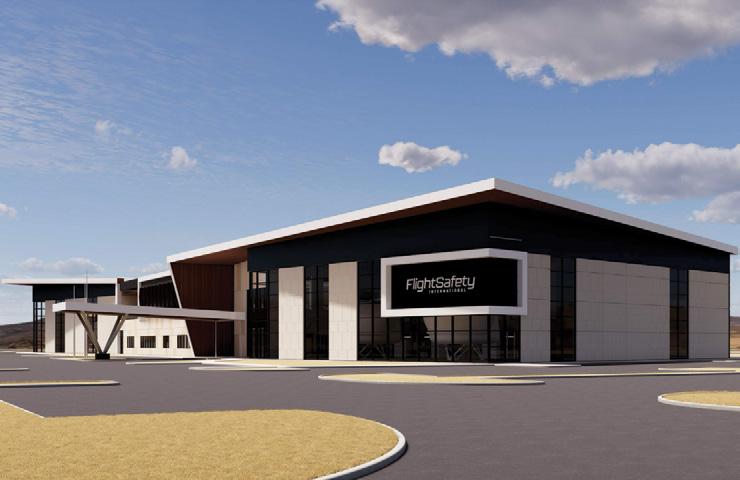
The same logic applies to FlightSafety International, which broke ground on a new 100,000-square-foot Learning Center at Mesa Gateway Airport last fall. When it opens in 2028, FlightSafety will bring full-flight simulators, approximately 100 new jobs, and thousands of aviation professionals from around the world to our region each year. These are Gold Standard aerospace companies, and they chose Mesa Gateway Airport.
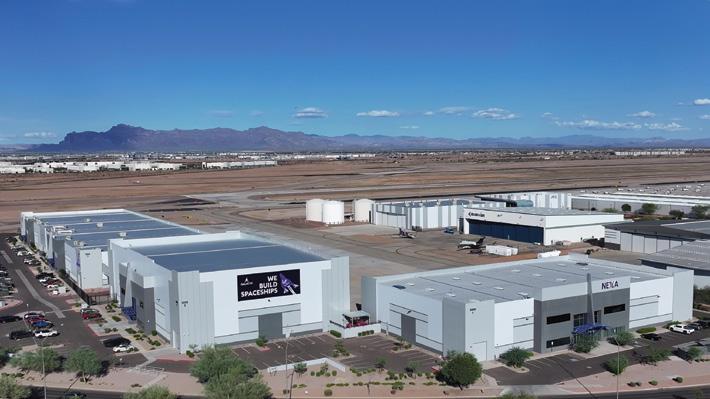
What the Mesa Gateway Airport Authority Board of Directors has always believed, and what the past several years have confirmed, is that momentum doesn’t happen overnight; it’s the result of years, if not decades, of deliberate groundwork toward a unified vision. Mesa Gateway Airport spans more than 3,000 acres, with three 10,000-foot runways, Foreign Trade Zone and Military Reuse Zone designations, and a talented regional workforce that serves both commercial aviation and defense. The infrastructure at and around Mesa Gateway Airport is designed to accommodate the world’s most impactful aviation, advanced manufacturing, and research companies.
Infrastructure alone doesn’t build and support an aviation ecosystem, though. The tenant roster at Mesa Gateway Airport - which includes Gulfstream Aerospace, Virgin Galactic, Cessna/
Citation-Textron, The Boeing Company, Embraer, Allegiant Air, and others- reflects decades of relationship-building, strategic land development, and a governing philosophy that prioritizes long-term value. Last year, Gulfstream opened a $130 million West Coast Service Center at Mesa Gateway Airport, expanding its Airport footprint to a total of more than 325,000 square feet. That level of commitment doesn’t happen by accident. Mesa Gateway Airport Authority wants them here, and we show it with our decisions and actions.
Our private development partnerships reflect the same discipline. Gateway East, our 273-acre Airport Business Park developed with the Boyer Company, recently became the only REDI Sites Gold-designated location in Arizona, a national certification from the Site Selectors Guild that signals genuine readiness for major corporate investment. XNRGY Climate Systems recently opened its275,000 sq. ft., $68 million U.S. headquarters and manufacturing facility as Gateway East’s first tenant. On the southwest side of the airfield, SkyBridge Arizona has built-out more than 635,000 sq. ft. of industrial buildings and aircraft hangars, and has invested tens of millions in infrastructure supporting aviation logistics and manufacturing.
As Chair of the Mesa Gateway Airport Authority Board of Directors, I am proud of what this governing body has built and what it continues to build. The decisions we are making at Mesa Gateway Airport represents high-wage jobs, a strengthening of our regional competitiveness, and the creation of long-term economic opportunity for communities across the Greater Phoenix Region.
The Mesa Gateway Airport tenant list speaks for itself. What Garmin and FlightSafety International have found here - runways, workforce, development-ready land, and a governing body committed to the long-term success - is what the next company to come to Mesa gateway Airport will find as well.
Intermodal Distribution: Domestic Shifts, Driver Shortages and AI Redefine Freight’s Future
BY: DAVID HODES
As tariffs, labor constraints and technology converge, North America’s $40 billion intermodal sector is pivoting toward automation and predictive logistics.
The concept of intermodal distribution and the logistics involved in maintaining it is constantly changing, reshaped in part by unexpected economic bumps in the road such as the pandemic and more recently by the tariffs, but still providing the most efficient method of product distribution around the country.
Intermodal freight transportation, defined as using more than one mode of transport (rail, ship, truck, air) uses a fleet of more than 34.5 million containers circling the globe responsible for moving more than half of a billion shipments between shippers and customers worldwide, according to the Intermodal Association of North America (IANA). It is estimated that about 95 percent of the world’s manufactured goods at some time travel in a container before they arrive in the hands of the customer.
The North American Intermodal Market is the largest in the world, at $40 billion, relying on a fleet of more than 700,000 vehicle chassis for the domestic and international containers moving on its network.
“I think the most interesting thing that I saw for 2025 was the shift away from international containers to domestic containers,” Andrew Sibold, the director of economics for freight and intermodal policy for the IANA told BXJ. “Historically, international drove the vast majority of intermodal freight. But actually in 2025, most likely due to the tariffs, we saw that the domestic component actually made up the majority, where I think it’s like 53% of the domestic intermodal moves. It signals a shift away from import driven growth to more domestic sources, which will be interesting to see if that trend continues,” he said. “So for 2025 it was kind of moving back towards a more historical pattern in terms of overall volumes. 2025 has actually matched up quite well with the pre-pandemic kind of historical trends.”
KEEP ON (NOT) TRUCKING
Without significant action, the shortage of truck drivers is projected to double by 2028, according to a driver shortage report from International Road Transport Union (IRU). One key reason is a
growing age gap in driver demographics. The IRU report found that the share of drivers under 25 continues to remain low at 12% or less.
Most regions have a high share of drivers who are 55 or older, according to the report, meaning that the shortage will increase in the near future as the pool of young drivers will be unable to replace those retiring.
A research guide from the Library of Congress (LoC) reports that there are approximately 50,000 qualified drivers short of what demand can handle. As drivers are leaving or retiring from the industry, there are efforts to recruit additional drivers. Replacement drivers are offered signing bonuses, higher pay and generous benefits packages to include college tuition, according to the report.
Other driver pool development efforts include lowering the age to allow 18-21 year-olds to drive 80,000-pound rigs across the country. “Overall, retention of truck drivers could improve if the long-haul portion of the route becomes self-driving, lessening time drivers spend away from home—a key reason long-haul drivers leave the profession, according to many stakeholders,” the LoC report stated. “That encourages a quicker implementation of autonomous truck development and deployment.”
Sibold said he thinks, in the long term, there will be an effort to try and curtail some of the truck traffic “because highways are so expensive and states are generally on the hook for all the maintenance cost,” he said. “I think that any truck traffic that they can shift to rail would be good probably for everyone overall, because first, it’s more efficient, and secondly, it causes less damage on roads.”
AUTONOMY ON THE HORIZON?
Implementation of autonomous trucks is expected in waves as technology improves and cost effectiveness is assessed, according to the LoC research guide. It’s the cost effectiveness of autonomous operation that is catching the attention of lawmakers.
In 2017, the Congressional Research Service (CRS) created a document for legislative discussion that found autonomous trucks potentially offer significant freight transportation savings for the U.S. economy. Trucks carry about three-quarters of U.S. freight when measured by cargo weight or value.
“Driver compensation represents either the largest or second-largest cost component for truck carriers, depending on the price of fuel,” the CRS report found. “Fuel and driver compensation typically each account for about one-third of total operating costs. A truck driver may not drive for more than 11 hours per day under federal regulations, so it is difficult for carriers to improve labor productivity except by using larger trucks.”
Truck drivers are skeptical that autonomous operations will become a viable option soon. They envision an alternative scenario, at least for the next decade or two, where the job of a truck driver may resemble those of airline pilots in that “drivers would spend part of their time monitoring an autonomous driving system rather than directly controlling the vehicle at all times,” according to the CRS report.
Truck drivers believe that a human still needs to be in control, citing the skills of truck drivers when backing up an 18-wheeler to a warehouse. “Despite the economic motivation, many in the trucking industry doubt whether driverless trucks are feasible in the foreseeable future given the current horizon of autonomous
technology,” according to the CRS report, instead the trucking industry will focus on “new materials, compact electronics, advances in telecommunications along with guidelines for emissions, fuel efficiency and safety that will bring this industry to heightened levels of automation.”
NEW TECH DELIVERABLES
While the autonomous truck operations continue to be debated and tested out,
there are other methodologies for advancing the intermodal process for faster loading and unloading, minimal human labor, and seamless truck-to-rail transfers—sometimes in 20 minutes or less.
One example comes from CargoBeamer, a logistics service provider, with locations in France, England and Germany.
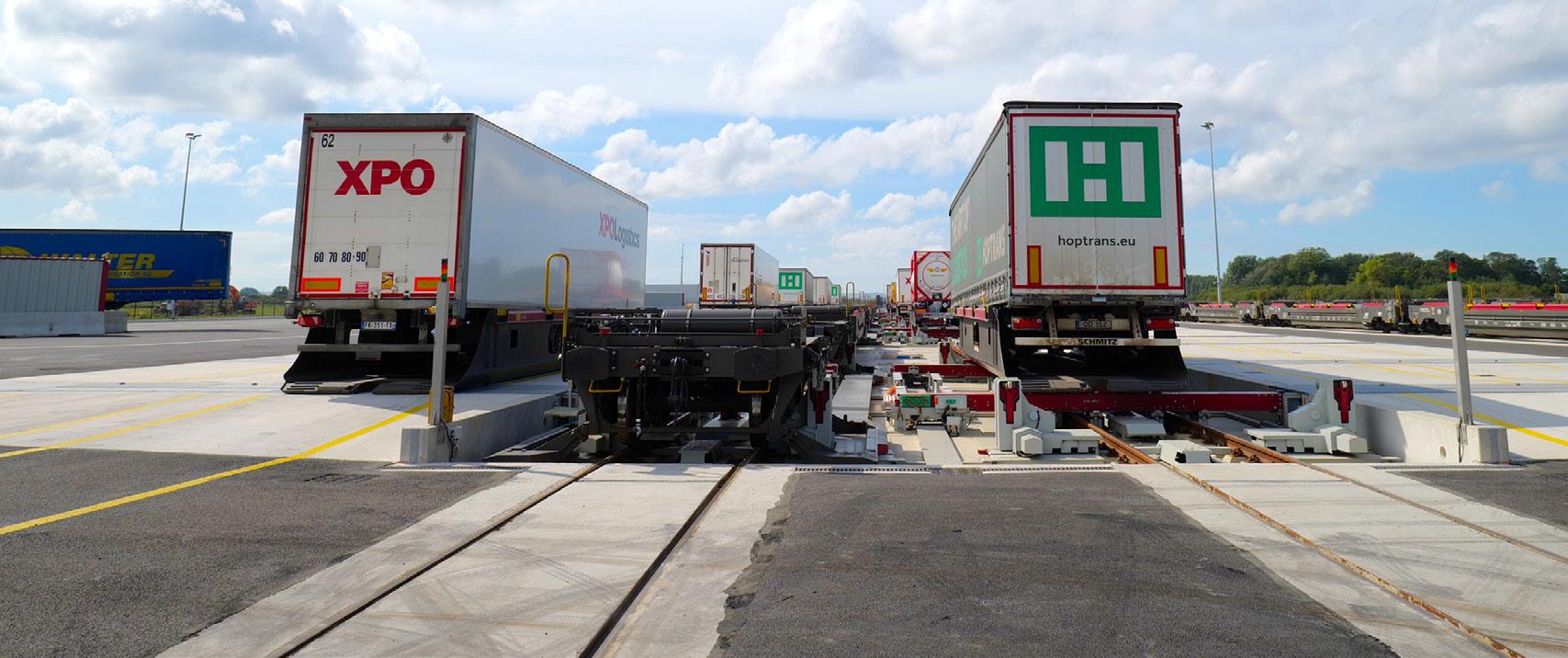
How CargoBeamer works is that a truck loaded with a semi-trailer arrives at the terminal and places the semi-trailer in one
of the parking lots. The truck and driver can leave the terminal immediately or take a new semi-trailer with them.
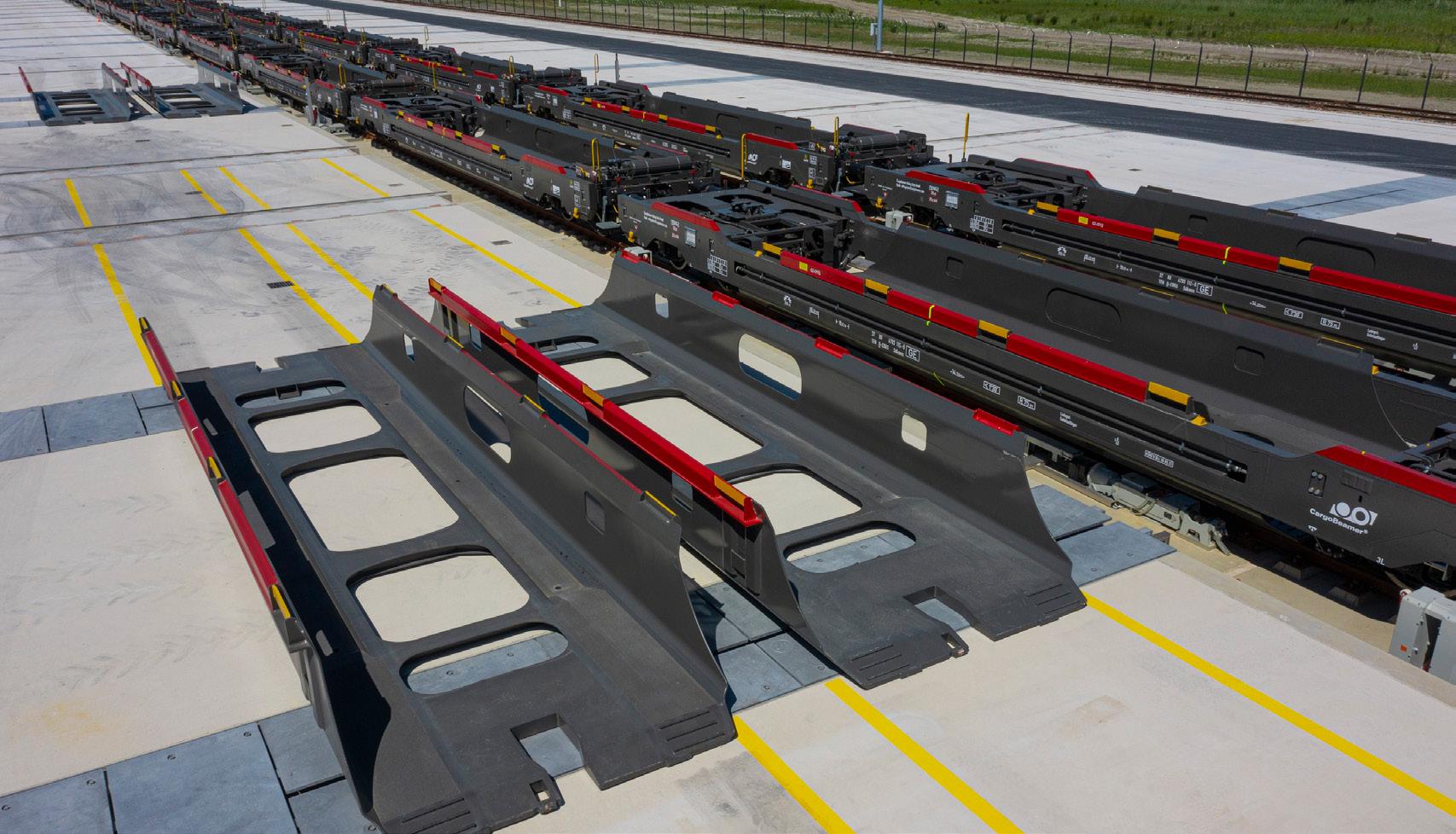
The semi-trailer is then placed onto a waiting loading basket next to the railway track. As soon as the train has arrived, loading and unloading of all semi-trailers happens automatically and simultaneously. The loading and unloading procedure for an entire train only takes 20-25 minutes.
Other technology coming into play includes developing twin virtual replicas of a city’s intermodal infrastructure.
One example is the Port of Rotterdam, where sensors feed live data about traffic, weather and cargo flows into a simulation model that predicts congestion and optimizes routing across modes. Now operators are given a heads-up for changing or rerouting freight between ship, rail, and truck to help eliminate bottlenecks.
These operations are all part of an effort for intermodal systems to transition into predictive, automated, and user-centric ecosystems rather than just physical transfer points.
And as with just about everything today, artificial intelligence (AI) is in the efficiency mix, coordinating freight movement across modes in real time.
The largest logistics players, such as Maersk and UPS, are using AI to analyze
CargoBeamer technology allows faster loading and unloading, minimal human labor, and seamless truck-to-rail transfers— sometimes in 20 minutes or less. Picture courtesy CargoBeamer
demand, port conditions, rail schedules, and truck availability to dynamically shift cargo routes.
Successfully implementing AI also requires human oversight to ensure accuracy and reliability, according to Krishnan Srinivasan, the chief data officer at Maersk, commenting in a blog on the Maersk website.
He mentioned the importance of having a “human in the loop” to verify AI-generated data and ensure it aligns with real-world conditions. “We are right now making sure that humans are complementary to the technology,” he wrote. “We have people to, at least in early stages, verify the data before we share it broadly. We really want to make sure that when an answer is provided, it can relate back and tie back to the source. That’s very, very important versus AI trying to just come up with an answer,” he says.
Sibold said that AI will have the biggest immediate impact on intermodal activities. “I think it allows a lot of smaller companies, those smaller players in the market, to take
advantage of some of the econometric tools that are out there and implement those in kind of new and interesting ways,” he said. “I think the most immediate impact has been on the forecasting and the routing decisions. I imagine that, as it matures, and this kind of technology goes even deeper into the market, you’ll see even better forecasting models, and even better kind of optimization of routes that can be changed more closer to real time.”
FUTURE TECH LINEUP
The IANA listed three future tech areas for intermodal stakeholders to investigate: safety and predictive maintenance for schedule reliability as well as overall stakeholder rewards; visibility, such as with Hapag Lloyd, a German shipping and container company adding GPS to all standard containers so they can detect delays earlier, inform impacted customers automatically and initiate counteractions at an early stage; and in-terminal management which is the biggest area using AI to plan box storage
and deployment, and shorten gate and dray times.
One example of a new storage technology employed by major port operator DP World is BoxBay, whereby containers can be stored up to 16 tiers high inside a full enclosed, automated facility. The result is a dramatic improvement in yard capacity, safety and efficiency—it operates like a giant vending machine for containers.
The IANA report talks about an upcycle in intermodal after problems in 2013-2014 from external upheavals, freight recession, labor issues, service deterioration, and investor impatience. “Most of the issues can be addressed or are being addressed,” the report stated, and intermodal could achieve a doubling of addressable market share by 2035 if “partnerships are developed and maintained; adequate capacity is provided; service levels allow for restored shipper trust; and the long-term growth strategists are able to keep the short-term tactical barbarians at the gates.” X
Picture of the loading basket next to the CargoBeamer railcar. Picture courtesy CargoBeamer
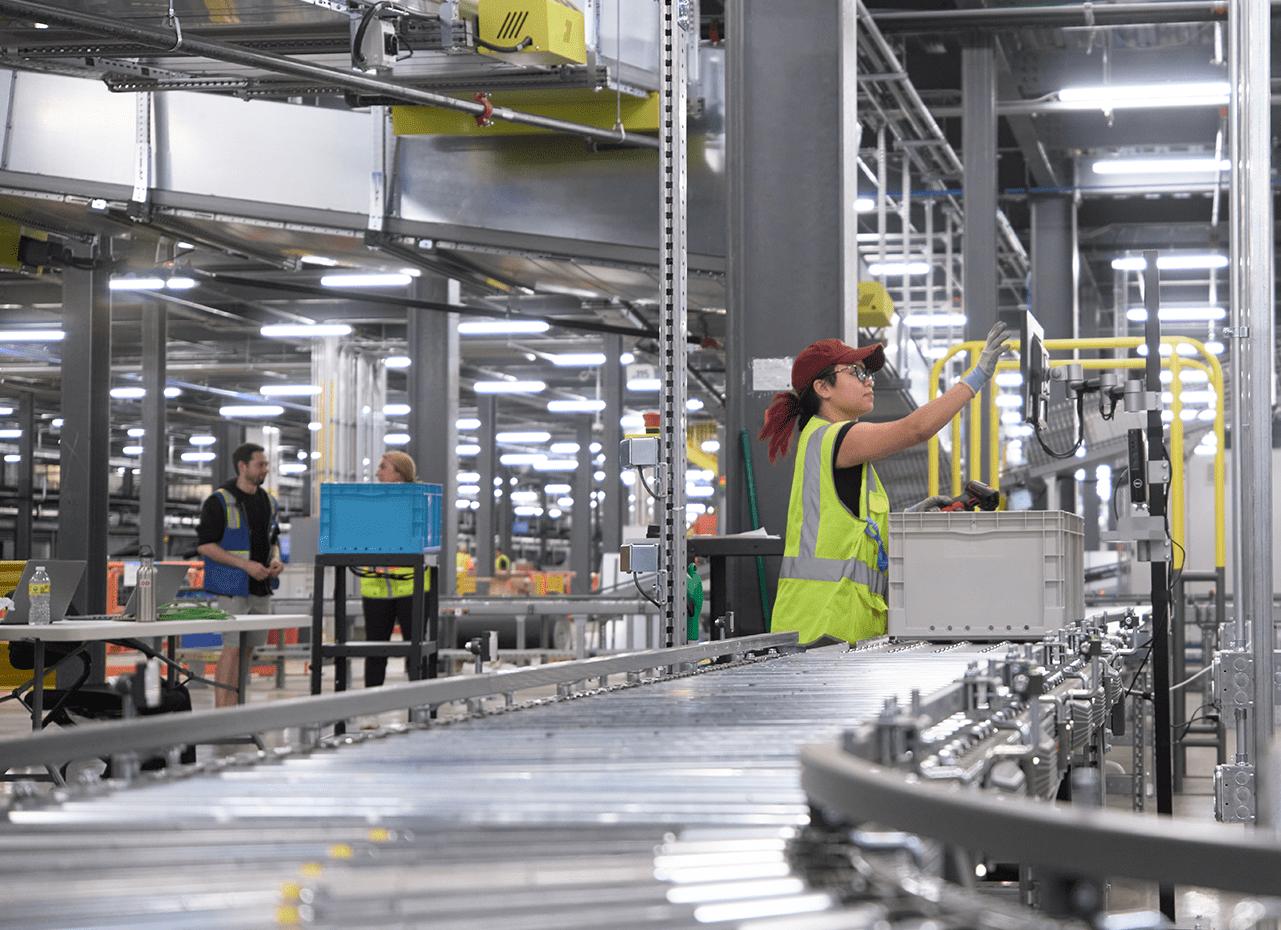
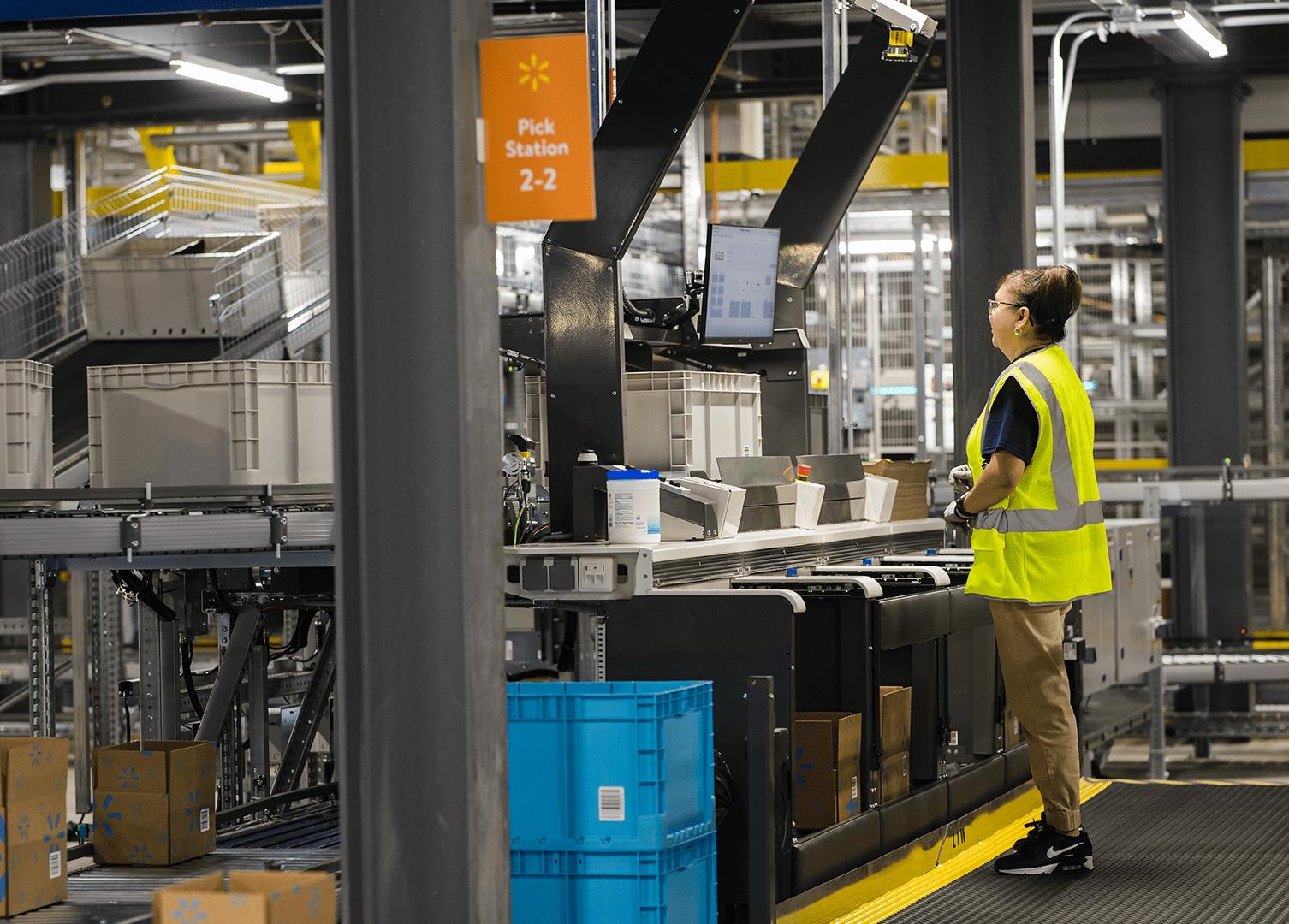
WalMart is building a scaled system of supply chain capabilities that uses a combination of data, software and robotics. Picture of WalMart fulfillment center courtesy WalMart.
AI and Data Management Are Rewiring the Global Logistics System
BY: DAVID HODES
Staying flexible while events around the world affect how, when and where products are able to move has become an increasingly difficult problem that only deep-dive data management can solve
Like all distribution processes, logistics is evolving from just moving goods efficiently into becoming a more intelligent, real-time, customer-driven global system. It has had to adjust to the uncertainties over the last year. .....................................................................................................
HAccording to the “State of Logistics” report by the Council of Supply Chain Management Professional (CSCMP), the global economy had just 2.5 % growth in 2024, down from 2.7 % in 2023. “If this projection proves correct, 2024 could mark the close of the slowest half-decade of output growth in 30 years.”
Growing geopolitical instability “further darkens the economic picture,” disrupting global supply chains, the CSCMP report found, which complicates the investment calculus for companies and governments alike. “Global trade is becoming more fragmented, as major nations increasingly separate into commercial blocs. Market volatility caused by the pandemic, the subsequent economic downturn, and severe weather events have converged to cause enormous stress on all areas of the supply chain.”
THE AI COMPONENT
To counter that downturn and build in cost efficiencies, more artificial intelligence (AI) is either already working or on its way to implementation in nearly every facet of operations.
AI is now embedded across demand forecasting, inventory management, route optimization and customer service. It is demonstrating improved forecast accuracy.
Looking forward, logistics providers need to go yet another step in the AI journey by employing generative AI (genAI), according to a report from KPMG.
GenAI is a subset of AI that has the potential to revolutionize supply chain management, logistics and procurement, according to the report, which also found that 50% of supply chain organizations were expected to invest in applications in 2024 that support artificial intelligence and advanced analytics capabilities.
“Software engines powered by genAI can process much larger sets of data than previous forms of machine learning and can analyze an
almost infinitely complex set of variables,” according to the KPMG report. “GenAI can also learn—and teach itself—about the nuances of any given company’s supply chain ecosystem, allowing it to refine and sharpen its analysis over time.”
Succeeding here is all about data— from Internet of Things (IoT) sensors, real-time shipment tracking, and integrated data platforms—which is still one of the core challenges facing supply chain management, according to the KPMG report.
Millions and millions of freight movement records are generated across the supply chain from multiple systems, and the proliferation of digital technologies, IoT devices, and advanced tracking systems have made the problem worse. “This wealth of data has given rise to greater silos of data within the organization which in turn has led to disconnected data sets,” the report determined. “Critically, the fragmentation of data impedes the creation of a holistic view of the organization’s supply chain.”
Logistics providers must proactively address the issue, better organize and manage their datasets, and use it case-by-case to root out the underlying problems. In an article generated from the annual meeting of the World Economic Forum (WEF), it was determined that most supply chain infrastructure actors “now have a heightened awareness that they must up their game in our ‘new normal’.”
Part of that means the adoption of AI solutions that will contribute to the assessment and reorganization of globalized supply chains, the WEF article went on to explain. “This should remove unnecessary complexities and mitigate vulnerabilities to the shocks and disruptions that have mercilessly plagued the industry. AI in the supply chain can revitalize individual companies’ activity, while elevating the industry as whole. Let’s champion supply chain innovation for the good of the global economy.”
According to a book, “Supply Chain and AI: Transforming Logistics and Operations in the Digital Age” by Luis Polo, a researcher at South Florida International College, larger retailers are moving aggressively into AI.
Adoption statistics are rising. For example, 42% of surveyed retailers already deploy AI, and among those with revenues above $500 million, 64% use AI in some capacity. AI addresses retail challenges like demand volatility, multi-channel complexity, and theft.
AI-powered automation—such as robotic shelf scanners and predictive systems—is changing the store floor, according to the book. One example is Walmart, which has implemented an AI-powered inventory management system that combines historical point-of-sale data with real-time signals (such as local sales and weather) to decide how many units of each item should be stocked in each distribution center and store.
In October, the company announced a new partnership with OpenAI that will start with allowing customers and members to soon shop Walmart through ChatGPT using Instant Checkout.
Polo’s book also highlights fashion retailers like Zara (Inditex) and its use of AI power in retail supply chains. Zara uses machine language models to analyze sales trends and social media signals to forecast the popularity of new fashion lines. Instead of overproducing, the company
AI drives a just-in-time model by planning very short production runs and adjusting orders weekly based on AI forecasts.
Steve Tracey, who served as the executive director leading Penn State’s Center for Supply Chain Research from 2014-2024, is also the professor in the Department of Supply Chain Management & Information Systems at the Smeal College of Business at Penn State University. “I incorporate different AI methodologies and tools into the way that we study experiential learning and projects and case analysis so the students can learn what the limitations for AI are,” he told BXJ
“There are many limitations. What we don’t want them to do is just simply take a problem, plug it into chat GPT, let it spit out an answer, and not understand the efficacy of that particular solution.” He has done a spend-analysis project with students, letting them use large language models to do the analysis. “The vast majority of the class could not get a reasonable solution that they were comfortable with,” he said. “That’s a learning tool. So it’s like, hey, okay, don’t trust these tools yet. They’re not ready for prime time.”
SUPPLY CHAIN VISIBILITY
Supply chain visibility has become a cornerstone for improving decision-making and managing disruptions in today’s volatile
environment, as noted in a paper by Maersk, a leading shipping and logistics company, summarizing results from a survey. “As supply chains expand into new regions and integrate diverse transport modes, businesses face growing challenges, including geopolitical shifts, pressures to decarbonize, labor shortages, and unexpected disruptions such as strikes or natural disasters.”
The survey showed that 86% of logistics decision-makers find visibility relevant, making it the most important trend in logistics today. Decision-makers in logistics from Fortune 500 companies use visibility tools for the entire supply chain, from production to the last-mile.
In this manner, companies can now give customers precise updates at key stages, such as when an order is picked, packed, dispatched, and delivered. “Although tracking technologies like the global positioning system and radio-frequency identification have long been used for supply chain visibility, the Internet of Things (IoT) elevates this capability by enabling granular tracking of individual items and components, revolutionizing how businesses monitor and manage their supply chains,” according to the Maersk survey.
LESSONS LEARNED
In thinking about supply chain agility, Tracey said his research in
Fashion retailer Zara uses machine language models to analyze sales trends and social media signals to forecast the popularity of new fashion lines. Picture of Zara Beijing courtesy Zara.
emerging technologies and supply chain strategy focuses on two aspects that need to be considered. “One is flexibility, and the other one is responsiveness,” he said. “The layperson’s way to describe flexibility is that it’s like your playbook. What are the options available to you to take advantage of? If you were looking at, say, infrastructure as an example, the more options you have, the more agile you can be.”
But it’s not just a simple connect-the-dots argument, he says. “It’s not just about the available options, but also about the organization’s ability to take advantage of those options, which is the execution side.”
The playbook he uses for staying flexible has a number of different scenarios in it. He said he may never use some of them; others more frequently. “It’s going to depend on the business scenario you’re presented with,” Tracey said. “Whatever that situation is, a short term fluctuation in supply or demand or both, or a supply chain disruption, or anything else that I have to respond to, the better prepared I am to respond to that proactively, the more agile I can be. This comes through a process we use called VICE—visibility, intelligence, collaboration, and execution.”
No one had ever experienced a global pandemic in their lifetime, he said, talking about the effect of the Covid pandemic. “All the people who experienced the last one are long gone, and it was a very different landscape, and there was no playbook on how to respond to it,” he said. “So, the organizations that were better prepared to respond to supply chain disruptions in general were the ones that performed better.” he said.
One example he used: IBM had not prepared for a pandemic, but what they had prepared for was supply chain disruptions. “They put the appropriate mechanisms and training practices in place,” he said. “So when you look at how they responded during the pandemic compared to other companies, they did much better. The healthcare industry was not very well prepared. The governments were not very well prepared.
“I think the key lesson out of the pandemic is did you learn from it? I would argue that many organizations did, but many did not. Many of them went back to doing things exactly the way they did them before. And that’s a mistake, because, as Winston Churchill said: ‘Don’t let a good crisis go to waste.’”. X
In 2023, WalMart announced that it is reengineering its supply chain with a more intelligent and connected omnichannel network. Picture of WalMart fulfillment center courtesy WalMart.
What incentives are available for business in Texas? TEXAS:
Texas offers a wide range of business incentives designed to lower costs, accelerate expansion, and reward investment. These programs span local, state, and federal levels, and they are one of the key reasons companies continue to relocate and grow in the Lone Star State.
Whether you are launching a startup, expanding operations, or relocating from another state, Texas provides meaningful support through financial, workforce, and infrastructure programs. In this guide, we break down the top business incentives in Texas by category, explain who qualifies, and show you how to take the next step.
QUICK GUIDE: INCENTIVES BY BUSINESS TYPE
Not sure where to start? Use this guide to quickly identify which Texas incentive programs may be most relevant to your business based on your size, sector, or strategic goals.
• Startups and Small Businesses → Small Business Innovation programs
• Manufacturing or R&D → Sales tax exemptions, R&D tax credits, Skills Development Fund
• Corporate Relocations → Relocating to Texas incentives
• Energy or Clean Tech Firms → Renewable Energy incentives, Property Tax Abatements
• Tech and Semiconductor Firms → Texas CHIPS Office, federal matching grants
If your business fits more than one category, be sure to review all applicable sections to uncover overlapping incentives or layered benefits. Many programs can be combined for even greater impact.
1. TEXAS ENTERPRISE FUND (TEF)
The Texas Enterprise Fund is one of the largest deal-closing funds in the country. It provides financial support to companies considering a new project in Texas when one or more states are also competing for the same project. What it offers:
• Direct cash grants to help offset relocation or expansion costs
• Consideration based on job creation, capital investment, and projected return Who qualifies:
• Companies creating at least 75 full-time jobs (or 25 in rural areas)
Photo by Carlos Delgado on Unsplash
OPPORTUNITIES
• Competitive site selection involving other states
• Significant new capital investment
This fund is often used in tandem with other types of local and state economic development support.
2. SKILLS DEVELOPMENT FUND
The Skills Development Fund is Texas’s premier workforce training grant program, administered by the Texas Workforce Commission. It provides funding to help public community and technical colleges collaborate with businesses to deliver customized job training programs.
Key benefits:
• Grant funding for customized training programs developed in partnership with a local college
• Focused on upskilling current workers or training new employees to meet specific job requirements
• Average training cost is about $2,000 per trainee, but can vary by project scope and industry needs
Who it’s for:
• Texas businesses forming partnerships with public community colleges or technical schools
• Employers looking to expand or modernize their workforce skillsets in areas such as manufacturing, IT, logistics, or healthcare
The program is designed to strengthen the local workforce while supporting business growth and productivity. Interested companies should connect with TxEDC about getting started with an application. We will provide you with the guidance and technical support you need.
3. SALES AND PROPERTY TAX INCENTIVES Sales Tax Exemptions
Texas offers sales and use tax exemptions on certain equipment and supplies used directly in manufacturing, processing, or fabricating tangible goods. This includes:
• Machinery and equipment that causes physical or chemical changes in a product
• Components that become part of the final product
• R&D equipment (if tied to eligible research activities)
Note: Businesses must provide an exemption certificate to suppliers. General-purpose tools or office items typically do not qualify.
PROPERTY TAX ABATEMENTS AND CHAPTER 380/381 AGREEMENTS
Local governments may offer property tax reductions and other support through Chapter 380 and 381 agreements. These incentives often include:
• Temporary property tax abatements or rebates
• Grants, infrastructure support, or reimbursements
• Performance benchmarks tied to job creation or capital investment
Agreements are customized by city or county, and businesses must apply before starting the project. TxEDC can help connect you with the appropriate local economic development contacts to explore these options.
4. RESEARCH & DEVELOPMENT (R&D) TAX CREDIT
Texas offers an R&D tax incentive for companies that invest in qualifying research in the state. This includes software development, engineering, and applied sciences.
Businesses can claim:
• A sales tax exemption on R&D equipment OR
• A franchise tax credit on eligible R&D expenses
Companies must choose one option, and eligibility is tied to federal R&D standards under IRS guidelines.
5. SMALL BUSINESS INNOVATION SUPPORT
Entrepreneurs and small businesses can tap into several programs designed to support early growth and innovation in Texas.
Top small business incentives include:
• Matching grants for SBIR/STTR federal research awards
• Access to incubators and university innovation hubs
• Technical assistance and export support for entering global markets
6. INFRASTRUCTURE AND SITE INCENTIVES
Businesses locating or expanding in Texas may qualify for local infrastructure support. This can include:
• Improvements to roads, utilities, water, or sewer systems
• Reimbursement for site preparation or development
• Participation in Tax Increment Financing (TIF) districts
These programs are typically negotiated through local economic development corporations (EDCs), such as those in Texas City, Allen, or Austin.
7. FEDERAL AND STRATEGIC INDUSTRY PROGRAMS
Texas also connects businesses with competitive federal funding and incentives in high-priority industries.
Examples include:
• Texas CHIPS Office: Supporting semiconductor companies through workforce training and federal grant matching
• Clean Energy Projects: Tax credits and loan guarantees for hydrogen, solar, wind, and biofuels
• Foreign Trade Zones (FTZs): Duty deferral and cost reduction for international import/export companies
Companies working with the Texas Economic Development Corporation often receive tailored guidance for maximizing both state and federal support.
HOW TO APPLY FOR TEXAS INCENTIVES
Each incentive program has its own process, but most require:
• A formal application submitted before your project begins
• Clear evidence of job creation, capital investment, or strategic economic impact
• Coordination with your local Economic Development Corporation (EDC) and the Governor’s Office of Economic Development and Tourism (EDT)
If you are unsure where to begin or which programs your business may qualify for, your first step is to contact the Texas Economic Development Corporation (TxEDC). As the state’s business marketing
arm, TxEDC can connect you with the right regional partners, help you understand the available incentives, and guide you toward the appropriate state contacts—without delay or confusion.
START UNLOCKING INCENTIVES FOR YOUR TEXAS BUSINESS TODAY
Texas offers more than just a business-friendly tax climate. Its deep portfolio of incentives rewards job creation, fosters innovation, and reduces the cost of doing business across industries. Whether you are expanding, hiring, innovating, or relocating, there are meaningful programs to help you grow here.
Explore business incentives in Texas, and let the Texas Economic Development Corporation help you access the right resources for your next move. Please visit them at www.businessintexas.com or call 512981-6736
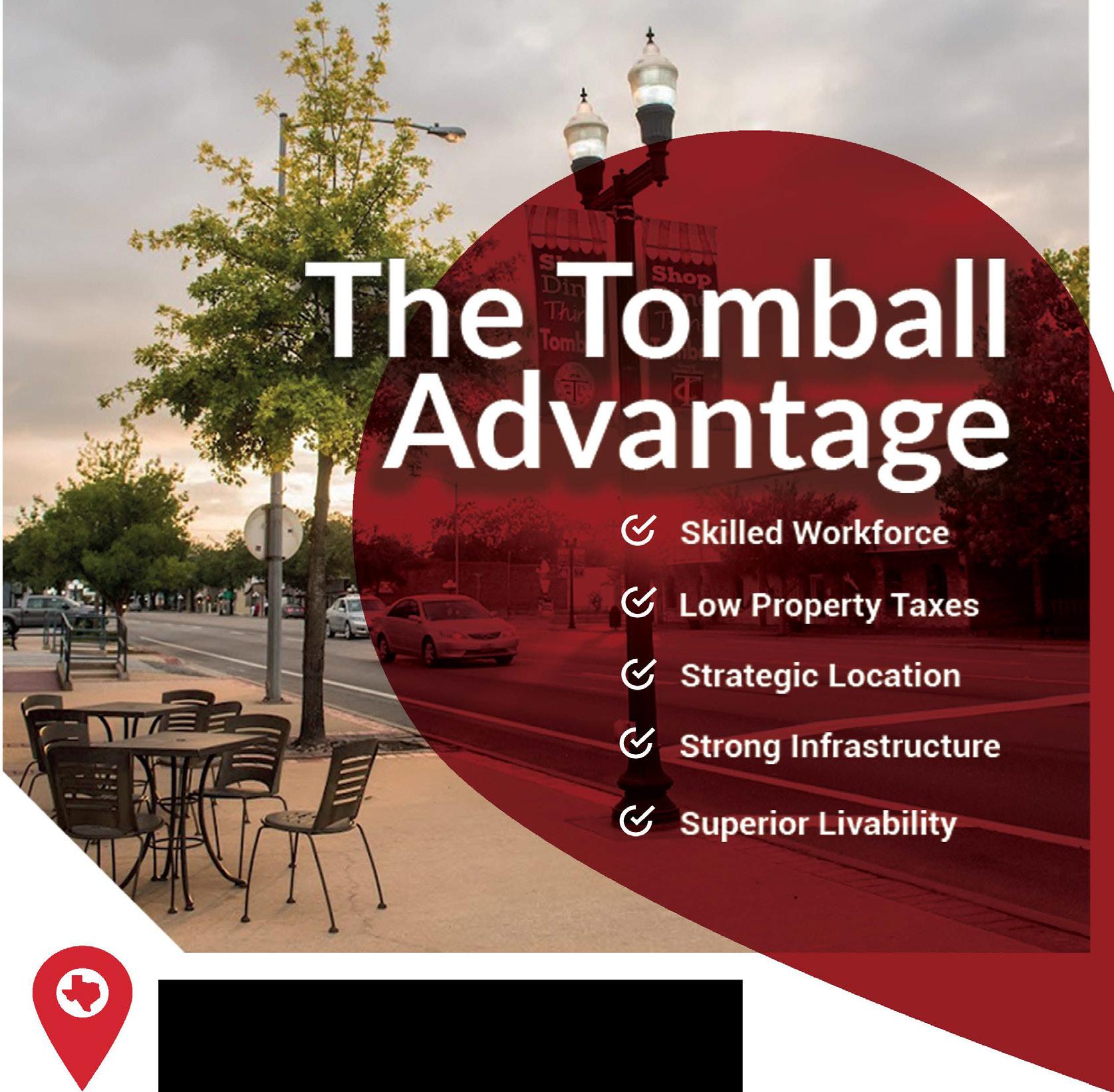
TEXAS: Tomball – Situated in an Ideal Location
Tomball, Texas is in a position to thrive due, in part, to its advantageous position near Houston in one of America’s fastest growing metropolitan areas.
Nestled in the third most populous county in the United States, Tomball is home to more than 1,500 businesses featuring nearly 15,000 employees. Fueled by its collaborative spirit, welcoming nature and superior work-life balance, the city saw its population increase by 20 percent from 2014 to 2019. Tomball’s population is expected to surge from 12,679 to more than 20,000 by 2030.
With roots dating back to the early 19th century when it was a railroad hub, Tomball is rich both in history and modern-day opportunities. Since 2011, the Tomball Economic Development Corporation (TEDC) has aided in creating more than 5,000 local jobs by delivering nearly $500 million in capital investment from businesses. TEDC assists with funding infrastructure costs for eligible projects like streets and roads, utilities, drainage, site improvements and telecommunications enhancements.
Tomball Marketplace Shopping Center provides easy access to popular national retailers like Target, Academy Sports and Outdoors and Kohl’s. Costco pinpointed the corner of Highway 249 and Holderrieth Road in Tomball for its 40th location in Texas. The multibillion-dollar global retailer opened the doors to its 152,000 square foot Tomball store in August 2024 and is estimated to deliver $651 million in sales during its first six years of operation.
Less than two miles from Costco, The Grand at 249 is a 65-acre mixed-use retail development nearing completion. Down the street in Interchange 249, a planned three-million-square-foot industrial/retail complex, Macy’s opened a 900,000-square-foot fulfillment center and has evolved into a distribution dynamo with its 105 employees who are responsible for any items customers see in a Macy’s store located in Texas, Louisiana, Oklahoma, Arkansas or some parts of Alabama. Businesses based in Tomball reap the benefit of convenient travel to key points in and around Houston via major transportation options. George Bush Intercontinental Airport (IAH), less than a half hour drive from Tomball, serves as a key advantage for local businesses. IAH helps bring the world to Tomball with 25 airlines flying nonstop to
five continents from Bush Intercontinental Airport. State Highway 249 (The Tomball Parkway) and the recently completed State Highway 99 (The Grand Parkway) run directly through Tomball while Interstate 45 and Beltway 8 are each merely minutes from the city. These highways provide easy access to downtown Houston and all markets from Dallas to Galveston. With roughly 7 million people in the Houston area, Tomball is in a prime spot to reach a massive number of customers and job seekers.
In fact, a job-ready workforce is available to Tomball employers right in their backyard. The award-winning Tomball Independent School District, serving more than 18,000 students across 20 campuses, has received consecutive “A” ratings from the Texas Education Agency. The TEDC worked closely with Tomball ISD, Lone Star College-Tomball and HCA Houston Healthcare Tomball to launch Tomball ISD’s Early College High School for Pathways (P-TECH) initiative. Focused on training students to meet healthcare job needs and providing immediate access to healthcare jobs upon graduation, the P-TECH initiative was recognized with a Texas Economic Development Council Workforce Excellence Award after its inaugural year.
The city’s prime location makes it easy for businesses to get to Tomball, but they choose to stay in Tomball because of the logistical advantage offered through infrastructure and a business-friendly mindset. Visit www.TomballEDC.org for more information.
TEXAS: Frisco — Why Your Next Move Should Be to Frisco, Texas
With an innovative, fast-paced and highly business-focused metropolitan market, Frisco, Texas, stands as one of the most compelling destinations for businesses and residents in the U.S.
WHY FRISCO
Located 25 miles north of downtown Dallas in the heart of the sought-after North Platinum Corridor, Frisco combines strategic positioning with a strong sense of community. The city is built on innovative city planning, robust infrastructure and ample room for future development, offering the livability and lifestyle today’s workforce expects.
Frisco is a leading choice for established companies and startups looking to grow, relocate or launch new ventures. Its talent pipeline benefits from partnerships with the University of North Texas, a Tier One research university, and Collin College, which is nationally recognized for its IT Center of Excellence and workforce training programs.
Companies relocating to Frisco find a thriving environment shaped by venture capital, technology firms and emerging startups. Frisco’s leadership in public-private partnerships and next-generation technology-focused initiatives has attracted multiple corporate headquarters and a diverse, highly skilled workforce.
With the Dallas North Tollway and other metroplex thoroughfares nearby, along with well-developed highways and roads, Frisco offers efficient access throughout the Dallas-Fort Worth region.
Beyond business fundamentals, Frisco delivers on quality of life. Shorter commutes and an outstanding public education system
EXPANSION
OPPORTUNITIES
support a place where people can live, work, play and grow. As one of the fastest-growing cities in the country and a consistent leader in the North Texas market, Frisco continues to gain momentum through strong infrastructure, a competitive tax base and visionary leadership.
KEY INDUSTRIES
Frisco proactively focuses on four high-impact industries driving future growth:
1. Corporate Attraction
• Fortune 500 and Fortune 1000
• Fast-Scaling Companies
• Global/National Headquarters
• Regional Offices & Shared Service Centers
• Financial & Professional Services
• Healthcare/Life Sciences
• Business of Sports
• Logistics & Transportation
Frisco is home to corporate leaders, respected globally within their industries. Companies such as Keurig Dr Pepper, TIAA, Ruiz Foods, and Public Storage are among the companies that reflect the depth and diversity of organizations choosing Frisco for their operations.
2. Innovation
• Artificial Intelligence & Analytics
• Augmented & Virtual Reality
• Wearables & Embeddables
• Health & Human Performance
• Biotech, Nutraceuticals
• Research & Development
• Cyber Security
• Computer Software & Hardware
• Additives & Advanced Materials
Frisco’s innovation economy continues to accelerate, with companies like Boingo and McAfee, alongside the North American headquarters of Redwood Software. Backed by more than 500 startups and major employers like T-Mobile, the city continues to build momentum as a center for innovation.
3. Business of Sports
• Professional Sports & Support Services
• Corporate Operations
• Governing Bodies
• Sports Tech
• R&D/Test Hub
• Apparel & Equipment
• Wellness Products & Services
• Fan Experience & Hospitality
Frisco hosts more than a dozen professional and collegiate sports organizations and five major venues. That concentration positions the city as a leader in the business of sports, with organizations such as the Dallas Cowboys, the Dallas Cowboys Cheerleaders, the Dallas Stars and FC Dallas calling Frisco home.
Further solidifying its role as a sports hub, in 2022, the city welcomed the PGA of America into a landmark 600-acre, mixed-use development, with an initial investment of more than $500 million through a publicprivate partnership
4. Gaming & Media
• Esports
• Management Platforms
• Video Game Development
• In-Gaming Experiences
• Suppliers/Vendors
• Betting Technologies
• New Media/Digital Media
The GameStop Performance Center in Frisco houses Complexity Gaming, a global esports leader. This presence anchors a broader ecosystem that includes Stadia Ventures and Scoreboard Ventures, two leading sports tech accelerators and venture capital firms supporting the next wave of digital and gaming innovation.
BUSINESS & RESIDENTIAL INCENTIVES
Frisco offers a highly competitive tax environment for both residents and businesses. The absence of a state income tax provides significant savings for employers and the workforce. Local property taxes are based on the full market value of each property and are assessed according to Texas state law.
The city provides ample space for companies of all sizes to expand, including Class A build-to-suit offices, distribution facilities, retail-ready sites and mixed-use developments.
Frisco combines low taxes, top-rated schools and an exceptional quality of life, creating an attractive setting for businesses and talent. Its central U.S. location, available land, educated workforce and strong pro-business climate position it as an ideal choice for corporate headquarters, regional offices, tech hubs, startups and entrepreneurs.
For more information, contact the Frisco Economic Development Corporation at 972-292-5150 or info@friscoedc.com, or visit www. friscoedc.com.
TEXAS: Edinburg
— Edinburg’s North Industrial Park Drives Industrial and Logistics Growth in South Texas
Industrial investment, workforce training, and expanding logistics operations continue to strengthen Edinburg’s role in South Texas’ growing industrial economy.
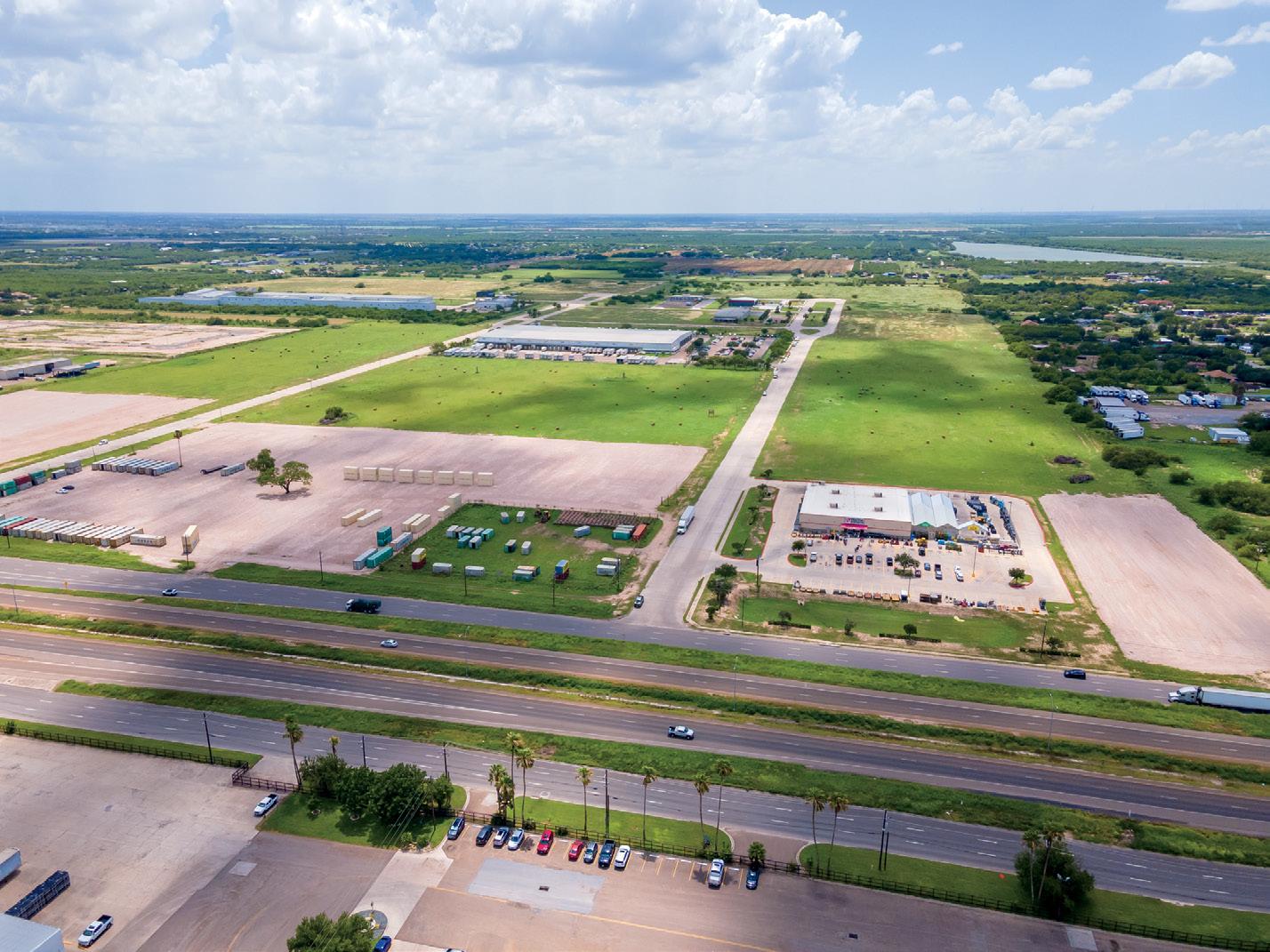
The Edinburg North Industrial Park continues to play an important role in strengthening the city’s industrial economy, attracting new investment while supporting the growth of companies across logistics, food distribution, transportation, and specialized services.
Strategically located in the Rio Grande Valley, the park provides businesses with access to major transportation corridors, a growing workforce, and opportunities for industrial development. As Edinburg continues to expand, the North Industrial Park has become an important area supporting companies that bring new jobs, investment, and
services to the region.
Future transportation improvements such as State Highway 68 will further strengthen the park’s accessibility, creating an additional north–south corridor that will help move goods more efficiently across the region. For companies involved in produce distribution and logistics, improved connectivity will support faster transportation between South Texas markets and destinations across the state.
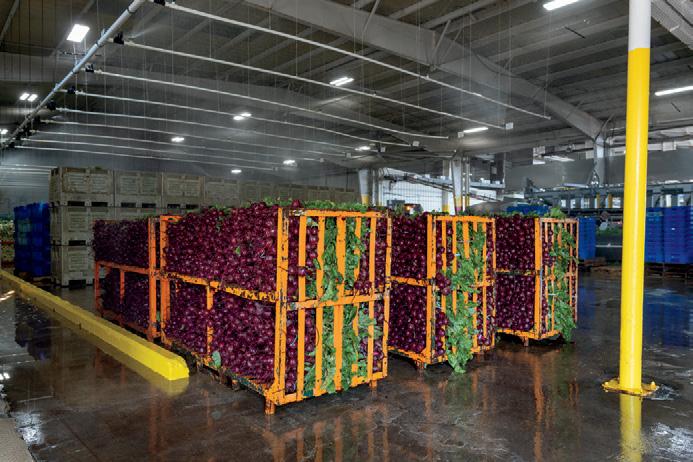
One example of this activity is Nicho Produce, a long-standing Edinburg-based company founded in 1969. What began as a small operation delivering fresh fruits and vegetables to local markets has grown into one of South Texas’ leading produce wholesalers and processors. The company is planning a 50,000-square-foot cold storage facility on a nine-acre site within the North Industrial Park, which will support the region’s produce distribution and food processing industry once completed.
Another company investing in the park is Bagley Produce, which is currently constructing a 50,000-square-foot distribution facility that will support agricultural distribution and logistics across the Rio Grande Valley once operational.
Industrial momentum within the park also includes Siddons-Martin Emergency Group, which established a 12,000-square-foot service and maintenance facility to support fire apparatus and emergency vehicles serving communities across South Texas. The facility strengthens emergency response operations across the region while supporting specialized service capabilities in Edinburg.
Workforce training and transportation services are also playing a role in the park’s continued development. RGV CDL operates a 3,500-square-foot commercial driver training facility located on three acres within the park and approved by the Texas Department of Public Safety as a CDL testing site. The facility provides training and testing for individuals pursuing careers in the transportation and logistics industry. The company has also expanded its operations with a commercial truck service shop and warehouse space available for lease, supporting additional business activity and skilled job opportunities.
In addition to these businesses, the North
Industrial Park is home to a range of companies supporting logistics, transportation, and distribution, including FedEx and RGV Tours. RGV Tours provides charter transportation and group travel services for schools, organizations, sporting events, and community trips throughout the region.
To support continued industrial development, the Edinburg Economic Development Corporation (EEDC) currently has more than 40 acres of available land within
the North Industrial Park that is ready for future industrial development. The site is positioned to accommodate companies seeking to expand or establish operations in a growing logistics and distribution corridor within the Rio Grande Valley.
“Our goal is to continue creating opportunities for companies to grow and invest in Edinburg,” said Raudel Garza. “The North Industrial Park reflects the type of development we want to see—projects that
OUR LAND ISN’T ALL THAT’S FULL OF ENERGY.
You might know about our natural resources, but did you know Odessa, Texas, is rich in human resources? We put a huge emphasis on advanced education and technical training. So when you locate your organization here, a strong skilled workforce is ready to energize your business. ONLY ODESSA
EXPANSION
OPPORTUNITIES
bring new services, strengthen our workforce, and support long-term economic growth for the region.”
As companies continue to expand and new investment enters the market, the North Industrial Park is helping position Edinburg as a strong location for industrial development and job creation in South Texas. Businesses interested in learning more about development opportunities at the North Industrial Park are encouraged to connect with the Edinburg Economic Development Corporation to explore available sites, workforce resources, and opportunities to grow in Edinburg’s expanding industrial sector.
TEXAS: Odessa – Manufacturing Companies Thrive
Today’s manufacturing companies will thrive in a location that allows them to adapt to an ever-changing economic environment quickly and efficiently. Odessa, Texas, offers a springboard to success through its wealth of advanced manufacturing potential!
From its position in the Permian Basin, Odessa has built an exceptional historical record in energy production, resulting in a workforce possessing exceptional manufacturing talents. With the city experiencing growth in numerous adjacent industries, Odessa is the place to be for enterprises ready to launch, scale, or relocate operations.
"Odessa has more machine shop experience than other communities,” said Mark Merritt, Westech Seal CEO. “A lot of precision machining occurs here, including repairing, installing, and rotating equipment and pumps. It is all here.”
SECURE LOCATION & SUPPLY CHAIN ACCESS
Security is a top priority for advanced manufacturing firms, as many apply rapidly developing cutting-edge technology. Odessa’s location in West Texas provides a measure of geographic isolation to protect intellectual property from competitors. Odessa and the surrounding cities also offer a diverse, built-in customer base for a wide range of product offerings. Enterprises choosing Odessa will benefit from streamlining regional supply chains and meeting the demands of existing industries.
Companies located in Odessa maintain a strong connection to
major markets through robust transportation infrastructure. Major rail and interstate arteries exist to provide fast delivery to other major markets in Texas and across the United States. Companies onshoring as a protection against potential tariffs will appreciate Odessa’s easy access to markets in Mexico while providing a U.S. site for production and distribution. With over $4.5 billion in ongoing investments in local infrastructure, the city is poised to meet current and future demands. The international airport also offers essential air services for express shipping or international market needs.
EDUCATION AND ENVIRONMENT SUPPORT GROWTH
Companies ready to optimize operations or enter new markets will discover an eager workforce in Odessa supported by high-quality colleges and universities. Firms requiring expertise in rapidly advancing technologies, such as robotics, 3D printing, and AI assistance, find these higher education institutions eager to partner on curriculum to support their emerging needs.
Manufacturers in Odessa also have access to a constant supply of oil, gas, and petroleum products while also benefitting from the
massive growth in renewable energy.
“Odessa is a business-friendly city with 24/7 manufacturing support. Odessa is ready to recruit new and relocating businesses in advanced manufacturing, medical manufacturing, renewable energy, data centers and construction,” said Tom Manskey, Director of the Odessa Chamber of Commerce Economic Development Department.
Plentiful economic development incentives are available from the Odessa Development Corporation. Job creation and capital investment grants can be stacked with other incentives to fund land, buildings, equipment, facilities expenditures and more for expanding businesses and relocating manufacturers. Existing industrial buildings and shovel-ready commercial lots meet the needs of small businesses and large enterprises.
An enviable combination of advantages has primed Odessa for manufacturing success. Learn more about how your manufacturing operation can benefit from relocation or expansion in Odessa, and contact Odessa Development Corporation today. X
PENNSYLVANIA:
Why go anywhere else?
Pennsylvania delivers an experienced workforce, world class higher education institutions, and a prime East Coast location near four of the nation’s 10 largest markets. All that, plus an exceptional quality of life. Here, innovation thrives with vibrant communities and a dynamic business ecosystem dedicated to getting it done.
Home to the innovative and ingenious, Pennsylvania is the most economically diverse state in the nation. They’re a powerful energy producer, leader in academic research, and hub of agriculture and advanced manufacturing. And they’re ready to fuel business success. Their business-friendly tax climate is designed for growth — They’re on track to cut the corporate net income tax rate down to 4.99% by 2031, making it among the lowest in the nation. Combine that with nationally ranked universities fostering top talent and a robust transportation infrastructure that connects companies to the world, and you’ll see why Pennsylvania is a place where big ideas grow — and so can businesses. Home to 20 Fortune 500 companies, state-of-the-art R&D facilities, and more than one million small businesses, Pennsylvania is where a rich history meets your promising future.
Located at the heart of the Northeast and Mid-Atlantic regions, the Keystone State offers unmatched access to major American markets. Whether you're scaling up or starting fresh, Pennsylvania's intermodal infrastructure is key to success. Located within a day’s drive of nearly 40%
of the U.S. population and 60% of Canadians, Pennsylvania positions companies for success. Their robust infrastructure, backed by 5,600 miles of rail and 120,000 miles of state and local highways, keeps businesses connected and competitive.
A powerhouse for global trade, Pennsylvania's ports handle over 67 million tons of goods annually. From the Atlantic Ocean via Philadelphia(opens in a new tab) to the Gulf of Mexico through Pittsburgh or the Great Lakes from Erie, their ports ensure seamless access to national and international markets. Add to that six international airports and over 125 regional airports, which move more than 600,000 tons of materials and 35 million passengers annually. Whether shipping goods or attracting talent, Pennsylvania is the keystone in business strategy. Here, you can count on flexible transportation options to stay competitive in a fast-paced market and conveniently move goods to any destination.
The state's diverse energy resources ensure reliable, cost-efficient power for operations and logistics. As one of the top producers of natural gas and electricity in the U.S., the Commonwealth delivers energy affordability and stability across industries. And they're investing in renewable energy to fuel sustainable growth for the future.
Pennsylvania’s diverse regions and vibrant economy — ranked the 26th largest in the world — make it a launchpad for businesses across sectors. From robotics and life sciences research centers to thriving hubs of manufacturing and agriculture, Pennsylvania offers prime locations across the state for your business to grow and succeed. They're proud to be the only Northeastern state with a growing economy, and their targeted support for growing companies is why they're one of the top-ranked business climates in the country.
Photo by Lance Anderson on Unsplash
EXPANSION
OPPORTUNITIES
Here in Pennsylvania, they’re taking bold steps to boost their tax competitiveness. Cutting the corporate net income tax rate to 4.99% by 2031 is just the tip of the iceberg. Learn why the Keystone State is among the most attractive states to do business
• Reduced Corporate Net Income Tax (CNIT) Rate
o Decreasing 0.5% annually from 7.49% in 2026 to 4.99% in 2031, Pennsylvania’s corporate net income tax rate is becoming one of the most competitive regionally and nationally. Once fully phased down, the rate will be lower than all of their neighboring states that have CNITs, where rates currently range from 6.5% (West Virginia) all the way up to 11.5% (New Jersey).
• Personal Income Tax (PIT) Rate: 3.07%
o With a flat 3.07% tax that applies to partnerships, LLCs, and S corporations, Pennsylvania is prime for small and medium-sized businesses that operate as pass-through entities. Of states with a PIT, only two states — Arizona (2.5%) and North Dakota (2.9%) — have lower rates.
• Tangible Personal Property Tax: 0%
o Pennsylvania does not tax machinery, equipment, or inventories — a tax imposed in 27 other states. This removes barriers to capital investment and makes business expansion more costeffective.
• Increasing Allowable NOL Deductions
o The state is increasing allowable Net Operating Loss (NOL) deductions by 10% annually — from 40% in 2025 up to the federal limit of 80% in 2029. This change supports innovation in start-up, technology, and life sciences businesses.
• Broad Sales and Use Tax Exemptions for Manufacturing and R&D
o Pennsylvania offers broad exemptions for manufacturing and R&D-related purchases, reducing acquisition costs and supporting business upgrades.
• Faster Permitting, Fewer Roadblocks
o The PA Permit Fast Track Program(opens in a new tab) and the Department of Envrionmental Protection's SPEED Program(opens in a new tab) provide tailored assistance to help expedite permitting deciscions, so you can get from groundbreaking to grand opening faster.
• Taking a data-based approach to their efforts, they have identified five key industry sectors where they should target resources and maximize opportunities for growth: Agriculture, Energy, Life Sciences, Manufacturing, and Robotics and Technology. The Shapiro Administration's ambitious Ten-Year Strategic Plan for Economic Development in Pennsylvania - the first one created for Pennsylvania in nearly twenty years - sets forth a plan to bolster economic development in these industries through smart investments and public-private partnerships. Focusing on these sectors will enable them to build out industry clusters in high-growth, high-value industry segments, and to double down in industries of historic and economic significance to PA.
• Life Sciences and Robotics and Technology are high-growth areas where they can harness existing assets and accelerate the growth of their economy through selective and targeted investments. Manufacturing, Agriculture, and Energy are areas where they can
leverage historic economic strengths, existing skills, and expertise to protect their built-in advantage. The quality of these jobs matters, and by focusing on these industries they will position Pennsylvania to compete for high-wage, family-sustaining jobs in all regions of the Commonwealth.
For more information, please contact the Pennsylvania Department of Community & Economic Development at 866-466-3972 or visit their website at www.dced.pa.gov
PENNSYLVANIA: Erie County
Erie County Makes Things Happen
Character anchors the strength of every community. The character of Erie County, Pennsylvania, is anchored in making things – and making things happen.
The region’s can-do spirit drives a diverse, dynamic economy powered by a skilled and adaptive workforce. Traditional manufacturing remains strong, alongside forward-looking industries such as advanced plastics, cybersecurity, green technology, high-tech agriculture and food processing.
Fueled by more than $1 billion in economic investment in a decade, this Great Lakes community is ready to make things happen, too, for international, regional and homegrown businesses looking for a strategic, well-resourced environment in which to build a strong future.
SUPPORT IN DOLLARS … AND BUSINESS SENSE
A laser focus on action — targeted, flexible and innovative approaches — to support new and expanding enterprises makes business happen in Erie County.
It’s a team effort. Connecting businesses with the expertise, capital and operational support they need to put down roots or branch out in this uniquely well-situated community thrive requires close collaboration.
A network of economic development agencies, community groups, philanthropic organizations and strategic initiatives is active — and proactive. The Erie County Redevelopment Authority (ECRDA) plays a pivotal role.
The authority invests strategically in the county’s infrastructure, real estate, and business development and helps businesses acquire, develop and redevelop real estate. Between 2020 and 2025, ECRDA channeled more than $160 million into Erie County through loans, grants, and redevelopment projects to help fuel the region’s accelerating economy.
Working with local, state and federal partners, ECRDA provides access to resources and support services to help entrepreneurs as well as established businesses build strong, healthy and successful enterprises. It ensures projects are eligible for the maximum financial incentives and facilitates permitting to help businesses deliver projects on time and within budget.
Together, Erie County’s network of economic development partners operates with the common goal of helping businesses start, scale, and thrive. This support — along with the region’s strategic setting, skilled workforce and attractive quality of life — gives businesses the confidence to invest in Erie and grow with the region.
OPPORTUNITIES EXPANSION
CORNERING THE MARKET ON LOCATION
Situated on Lake Erie in the northwest corner of Pennsylvania — bordered by both Ohio and New York — Erie County offers companies proximity to customers and clients across the region. Cleveland, Pittsburgh, and Buffalo are nearby, and almost half of the U.S. population is within a day’s drive.
Major highways, railways, an international airport, and Pennsylvania’s only Great Lakes port make Erie a hub for transportation, logistics, and manufacturing.
In addition to shipping and recreation, Lake Erie also provides access to an increasingly valuable component for many successful enterprises: an abundance of fresh water.
Land is also bountiful in Erie County — both open spaces for agriculture and shovel-ready and move-in ready locations for a range of commercial and industrial enterprises. Among the newest sites primed for business are Ironworks Square, a mixed-used facility near Erie’s downtown, and McKean Business Park, 160 acres near the intersections of Interstates 90 and 79 under development with integrated fiber optics, on-site power grid, water and sewer capacities, zoning permitting and site mitigation.
WELL-SKILLED, WELL-SCHOOLED WORKFORCE
When it comes to skilling up the workforce for today’s highly technical jobs, few mid-sized cities can equal Erie as an educational center. Four universities, the nation’s largest medical school, a regional college focused on workforce development, and Pennsylvania’s newest community college are at home here, along with trade and technical schools.
The universities, which include Penn State Behrend, Gannon University, PennWest University, and Mercyhurst University, work closely with the county’s growing industries to meet their evolving workforce needs with a pipeline of well-qualified — and tailor-made — talent.
The universities also support business expansion, innovation and development through a variety of initiatives and partnerships.
LOW-COST, HIGH-SATISFACTION LIVING
Erie is not just a great place to learn and work, but also a great place to live, play, and build a future.
In 2025, WorldAtlas spotlighted Erie as one of the 8 Best Places to Live on the Great Lakes, an international accolade that compared communities in both the U.S. and Canada. The glowing snapshot cited the Erie region’s vast recreational opportunities and low cost of living but just touched the surface of all it has to offer to both lifetime residents and newcomers following business opportunities.
Miles of beaches, yacht clubs and sailing, fishing — even ice fishing on Presque Isle Bay — make Lake Erie a focal point of yearround recreation. And on Erie’s bustling, ever-expanding waterfront, construction is set to begin this year on another new hotel and a yearround market house that will bring commerce, culture, and community to the waterfront.
An extensive state-funded reconstruction of the main bayfront access highway is also underway to improve traffic flow and create
better connections between the waterfront and Erie’s vibrant downtown, where more than $500 million in investments have expanded museums and created new restaurants, apartments, and infrastructure.
But quality of life in Erie hinges on more than fun and play. Three major hospital systems offer quality care locally as well as access to world-class medical innovation and expertise in nearby cities. Fiber optic broadband reaches more than 90% of the county and continues to expand for the benefit of residents and businesses alike.
ERIE IS READY. ARE YOU?
Across Erie County, economic activity pulses. A collaborative approach to complex, high-stakes projects ensures businesses thrive, create new jobs, and build a prosperous future.
With expansive community amenities, including our amazing Bayfront, and a strong, diverse economy rich in opportunity, Erie County is primed for investment. The region’s workforce and cohesive economic development ecosystem are ready to make the products of tomorrow — and to make things happen today for businesses looking for an exceptional place to launch.
Discover how ECRDA can help your business thrive in Erie County.
PENNSYLVANIA: Horsham Township, A Community Connected
As part of the Greater Philadelphia metropolitan area, Horsham Township is in the heart of the 5th largest economy in the world, with 40% of the U.S. population within a single days’ drive, and 60% of the U.S. and Canadian populations accessible via a two-hour flight.
Horsham Township is accessible to nine major airports within a two-hour drive, and to three corporate service airports within 15 miles. Philadelphia International Airport is just 35 miles away and about a 42-minute car ride from Horsham. The township is easily accessible to Center City Philadelphia and to the Port of Philadelphia.
This amazingly business-friendly township is home to five major business parks offering 6.4 million square feet of commercial office and flex space. Additional capacity is anticipated with planned redevelopment of the 862-acre former NAS-JRB Willow Grove military base. Highlights of their business environment include: Among the lowest real estate taxes in the region; no business privilege tax; no mercantile tax; and rental rates per square foot highly competitive with regional rates.
Horsham and greater Montgomery County are home to healthcare leaders, telecommunication and information companies, financial centers and tech companies. The township offers an excellent highway infrastructure with easy access to the Pennsylvania Turnpike and several major arterial corridors as well as three regional rail lines and local public transportation.
Employers and their workforce appreciate the number of nearby amenities, services and attractions. Scores of local and regional restaurants offer wonderful diversity for the discerning palate. The township is close to a wealth of craft breweries, wineries and local distilleries for sipping and sampling. Additional attractions include:
numerous regional retail shopping venues; Museums, casinos and a wealth of must-see historical landmarks; natural appeal with 860 parks, trails and open space; short drive to New Jersey and Delaware’s beaches and boardwalks as well as the ski slopes and lakes of Pennsylvania’s Pocono Mountains.
The School District of Hatboro-Horsham affords a rich history of academic excellence. All schools have received Blue Ribbon honors from both the state and federal Departments of Education. The district has ranked in the top 15% of Pennsylvania schools and in the top 10% of all schools in the nation. In terms of higher education, 44 colleges and/or research universities provide higher education within about an hour’s drive.
As a crossroads for wide-open opportunities that attract new business, economic development and commerce, Horsham is ideally situated for companies seeking easy accessibility, connectivity and the perfect environment for growth.
Horsham Township truly is A COMMUNITY CONNECTED to their residents, to their business community, and to a very talented workforce. Horsham is a great place to live, work, and play. They welcome and encourage your consideration when weighing favorable locations for your business or business units and when considering your available investment options.
For more information, please contact the Horsham Township Office of Community & Economic Development at 215-643-3131 or check out their Eco/ Dev resources at https://www.horsham. org/43036/economic-development
PENNSYLVANIA: Wayne County – Location Advantages
Wayne County is midway along the Boston – Washington corridor, at a point where access in all directions is easily obtained without having to fight traffic congestion. The transportation network serving the Northeast markets facilitates distribution to a combined population of approximately 50 million people within a days travel.
Their proximity to metro areas makes
Wayne County one of the closest Pennsylvania locations to New York. Wayne County is home to highly skilled labor in the wood and metalworking industries with a growing number of technology and media workers moving into the area. Yoga International is one of their fastest growing companies and was listed #144 on Inc's fastest Growing Companies list.
With a focus on creating walkable
downtowns, by developing walking and biking trails, new residents are attracted to the natural outdoor spaces, brew pubs, interesting restaurants, and unique downtown shops. Plans to connect their communities through a trail system will offer recreational opportunities and connect parks, rivers, lakes, and forest resources.
Approximate driving distances from central Wayne County to major cities:
Sterling Business & Technology Park
-Office, Manufacturing, Tech, Distribution, and More!
- Great Access - About 1/2 mile from I-84, Wayne County - LOTS and BUILD-TO-SUIT Options Available
- Flex Space Planned for 2027
- Water / Sewer / Power / Fiber - in place
- State & Local Incentives Available!! Locally Owned & Operated / Co
LABOR SUPPLY AND WAGE RATE ADVANTAGES
A market analysis prepared for WEDCO by Reilly Associates and Shepstone Management Company revealed a rapidly growing labor pool with significant cost advantages. The labor supply was drawn from Wayne County and its three neighbors: Lackawanna, Pike, and Monroe. While there are significant differences between Lackawanna and the three Pocono counties in demographic growth patterns, culture and physical features, the four are linked through common economic development agencies, health systems, and highway networks.
Wayne County’s location in the northeast corner of the Commonwealth puts us at the leading edge of expansion from the NY/NJ metro areas, and provides the basis for an increasing labor supply with a commuting pattern that favors local development. The labor supply in the four-county NEPA region of Wayne, Pike, Monroe, and Lackawanna Counties continues to grow within the Commonwealth.
Although over three thousand (3,000) workers are being added to the NEPA regional labor supply annually, this constitutes only a portion of labor that is available when we look at commuting patterns. The last census shows that neighboring Pike County is one of the fastest-growing county in PA with an average commute of 46 minutes, almost double the U.S. average commuting time. In the NEPA region, nearly 25,000 workers indicted they were employed either outside their county or outside the Commonwealth. Therefore, we have a supply of labor that would prefer local employment, thereby reducing commuting time and resulting in an increased quality of life. Moreover, when the labor force from nearby Sullivan and Orange Counties, NY, and Sussex County, NJ, is factored in, the available employment base rises to over 500,000.
The region’s colleges and universities also do their part. With approximately 6500 graduates each year, the labor supply is constantly rejuvenated with trained and talented individuals.
Companies looking for a northeastern US location will find that Wayne County offers comparatively lower start-up and operating costs and the benefits of a lower cost of living for employees. The overall tax climate in Pennsylvania is superior to neighboring states, operating costs, and labor costs are lower than other northeast U.S. locations.
An apples to apples comparison of taxes with other northeast states would be difficult because of the multiplicity of taxes at all levels of government. The Commonwealth tax rates are considerably lower than neighboring states like New York, New Jersey, Maryland, West Virginia, and Ohio, especially for Limted Liability Corporations.
Their transportation system includes excellent rail service provided by the Stourbridge Line, with access to the three principal Class 1 railroads operating in the eastern United States: Norfolk Southern Railway (NS), CSX System, and Canadian Pacific (CP Rail). Having a choice of rail service provides effective rate competition that is difficult to find in rural areas. Their highways
connect them to three metro areas with a combined population of 22 million. Two private airports are located within the county, and the Wilkes-Barre/Scranton International Airport is 30 minutes away and a key regional asset that connects businesses to national and international markets.
Interstate 84 runs along the southern portion of Wayne County allowing goods and services to move east to New York State, northern New Jersey and Connecticut, and west to Scranton/ Wilkes-Barre. Fifteen minutes travel from Exit 17 to the junction of I-81, 380 and 84 provides access to the entire north/south corridor from Philadelphia to Canada.
With a focus on creating walkable downtowns, by developing walking and biking trails, new residents are attracted to the natural outdoor spaces, brew pubs, interesting restaurants, and unique downtown shops. Plans to connect their communities through a trail system will offer recreational opportunities and connect parks, rivers, lakes, and forest resources.
For more information on Wayne County, please contact the Wayne Economic Development Corporation at 570-253-5334 or visit their website at www.wayneeconomic.com .
PENNSYLVANIA:Northeastern Pennsylvania Ranks #6 in the United States for Economic Development
Penn’s Northeast proudly acknowledges its role in advancing the region’s continued economic development success.
Pittston, PA - For the sixth consecutive year, Northeastern Pennsylvania has been recognized among the nation’s topperforming regions for economic development in the 2025 Governor’s Cup Awards, produced annually by Site Selection Magazine.
The Governor’s Cup rankings measure completed economic
development projects across the United States and serves as one of the most respected benchmarks in the industry.
Penn’s Northeast compiled and submitted a list of all projects that met the criteria as outlined by the publication. This year the region moved up in the rankings.
This continued Top 10 recognition underscores the region’s sustained momentum and competitiveness in attracting new investment and business expansion.
“These rankings demonstrate the sustained strength and competitiveness of Northeastern Pennsylvania,” said John L. Augustine III, President/CEO of Penn’s Northeast. “Maintaining a Top 10 metro presence for six consecutive years and advancing to sixth in the category reflects the coordinated efforts of our economic development partners across the region.”
network, our region continues to stand out amongst many other areas of the country. The results show that Northeastern Pennsylvania continues to be a top location in the United States for companies looking to grow their business.
“Our continued recognition in the Governor’s Cup rankings reinforces that Northeastern Pennsylvania is not just growing, we’re growing strategically,” Augustine said. “With ongoing infrastructure investment, strong public-private collaboration, and proactive regional planning, we are well-positioned to sustain this momentum well into the future.”
Site Selection Magazine, produced by Conway Data, is a bi-monthly publication widely recognized as a leading source for corporate real estate, facility planning, location strategy, and foreign direct investment. The Governor’s Cup Awards are regarded as a national benchmark for economic development performance.
ABOUT PENN’S NORTHEAST:
Penn's Northeast is a public-private partnership dedicated to attracting quality employers to Northeastern PA and strengthening the regional economy through new investments and job creation.
For more information about Penn’s Northeast, visit pennsnortheast.com or call 1.800.317.1313 X
CANADA
CANADA
“Northeastern Pennsylvania continues to be a region of choice for companies looking to grow,” Augustine added. “Our strategic location remains one of our strongest assets. Businesses can reach one-third of the U.S. population and half of Canada’s population within a one-day drive. That logistical advantage, combined with reliable utilities, available sites, and a skilled workforce, keeps us highly competitive.”
Northeastern PA also ranked #7 in the Northeast region of the U.S. for economic development.
In addition to our strategic location, reliable utilities, and dedicated workforce coupled with an amazing education
Made in Tennessee TENNESSEE:
Many have learned that “Made in Tennessee” means something special in the global business community. They’re recognized around the world for the high quality of their craftsmanship and the artisan strength of their workforce, the honest, hardworking people of Tennessee.
It’s no accident that some of the biggest and most respected brands in the world have chosen to call Tennessee home. Companies who come to Tennessee are not just looking for a place to do business—they’re looking for a home. They make the world’s best whiskeys, Duracell batteries, GE refrigerators and La-Z-Boy recliners
Their reputation for the quality of our work and the quality of the Tennessee lifestyle means they make cars for Nissan, General Motors and Volkswagen and car parts for Bridgestone, Hankook and Denso Manufacturing. They make guns for Barrett and Beretta USA, and appliances for Whirlpool.
Companies, investors, shareholders and executives choose Tennessee for our sound fiscal management and significant new investments in their economic ecosystem. Tennessee’s budgetary discipline has allowed them to make meaningful investments in public education, workforce development and their international business reach.
REASONS TO SELECT TENNESSEE’S BUSINESSFRIENDLY ENVIRONMENT:
• No personal income tax on wages and salaries.
• A right-to-work state.
• A long history of fiscal responsibility that crosses party lines.
• 2nd lowest state debt per capita in the country
• Lowest in the U.S. for state and local taxes paid per capita, per The Tax Foundation.
• Triple A rate by all major rating services.
• Successful overhaul of our tort and workers compensation laws.
Photo by kortney musselman on Unsplash
THEY OFFER INCENTIVES TO HELP MAKE YOUR DECISION AN EASY ONE.
FASTTRACK INFRASTRUCTURE PROGRAM
• Grants made to local governing bodies for public infrastructure improvements must be for specific infrastructure projects benefiting one or more companies committed to creating new jobs and/or making new capital investments
• Covers infrastructure such as rail, public roadway, port, airport, site, water, sewer, gas and telecommunication improvements
• Requires local matching funds based on a community’s ability to pay
• Requires a Payment In Lieu Of Tax (PILOT) for at least 5 years on real property
FASTTRACK JOB TRAINING ASSISTANCE PROGRAM
• Grant assisting new or expanding companies with funding to support the training of net new full-time employees
FASTTRACK ECONOMIC DEVELOPMENT FUND
• Has the ability to offset costs companies incur when expanding or locating a business operation in Tennessee with reimbursable grants made to local governing bodies
• Can offset the costs in a variety of ways, including retrofitting building, acquiring real property, relocation of equipment, and other expenditures not otherwise eligible under the FastTrack Infrastructure Program or Job Training Assistance Program
• Only used in exceptional cases where the impact of the company on a given community is significant
FASTTRACK ELIGIBILITY AND FUNDING LEVELS ARE DETERMINED BY:
• Number of new full-time jobs
• Weighted average wages of new full-time jobs
• Amount of company investment
• Types of skills and knowledge that must be obtained
• Location of the project
BONUS INCENTIVE:
• At-Risk County: 35% premium to projects that locate in a county defined by the Appalachian Regional Commission as “at-risk”
• Distressed County: 50% premium to projects that locate in a county defined by the Appalachian Regional Commission as “distressed”
The Volunteer State is home to 1,000+ foreign-based businesses that have invested over $49 billion in capital and employ more than 160,000 Tennesseans. Tennessee continues to proactively identify and recruit new foreign direct investment (FDI) to the
state alongside efforts to increase Tennessee exports. In 2022, the Tennessee Department of Economic and Community Development received 18 project commitments from foreign-owned businesses, resulting in 3,449 job commitments and almost $5 billion in capital investment. These major foreign projects included Korean-owned LG Chem America Inc. (860 new jobs, $3.2 billion in capital investment), Japanese-owned Bridgestone Americas Tire Operations, LLC (380 new jobs, $550 million in capital investment), Australian-owned Tritium Technologies, LLC (510 new jobs, $15.3 million in capital investment), and Korean-owned Hankook Tire Co., Ltd (397 new jobs, $612 million in capital investment).
Tennessee is home to one of the busiest cargo airports in the world, one of the largest rail centers in the U.S. and the nation’s sixth largest inland port. Tennessee is conveniently accessible within a day’s drive to a majority of U.S. markets.
Tennessee is home to such industries as Advanced Manufacturing, Aerospace & Defense, Appliances & Electrical, Automotive, Chemicals, Distribution & Logistics, Food & Beverage, Healthcare & Life Sciences, HQ, Finance & Tech, and Rubber, Ceramics, & Glass.
Tennessee exports more than $38 billion in manufactured goods annually. Their largest categories of exported products include medical equipment and supplies, pharmaceuticals, and navigational equipment. Advanced manufacturing job creation in Tennessee far outpaces national growth, with employment concentration 31% higher than the national average.
Tennessee’s automotive manufacturing cluster includes four major assembly plants and automotive operations in 88 of 95 counties. Automotive-related manufacturers in Tennessee include Hankook Tire, Bridgestone Americas, Calsonic Kansei, Magnetti Marelli, SL Tennessee, Denso Manufacturing, Yorozu Automotive, JTEKT, Mahle, and M-Tek.
In Middle Tennessee alone, the healthcare industry contributes an overall economic benefit of nearly $46.7 billion and more than 270,000 jobs to the local economy every year according to the Nashville Health Care Council. This includes companies that provide medical services, including those that treat patients, as well as, companies that manufacture medical devices, pharmaceuticals, and equipment. Since 2018, approximately 32 projects have been announced in the Healthcare and Life Sciences sector. These projects have created 6,300+ new jobs with investment of $807 million. Tennessee ranks third in the nation in exports of medical equipment and supplies, with a total of $4.2 billion in 2022.
For more information on Tennessee, please contact the Tennessee Department of Economic & Community Development at 615-741-1888, email them at ecd.communications.office@tn.gov or visit their website at www.tnedc.com .
TENNESSEE: Lebanon
Over 200 years ago, the newly formed Wilson County needed a county seat. When surveyors discovered an artesian spring, they exclaimed, “This is the place!” They could have added another word because Lebanon is a special place. It is a place where people have invested personally and financially.
Lebanon has long been home to a robust business community. From the Lebanon Woolen Mills, which provided blankets for soldiers during World War I, to Cracker Barrel, which has been a stop for countless hungry travelers, the city has been the birthplace of businesses that have impacted the nation and the world. This tradition continues today with small, locally owned businesses thriving alongside major national brands.
Lebanon’s continued growth has attracted significant new investment and retail development. In December 2025, In-N-Out Burger opened its first location in the State of Tennessee in Lebanon, marking a major milestone for the region and drawing visitors from across Middle Tennessee and beyond. The city’s retail momentum continues with new Target and Sam’s Club locations currently under development, further strengthening Lebanon’s retail landscape and expanding shopping options for residents throughout Wilson County.
Cumberland University is a four-year, fully accredited institution that offers graduate degrees in various fields and provides a trained workforce for businesses in multiple industries.
The Lebanon Municipal Airport is capable of handling most corporate travel needs. The Music City Star offers public transportation between downtown Lebanon and downtown Nashville. Your employees have easy access to the Nashville scene, and in return, citizens and visitors of Nashville have easy access to the shops and restaurants of Lebanon.
Lebanon also sits at the convergence of several major interstate highways. I-40, which runs from North Carolina to California, passes through the city limits. I-840 connects the area to I-65, which runs from Alabama to Chicago.
Vanderbilt Hospital, renowned for its excellent medical care, has recently opened a campus in Lebanon.
Thriving Downtown, Lebanon’s Historic Square is the vibrant heart of Lebanon. The area is a bustling spot for shopping, dining, entertainment, tasting local and regional brews, and exploring heritage tourism.
These assets continue to make Lebanon a special place for the people who call it home. They can also make it a special place for you to invest in your business, in your quality of life, and in this community.
Lebanon takes pride in its 200-year history as a thriving business community. However, today there is more opportunity than ever to thrive in Lebanon’s business community. This has been the home
to hundreds of successful businesses, and it is the ideal location for your business investment.
If you would like to relocate your business or learn more information about this historic, thriving city, please reach out to Sarah Haston, Economic & Community Development Director, at 615-443-2839 ext. 2122 or visit their website at www.lebanontn.org.
TENNESSEE: Obion County — Discover How This Region Delivers On Quality Of Life
When choosing a place to live, there are so many factors to consider. What is there to do? How accessible is it for travel? What job opportunities are available, and in what industries? Above all else, quality of life is king – and it just so happens to be an area in which Obion County excels. Discover for yourself what sets this region apart, making it such a great place to live.
ACTIVITIES
When it comes to things to do in Obion County, residents are spoiled for options. From outdoor recreation to food and drink to museums and more, there’s a surplus of activities to explore and enjoy. For those who love the great outdoors,
Reelfoot Lake checks all the boxes: fishing, hunting, kayaking, bird-watching, hiking – and all in a gorgeous setting. If organized sports are more your thing, try a round of golf at Wynridge Golf Club in Troy.
Culinary enthusiasts find plenty of exquisite establishments here, too. Particularly memorable is Moustos, a lovely restaurant serving upscale Italian fare.
If you enjoy wine, White Squirrel Winery in Kenton is an absolute must-visit. Developed by former state representative Bill Sanderson and his family, it is a true labor of love. “White Squirrel Winery is a local favorite. They have a tasting room and give tours,” says Lindsay Theobald, chief executive officer for Obion County Joint Economic Development Corporation. “They produce the most grapes in the state of Tennessee.”
Perhaps the most well-known site in Obion County is Discovery Park of America, a 100,000-square-foot museum and heritage park that sits on 50 acres of gorgeous Tennessee land. With 250,000 annual visitors, Discovery Park offers education, entertainment and enlightenment to all who visit. Created by businessman Robert E. Kirkland, the namesake and co-founder of Kirkland’s home decor stores, the site features 10 exhibits spanning technology natural history, science, art and more. On the facility grounds, visitors can
explore Japanese, European and American gardens, a natureinspired playground, a reproduction of a mid-19th-century frontier settlement and so much more. In fact, you will probably need to visit multiple times just to experience all that it has to offer.
JOB OPPORTUNITIES
Agriculture and manufacturing are the predominant industries in Obion County, encompassing well-known companies like Tyson Foods (which makes chicken nuggets for McDonald’s and employs over 1,700 workers), Williams Sausage and Greenfield Products. Other major employers in the area include Kohler, Waymatic, which builds concession trailers for fairs and festivals, Vaughn Electric and Jiffy Steamer, which sells garment steamers to 55 different countries. Also notable are the farmers who reside in Obion County, many of whom raise chickens or grow corn – Obion is actually the top corn-producing county in the state!
ACCESSIBILITY
Whether you’re looking to travel near or far, there’s infrastructure to support you on your way in and out of town.
“We have access to four major modes of transportation: airport, major roads, railroad and even a commercial port on the Mississippi River,” Theobald says.
Obion County is perfectly situated for day trips or weekend getaways. It’s 2 hours from Memphis, one hour from Jackson, three and a half hours from St. Louis and three hours from Nashville.
On top of that, the county itself is a major hot spot for destination shopping, thanks to two stores that people travel from miles around to visit: I-69 Motor Sports and Final Flight Outfitters.
For more information about Obion County, visit obioncounty.org. X
Discover a Business-Friendly Environment RHODE ISLAND:
Rhode Island is more than a location. It is a partner in your business growth.
The state offers targeted incentives, tax credits, and grant programs designed to support business expansion, job creation, and long-term investment. Rhode Island Commerce works directly with companies to help identify programs, navigate requirements, and structure strategies that support sustainable growth.
The Rhode Island Commerce Corporation works with public, private, and nonprofit partners to strengthen the state’s economy by supporting businesses across all sectors. We provide business assistance, access to funding, workforce initiatives, and regulatory support that helps companies operate, invest, and create jobs in Rhode Island.
Rhode Island supports economic growth through statewide initiatives focused on workforce development, small business support, and industry innovation. These programs help employers access skilled talent, support entrepreneurship, and prepare students for in-demand careers, creating a strong foundation for long-term economic stability.
Rhode Island offers a lower cost of living compared to major Northeast metro areas, including Boston, helping employers manage labor costs while maintaining regional market access. Rhode Island offers access to a dense and highly educated talent pipeline supported by regional colleges and universities.
• 148 colleges and universities within a 60-mile commute of Providence
• Rhode Island has the highest student density per square mile in the U.S.
• 250,000+ certificates and degrees awarded annually by colleges and universities.
• Growing emphasis on STEM, creative, and gaming-related disciplines
For more information on the opportunities in Rhode Island, please contact Rhode Island Commerce at 401-278-9100 or visit www. commerceri.com .
Rhode Island offers strategic access to major Northeast markets while maintaining a compact, business-efficient footprint. From Providence’s innovation economy to Newport’s maritime and defense assets, businesses benefit from proximity to talent, infrastructure, universities, and transportation networks across New England. Rhode Island provides businesses with efficient regional connectivity across New England and the Northeast through air, rail, marine, and multimodal transportation infrastructure. Rhode Island sits within the Northeast’s $4.1 trillion regional economy, offering efficient access to Boston and New York markets while operation within a smaller, highly connected state environment.
Photo by Mohammed Shonar on Unsplash
Quonset’s Economic Momentum Is Built for the Long Term
At the Quonset Business Park, located in North Kingstown, Rhode Island, a commitment to strategic planning continues to deliver results. What was once a major U.S. Navy base has, over the last two decades, become a driving force for economic growth.
A newly released independent report confirms what many businesses already
know: Quonset is the most powerful economic engine in Rhode Island and a strategic asset for the entire region.
Today, activity at Quonset generates $7 billion in annual economic output, supports nearly 30,000 jobs statewide and accounts for 8.4 percent of Rhode Island’s Gross Domestic Product. Put simply, nearly one out of every twelve dollars generated in the state’s economy is tied to Quonset.
What makes these numbers meaningful
is not just their scale, but what they represent. Quonset directly supports more than 15,300 on-site jobs across over 260 companies, with strong multiplier effects that reach suppliers, service providers and communities well beyond our borders. In total, the Business Park supports roughly one in every 17 jobs statewide.
Manufacturing remains at the core of that success. One in every four manufacturing jobs in Rhode Island are located at Quonset. Advanced manufacturing and defense technology are reshaping New England’s economy, and Quonset offers the infrastructure these industries need. Recent projects by companies like REGENT Craft, Edesia Nutrition and Anduril Industries are adding new facilities, new capacity and hundreds of high-quality jobs, underscoring that momentum.
The average wage at Quonset is approximately $78,000 — about 20 percent higher than the statewide average. In total, the Business Park generates $2.2 billion in annual household income for Rhode Island families.
Quonset also delivers a strong return on the taxpayers’ investment. In 2025 alone, activity at the Business Park generated $191.5 million in state and local tax revenue, including $14 million in property taxes and PILOT payments that directly support essential services in North Kingstown.
Since 2005, more than $2.5 billion in private investment has flowed into the Business Park, nearly $900 million of that in just the past five years.
None of this happened by accident. Quonset’s success reflects a strategic vision, strong public-private partnerships, support from the community and at every level of government.
Quonset stands as a clear example of how thoughtful investment can deliver sustained economic benefits for everyone. Its story is still being written, but the data make one thing clear: Quonset’s role in shaping Rhode Island’s economic future is both significant and enduring. X
NEWS INDUSTRY
LUMENTUM ANNOUNCES NEW U.S. MANUFACTURING FACILITY TO PRODUCE ADVANCED LASERS FOR THE WORLD’S LARGEST AI DATA CENTERS
North Carolina site expands domestic production of Indium Phosphide (InP) devices
GREENSBORO, NC — Lumentum Holdings Inc. (“Lumentum”), a global leader in optical and photonic solutions for cloud and networking applications, announced plans to establish a new U.S. manufacturing facility in Greensboro, North Carolina. The 240,000-square-foot facility will produce advanced indium phosphide (InP)-based optical devices that serve as critical components in the world’s largest AI data centers.
The Greensboro site was acquired from Qorvo, a semiconductor chipmaker, and was selected for its highly skilled workforce, robust infrastructure, and supportive federal and state economic development environment.
The facility is currently operational and will be retrofitted to manufacture Lumentum’s InP-based optical products including continuous wave (CW) and ultra-high-power (UHP) lasers. The purchase agreement includes the transfer of an experienced workforce, enabling Lumentum to accelerate capacity expansion and ramp production efficiently.
NVIDIA will serve as a customer of the facility, helping to expand U.S. critical infrastructure and support R&D through previously announced strategic agreements with Lumentum. Lumentum also plans to support other leading AI infrastructure customers for their scale-out and scale-up optical requirements through this fab.
Strengthening U.S. Manufacturing and AI Infrastructure
By expanding its domestic manufacturing footprint, Lumentum is enhancing supply chain resilience, advancing its onshoring strategy, and strengthening its ability to support hyperscale cloud and AI infrastructure networks.
The new facility will significantly expand Lumentum’s manufacturing capacity leveraging 6-inch InP wafers. The facility is expected to ramp production in mid-2028.
“Our customers are building the infrastructure that will define the next era of computing,” said Michael Hurlston, Chief Executive Officer of Lumentum. “Adding this new InP manufacturing facility significantly expands our capacity, deepens our strategic partnerships, and ensures we can deliver the performance, reliability, and scale required for the AI revolution.”
“As AI workloads scale at an unprecedented pace, secure and reliable access to high-performance optical components is critical,” said Debora Shoquist, Executive Vice President of Operations at NVIDIA. “Lumentum’s investment in expanded U.S. manufacturing capacity strengthens supply continuity and positions us to meet growing infrastructure demands with confidence.”
Economic and Community Impact
Lumentum plans to invest hundreds of millions of dollars over the next several years to scale production and strengthen advanced manufacturing capabilities at the site, while preserving and creating over 400 US manufacturing jobs.
New roles are expected to include fabrication process and equipment engineering, manufacturing technicians, operations, supply chain, quality, management, IT, HR, and finance. The project has been supported by state and local economic development programs.
“I am appreciative that Lumentum chose North Carolina for their next and largest US semiconductor manufacturing plant,” said North Carolina Commerce Secretary Lee Lilley. “Having a strong semiconductor presence and a skilled workforce allows us to deliver the talent that industry leaders like Lumentum need to fulfill their expansion goals for serving the rapidly growing advanced AI market.”
“Lumentum’s decision to invest in Greensboro signals that our city is competing and winning in the industries shaping the future of the global economy,” said Marikay Abuzuaiter, Mayor of Greensboro.
“Advanced manufacturing tied to smart technology infrastructure represents the next frontier of innovation, and Greensboro has the talent and collaborative leadership that companies need to grow. We are proud that Lumentum has chosen our community as a place to build, invest, and create high quality careers.” CREATE ENERGY ACQUIRES 338,000-SQUAREFOOT FACILITY IN TENNESSEE, EXPANSION TO CREATE 1,000 NEW JOBS
NASHVILLE, TN — Tennessee Gov. Bill Lee, Deputy Gov. and Department of Economic and Community Development Commissioner Stuart C. McWhorter and Create Energy officials announced the company is launching a major expansion, creating a total of 1,003 new jobs and investing more than $78 million across Sumner and Robertson Counties.
Central to this expansion, the company has acquired a 338,000-square-foot facility in Orlinda that will become its primary manufacturing hub, significantly scaling its production capabilities to meet growing demand for their products and solutions. Create Energy will create 973 new jobs and invest more than $76 million in its new Robertson County location.
Additionally, Create Energy’s existing Portland facility in Sumner County will become the company’s welcome center, dedicated research and development (R&D) hub and a production site for global partnership products, strengthening its role as a leading innovator and manufacture in the energy sector. The company will create 30 new jobs and invest approximately $2 million at this location.
ASSOCIATED METALCAST TO EXPAND OXFORD, AL OPERATIONS WITH $6.24 MILLION INVESTMENT
OXFORD, AL — Associated MetalCast will expand its Alabama operations through a $6.24 million investment project that will create 50 jobs across Calhoun and Talladega counties.
The precision metal casting and manufacturing company plans upgrades at two Oxford facilities, adding new equipment and technology to support growing demand. The expansion will bring skilled manufacturing positions over the next six years, with average annual wages expected to exceed $49,000.
“Associated MetalCast is exactly the kind of company Alabama wants to grow — innovative, technically advanced and deeply committed to quality,” said Commerce Secretary Ellen McNair. “This expansion is a testament to the strength of our manufacturing workforce and the competitive business environment we’ve built in this state. We’re proud to support the growth of a company that has earned its reputation through precision, performance and results.”
The project is supported by the city of Oxford, Calhoun County, Talladega County and the Calhoun County Economic Development Council, with workforce training assistance from AIDT.
NEWS INDUSTRY
GOV. KEMP: HEALTHCARE TECHNOLOGY COMPANY
SCALES UP IN METRO ATLANTA
ATLANTA, GA — . Governor Brian P. Kemp announced that Glytec, a major health tech company, will relocate its headquarters to Cobb County, adding 500 new jobs over the next several years.
“Georgia’s skilled workforce and business-friendly approach have fostered success for global healthcare technologies like Glytec, making the Peach State an international hub of innovation and growth in this field,” said Governor Brian Kemp. “This particular project will add high-paying jobs in Cobb County while serving as another reminder of Georgia’s status as the No. 1 state for business.”
Founded in Georgia by a licensed endocrinologist, the rapidly growing healthcare information technology company is a global leader in software and related services that manage insulin levels for diabetic patients in hospitals.
“Glytec started with a Georgia physician who realized there was a better way to manage inpatient diabetes care, and we wouldn’t be any more excited to come home,” said Glytec CEO Patrick Cua. “Georgia was the clear winner of our selection process for the growth stage of our company due to its favorable business environment, world-class global connectivity, and high quality of living for our employees. We appreciate the great work our partners at the Georgia Department of Economic Development and Cobb County did to make today’s announcement a reality.”
Glytec’s new global headquarters will be located at 2300 Windy Ridge Parkway near Cumberland. Initial local spending on fitting out the headquarters is estimated at $100,000, with significantly larger
ELECTRICAL CONTRACTOR ROSENDIN TO CREATE 250 JOBS AT GREATER RICHMOND FACILITY IN VIRGINIA
RICHMOND, VA — The Greater Richmond Partnership (GRP) announced that Rosendin, the largest employee-owned electrical contractor in the U.S., has signed a lease at Lakeridge Logistics Center in Hanover County for a 124,000-square-foot facility. The company plans to upfit the building at 10383 Lakeridge Parkway to accommodate Phase I employment of 250 over the next 3-5 years.
“Our investment in Greater Richmond demonstrates our dedication to growth in a new market and positions us for success,” said Matt Orosz, Rosendin Senior Vice President for the East Region. “We’re excited that our facility in Hanover County will serve as a hub for Rosendin’s regional electrical contracts moving forward. Rosendin is fortunate to have great relationships with so many companies in the Greater Richmond area, and we look forward to expanding our presence here to better collaborate with our partners.”
Rosendin is a $5.6 billion employee-owned company with offices across the country, building landmark projects for tech giants, manufacturers, healthcare companies, airports and hospitality groups. The firm expects to invest $14 million in the building lease and construction.
“I am delighted to welcome Rosendin to the beautiful South Anna District of Hanover County,” declares Sue P. Dibble, Board of Supervisors Representative for the South Anna District. “I am thrilled to hear of the good, high wage jobs Rosendin will create in the community
expenditures on real estate and capital as growth continues. Learn more about working at Glytec at glytec.com.
“We are thrilled to welcome Glytec, an innovative leader in healthcare IT, to our business community,” said Sharon Mason, president and CEO of the Cobb Chamber. “This relocation reflects the strength of Cobb County and Georgia’s business ecosystem and our ability to attract high-growth companies shaping the future of healthcare technology. The addition of 500 high-quality jobs will create new opportunities for our residents while driving continued investment in our local economy.”
“The growth of metro Atlanta’s life sciences and technology sectors is powered by our greatest asset: talent,” said Katie Kirkpatrick, President and CEO of the Metro Atlanta Chamber. “With world-class universities and a deep, diverse workforce, companies like Glytec have the people they need to innovate and scale. That access to talent continues to fuel our region’s momentum.”
Statewide Project Manager Haley Casola represented the Georgia Department of Economic Development (GDEcD) on this project in partnership with Select Cobb, Georgia Power, and the Metro Atlanta Chamber.
“Choosing where to scale operations is a pivotal moment for a growing company, and we are thrilled that Glytec has chosen Georgia for its global headquarters,” said GDEcD Commissioner Pat Wilson. “With a strong healthcare technology sector and a growing life sciences community, Georgia is an ideal place for innovators advancing new solutions in patient outcomes. Congratulations to Glytec on this exciting milestone.”
in the near future, and equally as excited to hear the interest in engaging our middle, high and trade schools to help connect our students to the trade jobs of the future, highlighted by the development of a 5,000-square-foot training space in their new building.”
Greater Richmond was chosen due to its strategic location to service and supply key regional industries such as advanced manufacturing and information technology.
The Greater Richmond Partnership and Hanover County Economic Development helped Rosendin with the building planning process and community involvement.
“Greater Richmond’s information technology supply chain community is growing thanks to investments from international and domestic firms, such as Rosendin,” said Jennifer Wakefield, GRP’s President and CEO. “The services that Rosendin provides, and the community engagement that the company strives for, makes the region a richer place for our residents.”
SOUTHERN ENERGY RENEWABLES ANNOUNCE $1.4 BILLION METHANOL AND SUSTAINABLE AVIATION FUEL FACILITY IN ST. CHARLES PARISH, LOUISIANA
NEW ORLEANS — Southern Energy Renewables announced it will invest $1.4 billion to develop a green methanol and sustainable aviation fuel (SAF) production facility that will convert the region’s abundant wood-waste biomass into some of the lowest lifecycle-carbon fuels on the market, leveraging Louisiana’s established energy infrastructure, innovation ecosystem and skilled workforce.
“Louisiana has the assets to lead the next era of energy, and Southern Energy Renewables is proof,” President and CEO of Greater New Orleans, Inc. Michael Hecht said. “This remarkable project builds on the state’s industrial strengths, skilled workforce, and global logistics assets to bring a first-of-its-kind sustainable jet fuel and methanol facility to St. Charles Parish. It will create high-wage jobs while advancing lower-carbon fuels that help modernize the aviation industry.”
The company is expected to create 120 direct new jobs with an average salary of $97,267, which is 5% above the average St. Charles Parish wage. Louisiana Economic Development estimates the project will result in an additional 394 indirect new jobs, for a total of 514 potential new job opportunities in the Southeast Region.
“Louisiana’s energy leadership is rooted in our ability to couple emerging technologies alongside the industries that have long powered our state,” LED Secretary Susan B. Bourgeois said. “Southern Energy Renewables’ plans build on that strength by bringing advanced fuel production and high-quality jobs to St. Charles Parish. This project expands the scope of our energy sector and reinforces Louisiana’s role in the nation’s energy dominance.”
The new production facility located near hydrogen supply and key logistics infrastructure is Southern’s first commercial-scale development in
SOFIDEL CONTINUES ITS EXPANSION IN THE U.S. $775 MILLION INVESTMENT FINALIZED FOR INOLA, OKLAHOMA
INOLA, OK— Sofidel, one of the world’s leading paper manufacturers producing tissue for hygienic and household use, known in Italy and across Europe for its Regina brand, has finalized the details of the expansion plan announced last October to further strengthen its production capacity in the United States.
The expansion will take place at the company’s integrated facility in Inola, Oklahoma.
The plan includes the construction of a new building to house the previously announced 75,000 tonnes per year Valmet Through-AirDrying (TAD) tissue machine, along with the installation of converting lines with matching capacity for the production of finished goods. The project also includes the expansion of the pulp and parent reel warehouse, and the construction of a fully automated finished goodswarehouse – developed using E80 technology – with 100,000 pallet positions. The new buildings will cover a total area of approximately 1,000,000 square feet (90,000 square meters).
The total investment amounts to $775 million, and the machine start up is scheduled for the second quarter of 2028.
“The new TAD machine we will install at our Inola, Oklahoma
Louisiana as it prepares for a proposed merger with DevvStream, a carbon management and monetization firm.
“Louisiana is a vital partner in advancing our production model that includes the conversion of regional wood-waste biomass sourcing, fuel production, and aviation and maritime offtake to create a first-of-its-kind platform with the potential to compete on a global stage and reduce the global reliance on China for clean fuels,” Southern Energy Renewables CEO Jay Patel said. “With support from LED and other local partners, our roadmap is built to deliver fuels at an industrial scale with a clear cost advantage, while creating new jobs, expanding the local economy, and strengthening America’s energy leadership to meet growing demand.”
Southern Energy Renewables is a U.S.-based developer of biomass-tofuels projects. The St. Charles Parish facility represents the company’s first commercial-scale development in Louisiana.
“We are excited to welcome Southern Renewable Energy to St. Charles Parish,” St. Charles Parish President Matthew Jewell said. “Projects like this continue to demonstrate the industry’s confidence in our community, our workforce, and our strategic location along the Mississippi River. This investment will continue to strengthen our economy, support job creation, and ensure our parish remains a leader in alternative fuel and energy production.”
Pre-construction planning and site development activities on the project are underway. Construction is expected to begin in late 2027 with production anticipated in late 2029.
To win the project in St. Charles, the state of Louisiana offered Southern Energy Renewables a competitive incentives package that includes the comprehensive workforce development solutions of LED FastStart and a $1 million performance-based grant for infrastructure improvements. The company is also expected to participate in the state’s Industrial Tax Exemption program.
facility will further strengthen our production footprint and expand the availability of premium tissue products in the United States, enhancing our ability to meet growing customer demand, particularly in the South,” said Luigi Lazzareschi, Sofidel Group CEO. “Once again in Inola, thanks to the collaboration of our stakeholders, we have found the right conditions to invest and continue to grow. This is a significant investment, an important way to ‘open’ the year of our 60th anniversary with a determined industrial outlook toward the future”.
The new facility will also feature state of the art internal logistics.
An automatic system using LGVs (Laser Guided Vehicles) will transport parent reels from the paper machine to the warehouse, and an automated loading system will be connected directly to the finished goodsautomated warehouse. The choice of TAD technology directly addresses the growing demand in a dynamic North American market that is increasingly oriented – also in the Private Label segment –toward premium products.
This operation adds to Sofidel’s recent major investments in the United States, including the acquisition of the tissue division of Clearwater Paper Corporation (four facilities in North Carolina, Idaho, Nevada, and Illinois), the acquisition of four Royal Paper facilities in Arizona and South Carolina, and the expansion of the Duluth, Minnesota facility.
NEWS INDUSTRY
GOVERNOR STEIN ANNOUNCES U.S.-BASED STEEL PRODUCTS MANUFACTURER WILL BUILD MAJOR SPECIALTY COMPONENTS PLANT IN HERTFORD COUNTY, NORTH CAROLINA
RALEIGH, NC Governor Josh Stein announced US Forged Rings, Inc., a manufacturer of specialty steel products, will establish a major production facility in Hertford County. The company says the project will involve three phases and carry a planned total investment of $875 million. According to the company, the project’s first two phases are estimated to create 625 new full-time jobs.
“US Forged Rings’ investment in Hertford County is a ringing endorsement of our state’s top-notch workforce,” said Governor Josh Stein. “We are committed to delivering the talent companies need and bringing good-paying jobs to every corner of our state, including northeastern North Carolina with this project.”
Incorporated in March 2022, US Forged Rings (USFR) is an integrated, one-stop-shop manufacturer of specialty steel products and large-diameter steel fabrications. USFR is a privately owned business and member of the Sozzi family’s group of companies, an industrial group with more than 40 years of experience in steel forging. Products include critical service fabrications, specialty tubulars and forgings used in power generation such as reactors, heat exchanger, and high temperature steam handling; and industrial components such as rings, shafts, and cylinders used in a variety of industries.
The company has a strategic supply chain partnership with Nucor, and its new site will be adjacent to Nucor Steel’s Hertford County steel processing facility.
“This investment into the first two phases of our Hertford County, North Carolina facility will bring good paying jobs back to America, substitute imports, lower dependency on foreign suppliers, increase the resilience of the US economy, and help lower uncertainty in the costs and timing of building power plants and other critical infrastructure that the country very much needs,” said USFR’s CEO & President, Giacomo Sozzi.
“Eastern North Carolina means business, and this announcement is great news for families throughout the region,” said N.C. Commerce Secretary Lee Lilley. “US Forged Rings appreciates our state’s commitment to match specialized training with the hardest working people in America to provide the skilled workers the company needs to succeed in today’s competitive business environment.”
Partnering with the North Carolina Department of Commerce and the Economic Development Partnership of North Carolina on this project were the North Carolina General Assembly, the North Carolina Community College
ADVANCED SHIPBUILDING ‘FACTORY OF THE FUTURE’ OPENS IN ALABAMA
Facility will help accelerate submarine production CHEROKEE, AL — Funded in part by Navy investments provided in the One Big Beautiful Bill Act (OBBBA), the advanced manufacturing company Hadrian officially opened a new facility in Cherokee, Alabama March 20th that will boost production of U.S. Navy nuclear submarines.
The 2.2 million square foot site will host a highly-automated “factory of the future,” known as F4, which will mass produce components for Virginia-class attack submarines and Columbia-class ballistic missile submarines. The Navy’s $900 million investment of OBBBA funds combine with $1.5 billion in private capital for a total investment of more than $2.4 billion. According to Hadrian, up to 1,000 high-paying manufacturing jobs are being created in the venture.
“Both chambers of Congress delivered the generational investment required to rebuild our shipbuilding capacity, bring those jobs back to Alabama and put American skilled laborers back at the center of American strength,” said Secretary of the Navy John C. Phelan. “I look forward to building on this progress together in the months ahead, because we are just getting started. This factory is the first of three facilities designed to address the most critical bottlenecks in the
System, the North Carolina Departments of Transportation and Environmental Quality, the North Carolina Railroad, CSX Transportation, Dominion Energy, Hertford County and its Board of Commissioners, and the Hertford County Economic Development Department. overnor Josh Stein announced US Forged Rings, Inc., a manufacturer of specialty steel products, will establish a major production facility in Hertford County. .
“US Forged Rings’ investment in Hertford County is a ringing endorsement of our state’s top-notch workforce,” said Governor Josh Stein. “We are committed to delivering the talent companies need and bringing good-paying jobs to every corner of our state, including northeastern North Carolina with this project.”
Incorporated in March 2022, US Forged Rings (USFR) is an integrated, one-stop-shop manufacturer of specialty steel products and large-diameter steel fabrications. USFR is a privately owned business and member of the Sozzi family’s group of companies, an industrial group with more than 40 years of experience in steel forging. Products include critical service fabrications, specialty tubulars and forgings used in power generation such as reactors, heat exchanger, and high temperature steam handling; and industrial components such as rings, shafts, and cylinders used in a variety of industries.
The company has a strategic supply chain partnership with Nucor, and its new site will be adjacent to Nucor Steel’s Hertford County steel processing facility.
“This investment into the first two phases of our Hertford County, North Carolina facility will bring good paying jobs back to America, substitute imports, lower dependency on foreign suppliers, increase the resilience of the US economy, and help lower uncertainty in the costs and timing of building power plants and other critical infrastructure that the country very much needs,” said USFR’s CEO & President, Giacomo Sozzi.
“Eastern North Carolina means business, and this announcement is great news for families throughout the region,” said N.C. Commerce Secretary Lee Lilley. “US Forged Rings appreciates our state’s commitment to match specialized training with the hardest working people in America to provide the skilled workers the company needs to succeed in today’s competitive business environment.”
Partnering with the North Carolina Department of Commerce and the Economic Development Partnership of North Carolina on this project were the North Carolina General Assembly, the North Carolina Community College System, the North Carolina Departments of Transportation and Environmental Quality, the North Carolina Railroad, CSX Transportation, Dominion Energy, Hertford County and its Board of Commissioners, and the Hertford County Economic Development Department.
maritime industrial base.”
Using advanced manufacturing techniques, workers at the new factory will be able to mass produce components that are needed to build Virginia-class and Columbia-class submarines. A dedicated production plant focused on these components frees up submarine shipyards in Rhode Island, Connecticut and Virginia to focus more resources on submarine module production, increasing capacity in the submarine industrial base.
“We call this distributed shipbuilding, and it’s a key tenet of our plan to achieve required shipbuilding production rates,” said Mr. Jason Potter, Performing the Duties of Assistant Secretary of the Navy for Research, Development & Acquisition (ASN RDA). “These factories of the future might be several states away from the yards where the ships are ultimately built, but by taking on this work they reduce bottlenecks, having a profound effect on the speed of delivery.”
The Factory 4 project is estimated to take 18-24 months from initiation to full-rate production, including stand-up of automated production facilities, qualification of components, compliance qualifications like submarine safety program (SUBSAFE), and low-rate initial production. By the third year, the facilities will operate sustainably through delivery of submarine product lines.
SMBC GROUP ANNOUNCES 2,000 NEW JOBS IN CHARLOTTE, NORTH CAROLINA
The announcement strengthens the already robust pipeline between North Carolina and Japan, the state’s largest partner for foreign direct investment
CHARLOTTE, NC — MBC Group, one of Japan’s largest financial institutions, is creating 2,000 jobs over the course of six years and investing $50.5 million to establish a new office in Charlotte, Governor Josh Stein announced today.
“Japan is one of North Carolina’s top economic partners, and I’m honored to welcome another, leading Japanese company to our state,” said Governor Josh Stein. “Charlotte, the second biggest banking center in the United States, will be an ideal home for SMBC’s second North American headquarters as the bank continues to grow.”
SMBC will establish its second U.S. headquarters in Charlotte, a city that serves as the second-largest banking and finance hub in the country. The Charlotte project will establish a major hub for the company to support the growth of multiple business units and expand its talent diversity.
SMBC, with headquarters in Tokyo, is part of the Sumitomo Mitsui Financial Group, Inc. (SMFG), one of the three largest banking groups in Japan with more than 150 offices in nearly 40 countries and 120,000 employees worldwide. With roots that date back more than four centuries in Japan and 100 years in the U.S., the company offers a range of financial services, including banking, leasing, securities, credit cards, and consumer
NEW ANALYSIS PROJECTS LOUISIANA INTERNATIONAL TERMINAL TO DELIVER $33 MILLION IN ANNUAL TAX REVENUE, THOUSANDS OF JOBS, TO ST. BERNARD PARISH
LIT will be the funding and job source to build St. Bernard for future generations
NEW ORLEANS — Greater New Orleans, Inc. has released a comprehensive economic and fiscal impact analysis of the Louisiana International Terminal (LIT), finding that the container ship terminal in Violet will generate more than $33 million in new annual tax revenues for St. Bernard Parish at full buildout — equivalent to a 58% increase over the parish’s current tax base — while adding more than 4,300 direct and indirect jobs to a workforce of fewer than 12,000.
The analysis draws on three independent economic models that, taken together, find LIT will represent the most significant economic investment in St. Bernard Parish’s modern history. These include a 2023 study by Lewis Terrell & Associates and LSU, a 2025 fiscal analysis by RAL Forensics, and IMPLAN modeling commissioned by GNO, Inc.
“This conservative analysis makes clear that LIT is a generational opportunity for St. Bernard,” said Michael Hecht, President and CEO of Greater New Orleans, Inc. “The tax revenues and jobs from LIT – the cleanest of industrial uses – will help create a St. Bernard where future generations can grow and thrive.”
When complete, LIT is projected to generate $18.4 million in annual property tax revenues and $14.9 million in annual sales tax revenues, funding distributed directly to the services St. Bernard residents depend on most:
• The St. Bernard Parish School District will receive more than $5 million per year
• Law enforcement will receive more than $5.1 million annually
• The Parish’s Fire District will receive $2.5 million annually
• Drainage and levee maintenance will receive nearly $1 million per year
Even at Phase I, projected to come online in the 2030s, the terminal will
finance. SMFG conducts banking activities through its wholly owned direct subsidiary, SMBC.
This announcement also serves as an example of the strength of the relationship between North Carolina and Japan. SMBC leadership met with Gov. Stein and other members of the North Carolina economic development community during the Southeast U.S./Japan conference held in Tokyo during October 2025.
Japan is North Carolina’s largest country for foreign direct investment. Over 230 Japanese companies operate in the state, employing over 36,000 North Carolinians, according to EDPNC research.
“SMBC’s investment is a strong endorsement of Charlotte’s role as the leading financial hub of the South,” said Christopher Chung, CEO of the Economic Development Partnership of North Carolina. “It also reflects the deep ties between Japan and North Carolina. Japan is our state’s largest source of foreign direct investment, and today’s announcement further strengthens the growing relationship between our two economies.”
Partnering with the North Carolina Department of Commerce and the Economic Development Partnership of North Carolina on this project were the North Carolina General Assembly, the North Carolina Community College System, the Commerce Department’s Division of Workforce Solutions, the University of North Carolina at Charlotte, Central Piedmont Community College, Mecklenburg County, the City of Charlotte, Charlotte Center City Partners, and the Charlotte Regional Business Alliance.
generate $18.1 million in new annual revenues, a 35% increase over current parish tax levels.
“This analysis makes clear that the Louisiana International Terminal will be a transformative investment for St. Bernard Parish—generating significant new tax revenue, creating thousands of jobs, and strengthening the economic foundation of the community for decades to come,” said Beth Branch, President and CEO of the Port of New Orleans. “We are proud to advance a project that will support essential services, expand opportunity, and position our region for long-term growth.”
On the employment side, LIT is projected to add 635 jobs in its initial phase, growing to 4,339 direct and indirect jobs once fully operational, representing a 37% increase over St. Bernard’s current employment base of 11,868. The terminal will partner with programs such as Nunez Community College’s Maritime Operations Program to develop a pipeline of locally trained workers.
“Louisiana has always been a trade state, with dozens of ports and waterways that are core to the state’s economic identity,” said Louisiana Economic Development Secretary Susan B. Bourgeois. “Today, container shipping has grown into one of the most competitive industries in the world, and this project ensures the state has the infrastructure to compete and win at the highest level. For St. Bernard Parish and the state alike, LIT means thousands of jobs, a stronger tax base, and a Louisiana that is a leading location for global trade.”
Louisiana’s economy has been built on maritime trade for more than 300 years, and St. Bernard Parish sits at the heart of that legacy. The LSU Reilly Center’s annual Louisiana Survey repeatedly finds the economy to be residents’ top concern, including this past year. In a port state, that means commerce, jobs, and investment in the industries that have long driven growth. The Louisiana International Terminal delivers all three, bringing jobs and new tax revenues to fund St. Bernard’s schools, law enforcement, fire protection, and drainage for generations to come.
ALABAMA
58 INC.
Amy Sturdivant
Tuscaloosa County Economic Development Authority
Justice Smyth
1126 County Services Drive
Pelham, AL 35124
205-620-6658
asturdivant@58inc.org www.58inc.org
Cullman Economic Development Agency
Dale Greer
P.O. Box 1009
Cullman, AL 35056
256-739-1891
daleg@cullmaneda.org www.cullmaneda.org
Gadsden-Etowah Industrial Development Authority
David Hooks
Executive Director
1 Commerce Square Gadsden, AL 35901 256-543-9423 davidhooks@gadsdenida.org www.gadsdenida.org
Elmore County Economic Development
Cary Cox P.O. Box 117 Wetumka , AL 36092 334-514-5843
Pat J. Rose 36 West State Street Trenton, NJ 08625 609-858-6705 prose@njeda.com www.njeda.com
NEW MEXICO
Albuquerque Regional Economic Alliance
Chad Matheson, CEcD
President 201 Third Street NW, #1900 Albuquerque, NM 87102 505-705-3784 cmatheson@abq.org www.abq.org
EDC of Lea County
Jennifer Grassham, CEO
200 E. Broadway Street Hobbs, NM 88240 573-397-2039 jennifer@edclc.org www.edclc.org
Roswell-Chaves County EDC
Michael Espiritu 220 North Main Roswell, NM 88201 575-622-1975
mespiritu@chavescounty.net www.chavescounty.net
NEW YORK
Allegany County Industrial Development Agency
Craig Clark, Executive Director CrossRoads Center 6087 State Route 19N, Suite 100 Belmont, NY 14813 585-268-7472 800-893-9484 clarkcr@alfredstate.edu www.acida.org
Saratoga EDC
Tori J.E. Riley, VP 517 Broadway #203 Saratoga Springs, NY 12866 518-587-0945 toririley@saratogaedc.com www.saratogaedc.com
County of Chautauqua IDA
Jason Sample 201 W. 3rd Street, Suite 115 Jamestown, NY 14701 716-661-8302
Pam Armstrong, CEcD, Director of Economic Development 122 East Main Street, Suite 202 Bedford, Virginia 24523 540-587-5670 (O) 540-598-2390 (C) parmstrong@bedfordcountyva.gov www.bedfordeconomicdevelopment.com
Fairfax County Economic Development Authority
Victor Hoskins President/CEO
8270 Greensboro Drive, Suite 850 Tysons, VA 22102
703-790-0600
vhoskins@fceda.org www.fairfaxcountyeda.org
County of Gloucester
Sherry A. Spring Director of Economic Development 6489 Main Street Gloucester, VA 23061
804-693-1414
sspring@gloucesterva.info www.gloucesterva.info
Goochland County Economic Development
Sara Worley Director
P.O. Box 103 Goochland, VA 23063
804-556-5862
sworley@goochlandva.us www.goochlandva.us
PortsmouthVA Economic Development
Brian Donahue Director
200 High Street, Suite 200 Portsmouth, VA 23704 757-393-8804 donahueb@portsmouthva.gov www.accessportsmouthva.com
WASHINGTON
City of Lakewood Economic Development
Becky Newton Manager
6000 Main Street SW Lakewood, WA 98499 877-421-9126
Cara A. Finn, BBA, M. Ad.Ed. Director of Economic Development 399 Ridout St. North London, ON N6A 2P1 519-434-7321 cfinn@middlesex.ca www.investinmiddlesex.ca
Invest Mississauga
Christina Kakaflikas, Ec. D. Director, Economic Development 300 City Centre Drive, Mississauga, ON L5B 3C1 Canada 905-615-3200 x 5014 christina.kakaflikas@mississauga.ca www.investmississauga.ca
Town of Aurora Economic Development
Andrew Poray 100 John West Way, Box 1000 Aurora, Ontario, Canada L4G 6J1 905-727-1375 aporay@aurora.ca www.aurora.ca
Vaughan Economic and Cultural Development
Raphael Costa Vaughan City Hall, Level 200 2141 Major Mackenzie Drive Vaughan, Ontario, Canada L6A 1T1 905-832-8526 ext. 8891 raphael.costa@vaughan.ca www.vaughan.ca/Business