
ADVANCING THE FUTURE OF RADAR AND SENSOR SYSTEMS AT
LOCKHEED MARTIN
BUSINESS TIMES
LOCKHEED MARTIN
LOCKHEED MARTIN

ADVANCING THE FUTURE OF RADAR AND SENSOR SYSTEMS AT LOCKHEED MARTIN
Project by: Malvern Kandemwa
Words by: Michelle Duncan
Lockheed Martin is one of the world’s largest aerospace, defence, and advanced technology companies, with a legacy that spans more than a century and is rooted in the evolution of American aviation and defence innovation. The origins of Lockheed date back to 1912, when Allan and
Malcolm Loughead’s brothers founded the Loughead Aircraft Manufacturing Company in California and the company was later renamed Lockheed in 1926.
Lockheed Martin runs at the forefront of global defence innovation, where radar and sensor technologies play a critical role in air, land, sea, space, and cyber domains. At the centre of this evolving capability landscape is Rick Cordaro, who leads the company’s strategic devel-
opment of advanced sensing and detection technologies.
As Vice President of Radar and Sensor Systems, Cordaro oversees a portfolio that is fundamental to modern defence architecture encompassing next-generation radar platforms, multi-domain sensing solutions, and integrated electronic systems designed to deliver decision superiority in increasingly complex operational environments.
Lockheed Martin works across a diverse range of business segments, including Aeronautics, Missiles and Fire Control, Rotary and Mission Systems, and Space. These capabilities are delivered through an integrated portfolio of advanced products and services, spanning physical systems such as aircraft and radar platforms, as well as sophisticated software solutions including command-and-control systems and the digital architectures that work across these platforms.
“As a truly global organisation, our reach is defined not only by the customers we serve, but also by the strength of our international partnerships. We work with an extensive network of suppliers and collaborators who play a critical role in enabling us and our customers to deliver every day,” notes Rick Cordaro.
The wider defence and advanced manufacturing sector currently operate in a period of both opportunity and complexity, driven by sustained
global demand and the emergence of near-peer strategic competition. These dynamics are placing increased pressure on U.S. industrial capacity and manufacturing resilience.
“There are significant challenges ahead, but U.S. ingenuity has consistently proven its ability to adapt and deliver. That is what we will continue to do not only because this capability is rooted in our domestic industrial base, but because it is essential,” Cordaro explains.

Wideband RF Front-End Design Trends for Electronic Warfare Systems
Modern electronic warfare systems must simultaneously detect, classify and counter a growing range of signals across congested and contested spectrum environments. At the same time, airborne, naval and ground platforms are expected to deliver these capabilities within increasingly stringent size, weight and power (SWaP) constraints.
That shift is driving demand for wide bandwidth RF front ends. Rather than relying on multiple narrowband chains, designers increasingly favour architectures that cover broad frequency ranges with fewer subsystems, enabling instantaneous search, intercept and jamming functions. The result is greater flexibility, reduced hardware complexity and faster response to emerging threats.
Transmit performance remains a key consideration. Gallium nitride (GaN) on silicon carbide (SiC) power amplifiers have become central to EW transmit chains because they deliver high power density and high efficiency while remaining robust under demanding operating conditions. Compared with legacy traveling wave tube transmitters, GaN devices provide more consistent performance over temperature, improved tolerance to load mismatch and switching transients, and enable scalable output power by combining multiple stages.
Receiving weak signals in the presence of strong interferers presents an equally difficult challenge. Wideband EW receivers must identify low-level emissions while nearby transmitters, jammers or radar systems generate much higher power levels within or near the band of interest. Maintaining sensitivity under these conditions requires careful management of gain, filtering and linearity so that spurious-free dynamic range remains high
enough to preserve situational awareness. Protection is another critical part of frontend design. Sensitive receiver components can be exposed to high-power pulses from hostile emitters or from transmitters on the same platform. Wideband limiters, filters and switching networks help shield low-noise amplifiers from damage while ensuring that valuable signals are not masked during recovery, which in radar applications often must occur within tens of nanoseconds.
Integration has also become a major theme across defence electronics. Programme teams are under pressure to reduce SWaP, shorten development schedules and simplify platform upgrades. Functions once implemented as separate assemblies are increasingly being combined into compact RF modules that integrate power amplification, low-noise amplification, switching and protection within a single package. This reduces interconnect losses, simplifies integration and supports reuse across radar, communications and EW payloads.
Qorvo’s QPF0219 front-end module reflects this trend. Covering 2–18 GHz, it integrates a GaN-on-SiC power amplifier and T/R switch with GaAs limiter and LNA stages within a single wideband T/R module. In the transmit path, the device delivers 10 W saturated power with around 20% power-added efficiency, 13 dB large-signal gain and 19 dB small-signal gain, while the receive path provides a 4 dB noise figure, 14 dB small-signal gain and a 1 dB compression point of 21 dBm. These characteristics show how integrated front ends can combine multi-octave coverage, high dynamic range and robust protection to meet the demands of modern EW systems.
As electromagnetic environments become increasingly congested and contested, the emphasis on wideband coverage, integration and system efficiency will continue to grow. For next-generation EW platforms, the RF front end will remain a critical enabler of overall mission capability.
qorvo.com


To meet these evolving demands, the company is undertaking a comprehensive digital transformation across its design, engineering, and production processes, aimed at enhancing efficiency while keeping the highest standards of quality and precision.
“Ensuring the safety and security of our nation extends beyond military capability alone; it relies on the strength and resilience of the entire industrial base that supports it,” he adds.
In an era defined by accelerating technological disruption and evolving geopolitical complexity, Lockheed Martin has positioned its 21st-Century Security strategy as the foundation for delivering next-generation defence capabilities across air, land, sea, space, and cyber domains.
The strategy reflects a fundamental shift in modern defence thinking: from platform-centric warfare to integrated, data-driven, multi-domain operations, where information superiority
and rapid decision-making are as critical as physical systems.
Lockheed Martin has consistently kept a leading position in threat detection and advanced defence capabilities, establishing itself as a trusted partner to armed forces around the world.
The company’s enduring leadership is driven by continuous innovation and a long-standing commitment to supporting U.S. and allied forces in strengthening global security.
“Our mission is deterrence as part of 21st-century security solutions. Our goal is to ensure that our nation, partners, and customers are ahead of ready,” explains Rick Cordaro.
He adds, “Yesterday’s approach is no longer sufficient for today’s operational demands. Modern forces require a mission integrator, an approach that unites platforms, networks, and people to achieve mission success, even in the face of highly sophisticated and determined adversaries.”
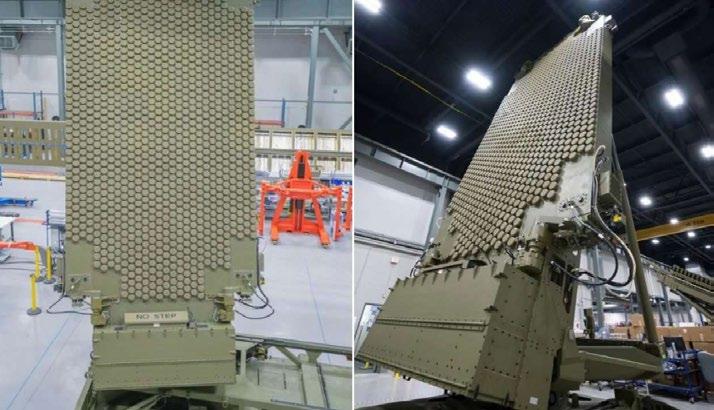
Lockheed Martin achieves this by working closely with war fighters and customers to develop a deep understanding of mission requirements. Rather than delivering off-the-shelf solutions, the company focuses on tailoring capabilities to specific operational needs—assessing where customers are today, where they need to be in the future, and how evolving mission environments will shape those requirements.
This approach is supported by a highly skilled workforce with expertise across design, engineering, manufacturing, and systems integration. Many team members are veterans who bring first-hand operational experience, enabling a stronger alignment between product development and real-world battlefield application.
“We also have a significant number of exceptional professionals, including many veterans who understand how these systems are employed and what capabilities must be delivered in operational environments,” Cordaro notes.
“That is ultimately how we operate by understanding our customers’ missions and translating those needs into precise requirements for what our systems must achieve.”
This unwavering focus on mission outcomes and customer-centric innovation enables Lockheed Martin to take on some of the most complex defence challenges in the world, reinforcing its position as a global leader in advanced aerospace and security solutions.
DETERRENCE THROUGH INTEGRATED CAPABILITIES
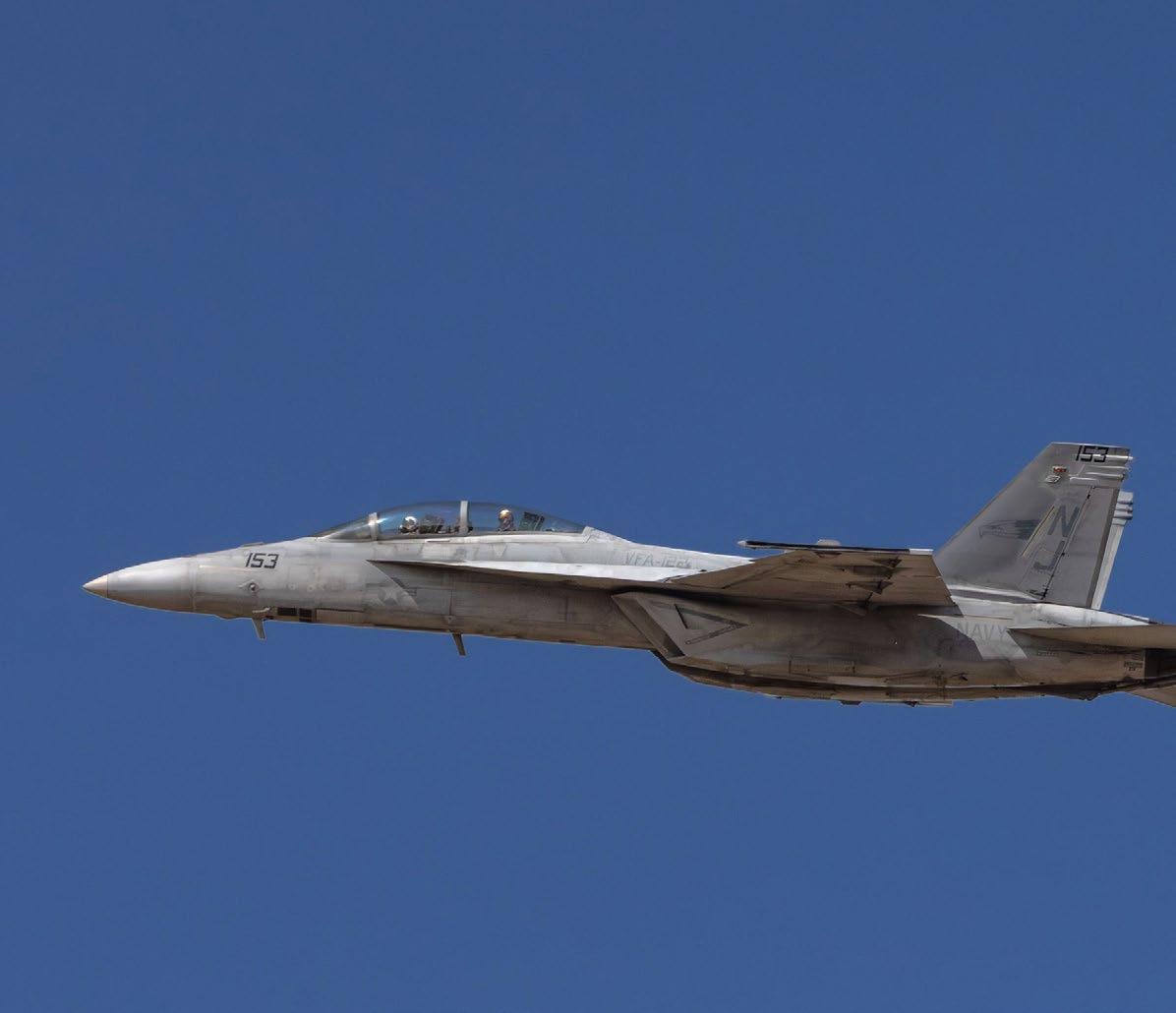
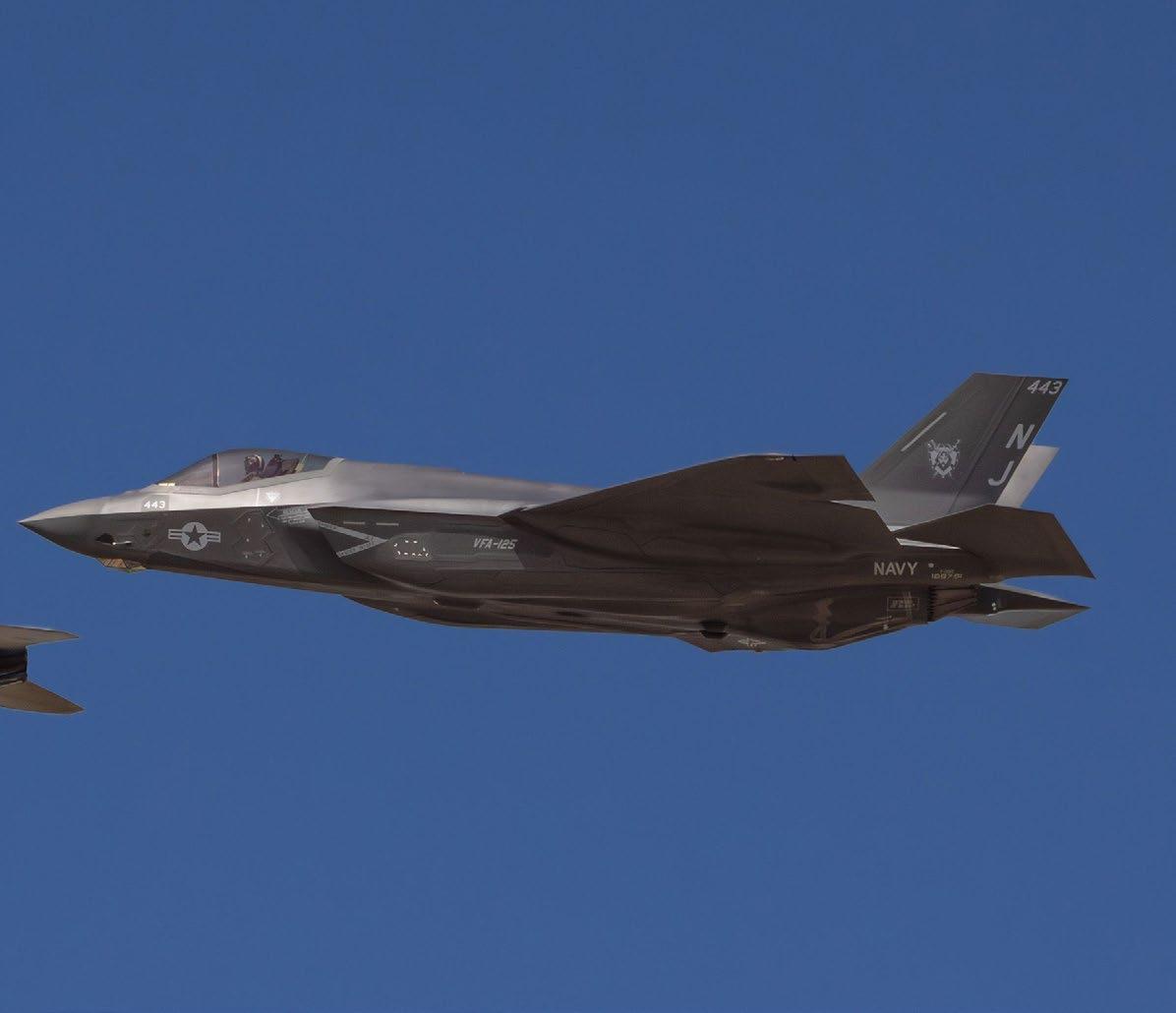
Modern deterrence is no longer defined by a single platform or weapon system. Instead, it depends on the ability to connect sensors, shooters, command systems, and intelligence networks into a unified operational picture.
Lockheed Martin’s strategy is built around this integration, linking:
• Advanced fighter aircraft and missile systems
• Space-based surveillance and missile warning assets
• Ground-based radar and sensor networks.
• Command-and-control and battle management systems.
•
This interconnected architecture enhances situational awareness and enables faster, more informed decision-making across all domains of conflict. A key embodiment of this philosophy is Lockheed Martin’s suite of longrange sensing technologies, including the Long-Range Discrimination Radar (LRDR). Designed to detect and track objects at extreme distances, LRDR can distinguish between a lethal re-entry vehicle and non-threatening debris providing critical precision in missile defence scenarios.
As a principal component of the U.S. Missile Defence Agency’s architecture, LRDR enhances national defence capabilities by delivering highly accurate tracking data that improves discrimination performance and strengthens the effectiveness of ground-based interceptors against evolving ballistic missile threats.
Beyond long-range systems, Lockheed Martin deploys a layered radar architecture designed to provide coverage across multiple threat profiles and engagement distances. “We have long-
range surveillance radars such as the TPY-4, which can detect aircraft and unmanned aerial vehicles operating at low altitudes and high speeds. At closer ranges, systems like Sentinel A4 and TPQ-53 support missile defence and air surveillance. Further still, counter-fire radars detect rockets, artillery, mortars, cruise missiles, and UAVs,” Cordaro explains.
Together, these systems form an integrated detection network that enables war fighters to rapidly assess threats and
figure out proper responses with precision and speed.
Complementing these capabilities is the AN/APY-9 radar, deployed on the U.S. Navy’s E-2D Advanced Hawkeye aircraft. Serving as the fleet’s airborne surveillance eye, it provides extensive situational awareness over vast maritime environments.
“When you think about protecting an aircraft carrier, you are protecting a floating city. To do that effectively, you need forward-deployed sensing assets.
The APY-9 can provide coverage over thousands of square kilometres, giving carrier strike groups the time and awareness needed to respond to incoming threats,” Cordaro notes.
Through this layered and integrated approach, Lockheed Martin’s radar and sensor systems ensure that detection, interpretation, and response work as a unified capability forming the foundation of modern deterrence and operational readiness. Lockheed Martin is also collaborating closely with key customers and defence stakeholders, including the Missile Defence Agency (MDA), the U.S. Space Force, and U.S. Northern Command (USNORTHCOM), among others. The scale and complexity of this mission require a truly whole-of-industry approach, bringing together government, defence partners, and commercial innovation.
“We’re combining our existing capabilities with our supply chain and the best of commercial technologies to build an open architecture that enables broader participation. This approach will not only strengthen homeland defence but also drive innovation and support economic growth across the manufacturing base,” explains Rick Cordaro.
He further emphasises the importance of accelerating collaboration between industry and government to translate this vision into operational reality, an approach closely aligned with Lockheed Martin’s strategy of being “ahead of ready.”
A key element of this vision is the emerging Golden Dome concept, a next-generation defensive architecture designed to detect incoming threats, calculate trajectories in real time, and deploy interceptor systems capable of neutralising them mid-flight. The aim is to create a resilient, layered shield that enhances national protection while reinforcing strategic deterrence.
Within this framework, advanced radar technologies form the foundational layer of defence enabling earlier detection, greater precision, and faster response times. By seeing further, sharper, and sooner, these systems provide the critical first line of awareness in any integrated defence architecture.
Through continuous innovation and field-proven capability, Lockheed Martin stays positioned to deliver technologies that are ready to meet current operational demands while shaping the future of integrated missile defence and national security. By uniting advanced technologies, digital transformation, space capabilities, and industrial resilience, the company is shaping a new defence paradigm, one defined not only by military strength, but by information dominance, connectivity, and multi-domain integration.