

REDEFINING GOLD MINING IN GHANA
ASANTE CORPORATION
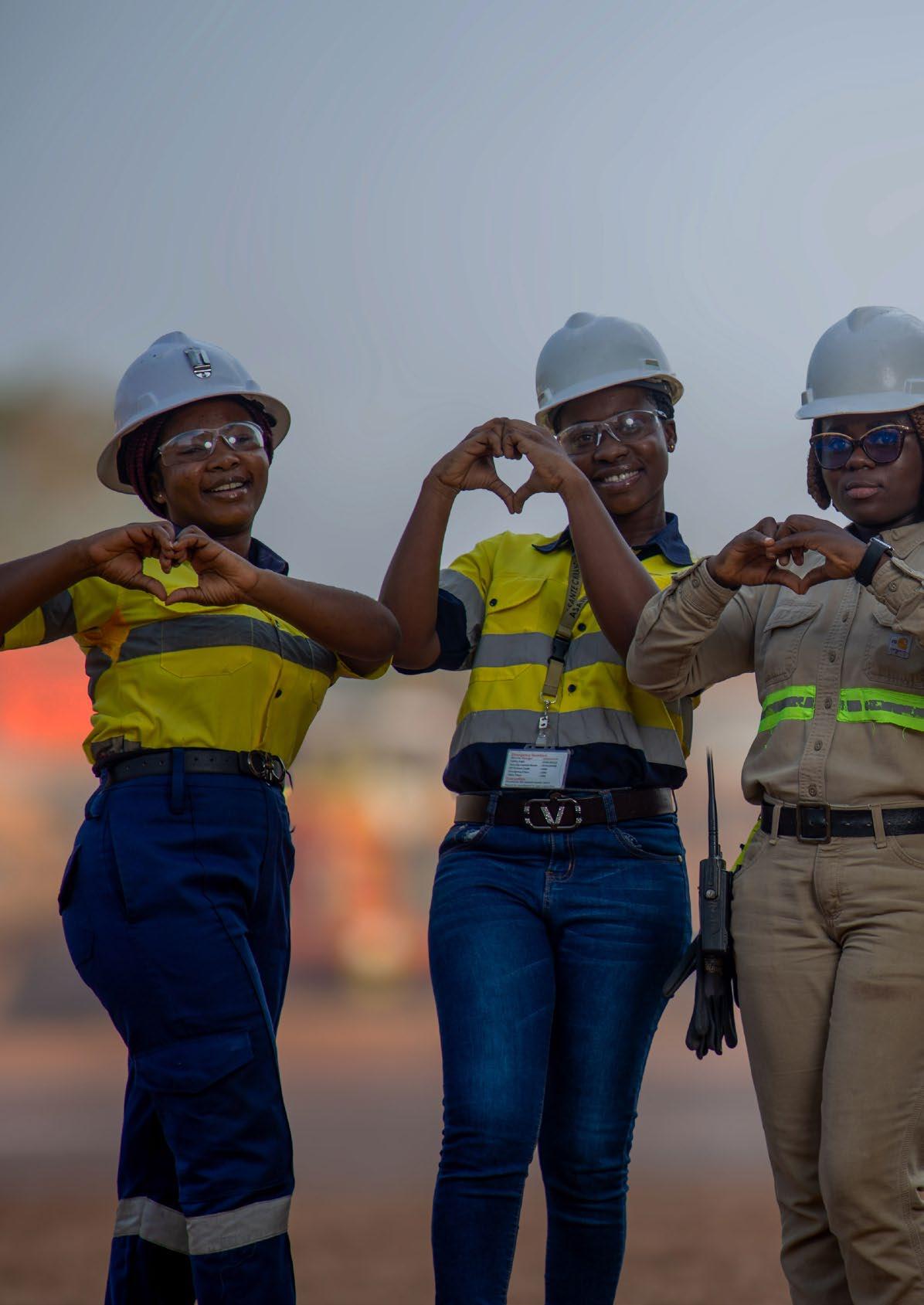
ASANTE GOLD CORPORATION
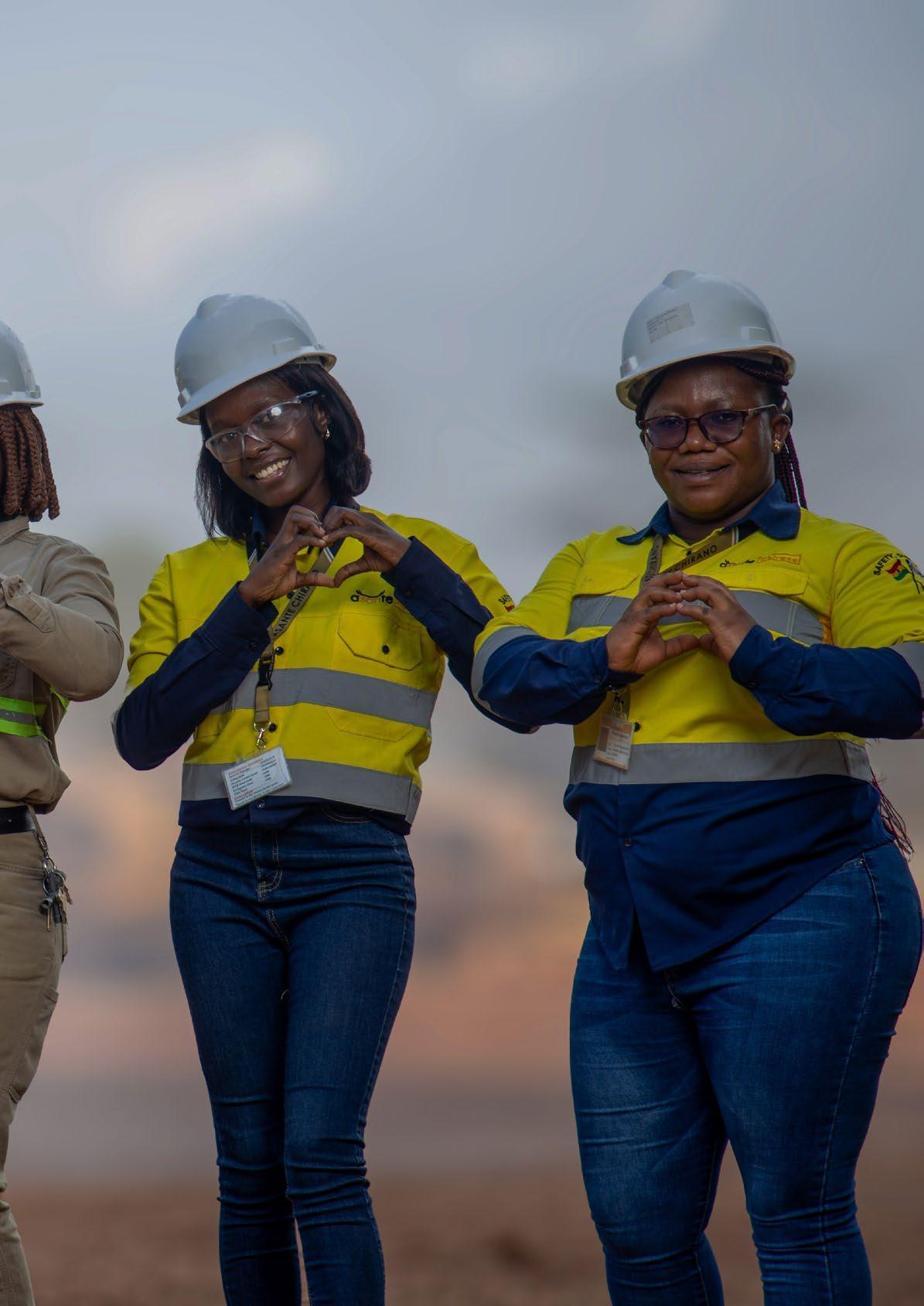
ASANTE GOLD CORPORATION
REDEFINING GOLD MINING IN GHANA
Project by: Malvern Kandemwa
Words
by: Michelle Duncan
Building a modern gold powerhouse through transformation, sustainability, and strategic growth
Asante Gold Corporation is fast establishing itself as a transformative force within West Africa’s mining sector. Operating in one of the world’s most prolific gold regions, the company is redefining how gold assets are developed, optimised, and sustained in Ghana, a nation long recognised as a cornerstone of global gold production.
Since its inception in 2021, Asante has rapidly risen to prominence
by revitalising underperforming and neglected assets into high-performing gold production hubs. Its strategic footprint across the Bibiani and Ashanti Gold Belts reflects a powerful combination of Ghana’s rich mining heritage and its significant untapped potential.
A defining feature of Asante’s approach is its deep-rooted connection to Ghana. With approximately 45% local ownership, the company fosters strong national alignment, reinforcing both stakeholder confidence and community support. This commitment extends beyond ownership into a broader focus on sustainable mining practices and meaningful community engagement, ensuring its operations deliver long-term environmental and socio-economic value.
Asante’s expanding portfolio including the Bibiani, Chirano, and Kubi Gold Mines, together with an active exploration pipeline positions the company to capitalise on Ghana’s vast mineral wealth. Backed by an experienced leadership team that has collectively developed more than 24 million ounces of gold resources in the country, Asante combines technical ability with strategic vision to manage the demands of modern mining.
Through this integrated approach, the company is not only driving production growth but also shaping a more sustainable and forward-looking future for gold mining in Ghana.
Asante acquired the asset with a clear understanding of both its potential and its challeng-
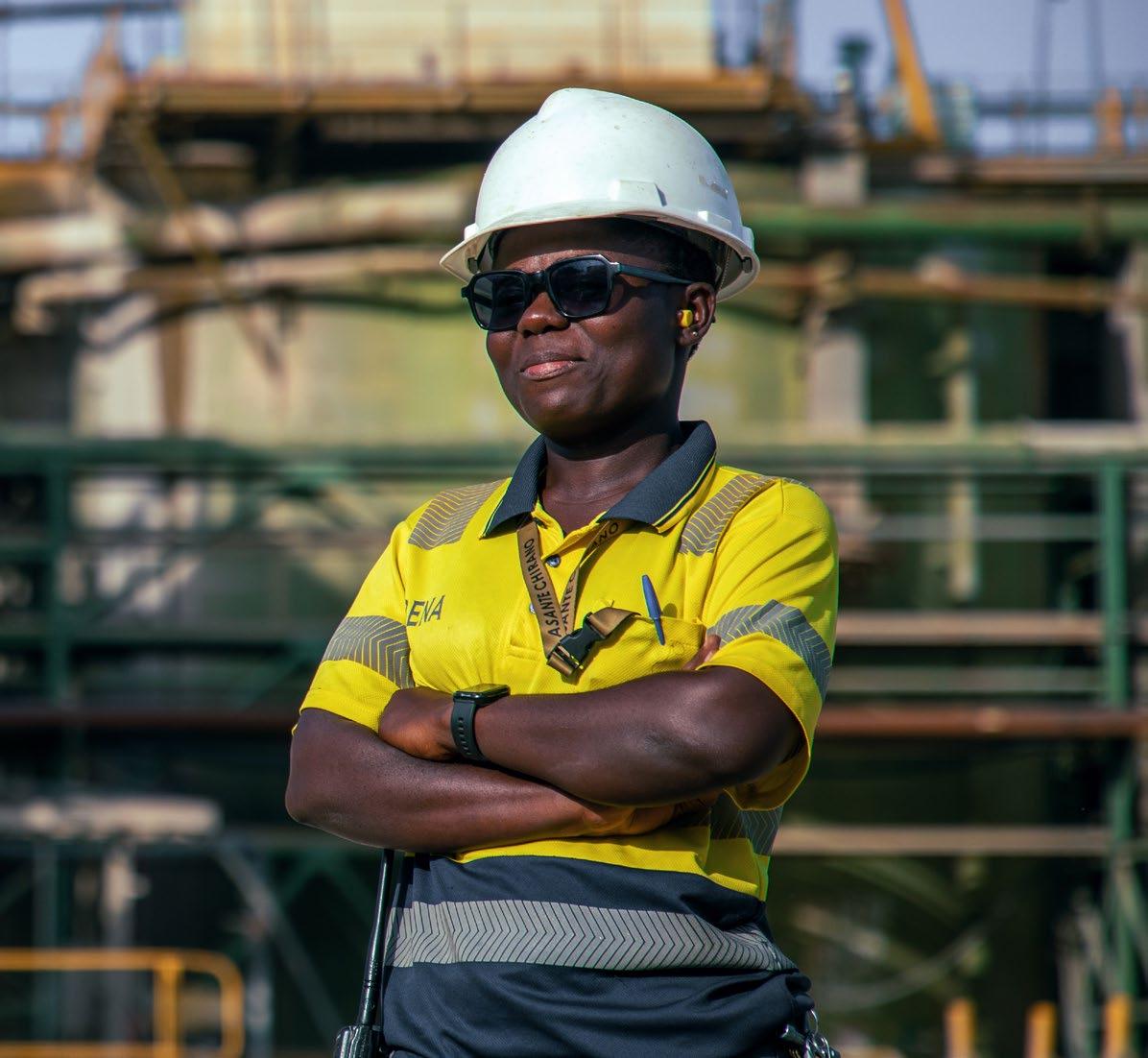
es: a 3-million-tonne-per-year processing plant, a substantial resource base, and a local community understandably cautious after years of underperformance. The first phase was deliberately straightforward: refurbish the plant, restart open-pit mining, and return to gold production. First gold was successfully poured in mid-2022, with commercial production achieved later that same year marking a decisive return to operational stability.
Building on this progress, Asante Gold Corporation expanded its portfolio by buying more assets, strengthening its presence in Ghana. This strategy supported a robust production profile, with output reaching approximately 220,000 ounces in 2023 and generating meaningful economic benefits at both local and national levels.
However, it is in the second phase of its strategy that Asante’s vision
truly takes shape. Rather than operating Bibiani in isolation, the company has introduced the concept of a “Bibiani–Chirano corridor” a fully integrated mining strategy that connects two major assets through shared infrastructure, unified technical expertise, and coordinated production planning.
The corridor strategy is intended to deliver greater scale and efficiency, with combined pro-
duction targeted at more than 500,000 ounces a year by the latter part of the decade. Bibiani is expected to contribute over 250,000 ounces annually once the sulphide processing plant is fully optimised and underground operations reach full capacity.
“Our plan is for Bibiani and Chirano together to deliver more than half a million ounces annually by 2028.” For an asset that only recently appeared from care and maintenance, this is a bold and strategic redefinition of its role within Ghana’s gold sector.
On the ground, that transformation is already visible. Standing at the crest of the Main Pit, the scale of activity is unmistakable: expanded pit walls, deepened benches carved with precision, and a constant rhythm of operations driving output forward. Nearby, the Russel Pit found a few kilometres away adds to the momentum, supplying a steady flow of ore to the processing plant.
What began as a cautious oxide restart has rapidly evolved into a multi-pit, multi-phase mining operation, underpinned by longterm planning, operational discipline, and a clear ambition to position Bibiani as a cornerstone asset within a broader, integrated gold production corridor.
The surface transformation at Bibiani tells only part of the story. The more defining question for an asset of this scale is what comes next once the limits of open-pit expansion are reached. For Asante Gold Corporation, the answer lies beneath the surface
in a carefully structured underground development strategy.
At the centre of this next phase is a Definitive Feasibility Study (DFS) that outlines a seven-year underground operation extending below the existing pits. Engineers and technical consultants have found close to 12 million tonnes of ore at attractive grades, to be extracted using a combination of mechanised long-hole stooping and cut-and-fill mining methods. Access will be set up via declines integrated into the geometry of the Main and Walsh orebodies, creating a seamless transition between surface and subsurface operations.
OUR PLAN IS FOR BIBIANI AND CHIRANO TOGETHER TO DELIVER MORE THAN HALF A MILLION OUNCES ANNUALLY BY 2028
Importantly, the strategy builds on existing underground infrastructure rather than starting from nothing, upgrading and extending established access points. This brownfield approach reduces capital costs and shortens development timelines, strengthening the project’s economic case.
“We’ve confirmed the potential for an underground operation with an initial life of about seven years. The intent is for underground tonnes to overlap with open-pit production, so the plant never has to run half-full.” This production overlap is central to
keeping consistent throughput at the processing plant, ensuring operational continuity and maximising asset utilisation.
Supporting this strategy is a network of experienced technical partners. Knight Piésold brings specialist ability in tailings management and water systems, enabling the site to accommodate increased volumes and the added complexity of underground dewatering. Geodrill has played a key role in the definition drilling programme, converting resources into mineable reserves with greater certainty. Meanwhile, Rocksure International is already active on-site, contributing local ability and expanding its capabilities to support underground operations marking an important shift towards greater in-country participation.
From a planning perspective, the underground mine aligns closely with the life cycle of the open pits. As surface grades begin to decline, underground stoopes are expected to come online, sustaining feed to the expanded processing plant. On paper, the integration is seamless balancing grade, tonnage, and timing to keep steady production levels.
In practice, however, execution will be critical. The success of this transition will depend on precision at every stage, with progress measured in metres rather than milestones. It is here, in the careful coordination between open-pit depletion and underground ramp-up, that Bibiani’s long-term reinvention will ultimately be defined.

THE SULPHIDE PLANT:
REWIRING THE METALLURGY
If the open pit defines Bibiani’s scale, the sulphide plant defines its future economics. Less visible but far more consequential, this is where Asante Gold Corporation is fundamentally reshaping the mine’s long-term value.
Under earlier ownership, the processing plant was primarily optimised for oxide ore. While deeper sulphide material could be treated, recoveries were modest, limiting both efficiency and the economic case for mining at depth. Asante has taken a more ambitious approach: upgrading and expanding the circuit to process up to 4 million tonnes per year of harder sulphide ore, targeting recovery rates in the low 90% range.
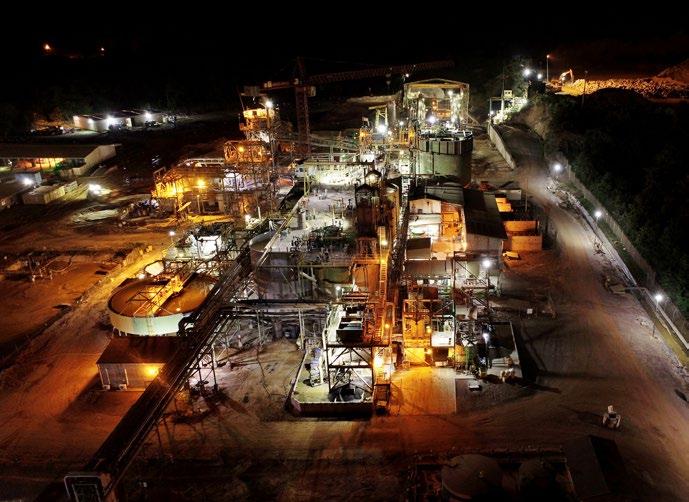
Delivering this transformation within an operating mine has needed precision execution. Civil works and structural installa-
tions were conducted within a constrained footprint alongside the existing mill. Key upgrades include the installation of a pebble crusher, reconfiguration of crushing stages, and enhancements to carbon-in-leach (CIL) and elution circuits. Critically, these tie-ins have been phased to minimise operational downtime often requiring night work and tightly coordinated shutdown windows. Behind this effort is a network of specialist partners whose contributions are essential, if largely unseen. Weir Ghana supplies critical pumps, cyclones, and wear components that enable sustained high-throughput processing. Harlequin International provides fabrication and mechanical repair support, ensuring that plant upgrades translate into reliable, day-today performance. In a hard-rock processing environment, these partners often are the difference between theoretical design capacity and operational reality.
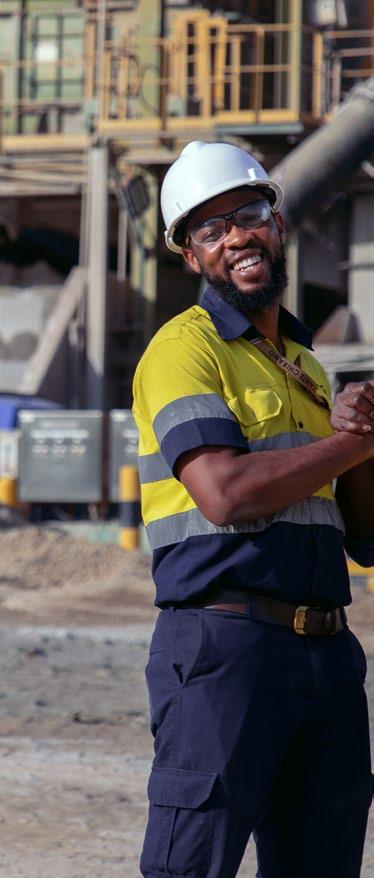
INFRASTRUCTURE UNLOCK: REROUTING FOR GROWTH
Modern mining extends far beyond the pit and plant and at Bibiani, one of the most strategically significant developments is a public infrastructure project.
Historically, the Bibiani–Goaso highway ran along the edge of the mining lease, effectively constraining the long-term expansion of the Main Pit. Rather than accepting this limitation, Asante worked in close coordination with Ghanaian authorities to reroute a section of the road creating a new alignment that unlocks critical ground for future cutbacks.
On paper, the rerouting is a straightforward adjustment. In practice, it is a complex, multi-layered undertaking: local survey teams mapping new corridors, heavy machinery carving out the route, drainage systems redesigned to withstand
tropical conditions, and detailed traffic management plans to ensure continuity for local businesses and commuters.
Equally important has been community engagement. Extensive consultations have had to communicate the rationale for the relocation, address concerns, and ensure that the new route meets the needs of those who rely on it daily. For local traders and residents, the change will reshape movement patterns. For the mine, however, it is a pivotal enabler; without it, the expansion of the Main Pit would remain constrained, and long-term production targets would be difficult to achieve.
The project sits at the intersection of public infrastructure and private investment, illustrating how Asante’s corridor strategy extends beyond operational boundaries to deliver broader economic and social impact.
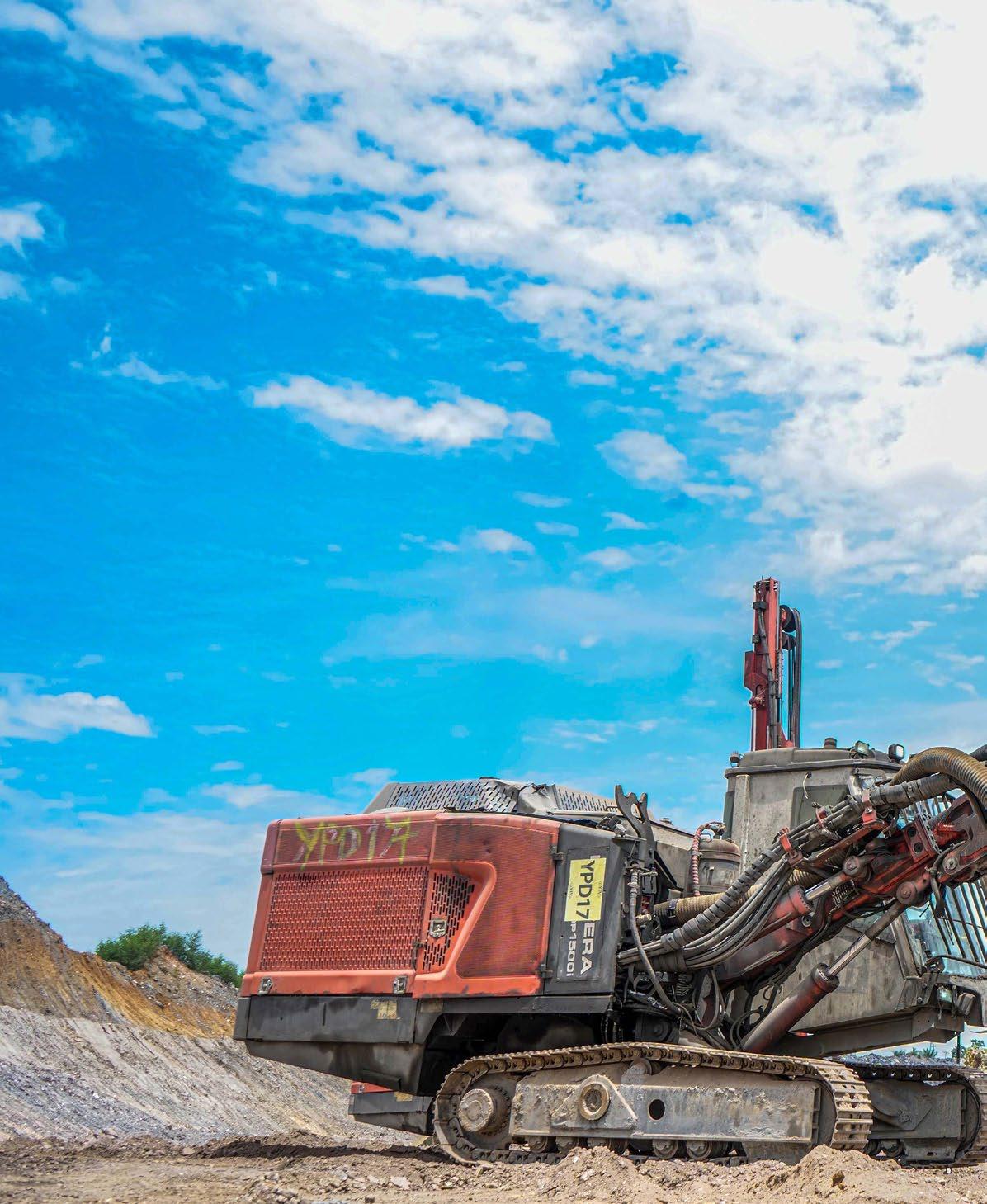
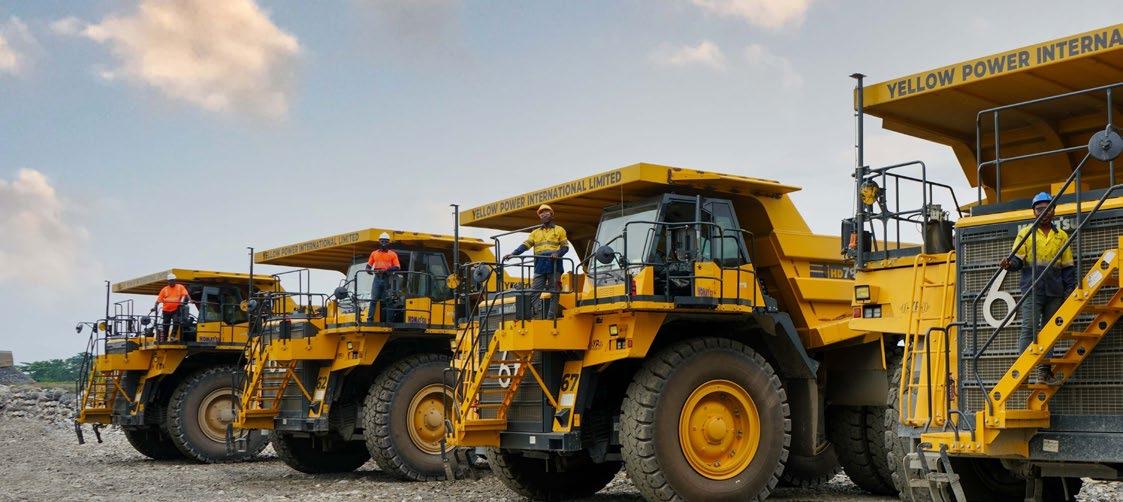
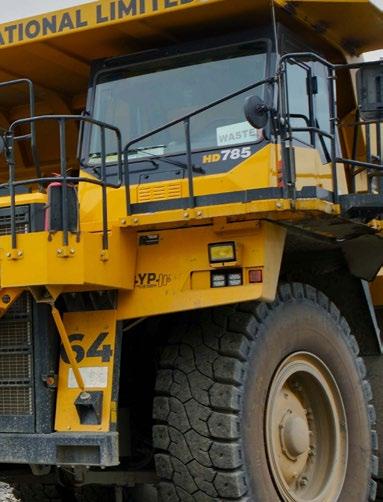
Yellow Power International Precision without Compromise
Yellow Power International (YPI) is a specialized mining contracting firm operating throughout West Africa, providing comprehensive contractor mining services to some of the region’s most challenging mining environments. Established on the principles of operational excellence, technical precision, and an unwavering commitment to safety, YPI has earned a reputation as a reliable partner for mining companies, project developers, and resource owners who seek consistent and effective results.
With presence in the region, YPI combines extensive international mining expertise with a profound understanding of the West African operational landscape. The company positions itself not merely as a service provider but as a strategic partner integral to the success of each project it undertakes.
“We do not merely fulfill contractual obligations; we assume responsibility for the results. The success of our clients directly contributes to the advancement of West Africa’s mining sector.”
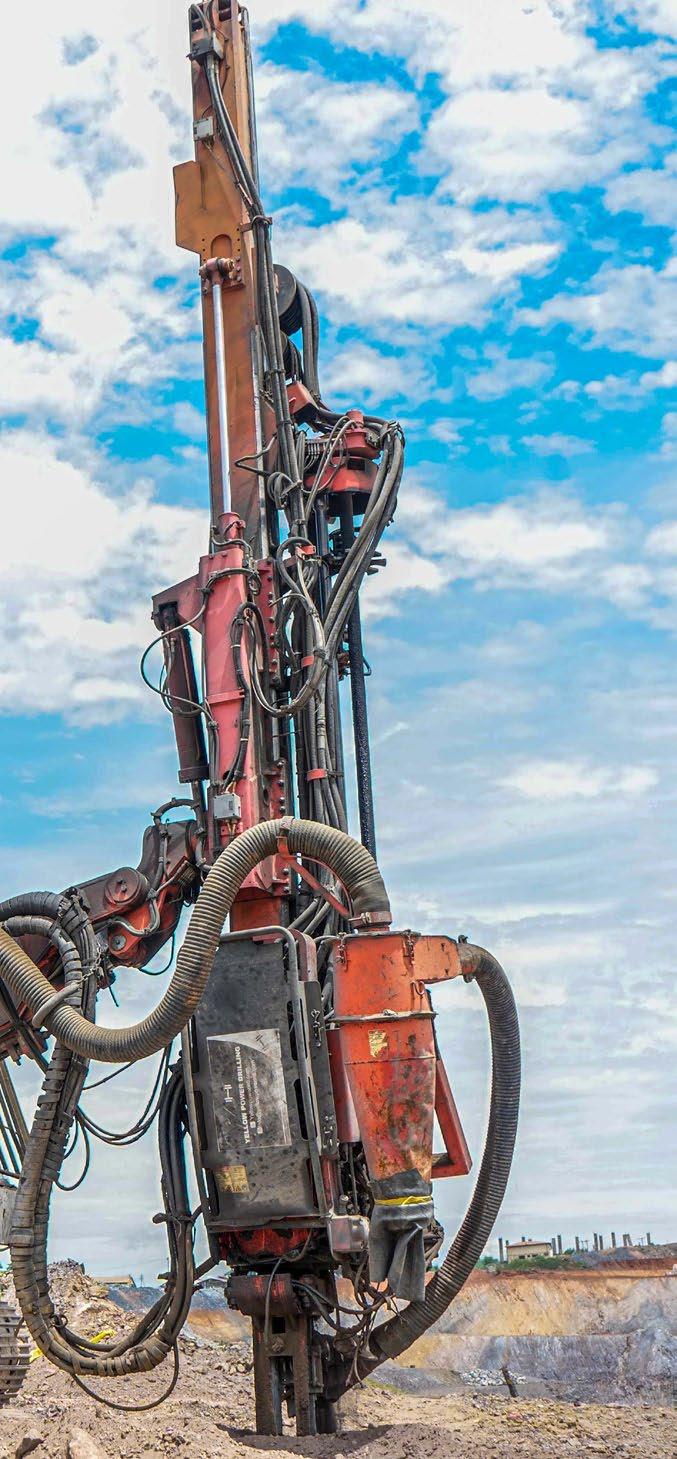
YPI’s service portfolio encompasses contract mining, drilling and blasting, ore re-handling, exploration drilling, tailings storage facility
(TSF) construction, haul road construction, and underground haulage. Each service is executed utilizing modern, well-maintained equipment and skilled personnel. All operations are supported by rigorous health, safety, and environmental (HSE) protocols that comply with both international best practices and local regulatory standards.
What sets YPI apart in a competitive market is not solely its technical expertise, but rather its operational agility. The organization is designed to mobilize swiftly, adjust its scale in response to evolving project requirements, and maintain consistent quality across diverse environments and conditions. YPI upholds standards of professionalism and precision.
Founded in 2017, by Mr. Emmanuel Ganu. YPI has established a significant operational footprint across Ghana, Côte d’Ivoire, Mali, Burkina Faso, and Canada. The company manages a fleet of over 400 heavy machinery units and employs more than 1,000 personnel. To date, YPI has successfully completed over 32 projects for esteemed clients, including Ashanti Gold Limited, Golden Star Resources and Perseus Mining Ghana and Cote d’Ivoire.
As the mining sector in West Africa increasingly draws substantial investment and global interest, Yellow Power International is poised to take any forthcoming projects with the reliability, expertise, and local insights that only a regionally established contractor can provide.
A DEFINING PHASE OF GROWTH
As Asante Gold Corporation moves forward, it enters a decisive phase in its evolution. With two cornerstone assets, a clearly defined growth strategy, and a firm commitment to sustainability, the company is positioning itself as a leading force in Africa’s gold mining sector.
Its trajectory reflects a broader transformation within the industry where success is no longer measured solely by output, but by the ability to balance operational performance with environmental responsibility, community engagement, and long-term value creation.