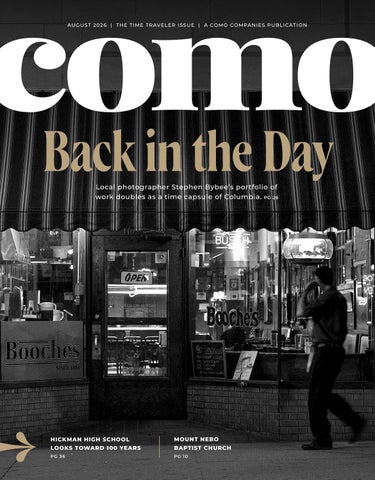
Back in the Day
Local photographer Stephen Bybee’s portfolio of work doubles as a time capsule of Columbia. PG 26


Contributors
August 2026
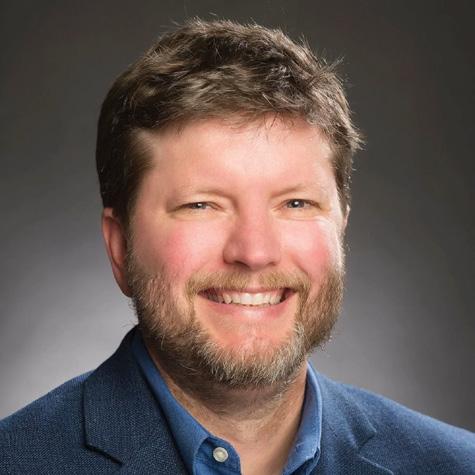
Sean Spence
At 55, Sean Spence believes the best chapters of life can be ahead of us at any age. A Columbia resident for more than 30 years (just not in a row), Sean has spent his career sitting across from people doing remarkable things — listening, learning, and sharing their stories. Sean navigates life with a wheelchair, which has given him a particular appreciation for getting the most out of everything.
He has been an entrepreneur, worked in politics and the nonprofit world, and committed the rest of his life to ending U.S. poverty and helping people live amazing lives. He lives in Columbia with his wife, Leigh, and their dog, Emmy. Join the conversation at growingolderandbetter.com.
IN THIS ISSUE OF COMO
Anyway PG 16
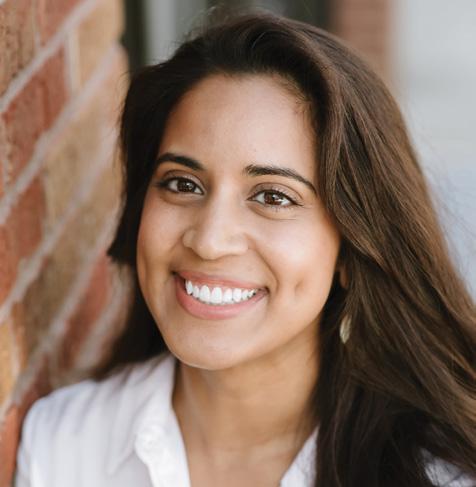
Sunitha Bosecker
Sunitha has written about a variety of lifestyle and food topics for our magazines, and she has shared her expertise as a mental health professional by contributing to our community “Voices” columns. She has been writing for COMO and CBT since August 2024 and has “greatly enjoyed the experience.”
Sunitha started her business, Sunitha Lea, LLC, in 2018 while completing her master’s degree in mental health clinical counseling at Stephens College in Columbia.
“I specialize in helping small businesses and nonprofits improve their marketing through strategy development,” she says. Sunitha is also a licensed mental health professional who is passionate about providing accessible, high-quality counseling services, from individual sessions to workplace mental health education.
In August 2025, she began her Ph.D. program in human development and family science at the University of Missouri.
Sunitha lives in Columbia with a miniature Australian shepherd named Ollie. IN THIS ISSUE OF COMO
Mother Farm
18
PUBLISHING
David Nivens, Publisher david@comocompanies.com
Chris Harrison, Associate Publisher chris@comocompanies.com
EDITORIAL
Jodie Jackson Jr, Editor jodie@comocompanies.com
Kelsey Winkeljohn, Associate Editor kelsey@comocompanies.com
Karen Pasley, Contributing Copyeditor
DESIGN
Jordan Watts, Senior Designer jordan@comocompanies.com
Lucia Kuepers, Junior Designer lucia@comocompanies.com
MARKETING
Charles Bruce, Director of Client Relations charles@comocompanies.com
Kerrie Bloss, Account Executive kerrie@comocompanies.com
Allie Teagarden, Account Executive allie@comocompanies.com
CONTRIBUTING PHOTOGRAPHERS
Sunitha Bosecker, Stephen Bybee, Stephen Feilbach, Jodie Jackson Jr, Hoss Koetting, Sterling Nivens, Kelsey Winkeljohn
CONTRIBUTING WRITERS
Sunitha Bosecker, Barbara Bu aloe, Stephen Bybee, Stephen Feilbach, Jodie Jackson Jr, Hoss Koetting, Owen Pasley, Sean Spence, Robert Swanson, Bradley Williams, Kelsey Winkeljohn
SUBSCRIPTIONS
Magazines are $5 an issue. Subscription rate is $54 for 12 issues for one year or $89 for 24 issues for two years. Subscribe at comomag.com or by phone. COMO Magazine is published monthly by COMO Companies.
OUR MISSION STATEMENT
COMO Magazine and comomag.com strive to inspire, educate, and entertain the citizens of Columbia with quality, relevant content that re ects Columbia’s business environment, lifestyle, and community spirit.
Copyright COMO Companies, 2026
All rights reserved. Reproduction or use of any editorial or graphic content without the express written permission of the publisher is prohibited.
FEEDBACK
Have a story idea, feedback, or a general inquiry? Email our editor at jodie@comocompanies.com.
CONTACT
COMO Companies | 404 Portland, Columbia, MO 65201 573-577-1965 | comomag.com | comobusinesstimes.com
The
COMO Mojo:
Where You’ve Been and Where You’re Going
Earlier this
month, I woke up to an email from my
mom. The subject
line read: Fw: my bookkkk.
Half-asleep but curious, I opened the attachment, not expecting to discover a 4,867-word story I had written in 2013 on my grandpa’s desktop computer while visiting him and my grandma in Michigan. I still remember writing it like it was yesterday, perched in his ofce chair and convinced I was creating something extraordinary.
For your reading pleasure, I present an opening excerpt from what was surely a future bestseller:
“It was nally the last day of school and coincidentally, my birthday. e birds all sang together in sync with the molted cicadas chirping along. Even the school bell seemed to chime in on the melody.
“‘Happy birthday, Bailee!’ shouted my friend Kate. She handed me a rectangular card without an envelope.
“Have a doggone good birthday!” it read, with a picture of a bulldog on it.
At the time, I thought it was probably the greatest work of ction ever conceived. I mean, come on — the doggone pun is pretty good.
As adults, we tend to develop tunnel vision for the future. I often wonder where my career will take me, what my relationships will look like years from now, and how I can become the most successful version of myself. We spend so much time asking who we want to become that we sometimes forget to ask who we’ve already been.
In our nal Leadership Columbia class this spring, we discussed how we can be heroes in our stories and in others’ — but sometimes, we are also the obstacle standing in our way. For me, that obstacle has long been my own anxiety. Fear of not being good enough. Fear of being too
much. Fear of being too naive, too inexperienced, or too late. is year, in many ways, I have tried to do the things that scare me anyway.
Leadership Columbia was one of those things. So was working on a lm set for the rst time, taking on photography work, traveling to Las Vegas for a videography project, and — perhaps most ironically — nally getting medicated for that anxiety. I also joined a writers group lled with talented people I met relatively recently, requiring me to choose vulnerability every single week when we gather to share our work.
Reading that story my mom sent reminded me that, while looking toward the future, I shouldn’t forget about that spunky 12-year-old girl sitting at her grandpa’s desk. I want to remember the fearlessness it took for her to knock out a 15-page book simply because she wanted to. She wasn’t worried about publication or whether it was any good. She just sat her butt down and wrote. Who cares if it’s not perfect? Who cares if it’s even so awful you should probably throw it in the dumpster and maybe even set it on re?
One motto I’m trying to live by lately is: First make it; then make it good.
Time moves forward whether we act or not. e months and years arrive regardless of whether we start the project, apply for the opportunity, or take the risk. So why not do the thing, even if we’re scared or bad at it at rst?
As you think about where you’re going next, I encourage you to take a moment to look at where you’ve been. Who were you before the doubts crept in? What parts of that younger version of yourself deserve another chance to lead? What qualities do you want to carry forward, and how can you continue to grow while still honoring the person who got you here?
I hope you enjoy our August “Time Travel” issue, where we explore Columbia’s past and present through the people, places, and stories that have shaped our community. Take a journey through Stephen Bybee’s magni cent documentation of the city we love, celebrate as Hickman High School looks toward its 100th year, and discover how our local radio stations have helped de ne the soundtrack of Columbia for decades.


KELSEY WINKELJOHN ASSOCIATE EDITOR kelsey@comocompanies.com
ON THE COVER
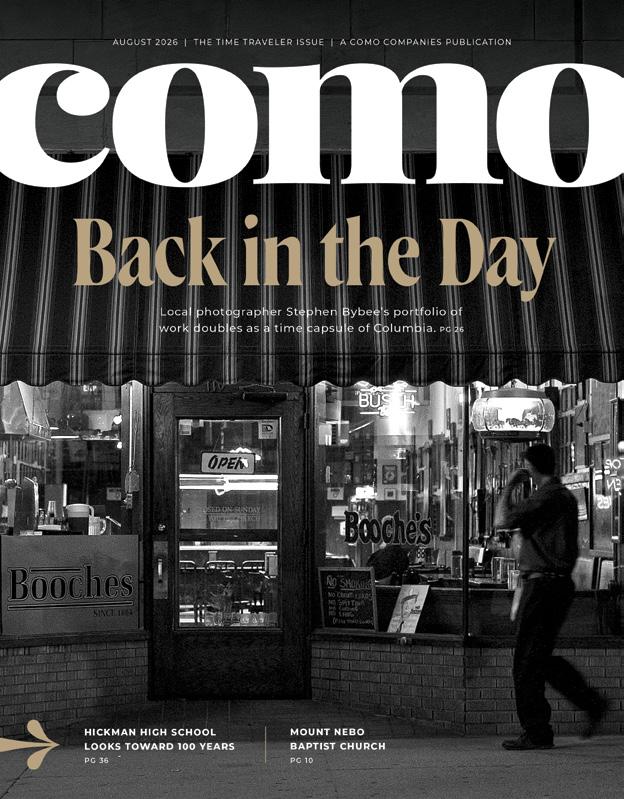
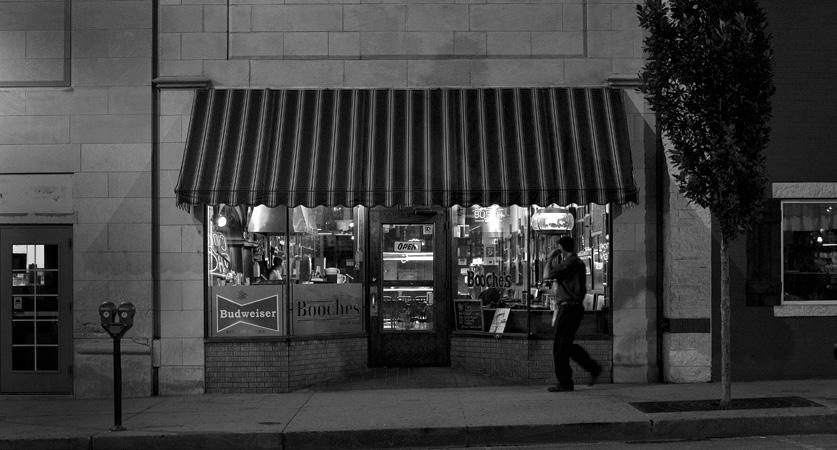
A black-and-white glimpse of downtown Columbia in 2014, captured outside the iconic Booches.
Photo by Stephen Bybee













Reconnecting mid-Missourians to food, nature, and each other.
Retired Boone County Circuit Judge Gary Oxenhandler chronicles the trial of Becky Doisy's killer — 35 years after she disappeared.
Local photographer Stephen Bybee’s portfolio of
THE SOUND OF STILLNESS
Through gongs, singing bowls, and guided breathwork, a local studio explores how vibration and intention can help reset the nervous system.
STORY AND PHOTOS BY KELSEY WINKELJOHN
In certain pockets of Columbia, you might hear it before you see anything — a low metallic hum, the resonance of a gong, and drumbeats that rise and fall like a steady breath. e sound might be mistaken for music drifting from a nearby venue or an avant-garde musician tucked just out of sight. More likely, though, it’s a sound bath in progress.
FINDING STILLNESS THROUGH SOUND
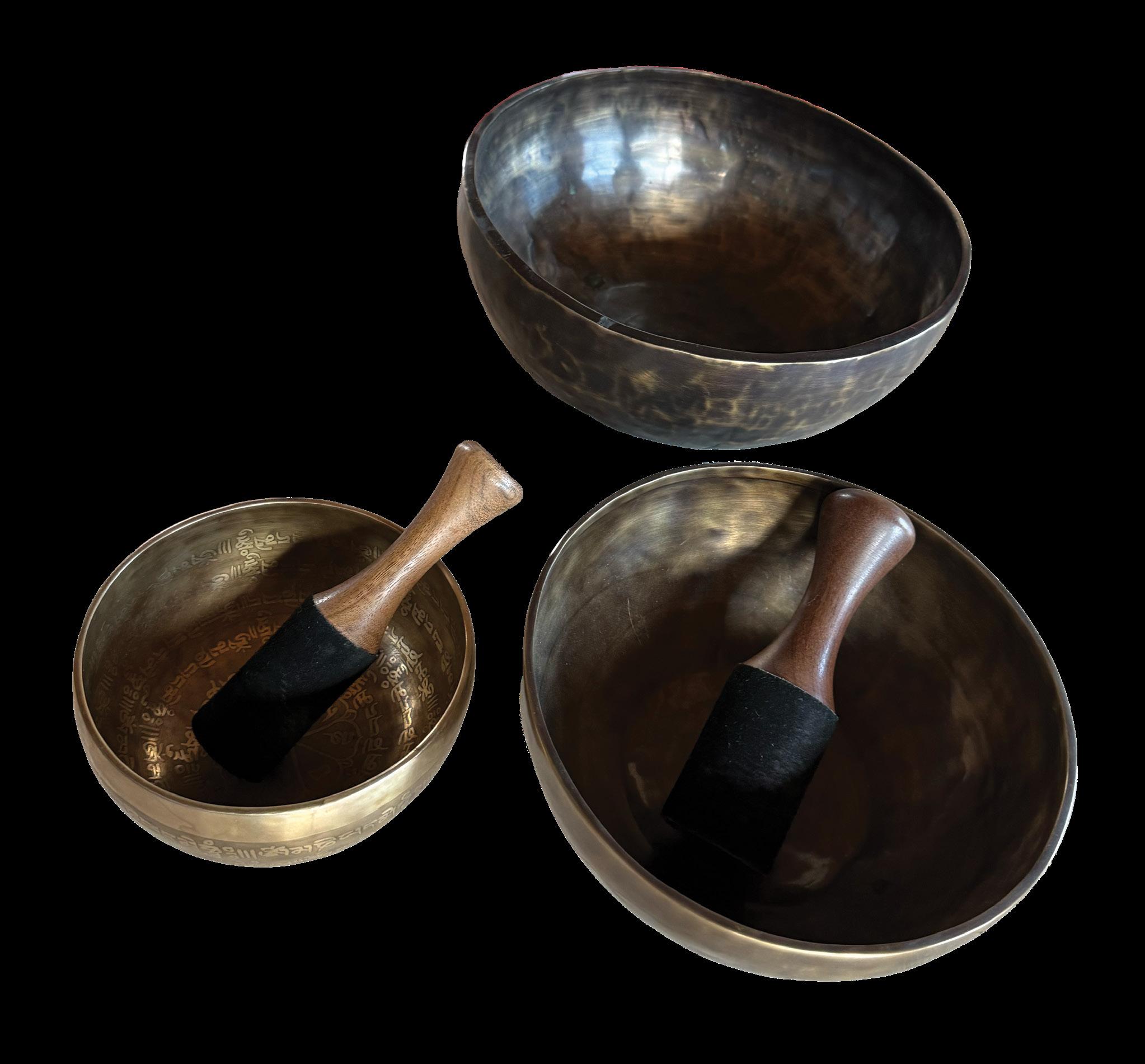
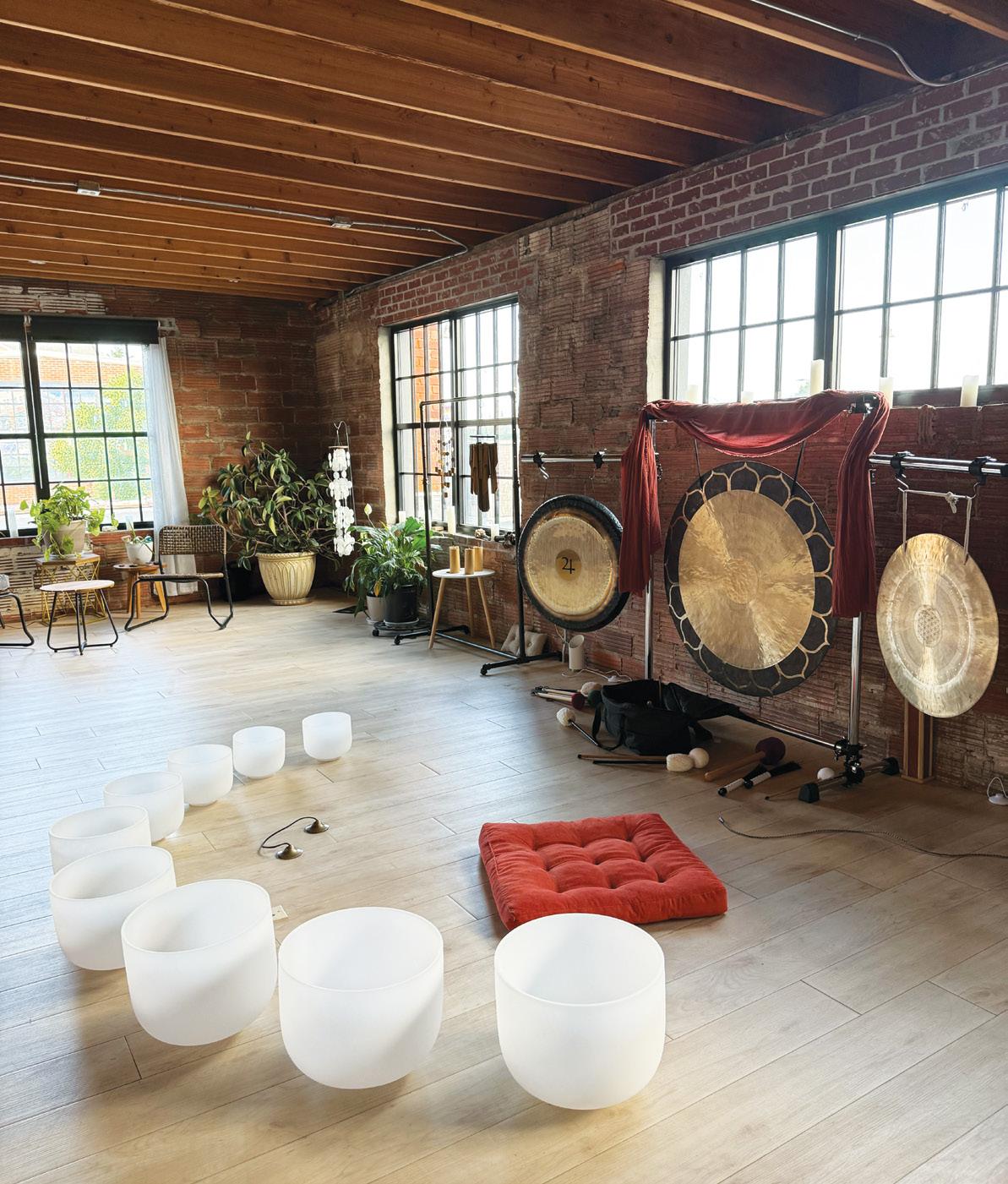
Part meditation, part listening experience, sound baths immerse participants in layered vibrations from instruments like crystal singing bowls, chimes, gongs, and drums.
ough the modern wellness movement has embraced the practice in recent years, the relationship between sound and
A STUDIO BUILT ON SOUND AND RECOVERY
Regulation didn’t begin as a business model so much as a personal tipping point for Heaton.
“During the pandemic, I began studying the nervous system and polyvagal theory, which is the science of safety and how it relates to the nervous system — ght, ight, or freeze,” says Heaton. “Sometimes people can get stuck in their own trauma. I got stuck in freeze for years, and suddenly, through breathwork and sound baths, I got unstuck. I went through this period of rapid growth and self-discovery.”

As a proudly neurodivergent individual, Heaton found the practice helped regulate their nervous system and move through daily life with greater ease and intention. eir interest in sound healing also emerged during a di cult period of physical recovery. After a severe case of COVID left Heaton bedridden for more than a year, followed by a gallbladder removal surgery that nearly proved fatal, they began searching for ways to reconnect with their body and rebuild strength. Yoga came rst, followed by breathwork and sound healing, which they say o ered an even deeper sense of restoration.
“I decided to pursue certi cation as a breathwork facilitator pretty quickly, and about a year later, I trained in sound therapy and started practicing at home in our shed. It was another year before I felt condent enough to hold public sound sessions,” says Heaton. “I thought this information was so important that I really couldn’t
INSIDE A SOUND BATH

Heaton’s sound baths begin with participants lying on yoga mats, often with blankets or pillows for comfort. Depending on the session, they may begin with breathwork or intention-setting. Heaton explains that breathing patterns can shape the experience itself — slower breathing may create a calming,

therapeutic e ect, while faster breathing can lead to a more intense, almost psychedelic feeling.
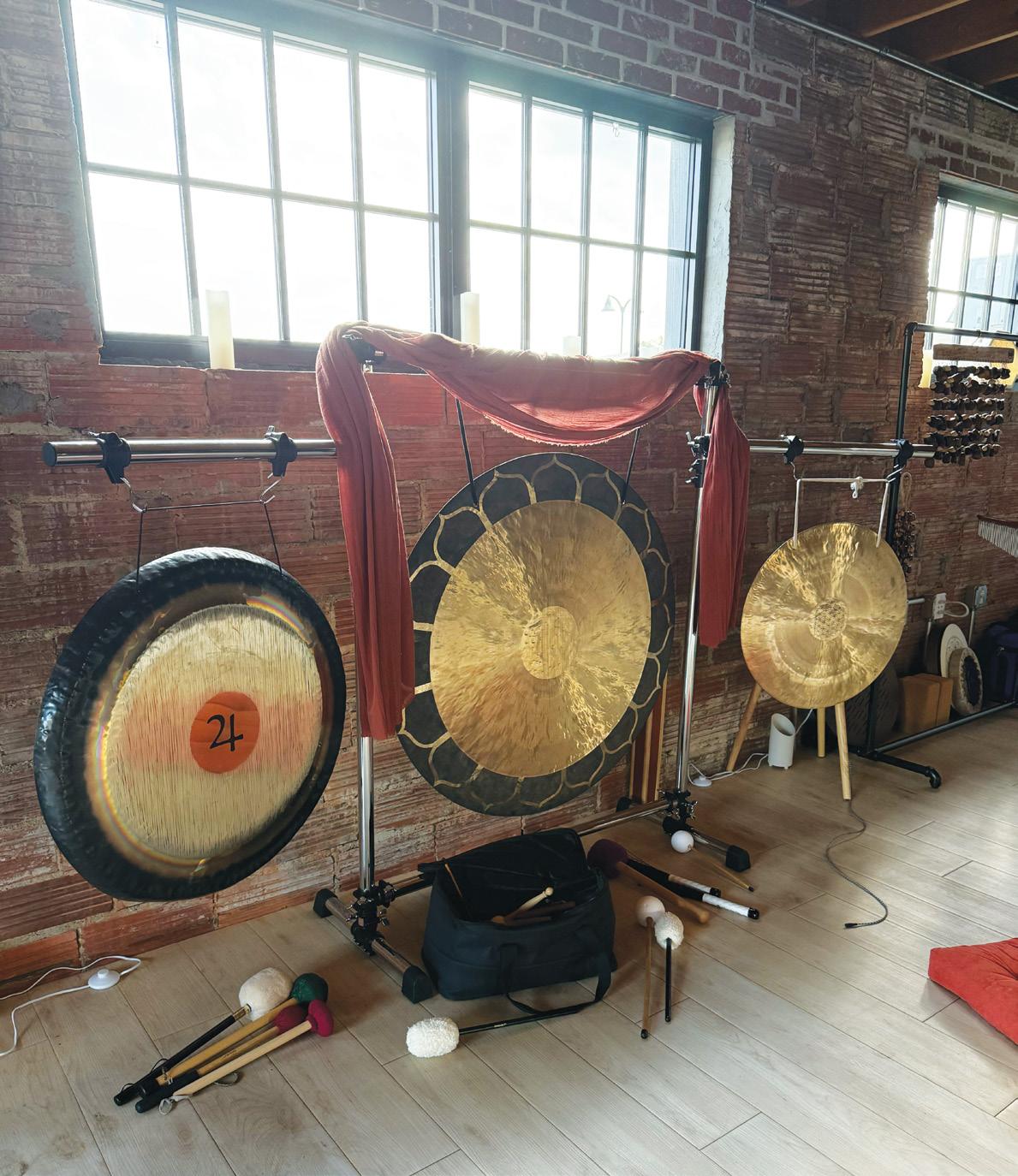
During sessions, Heaton often gravitates toward gongs and crystal singing bowls. e gong, they explain, “has a primal quality” that helps people sink deeper into meditation, while the bowls add a lighter sense of musicality, each carrying a di erent note. Drums and chimes are layered in throughout, often echoing natural sounds such as rain, wind, birds, and thunder.
Heaton says sound baths work on several levels at once. e sounds can guide participants into dreamlike, meditative states while also creating a physical sensation that moves throughout the body.

“ e sound helps your brain relax into the states associated with meditation or hypnosis. It’s that twilight state where you’re neither here nor there,” explains Heaton. “Your critical mind starts to let go, and your subconscious mind becomes easier to access. And if you think about it, your body is about 60 percent water, so sound waves can really a ect your body as they pass through you. ey physically stir you.”
A DIFFERENT KIND OF WELLNESS PRACTICE
Perhaps most importantly, Heaton wants participants to know there is no “correct” way to experience a sound bath. Some people simply rest. Others experience emotional release, creative clarity, or spiritual transcendence. e goal, Heaton says, is not perfection, but presence.
True to its name, the studio focuses on nervous system regulation, which can be achieved in a number of other ways, as well.
“I wanted to make self-care a thing people really look forward to,” says Heaton. “We’re ultimately doing a lot of ‘weird’ wellness classes. I trained in something called Drums Alive, which is like artistic cardio dance drumming. I’m also doing Punk Rope training, which is exactly what it sounds like: punk-rock jump-rope classes.”
In the fall, Regulation plans to o er bucket drumming classes for both kids and adults, along with access to ow toys and other movement-based activities designed to encourage play, curiosity, and creativity.
“If there’s a way to make something silly or fun, I’m pretty into it,” says Heaton. “I hope that’s enough to help people get over the barrier.”
More information about classes and upcoming o erings is available through Regulation’s website.
Mount Nebo Baptist Church
A Surviving Black Missouri Heritage Monument
BY ROBERT SWANSON
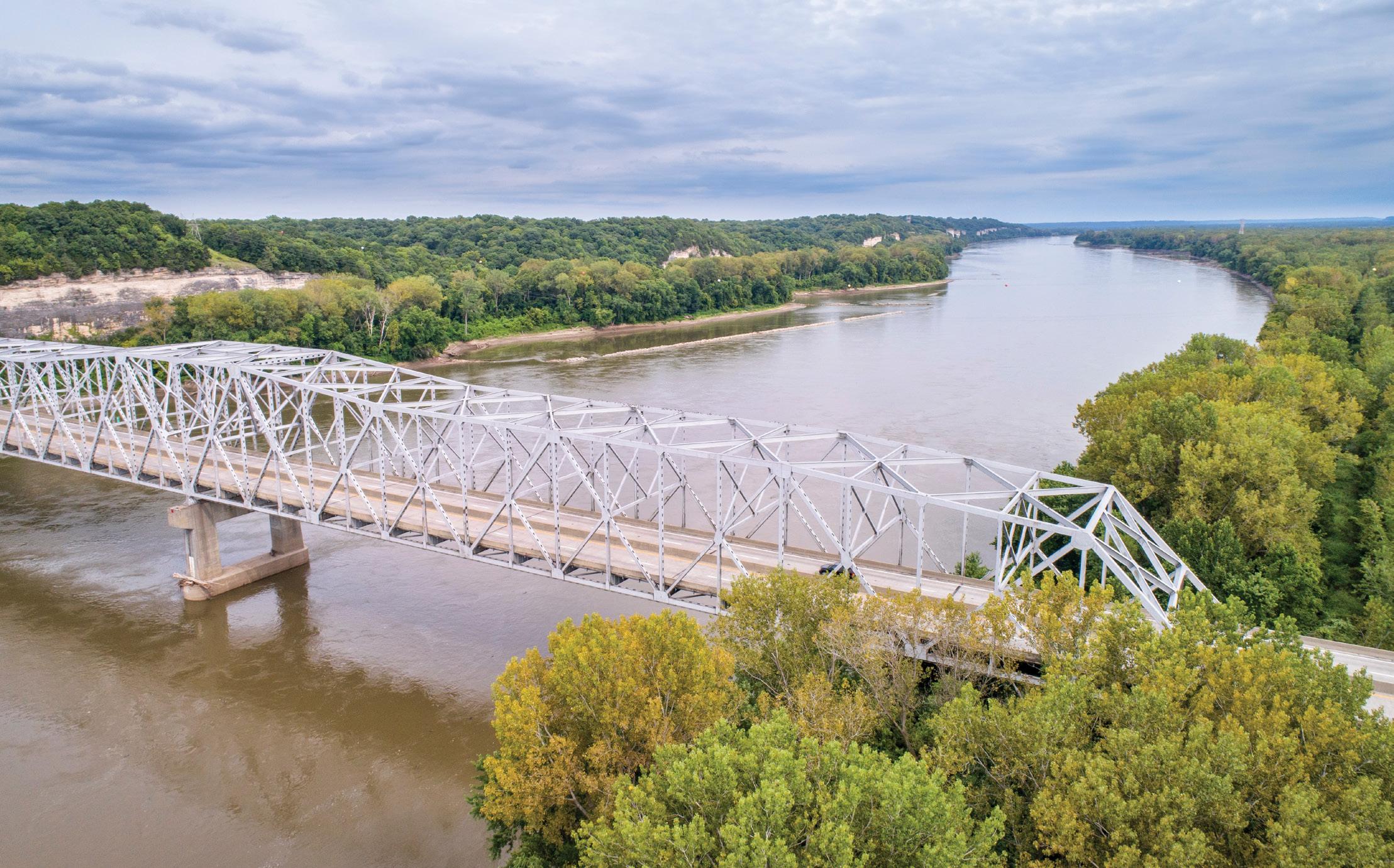
Rocheport, a small, historic village with a population of around 200, is located along Missouri’s Katy Trail, a rail-to-trail extending from Machens in St. Charles County to Clinton in Henry County. Rocheport not only has historic 19th-century homes and buildings, but also the famous MKT Tunnel, a 243-foot-long tunnel located near the western edge of town. Visitors to Rocheport, including cyclists on the Katy Trail, can nd numerous historical markers that identify buildings listed in the National Register of Historic Places as they stop to dine or enjoy the local scenery. Rocheport is the perfect stop for cyclists or destination for visitors.
What many may not know is that Rocheport was once home to one of Boone County’s largest African American enclaves. ough this community gradually disappeared by the end of the 20th century, those interested in Missouri’s Black history can still visit one of the locations connected to Rocheport’s African American population.
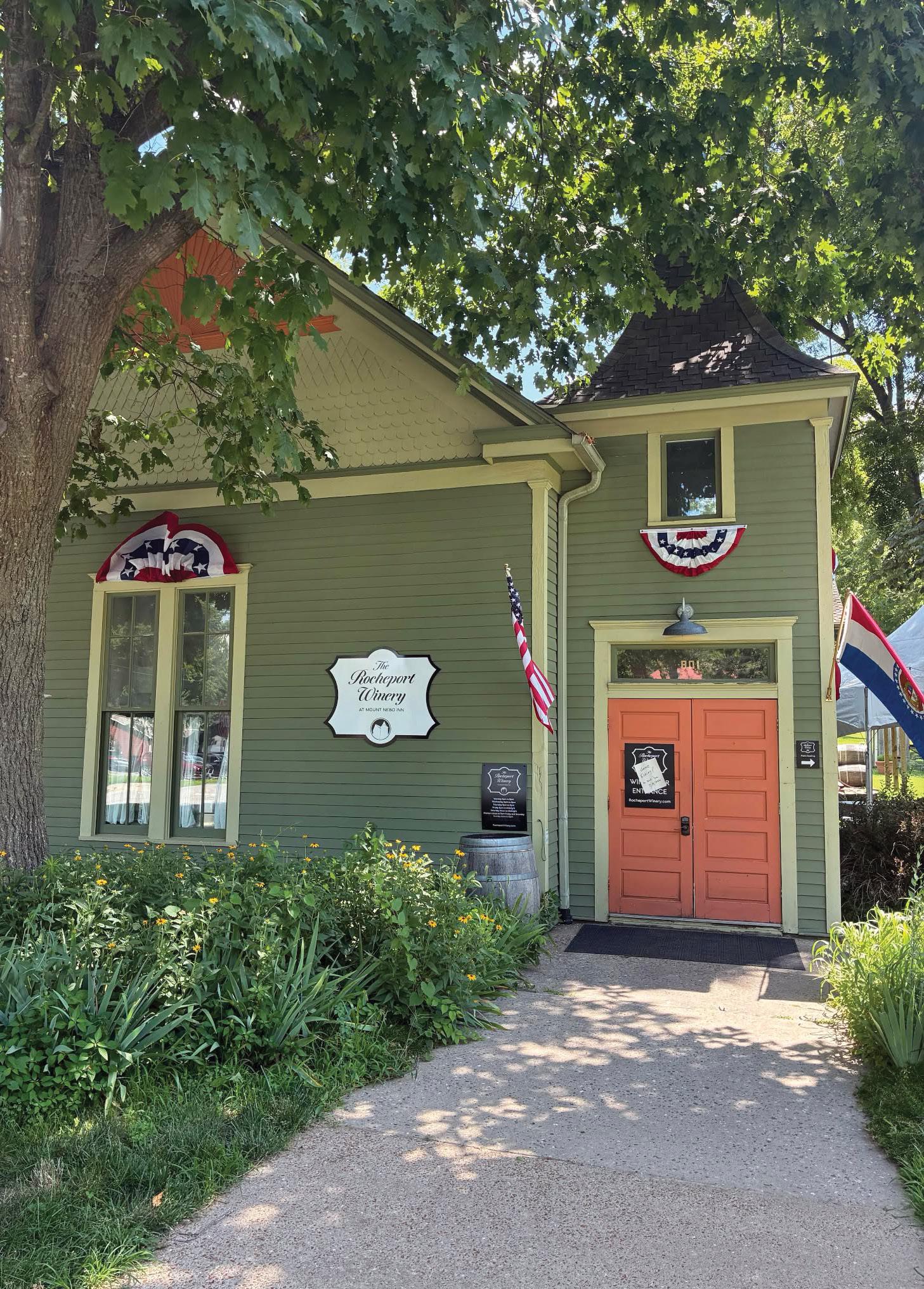
While many of the town’s historic Black structures, such as the “African School” and the homes of many African Americans, are long gone, one former pillar of Rocheport’s Black community continues to stand: Mount Nebo Baptist Church. is structure, though no longer a church, is a testament to the faith and perseverance of Rocheport’s African Americans and their e orts to create community amid Missouri’s Jim Crow culture following the end of Reconstruction.
Prior to the Civil War, a total of 138 African Americans called Rocheport home, though 130 of these individuals were held in slavery. In the ve years after the war, the Black population of Rocheport increased to 261. By 1876, Rocheport’s population had grown to 615 white residents and 356 Black residents,
making the African American population more than one-third of the town. ough the town’s Black residents made up only 3 percent of the Black population of Boone County, the ratio of African Americans to Euro-Americans in Rocheport was higher than the county average of 26 percent.
ough racial con icts occurred in the town during the 19th and early 20th centuries, including a race riot in 1882, one of Rocheport’s lifelong African American residents, Siotha Jackman, recalled in the 1970s that when she was growing up in the 1920s and ’30s, “I don’t
remember prejudice. ... Of course we had our disagreements … but we always made up before sunset.”
Mount Nebo Baptist Church was organized in the fall of 1866. Worship services were rst held in a building called the “Blue House,” likely located on the southeast corner of Ward and Main streets, before the construction of the Mount Nebo Baptist Church building. Built in 1910 on the corner of Ward and First (now First Bethel Road) streets, the building was close to the railroad tracks (now the Katy Trail) and many of the homes of Rocheport’s Black residents, who poured funds and e ort into building the church. is new edi ce, according to historian Alberta Shipley, featured stained glass windows, electricity, carpeting, and an organ, all symbols of progress and a hopeful future.
Not only was the church modern and beautiful, an apt testament to its parishioners’ faith, but it was a gathering place for the local African American community and, according to Jackman, occasionally for the town’s white residents
as well. Jackman recalled in 1992 that events at the Mount Nebo Baptist Church brought together crowds from around the area. One of these events was “Choir Days,” when local Black churches gathered for singing and worship. e building was lled with joy and community, a sanctuary and gathering place combined into one. Mount Nebo Baptist also held Saturday night dances. As Jackman noted in 1976, “ e church put on a lot of social events, plays, and pie walks.” It was a place of faith and bridge building, a sacred space of community.
However, as the 20th century progressed and more of Rocheport’s African American residents passed away or moved, the church congregation shrank. By 1974, the once vibrant church was left with only three members. ese congregants o cially closed the church in 1974, and with it, closed the doors on decades of memories.
For many years, the building lay vacant and eventually fell into disrepair. Bill Foreman of the Columbia Daily Tribune wrote in 1993 that “windows were missing, oors had collapsed, and its
sagging foundation caused the building to precariously list to the north side.” Barbara Noe of the Columbia Missourian added that, at one point, “the city of Rocheport demanded the historical structure be destroyed.”
ankfully, a local radio executive and entrepreneur, John Ott, bought the building, restored the decaying structure, and transformed it into the Nebo Gallery and Deli. After more extensive renovations in the 2000s, and with the addition of more rooms, the building became what it is today: the Mount Nebo Inn and e Rocheport Winery at Mount Nebo Inn. ough the building is no longer the religious sanctuary it once was, visitors can still appreciate one of Boone County’s remaining Black Missourian heritage sites, which connects the present to the past and to the story of Rocheport.
Robert Swanson is a PhD student at the University of Missouri and wrote this essay as part of his studies.
Art from the Inside
Self-taught artist Rick “Gumby” Brummet has an eye for whimsy.
BY STEPHEN FEILBACH
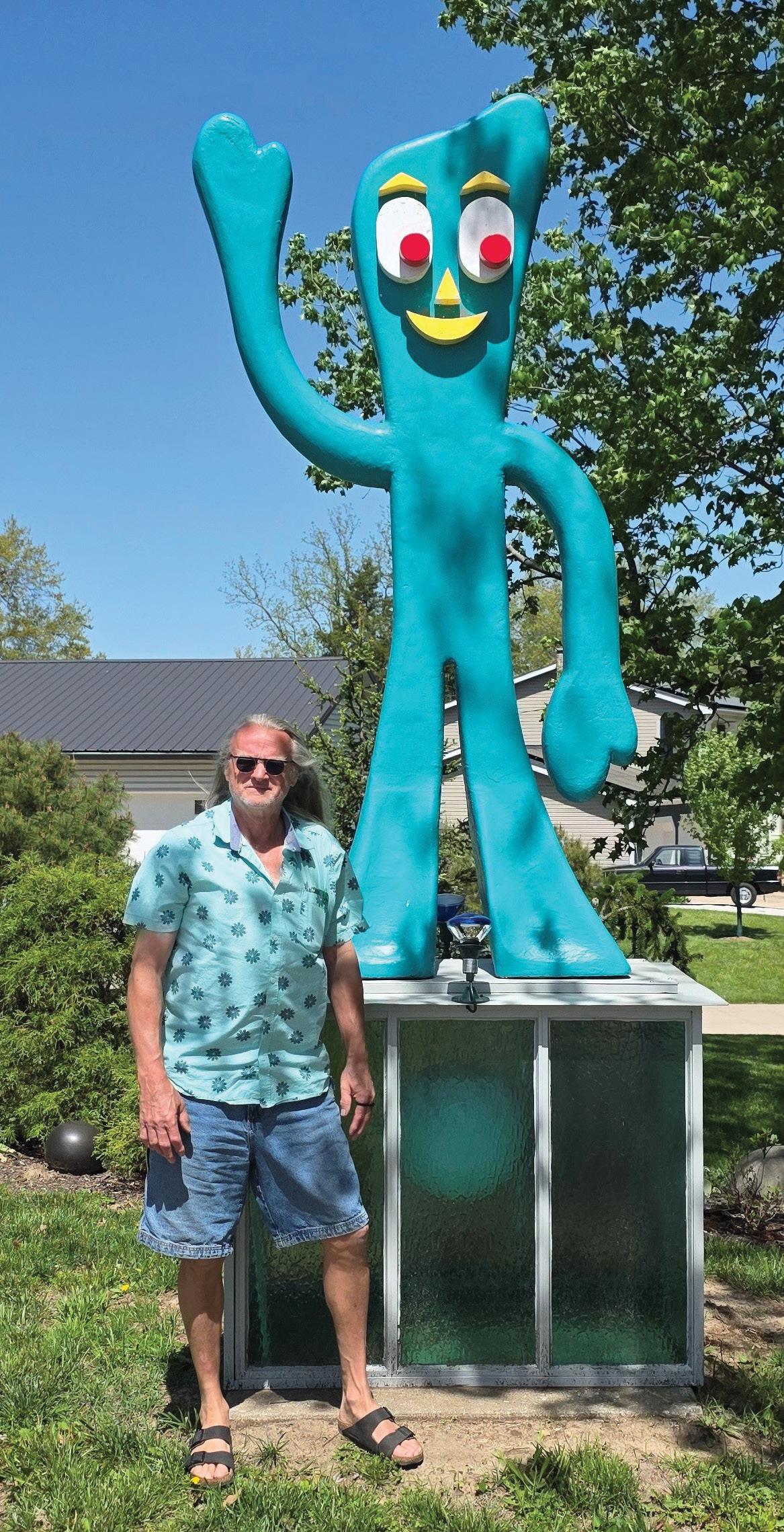
If you’ve ever driven down Green Meadows Road in Columbia, chances are you’ve spotted one of the coolest yards ever. Who in the world lives here, you ask? Rick Brummet, better known to many around Columbia as “Gumby,” has one of those larger-than-life personalities that naturally spills over into everything around him.
“I’ve always enjoyed making things out of the norm, oversized, larger than life, bright colors — to make people open their eyes and appreciate things that are not normal, but more whimsical,” Rick says.
But he’s never called himself an artist.
“I have no training. I’m probably more of a builder,” he explains. Mainly self-taught, Rick credits much of that mindset to his father, whom he describes as extremely creative and capable of making anything with his hands. “I kind of feel like I am honoring him by carrying on all the skills I learned from him,” Rick adds.
He started out making sculptures from bowling balls because of their bright colors and easy availability. Over time, his yard evolved piece by piece around reclaimed objects and materials most people would have thrown away years ago. Everywhere you look, there’s another sculpture tucked into the landscape. Giant creations, reclaimed metal, bright colors, and strange objects repurposed into something playful or unexpected. Rick says he enjoys using materials others have disposed of — objects that
otherwise would have ended up in a land ll. Many of those materials, mainly metal objects, already have their own unique character and usefulness.
“It is extremely rewarding to take a pile of scrap material and create a piece of art that people stand back and slowly realize those are bicycle parts or bowling balls,” he says.
When you drive by or stop in at Rick’s place, it’s honestly a little overwhelming at rst. e longer you look, the more details you notice. Some pieces are funny; some are strange. Some are mechanically impressive enough that you nd yourself wondering how they were even built in the rst place. You can instantly tell this is somebody whose creative mind never really shuts o . Building things for other people to enjoy clearly brings him joy.
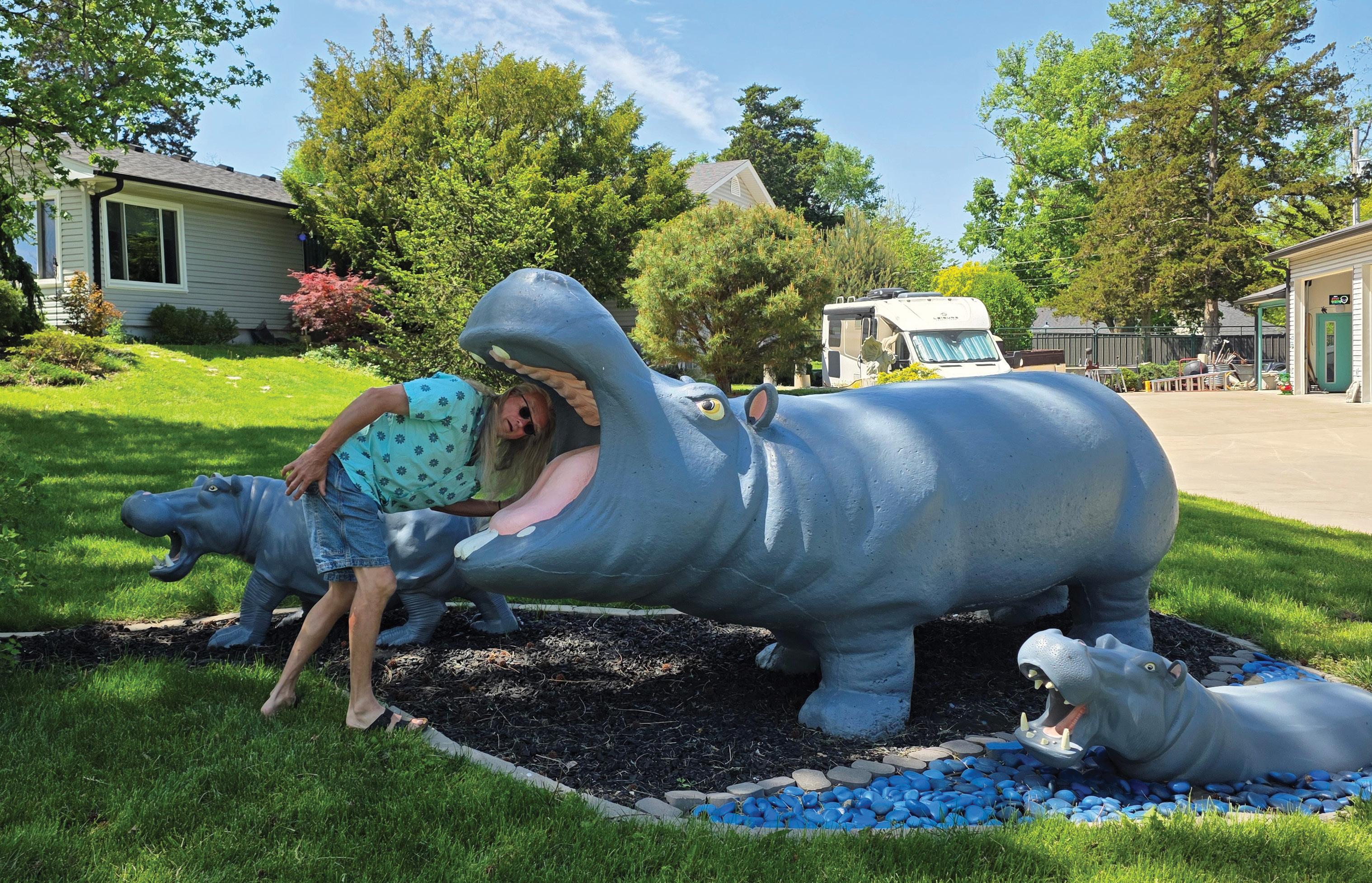
One good example is the giant hippo sculpture sitting prominently in the yard. e massive concrete piece weighs somewhere around 8,000 pounds and required crane-like equipment and trailers just to move it into place before Rick painted and nished it. But after getting
the big hippo set in place, Rick thought it looked lonely, so he found it some friends. Today, the hippo is probably one of the most photographed pieces on the property. Kids love it. Adults stop to take pictures beside it.
“Pure joy, ful llment, and a sense of accomplishment” is how Rick describes completing an artwork. “Nothing better than nishing a piece, displaying it, and having it complimented by others,” he says. Rick wasn’t even sure at rst if the neighborhood would appreciate any of it. Fortunately for him, they embraced it. In fact, they were the ones who eventually coined the phrase “the house that makes people smile.”
Neighbors loved the art, Rick loved the art, and over time it only inspired him to keep creating more. Rick spent his career working as a materials inspector, a job built around structure and precision.
at’s part of why he enjoys creating things outside the norm. Work required everything to t exactly where it belonged. His artwork doesn’t.
Not that he doesn’t have to occasionally take location into account. Some pieces were built exactly where they still sit, because moving them later would have been nearly impossible. Rick described one bottle tree sculpture weighing nearly 6,000 pounds that had to be built in sections and assembled in place.
Although Rick may not build exactly like he once did, you’d never know it by driving past his place or looking at his todo list. He still has plenty of projects and ideas ahead of him.
“I’m just being creative in other ways,” he says. Even now, creating still brings him joy, and he hopes to continue doing it as long as possible. Whether you know him as Rick or Gumby, Columbia is a little more interesting because he kept creating.
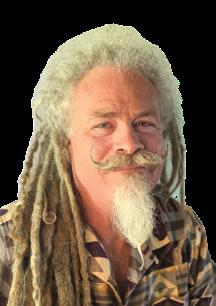
Stephen Feilbach is a Columbia artist with a penchant for turning tiny creatures into bigger-thanlife-size sculptures.
Anticipating Change to Create the Future We Want
BY MAYOR BARBARA BUFFALOE
When I moved to Columbia in 1998 to attend the University of Missouri, the city felt very di erent.
My past college classmates and longtime residents often tell me they remember when tra c disappeared after students left for the summer. Neighborhoods felt smaller. Development happened at a slower pace. Columbia was growing, but few people imagined just how much growth was ahead.
Today, Columbia is home to nearly 131,000 residents and remains one of the fastest-growing cities in Missouri. Since 2000, our community has grown by roughly 40 to 50 percent, depending on how you measure it. e Columbia metropolitan area has added more than 70,000 residents during that same period.
Growth brings opportunity. It also creates a challenge that every generation of local leaders faces: How do we prepare for a future we cannot fully see?
In many ways, local government is an exercise in time travel.
Every decision we make today a ects people years or even decades from now. e water treatment upgrade may not be fully appreciated until a future drought.
e expansion of Nifong Parkway will shape development patterns for generations. Trees planted today will provide shade for children who are not yet born. Housing decisions made this year will inuence a ordability 10 years from now. e communities that thrive are rarely the ones that simply react to change. ey are the ones that anticipate it. at is why Columbia is investing in long-range planning even while addressing today’s challenges.
We are preparing for future transportation needs through regional planning e orts, studying how transit can better connect people to jobs and services, and working with partners on the Improve I-70 project. We have recently invested in airport improvements that will strengthen our connections to the rest of
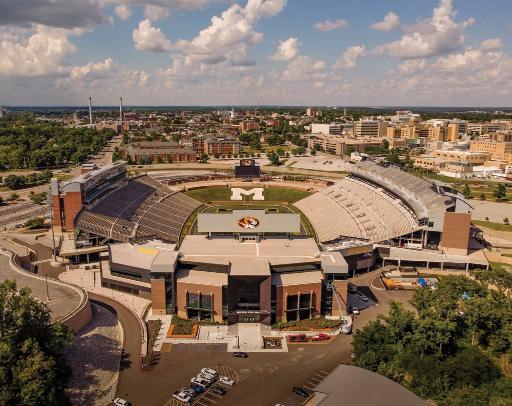
the country. We are making infrastructure upgrades to our water, electric, and stormwater systems so they can serve a larger community in the decades ahead.
We’re also planning for a future shaped by changing weather patterns. As someone who previously served as Columbia’s sustainability manager, I know that resilience is not just an environmental issue. It’s an economic issue, a public health issue, and a quality-of-life issue. Programs that expand our tree canopy, reduce extreme heat impacts, and strengthen critical infrastructure help ensure Columbia remains a great place to live no matter what challenges the future brings.
Perhaps the biggest lesson from looking backward is that no one can perfectly predict what comes next.
Few people in 1998 could have predicted smartphones, electric vehicles, or arti cial intelligence. Twenty years from now, our children will likely experience technologies and opportunities we cannot yet imagine.
What we can predict is that people will continue choosing Columbia because of what has always made this community special: strong neighborhoods, outstand-
ing educational institutions, parks and trails, entrepreneurial spirit, and residents who care deeply about one another. e future is not something that simply happens to a city. It is something we build together.
If I could travel back and talk to the Columbia of 1998, I think the biggest surprise would not be how much we’ve grown. It would be how much potential still lies ahead.
e decisions we make today are shaping the Columbia that future generations will inherit. My hope is that when they look back on this moment, they’ll see a community that wasn’t afraid to think beyond the next budget cycle, the next election, or the next headline.
ey’ll see a city that planned ahead.
A city that imagined what was possible. A city that invested in its future.
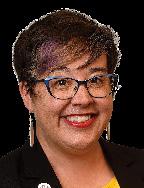
Barbara Bu aloe is currently serving her second term in o ce as the mayor of Columbia.
One Degree
BY BRADLEY WILLIAMS
In the world of aviation, there is a rule called the 1-in-60 rule. Basically, it means that if you y one degree o your heading for 60 miles, you will be one nautical mile o course. If you ew 8,000 miles across the world, you would be o by 133 miles, landing you either on the wrong side of Japan or in the Paci c Ocean. Just one degree.
I actually have a sticker that says “One Degree” on my daily travel co ee mug. It’s there to remind me of this important truth — as it applies to life, not because I am in any way, shape, or form a pilot.
We assume the wrong turns in a life announce themselves, but the real threat is a slow drift of just one degree. Like that night the hard conversation needed to happen, but we waited, then avoided, then let it fester. One degree. Or that time when they said something that really hurt, but instead of voicing the pain, restoring the relationship, we let silence reign, and that tiny fracture grew into distance. One degree.
Here’s the question: How does someone wake up in a marriage of 30+ years and decide divorce is the only answer? How does someone end up in rehab afterward? How does someone come in on a Friday after a long career with the same company and go home with their o ce packed in a cardboard box? One degree at a time.
We act stunned when it happens to people we love. We are horri ed when it happens to us. We shouldn’t be. It’s just the 1-in-60 rule running across a life. Small steps in the wrong direction, compounded over time. ose aren’t detours from our lives. ey are our lives.
I say this as someone who has spent most of a decade ying the wrong way and calling it freedom. I didn’t pick a life of ambition and self-indulgence randomly one afternoon. I drifted there, one reasonable-looking degree at a time, until I looked up and didn’t recognize where I was or the coordinates I was following.

So if we want to think honestly about our future, we shouldn’t start with the future. We should start with today’s heading. And here’s the part I truly believe, the part you’re free to argue with: at heading isn’t one we invent for ourselves. ere’s a true course for a human life, and we can be measurably o it without ever choosing to be. e smallest decision in front of us, that one too minor to see as signi cant, is quietly setting your coordinates 20 years out. One degree at a time.
e strange mercy of one degree is that it runs both directions. e same math that pulls us o course will, if corrected, carry us back. We don’t need to overhaul
our lives. We just need one small turn today and the nerve to believe even a small change in the right direction can lead to a completely di erent life in the future. Most turning points are not cinematic or overly dramatic. ankfully so. Our future gets built in one-degree increments, and that reality allows a brighter future to seep into today. One degree at a time.

Bradley Williams is the lead minister at Forum Christian Church.
Go Anyway
BY SEAN SPENCE
Leigh and I just got back from Barcelona. Five days. First real international trip we have taken together. I am a full-time wheelchair user, and until recently, I put trips like this in the “Someday” column. Not because I did not want to go. Because I was not sure we could pull it o .
We pulled it o . e trip was great. But what I really want to talk about is what it taught me — and I think it matters even if you have never left the country and have no plans to.
Barcelona sidewalks are beautiful … and genuinely terrible for wheelchairs. e tiles are gorgeous — and they tilt, and they rattle, and by the end of each day, my arms had opinions about it. e grab bars in bathrooms? A di erent philosophy entirely over there. e showers run lukewarm and at approximately the pressure of a polite suggestion.
None of that is the story. e story is Jordi, our rst guide, who was named after the patron saint of Barcelona and who talked about Sagrada Familia with the kind of love that makes you lean in closer. e story is Oscar, who speaks eight languages and recently got certi ed in Arabic just because he wanted to. e story is David, our driver on the mountain roads to Montserrat, whose driving kept Leigh from getting motion sick on curves that had no business existing and who kept glancing back to make sure I was OK. e story is Richard, who seemed to know every monk at the monastery personally. ese were not people doing jobs. ey were people who had found something they were good at and decided to share it generously. ere is a di erence, and you feel it immediately.
One of the things that stays with me is how many people we met who spoke three, four, ve languages. Oscar’s eight was the high-water mark, but it was not especially unusual. Our guides moved
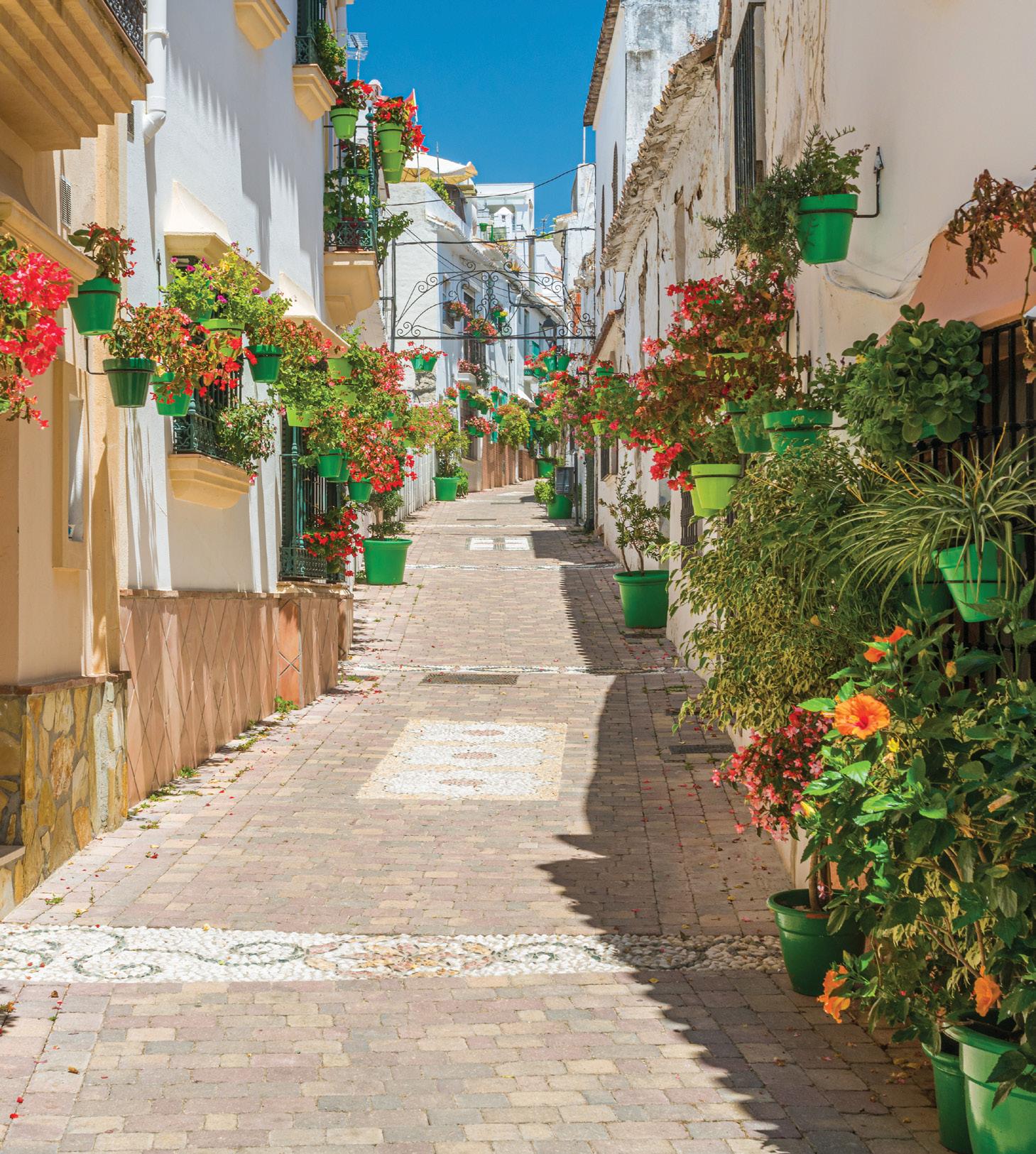
between English, Spanish, and Catalan without a pause, sliding into whichever one opened the door. Nobody there could quite understand why speaking more than one language would make someone suspicious. ey looked genuinely puzzled when we tried to explain it.
We also did not see a single person experiencing homelessness in ve days of wandering the city. Not one. I am not naive enough to think that means it does not exist there. But I noticed it, and I kept thinking about what we accept as normal at home and whether it has to be.
Here is what I keep thinking about: ere are always reasons to not go. I was sick the whole week before. We knew the sidewalks would be rough. ere is always something. We went anyway, and I so am glad we did. Leigh handed me my phone somewhere along the way, and I sent pictures to my Little Brother. He red back a wall of emojis. at was enough.
I came home with a bottle of cava from a winery overlooking the Mediterranean and a list of things I want to do di erently. Finally learn Spanish. Say yes faster. Send the thank-you notes instead of thinking about them. Do the thing before someday runs out of runway.
Barcelona did not really change me. It just nudged me on some things I had been slow about. e world is big and mostly kind and lled with so many people worth meeting. You have to go nd them, though. ey mostly are not coming here.
Starting today, what is one thing you could do — even if the sidewalks tilt a little?
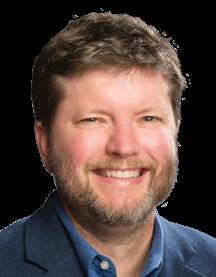
and event creator. Find him at growingolderandbetter.com.
Sean Spence is a 55-yearold Columbia guy, writer, podcast host,
Hoss’s Grilled Southwest Corn Salad
BY HOSS KOETTING
This is truly an amaizing time of year. No, that’s not a typo, although it is somewhat a double entendre, referring to the amazing variety of produce available at the Columbia Farmers Market now. One of the options available, maize (aka corn), is an amazing crop.
First thought to have been cultivated in southern Mexico around 9,000 years ago from a wild grass called teosinte, corn, through the crude hybridization method of cross-breeding, was widely grown throughout North and South America when the Europeans rst arrived. It was transported to Europe by Columbus on his return journey and is now grown on six of the seven continents, accounting for over half of all food crops worldwide.
In addition to the familiar sweet corn, which is enjoyed on the cob or o , corn is found in more end products than any other agricultural crop. It appears as grits in the southern U.S., polenta in Italy, livestock feed, corn oil, corn starch, fuel (ethanol), bioplastics, snacks, cereals, chips, alcohol (whiskey and my favorite, bourbon), tortillas, masa for tamales, and in numerous other applications.
It is also the source of high-fructose corn syrup (HFCS), which has been incorporated into many food products, such as beverages, candies, cookies, etc. because it blends homogeneously, is sweeter per unit than sugar (sucrose), and costs less. While table sugar is derived from sugar cane and sugar beets, HFCS is derived from corn starch (shazam!) and, to be more accurate, is approximately half sucrose and half fructose. However, where sucrose is broken down by multiple organs, fructose is only metabolized by the liver, which primarily turns it into fat. HFCS can interfere with insulin production, causing long-term health issues.
Fortunately, sweet corn, available now at the farmers market or the produce section of your favorite grocery store, is a delicious and healthy side dish — as long as you go light on the butter! Here’s a tasty option for a side dish that is relatively easy to scale up for larger groups.

Jim “Hoss” Koetting is a retired restaurateur/chef who enjoys gardening, good food, good bourbon, and good friends.

INGREDIENTS
• Kernels from 6 ears of fresh corn, shucked and grilled (or 2 lbs thawed and drained frozen corn)
• 1 cup diced red pepper
• 1 cup diced green pepper
• 2 Tbsp. nely diced fresh jalapeños
• ⅔ cup chopped green onions
• ⅓ cup chopped fresh Italian parsley
• ½ cup vegetable oil
• ¼ cup olive oil
• ¼ cup white wine vinegar
• 2 Tbsp. Hoss’s Southwest seasoning
• 2 tsp. sugar
• ½ tsp. dry mustard
• Diced cherry tomatoes (optional)
DIRECTIONS
• Mix all veggies together in a large bowl.
• In a small bowl, whisk vinegar, oils, and seasonings together.
• Pour dressing over veggies and toss to combine; chill overnight.
• Serve with tortilla chips, as a side salad, or as a topper for chicken or seafood.
Mo er The Farm
RECONNECTING MID-MISSOURIANS TO FOOD, NATURE, AND EACH OTHER.
PHOTOS AND STORY BY SUNITHA BOSECKER
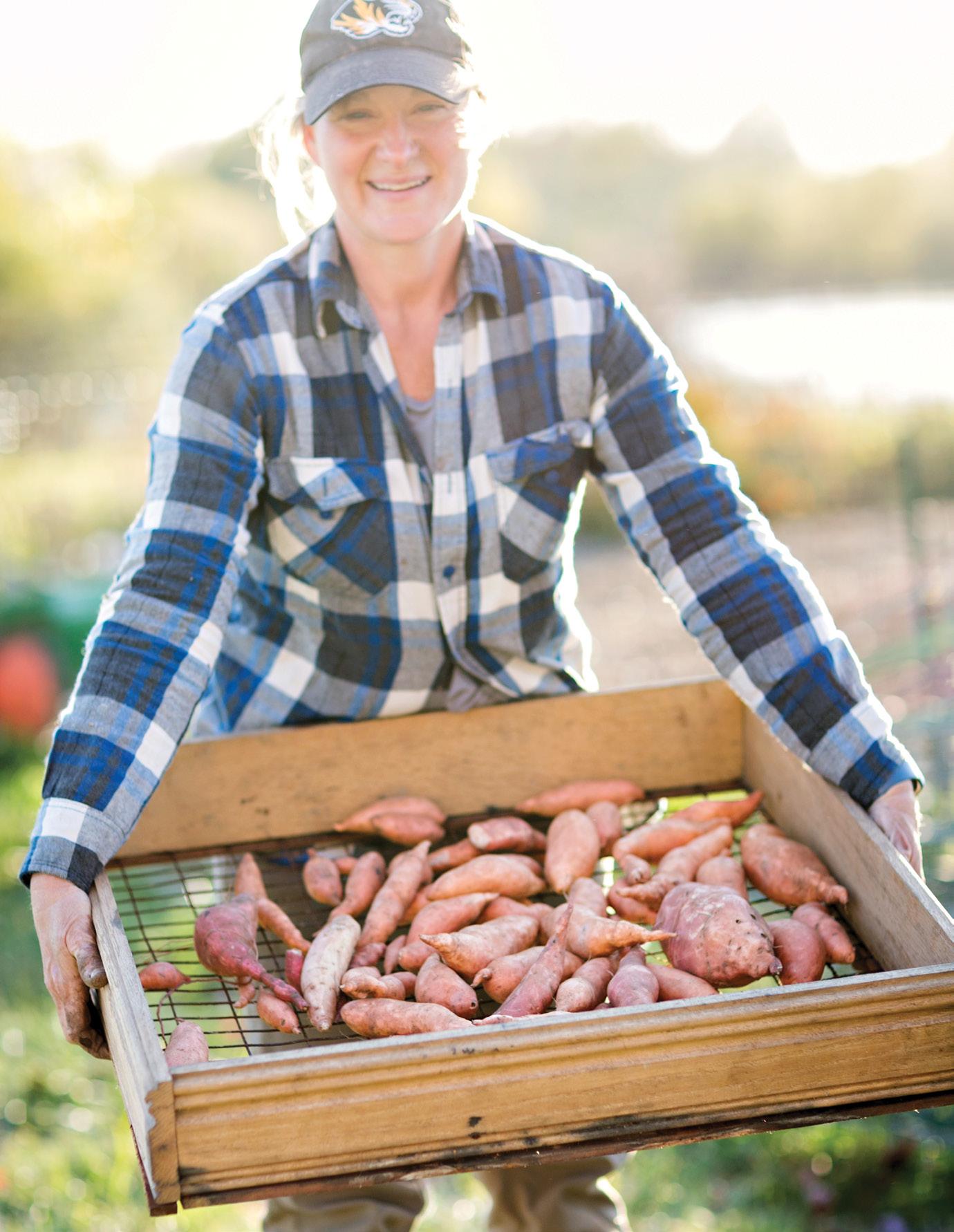
There is something about a farm that invites appreciation and a slower pace. Perhaps it’s the fruit trees stretching toward the horizon, animals grazing and enjoying their habitat, or the way a breeze moves through rows of vegetables. On a farm, it becomes easier to notice things, to acknowledge their progress — like the remarkable journey food takes before it reaches our tables.
For many of us, food has become disconnected from its origin story. We pick up produce from grocery store shelves without thinking about the soil, sunshine, weather, and human hands that made it possible. Yet our connection to food is deeply rooted in who we are. For generations, growing food wasn’t a hobby or lifestyle choice; it was simply life.
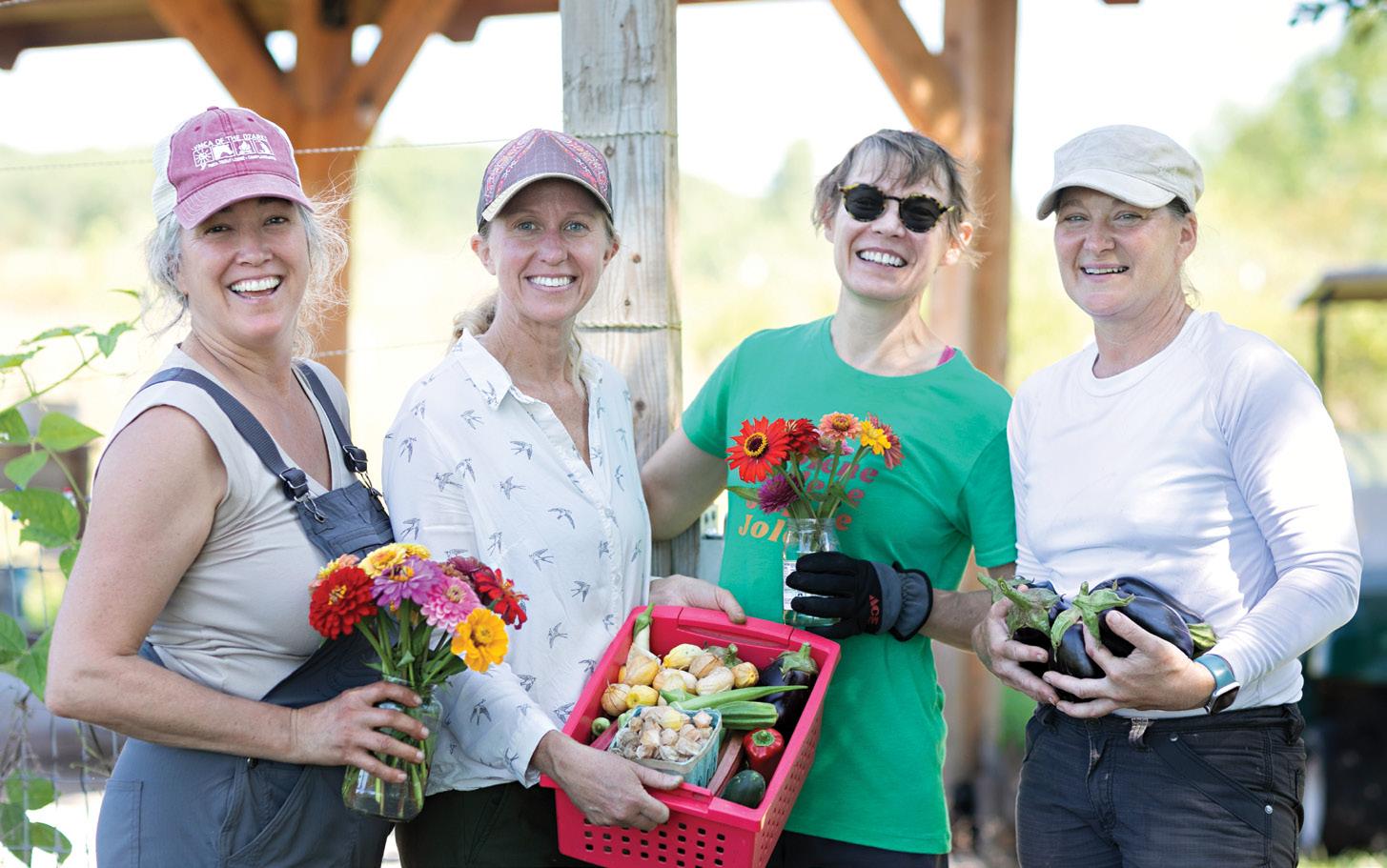
At e Mother Farm, located a little outside of Columbia, visitors are invited to reconnect with that relationship. Situated on 21 acres, the regenerative farm o ers
more than organic produce, fruit, and grass- nished meats. It o ers something many people are quietly craving: a chance to reconnect with nature, with community, and with the simple satisfaction of helping grow something meaningful.
“Our mission is to provide hands-on access to regenerative agriculture to increase human health and happiness while regenerating soil and building community,” says Susan C. Nagel, PhD, the director and self-styled “farmher” of e Mother Farm.
It’s a mission that comes to life every week as people gather to plant, harvest, learn, and rediscover their place in the story of food.
A FARM BUILT ON A LONGING FOR CONNECTION
Interestingly, Nagel did not grow up on a farm. She describes herself as a “farm girl wannabe,” inspired by childhood

visits to a great-uncle who farmed. ose early experiences planted a seed that would eventually grow into something much larger.
e Mother Farm was established in 2015, but the vision evolved over time. In those early years, Nagel and volunteers planted more than 3,500 fruit trees, developed growing areas, built a barn, and acquired livestock. e work was substantial, but another realization was taking root.
People were hungry for more than food.
“ ere is a deep desire to connect,” Nagel says. “People really long for fresh food, for community, and for nature.” at realization led to the creation of e Mother Farm’s Farm Share program, which o cially opened to the public in February 2021. Unlike a traditional community-supported agriculture (CSA) program, Farm Share is built around participation. Members don’t simply pick up a weekly box of produce. ey become part of the process.
ey plant. ey weed. ey harvest. ey learn. And most importantly, they do it together.
FARMING AS AN ANTIDOTE TO MODERN STRESS
e Farm Share experience is intentionally simple. Members commit to the growing season, which runs from February through November. ey gather regularly to work on farm projects, harvest produce, and share in the rewards of the season.
“We strive to make Farm Share a stress-reducing and relaxing experience,” Nagel explains. “All are welcome. No decisions, no experience required. Just show up.”
Farm Share members arrive knowing someone else has already gured out what needs to be done. Whether the task is transplanting seedlings, harvesting vegetables, mulching pathways, or cleaning up the vegetable patch, participants can focus on the work in front of them.
e result is something many members describe as restorative. For Farm Share member Kim Wade, the experience has changed how she moves through the world.
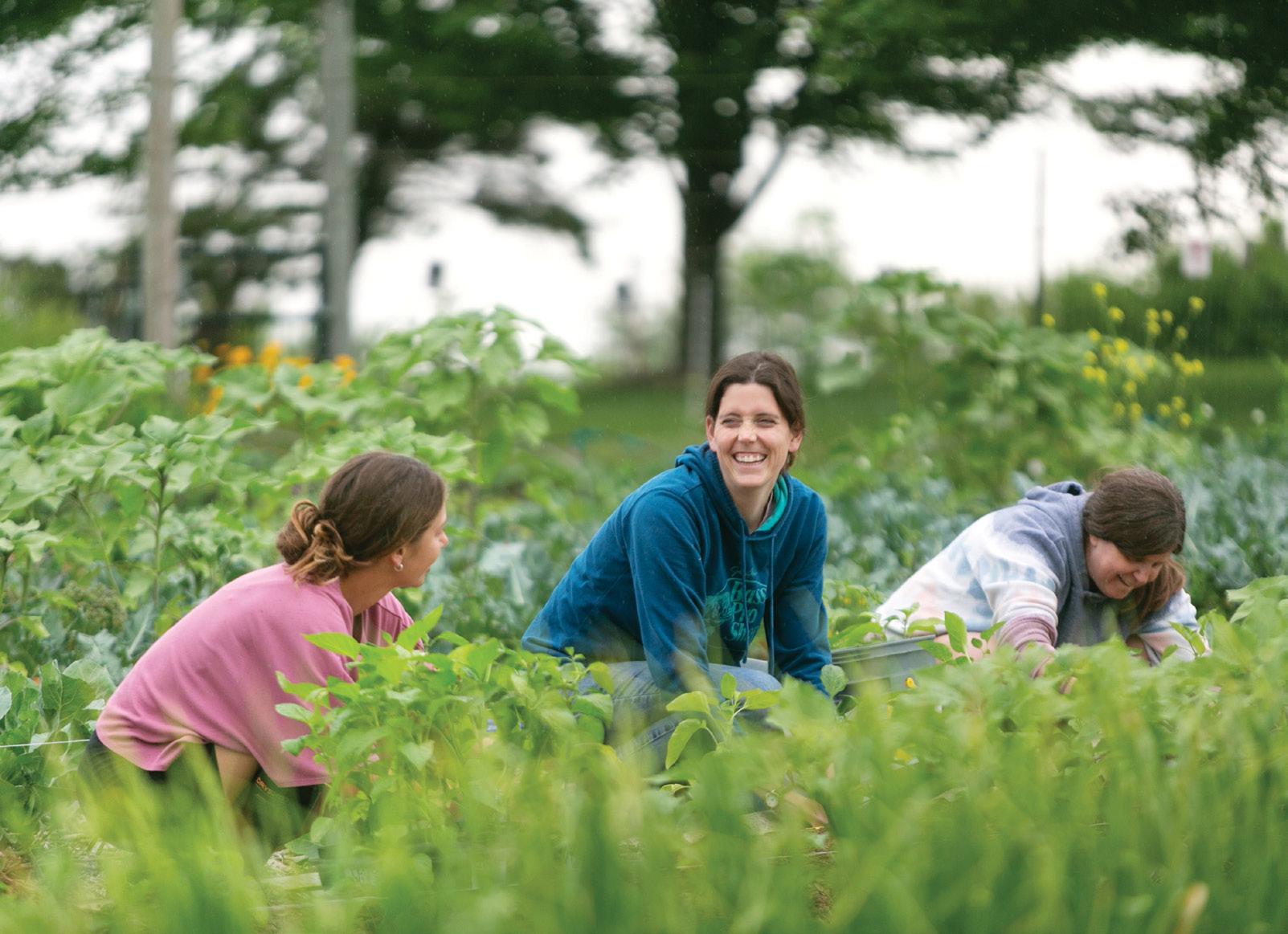
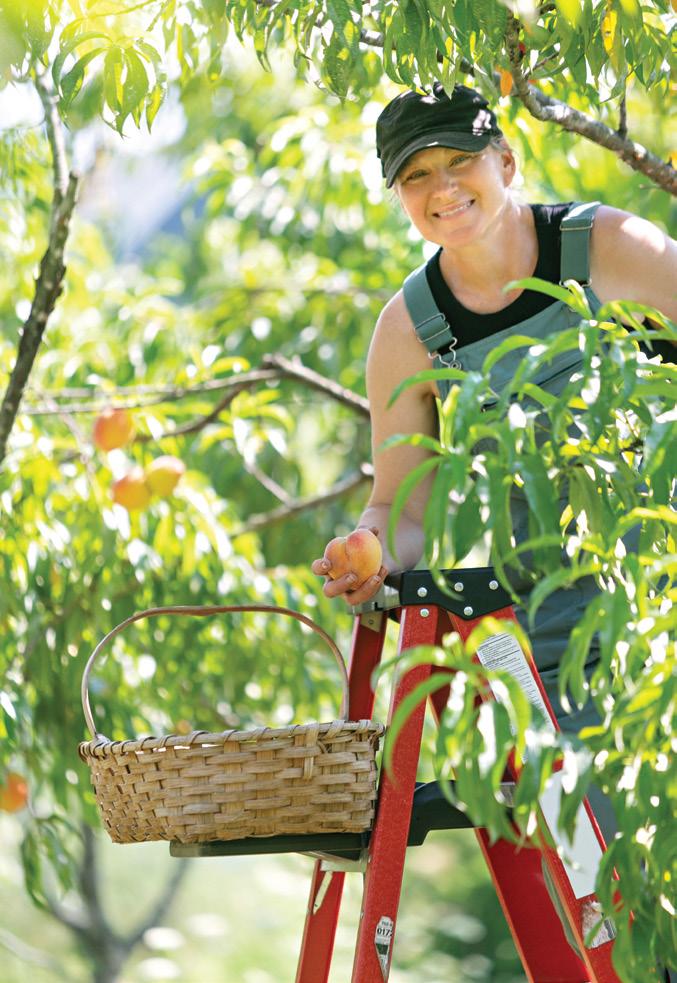
“Farm Share helps me feel like I’m more fully present in my own life,” she says. “Planting, weeding, mulching, and harvesting each week helps me notice more of what’s right around me: the changes in the plants as they grow, the shifting weather, the pair of plovers trying to lure you away from the nest they’ve built in the squash row. It just feels good to be in my body, working outdoors alongside other people.”
Her words capture something increasingly rare: the opportunity to be fully present. At e Mother Farm, people are not simply growing vegetables. ey are reconnecting with the rhythms of nature
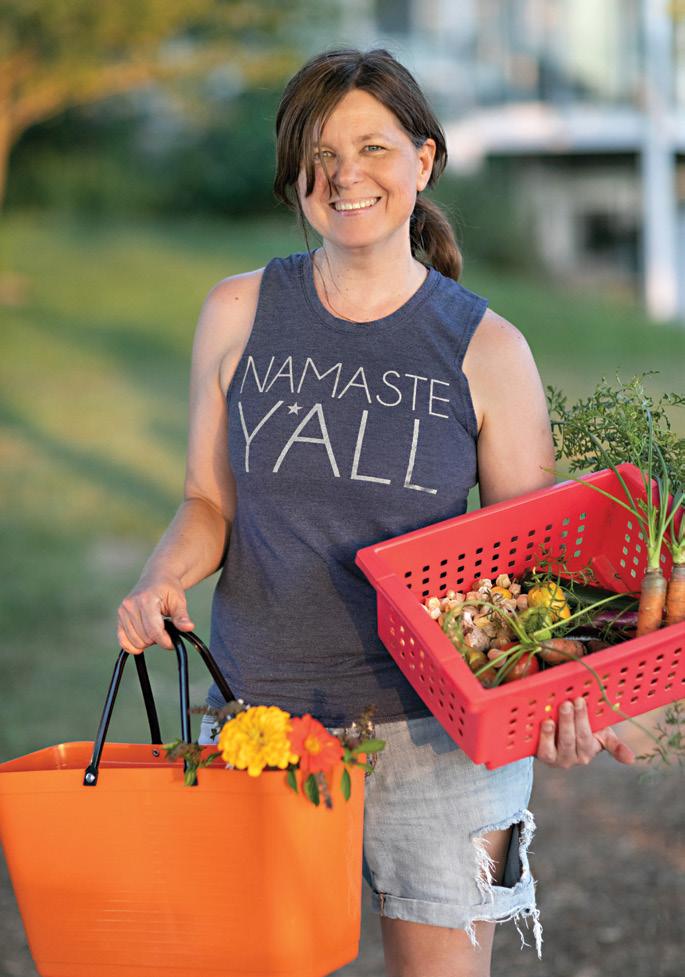
“Farm Share h ps me fe like I’m more f ly e my n life.”
and the satisfaction of doing meaningful work with their hands.
GROWING MORE THAN FOOD
For many participants, the farm becomes a classroom. Not through lectures or textbooks, but through experience.
Members learn how food is grown, what crops thrive in Missouri’s climate, and how weather impacts every harvest.
ey discover vegetables and fruits they might never encounter at a grocery store and gain a deeper appreciation for the work behind every meal.
“Our connection to food is 100 percent primal,” Nagel says. For most of human history, growing and gathering food was a daily reality. Today, many people have little direct experience with food production despite depending on it every day.
e Mother Farm seeks to bridge that gap by inviting people into the process. When you harvest a tomato you helped plant months earlier or gather fruit from a tree you’ve watched blossom in the spring, food becomes more than something you consume. It becomes part of your story.
A PLACE FOR FAMILIES TO LEARN TOGETHER
One of the most popular o erings at e Mother Farm is the Family Farm Share program. Held on the second and fourth Sundays of each month, the program invites parents and children to work together while learning about regenerative agriculture.
“Family Farm Share is a great way to learn about regenerative agriculture on a beautiful organic farm with your children,” Nagel says. e experience gives children something increasingly uncommon: direct interaction with the natural world.
ey see vegetables growing from seed to harvest. ey observe pollinators at work. ey meet farm animals. ey learn that food doesn’t simply appear on grocery store shelves. For many children, these experiences leave a lasting impression.
Tory Jane, a Farm Share participant, says the farm has become a beloved destination for her family. “Farm Share has been a wonderful place for our family to connect with our food and with nature,” she says. “Our children love the farm more than just about anywhere else on earth. ey’ve fallen in love with growing food, and e Mother Farm is a big part of that.”
FARMING WITH NATURE, NOT AGAINST IT
At the heart of e Mother Farm is a commitment to regenerative agriculture. Unlike conventional farming practices, which often rely heavily on synthetic inputs, regenerative agriculture focuses on improving soil health, increasing biodiversity, and working with natural systems. e farm grows food without chemicals and emphasizes practices that build healthy soil over time.
“We’re working with nature to grow your food,” Nagel says. at philosophy extends beyond the elds. e farm relies primarily on solar power, supplemented by wind energy, as part of its commitment to stewardship and sustainability.
THE JOYS AND CHALLENGES OF FARMING
Of course, farming remains deeply dependent on forces beyond human control. Weather can transform a growing season overnight. A late frost, excessive rain, drought, or unexpected temperature swings can dramatically impact production.
Even after years of farming, Nagel says Mother Nature continues to surprise her. Yet those same uncertainties also create moments of profound joy, such as the rst berries of the season, a successful harvest after months of care, fruit trees coming into production, or watching animals born and raised on the farm.
SERVING THE COMMUNITY BEYOND MEMBERSHIP
While the Farm Share is the farm’s most visible program, e Mother Farm serves the broader community in several ways.
It welcomes individuals interested in experiencing the property before committing to membership. People can attend Farm Share as a guest, schedule a tour, or arrange customized experiences for families, schools, and community groups. Visitors might harvest owers, gather produce, learn about regenerative agriculture, or spend time with the cows and goats. e goal is simple: to help people better understand where food comes from and how it is grown.
THE FUTURE OF FOOD
Ask Nagel about the future of farming in America, and her answer returns to connection. Making a living in agriculture remains challenging, and the number of farmers continues to decline. Yet she believes people are increasingly seeking the experiences that farms like e Mother Farm provide.
Food is part of it, certainly. But there is also a growing desire for purpose, belonging, and meaningful work. “ ere is pride, joy, and purpose that people are craving,” Nagel says.
Farm Share member Steve Lavigne understands that feeling rsthand. “Since I started coming to the farm and meeting the animals, the people, and the land, my food has nourished more than my body,” he says. “It’s nourished my mind and soul as well.”
In many ways, that sentiment captures the essence of e Mother Farm. Yes, it produces vegetables, fruit, beef, and pork. But it also cultivates something harder to measure.
Connection. Connection to the land. Connection to food. Connection to community.
And in a world that often feels increasingly disconnected, that may be the most important harvest of all.
‘MAY IT PLEASE THE COURT’
‘The Life of a Murder’ recounts prosecution and conviction of a Columbia crime 35 years after the fact.
BY JODIE JACKSON JR.
Becky Doisy was wearing cut-o blue jeans, a printed blue top, and sandals as she bounded down the stairs to meet Johnny Wright for a date at 2:10 p.m. on ursday, August 5, 1976. It was a sunny, typically hot summer day in central Columbia. Becky, who was a waitress at Ernie’s Diner, working only to meet her basic needs and to give her the freedom to write poetry and explore her creative yen, told her roommate, “If you see my cat, put her inside the door. If not, don’t worry about it.”
ose were Becky’s last known words.
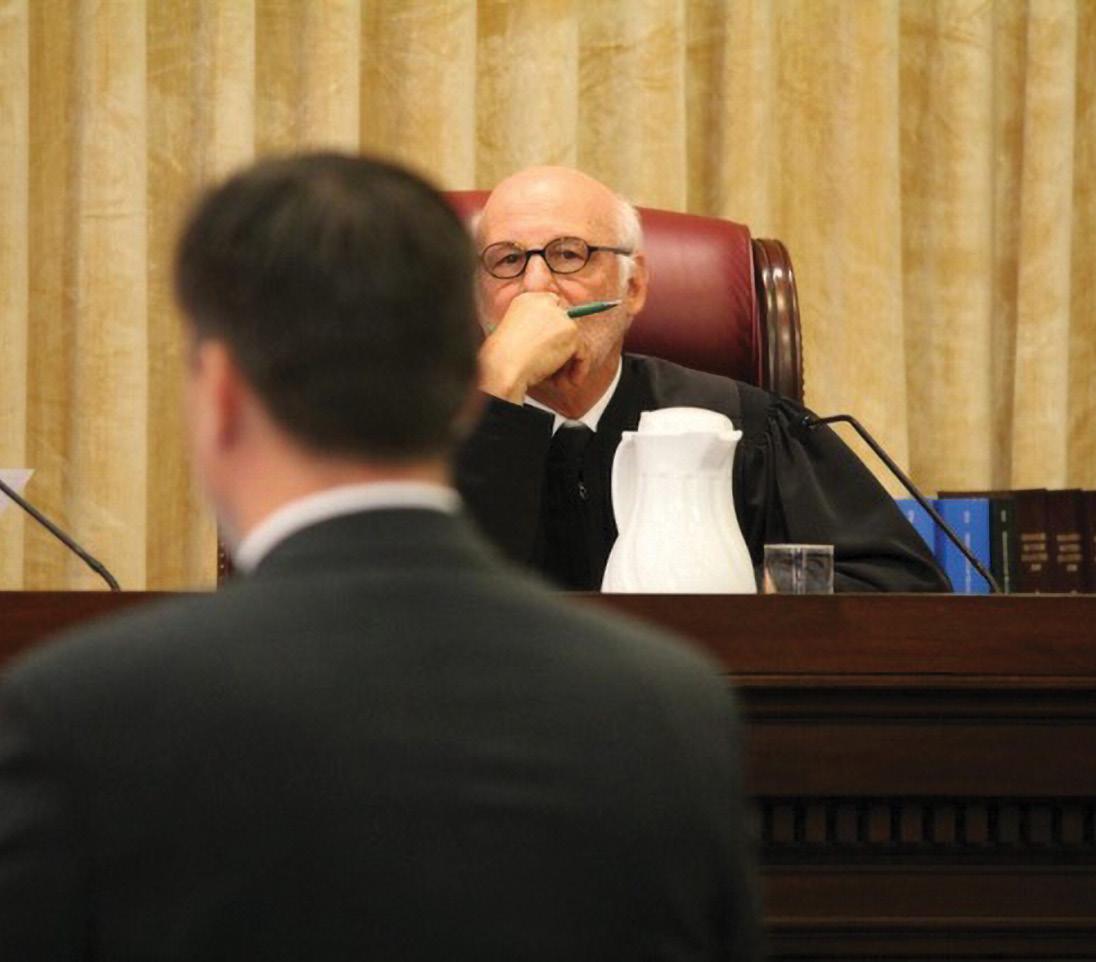
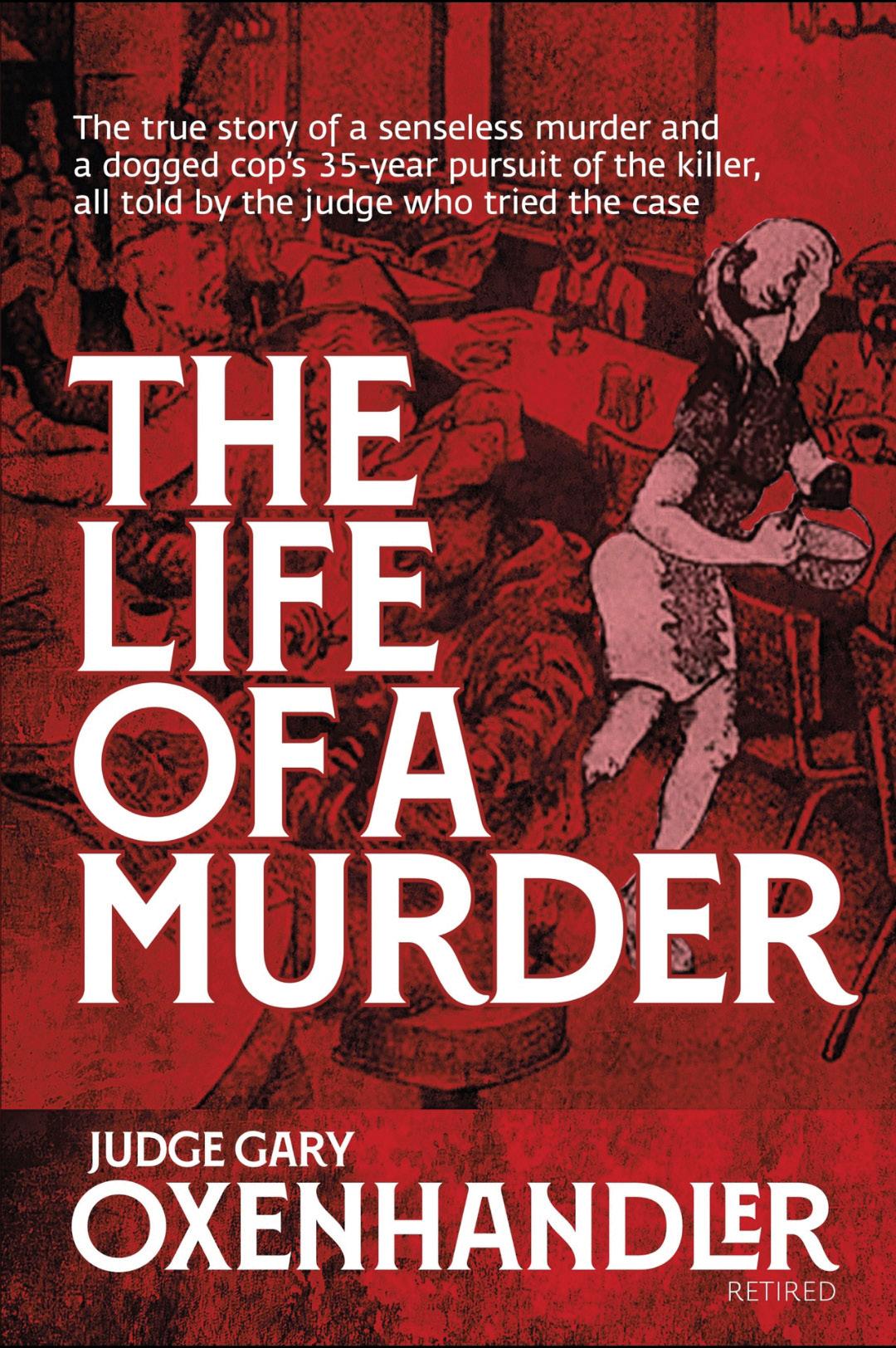
e now-retired Boone County circuit judge who heard the jury trial, Gary Oxenhandler, can recite those details from memory after presenting his book about the case, e Life of a Murder, to some 30 civic and professional groups — even though the verdict against and sentencing of Wright happened 15 years ago — and that was 35 years after Doisy’s murder.
From the rst page to the last, the book, published last fall, lays out the story in remarkable documentary form. It’s not difcult to imagine a voice over from Dateline’s Keith Morrison or another true crime television host setting the stage, introducing the characters, and nally, encapsulating the saga in grim fashion.
“We are left with a sad irony,” Oxenhandler writes near the book’s conclusion. “Wright’s family can visit his grave; the Doisys have no place to leave their owers.”
‘THE BRIEF LIFE OF A TALENTED YOUNG WOMAN’
e book, which began as a few writings and then something longer and then a manuscript, took about 18 months to write.
e original 144,000-word manuscript was trimmed to just under 90,000 words, proving that the task of deciding what to leave in was as arduous as deciding what to take out. Oxenhandler quickly admits that most of the omitted material was about him, his legal career, and how a lifetime of seemingly disparate connections came together for a four-day trial, a verdict, and the sentencing of Johnny Wright in 2011. Coming up with a title was also challenging, especially when a catchy phrase — “He paid 15 bucks to get busted for murder” — seemed to be the frontrunner at rst.
“I want the reader to be part of what was going on in the minds of the investigators, counsel, and judge,” Oxenhandler wrote in the introduction. “At the same time, not to be forgotten, the events depicted, front to back, tell the story of a tragedy: the brief life of a talented young woman who has now lived twice long in her death than she did in her life. And, in the end, I want to tell the story of e Life of a Murder.”
While e Life of a Murder keeps Becky Doisy and a cast of fascinating characters alive, so to speak, there’s also a bittersweet piece of art at Ernie’s that keeps Becky busy waiting table. In the book’s forward, noted investigative journalist and author, Jake Adelstein, explains that when Becky disappeared, local artist Art Koch captured her spirit in a print that hangs on the east side of the diner. “In the scene, Becky is the waitress in the right foreground, forever moving through a busy Saturday morning — likely the kind of Saturday when the news of her disappearance began to ripple through the town.”
WRITE A BOOK? ‘CAN YOU DO THAT?’
Former Gov. Bob Holden appointed Oxenhandler to ll the spot that was left vacant when longtime presiding Boone County Circuit Judge Frank Conley retired in 2002. When Oxenhandler retired after reaching the mandatory retirement age of 70 in April 2016, it ended a 43-year legal career that included a stint as a law partner with his son, Josh, a partnership that “Judge O,” as he is sometimes called, was a highlight of his professional life.
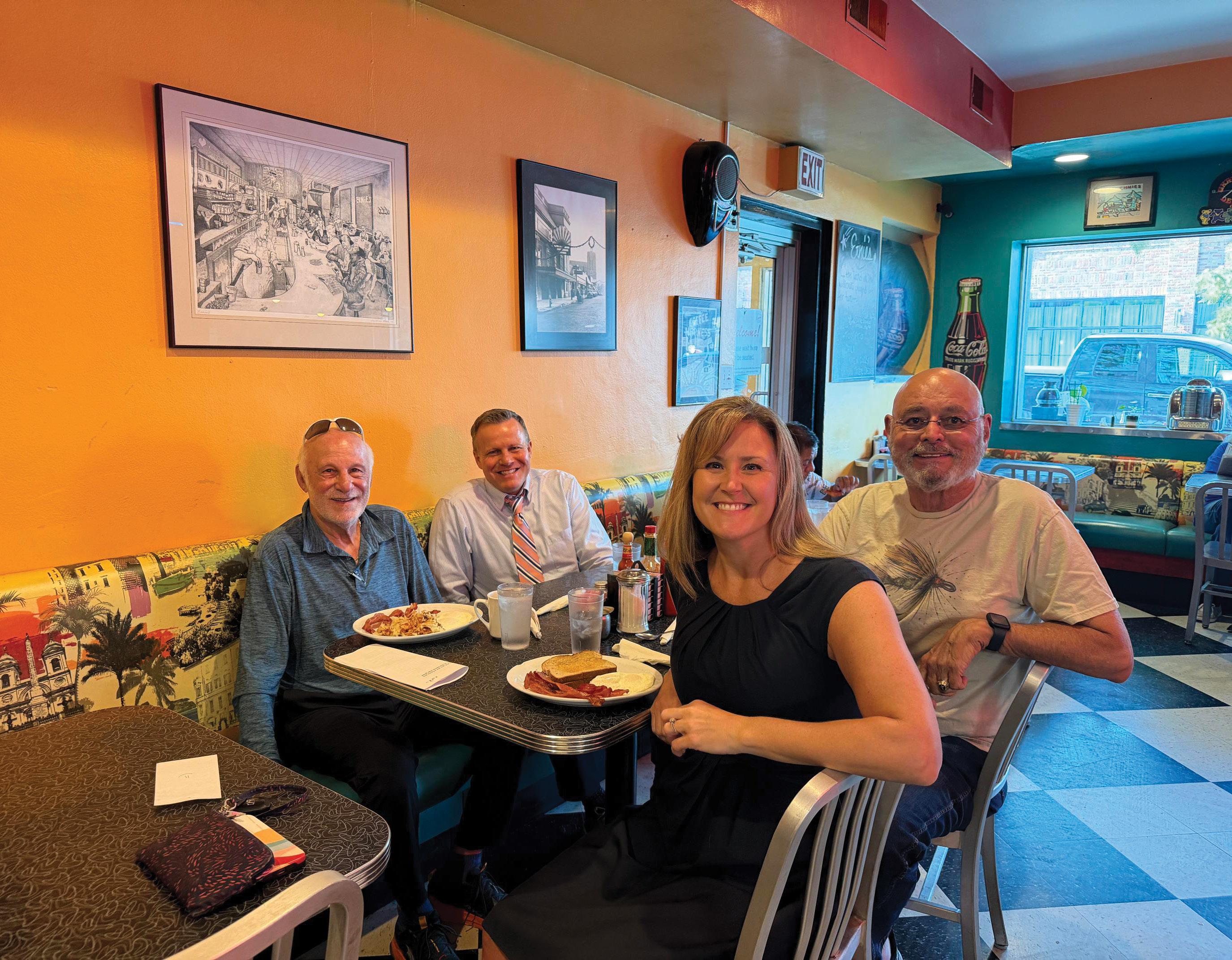
The memorial artwork, above Judge Gary Oxenhandler, features Becky Doisy waiting tables at Ernie's. Joining Judge O at Ernie's is Richard Hicks, second from left, Cecily (Daller) Hicks, and Chris Egbert. Photos courtesy of Gary Oxenhandler
When he was sworn in and took his seat on the bench, Oxenhandler automatically inherited about 800 cases. He says, “ ey were dropped in my lap.” One of the cases that was dropped in [Oxenhandler’s] lap was a capital murder case against Michael Tisius, the only defendant he ever sentenced to death. Another case that fell into his lap was the 1976 disappearance of Becky Doisy, which had led to a murder warrant being issued for Wright in 1985. e case was old and most investigators and prosecutors believed Wright was probably dead.
In fact, Wright had been living in Georgia under the name Errol Rodney Edwards and would likely have remained undetected had he not applied for a job with the city of Lawrenceville using his real name, birthdate, and Social Security number.
e $15 background check was supposed to scan only state of Georgia records, but a clerk — for some unknown reason — also ran Wright’s information against the National Crime Information Center database. Bingo. It contained a 1985 warrant from Boone County, Missouri, charging Wright with murder.
“He paid 15 bucks to get busted for murder,” Oxenhandler writes.
Wright was tried, convicted, and sentenced in 2011. He died in prison of natural causes in 2014. And it was a few years before Oxenhandler contemplated writing a book about the case.
“ e rst question I had was, ‘Can I do this?’,” he said. “ e defendant was dead. e case was over. And I was retired.” He checked with the judicial discipline and review board and consulted others.
“I did my due diligence. If they had said ‘no,’ it would have stopped me right there,” he explained. As long as he made it clear that he was no longer on the bench — that he was retired — there were no objections.
THE F-BOMB LADY
Oxenhandler poured through trial transcripts, investigative notes, and other background information when amassing the material for the book. e Life of a Murder also prominently features co-prosecutors Richard Hicks and Cecily Daller and retired Columbia police investigator Chris “Big Bird” Egbert, as well others involved with the case. It was Daller’s opening statement to the jury that set the tone for the prosecution’s case, and the wording was immediately jarring.
“ ings got f---ed up and I had to croak the bitch.” As Daller spoke, she pointed at defendant Johnny Wright, explaining to the jury that those were Wright’s words to his roommate, Harry Moore, the night of August 5, 1976, when Moore looked into the back seat of Wright’s car and saw the lifeless body of Becky Wright, whose throat had been slashed.
In the book, Oxenhandler gives a voice to an individual known only as Juror 53, who recounted that moment and the impact it had. Juror 53 noted, “I didn’t know you could do that in a trial. She didn’t give the appearance of being an ‘F’ bomber. It got me listening.”
None of the individuals presented in the book — even the worst of the worst — are hidden behind legalese and jargon. e Life of a Murder seems to humanize all of them.
“It was not my intention to be anything but respectful to everybody in the book,” Oxenhandler said. “Even Johnny Wright. Even if I thought he was a monster and a killer. Nonetheless, he grew up in a way that none of us want to grow up. e poorest of the poor, in a terrible neighborhood … But I can’t tell you that it was a goal of mine to humanize anybody. It’s just their own story — and it turned out that way.”
THERE’S NO BODY
Whether the case had been tried in 1976, 1985, or anytime between then and Wright’s arrest in 2011, it was, at best, a weak one. Prosecutor Hicks said as much in his portion of Oxenhandler’s book. By the time the case got to him, and he selected Daller as his “second” for the prosecution, some evidence was no longer available. e two primary witnesses — Moore, who said he saw Doisy’s lifeless body in the back of Wright’s car — and heroin addict William Simmons, who met Wright at a St. Louis methadone clinic — were admitted, lifelong liars with their own legal entanglements.
More than anything, though, there was no body. No evidence, other than Wright’s statements to Moore and Simmons, to show that Becky Doisy was actually dead. What investigators and prosecutors had discovered, however, was a burglary where Wright allegedly stole a shovel and a hoe. Hicks insisted that he needed the “burglary tools” entered into evidence. Other than coincidence, there was no evidence to pinpoint when the shovel
and hoe were taken or that Wright used them to bury a body. e arguments for allowing and excluding that evidence are chronicled in detail in the book. Oxenhandler ruled against the prosecution and the evidence was not allowed. at exclusion It’s is still an occasional point of contention. At a July presentation to the Boone County Bar Association at the Columbia Country Club, with Daller, Hicks, and Egbert seated to his right, Judge O explained the ruling. Egbert interrupted to ask the room full of attorneys and judges to raise their hands if they thought the shovel and hoe should have been entered into evidence. e crowd erupted in laughter. While the group’s uno cial verdict was not unanimous, most hands were raised.
Incidentally, on May 20, 2016, Hicks and Daller married. e ceremony took place in Kathy Doisy’s backyard in Columbia. Oxenhandler now considers them “dear friends,” despite with the good-natured ribbing over the evidence the esteemed judge ruled out in 2011.
UPON FURTHER REVIEW?
Judge O’s copy of his book is always close by. It has pink, yellow, and pale green Postit notes sticking out from the margins. Some of the scribbled notes say, “Knuckle dragger.” “Hicks.” “Juror 53.” e book, and the story — and the things Oxenhandler still wrestles with, from how much a victim impact statement should in uence sentencing to understanding that sentencing a defendant is not a science — remain with him.
“I said I would listen, be respectful, and be fair and impartial,” he explained, referring to his 2002 swearing in. “I did the best that I could do.”
e shovel and hoe scenario might still come up in his interactions with those involved in the trial, and Oxenhandler welcomes the conversation, adding, “It’s really a fascinating issue of law.”
ere’s also Wright’s failed polygraph test, which could not be admitted into evidence — though that almost happened. One of the police investigators who took the stand mentioned the polygraph, and Wright’s attorney immediately asked for a mistrial. Instead, Oxenhandler, noting that judges “always sanitize stu for the jury,” explained to the defense and prosecutors that he would tell the jury, “ ere was no polygraph.”
AUG. 5, 1976
Rebecca Abbott Doisy disappears.
AUG. 26, 1976
Detective Chris Egbert interviews Johnny Wright.
LATER THAT DAY
After Wright’s interview, Harry Moore, Wright’s roommate, is the target of a shooting.
SEPT. 1, 1976
Johnny Wright takes a polygraph.
NOV. 25, 1985
Boone County Prosecuting Attorney Joe Moseley issues a warrant for the arrest of Johnny Wright.
SEPT. 23, 2009
Twenty-four years after Becky’s disappearance, Wright is arrested in Georgia.
JAN. 25, 2011
Wright’s four-day jury trial commences in Boone County, Missouri.
Did he lie to the jury? “I lied to the jury,” Judge O admitted, repeating that he was following the practice of “sanitizing” material for the jury, and that “it worked out perfectly.”
e alleged burglary of a shovel and hoe, the polygraph information, and even other women whom Wright had been accused of sexually assaulting were not presented as evidence during the trial. And that left Judge O’s neighbor, Patricia Cole, struggling with her own, uno cial verdict. Cole wrote in the book’s post-trial chapter, “If I was sitting [on the jury] I don’t know that I could nd this person guilty.”
‘THEY’RE GOING TO FIND HER’ Egbert, now 80, is mentioned in e Life of a Murder almost more than anyone else. He was lling in for another Columbia police o cer on Saturday, August 7, 1976, when a woman named Kathy Doisy dropped in to tell him that her sister, Becky, was missing. Becky’s co-workers were also worried that she had not shown up for her morning shift at Ernie’s. And so began Egbert’s lifelong pursuit of Becky’s killer and his association with the Doisys family.
He had been retired more than 15 years when Wright was nally arrested. But he had remained in touch with the new investigative team and stayed in contact with Kathy Doisy and her parents.
During his investigation, Egbert consulted two psychics who had gained notoriety by helping police in other jurisdictions solve crimes. Both psychics marked an X on a map of Columbia, and both marks were “just about on top of the city land ll,” he said.
“You take that, for whatever it’s worth, and you couple that with the fact that [Wright] worked for the city street department. He would have had access to the city dump,” Egbert said following the presentation where he asked the audience to “rule” on Oxenhandler's shovel and hoe ruling. “But where she is? I don’t know,” he added.
Egbert said there is some satisfaction knowing that investigators took DNA samples from Becky’s sisters.
“Someday, somebody is going to be putting in a subdivision, digging a hole. And they’re going to nd her. ey’ll nd her,” he said. “And when they do, I’ll probably be dead and gone. But I want to be able to connect that DNA. At least they have a connection so we’ll know whose body that is.”
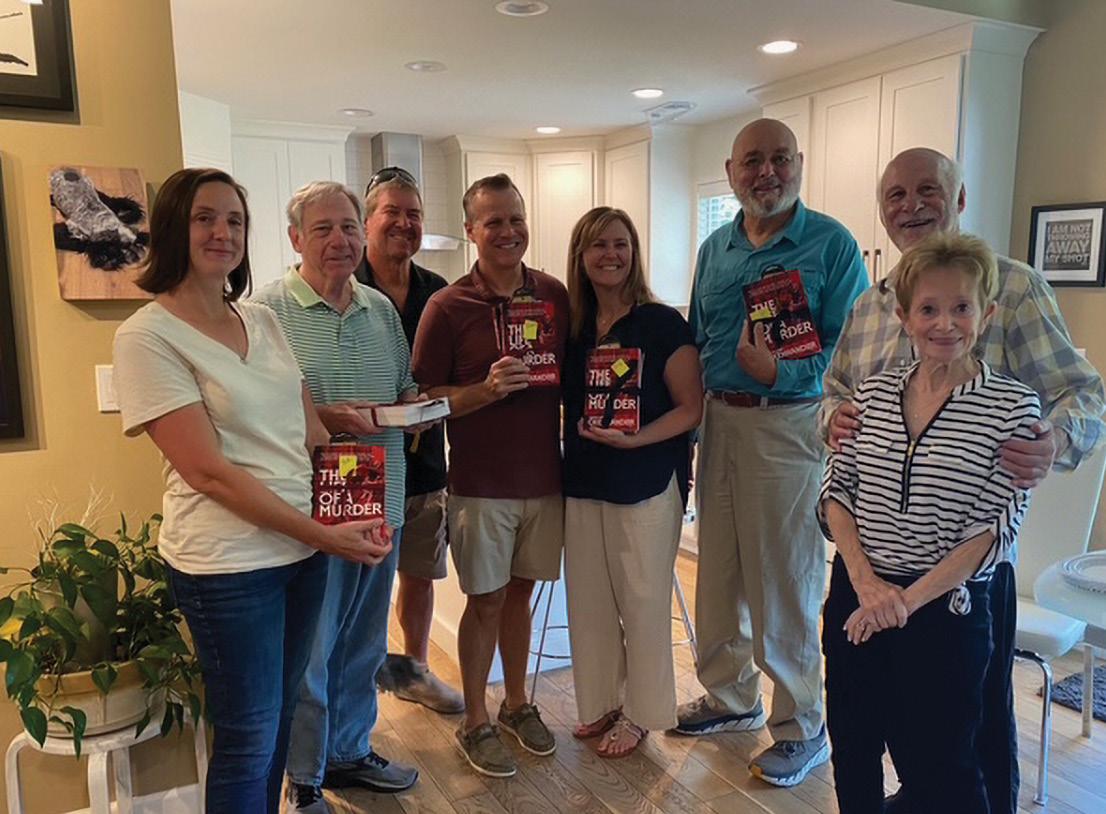
Gary and Janet Oxenhandler (right) hosted the main "players" from the book for breakfast in their home.
From left, Patti Cole, Marvin Tofle, Ben White, Richard Hicks, Cecily (Daller) Hicks, and Chris Egbert.
The Columbia
The ‘why?’ behind my photographic journey through Columbia.
BY STEPHEN BYBEE
Over 25 years ago, I started photographing downtown Columbia in earnest. It was my dad who got me started in photography and who, on my 12th birthday, presented me with a Nikon lm camera and a 50mm lens. For years, this was the only camera I used or needed, gradually adding a few lenses and later a tripod. My earliest photos of Columbia were taken on color print lm when I had free time on the weekends.
As I became more engaged in the art of photography, I began photographing downtown Columbia with black and white lm on a casual basis. Equipped with a Nikon lm camera, two or three lenses, and a tripod, I set out each week during the late 1990s to photograph the downtown area. My initial intention was not to document, but to artistically interpret the streets, alleys, bars, storefronts, and neon signs of this comfortable college town that I called home. Informed and inspired by the work of Brassaï, Edward Steichen, André Kertész, and Josef Sudek, my aims were artistic rather than documentary.
In 1998, I enrolled in an intermediate photography class at MU with Professor Oliver Schuchard. Our class assignment was to create and submit a topic for the end-of-semester portfolio. For reasons both pragmatic and creative, nighttime o ered me the best opportunity to wander our city’s streets in search of inspiration and vision, so I selected Night Photography as my topic and began to photograph downtown Columbia in earnest.
When I started photographing Columbia at night, I was on a quest to nd scenes that displayed the visual magic and the poetry of a city after dark. I was captivated by the bewitching beauty and simplicity of a city at night, and I recognized the power of darkness to transform the quotidian into something elegant and mysterious. During 1998 and 1999, I put more time and energy into photography than any other activity, and I became fascinated by the creative alchemy that I experienced during nighttime photography.
e earliest photographs in this body of work stretch back to 1996, with creative peaks occurring in 1998, 2001, 2003, 2011, and 2013. From 1996 to 2010, I was making my photographs on lm with a manual focus camera and a tripod. In 2010, I shifted over to digital image making and moved away from the use of black and white lm and a tripod in much of my photography.
A portfolio topic chosen 28 years ago led to an obsession with night photography and to a long-term project to document downtown Columbia at night. I continued photographing Columbia in this fashion from 1998 until 2003, when life interrupted and took me to a new city. I moved back in 2008, and in late summer 2009, I began to photograph the downtown area, once again bringing a lm camera and tripod, but now with a new and compelling motivation.
Columbia’s skyline and infrastructure were changing rapidly in 2009 and 2010, and because of this, my approach to photographing our downtown took on a documentary purpose. Some of the buildings and houses I had grown familiar with were being demolished and replaced with high-rise developments. e softly weathered bricks and familiar neon signs of my 1990s Columbia were becoming glass, steel, and concrete structures, imposing rather than beckoning. My goal was now very clear, and it was to document the Columbia I knew before it changed and disappeared.
In 2011, I started photographing with a Nikon D700, my rst attempt at creating black and white from a digital camera. Using the new camera transformed my approach to photography, moving me from tripod-based photography to a handheld approach. It also increased the speed at which I could document the changing face of downtown. I now use a Nikon D750 and a Nikon Z6III for much of my photography, and I continue to document downtown Columbia, by night and by day.
STEPHEN BYBEE currently serves as the project director for Missouri Conservation Corps. He graduated in 1994 from Westminster College with a degree in English and then moved to Colorado for a year to serve as a volunteer for the U.S. Forest Service. After returning to Columbia in 1995, Stephen studied art and photography at Columbia College and the University of Missouri. He became involved in environmental volunteerism in 2015 when he began working with the Outdoor Classroom Committee at Russell Elementary School. In addition to his work with Missouri Conservation Corps, Stephen is also president of the Columbia Historic Preservation Commission, a member of the Columbia Tree Board, vice president of the County House Branch Neighborhood Association, and an active volunteer in the community.
In 2022, Stephen was awarded the Columbia Missourian Progress Award in Sustainability, and in 2025 he received the Conservation Medal from the Columbia Chapter of the Daughters of the American Revolution. Stephen is committed to the power of volunteering to positively benefit and transform the community. When he has free time, he enjoys photography, reading, running on an amateur level, and researching and preserving the history of Columbia and central Missouri.
I Remember
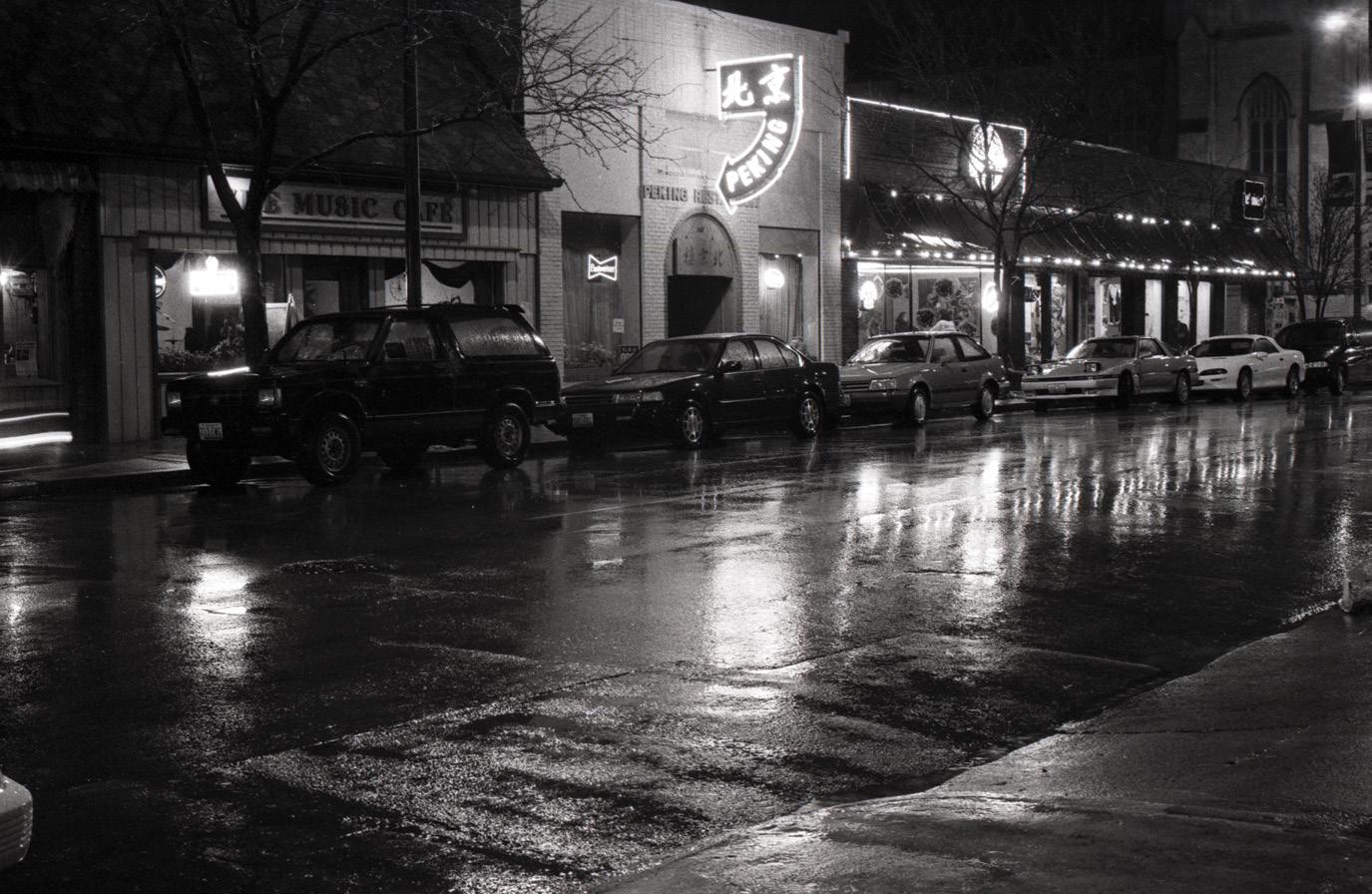
“NINTH
STREET IN RAIN” 1998
It is an effort to try and remember everything that was located on this beautiful stretch of Columbia’s Ninth Street in the late 1990s. This photograph helps. On the far left was Billiard’s, before it moved to Broadway. Next was The Music Café, followed by the restaurant with my favorite neon sign ever to grace a Columbia eating establishment, Peking. The next address after Peking was Quinton’s, then there was a comic book and gaming store whose name escapes me, and finally on the corner of Ninth and Cherry was a clothing store called Te Shurt. If you have been following my weekly, Friday morning posts of nocturnal Columbia photographs, you will already know that I was long fascinated with this stretch of South Ninth Street, coming back several times in different seasons and in different weather to photograph this particular block.
This image was taken on black and white film on a raw, rainy night in February or March of 1998. It was one of those evenings where, after a brief dalliance with warm weather, the meteorological powers that be seem to lose faith in the concept of spring and declare a mandatory return to winter. A week or two later, this stretch of Ninth Street was covered in snow.
ON THE COVER
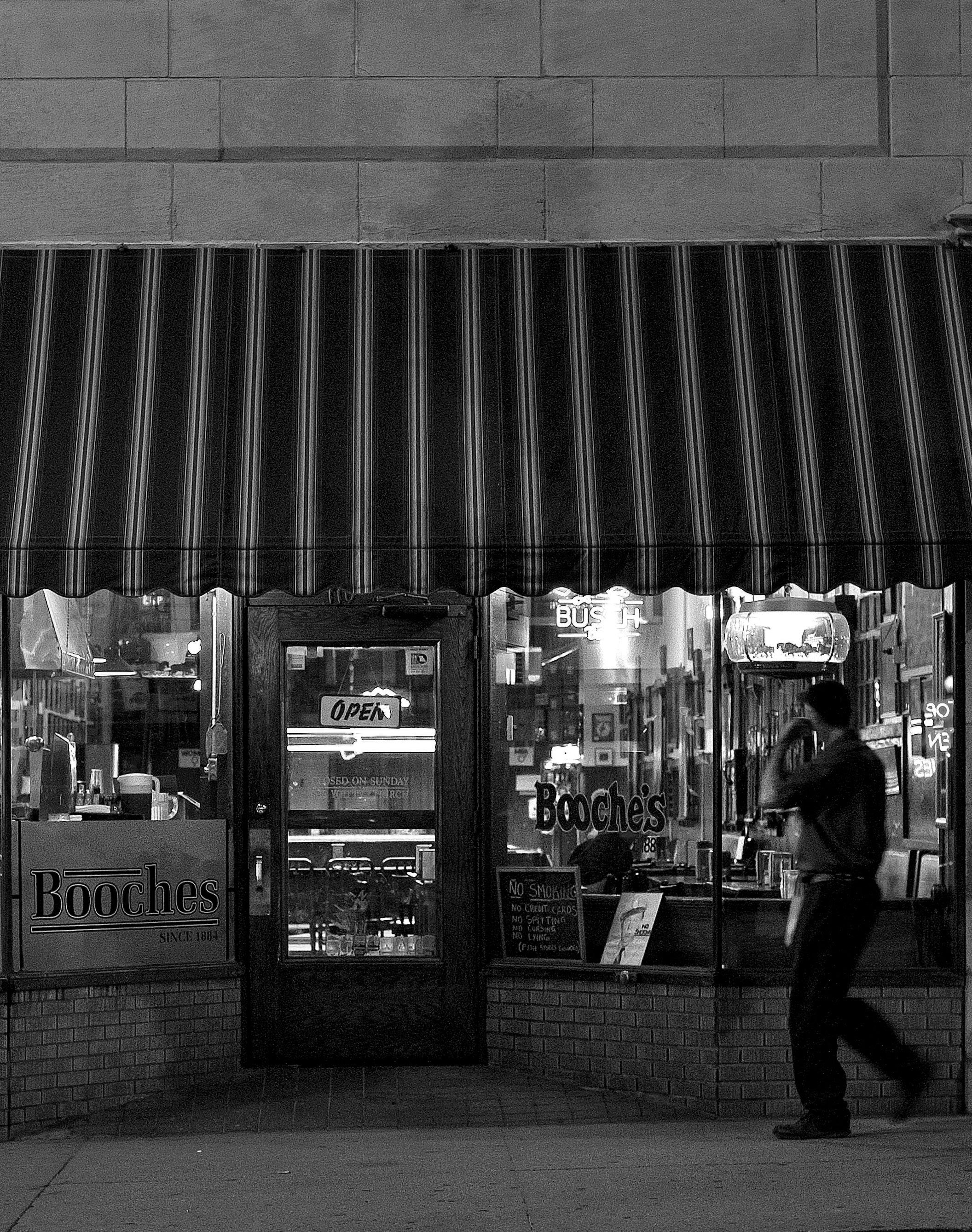
“BOOCHES ON A SUMMER NIGHT”
South Ninth Street
June 10, 2014
Even after living in Columbia for nearly 25 years, I haven’t taken that many photographs of Booches. I know that Booches is a unique and historic business in Columbia, with many devoted patrons and burgers that hover somewhere just shy of a mythical quality, but the front of the building is so hard to photograph because Ninth Street is usually full of parked cars, blocking any meaningful photographic vantage point. A few weeks into summer break on the calendars of our three collegiate institutions, and this problem resolves itself. Columbia loses some of its scholarly residents, and parking spots and empty streets appear everywhere across the city.
This photograph was taken on June 10, 2014, one of the very few times I have had a clear view of Booches with no cars parked in front. There is a significant amount of history tied up in this establishment and in its founder, Paul “Booch” Venable. The buildings to the left and the right of Booches also have their own histories … the imposing Hall Theatre to the left, and a now-demolished building to the right. I think I will save these stories for another day. I am not completely sure that this image is finished. … I think with some work I could bring a little more out of it, but for now, here is Booches on an early summer night in 2014.
2011
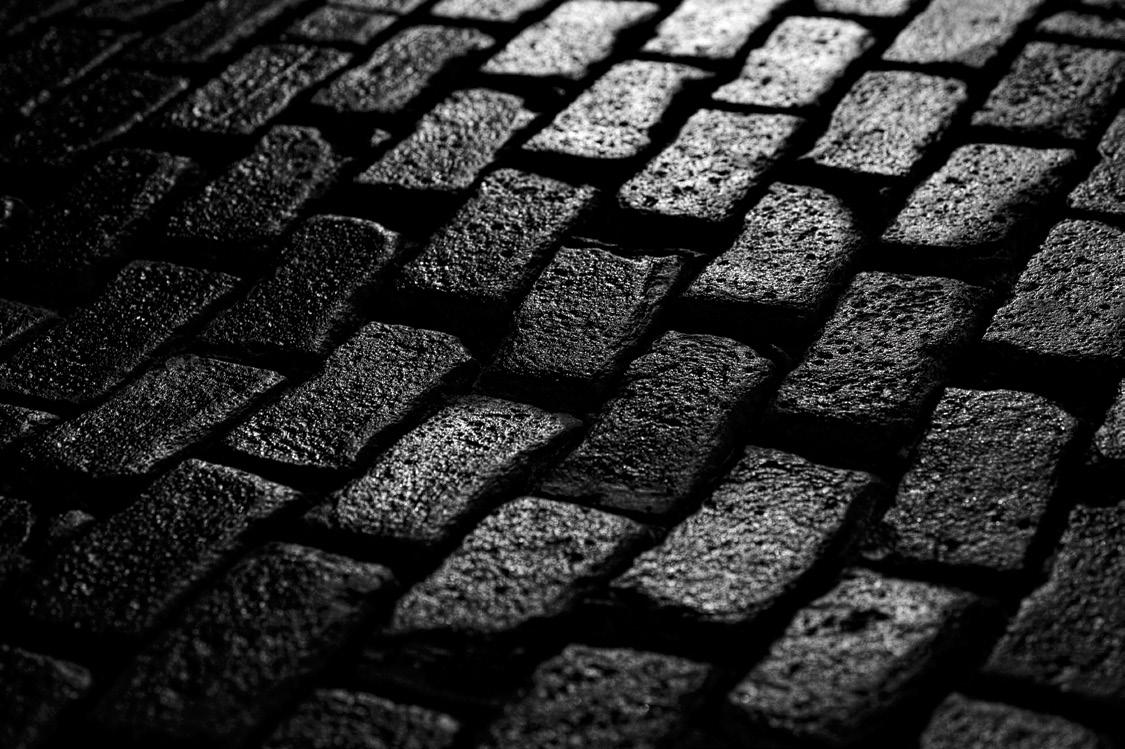
Of the many things we take for granted, some are just beneath our feet. These are the well-worn pavers of Short Street, a downtown Columbia street whose original path now lies beneath a hotel and a parking garage. In 2009, I came back to photographing downtown Columbia after a hiatus. New construction was springing up and rapidly changing the skyline and the footprint of the town I had called home since the mid-1990s. My photography work during the late ’90s and early 2000s had been an artistic and visual exploration of the downtown area, but in 2009 I was motivated by a desire to document the community I had known for 15 years. My approach to night photography became more methodical and more literal. Except for the occasional image like this: a portrait of a group of mist-bedecked pavers on a cold night, taken just a few months before development began on the Short Street Parking Garage and expansion of the adjacent hotel. According to some fairly reliable sources, these pavers were saved before development began on this site and were taken to a city storage facility for possible future use in a downtown street project.
“SHORT STREET”
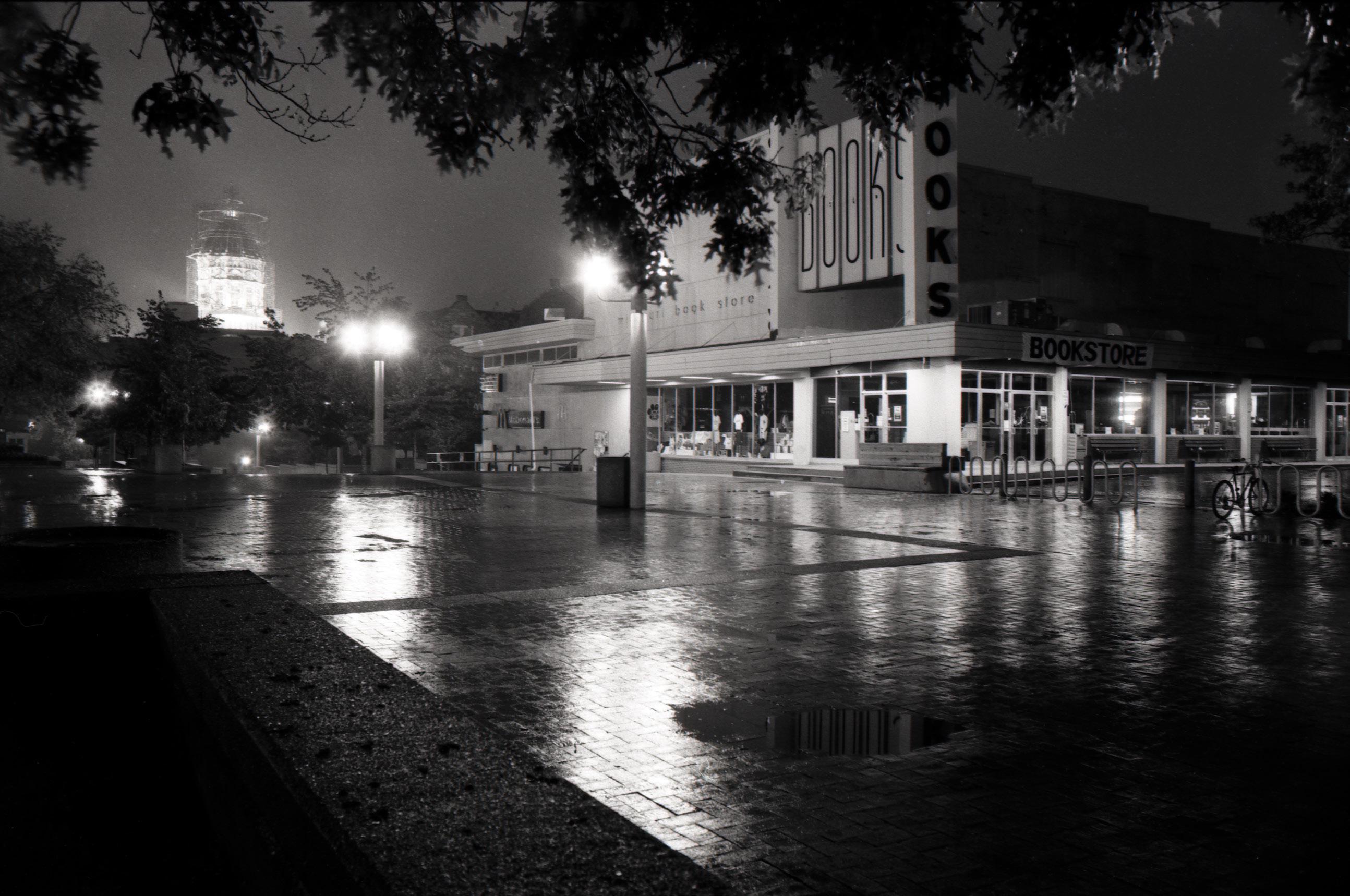
“SUMMER
In 1996, I lived in a rented house on Anthony Street, very close to the campus at MU. Because I occupied a very small bedroom, because we had no air conditioning, and because I had a lot of free time on my hands, I wandered around Columbia a lot. In January of 1996, I enrolled in a basic design class at MU and in a beginning photography class at Columbia College. After a semester of taking both classes while working as a baker in a local bakery, I was certain of several things: Taking a class was more engaging than simply working a job, photography spoke to me on several different levels, and Lowry Mall at MU was the most visually intriguing public space I had discovered in Columbia since moving here in 1995.
Using black and white film and a manual focus camera, I took this photograph of Lowry Mall on an evening in June, just after a summer rainstorm had moved through and left everything clean, wet, and reflective. Campus was empty, the students having all gone home for summer break. The Missouri Bookstore was still a presence on Lowry Mall, serving as an alternative to the University Bookstore, and its vintage signage broadcast its wares in several different fonts. McDonald’s was still located on Lowry Mall in 1996, and the distant dome of Jesse Hall was scaffolded for renovations. This photograph also reminds me of some of my early inspirations in photography, including André Kertész, Josef Sudek, Brassaï, and Henri Cartier-Bresson.
“KOPN
ON BROADWAY” 2011
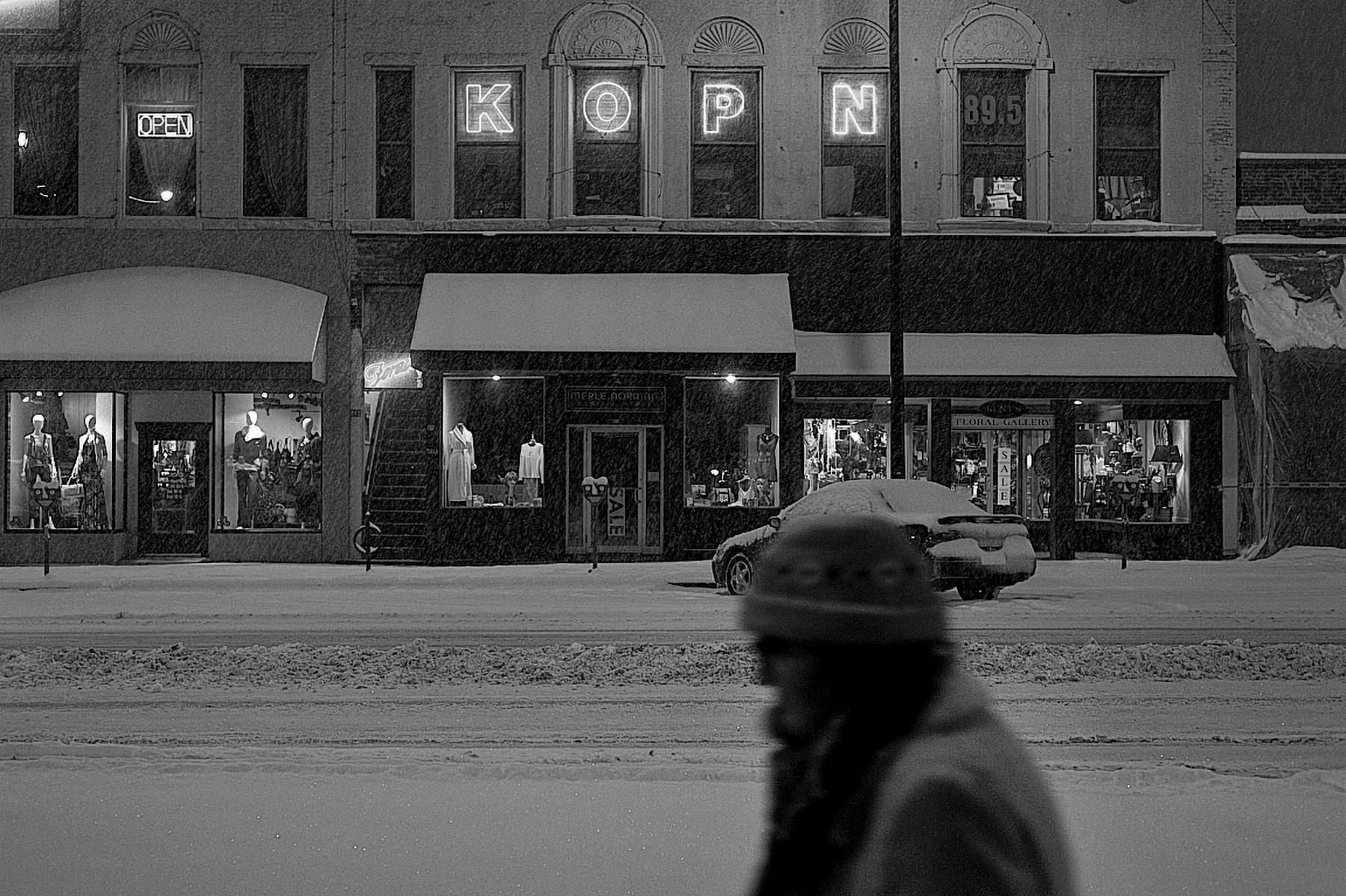
This photograph is as much about the weather as it is about the glow of the neon letters on the other side of Broadway. This was taken in January, during the magically snowy winter of 2011. This was the second or third in a series of snowstorms that eventually brought Columbia to a new record snowfall total for the season. These same snowstorms made downtown Columbia a wonderfully transformed environment for night photography, and I recall several outings during these storms for the purpose of photographing a very cold and snowy Columbia. This image was made on the 900 block of East Broadway, right across the street from where the KOPN studios were at the time. I had seen this view of Broadway many times and was convinced that this was something that needed to be documented. I took several photos of this scene before a woman walked by, dressed for the weather and wearing a very warm-looking winter hat. Had she not walked through the image, this would simply be a very documentary-style photograph of the north side of the 900 block of East Broadway at night. Her passage added the poetry that my initial images were lacking.
“TENTH AND LOCUST IN SNOW”
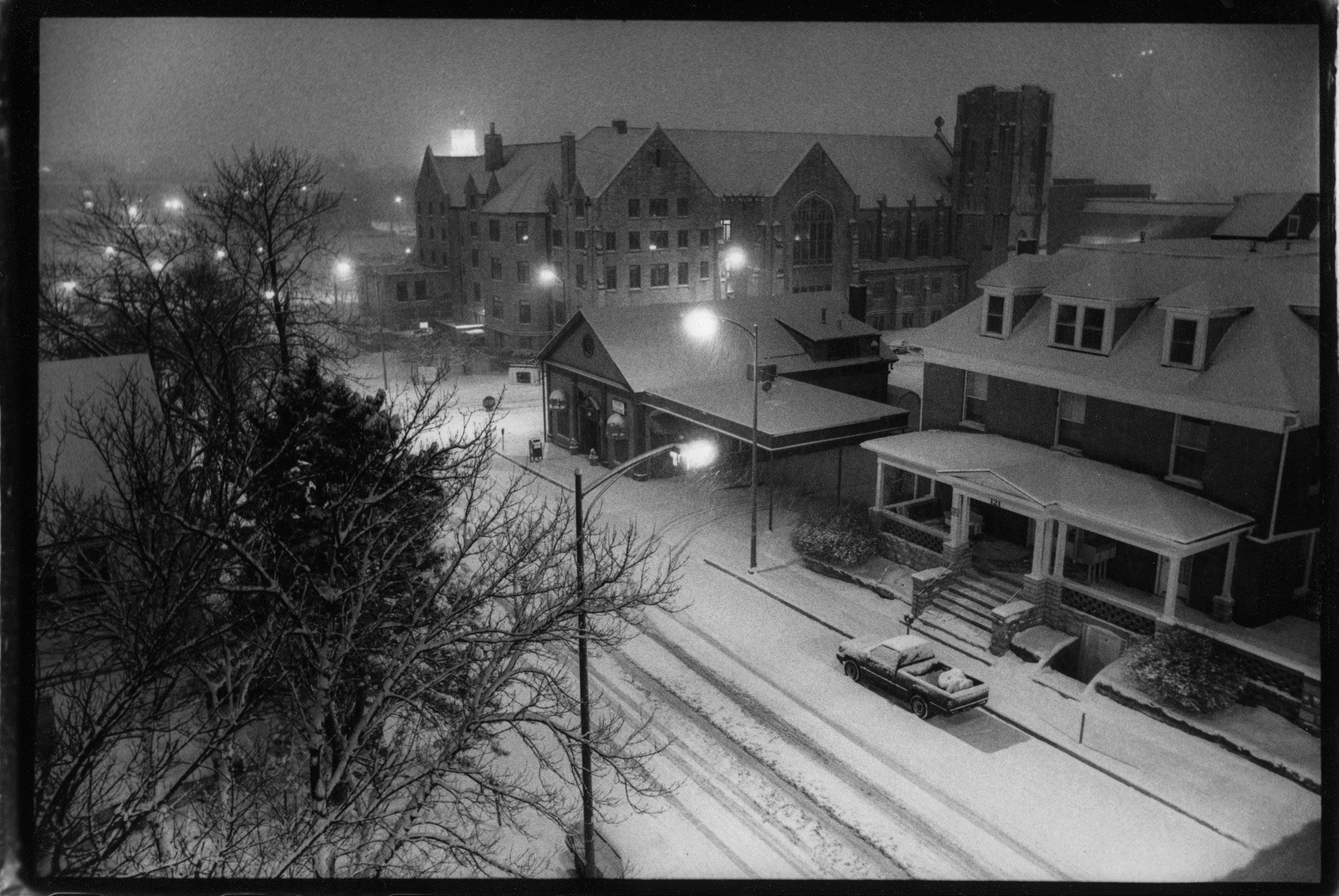
CC’s City Broiler and the former Elks Lodge, South 10th Street 1999
This photograph represents a departure from some of the work I have been sharing lately, both chronologically and stylistically. In this image, we step further back in time on a corner of Columbia that has completely changed in the last 25 years. Here we are in the Cherry Street parking garage, looking out over the corner of 10th and Locust. At this point in Columbia’s history, CC City Broiler occupied the former bus station on the corner, and the long-ago Elks Lodge at 121 S. 10th St. is an apartment building with a single pickup parked out front. On the opposite side of Locust rises the immense gothic revival stonework of the Missouri United Methodist Church, its windows darkened on this snowy night. In the distance, obscured by snow, the chimneys of the university power plant blink quietly, while the dome of Jesse Hall stands as a beacon in the storm. To our immediate left is a group of residential houses that once stood on South 10th Street.
This photograph is not only a window into Columbia’s history, but it was also executed in a now historic method of photographic capture: film. Film is the reason that this image is not tack sharp and crystal clear. Film is the reason for the slow shutter speed that allows the falling snowflakes to blur in clusters around the streetlights. Film is the reason for the grainy appearance to the dark, winter sky, the grain structure of the film sometimes confusing itself with the snow in the air.
Film gives this image a slightly more poetic look, like an illustration out of a storybook for children. In this storybook, I remember taking long walks across nighttime Columbia from the public library to my rented house in East Campus. Passing the corner of Locust and 10th, the delicious smell of oak wood being fired in the ovens behind CC’s City Broiler conjured visions of a decadent steak dinner being served in a warm, dimly lit restaurant. This is one of the few images I have taken that captures a night in Columbia in a poetic or fairy tale fashion, and it was made at a time when my own artistic vision was less realistic but truer.
“SNOWY NIGHT ON HITT STREET”
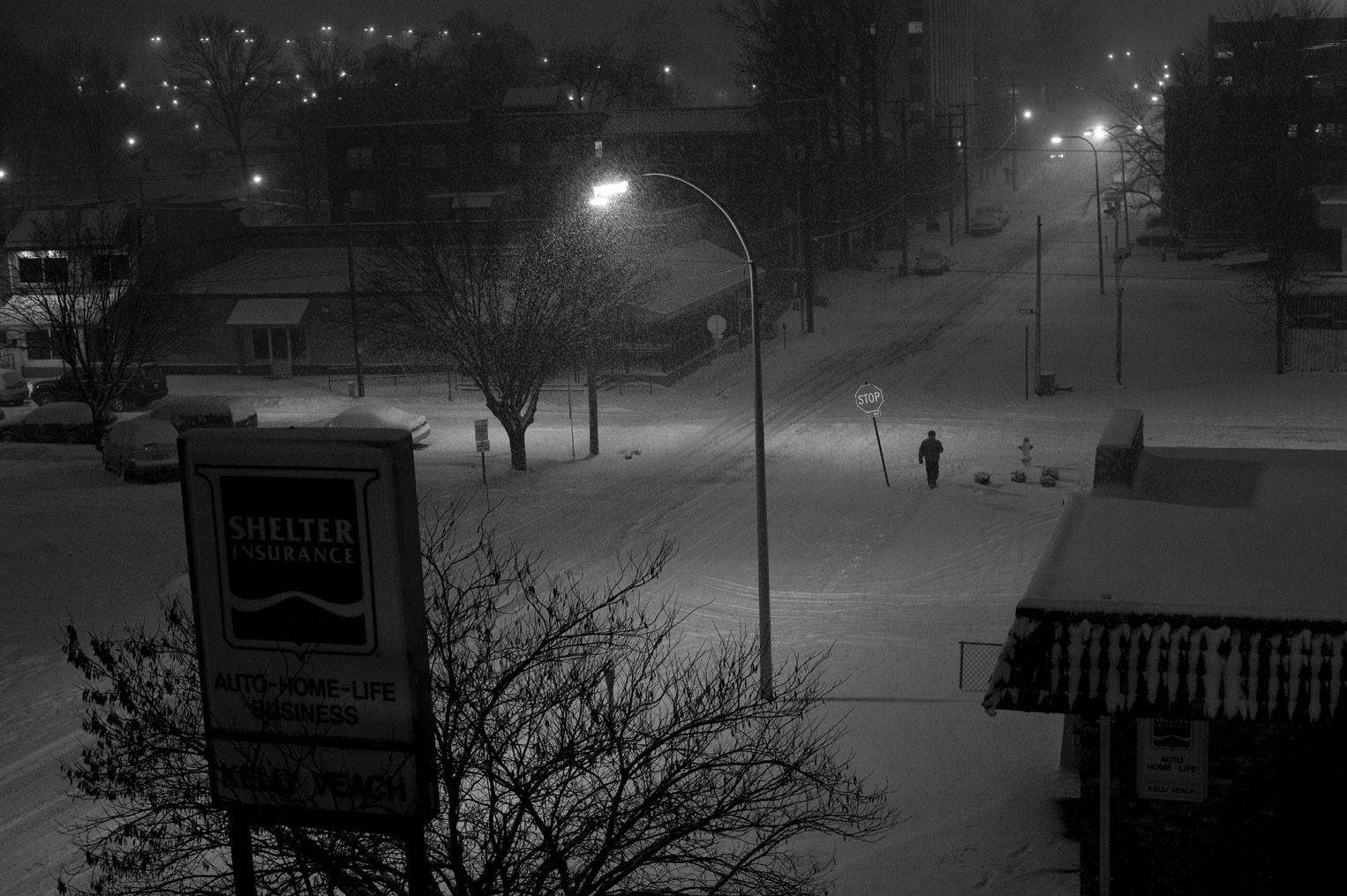
2002, Hitt and Locust
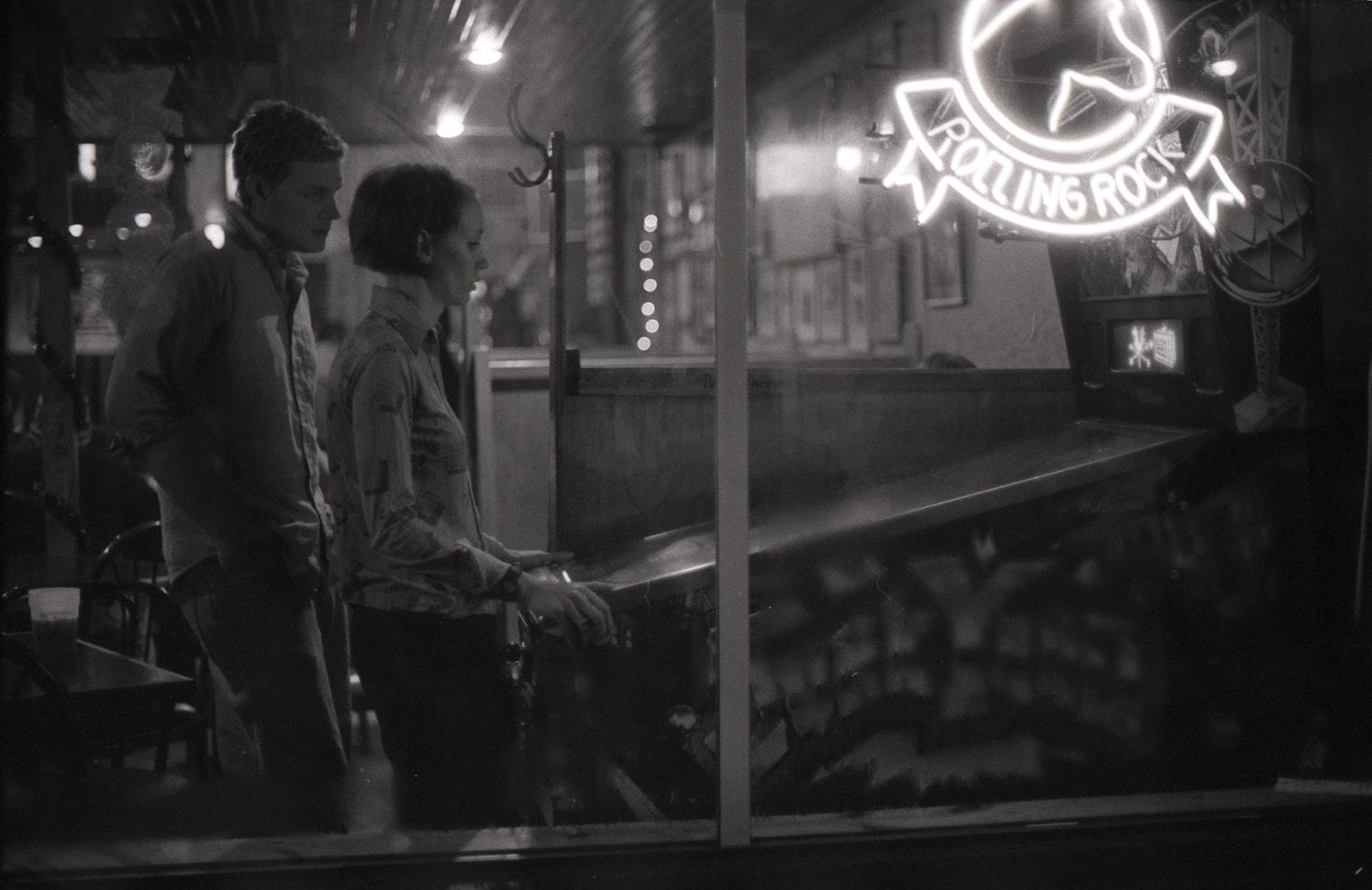
“PLAYING PINBALL AT SHAKESPEARE’S, WINTER 1999”
This photograph was taken at a time in our local history when Shakespeare’s was a nighttime hub for art majors, painters, musicians, bartenders from Shattered, J-School students, and photographers. It was also a time when “Shakespeare’s” only meant the original Ninth Street location and there was no confusion about what you meant when you said, “Meet me down at Shakes …” This was taken on a weeknight, probably in early December, when the nights were just starting to get cold and the windows of Shakespeare’s exhibited a beguiling perspiration formed of rising dough, pizza ovens, the warmth of hungry patrons, and the rich effervescence of pitchers and cups of freshly poured beer.
This is an image that performs better when you don’t enlarge it. I have tried to view this photo as a large image that fills the screen and as a tiny image that occupies only a thumbnail of space. And its sweet spot is somewhere in between. To enlarge it is to lose the fantastic magic that is the snow falling across this nearly deserted intersection of two downtown Columbia streets: Hitt, moving traffic and pedestrians north and south, and Locust, funneling the same foot and vehicle traffic east and west. Somewhere between too small and too large is the perfect size for this photograph, a size that preserves the detail of each flake of snow as it crosses the path of the streetlight, a size that allows the viewer to distinguish the poise and purpose of the walker’s arm as he trudges confidently southward, and a size that does not attempt to exploit the magic of a scene that could be taken from a children’s fantasy book, or an upended snow globe, or a Russian novel. Keep this image small when you view it. This is also an image to which, I must confess, I find it difficult to confidently ascribe a date. Was this taken in 2002, or in 2011? Was I standing on the corner of this parking garage in a snowfall with a film camera or with a digital camera? This particular vantage point was one of my early and favorite locations from which to photograph downtown Columbia, and my first roll of night photography slide film included an image taken here in 1996, when University Market occupied the southeast corner and Bambino’s and International Café were on the opposite side of Hitt. This photograph is less about the buildings and businesses that occupy these corners, and it is much more about the emptiness of the scene, the softness and quiet rendered by a nocturnal snowfall, and the lone, striding figure, bringing movement and meaning to an otherwise uninhabited composition.
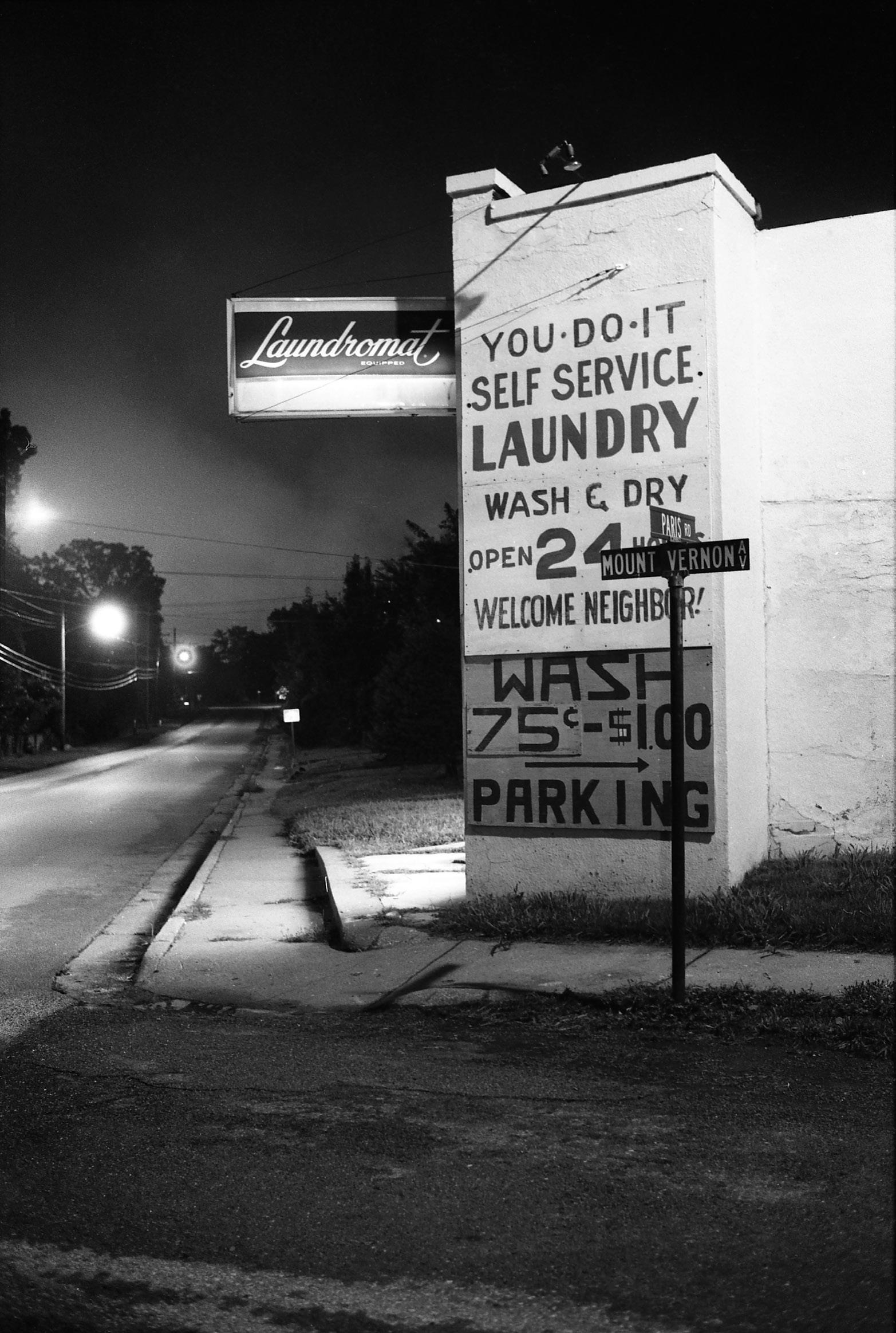
We have now reached the end of my collection of images selected for our Nocturnal Visions exhibit at Columbia College’s Larson Gallery. The exhibit was proposed and planned by Kevin Dingman back in 2022 and features nighttime photography work by Notley Hawkins, Dingman, and me. I wanted to let everyone know that I will
be donating 20 percent of any of my own print sales to the local nonprofit Como Mobile Aid Collective. I also wanted to say that my photography work now has a permanent home at stephenbybee.com, a website talented local web designer Natalie Feibish is building each day as I post these gallery images. She will be adding
to the website when I have a free moment and can send her the content to develop.
On November 1, I began posting one image each morning from my collection of 17 prints selected for the exhibit. We are now finishing this exercise with the last image in this series, the Paris Road Laundromat. I made this photograph in August or September of 2002, when this beautifully adorned structure on the corner of Paris Road and Mt. Vernon Street was officially decommissioned and closed. Like so many things in Columbia, this was a building that I passed by on a regular basis, always admiring the signage and the character of the building, but never stopping to make a photograph. When I learned that the Paris Laundromat was going to be closed, I made a determined effort to document the structure, and all of its glorious signage, before it was permanently changed.
This photograph was taken with black and white film, using a tripod, while standing in the middle of Mt. Vernon. Fortunately, the street doesn’t get a lot of traffic at this time of night. It looks like I was using a 35mm manual focus lens, and I stayed for a while to get multiple views of the building. For those of you who might have seen this image before, I have posted it to Facebook, and when I did so, I had so many people post personal memories and recollections of coming here to do their laundry, or to study while their laundry dried, or to drink beer while their laundry dried. This corner laundry was apparently a community hub in this northeast Columbia neighborhood. My approach to making this image was a little less artistic than some of my previous work and was closer to the documentary approach taken by American photographer Walker Evans. I was more concerned about documenting the structure and everything it had to advertise and was less interested in making a fine art piece.
Of the many views of our city that I have photographed since starting back in 1996, this is one of the views that I am happiest to have preserved. A week later the business was closed, the doors were locked, and the signs were being removed or painted over.
“SNOWFALL
ON SOUTH NINTH STREET”
South Ninth Street,
January 2011
We are back on Columbia’s South Ninth Street again, during a January snowstorm in 2011. While some of my earlier images of South Ninth Street focused on the east side of the street, this photo gives us a view of the west side of the street, including several retail storefronts and two very prominent corner buildings. If we work our way north building by building, starting from the south (or left) end of the photo, our retail tenants on Ninth Street at the time included Tiger Spirit on the southwest corner of Ninth and Cherry, Kaldi’s Coffee on the northwest corner of Ninth and Cherry, Mustard Seed, Bubblecup Tea Zone, Sparky’s, and Makes Scents. Of these six retail tenants, four are still thriving 14 years later, while Mustard Seed and Kaldi’s are no longer with us on Ninth Street. The space occupied by Kaldi’s since 2007 is now inhabited by locally owned Shortwave Coffee, and the storefront once known as Mustard Seed is now occupied by Makes Scents. And those prominent corner buildings I referenced? Well, they both have more than one name, depending on whom you ask, and they both occupy their respective corners of Ninth and Cherry.
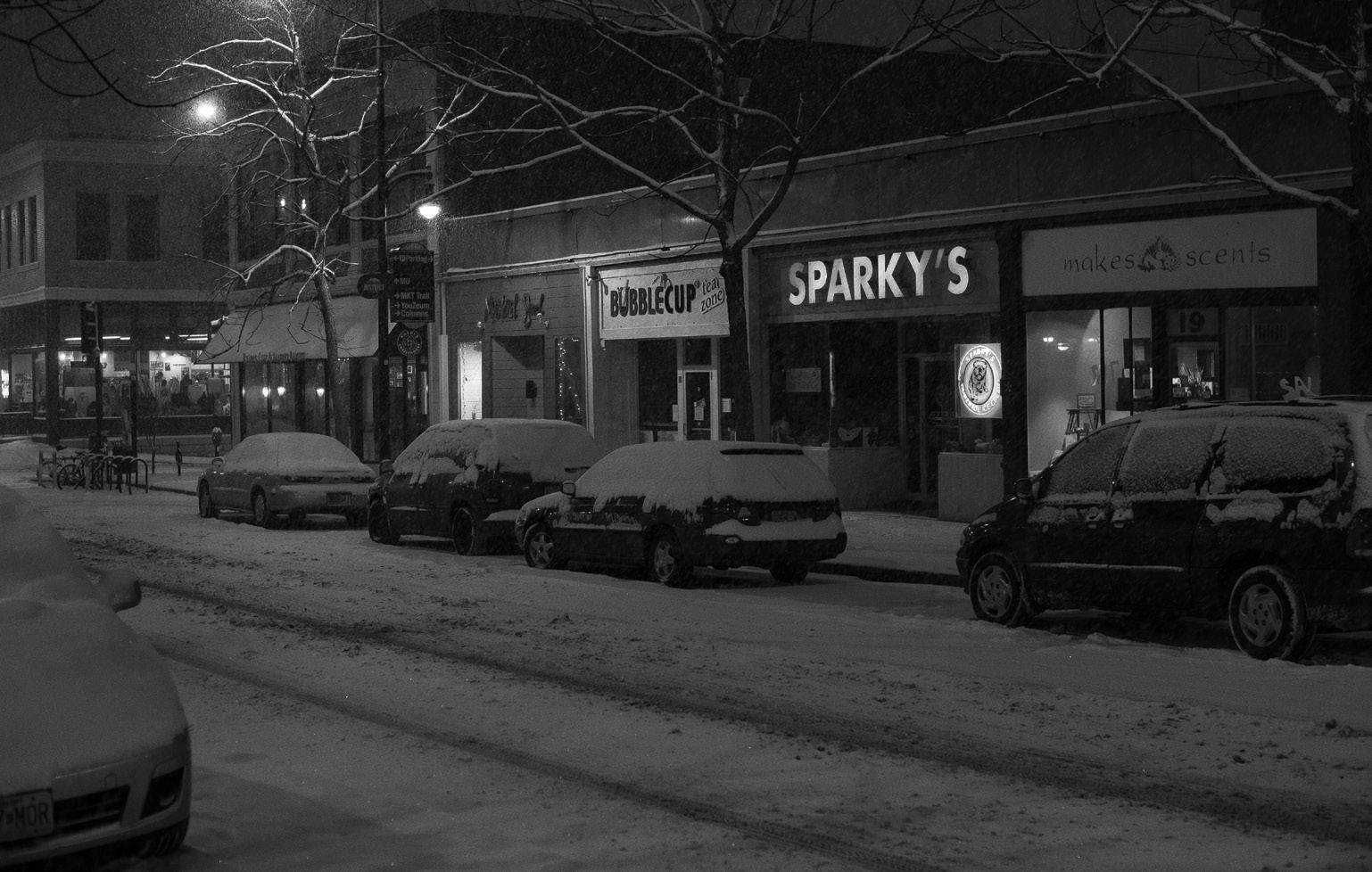
converting and consolidating the once autonomous storefronts into an urban mini mall connected by a central hallway: hence the epithet “Strollway.” The historic rehabilitation of the structure in 2000 and 2001 removed the changes wrought on the building 40 years prior and restored the building to its original appearance. Across Cherry Street from the Virginia Building is the slightly older, slightly smaller, but equally historic Ballenger Building.
On the southwest corner sits the stately, yellow brick building known as the Virginia Building. An immense amount of work was done on this building in the early 2000s to restore its former architectural majesty. Built in 1911, the Virginia Building is, according to architectural historian Deb Sheals, the only Columbia building with bricks of this particular color and finish. For a brief period during the 1960s and 1970s, this building was renamed Strollway Center after a remodeling altered the exterior, covering much of the original brick with metal siding and
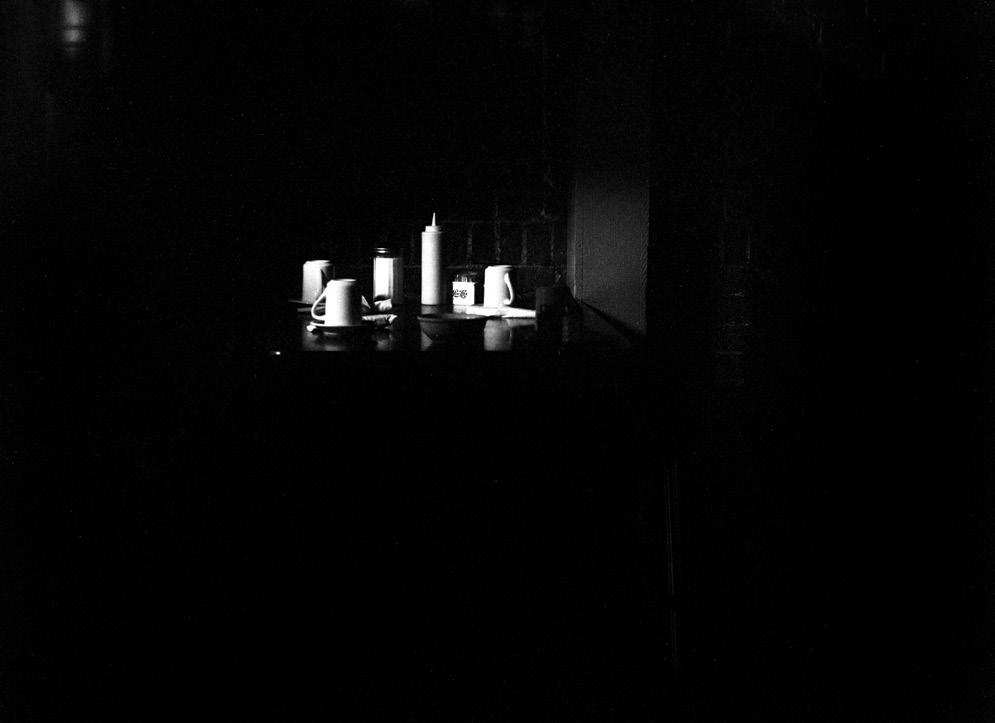
I have heard this building referred to as the Ballenger Building, The Troxell Building, The Paramount Building, and the Kaldi’s Building. Built in 1892, it has housed a variety of retail tenants on the ground floor, including Troxell Furniture and Caskets, Ballenger Stove and Implements, a realty company, a Safeway grocery store, a flower shop, Glenn’s Café (one of their several locations), and Kaldi’s Coffee. And the basement tenant of this location, the inspired French alchemist who once brewed and bottled delicious elixirs from spring waters once flowing freely on this site … well, Rene Butel is a story for another post, and another day.
Photographed on a quiet evening in May 2011, this intimate view of the interior of Lucy’s Diner was taken through a window, after hours. Lucy’s was located on the southwest corner of Sixth and Broadway in downtown Columbia. Now occupied by El Oso, this corner was long the home of Ron’s Country Boy, a wellestablished diner in downtown Columbia when I moved to town in 1995. In fact, Ron’s Country Boy had been serving steak and eggs and hot cups of coffee on this corner since 1981. When the restaurant changed owners and became Lucy’s, little else was changed, including the menu and the restaurant’s interior. The swiveling stools at the counter were an iconic feature of Lucy’s Diner, and everything on the countertop is positioned and ready for the next day’s breakfast crowd. This photograph offers an interior view of a cherished Columbia eatery after hours and preserves a small slice of our community’s visual history.
“LUCY’S DINER AFTER HOURS”
Lucy’s Diner Interior, May 2011
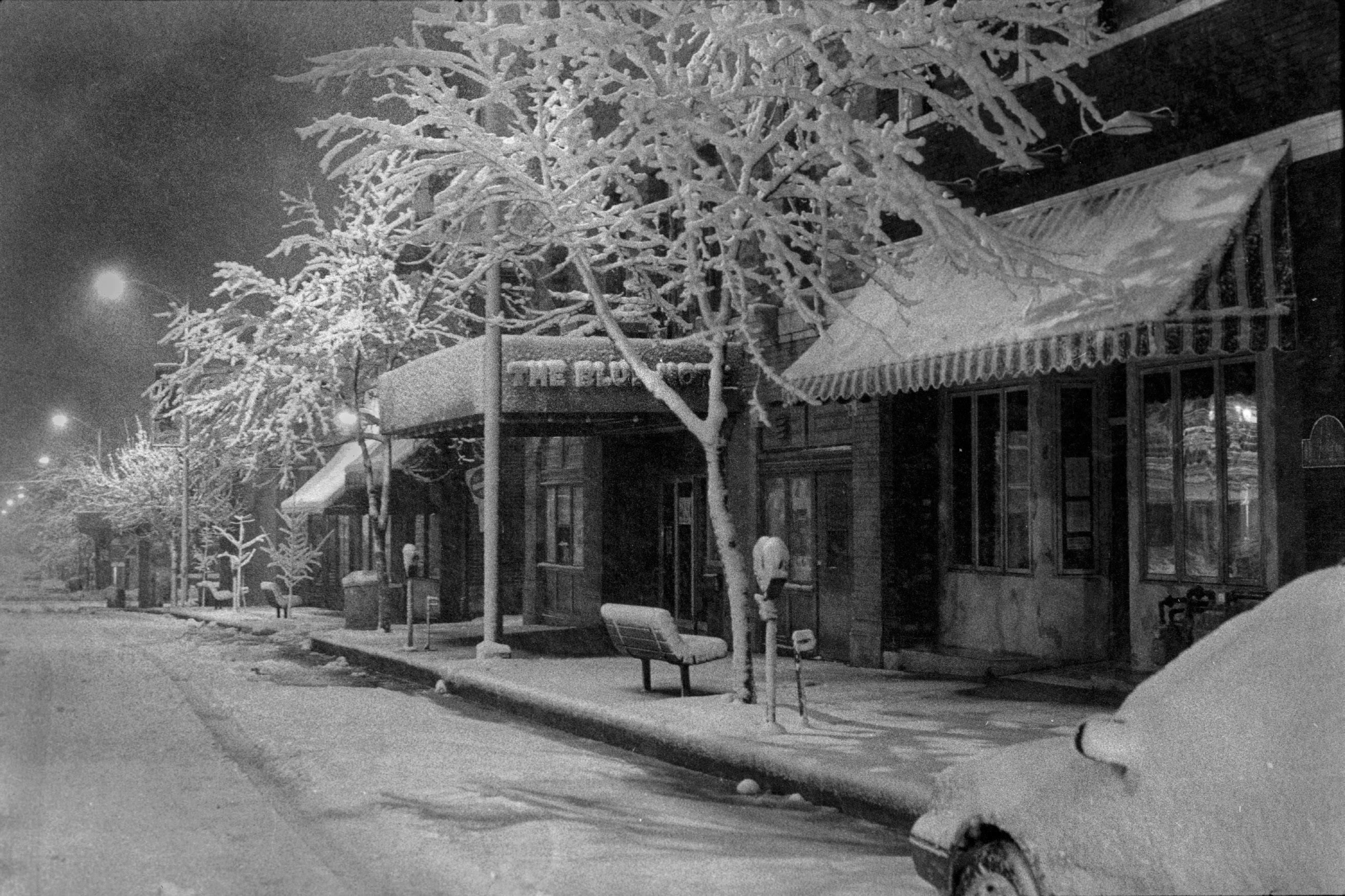
I have not shared this photograph in a very long time. Not on my website, not in a social media post, and not in a gallery exhibit. This photograph was one of the prints displayed in a three-person photography exhibit at Orr Street Studios. I took this photograph during a life-changing winter storm in March 1998. It was the kind of winter storm that takes a community by surprise, with everyone thinking that winter is over and that the warms rains of March and April are soon to follow. The snow started falling around 8 p.m., but I decided to wait until it was serious, leaving the house at 10:30 p.m. with two cameras, three or four rolls of film, and a tripod.
“THE BLUE NOTE IN SNOW”
Blue Note and North Ninth Street
Late Winter Snowstorm, 1998
Navigating the empty streets of downtown Columbia, I chose several locations to set up my tripod and to take a few photos. After a couple hours in the cold, and with the snowfall intensifying, I decided to head home. On my way home, I was captivated by this vision of the trees on North Ninth Street. At this point, the tripod was becoming cumbersome, so I switched over to my handheld option — a late 1960s Pentax SP loaded with 3200 speed film and sporting the only Pentax lens I had, a 50mm f 1.4. This photograph and several others were captured handheld with this camera and lens combination, something I rarely did at that time in my creative career.
In 1998, Trattoria Strata Nova occupied the storefront under the awning, followed by The Blue Note. Dryer’s Shoe Store and Leo’s were on the next block after the alley, along with several businesses whose names and memories escape me. Despite the fact that I have not publicly shared this photograph in 28 years, the image is very important to me. The night on which it was created was a watershed moment in my creative journey as a photographer, and it reinforced a lifelong appreciation for the beauty of winter. This photograph, and all the photography on my website, is evidence of a long-term project and a slow-motion love letter to the streets and stores, the buildings and alleyways of downtown Columbia. A love letter I have been writing and correcting, improving and revising, since 1998.
HE PUTS HIS HEART INTO EVERYTHING. WHICH IS WHY WE DO, TOO.

Every heart tells a story. Our job is to give it every chance to tell it long into the future. We never compromise in our pursuit of cardiovascular excellence. Whether that’s award-winning care for our minimally invasive procedures, our nationally recognized cardiovascular rehabilitation program or our highly trained team of doctors, nurses, dietitians and therapists here to support patients every step of the way. We never settle when it comes to your heart health. Neither should you.



NEVER SETTLE

students had di erent needs, Dixon hoped that the guidance program would provide the individual support and career coaching (including on-thejob training at local businesses) that students would need to thrive in troubled times.
Extracurricularly, the thirties also saw a massive expansion of the school’s music program under C.M. Stookey, the creation of an award-winning Verse Speaking Choir by speech teacher Helen Williams, and many new activity clubs that were allowed to meet during the school day. Athletically, the Kewpie football, basketball, and wrestling teams were practically undefeated in the decade. Jobs may have been in short supply, but Hickman found plenty for its students to do.
When the United States entered World War II, Hickman played its part: Kewpies collected scrap metal, bought war bonds and savings stamps, planted victory gardens, and knitted sweaters and afghans for troops overseas. e school also began o ering courses in aeronautics, international relations, and nursing. And with a need for more skilled labor to work

defense factories in Kansas City and St. Louis, the school district tapped history teacher Delbert Dunkin to run a manpower training program for 17-and-overs that would teach such skills as machine tool operation and slide-rule pro ciency. e war stirred Kewpies’ artistic sensibilities as well. In December 1943, the Verse Speaking Choir held an operatic Trial of Hitler, in which students playing such characters as France, Czechoslovakia, Uncle Sam, Lady Liberty, and the Spirit of Religion all condemned the Nazi dictator for attempting to destroy humanity’s freedom. e 110-student production was preceded by a memorial service for the Hickman alumni who had thus far lost their lives in the ght against fascism. (By war’s end, that number would reach 36 servicemembers. ey are honored today by the American Legion agpole that stands in front of the school’s north entrance.)
In the postwar years, Hickman was ground zero for a
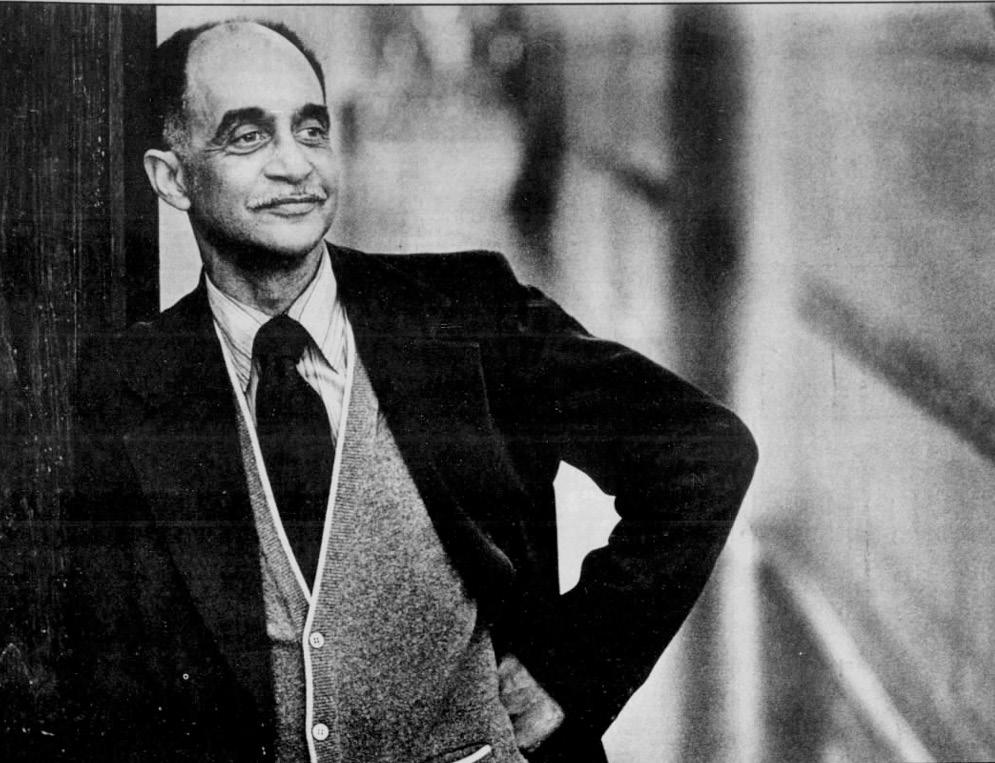
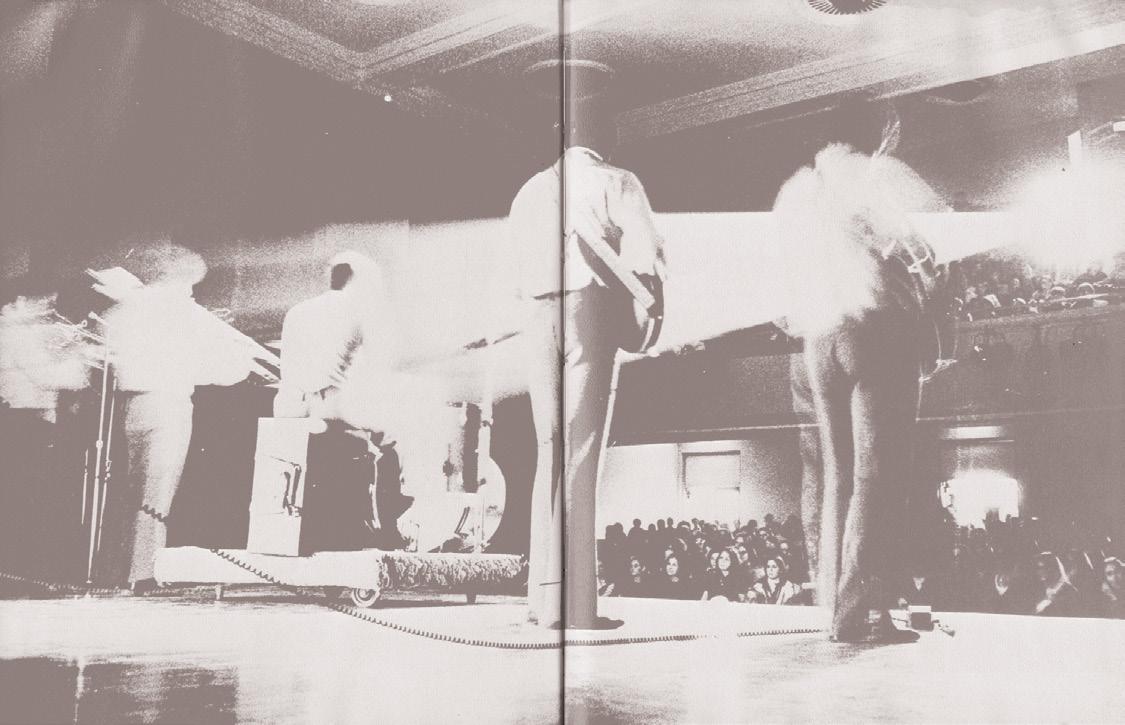
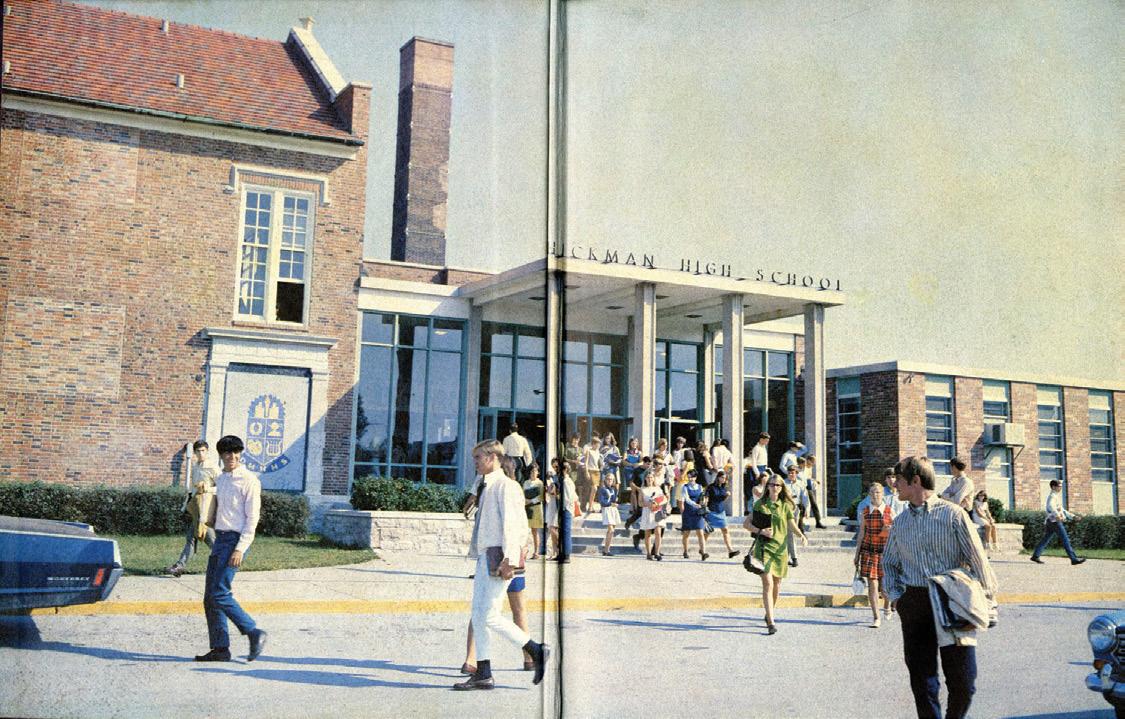
major transformation of Columbia’s public education system: the end of racial segregation. While the school now takes great pride in its diversity, we must remember that Hickman was originally built for white Columbians only. Between the 1880s and 1954, all public primary and secondary education provided to Black Columbians took place at Douglass School. at changed on paper shortly after the Supreme Court outlawed school segregation in Brown v. Board of Education on May 17, 1954. e school board met on July 6, and upon the recommendation of Superintendent Neil Aslin, formally ended segregation in Columbia
Public Schools. At the elementary level, Douglass became a zoned neighborhood school, and Black high school students could now enroll in Douglass or Hickman as they pleased. Save for the Ridgeway Elementary PTA, which threatened to cancel the annual chili supper in protest (it didn’t), Columbia was spared the sort of organized white intransigence that plagued school integration in the deeper South. Aslin and the school district honchos patted themselves on the back for a job well done.
Alas, desegregation does not equal integration, and the real integration of Hickman was very slow to come.
1971 Cresset Rock Band in Auditorium
1970 Cresset Hickman High School
1979 Eliot Battle - Columbia Tribune


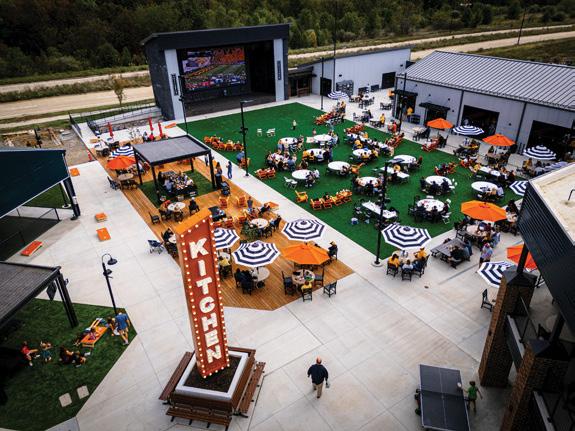

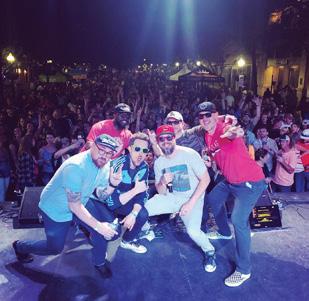













Who or what are the people or places that have defi ned Columbia’s past or present story? Feel free to also name a future leader who might leave a lasting legacy.
Sycamore.
— STEVE POWELL
Kevin Kelvin Walsh, Richard King, Eddie Boster, John Meyers, etc. are an indelible part of Columbia’s music scene. Violet Ann Vonder Haar and Phlshawn Johnson are current leaders sharing their gifts to make music accessible to everyone in our community. ey are undoubtedly paving the way for future generations of musicians.
— SONYA SWANSON BACHMAN
Osama’s co ee shop near campus (now gone).
— SARAH CATLIN
Part of the birth story of Uncle Tupelo which turned into two bands, with Wilco still kicking it hard … e song “Whiskey Bottle” is about the original Blue Note on the Loop near Liquor, Guns, and Ammo … at sign is now at Shake’s original location.
— DENNIS SCHULTE
e round table at the front (SW corner) of Boone Tavern. IYKYK.
— JAY SPARKS
I like to say I went to the Richard King School of Marketing when I’m out putting up event yers. When I was in college in the ‘90s, he was a xture, walking around campus putting up posters for the Blue Note. When I started hosting events, I immediately headed to the copy shop and then straight to campus. at’s quintessential Columbia to me. I read in Kelsey Winkeljohn’s excellent article last year that they actually put the kiosks up for him so he’d stop taping posters up all over the place.
— TAHLIA HEATON
A di erent take: e malls! I (barely!) remember when Columbia Mall was a farm eld. And how excited I was for a MALL. We had Parkade Plaza, and the Biscayne Mall, where I also hung out, but this was di erent. e height of the mall explosion in the ‘80s. I spent many nights there hanging in cafe court and going to movies at the Mall 4.
— ANGELA LECHTENBERG
e North Village Arts District and the North Village Art Walk will be a nice legacy to leave.
— LISA BRAMAN BARTLETT
I’d like to jump into the future, just to see the legacy that Amanda Rainey and John Gilbreth leave on Columbia.
— DAVID JOHNSON
John Ott. He and his family are responsible for showing Columbia that reviving our historic architecture is economically viable.
— DIANNA BORSI O’BRIEN
Growing up in JC, Columbia was only Hickman HS (I remember freezing cold Friday nights on the bleachers battling out the rivalry) and the Blue Note... where I saw my rst non-fair concert and saw Jason Aldean the year he was really becoming Jason Aldean! So cool to now be back here and experience how much more CoMo really is!
— SARAH JANE PHOTOGRAPHY
Ragtag Cinema/Uprise Bakery shared space.
— CAROLYN SULLIVAN
Columbia Farmers Market!
— PASTA LA FATA
A group of us (now aged to perfection) seniors made Jacks Coronado a Friday night staple. Some nights it was a delectable meal in the dining area and others, it was cheeseburgers or fried chicken livers as appetizers in the bar. Red leather booths made having a cocktail and appetizer quite cozy and inviting … Many business luncheons and company party dinners were hosted at Jack’s. “Swanky” as the old timers called it!
— KENA ELKIN