


Is your family prepared to carry on your legacy?
Successful families plan for the future — together. With over $124 trillion in wealth expected to transfer over the next 25 years, you need a team of seasoned private wealth management professionals to help guide you and your family through the in-depth estate planning conversations required to align on family wealth decisions.
Commerce Trust can assist with engaging your next generation on wealth habits crucial to preserving your family legacy. We draw on our deep bench of experience and capabilities to help prepare future generations of your family for the responsibilities that accompany significant, inherited wealth.
Our holistic, team-based approach to servicing clients means your team of estate and tax planning, investment management, and trust administration professionals will collaborate to guide you toward achieving your family’s goals while safeguarding your personal and family legacy.
Discover how Commerce Trust can help to secure your legacy through meaningful, family estate planning conversations and engagement. Contact Lyle Johnson, your dedicated Market Executive for Commerce Trust, at (573) 886-5324 or lyle.johnson@commercebank.com to secure your legacy.


By Richard English, J.D., Managing Director–West Region, Commerce Family Office, and Brian Humes, CPA Managing Director–East Region, Commerce Family Office
Family governance refers to the framework and practices high-net-worth families can use to align on family wealth decisions. The structure that family governance provides can also help engage the next generation of your family to accomplish your long-term goals together.
Why implement family governance?
Many high-net-worth families use family governance to promote the preservation of generational wealth by instilling values that shape how the next generation thinks about money. Effective family governance measures can also help your family make informed decisions regarding family wealth or plan for asset transfer in a structured manner.
Document your family mission statement

A mission statement is a brief description of family values that serves as a guidepost for family wealth decisions. For example, if your family values higher education, your mission statement might reflect a commitment to lifelong learning and supporting educational institutions. If your family values charity, you may state that making a positive impact in your community should be part of your family legacy.
The benefit of documenting shared family values lies in aligning on a shared understanding of these matters to inform decisions made as a family.
Meet with family regularly to foster open communication
Holding family meetings allows families to reinforce family values and goals for family wealth, promote financial literacy by discussing strategies for building and preserving wealth, and address changes or upcoming family milestones that may impact decisions going forward.
Often, high-net-worth families have a smaller subset of family members who may form a family council. The family council acts similarly to a board of directors, providing governance and oversight of the family’s wealth and estate.
Some families divide responsibilities by creating committees to handle specific areas such as social events, charitable activities, or investments, promoting more effective decision-making and consistency in these matters.
There may be special assets for which you want to implement governance, such as real estate, art, and collectibles.
For example, if your family will inherit personal property or real estate, family governance structures may define use and guest privileges, plan for maintenance expenses, or set guidelines for future ownership and potential sale. Similarly, if you have an art collection, you may want to document a plan for the management of the collection and its potential eventual transfer, as art often requires special care and can be illiquid.
of outright gifts, your family may assess whether establishing a charitable trust or contributing to a donor-advised fund offers advantages for the management and distribution of funds. Informed by these governance structures, families may determine that if income is generated or assets can appreciate in a charitable trust or donor-advised fund may have a more lasting impact than if funds were exhausted by an outright donation
Effective family governance can establish a structure for high-net-worth families to help preserve wealth through multiple generations by implementing a framework that encourages communication and alignment around your goals for family wealth.
Contact Commerce Trust today at www.commercetrustcompany.com/estateplanning to learn more about how your private wealth management team can assist in the development and implementation of family governance structures aimed at ensuring you have the needed family decision-making, oversight, and communication mechanisms in place to keep family members aligned around the long-term goals of your estate plan.
Commerce Trust does not provide tax advice to customers unless engaged to do so.
The opinions and other information in the commentary are provided as of January 16, 2025. This summary is intended to provide general information only, and may be of value to the reader and audience.
This material is not a recommendation of any particular investment or insurance strategy, is not based on any particular financial situation or need, and is not intended to replace the advice of a qualified tax advisor or investment professional. While Commerce may provide information or express opinions from time to time, such information or opinions are subject to change, are not offered as professional tax, insurance or legal advice, and may not be relied on as such.
Data contained herein from third-party providers is obtained from what are considered reliable sources. However, its accuracy, completeness, or reliability cannot be guaranteed.
Commerce Trust is a division of Commerce Bank.
Investment Products: Not FDIC Insured | May Lose Value | No Bank Guarantee


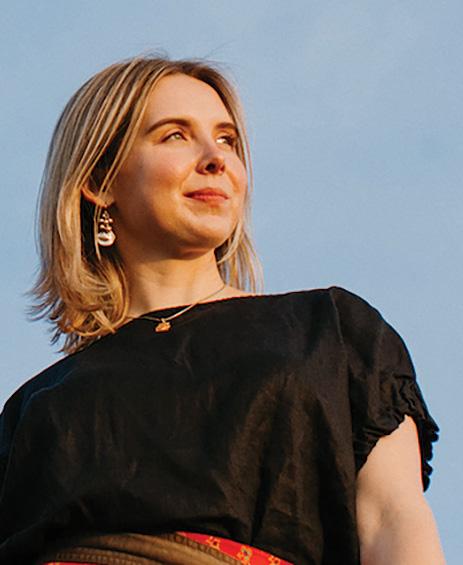
Mary Kate Hafner has been contributing to COMO Magazine since 2018. A graduate of Stephens College, she works in communications and plays on the area’s many trails. She loves human interest stories and collects as many as she can through her travels. Mary Kate lives in Columbia with her husband, Daniel, and their little dog, Andy. She is attempting to learn French. It’s going just okay.
IN THIS ISSUE OF COMO
Uplifting Entrepreneurs
PG 22
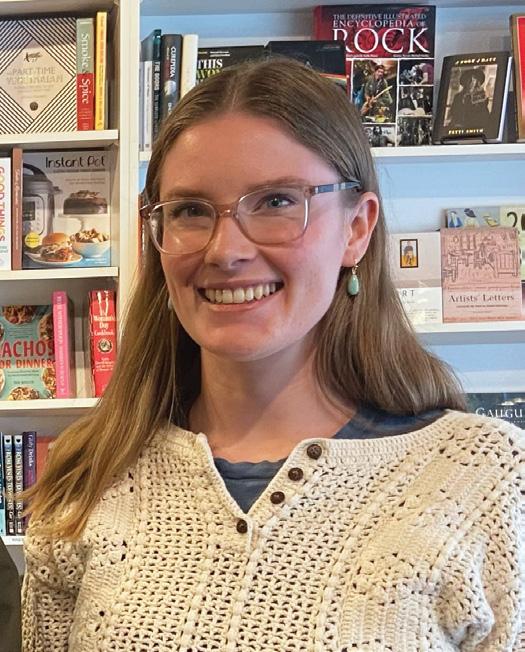
Olivia DeSmit cut her journalistic teeth at the ripe age of 10, as cofounder of an e-magazine. The heart-thumping thrill of sending her creations into the world still hasn’t worn off.
From her time at the Columbia Missourian while a J-School student, to writing for a nonprofit in the D.C. area, to serving as managing editor of Inside Columbia, and now freelance writing, she’s been chasing that deadline high for almost a decade.
Recently, she delved into authorship and self-published a children’s book series.
When she isn’t writing, she’s crafting with her 5-year-old bestie (her daughter), growing heirloom tomatoes (they really do taste better!), and serving as president of a nonprofit she cofounded.
IN THIS ISSUE OF COMO
COMO Church Collaborators
PG 40
PUBLISHING
David Nivens, Publisher david@comocompanies.com
Chris Harrison, Associate Publisher chris@comocompanies.com
EDITORIAL
Jodie Jackson Jr, Editor jodie@comocompanies.com
Kelsey Winkeljohn, Associate Editor kelsey@comocompanies.com
Karen Pasley, Contributing Copyeditor
DESIGN
Jordan Watts, Senior Designer jordan@comocompanies.com
Lucia Kuepers, Junior Designer lucia@comocompanies.com
MARKETING
Charles Bruce, Director of Client Relations charles@comocompanies.com
Kerrie Bloss, Account Executive kerrie@comocompanies.com
Allie Teagarden, Account Executive allie@comocompanies.com
CONTRIBUTING PHOTOGRAPHERS
Trinity Church, Kyle Gilleland, Jodie Jackson Jr, Hoss Koetting, Nikki Reese, Rebecca Allen Photography, Merrill Sapp, Abigail Wade – Columbia College, Kelsey Winkeljohn,
CONTRIBUTING WRITERS
Charles Bruce III, Barbara Bu aloe, Olivia DeSmit, Mary Kate Hafner, Jodie Jackson Jr, Hoss Koetting, Natasha Myrick, Nikki Reese, Bradley Williams, Kelsey Winkeljohn
SUBSCRIPTIONS
Magazines are $5 an issue. Subscription rate is $54 for 12 issues for one year or $89 for 24 issues for two years. Subscribe at comomag.com or by phone. COMO Magazine is published monthly by COMO Companies.
OUR MISSION STATEMENT
COMO Magazine and comomag.com strive to inspire, educate, and entertain the citizens of Columbia with quality, relevant content that re ects Columbia’s business environment, lifestyle, and community spirit.
Copyright COMO Companies, 2026
All rights reserved. Reproduction or use of any editorial or graphic content without the express written permission of the publisher is prohibited.
FEEDBACK
Have a story idea, feedback, or a general inquiry? Email our editor at jodie@comocompanies.com.
CONTACT
COMO Companies | 404 Portland, Columbia, MO 65201 573-577-1965 | comomag.com
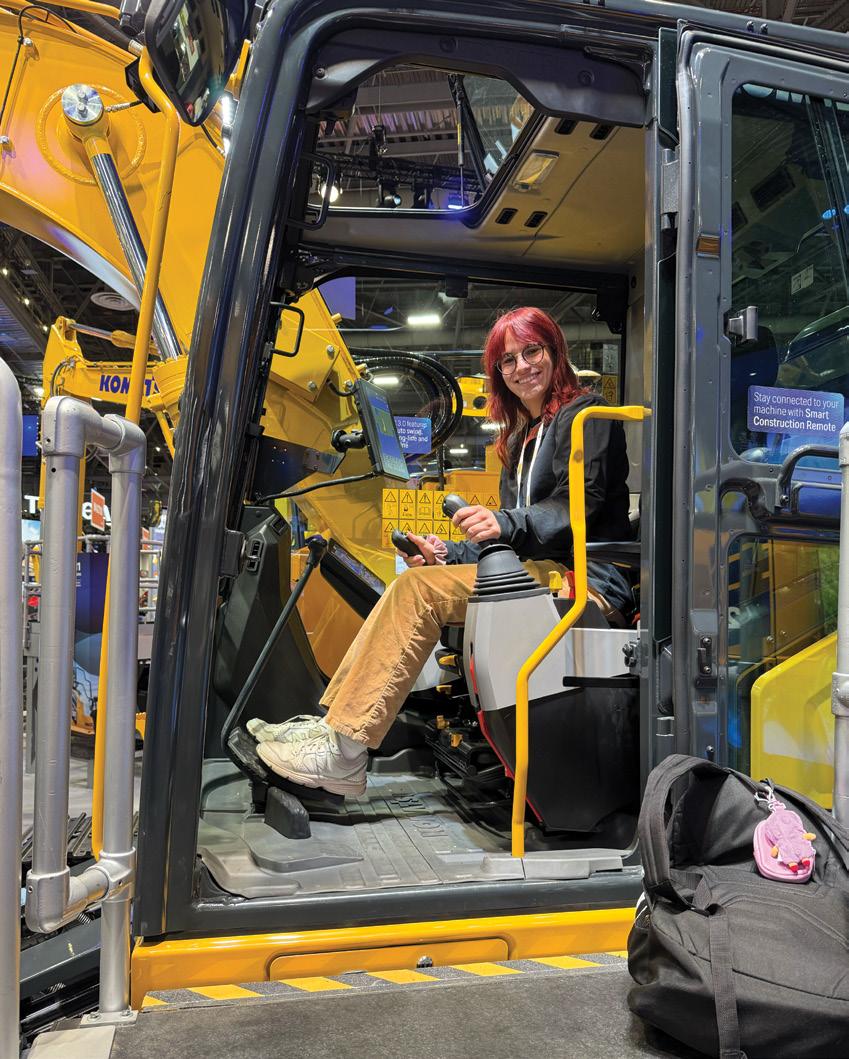
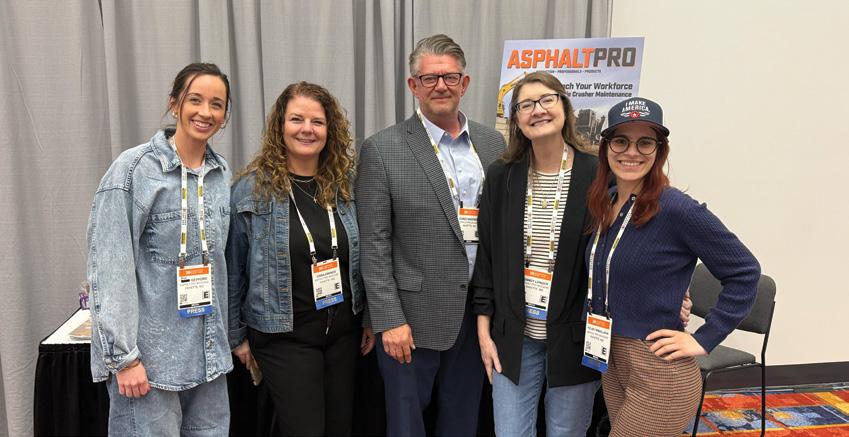
Last month, I found myself walking through the cavernous halls of the Las Vegas Convention Center at CONEXPO-CON/AGG, North America’s largest construction trade show.
“What the heck is the associate editor of COMO Magazine doing at such an event?” you might be wondering. And to that I say, it’s good for writers to put themselves in potentially awkward and unfamiliar environments — otherwise, how could they really be good storytellers? If you want to get more technical, though, I was there to assist our wonderful associate publisher, Chris Harrison, who also publishes AsphaltPro magazine, with the production of video content. e scale of it all was almost hard to grasp. Booths stretched in every direction, packed with massive machines, demonstrations, and people eager to talk about their companies and the craft behind their work. e air hummed constantly with engines rumbling to life, conversations overlapping, and equipment clanking.
After a few days surrounded by the people who build our roads, I left thinking about how rarely we think about our roadways (although, with all the construction lately, maybe we’re thinking about them a little more than usual — ha!). Most of us depend on them daily without giving them much thought, yet each one requires enormous planning, equipment, skill, and labor. e work itself might be noisy and complex while it’s happening, but the result becomes something a little more modest — a surface we rely on without really noticing, guiding us where we need to go. at idea kept coming back to me as we wrapped up this issue of COMO Magazine. Even with the incredibly impactful people, places, and ideas in our lives, how often do we make the time to formally acknowledge them and really sit with them?
Take the Unbound Book Festival, one of the stories in this month’s issue. Each spring, the nationally recognized liter-
ary event brings authors and readers from across the country to Columbia. While we get to see the nished product — cozy readings in bookstores and shops downtown, attendees conversing on patios, panels with hands ying up to ask the next question — many people don’t see the months-long e ort of the volunteers, organizers, and supporters working behind the scenes. e festival also has a meaningful in uence on our city’s economy, bringing in visitors whose spending circulates throughout the community.
In this issue, we also o er a “COMO Civic Starter Pack,” a guide meant to help residents move beyond online discourse and into tangible civic engagement. Getting involved in your community can feel intimidating if you don’t know where to begin, but small steps like attending a meeting, volunteering, and learning how local systems work can have lasting e ects for generations to come.
And I can’t forget about Stephen Feilbach, creator of the sculptural bugs at the Columbia Center for Urban Agriculture. His art encourages conversations among marketgoers and invites us to think more deeply about the natural world and our relationship with it.
Impact is rarely announced with grand fanfare. More often, it’s found in the things we interact with or simply pass by every day. Like the road beneath your tires, its in uence often reveals itself only when you stop to think about how much it’s been carrying all along.
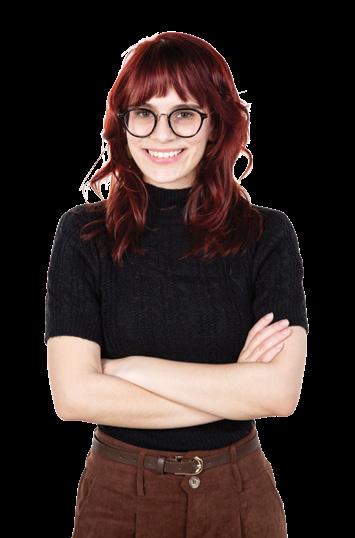
KELSEY WINKELJOHN ASSOCIATE EDITOR kelsey@comocompanies.com





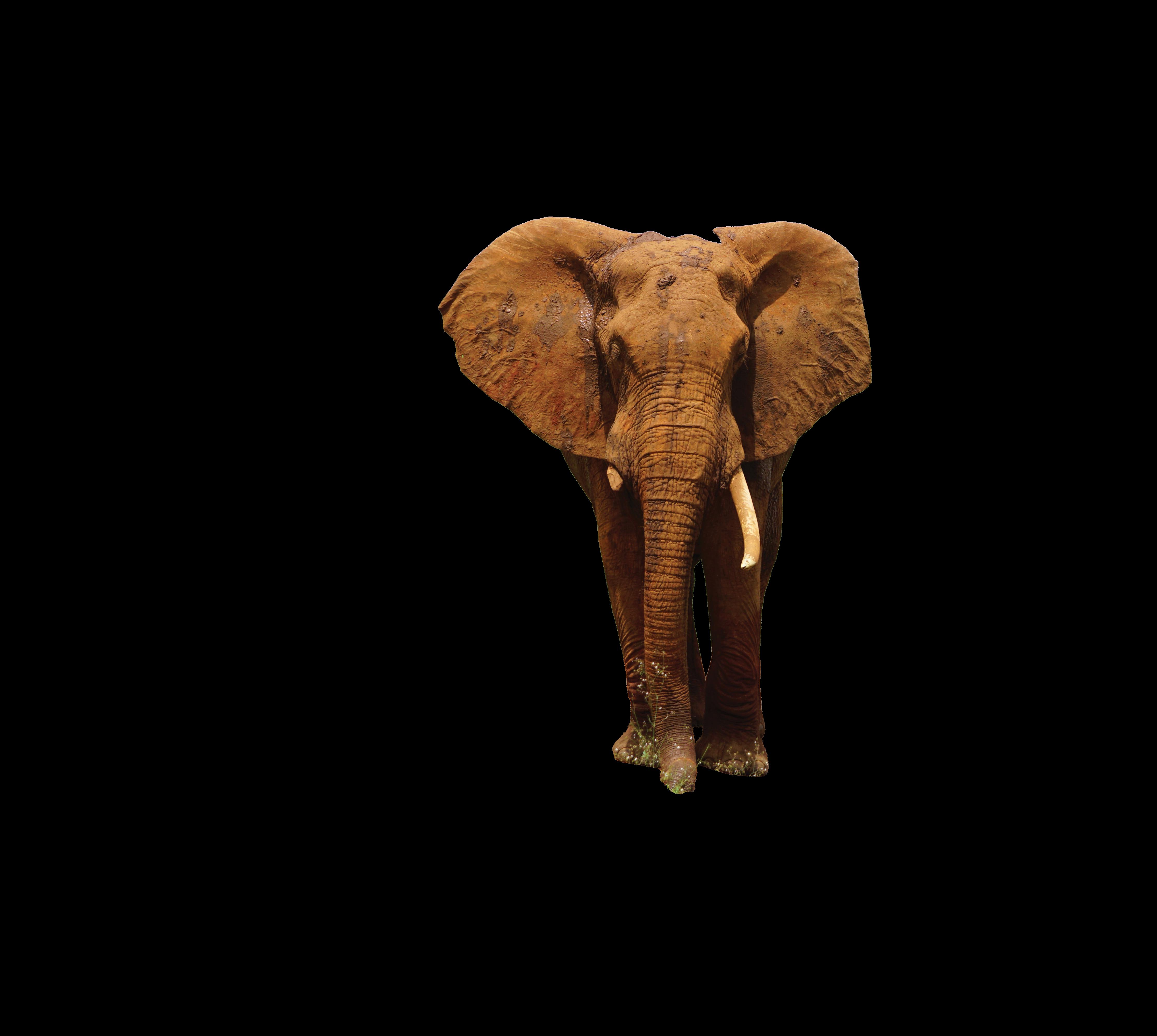
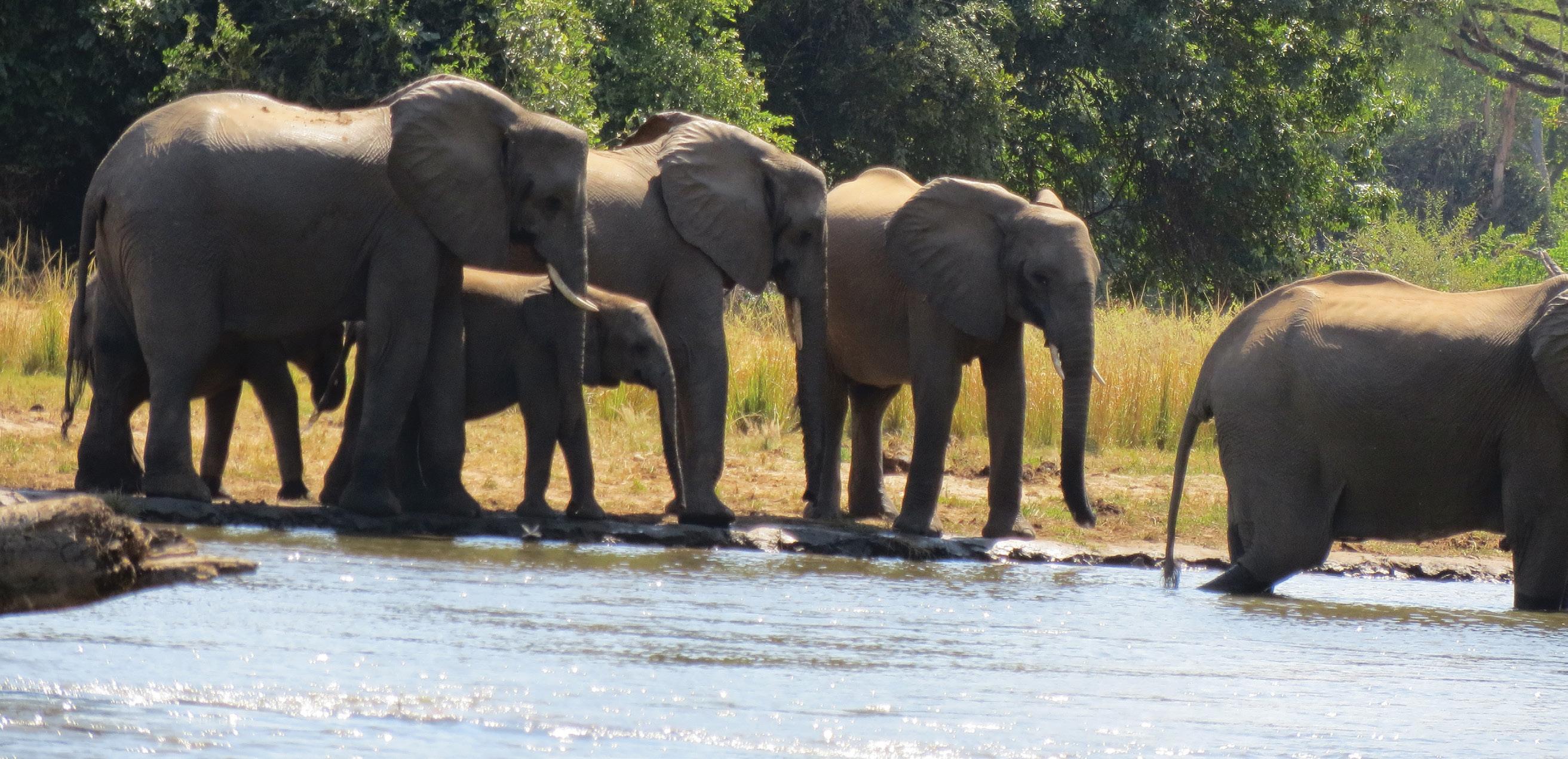
As a cognitive psychologist, Sapp’s specialty is sensation and perception — our basic sensory processes. Cognitive psychology is the study of learning and memory. at eld converged with Sapp’s lifelong love of animals and reading to inspire a personal goal: studying the mind of elephants and how they communicate with one another.
“When you really stop and think about what they can do, it might not look like what we do, but their cognitive skills and communicating in caring for each other is really spectacular,” she said. “Every animal has something that makes it special. We just have to stop and take a look sometimes in order to gure that out.”
“
Every animal has something that makes it special. We just have to stop and take a look sometimes in order to figure that out.”
Sapp emphasized that elephants are social animals. “ eir social lives are really essential to who they are,” she said, noting that elephants are devoted family members that take care of each other. “Elephants are very peaceful together. It’s really beautiful to see them together in their natural environment.”
Sapp has also written a paper about gira es. One research project revealed that female gira es “babysit” each other’s o spring.
“Gira es are a lot smarter than we might think,” she observed. “ ey must have some sort of fairly high level of communication ability in order to coordinate watching each other’s babies, going o to eat, and coming back to nd each other.”
Elephants are also master communicators, exhibiting detailed physical expressions and the ability to comfort each other with touch and sound. For
You can see every star in the sky. It’s unlike anything else you will ever do.” “

example, Asian elephants make a speci c chirping sound to comfort another elephant in distress.
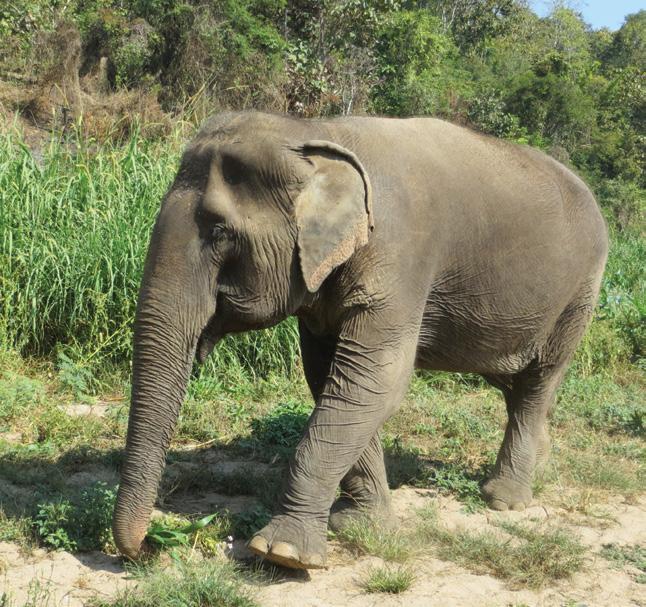
Even though Sapp had learned about elephants and the way they communicate by reading about them, she felt that she needed to experience elephants in their natural habitat to gain a true understanding. So she traveled to Kenya, Zimbabwe, Zambia, South Africa, Sri Lanka, and ailand to visit elephants in the wild.
Her favorite experiences took place in Zambia and Zimbabwe because she was able to participate in walking safaris. While safaris are typically done from a vehicle, Sapp enjoyed her walking safaris because she could learn even more about the elephants by getting up close and personal.
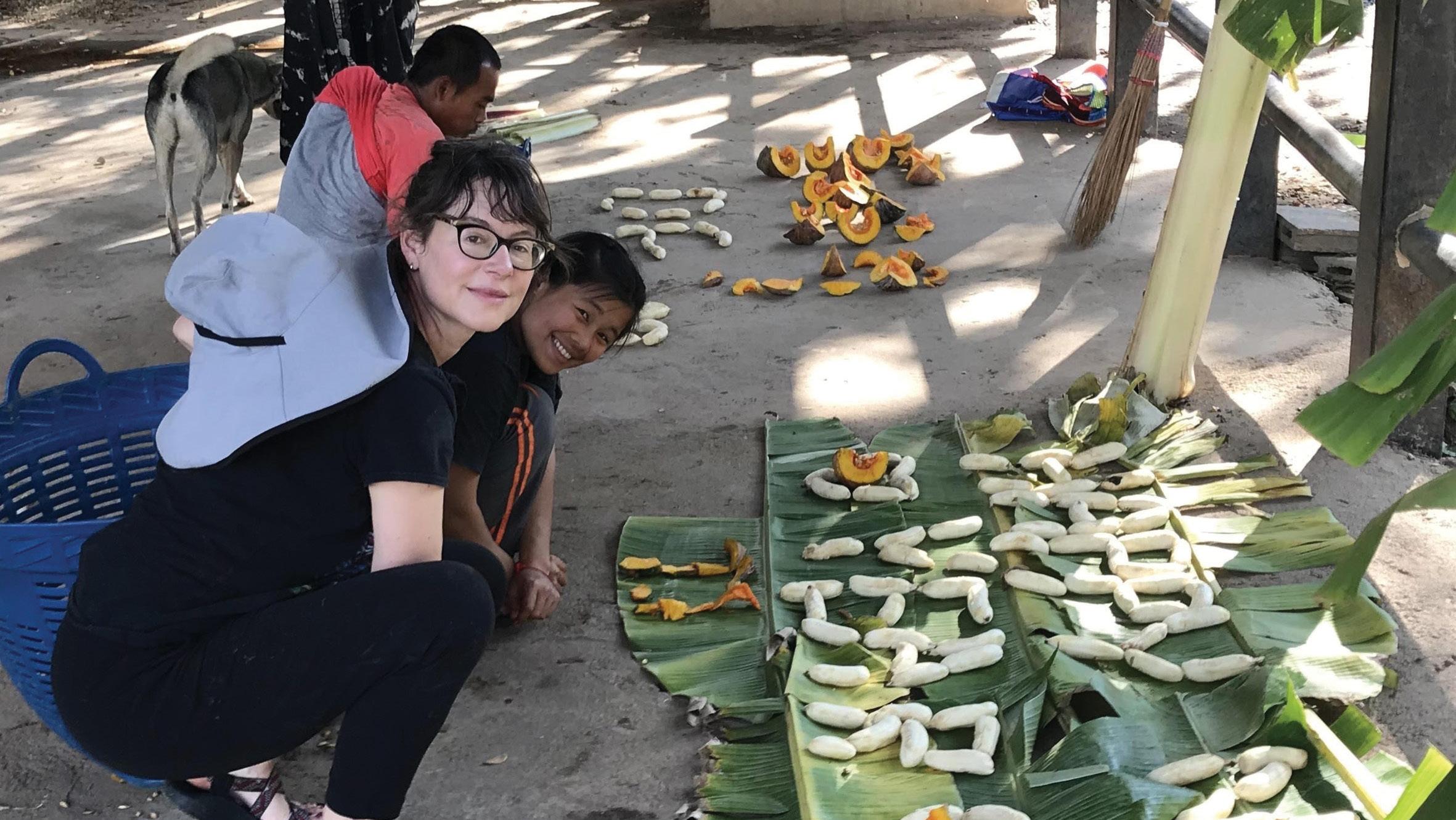
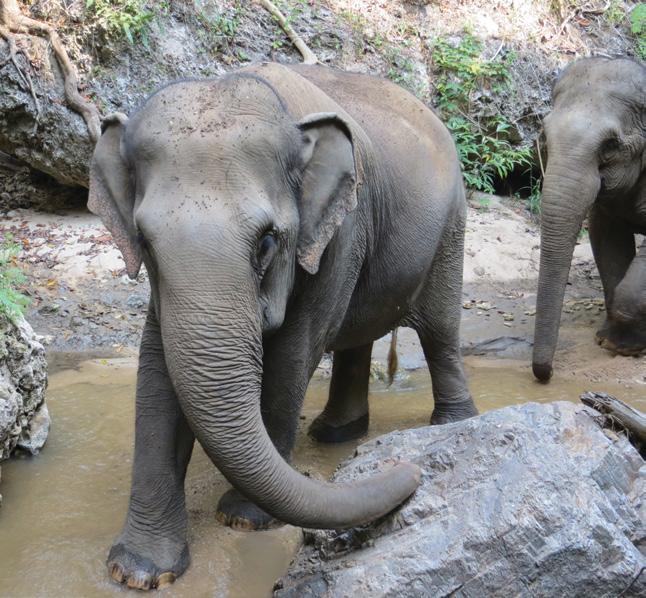
In ailand, Sapp volunteered at Burm and Emily’s Elephant Sanctuary (BEES) for retired working elephants. She fondly recalled how two female elephants were a bonded pair.
“Elephants don’t have a language where they can express friendship, but there is no question that they form these friendships and support each other throughout a lifetime,” she said. Sapp keeps in touch with sta at BEES and with her contacts in Africa. She plans to return to Zambia and Zimbabwe to spend more time with elephants. ere are other bonuses to her international trips to study elephants and other wild animals in their natural habitats. In some parts of Africa, she said, “You can see every star in the sky. It’s unlike anything else you will ever do.”

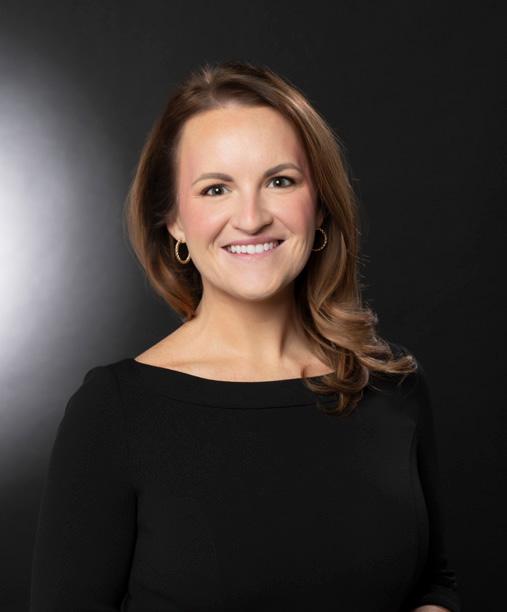
Ashley is a Regional Sales Manager! She brings energy, confidence, and a little bit of sparkle to every branch she supports. She celebrates people and lifts spirits. She shows up when it matters most, stepping in alongside her teams and navigating challenges with calm, steady leadership. Her thoughtfulness, reliability, and genuine care for people are felt across our branches. She makes a real difference every day.
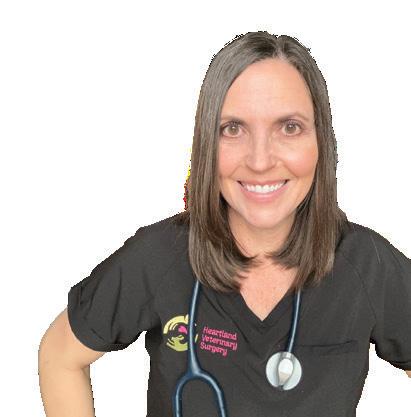
When your pet needs advanced surgical care, ask your local vet about Heartland Veterinary Surgery. Dr. Luther brings nearly two decades of surgical expertise into your local veterinary clinic where you and your pet are known and loved.
573-874-8100 • centralbank.net/boonebank


STORY AND PHOTOS BY JODIE JACKSON JR
Why wait for inspiration to strike when it’s already right in front of you, under you, beside you, or above you? What inspiration is that, you ask? Insects. ey’re everywhere.
ey’re part of Stephen Feilbach’s creative mindset, which is always locked in on the often intricate and sometimes subtle details that give texture, color, and form to the tiniest critters most of us rarely notice.
Yes, the artist is a bug guy. And some of his most awe-inspiring works, fashioned from rebar and other industrial materials, adorn the grounds of the Columbia Center for Urban Agriculture’s community garden at Columbia’s Agriculture Park, a 10-acre
space in the Clary-Shy Community Park. e larger-than-life bugs include a massive praying mantis, monarch butter y, ladybugs, and a gigantic bee. e prominent art installations get a lot of looks from the 6,000 or so visitors to Columbia Farmers Market next to CCUA and that organization’s community welcome center, which is nearing the end of construction.
After getting to know more about Feilbach and his artistic process, you’ll want to creep, crawl, hop, or y around the agriculture park to check out his mighty insects. Get ready to peek into the mind of the artist who proclaims, “Passion looks like crazy to those who don’t have it.”
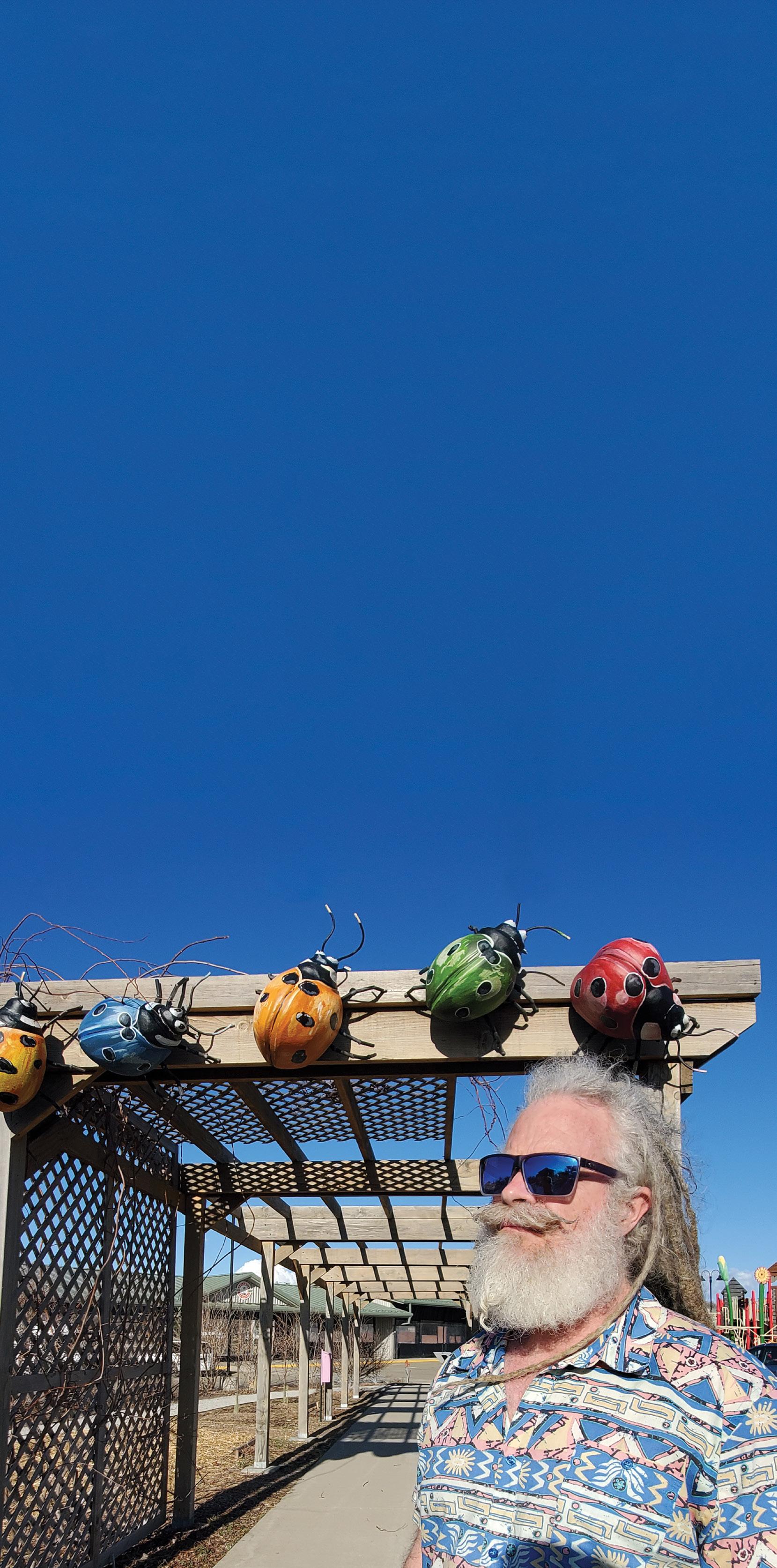
e thousands of people who gather on Saturdays at Columbia Farmers Market have seen the giant insect sculptures that adorn the Columbia Center for Urban Agriculture building and community garden. at’s your work! What can you tell us about the project?
ere are several things about that project that really clicked with me. First o , I love wildlife, and I’ve always been drawn to insects. What amazes me about them is that they’re already abstract — the colors, the patterns. ey’re like tiny moving paintings. I like taking those little bugs that usually live 6 inches o the ground and blowing them up into something big and impossible to ignore.
When you make a giant praying mantis or a huge bee, people suddenly get to experience what that world looks like from a di erent scale. It makes everyone feel like a kid again. ere’s curiosity, wonder, and play in it. Mix that with the fact that I’m a big farmers market person, and placing the work at the Columbia Farmers Market and the Columbia Center for Urban Agriculture just made sense to me. at combination of community, food, nature, and art is rare. It’s been one of the most rewarding projects I’ve done.
You’re also connected to the Tigers on the Prowl fundraiser, and two of your recent creations raised a considerable amount for that cause. Tell us about that.
Last year I was invited by Nic Parks, the director of Tigers on the Prowl, to participate as one of the artists. Right away what stood out to me was how well the entire event was run. e sta are genuinely some of the nicest people I’ve worked with, and the whole thing operates like clockwork. at’s rare. Artists are often asked to donate work, and you don’t really get much back from the experience. is was the opposite. ey take care of the artists: You’re compensated, you’re included, you’re invited into the community.
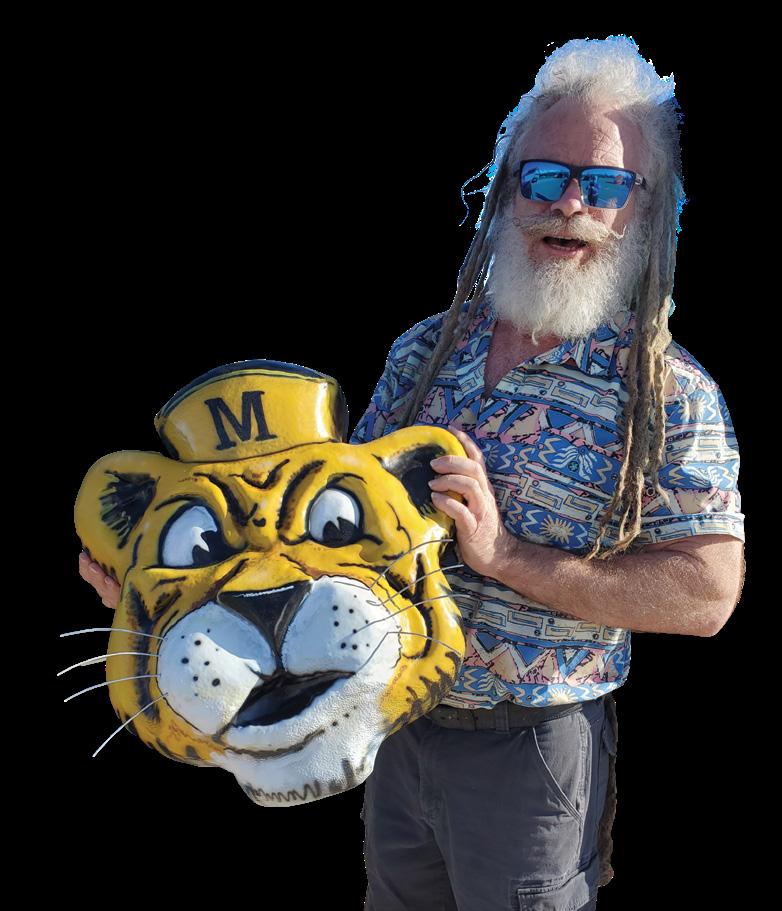
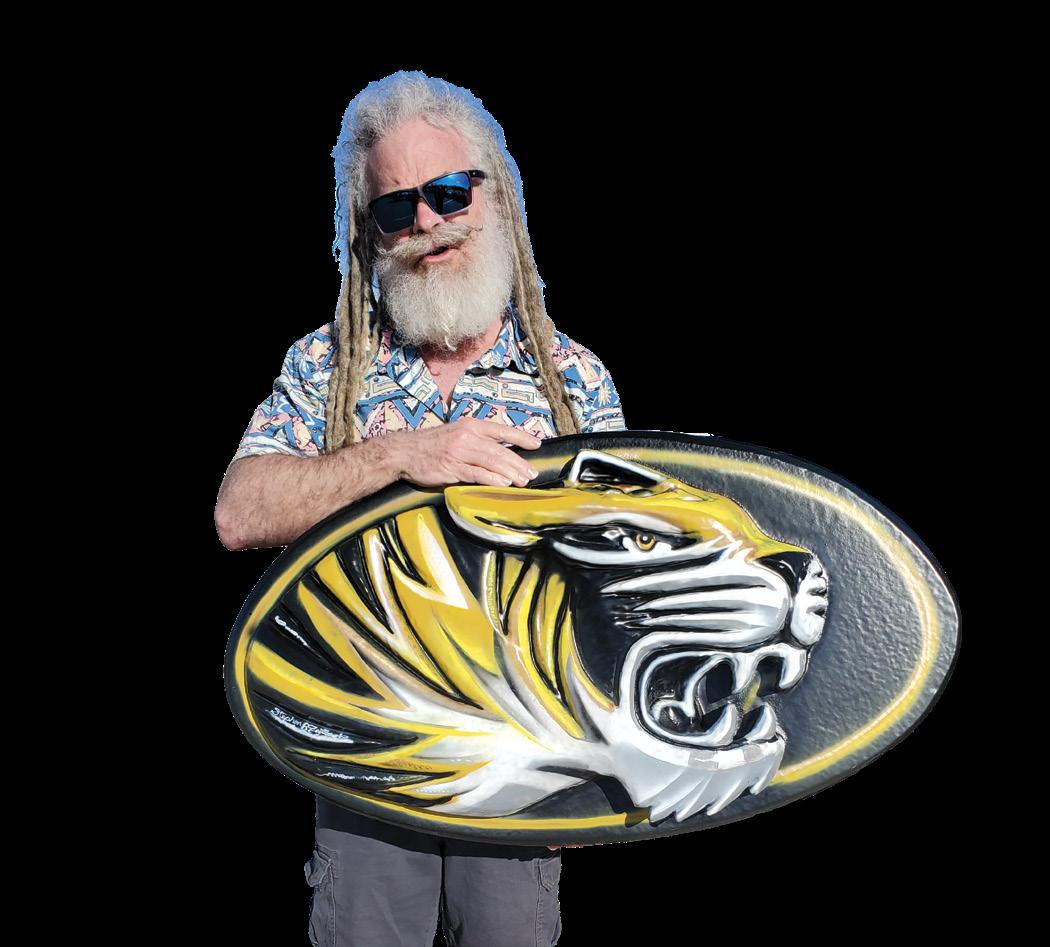
ere’s a real sense of appreciation, and that matters. My pieces did very well, and what I learned through that experience was the power of relatability. People show up because they care about the cause, but the tiger — and the connection to the University of Missouri — is something everyone around here immediately connects with. I took an existing logo and made it three-dimensional, and people really responded to that.
at project opened a door I didn’t even know existed. It led to me obtaining a license to make and sell that logo. Now I’m exploring additional logos and licensing opportunities with the university.
You combine industrialgrade materials to bring your creations to life. Why have you chosen those materials?
Years ago, when I didn’t have much more than a couple of tools, I was doing chainsaw wood carvings. I did that for a long time. Custom pieces and smaller works I could sell. But I always wanted to go bigger. Wood only allows that to a certain point. Once you scale up, weight becomes a major issue, and then there’s the ongoing maintenance. Wood that is outdoors needs constant care. I wanted to move away from that. Over time, I started evolving into using other materials that would let me work larger and last longer. at’s what led me to industrial-grade materials.
ey’re made to live outside. ey’re durable, they’re weather-resistant, and, in some cases, they’re reinforced with internal metal structures so the pieces are rigid and stable. at opened the door to doing work at a scale I’d been aiming for for years.
Are there any particular challenges to working with such materials?
Cost is a big one. Industrial materials are far more expensive than most people realize. e process is also really messy. Really messy. at’s just part of the reality of working this way. at said, I’ve been doing it long enough now that I understand the steps and the work ow. A lot of the problems I ran into early on have been worked out through experience.
At this point, I just dig in, do what needs to be done, and push through the parts that aren’t always enjoyable, because the end result makes it worth it. e outcome is a big, bright sculpture that can live outdoors for many, many years — and that’s always been the goal.
Take us back to the beginning. When did you realize that what you were creating brought joy to you — and others?
One of the biggest things I realized early on is that I’m very dyslexic. I spent most of my school years in the resource
room because I don’t process letters the way most people do. My brain works n pictures. Letters are just symbols to me, but visuals make complete sense to me. Because of that, I think I was born creative and naturally open to creative processes and ways of understanding the world.
I was also surrounded by it growing up. My dad had a sign shop, so I was around sign painting all the time. I had an uncle who introduced me to art very early on, so creativity was always present. I drew a lot through junior high and high school — mostly doodling — but it was always there in the background.
In my twenties, I started getting into stone sculpture and worked with that for a few years — mostly for myself. at was when I really began noticing how people reacted to what I was making. About 10 or 15 years ago, after a lot of ups and downs, I decided to fully pursue this path. Over time, I’ve developed a clear direction — a lane of what I do and what I do well.
Seeing people interact with the work is where the joy really hits. I have several sculptures in northwest Arkansas, including one in Eureka Springs Park, and I’ve been told that in the summertime, people line up to crawl all over it and take pictures. People genuinely relate to the work. What makes me smile the most is when I’m nearby and just quietly watching people interact with a piece — not saying anything, just observing. Seeing that connection happen on its own is incredibly rewarding.
Your eye for color and detail is incredible. How did you develop that skill?
Detail is something I believe I was born with. I’m naturally very inquisitive and highly detail-oriented. I see things a lot of people don’t — patterns, textures, small relationships — and I tend to obsess over them. To me, everything is in the detail, and that way of seeing has always been there.
Color is di erent. I can’t take full credit for that. A huge part of my understanding of color comes from
Larry Mansker, who has been a mentor to me for close to 10 years now. Years ago, when I was living in Eureka Springs, I actively went looking for someone who could teach me color because I knew that was a gap in my skill set.
When I told him I wanted to learn how to paint, the rst thing he said was, “Get a pencil and paper.” We didn’t paint for a long time. We drew, working through textures, tones, values, and control. at foundation completely changed how I see.
As my work grew larger and moved into sculpture, his in uence on color became even more important. He has an eye for color that I still don’t fully possess, and I go back to him constantly for feedback. He sees things that I can’t see yet. I’ll bring work to him just to get his two cents because he’s been doing this longer than I’ve been alive, and professionally longer than most people have. at combination — a natural pull toward detail and years of disciplined guidance in color — is what shaped how I work today.
Who are some of the biggest artistic in uences in your life, both back when you were starting and now?
Interestingly, my core in uences haven’t really changed over the years. I still go back to the same three: Salvador Dali, Frank Lloyd Wright, and Michelangelo. Each of them approached form, space, and scale in a way that pushed beyond convention, and that’s always resonated with me.
I’ll also add Larry, who has been both a mentor and a friend. He’s a master painter. Watching how he thinks through color, composition, and discipline has had a real impact on me over time.
Beyond speci c artists, I look to nature more than anything. I study the things I’m working on — insects, animals, forms — and then I look closely at what already exists in the world. ere’s an intelligence and creativity built into nature that’s impossible to ignore. You could even call it a higher power because everything around
us is a creation of something larger. at ongoing observation continues to in uence my work as much as any artist has.
What are some of the public art projects in Columbia that capture your attention the most?
I’ve always been a fan of abstract art. One of my favorite pieces in town is the abstract sculpture near Stephens Lake Park, out by the hospital area. It’s strong, well-placed, and it holds us over time. I’m also drawn to several of the more realistic murals around Columbia — pieces where you can immediately recognize the subject and connect to it.
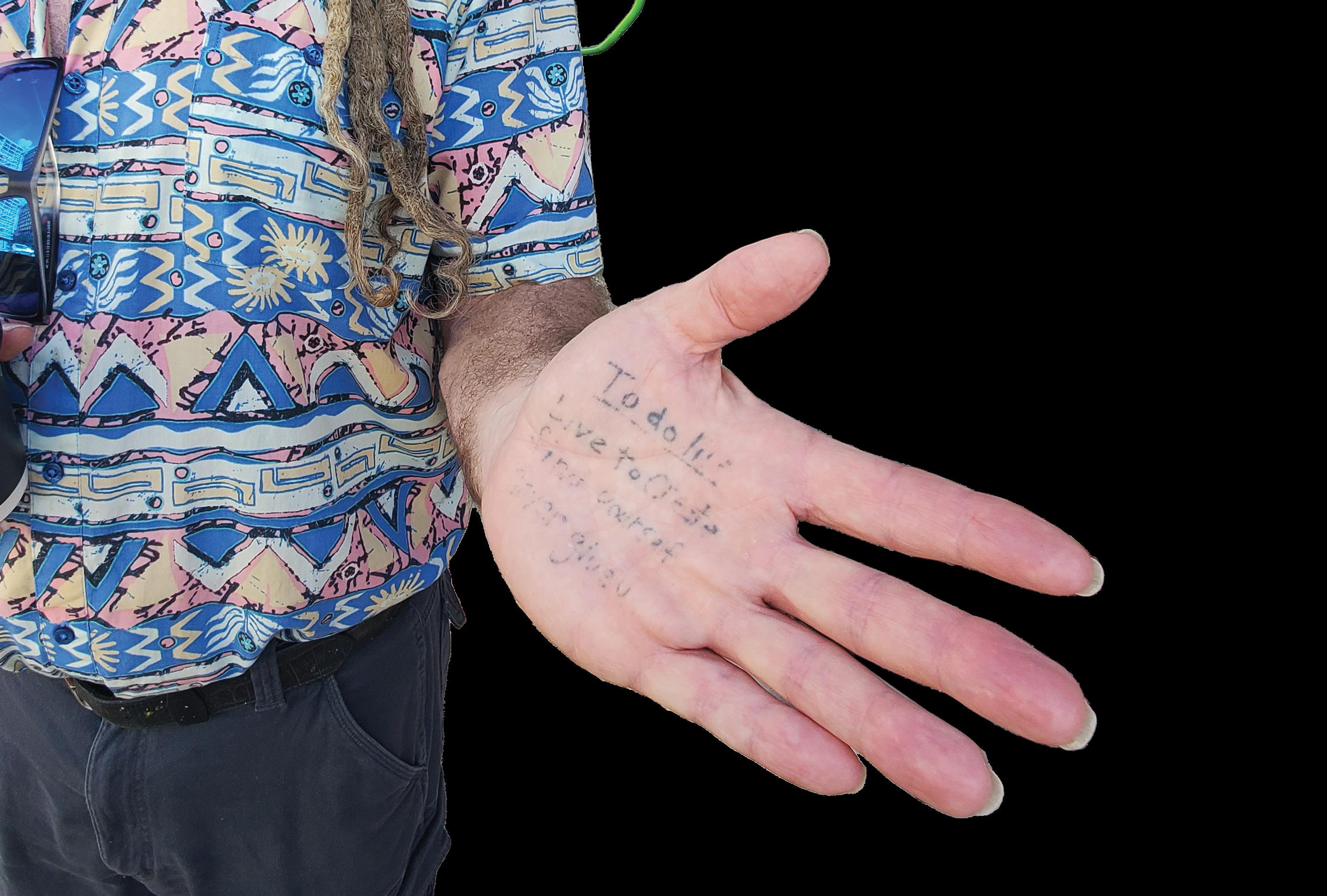
What I’ve noticed over the years, though, is that abstract public art doesn’t always invite interaction in the way representational work does. A realistic piece — something like a giant tortoise or a Bigfoot — tends to pull people in. Kids climb on it, people take photos with it, and there’s a more playful, childlike response. at kind of interaction matters to me. My hope is to make a bigger impression on public art in Columbia by contributing more of that interactive, approachable work. Abstract art is something I truly love, but I’ve also seen how di cult it can be for abstract pieces to engage the broader public in shared spaces. Finding that balance — respecting abstraction while creating work people physically and emotionally interact with — is where I see a real opportunity locally.
Tell us about projects you’ve done in other communities.
I’ve had the chance to work in a variety of communities beyond Columbia. In northwest Arkansas, for example, I have several pieces, including one just a stone’s throw from Crystal Bridges Museum of American Art in Bentonville.
I’ve also done projects in Bella Vista and multiple works in Eureka Springs. I even had the opportunity to participate in Art Basel Miami some years ago, collaborating on a project that’s still installed there. Beyond that, I’ve done private commissions in Texas and a few other pieces in Branson. I also had a wood piece in Davenport, though it may not still exist.
Each community has its own character and audience, and I’ve learned a lot about how people interact with my work in di erent places. It’s always inspiring to see how the same piece can evoke di erent responses depending on where it lives.
How do you split time between Eureka Springs and Columbia?
In a lot of ways, it’s a “go back to where you started” story. Decades ago, when I was living in mid-Missouri, I rst got involved in Columbia’s art community. After that, I felt like I needed to get out and see other places — Davenport, Iowa; Kansas City; St. Louis — and I was literally traveling around with a chainsaw, trying to gure out where I t. at journey eventually landed me in Eureka Springs. One of the town’s long-standing ideas is that it’s “where the mis ts t,” and that rang true for me. It’s not just an artist community — the whole town is quirky, creative, and open. I made a big splash there and spent many years living and working in Eureka Springs. at time was formative. It’s where I met Larry, who helped me grow not just as an artist, but also in understanding the business side of art. I have served on the Mayor’s Arts Council there for years, continue to do work for people in the area, and have pieces scattered throughout northwest Arkansas. Over time, I started bouncing back and forth between Eureka Springs and Columbia, and I eventually found myself spending more time in Columbia. Eureka Springs is a smaller art market. It has incredible visitors who appreciate art, but
Columbia o ers more room for growth. It’s a larger area with bigger opportunities, and at this stage of my career, I want to work on a larger scale and take on bigger projects. I still visit Eureka Springs regularly and always will. I consider myself “local” there just as much as I do in Columbia. Eureka Springs is one of those places where, if you ever truly t in, it stays part of you. I’m grateful for places that allow me to become part of their art community — that kind of belonging matters to me. And if another place ever feels like that, I’d be open to becoming part of it, too.
What is something you like about Columbia other than its vibrant art scene?
I really like the university and the passion people have for their team. One of my sayings is, “Passion looks like crazy to those who don’t have it.” I enjoy seeing that energy and commitment. It’s contagious and adds a unique character to the city.
What did you say about creating with the mind or eye of a child? at thought makes us smile!
I think most artisans and creatives are naturally childlike — always curious, easily excited, and drawn to things just outside the norm. I try to create work that taps into that same sense of wonder. You can’t sit on a giant frog, turtle, or Bigfoot and not smile like a 5-year-old. For me, my pieces are about helping people reconnect with that inner child. Many people have lost touch with that part of themselves. But I never lost mine — for better or for worse. Seeing people interact with my sculptures and genuinely smile or laugh is incredibly rewarding. It’s not a fake smile. It’s real. at ability to make someone think di erently, feel di erently, or just experience pure joy through my work is humbling and one of the most satisfying parts of what I do.
What is your muse?
How much do you rely on inspiration to strike?
My muse is life itself — especially nature. My mind never stops generating ideas. I’ll never live long enough to create everything I want to, let alone all the projects I haven’t even started. Inspiration is constant for me.
To me, waiting for inspiration is sometimes just an excuse not to work. Over the years, I’ve developed the discipline to see what a piece needs, let that spark my ideas, and then get it done. e work itself become the vessel for inspiration, and everyone else gets to see what inspired me. I don’t wait for a moment of magic. I create it.
What do you do for fun — besides creating art?
I enjoy vegetable gardening. ere’s something rewarding about growing things and watching them come to life. I also really enjoy helping other people who are trying to grow a business. Over the years, so many people helped me along the way, and they always said, “You don’t owe me anything; just help somebody else.”
I try to do that now by asking, “What are you trying to accomplish? What are you trying to do?” Business, marketing, and advertising are fascinating to me. I enjoy the strategy and creativity behind it, and I like seeing people gure out their path.
If you weren’t creating art for a living, what would you be doing?
I’d be helping businesses with marketing and advertising. I even enjoy cold calling, which didn’t come naturally to me; I had to force myself to do it. But in my experience, artists who sit around waiting for representation or for someone else to make their dream happen rarely see it come true. I’ve always believed that if you want something, you have to get o the couch and make it happen. at mindset drives both my art and my approach to business.
BY BRADLEY WILLIAMS
Living in a town like Columbia, it’s easy to feel like we’re constantly getting re-hosed with information. Between the demands of classes, jobs, family, the energy of downtown, and the never-ending scroll of our digital lives, there’s a kind of background noise that follows us everywhere — voices telling us who to be, what to buy, what to chase, and how to measure whether our lives are “working.”
And under all that noise, there’s a question that has a way of resurfacing — usually when things get quiet: What am I here for?
If you’ve ever felt the tension of that question, you’re not alone. Our culture treats purpose like a treasure hunt. We’re told that if we can nd the right career, reach the right level, and gain the right in uence, the “why” of our lives willnally click. We’ve become a people who prize what we know and what we’ve achieved over who we actually are.
Even the research world has noticed how powerful purpose can be — it’s linked to better health, stronger relationships, and greater resilience. But here’s the problem: Our world is good at telling us purpose matters and surprisingly bad at telling us where to nd it.
As a pastor and a follower of Jesus, I’ve come to believe purpose isn’t something we manufacture through e ort. It’s something we receive. It’s a gift before it’s a goal.
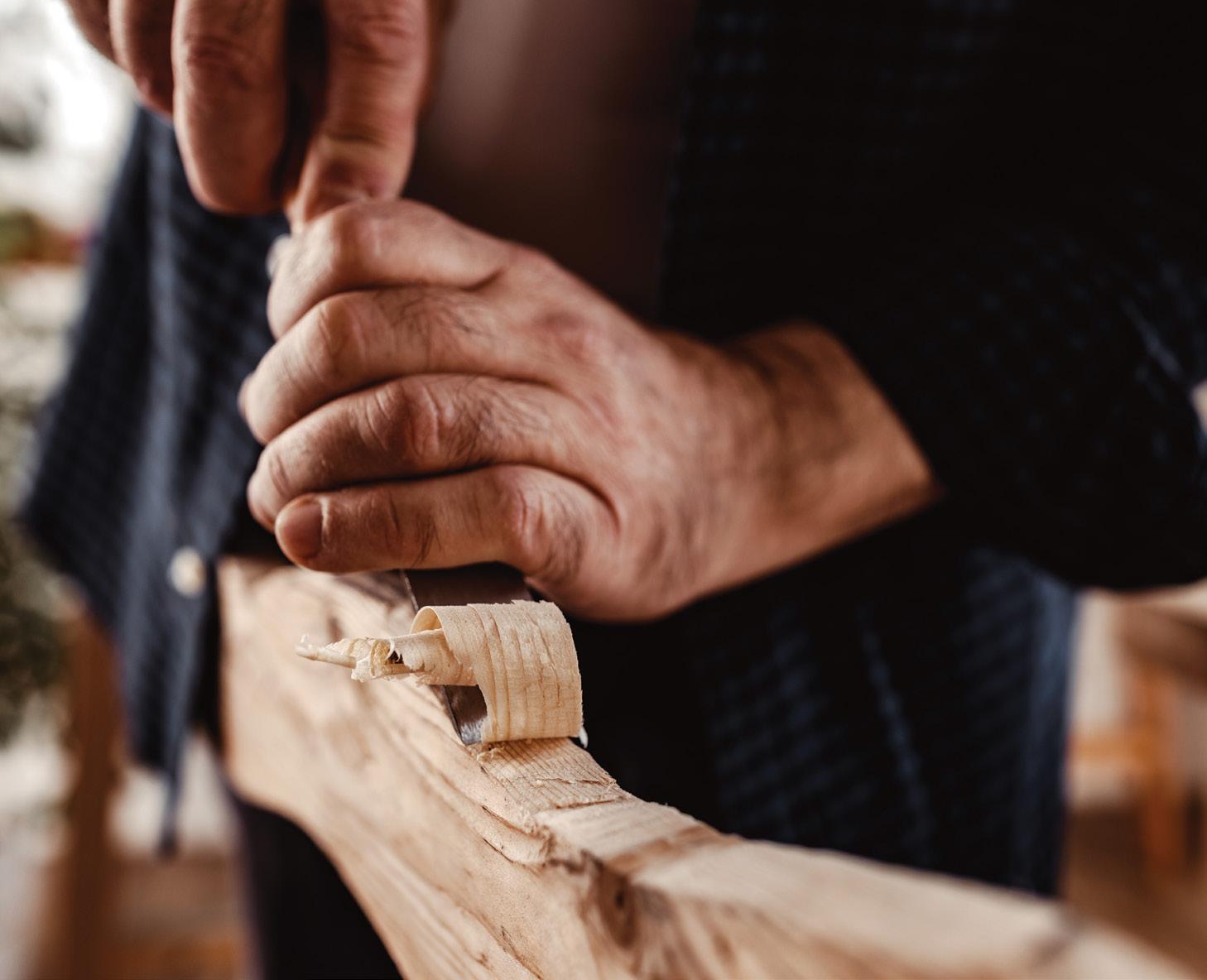
I think about my dad, a master woodworker. As a kid, I watched him take rough boards and turn them into something beautiful. He didn’t start with a nished piece; he began with raw material and a vision.
When we look at people through a biblical lens, we don’t see random accidents or human machines. We see craftsmanship. Scripture even uses a word that carries that idea: poiéma, which is often translated as “workmanship” and is where we get our word “poem.” In other words, you’re a work of art in the hands of a master.
So, what does that change? It reshapes how we see things. ree simple words help unpack what I mean: up, in, and out.
First, we look up. We reorient our lives toward the source of life itself. Instead of letting our value be handed to us by algorithms, achievements, or comparisons, we remember that our worth isn’t something we earn — it’s something we’ve been given. If God is Creator, then you are not disposable. You are intentional. en, we look in. Because if we’re honest, the loudest voice isn’t always out there — it’s in us. e internal critic. e old wound. e shame that still echoes. But if you are God’s workmanship, then the lies you’ve believed about your inadequacy start to lose their authority. You were knit together with care. Your personality, your wiring, and your story are not outside God’s desire to redeem and use.
Finally, we look out. is is where purpose gets practical — and where Columbia’s nonpro t community comes alive. You weren’t created to sit on a shelf and be admired. You were made to be poured out in love toward others. And here’s what I’ve noticed: e people who serve most faithfully in our nonprofits, who show up week after week at the food bank or the literacy program or the shelter, aren’t doing it to ll a résumé. ey’re doing it because they’ve discovered something freeing — they were made to be given away.
Whether you’re a student, a scientist, a parent, an artist, a leader, or you’re still trying to gure out what you are, your purpose comes alive when your life becomes a gift to the person in front of you. is week, when you grab lunch, walk the trails, or grab a cup of co ee, turn the volume down just a little. You might realize the voice you’ve been searching for has been calling you “masterpiece” all along.
Bradley Williams is the lead minister at Forum Christian Church.
BY MAYOR BARBARA BUFFALOE
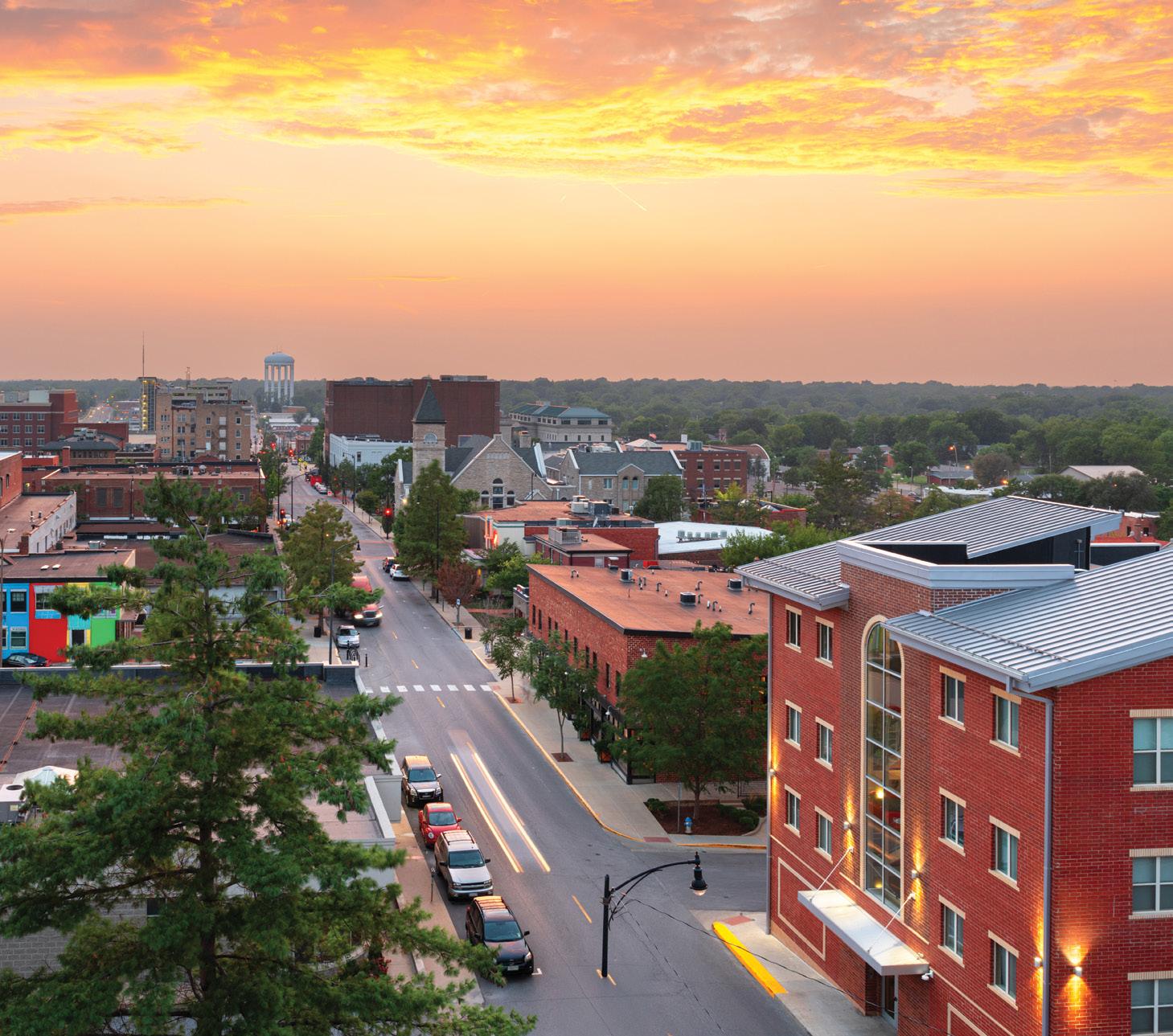
When people ask what makes Columbia special, I often talk about our parks, our schools, our local businesses, and our public services. But woven through all of those are the nonpro t organizations that quietly and consistently meet needs, build connections, and expand opportunity. ey are an essential part of what makes Columbia not just a city, but a community. Our nonpro t sector re ects the full diversity of who we are and what we value.
In times of basic need, organizations like e Food Bank for Central & Northeast Missouri, Voluntary Action Center, and Love Columbia step forward to ensure families have food, utility assistance, clothing, and pathways to stability. ey are often the rst call when a neighbor is in crisis, and their work reminds us that compassion is not abstract here. It is organized, intentional, and local.
When it comes to housing and homelessness, partners like Welcome Home, Turning Point, and True North of Columbia provide safety, case management, and long-term support. ey work alongside city and county e orts, lling critical gaps and centering dignity in every interaction.
Our nonpro t community also fuels economic mobility and entrepreneurship. Job Point connects residents with training and career pathways that strengthen both families and our local workforce. Missouri Women’s Business Center helps entrepreneurs turn ideas into thriving businesses. ese organizations contribute directly to our economic vitality and long-term resilience.
e arts and culture scene that so many of us cherish is sustained by nonpro ts as well. True/False Film Fest brings global storytellers to our downtown each year. Columbia Art League creates space for local artists of all ages to explore and share their talents. ese organizations enrich our quality of life and strengthen our sense of place.
And we cannot overlook the role of philanthropy itself. e Community Foundation of Central Missouri helps connect donors with causes they care about and supports long-term community initiatives.
eir CoMoGives campaign has become a powerful annual reminder of how generous Columbia truly is, raising millions of dollars to support dozens of local nonprofits each year.
What stands out to me is not just the number of organizations we have, but the spirit of collaboration among them. Nonpro ts partner with each other, with our educational institutions, with local businesses, and with city government. We share data. We cohost events. We align resources. at coordination allows us to respond more e ectively to complex challenges like housing a ordability, food insecurity, mental health, and youth engagement.
As mayor, I see rsthand how critical this ecosystem is. City funding supports many nonpro ts through our social services and grant programs, but the real impact comes from the people behind the missions: the
sta , volunteers, board members, and donors who invest their time and energy in making Columbia better.
Columbia has grown and changed over the years, but one thing has remained constant: When a need arises, neighbors step up. Our nonpro t community is one of the clearest expressions of that value.
If you have ever volunteered at an event, served on a board, donated during CoMoGives, or simply shared information about a local cause, you are part of this story. And if you have not yet found your place within it, I encourage you to explore area nonpro ts. ere is an organization in Columbia working on nearly every issue you care about. at is something we should celebrate. It is also something we should continue to nurture together.
Barbara Bu aloe is currently serving her second term in o ce as the mayor of Columbia.


BY HOSS KOETTING
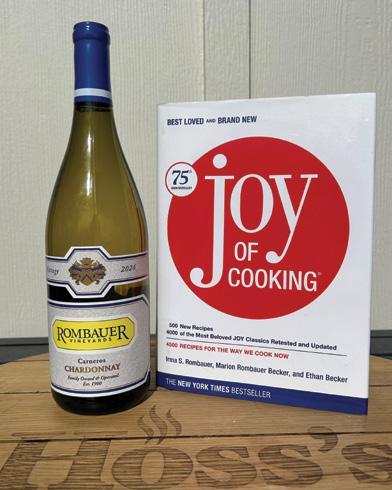
Several years ago, when one of our kids moved into his own apartment, he asked for a cookbook for Christmas. Being what I thought was a good dad, I got him the same cookbook that I was given many years ago: e Joy of Cooking. Penned by Irma Rombauer and rst published in 1931, this holy grail of culinarians is encyclopedic, providing detailed hows and whys of techniques for just about every cuisine, along with tips on entertaining, beverages, butchering, etc. Su ce it to say that it’s exhaustive in scope and, in my opinion, a requirement to have in any kitchen. (An interesting side note: Rombauer Vineyards was founded in 1980 by Koerner Rombauer, the great-nephew of Irma. e vineyard is well known for outstanding wines that pair well with a variety of foods.)
At any rate, my son was gracious if somewhat disappointed with this gift. What he wanted was a cookbook of recipes that I had accumulated over the years.
I suppose I should have been attered that he held my abilities in such esteem, but I was actually a bit overwhelmed when I considered the monumental task of collecting all the recipes and scaling them down to typical serving quantities. (I’m thinking that most people won’t want to make recipes that yield 70 to 250 servings.) Although I have software that does this automatically, I still need to review each recipe and adjust the quantities. For instance, if a recipe calls for 20 eggs for a quantity for 150, and I want to make a quantity for eight, it will call for 1.066666 eggs. Needless to say, measuring 0.066666 of an egg is di cult, so I need to adjust the quantities to usable numbers. at being said, I have nally undertaken the task of producing the recipe collection my son asked for all those years ago, and my goal is to have it ready by Christmas 2026. Wish me luck! e other issue that I am dealing with is that I purchased my recipe software in 1999, back when I was partying like it was 1999 — which it was. Y2K was the biggest issue that we worried about before Covid, recession, and health care crises, and we had very little national debt. Ah, those were the days! at means I’ve been playing IT guy and working with a PC that’s running Windows 7, trying to retrieve recipes that are, literally, from the last century. Here’s one of them. It’s an excellent side dish for any occasion, straight from what will be the forthcoming Hoss’s Best Recipes cookbook.
Jim “Hoss” Koetting is a retired restaurateur/ chef who enjoys gardening, good food, good bourbon, and good friends.
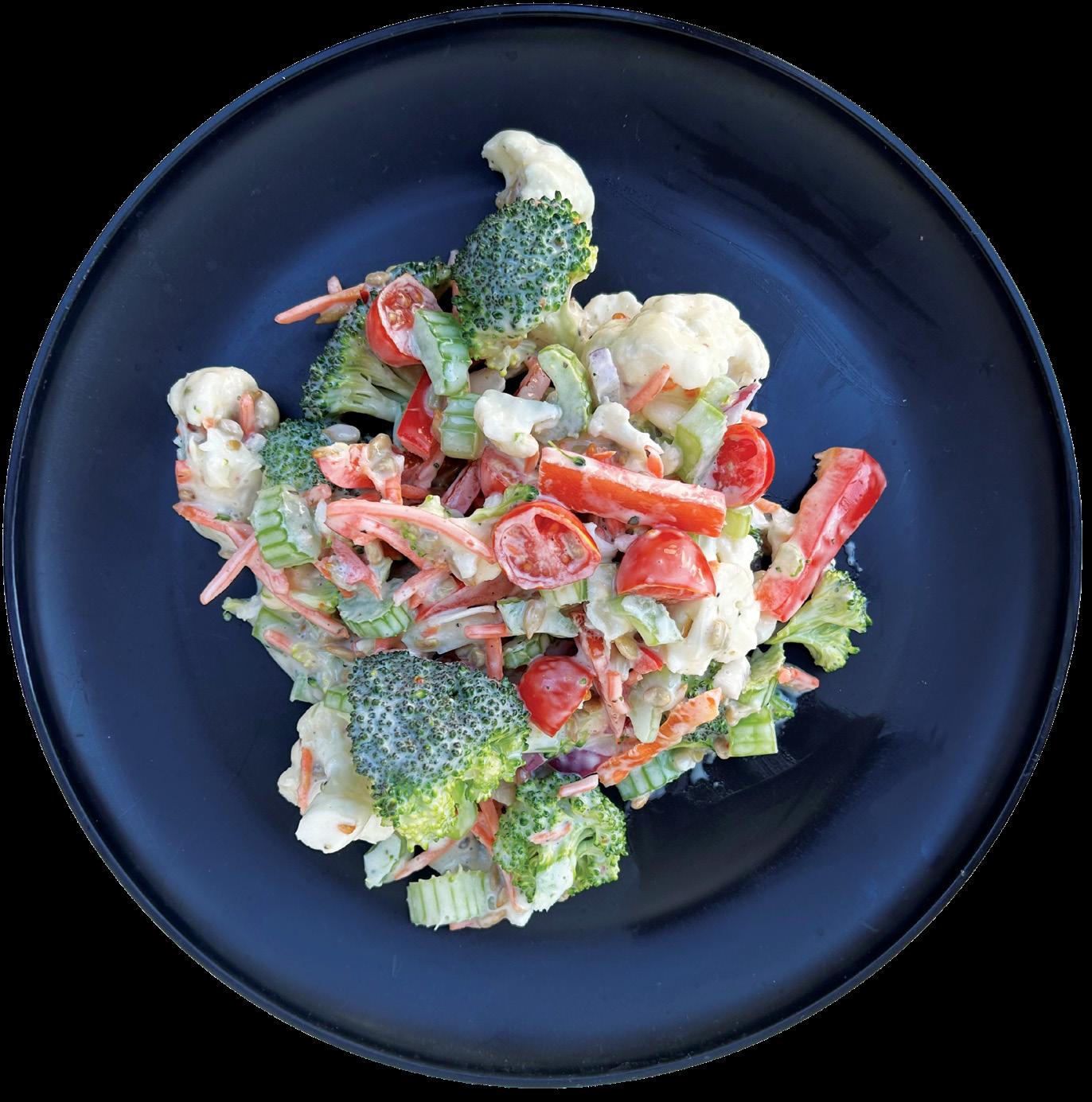
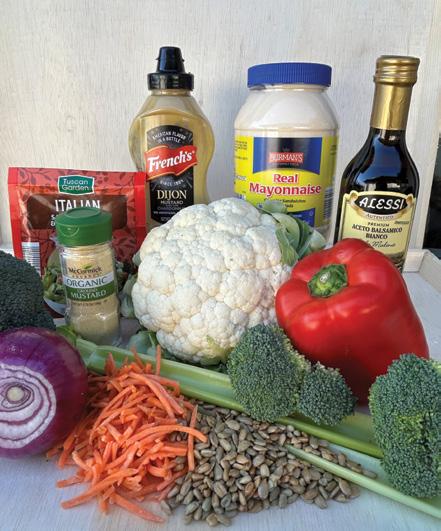
• 1½ cups mayonnaise
• ½ cup white balsamic vinegar
• ⅜ cup of sugar
• 1½ Tbsp. Italian dressing mix
• 1 Tbsp. Dijon mustard
• 1¾ pints bite-size broccoli
• 1¾ pints bite-size cauli ower
• 1¾ pints grape tomatoes
• ½ cup diced red onion
• ½ cup sun ower kernels
• 1 cup batonette red pepper
• 1 cup shredded carrot
• 1 cup ne diced celery
DIRECTIONS
1. Whisk the vinegar, dressing mix, and sugar until sugar is dissolved.
2. Whisk in mayo and mustard.
3. Toss vegetables with dressing to coat.
4. Chill, then enjoy.
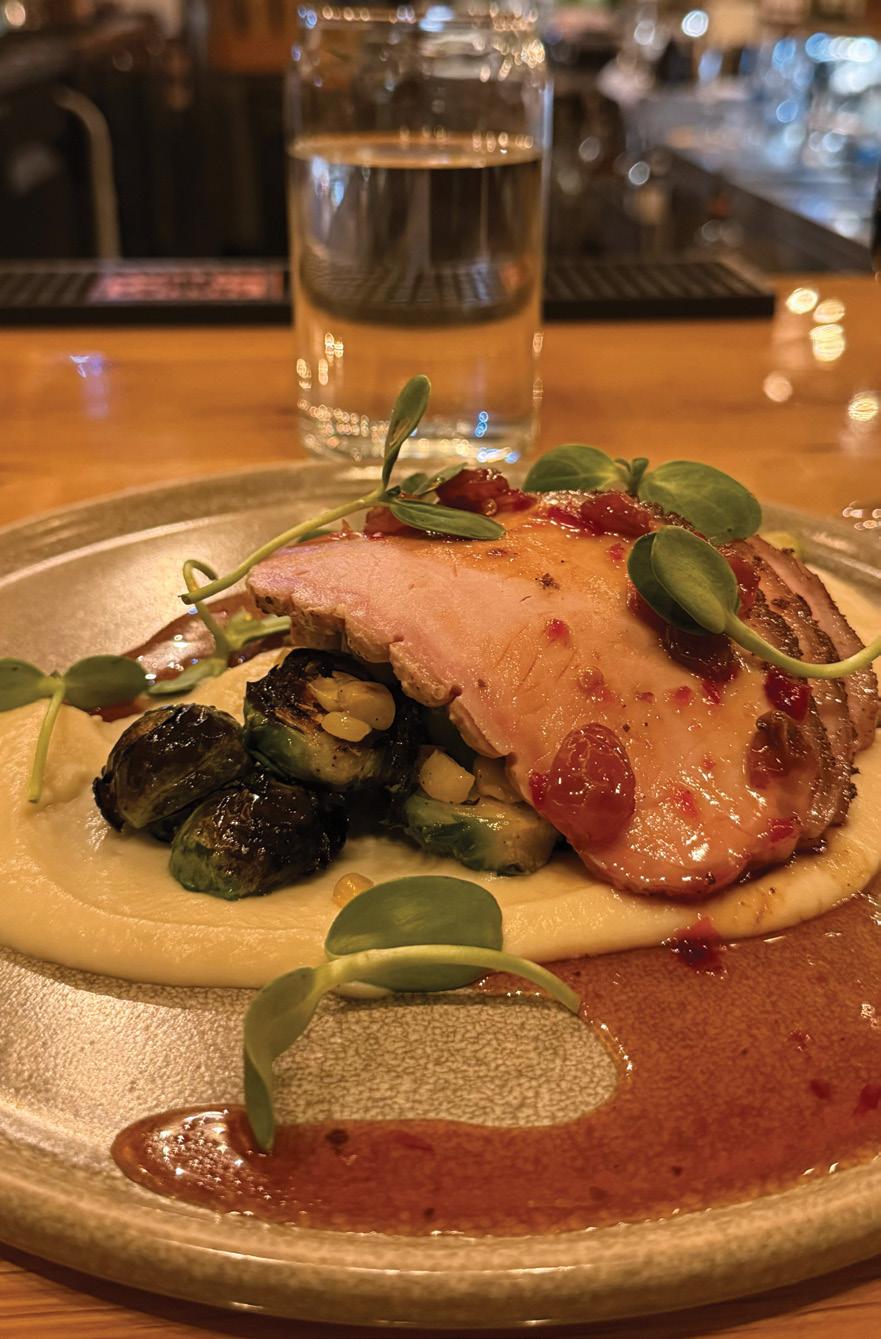
From the soil of Missouri to the hidden dining rooms of Columbia, this exclusive pop-up dinner series is set for a second serving.
BY JODIE JACKSON JR. | PHOTOS BY KELSEY WINKELJOHN AND KYLE GILLELAND
Asoft glow emanated from inside Flyover as the mu ed sound of guests mingling with chefs Adam WellsMorgan and Shelly La Fata held the promise of sharing a thoughtfully prepared meal. e scene was from the January 19 Celebration of Missouri Food and Wine pop-up, presented by COMO Magazine, bringing together Wells-Morgan of Flyover and La Fata of Pasta La Fata for a collaborative culinary experience.
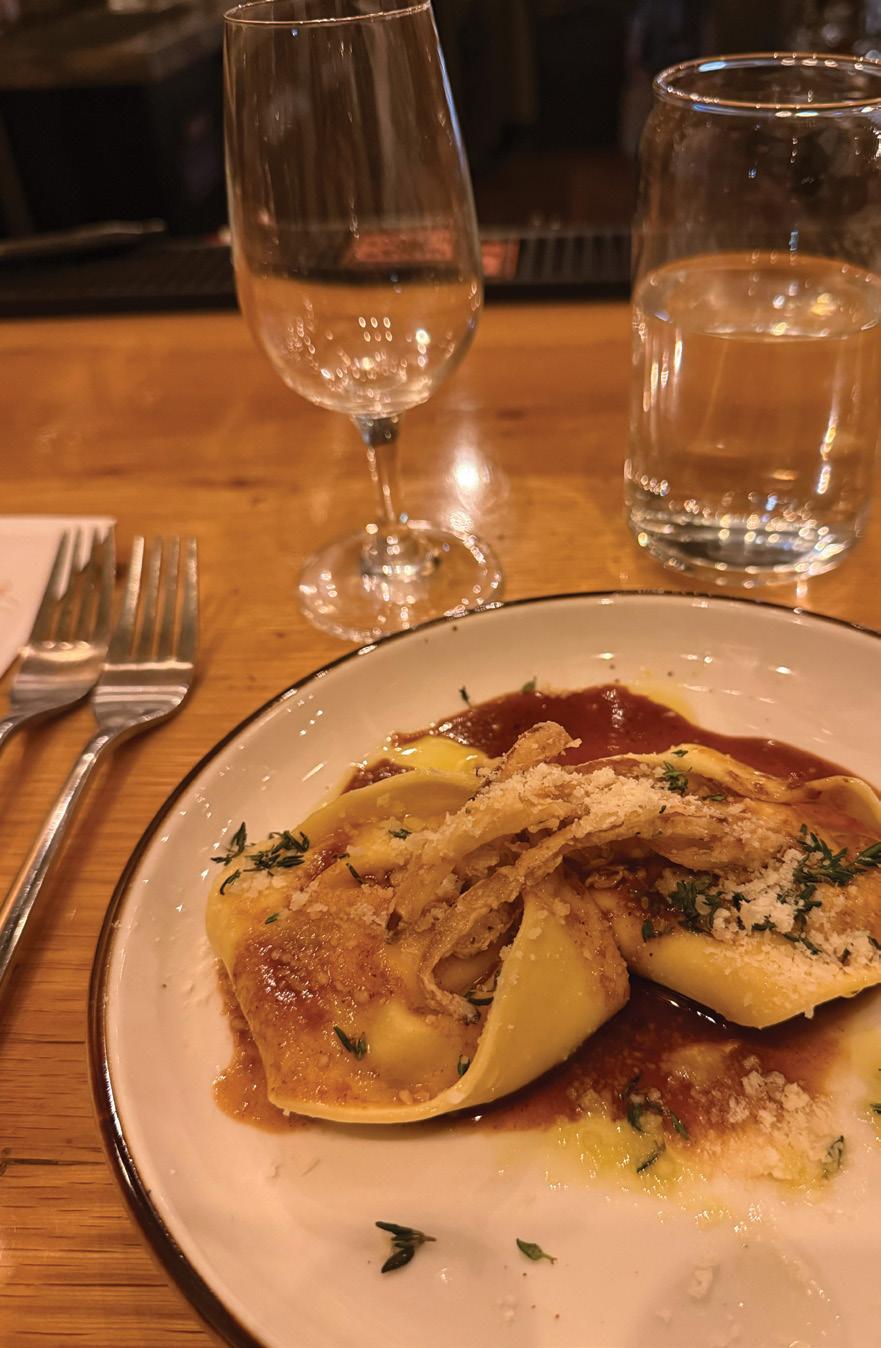
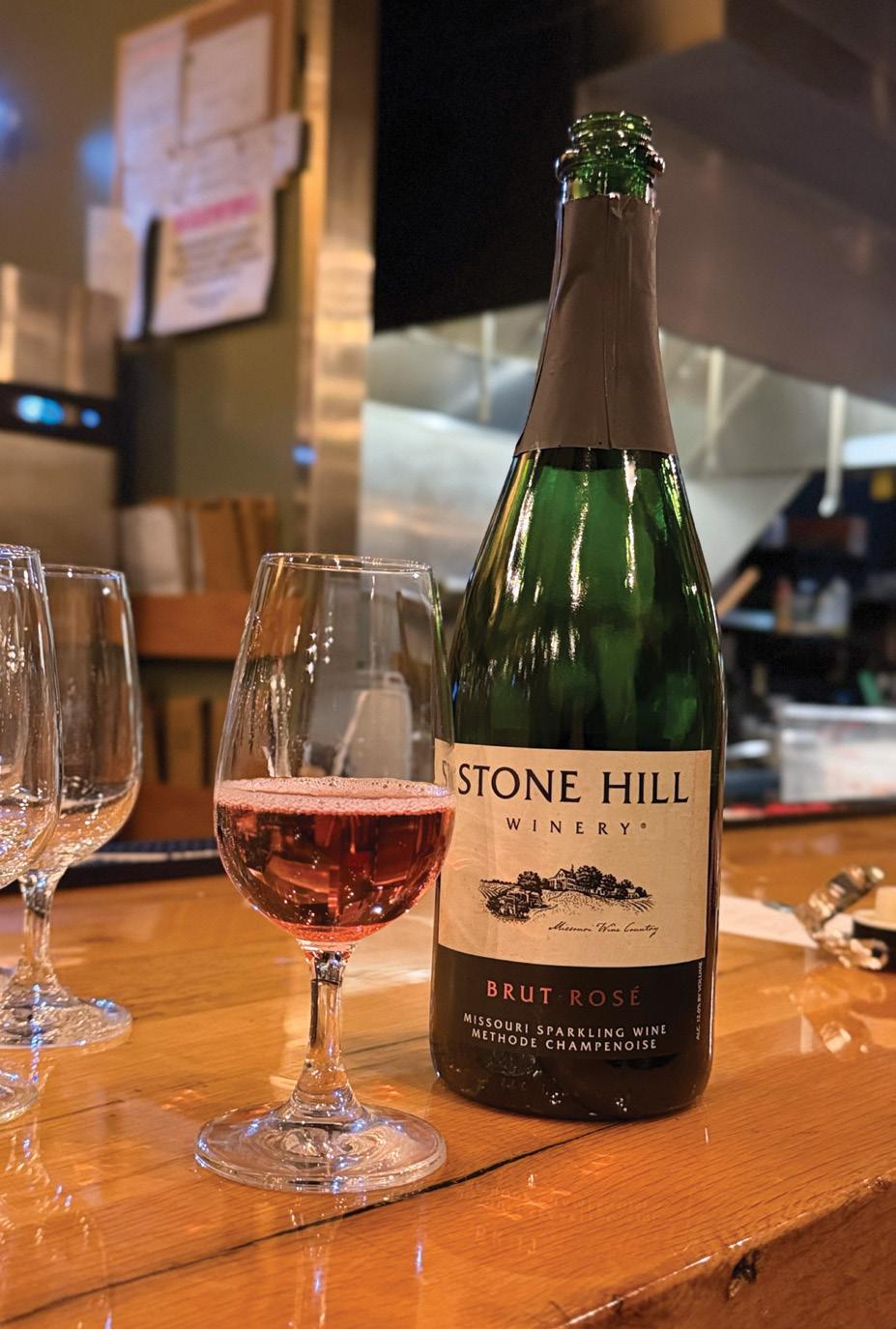
Although diners purchased their reservations for the exclusive event weeks in advance, the location and menu were not revealed until the day before. Guests enjoyed shared appetizers followed by three carefully crafted courses — artichoke and mushroom soup, burrata tortellini, and pork tenderloin, each expertly paired with a wine from Stone Hill Winery — before a nal dessert of dark chocolate and orange mousse.
Ingredients were locally sourced, with pork provided by the Missouri Pork Association. A portion of the proceeds supported Mizzou’s hospitality school.
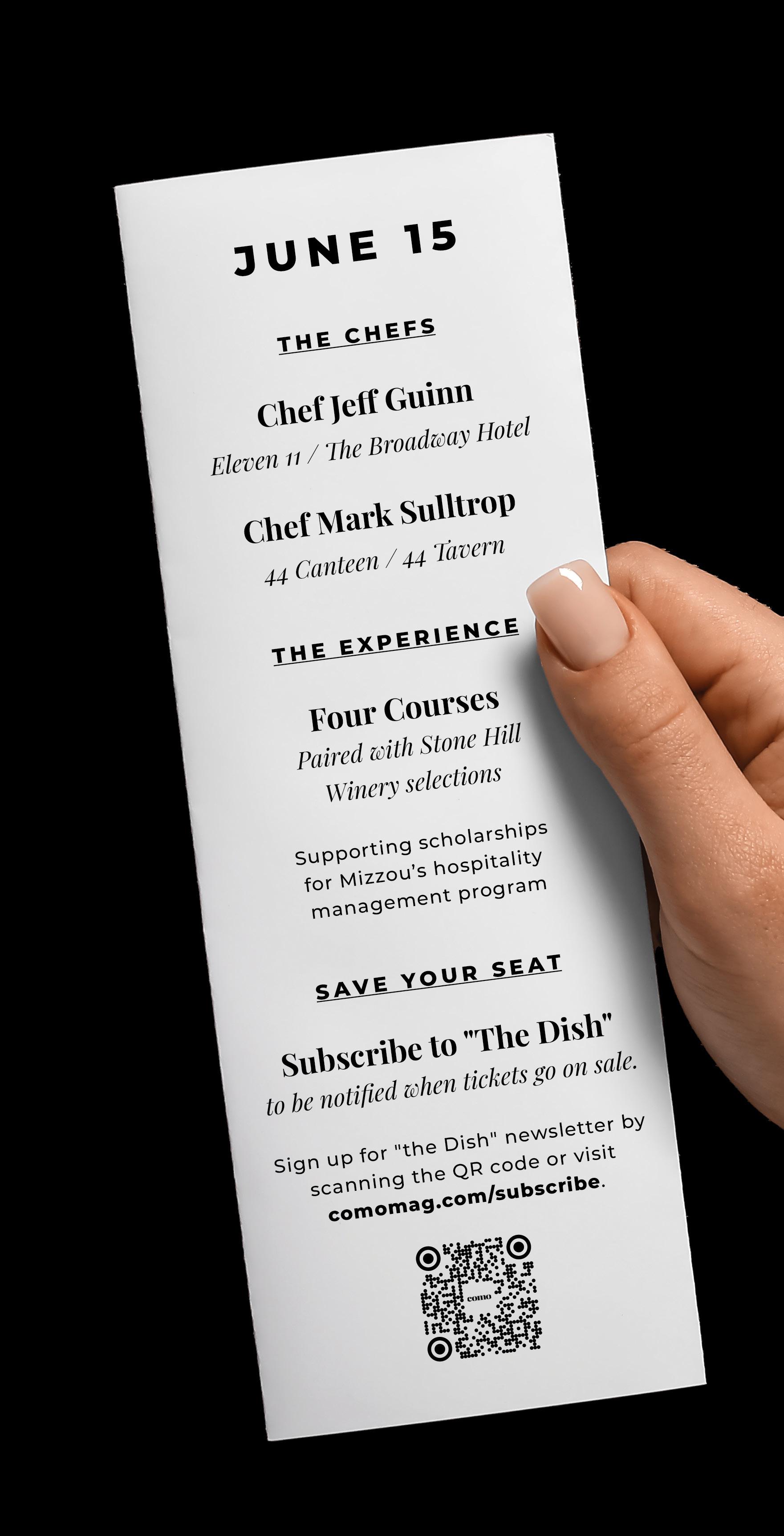
Now comes a second serving of the exclusive pop-up in June.
Ticket buyers will be alerted to the location and the menu the day before the delectable event. e chefs preparing for the second serving of a Celebration of Missouri Food and Wine are Je Guinn and Mark Sulltrop. Guinn is the executive chef and food and beverage director at the Broadway Hotel, 11Eleven, and e Roof. Sulltrop, chef and owner of 44 Canteen and 44 Tavern, said he is looking forward to the celebration.
“I want to be involved to express my creativity, build meaningful relationships, and help highlight some of the very best food and wine our state has to o er,” he said.
Guinn is eager to further build the celebration’s brand and to collaborate with other chefs “to showcase to the community the abundance of amazing local food products crafted into a memorable dinner experience.”
Guinn also emphasized the signicance of the event bene tting “the future leaders of our industry” through scholarships within the University of Missouri’s hospitality management program.
e secretive celebration is being jointly coordinated by COMO Magazine and John LaRocca, president of the Missouri Restaurant Association and former general manager of Mizzou’s University Club. LaRocca is also the host of “ e Dish,” COMO Magazine’s monthly newsletter that explores Columbia’s food and drink scene.
“To watch these talented chefs create some amazing dishes using the best of
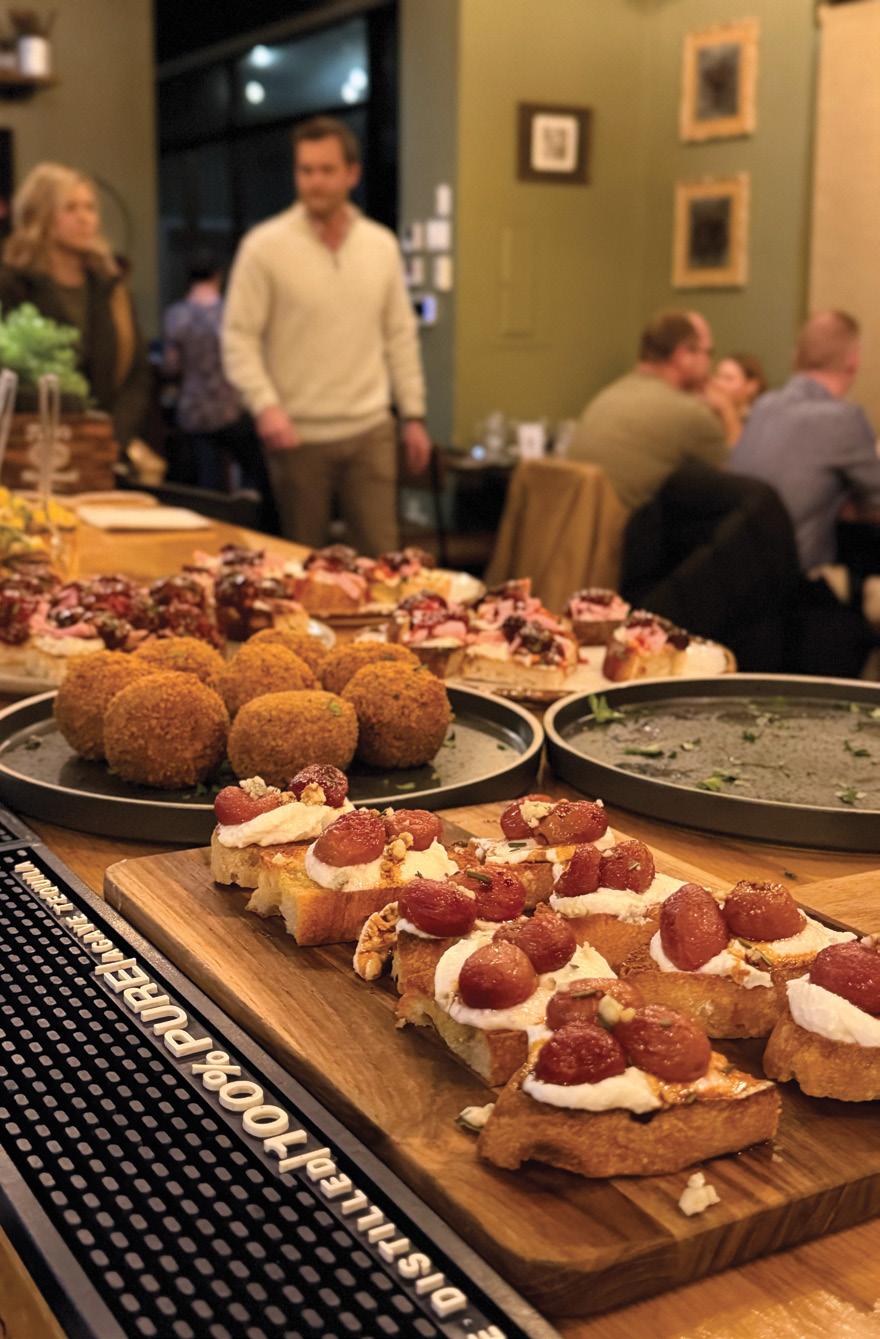
Missouri, paired with award-winning wines from Stone Hill is a true joy,” he said. An added sense of purpose is to support the education of the future of the hospitality industry by giving a portion of the event’s proceeds to the Mizzou hospitality management program’s scholarship fund. He added, “I just sit back and watch the magic happen.”
Stone Hill Winery is on board again to participate in the second Celebration of Missouri Food and Wine pop-up.
“Great wine deserves great food, so it is always an honor to partner with some of the best chefs in the region and highlight the special food and wine being made right here,” said Nathan Held of Stone Hill Winery. Held also echoed the satisfaction of supporting Mizzou’s hospitality scholarship fund.
He said there is “an incredible lineup of some of our highestawarded wines, and some of my favorites,” for the event, “so I have no doubt that it will be a delicious evening.”
COMO Magazine publisher David Nivens said he was “deeply appreciative” of the time and e ort that went into the rst exclusive pop-up.
“From my vantage point, everything went incredibly smoothly from the check-in process through closing, making the event an undeniable success,” he said. “ e food was incredible, the company was delightful, the host was spot-on, and everyone I spoke with had the best time and had so many great things to say about the experience.”
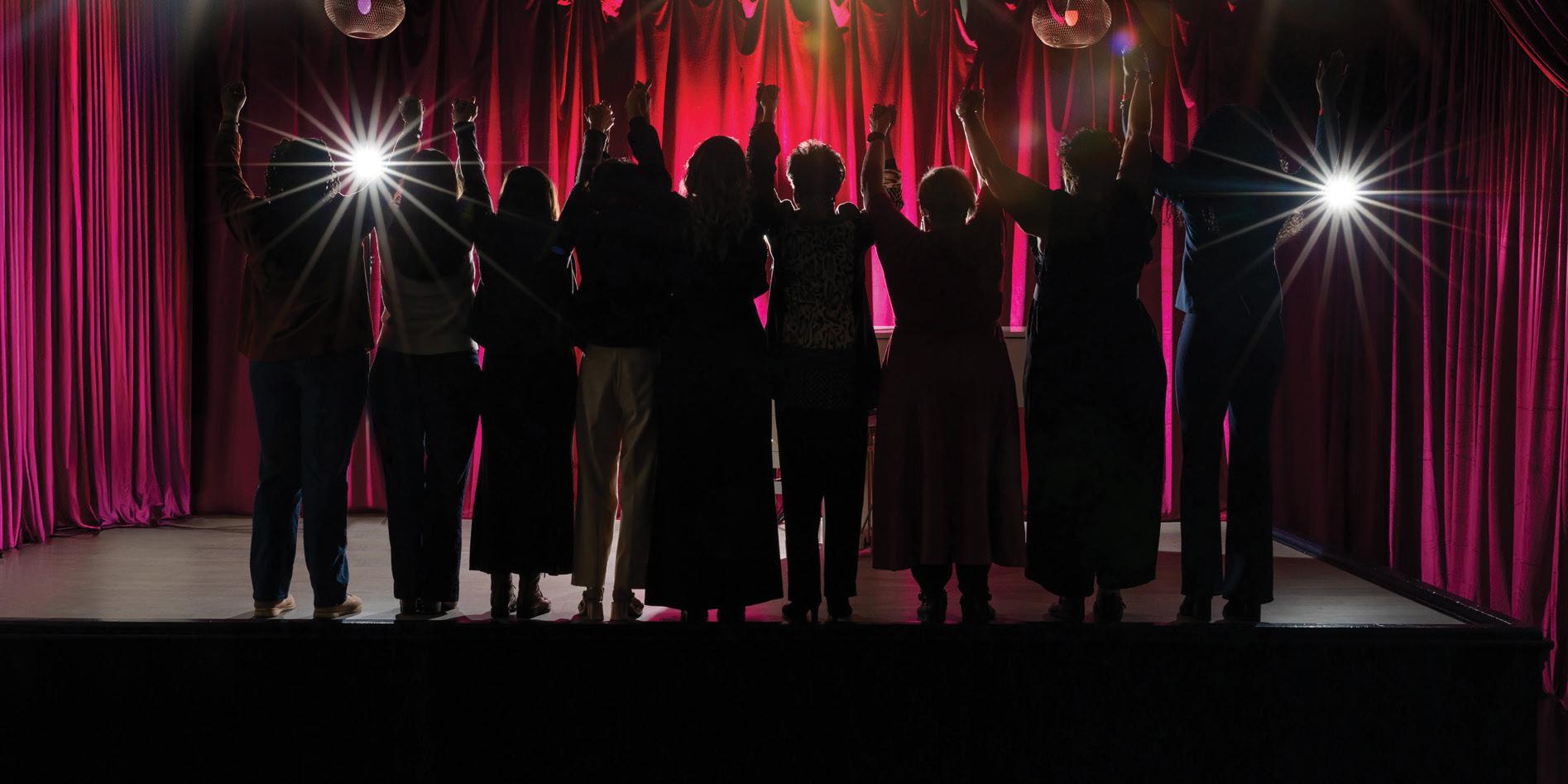
Alongside her family, Annelle Whitt carries on the legacy of her husband, James Whitt, by uplifting minority and female entrepreneurs with education and grant funding.
BY MARY KATE HAFNER
Entrepreneurship is often described in terms of risk and reward. Behind an entrepreneur’s drive for success is often a burning passion or love for whatever they’re attempting to achieve.
e James & Annelle Whitt Entrepreneurial Development Foundation (JAWED Foundation) was born not only from a passion for small business, but from a decades-long partnership and love story between Annelle Whitt and her late husband, James A. Whitt Sr.
James’s impact on Columbia’s business community was both personal and far-reaching. Widely known for his handson support of minority and women-owned businesses, he led the city’s Supplier Diversity Program and provided one-on-one guidance to entrepreneurs navigating early growth challenges.
James also championed e orts to honor the historic Sharp End business district, once a vibrant center of Black enterprise in downtown Columbia. His service on the Columbia School Board further re ected his commitment to expanding opportunity through education. Colleagues and community members alike remember his leadership style as steady, humble, and deeply mission-driven.
A successful serial entrepreneur himself, James navigated several business and nonpro t journeys together with Annelle.
e couple rst met at a minority business owner networking event she hosted.
“I look at the foundation as a continuation of our love story, which is love for community and love for entrepreneurship,” said Annelle, who serves as president of the JAWED Foundation.
After James’s death in 2021, his family wanted to honor his legacy. Annelle, who now works at her late husband’s desk, discovered a yellow legal pad and binder containing a blueprint to expand James’s one-person foundation, which was then providing minority- and women-owned businesses with SEED (Sharp End Entrepreneurial Development) grant money through his own accounts. e JAWED Foundation went live in 2023.
“If we are going to lift all communities, and that includes the Black and Brown community, then we have to create opportunities,” she said.
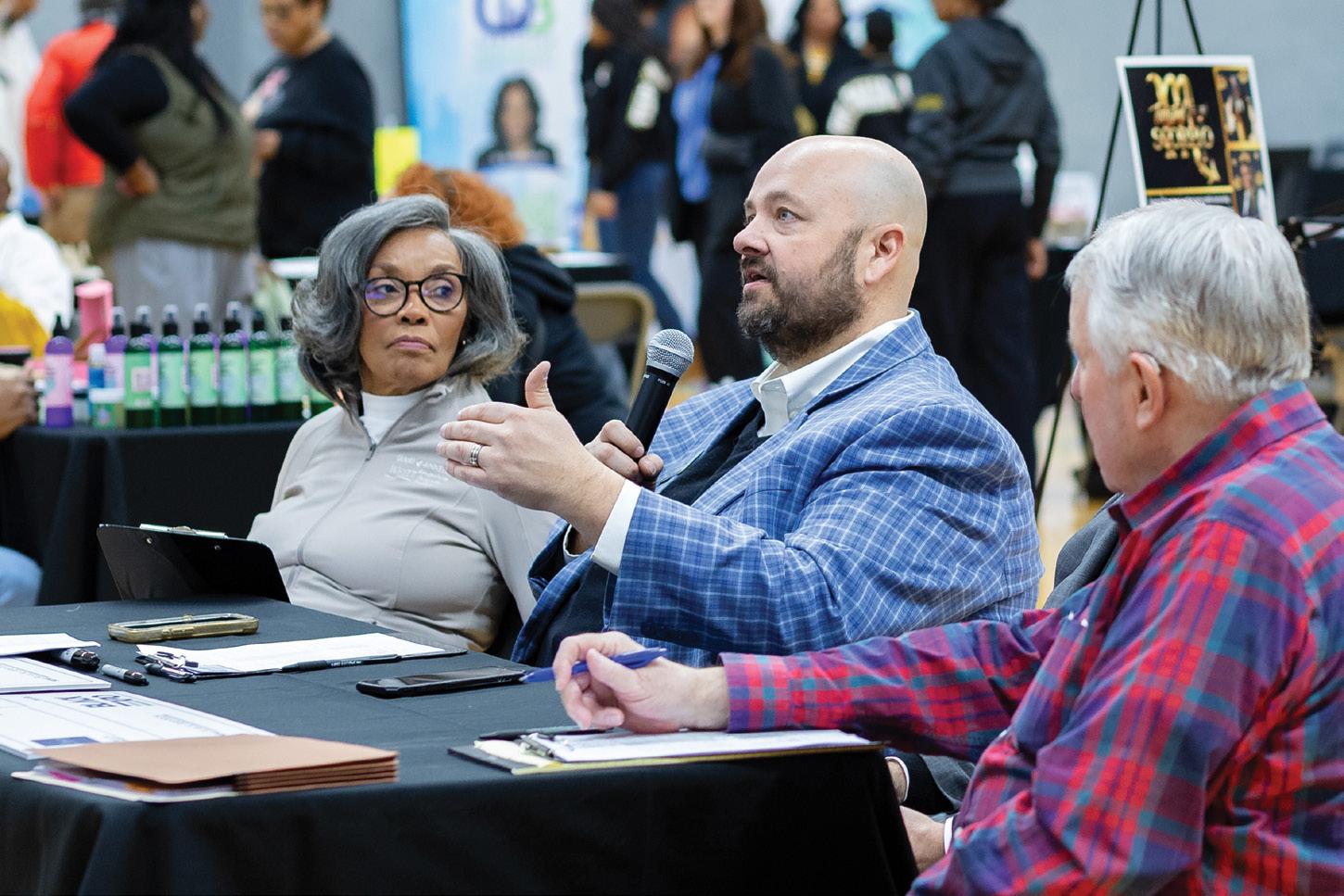
Today, multiple members of the Whitt family help lead the foundation on a volunteer basis. Marcus Whitt, Annelle and James’s son and JAWED Foundation executive director, sits at his mother’s former desk as they work side by side. Jimmy Whitt Jr. serves as the foundation’s treasurer.
POWERING THE ECONOMY BY EMPOWERING ENTREPRENEURS
Entrepreneurship has long been woven into the fabric of the American economy. In 2025, the U.S. Small Business Administration O ce of Advocacy reported that 99.9 percent of U.S. businesses are small businesses. ose companies employ 62.3 million U.S. workers, which is almost 46 percent of all American employees.
“ e faster-growing businesses in the country continue to be [those owned by] women business owners and minority business owners. So, part of it is just good business sense,” noted Annelle. “Even in this environment, I tell people all the time, the one thing that will always be there is the need for a business. People forget that small businesses fuel this country, not the big corporations. Like my husband said, ‘Let’s make it easy for people to start businesses.’”
In three years, the JAWED Foundation has distributed more than $215,000 in SEED grants to 84 businesses across mid-Missouri — all funded through grassroots donations and community fundraising. Fundraising support includes direct
gifts and signature events such as the annual SEED of Success Gala and the James Whitt Sr. Golf Tournament, both held annually in mid-August.
“We do it because we think it’s important. We do it because we believe if we are really going to impact the income gap disparity, and if we’re really going to build generational wealth, and if we’re really going to build legacies and an ecosystem open to everyone, then we have to provide supports that will truly make that happen,” Annelle said.
Unlike many grant programs, the JAWED Foundation does not provide direct cash awards. Instead, the organization purchases revenue-generating equipment for entrepreneurs. Owning equipment better enables entrepreneurs to scale their operations — a strategy Whitt says creates longer and more meaningful impact.
“Let’s buy the equipment that you need that’s going to produce revenue. e companies that have been the most successful in our foundation are the ones that we have bought commercial equipment for,” said Annelle. “Everybody doesn’t have the money to do a $7,000 or an $8,000 or a $4,000 outlay. at may seem like small money, but it’s small money that gives a great return.”
Supported purchases have included commercial refrigerators, freezers, espresso machines, specialized molds, and other production tools designed to help small businesses scale more quickly.
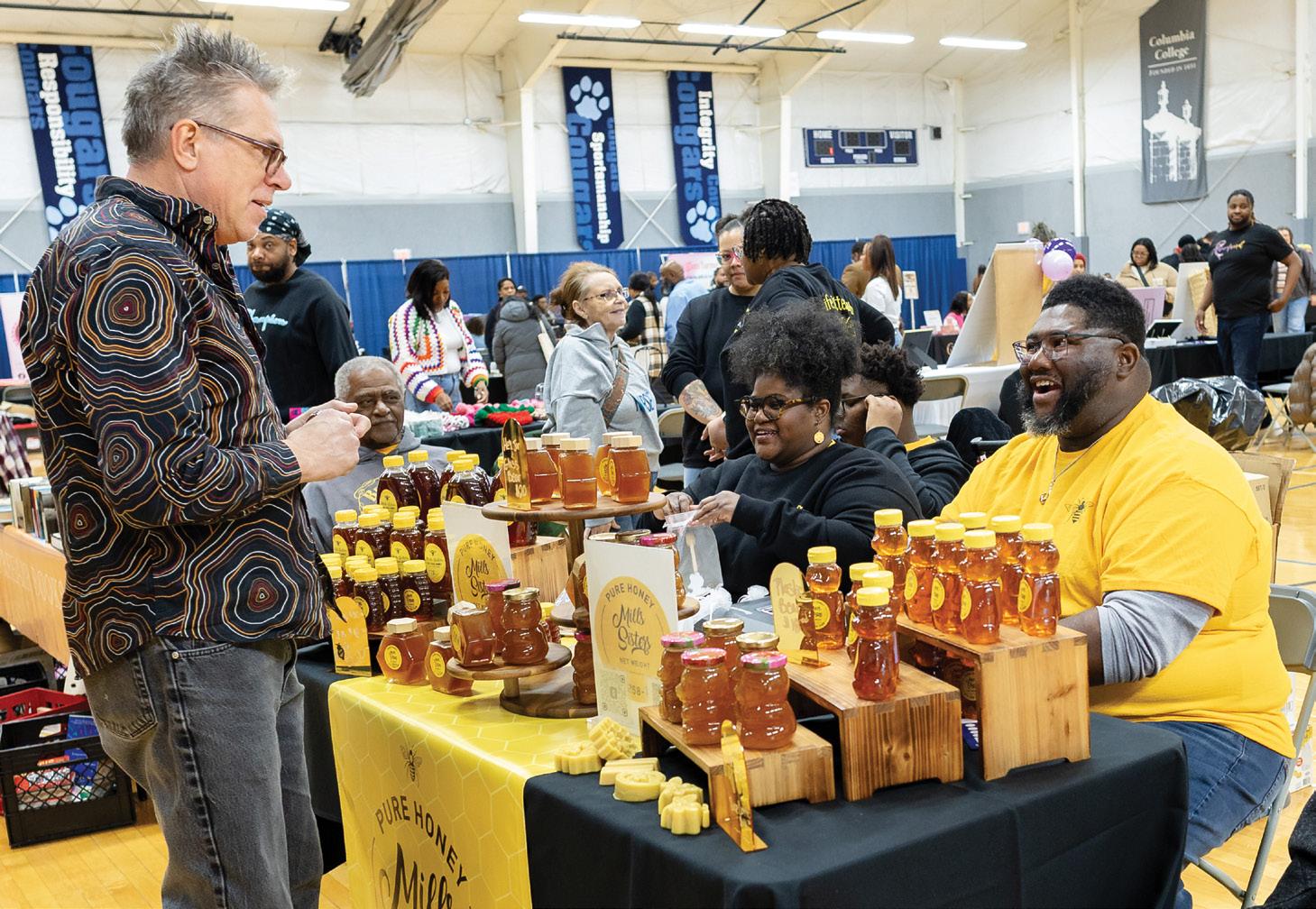
In several cases, Annelle noted that the equipment investments have doubled or tripled a company’s output.
Beyond funding, the foundation also o ers free workshops, mentoring, and coaching designed to help entrepreneurs navigate the early stages of business ownership in an intentionally supportive environment. No question is too small or too big. e workshops cover what could be found in MBA textbooks and the more personal
and real-life side of business, such as what it’s like to be married to an entrepreneur. Whitt often leads the workshops and imparts her lived experience and success.
“Integrity is important. We don’t halfstep on what we do. If we say we’re going to do something, we’re going to do it, and we’re going to do it to the best of our ability,” Annelle said.
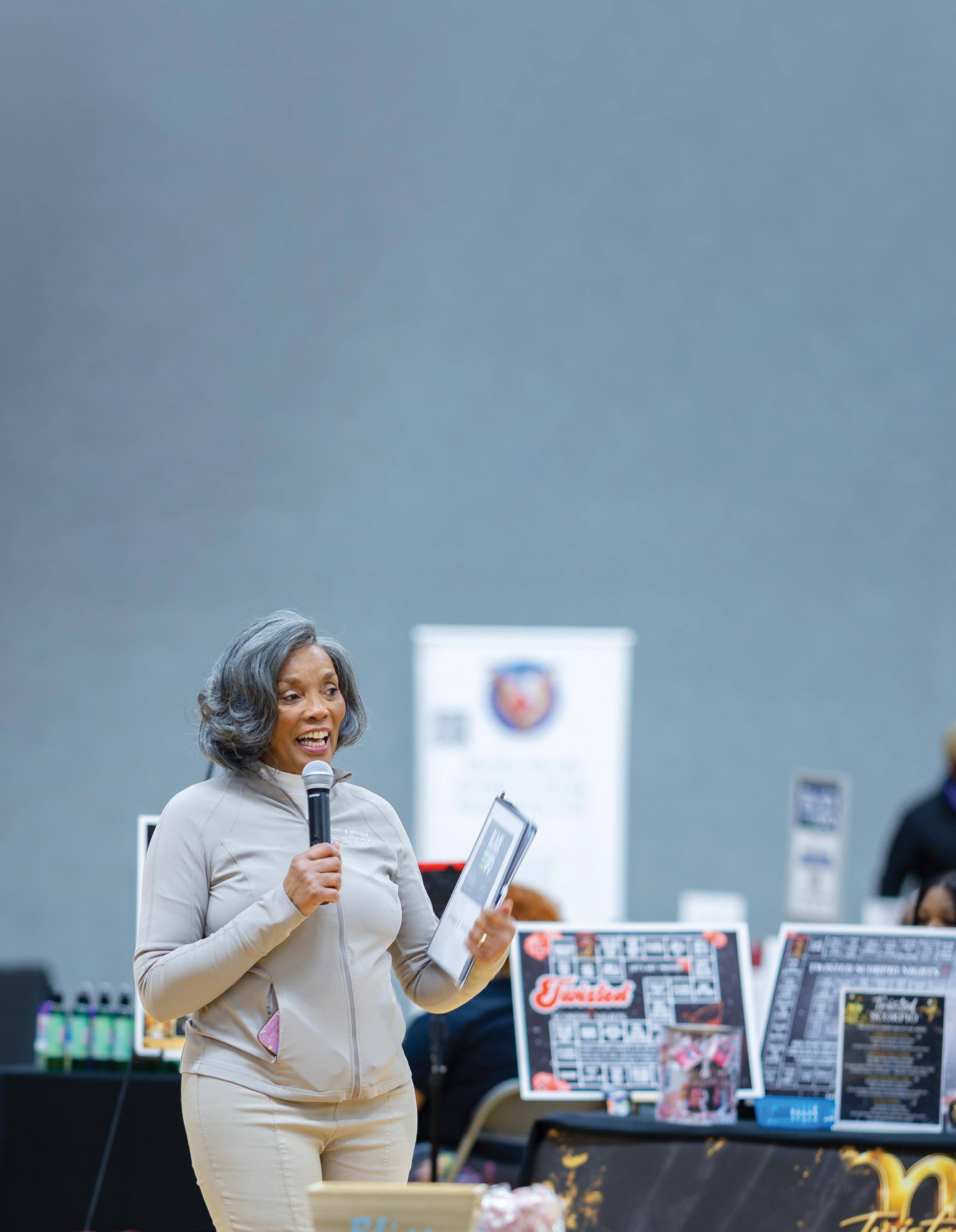
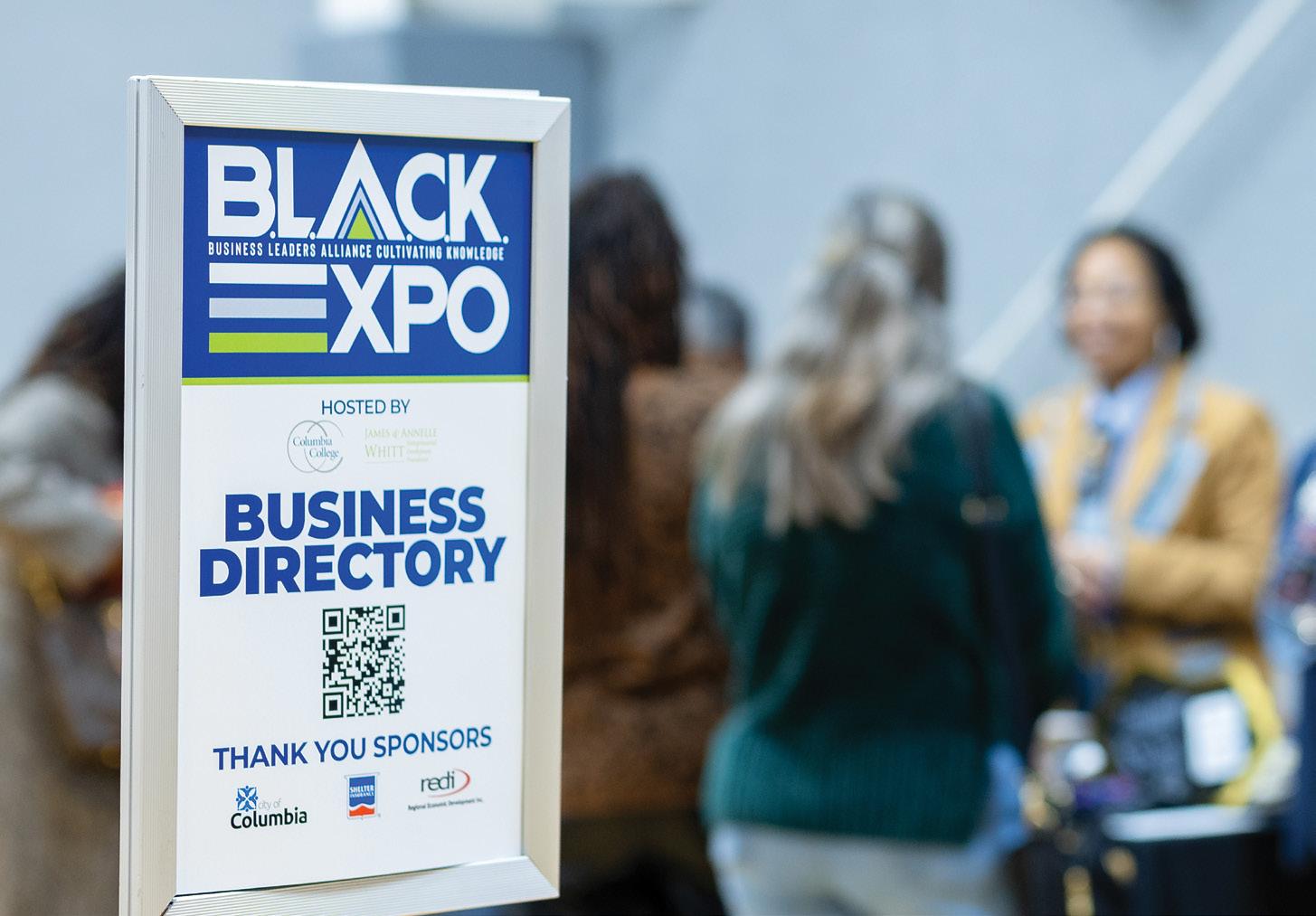
As the foundation has grown, its community presence has expanded, including its partnership with Columbia College to present the annual Black Business Expo. is year marked JAWED Foundation’s
second year helping lead the event, which featured more than 60 minority-owned businesses from across mid-Missouri.
“Black business expos are all over the country and do very well, because it’s more than just buying and selling, it’s an experience. We want it to be a cultural experience, and that’s something that everybody can enjoy,” Annelle said.
Columbia’s Black Business Expo elevated the expected vendor format with a community-focused approach featuring music, lively conversation, and an emcee. Every type of business was present, from bee farmers to mental health counselors and contractors. For many participating entrepreneurs, the expo represents more than a sales opportunity; it’s a chance to build visibility and community connections.
Leslie Lewis, owner of Retied LLC, an upcycling accessory business creating expressive accessories and memorabilia, was a rst-time business presenter. She had attended the expo in previous years and was inspired to move her business idea forward.
“I thought this would be the perfect opportunity, since I am a woman and a new Black owner of a business, to introduce my product to the world,” Lewis said.
e future of the foundation is bright. Annelle reported that the foundation team aspires to expand statewide in two years and nationally within 10 years. With their notable track record over the past three years, the sky seems to be the limit.
“My husband left a phenomenal legacy of commitment, of love, of devotion, of stability, and giving back to individuals that I think made a di erence in their lives and made a di erence in this community. And I hope that’s my legacy,” she said.
is past January, Annelle was awarded the Distinguished Community Service Award at the 40th Annual MLK State Celebration. e same award was bestowed on her husband posthumously in 2021.
“It’s not about the recognition. We don’t keep eyes on what everybody else is doing. We keep our focus on the work,” Annelle said. “And I think the work will speak for itself. We’re going to get what God wants us to have.”
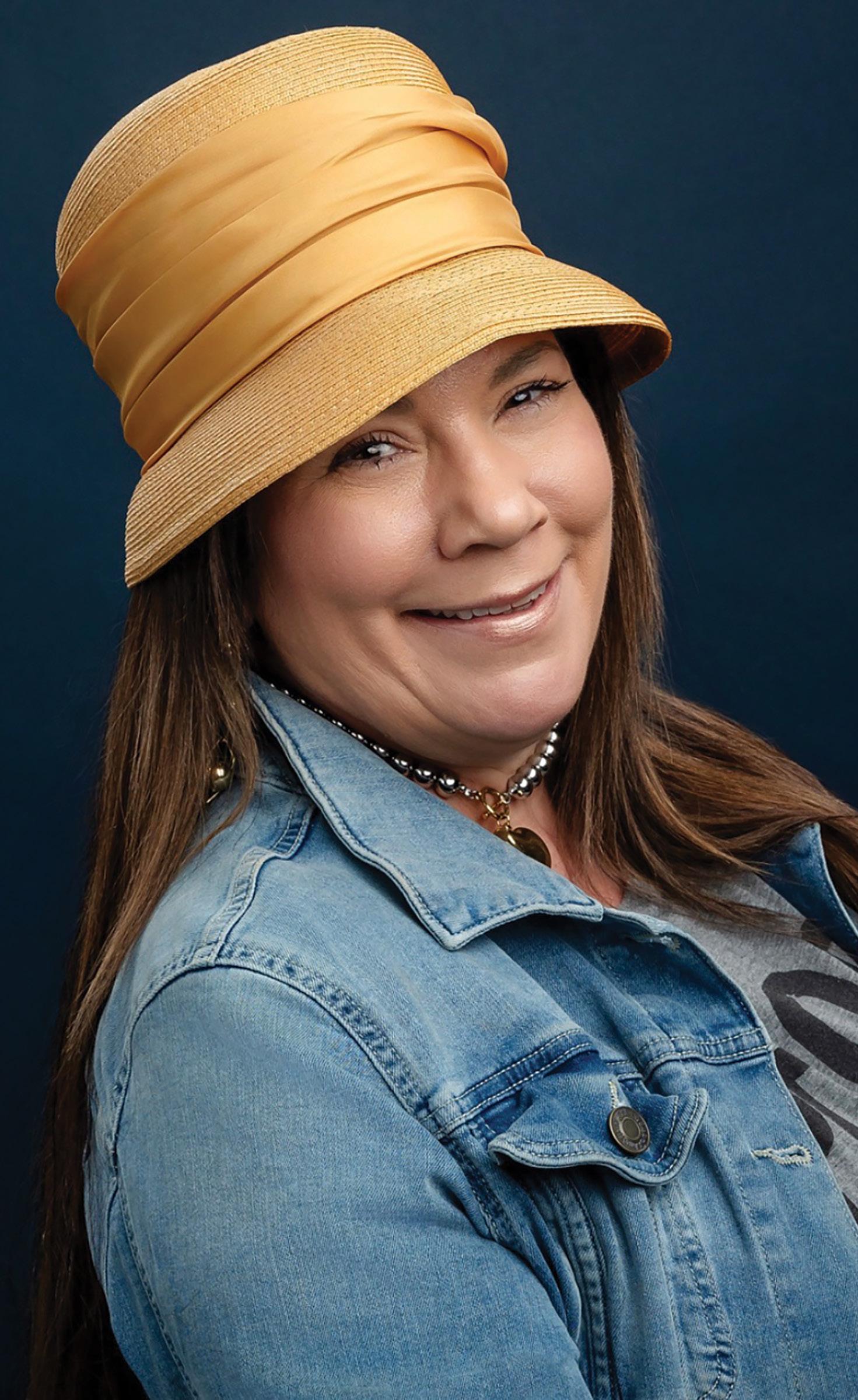
COMO Magazine’s “Day in the Life” series features Columbia pros (and amateurs) who do their part to keep the globe spinning and make life better for the rest of us — often in ways we don’t realize. We especially appreciate opportunities to tell our readers more about individuals and organizations that most of us aren’t familiar with.
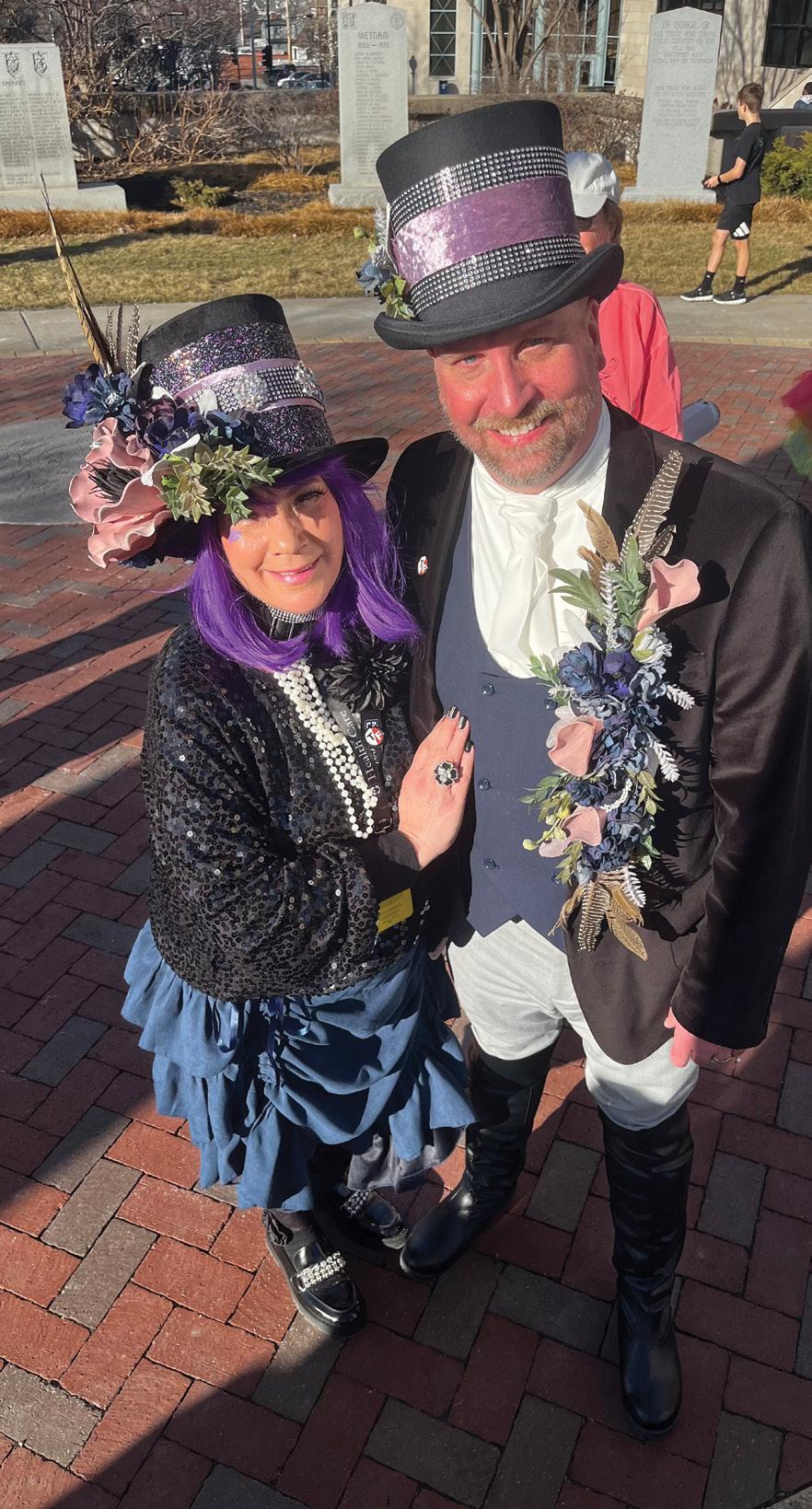
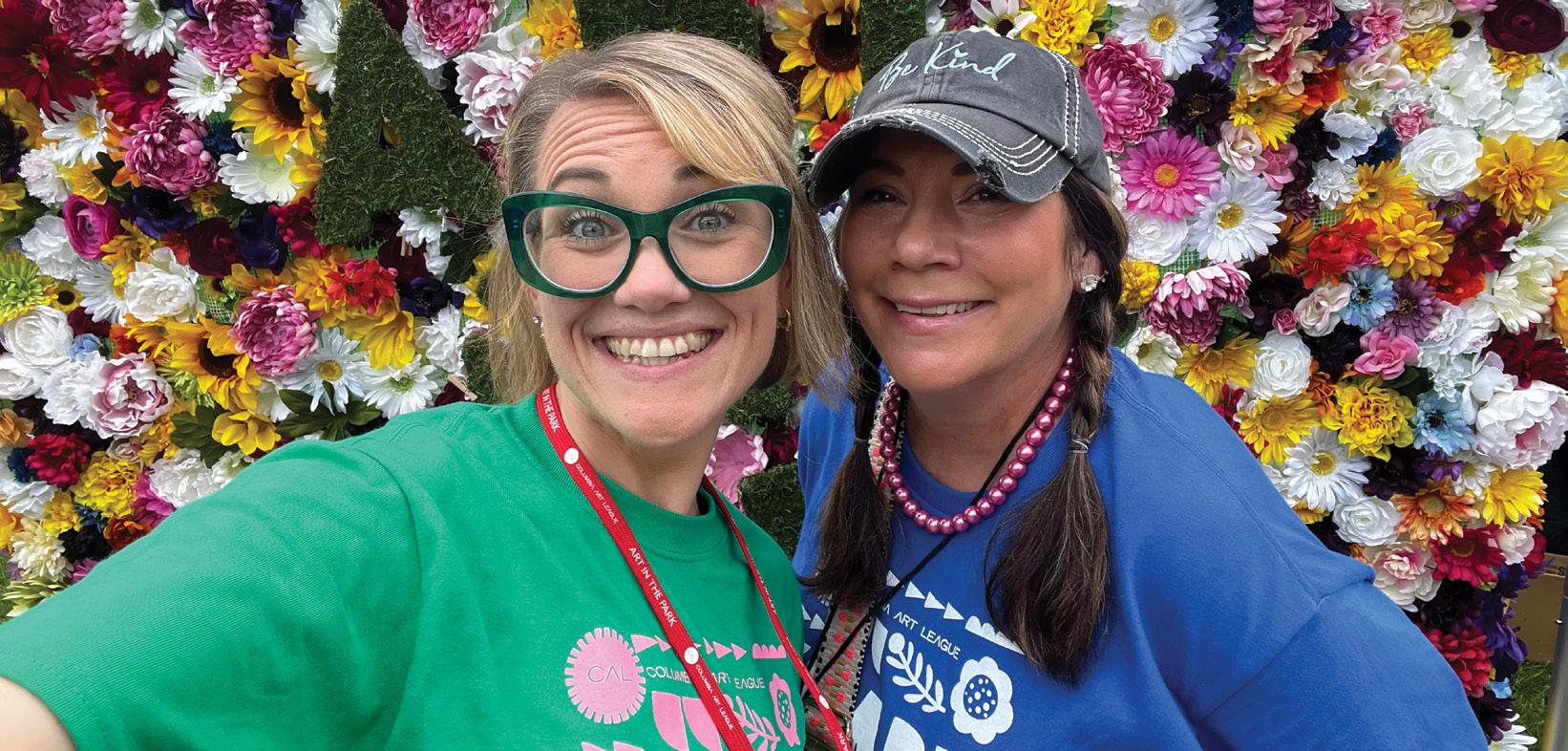
Nikki Reese is the events and business coordinator for The District (Downtown Columbia) — as well as a deeply involved volunteer for our community.
What does The District’s events and business coordinator do? As the events and business coordinator for e District, I wear many hats. If you know me, you know this to be true guratively and literally. I get businesses involved with all our events. I am the liaison between the signups and the businesses. I help get the word out about each event through various avenues. I put posters out, do press releases, and get our events on community calendars. I attend each event and check in on each business and thank them for their participation. I then follow up and give gift cards or posters to winners if those things are part of the event. I will also return to our committee and report how the event went. I also get to come up with fun new event ideas to bring people to our businesses!
As the business coordinator, I keep track of new businesses coming into downtown. I meet with them and give them a welcome packet. I then update them into our databases and add them to our website. I also keep track of businesses leaving e District and update accordingly.
Tell us about yourself. How would other people describe your personality and your skills? I am an empath to my core. I feel everything and feel it deep. I try to be positive and not focus on the bad stu going on. I am
a giver. I use humor to get through a lot. I love to dance and sing. I am probably stronger than I allow myself to think I am. I am a creator, but I don’t think I’m super great at stu (LOL). Other people probably think I am a lot to take in.
I don’t meet strangers. I had someone tell me once that they said, right before I came into their place, “Here comes Nikki. She’s like a whirlwind/tornado. She comes in all happy, positive, full of energy, says what she needs to say, makes you feel good and then she’s o again.” I take that as a good sign!
What satisfies you most about your position? I love helping people. Being in my two positions allows me to work with and for the downtown business community. ey need us all now more than ever before. Getting to see them thrive because of an event we pulled o is so rewarding to me. I feel like I am doing something good.
We’ve learned that in addition to your role with The District, you are a rather overachieving volunteer in Columbia. Where does your passion for volunteering come from? You had mentioned “making up for lost time.” I had fantastic parents. ey taught me well. My daddy would give the shirt o his back if someone needed it. When my husband and I moved to south Texas, we moved to a tourist community. ey didn’t like outsiders. ere wasn’t a feeling of community there. After 17 years, we moved to Columbia. is has been the most open and loving community. I am most de nitely making up for lost time. My giving heart is so full living in CoMo.
What’s usually at the top of your to-do list when your workday starts? Email and check for new events to add to our calendar and add things to my to-do list.
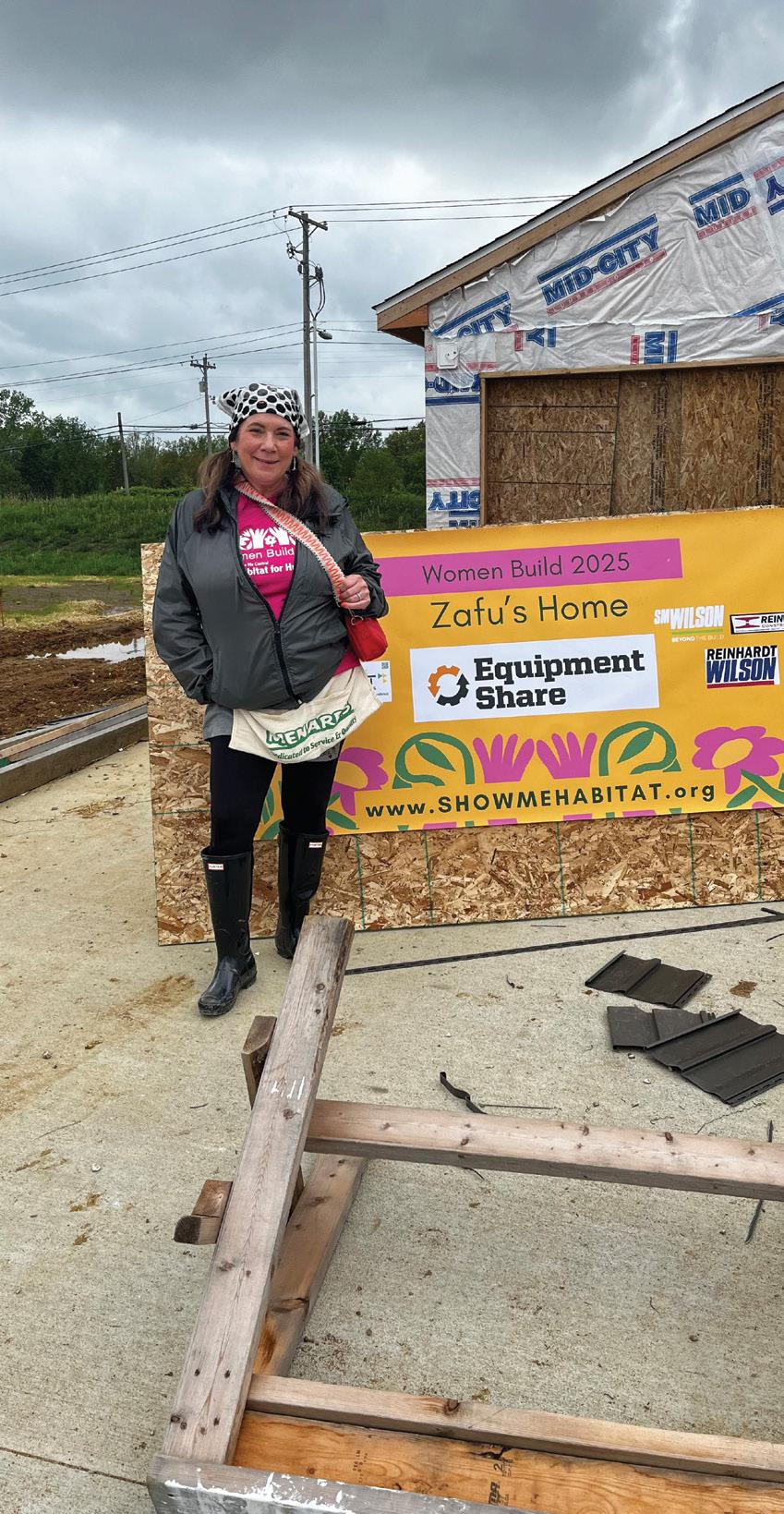
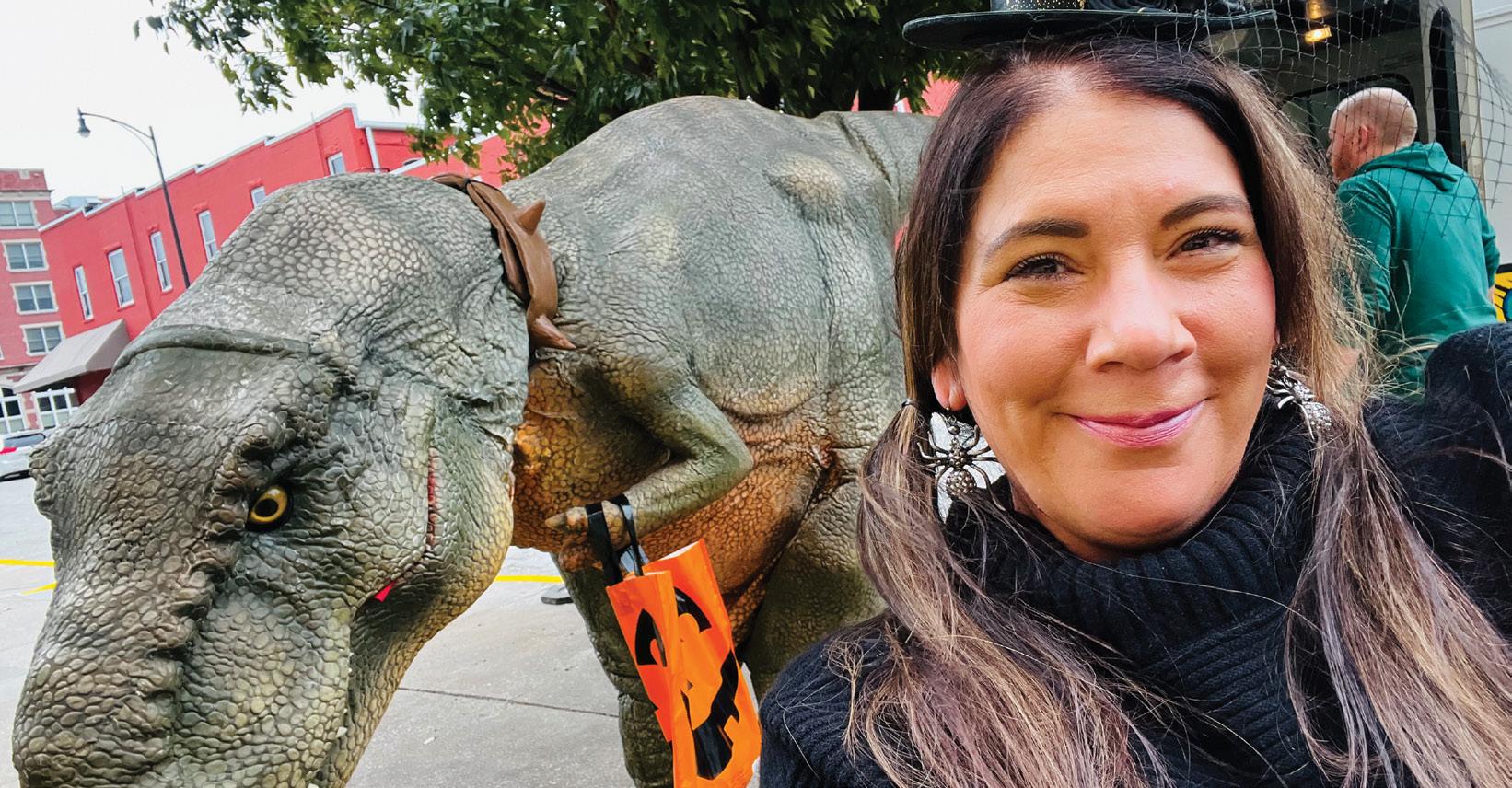
Tell us about some of your favorite projects, both with The District and as a volunteer. e District projects would have to be Halloweenie, Living Windows, horse-drawn carriage rides, and the Wassail Stroll. Volunteering, gosh, so many to choose from. Just to name a few, currently, True/False Film Fest, as I am a Q Queen! But there is also Art in the Park, Bowl for Kids’ Sake, Countdown to Kicko for Big Brothers Big Sisters, Sips for the Symphony, Access Arts CelebrARTy, All Women’s Build, and sidewalking at Cedar Creek erapeutic Riding Center. I literally can’t choose one to talk about, and these are only a snippet of all the fun things that I get to be a part of.
What was your professional journey before coming to The District? I was the general manager of a ve-house bed and breakfast and wedding venue.
Some people are better at planning and strategizing. Some are better at executing the plans. Where do you fall on that scale? I am good at both. But I love the execution of the plan the most. I like to plan it. But I love watching it in the moment.
If you could tell your younger self what you wish you had known or knew to look out for, what would that be? I would tell myself that I am good enough; not everyone is going to like you — and that’s OK; and don’t look back — you are not going that way. I honestly wouldn’t change the direction of my past. Every step was exactly where I was supposed to be.
So what time is lunch? What are you having? I’m an early eater. Years of retail taught me that lunch is a busy time, so you eat early or you
don’t eat when you are the only one in the shop. I love a good salad. I’ve discovered the bento box at Sake is a new fave.
What do your friends not understand about what you do? All of it! ey think I am crazy to take on so much.
If someone told you they would like to volunteer but they don’t know where or how to get started, how would you respond? I would invite them to lunch and chat about their interests, the amount of time they have to o er, and then give them some direction as to where they might t in.
What’s for dinner? Who will you share that meal with? My hubby and I like to cook together. We love experimenting with food, so sometimes it’s veggie dishes, sometimes it’s sh or chicken. We don’t fry things. We only order that if we are out. Our favorite thing to make is charcuterie.
You met your husband through volunteering. Is that right? Tell us about that. I met my hubby 23 years ago through Big Brothers Big Sisters. He was the executive director, and I was hired as a case manager. e small o ce created wonderful friendships. After almost three years, we decided the friendship was more. We left the organization and started dating, and we will be married for 20 years this July.
What do you do to unwind in the evening, and what time does your head hit the pillow? We watch a lot of Dateline and Net ix. When it’s warmer, we go for a walk. My head hits the pillow at various times depending on what I had going that day. I am a night owl, so typically I can go to sleep around 11 or midnight.
What are your dreams? (Literal or figurative, of course.) You know, I always wanted to own a bed and breakfast. But I managed one and maintained it as a ve-star establishment for four years, and that was enough for me.
What time is your workday finished? I don’t have a set schedule, so my hours are exible. My workday ends typically in the afternoon. But sometimes in the early evening.
My husband and I are looking to start a possible nonpro t in the future. It would assist with colon cancer screenings for people who need assistance in any way. Last fall he was diagnosed and lost 20 percent of his colon. He is a cancer survivor and is still with us because he has had screenings for the last nine years. We would love to help others do the same.











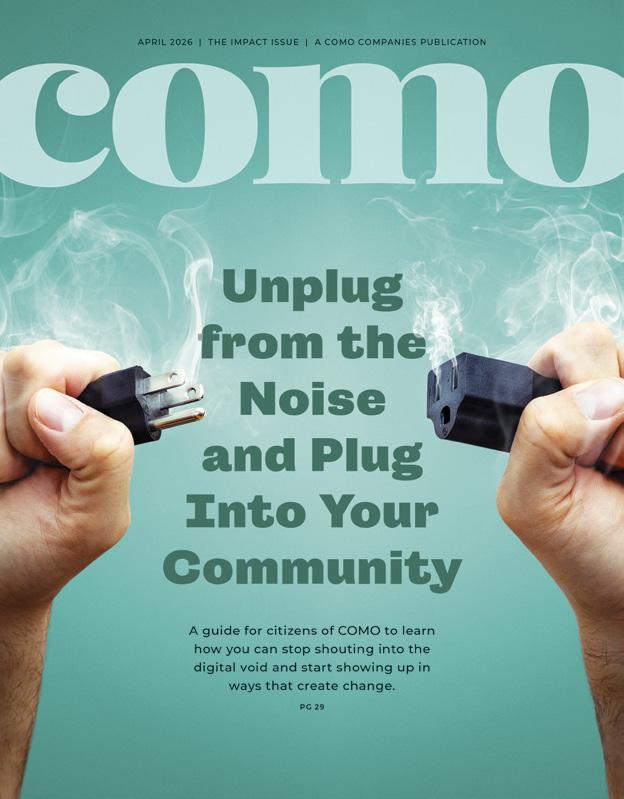
How to stop doomscrolling . . . and start doing something.
This is a simple guide for regular people who want to have a voice in what happens in Columbia. You do not need to be an expert, super political, or “plugged in” already. If you live, work, or spend time here, this is for you.
BY CHARLES BRUCE III
This is how you see what decisions are being made and who is making them.
City meetings are where things like road projects, development, parks, policing, and budgets get discussed and voted on. You can watch, listen, and sometimes speak, either in person or online.
City Council meetings and documents
Meeting dates, agendas, minutes, and videos for City Council are here.
All city of Columbia meetings in one place
This page shows meetings for different boards, commissions, and committees.
This calendar lets you scroll by date and see exactly what is scheduled.
1. Pick one meeting that sounds interesting and put it on your calendar.
2. Click the agenda beforehand and find one item that you care about.
3. After the meeting, tell one other person what you learned.
This is how regular residents get a literal seat at the table.
1. Browse the list and find one board that overlaps with something you care about, such as housing, environment, arts, policing, or transportation.
2. Check the vacancies page to see if that board is currently looking for members.
3. If there is not an opening yet, note the term dates or sign up for alerts so you can apply later.
But like, in an actually productive way.
This is the city’s official online suggestion box and discussion space for projects and plans.
1. Create an account so you can follow projects and get updates.
2. Pick one project that affects your daily life, such as your neighborhood, your commute, or a park you use.
3. Leave one thoughtful comment that explains what you like, what you are worried about, or what you would change.
Boards and commissions are groups of volunteers who help guide city decisions. They review plans, give recommendations, and sometimes make decisions that affect policy and spending. You do not need a fancy title, just interest and commitment.
Full list of boards and commissions
See what groups exist and what they do.
Current openings you can apply for
These are the seats the city is trying to fill right now.
BeHeardCoMo is a website where the city posts specific projects and asks residents for feedback. It is like a more organized and official version of a comment section. You can fill out short surveys, drop pins on maps, and leave written comments that staff actually read and use.
It is especially helpful if you cannot go to meetings in person or if you prefer to think and type on your own schedule.
This is how you learn what the city actually does and how decisions are made.
If you have ever thought “I do not understand how any of this works,” you are not alone. Civic Academy is designed for people who want to understand the basics of city government, budgets, and services in a hands-on, friendly way.
Civic Academy Program
A free multisession class where you meet staff, tour facilities, and learn how the city operates.
1. Look at the Civic Academy page and see whether the schedule works for you.
What you can expect to find:
• Street and transportation projects
• Parks and trail plans
• Housing and homelessness relief efforts
• Utility and infrastructure updates
• Policy changes that need public input
City Department Information
If you want to explore on your own, you can look at department pages for Public Works, Parks and Recreation, Community Development, Police, Fire, and more.
2. If you cannot join now, pick one department that touches your concerns and read its overview.
3. Write down two questions you would love to ask a city staff member.
This is how you find neighbors who care about the same things you do.
A lot of real change happens when groups of people organize around one issue. This might be a neighborhood association, a nonprofit, or a loose group of residents who show up together at meetings.
There is no single master list, but you can usually find groups through social media, word of mouth, or the city and Chamber of Commerce.
1. Think of one issue you care about most, such as housing, transit, the environment, arts, or public safety.
2. Look for a local group, neighborhood association, or organization that works in that area.
3. Attend one meeting or event and introduce yourself.
This is how you hear what other residents are thinking and feeling.
The local subreddit r/ColumbiaMO is a big online gathering place for people in and around Columbia. People post about road issues, new developments, crime, local businesses and event, city politics, and random everyday stuff.
1. Spend some time just reading to get a feel for the tone and common topics.
2. When you see a thread about a city issue, use what you now know to share a link to an agenda, BeHeardCoMo project, or city page.
3. If something you see there concerns you, follow it back to the official city source and get more context.
This is how you talk directly to the people who vote on things.
Reaching out does not have to be formal or intense. A short, respectful message that explains who you are and what you care about can carry a lot of weight, especially if it is about a specific decision.
Contact information for elected officials
Find the mayor and council, along with ward information.
Public comment instructions
Most agendas or meeting pages explain how you can speak in person or send a written comment. These details are usually on the City of Columbia Meetings hub or in the specific meeting agenda.
1. Write a short email to one council member about one issue. Introduce yourself, explain your connection to Columbia, and say clearly what you are asking for or what you hope they will consider.
2. If you attend a meeting, be ready to give a very short version of your comments in person if public comment is allowed.
3. Thank them for their time, even if they do not agree with you.
If this all feels like a lot, start small. You do not need to do everything at once.
Here is a simple checklist you can work through over time:
O Attend or watch one public meeting.
O Create a BeHeardCoMo account and comment on at least one project.
O Identify one board or commission you might want to serve on and read about what it does.
O Explore Civic Academy and decide whether you want to apply.
O Read r/ColumbiaMO for a week and share one official resource link in a relevant discussion.
O Email or call one City Council member about an issue that matters to you.
O Connect with one community or neighborhood group and go to a gathering.
BY KELSEY WINKELJOHN | PHOTOS PROVIDED
REBECCA ALLEN PHOTOGRAPHY
COLUMBIA IS NO STRANGER TO A PARTY.
Each spring, cinephiles pack downtown theaters for the True/False Film Fest. In the summer, art enthusiasts spread blankets beneath the trees for Art in the Park, browsing booths lled with ceramics, jewelry, and oil paintings. And every year, readers get a celebration of their own.
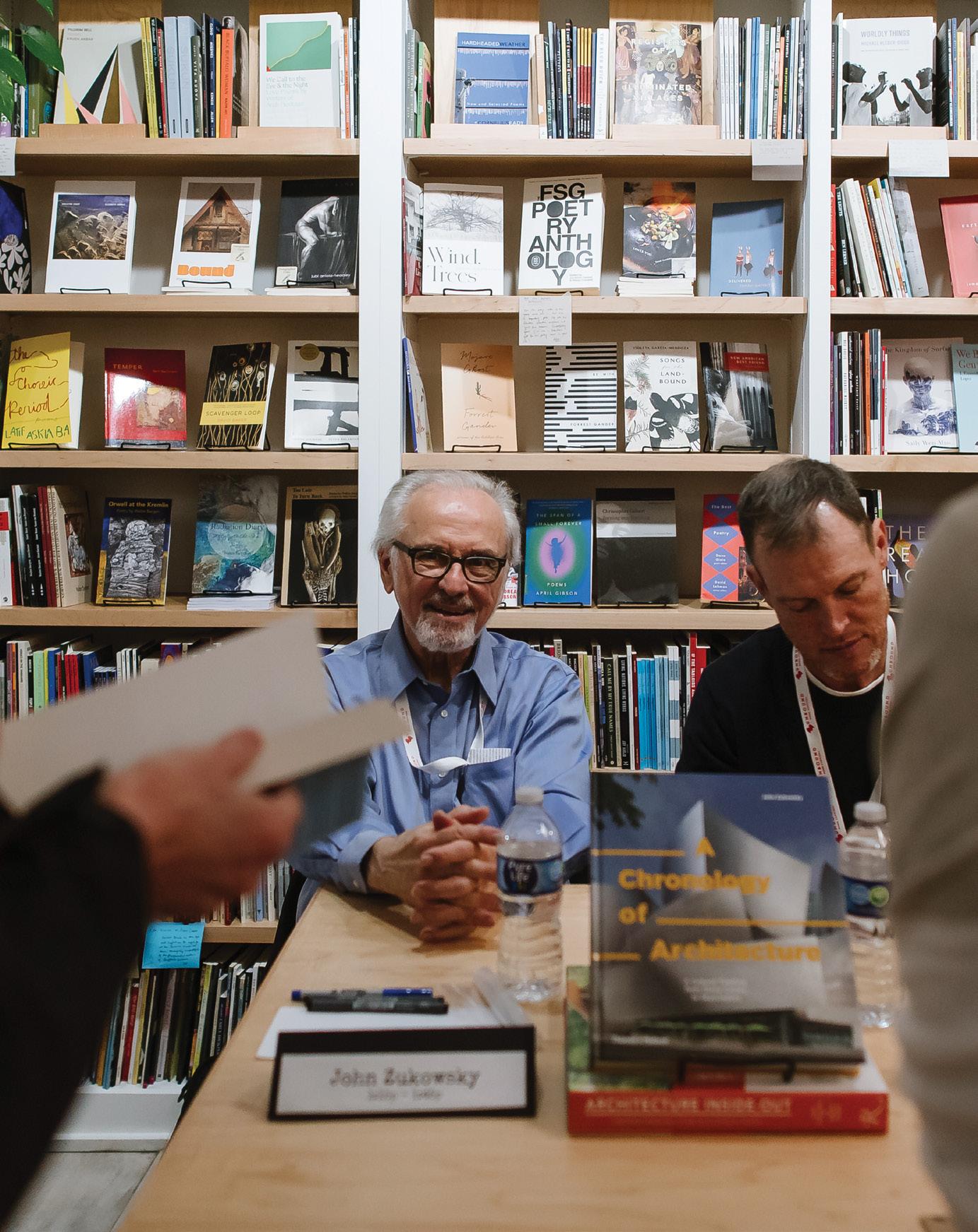
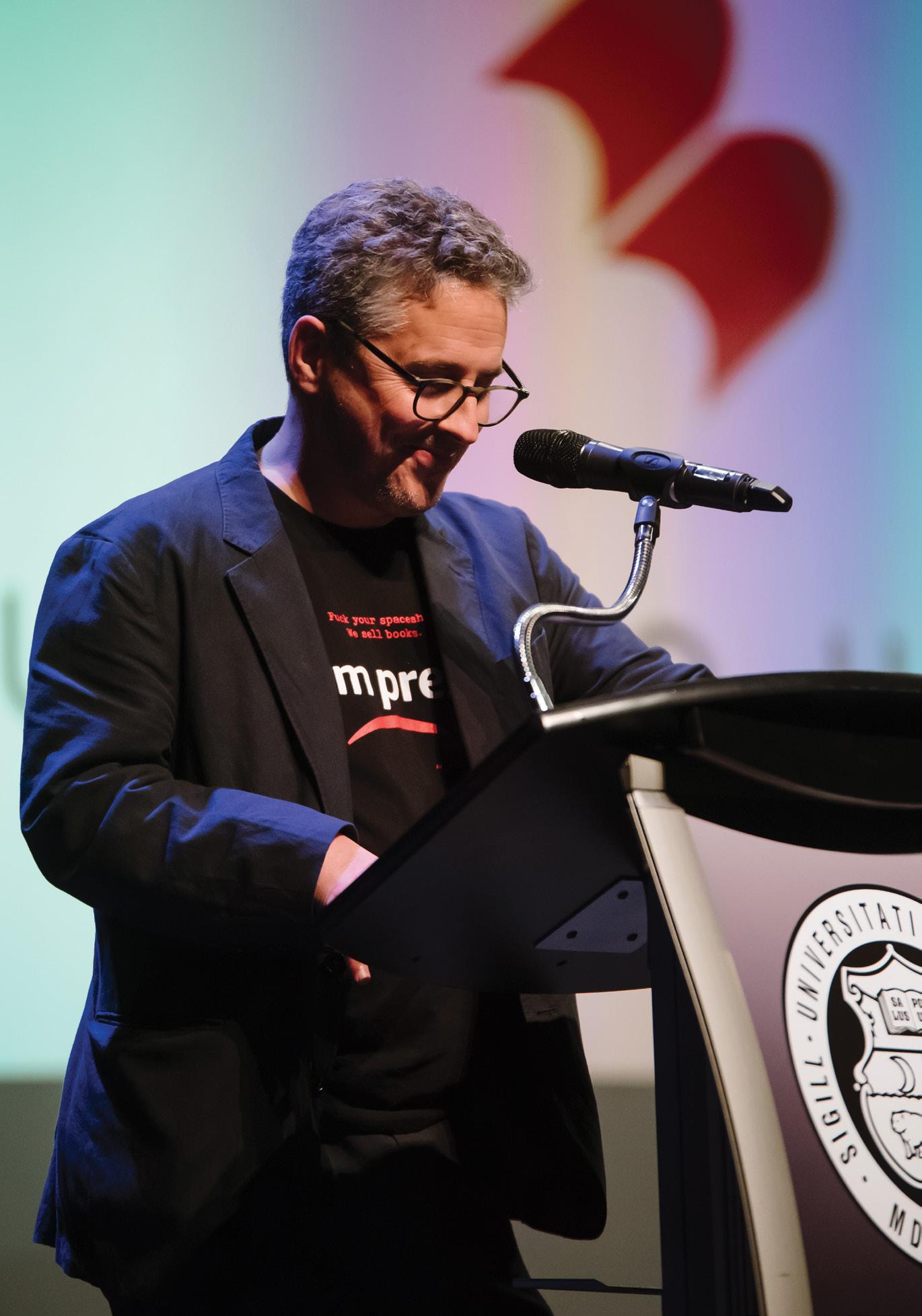
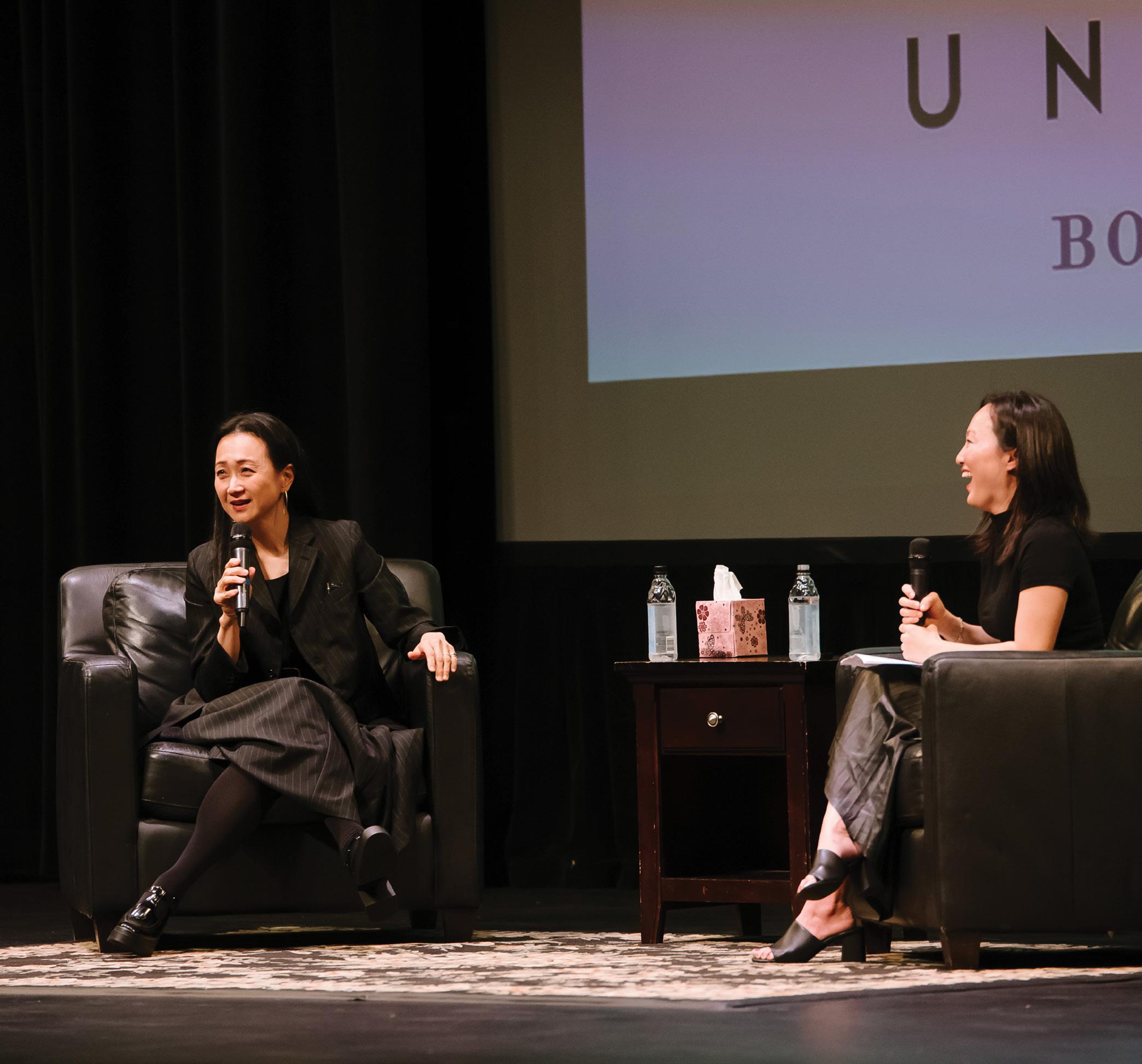
Now in its eleventh year, the Unbound Book Festival brings nationally and internationally recognized authors to Columbia for four days of panels, workshops, signings, and a legendary keynote — with past guests including names like Salman Rushdie, Ross Gay, and Min Jin Lee — for a literary weekend many locals treat like their Super Bowl.
During this time, downtown becomes a living, breathing library. eaters glow under warm stage lights. Folding chairs line bookstore walls. Programs rustle as readers slip into their seats, co ee cups in hand, shaking o the lingering chill
of early spring. A reader stands to ask a question they’ve carried with them since a book’s release. An author pauses, considers, and answers. In those brief exchanges, any distance between page and person melts away.
Founded in 2016 by Alex George, owner of Skylark Bookshop, the Unbound Book Festival turns the solitary act of reading into a communal experience. rough lit crawls and live events, it strengthens connections between writers and readers, introduces audiences to new ideas, and inspires a lifelong love of books.
After several years of running the show, George announced his departure from the executive director role in 2024, codirecting the 2025 festival alongside Kerry Townsend before o cially stepping away. Townsend now guides Unbound into its second decade, starting with this year’s festival, which runs from April 16 to 19.
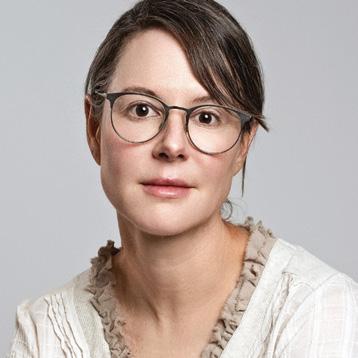
Merrill Sapp is an assistant professor and codirector of clinical medicine and director of research at Stephens College. She has written for Earth Island Journal, About Place Journal, Mongabay News, and other publications. She has traveled the world to learn about and work in the service of elephants. Her 144-page novel, Knowing Wonder: An Elephant Story, was published in January 2025. Sapp attended the “CoMo Community Hour: Home is where the art is” Lit Crawl in 2025, reading a sample of her work at Skylark.
Q: How did you become involved with Unbound in 2025, and how did you feel about attending as a speaker?
A: Alex George is very supportive of the local arts community and writers especially. I’ve known him over the years, and through the writing process, and in the process of getting a publisher. He was always very open and generous with his time and his energy, and so he gave me a lot of advice along the way. When it all came to fruition [Sapp’s book being published], he asked me to come read a story. It was really sort of a nice cherry on top of the whole experience.
Most people, when they ask me to read, they ask me to read something from the book — but he asked me to read something about life in Columbia, and so that was a departure from anything that had already been published. When something is published, a lot of people have had eyes on it. A lot of people have given you positive feedback along the way, and you know it’s probably good. But this was a brand-new thing that no one else had read. So it’s a lot more intimidating.
But people responded well to it. There were a couple of people — one was another writer — who approached me afterward, and we talked a little bit. A couple of people from the audience told me about relevant experiences related to the story I read. It was pretty rewarding.
Q: Did you check out any of the other events last year?
A: I went to several things. I attended the writers’ workshop, and I’ve never done anything like that before, so it was just a really good experience. It was run by a graduate student who gave us writing prompts to work on, and then we read some things out loud. I’ve figured out through this process that writing is really about finding your voice, and the more things you do like that, it really helps you to do so.
I also went to several panels about the environment and nature. I’m particularly interested in animals.
Q: Is there any part of the festival you’d call a “don’t miss”?
A: If you’re going to go, you should definitely check out the keynote speaker. Historically, it’s been really special.
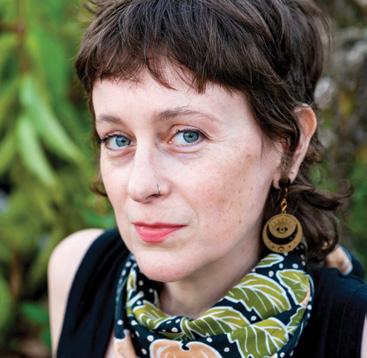
Cass Donish is a queer poet and writer born and raised in the Greater Los Angeles area. They are the author of the poetry collections Beautyberry and The Year of the Femme, which won the Iowa Poetry Prize, as well as the nonfiction chapbook On the Mezzanine. Their work has appeared in publications including The American Poetry Review, Denver Quarterly, The Gettysburg Review, Guernica, The Iowa Review, The Kenyon Review, Poem-a-Day, and VICE. Donish holds an M.A. in cultural geography from the University of Oregon, an M.F.A. in poetry from Washington University in St. Louis, and a Ph.D. in English and creative writing from the University of Missouri. They were a guest poetry reader at the 2025 Unbound Book Festival and moderated a panel focused on indigenous justice.
Q: What was your experience participating in Unbound’s 10th annual festival?
A: I think Unbound is really amazing because it’s the one time of the year you see a huge percentage of the Columbia population come out for the literary arts. I’ve read at Top Ten Wines a number of times, and I think it’s a really fun setting. And then I moderated a panel at Serendipity with three indigenous poets — one of whom used to live here, and that was fun, too.
Q: What was the most memorable moment for you at last year’s festival or any other previous years of Unbound?
A: I remember one event that was actually also at Top Ten Wines. I think it was in 2024. I showed up to a reading really late, kind of at the end of the night, and people were tipsy, and the room was really loud. All of the readers came in, and we were like, “Oh, shit, there’s a lot of noise in this room right now … and there’s supposed to be a microphone …” It turned out no one knew where the microphone went — someone had taken it away. So we were like, “Are we still going to do this reading?”
I remember deciding that I was going to go for it, and all of us were yelling really loudly trying to read our work. Honestly, it was just a really fun and special memory because people were like, “Oh my gosh, they’re going to do it. They’re going to read and just yell their poems into this loud room.” It was a bit silly, but there was so much good energy. And I was reading a poem about grief, so there was this kind of palpable energy reading a grief poem really loudly.
Q: How would you compare what Unbound has to off er here in a smaller city to a festival in a larger city?
A: I think one thing that I like is that you can walk to everything here, which isn't the same as if you're in a bigger city where maybe events are going on in different neighborhoods and you're maybe having to drive from one place to another or Uber around to catch things that you want to see. So I think the size is really nice for that reason. You can just spend the whole weekend walking between the venues, and you don't ever have to really go super far or drive. I think it's just, like, that tight-knit feeling of people just know each other and try to offer each other opportunities to get involved. And I think there's more room to create new events for new venues, more than in a bigger city. I've definitely been to some really good events elsewhere, but I think that Columbia has something special here with Unbound because it just feels like home. And I think that people who come here from other places kind of complement the sense of community and the small space of downtown. People seem to really enjoy that sense of the college town size.
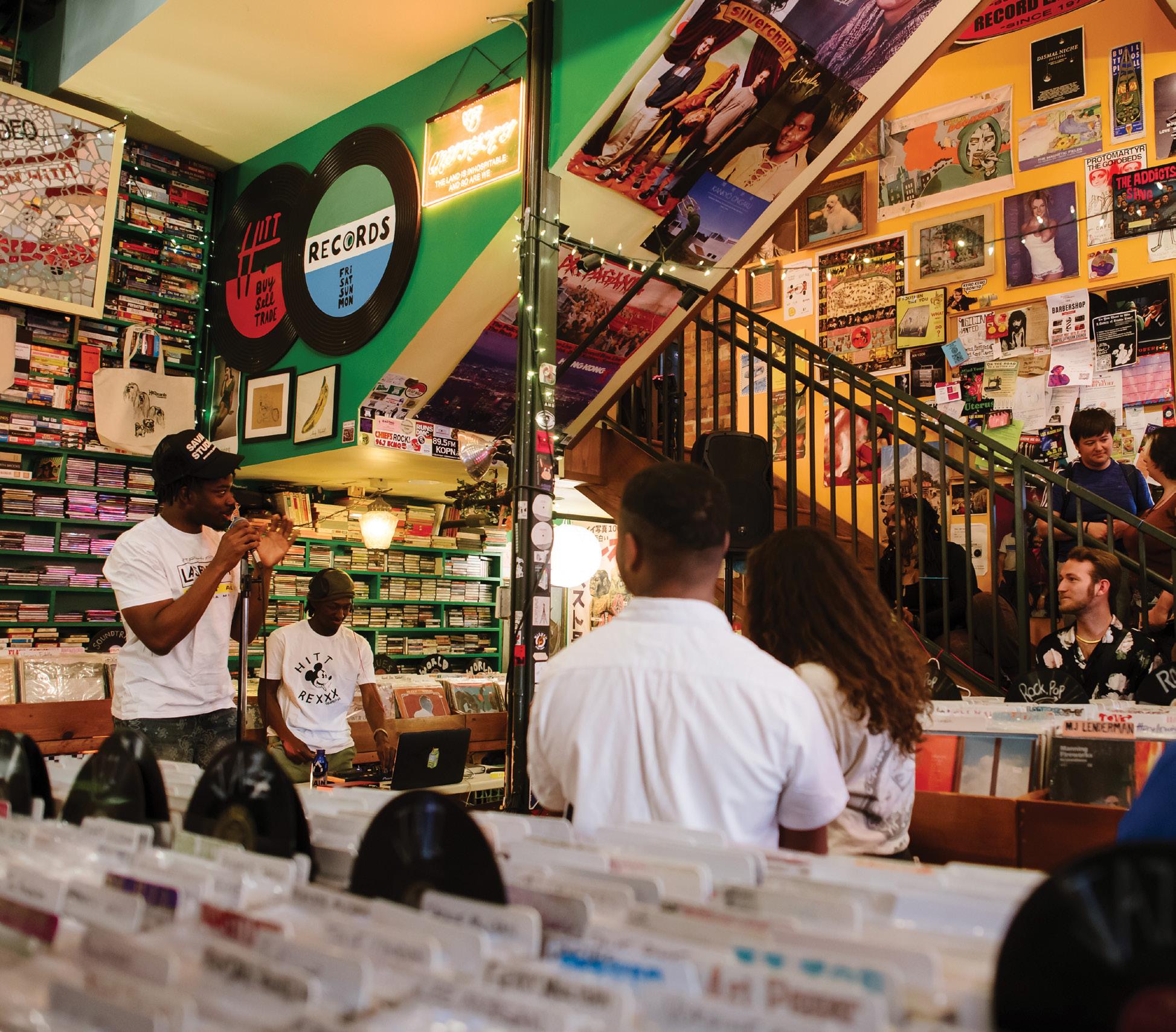
“It’s been interesting trying to ll Alex’s shoes,” Townsend says. “Last year, we did it together, but I felt like Alex still did so much. is year, I’ve had to gure things out myself. It’s been a good learning experience, and I de nitely feel more comfortable knowing what’s going on.”
Townsend previously worked as a high school English teacher and librarian and says her love for literature blossomed at a young age. Growing up on a farm with a librarian mother, she found the means and plenty of time to dive into books.
“I liked reading because I have a lot of questions in life, and I liked getting answers,” she says. “You can navigate the world through someone else’s eyes in a book — so [reading was] not just escaping, but learning. As a librarian, I liked getting books in kids’ hands, but I also liked helping them answer questions.”
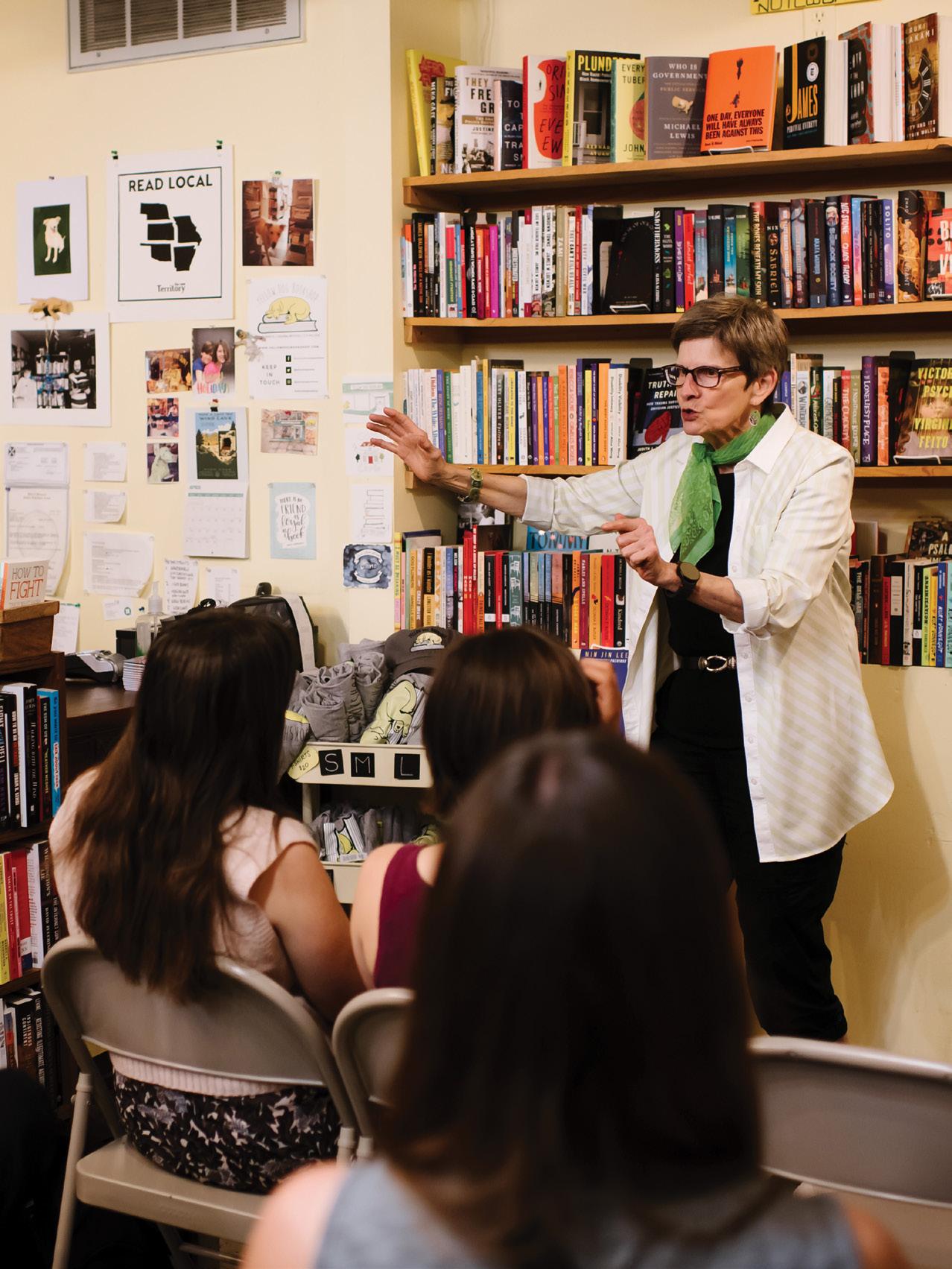
In her new role as Unbound’s executive director, Townsend applies that same curiosity to the festival’s audience, trusting that the questions and ideas that interest her will resonate beyond herself. To keep the festival expansive and free of charge, much of her work centers on fundraising through community donations and grant writing.
“We want to make sure that it stays free,” says Townsend. “I’ve written a lot of grants this year and tried to work with other local arts groups to ensure that the funding is still there.”
As with any festival, there are costs attendees might not see or consider — venue rentals (while several spaces are donated, some may charge fees for sta ng), travel and lodging for authors, and honorariums. anks to grants from institutions such as the city’s O ce of Cultural
A airs and Missouri Humanities, and to prospective grants, Unbound is able to continue putting on a good show.
In addition to fundraising, Townsend serves on the programming committee, helping plan the lineup each year alongside Phong Nguyen, George (who remains involved in a limited capacity), and others. She describes her role as “pulling the pieces together” but credits the committee’s devotion for shaping the festival’s identity.
“It’s a team of very dedicated people,” says Townsend. “ ey meet twice monthly, and in the meantime, they’re doing research to gure out who would be interesting [guests] and how to make a panel.”
is year’s keynote speaker will be Terry Tempest Williams, author of Refuge: An Unnatural History of Family
and Place, An Unspoken Hunger: Stories from the Field, and Desert Quartet, among other classics. She will read on night two of the festival. Panels throughout day three, held at venues across downtown, will explore topics ranging from community silences — examining what happens when the full story isn’t told — to Jane Austen’s enduring in uence on culture and literary genres of all kinds. Another session, “What’s the Buzz,” dives into bees and their impact on both the earth and a writer’s work.
Townsend mentions that, this year, a lunch break will be built into the middle of day three’s schedule to allow attendees to have a relaxed debrief session between the morning and afternoon panels, which are an hour and 15 minutes each.
“I feel like this is an era in which conversation is sort of lost right now, and
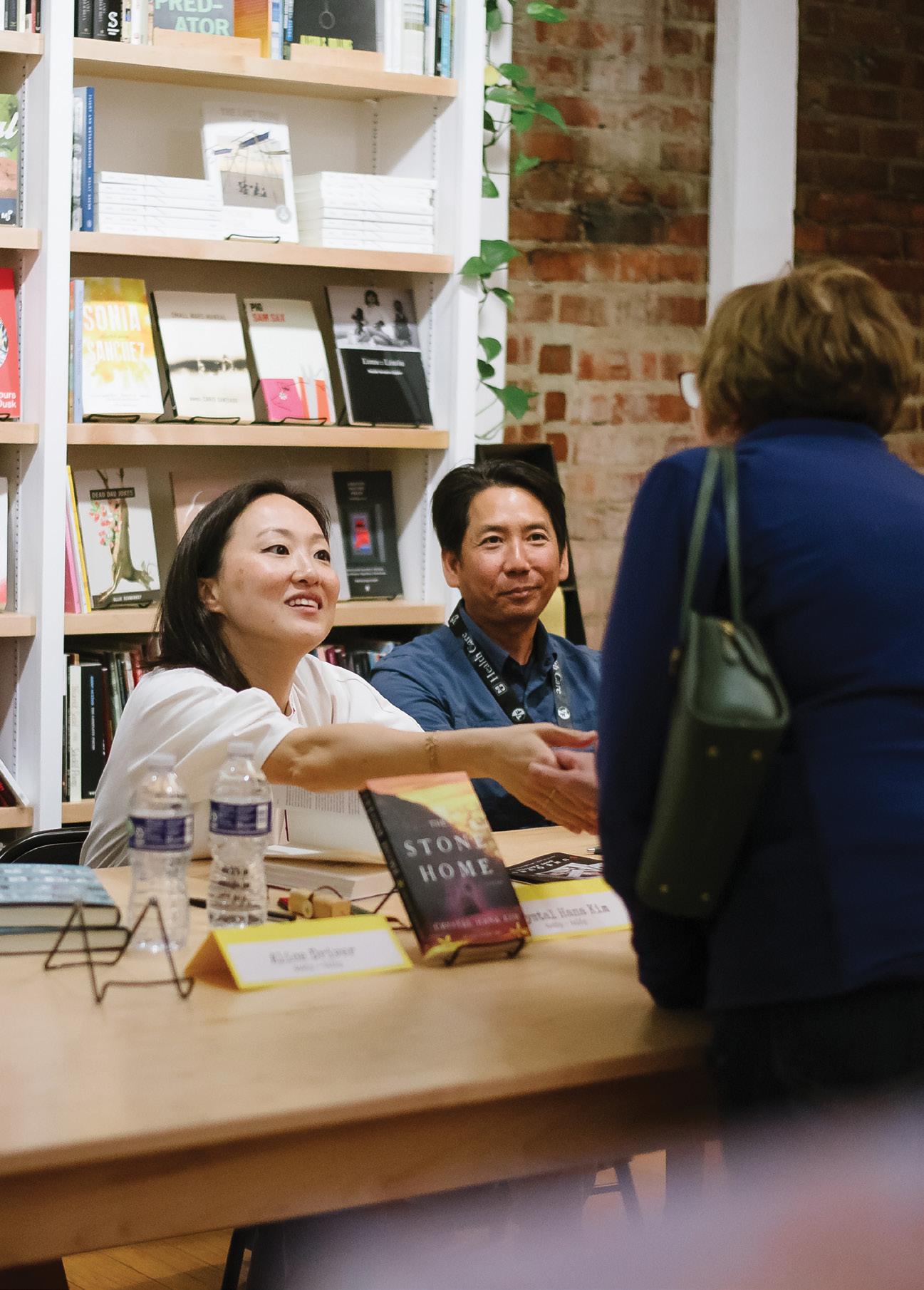
that is leading to a lot of strife, because people don’t know how to have conversations with each other — especially if they don’t agree,” says Townsend. “Having events like Unbound is what’s going to bring us all back together.”
Planning the author lineup is only part of the puzzle. Accessibility is another key focus, a responsibility Joe Marshall and the rest of the committee take seriously each year.
“It’s all about making the festival as easy as possible for everyone to attend, especially for those who have particular needs,” says Marshall.
Marshall, a newer writer originally from Ireland, attends monthly meetings
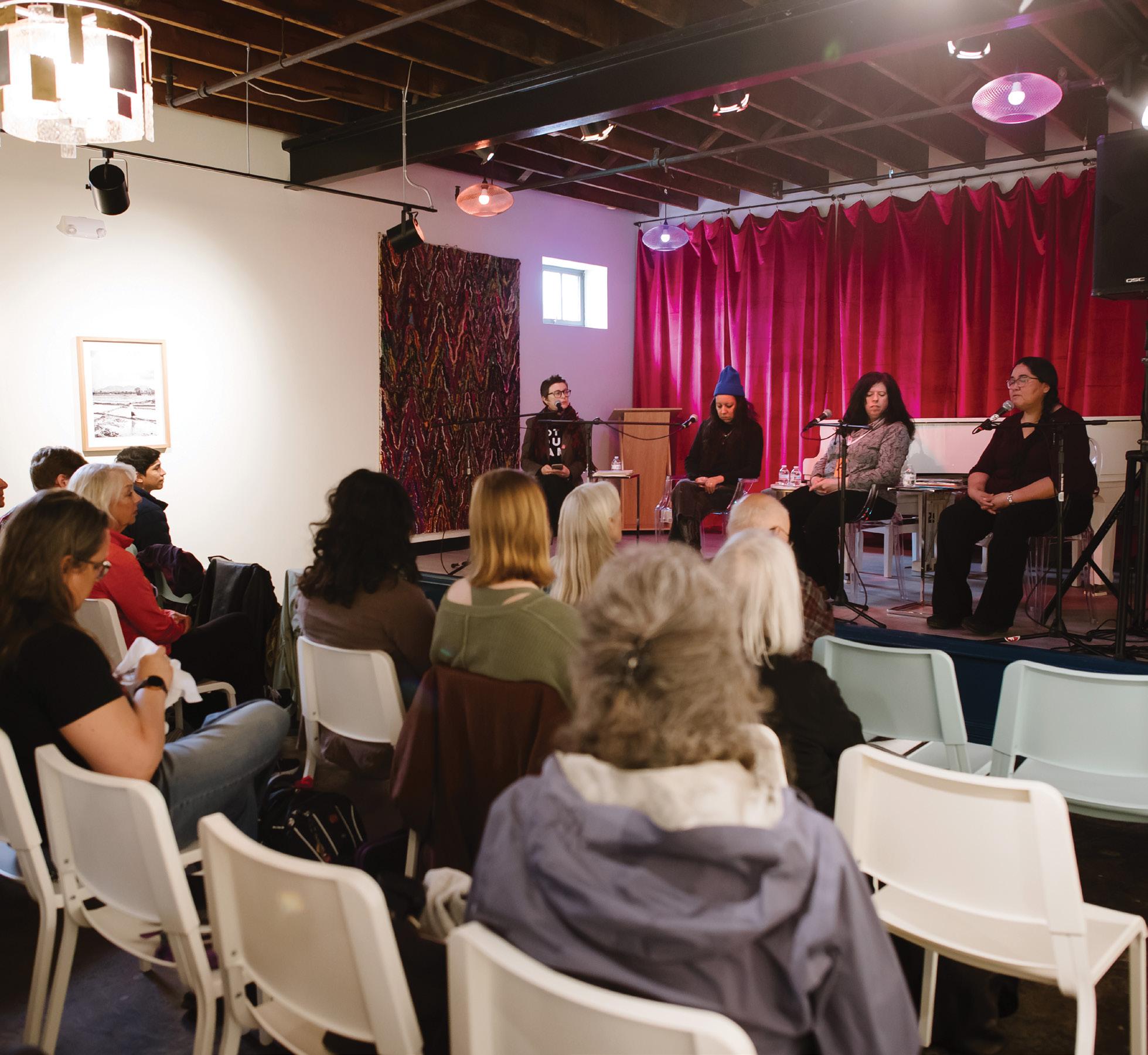
to de ne ways the festival can continually improve. Often, the committee looks to other literary festivals — such as the Edinburgh International Book Festival, which Marshall notes has strong accessibility policies — for guidance.
“We kind of mirrored what they were doing, and then found our own way of thinking about it,” he says.
Accessibility can take many forms, from convenient restrooms and wheelchair access to sign language interpreters and quiet spaces. Because some venues come with layout limitations, the Unbound team is transparent about what each space can realistically o er, clearly outlining accommodations on the festival’s website. Cost also plays a signi cant role in what can be provided. For example,
an ASL interpreter will be present at the keynote, but smaller venues like Ragtag and Top Ten Wines may not be able to accommodate that level of service due to space constraints and funding limitations — highlighting the importance of grant support and community donations and how essential they are to expanding accessibility across the festival.
Marshall also extends the de nition of accessibility beyond physical or sensory needs. Echoing Townsend, he also believes that keeping the festival free is central to the board’s mission.
“If you don’t have the money to pay [to attend] a festival, that’s an accessibility issue,” Marshall says.
Marshall’s perspective, shaped in part by his time in Europe and festivals like
Edinburgh’s, reinforces Unbound’s belief that literature should be open to anyone who wants to participate.
Because events are free and open to the public, audiences aren’t limited to highbrow academics or longtime literary insiders. Students sit beside retirees. Aspiring and established writers share rows with casual readers who simply loved a book enough to show up. e mix of attendees is a perfect example of the complex ecosystem that is the literary community in Columbia and beyond.
In a city that already gathers for lm, for art, and for music, Unbound creates a space to gather around words. It asks people to sit beside one another, to listen, to disagree thoughtfully, to ask questions out loud. e festival becomes a reminder that open dialogue is still possible.
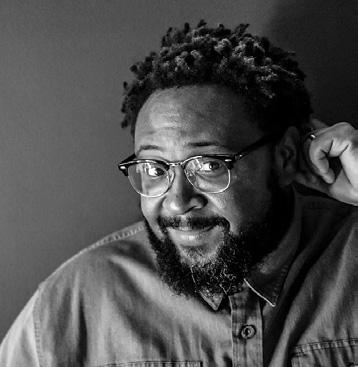
Donald Quist is the author of two essay collections, Harbors — a Foreword INDIES Bronze Winner and International Book Awards finalist — and To Those Bounded, as well as the linked story collection For Other Ghosts. His work has appeared in publications including AGNI, North American Review, Michigan Quarterly Review, Poets & Writers, and The Rumpus, and he has been named Notable in Best American Essays (2018 and 2025). A recipient of fellowships from the Sundress Academy for the Arts, the Virginia Center for the Creative Arts, and Kimbilio Fiction, Quist serves as an assistant professor of creative writing at the University of Missouri. He has served on Unbound’s programming committee and will be participating in a panel at the 2026 festival.
Q: For readers who might be meeting you for the fi rst time at this year’s festival, how would you describe your work?
A: I write a lot of nonfiction — that’s probably what I’m most known for. I write fiction, too, but mostly nonfiction, and it’s a personal essay that tries to connect my lived experience with how pop culture shapes identity, race, and gender. I write about how the art and media we consume shape who we are. I like to make connections like “What does a show like Jackass reveal about us?” or “How can Boy Meets World become an allegory?” That might seem silly at first, but then, as the essay goes on, it becomes increasingly serious. I’ve moderated panels before, but this is the first panel at Unbound, and I think I’m going to be talking about pop culture, and that’ll be fun. It feels good to get to see this from a whole other angle.
Q: Joe Marshall mentioned that he and the accessibility committee see wealth disparities as another form of accessibility to consider. Can you provide your input on that?
A: I’ll be candid — next week I’m headed to a conference that is one of the biggest booked events in America, called AWP, and it’s $250 to enter. If you’re a student, you can get it for, like, $50. I’m glad Joe brought this up; there are all these ways in which the commodification of art takes access to art away from the people who might need it the most — everyday people who might require art, whether they know it or not, to help them endure another day. And they can’t get to it because it’s behind paywalls.
One of the things I find most amazing about Unbound is that the barrier to entry is pulled away. It’s almost a good reminder that something like this is possible. It is possible to make a community like this, center the arts, and celebrate how the written word can help human beings become better stewards of the earth. Money is a factor, but it doesn’t have to be what makes or breaks it.
Q: What role would you say a festival like Unbound plays in a society that is increasingly online?
A: There is something metaphysical that happens when a group of people comes together for a shared purpose to celebrate something. I think it changes molecules in the air. I think it changes the bodies of the people around. Something magical happens. Even if there are people out there who have never been to the Unbound Book Festival, I believe if they live in Columbia, some part of their life has benefited from the existence of that festival. That much care and effort and that many people pursuing love radiates outward, and it’s going to have an effect. Energy can neither be created or destroyed. The energy that comes from that festival and festivals in general point us to a kinder universe.
BY OLIVIA D E SMIT
PHOTOS PROVIDED BY TRINITY CHURCH
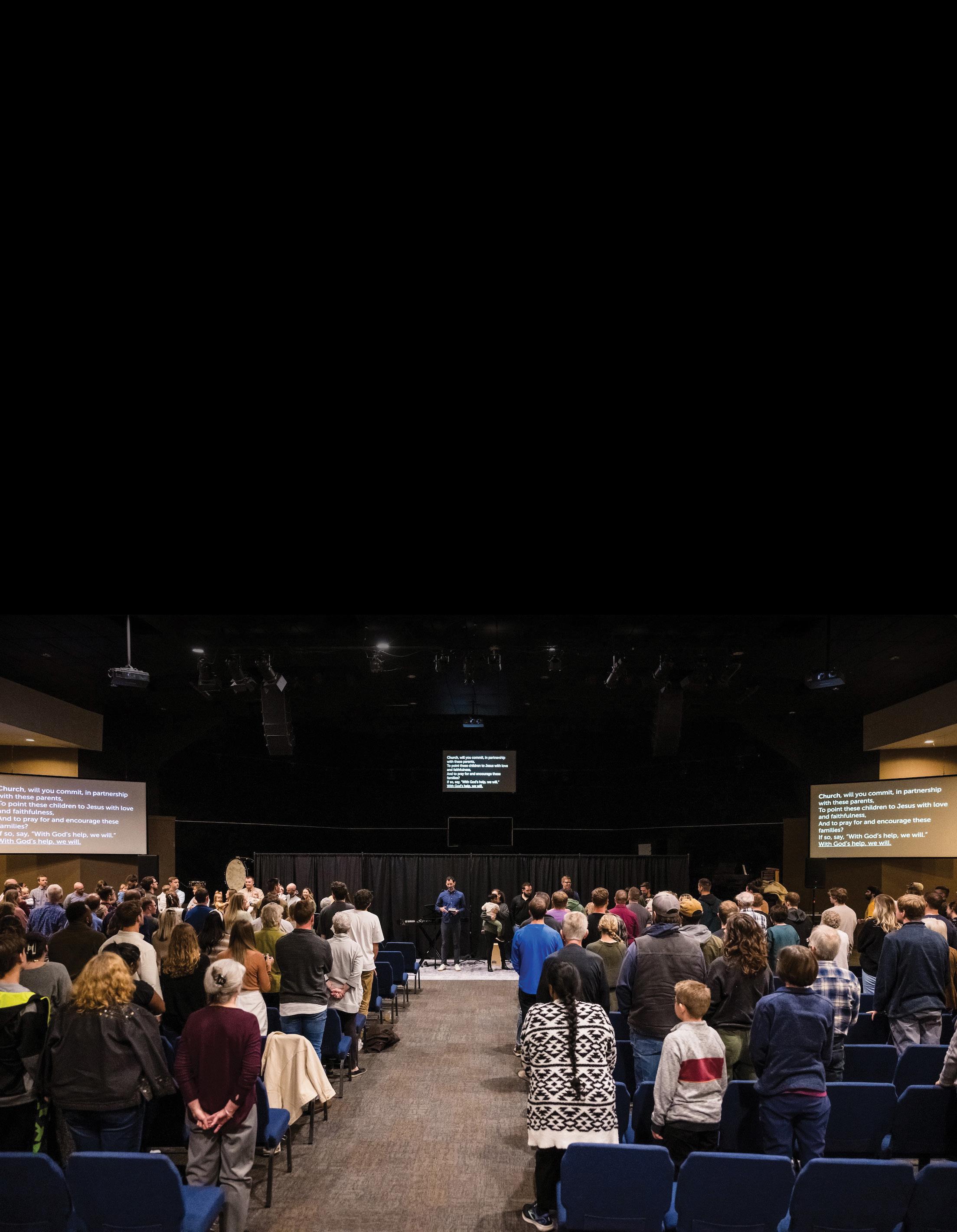
Everyone at some point has pulled up to their destination, only to see the sign of a di erent business — one often completely unrelated to the one they’re looking for. If you’ve gone to a church service at Trinity Community Church, United Community Cathedral, Redemption’s Hill Church, e King’s Church, or Iglesia Alfa y Omega, you might have had a similar experience.
Except in these cases, all these churches actually operate out of buildings owned by di erent organizations. Speci cally, they operate out of buildings owned by di erent churches.
In a move that could be seen as bad business — sharing space with a competing organization — several churches in Columbia are providing space for other congregations to meet. Rather than seeing each other as competitors, these churches choose to partner together in a symbiotic relationship. e hosting church receives a modest lease fee in exchange for sharing its building, and the hosted church is able to access a substantial, convenient space for far less than a traditional lease.
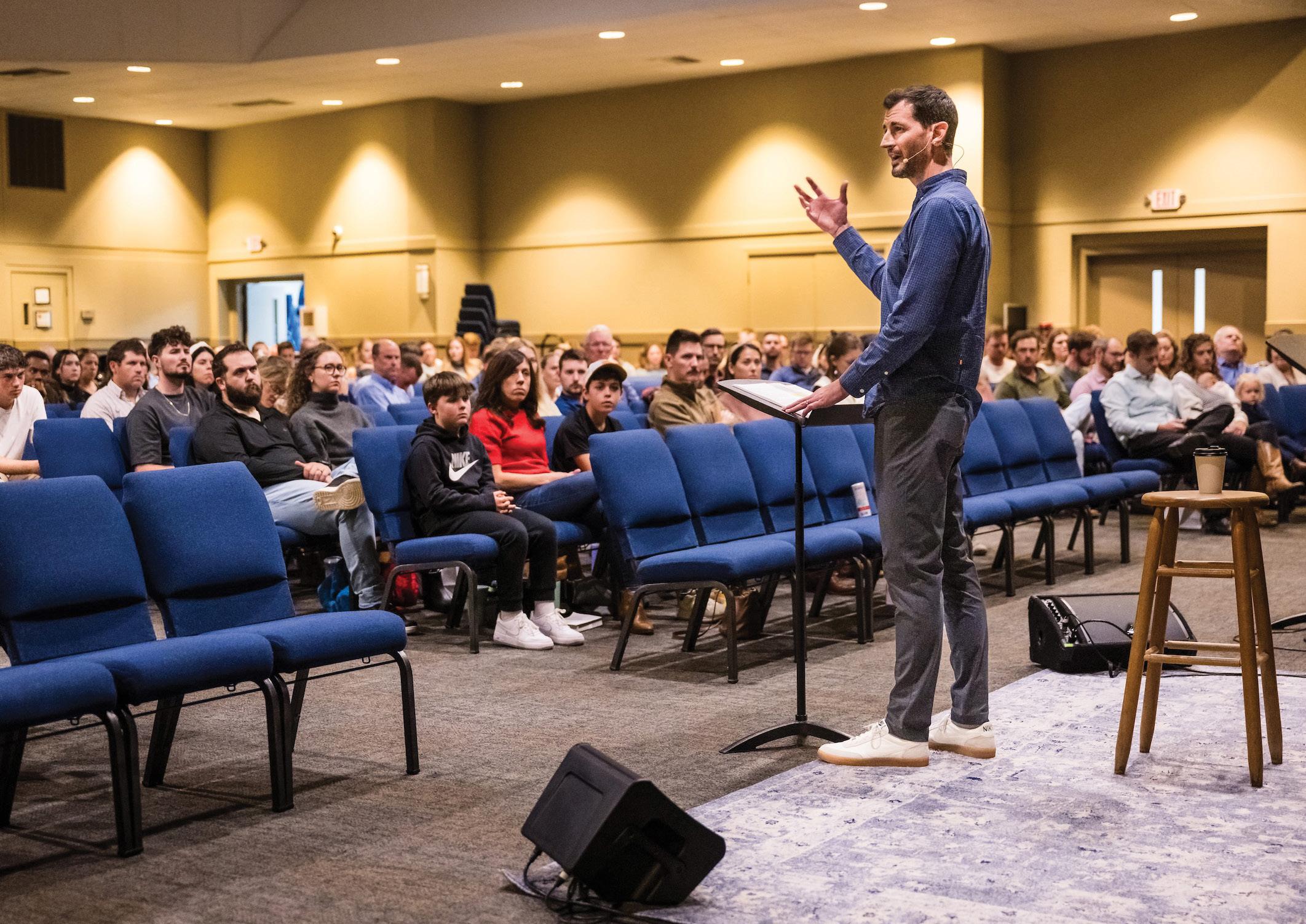
One of the best examples of these partnerships is Christian Fellowship, which has shared its main campus on Chapel Hill with several churches over the past few years. And what kicked o these partnerships wasn’t necessarily nancial need, but rather friendship.
“All the partnerships we’ve had with other churches were through friendship and partnership, believing we should work together, not against,” Michael Acock, lead pastor of Christian Fellowship, says. “We’re companions, not competitors. Whatever we can do to help a church that is in transition; we’re willing to keep lease rates reasonable to help them prosper and grow and be able to be scally strong and step into the next thing God has for them.”
Acock says the series of partnerships began with a conversation over lunch.
“I’d known Jeremy at Trinity Community Church for around ve years and knew the space they’d been in wasn’t conducive to young families,” he says.
“When he pitched the idea of us leasing from them, I was immediately like, ‘Yes,’” recalls Jeremy Linneman, Trinity’s teaching pastor. “I think it was one of the best examples of churches working together, and it’s a huge testament to Mike’s leadership and CF’s hospitality.”
anks to Christian Fellowship’s campus size and setup, Trinity was able to function out of the school building, which has a full-size auditorium. “It was an ideal partnership on our end because access to such a great space for a church only a few years old would have been impossible,” Linneman says.
Trinity used Christian Fellowship’s space for a little under four years, from summer 2021 to spring 2025, before moving into its own building. During the church’s time at the CF campus, Trinity’s congregation grew from around 80 people to almost 450. “We had a lot more growth in that season — more than I expected, for sure,” Linneman says.
e building that Trinity moved into following its lease at Christian Fellowship was previously owned by Fairview Church of Christ.
“ at church was looking to downsize but didn’t have a new location settled, so they still have been meeting in this building for the last nine months,” Linneman says. “We were the recipients of Christian Fellowship’s generosity, so it made sense to share our building with Fairview Church of Christ, letting them be rentfree. It was a cool full circle thing, where we traded from tenants to landlords and were able to pass it on.”
After Trinity moved out of the shared space on CF’s Chapel Hill campus, Acock o ered it to Damian Dean of United Community Cathedral. “Last May, by Mother’s Day, one group had moved out, and it was only two or three weekends before the other group moved in,” Acock says.
United Community Cathedral had a space under construction, which wasn’t completed in time. e goal is for them to move there this fall. “We’re called to love one another and show that as practically as we can,” Acock says. “Every church for every other church.”
Another church that has long welcomed other congregations into its space is Woodcrest Chapel. Despite the recent sale of Woodcrest’s property to B&D LLC, multiple churches, as well as the Columbia Academy for Learning and Enrichment, still occupy the site. at is mainly due to Woodcrest Chapel, which negotiated the continuity of leases as part of the sale to B&D.
“Our view is nding ways that our faith community can collaborate, whether that’s shared space that creates convenience and less of a nancial burden, or other ways to build relationships among churches and nding ways to link arms,” says Masood Heidari, lead pastor of Woodcrest Chapel.
Redemption’s Hill Church has been leasing space from Woodcrest, and now B&D, for three years. Its previous location, the College Park Seventh-Day Adventist Church, had scheduled renovations, so after reaching out to Heidari, the churches determined a lease based on mutual bene ts and a sense of community. “It gave us an opportunity to open up our space to a partnership,” Heidari says.
Unlike Redemption’s Hill, e King’s Church wasn’t yet founded when it became the third church to lease space on the B&D campus. “King’s Church was still in the planning stages, and despite waiting for a space closer to campus, it wasn’t available in time, so they reached out to us,” Heidari says. “So we said, ‘OK, let’s try this.’’’ Because two churches were already in the space, e King’s Church had to pivot to Sunday evening services.
“We’re called to love one another and show that as practically as we can. Every church for every other church.”
– MICHAEL ACOCK
Lead pastor of Christian Fellowship Church
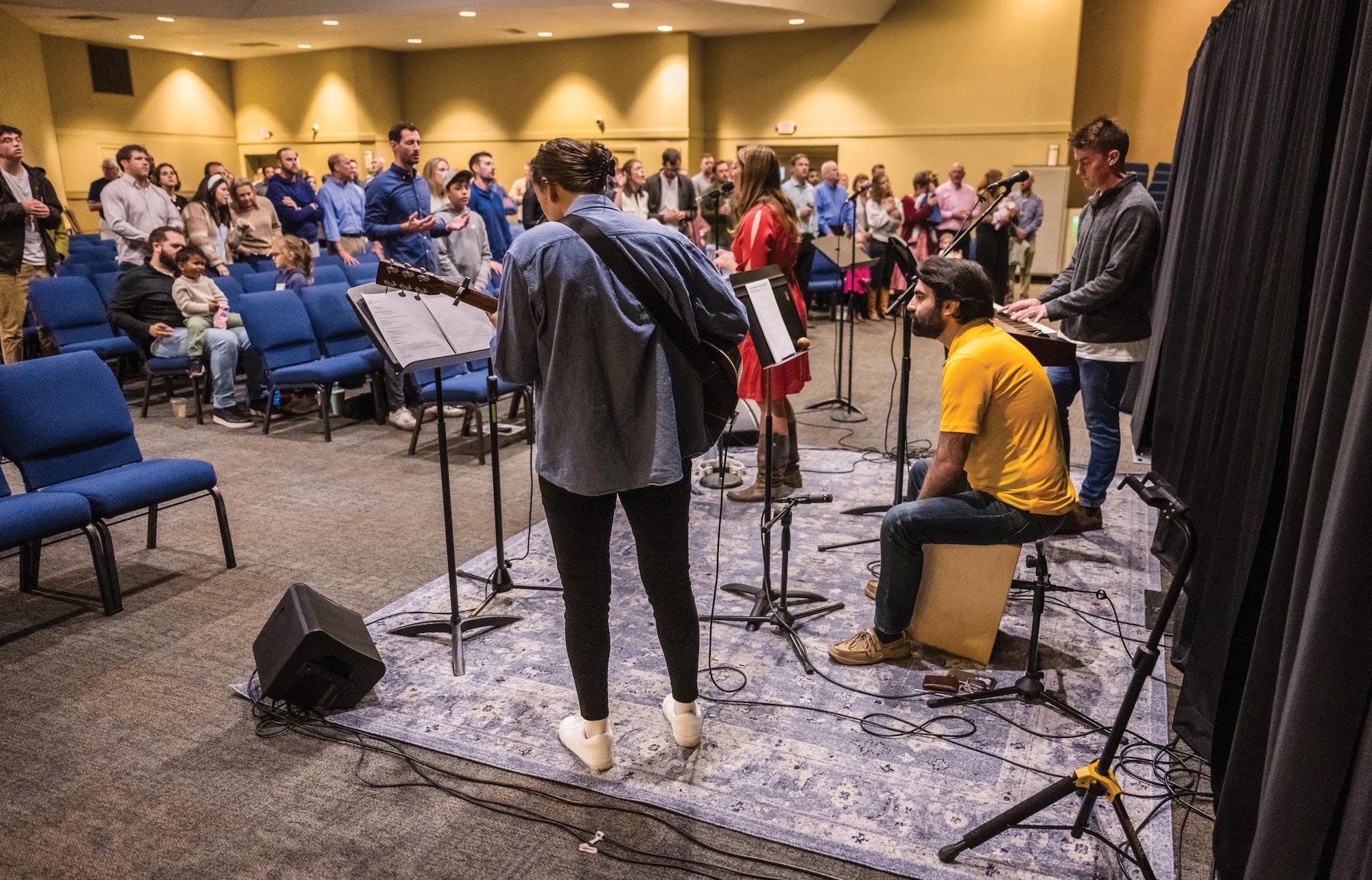
“We didn’t plan to launch Sunday nights but adjusted to that basically o of necessity,” admits Colby Corsaut, pastor of e King’s Church. “But it became a vibe — our people love Sunday nights.”
e King’s Church’s new location will be near the University of Missouri campus, and the congregation hopes to move in by this summer. According to Corsaut, the popular Sunday night service will remain. “We’re moving to a downtown space and are going to have both Sunday morning and night services since so many of our people have learned to love it.”
“What’s fascinating is now that we have this space we’re raising money for downtown, we’re already talking with other church planters and churches about sharing the new space,” he adds. “We know how big of a challenge it can be — it’s really a glass ceiling for growing churches in Columbia.”
Some challenges churches face in Columbia include space restrictions, occupancy limits, outdated buildings, and parking. By sharing spaces, they’re able to at least temporarily get around these issues as they fundraise for the next step.
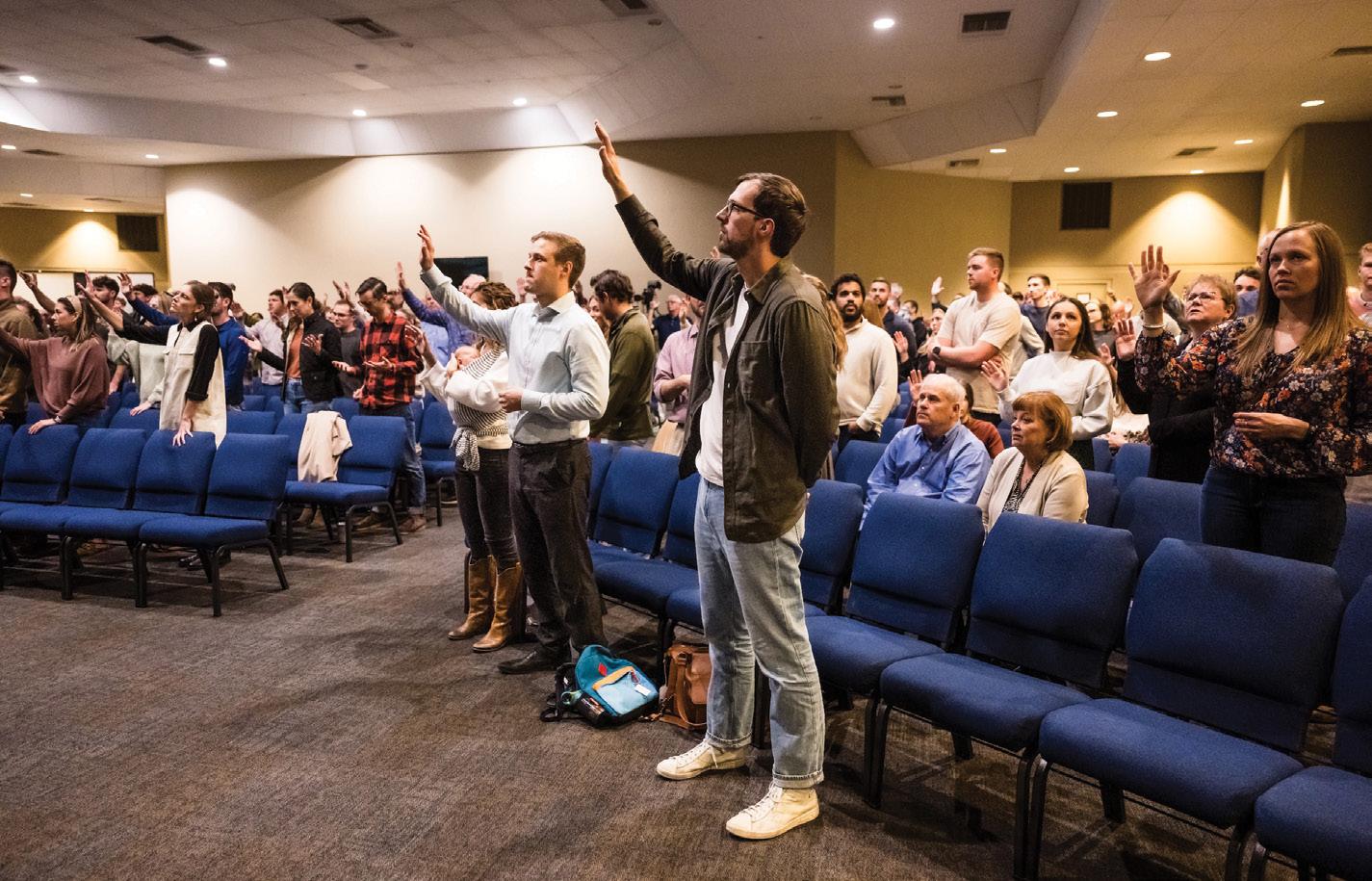
Another space-sharing partnership in Columbia is that of Open Door Church and Iglesia Alfa y Omega, which both operate out of Open Door’s facility south of town.
“We weren’t using the space to its potential with just one service on Sunday mornings,” Joshua Meranda, lead pastor of Open Door Church, says. Alfa y Omega had outgrown space it was renting from a di erent church, and while Meranda is unsure who reached out rst, Alfa y Omega felt like a great t to partner with Open Door.
“Functionally, it’s very simple; we kept our morning service as is at 10:30 a.m., and they have their service at 2 p.m.,” he
says. “We try our hardest to honor their time so that for all intents and purposes, Open Door Church becomes Iglesia Alfa y Omega from at least 2-5 p.m. every Sunday. We do a few events or initiatives together as sister churches, but otherwise exist independently in the same space.”
As churches continue to shift between growing and downsizing, more space shu es are sure to occur — and perhaps more collaborations as well.
Heidari says his goal would be to have several churches on one campus that not only share space, but also collaborate to have combined holiday services. “My dream would be to have multiple churches bring all their folks together and worship together without losing our identity, but rather linking arms.”
Tell us about an art, home ec, or shop/industrial arts item you made either in school, as a DIY home project, or any other time.
Some
of us are old enough to remember making ashtrays in elementary school art class!
I made a clay ashtray for myself when I was in middle school.
— REBECCA DYKHOUSE
We made those ash trays in Cub Scouts.
— DAVID LAY
My senior year of high school, I was going to be absent during the nal exam for my American Literature class. After talking through makeup options with my teacher, I ended up building a giant diorama of the Gatsby mansion (accompanied by an essay, of course). It featured the full cast of characters played by Barbie dolls I stole from my little sister and an inspired recreation of the Doctor T. J. Eckleburg billboard watching over everything. I got an A — and it was de nitely more fun than taking a written exam!
— JORDAN WATTS
In high school art, we were supposed to draw a portrait of someone else. I did a pretty good job — although I was the only student who drew a friend from the back. I didn’t think I could draw her face.
— DIANA RATLIFF
My junior high industrial arts classroom had a metal forge, and I pounded out a screwdriver from a hot ingot.
— KEVIN WEHNER
Eighth grade shop. I carried around Popular Mechanics just to try to t in with the guys who had their own power tools and could reassemble a carburetor quicker than a savant could solve a Rubik’s Cube. I didn’t even know where the carburetor was located. But I made a ping pong paddle and ball holder that was super cool. e shop teacher, Mr. Curry, gured out the design from a photo I saw in the magazine.
— JODIE JACKSON JR
Seventh grade shop. Every boy was required to make something called a bench hook. Didn’t know what it was. Still don’t. Teacher gave it a C and assigned me to the tool room for the rest of the semester.
— PAUL WOOTTEN
Baby made of a 5-pound bag of our. Cutest lil’ thang … I wish I could remember what name I gave her.
— ANGELA LECHTENBERG
My memorable project came later in high school Home Ec. You know, the class disguised as “life skills” but really designed to make sure we knew how to be good homemakers. We were in the sewing unit, and our big assignment was to make our own skirts. Well … let’s just say sewing was not my gift. I struggled. A lot. Crooked seams, uneven hems, the whole experience was a test of patience. But the real kicker? It wasn’t enough just to make the skirt. We had to wear our nished project to school. Let me tell you … that day might go down as one of the most humbling fashion moments of my life.
— GAY MAGYAR LITTEKEN