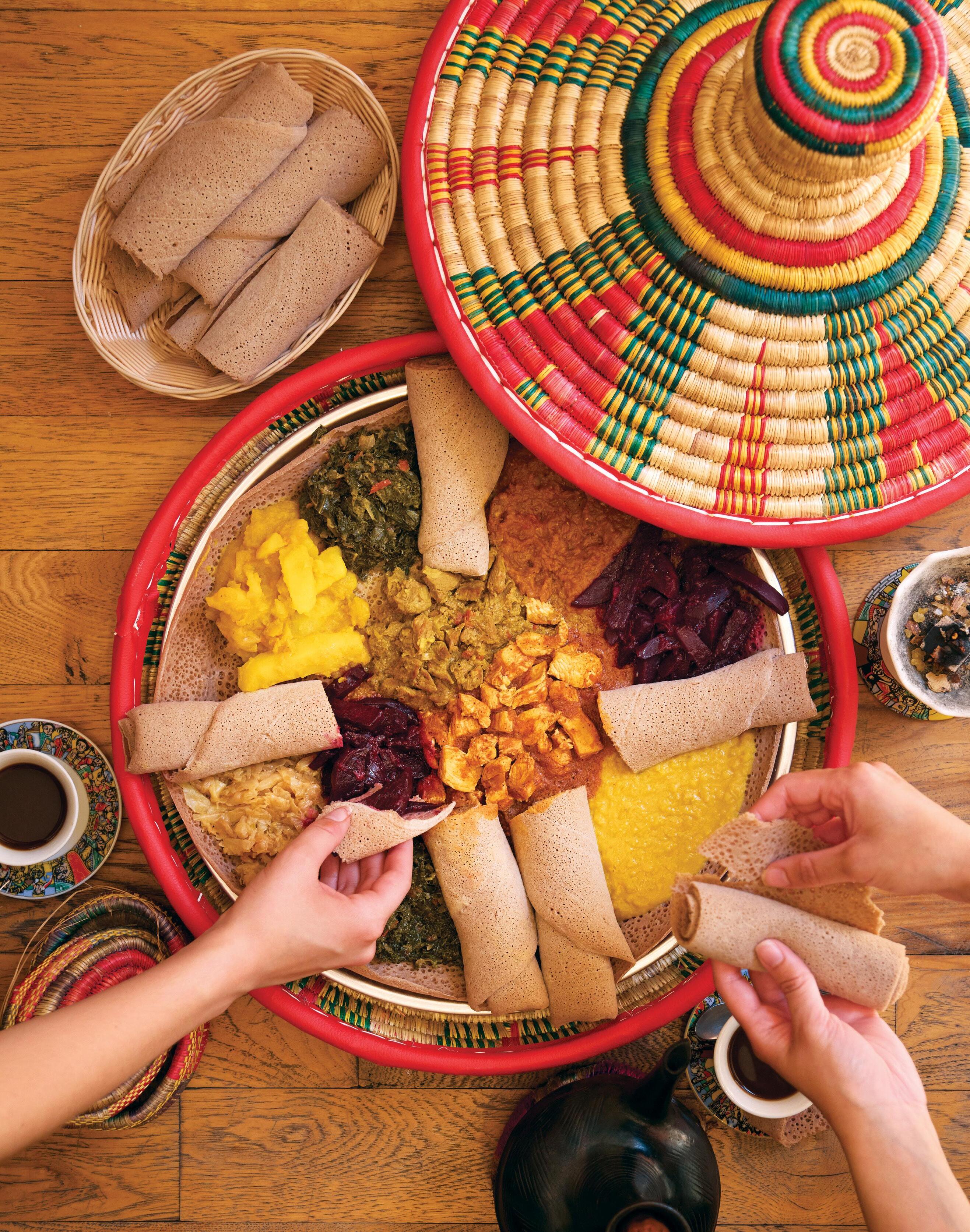
Ethiopian sample platter from MAHI’S ETHIOPIAN KITCHEN
A CHEF-CURATED MISSOURI DINING EXPERIENCE PRESENTED BY:
Four mystery courses + paired wines. One unforgettable night.
FEATURING LOCAL CHEFS
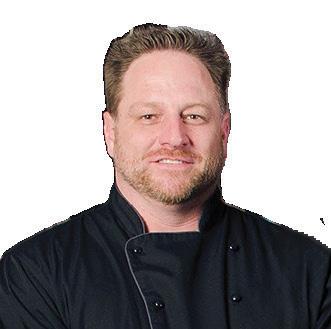
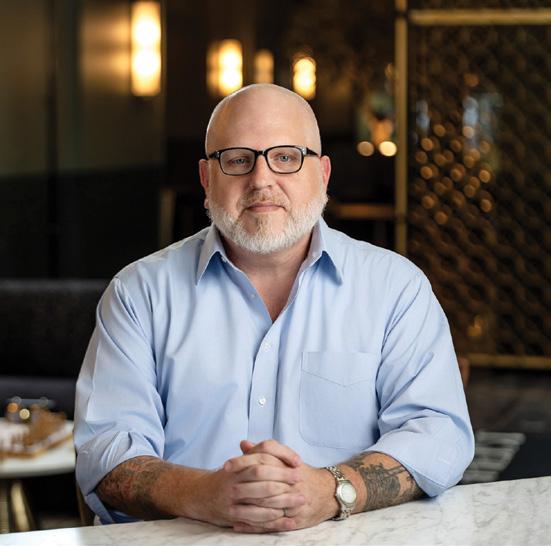
JEFF GUINN 11 Eleven / The Broadway Hotel MARK SULLTROP 44 Canteen / 44 Tavern
Monday, June 15, 2026
Location revealed day of the event
Reserve your seat
Contributors
June 2026
Jay Sparks
Jay Sparks almost always takes the long way around: making up a college degree, bartending in a college town at much too old of an age, doing work in film and radio that he was underqualified for, designing board games people probably shouldn’t play, painting custom skateboards people don’t often buy, and — one would infer — writing in some capacity. He also emcees events (you’ll find him wrangling Columbia’s 1 Million Cups entrepreneurial crowd every Wednesday morning at the downtown REDI Hub), and he is able to talk extemporaneously about leadership, culture, and entrepreneurship for audiences that appreciate good (bad) jokes.
IN THIS ISSUE OF COMO Does Columbia Have a ‘Soccer Bar’?
PG 38
Sean Spence
At 55, Sean Spence believes the best chapters of life can be ahead of us at any age. A Columbia resident for more than 30 years (just not in a row), Sean has spent his career sitting across from people doing remarkable things — listening, learning, and sharing their stories. Sean navigates life with a wheelchair, which has given him a particular appreciation for getting the most out of everything.
He has been an entrepreneur, worked in politics and the nonprofit world, and committed the rest of his life to ending U.S. poverty and helping people live amazing lives. He lives in Columbia with his wife, Leigh, and their dog, Emmy. Join the conversation at growingolderandbetter.com.
IN THIS ISSUE OF COMO
Growing Older ... and Better
PG 12
PUBLISHING
David Nivens, Publisher david@comocompanies.com
Chris Harrison, Associate Publisher chris@comocompanies.com
Keith Bormeyer, Sunitha Bosecker, Columbia Parks and Recreation, Jodie Jackson Jr, Hoss Koetting, Owen Pasley, LG Patterson,Merrill Sapp, Jay Sparks, Kelsey Winkeljohn
CONTRIBUTING WRITERS
Sunitha Bosecker, Barbara Bu aloe, A.J. Hanninen, Lainey Howard, Jodie Jackson Jr, Hoss Koetting, Kylee Kratzer, Owen Pasley, Lynn Pickerel, Merrill Sapp, Jay Sparks, Sean Spence, Michelle Terhune, Bradley Williams, Kelsey Winkeljohn
SUBSCRIPTIONS
Magazines are $5 an issue. Subscription rate is $54 for 12 issues for one year or $89 for 24 issues for two years. Subscribe at comomag.com or by phone. COMO Magazine is published monthly by COMO Companies.
OUR MISSION STATEMENT
COMO Magazine and comomag.com strive to inspire, educate, and entertain the citizens of Columbia with quality, relevant content that re ects Columbia’s business environment, lifestyle, and community spirit.
Copyright COMO Companies, 2026
All rights reserved. Reproduction or use of any editorial or graphic content without the express written permission of the publisher is prohibited.
FEEDBACK
Have a story idea, feedback, or a general inquiry? Email our editor at jodie@comocompanies.com.
CONTACT
COMO Companies | 404 Portland, Columbia, MO 65201 573-577-1965 | comomag.com | comobusinesstimes.com
The COMO Mojo: The Art of Going Out
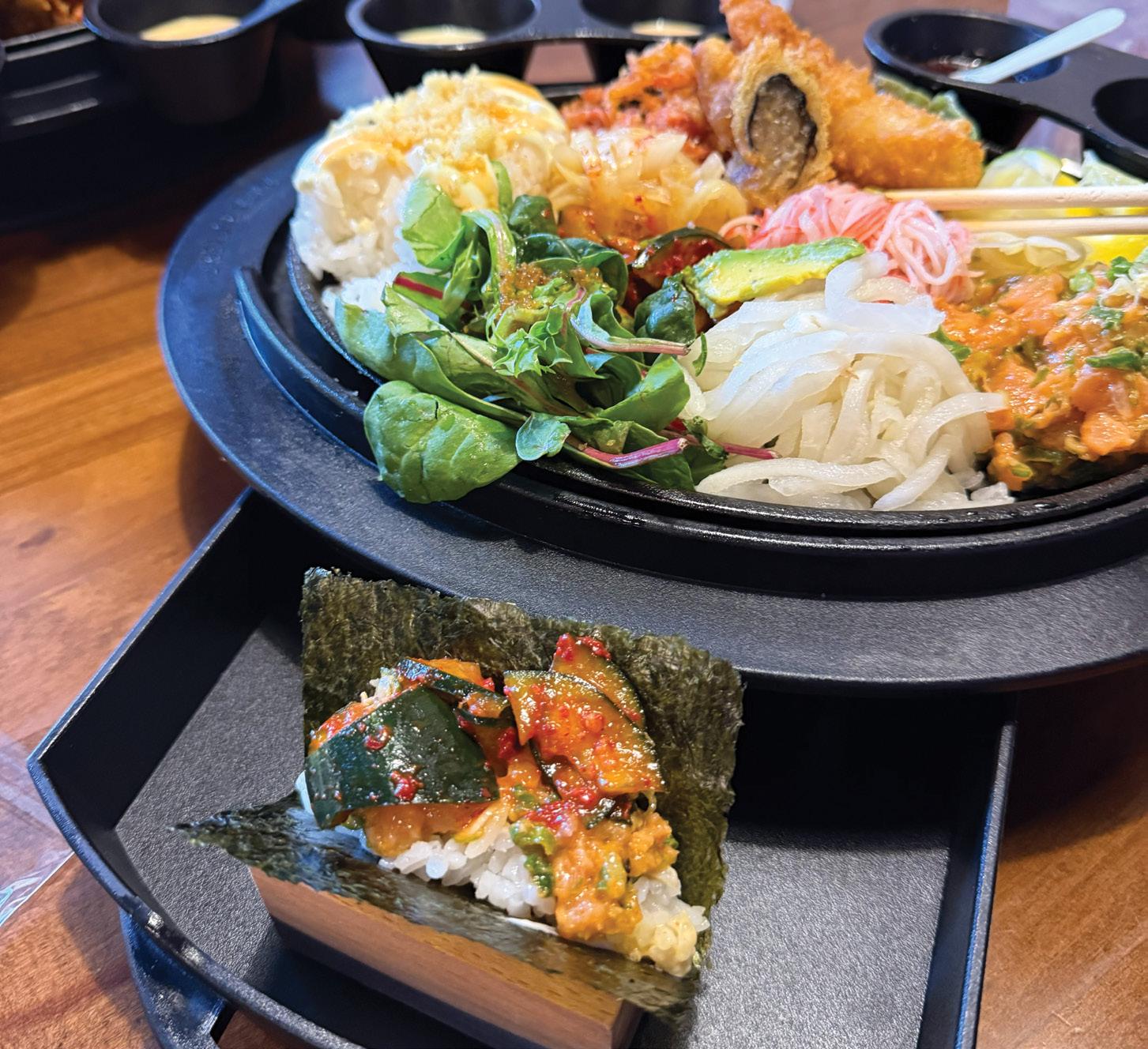
Last month, video intern Charlie Westfall and I set o on an adventure akin to Lord of the Rings in search of something arguably more exciting than the One Ring: Sushi Fajita.
While I’d consider Charlie a pal, and lunch with him a treat, we were there on a speci c mission: to capture the restaurant in all its gimmicky glory for a social media video. If you haven’t been yet, (1) You should check out our article on the restaurant in the May issue, and (2) You should get your butt in a seat there ASAP.
One thing about me as a creative is that I appreciate beautiful food. Taste is paramount, of course, but presentation undeniably shapes the experience. ere’s something compelling about a thoughtfully arranged platter arriving at the table — the interplay of color, texture, and composition. It’s an art in its own right, much like a story or musical piece. Sushi Fajita excels at that balance, juxtaposing vibrant colors, bold avors, and combinations that encourage a di erent bite each time.
While Charlie captured video clips, and I sat nearby trying my darndest not to immediately scoop up a bed of rice layered with spicy tuna, kimchi, and radish onto my strip of nori, we began talking about some of my other favorite dining experiences, such as seafood boils and Korean hot pot. Eventually, the conversation shifted toward the idea of dining as a communal act. Good food matters, but what interests me even more is the participatory aspect of certain meals — the way they invite people to slow down, interact, and share in the experience together.
I told him that I feel like that’s how meals are meant to be eaten. Not rushed through or treated as a transition between daily activities but shared in conversation and communion with one another. I think that’s how life is meant to be lived, too. Fully engaged and present with the people around us, mixed in with a bit of fun and new experiences.
Our June issue is all about going out, and while that can mean many things under the sun, I challenge you to do it with intention at least once this month. Treat it like a date night — whether with your partner,
your friends, or yourself. Really plan it out. en, because balance is key in everything, go do something completely spontaneous. Let loose. Have fun. Maybe get a tattoo of a ferret or go skydiving (I’m not liable for any accidents or injuries that may occur). en, go one step further and disconnect. I love taking photos and posting on social media as much as the next Gen Zer, but some moments are better lived in than lived through a screen.
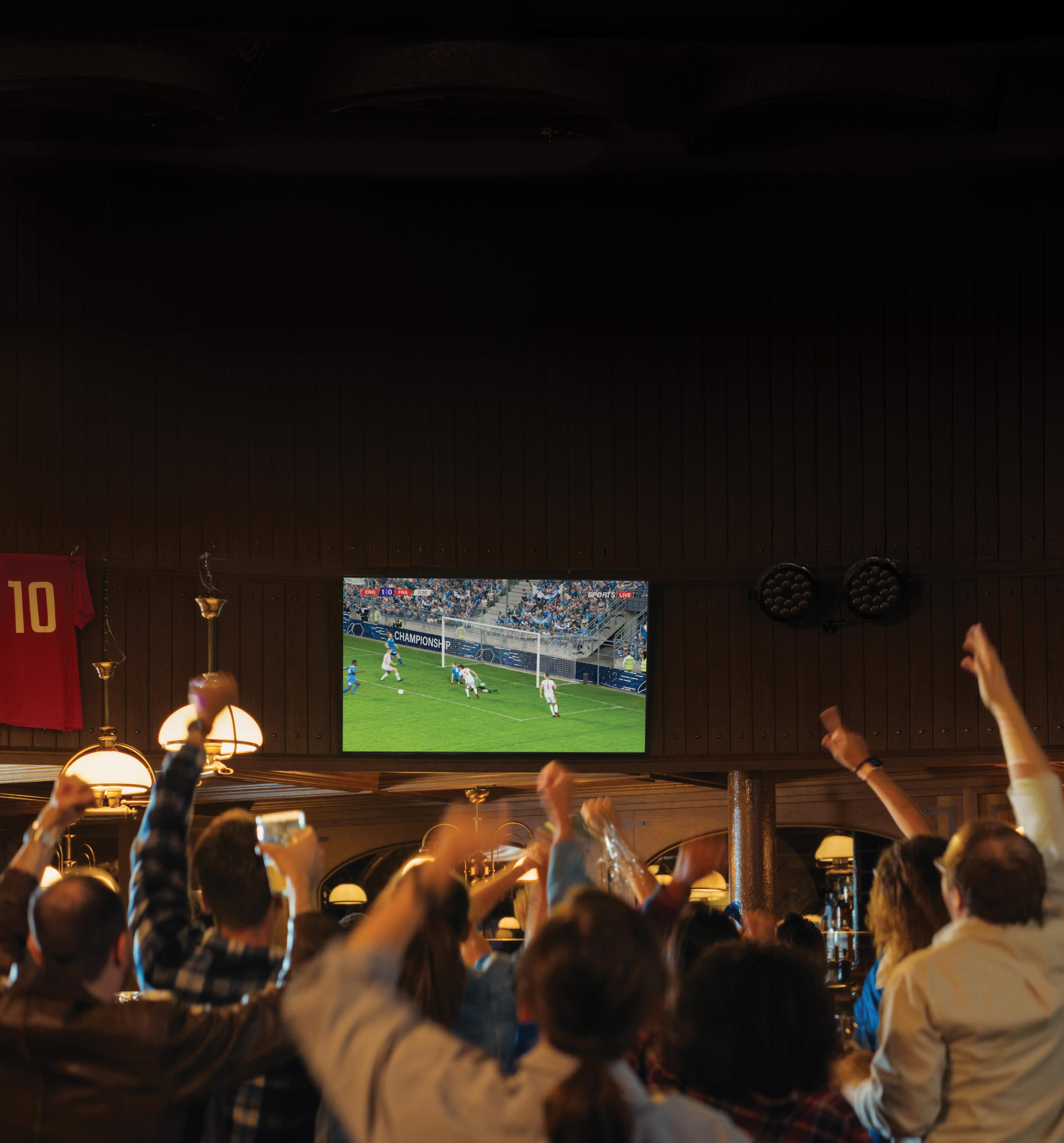
Enjoy the “Going Out” issue! Use it as a guide to explore the great city around us. And if you’re looking for that aforementioned interactive dining experience, I highly recommend a game of billiards and a burger, as well as Mahi’s Ethiopian Kitchen. ey’re on our covers for a reason!
Mahi’s Ethiopian Kitchen adds a colorful, cultural flavor to COMO’s dining scene.
Photo by Keith Borgmeyer
Sushi Fajita
Brianna is a recruiter in our Human Resources department! Her dedication and energy have made a real impact on staffing at the bank. She is hardworking and takes great pride and care in her work, our employees, and our customers. She is always willing to jump in and help. Brianna is very involved both within the bank and in our community. She is a joy to be around and truly represents the bank in a Legendary way!
BE SUN SAVVY
No-see-ums aren’t the only outdoor summer hazards.
BY LAINEY HOWARD
Bugs are a well-documented source of irritation and disease, but they aren’t the only things to watch out for during the summer months. e sun can also cause illness and injuries that can ruin your summer activities if you don’t take the right precautions.
(HOW NOT TO) BURN, BABY, BURN
Being outside in the sun too long without skin protection can cause sunburns and sun poisoning, which is described as a “super advanced sunburn,” a condition that can cause fever-like symptoms as well as itchy and irritable skin.
While Dr. Bridget Gruender, a family medicine physician and owner of Liberty Family Medicine, does not see many cases of extreme sunburn, she does see patients who have skin cancer due to long-term exposure to the sun. ose speci c types of skin cancers include squamous cell carcinoma, basal cell carcinoma, and the more aggressive type, melanoma.
“Continual sunburns or multiple sunburns, especially before the age of 20, can lead to increased skin cancer risks as you
age,” Gruender warned. For optimal skin protection, apply sunscreen with at least 30 SPF, which blocks 97 percent of ultraviolet rays, every two hours. “If [the SPF] is too low, it’s not going to do enough to keep you protected,” she said.
Gruender also pointed out that there are two types of sunscreen — mineral and chemical — and that they work di erently. Mineral-based sunscreens stay on the surface of the skin, physically blocking the sun’s rays from reaching it. Chemical-based sunscreens are absorbed into the skin, where they, in turn, absorb UV light and prompt it to undergo a chemical reaction that wards o skin damage.
While mineral sunscreen may be more comfortable for people with sensitive skin, those with darker skin tones may nd its thicker, whiter formula di cult to blend in. As both chemical and mineral sunscreens are e ective skin protectors, you can choose whichever variety suits your skin type best.
Sporting the right clothes can also help protect you from the sun and heat. It is best to wear light, loose clothing as well as some sort of sun hat and sunglasses. Wide-brimmed hats and long-sleeved sun shirts have the added advantage of minimizing the amount of sunscreen you’ll need.
Gruender said that even though long exposure to the sun can cause damage, the sun “actually has some bene ts,” such as producing vitamin D. “But we do have to be really careful with sun exposure,” she added, noting that it’s best to avoid being outside during peak sun hours, including the period from 10 a.m. to 2 p.m.
KEEPING YOUR COOL
Heat exhaustion is another summer-related issue that can occur with prolonged exposure to extreme heat. Symptoms include feeling faint or dizzy, excessive sweating, a rapid pulse, and — somewhat ironically — chilled, clammy skin. Nausea, vomiting, and muscle cramps are additional symptoms.
Left untreated, heat exhaustion can become more serious, potentially leading to heatstroke. at sun-related danger must be taken seriously, said Austin Krohn, public information specialist for the Columbia/Boone County Department of Public Health and Human Services.
“ e telltale sign [of heatstroke] is that you’ve stopped sweating, but you are still experiencing symptoms,” he explained, noting that these include a massive headache, vomiting, and a rapid, strong pulse. A heatstroke victim may have a body temperature of over 103 degrees and can lose consciousness. Always call 911 to seek immediate medical attention if someone is displaying symptoms of heatstroke.
“It’s really the super, super serious heat-related illness we are concerned with in the summer months,” Krohn said. To avoid heat- and sun-related injuries and illnesses, make sure to take frequent breaks in a cooler, shaded area or an air-conditioned indoor location. It is also important to stay hydrated.
“It really is about pacing yourself in the summer months, knowing what you can handle, and making sure you are staying safe,” added Krohn. To help residents do that, Columbia has several cooling centers throughout the city. Most are cityowned, including the Activity and Recreation Center (ARC), Columbia City Hall, and the city/county health department. Other designated cooling centers include the Columbia Public Library and the Salvation Army Harbor House.
While many Columbians look forward to the carefree days of summer, Missouri’s torrid July and August temps can pose real dangers. Luckily, taking the proper precautions should enable you to safely have your fun in sun.
“A lot of [these risks] are preventable,” Krohn said. “You can do things to either mitigate the risk of these things happening or stop them all together.”
Preventative and Holistic
Stephens and KVS partner for animal-first veterinary care.
BY MERRILL SAPP AND KYLEE KRATZER
Everywhere you turn these days, it seems that some health system, insurance company, or hospital is touting its commitment to “patientcentered care.” A patient-centered care approach means more than simply putting the patient’s needs rst. It involves a partnership between caregiver and patient, with shared decision-making guided by what matters most for the patient’s well-being.
Now, a new partnership between Stephens College and Kuehler Veterinary Services is taking that same guiding philosophy and applying it to animals. is “animal- rst” approach to care sees animals as individuals — and recognizes that understanding their individuality is essential to good healthcare. e Stephens–KVS partnership is both putting this philosophy into practice and developing these skills in the next generation of animal caregivers.
Holistic Healing for Horses (and Other Creatures)
As most Columbians know, Stephens is home to a storied and celebrated equestrian program. Professors Shelby Baxley and Sara Linde Patel manage the horses at the Stephens College Equestrian Center. e two are especially interested in preventative care, because avoiding problems is
often the best way to treat these animals. Because many of the horses at Stephens are long in the tooth, they frequently need physical or emotional rehabilitation.
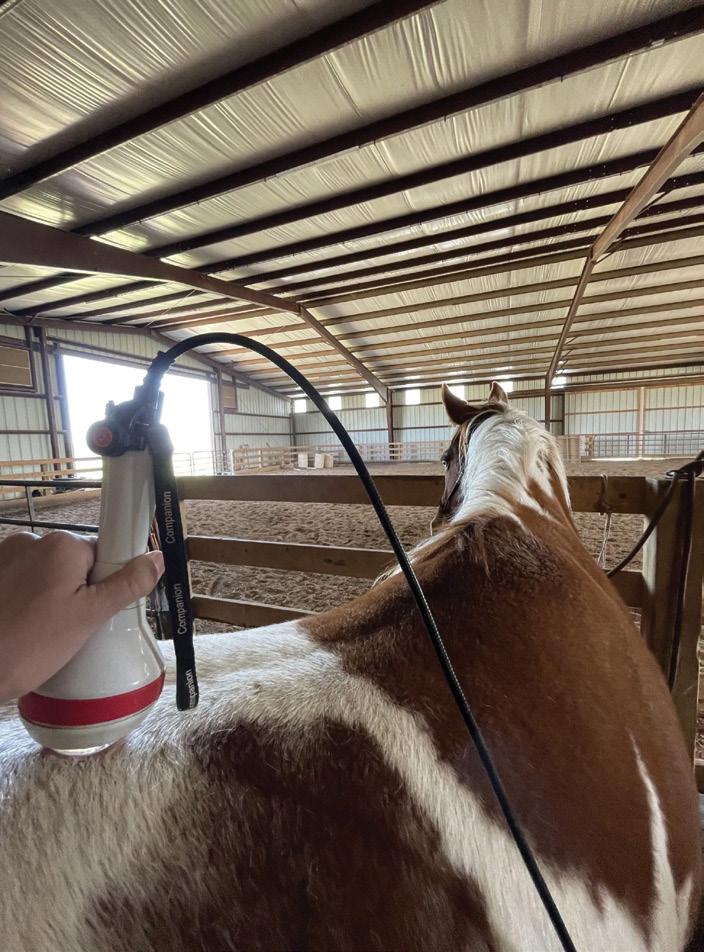
e new partnership with Dr. Kally Kuehler of KVS centers on alternative methods of care, which is crucial for successful rehabilitation. Kuehler trained under a traditional medical model at the University of Missouri College of Veterinary Medicine and later became a specialist in alternative, holistic modalities, such as animal chiropractic care and acupuncture, as well as equine physical therapy.
Traditional medical models use a standard of care approach to treatment, which refers to widely accepted practice expectations, mostly determined by the diagnosis. In contrast, Kuehler customizes her process for each patient. She allows her patients — individuals with personalities and preferences — to tell her what they need through careful physical examination and reading their behavior.
A customized approach for each patient may require a provider to let go of the past.
A plan that has worked before for a speci c diagnosis may not work for every patient. Kuehler especially favors alternative treatments that can be more e ective than commonly prescribed medications.
One of these alternative modalities is chiropractic treatment. As in humans, chiropractic care of animals involves laying on of hands. For musculoskeletal problems, Kuehler rst feels for areas of hot and cold: Temperature di erences can indicate problems underneath the skin. en she assesses how the skin moves over the area, checking for grittiness or knots. She gradually progresses to deeper tissues, down to the bones.
e animals may initially show discomfort from the manipulations, but typically they show a relaxation response about halfway through the process. is response is what owners notice.
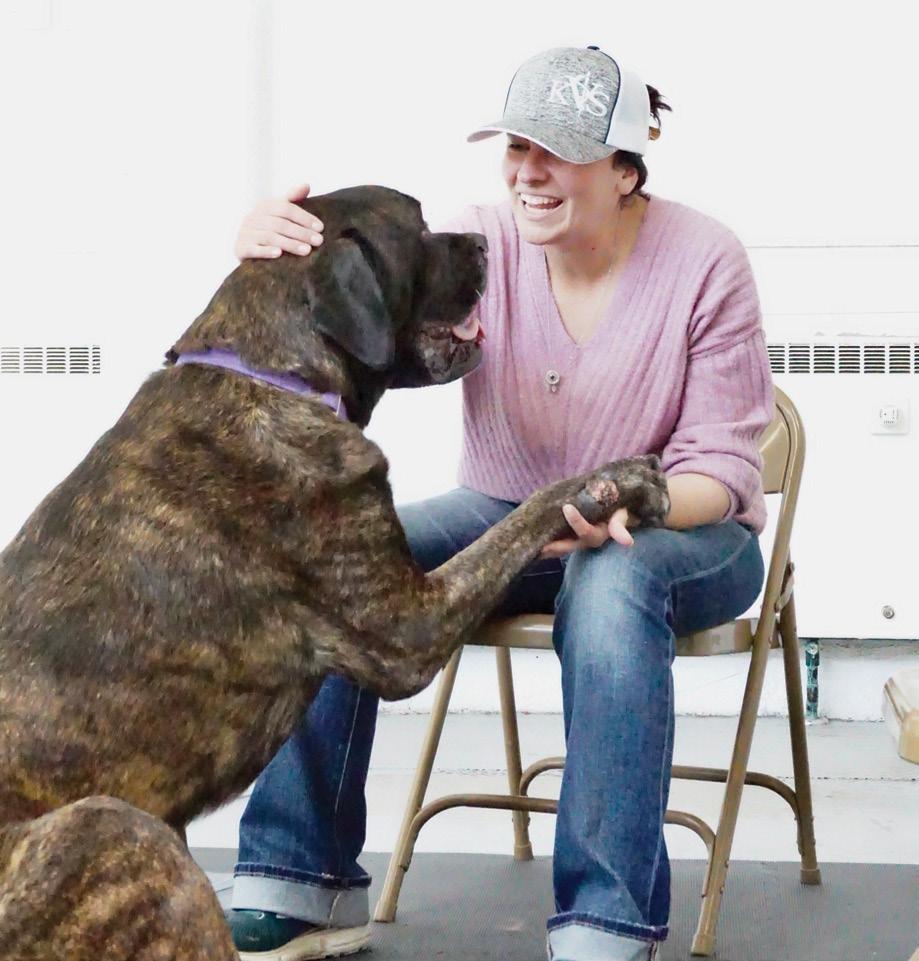
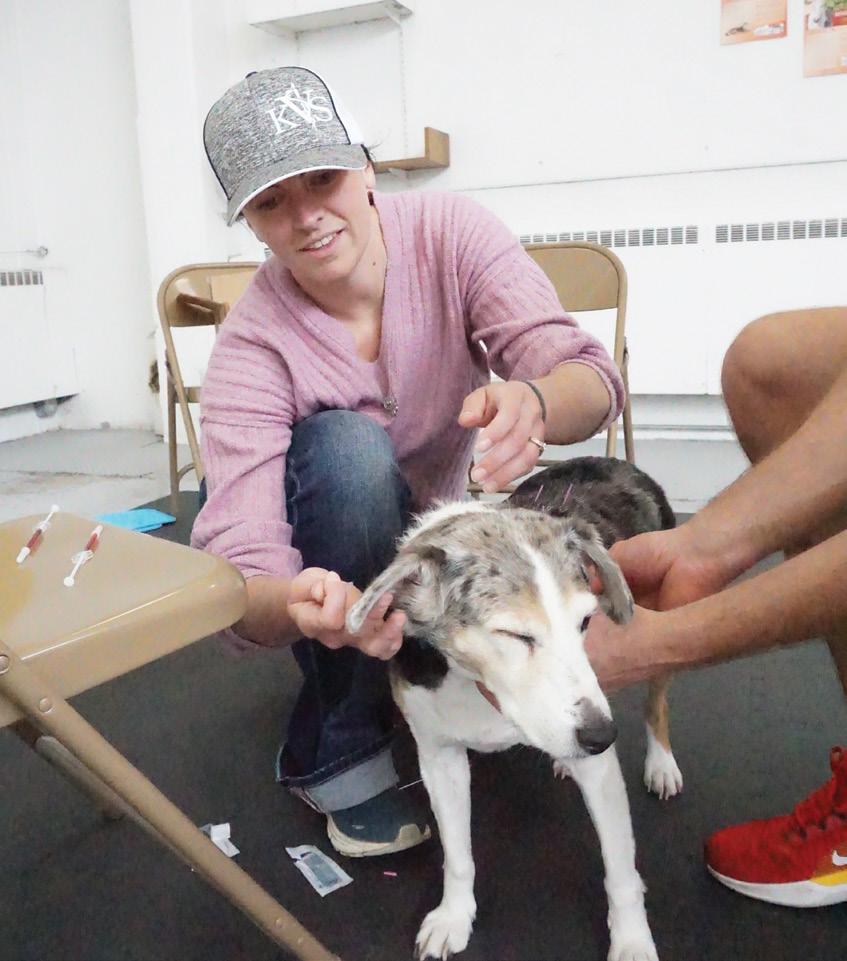
Alternative care can also be e ective for treating behavioral problems, especially anxiety. For example, acupuncture is a treatment of choice for dogs that have a fear response to loud noises like storms or reworks. Kuehler may also insert a permanent acupuncture point (a small metal BB) under a dog’s scalp to reduce severe anxiety.
Taking Their Time
In addition to an animal- rst philosophy, caregivers at Stephens College have another important advantage: “the beauty of time.” Unlike equestrian centers that
CLUING IN TO ANIMAL CUES
Animal caregivers won’t get very far by asking their patients to provide a detailed medical history. In veterinary medicine, a patient-first approach requires specialized sensitivity to an animal’s behavior and emotional cues.
After thousands of years living alongside people, dogs are skilled at interpreting human cues and communicating with them through eye contact and other forms of nonverbal behavior. This phenomenon is fairly obvious to anyone who has spent time with a dog.
What may be less obvious is that, as social and prey animals, horses must remain highly aware of what’s happening around them. As Patel explains, they “observe everything,” including the emotional states of other horses and humans. Horses are not only adept at reading human nonverbal cues, but they also communicate through a wide range of facial expressions and body movements, revealing social signals that are both subtle and complex.
One of Baxley’s favorite things about working at the equestrian center is when she introduces a new arrival to an established pasture group. As herd animals, horses are inherently social. Baxley loves to see how their different personalities mesh and how the horses work out changing group dynamics.
The horses at Stephens are leased or donated to the college, and many of them are “a bit aged.” Older horses tend to be calmer than their young counterparts; when they must share space with each other, their energy can balance out well. The younger horses also learn good manners from their elders.
It seems the ways of our equine counterparts may not be so different from our own.
depend on performance horses for income, trainers at Stephens can take the time to pay close attention to what each horse is communicating. is allows a process to unfold, a collaboration where caregiver and animal get to know and respond to each other.
When the equestrian program hosted an ultrasound workshop for the veterinary college, visitors were amazed at how well behaved the horses were without any sedation. Patel attributes this to knowing each horse as an individual and addressing each one’s speci c needs.
Time is also essential to the other primary function of the StephensKVS partnership: teaching a new
Patel describes Kuehler as “really supportive of students and passionate about teaching,” especially when it comes to methods they haven’t yet been exposed to. She also believes the current generation of students is more open to alternative approaches than in the past; they tend to be more sensitive to an animal’s experience.
eir mentors are undoubtedly part of this shift, modeling this philosophy and helping shape the future of animal- rst care.
“ is is a perfect time for us,” Patel says. “We are a pet-friendly campus and with having the animal behavior degree — all of these things that the college has focused on in moving us forward in the realm of animal care and support. It falls right in alignment for the equine students, for animal behavior students, for anyone who wants to manage animals in their life, even their own pets.”
Community Outreach
Patel also believes it would be selfish not to share Kuehler with as many people as possible. As a result, the partnership between KVS and Stephens College has created the opportunity for holistic veterinary care to expand into the wider Columbia community. Kuehler emphasizes that preventive care with complementary or alternative approaches should play a key role in keeping animals healthy. Pet owners don’t have to wait until something is wrong to schedule a visit.
KVS o ers regularly scheduled visits held both on Stephens College campus and at the equestrian program stables. Appointments are available on the rst and third ursdays of each month. Equine visits are o ered from 9 a.m. to 12 p.m. Canine and feline appointments are o ered from 1 p.m. to 6 p.m. e visits support the long-term health of animals by focusing on pain management, mobility support, performance optimization, and overall wellness. With KVS’s services on campus, the partnership is introducing the community and Stephens students to a holistic, animal- rst approach to veterinary medicine.
Growing Older … and Better
BY SEAN SPENCE
Starting today, what is one thing you could do to grow older and better? It is not the kind of question you answer on the way to something else, but a real one — one that asks what you would do if you stopped letting age feel like a reason to slow down.
I have been asking it myself — at 55, living in Columbia. I use a wheelchair thanks to MS and have said “someday” more than I care to admit. Someday I will reconnect with that person. Someday I will try that thing. Someday, when the timing is better, or I have more energy, or I feel less behind.
Sound familiar?
We do not get to choose whether we grow older. If we are lucky, we just keep doing it. But getting better — that part is up to us. It does not happen automatically. It requires something.
What I keep nding is that the something is almost always other people.
An area I have been especially intentional about is relationships. COVID did what COVID did, and I let far too many friendships just … drift. Years went by. People I genuinely cared about became people I only thought about. at is on me, not COVID.
Over the last several months, I have started rebuilding. I host “90 Minutes With People I Like” — low-key happy hours at Barred Owl and other good spots, with old friends and new, drinks and a few apps, no agenda and absolutely no politics. My wife, Leigh, and I also do small brunches at our house every six weeks-ish, with a handful of people we want to know better. It turns out that is all community requires: a little intention and a date on the calendar.
I also signed up with Big Brothers Big Sisters of Central Missouri. ere is something about spending time with a kid who has not yet decided what the world owes him. More than 70 “Littles” in this community are waiting for a “Big.” It takes just a few hours a month. If you
are wondering what’s one thing you could do, maybe that’s an answer?
Beyond revisiting and rebuilding relationships, I have been saying yes a lot, trying a lot. My friend Ellis Benus and I created “Our Christian Stories”, a traveling event where people share their faith journeys. I write a column for the Columbia Missourian called “Most Interesting People,” where I have dinner with fascinating Columbians and ask them anything. Recently that meant a long, slow meal at Sycamore with Nobel laureate George Smith and public health leader Margie Sabel. Yummy food tends to help relax any of us into honesty.
And then there is the big adventure I have been quietly planning. In 2031, I will road trip to the best restaurant in every state plus D.C. — 51 meals in one long trip, with whatever wonderful detours appear along the way. What I’m doing right now might even be the best part: researching, dreaming, connecting with people who love food and place and road.
None of these things requires (or even allows) perfect timing. None of them required me to be younger, or faster, or further along. ey just required deciding.
at is what this column is about.
Growing older and better is not a solo project, and it is not something that happens while you wait. It is assembled, slowly, from small and intentional choices, made by someone who keeps showing up.
Every month we will consider something worth thinking about: a question, a story, something that happened when someone stopped waiting. Sometimes that something will be practical. Sometimes it will just be a reminder that the people around us are doing remarkable things.
Starting today — not someday, not when the circumstances improve, or the kids are grown, or the calendar nally clears — what is one thing YOU could do to grow older and better?
You do not need a plan. You do not need to have everything gured out. You just need to pick one thing.
Let’s do it together.
Sean Spence is a 55-yearold Columbia guy, writer, podcast host, and event creator. Find him at growingolderandbetter.com.
What to Know About the Proposed Public Safety Sales Tax
BY MAYOR BARBARA BUFFALOE
In Columbia, we take pride in being a community that shows up for one another. Whether it’s helping neighbors, supporting our local businesses, or working together through challenges, that spirit of shared responsibility is part of what makes our city special.
It’s also what guides how we approach one of the most important responsibilities of local government: public safety.
At its core, public safety is about people. It’s about the re ghter who responds when a family is in crisis. It’s about the police o cer who helps keep our neighborhoods safe. And it’s about ensuring that when you call for help, someone is there — quickly, professionally, and with the tools they need to do the job well.
In May, the Columbia City Council voted to place a question on the August ballot asking voters whether to approve a dedicated 1 percent sales tax for public safety. at decision was not about enacting a tax — it was about making sure our community can weigh in on how we fund these essential services.
Today, nearly half of our city’s general fund is already dedicated to public safety services. at re ects our community’s long-standing commitment to this work. But it also highlights a growing problem.
e cost of providing these services continues to rise, while the revenues that support them are not keeping pace.
We are seeing this in several ways. Like communities across the country, Columbia is working to recruit and retain police o cers and re ghters in a competitive market. We are planning for needed facility improvements, including re stations and a future police facility. And we are addressing long-term obligations, including pension commitments that enable the people who serve our community to retire with dignity.
At the same time, our nancial outlook shows that sales tax growth — the primary funding source for many city
services — is expected to remain relatively at in the near term. at creates a structural challenge. Without a more stable and dedicated funding source, we risk falling behind in our ability to maintain the level of service our community expects and deserves.
If approved by voters in August, this funding would be dedicated solely to police and re services. It would support staing, equipment, facilities, and long-term nancial stability. It would also be placed in a separate public safety fund, providing transparency and accountability in how those dollars are used.
We recognize that conversations about taxes are never simple. Cost matters, especially for families and small businesses. For context, a one-cent sales tax equates to about one dollar on a $100 purchase. And because Columbia serves as a regional hub, a portion of our sales tax revenue is generated by visitors from outside our community.
At the same time, this decision is about more than numbers. It’s about what kind of community we want to be — and how
we ensure that we continue to provide the services that support safety, stability, and quality of life for everyone who calls Columbia home.
Between now and the August election, there will be many opportunities to learn more, ask questions, and share your perspective. I encourage you to stay engaged, review the information, and be part of the conversation.
Columbia has always been a place that plans for the future while staying grounded in our values. is is one of those moments. Together, we can consider the needs of today and tomorrow — and make a thoughtful, informed decision about how we invest in the safety and well-being of our community.
I look forward to continuing this conversation with you.
Barbara Bu aloe is currently serving her second term in o ce as the mayor of Columbia.
What’s Growing in Plain Sight
BY BRADLEY WILLIAMS
Years ago, our family of ve moved into a tiny rental for one year while the older home we had purchased underwent a major renovation. Little did I know that those casual conversations with our temporary neighbors while getting the mail or watching the kids play in the front yard would become deep friendships that would last much longer than the one-year rental agreement. Interesting how the smallest things — a question asked at the right moment, a meal shared on a patio, a neighbor you nally bump into at the mailbox or grocery store — can grow into something you never would have predicted. Nothing dramatic. Just a tiny seed of connection dropping into fertile soil.
ere’s an ancient teaching of Jesus where he compares God’s work in the world to the tiniest seed you could hold in your hand. You plant it, and somehow it becomes this enormous, sprawling thing where others nd shelter. e point isn’t the spectacle at the end. It’s that you almost couldn’t see it at the start.
Columbia is good at this, I think. We’re a town familiar with front porches, farmers markets, and friendly banter about sports teams and PTA meetings. But I wonder whether we always notice what’s happening in those moments. ose tiny seeds of connection we don’t see because we tend to focus more on the task at hand, the obvious objective, or the game going on. We often walk right past what might be underway, beneath the surface, in the ordinary soil of everyday life.
Here’s what I mean. Jesus had this habit of using the most common, everyday stu — seeds, lamps, soil, bread — to point people toward realities they couldn’t see yet. He’d basically say, “ at thing you look at every single day and think nothing of? Pay attention. Something’s happening there.” And then he wouldn’t explain
it. He’d just let people sit in the tension of not having the quick answer. For a town full of people trained to analyze and master information, that might be the most countercultural invitation we could receive: Stop trying to gure it all out and just listen for a minute.
I don’t mean listen for something mystical. I mean the kind of listening where you’re actually present — at the party, on the trail, across the table — and you’re paying attention to what’s stirring. Where is something good trying to break through? Where is a conversation going deeper than surface level? Where is someone nding shelter they didn’t know they needed?
Because here’s the thing Jesus kept pressing on: Growth happens whether or not we’re watching. e seed sprouts while the farmer sleeps. e people who
notice — who slow down enough to see it — are the ones who get to participate in what’s already underway.
So this is my invitation as summer stretches out, and we’re all looking for reasons to get outside: Go out on the town, yes. But go out with your eyes open. Ask the extra question. Stay for the second cup. Notice the tiny thing that doesn’t look like much yet.
You might be standing in the middle of something that’s about to grow beyond what you could imagine.
You only need to pay attention.
Bradley Williams is the lead minister at Forum Christian Church.
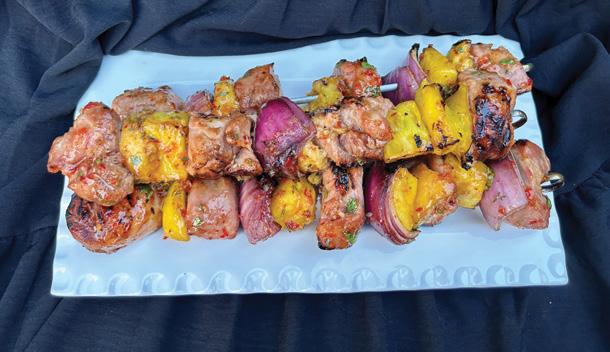
Pacifi c Rim Pork Tenderloin Kabobs With Thai Sweet Chili Basil Glaze
As I was attempting to contrive another journalistic masterpiece for this space, I received a text from one of our kids, which was a Facebook post from nine years ago o ering our trampoline to anyone willing to haul it away. is derailed my train of thought — not a di cult task — and sent me on a detour from the topic of Father’s Day and on a trip down memory lane.
e trampoline was somewhat of an impulse buy in that we were at a grade school fundraiser, it was a silent auction item, and somehow we got into a bidding war for it. As luck would have it, we “won” it (my wife’s phraseology), and now we were the proud owners of a liability that we had to add to our homeowners policy.
Turned out, this was one of the best investments we ever made. e untold hours of bouncing were priceless and helped develop the boys’ eye-hand coordination through a game they contrived, trampoline catch, which required a person — aka mom or dad — to throw a ball of some sort toward a bouncing child, who would then jump or dive to catch it.
As I look back, this was some of the best time I spent with the boys, before cellphones and other distractions would interfere with the “Dad time.” For any dads out there, take advantage of the opportunities when they present themselves no matter how challenging they may be.
e reason I touch on this is that Father’s Day is this month, a day ostensibly intended to honor all of the dads for what they do. Hopefully, they do the right things: spend time with their kids, play a little catch, teach them right from wrong and that what is important is not always winning at all costs. at sometimes it’s not the end result, but the journey that really counts.
e coach of one of our younger son’s teams, the Bears, had a little cheer that the team did at the end of every game. It’s a little odd, admittedly, but it certainly caught the attention of the other teams. It’s not mean or unsportsmanlike, and it ultimately ties in with this rambling dissertation. e chant is as follows: “Who are we? e Bears! What do men do? Play baseball! What else do men do? Cook meat!”
As a responsible dad, I ful lled my duty to teach my kids how to cook meat, as well as many other items. I hope they are using this knowledge to enhance their lives now and when they become dads. In the meantime, here’s a recipe that you can teach your kid (or not) and enjoy for Father’s Day.
BY HOSS KOETTING Jim “Hoss” Koetting is a retired restaurateur/ chef who enjoys gardening, good food, good bourbon, and good friends.
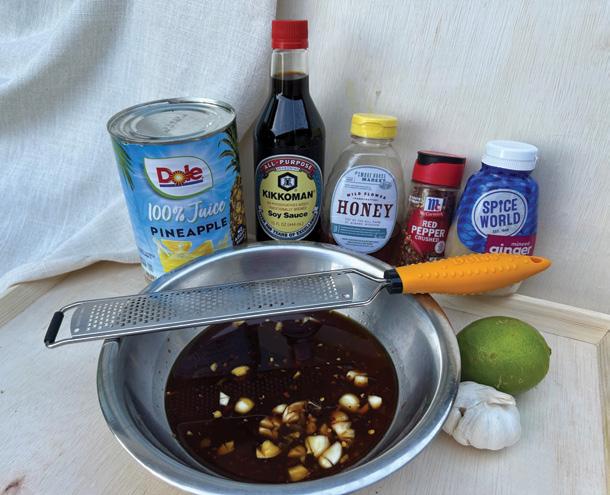
MARINADE INGREDIENTS
• ⅓ cup soy sauce
• ¼ cup pineapple juice
• 2 Tbsp. minced or grated fresh ginger
• 3 Tbsp. minced fresh garlic
• 2 Tbsp. honey
• Zest of 1 lime
• Red pepper akes (optional)
GLAZE INGREDIENTS
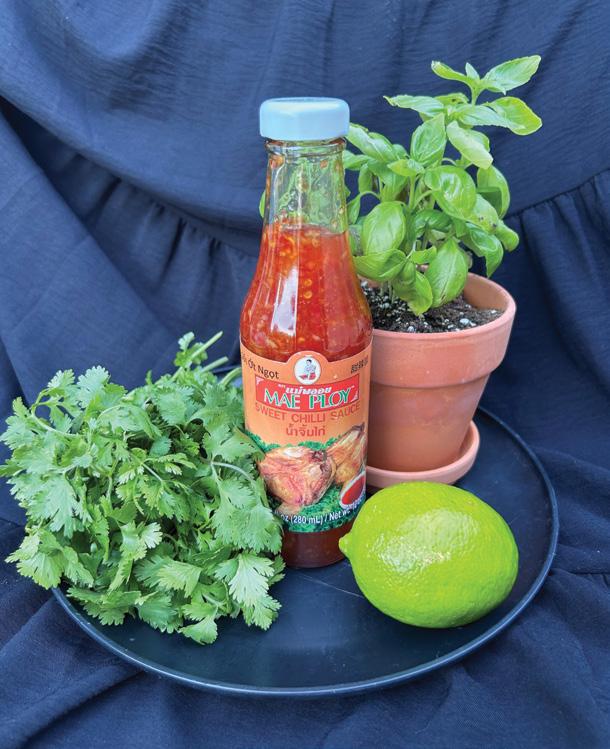
• 1½ cup ai sweet chili sauce (e.g., Mae Ploy)
• 1 Tbsp. lime juice
• 2 Tbsp. minced fresh ai basil
• 1 Tbsp. minced fresh cilantro
KABOB INGREDIENTS
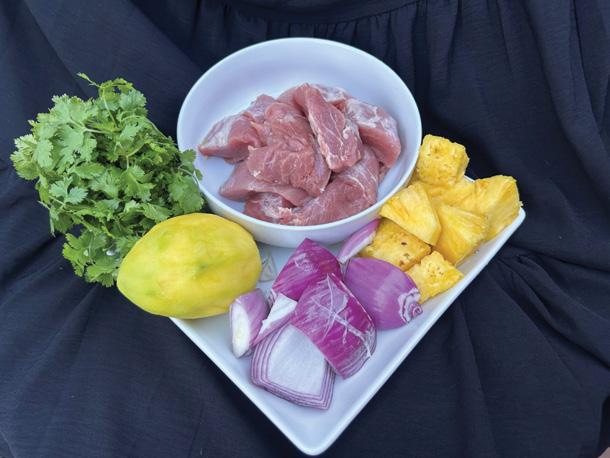
• 3 lbs. pork tenderloin, cut into 1-inch chunks
• Pineapple, peaches, and/or mangos, cut into 1-inch chunks
• Red onion, cut in wedges or cubes
DIRECTIONS
1. Marinate pork in a nonreactive bowl or ziplock bag for at least 1 hour to overnight.
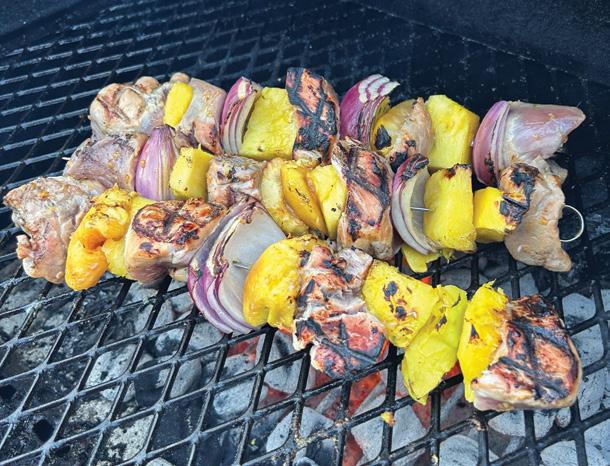
2. Assemble the kabobs on skewers — preferably at, stainless-steel ones that will help to keep the items from spinning when turned — alternating the pork chunks with the fruit and onion cubes.
3. Grill until the pork reaches 145 degrees, which will result in moist, medium-rare meat.
4. Brush with glaze during the last 5 minutes of grilling
Let’s Go Out!
The best place to go eat, drink, and relax could be just outside your door.
BY LYNN PICKEREL
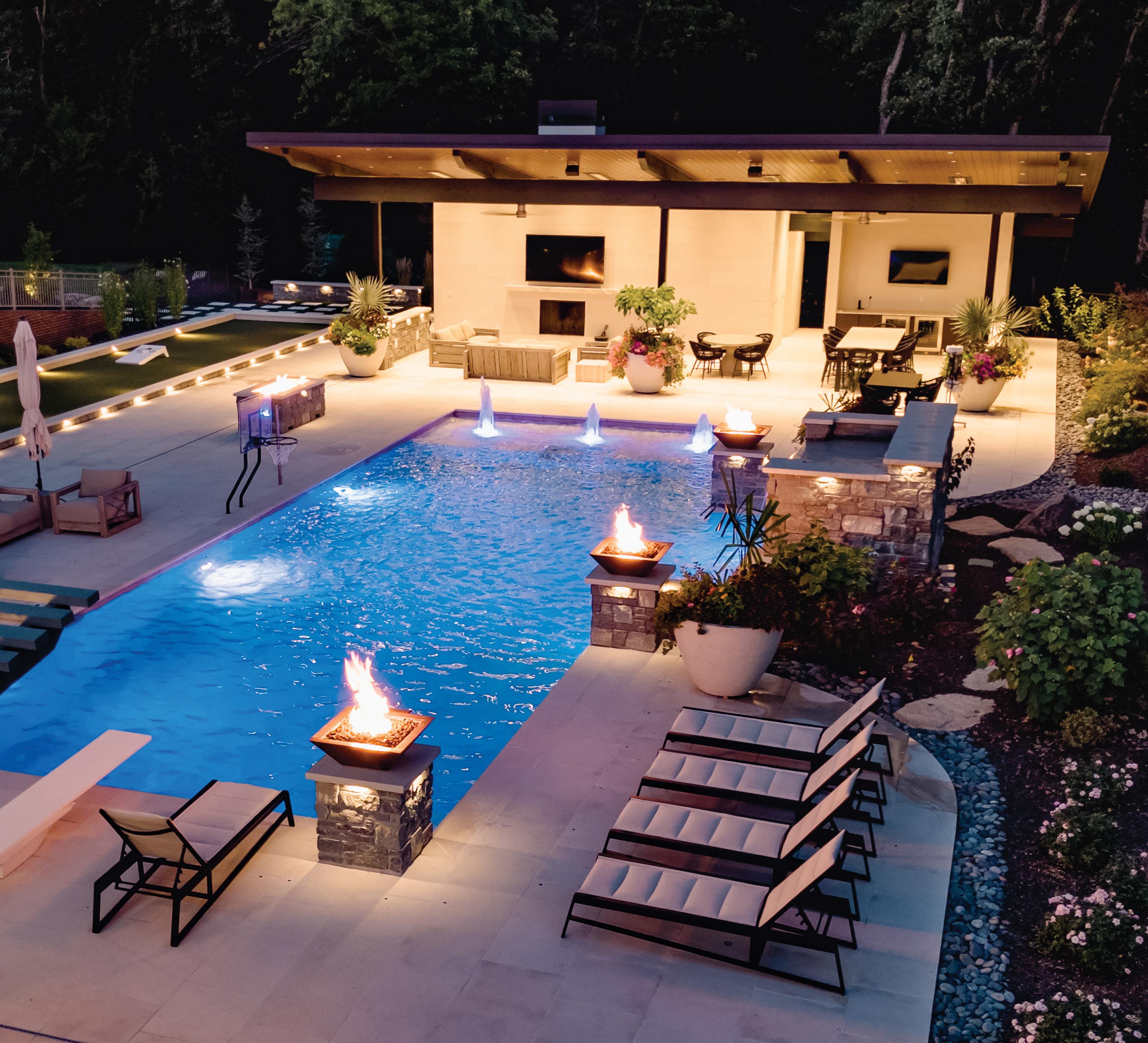
Whether you own or rent, plan to add on to your home’s living space this summer. Making whatever outdoor space you have available more livable maximizes your home’s square footage and provides additional areas to cook, dine, relax, garden, or be active. It may also o er homeowners a nice return on investment.
If you own your home, your choices are limited only by your imagination, available space, and budget. But home renters, too, can enhance the beauty and functionality of their outdoor areas. ere are countless portable, removable outdoor space-enhancing products. Even apartment dwellers, whose only outdoor area might be a tiny balcony or patio, can spi up those spaces with a few compact and well-arranged outdoor items. ere are so many options, so let’s get started.
Photo provided by Rost Landscaping
Create a Plan and Budget
Where to begin? Mike Wolfe, owner of Wolfe Construction and Home Repair, has some advice.
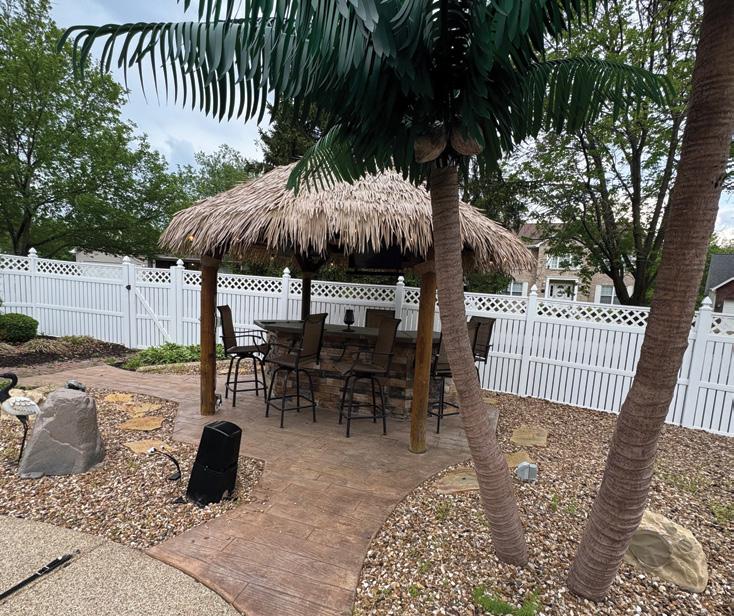
“Start with a well-thought-out plan and set a budget. Ask yourself how you plan to use the space,” he said. Another consideration: Do you have a particular concept or style in mind? (One of Wolfe’s clients wanted an authentic tropical theme for a poolside patio; he custom-built a tiki hut as a focal point.) “Just about everyone enjoys having outdoor spaces. ey are a smart move and a sound investment,” Wolfe said.
Design and Furnish
When it’s time to design and furnish your outdoor space, think in terms of individual nooks or “rooms.” Maybe your space will be like a big studio apartment, with furniture groupings, outdoor rugs, or portable trellises de ning each area. Or maybe it will spread out into distinct rooms, each de ned by the type of “ ooring” under it or “ceilings” above it, with pathways, shrubs, and fencing serving as walls to visually separate each space.
KITCHEN
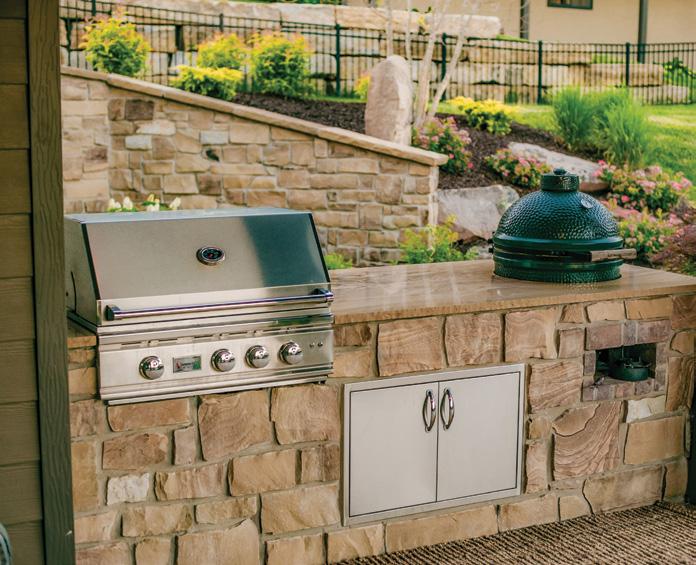
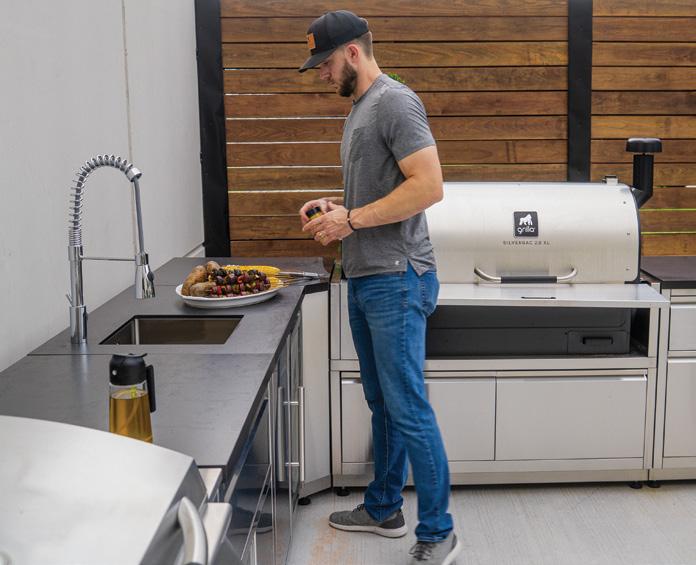
Having an area for outdoor cooking is a must for many people. e space you create for cooking outdoors might be as simple as designating a spot for a tabletop grill. Or it can be as elaborate as creating a kitchen with features such as a sink, garbage disposal, refrigerator, icemaker, countertops, and a grill or two. Most people will settle on something between these two extremes, said Brendan Rost, designer at Rost Landscaping.
“ ere is a huge range to what people want,” he noted. “Fifty percent want a full-service kitchen of some kind; fty percent want an area designed with a slip, a nook to park your grill.”
Columbia-based American Outdoor Brands o ers a DIY approach to creating your outdoor kitchen with its Grilla products, which are designed and engineered on-site. You can use AOB’s online planner or visit their showroom and outlet store to select the components you want, and AOB will deliver them to your door. Marketing Manager Ethan O’Keefe noted that the modular design makes each piece movable and interchangeable.
When you’re cooking outdoors, having fresh herbs handy is a treat. “Oregano, thyme, mint, and chives are good choices for garden beds or planters, suggested Gabby Borthacyre, a store manager at Helmi’s Gardens. “Just don’t plant mint in the ground. It will take over.”
DINING ROOM
An outdoor table is a popular spot to gather for drinks, food, and conversation. It can also double as an outdoor o ce desk. Choose yours based on durability, maintenance requirements, and how you will use it. Need a table for two or a table for a whole crew? ere are plenty of choices. A folding table or small trays might be all you need for occasional use.
RECREATION ROOM
Having a place for the dog to run or for the kids — and adults — to play some yard games may be a high priority for you. If so, consider the wear and tear the surfaces will endure and plan accordingly.
Rost says the big trend right now is arti cial turf. “Today’s arti cial turf is aesthetically attractive,” he said. “Its low maintenance and permeable surface make it ideal for play areas, including backyard putting greens.”
Of course, should your space and budget permit, you can always opt for a summer recreation classic: a backyard swimming pool.
LIVING ROOM
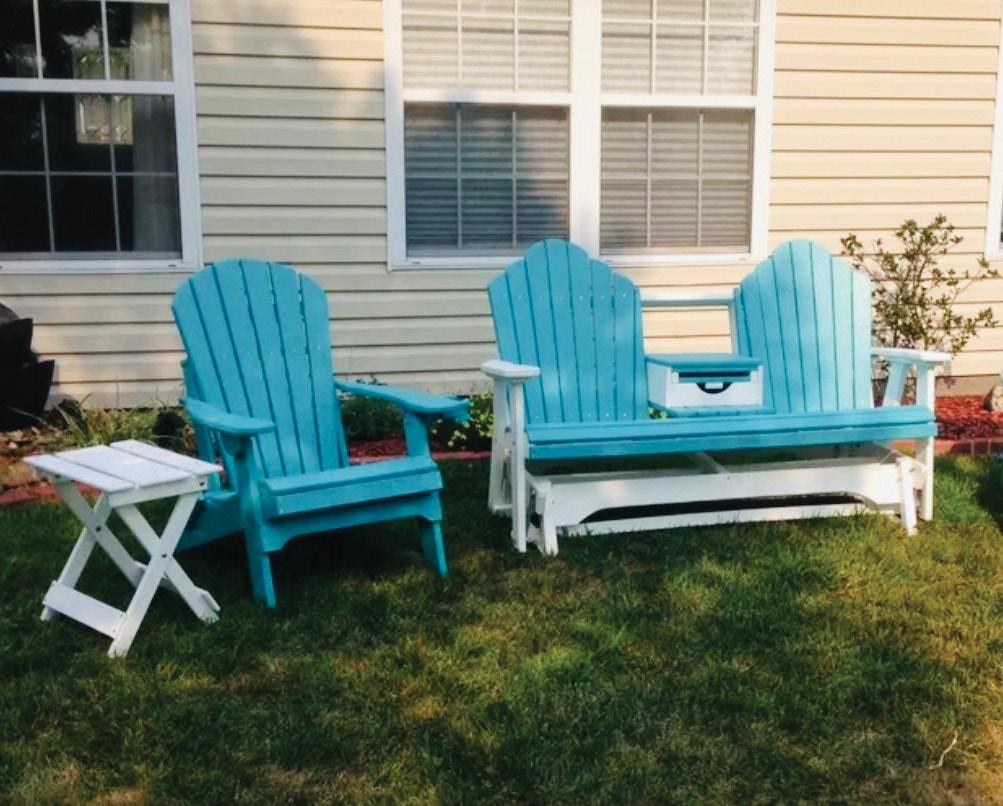
When it’s time to just sit back and relax, you’re going to want some comfy seating. ere are so many options for outdoor furniture — from simple folding chairs to large sectional sofas — that you may nd the decision process overwhelming. If you need a little guidance, consult a designer or talk with someone at a local furniture store.
Rob Medcalf, a store manager at Lifestyles Furniture, has helped both homeowners and building professionals plan and select outdoor furniture from the store’s two special-order suppliers. His advice for furnishing an outdoor space? “First de ne what the space will be mostly used for: outdoor dining, lounging, re pits/games,” he explained. “Next select the pieces and colors that complete your idea.”
Photo provided by Rost Landscaping
Photo provided by Lifestyles Furniture
Photo provided by American Outdoor Brands
Photo provided by Wolfe Construction and Home Repair
Adjust the Temperature
COOL DOWN
Yes, Missouri’s summer weather can be brutal. But a few smart strategies will allow you to enjoy your outdoor space even when heat and humidity spike. If possible, position your outdoor living areas under shade trees or on the east or north side of your house to avoid intense afternoon heat during July and August.
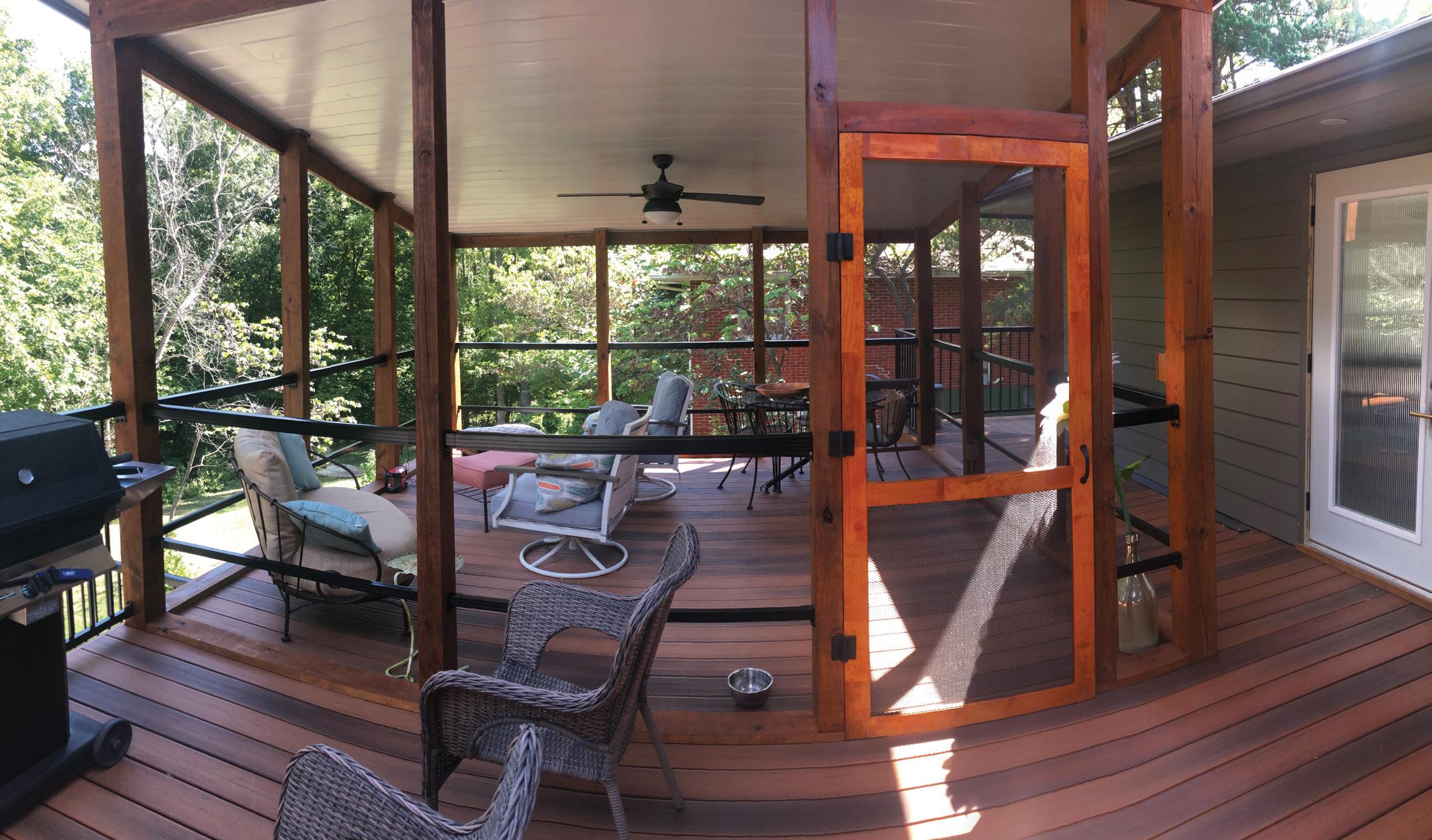
A covered porch or pergola can protect you from midday sun. Add some dropdown blinds on the south and west sides of the structure to shield from afternoon rays. Outdoor umbrellas o er exible, portable, and a ordable shade and come in all sizes, shapes, and colors. Pop a tiltable one into the center of a patio table and adjust it according to the sun’s position. Use a large, cantilevered umbrella to shade an entire seating area
On those days when shade alone just isn’t cutting it, a fan can be your best friend. Install ceiling fans to covered structures for a nice breeze. Alternatively, you can buy a movable outdoor fan to get a blast of cooling air wherever you’re seated. Bonus points if it’s also a mister.
WARM UP
Missouri has some gorgeous autumn weather and even the occasional balmy winter day. To make the most of your outdoor space for more months of the year, consider adding a few outdoor features to ensure your comfort when temperatures drop.
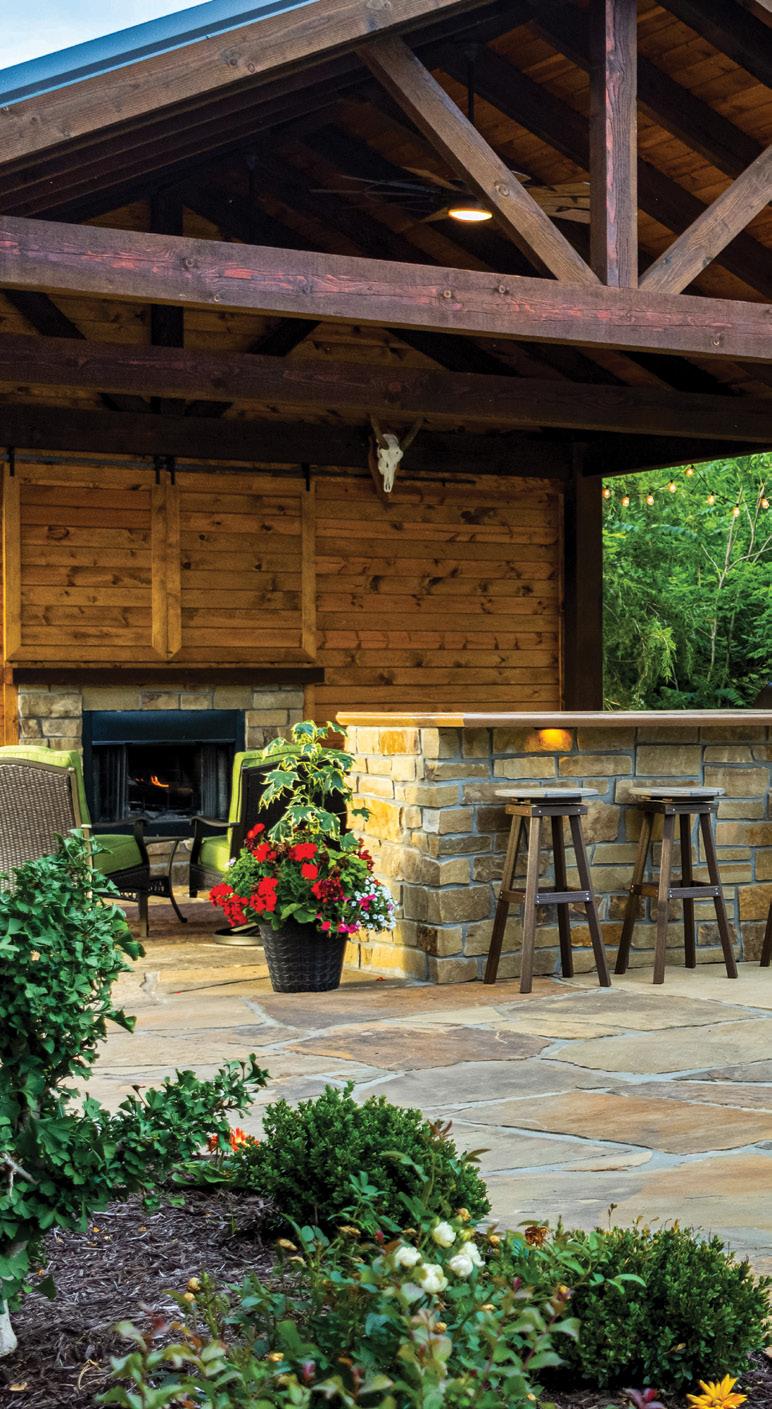
A built-in replace adds a timeless ambience and warmth to an outdoor room. Patios with a built-in wood- red or gas-operated replace are great, but there are a lot of good portable repits out there, too. Simple propane heaters can also provide warmth, although they do lack that “gathering around the camp re” vibe.
Photo provided by Wolfe Construction and Home Repair
Photo provided by Rost Landscaping
According to the 2023 Remodeling Impact Report: Outdoor Features released by the National Association of REALTORS Research Group, homeowners can expect the following return on investment:
Make It Beautiful
PLANTINGS
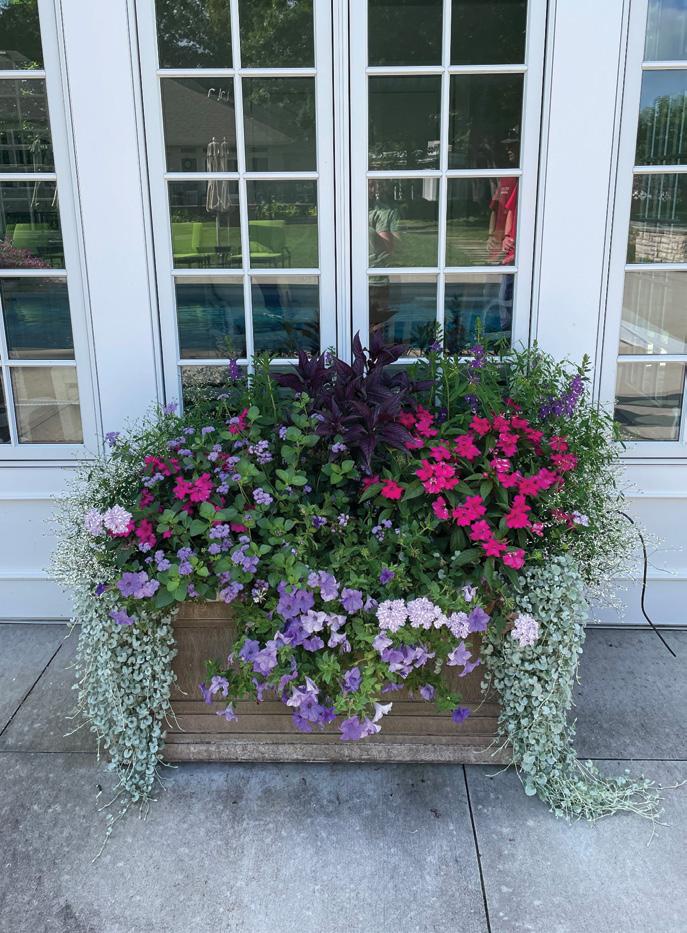
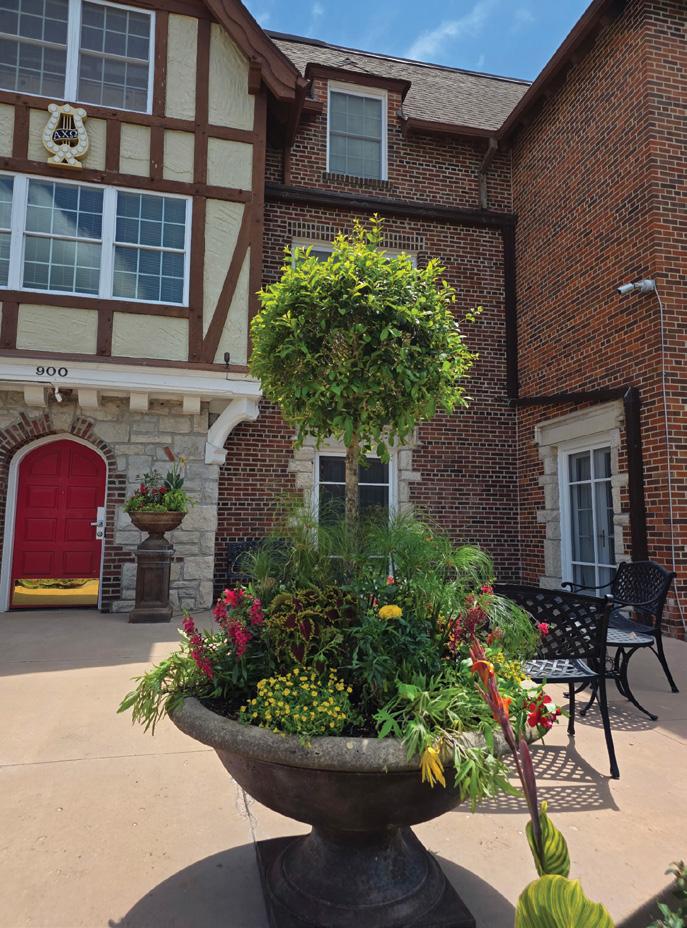
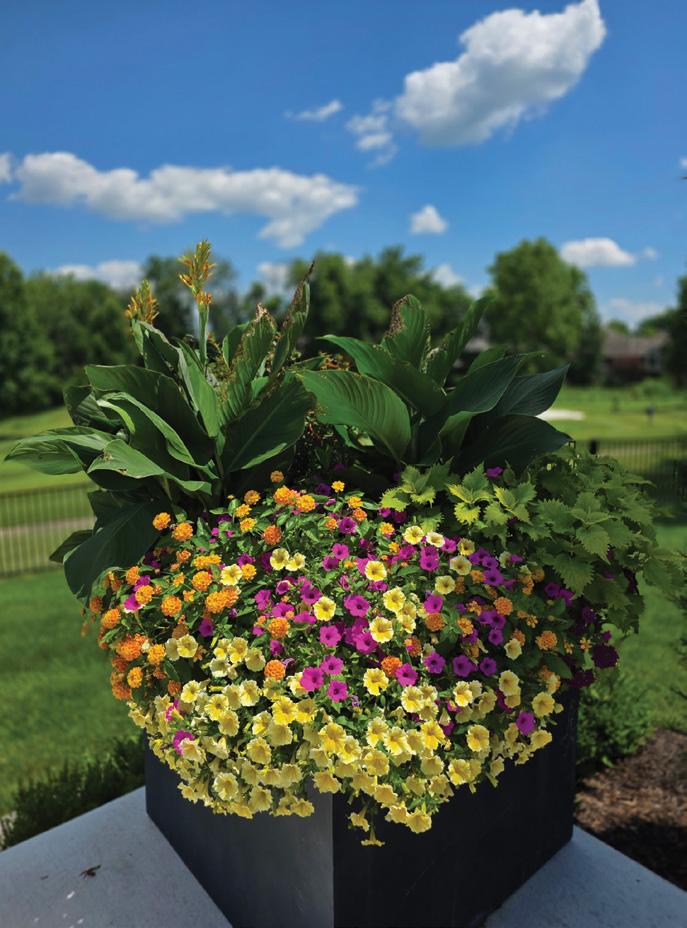
Deciding what greenery to add to your outdoor space can seem daunting. ankfully, Columbia has a number of nurseries with knowledgeable sta to help you select the plantings that are right for you — from total landscaping to stunning planter arrangements.
“Planters or even a small garden bed lled with annuals give a pop of color that people notice,” said Borthacyre. Her suggestions for owers that best tolerate Missouri’s summers?
“Lantana is exceptionally heat and drought tolerant. Vinca loves it hot. Calla lilies will bloom all summer.”
LIGHTING
It’s easy to focus on how you will spend nice sunny days in your outdoor space, but remember to give your space nightlife, too.
“Outdoor lighting goes a long way,” Rost said. “It rates as one of the highest improvements in customer feedback.”
You could hang strands of Edison bulbs overhead, install lights at ground level, or attach sconces to walls. For added ambiance, you might light some tiki torches or citronella candles. Solar lights are easy and inexpensive, but Rost noted that low-voltage wired lighting tends to o er more value and longevity.
EXTRA TOUCHES
Weatherproof decorative items such as concrete statuary, metal sculptures, fountains, and glazed yard balls add interest to outdoor spaces — plus, they can be enjoyed yearround. Birdbaths and birdfeeders are fun features, too.
Make It Entertaining
Televisions are increasingly popular additions to outdoor areas. ey’re great for watching the big games or having a quiet movie night. Attach one to a wall and protect it from the elements or mount it on a rolling cart for greater portability. Another entertainment option is mounted or movable outdoor speakers for playing party tunes or dancing under the stars.
Consider your outdoor space, imagine how it might be more family- and guest-friendly with a few additions and amenities, and start planning and shopping. ere are plenty of options for all sizes of outdoor space and for all budgets. ROI FOR OUTDOOR REMODELING PROJECTS
Photos provided by Helmi's Gardens
INTER woven
A
behind-the-scenes look at the creative minds tailoring the Stephens College 82nd Annual Fashion Show.
BY A.J. HANNINEN PHOTOS BY LG PATTERSON
For more than eight decades, Stephens College has used the runway as a platform for emerging designers. On April 25, that tradition continued with the 82nd annual e Collections fashion show, held in Windsor Auditorium with three shows throughout the day.
e annual showcase serves as a nal showcase of the fashion design students’ work over the academic year, featuring a curated selection of garments, including seven senior collections. Before reaching the runway, each piece is evaluated by a jury of selection, a panel of industry professionals who review the work and decide which designs are presented.
is year’s theme, “Interwoven,” explored fashion as a re ection of shared experiences. e show’s student-led committees were also encouraged to think about how garments carry memory, identity, and connection, translating those ideas into the overall experience. e result was a runway that balanced structure and uidity, as well as nostalgia and modernity.
Senior designer Lena Hunziker explored the theme through her perspective on sport and identity. Originally from Lyss, Switzerland, Hunziker drew from her experience as both an athlete and designer, creating a collection that blends architectural structure with softer, more uid elements.
“I am driven to create pieces that re ect strength, movement, and self-expression,” she said. Her work explores the duality of masculine power and feminine energy, aiming to empower female athletes through garments that emphasize condence and individuality.
For So a Schaefer Ramos, the runway became a re ection of cultural memory and sport. A former student-athlete who played soccer at Stephens, Ramos brings
an authentic connection to the game that informs her design perspective. Born in São Paulo, Brazil, Ramos developed Penta, a gender-neutral collection inspired by football and its role in shaping identity and community. e collection incorporates upcycled football jerseys, reworked into high-end streetwear through a hands-on design process.
“Football was always a moment of bonding, celebration, and shared identity,”
Models Fernanda Izar, left, and Cagla Aslan, right, wearing pieces from designer Lena Hunziker's collection.
Ramos said, referencing both her upbringing and the layered meaning behind the collection’s name.
Senior designer Arin-Christina Hawk drew from a di erent set of inuences, blending the jazz culture of the Harlem Renaissance with the urban style of 1970s Chicago. Inspired by her family’s musical background, Hawk’s collection uses bold color and pattern to reinterpret the “modern dandy,” while highlighting the in uence of Black American art and expression. “My collection pays homage to my family’s musical background and my experience growing up in the city,” she said.
Across the runway, collections reected a range of perspectives, each rooted in personal stories while still connecting to the overall theme. e show featured student models, creating a strong sense of community and support throughout the production. e Collections is designed to mirror professional industry standards, with students taking on roles beyond design, including production, casting, and media. e show itself is largely student-led, o ering hands-on experience in producing a large-scale runway event.
Backstage, the morning was spent running through choreography while steaming garments and making nal
From left: Amari Branch-Autman, Annie Tomlinson, designer Lena Hunziker, Destinee Hunt, and Cagla Aslan.
adjustments, re ecting the level of detail behind each collection.
As showtime approached, the atmosphere shifted from focused preparation to anticipation. e rst walk down the runway remained the most nerve-racking, but with each performance, the energy built, becoming louder, more con dent, and more celebratory as designers watched their work come to life.
e impact of the program extends beyond the runway. Recent graduate Claire Johnson was awarded the Paris American Academy Couture Award at the FGI Dallas Scholarship Competition, earning a $10,000 scholarship to study in Paris. Achievements like this highlight the opportunities available to Stephens designers as they transition into the industry.
As the nal show concluded, the runway shifted from presentation to transition. For many of the senior designers, e Collections marks the end of their academic work and the beginning of their careers in fashion. Alumni of the program have seen global success across design, product development, styling, and brand leadership, continuing the show’s legacy far beyond the Stephens campus.
While each year introduces new voices and perspectives, the purpose of e Collections remains consistent: to o er a platform for emerging designers to turn their ideas into real garments and share those fashions — and their stories — with an audience.
Model Thalma Wahab wearing pieces from designer ArinChristina Hawk.
From left: model Ja’kayon Smith, designer Sofia Schaefer Ramos, model Kelsey Crossan, model Katie Hultman.
“My collection pays homage to my family’s musical background and my experience growing up in the city."
— Arin-Christina Hawk
Model Cecilia VanNess wearing pieces from designer Arin-Christina Hawk.
THE SCENE COMO
A Table for One, Two, or a Few
Whether it’s going solo, a date night, or a family outing, Columbia offers an array of food experiences.
STORY AND PHOTOS
BY SUNITHA BOSECKER
There’s a certain kind of comfort in knowing exactly where you want to eat depending on the kind of day you’re having. Some restaurants feel perfect for a solo lunch with a book or just enjoying the atmosphere. Other restaurants are ideal for a date or for a family gathering where people share their favorite dishes with their little ones.
In Columbia, dining has always been about more than food. It’s where college students become regulars, where rst dates turn into anniversaries, where parents gather children around baskets of biscuits, and where strangers discover a new culture over a shared meal. e beauty of Columbia’s food scene is that it o ers something for every table size. Whether you’re looking for a quiet corner to spend an afternoon, a memorable date night destination, or a dependable family dinner spot, these local restaurants continue to shape the rhythm of the city.
Dining for One
The Simple Joy of Taking Your Time
Part café, part bakery, part downtown refuge, Uprise has long been the kind of place where you can arrive for a morning co ee and accidentally stay all day. It helps that you can catch a lm at Ragtag Cinema next door. e open café layout feels welcoming rather than hurried, with students typing papers beside retirees reading books and friends casually drifting in and out between errands. It’s one of those rare restaurants where being alone never feels lonely.
ere’s something underrated about dining alone. No rushing. No wrangling over the check. No negotiating appetizers. Just good food, a comfortable atmosphere, and the chance to enjoy your own company for a while. For many Columbians, few places embody that feeling better than Uprise Bakery
Just a few blocks away, Thai Express o ers a di erent kind of solo dining comfort. Located near the University of Missouri campus, the restaurant has become a college favorite, especially for students looking for avorful meals between classes. Its lunch bu et remains one of the best values in town, o ering an easy, low-pressure way to enjoy a quick meal without sacri cing quality. e energy inside ai Express re ects the neighborhood around it: busy, casual, and familiar. It’s the kind of place where solo diners blend naturally into the lunch crowd, whether they’re professors grading papers, students taking study breaks, or downtown workers sneaking away from the o ce for curry and noodles.
en there’s U Knead Sweets Bakery, a restaurant that quietly balances comfort and heartfelt hospitality. Owners Ann and Jonathan Weng o cially opened the bakery on September 30, 2019, though the journey started years earlier when Ann worked for the previous owner and was eventually given the opportunity to take over the business herself.
More Great Spots for Dining Solo
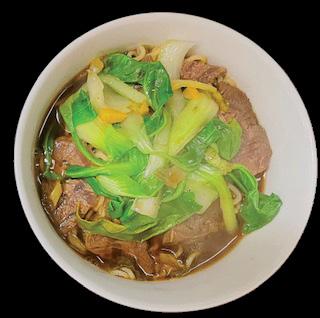
“I had a passion to own my business many years ago,” Ann said. “I want it to be a place that people will nd happiness while enjoying our dishes and bakery items.” at intention is easy to feel the moment customers walk through the doors. e restaurant carries the warmth of a neighborhood bakery while also o ering deeply comforting meals, especially the restaurant’s beloved beef noodle soup, which has become its most popular savory dish. For dessert, the strawberry Black Forest cake and chocolate ganache remain top sellers.
Solo dining spots often become personal places. Sometimes they’re where you recharge alone. Other times, they quietly become part of your life story.
Photo by Ann Weng
Dining for Two
Inviting You to Linger
Some restaurants naturally slow people down. e lighting softens. Conversations linger during lunch breaks or planned dinners. Plates are shared. A few restaurants have become especially meaningful for couples, celebrations, and intimate moments.
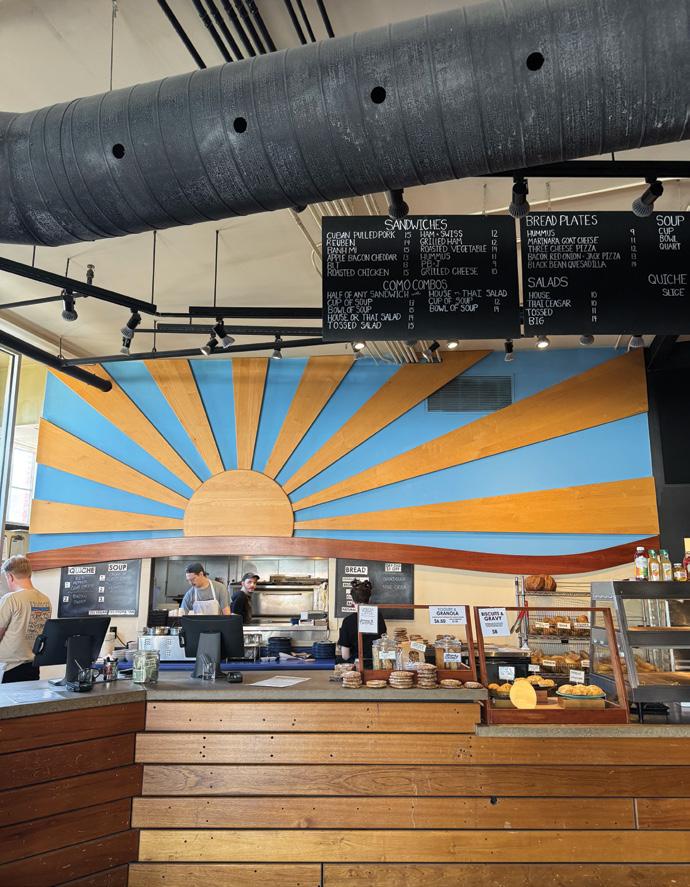
At Mahi’s Ethiopian Kitchen, the dining experience itself is built around togetherness, and it’s easy to detect on Alley A as the avors ll the street. Owner Mahalet Abebe began serving Ethiopian food through the CoMo Cooks commissary kitchen in September 2023 after recognizing a gap in Columbia’s dining scene.
“I wanted to create an authentic Ethiopian restaurant in Columbia where people can enjoy Ethiopian food without having to drive to Kansas City or St. Louis,” Abebe said. “I also wanted to create a place where people can learn about the culture, try something di erent, and feel comfortable while doing it.”
After eight months of strong community support, Mahi's o cially opened its downtown restaurant in August 2024.
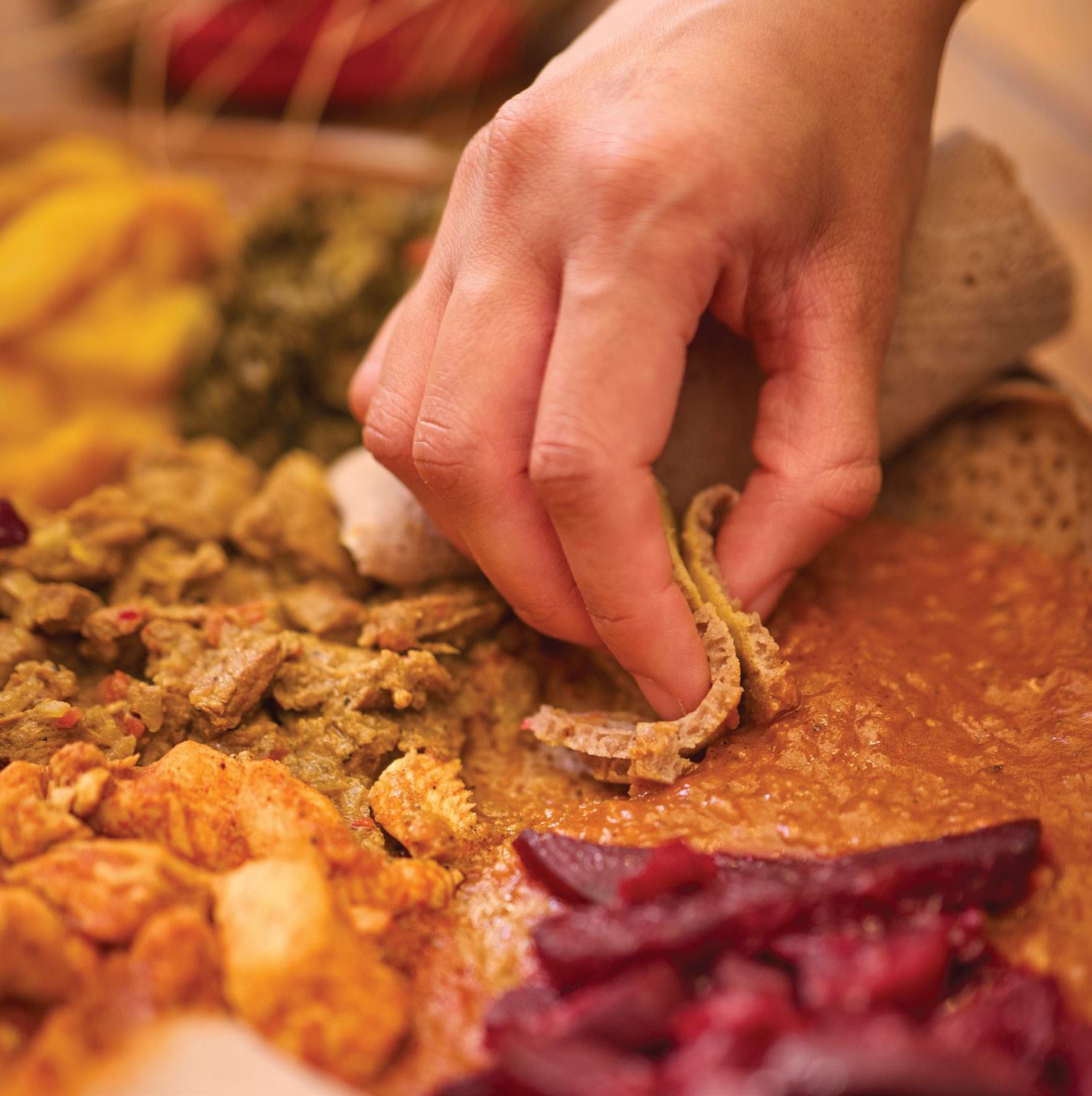
What makes the restaurant especially noteworthy for couples and shared dining experiences is the intentionality behind Ethiopian cuisine itself. Many dishes are served together atop injera, the traditional Ethiopian atbread, encouraging guests to eat communally from the same platter using their hands.
“ at part is really special because it brings people together,” Abebe explained.
For rst-time visitors, she recommends the tibs (sautéed beef, one of her personal favorites), as well as the Ethiopian sample platter combo, which introduces diners to several avors and dishes at once. e experience feels both intimate and cozy, particularly for diners trying Ethiopian cuisine for the rst time. Add in Ethiopian co ee or tea at the
Photos of Mahi's Ethiopian Kitchen by Keith Borgmeyer
Atakilt (cabbage) ▶ Keysir (beets) ▶
◀ Sega (beef)
◀ Doro (chicken)
◀ Gomen (kale)
◀ Kik (split chickpea)
Dinich (potato stew) ▶
◀ Injera (flatbread)
◀ Yemisir (red lentils)
at same sense of warmth also de nes Café Poland
Originally founded in 2012 by Iwona Galijska and her son, Robert, the café quickly became known for homemade Polish comfort food and a simple dining atmosphere, as if you were eating at your neighbor’s house. When longtime guests Madison Tasker and Antoine De Los Santos learned the café might close, they stepped in to preserve the restaurant’s legacy.
“As guests and devoted fans of Café Poland ourselves, we couldn’t bear the thought of such a warm, welcoming space and truly unique dining experience disappearing from Columbia,” they said.
Today, Café Poland continues serving the same cherished recipes, including the restaurant’s delicious signature pierogi and the deeply comforting bigos, also known as hunter’s stew, a rich combination of marinated pork, smoky kielbasa, bacon, herbs, spices, and sauerkraut.
More Date-Night Dining Faves
Chris McD’s Restaurant
Bangkok Gardens
Flyover
Belly Market & Rotisserie
Pasta La Fata
Endwell Taverna
But like many beloved date-night restaurants, the emotional connection matters just as much as the menu. Tasker and De Los Santos say guests regularly share stories about celebrating milestones there, enjoying rst dates, and even proposing outside the café.
“We want every guest, whether it’s their rst visit or their ftieth, to feel genuinely cared for the moment they walk through our doors,” they said.
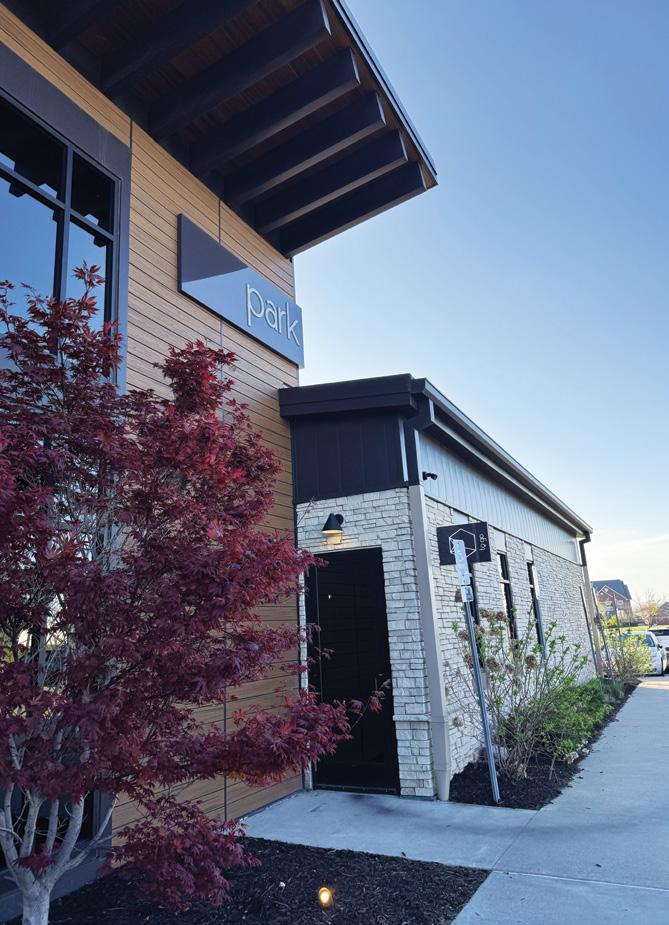
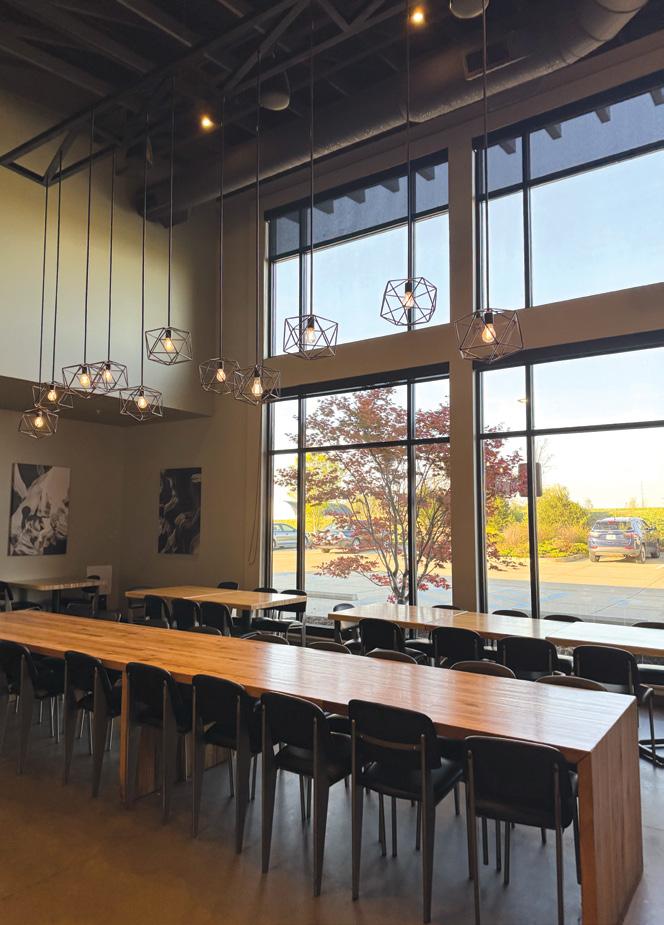
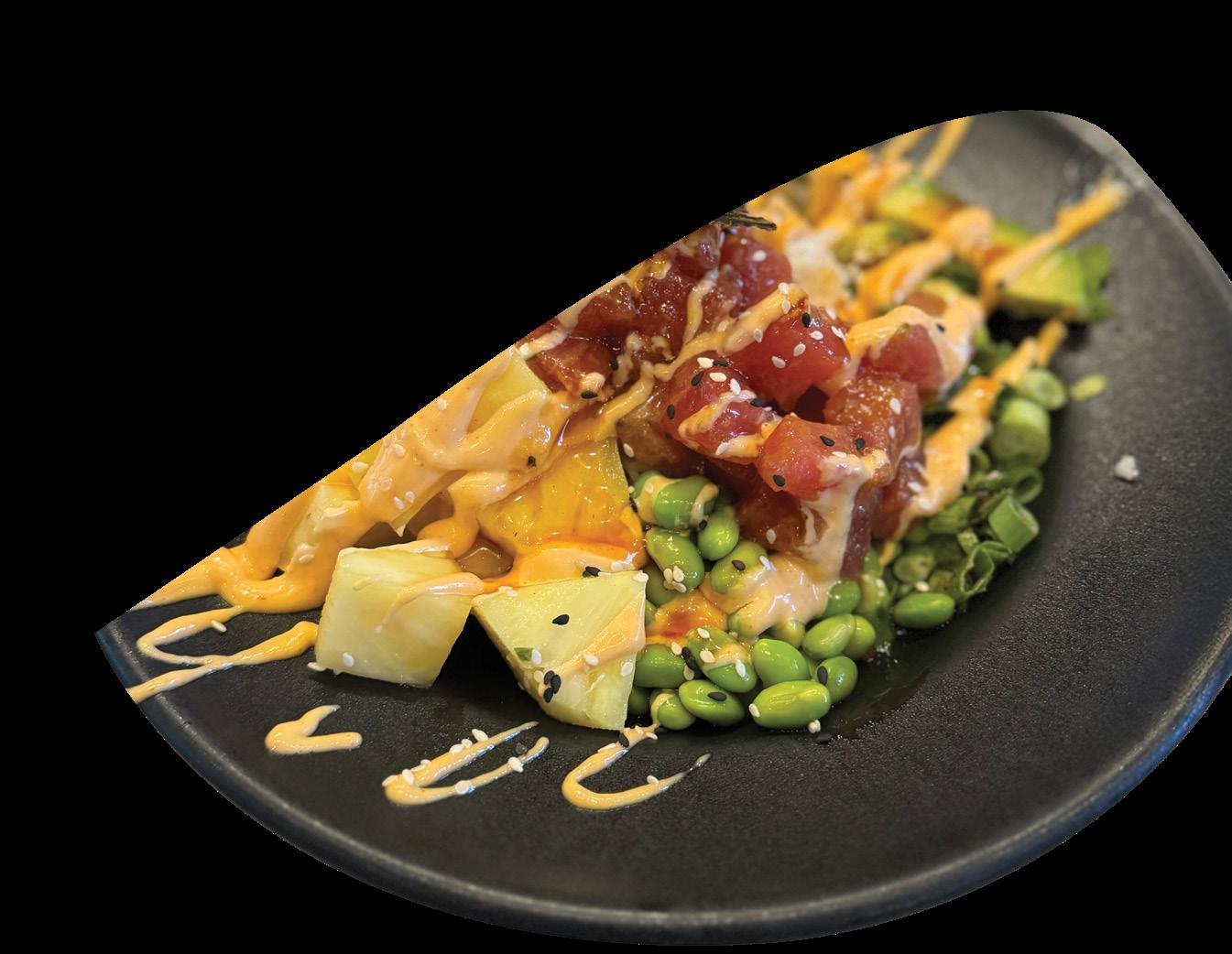
For a more contemporary evening out, Park Restaurant & Bar o ers one of the most polished dining atmospheres in town. Stylish without feeling overly formal, Park balances elevated cocktails, approachable entrees, and a lively energy, making it ideal for date nights or celebratory dinners. When you check it out, be sure to order the fan favorite Poke Bowl. Yummy.
Photo provided by Café Poland
The Restaurants Everyone Agrees On
Family dining requires balance. e food must be dependable. e atmosphere needs to feel relaxed. ere has to be enough variety for picky eaters, adventurous eaters, tired parents, and hungry teenagers all at once.
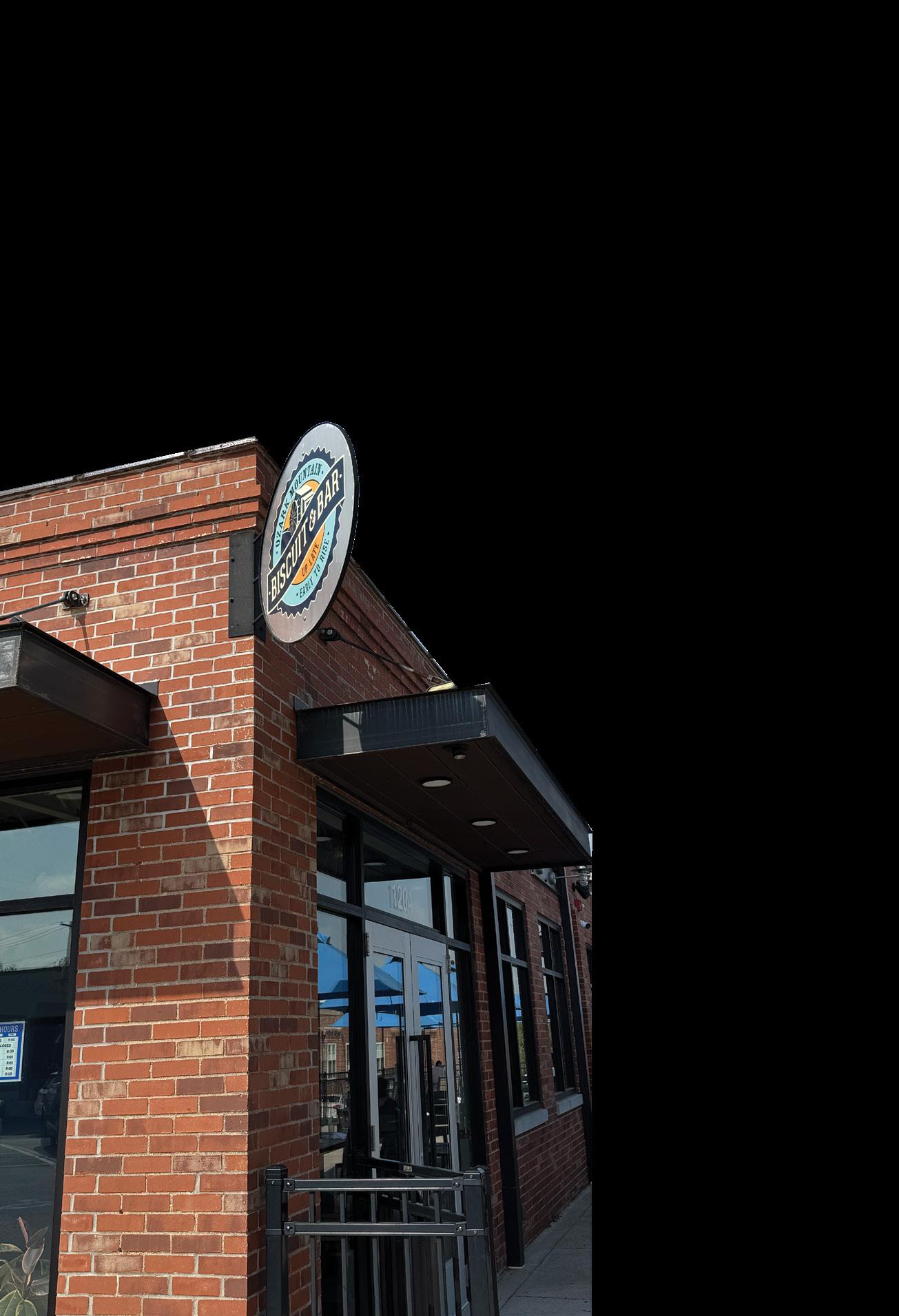
at’s why a place like Ozark Mountain Biscuit & Bar continues to thrive. e restaurant feels energetic and approachable, with oversized biscuit sandwiches, hearty breakfasts, and comfort food plates that make sharing easy for dinner.
At Belly Market & Rotisserie, families can gather around rotisserie meats, fresh sides, and casual meals that feel elevated without becoming expensive or overly complicated. e market atmosphere also makes the space feel exible: part quick dinner stop, part neighborhood gathering place.
And then there’s Addison’s , one of Columbia’s longtime staples for group dinners and celebrations.
Co-owner Matthew Jenne said the restaurant grew naturally from his years spent working throughout Columbia’s restaurant industry.
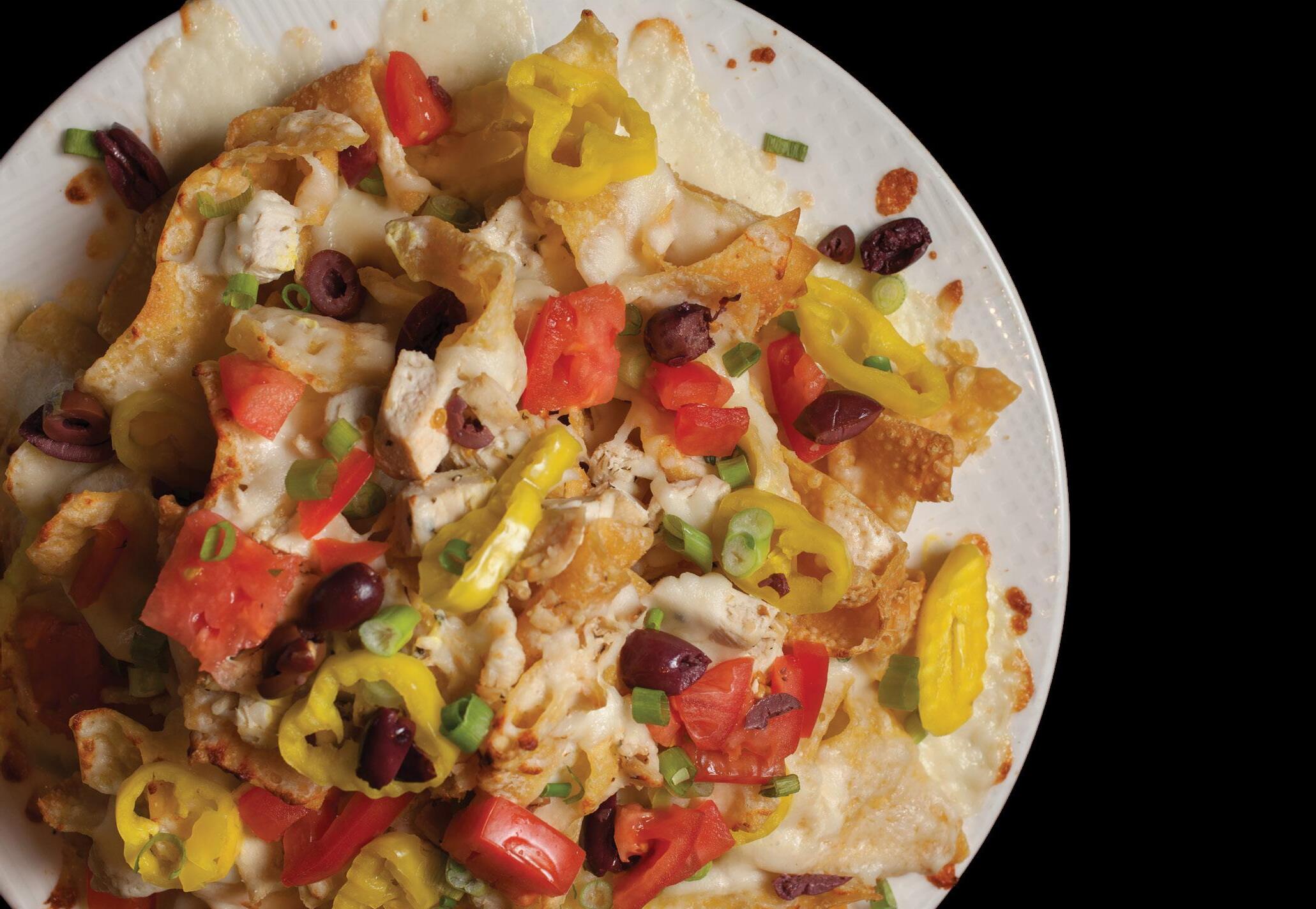
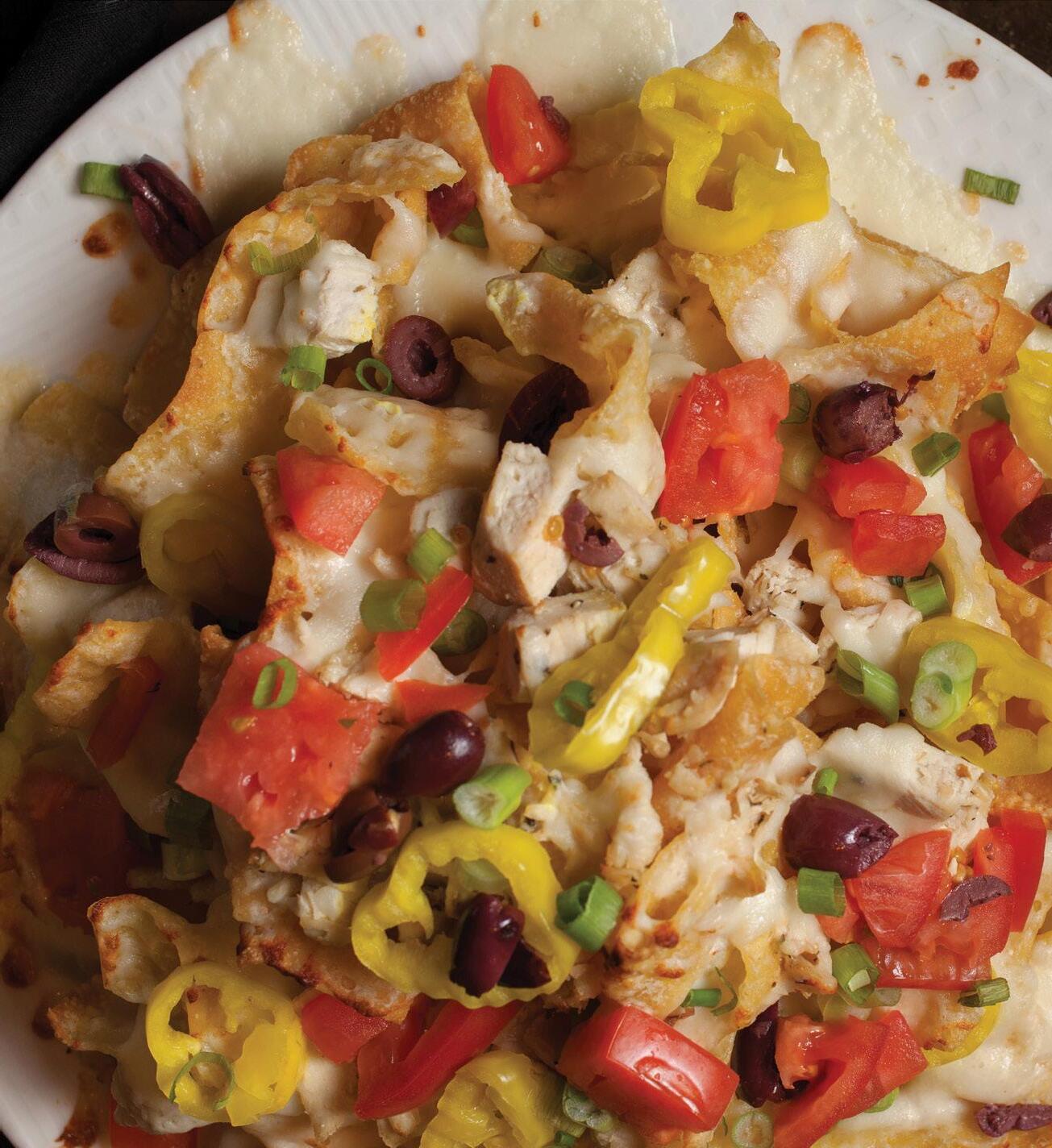
“Addison’s is an upbeat casual restaurant where anybody is welcome,” Jenne said. “Our menu re ects our tastes, and we’re con dent there’s something for everyone to enjoy.” Since opening its downtown location in 1999, followed by a south Columbia location in 2019, Addison’s has built a loyal following across generations. e restaurant’s famous Nachos Bianco remains its most popular dish by far, while the ai Chicken Salad continues to be a standout favorite for lighter fare.
Jenne says the most rewarding part has always been the customers themselves.
“Ever since the day we opened, we have had amazing customers who really support our business, and many have become cherished friends throughout the years,” he said.
ese restaurants don’t simply feed people. ey become woven into routines, traditions, and memories over time.
Maybe that’s what makes Columbia’s dining scene feel so personal. ere’s a restaurant here for nearly every version of ourselves: the student eating lunch alone between classes, the couple discovering a new cuisine together, the family celebrating a birthday over nachos or baskets of biscuits. Whatever stage of life you’re in, however your day is treating you, Columbia has a restaurant that o ers just the right place to pull up a chair.
Photo provided by Addison's
A Median Is a Divide
New ordinance focuses on safety, but critics claim it’s about ‘hiding the homeless’.
BY MICHELLE TERHUNE
The recently passed pedestrian safety ordinance, B265-25, slated to go into effect July 1, 2026, prohibits tenancy on most medians in Columbia. According to a City Council memo and the city website, violations may result in a fine, typically ranging from $10 to $500. Repeat violations could require a court appearance and other legal repercussions.
When used relative to a set of numbers, the term “median” is the middle value. To determine it, you have to separate the higher half of the numbers in the set from the lower half.
Some would say that principle also applies to the city’s recently enacted median-centric ordinance, likening the higher-ups to those in power and the lower-downs to the city’s nancially insecure population who rely on panhandling and “ ying a sign” to make a little money.
Medians divide lanes of tra c to increase safety. ey also provide refuge for pedestrians and others not in vehicles to cross roadways safely. And there’s no doubt that more people have taken refuge on those medians in Columbia’s highest-tra c areas in recent years to solicit money from passing motorists. e recently passed pedestrian safety ordinance, B265-25, slated to go into e ect July 1, 2026, prohibits tenancy on most medians in Columbia. According to a City Council memo and the city website, violations may result in a ne, typically ranging from $10 to $500. Repeat violations could require a court appearance and other legal repercussions. In most cases, however, violations may be referred to the Columbia municipal court’s community support docket, which is an alternative court process for individuals experiencing homelessness and veterans who have been charged with a local misdemeanor.
While the majority of the City Council believes the measure will decrease median-related tra c incidents, others contend it’s a way to get the homeless population out of sight. It’s a con icting-rights scenario that’s playing out in many towns and cities across the country. Columbia is no di erent.
THE GIST OF B265-25
e ordinance will apply to intersections where at least one adjacent roadway has a speed of 35 miles per hour or faster, has tra c counts of 15,000 or more vehicles per day, and/or contains a median six feet wide or less. Only one of these three criteria needs to be met for enforcement of the ordinance to apply.
At these locations, pedestrians may not cross a roadway unless at a crosswalk, pedestrian-controlled light, or intersection. Pedestrians cannot be in the median for more than two cycles of walk lights. Vehicle occupants cannot enter or exit a vehicle in a tra c lane. People cannot be on any roadway where a pedestrian route (like a sidewalk) is available, except to lawfully cross the roadway as previously described. People cannot approach a vehicle on the roadway unless it is lawfully parked. People cannot cause a vehicle to stop or maneuver in a way that impedes normal tra c ow, nor can vehicles stop or maneuver in a way that impedes tra c ow. ere are all sorts of accommodations for law enforcement, emergencies, permitted workers, people with disabilities, permitted special events, taxis, public transportation, and bicyclists. But what you’re likely to notice when driving around Columbia after July 1 is the lack of people on medians on the city’s most tra cked thoroughfares.
The Ordinance Is All About Safety
e issue of safety of pedestrians and motorists gave impetus to the ordinance. e city hired CBB Transportation + Planners to examine the issue, and the rm delivered its nal safety study report to the council in November 2025. e study showed that between 2019 and 2023, 32 percent of fatal crashes in the city were pedestrian-related, a gure exceeding state and national rates.
Because this ordinance focuses on medians, CBB needed to look at the number of pedestrian-related incidents involving medians. CBB reviewed incidents from 2015 to 2024 and found that of the accidents occurring at intersections, 29.2 percent of them had medians. Furthermore, the report explored driver distractions that lead to crashes, including unexpected incidents “such as pedestrians in the medians waving signs, dancing in costumes to advertise for businesses, or entering the roadway to approach vehicles.” e report stated: “Erratic driver behavior caused by mis-located pedestrians on roadways can often be dangerous to both pedestrians and other road users.”
Although the CBB study has an obvious focus on medians, Lt. Clinton Sinclair of the Columbia Police Department noted the ordinance is about far more than that.
“ is ordinance isn’t just about people standing in medians. It’s crossing mid-block, approaching vehicles, stopping vehicles that are in the roadway,” he said. “ is ordinance is designed to get pedestrians out of roadways, especially highspeed and dangerous roadways. ere are some parts of the ordinance that are directed at motorists, as far as allowing people to enter or exit your vehicle while the vehicle is in a roadway. It’s really meant to just make the roadway safer for both vehicles and pedestrians.”
Sinclair acknowledges that some people think the ordinance is targeting panhandlers, but he disagrees.
“We’re not concerned about what they’re doing. We’re not concerned about the fact that they’re protesting or panhandling or waving signs or fundraising for an organization,” Sinclair explained. “We’re just looking solely at the conduct that’s making things unsafe.”
ere are a lot of voices, beyond the ve council members who voted to enact the measure, who said they support the ordinance based on safety. ose include spokespeople for organizations such as the Business Loop Community Improvement District and Columbia Chamber of Commerce, as well as private individuals who commented on the ordinance at council meetings.
Others agreed Columbia streets should be safer but said the city should improve roadway infrastructure to make them less risky for everyone who uses them, rather than prohibit people from standing on medians.
But those who oppose the ordinance, particularly on behalf of the unhoused population, read the measure as another attack on an already vulnerable population that the powers that be in the city don’t want people to see when they’re in Columbia.
“This
ordinance isn’t just about people standing in medians. It’s crossing midblock, approaching vehicles, stopping vehicles that are in the roadway. This ordinance is designed to get pedestrians out of roadways, especially high-speed and dangerous roadways. There are some parts of the ordinance that are directed at motorists, as far as allowing people to enter or exit your vehicle while the vehicle is in a roadway. It’s really meant to just make the roadway safer for both vehicles and pedestrians.”
– LT. CLINTON SINCLAIR Columbia Police Department
“It’s rooted in marginalization and criminalizing poverty. If you think about the history of it locally, it was raised by people who just very much don’t want to see people panhandling. Most of the folks that speak out against panhandling aren’t as concerned about the safety of drivers or the people involved. They just don’t want to see people doing this because they think it looks bad.”
– CATHERINE ARMBRUST
CoMo Mobile Aid Collective
The Ordinance Is About Hiding the Homeless
Most people whose comments were recorded at council meetings opposed the proposed ordinance. Most did so based on its impact on the unhoused population in Columbia.
Catherine Armbrust, director of CoMo Mobile Aid Collective, says her organization has repeatedly spoken out against it, issued media releases, spoken up at council meetings, and lobbied the group’s supporters to do the same.
“We stand rmly opposed to it. It’s rooted in marginalization and criminalizing poverty,” Armbrust said. “If you think about the history of it locally, it was raised by people who just very much don’t want to see people panhandling. Most of the folks that speak out against panhandling aren’t as concerned about the safety of drivers or the people involved. ey just don’t want to see people doing this because they think it looks bad.”
CoMo Mobile Aid Collective meets unhoused people where they are, o ering meals, water, medical services, and pet care, among other immediate services. What some view as a public nuisance, Armbrust sees as people su ering from nancial insecurity trying to help themselves. She also gives them credit for being creative problem-solvers who will gure out how to continue gathering donations from motorists.
“I think that it will just be a much smaller intersection,” Armbrust says. “So, of course, this won't eliminate the existence of people doing this. It’s just going to move them to other areas where they’re probably less likely to make money because there’s much less tra c.” Besides smaller neighborhood streets, some people may move into e District in downtown Columbia. Except for one or two places downtown, the new ordinance won’t apply because its roadways don’t meet B265-25’s criteria.
Nickie Davis, executive director of e Downtown CID, says her organization chose not to take a yea or nay position on the new ordinance. While she says business owners want increased pedestrian safety, they think this ordinance will send more panhandlers downtown.
“I don’t want to say that, absolutely, that’s what’s going to happen. But it’s denitely a concern,” Davis says.
People panhandle on sidewalks in e District, and many don’t obey the existing ordinances there, such as no panhandling within 10 feet of a building entrance or near ATMs, banks, or bus stops. Davis says instances of danger from panhandlers are rare, but the perception of them is negative.
“Usually, they’re more dangerous to each other than they are to customers around downtown. But it is de nitely a perception issue,” Davis says.
More panhandlers competing for choice spots downtown could create more problems for law enforcement. According to Sinclair, o cers are currently educating panhandlers and sign yers about the impending implementation of the ordinance. And once it goes into e ect, o cers will have discretion about how they deal with o enders, using mostly warnings and saving citations for repeat o enders.
PANHANDLING IS NOT ILLEGAL
Panhandling isn’t illegal. In fact, it’s protected as free speech under the First Amendment of the U.S. Constitution. Similar ordinances passed in multiple municipalities across the country have been challenged successfully on that basis by organizations such as the American Civil Liberties Union. Moves by ACLU Iowa, for example, have resulted in the repeals of such ordinances in several cities in the state.
Although no legal action has been brought against the city for passage of the pedestrian safety ordinance yet, it’s likely to happen. en, it will be the duty of the courts to determine whether B265-25 is all about safety or too much about making some inconvenient people disappear from public view.
A Walk in the Park
A guide to visiting one Columbia city park per week from June to August. Don’t forget your sunscreen!
BY LYNN PICKEREL
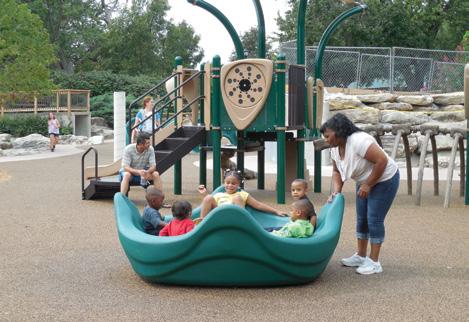
Week 1
Stephens Lake Park
2001 E. Broadway
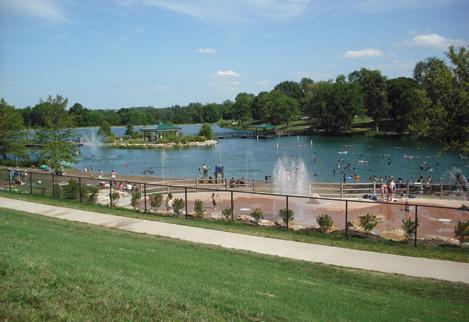
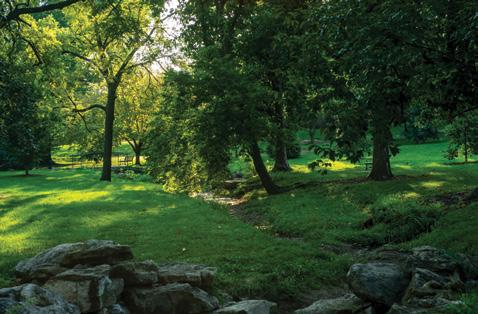
e 11-acre lake and the lush grounds that surround it makes Stephens Lake Park one the city’s most treasured green spaces. Centrally located, the park features playgrounds, spraygrounds, a swimming beach, and shing docks. ere are also gardens and walking trails lined with waterfalls, art sculptures, and a variety of trees. ( ere’s so much variety, in fact, that the park has earned Level II Arboretum status.) Another big draw: free summer concerts in the Stephens Lake Amphitheater.
Visit on June 6 & 7 for Art in the Park
Art in the Park is the oldest and largest fine arts festival in mid-Missouri. The festival features artists from across the United States, displaying a variety of media, including painting, drawing, photography, pottery, jewelry, fibers, sculpture, wood, and glass.
Week 2
Nifong Park
2900 E. Nifong Blvd.
Mix some art, history, and culture into your outdoor adventure. is 58-acre park not only o ers a shing lake, trail, and playground, but it’s also home to the Boone County History & Culture Center, the Historic Boone Village, and the Maplewood Home and grounds. Yes, all that at one park. Plan to visit more than once.
Visit on June 13 for “Feathers, Ink & Freedom: Writing America’s Story”
Children and grownups alike are invited to write with a feather quill, practice old-fashioned penmanship, and see realistic reproductions of early American documents. June 13, 10 a.m. to noon.
Week 3
JUNE
Grindstone Nature Area
2011 Old Hwy 63 South
You — and your canine companion — have nearly 200 acres to freely roam in this beautiful nature area, which features woods, wild ower- lled prairie areas, blu s, and Grindstone Creek meandering through it all. ere are also ve miles of nature trails, a picnic area, and access to Grindstone Creek Trail and Hinkson Creek Trail. (Dogs must be on a leash near the latter.)
Week 4
Shelter Gardens
1817 W. Broadway. Slip into Shelter’s 5-acre garden and leave your worries behind. is peaceful oasis is packed with 300 varieties of trees and shrubs, more than 15,000 annuals and perennials, a waterfall, rock garden, koi pond, and garden for the blind. ere’s also a replica of a 19th-century one-room schoolhouse to explore. e park is open to the public year-round.
Visit on June 28 for circus-themed entertainment
Columbia Community Band and Windjammers Unlimited (the world’s largest circus band) will perform in the gardens on June 28, 6-8 p.m. Be sure to stay for the mass band grand finale: Barnum and Bailey’s Favorite. The event is free. Food trucks will be on-site.
Did You Know ...
The tallest tree on campus is an American sycamore located in Peace Park. The sycamore tree, a Midwest native, is a whopping 75 feet tall.
Source: showme.missouri.edu
JULY
Week 1
Mizzou Botanic Garden and Peace Park
Summer is the perfect time to experience the natural beauty — and rare quiet — of the University of Missouri campus. Grab a to-go lunch from a downtown eatery and enjoy it under the trees at Mizzou’s Peace Park (McAlester Arboretum), located at 401 S. Ninth St. Afterward, stroll through the Mizzou Botanic Garden. Where is the garden? It’s the entire campus. MU is one of only 10 universities to be accredited as both a botanic garden and arboretum.
Week 2
Finger Lakes State Park
1505 E. Peabody Road
Choose your own adventure at this 1,138-acre, actionready park, about 20 minutes north of Columbia. Is mountain biking, o -road motorcycling, or ATV riding your thing? ere are some challenging trails there for you. Eager to get out on the water? Rent a canoe, kayak, or standup paddleboard — or bring your own — and explore the lake’s water trail. When it’s time to relax, head to the wooded picnic area or spend the night at the park’s campground.
Week 3
Bonnie View Nature Sanctuary and Beyond
3300 W Rollins Road
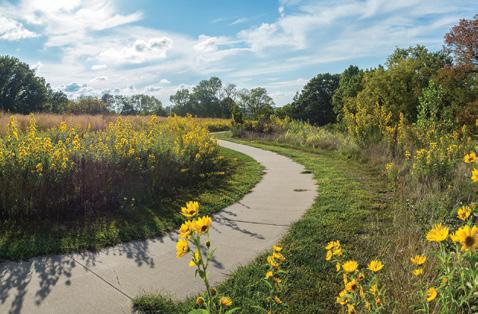
Lace up your walking shoes and get ready to ramble. All 93 acres of Bonnie View Nature Sanctuary are open for exploration. Stroll the short, concrete Bonnie View Prairie Loop Trail that encircles a restored prairie area or set o on the 1.7mile Scott’s Branch Trail. Or make your way to the 28-acre Columbia Audubon Nature Sanctuary via the Scott’s Branch Trail. (If you plan on the last option, bring your binoculars to get a close look at birds, but leave the pup at home. Dogs are not permitted in this area.)
Week 4
Philips Park
5050 Bristol Lake Parkway
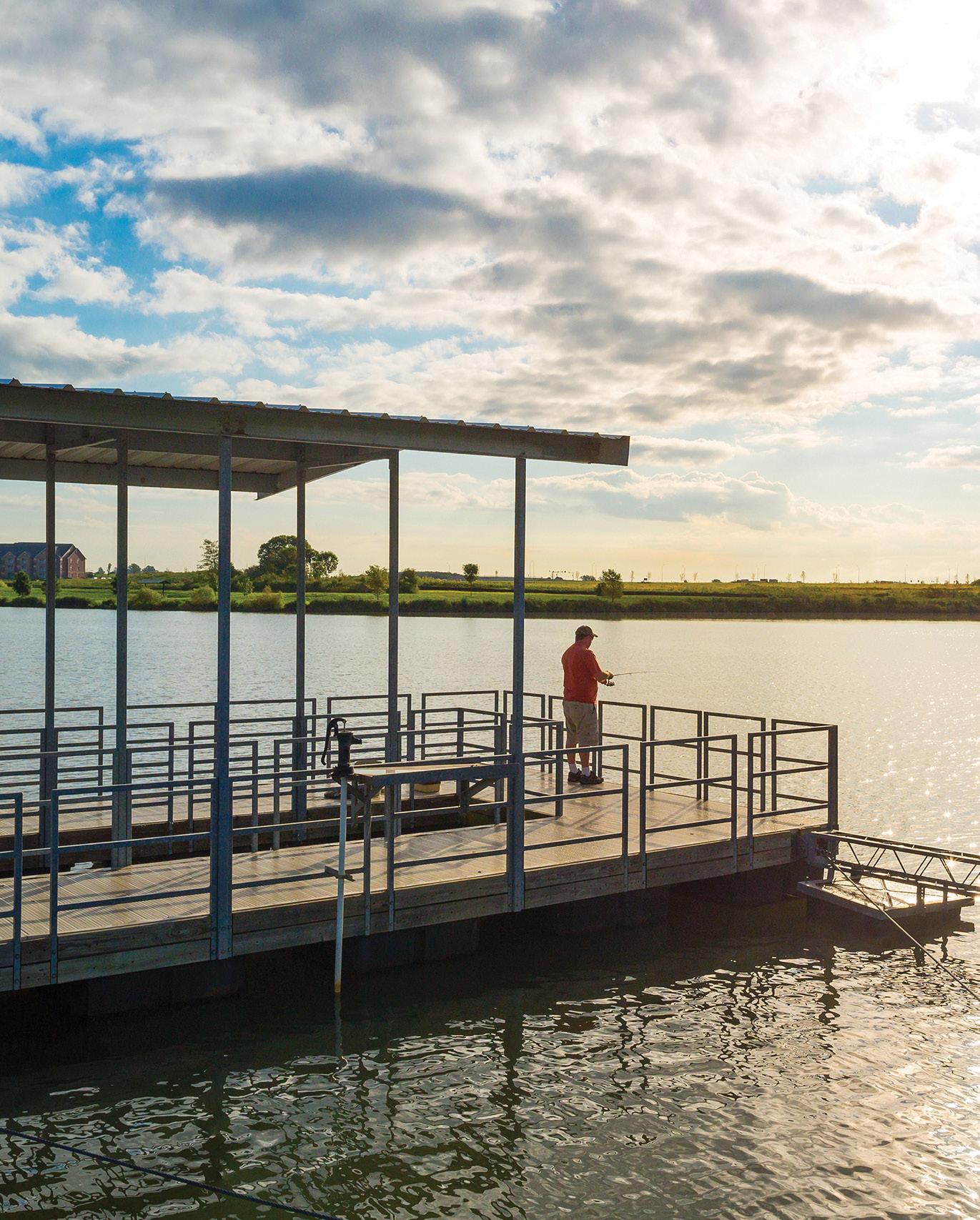
Drop a line into a 40-acre lake stocked with sh by the Missouri Department of Conservation. is 140acre park, located o the Discovery Parkway exit, has an ADA shing dock, boat dock, and boat ramp (nonmotorized boats and boats with electric/ battery trolling motors only). ere is gravel path for walking and two shelters for picnicking.
Week 1
Twin Lakes Recreation Area
2500 Chapel Hill Road
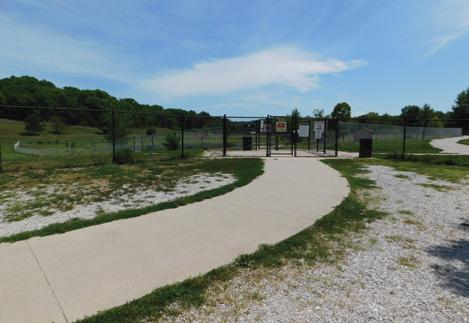
Love dogs? Have a dog who likes to run and play — and maybe swim? Make your way to Twin Lakes Recreation Area, a 73-acre park that o ers a variety of o -leash areas for people and pups to mingle. You’ll also nd a shing lake, playground, picnic areas, and access to the MKT Trail here.
Did You Know ...
If the MKT just isn’t enough trail for you, hop on the Katy Trail for an additional 240 miles of trail spanning Missouri from east to west.
Week 2
Cosmo Park
1615 Business Loop
70 West
Covering 533 acres, Columbia Cosmopolitan Recreation Area is the place to get out and play. Take your pick: bocce, roller hockey, horseshoes, tennis, volleyball, golf, skateboarding, and so much more. Kids of all ages love the massive playgrounds. Walkers and cyclists love the trails. And dog tails wag like crazy in the park’s oleash areas.
Visit on August 14 for Movie Night
Spread out a blanket or set up some lawn chairs and watch a movie under the stars during one of the park’s summer movie nights. The animated film Ratatouille is scheduled for 8:30 p.m.
Week 3
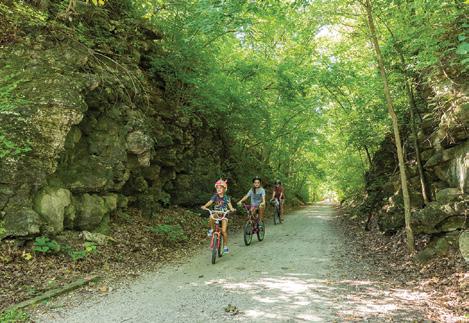
MKT Nature and Fitness Trail
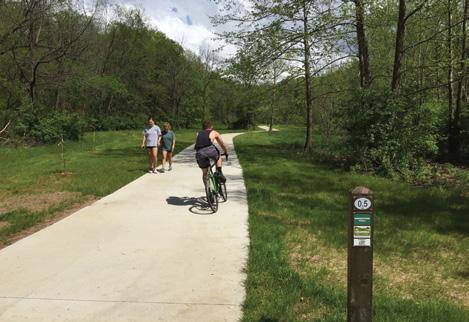
Don’t let summer slip by without hitting the MKT Trail. Walk it. Run it. Bike it. Take the dog. Take the kids. Take a friend. Whatever you do, just take some time out to enjoy Columbia’s premier multiuse trail, which spans 8.9 miles, starting at the downtown Flat Branch Park and ending at Katy Trail State Park near McBaine — where you can journey on for many more miles, should your heart desire.
Experience the trail at night on August 22
Sign up for the 12th annual Kaleidospoke event and experience the MKT trail in a whole new light. This noncompetitive, familyfriendly, nighttime bicycle ride will take you from Flat Branch Park to Twin Lakes Park (for entertainment and s’mores by a bonfire) and back — all on an illuminated MKT trail. Light up your bike for the total experience. 7 to 10:30 p.m. ($20/person.)
Week 4
Rock Bridge Memorial State Park
5901 South Highway 163
With its ample shade, massive rock formations, and changing elevations, this 2,273-acre park o ers the ultimate summer cool-down. Wade in the stream that runs under the impressive rock bridge for which the park is named. Traverse the boardwalk and viewing platforms that wind through the forest and then take stairs down to the Devil’s Icebox cave entrance — you’ll feel the temperature drop with each step down. Other options include eight di erent trails designated for hiking, biking, or horseback riding. Located approximately 15 minutes south of Columbia.
Call It A Comeback
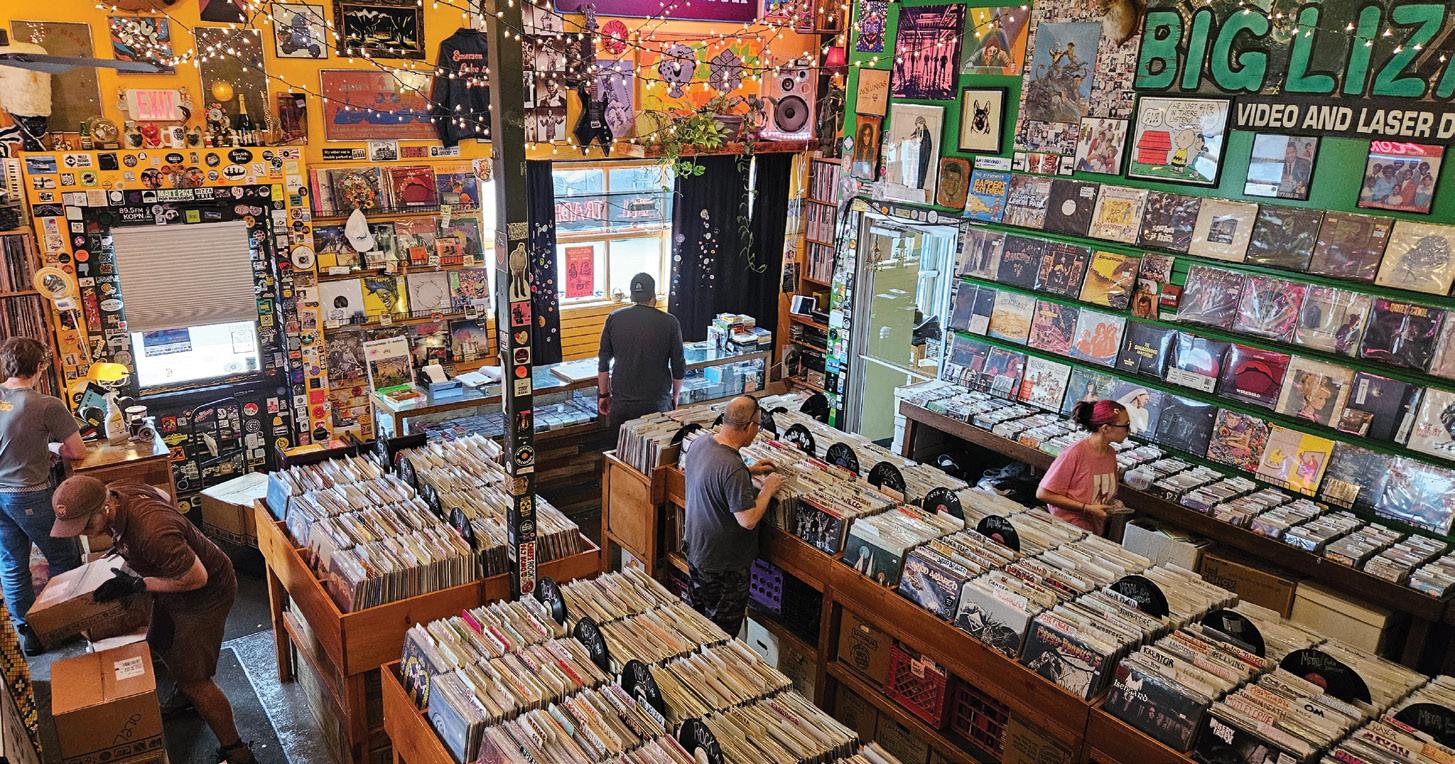
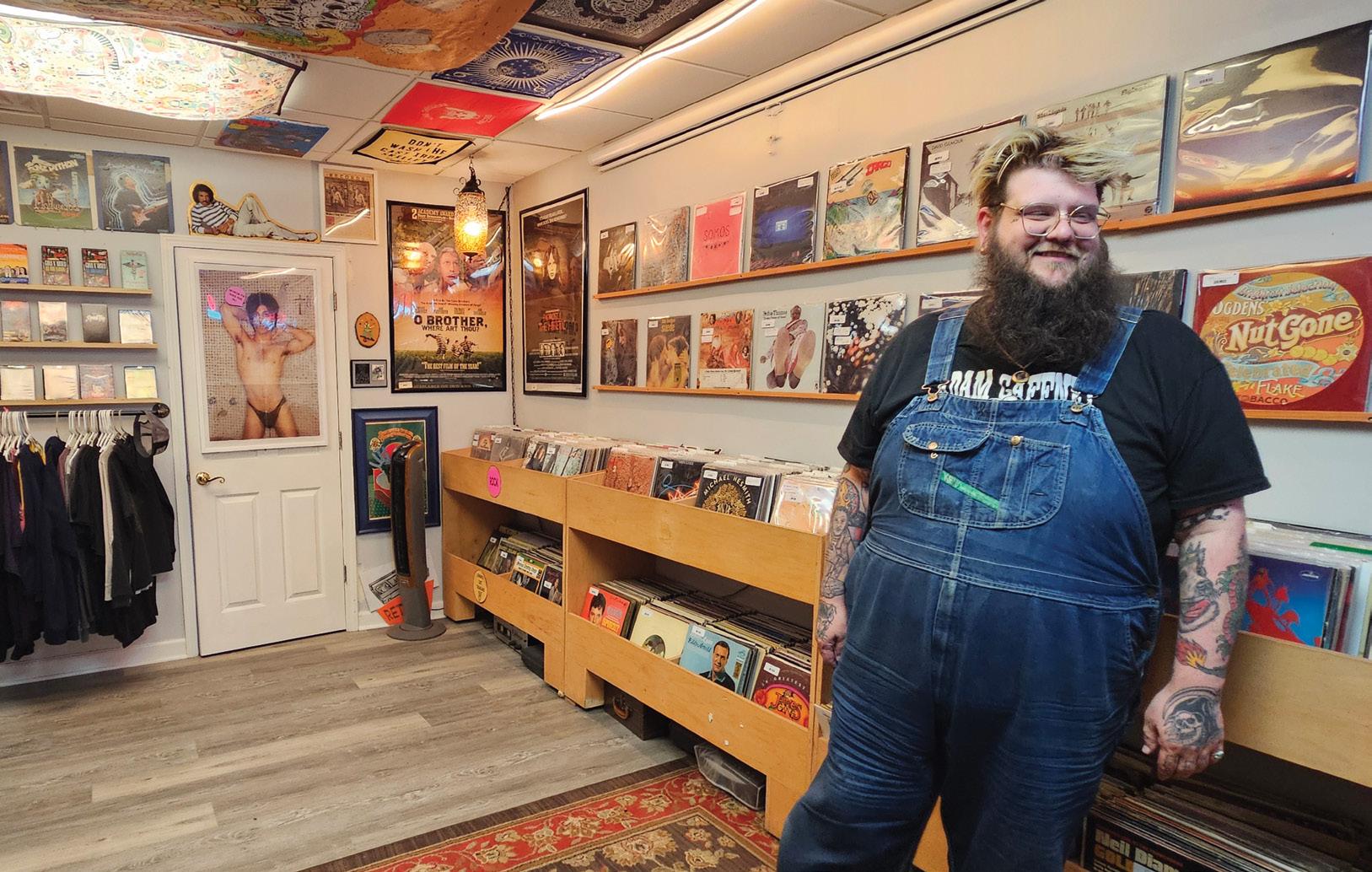
Meet the record store owners who are keeping the culture of vinyl alive in Columbia. STORY & PHOTOS BY OWEN PASLEY
As Bruce Springsteen
once sang, “Everything dies, baby, that's a fact.
But maybe everything that dies someday comes back.”
And if you haven’t heard, vinyl records
According to gures released in March 2026 by the Recording Industry Association of America, vinyl sales grew for the 19th straight year. Americans bought $1.04 billion of new vinyl in 2025, making it the rst year in the 21st century where consumers spent more than a billion on new records. e Life of a Showgirl, the latest LP by pop megastar Taylor Swift, sold 1.6 million copies alone. row in another estimated half billion in used record sales, and you’re looking at quite an impressive comeback for a medium once thought obsolete.
If you haven’t bought a record in years, this might seem a tad confusing. When a Spotify subscription costs $12.99 a month, why would people in their right minds spend so much money on records? Columbia’s record store owners have some answers.
The Whys Behind the Vinyl Wave
As with any major consumer shift, there are short-run and long-run factors at play. For Taylor Bacon, co-owner of Hitt Records (10 Hitt Street), part of vinyl’s comeback has to do with pandemic-era hobby spending. In 2020, just as the world was entering social isolation and people were looking for things to do around the house, major retailers started carrying a ordable turntables again.
“Once the big box stores put really cheap suitcase turntables in, that’s when we noticed everything skyrocketing,” Bacon said. “Everybody was locked up, people were getting suitcase turntables, and boom.” Some people obsessed over their sourdough starters; others went to Target, bought a Crosley turntable, and started collecting records.
But major retailers didn’t invent the vinyl renaissance — they were just capitalizing on a trend that had been brewing
for some time. Readers may recall that Columbia even had a record store called Vinyl Renaissance back in the mid-2010s. Jesse Slade, the owner of King eodore Records (1103 E. Walnut St.), a cozy tworoom shop packed with vinyl, VHS tapes, and music memorabilia, concurs.
“I used to buy Fleetwood Mac[’s 1977 album] Rumours for 50 cents all day back in the early 2000s,” Slade noted. “Now you’re lucky to get a copy of that used ... under 20 bucks is a steal. at’s in ation, but also interest in ating as well.” Bacon, who’s been slinging wax at Hitt Records since 2013 agrees, adding, “ at’s been going for a long, long time ... for at least 20 years.”
What’s driving this sustained wave of interest in vinyl? As with any conversation about art, subjective arguments will enter in. One is sound quality. Many proponents of physical media, including Bacon and Chris Taylor of B Side Records (601 N. College Ave.), are convinced that vinyl sounds better. Another argument is that the physicality of vinyl makes you a more attentive listener than skipping through playlists or listening on shu e does.
As Slade puts it, “Records ... are an art form that are made to be enjoyed as a cohesive piece. So when you buy a piece of physical media like a record, it’s harder to skip a song on. You gotta sit there and listen to the whole thing.” And patience, as they say, is a virtue.
Whether you buy the claim that vinyl is a superior listening experience, another reason that more and more people are returning to the old ways is that music bu s have come to see the record store as a refreshingly IRL way to discover music outside of social media. Many music lovers are skeptical of the role that social media now plays in in uencing what music they hear, a skepticism that seemed amply justi ed when cofounders of a digital marketing rm revealed that NYC indie band Geese owed much of its overnight stardom to ginned-up fan accounts their company had created. Just as the 1950s practice of “payola” (i.e., record labels bribing DJs to play their records on the radio) led to public indignation, listeners these days are liable to call an artist an “industry plant” or “psyop” if they think someone has juked the algorithm to make that artist a star.
As music critic Grace Robins-Somerville argues in the AV Club: “People want to think they have good taste, and they want to think their taste is above the in uence of algorithmic advertising. If someone compliments your shirt, it feels so much cooler to be able to say you found it in some mom-andpop thrift store in the middle of nowhere than to admit that you got it o some in uencer’s TikTok shop.”
For music fans who are suspicious of algorithmic in uence, then, what better way to build your own taste than to hit the bins and pick out something that you’ve never heard before? Besides, as Bacon points out, the majority of recorded music is not actually available on streaming services.
“ ere’s still oceans [of music] to be discovered,” he said. “ ere’s just a lot to explore beyond what the algorithm gives you.” If you’ve ever dug through KOPN’s old collection of jazz-funk records in the backroom of B Side or combed through 1960s-vintage psychedelic 7-inch singles at King eodore, you might see what he means.
Growing mistrust of streaming services is also making fans seek out their own copies of their favorite music. Artists have long complained about low payouts from streaming, and news last year that Spotify’s CEO invested nearly $700 million in an AI battletech company led a group of indie artists to remove their catalogs from the platform in protest. Whether from economic self-interest or political conviction, musicians can decamp from streaming platforms at a moment’s notice, taking their devotees’ most beloved songs with them.
As King eodore’s Slade points out, “You don’t own anything unless you own it. It’s like renting a house — your landlord can sell the house and kick you out at any point. ... It’s the same with Spotify. You’re leasing your art, which is convenient and fun, but at the end of the day if they decide to pull the rug out from underneath you, they have it [and] you don’t.”
“You don’t own anything unless you own it. It’s like renting a house — your landlord can sell the house and kick you out at any point. ... It’s the same with Spotify.
– JESSE SLADE Owner of King Theodore Records
Discs You Can Own, Places You Can Hang
To encourage this ownership impulse, record stores have a few marketing tricks up their sleeves, the most prominent of which is Record Store Day. Since its creation in 2008, RSD has grown from a largely grassroots celebration of independent record stores to a massive industry event where patrons (in some places) will camp in line to get their hands on special releases that record labels put out for the occasion. In fact, the annual happening has become such a to-do that some smaller stores are opting out of participating in the ocial event. Of the three record stores in Columbia, only Hitt carried RSD exclusives. at said, most stores still celebrate RSD in their own way — holding sales, as King eodore did, or o ering live music and food à la Hitt.
Which is perhaps the real reason that record stores abide. ey’re not just a place to buy vinyl and CDs — they're community spaces for music lovers. In Columbia, B Side has an open mic night on Tuesday evenings, while King eodore screens lms and runs an annual micro-budget lm festival called Reel Fest. Visitors it in and out of Hitt to shoot the breeze before having a beer at Uprise or seeing a lm at Ragtag Cinema next door. If you’re looking for good conversation and good tunes, why not pay your local record stores a visit?
Does Columbia Have a ‘Soccer Bar’ ?
Soccer fandom confessions of a former local bartender.
BY JAY SPARKS
When you speak to a longtime soccer fan about the World Cup, you will often encounter a bizarre lexicon of names and places and moments. “’74, the Cruy Turn.”
“ e Hand of God in ’86.” “Zidane’s ’06 madness.” “Wondo’s sitter in ’14.” (Please don’t repeat that last one near any long-su ering supporters of the U.S. Men’s National Team. Too much mental angst and trauma still remain. “Donovan and Dempsey versus Algeria in ’10” will get you much more favorable reactions.)
Each of these phrases represents a moment frozen in time, witnessed by billions of people around the world. Every four years, the entire world fandom of the “joga bonito” (the beautiful game) turns its eyes toward a massive tournament to crown the best futbol-playing country on the globe. And then suddenly the spotlight ignites and turns toward the host nation — or three, in the case of this year’s edition of the tournament. Canada, Mexico, and the United States all share the hosting duties in 2026, welcoming favorites, dark horses, and underdogs alike.
However, for the aforementioned supporters of the U.S. Men’s National Team, the World Cup holds a tumultuous history that blends anxious trepidation with moments of pure joy. at roller-coaster of sports-fueled emotions has historically been best navigated with others and commiserated about together. Columbia won’t be left out, especially with Kansas City being a host city of multiple rounds of matches just two hours to our west.
My own personal journey as a soccer fan began with an exchange trip to England in the summer of 1994, which was the previous time the United States hosted the Cup. England, though, had not quali ed for that tournament, and it was as though the entire country had gone mute about the game I was so desperate to learn more about. Watching Brazil and Italy go to penalty kicks on the soil of my country while I was traveling abroad was a strange experience. But before the Cup could come around again, the U.S. had its own professional soccer league, and my hometown of Kansas City was blessed with a franchise that I still support to this day.
Fast-forward to 2010 (of “Donovan and Dempsey versus Algeria” fame), and the idea of having a place in Columbia that could support other soccer fans who felt like me seemed poised to become a reality. Dancing around wildly and hugging the other strangers in Willie’s at 11 a.m. in response to that moment made me realize that Columbia needed this outlet. So as a downtown bartender, I set my eyes toward the 2014 Cup with (barely) a plan of action in my mind.
Four years is an eternity for U.S. sports fans, so I turned back to my hometown team, which conveniently rebranded itself and won an MLS Cup title in those years. Several dedicated soccer fan friends joined me in starting an o cial Sporting KC supporters’ group, and we used the bar I worked at (McNally’s … RIP) as our base of operations.
As the U.S. Men’s team started the qualifying process for the 2014 World Cup, our group of fans joined the ranks of another o cial supporters’ group, e American Outlaws. One of the organizers of the group that would become the Outlaws’ Columbia chapter, Patrick Finney, told me that he just started creating Facebook posts in a desperate bid to nd places that would put a soccer match on the TVs if more than one or two people showed up to watch. His aspirational group merged with my existing Sporting group, and things began to build.
I have written before, on social media, about my 2014 experience as a bar-liaison and leader of a supporters’ group during a World Cup. e crowd reaction videos of U.S. goals lmed in our establishment still bring a smile to my face, and it makes me emotional to think about the journey a passionate group of Columbia folks took to get to that point.
Jay Sparks (far right) tending bar at McNally's in 2014.
"Participating in global soccer culture feels like a better connection with the rest of the world, even when participation in the global geopolitical culture doesn’t."
— PATRICK FINNEY
From there, real life kind of took over. New local leadership for the Outlaws led to changes, and the U.S. Men’s team missed qualifying for the World Cup in 2018. Sporting KC was no longer the powerhouse it had been in the early part of the decade. e rhythm and ebbing and owing of the soccer world changed. en, during the leadup to the 2022 World Cup, I heard that a new local pre-professional soccer team had been founded in Columbia and was about to play a summer of matches locally. I had a chance to get to know the leadership group there, and I respect their nonpro t mission. AFC Columbia and its women’s team, the Missouri Reign, still play here every summer, and they will be playing home dates mixed in with the 2026 World Cup schedule.
In 2022, I was no longer bartending at a “soccer bar” of sorts, so I forced myself to wander out into the wild to watch some matches with others. Günter Hans stands out to me as the place I watched the United States and England play to a draw in a room containing a mixed crowd of both teams’ supporters. Friendly banter all the way around, I promise.
On the precipice of the 2026 Cup, Columbia sits two hours east of a host city venue, something that 1994 Jay, sitting in England, would have never dreamed of as a possibility. World Cup fever will attempt to sink its claws into our city and our amazing hospitality industry.
Here’s my Columbia-centric advice to you: Go out and enjoy the Cup. Ask your favorite happy hour or brunch spot if they’ll put a match on the TV. Learn what a “nutmeg” is. Become a vocal part of groups chanting about “Poch’s Army.” Buy a garish red, white, and blue scarf. High- ve strangers. Pick a team that doesn’t seem like they have a chance to even make it out of the Group Stage, learn all about them, and root for them, too. Learn what a “rondo” is, and, again, please don’t mention “Wondo.”
Go out to Cosmo Park on a Saturday morning and see what World Cup fever looks like to Under-7 and Under-12 teams. Stop by and see Paul Land’s sculpture in a roundabout there and ponder how one of our city’s preeminent commercial real estate gurus came to town in the ’70s to coach youth soccer when he didn’t even live here.
Patrick, my co-conspirator in starting Chapter 85 of the American Outlaws here in Columbia, said this: “Participating in global soccer culture feels like a better connection with the rest of the world, even when participation in the global geopolitical culture doesn’t.”
Even with all of my history with the game here in Columbia, I wasn’t thrilled about this year’s World Cup, from a national perspective. at was, not until I got a chance to write this story. I hope to see you out for matches at a local establishment — and I can’t wait to explain Zidane’s ’06 madness to you.
What are your go-to dining spots for both date nights and family outings, and which menu items or drinks are the absolute favorites at each?
Date Night: Tellers/Salmon BLT and Kampai Alley/Brussels Sprouts. Family Night: Pasta Factory/anything and Murry’s/garlic cheese bread, onion rings, shrimp, and Deb’s garlic salad
— STEPHANIE WESTWOOD ROTHERMICH
Pasta La Fata
— KLAUDIA REJMER
Date night: Midway Golf and Games, getting the burger of the month. Family dining: G&D Pizza, sharing mushrooms then sharing pizzas!
— KARI ANN
My birthday meal every year is a halfrack of Big Daddy’s ribs. Absolutely amazing, love the sta , love the food!
— JAY SPARKS
Billiards on Broadway is my go-to spot for lunch with Megan McConachie. e Les’ Favorite with fries, a side of ranch, and a crisp Dr Pepper is 10/10. Even better that waitress Carrie is truly the best around!
— SARAH HUMM
Our family loves going to Flyover when we have a big group. Since their plates are made to share, the more people we bring, the more things we can order! We always get the carnitas ... the sweet potato puree on the side is incredible.
— MEGAN MCCONACHIE
So many choices. My favorites are CC’s, Cherry Street Cellar, Broadway Brewery, Sycamore, and Endwell Taverna.
— KELSEY WINKELJOHN
We love Jina Yoo’s. Sushi rolls.
— TRISH HASSER KOETTING
Murry’s (Brock’s green pepper rings!), 44 Canteen (sweet potato tacos), and Addison’s (nachos).
— KENA ELKIN
Sycamore was my date night spot! So sad to see it go. I think 11Eleven is underrated for a clean atmosphere, good food date night option.
— C.J. LEVY
Jina Yoo’s Asian Bistro
— D.J. DALLER
When we lived there, we LOVED Jazz A Louisiana Kitchen. Especially because they have live jazz sometimes, and the food is incredible!
— NATASHA MYRICK
Go-to date night spot: CC’s City Broiler. We order the onion rings, a Gary’s cut and a let, and always end with crème brûlée cheesecake. Another favorite is Cherry Street Cellar. We love the spicy sheep’s milk croquettes and scallion pancakes. Steak frites are a must, along with another rotating entrée. eir house red wine is great! Go-to family dining spot: D. Rowe’s. We order the smoked wings, portobello fries, steak sandwich. eir kids’ meals are great. We also love 44 Canteen for family dining. We order the sloppy disco fries and mojo salad with pulled chicken. ey also have great kids’ meals.
— MATTIE KLEINHESSELINK
Murry’s with Sean Riley
— KARRI VIRGINIA
Date night: Endwell Taverna. A pie and a strawberry spritzer for dessert.
— ROBIN SCHWEITZER
Date night: Irene’s BBQ. We share tacos and chips and queso, and the bar and wait crew are incredible. ey are always up for educating us on good tequila and mezcal! Bonus, we can walk over to Logboat Brewing Company for a beer. Family Night: 44 Tavern (great food and fun atmosphere) or Jina Yoo’s for sushi.
— JEFF BLUMER
Trail Stop Brewery has been our go-to lately. Especially when they participate in the Sweet Deals program. eir deep-dish pizza and mac and cheese are always superb.
— LINDSAY ROSE JAMES
Murry’s
— RHONDA WYATT
Irene’s for both. I love the blood orange clementine seltzer, and the kids love the barbacoa taco platter or the pulled pork rice bowl.
— JORI ‘HOEFT’ ROSE
Jazz A Louisiana Kitchen
— CHRISTINA KYLE
Flyover! We always get the soft pretzels. ey are amazing, and we recommend them to every person we know.
— SERENA DAVIS
Our faves for both are Flat Branch, Pasta Factory, Endwell Taverna, and Ozark Mountain Biscuit Co.
— DIANA BRODERSEN DEMOSS
Flat Branch. Enough said.
— MELISSA VOGT
Family spot: D. Rowe’s. Spin dip and loaded potato skins.
— OLIVIA DESMIT
Two places: Murry’s and their fantastic house salad and tuna sandwich, and Tellers and their delicious salmon.