
Casting VISION

For your business to work, the cash has to flow. That’s just the way it is. But there’s more to life than business. When do you find the time for family game night? A dinner with friends? Or even a quiet moment to yourself? You shouldn’t have to choose between bringing value to your business and the things that add value to your life.
The Bank of Missouri knows that the balance in your account is important, but balance in your life is necessary. Our bankers listen to understand your business and help it grow without losing sight of what matters most. Work with a bank that values your time instead of wasting it.
We’re the bank of finding balance. We’re The Bank of Missouri.




Contributors
May 2026
Lynn Pickerel
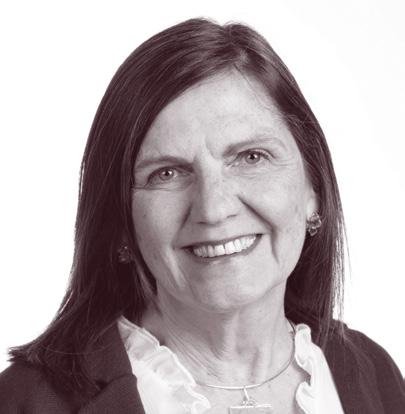
I have been a communication professional for more than 35 years, writing about everything from travel destinations to horseshoe nails. Today, as a freelance writer, I limit my work to what ignites my curiosity and creativity. Horseshoe nails did not make the cut, but writing about the city of Columbia did — and I’m happy to be a contributor to COMO Magazine and COMO Business Times.
My husband and I enjoy getting out and experiencing all that Columbia has to offer: the parks, the festivals, the markets, the restaurants, and all the interesting people we meet along the way. My personal obsessions: collecting art and handcrafted items, filling every nook of my home with plants, asking people way too many questions, and spending an unhealthy amount of time playing New York Times games.
IN THIS ISSUE OF CBT
Empowering Columbia and Other Hometowns
PG 12
Tyler James
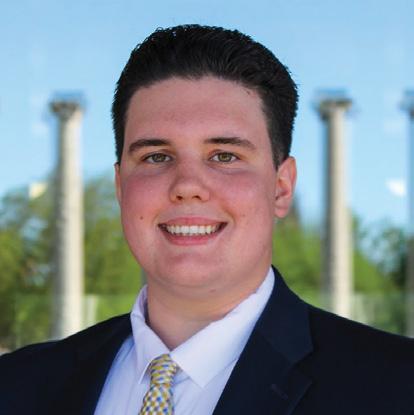
I’m from O’Fallon, and I’m currently a business student at the University of Missouri. At Mizzou, I serve as vice president of the Collegiate Entrepreneurs Organization (CEO), where I help connect students with real-world entrepreneurship opportunities through networking events, site visits, and speaker series. I’m also an active member of Alpha Phi Omega, a national service fraternity.
Apart from my campus activities, I’m building my own affiliate marketing business and interning at Mortgage Research Center in Columbia, where I focus on lead generation and outreach. In my free time, I’m learning guitar and Italian on Duolingo. I run a YouTube channel and other content platforms to build my personal brand. My long-term goal is to build a marketing and media company rooted in entrepreneurship.
IN THIS ISSUE OF CBT
Mizzou Student Entrepreneurs Are Creating Their Own Paths
PG 20
PUBLISHING
David Nivens, Publisher david@comocompanies.com
Chris Harrison, Associate Publisher chris@comocompanies.com
EDITORIAL
Jodie Jackson Jr, Editor jodie@comocompanies.com
Kelsey Winkeljohn, Associate Editor kelsey@comocompanies.com
Karen Pasley, Contributing Copyeditor
DESIGN
Jordan Watts, Senior Designer jordan@comocompanies.com
Lucia Kuepers, Junior Designer lucia@comocompanies.com
MARKETING
Charles Bruce, Director of Client Relations charles@comocompanies.com
Kerrie Bloss, Account Executive kerrie@comocompanies.com
Allie Teagarden, Account Executive allie@comocompanies.com
CONTRIBUTING PHOTOGRAPHERS
Daniel Bonacker, Keith Borgmeyer, Jodie Jackson Jr, Lindsay James, Rob Myers, Midwest Roo ng, Courtney ompson, Veritas Consulting
CONTRIBUTING WRITERS
J. Scott Christianson, Ashli Eaves, Jaime Freiderichs, Tony Galbreath Jr, Jodie Jackson Jr, Tyler James, Lynn Pickerel, Kelsey Raymond, Michelle Terhune, Kelsey Winkeljohn
SUBSCRIPTIONS
Magazines are $5 an issue. Subscription rate is $54 for 12 issues for one year or $89 for 24 issues for two years. Subscribe at comobusinesstimes.com or by phone. COMO Business Times is published monthly by the COMO Companies.
OUR MISSION STATEMENT
COMO Business Times and comobusinesstimes.com strive to be Columbia’s leading source for timely and comprehensive news coverage of the local business community. is publication is dedicated to being the most relevant and useful vehicle for the exchange of information and ideas among Columbia’s business professionals.
Copyright COMO Companies, 2026
All rights reserved. Reproduction or use of any editorial or graphic content without the express written permission of the publisher is prohibited.
FEEDBACK
Have a story idea, feedback, or a general inquiry? Email our editor at jodie@comocompanies.com.
CONTACT
COMO Companies | 404 Portland, Columbia, MO 65201 573-577-1965 | comomag.com | comobusinesstimes.com
AT THE AGE OF 10, I was as much an explorer and adventurer as Lewis and Clark, Magellan, Daniel Boone, and all the others. My little green backpack and metal, military-surplus canteen were always within easy reach. I also carried a little black notebook for jotting down experiences, hopes and dreams, observations, and details about each of my catches.
I was a snake and lizard afficionado, a self-proclaimed herpetologist, and I was in love with a little hilly wooded area — complete with a gentle, meandering stream — that the locals called Horseshoe Falls. In my boyhood and teen years, that spot of forest in Belle, Missouri, was as important to me as any wilderness area in the whole U.S. of A. Many of my contemporaries also hiked and experienced Horseshoe Falls, but it’s a safe bet that none of them knew it as well as I did. I didn’t just explore it. I studied it. Charted it. Wrote about it. Dreamed about it. Knowing that some of my geological and biological discoveries were not shared experiences, I kept many of them to myself, to appreciate all to myself … to this day — even though I haven’t plodded through that little forest in more than 40 years.
I regret there are no photos of little or big me on the huge moss-covered boulders that perched above the stream area. Oh, but the memories …
The Maries-Osage County Library seemed to always be between my house and Horseshoe Falls, no matter where I lived in that tiny town. And the library had a side door that allowed me quiet entrance to step inside, quickly grab Herbert Zim’s Guide to Reptiles and Amphibians (sorry, I’ve forgotten the Dewey decimal number), then retreat to a corner where I opened the book as I peeked inside my backpack at the latest reptilian critter. For the longest time, I assumed that activity was private and hidden. But the librarian, Erlyne Ridenhour, was as
stealthy as she was stern. And, boy, was she stern.
One afternoon I could almost hear my heart racing as I peered into my backpack, matching the snake with the image in the Zim’s reptile bible. I’d never seen a more beautiful snake.
Mrs. Ridenhour’s voice found me, filling me with dread. “What did you find today?” I’d been busted. I don’t think I responded right away. As if her voice was seeking me out, she gently added, “Just don’t let it loose in here.” I might have apologized before I began stepping out the side door, which she suddenly held open for my exit. Her tone, voice, and demeanor softened. She asked, “Can I see it?”
I turned to her, opened my backpack, and introduced her to the first speckled kingsnake I had ever seen. “Ooh, that is pretty,” she declared, then added something like, “Now, eww, just, eww … get it out of here.” And so began a unique relationship with the librarian who seemed to terrify many of the other kids while we became partners in conversation, a love for the written word, and a shared affinity for that library. Not many years later when I began writing for The Belle Banner as a junior in high school — and later as the town newspaper’s editor — she was among my biggest boosters.
I’d love to hear about your experiences with nature and the outdoors, especially if they played a role in forming who you are today. We can also share the sadness of the reality that, these days, there might not be any kids who send themselves on a forest adventure before ducking into the local library with a little critter hidden in their backpack.

JODIE JACKSON JR EDITOR jodie@comocompanies.com
Many of my contemporaries also hiked and experienced Horseshoe Falls, but it’s a safe bet that none of them knew it as well as I did. I didn’t just explore it. I studied it. Charted it. Wrote about it. Dreamed about it.

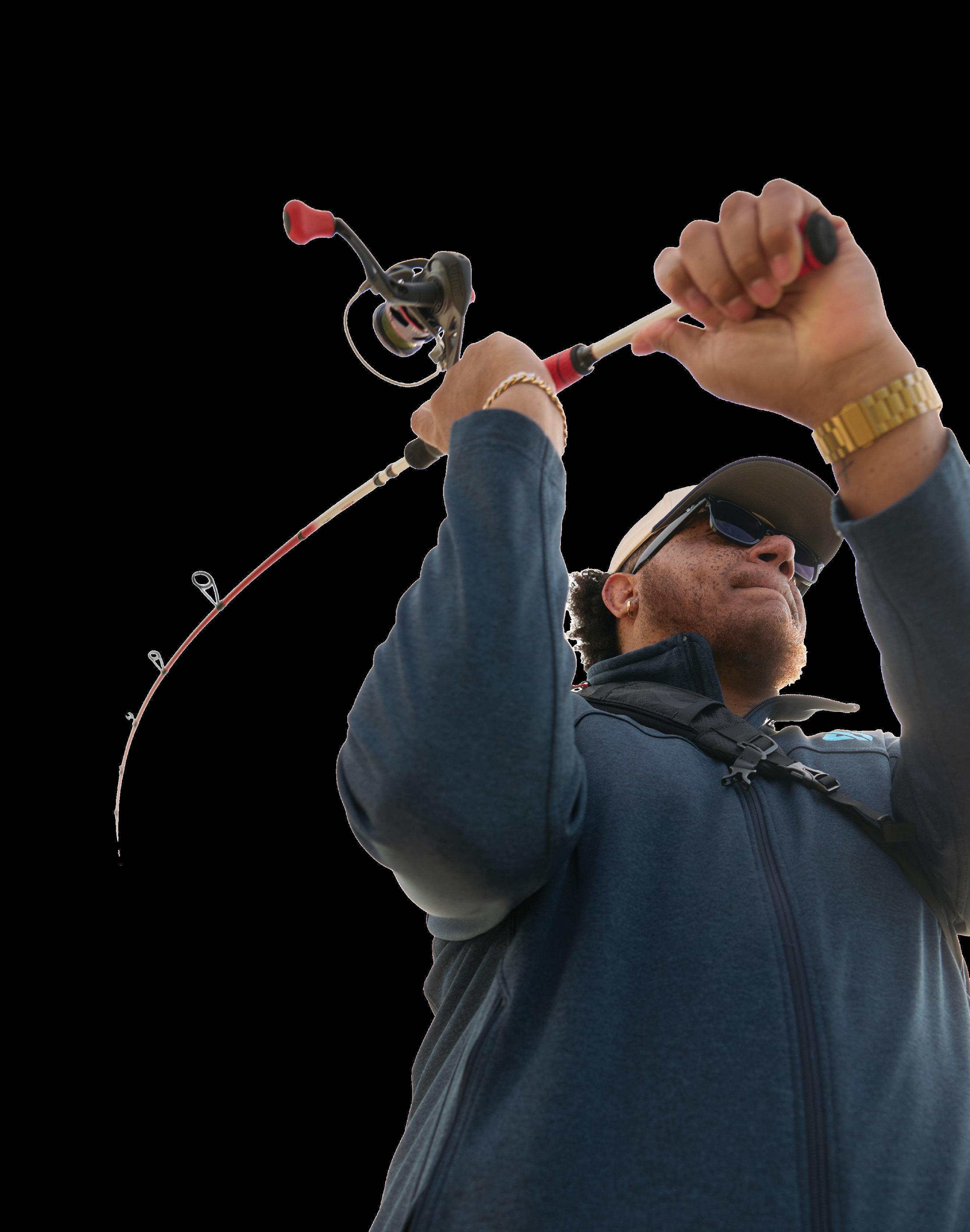
The great outdoors lured Tony Galbreath Jr. to a career at American Outdoor Brands. Tony is the May "Person You Should Know."
Photo by Keith Borgmeyer




Closer Look
TIPSY MULE BAR
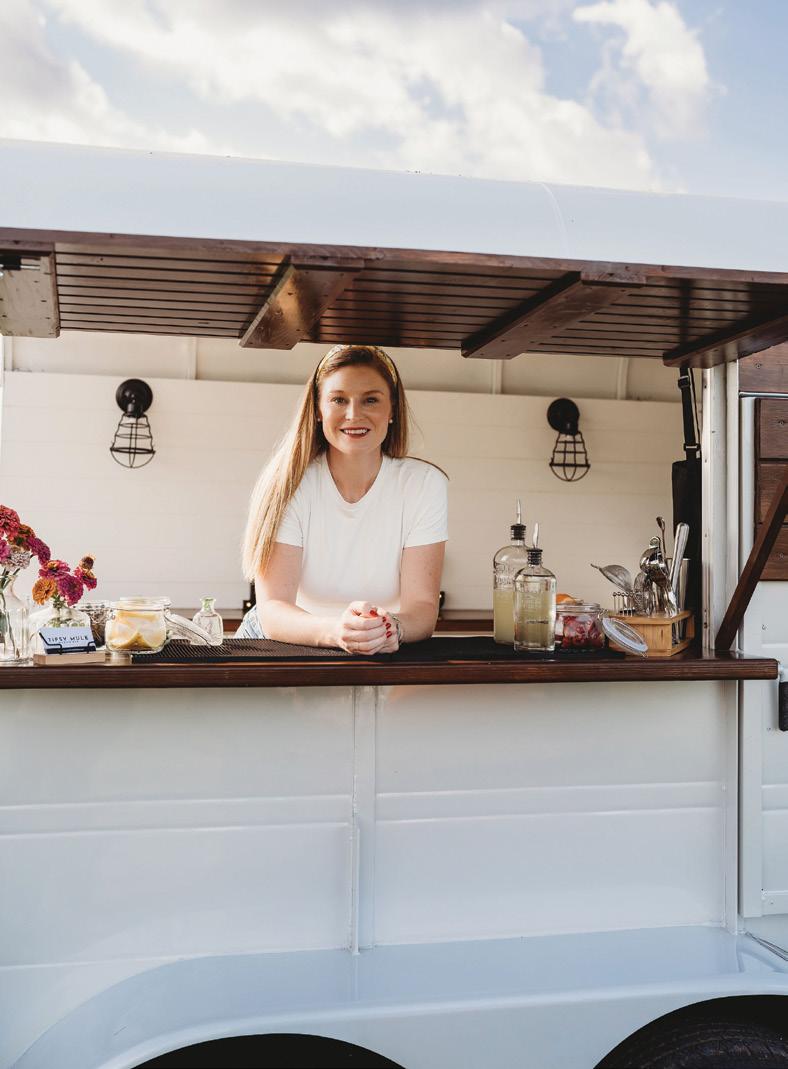
Once used to haul actual mules, the two-horse trailer that now houses the Tipsy Mule Mobile Bar delivers a exible bartending experience to events across midMissouri. Now reimagined as a stylish event centerpiece, the vintage vehicle blends rustic charm with modern hospitality, and its name playfully nods to both its origin story and the classic Moscow Mule cocktail.
e Tipsy Mule, owned by Columbia native Kendell Bohlmeyer, opened in September 2024 to provide clients with a stress-free bar experience for their gatherings.
“Our goal is simple: We want our clients to enjoy their event, not work it,” Bohlmeyer says.
e trailer operates as a full-service “dry-hire” mobile bar. Clients provide the alcohol, while the Tipsy Mule handles the rest, from professional bartenders and custom drink menus to mixers, garnishes, complete setup, and more.
“ is setup gives clients more control over their beverage selection and budget while still delivering a professional, elevated experience,” Bohlmeyer explains.
In addition to the trailer, the business o ers satellite bars, venue partnerships, and in-home service, allowing it to adapt to nearly any setting.
“We bring a fresh and creative event experience to the area,” Bohlmeyer says. “We’re incredibly grateful to be part of this community and to help people celebrate together.”
tipsymulemobilebar.com | (573) 222-0827
COMO MUD CO.
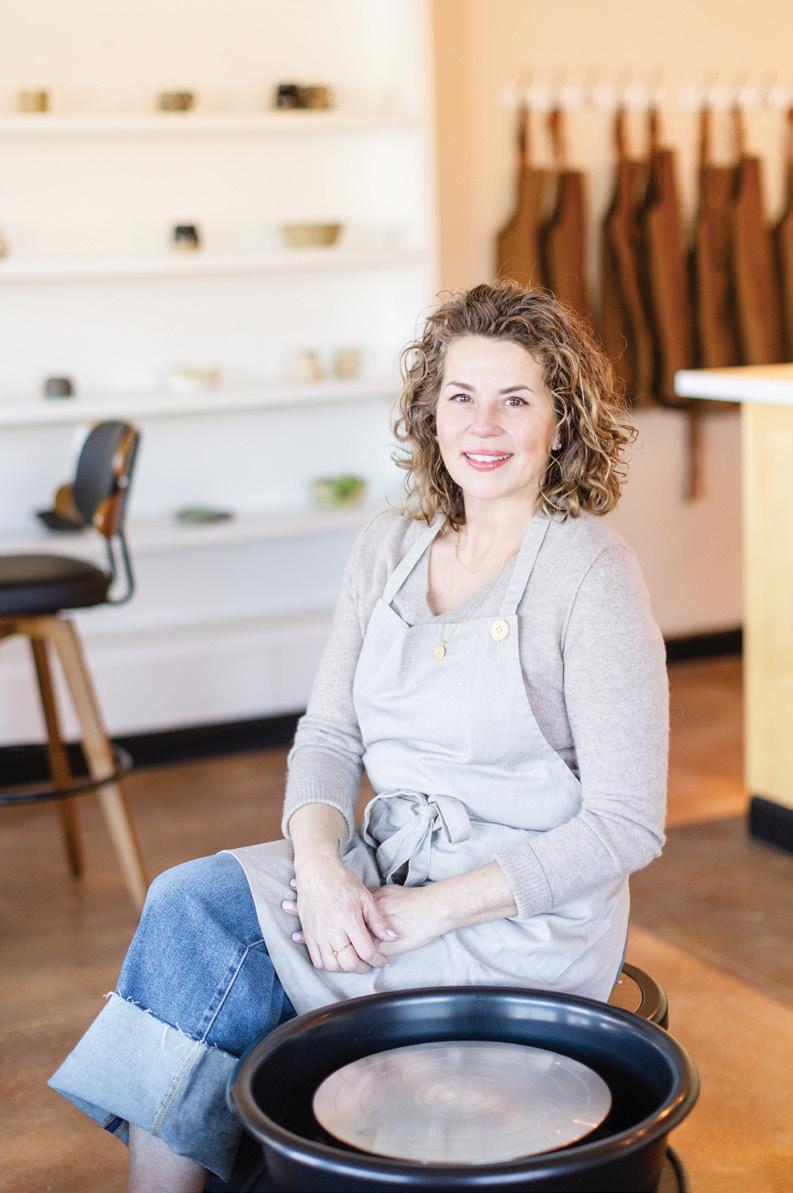
CoMo Mud Co. is bringing a messy, spirited energy to Columbia’s thriving art scene. is intimate pottery studio o ers adult-focused instruction for all skill levels, from low-commitment introductory “Try-It” sessions to ve-week wheel courses and specialized slab-building workshops, producing items such as bird feeders and travel mugs. Its signature BYOB events — “Sip and Spin” and “Mimosas and Mud” — o er a chance to combine creativity with a social, laid-back atmosphere.
Owner Ame Allen relocated to Columbia from Hershey, Pennsylvania, in 2025 and quickly fell in love with the city’s support for local makers. e studio, which opened in January 2026, was created to bridge the gap between ne art and a fun night out. Allen believes ceramic arts should be accessible to all, regardless of artistic background.
“We wanted to create a space where people could learn a traditional craft without intimidation — a place where community, creativity, and an occasional cocktail could meet,” Allen says.
e concept has resonated, with the studio becoming known for its welcoming, no-pressure environment and its belief that every “pottery fail” is just a future succulent planter in disguise.
In addition to o ering classes and workshops, CoMo Mud Co. aims to be a creative sanctuary where guests can unplug, reconnect with their hands, and leave with both a handmade piece and a memorable experience. e studio also hosts a variety of events, including birthdays, bachelorette parties, and casual happy hours.
1100 Club Village Dr., Suite 106 | comomud.com | @comomud CBT
Photo by Wilder Rays Photography
Photo by Catherine Rhodes Photography
The Balance Between Today and Tomorrow

BY ASHLI EAVES, CHSNC
AFTER A RECENT EVENT I HOSTED, someone shared something with me that caused me to pause.
She told me she had always been hesitant to talk to a nancial advisor because she was afraid the conversation would turn into a lecture about saving for retirement — and that she’d end up feeling guilty for spending money today.
It caused me to think about how someone who doesn’t live in “my world” every day might interpret the constant messaging around saving for retirement. ere is certainly no shortage of education and information around retirement planning — the di erent types of retirement accounts, contribution limits, strategies, and timelines. ere’s a lot of focus on this area. But is it the only thing we should have our sights set on?
Retirement planning is important. It’s something we absolutely should be
thinking about. If that’s the only message people hear when they think about nancial planning, though, I can understand why some hesitate to start the conversation at all.
e reality is, real nancial planning isn’t just about retirement.
For many people, retirement planning is simply the rst place they encounter investing. It’s one of the most visible nancial goals we talk about. In many ways, it’s a “universal” goal, which makes it easy to have broad conversations around it. Whether you’re 30, 40, 50, or approaching retirement more closely, the question is often the same: Am I on track?
Yet retirement is only one piece of a much broader nancial picture. A thoughtful plan should look at the entire landscape of your life — not just one destination down the road.
Planning often gets associated with discipline, sacri ce, and cutting things out. And yes, discipline certainly plays a role. at doesn’t mean life has to be
put on hold until retirement, however. In other words, nancial planning isn’t meant to restrict your life — it’s meant to help your money move in the same direction as the life you’re trying to build.
Sometimes the conversations are about retirement. Other times they’re about goals that fall somewhere in between.
Maybe it’s an epic trip you’ve always wanted to take. A home project you’ve been putting o . Helping your kids in a meaningful way. Starting a business. Or even the possibility of slowing down at work someday.
Last year, my husband and I had the opportunity to travel to Munich for Oktoberfest with several friends. Could we have put those dollars toward our retirement accounts instead? Absolutely.
But saying yes to that trip created memories and friendships that will stay with us far longer than another line on a balance sheet.
at experience is a good reminder of something I see often in nancial planning: It’s really about balance.
If everything goes toward the future, we risk missing the life that’s unfolding right now. But if everything is spent in the present, the future can become uncertain. A thoughtful plan helps create the middle ground, where nancial decisions support both the life you’re living today and the one you’re preparing for tomorrow. e goal is for your dollars to work as hard as you do, positioned in the places that best support the goals that matter most to you.
No one wants to feel judged for enjoying the rewards of their hard work. A good nancial plan shouldn’t just prepare you for retirement someday. It should help you make thoughtful choices along the way, so the life you’re living today and the future you’re building tomorrow can both be part of the plan.
When that woman shared her hesitation about meeting with a nancial advisor, I understood where she was coming from.
CBT
Briefly in the News
MAY
2026
NONPROFIT
Community Foundation
Renames Year-End Giving Campaign
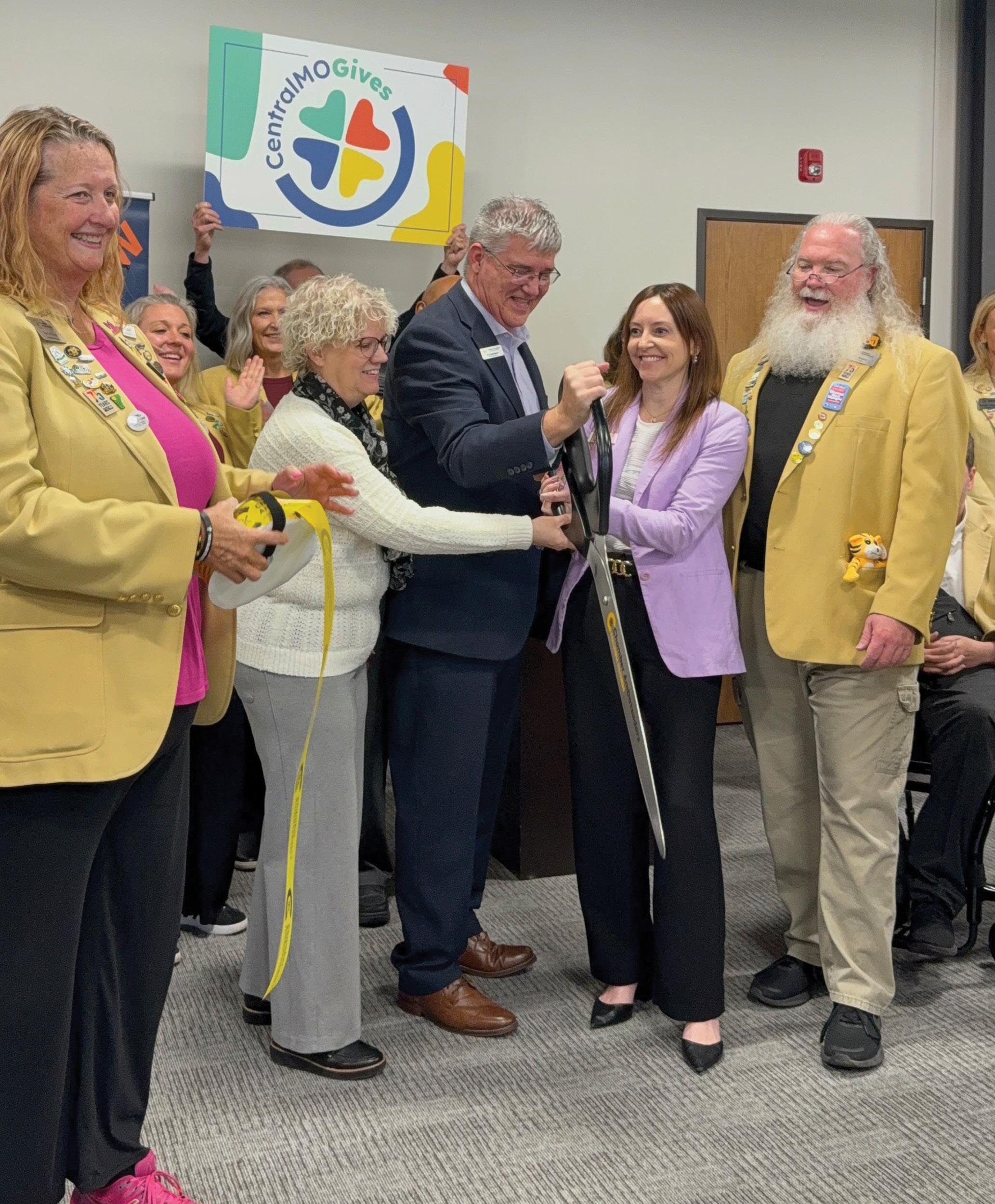
CentralMOGives is the new name of CoMo Gives, the annual yearending giving campaign launched by the Community Foundation of Central Missouri (CFCM) in 2013. A Chamber Ambassadors ribbon-cutting and ceremony took place at the 404 Portland Event Center to announce the change. CFCM Executive Director Eric Sappington said the new name “re ects what has always been true — the year-end giving campaign is for all of central Missouri.” While the name has evolved, CFCM’s year-end giving mission remains focused on connecting generous donors with the nonpro ts making a di erence across the foundation’s 10-county region.
Registration for the 2026 campaign opens May 1 and runs through June 30.
COMMUNITY
City Announces Love Your Block Mini-Grant Award Winners
Ten local organizations are recipients of Love Your Block mini grants of up to $2,500, awarded by the city of Columbia. Winning projects are: Restoring Again Street Park, a project of the Friends of Again Street Park and Central Missouri Returned Peace Corps Volunteers will remove invasive plants from the park and add native plants; Douglass Neighborhood Festival,
organized by residents Michelle and Clay Schiefelbein; Garden of Hope, a pollinator garden, will be installed at First Chance for Children at 1002 Fay St.; Hanover Properties Neighborhood Cleanup was a ForColumbia project on April 25 that included beauti cation, neighborhood cleanup, and the construction of a free pantry for residents; “Love Our Neighborhood,” proposed by Avant Supported Living, aims to improve an area of Holly Avenue; Nora Stewart Early Learning Center will receive funds to beautify its facility on Ash Street and to add outdoor learning space; North Central Columbia Heibel-March Building Mural Project proposed by the North
Central Columbia Neighborhood Association focuses on refreshing the mural that faces Field Park; Replant & Restore is a project of residents along North Eighth Street to plant trees in the neighborhood; Services for Independent Living will develop a volunteer hub to help connect community members with those they serve; Woodhaven helped beautify several homes that serve individuals with developmental disabilities in cooperation with ForColumbia on April 25. In 2025, Love Your Block funded 11 projects in central Columbia that strengthened and beauti ed neighborhoods.
Eric Sappington helps cut the ribbon at the CentralMOGives name change event.
EDUCATION
Columbia College
Annual Giving Day Has Record-Setting Total
Columbia College’s eighth annual Giving Day raised a record $781,851 from 545 donors in 26 states in support of the college’s mission. e total surpassed last year’s Giving Day total by more than 70 percent. Students, faculty, sta , alumni, and friends rallied to support a wide range of initiatives to strengthen the college and expand opportunities for students in the form of scholarships, department initiatives, and technology. e monetary gifts will also help strengthen Cougar athletics.
TRANSPORTATION
Columbia Regional Airport
Identified as Fastest-Growing Airport in U.S.
Following a record-breaking 2025, Columbia Regional Airport (COU) has been named the fastest-growing airport in the United States in 2026 according to an analysis by aviation rm Mead & Hunt. Mead & Hunt analyzed all U.S. airports with 10,000 or more seats per month for the next six months, and COU was identi ed as the fastest growing airport in the U.S. with
a 107 percent increase in seats. e Columbia City Council has approved a plan to add some 600 new parking spaces at the south of the terminal, along with necessary grading, erosion control, and improved access points to ease congestion. Additional parking expansion is also underway north of the terminal. e airport had a recordbreaking 242,167 passengers in 2025, representing a 17 percent increase compared to the previous year.
HISTORY
Boone County Hall of Fame Announces 2026 Enshrinees
e Boone County Historical Society’s Endowment Trust Board has announced the 2026 enshrinees into the Boone County Hall of Fame: Carl Edwards, Wendy Noren (posthumous), and the Boone County Community Trust. e honorees will be formally enshrined at the annual History Makers Hall of Fame Gala on Saturday, October 24, 2026, at the Country Club of Missouri. is year’s class re ects excellence in athletics, public service, and community philanthropy. With their enshrinement, Edwards, Noren, and the Boone County Community Trust will join 82 previous honorees in one of Boone County’s most prestigious recognitions.
EDUCATION
Columbia Fund for Academic Excellence
Selects 7 Award Winners
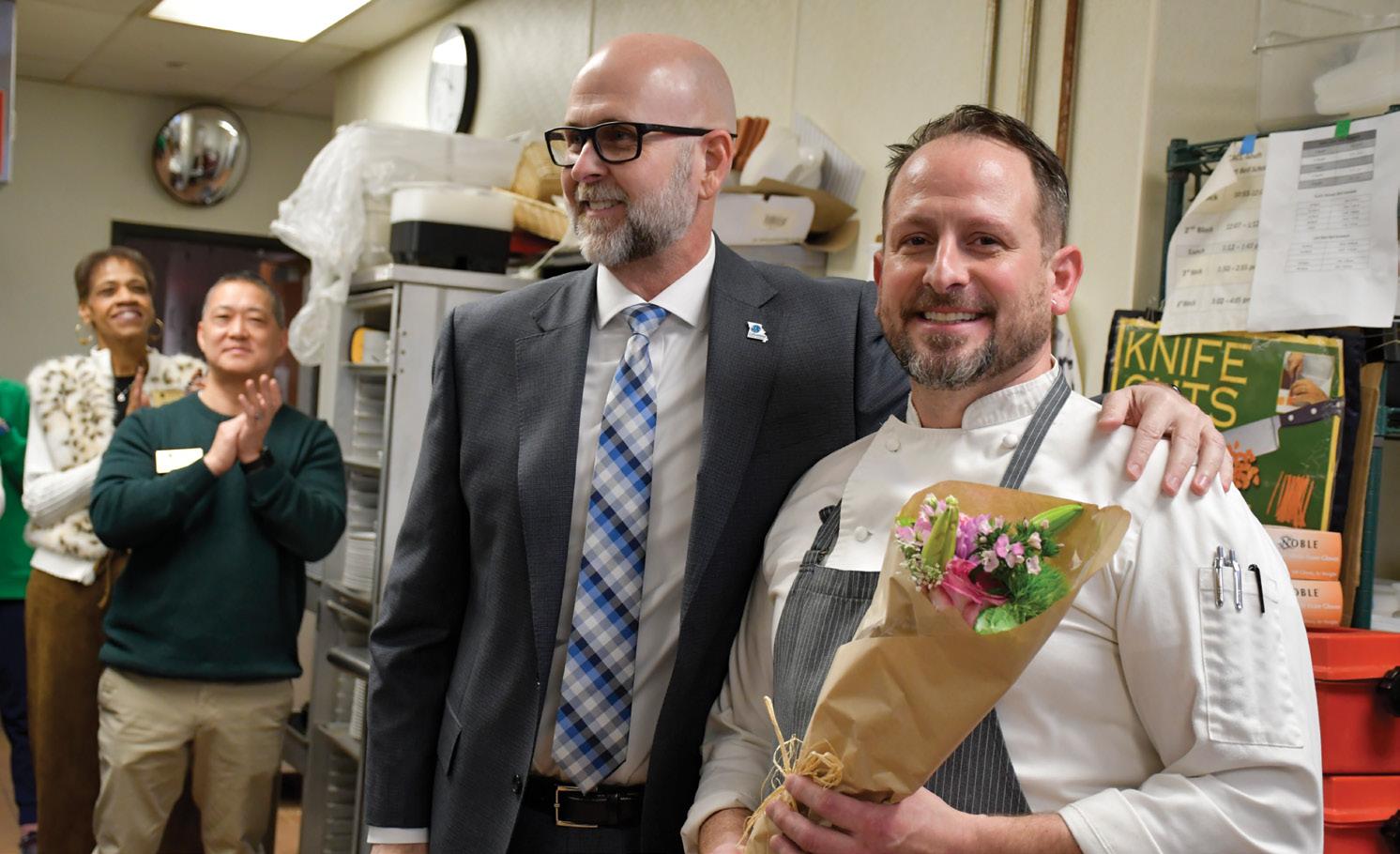
Seven Columbia Public Schools educators have been selected as this year’s Columbia Fund for Academic Excellence honorees. is year’s honorees and their respective categories are: Outstanding Elementary Educator, Grades PreK-2 — Danielle Maddalone, Mill Creek Elementary School; Outstanding High School Educator — Brook Harlan, Columbia Area Career Center; Outstanding Elementary Educator, Grades 3-5 — Meg Tummons, Locust Street Expressive Arts Elementary School; Outstanding Educator in a Specialized Area — Laura Kuhrts, Blue Ridge Elementary School; Outstanding Middle School Educator — Amanda Montgomery, Oakland Middle School; Outstanding Beginning Teacher — London Redstone, Gentry Middle School; Outstanding Administrator — Dr. Dominique Falls, Lange Middle School. Honorees received a $1,500 cash award and an engraved silver tray.
NONPROFIT
Habitat Plans 2026
‘Women Build’ Event for May Show-Me Central Habitat for Humanity will host the 2026 “Women Build Empowered Women” event May 7-8 at the Boone Prairie subdivision across from 3909 Brown Station Rd. Sponsored by EquipmentShare and supported by volunteer crew leaders from the National Association of Women in Construction, Habitat will host female volunteers to work on several homes over the two days. Volunteers will frame, put on siding, install doors and windows, and learn how to drywall. According to the Urban Institute, the homeownership rate among women-led households increased from 51 percent in 1990 to 61 percent in 2019. CBT
Jeff Klein (CPS superintendent) with Brook Harlan.
Empowering Columbia and Other Hometowns
BY LYNN PICKEREL
OCCUPYING A SPRAWLING PROPERTY
Columbia’s McGuire Boulevard is a nonpro t that many are not familiar with, even though it plays a critical role in our everyday lives —particularly during extreme weather.
e organization is the Missouri Public Utility Alliance, a cooperative support system for 120 community-owned electric, water, wastewater, natural gas, and broadband utilities throughout Missouri, including the city of Columbia.
STRENGTH IN NUMBERS
Under the leadership of President and CEO Steven Stodden, MPUA pools the capacity of several organizations, including the Missouri Joint Municipal Electric Utility Commission, the Missouri Gas Commission, the Missouri Association of Municipal Utilities, and the MPUA Resource Services Corporation. Community-owned utilities bene t from this collaborative strength through MPUA membership.
“MPUA exists to help municipal utilities deliver safe, reliable, and cost-e ective services,” Stodden explained. “By working together, our member cities gain the advantages of large-scale solutions and shared resources, while still maintaining local control. is ensures that decisions re ect the unique needs and priorities of each community.”

MPUA serves as an extension of each member organization’s municipal sta — providing training opportunities, power supply management, technical assistance, and mutual aid services — all with the goal of strengthening each community’s utilities and improving residents’ quality of life. Here are a few examples of how members bene t:
• Wholesale energy market and joint nancing tools: MPUA helps cities purchase and manage utilities, often at more stable and a ordable rates than they could achieve independently.
• Specialized expertise: MPUA provides specialized expertise in infrastructure planning, cybersecurity, power management, and training
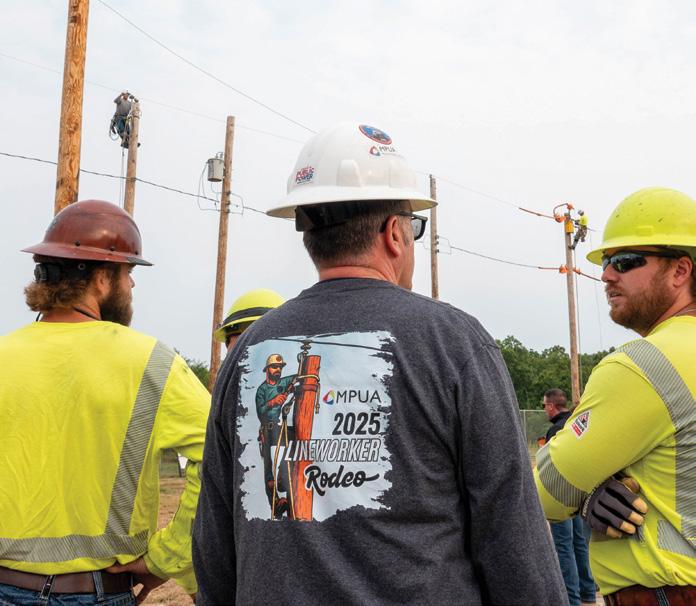
You’re Invited!
2026 MPUA
Lineworker Rodeo
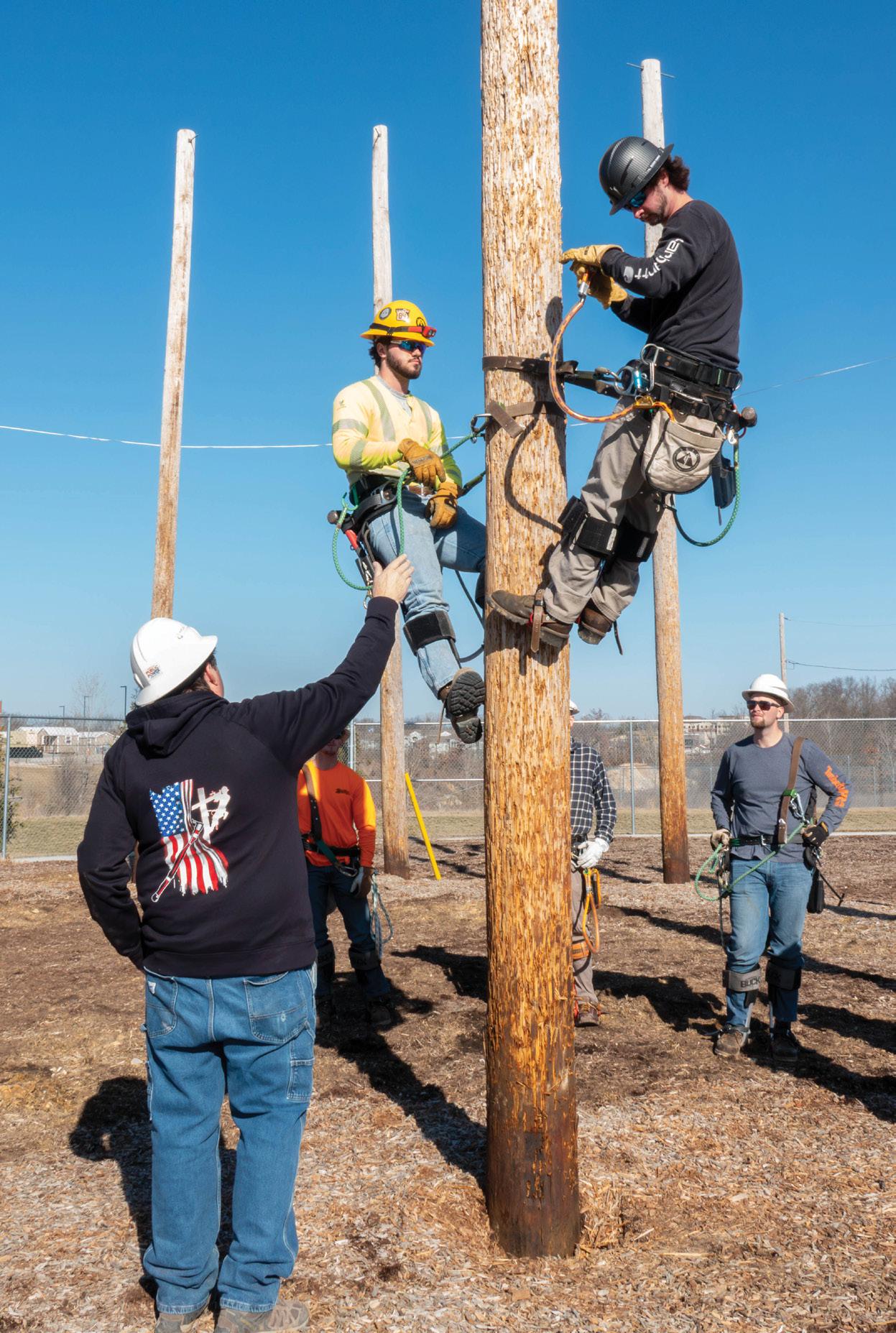
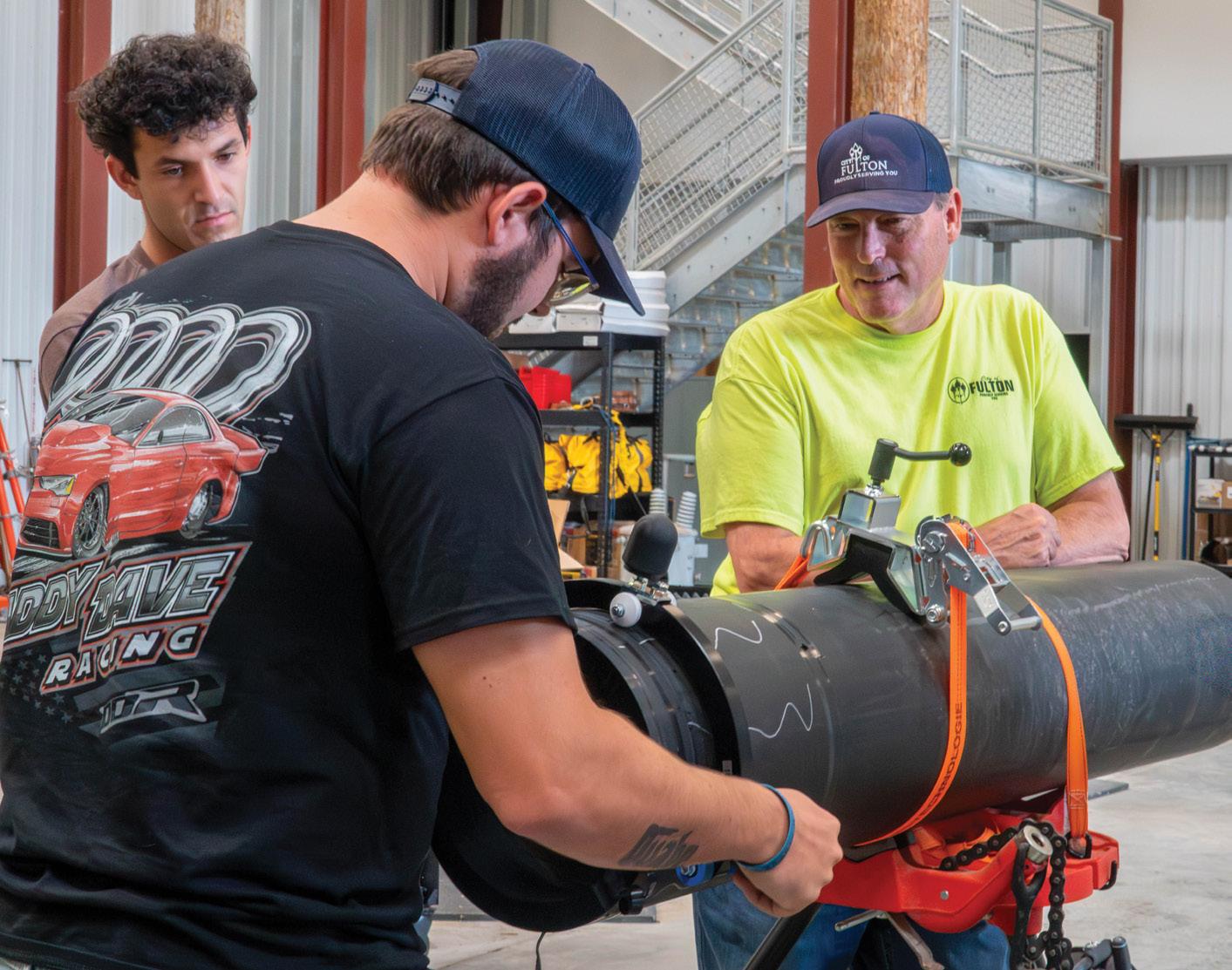
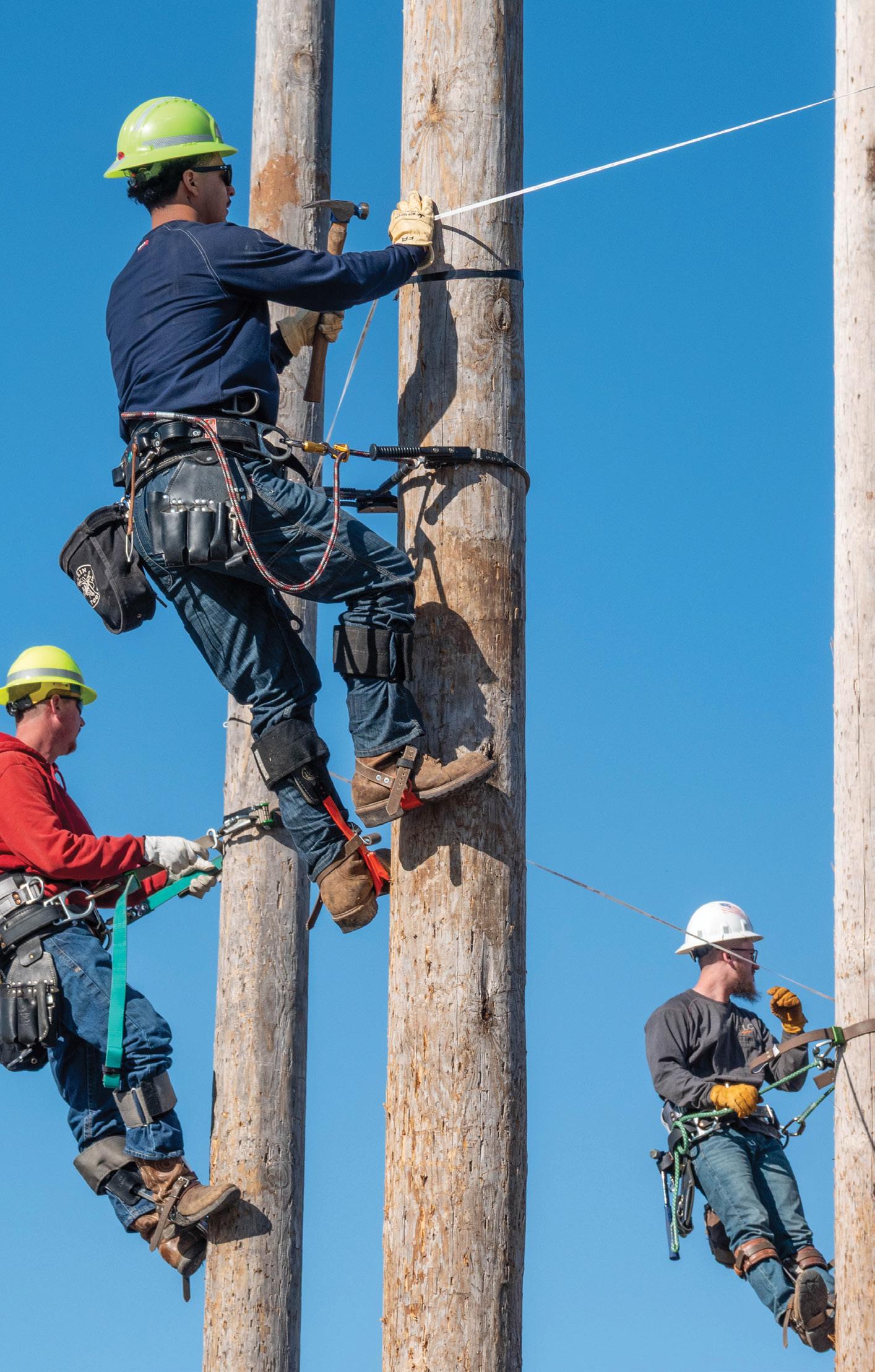
This is not their first rodeo. In fact, it’s their third. This fall, MPUA will again welcome the public to the MPUA Lineworker Rodeo. Free and family friendly, the competition showcases the skill and precision required of lineworkers.
Rodeo participation is open to employees of MPUA member utilities. After a day of written exams, the action moves outdoors to the training yard, where apprentices, journeymen, and teams compete in a variety of challenges. Individually and in teams, the participants vie for top placement in events such as the hurtman rescue, egg climb, pole top pin insulator replacement, and rope toss.
Friday, September 11, 2026
Starting at 8 a.m. and finishing around 2 p.m.
2200 Maguire Blvd., Columbia, MO 65201
Food trucks will be on-site!
Questions?
Contact info@mpua.org.
opportunities, which individual cities may struggle to provide on their own.
• Policy, regulation, and funding advocacy: As a collective voice representing public utilities at the state and federal levels, MPUA advocates for its members on issues related to policy, regulation, and funding, promoting the strength, resilience, and a ordability of community-owned utilities.
• Mutual aid network: With support available from 120 members, MPUA ensures that member communities are never alone in dealing with outages.
24/7 MONITORING AND EMERGENCY RESPONSE
MPUA operates a high-tech, tornadoproof control center that provides round-the-clock monitoring for outages during severe weather. It also monitors everyday loads and demands, power pools, generators, cybersecurity risks, and other elements that could impact a community’s utility operations.
When outages do occur, MPUA sta coordinate crews, equipment, and resources between communities so power and utility services can be restored as quickly as possible. Stodden explained that the extent of MPUA’s response varies with the event.
“We might put a call out for a single downed utility pole in a community where sta is not available. Other mutual aid calls can involve weeks of work,” he noted. “Ice storms are particularly interesting, since they can impact a large area and utility teams may need to take care of their hometown before dispatching to help others.”
BUILDING MISSOURI’S WORKFORCE
Community utility workers from across Missouri, as well as a few other areas, come to the MPUA campus to advance their skills and professional qualications. Afterward, they return to their hometowns better prepared to provide safe and e cient service — and help prevent outages. Some training opportunities are in utility-speci c disciplines, such as linework, natural gas operations, drinking water/wastewater treatment, and broad-
band. MPUA also o ers broader skill development in areas such as supervisory leadership and customer service.
One of MPUA’s most robust training programs is the Apprentice Lineworker Program, which provides intensive, hands-on training for students with various levels of experience. e four-year program typically includes about 180 apprentices, with approximately 35 graduating to journeyman status each year.
Training Manager Mark Mustain, who leads the program, said he has seen increased interest in utility careers over the past few years. “Men and women are seeking secure, good-paying jobs that give them the opportunity to be outdoors and not sitting at a desk all day,” he said.
MPUA also hosts an annual conference for utility professionals. e conference, which focuses on fortifying hometown utilities through educational sessions and local economic development strategies, brought 350 attendees to Columbia last year.
NOT YOUR AVERAGE CORPORATE CAMPUS
e MPUA training campus is no ordinary educational setting. Outside the massive training facility, a eld of utility poles and equipment allows for training in real-world conditions. Inside it are power stations, utility trucks, testing systems, safety equipment, and more utility poles. e adjacent conference center offers classrooms and an auditorium with tiered seating and a complete suite of media equipment.
Beyond training, the MPUA facility serves the local community. Several spaces — including the auditorium, boardroom, dining area with catering kitchen, and outdoor patio — are available for businesses and organizations to rent for meetings and events.
Although the utility poles aren’t available to rent for corporate team building exercises, they do take center stage during the annual MPUA Lineworker Rodeo, a high-energy skills competition showcasing the expertise of lineworkers. is event o ers a chance for the public to see the people and pro ciency behind the systems they depend on every day. CBT
Tony Galbreath Jr.
Director of Creative, American Outdoor Brands
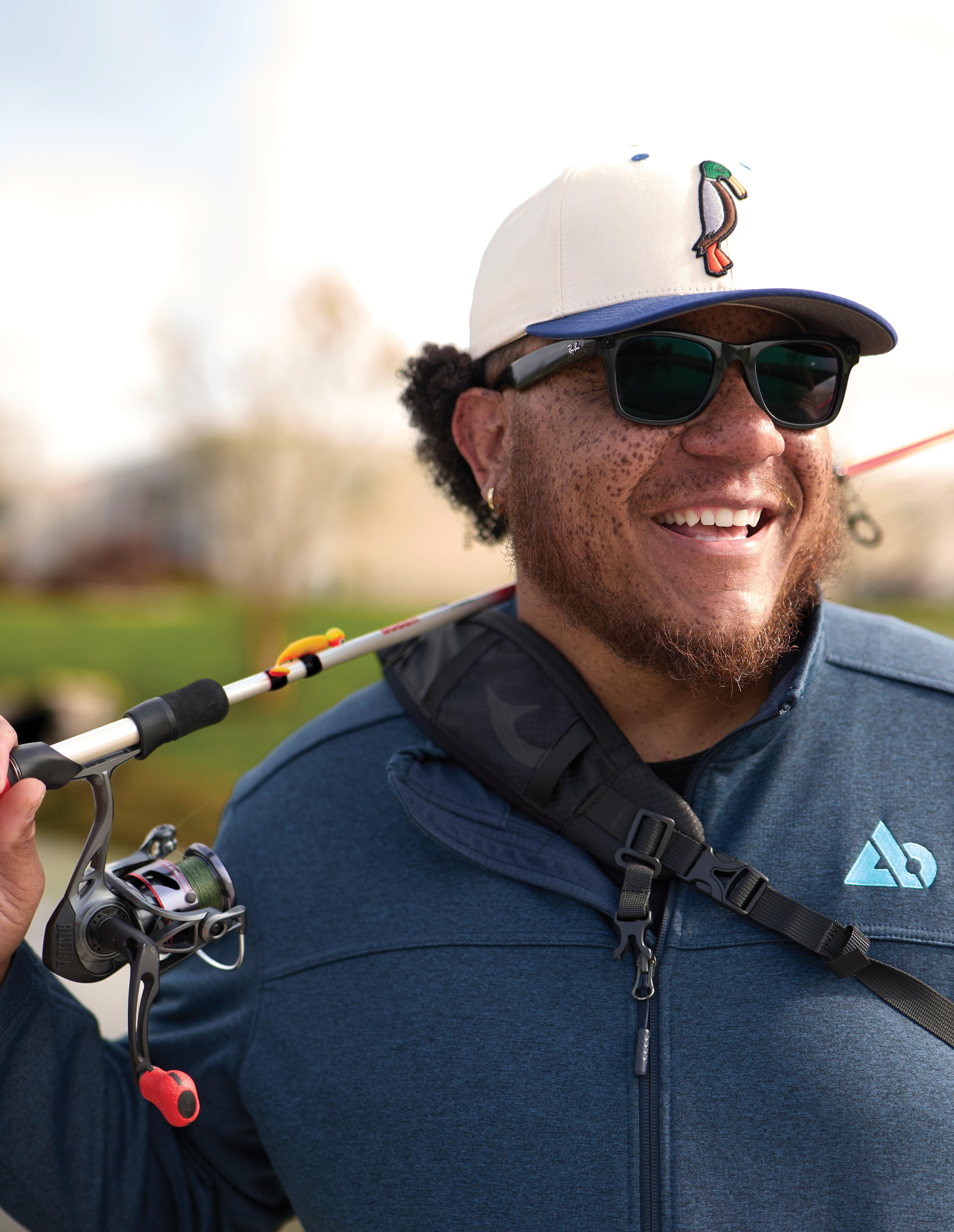
Job Description: I am the Director of Creative at American Outdoor Brands, an innovative publicly traded outdoor products company. My role is to lead the visual expression of the brands we serve across a portfolio of more than 20 outdoor brands. at includes overseeing brand identity, packaging, visual content, print and digital advertising, and both physical and digital merchandising, while leading a high-performing team of creatives, each bringing their own specialized discipline to the work.
by
Photos
Keith Borgmeyer
My role sits at the intersection of strategy and execution — making sure what we say and show aligns with the marketing strategy that drives business growth, and consumers connect through authentic creative output. We support many of the departments that move the business forward — from Marketing to Product Development — as an internal creative team — or, as I like to say, a creative squad.
Describe your professional journey and some highlights: My journey started with a deep desire to create. At a young age, I was the kid who took things apart to see how they worked and tried to put them back together in a new way. My parents were not always the biggest fans of my exploring the inside of a watch or battery-powered toy, but I was fascinated by how things came together.
My parents split when I was young, so by the age of 7 or 8, my weekdays were spent with my mom and my loving aunt and uncle in a duplex in Columbia, while my weekends were spent with my dad in the house he grew up in, built by my grandfather’s hands in Fulton. By high school, I was feeding that curiosity through robotics at Hickman High, electrical engineering, and drafting at the Career Center. I was chasing two di erent worlds at this time: the technical curiosity to understand how things work, and the creative energy of producing music with my cousins on the weekends. Each one stretched me in a di erent way. I was the rst rst-year student at the Career Center to place in regionals for drafting, and as our weekend dreams in music grew, I taught myself how to record and then started learning graphic design, photography, and videography to help promote artists. After high school, I attended Linn State Technical College and studied Mechanical Drafting. Worked in a few mechanical and civil drafting positions, then later returned to Columbia College to pursue a dual major in Photography and Graphic Design to keep sharpening my creative skills. While studying design, I had the opportunity to intern at the original company that would later become American Outdoor Brands. I took that
opportunity and had the privilege of growing from intern to designer, visual content producer, supervisor, manager, and now Director of Creative. Over the years, I’ve helped launch 130+ products a year across more than 20 brands, led over a dozen rebrands, and built one startup brand under our umbrella, helping modernize iconic brands for broader, more scalable markets.
One of the biggest highlights of my career was helping execute a full corporate rebrand in just a couple of weeks during the spin-o from Smith & Wesson, as American Outdoor Brands stood up as its own publicly traded company. Beyond the work itself, what I’m most proud of is helping develop creatives into multidisciplinary rock stars and building systems that enable creativity to scale and support constantly evolving crossfunctional needs.
Hometown: Columbia, Missouri
Years lived in Columbia: About 33 years
What was it like being the son of an NFL running back? Your father was a star at Mizzou, and then for the New Orleans Saints, Minnesota Vikings, and the New York Giants, helping the Giants win Super Bowl XXI. How cool was that? My dad’s NFL accomplishments and that lifestyle were over by the time I was born. My sister, who is nine years older than I, got to experience more of that in real time. For me, it was more about watching lm, hearing stories, and seeing how people responded to my father — not just because of what he did on the eld, but because of who he was in their lives.
Hearing stories from my dad and from others about my dad showed me early on what discipline, preparation, and consistency really look like. But more than that, it taught me that success comes in many forms, and what lasts forever is not just what you do, but who you are. A lot of the stories people shared were not really about football. ey were about his character, his heart, and the impact he made on others.
at shaped me. It taught me to respect the work behind the spotlight and to think
deeply about the kind of person I want to be remembered as. My father always encouraged me to nd my own path rather than trying to replicate his. What he accomplished has always made me proud, but now that I’m older, what I’m most thankful for is the love, hard work, morals, and integrity that both he and my mother poured into me.
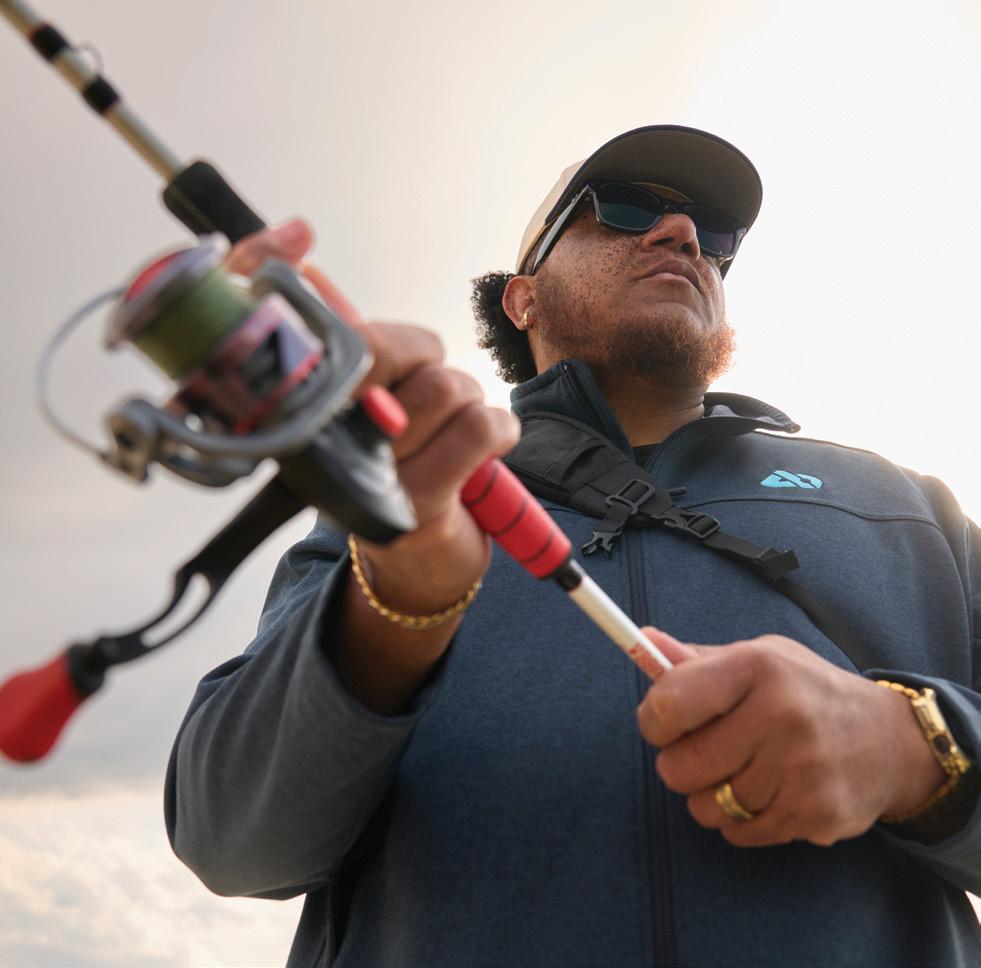
Where does your love of the outdoors and your interest in fishing and hunting come from? It comes from a mix of upbringing, curiosity, and the need for space to think. As a kid, I was often told to get out of the house and nd something to do, and the outdoors became a place where I could reset, process, and nd peace. My parents split when I was around 7, and some of my clearest moments of thinking through life happened outside, usually with my best bud, our 120-pound German Rottweiler, Westly.
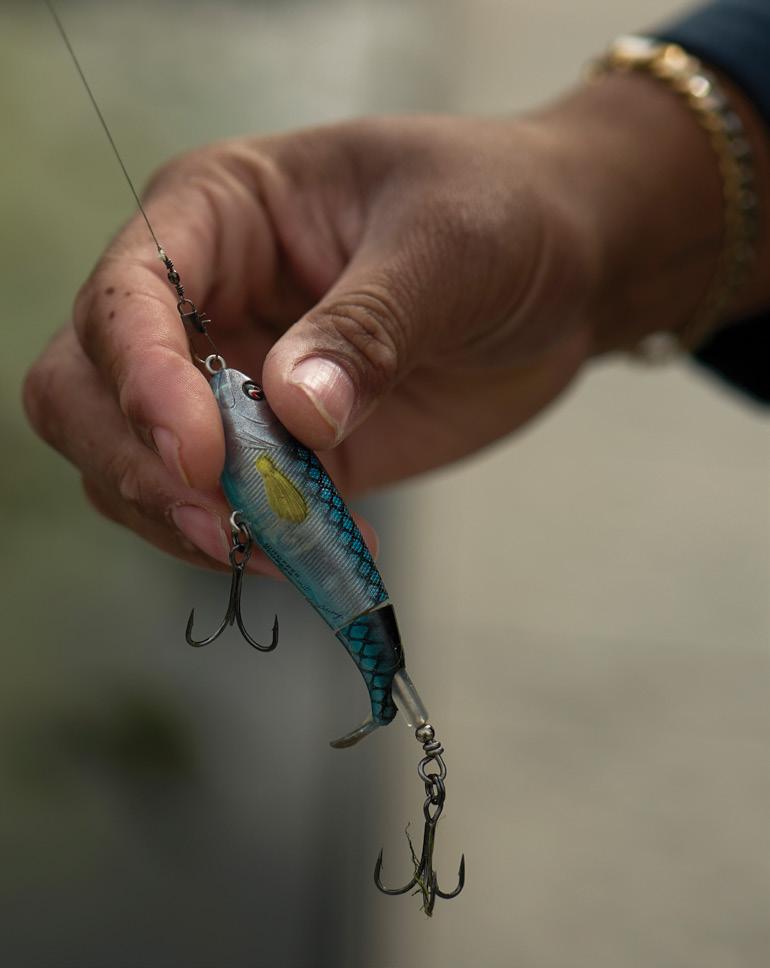
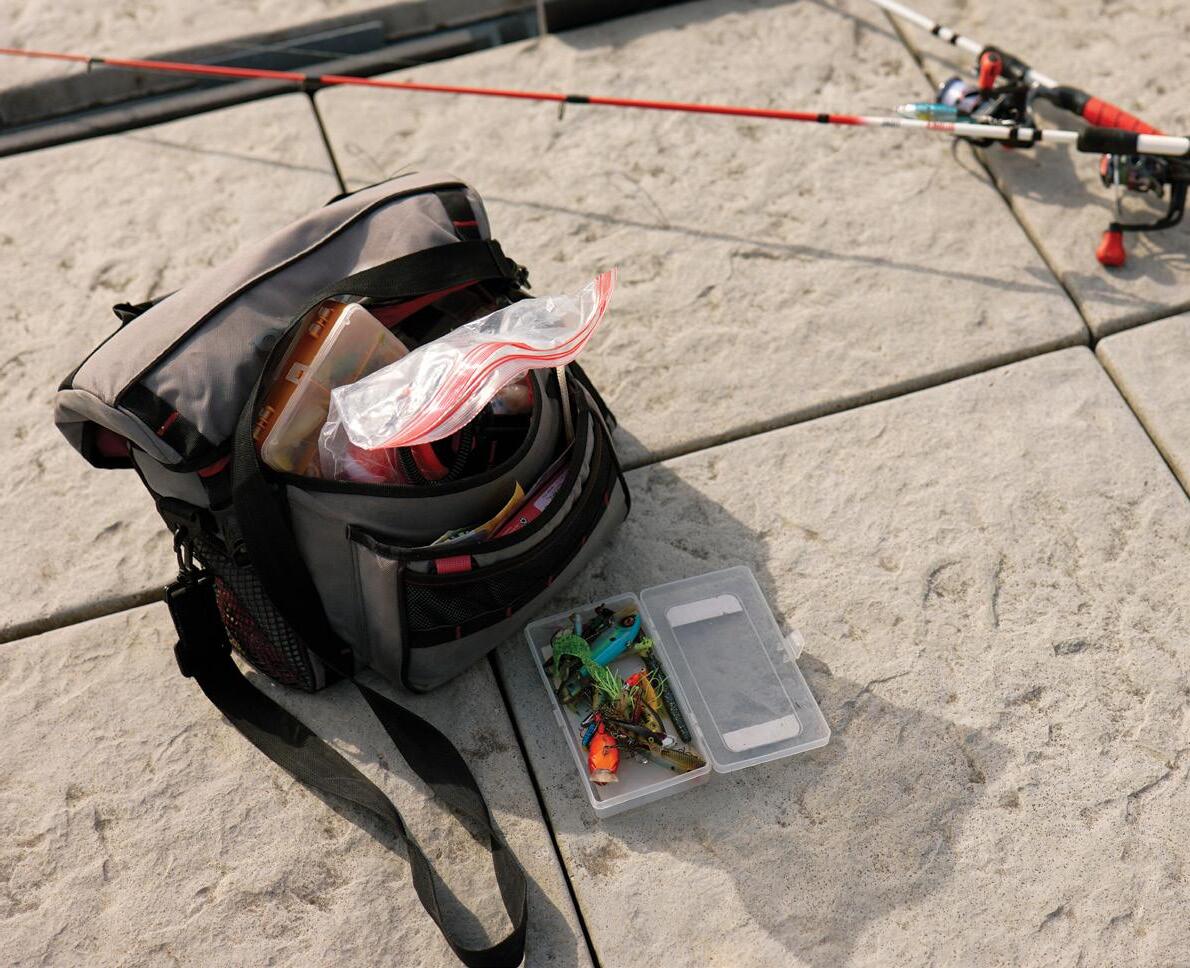
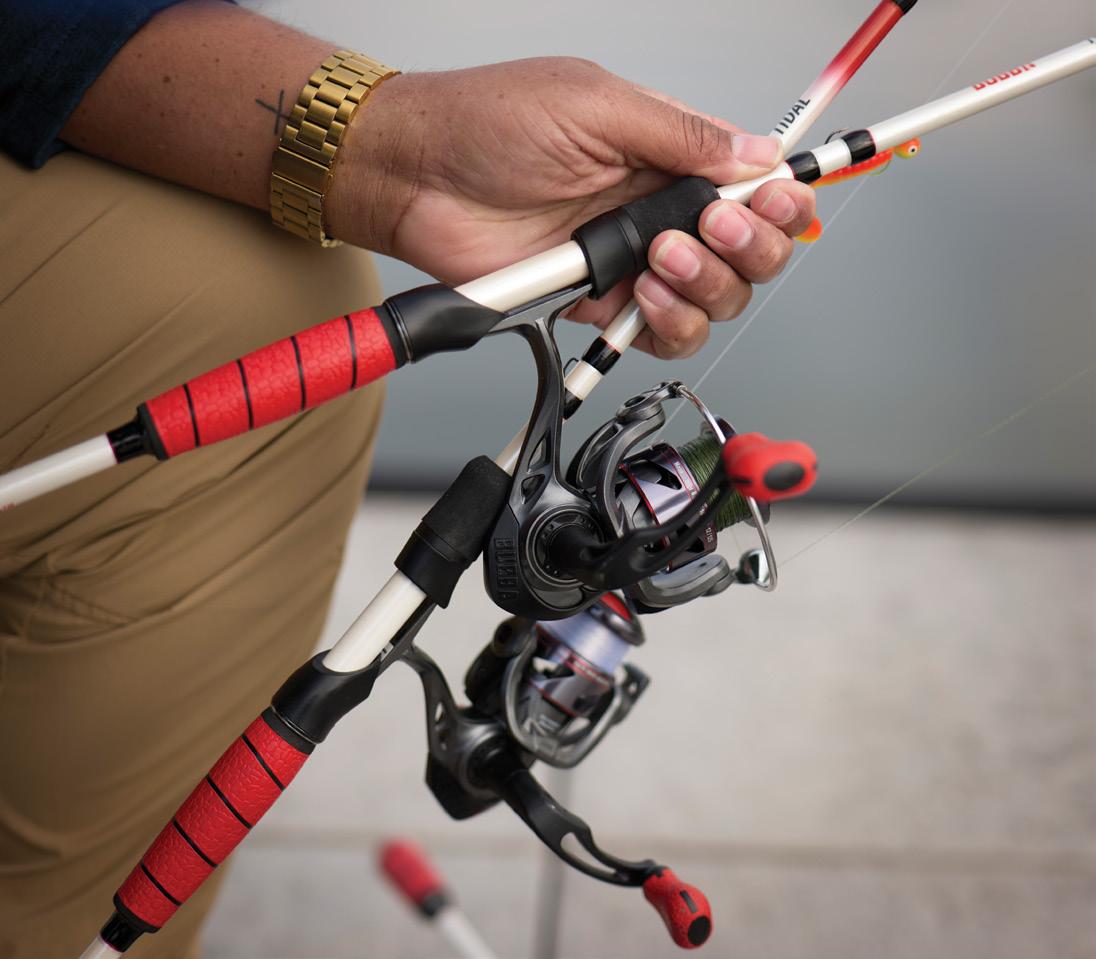
Some of my favorite memories are shing with my dad, Uncle Rex, and my cousins, talking trash about who was catching the most or the biggest sh. Over time, it became more than a hobby. It became part of how I process life, create, and connect with both myself and others. Hunting came later, after a few people generously took the time to show me the ropes. Working at an outdoor company made me want to understand the deeper meaning behind the activities we serve. e more curious I became, and the more time I spent around people willing to share their knowledge, the more I was exposed to the worlds behind our brands. After that rst hunt, I was hooked. I loved the challenge, the discipline, and the process — from learning how to make an ethical harvest to processing your own meat and feeding your family. It all felt natural and grounding.
Favorite quote or motto: “Transitioning from tting in to standing out.” I had it tattooed on my arm at 17, and it has remained a reminder to never settle into the crowd and to keep evolving into something better.
Favorite volunteer/community activity: Recently, a few peers and I started a nonpro t organization
called the Mid-Missouri United Sports Foundation. Our focus is on developing young athletes through sports to build character and con dence, expand opportunities, and help remove barriers to participation.
We are intentionally starting small so we can build a strong and healthy foundation rst. Our goal is to grow athletes both on and o the eld while building meaningful local partnerships that help reduce the nancial barriers families often face. Our rst goal is to raise enough support to enable our members to participate for free in our fall tackle football season this year. Long term, we hope to continue growing our volunteer base, partnerships, and opportunities for families in our community.
Tell us about some of your other vocational and entrepreneurial aspirations. I’m currently working on a new experiential startup business concept called Got Game Live, designed to bring fun, engaging entertainment to youth and families for special events and celebrations. It’s something I hope to get o the ground soon and has multiple phases to its growth potential.
I’m also writing a book centered on creative leadership, individuality, and helping people embrace the value of standing out. I’m still in the early stages of that process, but it’s something I care deeply about.
What do you want your legacy to be? I want my legacy to be rooted in kindness, helpfulness, and thoughtfulness. I hope I instill in my kids and the people around me that it is okay to be kind and okay to want to help. When those things are shared between people, the world becomes a little easier to navigate.
I’m naturally more introverted than people tend to expect, and I’m comfortable being alone. But I also believe we were made for community. I know how hard it can be to keep pouring into others when life can feel draining, so I lean heavily on my faith to help ll my cup and protect my heart. In a world where many people are taught to put themselves rst, I hope I can make even a small dent by encouraging more people to give, uplift each other, and love their neighbors. I’m grateful for the people in my life who model that for me every day, whether through sharing wisdom, o ering prayer, or simply showing up when it matters.
How would others describe your leadership style? I’ve been told I lead with empathy. I try to understand the people I lead, what drives them, and what kind of environment helps them do their best work. I believe in building trust so people feel con dent bringing their ideas forward.
At the same time, I believe in accountability. I want the people I lead to
know where the bar is set, and I want to earn their respect to the point that they choose not to go below that bar. I believe the best results do not come from yelling or demanding, but from helping people see how capable they really are and calling them up to that level. I can be stern when needed, but my goal is always to lead as a servant leader — with empathy, accountability, and humility.
A Columbia businessperson or leader you admire and why: My wife, Alyssa Galbreath, who serves as head principal at Battle High School. I admire the way she works to build a community that is safe, nurturing, welcoming, and accountable. I get a front-row seat to the level of care, time, and e ort she pours into her team and students. She is deeply committed to creating an environment where young people can grow, and it is a job I tell her all the time I could never do — but I’m incredibly proud that she does.
Why you are passionate about your job? It feeds so many of my interests. I’m blessed to see ideas begin as solutions to problems and then be developed by our incredible product team into physical products. en I joy when it’s our turn to visually bring them to market for consumers to enjoy. It allows me to take ideas and turn them into something real — something people can experience, connect with, and remember.
Creativity has always been my outlet, and being able to do that at scale in categories I genuinely enjoy while also developing others is what drives me.
If you weren’t doing this for a living, you would be … Building something that still revolves around creativity and experiences — whether that’s an entertainment concept, a creative agency, or a platform that brings people together.
It seems that we all have competing priorities these days. How do you prioritize your priorities? My priorities are ltered through value and impact. In my personal life, that may mean being present for my sons’ growth, whether in school, sports, or simply creating core memories together. In business, it means focusing on what will drive the greatest impact — whether that is revenue, people, or long-term growth. Clarity and structure matter, but so does knowing when to adjust. I try to make sure my time aligns with what matters most.
Biggest lesson learned in your working life: Execution creates clarity, and it is okay to ex, but never to break. You can think and plan all day, but real progress happens when you put ideas into motion. Prototype quickly and prototype often.
I’ve also learned that believing your idea is the best can keep you from
discovering something better. Variety, perspective, and collaboration matter. Creativity is not something you ip on with a switch. It comes from experience, seeing, listening, and feeling, and we all bring those to the table that can impact a project tramindouly. Let each voice be heard and take the nuggets that matter from those. at has taught me to lead with empathy, stay open, and work to understand the needs around me so the best work can come forward.
Your greatest strength: One of my greatest strengths is hearing what is not being said, especially from people outside the creative department. I pay close attention to body language, tone, and the deeper meaning behind the words in a meeting. en I try to quickly visualize those key insights and turn them into an aligned strategy and creative direction. at ability helps reduce unnecessary rounds of revision and keeps teams moving toward the real goal.
Your greatest challenge: My greatest challenge is balancing high expectations with time, capacity, and resources. ere is always more opportunity than there is time, so prioritization becomes critical. A lot of the tension in creative work comes from knowing what is possible while also knowing what the timeline or scope realistically allows. Managing
that gap well is something I am always working to improve.
Tell us something about American Outdoor Brands that most people might not know. One thing many people may not know is that we recently opened an AOB retail store at our location, where the Columbia community can shop our brands and nd discounted prices they may not be able to get anywhere else.
What you do for fun: I enjoy spending time outdoors with my boys, especially when we can be intentional and unplug a bit from the noise of daily life. I also enjoy shing and traveling (and eating at all the cool places).
Who makes up your family: My wife, Alyssa, our two sons, Tony and Tayton, and our spoiled Cane Corso, Zoey.
Most people don’t know that you: As a teenager, I was shot while trying to break up a ght and nearly did not make it. at experience became one of the greatest testimonies of my life and has shaped the way I speak to and encourage young people today. It’s odd to think of a traumatic moment like that being a blessing, but it truly strengthened my relationship with God and gave me clarity about the world around me. CBT
Donors Have Much More Than Money to Give Nonprofi ts
BY JAIME FREIDRICHS

DONORS ARE ONE OF THE greatest untapped resources in the nonpro t sector. Assuming that their sole value to a nonpro t is writing a check or clicking the “Give Now” button is a disservice to both parties.
Donors and nonpro ts alike can fall into the trap of thinking that money is all a nonpro t needs from its supporters. But only reaching out to ask for money means missing out on what donors have to o er beyond nancial contributions. ey also have passion for the cause, wisdom from their experiences, and unique perspectives that can inspire others. Most donors are as happy to share these gifts as they are to make a donation.
One way nonpro ts can ask donors to help is by recommending the cause to others. ey know people the nonpro t doesn’t know yet. When they discuss a cause they support with their family, friends, and colleagues, they bring in whole new audiences. is strategy is especially appealing to donors who are concerned about nonpro ts spending too much on fundraising, since it’s absolutely free!
Reminding donors of this power is as easy as adding an occasional line to donor communications or mentioning it in conversation. “ ank you for the wonderful di erence you’ve made with your gift. Sharing your belief in our work with others can bring even more resources to this mission.”
Another asset donors bring is their areas of expertise. Knowing a little about donors’ backgrounds reveals all sorts of opportunities for them to provide useful insights. Recently, a nonpro t I’m working with was seeking a more a ordable phone solution. A chance interaction with a donor introduced them to an option they’d never heard of. e donor had just led a similar conversion at his workplace, so he had many insights to o er.
Even when donors don’t have particular expertise the nonpro t needs, their opinions can be helpful for making better decisions. When nonpro ts ask me fundraising questions, my frequent answer is, “Ask your donors!” Should we change how we do this event? Should we incorporate both of these needs into a single fundraising campaign? Should we send our annual report as an email or mail a hard copy? Donors are the people who will ultimately engage with these decisions, so getting early input from a subset of trusted, engaged supporters is very valuable.
Asking donors to tell others why they choose to give is another great way to involve them beyond giving, especially when the goal is to raise more money. ey can respond in writing, with a voice memo, or even through a short video. Sharing these stories in the community can help inspire others to give. Sharing them internally can be just the encouragement needed for board members or nonfundraising sta to get involved with fundraising. Donor stories make philanthropy feel more tangible. e idea of fundraising feels much less intimidating when we understand that people are happy to give and that it even brings them joy.
Donors give to nonpro ts because they believe in the mission. By inviting them to also contribute their knowledge, networks, and stories, we deepen the relationship and make them true partners in our work. e question isn’t whether donors have more to give. It’s whether they feel invited and empowered to do so. CBT

Jaime Freidrichs is a fundraising coach who specializes in helping small-and-mighty nonprofits.
Why Salary Transparency Is Good for Everyone
BY KELSEY RAYMOND
A STUDENT RECENTLY CAME TO ME with a question I’ve heard many times: “A company asked me my salary expectations. What do I tell them?”
It’s a simple question with a complicated answer. e more I sit with it, the more I believe it can teach us something important about how we do business — and how we could do it better.
First, the advice I gave him: A job o er is not just a salary. Before you even think about a number, get the full picture. Are there bonuses or variable compensation opportunities? What are the hours and the work-life balance really like? What bene ts are included: healthcare, retirement, maybe even a gym membership? And critically, who will your direct manager be? e total value of a job is a package, not a single line item, and smart candidates should be evaluating all of it. en I told him something that might sound controversial: Do not give them a number rst. Ask them what the range is.
Here’s my thought process. e employer knows exactly what this job is worth to them. ey’ve budgeted for it. ey know what others in the role are making. e candidate — especially a new graduate, but really anyone who hasn’t worked in the exact eld — is essentially guessing. When one side of a negotiation is guessing while the other has all the information, can we really even call that a negotiation?
At this point I expect employers to retort, “But the candidate can do research! ey have Google and Glassdoor. Heck, can’t ChatGPT just give them a range to ask for?” To which my answer would be: Why should they? If you as the employer know the amount you have budgeted for this role, why make them do this little dance?
I’ll be honest: I say this from personal experience on both sides of the table. Early in my years as a business owner, I did the same thing. We put candidates in the position of throwing out a number rst. I’m embarrassed by it now. I’m grateful to my previous head of HR, Courtney Mudd, for helping me see how wrong this approach was for multiple reasons.
Not only was it unfair to candidates, it also had us wasting time on way overquali ed candidates whom we couldn’t a ord because we weren’t listing the pay in the job description. It wasn’t a hard change to make. We simply started sharing a salary range in the job descriptions, and it made for better, more trusting work relationships from day one.
e data makes a compelling case for why this matters beyond any single conversation. Research from the National Bureau of Economic Research found that when there’s no explicit statement about a wage range, men are signi cantly more likely to negotiate than women — but when the salary information is made clear, that difference largely disappears. In other words, ambiguity doesn’t create a level playing eld. It advantages people who are already more comfortable pushing.
e downstream risk to employers is real. When candidates are left to guess, companies can end up with wide pay discrepancies among people doing identical work. is creates both morale issues once the employees nd out — because they will — and potential exposure to equal pay complaints.
Sixteen states have now passed pay transparency laws requiring salary ranges
in job postings, and more are on the way.
e trend toward wage transparency is gaining momentum, with states like Illinois joining the list as recently as 2025 and others like Texas, Florida, and Georgia reviewing similar legislation, according to Paycor. Legislators aren’t doing this to be punitive toward employers. ey’re responding to a real market failure.
For employers who haven’t been required to change yet: Consider getting ahead of it. Listing a salary range in your job postings is a signal that you respect candidates’ time and your own. It attracts more applicants, lters for better t, and starts the employment relationship on an honest footing.
And if you’re a candidate who gets pushed to name a number rst anyway? Take the advice of businesswoman Cindy Gallop: “Always ask for the highest number you can say out loud without actually bursting out laughing.” Because if the employer won’t tell you what the job pays, you have to start high.
If you’re an employer who is still questioning the merits of pay transparency, I challenge you to ask yourself, “Do I care about building trust with my employees? Is feeling like I ‘won’ in the salary negotiation because the other person had less information a good way to build trust?” e answer is obvious. Just put the pay range in the job description and stop wasting everyone’s time. CBT
Kelsey Raymond is the executive director of entrepreneurship programs at the University of Missouri.
Mizzou Student Entrepreneurs Are Creating Their Own Paths
BY TYLER JAMES
THERE’S A MOMENT EVERY YOUNG ENTREPRENEUR KNOWS WELL: the one where the idea feels airtight, the energy is high, and then reality quietly reminds you that enthusiasm alone doesn’t build a business.
I’ve lived that moment more than once. As a business student at the University of Missouri, vice president of the Mizzou Collegiate Entrepreneurs Organization (Mizzou CEO), someone involved in multiple startups, and founder of an a liate marketing business built around my content creation brand, I’ve come to believe that entrepreneurship among college students isn’t just a trend. It’s a proving ground. And Columbia is one of the better places in the country to prove yourself.
e roadblocks young entrepreneurs face aren’t always the obvious ones. Funding is tight, yes. But the deeper challenge is credibility. When you’re 20 years old building something from scratch, you’re not just selling a product or service. You’re selling yourself as someone
capable of executing. at’s a harder sell than most people admit.
Access to mentorship is another gap that rarely gets discussed openly. Established entrepreneurs are busy, and breaking through to genuine, sustained guidance is genuinely di cult. Many students I know have incredible ideas and zero runway to connect them to people who could help those ideas y.
en there’s the learning curve of actually running something. rough events like Missouri Startup Weekend, I’ve watched sharp, motivated students discover just how fast a plan needs to adapt when it meets the real world. at kind of pressure-tested iteration builds resilience that a lecture hall simply can’t replicate.
What Mizzou and Columbia’s ecosystem do well is create collision points: spaces where students, professionals, and ideas can run into each other productively.
Mizzou CEO has been the single most formative experience of my academic career. As vice president of the program, I’ve had a front-row seat to what happens
when you put driven students in the same room as real business leaders. It’s not a class. It’s a cohort model built around exposure to ideas, to challenges, and to people who’ve already navigated the road you’re on. For students serious about entrepreneurship, it’s the closest thing to an on-ramp that Mizzou o ers.
My own path has been shaped as much by that environment as anything else. Running an a liate marketing business, managing content, building an audience, and monetizing across platforms has taught me more about customer psychology, digital strategy, and showing up consistently than any textbook. It started as a passion project and became a real education in what it takes to build something people actually care about.
Young entrepreneurs today have access to more resources than at any other time in history. AI tools that used to require entire teams can now be operated by one motivated person. Social media has made personal branding accessible to anyone with a phone and a point of view. e barrier to entry has never been lower, which means the barrier to standing out has never been higher.
e students coming out of Mizzou right now aren’t waiting to be handed a path.
ey’re building one. I see it in the founders around me, in peers pitching at competitions, and in students taking internships not just for the résumé line, but for the skills and systems knowledge they’ll carry into their own ventures someday.
Columbia has the community. Mizzou has the talent. e question isn’t whether young entrepreneurs here have what it takes to succeed. It’s whether the broader business community will meet them halfway.
If you’re an established professional reading this, that’s the opportunity on your end. One conversation with the right student can change a trajectory. I know because I’ve been on the receiving end of those moments, and they’ve shaped everything. CBT

Tyler James is vice president of the Mizzou Collegiate Entrepreneurs Organization.
Welcome to the Zero-Trust World
BY J. SCOTT CHRISTIANSON
IN MARCH 2025, a nance director at a multinational rm in Singapore joined what seemed like a routine Zoom call with senior leadership. e CFO was there. Other executives appeared on screen. Everyone looked and sounded right. e director authorized a $499,000 fund transfer. Every person on that call was a deepfake. e entire meeting was fabricated, and by the time the company discovered the fraud, the money was gone. is wasn’t an isolated incident. In 2024, engineering rm Arup lost $25 million to an identical scheme — a multiperson video call where every participant was a deepfake. e employee had initially suspected a phishing email, but seeing familiar colleagues on a live call overwhelmed his caution. According to the Wall Street Journal , AI-generated executive impersonations led to more than $200 million in fraud in the rst quarter of 2025 alone.
Ferrari narrowly avoided a similar attack only because an executive asked the fake CEO a personal question it couldn’t answer — what book had the CEO recently recommended? at’s what the security world calls multifactor authentication: verifying identity through more than one channel. We’re all used to this when logging into a bank account and getting a texted code. But applying that same skepticism to a phone call or video call? at seems awkward and insulting, so most people will not do it.
THE THREAT IS MOVING DOWNSTREAM e technology behind these scams is disturbingly accessible. A voice can be cloned from as little as 60 seconds of audio scraped from a YouTube video or a company’s website. I made a deepfake of my own voice using audio I found on YouTube, and it was convincing enough to be alarming.

ese tools are constantly improving and are essentially free.
Right now, the most sophisticated deepfake scams target large enterprises because the payo s are enormous. As those companies invest in veri cation and training, though, scammers will move downstream: to smaller businesses, local rms, and individuals. A scam that nets a few thousand dollars from a business owner works just ne when it can be repeated at scale.
And it’s not just businesses that will be targeted. A scammer could clone your voice and call your mother: “Mom, I was just arrested, and I need you to talk to this lawyer.” e hando to a live person makes it harder to detect, and the script is engineered to bypass critical thinking through urgency and fear.
THE LIAR’S DIVIDEND
e direct nancial threat is alarming enough. But deepfakes create a subtler and potentially more damaging problem: the “Liar’s Dividend.” Once deepfakes become common knowledge, their very existence creates a new kind of uncertainty. When anything can be faked, everything can be denied. Real video can be dismissed as AI-generated. Authentic audio can be waved away.
We’re already seeing this: When real footage surfaces that’s politically or
legally inconvenient, the rst defense is increasingly “ at’s a deepfake,” and it’s an e ective response because the audience has no way to know for sure. Deepfakes don’t just inject falsehoods into our information environment — they give anyone a ready-made excuse to dismiss evidence they don’t like. e result is an erosion of trust that goes far beyond any single scam.
THE ZERO-TRUST WORLD
We now live in what I call a zero-trust world, where it’s increasingly di cult to determine what’s real and whom to trust.
For businesses, the response is verication. For any nancial transaction initiated by phone, email, or video, verify through a separate channel. It feels awkward, but it needs to become the default for anyone handling money or sensitive information. You can also practice “digital camou age”: limiting the personal information available about you and your executives online. You may not be able to make yourself unfakeable, but you can make yourself harder to target.
In my next column, I’ll o er a practical framework for businesses navigating our zero-trust world. CBT
For links, references, and to contact Prof. C, visit profcnews.com
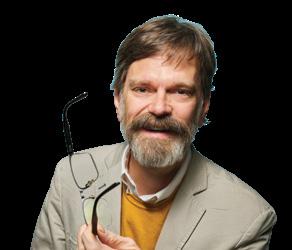
J. Scott Christianson — aka “Prof C” — is the former director of Mizzou’s Center for Entrepreneurship and Innovation.

WHAT THE PROS KNOW BUSINESS

RIGHT MESSAGE. RIGHT TIME. RIGHT PLACE.
Device ID Targeting Helps Local Businesses
Compete Smarter
By Charles Bruce III charles@comocompanies.com
For small and local businesses, marketing works best when it reaches the right person at the right moment. That is exactly what makes Device ID targeting such a powerful tool.
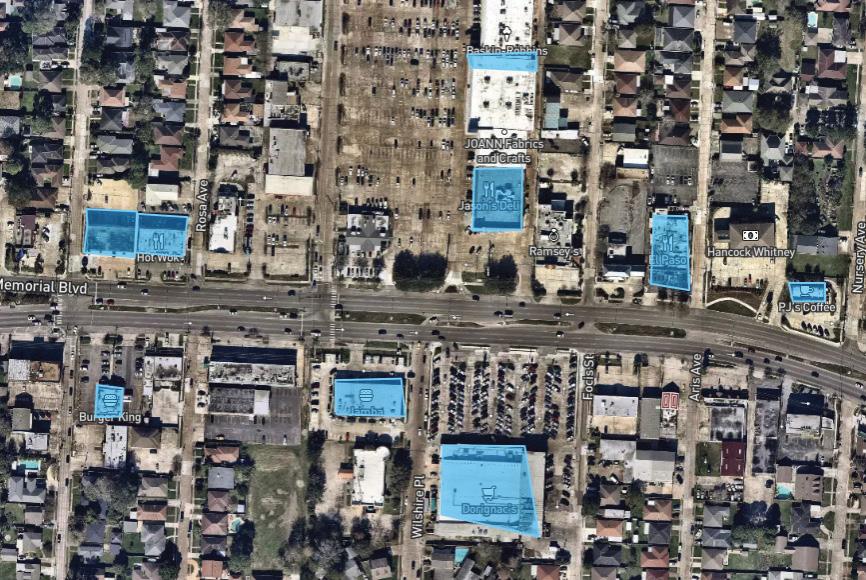
Device ID targeting allows advertisers to reach people based on the mobile devices they carry with them every day. In simple terms, it helps you connect your ads to real-world movement and behavior. Instead of casting a wide net and hoping the right audience sees your message, you can focus your budget on people who are already showing signals of interest.
Here is where it gets especially interesting for local businesses: you could serve your ad to someone standing inside your competitor’s business and then continue marketing to them as they move through their day, even tracking whether they later visit your storefront. Yes, it may sound a little creepy. But, this is the kind of strategy that turns your advertising into something much more intentional.
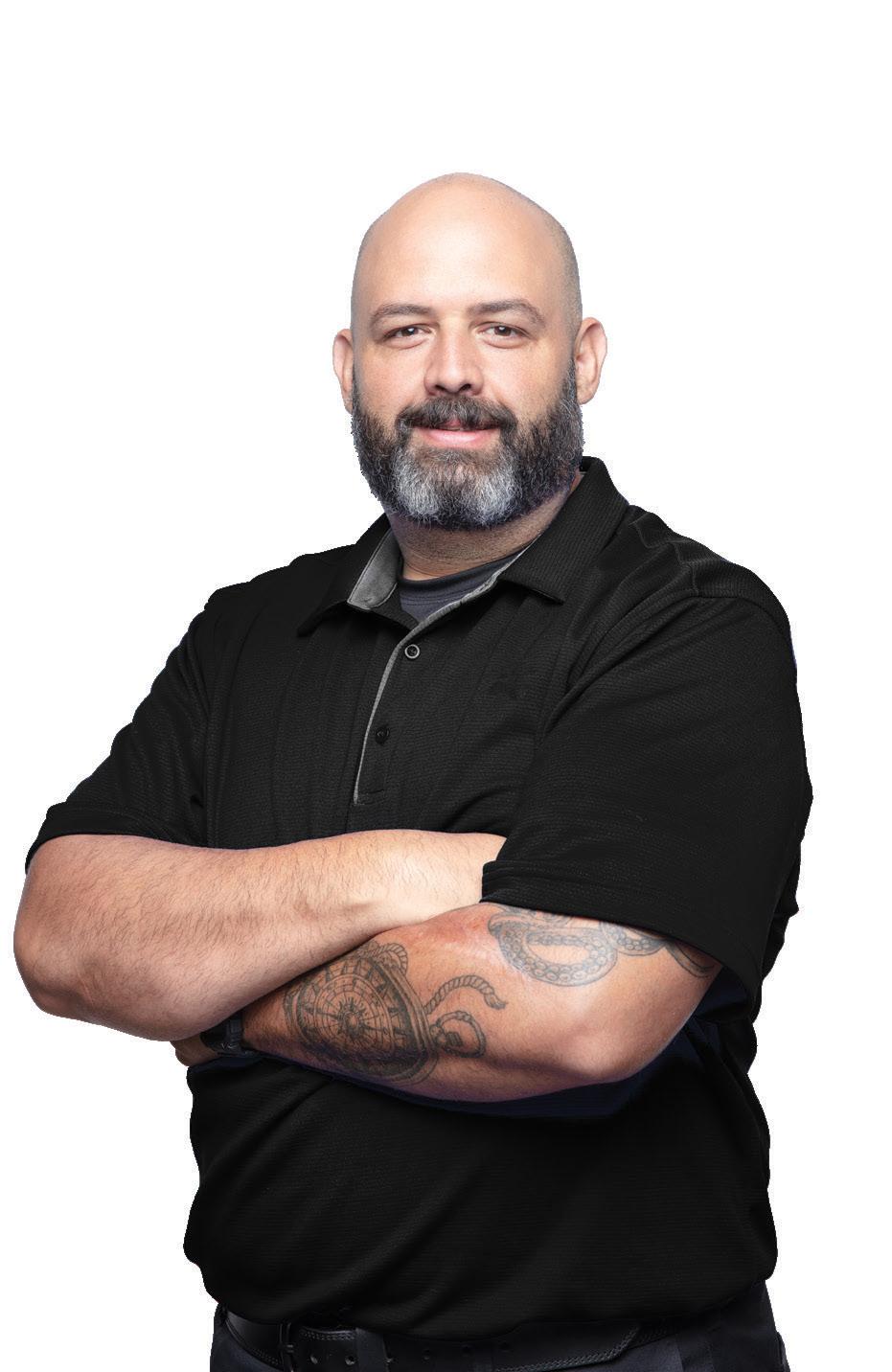
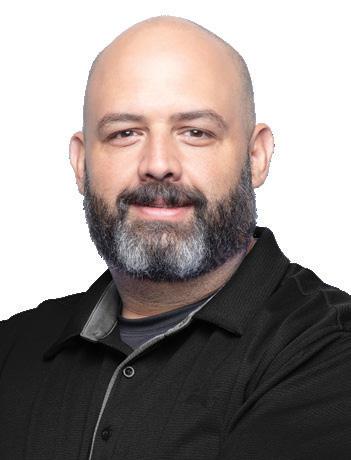
CHARLES BRUCE III Director of Client Relations
Charles Bruce is the Director of Client Relations for COMO Companies, which owns COMO Marketing, COMO Magazine, and COMO Business Times. He received his Bachelor’s Degree in Business Administration and his MBA from the University of Dubuque. When Charles isn’t being the life of the party, he can be found climbing a large mountain. In December 2023 he climbed the Imja Tse mountain in Nepal.
DID YOU KNOW?
Foot traffic conversions refer to the number of people who visit a physical store or location after engaging with your digital ad or campaign.
It is the right message at the right time kind of marketing.
Imagine you own a local salon, fitness studio, restaurant, or car dealership. Rather than spending money trying to reach everyone in town, you can zero in on the people most likely to take action. If they are already visiting businesses like yours, they are in the buying mode. Your ad can show up when your brand has the best chance to make an impression.
of shoppers visited a retailer after receiving a location-based message.
For local businesses, that means less wasted ad spend and more meaningful opportunities to connect. It also means your marketing
can work harder. You are not just building awareness. You are reaching people when they are actively making decisions.
At COMO Marketing, we love strategies that make local advertising feel smarter, not just louder. Device ID targeting gives businesses a way to compete with more precision, stay visible in competitive spaces, and better understand what is actually driving foot traffic.
For smaller businesses, that can be a game changer. You do not always need a bigger budget to compete. Sometimes you just need a better strategy.
And when your marketing reaches the right person at the right place and the right time, that is when real results start to happen.
THE SMALL BUSINESS OWNER’S GUIDE TO BUILDING CREDIT THAT WORKS FOR YOU
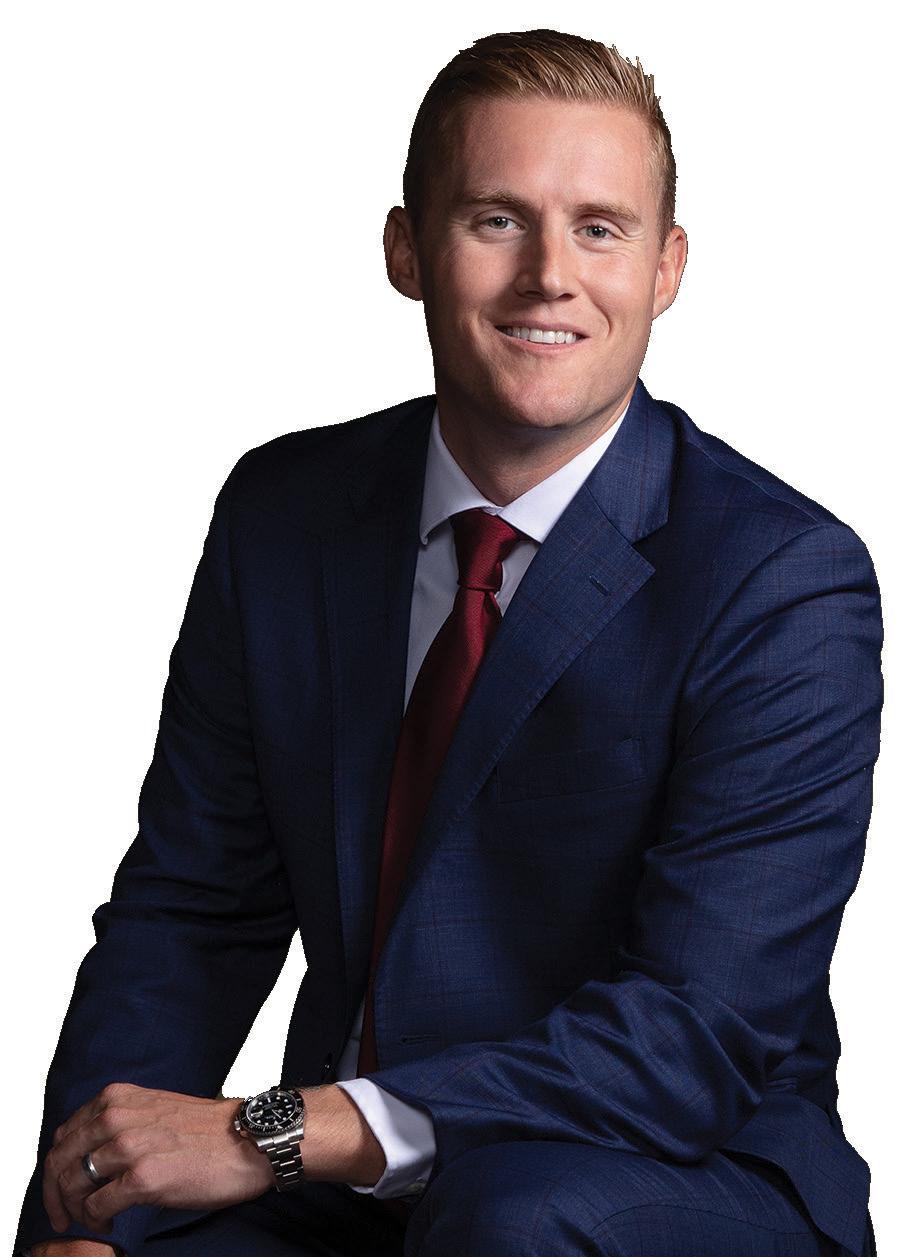
By Brad Roling broling@midambk.com
For many small business owners, credit is easy to overlook, right up until you need it. Whether you’re applying for a loan, working with vendors, or thinking about what’s next for your business, it plays a bigger role than you might expect. The good news is that it’s not out of your control, and you can build it over time with a few intentional steps.
Start with the Basics: How Business Credit Is Built
Business credit doesn’t appear overnight. It’s established through consistent, trackable financial behavior tied specifically to your business. That begins with setting up your business as a separate legal entity and obtaining an Employer Identification Number (EIN). From there, opening accounts in your business’s name, like a business credit card or a line of credit, creates a foundation.
Vendors can also play a role. Some suppliers report payment history to business credit bureaus, meaning timely payments can help strengthen your profile. Over time, patterns matter more than single actions. Paying on time, keeping balances manageable, and maintaining long-standing accounts all contribute to a stronger credit profile.
Draw a Clear Line: Separate Personal and Business Finances
One of the most important and often overlooked steps is separating your personal and business finances. It’s
tempting to use personal accounts in the early days, but doing so can blur the financial picture and limit your ability to build independent credit.
A dedicated business checking account and credit card simplify bookkeeping and help establish your business as its own financial identity. This separation can protect your personal credit and make it easier to track expenses, prepare taxes, and present a more professional image to lenders or partners.
Why Strong Credit Matters
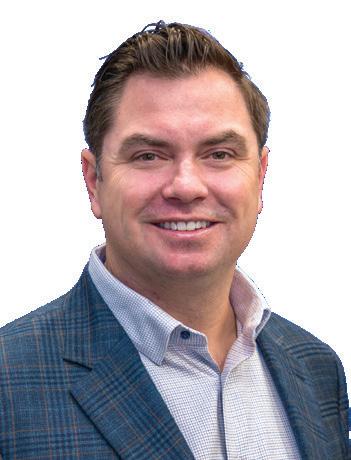
Brad Roling is the Columbia Market President for Mid America Bank. Brad has more than 10 years of banking experience that he uses to help businesses in and around Columbia thrive. When he is not helping your business with its financial needs, Brad is serving the community in a variety of capacities. He is proud to serve on the Ronald McDonald House Mid-Missouri Board of Directors as Vice President, the Columbia Chamber Foundation Board as Treasurer, Executive Board for Scouting America, Great Rivers Council, and Beta Theta Pi Advisory Board. Brad is a proud Mizzou grad and loves cheering on the Tigers!

| midambk.com 4601 Stellar Drive, Columbia MO

A solid business credit profile can open doors, and not just when you’re applying for a loan. Strong credit may lead to better financing terms, lower interest rates, and higher borrowing limits. It can also influence how vendors work with you, from extended payment terms to larger supply orders.
Beyond access, strong credit offers flexibility. It gives you options when opportunities arise or when unexpected challenges hit. Instead of scrambling for resources, you’re better positioned to make strategic decisions with confidence.
Tools That Can Support Your Growth
Many banks offer tools designed to help
business owners build and manage credit more effectively. Business credit cards, lines of credit, and term loans can all contribute to your credit profile when used responsibly. Digital banking platforms often include expense tracking, cash flow insights, and alerts that help you stay on top of payments.
Just as important is guidance. Working with a banker who understands your goals can help you choose the right tools and avoid common pitfalls, like overextending credit or missing key reporting opportunities.
The Takeaway
Building business credit is less about quick wins and more about consistency and clarity. By establishing your business as a separate financial entity and using credit thoughtfully, you create a foundation that can support smarter decisions over time. The stronger that foundation, the more freedom you have to grow on your own terms.
YOUR BUSINESS DOESN’T NEED MORE IT TOOLS, IT NEEDS MANAGED IT SERVICES
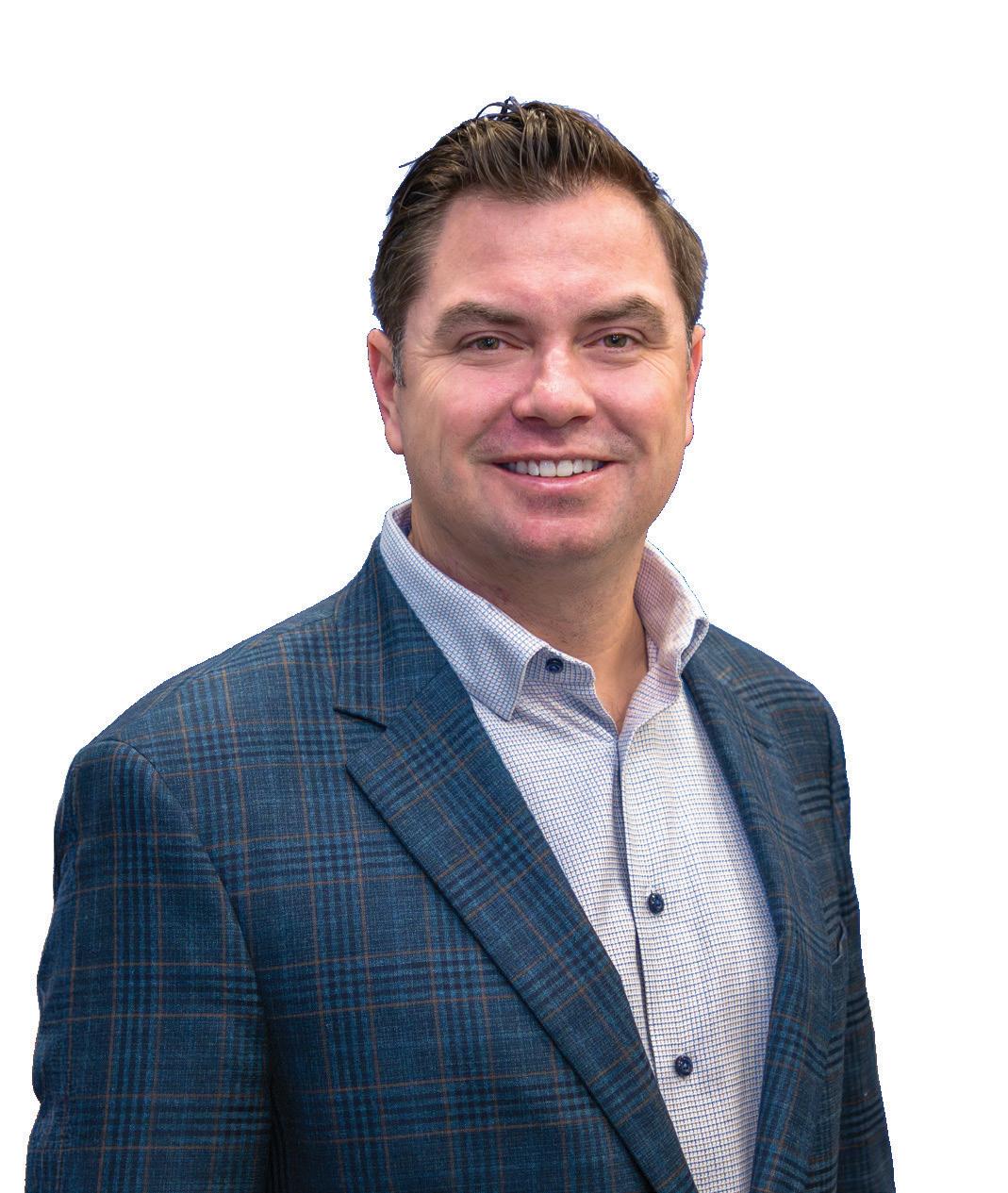
By Andrew Gilstrap agilstrap@gfidigital.com
Most technology problems do not start with a major outage. They start small.
An employee cannot find a saved document. A program freezes during an important task. A system update slows things down in the morning. On their own, these issues feel minor, but over time they add up. Work pauses while someone tries to figure out what went wrong. Deadlines stretch. Frustration builds. The real issue is often not the technology itself but the uncertainty around how to fix it.
When something breaks, does your team know exactly what to do next, or does work slow down while people try to figure it out?

When More Tools Create More Complexity
When businesses experience ongoing technology issues, the first response is often to add more tools. A backup system for files. A cloud platform for sharing. Another security application for protection. Each tool may solve a specific need, but over time the environment becomes more complex. Systems multiply, responsibilities overlap, and it becomes unclear what each tool does or who manages it. On a normal day, this is easy to ignore. The problem shows up when something goes wrong.
That is when the questions begin. Who manages this system? Is there a backup? Should we contact support? And most importantly, whose responsibility is this? While those questions are being answered, work stops. The real issue is not just the technology failure. It is the lack of clarity in how to respond.
How Managed IT Services Reduce Uncertainty
This is where managed IT services change the experience. Instead of juggling disconnected tools, businesses gain clear accountability. Systems are set up correctly, tested in advance, and supported continuously so issues are not handled in panic.
An IT partner brings structure. They prepare systems ahead of time, confirm everything works as expected, and define responsibility before problems occur. When something goes wrong, there is a clear process. Teams know what to do. Issues are handled quickly before they turn into larger disruptions. This shifts businesses from reacting to problems to operating with confidence. It reduces stress and keeps work moving when it matters most. Think of it like having a plumber on call instead of trying to fix a leak yourself. The problem gets handled quickly, correctly, and without guesswork.
What Reliable IT Support Looks Like
When technology is properly managed, small issues do not become major disruptions.If a file is deleted, it can be restored quickly. If a device stops working, employees can continue working without losing a full day. If something unusual happens, there is clear direction on the next step. The goal is not to eliminate every issue. The goal is to prevent small problems from interrupting business.
ANDREW GILSTRAP Vice President
Andrew graduated from the University of Missouri, Columbia with a Bachelor’s degree in Finance. Before joining GFI Digital in 2016, he served as Director of Operations for Sangita Capital Partners and brought over eight years of sales and management experience. He has held leadership roles including Sales Manager in St. Louis and Managing Director in Kansas City. Andrew now serves as Vice President in St. Louis, overseeing all aspects of the Technology Services Sales Team and taking pride in coaching and developing his team to achieve their goals.


Strong businesses are not defined by how much technology they use. They are defined by how well that technology is supported, organized, and ready when needed.
How GFI Digital Helps Businesses Stay Ahead
At GFI Digital, we help organizations simplify and strengthen their technology environments through Managed IT services. This includes proactive system monitoring, cybersecurity protection, reliable data backup, cloud services, strategic technology alignment, and responsive support, all delivered by a team that understands your business. Instead of managing multiple vendors and tools, you gain a single partner focused on keeping your technology secure, stable, scalable, and performing at its best.
The result is fewer disruptions, faster resolutions, and confidence that your technology is working for you, not against you.
With GFI Digital, your IT is not just managed. It is strategically prepared.

BACKYARD TOY SAFETY: IT’S ALL FUN AND GAMES UNTIL SOMEBODY GETS HURT!
By Mike Messer MMesser@ShelterInsurance.com
Got a pool, trampoline, swing set, or treehouse out back? If your yard is every kid’s dream, it can also become the neighborhood hangout. That means more fun—and more chances for someone to get hurt. Start with a fence that’s tough to climb, and then keep reading for a few smart, practical ways to make playtime safer.
POOLS
You’ve heard it before, but it’s worth repeating: pools can be a serious hazard without the right precautions. Install a pool fence with a locking gate so people who don’t live in your home can’t access the pool when you’re away. And when you are home, actively supervise what’s going on. Accidents happen fast, and quick help matters.
SWING SETS
Swing sets range from simple to full-on playgrounds. If you’re putting one in your yard, a little planning goes a long way:
• Choose a set that fits your kids’ ages, with a safe height and sturdy construction.
• Set it up on level ground for stability and add a soft landing surface around it.
• Give swings plenty of space and keep them clear of branches, fences and other toys.
TRAMPOLINES
Trampolines are a backyard favorite—and one of the riskiest. Fingers can get pinched, landings can go wrong, kids can collide and falls can happen in an instant. If you choose to have one, require adult supervision, discourage stunts and have kids take turns. Inspect the frame, springs, and mat regularly for wear and consider a safety net to help keep jumpers on the trampoline.
TREE HOUSES
Tree houses can be just as risky as trampolines, but you can make them safer.
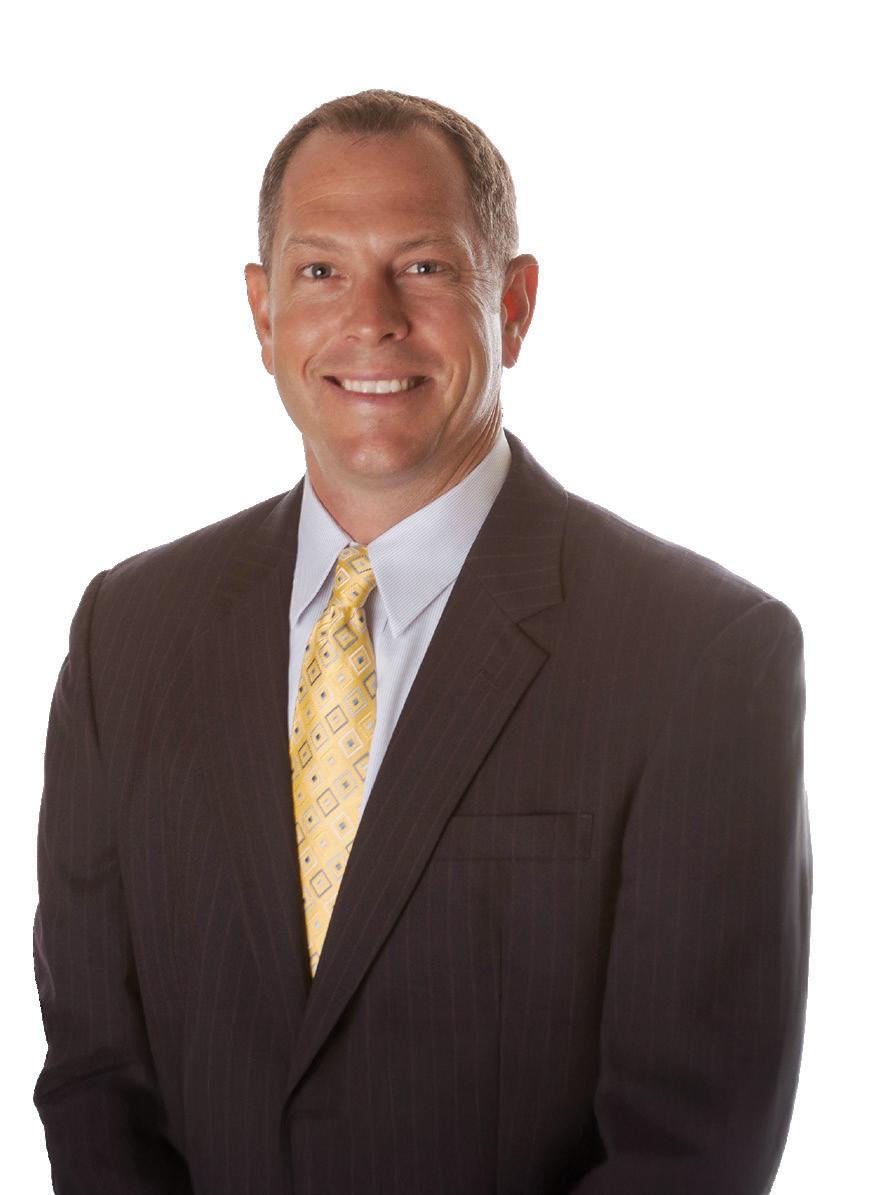
With over two decades in the insurance industry, Mike Messer has served as a claims adjuster, supervisor, and underwriter, giving him a well-rounded understanding of how policies work when it matters most — before and after a loss. He prioritizes building relationships based on trust and personalized service, recognizing that every client’s needs are unique. Through annual policy reviews, he helps ensure clients stay informed, confident, and properly covered, providing them with peace of mind and financial security.

Start with the basics: the tree must be healthy and strong enough to support the structure, and you should check the house and attachment points regularly. Provide a safe way up and down, follow guardrail guidelines, and remember that the higher the treehouse, the more severe a fall can be. It’s also harder to secure at greater heights. Adult supervision is still the best safety feature you can add.
One more big safety win: put a protective surface under and around play areas. According to the National Safety Council1, nearly 80% of playground injuries come from falls to the ground. Properly maintained surfacing—like soft wood chips, mulch, sand or engineered wood fiber—can reduce the severity of injuries compared with grass or dirt, which hardens over time.
All these backyard toys can be a great addition to your yard, but they can also raise the odds of an accident. Protect yourself by telling your insurance company what you have and consider higher liability limits. If you don’t disclose items like a pool or trampoline, a future claim could be denied—and your policy could even be cancelled. An umbrella policy may also provide extra protection if someone is injured on your property.
1 - National Safety Council. Staying Safe on Playgrounds https://www.nsc.org/community-safety/safety-topics/childsafety/playground-safety?srsltid=AfmBOopltgq3yjJDLwYPrpo mtDJNrLAxVFRO5cOp_1gHzNin0LTstr02
The information in this article is informational only and not a statement of contract. All coverage options are subject to the provisions of the policy purchased and details of the policyholder’s situation.
WHAT TO KNOW BEFORE YOU BUILD
By Vaughn Prost info@prostbuilders.com
You know what causes a lot of budget problems? Getting the contractor involved too late.
By the time we see some projects, the architect has already designed the whole building. The owner has already committed to a budget based on square footage estimates from the internet. And then they’re surprised when the real bids come in 30% higher than they expected. If we’re involved early — during planning, before the final design is locked in — we can tell you what things actually cost. We can suggest alternatives that save money without compromising quality. We can help you prioritize what’s important and where you can cut if you need to. The partnering approach we use brings everyone together at the start: owner, architect, engineers, contractor. We work through potential problems before they’re expensive problems. We make sure everyone’s working toward the same goals. It’s not complicated. It just requires somebody who’s willing to share information honestly before the contracts are signed.
WHAT YOU SHOULD ACTUALLY ASK A CONTRACTOR
Forget the generic “are you licensed and insured” questions. Here’s what actually matters: How long have you been working in this area? Not “how long in business” but specifically around here. A contractor who doesn’t know your local inspectors, suppliers, subcontractors, and building codes is going to learn on your project. Can I see similar, local projects you’ve completed on time and on budget? Not just pictures. Can they put you in touch with the owner? What went right? What went wrong? What work do you do with your own crew? If the answer is “none” or “we subcontract everything,” think hard
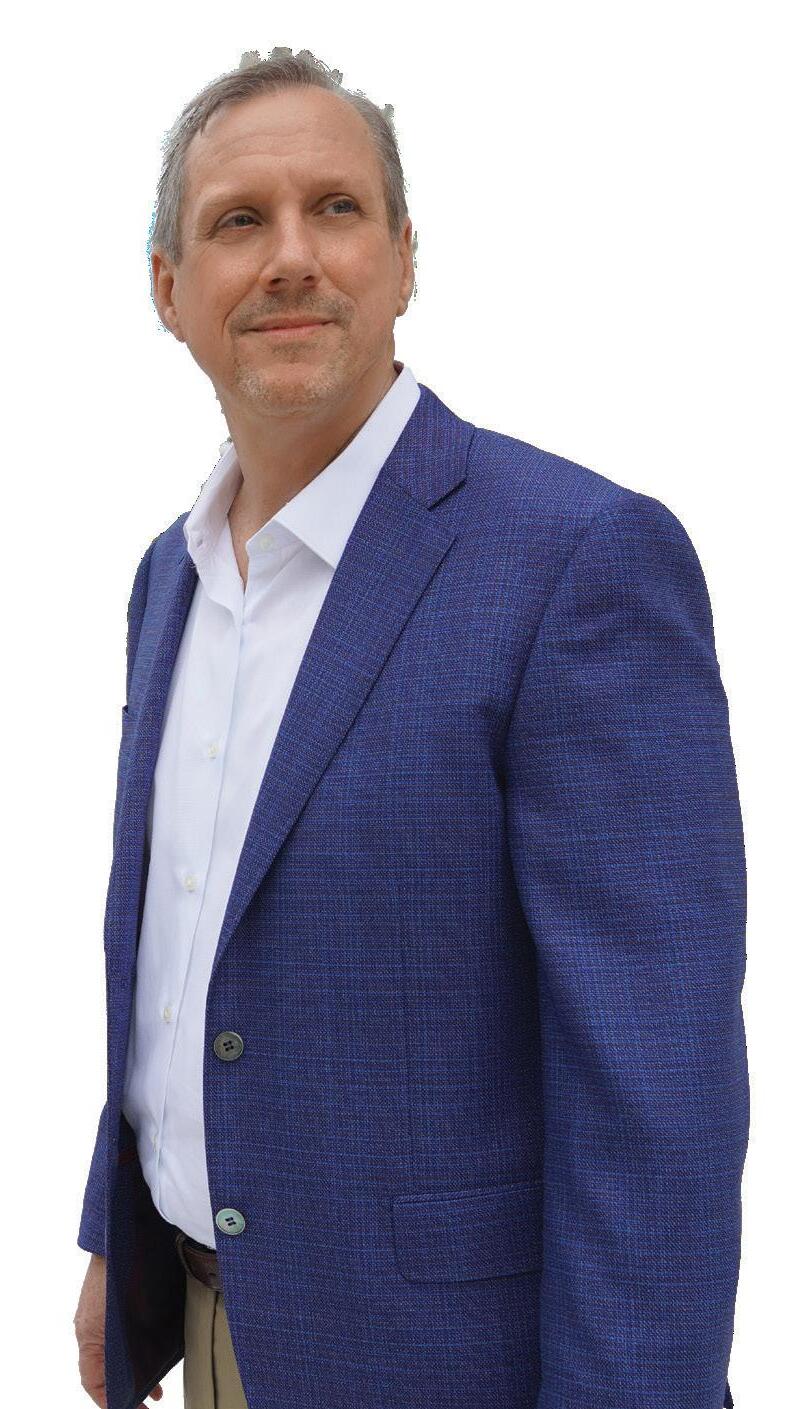
VAUGHN PROST Owner & President
Vaughn Prost is the owner and president of Prost Builders lnc., a design/build and construction services firm located in Columbia. Vaughn has over forty years of domestic and international design and construction experience as a cost and scheduling engineer, structural engineer, owner’s construction representative, and general contractor.
(573) 635-0211 | prostbuilders.com
3305 Crawford Street Columbia, MO 65203

about that. Will I have access to the project schedule and budget in real time? We use Procore, so our clients can log in and see exactly where things stand. No surprises.
THE TRUTH ABOUT STAYING ON BUDGET
You can’t eliminate every risk. We’ve been doing this 77 years and we still run into surprises. Last winter’s ice storm. Supply chain problems. Labor shortages. Things happen. But budget overruns aren’t inevitable. They happen when
contractors don’t plan ahead, don’t communicate honestly, don’t have backup plans, and don’t have the inhouse capability to solve problems on the fly. We’re not saying we’re perfect. We’re saying we’ve been doing this long enough to know where the problems come from and how to head them off. If you’re planning a building project and want to talk through what’s realistic, give us a call. Even if we’re not the right fit for your project, we can probably point you in the right direction.

Up on the Housetops
BY MICHELLE TERHUNE
In many neighborhoods throughout Columbia, on any given day, the normal sounds of birds and tra c may be interspersed with the sound of a pneumatic roo ng nailer. ose “p t” noises, usually in rapid succession, are the sound of money.
According to records in the city’s Building and Site Development o ce, 389 permits were issued to roo ng companies in 2025. e combined value of those jobs was a whopping $8,448,539. And while that gure computes to an overall average cost of $21,719 per roof, it includes many commercial and multifamily structures, which tend to be larger undertakings. e average roo ng project for a single-family house costs about $15,500.
Eighteen companies pulled two or more permits for roo ng jobs last year. Who are these companies? Are they local or from outside of mid-Missouri? And what kind of person does this dangerous job? Here’s what we found out.
‘LOCAL’ CAN BE A MYSTERY
Working with mid–Missouri companies just makes sense when it comes to roo ng. Any company worth its salt is going to stand by its work with a warranty. Both Madison Plemmons, chief executive ocer of Midwest Roo ng, and Ron Edwards, managing partner of Veritas Consulting and Construction LLC, say that honoring a warranty for a roof in Columbia is tough if your company isn’t here to do so.
Midwest Roo ng is headquartered in Eldon, but it has an o ce in Columbia, sta ed by a sales manager, roof inspectors, and eld representatives who live in and around town. It’s also a company committed to being a good community partner. In Columbia, Midwest has partnered with Love Columbia for free roo ng projects and career training.

Veritas is currently located in Hallsville, but it is preparing to renovate the former Simmons Bank building at 1000 Kennesaw Ridge Rd., where it will move its operations. It outgrew its plans before even getting started, so the project now includes a 2,000-square-foot addition.
For all practical purposes, both companies are local. But other companies that do work here are not. Plemmons and Edwards warn buyers to beware.
Some companies that worked in the city in 2025 are headquartered in the Kansas City area, while others are based in Indiana, Texas, Tennessee, and Georgia. It’s di cult to gure out where some hail from without checking a couple of sources, including the Missouri Secretary of State’s online business search portal and the Better Business Bureau. Websites like to bandy about the word “local,” even when that’s not exactly accurate.
BOTTOM: In the summer months, crew members wear long sleeved shirts, hats, and sunglasses to protect themselves from the sun.
TOP: Midwest Roofing inspectors are highly trained to evaluate all aspects of the roofing system to educate homeowners on the true condition and lifespan of their roof.
e emergence of roo ng crews from outside mid-Missouri is particularly relevant after storms that wreak damage throughout Columbia.
“Storm chasers” and “gypsy roofers” are a couple of monikers attached to companies that come in to a market to repair storm damage, then disappear. Although it can help speed up the process for homeowners with roof damage to have additional crews in town, the results of poor workmanship and materials may never be resolved.
“ e most important thing you can do as a homeowner is do your homework,” Edwards says. “Most of our jobs come from referrals, but don’t just take someone’s word for it. Only work with accredited businesses on the Better Business Bureau website.”
Both Midwest Roo ng and Veritas use a combination of in-house talent and subcontractors in town. at’s great for someone local who puts together a crew to do the work but doesn’t have to front all of the material expenses. Regardless of the crew used, Midwest and Veritas warranty their work.
Roo ng companies need those subcontractors. With their help, Veritas can do 90 roofs in a month or four roofs a day in a storm situation, for example.
SEEK THOROUGH INSPECTIONS AND GUIDANCE
Roo ng jobs begin with thorough inspections conducted by quali ed inspectors. Midwest Roo ng’s inspectors undergo training three times a week to make sure they’re delivering the highest quality of service and education to homeowners.
“Going in just looking for storm damage is not what we do,” Plemmons says. “We determine whether this roof needs to be replaced or not. And then we explore the options. Educating homeowners is our primary goal.”
Veritas prides itself on comprehensive inspections as well. As a full-service exterior construction company, its teams handle more than just roofs. If it’s a homeowners insurance claim, Edwards says the insurance company’s adjusters might miss something — especially if they’re slammed with work after a storm.
“We do a very thorough inspection process, but it’s very time-consuming on our end,” Edwards says.

In addition to providing exhaustive inspections and homeowner education, good roo ng companies help guide customers through the insurance claims process. As Plemmons says, most homeowners haven’t led a roo ng claim in their life or in a very long time.
“At the end of the day, it is their claim, not ours,” Plemmons says. “So, we can’t talk about policy language with the carrier. We can’t le the claim for you, but we can guide you.” at guidance is vital because insurance companies’ claims processes change all the time.
“Where I might even understand why insurance companies are changing them, what I feel doesn’t happen is, that doesn’t get communicated to their policyholders. So, when policyholders go to le a claim, a lot of the time they’re lost,” Plemmons says.
Fly-by-night companies likely won’t provide that same level of service before, during, and after the sale.
UP ON THE ROOF
John F. Kennedy once said, “ e time to repair the roof is when the sun is shining.” But how hot or how cold it is when that sun shines is a critical factor.
Most of us have observed roofers at work from the comfort of our temperate homes or vehicles. What kind of pro does
it take to stand on an asphalt or metal roof on days with sweltering heat indices or in freezing temps?
Plemmons says good roofers work hard, but they can make good money at an honest living. He says most of the crews Midwest works with have more than 10 years of experience.
Edwards says it can be di cult to keep some of his industrious crews o the roof in extreme conditions, but Veritas does.
“We don’t allow our roo ng crews to install in triple-digit temperatures. It’s 30 to 35 degrees hotter on the roof,” Edwards says.
Midwest provides long-sleeved shirts for its roofers and encourages them to wear hats that cover their necks on hot, sunny days. e supervisors have crews take frequent breaks in the shade and offer them ice water and electrolytes.
On the ip side, Edwards says they don’t put installers in harm’s way in the cold, keeping them o roofs if it’s less than 40 degrees.
Taking care of crews keeps that talent healthy, productive, and coming back.
“We make sure our guys are taken care of. We pay our subcontractors within a week for all work done that week. Speed of pay is really what makes a di erence when you need to hang on to good crews. Word gets around,” Edwards says.
DON’T FIDDLE WITH YOUR ROOF
According to Plemmons, customers who haven’t had roo ng done in the last 10 years will nd the costs have at least doubled. If it’s been 20 years, the job could be three or four times more expensive. at sticker shock should make homeowners careful about whom they hire for their roo ng project.
e roo ng company should have liability and workers’ compensation insurance and provide proof of that insurance upon demand. e company ought to guarantee its work and materials. e company should provide a thorough inspection that includes photos of any storm damage as well as age and installation-related failures, such as broken or missing shingles, roof sagging or improper venting, deteriorating ashing, or water leaks.
Homeowners don’t always need an entirely new roof. Repair and restoration of failing areas may buy more years without a complete replacement. A good company will review options with customers after conducting a full inspection. You shouldn’t accept only an inspection of storm damage.
If there’s been a storm, Edwards and Plemmons both advise homeowners to be wary of unfamiliar roo ng companies that only show up at their door after a weather event. Make sure the company has a record of roo ng locally. Veritas and Midwest both contact past customers after a storm and rely on word-of-mouth referrals. And if you can’t visit a company’s brick-and-mortar location in town, you may want to take a hard pass. at rm will likely not be around when you nd something wrong with what should be a solidly repaired or replaced roof.
Another huge red ag is an o er to pay your insurance deductible.
“It’s illegal to reduce the cost of homeowners’ deductibles in order to entice them into signing a contract, whether it’s a rebate, kickback, or advertising,” Edwards says.
Homeowners should also beware a roofer who won’t provide a cost estimate without reviewing the insurance policy. Companies may nd useful information in a policy, such as roof measurements, but they don’t require seeing it before providing a quote. Plemmons trains his sales teams and inspectors to focus on what needs to be done and the best options the homeowner has to get it done.
A good roof over your head isn’t just a must. It’s part and parcel of your most expensive investment. In Columbia and throughout mid-Missouri, there are a lot of reputable companies that will stand behind what they do. Just beware the ddler on your roof — you’ll be glad you did. CBT














BY MICHELLE TERHUNE
You’ve probably heard the quote: “If you ate today, thank a farmer.” In a world of increasingly sophisticated grocery stores, it’s easy to forget that your steak once grazed in a pasture and the soy in your latte was once rooted in a eld. roughout the ages, farmers have generally been good stewards of the land they use for planting crops and grazing livestock. ey have to be, or they risk running their land into the ground, so to speak. ey move livestock from one pasture to another to allow time for grass to regrow. ey rotate crops to maintain better soil conditions, like replenishing nitrogen. ey maintain cover strips and terrace elds to deter erosion.
But are there other steps they can take to make their land more fertile and productive? at’s where regenerative agriculture comes in. Mizzou has emerged as a leader in this area, creating the Center for Regenerative Agriculture to focus on teaching farmers, ranchers, landowners, land agents, consumers, and companies what regenerative ag is, how to use it, and why it’s vital to the future of the U.S. food supply.
What Is Regenerative Ag?
Farming, on its face, seems “regenerative” by nature. ere’s a season-driven sequence of prepping the land with plows and herbicides, planting, harvesting, and allowing elds to lie fallow before repeating the cycle. But regenerative ag digs deeper.
“Regenerative agriculture starts with the health of the soil. We want to make the soil more resilient to di erent weather conditions like droughts or intense
rainstorms. We want that soil to be productive for farmers under a variety of conditions,” says Rob Myers, director of the center.
Over time, urbanization, erosion, pollution, and even conventional farming practices have degraded the quality of farm and pasture land. is could mean the land doesn’t produce enough crops and other plants, doesn’t retain water like it should, and lacks the ability to store carbon. at carbon, by the way, needs to be pulled out of the atmosphere, where it’s unhealthy, and into the soil, where it’s needed to sustain healthy vegetation. Climate change is a threat to agriculture, which means it’s a threat to food security.
“Besides soil health, we have additional goals with regenerative agriculture, such as the diversity of plants,” says Myers. “Instead of just growing rotational corn and soybeans all the time, we can add in cover crops or add a third crop to the rotation. If we’re grazing animals, instead of just having our typical tall fescue pasture, which is the same grass used in most lawns in Missouri, we’ll get a more diverse mix of plants growing in the pasture and graze them in a little di erent way.”
“Regenerative ag is both about some of the outcomes we’re trying to achieve, like soil health, better water quality, and increased biodiversity. But then it’s also about practices that help contribute to regenerative ag, such as cover crops,” Myers says.
Changing the Practices of Farming
Change is never easy, particularly in an industry that’s over 12,000 years old. at’s why the center is using a $25 million grant from the U.S. Department of Agriculture

to incentivize farmers and ranchers to implement regenerative ag practices. For farmers, who can receive the funding for up to ve years, it eliminates the nancial risk of trying something new.
e Missouri Conservation Resilient Crop and Livestock (CRCL) Project provides incentive payments to farmers enrolled in one or more of eight programs.
ere are currently 1,400 Missouri farmers working with the center, including CRCL grantees. One is Daniel Bonacker of Cedar Hill, who rents 1,400 acres of crop land and 250 acres of pasture. He has been experimenting with cover crops and rotational livestock grazing for the past 10 years.
“Crop elds in the last 50 years have been used and abused,” Bonacker says. “We needed to gure out how to build the soil back up with cover and reduced tillage. So, we started using cover crops before getting the grant. We had played with cover crops to plant corn in but never nailed down a good system. We could reinvestigate with the grant money.”
According to Myers, Missouri has about 10 million acres of row crops every year. Of that number, about one million are overwintered using cover crops, so there’s a lot of room for growth. He acknowledges, though, that there are hurdles to getting farmers to use them, such as nding time to plant covers in the fall, right after they’ve harvested the cash crop. ere’s also the cost of the cover seed, which can add from $20 to $40 an acre to input costs. Finally, there’s guring out how to plant the row crop after the cover crop in the spring.
e center’s grant provides enrolled farmers with funding to overcome these
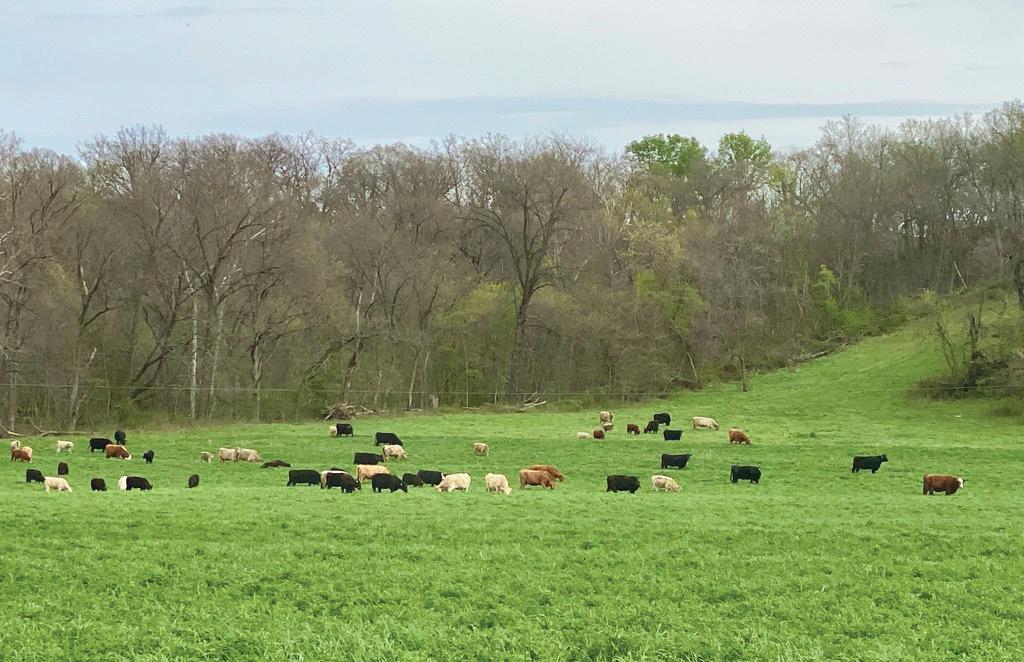
“Regenerative ag is both about some of the outcomes we’re trying to achieve, like soil health, better water quality, and increased biodiversity. But then it’s also about practices that help contribute to regenerative ag, such as cover crops.”
hurdles with less nancial risk to them. at money gives farmers like Bonacker time to gure out what works best for their operation.
“From a management standpoint, we looked at cover crops as replacement costs,” Bonacker says. “It cost $20 more per acre to plant rye, so we pulled $20 from the budget that we would have spent on herbicide and fertilizer. It takes a leap of faith to stop my regular program and cut my use of herbicides and fertilizers. But we stuck with it, and after a few years, we started to see positive results.”
Ducking for Cover
Cover crops play key roles in regenerative ag. Instead of having cash-crop elds lie bare over the winter, they’re covered in either a diverse mix of plants, like clover and grasses, or with a cereal grain such as rye or wheat.
After the cash crop is harvested in the fall, the eld is planted with cover crop seed. As growth overwinters, it’s decreasing erosion, discouraging weed growth, and putting vital nutrients back into the soil.
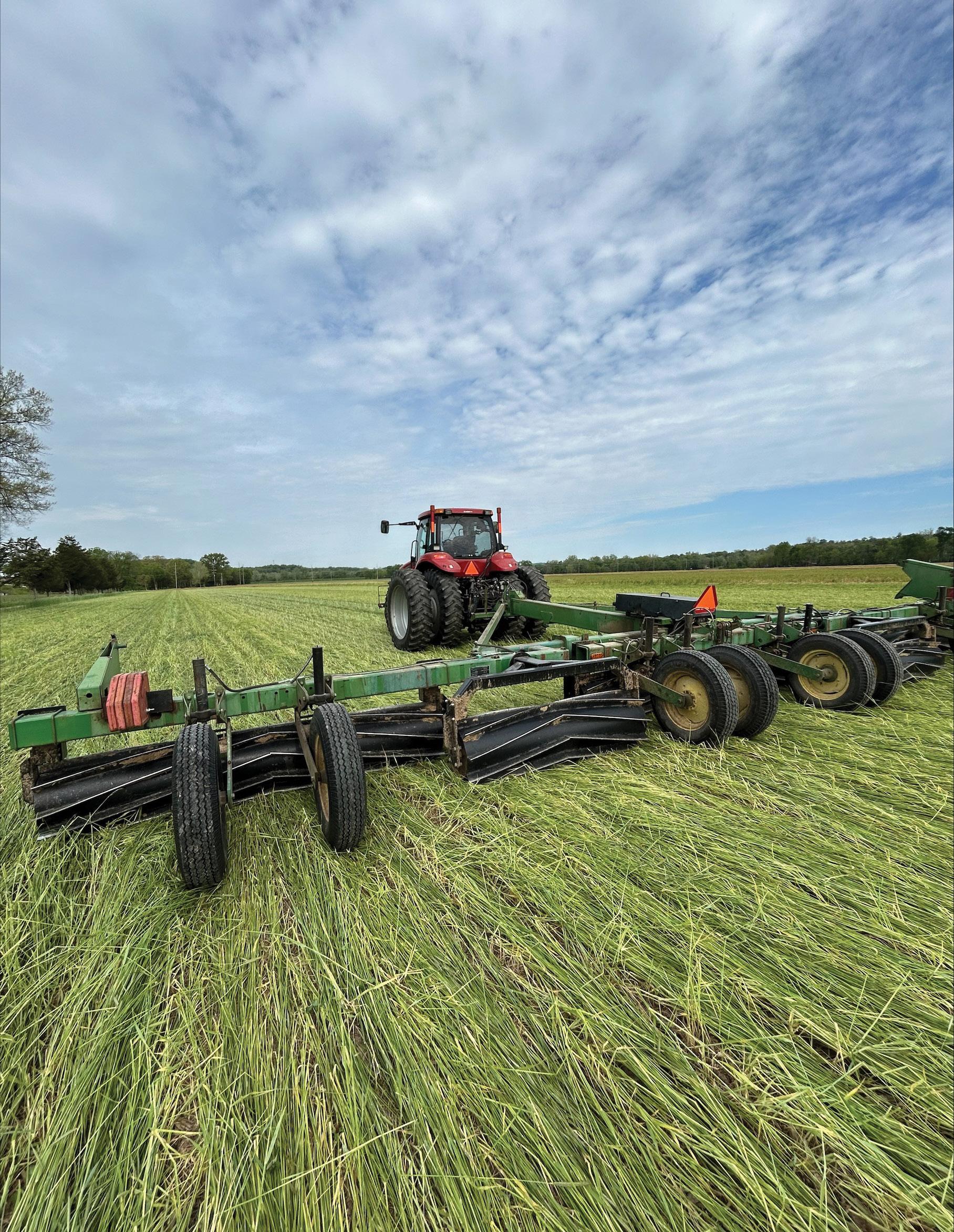
“We could add tremendous amounts of nutrients into the soil with fertilizer, but the biology isn’t there to facilitate the soil long term,” says Bonacker.
By “biology,” he’s referring to the microbes in the soil. For example, soil that is left undisturbed rather than plowed up maintains its microbial balance. Over time, as the soil’s health improves, farmers can avoid using herbicides and chemical fertilizer because the right mix of microbes will do the same job.
It’s not unlike your own gut health, which relies on having the right microbial mixture to keep you healthy. You may take a supplement to improve the ora mixture in your gut. But if you start eating right, your gut will produce the right ones on its own.
Of course, cover crops will be tall in the spring when it’s time to plant the cash crop for the growing season. But farmers don’t just mow them down and disc up the eld to seed them. ey use the cover to their advantage.
Bonacker overwinters his soybean elds with a rye cover. By late spring, that rye is taller than he is, and it needs to be for the magic to happen. Timing is everything. e rye has to be in “anthesis,” the period of owering and pollen shedding
FROM LEFT TO RIGHT
Field of canola in Missouri providing for crop diversification.
Photo by Rob Myers
Cattle grazing cover crops in central Missouri.
Photo by Rob Myers
Roller crimping cereal rye.
Photo by Daniel Bonacker
for the plant. at usually occurs in late May or early June. In that stage, the stalks of the plants are brittle, as the roots send all energy up to the bloom. at’s how they need to be for a machine called a crimper to do its work.
Bonacker hooks up the planter and rolls right through the rye, sowing the soybean seed in rows in the soil. e planter is followed immediately by a tractor pulling a rolling crimper, which snaps the base of the stalks, killing them. e crimper lays the rye stalks down, where they keep soil at optimal temperatures as the soybean seeds sprout; shelter seedlings from sun, wind, and pounding rain; and prevent weeds from growing. In fact, Bonacker says as rye breaks down, it releases allelopathic toxins that act as natural herbicides. Bonacker skips the rst round of herbicides because the cover is already doing that work. He can also skip the chemical fertilizer and let the microbe-rich soil take care of the crop.
“Plants in places that aren’t farmed grow, die, and decompose without intervention,” Bonacker says. “In the rowcrop context, we need to emulate that with the right soil biology to bring nutrients to the crop. [Conventional] farming methods have no relationships with the natural cycles. Plants extract chemical fertilizer nutrients for that crop but don’t give anything back to the soil.”
Cover crops used over time will become a less-expensive input than chemical fertilizer. And lower input costs mean better pro ts in an industry facing growing hits to its bottom line.
“Fifty years ago, synthetic fertilizer made perfect economic sense. But that has changed as input costs have risen to where, economically, they don’t make sense now,” Bonacker says.
e center’s grants to farmers for cover crops o set the additional seed cost. And if farmers can skip the fertilizer and one pass of herbicide during a growing season, their pro ts go up.
But Wait — There’s More
Cover crops are a critical part of regenerative ag, but that’s not all the center is promoting. ere are also nancial incentives for farm management practices, including livestock grazing of cover crops before planting row crops.
In another program, farmers are paid to plant trees in grazing pastures, a practice called “silvopasture.” e trees stop erosion, capture carbon and put it back into the soil, improve water quality, and provide shade and shelter for livestock.
ere’s also invisible fencing for livestock. e concept is similar to invisible fencing that keeps your dog in the yard. But in this case, the solar-powered collars worn by livestock receive audible and gentle electrical cues using GPS technology. Farmers can use their smart phones to monitor where their animals are at any given time and change the virtual fence boundaries to avoid overgrazing without the need to go out and physically move the herd.
“ e virtual fencing technology helps farmers graze cover crops, which gives them some extra income,” Myers says.
“Let’s say it’s a dry summer or fall and their pasture doesn’t produce enough [for their cattle] to eat, so they have to go out and buy hay. But if they planted a cover crop after their soybeans or corn was harvested, they could have their livestock graze that cover crop instead. It’s really good forage for the animals.”
In pastures, regenerative ag also advocates for plant diversity and use of native plants. Just as using native plants in your yard reduces water usage and attracts pollinators and wildlife, using native prairie grasses in pastures — instead of just tall fescue, which is native to Europe, North Africa, and parts of Asia — will have the same result.
“Tall fescue is good in spring and fall, but it’s really not that great in August when grass is turning brown from lack of water,” Myers says. “ ose native grasses do their best growth in the summer, so they’re really good grazing at that time. We are promoting use of native plants, where appropriate, in the farming landscape.”
Big and little bluestem, Indiangrass, and switchgrass are prairie natives good for grazing. For strips planted around elds to control erosion, native owering plants will attract pollinators.
Bonacker also raises Charolais cattle, usually in herds of about 50. His pasture management focuses on allowing the
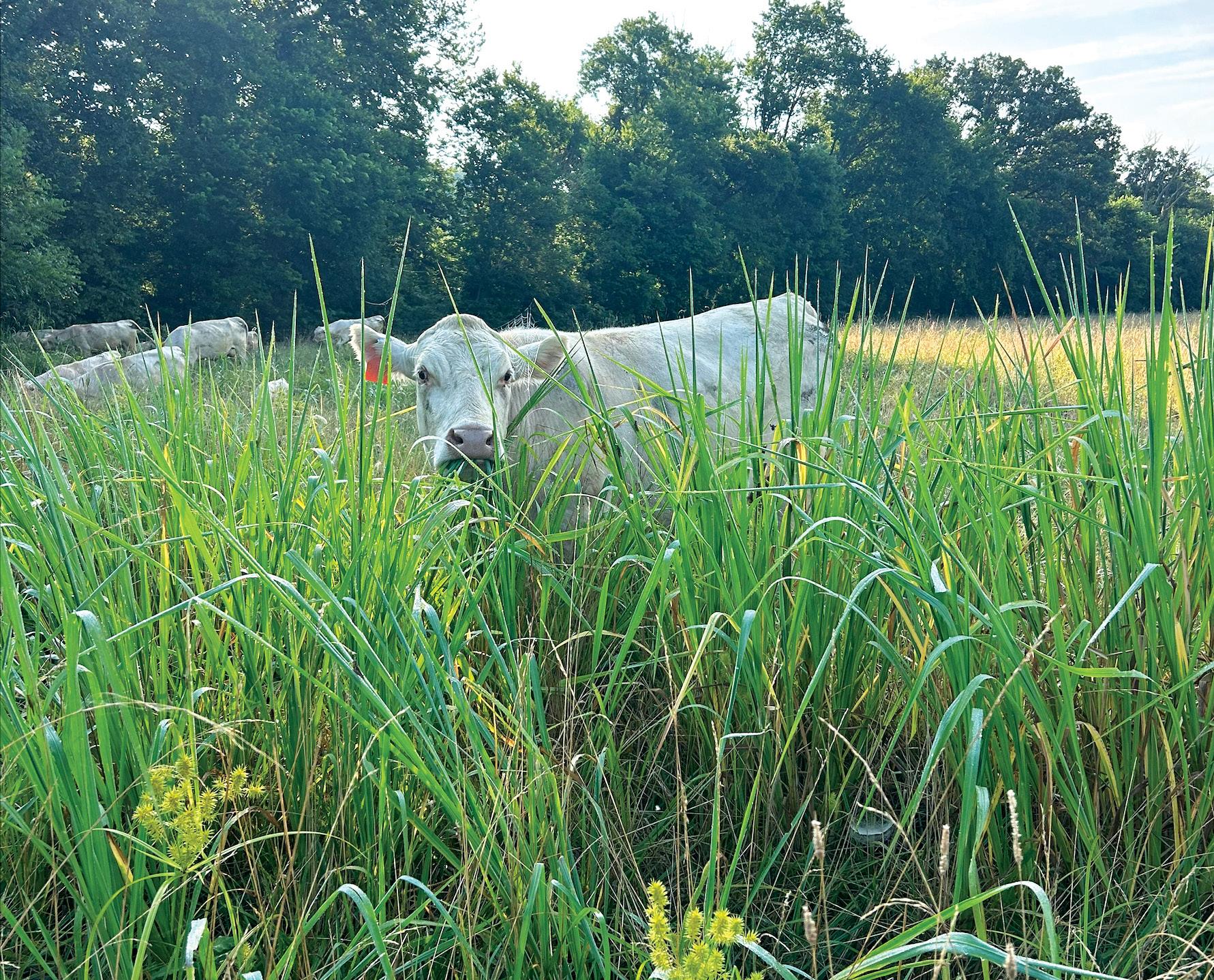
FROM LEFT TO RIGHT
Cattle grazing diverse pasture cover.
Planting corn ‘green’ into a cover of wheat and clover.
Corn thriving after planted ‘green’ into cover crop.
Photos by Daniel Bonacker
growth of more native grazing plants, like switchgrass, from the soil’s latent seed bank. Seeds of plants lie dormant in the soil, sometimes for hundreds of years, waiting for the right time to germinate and grow. (One example of this phenomenon is the emergence of the poppy superblooms in Southern California.) Bonacker allows his cattle to graze and trample the pasture growth for a period, then moves the livestock and allows the area to rest for 45 to 60 days. e practice encourages the native seeds in the soil to germinate, and as they do, natives become increasingly prevalent in the mix of plants.
Does Regenerative Ag Work?
e proof of the success of regenerative ag is, naturally, in the crop. e center collects basic data from the farmers it works with, such as cover and cash crop planting dates and average yield per acre at harvest. Analysis of data will inform best practices farmers can use.
“We have to prove this practice doesn’t interfere with yield and use that as a strategy for wider adoption. We’re not there yet as an industry but will get there,” Bonacker says.
He knows rsthand that soil in ltration rates in his soybean elds are higher since he started planting the cereal rye cover crop. e in ltration rate is the speed at which water enters the soil, measured by inches penetrated per hour. Unprotected soil erodes quickly, as raindrops dislodge soil particles, which ll open surface pores and form a hard crust on top. at crust keeps water from sinking down into the soil where it needs to be.
He has also observed faster breakdown of plant and stalk residues, as well as more
earthworms and fungi growth, which are all indicators of healthier soil.
In the future, Bonacker wants to begin measuring nutrient density of his beans and corn to gauge regenerative ag’s effectiveness. at’s the concentration of essential vitamins, minerals, and phytonutrients per calorie, which has a direct correlation with soil health.
“Soil biology energizes all sorts of nutrients,” Bonacker says. “Biology has a complete and total relationship with the soil. Using [conventional] methods, the normal farmer sets it up to fail. My measurement of whether regenerative ag works is how nutrient-dense my crops are. at’s where I’m headed. What’s in the soil is in the grain.”
Building soil health, creating resilience, reducing erosion, improving water quality, and providing top-notch forage and protection for pasture grazing are all outcomes of regenerative ag. Making farmland more productive and pro table are also good outcomes, and that a ects more than just farmers.
Who Else Needs to Know About Regenerative Agriculture?
In addition to educating farmers, Mizzou’s Center for Regenerative Agriculture wants landowners who may rent their land to farmers to understand the environmental and economic values of regenerative practices. Myers says that women own about a quarter of all agricultural land in the country, a fact that prompted the center to o er a Women Landowners Leading Regeneration program for women in Missouri, Iowa, and Kansas.
Farm advisors, including extension agents, conservationists, seed company representatives, and consultants, are
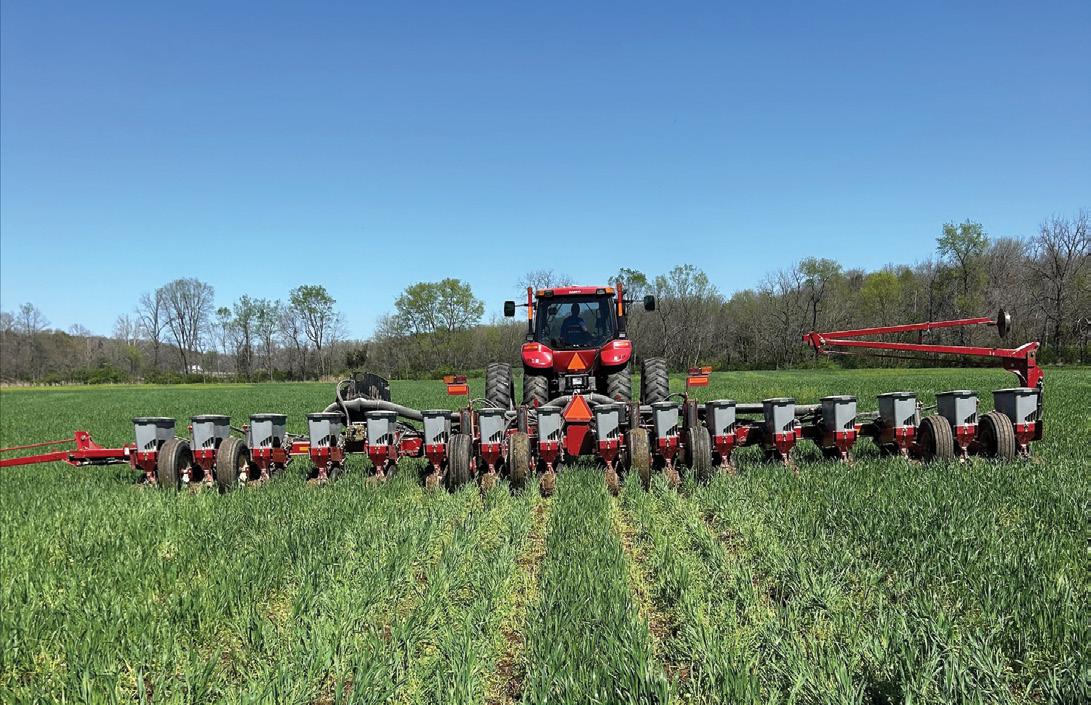
another target audience. So are companies and consumers.
Myers says there used to be a lot of skepticism among big food and ag companies. But in the past ve years, he has seen increasing numbers of them investing in regenerative ag in a major way.
“Last fall, McDonald’s announced they were spending $200 million to encourage cattle producers to use more regenerative grazing methods. PepsiCo’s snack food division announced a couple of years ago they were putting $216 million into regenerative ag to get farmers in the Midwest to use cover crops and reduce tillage,” Myers says. is circle of life is completed by consumers, who can factor the use of regenerative ag into their purchasing decisions. Buying products from companies that support regenerative ag practices provides further incentives for farmers to use them.
e rise of regenerative agriculture is creating a more sustainable, productive, and resilient world, which seems like something everyone can get behind. Mizzou’s groundbreaking center is helping bring positive change to the industry as a whole.
e next time you’re driving through farmland in the winter and see the ground covered with growth and not laid bare, or notice cattle grazing in pastures with a variety of plants, grasses, butter ies, and bees, you’ll know that a farmer has put the time and e ort into being the best steward of the land we all depend on. You’ll also know it wasn’t necessarily the cheapest or easiest route, but it was the one that just might keep our food supply healthy and secure. CBT





Deeds of Trust
Worth more than $975,000
$150,000,000
Club Car Wash
Ashland LLC
CB Corporate Finance LLC
Lt 2 East Ashland Plaza
$91,500,000
CPG at Columbia
Grayson LLC
BNP Paribas
Lt 1 Lutheran Senior
Services Subdivision
$91,500,000
CPG at Columbia
Grindstone LLC
BNP Paribas
Lt 1 1B C-K Place
Plat 1 Lts 1&2
$13,500,000
Bear Creek Ridge LLC
First State Community Bank
Lt 1 Bennett Ridge Plat 1
$6,808,977.72
Broad eld Properties LLC
Simmons Bank
L 1501 Broadway Farms Plat 15A Lots 3-5
$5,552,815
Questec Properties LLC
e Bank of Missouri
Lt 6B Boone Industrial
Park North Block 2 FF & St. Louis Land
$3,650,000
Bristol Care Inc.
OMB Bank
STR 10-51-11 N/NW/SE
Sur Bk/Pg 300/613 FF w/except
$2,790,000
Wear Investments LLC
e Central Trust Bank
Lt 5E Columbia
Industrial Dev Corp Plat 2
$2,100,000
Justin L. Angell
e Central Trust Bank
STR 28-51-11 /NE/SE
$2,077,000 Route Z
Investments LLC Homebank
Lt 1 Little General Route Z – Plat 1
$1,804,000
Matthew omas Detelich trustee
Exchange Bank of Missouri
Lt 145 Clear Creek Estates Plat No. 1
$1,660,478
Kelly Jolly Harper
First Horizon Bank
Lt 109 Heatherhill Estates Plat 1
$1,336,837.40
Martin Builders Inc.
e Central Trust Bank
Lt 601 Liberty Landing North Plat 6
$1,288,800
Wildwood Farm LLC
BB & SB Land Company LLC
STR 15-47-11 //NW Sur Bk/Pg 4569/28 AC 71.61 FF Tract 1 Pt
$1,264,256.46
VB S1 Assets LLC
Deutsche Bank Trust
Company Americas
Sur Bk/Pg 1937/618 FF Tract 1A 2 Easements
$1,182,891.58
VB-S1 Assets LLC
Deutsche Bank Trust Company Americas
STR 36-51-13 /E/NE AC 0.129 FF w/Easements
$1,150,000
Grant Stanley LLC
e Central Trust Bank
Lt 6 Hawks Ridge
$1,073,803.92
VB-S1 Assets LLC
Deutsche Bank Trust Company Americas
$1,048,262.06
VB-S1 Assets LLC
Deutsche Bank Trust Company Americas
STR 13-50-12 /W/SW AC 0.129 FFF w/Easements
$1,002,988
Wayne Robert Hawks
First Midwest Bank of the Ozarks
Lt 6 Woodrail Sub Plat 6
$975,000
Emre Demirci
e Central Trust Bank
Lt 225A Copperstone Plat 7 CBT
Issued by the Boone County Recorder of Deeds in March 2026
New Business Licenses
Issued March 2026
Campus Spa LLC
1205 University Ave., Columbia
The Grub Box LLC
14 E. Business Loop, Columbia
MIEZ Bin Solutions
Perezzi Group LLC
6203 Overbrook Court, Columbia
Sneak A Peek 4D Ultrasounds
Laura Henley
3301 Berrywood Dr., Columbia
North Sky Communications LLC 3015 David Dr., Columbia
Gessling Family Wellness
Simply GFW LLC
908 Rain Forest Parkway, Columbia
Candeo Movement LLC
2201 Chapel Plaza Court, Columbia
Woodson Accounting & Financial Services LLC
Jessica Woodson
500 E. Walnut St., Columbia
Moniteau Massage and Wellness
1004 W. Worley St., Columbia
Columbia Water
Restoration LLC
3713 Dublin Ave., Columbia
Abundant Health NP, LLC
2700 Forum Blvd., Columbia
National Vision Inc.
403 N. Stadium Blvd., Columbia
PPW-SH, LLC
Steven Herman
410 S. Glenwood Ave., Columbia
Graystone Custom Renovation LLC
Jonathan Gray 6810 N. Wagon Trail Rd., Columbia
Purafry
JC Janitorial LLC 2002 N. Mapleview Court, Columbia
Manetame LLC
30 S. Ninth St., Columbia
Cook’s Cookies 2107 Manchester Dr., Columbia
KM Hair Studio
Kirsten McClaskey 4103 W. Vawter School Rd., Columbia
COMO Exteriors
Brody Stagner 927 Yale St., Columbia
Heartland Power
Washing Pros LLC
Nathan Petersheim 18201 Hwy. NN, Sturgeon
Arrowhead Landscape and Mowing LLC 5150 Richland Rd., Columbia
Urgent Pet Columbia LLC 2910 Trimble Rd., Columbia
Kacchair
Ghakiya Clay 1416 Parkade Blvd., Columbia
Grooms LLC
900 Rain Forest Parkway, Columbia
HR Growth Advisors LLC
Kellie Blunk 3909 McGee Rd., Columbia CBT
Issued by the city of Columbia’s Finance Department

What’s Going Up?
Local Construction Work Includes Nordstrom Rack, CASA Headquarters, and Hallsville Athletic Field.
BY JODIE JACKSON JR
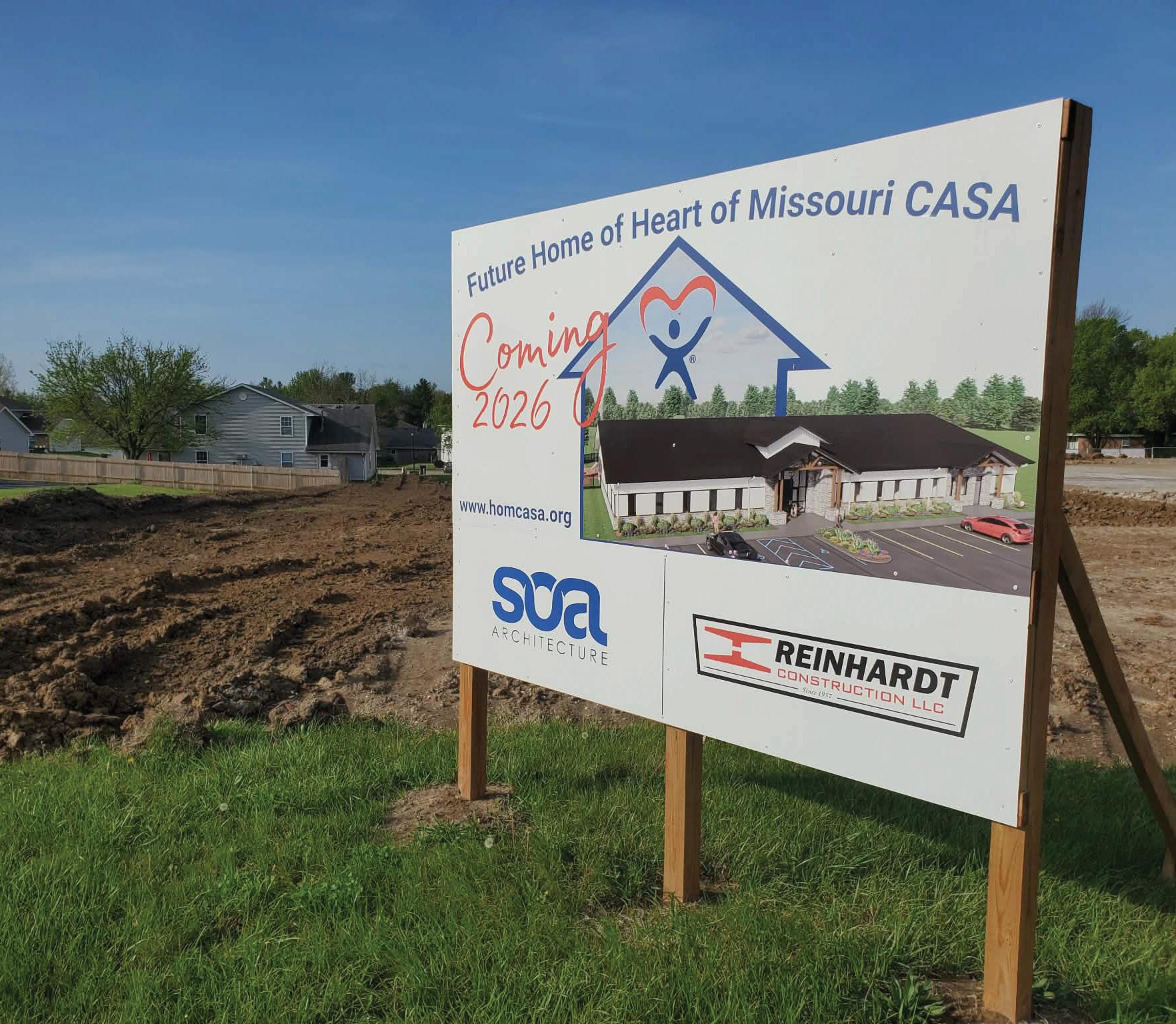
NEARLY TWELVE MONTHS after receiving a plan for another fast-food eatery to replace the shuttered Hardee’s at 200 S. Providence, the Columbia Building and Site Development o ce has issued a building permit for the plan. Columbia building activity is ramping up with new home construction, new veterinarian and medical o ces, a new home and headquarters for Heart of Missouri CASA, and Missouri’s third Nordstrom Rack that will ll the rest of the former Macy’s building in the Shoppes at Stadium. In Boone County, the Hallsville School District has
broken ground on a new athletic eld, with plans also ready for two new classrooms added to the elementary school.
Collectively, the city and county in March issued 248 building permits with an aggregate valuation of $47.91 million. e city’s Building and Site Development o ce issued 168 permits listing a total valuation of $33.6 million. e county’s Resource Management o ce issued 80 permits with a combined valuation of $14.3 million.
NORDSTROM RACK , the o -price retail division of Nordstrom, Inc., will occupy the remaining 25,000 square
feet of the former Macy’s building at 201 N. Stadium Blvd. e permit for that work listed a value of $2.4 million for alterations to the exterior and interior of the building. Nordstrom Rack will be next door to Trader Joe’s, which previously opened in a portion of the former Macy’s. e general contractor for the project is J.E. Foster Building Company. e Shoppes at Stadium, which is owned and managed by e Kroenke Group, also includes Home Goods, Lululemon, J. Crew Factory, Old Navy, and Dick’s Sporting Goods, among others.
Among other projects, Reinhardt Construction LLC is building a single story o ce building for HEART OF MISSOURI CASA (Court Appointed Special Advocates) at 2529 N. Stadium Blvd. e building and amenities encompass almost 9,700 square feet. e project value was listed at $1.95 million. e March 2026 breakdown for the city building permit report includes:
• Auxiliary dwelling unit: 1 permit, $162,369
• Residential additions: 6 permits, $287,186
• Commercial alterations: 15 permits, $7.63 million
• Residential alterations: 13 permits, $1.04 million
• Pool: 1 permit, $400,000
• Commercial in ll: 2 permits, $2,603,644
• New commercial: 3 permits, $4.11 million
• Deck only: 7 permits, $139,444
• Re-roof: 78 permits, $1.18 million
• Residential demolition: 2 permits, zero value.
• Single family dwelling: 39 permits, $16.03 million
• Solar photovoltaic system (residential): 1 permit, 7,000
Other highlights of the March report include:
A retro t of the drink machines at QUIKTRIP at 3211 Clark Lane. Limbaugh Construction Company Inc. is the contractor for the $145,000 project. e scope of work involves the removal and/or relocation of the existing fountain machines, tea machines, frozen bar machines and millwork along with replacement of existing condensing units on the roof.
Heubel Material Handing Inc., of Earth City, Missouri, will install highpile storage racking at SCHNEIDER ELECTRIC at 4800 Paris Rd. e project encompasses 37,800 square feet and is valued at $900,000.
THE OSTRO CIGAR LOUNGE will go into remodeled space at 1725 Paris Rd., Suite C. e permit listed a value of $166,587 for the 2,500-square-foot project. Nathaniel Prevette is the general contractor.
DR. AMBER SARGENT will have a veterinary practice at 2910 Trimble Rd., Suite 103. Kevlind Contracting LLC is the builder. No medical gas or surgeries will be part of the practice. e building permit valuation for the project was $150,000.
Alterations to existing commercial tenant space will create additional room for PALMER’S HOME CARE at 3700 Monterey Dr., Suite A. Professional Contractors and Engineers is leading the 7,463-square-foot, $1.3 million project.
An addition to the DOLLAR TREE at 2800 Paris Rd. is being built by Ordacorp LLC. e project entails just over 11,000 square feet, with a projected value of $255,000.
APM Construction Services is the contractor for the new ASCENTIS HEALTH AND WELLNESS clinic at 2703 E. Broadway, Suite 220. e commercial in ll project involves 1,810 square feet, with a valuation of $253,644.
STORAGE SERVICE AND OFFICES will be available with an in ll of an existing pre-manufactured metal building at 5000 Artemis Dr. in the Discovery Development. e singlestory metal building has around 19,600 square feet and a valuation of $2.35 million. Discover Development LLC is the contractor.
A mixed-use pre-engineered metal building is going up at 5903 N. Tower Dr. e building permit did not list tenants for the TOWER DRIVE WAREHOUSE project, which covers 11,500 square feet with a valuation of $1.81 million. On Point Construction is the builder.
Single-family homes receiving permits ranged in value from $220,000 to $1.01 MILLION . e former is an Anderson Homes build; the latter is being built by Girard Luxury Homes o Easley Cabin Circle.
e breakdown for Boone County’s March building permits includes:
• Single family residence: 11 permits, $10.1 million
• Single family attached: 4 permits, $760,000
• Nonresidential: 7 permits, $269,000
• Other structures: 4 permits, $151,000
• Residential additions/alterations: 14 permits, $529,381
• Nonresidential additions/ alterations: 8 permits, $1,033,600
• Residential garages: 11 permits, $1.3 million
• Miscellaneous: 21 permits, $204,092
Highlights of the Boone County report include four townhouses, each valued at $190,000 , to be built o S. Cone ower Ave. in southwest Columbia. New home construction getting the green light in March ranged in price from $175,000 to $5 MILLION . e former will be located o N. Jay Jay Rd. near Centralia, and the latter will be built by Howe Construction o W. Route K.
e HALLSVILLE SCHOOL DISTRICT athletic eld and classroom addition project, which was listed on an earlier building permit summary, is led by S. M. Wilson as the construction manager. e project includes a new multi-purpose turf baseball eld at Hallsville High School, concessions building renovations, parking lot expansion, and construction of new secured entries. Also included in the project is a two-classroom addition to the rst-grade classroom wing that will feature modern educational amenities. e project team will install security doors and renovate the main entrances at the intermediate, middle and high schools. is is the third bond-issue program that S. M. Wilson has led for the district. Past projects include the $10 million Proposition B middle school storm shelter addition and athletic upgrades in 2024 and the 31,000-square-foot Hallsville Primary School gymnasium and classroom additions in 2020. e project is scheduled to be completed this year.
e architect is Klingner & Associates, P.C. e new $5.5 million project is funded through re nancing the district’s 2018 bond series and the Proposition 2 bond program, which was overwhelmingly approved by voters in November 2025. CBT
Street Talk
BY JODIE JACKSON JR
ENTREPRENEUR AND BUSINESS FOUNDER KILEY GRIMES calls Villageco.work Columbia’s rst “social work club” for entrepreneurs. e new co-working space opened April 14 in the Balsamo Warehouse at 110 Orr Street, the building that also houses SoundCheck. Both SoundCheck and Villageco. work are ventures for Grimes and co-founder Vinny Marinaro under KVB Ventures LLC.
Grimes said the new coworking space will be “built around belonging as much as bandwidth.” e space is designed for freelancers, founders, and remote workers who want more than a quiet place to put a laptop — they want a community of people who understand what it means to build something from scratch, Grimes said, adding, “ ere’s a vibe for everyone.” e space is built for real work: high-speed Wi-Fi, private phone booths that seat two, a co ee and tea bar, conference and meeting rooms, standing desks, and 24/7 keycard access, with free and metered parking nearby. Earlybird membership is available through the grand opening date — rst month for $85, or $65 for students. A three-day trial pass is $25. Standard monthly membership of $125 begins in May. Full details are at villageco.work.
Logboat Expanding to ‘Midtown’ in New Development Off Grindstone e Logboat Midtown Taproom is expected to open next spring at the Midtown development in progress at the corner of Grindstone and State Farm Parkway. e development will also have 38 multifamily housing units, the city’s third Culver’s, and other businesses that have not yet been nalized.
Logboat Brewery Company opened its original location at 504 Fay St. in 2014, moving a garage brewing operation and transforming a historic meatpacking warehouse in e
Stockyards district of downtown Columbia into a full-scale brewery. e Logboat ownership team posted news about the brewery’s second location on social media in early April. e new building will include a more spacious bar and taproom experience, a park built for gathering with a covered patio, a private event space with private bar and seating for around 70 people, the original pilot brewery dedicated to small-batch releases on-site, and a new restaurant concept — not yet announced — under the same roof.
The Workshop By K&K Co.
e Workshop By K&K Co. opened April 18 at Columbia Mall. It is the ambitious brick-and-mortar transition for Krystal and Al Martin’s plant-based body care business.
“We’ve been building something much bigger than just a retail space,” Krystal said, adding that she and Al are creating an experience rooted in clean, plant-based body care, hands on workshops, and community driven self-care in Columbia. “What started as a small idea has grown into a full brand with products, education, and now a physical space where people can come in, create, and feel something.”
K&K Co. touts its business as fair trade, vegan, and ecofriendly. e shop has signature clean body care and candles, with hands-on workshops for creating custom candles and body scrubs. Al’s green thumb is also be featured with plant workshops and information.
Rally House Opens Third Location
Rally House has been a xture of Columbia’s retail sports attire scene for several years already, now with a third location that opened Friday, April 3, in Petco’s former spot in the Crossroads Shopping Center. e store at 2101 W. Broadway has just over 7,000 square feet of retail space featuring a wide selection of Mizzou, Cardinals, Blues, Chief, and Royals apparel. e store will also have a variety of Columbia-centric gifts, t-shirts, and merchandise.
The Software Should Work Conference
e inaugural conference is scheduled for July 16-17 in Columbia. e event focuses on practical, reliable software engineering principles. It is a new, in-person conference for professionals interested in building dependable software, as listed in dev.events. Additional details will be announced soon. e conference will feature industry experts targeting experienced software engineers who want to build reliable software. CBT

Street Talk is a monthly overview of “word on the street” business and community news. Street Talk is sponsored by e Bank of Missouri.
$ 25 million
Total value of USDA grant funding that MU’s Center for Regenerative Agriculture is distributing to incentivize farmers and ranchers to implement regenerative ag practices.
$ 47. 9 million
Total value of building permits issued by the city and county in March.
$ 15 , 000
Average cost of residential roofing projects in Columbia in 2025.
13
American bison standing nose to tail stretch as wide as the Big Bur Oak's 130-foot canopy. (Bison, on average, measure 10 feet from nose to tail.)
400
Number of foster kids currently served by Heart of Missouri CASA.
650
Number of foster kids currently in Boone and Callaway Counties.
38
Housing units in the floors above Logboat Brewery’s second location –Logboat Midtown.