COMO Business Times | The Impact Issue | April 2026
Do you ever wonder “Why am I even with this bank?”
It’s too easy to accept a mediocre experience when banking is just a part of life. Before, it seemed like I had to jump through every hoop for my bank. I wanted a bank that would actually work for me. Look, switching banks is a big decision. I never made the e ort before, because I assumed I’d just get the same thing. After switching to The Bank of Missouri, I’ll never wonder if my bank can do more.
The bank of not settling. The Bank of Missouri. Switch to better.
Contributors
April 2026
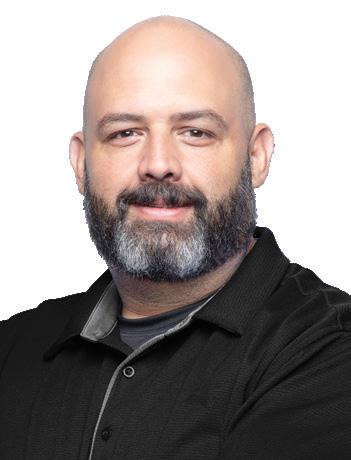
Lauren Sable Freiman
I started writing for COMO/CBT in 2000 when I moved to Columbia following graduation from Emory University. My time in Columbia turned out to be a short layover on the way to graduate school at The Ohio State University, but I’ve continued to write for a variety of mid-Missouri magazines since then. It’s hard to believe I’ve been telling the stories of Columbians for 25 years.
Though I haven’t been back to Columbia since 2001, I’ve gotten to know the people, the organizations, and the businesses that make Columbia the innovative, diverse, and dynamic community that it is.
IN THIS ISSUE OF CBT Retirement-Ready in Columbia
PG 28
Michelle Terhune
After spending more than 30 years in the marketing, public relations, and communications field, I went to work for an attorney friend as a paralegal. After six years, I was ready to go back home and just write. My timing was great. I left in November 2019. Fortunately, after reaching out to COMO Marketing in early 2020, I not only did some freelance writing for the agency, but was asked if I would write for COMO Magazine. Journalism is my first love, so of course I said yes.
My youngest sister and her family live in Columbia, so I’m often there to visit them.
I have enjoyed writing every CBT/COMO Magazine story assigned to me over the past five years. I have met some amazing people doing some more amazing things, like the couples struggling to overcome infertility, women broadening their skill sets on Habitat houses, and small businesses and entrepreneurs pursuing their dreams with grit and determination.
I’m a storyteller at heart, and I love playing a role in telling Columbia’s best stories through its people.
IN THIS ISSUE OF CBT Saving Money for a Rainy Day
PG 24
PUBLISHING
David Nivens, Publisher david@comocompanies.com
Chris Harrison, Associate Publisher chris@comocompanies.com
Keith Borgmeyer, Charles Bruce III, Burrell Behavioral Health, Columbia College, Columbia Hospitality Association, Jodie Jackson Jr
CONTRIBUTING WRITERS
J. Scott Christianson, Ashli Eaves, Jaime Freiderich, Lauren Sable Freiman, Jodie Jackson Jr, Jennifer James, Michelle Terhune, Kelsey Winkeljohn
SUBSCRIPTIONS
Magazines are $5 an issue. Subscription rate is $54 for 12 issues for one year or $89 for 24 issues for two years. Subscribe at comobusinesstimes.com or by phone. COMO Business Times is published monthly by the COMO Companies.
OUR MISSION STATEMENT
COMO Business Times and comobusinesstimes.com strive to be Columbia’s leading source for timely and comprehensive news coverage of the local business community. is publication is dedicated to being the most relevant and useful vehicle for the exchange of information and ideas among Columbia’s business professionals.
Copyright COMO Companies, 2026
All rights reserved. Reproduction or use of any editorial or graphic content without the express written permission of the publisher is prohibited.
FEEDBACK
Have a story idea, feedback, or a general inquiry? Email our editor at jodie@comocompanies.com.
CONTACT
COMO Companies | 404 Portland, Columbia, MO 65201 573-577-1965 | comomag.com | comobusinesstimes.com
THE APRIL “IMPACT” ISSUE of COMO Magazine and COMO Business Times emerges just as our team begins reviewing and ranking the submissions for this fall’s “20 Under 40 Class of 2026.” As the 20 Under 40 timeline rapidly developed, we asked ourselves, “Didn’t we just do this?” Well, not really, because the Class of 2025 was celebrated in September. Perhaps the reason why that cycle seems so recent is simple: It never really ends. Think about it. Our publications are routinely recognizing and telling the stories of people, businesses, and organizations making remarkable impacts on Columbia. While “Impact” is more focused on our nonprofits, the full list of people and establishments responsible for making Columbia a great place to live, work, play, learn, and worship is never-ending. Along with our collection of some 175
ON THE COVER
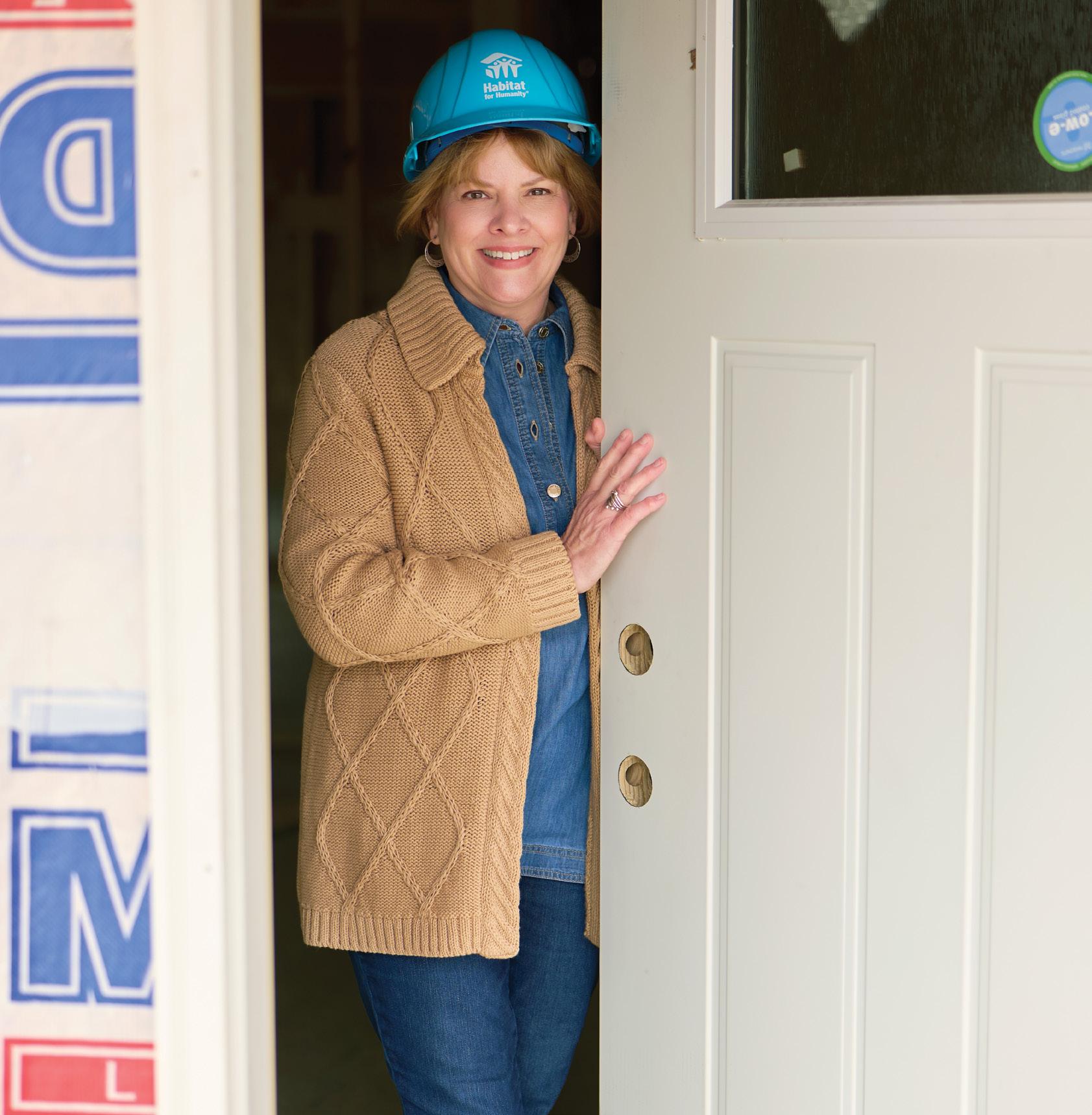
As the new executive director for Show-Me Habitat for Humanity, Jennifer James is all smiles about the nonprofit's continued work of making homeownership dreams come true.
Photo by Keith Borgmeyer
nonprofit organizations, their boards of directors, and the countless volunteers doing the heavy lifting behind the scenes of it all, we also must add our selfless first responders — emergency medical services, joint communications/911 dispatchers, fire officials, and police officers — and, I’ll boldly add, our schoolteachers, to some degree. (Teachers already wear more hats than they can count. Why not acknowledge that “first-line emergency service worker" is part of the stack?)
We’re constantly focused on the positive and sometimes not-so-positive impacts all around us. More than that, we try to do our bit to encourage the former. Want to meet some of Columbia’s most successful startup entrepreneurs — and possibly find a launching point for your new business idea (even if it only lives in the scribbled words or a diagram on the back of a napkin)? Check out Missouri Startup Weekend from April 17 to 19 at the EquipmentShare headquarters.
Are you more civically minded? The Columbia City Clerk’s office has a running list of city boards and commissions that are looking for new members. You’ll learn all those details in Charles Bruce III’s “Civic Starter Pack,” which is featured on the cover and in the content of this month’s COMO Magazine. You’ll also find other meaningful stories about our local nonprofit community and leaders, including Show-Me Central Habitat for Humanity Executive Director Jennifer James, who — I learned as that PYSK feature came to fruition — is the lovely spouse of Tim James, a teammate of mine on Belle High School’s baseball team back in the 1980s.
Finally, I’m poaching a LinkedIn post by Brett Calhoun, our March PYSK subject and cover model. Here’s his insight into significant if not astonishing impacts that people and institutions have had on Columbia. Straight from the subject’s feed:
Even though I was forced to pose for the camera, it was fun to have COMO Business Times magazine share my story of building RedbudVC in Columbia, MO. Why I love building in COMO:
• My wife, parents, and I are happy here.
• It's full of ambitious people from small towns.
• We are always the underdog (in business or sports).
• Mizzou pulls top young talent with a high-quality alumni community.
• Highest per capita city for selfmade wealth and massive companies.
• Successful people stay, return, and actively support entrepreneurs.
• Best startup building event in the world (Missouri Startup Weekend).
• Less noise, central, cost, and lifestyle advantage, proximity to real industries. I can go on ...
Fun facts from COMO: Largest land owner in the U.S. (Stan Kroenke), wealthiest family (Sam Walton), largest private storage company (StorageMart), largest buyer of construction equipment (EquipmentShare), top connector of web apps (Zapier), most data on vehicles (CARFAX), largest barrel manufacturer (Independent Stave Company), largest VA lender (Veterans United Home Loans), No. 3 carwash platform (Club Car Wash), largest used textbook seller (MBS), largest college sports media rights organization (Learfield) … probably missing some.
Now, help us fill in the blanks. What and who else need to be on our community impact list?
JODIE JACKSON JR EDITOR jodie@comocompanies.com
Closer Look
TASTE BUDS SNACKS
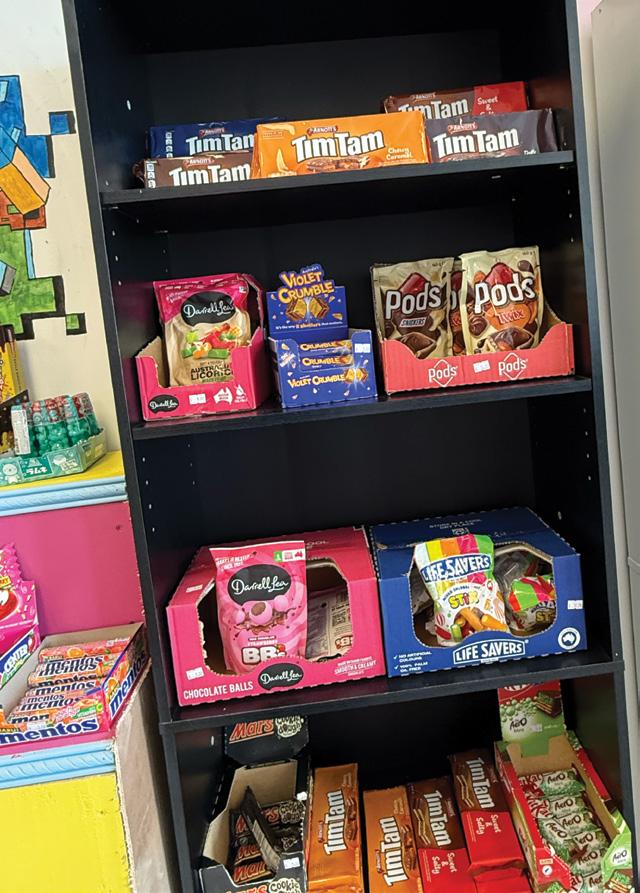
Opened in November 2025, Taste Buds Snacks has quickly become known for its playful mix of international snacks from places like Australia, China, and England. Shelves are stacked with brightly colored packages from around the world — candies, chips, and novelty treats you’re unlikely to nd many places in Columbia.
“Customers can try treats from di erent countries without ever leaving Columbia,” says owner Marvin Porter.
Porter launched Taste Buds Snacks to ll a gap in the market and create something more experiential than a typical candy shop. Inside, a dedicated photo spot invites visitors to snap pictures with their nds, adding to the store’s playful, exploratory atmosphere.
“It’s a store for all ages,” Porter says. “We love educating our customers and community about the products we o er by giving tours when they rst visit. We listen to customer suggestions, stock requested items, and build relationships with our shoppers, making it more than just a store.”
e lineup ranges from kangaroo jerky and hot pot– avored chips to Dubai chocolate — a mix of hidden gems and viral favorites that keeps customers curious about what they might discover next. e goal, Porter says, is to introduce unexpected avors while tapping into the nostalgia of a classic candy shop.
Porter rst opened Taste Buds Snacks in Carbondale, Illinois, in 2022, but relocated the business to Columbia for its culture and sense of community.
“ is city is supportive of small business growth, has a great business environment, is in a central location, and has a young, diverse, curious population,” he says.
2609 E. Broadway, Suite 103 | 573-228-6219 | tastebudssnacks.com
THE RESET CO.
e Reset Co., which opened in January 2026, was created to help people with busy schedules reclaim a sense of calm and control in their daily lives, when they may feel overwhelmed by never-ending to-do lists. e business focuses on completing tasks clients simply don’t have time or energy to tackle themselves, such as meal prep, pet sitting, gift wrapping, cleaning, and more.
Co-owners Krista Kippenberger and Ava Morgensen started the company after realizing how valuable small acts of help can be.
“We opened this business because we know what it is like to feel behind and need a mental reset,” says Morgenson.
e idea rst took shape when Ava was nannying for Krista and began tidying and resetting her home before Krista returned from work. at simple gesture sparked the concept for a business centered on easing everyday stress.
e Reset Co. especially aims to o er a helping hand to community members who may struggle to ask for help or who simply need assistance getting things done. To introduce their services, e Reset Co. is o ering a special introductory rate of $25 for the rst hour, with pricing after that depending on the scope and length of the job.
Facebook: @TheResetCo CBT
Movers & Shakers
DENISE NELSON
Denise Nelson has been named chief executive officer of Accounting Plus, the firm she founded in 1992. She previously served as president for more than 20 years and has led the company alongside partner Tina Marso since 2002. A 1990 graduate of the University of Missouri with a degree in accountancy, Nelson brings more than three decades of experience in accounting, business leadership, and organizational growth.
INGA KOKIC
Weichert, Realtors – House of Brokers announces that Inga Kokic has joined the brokerage and is now a member of the Stacey Swalla & Associates team. Born in Croatia, Kokic is a graduate of Hickman High School and is completing her bachelor’s degree in communications at the University of Missouri.
COLUMBIA PUBLIC SCHOOLS
John Higgins has been selected to be the director of the Columbia Area Career Center (CACC) for the 2026-27 school year. Higgins, the current assistant director at CACC, will replace Brandon Russell, the current CACC director, who announced
his retirement earlier this year. Russell has been at CACC for eight years. Most recently, he helped CACC maneuver through a $25+ million building renovation project.
Mitchell Pittman has been selected to be the principal at Beulah Ralph Elementary School. He will replace current principal Lance Foulk, who is retiring at the end of this school year. Most recently, Pittman served as assistant principal at Blue Ridge Elementary School, after moving from his previous role as assistant principal at Ridgeway Elementary School.
ADAM CURTIS
Adam Curtis, an established broker, realtor, and business owner, was named as the 2025 Realtor of the Year by the MidMissouri Board of Realtors. Curtis is a lifelong resident of Columbia and founder of North Star Real Estate.
GUMP, FAIELLA & BUGALSKI LAW
A century-old central Missouri law firm with more than a century of operation, is proud to have announced the opening of its new Columbia office and the addition of family law attorneys Jordan Hudspith and Ben Brammeier to
the firm. The new office is located in the Woodrail Centre at 1000 W. Nifong Blvd., Building 2, Suite 220B. The new office will focus primarily on family law, serving individuals and families navigating divorce, custody disputes, and high-asset matters.
BOONE COUNTY HISTORICAL SOCIETY
The Boone County Historical Society (BCHS) announces new board leadership, welcomes new members to its board of directors and endowment board of trustees, and introduces a new member of its leadership staff. Jolene Schulz and Gary Smith have been elected co-presidents of the board of directors, and Keith Whitney has been appointed chair of the endowment board. BCHS also has five new members on the board of directors: Zachary Dowdle, Jonette Ford, Krista Frohling, Kevin Gibbens, and Elizabeth Mendenhall. The new trustees appointed to the endowment board are Rachel Blackmore, Toni Messina, Andrew Grabau, and Nikki Reese. BCHS also announces the hiring of Haille Norris as director of marketing, communications, and events. CBT
Are you or your employees moving up in the Columbia business community? Send us your news at jodie@comocompanies.com
NELSON
HIGGINS
HUDSPITH
KOKIC
BRAMMEIER
CURTIS PITTMAN
Briefly in the News
APRIL 2026
EDUCATION
Columbia College and Central Christian College of the Bible Announce Dual-Degree Partnership
Columbia College and Central Christian College of the Bible in Moberly have agreed to a dualdegree partnership designed to expand academic opportunities while equipping students for both ministry and in-demand careers. rough the collaboration, CCCB students will complete their general education and biblical studies coursework from that institution while simultaneously pursuing a Bachelor of General Studies from Columbia College. As part of the CC degree, students will specialize in high-demand elds by completing an academic minor in areas such as management, marketing, cybersecurity, or psychology. “ is agreement re ects our shared commitment to academic excellence, student success, and preparing graduates to make an impact in their communities and professions,” said David Russell, thenpresident of Columbia College.
REAL ESTATE
County Commission Amends Senior Real Estate Tax Relief Policy
e Boone County Commission has amended the senior real estate tax relief program policy, removing the
requirement for annual renewal. Applicants who maintain eligibility will automatically be enrolled for subsequent tax bill years, beginning with 2026. Boone County Collector Brian McCollum said that removing the annual renewal requirement should make it easier for participants to remain in the program and allow county sta to administer the program more e ciently and cost-e ectively. To be eligible for the program, a taxpayer must: be a Boone County resident who is 62 or older before January 1 of the initial credit year; be an owner of record of a homestead or have a legal or equitable interest in such property as evidenced by a written instrument; and be liable for the payment of real property taxes on such homestead. To maintain eligibility, program participants must continue to reside in the home
claimed as their primary residence at the time they were initially enrolled in and approved for the program. If the program participant moves and/ or purchases another home as their primary residence, they may complete an application for that property.
NONPROFIT
Job Point Sets Date For 60th Anniversary Fete
Job Point’s annual awards banquet on ursday, April 9, will celebrate the organization’s 60th anniversary of providing services in central Missouri. e event begins at 6 p.m. at the Courtyard by Marriott. Award presentations will honor Award of Excellence recipients and community partners that have helped Job Point and its clients achieve success.
Then-Columbia College President David Russell, left, signs the official agreement with Central Christian College of the Bible President David Fincher looking on.
CELEBRATION
Columbia’s Hospitality Community Recognizes Star Performers
Downtown Retail Incubator Celebrates the Graduation of Participant Steep & Bloom Tea
Steep & Bloom Tea, one of 11 current participants at e Shops at Sharp End in downtown Columbia, has graduated from the retail incubator and is moving into a larger retail location. e boutique-style retail incubator, located at Fifth and Walnut streets, sits in a portion of what was once known as the Sharp End, Columbia’s historic Black business district. Steep & Bloom is a specialty tea retailer focusing on premium loose-leaf teas and tisanes (herbal blends), tea accessories, and its Mushroom + Matcha blend. e shop is now located in a retail space inside Serendipity Gallery and Wellness Studios, located at 1020 E. Walnut St., Suite 100, just a few blocks east of e Shops at Sharp End. e new retail space is a signi cant expansion on the space Steep & Bloom occupied inside the retail incubator but is still a collaborative retail model, sharing space with the gallery and ne craft gifts featured by Serendipity. Steep & Bloom also o ers private tea parties and tea experiences both on-site at
Serendipity and o -site. “Participating in e Shops at Sharp End retail incubator made the rapid growth I’ve seen in my brand possible,” said Christa Holtzclaw, the owner and self-proclaimed professional tea nerd behind Steep & Bloom. “I’m so grateful to have had access to this resource, and I’m excited for the next phase at Serendipity.”
SMALL BUSINESS
SBA Disaster Loans
Now Available for Small Businesses and Nonprofits in Boone County
e U.S. Small Business Administration is providing disaster assistance to central Missouri due to the severe storms and ooding the region faced in the spring of 2025. Businesses and organizations in Boone County may be eligible for aid under the SBA’s Economic Injury Disaster Loans program. Applications for the EIDL program close July 22, 2026. e loans are designed to aid small businesses, small agricultural cooperatives, small businesses engaged in aquaculture, and most private nonpro t organizations through the disaster recovery period. To apply, visit sba.gov/disaster.
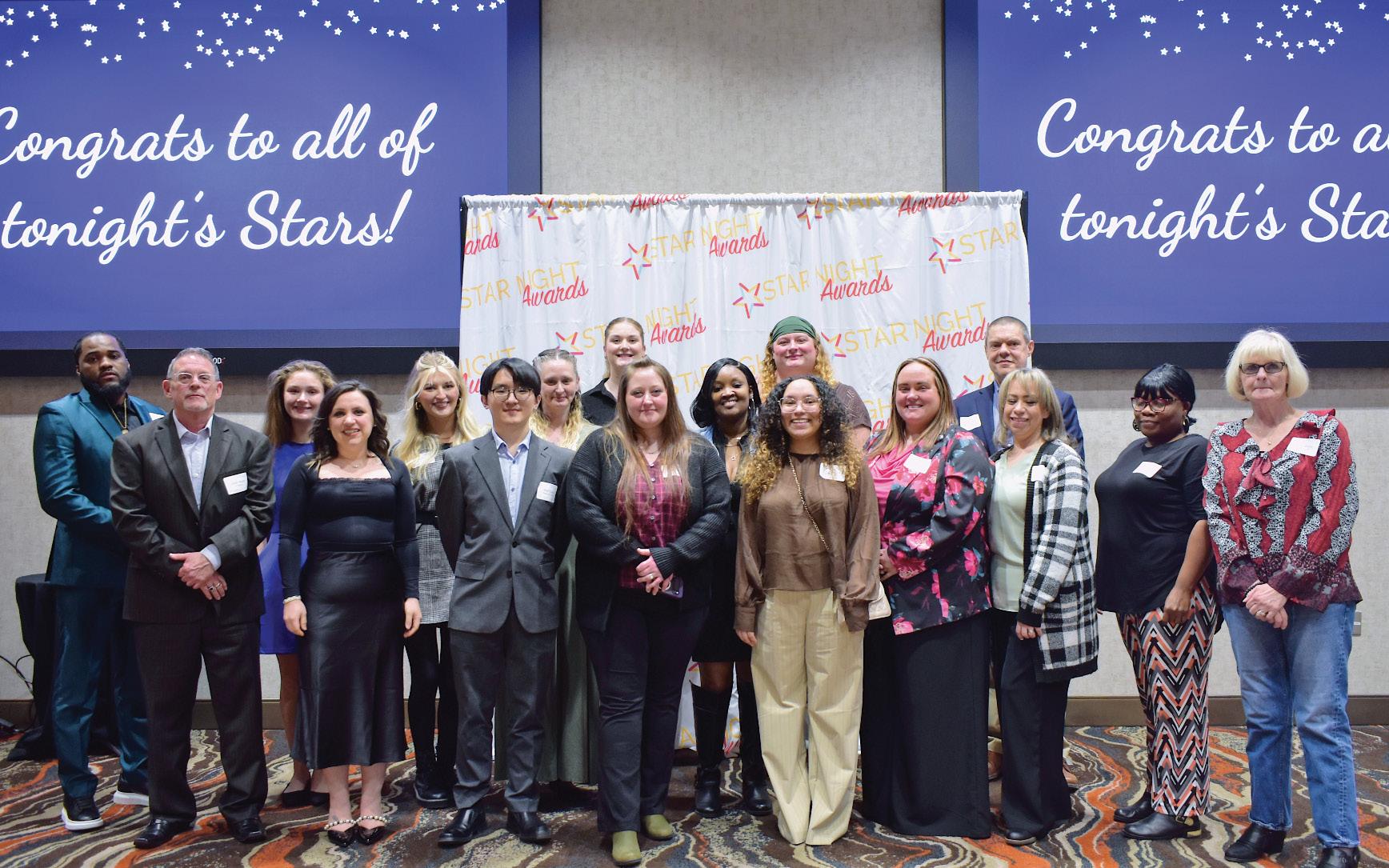
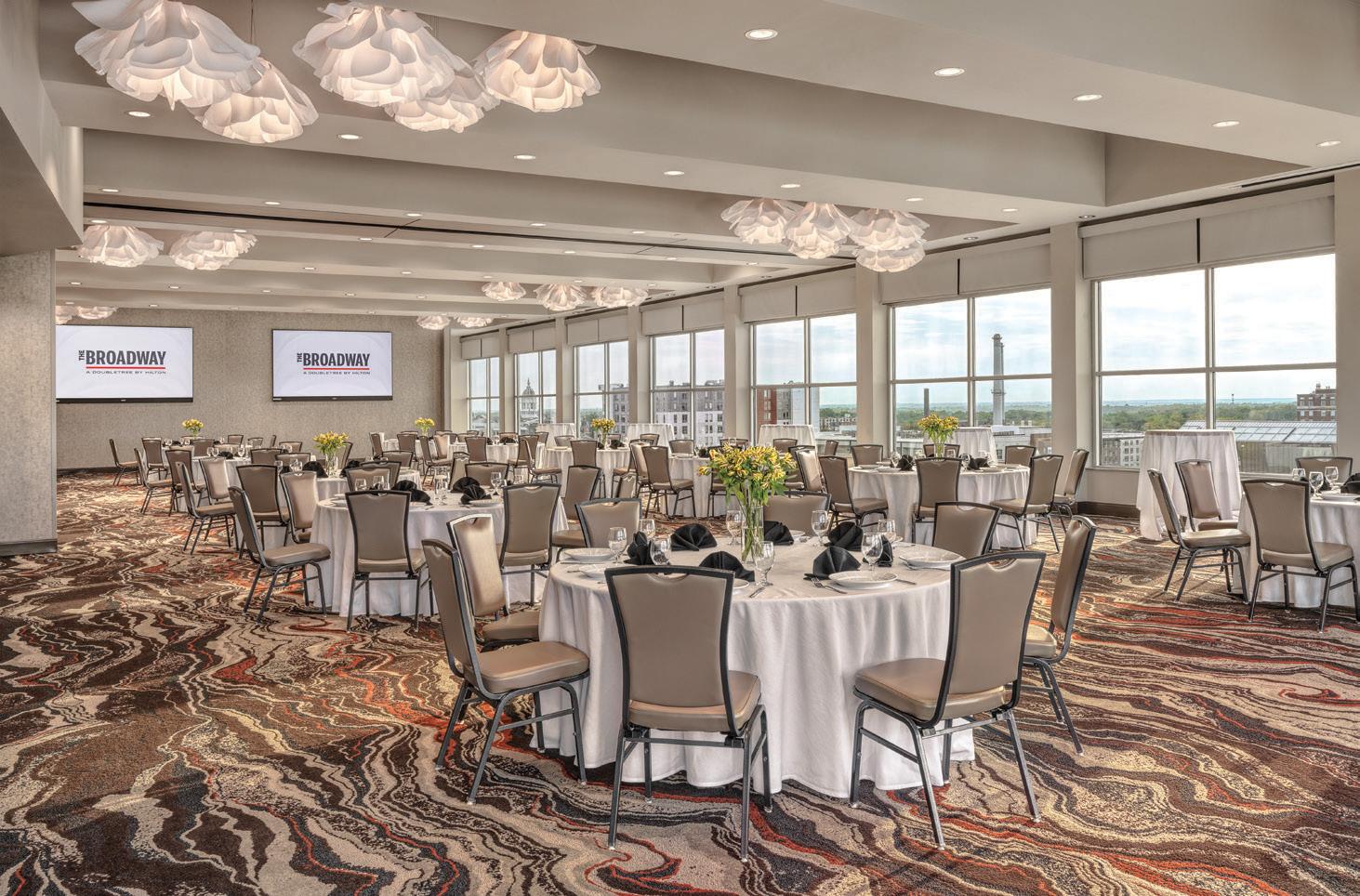
e Columbia Convention and Visitors Bureau and the Columbia Hospitality Association presented Columbia’s Annual Hospitality Star Night on February 3 at e Broadway Hotel. In addition to the 20 individual star performers from Columbia hotels, the ceremony also recognized four “of the year” award winners: Star Performer of the Year, Wilbert Jones, e Broadway Hotel; Rising Star of the Year, Sydnie Sanny, voco e Tiger Hotel; Hospitality Professional of the Year, Abigail Maynard, voco e Tiger Hotel; and Allied Partner of the Year, Columbia Regional Airport.
HISTORY
Booneanza Returns With High-Stakes Treasure Hunt Across Boone County
e Boone County History & Culture Center announces the return of Booneanza, a puzzle-based treasure hunt and fundraiser that invites participants to explore Boone County, following a series of increasingly complex puzzles to uncover a real, highvalue, hidden treasure. Booneanza ’26 kicks o at 9 a.m. Saturday, April 25, at the center, located at 3801 Ponderosa St. From there, Boone County becomes the game board for a multiday adventure, with puzzles that blend physical locations and digital clues, designed to challenge both seasoned puzzlesolvers and curious rst-time players. e ultimate prize is a treasure valued at more than $10,000 — a single natural solitaire diamond — hidden securely somewhere within Boone County. e contest and the prize are presented by Buchroeders Jewelers. For more information and to register, visit www. Booneanza.org, and follow @booneanza on Instagram for announcements and launch updates. CBT
RETAIL
Jennifer James
Executive Director, Show-Me
Central Habitat for Humanity
Job Description: I work with the board of directors to set the strategic direction for the organization, and I oversee day-to-day operations for all aspects of the organization. is wouldn’t be possible for one person without the talented and dedicated team of employees and volunteers that spend countless hours keeping our build sites running smoothly, creating amazing event experiences, accepting donations and generating funds from ReStore sales, and building fundraising and donor relations. It truly takes a team to keep all of the balls in the air!
Describe your professional journey and some highlights: After graduating from Mizzou, I worked as an interior designer here in Columbia for seven years. at opened opportunities for me to build relationships with several leaders in the insurance industry as they relocated to our community. I eventually made the leap to the corporate world and enjoyed a 25-year career with State Farm Insurance in auto and re underwriting, most of that time in leadership. I later made a move to leadership at Missouri Employers Mutual.
Insurance is an ever-changing industry that o ers lots of growth and development. Over the years I have had several opportunities to lead through signi cant organizational structure and process changes. As my leadership style evolved, I found that I really enjoyed building high-performing teams: helping employees grow and develop, adapt to change, and collaborate. I also enjoy brainstorming to remove barriers and create more e cient workplaces and processes.
What is your background/experience with ShowMe Central Habitat for Humanity prior to taking this position? State Farm was a big proponent of their leadership being involved in the community, and it was with their encouragement and support that I answered a call to join the Habitat board of directors. I was hooked! e mission of putting God’s love into action to bring people together to build homes, communities, and hope really resonated with me. Over the last 15 years or so, I served two terms on the board, painted and hung siding, and volunteered with the family selection committee.
Hometown: Je erson City, MO
Years lived in Columbia: 43
Favorite volunteer/community activity: You mean other than Habitat? My husband and I are active with Calvary Episcopal Church. I am an usher, Altar Guild volunteer, and
Photo by Charles Bruce III
president of the Daughters of the King chapter, and I volunteer with Loaves & Fishes and Crop Walk.
What are some ways you expect to make a unique mark on Show-Me Central Habitat for Humanity? Show-Me Central Habitat for Humanity is already an organization to be proud of. What I hope to achieve in my tenure as executive director is taking a comprehensive look at our current structure and processes to position our a liate for the future so that we continue to be an important part of the solution to the a ordable housing challenges we face in the Columbia area.
Making housing affordable — and attainable — has been at the heart of Habitat’s mission. The need is even greater today. How can Habitat increase its capacity to keep filling its part of that gap? Habitat has built 189 houses in the Columbia area since the late 1980s. We continue to build seven to 10 houses per year, relying on individual donors, corporate donors, event fundraising, grants, and some government programs to fund building. Availability of funds and donated materials, together with the use of skilled and volunteer labor, helps keep our costs down and our houses a ordable so that we can continue to o er interest-free mortgages to participants in our program. While none of us has a crystal ball to know exactly what the availability of funds, materials, and labor will look like from year to year, we are blessed by a loyal and stable local following that believes in what we do and provides support, both nancially and with many volunteers hours.
Having said all of that, taking that comprehensive look at our current structure and processes and creating e ciencies and new partnerships is what will prepare our a liate for the realities of increasing costs of supplies, labor, and land and even allow us to grow our capacity to build.
What special training or skills do you bring to your role? I bring almost 32 years of leadership in the insurance industry that was ever-evolving, looking for e ciencies, new processes, and
structural changes to reduce costs and grow in our ability to serve the needs of the customer. I have experience leading teams of various sizes with a variety of functional responsibilities.
What attracted you to your position with Habitat? Each of the past executive directors of our a liate brought their own passions and skill sets to this position over the last 38 years to make it the successful organization it is today. I saw this as an opportunity to bring my passion for the organization and the skill set I have developed in my corporate career to the executive director role to continue to strengthen and grow our a liate for the future.
Why you are passionate about your job? I have a history with Habitat and believe strongly in our mission and our model of involving our homeowners and community members in the process of building the homes that become neighborhoods and subdivisions within our broader community. I also love the pride that our employees and volunteers have in the role they each play in this process. Our employees work so hard to manage donations and ReStore sales, teach building skills, fundraising, hosting events, being good stewards of our resources, and guiding and supporting the homeowners. is organization makes a di erence in people’s lives, in
A Columbia businessperson or leader you admire and why: ere are so many leaders that I have met that are worthy of admiration and gratitude, and I don’t want to downplay that in any way. However, I feel a special admiration for the volunteers that show up for not-forpro t organizations each and every day, unpaid, just because they care. ey want to be part of the solution to the challenges our community faces. e hearts of our volunteers never cease to amaze me.
Photo by Keith Borgmeyer
large and small ways, every day. Who wouldn’t be passionate about that?
It seems that we all have competing priorities these days. How do you prioritize your priorities? at’s a tough one, and I de nitely cannot say I have this all gured out, but I strive to keep my faith and my family out in front as best I can. From the standpoint of my role as executive director, I’ve only been in my role since late October, so there are still times when I don’t know what I don’t know. I rely heavily on staying organized to keep top priorities moving forward each day or week, as the case may be. I calendar hard deadlines and prioritize addressing questions and resolving issues that create challenges for our homeowners, employees, and volunteers. I also have a very supportive board of directors, and the prior executive director doesn’t mind an occasional call or text.
What are some of the biggest challenges facing organizations like Show-Me Central Habitat for Humanity today? I think we have many of the same challenges other not-for-pro ts are facing. Costs associated with running a business continue to rise. e costs of land, materials, and labor continue to rise. At times it can be a challenge to nd volunteers, especially for the less glamorous tasks. Technology and the legal environment change rapidly, and that can be a challenge for small organizations where everyone is already wearing multiple hats.
Biggest lesson learned in your working life: Listen. e best new ideas and solutions to problems rarely come from one person at the top of an org chart. ey come from collaboration and listening to thoughts and ideas from the people who are in the middle of the work and processes every day.
Your greatest strength: I care about giving my best every day.
Your greatest challenge: ere are simply not enough hours in the day.
Tell us something about Habitat for Humanity that most people might not fully understand: e most common misconception about Habitat for Humanity is probably that we give away houses. To qualify to be considered for a home, people must apply. ey must meet speci c criteria: Applicants must be able to demonstrate their need for a Habitat home, their ability to make the mortgage payments, and be willing to partner on the building process, completing a minimum of 250 sweat equity hours working on their home and/or another home under construction and complete HUD homeownership training.
What you do for fun: I spend time with my family and friends!
Who makes up your family: My husband, Tim, and our two dogs, Jetta and Hank. Also, our oldest son, Brendan, his wife, Michelle, and our two grandchildren, Chesney and Kipton; our youngest son, Rory, and his wife, Mariah; my dad and his wife, Kristen; lots of nieces and nephews and extended family.
Most people don’t know that you: Have a housing and interior design degree from Mizzou. CBT
Photo by Keith Borgmeyer
“This organization makes a diff erence in people’s lives, in large and small ways, every day. Who wouldn’t be passionate about that? “
What Nonprofit Boards Can Teach Us About Our Own Money
BY ASHLI EAVES, CHSNC
IN MY CAREER, I’ve had the opportunity to serve on several nonpro t boards, and it’s a role I genuinely enjoy. While some people run for the hills at the thought of board service, I nd energy in networking, problem-solving, and shared pursuit of the greater good. Maybe it’s my way of giving back to the community, or maybe it’s my well-documented inability to say no. Either way, it’s meaningful work. Recently, I helped launch a nonpro t from the ground up. Being involved in decision-making from day one has offered a di erent perspective. It made the connections between values, planning, and long-term outcomes impossible to ignore, and it highlighted how closely a nonpro t’s nancial journey can mirror our own.
Given my professional background, I’m often asked to support organizations in roles like treasurer or as part of a nance committee. Reviewing nancials is a standard part of good board governance, and month after month, I watch boards that bring discipline and thoughtfulness to an organization’s money decisions. at experience has caused me to re ect on something important: Why do we bring so much structure to nonpro t nances, yet often neglect that same intentionality at home?
Mission First: Avoiding Financial Drift
Every nonpro t begins with a clear mission. at mission becomes the lens through which nancial decisions should be made. When spending or strategy drifts away from stated values, nonprofits experience “mission drift” — resources are allocated in response to pressure or opportunity rather than purpose. Households experience the same thing. We say we value legacy, but we don’t save. We say generosity matters, but we don’t plan for giving. We say we want long-
term security yet make decisions that only serve the moment. Without a dened nancial mission, money decisions become reactive rather than intentional. Behavioral research supports this idea. Studies highlighted in the Journal of Consumer Research show that people are signi cantly more likely to follow through on goals when those goals are well-de ned and tied to personal values rather than vague intentions. In practice, values-based goals tend to shape more consistent nancial behavior over time.
Measuring What Actually Matters
Mission alone isn’t enough. Healthy nonpro ts don’t just monitor activity, they measure outcomes. Boards review budgets and bank balances, but they also track progress toward speci c goals like fundraising targets or program growth. e same applies at home. Many households are reporting — checking balances and statements — but not truly tracking progress. Does your household have a nancial “scorecard”? In the nonpro t world, this is often a simple onepage snapshot of the metrics that matter most, reviewed regularly. At home, that might include keeping an eye on net worth, savings progress, debt reduction, or charitable giving. e goal isn’t complexity — it’s focus.
Reserves, Readiness, and Purposeful Spending
Every healthy nonpro t has a reserve policy. Just as households maintain emergency savings, nonpro ts hold reserves to navigate uncertainty. At the same time, many organizations also set boundaries around excess reserves.
Households should strike a similar balance. Holding cash beyond what’s necessary for stability can sometimes mean missing opportunities to intentionally deploy resources in ways that support long-term goals or values. Emergency funds are essential, but planning for known future expenses matters, too.
Stewardship and Purpose
Stewardship asks us to be thoughtful not just about what we save or spend, but why. At the next board meeting I attend, I’ll be listening a little di erently. Not just to the decisions we’re making for the organization, but to the discipline I may be neglecting at home. Because the same principles that build strong nonpro ts — intentionality, accountability, and follow-through — also build strong households. We simply have to apply them to both. CBT
How Nonprofits Can Build a Culture of Philanthropy
BY JAIME FREIDRICHS
NONPROFIT
LEADERS
often talk about the importance of having a culture of philanthropy. But what does that mean? And can it work in any nonpro t?
e phrase “culture of philanthropy” simply means that everyone in the nonpro t shares two fundamental beliefs: rst, that donors and gifts are important to carrying out the mission, and second, that encouraging them is part of everyone’s job.
• How can we possibly raise enough?
• at’s just a drop in the bucket.
• [Silence; just pretending fund raising doesn’t exist.]
Typically, the rst part is fairly easy to embrace. Even when nonpro ts have funding sources other than donations, everyone can generally agree that bringing in more money through gifts leads to greater impact, either by increasing services or paying for needs that aren’t otherwise funded.
e second part can feel a little intimidating for some. Board members and non-fundraising sta members might say, “Yes, it’s great that people give to us, but I can’t have anything to do with that. I hate the thought of asking for money!”
e truth is, there are many ways to be involved in encouraging gifts to your favorite nonpro t, and most have nothing to do with direct solicitation.
e most important thing you can do to encourage gifts at a nonpro t you serve or care about is this: Be curious and positive about fundraising.
Too often, the messages we fundraisers hear from our colleagues and volunteers are:
• Fundraising is so hard.
• I could never do that.
No wonder so many fundraising professionals are demoralized! Hearing that your job is undesirable or your goals are unattainable is rough. And even worse is hearing nothing at all.
So, this is my message to the non-fundraising sta , board members, and others at nonpro ts: It is OK to feel intimidated by fundraising, provided you use it to fuel your curiosity.
Consider approaching your nonpro t’s fundraising team with questions like these:
• How did you learn to raise money?
• What are our fundraising challenges?
• What strategies are most e ective for us?
• How do smaller gifts lead to greater gifts?
• Why does this fundraising activity matter to our nonpro t’s goals?
You’ll probably nd that fundraising isn’t nearly as scary as it seems and that you can play a meaningful role in it all year
long. e biggest key is to continue communicating with donors using the six values that are foundational to a culture of philanthropy:
1. Gratitude: expressing sincere, enthusiastic appreciation for the donor and their gift
2. Accountability: assuring the donor that their gift was used for the intended purpose
3. Impact: de ning clearly how gifts help the community through the nonpro t, connecting the gift to clear outcomes
4. Inclusion: o ering ways beyond giving money for donors to be involved, such as o ering time, talent, ties, and testimony (the other “4 T’s” of philanthropy)
5. Transparency: being open about how the nonpro t is run, including making basic nancial statements available, often shared through the annual report
6. Optimism: inspiring the belief that gifts have the power to make a positive di erence, now and in the future
Some nonpro ts are wary of the phrase “culture of philanthropy,” fearing it means that donations and fundraising are prioritized above the nonpro t’s other work. at fear is understandable, but unfounded. Having a culture of philanthropy doesn’t mean that donors and gifts are the most important part of a nonpro t. It simply reinforces that they’re an important part.
When we value our donors and work together to ensure they feel appreciated and understand their impact, gifts tend to follow. But a culture of philanthropy does more than lead to better fundraising results. It helps create a stronger, more connected community. CBT
Jaime Freidrichs is a fundraising coach who specializes in helping small-and-mighty nonprofits.
The AI Treadmill: When AI Makes You Busier, Not Freer
BY J. SCOTT CHRISTIANSON
IN DECEMBER, I WROTE ABOUT THE AI PRODUCTIVITY PARADOX — the di erence between the gains that businesses were promised from generative AI and the messy reality. But new research reveals a more subtle problem. Even when AI works well, it doesn’t necessarily make work lighter. It can make work more intense.
In a study published last month, researchers from University of California–Berkeley spent eight months studying how generative AI changed work habits at a tech company with about 200 employees. e company didn’t mandate AI use but paid for “pro” subscriptions. e result? Nobody went home early. ey just did more at a faster pace. As one engineer put it: “You had thought that maybe because you could be more productive with AI, then you save some time, you can work less. But then really, you don’t work less. You just work the same amount or even more.”
THE TREADMILL EFFECT
e researchers identi ed three patterns. First, task expansion: Because AI lls knowledge gaps, workers started doing things that used to belong to other people. Product managers wrote code. Researchers took on engineering tasks. People absorbed work that might previously have justi ed additional hires. Second, blurred boundaries between work and free time: Because prompting AI feels more like chatting than working, people slipped tasks into lunch breaks, meetings, and evenings. Work became something that can be nudged forward with a simple chat message to your friendly AI coworker.
ird, more multitasking: Workers managed several AI-assisted threads at once, creating constant switching between a growing pile of open tasks. ese patterns created a self-reinforcing cycle where AI accelerated tasks, which in turn raised expectations for speed. Higher speed made workers more reliant on AI, which widened the scope of which tasks and projects AI assisted. is, of course, generated more work. As the Red Queen told Alice, you have to run as fast as you can just to stay where you are. For some, AI has become the Red Queen who is constantly raising the baseline for what counts as productive.
I’M ON THE TREADMILL, TOO
I certainly recognize this in myself. Having invested the time to get genuinely great results with AI, I haven’t used my AI skills to work less. I’ve used it to build new software, develop 3D model designs, and revive old projects I’d abandoned years ago because I didn’t have the programming skills to pull them o . at’s exciting — but it’s also more work, not less. And there’s a big di erence between an old slacker-hacker like me choosing to take on more side projects and an entire workplace where “doing more all the time” becomes the new normal.
e larger problem is that innovation requires slow thinking: talking through a problem with a colleague, sketching ideas on a whiteboard, letting your subconscious chew on it overnight. e danger of heavy AI use is that it moves everything into the “fast” pile. When you can generate a draft in seconds, the
temptation is to ship it and move on and skip the slow thinking where better ideas can emerge.
GETTING OFF THE TREADMILL
So, what do we do? e UC Berkeley researchers suggest leaders build what they call an “AI practice” describing how the employees will use AI and, just as importantly, when they’ll stop. Pause before barreling ahead to make sure you’re still working on the right thing. Batch AI outputs instead of reacting to each one the moment it pops up. And protect time for human conversation.
I’d add one more recommendation: Look at what you’re rewarding. If the person who takes on the most tasks gets the most praise, you’re feeding accelerating the treadmill. If you reward judgment, quality, and knowing when to stop, you’re building something that lasts.
AI has already changed how we work.
e question is whether you’ll shape that change on your terms or let the treadmill set the pace. CBT
For related links and more information, visit cbt.profc.io.
J. Scott Christianson — aka “Prof C” — is the former director of Mizzou’s Center for Entrepreneurship and Innovation.
DOS AND DON’TS
The Common Insurance Mistakes Individuals and Nonprofits Make
By Mike Messer MMesser@ShelterInsurance.com
When it comes to insurance, individuals and nonprofits aren’t all that different. Both might have tight budgets and both can face risks and liabilities that can threaten their assets. In addition, both might unintentionally make insurance mistakes that can leave them exposed to losses. Understanding and avoiding these mistakes can help prevent them.
DO:
Get It, but DON’T Forget It
Life rarely stands still, so neither should your insurance. However, people often forget to update their policies when something big changes—like a change in marital status, moving to a new place or adding a new family member. Nonprofits do the same when they grow, launch new initiatives or expand. Not telling your insurer about these changes can lead to gaps in coverage. Insurance isn’t a “get it and forget it” purchase. Individuals and nonprofits should both schedule annual coverage reviews to help make sure they have the coverage needed to avoid those gaps.
DO: Help Mitigate Risk
Insurance helps protect your assets in case of unexpected events, but you’re still responsible for deductibles and some costs. Both individuals and nonprofits can reduce risks and insurance expenses by taking steps like implementing safety measures, staff training and background checks. Realize that not all risks can be avoided, so actively mitigating risk is essential.
DON’T: Forget to Cover the Right People
Another common mistake is forgetting to cover the right people. Families might not insure all members who should be covered and nonprofits often overlook volunteers, who are vital to their mission. If something goes wrong it can lead
With over two decades in the insurance industry, Mike Messer has served as a claims adjuster, supervisor, and underwriter, giving him a well-rounded understanding of how policies work when it matters most — before and after a loss. He prioritizes building relationships based on trust and personalized service, recognizing that every client’s needs are unique. Through annual policy reviews, he helps ensure clients stay informed, confident, and properly covered, providing them with peace of mind and financial security.
to lawsuits. For nonprofits, a volunteer’s misstep could also damage their reputation.
DO: Get Professional Help
When you buy insurance, it’s tempting to get a one-size-fitsall policy and hope for the best. But whether you’re looking for insurance for yourself or on behalf of a nonprofit, it’s better to find someone who understands your exact needs. Not sharing all the details with your insurance provider or leaving out important info might mean you end up with a policy that doesn’t cover you or claims that are denied. A licensed insurance agent knows what questions to ask to avoid those kinds of coverage gaps.
DON’T: Select Insurance
Solely Based on Price
Although cost is an important consideration, opting for the lowestpriced policy may result in inadequate coverage and increased risk. Likewise, the highest-priced option does not necessarily guarantee comprehensive protection either. It’s best to consult with an insurance specialist to assess your specific needs and identify a policy that provides appropriate coverage, regardless of whether it is the most or least expensive.
Insurance isn’t something you can ignore or leave up to chance. Whether you’re covering your family or finding insurance for a nonprofit, keeping your insurer updated and asking the right experts for help are key. Annual reviews and open communication go a long way toward making sure you have the right coverage and keeping your peace of mind. If you’d like to review your personal coverage, contact me. I’d be happy to help!
BUILDING A PURPOSEFUL BRAND THROUGH INCLUSIVE PRACTICES
By Charles Bruce III charles@comocompanies.com
Consumers want more than just products. They want to support brands that stand for something meaningful. Just like storytelling helps people understand who you are, inclusivity shows them who you stand beside.
Marketing with purpose builds deeper connections, fosters trust, and turns customers into loyal communities. One of the most powerful ways to market with purpose is through inclusivity.
Inclusive marketing ensures people of all backgrounds, identities, and abilities feel seen, heard, and valued. It reflects the real world, challenges outdated stereotypes, and proves your brand is committed to creating space for everyone.
Here’s how to approach inclusivity authentically and intentionally:
1. Understand What Inclusivity Really Means
It’s more than checking boxes or casting diverse faces. Inclusivity is about representation, accessibility, and belonging. It includes race, gender identity, body type, age, ability, socioeconomic background, and more.
These aren’t just demographics. They’re part of the cultural context your brand exists within. Inclusive marketing asks: Are we making space for all people to see themselves in our brand?
2. Start with Your Team and Audience
Inclusive marketing starts from the inside out. Diverse teams help you see blind spots, avoid missteps, and tell more meaningful stories.
Equally important: listen to your audience. Who do you serve? What matters to them beyond your product? Let their voices guide how you show up and who you’re speaking to.
CHARLES BRUCE III Director of Client Relations
Charles Bruce is the Director of Client Relations for COMO Companies, which owns COMO Marketing, COMO Magazine, and COMO Business Times. He received his Bachelor’s Degree in Business Administration and his MBA from the University of Dubuque. When Charles isn’t being the life of the party, he can be found climbing a large mountain. In December 2023 he climbed the Imja Tse mountain in Nepal.
3. Use Inclusive Language and Imagery
Words and visuals carry weight. Avoid stereotypes and aim for thoughtful representation. A few tips: Use gender-neutral language
• Include captions and alt text for accessibility
• Show people of all ages, body types, and abilities
• Be mindful of holidays, traditions, and cultural references
• Small details can make a big impact and reflect your values clearly.
4. Prioritize Accessibility
If your content isn’t accessible, it isn’t inclusive. Simple updates, like high-contrast text, screen-reader–friendly web design, and video captions, help more people engage with your brand. Accessibility shows care and care builds trust.
5. Share Real Stories Without Tokenizing
Telling diverse stories is powerful but authenticity matters. Tokenism happens when people are spotlighted in a way that feels performative or one-off. Instead, build long-term relationships. Collaborate with community leaders. Let diversity shine through consistently not just during specific months or campaigns.
573-577-1965 | comomarketing.co
6. Take a Stand and Follow Through
Inclusivity isn’t just good optics. It’s about action. Whether you’re donating, changing internal policies, or publicly supporting a cause, be transparent and accountable.
Audiences can tell when your values are genuine and when they’re not.
Inclusive marketing isn’t a trend, it’s a reflection of who you are. When your brand embraces inclusivity with authenticity, you don’t just stand out. You build trust, emotional connection, and a brand that people truly believe in.
In a world where many still feel unseen, your story, and who you include in it, matters more than ever.
WHY DO SO MANY CONSTRUCTION PROJECTS GO OVER BUDGET?
By Vaughn Prost info@prostbuilders.com
We’ve been building in Missouri since 1949, and I’ll be honest with you: most construction projects go over budget. Not just a little over. A 2025 industry analysis found that 85% of projects exceed their budgets by an average of 28%. McKinsey’s research on large projects shows they can run up to 80% over budget and finish 20% behind schedule. And according to a 2024 study of over 16,000 construction projects, only about 8 out of every 100 finish on time AND on budget. After 75 years and eight generations of building everything from schools to churches to the State Capitol, we’ve seen why this happens. And more importantly, we’ve learned how to avoid it. Here’s what goes wrong, and what we do differently.
The Problem With “Just Give Me Your Best Price”
I can’t tell you how many times we’ve seen this: a school board gets three bids. One is significantly lower than the others. They take the low bid. Six months later, they’re dealing with change orders, cost overruns, and schedule delays. What happened? Either the contractor missed things in the estimate, or they lowballed the price to win the job, knowing they’d make it up later with “extras. We track our actual costs on every project. When we give you a number, it’s based on what things really cost in Central Missouri, not what we hope they might cost. We know local soil conditions. We know what permits take in Jefferson City versus Columbia. We know which suppliers are reliable and which ones will leave you waiting. Does that mean we’re always the lowest bid? No. But we’re usually pretty close to our estimate when the project’s done.
VAUGHN PROST Owner & President
Vaughn Prost is the owner and president of Prost Builders lnc., a design/build and construction services firm located in Columbia. Vaughn has over forty years of domestic and international design and construction experience as a cost and scheduling engineer, structural engineer, owner’s construction representative, and general contractor.
(573) 635-0211 | prostbuilders.com
3305 Crawford Street Columbia, MO 65203
When Materials Don’t Show Up
Here’s a story that shows how fast things can go sideways. We were building a new gymnasium for Jefferson Middle School in Columbia. An $11 million project. The plans called for steel bar joists for the roof structure. Then we got word: steel delivery was going to be delayed by months. The school needed this building ready for students. We didn’t have months to wait. We have our own concrete crews and registered professional engineers on staff. So, we ran the numbers and went back to the architect and school district with a proposal: switch to precast concrete double tees instead of steel bar joists. We redesigned that part of the building. We got it done three months AHEAD of schedule. And the school saved $300,000. That’s not something every contractor can do. If you’re just coordinating subcontractors, you wait for the steel. If you actually have your own construction professionals and crews who can pour concrete, you have options. We’re not a “suitcase” general contractor who comes to town with one superintendent and subcontracts everything. When you self-perform critical
work like concrete and carpentry, you have more control when things go wrong. And in construction, things always go wrong somewhere.
Who’s Actually Building Your Building?
I’ve seen too many projects where the “general contractor” is really just a guy with a phone coordinating subs. Nothing against subcontractors — we use them too. But when that’s ALL the general contractor has, you’re at everyone else’s mercy. Your electrician is three weeks behind on another job? You wait. Your concrete supplier has a scheduling problem? You wait. Somebody makes a mistake? They blame each other, and you pay for it. Prost knows the subcontractors that supplement a late subcontractor’s crew. We’re an employee-owned company. The people running your job have actual skin in the game. Our construction professionals are all employee-owners. When something goes wrong, they fix it. They don’t point fingers and send you a change order. And we’re local. We’ve been in Jefferson City since 1949. We’re not going anywhere. Our reputation here matters more than any single project.
GFI DIGITAL EXPANDS
WIDE FORMAT CAPABILITIES WITH HP SOLUTIONS
By Corey Backues cbackues@gfidigital.com
At GFI Digital, we have long helped businesses bring big ideas to life through wide format printing solutions from trusted manufacturers like Ricoh and Sharp. Now, we are expanding our lineup with the addition of HP wide format printers and multifunction systems, giving our customers even more flexibility, speed, and precision.
COREY BACKUES
Vice President of Sales
Corey has a passion for sales and customer service. With over 27 years of experience in office equipment, he oversees the GFI Digital sales leaders in Missouri, Illinois and Kansas. Prior to joining GFI Digital, Corey served as Director of Sales at IKON Office Solutions (now Ricoh.) He received his sales and management training from the Gibbs family at Modern Business Systems (MBS) in the 1990’s, which later became IKON.
When deadlines are tight and volume is high, performance becomes critical.
This expansion allows organizations to better align their printing technology with their needs, whether that includes architectural drawings, GIS mapping, blueprints, high-end graphics, or large-scale signage.
Designed for Technical Precision
For engineering firms, construction companies, educational institutions, and government organizations, precision is essential.
HP’s DesignJet T-Series is built for technical workflows and known for reliability, ease of use, and consistent output. These printers are ideal for:
• Blueprints and construction plans
• CAD drawings and schematics
• Infrastructure planning documents
• Research posters and instructional materials
• Topographic maps and aerial imagery
Teams can confidently produce detailed documents with fewer errors and faster turnaround times.
HP’s PageWide XL systems are designed for fast-paced production environments that generate large quantities of technical documents without sacrificing quality. These systems are especially valuable for:
• Bid sets and site maps
• Utility schematics
• High-volume CAD production
• Secure public sector workflows
The technology behind these devices is engineered for durability and reliability, helping organizations maintain productivity during peak demand.
Elevating Graphics and Brand Quality
Wide format printing is not only about technical drawings. It is also about visual impact.
For marketing departments, photographers, and design teams, HP’s DesignJet Z-Series delivers vibrant color accuracy and professional-grade results. These printers support:
• Fine art and photography reproduction
• Promotional banners and point-of-purchase displays
• Window graphics and branded signage
• Presentation boards and campaign mockups
The result is high-resolution output that reflects brand standards and creative intent.
Smarter, Simpler Printing
Technology should simplify work, not complicate it.
HP’s Click Print Solutions software makes wide format printing more intuitive with dragand-drop project printing, preview alerts, and built-in error checking. Users can print directly from common design and CAD applications, helping reduce reprints, save materials, and speed production.
For organizations managing complex projects, that efficiency can translate into meaningful time and cost savings.
Expanding Possibilities
By adding HP wide format solutions to our portfolio, we are strengthening our ability to deliver tailored print environments for every type of organization.
Whether your company is upgrading aging equipment, increasing production capacity, or exploring wide format capabilities for the first time, our expanded lineup ensures you have access to the right technology for your workflow.
THE POWER OF BANKING LOCAL
By Brad Roling broling@midambk.com
April is a month of renewal and growth, making it the perfect time to celebrate the strength and impact of banking local. At Mid America Bank, we believe your money is a tool to strengthen your community, support neighbors, and create opportunities right where you live. Unlike megabanks that funnel profits to distant headquarters, community banking keeps resources close to home, fueling our vibrant city.
Your Hometown. Your Bank.
When you bank with Mid America Bank, you’re investing in your own community. Our roots run deep in the areas we serve, and our employees live, work, and volunteer in these same neighborhoods. From sponsoring local events to volunteering at schools and nonprofits, our team embodies the idea that a bank should be more than a service provider; it should be a neighbor. This personal connection allows us to understand the needs of our customers in ways large institutions simply cannot.
Investing in Main Street, Not Wall Street Community banks focus on supporting local businesses,
families, and projects. Every loan made, every account opened, directly contributes to the growth of the area. When a local restaurant expands, a family renovates their home, or a startup hires new employees, those funds circulate within the community, boosting jobs, infrastructure, and economic resilience. This contrasts with megabanks, where profits and decisionmaking often prioritize shareholders over the people they serve. Our customers know where their money is going and that it’s helping neighbors, not Wall Street investors.
Stories of Community Growth
has
that he
years of
businesses in and
When he is not helping
business with its financial needs,
is serving the community in a variety of capacities. He is proud to serve on the Ronald McDonald House Mid-Missouri Board of Directors as Vice President, the Columbia Chamber Foundation Board as Treasurer, Heart of Missouri United Way Board of Directors, Executive Board for Scouting America, Great Rivers Council, and Beta Theta Pi Advisory Board. Brad is a proud Mizzou grad and loves cheering on the Tigers!
Why Community Banks Matter More Than Ever
Time and again, we see how local banking makes a tangible difference. Small business owners have opened new locations, families have purchased their first homes, and nonprofits have expanded services, all with financing and support from their community bank. These aren’t abstract statistics; they are real people and real stories that illustrate how local banking strengthens communities in meaningful ways.
In an era of economic uncertainty and rapid change, community banks provide a sense of security and trust. When challenges arise, we are there, ready to help navigate solutions with flexibility and care. That kind of attention is difficult to find at institutions where customers are just account numbers.
Banking local goes beyond convenience; it’s about pride, responsibility, and tangible impact. When you deposit, borrow, or invest with a community bank, you are strengthening the very place you call home. At Mid America Bank, we are proud to be part of your hometown story. Because when your community succeeds, we all succeed.
Saving Money for a Rainy Day
School district, city, and county maintain healthy fund balances.
BY MICHELLE TERHUNE
ACCORDING TO THE PNC BANK 2025 Financial Wellness in the Workplace Report, 67 percent of Americans live paycheck to paycheck. If something happens — whether an emergency like a medical expense or car repair or losing a job or compensation — not saving means there’s no safety net to keep you a oat.
It was during the COVID-19 pandemic shutdowns that we were told, loudly, clearly, and repeatedly that we should have at least three months’ worth of expenses set aside for emergency situations.
Which brings us to entities like the city of Columbia, Boone County government, and Columbia Public Schools. ey all have signi cant reserves set aside for emergencies. And when there’s another sales or property tax issue on the ballot or a fee increase of some kind, people wonder why those entities aren’t just using their set-aside millions instead.
Although the budgets and audit reports for all three entities are publicly accessible, trying to gure out what’s what can be di cult. Some may think the complexities are concealing some level of scal mismanagement of public money. To the contrary, it’s just those entities being responsible to their taxpayers, residents, students, employees, and customers.
WHY ARE RESERVES SO IMPORTANT?
Here’s the rst fact to know: You really don’t want any of these entities to live paycheck to paycheck. After all, there’s far too much riding on their ability to keep enough cash on hand to pay their bills. ose include paying the people who teach your children, pave your roads, and pick up your trash and recycling, among myriad other conveniences of modern living. at’s precisely why they have reserves they can dip into when necessary to keep the lights on.
e city, county, and CPS heed the advice of the Government Finance O cers Association, which recommends holding in reserve a minimum of two months of expenses, which is about 16.7 percent. at’s a GFOA-recommended baseline. Many entities hold 20 percent in their general operating funds, which may not seem like a stretch from 16.7 percent, unless you’re looking at numbers in the millions. Some hold 25 percent as reserves, or three months of expenses. How much to hold in reserve depends on factors such as vulnerability to disasters, the volatility of revenue sources, or a dependency on state and federal aid, which aren’t a sure thing — especially these days.
In its 2023 Rethinking Budgeting publication, the GFOA writes: “Reserves are the liquid nancial resources that local governments do not include in the annual spending plan. ese resources are held back in the budget and held in ‘reserve’ for some other purpose. e most important purpose is to respond to signi cant, unplanned, unavoidable costs or revenue losses, such as a natural catastrophe or recession.”
WHO HOLDS WHAT IN RESERVE?
e city holds 20 percent of budgeted expenses in its General Fund, Convention & Tourism Fund, and Enterprise Funds. Matthew Lue, Columbia’s director of nance, likens the budgeted expenses to a checking account. e city pays its bills with revenue it receives. e reserves, however, are like a savings account. Reserves aren’t budgeted per se, but rather, held out of revenue in case of emergency.
“You bring money in. Some goes directly out the door for bills, and some goes into savings,” Lue says.
ese aren’t the only reserves the city holds. e city of Columbia operates its own employee bene ts plan and is self-insured against liability. According to Lue, 75 percent is the reserve target for those funds because there’s no third-party insurer sharing risk for claims. For example, if someone successfully sues the city for a massive personal injury claim, the city has to pay it.
DID YOU KNOW?
The city holds 20 percent of budgeted expenses in its General Fund.
Citizens wouldn’t be pleased if city-provided services were suddenly reduced or eliminated to pay the damages. e reserve helps ensure that won’t happen.
Boone County’s policy is to hold at least 17 percent of major operating funds in reserve, which could carry the county for at least two months in an emergency. e reserves are referred to as a “net fund balance” in its budget. At times, that balance will far exceed the 17 percent minimum. Kyle Rieman, county auditor, says that’s because what the actual budget looks like on any given day changes due to cash ow.
“Of our total spending plan, we have at least two months and often more than that because it’s based on your total budget or spending plan and not what you’re actually spending. When spending comes in lower, people may see that as more reserves,” Rieman says.
Budgets or spending plans re ect appropriated amounts for line items throughout the budget year. Appropriated amounts are based on anticipated revenues. And revenues aren’t always projected with 100% accuracy. ey’re forecasted.
Moreover, budgeted items aren’t always expensed during the year for a variety of reasons. Probably the best example is un lled positions. Governments budget for them based on anticipated revenue. But if a position remains un lled because they can’t nd a quali ed employee for it, the anticipated expense remains in the budget; therefore, the o setting reserve amount is still held back.
Boone County is also required by Missouri law to hold 3 percent of General Fund revenue as an “emergency appropriation” line item. If an emergency appropriation from those withheld funds is necessary, it must be approved by unanimous vote of the County Commission.
CPS’s policy is to hold at least three months, or 25 percent, of the operating fund balance as reserves. e reserves appear as “unassigned fund balance” in the budget. CPS also uses a ve-year budget model.
According to the CPS 2025-26 budget document: “A minimum fund balance of three months of expenditures will be re ected in the ve-year model based on current and projected total revenue and expenditures. Controlled spending and reasonable revenue projections will ensure nancial integrity.”
KEEPING THE BILLS PAID WHEN THE CASH ISN’T FLOWING
Like you, the city, county, and CPS have to pay their bills when they’re due, regardless of whether the anticipated revenue has arrived yet.
Take CPS, which relies on property taxes to fund 51 percent of its annual expenses, according to the 2025-26 budget. CPS gets a major in ux of revenue during December and January, as that’s when people pay property taxes. Reserves help keep the bills paid throughout the rest of the scal year. In the current budget, 77 percent of the operating fund expenditures are devoted to salaries and bene ts for CPS employees.
ey have to be paid, regardless of the timing of the in ux of property tax revenue or any other revenue stream.
Rieman says that having reserves also can help weather potential cash ow issues.
“Let’s say there was some sort of storm that took out a lot of the Department of Revenue’s operations. at delayed their ability to process sales and use taxes across the state. We would need something to continue on, even though you’re eventually probably still going to get the same anticipated revenue,” he said. “But now, the pipeline of cash ow has been disrupted and that’s where GFOA is saying, whether it’s for cash ow or you lose a major revenue stream, it gives you a couple of months of runway to come up with a new spending plan or just get by on the cash ow side of things.” e concept of Rieman’s scenario isn’t farfetched, especially when the disaster could as easily be a computer hack as a natural disaster.
HOW MUCH ARE WE TALKING ABOUT?
Based on budgeted revenues and expenses, the city’s 20 percent reserve targets are currently $27,072,287 for the General Fund, $834,845 for the Convention & Tourism Fund, and $101,597,848 for all the Enterprise Funds combined. ose include all the city utilities, such as sewer, water, and electricity. ere’s another $22.5 million in reserves for employee bene ts and self-insurance, representing that 75 percent target.
In scal year 2025, Boone County’s anticipated net fund balance as a percentage of expenditures is 77.29 percent. Since it needs to hold 17 percent as reserves, the county, in theory, has another 60.29 percent available to spend. But numbers are misleading because, according to Rieman, they could be obligated for other projects or programs already, or the revenue might not yet have come in.
For example, the county has been holding the roughly $1.5 million marijuana sales tax revenue it received from sales within the city limits in scal years 2023-2025. It’s a good thing it did. In July 2025, the Missouri Supreme Court ruled that those sales taxes can’t be charged by both the city and the county, a practice referred to as “stacking.” Although the tax collected appeared as revenue in General Fund budgets for those years, the county didn’t budget against it since there was a possibility it might have to be refunded, pending a court decision.
According to the CPS 2025-26 budget: “ e General Fund is projected to report an unassigned fund balance of $85,081,722 and $77,092,811 on June 30, 2025, and June 30, 2026, respectively.” at means the current ve-year reserves are at 24.74 percent, which CPS believes is adequate, but it will work toward achieving the full 25 percent.
Total all those dollar gures up, and it’s a lot of money not being spent every year — and rightly so. It represents sound business sense that will keep the city, county, and CPS in the black, even when confronted with challenges they didn’t see coming. And that’s good news for everyone who relies on them. CBT
Retirement-Ready IN COLUMBIA
Columbia comes out on top of places to retire in Missouri.
BY LAUREN SABLE FREIMAN
WHEN FORBES PUBLISHED ITS LIST
of Best Places to Retire in 2025, the magazine evaluated more than 950 cities in America on a variety of points, from healthcare availability and housing costs to crime and natural hazard risk. e resulting list represents U.S. cities o ering a high quality of life at a comparatively affordable price. Columbia is among those 25 cities for the second year in a row.
Forbes reports that Columbia, with a population of 131,000 people, has a cost of living that is 10 percent below the national average. e magazine cites the presence of multiple colleges, an excellent ratio of primary care doctors per capita, good air quality, a strong local economy, no state estate tax, and a comfortable climate as pros for retiring in Columbia, while it points to a serious crime rate just above the national average and a lack of walkability as cons.
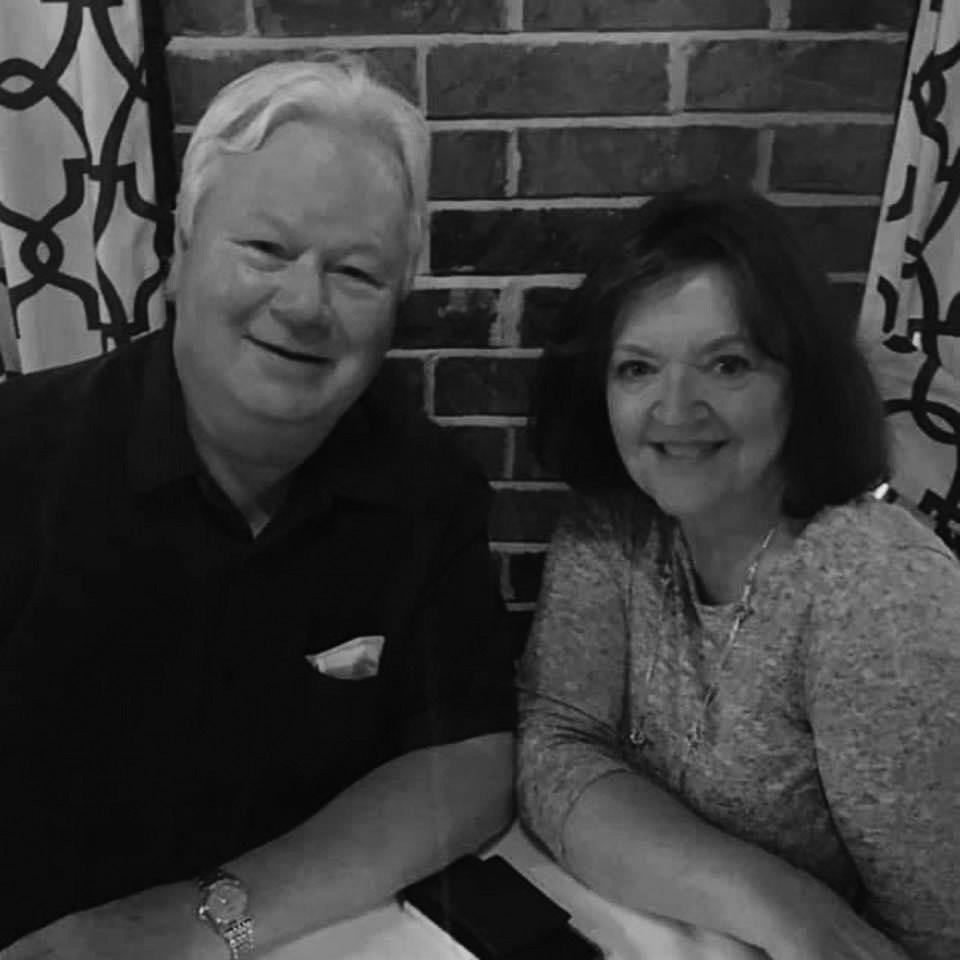
Phil and Cyndee Morgensen have been Columbia residents for almost 30 years, after falling in love with Missouri during a visit to their youngest son. ey sold their home in Kalamazoo, Michigan, and made the move to Missouri.
“We lived in St. Louis for a year, and then we discovered Columbia and moved here,” Phil says.
Cyndee retired nine years ago after nearly 20 years at the University of Missouri School of Medicine, and Phil retired from Pella Windows almost 20 years ago to care for his elderly father. rough the years, they have experienced many aspects of the city, from the music and food scenes to the recreational and social activities.
“Columbia is really wonderful in regard to the parks,” Phil says. “We love Shelter Gardens, which is a great place to walk your pet around the owers, which are so beautiful. Cosmo Park and Stephens Lake Park are both great, and we’ve rented pavilions at di erent parks for events. at’s all been fantastic.”
e Activity and Recreation Center has also become a big part of the Morgensens’ daily routine.
“ e ARC is so fantastic, I can’t even put it into words,” Phil says. “Being retired, our Medicare pays for Silver Sneakers and a pass to the ARC. We usually go daily if we can. We use a machine for a mile, and we try to walk a mile. We really
“The ARC is so fantastic, I can’t even put it into words. Being retired, our Medicare pays for Silver Sneakers and a pass to the ARC. We usually go daily if we can.”
— PHIL MORGENSEN
enjoy going there. You get to meet people there, too, and that’s a good thing.”
Cyndee says weekly karaoke at Hillcrest Community Center, a concert series at Jesse Hall Auditorium, and the Columbia Senior Activity Center’s o erings are other activities that have captured their attention over the years.
“We tried some country line dancing at Columbia Senior Activity Center, which was fun. We took some art classes that were fun, and we go and have lunch once in a while to talk to people,” Cyndee says.
e Morgensens mention other selling points for retirement in Columbia: the access to quality medical care, the plethora of independent restaurants, the variety of shopping options, including appealing new arrivals like Trader Joe’s, and the welcoming pet scene.
“A lot of stores here allow pets to come in, and we have two little dogs we like to take when we can,” Cyndee says. “Tractor Supply, Ace Hardware, pet stores, and the mall also surprisingly allow pets.”
“If I want to eat out, there are a lot of nice places to eat. If I want to go shopping, there are lots of places to go shopping.”
LIVING OPTIONS
— DR. FRANK CLARK
In addition to being a vibrant city, Columbia also boasts a range of living options for retirees. Forbes notes a median home price of $306,000, 24 percent below the national median. Retirees also have the option of choosing from a variety of independent living, assisted living, and memory care facilities in the area.
“Loneliness is a huge risk facing older adults,” says Amy Byergo, regional executive director at e Westbury Senior Living. “We o er belonging. You are surrounded by neighbors who become friends and sta who know you by name. ere is always someone to share a meal or take a walk with. Practically, there is no home maintenance and less worry when health needs arise. Residents and families have support when and if they need it.”
Residents at e Westbury and other retirement communities can stay active, engaged, and connected to a community while letting go of the responsibility of home ownership.
“We o er a full calendar of opportunities from tness classes to local musicians, speakers on topics of concern and interest to our residents, trips to museums, shops, markets, and shows, happy hours, themed dinners, monthly brunches, educational presentations, crafts, and more,” Byergo says.
Dr. Frank Clark moved to Columbia in 1986, and after a career in the pediatric department at University of Missouri School of Medicine, he retired in 2011. He owned a large single-family home on Katy Lake and, after becoming a widower, decided the house was taking too much of his time to maintain.
“I one day realized I wasn’t having any time to do the things I like to do for fun,” Clark says. “I was too busy mowing the lawn and pruning the bushes and taking care of the owers, so I decided the market was right, and I put the house up for sale.”
He moved to e Westbury two and a half years ago and says he has found that there are many opportunities available for retirees in the city.
“I’m in independent living, so I come and go as I want,” Clark notes. “If I want to eat out, there are a lot of nice places to eat. If I want to go shopping, there are lots of places to go shopping.”
Clark adds that he has explored new opportunities in retirement.
“After my wife died, I became an election supervisor to help run elections,” Clark says. “Columbia is a fairly active community that isn’t afraid to tackle social issues. ere is always something interesting going on for entertainment, and it’s a nice place to live.”
COST OF LIVING
According to the Morgensens, one clear downside of life as a retiree in Columbia is the cost of living, which can feel burdensome at times.
While Missouri Economic Research and Information Center data shows that Missouri has the sixth-lowest cost of living in the United States for 2025, it ranks Columbia’s cost-of-living index higher than both Joplin and St. Louis, but lower than Spring eld. (Kansas City does not appear in the data set from the voluntary survey.)
“One of the challenges is the cost of living, which is higher than in St. Louis,” Phil says. “For us retirees, it is a real challenge to make ends meet on a xed income.”
According to Forbes, that cost is oset somewhat by the fact that Columbia residents pay no state estate tax, and there is no taxation of Social Security. Although Columbia has the top state income tax rate, which covers most lers, it was just lowered to 4.7 percent.
Despite the cost of living in Columbia, for retirees like Clark, the bene ts are worth it.
“It’s a nice place,” he says. “It’s got plenty of resources for a retiree to stay busy.” CBT
EXPO
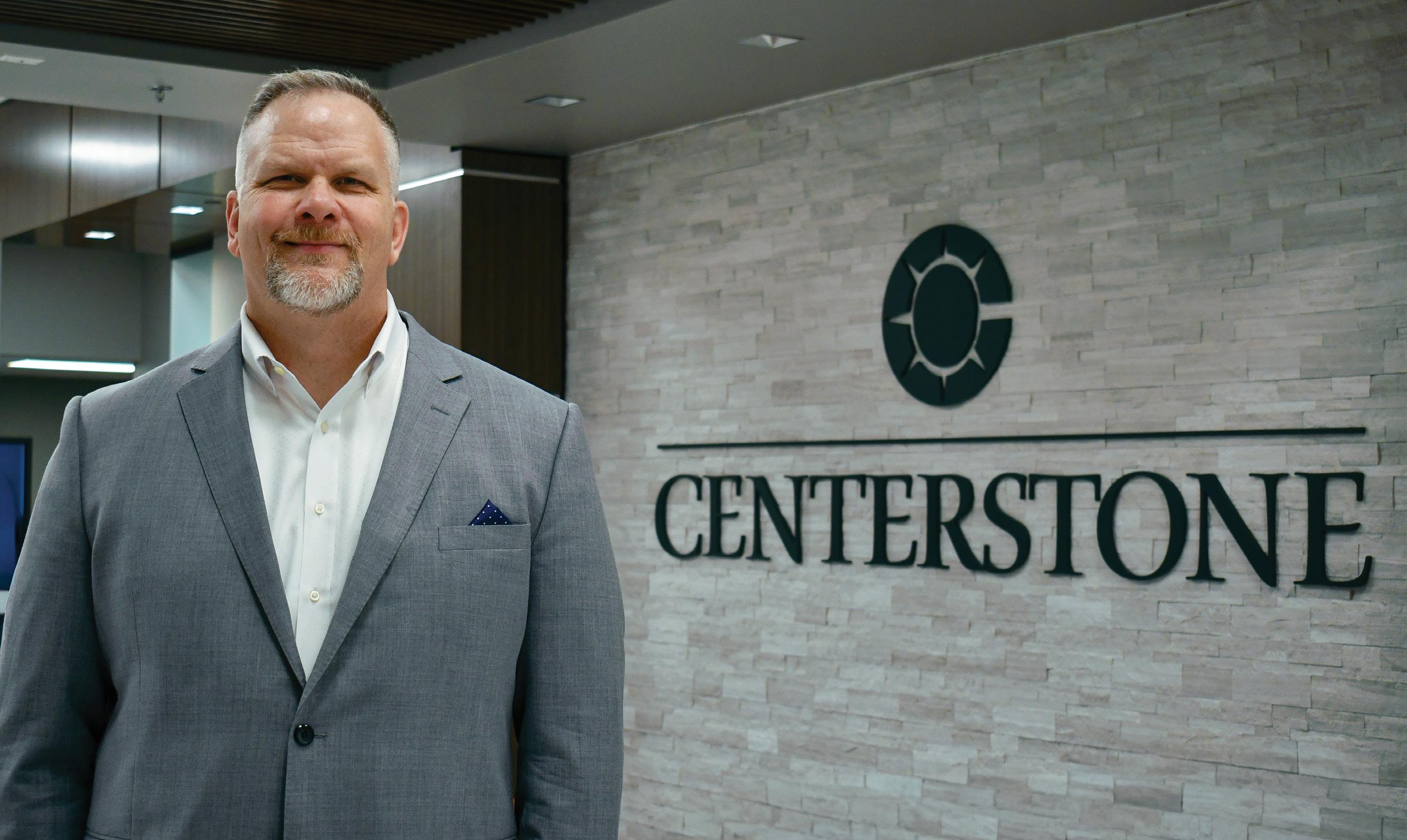
Burrell-Centerstone Merger is Final
Increased access and mental health services answer local need.
BY JODIE JACKSON JR
COMMUNITY DEMAND AND COMMUNITY NEED for additional mental health services led to a bevy of recent expansion projects for Burrell Behavioral Health. Although Burrell did not undertake that activity as a precursor to a merger with a national mental health provider, it helped make the concept of a merger especially valuable.
at summary from Centerstone Missouri CEO (formerly Burrell CEO) Mat Gass led to the conclusion that a merger with Centerstone, a Nashville, TN.-based company with a nationwide footprint, would further enhance local e orts to continue expanding mental health access and resources to an even wider range of Missourians.
Re ecting on Burrell’s roots and rapid growth, Gass, a graduate of the University of Missouri School of Social Work, told COMO Business Times in a recent interview that mental health services and viewing mental health as health — not separate from overall wellbeing — have overcome some of the long-held stigma that often accompanied the topic of mental health.
“A lot has changed over the last 20 years,” Gass said. “And we now know that there’s an acknowledgement that 20 to 25 percent of our population is going to need mental health intervention at any given time.” In November, behavioral health care provider Brightli — Burrell’s parent company — completed its merger with Centerstone today. Signs on the former Brightli administrative campus in Spring eld now read “Centerstone,” and that o cial rebranding will soon replace the signs in Columbia. e combined organization will serve some 250,000 people annually, and Centerstone will be the largest nonpro t provider of mental health and substance use disorder care across the United States.
“ ese are two very well-known, well-respected organizations in our space,” Centerstone CEO David Guth Jr. said in a
November press release, recognizing the sizeable service delivery opportunities and the service demand that continues to grow. “We still feel that we’ve been under-scaled for the opportunities that sit in front of behavioral health today.”
Dr. C.J. Davis, the CEO-elect of Centerstone, will become Centerstone CEO upon Guth’s planned retirement in 2027. Davis said the merger “builds a future where access, quality, and compassion de ne behavioral health care in this country.”
“What makes this merger historic isn’t just the scale,” Davis said in the news release. “It’s the opportunity to reach more people, invest in innovation and ensure no one faces behavioral health challenges alone.”
Centerstone has more than 360 outpatient, inpatient, and residential locations across nine U.S. states. It has clinical sta serving mental health needs of students in more than 1,500 K-12 schools across the nation and maintains a nationwide network of more than 2,000 clinical providers for veterans and military families.
Gass noted that now being connected to the Centerstone Research Institute is another bene t of the merger.
“ ey’ve been a national leader in behavioral health research,” he said. “ ey are helping de ne and re ne what mental health care delivery will be in the future. It really is a shining light on a hill.
Adding Burrell to the Centerstone portfolio enhances the services already o ered in Columbia and throughout Missouri, Gass said. Burrell already has providers throughout the state and it has a large telehealth network, which is valuable for rural areas that have about half of the organization’s 125,000 people who receive services.
“Linking Burrell with Centerstone made us the largest, most clinically integrated mental health service in the nation,” he explained. “We learned through a series of mergers and acquisitions that size matters. Being large enough to support an individual, with whatever need comes, and with convenient access, has always been our goal. We’re now able to meet those needs better than we have before.”
A recap of Burrell’s recent expansion projects:
New Behavioral Health Crisis Center. Ground was broken in late 2025 on a new center near the Phoenix Clinic on Texas Avenue, replacing the existing site on E. Walnut St. Funded in part by $3 million in city American Rescue Plan Act (ARPA) funding, the facility will o er 24/7 care and expanded 72-hour adult crisis stabilization.
Intensive Residential Treatment Facility. Burrell opened a 16-bed intensive residential treatment services (IRTS) facility at 1611 Towne Dr. (the former Rainbow House child advocacy center) to serve adults with signi cant, ongoing mental health challenges, providing 24/7 care.
Berrywood Clinic Expansion. Completed in January, renovations at its Berrywood clinic in Columbia also feature a new mural designed with Children’s Grove to provide a welcoming, supportive environment.
Community Impact: e existing crisis center, which operates to reduce emergency room and jail utilization, reportedly have saved an estimated $14 million in emergency room diversions and law enforcement interventions in its previous year of operation.
“Linking Burrell with Centerstone made us the largest, most clinically integrated mental health service in the nation. We learned through a series of mergers and acquisitions that size matters. Being large enough to support an individual, with whatever need comes, and with convenient access, has always been our goal. We’re now able to meet those needs better than we have before.”
— MAT GASS, CENTERSTONE MISSOURI CEO
Referrals Per Year
(Based on data from July 1, 2024-June 30, 2025)
• Springfield: 5,627
• Columbia: 3,329 (up 31 percent from previous year)
• Dunnica (St. Louis): 2,938
• Independence: 2,859
• Kirksville: 276
Columbia Behavioral Health Crisis Center (BHCC) Data Points
• 74 percent of BHCC patients are admitted for mental health conditions.
• About 22 percent of patients seek care at a BHCC to connect to services for basic needs like food, hygiene and shelter.
• About 10 percent of patients admitted to the Columbia BHCC over 12 months were in danger of harming themselves or another person.
• About 61 percent of BHCC patients are self-referred or referred by a family member or friend.
• There were 44 referrals from law enforcement agents in 2024-2025.
• Law enforcement agents spent an average of 43 minutes and 48 seconds dropping off a client at the BHCC, down from the average of 102 minutes law enforcement agents spend on average to take one person to a hospital emergency department.
e main clinic on Berrywood serves as the primary administrative o ce. It also houses a walk-in clinic and an outpatient clinic for psychological and psychiatric services. e Berrywood site is also the location of a child and adolescent clinic, and Berrywood is also home to the Burrell Pharmacy.
Rainbow House operated its emergency children’s shelter in 1986, closing in September 2024. e rst Burrell clients moved in and began receiving treatment the following spring. Gass described the Towne drive building as “an important piece of the behavioral health safety net.”
“ ere are a number of individuals who really need additional supports related to their mental health, who need twenty-fourhour oversight to prevent hospitalization and making sure that their mental health doesn’t deteriorate,” he said.
e Behavioral Health Crisis Center site is near the Phoenix clinic at 90 E. Leslie Lane, just north of the Providence/I-70 interchange. at substance abuse clinic o ers screenings, assessments, and outpatient therapy as well as medication and residential inpatient services. Burrell’s renovations included a waiting room expansion, adding a heated treatment room, upgrading the kitchen, and expanding the number of residential rooms from 16 to 25 beds. Inpatient services there may be provided for a period of one to nine weeks.
In a previous interview with CBT, Bobby Reichert, director of recovery at the Phoenix Clinic, o ered insight into why an individual might seek treatment. “Maybe they just had a slip-up, they’re working, have a family, and just needed a reset,” he explained. “We’ve had people who are here eight, nine weeks as they’re struggling with more signi cant substance use and mental health issues.”
Gass emphasized that Burrell had already established partnerships with local law enforcement, city and county governments, and other social service organizations. rough the previous parent company Brightli, Burrell also expanded services to youth, growing outpatient therapy services through the Clarity brand, and bringing dental and primary care to students at Columbia Public Schools. e 988 suicide and crisis line is also a large part of Burrell’s community outreach.
Together with Clarity Healthcare, Columbia Public Schools opened a student health center in the former Field Elementary School building. e clinic has its own entrance and provides a variety of low-cost healthcare services for CPS students. Gass said the factors for being able to create a student health center were observations of lack of access to care for some of the most vulnerable students and the need “to ensure that young students’ eyes were working in a way” to allow learning.
Funding for the student health center will come entirely through Clarity Healthcare and the federal government, and the clinic will be a Federally Quali ed Health Center, a designation given to health centers designed to increase access to a ordable healthcare in underserved communities.
Services will be provided on a sliding scale for students without insurance. e scale will go all the way down to zero and the application process will not be burdensome, the school district stated in a news release. e student health center will also be able to bill a student’s insurance, including Medicaid. CBT
Street Talk
Chamber lists finalists for 2026 Small Business of the Year.
BY JODIE JACKSON JR
THE COLUMBIA CHAMBER OF COMMERCE 2026 Small Business of the Year will be announced on ursday, May 7, at Cooper’s Ridge Event Venue. e event is set for 5-7 p.m. to cap Small Business Week, which runs from May 4 through May 7.
e ve nalists were announced at the Chamber’s quarterly membership breakfast in February. e nalists are CoMo Premium Exteriors, Better Together Mental Health, Partner for Better, Cooper’s Ridge Event Venue, and Optimized CFO.
Hooping It Up
More than 80 youth basketball teams will participate in a NXTPRO tournament set for April 24-26 at the Columbia Sports Fieldhouse. Teams will play ve games during the three-day event.
“ is event bene ts Columbia as a destination and puts the city on the map as one that can successfully host high-level events like NXTPRO,” said Columbia Convention and Visitors Bureau communications guru Megan McConachie.
How About Some ‘Cubing’?
A World Cubing Association (WCA) event is coming to Columbia on April 18 at Christian Chapel Academy, which has a student-led Rubik’s Cube Club. Registration for the COMO Cube O is currently underway. A CCA Facebook post announced that two of its students are already competing in WCA speed-cubing skills.
Reset, Reconnect, and Restore We are all vessels, says Columbia entrepreneur Yahav Sal, who is introducing the city’s rst sauna and cold plunge social hub. Vessel Club is on track for a late-summer opening in the former DogMaster Distillery building at 210 St. James St. DogMaster closed with a party on “leap day,” February 29, 2024. Vessel Club, meanwhile, will operate on a membership basis. Sal presented his new business concept and oor plans to the weekly 1 Million Cups meeting on March 4.
Columbia entrepreneur Yahav Sal introduces Vessel Club, the city’s first sauna and cold plunge social hub, during a presentation to Columbia's 1 Million Cups weekly gathering on March 4. The member-supported Vessel Club is expected to open late this summer or early fall.
Entrepreneurs and new businesses are encouraged to make a six-minute presentation at 1 Million Cups to get advice and insight from attendees. e weekly event is free and takes place at the REDI Hub at 500 E. Walnut St., Suite 105.
One Extra Hour for World Cup Dates
Columbia restaurants and bars may stay open one hour longer on seven select dates this summer during the FIFA World Cup in Kansas City. e City Council voted on March 2 to allow businesses that sell liquor by the drink to extend their closing time to 2:30 a.m. on June 14, 17, 20, 21, 23, 27, and July 3. Businesses wishing to extend their hours may apply for one special event permit to cover all requested dates for a fee of $100.
More Parking, More Airport Improvements
With increased ights and the addition of Allegiant Airlines, a slew of improvements is coming to Columbia Regional Airport. e preliminary plan is to add roughly 350 additional paved parking spaces, along with sidewalks and curb and gutter upgrades. e cost of that project is estimated at $3 million. e 1.3-mile reconstruction and overlay of Airport Drive is expected to cost $1.7 million.
ose projects were spurred in part by COU’s record passenger numbers in 2025. e airport had 242,167 passengers in 2025, representing a 17 percent increase from the previous year. COU Manager Michael Parks said 2025 was “a de ning year” for the airport. CBT
Street Talk is a monthly overview of “word on the street” business and community news. Street Talk is sponsored by e Bank of Missouri.
Deeds of Trust
Worth more than $1 million
$425,700,000
CTI Towers Assets II LLC
Wilmington Trust
Indenture Trustee
STR 9-48-12 /NE/NW
$97,500,000
Drury Development Corp.
Wells Fargo Bank
LT 1 Drury Subdivision
Plat 1
$75,225,994
Malachite 6101
Paris Rd. LLC
TPG AG CRE II LLC
LT 202 BOCOMO
Industrial Park Plat 1
$35,590,000
Capgrow Holdings JV
Sub XI LLC
Berkadia Commercial
Mortgage LLC
Lt 6 Bl 1 Rockbridge
Sub
$24,862,500
AG-VH e Den
Owner LLC
Webster Bank
Lt 8 Red Oak South Plat
No 1
$12,415,000
MS Mizzou Owner LLC
Webster Bank
Lt 103 Providence Court
Plat 1
$8,300,000
KDA Management LLC
Mid America Bank
Lt 10 Lakewood Gardens
Sub FF & ESMT
$4,012,940
Fresh Start
Rentals LLC
e Missouri Bank
Lt 1 1341 Auburn Hills
Plat 13
$3,717,593
Store Master
Funding XLI LLC
Citibank
STR 7-48-11/NE/NW FF except w/easement
$2,608,320
Bocomo Real
Estate LLC
First Midwest Bank of the Ozarks
Lt 7 FF J C Conley’s Sub
$2,296,000
Sky High Property LLC
Generations Bank
Lt 102 e North Woods Plat 1A
$2,000,000
3 Forums LLC
Simmons Bank
Lt 1A Pt North 63
Industrial Park
$1,600,000
Nisar Properties LLC
e Missouri Bank
Lt 113 Cleark Creek
Estates Plat No 1 FF & Camden County land
$1,500,000
Daryl L. Miller
Heritage Community Bank
Lt 2 Topline Stables
$1,500,000
JBKR Properties LLC
Simmons Bank
Lt 221 Auburn Hills Plat 1
$1,231,500
Garrett Riley Bell Bank
STR 17-47-13 //S
$1,140,000
Church of the Nations
Sullivan Bank
STR 30-48-12 //NW
Sur Bk/Pg: 5059/90 FF
Tract F Survey 7525 w/ Exceptions
$1,122,000
P’s and Cues
Properties LLC
e Central Trust Bank
Lt 176 Pt Columbia
$1,100,000
McCarty Property
Investments LLC
Flat Branch Bank
Lt 216 Hunters Gate
Plat 2
$1,000,000
Nancy J. Galloway
Revocable Trust Agreement
e Bank of Missouri
Lt 163 Old Hawthorne
North Plat No 1
$1,000,000
Tristar Realty Group LLC
UMB Bank
Lt 37 Valley Creek Plat
3 CBT
Issued by the Boone County Recorder of Deeds in February 2026
New Business Licenses
Issued February 2026
Smokeclaire
1325 Grindstone Plaza Dr., Columbia
Casasoul LLC
Dani Ruocco and Davion Spearman
14 E. Business Loop 70, Columbia
Carter’s Coffee Bar LLC
4504 Stellar Dr., Columbia
Knight Pharmaceutical Industry USA LLC
3013 David Dr., Columbia
The Fifth Glass
2807 Wooded Creek Dr., Columbia
New American Funding LLC
2200 Forum Blvd., Columbia
Bluestem Missouri Crafts
Julie McBee
13 S. Ninth St., Columbia
Columbia Endoscopy Center, LLC
208 Portland St., Columbia
Cindy Scott Artistry
Cynthia Scott
207 Cornerstone Court, Columbia
Kabul Market
Hasis Market LLC
420 E. Broadway, Columbia
Ladybird Trading Co.
Tahlia Heaton
1023 E. Walnut St., Columbia
Laurie Jean’s Studio
Kerri McBee-Black
540 S. Craig View Dr., Harrisburg
Old Hawthorne Golf
Properties LLC
2531 Bernadette Dr., Columbia
Beth Harris LMT
Eizabeth Harris 409 Vandiver Dr., Columbia
XL COMO Flooring LLC 2108 Paris Rd., Columbia
HERC Rentals Inc.
David Farren 5611 Brown Station Rd., Columbia
Billiards on Broadway
Lisa Morrissey 514 E. Broadway, Columbia
Catherine Rhodes Photography
Catherine Simmens
28 N. Eighth St., Columbia
Property Professionals Management
6601 Stephens Station Rd., Columbia
Tiger City Window Cleaning LLC
Miles Vrooman
2513 St. Regis Court, Columbia
Montague Mechanical Heating & Air Conditioning
10500 E. Roberts Lane, Centralia
Biz Tax Experts
Jessica Woodson
500 E. Walnut St., Columbia
LCS Construction LLC
Brandon Lehman
412 S. Village Circle, Columbia
Rae of Sunshine Ceramics and Fine Arts, LLC
Lindsay Borges
1213 Again St., Columbia
Sublett Trucking & Excavating
23800 N. Route T, Clark CBT
Issued by the city of Columbia’s Finance Department
What’s Going Up?
JoJo’s Biscuit Company comes to the south side.
BY JODIE JACKSON JR
NEW DINING OPTIONS are coming to Columbia’s south side, including the city’s second JoJo’s Biscuit Company, the city’s third Culver’s, and a new offering later this year in the shuttered Casa Maria’s Mexican Cantina at 1305 Grindstone Parkway.
Elsewhere in Columbia, Drunken Tiger Restaurant, a steak-oriented establishment, will join the food scene in the Arcade District, and Heartland Stone, a third-generation solid-surface countertop production facility, is relocating and expanding its operation. ose developments are included in the city of Columbia’s February building permit report, which showed 121 permits with a combined valuation of $25.3 million. Boone County issued 55 permits with a total valuation of $8.99 million, making the city and county aggregate total of 176 permits worth $34.29 million.
e breakdown of permits issued by the city’s Building and Site Development o ce included:
• Accessory dwelling unit (ADU): 3 permits, $220,000 valuation
• Commercial, alteration: 10 permits, $2.67 million
• Residential, alteration: 6 permits, $299,542
• Commercial in ll: 2 permits, $441,2111
• Commercial new: 2 permits, $3,550,298
• Deck only: 1 permit, $14,000
• Duplex: 8 permits, $1.83 million
• Re-roof: 56 permits, $1.35 million
• Single-family dwelling: 28 permits, $14.3 million
JOJO’S BISCUIT COMPANY
Jason Paetzold already had a good thing going with Bud’s Classic BBQ at 304 S. Ninth St., in Columbia’s busy downtown district. He added JoJo's Biscuit Company to his food repertoire last fall, starting that eatery in the former Crushed Red location at 2540 Broadway Blu s Dr. Now he’s expanding JoJo's footprint with a second location in the former Fuzzy’s Taco Shop site in the Nifong Shopping Center at 205 E. Nifong, Suite 200. And after broadening JoJo’s reach in Columbia, Paetzold will open at four locations in the St. Louis area.
“Columbia is a great place to get started,” he told COMO Business Times. “ e location on Broadway is doing incredible, and we always had a plan to open a second location soon.” Fuzzy’s closed in February 2025, initially reporting that the closure was only temporary. Paetzold obtained the property last year.
“We just waited for the right time to progress on it,” he said, noting that the new restaurant will be a “complete buildout,” larger than the original JoJo’s.
“Columbia obviously showed they were looking for something that t,” Paetzold added. “We’re thankful for the response from the community.” Next up will be four St. Louis JoJo’s, with construction starting in the next few months. Paetzold anticipates fall openings for the new restaurants.
He also said BUD’S CLASSIC BBQ will be coming to the south side late next year. In addition, Paetzold has plans for the vacant Casa Maria’s spot.
“We have something exciting coming there,” he said. “Soon we will share what that place will be.”
e project to create the second JoJo’s involves alterations to the existing 4,330 square feet of space, with an estimated value of $522,409. e general contractor is Peavler Construction, with engineering work by J-Squared Engineering LLC and Crockett Engineering Company. Jay Lindner owns the Nifong Shopping Center.
CULVER'S
e new Culver’s coming to south Columbia was approved in March and was not on the February building permit report. e fast-food chain, which specializes in frozen custard and signature burgers, made with Midwest beef and dairy, already has locations in Columbia at 2520 Broadway Blu s Dr. and 2010 Bernadette Dr. e new store, with an estimated $2.7 million cost, will be built on Pebbles Parkway, a new street that is a part of a series of new commercial developments around Grindstone Parkway. Some of the developments include the construction of a new apartment complex and multiuse buildings intended for o ce space and storefronts. Contractor details were not immediately available.
DRUNKEN TIGER RESTAURANT
Drunken Tiger will be the fourth restaurant in the multiuse Arcade District. Property Manager Nick Alexander said the building at 602 Fay St. was previously used for o ces. Demolition was in progress in mid-March, and Alexander did not have an estimated opening date. e building is owned by Arcade District creator Bobby Campbell. e project involves roughly 2,400 square feet of space and has a valuation of $250,000.
Alexander said the restaurant will be “steak-oriented,” and it will join Irene’s,
and let us know!
Beet Box, and COMO Golf Club as the district’s dining spots.
“Our hope is that we’re doing a soft opening by August,” he added.
e general contractor is Dependable Services & Construction of Columbia.
e mechanical contractor is Comfort Crew Heating & Cooling of Columbia.
HEARTLAND STONE
Heartland, currently located at 3008 David Dr. o Brown Station Road in north Columbia, is a third-generation fabricating business that began operating in 2005. Co-owner David Fike said the company will move to 1365 E. Prathersville Rd., where a 23,857-squarefoot metal building is being erected to accommodate solid-surface countertop manufacturing. e building permit listed a project valuation of $3,303,717.
e general contractor is Justin Bennett of Salisbury, MO.
“ ere’s been a growth in the business and growth in the industry,” Fike said. “[Expanding production] is a goal the family has had for many years. It’s going to be about twice the size of where we are now.” e new location will likely increase employment, he added.
e project subcontractors are Johnson Plumbing, Star Heating & Air Conditioning, and Korb Electric LLC.
SHWE MARKET
Red Oak Marketplace LLC is the owner of the suite at 1325 Grindstone Plaza Dr. where Shwe Market is adding a second Columbia location. e original shop is at 800 Vandiver Dr. Shwe o ers Southeast Asian staples from Myanmar, ailand, Vietnam, and other countries. e new store will be in the strip mall o Nor eet Drive, just south of Grindstone Plaza Drive. e project contractor is American Realty & Development. e plumbing and fuel gas contractor is Sandbothe Plumbing LLC. e estimated project cost is $316,211 for an area encompassing 3,572 square feet.
Other highlights of the February building permit report include:
WALMART at 1201 Grindstone Parkway is renovating a portion of its nearly 190,000-square-foot store, at a cost of $756,428. e contractor is Henderson Companies Inc. of Lenexa, KS.
AXES PHYSICAL THERAPY, owned by Bill Franzen, will become part of the 1400 Forum Blvd. suite of businesses. Suite C is undergoing interior alteration for the new physical therapy o ce, a project estimated at $125,000 in value and entailing 3,785 square feet. Schooler’s Construction LLC of Ashland is the contractor. Subcontractors are Show-Me Heating & Air Conditioning Inc., Johnson Plumbing, and Beckley Electric Inc.
Interior tenant renovation at 3103 W. Broadway, Suite 111 will create a salon for GLO TANNING and proprietor Tara Archer. e 2,417-square-foot project has a valuation of $337,928. e general contractor is Aspen Prime of Jonesboro, AR.
RALLY HOUSE is adding a third Columbia location at 2101 W. Broadway, Suite T, with tenant improvements for a new retailer in an existing suite. e permit listed a project value of $105,000 in a 6,708-square-foot site. e general contractor is Atlas Retail Services Inc., headquartered in Mans eld, TX.
A new VALVOLINE INSTANT OIL CHANGE is under construction at 5420 Clark Lane. e roughly 3,000-square-foot, two- oor project has a listed value of $246,581. e general contractor is KTM Builders LLC of Chattanooga, TN.
On Point Construction is the contractor for a SERIES OF DUPLEXES receiving building permits on Cook Avenue and Ria Street. e two-family dwellings each encompass 1,397 square feet, with individual project values of $216,352.
New homes receiving building permits in February range in value from $192,673 for a 1,179-squarefoot home on Woodlawn Avenue to a $1,048,109 home with 7,279 square feet on Granite Springs Drive. Anderson Homes is listed as the builder for both homes.
e February building permit report from the Boone County Resource Management o ce includes the following breakdown:
• Single-family residential: 9 permits, $5.2 million
• Nonresidential additions/ alterations: 6 permits, $1.8 million
• Residential garages: 3 permits, $680,000
• Miscellaneous: 16 permits, $72,243
Highlights of the county’s report include a $1.5 million addition to PHENOM GYM at the Mid Missouri Sports Park at 4180 E. Broadway (Highway WW), just east of the city limits. Single-family homes on the county’s permit report ranged in value from $150,000 to $1.53 MILLION CBT
$ 215,000
Total value of SEED grants awarded by the James & Annelle Whitt Entrepreneurial Development Foundation in the last three years.
$ 4.7 million
Total cost for additional paved parking areas and street improvements at Columbia Regional Airport.
$ 3,303,717
Total value on Heartland Stone’s building permit for a new fabricating facility on Prathersville Road.
5 finalists for the 2026 Columbia Chamber of Commerce
Small Business of the Year. One business will be recognized as the winner in early May.
The finalists are Cooper’s Ridge Event Venue, CoMo Premium Exteriors, Partner for Better, Better Together Mental Health, and Optimized CFO.
80 + Youth basketball teams participating in the NEXTPRO tournament April 24-26 at the Columbia Sports Fieldhouse.
60 th
Job Point’s anniversary, which will be celebrated with a banquet on April 9.