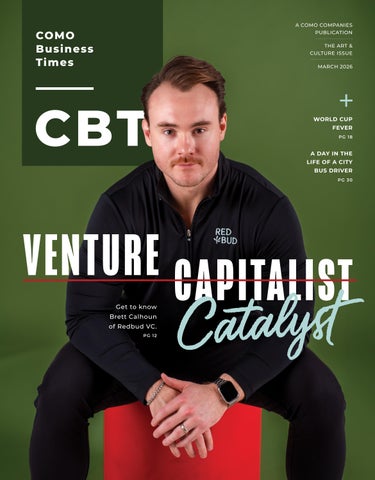
VENTURE CAPITALIST Catalyst

For your business to work, the cash has to flow. That’s just the way it is. But there’s more to life than business. When do you find the time for family game night? A dinner with friends? Or even a quiet moment to yourself? You shouldn’t have to choose between bringing value to your business and the things that add value to your life.
The Bank of Missouri knows that the balance in your account is important, but balance in your life is necessary. Our bankers listen to understand your business and help it grow without losing sight of what matters most. Work with a bank that values your time instead of wasting it.
We’re the bank of finding balance. We’re The Bank of Missouri.













































Contributors
February 2026
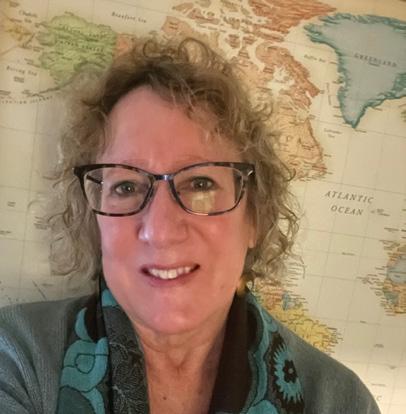
Michelle Terhune
After spending more than 30 years in the marketing, public relations, and communications field, I went to work for an attorney friend as a paralegal. After six years, I was ready to go back home and just write. My timing was great. I left in November 2019. Fortunately, after reaching out to COMO Marketing in early 2020, I not only did some freelance writing for the agency, but was asked if I would write for COMO Magazine. Journalism is my first love, so of course I said yes.
My youngest sister and her family live in Columbia, so I’m often there to visit them.
I have enjoyed writing every CBT/COMO Magazine story assigned to me over the past five years. I have met some amazing people doing some more amazing things, like the couples struggling to overcome infertility, women broadening their skill sets on Habitat houses, and small businesses and entrepreneurs pursuing their dreams with grit and determination.
I’m a storyteller at heart, and I love playing a role in telling Columbia’s best stories through its people.
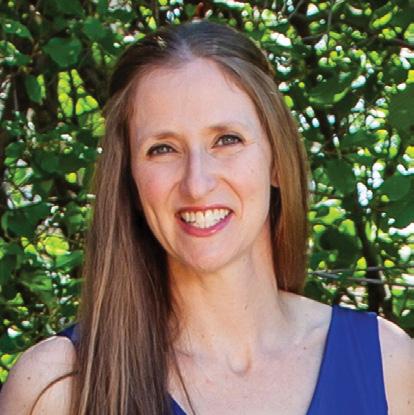
Lauren Sable Freiman
I started writing for COMO/CBT in 2000 when I moved to Columbia following graduation from Emory University. My time in Columbia turned out to be a short layover on the way to graduate school at The Ohio State University, but I’ve continued to write for a variety of mid-Missouri magazines since then. It’s hard to believe I’ve been telling the stories of Columbians for 25 years.
Though I haven’t been back to Columbia since 2001, I’ve gotten to know the people, the organizations, and the businesses that make Columbia the innovative, diverse, and dynamic community that it is.
PUBLISHING
David Nivens, Publisher david@comocompanies.com
Chris Harrison, Associate Publisher chris@comocompanies.com
EDITORIAL
Jodie Jackson Jr, Editor jodie@comocompanies.com
Kelsey Winkeljohn, Associate Editor kelsey@comocompanies.com
Karen Pasley, Contributing Copyeditor
DESIGN
Jordan Watts, Senior Designer jordan@comocompanies.com
MARKETING
Charles Bruce, Director of Client Relations charles@comocompanies.com
Kerrie Bloss, Account Executive kerrie@comocompanies.com
CONTRIBUTING PHOTOGRAPHERS
Lana Eklund, Jodie Jackson Jr, Missouri Department of Transportation
CONTRIBUTING WRITERS
Brett Calhoun, J. Scott Christianson, Lauren Sable Freiman, Jodie Jackson Jr, Michelle Terhune, Brian Toohey, Kelsey Winkeljohn,
SUBSCRIPTIONS
Magazines are $5 an issue. Subscription rate is $54 for 12 issues for one year or $89 for 24 issues for two years. Subscribe at comobusinesstimes.com or by phone. COMO Business Times is published monthly by e COMO Companies.
OUR MISSION STATEMENT
COMO Business Times and comobusinesstimes.com strive to be Columbia’s leading source for timely and comprehensive news coverage of the local business community. is publication is dedicated to being the most relevant and useful vehicle for the exchange of information and ideas among Columbia’s business professionals.
Copyright COMO Companies, 2026
All rights reserved. Reproduction or use of any editorial or graphic content without the express written permission of the publisher is prohibited.
FEEDBACK
Have a story idea, feedback, or a general inquiry? Email our editor at Jodie@comocompanies.com.
CONTACT
COMO Companies | 404 Portland, Columbia, MO 65201 573-577-1965 | comomag.com | comobusinesstimes.com
IT STANDS TO REASON that during a more than 40-year career in journalism, I’ve encountered and interviewed many remarkable people, some of whom are historic figures. Examples of the briefest connections are former British Prime Minister Margaret Thatcher, former First Lady Barbara Bush, and, by ESPN’s rankings, the No. 3 greatest athlete of the 20th century, Muhammad Ali.
Those quick moments were designed as “ask a question, then move along” exercises, so they weren’t exactly hard- or even soft-hitting interviews. But they were pretty cool brushes with greatness.
Not that I can’t cite interviews I’m mighty proud of. A decade before he became Missouri’s 51st governor, Mel Carnahan was the state treasurer, and I was editor-in-chief of The Muleskinner, the campus newspaper at Central Missouri State University in Warrensburg (now UCM). Managing Editor Chad Stebbins and I traveled to the Capitol in Jefferson City to quiz Carnahan about higher ed funding, and along the way, we were able to ambush then-Gov. Kit Bond with questions as he departed a speaking engagement in front of the League of Women Voters. It was a proud moment indeed, and it further fueled the fire in me to become a journalist who does his part to hold powerful people accountable — to be a watchdog for the public’s purse and interests.
Chad and I must have been onto something because the resulting stories earned first- and second-place awards from the Missouri College Newspaper Association. Now, here I am umpteen years later as a magazine editor, while Chad, a retired Missouri Southern State University communications professor, is executive director of the Missouri Press Association in downtown Columbia.
My “brush with greatness” list is a bit longer, with baseball stars George Brett, Bo Jackson, Rickey Henderson, Lou
Brock, Stan Musial, and many others on that roster. But I want to talk about a longer and even more satisfying list. It’s the “Brush With Great People” list, and each day at COMO Magazine and CBT, I have opportunities to add more names. In just the past two weeks, I’ve had calls or conversations with Columbia legend and oral historian Barbra Horrell, muralists David Spear and Adrienne Luther Johnson, retired Shelter Insurance CEO Matt Moore, entrepreneur and VC guru Brett Calhoun, and retired Missouri Innovation Center director Quentin Messbarger, among others.
The list keeps growing and includes my magazine colleagues, who are some of the most gifted and interesting people I’ve ever met. Sometimes I have to remind myself to never get too used to experiencing life and work with remarkable people. I recently implored our magazine and marketing staff to never get too used to achieving remarkable results for readers and clients. I probably came off as idealistic and even heavy when I insisted that a new writer, on the verge of getting her first byline, never get too used to how amazing it is to see her name on something she wrote.
In that spirit, I implore you to recognize and embrace the greatness that is all around you, too. It might be seeing a favorite person at the grocery store, discovering that a neighbor down the street has art displayed downtown, or realizing a person you just met has a band that frequently headlines — or is just breaking into — the local music scene. These are all brushes with greatness, and they’re the connections that matter the most right now and for the future.

JODIE JACKSON JR EDITOR jodie@comocompanies.com
CORRECTIONS
Not Even Close
Our story, “Celebrating Milestones and Anniversaries,” in the December issue of COMO Business Times incorrectly noted that Columbia Farmers Market turned 90 in 2025. Upon further review ... CFM Executive Director Corrina Smith kindly pointed out that the farmers market has been around a while, but not for 90 years. The correct answer? Forty-five years.
We Found Another
Our story, “Mid-Missouri's Mahjong Moment,” (January 2026, COMO Magazine) gave the impression that the ancient Chinese tile game was just now catching on in Columbia. Retired CPS teacher Dee Dee Strnad has not only been playing mahjong locally for more than 20 years, she’s also been teaching the game for several years at MU Extension’s Osher Lifelong Learning Institute at the Hillcrest Community Center in Columbia.
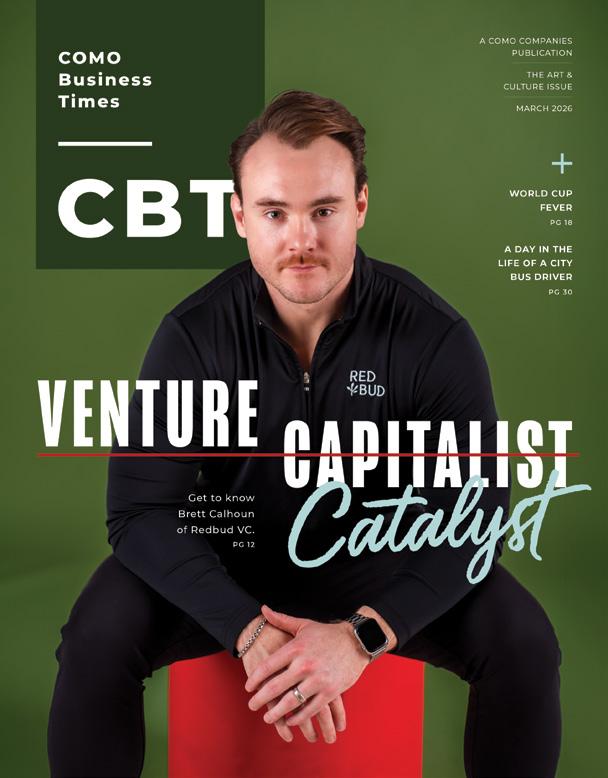
ON THE COVER
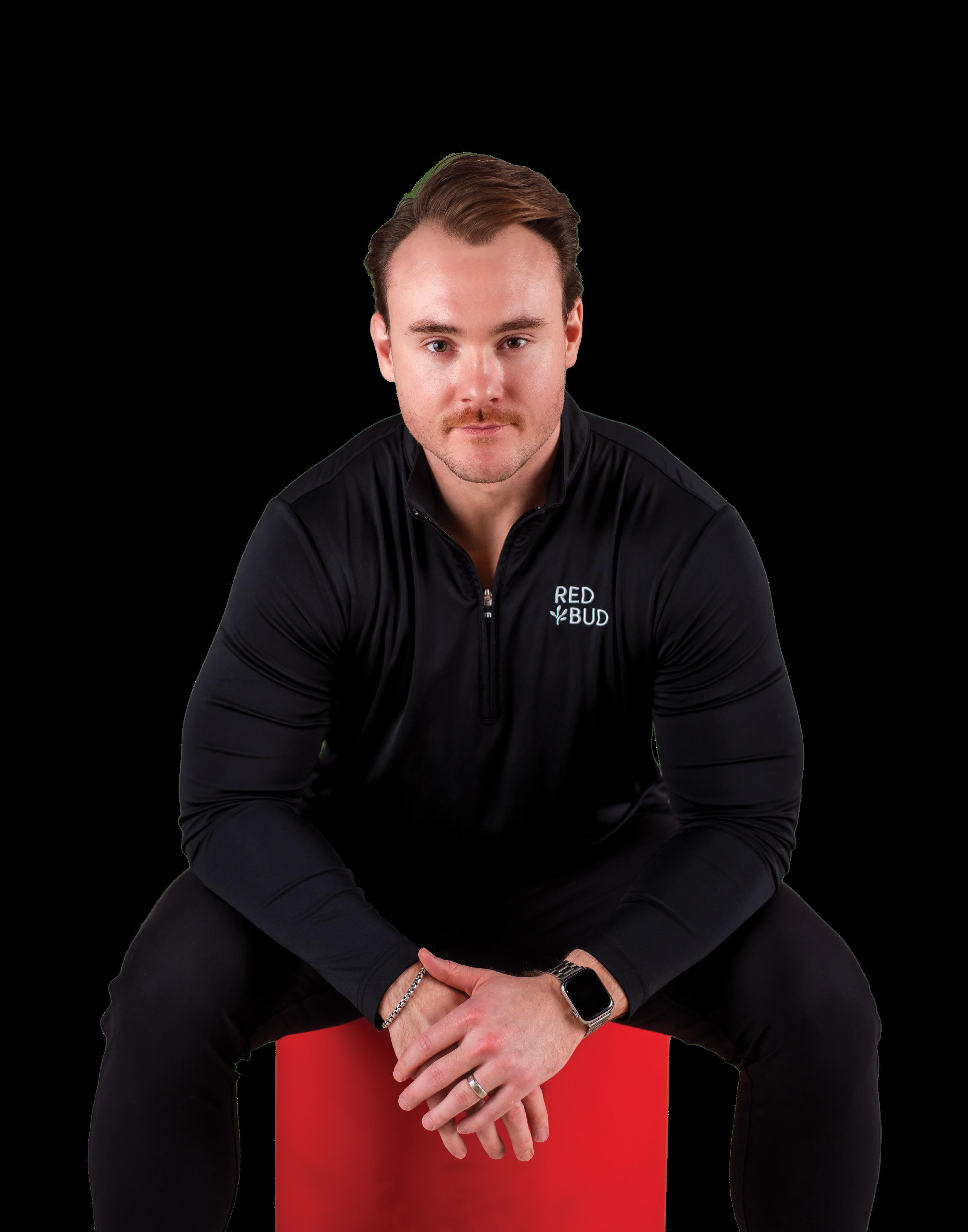
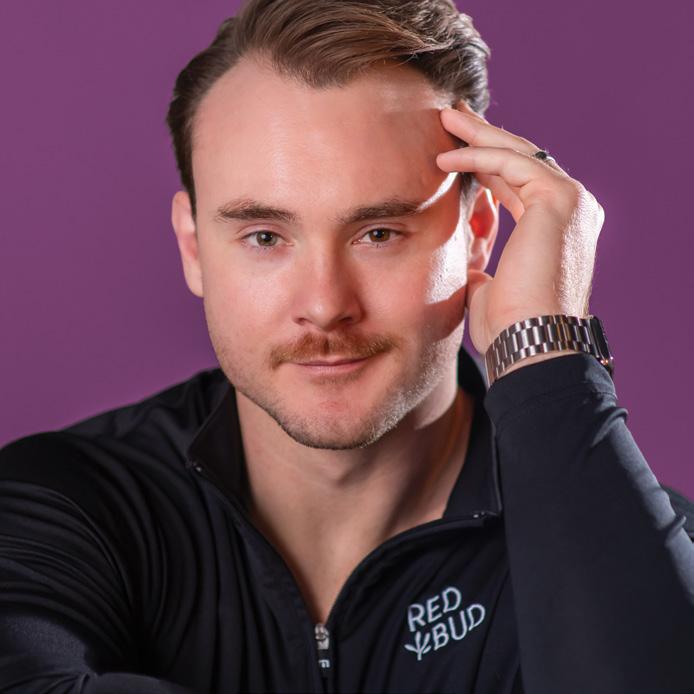
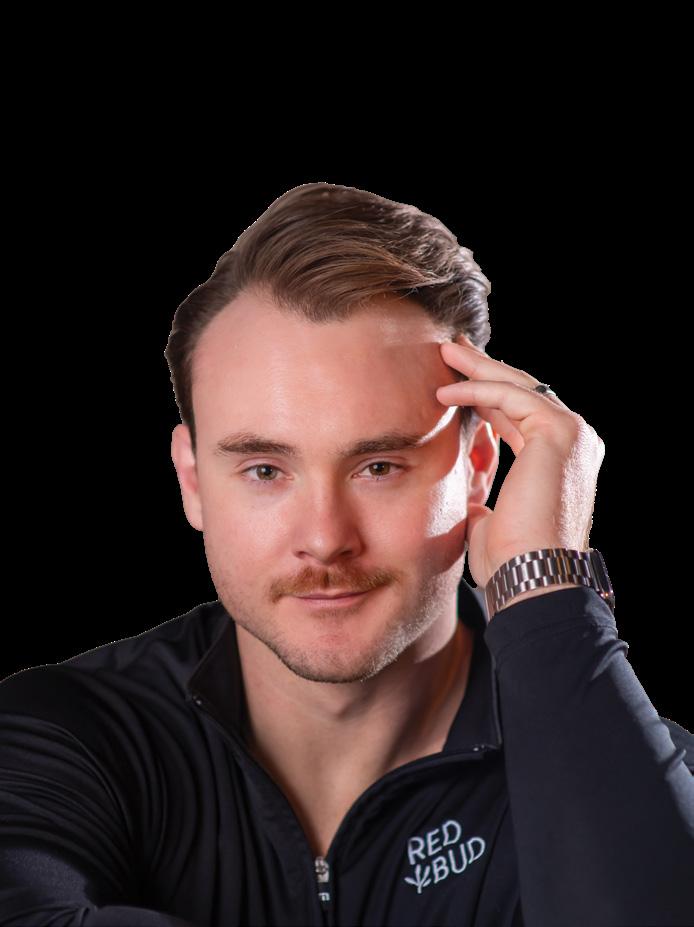
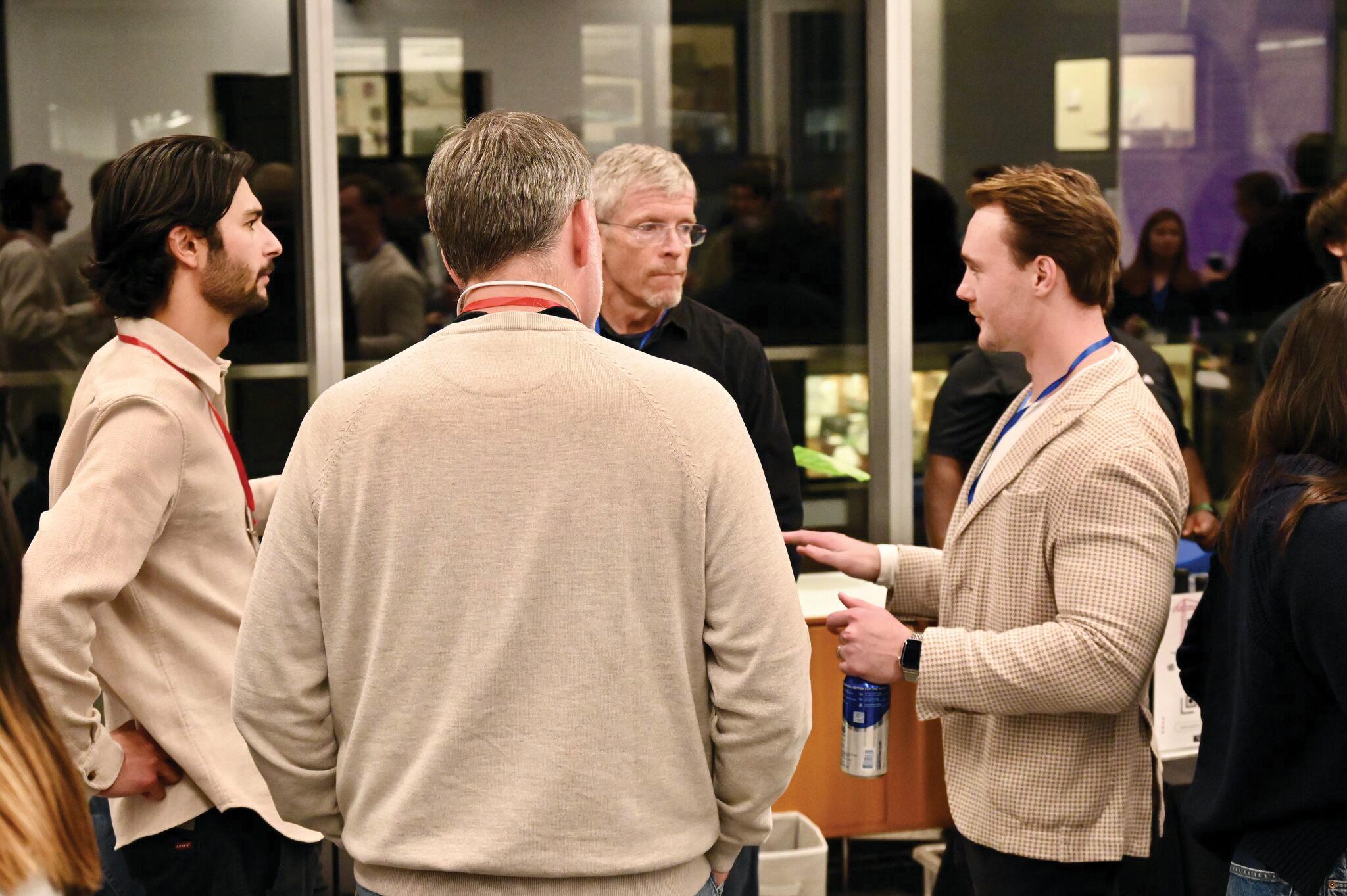
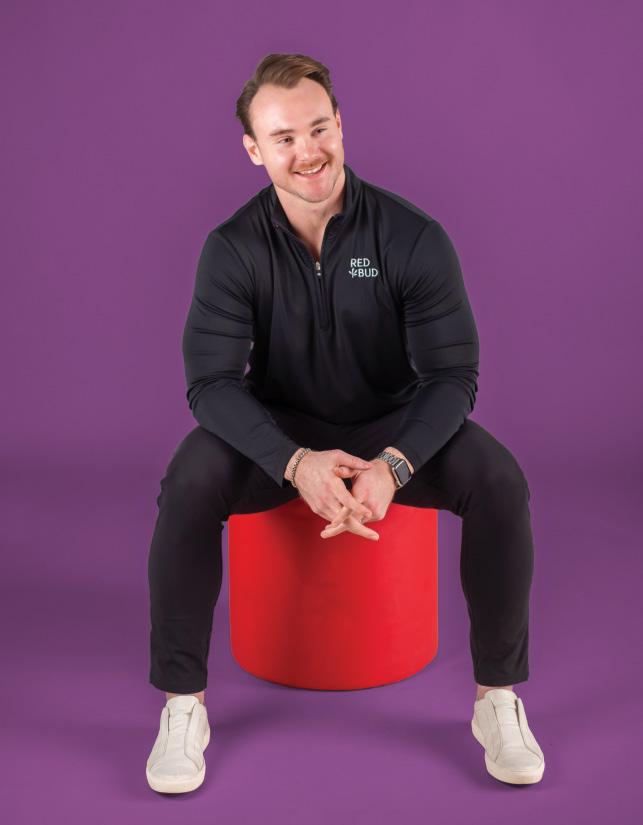
Brett Calhoun, the managing partner at Redbud VC, is also a champion of Missouri Startup Weekend, which takes place April 17-19 in Columbia. RedBud VC is one of the event's key sponsors.
by Lana Eklund

Photo




Closer Look
BOOKDRIVE
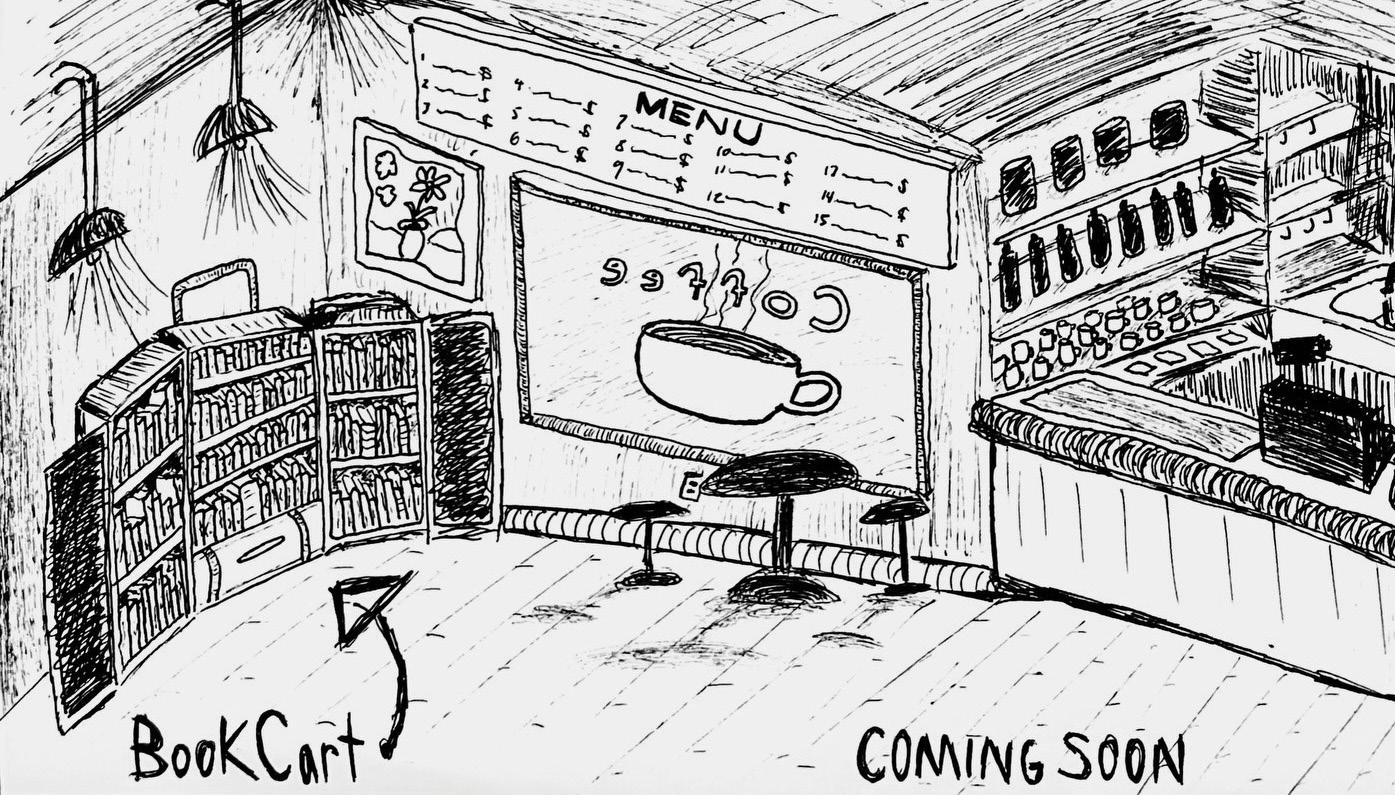
Founded by Nick Domitrovich, BookDrive is an independent, mobile pop-up bookstore built around a simple idea: books that move people.
e concept began taking shape in 2025 and will o cially start popping up around Columbia this month, such as at Serendipity’s First Friday events from now until November. Instead of operating from a traditional storefront, BookDrive will use a custom-built mobile book cart to bring thoughtfully curated books directly into everyday spaces — co ee shops, local campuses, community events, and other gathering places.
e goal is to make reading feel approachable and personal, inviting readers to browse without pressure or pretense.
Domitrovich has loved books since childhood and later studied entrepreneurship at the University of Missouri, where he learned that building a successful business requires rooting it in genuine passion.
“Over time, I noticed that many readers feel distanced from bookstores that emphasize categories or expectations,” Domitrovich says. “BookDrive takes a di erent approach, focusing rst on the stories, characters, and human experiences inside each book.”
BookDrive sources both new and used titles in hardcover and paperback, selecting high-quality books that resonate with readers. Beyond pop-ups, the business partners with local businesses, nonpro ts, and individual readers, providing personalized recommendations, sourcing titles upon request, and o ering competitive pricing.
Readers can follow BookDrive on social media or visit its website for new titles and upcoming pop-ups. Local businesses and event hosts are also encouraged to reach out about hosting BookDrive at their space.
bookdrivebooks.com | Facebook: BookDrive Books Instagram: @BookDriveBooks


THE HERBAL JOINT
e District welcomed e Herbal Joint — a modern apothecary and elixir bar — to its diverse business lineup on December 20. e new establishment o ers handcrafted, herb-forward wellness beverages alongside a retail section featuring bulk herbs and locally made wellness products, adding a thoughtful, community-centered option to downtown Columbia.
Co-owners Erica Dickson, a certi ed herbalist, and Matthew Smith Sr., a former NCAA athlete, combine their backgrounds in health and wellness to ll a gap in Columbia’s social wellness scene.
“We wanted to create a third space — not home, not work — where the community could gather over bene t-driven drinks, learn about herbs, and connect in a safe, inviting environment that celebrates local culture and holistic health,” the duo says.
Dickson brings deep roots and a strong local following, while Smith moved to Columbia to be closer to family and establish his own legacy. Together, they saw an opportunity to plant their business in a vibrant, growing city that values local enterprise and community.
Popular menu items include the signature Tiger Lemonade, made with blackberry, bee pollen, and dill, and Queen Erica’s Lavender Dream tea. e Herbal Joint’s cozy, lounge-style atmosphere also welcomes local producers and creatives to host educational and social events, o ering a space for students, families, and professionals alike to unwind, study, celebrate, or simply “vibe.”
12 S. Ninth Street | Facebook: The Herbal Joint Instagram: @theherbaljoint CBT
Movers & Shakers
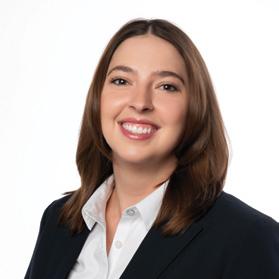
ASHLEY SWITZER
PCE Construction has created the new role of director of business development, selecting Ashley Switzer for that post. Switzer had been the director of community outreach for Show-Me Central Habitat for Humanity since 2019.
COLUMBIA INSURANCE
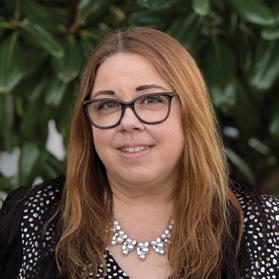
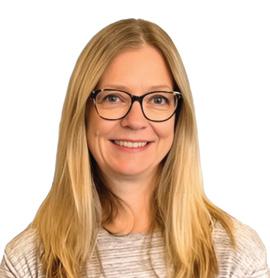
Shannon Smithburg and Theresa Critchfield have received promotions at Columbia Insurance. Smithburg, a 32-year employee, is now the director of digital services. Critchfield was promoted to senior commercial lines underwriter. She was also recently named to the inaugural class of Columbia’s Peak Performers for her leadership in the organization.
SYDNEY OLSEN
Sydney Olsen, the city of Columbia’s engagement and public communications manager, will leave that position on March 30 to become director of marketing and public relations for Central
Bank of Boone County, Central Bank of Audrain County, and Central Bank of Moberly. She will assume that role following the retirement of Mary Wilkerson, who served Central Bank for 34 years. Olsen began her professional career with ABC 17 News as a reporter, eventually becoming an anchor and producer. In addition to her work with the city, Olsen is active in the community as a member of the Columbia Chamber of Commerce EPIC program, as well as the Women’s Network and the Columbia Rotary Club.
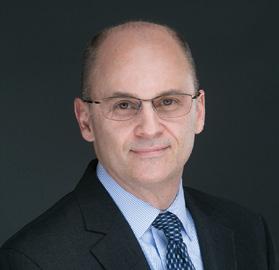
BERNIE ANDREWS
Bernie Andrews, a key figure in economic development in Columbia and Boone County for more than three decades, retired in February from his position as executive vice president of Columbia’s Regional Economic Development Inc. (REDI). He had been part of the REDI team for 29 years. The REDI team lauded Andrews for leading the Chapter 100 tax incentive program that helped facilitate nine projects, resulting in the creation or retention of
more than 1,700 jobs and $750 million in capital investments. REDI is conducting a nationwide search for a new executive vice president.
BLUE DIAMOND EVENTS
Columbia-based Blue Diamond Events has been recognized by Peerspace as one of the top eight event planners in the St. Louis area. Lisa Wampler is the company’s founder and lead planner. Blue Diamond Events is a wedding and event planning company that offers bilingual DJ/MC services, décor rentals, and other services.
CAROL RHODES
Carol Rhodes, Columbia’s assistant city manager, retired in February following 31 years of service to the city. Rhodes began her career with the city in 1994 as secretary to the city manager when she was hired by City Manager Ray Beck. Following her time in that role, she served as assistant to the city manager for 16 years before becoming assistant city manager in 2012. CBT
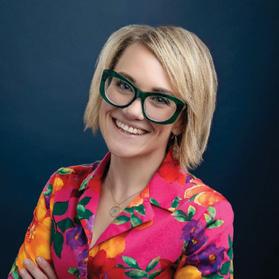
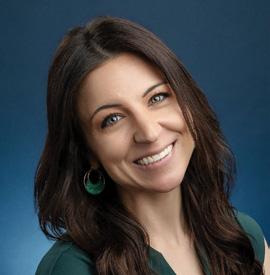
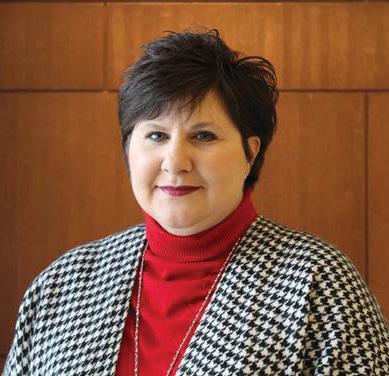
Are you or your employees moving up in the Columbia business community? Send us your news at jodie@comocompanies.com
SWITZER
CRITCHFIELD
RHODES
SMITHBURG
WAMPLER
ANDREWS
OLSEN
Briefly in the News
MARCH 2026
ART & CULTURE
Local Students Submit
Earth Day Artwork
e city of Columbia, Boone County, and the University of Missouri recently announced the winners of the 2026 Earth Day Art Contest. e inaugural contest invited students from kindergarten through 12th grade to explore creativity while re ecting on the theme “How the animals, plants, and nature in Boone County make your life better or more fun.”
Submissions highlighted wildlife, native plants, outdoor recreation, and the beauty of Boone County’s natural landscapes. Winners were selected in the following age divisions: K-2nd grade, Molly Caldwell and Bennett Kliethermes; 3rd-5th grade, Noelle Loar and Georgia Bruton; 6th-8th grade, Clara Rodhouse Hawley and Elizabeth Kochert; and 9th-12th grade, Iris Weber and Liberty Bockting.
ART & CULTURE
True/False Prepares for 2026 Film Fest and Programs
True/False Film Fest will show 36 new feature lms, 25 new short lms, and two repertory titles at the annual event, which unfolds March 5-8 in Columbia. e lms were selected








Molly Caldwell Winner K 2nd Grade
Bennett Kliethermes Winner K 2nd Grade
Clara Rodhouse Hawley Winner 6th 8th
Elizabeth Kochert Winner 6th 8th
Georgia Bruton Winner 3rd 5th
Noelle Loar Winner 3rd 5th
Iris Weber
Liberty Bockting
9th 12th
from roughly 1,500 submissions and hundreds more scouted from festivals around the world. e 23rd edition of True/False will present 21 world premieres (10 features and 11 short lms), three U.S. premieres, and four North American premieres. is year’s 63 total lms hail from 33 di erent countries. Visiting Artistic Director Yance Ford said, “ is lineup is full of lmmakers who are paying attention to place, to history, to craft, and small moments that can open into something much larger.” For more information, visit truefalse.org.
PARKS & REC
City Sets Public Input
Meetings for NE Regional Park Master Plan
Columbia Parks and Recreation is seeking public input regarding the proposed master plan and rst phase of development of Northeast Regional Park at 5212 N. Oakland Gravel Rd. e property was previously known as the Boone County Fairgrounds. e rst drop-in meeting to view plans, o er feedback, and question sta took place on February 10. e next opportunity is coming up from 5 to 7 p.m. on ursday, March 12. e meeting will take place in the park’s event center. e rst phase of development may include synthetic turf multipurpose sports elds, indoor building improvements, multipurpose natural grass sports elds, and facilities to support the Boone County Fair. e project would also include utility upgrades, parking lot improvements, and LED lighting upgrades. For more information, contact the Parks and Recreation Department at 573-874-7460.
MUSIC
MU Music Faculty
Members Win
Grammy Award
Two University of Missouri School of Music faculty members were recognized as winners at the 2026 Grammy Awards on February 1 in Los Angeles. Stefan Freund and Bill Kalinkos are founding members of Alarm Will Sound, whose album Land of Winter won the Grammy for Best Chamber Music/ Small Ensemble Performance. Alarm Will Sound is the ensemblein-residence for the Mizzou New Music Initiative (MNMI). Freund is a professor of music composition, co-founder and the artistic director of the Mizzou New Music Initiative, and director of the Mizzou New Music Ensemble. Kalinkos teaches clarinet and co-directs the Mizzou Creative Improvisation Collective.
HEALTHCARE
CenterPointe
Opens New Wing for Psychiatric Patients
CenterPointe Hospital of Columbia hosted a ribbon-cutting ceremony on February 5 to celebrate an adolescent wing expansion with 30 new beds for psychiatric patients. With the expansion, CenterPointe has a 110bed capacity for mental health patients. CenterPointe CEO Robert Marsh said the expansion re ects the hospital’s “commitment to ensuring individuals and families receive timely, quality care when they need it most.” e adolescent wing includes a noisy activity area, rehabilitation environment, group therapy room,
seclusion suite, two quiet spaces, and an outdoor courtyard.
EDUCATION

Columbia College, MERS Goodwill Establish Educational Partnership Columbia College and MERS (Metropolitan Employment Rehabilitation Services) Goodwill have begun a partnership to expand educational opportunities for adult learners. e partnership features a 15 percent tuition discount for MERS Goodwill employees and their spouses or dependents enrolled in Columbia College’s online and evening programs. e discount applies to all students in all programs except in-seat Day Program classes on the main campus. James Arnold, Columbia College vice president for enrollment management and marketing and athletics, said, “Columbia College is proud to work with MERS Goodwill as we step forward together to help shape the communities we serve through the opportunities that higher education provides.” Mark Arens, president and CEO of MERS Goodwill, said the partnership will help remove barriers for MERS team members who “want to further their education, invest in their futures, and strengthen their careers.” CBT
Brett Calhoun
Job Description: e bulk of my work is sourcing and talking to founders, but building the rm includes managing fund operations, investor relations, marketing, events, portfolio support and management, fundraising, investment committee, diligence, growing our network and brand, and managing our lean team.
Describe why the world of venture capital is so important for entrepreneurs, and tell us why Redbud VC sees Columbia as the place to spread its roots. Venture capital gives entrepreneurs the capital and network needed to scale their business a faster rate. Not all companies are a t for VC funding, but the ones that have the opportunity to build a highmargin, multibillion-dollar business are a t. Bank nancing is cheaper than equity but is generally not an option for earlystage startups that have no collateral; it also puts cash ow pressure on ones trying to grow.
Columbia is our home, so it’s where we’ve decided to build. at said, it does have one of the highest rates of massive companies per capita in the world, as
well as a high rate of wealth per capita. Many of the successful entrepreneurs stayed, redistributing their knowledge and wealth. In addition, the university attracts unique and talented people, whether it’s students, faculty, or spouses of faculty. Columbia is an SEC town that is quaint but bustling with entrepreneurs and people ready to build.
Let’s talk about unicorns, because Columbia has a few. What is a unicorn, and what is Columbia’s unicorn story? A unicorn is a venture-backed business that reaches a valuation of at least $1B. Columbia has had multiple unicorns, including Zapier and EquipmentShare, which both pitched their ideas at Startup Weekend in Columbia. Since then, Zapier has grown to be the largest connector of web applications in the world and at the forefront of the AI boom, being the rst app to connect with OpenAI. EquipmentShare recently IPO’d at over a $7B valuation, with over 350 locations and 7,700 employees.
Describe your professional journey and some highlights: I have had a nontraditional path into venture capital. My rst job was stacking feedbags at Orscheln and cleaning the warehouse at Jackson Brothers. I played football for Arkansas Tech University and received an accounting degree, which led to an audit and tax season at BKD (now Forvis) and earning a CPA license. I decided accounting wasn’t for me, so I went to Mizzou for an MBA after my parents moved to Columbia.
At Mizzou, I took a VC class with Bill Turpin, investing in Missouri entrepreneurs. Bill is an alumni legend after spending a successful career in the Bay Area, and I had the opportunity work for him after the class, investing the remaining capital of the fund. is led to an opportunity to work with Paytient as an early employee, while I was also remotely conducting business valuation engagements for Stern Brothers and helping my good friend Jai Malik start an angel group called 208 Seed Ventures. After Paytient, I had an opportunity to work with an emerging fund called e
LegalTech Fund, where I was also on the founding team of an incubation company called CapGains, where I managed the customer and product discovery and made our rst sale.
During this time, I had also been helping a friend in town with nancial modeling for his lending startup, Charlie Mike, which turned into me joining him as a co-founder. We launched our rst product to nance closing costs for veterans with an $8M line from Lead Bank, funding over 900 loans in the rst month and raising over $2.5M in private debt and equity. Around this time, Malik introduced me to the founders of EquipmentShare, as they were interested in starting an accelerator fund/incubator. I ended up joining them to build the rm, which we called Scale. We had a small fund supported by our close network that we deployed over 18 months across three cohorts of startups. We decided to raise our rst formal fund of $5M, pivoting to traditional venture capital and renaming the rm Redbud VC. Since then, we have invested in 37 companies, earned top decile returns, and raised $30M.
Hometown: Quincy, Illinois, but I’ve lived in Spring eld, Missouri, and Spring eld, Illinois, as well as Greenwood, Arkansas.
Years lived in Columbia: Eight
Redbud VC is playing a major role in the upcoming Missouri Startup Weekend. Give us a rundown of MOSW and why your firm is so involved. We are in year ve of running Missouri Startup Weekend, a agship event for Redbud VC. MOSW is the best event in Missouri that gives entrepreneurs a chance to launch their dream business and connect with co-founders, mentors, and customers. Redbud has invested in three businesses out of the four years we have organized the event, and many other companies have been started in Missouri during this time. ere is a lot of opportunity to build on the momentum MOSW has, and Redbud VC has to be at the forefront.
Do you have other connections to Columbia? My parents moved here in
PYSK
Founding and Managing Partner, Redbud VC
2014, which led to me attending graduate school at Mizzou. Now my wife, Addison, and I have a house here with our two French bulldogs.
Favorite quote: “Talent is nothing without persistence.” — Dean Crawford
Favorite volunteer/community activity: Missouri Startup Weekend
What are some VC narratives that might not be accurate, and what are some things the public might not know or understand about the work that Redbud VC does? Common misconceptions about VC are that investors are sharks, they only invest in Silicon Valley, or VC is only about money. Founders choose Redbud not for the capital, but for (1) the network hustle our team brings to help connect them to customers, capital, and talent, (2) the operators on our team, who have started and scaled businesses to multibillion, and (3) the premium brand that Redbud adds. We have startups across the U.S. and Canada, not just Silicon Valley.
A Columbia businessperson or leader you admire and why: William Schlacks because of the success he has had building EquipmentShare and because, regardless of the success, he works as hard as he did on day one, while staying humble, focused, and balancing work and family.
If you weren’t doing this for a living, you would be … Bored
What makes Columbia such fertile ground for emerging startups and new ventures? Universities like Mizzou and companies like EquipmentShare, Veterans United, and Paytient attract talent to Columbia who could be the next generational founder. ere are great organizations in the city like Redbud, Missouri Innovation Center, REDI, and organizations on Mizzou’s campus supporting these entrepreneurs. In addition, there are many successful entrepreneurs who have stayed in Columbia, sharing their knowledge and investing their capital.
It seems that we all have competing priorities these days. How do you prioritize your priorities? Our North Star is meeting as many top entrepreneurs as possible, so that comes rst before anything. Beyond that, we are constantly building and adopting tools that can help us do more every day.
What are some of the biggest challenges facing VC firms these days? ere is a lot of noise in the market with AI, and it’s much easier for someone to build an app with vibe-coding tools. We have to go an extra layer to assess what’s real and who has the right to
be building what they’re building. e growth in AI and consolidation of large VC rms have in uenced an in ation in valuation, so trying to make calculated decisions around deal terms is becoming increasingly di cult. In terms of growing a rm, there are many rms these days, and everyone is looking for ways to di erentiate themselves, so making sure everything we do is setting us up for the next decades, not just the next fund.
Biggest lesson learned in your working life: I’ve learned that it’s impossible to be both authentic and universally liked — the goal is to be trusted, not approved by everyone.
Greatest strength: Connector
Your greatest challenge: Patience
What you do for fun: I always tell people VC is a lifestyle, and I’m obsessed with what I do. I am constantly consuming content across books, blogs, socials, etc. A lot of my mindshare is the paranoia of making sure I am building a successful, durable rm. Outside that, I do not let anything get in the way of my workout schedule, spending quality time with my wife and dogs, and making it down to Seaside/Destin a few times a year.
Most people don’t know that you: Have two di erent-colored eyes! CBT
Missouri’s Income Tax Gamble: Learning From Kansas’s Costly Mistake
BY BRIAN TOOHEY
GOV. MIKE KEHOE’S PROPOSAL
to eliminate Missouri’s state income tax over ve years sounds appealing on its surface. Who doesn’t want to keep more of their paycheck? But before Missouri voters approve the governor’s experiment, they should look west to Kansas, where an identical promise turned into an economic disaster that even Republicans decided they had to reverse.
In 2012, Kansas Gov. Sam Brownback slashed income taxes with the same assertions we’re hearing today: Economic growth would explode, jobs would ood in, and revenues would take care of themselves. Instead, Kansas experienced sluggish job growth that lagged behind neighboring states, credit rating downgrades, devastating cuts to schools and infrastructure, and budget shortfalls that forced lawmakers to raid highway funds and pension accounts just to keep the lights on.
By 2017, Kansas Republicans themselves overrode their own governor’s veto to restore income taxes. e experiment had failed so spectacularly that Brownback’s approval rating plummeted.
Missouri’s plan carries the same fatal aw: Our income tax generates $9 billion annually — 65 percent of state revenue. Despite Kehoe’s public promises that sales taxes won’t apply to agriculture, healthcare, or real estate, the actual legislation contains no such exemptions.
e constitutional amendment gives the legislature broad authority to decide what gets taxed after voters approve it — a classic bait and switch that puts real estate transactions at risk despite assurances otherwise.
ere’s another problem: is plan requires overturning the voters’ will. In 2016, Missourians approved Constitutional Amendment 4 by 57 percent to 43 percent, explicitly prohibiting sales taxes on services. e amendment drew broad support from accountants, attorneys, banks, and small businesses as protection against government overreach. Now Kehoe asks voters to reverse themselves — not to protect their interests, but to enable a massive tax shift bene ting the wealthy.
Here’s the political danger for Republicans. Sales taxes hit hardest those who can least a ord them, meaning sales taxes are regressive. A family earning $40,000 annually spends nearly every dollar on necessities. At 15-20 percent combined sales tax rates (necessary to replace income tax revenue), that family could pay $6,000 to $8,000 in sales taxes versus $1,000 to $1,500 in current income tax.
Compare that to a household earning $500,000, which already bene ted last year from the elimination of the capital gains tax and has additional means to lower its taxes. Such a household would save roughly $24,000 in eliminated income taxes while having the exibility to control consumption and minimize sales tax exposure through savings and investments. Working-class families have no such luxury — every dollar goes to expenses like groceries, clothing, school supplies, and gas.
Missouri’s geography compounds the problem. Bordering eight states, Missouri would hemorrhage revenue to cross-border shopping. Research shows per capita sales in tax-free New Hampshire border counties have tripled since
the 1950s, while Vermont’s stagnated. With 15-20 percent sales tax rates, wealthy Missourians could drive to neighboring states for major purchases, saving thousands. Working families buying necessities locally would bear the full burden.
Missouri already faces a $1 billion budget shortfall starting in 2027, thanks to the legislature greatly underestimating the e ects of eliminating the capital gains tax. We’ll be forced to choose between cutting essential services or raising other taxes. Either choice will be politically toxic for a party promising economic relief. e Kansas experience o ers a clear warning: Supply-side tax experiments don’t deliver promised growth. Instead, they create budget chaos and shift the tax burden from those who can a ord it to those who cannot.
Gov. Kehoe promises this time will be di erent. Brownback made the same promise. Kansas voters learned the hard way. Missouri voters shouldn’t have to repeat that expensive lesson.
Before we eliminate two-thirds of state revenue based on hope and theory, we should demand detailed answers: What speci c services will be cut? What will the actual sales tax rate be? How will we protect schools when revenues fall short? And most importantly, how will working-class Missourians — who overwhelmingly spend their entire paychecks on goods and services every month — avoid shouldering the burden of tax cuts for the wealthy?
Kansas tried to answer these questions after the fact. e results speak for themselves. CBT

Brian Toohey is the chief executive officer for the Columbia Board of REALTORS®.
Vibe-Prototyping: Exploring an AI Accelerant
BY J. SCOTT CHRISTIANSON
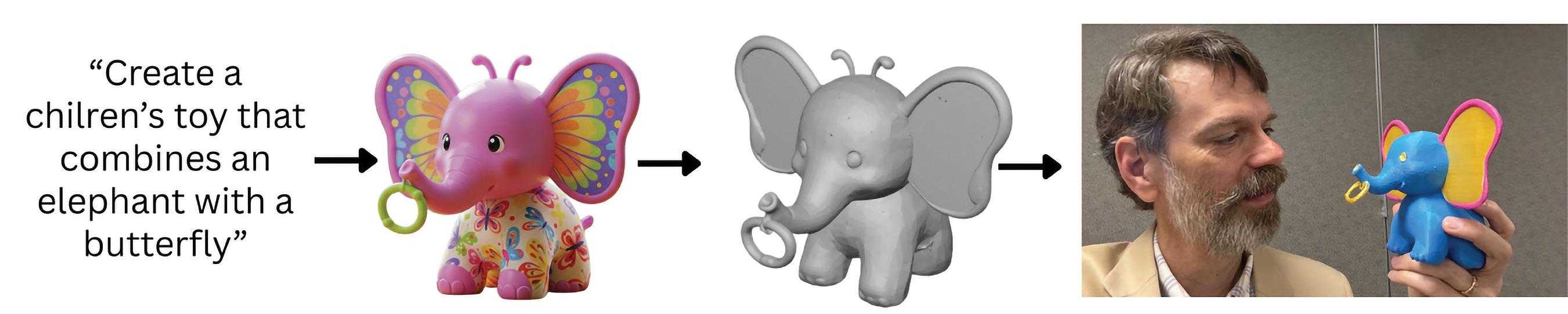
“Create a children’s toy that combines an elephant with a butterfly”
“VIBE-CODING” IS A WAY OF building software by describing what you want in plain English and letting generative AI (GenAI) do the programming. Tools like Lovable, Bolt, and Replit make it possible for someone with zero programming experience to build a working web application in an afternoon and a mobile phone app with a little more ddling. I recently used this approach to create a scheduling tool called we.rsvp without doing any coding, and it only took about 90 minutes. (Visit we.rsvp to try it out.)
But there’s a catch: Vibe-coded apps often aren’t ready for production. Code reviews of vibe-coded applications often reveal signi cant “technical debt”: sloppy code that works but might break when large numbers of people try to use it. Worse, several vibe-coded apps have been released and then found to have massive security problems, easily leaking company or customer data. Giving coding tools to non-coders is dangerous: If you can’t read code, you can’t tell whether the AI has produced vulnerable software. is will improve with time, but for now I am skeptical of non-coders using these tools to create scalable and secure systems.
PROTOTYPING, NOT PRODUCTION
So rather than calling these “vibe-coding” tools, I think we should reframe them as “vibe-prototyping” tools. Because that’s where they truly shine. For
entrepreneurs, prototypes are extremely valuable ways to test whether a product or service is something that customers actually want — and, more importantly, something that they would pay for. Before GenAI, building even a simple software prototype meant hiring a developer or spending months learning to code yourself. Now you can test a concept in an afternoon.
is is the “lean startup” methodology on steroids. Build a minimum viable product, show it to potential customers, gather feedback, iterate. If nobody wants what you’re building, you’ve lost hours instead of months. If people love it, you now have something concrete to show investors or potential development partners who can help you hire the experts who can develop a scalable and secure application.
BEYOND SOFTWARE
And vibe-prototyping isn’t limited to software. My colleague Tojin T. Eapen has been exploring how GenAI image generation can spark product innovation, and one technique he teaches is “trisociation,” which uses AI to blend three disparate concepts into something novel.
In a recent trisociation demo, Eapen used this method to have GenAI create “Elle the Phanta y,” a whimsical children’s toy that is part elephant and part butter y. He had AI come up with the concept and generate realistic images of the toy.
Once I saw his images of Elle, I wanted to have one. So I used a GenAI tool called Meshy to generate a 3D model of Elle and then a 3D printer to print Elle out of soft plastic (see above). e entire process — from digital concept to physical object sitting on my desk — took less than a day.
Lots of other AI tools exist to assist entrepreneurs with rapid prototyping, letting anyone turn ideas into testable products faster than ever before.
THE SWEET SPOT FOR AI
Vibe-prototyping is one of AI’s genuinely great applications. It doesn’t replace human creativity but extends it. It doesn’t automate the hard thinking, but it does eliminate the barriers between having an idea and seeing whether it works.
For anyone with an idea to test, the cost of experimentation has dropped dramatically. You don’t need to learn CAD, hire a developer, or nd an electrical engineer just to create an initial prototype. You need an idea, some time to experiment, and the wisdom to know that what results is a prototype and not a nished product.
e hard work of turning a prototype into a real product still requires expertise. But discovering whether that hard work is worth doing? at’s now an afternoon project. CBT
For related links and more information, visit cbt.profc.io.
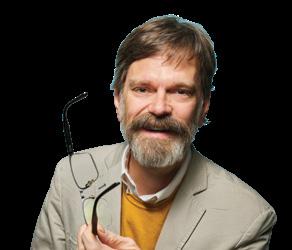
J. Scott Christianson — aka “Prof C” — is the former director of Mizzou’s Center for Entrepreneurship and Innovation.
Homegrown Unicorn
EquipmentShare continues its journey from Columbia startup to Nasdaq.
BY JODIE JACKSON JR
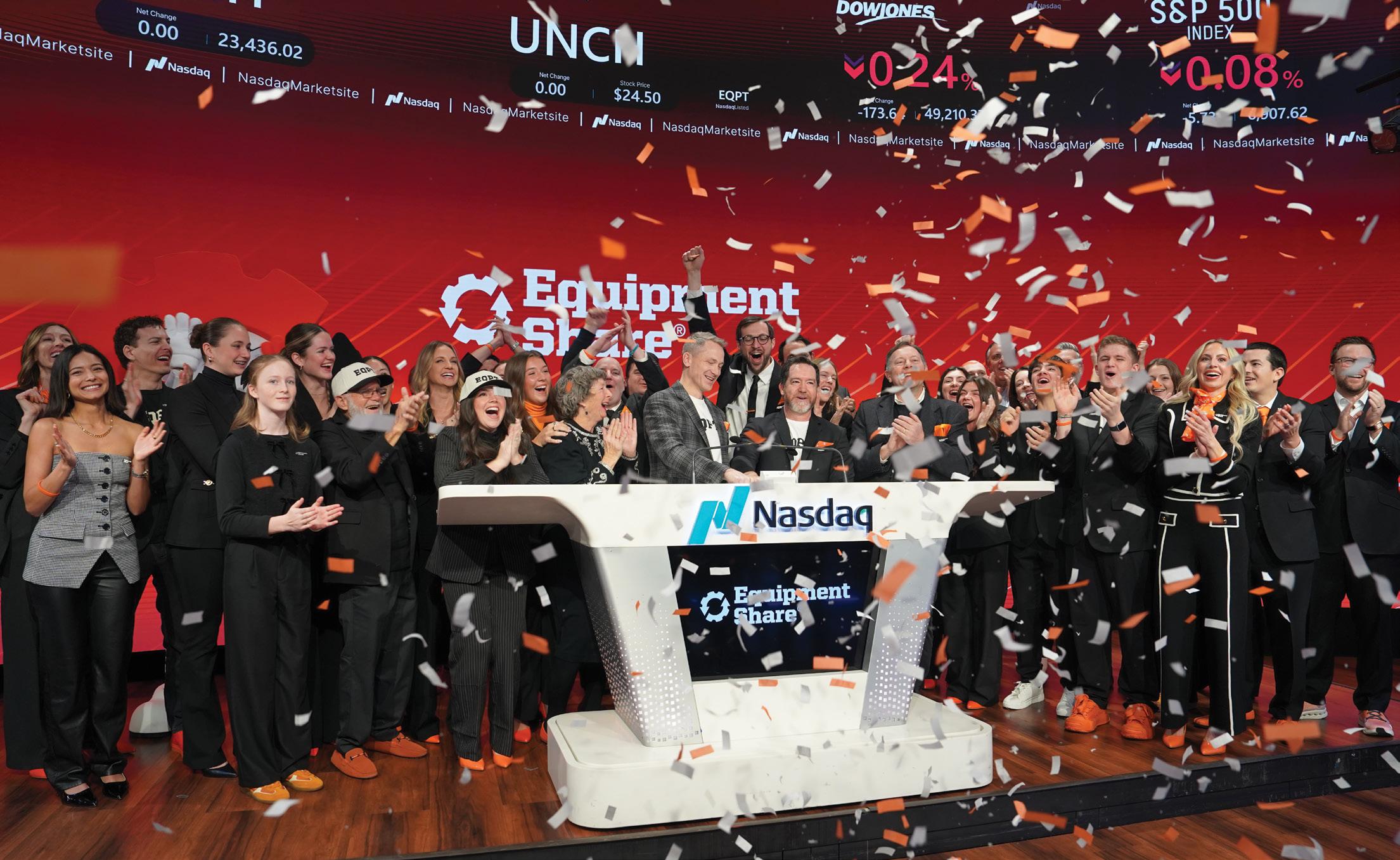
JUST 12 YEARS AFTER winning the fourth Startup Weekend in Columbia, EquipmentShare, now valued at more than $6 billion, reached a historic milestone when it began trading on the Nasdaq Global Select Market under the ticker symbol “EQPT.”
at chapter for Columbia’s startup champion began on January 23.
“While today is a celebration of our past decade of growth, our focus remains on solving the pain points of the con-
2014
Brothers Jabbok and William Schlacks win Startup Weekend Columbia, calling their startup EquipmentShare. The proprietary T3 operating system is added shortly thereafter.
struction industry,” said Jabbok Schlacks, co-founder and CEO of EquipmentShare. “We are just getting started.”
Jabbok, who founded the company with his brother, Willy, said in a news release that EquipmentShare focuses on solving those pain points through “innovation, discipline, and a people- rst culture.”
EquipmentShare's journey began on the jobsite, according to the company’s website. at story explains that after seeing how a lack of digital tools could
2015
EquipmentShare is incorporated with its home base in Columbia, Missouri.
2016
hinder project progress, they founded the company to provide the industry with data-driven infrastructure.
“Listing on the Nasdaq provides an efcient channel for equity capital to manage the company's cost of capital as it scales, and signals our commitment to transparency which builds trust with all of our audiences,” the story continues. e company intends to use the proceeds to expand its service network to 700 locations over the next ve years and
EquipmentShare opens its first branch outside of Missouri.
2022
EquipmentShare has over 160 branches across the U.S. and over 4,000 employees.
broaden the adoption of its T3 technology to support contractors working on the $7 trillion pipeline of U.S. infrastructure and industrial projects.
“From a Missouri startup to a company reaching the public markets, EquipmentShare’s journey is a powerful example of what’s possible when innovation and partnership align,” said Michelle Hataway, director of the Missouri Department of Economic Development (DED). “DED is proud of our partnership with EquipmentShare and excited to see them take this historic next step forward.”
Columbia Mayor Barbara Bu aloe also praised the company for its milestone achievement.
" e growth of EquipmentShare has been incredible to watch," Bu aloe said in the news release. “ e success and growth of EquipmentShare is an example of why Columbia is the best place for everyone to live, work, learn, and play."
e company’s success and growth opportunities have also been buoyed by Chapter 100 nancing through Boone County, with Regional Economic Development Inc. shepherding that tax incentive process. REDI President Paul Eisenstein was among the local o cials celebrating.
2023
EquipmentShare announces a more than $100 million expansion of its Columbia headquarters, which will add 500 jobs to the area in the coming years.
“EquipmentShare’s journey from a Columbia startup into a Nasdaq-listed company is a testament to the ways Columbia and Boone County fosters innovation and stands behind businesses like EquipmentShare as they grow and expand,” he said in the news release. “Today belongs to the founders alongside the thousands of employees who have worked tirelessly to build something completely new.”
In 2022, the company announced plans to invest more than $100 million into its new high-tech campus, which includes a agship o ce building, a research and development center, a learning and development center, and additional space for o ces and retail. EquipmentSharenanced the expansion, in part, with incentives from Boone County’s Chapter 100 policy, which gave the company a 75 percent break on county property tax for up to 10 years. ough not required by the state law that created the Chapter 100 incentive, the Boone County Commission created a panel made up of the taxing entities to study and o er feedback on the proposal.
One requirement for accepting the tax incentive was creating as many as 500 new jobs.
"EquipmentShare's impact on Boone County cannot be overstated,” Presiding Commissioner Kip Kendrick said in the recent news release. “ eir success has helped grow the economy through high-quality jobs, attracting skilled talent, and driving innovation in construction technology. We're honored to have EquipmentShare headquartered here and look forward to their ongoing success.”
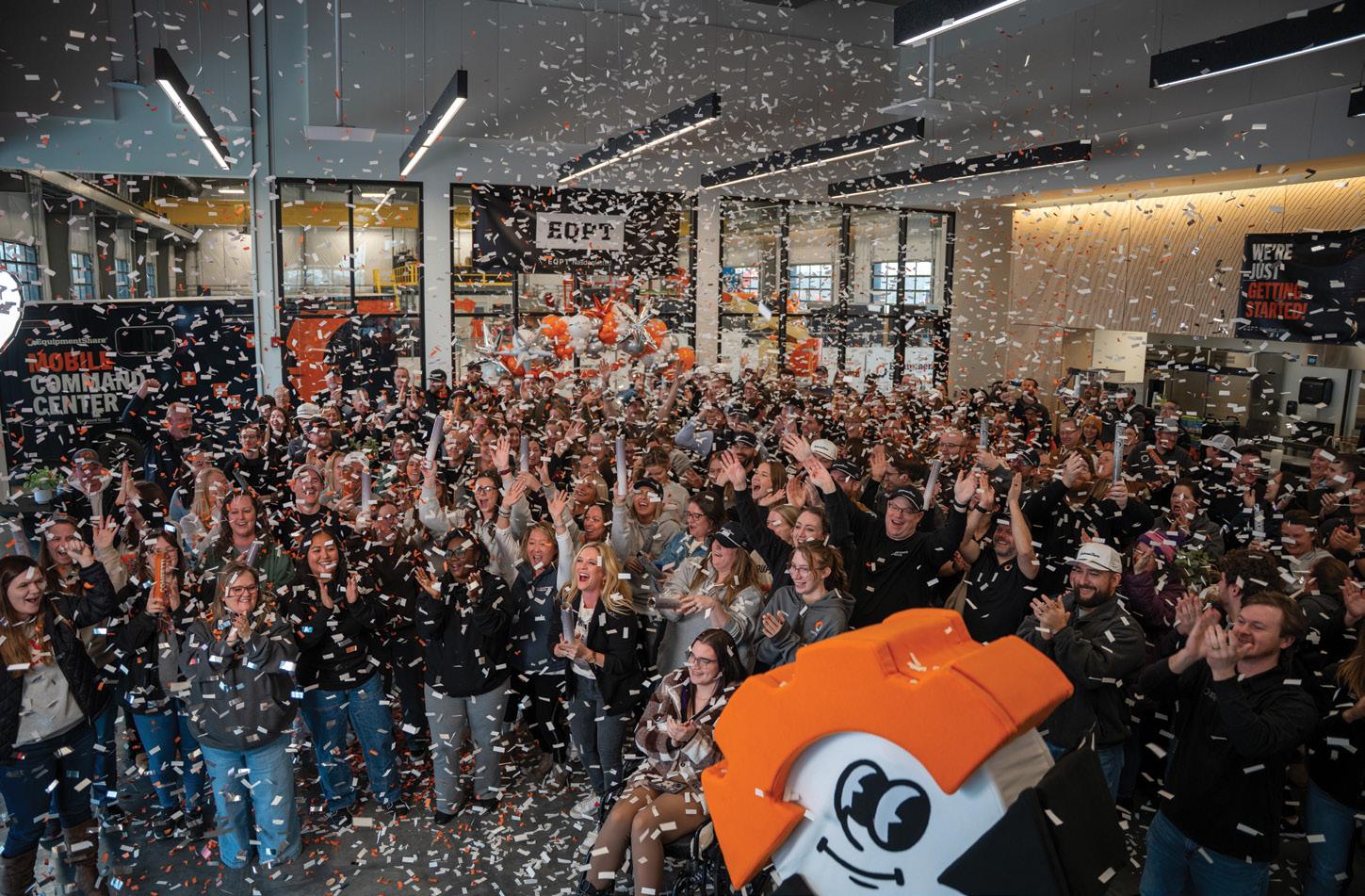
To celebrate the historic milestone, hundreds of employees gathered at the company’s Technology Development Center in Columbia to watch the live broadcast of the Nasdaq opening bell-ringing ceremony.
e bell-ringing moment was just another step along the company’s journey. When EquipentShare opened its Technology Development Center in April 2025, state and local leaders were on hand for the event’s ribbon-cutting celebration.
“ is new Technology Development Center is proof of how far we’ve come — but it’s also just the beginning,” said Jabbok. “Columbia has always been our home, and we’re proud to keep investing in the place and people who helped launch our journey.”
e TDC — located adjacent to EquipmentShare’s main campus building — houses the company’s research and development, engineering, and learning and development teams. ese groups will collaborate to design and test next-generation technology, train team members from across the country, and power EquipmentShare’s proprietary T3 operating system.
e facility features an Uptime Center that monitors the health and performance of the nationwide eet in real time, helping to reduce downtime.
Amy Susán, company ambassador and director of public relations and communications, pointed out Columbia’s central location as vital for serving branches and customers across the country.
“We’re proud to deepen our roots here as we continue to grow nationwide and shape the future of the industry,” she said. CBT
2024
The Technology Development Center opens. The company also opens its 300th branch location.
January 2026
EquipmentShare, valued at over $6 billion, goes public (Nasdaq: EQPT).

Most of Sarah Dubbert’s fellow sports moms learn about soccer because their kids play. But Dubbert, the president of Commerce Bank in Columbia, smiles when she concedes that she is not a “soccer mom.”
“I’m a swim mom and a football mom,” she said.
But when it comes to soccer, Dubbert is ready for the impending soccer fever that will usher in the FIFA World Cup 26 in Kansas City and 15 other host cities in North America. And from her view of Columbia at Commerce Bank, she’s eager to help local businesses prepare for the expected in ux of visitors.
According to FIFA and Visa, which Commerce Bank is partnering with, some 650,000 visitors will ock to Kansas City, and 40 percent of them will be from international locations.
“We’re trying to support and assist small businesses in capturing their part” of the World Cup crowd, Dubbert said. “How do we help our businesses set up to really maximize what they’re doing?”
e get-ready-now takeaway is this: Columbia is expected to have World Cup visitors passing through or staying in Columbia throughout the World Cup this summer. e Columbia Convention and Visitors Bureau (CVB) has launched its “Kick it in CoMo” campaign to welcome international and domestic visitors and foster community engagement. CVB Director Amy Schneider said Columbia is in an ideal position to serve as a celebration hub and a welcoming waypoint for travelers attending the matches.
“Our proximity to Kansas City, combined with our engaged community, makes Columbia a great destination for travelers from around the world and across the country to visit during the World Cup,” Schneider said. “It’s also a great opportunity to partner with local businesses and events to make a positive local impact.”
e CVB characterizes the World Cup in Kansas City as a “once-in-a-lifetime-event.”
Dubbert also thinks of the World Cup and Columbia’s place in the highly publicized event in grand terms.
“It’s our Olympics that we’re going to get to host here,” she said, explaining that Commerce Bank — which has its headquarters almost smack dab in the middle of Kansas City’s ground zero for the World Cup — wants to leverage its position and help other businesses “size up” for the opportunity.
“When are we going to host FIFA again?” she asked. “We have this chance to get it right.” And that means getting out in front of planning now even though visitors won’t start arriving until the second week of June.
When it comes to shoring up digital security, securing point-of-sale systems, tracking inventory, and anticipating language barriers and cultural di erences, being proactive is the best approach, she said.
“You don’t change those things on a dime,” Dubbert explained. “We want to be thoughtful and get information to our small businesses, so they feel empowered to make really good business decisions.”
For instance, the U.S. uses driver’s license and other personal identity cards that list birthdate by month, day, and year. Other countries use day, month, and year. at di erence could be confusing or even awkward when it comes to “carding” international visitors when checking ID for purchasing or serving alcohol. And there might need to be discussions about how to handle foreign currency or how to anticipate language barriers.
“Columbia is a melting pot. We know that,” Dubbert said, noting that Mizzou has a sizable number of international students. “But this will be new for us. We don’t deal with that on a daily basis.”
Service businesses and restaurants, in particular, can expect a di erent attitude when it comes to tipping culture, she said. Americans now seem to expect to add a 20 percent or higher tip when dining out, but that’s not customary for most other cultures.
“You want to be sure you’re conveying to your sta the social norm,” Dubbert added.
In Europe and South America, diners are prepared to pay at the table rather than have a server take a debit or credit card to a terminal for payment.
e bank’s Small Business Readiness program provides checklists and other information at commercebank.com/ Soccer26. e checklists cover, among other things:
• Fraud mitigation and cybersecurity
• Contactless and mobile payments
• Alternative forms of payment
• Payment infrastructure
• Language accessibility and cultural awareness
• Digital marketing and promotional e orts
“It’s basic blocking and tackling,” Dubbert said, referring to the more Americanized football terminology. An added strength of being prepared for an in ux of both local and international visitors is that businesses will bene t from those steps long after World Cup Fever has come and gone.
How many World Cup visitors choose to come to, stay in, or just stop in Columbia remains to be seen. But it behooves businesses to be ready. Dubbert emphasizes that providing memorable experiences and boosting businesses’ bottom lines are not competing priorities. e bank’s readiness program notes Visa data that show nearly 50 percent of U.S. soccer fans are considered “upper income.”
“If they’re going to be here,” she said, “they’re probably going to spend a little bit of money beyond buying a ticket.”
e CVB, meanwhile, through its Kick it in CoMo campaign, aims to serve as the central hub for information, coordination, and promotional resources. e campaign has a dedicated page on CVB’s website featuring information for visitors, the community, industry partners, and local businesses. Visit the website at visitcolumbiamo.com/2026- fa-world-cup to learn more about local e orts to maximize the World Cup experience. CBT
WHAT THE PROS KNOW BUSINESS


EXPLAINING THE DIFFERENCE BETWEEN A PROJECT MANAGER AND A SUPERINTENDENT
By Vaughn Prost info@prostbuilders.com
Have you ever wondered what the difference is between a Project Manager (PM) and a Superintendent (Super) on a commercial construction project?
PROJECT MANAGERS
Project Managers manage the business of the project.
They focus on schedule, money, paperwork and coordination, which makes them responsible for ensuring the project makes sense financially and on paper. Their duties are: to create and track a budget, handle change orders for price or scope of work changes, manage subcontractor’s contracts, communicate with the owners, engineers and architects, approve invoices and track costs, plan the overall schedule of the project, manage risk, documentation, insurance, all the while making sure the job stays profitable. They are usually in their office, attending meetings, answering emails, working on their spreadsheets and visiting the project’s job site as needed. They create a master schedule and track it for the life of the project, have oversight and policy for safety on the site, and communicate directly with the owner/client.
SUPERINTENDENTS
Superintendents manage the building of the project.
They focus on the daily job site operations at the physical construction site, which means they make sure the facility/building is being built safely, on time, and correctly. Their responsibilities are: running the

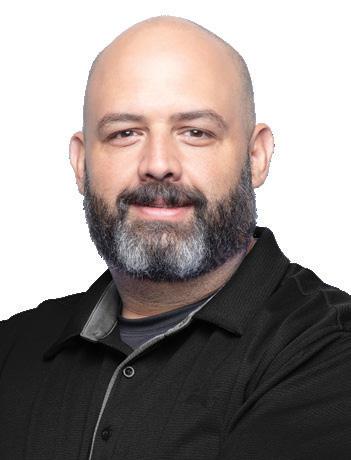
VAUGHN PROST Owner & President
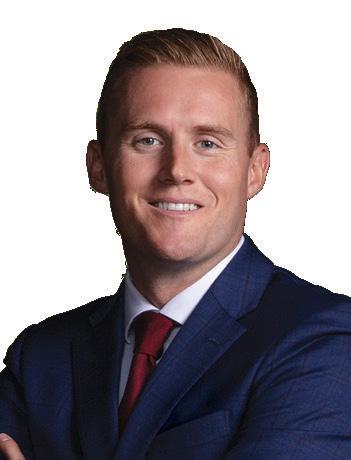
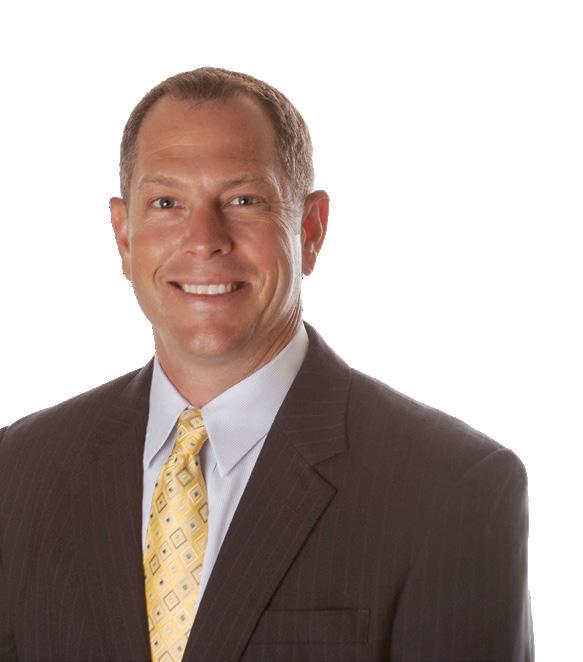
Vaughn Prost is the owner and president of Prost Builders lnc., a design/build and construction services firm located in Columbia. Vaughn has over forty years of domestic and international design and construction experience as a cost and scheduling engineer, structural engineer, owner’s construction representative, and general contractor.
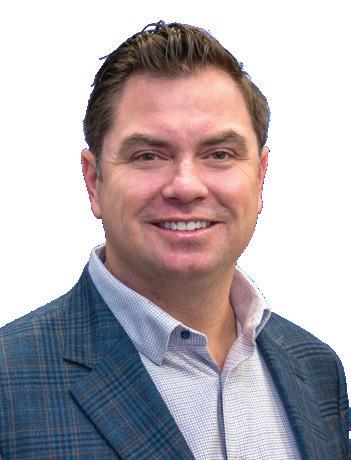
Project Manager James Sargeant and Superintendent
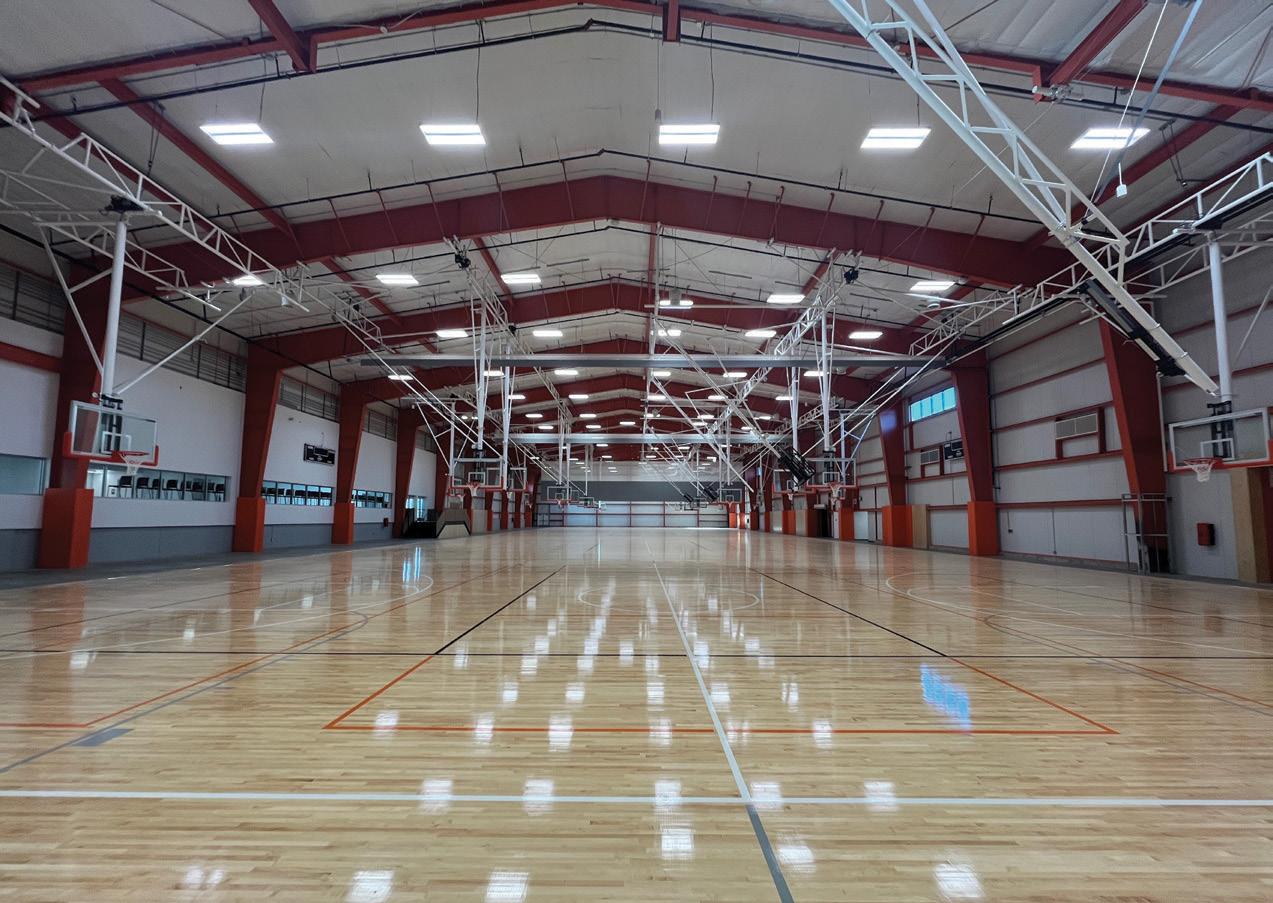
Jason Hurley oversaw the Columbia Sports Fieldhouse project that is now finished.
(573) 635-0211 | prostbuilders.com
3305 Crawford Street Columbia, MO 65203
job site every day, coordinating and scheduling different trades on site, enforcing safety rules, keeping the site clean and organized, coordinating inspections, solving problems as they occur, inspecting work quality, and ensuring the work is done according to the design-builder or architect’s blueprints. They run daily and weekly schedules for the project, daily enforce safety on the job site, and have limited or indirect contact with the owner/client.
Put simply-a Superintendent will say “Here’s what is happening on our site,
and this is what we need”, whereas the Project Manager will say “Here’s how we will pay for it, document it, and keep it legal and profitable”.
These important roles in construction help keep the project on the right path to completion and client satisfaction-a constant goal for Prost Builders on every project. Legacy, Pride, and Excellence has been our focus for 77 years and it shows in all the projects we have constructed and restored in Missouri since 1949.
WHY TELLING YOUR BRAND STORY IS A CRITICAL PART OF YOUR MARKETING
By Charles Bruce III charles@comocompanies.com
In a crowded marketplace, small businesses don’t win by being louder, but by being more meaningful. One of the most effective ways to create that meaning is through storytelling rooted in cultural context. Your brand story isn’t just a niceto-have piece of content. It’s a strategic marketing asset that shapes how people understand, remember, and connect with your business.
Marketing Is No Longer Just About What You Sell
We are surrounded by products, services, and ads that all promise similar outcomes. What really breaks through the barrier isn’t another feature or discount — it’s identity. People want to know who a business is, why it exists, and what it stands for.
This is where storytelling becomes essential. A brand story gives your marketing emotional depth. Instead of asking customers to buy, you invite them to belong.
How to Ground Your Brand Story in What Truly Matters to Your Audience
Telling your brand story is about placing your business within a real cultural framework — your community, your values, your influences, and the moment in time you operate within.
Cultural context might include:
• The city or community you serve
• Traditions, craft, or heritage behind your work
• Creative or cultural movements that inspire you
• Shared values like sustainability, localism, or inclusivity
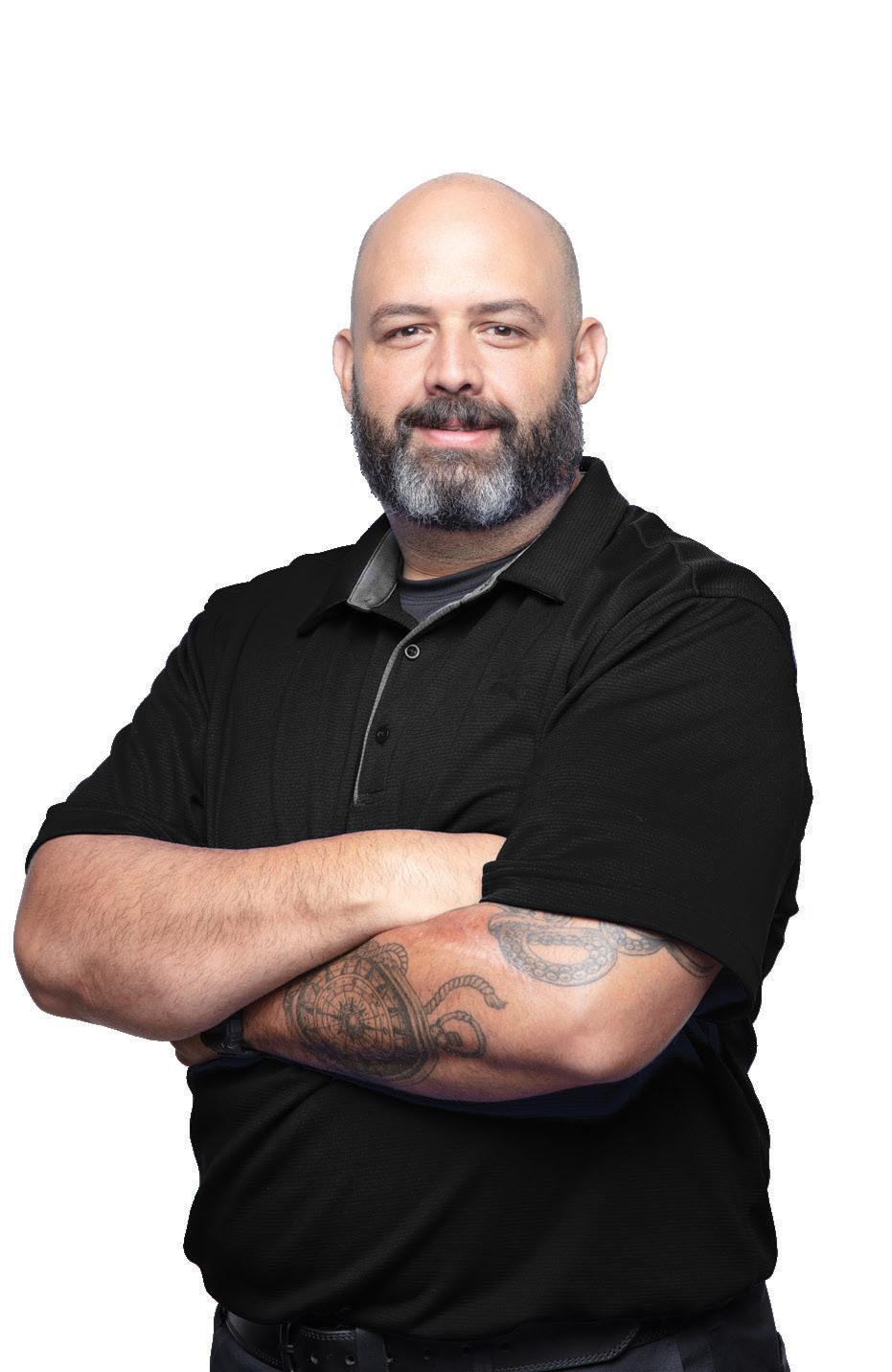
CHARLES BRUCE III Director of Client Relations
Charles Bruce is the Director of Client Relations for COMO Companies, which owns COMO Marketing, COMO Magazine, and COMO Business Times. He received his Bachelor’s Degree in Business Administration and his MBA from the University of Dubuque. When Charles isn’t being the life of the party, he can be found climbing a large mountain. In December 2023 he climbed the Imja Tse mountain in Nepal.
When your brand reflects these elements, it feels familiar and relevant. Customers understand your brand, and also recognize themselves in it and want to join you.
Why Brand Stories Build Trust Faster Than Ads
Trust is one of the toughest things for small businesses to gain and one of the easiest things to lose. Storytelling builds trust faster because it communicates transparency and intent.
By sharing why you started your business, what problem you wanted to solve, and the people behind the work, you make your brand more human. People are more likely to trust your business when they feel like they know the people behind it, not just the product.
Storytelling
Gives Your Marketing a Flow
Without a compelling brand story, your marketing is disjointed with different messages on your website, social media, email, and advertising. A powerful story is the glue that holds everything together.
Your story drives:
• Your messaging and tone of voice
• Your visual identity and creative vision
573-577-1965 | comomarketing.co
• Your content topics and themes Your presence on social media
Rather than wondering “What should we post?” you’re simply telling the same story in different ways.
Why This Is Even More Important for Small Businesses
Big brands try to borrow culture but often fail at seeming authentic. Small businesses are already a part of culture. Your life experience, your community, and your perspective are things that big brands can’t possibly replicate. That’s your secret sauce.
By telling your brand story, you:
• Differentiate without competing on price
• Build emotional loyalty instead of transactional loyalty
• Attract customers who share your values
• Build a brand that feels irreplaceable
Your brand story isn’t fluff — it’s strategy. Storytelling can transform your marketing from promotion to connection. And for small businesses, connection is what drives trust, loyalty, and growth.
MAXIMIZING AI IN YOUR BUSINESS: HOW TO STAY AHEAD OF THE COMPETITION
By Andrew Gilstrap agilstrap@gfidigital.com
Everywhere you turn, businesses are adopting AI to improve how they work. From customer service to internal workflows, AI is becoming part of daily operations to boost speed, reduce repetitive tasks, and improve accuracy.
But here’s the part many leaders overlook: AI only delivers real value when it’s implemented strategically and aligned with clear business goals.
When AI is rushed or poorly planned, it can slow teams down, introduce security risks, and waste budget. When it’s done right, AI can free up hours each week and allow teams to focus on growth, innovation, and stronger customer relationships.
The Real Productivity Opportunity with AI
Many teams work hard but still feel stuck. Manual processes, repetitive tasks, and constant firefighting pull attention away from high-value initiatives. Strategic AI implementation can change that.

Streamlined Operations
Routine tasks like scheduling, data entry, and ticket routing take time but don’t move the business forward. AI can automate these workflows, helping teams respond faster and focus on work that truly matters.
Improved Accuracy
As workloads increase, so does the risk of human error. AI tools help reduce mistakes in reporting, data handling, and service interactions. Some solutions can even flag potential issues before they become problems, enabling proactive responses.
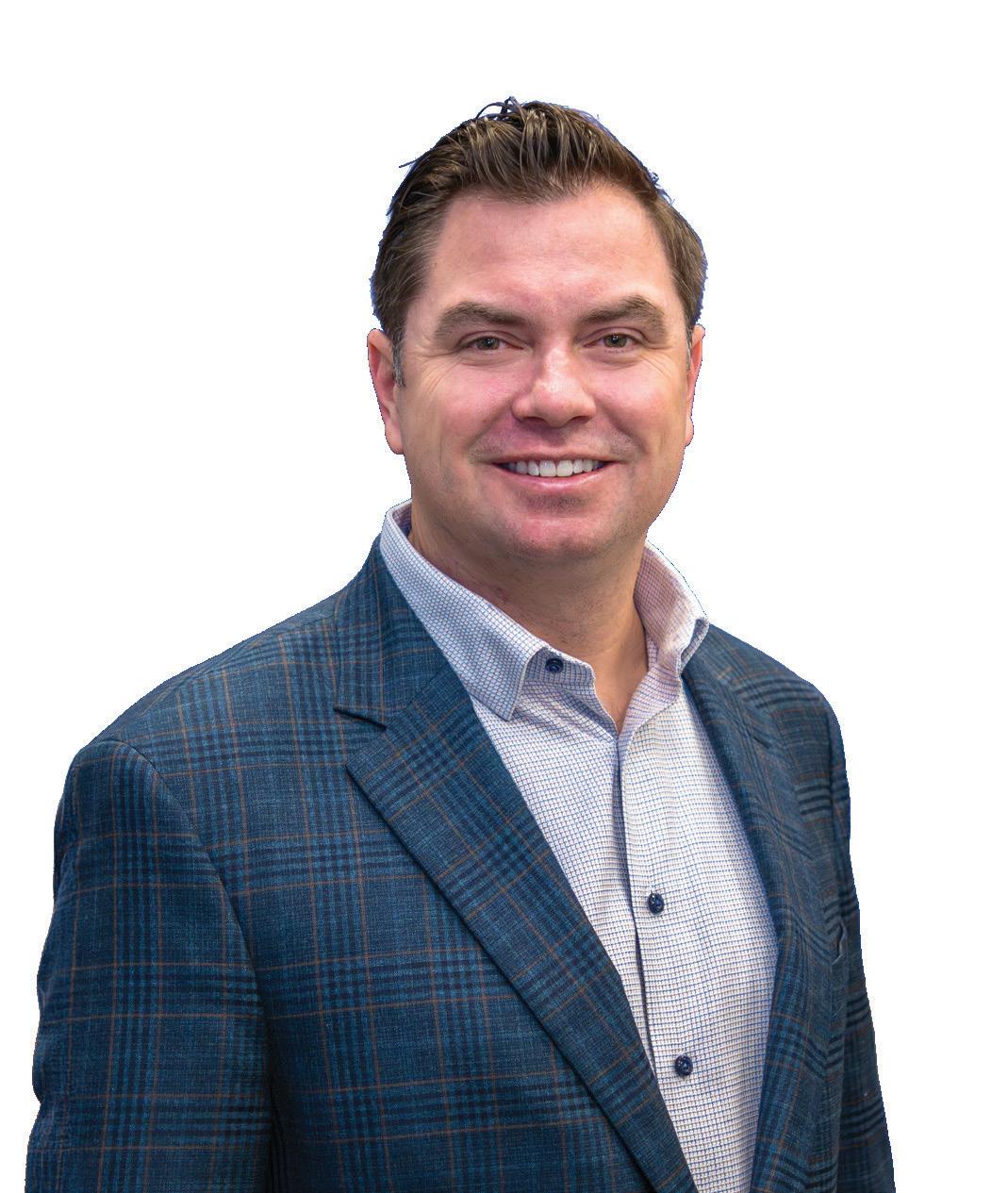
Enhanced Customer Experience
Today’s customers expect fast, accurate service. AI-driven assistants can handle common questions around the clock and route more complex issues to the right team member. This improves response times and service quality without adding headcount.
Time for Strategy
When AI takes care of routine work, teams gain time to plan, innovate, and build stronger customer relationships. Instead of constantly reacting, leaders can focus on long-term growth.
The Risk of DIY AI
With all the hype around AI, it’s tempting to experiment independently. Without strategy, governance, and security oversight, DIY AI can create serious challenges. Misaligned tools may produce outputs that don’t support business goals, leading to rework and disconnected systems. Unsecured AI platforms can expose sensitive data and create compliance risks. Choosing tools without a clear strategy often results in wasted investment, while solutions that don’t scale become maintenance headaches as the business grows.
How an IT Partner Helps
This is where trusted expertise makes the difference. GFI Digital helps align AI
ANDREW GILSTRAP Vice President
Andrew graduated from the University of Missouri, Columbia with a Bachelor’s degree in Finance. Before joining GFI Digital in 2016, he served as Director of Operations for Sangita Capital Partners and brought over eight years of sales and management experience. He has held leadership roles including Sales Manager in St. Louis and Managing Director in Kansas City. Andrew now serves as Vice President in St. Louis, overseeing all aspects of the Technology Services Sales Team and taking pride in coaching and developing his team to achieve their goals.


initiatives with your business goals and existing systems so technology enhances workflows instead of disrupting them. We prioritize security by applying controls, monitoring usage, and training teams on safe AI practices. Our approach ensures focused investment in tools that deliver measurable results and scalable solutions designed to grow with your business.
Start Your AI Journey with Confidence
AI is no longer just a trend — it’s becoming essential for staying competitive. Getting it right matters. With GFI Digital as your partner, you gain guidance, security, and confidence that your AI strategy is aligned, scalable, and built for long-term success. Schedule a consultation to explore how AI can help boost productivity, streamline operations, and elevate customer experiences without unnecessary complexity.

MARCH INTO A FRESH FINANCIAL SEASON
The Spring Refresh Every Consumer Should Do
By Brad Roling broling@midambk.com
As winter thaws and the first hints of spring appear, many of us feel inspired to declutter our homes, tidy our schedules, and reset routines. But spring cleaning doesn’t have to stop at your physical space — it’s the perfect time to give your finances a refresh, too. At Mid America Bank, we believe a seasonal financial check-in can help you step confidently into the year, spot opportunities to save, and avoid unnecessary pitfalls.
Refresh Your Savings Goals
Spring is the perfect time to step back and evaluate your financial priorities. Are your goals the same as they were at the start of the year? Whether it’s building an emergency fund, saving for a vacation, or preparing for a large purchase, setting or adjusting specific, measurable targets can help you stay on track. Mid America Bank offers guidance and tools to map out your savings journey and ensure your plans are realistic and achievable.
Check for Fraud or Outdated Subscriptions
As we refresh our closets, we often uncover forgotten items; the same goes for your finances. Take time to review your recent statements for unauthorized charges, unfamiliar subscriptions, or recurring fees you may no longer need. A little vigilance now can prevent headaches later. Mid America Bank provides secure online and mobile banking
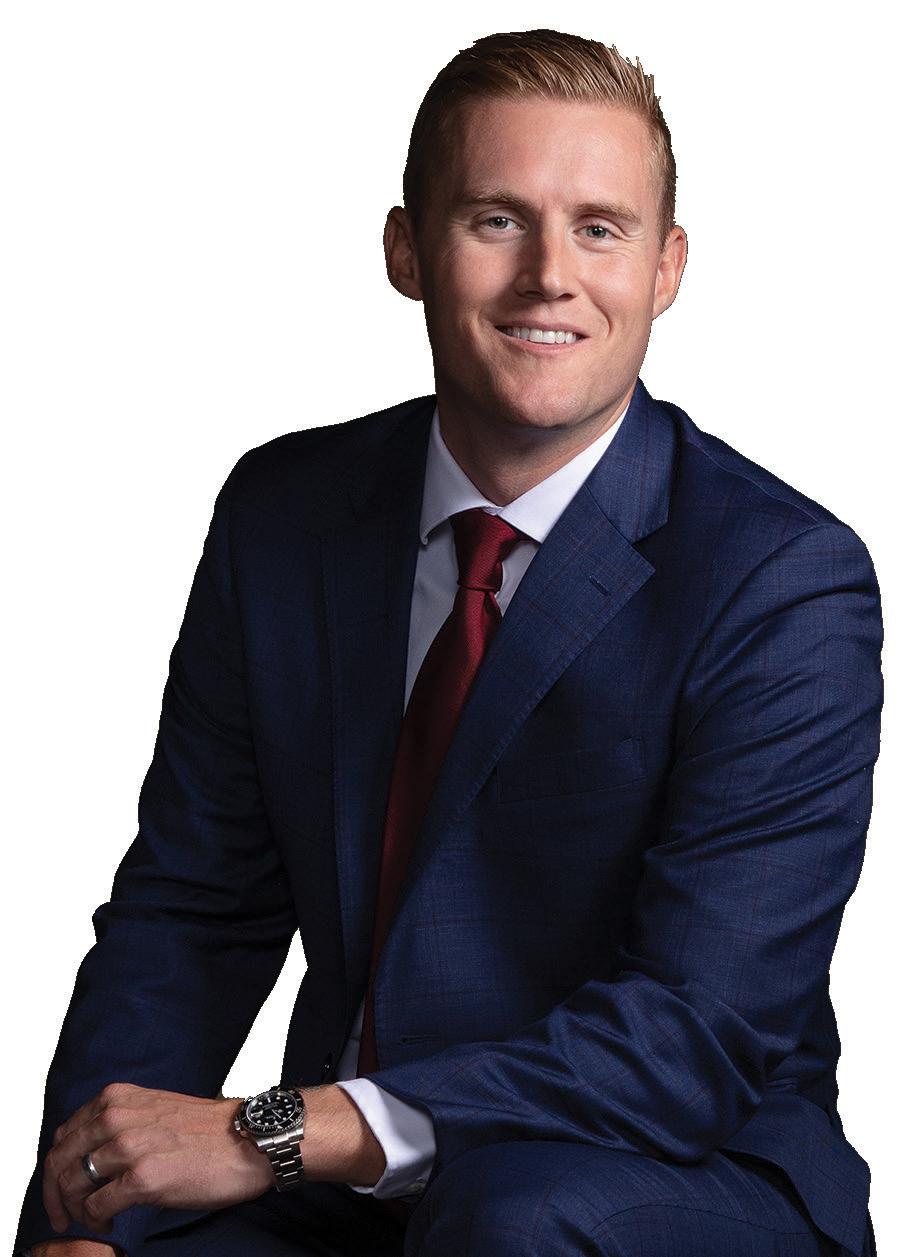
tools that make it simple to monitor transactions, receive fraud alerts, and maintain control of your accounts. Staying aware keeps your finances as tidy as your living space.
Review Your Credit Reports
Just as we inspect our homes for needed repairs, it’s wise to examine your credit reports for errors or outdated information. Consumers are entitled to free annual credit reports from the three major credit bureaus, and reviewing them regularly helps ensure your credit history accurately reflects your financial habits. A strong credit profile can save you money on loans and open doors to better financial opportunities.
Consider Switching to Better-Fit Accounts or Rates
BRAD ROLING Market President – Columbia
Brad Roling is the Columbia Market President for Mid America Bank. Brad has more than 10 years of banking experience that he uses to help businesses in and around Columbia thrive. When he is not helping your business with its financial needs, Brad is serving the community in a variety of capacities. He is proud to serve on the Ronald McDonald House Mid-Missouri Board of Directors as Vice President, the Columbia Chamber Foundation Board as Treasurer, Heart of Missouri United Way Board of Directors, Executive Board for Scouting America, Great Rivers Council, and Beta Theta Pi Advisory Board. Brad is a proud Mizzou grad and loves cheering on the Tigers!

573-998-8900 | midambk.com 4601 Stellar Drive, Columbia MO

like moving funds to a higher-yield account or consolidating accounts can make a noticeable difference over time.
Spring is a natural time to evaluate whether your current accounts and services are still the best fit. Maybe your checking account no longer meets your lifestyle, or your savings could benefit from a higher rate. Mid America Bank is committed to helping you find accounts that align with your goals, offering competitive rates and flexible options designed to meet your unique financial needs. Even a small adjustment
A seasonal financial refresh doesn’t have to be overwhelming. By revisiting savings goals, monitoring for fraud, reviewing your credit, and exploring better-fit accounts, you can set yourself up for a stronger, more intentional year. At Mid America Bank, we’re here to provide the guidance, tools, and products you need to take control of your financial spring cleaning. Think of March not just as a shift in the weather, but as a chance to refresh your financial health and enter the season with confidence. Spring is in the air, and your finances deserve a fresh start, too.
PROTECTING YOUR HOME ART STUDIO
What Artists Need to Know About Insurance
By Mike Messer MMesser@ShelterInsurance.com
Are you a professional artist who creates your work at home? Your home studio might be your sanctuary for creativity, but have you considered how your artwork and equipment would be protected if disaster struck—such as a fire or tornado? While commercial insurance policies often cover inventory in storefronts or rented studio spaces, homebased artists need to pay special attention to the limitations and exclusions of their homeowners insurance policies.
Does Homeowners Insurance Cover Art Created at Home?
Many artists assume their homeowners policy automatically covers works they create and store at home. The reality is coverage depends on your individual policy and the nature of your art business. In some cases, you can add an incidental business endorsement to your homeowners insurance, which may cover business property used at home, but coverage is often limited and subject to eligibility requirements.
Limitations and Eligibility for Incidental Business Endorsements
Even with an incidental business endorsement, there are important limitations to consider—like the type of art you create and the tools you use— which can affect your eligibility and coverage. For example, painters may be able to insure their supplies and finished work, but artists who create pottery or glasswork with kilns or other high-heat furnaces may face exclusions. High-value or specialized equipment could also be subject to strict coverage limits, leaving you underinsured in case of a loss.
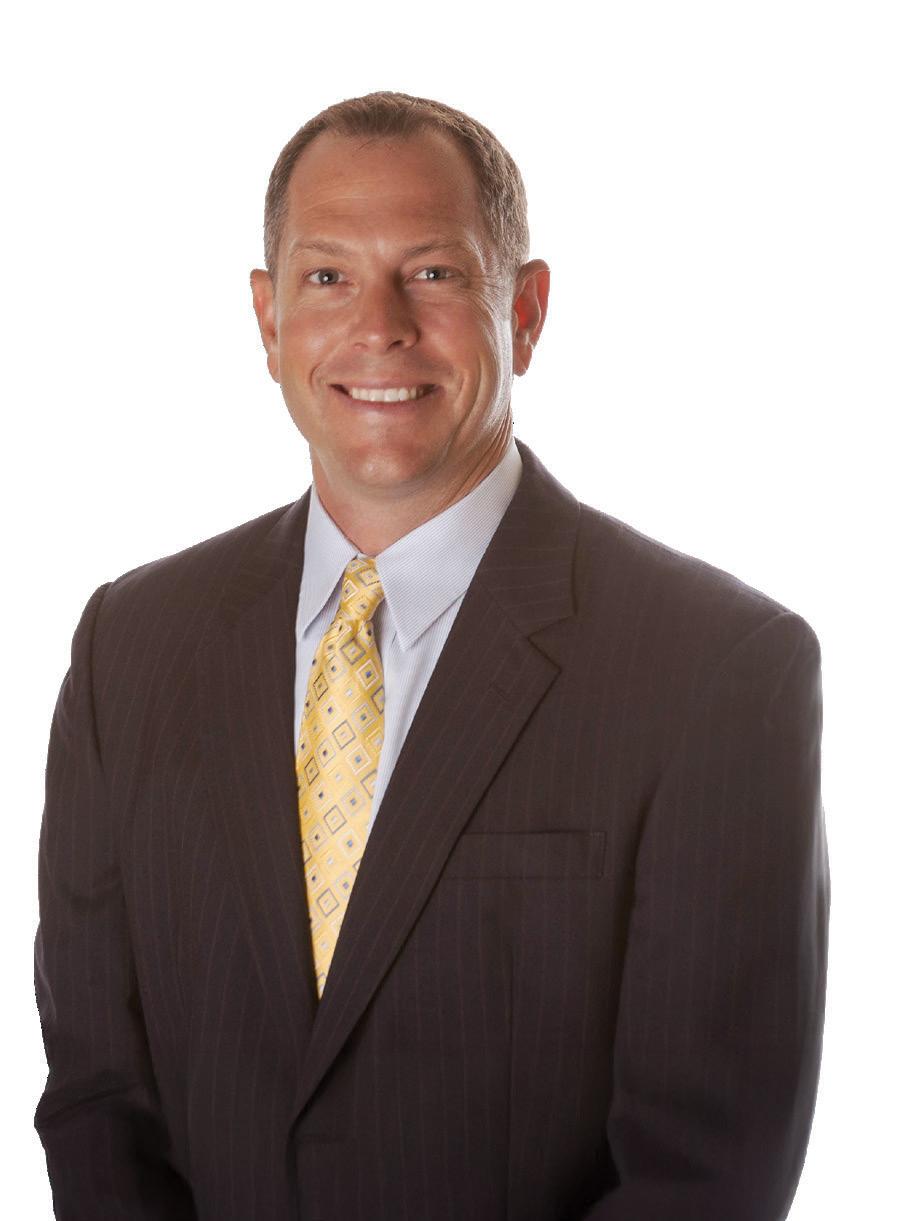
Another key factor is how you use your home studio. If clients regularly visit your home without appointments to view or purchase your art, your home may be considered a storefront. In such cases, an incidental business endorsement likely will not apply due to increased liability risks. If a customer were injured while shopping in your home, your homeowners policy might not provide liability coverage. In these situations, a commercial policy or general liability policy is usually a more appropriate choice.
Coverage for Art Shows and Exhibits
It’s also important to note that homeowners policies—with or without a business endorsement—typically do not extend coverage to off-premises events, such as art shows or gallery exhibits. Additionally, if you host large gatherings at your home to showcase your art, you may be ineligible for an endorsement due to the increased risk of accidents and liability claims.
Assigning Value and Understanding Coverage Limits
Artists often view their creations as priceless, but when it comes to insurance, you must assign a fair market value to your work. Under the incidental business endorsement, coverage for merchandise
With over two decades in the insurance industry, Mike Messer has served as a claims adjuster, supervisor, and underwriter, giving him a well-rounded understanding of how policies work when it matters most — before and after a loss. He prioritizes building relationships based on trust and personalized service, recognizing that every client’s needs are unique. Through annual policy reviews, he helps ensure clients stay informed, confident, and properly covered, providing them with peace of mind and financial security.

is usually capped at $5,000 or less. This limit may fall far short of your needs if your inventory or equipment is more valuable. If you require more coverage, a separate commercial policy may be necessary as the incidental business endorsement alone will not be enough.
As always, getting appropriate coverage for your art and your business means reviewing your insurance options carefully. Don’t assume your homeowners policy provides all the coverage you need. Discuss your unique situation with an insurance professional who understands the needs of artists. Be clear about the nature of your work, the equipment you use and how you interact with clients. By taking the time to secure appropriate coverage, you can focus on creating art with confidence.
PAVING THE WAY

I-70 Project supports economic growth in Columbia.
BY LAUREN SABLE FREIMAN
ERIC KOPINSKI HAS BEEN INVOLVED with many large-scale highway construction projects throughout the state of Missouri, and from his vantage point as the Improve I-70 program director with the Missouri Department of Transportation, he can see that the I-70 project is di erent.
“ is has been the most popular project I’ve ever been a part of,” Kopinski says. “I think the main reason is the average citizen of mid-Missouri and our businesses have been waiting for this for a really long time, and they know there is a signi cant bene t to the state, so they’re willing to put up with a lot of the impacts because they know intuitively the project will be great for the region.”
While MoDOT’s motivation to improve I-70 is focused on safety and reliability, Kopinski says that they know the economic impact across the state will be noteworthy.
“We are in the process of working toward quantifying the actual bene ts,” Kopinski says. “Both locally and nationally, with any project there are a lot of projections, and we want to gure out what those bene ts actually are.”
Even without a formal evaluation process, it is known that the I-70 project will create both temporary and permanent jobs in Columbia and across the state of Missouri.
“We do know that there are 1.1 million jobs that are dependent on I-70,” Kopinski says. “ e corridor is critical to the state, to the Midwest, and to the nation, and investing in it is going to help those jobs and grow those jobs. From our traditional projects, we know that for every $1 we spend, there are $4 returned from the economic growth. e return on that is pretty bipartisan; everybody seems to agree that that is the case. We believe rmly that with the size and magnitude of this project, that we haven’t seen in 50 to 60 years, the economic return will be even greater.”
Missouri Contractors Win Project
While MoDOT had the option of awarding the entire I-70 project to a national or international contractor, it instead opted to break the project into smaller pieces and allow local contractors the chance to bid on the projects.
“ e contract amount would have been $3.4 billion, and there is no one locally that can bond that project or would be willing to take on that project,” Kopinski says. “We’ve seen that a lot of times, those projects don’t go as well as far as quality or safety, so we took the approach of giving our locals rst chance to win some of these contracts.”
MoDOT selected Emery Sapp and Sons to construct the $440 million project from Rocheport to Columbia, and Josh Doerho , ESS executive vice president of operations for the heavy highway branch, says the positive impact will extend throughout ESS and the city of Columbia.
“Our home is Columbia, so it will be impactful for our organization, but also for subcontractors and suppliers local to Columbia that will be participating,” Doerho says. “ at drives revenue and growth for each of those organizations. en, upon completion of the project, access to roads and facilities inside Columbia will become easier and less congested, all making it more appealing and safer to get to Columbia than the current system today.”
When Columbia residents begin to see construction activity around April, Doerho says the craft workers will be a mixture of local residents and those living around Missouri.
“We have a large pool of employee owners who will participate,” Doerho says. “Some are local to Columbia, and some will travel several hours to be part of this project. We do highway construction all over the Midwest — Missouri is our home, and Columbia is our home base, so we have a lot of resources nearby. ere is a good blend of employee opportunities for residents in Columbia and also for employees in a three-hour radius around the project.”
According to Doerho , there will be anywhere from 200 to 250 workers within the construction zone at any given time during peak construction seasons. At those times, there could be up to 150 people staying in Columbia hotels or temporary housing in the area.
“WE KNOW THAT FOR EVERY $1 WE SPEND, THERE ARE $4 RETURNED FROM THE ECONOMIC GROWTH.”
— ERIC KOPINSKI, MODOT
“During construction, additional people will utilize the town, restaurants, and hotels, and at the end of the project, the growth opportunity becomes greater for Columbia, as it will have greater connectivity to the west and to the existing and new interchange locations on and o I-70,” Doerho says.
Statewide, the number of jobs being created is even more staggering. MoDOT projects that, annually, 3,800 jobs will be created, including craft workers, material suppliers, project managers, and o ce workers.
“From Boonville to Kingdom City this year, every day and night over a 24-hour period, we will have over 400 people working to deliver the project,” Kopinski says. “ ose that are out there doing the work, those jobs are signi cant and well-paying and critical to our project getting done.”
Sourcing Craft Workers Locally
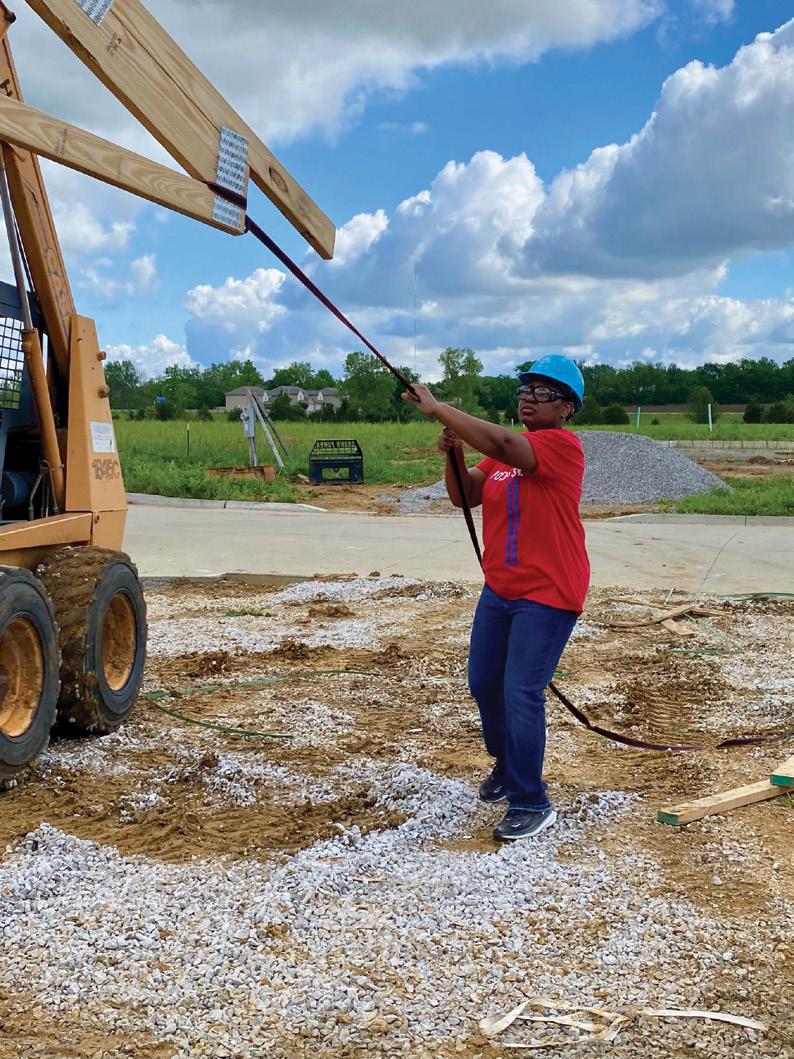
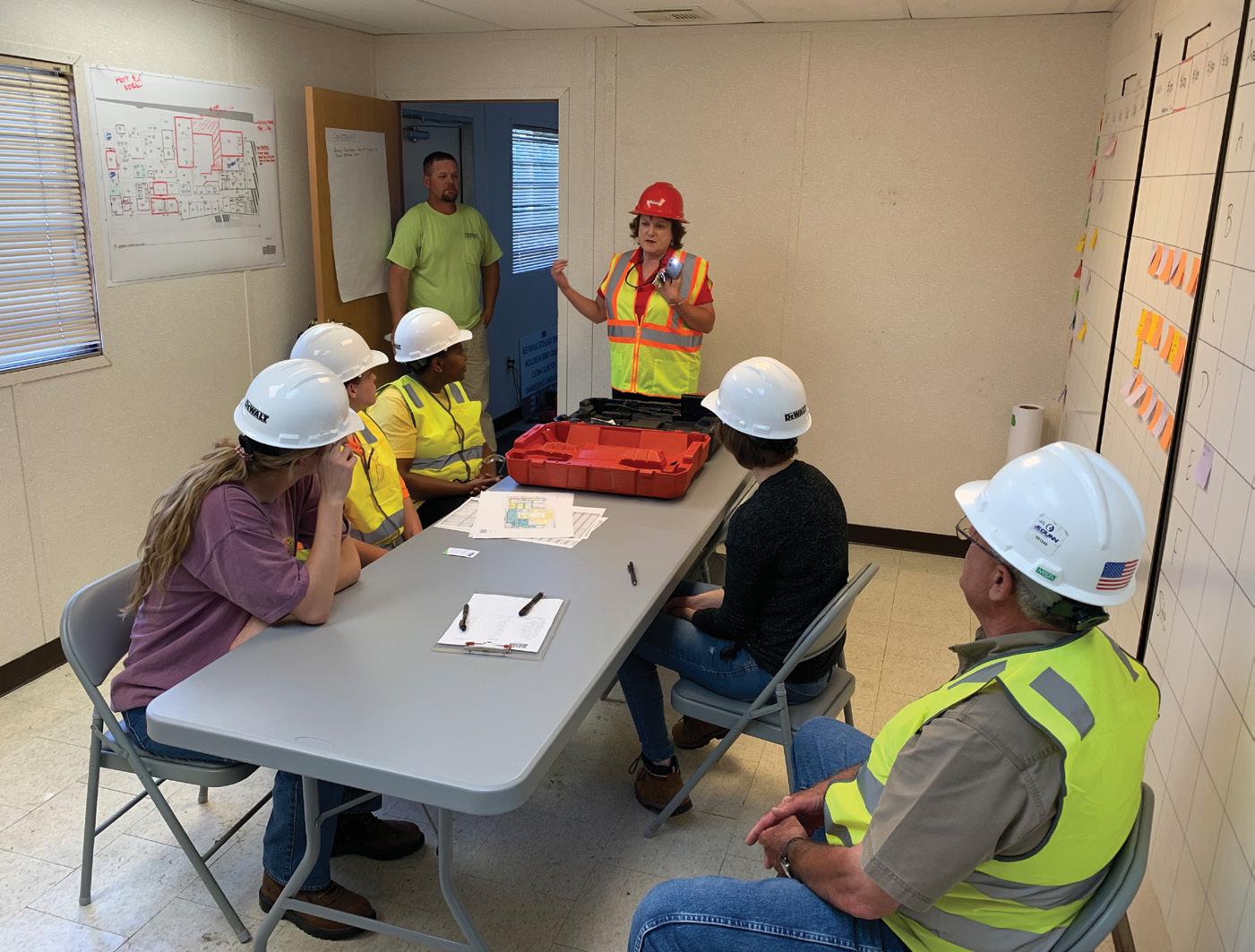
Just over one year ago, Stephens College, with support from MoDOT, completed an application to secure federal funding to launch a training program for individuals pursuing transportation construction. e college received that funding, and the Missouri Everybody Works program will o cially launch in March.
“ is program is for anybody interested in going into the trades and is primarily serving women and underrepresented individuals,” says Scott Taylor, dean of workforce development and continuing studies at Stephens College. “ e I-70 improvement project is the impetus, and it will feed and help satisfy the work shortage issues with I-70.”
e program is designed as a pre-apprenticeship program where students are exposed to various aspects of highway construction. Over the course of four weeks, they have the opportunity to determine whether the work ts their skill set and learn what it takes to become uent in the trade.
“Once they complete the program and are ready to take the next step, we will provide them with an apprenticeship program and place them with a contractor,” Taylor says. “While they are working, they will come back to Stephens to help them advance through their career in highway construction.”
As the program is grant funded, there is no cost to students.
“We bring the students in; provide transportation and childcare, if necessary; provide them with protective safety gear like boots, hard hats, vests, gloves, eye protection, and ear protection; give them hand tools and teach them aspects of power tools as well. We also pay them $15 per hour for every hour of training for the pre-apprenticeship program,” Taylor says.
Once students are placed into an apprenticeship, they will be fully employed through a contractor, working 40 hours per week while earning an income. Students will also complete 144 hours of formalized training, whether that’s online, in a classroom, or in the eld.
“It turns that economic engine when you’re making good money, going out to eat, buying cars,” Taylor notes. “ ose jobs that are paying prevailing wages are providing opportunities for individuals to enhance their lifestyle as well as fuel the overall economy in the mid-Missouri area.”
Over the next three years, Taylor aims to have 15 cohorts of 14 students each going through the program.
“With I-70 not only bringing construction jobs to bring that road, improvement will also enhance other aspects of the economic ecosystem, and you’ll see new developments occurring at those interchanges and more opportunity for additional workers in the commercial and general construction trades,” Taylor says. “We see this as an opportunity to continue our pre-apprenticeship program as long as there is a need by industry.”





Nominations close March 3I! DON’T WAIT
Perched atop Columbia, Elevation Ballroom sets the stage
A DAY IN THE LIFE
City Bus Driver
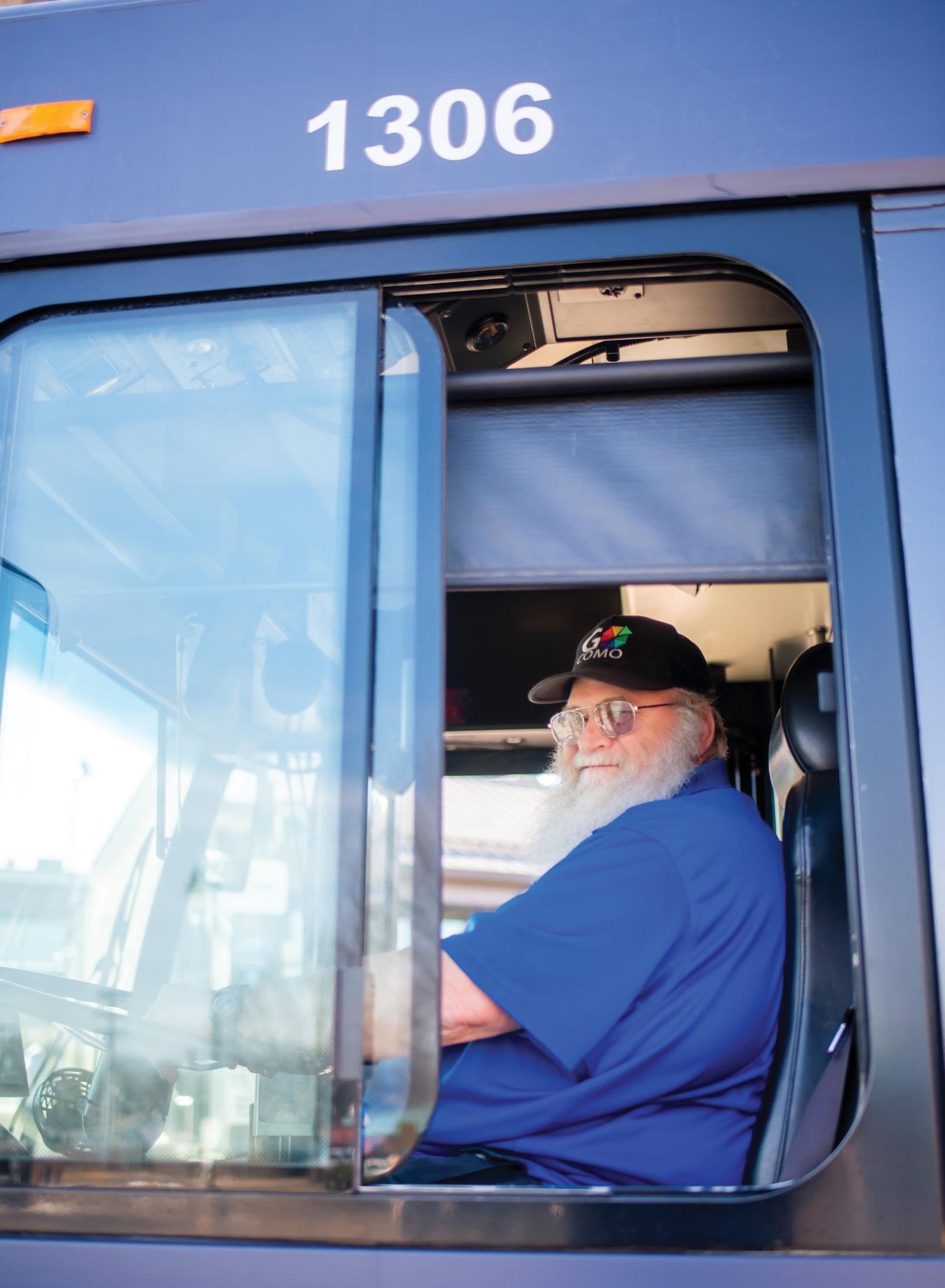
Meet Lewis Mountain, a bus driver for the city of Columbia.
PHOTOS BY LANA EKLUND
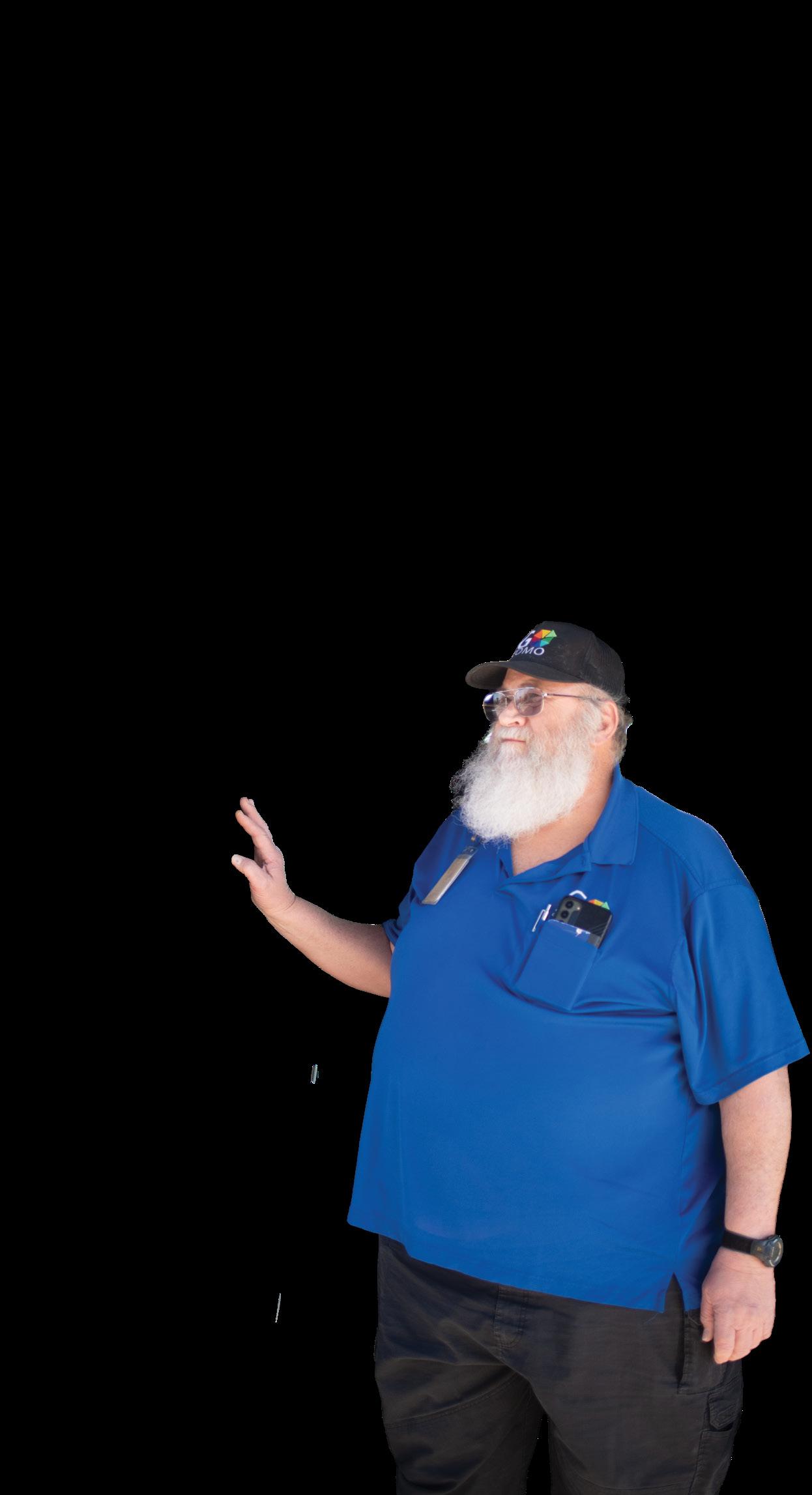
How long have you been driving for Columbia’s transit system? What other tasks other than driving are involved in the job? I started driving for the city in February 2012. I drive all day, and if it’s a good day, there is no paperwork. I’d driven some big vehicles and was a school bus driver for a bit, so I didn’t have any trouble learning. I know all the routes, and I know all about getting around in Columbia. Back in the day, I drove on campus every day, when we expanded to 16 routes. Now we just have six routes. My work week is Saturday through Wednesday. When MU is out in the summer, I worked Monday through Friday.
Do you get tired of driving? Do you like to travel? I usually don’t go on vacation. I don’t like driving any more than I have to. e only thing that makes me want to do that is to go shing. And when I get time to do that, I usually like to nd a spot where my phone doesn’t work.
What time does your day start? What’s your morning routine? I get up at 6:45 a.m. I start work at noon and work until 8 p.m. In the morning, I might re up some sausage and eggs or sausage and pancakes or get a fast-food breakfast and bring it back home. I try to keep it kind of simple.
Tell us about yourself. How would other people describe your personality and your skills? I’m easy to get along with. Sometimes I work at the garage at the Grissum Building, helping with fueling and washing buses. I guess I have a way
of helping people calm down. I used to be a bouncer at Dooley’s Roadhouse, a country-western music and dance bar at McBaine. It’s been closed for a while now.
How did this journey start for you? What steps led to you becoming a city bus driver? e jobs I had before were hard and had long hours. is job is more relaxing. When I was in Kirksville, I worked with my dad at North American Van Lines. en I got into maintenance and ran the maintenance and housekeeping for 20 years at the Terrace Apartments retirement home across from Cosmo Park. I worked a lot of temp jobs — installing hardwood oors, construction cleanup, electrical
work. I was working about six part-time jobs when a buddy told me First Student was hiring bus drivers. I already had my chau eur’s license. I worked three years for First Student and left there when I got hired by the city.
What advice would you have for other city bus drivers, especially newer drivers? You’ve got to toughen up your skin a little bit. Most people are not intentionally mean. ey could just be having a bad day. You can’t take it personally. Some riders might complain about the transit company or the rules, but I tell them we don’t control that. We just drive.
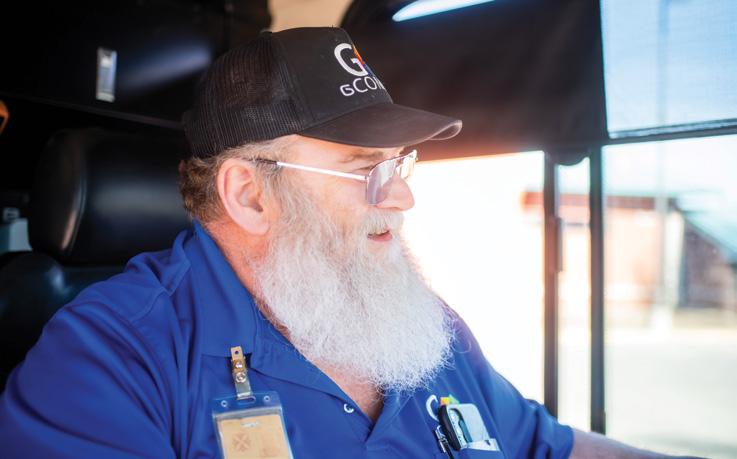

Tell us about a favorite part of your job. My co-workers and I like to drive. Each day is di erent. You can always learn something new. When you’ve got people who come on the bus and talk with you a little bit, the day goes by more quickly. Every day is a learning experience for me.
What time is lunch? What are you having? Whenever I can work it in. My lunch box is a microwaveable lunch. When you’re out there driving, the last thing you want to do is eat something big. You don’t want to be uncomfortable.
No matter the city, people there will say their drivers are the worst. We hear that all the time about Columbia. What are your observations about Columbia’s drivers? What do they do well? What could they do better? A lot of them do OK. But a lot of them do not know how to work a roundabout. On campus, student drivers and new drivers don’t seem to know that a big bus does not bend in half to turn the corner. When you see a bus signal, you should be watching at the intersection. We need a little bit more room for turning. But I have to nish my turn — I can’t back up. I might have to lay on the horn to get them to stop. A lot of times they’re not watching, or they’re on their phone, sitting at a green light. You lay on the horn — and get a “gesture” from them. Or people are in such a hurry. Sometimes I wonder, “Are you going to a re or something?
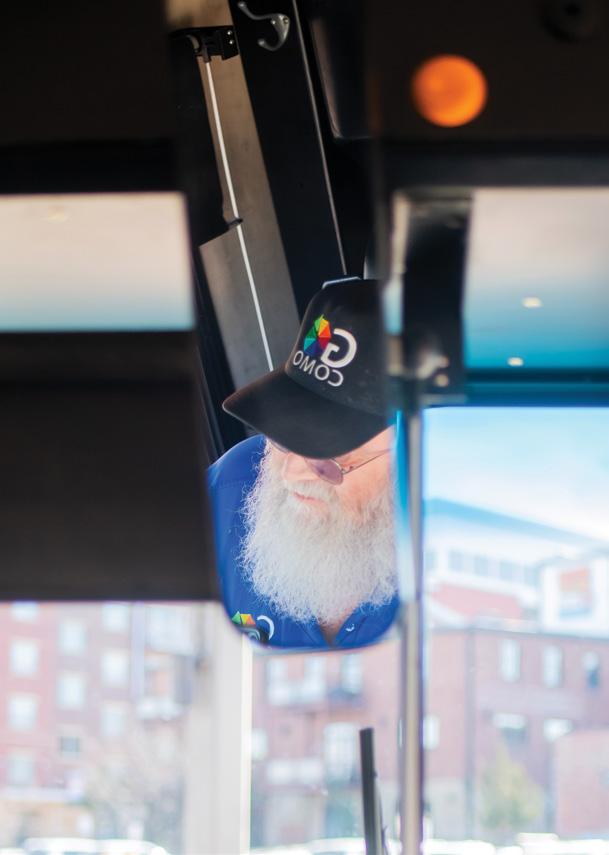
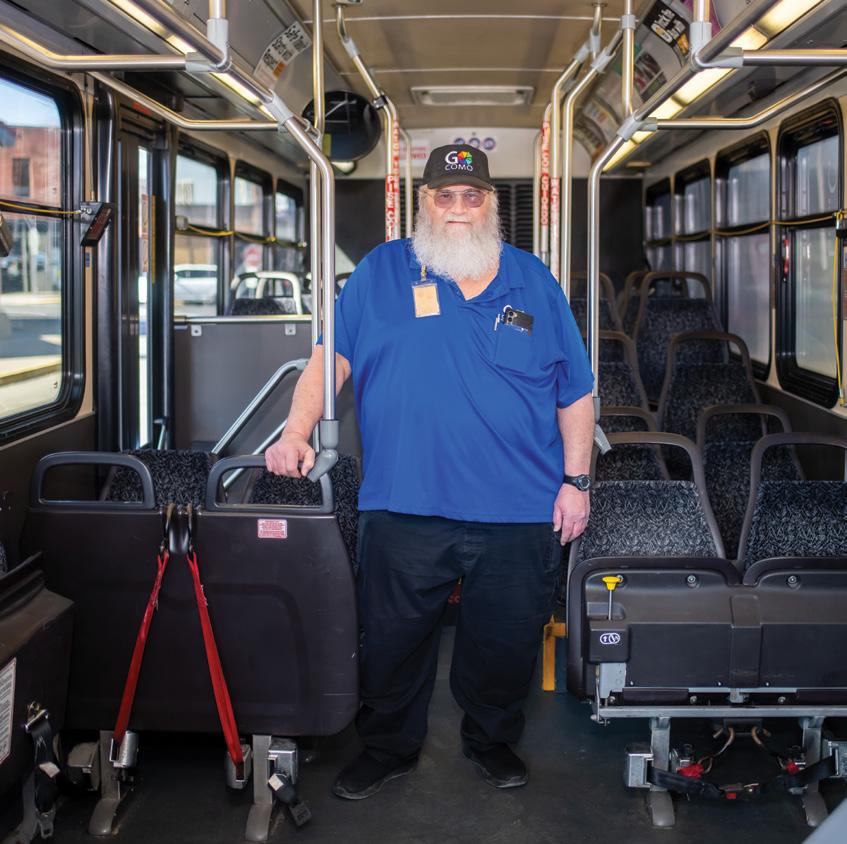
Driving a bus for a city transit system sounds like a solitary job, but you’re interacting with people throughout the day, right? Which passengers are the most pleasant and friendly? How do you deal with passengers who aren’t so pleasant? Most are them are friendly. e regular riders are talkative. We visit during the ride, talking about their day, and they ask about my day. A few I know by name and a lot of them know me. You do get the ones that are having a bad day. I might have to tell them to be quiet and sit down. And the other customers help me get control. I might pull over and open the door to let them out and tell them they have to get o but can ride tomorrow. If I have to, I’ll call dispatch or call the police. ey can get banned from riding for 30 days. Some of them just can’t seem to check it outside the door. But I try to make it as pleasant as I can. I’ll try to defuse it and keep driving. It’s not helpful to argue. And maybe he’s just having a bad day.
If you could tell your younger self what you wish you had known or knew to look out for, what would that be? Be friendly and respectful to all customers, and they will respond in kind.
What do your friends, and the general public, not understand about what you do? e buses have cameras. ey see everything. Voices, video … and gestures. It’s all recorded, inside and outside the bus.
When you do get a chance to get away and go fishing, where do you go? Rocky Fork Lake, Finger Lakes, Little Dixie. Fishing for bass is all right if I get bored, but I’m mostly going after cat sh. But I don’t have to catch anything. Just being out there, putting a line in the water. It’s just relaxing. Even if it’s a stormy day, I might just sit there with a plastic bag over me. at’s a good day.
What time is your workday finished? Most of the time it’s 8 p.m., but sometimes it could be later.
What’s for dinner? Who will you share that meal with? It’s a late dinner with my son and grandkids. Or I just watch some television and go to bed.
What do you do to unwind in the evening, and what time does your head hit the pillow? I like to watch old movies and TV shows, like Perry Mason, e Lone Ranger, Gunsmoke … some of the old stu . I usually sleep about ve hours a night.
What are your dreams? (Literal or figurative, of course.) I’m 66 now, where I can get ready to retire and just enjoy my life. I just want to relax — not have to worry about being somewhere at any given time. I’ve got two sons, so if I win a big Scratcher lottery ticket, I’d give it to them and let them split it. ere’s nothing I need. I’m happy with everything I’ve got; I’m happy with everything I’ve done. I’m content. CBT
Transit Trials
The wheels on the bus go round and round.
BY MICHELLE TERHUNE
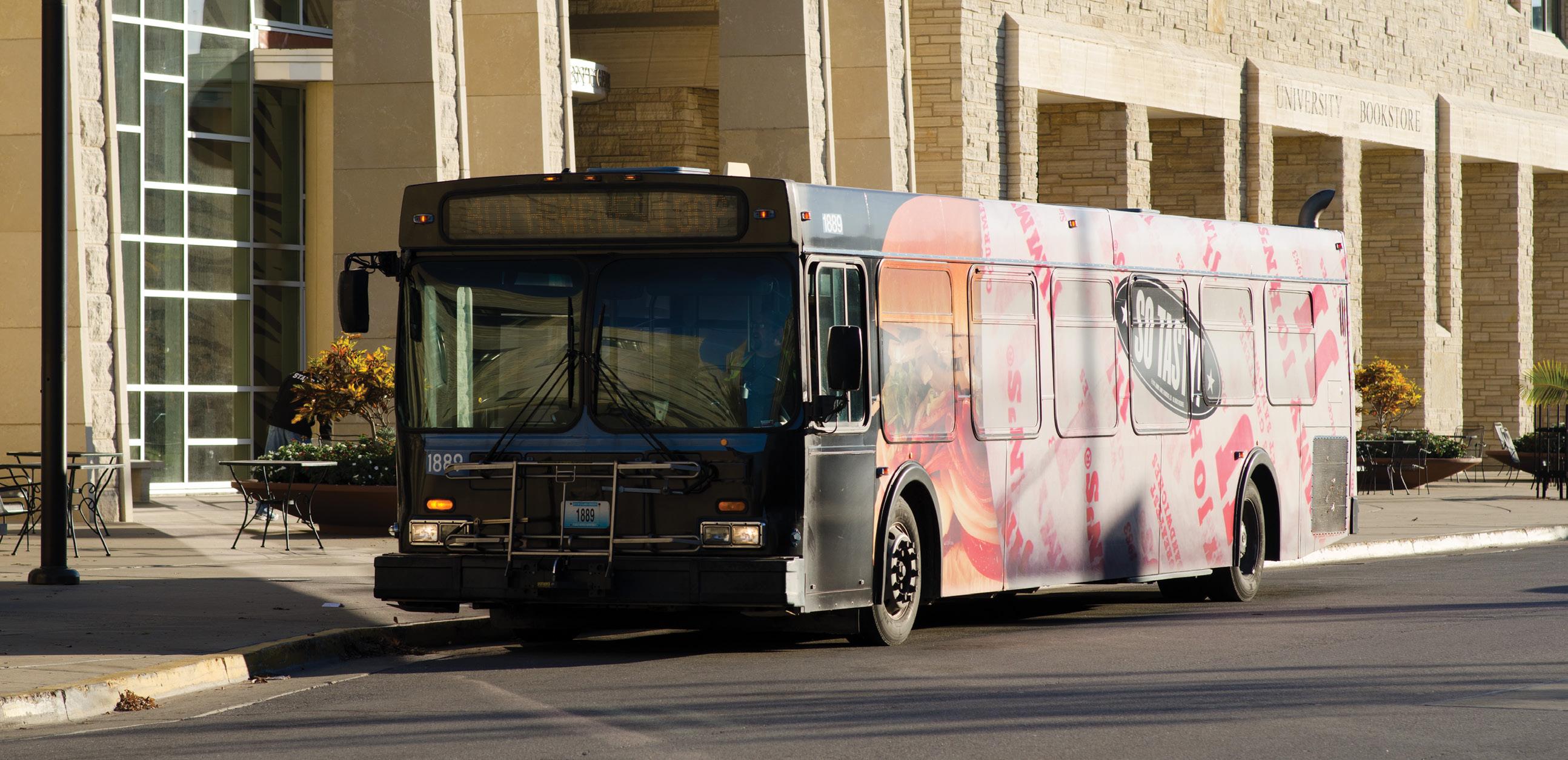
WITHOUT A DOUBT, Columbia is a community of auto owners who typically use their vehicles to get around. e city’s nearly 85,000 households own, on average, two vehicles each. So it’s no surprise that drivers nd themselves gridlocked in tra c on busy thoroughfares like Stadium Boulevard or intersections like Broadway and Highway 63.
However, there are a lot of people who can’t a ord the payments, maintenance, and insurance on a vehicle or who don’t have a driver’s license. ey rely on public transit to move about town. But even if you have your own wheels, you should be thankful public transit exists.
Across the country, public transit leads to less congestion, safer roadways, more walkable and livable cities, and reduced pollution and carbon emissions. It provides social equity for those who can’t afford cars. And it boosts the local economy
by o ering equitable access to retail, services, education, and employment.
Yet Columbia’s public transit system has become that song that gets stuck in your head, whether you’re a rider or not. It’s a di erent day but the same tune about surveys, public meetings, route changes, and studies performed by consultants on the city’s dime. To gure out where transit is now, you need to know how it arrived. For that, we’ve turned to Fingerprints and Footprints: Ray Beck’s Columbia, scheduled for release this spring.
An Entrepreneur Got Transit Rolling
Glenn Watson saw a need for bus service in Columbia back in 1939. e city had grown to roughly 18,000 souls, and half or fewer of its households owned a car. As the city grew in circumference, so did the need for a way to get around. Watson lled it with three or four buses.
e entrepreneur wasn’t getting rich o this endeavor. In fact, it’s likely he was losing money. After 26 years of running buses as a private service, Watson asked the city to consider operating the bus system.
The City Takes the Wheel
It was then-Public Works Director Ray Beck who was charged in 1965 with getting bus service up and running in about a month. With no buses, drivers, routes, or any relevant experience, Beck started from scratch. Columbia’s population had blossomed to more than 47,000, and although more people owned cars, not everyone could get to the grocery store, school, work, doctor’s appointments, or anywhere else without catching a bus. e transfer point for the new system was at the corner of Ninth Street and Broadway. Buses ran routes that began and ended at that spot, with the system
Photo by Ben Meldrum
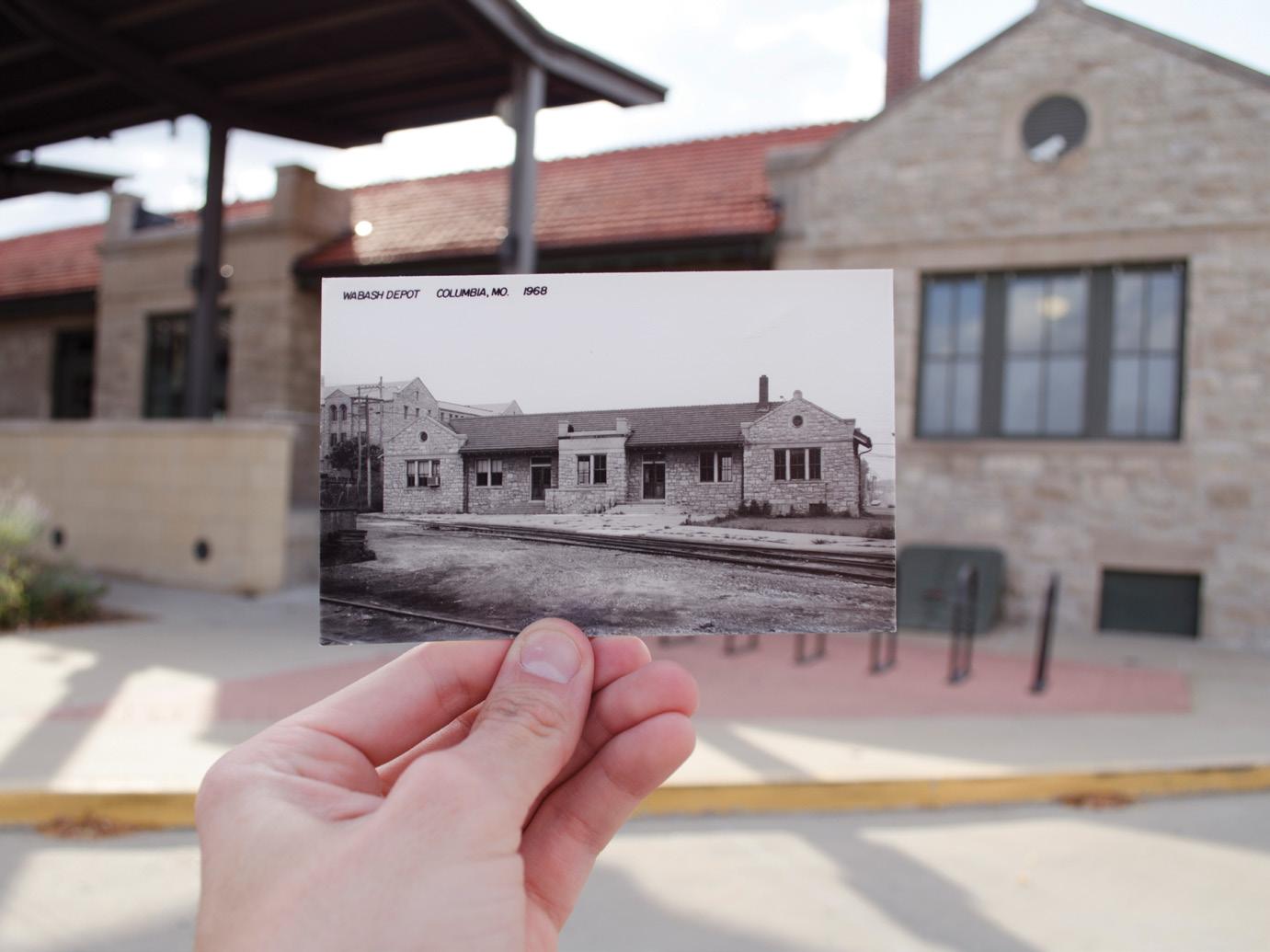
no doubt creating congestion of its own in the bustling downtown core. But a block east and two blocks north sat the Wabash Station, where, by 1969, trains weren’t picking up and dropping o passengers any longer. ere was, however, still a need for a central transit location. City buses, taxis, and regional and national bus lines like Greyhound needed a place to transfer people among these modes of transportation. In 1978, the city purchased the empty Wabash Station, adjacent buildings, and land for $250,000.
Although this looked like the perfect spot for a multimodal station, the project itself didn’t top the city’s agenda. It wasn’t until 1982 that the Columbia Bus System moved into the Wabash Station. e name of the system itself changed a few times, starting in 1985 when it became the Columbia Area Transit System and, 10 years later, Columbia Public Transit. In 2014, the name changed to COMO Connect, which attracted a trademark infringement lawsuit led by an internet company. Go COMO was adopted in 2017.
Always Changing Gears
Today’s threefold public transit system comprises xed-route buses, paratransit, and e Tiger Line, a service the
University of Missouri contracts with the city to provide. e xed-route service seems to always be the subject of studies. Routes, bus stop locations, fares, driver shortages, equipment, and customer needs are routinely under the microscope as the city looks for ways to provide better service without breaking the bank.
When ridership hit all-time lows during the pandemic in 2020, the city council voted to waive fares. Although the number of customers rose after that period, the number of drivers to run the xed routes did not. According to Shane Creech, director of public works, drivers were working mandatory 50hour weeks. e city increased salaries and training opportunities, but by 2023, there still weren’t enough drivers willing to operate the large xed-route buses.
“I didn’t think it was right to continue to ask these folks we’re trusting with the safety of the citizens of Columbia to continually work 50-hour weeks,” Creech says. “I have very dedicated employees, but that wasn’t sustainable.” e solution? It wasn’t eliminating any existing routes or stops; rather, there are now fewer buses traversing them. at increased a 45-minute turnaround time to 90 minutes. Riders weren’t happy. at’s when the city hired Olsson,
Wabash Station. Photo by Matt Patston
an Omaha-based engineering and design rm, to do a comprehensive transit study and provide recommendations for turning the bus system around.
e 2024 Comprehensive Transit Plan and the 2025 Update recommend implementing four service tiers over time as ridership, employee numbers, and budget — including capital investments in additional buses and routes — allow.
e recommendations are based on customer priorities, including shorter wait times, expanded routes, and extended hours of operation.
The Budget Sustainability Factor
Public transit has never been self-sustaining, in Columbia or virtually anywhere else. Fares would need to be exorbitant to cover costs, which is counterintuitive to building ridership. Ridership is what keeps the wheels of a transit system turning.
e city has subsidized the bus system since its inception, when operating costs were estimated at $120,000 and projected revenues at only $50,000, resulting in a $70,000 shortfall. Today, as is true with most transit systems in the United States, Columbia’s transit system is highly subsidized by federal money, which also requires a local match. ose funds come largely from the half-cent transportation sales tax that voters approved in 1987.
State funding has grown in recent years, but it isn’t enough. In scal year 2025, xed-route buses and paratransit operated with a nearly $199,000 de cit. e FY2026 forecast is for operating in the red to the tune of $116,000.
Meanwhile, city council voted to continue not charging fares at least through the end of FY2026. While charging customers something to ride the bus may seem like an obvious step in the right direction, it’s also complicated. ere’s a debate over fare-collection options, including cash, prepaid bus cards, or tap-to-pay readers. Out tting the bus eet with whatever method is chosen is a capital expense. Plus, many transit customers don’t have credit cards, bank accounts, or the ability to pay for a bus card up front.
Beck opposed increasing bus fares because most of the cost of the system was
Building a solid transit system depends more on putting enough rear ends in seats — which fare-free buses encourage — since federal dollars are based on ridership.
wrapped up in driver pay and bene ts, which stay the same regardless of whether a bus is full or empty. Creech says there are bene ts to charging fares, but he recognizes that fare revenue contributes little to o setting overall operating costs.
Why is that? Because it turns out that building a solid transit system depends more on putting enough rear ends in seats — which fare-free buses encourage — since federal dollars are based on ridership. e contract with Mizzou’s Tiger Line is the only revenue-generating arm of Columbia’s transit system now, and it boosts overall ridership numbers. e goal is to increase those counts elsewhere in the system.
“If you start to provide a route and no one’s riding it, you look at when you can stop that route,” Creech says. “Worse than that is when you have three, four, 10 people who use that route and then count on it. So we wanted the Olsson study to show us how to get back to where we were before and how, in an or-
ganized way, can we get where we heard most people say they want to go.”
As noted, Olsson delivered the original plan in 2024 and an update in 2025. e latter included additional information requested by city council and sta , including data for transit systems in peer communities. e city will pay the rm a total of $255,158.53. at gure includes $48,535.90 from the Safe Streets for All Grant for transit study components.
Tier 1 of the Olsson xed-route and paratransit recommendations is to get route times and ridership back to where they were prior to the 2023 reductions. To reach Tier 4 takes more than four times the number of vehicle hours and operating costs of more than $19 million.
It’s a lofty goal that Creech and his transit sta would like to reach for the bene t of the citizens of Columbia. Even those who don’t use the system reap the bene ts of having one. If Creech and his colleagues succeed, no one gets thrown under the bus. CBT
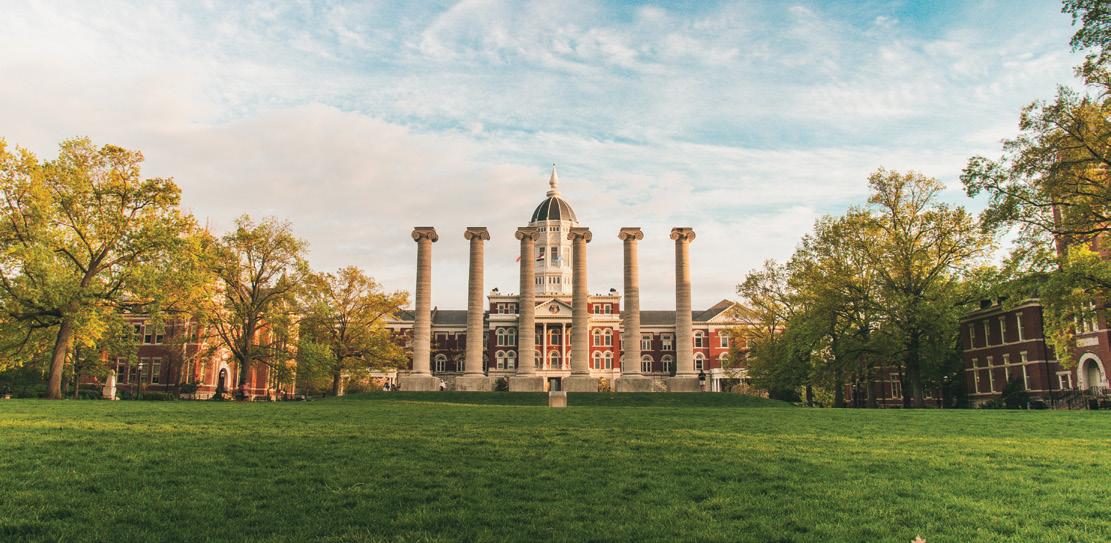
TIME Names Mizzou No. 2 in the SEC
e University of Missouri ranked 124th on TIME magazine’s 2026 list of the world’s 500 top universities. Mizzou also placed at No. 2 of the 15 public universities in the Southeastern Conference and No. 13 among U.S. agship universities, which it de nes as the oldest institution of higher learning in the state.
Shoppes at Stadium, Meet Nordstrom
Nordstrom Inc. has announced plans to open a Nordstrom Rack in Columbia this fall. e Columbia Missourian reported that the 25,000-square-foot store will be located in the Shoppes at Stadium, which includes the recently opened Trader Joe’s, Lululemon, and Home Goods, among others. Nordstrom Rack is the o -price retail division of Nordstrom Inc. is will be the rst Nordstrom Rack in Columbia and the third in Missouri.
UM Curators Approve Plan for Keene
Campus Street Talk
Street Medical
BY JODIE JACKSON JR
MU HEALTH CARE WILL EXPAND its presence at its Keene Street medical campus, with the UM System Board of Curators approving an $83 million project to renovate campus infrastructure with a focus on the former Women’s and Children’s Hospital. KOMU recently reported that MU Health Care continues to experience signi cant capacity challenges and an increasing demand for both clinic and surgical services across its system.
e Curators-approved long-term plan will shift more outpatient services away from the main hospital campus and better accommodate growing patient demand. e improvements will be phased in over the next 10 years. e Keene Street campus includes the Keene Street Medical Center and Keene Street Health Pavilion.
e facilities currently support a range of outpatient procedures and services, including surgery, an ambulatory infusion unit, pharmacy services, neurological services, MRI services, and a pre-anesthesia clinic. Additional services, including CT scans and radiology and laboratory services, are planned. MU Health Care anticipates relocating several clinics to the Keene Street campus.
Socket Network Keeps Growing Columbia-based Socket Fiber has entered a de nitive agreement to acquire Fastwyre’s Missouri network business, which spans 16 markets and serves more than 25,000 customers across the state. A news release announcing the agreement said the transaction follows Oak Hill Capital and Pamlico Capital’s acquisition of Socket Fiber and IdeaTek and advances the combined companies’ goal of reaching 500,000 homes across the Midwest with ber networks by 2028.
Quick
Hits
Another 7 Brew Co ee is coming to Columbia and will replace the now-demolished Pizza Hut on Clark Lane. e drive-thru co ee shop at 3307 Clark Lane will be the city’s third 7 Brew Coffee. ere is not a con rmed date for the new shop’s opening.
Billiards on Broadway has new owners. Les and Molly Wagner announced on the downtown eatery’s Facebook page on February 9 that “after 18 years, countless moments with amazing people, and almost one million burgers sold,” they have found “the perfect buyers” to honor the Billiards legacy and brand. e buyers are Bill and Lisa Morrissey and Kurt and Laura Kingsley. e Facebook post continued: “No retirement for Les and Molly, just on to the next adventure. Cheers.”
Columbia residents are invited to the city’s 2026 Community Summit from 9 a.m. to noon on Saturday, March 14, at City Hall. Following the positive feedback on last year’s event, the summit will return as a hands-on experience that enables residents to express their concerns and o er ideas. e drop-in event is designed for all ages. Free parking is available in downtown metered spots and city garages all day Saturday.
Zaxby’s is coming back to Columbia. Eventually. A January 30 news release noted that Triple Z Holdings LLC — a group that includes multiple University of Missouri alumni — has signed an agreement with Zaxby’s to open multiple locations in the greater St. Louis and Columbia areas “in the coming years.” e news release did not provide speci c locations or dates. Zaxby’s opened the rst of two Columbia locations in January 2014. By mid-2024, both of those stores were closed. CBT

Street Talk is a monthly overview of “word on the street” business and community news. Street Talk is sponsored by e Bank of Missouri.
Deeds of Trust
Worth more than $880,000




davegriggs-flooringamerica.com (573) 303-3748 801 Business Loop 70 East Columbia, MO
Store Hours:
Mon.-Fri. - 9:00AM - 5:00PM
Saturday - 9:00AM - 3:00PM Sunday - Closed
$1,870,000,000
Location Seven Properties LLC
Woods & Huston Bank
LT 40 Georgetown West PL 1
$235,000,000
Ralph Johnson, Trustee
Wayne Vanderwert
LT 113 ornbrook Plat No 4
$7,500,000
Jeremy Wong
United Wholesale Mortgage LLC
LT 113 ornbrook Plat No 4
$5,223,239
KT Investment Group LLC
Simmons Bank
LT 2 PT FF Hawthorne Sub
$4,800,000
Gopala Krishna Konduri
Regions Bank
LT 295 e Brooks Plat No 2
$3,482,000
Centralia Investment Group LLC
Regional Missouri Bank
LT 1 BL 4 Rollins Add
$2,357,750
Centralia Investment Group LLC
Regional Missouri Bank
LT 3 BL 4 Rollins Add
$1,763,750
1901 Corporate Pl LLC
Prism Bank
LT 2 Vandiver Corporate Centre
$1,707,244
Seth Lindenbusch
New American Funding LLC
LT 206 Heritage Woods
Plat No 2
$1,612,500
Aaron Hayes
Neighbors Bank
LT 205 Westcli Plat 2
$1,500,000
Eduardo Menendez
Mortgage Electronic
Registration Systems Inc.
LT 1 G & J Farms Subdivision
$1,500,000
Jessica P. Caldera
Multipli Federal Credit Union
LT 130 Westwood Add
$1,300,000
Scott Rodgers
Mortgage Electronic
Registration Systems Inc.
STR 26-50-13 SW/SE/SW
$1,120,000
T.R.E.C. Investments LLC
Mid America Bank
LT 1 Old Hawthorne
Golf Course
$942,000
Spillman Contracting LLC
Mid America Bank
LT 1098 Legacy Farms Plat No 1
$900,000
Spillman Contracting LLC
Mid America Bank
LT 1130 Legacy Farms Plat No 1
$880,000
Corsbro Developments LLC
Mid America Bank
LT 718 e Gates Plat No 7 CBT
Issued by the Boone County Recorder of Deeds in January 2026
New Business Licenses
Issued January 2026
Moving MO
1304 Overhill Court, Columbia
The Lovesack Company
Keith Siegner
403 N. Stadium Blvd., Columbia
Commercial Trust
Financial Services
1905 Cherry Hill Dr., Columbia
Friendly Support Services LLC
2606 N. Blu St., Fulton
COMO Mud Company LLC
Ame Allen
1100 Club Village Dr., Columbia
573 Smoke & Vape Shop 1808 Paris Rd., Columbia
Highball
132 S. Ninth St., Columbia
Royalty Electric LLC
2028 Hollister Whitney Parkway, Quincy, IL
Stellar Made and Found LLC
1019 E. Walnut St., Columbia
Glo Tanning
Tara Archer
3103 W. Broadway, Columbia
PrecisionCAD LLC
6403 Chelan Dr., Columbia
LR Signature Electric 1603 Tundra Court, Columbia
AI Exotic Snack Guys
Columbia Corp.
2300 Bernadette Dr., Columbia
Sushi Fajita
804 E. Broadway, Columbia
Rollright Wellness LLC
Brandi French and Kevin Blount 1004 W. Worley St., Columbia
Evergreen Landscaping LLC 3313 Belle Meade Dr., Columbia
CK Home Improvements LLC 1800 E. Prathersville Rd., Columbia
MAC Telecom LLC 3115 Glenstone Dr., Je erson City
Winter Whisker LLC 7406 Pemberton Dr., Columbia
Black Tower Group 10077 Sandmeyer Lane, Philadelphia, PA
Ozark Hood & Duct
559 S. Forest Court, Spring eld
One Stop Property Solutions LLC 320 W. Sneed St., Centralia
Flowmaster Construction LLC 4303 Liberty St., Mexico
CLINJAX LLC
Clinton Prince 600 Armitage Dr., Columbia
Fresh Solutions by J LLC 8758 N. Brown Station Rd., Columbia
Stephen McFall’s Electric LLC 809 Linwood Dr., Paragould, AR
Perfume Palace
Midnight Scents Inc. 2300 Bernadette Dr., Columbia
Hawk Point Construction LLC 2531 Bernadette Dr., Columbia CBT
Issued by the city of Columbia’s Finance Department.

What’s Going Up?
Little General’s Not-So-Little New Store Opens in April
BY JODIE JACKSON JR
COIL CONSTRUCTION IS PUTTING THE FINISHING TOUCHES on Columbia’s third LITTLE GENERAL CONVENIENCE STORE at Exit 133 just south of I-70. A news release from Little General in early February announced that the $11 million store will open in April.
e 18,000-square-foot Little General was rst mentioned in the July 2025 “What’s Going Up?” building permit report for Columbia and Boone County.
e convenience store will feature 24 fuel positions, universal Tesla EV charging stations with Magic Docks, spacious restrooms, grocery items, a kids’ play area, and a dog park. e on-site LG Kitchen will o er a variety of grab-and-go food, customized food and beverage options, including an on-site barista station, made-to-order burritos, beer cave, and ice cream counter. e parking area and fuel stations have been designed to be RV-friendly.
Meanwhile, Columbia’s o ce of Building and Site Development and the Boone County Resource Management o ce issued a combined 130 building permits in January 2026. e aggregate valuation of the permits was listed as $58.1 million.
e city issued 80 building permits with a total valuation of $45.85 million. e breakdown includes:
• Addition (residential): 1 permit, $347,407 valuation
• Alteration (commercial): 6, $1.1 million
• Alteration (residential): 8, $519,906
• Commercial in ll: 1, $450,000
• Commercial multifamily: 1, $4.84 million
• Commercial, new: 4 permits, $33.8 million
• Deck only: 5 permits, $116,703
• Re-roof: 42 permits, $585,515
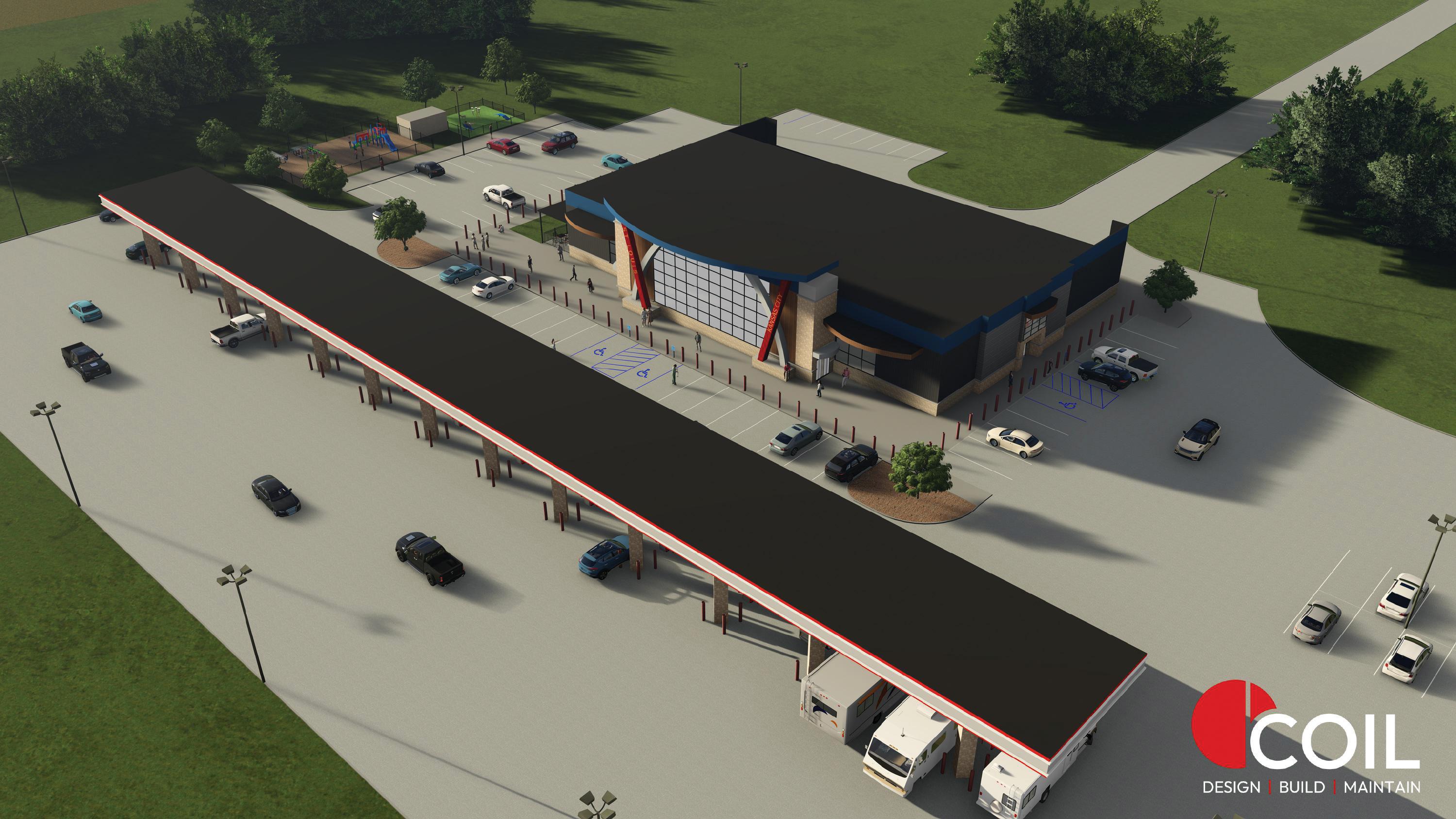

• Residential demo: 2 permits, $0
• Single-family detached: 8 permits, $3.41 million
• Townhouse: 2 permits, $673,324
Highlights of the January building permit report include:
A commercial in ll project is slated for LAYLA COFFEE AND CAFÉ at 3906 Peachtree Drive. Issam Yanis is the general contractor for the $450,000 project.
A commercial multifamily building will join the DISCOVERY APARTMENTS PORTFOLIO at the corner of Endeavor Avenue and Artemis Drive. e $4.84 million project will create 49 apartments.
e former Missouri Credit Union building at 3401 Buttonwood Dr. will be demolished to make way for construction of a two-story building that will have OFFICE SPACE on the second oor and speculative space on the rst oor. Little Dixie Construction Co. is the general contractor for the $5.13 million project.
A pair of apartment buildings are going up at 500 Dayspring Dr. and 401 Scott Blvd. Known as THE ELAINE AT WESTBURY , buildings one and two, respectively, are being built by Mill and Co. Development LLC. Building 1 will be 151 units and a combined 156,309 square feet, at a cost of $24.2 million, with four stories over a parking garage. Building 2 will have 20 units on the second oor with retail units on the rst oor. e 27,274-square-foot project had a listed valuation of $4.11 million.
e top- and low-dollar homes listed on the city’s January building permit report ranged from $266,976 o Fillingham Court in the Tuscany
Ridge development to a $622,154 home in the Legacy Farms subdivision o Misty Flower Drive. e builders are Lombardo Custom Homes of Columbia LLC and Dynamic Builders, respectively.
Boone County issued 50 permits with a combined value of $12.22 million. e January 2025 permit report listed 40 permits with a value of $4.9 million.
e January 2026 permit breakdown includes:
• Single-family residential: 8 permits, $2,880,040
• Other structures: 2 permits, $208,000
• Residential additions/alterations: 11 permits, $754,500
• Nonresidential additions/ alterations: 4 permits, $7,540,000
• Residential garages: 8 permits, $800,800
• Miscellaneous:17 permits, $41,375
Single-family homes getting the green light in January ranged in value from a $600,000 home o S. Bob Veach Road in Ashland to a $222,000 home o W. Francis Street in Sturgeon. e builders are TBK Real Estate LLC and Bailey-Kelley Properties, respectively.
A highlight of the county’s report is a $7.5 million addition to CENTRALIA HIGH SCHOOL at 849 S. Je erson in Centralia. e general contractor is Little Dixie Construction. e addition will be a ne arts building and performing arts center. e 18,500-square-foot addition will feature a 970-seat auditorium and lobby with a dedicated area for displaying student art. Support spaces include a back-ofhouse area, changing rooms, a student green room, and storage for the existing band room. CBT
$ 116,000
The forecasted deficit for city fixed-route and paratransit service in FY2026.

24
The value of the Emery Sapp and Sons contract to construct the I-70 project from Rocheport to Columbia.
$ 250 000 $ 440 mil
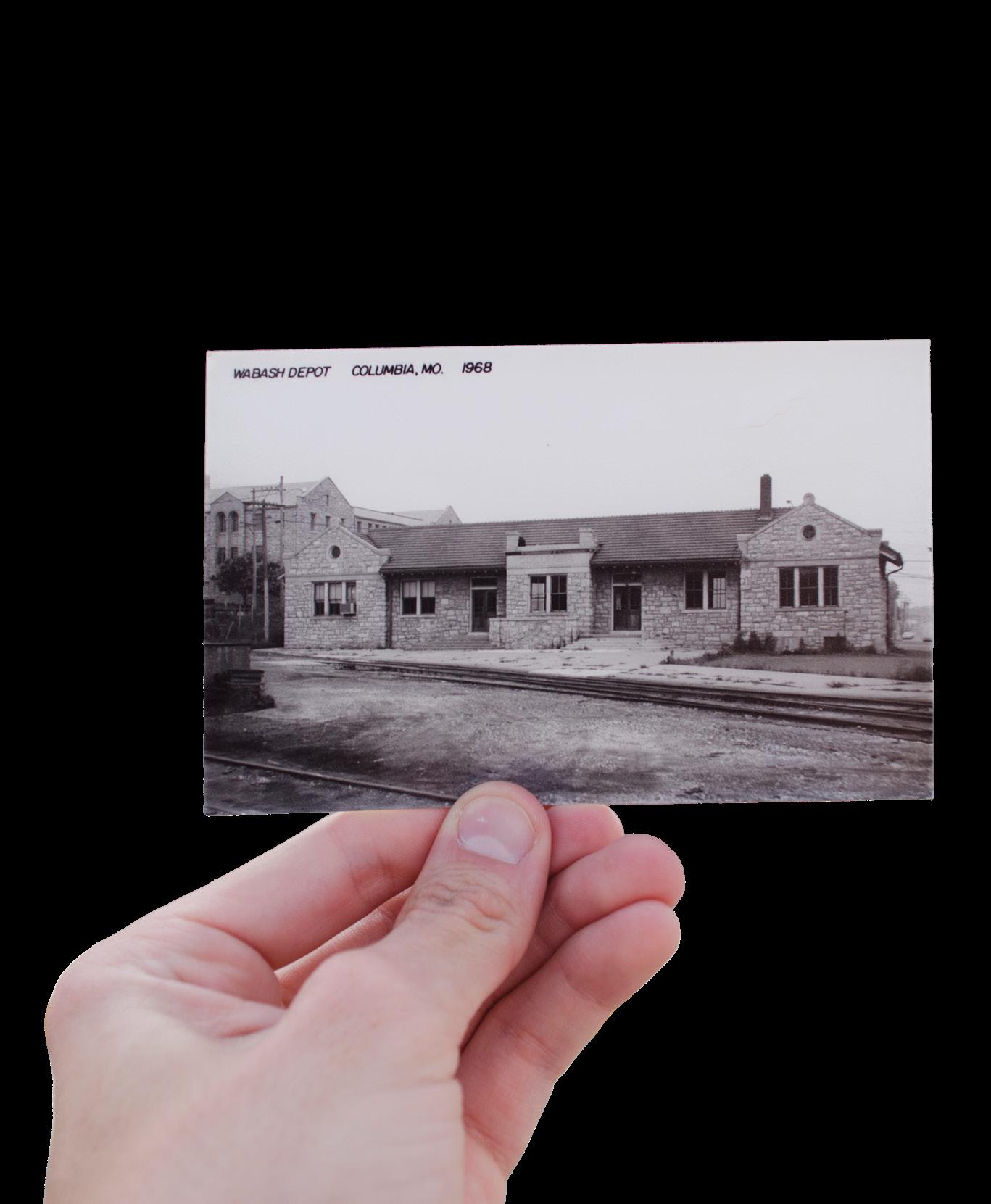
63 films in this year’s lineup, representing 33 countries. Among them,
21 world premieres —
10 features and 11 shorts.
Number of fuel pumps that will be at the Little General Store opening in April at Exit 133 just south of I-70.
400
The number of people working on the Boonville to Kingdom City stretch of I-70 at any time.
124
Mizzou’s ranking on TIME magazine’s 2026 list of the world’s 500 top universities.
Myths, Stereotypes Surround Eating Disorder Awarenesss
BY MARY KATE HAFNER

DR. JENNY COPELAND IS ON A MISSION to dispel the stereotype that only thin, white, a uent young women experience the struggles of eating disorders.
“All of us know someone with an eating disorder whether we realize it or not,” Copeland said. “ ere’s this belief that people with eating disorders only look a certain way or come from a speci c place. is is just not true. Anyone can develop an eating disorder.”
Copeland is a clinical leader and innovator in eating disorder care, having developed the U.S.’s rst eating disorder program within a community mental health setting. She stresses that eating disorders are complex illnesses.
“Eating problems aren’t only about food,” Copeland said. “ ey can be about painful feelings or problems in our lives. Food can be a way of hiding or controlling these feelings, and this can prevent us from making healthy decisions about our physical and mental health. Eventually, food obsession can get in the way of healthy relationships with family and friends.”
Worse still, eating disorders can be deadly. In fact, anorexia nervosa — which is associated with death due to suicide, organ failure, and pulmonary, liver, and other diseases — has the highest mortality rate of any psychiatric disorder. A ecting 28 million Americans every year, eating disorders pose a signi cant public health concern. e Missouri Eating Disorders Council reports that an estimated half million Missourians are dealing with an eating disorder today.
Scan the QR code to learn more about how eating disorder care is reaching underserved communities.
Adroit Studios: Video Games Made For Learning
BY LAINEY HOWARD
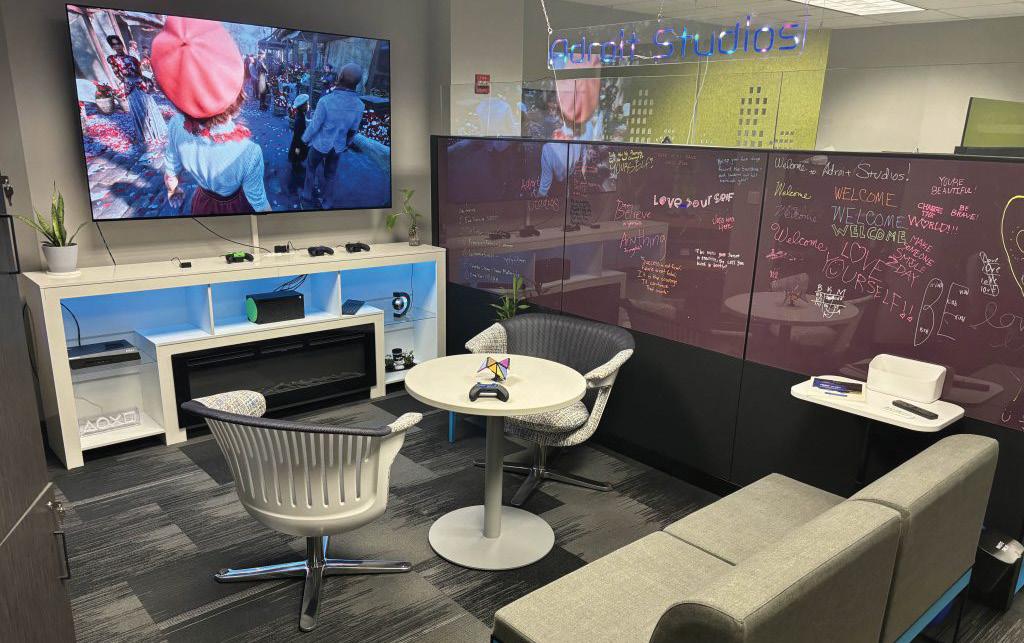
EDUCATIONAL VIDEO GAMES AREN’T EXACTLY NEW — what grade schooler hasn’t died of dysentery at least once on e Oregon Trail? — but at Adroit Studios, a game design space on the University of Missouri campus, developers are taking them to new heights. e studio’s developers create learning games for audiences ranging from middle school to college students on topics that include health, education, science, math, language, business, and communication, among others.
“Any kind of purpose you could think of, we’ll try to design a player experience to get them to that end goal [of higher learning] we are trying to reach,” said Joe Gri n, Adroit’s founding director.
A History of Video Game Success (By Any Name)
e studio’s rst project dates to 2009 with the start of the iSocial project, which the Adroit website describes as “a new tool for children with autism spectrum disorders to learn and develop social competence.” Gri n joined the studio in 2011 as an undergraduate to become one of its rst code developers and was a designer on the iSocial team.
He later became a project manager on Adroit’s next project, Mission HydroSci, a game that teaches middle school students hydrological science and scienti c argumentation. Mission HydroSci was an early success and is still the studio’s largest project. “We are going to deploy it to classrooms later on in this coming semester and a larger scale the following semester after that,” said Joseph Fischer, Adroit’s project manager.
Scan the QR code to discover more about how Adroit Studios is turning play into progress. CBT