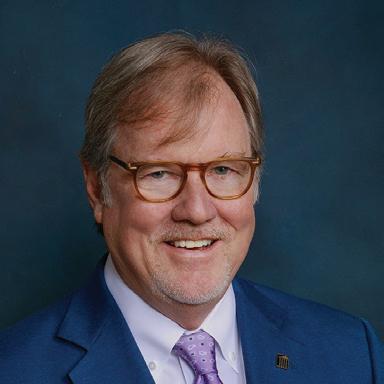
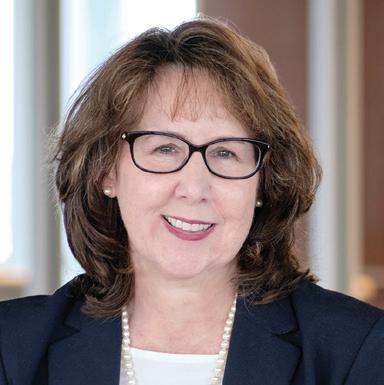
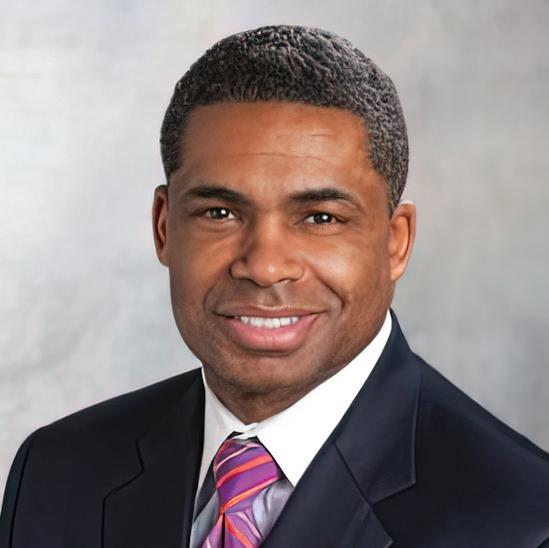
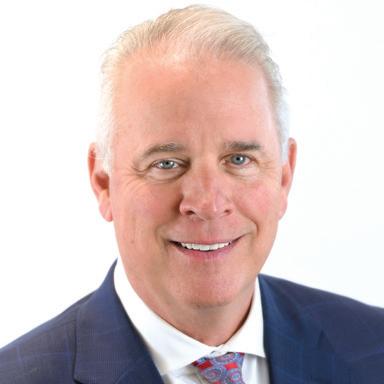
Welcome to Business North Carolina’s Power List, which showcases the state’s most influential private-sector leaders.
The Power List exemplifies our magazine’s mission of highlighting extraordinary leaders in the nation’s ninth-most populous state. When BNC debuted 45 years ago, few predicted that North Carolina would emerge at the top of many lists rating the best states for business.
That didn’t happen by accident or dumb luck. North Carolina’s global role in education, finance, healthcare, life sciences, manufacturing and other sectors has soared in importance because of a variety of factors. People featured in this report have played key roles in that story, while newcomers are building on the work of their predecessors.
Remaining open to innovation while respecting the past has benefited North Carolina. Maintaining that balancing act surely will determine North Carolina’s progress in coming years.
The list is subjective and stems from nominations and our team’s discussions with sources, research and years of business reporting experience. So far, we’ve limited AI’s involvement. We always love to hear reader comments. Thank you to our sponsors and to the leaders who participated in the Power List.
Anne Brundage, western N.C. 704-962-0433 abrundage@businessnc.com
CIRCULATION: 818-286-3106
EDITORIAL: 704-523-6987
REPRINTS: circulation@businessnc.com
OWNERS
Jack Andrews, Frank Daniels III, David Woronoff in memoriam Frank Daniels Jr.
PUBLISHED BY
Old North State Magazines LLC
PRESIDENT David Woronoff VISIT BUSINESSNC.COM
POWER LIST 2026 SPONSOR WELCOME
Congratulations to this year’s Power List honorees.
We’re proud to sponsor this year’s North Carolina Power List.
We’re privileged to counsel many of our state’s leading organizations, providing legal guidance to help them lead with confidence. Our commitment to supporting North Carolina’s businesses goes back over 125 years.
This year, we’re especially pleased to celebrate the honorees’ spirit of innovation—across an exceptionally wide range of industries.
Once again, our congratulations to the honorees.
AAbrams, Kerry 91
Ackermann, Stacy 91
Adams II, James 91
Allen, Brian 131
Allison, Darrell 32
Alos, Jose Martin 131
Andrews, Kelly 24
Andrews, Andy 131
Armario, José 75
Armato, Carl 67
Ashburn, Leah 109
Atala, Anthony 103
Aznar, Amy Klein 131
B
Bachmann, Anita 49
Bagwell, Steve 75
Baird, Spencer 85
Baker, Kevin 153
Balling, Mark 132
Balot, Rich 147
Bamford, Lynn 109
Bangston, Kevin 153
Banks, Sherrod 91
Barksdale, David 48
Barnhill, Rob 132
Baxter, Scott 109
Beacham, Tripp 125
Belcher, Laura 119
Bell, Hershey 67
Berlin, Steve 91
Bernhardt Jr., Alex 109
Bessant, Cathy 118
Blackwelder, Garrett 85
Boddie, Bill 75
Book, Connie 32
Boulware, Ebony 67
Bowman, Kendal 43
Bowman, Jud 85
Bradley, Kirk 132
Brady, Brittany 24
Brady, Leigh 49
Braswell III, Trey 11
Brawley, William 43
Brazil, Mark 16
Brown, Kelli 32
Brown, Rhett 32
Brown, Palmer 75
Brown, Chester 132
Brown-Graham, Anita 119
Bruggeworth, Robert 85
Bryant, Richard 49
Budd, Joe 125
Burks, Wesley 67
Bushnell, Andrea 132
C
Callicutt, Rick 50
Campbell, Ashley 92
Canfield, Jim 125
Carroll II, Roy 132
Cato, John 147
Caveney, Brian 68
Cayette-Weston, Shelly 16
Cecil, Jack 76
Cecil Jr., Bill 75
Chadwick, Greg 68
Charlesworth, Josh 76
Chhabra, G.S. 76
Childress, Richard 16
Christensen, Brent 24
Christensen, Ashley 76
Chuang, Chris 84
Chung, Christopher 24
Clark, Brian 153
Clarke, Anthony 31
Cockrell, Kieth 49
Colbert, Lois 92
Cole, Jesse 16
Cole, Adrienne 24
Coleman, Kristi 16
Collier, Walker 134
Connor, Heather 92
Cooper, Lisa 147
Corrigan, Boo 17
Couch, David 134
Cox, Roy 153
Craig, Mark 76
Cubbage, Amy 119
Currie, John 17
Currie, Adam 50
D
Davis, Eric 34
Davis, Matt 50
Day, Ron 50
DeBoer, Tammy 147
Deitemeyer, Kandi 34
Denton, Don 43
Desmond, Sean 85
Dick, Kevin 120
Dixon III, Wyatt 134
Dobson, Bryan 11
Dobson, Josh 68
Dodson, Tracy 25
Donaldson, Jimmy 17
Downs, William 34
Dudas, John 134
Dudley, Caroline 126
Duggins, Nathan 92
Duncan, Clark 25
Dundon, Tom 17
Dunn, Jim 51
Dunn, Lili 134
Durham, Geoff 25
Dyke, Jeff 147
E
Eckel, Brian 136
Edmondson, Ty 136
Edwards, Denny 77
Elias, Ric 85
Ellen, Andy 148
Ellis, Nick 126
Ellison, Marvin 148
English, Natalie 25
Erhart, John 86
Eshelman, Fred 103
Essick, Chad 93
Ethridge, Mark 120
Evans, Bradley 93
Evans, Paul 103
Eveson, Todd 93
F
Fall, Amadou 43
Farmer, Allison 68
Fite, Lee 51
Flanagan, Tammy 124
Flannery, Dion 153
Flow, Don 148
Flowers, Derek 52
Fochtman, Barbara 44
Ford, James 34
Foster, Mickey 70
Foster, Geoff 110
Foster, Joe 126
Foushee, Mike 136
Fowler, Neal 103
Fox, Garey 10
Fox, Mike 25
Freeman, Marty 154
French, Rick 127
Freno, Mike 52
Friedman, Thomas 70
Frye, Bobby 110
G
Gabbard, Tom 18
Gaber, Sharon 34
Gaither, John 110
Gardner, David 52
Garofolo, Paul 103
Gatling, Kimberly Bullock 93
Gentry, Haley 154
George, Brian 148
Gerald, Laura 120
Gersbach, Charles 104
Ghartey-Tagoe, Kodwo 42
Gibbs, Heather 18
Gilliam Jr., Frank 36
Gintzig, Donald 70
Glasgow, Baker 136
Goodnight, Jim 86
Graham, Franklin 120
Grainger, Michelle 11
Gray, Michael 44
Gray, Brett 137
Greenberg, Ben 154
Griffin, Tom 94
Grubb, Clay 137
Guthmiller, Janet 70
Gwaltney, Peter 52
HHadley, Zeb 137
Hagood, Craig 11
Hall, Todd 52
Hamilton, Scott 26
Hans, Peter 36
Hansen, Jim 54
Harding, Shawn 11
Hardison, Hooper 111
Harkrader, Carson 44
Harrell, Grant 137
Harrington, Rob 94
Harris, Jeffrey 148
Harris III, John “Johno” 138
Harrison III, Frank 110
Hatem, Greg 77
Hawkins, Vern 12
Haygood, Jennifer 36
Haynes, Ken 70
Heinsohn, Joy Vermillion 120
Hendrick, Rick 149
Hendricks, Don 149
Herranz, Rosa Manso 104
Herring, Thomas 12
Hicks, Michell 77
Hill, Loren 26
Hillings, Valerie 18
Holden, Cecilia 121
Holding Jr., Frank 54
Hoops, Tom 54
Howell, Kevin 36
Hutchens, Terry 94
I
Ingle II, Robert 149
Isley, Victoria 77
J
Jablokov, Igor 86
Jacobus, Kurt 104
Jandrain, Jay 13
Jeffs, Roger 104
Jenatian, Mohammad 77
Johnnie, Mark 138
Johnson, Robert “Bob” 12
Johnson, Chris 26
Johnson, Brian 149
Jones, Reg 18
Jones, Roy 44
Jones, Brad 54
Jones, Steve 54
Jones, Shaylah Nunn 104
Jorge, Omar 149
K
Kahn, Brian 94
Kane, John 138
Kapur, Vimal 111
Keene, Steven 72
Keith Jr., Greg 138
Kelly, Tamika Walker 36
Kemper, Chris 46
King, Nina 20
Kirkland, Byron 96
Klein, Andrew 96
Kleinhans, Evan 13
Klinck, Ted 138
Klotman, Mary 66
Kolappa, Vimal 78
Kollins, Katharine 46
Kouri, Chris 96
Kramer, Zak 96
Kunz, Elizabeth 121
LLa Fever, Todd 86
Ladig, Curt 56
Lancaster, Mike 138
Landguth, Michael 154
Laport, Mark 78
Lardie, Mark 150
Lathrop, Tony 152
Lawrence, Paul 98
Lawrence, Thomas 121
Leatherwood, Laura 38
Ledford, James 20
Legg, Ryan 155
Leonard, J. Rich 98
Levitan, Scott 26
Lewus, Paul 105
Lich, Rick 126
Lierman, Deverre 87
Lipson, Jesse 87
Logan, Michelle 105
Long, Bobby 121
Longo, David 23
Looney, Thomas 38
Lowe, Greg 72
Lowe, Tim 150
Lowe III, Eugene 111
Luddy, Robert 111
M
Mabry, Rhett 122
Mahan, Chip 56
Maier, Angie 13
Malik, Steve 15
Mallernee, Robert 87
Mann, Tommy 140
Maslin, John 111
Massas, Ralph Lopez 155
Masters, Kent 112
McCarthy, Brian 56
McCarthy, Kevin 56
McClure, Steve 140
McConnell, John 78
McCreary, Bob 112
McCurdy, Ryan 87
McDowell, Valecia 98
McFarland, Tino 140
McLamb, Mack 150
McLaurin, Gene 27
McMahan, Ed 56
McRae, Cam 78
Mikhail, Sheila 105
Millar, Scott 27
Miller, Fielding 58
Miller, Tim 141
Millinor, Blake 112
Mims, Susan 122
Minton, Timothy 140
Mintz, Phil 112
Mitchell, Tom 98
Moller, Hans Stig 156
Monroe, Chase 141
Moore, Richard 58
Morken, David 88
Morrow, John 99
Moshakos, Amber 80
Mumma, Chris 99
Munn, Michael 127
Muns, Lindsay 72
Murphy Jr., Wendell “Dell” 13
N
Natwick, Brian 141
Nauck, Fritz 127
Nelson, Thomas 112
Nelson, Dionne 141
Nettles, Lee 80
Newell, Bob 58
Niklason, Laura 106
Niven, Kathie 80
Nye, Ward 108
OO’Day, Mike 113
Oehmig, Leib 114
Oglesby, Megan 20
O’Kelly, Shane 150
O’Leary, Michael 127
Olson, Todd 88
Owens, Mark 27
PPage, Cristy 72
Painter, Michael 58
Pappas, Bill 58
Paradise, Joe 128
Parker, Daren 46
Parker, Chad 128
Parker, Jim 128
Parrish, Doyle 80
Pashley, Tom 81
Patel, Nayan 80
Patel, Parag 81
Peek, Chris 72
Peele, Katherine 128
Perkins, Robin 141
Pesquin, Gustavo 106
Philipson, Stephen 60
Phillips, James 20
Pike, Bob 27
Pike, Eric 46
Pilon, Mary Claudia Belk 122
Pitts, Will 20
Pleune, Ben 100
Pointer, Joey 151
Pope, Mark 28
Pope, Art 151
Popowycz, Mike 13
Porazzo, Melissa 102
Porter, Julie 122
Powell, Meg 106
Praeger, Michael 88
Pratt, Ryan 88
Prestage, John 14
Price, Kevin 27
Price, Marvin 28
Price, Vincent 38
Purcell, Jack 60
Qubein, Nido 38
RRaffaldini, Jay 81
Raiford, Brooks 89
Rajkowski, Dan 21
Ralls, Scott 39
Rana, Shahid 28
Randolph, Jimmy 28
Ranson, Craig 46
Ravin, David 142
Raynor, Brian 29
Rea, Paul 14
Rea, David 60
Reaves, Jeremy 81
Regnery, David 114
Reichard, Eric 142
Reilly, John 21
Rhatigan, Bob 107
Roberts, Lee 40
Robertson, Ford 100
Robinson, Jenna 39
Rocha-Goldberg, Pilar 123
Rogers, Philip 40
Rogers Jr., William “Bill” 60
Roper, Julie 29
Rose, Jim 60
Rothblatt, Martine 107
Ruhe, Thom 122
Rydell, Shannon 128
S
Sachar, Ravish 107
Safran, Perry 90
Salamido, Gary 29
Samet, Arthur 142
Samulski, Jude 107
Sandner, Jason 62
Schmidt, Andrew 81
Schnall, Rick 21
Scibelli, Frank 74
Scott III, Linwood 14
Searcy, Douglas 40
Segrave, Jim 156
Sharma, Amit 89
Sherrill, Glenn 114
Shuford III, Alex 114
Sideris, Harry 47
Sills, James 62
Simpson, Alex 14
Simpson, Dave 143
Sittema, Tim 142
Slosson, Jack 100
Smith, Marcus 21
Smith, Melissa 29
Smith, Michael 29
Smith, Eddie 114
Smith, Harry 115
Smith, LaTida 123
Smith, Tim 143
Sotunde, Tunde 62
Spector, Leo 73
Starling, Ray 100
Steigerwalt, Eric 62
Sutton Jr., Ben 21
Sweeney, Tim 89
Sytz, Ron 115
TTaft Jr., Thomas 144
Tate, Andrew 30
Taylor, Chris 156
Teague, Ben 30
Team, Robin 144
Tepper, David 22
Tew, Merritt 129
Thomas, Allen 82
Thomas, Charles 123
Thomas, Aaron 130
Thompson, Michelle 129
Thorp, Clay 64
Topalian, Leon 116
Trenary, Lance 82
Triplett, Neal 64
Trivanovic, Vuk 116
Tucker, Marilyn “Que” 22
Tucker, Lisa 151
Tuttell, Wit 82
VVan Geons, Robert 30
Vannoy, Mark 144
VanWingerden, Abe 146
Vick, Linwood 14
Vincent, Angelique 73
Volety, Aswami 40
WWaldrum, Michael 73
Wall, Marshall 101
Wallace, Mona Lisa 101
Walter, Greg 22
Walton, Thad 64
Warlick, Anderson 116
Warren, Jim 47
Warren, Carl 156
Waterfield, David 116
Weisiger Jr., Ed 144
Westbrook, Hunter 64
Whitehurst, Ted 65
Whiteside, Jennifer Tolle 123
Wilhelm, Markus 47
Wilkerson, Drew 156
Williams, Hope 40
Williams, Mel 65
Williams, Devon 101
Williams, Kevin 101
Willis, Mary 65
Wilson, Dontá 65
Wingo, Scot 89
Wise, Jeff 22
Woltz III, Howard 116
Wood, Matt 129
Woodie, Patrick 30
Woods, Eugene 73
Wyche, James 47
YYalof, Stephen 151
Yost, Steve 30
ZZarian, Paul 144
GAREY FOX
Dean, College of Agriculture and Life Sciences
NC State University
Raleigh
TREY BRASWELL III
BRYAN DOBSON
GAREY FOX
MICHELLE GRAINGER
CRAIG HAGOOD
SHAWN HARDING
VERN HAWKINS
THOMAS HERRING
JAY JANDRAIN
ROBERT “BOB” JOHNSON
EVAN KLEINHANS
ANGIE MAIER
WENDELL “DELL” MURPHY JR.
MIKE POPOWYCZ
JOHN PRESTAGE
PAUL REA
LINWOOD SCOTT III
ALEX SIMPSON
LINWOOD VICK
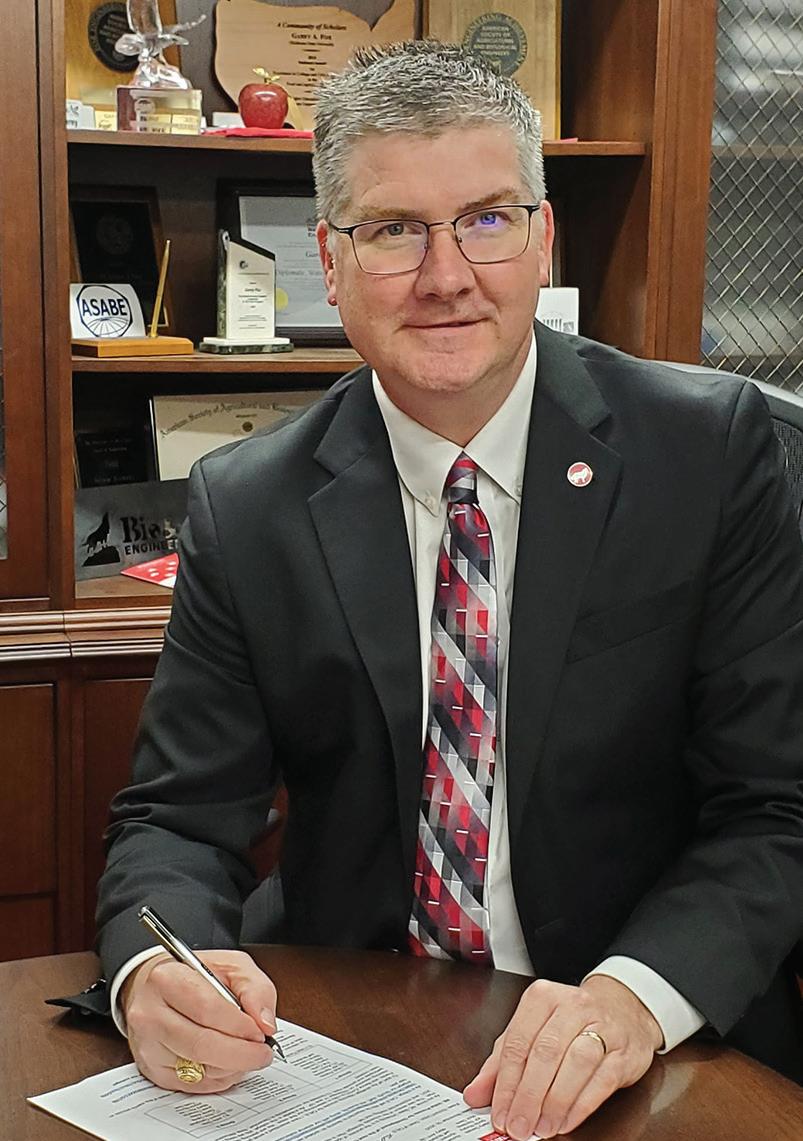
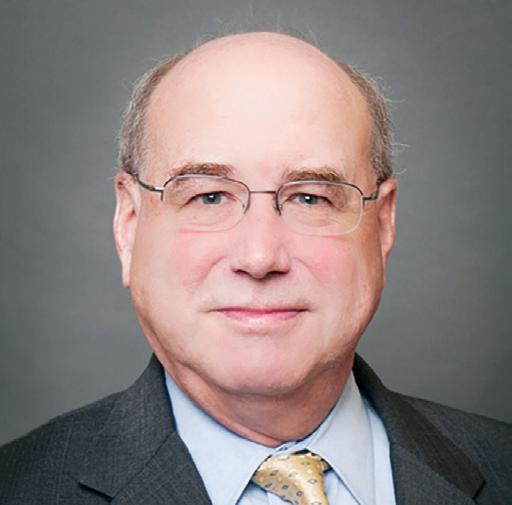
A first-generation college student, Fox grew up on a cattle and wheat farm in Godly, Texas, about 60 miles southwest of Dallas. He came to NC State University in 2017 as a professor and head of the college’s Department of Biological and Agricultural Engineering. He became dean six years later. He helps spotlight the mission to feed a growing population despite urban expansion consuming farmland and other challenges. In July 2025, NC State hired Tim Kelliher to lead its Genome Editing Center for Sustainable Agriculture, as part of its Plant Sciences Initiative (PSI), to speed the process of getting improved varieties of food in the hands of farmers. Fox helped secure a $3 million gift from AskBio founder and UNC professor Jude Samulski to help establish the center. PSI-affiliated faculty received $32 million in grant funding in 2024. In June, Fox started his “Expedition Extension” tour at the Durham County Cooperative Extension office and visited all 101 offices across the state by late September. He also started “The Dean’s Den” podcast last year. He has published approximately 150 peer-reviewed articles in journals and served as principal investigator or co-principal investigator on grant-funded projects totaling more than $27 million.
Education: BS, MS Texas A&M University; Ph.D. Colorado State University
Morning ritual: I am a firm believer in the psychology of momentum. I start with a “win” no matter how small.
What’s exciting now: Our new workforce development program called Rural Works, designed to place undergraduate students in paid summer internships with agriculture and life science employers in rural North Carolina.
Career advice: Filter out the noise and focus entirely on the variables you can actually influence. You truly control only three things: your work ethic, your commitment to getting better every single day and your courage to disrupt for good. If you master those inputs, the outcomes will take care of themselves.
AI’s impact: AI will fundamentally reshape how we fulfill our land-grant mission. In our classrooms, we are moving away from mere content delivery and toward AI fluency and high-level synthesis. We are no longer just teaching students to answer questions; we are teaching them to ask the right ones. Our graduates will not compete with AI. They will be the ones directing it to solve agricultural and life science problems. In terms of research, the “Think and Do” cycle is about to get much faster.
“Filter out the noise and focus entirely on the variables you can actually influence.”
— Garey Fox
TREY BRASWELL III
CEO
Braswell Family Farms
Nashville
BRYAN DOBSON
CEO
Quality Equipment
Fuquay-Varina
MICHELLE GRAINGER
Executive Director
North Carolina Sweetpotato Commission
Cary
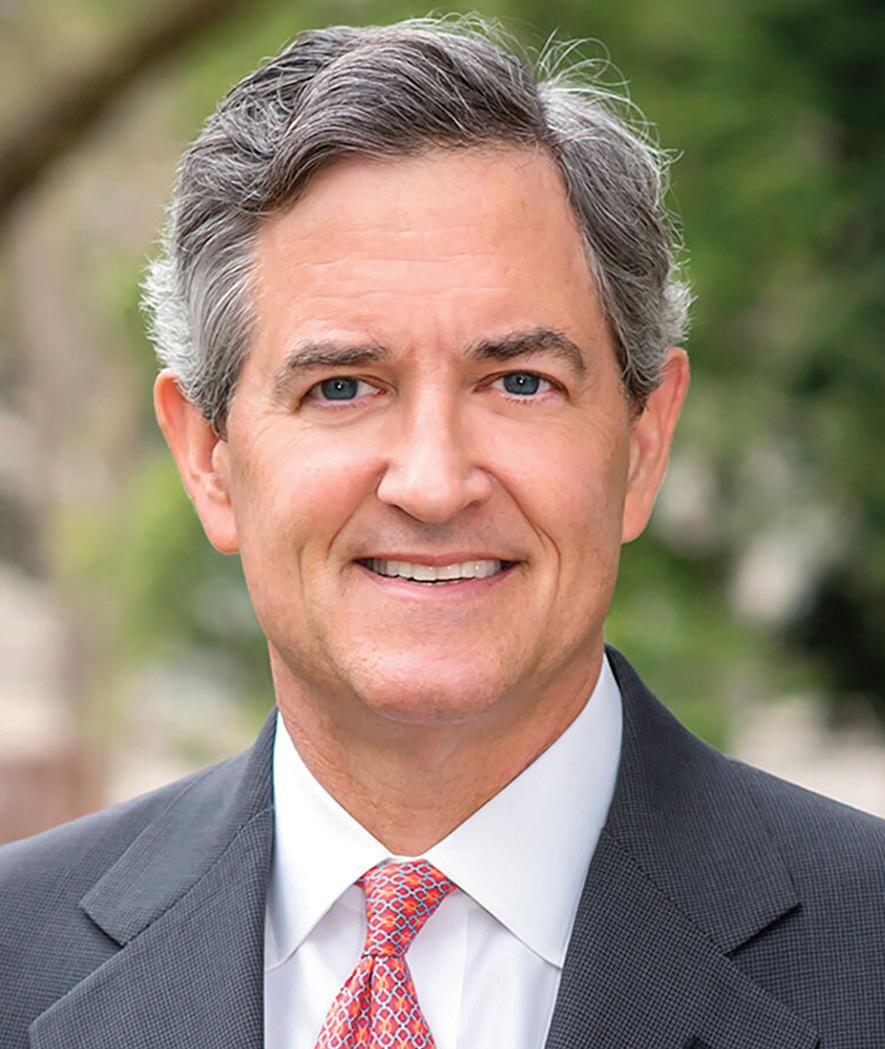
Braswell, a fourth-generation farmer, was named president in 2017. Brothers E.G. and J.M. Braswell started the farm in 1943, and in the 1960s the milling operation diversified to begin raising laying hens. It was a founding member of distributor Eggland’s Best Eggs and is that company’s second-largest franchisee, producing more than 65 million dozen eggs annually.
Braswell Family Farms announced a $7.5 million expansion last year that would grow its processing capabilities and add 26 jobs in Nashville in Nash County. He also oversees the company’s feed business, which provides 200 tons of feed to chicken and hog farmers from one of the East Coast’s largest mills. Its farm practices are certified by the American Humane Society, and it now provides cage, cage-free and pasture-raised eggs.
Education: BA NC State University; MBA The College of William and Mary
Dobson has led this group of John Deere dealerships since a 2018 merger. Its 36 locations, including 33 in North Carolina, and about 650 employees make it the country’s fifth-largest, according to the mostrecent ranking from trade publication Farm Equipment. It’s easily the largest in the state, covering 84 counties. He grew up in his family’s John Deere business in the late 1970s and 1980s and spent six years in the furniture industry before returning to Farmland Tractor in Scotland Neck in 1997.
Education: BA East Carolina University
CRAIG HAGOOD
CEO
House-Autry Mills
Four Oaks
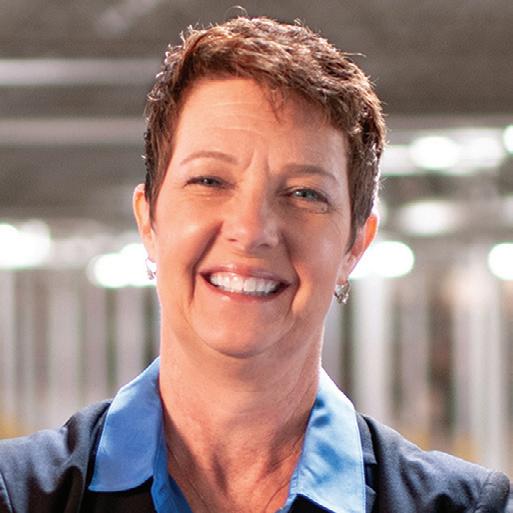
Eastern North Carolina’s hot, moist climate and rich, fertile soil have helped make it the nation’s top producer of sweetpotatoes since 1971, accounting for more than 50% of the nation’s total agricultural output. Since 2020 Grainger has led the organization tasked with promoting its consumption. The nonprofit that reported $5.7 million in assets in its most recent IRS filing represents more than 400 growers and the packers, processors and business associates that support them. In 2023, sweetpotatoes accounted for $305 million in farm cash receipts, or 2.7% of the state’s total agricultural cash receipts. She helped lead the initiative to make the official spelling of sweetpotato one word.
Education: BA, BS NC State University
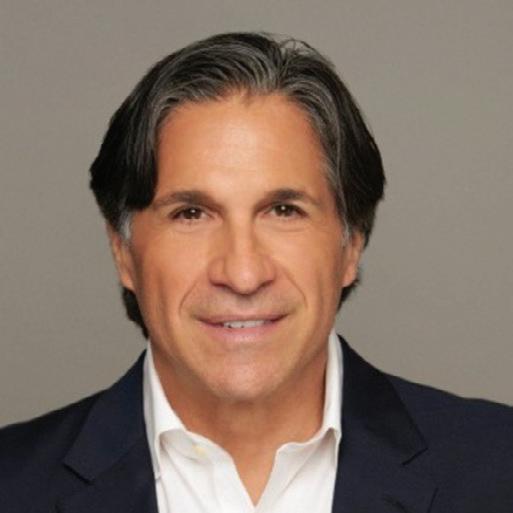
Hagood has spent more than 15 years leading this more than 200-year-old company. He was hired in 2001, the same year it relocated to Four Oaks from Newton Grove. He oversees the production of company-branded, private-label and custom products for customers nationwide. They include cornmeal, breadings and mixes. They also customize mixes to provide “Southern flavor” to dishes at fullservice restaurants and other food providers. House-Autry expanded to a second site in Hogansville, Georgia, in 2021. Hagood oversaw the addition of a gluten-free products factory in 2013 and the purchase of hot sauces and seasonings maker Captain Foods in 2019. He previously worked at Cargill and Conagra. House-Autry dates to when the House family of England moved to the U.S. and started a mill in Sampson County in 1812. The House and Autry Brothers Mill Co. merged in 1967 to create House-Autry.
Education: BS University of Georgia; MS Kansas State University; Ph.D. Indiana Wesleyan University
Morning ritual: My day doesn’t start until I spend time with my wife praying and reading a couple of devotionals.
Career advice: Don’t wait to be asked. Through situational awareness, active listening and fortitude, make a decision and act.
Go-to podcast: Bloomberg’s “Odd Lots” My best change: Moving from the suburbs and back to a farm. The daily task of managing a farm gives me a greater perspective and appreciation of what it takes to deliver food to market.
SHAWN HARDING
President
North Carolina Farm Bureau
Raleigh
Harding has led the state’s largest farm group since 2019. It has almost 500,000 members. Its main business is insurance, with annual revenue of about $1.9 billion. The organization marked its 90th year in March. Harding grew up in Beaufort County, where he worked on his family’s tobacco farm in Chocowinity. One of his three children now manages the farm.
Education: BS NC State University
President
Syngenta Crop Protection
Greensboro
An Indiana native, Hawkins went to work for Zeneca Agrochemicals as a fungicide and insecticide product manager in the U.K. after earning his MBA. He started with Syngenta, where he previously worked as a college intern, in 1985, and was named president in 2010. He helped introduce a fungicide used on more than 130 crops grown in 100-plus nations and is a director of Taranis, a leader in AI-powered crop intelligence. Syngenta Crop Protection reported 2025 full-year sales of $13.7 billion, up 4% from the previous year. An example of Syngenta Crop Protection’s work can be found in the 2025 EPA approval of one of its insecticide products, which followed 12 years of research and more than 3,000 U.S. trials.
Education: BS Purdue University; MBA Temple University
THOMAS HERRING
President
Hog Slat
Newton Grove
Herring and brothers David and Mark took over Hog Slat from their father Billy Herring and built the country’s largest swine-equipment manufacturer. It has about 1,000 employees and 1,400 subcontractors. It sells hog and poultry confinement units through more than 100 retail stores, including two in Canada. This year, Hog Slat launched a new ventilation system to reduce the stress on swine. Hog Slat has regional offices in Iowa and Oklahoma. The brothers also own TDM Farms, which operates in five states and sells more than 800,000 hogs annually. They have two research facilities, a sow farm in North Carolina and a weanto-finish contract farm in Indiana.
Education: BS NC State University
ROBERT “BOB” JOHNSON CEO House of Raeford Farms
Rose Hill
Johnson began his career on the processing line of the family’s turkey operation and now leads one of the nation’s top 10 chicken operations. He became CEO in 1997. House of Raeford produced 33.5 million pounds of ready-to-cook chicken per week in 2024. A Depression-era backyard turkey operation in 1925 led to a preceding company in 1955 and incorporation in 1975. House of Raeford exited turkeys in 2013. It now employs 5,046 people across 452 farms in North and South Carolina, Georgia and Louisiana. Johnson’s children and grandchildren also work for the business. The University of Mount Olive renamed its agricultural school in honor of House of Raeford Farms in March because of support from the Johnson family, including his sister, Diane Beasley. He was inducted into the N.C. Poultry Federation Hall of Fame last April, joining his grandfather, Nash Johnson (1977), and father, E. Marvin Johnson (1998). In 2010, Johnson started FLOCK, an acronym for Faithful Love Offering for Christ’s Kingdom. The nonprofit reported more than $206,000 in giving last year to hunger relief, scholarships, youth development, mental health and addiction recovery.
Education: Louisburg College
Morning ritual: A cup of coffee and devotion.
Career advice: Tell the truth. Be transparent.
A lasting influence: My father, Marvin Johnson, my father-in-law Billy Reynolds, and Bill Prestage, founder of Prestage Farms in Clinton.
My industry’s big challenge: Labor
Favorite musicians: The Eagles and the Allman Brothers Band
AI’s impact: AI has not changed our organization at this point.
VERN HAWKINS
JAY JANDRAIN
CEO
Butterball Garner
EVAN KLEINHANS
CEO
AgCarolina Farm Credit
Winterville
ANGIE MAIER
Principal
Valley View Insights
Raleigh
Jandrain joined Butterball in 2002 as director of research and development and took his current role in 2018. The company, jointly owned by Goldsboro-based Goldsboro Milling and Merriam, Kansas-based Seaboard, produces more than 1 billion pounds of turkey products annually, the most in the U.S. It had net sales of more than $2 billion last year, about 6.5% more than 2024 due to a 10% increase in volume and 2% higher prices. Its “cook from frozen premium whole turkey” was voted Product of the Year for innovation by 40,000 shoppers. It has 7,100 employees, including 4,600 in North Carolina. It also has processing plants in Missouri and Arkansas, which are dwarfed by Tar Heel processing operations in Mount Olive and Raeford. Jandrain chaired the National Turkey Federation in 2025. He and his family presented two turkeys for President Donald Trump to pardon this past Thanksgiving.
Education: BS Cornell University
Kleinhans became CEO in January 2023 after the membership-owned enterprise merged with Cape Fear Farm Credit, where he had been CEO since 2019. AgCarolina is part of the Farm Credit System, the largest provider of credit to U.S. agriculture. His group has more than $3 billion in loans to more than 6,000 members across 46 counties in eastern North Carolina. AgCredit has 20 branches and a portion of its profits generated from lending money is returned to members in patronage refunds, which helps lower the cost of borrowing for members. It had net income of $61.6 million in 2025.
Education: BS, MBA East Carolina University
Maier has worked in and around NC politics for the last 25 years, including almost 19 years with the N.C. Pork Council before founding Valley View Insights in 2021. In addition to her work as a lobbyist and government affairs consultant, she is a group leader for NC Ag Leads, which is developing a statewide strategic plan for agriculture. The McDowell County native is a key lobbyist for trade associations representing the cattle, dairy and pork industries.
Education: BA, MA NC State University
Career advice: Don’t mince your words.
A lasting influence: Andy Curliss. Andy’s influence has made me a better writer, a more strategic thinker, and a stronger advocate for farmers.
Go-to podcast: The “Do Politics Better” podcast
WENDELL “DELL”
MURPHY JR. CEO Murphy Family Ventures Wallace
Murphy Family Farms returned to hog farming in a big way in December 2024, when Smithfield Farms paid $3 million for a 25% minority stake in the business that will provide about 3.2 million hogs annually for Smithfield. In a related move, Smithfield also sold about 150,000 sows and related inventories to the company. The move returned Murphy Family Farms to the Successful Farming Pork Powerhouses list at No. 9 among hog farm businesses. Under the leadership of his father, Wendell Murphy Sr., the family business was the largest U.S. pork operation when it merged with Virginia-based Smithfield in 2000. Four years later, the family’s farm management, golf courses, and sales of cars, boats and real estate, were united under Murphy Family Ventures. Dell Murphy’s wife, Wendy, chairs the UNC System Board of Governors.
Education: BS NC State University
MIKE POPOWYCZ CEO Case Foods Troutman
Popowycz joined Case Farms in 1987, a year after its founding, and has led the poultry operation since 2022. He currently oversees 475 grower farms. The company acquired Californiabased Foster Farms operations in Arkansas last year and also has operations in Ohio. Its North Carolina processing facilities in Morganton and Goldsboro both surpassed 1 million work-hours without a losttime accident last year. It has about 5,600 employees who process 5.3 million birds per week and about 1.7 billion pounds of poultry annually. In December, the N.C. Supreme Court declined to hear a 2023 animal cruelty allegation against Case, letting stand earlier dismissals by a Burke County trial judge and the N.C. Court of Appeals.
Education: BA Moravian College
JOHN PRESTAGE
Senior Vice President
Prestage Farms
Clinton
Prestage’s parents, Bill and Marsha Prestage, started the business in 1983, and it’s now led by their three sons, including Ron and Scott. It produces between 14 million and 15 million turkeys annually, with hens grown in North Carolina and toms in South Carolina. The Carolina hens are processed in St. Pauls in Robeson County to be sold under privatelabel brands. The toms are taken to Camden, South Carolina, where Prestage invested $150 million for a second facility in 2021 that can process 160,000 turkeys a week for Oscar Mayer. Prestage produces about 170,000 sows in six states, mostly Iowa and the Carolinas, with other sites in Mississippi, Oklahoma and Texas. They have about 3,000 employees and 450 swine and turkey growers. They ranked seventh in the Successful Farming Pork Powerhouses list, and are one of only six companies on the list every year since its 1994 debut.
Senior
Education: MBA University of Sydney PAUL
The New Zealand native joined BASF in Australia and worked in Singapore before taking his current role in 2015. He oversees the German company’s research and development, production, marketing, sales, and all other operations for BASF’s pesticide and seed business in the U.S. and Canada, as well as the turf and ornamental and pest management lines of business in North America. The past year saw BASF bring new herbicides and seed varieties to market. Rea also spent the past year as chair of CropLife America, a national trade association representing plant science companies, including pesticides manufacturers.
LINWOOD SCOTT III
Co-Owner
Scott Farms
Lucama
Scott serves as vice president of tobacco and farm operations on the six-generation farm, where he works with his father, Linwood Scott Jr., and his brother, Dewey. It includes more than 14,000 acres of sweetpotato, tobacco and other crops in Wilson County, with operations that extend to Wayne and Johnston counties. It’s one of the largest operations of its kind in North Carolina and a pioneer in exporting sweetpotatoes to the U.K. In 2000, at age 31, he was the U.S. National Young Farmer of the Year, like his father 24 years earlier. About 1,200 acres are devoted to growing tobacco. In his spare time, he has coached youth basketball and T-ball.
Education: Atlantic Christian College (now Barton College)
ALEX SIMPSON
Executive Vice President
Simpson Eggs
Monroe
Simpson Eggs’ 215-acre farm about 20 miles east of Charlotte has capacity for 1.37 million hens that can produce about 1.2 million eggs per day. An automated process delivers up 216,000 eggs per hour to be washed, inspected and packed for shipment in several Southeast states without ever being touched by a hand. Simpson was selected to chair the American Egg Board in 2024 and is also president of the N.C. Egg Association board of directors. The fourth-generation egg farmer oversees the farm operations, formulates feed, selects laying hens, manages audits and inspections.
Education: Associate’s NC State University
LINWOOD VICK
Partner, General Manager
Vick Family Farms
Wilson
Vick Family Farms stretches across more than 9,000 acres in Wilson, Nash and Edgecombe counties, a far cry from the 25 acres his parents, Jerome and Diane, started with 50 years ago. It grows tobacco, sweetpotatoes, cotton, soybeans, wheat and corn. Its Carolina Gold and Pure Gold sweetpotatoes are sold worldwide, first exported to the United Kingdom in the mid-1990s. He’s received the North Carolina Farm Family of the Year and National Young Farmer of the Year awards.
Education: BS NC State University
ARTS, ENTERTAINMENT & SPORTS
MARK BRAZIL
SHELLY CAYETTE-WESTON
RICHARD CHILDRESS
JESSE COLE
KRISTI COLEMAN
BOO CORRIGAN
JOHN CURRIE
JIMMY DONALDSON
TOM DUNDON
TOM GABBARD
HEATHER GIBBS
VALERIE HILLINGS
REG JONES
NINA KING
JAMES LEDFORD
STEVE MALIK
MEGAN OGLESBY
JAMES PHILLIPS
WILL PITTS
DAN RAJKOWSKI
STEVE MALIK Chair North Carolina Courage Raleigh
Welsh-born Malik made his money in medical technology companies, including Medfusion. His North Carolina Courage soccer team, which won the 2018 and 2019 NWSL titles, recently received a $40 million investment from former NBA Milwaukee Bucks co-owner Marc Lasry through his Avenue Sports Fund. He’s trying to elevate his men’s team, North Carolina FC, to USL’s recently announced Premier League, Division One. That includes idling the team this season as he hunts for the required 15,000-seat venue. Division One is expected to start in 2028. He’s still holding onto one option, a $2 billion mixed-use district in downtown Raleigh that he and John Kane of Kane Realty proposed in 2019. Plans include a 20,000-seat stadium.
Education: BS UNC Chapel Hill
Morning ritual: Reading The Wall Street Journal, then prioritizing my day before the sun comes up.
What’s exciting now: Infrastructure investments for women’s soccer.
What to know about your sector: As our country hosts the world for soccer this summer, fan interest and investment have intensified, creating a new order of opportunity for economic impact.
My industry’s big challenge: The evolution of media consumption of real time entertainment like sports creates challenges and opportunities, as well.
Go-to podcast: “Acquired”
Favorite musician: Bruce Springsteen
Key qualities for senior-level hires: History of success, ability to handle difficult situations and high EQ.
AI’s impact: We have embraced AI in our operations and are much smarter and more productive as a result.
My best change: Enjoying the wins more.
JOHN REILLY
RICK SCHNALL
MARCUS SMITH
BEN SUTTON JR.
DAVID TEPPER
MARILYN “QUE” TUCKER
GREG WALTER
JEFF WISE
“We have embraced AI in our operations and are much smarter and more productive as a result.”
— Steve Malik
MARK BRAZIL
CEO
Wyndham Championship
Greensboro
SHELLY CAYETTEWESTON
President of Business Operations
Hornets Sports & Entertainment
Charlotte
RICHARD CHILDRESS
Owner
Richard Childress Racing Lexington
Brazil has been involved with North Carolina’s longest-running PGA Tour event, which will celebrate 87 years this summer, for almost a third of that time. Hired by the Greensboro Jaycees in 2001 as tournament director, he was named CEO of the Piedmont Triad Charitable Foundation, the tournament’s umbrella organization, in 2021. Organizers say its regional economic impact is upward of $40 million, and it brings between 60,000 and 80,000 people to Sedgefield Country Club during its five-day run. There will be one more score to settle this year — sponsorship. The event’s longtime deal with hospitality company Wyndham is set to expire after this year’s tournament.
Education: BA Baylor University
Cayette-Weston wins wherever she is. A leader on the court for Tulane University and member of its Athletics Hall of Fame, she joined HSE in 2024 to oversee the Hornets and NBA G League affiliate Greensboro Swarm. Her duties also include the Spectrum Center, which completed a $245 million renovation last year, improving the fan experience and adding amenities. She started her career with the New Orleans Hornets, then spent a dozen years helping the Cleveland Cavaliers become one of the NBA’s top-performing revenue franchises as its executive vice president and chief commercial officer. She was tabbed to give the keynote address to the Class of 2026 at Queens University, which hosted the Hornets during the recent renovations.
Education: BS Tulane University
Childress may be best known for his time with the late Dale Earnhardt Sr., and his four full-time racing teams include a NASCAR Cup ride for his grandson Austin. But he has plenty of victories off the track, too, including Childress Vineyards in Lexington, one of the state’s largest wineries. While this old dog first learned about business as a boy, hawking snacks on race nights at Winston-Salem’s Bowman Gray Stadium, the soon-tobe 80-year-old is still learning new tricks. He recently signed YouTuber Cleetus McFarland, whose 4.7 million subscribers are attractive to any sponsor, to drive RCR’s No. 33 in as many as five of NASCAR’s O’Reilly Auto Parts Series races this season.
JESSE COLE
Owner Savannah Bananas Belmont
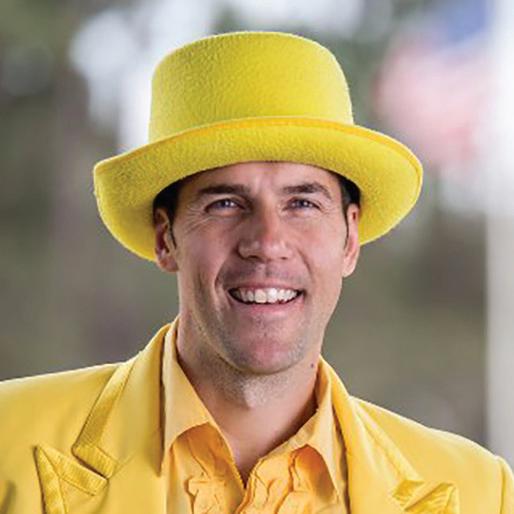
Cole has come a long way since 2008, when he was named general manager of the Gastonia Grizzlies, a struggling collegiate summer league baseball team that played at 3,000-seat Sims Legion Park. In his trademark yellow top hat and tuxedo, he’s the promotional juggernaut behind Banana Ball. It expanded to a six-team league and 190-game schedule this year to meet skyrocketing demand for its version of the national pastime. More than 2 million fans attended games in 2025, including almost 150,000 at Bank of America Stadium over two nights. Banana Ball will return to the Queen City for three nights at Truist Field and visit Chapel Hill’s Kenan Stadium this summer.
Education: BA Wofford College
KRISTI COLEMAN
CEO
Tepper Sports & Entertainment
Charlotte
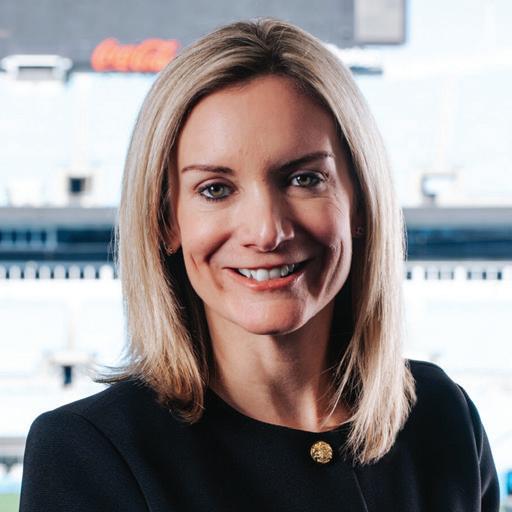
Coleman began as the Carolina Panthers’ controller in 2014 and was named its president in 2022, becoming the second woman to hold that position in the NFL. She took her current position in 2024, overseeing the Panthers and Charlotte FC, the Major League Soccer team. She also is responsible for 30-year-old Bank of America Stadium, which is undergoing $800 million worth of renovations. Charlotte’s hospitality and tourism tax will pay for $650 million of the work, which should be complete by 2030, and TSE will cover the balance and any overflow costs. That deal keeps the Panthers there through 2045.
Education: BS, MPAcc Clemson University
What’s exciting now: The renovation of Bank of America Stadium ensures we can continue to bring marquee events and world class experiences to the region.
Career advice: My mom told me, “Kristi, you know this business better than anyone. Do you want to train the boss, or do you want to be the boss?” That helped me realize the importance of believing in myself and not shying away from leadership opportunities.
Favorite musician: Eric Church, which made it especially meaningful when Dave and Nicole Tepper donated Bank of America Stadium for him and Luke Combs to host Concert For Carolina in support of those impacted by Hurricane Helene.
BOO CORRIGAN
Director of Athletics
NC State University
Raleigh
Corrigan took his current role at North Carolina’s largest university by enrollment in 2019, and it has been anything but a free throw since, starting with the COVID pandemic. Now the son of former ACC Commissioner Gene Corrigan is dealing with the first year of revenue sharing with athletes and successand viewership-based distribution of conference revenue. In February, his department projected $126.1 million in revenue and $144.6 million in expenses for the current year. As solutions to close the gap, he’s offered required seat donations for men’s basketball season tickets, as was done for football and women’s basketball, and a second summer concert at Carter-Finley Stadium.
Education: BA University of Notre Dame; MEd Virginia Commonwealth University
Morning ritual: Coffee and quiet time. What’s exciting now: Working with Chancellor Kevin Howell, figuring out the new world of college athletics and making sure we have the right people in the right seats.
My industry’s big challenge: Stability. We get to a point where we all agree, then there is a lawsuit to challenge that standard.
My best change: Surrounding myself with the right people — those who make you better and help move the organization forward.
JIMMY DONALDSON Influencer
MrBeast Greenville
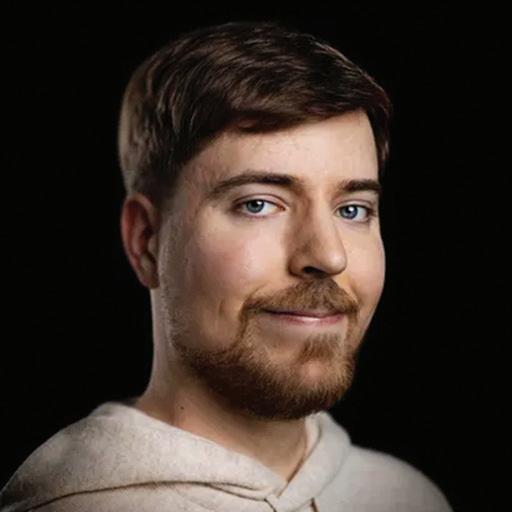
Worth at least $2.6 billion, according to Forbes, and counting more than 473 million subscribers on YouTube, MrBeast, Donaldson’s online persona, posted his first video almost 15 years ago. A philanthropist who supports reforestation and ocean cleanups, he’s dipped his toes into virtual restaurants, snack and candy businesses. His company recently purchased Step, a finance app aimed at teens. That prompted a 12-page letter from Massachusetts Sen. Elizabeth Warren, who expressed concern over efforts to market cryptocurrency to children. His Beast Industries received a $200 million investment from BitMine Immersion Technology in January. Another highprofile project: a $100 million deal with Amazon Prime for the second season of the “Beast Games” reality TV show.
Education: East Carolina University
JOHN
CURRIE Director of Athletics
Wake Forest University
Winston-Salem
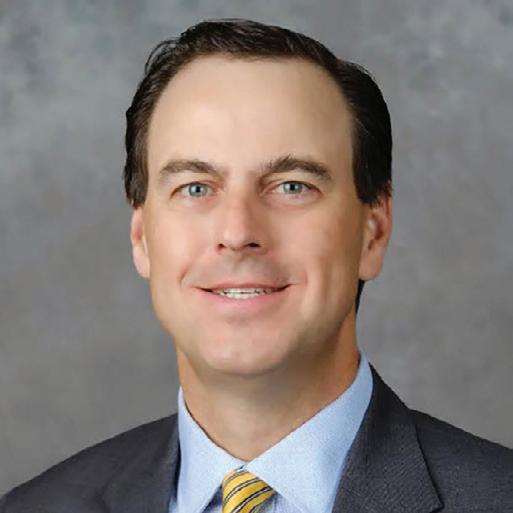
Having the smallest enrollment — about 8,900 — of any university in the four NCAA power conferences hasn’t slowed Currie’s success since he was hired in 2018. Many Wake Forest teams, including men’s soccer, men’s and women’s golf, track, tennis and baseball, have excelled. In March, he sat at a White House-convened college-sports roundtable on the impacts of NIL and possible federal solutions. In December 2024, he hired former Washington State coach Jake Dickert as the new Demon Deacon head football leader, and the team came through with a nine-win season last year. Currie is also helping push The Grounds, a $150 million mixed-used development adjacent to Wake’s athletic venues.
Education: BA Wake Forest University; MA University of Tennessee
What’s exciting now: The Grounds, the $1.2 billion mixed-use development adjacent to Allegacy Stadium and Lawrence Joel Veterans Memorial Coliseum.
Career advice: Be an expert in something.
A lasting influence: The late Charlie Patterson, a longtime executive at Wake Forest, UNC Greensboro and Guilford College.
My industry’s big challenge: Ensuring that education of student-athletes remains at the core of college athletics.
TOM DUNDON Owner
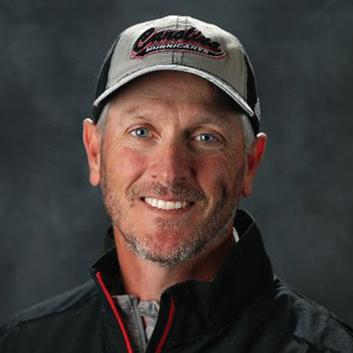
Dundon became a majority partner in the Carolina Hurricanes in 2018 and the NHL team’s sole owner three years later. The team has made the playoffs every season under his ownership and was riding a 155-game sellout streak in April. He welcomed three minority investors this year, including Triangle resident Brett Jefferson, who took a 12.5% stake. He led a group that purchased the NBA’s Portland Trail Blazers for $4.3 billion in April. Dundon is also focused on an 80-acre development adjacent to the Lenovo Center, where a $300 million renovation is underway. Last fall, state lawmakers gave $35 million to arena owner and operator Centennial Authority for infrastructure improvements.
Education: BS Southern Methodist University
Carolina Hurricanes Raleigh
TOM GABBARD
CEO
Blumenthal Arts
Charlotte
A Broadway League Board of Governors member and Tony Award voter, Gabbard joined Blumenthal Arts in 2003, using his connections to help make it one of the Southeast’s largest cultural organizations. It hosts about 1,000 events each year, from national touring shows to displays of local art, drawing more than 1 million visitors and adding more than $80 million to the local economy. Blume Studios is the most-recent addition to its six venues. More than 100,000 people visited the 32,000-squarefoot space in Charlotte’s Iron District during its first year, enjoying immersive and multimedia experiences.
Education: BA Pepperdine University; MBA Golden Gate University
What’s exciting now: Blume Studios, a new venture that connects the arts, technology and community.
What to know about your sector: Successful leaders are extraordinary entrepreneurs who understand that the community is their shareholders. My industry’s big challenge: Constantly reinventing ourselves to meet consumer expectations for fresh, new experiences.
HEATHER GIBBS
Co-Owner
Joe Gibbs Racing
Huntersville
Heather Gibbs was thrust into NASCAR ownership within hours of the unexpected death of her husband, Coy, and their son, Ty, winning the 2022 NASCAR Xfinity Series championship. (It’s now sponsored by O’Reilly Auto Parts). She stepped into her husband’s position after the death of his older brother J.D. Since arriving at the 35-year-old motorsports organization, which fields nine teams, legal proceedings seem to be as common as lug nuts. She testified in the federal antitrust case brought by Front Row Motorsports and 23XI Racing over NASCAR’s charter system. The team is suing former competition director Chris Gabehart and Spire Motorsports, claiming the former took confidential information and trade secrets to his new job with the latter. The case is pending.
Education: Radford University
VALERIE HILLINGS
CEO
North Carolina Museum of Art Raleigh
Hillings took the reins of the state’s largest public art museum in 2018 after more than a decade with Solomon R. Guggenheim Museum and Foundation in New York City. For the next three years, she’ll oversee renovations at the museum’s Raleigh and Winston-Salem campuses, completing it in phases and without completely closing the museum to its more than 1 million annual visitors. Raleigh upgrades include a visitorfacing conservation workspace and a new entrance through the East Building’s lower level, which will include a café, lounge and hands-on artmaking opportunities. Winston-Salem’s campus will receive upgraded access, technology and in-house residency offerings. State funding and private philanthropy will pay for the work.
Education: BA Duke University; MA, Ph.D. New York University
What’s exciting now: We are in the process of capital projects in Raleigh and Winston-Salem that will prioritize visitor experience/people and taking care of the art and natural assets entrusted to us.
My industry’s big challenge: Funding, which can be unpredictable year to year.
Go-to podcast: “North Carolina Business Minds”
Key qualities for senior-level hires: Adaptability. The only thing that is guaranteed is that everything will change.
REG JONES Managing Director
U.S. Golf Association Pinehurst
Working to create the optimal golf tournament experience for players and spectators, Jones oversees parking, spectator transportation to grandstands, merchandise and other non-competition matters at all the U.S. Golf Association’s U.S. Opens. Initially a Pinehurst Resort intern, he was named operations manager in its championship office in 1994 and director of operations in 1996. He was promoted to championship director before joining the USGA. Pinehurst was named a primary anchor site for the U.S. Open for 2029, 2035, 2041 and 2047. The USGA’s economic impact is about $500 million for the state and more than $200 million for the host community.
Education: BA Wake Forest University; MA Ohio University
NINA KING
Director of Athletics Duke University Durham
The first Black woman to run Duke’s athletics program, King succeeded her mentor, Kevin White, who retired in 2021. She oversees Duke’s 27 sports and nearly 800 student-athletes, its golf course, and its recreation and physical education program. She’s a member of USA Basketball and The College Women Sports Awards boards of directors, and she teaches a sports business course at Duke’s Fuqua School of Business. Her tenure has included some milestones, including men’s basketball coach Mike Krzyzewski’s retirement and a since-dropped lawsuit against quarterback Darian Mensah, who Duke claimed breached an $8 million NIL deal. Duke has given her a second five-year term, through June 2031.
Education: BS University of Notre Dame; JD Tulane University
JAMES LEDFORD
President Golf Pride Grips
Pinehurst
Ledford works at the company’s Global Innovation Center and headquarters, not far from Pinehurst’s No. 8 course. The venue includes testing and rapid prototyping labs to develop new golf equipment, along with a retail space. Opening in 2019, it may be the perfect place for the world’s leading club-grip manufacturer. He was named company president in 2012, more than 40 years after powermanagement conglomerate Eaton bought the business. Previously he was Callaway Golf’s vice president of global business development and Starbucks Coffee’s director of consumer services. Golf Pride says more than 80% of tour professionals use its grips without a single endorsement deal.
Education: BA University of Puget Sound; MA Johns Hopkins University
OGLESBY
Principal Investor
Caroline Core FC
High Point
This is the third season for Oglesby’s team, which plays in Major League Soccer’s MLS NEXT pro league at Truist Point Stadium in High Point. Her family started trucking company Old Dominion Freight Line, and she serves as chief adviser at the Earl and Kathryn Congdon Family Foundation. Off the pitch, she joined several other investors and organizations in Center City Investors to purchase the News & Record ’s former property, a 6.65-acre parcel in downtown Greensboro, earlier this year. The group wants to ensure the site is used to meet the community’s needs. That could include work and retail space, public venues, housing and green space.
Education: BA Elon University; MBA
High Point University
JAMES PHILLIPS
Commissioner
Atlantic Coast Conference
Charlotte
Phillips has had a busy five years since being named commissioner. While expansion talk has cooled, he brought Southern Methodist University, Stanford and University of California, Berkeley into the league in 2024. Conference revenue has grown 56% during that time — $711 million, according to its latest tax filings — by focusing on sponsorships and without landing a new TV deal. His work to create equal competitive footing among the league’s 18 institutions was scrutinized late last year, when ACC champion Duke was left out of the 12-team College Football Playoff. The snub prompted him to call for a review of ACC tiebreaker policies and the role of rankings.
Education: BA University of Illinois; MEd Arizona State University; Ph.D. University of Tennessee
WILL PITTS CEO
Charlotte Sports Foundation
Charlotte
The foundation, which promotes sporting events in the Queen City, named Pitts its CEO in April 2025. He succeeded former Carolina Panthers President Danny Morrison, and steered the group through most of a record-breaking year. Total event attendance hit more than 362,612, an increase of 72%, and economic impact spending was $118 million, up 30.5%, according to Charlotte Regional Visitors Authority. A big winner was Banana Ball at Bank of America Stadium, which attracted 148,000 fans for two nights. The Charlotte Marathon, which last year attracted a record 11,000 runners, is now under the foundation’s auspices. He’s worked at the organization for 15 years, most recently as chief operating officer.
Education: BA Rhodes College; MBA Wake Forest University
Career advice: Be yourself. Be authentic and genuine to who you are while always learning from others.
A lasting influence: My predecessors at the Charlotte Sports Foundation, Will Webb and Danny Morrison.
Key qualities for senior-level hires: We look for talented individuals who demonstrate long-term strategic thinking with tactical execution while modeling our core values.
MEGAN
DAN RAJKOWSKI
Chief Operating Officer
Charlotte Knights
Charlotte
Rajkowski’s baseball career spans more than four decades. He’ll call on that experience this year, using promotions to help end three years of soft attendance at 10,200-seat Truist Field in downtown Charlotte. He’s spent more than half his career in the White Sox Triple-A affiliate’s front office. He helped move the team, one of four North Carolina teams owned by New York-based Diamond Baseball, from suburban York County, South Carolina to downtown Charlotte in 2014. He is also lending a hand to the Queen City’s bid for a major league franchise. He was the International League’s Executive of the Year in 2014.
MARCUS SMITH
CEO
Speedway Motorsports
Concord
JOHN REILLY
President and CEO
Six Flags
Charlotte
A longtime amusement and recreation industry veteran, Reilly took the helm and joined the board of Six Flags late last year, about 18 months after Cedar Fair and Six Flags merged and moved its headquarters to Charlotte, the home of its Carowinds park. The company, which owns amusement parks, water parks and resorts across North America, has financial challenges, starting with about $5 billion worth of debt and declining attendance at many parks. His plan to meet those obligations includes selling $1 billion of unsecured senior notes. In March, the company also agreed to sell six U.S. parks, not including Carowinds, and one in Canada to EPR Properties for $331 million.
Education: BA The College of William and Mary; MBA University of Miami
RICK SCHNALL
Majority Owner
Charlotte Hornets
Charlotte
Schnall and Gabe Plotkin became majority co-owners of the NBA team in 2023, paying $3 billion to former owner Michael Jordan. The team has shown vast improvement, winning 70% of its games in the last half of the season. Fans responded with more than 20 straight games selling out at Spectrum Arena this spring. Schnall, who now lives in Charlotte, is co-president of New York-based private equity firm Clayton, Dubilier & Rice, where he’s worked since 1996. He played in this year’s NBA All-Star Celebrity Game and serves on the board of Michael J. Fox Foundation for Parkinson’s Research. He also has a passion for padel, a sport combining elements of tennis, squash, and pickleball. He’s leading a $15 million funding round for the 10-team Pro Padel League.
Education: BA University of Pennsylvania; MBA Harvard University
Starting in the ticket booth, Smith left college and joined his father, Bruton, at Speedway Motorsports, becoming president in 2008 and CEO in 2015. He oversees 700 employees and several businesses, including souvenir-merchandising subsidiary SMI Properties, race car builder U.S. Legend Cars International, Performance Racing Network radio and zMAX Microlubricants. The company is best known for its 11 racetracks and the NASCAR races they host. Atlanta Motor Speedway was recently renamed EchoPark Speedway, the result of a multimillion dollar deal with Sonic Automotive, which is led by his brother David. He recently floated the idea of putting a roof over Bristol Motor Speedway, eliminating possible weather delays at the east Tennessee track that has hosted Major League Baseball and college football games.
Education: UNC Chapel Hill
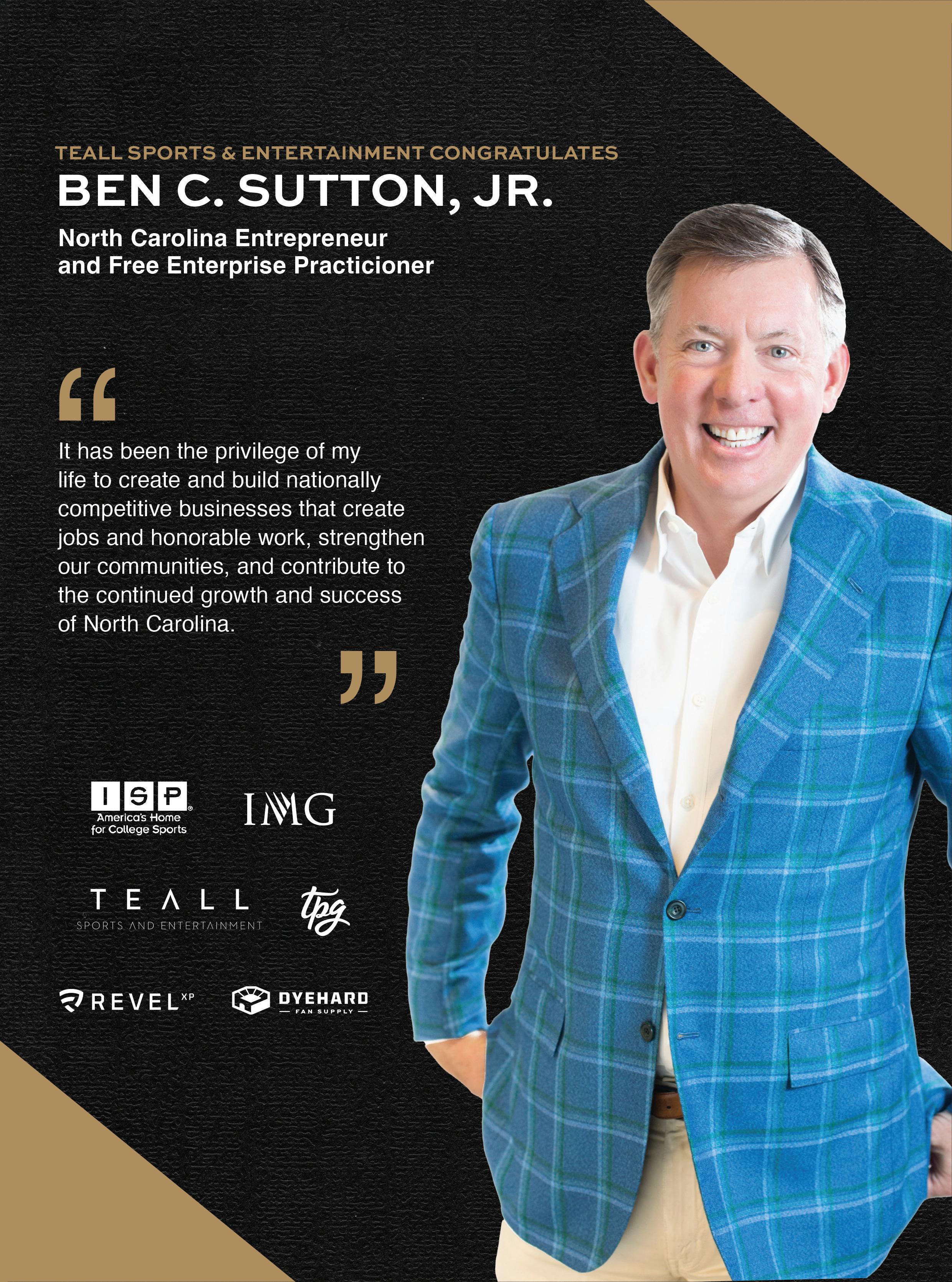
BEN SUTTON JR.
CEO
TEALL Sports & Entertainment
Winston-Salem
A member of the North Carolina Sports Hall of Fame and National Football Foundation Leadership Hall of Fame, Sutton manages a lineup of sports-related investments, including e-commerce company Dyehard Fan Supply and Teall Properties Group, which manages multimedia rights and sponsorships at the high school sports level. A native of Murfreesboro, he started sports marketer ISP. IMG acquired it in 2010 and made him its president. The business was eventually sold to Silver Lake Partners and WME for $2.4 billion. He has received the Order of the Long Leaf Pine, Wake Forest University’s Distinguished Alumni award, National Sports Media Association Roone Arledge award and the University of South Carolina’s lifetime achievement award.
Education: BA, JD Wake Forest University
Career advice: Do the right thing, the right way, at the right time!
What to know about your sector: The playing field between college sports, particularly college football, is not level with professional sports leagues that benefit from certain antitrust exemptions. This factors greatly into the massive disparity in media rights deals between pro and college sports. Key qualities for senior-level hires: Character, integrity, curiosity, work ethic, determination and grit.
My best change: Not working 80 hours a week!
DAVID TEPPER
Owner
Carolina Panthers; Charlotte Football Club Charlotte
Returning to the playoffs was surely on Tepper’s wish list when he paid $2.2 billion for the Carolina Panthers in 2018. The hedge fund manager could finally cross that off last season, when the team won the NFC South title. The Panthers share Bank of America Stadium, which is undergoing an $800 million renovation, with Tepper’s Charlotte FC, which averages about 30,000 fans each game, third best in MLS last year. Tepper Sports & Entertainment has a lease running through 2045 at the stadium, which will host a match between the U.S. men’s team against Senegal in May and the MLS All-Star Game in July. Those events, along with concerts that include Bruno Mars and AC/DC, will keep the stadium busy this year.
Education: BA University of Pittsburgh; MBA Carnegie Mellon University
MARILYN “QUE” TUCKER
Commissioner
North Carolina High School Athletic Association
Morrisville
Tucker has spent more than a decade leading the association, which oversees 18 sports for its 444 member high schools. She is the first woman and first African-American to hold the position. The Reidsville native has been behind many initiatives since joining the NCHSAA in 1991, including developing a student services program and increasing opportunities and recognition for female athletes and minority coaches and administrators. She spent two years as an assistant coach at NC State under Kay Yow. A leading basketball scorer while at Mars Hill University and charter member of its Athletic Hall of Fame, she entered the association’s Hall of Fame in 2012 and the North Carolina Sports Hall of Fame in 2024. She will retire Oct. 1.
Education: BS Mars Hill College; MS UNC Greensboro
Morning ritual: Meditation and prayer.
Career advice: Work hard, do the right thing, and treat others the way you want to be treated.
A lasting influence: My late college basketball coach Dr. Virginia Hart. She taught me about being a professional.
My industry’s big challenge: The continuing effort to help participants know what good sportsmanship means and how to show it throughout competition.
Favorite musician: Any Motown artist
GREG WALTER
General Manager and President
Charlotte Motor Speedway
Concord
A three-time Speedway Motorsports Promoter of the Year, Walter’s roots are in sports radio, including time with Raycom Sports, ESPN and Capitol Broadcasting. He joined Speedway Motorsports in 1999, first as Atlanta Motor Speedway’s vice president of sales then with the national sales team in 2014. He became Charlotte Motor Speedway’s president a decade later. His responsibilities include the 1.5-mile superspeedway that hosts NASCAR’s top divisions twice a year, zMAX Dragway and The Dirt Track at Charlotte. He’s a board of directors member at North Carolina Motorsports Association, North Carolina Travel and Tourism Coalition, Cabarrus County Economic Development Corp. and Speedway Children’s Charities.
Education: BA UNC Chapel Hill
JEFF WISE CEO
Whitewater Center
Charlotte
Wise has led the Center since its inception more than 20 years ago. Its whitewater channels, 40 miles of trails, treetop rope and zip-line course, 70-acre dog park and three restaurants, along with a calendar dotted with Olympic trials and festivals, attract more than 1 million people each year. They spend more than $250 million, according to a 2025 Virginia Tech study. A $350 million expansion in Raleigh and a $25 million expansion in Charlotte are in the works. It will unveil its Wildwoods Phase II this summer, part of a dedicated campus for young visitors. It also operates recreation sites in western North Carolina, South Carolina and Virginia.
Education: BA University of Richmond; JD Emory University
What’s exciting now: Whitewater Raleigh
A lasting influence: Alan Dickson from Ruddick Corp.
Favorite musician: The Rolling Stones Key qualities for senior-level hires: Critical thinking and drive.
DAVID LONGO Founder, CEO
CBI Workplace Solutions
Charlotte
ECONOMIC DEVELOPMENT
ARTS, ENTERTAINMENT & SPORTS
KELLY ANDREWS
BRITTANY BRADY
BRENT CHRISTENSEN
CHRISTOPHER CHUNG
ADRIENNE COLE
TRACY DODSON
CLARK DUNCAN
GEOFF DURHAM
NATALIE ENGLISH
MIKE FOX
SCOTT HAMILTON
LOREN HILL
CHRIS JOHNSON
SCOTT LEVITAN
DAVID LONGO
GENE MCLAURIN
SCOTT MILLAR
MARK OWENS
BOB PIKE
MARK POPE
KEVIN PRICE
Longo started CBI with Bob Flynn in 1993. The business has opened 10 locations across the Southeast, helping create efficient workspaces that meet customers’ needs. He served as a co-leader of the Yes for Meck campaign, which persuaded voters to approve a transportation referendum in November. It levies a 1-cent sales tax increase expected to raise $19.4 billion over the next 30 years to rework assets, allowing them to keep pace with the region’s growth. It will be matched by $6 billion in federal funding. He was named to UNC Charlotte’s board of trustees last year.
Career advice: Begin with gratitude, be thankful for the blessings in your life and be a good steward of what you’ve been entrusted with. From there, remain a continuous learner, believe in yourself and the people around you, and stay open to the art of what’s possible.
A lasting influence: My parents. They instilled in me the importance of faith, community engagement and a strong work ethic.
Favorite musician: Tom Petty, especially “I Won’t Back Down.”
MARVIN PRICE
SHAHID RANA
JIMMY RANDOLPH
BRIAN RAYNOR
JULIE ROPER
GARY SALAMIDO
MELISSA SMITH
MICHAEL SMITH
ANDREW TATE
BEN TEAGUE
ROBERT VAN GEONS
PATRICK WOODIE
STEVE YOST
Key qualities for senior-level hires: Leaders who know how to build meaningful relationships and inspire others to follow them. Skill matters, but the ability to influence, serve and elevate those around them matters even more.
My best change: Beyond marrying my wife Chris, having the courage at age 30 to relocate my family to a new community and take over a tiny, insolvent business. That single decision reshaped our lives and created the opportunity to serve alongside incredible associates over the years.
“Begin with gratitude, be thankful for the blessings in your life and be a good steward of what you’ve been entrusted with.” — David Longo
KELLY ANDREWS
Economic Development
Director
Pitt County
Greenville
BRITTANY
BRADY
CEO
Henderson County Partnership for Economic Development
Hendersonville
DEVELOPMENT
After 14 years as the economic booster’s assistant director, Andrews was named its executive director in 2020. Chambers for Innovation and Clean Energy named her department a Clean Energy Champion in December after Pitt County landed a $294 million investment by Boviet Solar, which may create 1,300 jobs over the next five years. In February, the county OK’d $750,000 for renovations at a former tobacco warehouse in Greenville. Renamed The Prizery, it will be the new home of Pitt County Economic Development, public-private partnership Greenville ENC Alliance and an AI lab for ECU.
Education: BSBA UNC Chapel Hill; MBA East Carolina University
Brady, a Henderson County native, has led the partnership since 2017. Henderson was hit hard by Hurricane Helene in September 2024. A recovery action plan was unveiled last year, followed by a marketing campaign highlighting the county’s resiliency. In October, auto parts manufacturer BorgWarner announced a $75 million factory that will create almost 200 jobs in Flat Rock, with an average annual salary of $78,628. She is president of the North Carolina Economic Development Association’s board of directors.
Education: BS East Tennessee State University; Master’s University of South Carolina
What to know about your sector: Manufacturing pays the bills. Economic development is more than just supporting industry. It is supporting and growing the quality of life in a community.
My best change: I try to make space each day to get out of the office, and walk and think. Having time for critical thinking and decisionmaking is crucial. As a leader, I am reminded to work on the business and not in the business.
CEO
Greensboro Chamber of Commerce
Greensboro
Education: BA Duke University; MBA University of South Florida BRENT CHRISTENSEN
For more than a decade, Christensen has led the chamber and its more than 1,300 members. He’s helped land and maintain relationships with some of the state’s largest foreign investments, including the nearby Toyota battery factory. Big wins have come at Piedmont Triad International Airport, where HondaJet is headquartered. More recently, the airport has attracted Boom Supersonic, which is expected to create 1,700 jobs, and JetZero, which says it will invest $4.7 billion to build a factory that’s expected to employ more than 14,500 people by 2036, the largest job commitment in state history.
CHRISTOPHER CHUNG
CEO
Economic Development Partnership of North Carolina
Raleigh
Chung’s 11-year tenure at the public-private partnership has been studded with big announcements, including Toyota’s $14 billion Randolph County battery plant and JetZero’s factory and record-setting 14,500-job commitment in Guilford County. A record 35,000 jobs and $24 billion in investments were announced in 2025. Last year, he said EDPNC closes about two of every three expansions for companies in North Carolina and recruits about three of every 10 business relocations. CNBC named North Carolina its Top State for Business in 2022, 2023 and 2025. Facilities magazine named it its 2025 state of the year.
Education: BA Ohio State University
What to know about your sector: Economic development is often thought about only in terms of recruiting big companies to the state or a community. There is far more that goes into — and that comes out of — a comprehensive economic development strategy.
Key qualities for senior-level hires: Alignment with our organization’s culture and mission, and proven success in navigating the potential pitfalls unique to our industry (and there are many).
CEO
The Greater Raleigh Chamber of Commerce
Raleigh
The chamber, which Cole has led since 2017, has 1,800 member businesses. Between 2014 and last summer, the chamber and Wake County have counted $7.7 billion of investment and 26,000 announced jobs. Fujifilm and Amgen are among the biggest. And they’re working on more, including a $1 billion mixed-use project at the Lenovo Center and the $2 billion N.C. Children’s Hospital.
Education: BA Meredith College; MPA Appalachian State University
What to know about your sector: Chambers of commerce engage leaders from the business sector, academia, public and nonprofit sectors. Convening leaders across these sectors is a chamber’s super power.
Go-to podcast: Valerie Bauerlein’s “Camp Swamp Road.” Valerie calls Raleigh home and is a journalist with The Wall Street Journal
My best change: I started a regular exercise routine and am sleeping more — both have been great changes. Prioritizing both has been very positive.
ADRIENNE COLE
TRACY DODSON
Chief Operating Officer, Head of Economic Development
Charlotte Regional Business Alliance
Charlotte
CLARK DUNCAN
Senior Vice President for Economic Development
Asheville Area Chamber of Commerce
Asheville
Before joining the alliance last year, Dodson worked for Lincoln Harris and Charlotte Center City Partners before she was Charlotte’s assistant city manager and economic development director. There, she helped land Honeywell’s headquarters relocation, along with expansions by LendingTree, AvidXchange and Lowe’s. She oversees economic development, research, marketing, communications, business development and investor relations for the alliance.
Education: BArch UNC Charlotte; MDes Harvard University
NATALIE ENGLISH
CEO
Wilmington Chamber of Commerce
Wilmington
Since joining the chamber in 2008, Clark has helped land a host of projects, including New Belgium Brewing and GE Aviation’s expansion. He added Pratt & Whitney to the list last year, when it announced a $285 million expansion that would add 325 jobs, bringing its workforce total to about 1,200. While his work has been tempered by Hurricane Helene’s damage, Buncombe County’s 4.1% jobless rate in September was down from 6.8% at the start of the year.
Education: BA Wake Forest University
What’s exciting now: The AVL 5x5 Strategic Plan is driving economic recovery here in the mountains. Seeing its impact on our neighbors inspires everything we do.
What to know about your sector: Economic development is fundamentally about creating pathways to opportunity for the next generation.
Favorite musician: Eric Church
My best change: Building a life for my family here in Asheville some 25 years ago.
CEO
Greater Durham Chamber of Commerce
Durham was chosen to lead the Chamber in 2016. Recent economic wins include Aspida Financial Services announcing an expansion at its global headquarters in Durham County, hiring 1,000 workers and investing more than $28 million. Novartis is investing $771 million and creating 700 jobs in Durham and Wake counties by 2030. And in March, Duke University and Duke University Health System announced The HomeGrown Initiative, pledging to direct $203 million over three years to expand economic opportunity across the region.
The state’s first chamber of commerce counts more than 1,000 members. English worked for the Charlotte Chamber for 11 years before moving to Wilmington. Transportation and infrastructure are two of the biggest issues on her plate. The first is unfolding at Wilmington International Airport, where a recent noise study is identifying the impacts of more flights on surrounding neighborhoods. The Chamber is also participating in meetings regarding a new statewide multimodal freight plan and replacements for the three aging bridges connecting Wrightsville Beach and the mainland.
Education: BA NC State University
What to know about your sector: Chambers of commerce are associations of businesses. Every chamber is different and unique, and we aren’t connected or affiliated. Chambers of commerce are not governmental entities.
My industry’s big challenge: Remaining nimble enough to respond to key challenges in our communities and in the economy. Business moves fast, and we need to be one step ahead.
Favorite musician: Bruce Springsteen
MIKE FOX
CEO
Piedmont Triad
Partnership
Greensboro
Since 2021, Fox has led economic development efforts for 12 counties in the north-central portion of the state and the broader Carolina Core, a more than 150-mile swath from Forsyth County to Harnett County.
In February, furniture manufacturer SBA Home opened a $70 million factory, its first in the U.S., which is expected to create 250 jobs in Mocksville. He’s also a partner at the Tuggle Duggins law firm, specializing in business and real estate disputes, government affairs, and zoning and land use.
Education: BA Appalachian State University; JD UNC Chapel Hill
What’s exciting now: The growing aerospace cluster at the Piedmont Triad International Airport.
Career advice: Help everyone that you get a chance to without expecting anything in return.
What to know about your sector: Transportation and economic development are intertwined. Key qualities for senior-level hires: Judgment and the willingness to listen to different opinions.
Durham
Education: BA Randolph-Macon College GEOFF DURHAM
SCOTT HAMILTON
CEO
Golden LEAF Foundation
Rocky Mount
Since 2019, Hamilton has led the foundation, which uses money from the state’s share of the national tobacco settlement, to provide lasting economic change in economically distressed rural communities. It helped create 1,665 jobs and trained or retrained more than 4,700 workers for higher wages last year. It has funded almost 2,400 projects totaling $1.5 billion since 1999. He has held a host of economic development leadership positions, including AdvantageWest Economic Development Group.
Education: BA UNC Greensboro
Morning ritual: Arriving early to the office. I enjoy the quiet time. It gives me an opportunity to read morning newsletters such as the Business North Carolina Daily Digest, reflect on the previous day and assess the day ahead.
Favorite musician: Picking one musical artist is hard for me. Doc Watson, Ralph Stanly, Billy Strings, Bob Seger, Tom Petty, Styx, Willie Nelson, Waylon Jennings and Patsy Cline.
Key qualities for senior-level hires: Honesty, trustworthy, high integrity, an entrepreneurial spirit, forward thinking and the ability and willingness to be innovative.
Carolina Core Regional Economic Development Director
Piedmont Triad Partnership
Greensboro
Hill is applying the experience he accumulated while working at High Point Economic Development for 20 years and the Greensboro Chamber of Commerce. The Carolina Core is home to 2.2 million workers and 30 colleges and universities and many major industries including manufacturing, aviation, technology and military.
Education: BA UNC Chapel Hill
What’s exciting now: The level of regional collaboration in the Carolina Core. Our slogan — A Win for One is a Win for All — isn’t just words on paper. It’s a shared belief that Carolina Core economic developers all across our 21 counties demonstrate every day.
My best change: Moving into economic development after careers in government affairs and hotel management.
CHRIS JOHNSON Director of Economic Development
Johnston County
Smithfield
For more than a dozen years, Johnson has been convincing relocating and expanding businesses to come to Johnston County. It’s adding 8,000 residents annually, and his group supports workforce development, including JOCO Works, which exposes eighth-graders to careers with local companies. Novo Nordisk announced a $4.1 billion expansion and 1,000 jobs here in 2024, and startup Vulcan Elements released plans for a $1 billion plant that will create 1,000 jobs in Benson. Part of a Pentagon-backed effort, it’s expected to be the largest rare-earth magnets plant outside China.
Education: BS East Carolina University
What’s exciting now: Johnston County sees 77% of its workforce commuting elsewhere for employment. My ongoing objective is to help cultivate a community where people can truly live, work, and play.
Career advice: Think long-term but act incrementally. Economic development is slow, political, and often nonlinear. Celebrate small wins — they’re the building blocks of big outcomes. My industry’s big challenge: Communities don’t compete as isolated dots on a map. They compete as regions with shared labor pools, transportation networks and economic identities.
SCOTT LEVITAN CEO
Research Triangle Foundation Durham
Research Triangle Park has been laser-focused on setting the standard for research and development. But Levitan, who took the helm of its foundation in 2017, sees more of a mixed-use message in its future.
The RTP 3.0 plan opens the door to retail, residences and restaurants, creating an in-demand work-playlive destination. Hub RTP, a more than $100 million investment, broke ground in 2020 and has given RTP’s 375 companies and 60,000 employees a taste of what’s to come.
Education: BS Louisiana State University; Master’s Harvard University and University of York in England
What’s exciting now: RTP 3.0, a transformative, 50-year strategic vision, is designed to guide Research Triangle Park’s next half-century of growth. RTP companies, Wake and Durham counties overwhelmingly approved key land-use amendments and zoning updates that now enable sustainable, mixed-use development across the park’s 7,000 acres.
GENE MCLAURIN Chair
Economic Development
Partnership of North Carolina
Rockingham
Former Gov. Roy Cooper put McLaurin on the Partnership’s board in 2017 then made him its chair in 2021. Gov. Josh Stein reappointed him to the position for four more years in February. North Carolina has welcomed 122,000 jobs and $91 billion of investment in the past five years. One of the biggest announcements came in McLaurin’s home county, Richmond. Drawn by ample power and water, Amazon announced in June 2025 that it was building a $10 billion data-center campus there. It’s expected to create 500 jobs over five years.
Education: BA UNC Charlotte
What’s exciting now: North Carolina had a record year in 2025, with 34,000 jobs created and over $23 billion announced in investment. We are ranked as the No. 1 state for business in the U.S.
Career advice: My grandfathers taught me the importance of business relationships and that everyone has value and deserves to be treated with respect.
My best change: At 50, I left a management position with a large international company to join a struggling local business to help develop strategic objectives and a business plan. I’m proud we worked together to help create a culture of accountability and customer service and have achieved growth and success. Accomplishing this in my hometown in rural North Carolina has been special and meaningful.
SCOTT MILLAR President
Catawba County Economic
Millar was named the group’s president almost 30 years ago. The county has the country’s fifth-highest manufacturing concentration with 421 companies and 24,500 workers. In January, Corning announced a $6 billion deal with Meta Platforms, which owns Facebook, to supply fiber-optic cable for its AI data centers. That’s expected to start a significant expansion at its Hickory factory. In October, Corning announced it was investing $268 million in its Trivium Corporate Center, adding at least 132 jobs. Corning also has a fiber factory in Newton, one of four communities in the county where Microsoft has started a $1 billion data center expansion.
Education: BS University of Tennessee
What’s exciting now: The creation of a grouping of multi-jurisdictional park developments in the county (or beyond) that answer the need for several types of advanced properties. My best change: I was advised to “quit selling advertising and begin selling North Carolina” by Sen. Don Kincaid in 1989. I was subsequently hired by the NC Department of Commerce and did just that.
MARK OWENS CEO
Greater Winston Salem Winston-Salem
Owens joined the Chamber in 2017 and moved its offices to Innovation Quarter, the 330-acre mixed-use research park in Winston-Salem’s heart, in 2023. During the past five years, nearly 3,000 jobs have been created in the city, which is more than in the previous decade, and about $825 million of corporate investment has been pledged.
Education: BS Presbyterian College Morning ritual: I love to start the day with a hug from our 8-year-old son.
What’s exciting now: Imagine WinstonSalem is our community strategic action plan process that is bringing voices together from all parts of our community to talk about what we want the collective vision for Winston-Salem to be.
What to know about your sector: There are things we can influence but very few things we can truly control.
BOB PIKE CEO Carolinas Gateway Partnership
Rocky Mount
Pike succeeded Norris Tolson as the Partnership’s leader in 2023. He has deep roots in agriculture and agribusiness and believes east of Interstate 95 is primed for economic development. In February, LS Cable & System USA announced an expansion of its Tarboro plant, spending $50 million to add two production lines and 85 workers to the 250 already there. That’s following a $27 million expansion in 2022.
Education: University of Maryland Eastern Shore
KEVIN PRICE CEO
National Institute of Minority Economic Development
Chapel Hill
Price became the nonprofit management consulting and services firm’s president and CEO in 2020. It advises businesses, government agencies, policymakers and organizations. It opened its Community Economic Development Incubator in Charlotte in April 2025, offering assistance and training to small business owners, helping community development corporations and nonprofits grow their capacity and providing loans to small businesses, along with offering training, mentoring and funding for student entrepreneurs.
Education: BA UNC Greensboro; MBA, MHA Pfeiffer University
MARK POPE
President
North Carolina Global
TransPark Economic Development Region
Kinston
Since 2020, Pope has led an organization that serves a threecounty region whose workforce numbers more than 86,000 people. Its namesake generates $781 million in economic output, supports 3,000 jobs and contributes $43.5 million in state and local taxes. The U.S. Navy broke ground on its Fleet Readiness Center East complex in 2024. It will create 400 jobs and generate $400 million in investment. Lenoir Community College is building a $25 million Aviation Center of Excellence at the TransPark, where it will offer aviation systems and aircraft construction training and an aviation academy for high school students. The region overall secured 738 jobs and $262 million in capital investment last year.
Education: BSBA East Carolina University
Morning ritual: Taking an early five-mile bike ride, then stopping by Chick-fil-A for a to-go breakfast.
What’s exciting now: Starting a new public-private partnership. Bringing together state, local, private sector and education leaders creates a new center of gravity. When everyone sees themselves in the mission, the region gains a stronger, more unified voice.
My industry’s big challenge: Demonstrating that we have a workforce and labor pool that is highly trainable and skilled in hands-on work.
MARVIN
PRICE
Executive Vice
President, Economic Development
Greensboro Chamber of Commerce
Greensboro
Since Greensboro Chamber of Commerce put Price in charge of its economic development efforts in 2020, the Gate City has welcomed more than $20 billion in capital investment and nearly 25,000 jobs. In March, networking device manufacturer Lumentum Holdings spent $18 million on a 240,000-squarefoot factory, intending to invest millions and employ 400 workers there. He played a role in JetZero’s June 2025 announcement of a $4.7 billion plant at Piedmont Triad International Airport..
Education: BA University of Montevallo; Master’s Auburn University
What to know about your sector: Economic development is built on long hours, detailed RFIs, site visits, public hearings and countless meetings that often happen behind the scenes.
My industry’s big challenge: Navigating changing political winds while simultaneously addressing growing infrastructure needs.
Key qualities for senior-level hires: People with unquestioned integrity and the confidence to take calculated risks. Experience matters, but character matters more.
SHAHID RANA
Director, Economic Development
City of Charlotte
Charlotte
Rana was named Charlotte’s economic development director in June 2025. Last year was Charlotte’s best for business recruitment in more than a decade, announcing 15 projects that were expected to create more than 3,800 jobs and $424 million in capital investment. His nearly 20 years of economic development experience include small business and entrepreneurial support, business attraction and retention, and commercial and neighborhood planning and redevelopment.
Education: Bachelor’s Morgan State University; Master’s University of Maryland
What’s exciting now: The city’s small business readiness program, Skilled to Build. The program provides resources, training and community engagement for businesses to be part of the $20 billion plus of infrastructure projects in Charlotte-Mecklenburg over the next 30 years.
What to know about your sector: Economic development is a team sport, and people’s quality of life should be the main focus.
JIMMY RANDOLPH CEO
Sanford Area Growth
Alliance
Sanford
Randolph has led the Alliance since 2020. It’s a public-private partnership formed by Lee County Economic Development Corp. and Sanford Area Chamber of Commerce’s merger. It welcomed Kyowa Kirwin in 2024, when the pharmaceutical company announced a $200 million factory and 102 jobs. And late last year, he helped usher through a redevelopment of Riverbirch Shopping Center, where the county is investing up to $2 million and the city $4 million in partnership with Casto Development.
Education: BA UNC Chapel Hill
What’s exciting now: We continue to partner with Central Carolina Community College to fully realize the potential of the E. Eugene Moore Manufacturing and Biotech Solutions Center.
What to know about your sector: If community leaders cease to think about how they can adapt and innovate and invest in a strategic vision for the future and focus on how they can simply maintain the status quo, they will inevitably lose in the highly competitive world of modern economic development.
Favorite musician: Kris Kristofferson. My best change: After a diagnosis of type-2 diabetes last year, I collaborated with my family and my primary care physician to transform my diet and begin a simple program of daily exercise/ movement. I’ve brought all my vital metrics back into the healthy range.
BRIAN RAYNOR Chair
Golden LEAF Foundation
Eastover
Raynor, a Cumberland County native and owner of Highland Paving, was named to Golden LEAF’s board in 2020 and became chair in December. In February, it announced more than $17.3 million to support job creation and economic investment, workforce development and agriculture projects. Highland has plants in Fayetteville, Leland, Lillington and Sanford.
What’s exciting now: Golden LEAF’s support of the new Methodist University Medical School. This school will help bring more doctors and medical professionals into rural communities across our state.
My industry’s big challenge: Workforce development. Golden LEAF’s partnerships with training institutions, especially North Carolina’s community colleges, are addressing that need.
JULIE ROPER
Economic Development and External Affairs Manager
Enbridge
Gastonia
An Air Force veteran, Roper handles economic development and external affairs for Enbridge, which purchased PSNC from Dominion Energy for $3.2 billion in 2024. In July 2025, it completed a 24-mile pipeline, expanding natural gas service in northern Cabarrus and southern Rowan counties. Later that year, Enbridge asked the N.C. Utilities Commission for a 12.4% increase to its residential natural gas rates, upping the average bill by $6.30. It has about 650,000 customers in 28 North Carolina counties.
Education: BS Belmont Abbey College; MBA Appalachian State University
What’s exciting now: The continued growth in our region, even during this last year of economic uncertainty.
What to know about your sector: The incredible value that natural gas provides. There is no lower cost for home heating and no other form of energy that is as reliable.
MELISSA SMITH
Senior
Vice President
Economic Development
Partnership of North Carolina
Greensboro
Smith joined the partnership as it got underway in 2014. She has more than 25 years of economic development experience at the local and state levels. She worked for the N.C. Department of Commerce, where she helped recruit businesses and support existing ones.
GARY SALAMIDO CEO
NC Chamber
Cary
Salamido started at the chamber in 2011, putting his decade of experience as GlaxoSmithKline’s director of state government affairs to work. He was named acting president in 2018 and became president and CEO in 2019. He says lifting the cap on publicprivate partnerships, allowing for toll-funded road projects to meet the needs of a growing population, is one of the Chamber’s biggest legislative wins. Also, he says there’s more work to be done on reforming and supporting more childcare and housing.
Education: BS Albany College of Pharmacy; MS University of Texas at Austin
What’s exciting now: Carolina HealthWorks. I hear from small business owners who want to care for their employees but struggle with rising costs. Carolina HealthWorks allows them to pool together for more affordable, high-quality coverage.
What to know about your sector: North Carolina has aligned workforce, infrastructure and regulatory policy around growth. Maintaining that edge will require business leaders to stay engaged, bring real-world perspective to the table and choose clarity over noise.
MICHAEL SMITH President
Chatham County Economic Development Corporation
Pittsboro
Smith was with the N.C. Department of Commerce, Sanford Area Growth Alliance and groups in Iredell, Davidson and Stanly counties before leading economic development efforts in Chatham County, one of the state’s hottest markets. It had a big year in 2022, when VinFast and Wolfspeed pledged a combined $9 billion in investments and 9,000 jobs. While those projects have since cooled, wire-maker MetOx International announced a $193.7 million factory and 333 jobs in December 2024.
Education: BA, MA East Carolina University
What to know about your sector: Economic development is the ultimate team sport. Every deal involves a room full of people to make it happen.
My industry’s big challenge: How to explain this complex industry to the public and our elected officials. It’s a fiveparagraph explanation in a five-bulletpoint world!
Key qualities for senior-level hires: A strong track record, the ability to work independently and a unique skill set that adds value to our organization.
ANDREW TATE
Managing Director, Carolinas Economic Development
Duke Energy
Raleigh
Tate helps power partnerships, job creation and revenue by leveraging the utility’s assets and resources. Its Site Readiness program identifies, assesses and improves industrial sites. And its more recent voluntary Green Source Advantage Express, which helps industrial customers tap renewable new renewable energy on Duke’s grid, has surpassed initial enrollment targets. Cisco, United States Cold Storage Inc. and Daimler Truck North America are among the first participating customers.
Education: BA UNC Chapel Hill
A lasting influence: [Duke executive] Stu Heishman. He’s fostered an incredible culture, one that welcomes dissenting opinions and encourages action and looking out for one another.
Key qualities for senior-level hires: We look for complementary talent and skillsets and a lens that adds value to the team. And we always look for people who are curious and competitive.
BEN TEAGUE
Vice President of Strategic Development
Biltmore Farms
Fletcher
Teague has spent nearly 20 years helping build the Asheville region, most recently with the Cecil family’s real estate business. He has placed more than 60 economic development projects and over $1.5 billion in capital investment in multiple states. One of his most recent projects is 1,000-acre Biltmore Park West. It began in 2020 by welcoming Pratt & Whitney’s $650 million factory, where a $285 million expansion was announced last year.
Education: BA Mississippi College; MBA University of Mississippi
Morning ritual: Cup of coffee with my wife. I’ll take that any day!
What’s exciting now: Futures Factory, an approximate $50 million manufacturing innovation center in western North Carolina.
A lasting influence: Jack Cecil, CEO of Biltmore Farms, has taught me so much about having a big collective vision for the greater good.
STEVE
YOST
President
North Carolina’s Southeast Whiteville
The N.C. Economic Development Association gave its 2025 President’s Award to Yost, who was named president of North Carolina’s Southeast in 2009. He leads economic development efforts for 20 counties, which are home to almost 2 million people and 22 public and private universities. Since 2014, the organization has helped recruit 88 companies and bring more than 11,000 jobs to the region. The biggest investment is Amazon, which is building a $10 billion data center that will create 500 jobs in Richmond County.
Education: BS Appalachian State University; MBA UNC Chapel Hill
ROBERT VAN GEONS CEO
Fayetteville Cumberland Economic Development Corporation
Fayetteville
Van Geons joined the EDC in 2017, attracting more than $1.3 billion of new investment and 5,000 jobs since. The county is home to a variety of industries, including food processing, manufacturing, logistics and distribution, financial services and defense. Additions to the local economy include a billion-dollar titanium plant, a 1.3-million-squarefoot Amazon distribution center and sports dome manufacturer Yeadon Domes.
Education: BA Catawba College; MS University of Southern Mississippi
What’s exciting now: FCEDC is about to launch our 36,000-square-foot Defense Innovation Technology Center, designed to connect commercial technology companies with the military community at Fort Bragg.
What to know about your sector: Economic development projects take months before a decision, a day to announce, and years to complete.
AI’s impact: Nothing reinforces the old adage of “garbage in, garbage out” like AI. Our team uses it as a tool to improve our work, not to replace it.
PATRICK WOODIE CEO
N.C. Rural Center
Cary
Of North Carolina’s 100 counties, 78 carry the “rural” label, having a population density of 250 or fewer people per square mile. That’s where Woodie and his staff focus. He was named Rural Center president in 2013. He brought plenty of experience, including stints with the Alleghany County Board of Commissioners and Blue Ridge Business Development Center. The Rural Center’s Collaborative Broadband project aims to bring high-speed internet access to everyone in the state. And it has invested more than $400,000 in 55 churches over the past several years for various community projects.
Education: BA, JD Wake Forest University
What to know about your sector:
When you’ve seen one rural county, you’ve seen one rural county. Less density of people characterizes what it means to be rural, but across this state, this defining characteristic varies tremendously.
A lasting influence: My predecessor, Billy Ray Hall, had the greatest influence on my own journey. Billy Ray always said to me, “Never forget that rural people deserve the best.”
DARRELL ALLISON
CONNIE BOOK
KELLI BROWN
RHETT BROWN
ANTHONY CLARKE
ERIC DAVIS
KANDI DEITEMEYER
WILLIAM DOWNS
JAMES FORD
SHARON GABER
FRANKLIN GILLIAM JR.
PETER HANS
JENNIFER HAYGOOD
ANTHONY CLARKE
President Guilford Technical Community College Jamestown
Clarke became president of the state’s third-largest community college in 2019. He had previously been president of Southeastern Community College in Whiteville for five years. Guilford Tech helps recruit industry to the Triad as about 13,000 of its 30,000 students are in workforce or continuing education programs. An additional 12,000 are seeking a degree in about 180 programs. Major aerospace employers such as Boom, JetZero, Honda Aircraft, HAECO and FedEx, are expected to benefit from a $34.6 million aviation center opening in the fall of 2027 that will train 700 students annually.
Education: BS U.S. Military Academy; MBA University of Chicago; MA University of Louisville; Ph.D. Union Institute & University
What’s exciting now: Our new 70,000-squarefoot GTCC Aviation Center Building One is under construction on our Cameron campus.
Career advice: It’s most likely not the plan that will make you fail. Most of us are smart enough to develop a reasonable plan. The failure happens in failing to implement the plan.
What to know about your sector: We’re like an elephant. You can touch one part of us, but that isn’t the total picture. If you take a college-credit class, you don’t see all our workforce-training or adult-education programs. Even within our college-credit programs, if you are taking a technical program, you do not see our college-transfer programs.
Go-to podcast: I’m old school. The current book I am reading is “George Washington: A Life” by Ron Chernow. The most interesting way to learn about leadership is reading about leaders. You will get a biased perspective, but you can still see how leaders are individuals who struggle to achieve their great accomplishments.
“The most interesting way to learn about leadership is reading about leaders.” — Anthony Clarke
KEVIN HOWELL
TAMIKA WALKER KELLY
LAURA LEATHERWOOD
THOMAS LOONEY
VINCENT PRICE
NIDO QUBEIN
SCOTT RALLS
LEE ROBERTS
JENNA ROBINSON
PHILIP ROGERS
DOUG SEARCY
ASWANI VOLETY
HOPE WILLIAMS
DARRELL ALLISON Chancellor
Fayetteville State University
Fayetteville
Fayetteville State had record enrollment, reaching 7,628 students this year. That exceeds the previous year’s mark by more than 500. Besides gaining 820 students in its freshman class, the school posted a student retention rate of 78%, a 15-point gain since 2020, the year before Allison’s arrival. This summer, Fayetteville State will open its 24,000-square-foot, $14.3 million Health and Wellness Center. About 34% of students are military affiliated, the largest by percentage in the UNC System and largest among HBCUs.
Education: BA N.C. Central University; JD UNC Chapel Hill
What’s exciting now: Fayetteville State University had been significantly under-resourced for many years. Fortunately, thanks to the strong leadership of our state legislature, they responded in a historic fashion by supporting $200 million in capital investment projects in recent years.
Career advice: No matter how far you go in life, never lose the common touch. At my core, I am the Allison kid from that small textile town, and it truly drives many of my initiatives today.
My industry’s big challenge: We must be keenly innovative when it comes to meeting the challenge of delivering an education that is most affordable, innovative, relevant and efficient, and doing so at the highest level of customization for the unique student needs.
Education: BA North Carolina Central University; JD UNC-Chapel Hill
CONNIE BOOK
President
Elon University
Elon
Book spent 16 years as an Elon faculty member before leaving in 2015 to become The Citadel’s first female provost. She returned to Elon in 2018 as president. Last year, Elon, with about 7,300 students, said it would merge with Queens University, which has about 1,800 students in Charlotte. A full merger will likely not occur until 2028, but Elon plans to start a full-time law school on the Queens campus in 2027 that will eventually have a class size of 175 students. Book is past chair of the National Association of Independent Colleges and Universities.
Education: BA Louisiana State University; Master’s Northwestern State University; Ph.D. University of Georgia
KELLI BROWN
Chancellor
Western Carolina University
Cullowhee
Brown became Western Carolina University’s first female chancellor in 2019. The Fill the Western Sky fundraising campaign, WCU’s largest ever, surpassed the $100 million goal in October. Renovations totaling $37 million to Whitmire Stadium began in November and are expected to be completed before this year’s football season. Last June, Brown closed the university’s Office of Intercultural Affairs days after a WCU employee was featured in an undercover video allegedly “pushing” DEI efforts despite the UNC System’s ban.
Education: BS, MS University of Toledo; Ph.D. University of Illinois, Carbondale
What’s exciting now: The expansion of our engineering program to meet the acute workforce needs in western North Carolina and the state of North Carolina.
What to know about your sector:
Regional public universities serve people and places. Western Carolina University exists to expand access, fuel economic mobility, prepare the workforce and strengthen the social and economic fabric of western North Carolina, while remaining affordable and publicly accountable.
Favorite musician: Reba McEntire
Key qualities for senior-level hires: People who want to be at a preeminent regional comprehensive university, who understand the role of a university in a rural area, who think of students first when they make decisions.
RHETT BROWN
President
Wingate University
Monroe
Brown became Wingate’s 10th president in 2015. He earned an undergraduate and MBA at the school that now has about 3,600 students, nearly 20% of them studying a healthcare profession. In April, the school started construction on its almost $15 million Union County Food Innovation Center expected to open in the summer of 2027. It will help enhance food production, distribution and businesses.
Education: BA, MBA Wingate University; Ed.D. University of Alabama
What’s exciting now: Building a town. The university acquired an additional 129 acres, helped secure $17 million in public funding, and is developing a walkable college-town corridor.
Career advice: “Scared money don’t make money.” Every meaningful thing I’ve done in my career came from taking a risk.
What to know about your sector: A college degree remains the most powerful anti-poverty tool in America, but it’s not just about individual earnings. It’s about producing the professionals a functioning society requires, preparing citizens who can think critically, engage across differences and contribute to democratic life.
Go-to podcast: “Re:Thinking,” with Adam Grant.
EDUCATION
ERIC DAVIS
Chair
State Board of Education
Charlotte
KANDI DEITEMEYER
President Central Piedmont Community College
Charlotte
Davis was appointed by then-Gov. Pat McCrory to the N.C. State Board of Education in 2015 after serving on the Charlotte-Mecklenburg board, including as chairman from 2009 to 2011. He has chaired the state board since 2018. He has been critical of state lawmakers for failing to pass a state budget and of enhanced ICE enforcement in Raleigh and Charlotte. Davis was an Airborne Ranger Combat Engineer Officer in the Army and worked in corporate banking for Wells Fargo.
Education: BS U.S. Military Academy
JAMES FORD Founding Executive Director
Center for Racial Equity in Education (CREED)
Charlotte
Dietemeyer served community colleges in North Carolina, Kentucky and Florida before becoming Central Piedmont Community College’s president in 2017. More than 52,000 students took classes either online or on one of its six campuses last year. Its Small Business Center helped 350 entrepreneurs to launch or grow their businesses.
Education: BA, MA, Ed.D. University of South Florida
What’s exciting now: Delivering a world-class public-safety training facility for Charlotte-Mecklenburg.
What to know about your sector: Community colleges are the engine of economic opportunity and the backbone of thriving local economies, fueling workforce development, expanding talent pipelines and shaping future leaders.
Key qualities for senior-level hires: Leaders whose character illuminates their competence: individuals defined by integrity, forthrightness, a collaborative spirit and an unwavering commitment to our mission.
WILLIAM DOWNS
President Campbell University Buies Creek
Downs became president in July 2025 after more than 30 years working in higher education, including the past six as president of Gardner-Webb University. The school has 4,800 students, including a pharmacy school, law school and the state’s only osteopathic medical school. Campbell unveiled a five-year plan this year that includes increasing enrollment by 100 students per year, working more closely with employers regarding workforce training and leaning into its faith-based education identity.
Education: BA NC State University; MA Ph.D. Emory University
Ford is a former high school history teacher and a 2014 N.C. Teacher of the Year. He founded CREED in 2019 saying he wanted to close what he saw as an educational gap in education determined by race. Gov. Roy Cooper appointed him to the State Board of Education in 2018 to an eight-year term, but he resigned in 2023 saying he wanted to spend more time with his equity work. He is an adjunct professor at UNC Charlotte.
Education: BS Illinois State University; MAT Rockford University; Ph.D. UNC Charlotte
What to know about your sector: Education is an essential public good and must be treated as such.
A lasting influence: Harvey Gantt. He’s been someone who I have been able to reach out to over the years for encouragement and advice. He’s also just a personally inspiring figure and somebody whose story I admire greatly. They don’t make them like that anymore.
Favorite musician: Bob James, the jazz musician. I grew up on his records because my late father loved his music. His stuff has been sampled by many of my favorite hip-hop artists, too.
My best change: Life is more than a job. I spend more time with my family and trying to improve myself by reading, working out and making memories.
SHARON GABER
Chancellor
UNC Charlotte
Charlotte
Gaber came to UNC Charlotte in 2020. Since then, the university has climbed in the U.S. News & World Report ’s Best Colleges rankings, coming in at No. 74 among public research universities, its highest-ever ranking, and No. 143 among national universities. In 2025, UNC Charlotte gained Research 1 status in the Carnegie Classification, which ranks research activity and impact. It’s the third-largest campus in the UNC System with record enrollment of 32,207 students, a 3.6% increase from 2024. Gaber was previously president of the University of Toledo for five years after serving as provost at the University of Arkansas and Auburn University.
Education: AB Occidental College; MPL University of Southern California; Ph.D. Cornell University
Morning ritual: A 6 a.m. workout gets me moving, clears my head and gives me the energy I need for the day ahead.
What’s exciting now: This past fall, UNC Charlotte made a bold commitment to guarantee an internship opportunity for every undergraduate who wants one. The initiative is a game changer for our students.
My industry’s big challenge: Staying nimble, affordable and accountable.
AI’s impact: This fall, we will offer new undergraduate and graduate degrees in AI, and AI microcredentials through our School of Professional Studies.
FRANKLIN GILLIAM JR.
Chancellor
UNC Greensboro
Greensboro
Gilliam became the 11th chancellor at the Greensboro university in 2015 after serving as dean of the UCLA Luskin School of Public Affairs and first Associate Vice Chancellor for Community Partnerships in the University of California System. UNCG had its highest enrollment in four years last year, 18,682, a 3.7% increase. For the seventh consecutive year, U.S. News & World Report ranked it highest in North Carolina for social mobility and 13th on its national list.
Education: BA Drake University; MA, Ph.D. University of Iowa
KEVIN HOWELL
Chancellor
NC State University
Raleigh
PETER HANS
President
UNC System
Chapel Hill
Hans became UNC System president in 2020 and has led reforms to increase financial aid, improve student mental health and increase enrollment in growing industry sectors. Its 16 schools surpassed 250,000 in enrollment for the first time last year. New in-state students next year will see an average tuition hike of about $125, the first increase in nine years. About 48% of graduating students had school loan debt last year, compared with 62% in 2017. The average amount borrowed has decreased about 35%. Hans was a senior policy adviser to three U.S. senators, and he led the state community college system for two years.
Education: BA UNC Chapel Hill; MA Harvard University
JENNIFER HAYGOOD
CFO
UNC System
Raleigh
After starting her career as an elementary school teacher and Teach for America member, Haygood has had key financial roles in the Triangle. She spent 12 years as a senior executive at the state community college system, including a stint as interim president. She then joined Peter Hans when he moved to the UNC System in 2020. She oversees $12 billion of UNC System spending. She says her role gives her a “front row seat to every important policy and social issue that our society is facing.”
Education: BA Rice University; MPP Duke University
Howell leads the largest university in North Carolina, with 39,259 students this year, up 2.1%. The Shelby native was NC State’s first Black student body president in 1987 and named its first Black chancellor in May 2025. He had been chief of external affairs for UNC Health and UNC School of Medicine, and was NC State’s vice chancellor for external affairs, partnerships and economic development from 2018 to 2023. He was assistant to the chancellor for external affairs from 2006 to 2016.
Education: BS NC State University; JD UNC Chapel Hill
What’s exciting now: Helping the university become the gold standard of a 21st-century land-grant institution and uplift the outstanding work of our faculty, staff and students. In the most recent NSF HERD survey, NC State reported over $717 million in research and development expenditures, placing sixth among public institutions without a medical school.
Career advice: Iron sharpens iron. So much of what we do isn’t a solo effort. It requires a team of talented individuals working toward a collective goal. What to know about your sector: The true impact of higher education goes far beyond students learning in a classroom. We create intellectual, societal and economic prosperity for our state and nation.
President
N.C. Association of Educators
Fayetteville
Kelly has led the N.C. affiliate of the National Education Association since 2020, championing the cause of public school teachers and investment in education. Since 2007, Kelly has been a K-5 music educator in Cumberland County, teaching elementary students the fundamentals of music and also auditioning fourth- and fifth-graders for choir. She has lobbied state lawmakers to improve compensation for educators, citing statistics showing that North Carolina is falling behind other Southern states, and for classroom spending
Education: BA, MA East Carolina University
TAMIKA WALKER KELLY
LAURA LEATHERWOOD
President
Blue Ridge Community College
Flat Rock
Leatherwood has led the college in Henderson and Transylvania counties since 2017 after working at Haywood Community College for 21 years. The school had 2,710 students in fall 2024, about three-fourths of them part time and 40% holding jobs. Following Hurricane Helene, the school offered a “Build Your Future Grant,” a free program to help students rebuild, reskill or advance their careers following challenges brought by the storm.
Education: BS, MS, Ed.D. Western Carolina University
What’s exciting now: Our Apprenticeship Blue Ridge program partners with A-American Electric Inc. and Jackson Electrical Contractors Inc. to provide hands-on training through a shared learning lab on campus.
What to know about your sector: Community colleges sit at the intersection of workforce development and student transformation, providing the training and skills that power nearly every industry while helping individuals achieve their personal and professional goals.
Key qualities for senior-level hires: Leaders with a clear vision who can effectively scan the internal and external environment, anticipate emerging challenges, and guide the institution toward long-term success.
My best change: Living through the aftermath of Hurricane Helene in western North Carolina. After seeing what our people endured, most things just don’t feel as overwhelming anymore.
THOMAS LOONEY
Chair
State Board of Community Colleges
Cary
Looney was named chair of the North Carolina State Board of Community Colleges in July 2023 after 40 years with IBM and Lenovo. He was elected to a second term as chair in 2025. Looney has been chairman of the boards at Wake Tech and the N.C. School of Science and Math. In 2024-2025, there were 631,826 students enrolled in the state’s 58 community colleges.
Education: BS Niagara University; MBA Xavier University
What’s exciting now: Transforming and modernizing the North Carolina Community College System.
My industry’s big challenge: We must accelerate the modernization of our community college system and execute at the speed our students expect and our employers demand.
Key qualities for senior-level hires: Successful leaders set aspirational goals, inspire others, deliver on their commitments, build strong teams, recognize and reward excellence, take risks and leave the organization stronger and moving faster than when they arrived.
VINCENT PRICE
President
Duke University
Durham
A global expert on public opinion, social influence and political communication, Price became president in 2017. He was elected to a third term, beginning in July 2027, in March. His leadership has seen strategic advancement of the arts, investments in science and technology, and efforts to address climate change and deepen engagements with Durham and the region. In March, Duke University and Duke Health announced a plan to direct $203 million over three years to expand economic opportunity in Durham and the Triangle region. The institutions employ more than 43,000 people in the area.
Education: BA Santa Clara University; AM, Ph.D. Stanford University
NIDO QUBEIN
President
High Point University
High Point
HPU is the city’s largest employer, and the university contributes millions to the local economy. Since Qubein became president in 2005, enrollment has increased 250%, net assets grew from $56 million to more than $1.2 billion in 2024. He’s attracted $500 million in philanthropic investment and added seven new academic schools, most recently the Workman School of Dental Medicine. Fortune says its “life skills” education has turned it into a “magnet for the Wall Street elite with a 99.2% job placement rate.”
Education: BA High Point University; MSBE UNC Greensboro
What’s exciting now: Speaking with students and their families about all the incredible growth taking place on campus and the outcomes our graduates are achieving.
Career advice: Much of my transformational growth originated from the wisdom of my mother, including: Who you spend time with is who you become. What you choose is what you get, both personally and professionally. How you change is how you grow. Choose to walk side by side with great people. The real world is the world you create for yourself.
Key qualities for senior-level hires: Their values, mindset, wisdom, judgment and awareness. Leaders must make hard decisions that will influence many people.
SCOTT RALLS
President
Wake
Tech
Raleigh
After four years leading a community college in Northern Virginia, Ralls returned to North Carolina as president of the state’s largest community college in April 2019. Wake Tech had more than 72,000 students last year spread across eight campuses. It offers more than 250 degree programs with an average class size of 17 students. Ralls is a recipient of the Distinguished Public Service Award from the N.C. Chamber.
Education: BS UNC Chapel Hill; MS, Ph.D. University of Maryland
What’s exciting now: Building a 100,000-square-foot simulation hospital on our expanding Perry Health Sciences Campus and helping create a new health and education district in Raleigh.
What to know about your sector: We’re the gateway to hope and opportunity and the ladder to career success.
My industry’s big challenge: Hiring enough instructors to meet booming demand in hot job sectors.
Key qualities for senior-level hires: People who are passionate for the mission and collective excellence, biased for action and opportunity, and generous in spirit and happy in disposition.
AI’s impact: It is allowing us to scale our student support services through implementation of AI agents.
JENNA ROBINSON President
James G. Martin Center for Academic Renewal
Cary
Since 2015, Robinson has been president of the Martin Center, a conservative nonprofit higher education policy institute in Raleigh. Formerly known as the Pope Center, the organization promotes policies at the state level to improve higher education governance and practices. Robinson has been with the center since 2007, beginning as a student outreach coordinator, then director of outreach in 2011.
Education: BA NC State University; MA, Ph.D. UNC Chapel Hill
What’s exciting now: University accreditation is receiving national attention. Making accreditation more competitive and more outcomesfocused will have great benefits for both students and institutions.
Career advice: Focus on relationships. Whether with partner organizations, policymakers, members of the media or possible donors, relationships matter.
My industry’s big challenge: Colleges and universities are enormous institutions that are very slow to change. Even a great policy takes time to implement and to really change the culture.
LEE ROBERTS
Chancellor
UNC Chapel Hill
Chapel Hill
Roberts became UNC Chancellor in August 2024, selected from more than 60 candidates. Like many university presidents, he’s facing cuts in federal research funding and pressure to balance the diversity of thought at traditionally progressiveleaning campuses. In January, he joined the 11-member College Football Playoff Board of Managers. As chancellor, Roberts oversees a budget of $4.5 billion, more than 34,000 students, 4,000 faculty and 10,000 staff at a global R1 research university that generates $1.55 billion in annual research funding. He is a former state budget director and cofounded an investment firm.
Education: BA Duke University; JD Georgetown University
PHILIP ROGERS
Chancellor East Carolina
University Greenville
DOUG SEARCY
President Barton College Wilson
Rogers became ECU’s 12th chancellor in 2020, leading a campus with an enrollment of more than 27,000, fourth-highest in the UNC System. Rogers was raised in Greenville and first worked at the university in 2007 as a policy analyst, then as chief of staff in charge of government relations, marketing, communication and policy development.
Construction on a seven-story Medical Education Building should be completed by August 2027, allowing it to expand its medical school class size from 86 to 120.
Education: BA Wake Forest University; Master’s UNC Chapel Hill; Ph.D. University of Pennsylvania
Barton College is a private, liberal arts school in Wilson that is affiliated with the Christian Church (Disciples of Christ). It offers 29 majors, seven minors and six master’s degrees and has an enrollment of about 1,200. Searcy became president in 2015 and has worked to boost fundraising, renovate living spaces and add new sports complexes. Searcy previously was dean of student affairs at Wingate University.
Education: BA Mars Hill University; MEd University of South Carolina; Ph.D. University of Nebraska
What’s exciting now: The college’s new strategic plan strengthens our commitment to student success and expands our impact across the region, positioning the college to thrive in a rapidly changing world.
What to know about your sector: While the landscape of learning evolves, our purpose is fixed: preparing graduates for impactful careers and lives of consequence.
Key qualities for senior-level hires: A visionary leader who bridges the gap between active listening and bold innovation.
ASWANI VOLETY
Chancellor
UNC Wilmington
Wilmington
As the university’s chancellor since 2022, Volety spearheaded the launch of a 10-year strategic plan to support students, faculty and staff. It also aims to advance the arts, athletics and community engagement for the university, which has nearly 19,000 students and about 2,500 employees. Previously, Volety served as provost and vice president for academic affairs at Elon University. Earlier, he worked as the dean of UNC Wilmington’s College of Arts and Sciences and the executive director of the Center for Marine Science.
Education: BS, MS Andhra University; Ph.D. The College of William & Mary
What’s exciting now: On February 6, UNC Wilmington broke ground on its newest residence hall. This construction signifies our continued growth and success, and our commitment to providing the highest quality academic experience and facilities for our students.
What to know about your sector: Faculty and staff help individual students achieve their potential. Through their work with students, they also strengthen communities through innovation and service, and advance national progress by producing useful research, developing a skilled workforce and preparing leaders.
Go-to podcast: “Hidden Brain,” because it offers clear, accessible insights into the scientific reasoning behind human behavior.
Favorite musician: Sidney Bechet, a legendary jazz musician from New Orleans
Key qualities for senior-level hires: The strongest leaders keep students at the center of their decisions, bring creativity to complex challenges and care deeply about the success of the entire university, not just their own units.
HOPE WILLIAMS
President
N.C. Independent Colleges and Universities
Raleigh
Williams joined NCICU in 1986 and became president six years later. The organization represents 36 private, nonprofit schools statewide, led by Williams, who advocates on issues of state and federal public policy, seeks scholarship support and fosters collaboration among campuses. Educating more than 83,000 students from all North Carolina counties and all U.S. states, the institutions award nearly one in four bachelor’s degrees in the state and one in three graduate and professional degrees.
Education: AB Duke University; MPA NC State University; Ph.D. UNC Chapel Hill
What’s exciting now: NC College Connect, a direct admission program among our N.C. education sectors, letting 70,000 seniors know that “college is possible.”
Career advice: Be straightforward and stay focused on the goal.
My industry’s big challenge: Helping families understand that the value of college is lifelong and that financial assistance is available to help make it affordable.
Key qualities for senior-level hires: The ability to see the big picture in how our 36 campuses are key to educational attainment and economic prosperity for graduates and the state.
KODWO GHARTEY-TAGOE CEO
Duke Energy Carolinas and Natural Gas
Business
Charlotte
“Change is good. Embrace it!”
— Kodwo Ghartey-Tagoe
KENDAL BOWMAN
WILLIAM BRAWLEY
DON DENTON
AMADOU FALL
BARBARA FOCHTMAN
KODWO GHARTEY-TAGOE
MICHAEL GRAY
CARSON HARKRADER
ROY JONES
CHRIS KEMPER
KATHARINE KOLLINS
DAREN PARKER
ERIC PIKE
CRAIG RANSON
HARRY SIDERIS
JIM WARREN
MARKUS WILHELM
JAMES WYCHE
Ghartey-Tagoe was chosen in July 2025 to lead Duke’s electric utilities in the Carolinas and natural gas business. Since joining the Fortune 150 utility in 2002, he has held leadership roles including chief regulatory counsel for Duke Power and executive vice president, chief legal officer and corporate secretary for Duke Energy. A Ghana native, he’s leading efforts to merge Duke Energy Carolina and Duke Energy Progress, which he says will reduce customer costs, simplify operations, support economic growth and promote regulatory efficiency. He’s a recipient of the Thurgood Marshall College Fund’s Award of Excellence and was named one of Savoy magazine’s 2024 Most Influential Executives in Corporate America.
Education: BA McGill University; JD Duke University
What’s exciting now: Meeting the challenge of increasing demand for electric service in the Carolinas. North Carolina is growing quite fast. All that growth demands electric and gas service.
Career advice: Change is good. Embrace it!
What to know about your sector: Public utilities provide essential services and are highly regulated at the federal, state and local levels. Utilities are safety focused and keen on providing reliable service at prices as low as possible. We do this in extreme weather and as the landscape changes with growing demand and varying regulations.
My industry’s big challenge: Meeting the growing demand for electricity from hyperscale data centers and manufacturing while keeping service reliable and affordable.
Key qualities for senior-level hires: Strategic, results-driven mindset, integrated thinking, resilience, courage, effective communication and integrity.
AI’s impact: It’s helping us generate new ideas and be more efficient in our work. We continue to adapt to it, and I look forward to many more gains from its use in my organization!
My best change: Eating better!
KENDAL BOWMAN
North Carolina
President
Duke Energy
Raleigh
Bowman started with the Charlotte-based energy provider in 1999, serving as vice president of regulatory affairs and policy for North Carolina and deputy general counsel. She was tapped to lead North Carolina operations in 2023. She oversees service to more than 40% of the company’s customers — 3.9 million electric and 830,000 natural gas. Finding ways to get them more power is crucial because Duke expects increases in artificial intelligence and manufacturing to push demand eight times as fast over the next 15 years as in the past 15.
Education: BA University of Virginia; JD Stetson University
My industry’s big challenge: How we meet unprecedented demand while keeping electricity reliable and at prices as low as possible for our customers.
Go-to podcast: “The Mel Robbins Podcast.” It’s engaging, practical and full of actionable insights on health, personal well-being and career growth.
Favorite musician: Eric Church. Beyond the music, I really admire how he showed up for western North Carolina with his Hurricane Helene relief efforts.
WILLIAM BRAWLEY
Chair
N.C. Utilities Commission
Matthews
Brawley was an N.C. state representative from 2011–19 who served as chair of the finance and transportation committees. The Republican was nominated to a six-year commission term in 2023. He became chair in July 2025. The commission has plenty on its plate, starting with Duke Energy’s request to raise the annual North Carolina residential rate by more than 15%. It is also reviewing the utility’s long-range plan, which includes possibly adding 600 megawatts of nuclear capacity by 2037, and a report from Gov. Josh Stein’s Energy Policy Task Force that suggests data centers pay their fair share for maintaining the electricity grid. Those centers are likely to make up 80% of additional demand in the coming years, Stein says.
Education: BS UNC Charlotte
What’s exciting now: The focus on the future that is the embodiment of the Carbon Plan/Integrated Resources Plan for Duke Energy. We are working with Duke, the Public Staff, and other interested parties to meet the needs of North Carolina for affordable reliable energy to support our growing free market economy and our excellent quality of life.
What to know about your sector: The N.C. Utilities Commission regulates monopoly businesses to impose restraints similar to competition in the market. We work with the Public Staff to ensure that rates are just and reasonable and service is reliable.
A lasting influence: Peter Drucker and “The Effective Executive.” Still in print, still relevant.
My industry’s big challenge: Meeting growing electric demand. The growth of reshoring by industry, electrification of industry and transportation, and the increasing power requirements for computing are putting strains on supply nationwide.
Key qualities for senior-level hires: Intelligence and a willingness to work with others.
DON DENTON CEO
Carolina Water Service
Charlotte
After two decades with Duke Energy, Denton joined this more than 50-year-old service provider with 40,000-plus customers in 38 North Carolina counties in 2021. Its 24 treatment plants have a daily capacity of 6.9 million gallons, and its more than 500 miles of distribution mains carry up to 11.9 million gallons of daily capacity. It invested nearly $45 million last year, including replacing wastewater treatment plants in three communities, adding about 3,660 feet of water main and more than 3,700 feet of wastewater main, and installing digital meters in three communities. It acquired Carteret County’s water system in late 2023. A merger brought it into Sugarland, Texas-based Nexus Water Group last year.
Education: BA Georgia Tech; MBA Queens University
AMADOU FALL
CEO
North Carolina’s Electric Cooperatives
Cary
Fall became CEO in early April, succeeding Joseph Brannan, who led the cooperatives for 14 years. Fall served as its chief operating officer for the past five years, overseeing its power portfolio, deploying distributed energy resources and guiding its capabilities as a distribution operator. His previous experience includes National Renewables Cooperative Organization’s CEO and leadership roles with energy management company ACES Power. Supporting 26 electric cooperatives in North Carolina, which serve more than 2.8 million residents, the organization includes the N.C. Electric Membership Corp., N.C. Association of Electric Cooperatives and Tarheel Electric Membership Association.
Education: BS New York Institute of Technology; MS Drexel University
Morning ritual: Reading Bloomberg News, Financial Times, The Wall Street Journal and tuning into local news while having a cup of coffee.
Career advice: A friend and mentor helped clarify a key choice for me early in my career when I worked in energy trading: You can either be a power trader or be a leader of power traders. I have applied the simplicity and directness of his advice to decisions throughout my career.
My industry’s big challenge: Demand could grow faster than supply. We’re navigating a period of transition while preparing for an uncertain future to ensure co-op members continue to receive reliable, affordable power.
BARBARA FOCHTMAN
COO
Rio Tinto Lithium
Charlotte
Fochtman was named managing director of Rio Tinto Lithium and a member of its aluminum and lithium senior team in January. As chief operating officer of Arcadium Lithium, she guided its $6.7 billion acquisition by Rio Tinto in March 2025. Rio Tinto employs more than 61,000 people in 34 countries, mining materials such as aluminum, copper and lithium, which is used in batteries and other products. With more than 30 years of operations, supply chain and procurement experience, she previously was global head of manufacturing and operations at lithium compound producer Livent, which had a Bessemer City production site, and held leadership posts at FMC.
Education: BS University of Texas at Austin; MBA Jacksonville University
CARSON HARKRADER
CEO
Carolina Solar Energy
Durham
In 2012, Harkrader joined the company her father started more than 20 years ago. It has 51 solar projects in operation, representing 950 megawatts, and three more under construction across North Carolina, Virginia, Kentucky and Louisiana. She became CEO in early 2018. She previously spent eight years with GE Energy. She chairs the Carolinas Clean Energy Business Association’s board and has sat on Alaska Renewables’ board since 2022.
Education: BA Brown University; MBA New York University
Career advice: Always present solutions along with problems. People will really remember when you presented a problem, along with your proposed ideas for solutions.
A lasting influence: My high school history teacher, Dave Gould. He gave me confidence that I had good ideas and that I could make a difference.
My industry’s big challenge: Solar will be here to stay over the long run, but we’re in a turbulent time. We need to be doing a lot of listening to people’s thoughts and concerns and addressing them.
Favorite musician: Bob Dylan. His energy, the way he uses emotion and poetry in his work, and the way he reinvented himself many times, all spoke to me.
GRAY
Country Holding Officer, U.S.
ABB
Cary
Joining the Swiss-based company in 2008, Gray served as its U.S. chief financial officer and was senior vice president of taxes for North America before taking his current job. He helped lead the company’s 2018 acquisition of GE Industrial Solutions. Nearly 20% of ABB’s global workforce are employed across more than 40 sites in the U.S. They make electric motors and EV chargers, robots and automation systems, among other products.
Education: BA, MS University of Memphis
ROY JONES
CEO
ElectriCities of North Carolina Raleigh
For more than a decade, Jones has run the membership organization that represents more than 90 community-owned electric systems. Most are in North Carolina, and the rest in Virginia and South Carolina. He started with ElectriCities in 2009 and has served as its senior vice president of planning and chief operating officer. His more than 40 years of experience start at Entergy, where he was a senior director and vice president, and include a stop at Midwest ISO, where he helped create one of the largest energy markets, involving 15 states and a Canadian province.
Education: BS LaSalle University
Career advice: Never stop learning and take ownership of your growth. Build strong relationships, do consistently excellent work, and stay adaptable as industries and roles change.
My industry’s big challenge: Demand is rising fast, the resource mix is changing, and the grid is becoming more digital and therefore more exposed to cyber attacks.
Key qualities for senior-level hires: Someone who demonstrates integrity, strategic vision, sound judgment, accountability, and the ability to lead people and change, while consistently delivering results aligned with organizational values.
MICHAEL
CHRIS KEMPER
CEO
Palmetto Clean Energy
Charlotte
Kemper started his clean-energy company in 2010, moving it to Charleston, South Carolina, from London before landing in the Queen City three years ago. Focusing on residential solar power, it raised more than $1.2 billion in 2024 and early 2025, just as rising interest rates prompted many customers to lease solar panels instead of purchasing the equipment. The company has received major funding from Social Capital, the investment firm led by former Facebook executive Chamath Palihapitiya, who is a Palmetto board member. In April, the company said it delivered $300 million in Investment Tax Credit sales to two Fortune 1000 companies.
Education: MBA Massachusetts Institute of Technology
KATHARINE
KOLLINS
President
Southeastern Wind Coalition
Chapel Hill
Since 2015, Kollins has led the nonprofit, promoting land-based and offshore wind power and growing its programming in 11 states. In March, she criticized the Trump administration for paying about $1 billion to France’s TotalEnergies in exchange for cancelling offshore wind leases off the New York and North Carolina coasts. The money would instead be invested in natural gas projects. She calls offshore wind “a hedge against more volatile fuels, like natural gas. Now is the time to be expanding our options, not taking them away.”
Education: BS University of Colorado; MBA, Master’s Duke University
DAREN PARKER
Owner
Parker Gas Co.
Fayetteville
Parker and his brother David own the propane delivery, appliance sales and service provider that their father, Earl, started in 1958. It has six offices in central and southeastern North Carolina and operates RapidXchange, a wholesale propane cylinder exchange for retail locations in 20 states. Parker Gas purchased Bobby Taylor Oil Co., which has fuel plants in Fayetteville and Elizabethtown, in 2025.
Education: BA East Carolina University
Last year was busy for Pike and the 12,000-employee company that his grandfather Floyd Pike founded more than 80 years ago. It moved its headquarters to Charlotte, then it was acquired by private-equity firms TPG of San Francisco and Montrealbased La Caisse in a deal that valued the business at more than $5 billion. The company offers infrastructure engineering and construction services to more than 400 U.S. utilities and other organizations. He joined the business in 1990 and was CEO from 2002 to 2023.
Education: BA Emory University
CRAIG RANSON
Installed Base CEO
GE Hitachi Nuclear Energy
Wilmington
Ranson has spent more than 30 years in the energy industry, leading GE Vernova Hitachi Nuclear Energy’s fuels and services businesses since 2024. Early last year, GVH joined a coalition that includes Duke Energy, applying for an $800 million U.S. Department of Energy grant to build the nation’s first modular reactor. The move would advance a standard technology design. Duke and GVH also are investing in a standard design and licensing for GVH’s boiling water reactor design. In October, its Global Nuclear Fuel alliance announced plans for a new fuel at its 1,500-acre site in Wilmington. The fuel’s increased performance and reliability will cut operating costs, the company said.
Education: BS Virginia Tech
ERIC PIKE Chair
Pike Corp.
Mount Airy
HARRY SIDERIS
CEO
Duke Energy
Charlotte
Sideris took the helm of one of the country’s largest utilities last year, when Lynn Good retired after 12 years. He has spent nearly 30 years at Duke with roles that included leading its Florida utility operations. The company counts 8.7 million electric customers and 1.6 million natural gas customers. It earned $4.9 billion last year, while revenue gained 6.1% to $32.2 billion. It plans to invest about $103 billion over the next five years, adding generating capacity and modernizing its grid. A proposed 15% average rate increase from its Carolinas customers will help pay for that growth. To raise capital, it sold almost 20% of its Florida unit to Brookfield Asset Management for $6 billion last year.
Education: BS NC State University; MBA Campbell University
What’s exciting now: We’re adding 14 gigawatts of new generation over the next five years with an all-of-the-above strategy using a diverse mix of resources, including gas, batteries, solar, uprating our current nuclear plants and hydro uprates.
Favorite musician: My playlists feature everyone from Taylor Swift and Harry Styles to Mӧtley Crüe, Billy Joel, Jimmy Buffett and George Strait. AI’s impact: We see AI as a true game changer for Duke Energy — one that will not only drive us to power the data centers of the future but also unlock creative ways to strengthen our business and deliver even greater value to those we serve.
JIM WARREN
Executive Director
NC WARN
Efland
Warren has led the nonprofit since 1993, championing the clean energy transition and climate justice efforts. The Graham native joined Gov. Josh Stein and other environmental advocates to criticize Duke Energy’s long-term plan for power generation in October, which included plans to extend the life of Duke’s coal-fired plants. “The plan slashes projections for large-scale solar and continues its suppression of rooftop solar,” he says. “This would put billions into the rate system, leading power bills to double or triple over time while driving even more weather disasters that are devastating North Carolina communities.”
Education: BS UNC Chapel Hill
What’s exciting now: Our public campaign to challenge Gov. Josh Stein to help this state make a desperately needed and genuine shift to clean, safe energy strategies.
What to know about your sector: While groups such as NC WARN are openly assertive and relentless advocates for a genuine transition to clean energy and a democratic society, those supporting our analysis and strategies include prominent scientists, technical experts, civil rights, faith, youth and community leaders, clean energy companies and elected officials.
A lasting influence: The Rev. Carrie Bolton of Salisbury
Favorite musician: Bonnie Raitt
MARKUS WILHELM
CEO
Strata Clean Energy
Durham
Wilhelm started his company in 2008, focusing on residential rooftop solar. Today it has 170 projects in operation, more than 6 gigawatts of solar, 22 gigawatts of storage in development and 4.2 gigawatts under management across the U.S. In March, Strata signed a five-year, 1 gigawatt expansion to its tracker supply agreement with FTI Solar, expanding a 2024 deal that supplied the technology to multiple project sites in the U.S. In September, Strata’s White Tank battery storage project in Arizona was acquired by GridStor. Energy is a second career for Wilhelm, who spent more than 25 years as a media executive.
Education: Business diploma, University of Passau
JAMES WYCHE
CEO
Pike Corp.
Charlotte
Since 2023, Wyche has been CEO of the 12,000-employee company that provides infrastructure engineering and construction services to more than 400 U.S. utilities and other organizations. Private-equity firms San Francisco-based TPG and Montreal-based La Caisse acquired a majority share of the company late last year. The transaction was valued at $5 billion. His tenure with the company goes back two decades, serving as outside legal counsel and strategic adviser, and then chief operating officer from 2020 to 2023. Education: BS Clemson University; JD Duke University
Morning ritual: Scripture reading with coffee
What’s exciting now: Responding to the unprecedented demand for electrification of the domestic economy.
Career advice: Never stop learning, never stop trying and never believe you have all the answers. Surround yourself with mentors, peers and mentees you trust.
What to know about your sector: The sacrifice made by the men and women on the construction side of our business responding to storm damage, be it hurricanes or winter storms.
DAVID BARKSDALE
CEO
Piedmont Federal Bank
Winston-Salem
Barksdale joined the company in 2019 after working for several N.C. community banks including First Reliance, Carolina Premier and New Bridge. Unlike those peers, Piedmont Federal is owned by its depositors, not shareholders, making it a rare mutual institution. It has about $1.3 billion in assets and 10 offices after closing its downtown Winston-Salem location earlier this year. It reported $1.7 million in net income in 2025 and capital ratio of 19.1%, double the regulatory requirement.
He’s among the most active civic leaders in Winston-Salem through board work at the United Way, Winston-Salem Foundation, Scouting America and Rotary International.
Education: BS Wake Forest University
Career advice: Take on challenging roles and zigzag throughout the organization. Learning other areas, even areas that are not your strong suit, will prepare you for future leadership roles.
What to know about your sector: Community banks are the heart and soul of the local economy. Helping individuals and businesses with in-person, tailored solutions sets us apart from a 1-800 number.
My industry’s big challenge: Clients demand frictionless delivery of products and services. Frictionless can lead to fraud, which is rampant in banking right now. A little friction can be a good thing.
Favorite musician: Lord Huron. I have seen them live several times, and they do not disappoint.
Key qualities for senior-level hires: They must be a cultural fit for our organization. They need to have a good understanding of team development and the dynamics of alignment. Their skill sets should be different from mine so that we can complement each other. Lastly, they need to be fun to be around. We spend a lot of time together and might as well enjoy it.
“Take on challenging roles and zigzag throughout the organization.”
— David Barksdale
ANITA BACHMANN
DAVID BARKSDALE
LEIGH BRADY
RICHARD BRYANT
RICK CALLICUTT
KIETH COCKRELL
ADAM CURRIE
MATT DAVIS
RON DAY
JIM DUNN
LEE FITE
DEREK FLOWERS
MIKE FRENO
DAVID GARDNER
PETER GWALTNEY
TODD HALL
JIM HANSEN
FRANK HOLDING JR.
TOM HOOPS
BRAD JONES
STEVE JONES
CURT LADIG
CHIP MAHAN
BRIAN MCCARTHY
KEVIN MCCARTHY
ED MCMAHAN
FIELDING MILLER
RICHARD MOORE
BOB NEWELL
MICHAEL PAINTER
BILL PAPPAS
STEPHEN PHILIPSON
JACK PURCELL
DAVID REA
WILLIAM “BILL” ROGERS JR.
JIM ROSE
JASON SANDNER
JAMES SILLS
TUNDE SOTUNDE
ERIC STEIGERWALT
CLAY THORP
NEAL TRIPLETT
THAD WALTON
HUNTER WESTBROOK
TED WHITEHURST
MEL WILLIAMS
MARY WILLIS
DONTÁ WILSON
ANITA BACHMANN
CEO UnitedHealthcare
Community Plan of North Carolina
Greensboro
The largest U.S. health insurer has more than 1.8 million members and 8,000-plus employees in North Carolina. Bachmann has been the statewide leader since 2017. She was a key advocate for Medicaid expansion, which added more than 650,000 to the federal program’s rolls. Her career in healthcare started in information management at the Greenville Hospital System in South Carolina. She is a member of UNC Greensboro’s board of trustees.
Education: BA East Carolina University; MHSA Medical University of South Carolina
Career advice: Combine strong performance with strong relationships. Delivering consistent, high-quality results takes ownership of outcomes, but also investing in building trust, collaboration and clear communication with the individuals you work with is key.
A lasting influence: Frank Mascia, founder and original CEO of the company that became UnitedHealthcare of North Carolina. He was relentless in wanting to make healthcare better in our state and believed it could be achieved through bringing diverse people together to listen, learn and achieve.
Favorite musician: CeCe Winans
Key qualities for senior-level hires: Soft skills — emotional intelligence, authenticity, resilience and the ability to inspire trust and alignment across diverse teams.
My best change: Practicing the art of “pausing.” In the fast-moving environment that we live and work in, it’s easy to react quickly, rather than thoughtfully. A deliberate pause, even just a few seconds, allows me to gather facts, consider intent, regulate emotion and choose a response aligned with values and goals.
RICHARD BRYANT
CEO, Founder
Capital Investment Cos.
Raleigh
The Gastonia native joined Bobby Edgerton to co-found the wealth management company in 1984. Starting with about 30 clients, it’s reached about 175 financial planners and advisers in 12 states. They manage more than $9 billion for clients. Bryant is among the longestserving CEOs of any U.S. financialservices company. In a March interview with Capital Analytics Associates, he said, “I want the Capital name to stay on the building. I’m not looking to cash out. I want to make it even better for my family and the team that’s helped build it.”
What’s exciting now: Celebrating 42 years in business while continuing to create a more youthful, vibrant culture in an ever-so challenging environment. What to know about your sector: Understanding the human condition ranks higher than investment acumen.
Favorite musician: Stevie Wonder
Key qualities for senior-level hires: Loyalty, open-mindedness, strong family ties and compatibility.
LEIGH BRADY
CEO
State Employees’ Credit Union
Raleigh
Brady became CEO of the secondlargest U.S. credit union in June 2023 after having worked for SECU since 1987. She’s a Wilson native and rated one of the “Most Powerful Women in Credit Unions” by American Banker. The organization, which is owned by its 2.8 million members, has assets of about $57 billion and offices in each of the state’s 100 counties. Its capital reserves top $5.5 billion.
Education: BA NC State University; MBA Meredith College
Morning ritual: I enjoy a McDonald’s large Diet Coke each morning! I visit the same McDonald’s via the drive-thru and am greeted by Cordell. We remind each other to have a terrific day.
A lasting influence: Sue Douglas, the first female in an executive position at SECU. She took me under her wing and got me involved with credit unions at the national level, making sure I met leaders from across the country.
My industry’s big challenge: Right now, the uncertainty of the regulatory environment and oversight at the federal level, along with the realization that traditional credit unions/banks are now a commodity competing against online financial-services firms and fintechs.
Key qualities for senior-level hires: An incredibly strong work ethic, a good cultural fit with the organization, adaptability for change and someone who models servant leadership and the credit union philosophy of people helping people.
My best change: Having three children and getting a dog! My children taught me how to care at another level and made me a better manager of my time. A dog provides unconditional love. When I walk in the door from a tough day, our dog is the first to greet me with a wagging tail!
KIETH COCKRELL President, Charlotte Region Bank of America
Charlotte
The Long Island, New York, native has led the headquarters market of the second-largest U.S. bank since 2021. He has spent more than 30 years with Bank of America after a decade working for IBM. He is the chair of the board of directors of the Foundation for the Carolinas, which leads philanthropic efforts in 13 Charlotte-area counties, and is a past chair of the Charlotte Regional Business Alliance.
Education: BS Columbia University
RICK CALLICUTT
Chair, Carolinas & Virginia
Pinnacle Financial Partners
Winston-Salem
The Davidson County native helped start Bank of North Carolina in 1991, then became CEO in 2013. Pinnacle bought BNC Bancorp in 2017 for $1.9 billion, and he’s helped grow the Nashville, Tennessee-based bank.
In January, Pinnacle merged with Georgia-based Synovus. The unified brand will be Pinnacle starting next year, with more than $115 billion in assets and 400-plus locations from Florida to Maryland. Callicutt previously worked at Wachovia and First Union.
Education: BA High Point University
What’s exciting now: The merger between our company, Pinnacle Financial Partners, and Synovus.
Career advice: True career success comes from listening, taking action and treating people as partners and not subordinates. Your success is built upon theirs, and the ladder you climb today is one you may descend tomorrow.
What to know about your sector: Regional community banks are the single largest lender to small businesses in the United States. They exist to serve the communities in which they operate, and they are only successful if those communities are successful.
A lasting influence: My high school football coach was very influential in my life. He coached from a level of mutual respect, accountability and fairness. The most successful leaders are those that create a level of loyalty and trust. As a team member, you want to win for them as much as yourself.
Favorite musician: The Eagles and any R&B music
Key qualities for senior-level hires: A long history of successful leadership, results and the ability to influence and move existing client relationships and partners.
The $12.7 billion community bank promoted Currie to its top slot last year, a decade after he joined the company. The Charlotte native previously worked for PNC, RBC and Bank of America. First Bank was started in Troy in Montgomery County in 1935. It now has 1,400 employees and 113 branches in North Carolina and South Carolina. In December, the bank sold its headquarters building in Southern Pines to the town, shifting its corporate headquarters to a local branch office.
Education: BA UNC Chapel Hill
Morning ritual: A warm cup of coffee.
What’s exciting now: It is exciting to see the ways that we are integrating AI in our business. We are making a conscious effort to enhance human relationships rather than replace them. It is fun to watch our teammates find ways to create efficiency and enhance our customer experience.
What to know about your sector: Banking is the economic engine of our communities. Banks are critical to the success of small rural communities, as well as the biggest cities in our great state.
Go-to podcast: “Good Ole Grateful Deadcast.” The storytelling is so interesting, and it takes me to a different time and place.
Favorite musician: Widespread Panic
MATT DAVIS
Chief Strategy Officer
TowneBank
Edenton
Davis joined Portsmouth, Virginiabased TowneBank in 2018 when it acquired Paragon Bank, the Raleigh-based company where he’d worked for 15 years. He later became president of TowneBank’s N.C. operations. TowneBank made a bigger play into North Carolina earlier this year through its $476 million purchase of Raleigh-based Dogwood State Bank, adding 17 branches. That shifted Davis’ role to lead strategy efforts and serve as an executive coach.
Education: BA, MS NC State University
Career advice: Be someone people genuinely enjoy working with. Focus on solving problems, not finding them and maintain an abundance mindset — success isn’t a zero-sum game. We can all win together.
Go-to podcast: “The Very Best of Living,” with Dr. Taylor Hartman. It explores human motivation and reminds us that while we’re all different, we share common drivers and shouldn’t assume others’ intentions.
Key qualities for senior-level hires: A positive attitude, paired with a cultureappropriate balance of strength and warmth. Leaders who are committed to their own growth create momentum that lifts entire teams. Tone at the top truly matters.
AI’s impact: By allowing AI to support transactional and quantitative work, our teams gain more time to build trusted relationships with members and deepen our engagement within the communities we serve.
My best change: Embracing personal development by hiring an executive coach has meaningfully expanded my awareness of what is possible to become just a little more effective than I was yesterday.
CEO
First Carolina Financial Services and First Carolina Bank
Raleigh
Day worked for a Bank of America predecessor and RBC before cofounding a startup that took over a Rocky Mount bank with $75 million in assets in 2012. It now has assets of $3.3 billion, marking one of the fastest expansions by a North Carolina community bank. It has offices in five North Carolina cities, along with sites in Virginia, South Carolina and Atlanta.
Education: BS UNC Chapel Hill
RON DAY
JIM DUNN CEO
Verger Capital Management
Dunn started his investment management business in 2014 to work solely for Wake Forest University and other nonprofits. He had been chief investment officer at the Wake Forest’s Office of Investments and, previously, a managing director at Wilshire Associates. Assets under management now total $3.3 billion. The name comes from a short story by W. Somerset Maugham about embracing change and seizing opportunity.
Education: BBA Villanova University
Career advice: Good leadership requires authenticity, listening more than you speak and staying focused on what really matters.
What to know about your sector: Serving as an outsourced CIO for endowed institutions is a privilege and responsibility that we take seriously.
I often share the James Tobin quote: “The trustees of endowed institutions are the guardians of the future against the claims of the present.”
Key qualities for senior-level hires: Grit and humility
AI’s impact: It’s created the opportunity for new automations and efficiencies, but our business is very much about relationships and complex decision making, and we haven’t automated that. My best change: Embrace change and be more patient.
LEE FITE
President, Carolina Region
Fifth Third Bank
Charlotte
Fite oversees an increasingly important area for the Cincinnatibased bank, which became the ninth-largest U.S. bank after it acquired Dallas-based Comerica for $10.9 billion in February. He had worked at RBC and First Union before moving to Fifth Third in 2007, then became regional president in 2018. The Charlotte area accounts for about half the company’s 100-plus offices in the Carolinas. Fifth Third took over Comerica’s commercial banking offices in Charlotte and Raleigh.
Education: BS Appalachian State University; MBA Wake Forest University
Career advice: There is nothing more important than being a part of a cause larger than yourself. Be committed, be resilient, embrace the challenges and know that working for something bigger than “me” is particularly rewarding.
Key qualities for senior-level hires: I look for leaders who are committed to developing others and understand the value of “we.”
My best change: For many years I thought that being a good leader meant I was on call 24/7. As I have gotten older, I am more aware of the unintended consequences of making myself so accessible. Today, I try to be more present with the people I am with, and I am prioritizing personal time a little more.
DEREK FLOWERS
Chief Risk Officer
Wells Fargo
Charlotte
Flowers is the highest-ranking Wells Fargo executive based in North Carolina, leading 10,000 teammates and serving on the company’s Operating Committee. He joined the bank as a loan officer in 1993. Before his current post, he was head of the strategic execution and operations office. Last June, the Federal Reserve removed an asset-growth restriction that had stymied Wells Fargo since a 2018 enforcement action. The Fed required the bank to improve its risk management.
Education: BS University of Arizona; MBA University of Michigan
MIKE FRENO CEO
Barings
Charlotte
Freno has led Barings, an assetmanagement subsidiary of MassMutual Insurance Holdings, since 2020. He worked for PwC and M&M Partners before joining Barings as a managing director in 2005. He’s on the executive leadership team of MassMutual. The business manages more than $430 billion in assets and has 700-plus employees in Charlotte. In November, Japanese insurer MS&AD bought an 18% stake in Barings.
Education: BA Furman University; MBA Wake Forest University
DAVID GARDNER
Founding Partner
Cofounders Capital Durham
The Triangle angel investor has founded or co-founded seven companies, including PeopleClick and Report2Web. Six had successful exits. He’s raised $43 million in previous funds, and Cofounders closed on more than $25 million for a new one as of February. Its funds typically put $1 million to $2 million in seed-stage software businesses. Tim McLoughlin is managing partner of the fund.
Education: BA Bluefield University; MS Southeastern Baptist Theological Seminary; NC State University
What’s exciting now: Meeting and working with innovative AI-empowered startups. There is nothing more passionate, resourceful, creative or tenacious than these entrepreneurs. I’d like a front row seat to this for as long as I can continue to help create value.
Career advice: When you’re fighting a monster, be especially careful not to become a monster. Deals come and go as do companies and all the things success attracts. All that persists in the end is who you are.
Key qualities for senior-level hires: Good character. Most other things can be taught.
AI’s impact: We only invest now in AI-software ventures.
TODD
HALL CEO
Truliant Federal Credit Union
Winston-Salem
Hall has led Truliant since 2020 after joining the institution in 2012. It has about 344,000 members, operates 40 offices in the Carolinas and Virginia, and had assets of about $5.4 billion as of Dec. 31. It’s the state’s third-largest credit union and raised capital last year through a leaseback deal involving its headquarters, operations center and four branches. Formed in 1952 to serve Western Electric employees, it now offers mortgages, small business loans, property and life insurance and investment services.
Education: BS University of South Carolina; MBA Wake Forest University
Morning ritual: Wake up early, read world and business news, and then work out.
Career advice: Be willing to take on the most challenging and unwanted projects. The learnings from doing so will better prepare you for future responsibilities.
My industry’s big challenge: Ever-evolving technology.
Key qualities for senior-level hires: Working within different cultures, the handling of numerous different responsibilities and recovering from hard failures.
My best change: Leaving banking and joining the credit union movement.
PETER GWALTNEY CEO
North Carolina Bankers Association
Wake Forest
Gwaltney has led the association since 2015, representing community banks and mega-institutions. Nearly 103,000 people worked for the 91 banks doing business in North Carolina as of mid-2024, with about 2,040 offices, the American Bankers Association reported. There are 39 banks based in the state, with Bank of America and Truist making up more than 85% of the total assets of $3.48 trillion, according to the FDIC. Gwaltney led the Louisiana bankers group before moving to North Carolina.
Education: BA Louisiana State University
What’s exciting now: The BankWork$ initiative, an eight-week workforce development program that will give men and women the skills they need to qualify for entry-level banking jobs as tellers and customer-service representatives.
A lasting influence: Hartie Spence, the CEO of the community bank in south Louisiana where I started my career. My approach to business, relationships and leadership is due in large part to his influence.
My industry’s big challenge: Regulatory agencies are recalibrating regulatory supervision from an asset-based approach to supervision that is more tailored to the risk and complexity of individual banks.
Favorite musician: Billy Strings
My best change: Taking my health more seriously through a more disciplined approach to diet, exercise and sleep. I’ve stuck with it, and it’s the best change I’ve made in decades.
JIM HANSEN
Regional President, Eastern Carolinas and Southeast Territory
PNC Bank
Raleigh
PNC is in the process of adding 25 branches in the Charlotte metro and 10 in the Triangle region over the next few years. He leads the Pittsburgh bank’s eastern Carolinas operations, while Weston Andress oversees Charlotte and western North Carolina. Hansen joined PNC predecessor RBC Bank in 2001. He chairs the NC State University Board of Visitors and is first vice chair of the N.C. Chamber.
Education: BS NC State University; MBA UNC Chapel Hill
What to know about your sector: North Carolina’s banks contribute to our state’s success in many substantial ways, from deploying capital to fund business growth and essential infrastructure to creating jobs and investing in communities.
Key qualities for senior-level hires: The ability to see — and appreciate — an organization’s big picture. This holistic view is essential for delivering on long-term business priorities and successfully leading teams through periods of change and innovation.
AI’s impact: PNC is strategically and thoughtfully deploying AI — built on well-organized data and a strong human-in-the-loop approach — to deliver these capabilities responsibly, streamline processes and provide clients with faster, more informed support.
President of the Carolinas
TowneBank
Raleigh
Jones is a veteran N.C. banker who helped orchestrate the sale of Dogwood State Bank, where he had been CEO since 2018, to Virginiabased TowneBank earlier this year. In the transition, he was named president of the company’s N.C. and South Carolina operations. Jones previously worked for RBC Bank and was chief banking officer of Yadkin Bank before its sale to FNB. He’s a former chair of the East Carolina University board of trustees.
Education: BS East Carolina University
What’s exciting now: Combining the two great institutions of Dogwood State Bank and TowneBank toward the end of this year. Much like Dogwood, TowneBank is passionate about community service, attracting engaged and empathetic employees and providing exceptional service.
Career advice: Surround yourself with good, strong people. With the right people who believe in the path ahead, believe in themselves and, more importantly, believe in each other, you will win every time.
What to know about your sector: Relationship banking is the backbone of how we do business. By building and maintaining strong connections, we work alongside our customers/members to help them reach their financial goals while supporting growth within the communities we serve.
My industry’s big challenge: At its core, banking is a people business. Financial technology facilitates the ease of everyday banking; however, it can sometimes create distance from what matters most — the relationships that develop when we come together in person.
TOM HOOPS Chair, Co-Founder, Managing Partner
New
Republic Partners
Charlotte
In 2021, Hoops helped start the wealth management company that is backed by several prominent North Carolina families including Belk, Close and Bowles. New Republic has more than $2.5 billion under management, including discretionary accounts. Hoops previously worked for Wells Fargo and Wachovia where he had senior asset management posts.
Education: BS Duke University; JD, MBA UNC Chapel Hill
Favorite musicians: Jason Isbell, Chris Stapleton, Red Clay Strays, Whiskey Myers and Nathaniel Rateliff
Key qualities for senior-level hires: Authenticity, flexibility and long-term vision
My best change: Moving to North Carolina to attend college (and then never leaving).
BRAD JONES
Executive Vice President of Carolina Commercial Banking FNB
Charlotte
FRANK HOLDING JR. CEO
First Citizens Bank
Raleigh
The Kings Mountain native has been regional market executive for Pittsburgh-based FNB since 2019, helping the bank expand after its 2017 purchase of Yadkin Bank. He previously worked for BBVA Compass, Wells Fargo and Wachovia. In December FNB said it would add 30 branches in the Carolinas, Virginia and Maryland over the next five years, adding to its 350-office network in seven states and Washington, D.C.
Education: BA UNC Chapel Hill; MBA University of North Florida
Holding has been CEO of the largest family-owned U.S. bank since 2008. The acquisitions of Silicon Valley Bank and CIT Group nearly quadrupled the company’s size over the past five years, and it’s the 16th-largest U.S. bank with $233 billion in assets. It’s adding 138 branches in 11 states in a deal with Chicago-based BMO Bank expected to close this year. The bank’s profit declined 21% to $2.2 billion last year. He is a director of flyExclusive and Mount Olive Pickle.
Education: BS UNC Chapel Hill; MBA University of Pennsylvania
Career advice: Be open to stretch opportunities and never stop learning. Some of the most defining moments in my career came from stepping into roles that pushed me beyond my comfort zone.
Go-to podcast: I gravitate more toward audiobooks than podcasts. A good friend of mine in Raleigh —a former banker turned author — has been self-publishing a series I’ve really enjoyed. It’s been rewarding to support his work while also gaining fresh perspectives. Key qualities for senior-level hires: Good judgment is where I start. How does the individual handle uncertainty? How do they make decisions when the stakes are high? At the senior level, good judgment is an essential trait that goes beyond technical expertise.
STEVE JONES
CURT
Ladig has led the state’s largest dental insurer since 2011. Delta Dental is a national network of 39 independent companies. Many, including North Carolina, are affiliated with Indianapolis-based Renaissance Health and Life Insurance. Before moving to Raleigh, he was chief operating officer of Delta Dental of Kentucky. He previously worked for Anthem Blue Cross Blue Shield and EY.
Education: BS Indiana University
Morning ritual: At the gym for an early morning workout to stay healthy and think about the possibilities in the day ahead.
What’s exciting now: Our leadership is diving into long-term strategic planning this year. As the fastestgrowing Delta Dental in the country, we remain focused on thoughtful, sustainable growth while putting in place clear strategic aims that will guide our decisions.
What to know about your sector: There is a tremendous amount of work happening across the healthcare landscape, particularly in oral health, to shape policy and address factors like workforce shortages that have a direct impact on affordability and access.
My industry’s big challenge: Healthcare as an industry continues to face rising costs and persistent talent shortages, and customers often feel the residual effects in the form of challenges with care, access and affordability. These pressures are especially evident in dental care, where provider capacity, geographic access and practice overhead can all influence how and when individuals receive needed services.
CHIP MAHAN CEO
Live Oak Bank
Wilmington
Mahan co-founded the bank in 2008 as a digitally oriented enterprise focused on small business lending. Assets topped $15 billion last year, while Live Oak reported a $106 million profit. He has also helped develop the nCino software firm, the Canapi Ventures investment firm and other spinoffs that have spurred major growth in Wilmington. Previously, he was CEO of S1 Corp. and in 1995 started Security First Network Bank, the first FDIC-insured internet bank.
Education: BS Washington & Lee University
What’s exciting now: Transforming Live Oak Bank to be AI-native.
Go-to podcast: Pastor Tim Keller’s sermons
Key qualities for senior-level hires: Are they good listeners?
BRIAN MCCARTHY
Chief Risk Officer —
Retail Investor Group
Vanguard Group
Charlotte
McCarthy has been a principal at the giant investment company since 2012. His work affects millions of individual investors at the Valley Forge, Pennsylvania-based company that has $12 trillion of assets under management. He previously was global head of the investment management group for Operational Risk. The company has 2,400 Charlotte employees who work in a 700,000-square-foot building near UNC Charlotte formerly owned by Centene.
Education: BS Boston College; MBA St. Joseph’s University
KEVIN MCCARTHY
Co-Founder, Managing Partner
Kian Capital
Charlotte
McCarthy and co-founder Rick Cravey lead a private-equity company with about 16 active investments, $1.1 billion under management and a sister office in Atlanta. McCarthy previously was head of Wachovia Securities’ Middle Market Capital Group and was a partner at Atlantabased CGW Southeast Partners, a private-equity firm. Kian had about $1.1 billion of assets under management in March. Its name is a Gaelic-Irish word for “enduring.”
Education: BS University of Virginia; MBA Duke University
ED MCMAHAN
Co-Founder, Managing Partner
Falfurrias Management
Partners
Charlotte
Since 2006, McMahan has helped build one of the Southeast’s largest buyout groups with 58 employees and $4 billion raised across seven funds. That includes a $1.35 billion fund in March 2025. A previous fund from 2019 had a 42% annual internal rate of return, according to Buyoutinsider.com. Its key sectors include food, industrial manufacturing and financial technology, with an increasing focus on government-services firms. McMahan co-founded the business with Hugh McColl Jr. and Marc Oken after working for Chicago Growth Partners and Bowles Hollowell Conner. Its most recent new partner, Aditya Bhasin, is a former chief technology and information officer at Bank of America.
Education: BA UNC Chapel Hill; MBA Northwestern University
Since its founding in 1997, Captrust has completed more than 75 deals and has more than 1,800 employees in about 90 locations. Among the latest acquisitions were groups in Tampa, Kansas City and Costa Mesa, California, with a combined $7 billion in client assets. In 2024, Captrust passed the $1 trillion mark in assets under advisement. Miller is the firm’s largest individual owner, with backing from the Carlyle and GTCR private-equity groups.
Education: BS East Carolina University
What’s exciting now: We are currently updating Captrust’s strategic plan with an emphasis on how we can leverage new technologies, such as AI, to enhance the experiences of our clients, our colleagues and our communities.
Favorite musician: I am a huge fan of the bands from the decade of the 1970s — the Eagles, the Rolling Stones, Earth Wind & Fire, Led Zeppelin, etc.
Key qualities for senior-level hires: Strong EQ or emotional intelligence, proven success as a leader and a willingness to take risks and make hard decisions.
RICHARD
MOORE
CEO
First Bancorp Raleigh
MICHAEL PAINTER
Co-Founder, Managing Partner
Plexus Capital
Raleigh
Moore became CEO of First Bancorp in 2012 after serving two terms as state treasurer from 2001 to 2009. The bank then had assets of about $3.3 billion. Now, assets top $12 billion with 113 offices in North Carolina and South Carolina, while the company’s stock has risen more than fivefold. The market valuation topped $2.4 billion in mid-April. He is on the UNC Health Foundation board and is playing a key role in raising money for the proposed NC Children’s Hospital backed by UNC Health and Duke Health.
Education: BS, JD Wake Forest University; MS London School of Economics
BOB NEWELL
President
Franklin Street Partners
Winston-Salem
Newell joined the wealth management business in 2009 after working as a president of Wachovia Trust. Its team of about 40 staffers oversees $4.5 billion assets under management for institutions and individuals. Started by Bob Eubanks in 1990, the business was acquired by Fifth Third Bank in 2018.
Education: BA NC State University Morning ritual: A good cup of coffee and quiet solitude for reflection.
Career advice: Pay attention to the details, they matter. Find a mentor.
What to know about your sector: Wealth management is a very broad field. Try to understand the legal organization of the firm you choose, and then choose according to what fits your needs, e.g. a fiduciary may be a better fit than a broker-dealer.
Go-to podcast: I like “Wall Street Breakfast” by Seeking Alpha, “Morning Brew Daily” is business light, and “Schwab Market Update” is pretty good, too. I am trying out “The Flyover.” We’ll see if it sticks.
Key qualities for senior-level hires: Authenticity
My best change: Getting married.
BILL PAPPAS Head of Global Technology & Operations MetLife
Charlotte
Painter capped the 20th year of the company he co-founded with Bob Anders in 2005 by closing two funds that collectively raised $1.3 billion in capital. Its seventh fund raised $977 million to expand the company’s strategy that involves investing in both debt and equity in companies with annual revenue of $10 million to $100 million. A separate fund raised $345 million for equity investments. Overall, the company has raised more than $3.5 billion and has about 45 team members.
Education: BS UNC Chapel Hill
Pappas joined the insurer in 2019 after 19 years at Bank of America. He reports to MetLife CEO Michel Khalaf, helps lead 45,000 MetLife employees and oversees a budget of $3 billion. In December, Fortune named MetLife as No. 10 on its 25 Best Workplaces report. Metlife has more than 90 million customers in 40-plus countries. As AI accelerates, Pappas has called 2026 a “defining moment in how enterprises convert technology into results.”
Education: BA, MBA Bentley University
Career advice: I recently received a valuable piece of advice from another great mentor and longtime friend, Cathy Bessant. “It isn’t about being good at change. It’s about leading it when no one thinks you have to.” That insight reinforced the importance of leading with foresight and conviction, focusing not just on responding to change, but helping create what comes next.
Go-to podcast: “Bloomberg Intelligence Tech Disruptors.” I like how it cuts through the hype and focuses on what’s actually changing industries at scale.
AI’s impact: Our AI platform, MetIQ, helps simplify work, scale innovation and improve efficiency through a secure, cloudenabled environment that allows teams to experiment and deploy solutions consistently. Externally, we’re applying AI to deliver more personalized experiences to customers, help reduce friction, enhance decision-making and free our teams to focus on being there to care for our customers when it matters most.
My best change: The best change I’ve made is committing to continuous learning and being willing to unlearn and relearn as the pace of change accelerates.
STEPHEN PHILIPSON
Head of Wealth, Corporate, Commercial and Institutional Banking
U.S. Bank
Charlotte
Philipson has helped US Bancorp become a major force in Charlotte, with about 1,500 employees, since moving from a senior bond-trading post at Wachovia Securities in 2009. He now oversees a major swath of the fifth-largest U.S. bank and reports to the CEO, who is based in Minneapolis. In January, U.S. Bank agreed to buy New York investment bank BTIG for as much as $1 billion. A native of the New Orleans area, Philipson is active in supporting Charlotte arts groups and the area’s Jewish community.
Education: BA Washington & Lee University
Career advice: Always prioritize spending time with clients and never return from a client visit without having learned something.
What to know about your sector: While banking is complex and multifaceted, its ultimate goal is to fund the dreams and aspirations of individuals and businesses.
A lasting influence: Gunjan Kedia, US Bancorp CEO, for challenging me to think at a higher, more strategic level.
Go-to podcast: Bloomberg’s “Odd Lots”
JACK PURCELL
Managing Partner
Ridgemont Equity
Partners
Charlotte
Purcell grew up in suburban Philadelphia, then came to Davidson College partly to play baseball. He returned to North Carolina after grad school and now leads the state’s largest private-equity firm with co-managing partner John Shimp. Ridgemont’s staff has increased to about 70, versus 15 when the business spun off from Bank of America in 2010. In September, Ridgemont closed a North Carolina-record $3.9 billion fund, a signal of its success in its previous capital-raising. A March study by HEC-Dow Jones ranked Ridgemont as the 11th top-performing PE firm among 695 peers that invest in larger middle-market companies.
Education: BA Davidson College; MBA University of Pennsylvania
Rogers helped arrange the 2019 merger of BB&T and SunTrust that led to Charlotte gaining the headquarters of the ninth-largest bank. Rogers had been CEO of Atlanta-based SunTrust since 2011, after joining the company in 1980. The born-and-bred Tar Heel succeeded Kelly King as Truist’s CEO in 2021. He has focused on realigning the senior leadership team, implementing cost-cutting efforts, making big investments in digital operations and boosting capital through the sale of its large insurance operation. Truist made a commitment to its hometown by becoming the key sponsor of the annual PGA Tour event at Quail Hollow Club in early May.
Education: BA UNC Chapel Hill; MBA Georgia State University
DAVID REA
President
Salem Investment Counselors
Winston-Salem
Rea and Salem manage more than $4 billion for individuals, families and institutions. Last year, CNBC rated it the top investment advisory firm in North Carolina and 26th nationally, marking the sixth time in seven years it has been in the top 30. The company’s dozen employees manage about 3,000 accounts. Rea worked as a CPA for Deloitte Haskins & Sells before joining Salem in 1984.
Education: BA Wabash College; JD Wake Forest University; MBA Indiana University
Career advice: Work hard, be positive and persevere.
What to know about your sector: People need to think long term about investment returns.
Key qualities for senior-level hires: Education, work ethic, and the ability to relate orally and in writing.
JIM ROSE
State President United Community Bank Raleigh
The bank formed in Georgia in 1950 has made a big push in the Carolinas over the past decade, aided partly by Rose, who became N.C. president in 2017. He had previously been a regional president at Yadkin Bank. United has been ranked No. 1 for customer satisfaction in retail banking for 12 of the past 17 years by the J.D. Power research firm. It has 188 offices in six states and nearly $28 billion in assets. Rose is a director of the N.C. State Education Assistance Authority and is a former vice chair of the N.C. State Board of Community Colleges.
Education: BA Wake Forest University
What’s exciting now: We are adding to our commercial banking team. Recruiting and telling our story is a lot of fun. Improving someone’s work life and the positive impact it makes on their life and the lives of their family members is very rewarding.
What to know about your sector: As banking goes more digital, it is more important than ever for bankers and clients to build a personal connection and not rely solely on technology.
A lasting influence: Dixon Woodward is our South Carolina state president. Since I started with the bank nine years ago, he has been an encouraging teammate, always helping me get better. Iron sharpens iron.
Favorite musician: Sting
Key qualities for senior-level hires: A positive attitude and willingness to lead from the front. We are all player-coaches — no one is only an administrator.
AI’s impact: Better access to industry and market data. We expect credit reporting to also continue to improve. My best change: Married my wife in 2005.
JASON SANDNER
Sandner joined Curi in 2011 and has led the business since 2024. Founded in 1975 as Medical Mutual Insurance Co. of North Carolina, Curi operates insurance, healthcare advisory and wealth management businesses. It has more than $2.5 billion of consolidated assets and nearly $500 million in annual revenue. Its customers include more than 75,000 physicians and healthcare providers. Sandner played collegiate baseball at Towson University.
Education: BS Towson University
Morning ritual: I usually start the day by reading a range of publications that span religion, business, markets and politics. I value the quietness and stillness of reading — it gives me space to think before the day picks up speed.
Go-to podcast: “Founders.” I find the stories motivating, and there’s almost always a lesson in how someone approached leadership, navigated challenges or built something enduring.
Key qualities for senior-level hires: Resilience. Leadership inevitably brings challenges and setbacks, and the pace rarely lets up. The question is whether someone has the mindset and stamina to keep showing up, learning and pushing forward.
JAMES SILLS
CEO
M&F
Durham
Sills has led the second-oldest U.S. African-American-owned bank since 2014, helping it build capital and raise its profile in the state’s three main metro areas. Net income declined 35% to $2.3 million last year because of lower net interest margin and reduced federal grants that encourage lending to low-income customers. But Sills said the bank’s core business showed strength. He previously was the chief investment officer for the state of Delaware.
His father, James Sills Jr., was the first African-American mayor of Wilmington, Delaware.
Education: BA Morehouse College; MPA University of Pittsburgh
Career advice: Be a servant leader!
What to know about your sector: The banking industry is rapidly changing in the following areas: regulatory matters, AI and digital payments
A lasting influence: Bob Fraser, former vice chairman of MBNA
Key qualities for senior-level hires: Selfawareness and excellent listening skills.
TUNDE SOTUNDE
CEO
CuraCor Solutions and Blue Cross Blue Shield of North Carolina Durham
The Nigeria native immigrated to the U.S. in the early 1990s to complete his residency training at Howard University. After years as a pediatrician, he moved into healthcare leadership in 2009. He was named CEO of the state’s biggest health insurer in 2020 after managing Medicaid services for Anthem. Blue Cross of North Carolina is now a subsidiary of CuraCor, a not-for-profit holding company created to enable more mergers and partnerships.
Education: MD University of Ibadan; MBA University of Memphis
What to know about your sector: People are often surprised to learn BCBS of North Carolina is a not-for-profit insurer. While we are a fully taxed organization, what makes us unique is that any money we make goes back to making health care affordable for our members or to our community partners.
My industry’s big challenge: Healthcare in the United States is a study in contradictions. We spend more than $5 trillion a year on care — almost 20% of our national economy — yet our health outcomes trail nearly every other wealthy nation. The gap between what care costs and what families and businesses can afford continues to widen. In recent years, medical inflation has far outpaced the rate of general inflation.
My best change: My decision to transition from practicing medicine to healthcare administration. I miss the one-on-one interactions with patients and the feeling you get any time you help a child feel better. But I experience a different kind of pride knowing that our team at CuraCor Solutions and BCBS of North Carolina has a broader impact.
ERIC STEIGERWALT CEO
Brighthouse Financial
Charlotte
Steigerwalt is expected to continue leading the seller of annuities and life insurance after completion of its pending $4.1 billion sale to Plano, Texas-based Aquarian Capital. The deal was announced in November after months of speculation over Brighthouse’s future. The company split off from MetLife in 2017, when Steigerwalt became CEO. He had worked for MetLife for 18 years. The company reported net income of $331 million last year. Aquarian’s is paying $70 per share, less than Brighthouse’s $75 spin-off price nine years earlier, Seeking Alpha noted. Steigerwalt is an active member of the American Council of Life Insurers.
Education: BA Drew University
CLAY THORP
General Partner
Hatteras Venture
Partners
Durham
The Durham-based venture capital business raised $200 million in two funds last year that will support biotech, medical tech and healthcare companies. Hatteras has raised more than $900 million since Thorp co-founded Hatteras with John Crumpler. The firm’s goal is to “invest in transformative life sciences companies disrupting the status quo in healthcare and accelerating the pace of innovation,” he said in an August release. Its 100-plus investments include Durhambased G1 Therapeutics, a cancer drug developer that was bought by Denmark’s Pharmacosmos for $405 million in 2024. He co-founded the Robert A. Ingram Institute for Equitable Healthcare Access at UNC Health, honoring his 20-year business partner, who died in 2023.
Education: BS UNC Chapel Hill; Master’s Harvard University
THAD WALTON
Commercial Banking Executive, Carolinas, and Charlotte Market
Executive
Regions Bank
Charlotte
Walton joined Birmingham, Alabama-based Regions in 2011 after working for First Citizens Bank. He was named Commercial Banking Executive, Carolinas, in 2019, and Charlotte Market Executive in 2022. His lending team has doubled in size under his leadership. While Regions operates about 1,250 locations in 15 states, CEO John Turner said increasing competition is prompting the company to accelerate plans for adding 135 to 150 branches over the next five years. Most of the growth is targeted at Florida and Tennessee.
Education: BS UNC Chapel Hill; JD Charlotte School of Law
Career advice: Work hard and never stop learning. From a leadership standpoint, be thoughtful yet decisive and, more importantly, hire great people and trust them.
AI’s impact: AI helps us identify insights more quickly and clearly than ever before, and allows our bankers to focus their time and energy on serving our clients.
My best change: Enjoying the ride with family. The small moments matter just as much as the big ones — the quick weekend trips, the evening walks, the simple time together.
NEAL TRIPLETT
CEO
Duke Management Co.
Durham
Triplett has led the university’s endowment since 2007, when it was valued at $6 billion. Now, the management company oversees more than $12 billion for the Durham university after a 9% investment return in the 2025 fiscal year. Over the past 10 years, the endowment reported a 9.1% annualized return. It also manages a retirement pool for Duke employees, Duke University Health System’s investments and the assets of The Duke Endowment. Triplett joined the institution in 1999. He is a director of Arch Capital Group, a Bermudabased insurance company.
Education: BA, MBA Duke University
HUNTER WESTBROOK
CEO
HomeTrust Bank
Asheville
HomeTrust, which Wesbrook has led since 2021, reported a record profit of $64 million last year, an 18% gain over the previous year. It’s the largest financial institution based in western North Carolina, with assets of about $4.6 billion and about 30 offices. American Banker and other groups have scored HomeTrust highly on rankings of best working environments, which Westbrook has said is a focus for the bank. Before coming to North Carolina in 2012, he worked for banks in the Midwest and Texas.
Education: BS West Virginia University; MBA University of Minnesota
Career advice: Don’t waste a minute proving you belong, you didn’t hire yourself. Spend that time developing and improving yourself.
What to know about your sector: Community banks are often mistaken for smaller versions of large national banks, but they play a fundamentally different — and uniquely vital — role in the U.S. financial system. They provide essential access to financial services and help power local economies, serving as primary lenders to small businesses.
My industry’s big challenge: Talent and deposits. Banks are competing for specialized professionals in areas like compliance, cybersecurity, data analytics and digital banking. Deposit competition has intensified, especially in a higher interest rate environment. Together, these directly affect banks’ ability to grow, manage risk and maintain profitability.
Go-to podcast: “Office Hours” with Arthur Brooks. I think we can all be better versions of ourselves and a little happier.
Favorite musician: Jimmy Buffett My best change: All of them. They represent the body of work that has led me to where I am and where I know I am supposed to be.
TED WHITEHURST
CEO Providence Bank
Tarboro
Whitehurst helped start the Rocky Mount-based bank in 2006 and has been CEO since 2016. It’s been among the state’s most successful community banks, doubling in size since 2021 to $1.4 billion in assets. Profit gained 35% to $21.6 million. It was ranked the 35th best bank in 2025 in a S&P Global Market Intelligence study of nearly 3,500 banks with less than $3 billion in assets.
Education: BS East Carolina University What to know about your sector: Banking with a community bank fuels your local economy. When you bank locally, you’re supporting jobs where you live.
A lasting influence: John Barker, the founding president and CEO of Providence Bank, was a great mentor. For 10 years, I had a front row seat to see how he led the bank and the board of directors. His friendship and example mean a lot to me.
My industry’s big challenge: Resiliency. Since 2020, banks, like all businesses, have had to adapt to forces outside their control, including the pandemic, fluctuating interest rates and rising costs. The key challenge is building a bank strong enough to adjust to these changes in real time while continuing to provide personal, high-touch service.
Williams and Edwin Poston cofounded TrueBridge in 2007, building what has become an $8 billion asset manager. Williams had previously helped start UNC Management, which oversees investments for UNC Chapel Hill and other N.C.-based groups. Earlier in his career, Williams helped found two venture-backed companies and worked at GE Capital. Dallas-based P10 Holdings bought TrueBridge in 2020 for a total consideration of about $190 million. Poston is now a senior adviser.
Education: BA UNC Chapel Hill; MBA Harvard University
MARY WILLIS CEO
Fidelity Bank
Fuquay-Varina
In her 38th year at the bank, Willis made her biggest deal by agreeing to buy Atlanta-based Affinity Bank for about $140 million in March. Pending regulatory approval, the deal will expand Fidelity into Georgia, where Affinity has two offices and $880 million in assets. It was originally called Atlanta Business Bank and had planned to merge with Atlanta Postal Credit Union, but regulators nixed the deal. Willis started as a teller, joining her father, Billy Woodard, who was the bank’s CEO for 40 years. She became CEO in 2010. Raleigh’s Holding family owns a controlling stake in Fidelity Bank, which has 55 offices and $4.6 billion of assets in the Carolinas and Virginia.
Education: BA East Carolina University
DONTÁ WILSON
Chief Consumer and Small Business
Banking Officer
Truist
Charlotte
For more than 25 years, Wilson, 48, has served in leadership roles with Truist and its predecessor BB&T. Before his current role, he became chief digital and client experience officer in 2018 and was appointed to the executive leadership team in 2016. He oversees more than 1,900 branches across the Southeast, mid-Atlantic and Texas. He also leads marketing, digital banking, client experience, deposit solutions and national consumer lending. He chairs the board of trustees at UNC Charlotte, where he started the Wilson Believe Fund to support first-generation students pursuing degrees in business or education.
Education: BS UNC Charlotte; MBA University of Maryland
Career advice: “If the odds are one in a million, just be the one.” — my grandfather
Chapel
MARY KLOTMAN
Dean
Duke University School of Medicine
Durham
CARL ARMATO
HERSHEY BELL
EBONY BOULWARE
WESLEY BURKS
BRIAN CAVENEY
GREG CHADWICK
JOSH DOBSON
ALLISON FARMER
MICKEY FOSTER
THOMAS FRIEDMAN
DONALD GINTZIG
JANET GUTHMILLER
KEN HAYNES
STEVEN KEENE
MARY KLOTMAN
GREG LOWE
LINDSAY MUNS
CRISTY PAGE
CHRIS PEEK
LEO SPECTOR
ANGELIQUE VINCENT
MICHAEL WALDRUM
EUGENE WOODS
Klotman returned to Duke University in 2010 to chair its Department of Medicine after more than 13 years at Mount Sinai School of Medicine in New York. She became dean in 2017 and is the first to hold the position of executive vice president of health affairs, reflecting a changing leadership model for Duke Health. The medical school graduated 442 students in May 2025. Tuition costs total about $77,000 a year. Duke joined several other top-tier medical schools in 2023 and dropped out of the annual U.S. News & World Report rankings, saying the annual list put too much emphasis on federal funding. Its $514 million in research awards from the National Institutes of Health ranked ninth nationally.
Education: BS, MD Duke University
What’s exciting now: Strategically making decisions that further our commitment to biomedical research that improves health and contributes to national priorities.
What to know about your sector: Research-intensive academic medical centers like Duke are the only institutions that conduct cutting-edge research, provide state-of-the-art patient care and educate the next generation of healthcare leaders.
My industry’s big challenge: The prevalence of medical and scientific misinformation and distrust. It affects all of our missions, including our ability to provide patient care. We have to find new ways to build trust and get accurate information into people’s hands.
My best change: Deciding to become a physician-scientist. That’s something I hadn’t considered before I went to medical school at Duke.
“We have to find new ways to build trust and get accurate information into people’s hands.”
— Mary Klotman
CARL ARMATO
The CPA came to a Novant predecessor in 1998 and became CEO in 2012. With 19 hospitals, it is North Carolina’s second-largest healthcare operator, with about $11.9 billion in revenue last year. Novant won state approval this year for a $251 million, 20-bed hospital in Leland and a $322 million, 34-bed hospital in the Buncombe County town of Arden. Both are expected to be completed in 2030. Novant is also seeking state approval for a $1 billion expansion at its Heart and Vascular Institute in Wilmington.
Education: BS University of Louisiana at Lafayette; MBA Norwich University
What’s exciting now: Vision 2030, our enterprise strategy that brings together 12 strategic imperatives focused on strengthening our foundation of safety, quality, operational excellence and financial stability; improving access and affordability; developing leading clinical programs and investing in leadership and culture.
My industry’s big challenge: Affordability. We’re focused on expanding access to high-quality, lower-cost care by growing our outpatient footprint.
WESLEY BURKS Administrator and Board Chair
North Carolina Children’s
Chapel Hill
Burks was CEO of UNC Health and dean of UNC School of Medicine before stepping down last September to focus on the development of North Carolina Children’s, the $2 billion joint project between UNC and Duke Health. In March, UNC Health paid $89 million to acquire almost 220 acres in Apex. Construction is projected to begin in 2027 on the 570-bed children’s hospital that will include 100 behavioral health beds. The hospital is expected to open in the early 2030s. In January, Coca-Cola Consolidated, the bottler based in Charlotte, contributed $25 million to the project.
Education: BA University of Central Arkansas; MD University of Arkansas for Medical Sciences
Morning ritual: Working out either at home or at the gym.
What’s exciting now: Helping to create North Carolina’s first freestanding children’s hospital. The exclusive focus on children and adolescents and the scale we’re planning with a 500-bed children’s hospital will allow us to develop highly specialized and sub-specialized programs to care for our sickest children right here in North Carolina.
Career advice: Always be open to the a-ha moments that can change the course of your life and career.
Favorite musician: Thomas Rhett
EBONY BOULWARE
Dean
Wake Forest School of Medicine
Chief Science Officer
Advocate Health
Chapel Hill
The first class of 49 students at the Charlotte campus of Wake Forest University School of Medicine arrived in July, joining about 150 first-year students at the Winston-Salem campus. Enrollment in Charlotte is expected to grow to 100 medical students per class over the next five years. Boulware was also named Advocate Health’s chief academic office, succeeding Dr. Julie Ann Freischlag, who retired in December. Boulware previously held posts as a professor and executive at Johns Hopkins and Duke medical schools. Across her career, She has published more than 250 peer-reviewed manuscripts and secured more than $80 million in grant funding.
Education: BA Vassar College; MD Duke University; MPH Johns Hopkins University
HERSHEY BELL
Founding Dean, Chief Academic Officer
Methodist University
Cape Fear Valley Health School of Medicine
Fayetteville
In July, an inaugural 64-member cohort will arrive at Methodist University Cape Fear Valley Health School of Medicine. An NC State economist estimates the school will add $750 million to the region’s economy over its first 10 years. By 2032, the class size is expected to grow to 120 students per year, or a total of 480. Bell came to Fayetteville in 2021, after previous stops at Lake Erie College of Osteopathic Medicine in Pennsylvania, and executive stints at Hamot Medical Center in Erie, Duke University Medical Center in Durham, and Hunterdon Medical Center in Flemington, New Jersey.
Education: MS Lake Erie College of Osteopathic Medicine; MD University of Toronto
Morning ritual: Fresh ground coffee and breakfast with my wife.
What’s exciting now: Methodist University Cape Fear Valley Health School of Medicine. Everything about this project is exciting, and I am thrilled that our region will have its very own medical school.
What to know about your sector: The healthcare sector, and the health education sector, are not just about healthcare. They serve as a stimulus for the entire economy.
My industry’s big challenge: Ensuring that enough providers will be present to care for our population in the future. In southeastern North Carolina, we have counties with some of the worst access to healthcare in the state and some of the worst healthcare outcomes.
Favorite musician: Tears for Fears
BRIAN CAVENEY
Chief Medical and Scientific Officer
Labcorp
Durham
In July 2025, Labcorp launched Test Finder, an AI tool developed with Amazon Web Services to simplify lab test selection for healthcare providers. Modern Healthcare named Caveny among the industry’s 100 most influential people in 2020. With almost 71,000 employees and $22 billion in revenue, Labcorp serves clients in more than 100 countries, providing support for 85% of the new drugs and therapeutic products approved in 2025 by the FDA. Caveney joined the $22 billion testing company in 2017 after working for Duke University Medical Center and Blue Cross and Blue Shield of North Carolina.
Education: JD, MD West Virginia University; MPH UNC Chapel Hill
Morning ritual: Pick out the most important meeting on the schedule and be prepared for it.
A lasting influence: Maureen O’Connor was my boss, mentor, champion and role model at Blue Cross and Blue Shield of North Carolina.
Go-to podcast: “The Knowledge Project”
Key qualities for senior-level hires: Curiosity, agility and equanimity, because the future will be wildly different than your prior career.
ECU School of Dental
Chadwick practiced endodontics in his hometown of Charlotte for nearly 30 years. He joined ECU in 2006 and became dean in 2012. ECU restricts admission to N.C. residents, but the school has around 550 alumni, with 88% practicing in the state. On-campus clinics and statewide community learning centers have treated about 110,000 patients from every N.C. county. In 2023, the American Dental Association listed ECU’s school as the fifth-least expensive in the nation, with in-state student tuition totaling $150,786 over four years. UNC Chapel Hill ranked 21st at a cost of $218,335. ECU dental school graduates have an average debt of $125,000, half the national average.
Education: BS, MS, DDS UNC Chapel Hill
What’s exciting now: Expanding our capacity to improve the oral health of patients with special healthcare needs.
My industry’s big challenge: Preparing practice-ready graduates, while keeping dental education affordable and building a workforce committed to serving the low-income, rural and special needs communities where the burden of disease is greatest.
My best change: Making the transition from dental practice to dental education.
JOSH DOBSON CEO North Carolina
Healthcare
Association
Raleigh
Modern Healthcare named the organization that unites 135 hospitals to its 2025 Best Places to Work list. Dobson became CEO in 2024 after serving one term as state Labor Commissioner after serving one term as state Labor Commisison and four terms in the state legislature. NCHA had $36.7 million in assets, revenue of $17.4 million, and expenses of $14.6 million, according to its last IRS filing for fiscal year 2024. The office moved to Fayetteville Street, closer to the General Assembly building, in January. Previously, Dobson worked as a correctional officer and administrator.
Education: AA McDowell Technical Community College; BA Gardner-Webb University; MPA Appalachian State University
What to know about your sector: Times have never been more challenging than they are right now for hospitals and all providers. Many if not most operate on very small margins. It’s very important that we advance policies that make it easier to operate, not more difficult.
A lasting influence: Thom Tillis
My industry’s big challenge: Significant funding cuts to Medicaid.
My best change: About 15 years ago I became more aware of what and how much I was putting into my body.
ALLISON FARMER CEO EmergeOrtho PA Durham
Farmer became the first statewide CEO of the largest physician-owned orthopedic practice in the state in 2021. The accountant started as EmergeOrtho’s chief financial officer in 2013. Its 65-plus outpatient offices are spread across 28 counties, with about 370 orthopedic physicians and other specialists. In 2023, it joined the state’s other large orthopedic provider, OrthoCarolina, to create a program that bills on a patient’s overall care, bucking the traditional fee-for-service model. EmergeOrtho will expand into South Carolina at the end of the year.
Education: BS, MAC UNC Chapel Hill
What to know about your sector: Healthcare reimbursement is largely disconnected from inflationary pressures. As other industries have adjusted pricing to reflect rising costs, physician practices have experienced declining reimbursement from Medicare and Medicaid.
Favorite musician: Catch me this summer at Guns N’ Roses at Carter-Finley, pretending I don’t still know every lyric. Key qualities for senior-level hires: The ideal candidate is friendly and engaged, takes initiative, and thrives in an environment that requires independent problem-solving and sound judgment.
MICKEY FOSTER
CEO
FirstHealth of the Carolinas
Pinehurst
Foster assumed his current role in 2019 after holding various healthcare leadership positions across the state. The four-hospital system, licensed for 564 beds, has about 7,100 employees who serve patients in 15 counties. FirstHealth was ranked 69th in the Forbes 2026 list of America’s Best employers. In March, FirstHealth started construction on a $43.2 million project to replace Montgomery Memorial Hospital in Troy. First Health reported $1.2 billion in revenue and total assets of $1.7 billion, in its most recent IRS filing.
Education: BS East Carolina University; MHSA Central Michigan University
Morning ritual: Work out at FirstHealth Fitness.
What’s exciting now: Our $43 million dollar replacement hospital for FirstHealth Montgomery Memorial Hospital in Troy. It’s a critical access hospital serving one of our most rural communities.
Career advice: Treat others the way you would want to be treated. When you take care of your team, they take care of your patients.
THOMAS FRIEDMAN
Executive
Administrator
N.C. State Health Plan
Raleigh
DONALD GINTZIG CEO
WakeMed Health and Hospitals
Raleigh
Friedman was hired by new State Treasurer Brad Briner in January 2025 as the plan covering 775,000 active and retired members faced projected deficits of $500 million in 2026 and $1.4 billion in 2027. Increased premiums for the first time in eight years and expanded “preferred provider” incentives helped ease the deficits. Now, the agency is looking at cost-cutting measures. Before joining the plan, Friedman was associate vice president of strategic initiatives and consumer insights at Duke Health. He had worked for the plan as director of policy, planning and analysis from 2013-16.
Education: BA University of Arizona; MPA University of Delaware
JANET GUTHMILLER
Dean
UNC Adams School of Dentistry
Chapel Hill
KEN HAYNES Chief Enterprise Services Officer
Advocate
Health
Charlotte
Gintzig is a retired Navy rear admiral with more than 25 years of experience as a healthcare executive. He took command of WakeMed in 2013. It has three acute-care hospitals and almost 13,700 employees and 1,300 volunteers, with revenue of $2.3 billion in its 2024 fiscal year. In 2029, WakeMed plans to open a 150-bed mental health hospital and a 45-bed acute care hospital in Garner, at a cost of $125 million and $214 million, respectively. WakeMed is also spending $430 million to add 164 beds at its main campus by 2032.
Education: BS, MBA George Washington University
What’s exciting now: The opportunity to build one of the first whole-health campuses — an acute and mental health hospital focused on mind, body and spirit.
What to know about your sector: It is one of the most complex and regulated industries with no greater purpose.
My industry’s big challenge: Figuring out how to make healthcare more affordable and more accessible while investing in the best people and technology.
Guthmiller returned to UNC in 2022 as a dean after holding a similar position at the University of Nebraska Medical Center. She previously worked at Carolina from 2007 to 2014 as an associate dean and professor of periodontology. Students and residents at the state’s first dental school provide $3.6 million worth of free dental care involving 90,000plus patient visits annually. Scimago Institutions Rankings put the Adams School of Dentistry in sixth place on its list of top U.S. dental schools.
Education: BA Northwestern University; DDS University of Iowa; Ph.D. University of Texas Science Center at San Antonio
Haynes came to Advocate’s Atrium Health unit in 2017 after serving as CEO of Christus Health’s Santa Rosa Hospital System in San Antonio, Texas. In 2022, Atrium Health joined forces with Advocate, creating the third-largest U.S. not-for-profit hospital chain with revenue of nearly $39 billion last year. He led Atrium’s Greater Charlotte and Southeast regions before taking his current role in February. Duties include innovation and commercialization, support services, strategy and business development. Advocate reported operating income of $1.5 billion for the year ending Dec. 31.
Education: BS University of Alabama; MSHA, MBA University of Alabama at Birmingham
STEVEN KEENE
CEO N.C. Medical Society
Durham
GREG LOWE
CEO
HCA Healthcare North Carolina
Asheville
Keene became CEO in July. He worked for NCMS for 27 years, from 1994 to 2021, before joining Carolina Complete Health Network, where his roles included general counsel. It’s the state’s oldest professional organization, starting in 1849 with 25 physicians. It now has more than 10,000 members. It ended 2024 with $11.3 million in revenue and total assets of $22.8 million.
Education: BBA, MBA Georgia Southern University; JD N.C. Central University; LLM Loyola University Chicago
CRISTY PAGE
CEO
UNC Health
Dean
UNC School of Medicine
Chapel Hill
In March, state regulators approved Mission Health to add 95 beds, taking the hospital from 733 beds to 828, at a cost of $198.5 million. Consent for Mission’s plan came despite the federal Centers for Medicare and Medicaid Services having sanctioned Mission Health for patient safety issues. Nashville, Tennessee-based HCA Healthcare acquired the system in 2019 for $1.5 billion. Lowe came to oversee HCA Healthcare operations in the state, and took over as CEO of Mission Health after federal agencies threatened to withhold Medicare and Medicaid funding.
Education: BA University of Utah; MHA/MBA University of Minnesota
Morning ritual: Early morning cycling. There’s something powerful about being on the bike before the world wakes up — especially in western North Carolina.
My industry’s big challenge: Ensuring access to high-quality, compassionate care while navigating ongoing workforce shortages. Key qualities for senior-level hires: I look for leaders who combine operational excellence with genuine compassion — individuals who care deeply about patients, colleagues, and the communities we serve.
LINDSAY MUNS
CEO
Tryon Medical Partners
Charlotte
Tryon Management is one of the state’s largest independent physicians groups. Muns became CEO in July, succeeding Dr. Dale Owen, a cardiologist who helped form the practice in 2018. Muns previously had leadership roles with Raleigh-based US Radiology Specialists and Charlotte Radiology. Tryon has more than 400 employees, including 100-plus clinicians, who see patients at 11 offices in Gaston and Mecklenburg counties. Tryon plans to open a Union County office this year, expand its sports medicine practice and add a chief of cardiology.
Education: BA Stanford University; MHSA, MBA University of Michigan
Page became president of UNC Health and dean of UNC School of Medicine in November after being in an interim role since July. The “triple Tar Heel” first arrived on campus as a Morehead Scholar. She leads a $7.4 billion enterprise with 20 hospital campuses, 900 clinics and about 56,000 employees. UNC’s medical school graduates more than 200 new physicians each year, has more than 2,000 faculty members and generates about $600 million in annual research funding. Page grew up in Wilmington and has worked for UNC Health for more than 20 years. She’s considered an expert in rural healthcare.
Education: BS, MPH, MD UNC
Chapel Hill
Morning ritual: I listen to gospel and contemporary worship music which helps me get my heart and mind in a good place to start the day.
A lasting influence: The late Dr. Jeffrey Houpt was a special mentor and role model for me.
Favorite musician: Jacob Collier. He is a once-in-a-generation talent. Key qualities for senior-level hires: People who care more about the mission than themselves. That creates better outcomes, but also a better working environment as we care for each other as people and as colleagues.
AI’s impact: We have built AI into our electronic health record to alert care teams to a patient’s risk of sepsis. In addition, our ambient listening AI project listens to the patient’s visit and then quickly generates a note for the physician, saving them an enormous amount of time and allowing them to focus more on their patient.
CHRIS PEEK
CEO
CaroMont Health
Charlotte
Peek moved to Gastonia in 1980 at age 10 when his father took a pastor’s job. Peek was picked to lead CaroMont Health in 2017 when the previous CEO resigned. At the time, Peek was deputy county manager in neighboring Mecklenburg County and a CaroMont board member. Since 2020, it has invested more than $400 million in capital expansions, including $260 million to open a 54-bed hospital in Belmont last year. Its main hospital in Gastonia has 476 beds. CaroMont employs 4,400 workers, including 1,200 nurses and 250 physicians.
Education: BS UNC Charlotte, MBA Amberton University
Morning ritual: Readings that enrich my faith journey followed by a period of prayerful reflection. This keeps me grounded and dedicated to making decisions that support the well-being of our patients.
What to know about your sector: Healthcare is one of the most demanding and fulfilling professions. The landscape of medicine, both as a business and a calling, is constantly evolving.
Favorite musician: Anything from the ’80s!
LEO SPECTOR
CEO
OrthoCarolina
Charlotte
Spector became OrthoCarolina’s CEO in 2024 after working for the company for more than 18 years as an orthopedic surgeon. He continues to see patients several days a week. The practice has about 1,600 employees, including around 135 physicians and 125 physicians’ assistants who see patients at more than 30 locations in North Carolina and South Carolina. OrthoCarolina sold its physical therapy practice last year and its imaging business, which employed a total of 300 workers. The company rejected thoughts of private-equity funding several years ago to remain physician-led.
Education: BA Colgate University; MD and Residency UMass Chan Medical School; MBA Duke University
ANGELIQUE VINCENT
Shareholder
Robinson Bradshaw
Waxhaw
Chair of the Charlotte-Mecklenburg Hospital Authority Board of Commissioners since December 2021, Vincent is the first woman and first person of color to hold the position. She had been on the public board that oversees Atrium Health’s operations in North Carolina and Georgia, not including the Triad area, since 2014. She is also on the board of Atrium’s parent company, Advocate Health. Vincent also serves as outside general counsel to the Economic Development Partnership of North Carolina and co-chairs Robinson Bradshaw’s Employment and Labor Practice group.
Education: BA Duke University; JD Harvard Law School
What’s exciting now: Becoming a certified executive coach. I am excited about the process of learning new skills and taking the time and space for selfexploration.
A lasting influence: My law partner, Charles Johnson, is one of the best employment lawyers in the state and has been a mentor to me since I started practicing.
Favorite musician: Prince
My best change: Just be. Savor the moment. Spend less time worrying.
MICHAEL WALDRUM CEO
ECU
Health
Greenville
Waldrum has been CEO since 2015. The 13,000-employee nonprofit healthcare system, formerly called Vidant, joined with the state-owned medical school to form ECU Health in 2021. He was named dean of ECU Brody School of Medicine as part of the merger. ECU Health treated 1.4 million patients from 29 counties last year at its nine hospitals and more than 120 locations. In September, ECU Health opened its $70 million, 144-bed behavioral health hospital, nearly tripling the number of patients it could help. ECU expects to open its $265 million Center for Medical Education in 2027, which will help boost its medical school class size from 86 to more than 120.
Education: BA The University of the South; MD University of Alabama; MS Harvard University; MBA University of Michigan
Morning ritual: Meditate, read, then work out.
What to know about your sector: On the providers side of healthcare there are two markets: urban and rural. The financing and structures of these markets are different and require different solutions.
Key qualities for senior-level hires: Integrity, hard work and collaboration. My best change: I was highly satisfied and successful as a CIO and was asked to assume a leadership role as COO. It opened many opportunities to have a larger impact in healthcare.
EUGENE WOODS CEO
Advocate
Charlotte
Health
The head of the state’s largest private employer leads a 67-hospital system created by a merger with Downers Grove, Illinois-based Aurora Advocate in 2022. It posted $38.9 billion in revenue in 2025, making it the thirdbiggest U.S. not-for-profit hospital operator. He came to Charlotte in 2016 and led the merger with Wake Forest Baptist Health in WinstonSalem, the development of Wake Forest University School of Medicine’s Charlotte campus and the $1 billion The Pearl mixed-use development. Modern Healthcare ranks him among healthcare’s 100 Most Influential Leaders. Woods earned $25.7 million in 2024, up from $5.4 million during his first year leading Atrium.
Education: BA, MBA, MPHA Penn State University
FRANK SCIBELLI
Founder FS Food Group
Charlotte
Frank Scibelli is still hands-on with the menu development for his 17 casual dining restaurants in the Carolinas, 34 years after opening his first, Mama Ricotta’s in Charlotte’s midtown area. Mama Ricotta’s remains on the menu, while his other brands include Yafo Kitchen, Little Mama’s, Paco’s Tacos & Tequila, Calle Sol and Midwood Smokehouse, as well as Plate Perfect Catering. A new Yafo Kitchen opened in Ballantyne in June 2025, and a third location of Little Mama’s is planned in Cornelius this year.
Scibelli has a presence at Charlotte Douglas International Airport, with a Midwood Smokehouse that seats more than 100. The airport also has a Bad Daddy’s Burger Bar, a concept he started and then sold in 2015. FS Food Group provides meal service for the U.S. men’s and women’s national field hockey teams, which train at UNC Charlotte.
Education: MBA Wake Forest University
Morning ritual: I start the same way every morning: coffee, feed the cats, put on music, review emails and organize my to-do list. Then I head to the gym. That early structure gives me energy and clarity.
JOSÉ ARMARIO
STEVE BAGWELL
BILL BODDIE
PALMER BROWN
BILL CECIL JR.
JACK CECIL
JOSH CHARLESWORTH
G.S. CHHABRA
ASHLEY CHRISTENSEN
MARK CRAIG
DENNY EDWARDS
GREG HATEM
MICHELL HICKS
VICTORIA ISLEY
MOHAMMAD JENATIAN
VIMAL KOLAPPA
MARK LAPORT
JOHN MCCONNELL
CAM MCRAE
AMBER MOSHAKOS
LEE NETTLES
KATHIE NIVEN
DOYLE PARRISH
NAYAN PATEL
PARAG PATEL
TOM PASHLEY
JAY RAFFALDINI
JEREMY REAVES
ANDREW SCHMIDT
FRANK SCIBELLI
ALLEN THOMAS
LANCE TRENARY
WIT TUTTELL
What’s exciting now: I like building things. We’ve got two projects in motion right now that are both interesting in very different ways, and that keeps it fun. But the truth is, the food still excites me the most. I’m still very involved in ingredients, menu development, tasting and refining dishes.
What to know about your sector: It is a very difficult business. Owners who are absent usually do not do well. If someone gets into the restaurant business because they think it will be fun and does not treat it like a serious business, they are usually in for a surprise.
My industry’s big challenge: Staffing is still one of the biggest challenges. The restaurant industry has gotten a bad rap over the years. It can be a great industry and a great career. The other major challenge is pricing. It continues to get more expensive and more complex to operate.
Key qualities for senior-level hires: The biggest thing is ownership. I look for people who treat the business like it is their own. They make decisions as if it is their money on the line.
AI’s impact: AI has become a very useful partner and tool when used the right way. I use it constantly for dictation, refining emails, organizing ideas, and thinking through decisions. It increases speed and clarity. Operationally, we use it for recipe development, number analysis, forecasting and building training programs.
My best change: Learning to go home without everything being completed.
“The biggest thing is ownership. I look for people who treat the business like it is their own. They make decisions as if it is their money on the line.”
— Frank Scibelli
JOSÉ ARMARIO
CEO
Bojangles
Charlotte
Armario has helped expand Bojangles far beyond its Carolina roots. The restaurant chain, bought in 2019 by private-equity firms Durational Capital and The Jordan Co., entered into deals last year with franchisees to open more than 50 stores in New York and New Jersey and plans to bring total location count to 1,000 within five years, including stores in California and Arizona. Bojangles opened a new 43,000-square-foot support center and headquarters in Charlotte in July 2025, and about 40% of its restaurants are in the Tar Heel state. Armario has led the chain since 2019 and has held leadership positions with McDonald’s, Burger King and LensCrafters. A report from The Wall Street Journal in June 2025 stated that the chain’s owners were considering a sale in the $1.5 billion range, but it has not panned out.
Education: BA Miami Dade College; MS University of Miami
STEVE BAGWELL
CEO
Charlotte Regional Visitors Authority
Charlotte
Charlotte has seen a shift from business travel to leisure travel, marking a changing landscape for Bagwell. He started as the authority’s warehouse manager in the 1990s and now leads an organization that focuses on tourism in the region and facilities management for venues including Ovens Auditorium, the Charlotte Convention Center, Spectrum Center and Bojangles Coliseum. It also operates the NASCAR Hall of Fame complex. In the last fiscal year, CRVA reported 33 million visitors to Charlotte and an economic impact of $1.2 billion from events supported by the group. In March, city officials approved $25 million in renovations at Ovens Auditorium and adjacent Bojangles Coliseum, which locals call the Boplex.
Education: BS Clemson University
BILL BODDIE
CEO
Boddie-Noell
Enterprises
Rocky Mount
Boddie is the third generation of a family that operates about 320 Hardee’s restaurants across four states, making it the brand’s largest franchisee. The Boddies and uncle Carleton Noell opened one of the first Hardee’s in Fayetteville in 1962. The company also owns Rose Hill, an 18th century family-owned manor and working farm and BNE Land & Development, which develops commercial and residential real estate, including Viniterra at New Kent Vineyards in Virginia and the Currituck Club in Corolla.
PALMER BROWN
CEO
Compass Group North America
Charlotte
Compass Group North America is a behind-the-scenes behemoth for institutional dining, providing food services and support for sectors ranging from education and healthcare to corporate cafeterias and sports stadium concessions. Brown joined the company more than 20 years ago and has held leadership roles in finance, strategy and legal. He served as CFO of the parent company, U.K.-based Compass Group PLC, before taking his current role in late 2023. In its last fiscal year, Compass Group PLC reported $46 billion in revenue, with Compass Group North America accounting for 68% of that figure. Its market valuation in mid-April was $46 billion.
Education: UNC Chapel Hill
BILL CECIL JR. CEO
The Biltmore Company
Asheville
As CEO since 1995, Cecil manages the Biltmore Estate, the largest privately owned home in the U.S. and its adjacent lodging. The 8,000acre estate was built by his greatgrandfather George Vanderbilt. The estate suffered significant damage during Hurricane Helene in 2024 and was closed for more than a month. Floodwaters rose nearly 27 feet to the bottom of the archway of the Lodge Gate at the estate’s entrance, and work to repair damage was continuing more than a year later. About 1.5 million guests visit each year.
JACK CECIL
CEO
Biltmore Farms
Asheville
Since 1992, Cecil has led the real estate developer, which he joined in 1984. The company has three divisions: Biltmore Farms
Commercial, Biltmore Farms
Communities and Biltmore Farms
Hotels and developments include a shopping mall, hotels, apartments and more than 1,000 homes. The 42-acre Biltmore Park Town Square is the largest mixed-use project in Asheville, with stores including Barnes & Noble, lululemon and REI and tenants such as Advent Health. A former member of the UNC Board of Governors, Cecil is on many boards, including the Duke Endowment; the Research Triangle Foundation of North Carolina; the NC GlaxoSmithKline Foundation; and Dogwood Health, where he serves as chair.
Education: BA UNC Chapel Hill; Master’s American Graduate School of International Management
CEO
Krispy Kreme
Charlotte
Things haven’t been so sweet for Krispy Kreme lately. The two-year partnership to sell its doughnuts in McDonald’s stores ended early, reportedly due to high operational costs and weak demand. Revenue for the most recent fiscal year was about $1.52 billion, down about 9% from the previous year, and the company reported a net loss of about $516 million. The footprint for its beloved doughnuts remains large, with more than 15,000 points of access including its shops, grocery stores and other retailers around the world. The company employs about 17,000, and it expects to open at least 100 shops globally this year, according to its annual report. Charlesworth joined Krispy Kreme as its chief financial officer in 2017 after working as global CFO at chocolate leader Mars. He became CEO in 2023.
Education: BS London School of Economics
G.S. CHHABRA
CEO
CMC Hotels
Cary
Three years before retiring from Union Carbide in 1987, Chhabra, a chemical engineer by training, developed the Best Western Cary, CMC Hotels’ first hotel. The company now has 11 hotels in its portfolio, with nine in the Triangle and one each in Charlotte and Wrightsville Beach. Three more Triangle-area hotels are in the works, and the company also has three Triangle restaurants, office space, and retail as part of its portfolio. The company opened Raleigh’s first Westin brand hotel in 2023.
Education: MS University of Wisconsin
ASHLEY CHRISTENSEN
Chef and Proprietor
AC Restaurants
Raleigh
Two-time James Beard Award winner Christensen runs restaurants Poole’s Diner and Death & Taxes and an event space in downtown Raleigh. Christensen, who once battled Bobby Flay on the Food Network’s “Iron Chef America,” has been a leader of the Raleigh food scene and restaurant industry for years. She closed her pizza restaurant in 2023 to make more room for the neighboring Poole’s Diner and that year also sold her minority stake in BB’s Crispy Chicken. Beasley’s Chicken + Honey closed in January after 14 years, with Christensen saying the restaurant’s “model no longer fits into the new landscape” of downtown Raleigh.
Education: BS NC State University
MARK CRAIG President R.H. Barringer
Greensboro
Craig is the third generation to lead the distributor, founded by his great-grandfather in 1933.
The company has locations in Greensboro, Hickory, Linwood, North Wilkesboro, Raleigh and WinstonSalem and handles Anheuser-Busch products as well as beverages from more than two dozen Tar Heel brewers including Catawba, Sierra Nevada and Red Oak. The company also distributes ciders, non-alcoholic beverages, and THC- and CBDinfused products. Craig is chair of the N.C. Wildlife Commission, where he has served since 2015.
DENNY EDWARDS
CEO
Raleigh
A 40-year veteran of the industry, Edwards has led Visit Raleigh since 2007, pitching Raleigh and Wake County as a destination for tourists and events. Tourism tax collections hit a record $89 million in the most recent fiscal year. Nine hotels with more than 1,000 total rooms are expected to open in 2026, and the area will host NCAA championship events again, including the men’s and women’s soccer College Cup in Cary. In 2025, the 18.5-acre Gipson Play Plaza opened at Dix Park, providing playgrounds, gardens, public art and gathering spaces. Edwards serves as chair of the N.C. Travel & Tourism board.
Education: BA University of Northern Iowa
Morning ritual: Getting up at 4:30 a.m. to exercise. It gives me a boost of energy every morning.
What’s exciting now: Accomplishing the major priorities of the Wake County Destination Plan 2028 such as the new 600-room Omni Hotel, expansion at the Raleigh Convention Center and enhancements and development at and around the Lenovo Center.
Career advice: Be humble and don’t be afraid to give credit to others. Treat everyone with respect and surround yourself with the best staff you can.
Founder
Raleigh
Hatem helped reshape downtown Raleigh with his Empire Properties, started in 2002. Over 30 years, he has renovated 70 buildings in downtown Raleigh and Durham and today manages more than 1 million square feet of office, restaurant, retail and warehouse space. Empire Eats, his restaurant business, has eight restaurants that serve everything from barbecue to Lebanese to Italian and helped reinvent downtown Raleigh as a destination for diners.
A member of the Raleigh Hall of Fame, Hatem was a student photographer for Technician, the student newspaper at NC State University, and shot the Wolfpack’s victorious 1983 NCAA men’s basketball championship game.
Education: BS NC State University
MICHELL HICKS
Principal Chief Eastern Band of Cherokee Indians
Cherokee
In his fourth term as principal chief, Michell Hicks leads the group of about 15,000 enrolled members. It’s one of three federally recognized tribes of Cherokee in the U.S. Casinos and hotels have given the tribe and the state’s tourism and gaming economics a boost, with Harrah’s Cherokee Casino Resort and Harrah’s Cherokee Valley River Casino & Hotel. An additional, $800 million casino and hotel, operated in partnership with Caesars Entertainment, opened in Danville, Virginia, in late 2024.
Education: BBA Western Carolina University
VICTORIA
ISLEY CEO
Explore Asheville
Asheville
Isley took over as president and CEO of Explore Asheville in 2020 after stops in Florida, Washington, D.C., and Bermuda, where she was chief sales and marketing officer for the Bermuda Tourism Authority. The organization operates as part of the public Buncombe County Tourism Development Authority. Buncombe County took a big hit from Hurricane Helene, with $2.7 billion in visitor spending in 2024, the latest year available. That was down 10.6% from 2023. The region is rebuilding, though, and meetings and group travel booked through BCTDA and Explore Asheville generated $67.4 million in direct spending in 2025, up 35% over the previous year.
Education: BS UNC Chapel Hill
MOHAMMAD JENATIAN CEO
Greater Charlotte Hospitality and Tourism Alliance
Charlotte
The hospitality industry contributes about $8 billion annually to the Mecklenburg County economy and employs more than 100,000 in the Charlotte area. A former hotel manager, Jenatian has led the organization since it started in the 1990s, serving as a public face and advocate for the industry. Its 900 members include corporate partners such as the Charlotte Hornets, Atrium Health, Novant Health and Lowe’s. Charlotte will host Major League Soccer’s all-star game in July.
Education: BS UNC Charlotte
VIMAL
KOLAPPA
CEO
East Coast Hospitality
Chocowinity
Kolappa came to the U.S. from India in the 1970s and worked more than a decade in telecommunications. He founded East Coast Hospitality with a Comfort Inn in Havelock. Today, the company employs more than 400 people and has 18 hotels, with 15 in mostly rural areas of North Carolina and the rest in Virginia, Florida and Ohio. He serves on the board of trustees at UNC Chapel Hill and has been on boards at the Economic Development Partnership of North Carolina and the N.C. School of Science and Mathematics.
Education: MBA Roosevelt University
What’s exciting now: Giving back to the communities that have supported my properties for years.
What to know about your sector: Hospitality is one of the most human industries in the world, focused on making people feel welcomed, valued and cared for. This requires extraordinary work behind the scenes that most guests never see.
Key qualities for senior-level hires: Character. Skills can be taught, but integrity cannot be. Attitude is everything to me. I can work with someone who doesn’t know everything, but not with someone who thinks they already do.
My best change: The best change I ever made was shifting my mindset from chasing success to chasing purpose.
CEO
Education: BS College of Mount Union; MS Rochester Institute of Technology MARK
Laport started Concord Hospitality in 1985, and it now has a portfolio of about 150 hotels in the U.S. and Canada and employs more than 6,000. The company has partnered with owners and investors on more than $2.5 billion in properties. Last summer, Concord opened the first StudioRes hotel, a new extended-stay brand from Marriott, in Fort Myers, Florida, and a second in Denver earlier this year. Concord operates about 80 Marriott Bonvoy properties and has development plans for more than 40 StudioRes locations, according to Hotel Business. Partners across Concord’s portfolio include Courtyard by Marriott, Hampton Inn and Aloft Hotels.
JOHN MCCONNELL CEO
McConnell Golf
Raleigh
John McConnell’s first course was designed by a master. He bought the Raleigh Country Club, designed by Donald Ross, in 2003. Now, the company has 17 total club properties in the Carolinas, Tennessee and Virginia, and has invested more than $100 million in improvements. Its courses play host to one PGA tournament, two stops on the PGA-sponsored developmental Korn Ferry Tour and amateur and collegiate events. McConnell started, ran and sold two medical software companies before starting his company, which is the largest owner of private golf courses in the Southeast.
Education: BS Virginia Tech
What’s exciting now: We are renovating our leased club, Raleigh Golf Association’s course, and adding a driving range and short-game amenities.
My industry’s big challenge: Employee turnover and managing labor costs. Key qualities for senior-level hires: Work ethic, enthusiasm, ability to be a team player and long-term vision.
AI’s impact: Back-office accounting functions are more streamlined and efficient with AI.
My best change: Becoming an entrepreneur instead of working for other corporate organizations.
CAM MCRAE President Tands
Kinston
McCrae bought his first Bojangles franchise in 1980 from the founders of the chain. Its first location, in Kinston, was the 14th in the Bojangles system. Today, Tands operates 72 locations and holds the rights to Bojangles restaurants in 30 North Carolina counties and nearly two dozen counties and municipalities in Virginia. Over the years, McRae has invested in real estate, golf courses and minor league baseball. In 2025, his Down East Bird Dawgs, an independent minor league baseball team in the Frontier League, played its first season.
AMBER
MOSHAKOS
President
LM Restaurants
Raleigh
LM Restaurants’ flagship brand
Caroline Ale House, the first location of which opened in Raleigh in 1999, has more than 20 restaurants in the Carolinas, Georgia, Florida and Tennessee. Moshakos leads operations for the family business, which employs about 1,900. In 2024, the company bought a 10-story office building in downtown Raleigh for about $15 million. Moshakos is on the board of the N.C. Restaurant and Lodging Association and the board of visitors at NC State University and has served as a director of the National Restaurant Association.
Education: BS NC State University; Master’s Cornell University
LEE NETTLES
Executive Director
Outer Banks Visitors Bureau
Nags Head
Nettles joined the visitors bureau more than 15 years ago. Dare County ranks fourth among North Carolina counties in visitor spending, at $2.1 billion, behind Mecklenburg, Wake and Buncombe. Tourism jobs account for more than 12,000 jobs in Dare County, about 46% of the overall workforce. The group’s long-range tourism management plan, released in 2023, will help to ensure “tourism also benefits the quality of life for our residents and quality of place for our visitors, while also protecting our delicate natural environment and preserving our unique history and culture.”
Education: BS UNC Chapel Hill
Morning ritual: Cup of coffee and a guitar.
What’s exciting now: I’m particularly excited about our efforts to connect visitors with local nonprofit organizations. Visitors come away with a truer sense of community and a deeper connection to it.
My industry’s big challenge: Balancing economic growth with the need to protect and preserve the things that make a place special.
My best change: Moving to the Outer Banks!
KATHIE NIVEN CEO
Biscuitville
Greensboro
Niven, who has held marketing roles with Quizno’s, Arby’s, Burger King and Krispy Kreme, joined the familyowned business in 2011 and became CEO in 2021. The company operates 85 restaurants in the Carolinas and Virginia and had two new ones on the menu this year in Rock Hill, South Carolina, and Southport. Niven, who started as chief brand officer, repositioned the brand as “Southern Fresh.” The company has about $150 million in annual revenue and employs about 2,000. Biscuitville was voted No. 1 in USA Today ’s “10 Best” readers choice awards in 2023, 2024 and 2025.
Education: BA Elon University
My industry’s big challenge: The conversion of rising operating costs and the reduction in consumer spending have forced businesses to recalibrate their business models.
Key qualities for senior-level hires: Curiosity, competitiveness and learning agility have made Biscuitville leadership a strong and cohesive team. AI’s impact: AI allows us to aggregate large amounts of data to quickly summarize findings, assess correlations and make sound recommendations.
DOYLE PARRISH
CEO
Summit
Hospitality Group
Raleigh
A longtime hospitality entrepreneur and investor, Parrish co-founded Summit in 1988. The company owns and operates 18 hotels across the Triangle and in Charlotte, WinstonSalem, Wilmington and Pinehurst. Summit also operates three restaurants in Raleigh and one in Charlotte. A former member of the UNC Board of Governors, Parrish is on the board of the Centennial Authority, which oversees the Lenovo Center, home of the Carolina Hurricanes and NC State men’s basketball; the national executive board of Scouting America; and is chair and treasurer of the N.C. Hospitality Alliance.
Education: BS UNC Chapel Hill; MBA Wake Forest University
NAYAN PATEL President CN Hotels
Greensboro
Nayan Patel’s family bought a 28-room Suburban Inn in Modesto, California, in 1976, after arriving in the U.S. from India. They moved east a few years later, and his father, CN, started CN Hotels in Greensboro. Today, the company has 33 hotels in the Carolinas, Tennessee, Florida, and Virginia, with 14 additional hotels under development, and partners with brands such as Marriott, IHG, Hilton, Best Western and Wyndham.
PARAG
PATEL
CEO
SREE Hotels
Charlotte
Patel is CEO of a hotel development and management company that owns and operates 24 hotels in North Carolina, South Carolina and Ohio, partnering with brands such as Aloft, Hyatt and Hilton. It also runs four restaurants at its properties in Charlotte, Cincinnati and Myrtle Beach, South Carolina. The company opened its latest hotel in October, a TownePlace Suites by Marriott Charlotte LoSo that was converted from a Hyatt House. SREE cofounder Ravi Patel, who played a role in development of Charlotte attractions including the Charlotte Convention Center, Spectrum Center and the NASCAR Hall of Fame, died in January.
TOM PASHLEY
President
Pinehurst Resort
Pinehurst
After debuting Pinehurst No. 10, the resort’s first new course in 30 years, to industry accolades, construction has begun on Pinehurst No. 11. It is expected to be complete in 2027. Among other changes at the resort are a farm-to-table restaurant in the main clubhouse and Peter Millar shop in the Carolina Hotel. Pinehurst is an anchor site for the U.S. Open, which is scheduled to return in 2029, 2035, 2041 and 2047. Pashley joined Pinehurst in 2000 and took his current role in 2014. The 2,000-acre property has 1,300 employees and features four historic hotels.
Education: BBA University of Georgia; MBA Duke University
Morning ritual: A morning run listening to an inspiring podcast.
What’s exciting now: The Pinehurst Sandmines, home to Pinehurst No. 10 and No. 11, will be our first true destination within a destination — an immersive Sandhills experience where golf, landscape and sense of place come together in their most natural form.
Favorite musician: Pearl Jam
Key qualities for senior-level hires: Strong judgment, humility and an instinct for developing people.
JAY RAFFALDINI
Owner
Raffaldini Vineyards & Winery
Winston-Salem
Raffaldini’s estate — once an abandoned farm in Wilkes County — spans 105 acres with more than 40,000 vines and produces 6,000 cases of wine annually. The hedge fund veteran’s winery attracts 25,000 visitors a year and plays host to Festa Italiana, a weekend event that draws 1,800. Raffaldini reportedly plans to open an onsite restaurant concept and “glamping” accommodations to expand to overnight visitors. Raffaldini got his start on Wall Street in 1985 and today still manages a $10 billion hedge fund with his partners, in addition to overseeing the winery.
Education: BASc Georgetown University; MBA New York University
JEREMY REAVES
CEO
Cook Out
Thomasville
Reaves’ father Morris started Cook Out in 1989. The company opened its 300th location in 2022 and now has more than 360 restaurants and $370 million in sales, according to the most recent estimates from Restaurant Business magazine. Cook Out, which reportedly employs more than 13,000, is known for its wide variety of milkshakes and burgers, barbecue, corn dogs and quesadillas. Its Taco Roos concept has two locations, in Wilmington and Thomasville. Reaves’ son, Max, drives for Joe Gibbs Racing in the ARCA Menards Series East, a regional racing series.
ANDREW SCHMIDT
CEO
Visit Greenville, NC
Greenville
Schmidt, who taught at East Carolina University for 18 years, has led Visit Greenville, N.C., since 2014. According to the latest data available from Visit NC, visitors to the county spent $320 million in 2024, up 2.3% from the previous year. He is a board member of the Economic Development Partnership of North Carolina and was elected president of the N.C. Sports Association board for the 2025–26 term.
Education: BA, MPA East Carolina University
What’s exciting now: The city of Greenville is working on two different sports complex projects — a multi-use complex for a variety of outdoor sports and a 12-diamond complex for baseball and softball.
What to know about your sector: Our industry is responsible for maintaining and creating thousands of hospitalityrelated jobs and reducing taxes for individuals across our state.
Favorite musician: U2
Key qualities for senior-level hires: They need to understand any political ramifications of the decisions they make, how to form reciprocal relationships at high levels and what is important to employees that are at different stages of their careers.
Trenary joined Golden Corral as a partner-manager in 1986 and in 2015 became the third president and CEO of the largest buffet and grill chain in the U.S. Under his leadership, Golden Corral has emphasized franchise-driven growth, with about 90% of the nearly 400 restaurants operated by independent businesses. Systemwide, there are about 25,000 employees in 42 states. Trenary is a member of the executive committee of the North Carolina Restaurant and Lodging Association and is a past chair of the National Restaurant Association’s board of directors.
Education: BA Mississippi State University
What’s exciting now: How well positioned we are to accelerate our brand’s next phase of growth. This year, we are building new, smaller footprint prototypes while also setting the foundation for international expansion.
Career advice: A leader’s most important responsibility is to protect and evolve the culture. When faced with uncertainty, always do the right thing, regardless of the expected impact.
Key qualities for senior-level hires: I look for senior leaders who are naturally curious and who are committed to continuous learning.
ALLEN THOMAS
CEO
N.C. Restaurant & Lodging Association
Raleigh
A former three-term mayor of Greenville, Thomas became leader of the association in 2025, succeeding longtime exec Lynn Minges. He is the primary spokesperson for the restaurant and lodging industry, which the association says generates $38.5 billion in annual sales and employs nearly 11% of North Carolina workers. Thomas is a former regional administrator for the U.S. Small Business Administration, heading up programs in eight Southeast states. Other previous jobs include stints as executive director of the Global TransPark Authority and as a vice president of private jet company flyExclusive.
Education: BS East Carolina University; MBA UNC Chapel Hill
WIT TUTTELL Director Visit NC Raleigh
Head of the state’s tourism agency since 2013, Tuttle has been a prominent voice in communicating the importance of tourism to postHelene recovery efforts in western North Carolina. His organization hosted its annual Visit NC Tourism Conference at Asheville’s Grove Park Inn in March. Visitors spent $36.7 billion in 2024, the most recent reporting year, up about 3% from the previous year. Visitor spending increased in 71% of North Carolina counties, led by Mecklenburg County, up 9% to $6.4 billion. Buncombe County, hit hard by Helene, was down 10.6%. The national State Tourism Director of the Year in 2022, Tuttle is on the executive board of the U.S. Travel Association.
Education: BA University of Florida
What’s exciting now: Helping western North Carolina recover from Hurricane Helene.
Career advice: “Buy the ticket, take the ride.” — Hunter S. Thompson
What to know about your sector: Tourism is a vital part of the economy of North Carolina, providing nearly 250,000 jobs and saving taxpayers thousands of dollars by having nonresidents inject money into our tax coffers.
A lasting influence: Hugh Cunningham, who was my journalism professor at UF and my first newspaper editor at the Anchorage Times. He taught me that without experiencing the world around us, you cannot have a true perspective required to be a journalist.
Key qualities for senior-level hires: Enthusiasm. I look for attitude all day. Anyone can learn the contacts and the processes. But if they aren’t selfmotivated and inspired, no one can teach them that.
CHRIS CHUANG CEO, Co-Founder
Relay
Raleigh
Chuang, who has spent more than 20 years in the technology and telecom industries, launched Relay in 2015. Its smart walkie-talkie links managers and workers, providing real-time location and data. It also provides real-time translation for more than 30 languages. After raising $13 million in 2022, the Raleigh company turned to investors again in 2024, raising $35 million to expand its sales and marketing efforts and further develop its products. He was a co-founder and CEO of Republic Wireless, a Wi-Fifirst mobile carrier started in 2010 that Dish Network purchased in 2021 for an undisclosed amount and closed in 2023, moving users to its Boost Infinite.
Education: BA Stanford University
SPENCER BAIRD
GARRETT BLACKWELDER
JUD BOWMAN
ROBERT BRUGGEWORTH
CHRIS CHUANG
SEAN DESMOND
RIC ELIAS
JOHN ERHART
JIM GOODNIGHT
IGOR JABLOKOV
TODD LA FEVER
DEVERRE LIERMAN
JESSE LIPSON
ROBERT MALLERNEE
RYAN MCCURDY
DAVID MORKEN
TODD OLSON
MICHAEL PRAEGER
RYAN PRATT
BROOKS RAIFORD
AMIT SHARMA
TIM SWEENEY
SCOT WINGO
Morning ritual: Morning pick-up basketball in the indoor gym at our beautiful office campus with my Relay colleagues.
What’s exciting now: Our hiring plan for this year calls for us to recruit nearly 100 more talented new Relayers. Our culture is also extremely precious to us, so it’s a challenging balance to rapidly recruit new talent while holding the bar high for culture fit.
Career advice: My first mentor at McKinsey & Co. told me that when I’m considering a new role, I should always prioritize learning above money. Money will always follow your growth and personal development.
What to know about your sector: The frontline workforce powers the global economy, yet they’ve historically been underserved by modern technology. Our sector exists to close that gap by delivering purpose-built tools that improve communication, safety and productivity for essential workers.
A lasting influence: David Morken, CEO of Bandwidth, who also serves as Relay’s chair. My industry’s big challenge: Balancing rapid innovation with real-world practicality for frontline environments. These workers don’t sit at desks, so they need rugged, reliable and intuitive solutions that work instantly, every time.
Favorite musician: I grew up in the ’80s and ’90s, so, my favorite band is Boyz II Men. I also love Snoop Dogg, especially his collaborations with Dr. Dre. (I’ve been known to rap “Nuthin But a ‘G’ Thang” at karaoke bars around the country.)
AI’s impact: AI has transformed how we support diverse frontline teams, particularly through innovations like Team Translate. By enabling real-time language translation across voice communications, we’re breaking down barriers and ensuring every worker can communicate clearly and safely.
“The
frontline workforce powers the global economy, yet they’ve historically been underserved by modern technology.”
— Chris Chuang
SPENCER BAIRD
CEO
Inmar Intelligence
Winston-Salem
If you’ve used a digital coupon from your smartphone, then Inmar has most likely handled that swipe. The 5,000-employee company’s focus was handling paper and is now data analytics. It collects more than 50 million data files every day and handles billions of dollars of retail value. Baird came on board in 2020 as chief transformation officer and was named CEO in 2022, changing leadership and adding customers. Early last year, he said Inmar, which is owned by Canadian pension plan OMERS Private Equity, was on track to hit $1 billion in revenue. More than 90% of U.S. hospitals use its technology when charging patients and insurers. His executive experience includes positions with HJ Heinz and Kellogg Co. He is on the board of directors at Greater Winston-Salem and Piedmont Triad Partnership.
Education: BS Virginia Wesleyan University
GARRETT BLACKWELDER
CEO
Valicy
Greenville
Blackwelder is rolling the dice again, this time with Valicy, a land-based gaming company he started last fall. It comes on the heels of the sale of his Grover Gaming to Light & Wonder for $1.05 billion early last year. His new effort, which retains Grover’s leadership and most of its employees, will be involved with game development and hardware design. His family has strong ties to Mount Olive College. His grandfather, Ray Scarborough, who won a World Series with the Yankees as a pitcher, restarted its baseball program. The Scarborough–Blackwelder homeplace, which serves as a home for the college’s leadership, was gifted in 2018.
Education: BS East Carolina University
ROBERT BRUGGEWORTH
CEO
Qorvo
Greensboro
Bruggeworth’s time with the semiconductor company that supplies chips to Apple and Samsung began with RF Micro Devices in 1999, 15 years before its merger with TriQuint Semiconductor. The result was Qorvo, which posted a record $1 billion-plus profit in its 2022 fiscal year, but hasn’t reported a large profit since then. In October, Qorvo and semiconductor-maker Skyworks agreed to merge in a deal valuing the companies at $22 billion. The transaction is expected to close in early 2027. Before joining RF, he worked at connections devices supplier AMP. He is on the boards of manufacturer MSA Safety and the Semiconductor Industry Association.
Education: BS Wilkes University
JUD BOWMAN
CEO
Sift Media
Durham
SEAN
DESMOND CEO nCino
Wilmington
RIC ELIAS CEO, Co-Founder Red Ventures
Fort Mill, South Carolina
Bowman started Sift in 2015 with $5 million in venture capital and the intent of collecting and monetizing data from smartphone users through mobile ad requests, using AI and machine learning algorithms to target app install ads for its clients. It has served more than 250 billion ads, has more than 1.7 billion active monthly users and delivered more than 100 million app installs. An N.C. School of Science and Mathematics graduate, he previously had success with startups Pinpoint and Applia. He is on the Research Triangle Foundation board of directors.
Education: Stanford University
Morning ritual: Dropping my two girls off at school.
Career advice: Ruthless prioritization. You can’t do it all, so focus on the best opportunities.
A lasting influence: Steve Nelson
Favorite musician: Yunchan Lim
After a dozen years at nCino, Desmond was named CEO in February 2025. His task is securing long-term sustainable growth for the maker of a cloud-based system used for commercial banking and that includes popular mortgage tools. Three months after taking the job, he cut the company’s global workforce, which numbered about 1,900 people, by 7%, noting that nCino must embrace AI’s efficiencies for the company and its customers’ benefit. Earlier that month, the company announced an AI-powered solution for its platform that provides continuous credit monitoring, document validation, mortgage advice and other functions. The company works with more than 2,700 financial institutions worldwide.
Education: BA James Madison University
Elias started his tech company, which owns Bankrate, CNET and The Points Guy, with Dan Feldstein in 2000. This spring Forbes magazine estimated his net worth at $1 billion. In 2025, he sold his Palm Beach, Florida, home for $73 million. A survivor of “Sully” Sullenberger’s Miracle on the Hudson water landing, he has donated $5 million to Johnson C. Smith University and helped Puerto Rico and western North Carolina rebuild after hurricanes. Late last year, his nonprofit Stronger Than Ever helped open a pediatric mental health center in Lviv, Ukraine, that will provide care for children and teens dealing with the terrors of the war with Russia.
Education: BS Boston College; MBA Harvard University
JOHN ERHART CEO, Founder Inn-Flow
Raleigh
Erhart began writing his company’s software in 2009 to help his fatherin-law, G.S. Chabbra, whose CMC Hotels owns 10 properties, including Embassy Suites in uptown Charlotte and the Westin near Raleigh-Durham International Airport. He packaged it into Inn-Flow five years later, supporting cloud-based back-office functions. It has more than 100,000 users and tracks 15 million labor hours across as many as 200 hotels. It raised $45 million from Austin, Texasbased private-equity group Mainsail Partners in March 2025. Erhart hired a marketing vice president, chief financial officer and vice president of people six months later. At that time, it was also preparing to roll out software features that leverage AI.
Education: BA NC State University
JIM GOODNIGHT
CEO
SAS Institute
Cary
Originally intending to analyze agricultural research data, Goodnight used the software he designed at NC State to launch a globally renowned company that’s posted an annual profit since it started in 1976. It reports annual revenue topping $3.5 billion. The data management, analytics and AI company, which employs more than 12,000 people, purchased U.K.-based startup Hazy Ltd. last year; he called it an important step toward leading the industry in data management and AI development. The 84-year-old Salisbury native has long promoted the benefits of a proper work-life balance. While a succession plan has long been rumored to include an IPO, one has yet to happen.
Education: BS, MS and Ph.D. NC State University
Career advice: Know when to stop digging a hole. If something isn’t working out, sometimes the best move is to step back, reassess and change direction. Persistence is great, but so is knowing when to cut your losses and move on.
My industry’s big challenge: Ensuring ethical and responsible AI. We need comprehensive governance frameworks for generative AI, addressing technological limitations, ensuring transparency and explainability of models, and tackling the AI skills gap.
AI’s impact: AI has accelerated a direction we’ve been moving in for decades. We’ve always focused on helping organizations make better decisions with data. What’s changed is the speed, scale and autonomy of those decisions.
IGOR
JABLOKOV
Founder, Chair Pryon
Raleigh
A leader in developing and harnessing the power of AI, Jablokov started Pryon in 2017 after selling his previous company, Yap, which was Amazon’s first AI-related acquisition. The high-accuracy fully automated cloud platform for voice recognition formed the basis of Alexa, Echo and Fire TV. Turning over president and CEO duties to Chris Mahl last year, he continues to build his Pryon AI business, thanks in part to $100 million raised in 2023. In September, Gov. Josh Stein named him to the new 25-member N.C. AI Leadership Council, which will study the technology and how it could be governed and deployed in the state.
Education: BS Penn State; MBA UNC Charlotte
TODD LA FEVER
President, Founder isolved
Charlotte
La Fever started isolved in 2011, when he merged his software company and Infinisource, a benefits administrator. It began working with professional employment organizations, which provide HR services to companies, in 2019. Its People Cloud platform connects managers and employees, handing tasks such as recruitment, payroll and benefits, and retirement. He said about 15% of his company’s revenue is invested in research and development annually. Its nearly 2,500 employees, many often wearing the company’s trademark pink polo shirts, have served 9 million employees and supported 200,000 employers. He has also worked as America OnShore’s managing partner and CEO and Ceridian’s director of product development.
DEVERRE LIERMAN
Vice President, Digital Experience and Head of Raleigh Innovation Hub
Infosys
Raleigh
JESSE LIPSON
CEO, Founder
Levitate
Raleigh
ROBERT MALLERNEE
CEO, Founder
Eton
Solutions
Morrisville
Lierman opened the India-based company’s Raleigh Technology Hub in 2018, leading Infosys’ transformation strategy for delivery teams and clients throughout the Southeast. Despite plans for adding up to 2,000 jobs in the state not materializing, killing a $22 million state incentives deal in the process, Infosys continues to employ 1,800 people and has invested more than $8 million in North Carolina in recent years. She had a 23-year run at IBM before joining Infosys, spending a portion of that time working in digital commerce. She serves on industry group NC Tech’s board of directors.
Education: BS Rutgers University
RYAN MCCURDY
After selling his file-sharing software business ShareFile to Citrix in 2011, Lipson launched Levitate in 2017. The maker of communications and marketing software raised $16 million in March in a new funding round led by Richmond, Virginia-based Harbert Growth Partners, bringing total capital raised to $71 million. The money will help hire more than 100 employees. It had about 200 employees last year and has doubled its customers to 8,000 during the past three years. In November, it met the HIPAA Security Rule requirements, helping it expand into the healthcare industry. He expects annual revenue to top $100 million within a few years. The company expanded its headquarters to 32,000 square feet last year and is adding Wilmington and Toronto offices.
Education: BA Duke University
Mallernee started wealth manager
Eton Advisors in 2009, then founded Eton Solutions in 2015. It provides knowledge and software solutions to private-equity groups and family offices. Eton employs 425 people, including 50 in the Triangle, and has invested $50 million in product development over the past decade. It’ll use $58 million in funding raised by Navis Capital Partners in July 2025 for product innovation and AI development. In February, it released EtonAlpha, which allows multimillionaires to manage their own wealth without investing in a staff. Its target are individuals with assets of $25 million or more. His company manages more than 205,000 investments, $65 billion in annual bill payments and 14 million annual transactions.
Education: BS UNC Chapel Hill; MBA University of Chicago
Senior Vice President and President, North America
After spending more than two decades at Intel, where he oversaw more than half the chipmaker’s $60 billion in revenue, McCurdy joined Lenovo in 2023. He’s responsible for strategy, sales, marketing and operations in the U.S. and Canada. The Chinese computer company claims more than a quarter of the market for desktops and laptops, shipping 71 million units in 2025, a 14.6% increase from a year earlier. In February, he urged partners to pass along customer orders quickly to beat expected price increases. The global memory shortage and AI data center boom are the main contributors to the hikes. “In 25 years, I haven’t seen anything quite like this, even though we had COVID, and we’ve had tariffs,” he says.
Education: BA Michigan State University
Morning ritual: Getting in a workout or run, then spending some time with my youngest daughter if she is awake before I head to the office to get the day started.
What’s exciting now: We started the year with the largest event Lenovo has ever hosted: taking center stage at the Sphere in Las Vegas for our annual Lenovo Tech World. This year we will highlight our global partnerships with FIFA and F1. We’re continuing to invest here in North Carolina, and we’re also elevating our customer experience with a brand-new New York office and the renovation of our Executive Briefing Center at our headquarters in Morrisville.
Career advice: Autograph your work with excellence. If you do something, do it well.
AI’s impact: Not only are we helping our customers select the best AI solutions for their needs, we’re also leveraging it internally to be more efficient, enhance our business operations, and better support our customers.
DAVID MORKEN CEO, Co-Founder
Bandwidth
Raleigh
Bandwidth was started in a bedroom more than 25 years ago. Now, it has annual revenue of about $750 million and more than 1,000 employees, most of whom work at its headquarters near the Lenovo Center in west Raleigh. Its stock soared in its first four years as a listed company but struggled since 2022 as profits lag. Morken forecasted better days ahead in March, saying voice usage will return because AI voice agents require communications capabilities to place and receive calls. He cofounded efiling.com, the first online tax filing service; nonprofit Durham Cares, which fosters community collaboration, leadership and outreach; and Wi-Fi-first Republic Wireless, where he also served as CEO.
Education: BA Oral Roberts University; JD University of Notre Dame
TODD
OLSON
CEO, Founder
Pendo
Raleigh
Olson’s tech career started with two startups. But it took off in 2013, when he joined fellow product leaders and technology experts from Red Hat, Cisco and Google to start Pendo. Its platform tracks and analyzes users’ actions so companies can improve their software. In June 2025, it launched Agent Analytics, which measures and optimizes AI software performance. In April, Pendo laid off about 90 employees, including 30 in Raleigh. The 10% staff cut reflected rapid adoption of AI tools, Olson said.
Education: BS Carnegie Mellon University
MICHAEL PRAEGER
CEO, Co-Founder AvidXchange
Charlotte
Praeger co-founded AvidXchange in 2000 and grew it to more than 1,600 employees and 8,000 customers. He took the payments software company public in 2021. In October, AvidXchange was sold to asset management firm TPG and corporate payment leader Corpay for $10 per share, valuing the business at $2.2 billion. Annual revenue was $439 million in 2024, up 77% from three years earlier. Before AvidXchange, he co-founded technology career enhancement and recruiting website PlanetResume.com, which merged with CareerShop.com in 1999. He also was CEO of InfoLink Partners, whose software automated municipal tax billing and collections.
Education: BS and BA Georgetown University
RYAN PRATT CEO, Founder Guerrilla RF Summerfield
In 2013 Pratt started Guerilla RF, which helps wireless infrastructure and equipment makers provide better coverage. Automotive and satellite communications orders are growing, helping the company increase revenue to overcome previously posted losses. It set a quarterly record in the fourth quarter last year, with revenue of $6.7 million, up 53% from a year earlier, with operating income of $55,000 compared with a loss of $3.1 million. Its 2025 revenue reached $22.7 million, and it cut its operating loss by nearly half to $4.1 million. He credited stronger margins, lower expenses and better working capital efficiency.
Education: BS NC State University Career advice: Set long-term goals and check in periodically to make sure you are making progress. If not, reevaluate the goal and if it really matters. If so, how can you make faster progress?
What to know about your sector: Semiconductors are a big part of North Carolina’s economy. We have an ecosystem and talent pool in this state that are matched by few other places in the country or world.
My industry’s big challenge: Its cyclical nature. There are constant boom and bust cycles.
Key qualities for senior-level hires: Tenacity and motivation. People who are motivated and can work well within a team are hard to find, especially when combined with a large knowledgebase.
BROOKS RAIFORD
CEO NC
Cary
Raiford leads an industry group whose almost 700 members are plugged into the state’s economy. Each tech industry job supports an additional 2.24 jobs throughout the state. North Carolina has the highest percentage of women in its tech industry — 37% of the workforce. And it was the No. 1 state for technology occupations growth from 2019 to 2024. His NC TECH tenure started in 2008. Before that, he worked in business development for a large contractor, was president of nonprofit Leadership North Carolina, and was a policy aide to Gov. Jim Hunt.
Education: BA NC State University
Morning ritual: Grabbing my caffeine fix and plowing through emails before standard business hours. It gives me a sense of being caught up before the world starts beating down my door!
What’s exciting now: NC TECH has launched a Young Tech Professionals Network.
A lasting influence: I had the good fortune to work for Gov. Jim Hunt during his third term. This early career role was foundational to my career, and Gov. Hunt shaped my views of quality public service.
Key qualities for senior-level hires: A positive attitude that helps set the tone for the team, a can-do spirit, open to ideas from others and pleasant to be around.
SHARMA
CEO, Founder
CData Software
Chapel Hill
With experience at Infosys, Elixar and /n Software, Sharma launched CData in 2010 and was named CEO in 2014. Over time, his focus has changed from building technology to building a team of people, leaders and processes that keep his company, which counts FedEx and Holiday Inn as customers, moving forward. It received $350 million from privateequity groups Warburg Pincus and Accel in 2024, which followed rounds of $140 million in 2021 and $20 million in 2020. It has remained profitable since its start. He believes security and governance will be the biggest bottlenecks for AI success. Overcoming them will ensure systems, models and agents have the data they need when they want it.
Education: MS NC State University; MBA Duke University
TIM SWEENEY CEO, Founder
Epic Games
Cary
Sweeney’s Epic Games is the maker of Unreal Engine, Fortnite and the Epic Games Store and is a videogame industry leader. He started the business in 1991 with the release of ZZT, and the company has built a portfolio that provides an end-to-end digital ecosystem for creators. The company has grown through the eras of PC, console, mobile, online gaming and now the metaverse. He’s led it through some federal antitrust cases, too. He sued Apple and Google over how they handled payments in apps sold by their stores. He prevailed both times, with the tech giants agreeing this spring to allow links to outside payment options and return Fortnite to their offerings. Declining Fortnite engagement prompted Sweeney to order more than $500 million in cost savings in March, in addition to laying off more than 1,000 staffers, or about 20% of its workforce.
Education: BS University of Maryland
SCOT WINGO General Partner
Triangle Tweener Fund
Durham
Wingo and his co-founder have helped about a dozen early stage companies in the Triangle each quarter since starting their fund three years ago. That reach grew in February, when they welcomed entrepreneur supporter NC IDEA as an anchor investor. It made a $4 million, five-year limited partner investment. “Their support enables us to expand our geographical reach from the Triangle to all of North Carolina and also invest in even more companies while supporting North Carolina’s fastest growing founders,” Wingo said. He also publishes an online newsletter, is co-host of “The Jason & Scot Show” podcast and regularly speaks about e-commerce and other tech issues. His other startups include AuctionRover.com, Stingray Software, ChannelAdvisor and Get Spiffy.
Education: BS University of South Carolina; MCE NC State University
PERRY SAFRAN
Attorney
Safran Law Offices
Raleigh
A leading construction law attorney and founding partner of his firm, Safran is a registered arbitrator and former Raleigh City Council member. He is a frequent lecturer on construction-related issues and has served as an adjunct professor at Campbell University’s School of Law and NC State University. As a longtime member of the Centennial Authority board, Safran has helped guide construction and operations of the Lenovo Center, which is home to the Carolina Hurricanes and NC State’s men’ s basketball. He is an NC State trustee and spent almost two decades as vice chair of the N.C. Turnpike Authority.
Education: BA NC State University; MBA Wake Forest University; JD Campbell University
Morning ritual: Early breakfast and reach out to kids and grandkids to wish them a great day!
What’s exciting now: Selected as a representative for the North Carolina Education Campus — under construction.
Career advice: Listen and listen!
A lasting influence: Leary Davis, the founding dean of Campbell University’s law school.
My industry’s big challenge: A sufficient workforce.
Go-to podcast: “Chatter with BNC”
Key qualities for senior-level hires: Patience. Listen first, act second.
My best change: Paying attention to my health.
“Patience. Listen first, act second.”
— Perry Safran
KERRY ABRAMS
STACY ACKERMANN
JAMES ADAMS II
SHERROD BANKS
STEVE BERLIN
ASHLEY CAMPBELL
LOIS COLBERT
HEATHER CONNOR
NATHAN DUGGINS
BRADLEY EVANS
CHAD ESSICK
TODD EVESON
KIMBERLY BULLOCK GATLING
TOM GRIFFIN
ROBERT HARRINGTON
TERRY HUTCHENS
BRIAN KAHN
BYRON KIRKLAND
ANDREW KLEIN
CHRIS KOURI
ZAK KRAMER
PAUL LAWRENCE
J. RICH LEONARD
VALECIA MCDOWELL
TOM MITCHELL
JOHN MORROW
CHRIS MUMMA
BEN PLEUNE
FORD ROBERTSON
PERRY SAFRAN
JACK SLOSSON
RAY STARLING
MARSHALL WALL
MONA LISA WALLACE
DEVON WILLIAMS
KEVIN WILLIAMS
KERRY ABRAMS
Dean
Duke University School of Law
Durham
Abrams joined Duke Law in 2018 after serving as the University of Virginia’s vice provost for faculty affairs and on the law faculty for 13 years. Recognized for her knowledge on immigration, citizenship, family and constitutional law, she leads a school that graduated 226 law students last year. Ranked No. 7 by U.S. News & World Report, Duke Law has clinics to help underrepresented people, from immigration to start-ups. Its Wrongful Conviction Clinic helped clear Benjamin Cole last year after he had served 27 years in prison for a Greensboro killing. Duke Law has an acceptance rate of 13.9% and annual tuition exceeds $80,000.
Education: BA Swarthmore College; JD Stanford University
STACY ACKERMANN
Global Managing Partner
K&L Gates
Charlotte
Ackermann joined the international firm in 2012 and in July 2025 became global managing partner. She had previously led its global finance practice. She concentrates on structured finance, primarily commercial mortgage-backed and commercial real estate securitization transactions. According to the National Law Journal ’s 2025 ranking of firms based on size, Pittsburghbased K&L Gates has 1,732 attorneys and is ranked 17th in the U.S. That includes 119 N.C. lawyers. With $1.33 billion revenue in 2024, the firm placed 44th on The American Lawyer ’s ranking. K&L Gates was among the top 10 firms — out of 15,000 ranked — for most overall firsttier rankings in the 2026 edition of Best Law Firms.
Education: BA Furman University; JD University of South Carolina
JAMES ADAMS II
Managing Partner
Brooks Pierce
Oak Ridge
Greensboro-based Brooks Pierce added a Charlotte office in 2025, a first in its 128-year history. The addition of three new partners in the Queen City brings its roster to more than 120 attorneys, including offices in Raleigh and Wilmington. The firm launched a dispute-mediation practice in February. Adams has spent his entire 30-plus-year career at Brooks Pierce, with a practice centered on representing large national enterprises, small local companies and individuals in all aspects of disputes and litigation. He became managing partner in February 2025. Beth Langley, a Brooks Pierce partner, will become the 132nd president of the N.C. Bar Association, while Partner Eric David was elected president of the N.C. Open Government Coalition earlier this year.
Education: BA UNC Chapel Hill; JD Georgetown University
SHERROD BANKS
Founder, Principal Banks Law Group Durham
Banks founded the firm in 1994, which has 20 attorneys with offices in Houston and Atlanta. The firm expanded its education practice last year with the addition of four attorneys. Last year, the Greater Durham Black Chamber of Commerce named Banks its Man of the Year. The practice focuses on affordable housing and community development law, commercial and residential real estate, business and civil litigation, private placement stock offerings, labor and employment law, municipal law, corporations and partnerships. Every year, the UNC Chapel Hill adjunct law professor shuts down the office for two days to provide volunteers for the Triangle Golf Challenge, which offers down-payment assistance to first-time homebuyers transitioning from public assistance to private homeownership.
Education: BA, JD UNC Chapel Hill
STEVE BERLIN Partner Kilpatrick
Winston-Salem
An experienced environmental litigator, Berlin has worked about 40 years at Kilpatrick’s Winston-Salem office, where he is office managing partner. In February, he joined the national Keep America Beautiful board of directors. He received the N.C. Bar Association’s Citizen Lawyer Award in 2023 for his longtime advocacy of the arts. He serves on the UNC School of the Arts board of trustees and chairs the board of the Arts Council of Winston-Salem & Forsyth County. The Atlanta-based law firm has about 650 attorneys, including 60 in Winston-Salem, 36 in Raleigh and five in Charlotte.
Education: BA Wake Forest University; JD Wake Forest University
ASHLEY CAMPBELL
CEO
Legal Aid of North Carolina
Raleigh
Campbell started her career in 2003 as a staff attorney with Legal Aid of North Carolina in her hometown of Gastonia in the areas of landlord tenant issues and domestic violence and returned in 2022 to become CEO. In between, she worked as a N.C. General Assembly staff attorney and joined Ragsdale Liggett in 2005, working as a real estate and commercial litigator. From 2016 to 2022, she also was an assistant clinical professor at Campbell University School of Law, where she founded the Blanchard Community Law Clinic to provide free legal services to vulnerable populations, while giving law students real-world experience. She was president of the Wake County Bar Association in 2017.
Education: BA, JD UNC Chapel Hill
HEATHER CONNOR
Attorney
MGC
Charlotte
Connor has more than 20 years of experience representing clients in insurance coverage, commercial litigation, transportation and construction matters. She has successfully tried more than 100 cases to jury verdict, as well as handled matters in the administrative and appellate courts. She assists clients in the investigation of accidents and the pre-suit resolution of catastrophic cases.
MGC was founded in Columbia, South Carolina, by Hugh McAngus, Rusty Goudelock and Jay Courie. The insurance law firm now has more than 330 attorneys working in 11 states, including offices in Asheville, Charlotte, Raleigh and Wilmington.
Education: BA Louisiana State University; JD Tulane University
Career advice: Always stay curious and never stop learning. The legal field is constantly evolving, and keeping up with new developments is crucial for success.
What to know about your sector: Insurance defense work is not about denying claims but ensuring fair and just outcomes.
My industry’s big challenge: One of the key challenges is adapting to technological advancements while maintaining personal client relationships and ensuring data security.
LOIS COLBERT
Partner
Kilpatrick
Charlotte
Colbert has spent her 33-year legal career focused on employee benefits, joining Kilpatrick in 1993. She leads the national firm’s employee benefits practice group. An author and editor of several professional publications and frequent speaker on employee benefits and equity compensation, Colbert has been consistently recognized by Super Lawyers, Best Lawyers in America and other industry journals for her expertise in employee benefits and executive compensation.
Education: BS University of Illinois; JD University of Michigan
NATHAN DUGGINS
Chairman
Tuggle Duggins
Greensboro
Duggins’ practice works with clients in construction, real estate and employment, and his background includes experience in the utility, commercial and multi-family construction industries. He runs the Greensboro firm founded by his father and Dick Tuggle more than 50 years ago. His civic work includes serving on boards of the Greensboro Chamber of Commerce, Guilford Merchants Association, Guilford Education Alliance, UNC Greensboro and the Wake Forest University School of Law. The firm has about 40 attorneys.
Education: BA UNC Chapel Hill; JD Wake Forest University
Career advice: Grit is the number one differentiator, so make sure you keep showing up.
Go-to podcast: Dan Carlin’s “Hardcore History”
Favorite musician: Steep Canyon Rangers
Key qualities for senior-level hires: Collaboration, humility and transparency
AI’s impact: While we are in the early days of knowing how it will change our organization, we are already seeing big leaps in efficiency in document review, summation of large amounts of information and back-office support.
My best change: Attending church services more frequently and worrying less (two things, but they are related!).
BRADLEY EVANS
Co-Managing Director
Ward and Smith
Greenville
The firm expanded into South Carolina by opening an office in Columbia in October. It now has about 120 attorneys with North Carolina offices in Asheville, Greenville, New Bern, Beaufort, Raleigh and Wilmington. The firm was founded in 1898 and has grown to be one of the largest North Carolina law firms. Evans was inducted into the American Board of Trial Advocates in 2023 and is a certified Supreme Court mediator. He joined the firm in 2003 after a year as a federal law clerk for the Eastern District of North Carolina. He has been a managing director since 2017. The Ahoskie native advises clients and litigates cases involving intellectual property disputes, commercial, business, estate and professional licensing issues.
Education: BA, JD Wake Forest University
What’s exciting now: The opportunity to serve existing and new clients “south of the border.”
A lasting influence: I clerked for U.S. District Judge Malcolm Howard upon graduation from law school. He was an American hero in every sense of the term and was exceptionally kind, patient, intelligent and humble.
Favorite musician: The Grateful Dead
AI’s impact: We have implemented closed-system enterprise AI tools that can, under appropriate circumstances, substantially enhance the efficiency and value we can deliver. But like all AI, these are merely tools that cannot be fully trusted or substituted for human judgment.
KIMBERLY BULLOCK
GATLING
Partner and Chief
Cultural Engagement Officer
Fox Rothschild
Greensboro
In February, Gatling received the UNCF’s Community Impact Award, and last year the National Black College Alumni Foundation inducted her into its Hall of Fame. Since 2020, she has been responsible for developing and promoting a diverse, inclusive workforce and environment at Fox Rothschild, in addition to her intellectual property practice. She is licensed to practice law before the U.S. Patent and Trademark Office and U.S. Supreme Court. She is also a member of the firm’s privacy and data security group, helping manage and protect clients’ sensitive business and personal information. Gatling is past chair of N.C. A&T State University’s board of trustees and is a director for High Point-based Culp and Winston-Salem-based Truliant Federal Credit Union.
Education: BS N.C. A&T State University; JD George Washington University
Morning ritual: Going on a three-mile power walk with my friend.
What’s exciting now: Helping my clients protect their proprietary technology and trademarks. These are important assets for any business.
Career advice: Be willing to let my career evolve based on the opportunities that come my way. Be open to taking risks and trying new things.
A lasting influence: A physics professor changed my career trajectory when he was trying to recruit me for a Ph.D. program in physics. He mentioned that his daughter was a patent attorney. I was more intrigued by that than the Ph.D. program. He connected me with his daughter and the rest is history.
CHAD ESSICK
Managing Partner
Poyner Spruill
Raleigh
Essick has worked at Poyner Spruill’s Raleigh office for more than 25 years and became managing partner in April, succeeding Dan Cahill, who had held the post since 2017. Essick started with the firm as a college student. His career has focused on real estate acquisition and development, including landuse, zoning and entitlements. He is an N.C. Legal Aid volunteer and on the governance board for Wake County Continuum of Care. He was previously on the N.C. Big Sweep board of directors. Poyner Spruill has about 95 lawyers with offices in Charlotte, Rocky Mount, Southern Pines and about 70 in Raleigh. The firm traces its roots to 1883, while the Poyner and Spruill law firms merged in 1986.
Education: BA NC State; JD Campbell Law
TODD EVESON Partner
Wyrick Robbins Raleigh
North Carolina Lawyers Weekly named Eveson a Leader in the Law last year. He has served as counsel in connection with more than 75 mergers and acquisitions, numerous IPOs, and more than 20 de novo bank formations. He represents issuers and underwriters in public and private offerings of securities and has served as primary counsel to more than 20 registered public companies, including those listed on Nasdaq or the NYSE. Eveson serves on the board of advisors for UNC School of Law’s Center for Banking and Finance. Eveson stepped down as managing partner of the firm of more than 100 attorneys Jan. 1, and was succeeded by Josh Otto.
Education: AB Duke University; JD UNC Chapel Hill
Morning ritual: Cold brew and classic rock!
What’s exciting now: I am a deal lawyer with a capital markets, banking and M&A focus, so being brought in to help a corporate client achieve their goals in connection with a significant project is always exciting.
A lasting influence: Lissa Broome, a professor at the UNC School of Law, and Tony Gaeta, my first boss and long-time law partner and friend, opened doors, showed me the ropes and explained how the regulated banking industry works.
My industry’s big challenge: The legal industry is going to have to embrace change and become more agile and more forwardthinking in the next five years than at any point in its history.
Key qualities for senior-level hires: Intellectual curiosity, excellent communication skills, prioritization of team goals and buy-in to a true team culture. Humility and a good sense of humor help, too.
TOM GRIFFIN
Managing Partner
Parker Poe Adams & Bernstein
Charlotte
When an environmental issue arises in a business deal, clients seek Griffin’s expertise in finding solutions to complex problems. He began his 42-year law career as an attorney with the U.S. Army Corps of Engineers and joined Parker Poe in 1989. With extensive knowledge of environmental regulations, Griffin collaborates with agencies such as the U.S. Fish and Wildlife Service, the EPA and state environmental entities. He is a volunteer for Guardian ad Litem. He is managing partner of the 300-plus lawyer firm, which has offices in Charlotte and Raleigh; Charleston, Columbia, Greenville and Spartanburg, South Carolina; Atlanta; and Washington, D.C.
Education: BA Wake Forest University; JD University of Virginia
Morning ritual: Coffee, then exercise, reading the news, walking the dogs and listening to music. And then coffee.
A lasting influence: A retired Parker Poe partner named Max Justice (he was selected as having the best lawyer name in America in the 1980s). Max taught me that being a good lawyer requires understanding and taking on your clients’ burdens, approaching problems practically and calmly, trusting yourself, being human and treating people with respect.
Favorite musician: Dave Matthews Band
Key qualities for senior-level hires: We hire the person first and the lawyer second. Being an excellent lawyer is absolutely necessary, of course, but we thrive on collaboration and teamwork.
TERRY HUTCHENS
Managing Partner
Hutchens Law Firm
Fayetteville
Campbell University School of Law launched the Hutchens Business Law Center in Raleigh in August where law students help the area’s entrepreneurial ecosystem navigate through legal issues. Hutchens founded the firm in 1980 with a staff of five. Today, it has offices in Fayetteville, Charlotte, Leland, Southern Pines and Columbia, South Carolina. The firm employs more than 200, including more than 30 attorneys. He focuses on business law, often representing lenders and private corporations, as well as large residential and commercial construction companies. In 1992, Hutchens received The Order of the Long Leaf Pine from Gov. Jim Martin, the state’s highest honor. He is a member of the UNC System Board of Governors.
Education: BS NC State University; MBA, JD Wake Forest University
ROB HARRINGTON
Shareholder
Robinson
Charlotte
Bradshaw
Harrington became president of the N.C. Bar Association and received the N.C. Chief Justice’s Commission on Professionalism last year. Legal Aid of North Carolina and N.C. Bar Association both honored the firm for pro bono work last year. Harrington clients include financial services, manufacturing, agribusiness, telecommunications, sports and entertainment, healthcare and education. Harrington has served as board chair for the Charlotte Mecklenburg Library, the Arts and Science Council and the Levine Museum of the New South. He is a member of the Charlotte Mecklenburg Library Foundation, Opera Carolina and the Young Black Leadership Alliance. In 2027, the firm plans to combine its Chapel Hill and Raleigh offices in a nearly 31,000-square-foot space at Imperial Tower in Durham.
Education: BA, JD Duke University
Morning ritual: I like to scan the news from several sources on my phone, then take a brisk exercise walk before beginning the workday. What to know about your sector: Lawyers are not only trained, but typically personally driven to help people and solve problems. We’re also bound to a code of professional conduct and take very seriously our obligation of self-regulation.
Key qualities for senior-level hires: The best firm leaders share a few attributes: determination, resilience, effective communication skills, judgment, and ability and dedication to achieve the best results possible for clients. The combination of these is hard to find, but once found, it’s a sure winner.
AI’s impact: One of the brightest sides is that AI stands to relieve some of the most tedious tasks we face, giving us more time to put our skills as communicators, advisers and confidants to their best use.
BRIAN KAHN
Managing Partner
McGuireWoods
Charlotte
Kahn leads Charlotte’s secondlargest firm by number of attorneys, concentrating his practice on complex business litigation, class actions, financial services and real estate disputes. The office has about 156 attorneys, making it one of the larger offices for McGuireWoods, which was founded in 1834 in Virginia and has more than 1,000 attorneys in 21 offices. Khan is a founder, writer and co-producer of “Charlotte Squawks,” a long-running parody show about culture and politics in the Queen City. He serves as vice chair of North Carolina Humanities and on the board of trustees for the Foundation for the Charlotte Jewish Community. He is a March of Dimes team captain in honor of his triplets born in 2007 at 24 weeks.
Education: BA UNC Chapel Hill; JD University of Virginia
Career advice: Before you send an angry letter, put it in a drawer for a night and re-read it in the morning.
My industry’s big challenge: AI and, in particular, talent development in the face of AI.
Go-to podcast: I binge all the UNC basketball podcasts.
Favorite musician: “Weird Al” Yankovic
Key qualities for senior-level hires: Curiosity and confidence.
BYRON KIRKLAND
Managing Partner
Smith Anderson
Raleigh
Kirkland has been managing partner since 2020 for the 113-year-old firm with more than 170 attorneys. It has been the state’s Firm of the Year for litigation seven consecutive years, according to Benchmark Litigation Kirkland’s expertise includes private equity transactions, mergers and acquisitions, and general securities and corporate law. BTI Consulting recognized Kirkland as a Client Service All-Star based on feedback from clients. Kirkland is on the board of directors for the Greater Raleigh Chamber of Commerce, N.C. Tech and Miracle League of the Triangle. With nearly 300 people in Raleigh, Smith Anderson put its name atop the 30-story high-rise formerly known as the Wells Fargo Capitol Center as it now occupies the top seven floors.
Education: BA, MBA, JD UNC Chapel Hill
Dean
Wake Forest University School of Law
Winston-Salem
Klein became dean in July 2023 after more than 25 years at Indiana University School of Law, where he is still professor emeritus. Before coming to Wake Forest, he was interim chancellor of Indiana University Purdue University Indianapolis (IUPUI) and executive vice president of Indiana University. He was sworn into the U.S. Supreme Court Bar in November 2023. The law school has partnered with N.C. A & T, UNC Charlotte, UNC Greensboro and Winston-Salem State University to help students attend law school. U.S. News & World Report ranks the law school 26th nationally. In 2025, the school enrolled 205 first-year students from 2,888 applicants, with 81% from outside North Carolina. Tuition is almost $60,000 a year.
Education: BA University of WisconsinMadison; JD Emory University
Morning ritual: Walking Parker, my 5-year old Collie. Starting the day with an enthusiastic, energetic, and always happy friend gets things off on the right foot!
What’s exciting now: Wake Forest Law’s new Program for Legal Access and Career Excellence. We are partnering with four public universities in our geographic footprint to make the path to law school clearer, more accessible and more achievable for talented students across North Carolina.
My best change: Taking the leap in the early 1990s to move from private law practice to academics. Being part of launching the professional careers of literally thousands of students and working with amazing faculty colleagues who have done the same has been beyond rewarding.
CHRIS KOURI
Managing Partner
Maynard Nexsen
Charlotte
Kouri’s practice focuses on economic development, government affairs and land-use law. He joined Maynard Nexsen in 2015 and has led the Charlotte office of nearly 40 attorneys since April 2023, when Alabamabased Maynard Cooper & Gale and Columbia, South Carolina-based Nexsen Pruet merged. The firm now has more than 600 attorneys in 32 offices. The 81-year-old law firm has had a presence in Charlotte since 1995. The Charlotte native ran for Congress in 2002, and before becoming a lawyer played football for Yale University and France’s Argonautes.
Education: BA Yale University; Master’s Duke University; JD UNC Chapel Hill
ZAK KRAMER
Dean
Elon University School of Law
Jamestown
Kramer spent almost 14 years at Arizona State University before becoming dean at Elon’s School of Law in 2023. Elon’s part-time law school in Charlotte started in 2024. A full-time law school at the Queens University campus in Charlotte is expected to start in 2027, and grow to a class-size of 175. Its Greensborobased law school admitted a record 182 first-year students this past fall. Kramer’s teaching interests are in the areas of property law and civil rights. His book, “Outsiders: Why Difference is the Future of Civil Rights,” was published in 2019. U.S News & World Report ranks Elon 158th out of 195 in its best law school ranking.
Education: BA University of WisconsinMadison; JD University of Illinois
What’s exciting now: Elon Law plans to build a full-time program in Charlotte. It has the potential to transform legal education in North Carolina.
Career advice: Culture is everything.
Go-to podcast: “Odd Lots.” It covers everything, and you always learn a lot.
Favorite musician: The Avett Brothers
Key qualities for senior-level hires: Curiosity, a sense of adventure, a strong commitment to our vision, the ability to lead their shop without me getting in the way and lots of deep interests beyond work.
AI’s impact: We’re more efficient. In one instance, a task that used to take around 100 hours of work now takes about an hour to get done, thanks to a great piece of AI software.
ANDREW KLEIN
PAUL LAWRENCE
Managing Partner
Hedrick Gardner
Kincheloe & Garofalo
Charlotte
Lawrence has spent 32 years at the firm, specializing in civil litigation, professional negligence and premises liability, employment law and workers’ compensation cases, and has been managing partner since 2016. The firm has about 90 attorneys, including more than 50 in its Charlotte office. Lawrence has been named one of the top 20 managing partners in the state by North Carolina Lawyers Weekly and has been included in The Best Lawyers in America since 2016. A former assistant district attorney in Lehigh County, Pennsylvania, Lawrence has been an adjunct professor and instructor at several universities and colleges.
Education: BS University of Scranton; JD Villanova University
J.RICH LEONARD
Dean Campbell Law School
Raleigh
Leonard was a U.S. magistrate and then U.S. bankruptcy judge for the Eastern District of North Carolina for three decades before becoming Campbell’s law school dean in 2013. In 1979, at age 29, he became the youngest U.S. District Court clerk in the federal system. He has made 75-plus trips to Africa to help organize judicial systems of several countries. He has written three books about himself and his family. About 420 students attend Campbell’s law school, and it has a bar passage rate of about 96%. U.S. News & World Report ranks it 134th out of 197 law schools.
Education: BS, MEd UNC Chapel Hill; JD Yale University
What’s exciting now: Growing the international opportunities for my law students.
Career advice: Your word is your bond. Always keep your commitments, and if you find you cannot, admit it honestly and renegotiate.
What to know about your sector: A law degree is the most versatile credential that exists. It literally opens the door to endless possibilities.
My industry’s big challenge: Trying to understand the impact AI will have on our profession.
Go-to podcast: “The Campbell Law” podcast run by my students.
Favorite musician: Parker McCollum
My best change: Leaving the federal bench to become a law school dean.
VALECIA
MCDOWELL Partner
Moore & Van Allen
Charlotte
McDowell is co-head of the firm’s white collar, regulatory defense and investigations practice and its DEI initiatives. During her 28-year tenure, she has conducted extensive internal and governmental investigations and reviews throughout the world and represented clients in disputes with entities such as the Federal Reserve Board and the Department of Justice. She is a regular national speaker and Duke University law instructor. Forbes named her to its America’s Best-in-State Lawyer list. Lawdragon again included her on this year’s list of Leading Lawyers in America.
Education: BA, JD Duke University Morning ritual: Working in the garden, with a mug of good coffee and music in my earbuds.
What’s exciting now: Our team is currently assessing the potential efficiencies and key legal risks associated with the deployment of AI tools across a variety of applications. The work is fascinating and important, and we are proud to be working with a number of the nation’s largest regulated businesses to think through these challenges.
Career advice: You can’t be everything to everybody. Be your best you. The world is full of people looking for your best you, and they will be lucky to find you.
TOM MITCHELL Chair, Managing Partner
Moore & Van Allen
Charlotte
Mitchell has spent his entire career at Moore & Van Allen, starting as a summer associate more than 30 years ago. He became managing partner in 2018 and leads a firm that has become one of the largest in Southeast, with more than 400 lawyers and staff. An experienced finance lawyer, he acts as lead partner for the 75-year-old firm’s largest financial services clients. He is a member of the Charlotte Executive Leadership Council, Johnson C. Smith University’s board of trustees and Charlotte Center City Partners’ board of directors.
Education: BS University of Illinois; JD Washington and Lee University
JOHN MORROW
Partner
Womble Bond
Dickinson
Winston-Salem
A nationally recognized intellectual property lawyer, Morrow became managing partner of the firm’s Winston-Salem and Greensboro offices in 2023. He has spent his 28-year career at the international firm, starting in the mailroom while home from college. His practice concentrates on disputes in areas such as patent, trademark and copyright infringement, unfair competition, trade secret misappropriation and data breaches. He chaired the firm’s intellectual property litigation practice group from 2012 to 2021. In 2021, he led a team representing Nexus Technologies that won a $31.95 million jury verdict in a patent litigation case. Womble has 32 U.S. offices and eight in other nations.
Education: BS UNC Chapel Hill; JD
Wake Forest University
What’s exciting now: Recruiting incredibly impressive law students to join our firm. We try to identify bright yet grounded students who are committed to the Triad community and want to build careers serving businesses and people here.
Career advice: Building a career requires patience, hard work, loyalty and discipline. It’s not easy, but the good thing is you have control over all of those things. Take ownership and control of building your career.
A lasting influence: My father. He worked harder and was more devoted to his clients than any attorney I have ever known.
Favorite musician: Chris Cornell
CHRIS MUMMA
Executive Director
N.C. Center on Actual Innocence
Durham
Twelve men have left a North Carolina prison after serving years, and in some cases decades, for crimes including murder and rape that they did not commit thanks to the work of the N.C. Center on Actual Innocence. Mumma had a career in corporate finance before going to law school and helping start the center in 2001. She is still its lead litigator. The center often uses advancements in DNA evidence, false identification, evidentiary errors and untruthful informant testimony to prove clients’ innocence. In some cases, clients have won multi-million dollar wrongful conviction verdicts after their release. Mumma and her staff of eight also have partnerships with student groups at each of the state’s law schools.
Education: JD UNC Chapel Hill
BEN PLEUNE
Partner-in-Charge
Alston & Bird
Charlotte
Pleune has been with Alston & Bird since 2002 and is the partner-incharge of the Charlotte office, which has 93 of the international firm’s 900plus attorneys. He is a member of the firm’s intellectual property litigation group, and has extensive experience litigating patents in U.S. district courts, the Court of Appeals for the Federal Circuit and the International Trade Commission. He co-authored a book on Patent Trial and Appeal Board practices and frequently speaks at events and offers insights in industry publications in this area.
He is a member of the Charlotte chapter of the Cystic Fibrosis Foundation, a board member of the Charlotte Legal Initiative to Mobilize Business and the chair of Alston & Bird’s Charlotte Pro Bono Committee.
Education: BS University of Wisconsin; JD University of Illinois Urbana–Champaign
FORD
ROBERTSON
Managing Partner
Kilpatrick
Raleigh
Robertson joined Kilpatrick’s Raleigh office in 2004 and became its managing partner in 2017. The N.C. Bar Association recognized him with its Citizen Lawyer Award last year. He practices in all areas of commercial real estate, with a focus on development, leasing and jointventure formation. He helped attract the United States Golf Association’s second headquarters to Pinehurst. Robertson’s real estate expertise consistently lands him on top lawyers’ lists by industry publications. He is a member of the board of directors for the Boys & Girls Club of Wake County and Communities in Schools.
Education: BA University of Virginia; JD Wake Forest University
What’s exciting now: The Grounds, a transformative 100-acre mixed-use development in the Deacon Boulevard area of Winston-Salem, surrounding Wake Forest University’s athletic venues, that will be a year-round gathering place.
What to know about your sector: Clients are becoming more savvy about how they use lawyers, and how they structure their relationships with them. Clients want certainty and hate surprises; simple hourly billing arrangements are being replaced with more creative approaches.
Favorite musician: I saw the Dave Matthews Band perform in front of near-empty rooms and fraternity houses literally hundreds of times during my years in Charlottesville.
AI’s impact: AI is a game-changer in pretty much every industry, including law. The consensus seems to be that AI is unlikely to replace lawyers altogether (sorry folks!), but lawyers who can effectively harness the power of AI will replace lawyers who do not.
JACK SLOSSON
Managing Partner
Nelson Mullins
Charlotte
Slosson runs the Queen City office of the 1,000-plus lawyer-andbusiness professionals firm that started in Columbia, South Carolina, in 1897. He is chair of its toxic tort/ asbestos practice group and regularly represents clients in extracontractual insurance, asbestos and product-liability litigation. He served as lead counsel for a civil rights trial that received international media attention. Slosson joined Nelson Mullins in 2001 in its Charleston, South Carolina, office. The Charlotte office has about 45 attorneys.
Education: BA Davidson College; JD UNC Chapel Hill
RAY STARLING
General Counsel
N.C. Chamber of Commerce
Raleigh
Starling is a leading voice about immigrant labor on farms and the H-2A program that enables farmers to bring foreign workers to the U.S. temporarily. An attorney and adjunct law professor at UNC Chapel Hill, he was a principal agriculture adviser in President Donald Trump’s first term. He joined the N.C. Chamber in 2019 and leads the litigation strategy for the business group and affiliated entities. He previously was chief of staff to U.S. Secretary of Agriculture Sonny Perdue, chief of staff and chief counsel for U.S. Sen. Thom Tillis and general counsel for the N.C. Department of Agriculture and Consumer Services. His 2022 book, “Farmers to Foodies,” was nominated for a Pulitzer Prize.
Education: BS NC State University; JD UNC Chapel Hill
What’s exciting now: North Carolina’s legislative leaders and business community have done great work in making our state number one for business. But if we want to continue to sharpen our edge, we must continually reevaluate vulnerabilities in our legal climate.
Career advice: Forget balance. Determine your priorities and live life accordingly.
A lasting influence: On the last day of my first year at UNC Law, Professor Charles Daye shared advice that has stayed with me: Never argue with someone who knows less about a subject than you do. Even expertise has limits, he explained, while ignorance has no such constraint.
Favorite musician: Alabama
Key qualities for senior-level hires: Competence, curiosity and a revved-up motor that’s ready to work.
My best change: Getting off Diet Mountain Dew.
MARSHALL WALL
Partner
Cranfill Sumner
Raleigh
Wall joined Cranfill Sumner as a clerk in 1998 and has served as the firm’s managing partner since 2016. He was the recipient of the firm’s Core Values Award, its most prestigious honor, last year. He oversees the 80-plus attorneys at offices in Raleigh, Charlotte, Wilmington and Washington, D.C., and is chair of the firm’s cyber liability and privacy law practice group. The firm launched a mergers and acquisitions practice group in October, the sixth under Wall’s leadership. An experienced trial attorney, Wall has worked on professional negligence, catastrophic personal injury and wrongful death cases. He is a member of Campbell Law School’s board of visitors.
Education: BA UNC Chapel Hill; JD Campbell University
What to know about your sector: Despite sometimes negative public perceptions, the overwhelming majority of lawyers do great work helping clients solve problems and improve their lives.
My industry’s big challenge: Technology in general and AI in particular have changed the legal industry and client expectations. Incorporating AI into the practice of law should benefit lawyers and clients, but there are likely to be bumps in the road along the way.
MONA LISA WALLACE
Founding Partner
Wallace & Graham
Salisbury
For more than four decades, Wallace has built a reputation for taking on complex cases. She is co-lead counsel over litigation dealing with contaminated water at Camp Lejeune that has hundreds of thousands claimants. Wallace’s career has involved representing working families claiming diseases, cancers and injuries caused by some of the largest companies in the world. She has successfully litigated thousands of claims involving asbestos and other toxic exposures. In recent years, Wallace’s legal efforts have focused on unfair medical billing practices and the safety and quality of care in North Carolina’s nursing homes. Her work on behalf of neighbors of Smithfield Foods’ Bladen County plant was featured in the 2022 book “Wastelands.”
Education: BA UNC Chapel Hill; JD Wake Forest University
DEVON WILLIAMS
Co-Managing Director
Ward and Smith
Raleigh
Williams’ practice is focused on labor and employment issues. As a member of the firm’s alcoholic beverage law and hemp and cannabis practice groups, she also helps clients in agribusiness, CBD and craft brewery industries in safeguarding their confidential and proprietary information and understanding changing labor and employment laws. Williams collaborates with Co-Managing Director Bradley Evans. She earned certification as an employment law specialist last year by the N.C. Bar Association.
Education: BS University of Maryland; JD Campbell University
What’s exciting now: Our strategic expansion across North and South Carolina, and the momentum our team is building in these markets.
Career advice: I’ve learned a few principles from mentors: your attitude can control 90% of an outcome, so maintaining positivity is essential to success and a better approach to life and work. Be a sponge and absorb wisdom from those around you, especially those who’ve navigated similar paths. Take measured risks, be resilient when you fall and keep pushing forward.
Key qualities for senior-level hires: People who love being great teammates and understand that sometimes that means making personal sacrifices for the collective good. Teamwork is essential because collaboration is fundamental to exceptional client service.
KEVIN WILLIAMS
President
Bell Davis Pitt
Winston-Salem
Williams started at Bell Davis Pitt after graduating from law school in 1998 and became president of the firm in 2017. About 35 attorneys work at the firm, which has offices in Winston-Salem and Charlotte. Williams helps clients navigate business, commercial, professional negligence and fiduciary disputes. Williams grew up in Elizabeth City and has been consistently recognized as one of the top litigators by The Best Lawyers in America
Education: BS, BA UNC Chapel Hill; JD Wake Forest University
MELISSA PORAZZO
Vice President and General Manager, Biologics Site Operations Biogen
Raleigh
ANTHONY ATALA
FRED ESHELMAN
PAUL EVANS
NEAL FOWLER
PAUL GAROFOLO
CHARLES GERSBACH
ROSA MANSO HERRANZ
KURT JACOBUS
ROGER JEFFS
SHAYLAH NUNN JONES
PAUL LEWUS
MICHELLE LOGAN
SHEILA MIKHAIL
LAURA NIKLASON
GUSTAVO PESQUIN
MELISSA PORAZZO
MEG POWELL
BOB RHATIGAN
MARTINE ROTHBLATT
RAVISH SACHAR
JUDE SAMULSKI
Porazzo has spent more than 15 years with the Cambridge, Massachusettsbased biotech company, rising to her current position in 2023. It has about 1,500 employees and 400 contractors at Research Triangle Park, home to its largest manufacturing campus. The company, which develops drugs to combat neurological diseases such as Alzheimer’s, announced a $2 billion expansion of its Durham manufacturing operations last year, adding to the $10 billion it’s invested since entering the state three decades ago. It is also investing $250,000 at Durham Technical Community College, helping launch Biogen Lab Hall to strengthen workforce development for its industry.
Education: BS, MS Northeastern University
Morning ritual: A Starbucks iced latte. I take time to thoroughly review both my business and personal calendars. This routine helps me get organized, prioritize my tasks and ensure I’m prepared.
Career advice: Be good at the job you have to get the job you want.
What to know about your sector: Companies must invest heavily in research and development, navigate intricate clinical trial processes, and ensure compliance with strict safety standards. Collaboration among scientists, clinicians, regulatory experts and business professionals is essential to bring therapies from the lab to the clinic.
My industry’s big challenge: As the industry embraces digital transformation and advanced technologies like AI and machine learning, there is a pressing need for regulatory frameworks to keep pace.
Go-to podcast: “Mindset Mentor,” hosted by Rob Dial. He often discusses topics that provide insight and tips on ways to be the best version of me.
Key qualities for senior-level hires: What sets leaders apart is their ability to inspire, guide and empower their teams.
AI’s impact: By leveraging AI-powered monitoring and analytics, we can proactively identify potential issues such as equipment wear, process deviations or system inefficiencies before they escalate into major problems.
My best change: Moving away from home in my mid-20s was one of the toughest choices I’ve ever faced. Being on my own, without the comfort of familiar faces or a built-in support system, pushed me to become more independent and resourceful.
“Be good at the job you have to get the job you want.”
— Melissa Porazzo
ANTHONY ATALA
Director
Wake Forest Institute for Regenerative Medicine
Winston-Salem
Wake Forest University School of Medicine’s Department of Urology chair and a practicing surgeon, Atala is the institute’s founding director. His work, which centers around growing human tissue for treatments and organs for transplants, has made Time magazine’s top 10 medical breakthroughs of the year list twice. The institute, which is a pillar of Winston-Salem’s Innovation Quarter, has received several large grants through the years. The latest came in January, when the U.S. Department of Health and Human Services’ Advanced Research Projects Agency announced it was providing up to $24.8 million over five years to bioprint on-demand kidney tissue for patients suffering from kidney disease. He was elected to the Institute of Medicine of the National Academies of Sciences, National Academy of Inventors as a Charter Fellow and American Institute for Medical and Biological Engineering.
Education: BS University of Miami; MD University of Louisville School of Medicine
FRED ESHELMAN
Founder
Eshelman Ventures
Wilmington
Eshelman’s name is emblazoned on UNC Chapel Hill’s pharmacy school, and he might be best known for starting PPD. The Wilmington entrepreneur has had a hand in several other medical and biotech companies, founding Eshelman Ventures, starting Furiex Pharmaceuticals, chairing The Medicines Co., and joining the board of Jupiter Ventures, a biotech investment company co-founded by Ned Sharpless, former director of UNC Chapel Hill’s Lineberger Comprehensive Cancer Center. He has received the Davie and Distinguished Service awards from UNC and Outstanding Alumnus from both the UNC and University of Cincinnati schools of pharmacy.
Education: BS UNC Chapel Hill; Ph.D. University of Cincinnati
PAUL EVANS CEO
Velocity Clinical Research
Durham
Evans has made patient recruitment and quality data, both delivered in a timely manner, the tenets of the clinical research company that he has led since 2018. Both are generated from the CRO’s more than 80 research sites in the U.S. and Europe. His previous experience includes being a vice president at Parexel and IQVIA and founding Synexus, where he was also managing director. Trading his home in the United Kingdom for one stateside, the blossoming American football fan has been on the Association of Clinical Research Professionals’ board of trustees since 2017, serving as chair since 2020.
Education: BS Dalhousie University; Ph.D. University of London
NEAL FOWLER
CEO Pathalys Pharma
Raleigh
A Raleigh native, Fowler was hired to lead Research Triangle Parkbased Pathalys Pharma in 2022. He helped the biopharmaceutical company close $105 million of financing in 2024. It’ll pay for finalizing two ongoing clinical trials of kidney disease treatments, U.S. Food and Drug Administration NDA filing and preparing preapproval commercialization. His experience includes being CEO of Liquidia Technologies, which he took public from an early stage research platform. He also co-founded and was CEO of Envisia Therapeutics, which Liquidia formed in 2013. Before Liquidia, he served as president of Johnson & Johnson biomedicine subsidiary Centocor and in a variety of roles with Eli Lilly.
Education: BS, MBA UNC Chapel Hill
PAUL GAROFOLO CEO
Locus Biosences
Morrisville
Garofolo helped start the precisionmedicine company in 2015. Its products aim to remove diseasecausing bacteria from the body. The National Institute of Allergy and Infectious Diseases awarded the company a $3.3 million clinical trial contract in January. Locus will look for proof of concept of LBP-PA01, an AI-designed therapeutic for hospital-acquired and ventilatorassociated pneumonias caused by antibiotic-resistant bacteria. These infections have become increasingly difficult to treat with conventional antibiotics. If each milestone is met, the contract could swell to as much as $28 million. He previously was Patheon’s chief technology officer and Valeant Pharmaceuticals’ global head of operations and global head of manufacturing.
Education: BS University of Arizona
GERSBACH
Co-Founder, Director Tune Therapeutics
Durham
ROSA MANSO HERRANZ
Site Director Eli LIlly
Concord
ROGER
JEFFS
CEO Liquidia Morrisville
Gersbach co-founded Tune in 2021. It develops treatments for chronic diseases by editing genes without altering underlying DNA. Its TUNE401 is being tested as a treatment for chronic hepatitis B. Despite securing more than $175 million in capital at the start of 2025, it laid off about a quarter of its staff — 17 employees — in August. The cuts were a result of a strategic review requested by CEO John McHutchin, who was hired in March 2025. Gersbach is the John W. Strohbehn Distinguished Professor of Biomedical Engineering at Duke University and director of the Duke Center for Advanced Genomic Technologies. His numerous awards include a fellowship at the National Academy of Inventors and Outstanding New Investigator from the American Society of Gene and Cell Therapy.
Education: BS, Ph.D. Georgia Tech
Clocking 25 years with Lilly, Herranz leads the more than $2 billion and 750-employee plant in Concord. Lilly opened it in June 2024, shipping medicines around the globe. Sitting on a 400-acre parcel that once was home to a Philip Morris plant, it joins Lilly’s $900 million factory at Research Triangle Park, which was announced in 2020, in making Mounjaro, which treats Type 2 diabetes, and Zepbound, which is FDA-approved to treat obesity. Both use the same active ingredient and share similar side effects. A Spain native, she previously worked as an aseptic operations/parenteral plant leader in France, where she guided a 300-person team.
Education: Industrial Engineering Universidad Politecnica de Madrid; MBA IE Business School
Starting as a member of Liquidia’s board, Jeffs was named CEO of the drug developer in 2022. It’s working on products for pulmonary hypertension associated with interstitial lung disease. Its Yutrepia drug, which was launched in June 2025, had net product sales of $148 million last year. That included $90 million in the fourth quarter, helping the company beat revenue forecasts by 8.5%. Shares gained about 150% in the year ending March 31, with a market value of $3.2 billion. A former co-CEO of United Therapeutics, he also is cofounder of gene therapy developer Kriya Therapeutics, a Palo Alto, California-based firm that has a plant in Morrisville.
Education: BA Duke University; Ph.D. UNC Chapel Hill
KURT JACOBUS
CEO restor3d Durham
A medical technology industry veteran, Jacobus joined restor3d in 2018, a year after it was spun out of a Duke University lab. It uses AI and design automation tools to 3D print orthopedic implants tailored to individual patients. It raised $104 million — $65 million of new equity from private markets firm Partners Group and $39 million from existing shareholders — in August. The money, which will be used for product innovation, commercial expansion and access to personalized orthopedic care, came on the heels of $38 million raised earlier in the year. That will fuel company growth and launch its products. He is a member of the board of directors of Nanochan, whose implants help patients who aren’t quite ready for joint replacement. EY chose him among four winners of its 2025 Southeast Entrepreneurs of the Year competition.
Education: BME Georgia Tech; MS, Ph.D. University of Illinois UrbanaChampaign
SHAYLAH NUNN JONES
Director, Public Affairs and Communications
Novo Nordisk Durham
About 15 years after Novo first landed in North Carolina, Jones joined the pharma company that employs more than 2,500 people in the state. She helps its executives navigate pertinent public policy issues and develop public-private partnerships. The Danish drugmaker contributed $6 million toward Durham Technical Community College’s $41.2 million life sciences education center, which will better prepare workers for biotech jobs. It’s expected to open this year, just in time to help fill the 1,000 jobs expected to be created by Novo’s $4.1 billion manufacturing expansion in Clayton, the largest life sciences capital investment in state history. Its Wegovy and Ozempic drugs, which are prescribed for weight loss and diabetes treatment, have driven much of the company’s recent growth.
Education: BA Spelman College; JD University of Georgia
PAUL LEWUS
Vice President, Head of Site Operations Amgen Apex
Lewus’ Amgen career started in 2004. He worked for the biology and technology company, which uses human genetic data to develop and manufacture medicines for cancer, heart disease, osteoporosis and inflammatory diseases, in California and Colorado before coming to North Carolina. He has helped oversee a more than $1.5 billion investment in its Holly Springs factory, which opened last year. Flexibility and efficiency are the factory’s hallmarks; they reduce its footprint and halve its water demand compared to a traditional plant. Its goal is to become carbon neutral by next year. The investment is expected to create more than 700 jobs by 2030.
Education: BS Colorado State University; Ph.D. University of Virginia
MICHELLE LOGAN
Vice President, Steriles North America, Drug Product
Thermo Fisher Scientific Greenville
Logan has more than two decades of experience in the pharmaceutical industry, including leading sterile injectable, oral solid dose and quality efforts for Coeur and GlaxoSmithKline. She arrived at Thermo Fisher in 2017, when the life sciences and clinical research company acquired her employer at the time, Patheon. A member of the N.C. Biotechnology Center’s board of directors, she’s one of Thermo Fisher’s 7,800 workers across 13 North Carolina sites. While it closed its Asheville location earlier this year, San Carlos, California-based Vaxcyte agreed to pay $1 billion for fill-finish capacity at its Greenville plant in what the vaccine developer called a “long-term U.S. commercial manufacturing commitment.”
Education: BS UNC Chapel Hill
Career advice: Be eager to learn. Be eager to lend a hand to a colleague needing support. Be eager for extra projects where you can broaden your impact.
My industry’s big challenge: Talent, talent, talent! As the pharmaceutical and life sciences industry continues to expand and evolve, the strength of the talent pipeline continues to be ever so important.
Key qualities for senior-level hires: Authentic leaders who create connections with their team and the organization. I also look for passion and connection to our mission.
AI’s impact: Our teams have significantly improved critical steps such as data gathering, root cause analysis and investigation completion.
SHEILA
MIKHAIL Co-Founder
An attorney turned CEO at biotech companies, Mikhail raised $50 million for Bamboo Therapeutics before she and co-founder Jude Samulski sold it to Pfizer for $840 million. The pair teamed up again to start AskBio, raising $235 million then selling it to Bayer for as much as $4 billion in 2020. Earlier this year, the two were linked to Piedmont Accountability Coalition, an independent-expendicture group that helped Rockingham County Sheriff Sam Page upset longtime state Senate leader Phil Berger in the Republican primary. Election records show Mikhail, who is registered as unaffiliated, contributed $225,000 of the $350,000 raised by the group. Samulski, a registered Democrat, is listed as a contributor, too. Mikhail appeared in a campaign commercial, detailing how Berger killed a Republican-sponsored bill that would fund a cancer screening expansion. She founded Breast Cancer Ruckus, which increases screenings and diagnosis awareness.
Education: BS University of Illinois; MBA University of Chicago; JD Northwestern University
LAURA NIKLASON
Founder, CEO
Humacyte
Durham
Niklason was part of the threeperson team that launched Humacyte in 2006, when she was a Duke University professor. Starting with a $150,000 research loan from the N.C. Biotechnology Center, she helped raise about $480 million, eventually taking the company public in 2021. Its Symvess, an engineered blood vessel that can bridge injuries to avoid limb loss, received FDA marketing approval in late 2024. It has been used to treat wounds in Ukraine during its war with Russia. The company ended 2024 with about 220 employees, but it laid off 31 in the first half of 2025. Earlier this year, the company said it was expanding into hemodialysis, a kidney treatment, and coronary artery bypass grafting. She is an adjunct professor of anesthesiology and biomedical engineering at Yale University.
Education: BA University of Illinois; Ph.D. University of Chicago; MD University of Michigan
Morning ritual: Going to the gym to get a workout in with my trainer.
What to know about your sector: Biological technologies are revolutionizing medicine. Not just vaccines, but therapies for cancer, heart disease, and auto-immune disease are coming.
My industry’s big challenge: New biologics technologies require a lot of time and money to develop. When the regulatory landscape is unclear or shifting, the time and expense needed to get a product to market can grow exponentially.
Favorite musician: Sarah McLachlan
Key qualities for senior-level hires: Finding a strong and clear path around obstacles is the most important feature of a leader in our space.
GUSTAVO PESQUIN
CEO AskBio
Durham
Pesquin took the reins of AskBio, a subsidiary of Germany’s Bayer, three years ago. He previously was Amneal Pharmaceuticals’ chief commercial officer and spent a decade as Sanofi’s North American head for general medicines and global head of its diabetes and cardiovascular franchise. Last January, AskBio randomized the first U.S. patients in its Phase 2 trial of a treatment for Parkinson’s disease, which is believed to impact more than 1 million Americans. A year later, it received FDA approval to start clinical trials for its treatment for Pompe disease, which affects up to 10,000 people worldwide. Not long after, it entered a licensing agreement with Genethon to use the France-based company’s patented portions of the treatment AB-1009.
Education: BS Universidad Nacional de Cuyo; MBA Northwestern University
MEG POWELL Founder, Managing Director
501 Ventures Chapel Hill
Powell founded 501 Ventures in 2020. The venture capital firm helps life-science companies develop therapies. She previously worked for GlaxoSmithKline and Eli Lilly. Her resume also includes creating and exiting two startups in the last decade. One was Target RWE, which developed the largest curated global dataset for MASH, a severe form of fatty liver disease. She serves on the boards of researcher RTI International and insurer Blue Cross and Blue Shield of North Carolina.
Education: PharMD UNC Chapel Hill; MBA Stanford University
What’s exciting now: Our core mission of bringing science to patients faster and cheaper.
Career advice: It’s easy to get attached to a specific molecule or platform, but true career success in this industry comes from staying focused on the patient’s unmet need.
What to know about your sector: Venture capital in the life sciences isn’t just about “betting” on companies. It is about managing an incredibly highstakes technical filter.
Go-to podcast: “How I Built This,” with Guy Raz, and “Acquired”
My best change: The decision to step away from a structured corporate career to become a serial life-science entrepreneur.
BOB RHATIGAN
CEO
Merz Aesthetics
Raleigh
About 350 people work at the Raleigh location of Merz, which is privately held by Germany’s familyowned Merz Group. It has more than 3,200 employees worldwide. Rhatigan has overseen all of them since 2017, adding to a career that includes stops at Allergan and Procter & Gamble. Merz’s latest move is expanding into China, where a recent study found 68% of respondents have had an aesthetics treatment, compared with 35% in the U.S. He believes it will become one of Merz’s top three markets around the world over the next decade. He was named Top Aesthetics CEO by Aesthetic Everything for three consecutive years.
Education: BA University of California, Santa Barbara
Key qualities for senior-level hires: We are a people-first business and we can only go as far as our culture takes us. Our culture is grounded in three core values: belonging, performing and rewarding.
AI’s impact: While it can’t be used to replace the critical relationships with the customers and employees that we interact with daily, we can use it in combination with human intelligence to deliver tailored learning and simulate clinical scenarios.
My best change: Learning to approach complexity with a mindset of simplification. Effective leaders take complicated issues and turn them into clear, actionable next steps.
MARTINE ROTHBLATT
Founder, CEO
United Therapeutics
Durham
An inventor or co-inventor on nine U.S. patents and co-founder of SiriusXM Radio, Rothblatt founded United Therapeutics in 1996 to help her daughter, who suffered from pulmonary hypertension. February was a busy month for Rothblatt and her biotech company. It announced revenue of $790 million during the final quarter of 2025, less than an expected $815 million, but earnings per share of $7.70 surpassed estimates by 92 cents. She was elected to the National Academy of Engineering for leadership in the fields of spectrum and satellite engineering, organ transplantation and electric aviation. And Forbes ranked her eighth on its “Innovator 250” list of America’s greatest innovators.
Education: BA, MBA, JD UCLA
RAVISH SACHAR
CEO
Contego Medical
Raleigh
Transforming complex medical issues into simplified procedures was Sachar’s plan when he founded Contego more than 20 years ago. Medical device manufacturer Medtronic initially invested in the company in 2020, increasing its stake early last year. The move gave Medtronic access to Contego’s FDAapproved technology and an option to buy Contego. Medtronic has been spinning off its diabetes business to focus on its cardiovascular division. A published author and patent holder, he is physician-in-chief of the North Carolina Heart and Vascular Hospital and practicing interventional cardiologist at UNC-REX Healthcare. An expert in carotid artery disease and peripheral vascular disease, he’s asked to speak at national and international conferences.
Education: BA Hampshire College; MD University of Southern California and Columbia University
JUDE SAMULSKI
Former Director
UNC Gene Therapy Center
Chapel Hill
Samulski has plenty of stories from his 40 years of gene therapy research to share with students in UNC School of Medicine’s pharmacology department, where he serves as an alumni distinguished professor. He was the first director of UNC’s Gene Therapy Center, which was recently renamed The Center for Molecular Medicine. But he may be best known for founding biotechnology companies, including Bamboo Therapeutic, NanoCor Therapeutics and AskBio, which was acquired by Bayer for $4 billion in 2020. That’s the largest biotech startup purchase in state history. He stepped down as AskBio’s chief scientific officer in 2024. The American Society of Gene and Cell Therapy gave him its first Outstanding Achievement Award, and he recently donated $3 million to NC State’s College of Agriculture and Life Sciences for a new endowed professorship.
Education: BS Clemson University; Ph.D. University of Florida
Ward Nye
CEO Martin Marietta
Raleigh
Nye is in his 16th year as CEO of the 9,600employee aggregates and construction supply company. It posted $1.1 billion in profit in 2025, down from a record $1.99 billion a year earlier. Martin Marietta has about 400 quarries, mines and distribution yards in 28 states, Canada and the Bahamas. It acquired Premier Magnesia in July and, in August, announced it would swap certain assets with Quikrete. Nye is on the boards of the U.S. Chamber of Commerce, UNC Health, Research Triangle Foundation and RTI International. He is a director at General Dynamics.
Education: BA Duke University; JD Wake Forest University
Morning ritual: An early morning workout.
Career advice: Remain curious in mind, agile in approach and easy to deal with.
What to know about your sector: We provide the foundation upon which our communities improve and grow.
A lasting influence: Stephen P. Zelnak, who took Martin Marietta public more than 30 years ago.
My industry’s big challenge: Finding, retaining and deploying talent.
Favorite musician: Billy Joel
Key qualities for senior-level hires: Integrity, intelligence and a willingness to work.
“Remain curious in mind, agile in approach and easy to deal with.”
— Ward Nye
LEAH ASHBURN
LYNN BAMFORD
SCOTT BAXTER
ALEX BERNHARDT JR.
GEOFF FOSTER
BOBBY FRYE
JOHN GAITHER
FRANK HARRISON III
HOOPER HARDISON
VIMAL KAPUR
EUGENE LOWE III
ROBERT LUDDY
JOHN MASLIN
KENT MASTERS
BOB MCCREARY
BLAKE MILLINOR
PHIL MINTZ
THOMAS NELSON
MIKE O’DAY
WARD NYE
LEIB OEHMIG
DAVID REGNERY
GLENN SHERRILL
ALEX SHUFORD III
EDDIE SMITH
HARRY SMITH
RON SYTZ
LEON TOPALIAN
VUK TRIVANOVIC
ANDERSON WARLICK
DAVID WATERFIELD
HOWARD WOLTZ III
LEAH ASHBURN CEO Highland Brewing Asheville
In March, Visit North Carolina recognized Ashburn for her contributions to tourism, which go beyond making and selling craft beer. Highland’s 40-acre location features volleyball courts, a disc golf course and public spaces. It will add a 20,000-square-foot rock and rope climbing area with 45-foot-tall walls this year with help from Cultivate Climbing. Black Dome Outfitters will also relocate to the property. In 2026, Highland hosted a “Good Morning America” broadcast and was featured on “The Late Show with Stephen Colbert.” Her father, Oscar Wong, died in May 2025. A retired engineer, he founded Highland in 1994, and was known as the “Godfather of Craft Beer” in Asheville. Ashburn has been CEO since 2011.
Education: BA UNC Chapel Hill
What’s exciting now: The development of our destination brewery is in its most exciting year to date. We are building our pizza program and preparing for two local businesses to move in.
What to know about your sector: Fresh, high-quality beer made in our state is something to celebrate and a reason to put down our phones and get together with friends.
My industry’s big challenge: Consumer distraction and confusion is a challenge as the craft beer industry matures and beverage options have exploded.
LYNN BAMFORD
CEO Curtiss-Wright
Davidson
The 22-year company veteran became CEO in 2021. Increased defense spending and renewed interest in nuclear energy propelled the almost 100-year-old company’s shares to soar 130% over the past year through mid-April. In February, Boeing awarded Curtiss-Wright a contract worth $400 million to make mission computer technology for the U.S. Air Force’s C-17. The company posted $3.5 billion in sales last year, up 12% from the year before. About 70% of its business is aerospace and defense related, with the rest from power generation and industrial uses. Curtis-Wright had about 9,100 employees in 20 countries at the end of 2025.
Education: BS Penn State University; MS George Mason University
SCOTT BAXTER
CEO
Kontoor Brands
Greensboro
When Kontoor bought Norwaybased rainwear company Helly Hansen in June for $957.5 million, Baxter called it one of the company’s most important moves. In 2025, the maker of Wrangler and Lee brands reported $3.15 billion in revenue, up 21% from the year before, with much of the growth tied to Helly Hansen. Baxter assigned CFO Joseph Alkire to the brand as it seeks to integrate the business. Kontoor started 2026 with 10,600 employees, including 2,900 in the U.S. or Canada. Kontoor sources 27% of its clothing in the U.S., about double the industry average. Baxter has been CEO since 2019.
Education: BS University of Toledo; MBA Northwestern University
ALEX BERNHARDT
JR.
CEO
Bernhardt Furniture
Lenoir
The fourth-generation leader of the family-owned furniture company has worked for the business for more than 30 years. He became CEO in 2009. It started in Lenoir in 1889, making Bernhardt the oldest continually operating furniture company in the U.S. The company has 1,540 employees and eight manufacturing sites in North Carolina producing casegoods sold in more than 50 countries. The company opened a new showroom last year in High Point.
GEOFF FOSTER
Founder, CEO
Core Technology
Molding
Greensboro
Twenty years after he and wife, Tonya, founded Core, it moved this year into a $28 million, 104,000-square-foot facility. Core will add 26 employees to its 60-member workforce. Core products can be found in cars, appliances and A1C-obesity drug delivery products. Core sells products in 150 counties, which led Gov. Josh Stein to give him the Award for Excellence, the state’s highest honor for exporting. In March, the Fosters made the largest single donation to N.C. A&T State University athletics. Foster played football there, while their son and Core employee, Jeremiah Foster, played baseball. Ford Motor has used his U.S Patent 6,024,591 more than 31 million times.
Education: BS, MS N.C. A&T State University; MBA Wake Forest University
What’s exciting now: Completing our $28.5 million expansion project in 2026 and tripling our manufacturing footprint in North Carolina.
Career advice: Don’t try to be the smartest person in the room. If you are the smartest person in every room, you are in the wrong rooms.
My industry’s big challenge: With the new administration, it is maneuvering tariffs, reshoring, and finding additional capacity to bring in new business from countries impacted by high tariffs.
Favorite musician: Bob Marley and the Wailers
AI’s impact: Reducing material waste and improving plastics-processing efficiency and detecting defects, such as parts that are overfilled, underfilled or warped.
BOBBY FRYE
CEO
Mt. Olive Pickle
Mount Olive
Mt. Olive is celebrating its 100th year with a Royal Caribbean “pickle cruise” in September. Its pickles can be tasted daily at the year-old Mt. Olive Pickle Parlor in downtown Mount Olive. The company packs more than 110 million jars of processed and fresh packed pickles, relishes and peppers annually. Frye is a fourth-generation employee of the company that started in 1980. He became CEO in 2015. The North Carolina Foundation for Public School Children will honor him this year as its Champion for Children.
Education: BA Lenoir-Rhyne College
JOHN GAITHER CEO Feetures
Charlotte
Gaither’s father, Hugh, started the company in 2001. Since 2023, the business has been run by Gaither’s two sons, John and Joe, who is chief marketing officer. Ownership has been consolidated among the three. Hugh remains chair. The company of around 80 employees has a distribution center it opened in Hickory in 2024. About 80% of its products are made in Asia, mostly Vietnam. Feetures sold about 6 million pairs of socks in 42 countries in 2024, generating about $50 million in revenue. Thousands of retail shops, including Dick’s and REI, along with running stores, sell the brand. Feetures started selling T-shirts in 2024 and expects to add shorts this year.
Education: Davidson College
FRANK HARRISON III
CEO
Coca-Cola Consolidated
Charlotte
Harrison’s great-grandfather introduced Coca-Cola to the Carolinas in 1902, and the company is now the nation’s largest Coca-Cola bottler. He was named CEO in 1994, after joining the company a decade earlier. He controls about 78% of total voting power in the 17,000-employee company. In November, Coca-Cola Consolidated bought 18.8 million shares owned by Atlanta-based Coca-Cola for $2.4 billion, while core bottling and marketing agreements remain in place. Coca-Cola Consolidated pledged $25 million toward the NC Children’s hospital in Apex planned by UNC Health and Duke Health.
Education: BS UNC Chapel Hill; MBA Duke University
Career advice: Become a servant leader. The only true leader is a servant leader. The idea of putting the needs of others before your own, serving people, loving people and being kind to people will take you a long way. It will propel you forward.
HOOPER HARDISON
CEO
Charlotte Pipe and Foundry
Charlotte
Hardison has led the 124-year-old privately held company since 2022, having joined the business 34 years earlier. He previously held sales and management positions at the company where his father, Ned, was a longtime executive. Founded by Frank Dowd, five generations of his family have run the business. Charlotte Pipe manufactures cast iron and plastic pipe and fittings and municipal castings at 10 U.S. facilities. An $80 million facility in Maize, Kansas, opened this year to make PVC pipes for plumbing and irrigation. The company is a $1 million sponsor of the 2027 Military Games, which are expected to bring 10,000 athletes from 140 counties to the Queen City.
Education: BA UNC Chapel Hill; MBA University of Virginia
CEO Honeywell
Charlotte
Kapur became CEO in 2023. He has led approximately $14 billion in accretive acquisitions and is the architect of Honeywell’s separation into three public companies: Honeywell Aerospace; Solstice Advanced Materials; and Honeywell, which wants to be leader of the industrial world’s transition from automation to autonomy. Only Honeywell will remain in Charlotte, and Kapur will be the CEO. He joined a Honeywell joint venture in 1989. Honeywell employs 116,000 people worldwide, including 56,443 in the U.S. and about 1,150 in Charlotte, where it moved its headquarters in 2018. He is a member of the Business Council, Business Roundtable, Charlotte Executive Leadership Council and U.S.-India CEO Forum.
Education: BS Thapar Institute of Engineering
EUGENE LOWE III
CEO SPX
Charlotte
As CEO since 2015, Lowe has spurred revenue and earnings growth with acquisitions and investments in AI and other technologies to boost sales of HVAC and detection/measurement equipment. Customer sectors include healthcare, telecommunications and municipalities. The public company employs about 4,700 employees in 16 countries, including 3,500 U.S. workers. Revenue exceeded $2.2 billion last year, up 14.2% from a year earlier. Lowe joined SPX in 2008 after working for Milliken & Co., Bain & Co. and Lazard Technology Partners.
Education: BS Virginia Tech; MBA Dartmouth College
ROBERT LUDDY
CEO, Founder CaptiveAire Systems Raleigh
Nearly half a century after sinking $1,300 into a single-room sheet metal business, Luddy operates a 2,100-employee commercial kitchen ventilation company with manufacturing facilities in North Carolina and five other states. He plans to add 180 jobs this year by expanding production lines at existing sites. CaptiveAire also has 100-plus sales offices in the U.S. and Canada. Over the past three decades, Luddy has worked to improve education and started private K-12 schools stressing a classical education and workplace skills. In April, he pressed N.C. lawmakers to oppose expansion of casinos in the state.
Education: BS LaSalle University
JOHN MASLIN CEO Vulcan Elements
Durham
Vulcan plans a $1 billion magnet factory in Johnston County by 2029, creating 1,000 jobs, and supplying magnets needed for the AI economy. In November, state and local governments pledged $120 million over 12 years if Vulcan hits growth targets. The Department of Defense committed as much as $700 million in loans, while the CHIPS and Science Act will provide a $50 million grant. The federal government is taking a $50 million equity stake. Vulcan attracted $65 million in private capital last August from investors including 1789 Capital, a firm tied to Donald Trump Jr. Maslin worked in finance for the U.S. Navy’s nuclear propulsion program before starting Vulcan.
Education: MBA Harvard University; MAC University of Cambridge
KENT MASTERS
CEO
Albemarle Corp.
Charlotte
Increased lithium prices and greater demand for energy storage helped Albemare’s shares gain more than 200% in the past year as of midApril. The company still fell off the list of Fortune 500 companies on the Queen City’s roster. Masters joined Albemarle a decade ago as a director and became CEO in 2020. In March, the company reported progress on plans to reopen a Kings Mountain lithium mine that went idle in the 1990s. Over 20 months, Albemarle pumped about 1 billion gallons of rainwater out of the mine and treated it. The move will help Albemarle evaluate putting the mine in production. Albemarle employs about 7,800 people.
Education: BS Georgia Tech; MBA New York University
BOB MCCREARY
CEO, Co-Founder
McCreary Modern Furniture
Newton
A former starter for Wake Forest University’s football team and the Dallas Cowboys, McCreary returned home to western North Carolina to start McCreary Modern with 30 employees in 1986. Today, the furniture maker employs more than 800 people in six plants in Catawba and Caldwell counties. McCreary created an employee stock ownership plan in 2008. He’s donated $75 million to Wake Forest for numerous football facilities, including $20 million in December, with a challenge for other donors to give $35 million more by Dec. 31. He was inducted into the school’s Sports Hall of Fame in 2014 and the Home Furnishings Hall of Fame in 2024.
Education: BS Wake Forest University
President
Valdese Weavers
Valdese
Waldensian settlers from northern Italy founded the plant in 1915, and it has since grown to more than 900 workers at four Burke County facilities. The maker of upholstery fabrics has been 100% employeeowned for more than a decade.
Millinor joined more than 20 years ago and took charge as CEO in 2021. He was named to the UNC Health Blue Ridge board of directors last year and is a board member of the National Council of Textile Organizations and High Point Market Authority.
Education: BS The Citadel
PHIL MINTZ
Executive Director
NC State University
Industry Extension Services
Hillsborough
As leader of the College of Engineering’s extension services program, Mintz shares his quartercentury of manufacturing and engineering experience with underserved businesses and technical professionals trying to compete globally. He also directs the North Carolina Manufacturing Extension Partnership. He took charge of the partnership in 2011, after returning to his alma mater following engineering jobs with the U.S. Navy, LockheedMartin and Westinghouse.
Education: BS NC State University; MS, Ph.D. N.C. A&T State University
What to know about your sector: Manufacturing is required for every other sector to operate.
My industry’s big challenge: Overall cost uncertainty has increased beyond labor-market concerns as global supply chains have become more unstable and expensive.
THOMAS NELSON CEO National
Charlotte
Gypsum
The Chicago native has held his post since 1999. He previously was vice chair of the building product manufacturer that started in 1925 in Buffalo, New York. His late fatherin-law, C.D. Spangler Jr., bought the company for $1.2 billion in 1995. Nelson serves on the boards of Advocate Health, Bechtel and Yum! Brands. He worked for Morgan Stanley in its venture-capital business before joining National Gypsum. The company has 2,500 employees in 19 states and two Canadian provinces.
Education: BS Stanford University; MBA Harvard University
What’s exciting now: I currently serve as chair of the Charlotte Executive Leadership Council, which brings together local business leaders focused on Charlotte’s long-term growth, with work spanning education, transportation and economic mobility.
What to know about your sector: Most people don’t think about walls, but they should. Every home, school, hospital and office building in America is held together by products like the ones we provide. We’re in the background of daily life, yet we’re foundational to it.
A lasting influence: Gene Woods, CEO of Advocate Health, has a unique ability to connect a big, bold long-term vision with the disciplined execution only a practitioner could have.
MIKE O’DAY
Senior Vice President, General Manager
Corning Optical Communications Charlotte
O’Day joined Corning in 1998, and was appointed to his current role in September 2024. In March, Corning and Facebook parent company Meta Platforms began constructing a $267 million expansion of Corning’s optical cable manufacturing site in Hickory, part of a $6 billion agreement announced in January. Corning employs more than 5,000 people in North Carolina and its deal with Meta is expected to push that number closer to 6,000. Corning also has fiber manufacturing facilities in the Catawba County town of Newton, as well as Wilmington, Winston-Salem and Concord, with its optical communications headquarters in Charlotte. Before Corning, O’Day was a field artillery officer in the U.S. Army.
Education: BS U.S. Military Academy; MBA Minnesota State University, Mankato
What’s exciting now: The growth of fiber infrastructure to support AI networks and bringing high-speed fiber connections to more homes and businesses — so more people can enjoy the benefits of all these emerging AI applications.
What to know about your sector: This is a landmark year for Corning, because we’re celebrating 175 years of innovation and independence. We focus on high-growth sectors that draw on Corning’s world-leading expertise in three core technologies: glass science, ceramic science and optical physics.
AI’s impact: In a word: growth. That’s because the leading hyperscale data center operators are turning to Corning for our fiber and cable innovations as they build out their AI networks.
LEIB OEHMIG
CEO
Glen Raven
Burlington
Oehmig succeeded Allen Gant as CEO in 2017 after joining the company in 1989, in his hometown of Anderson, South Carolina, where it operates a large plant. Glen Raven was founded in Alamance County in 1880 and now operates in 23 countries. Its brands include Sunbrella, Dickson and GlenGuard. Oehmig’s community and industry service involvement has included Anderson University, Tri County Technical College, Institute of Textile Technology, United States Industrial Fabrics Institute and the Advanced Textiles Association.
Education: BS, MBA Clemson University
DAVID REGNERY
CEO
Trane Technologies
Davidson
A company staffer since 1985, Regnery became CEO in 2021. Five years after being spun off by Ingersoll Rand, Trane has added more than 10,000 employees, going from 35,000 to 46,000. Trane reported $21.3 billion in revenue last year, up 7.5% from the year before and nearly double from its first year. After starting as an intern, he’s had key leadership roles around the world, including heading Commercial HVAC and Transport Refrigeration. Regnery is on the Alliance of CEO Climate Leaders for the World Economic Forum.
Education: BS Northeastern University; MBA Lehigh University
GLENN
SHERRILL
CEO
Steelfab
Charlotte
The country’s largest privately owned steel fabricator, SteelFab is a thirdgeneration family business with 10 plants and 15 offices nationally. It is supplying 10,000 ton of steel to Atrium Health’s 12-story tower in Charlotte and 27,000 tons for the Catawba Two Kings Casino and hotel. Both are expected to open next year. SteelFab has provided steel for more than 450 data centers in 29 states. Sherrill joined the business after college in 1993. He’s a past president of the Southern Association of Steel Fabricators.
Education: BA NC State University
ALEX SHUFORD III
CEO
RHF Investments
Hickory
As CEO since 2015, Shuford is the third generation to lead the highend furniture maker started by his grandfather. In a podcast last year, he predicted a generational wealth shift will spur furniture demand. Rock House has grown through acquisitions, including the 2022 purchases of Classic Leather and St. Timothy Furniture that added to other brands including Century Furniture and Cabot Wrenn. Shuford worked more than 23 years at Century before taking charge at Rock House. It has about 1,300 employees.
Education: BA Pomona College
EDDIE SMITH
CEO
Grady-White Boats Greenville
One of North Carolina’s legendary entrepreneurs, Smith, 82, and his late wife bought the boat-building company in 1968, salvaging it from near bankruptcy. The company makes 28 models of saltwater fishing boats, ranging from 18 feet to 45 feet. The National Marine Manufacturers, of which Smith is a member of its Hall of Fame, has recognized Grady-White for exceptional customer service for 24 consecutive years. He has donated funds to UNC Chapel Hill and East Carolina University for healthcare efforts and athletics. The Eddie Smith Field House in Chapel Hill is named for his father, and Chris Smith Field at Kenan Stadium is named for his son.
Education: BS UNC Chapel Hill
Morning ritual: A brief prayer to express thankfulness for my many blessings, and a commitment to live in true gratitude.
Career advice: Debt is certain, income is contingent. Therefore, be very wary of debt.
HARRY SMITH
Founder, Chair Rise Capital
Morehead City
The Rise Companies invests in mature and growing manufacturing and industrial companies with revenues between $10 million and $50 million. These companies typically have proven business models and are located in the U.S. Southeast. It has a corporate strategy of adding one to three companies per year. Smith’s daughter, Brooke Hughes, became CEO in January.
Education: BS East Carolina University
Career advice: Fail fast and fall in love with performance, not personalities.
What to know about your sector: There are tremendous long-term career opportunities in the trades, service and manufacturing, with minimal impact from AI.
My industry’s big challenge: The shortage of skilled labor.
Favorite musician: Stephen Wilson Jr.
Key qualities for senior-level hires: High integrity, a sense of urgency, cultural alignment and the ability to lead through adversity.
My best change: Focus on health and family first, business second.
RON SYTZ CEO
Beverly Knits was founded in 1980 by Robert and JoAnn Sytz. The company has been owned since 2004 by their son, Ron Sytz, and his wife, Janet. Sytz told the BBC last year that before tariffs imposed by President Donald Trump, Chinese companies cut into its business, reducing sales by more than 35%. The company went from 375 employees in 2022 to less than 200 in 2025, he said. It has locations in Gastonia, Albemarle and Hemingway, South Carolina. About half of Beverly’s current production is devoted to apparel and 35% to bedding, with the balance going to automotive, medical, and industrial fabrics.
Education: BS Georgia Tech
Beverly Knits
Gastonia
LEON TOPALIAN
CEO
Nucor
Charlotte
The head of the largest U.S. steel company is a 30-year Nucor veteran who became CEO in 2020. Nucor reported $32.5 billion in revenue last year, up 6% from the year before. It has 33,000 employees, including 270 in Charlotte and more than 1,000 workers across the state. That includes 500 at its Hertford County plate steel mill. In the last seven years, it has invested about $20 billion in acquisitions and new facilities, including $20 million since 2024 in a rebar fabrication facility in Lexington. It has added 10,000 jobs in the past seven years and has had zero layoffs since arriving in Charlotte 60 years ago.
Education: BS Massachusetts Maritime Academy
VUK
TRIVANOVIC
CEO
Shurtape Technologies
Hickory
Trivanovic worked for Valspar for 17 years before joining the familyowned company in 2015. He became CEO in 2021 at the business started in Catawba County by the Shuford family in 1880. It makes specialty adhesive tapes with brands such as Duck, Frog Tape and Painter’s Mate. The company has operations in the U.S., China, Germany, Mexico, Peru and the United Kingdom and 1,600 employees. In October, it partnered with the NBA to make licensed T-shirts of all 30 teams that have the “look and feel” of Duck Tape.
Education: BS University of Illinois; MBA Northwestern University
ANDERSON WARLICK
CEO
Parkdale Mills
Gastonia
Warlick leads one of North Carolina’s largest private companies, with about 4,000 employees worldwide and more than $1 billion in revenue. It’s the largest consumer of cotton in the U.S. with 20-plus plants in the U.S., Mexico and South America. He succeeded his father-in-law, Duke Kimbrell, as CEO. Parkdale announced plant closings in Davidson and Stokes County and Hillsville, Virginia, in the last year. In the case of the N.C. plants, the company cited foreign competition and increased energy costs.
Education: BS The Citadel
DAVID WATERFIELD CEO
Reynolds American
Winston-Salem
Waterfield joined British American Tobacco in 1998 as a brand manager in Dubai, and assumed his current position in July 2023. Waterfield is transitioning the company away from combustible products to a predominantly smokeless portfolio. The company has invested $200 million in North Carolina manufacturing, adding about 1,000 jobs and bringing total employment to 4,200 workers. The company says it’s two years into a $3.2 billion investment that will add more than 2,000 jobs across its U.S. operations and supply network by 2030.
Education: Royal Holloway, University of London
HOWARD WOLTZ III
CEO
Insteel Industries
Mount Airy
As CEO for 35 years, Woltz leads the largest U.S. maker of steel wire reinforcing products for concrete construction projects with annual revenue of $648 in the most recent fiscal year. He’s worked for the company or one of its subsidiaries since 1978. Insteel sells products across the U.S., and to a lesser extent in Canada, Mexico and South and Central America. Woltz’s father started the business in 1953. It employed 929 workers as of September 2024.
Education: BA, BS UNC Chapel Hill
CATHY
BESSANT CEO Foundation For The Carolinas
Charlotte
LAURA BELCHER
CATHY BESSANT
ANITA BROWN-GRAHAM
AMY CUBBAGE
KEVIN DICK
MARK ETHRIDGE
LAURA GERALD
FRANKLIN GRAHAM
JOY VERMILLION HEINSOHN
CECILIA HOLDEN
ELIZABETH KUNZ
THOMAS LAWRENCE
BOBBY LONG
RHETT MABRY
SUSAN MIMS
MARY CLAUDIA BELK PILON
JULIE PORTER
PILAR ROCHA-GOLDBERG
THOM RUHE
LATIDA SMITH
CHARLES THOMAS
JENNIFER TOLLE WHITESIDE
Bessant spent four decades in finance, including key leadership roles at Bank of America, where she reported to CEOs Ken Lewis and Brian Moynihan.
She’s led one of the nation’s largest community foundations since the start of 2024. It oversees 2,700 charitable funds, which have been established by families, businesses and nonprofits in 13 counties and are worth more than $4 billion.
One of its newest is the Biffle Family Legacy Fund, which honors former NASCAR driver Greg Biffle and his wife, Cristina, and supports charitable causes including animal welfare and community initiatives. Earlier this year, Mecklenburg County and the Foundation took control of A Home For All, an initiative to reduce homelessness, from United Way of Greater Charlotte. Advocate Health invested $1 million in the program in February.
Education: BBA University of Michigan
Morning ritual: A workout: biking, running, elliptical, strength work, core or balance. I use exercise to focus and reflect on how great the day is going to be or what’s going to make it a great day.
What’s exciting now: We recently began a partnership with Mecklenburg County to oversee the A Home For All initiative, whose focus is exactly that. We will help scale the program, attract broad community funding, and explore lasting solutions to homelessness and housing instability.
My industry’s big challenge: Leading through rapid change! Giving options are more diverse and involve more players than ever before: Community foundations now compete with for-profit asset managers, which wasn’t always the case. Adding to the change is that the donor community continues to evolve. We are seeing a huge generational shift in how decisions are made and what donors of the future want.
Key qualities for senior-level hires: At the top of my list are critical thinking and empathy. Not everyone puts those two together, but I think the ability to both solve complex problems AND see through the eyes of others without judgment are essential to great decision-making and followership.
“Community foundations now compete with for-profit asset managers, which wasn’t always the case.”
— Cathy Bessant
LAURA BELCHER
CEO
Habitat for Humanity of the Charlotte Region
Charlotte
Belcher, who has held her post since 2014, is retiring at the end of the year, she told supporters in March. The nonprofit served its 5,000th family last year. Hope Springs, an initiative to build up to 29 homes with Greater Bethel AME Church, is one of its latest projects. More families are facing hard choices as housing costs outpace income growth. “That is really stripping out the ability for a lot of Charlotteans to be able to find housing that they can afford and certainly a challenge in finding homeownership,” she said. She previously worked at the Arts and Science Council of Charlotte and has been named Charlotte Woman of the Year. She previously worked for Arthur Andersen, Wachovia Securities and Transamerica.
Education: BBA The College of William & Mary
What’s exciting now: Partnering with two for-profit developers to increase the ability to provide homes for new homebuyers.
What to know about your sector: Affordable homeownership is a national crisis. Rising costs and complexities have depressed the supply of new homes while population growth continues to increase the demand for housing, especially in urban areas.
Key qualities for senior-level hires: Change management
AMY CUBBAGE
President North Carolina Partnership for Children
Raleigh
Cubbage was named president of the public-private partnership in 2020. She oversees 75 local partnerships across all 100 counties. They implement the early childhood system, work to improve early childhood education readiness and manage Smart Start. She serves on the North Carolina Task Force on Child Care and Early Education, which is working to improve access and affordability of child care across the state. She was a National Head Start fellow, taught courses at Eastern Connecticut State University and spent a decade with the Teachstone educational consulting group.
Education: BA Brown University; MS Wheelock College; JD Northeastern University
Morning ritual: Coffee and a run
What’s exciting now: Tri-Share, the new child care program that shares the cost of a child care slot with the parent, the parent’s employer and the state.
Career advice: Develop a culture where all staff feel comfortable enough to admit mistakes without fear of punishment or humiliation.
What to know about your sector: We work with the most precious resource in NC: young children — our future!
ANITA BROWNGRAHAM
Gladys Hall Coates
Distinguished Professor
UNC Chapel Hill School of Government
Durham
Brown-Graham founded and leads ncIMPACT, an initiative between UNC Chapel Hill and public officials that facilitates work on complex issues. In 2022, she helped start Carolina Across 100, a five-year effort between the university and local leaders in every county that seeks ways to deal with the economic and educational fallout of the COVID pandemic. She taught at the school from 1994 to 2006, specializing in governmental liability and economic development aimed at revitalizing communities. She was director of NC State’s Institute for Emerging Issues from 2007 to 2016, and her work there received praise from The White House. She serves on the boards of Blue Cross and Blue Shield of North Carolina and the Research Triangle Foundation.
Education: BA Louisiana State University; JD UNC Chapel Hill
What’s exciting now: Coordinating Carolina Across 100 — a pan-university initiative to partner with communities in all 100 counties of North Carolina.
Career advice: Make a career plan. However, be prepared to abandon that plan when someone you trust approaches you with an opportunity beyond your dreams.
What to know about your sector: Our public and private universities, as well as community colleges, have moved beyond simply conferring degrees to becoming anchor institutions that integrate talent, research and community infrastructure to drive local and national economic growth.
Favorite musician: Prince
Key qualities for senior-level hires: Insatiable curiosity
My best change: I became a mother. That job has been the most painfully humbling experience of my life. The humility of motherhood brought magical liberation from any delusions of perfection.
KEVIN DICK
CEO
Carolina Small Business Development Fund
Knightdale
Dick joined the Fund in 2020, and since then, it has deployed $50 million in capital by providing loans, grants and technical assistance to more than 2,000 North Carolinabased small businesses from primarily underserved communities. He and a staff of about 40 full-time employees are responsible for a $22 million loan portfolio with $37 million in assets under management. The Fund, which also has conducted economic policy research for government officials, nonprofits and others, was honored by the U.S. Small Business Administration for its lending. He held economic and workforce development roles with the cities of Charlotte and Durham.
Education: BS Georgetown University; Master’s Florida Atlantic University
What’s exciting now: Making a compelling case for social impact investments and donations from individuals that want to donate and/or invest in important community causes.
What to know about your sector: Community development financial institutions are certified by the U.S. Department of Treasury to provide capital in communities that have historically lacked access to capital due to governmental policies and banking rules and regulations.
My industry’s big challenge: Sustainability. Providing small dollar loans — usually less than $350,000 — to small businesses is necessary but not profitable enough by itself to sustain many organizations within the industry.
Key qualities for senior-level hires: Doers that think and thinkers that do.
MARK ETHRIDGE
Managing Principal
Ascent Housing
Charlotte
Charlotte’s homeless population numbered almost 3,000 people at the end of last year. Ethridge is addressing that with public policy initiatives and private-sector solutions. The real estate professional and Charlotte business leaders
Erskine Bowles and Nelson Schwab co-founded the Housing Impact Fund, which has applied $270 million to preserve nearly 2,000 naturally occurring affordable housing units in the Charlotte region. As of mid-2025, its more than 2,300 apartments had a 98% average occupancy, their average rent was $956, which averaged 40% less than market rates of similar units.
Education: BA Princeton University
What’s exciting now: Housing Impact Fund will close its largest social impact fund to date, which will preserve another 1,500 apartments in Charlotte, creating housing affordability for 4,000 residents.
What to know about your sector: The affordable housing sector has evolved over the last five years through a myriad of new strategies and funding sources, offering the potential for communities to develop or create substantially more housing affordable to modestincome households than before.
A lasting influence: Erskine Bowles and Nelson Schwab have shaped my career, the growth of Ascent Housing and the success of Housing Impact Fund, as well as the newly-formed Charleston Workforce Housing Fund.
LAURA GERALD
President
Kate B. Reynolds
Charitable Trust
Winston-Salem
A pediatrician by trade, Gerald sets the strategic direction and handles the overall management of the Trust, which began with a gift from a Reynolds family heir in 1947 and now has about $600 million in assets. It increased its grant-making funding by 50% to $30 million in February, a move she says was needed to address urgent needs and maintain critical infrastructure. Before joining the Trust a decade ago, she was the state’s health director and director of the division of public health and the North Carolina Health and Wellness Trust Fund Commission’s executive director. She is on the Winston-Salem State University board of trustees.
Education: BA, MS Harvard University; MD Johns Hopkins University
FRANKLIN GRAHAM
CEO Samaritan’s Purse Boone
Graham was elected to the international Christian relief organization’s board in 1978 and named president the next year. It helps people affected by major crises, including the war between Israel and Hamas, Ukraine’s ongoing war with Russia, Los Angeles wildfires and, closer to home, Hurricane Helene’s destruction in western North Carolina. It has offices in Germany and South Korea, field offices in 15 developing countries, and activities in more than 170 countries and territories. The fourth of five children of the late evangelist Billy Graham and his wife, Ruth, he serves on the U.S. Religious Liberty Commission.
Education: BA Appalachian State University
JOY VERMILLION HEINSOHN Executive Director Z.Smith Reynolds Foundation
Winston-Salem
After serving as the state’s first philanthropy liaison within the N.C. Office of Strategic Partnerships, Heinsohn returned to the foundation as its leader three years ago. During her two decades there, she led grant portfolios and the foundation’s strategic planning processes. It awarded more than 100 grants totaling $9.4 million to organizations working toward state-level systemic change in North Carolina at the start of the year. She launched the foundation’s Public Art for All initiative and the All For NC Fellowship.
Education: BA Wake Forest University; MPA Harvard University
CECILIA HOLDEN
CEO myFutureNC Wilmington
State leaders put Holden in charge of the education-focused nonprofit in 2019 and tasked her with one goal: having 2 million residents between the ages of 25 and 44 possess a highquality credential or postsecondary degree by 2030. While about 272,000 residents had earned a degree or industry-valued credential since the program’s start, the initiative was about 280,000 short of its goal as of earlier this year. In the private sector, she worked for IBM and a registered investment advisory firm. She also served as the N.C. Department of Commerce’s chief of staff and N.C. State Board of Education’s government and community affairs director.
Education: BS UNC Wilmington; MBA Duke University
What’s exciting now: AttainmentNC is a new statewide “challenge” to strengthen the connections between learning and work in every region of North Carolina.
My industry’s big challenge: myFutureNC is focused on the state’s educational attainment goal, alongside our many partners.
Favorite musician: Jackson Browne
AI’s impact: The uncertainty AI has created is a disrupter for many industry sectors and will require a futuristic outlook for North Carolina’s workforcedevelopment strategies.
ELIZABETH KUNZ CEO
Girls on the Run
International
Asheville
THOMAS
LAWRENCE
CEO
The Leon Levine Foundation
Charlotte
Lawrence joined the Levine family office in 2002 and became the Foundation’s leader in 2012. Started by the founder of the Family Dollar retail chain to support nonprofits that specialize in education, healthcare, human services, and Jewish values, its $2 billion in assets makes it the state’s second-largest private foundation and among the Southeast’s 10 largest. In February, it gave $1.2 million to help Basta expand its proven model across the Carolinas, connecting young people to strong starts and longterm economic mobility. It also gave $10 million in two grants to Reach Out and Read North Carolina, Book Harvest and North Carolina Partnership for Children for literacy programs that will prepare children for kindergarten. Founder Leon Levine stipulated that the foundation’s assets be distributed by 2073, 50 years after his death.
Education: BSBA University of Richmond
Kunz started with the organization as a volunteer in 2002. She became its chief operating officer in 2006 and its CEO in 2007. It has served 2.5 million girls since former teacher and social worker Molly Barker founded it three decades ago to improve the mental health and fitness of elementaryand middle school-aged girls. It had 540 volunteers, a paid staff and $8.6 million in net assets in 2023, according to IRS paperwork. Kunz said it would be a $50 million organization if all its independent chapters were combined. She previously worked for Charlotte’s YMCA and as a food industry marketer.
Education: BA UNC Charlotte
What to know about your sector: Nonprofit organizations are often seen as responding to immediate needs, but the most transformational work is long-term, preventative, and designed to proactively strengthen individuals and communities.
My industry’s big challenge: Demand continues to grow with funding, staffing and volunteers often stretched thin.
AI’s impact: AI has helped us work smarter and operate more efficiently so we can focus on what matters most: the girls we serve.
BOBBY LONG Chair
Piedmont Triad
Charitable Foundation
Greensboro
Long leads the foundation behind the state’s longest running PGA Tour tournament, which started in 1938 and currently plays at Sedgefield Country Club. The Foundation had revenue of $20.8 million in 2024. He helped save the tournament in 2007, convincing its current sponsor, hotelier Wyndham, to come on board. He may be called on to do that again, as that deal expires after this summer’s tournament. He’s a partner in Piedmont Capital Partners, which builds 3D printing, energy, healthcare and software companies based on technology created by colleges and universities. He’s the executive committee co-chair at Piedmont Triad Partnership and is a trustee at Elon University.
Education: BA NC State University
What’s exciting now: Bringing an Alzheimer’s pill to patients, bringing a next generation battery to market and helping deprived children excel.
Career advice: Keep your eye on the horizon.
Go-to podcast: “How Leaders Lead,” with David Novak
Favorite musician: Jimmy Buffett
Key qualities for senior-level hires: Being able to navigate nuances calmly
RHETT MABRY
President
The Duke Endowment
Davidson
Started in 1924 with a $40 million gift, the Endowment makes grants from its $5 billion of assets to do what its founder, industrialist J.B. Duke, wanted: “ … big things for God and humanity.” That includes efforts in higher education, healthcare, and child and family well-being. Over the past century, it’s distributed an amount equal to its current assets. It wants to do more: Trustees plan to distribute $5 billion by 2040. A Greensboro native, he chairs the board of Candid, a data service for the nonprofit sector. He worked at EY and West Paces Ferry Hospital in Atlanta before joining the Endowment in 1992.
Education: BA UNC Chapel Hill; MHA Duke University
SUSAN MIMS
CEO
Dogwood Health Trust
Asheville
With more than 20 years of clinical and healthcare leadership experience in North Carolina, Mims leads the $1.7 billion private foundation formed by the sale of Mission Health to HCA Healthcare. It focuses on factors that influence health, including housing, education, wellness and economic opportunity. The Trust gave $700,000 to local communities to purchase and distribute food in November after a federal government shutdown disrupted the Supplemental Nutrition Assistance Program, which is used by 1 in 10 western North Carolinians. In 2024, The Trust approved $151 million across 632 new grant commitments, including more than $70 million for Hurricane Helene relief and recovery.
Education: BS University of Georgia; MPH, MD UNC Chapel Hill
Career advice: We learn more and get better results through curiosity and turning to inquiry before advocating for what we think we know and want.
What to know about your sector: Nonprofits are our region’s and our country’s invisible backbone, providing critical services, driving economic growth and strengthening our communities.
A lasting influence: Dr. Olson Huff’s contributions to children’s health left an indelible mark on all of those who knew him, on western North Carolina and beyond.
MARY CLAUDIA BELK PILON
President and Chair
John M. Belk Foundation
Charlotte
Named for Pilon’s late father, the former Charlotte mayor and renowned retailer, it uses its $400 million in assets to fund grants that help North Carolinians complete an education. She worked in retail management at Belk for 12 years and the separate Belk Foundation for five years. She became the foundation’s leader in 2012 and has focused on early childhood education, increasing access to college and credentialing education for low-income and other students and strengthening the state’s workforce. She is chair of The John M. Belk Scholarship Advisory Board at Davidson College and active on the boards of myFutureNC, The Belk Foundation, HopeStar Foundation and The Belk Center Advisory Board.
Education: BA Roanoke College
JULIE PORTER
CEO
DreamKey Partners
Charlotte
Porter believes that economic opportunity is built in large part on housing. In 2013, she joined DreamKey Partners, which has invested more than $450 million to finance, preserve and develop subsidized housing for lower-wage earners. Originally the Charlotte Mecklenburg Housing Partnership, it has expanded in the Carolinas and Georgia. In 2023, it provided education and counseling to nearly 3,000 people, along with $4.7 million in down-payment assistance. She was executive director of an affordable housing enterprise in Kansas City, Missouri, where she launched a neighborhood revitalization program.
Education: BS Wichita State University
THOM RUHE CEO
NC
IDEA
Durham
Ruhe joined the private foundation in 2016. It supports entrepreneurs, providing more than $3.5 million annually. Earlier this year, it became the new home of The Wireless Research Center of North Carolina’s RIoT Accelerator, one of its oldest partners, and it formed a strategic investor relationship agreement with the Triangle Tweener Investment Fund. He expects its current rate of about a dozen deals each quarter to double. His experience includes several startups and later growthstage companies. He spent seven years at the Kauffman Foundation, where he directed programs aimed at entrepreneurs.
Education: BS Bowling Green State University
PILAR ROCHAGOLDBERG
CEO
El Centro Hispano
Durham
Rocha-Goldberg is head of the state’s largest Latino-led organization. It serves the Triangle and surrounding counties, advancing projects that address economic development, community engagement, education and health. She joined El Centro Hispano in 2009 after working at Duke University Medical Center, where she ran a Spanish-language program for hypertensive Latinos. North Carolina’s Latino population grew by an estimated 40% between 2010 and 2020, to about 1.1 million. She chairs the Aging Well Durham board of directors and serves on the Triangle Community Foundation board, Carolina Small Business Development Fund board and is a Durham Technical Community College trustee.
Education: BA Pontificia Universidad Javeriana
Morning ritual: A nice Colombian cup of coffee.
What’s exciting now: Taking our workforce development program to the next level by refining our approach, expanding opportunities and better serving our community.
A lasting influence: A college professor who instilled in me the importance of preparation and the confidence to speak up as an expert in my field.
Key qualities for senior-level hires: We look for individuals who are valuesdriven, aligning deeply with our commitment to service and community. They bring strategic vision, inspire and empower teams, and remain adaptable in fast-changing environments.
My best change: Taking the lead of this nonprofit to put my values into action through service, leadership and community impact.
President
The Winston-Salem Foundation
Winston-Salem
A $1,000 donation more than a century ago started the foundation, which is North Carolina’s first. Smith was chosen its leader in 2021, overseeing more than $630 million in assets as of 2024. It had 1,400 donors and gave $63 million in gifts in 2025. It’s part of the All in For Our Schools, which is raising money to help Winston-Salem/Forsyth County Schools overcome a budget deficit that reached $46 million last year. In March, the initiative had raised more than $9 million. Her experience includes running a similar organization in Scranton, Pennsylvania.
Education: BA Ohio Wesleyan University; MA The Ohio State University LATIDA SMITH
CHARLES THOMAS
Charlotte Program Director
Knight Foundation
Charlotte
Thomas has helped the foundation formed by The Charlotte Observer ’s former owners invest in the Queen City for 10 years. It made donations at the end of 2024 that pushed its commitments here to more than $100 million over the past 20 years. That latest round included $5 million for the Charlotte Ballet, which will expand its location and create mixed-income housing and retail, and $8.8 million for LISC Charlotte to launch a cooperative grocery store, led by Historic West End Partners and owned and managed by residents. He was the founding executive director of Queen City Forward, a hub for entrepreneurs, and The Light Factory Contemporary Museum of Photography and Film’s director of education.
Education: BA Duke University
JENNIFER TOLLE WHITESIDE CEO
North Carolina Community Foundation
Raleigh
Whiteside has led the foundation for two decades and is retiring at year’s end. She, about 50 employees and more than 1,200 volunteers help residents in more than 60 counties, especially in rural North Carolina. The foundation made more than $33 million in grants last year, up from $26.3 million the year prior. Its net assets of $525 million have nearly doubled since 2019. Since its founding, more than $338 million in grants have been awarded. She has more than 40 years of experience in nonprofit management and civic affairs. Before joining NCCF, she was the first CEO of Prevent Child Abuse North Carolina.
Education: BS University of Florida; Master’s Louisiana State University Morning ritual: Taking a long walk with my dogs and meeting a friend for coffee. Walking clears my head and is when I come up with my best ideas.
What’s exciting now: We recently received a transformational gift that will support Bertie and Hertford counties in perpetuity. The generosity of one person will impact lives in that region for years to come.
Career advice: To figure out both what you are good at and what you love to do.
TAMMY FLANAGAN
CFO
Kimley-Horn
Apex
TRIPP BEACHAM
JOE BUDD
JIM CANFIELD
CAROLINE DUDLEY
NICK ELLIS
TAMMY FLANAGAN
JOE FOSTER
RICK FRENCH
RICK LICH
MICHAEL MUNN
FRITZ NAUCK
MICHAEL O’LEARY
JOE PARADISE
CHAD PARKER
JIM PARKER
KATHERINE PEELE
SHANNON RYDELL
MERRITT TEW
MICHELLE THOMPSON
MATT WOOD
Kimley-Horn continues to shine on the Fortune 100 Best Companies to Work For list, announcing in April that it was named a top employer for the 19th time. It also made the magazine’s Best Workplaces for Women 2025 list. Flanagan joined the Raleigh-based engineering, planning and design consultancy in 2007 as a financial analyst and became CFO in 2017.
The firm has nearly 10,000 employees in 150 offices, with locations in 36 states, Puerto Rico and Canada. Notable North Carolina projects include design and engineering services for the downtown Raleigh Union Station Bus Facility, which opened in August 2025; federally funded work to assist with debris removal in the wake of Hurricane Helene; and the design of a 1.5-mile trail segment that is part of the Cross Charlotte Trail, a greenway that will stretch from Pineville to the Cabarrus County line.
Education: BS, MAC UNC Chapel Hill
What’s exciting now: We are working on several finance transformation projects that will enhance our employee experience.
Career advice: Over the course of my career, I’ve consistently heard to be curious, ask questions, empower others and always choose your attitude. Living by these thoughts, I believe you can accomplish almost anything.
A lasting influence: Former Kimley-Horn Chair Mark Wilson had the most profound impact on me, helping me grow in my leadership skills and better see the big picture.
Go-to podcast: “Acquired,” hosted by Ben Gilbert and David Rosenthal. Key qualities for senior-level hires: Culture is one of our most important assets at Kimley-Horn. That’s why I seek to grow my team with those who have a high adaptability quotient and strong emotional intelligence. When I can find someone who is communicative, collaborative, curious and willing to learn first, I know I’ve found someone who will make our team even stronger.
“Be curious, ask questions, empower others and always choose your attitude. Living by these thoughts, I believe you can accomplish almost anything.”
— Tammy Flanagan
TRIPP BEACHAM
Managing Principal
BB+M Architecture
Charlotte
BB+M specializes in designing interiors, mixed-use projects, offices and institutional buildings and has been one of Charlotte’s busiest firms since 2005, when it was launched by Beacham, Brian Bunce and Roger Manley. He started his career at Jenkins-Peer Architects, where he worked for 11 years. Recent projects include redevelopment efforts at University Place and Glen Lennox in Chapel Hill. The firm opened a Raleigh office in 2025.
Education: BA UNC Charlotte
Morning ritual: My 1-year-old flat-coated retriever Fenway usually starts the day for me.
What’s exciting now: The old Manor Theater site in Eastover. It will be transformative for the Providence Road corridor.
Career advice: “Don’t think. It can only hurt the ballclub.” — Crash Davis, “Bull Durham”
Key qualities for senior-level hires: Great people first. Resume second.
AI’s impact: It is definitely having an impact in architecture. We are occasionally even provided AI-generated images created by our clients depicting their preferred design direction. That can be scary, but it is just another way that AI is going to change everything from design generation to workflow.
JOE BUDD
Executive Chairman
The Budd Group
Winston-Salem
His father started the firm in 1963, and he took the reins in 2001.
The firm, with more than 4,000 employees, provides janitorial, landscaping, maintenance and other facility services to customers in 12 states and Washington, D.C. The brother of Ted Budd, the junior U.S. senator from North Carolina, he is a commissioner for the N.C. Wildlife Resources Commission.
Education: BA High Point University; MBA Wake Forest University
Morning ritual: Coffee and an inspirational devotion followed by The Wall Street Journal.
Career advice: Relationships are more important than the transaction.
What to know about your sector: Leadership matters at every level of the organization.
Go-to podcast: “At The Table,” with Patrick Lencioni
JIM CANFIELD CEO WithersRavenel Cary
A 100% employee-owned consulting company, WithersRavenel has more than 450 employees and 10 offices across North Carolina, from the mountains to the coast. Canfield joined the company in 1990 and has led the business since 2013. , Founded in 1983, WithersRavenel focuses on areas including asset and construction management, design and planning, economic development, environmental, geometrics surveying, land and site development, and utilities. The company played a key role in the development of Downtown Cary Park, which USA Today named America’s best public playground in 2025.
Education: BS, MS NC State University
A lasting influence: Our founders, Sam Ravenel and Tony Withers. Their strengths were very complementary, and they share a strong entrepreneurial spirit founded in client service and making positive differences.
My industry’s big challenge: This shortage of qualified and experienced professionals puts a tremendous amount of pressure on our teams, and we need increased funding for infrastructure improvements.
AI’s impact: AI has transformed our organization by enhancing efficiency, knowledge management and engineering workflows while maintaining a strong commitment to professional standards and data security.
CAROLINE DUDLEY
Managing Director, Talent & Organization
Accenture
Charlotte
With more than 25 years at Accenture, Dudley leads the talent acquisition practice globally for the consulting company that employs about 790,000 worldwide and had $69.7 billion in revenue in its last fiscal year. The Chapel Hill native and Duke alumna isn’t looking for new Accenture employees, though. She’s focused on improving the talent acquisition strategies and processes of Accenture clients. The first thing her team asks when engaging a client, she said, is “What do you want to be as a company? How do you see yourselves? What is your purpose as a company?”
Education: BA Duke University
Morning ritual: Hugs from my kids.
What’s exciting now: Helping organizations reinvent their operations in ways that directly improve outcomes for customers and employees.
My industry’s big challenge: Organizations are under constant pressure to modernize quickly, but real success depends on bringing people, processes and technology together.
Key qualities for senior-level hires: Strong senior leaders are curious, adaptable, and comfortable navigating complexity, but they also know how to translate vision into action.
AI’s impact: AI is helping teams automate routine work, surface better data faster, and make more informed decisions, and most importantly built for the human in the lead.
Ellis is a longtime engineering executive who’s leading Stewart through change. In January, the Coraopolis, Pennsylvania-based engineering, architecture, and consulting firm Stratus acquired Stewart. Ellis joined Stewart in 2023 and succeeded founder Willie Stewart as CEO in 2025. He has been a senior vice president at TranSystems, a Kansas Citybased company specializing in transportation plans, design and construction. He also had leadership roles at SEPI engineering in Raleigh and spent 21 years at Kimley-Horn and Associates. A former UNC football player, he co-founded the nonprofit Living with Autism in 2010 and is past chair of the Tammy Lynn Endowment.
Education: BS UNC Chapel Hill
JOE FOSTER
Managing Partner
Deloitte Charlotte
Foster has more than 30 years’ experience in accounting and consulting, including more than 20 at Deloitte, and has served clients in industries such as life sciences, industrial products, transportation and real estate. He moved into his current role in 2024 and leads a Charlotte team of more than 2,000. He was previously chief strategy and operating officer for the accounting and reporting advisory practice. He is on the boards of the Charlotte Executive Leadership Council, the Charlotte Regional Business Alliance and the Charlotte Sports Foundation.
Education: BA Auburn University
Morning ritual: I like to begin my day catching up on the news, setting my top priorities for the day and walking the dog when the weather is nice.
Career advice: The best way to be successful is to help as many other people be successful as you can.
Key qualities for senior-level hires: I look for leaders with integrity, sound judgment and a strong record of client impact.
My best change: Getting married almost 30 years ago changed my life for the best!
LICH Partner, Charlotte Office Leader
RSM
Charlotte
Lich joined RSM in 2011 and today is a U.S. partner for technology, media and telecommunications, leads the more than 400 employees in the Charlotte area and manages relationships with client executive teams and audit committees. A CPA, he has more than 20 years of audit and business advisory experience, including working with software and other technology companies backed by private equity and venture capital. A U.S. Marine veteran, he also leads the firm’s employee resource group for veterans, active-duty military personnel, military family members and others.
Education: BS, MS Indiana University
RICK
RICK FRENCH
CEO
French/West/Vaughan
Raleigh
French started his firm in 1997, and today the integrated marketing company employs more than 100 PR, advertising and digital media professionals in Raleigh, New York City, Los Angeles, Detroit and Tampa. Clients include Fleet Feet, NC State University, Peter Millar, ABB, the NC Sweetpotato Commission and Charlotte FC. French is a N.C. Media and Journalism Hall of Fame inductee. He stays busy outside the business, serving as a national trustee of the Rock and Roll Hall of Fame & Museum; co-owner of a Class A Cincinnati Reds affiliate; and managing partner of a feature film and documentary production company.
Education: BA Oakland University
Morning ritual: Perusing The Wall Street Journal with a cup of coffee.
What’s exciting now: My new Eddie Cochran documentary, which will be screening at major film festivals across the globe in 2026.
My industry’s big challenge: Consolidation, which we believe will create even greater opportunities for larger independently owned firms like French/West/Vaughan.
Favorite musician: The Foo Fighters and Luke Combs
Key qualities for senior-level hires: Poise and having the intuition to be able to see around corners.
AI’s impact: It has helped streamline reporting to clients.
MICHAEL
MUNN
CEO
McAdams
Raleigh
Munn has served as president and CEO of McAdams, a Raleigh civil engineering, land planning, landscape architecture, transportation and geomatics company, since 2010. He joined the company in 1997 as a project engineer. The firm, with projects including The Grounds in WinstonSalem, expanded its reach in the Southeast in late 2024, acquiring Tampa, Florida, design engineering firm Avid Group. It has 11 offices in the Carolinas, Florida and Texas. He is chair of the Downtown Raleigh Alliance and is on the board of the Greater Raleigh Chamber of Commerce.
Education: BS NC State University
FRITZ NAUCK
Senior Partner and Chief Risk Officer, Carolinas
McKinsey
Charlotte
Nauck joined McKinsey in 1999 and today leads the firm’s insurance work in North America and co-leads its global insurance practice, helping insurers and banks set strategy, manage risk and pursue mergers and acquisitions. Previously, he was global co-leader for the firm’s risk and resilience practice. In his roles at the firm, he has helped guide executives through changes in digital technology, consumer behavior and regulatory frameworks. A U.S. Navy veteran, he served as an assistant engineer and weapons officer.
Education: BS U.S. Naval Academy; MBA University of Chicago
MICHAEL O’LEARY Managing Partner
EY
Charlotte
O’Leary has been with EY for more than 30 years and moved to Charlotte in 2023. He leads more than 2,200 people in his role as managing partner for the Charlotte office and also promotes strategic relationships as the U.S. Office Managing Partner Growth Leader. He previously managed the EY office in Minneapolis, was segment leader for advanced manufacturing and mobility, and guided office managing partners at 15 EY locations across the Southeast. A CPA, he serves on the boards of the United Way of Greater Charlotte, Alzheimer’s Association of North Carolina, Charlotte Sports Foundation, Charlotte Executive Leadership Council and Charlotte Regional Business Alliance.
Education: BS Canisius University What’s exciting now: The opportunity to deepen our firm’s impact on the communities we serve.
My industry’s big challenge: Helping organizations navigate unprecedented complexity while delivering measurable, long-term value.
Key qualities for senior-level hires: Think strategically and globally, deliver distinctive client value, drive commercial impact, inspire and develop diverse teams, and lead with integrity and purpose.
AI’s impact: AI has fundamentally changed how EY creates value for our clients, from scale driven primarily by people to scale enabled by intelligence, insight and judgment.
JOE PARADISE
Managing Director
KPMG
Charlotte
Paradise joined the firm in 2009 as managing partner of the Raleigh office and transitioned to Charlotte in 2016, where he leads its 11 offices in the Carolinas, Florida and Puerto Rico. Combined, those offices employ more than 2,500, with more than 1,000 in Charlotte, Raleigh, WinstonSalem, and Greenville, South Carolina. He is on the Belk College of Business Advisory Board at UNC Charlotte.
Education: BS Florida State University
Morning ritual: Coffee, of course, and I scan a range of sources to stay current on global news, business topics, pop culture and sports.
Go-to podcast: “The Mill House”
AI’s impact: AI is reshaping nearly every aspect of business, including how we work at KPMG. The most significant change is the pace — AI is accelerating how quickly organizations can innovate, adapt and create value.
CHAD PARKER
Principal and Co-managing Director
Gensler
Raleigh
Parker is co-managing director of the Raleigh office of Gensler, a design and architecture firm with more than 50 locations around the world and about $1.9 billion in annual revenue. As an entrepreneur, he started a firm that Gensler purchased in 2011. Key North Carolina projects include a transformation of the Lenovo Center, home to NC State men’s basketball and the Carolina Hurricanes.
Education: BS NC State University
KATHERINE PEELE
Chief Practice Officer
LS3P
Raleigh
SHANNON RYDELL
Partner, Charlotte Office President Little Diversified Architectural Consulting Charlotte
JIM PARKER CEO
Summit Design and Engineering Services
Hillsborough
A High Point native, Parker grew up in Durham and was working for the N.C. Department of Transportation as an engineer when he teamed with land surveyor Alois Callemyn to start what would become Summit Design. It has skills in architecture, planning, construction services, geotechnical engineering and water resources. More than 400 employees work at 13 offices in North Carolina, South Carolina, and Virginia, as well as in Denver and Tampa.
Education: BS NC State University
Through its 12 offices in the Southeast, LS3P provides architecture, interiors and planning services, with specialties in historic preservation and sustainability. She joined LS3P in 2004, when it merged with Boney Architects. As chief practice officer, Peele leads design excellence, innovation and growth and has been involved in more than $1 billion in construction projects in her 30 years with the firm. Recent groundbreakings include schools in Clayton and Florence, South Carolina. A new Wake County Public Health building opened in January. Peele was valedictorian of her class at NC State’s College of Design.
Education: BA NC State University
Rydell is in his third stint with Little, this time leading the Charlotte office. He returned to Little 12 years ago, after a four-year stop at Gensler. He became a partner in the firm in 2022. It has six offices around the U.S., including in Durham. About half of Little’s roughly 400 employees are based in Charlotte. Projects have included Carrington Hall, home to the nursing school at UNC Chapel Hill, and an expansion of the Cape Fear Valley Medical Center in Fayetteville.
Education: BA UNC Charlotte; bachelor of architecture NC State University
What’s exciting now: The N.C. Zoo. It’s not that often that projects of this type come along, and it’s been fun to help that client with new exhibits they are creating for the visitor experience.
What to know about your sector: Design can be a powerful catalyst for meaningful positive change in our lives. It can impact behaviors and experiences in profound ways.
My industry’s big challenge: Firms continue to face unprecedented escalation in building costs, with no apparent end in sight. This presents huge challenges in predicting costs with accuracy.
Managing Director,
A managing director at Accenture since 2022, Tew leads the firm’s Raleigh office, which has more than 800 employees. In addition to supporting Raleigh-based projects, Tew partners with public-sector clients on large-scale transformation projects. Her first stint at Accenture of 13 years started in 2001, and she returned to the firm in 2017.
Education: BA Virginia Tech
What’s exciting now: Projects that sit at the intersection of client impact, people growth and community connection. In Raleigh, that often means projects that combine innovation with purpose.
Career advice: It’s OK not to have a five-year plan.
My industry’s big challenge: Delivering meaningful, lasting change amid increasing complexity and rising expectations. Organizations are being asked to do more, serve diverse populations, modernize systems, manage constrained resources and build trust all at the same time.
Favorite musician: John Mayer
Key qualities for senior-level hires: I value leaders who lead with purpose and perspective. That means strong judgment, the ability to develop others and a willingness to listen.
Thompson joined the firm in 1998 and established and grew its risk and accounting advisory services practice. She was named CEO of Cherry Bekaert in 2018 and CEO of Cherry Bekaert Advisory in 2022. She steers the firm’s strategy, growth and financial management and leads its executive management team. In March, the firm was named No. 17 on Accounting Today ’s 2026 Top Firms List and was named the top firm in the Southeast.
Education: BS UNC Chapel Hill; MAC University of South Carolina
MATT WOOD
Triad, Triangle, and Eastern North Carolina Market Leader
Forvis Mazars
Greensboro
Wood was named market leader for the Triad, the Triangle and eastern North Carolina in September 2025. He has more than 20 years of experience in the corporate taxation and tax consulting fields. He helps the Forvis Mazars team provide clients with core audit and tax services, as well as IT risk mitigation, business valuation, internal audit and more. Before his newest role, he led the firm’s commercial products practice. Forvis Mazars had revenue of $5.7 billion in its most recent fiscal year, up 11% from the previous year.
Education: BS, MAC Appalachian State University
What’s exciting now: Growing our North Carolina practice.
What to know about your sector: While audit, tax, and compliance remain foundational, today’s accounting firms are strategic partners that help businesses navigate complexity, manage risk and plan for long-term growth.
My industry’s big challenge: The accelerating pace of change. For us, the challenge is not simply technical knowledge but the ability to translate complexity into clear, actionable planning that supports sustainable growth.
Key qualities for senior-level hires: Unwavering integrity and sound judgment — someone who believes there is no right way to do the wrong thing.
AI’s impact: Forvis Mazars is selectively testing and deploying AI in areas where it can accelerate routine, repetitive tasks, allowing professionals to work more efficiently while maintaining strict quality standards.
AARON THOMAS
CEO
Metcon
Pembroke
Thomas leads the state’s largest minority-owned construction management firm. Since its formation, Metcon has completed more than 850 projects. Its highest-profile project may be the $750 million Two Kings Casino Resort in Kings Mountain, operated by the Catawba Nation. That project is a partnership with Yates Construction, a Mississippi-based contractor with a specialty in casinos.
Metcon started with projects in Robeson County, including considerable work at UNC Pembroke. The business has expanded across the state with significant contracts in the Raleigh and Charlotte areas.
He is a director of the Economic Development Partnership of North Carolina, a board member of the Thomas Entrepreneurship Hub at UNC Pembroke and a past chair of the N.C. State Building Commission.
Education: BS UNC Pembroke; Master’s East Carolina University
What’s exciting now: I’m most excited about the projects where we’re helping communities and the people in them grow — whether it’s building critical infrastructure, delivering K-12 and higher education facilities, or supporting economic development through new commercial construction. We’re doing that in a mighty way right now with the Catawba Two Kings Casino and Resort project.
What to know about your sector: Construction isn’t just about building — it’s about enabling growth. Every school, hospital, manufacturing facility and piece of infrastructure shapes how a community functions and competes.
A lasting influence: My grandfather, Curt Locklear. He taught me about building, yes, but even more so about taking care of the customer and our community. He taught me that reputation is built on consistency — doing what you say you’re going to do, even when it’s difficult.
My industry’s big challenge: Talent. Attracting and developing the next generation of skilled tradespeople and construction leaders is critical.
Go-to podcast: “The President’s Daily Brief.” It’s concise, informative, and helps me stay current on global issues that impact the economy and business climate.
AI’s impact: AI is helping us work smarter and faster. It’s improving how we analyze information, streamline administrative tasks and communicate across teams. It’s not replacing people, but it’s allowing our people to focus more time on higher-value work like problem-solving, planning and delivering better outcomes for our clients.
BRIAN ALLEN
JOSE MARTIN ALOS
ANDY ANDREWS
AMY KLEIN AZNAR
MARK BALLING
ROB BARNHILL
KIRK BRADLEY
CHESTER BROWN
ANDREA BUSHNELL
ROY CARROLL II
WALKER COLLIER
DAVID COUCH
WYATT DIXON III
JOHN DUDAS
LILI DUNN
BRIAN ECKEL
TY EDMONDSON
MIKE FOUSHEE
BAKER GLASGOW
BRETT GRAY
CLAY GRUBB
ZEB HADLEY
GRANT HARRELL
JOHN “JOHNO” HARRIS III
MARK JOHNNIE
JOHN KANE
GREG KEITH JR.
TED KLINCK
MIKE LANCASTER
TOMMY MANN
STEVE MCCLURE
TINO MCFARLAND
TIMOTHY MINTON
TIM MILLER
CHASE MONROE
BRIAN NATWICK
DIONNE NELSON
ROBIN PERKINS
DAVID RAVIN
ERIC REICHARD
ARTHUR SAMET
DAVE SIMPSON
TIMOTHY SITTEMA
TIM SMITH
THOMAS TAFT JR.
ROBIN TEAM
AARON THOMAS
MARK VANNOY
ED WEISIGER JR.
PAUL ZARIAN
“Construction isn’t just about building — it’s about enabling growth.”
— Aaron Thomas
BRIAN ALLEN
CEO
Precision Walls
Raleigh
Allen’s parents founded the commercial construction company in 1977, and he’s been president since 1996. The company, an employeeowned enterprise, provides acoustic ceiling, commercial drywall and other services and has 13 locations in the Southeast, including seven in North Carolina. It ranks among the top 10 specialty contractors nationally, according to the Engineering NewsRecord. In 2023, it bought Apexbased SPS, a leading installer of exterior glazing systems and metal panel systems. Walls was appointed to the UNC Chapel Hill board of trustees last year.
Education: BBA, MBA, Campbell University
ANDY ANDREWS
Executive Chairman
Dominion Realty Partners
Raleigh
JOSE MARTIN ALOS
Senior Vice President of Construction
Lane Construction
Cary
Alos started his career in his native Spain, then came to North Carolina in 2011 to work for a Spanish contractor. In 2021, he moved to Lane Construction, which is part of a large global construction firm, Rome, Italy-based WeBuild. Lane is a major contractor in North Carolina highway and mass transit projects including various interstate projects in the Charlotte and Triangle metro areas.
Education: BA, Master’s Universitat Politecnica de Catalunya, Barcelona
Morning ritual: Family breakfast with my kids to discuss what’s coming up in the day.
What to know about your sector:
Highway construction is a high-risk business with several agents that can impact your performance, from weather to global supply chain. It is very exciting because it is project-based and allows you to establish new challenges every few years.
My industry’s big challenge: People. This is putting a lot of stress on project delivery and being able to obtain qualified staff to safely deliver the projects.
Key qualities for senior-level hires: Being able to establish a connection with the team and lead by example. I want them to hold teams accountable but by being helpful to the team, not just demanding results without understanding the challenges and working jointly to find a solution.
My best change: Moving to the construction business in the United States has given me a lot of opportunities to explore major infrastructure projects that are not as common in Spain.
Andrews has been an active office and multifamily developer in the Southeast for nearly 40 years, first for Daniel Corp. and since 2005 with Dominion Realty. The company’s focus is now on residential projects across the region. In March, the company sold a 305-unit apartment development in suburban Richmond, Virginia, for $82 million, or about $268,000 per unit. Before real estate, Andrews played on the World Professional Tennis Tour for five years, reaching the doubles semifinals of the US Open and doubles finals of the Australian Open. Over the years he has raised more than $9 million to support the sport through facilities, programs and wider access.
Education: NC State University
What’s exciting now: 2026 will be extremely busy for DRP in many locations — Raleigh, Charlottesville, Virginia, Durham, Panama City Beach, Florida, Del Ray, Florida, and Gordonville, Virginia. All of these developments are multi-family.
Career advice: Work hard, stay positive and do the right thing.
A lasting influence: In professional sports I would give credit to my college coach, J.W. Isenhour, and in business I would give credit to my dad, Gen. Alex B. Andrews III.
My industry’s big challenge: Interest rates, construction costs, land costs, municipality approval timelines and fees, and market demands.
AMY KLEIN AZNAR
Managing Partner
Childress Klein
Charlotte
Before joining the firm co-founded by her father, Fred Klein, Aznar was a leading real estate investment executive in London. Her post as head of debt and value-add strategies at LaSalle Investment Management included managing more than $6 billion of capital commitments. She had previous posts at Merrill Lynch and JLL before returning to North Carolina in 2021. Childress Klein, one of the Southeast’s largest real estate developers, has continued to grow with its owned assets valued at more than $3.5 billion. Last year, she was appointed to the board of trustees at UNC Charlotte, where her family has been a major donor.
Education: BA Princeton University; MBA University of Pennsylvania
Morning ritual: A large cappuccino, a glass of fresh orange juice and a long walk with my two English cocker spaniels.
Career advice: Early in my career, I was in a meeting with several senior leaders and key investors. Our CEO at the time pulled me aside at lunch and asked why I hadn’t said anything in the meeting. I explained that I was relatively junior and just happy to be in the room. She told me, “You have great ideas, and you need to put yourself in that room. Make sure you speak up and contribute within the first 10 minutes after lunch. And then the rest just flows.”
Go-to podcast: “BBC Global News Podcast” and “NPR News Now” to keep up with daily news.
MARK BALLING
Executive Vice
President
Skanska
Durham
Balling has been a leader in North Carolina for the Sweden-based construction business since 2015 and now manages operations in the Washington D.C., Maryland, Virginia and North Carolina markets. Its many projects include Woodson Hall, a 153,000-square-foot building at NC State University that will be a hub for science, technology and math teaching and research when it opens next year.
Education: BS Villanova University
CHESTER BROWN
President
Brown Investment Properties
Greensboro
ROB BARNHILL
CEO
Barnhill Contracting
Rocky Mount
He’s the third generation of his family to lead the contracting company. Last year, the company named Skip Partington as president, while Marty Moser was named to lead Barnhill Building Group. Its work on the renovation of Coastal Credit Union’s Raleigh headquarters won a Pinnacle Award from the Carolinas Association of General Contractors.
Education: BS NC State University
ANDREA BUSHNELL
CEO
North Carolina Association of REALTORS
Greensboro
KIRK BRADLEY
CEO
Lee-Moore Capital
Chapel Hill
Bradley leads a Sanford-based real estate development company with projects including Governors Club, Triangle Innovation Point and Mosaic near the Chatham Park development in Chatham County. He has been on the UNC Board of Governors since 2021. The Chatham Health Sciences Center includes the Kirk J. Bradley Student Center at Central Carolina Community College.
Education: BBA University of Georgia; MBA Duke University
ROY CARROLL II
CEO
The Carroll Companies
Greensboro
Brown is a veteran developer, contractor and property manager whose family has been involved in the real estate industry in Greensboro since the 1960s. Their projects include offices, shopping centers, apartments and condos. The business has also developed sites in the Charlotte and Triangle metro areas. Brown became CEO in 2005, succeeding his father, Chester “Trip” Brown Jr.
Education: BA UNC Chapel Hill
Bushnell has led the Realtors group since 2010, helping the trade group’s 54,000-plus members stay current amid significant industry changes. She previously led a similar association in Oregon for nearly 14 years. Forty-three local associations make up the statewide organization. The N.C. association had 42 employees and revenue of $13.9 million in 2024, mostly from member dues, according to its most recent tax filing.
Education: BA Montana State University; JD Lewis & Clark Law School
Forbes in March credited Carroll as among the state’s wealthiest residents, pegging a net worth of $2.6 billion because of his holdings of 8,000-plus apartments, commercial real estate and his Bee Safe self-storage business. His assets, including projects under development, are valued at $8 billion, without outside equity or partners, according to his website. In downtown Greensboro, his company is developing Parkside, anchored by a nine-story AC hotel.
Education: UNC Greensboro
WALKER COLLIER
Managing Partner
Trinity Capital Advisors
Charlotte
Collier has worked as a managing partner at Trinity Capital since 2008. The business has invested more than $4 billion and developed 28 million square feet of office, industrial and mixed-use real estate in the Carolinas, Florida and Tennessee. In February, Trinity bought five industrial buildings in Charlotte and Fort Mill, South Carolina, totaling nearly 793,000 square feet for $118 million. Charlotte commercial real estate professionals David Allen, Gary Chesson and Peter Conway formed Trinity Capital in 2008 to sell and manage real estate in the Carolinas for institutional clients. A few years later, they created Trinity Capital Advisors to own and develop properties.
Education: BS UNC Chapel Hill; MS Massachusetts Institute of Technology
DAVID COUCH
CEO
Blue Ridge Companies Summerfield
Couch and Blue Ridge co-founder Chris Dunbar have developed more than $2 billion of projects since 1997 including about 14,000 apartment units, mostly in the Carolinas and Virginia. Previously, he was coowner of High Point-based Easter & Eisenman, which developed the Piedmont Centre business park. His decade-old effort to develop housing on nearly 1,000 acres in north Guilford County led to a de-annexation from the town of Summerfield. He’s partnering with Charlotte developer Dennis Bunker on the 36-acre Palladium South mixed-use development in High Point.
Education: BA Wake Forest University
JOHN DUDAS
Division
Manager
Choate Construction
Charlotte
Dudas has helped the Atlanta-based, employee-owned general contractor become a major force in North Carolina since 1991, two years after Millard Choate started the business. It now has seven offices ranging from Raleigh to Tampa and more than 550 employees. Its high-profile projects include the Commonwealth development in Charlotte’s Plaza Midwood neighborhood; the 23XI NASCAR racing team headquarters in Huntersville; and the Waltonwood Lead Mine senior housing center in Raleigh.
Education: BS Auburn University
WYATT DIXON III
Founding Partner
Proffitt Dixon Partners
Charlotte
LILI DUNN CEO
Bell Partners
Greensboro
Wyatt joined with Stuart Proffitt to form their development business after working for several real estate businesses including Camden Property Trust, Lane Company and Faison. The firm has closed transactions totaling nearly $1.7 billion, mostly in the Carolinas and Tennessee. They have focused on apartment and self-storage developments. They are partnering with MPV Properties on a mixedused project in Fuquay-Varina that will feature a Lowes Foods store and about 350 apartments and townhomes. Wyatt is a trustee of the Metropolitan Public Transportation Authority, which oversees Mecklenburg County’s multibillion mobility initiative. He chairs the Appalachian State University Foundation board.
Education: BS Appalachian State University; MBA UNC Chapel Hill
Morning ritual: Taking our dogs for a walk and listening to a podcast. After a great cup of coffee, of course.
Career advice: Early in my career, a mentor told me, “I’d rather have a good partner in a bad deal than a bad partner in a great one.” That advice reinforced my belief that relationships matter more than any individual transaction, and that the character of the people you choose to work with ultimately determines long-term success.
A lasting influence: Stuart Proffitt. I’ve been incredibly blessed to build Proffitt Dixon Partners alongside him as a partner and a friend.
Favorite musician: Luke Combs. Not only is he a great musical talent and songwriter, but I love that he is always so proud to support and brag on Appalachian State.
Dunn and other Bell leaders are expected to continue running the apartment development firm after its pending sale to Toronto-based Sun Life Financial. The Canadian insurer is paying $350 million for Bell, which Steve Bell started in 1976 and built into a regional leader with developments in eight states. Bell will operate as a standalone company within Sun Life’s BGO real estate business. Dunn joined the company in 2010 after 20 years at AvalonBay Communities, and became CEO in 2022. It oversees 70,000 units and a $10 billion management platform.
Education: BBA University of Michigan
BRIAN ECKEL
Partner, Co-Founder
Cape Fear Holdings
Wilmington
Eckel worked in Atlanta before returning to his hometown in 2001 to start Cape Fear Commercial. It’s among the region’s leading providers for brokerage, property management and development services and has a construction group. Cape Fear has delivered more than 3,700 multifamily units, including the new 248-unit Proximity Watermark project in south Wilmington. In December, Cape Fear hired Aubrey Parsley, the former director of economic development in Wilmington, to lead its public-private partnerships. Eckel is a director of Novant Health.
Education: BA University of South Carolina
What’s exciting now: All of our projects excite us because we genuinely love placemaking and the opportunity to make our community better. We’re motivated by the opportunity to strengthen communities and create places that people genuinely connect with.
What to know about your sector: Growth and development don’t happen in a vacuum. They’re the result of long-term planning, collaboration and a deep understanding of the community you’re building in.
Development is often viewed as something that “happens” to a city, but responsible development should happen with a city.
TY EDMONDSON
CEO
T. A. Loving Co.
Goldsboro
The Goldsboro native started with T.A. Loving as a college summer intern and remained for 36 years. It now has more than 400 employees and offices in Goldsboro, Raleigh, and Wilmington. He became CEO in 2023, succeeding Sam Hunter, who held the post for 35 years. TA Loving’s work includes highways and bridges, athletic facilities and education, life science, civil and municipal buildings. Notable projects include the Edmund Pettus Bridge in Selma, Alabama, and the Lineberger Cancer Center at UNC Chapel Hill.
Education: BS NC State University
What’s exciting now: Each project is exciting to me because every project we build is essential and improves the quality of life for the many folks impacted by the work we do.
Go-to podcast: T. A. Loving Company celebrated our 100-year anniversary in 2025, and we produced a series of podcasts. My favorite episode highlights that every role matters and features current team members sharing how their own roles are critical to the company’s success.
Key qualities for senior-level hires: A strong work ethic, someone who operates with integrity, someone who understands the importance of relationships and that every team member matters.
MIKE FOUSHEE
Carolinas Region
President
Brasfield & Gorrie
Charlotte
After more than 20 years with the contractor, Foushee became Carolinas Region president earlier this year. He oversees offices in Charlotte, Raleigh and Greenville, South Carolina. The company’s Carolinas region is one of the Birmingham, Alabama-based company’s fastestgrowing areas and projects $1.2 billion of revenue this year. Foushee was previously regional president in Atlanta, where his projects included Science Square at Georgia Tech and the U.S. Soccer National Training Center. Brasfield has more than 4,000 workers and projected revenue topping $7 billion last year.
Education: BS Clemson University
What’s exciting now: Projects like Omni Raleigh strengthen downtown cores, attract investment and create energy that extends well beyond the project site. They support local restaurants, retail and surrounding mixed-use development.
What to know about your sector: The ripple effect construction has on North Carolina’s economy. When a hospital, data center, manufacturing plant or hotel gets built, it creates opportunities for local subcontractors, suppliers, engineers and small businesses across the state.
My industry’s big challenge: Workforce development. Construction demand is strong, but we need more skilled craft professionals and emerging leaders who are prepared to meet that demand.
BAKER GLASGOW
President
Clancy & Theys
Construction
Raleigh
Glasgow started at the company in high school, continued as a college intern, then became CEO in January 2022. He is the first non-family member to lead the company that began in 1949, employing nearly 500 as of 2024. Glasgow worked on signature projects such as Durham Imperial Tower and Raleigh Union Station. He is vice chair of the N.C. State Building Commission. Clancy & Theys has offices in Raleigh, Charlotte and Wilmington along with sites in Florida, South Carolina and Virginia.
Education: BS NC State University
What’s exciting now: The new Red Hat Amphitheater and Raleigh Convention Center expansion.
Career advice: The moment you think you’ve arrived is the moment you stop improving.
My industry’s big challenge: Lack of unskilled labor, continued elevated costs in the commodity portion of our business due to data-center demand and elevated long-term rates.
Go-to podcast: “History Daily.” It provides fascinating short stories of history spanning all time periods and parts of the world.
Favorite musician: Michael Kiwanuka
Key qualities for senior-level hires: Are they good people in life outside of business, and do they truly care about the success of the end goal?
My best change: Getting up early to get a jump start on the day so that I have time to hang out with my kids when they wake up and to drop them off at school.
BRETT GRAY
Senior
Managing Director
CBRE
Charlotte
Gray worked for Cushman & Wakefield for a dozen years before moving in 2024 to CBRE, a Dallasbased public company with more than 155,000 employees, 500-plus offices and a market value topping $40 billion. He is Charlotte market leader and has regional oversight for the Carolinas and Tennessee. He oversees its Advisory Services business lines that include the gamut of commercial real estate, including sales, leasing, debt financing and property management.
Education: BA UNC Chapel Hill
Career advice: Speed is a competitive differentiator. We all have far more “gears” than we think, and that success often comes down to outhustling, outworking and out grinding others, while staying laser-focused on top priorities.
What to know about your sector: Commercial real estate is essential to the property tax base that keeps cities running. Our sector carries a significant share of that burden, which helps prevent residential homeowners from being unfairly impacted. When we take vacant land and turn it into productive, successful projects, we generate meaningful tax revenue.
Favorite musician: If my Spotify Wrapped is any indication, my true north star is Goose.
CLAY
GRUBB
CEO
Grubb Properties
Charlotte
Grubb’s father was a Lexington lawyer and home builder who starting in 1963 helped buyers who couldn’t obtain conventional bank financing. Clay Grubb has expanded the business into other types of real estate with a current focus on the Link Apartments brand, which operates in eight states and Washington, D.C. It addresses what he calls “a growing crisis for essential housing,” targeting middle-income residents. Grubb has also been a leading developer in Charlotte’s Montfort neighborhood. In October, Grubb Properties promoted Todd Williams to the president’s post, succeeding Skip Brown, who became chief investment officer.
Education: BS Tulane University; JD UNC Chapel Hill
What’s exciting now: We just poured the 32nd floor of our Link Apartments 8 Carlisle project in Manhattan. It is exciting to be building in a market with strong rent growth, unlike what has occurred in our core Southeast markets.
Career advice: Each time we bought a large empty office building, I would meet with Smoky Bissell to ask him his trick for leasing all his buildings. He would always say you just need to get on your knees and pray each night before you go to bed.
What to know about your sector: Access to affordable housing is critical for economic mobility and a strong middle class. There are too many unnecessary regulations and rules that fail in their stated goal of benefiting the environment or another critical component of our communities.
Key qualities for senior-level hires: Flexibility and commitment to the right answer, not being right.
ZEB HADLEY
CEO
National
Raleigh
Coatings
He has been the CEO of National Coatings since 2016, though he started his own power-washing business years earlier while attending NC State. The company does commercial and industrial painting, wallcovering, industrial coatings and sandblasting in retail, industrial, educational, residential and hospitality settings. In addition to Raleigh and Wilmington, it has offices in five western states. During the Hurricane Helene recovery effort, Hadley, a helicopter pilot, helped save the life of an 11-day-old baby born premature and in need of immediate medical attention.
Education: BS NC State University
What’s exciting now: We’re reimagining our entire technology ecosystem so every system works together seamlessly. By connecting our software through smart middleware and building AI-driven virtual call and hiring centers, we’re creating a more intuitive, efficient and scalable operation.
What to know about your sector: With so many baby boomers retiring and a shrinking pipeline of skilled tradesmen, finding qualified talent has become increasingly difficult. The challenge is compounded by the lack of strong training or apprenticeship programs to develop the next generation of workers.
Key qualities for senior-level hires: We look for leaders who consistently embody our four core values: integrity, dedication, teamwork and the pursuit of excellence.
GRANT HARRELL
Vice President, Director Cousins Properties
Charlotte
Harrell has led Cousins’ Charlotte region since 2024, after joining the Atlanta-based publicly traded REIT five years earlier. He had previously worked in SunTrust’s real estate banking group. Cousins manages a 20 million-square-foot portfolio of mostly office buildings stretching from Tampa to Phoenix. Its Charlotte properties total 2 million square feet, including Vantage South End, the RailYard, 201 N. Tryon and 550 South, which were 75% leased as of Dec. 31.
Education: BS University of Georgia; London School of Economics
JOHN “JOHNO” HARRIS III
Senior Executive
Vice President
Lincoln Property
Charlotte
Harris is an owner of Dallas-based Lincoln Property after a 2023 reorganization that dissolved the Lincoln Harris brand. He and his father, Johnny Harris, led the purchase of the former Charlotte Observer property in uptown Charlotte that led to the 2 million square foot Liberty Union development anchored by Honeywell, Bank of America and others. The father-son duo are key leaders at the Quail Hollow Club, which hosts the annual Truist Championship in early May.
Education: BA UNC Chapel Hill
GREG KEITH JR.
CEO
The Keith Corp
Charlotte
MARK JOHNNIE
COO, US Civils
Balfour Beatty
Wilmington
Appointed senior vice president in 2022, Johnnie oversees the Londonbased contractor’s highway and bridges projects across the U.S. He joined the company in 1998. In 2023, he was board chair of Carolinas Associated General Contractors. Balfour Beatty reported revenue of 10.8 billion pounds last year, including 4.5 billion from U.S. construction projects.
Education: BS Oregon State University
TED KLINCK CEO
Highwood Properties
Raleigh
JOHN KANE
Founding Chairman
Kane Realty
Raleigh
Kane is Raleigh’s best-known developer after starting his company in 1978 and creating the multibillion-dollar, 165-acre North Hills development. The company now has more than 300 employees who develop and manage mixeduse communities, regional malls, neighborhood and community centers, offices, hotels and health centers. He and Carolina Courage owner Steve Malik are working with public officials on a soccer stadium south of downtown Raleigh. His board seats include the Economic Development Partnership of North Carolina and the N.C. Community College System.
Education: BS Wake Forest University
Since Keith and his late father founded the business in 1989, it has built projects in 39 states, Canada, Mexico, Australia and the United Kingdom. The company’s 510-plus industrial, office, retail, medical, institutional and educational projects total more than 57 million square feet and $5.6 billion in value. Keith’s sons, Graeme and Cody are development partners at the privately held business.
Education: BA, JD Wake Forest University
Concerns over office space occupancy remain a challenge for Klinck, who joined the publicly traded real estate investment trust in 2012 and became CEO in 2018. Highwoods owns, develops and manages nearly 27 million square feet of properties primarily in eight markets ranging from Tampa to Dallas. It has 5.8 million square feet of office space in the Raleigh area, and 2.4 million square feet in Charlotte, with occupancy rates of 89% and 87%, respectively, as of Dec. 31. With office space demand soft, shares of the 300-plus-employee company have declined about 50% over the past five years through mid-April. Its dividend yield was 9.1% and the market cap $2.4 billion.
Education: BBA Southern Methodist University; MBA University of Georgia
MIKE LANCASTER CEO
Blum Construction
Winston-Salem
A Lexington native, Lancaster joined the company in 2003 and became CEO in 2018. It has branches in Winston-Salem, Asheville, Charlotte, Greensboro and Raleigh. Among its more interesting projects is the restoration of St. Lawrence Basilica in Asheville, which has one of the largest elliptical domes in North America. Blum is also partnering with Brasfield & Gorrie on the $426 million, seven-story Freischlag Tower at Atrium Health Wake Forest Baptist Center in Winston-Salem.
Education: BS NC State University
TOMMY MANN
Senior Vice President
Trammell Crow Co.
Charlotte
Tommy Mann joined Trammell Crow last June after leading development over the past eight years at Charlotte’s Camp North End development for ATCO Properties and Management. His new assignment includes attracting development at the Iron District mixed-use area on the west side of Charlotte’s South End area. He previously worked on mixed-use projects in the Washington D.C. area. Trammel Crow is a subsidiary of CBRE Group, both based in Dallas.
Education: BS UNC Chapel Hill; MBA University of Virginia
What’s exciting now: The Iron District. Forging a new legacy for Charlotte, it stands as one of the city’s most transformative developments. Situated strategically between Uptown and South End, its immense scale and visionary scope are dedicated to crafting an exceptional, integrated urban experience.
Go-to podcast: “The Weekly Take” for essential, timely insights in the real estate industry, and “99% Invisible” for its brilliant exploration of the oftenoverlooked design and architectural elements that influence our everyday experiences.
CEO
The Spectrum Companies
Charlotte
McClure joined Spectrum’s commercial leasing team in 2004, led its residential division for 10 years and became CEO in 2021. Charlotte Center City Partners awarded him its City Builder Award in 2024, reflecting his leadership on the successful Vantage South End office property anchored by LendingTree. The company is working with property owner Crescent Communities on a potential 31-story office building near Vantage South End that would include 200 multifamily units and a hotel. Since 2024, Spectrum has been the leasing partner for the 20-story One Independence tower in Uptown Charlotte owned by Crescent and Nuveen. Spectrum has developed multifamily sites in the Carolinas, Florida and Tennessee.
Education: BS Wake Forest University; MBA Duke University
What to know about your sector: Real estate looks like buildings, but it’s really the intersection of people, capital and long-term stewardship. The best outcomes come from aligning incentives and making decisions that hold up over decades, not quarters.
My industry’s big challenge: Uncertainty — rates, regulation and costs can shift faster than projects can. The winners will be the ones who stay disciplined and can execute through cycles.
TINO MCFARLAND
CEO
McFarland
Construction
Waxhaw
McFarland started his business in a bedroom at his house in 2010. It now has about 100 employees and offices in Charlotte, Raleigh and Indianapolis. Average projects are in the range of $450,000 to $1.3 million, though it is involved in larger ones such as the expansion of Concourse A at Charlotte Douglas International Airport and the Atrium Health Lake Norman Hospital. Both were collaborations with Kansas City-based JE Dunn.
Education: BS Purdue University; MBA Indiana University
Morning ritual: A morning workout. It keeps me disciplined, focused and ready to lead.
Career advice: Prepare for success and always position yourself ahead of growth opportunities.
What to know about your sector: Our industry operates at the intersection of economic cycles, workforce demographics and evolving culture. Adaptability is essential.
My industry’s big challenge: Creating the right growth strategy while scaling responsibly.
Favorite musician: Alicia Keys
AI’s impact: It has created new opportunities for automation, efficiency and innovation.
My best change: Relocating to the Carolinas. It aligned both my personal priorities and our company’s growth strategy.
TIMOTHY MINTON
Executive Vice President
N.C. Home Builders
Association
Clayton
Minton manages the nation’s largest home builders association, with more than 16,000 members. Revenue totaled $4.5 million in 2024. The group’s president this year is Dicky Gephart of Raleigh’s Gephart Building. The association promotes legislation to keep housing affordable and opposes impact fees, transfer taxes, adequate public facility fees and other assessments. Homebuilders face rising costs, including tariffs on lumber and steel. Last year, N.C. Labor Secretary Luke Farley named him to a council exploring heat-stress conditions for state workers
Education: BA UNC Chapel Hill; MBA Elon University
What’s exciting now: Providing health insurance options for our members. It has been exciting to see how quickly this program has grown.
What to know about your sector: Everyone needs a place to live! Despite all of the regulatory hurdles, my members continue to provide muchneeded housing in this state.
Key qualities for senior-level hires: Character matters most. You can teach someone the job, but you cannot teach them character.
TIM MILLER
CEO
Barringer Construction
Charlotte
In 2011, Miller co-founded Barringer Construction with partners Chris Frye and Chris Butlak. He had worked for London-based Balfour Beatty and predecessor company R.T. Dooley since 1995. Last year, the company launched an employee stock ownership plan that puts its equity in the hands of its 200-plus staffers at offices in Charlotte, Raleigh and Asheville. He chairs the board of the Sullenberger Aviation Museum in Charlotte.
Education: BS Virginia Military Institute
BRIAN NATWICK
CEO
Crescent Communities
Charlotte
CHASE MONROE
Executive Managing
Director
Charlotte
Monroe shifted roles in March to concentrate on JLL’s Carolinas operations, after serving as JLL’s Office Tenant Representation across the East Coast and Midwest and Southeast region lead for brokerage. Maryland-based JLL had $26 billion in revenue in 2025 and a global workforce of more than 113,000 in about 80 nations. Earlier in his career, he worked his way up in Charlotte real estate with stints at Lincoln Harris, Spectrum Properties and his own firm, Keystone Properties. He was an All-American lacrosse athlete at Virginia.
Education: BA University of Virginia
What to know about your sector: North Carolina continues to be a fantastic place to live and work. Because of that, assuming we keep taxes in line, we will continue to thrive in the commercial real estate world as people and companies look for better options on growing their business.
Go-to podcast: ”In Good Company.”
The CEO of the largest single investor in the world, Norges Bank Investment Management, interviews the leaders of some of the largest companies in the world.
My best change: Leaving a national leadership role at JLL, a public, global company to focus more on clients and the teams I have been associated with in the Carolinas. It has provided me the opportunity to be more strategic with customers and clients and help them realize their vision from a real estate perspective.
After joining Crescent in 2006, he was president and chief operating officer before succeeding Todd Mansfield as CEO in 2021. He had previously worked in management jobs at Centex Construction, Skanska USA Building and Moss & Associates. Over his career, he’s been involved in more than $10.5 billion in projects. Crescent started as a forestry division of Duke Energy, and its work covers the gamut of commercial real estate. In 2018, Japan’s Sumitomo Forestry acquired the company for approximately $370 million.
Education: BS University of Florida; MBA Queens University
DIONNE NELSON
CEO
Laurel Street
Charlotte
Nelson worked at Crosland, NewSchools Venture Fund and Earnest Partners before starting the mixed-income housing developer in 2011. She’s built a development team of about 23 people, along with a property management group that has 110 staffers overseeing more than 45 properties. The business handles about six new developments a year, and has plans for properties totaling more than 6,000 units. She is a director of Atlanta-based developer Cousin Properties, the Charlotte branch of the Federal Reserve Bank of Richmond and the Charlotte Executive Leadership Council.
Education: BA Spelman College; MBA Harvard Business School
ROBIN PERKINS
Founder
Spinners Capital
Sanford
Perkins was a co-founder in 1996 and CEO of Sanford-based Frontier Yarns, which was acquired for $168 million by Montreal-based Gildan in 2021. He had been a leader in the textile industry for more than 30 years, helping build Frontier into a leading producer of cotton yarns. He started Spinners Capital to develop industrial, multifamily and self-storage properties. He is a director of TowneBank after its acquisition last year of Dogwood State Bank of Raleigh, where he had been on the board since 2019. He is a member of NC State University’s board of trustees.
Education: BA NC State University
DAVID RAVIN
CEO
Northwood Ravin
Charlotte
Ravin co-founded Northwood Ravin in 2011 after 14 years as president of Crosland Residential. His career has involved developing more than 75 multi-family communities with a market value topping $6 billion. He’s not slowing down, with landmark projects such as 1200 Metropolitan, a 27-story, 280-unit apartment development in Charlotte’s midtown area expected to open next year. In April, residents started moving into the company’s 370-unit Halo apartments in Decatur, Georgia. UNC Charlotte renamed its architecture program the David R. Ravin School of Architecture.
Education: BA UNC Charlotte; MArch University of Michigan; MS Massachusetts Institute of Technology
ERIC REICHARD
CEO
Rodgers Builders
Concord
Starting more than 30 years ago as an assistant superintendent, Reichard became CEO at the start of 2025. The company has two offices in Charlotte and four regional offices across the Carolinas. It is completing a 12-story tower for Atrium Health’s Carolinas Medical Center campus in Charlotte. The $900 million-plus project will add 448 beds, along with operating and procedures rooms and a new emergency department, when it opens next year. Rodgers’ annual revenue has topped $900 million in recent years. He is chair of the North Carolina Licensing Board for General Contractors.
Education: BS UNC Charlotte
Morning ritual: A brisk 3.4-mile walk around UNC Charlotte at 5:30 a.m., usually with stairs and a few pushups mixed in. It clears my head and sets the tone for the day.
What’s exciting now: We are building the new main library for the Charlotte Mecklenburg Library, a project in Charlotte’s center city.
Career advice: Don’t ask anyone to do something you would not do yourself.
My industry’s big challenge: Continuing to attract a skilled workforce as many retire in our industry.
Go-to podcast: “Acquired,” “Glue Guys,” “SmartLess” and “Three Things.”
Favorite musician: Norah Jones
My best change: If I am thinking about a friend or family member, I give them a call. Each time I have done it, I was so glad I did.
ARTHUR SAMET
CEO
Samet Corp.
Greensboro
In 2020, Samet took the reins of the company his father started 65 years ago. Its 500 employees work at six offices across three states and are involved in construction, real estate development, weatherproofing, roofing and siding. It reported revenue of more than $1.4 billion in 2024. Its 288-apartment project Silas Park in Savannah, Georgia, won a CoStar Impact Award for multifamily development of the year in March. Work continues at Veridea, the mixed-use development in Apex that includes plans for a public elementary school, 8,000 residential units, a Wake Technical Community College campus and the future NC Children’s Hospital. He is on Cone Health’s board of trustees and Triad Business Bank’s board of directors.
Education: BA University of Georgia; MBA UNC Chapel Hill
TIMOTHY SITTEMA
Managing Partner
Crosland Southeast
Charlotte
After running his own real estate development company in Colorado for two decades, Sittema helped start Crosland Southeast in 2011. He leads affordable housing development efforts for the company, which has four offices in the Southeast. He also assists in charting its strategic growth and meeting capital markets’ needs. In February, Scout Motors announced a 1,200-employee headquarters in a 150,000-squarefoot office building at Crosland Southeast’s Commonwealth development in Charlotte.
Education: BS, MS Purdue University; MBA University of Colorado
What’s exciting now: Affordable housing communities throughout Charlotte, redeveloping the former Eastland Mall into Eastland Yards and rebuilding the historic legacy of the Excelsior Club along with my friend Shawn Kennedy.
Career advice: Begin each day being thankful for the gift of another day and always look for every opportunity to improve the life of someone you meet along the way.
My industry’s big challenge: High interest rates and the highly inflated cost of construction and their joint impact on project viability. Housing affordability is a huge concern, and it will take serious disruption to make a dent in this problem.
Favorite musician: The Rolling Stones Key qualities for senior-level hires: Character and cultural fit.
My best change: Marrying my wife Linda 43 years ago, having four wonderful children, and now six amazing grandkids.
DAVE SIMPSON CEO
Carolinas Associated General Contractors
Raleigh
Simpson joined the group that represents construction companies across the Carolinas almost 40 years ago and became its president and CEO in 2014. Under his leadership, it was named AGC’s best large chapter, only the second time it scored that recognition in its 105-year history. In January, he predicted a solid year for his industry if interest rates continue to retreat and efforts to support workforce development are extended. He plans to step down in April 2027. CAGC Chief Operating Officer and Vice President of South Carolina External Affairs Leslie Clark will succeed him.
Education: BA The Citadel; MA University of Missouri
What’s exciting now: Getting the word out about exciting, challenging and well-paying commercial construction careers available right now throughout the Carolinas.
What to know about your sector: There is no better way to improve the quality of life, protect public safety and health and enjoy a great career than through construction.
Key qualities for senior-level hires: Defer to Mr. Warren Buffett here: “In looking for people to hire, you look for three qualities: integrity, intelligence and energy. And if they don’t have the first, the other two will kill you.”
My best change: Recently read — and am following — advice in the just-out book “Eat Your Ice Cream: Six Simple Rules for a Long and Healthy Life” by Dr. Ezekiel Emanuel, a physician and health expert.
TIM SMITH Owner
Preston Development
Cary
The son of Salisbury-based Food Lion co-founder Wilson Smith and outfitted with an engineering background, Smith and co-owner Julian “Bubba” Rawl have developed more than 15,000 lots in the Triangle since the early 1990s. They’ve responsible for Prestonwood Country Club in Cary and the Landfall community in Wilmington. They’re now working on their biggest mixed-use project, Chatham Park. Its 8,500 acres are poised 27,000 homes and 75,000 residents. Some will live at Disney Storyliving’s Asteria community, only the entertainment company’s second in the nation. A YMCA has opened, welcoming about 6,000 members. Up next is the opening of Chatham Park Way and a UNC Health site.
Education: BS NC State University
THOMAS TAFT
Principal
JR.
Taft Family Ventures
Greenville
Taft oversees the day-to-day operations of the 80-year-old family business’s five divisions — management, development, construction, affordable housing and asset management. A member of the family’s third generation to take on a leadership role, he oversaw the opening of the company’s largest Greenville project, the $31.7 million, 180-unit Arlington Trace apartment complex, in 2024. In February, it opened Adler Montford Park + Drexel Townes, a $65 million community of 249 multifamily units and buildto-rent townhomes in Charlotte. He has developed his own multifamily properties and two spec office buildings in metro Raleigh.
ROBIN
TEAM
Chair
Front Street Capital
Winston-Salem
Team founded the company four decades ago. Since then, it has developed or acquired more than $900 million in assets. Its clients have included Fortune 500 companies and local business owners. His son Coleman handles managing partner duties. In July, ground was broken for the first vertical development at The Grounds, a $150 million mixed-use project that it’s creating with Atlantabased developer Carter on 100 acres near Wake Forest University’s football and baseball stadiums. Construction on a 229-student apartment community continues while work on an office building and retail village are underway.
Education: BS Wake Forest University
PAUL ZARIAN Managing Director
Hines Durham
Zarian has worked for the Houstonbased development company since 2016 and opened its Raleigh office in 2020. He has acquired and developed more than 3 million square feet of property totaling $1.5 billion-plus during the past decade. He helped negotiate the $274.4 million purchase of Birkdale Village in October, when the apartments and retail space at the 673,000-square-foot center in Huntersville were nearly all leased. He was also involved in the purchase of Blu South, a 551-unit community in Pineville, in 2024, and the development of Fenton, a 92-acre mixed-use district in Cary, in 2020. Blu South was Hines’ first built-torent acquisition.
Education: BA Duke University; MBA University of Pennsylvania
MARK VANNOY
President
Vannoy Construction
Jefferson
Following in the footsteps of his father, who founded the company as Ashe County Roofing in 1952, and brother Eddie, who’s now CEO, Vannoy joined the business in 1973 as a project superintendent. He was named president in 1985, when his father retired. The company has eight offices in the Southeast and $900 million in annual revenue. Projects include a 45,000-square-foot expansion at Kannapolis City Schools’ Jackson Park Elementary, Guilford County Schools’ 112,000-square-foot replacement for Sumner Elementary and Mountain Community Health Partnership’s 20,000-square-foot Spruce Pine Medical Office Building. It recently completed Blackwell Hall, a former Mars Hill University administrative building that has become a campus center. He developed and owns Jefferson Landing Golf Club & Resort in Jefferson and operates Vannoy Family Farms in Galax, Virginia.
Education: BS East Carolina University
Career advice: Take the time to do it right the first time, so it doesn’t have to be done again (from my dad).
My industry’s big challenge: Laborforce shortages.
Favorite musician: George Strait
ED WEISIGER JR.
Chairman
Weisiger Group
Charlotte
Weisiger ran the family-owned company for almost 35 years, handing the reins to his daughter, Amanda Weisiger Cornelson, last year. She’s the fourth generation to lead the 2,300-employee business, which posted revenue of $1.3 billion in 2024. Its Carolina Cat division is building a new location in Gastonia this year, when the company, whose previous names include Carolina Tractor & Equipment and CTE Group, celebrates its centennial. Its division representing Hyster-Yale Group lift trucks and material handling equipment is spread across the Carolinas, Georgia, Alabama and Tennessee. A former chair of NC State’s board of trustees, he cofounded Charlotte-based Beacon Partners, one of the state’s largest commercial real estate companies.
Education: BS NC State University; MBA Harvard University
What to know about your sector: While construction as an industry is portrayed as slow-moving, it is filled with people who are extremely innovative and are incredible problem solvers.
Go-to podcast: It’s a tie: “All-In” and “Prof G.” Both present current issues in a steely-eyed and realistic way with critical commentary for business people, investors and all citizens.
ABE VANWINGERDEN
CEO
Metrolina Greenhouses
Huntersville
VanWingerden is the second generation of his family to lead Metrolina. His parents, Tom and Vickie VanWingerden, moved to North Carolina from the Netherlands in 1971, and founded Metrolina a year later, renting a 20,000-square-foot greenhouse in Huntersville. The operations now encompass more than 200 acres of greenhouses and nearly 200 acres of outdoor space for growing more than 70 million plants annually for Lowe’s, Home Depot and Walmart in 19 states. Employment totals 1,200 fulland part-time workers. Abe’s five siblings, including co-CEO Art VanWingerden, work for the company or serve on the board of directors.
Education: BA St. Andrews College; MBA Emory University
RICH BALOT
JOHN CATO
LISA COOPER
TAMMY DEBOER
JEFF DYKE
ANDY ELLEN
MARVIN ELLISON
DON FLOW
BRIAN GEORGE
JEFFREY HARRIS
RICK HENDRICK
DON HENDRICKS
ROBERT INGLE II
BRIAN JOHNSON
OMAR JORGE
MARK LARDIE
TIM LOWE
MACK MCLAMB
SHANE O’KELLY
JOEY POINTER
ART POPE
LISA TUCKER
ABE VANWINGERDEN
STEPHEN YALOF
Career advice: Get 1% better every day. Major events are very uncommon, but focusing on incremental and continuous improvement daily will lead to those major breakthroughs over time.
What to know about your sector: Live goods is both a beautifying and an emotionally connecting category and hobby. It changes daily and provides a great platform for connection with our consumer.
A lasting influence: Tom Muccio, former team director at Procter & Gamble, who challenged me to think differently about growth and team development. Lessons like daily discipline, 1% better and treating people the way you want to be treated.
My industry’s big challenge: We separate those into things we can control (innovation pipeline development, consumer testing, pricing modeling) and things we cannot control (weather, labor market, economy). Our focus is always on those things over which we can have some level of control.
Go-to podcast: “This American Life”
Key qualities for senior-level hires: How they relate to our team in the reception area and their interest in our people. I look for eye contact, knowledge of our work and team wins versus individual wins.
AI’s impact: Predictive analytics has been the biggest change when it comes to repetitive activities we can use AI for. The impact of change is evolutionary. My charge to our team is that AI will not replace you, but you will get replaced by someone who knows how to use AI in our work.
My best change: Marrying my wife, Cindi.
“Get 1% better everyday. Major events are very uncommon, but focusing on incremental and continuous improvement daily will lead to those major breakthroughs over time.”
— Abe Vanwingerden
RICH BALOT
CEO
Balot founded the company 30 years ago as a college freshman, starting with a single store that’s grown to more than 1,500 locations in 50 states. One of Verizon’s largest authorized retailers, he is on the board of trustees of his alma mater, East Carolina University.
Education: BS East Carolina University
TAMMY DEBOER
President Harris Teeter
Matthews
JOHN CATO
CEO Cato Corp.
Charlotte
The business co-founded by Cato’s father, Wayland, entered its 60th year on an uptick. Its loss narrowed to $5.9 million in 2025 from a year earlier, while sales rose slightly to $647 million. Gross margin improved because of lower payroll and leasing costs. As of Jan. 31, the company operated 1,069 stores in 31 states. It plans to close as many as 40 underperforming stores this year while opening up to 10. As of March, Cato controlled 53% of the company shares. He started with the valuepriced apparel and accessories retailer in 1997 and became CEO in 2004.
Education: BS UNC Charlotte
LISA COOPER
President
Mast General Store
Valle Crucis
Cooper’s parents, John and Faye Cooper, bought the original Mast General Store in Valle Crucis in 1979. Lisa has worked there since she was 11 years old and has led it for the past decade. Known for country gifts, clothing, outdoor gear and barrels of candy, it has 11 stores in four states. It plans to open a store in downtown Chattanooga, Tennessee, in 2027. The company’s Waynesville store marked its 35th anniversary in April.
Education: BA UNC Charlotte
JEFF DYKE President
Sonic Automotive
Charlotte
Queens University named DeBoer its 2025 Charlotte Businesswoman of the Year, recognizing her contributions to the Charlotte region. Since 2022, she’s been president of Kroger’s Charlotte-based Harris Teeter division, which employs 36,000 people and has more than 250 stores. DeBoer previously held executive positions with Food Lion and Family Dollar, where she was chief merchandising officer when it was acquired by Dollar Tree.
Education: BA Appalachian State University
What’s exciting now: Our significant growth and expansion across the Southeast. Being part of that growth story is truly exciting.
Career advice: Be your authentic self and lead with both your heart and your head.
What to know about your sector: We are part of the fabric of the communities we serve. During snowstorms or hurricanes, we work hard to keep shelves stocked and doors open so families can access what they need.
My best change: Learning to live with purpose and intention each day. I’ve been able to create more meaningful experiences, make a greater impact and lead both personally and professionally with greater clarity and purpose.
Sonic hit on all cylinders last year, reporting a 17% increase in profit to $229 million and revenue growth of 7% to $15.2 billion. After a decade at AutoNation, he joined Sonic in 2005 and became president in 2018. The company operates 111 dealerships, 16 collision centers, 18 used-car EchoPark locations and 14 powersports locations. He is a trustee of Schreiner University in Kerrville, Texas.
ANDY ELLEN
President N.C. Retail Merchants Association
Wake Forest
Ellen joined the industry organization as general counsel in 1998 and became president in 2012. It represents 2,500 members who make up about three-quarters of the state’s retail sales volume. More than half of those members operate one store, while others include the nation’s leading retailers. Ellen has been recognized as one of the state’s most effective lobbyists.
Morning ritual: An early morning 5K followed by prayer, reflection and thought and a cup of coffee.
What to know about your sector: The retail industry often provides youth their first job, and it is an amazing career path with many retail CEOs starting their career with an entry level job and moving their way up through the company.
My industry’s big challenge:
Debunking the fallacy that there has been a retail apocalypse and the retail industry is dead. Retail is growing, constantly morphing and changing and is very much alive, employing one out of four North Carolinians.
Favorite musician: Led Zeppelin
AI’s impact: AI has made NCRMA more efficient by streamlining our legislative research and communications to members.
Education: BA Elon University; JD Campbell University
MARVIN ELLISON CEO Lowe’s
Mooresville
Ellison has led the homeimprovement chain since 2018, becoming the only African American to serve as chairman and CEO of two Fortune 500 companies. Earlier, he held the dual positions at J.C. Penney following executive roles at Home Depot and Target. Last year, Lowe’s posted revenue of $86.3 billion, higher than in 2024, while lower profit reflected costs from an acquisition. Ellison is a director at FedEx.
Education: BA University of Memphis; MBA Emory University
DON FLOW CEO
Flow Automotive
Winston-Salem
Flow succeeded his father Vic Flow, who formed the company in 1957. It now operates more than 50 automobile dealerships in North Carolina and Virginia. Last year, Wake Forest University conferred on Flow its highest honor, the Medallion of Merit, in recognition of his contributions to the school. Over the years, he’s been active in many economic development efforts in Winston-Salem and statewide, including board leadership roles at the Piedmont Triad Partnership and the Golden LEAF Foundation.
Education: BS University of Virginia; MBA Wake Forest University
BRIAN GEORGE
CEO
Alex Lee
Hickory
George took charge as the company’s fourth-generation leader in 2014. He has continued decades of growth through acquisitions, including the 2023 purchase of Florida’s Import Mex Distributors, a wholesale distributor of Mexican and South American products. The company started as a grocery distributor in 1931, growing from 12 employees and three trucks to about 15,000 workers in grocery distribution and retailing in 13 states. In addition to Import Mex, it owns the Lowes Foods and Kj’s Market grocery chains; wholesaler Merchants Distributors; Souto Foods; and W. Lee Flowers. The Food Industry Association honored George with its 2026 statesmanship award.
Education: BS, MBA Notre Dame University
JEFFREY HARRIS CEO
Furnitureland South High Point
Harris has been CEO for a decade after joining the family business in 1988. His parents Darrell and Stella started Furnitureland in 1969 with an old truck for delivering showroom samples. It’s now the largest single furniture store in the world, with more than 1.3 million square feet of showrooms and partnerships with over 1,000 manufacturers. Employment tops 500 people.
Education: BS High Point University
RICK HENDRICK
CEO, Founder
Hendrick Automotive Group and Hendrick Motorsports
Charlotte
Raised on a Virginia tobacco farm, Hendrick rebuilt a 1931 Chevy at the age of 14, foreshadowing his career in automotive retailing and professional auto racing. At 26, he became the youngest Chevrolet dealer in the U.S., turning around a struggling Bennettsville, South Carolina, dealership. Today Hendrick Automotive Group is the largest privately held dealership group in the U.S., with 131 retail franchises in 13 states employing more than 10,000 people. Meanwhile, Hendrick Motorsports, the NASCAR team he founded in 1984, has emerged as the winningest Cup Series team.
DON HENDRICKS
CEO
Belk
Charlotte
Hendricks took charge as CEO in 2022 after serving as chief operating officer of the privately held retailer that has about 300 stores. In a restructuring in 2024, the company eliminated more than $950 million in debt and secured $485 million in new financing, with control shifting from Sycamore Partners to the KKR and Hein Park private-equity groups. Before working for Belk, Hendrick was an executive at the Hot Topic and Gymboree retail chains.
Education: BBA Loyola University Chicago
ROBERT INGLE II
Chairman
Ingles Markets
Asheville
About 72.5% of the supermarket chain’s voting power is controlled by Ingle, whose father started the business in 1963. That tight control didn’t dissuade the New York-based Summer Road private-investment firm from seeking a board seat and push for changes at the retailer at the April annual meeting. Ingles officials urged shareholders to reject Summer Road, which owns a 3% company stake. Ingles has nearly 200 stores in six U.S. states and employs more than 25,500 people.
Education: BA UNC Chapel Hill
BRIAN JOHNSON
CEO
The Fresh Market
Greensboro
Johnson is entering his second year as CEO after spending the previous five years as the grocery chain’s operations chief. He previously worked for Tyler, Texas-based Brookshire Grocery. The opening of a new outlet in Pittsburgh earlier this year gave the company more than 170 stores in 22 states. Chilean public company Cencosud owns the business.
Education: BA Baylor University; MBA University of Texas at Tyler
OMAR JORGE CEO
Compare Foods
Charlotte
Jorge joined the Federal Reserve Bank of Richmond’s board earlier this year, capping his two decades in Charlotte where Compare Foods operates eight stores in the metropolitan area. Started by his parents in New York City in 1978, the chain expanded to several states with more than 25 stores. Before joining the family grocery business, Peña worked as an attorney in New York. In 2011, he moved to Charlotte to operate a store. He is a member of the Charlotte Executive Leadership Council.
Education: BA St. John’s University; JD Cardozo School of Law
MARK LARDIE
CEO
Rack Room Shoes
Charlotte
Lardie has led Rack Room for 14 years as Rack Room’s CEO after working for Footstar and Caleres. Last year, Lardie realigned Rack Room’s merchandising and digital strategies to improve product innovation and sourcing. The company, owned by Germany’s Deichmann Group, operates more than 520 locations in the U.S. under the Rack Room Shoes and Off Broadway Shoe Warehouse brands.
Education: BS UCLA; MBA Washington University
MACK MCLAMB
President
Carlie C’s IGA Dunn
McLamb is the second generation of his family to run Carlie C’s, an Independent Grocers Alliance affiliate with more than 30 supermarkets in eastern and central North Carolina. His parents, Carlie and Joyce, opened the first store in Johnston County in 1961 before moving to Dunn a year later. McLamb has been a director of Southern Pines-based First Bancorp since 2021.
TIM
LOWE
President
Lowes Foods
Winston-Salem
Lowes has grown from a single store in North Wilkesboro in 1954 to more than 80 locations that employ about 9,000 people under ownership of Hickory-based Alex Lee. Lowe has led the business since 2013 after working at SuperValu, Circuit City and Best Buy. Many stores feature areas such as Chicken Kitchen and SausageWorks that specialize in foods for time-pressed shoppers. During an industry presentation last year, Lowe spoke on the topic of “fierce, unrelenting grit” as the mantra for his employees.
Education: BS University of Houston
SHANE O’KELLY
President and Chief Executive Officer
Advance Auto Parts
Raleigh
As CEO since 2023, O’Kelly has guided a three-year restructuring that closed more than 500 stores and four distribution centers and severed relations with 200 independent store operators. As the company opens new outlets in profitable locations and navigates the impact of tariffs, the stock has rebounded after declining 14% in 2025. The company operates more than 4,300 stores and supplies 800-plus Carquest outlets. After serving seven years as a U.S. Army infantry officer, O’Kelly worked at HD Supply, Home Depot Pro, PetroChoice and AH Harris.
Education: BS U.S. Military Academy; MBA Harvard Business School
Career advice: Put the customer first in everything you do. Centering your perspective on customer needs and wants helps you to sharpen your strategy and positions you for success.
What to know about your sector: The automotive aftermarket sector is a very healthy industry. Drivers are keeping their cars longer than ever, meaning the need for parts continues to increase.
Key qualities for senior-level hires: At Advance Auto Parts, we have built a strong leadership team by looking for the right mix of experience and expertise, both in the automotive sector and in the broader retail industry where we can adopt best practices.
CEO
Fleet Feet
Chapel Hill
The first Fleet Feet store opened 50 years ago in Sacramento, California. It is now the largest U.S. franchisor of running specialty stores with more than 280 stores. Pointer joined the Carrboro-based company in 2004 after working as a tax consultant for EY. He served in financial and operational roles before becoming CEO in 2017.
Education: BS, MAC UNC Chapel Hill
Morning ritual: A run. It clears my mind and gives me space to let my thoughts wander.
Career advice: Be the CEO of your career. No one is going to care about your professional growth as much as you will.
AI’s impact: We are taking a crawl, walk, run approach, piloting initiatives thoughtfully while making sure our organization is ready to adopt and embrace the future of work.
My best change: Taking a chance and leaving the safety of a large company to join a much smaller organization, where I was personally and professionally excited about the role and the brand.
The family-owned business grew bigger last year with the reopening of more than 200 Big Lots stores it acquired from bankruptcy court protection. Pope now oversees 600plus discount stores, including the Roses and Maxway chains. Variety employs more than 10,000 people. Pope is a former four-term member of the N.C. House of Representatives and state budget director. He serves on the UNC System Board of Governors and as a director of NCInnovation.
Education: BA UNC Chapel Hill; JD Duke University
LISA TUCKER CEO Shoe Show
Concord
Started by Tucker’s father, Robert, in 1960, the company now operates about 1,000 stores in 47 states. Shoe Show, Encore and Shoebilee are among the brands. Tucker became president in 2018. In celebration of its 65th anniversary last year, the company produced “An American Story,” a campaign portraying the founding family as hometown people.
Education: BS Gardner-Webb University; UNC Chapel Hill
STEPHEN YALOF CEO
Tanger
Greensboro
As CEO since 2021, Yalof oversees the operation of more than 40 shopping centers in 22 states and Canada with a mission to “lead the evolution of shopping.” Profit increased nearly 17% last year on higher revenue of $581.6 million, aided by increased occupancy. Yalof joined Tanger in 2020 as chief operating officer, after stints as CEO of Simon Premium Outlets, senior vice president of real estate for Ralph Lauren and senior director of real estate for The Gap. He is a trustee of the International Council of Shopping Centers.
Education: BS George Washington University
TONY LATHROP
Chairman
N.C. Board of Transportation
Charlotte
KEVIN BAKER
KEVIN BANGSTON
BRIAN CLARK
ROY COX
DION FLANNERY
MARTY FREEMAN
HALEY GENTRY
BEN GREENBERG
MICHAEL LANDGUTH
TONY LATHROP
RYAN LEGG
RALPH LOPEZ MASSAS
JIM SEGRAVE
HANS STIG MOLLER
CHRIS TAYLOR
CARL WARREN
DREW WILKERSON
A DOT board member since 2017, Lathrop became chair in 2025. The state’s major transportation policymaking group is grappling with repairing Hurricane Helene-related damage and meeting demand for better roads and mass transit as gas tax revenue plateaus due to increasingly efficient vehicles. The group is working on various creative financing programs and public-private partnerships to enhance mobility.
After nearly 24 years at the Moore & Van Allen law firm, Lathrop moved in February to Charlotte’s Parker Poe firm, where he focuses on transportation, land-use and public sector strategy. He was on the Charlotte-Mecklenburg Planning Commission from 2011-17, including four years as chair. He also chaired the city’s advisory committee that helped develop a landmark United Development Ordinance aimed at boosting density as Charlotte’s population soars.
Education: BA, JD UNC Chapel Hill
Morning ritual: Work out in my garage.
Career advice: Always try hard to put yourself in the shoes of whoever you’re working with. Try to be the best you can be at your current job and remember it’s a journey. Seek out good mentors, advisers and confidants.
What to know about your sector: North Carolina’s population growth is straining transportation infrastructure capacity and accelerating the need for funding for new and expanded projects.
A lasting influence: Gov. Jim Hunt and UNC Law Professor Elizabeth Gibson
My industry’s big challenge: Increasing revenue and creative financing techniques for transportation infrastructure projects, as well as delivering increasingly large and complex projects.
Go-to podcast: “Wall Street Minute” and “Up First”
Key qualities for senior-level hires: Emotional and social intelligence, problemsolving, courage and leadership. Technical expertise is assumed for senior hires.
AI’s impact: By doing basic tasks quickly, like crunching data, it frees up the team for more valuable, higher-level and strategic work.
My best change: I started exercising every weekday morning about 15 years ago.
“Always try to put yourself in the shoes of whoever you’re working with.”
— Tony Lathrop
KEVIN BAKER
Executive Director
Piedmont Triad Airport Authority
Greensboro
Baker became executive director in 2010 after 20 years in the airport consulting world. Under Baker’s leadership, Piedmont Triad Airport has experienced significant growth. PTI’s economic impact is approaching $10 billion with more than 8,600 employees and 50-plus companies. Guilford Technical Community College offers workforce training onsite. PTI is pinning big hopes on two high-profile projects: JetZero, which plans to start construction of an assembly plant this summer, and Boom Supersonic, which has plans for a $500 million aircraft manufacturing facility that CEO Blake Scholl says will start producing planes in 2028. The PTI Airport Authority is allowed to offer Boom’s site to another tenant if the company doesn’t meet its hiring target by Dec. 31, but it’s unlikely the group would take that action.
Education: BA Lehigh University
KEVIN BANGSTON
CEO
Daimler Truck Financial Services
North America
Charlotte
Bangston has more than 25 years of experience in the transportation industry, including work at Mitsubishi Fuso, Thomas Built Buses and Daimler. He has previously been posted in Germany, Indonesia and Japan. Bangston’s group offers tailored financial services in leasing, financing and insurance. Daimler Trucks is among the largest commercial-vehicle manufacturers with about 100,000 employees at 35 global locations.
Education: MBA University of South Carolina
BRIAN CLARK
Executive Director
N.C. State Ports Authority
Wilmington
Clark has been the authority’s leader since 2021 after four years as chief operating officer. He has overseen several hundred million dollars in capital improvements for harbor deepening, intermodal rail expansion, an expanded refrigerated container yard and a new container gate complex. Clark previously spent more than 25 years in the maritime industry, including work for APM Terminals and Sea Land Services. NC ports contribute support for more than 88,000 jobs statewide, an NC State University study showed.
Education: BS U.S. Merchant Marine Academy
What’s exciting now: In Wilmington, work continues on our intermodal rail yard, which will introduce 5,000 additional feet of working track and expand our intermodal capacity to more than 50,000 container movements by rail annually.
ROY
COX CEO
Best Logistics Group
Kernersville
Starting at the business in 1994, Cox has led the Kernersville-based transportation logistics group since 2016 as it has become among the largest N.C.-based trucking companies with several hundred employees. He’s a former chair of the North Carolina Trucking Association. Best is owned by David Reich Jr., who expanded a small business started by his father and mother, David and Polly Reich, according to the Reich family foundation’s website.
Education: BA UNC Chapel Hill
DION FLANNERY CEO
PSA Airlines
Charlotte
Flannery joined the American Airlines’ subsidiary in 2014, then became CEO in 2022, leading nearly 5,500 employees. He previously worked for six years as president of US Airways Express, a unit of the airline that merged with Fort Worth, Texas-based American in 2013. He led PSA’s 450-worker headquarters move from Dayton, Ohio, to Charlotte earlier this year. The airline received more than 30,000 applications for 140 posted job openings at the new office.
Education: BA University of Texas at Austin; MBA University of Houston
MARTY FREEMAN
CEO
Old Dominion Freight Line
Thomasville
Freeman has worked for Old Dominion since 1992 in various operations and sales positions. He succeeded Greg Gantt as CEO in 2023. Old Dominion is the secondlargest less-than-truckload motor carrier in the U.S. behind FedEx with profit of $1 billion and revenue of $5.5 billion last year. Freeman’s focus in the past year has been on controlling costs amid three straight years of sluggish revenue. Revenue dipped nearly 6% in the final quarter of 2025.
BEN GREENBERG
CEO
North Carolina Trucking Association
Raleigh
In 2022, Greenberg was appointed to his post after working with transportation industry clients at the Goldberg Segalla law firm’s Raleigh office. The state industry includes more than 40,000 companies and about 240,000 employees. Truckers’ challenges include heavy congestion in the Charlotte area, which had three of the 50 worst traffic bottlenecks in the U.S., according to a March report by the American Transportation Research Institute.
Education: BA UNC Chapel Hill; JD Campbell University
Morning ritual: Coffee (black) and a word puzzle
Career advice: Never stop learning. What to know about your sector: There is nothing without trucking.
AI’s impact: We are able to focus more on personal relationships by optimizing our workflows.
HALEY GENTRY
Aviation Director
City of Charlotte
Charlotte
Starting as an intern, Gentry has spent 32 years at the city-owned airport and since 2020 has led a staff of more than 800 and an annual budget exceeding $250 million. CLT’s passenger count dipped 9% in 2025 to 53.6 million from the previous record year. Much of CLT’s revenue comes from parking, which generated $124 million in the recent fiscal year, a 7.8% increase from a year earlier. The airport says it represents an annual economic impact exceeding $30 billion and supports more than 184,000 jobs.
Education: BS Appalachian State University
MICHAEL LANDGUTH CEO Raleigh-Durham Airport Authority
Raleigh
Landguth has led RDU since 2011, overseeing significant growth.
Passenger traffic totaled about 15.6 million people last year, a slight increase from the previous year, and traffic gained nearly 1.7% in the first two months this year. His team is focused on the construction of a new runway that is expected to open in June 2029. The project’s chief evangelist, Bill Sandifer, is retiring as RDU’s chief development officer next March after holding the post since 2014.
Education: BS, Master’s Embry-Riddle Aeronautical University
What’s exciting now: The construction of our new runway at RDU will generate construction jobs in the near term and drive long-term economic growth and business activity across North Carolina.
Career advice: My father told me, “You can’t lose if you don’t quit.” Life can be hard, and there will always be obstacles, but success is built on perseverance.
A lasting influence: My wife has taught me the true importance of family and the responsibility of being present in our children’s lives. No matter how demanding a career can be, you have to make time for what matters most.
RYAN LEGG
Owner
MegaCorp Logistics
Wilmington
Legg and his wife Denise started their freight brokerage in 2009 after selling a previous business. The company has grown from $3.5 million in revenue in its first year to $919 million in 2024, with eight offices in North Carolina and five other states. Its most recent office opening came last year in Fort Wayne, Indiana. Its employee turnover rate of less than 8% has helped earn it a spot on Inc.
Magazine’s Top Places to Work.
Education: BA West Virginia University
RALPH LOPEZ MASSAS
Senior Vice President, CLT Hub Operations
American Airlines
Charlotte
An American Airlines employee since 1995, he leads the world’s third-largest single airline hub. The operation has more than 690 peak daily departures and nearly 17,000 team members. He previously was vice president of American’s 1,500-employee Robert W. Baker Integrated Operations Center in Fort Worth, Texas. He also led American’s hub operations at Miami International Airport. Previous roles took him to airports in London, Boston, New York, Newark and San Jose, California. He is a native of San Juan, Puerto Rico, and grew up there and in Seville, Spain, and in Trinidad and Tobago. He is a director of Foundation for the Carolinas.
Education: BS University of Phoenix; MBA, IE Business School
HANS STIG MOLLER
Moller has led the company since 2023. It has more than $1 billion in annual revenue and moved its headquarters to Charlotte from Danbury, Connecticut, in early 2025. Moller had worked in the Queen City for years, including jobs at XPO Logistics and Maersk. Odyssey Partners is majority owned by The Jordan Group, a New York investment firm. Moller noted in a March LinkedIn post that his first job out of college was as a “gofer at a logistics company in Los Angeles. I did every job in that office — container terminal, customer service, all of it. It was the best education I ever got, better than anything I learned in school.”
Education: BS University of Southern California
Morning ritual: Reading several newspapers, including the Danish equivalent of The Wall Street Journal. The wider the lens, the clearer the picture.
What’s exciting now: We’re in the final stages of bringing 17 businesses together. These are companies we acquired during Odyssey’s 23 years, bringing great capabilities that were never fully connected across the entire system.
My industry’s big challenge: Supply chain modernization.
Key qualities for senior-level hires: Enthusiasm and drive are everything. People do their best work when they’re genuinely energized by the problem in front of them.
JIM
SEGRAVE
Founder, CEO
flyExclusive
Kinston
Segrave is building one of the largest U.S. private-jet charter companies, combining a love for flying, entrepreneurship and customer service. flyExclusive operates about 90 light, mid and super-midsize jets. It went public in December 2023, and revenue has increased 17% over the past four years to $376 million in 2025. Net losses total about $100 million over the past three years. It has leased office space in Raleigh, which Segrave said should help attract talented workers. He is a trustee at East Carolina University.
Education: BS East Carolina University
CHRIS TAYLOR
Vice
President
of
Manufacturing Boom Supersonic Greensboro
The Colorado-based company announced plans for a 2,400-worker manufacturing plant in Greensboro in January 2022, a year after the 39-year employee of Gulfstream Aerospace joined Boom. Since then, Taylor has worked on developing the Overture SuperFactory at Piedmont Triad International Airport, but no outfitting has begun. In late March CEO Blake Scholl said production would start in 2028, while United Airlines CEO Scott Kirby put the company’s chances for success at 50-50. United is investing in Boom’s efforts to revolutionize high-speed travel through jets moving at twice the speed of conventional aircraft.
Education: BS Georgia Tech
CARL WARREN CEO
North Carolina Railroad Raleigh
The North Carolina Railroad makes way for passenger trains, freight and increased economic development across the state. Warren oversees a 317-mile rail corridor stretching from Charlotte to the port at Morehead City. He joined the company in 2020 from CSX Transportation, where he led industrial, port and commercial development across 23 states, two Canadian provinces and Mexico. Warren has helped lead efforts to strengthen rail service in eastern North Carolina and managed strategic initiatives and partnerships. Education: BA Wesleyan University; MS University of Washington
DREW WILKERSON CEO RXO Charlotte
Wilkerson leads the company that operates one of the world’s largest networks of independent carriers. It was spun off from XPO Logistics in 2022 with Wilkerson as the CEO, and he was named board chair last May. He joined XPO in 2012. Services include trucking brokerage, expedited services and last-mile delivery of heavy goods. Revenue gained 26% to $5.7 billion last year, buoyed by its purchase of Coyote Logistics. The company reported losses of about $100 million last year and $290 million in 2024.