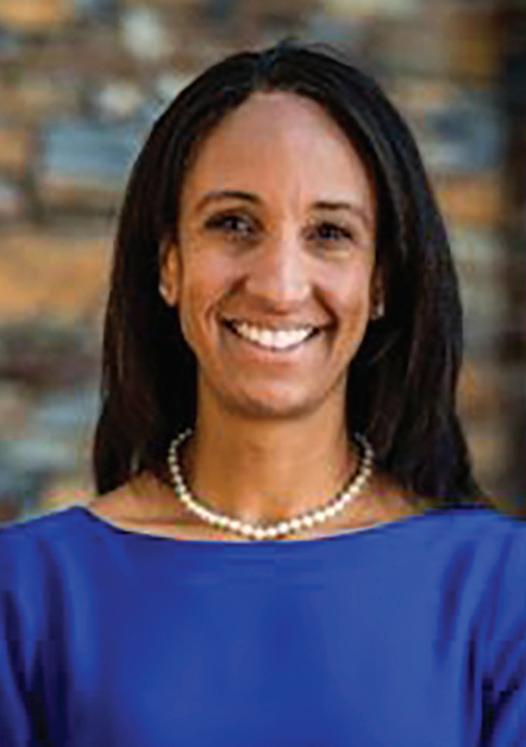
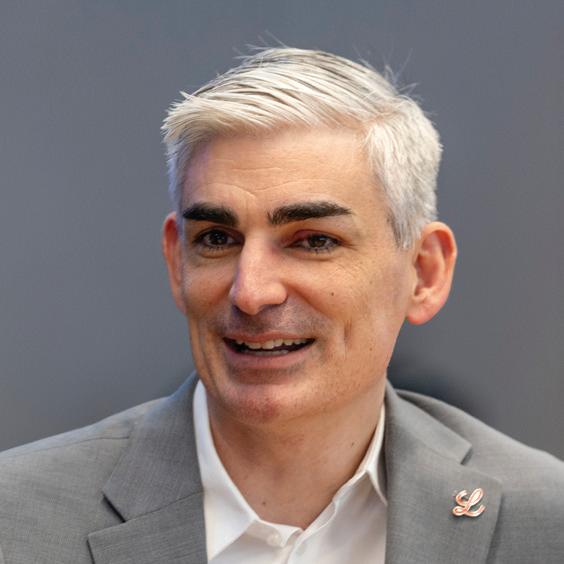
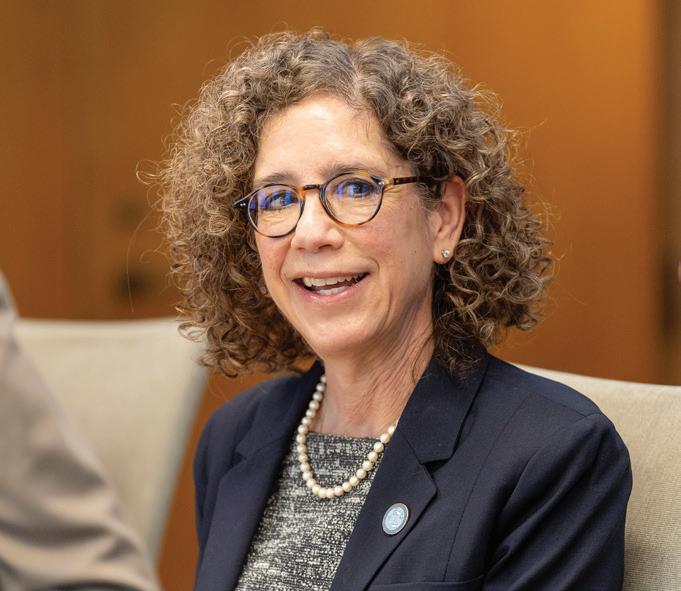
Duke University Athletic Director Nina King navigates big-time college sports with a $160 million budget.
8
NC TREND
Wilkes County couple takes their shot; Landing PSA Airlines adds luster to aerospace sector; Greensboro center city looks for momentum; Universities eye optometry programs; Golfers rally for Asheville Municipal’s postHelene recovery; Charlotte Hornets score with fans and sponsors; Truist Championship’s new strategies.
31 RURAL ROUTE
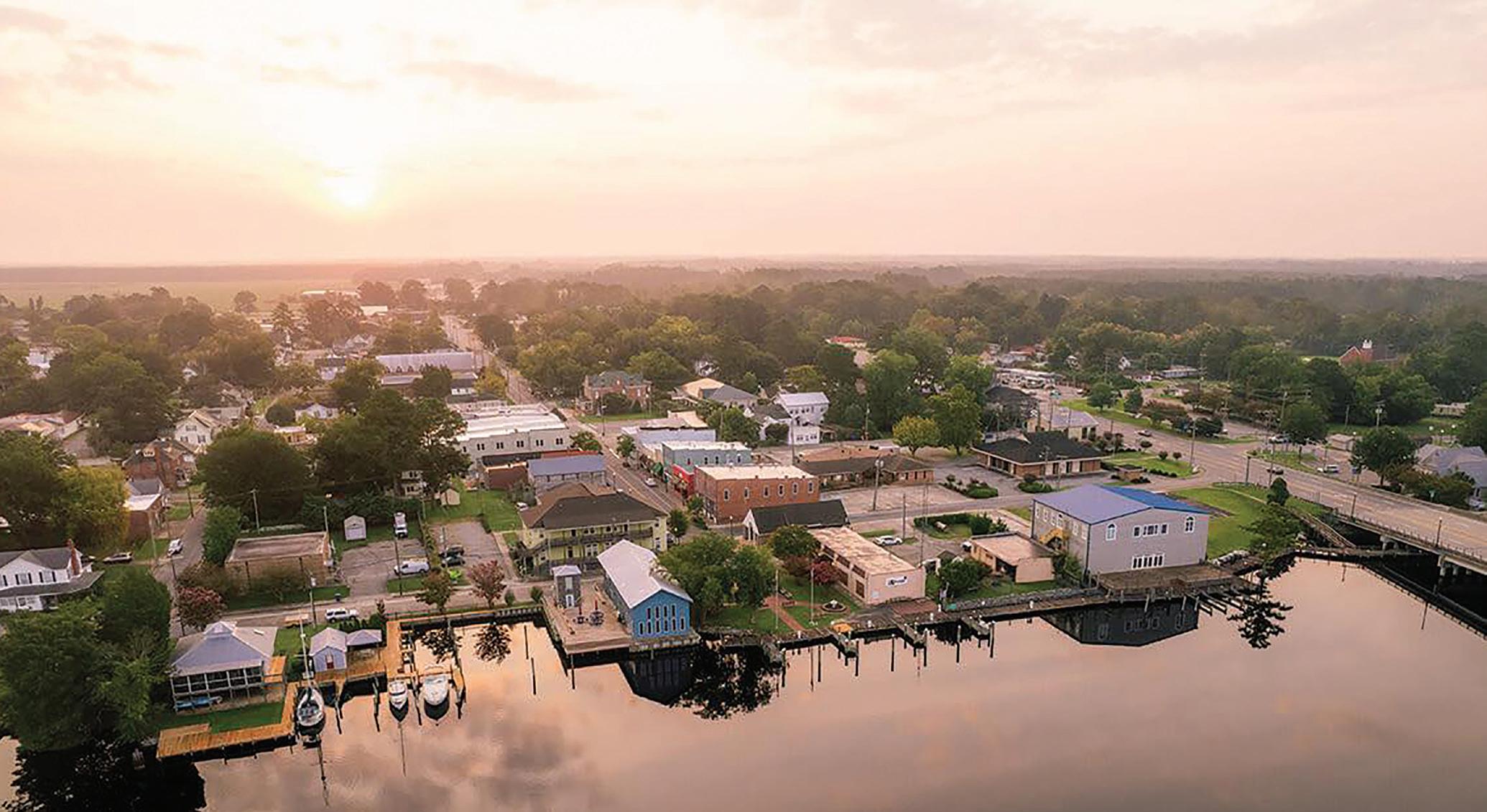
Tyrrell County entrepreneurs spur growth in a community rich in natural beauty but sparse in population.
76 BRICK + MORTAR
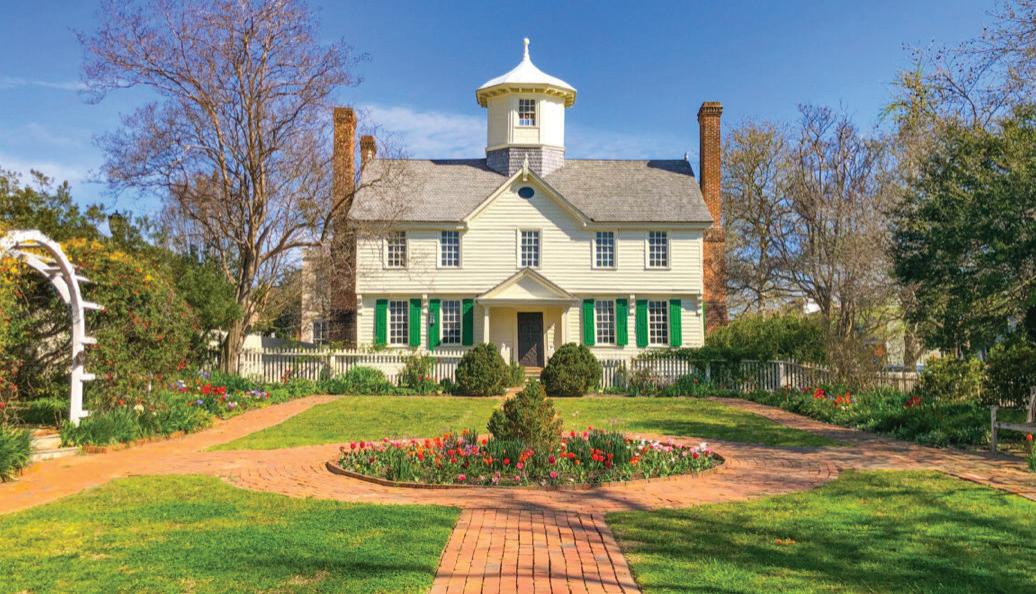
The Cupola House overlooking the Albemarle Sound in Edenton returns to its former glory.
PHONING IT IN
20 NC PORTRAITS: RISING EXECUTIVE
Leaders help build their companies, and provide mentorship to support the next generation.
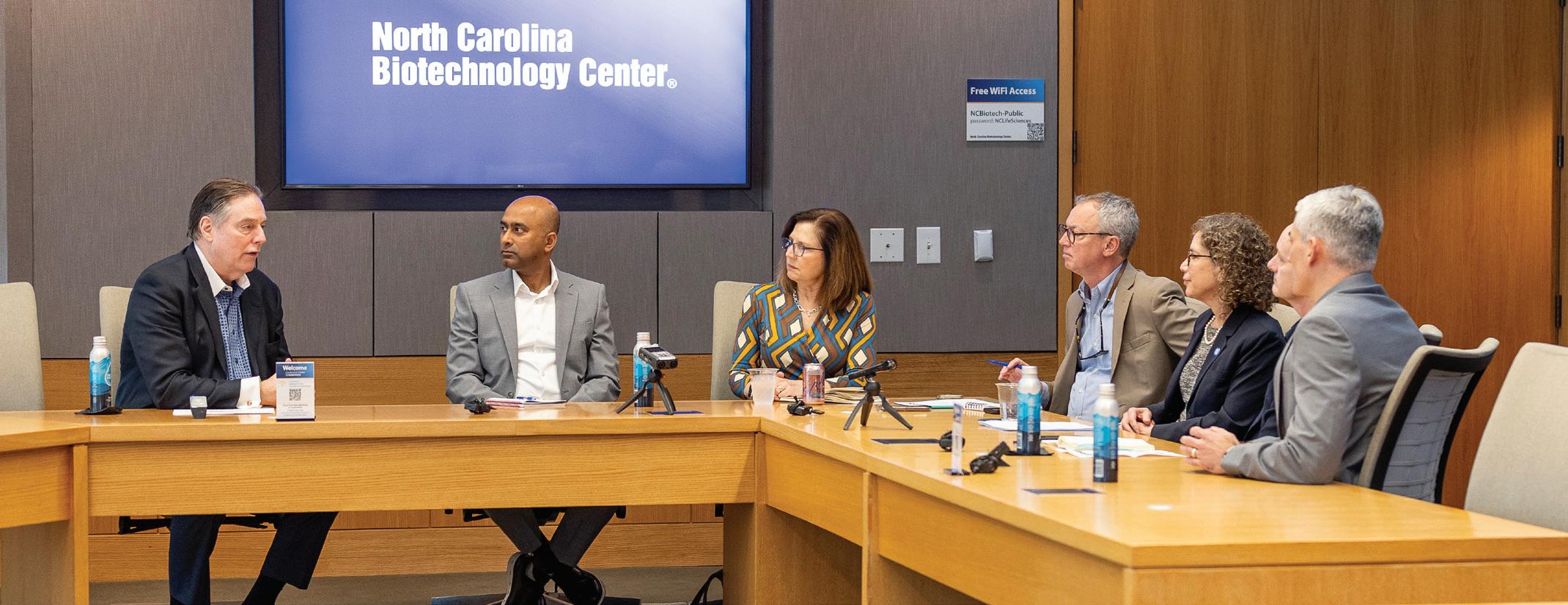
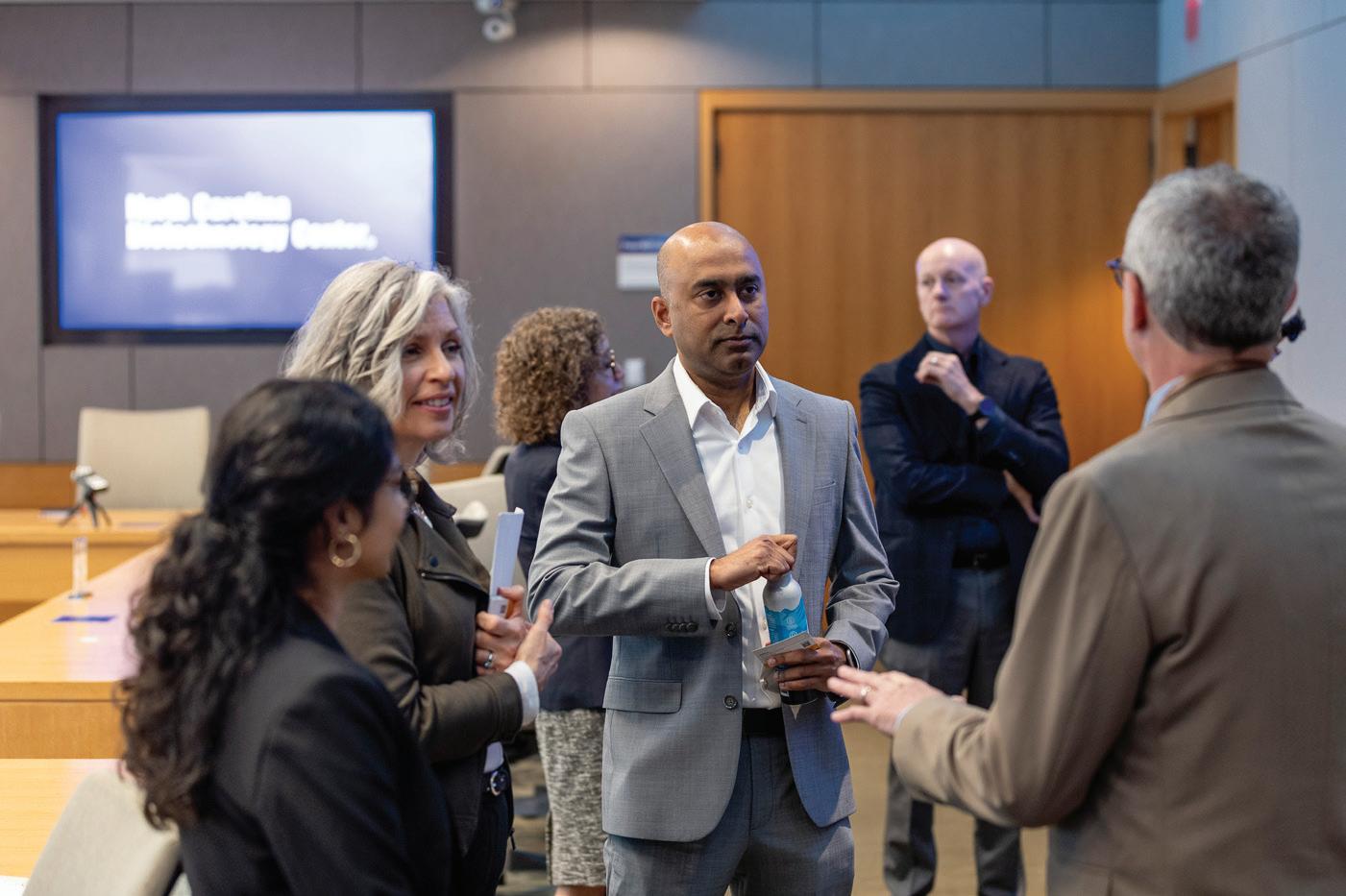
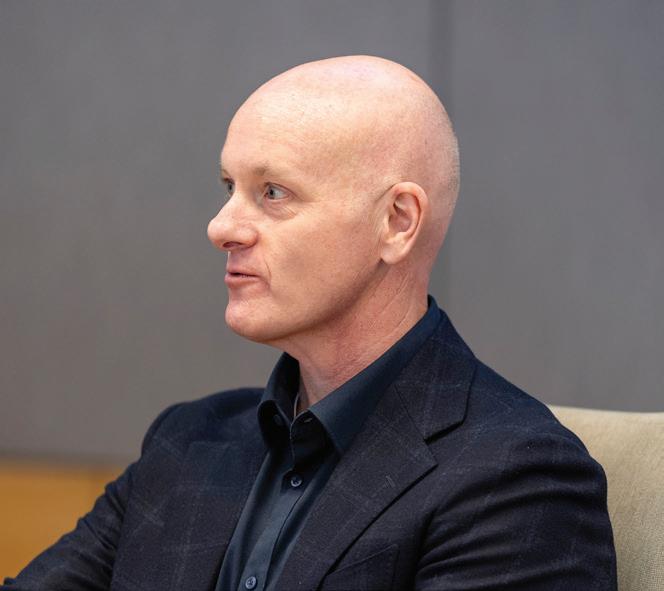
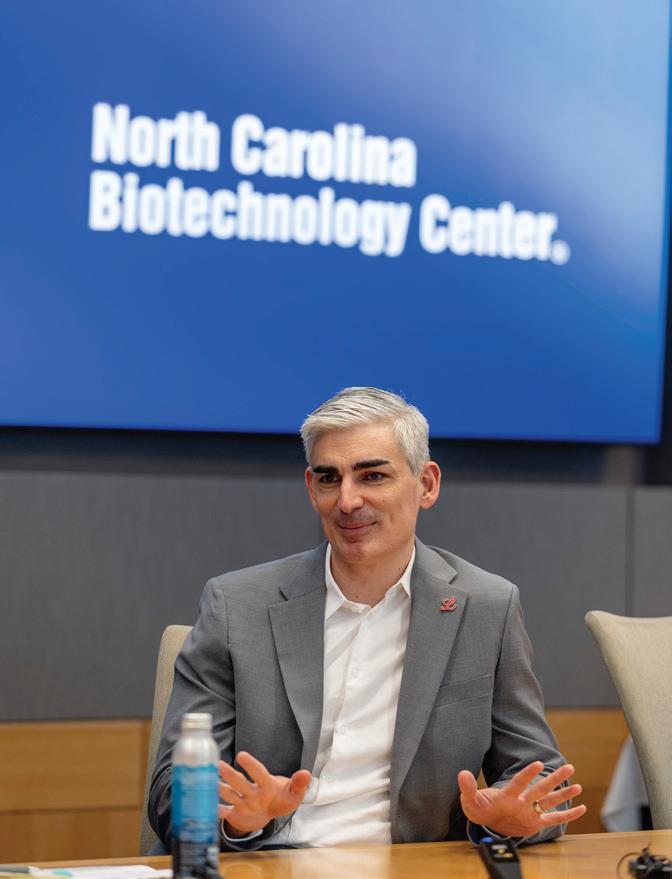
34 ROUND TABLE: LIFE SCIENCES
How an industry with roots in the Triangle grew statewide — and how it is maintaining the momentum.
70 COMMUNITY CLOSE UP: CATAWBA COUNTY
Data centers and investments in recreation and education programs diversify the economy of a community rooted in manufacturing.
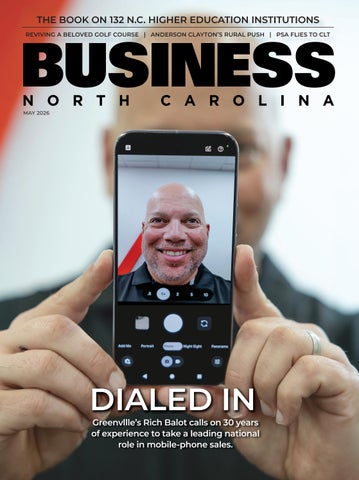
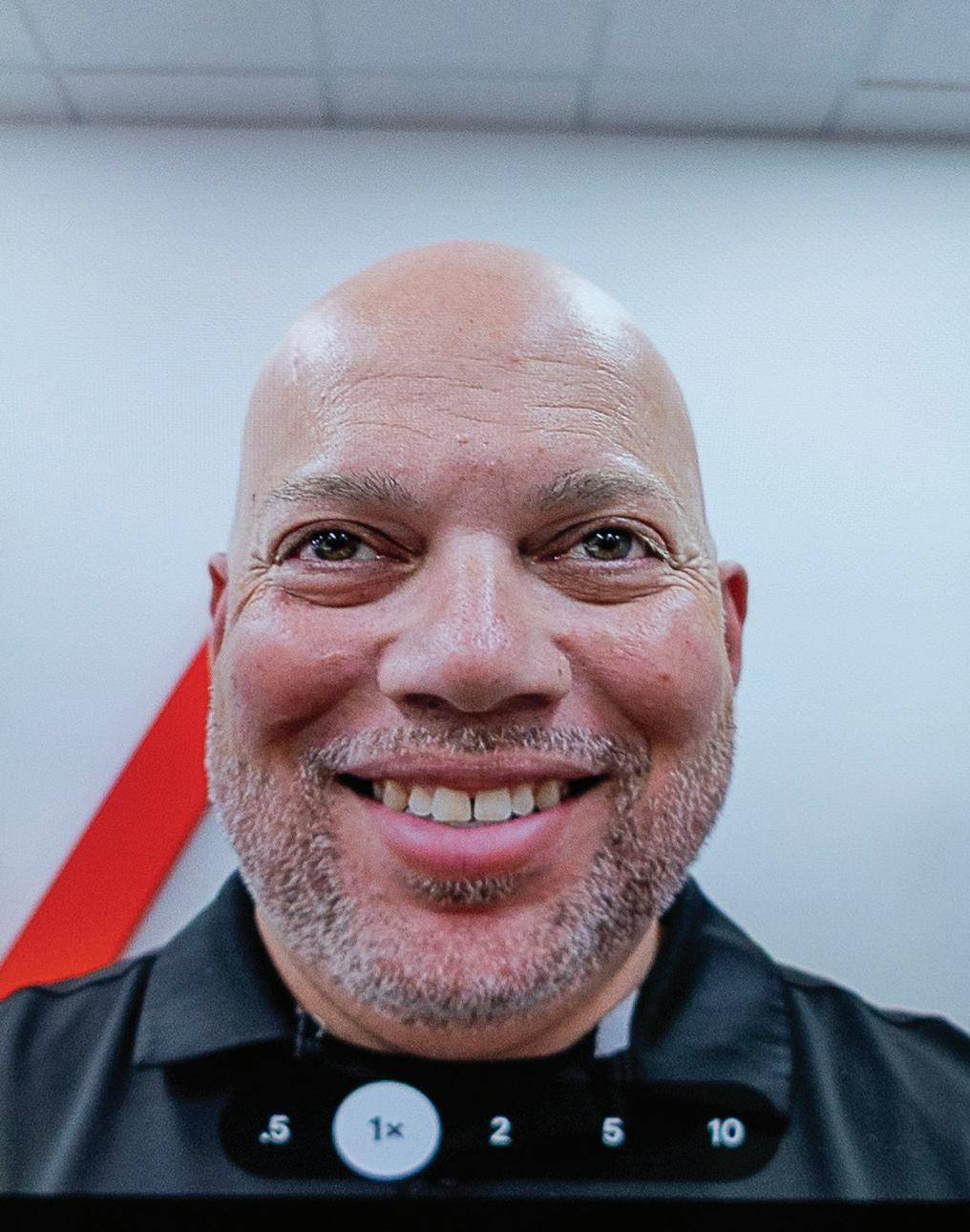
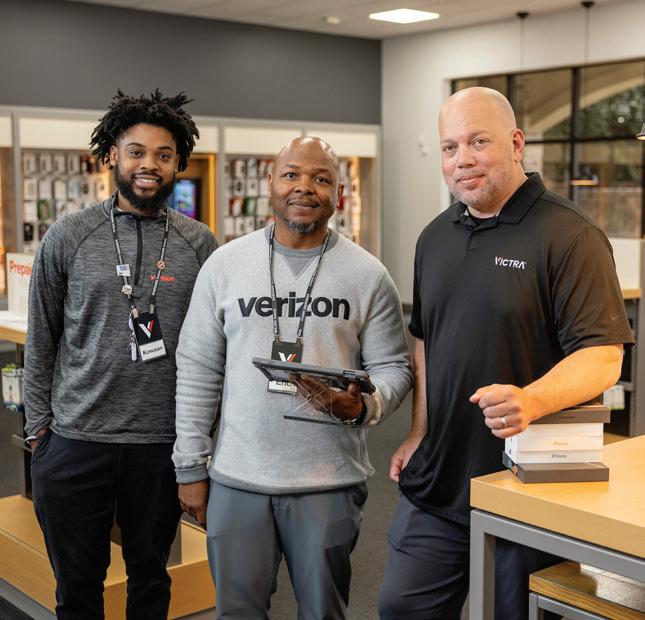
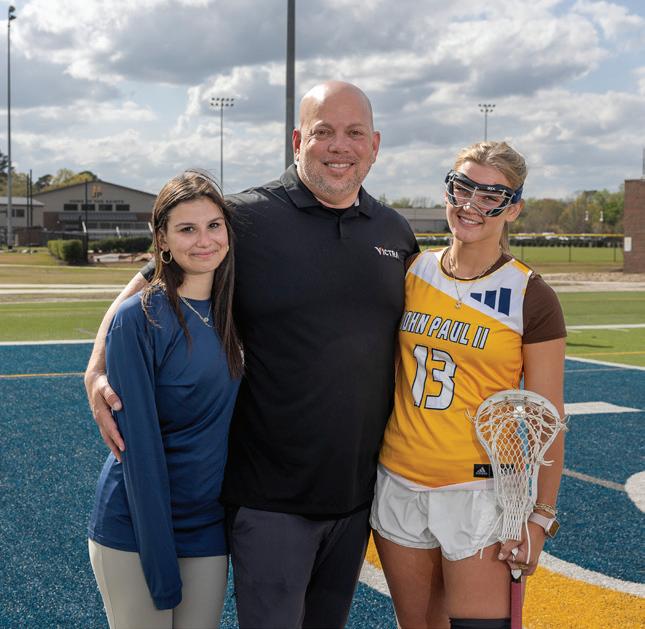
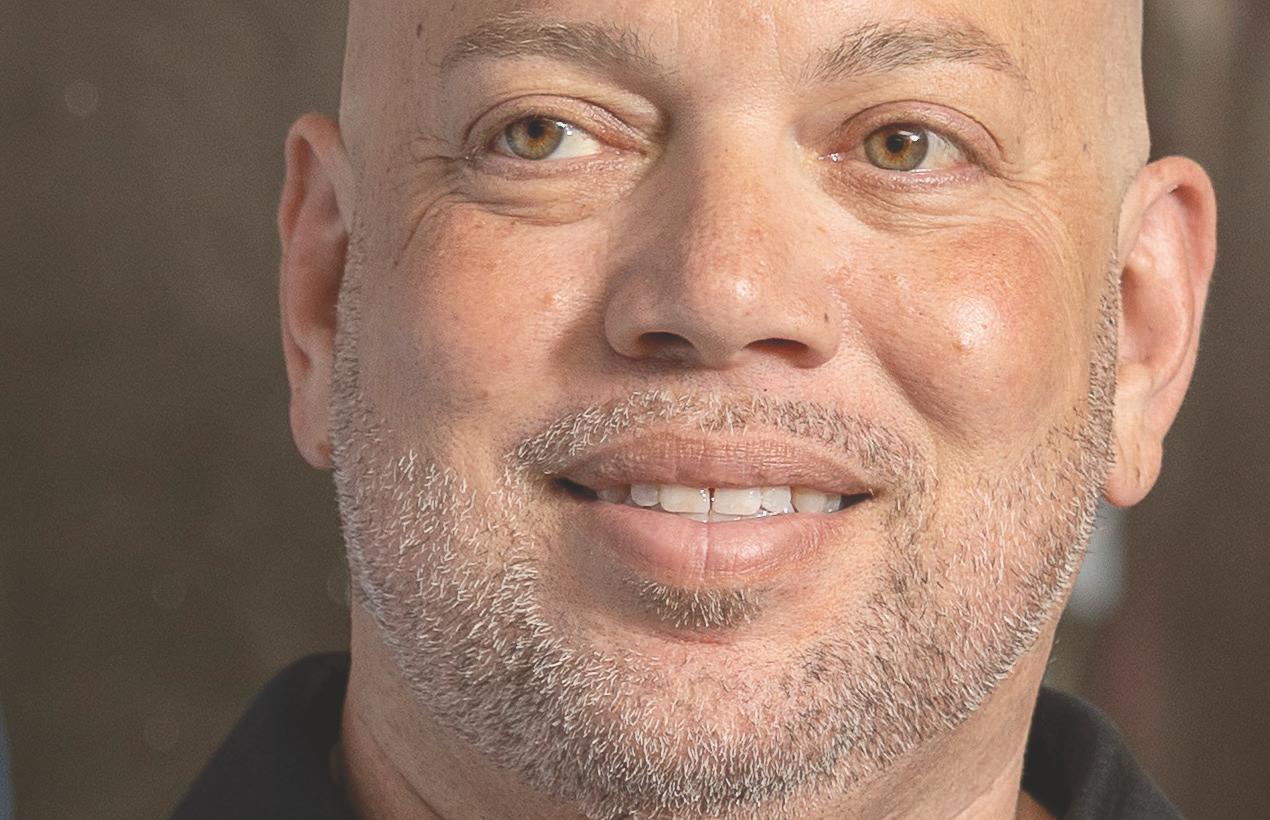
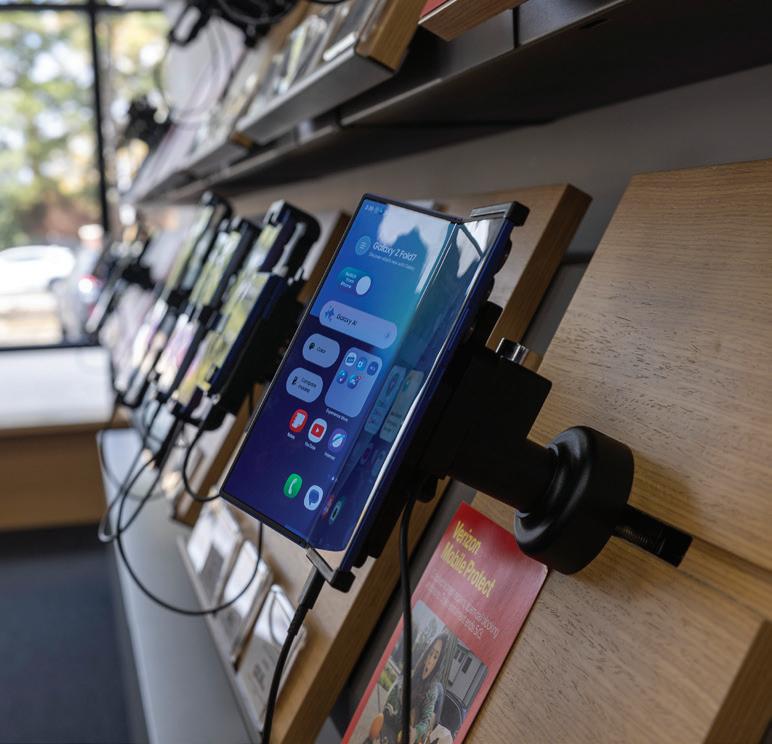
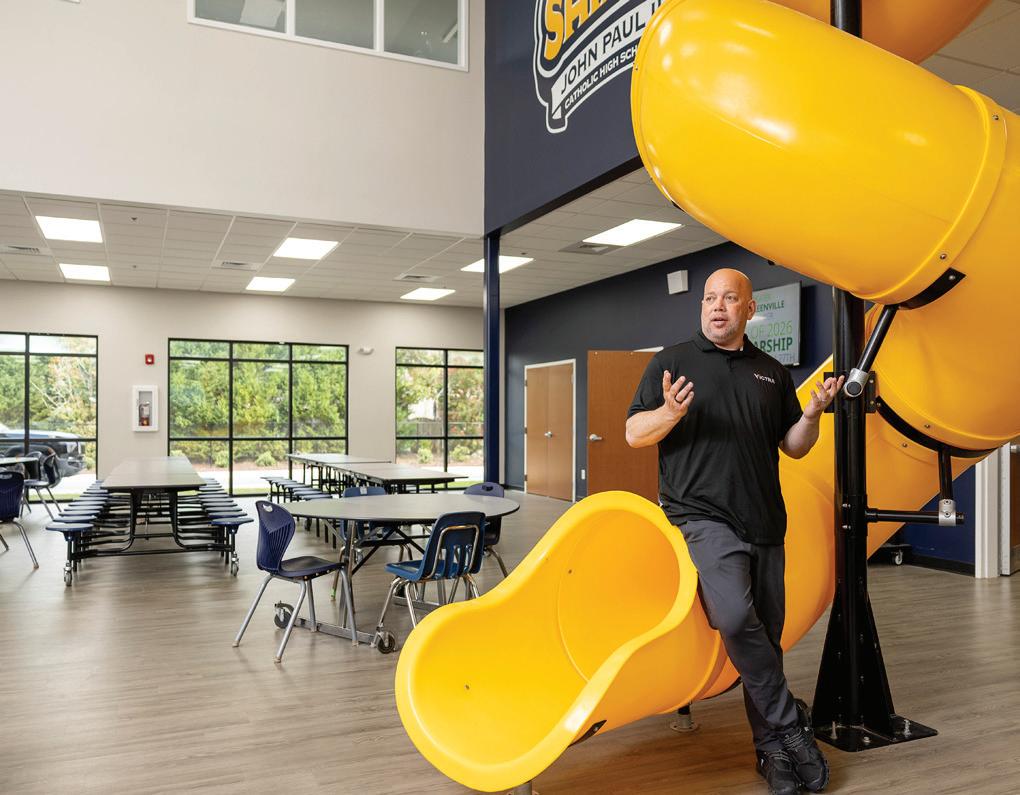
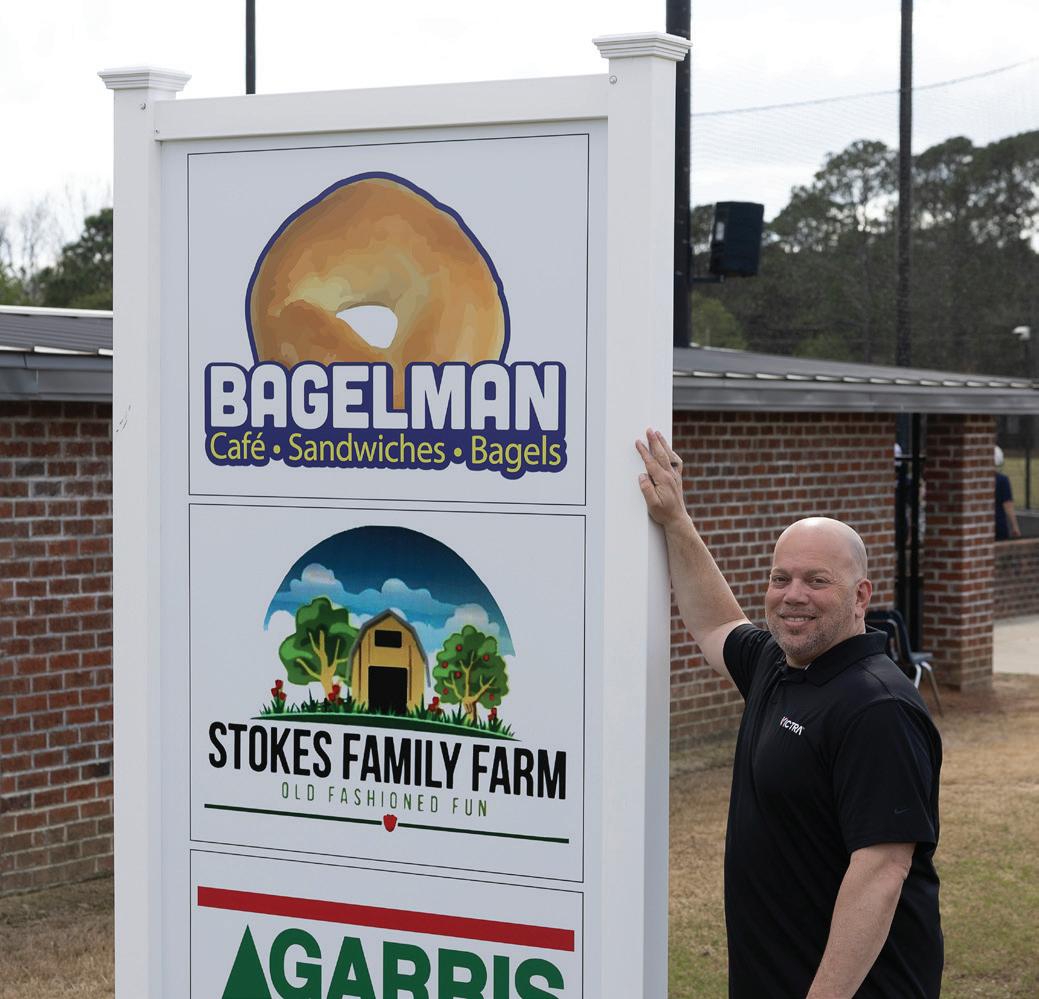
Rich Balot leads a national retail chain and invests in Greenville, while keeping his stress level in check.
BY DAVID MILDENBERG
ROOTS REVIVAL
Anderson Clayton’s relentless style presses rural voters to swing the state to her party’s progressive view.
BY MIKE MACMILLAN
HIGHER EDUCATION
Our annual guide to the state’s colleges and universities’ cost, enrollment and graduation statistics.
UP FRONT Ben Kinney
DEADLINE PRESSURE
We’re proud to again present the annual Higher Education Directory, a comprehensive list of the state’s public and private colleges and universities, along with North Carolina’s community colleges. Perusing the list, you will see why we are one of the top states for business.
Workforce may well be the most important factor when businesses consider expanding or relocating to a state. North Carolina has done an amazing job of providing numerous institutions to develop skilled labor, leaders and anything else businesses need.
For myself, I’ll never forget when I first went to NC State University as a freshman. My dad was very clear in his expectation that I’d finish in four years, as he did at UNC Chapel Hill. I informed him that I’d do my best.
Fast-forward three years, and it was clear I wasn’t going to make that deadline. I was planning to be a high school history teacher,
and the student-teaching semester simply wouldn’t fit in the four-year schedule. I ended up graduating in four-and-a-half years and got a bit of grief from my old man as a result.
My younger sister went to UNC Greensboro a few years later, left it, and attended many community colleges across the state before returning to UNCG for her bachelor’s degree. It took a lot more than four-and-a-half years. At her graduation, I asked my dad what he thought about that. He shrugged and gave me a “what are ya gonna do expression.”
Maybe I'll give a copy of this list to my little sis and ask her to check off all the places she’s attended! Her experiences in higher education paid off in spades as she’s a great public school educator and an incredible mother to her three children.
Her oldest, Martha, researched this year’s directory while attending Western Carolina University. She’s another awesome product of North Carolina’s higher education system.
PUBLISHER
Ben Kinney bkinney@businessnc.com
EDITOR
David Mildenberg dmildenberg@businessnc.com
MANAGING EDITOR Kevin Ellis kellis@businessnc.com
ASSOCIATE EDITORS Ray Gronberg rgronberg@businessnc.com
Cathy Martin cmartin@businessnc.com
CONTRIBUTING WRITERS
Vanessa Infanzon, Chris Burritt, Bill Horner III, Alyssa Pressler Mike MacMillan, Brad King
CREATIVE DIRECTOR Cathy Swaney cswaney@businessnc.com
MARKETING COORDINATOR Jennifer Ware jware@businessnc.com
EVENT DIRECTOR Norwood Teague nteague@businessnc.com
ACCOUNT MANAGER Anne Brundage, western N.C. abrundage@businessnc.com
CIRCULATION: 818-286-3106
EDITORIAL: 704-523-6987
REPRINTS: circulation@businessnc.com
OWNERS
Jack Andrews, Frank Daniels III, David Woronoff, in memoriam Frank Daniels Jr.
PUBLISHED BY Old North State Magazines LLC
PRESIDENT David Woronoff BUSINESSNC.COM
Building Tomorrow’s Workforce
“Businesses need to move past the mentality that if you train people, they may leave. Most stay, but some workers will leave for other opportunities. What we’ve found over the years, because of our culture of developing people, is that those same workers move into leadership roles within the community and may end up hiring us when their new employer needs construction services work performed. It’s a relationship thing.”
Tamera Edwards Chief Administrative Officer
MB Haynes Corporation
Historically, many European countries have utilized apprenticeship programs to build their talent pipelines. In North Carolina, over 3,300 employers have adopted this training model.
Registered Apprenticeship is the gold standard of work-based learning, combining hands-on training with classroom instruction, structured wage progression, and nationally recognized credentials. It’s a proven approach to training your workforce and transferring the knowledge of retiring Baby Boomers before they exit and take the knowledge with them.
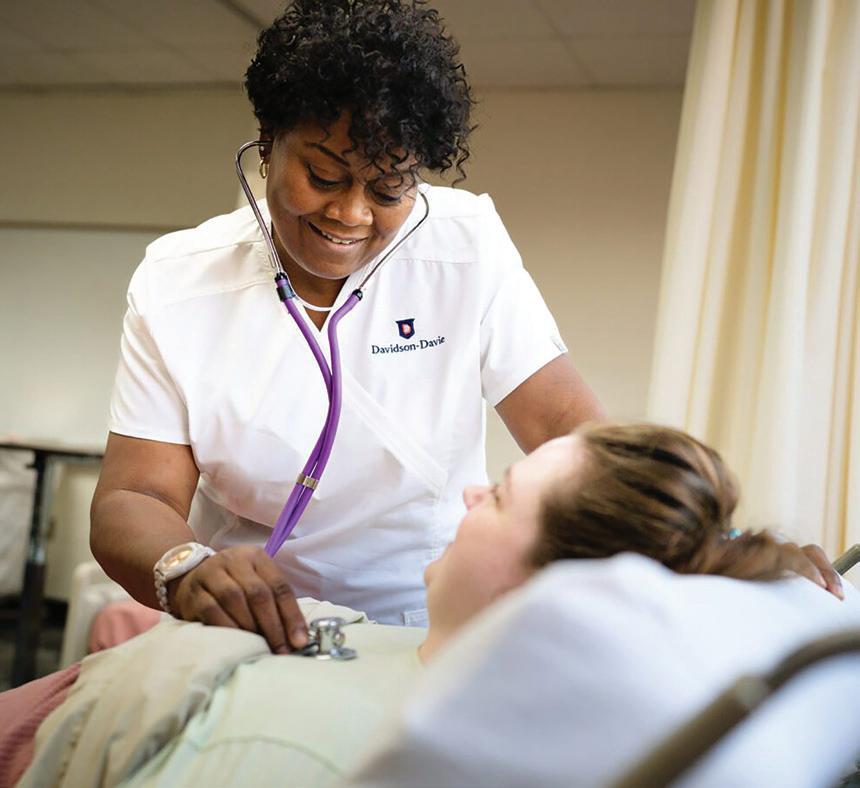
“We now have 11 Registered Apprenticeship Program cohorts - all focused on the critical current and ongoing workforce needs for CaroMont Health. We have expanded to include seven healthcare disciplines. These combined initiatives have realized remarkably higher retention rates when compared to traditional entry into professional practice. Registered Apprenticeships are opening new doors at CaroMont Health. We are preparing our community to care for our community.”
Janice Hill, PhD, RN, NE-BC Director Workforce Transition Program CaroMont Health, Inc.
What are the benefits of Registered Apprenticeship?
In addition to transferring generational knowledge, Registered Apprenticeship Programs (RAPs) allow your business to train employees with the specific skills you need them to have. Other benefits to the employer include: An average return on investment of 50% or higher, regardless of industry.
RAP completion rates averaging 70-80%.
Five-year employee retention rates for program completers exceeding 90%.
Apprentice completers outperform peers in similar occupations in terms of overall job performance, quality, critical thinking, and leadership.
Increased loyalty and a stronger company culture.
No cost support from ApprenticeshipNC.
About ApprenticeshipNC
What businesses can utilize Registered Apprenticeship?
Most any business can build a Registered Apprenticeship with over 1,400 occupations pre-defined by the U.S. Department of Labor. Registered Apprenticeship is used across a wide range of industries, including, but not limited to:
Healthcare
Information Technology
Advanced Manufacturing
Finance
Public Safety
Teaching
Graphic Design
Skilled Trades
How do I get started?
Contact your ApprenticeshipNC consultant by visiting apprenticeshipnc.com/contact. They will answer any questions you have or begin setting up your program.
Recognized by the Office of Apprenticeship to act on behalf of the U.S. Department of Labor, ApprenticeshipNC (ANC) is the State Apprenticeship Agency housed within the North Carolina Community College System. The ApprenticeshipNC Team works directly with employers, educational institutions, and community partners across all 100 counties to help design and implement Registered Apprenticeship Programs—so employers are never navigating the process alone.
NINA KING
DUKE’S KING
CNina King joined High Point University President Nido Qubein in the Power List interview, a partnership for discussions with influential leaders. The interview was edited for clarity.
ongratulations for being the first female athletic director at Duke University.
It’s an incredible honor. I’m in my fifth year as the university’s AD. Sometimes I feel like I just started yesterday, sometimes like I’ve been doing this for 100 years.
You’re a trailblazer because you’re only the third black woman to serve as the AD of a Power Five school. Have you met other lawyers who are ADs? Yes, there are a few. It’s becoming more popular now given the landscape of college athletics and the business that we’re running. Varsity sports is the biggest budget unit in the athletics department. Our second budget unit is club sports, intramurals, recreation and physical education — all of the recreational community here on campus. Our third budget unit is the Duke
Nina King worked as an executive in Duke University’s athletics department for 13 years before succeeding longtime Athletics Director Kevin White in 2021. Her department includes 27 varsity sports, 700 student-athletes and 350 employees. The annual budget is about $160 million, she says. The Tampa, Florida, native has a bachelor’s degree in accountancy from Notre Dame and a law degree from Tulane University. She was director of rules education at the University of Notre Dame athletics department from 2005-08.
University Golf Course. That’s home for our varsity men and women’s golf. It’s also a public course and a revenue generator for us.
When you finished law school at Tulane in 2005, you weren’t thinking about becoming an AD?
Correct. But I did go to law school with the intent of working in college athletics. I knew I needed an advanced degree to set myself apart from everybody else who wants to work in this business. I wanted to think of creative ways to use my law degree around sport. Back then, I didn’t think I wanted to be the leader who shoulders everything in the department. Some days I still don’t, but it’s so rewarding now being the leader of Duke athletics.
You were at Duke in 2022 when Mike Krzyzewski retired. Walk me through the process of dealing with his exit and the process of hiring a new coach.
I was named athletic director in May of 2021, and two weeks later we announced Coach K’s retirement plan. Interesting for sure, but somewhat difficult to do successfully. There’s no playbook to replace a legend. We’d seen several other schools where they tried to replace a legend and went through their third, fourth or fifth coach before finally seeing some success replicated.
You didn’t push Coach K out, did you?
It wasn’t me, I promise. In the spring of 2021, Coach K informed my predecessor Kevin White about his plans to retire a year later. I had the opportunity to work with Kevin on the transition and the hiring process. When I became AD, I took the reins on the announcement and then a smooth transition. We named Jon Scheyer as the coach in waiting for the next year. I spent a lot of time with Coach Scheyer preparing for succession and understanding his vision for the program once he became the head coach.
LIST INTERVIEW
with Nido Qubein
Coach Scheyer has seen incredible success. Since then, I’ve hired 10 head coaches. Easily one of my favorite parts of the job is to hire coaches. I enjoy identifying talent and figuring out what’s the right fit for Duke University. We’re making sure we’re integrating new coaches into our university’s mission and ensuring they have what they need to be successful.
Collegiate sports is going through a tremendous transformation with NIL (name, image and likeness) and the portal. You live with it every day. Give us your educated observation about what is yet to come.
Yet to come is anybody’s guess, but it’s going to be something different for sure. We’ve always been iterating, evolving, and trying to develop an enterprise to make the modern studentathletes successful. What I am a little bit worried about is that the enterprise has always been attached to the academy. Studentathletes come for an education and to be able to compete in athletics at a high level. Right now as the landscape’s evolving, we’re pulling further and further away from the academy and turning more professional, which is a bit scary.
We want to be able to tell a Duke recruit to come here for a world-class education and an opportunity to compete for championships. We want to be really good at both. We want you to have a good GPA. That’s something to be proud of. Go get a job after this and make us proud, but also go win in sports.
What about third-party arrangements that allow athletes to be paid for the use of their NIL in advertising and marketing?
The third-party stuff isn’t too terribly troubling. Giving athletes the ability to profit from their own name, image and likeness or go write a book and travel around the country to make money, I completely support that. The non-student-athletes on campus can go do that, as influencers on social media or whatever it might be. I think student-athletes should have the same flexibility and opportunities.
Where we lost the plot was when boosters started paying student athletes. “Sign a basketball and I’ll give you $250,000.” Well, that’s not the going rate for signing a basketball no matter who you are. So that’s where we need guardrails. For them, it’s about learning business and building their brand and making money according to their fair market value. We’re trying to put some of the toothpaste back in the tube, but it’s pretty challenging right now.
What’s been the impact of the transfer portal?
That’s the challenge for our coaches these days. They used to be able to build rosters in four or five-year increments, and now it’s annually who’s on my roster? How do I build a team? I mean, it is wild right now. The priority is for the coaches to create a team culture and an atmosphere where student-athletes want to be here that they’re not interested in transferring. Again, I go back to the non-student-athletes on our campuses. If they weren’t happy on our campus, they could transfer and they could go to another
institution. I think our student-athletes should have flexibility, but it’s not because my coach looked at me funny, so I’m going to transfer.
What is your view of the future?
There is hope. I am a silver-linings kind of person, although some days I can get pretty down about where our business is and where it could potentially be going. But I keep coming back to that mission of how incredible this opportunity is that we have to provide students with an incredible education. Again, they get to follow their passion, whether it’s fencing, rowing, tennis, swimming, whatever it might be to come here to be successful in their chosen sport. I keep thinking about that and trying not to get too down.
In terms of the future, we’re going to be constantly iterating. I think we need to become more modern as an enterprise — the NCAA, our conferences, our institutions – to be attentive to the needs of the student-athlete. That’s why we’re in revenue sharing, right? Their argument was, we make your institutions all of this money. We should be able to take home some of the money ourselves. OK, we’ve been providing you with a scholarship, tuition, room and board, books, travel, athletic medicine trainers, nutritionists, shoes, jackets.
Instead of taking all of the money that we make off of producing 27 sports here at Duke, we’ll divert some of that money. Instead of six nutritionists, we’ll have four nutritionists, and we’ll share revenue with our student-athletes. We’re really trying to make decisions now that don’t impact the student athlete experience too terribly significantly.
I was not a student-athlete. I’m pretty unathletic. If I had the opportunity to be a student-athlete and somebody was providing me with a free education, that would be enough for me.
Ticket sales to sporting events provide revenue for athletic departments, which leads to the milliondollar question. With only 9,300 seats in Cameron Indoor Stadium, why isn’t Duke building a 25,000seat stadium for basketball?
The tradition of Cameron, it can’t be touched. We can fix up the outside of Cameron, but it’s like an old car. You don’t want to replace all the parts. Honestly, the cost to build something like that in this day and age would be so prohibitive.
Is it fair to your students that they can’t get in there?
There’s room for about 2,500 students in Cameron. We have 6,800 undergrads, probably another 6,000 grad students. There’s obviously demand for the Carolina game. But not everybody wants to go to the basketball games. In general, we’re meeting the demand from our students to be able to go to basketball games.
What is the toughest part of your job?
I would say it’s financial — developing financial models, financial stability, trying to figure out where the money’s coming from, how to pay for everything. That’s what keeps me up at night. Just the finances of this expensive enterprise. ■
TARGET PRACTICE
The year-old Hidden Brook Sporting Club attracts sporting clay fans to Wilkes County.
By Vanessa Infanzon
For three years, Kelly and Tracey Dickson explored ve North Carolina counties in search of the perfect piece of land to build a club o ering sporting clay shooting, archery, hiking, biking and y shing.
ey gave presentations at city council meetings and knocked on farmers’ doors. Most people loved the project, but they didn’t want guns in their backyard.
In 2024, the Wilkes Economic Development Corporation invited the couple to view the southern portion of a 500-acre tract owned by the town of North Wilkesboro, less than four miles from downtown. It was the only invitation the couple received during their quest.
Before the pandemic, o cials in Wilkes County created the Great State of Wilkes Outdoor Action Plan, a 15-year plan to develop outdoor recreation infrastructure projects.
“We wanted to leverage our outdoor assets for workforce retention, worker recruitment, tourism and public health,” says omas Salley, the former executive director of Wilkes County Tourism. “We wanted people to know about and be able to access our outdoor spaces. We identi ed several parcels that we knew were available that could have been used for outdoor recreation. Hidden Brook was the rst one to come along.”
Eight months later, a er a zoning text amendment, the Dicksons purchased 285 acres of the land for the Hidden Brook Sporting Club.
“(It) draws people into the community that are part of our target audience,” Salley says. “It’s a great tool to begin the conversation about visiting Wilkes, relocating to Wilkes or starting a business here. It kicks that door open.”
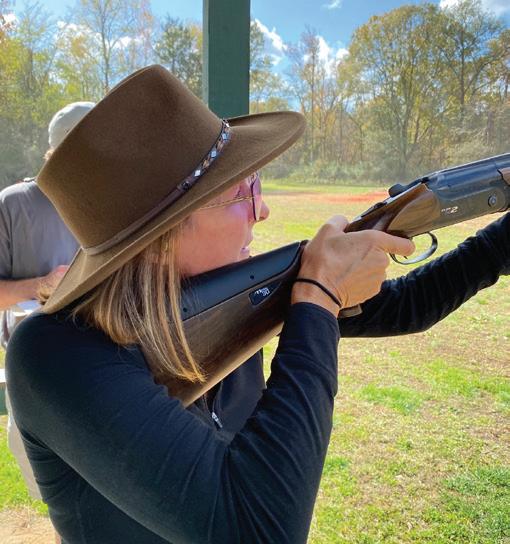
Kelly Dickson and her husband enjoyed sporting clays for 30 years before starting their Wilkesboro business.
Tracey and Kelly Dickson
SPORTING CLAYS
Sporting clays simulates hunting by using a shotgun to hit colorful “pigeons” made from limestone bound together with petroleum-based pitch. A target machine launches the clays.
e sport attracts a devoted following, with more than 40,000 members and 466 clubs making up the National Sporting Clays Association. at includes 1,274 North Carolina members and 13 clubs in the state.
e group gains about 7,000 new members a year with the Southeast among the most active regions, says Michael Hampton, executive director of the San Antonio, Texas-based NSCA. “ ey have the most participation from membership to clubs to targets being thrown. ey host the biggest shoots in the United States.”
Tracey, who worked in NASCAR, and Kelly, who was a marketer, have been shooting clays for more than 30 years. e husband and wife team became certi ed instructors and in 2019 launched Mooresville-based Sporting Clay Xperiences, to o er clinics, private lessons and trips to various sporting events.
With retirement nearing and their adult children out of college, the time seemed right to start the business.
In addition to land costs, about $10,000 to $15,000 per acre, the Dicksons invested in 34 automatic target machines for the sporting clay course’s 14 stations and a Five Stand, which is a line of ve shooting stands. Each machine features a delay mechanism for solo practice and voice activation. e angle, direction and speed may be changed, and Tracey moves the target machines o en, so guests get a new experience each time they visit the course. Guests insert a card to track how many targets are launched.
In building their own course, the Dicksons wanted to provide a course that complemented the land’s rolling topography.
Hunters come to “knock o the rust” before the o cial season, while competitive sporting clay shooters like to practice in an everchanging environment.
“[ e course] emulates the ight of birds, more so than just ying away from you,” Kelly says. “It is like duck hunting or quail hunting. We o er something that just doesn’t exist everywhere.”
From the May opening through December last year, Hidden Brook welcomed 1,000 visitors from 24 di erent states and four countries. at included sales meetings and other corporate events. Overall, more than 150,000 targets were thrown by folks between the ages of 10 to 85.
HITTING THE TARGET
Sarah Phelps, a retired banker from Cornelius, met Kelly and Tracey during the pandemic through Sporting Clay Xperiences. She was familiar with sporting clays through her husband but had never had any formal training. Phelps and her high school-aged daughter have had shooting lessons with Kelly.
Shooting enthusiast Sarah Phelps
Projects such as adding a second sporting clays course, an event center, a members’ clubhouse, tiny houses for overnight accommodations, a restaurant and a wedding venue will be introduced in phases.
“It was a dream they talked about,” Phelps says. “I look forward to seeing how it all evolves in the coming years. It’s a fun place to spend an a ernoon right now, and I could see in the next couple of years, it might be a nice place to spend a weekend.” ■
Tracey Dickson worked in NASCAR before starting Hidden Brook.
NC TREND
NC TREND ››› Aviation
TAKING OFF
A new headquarters office returns a missing piece to the state’s aviation sector.
By Kevin Ellis
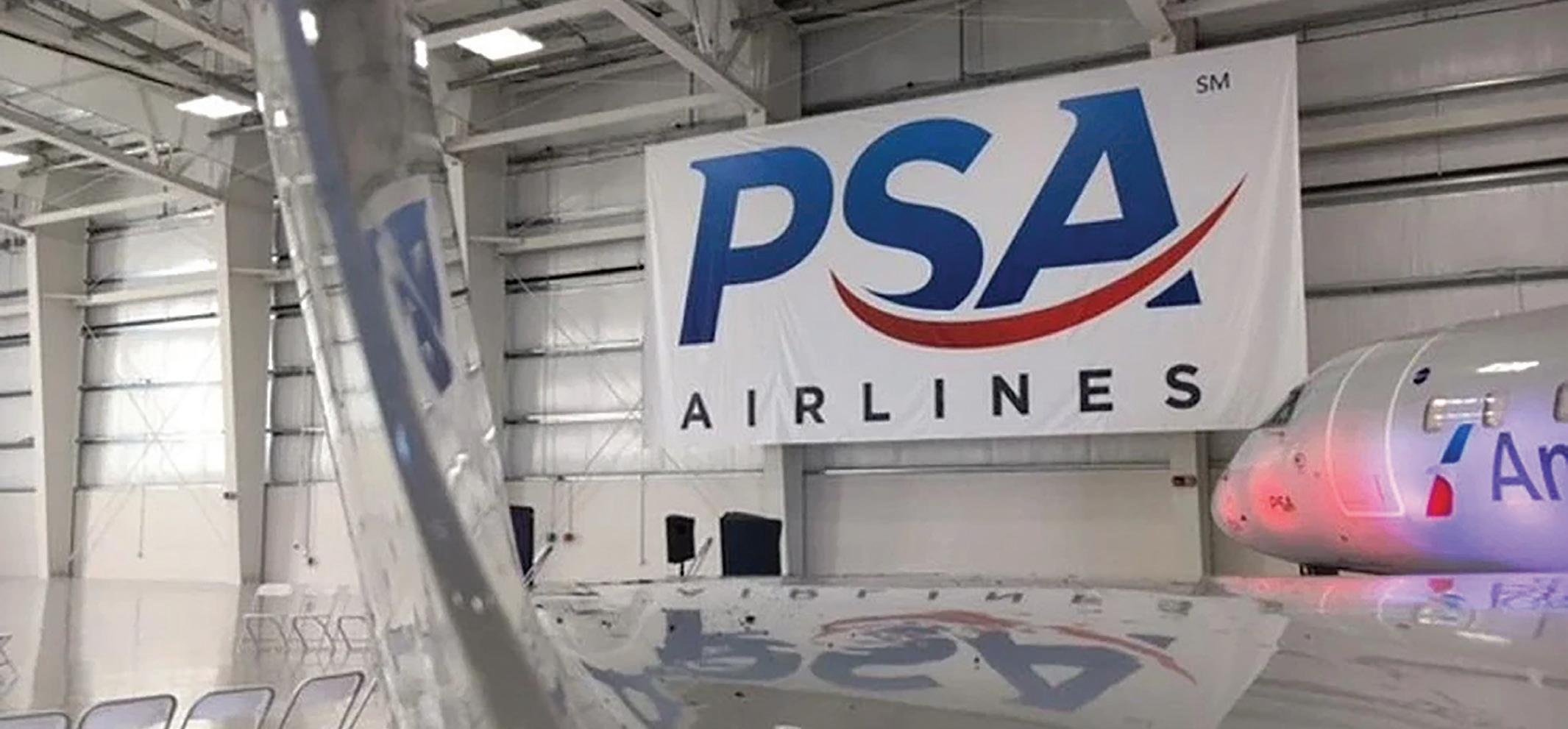
American Airlines a liate PSA Airlines completed moving its headquarters to Charlotte in March, bringing jobs, investment and cachet to the Tar Heel State’s aerospace resume.
“For the rst time in decades,” says Gov. Josh Stein, “North Carolina has a passenger airline headquartered in our state. at is certainly something worth celebrating.”
North Carolina’s 400 aviation-related companies contribute $88 billion annually to the state’s economy. Pratt & Whitney announced last year it would add 325 jobs to its 900 workers in Asheville making jet engine components. GE Aerospace is investing $101 million this year across four of its facilities in the state.
e sector’s biggest potential blockbuster is Long Beach, California-based JetZero, which says it will start building a factory this summer at Piedmont Triad International Airport to make a new style of aircra . e privately held rm plans to add 14,000 jobs over the next decade at the site.
Still, the “First in Flight” state hasn’t had an airline headquartered here for more than 20 years until the move by PSA, an American Airlines subsidiary that operated from Dayton, Ohio, for four decades. CCAir, a small regional carrier, ceased operations in 2022.
e state’s most famous transportation company, WinstonSalem-based Piedmont Airlines, was acquired by USAir in 1989. American Airlines bought USAir in 2013, which included PSA.
“You’re not going to be a thriving state and community without strong aviation,” says Stein.
e strength of Charlotte Douglas International Airport was a critical factor in PSA’s decision. It ranks as the seventh-busiest U.S. airport because of American’s big hub. It employs about 15,500 people in Charlotte and makes up about 90% of ights at Charlotte Douglas, roughly 50 million passengers last year.
PSA contributes to that tra c with about half of its 750
daily ights taking place at Charlotte Douglas, moving almost 500,000 passengers a month through the Queen City. American handles reservations and bookings, and the goal is for passengers not to notice a di erence between regional carriers and service by the largest U.S. airline.
PSA started planning a move to Charlotte seven years ago, says PSA CEO Dion Flannery.
“Now, we typically move faster than that as an airline,” he notes.
“COVID got in the way, and other things as well, but once it started getting rolling, the partnership that we got from American Airlines was phenomenal.”
e carrier already had one of its 10 maintenance bases and ve crew bases in Charlotte, plus a training center. Now PSA also has corporate and operational workers.
PSA makes up a key part of Fort Worth, Texas-based American’s regional network, which includes subsidiaries Envoy Air, which is based in Irving, Texas, and Salisbury, Marylandbased Piedmont Airlines. American also contracts with three other partners: SkyWest Airlines, Republic Airways and Air Wisconsin.
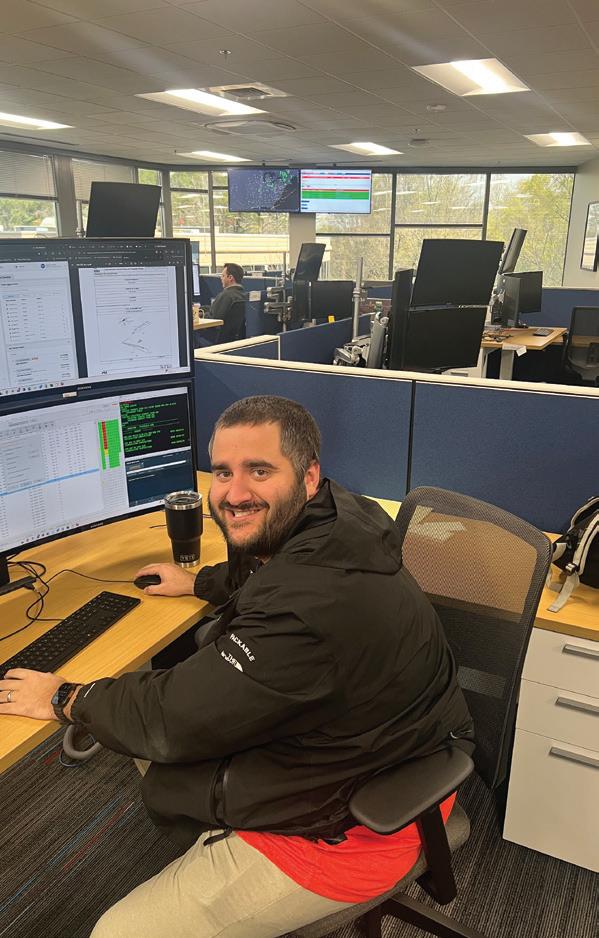
PSA employee Dustin Antoff
ON BOARDING
It was a big job to move an airline across the country and not miss a beat, Flannery says, noting American’s support.
e move is expected to generate $228 million in annual economic output and $10 million in state and local tax revenue, according to NC State University’s Institute for Transportation Research and Education.
PSA did not seek state or local economic grants related to its move. e airline had revenue of $1.23 billion, and posted a $50.7 million de cit, in the year ended June 30, 2025, according to a U.S. Department of Transportation report. American’s annual revenue tops $54 billion.
“We bet on the proposition that this community can serve us well, and boy, were we right,” Flannery says. When PSA posted 140 job roles, it received more than 30,000 applications. “So the thesis that Charlotte was, where we needed to be, has been proven to be completely true.”
About 450 people now work at PSA’s ve-story building, located less than two miles from Charlotte Douglas International Airport. e rst group began arriving in early January, just shy of a year a er PSA announced the move.
About 160 PSA workers in Ohio moved to Charlotte with the company, including Dustin Anto , and his twin brother Dylan, who arrived in that rst group.
e Anto s grew up in Mecklenburg County, graduating from Hickory Ridge High School in Harrisburg in 2013. Dylan remembers being at work and hearing the original announcement.
“I was like, I get to make a move back home,” says Dustin Anto . “Being close to family again is exciting.”
PSA Fast Facts
14.49 million passengers carried
11.3% of American’s departures
6.3% of American’s passengers
Anto and his brother are part of PSA’s Integrated Operations Center, considered an airline’s nerve center, and an area connected with the headquarters’ shi .
Dozens of IOC employees ll most of a oor at the 80,000-square-foot PSA headquarters, handling everything from pilot and ight attendant scheduling to managing fuel and maintenance for planes to providing ight support to pilots with weather updates and air tra c.
Anto works a four-day, 10-hour shi , arriving at 4 a.m. Multiple computer screens surround his desk. One of his tasks is to help pilots navigate changing weather.
“ ere’s always something going on, it’s always changing,” he says.
PSA hires about 1,200 workers a year, a turnover rate of more than 20%. Regional airlines are o en seen as a stepping stone to major carriers like American, explains Flannery.
“We are a talent-thirsty organization,” he says. PSA has formed partnerships with Central Piedmont Community College, UNC Charlotte and Johnson C. Smith University, including scholarships for students.
PSA’s arrival will bene t Central Piedmont students seeking careers in aviation through internships and strengthen programs through professional development, equipment and technology, says CPCC President Kandi Deitemeyer.
“Central Piedmont exists to build that pipeline and to make sure our students can step into these careers with con dence,” she says.
PSA’s decision, adds Stein, returns a missing piece to the state’s aviation sector. “We are still gaining speed and altitude.” ■
Longest Route:
Philadelphia - Houston
Busiest Route: Charlotte - Greenville/Spartanburg, SC
25.5% of American’s regional passengers
5,449 employees
2,179 based in Charlotte
22% of American’s departures in Charlotte
13.2% of American’s passengers in Charlotte
100 destinations
147 jets made by Bombardier
75-seat CRJ 900s or 65-seat CRJ 600s
DOWNTOWN DILEMMA
Greensboro’s center city seeks fresh energy and a new promoter.
By Chris Burritt
Zack Matheny’s elevator rides are over. e board of Downtown Greensboro Inc. is seeking a successor for Matheny, who resigned in March a er 11 years as CEO. If board members listen to downtown merchants, they’ll select a leader adept at managing the sometimes divergent demands of business owners and elected o cials.
Downtown Greensboro’s sta of seven works on the third oor of a South Elm Street building. Riding the elevator requires the permission of sta , symbolic of a disconnect between Downtown Greensboro and its various audiences.
Shopkeepers say the new chief needs to advance the works in progress under Matheny, emerging from frays over safety, parking, vacant storefronts and the homeless with an overarching strategy promoting the charms of North Carolina’s third-largest city. In addition to his downtown duties, Matheny served on the Greensboro City Council for three years before losing his re-election bid in November.
“We need a visionary who will be able to rise above all of that so they’re not spending all their time putting out res,’’ says Jackson Mayshark, the owner of Ambleside Gallery, a ne art shop on South Elmt, downtown’s main drag. “It’s rare, but there are such people and that’s the kind of person I would love to see come in.’’
Downtown Greensboro Vice President Rob Overman is interim executive director until a search committee secures Matheny’s successor. Matheny and board Chair Stu Nichols didn’t respond to requests for comment.
In early March, Matheny reported that annual visits downtown increased to 9.2 million in 2025, from 8.7 million a year earlier. e downtown is home to 1,550 companies, 4,100 residents and more than 90 restaurants, bars and breweries.
Matheny’s departure creates “a new opportunity, a new space to think about,’’ says Brian Lampkin, one of the owners of South Elm’s Scuppernong Books. “What people love about downtown Greensboro is its small community and the interesting idiosyncratic things that rise up within a city. I think that’s what makes it kind of charming and makes it kind of unique and, in a way, livable.’’
EDGY SPACE
Matheny’s successor will inherit a lengthy todo list, including business recruitment. To be sure, that is a perplexing challenge for many U.S. downtowns amid increasing hybrid work schedules that limit demand for o ce space. Greensboro’s downtown advocates generally want to retain its edginess, where gra ti blurs with artwork and the squeal of trains crossing South Elm brings tra c to a halt and taps memories of the city’s past. e names of long-gone merchants are still engraved in stone above doorways. Historical markers recognize two Cabinet meetings of the Confederacy near the end of the Civil War, as well as the Woolworth lunch counter sit-in by four North Carolina A&T State University students in 1960 that fueled nonviolent protests over segregation. e store now operates as the International Civil Rights Center and Museum. Another marker honors Lunsford Richardson, who invented Vicks VapoRub in his downtown drugstore in 1894.
Zack Matheny
“We’ve got a lot of character in our town,’’ Mayor Marikay Abuzuaiter says. “ e downtown is the heartbeat of the city and it’s certainly something that we want to see vibrant.’’
Misleading social media adds to sta ’s headaches even as city leaders take steps, such as recently boosting police patrols of downtown parking decks, according to the mayor.
Earlier this year, the downtown lost three restaurants and a fourth plans to cease operations this summer. at ramped up criticism of downtown’s lingering ills, which Matheny called exaggerated because the district is adding new businesses faster than it’s losing them.
A er his departure, the group’s board added ve members, including owners of a late-night restaurant and bar, a taproom and a bakery and dessert cafe.
at showed its desire “to ensure the organization is attuned to the needs and interests of the entire downtown community,” the group says in a release. Other new members are the co-founder and president of a luxury plumbing xtures manufacturer and the retired CEO of an employee bene ts consulting rm.
WHO’S IN CHARGE
A 10-year blueprint unveiled by Downtown Greensboro last year sets a goal to draw 5,000 new residents, add or expand more than 100 street-level businesses and create 3,000 new jobs.
“We don’t have an unsafe downtown,’’ Matheny said in a presentation earlier this year to the Greensboro City Council. He urged the sale of the city’s vacant and unused downtown parcels to encourage private investment. “Cut deals with developers,’’ he says.
In November, April Parker ousted Matheny in the City Council election, becoming one of six new members. e city provides nancial support to the organization and collaborates on various initiatives.
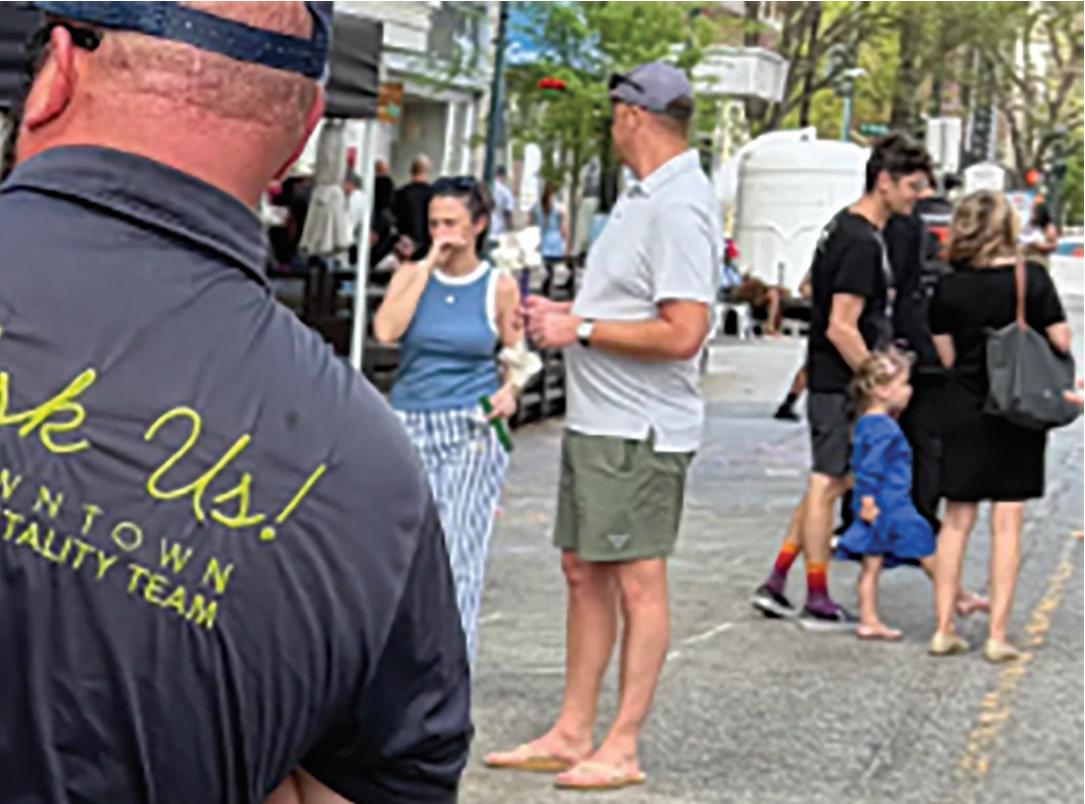
Some new members have urged Downtown Greensboro to expand its “Ambassadors” program, which employs people to ofer directions and hospitality escorts for visitors, assist with special events, pick up trash and refer more serious matters to city police.
A key new investment is e Pyrle, a live music venue that opened this spring on South Elm in the former location of the failed Triad Stage. It has backing from several local civic leaders, including construction company CEO Arthur Samet and property developer Durant Bell.
“Right now, what I’m seeing in downtown Greensboro is just this innate focus on four businesses that closed or announced that they’re closing,’’ Matheny said in an interview before his departure. “ at is evolution; that’s what happens. Now, what people aren’t saying is we have 65 restaurants that are open.
“Social media doesn’t help,’’ he added. “ ey’re talking about parking and safety. We’re ghting that from a few years back.
e perception is not necessarily reality, but the perception is folks’ reality.’’
Responsibilities for some downtown shortcomings, such as the lack of street parking, are also blurred. Social media critics tend to blame the downtown promotion group.
“I think Zack was a scapegoat,’’ says Lampkin. “In so many ways, I think people were fairly brutal.’’
Julien Vicard, who owns Breakfast in Paris, says two shootings occurred in the parking lot behind his bakery earlier this year. A new camera has discouraged further crime, he says.
“When they hire this new person, you’re going to want them thinking about safety,’’ Vicard says. “I know the potential of downtown.’’ ■
Mayor Marikay Abuzuaiter
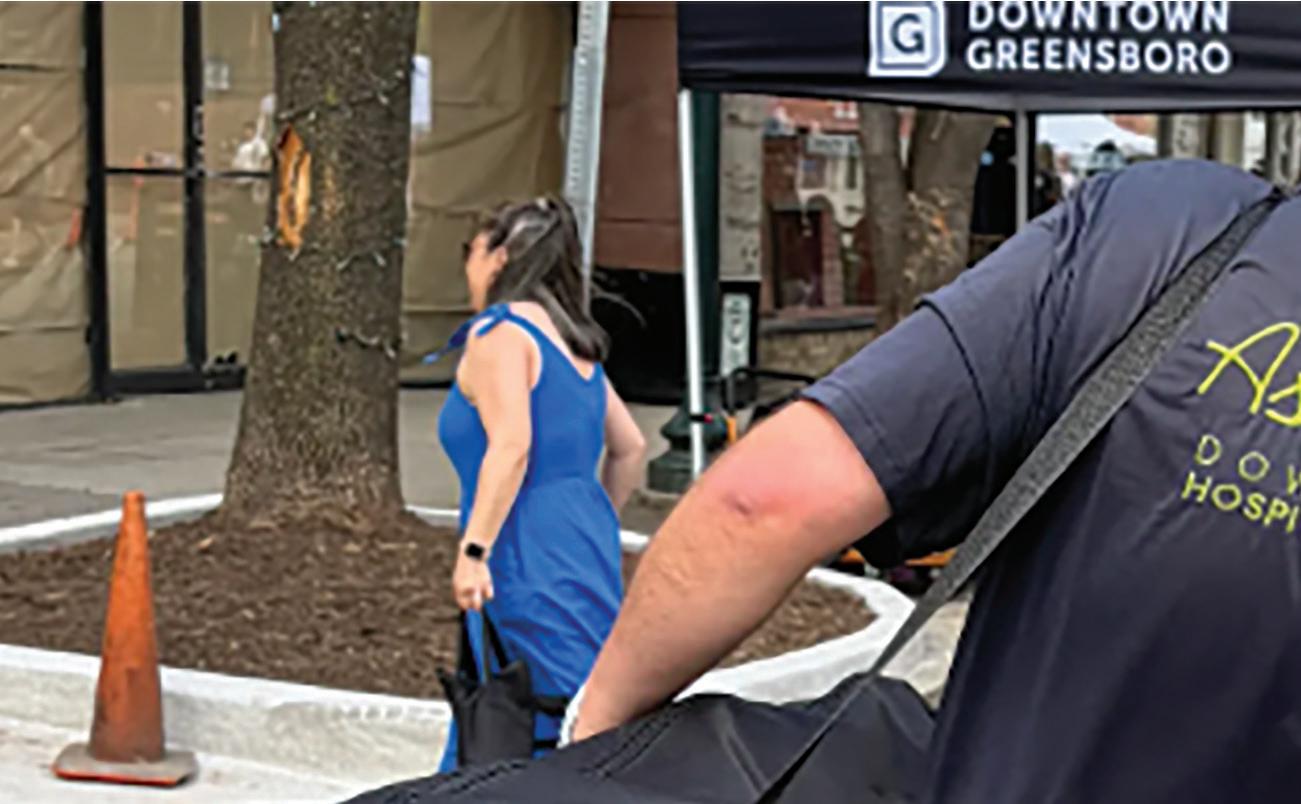
Downtown Greensboro’s Ambassadors provide a variety of visitor-friendly services in the center city.
NC TREND
VISIONARY THINKING
UNC Pembroke and High Point University plot North Carolina’s first optometry schools to address eye-care shortages and drive healthcare gains.
By Kevin Ellis
UNC Pembroke started construction last month on its Clinical Science Building, a major milestone toward it o ering the state’s rst public School of Optometry by 2028. Across the state, High Point University has similar ambitions, with plans to start its own School of Optometry, part of a $400 million investment that have included additions of a law school and dental school at the private institution.
Both universities are going through the accreditation process with the Accreditation Council on Optometric Education and have yet to reach the stage where they can recruit or enroll students. ey have hired their founding deans, Dr. Rich Castillo at UNC Pembroke and Dr. Catherine Heyman at High Point University.
High Point’s academic expansion plans came a er three families gave the university a total of $100 million in 2022. UNC Pembroke’s e orts were championed early by state lawmakers Danny Britt and Brenden Jones, both rst elected to the General Assembly in 2016, Britt in the Senate and Jones in the House.
As Britt looked to improve healthcare outcomes in southeastern North Carolina, he paid attention to the rapid economic growth in Greenville as a result of the Brody School of Medicine aligning with East Carolina University in 2021 to form ECU Health.
“I saw an optometry program at UNC Pembroke, along with expanded health sciences programs, as a pathway to make that happen,” Britt said in a release.
UNC Pembroke was founded in 1887 to educate American Indian teachers. In 2018, it began its own push to expand its health sciences programs. A study by UNC Chapel Hill’s Sheps Center for Health Services Research had concluded that
programs such as nurse practitioner, occupational therapy, optometry and nutrition could improve the healthcare in a region while also boosting the economy with well-paying jobs.
e study was repeated in 2023, leading state legislators to put $20 million toward start-up costs associated with new healthcare programs at the university, which now has about 8,000 students. About $12 million will support UNC Pembroke’s optometry program. UNC Pembroke started a doctoral nursing program, a master’s occupational therapy and a master’s of health administration a er the 2018 Shep’s study.
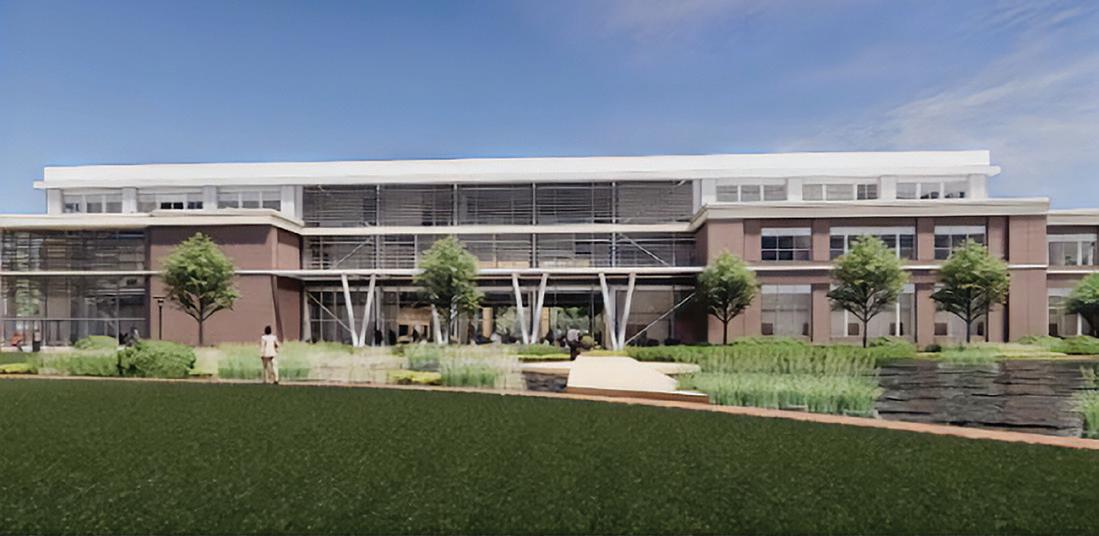
e state also set aside $91 million for the construction of the 74,000-square-foot Clinical Science Building, which will house the School of Optometry. e building is expected to cost $96 million. Earlier this year, the Golden LEAF Foundation awarded UNC Pembroke more than $4.8 million to support the College of Optometric Medicine in buying lab equipment and enabling hands-on learning and advanced patient care.
Formed in 1999 with proceeds from the national settlement with tobacco companies, Golden LEAF has funded thousands of projects totaling $1.3 billion, mostly in rural, tobaccodependent, and economically distressed communities. e state Department of Commerce considers Robeson County, where UNC Pembroke is located, as a Tier 1 county, meaning it ranks among the state’s 40 most economically distressed counties in the state. Guilford County, where High Point University is located, is a Tier 2 county, meaning it ranks among the state’s 40 moderately distressed counties.
UNC Pembroke’s school will “improve access to care and support long-term economic vitality in rural North Carolina,” says Scott Hamilton, president of the Rocky Mount-based Golden LEAF Foundation.
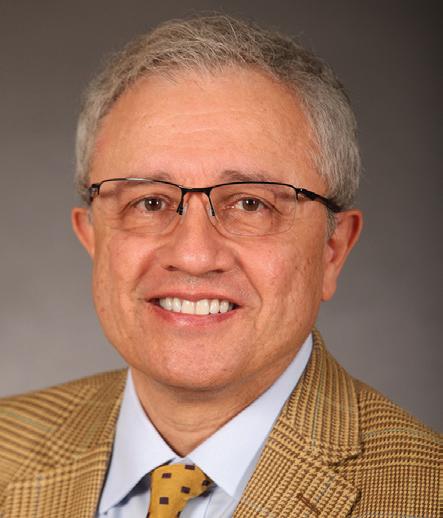
Rich Castillo
NC TREND ››› Healthcare
FOUNDING DEANS
DR. CATHERINE HEYMAN
Heyman joined High Point in August 2023. She earned her doctor of optometry degree in 1993 from the Southern California College of Optometry at Marshall B. Ketchum University in Fullerton, California. She is a fellow in the Binocular Vision and Vision Perception Section of the American Academy of Optometry and a fellow of the College of Optometrists in Vision Development. She previously worked for 24 years at her alma mater, including as associate dean of student a airs at her alma mater. She specializes in pediatric low vision and optometric treatment of patients with disabilities.
OPTOMETRIST SHORTAGE
irteen North Carolina counties do not have a single optometrist, according to UNC Pembroke. National projections suggest that rural communities could face a shortage of nearly 70% of the eye care providers they need by 2035, making it more di cult for residents to access care close to home.
Optometrists are not medical doctors, although a doctor of optometry degree is required to perform routine eye and vision care. Ophthalmologists are medical doctors who specialize in advanced eye care and surgery, according to the American Academy of Ophthalmologists. UNC Chapel Hill, Duke University and Wake Forest University have ophthalmology programs, while ECU Health has an ophthalmology residency program.
DR. RICH CASTILLO
Castillo came to UNC Pembroke in August 2024. He has a doctor of optometry from Northeastern State University in Oklahoma, and a doctor of osteopathic medicine from Oklahoma State University Center for Health Sciences. He completed a residency in ophthalmology and ophthalmic surgery at Oklahoma State University Medical Center. He was senior director of clinical examination development and administration for the National Board of Examiners in Optometry for more than 30 years. He was a clinical professor, assistant dean and chief of surgical services for almost 30 years at Northeastern State. He was also a consulting ophthalmologist to Cherokee Nation and Tahlequah area patients through a system of 11 rural clinics throughout northeastern Oklahoma.
UNC Pembroke’s program is designed to keep future optometrists working in areas with limited access to care. Students will train in rural clinics as early as their second year, says UNC Pembroke Chancellor Robin Gary Cummings, a Duke University-trained cardiothoracic surgeon.
“ e vision for UNCP’s College of Optometric Medicine extends beyond traditional eye care, preparing optometric physicians to play a critical role in the overall health of the communities they serve,” says Cummings.
Optometrists provide the primary defense against eye disease, he says, and play a critical role in early detection of systemic health conditions such as diabetes and hypertension. Robeson County, and southeastern North Carolina, has historically ranked near the bottom of statewide measures for obesity, heart disease, diabetes, cancer, infant mortality and mortality among minors.
A Sheps Center study found UNC Pembroke’s primary service region has fewer health professionals per 10,000 residents than the state average across each profession studied. e study found expanding academic programs at UNC Pembroke could help address regional workforce shortages and improve long-term health outcomes. An aging population is expected to grow demand for medical eye care by 25% by 2030.
“ is is a transformative moment for UNC Pembroke and our region,” says Cummings.
e UNC Pembroke program will improve access and healthcare in underserved communities, says Castillo, the founding dean. He has dual training as both an ophthalmologist and an optometrist.
“ is is about creating opportunity and meeting real needs across our state,” Castillo says. Future graduates will make “an immediate impact — improving access to care in the communities that need it most.” ■
Rendering of the $96 million Clinical Science Building, which will include the UNC Pembroke School of Optometry.
COURSE CORRECTION
Two N.C. golf leaders use their stroke to help revitalize a famed Asheville course.
By Brad King
At a made-for-TV par-3 shootout in Austin last fall, PGA Tour star Ben Gri n got hot at exactly the right time.
e former UNC Chapel Hill golfer, who ranked 16th in the world in April, rolled to victory at the Tito’s Shorties Classic. He nearly beat the course record, stacking birdies and pulling away from fellow PGA Tour players Keith Mitchell and Jake Knapp and Charley Hull of the LPGA.
en came a moment that mattered far beyond Texas: Gri n announced that his $250,000 rst-place charity prize would be used to help rebuild the front nine at Asheville Municipal Golf Course, a historic public course that was devastated by Hurricane Helene in September 2024.
Moments later, Gri n texted Wyndham Championship Executive Director Mark Brazil, an Asheville native who has worked to rebuild the course. “Well, looks like I just got y’all a quarter of a million dollars,” Gri n wrote. “I guess I’m a Wyndham guy for life.”
e message changed the scale of one of western North Carolina’s more unusual recovery e orts — a public golf course rebuild that has become part FEMA project, part preservation e ort and part fundraising campaign.
Brazil got involved a er a conversation at the Masters last year with retired Raleigh banker and golf industry kingpin Jim Hyler. Brazil knew Helene had torn through his hometown, where his 91-year-old father still lives. Seeing the course sharpened the urgency. e Swannanoa River had surged over its banks and ripped through the front nine, which sits in the oodplain. Greens, fairways, bunkers, tees, irrigation, cart paths and a restroom building were heavily damaged or washed away.
Sadly, the storm’s timing came less than a month a er the completion of a $2.9 million restoration overseen by Greensboro golf course architect Kris Spence.
“It had just been redone. It was perfect,” Brazil says. e back nine, on higher ground, reopened about a month a er the storm and remains in play. e front nine has been used for a disc golf course while restoration planning continues.
FEMA RULES
City o cials say the goal is to restore the front nine largely to its pre-storm condition, while making it more resilient. Asheville City Council approved a design contract last summer with Biohabitats of North Carolina, working with Ron Forse of Forse Golf Design and Boone-based Cutlip Golf Design.
e matter underscored a major misunderstanding of how FEMA works, says Chris Corl, the city’s director of community and regional entertainment facilities.
“People always are saying, ‘How much is FEMA going to pay?’” he says. “It’s not actually about how much they’re going to pay. It’s about what scope they agreed to replace.” at distinction matters. FEMA generally covers one-forone replacement, not enhancements or modernization. If a municipality wants to build back in a more resilient way, outside dollars may be needed.
“Scope matters more than the funding,” Corl adds. at is where Brazil and his network stepped in. Asheville Muni needed support to survive a possible two- to three-year stretch before the work could be nished. Brazil estimated the gap at roughly $300,000 to $350,000 and decided to use the Wyndham Championship as a fundraising vehicle. FEMA has committed $7.7 million for the project, with Asheville o cials seeking additional funding later this year.
At a sponsor event during tournament week in Greensboro, Brazil told the Asheville Muni story. Wyndham Hotels & Resorts CEO Geo Ballotti immediately pledged $10,000. Others followed, including Gri n and fellow PGA Tour player Andrew Novak. By late summer, about $130,000 had been raised through tournament-related giving and other outreach. en Gri n’s win in Austin quickly surpassed those early e orts. e money ows through the Brazil-led Piedmont Triad Charitable Foundation and supports Friends of Asheville Muni, a nonpro t tied to the course’s recovery.
“Without Mark, I don’t know where we would be,” Corl says. “We’d be struggling a lot more than we are.”
PROUD HISTORY
e course has great historical importance. Opened in 1927, Asheville Muni was the rst public golf course in North Carolina and later, the rst integrated public golf course in the South. It hosts the historic Skyview Tournament, one of the region’s longest-running Black golf events. Both the course and clubhouse are listed on the National Register of Historic Places.
“It’s still golf for the common man,” Corl says.
For Brazil, Asheville Muni’s importance ranks with Gillespie in Greensboro and Winston Lake in Winston-Salem as public courses that introduced generations to golf. It’s one of many N.C. courses designed by famous architect Donald Ross.
“You can certainly make an argument, with all the great golf courses in western North Carolina, that that has been the most important one as far as introducing people to the game,” he says.
e city is about 30% through design work, Corl says, with hopes of nishing design this year, then bidding construction in January or February. A reopening is projected for a year a er construction starts, pending approvals and cooperative weather. His de nition of success is straightforward.
“It’s an open 18-hole course that has a front nine that looks very, very similar to Donald Ross’s original design intent and is resilient to future ooding events,” Corl says.
In the meantime, Gri n’s shot-making in Austin and Brazil’s organizing have helped ensure Asheville Muni has something nearly as important as design plans and federal paperwork: time. For a public golf course that has meant so much to so many, time may be what keeps it alive. ■
Mark Brazil (left), has led the Wyndham Championship, while Chapel Hill native Ben Griffin is a rising PGA Tour star.
The Swannanoa River’s flooding during Hurricane Helene heavily damaged the Buncombe County course in September 2024.
PAYING IT FORWARD
By Alyssa Pressler
The hallmark of great companies is great leadership. But what it means to be a great leader can vary from person to person and even industry to industry.
One common thread, though, is a leader’s focus on paying it forward to other rising executives through mentorship and education. If great leaders at great companies want to see their legacy continued, passing along knowledge and support to the next generation of leaders is key.
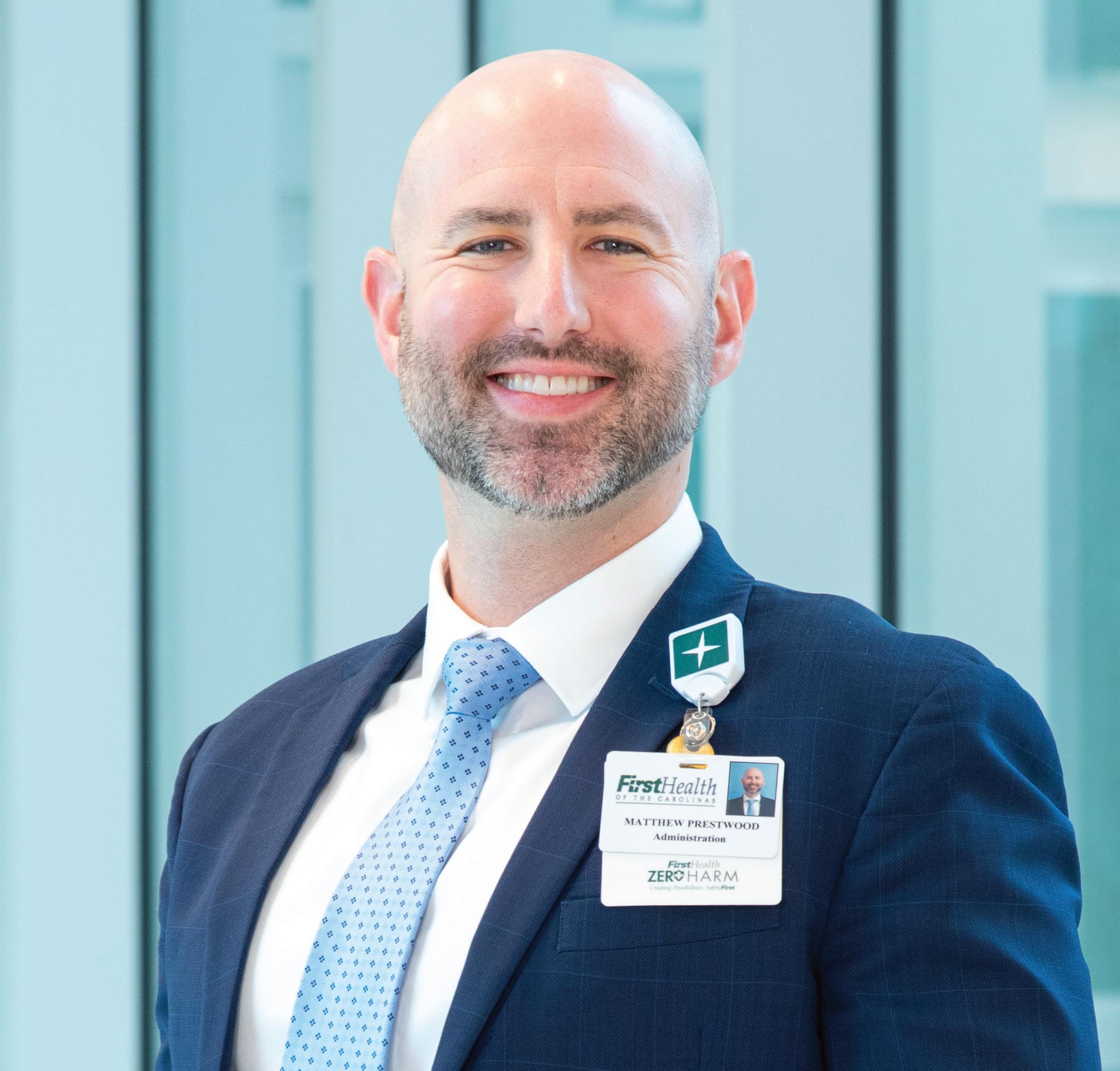
It’s something Matthew Prestwood, president of the Eastern Region of FirstHealth Moore Regional Hospital - Hoke, takes very seriously in his role. Though he’s only been in his current position since October 2025, he’s already focused on mentoring others on his team to pay it forward. After all, his own mentors over the years are a large reason why he’s seen the career trajectory he has.
In the following page you’ll learn more about Prestwood’s leadership style and commitment to helping others, and the ways it’s furthering top tier healthcare in North Carolina.
A PASSION FOR HELPING
Matthew Prestwood has known since childhood that he wanted to help people, particularly in the healthcare field.
Prestwood recalls fondly going to the hospital with his mother, who worked as a pharmacy tech at alocal hospital in the evenings.
“I remember getting to go to the hospital with her on a few occasions and I was just in awe of the hospital and all the people working together to care for patients,” he says. “That really got me interested in healthcare.”
FirstHealth of the Carolinas Pinehurst, NC 28374 www.firsthealth.org
After getting his undergraduate and graduate degree at UNC Chapel Hill, he continued his healthcare administration career at Duke University Hospital and Health System, serving for 10 years prior to joining FirstHealth Moore Regional Hospital four years ago as vice president of operations. In October 2025, he was promoted to president of Moore Regional Hospital-Hoke.
Now he leads a large team responsible for caring for patients — no easy feat, but it’s a challenge Prestwood enjoys and feels called to do. When asked what he considers his primary responsibility each day, he’ll explain he considers himself a servant leader, or someone who is there to support his team and help them reach their goals.
“If I’m supporting them in that capacity, I’m successful as a leader,” he says. “Our core goal is to care for people and support one another, and it’s such a great environment of everyone rowing in the same direction.”
And if he’s successful as a leader, it means his team is successfully taking care of patients and providing the excellent care the hospital has been known for since it first opened its doors 13 years ago.
One of the ways he ensures success as a leader is by starting each day in a safety huddle that occurs across the entire FirstHealth system. After that he rounds on patients and his staff.
“To me it’s important to have that visibility with the team and our patients, and it’s how you really know how things are going,” he explains. From there he’ll spend the day in various meetings touching on operational issues, strategic conversations, financial updates and even board meetings.
But being a leader goes beyond being visible. Prestwood is also proud of his work mentoring and developing others while empowering them to reach their goals.
“I’ve been fortunate throughout my career that people have taken chances on me and supported me, so a priority to me is to do that for others,” he says. “There’s no greater joy to me than seeing one of my team members take on more and succeed and grow.”
Having a strong leader is key right now as the hospital undergoes a period of growth. In January construction began on a two-story expansion that includes an additional 24 inpatient beds. A 15,560-square-foot addition to the existing medical office building is also underway. Construction of the hospital expansion is expected to be complete in April 2027, with the goal of welcoming their first patients in July 2027.
“It’s a huge project but it represents people, progress, and FirstHealth’s core purpose: To Care for People,” he says. “It comes back to the team that opened this hospital in 2013 with a simple mantra: in Hoke, for Hoke.”
Matthew Prestwood, MHA, FACHE, serves as President of FirstHealth’s Eastern Region and Moore Regional Hospital-Hoke
NC TREND ››› Sports Business
A WINNING BUZZ
New ownership lays a path of success for the state's NBA franchise.
By David Mildenberg
In what seemed like a flash this spring, the Charlotte Hornets turned from perennial doormat into one of the NBA’s hottest teams.
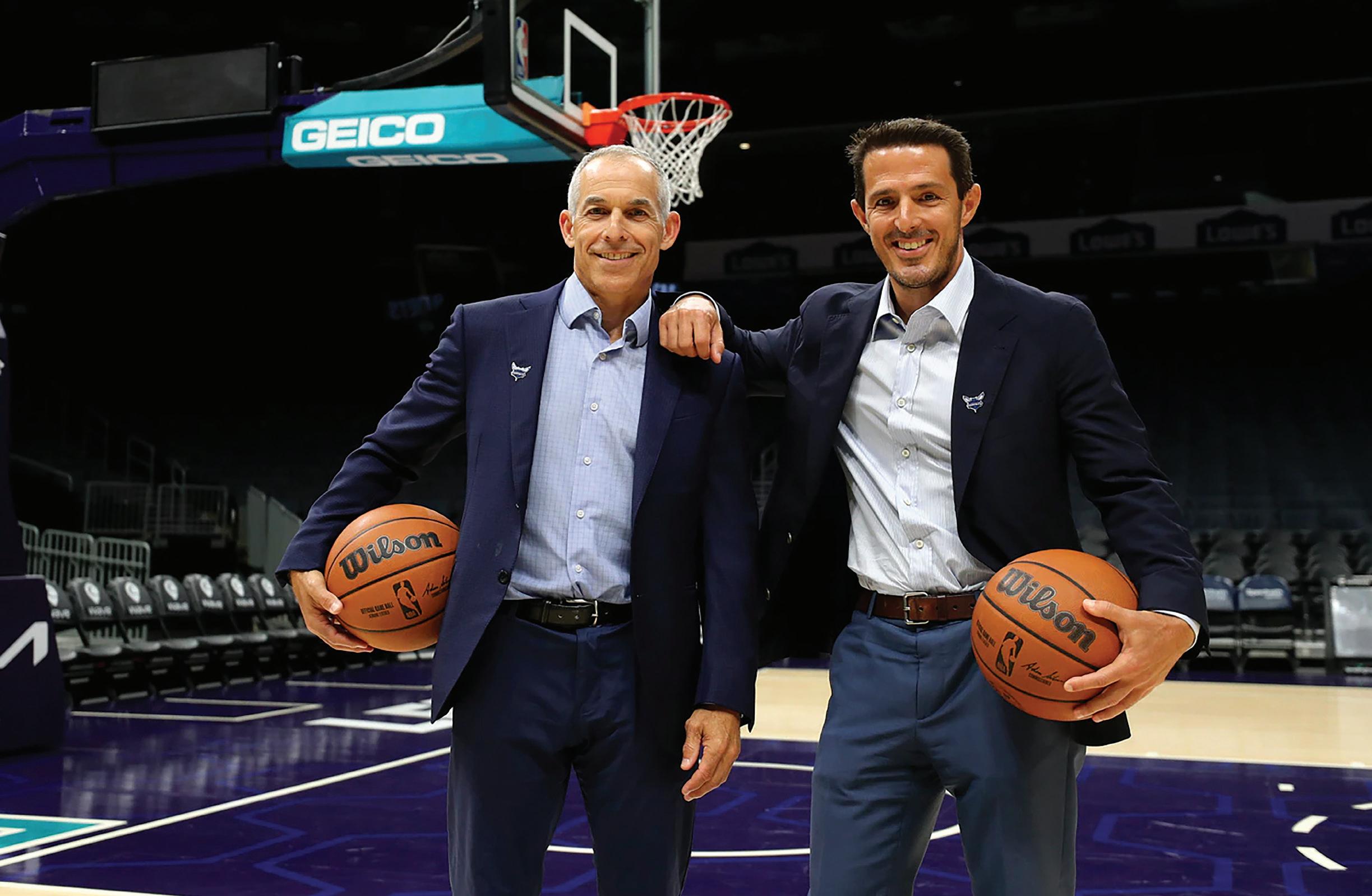
From an 11-22 record on Jan. 1, the team won nearly 70% of its games through the rest of the season. The Hornets sold out their final 25 games at Spectrum Arena. Alas, they fell one game short of making the playoffs for the first time since 2016. There was nothing quick about the turnaround, however. It’s the result of decisions instituted by owners Rick Schnall and Gabe Plotkin, who led a 20-plus-member investor group to buy the team for $3 billion in 2023.
In October 2024, Schall told the Charlotte Observer the mission was “to be the premier franchise of the NBA.” That means, he added, “we have the best culture, we have the best people, we can win consistently on and off the court, be a partner to our fans, our sponsors.”
Almost every owner says that, of course. The Hornets had been owned for 13 years by Michael Jordan, whose passion for winning made him legendary.
“This community is starved for a winner,” notes Mike Boykin, CEO of Bespoke Sports & Entertainment, a Charlotte marketing company. “Charlotte and Chicago have been mentioned as having the worst collective records in pro sports. Losing gets old.”
But Schnall is in a class of elite business leaders akin to Jordan’s status on the basketball court, Boykin says.
Since 2020, Schnall has been co-president of Clayton Dubilier & Rice, one of the largest U.S. private-equity firms. His bio page lists 17 companies that he helps oversee for CD&R, which he joined in 1996. Recent deals include the $10 billion purchase of Charlotte-based Sealed Air in April.
None of the investments may be as promising financially as the Hornets, however. Its franchise value has already surged more than 25%, or $800 million, since the SchnallPlotkin purchase, according to Forbes estimates.
Consider the association’s most recent media rights deal, in which NBC/Peacock, ESPN/ABC and Amazon Prime are paying $76 billion over 11 years, according to media reports. Each team is receiving $143 million this season, about 40% more than the previous contract. That payout is slated to increase by 7% annually over the next decade.
Local TV rights are another revenue source, averaging about $18 million over the past two years. That is likely to increase given the team’s success. All but 18 of this year's 82 games required a subscription to a cable or streaming service.
Then there’s ticket sales and sponsorship. Average attendance for the Hornets increased this year by 1,500 people per game, or 9%, to about 18,715. It was the organization's best showing since 1997-98, when the team played at the Charlotte Coliseum.
Average prices to Hornets games have been among the lowest in the league over the past decade, reflecting the team’s weak performance. Four tickets for a family averaged a combined $589 in 2025, placing it near the bottom of the 30 teams, according to a study of Ticketmaster reporting by the Action Network, which provides betting information.
Overall, the Hornets appear poised to significantly expand the $81 million in annual operating income and $328 million in revenue estimated in October by Forbes.
NEW ON THE BLOCK
To maximize the business side, Schall and Plotkin hired Shelley Cayette-Weston as president in 2024 and Mike Behan as chief business and revenue growth officer last year. CayetteWeston had previously worked for Cleveland’s NBA team, which is considered among the best-run U.S. sports franchises. Behan signed on after 13 years with New York-based Legends, which works with more than 450 arenas and other venues to produce live sports and entertainment events. He had been the company’s president.
“There are very few opportunities in sports where you can be part of something special at a growth stage. I knew we had a great market in Charlotte and a great region in the Carolinas,” he says. “When you have ownership committed to delivering a premier product and organization, it’s something you want to be a part of.”
While Behan grew up in Binghamton, New York, he purchased a Hornets jacket from the franchise’s early days when Muggsy Bogues, Larry Johnson and others helped the team lead the NBA in attendance repeatedly in the late 1980s and early 1990s.
Behan believes the Hornets had become disconnected from its local market. “They were unable to truly connect with the fans, the businesses, the leaders, and that’s really what we set our sights on.”
The disconnect was true, says veteran N.C. journalist David Glenn, who had a long-running radio talk show about statewide sports and now is a podcaster. “The interest in the Hornets shown by our listeners had fallen off sharply. Nobody wanted to talk about the team,” he says.
To be sure, winning is the most essential element for successful franchises, Glenn says. That happened for the Hornets because of savvy player selection decisions by Jeff Peterson, the president of basketball operations, and Coach Charles Lee, both of whom were hired by Schnall and Plotkin in 2024.
Most notably, the Hornets’ top draft pick in 2025, Kon Knueppel, became an instant star at age 20, averaging 18.5 points per game. Virtually no one expected the former Duke University player to be so good so fast, Glenn adds.
Knueppel joined stars LaMelo Ball, Brandon Miller and Miles Bridges to help make for an exciting, aggressive team that staged an unexpected mid-season rebound. The latter three players are receiving a combined $75 million this season, while the entire team’s payroll tops $180 million. That ranks 26th among the 30 teams, according to the Basketball Reference website. Success is certain to push that number much higher in coming years.
DESTINATION VIEWING
Away from the court, Behan says he and Cayette-Weston have spent the past year reaching out to meet and listen to business leaders and fans throughout the Carolinas. They also hired more staff members for marketing and sales, declining to disclose the specific number.
Evidence that the work has paid off includes new or expanded partnerships with Novant Health, Truist, Bank of America, Judi Health, Coca-Cola Consolidated, Lowe’s and others, Behan says.
“Our singular goal was to reintroduce people to the Hornets organization and reach the legacy fans who were so passionate about the team,” Behan says.
The Hornets also have benefited from the $275 million renovation at Spectrum Center and a new $150 million training facility. The city of Charlotte is putting more than $270 million into the projects.
The changes make the venue more attractive for concerts and other events, and the team now expects to attract as many as 150 shows annually, a 50% increase from previous years. “There’s an opportunity for Spectrum to be the destination across the Carolinas for live entertainment,” he adds.
The Hornets’ turnaround in many ways tracks the changes that occurred in Raleigh following Dallas investor Tom Dundon’s purchase of a majority stake in the Carolina Hurricanes in 2018. The NHL team hadn’t made the playoffs in nine years under the previous owners, which is remarkable given that more than half of the hockey league teams qualify annually, Glenn notes.
Since Dundon took charge, the Hurricanes have been playoffbound for eight straight years and were ranked as the top team in their division this year. Moreover, the team has sold out more than 150 consecutive games, dating back to 2023, reflecting how the Triangle has embraced the region’s only major league pro sports franchise.
While hockey is exciting, it ranks well below the NBA in global interest and business prowess. Forbes estimates the Hurricanes’ annual revenue at $218 million, or a third less than the Hornets.
No wonder, then, that Dundon has agreed to lead an investor group that bought the NBA’s Portland Trail Blazers for a reported $4.25 billion.
The long-term prospects for the NBA are golden, partly because interest is exploding globally. “It’s the most international of the major professional sports,” Glenn says, with NBA stars coming from many different nations.
Meanwhile, Schnall and his wife have moved to Charlotte, “and they’re heavily involved and invested in the market in Charlotte,” Behan says. Fans hope that the investment can lead to years of success. ■
Hornets head coach Charles Lee
CHARLOTTE
CHARLOTTE
Los Angeles-based Capital Group, one of the world’s largest asset managers, plans to invest $60 million to create 600 jobs over the next five years. Capital is best known for its American Funds group of mutual funds. It plans to locate uptown and pay an average wage of $194,141.
Citigroup opened its permanent Ballantyne office and plans to grow from 275 Charlotte employees to 800 within three years. The New York-based bank is investing about $16 million in the 58,000-square-foot site.
Lucid Bots said it raised $20 million from investors who are betting the robotics company can sign up more contractors seeking the latest technology to clean building exteriors. The oversubscribed second round of financing brings its total funding to $34 million to expand its commercial operations, which include drones to wash high-rise windows and robots to clean sidewalks.
New York City-based private equity firm Clayton, Dubilier & Rice completed its $10.3 billion acquisition of Sealed Air, known for its Cryovac food packaging and Bubble Wrap cushioning packaging. Shareholders received $42.15 per share. The company will remain headquartered in Charlotte.
City Council approved $25 million in tourism-funded upgrades for Bojangles Coliseum and Ovens Auditorium, including HVAC replacement and other improvements. The venues hosted 300 events and 688,000 attendees last year. Work will start this summer to avoid disrupting tenants such as the Charlotte Checkers hockey team.
SetSale secured $2 million in seed funding to expand its AI-driven platform that streamlines HVAC sales and quoting. The startup connects contractors, distributors, and homeowners with realtime pricing and financing tools.
Activist shareholder Adam Wyden, whose Miami Beach-based hedge fund ADW Capital owns about 2.5% of Driven Brands, is urging the board to break up the company or sell it in order to push the stock’s value above $30 per share. Driven owns brands such as Meineke and Auto Glass Now. Its shares were trading around $13.20 in late April.
Elon University and Queens University expect to operate as distinct institutions until 2028, and will operate separate athletic departments, Queens Acting President Jesse Cureton told students. Approval of the deal, which was announced last September, is pending from the U.S. Department of Education. Queens is expected to become “an additional location of Elon.”
Krispy Kreme is selling a portion of its ownership in a western U.S. joint venture for $90 million as part of a broader effort to cut corporate debt. Krispy Kreme also plans to expand to the Netherlands in late 2026, its fifth European country.
Three-time Super Bowl champion
Travis Kelce will promote Six Flagas Entertainment, the parent company of Carowinds amusement park, with various social media efforts this summer. Kelce joined with an activist investor that bought a 9% share in the company last year.
Pennsylvania-based investment firm
Equus Capital Partners acquired Greylyn Business Park for $102 million from Weston, more than double the $46 million that the Cleveland-based property management firm paid in 2015. The 648,000-square-foot property is 93% leased.
Entrepreneur Drew Burdick is launching CLT Startup House, a collaborative hub
for early-stage founders in South End. The shared space will host five resident startups and up to 20 mebers, emphasizing networking over traditional coworking.
OrthoCarolina surgeons Dr. Glenn Gaston and Dr. Bryan Loeffler received a $100,000 grant from the Birmingham, Alabama-based Lulu Strong Foundation to support research for lower limb amputees. They co-founded Axolo Health, which developed Targeted Brain Rehabilitation, an FDA-registered virtual reality therapy for amputees experiencing phantom limb pain. Teenager Lulu Gribbin formed the foundation after suffering a 2024 shark attack.
Canadian-owned bank TD acquired naming rights for The Amp Ballantyne, a 5,000-person outdoor entertainment venue. TD Amp Ballantyne is run by Charlottebased Northwood Office, which owns the 535-acre business park.
Bank of America’s $72.5 million settlement with more than 60 victims tied to Jeffrey Epstein has received preliminary federal approval, with a final hearing set for August. The bank denies wrongdoing but said the agreement will resolve claims it ignored warning signs tied to Epstein’s sex trafficking activities.
UNC Charlotte’s Albert School of Construction was named for alumni Craig and Darla Albert. The school will focus “on the full capital project lifecycle” and prepare students for planning, engineering and delivery of infrastructure projects. Craig Albert is an executive with Virginia-based Bechtel Group.
Flournoy Development Group plans to build more than 500 apartments and townhomes on 52 acres at the former Centene campus near UNC Charlotte and Research Park.
North Carolina State Auditor Dave Boliek will provide oversight of Charlotte’s $650 million public investment in Bank of America Stadium renovations, the largest such expenditure in state history. The project is part of an $800 million upgrade also funded by Tepper Sports, owner of the Carolina Panthers and Charlotte FC. Both are committed to staying in Charlotte through 2046.
LENIOR
Google says it will invest $1 billion over the next two years at its data center, which opened in 2007. About 400 people work at the center. Google did not say if jobs would be added.
CHARLOTTE
One of Japan’s largest financial companies, Sumitomo Mitsui Banking, or SMBC, plans to invest $50.5 million and hire 2,000 workers to establish its second U.S. headquarters in 2032. Hiring could start this year for the company that has an office of about 160 workers here. The new jobs will pay an average median wage of $165,316.
GASTONIA
CaroMont Health plans to invest $200 million in three buildings that will double its capacity to treat oncology patients. It will be the health system’s second-largest investment in its 70-year history. Two buildings will be near the hospital in Belmont that CaroMont opened in 2025, and a Cancer Center on its main campus. Once complete by fall 2028, CaroMont will be able to increase care to 3,000 cancer patients.
HICKORY
Corning and Meta Platforms started construction on a $267 million expansion of Corning’s optical cable manufacturing capacity here, part of a $6 billion agreement the two companies announced in January. The expansion will add 132 jobs and support the acceleration of advanced data centers to support Facebook’s parent company. Corning expects its 5,000-employee N.C. workforce to expand by about 1,000 as part of the Meta deal.
Winston-Salem-based Allegacy Financial will invest $5 million to open an office here in July and expand its reach into western North Carolina. Allegacy changed its name in April from Allegacy Federal Credit Union. It was started to serve R.J. Reynolds Tobacco employees, and now has 185,000 members.
MATTHEWS
Family Dollar, founded in Charlotte by Leon Levine in 1959, will close its distribution center by Aug. 12, eliminating 373 positions. Some workers will lose their jobs on May 18. Levine sold his discount retail chain with about 7,500 stores in 2015 to Chesapeake, Virginia-based Dollar Tree for $8.5 billion, and the headquarters moved out of North Carolina in 2018. Last year, New York City-based private equity firms bought Family Dollar for $1 billion.
OAKBORO
Charlotte Pipe and Foundry is creating
NC TREND ››› Statewide
a new infrastructure division. Neenah Foundry, a Wisconsin-based company acquired in 2022, is transitioning from a wholly owned subsidiary to a product line, the privately held manufacturer says. The infrastructure division also includes products made by its foundries and Culpeper, Virginia-based Bingham & Taylor, acquired last year.
WESLEY CHAPEL
Novant Health received state approval to build a $346 million, 32-bed hospital. It will be Novant’s first hospital in Union County and is about 12 miles from the healthcare company’s hospital in Matthews in east Mecklenburg County.
EAST
BALD HEAD ISLAND
France’s TotalEnergies agreed with the Trump administration to give up its offshore wind lease off the North Carolina coast, along with a larger project near New York. The Parisbased company cited the cost of U.S. offshore wind developments. The U.S. government will pay Total $928 million for giving up its lease, including $133 million for the one tied to North Carolina.
BURGAW
Mojotone was named North Carolina’s Exporter of the Year by the U.S. Small Business Administration, recognized for its international sales of guitar, amplifier and audio components. The company distributes products nationwide and in Europe.
COFIELD
A deadly explosion at the Perdue Foods Feed Mill in February led the company to dismantle the feed mill and lay off 15 employees. The grain receiving and
crush operations were not damaged in the explosion, but have temporarily closed as the feed mill is dismantled due to its proximity, which could lead to additional temporary layoffs, according to the company.
FAYETTEVILLE
Daniel Weatherly was named CEO of Cape Fear Valley Health after 15 years with the health system. A former hospital president and chief operating officer, he succeeds longtime CEO Michael Nagowski. He will direct one of the region’s largest nonprofit health systems, which is adding a medical school in a venture with Methodist University.
Back-A-Round Records is carving out a niche as vinyl interest resurges, offering records, CDs and cassettes. Opened in 2017, the shop benefits from increased demand for physical media even as streaming continues to dominate industry revenue.
GARYSBURG
United Kingdom-based Linde will invest $75 million to build an air separation facility at the Northampton County Commerce Park, where it plans to hire 20 people to manufacture and distribute industrial gases for the healthcare, food and beverage, electronics, and chemical industries. The new jobs will pay an average wage of $87,750, more than 67% higher than the county’s current average wage.
GREENVILLE
ECU Health received state approval to add five operating rooms at ECU Health Medical Center in a $138 million expansion aimed at meeting demand for surgeries. The hospital’s 34 operating rooms run at 112% capacity. The rooms are scheduled to open by October 2029. Separately, the health system will lay off 161 workers May 1 related to the sale of its Home Health and Hospice business to Wilmington-based Liberty Home Care and Hospice. Some workers will be hired by the new company.
KINSTON
A 10-year agreement between the U.S. Navy and NC Global TransPark will add 400 jobs. In 2023, state lawmakers approved a $350 million loan to N.C Global TransPark for site improvements to accommodate the Navy’s Fleet Readiness Center East, which provides fleet support to all Department of Defense branches at Marine Corps Air Station Cherry Point in Havelock. The Navy’s $15 million-peryear contract will become effective once FRC East fully occupies its 65-acre space.
LELAND
Novant Health received state approval to build a $251 million, 20-bed hospital here and a $24.2 million standalone emergency department in Carolina Shores. It operates the region’s largest hospital in Wilmington.
NASHVILLE
Braswell Family Farms supplied nearly 40,000 eggs for this year’s White House Easter Egg Roll. It’s the fifth consecutive year for the fourth-generation egg producer that counts Eggland’s Best as its biggest customer. The eggs were hard-boiled and dyed in Winston-Salem before making the trip to the White House.
PEMBROKE
UNC Pembroke secured $1 million in federal funding to support restoration of its historic Old Main building, advancing preservation of the 1923 landmark, in a separate development.
WILMINGTON
UNC Wilmington wants to set up a standalone medical school, and has a plan to enroll the first 60 would-be doctors for the 2029-30 academic year. Chancellor Aswani Volety briefed members of the UNC System Board of Governors, which would need to approve the move. Volety cited a severe shortage of doctors and other healthcare workers in the region.
Wilmington International Airport plans $243 million in capital projects, including terminal expansion, baggage-area upgrades and airfield improvements. Combined with private development in its business park, total projected investment tied to the airport exceeds $490 million. The airport reported more than 907,000 enplanements last year, a 67% increase from 2019.
Amazon’s robotics fulfillment center is slated to open at Pender Commerce Park by the third quarter. It is expected to create 1,000 jobs and will become Amazon’s largest North Carolina site at 3.2 million square feet. Amazon is also constructing a nearby 142,000-square-foot delivery center.
WILSON
The Warbirds, the Single-A affiliate of the Milwaukee Brewers, played their first home game in their new $70 million stadium, which will eventually include a 116-room Home2Suites by Hilton. The development could exceed $300 million.
TRIAD
EDEN
TSEA Energy, a Brazilian manufacturer of power transformers and voltage regulators, plans to invest $25 million and hire 160 workers to establish its first U.S. manufacturing plant here. About 90% of TSEA’s production is sold in the U.S.
GREENSBORO
Lumentum Holdings, which makes optical and photonic devices for data center companies and other networking applications, will invest “hundreds of millions of dollars” in a plant that will employ more than 400 people. San Jose, California-based Lumentum is among the hottest tech companies in the U.S., having received backing from chipmaking leader Nvidia.
WILMINGTON
Off the Hook Yachts debuted its NextBoat AI, an artificial intelligence platform to help consumers buy and sell boats. Off the Hook Yachts’ data, including incoming listings and current inventory, helps consumers find boats faster. Off the Hook, which went public last year, reported $119 million in 2025 revenue and expects as much in 2026.
Sun Life Financial, a Toronto-based financial services firm, is paying $350 million for Bell Partners, which manages about 70,000 apartments nationwide. The deal is expected to close later this year and will help push Sun Life’s assets under management over $100 billion. Bell Partners will become the U.S. multifamily operating platform for Sun Life, which employs nearly 1,800 people in nine U.S. offices..
HIGH POINT
Vann York Auto Group acquired Carolina Kia and Carolina Hyundai, expanding to 11 franchises. Terms were not disclosed, and most employees are staying on.
A 60,000-square-foot, three-story showroom is under construction, led by Lacquer Craft. The High Point Market Authority has already committed to leasing space.
KERNERSVILLE
Greensboro-based Parr Investments founder Chris Parr purchased a 17-acre undeveloped tract for $7 million through The Mallory at Union Square. Parr’s portfolio now exceeds 2,700 units.
LEXINGTON
Siemens Mobility unveiled a $220 million passenger rail facility that is
expected to employ more than 500 workers by 2028. The plant will produce up to 264 rail cars annually.
Gastonia-based Parkdale Mills will close its second North Carolina mill this year. Sixty-eight positions will be eliminated when the mill shuts down on June 7. In January, Parkdale announced it would close its Stokes County mill in Walnut Cove in March, eliminating 72 jobs. In both cases, Parkdale cited “the declining economic environment created by rapidly rising energy costs (that) has created an unsustainable business model.”
WINSTON-SALEM
Cook & Boardman Group acquired Delaware-based Assurance Media, a systems integrator focused on cabling, audiovisual and security services. It marks the company’s 17th acquisition since 2023.
PepsiCo Beverage Sales agreed to pay $270,000 and work with an accessibility consultant to settle a disability discrimination lawsuit arising out of a call center incident. A blind employee who was denied an accommodation and then fired filed the lawsuit.
More than 120 workers at a Dairy Farmers of America milk processing plant voted to join Teamsters Local 391. The facility produces Pet-branded and private-label milk.
NC TREND
TRIANGLE
APEX
Developers of North Carolina’s first freestanding children’s hospital have closed on an $89 million land purchase for a planned 200-plus acre campus. The $2 billion to $3 billion project, backed by UNC and Duke health systems, is expected to begin construction in 2027 and create thousands of jobs.
Workers at a Wells Fargo branch voted to leave their union. The bank says it respects employee choice, while union leaders allege intimidation tactics. Employees joined Wells Fargo Workers United in April 2024, becoming the first such affiliate in North Carolina. San Francisco-based Wells Fargo employs about 27,000 in the Charlotte region, the company’s largest employment hub.
Triad Math and Science Academy Public Charter Schools secured $78 million to expand its portfolio from 10 to 13 schools. The three new K-8 campuses in McLeansville, Raleigh and Durham will create 2,700 student seats.
BENSON
Durham-based Vulcan Elements bought 56 acres for $8 million to anchor its planned $918 million rare-earth magnet facility. The project, which has backing from the federal government, could create up to 1,000 jobs.
CARTHAGE
Moore County Airport has raised more than $1.3 million toward a $3 million minimum revenue guarantee to attract commercial airline service for the first time in 20 years. Backed by private donors including Pinehurst Resort and the USGA, leaders aim to secure a commercial flight to Washington -Dulles airport,
pending an additional $1.7 million to be raised this summer.
CARY
Epic Games blamed slumping “Fortnite” engagement for cutting 1,000 workers, about 20% of its workforce. The cuts include 211 workers at its headquarters. Epic also initiated $500 million in savings in contracting and will leave some positions open as it was spending more than it was making. The company will have about 4,000 workers after the layoffs.
Hitachi Energy plans to spend $10 million on a facility to provide engineering, testing and other services to meet surging U.S. electricity due to AI data center expansion. Slated to open this fall, the Power Electronics Center of Competence will employ 150 people to help utilities and developers meet electricity demand. It’s part of the company’s $1 billion investment in U.S. manufacturing unveiled last year.
Red Storm Entertainment, founded in 1996 by novelist Tom Clancy and managing director Steve Reid, ceased video game development, a move will eliminate 105 jobs by September. French gaming publisher Ubisoft acquired Red Storm in 2000, and its major franchises include Assassin’s Creed. Ubisoft’s share price has fallen from $20 to less than $1 in the past five years.
Gunner Smith has been CEO of Cornerstone Building Brands for one year, but the company wants him to stick around. The manufacturer of windows and siding agreed to pay Smith two $1 million retention bonus awards, payable at the end of this year and the end of 2027. Three other executives received one-time retention bonus payments ranging from $386,370 to $500,000.
DURHAM
Duke University and its health system announced a $203 million, three-year grant to boost economic mobility in the Triangle. Highlights include directing more construction and services contracts to local firms, hiring more area residents and boosting affordable housing programs. The HomeGrown Initiative promises to be
transparent with a website showing metrics detailing progress on the various plans.
Coriolis Pharma opened a $10 million headquarters and lab in Research Triangle Park. The German company expects to create 50 jobs while working with North American biotech clients on medicine development and analysis.
Duke University approved a 4.9% increase for 2026-27, pushing undergraduate total annual cost to $96,597. UNC Chapel Hill and NC State University also raised tuition, with UNC increasing out-of-state undergraduate rates 10% as public universities across North Carolina implement their first broad instate tuition increases in nearly a decade.
FUQUAY-VARINA
Fidelity BancShares plans to acquire Georgia’s Affinity Bancshares for $142.8 million, marking its first expansion into the state. The deal, expected to close in the third quarter, would create a combined institution with $5.5 billion in assets. Fidelity is controlled by Raleigh’s Holding family, which owns the much larger First Citizens Bancshares.
MONCURE
Vietnamese electric-vehicle maker VinFast says it intends to resume construction of its planned North Carolina factory, and launch production there in 2028. But the company has revised its ambitions, telling local officials that it expects employment in the 1,400-job range. It previously had talked of adding 7,500 jobs.
PITTSBORO
Disney’s Asteria community, a 1,500acre residential project tied to the Chatham Park development, is taking shape. When completed, it is expected to include more than 4,000 housing units, from singlefamily, to duplexes and condos, with sales expected to begin in 2027 and initial residents arriving by 2028.
RALEIGH
Capital City Urban Development will build a $52 million automated parking facility in downtown’s Gateway District, designed to support future autonomous vehicles such as Waymo. The 228-space underground project, set to open in December, is part of a development that includes apartments, retail and a planned hotel.
Software firm Levitate plans to hire more than 100 employees following a $16 million funding round, as it targets $100 million in annual recurring revenue. The company has doubled its customer base to more than 8,000 and is expanding locally and into Toronto and Wilmington with a focus on customer-facing roles.
Software firm Pendo is laying off about 90 employees, including 30 locally, as part of a “refounding” effort to adapt to rapid changes in the AI-driven tech landscape. CEO Todd Olson said the move aims to increase speed and competitiveness, not reflect business weakness. The company now has about 800 employees globally.
Cardinal Infrastructure Group secured a $24 million contract for civil work on its first mission-critical data center project. Construction is set to begin in the second quarter of 2026, with completion expected in 2027. The scope includes utilities, earthwork, drainage, stormwater systems and site paving.
WENDELL
Industrial manufacturing giant Siemens plans to add 350 jobs in Wake County over the next few years to meet demands from AI and data centers. It will add 100 workers by the end of the year at its Raleigh facility expected to go online in April. A facility here is expected to go online in July and add 50 jobs. Its facility here has existed since the 1980s and employs more than 1,000 and will add 200 workers by 2028, the company announced. Siemens employs about 2,400 people in North Carolina.
WEST
ARDEN
Power management company Eaton plans to add 300 jobs at its facility here and in Avery Creek next year. Roles will include engineering, fabrication and entrylevel positions.
ASHEVILLE
Buncombe County government closed on the $8 million purchase of the 342-acre Deaverview Mountain property, which had been slated for a housing development. Half of the money came from the county and the rest from Southern Appalachian Highlands Conservancy with a grant from N.C. Land and Water Fund.
North Carolina regulators approved plans by HCA’s Mission Hospital to add 95 hospital beds, bypassing AdventHealth’s Weaverville project and a competing plan from UNC Health. The decision fueled criticism over quality concerns and lack of competition.
BLACK MOUNTAIN
Supermarket chain Ingles Markets is controlled by the Ingle family and is facing an activist investor, the Summer Road private investment firm, that wants a seat on the chain’s board. Ingles has criticized the owners of Summer Road, the Sackler family, former owners of OxyContin maker Purdue Pharma. New York-based Summer Road says it has a 3% stake in Ingles.
FOREST
WEAVERVILLE
A-B Emblem produced the official mission patch for NASA’s Artemis II crew, continuing a partnership dating to the 1970s. A-B Emblem will create patches worn by astronauts and distributed globally, with the mission also featuring NC State University alum Christina Koch among its crew.
CANTON
The city plans to use $2.7 million from a settlement with Pactiv Evergreen to redevelop part of its former mill site and attract new manufacturing jobs. Leaders aim to repurpose a 150,000-square-foot warehouse as they work to rebuild jobs and tax base lost after the plant’s closure.I
CONNELLY SPRINGS
A Charlotte Hornets post-season NBA Play-in Tournament home game provided a chaotic boost for Innovative Outfitters, which printed 21,000 T-shirts in 24 hours so that fans would have the apparel for an April game against the Miami Heat. The Hornets won the game.
FLETCHER
Asheville Regional Airport opened the first part of its new baggage claim area on April 17. It’s part of a $400 million project expected to be completed by 2028. The remaining portion of the expanded baggage claim area is expected to open next summer.
WAYNESVILLE
A Haywood County tourism video earned Gold and Best in Show honors at the American Advertising Awards. The spot showcases lifelong connections to the area and aims to position Haywood as a multigenerational travel destination. Visitors spent $357.1 million in Haywood County in 2024, a 1.9% increase from the year before, according to state records. ■
TEE TIME
The director of the Truist Championship discusses his love for Charlotte and golf.
ith the Truist Championship set for May 6-10 at Quail Hollow Club, Adam Sperling, the tournament’s executive director shared his love for Charlotte in an interview with BNC Publisher Ben Kinney.
Sperling came to the Queen City in 2018 as executive director of the Presidents Cup. “I tell everybody now I don’t want to live any farther north, and I don’t want to live any farther south,” says Sperling, who is married with three daughters. A er a brief stint as director of professional golf at Quail Hollow, he was tapped to lead the Truist Championship (which was previously sponsored by Wells Fargo.) “ e stars have aligned an awful lot of times in my life, and now to work for the PGA Tour on the Truist Championship in Charlotte, North Carolina, at Quail Hollow Club, I’ve got the greatest job in the world.”
Comments have been edited for length.
Quail Hollow is known internationally in the golf world. It’s an incredible resource for Charlotte.
e PGA Tour came here in 2003, but professional golf dates back prior to that with the Kemper Open and the World Seniors. It’s really a part of the DNA of this club.
e Harris family, the founders and the members, when they built it in the 1960s, decided that it was going to be a place to bring the best golfers in the world to Charlotte.
e growth of the club, and the stature of the events, has certainly grown along with the business and stature of the city, state and region.
What’s new this year?
We haven’t had a ton of changes to the golf course since last year’s PGA Championship, so the 250 acres, especially those inside the ropes, will be pretty familiar.
But we’ve really taken a whiteboard to gure out how we can build out an experience for our attendees. We’re not changing things that don’t need to be changed: e front-of-house works
great. e driving range is beautiful. But we’re thinking a lot about the consumer journey, what the total experience is like — what do you need, when do you need it, where will you be?
You’ll see three fan zones — one is brand new on the rst hole, a family and kids zone. e [more] social area is down near the nishing holes.
Atrium Health will provide free water. During the PGA Championship, with the all-inclusive tickets (including food and beverages), Atrium actually treated less fans for dehydration than ever before. So we took those learnings and applied them. And the rst 5,000 fans on di erent days will get a free Stanley cup to go with their water.
Hendrick Auto is going to provide enhanced public seating in grandstand locations that we’ve never had. Hole 17 is one of the most sought-a er areas on the golf course — it will have 200 to 300 public seats right down on the green.
We’ll have a new way nding app — think of Apple maps, but if you were able to put a whole bunch of layers on it. CPI Security will help us deliver that to the fans.
Charlotte has a great history of corporate partners who want to participate and help out for the community’s good.
It’s really special — something about the game, and something about being outside at Quail Hollow in Charlotte in the spring — it is a huge community gathering.
e best part about it for me is that you’re always going to leave with something fantastic. Maybe Rory McIlroy doesn’t win every year, but you’re going to see Rory do something that Rory does — you’re going to leave with that memory — plus, whoever pulls out a thrilling nish.
It’s too much of a rarity in this day and age, so it’s really fun to work with dedicated leaders who are in it for the same reason — which is to bring the community together, to celebrate a special game, and to do it in a really special place. ■
Adam Sperling
BELOVED BUT OVERLOOKED
In Tyrrell County, natural beauty, sparse population and structural limits create a place rich in appeal — but thin on opportunity
BY BILL HORNER III
+ TALKING POINTS
TYRRELL COUNTY
3,500* POPULATION (2024)
$46,200 PER CAPITA INCOME ($41,261 N.C. AVERAGE)
$165,837
MEDIAN HOME LIST PRICE
CAPT. NEILL’S SEAFOOD
LARGEST PRIVATE SECTOR EMPLOYER
*
Tyrrell County provides a discordant backdrop for business.
In North Carolina’s least-populous county, with fewer than 3,000 permanent residents, everything begins with the landscape. Of its 600 square miles, bordered in part by the Albemarle Sound and the Alligator River, 35% is water.
Much of the rest of the county, which lies within a table-top flat pocosin ecosystem, is pretty wet, too.
I found the land visually and aesthetically enthralling. Its ecological diversity is seductive. But Tyrrell has more than its fair share of paradoxical vulnerabilities, one of which is this: it had the fewest number of business start-ups (just 25) in all of North Carolina in 2025.
Curious about its entrepreneurial temperature, I visited. Amid welcome discoveries, I learned Tyrrell County — it’s TIER-rull, not TIE-rell — is so rural, and so sparsely populated, that it was once considered statistically irrelevant for some state data reporting.
“We get forgotten a lot,” Tyrrell native and County Commissioner Jordan Davis told me.
John McCann, who bought a home there in 2020 and later opened the quietly delightful Blue Juniper Inn in downtown Columbia, put it more bluntly.
“Being unknown,” he says, “is a perilous liability for anybody who’s in business here.”
▲Columbia’s waterfront along the Scuppernong River
RURAL ROUTE
‘Let’s go for it’
New businesses springing up in Tyrrell mostly reflect existing gaps. Last year’s group was largely service-oriented: plumbing, logistics, pest control, hauling, storage, home improvement.
Daniel Corbin was included twice, once through adaptation and once through whim.
Corbin Repair Service grew from his former trucking operation and the 50 acres he farms; he works on heavy trucks and farm equipment mostly by appointment. His other entry, Big Iron Firearms — “just guns and ammo” — started after friends nudged him to fill the void left by a retiring local dealer.
“I guess, in my group of acquaintances, I got nominated,” he says. “It’s like, ‘Dan you should do that. You’ve always been kind of into guns.’ And I just sat in front of the computer one day and said, ‘Let’s go for it.’”
He operates both out of a modest shop south of Columbia. Farmers fuel one business, hunters the other. Like others, he’d welcome population growth and more exposure to Outer Banks-bound tourists. (More on that in a moment.) He’s also pragmatic, a core Tyrrell attribute.
“You see people complain a lot on social media about how we need this or need that,” Corbin says. “If they need something, they need to get out and start it. The government’s not going to build it for you, right? Somebody’s got to take that leap.”
‘People have no clue’
McCann, the Blue Juniper Inn owner, and his partner Nancy McKaig have taken several leaps. After their home purchase, convinced Tyrrell’s prospects lie in it becoming more fully itself, she opened a gift store and he focused on the inn.
The latter, a turn-of-the-century home, was transformed from dark and Victorian to light and springy. It re-opened as the Blue Juniper in 2024 and occupancy is up double digits, month over month.
McKaig, who also owns the upscale Smitten Boutique in Durham, opened Inner Banks Mercantile in Columbia in 2022. It’s on U.S. 64, a hearty stone’s throw from another new business, Black Dirt Coffee & Cafe (see sidebar), in the town’s old firehouse.
She describes the Mercantile as an elevated coastal gift store, serving coffee and offering gourmet prepared foods and tasteful gifts. It’s “an effort to create a gathering place the town lacked” and, for passersthrough who like nice things, a worthwhile stop.
Speaking to the pair, one understands why “stop” is the key.
McCann highlights the invisibility of Tyrrell County to passengers crossing the Scuppernong River bridge into Columbia en route to the Outer Banks. An average of 6,200 vehicles cross daily, according to N.C. Department of Transportation counts. That’s more than 2.2 million annually.
The imbalances are jaw-dropping. Dare County, 20 miles east of Columbia, is home to Kitty Hawk, Nags Head, and the Pamlico Sound. It generated $2.1 billion in tourism spending in 2024, fourthhighest in the state.
Tyrrell reported just $7 million, ranking 99th.
“People have no clue what we have here,” says McCann, who grew up in Wilkes County and has worked in arts and nonprofit leadership. “Instead of being an inconvenience on your way to the beach, you should see this as a treasured opportunity on your way in or on your way out.”
He notes Columbia’s historic downtown, protected landscapes, the renowned Pocosin Arts School of Fine Craft and more. McKaig credits the revamped Greater Tyrrell County Chamber of Commerce and has high hopes for the county’s tourism authority, but McCann laments the lack of a vibrant strategy to boost existing businesses.
“I feel like we’re so close and yet so far away,” McKaig says. “There are people working very, very hard. With a little outside help and promotion, who’s to say how successful we could be?”
Little margin
In an economy defined by farming, commercial fishing and wildliferelated tourism, Davis, the county commissioner, acknowledges that entrepreneurship there has little margin for error. He sees that upclose: he tills and harvests 5,000 acres, nearly double what he farmed a few years ago after reluctantly acquiring land from other farmers who hit rough patches.
Davis family roots there go back 250 years. His family’s farm operations are flourishing, but the nature of the land, he says, makes entrepreneurship a survival skill.
Over the past two centuries, tens of thousands of acres of Tyrrell farmland was converted from wetlands. Rich soil contributes to the ag base (potatoes, corn, soybeans, along with seed hybridization businesses), and its waters support commercial fishing, notably blue crab. Tyrell is home to America’s largest population of black bears outside Alaska and the country’s only population of red wolves. That’s partly why the county is home to a dozen different state or federal preserves, game lands or parks.
The flipside is that 43% of the land is government-owned. Lack of infrastructure and natural and statutorial limitations hamstring development, and, along with lost property tax revenue and a small workforce, blunt local entrepreneurial prospects.
“We want it to be used for more than just holding the earth together,” David Clegg, Tyrrell’s county manager, says about the preserves and other government-owned lands. He favors enabling more commercial use of that acreage.
“I’ve certainly beat the drum about this,” he says. “If you’re state or federal, and you’re not going to monetize this, let me monetize it — or help me monetize it and don’t get in my way.”
Clegg elaborates why a wild landscape that makes it hard to build is the very thing making Tyrrell so valuable. He’s brought in more than $90 million in outside funding for grants and capital projects in his 13 years leading the county. Those dollars have funded a myriad of improvement and betterment projects, boosted infrastructure and made doing business easier. But gaps remain.
▲David Clegg, Tyrrell’s county manager, says the Albemarle Sound is part of the area’s growing ecotourism economy.
Discovery, not rescue
Tyrrell’s appeal is undeniable. When not chatting with business owners, my wife and I watched sunsets across the Scuppernong, walked boggy marshes, spied a huge black bear lumbering in a field, and got scoped out by a pair of mate-hopeful red wolves at the delightful (and, seriously here, emotionally resonant) Red Wolf Center, a gem of a destination that saw a scant 700 visitors last year.
Residents aren’t there by accident. Most natives wouldn’t leave it for anything. Newcomers like Katerina Ramos, who manages the Red Wolf Center, fall under its spell.
“Everyone cares so much about one another,” she says. “One thing I really love so much about Columbia is just how interconnected the community is.”
Tyrrell, Clegg says, has been an enigma since the Lords Proprietors arrived in the 1660s.
“It exists in a limbo of Blackland, wetlands, recreation land, and off-limits land,” he says. “The melding of these stories will ultimately define its future.”
That makes it a place waiting for discovery, not rescue. It’s about improvising with what’s there, not about having more.
Except for visitors, of course.
“We already have people coming for hunting and the wildlife refuge,” Davis says. “We just don’t always capture that spending.” ■
BLACK DIRT, DEEP ROOTS
As a high school senior in Ohio, Fred Suter was tipped off by his ag teacher to a farming magazine story saying land in North Carolina could be bought for 25 cents an acre.
Fred, who was Debbie Suter Olson’s late father, later shared the story with his children.
“I remember telling dad” — here Debbie quotes Fred recalling a conversation with his own father, a farmer who occasionally snow-birded with his family along the coast — “that we just needed to move there.”
“And my grandfather,” Debbie says, “was like, ‘Oh, no, no, we’re not doing that.’”
In 1979, though, Fred did. He purchased 2,000 acres and relocated his family to swampy Tyrrell County in North Carolina’s Inner Banks. By 1981, that acreage was cleared and in production.
The move led to a multigenerational foothold in Tyrrell: Debbie counts 55 Suter descendants living there now. Save for a nephew pastoring in Virginia, she and her siblings — two brothers and a sister, along with their children and families — call the county home.
The Suters peeled away from farming in the early 2000s. Within a few years, the family’s 14,000 acres were sold, with proceeds reinvested in local businesses. Debbie manages properties she owns with her husband Eric. In 2024 — for her “last hurrah,” she says — she opened Black Dirt Coffee Shop & Café.
It’s typical Tyrrell entrepreneurship: borne out of self-reliance, necessity and adaptation.
“I wanted to give something back to Tyrrell County because it’s been an awesome place to live and raise my family,” Debbie told me.
Black Dirt’s name pays homage to the organic-rich soil of her adopted home. Her goal was to provide a sense and place of community for residents.
“And not only them — because there’s a lot of tourists who come by, and it’s fun and I enjoy them — but I wanted something for the locals, something for all of us to come and enjoy,” Debbie says.
Housed in a large building on the shore of the Scuppernong River near the U.S. 64 bridge into Columbia, Black Dirt began coffee-focused. Debbie made extensive structural renovations (including expanding a waterfront deck), then added baked goods, sandwiches, breakfast specials and rotating lunch favorites. Food is shaped by her own baking background, family traditions and staff creativity. It’s open 6 a.m. to 5 p.m. daily except Sundays.
Customers reflect Tyrrell’s seasonal rhythms: mostly locals in quieter months, tourists boosting summer traffic. “Pleasantly surprised” by profitability so far, but cognizant of pricing and affordability, Debbie measures success less by visitors than by local support.
Black Dirt reflects her broader optimism about Tyrrell’s future. Her father bet on it. She is, too.
Bill Horner III is a third-generation newspaper publisher who was an owner and editor of The Sanford Herald and the Chatham News + Record. He and his wife Lee Ann live in Sanford. Reach him at bhorner@businessnc.com
“I feel like so much is going to change in the next 10 to 15 years,” she says. “I don’t think Tyrrell County and Columbia will be what it was. There’s a wonderful future ahead, and I hope maybe I’m at the beginning of helping that happen.” ■
▲ Debbie Suter Olson
▲ Red Wolf Center in Columbia.
FORWARD MOMENTUM
Penny Gordon-Larsen vice chancellor for research UNC Chapel Hill
Doug Edgeton CEO, president North Carolina Biotechnology Center
Alan O’Connor vice president for strategic consulting and commercial growth RTI International
Laura Gunter president North Carolina Life Sciences Organization
Matt Foster RTP site head Eli Lilly and Co.
Krishna Pinnamaraju head of automation
RTP biologics facility Biogen
The discussion was sponsored by:
•North Carolina Biotechnology Center
•NC Life Sciences
•Eli Lilly and Co.
•RTI International
WHAT’S THE LIFE-SCIENCE INDUSTRY’S ROLE IN NORTH CAROLINA AND ITS ECONOMY?
EDGETON: Life sciences is one of the state’s top sectors, making an annual economic impact of $82 billion. There are 860 life-sciences companies spread across North Carolina. They directly employ about 76,000 people. An additional 213,000 people work at 2,500 support organizations. Their discoveries and products, including life-saving medicines, help people everywhere have better and more productive lives.
If you look at a map of the state’s lifesciences companies, you’ll see these companies are spread across North Carolina but close to major universities and interstates. There would be approximately five dots if you plotted them in 1984. That’s one of the industry’s greatest achievements, growing and then spreading beyond Research Triangle Park.
Our universities produce about 6,000 biology and biomedical graduates each year, and 4,900 more earn engineering degrees. They make the industry grow. We need ways to keep these graduates in North Carolina, whether working for a company or starting their own business.
Starting as an idea planted near Raleigh, Durham and Chapel Hill, North Carolina’s life-sciences industry has become an internationally known success story. It’s the state’s second-largest industry and employs almost 300,000 residents statewide. A large part of its growth can be attributed to a supportive research-and-development environment and investments from U.S. and international companies. Business North Carolina recently gathered six industry leaders to discuss how North Carolina supports lifesciences companies, where their future lies and the challenges that will need to be met to get there. Their conversation was moderated by Publisher Ben Kinney. The transcript was edited for brevity and clarity.
Photography by Bert VanderVeen
Life-sciences companies create career opportunities for North Carolina natives who want to stay and people who came here for school and want to stay, in addition to the many who find opportunity in the state and now call North Carolina home.
North Carolina has six medical schools, which are important for basic research. Its five R1 research universities make it competitive nationally. There are four schools of pharmacy, two land grant universities and a college of veterinary medicine. There are three National Cancer Institute designated comprehensive cancer centers, which is a phenomenal achievement for a state our size.
The industry has attracted foreign investments; 124 bioscience companies have chosen to onshore here. They represent 26 countries, directly employ 20,000 people and have invested more than $15 billion since 2015. There have been 91 company announcements, creating 10,100 jobs and investing $19 billion, since January 2022.
HOW IS THE INDUSTRY’S SUCCESS CREATED?
EDGETON: North Carolina was reportedly ranked as the country’s third poorest state in the 1950s. It was
a textiles, tobacco and manufacturing state. RTP came to fruition on non-arable land. It took time to grow, but it appears to have worked out. Along the way, the state did some smart things such as the way it addressed school desegregation. That landed IBM, which is one of the major companies that has helped transform the region. North Carolina has been progressive in many things. That change hasn’t been fast or slow but a steady pace.
North Carolina is fortunate. It’s home to the nation’s first public university, first community college system and first research park. The North Carolina Biotechnology Center is the first of its kind, focusing a group of people on this industry and placing them outside of state government. We strive to operate efficiently and effectively with the goal of improving the state every day. A lot has happened in life sciences since NCBiotech was established in 1984.
It’s a team sport. We collaborate with universities and community colleges, K-through-12 schools, industry and state government to fulfill the industry’s needs. Companies appreciate that, compared to the infighting for projects they experience in other states. NCBiotech makes sure that bringing a project to North Carolina is most important.
Companies choose specific locations based on numerous factors, including airport proximity, commute times, and availability of land and power. Workforce is the most common consideration. Meeting that need really drove forward the industry in North Carolina. BioWork, a certificate program that prepares people to be a process technician at a biotechnology, pharmaceutical or chemical manufacturer, is probably the industry’s premier workforce training program. It’s offered at 15 of the state’s 58 community colleges. Customized training also is available if companies need it.
The Biomanufacturing Training and Education Center at NC State and Biomanufacturing Research Institute and Technology Enterprise at N.C. Central University take training to the next level. NCBiotech’s education unit created a curriculum for BioWork and seeded the ideas for BTEC and BRITE, working with our partners at NC Life Sciences, the universities and state government. We worked collectively to bring that knowledge to the state. All these programs have been game changers. The secret is getting people to work together and see the opportunity for everybody.
These programs and others convince large companies that North Carolina can supply the workforce they need. Boston and California’s Bay Area are wellknown in this industry, but North Carolina
has as much talent and resources plus better land availability and a quality of life that few places can match.
PINNAMARAJU: I’ve worked in Massachusetts and California, two of the largest biotechnology hubs in the country. When I moved to Biogen and RTP about 18 months ago, I experienced a new level of collaboration among universities, policymakers, and Biotech companies. Here I’ve seen state leadership — including the governor and senators — visit regularly to understand our work, challenges, and needs. That level of engagement makes a real difference.
O’CONNOR: North Carolina is a case study in collaboration, conviction and commitment. Businesses, government officials and universities collaborate. There’s conviction that the industry is an economic and social imperative for the state. Those have been underway for more than 60 years.
GUNTER: When Biogen was first here, and Merck was looking, workforce became the critical piece. Workforce development has been a longtime investment. The state’s portion of the national tobacco settlement funds The Golden LEAF Foundation, which supports workforce development. That’s how
BTEC and BRITE began, along with N.C. BioNetwork, the community college system’s life-sciences training initiative. Merck left money on the table in other states to come here. Regardless of how much it spent on a manufacturing facility, it knew it wouldn’t have anything without a workforce.
FOSTER: I’ve worked in many places, including Puerto Rico and Ireland. North Carolina’s collective march toward success has impressed me. No one goes solo.
RESEARCH AND DEVELOPMENT IS AT THE INDUSTRY’S HEART. WHAT SUPPORT DOES IT NEED?
EDGETON: North Carolina probably deserves more recognition for its R&D prowess. It has a significant R&D engine with about 480 companies in state whose primary activity is research and development. They aren’t large companies, but the discoveries that they make are. Last year alone, North Carolina bucked the downward trend across the U.S., receiving $1.6 billion of venture capital to early stage companies. We were up while everybody else was down. That points to a positive future filled with opportunity. It’ll continue to build on itself.
GORDON-LARSEN: While North Carolina may have had success last year, the venture capital market as a whole is tight. So, finding other ways to derisk technology — proving its purpose, making it more likely to reach market — is important. It’s certainly wanted.
We take our public mission seriously. Our goal is to take our discoveries into the world however we can. We have incredible data assets at UNC. Our electronic health-record platform, for example, is now being used for rare genetic screening. We’re able to do exciting things, not only with UNC but with collaborations across institutions.
The AI revolution requires data and talent, asking the right questions and doing the right analyses. And the increasing attention and support for AI has catalyzed a lot of exciting work. For example, AI has the potential to cut the diagnostic process for patients to a few days, using more tools than the ones that we’re familiar with today.
AI is a strong strategic push for us. It’s in line with the current presidential administration and their investment in Genesis Mission, a U.S. Department of Energy initiative to increase the productivity of research through AI. RTI, Duke, NC State — we’re all considering how to use AI to do more with biotechnology in our region. But the research process has a bottleneck. It isn’t the ideas; it’s finding ways to accelerate the science and discoveries. We’re bringing together content or subjectmatter experts and AI technicians to speed up the entire pipeline.
Federal investment has supported university infrastructure, creating the discoveries and training the workforce
that feed the industry. But finding that support has become challenging. So, we’re searching for the right model that supports the research ecosystem writ large. We must clearly articulate research’s value to society. Its discoveries and rich work fuel economic development. Think about Jude Samulski’s gene therapy work, which led to AskBio, the company he co-founded, and benefited the entire industry.
GUNTER: We’re seeing the fruits of long-term research. It takes a long time to realize the promise of an FDA-approved product. It demands patience and understanding: It’s an important place to be and a process worthy of money and support along the way. Many of our startups won’t make it. But some will, and they’ll become either part of an existing major company or their own major company in the state.
The federal Small Business Innovation Research grant program helps companies develop technology for commercialization. Every agency, including DOE, National Institutes of Health and Department of Defense, earmarks a portion of their budget for it. There’s the Small Business Technology Transfer program, too, which can be a university tie in. The state has a matching program, which can help with intellectual property protection or market research. And that marriage of federal and state dollars can tie into Biotech Center money for life-sciences company.
That’s why federal funding is critical. That gets lost in the messaging of what’s basic research and what the government owns. The basic research that universities are doing is critical to the next breakthrough technology in 10, 15 or 20 years. That effort may end up being a small piece of the overall cost of getting a new drug or therapy to market. The government needs to play a supporting role, helping make this work attractive to venture capital investment.
O’CONNOR: While there have been some federal funding challenges, there also have been some recent successes
important to North Carolina, especially its startups and scaleups. First, the SBIR program received a five-year reauthorization. And the FDA has a new framework for real-world evidence that incorporates new and novel sources. It will help us better understand the efficacy and accelerate availability of new medications or therapeutics.
I’m excited about what’s happening with Dr. Oz and the Centers for Medicare & Medicaid Services, particularly with patient centered data ecosystems. This will give patients greater control over their health information, including allowing them to opt into research important to them. That could expand research into rare diseases and other particular conditions.
RTI is a large research institute and has a history of major successes, including Taxol, one of the world’s most important cancer drugs. Lesser known is its work with startups and scaleups. RTI’s assistance begins with their technology development programs, considering their regulatory strategy, reimbursement and intellectual property. Then we join our federal partners, particularly NIH, enlisting resources entrusted to us by the American public and Congress to derisk technology development programs, making it more likely that promising discoveries ultimately affect patient health.
North Carolina has a competitive advantage when it comes to personalized medicine, thanks to its AI advances, data assets, resources and capability. That has significant implications for people experiencing rare diseases such as inherited genetic disorders like Fragile X and Rett syndrome. Their prevalence is low, but their severity is high. For a long time, North Carolina has punched above its weight class when dealing with cancer and other ailments.
HOW DOES THE INDUSTRY FIND ITS WORKFORCE?
FOSTER: When you’re establishing and running a large pharmaceutical plant, the No. 1 need is workforce from different places of capability and experience. North Carolina offers every type exactly where companies need them. One is engineers and scientists with bachelor’s, master’s and Ph.D. degrees. We have great relationships with the universities
that we support. We have an internship program through BTEC and NC State. Our makers of medicine, the folks who are on shift, working 24/7 with safety and quality, are our largest population, and they came through the BioWork and similar programs. When Lilly set up shop in North Carolina, more than 98% of its hires were residents. That was the plan, and it worked out.
The community college system is impressive. We have great relationships with Wake and Durham technical community colleges. They respond whenever we have a need. They come to us, asking how they can prepare us for tomorrow. We’re innovative and have an automation-driven plant, so there’s a lot of technology. The mechatronics program matches what we do. We started a mechatronics apprenticeship with Wake Tech. It’s working very well.
GUNTER: When Lilly landed in Concord, Rowan Cabarrus Community College stepped up, tapping into the BioNetwork and expanding. The system is nimble. It’s impressive. NCBioImpact — us, N.C. Biotechnology Center and educational groups — was created alongside BTECH and BRITE. We stay in constant contact with each other and individual locations. That public-private collaboration has existed for more than 20 years. We’ve learned to meet challenges efficiently. There’s a willingness to cooperate. It’s important.
EDGETON: One great example is the approximately 20,000 military personnel
who leave the service in North Carolina each year and how a large percentage of them want to stay in the state. Many don’t know about the life-sciences industry. So, we began our Military Outreach and Veteran Engagement, which helps veterans and their families transition to training and jobs within lifesciences manufacturing. They are a great workforce, because they understand process and standard operating procedures. The companies love them and want more.
HOW CAN THE INDUSTRY’S BENEFITS BE BETTER PROMOTED?
GUNTER: R&D in North Carolina needs an awareness program. Even people in the state don’t appreciate its real value. That’s on us. We talk within our bubble and with our legislators.
I recently was in Washington, D.C., for a program about emerging biotechnology. Part of the discussion focused on bioliteracy, specifically who are we trying to inform. Students are one group, because we want them to go into the sciences. STEM education and knowing about life-sciences opportunities are important. Legislators need to understand, too, so we’re applying the correct resources and following the science.
Misinformation abounds. The industry, not wellness influencers and others, must drive the discussion. We must share our stories with businesspeople who aren’t in our industry, creating an avenue for them to learn about the vitally important
things that we’re doing. It’s imperative to national security as well as the health of the population here and globally.
EDGETON: Its scale is bigger than most people understand. These investments typically follow a 15- to 20-year window. Compare that with other industry scaleup trends, like the tech industry, which fall in the three- to five-year range. For me, having a strong life-sciences community means healthier residents, stronger communities and families, a thriving workforce and career opportunities. I can’t think of a single person who hasn’t been touched by a major disease, whether it’s themselves, a family member or friend. When I was a child, cancer was a death sentence. Today, many people, me included, survive cancer and go on to lead healthy and productive lives. ■
GETTING RICH
Family matters and a relentless focus drive a Greenville entrepreneur’s industry-leading success in cellular phone sales.
By David Mildenberg
To get an idea of Rich Balot’s drive, consider the start of his second business as a 19-year-old college student in 1996.
He knew cellular phones had a big future because he used them in developing his first business, a mobile DJ service started three years earlier when he was attending the N.C. School of Science and Mathematics in Durham. Keeping ‘em dancing at about 13 parties a week around the Triangle and Greenville was aided by the phones he bought for a half-dozen DJs to stay in touch and direct them to the gigs, many in remote areas.
Balot had bigger ambitions, however, and concluded that selling beepers and cellular phones, and hiring his father, might help save his parents’ failing marriage. Six years earlier, when he was 13, the family had moved from New Jersey to Greenville, where his father sold cars and his mother was a nurse at the local jail.
“I could see they were heading toward a divorce because my dad was unemployed a lot of the time and my mom had started supporting him,” he recalls. He asked his parents for $3,000 to start his company, which led to a loan from a Greenville finance company that charged 29.5% interest. The marriage didn’t survive, with the couple calling it quits after 35 years.
But the loan, which was repaid in less than a year, helped start ABC Phones, or Affordable Beepers and Cellular Phones, so named to get first position in the phone book. His father was the first employee and provided sales advice, which Balot says proved essential in a business that is “95% based on sales.”
Thirty years later, the business has evolved after about 15 acquisitions into Victra, the biggest authorized seller of Verizon phones with about 1,500 stores in 50 states and 10,000 employees. The private company doesn’t publish its financials, but a 2024 Fitch Ratings report cited annual revenue of about $2.8 billion in 2023.
Balot’s success reflects a tenacity that impressed consulting giant EY, which awarded him its Entrepreneur of the Year Southeast honors in 2024. More than 20% of Verizon’s U.S. independently owned stores are run by Victra.
While hundreds of independent companies once sold Verizon-linked phones and laptops, that number is now 14 and will likely be 10 by the end of this year, Balot says. Within a few years, he predicts there will only be three or four, with Victra expecting to be a survivor.
Rich Balot at the Victra's Greenville store with Eric Hazelton and Kowaan Barnes.
Rich and his wife Colleen have four children .
SHOW ME THE MONEY
To say mobile phones dominate society today is an understatement. Beyond the social media addiction, they can serve as car and house keys, alarm systems, wallets and soon, drivers licenses. Mobile phone adoption has reached saturation with about 91% of adult Americans owning a smartphone, versus 35% in 2011, according to Pew Research.
Amid constant innovation and consolidation, the industry is viewed as mature by many experts. Victra and other independent stores are paid a fee for every device they sell, but do not share in the hundreds of dollars that many customers spend monthly for phone service. That money goes to Verizon, AT&T, T-Mobile, Spectrum Wireless and other carriers.
“That means every month we have to sell more,” Balot says.
Verizon’s reputation for having the industry’s best coverage hasn’t paid off for its investors. Its shares were trading at the same level in mid-April as they were in 2013, even after rebounding 50% since late 2023. Verizon CEO Hans Vestberg’s focus on profitability and a robust dividend during his seven-year tenure led to lots of customer churn and sluggish results. Revenue gained less than 10% over the past decade, reaching $138 billion last year.
In October, former PayPal CEO Dan Schulman succeeded Vestberg and promised to focus on growth, sparking Verizon’s aggressive marketing to win back former customers. A month later, he announced more than 13,000 job cuts and plans to convert 179 corporate-owned retail stores into independent operations.
Wireless companies initially sold phones through their own stores, and Verizon still owns more than 1,000 locations. But the industry has largely switched to a hybrid model of corporate outlets and independent sellers. Balot started ABC Phones as an affiliate of Chicago-based U.S. Cellular, starting in Wilson and adding a dozen more stores. He then switched to Alltel, which had more of a Southeast focus.
That proved to be wise as Balot’s company grew with Little Rock, Arkansas-based Alltel, which reported nearly 13 million customers before its 2009 sale to Verizon for more than $28 billion.
Victra store in Greenville
Since then, Victra has been a part of Verizon’s system. Its growth has stemmed from about 15 purchases of smaller operators. Its largest and most recent acquisition came in 2022, when it bought Las Vegas-based Go Wireless, then the fifth-largest operator with 625 stores.
“As the roll-ups were happening in the industry, I knew the surviving companies had to be sophisticated and understand the different worlds of private equity and wireless retail sales,” says Kevin Tupy, whose Sioux Falls, South Dakota-based company had about 110 stores when he partnered with Balot’s 500-store business in 2011. Stamford, Connecticut-based PE group Atlantic Street Capital backed the deal, when the combined company was called A Wireless.
“I knew Rich, which gave me the confidence to invest a lot of my net worth into the business, and he’s done nothing but be a responsible partner with integrity since then,” says Tupy, who is a Victra board member.
Over its 30 years, Victra has posted only one annual loss, in 2009, the transition year from Alltel to Verizon, Balot says. That doesn’t mean it’s been a smooth ride.
In 2015, an investor group led by the Dallas-based Lone Star private equity group bought 80% of the newly named Victra from Balot, Tupy and Atlantic Street. Again, Balot cites family reasons as a key motivation.
His brother was an original partner in the business, but didn’t work there. Instead, he was the No. 2 executive at a Sarasota, Florida, medical practice that grew from one to 60 locations.
David Balot wanted to retire in his mid-40s, and the sale would create liquidity, Rich says. The brothers remain close, talking daily. But the buyout wasn’t successful, with Lone Star going through several CEOs before Balot returned to the post in April 2019.
“They didn’t run it into the ground, but they were heading in that direction,” he says.
Two years later, he and his partners bought back control of the company. He now has board members who own equity including David Balot, Tupy, Victra President Scott Tollett and the Dhanani Group of Sugarland, Texas. The Dhananis are among the largest U.S. quick-service restaurant franchise owners with 1,000-plus Burger Kings, Popeye’s and other food outlets.
BAGELS AND BOATS
During his time away from the CEO chair, Balot showed his entrepreneurial streak and became more involved in his community. He started Greenville’s Bagelman, which he calls among the highestgrossing bagel stores in the U.S. It’s moving into a 15,000-squarefoot store, triple the original location.
He also invested in real estate, lending and other ventures. And he has poured himself into John Paul II Catholic High School, a nonprofit independent high school that is affiliated but not owned by the Diocese of Raleigh. Church officials direct the curriculum and safety rules.
The school had about 30 students when Balot got involved, partly to serve his own four children, who range in age from 14 to 20. (He’s Jewish, while his wife is Catholic.) Enrollment now exceeds 300 and should reach 400 within five years, he says.
Another non-work passion is Haven at Blue Creek, a nonprofit residential site serving women with addiction, founded and led by his wife, Colleen. “She’s got an amazing success with 80% of her patients still being sober,” he says.
While Tollett and some other top corporate leaders are based in Raleigh, Balot plans to be a Greenville lifer. “Why live in a place you don’t love,” he says.
In 2009, he asked for a meeting with his neighbor Eddie Smith, the owner of Grady-White Boats and one of Greenville’s bestknown entrepreneurs. “I told Eddie, I’m struggling in the business and I need some advice. I’ve outgrown my mentors.” Smith invited him to his house, and they ended up talking for several hours. The duo now meets quarterly.
Another key mentor is Mark Moses, the founding partner of CEO Coaching International. Balot flew to meet at Moses’ Newport Beach, California, home in 2009. Moses said he didn’t have time to advise Balot. “I told him I wouldn’t leave until he decided which client he was going to fire so he could take me on. He laughed and said 'All right, let's do it.’”
Balot has also shared some work tips with Jimmy Donaldson, whose MrBeast-related videos and businesses have attracted global attention to Greenville. “He’s fantastic for our community.”
Balot’s approach doesn't always click. He left the local hospital board long before his term was up after leadership didn’t like him showing up for meetings in shorts and a T-shirt. Last year, he was appointed a trustee at East Carolina University, where he says he wears collared shirts.
Balot at the John Paul II Catholic High School school in Greenville.
Jimmy Donaldson aka MrBeast
STRESS LEVEL CHECK
Brick-and-mortar retailing remains a never-ending challenge. Victra has about 200 fewer locations than it reported two years ago. One reason is that Verizon’s contract with Costco ended in 2024, with the warehouse retailer shifting mostly to AT&T and T-Mobile.
Victra also operates with considerable leverage, with $860 million in long-term debt and about $580 million in secured loans as of late 2024, according to a Fitch Ratings report. Victra debt was then rated at the B, non-investment-grade level. Fitch no longer monitors LSF9 Atlantis, Victra’s holding company.
Balot is optimistic about the company’s future. “I think we’re safe for five or 10 years,” he says. He expects continued expansion, and his eventual transition to a chairman’s role. “The new Verizon CEO is all about growth again, and that lines up with Victra.”
A positive sign, he says, is that more customers in their 20s and 30s are relying on stores for phone purchases and services. He cites eyeglass vendor Warby Parker, an online-oriented business that has switched to a more traditional retail approach.
“Kids in college now who went through COVID really value that social interaction of a store versus online,” he says. “Then our generation taught the millennials that bad things happen online, right? That generation also likes going to stores.”
Victra’s longevity while the industry consolidated reflects a focus on customer service and a strong leadership team, Balot says. In the early days of mobile phones, “there was a lot of money and its sales, which sometimes attracts the wrong people. So having a strong set of values makes a difference. We weren’t doing bad things.”
That doesn’t mean Victra isn’t aggressive. It doesn’t cap commissions for its salespeople, unlike many rivals. “I want the salespeople who are really focused on delivering the numbers,” he says. “I want people with high integrity who know how to produce. They are out there, but they are hard to find.”
He says he’s boosting his senior leadership, including hiring veteran Verizon executive Chris Baron as chief transformation and distribution officer last June. Her Verizon jobs included leading its 15-state Midwest region and as a senior vice president overseeing 18,000 employees in 22 call centers. Baron initially agreed to an interview for this story, but then canceled.
Scott Tollett, the company’s No. 2 executive, joined in 2018 after working for other telecom businesses. He credits Balot for leading “with clarity, consistency, and a long-term mindset. He’s deeply committed to developing people, aligning closely with Verizon’s strategy, and ensuring decisions support both customers and employees.”
Tupy says Balot and Tollett are meeting Victra’s goals of “being a perfect partner for Verizon, offering best-in-class customer service and sales for our customers, and reinvesting in the business.”
Balot measures his success partly by his ratings from his Oura ring, the Finnish-made smart ring that tracks sleep and movement. “It says I have low stress. I have almost 10,000 employees in all 50 states and a multibillion-dollar business. And then I have a wife and four kids, and I stress more about them than I do the business. That’s pretty good.” ■
A CEO's FIVE JOBS
In an interview with Authority magazine last year, Rich Balot said CEOs have five jobs. There isn’t an order or priority, he says.
1 Hiring the best team — Your direct reports and one level below are my recommendation.
2 Mission/Vision/Follow Me — You need to point the direction for the entire company. “Where are we going?”
3 Key Relationships — Anyone who can put you in business or out of business. Attorneys, accountants, largest customers, and so on.
4 $$$$ — Do you have it and are you making it? Most businesses fail due to cash flow, not profit and loss.
5 Continue my education — In life, we are either green and growing or ripe and rotting.
Anderson Clayton rolls up to a protest at the Greensboro campus of North Carolina A&T State University in her 2001 Honda CR-V, an Appalachian State University sticker plastered on the side. No limos, no entourage. The event unfolds in front of the statue of the four A&T students whose 1960 sit-down protest at the nearby Woolworth’s lunch counter helped spark the Civil Rights movement. The matter at hand: a decision by the State Board of Elections to eliminate a polling station on the campus.
Life of the Party
The brash young leader of North Carolina’s Democrats wants rural voters to shift their political allegiance.
By Mike MacMillan
It’s not a big crowd, but it’s a crowd and Clayton, the 28-yearold chair of the North Carolina Democratic Party, is lending credibility to the proceedings. These days, she seems to be everywhere all the time. On a recent Saturday, she spoke to a Democratic convention meeting in Orange County, bounding up to the podium to awaken the crowd following a sleep-inducing reading of the day’s rules of order. She departs five minutes later to a standing ovation.
From there it’s over to Pittsboro and the Chatham County Courthouse to address a “No Kings” rally and then to Alamance County for a Democratic convention confab. Two days later, she meets with a reporter at a coffee shop in her hometown of Roxboro, having just flown back from speaking at a Democrat women’s event in Oklahoma, after arriving at 3:30 a.m. at Raleigh-Durham International Airport.
Wherever she goes, the message is the same: the road to Democratic party renewal runs through North Carolina’s rural counties and down-ballot elections.
In a hurry
At a relatively young age, Clayton has built a deep resume of political activism. A former student body president at Appalachian State, she helped flip the five-member Roxboro City Council from Republican to Democrat and did time for the pro-abortion rights fund-raising organization, Emily’s List, in Washington, D.C. Later, she served as a field organizer for the Kamala Harris presidential campaign in Iowa in 2020 and, when Harris bombed out, she switched to Elizabeth Warren, working in Iowa, Tennessee and eastern Kentucky.
Her ascent to chair of the state’s Democratic Party in 2023 was an unlikely coup. The position had been viewed as something of a sinecure, the province of party insiders. Incumbent Bobbie Richardson, the first African-American to hold the post, was favored by then-Gov. Roy Cooper, then-Attorney General Josh Stein and the state’s seven Democratic congressional members. But Clayton did something unusual: she campaigned for the position.
“She had a campaign. She had a campaign manager. She had a website. All for a part-time position that nobody had ever run for
before,” says Christopher Cooper, a professor of political science at Western Carolina University in Cullowhee. Clayton recognized that she could lose the headline voters and still win, he says.
It worked. She beat out Richardson and two others, capturing 51.4% of the vote. Clayton may have been as surprised as anyone. “I was the dog that caught the car,” she says. (Her reelection two years later was less suspenseful; she won with 84% of the vote.)
Surprise aside, she moved quickly once in office, raising money and overseeing significant growth in the party budget. She expanded the staff from about seven full-time employees to around 25, the third-biggest of any state Democratic party in the nation. In February, the state party approved a full-time salary, which Clayton says is less than $100,000. She also receives health insurance benefits.
She has become a force to reckon with, both statewide and nationally, including appearances on cable networks such as MS NOW (formerly MSNBC). “If you ask me what Bobbie Richardson’s origin story is, I couldn’t tell you,” Chris Cooper says. “[Clayton] is one of a small number of state party chairs that people can name.” (Richardson is a retired Vance County public school teacher-administrator with a doctorate from UNC Chapel Hill. She served in the state House from 2013-18.)
It was a timely arrival, says Pope “Mac” McCorkle, a former Democratic party consultant and a professor of the practice at Duke University’s Sanford School of Public Policy. “The party (organization) was, if not dying, shrinking in importance. Anderson has found a way to make it relevant. The candidates are playing the short game. The party needs to play the long game.”
If there is a thread running through Clayton’s evolving career, it is a willingness to do the little things that can lead to success. Her energy is relentless; her manner might be described as politely (most of the time) insistent. She is not inclined to let anyone or anything stand in the way of her determination to advance the Democratic party values as she sees them.
In climbing the political ladder, she has been quick to seize on opportunity. Chairing the Person County Democratic Party at age 23 was hastened when the incumbent resigned and no one else stepped up. That's when she flipped the Roxboro City Council from red to blue.
Despite Clayton's aggressive tone, Democratic voter registration now trails Republicans for the first time in state history.
At Emily’s List she was, she says, surrounded by Ivy Leaguers. “I was the only one there who went to a public college and lived below the Mason-Dixon Line,” she says. Undaunted, she reached out to connect with anyone who was willing. “One of (my colleagues) said you’re really energetic and you like to talk to people. You should be in field organizing. I said, 'What is that?'"
She quickly found out, and it turned out she had a knack for organizing and knocking on doors, which took her to the Iowa caucuses and the Harris and Warren campaigns. But campaigns are fickle. When her candidates dropped out, she found herself back at her parents’ house in Roxboro.
There, she says, “I went on LinkedIn, typed ‘rural’ in the search box and direct messaged everyone that came up. The first person to respond was Matt Dunne (the executive director of the Center on Rural Innovation in Hartland, Ver.) “He said I’ll give you 30 minutes of my time and you can pitch me on yourself.” She called, and shortly thereafter, she was back in the fray.
She worked for Dunne’s group for a couple of years, including her first year as the N.C. party chair.
Flippin’ time?
Now, Clayton is up front about what she expects to deliver. “In 2026, we’re going to flip a U.S. Senate seat, six seats in the (North Carolina) House, and gain a seat or two in the (state) Senate to break the (Republican) supermajority,” she says. “In 2028, we’re going to flip three Republican (state) Supreme Court seats and win another U.S. Senate election because I’m gonna kick out Ted Budd. In 2030, we’ll take the (state) House. In 2032, we’ll take the (state) Senate.”
It’s an ambitious agenda for a party that has not held a majority in either state chamber since 2010.
At present, 30 of the 50 state senators are Republicans, along with 71 of the 120 state representatives.
Enthusiasm may be on the Democrats’ side, based on turnout in the March 3 primary elections. A record 800,000 voted on the Democratic side, versus 626,000 in the Republican primaries. That was considerably lower than in the 2022 GOP primary.
Small town push
Clayton’s strategy for winning over rural voters is straightforward: show up. That means making sure Democrats have down-ballot candidates up for election, including town council members and local judges who can serve as faces for the party. It may also mean skirting around polarizing social issues that cause Democrats trouble with small-town voters.
In Clayton’s view, the trouble is not the message as much as a lack of outreach. “We used to lose rural North Carolina by a 60% to 40% margin. Now we lose by 80% to 20%,” she says. “A lot of that is just (not) showing up.”
In 2022, Democrats left 44 of 170 state legislature seats uncontested. In 2024, Democrats contested 168 seats; affiliated candidates ran for the other two. “Contested elections drive turnout,” says Clayton, citing the recent 2024 election of Allison Riggs to the state Supreme Court as an example where turnout made a difference. Riggs defeated Republican Jefferson Griffin by 734 votes out of 5.5 million votes cast.
Focusing on rural voters has “been a long time coming,” says House Democratic leader Robert Reives, who lives in rural Goldston in Chatham County. “She understands you have to get out and talk to rural voters.”
In early April, Republican House Speaker Destin Hall said he expects the GOP to maintain strong majorities because the party has attracted good candidates and benefits from favorable redistrcting. Privately, however, some GOP leaders see declining support for President Donald Trump as a big concern.
Having once advocated for rural connectivity, Clayton has a near-mystical belief in the power of broadband to kick-start economic activity in the state’s 78 rural counties. Many rural North Carolinians still rely on antiquated DSL connections to get online, she says. North Carolina has more rural residents than any state but Texas, so bringing those people into the digital fold is an economic benefit.
About 15% of rural North Carolina don’t have broadband connections, while more than 24% lack access to download/upload speeds of at least 100/10 mbps, according to the Institute for Local Self-Reliance. (The download speed for a DSL line is about 25 mbps, so it takes 20-40 minutes to download a typical HD movie. Zoom functionality, often critical to remote learning, is limited.)
“Broadband access is the great equalizer,” Clayton says.
An April poll from Catawba College and YouGuv shows disapproval of Trump among North Carolinians stands at 55%. Only one-third of North Carolinians agreed that the U.S. was right to attack Iran, while 44% disagree. That follows three elections in which Trump has won the state’s popular vote.
In a statewide race with major national implications, Democrat Roy Cooper leads Republican Michael Whatley by 48% to 34% among likely voters, according to the Catawba-YouGuv poll.
Tough nut to crack
Her own family history is somewhat emblematic of life in rural North Carolina Her grandfather was a tobacco farmer in Person County. Her father grew up on the farm, then earned an engineering degree at NC State University. He later worked for Collins & Aikman, a carpet manufacturer, and Joan Fabric in Hickory. Collins & Aikman filed for bankruptcy in 2005 and closed its Person County plants a year later. Her father lost his job when Joan Fabric filed for bankruptcy and sold its assets in 2007.
“The rural piece is going to be a tough nut to crack,” Western Carolina’s Cooper says. “Before they do anything else, they have to stop the bleeding. It’s going to be a long time before [the Democratic Party] can reverse the horrible trends for them in the rural part of the state. The patterns are not going to be reversed in four, eight, or 12 years.”
Clayton at the "No Kings" rally in Pittsboro.
CAROLINA
DEMOCRATS
REPUBLICANS
OTHER YEAR
DEMOCRATS
REPUBLICANS
While the conservative-leaning Carolina Journal noted that Democrats dominated the 2025 NC municipal elections in January, Republican registration exceeded the Democrats for the first time in state history, according to the State Board of Elections. As has been the case for some time, the plurality of voters, some 39% of 7.6 million registered, remain unaffiliated.
Equally important, Democrats are losing young people. “Old people are dying. Those are overwhelmingly Democrats. Young people are registering as unaffiliated,” says Cooper.
Among younger voters aged 18 to 25, more than half have no party affiliation, according to UNC Chapel Hill’s Carolina Demography research group. Many voters don’t care much for either political party, according to McCorkle.
A few successful campaigns would add gravity to Clayton’s persona, potentially propelling her further up the party hierarchy. A few bad losses could have the opposite effect.
“The state party chair has basically no power,” says Cooper. “There is a small number of paid employees, everybody’s a
JASON SIMMONS
CHANGING THE GUARD PARTY REPRESENTATION at the N.C. General Assembly
NORTH CAROLINA SENATE ELECTION RESULTS: 1992-2024 YEAR
Source: Ballotpedia
volunteer, and you have a ton of egos involved. People who are expecting the state to magically go blue are going to be frustrated. Neither Anderson Clayton nor any other party chair can do that.”
Still, she is having an impact. “She has a lot of passion," Reives says. "When she speaks, she speaks authentically.” And, he might have added, quickly, forcefully, and in an authentic Person County accent, often with a touch of profanity in her social media posts. She has been “remarkably successful in getting attention paid to North Carolina Democrats,” adds Cooper. Does that make her more effective than her Republican counterpart, Jason Simmons? Not necessarily. “They have very different approaches and the approaches fit the parties,” Cooper says. Simmons would appear to be more traditional as someone who “doesn’t record TikTok videos in his Dad’s pickup truck.”
Regarding Clayton, “She has become more than a normal party chair. It’s up to the Democrats to figure out if that’s good or bad.”
And to the voters of North Carolina.
Jason Simmons is Anderson Clayton’s counterpart at the state Republican Party, serving as party chair since 2024, and executive director since 2021. He was state director for Donald Trump’s campaign in 2016, and regional political director in 2020.
Last May, Simmons defeated challenger Brooke McGowan, winning 53% of the vote to ensure his second term leading the state GOP. Trump endorsed Simmons in the race.
During Trump’s first term, he worked in Washington, D.C., as associate administrator at the Small Business Administration from November 2017 to March 2019, and as chief of staff and senior White House adviser for the U.S. Office of Personnel Management.
Simmons has a bachelor’s degree in political science and a master’s degree in international studies from the University of South Carolina. He had his wife have two daughters. ■
OKEEPING IT CLASSY
ur annual guide to the state’s higher education sector highlights the 130-plus institutions that help make North Carolina a national leader in workforce development.
e state is home to 16 public universities, ranging from the UNC School of the Arts in Winston-Salem, with about 950 undergraduate students, to NC State University, with nearly 38,500 students. e enrollment data is from fall of 2024.
Also, the state is home to 58 private institutions, many with fewer than 1,500 students. Exceptions include Duke University, which had a total enrollment of 17,499; Wake Forest University, with 9,322; Elon University, with 7,239; High Point University, with 6,331; and Campbell University, with 5,963.
en there are the 58 community colleges, which have a combined enrollment of more than 105,000 students on a full-time equivalent basis. e four largest institutions, Wake Tech, Central Piedmont, Fayetteville Tech and Guilford Tech make up more than half of the total enrollment.
is list, compiled from data from the UNC System and the National Center for Education Statistics, also lists overall costs, including tuition, fees and room and board, where applicable, based on the 2023-24 school year, plus the average nancial aid awarded at each institution (based on 2022-2023 school year).
e UNC System Board of Governors has approved in-state undergraduate tuition hikes for the coming school year, breaking a nineyear streak of at rates that was unparalleled nationally. But housing, food and other fees have increased, with NC State topping the list at $27,237 for in-state students, a 2.7% increase from the previous year.
For out-of-state students, the total cost of attendance is more than $56,000 at UNC Chapel Hill and more than $51,000 at NC State. Wake Forest University and Duke University top the private schools with estimated costs of $91,202 and $90,696, respectively. Both schools raised costs by about 4% versus the previous year. Duke provides an average nancial aid award of about $56,600, compared with nearly $51,000 at Wake Forest.
is list also describes acceptance rates; student-faculty ratios; gender ratio for full-time undergraduate students; and the percentage of diverse students, based on non-white students enrolled in the fall of 2023.
e overall retention rates refer to full-time students who began in the fall of 2023 and returned in 2024. Graduation rates track the progress of full-time students who entered school in fall 2018 to see if they completed a degree within 150% of “normal time,” typically six years.
PUBLIC UNIVERSITIES
Enrollment for fall of 2024.
APPALACHIAN STATE UNIVERSITY
BOONE, APPSTATE.EDU
Total enrollment: 21,570; undergraduate enrollment: 19,560; contact: 828-262-2000, admissions@appstate.edu; freshman applicants/ accepted: 24,614/22,152 (90%); student/faculty ratio: 16/1; total cost (instate/out-of-state): $24,063/$41,696; average financial aid awarded: $8,908; retention/ graduation rate: 84%/75%; undergraduate male/female: 45%/55%; diverse students: 21%
EAST CAROLINA UNIVERSITY
GREENVILLE, ECU.EDU
Total enrollment: 26,940; undergraduate enrollment: 21,445; contact: 252-328-6131, admissions@ecu.edu; freshman applicants/ accepted:26,369/ 23,524 (89%); student/faculty ratio: 17/1; total cost (in-state/out-of-state): $25,013/$41,290; average financial aid awarded: $9,158; retention/graduation rate: 83%/63%; undergraduate male/female: 42%/58%; diverse students: 40%
ELIZABETH CITY STATE UNIVERSITY*
ELIZABETH CITY, ECSU.EDU
Total enrollment: 2,258; undergraduate enrollment: 2,154; contact: 252-335-3400, admissions@ecsu.edu; freshman applicants/ accepted:5,489/3,512 (64%); student/faculty ratio: 19/1; total cost (in-state/out-of-state): $20,943/$24,943; average financial aid awarded: $8,998; retention/graduation rate: 77%/44%; undergraduate male/female: 49%/51%; diverse students: 81%
FAYETTEVILLE STATE UNIVERSITY
FAYETTEVILLE, UNCFSU.EDU
Total enrollment: 7,107; undergraduate enrollment: 6,074; contact: 910-672-1111, admissions@uncfsu.edu; freshman applicants/ accepted: 6,515/5,342 (82%);student/faculty ratio: 20/1; total cost (in-state/out-of-state): $18,958/$22,958; average financial aid awarded: $7,029; retention/graduation rate: 75%/38%; undergraduate male/female: 32%/68%; diverse students: 86%
N.C. AGRICULTURAL AND TECHNICAL STATE COLLEGE
GREENSBORO, NCAT.EDU
Total enrollment: 14,311; undergraduate enrollment: 12,497; contact: 336-334-7500, admissions@ncat.edu; freshman applicants/ accepted: 36,496/18,248 (50%); student/ faculty ratio: 20/1; total cost (in-state/ outof-state): $20,745/$34,605; average financial aid awarded: $10,690; retention/ graduation rate: 78%/57%; undergraduate male/ female: 38%/62%; diverse students: 97%
N.C. CENTRAL UNIVERSITY
DURHAM, NCCU.EDU
Total enrollment: 8,579; undergraduate enrollment: 6,595; contact: 919-530-6100, admissions@nccu.edu; freshman applicants/ accepted: 18,368 /15,980 (87%); student/faculty ratio: 16/1; total cost (in-state/out-of-state): $28,065/$41,101; average financial aid awarded: $11,326; retention/graduation rate: 73%/42%; under-graduate male/ female: 30%/70%; diverse students: 96%
NC STATE UNIVERSITY
RALEIGH, NCSU.EDU
Total enrollment: 38,464; undergraduate enrollment:28,422; contact: 919-515-2011, undergrad-admissions@ncsu.edu; freshman applicants/accepted: 44,047/18,499 (42%); student/faculty ratio: 15/1; total cost (in-state/ out-of-state): $27,237/$51,285; average financial aid awarded: $11,600; retention/ graduation rate: 94%/85%; undergraduate male/female: 50%/50%; diverse students: 35%
UNC ASHEVILLE
ASHEVILLE, UNCA.EDU
Total enrollment: 3,056; undergraduate enrollment: 3,032; contact: 828-251-6600, admissions@unca.edu; freshman applicants/ accepted: 7,378/6,787 (92%); student/faculty ratio: 13/1; total cost (in-state/ out-of-state): $25,943/$43,291; average financial aid awarded: $7,773; retention/graduation rate: 72%/54%; undergraduate male/female: 41%/59%; diverse students: 28%
UNC CHAPEL HILL CHAPEL HILL, UNC.EDU
Total enrollment: 32,234; undergraduate enrollment: 20,681; contact: 919-962-2211, unchelp@admissions.unc.edu; freshman applicants/accepted: 57,902/ 11,001 (19%); student/faculty ratio: 15/1; total cost (instate/out-of-state): $26,109/$56,450; average financial aid awarded: $15,215; retention/ graduation rate: 97%/92%; undergraduate male/female: 39%/61%; diverse students: 46%
UNC CHARLOTTE CHARLOTTE, UNCC.EDU
Total enrollment: 31,091; undergraduate enrollment: 24,868; contact: 704-687-2000, admissions@charlotte.edu; freshman applicants/ accepted: 23,887/19,109 (80%); student/faculty ratio: 21/1; total cost (instate/ out-of-state): $25,437/ $40,690; average financial aid awarded: $8,616; retention/ graduation rate: 85%/69%; undergraduate male/female: 51%/49%; diverse students: 54%
UNC GREENSBORO
GREENSBORO, UNCG.EDU
Total enrollment: 18,012; undergraduate enrollment: 14,416; contact: 336-334-5000, admissions@uncg.edu; freshman applicants/ accepted: 12,948/11,523 (89%); student/ faculty ratio: 18/1; total cost (in-state/ outof-state): $22,585/$38,936; average financial aid awarded: $9,313; retention/graduation rate: 79%/56%; undergraduate male/female: 34%/66%; diverse students: 63%
UNC PEMBROKE*
PEMBROKE, UNCP.EDU
Total enrollment: 7,674; undergraduate enrollment: 5,437; contact: 910-521-6000, admissions@uncp.edu; freshman applicants/ accepted: 8,178/7,605 (93%); student/faculty ratio: 14/1; total cost (in-state/out-of-state):
$19,813/$23,813; average financial aid awarded: $6,763; retention/graduation rate: 72%/44%; undergraduate male/female: 37%/63%; diverse students: 67%
Total enrollment: 924; contact: 704-403-1556, admissions@cabarruscollege.edu; freshman applicants/accepted: 77/17 (23%); student/ faculty ratio:11/1; total cost: $34,231; average financial aid awarded: $8,902; retention/ graduation rate: 100%/71%; undergraduate male/female: 11%/89%; diverse students: 55%
CAMPBELL UNIVERSITY
BUIES CREEK, CAMPBELL.EDU
Total enrollment: 5,963; contact: 800-334-4111,admissions@campbell.edu; freshman applicants/accepted: 6,956/6,051 (87%); student/faculty ratio: 13/1; total cost: $65,087; average financial aid awarded: $30,709; retention/ graduation rate: 76%/61%; undergraduate male/ female: 47%/53%; diverse students: 42%
CAROLINA CHRISTIAN COLLEGE
WINSTON-SALEM, CAROLINA.EDU
Total enrollment: 71; contact: 336-744-0900; student/faculty ratio: 9/1; total cost: $33,360; average financial aid awarded: $7,438; Graduation rate: 15%; undergraduate male/ female: 52%/48%; diverse students: 92%
CAROLINA
COLLEGE OF BIBLICAL STUDIES
FAYETTEVILLE, CCBS.EDU
Total enrollment: 212; contact: 910-323-5614, admissions@ccbs.edu; student/faculty ratio: 4/1; total cost: $24,897**; average financial aid awarded: $4,510; undergraduate male/ female: 58%/42%; diverse students: 61%
CAROLINA UNIVERSITY
WINSTON-SALEM, CAROLINAU.EDU
Total enrollment: 880; contact:336-725-8344, admissions@carolinau.edu; freshman applicants/ accepted: 736/294 (40%); student/ faculty ratio: 17/1; total cost: $36,575; average financial aid awarded: $12,235; retention/ graduation rate: 56%/22%; undergraduate male/female: 57%/43%; diverse students: 72%
CATAWBA COLLEGE
SALISBURY, CATAWBA.EDU
Total enrollment: 1,376; contact: 800-2282922, admission@catawba.edu; freshman applicants/accepted: 3,457/2,592(75%); student/ faculty ratio: 13/1; total cost: $53,455; average financial aid awarded: $29,231; retention/ graduation rate: 77%/47%; undergraduate male/ female: 48%/52%; diverse students: 47%
CHAMBERLAIN UNIVERSITY NORTH CAROLINA
CHARLOTTE, CHAMBERLAIN.EDU
Total enrollment: 202; contact: 980-939-6241; freshman applicants/accepted: 4/4 (100%); student/ faculty ratio: 11/1; total cost: $45,181; average financial aid awarded: $5,380; undergraduate male/ female: 8%/92%; diverse students: 73%
CHARLOTTE CHRISTIAN COLLEGE AND THEOLOGICAL SEMINARY
CHARLOTTE, CHARLOTTECHRISTIAN.EDU
Total enrollment: 58; contact: 704-334-6882, admissions@charlottechristian.edu; student/ faculty ratio: 3/1; total cost: $38,487; average financial aid awarded: $1,609; undergraduate male/ female: 58%/42%; diverse students: 83%
CHOWAN UNIVERSITY
MURFREESBORO, CHOWAN.EDU
Total enrollment:675; contact: 252-3986500, admissions@chowan.edu; freshman applicants/accepted: 2,124/1,465(69%); student/ faculty ratio: 15/1; total cost: $43,424; average financial aid awarded: $22,426; retention/ graduation rate: 71%/30%; undergraduate male/ female: 60%/40%; diverse students: 72%
DAVIDSON COLLEGE
DAVIDSON, DAVIDSON.EDU
Total enrollment: 1,869; contact: 704-8942000, admission@davidson.edu; freshman applicants/ accepted: 8,114/1,054 (13%); student/faculty ratio: 8/1; total cost: $84,260; average financial aid awarded: $51,049; retention/graduation rate: 95%/91%; undergraduate male/female: 47%/53%; diverse students: 40%
DEVRY UNIVERSITY
CHARLOTTE, DEVRY.EDU
Total enrollment: 29; contact: 704-6971020; undergrad applicants/accepted: 3/2 (67%); student/faculty ratio: 3/1; total cost: $38,444; average financial aid awarded: $4,018; graduation rate: 0%; undergraduate male/ female: 48%/52%; diverse students: 90%
DUKE UNIVERSITY
DURHAM, DUKE.EDU
Total enrollment: 17,499; contact: 919-6848111, undergrad-admissions@duke.edu; freshman applicants/accepted: 51,795/ 3,107 (6%); student/ faculty ratio: 5/1; total cost: $90,696; average financial aid awarded: $56,565; retention/ graduation rate: 98%/97%; undergraduate male/ female: 46%/54%; diverse students: 65%
Total enrollment: 7,239; contact: 336-278-2000, admissions@elon.edu; freshman applicants/ accepted: 18,105/11,949(66%); student/faculty ratio: 11/1; total cost: $65,443; average financial aid awarded: $17,826, retention/graduation rate: 90%/84%; undergraduate male/female: 41%/59%; diverse students: 24%
GARDNER-WEBB UNIVERSITY
BOILING SPRINGS, GARDNER-WEBB.EDU
Total enrollment: 3,104; contact: 704-4062361, admissions@gardner-webb.edu; freshman applicants/accepted:5,212/4,013 (77%); student/ faculty ratio: 12/1; total cost: $49,670; average financial aid awarded: $18,375; retention/ graduation rate: 55%/55%; undergraduate male/ female: 38%/62%; diverse students: 51%
GREENSBORO COLLEGE
GREENSBORO, GREENSBORO.EDU
Total enrollment: 967; contact: 336-272-7102, admissions@greensboro.edu; freshman applicants/accepted: 3,932/2,752 (70%); student/ faculty ratio: 10/1; total cost: $38,130; average financial aid awarded: $15,252; retention/ graduation rate: 66%/46%; undergraduate male/ female: 54%/46%; diverse students: 66%
GUILFORD COLLEGE
GREENSBORO, GUILFORD.EDU
Total enrollment: 1,180; contact: 336-316-2000, admission@guilford.edu; freshman applicants/ accepted: 4,204/3,363 (80%); student/faculty ratio: 12/1; total cost: $58,062; average financial aid awarded: $32,869; retention/graduation rate: 65%/46%; undergraduate male/female: 49%/51%; diverse students: 56%
HERITAGE BIBLE COLLEGE
DUNN, HERITAGEBIBLECOLLEGE.EDU
Total enrollment: 26; contact: 910-892-3178, info@heritagebiblecollege.edu; student/ faculty ratio: 2/1; total cost: $23,339**; average financial aid awarded: $4,077; undergraduate male/female: 41%/59%; diverse students: 45%
HIGH POINT UNIVERSITY
HIGH POINT, HIGHPOINT.EDU
Total enrollment: 6,331; contact: 800-3456993, 336-841-9000, admiss@highpoint.edu; freshman applicants/accepted: 17,572/13,179 (75%); student faculty ratio: 21/1; total cost: $67,986; average financial aid awarded: $21,419; retention/ graduation rate: 85%/74%; undergraduate male/ female: 44%/56%; diverse students: 26%
JOHNSON & WALES UNIVERSITY
CHARLOTTE, JWU.EDU
Total enrollment: 1,184; contact: 866-5982427, ,charlotte@admissions.jwu.edu; freshman applicants/accepted: 4,105/3,284 (80%); student/ faculty ratio: 14/1; total cost: $60,377; average financial aid awarded: $27,256; retention/ graduation rate: 72%/49%; undergraduate male/ female: 35%/65%; diverse students: 66%
JOHNSON C. SMITH UNIVERSITY
CHARLOTTE, JCSU.EDU
Total enrollment: 1,302; contact: 704-378-1000, admissions@jcsu.edu; freshman applicants/ accepted:6,820/3,069(45%); student/ faculty ratio: 12/1; total cost: $36,350; average financial aid awarded: $16,611; retention/ graduation rate: 71%/34%; undergraduate male/female: 48%/52%; diverse students: 99%
LEES-MCRAE COLLEGE
BANNER ELK, LMC.EDU
Total enrollment: 910; contact: 828-898-5241, admissions@lmc.edu; freshman applicants/ accepted: 2,084/1,604 (77%); student/faculty ratio: 11/1; total cost: $54,322; average financial aid awarded: $18,588; retention/graduation rate: 69%/42%; undergraduate male/female: 33%/67%; diverse students: 44%
LENOIR-RHYNE UNIVERSITY
ASHEVILLE, HICKORY, LR.EDU
Total enrollment: 2,256; contact: 828-328-1741, freshman applicants/accepted: 3,666/3,116 (85%); student/faculty ratio: 15/1; total cost: $49,910; average financial aid awarded: $22,999; retention/graduation rate: 76%/48%; undergraduate male/female: 47%/53%; diverse students: 38%
LIVING ARTS COLLEGE
RALEIGH, LIVING-ARTS-COLLEGE.EDU
Total enrollment: 203; contact: 919-4888504, info@living-arts-college.edu; freshman applicants/ accepted: 58/27 (47%); student/ faculty ratio: 6/1; total cost: $31,782; average financial aid awarded: $7,123; retention/ graduation rate: 57%/46%; undergraduate male/female: 45%/55%; diverse students: 74%
LIVINGSTONE COLLEGE
SALISBURY, LIVINGSTONE.EDU
Total enrollment: 936; contact: 704-216-6001, admissions@livingstone.edu; freshman applicants/accepted: 6,721/3,965 (59%); student/faculty ratio: 14/1; total cost: $28,390; average financial aid awarded: $14,693; retention/ graduation rate: 71%/28%; undergraduate male/ female: 58%/42%; diverse students: 98%
LOUISBURG COLLEGE
LOUISBURG, LOUISBURG.EDU
Total enrollment: 402; contact: 919- 4962521, admissions@louisburg.edu; freshman applicants/ accepted: 998/558 (56%); student/ faculty ratio: 18/1; total cost: $40,746; average financial aid awarded: $14,686; retention/ graduation rate: 41%/22%; undergraduate male/female: 70%/30%; diverse students: 74%
MANNA UNIVERSITY
FAYETTEVILLE, MANNA.EDU
Total enrollment: 268; contact: 910-2212224, admissions@manna.edu; freshman applicants/ accepted: 93/49 (53%); student/ faculty ratio: 10/1; total cost: $42,245; average financial aid awarded: $3,954; retention/graduation rate: 100%/80%; undergraduate male/female: 47%/53%; diverse students: 55%
MARS HILL UNIVERSITY
MARS HILL, MHU.EDU
Total enrollment: 1,110; contact: 866-642-4968, admissions@mhu.edu; freshman applicants/ accepted: 1,642/1,116 (68%); student/faculty ratio: 11/1; total cost: $52,993; average financial aid awarded: $30,610; retention/graduation rate: 69%/45%; undergraduate male/female: 50%/50%; diverse students: 37%
MEREDITH COLLEGE
RALEIGH, MEREDITH.EDU
Total enrollment: 1,465; contact: 919-7608600, admissions@meredith.edu; freshman applicants/ accepted: 1,983/1,467(74%); student/faculty ratio: 10/1; total cost: $63,330; average financial aid awarded: $33,316; retention/ graduation rate: 79%/70%; undergraduate male/female: 0%/100%; diverse students: 40%
METHODIST UNIVERSITY
FAYETTEVILLE, METHODIST.EDU
Total enrollment: 1,822; contact: 910-630-7000; freshman applicants/accepted: 2,743/2,057 (75%); student/faculty ratio: 11/1; total cost: $59,550; average financial aid awarded: $27,596; retention/ graduation rate: 65%/44%; undergraduate male/ female: 57%/43%; diverse students: 56%
MID-ATLANTIC CHRISTIAN UNIVERSITY
ELIZABETH CITY, MACUNIVERSITY.EDU
Total enrollment: 140; contact: 252-334-2000, admissions@macuniversity.edu; freshman applicants/accepted: 259/160 (62%); student/ faculty ratio: 9/1; total cost: $34,000; average financial aid awarded: $11,761; retention/ graduation rate: 32%/21%; undergraduate male/ female: 80%/20%; diverse students: 49%
MILLER-MOTTE COLLEGE
FAYETTEVILLE, MILLER-MOTTE.EDU
Total enrollment: 336; contact: 910-3541900; total cost: $57,127**; average financial aid awarded: $5,527; student/faculty ratio: 16/1; retention/ graduation rate: 73%/78%; undergraduate male/ female: 57%/43%; diverse students: 88%
MILLER-MOTTE COLLEGE
JACKSONVILLE, MILLER-MOTTE.EDU
Total enrollment: 195; contact: 910-478-4300; total cost: $63,144**;average financial aid awarded: $6,300; student/faculty ratio: 15/1; retention/ graduation rate: 78%/75%; undergraduate male/ female: 49%/51%; diverse students: 55%
MILLER-MOTTE COLLEGE
RALEIGH, MILLER-MOTTE.EDU
Total enrollment: 409; contact: 919-723-2820; total cost: $42,859**; average financial aid awarded: $5,239; student/faculty ratio: 19/1; retention/ graduation rate: 68%/79%; undergraduate male/ female: 56%/44%; diverse students: 87%
MILLER-MOTTE COLLEGE
WILMINGTON, MILLER-MOTTE.EDU
Total enrollment: 46; contact: 910-392-4660; student/faculty ratio: 10/1; total cost: $63,144**; average financial aid awarded: $6,998; graduation rate: 5%; undergraduate male/ female: 7%/93%; diverse students: 80%
MONTREAT
COLLEGE
MONTREAT, BLACK MOUNTAIN, MONTREAT.EDU
Total enrollment: 962; contact: 828-6698012, admissions@montreat.edu; freshman applicants/ accepted: 1,740/1,200 (69%); student/ faculty ratio: 11/1; total cost: $50,339; average financial aid awarded: $20,161; retention/ graduation rate: 59%/50%; undergraduate male/female: 55%/45%; diverse students: 37%
NORTH CAROLINA WESLEYAN COLLEGE
ROCKY MOUNT, NCWC.EDU
Total enrollment: 1,345; contact: 252-985-5100, 800-488-6292, admissions@ncwc.edu; freshman applicants/accepted: 2,417/1,884 (77%); student/ faculty ratio: 14/1; total cost: $50,064; average financial aid awarded: $22,901; retention/ graduation rate: 65%/40%; undergraduate male/ female: 47%/53%; diverse students: 74%
NORTHEASTERN UNIVERSITY
CHARLOTTE, ONLINE, NORTHEASTERN. EDU/CHARLOTTE
Total enrollment: 31,159; contact: 980.224.8467, charlo e@northeastern.edu; freshman applicants/accepted: 98,425/4,921 (5%); student/ faculty ratio: 16/1; total cost: $88,542; average financial aid awarded: $35,888; retention/ graduation rate: 97%/91%; undergraduate male/ female: 43%/57%; diverse students: 60%
Total enrollment: 3,037; contact: Greensboro – 336-315-7800, virtualadvising@strayer.edu, North Charlo e campus – 704-886-6500, South Charlo e campus – 704-499-9200; North Raleigh campus – 919-301-6500; student/ faculty ratio: 47/1; total cost: $25,158**; average financial aid awarded: $6,575; retention rate: 35%; undergraduate male/female: 21%/79%; diverse students: 80%
UNIVERSITY OF MOUNT OLIVE
MOUNT OLIVE, DURHAM, GOLDSBORO, SMITHFIELD, UMO.EDU
Total enrollment: 2,109; contact:919-658-2502, admissions@umo.edu; freshman applicants/ accepted: 1,926/1,436 (76%); student/faculty ratio: 17/1; total cost: $42,756; average financial aid awarded: $13,587; retention/ graduation rate: 72%/52%; undergraduate male/female: 33%/67%; diverse students: 49%
WAKE FOREST UNIVERSITY
WINSTON-SALEM, WFU.EDU
Total enrollment: 9,322; contact: 336.758.5000, admissions@wfu.edu; freshman applicants/ accepted: 18,727/4,119 (22%); student/ faculty ratio: 10/1; total cost: $91,202; average financial aid awarded: $50,961; retention/ graduation rate: 93%/89%; undergraduate male/female: 45%/55%; diverse students: 35%
WARREN WILSON COLLEGE SWANNANOA, WARREN-WILSON.EDU
Total enrollment: 791; contact: 828-7712000, admit@warren-wilson.edu; freshman applicants/ accepted: 1,361/966 (71%); student/faculty ratio: 12/1; total cost: $58,500; average financial aid awarded: $30,567; retention/ graduation rate: 71%/42%; undergraduate male/female: 33%/67%; diverse students: 24%
WATTS
COLLEGE OF NURSING DURHAM, WATTSSCHOOLOFNURSING.ORG
Total enrollment: 124; contact: 919-470-7348, wconinfo@duke.edu; student/faculty ratio: 8/1; total cost: $20,560; average financial aid awarded: $2,648; undergraduate male/female: 19%/81%; diverse students: 52%
WESTERN GOVERNORS UNIVERSITY
DURHAM, ONLINE, WGU.EDU/NORTH-CAROLINA
Total enrollment: 210,208; contact: 866-9030109; student/faculty ratio: 42/1; total cost: $17,958**; average financial aid awarded: $5,054; retention/ graduation rate: 65%/46%; undergraduate male/ female: 44%/56%; diverse students: 50%
WILLIAM PEACE UNIVERSITY
RALEIGH, PEACE.EDU
Total enrollment: 722; contact: 919-508-2000, admissions@peace.edu; freshman applicants/ accepted: 1,044/981 (94%); student/faculty ratio: 13/1; total cost: $50,762; average financial aid: $22,185; retention/graduation rate: 74%/45%; undergraduate male/female: 47%/53%; diverse students: 47%
WINGATE UNIVERSITY
WINGATE, CHARLOTTE, HENDERSONVILLE, WINGATE.EDU
Total enrollment: 3,458; contact: 704-233-8000, admit@wingate.edu; freshman applicants/ accepted: 30,339/27,608 (91%); student/ faculty ratio: 15/1; total cost: $61,402; average financial aid: $36,568; retention/graduation rate: 70%/46%; undergraduate male/female: 41%/59%; diverse students: 60%
Change in UNC System Enrollment
MBA PROGRAMS 2026
COLLEGE OR
APPALACHIAN STATE UNIVERSITY* Walker College of Business Neel Das Boone, online business.appstate.edu
BARTON COLLEGE School of Business Ken Russell online www.barton.edu/academic-program/mba
CAMPBELL UNIVERSITY Lundy-Fe erman School of Business Tyler Bri on Buies Creek, Raleigh, online business.campbell.edu
CAROLINA UNIVERSITY Pa erson School of Business James Mennie Winston-Salem, online business.carolinau.edu
DUKE UNIVERSITY* Fuqua School of Business Mary Frances Luce Durham, global locations fuqua.duke.edu
EAST CAROLINA UNIVERSITY* College of Business Michael Harris Greenville, online business.ecu.edu
ELON UNIVERSITY* Martha & Spencer Love School of Business Haya Ajjan Elon, Research Triangle Park elon.edu/u/academics/business
FAYETTEVILLE STATE UNIVERSITY* Broadwell College of Business and Economics Ulysses Taylor Faye eville, online uncfsu.edu
GARDNER-WEBB UNIVERSITY† Godbold School of Business Mischia A. Taylor Boiling Springs, online gardner-webb.edu/programs/businessadministration-mba
HIGH POINT UNIVERSITY Earl N. Phillips School of Business Daniel Hall High Point, online highpoint.edu/business
LENOIR-RHYNE UNIVERSITY† Charles M. Snipes School of Business & Economics Craig Schreiber Asheville, Hickory, online lr.edu/business-administration-mba
MEREDITH COLLEGE* School of Business
MONTREAT COLLEGE School of Adult & Graduate Studies
Kimberly Burke Raleigh meredith.edu/mba
Robert Roth Asheville, Montreat, online montreat.edu/mba
N.C. A&T STATE UNIVERSITY* Wille A. Deese College of Business and Economics Eric M. Gladney Greensboro, online ncat.edu/cobe/mba/index.php
N.C. CENTRAL UNIVERSITY* School of Business Anthony C. Nelson Durham, online nccu.edu/business
NC STATE UNIVERSITY* Jenkins Graduate School/Poole College of Management Megan Akogyeram Raleigh, RTP, online poole.ncsu.edu
NORTHEASTERN UNIVERSITY D’Amore-McKim School of Business
PFEIFFER UNIVERSITY†
QUEENS UNIVERSITY* McColl School of Business
David De Cremer Charlo e, online northeastern.edu/charlo e
Susan Luck Charlo e, online pfei er.edu/mba
Dawn Chanland Charlo e, online queens.edu/mba
STRAYER UNIVERSITY† Online strayer.edu
UNC CHAPEL HILL* Kenan-Flagler Business School Mary Margaret Frank Chapel Hill, Charlo e, online kenan-flagler.unc.edu
UNC CHARLOTTE* Belk College of Business Richard Bu imer Charlo e, online mba.uncc.edu
UNC GREENSBORO* Bryan School of Business and Economics
UNC PEMBROKE* Thomas School of Business
UNC WILMINGTON* Cameron School of Business
UNIVERSITY OF MOUNT OLIVE Robert L. Tillman School of Business
WAKE FOREST UNIVERSITY* School of Business
WESTERN CAROLINA UNIVERSITY* College of Business
WINGATE UNIVERSITY * Porter B. Byrum School of Business
WINSTON-SALEM STATE UNIVERSITY School of Business
Joy Bhadury Greensboro, online bryan.uncg.edu
Stewart Thomas Pembroke, online uncp.edu/mba
David Mautz Wilmington, online uncw.edu/academics/colleges/csb/graduateprograms
Kathy T. Best Online umo.edu/mba
Jon Duchac Charlo e, Winston-Salem , online business.wfu.edu/mba
PROGRAMS 2025 * accredited by the Association to Advance Collegiate Schools of Business † accredited by the Accreditation Council for Business Schools and Programs
Enrollment data compiled from National Center for Education Statistics, nces.ed.gov; contact info from college websites.
COUNTY
Catawba Valley Community College offers marine and aviation technology workforce training at its Regional Innovation Complex. Located at Hickory Regional Airport, it also will be home to Hickory Aviation Museum, which is reopening this month.
REBOOTING
Catawba County is energizing a new economic future. Water, power, land, workforce and the other assets that have supported its manufacturing legacy are being turned into new industries, including technology, life sciences and tourism.
Corning and Facebook-owner Meta Platforms’ $6 billion deal, which will expand the glassmaker turned fiber-optic cable manufacturer’s North Carolina presence, began coming together long before its January announcement. It culminates nearly two decades of intentional strategy by Catawba County Economic Development Corp. to diversify the local economy.
Catawba County has deep roots in manufacturing, especially textiles and furniture. The copious supplies of water and electricity that attracted those first manufacturers are inviting a new generation of businesses, creating the state’s epicenter of data centers and related companies. They include CommScope, which announced a $60.3 million expansion and 250 more jobs at its Catawba County fiber-optic cable factory in 2023. And Microsoft announced a more than $1 billion data center investment across four communities in the county and 50 new jobs in 2022.
Apple established a data campus in Maiden, along the county’s southern line, almost 20 years ago, and it initiated a $175 million expansion there last year. “We began targeting the data center industry long before it was widely understood,” says Catawba County Economic Development Corp. President Scott Millar. “At the time, many people assumed ‘data center’ meant a telemarketing operation. We saw something different. We recognized that our long-standing infrastructure strengths, particularly reliable power and abundant water, aligned extremely well with what would become one of the fastest-growing sectors in the world.”
Corning acquired about 33 acres of land at the 378-acre Trivium Corporate Center in Hickory in October and promised to spend $268 million to expand its production of components for fiber-optic cable and communications equipment, adding 132 jobs in the process. “What makes our story unique is that we’re not just hosting
data centers, we’re helping build them,” Millar says. “These companies produce the fiber and connectivity solutions that power data centers across the globe. As demand for cloud computing and AI accelerates — illustrated by Meta’s recent $6 billion fiber supply agreement with Corning — it’s remarkable to see both ends of that ecosystem represented right here in our community.”
Catawba’s future isn’t only plugged into data centers. “At the same time, we’ve been intentional about diversifying our economic base,” says Catawba County EDC Vice President Nathan Huret. “Life sciences is a natural next step.”
North Carolina is a global leader in life sciences. It’s well established at Research Triangle Park and in the counties to its east. But it’s spreading, including to The Pearl Innovation District in Charlotte, Eli Lilly’s plant in Concord and a growing biopharmaceutical cluster in Caldwell County. “What we’re seeing now is not a westward drift so much as a broadening of the sector statewide,” Huret says.
“As companies move from research and development into manufacturing and scaled production, they look for communities with available land, competitive costs and strong workforce pipelines.”
Huret says Catawba County sits at the intersection of those needs.
“We have advanced manufacturing expertise, a strong base in materials science and automation, and expanding workforce programs, such as BioWork certification at Caldwell Community College and advanced manufacturing and engineering programs at Catawba Valley Community College,” he says.
“We believe we have the building blocks to compete effectively for life sciences manufacturing, bioprocessing and related advanced industries.”
PREPPING A WORKFORCE
Appalachian State University opened its Hickory campus in Corning’s former 225,800-square-foot headquarters alongside U.S. 321 three years ago. Its Endowment Fund’s board of trustees purchased it for about $1 million. Recent renovations added a computer lab, cybersecurity lab, two science labs, a conference room and 12 classrooms.
App State Chancellor Heather Norris noted the importance of partnerships with Lenoir-Rhyne University, Catawba Valley Community College, Caldwell Community College and Technical Institute, and the North Carolina School of Science and Mathematics in Morganton earlier this year. “We are focusing our collaborative efforts toward building pathways to educational attainment that include certification programs and dual enrollment agreements, developing lasting partnerships with businesses in the region to align with their labor demand forecasting and workforce planning, and creating smooth pathways for employers to engage with our educational institutions,” she says.
CVCC is a regional workforce training leader. “Its Workforce Solutions Complex is designed specifically for industrial and engineering technology education, functioning as a regional hub connecting students, employers and educators while preparing individuals
for sustainable careers through hands-on learning, work-based training and industry partnerships,” Huret says.
Jeff Neuville directs CVCC’s Manufacturing Solutions Center, which creates about $10 million in economic impact annually. It helps customers grow their sales, implement cost savings and support expansions. “We have seen an uptick in companies having an interest in creating domestic supply chains and evaluating shifting production to the United States,” he says.
Australian company Thread the Word, which manufactures custom gift blankets, is one example. It opened its U.S. operations in the MSC incubator in 2025. “We’re excited to have Thread the Word at the MSC,” Neuville says. “Our mission is to expand and support our domestic manufacturing base, so it’s very satisfying to help a manufacturer begin operations here in the U.S.”
MSC also helps Kathedra, a startup bringing automation to the furniture industry. “[It] develops robotic systems to enable custom just-in-time production at scale while enabling workers to focus on their craft, creating a new future of work,” Neuville says.
MSC is developing augmented reality
training. It’s working with the National Science Foundation-funded Textile Innovation Engine and Asheville-based Analog Digital Systems to create Thread-X. The artificial intelligence platform will allow manufacturers to compress training time for new employees and provide troubleshooting support. Neuville says Rick Small, MSC’s in-house trainer who teaches seated and online classes for sock and hosiery companies, provided “a great deal of information and content for the development of the Thread-X platform and will support its implementation.”
CVCC’s Work-Based Learning program lets students ply their chosen profession while earning college credit. “We are constantly looking to expand this connection with businesses and hope that it is mutually beneficial,” Work-Based Learning Coordinator
Appalachain State University has added programs and learning space, including a cybersecurity lab, at its Hickory campus.
Catawba Valley Community College's Work-Based Learning program allows students to work in their chosen field and earn college credits. More than 100 businesses and nonprofits participate, including the Carolina Cyber Center at Montreat College.
Lenoir-Rhyne University's Tuition-Free Guarantee program will help more students Carolinas earn a degree. Slated to being this fall, it completely covers tuition for first-year and transfer Carolina residents whose family's adjusted gross income is $100,000 or less.
Laura Richard says. “During the semester, it is a great way for employers to see if the student is a good fit with their company. Many students are hired before they graduate. This is the goal and beauty of WBL. The student will graduate with a degree and experience and hopefully a job!”
Richard says about 130 nonprofits and companies, including Ameritech Data Solutions, Catawba Valley Medical Center and Carolina Cyber Center at Montreat College, have used the WBL program. “We also receive calls if a company is looking to hire or know they might have an opening later in the year,” she says. “Several programs that have WBL as part of their curriculum are our Information Technology programs — such as Information Systems, Programming and App Development, and Cyber Security — Turfgrass Management, Medical Office Administration, Healthcare Management Technology, Exercise and Fitness Technology, and Social and Human Services. Many other programs have it as an option. These include the Business and Accounting & Finance AAS degrees, HVAC, Computer Integrated Technology, Criminal Justice, Marine Technology, engineering programs and our transfer degrees.”
CVCC opened its 98,000 square foot Dale Earnhardt Regional Innovation Complex at Hickory Regional Airport last year. It provides advanced workforce training, incorporating simulation technology and cutting-edge educational tools. Programs include Aviation Maintenance and Testing, Marine Technology and others that align with emerging industry needs.
Lenoir-Rhyne University is expanding access to four-year and graduate degrees beginning this fall. Its Tuition-Free Guarantee program covers 100% of tuition for first-year and transfer students from the Carolinas whose family’s adjusted gross income is $100,000 or less. “This program strengthens the region’s talent pipeline by allowing more local students, including those who begin at community colleges, such as CVCC, to continue their education and develop advanced skills in fields such as healthcare, business, education and science,” Huret says.
ADDING WORKSPACE
Catawba County is home to several industries. The EDC says more than 3,600 of the state’s 59,000 foodprocessing employees are within a 45-minute drive of it. Conover is home to four advanced textile manufacturers — Hanes Industries, Fibrix, Dalco Nonwovens and Clothing 2.0. Carolina Nonwovens is in Maiden, and Fiber-Line is in Hickory.
Room is being made for more companies. “Beyond Hickory, significant development is underway throughout the county,” Huret says. “The Claremont International Rail Park, a partnership between Catawba County and the city of Claremont, will deliver more than 150 acres designed for large-scale industrial users who benefit from nearly a mile of frontage along Norfolk Southern’s Class I rail line. Along Interstate 40, Hunsucker Crossing, a 300-plus acre development, is in early infrastructure planning stages to better position the site for future opportunities.”
Catawba County acquired 100 acres near the intersection of N.C. 16 and N.C. 150. It’s surrounded by increasing residential growth and an easy drive to Charlotte and its international airport. “Leaders see this as an opportunity to develop an upscale employment center aligned with fast-growing sectors; life sciences, fintech or advanced services, industries that value access to the Charlotte region while benefiting from Catawba County’s cost structure and workforce strength,” Huret says.
Private investment is increasing, too. Southeastern Industrial Solutions is marketing a recently completed 40,000 square foot spec building at Fairgrove Business Park. That’s where St. Louisbased Summit Real Estate Group plans to break ground for a 221,000-squarefoot spec building this month. And Concord-based Fortius Capital Partners has unveiled plans for a 73,000-squarefoot flex building. It’ll accommodate businesses from 20,000 square feet to capacity and is expected to be ready next year.
“Collectively, these projects reflect both public-sector foresight and growing private-sector confidence,” Huret says.
“Catawba County is not just responding to market demand. We are actively building the product needed to compete for the next generation of industry.”
MAKING A HOME
Millar has a saying about Catawba County: Not too hot, not too cold, not too north, not too south, not too Charlotte, not too rural. “Our location provides easy access to Charlotte, where one can enjoy major league sports and professional performing arts while maintaining a more relaxed and more affordable place to live,” he says. “Combined with safe neighborhoods, family friendly amenities, parks, greenways and community events, Catawba County offers a balanced lifestyle that blends natural beauty,
cultural richness, sports entertainment and modern conveniences.”
Others have noticed it, too. Southern Living magazine included Hickory in its 2024 top-10 list of most affordable places to retire in the South. US News & World Report named the HickoryLenoir-Morganton Metropolitan Statistical Area its most affordable metro for the second consecutive time in 2023. That same year, Travel + Leisure named Hickory the country’s most beautiful and affordable place to live.
Millar says housing costs are lower than many urban markets. The EDC lists Catawba’s cost of living index at 89% of the national average. There’s plenty to do, too. Along with cultural organizations, such as the Hickory Museum of Art, Western Piedmont
WELCOMING GUESTS
Symphony, Hickory Community Theatre and The Green Room Community Theatre, there are sporting options. The Texas Rangers’ Single-A affiliate, Hickory Crawdads, play at L.P. Frans Stadium, and Hickory FC semipro men’s soccer team kicks off its season, the first in USL League Two, this month. And for people wanting something faster, historic Hickory Motor Speedway bills itself as the birthplace of the NASCAR stars.
Millar says Catawba County benefits from two hospitals — Catawba Valley Medical Center and Frye Regional Medical Center — and other vital services. “Educational opportunities, from strong K-12 schools to higher education institutions, support lifelong learning and workforce development,” he says.
Mandy Pitts Hildebrand is president and CEO of Hickory Metro Convention Center & Visitors Bureau. She calls tourism a “powerful economic driver.”
According to the most-recent data from North Carolina tourism promoter Visit NC, Catawba County visitors spent more than $351 million in 2024. That supported more than 2,500 jobs and an $88.1 million payroll. Hickory hosted the Visit NC Tourism Conference for industry employees last spring.
Hickory and Catawba County offer something for every visitor, regardless of the season, Hildebrand says. “From late spring through summer, we may not have an ocean shoreline or the tallest mountain peak, but we proudly offer the beauty of Lake Hickory and Lake Norman along the Catawba River, plus an incredible mix of indoor and outdoor experiences that inspire both leisure and business travelers to extend their stay,” she says.
Hildebrand points to five reasons that make Hickory a favored destination. First, there’s arts, culture and community events. Outdoor recreation and natural assets complement the city’s amenities, which belie its size. It’s well connected, thanks to I-40 and U.S. 321. And there are leisure and professional sports. “Outdoor enthusiasts can explore kayaking outfitters and dozens of hiking, biking and walking trails that stretch across the county,” she says. “Families can step back in time as the dinosaurs return to the Catawba Science Center, while music lovers enjoy live performances throughout Hickory, Conover, Newton and Catawba. The popular Sails Music Series fills downtown Hickory with energy on Friday nights in May and June, and Conover’s outdoor concerts at its amphitheater will mark the city’s 150th anniversary with special performances on May 15 and June 19.”
Tourism in Catawba County is more than a good time. “As visitation continues to grow, residents benefit as well, with a tax savings of $157 per person,” Hildebrand says. “Tourism strengthens our economy, supports local families and enhances the quality of life we’re proud to share.” ■ — Kathy Blake is a writer from eastern North Carolina.
TRAIL MIX
Hickory’s 10-mile system of paths and walkways allows residents and visitors to access businesses and recreation while enjoying nature.
Hickory officials offered a plan to help revitalize their city in 2012. Two years later, voters approved it in the form of a $40 million bond, which attracted grant money. That gave the city nearly $100 million to invest, starting with a 378-acre Class A business park, which is home to four major companies, including Corning, and Hickory Trail. The 10-mile system of interconnecting pedestrian- and bike-friendly paths and walkways links neighborhoods, schools, businesses and parks, fortifying downtown Hickory’s bond with the Catawba River, its greenway system and outdoor pastimes.
Outdoor activities are a large part of Catawba County’s identity. “Outdoor recreation is a major asset,” says Scott Millar, Catawba County Economic Development Corp. president. “Catawba County has nearly 1,500 acres of preserved parkland, four county parks featuring hiking and mountain biking trails, and more than 50 municipal parks with sports fields, pickleball courts, disc golf, skate parks, splash pads, dog parks and greenways. Lake Hickory and the Catawba River provide boating, fishing and lakeside recreation.”
The popularity of Hickory Trail and its components — City Walk, Aviation Walk, Riverwalk, Ridgeview Walk and future OLLE Art Walk — is growing. “They have been a great attraction for tourists, visitors and economic development projects around the trail system, and our residents use them daily,” says Dana Kaminske, Hickory’s communications and marketing manager.
“The Hickory Trail has provided connectivity to city destinations and amenities and has encouraged new development and downtown living.”
Starting at Lenoir-Rhyne University, City Walk follows Main Avenue through downtown Hickory to 11th Street NW and Old Lenoir Road. The city says that stretch has seen more than $30 million of investment, including new entertainment options and retail shops. Hickory City Council approved a construction contract of more than $20 million in 2021. It was its first U.S. Department of Transportation Better Utilizing Investments to Leverage Development grant project, and it included a City Walk extension and Aviation Walk.
Aviation Walk zigzags 3.1 miles, connecting Appalachian State University’s Hickory campus, L.P. Frans Stadium, home of Single-A baseball team Hickory Crawdads, and and Hickory Regional Airport, where Hickory Aviation Museum’s new location, which combines preservation and workforce training through Catawba Valley Community College, is scheduled to open this summer.
Riverwalk stretches 2.3 miles through Geitner Park and along the Catawba River. It provides public access to Lake Hickory via an overwater bridge and waterfront and wooded trails. It takes mountain bike riders to the Lake Hickory Trails, and it will eventually connect to the future Deidra Lackey Memorial Park and a future
bridge, which will carry pedestrians across Lake Hickory to Caldwell County.
Ten feet wide and 1.2 miles long, Ridgeview Walk welcomes pedestrians and bicyclists. It connects the Ridgeview neighborhood to downtown Hickory and U.S. 70, providing access to shops and businesses. Along the way, people and places significant to the neighborhood are recognized with historical markers, including one for Mt. Pisgah Church, which began in 1875.
Taking its name from the first letters of “old” and “Lenoir,” OLLE Walk will connect Old Lenoir Road to the City Walk, Riverwalk and Aviation Walk trails. An $18 million grant from the Greater Hickory Metropolitan Planning Organization and N.C. Department of Transportation is transforming Old Lenoir Road, which parallels U.S. 321, into a peaceful journey past retail boutiques and a growing arts district. OLLE Walk’s construction began in 2024.
Millar says many Catawba communities revitalized their downtowns, which feature locally owned restaurants, craft breweries, shops and cultural venues. “The area has a very strong arts tradition, supported by organizations such as the Hickory Museum of Art, the Western Piedmont Symphony, the Hickory Community Theatre and The Green Room Community Theatre,” he says. “Live music can be found across the county in numerous restaurants, bars and entertainment venues, including an outdoor concert series in nearly every city and town.”
Hickory’s investment through bonds and grants is paying off. “The Hickory Trail, Trivium Corporate Center and the downtown redevelopment have brought in over a billion dollars of private investment to date,” Kaminske says. “This is what these projects were intended to do from the beginning. We look forward to continuing that momentum as the trail system builds out. The trail system and the downtown redevelopment have been assets to the community. People are exploring the city’s outdoor spaces through the Hickory Trail, as well as enjoying the downtown atmosphere all the time.”■
— Kathy Blake is a writer from eastern North Carolina.
THE CUPOLA HOUSE
A Tale of Survival and Preservation
Overlooking the Albemarle Sound in Edenton, the Cupola House is a stately symbol of colonial history and endurance. Built in 1758, it is a hallmark example of Georgian architecture in the American South, with its distinctive cupola and ornate woodwork reflecting wealth and craftsmanship through symmetry and proportion, balance and restraint.
But the story of the Cupola House is not just one of grandeur. Survival lies at the heart of its story, delivering a chapter that remains one of the earliest historic preservation success stories in American history, becoming a model for the state’s broader preservation initiatives.
First, the Cupola House passed through generations, including that of Dr. Samuel Dickinson and his wife, Elizabeth Penelope Eelbeck Ormond, a signee in the Edenton Tea Party, one of the country’s earliest organized women’s political actions, boycotting British tea and cloth to support the American cause against “taxation without representation.” The house remained in the Dickinson family for 141 years.
In the shadow of changing ownership, new generations, and a downturn in Edenton’s economic influence, maintenance declined and the Cupola House fell into disrepair. In 1918,
financial hardship led the owner to sell much of the home’s finely crafted interior woodwork to an antiques dealer, stripping the original character of the Cupola House. Much of the intricate woodwork was later sold to and showcased for more than a century at the Brooklyn Museum.
In Edenton, the loss galvanized local residents to form the Cupola House Association Inc. Through fundraising and community collaboration, the association repurchased and restored the home. Over time, some original elements of the house and gardens were returned or recreated, and the house regained its historic integrity. It was designated a Registered National Historic Landmark in 1971. The Brooklyn Museum display items were returned in 2024 and are scheduled to be reinstalled this year.
Today, the Cupola House is a museum and living history. Guests enjoy events in the gardens and join guided tours that explore its restored interiors and formal gardens, where they experience firsthand the transition from British colonial life to American independence. That’s the Cupola House mission: preserve the past, engage the present and inspire the future. ■