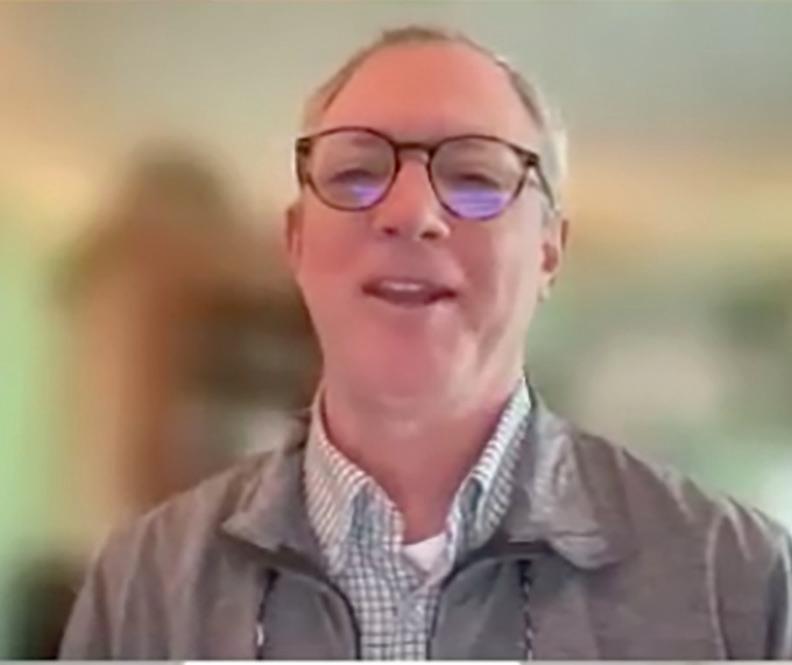
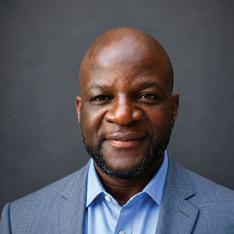
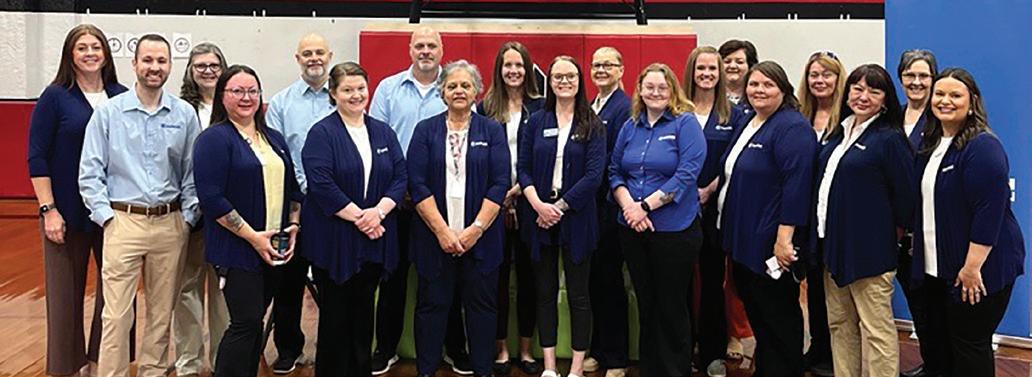
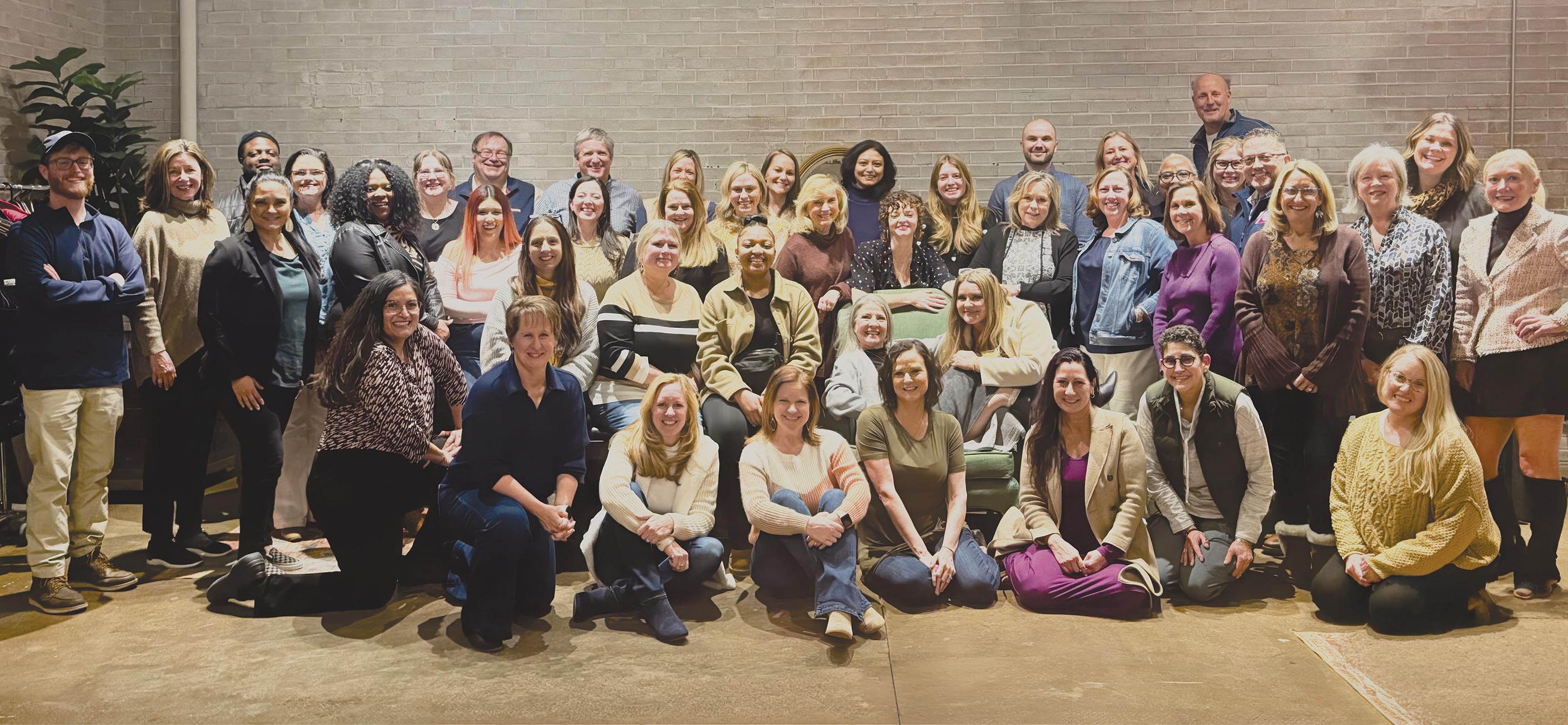
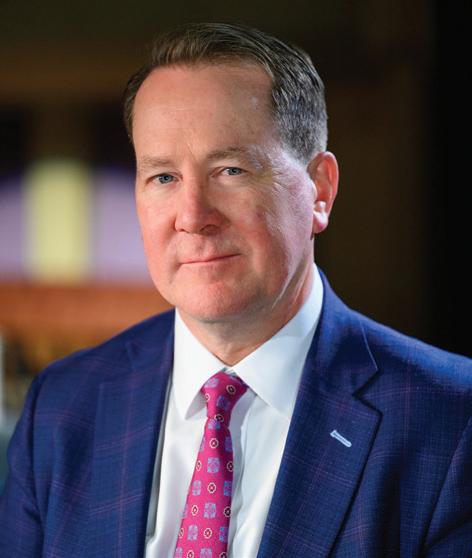
Outgoing president Jeff Cox reflects on his three years leading the N.C. Community College system.
8 POINT TAKEN
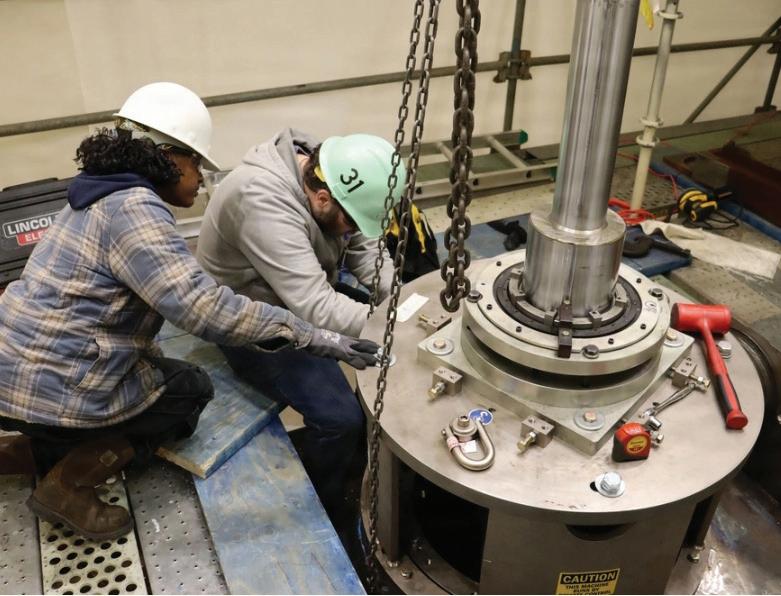
North Carolina isn’t known for shipbuilding, but there are thousands of jobs available at companies that join the Navy’s supply chain.
12 NC TREND
Wall Street investor finds joy in Wilkes County wine; State lawmakers look to curb property tax increases; Rural Alexander County opens the door for a major development; Window-door manufacturer Jeld-Win challenged in a competitive housing market; Critical investor wins seat at Ingles Markets’ table
104 BRICK + MORTAR
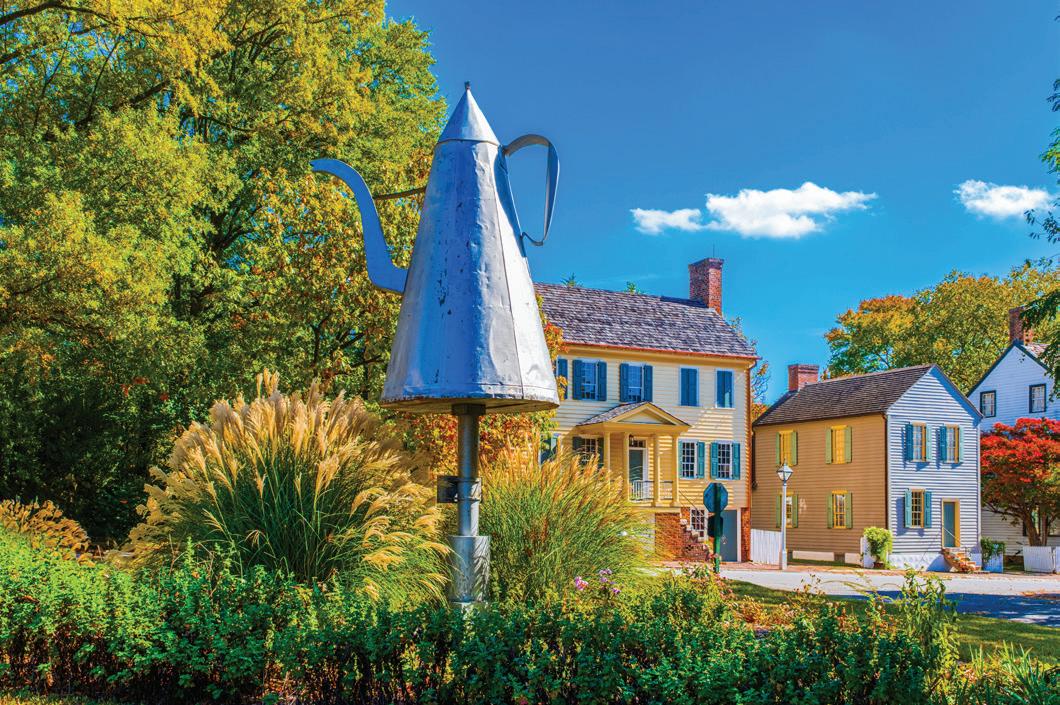
Three quirky attractions in the Tar Heel State, including a giant chest of drawers, a whirligig park and 12,000-cup coffee pot.
28
CORPORATE CITIZENSHIP: DOGWOOD HEALTH TRUST
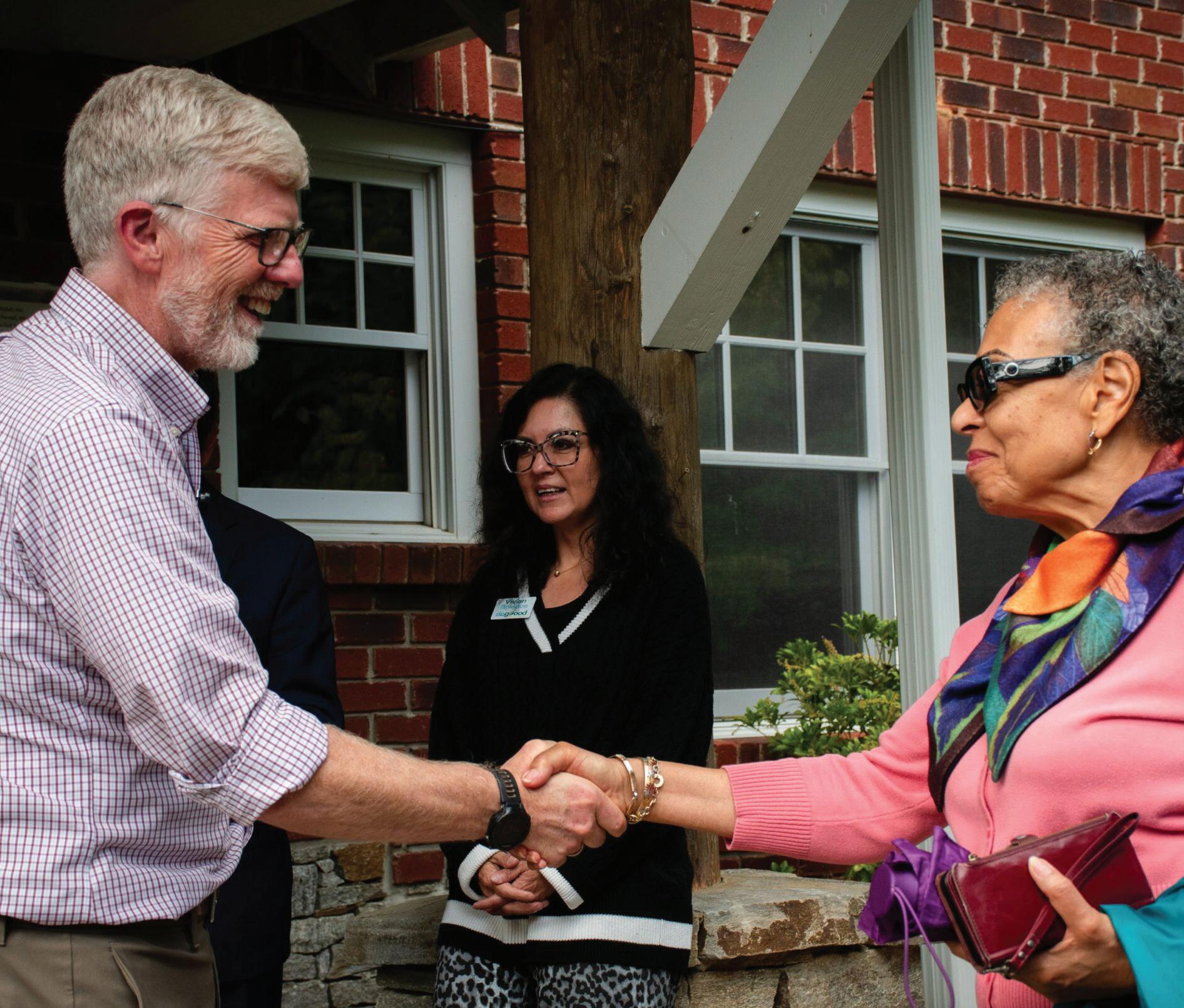
Created from the $1.5 billion sale of Mission Health, Dogwood Trust has led by example whether it be Hurricane Helene recovery or building community.
30
CARDIAC CARE
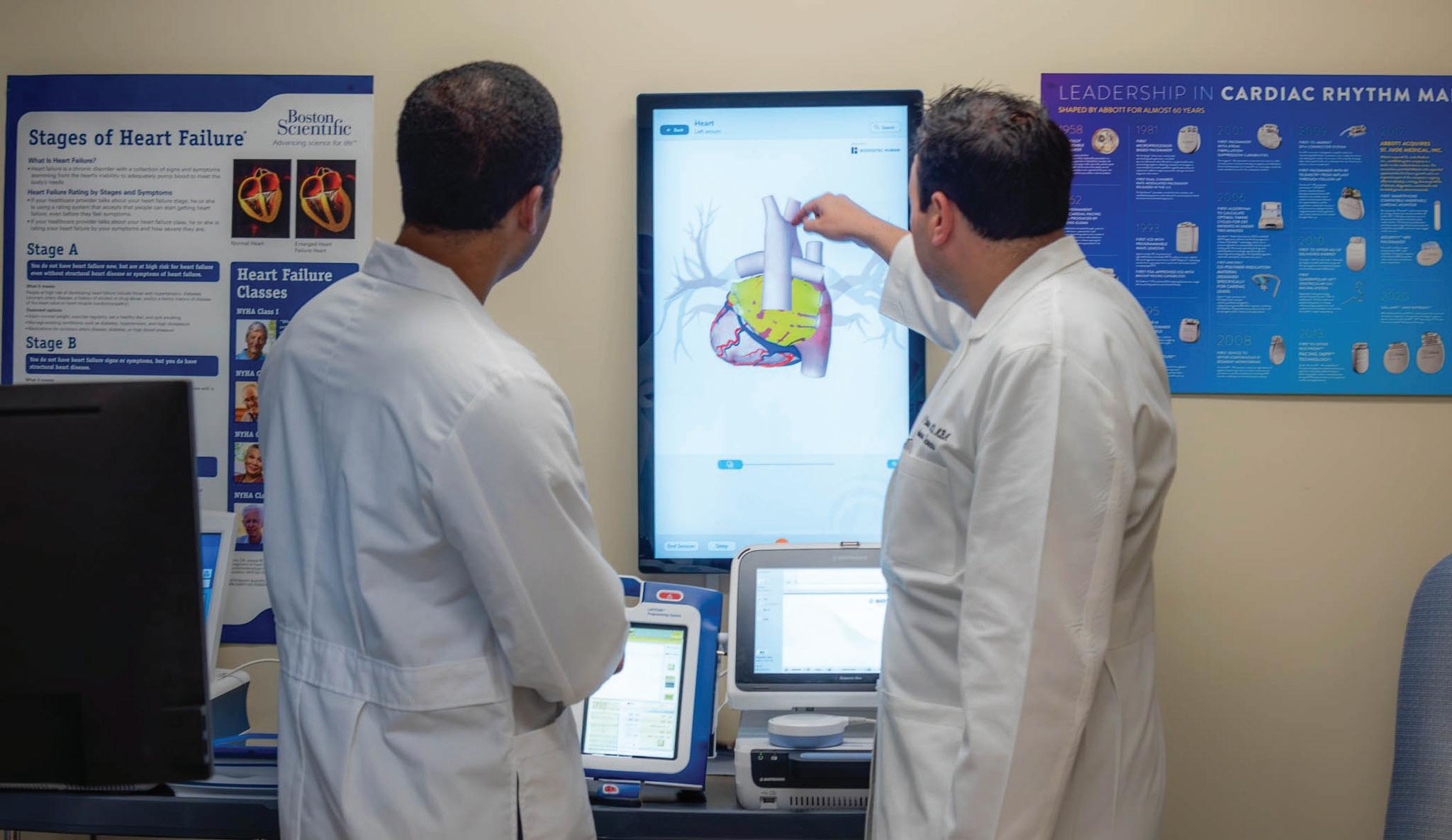
Healthcare systems are taking on the state’s leading cause of death by recruiting workers, expanding access to care and deploying cutting-edge technology.
36 ROUND TABLE: BANKING
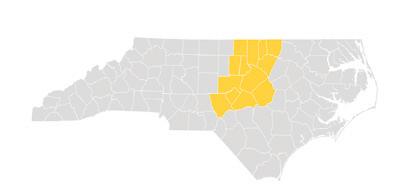
Twelve counties, 1.7 million residents and 21 colleges and universities find strength in the diversity of the region’s mix of rural and urban entrepreneurship.
92 COMMUNITY CLOSE UP: THE TRIAD
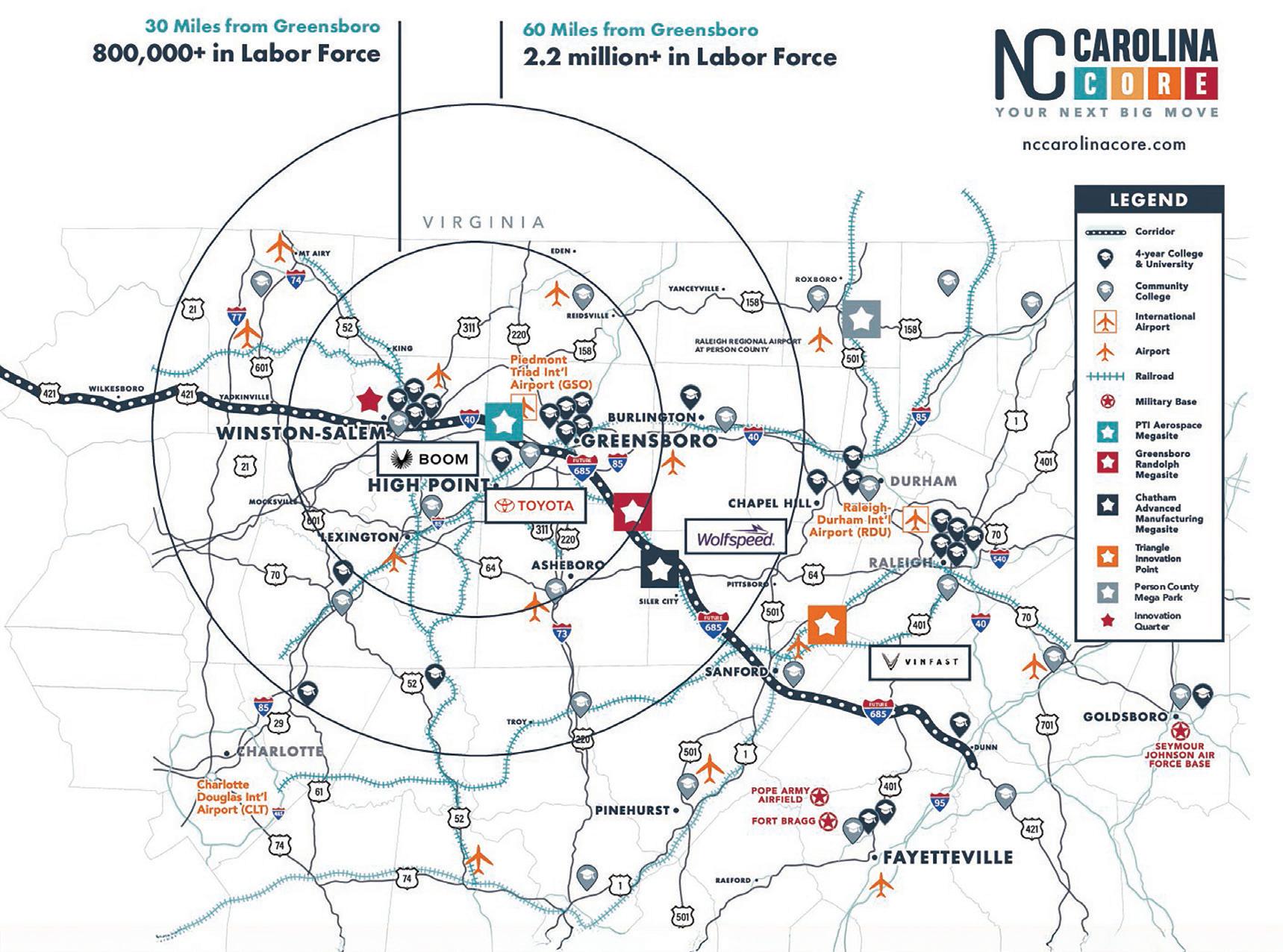
Recent economic wins in the Triad and larger Carolina Core are the result of investments in workforce, transportation and education, plus forward-thinking years ago.
COVER STORY
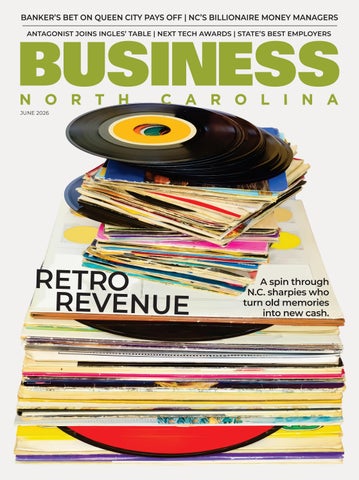
CLASSIC ALWAYS IN STYLE
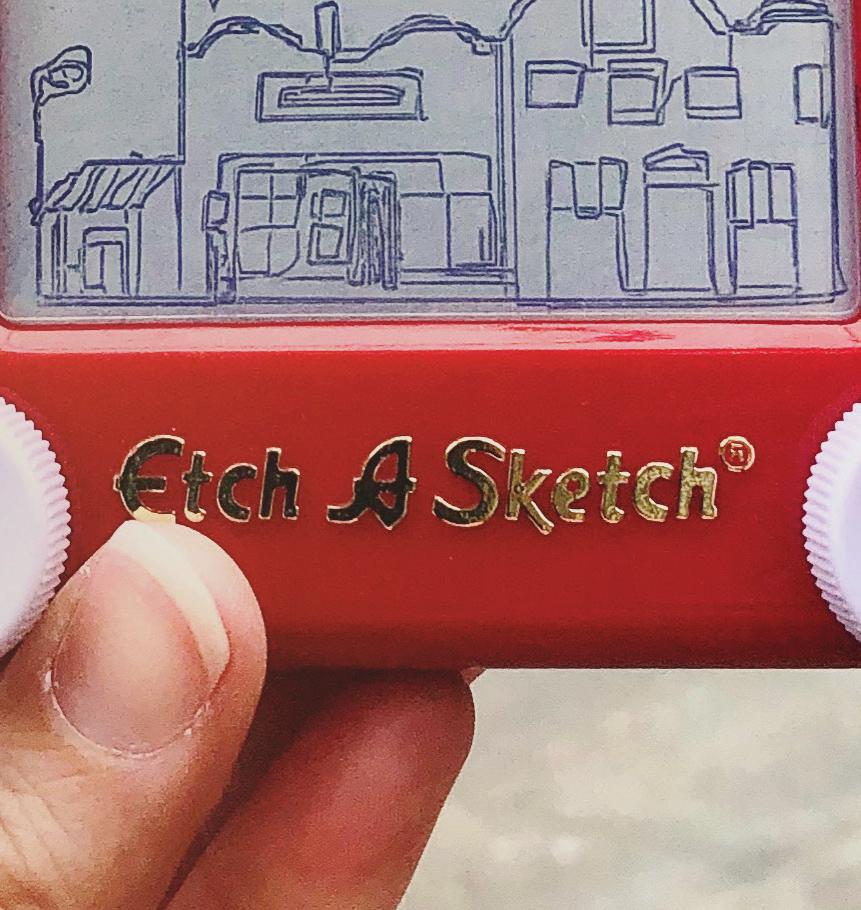
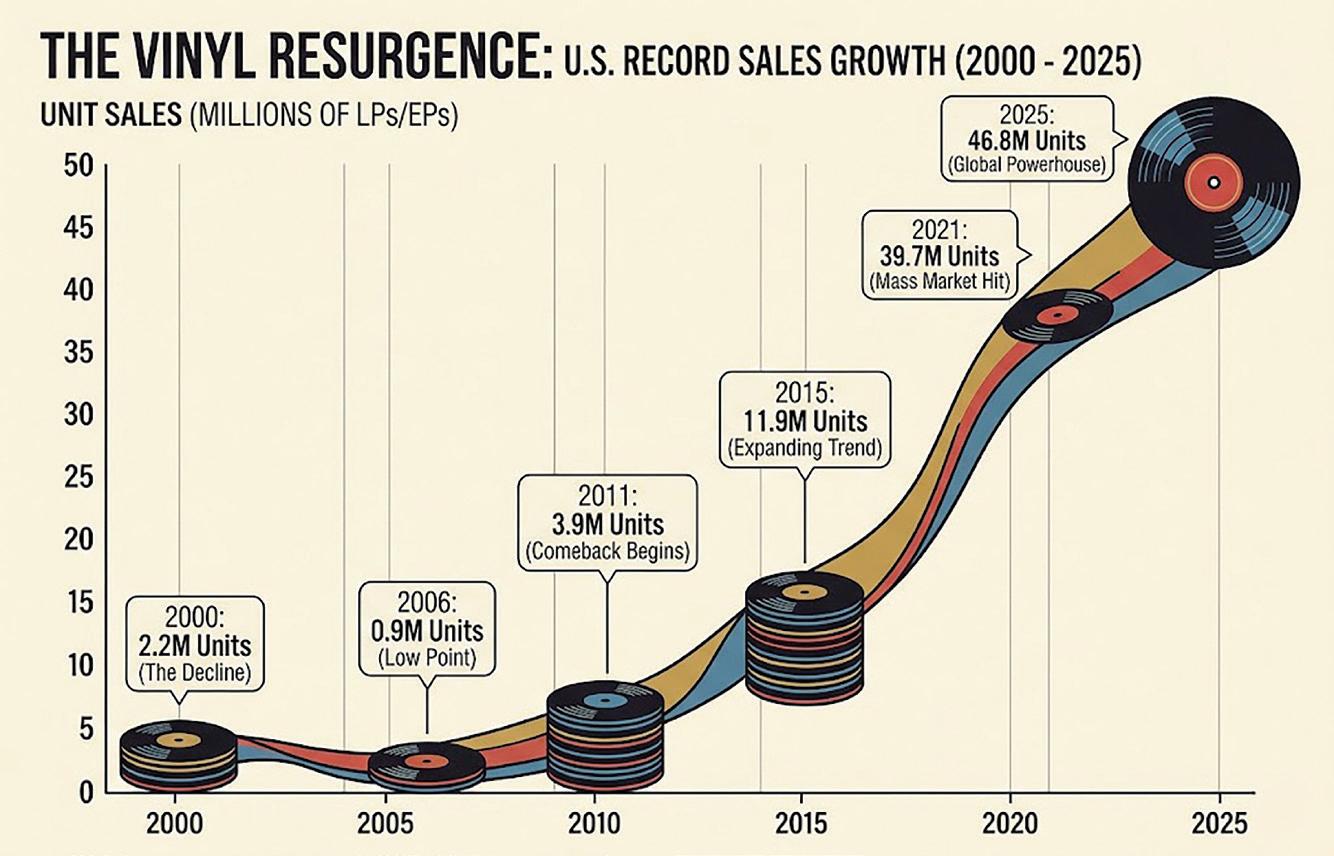
Whether it’s childhood memories or everything old becoming new again, entrepreneurs find selling nostalgia a thriving opportunity. BY SHANNON CUTHRELL
TAR HEEL BANKING
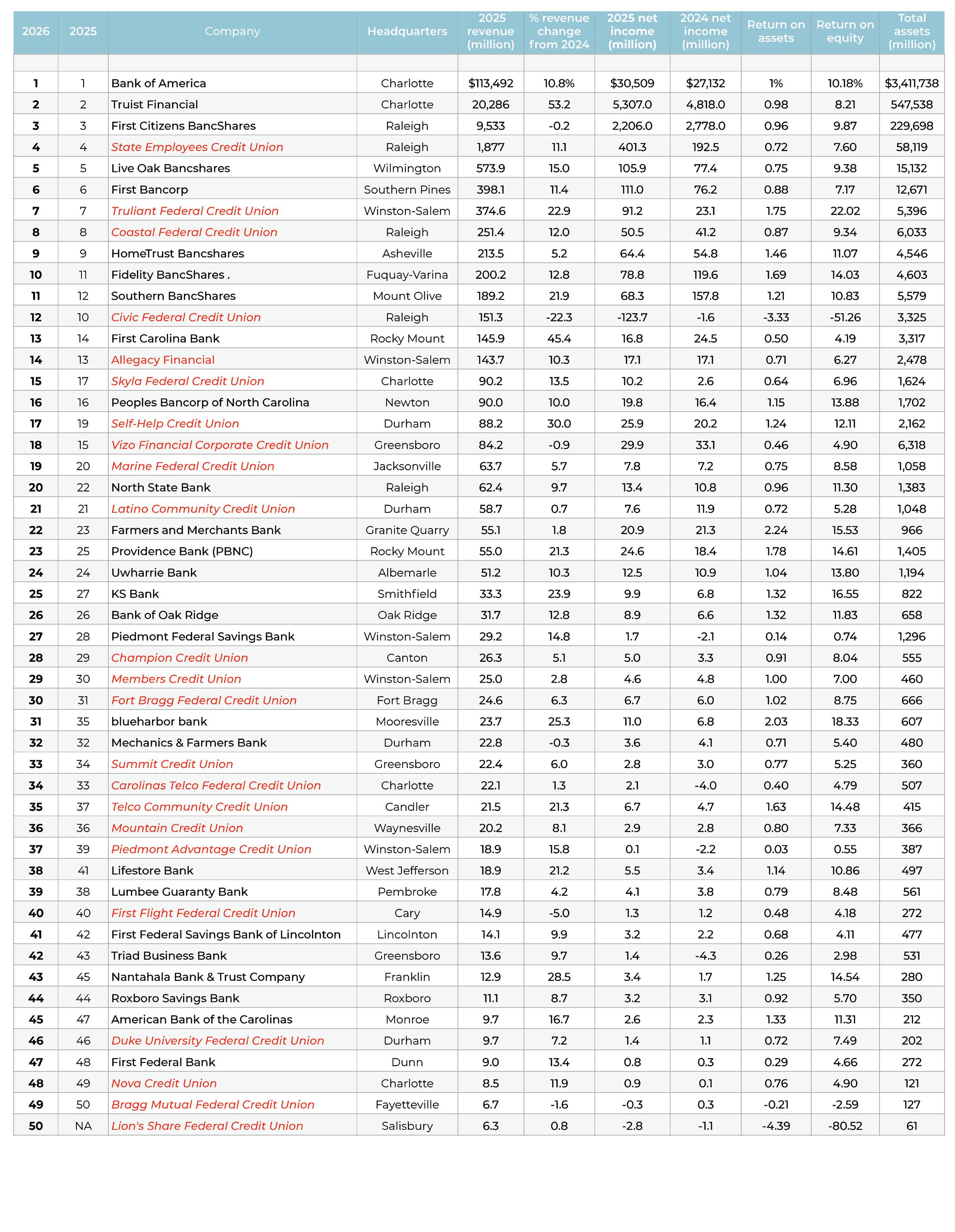
Ranking the state’s leading financial institutions and money management firms, plus key banking news over the past year.
BY DAVID MILDENBERG
CAROLINA CAREER
A decision to leave New York 21 years ago to work in Charlotte has buttressed the growth of U.S. Bank in North Carolina. BY DAVID MILDENBERG
NEXT TECH AWARDS
Top professionals working behind the scenes to make their firms thrive in information technology. BY KEVIN ELLIS
BEST EMPLOYERS
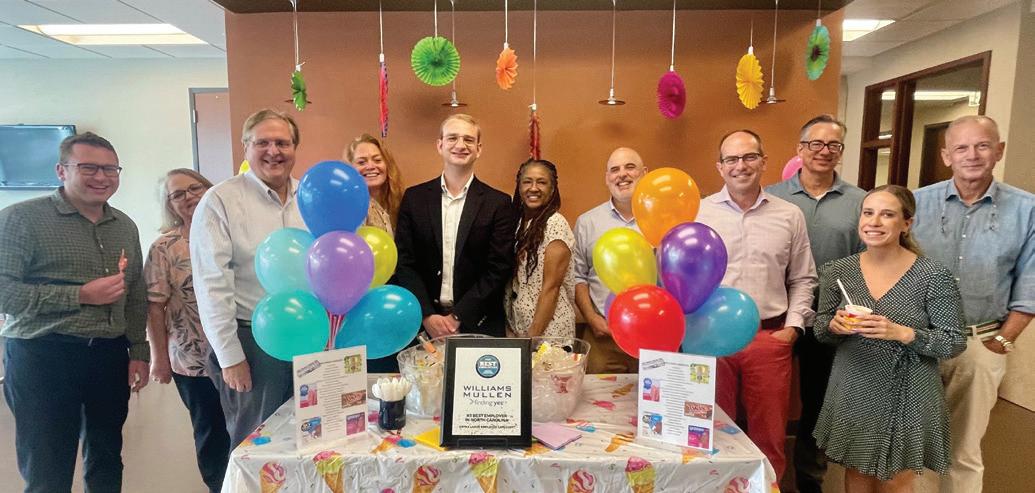
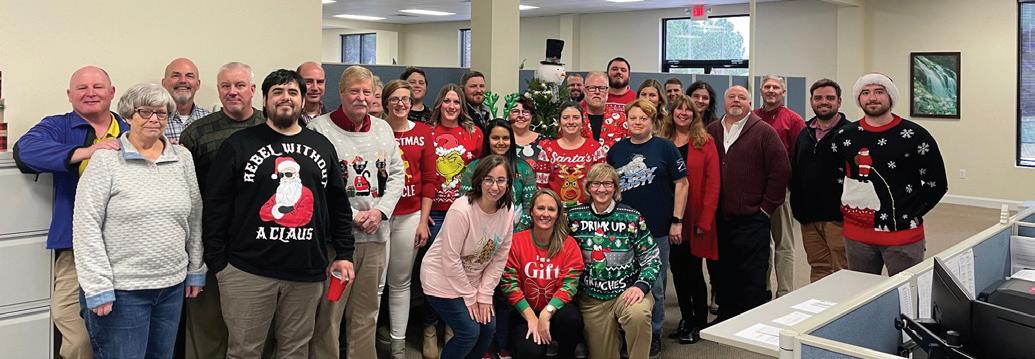
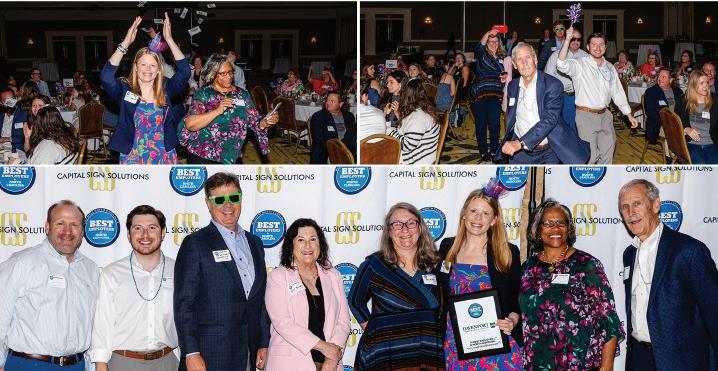
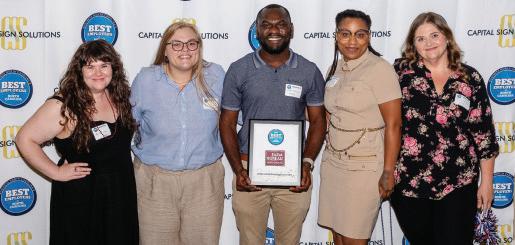
Business North Carolina’s annual look at enterprises expending extra effort to make work a meaningful experience. technology.
BY KEVIN ELLIS
UP FRONT David Mildenberg
PUBLISHER
Ben Kinney bkinney@businessnc.com
EDITOR
David Mildenberg dmildenberg@businessnc.com
NLOOK BACK BACK LOOK BACK
ostalgia is a solid business premise, which contributing writer Shannon Cuthrell explains in this month’s cover story.
It’s the best kind of Business North Carolina story because the idea was conceived and then executed by a talented writer. No domineering editor trying to influence a debate, promote a friend, exact revenge or settle a score. You know, the “The Devil Wears Prada” theme.
Shannon just wanted to describe why there’s a fascination with the old, particularly among the young. So she talked with folks who are capitalizing with some shrewd business plans and a passion for their work. I was particularly amazed by the young guys who are attracting 10,000 people to attend bazaars in Raleigh filled with various collectibles from decades past.
How to balance a respect for the past with an openness to the new is fundamental for every organization, not just the nostalgia folks. So many of today’s hottest issues require discernment of what we’ve learned, what works effectively and endures, versus taking a leap of faith into uncharted waters.
For me, that includes debates over data center development; transportation policies in the big N.C. metro areas; which forms of energy production are emphasized; how much personal character matters for leaders; and many other topics.
At a magazine-industry conference in May, Wilmington business consultant and motivational speaker Tom Morris described the “7Cs of Success” during a keynote speech.
Tom has had an outstanding career as a “public philosopher,” having taught philosophy at Notre Dame for many years, advised thousands of CEOs and other business leaders and written more than 30 books, including “The Oasis Within.”
His zest for a centered, positive life was compelling.
Here are his 7Cs that he deems as keys to success:
A clear Conception of what we want.
A strong Conscience that we can attain the goal.
A focused Concentration to reach the goal.
A stubborn Consistency in pursuing the vision.
A n emotional Commitment to the importance of what we are doing.
A good Character to keep us on the proper course.
A Capacity to enjoy the process along the way.
At the conference, the Association of American Business Publications gave a Silver Award for Shannon’s October BNC story, “How North Carolina got Legal-ish Weed without legalizing it.” It explains our state’s cannabidiol (CBD) market, making sense of a complex topic in a nonpartisan, accurate way. That is among BNC’s monthly aspirations.
The AABP also gave Gold awards to our Daily Digest and N.C. Military Report newsletters. Daily Digest comes out seven times per week, while correspondent Dan Barkin covers the state’s military with precision on a weekly basis.
We’ve learned that readers rely on the newsletters to gain a better grasp on key business issues across the state — and gain some great musical insights from publisher Ben.
Contact David Mildenberg at dmildenberg@businessnc.com.
MANAGING EDITOR Kevin Ellis kellis@businessnc.com
ASSOCIATE EDITORS
Ray Gronberg rgronberg@businessnc.com
Cathy Martin cmartin@businessnc.com
CONTRIBUTING WRITERS
Dan Barkin, Chris Burritt, Shannon Cuthrell, Vanessa Infanzon, Harris Vaughn and Lori D.R. Wiggins
CREATIVE DIRECTOR
Cathy Swaney cswaney@businessnc.com
MARKETING MANAGER
Mercy Clark mclark@businessnc.com
MARKETING COORDINATOR Jennifer Ware jware@businessnc.com
EVENT DIRECTOR Norwood Teague nteague@businessnc.com
ACCOUNT MANAGER Cindy Poovey, western N.C. cpoovey@businessnc.com
CIRCULATION: 818-286-3106
EDITORIAL: 704-523-6987
REPRINTS: circulation@businessnc.com
OWNERS
Jack Andrews, Frank Daniels III, David Woronoff, in memoriam Frank Daniels Jr.
PUBLISHED BY Old North State Magazines LLC
PRESIDENT David Woronoff BUSINESSNC.COM
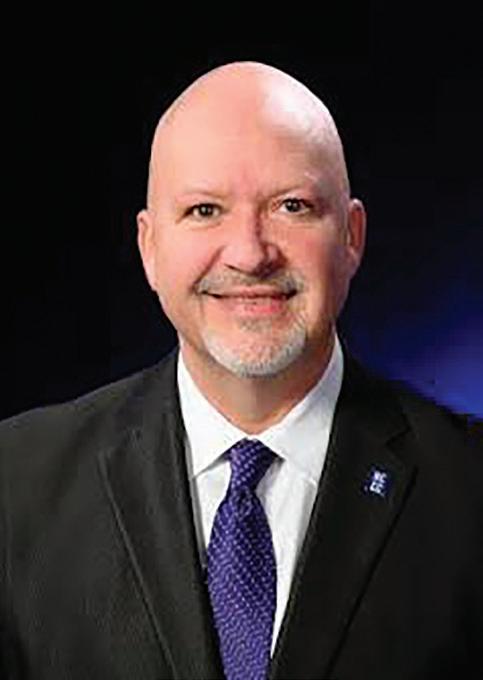
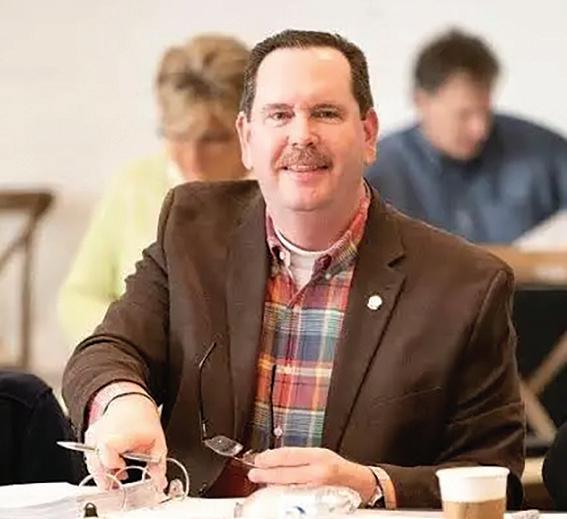
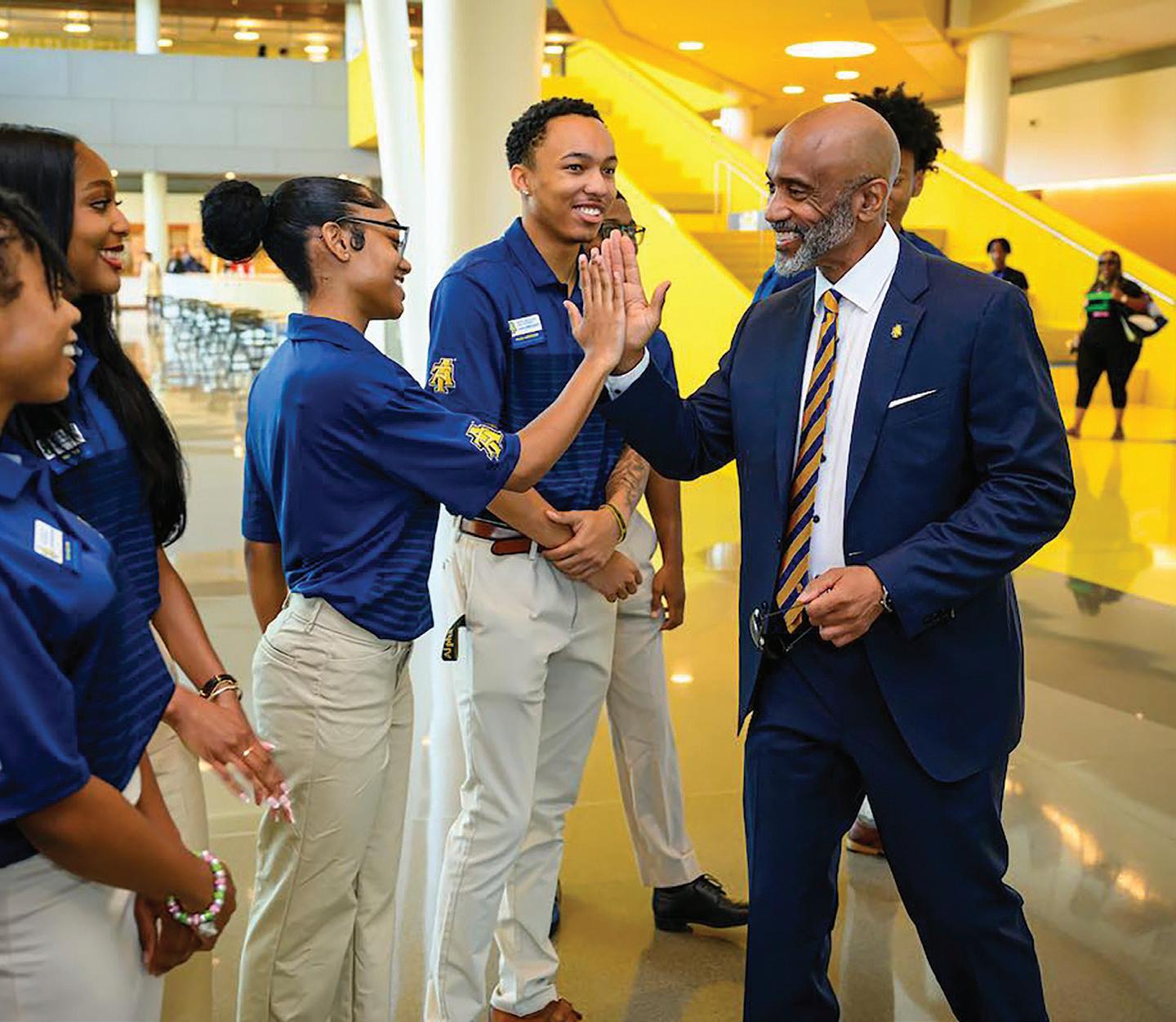
JEFF COX
FILLING THE WORKFORCE PIPELINE
Jeff Cox joined High Point University President Nido Qubein in the Power List interview, a partnership for discussions with influential leaders. The interview was edited for clarity.
What is your biggest challenge?
The state’s tremendous position with economic development is both a blessing and a curse. We’re the No. 1 state in the country for business again this year, so that prosperity creates pressure on an already tight labor market.
Our biggest challenge is matching the population of North Carolina, folks who want a better life, a better job, but may not have the skills that fit exactly with the opportunities. Our community colleges are the bridge between those folks who want an opportunity and the companies that need talent with specific skills.
Jeff Cox is retiring this month after serving as the 11th president of the North Carolina Community College System. He took the role of overseeing the state’s 58 community colleges with an enrollment of about 600,000 students in June 2023.
The native of Alleghany County has been involved in public education for more than three decades. He began his career as a high school teacher and coach, was superintendent of Alleghany Schools from 2005 to 2014, and president of Wilkes Community College from 2014 to 2023.
While system president, Cox implemented Propel NC, a funding model aligning programs with highdemand jobs.
Cox received a bachelor’s degree in Englishsecondary education, a masters of school administration from Appalachian State University and a doctorate in educational leadership from UNC Charlotte.
What’s the expectation?
Last year, North Carolina brought in a record 33,000-plus jobs. That’s a very large number. When these companies want to come to North Carolina, they’re looking for a prepared workforce. What we do with our community colleges is administer that at the system level. Preparing individuals for big companies like Toyota, Boom Supersonic, JetZero.
Our community colleges are at the heart, the very center of workforce development. The first question companies have when they’re coming in is, ‘Where is the talent?’
Is your budget from the state?
Yes, the vast majority comes from the legislature. Of course, we do get some federal funds that come through the county government. Community colleges are different from universities in that counties play a role in facilities, similar to the K-12 schools in brick and mortar. Even custodial staff and maintenance tend to be local expenses.
We have about a $2 billion budget from the state, and a whole team in finance whose job it is to distribute those funds across the 58 community colleges.
Do they distribute funds based on how many students a college has?
It’s mainly based on the number of full-time equivalent students at each college. There’s a formula in place. We also play a role with program oversight, so if a college wants to do a new curriculum, that makes its way up through for approval with our state board.
We’ve been trying to push forward a new business model for our colleges that we call Propel NC. This puts the focus on resources for programs that lead to high-wage jobs. Take a program like nursing. We have to be competitive with instructor salaries because they can make a lot in the private sector, too.
LIST INTERVIEW
with Nido Qubein
We are working with the General Assembly, and the governor’s office, to really make sure we’ve got adequate funds to support programs that have high-demand jobs all over our state.
Do students pay the same fee regardless of college or type of classes they take?
That’s a great question. We have a statewide schedule for tuition and fees. At the base level, it’s about $2,500 a year. Tuition and fees is all folks have to pay to go to one of our curriculum programs. We also have a standard rate for noncredit courses. That caps out at $180 for those classes.
Most colleges have some flexibility with their fees, but it’s pretty much standard across the state.
Do community colleges have foundations?
Yes, that’s done individually on campus. They raise money locally to help support student capital projects and other needs. We also have a system-level foundation that launched last year where we’re trying to raise $75 million. We’ve already raised about $50 million, so we’re really excited. Most of that comes from corporations.
Then there’s Arnold Ventures, a private philanthropy that granted us $35.6 million in 2025, the largest grant ever received by the state Community College System.
We used it to launch our Boost program. It’s basically a wraparound service for students. Most of our students drop out not because of academic life. A tire blew out on their car, they lost the transmission, they needed resources to support them, to keep them involved.
This grant is helping us with like 15 colleges to be able to roll that program out and really provide support for students.
How does the economy affect your enrollment?
When the economy is booming, enrollment tends to go down and things get tough. We tend to see our enrollment go up during economic downturns.
When the economy turns down and jobs are harder to come by, people need new skills. They’ve got to upskill and get new credentials to help them be more competitive in a tight labor market.
We’ve always got to keep making that value proposition, helping folks understand that a college education is worth it.
People ask, ‘Should I go to a large university or community college? Or should I get a job and not go to college at all?’
I’ve kind of lived the example. All three of my children, who are now 25, 23 and 21, went through our community college, early college high school. So they all got their first two years at one of our great community colleges when I was president.
My personal counsel is all the education you get is going
to be good. I think the more education you get, the more opportunities you’re going to have. So I encourage folks to think about us as your first option. Get those first two years.
The data is clear for students who complete two years with us and then transfer to a university. They do very well.
What about those who want to go right into the workforce?
We have to get that 40% who aren’t going anywhere introduced to college in a different way. It may be a 15-week program to be an electrical lineman. They can get out, make $75,000 a year as a lineman with 15 weeks invested. If we get them even a short-term credential, it really helps them go out and get a job that pays a living wage.
But real economic mobility, the data suggests, comes with a baccalaureate degree.
How do community colleges help students move toward a four-year degree program?
We have great partnerships with both our private and public universities in North Carolina and in a lot of other states. They will accept all of a student’s credits, particularly if they finish the full two-year degree. The whole thing transfers. So students aren’t left with having to choose a university based on which credits they’ll accept.
The only challenge I think we still have to work our way through is when students are picking a specific major and its prerequisites. High Point University may have one thing, NC State something else. Each university has its own set of standards.
When you were president at Wilkes Community College, your graduation rate doubled. How did that happen?
We had so many things to be proud of at the college, and we also had some things we needed to work on. The graduation rate was hovering about 25%, which was not uncommon, among other colleges in North Carolina and nationally. We talked with the faculty and staff about what it means that one out of four students who come here with the intention of graduating actually gets across the finish line.
Students drop out for a lot of reasons. They are part time, working two or three jobs, raising a family, trying to complete their education as they can. Life happens, and a lot of these students are just economically living on the verge of crisis.
We put all of our attention on that issue, and we’re going to change this one course at a time. You have to think, ‘What can you do differently as an instructor to get those students over the hump? We introduced the college promise program, and raised enough money to ensure that every kid in Wilkes, Ashe and Alleghany could come to Wilkes tuition-free. It wasn’t one thing. There were dozens of things we implemented. ■
WADING INTO NAVY SUPPLY
North Carolina is positioning itself to capture a larger share of the Navy’s shipbuilding supply chain.
For a year, I’ve been watching a group trying to position North Carolina for the surge in Navy spending expected out of Washington. The group actually has a name — the North Carolina Maritime Manufacturing Initiative or NCMMI.
It is a coalition trying to get more defense business in the state. The coalition’s focus is very specific: Getting more of our state’s manufacturers into the Navy’s shipbuilding and submarine supply chain, with an expanded, skilled workforce.
We don’t think of ourselves as a Navy state or a shipyard state. Virginia has the naval base in Norfolk and Newport News Shipbuilding. While Navy ships and subs are assembled in places like Newport News and Groton, Connecticut, they are built and repaired with components manufactured by thousands of suppliers.
We have 58 community colleges that teach skills like welding and advanced manufacturing. Our coast is laced with inland waterways that attract companies like Nucor Steel on the Chowan River, a supplier to Newport News Shipbuilding. In February, U.S. Forged Rings announced it was building a plant in Hertford County next to Nucor, a customer. The state ponied up $51 million for a dock.
BIG MONEY
The Trump administration wants $1.5 trillion for defense in the next fiscal year. A sizable portion is for more ships and subs, $65.8 billion for next year. The problem is that the maritime industrial base has workforce shortages and capacity challenges. A key focus is on getting more suppliers involved and training more workers. There will be money from Washington for this, we’re told.
In December, I was at a meeting of the NCMMI in Morehead City. One speaker, from Newport News Shipbuilding, explained how to become a supplier. In March, I was at another conference, in Raleigh, listening to a representative of the Hampton Roads Workforce Council, talking about going 100 miles into North Carolina seeking workers.
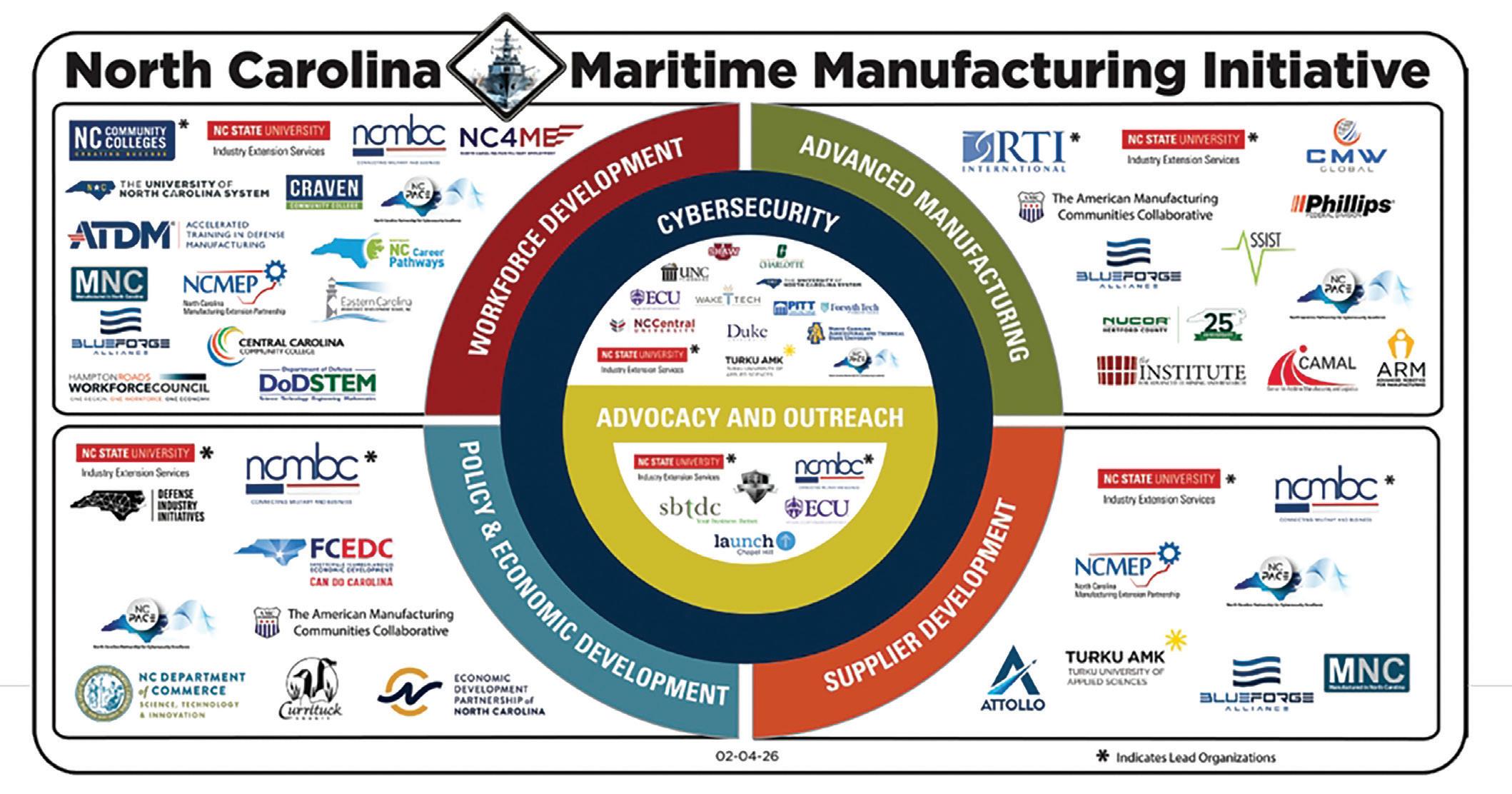
Other states see these demand signals and are organizing themselves. In North Carolina, the NCMMI has spent the past year enlisting partners, as you can see from the graphic.
Leading the coalition are NC State’s Industry Extension Services and the North Carolina Military Business Center. IES has been helping manufacturers for 70 years, and for the last five, it has been helping manufacturers get into military supply chains. The Military Business Center, led by Scott Dorney, was created in 2005 to help NC businesses get military work. It has helped companies get nearly $19 billion in contracts. We have companies in the maritime industrial base. Recently, two of them, Brig USA, d/b/a Fluid Marine Response, in Franklinton, and The Whiskey Project Group USA, in Edenton, were part of a group of companies made eligible recently to bid on $325.9 million worth of rigid-hull inflatable boats. We need more of these companies here in the military’s maritime industrial base.
PLAYING DEFENSE
North Carolina has the fourth-largest number of active-duty, reserve and guard, more than 116,000. Fort Bragg in Fayetteville is the largest Army base by population. Some 41,600 Marines train at Camp Lejeune and two Marine air stations, New River and Cherry Point. Seymour Johnson in Goldsboro is an Air Force fighter base.
We are home to two military aviation repair depots — the Navy’s Fleet Readiness Center East at Cherry Point and the Coast Guard’s Aviation Logistics Center outside Elizabeth City. Traditionally, North Carolina’s top defense priority has been to keep these installations. We work hard to make the military happy. The legislature fronted $350 million in a lease deal for new hangars at Global TransPark in Kinston for another Fleet Readiness Center operation.
That project showed that North Carolina can do big militaryrelated things when major players get together. Landing U.S. Forged Rings and Vulcan Elements for a $1 billion rare earth magnet facility in Benson in Johnston County are other examples.
CHALLENGES
The challenge facing the NCMMI was shown in a slide presentation by KeAnne Hoeg of IES last September, at the group’s first big meeting, in Kinston. It showed how many of North Carolina’s companies were in the MIB. There were 4,260 companies who could do Navy work. Then she looked at how many of them were actually MIB suppliers: There were 460.
There are a number of reasons. Companies have to ramp up to take on government contracts, and they may not be able to find suitable workers or capital. Just learning about contract opportunities and how to bid on them takes effort.
Lindsey Crisp, whose Carver Machine Works has 50 employees in Beaufort County, has been through all of that. Carver Machine Works has been a subcontractor for Navy primes for 20 years, overhauling aircraft carrier parts and building missile-defense components. He sees opportunity, as shipyards are pushing out work that doesn’t need to be manufactured in space-constrained yards. “You don’t need to have a shipyard to build a lot of the components that they built there historically,” says Crisp.
Going into the MIB was a challenge for Carver. “For us, servicing the Navy and our Navy primes was a pretty significant culture change from some of our other industries that we serve. The rigor of the compliance and the certifications, understanding procurement language, making sure that we had a workforce skills and discipline that met the defense standards.”
THE SPREADSHEET
The NCMMI plan drafted by Fiona Baxter, associate executive director of the IES, is a blueprint for how to overcome these challenges.
I created a spreadsheet with a list of tasks related to the NCMMI plans, and counted 43 action items. Some deliberately involve organizations, such as the community colleges, that are deep into workforce training. Some are new initiatives, such as: “Facilitate high-stakes matchmaking summits between Tier 1 Primes and vetted North Carolina Tier 2/3 suppliers, to connect manufacturers with Defense buyers, primes, and technology partners, focusing on multivessel procurement contracts.” And, “Establish the NCMMI Business Accelerator to provide specialized coaching on:
• Defense Production Act authorities and federal loan programs (e.g., Office of Strategic Capital)
• Audit-ready contract execution to minimize delays in federal processing.
For each action item, there are dozens of sub-tasks. There are hundreds, maybe thousands, of things that need to be done. Some will take funding, but Washington likes a plan. And expertise. One key expert is retired Navy Capt. Carrie Hasbrouck, who is working for a company with a Navy contract to boost the maritime industrial base. She is focused on the Carolinas.
More folks are getting involved. Last month saw the announcement by the NC Chamber and the North Carolina Critical Technologies Alliance, led by Jarrett Lane, of the First in Defense coalition, described as “an industry-led effort to position North Carolina as a top state for defense manufacturing and innovation.” At the same Chamber event, four state legislators — Sen. Bob Brinson of New Bern, Sen. Jay Chaudhuri of Raleigh, Rep. Mike Schietzelt of Raleigh, and Rep. Charles Smith of Fayetteville — announced the formation of the National Security Technology & Innovation Caucus.
Again, North Carolina appears to be responding to demand signals with different coalitions. There are lots of action items, more than enough for everyone who wants to get involved. ■
Veteran journalist Dan Barkin writes the NC Military Report newsletter for Business NC. He can be reached at dbarkin53@gmail.com.
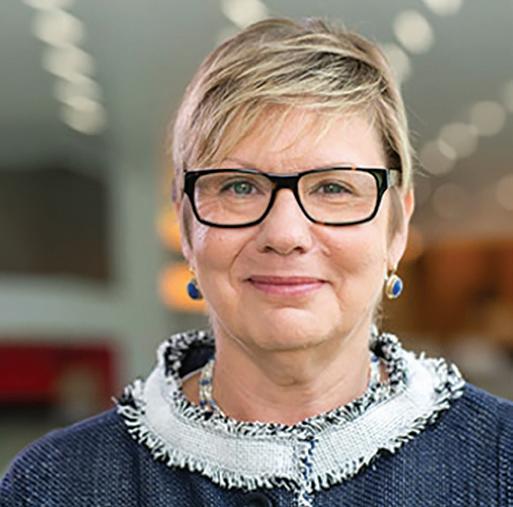
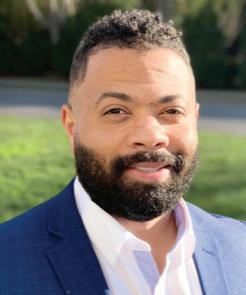
Fiona Baxter Lindsey Crisp
BANKING ON AFFORDABLE HOUSING SOLUTIONS
BANKING ON AFFORDABLE HOUSING SOLUTIONS
As North Carolina continues to grow its population, attract businesses and expand its economy, rising housing costs and intensifying demand are fueling a shortage of affordable rental options throughout the state.
to collaborate on strategies to increase the affordable housing supply and close the opportunity gap in Mecklenburg County.”
This shortage is particularly evident in cities like Charlotte, where demand for affordable housing far exceeds available supply. According to the 2025 Charlotte-Mecklenburg State of Housing Instability & Homelessness report, 50% of Mecklenburg County’s renter households spend more than 30% of their income on housing.
The region’s affordable housing challenge is perpetually top-of-mind for Dorsey Sullivan, vice president and Community Development Banking relationship manager for PNC Bank, as he collaborates with stakeholders throughout the Carolinas to help finance high-impact economic development, neighborhood revitalization and affordable housing projects.
“Access to affordable housing not only creates positive impact for renter households, but it serves as a powerful catalyst for economic development by supporting the local workforce and contributing to strong, resilient communities,” Sullivan said. “That’s why it’s imperative for developers, funders and community organizations
Housing Impact Fund (HIF), which recently raised $102 million, including a $15 million equity investment from PNC Bank, represents one such solution.
INVESTING IN NATURALLY OCCURRING AFFORDABLE HOUSING
With a focus on preserving and providing quality affordable housing in Charlotte’s increasingly expensive rental market, HIF invests in naturally occurring affordable housing (NOAH) – existing apartment communities that would otherwise be demolished or renovated and replaced with expensive high-end units, said Mark Ethridge, managing principal of Ascent Housing, which co-founded Housing Impact Fund with Erskine Bowles and Nelson Schwab and serves as its operating partner.
Acquired apartment communities are renovated to ensure tenants have a quality place to call home. And HIF places 20-year property deed restrictions on these communities to ensure long-term affordable rents, as determined by occupants’ household income, which average approximately 40% less than prevailing market rates and may be as low as $300 per month for households earning less than 30% of the area median income (AMI).
As Ethridge explains, these restrictions commit that 30% of apartments at each community are made available to households earning less than 30% AMI, 50% to households earning less than 60% AMI, and 20% to households earning less than 80% AMI.
This is the forty-third in a series of informative monthly articles for North Carolina businesses from PNC in collaboration with
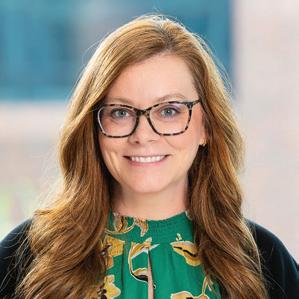
Dorsey Sullivan
“By keeping these properties from being redeveloped into housing that would price many households out of the market, HIF’s investment in NOAH is providing opportunities for economic mobility and opportunity while maintaining the city’s vibrant core and character,” Ethridge said. “This approach also allows HIF to make a larger proportion of our properties affordable to households at the lowest income levels – those earning less than 30% or 60% of AMI – than nearly all other local housing efforts.”
Since 2020, HIF has acquired nearly 2,000 units strategically located near jobs, transportation, essential services and good schools. The recently announced third fund is expected to support the acquisition and preservation of 1,500 additional units, reaching some 5,000 low- and moderate-income residents.
Combined, HIF’s $225 million in equity raised through its three funds represents $750 million in purchasing power to procure NOAH properties, creating impact for some
REGIONAL PRESIDENTS:
Weston Andress, Western Carolinas: (704) 643-5581
Jim Hansen, Eastern Carolinas: (919) 835-0135
10,000 residents and making HIF the largest and most successful affordable housing initiative in the region.
PNC Bank’s $15 million investment in HIF III builds on its continued support for this innovative affordable housing solution, having invested $8 million in HIF II in 2023. Additionally, PNC employees have been engaged in HIF’s efforts to build resilient communities by leading financial education workshops for residents of HIFacquired apartments.
“As our organization continues to place a growing emphasis on affordable housing, both nationally and locally, I’m confident PNC’s investments in Housing Impact Fund will create positive and lasting impact for our community,” said Sullivan. “And as Charlotte continues to cement its reputation as a leader in preserving naturally occurring affordable housing, my sincere hope is that this model may be adopted and implemented in communities throughout North Carolina and beyond.”
From Prompt to Exhibit A: The AI Risk You Didn't Know You Had
by Angela P. Doughty, CIPP/US, AIGP
Two recent federal rulings expose a risk most businesses have not confronted: information and legal questions employees paste into AI tools like ChatGPT or Claude can lose their legal protections and become discoverable by opposing parties and regulators. A second ruling suggests otherwise, but it is untested on appeal leaving businesses exposed with no dependable defense.
RULING ONE: AI as a Third Party (United States v. Heppner)
A New York federal court ruled this year that AIgenerated documents created without attorney direction are not shielded from discovery, and that privileged advice loses protection once entered into an AI chatbot.
The defendant used Claude on his own, feeding in information from his lawyers to generate strategy documents, then claimed attorney-client privilege and work product doctrine (a legal rule that protects documents prepared in anticipation of litigation). The court said no, for three reasons:
• AI is not your attorney. Attorney-client privilege requires an attorney-client relationship. Discussing legal issues with a non-attorney is not protected.
• Privilege waived. Claude’s consumer terms let Anthropic collect, train on, and disclose user input and outputs, defeating any expectation of confidentiality.
• No attorney direction. Work product covers materials prepared by or at counsel’s direction in anticipation of litigation. Heppner’s lawyers had not directed or supervised his Claude sessions.
The danger of Heppner: AI tools are third parties, and sharing protected information with them is legally indistinguishable from handing a confidential memo to a stranger.
RULING TWO: AI as a Tool (Warner v. Gilbarco, Inc.)
A Michigan federal court reached the opposite conclusion by ruling that generating litigation documents with AI does not, by itself, make them discoverable.
A plaintiff representing herself without a lawyer used a chatbot to prepare her court filings, and the defendants moved to compel production of all her prompts, outputs, and activity logs, arguing AI use had waived any protection. The court denied the request, finding:
• AI is software, not a third party. Disclosing thoughts to a software tool is not the same as disclosing them to a person. Administrators may exist in the background, but the same is true of email, cloud storage, and legal research platforms.
• Work product survived. Unlike privilege, work product protection is more durable, and many courts hold it is waived only when information is disclosed to an adversary or in a way likely to reach one. A drafting tool does not cross that line.
• Protection in the age of AI. Forcing disclosure of AI drafts would undermine modern legal practice, effectively eliminating work product protection for anyone who uses these tools.
Because Warner was acting as her own lawyer, her AI-drafted materials met the work product standard without separate attorney direction, a fact that may limit the ruling’s applicability to represented parties. Warner’s constraint: AI is software, not a third party, and protection can survive its use. But it is one trial court’s view, unreviewed on appeal, and not yet a reliable safe harbor.
PRACTICAL IMPLICATIONS
The rulings create conflicting frameworks. Because both are unreviewed trial court decisions, any AI interaction involving sensitive information carries real legal risk. Depositions and subpoenas targeting AI prompts, uploads, and outputs are no longer hypothetical.
The exposure is broad. Business teams routinely consult public chatbots about investigations, contract risks, IP, and regulatory issues and under Heppner those exchanges may be discoverable. Privileged materials from counsel can lose protection the moment they are uploaded. A premium subscription does not cure this: Heppner turned on the provider’s terms, and any platform reserving similar rights presents the same risk, free or paid.
MITIGATION STRATEGIES
• Set clear rules. Prohibit employees from entering legal advice, attorney communications, investigation materials, litigation strategy, audit findings, or trade secrets into any unapproved AI tool. A written policy beats a vague warning.
• Deploy safe AI channels. Ensure provider agreements prohibit training on your data, access to your inputs, or third-party disclosure, with tecāical controls that match.
• Lawyers in the loop. Heppner suggested the outcome might have differed under attorney direction. Require AI-assisted work on legal matters to proceed under counsel’s supervision.
• Train your teams. Build a “pause before you paste” culture: before entering anything, ask whether it is privileged, confidential, or sensitive. If yes or unsure, stop and consult legal.
• Prepare for AI-specific discovery. Expect opposing parties and regulators to ask which tools were used, what was entered, and what was generated.
Until appellate courts resolve the conflict, businesses cannot safely rely on Warner’s more forgiving view. Those that set clear guardrails now will be better positioned whichever way the law settles.
Want to learn more about AI and Vendor Contracts for your business? Every Tuesday in June we will address a different issue. Read more at WardandSmith.com.
Angela P. Doughty apd@wardandsmith.com 252.672.5471
Angela is a Certified Information Privacy Professional/ United States, a Fellow of Information Privacy, and an Artificial Intelligence Governance Professional, awarded by the International Association of Privacy Professionals.
wardandsmith.com
This article is not intended to give, and should not be relied upon for, legal advice in any particular circumstance or fact situation. No action should be taken in reliance upon the information contained in this article without obtaining the advice of an attorney.
VINEYARD TIMES
A top Wall
Street
investor finds joy in North Carolina wine.
By Vanessa Infanzon
As a young man working on Wall Street in the 1980s, Jay Raffaldini was counseled to think about a second act. “There were old traders and bold traders, but no old, bold traders; eventually you’re going to get it wrong,” a seasoned trader told him.
“I thought about that for a while,” Raffaldini says. “What would my second act be?”
Raffaldini’s first act set a high bar. He’s been part of Swiss investment company UBS’s O’Connor hedge fund since 2000, serving as its global head of sales and client coverage. He oversees $11 billion in assets under management. Earlier this year, New York-based Cantor Fitzgerald bought O’Connor Alternative Investments from UBS.
For his second act, Raffaldini chose a very different pursuit. His love of wine, access to money and a desire to pass on something meaningful to his heirs prompted the development of the first vineyard in tiny Ronda in Wilkes County.
Raffaldini Vineyards & Winery features Italian wines, reflecting its owner’s flavor profile formed at a young age while growing up in New Jersey. His family had a penchant for powerful Italian red wines such as Barolo.
“To make a big, powerful tannic red, I needed a lot of heat,” he says. “As I researched Virginia, North Carolina kept popping up on the radar. That’s when I discovered that before Prohibition (19201933), North Carolina made more wine than California.”
During Prohibition, many North Carolina farmers ripped out their grape vines and planted tobacco. It wasn’t until the late 1990s, around the time in which the big tobacco companies agreed to a massive settlement over public health lawsuits, did the focus return to grapes.
In 2001, at age 40, Raffaldini found a failed Wilkes County corn and soybean farm with the help of a Napa Valley vineyard
consultant. A “wine spine,” land hugging the mountains at a 1,300foot elevation, with a rocky hillside and extremely low fertility, is perfect for growing Italian grapes.
Over time, Raffaldini purchased 105 acres, planting 40,000 vines on 30 acres and using five acres for facilities, including a winery and an Italian villa with a tasting room, overlooking the Brushy Mountains. The rest is wooded.
He and his wife, Maureen Stitt, have a house at the vineyard and homes in Weaverville and Winston-Salem. He spends much of his time in the state when not traveling for work.
PATIENT HARVEST
Building a vineyard and winery is not the way to make money in retirement, Raffaldini says. He ripped up more than 100,000 vines when the grapes didn’t meet his expectations. He refers to the J curve, a popular term in economics related to high upfront costs for infrastructure leading to long-term gains, when talking about the wine industry.
“The capital expenses are enormous,” Raffaldini says. “You’re just putting money in for the first four to five years, and then you’re going to get money well after that.”
But the financial expert knows what he’s doing after 25 years creating a wine business. He declined to provide details of his investment.
“I don’t want to be profitable right now,” he says. “It is an incredible tax shelter. There are all the losses because it’s an actively managed business.”
Raffaldini Vineyards operates with 12 full-time staff, each provided with health insurance and a 401(k) account, and 20 to 30 part-time seasonal employees. Raffaldini’s daughter, Kristava Raffaldini, serves as the director of the wine club and hospitality, and his sister, Barbara Raffaldini, is the general manager.
Jay Raffaldini in the early 2000s.
The winery produces 6,000 cases of wine a year, or 72,000 bottles. Almost everything is sold through 1,000 wine club members and 20,000 annual visitors, mostly traveling from Charlotte and the Triangle regions. Raffaldini is focused on quality and doesn’t foresee increasing production. The vineyard hosts corporate events, a fall festival and food and wine pairings throughout the year.
GENEROUS POUR
Since 2000, just under 200 wine, cider and mead producers have emerged in North Carolina. Among the pioneers were Childress Vineyards in Lexington, Duplin Winery in Rose Hill and Shelton Vineyards in Dobson.
When Floridians Bill and Teresa Piastuch visited North Carolina for a wine tasting in 2012, they met Raffaldini.
“We were looking at the area, basically doing a wine tour for my birthday,” says Bill, a retired plant molecular biologist at the Kennedy Space Center. “We always had an interest in the potential purchase of land and doing vinifera wine growing and wine making.”
Two years later, the Piastuchs attended Raffaldini’s talk at the American Wine Society’s national conference in Concord. After the presentation, Raffaldini mentioned he had about 50 acres he could sell. Scott and Liz Barone, another couple at the conference who were interested in making Italian and French wines in North Carolina, split the land with the Piastuchs.
That deal closed in May 2015 and a decade later, Ronda, a town with fewer than 450 people is home to four vineyards. Raffaldini Vineyards opened to the public in 2005, followed by Piccione Vineyards in 2010, Castello Barone Vineyards & Winery in 2023 and Piastuch’s Sotrio Vineyards and Winery in 2024.
“(Jay) and his staff were instrumental in our setup of the vineyard and our initial layout discussions on potential varietals and business models,” Bill says. “It blossomed from there.”
WINE PROFILE
North Carolina boasts seven American Viticultural Areas, designated wine grape-growing regions in the United States defined by unique geographic, geologic and climatic features. Ronda is 45 miles west of Winston-Salem in the Swan Creek AVA, which was established in 2008.
“It’s an exciting phase of evolution for North Carolina wine,” says Nicole Chesney, executive director of the N.C. Wine and
Raffaldini’s vineyard produces 6,000 cases of wine and hosts 20,000 visitors annually.
Grape Council in the North Carolina Department of Agriculture. “We are established, across the state from the mountains to the coast. You can see confident identities taking shape in each of those areas.”
In 2016, Dan McLaughlin launched the Fine Wines of NC nonprofit with Raffaldini and Chuck Jones with Jones von Drehle Vineyards and Winery in Thurmond, an unincorporated Wilkes County community. Their goal is to support the industry by providing information related to enology, fermentation, viticulture, hospitality and agritourism.
Each spring, the nonprofit invites five to eight judges from around the world to a silent tasting competition. This year, 168 wines, all made with grapes grown in North Carolina, were entered by 32 vineyards. In 2025, Raffaldini Vineyards won Best White for its 2024 Vermentino Superiore.
“The NC Fine Wines Competition raised the awareness that vinifera grapes were being done here,” says McLaughlin. “Jay and Chuck brought professionalism to the table. They wanted welltrained and certified judges who know how wines should taste.” ■
The Raffaldini Estate features a Tuscan-styled farmhouse.
STICKER SHOCK
By Ray Gronberg
Rising property values have legislators eyeing limits on local taxes.
In early March, state Rep. Alan Branson joined a parade of people complaining to Guilford County commissioners about this year’s reassessment of property values. A Republican, former Guilford commissioner and trucking-company owner, Branson called the increases embedded in the new assessments used for tax purposes “extremely ridiculous.”
His home’s listed value rose by 57% from $347,100 to $587,400, while a couple of adjoining properties
“with nothing on them” saw increases topping 75%. The fear is that higher values will lead to higher tax bills, even if commissioners roll back the county’s tax rate to a “revenue neutral” level.
The timing couldn’t be worse, Branson says.
The state Senate has countered by proposing a year-long delay in implementing the new schedule of property values in Buncombe, Guilford and 10 smaller counties that had reassessments this year. Senate leader Phil Berger, whose district includes part of Guilford County, argues the move will give taxpayers some short-term relief while legislators consider a broader strategy.
“Citizens are struggling with increased cost of living, rising insurance, high grocery bills, higher healthcare costs, and many other items that are necessities.”
Similar concerns across North Carolina have state legislators looking for remedies related to property taxes.
In May, lawmakers approved a constitutional amendment that will ask voters in November to approve a plan to regulate how quickly local governments can increase property tax rates. It doesn’t include a specific cap for the increases because the amendment has to pass first before the details are written into law.
GROWING PAINS
North Carolina is the sixth-fastest growing state over the past five years. The result is years of rising home values, a pace that accelerated after the pandemic. While home values across the nation have been rising steadily since 2018, they’ve kept gaining here, Abir Mandel of the conservative-leaning Tax Foundation told legislators in February.
Office-property values, by contrast, have taken a hit because more people are working from home and many companies are leasing less space. In the office market, it’s been a “flight to quality,” with new, well-located Class A buildings in the Charlotte, Triad and Triangle holding their values, while older Class B and C buildings are reporting higher vacancy rates and lowering lease rates. Over the past five years, many prominent towers in the state’s biggest cities have traded for less than half of the prices paid a decade or more ago.
This matters because tax values of commercial property are typically based on their income-producing potential. Home values, by contrast, turn on their prospective resale price.
With market sectors trending differently, a reassessment shifts the tax burden. So these days, homeowners are likely to bear more of the burden.
N.C. Rep. Alan Branson of Guilford County.
In Durham, a 30-year-old office building near Interstate 40’s N.C. 54/N.C. 55 interchange saw its income-dictated 2025 tax appraisal rise by about 12%. Homes in the nearby Parkwood neighborhood saw value increases topping 90% in some cases.
As with commercial property, there’s lots of nuances on home price inflation. “In Guilford County, there have been some examples of situations where folks that own million-dollar houses are seeing their values go up 10% [or] 12%,” Berger says. “Folks that own $250,000 houses — or previously $250,000 houses — are seeing their values go up 40%.
“There are a lot of things that need to be looked at there,” Berger adds.
SPENDING PAINS
Another part of the debate is what local governments spend after collecting the taxes. Some cities and counties have used their tax rates to keep their revenue growth, adjusted for inflation, below the growth rate of property values, Mandel says. He singles out Mecklenburg County, which had property tax revenue topping $2 billion last year for the first time.
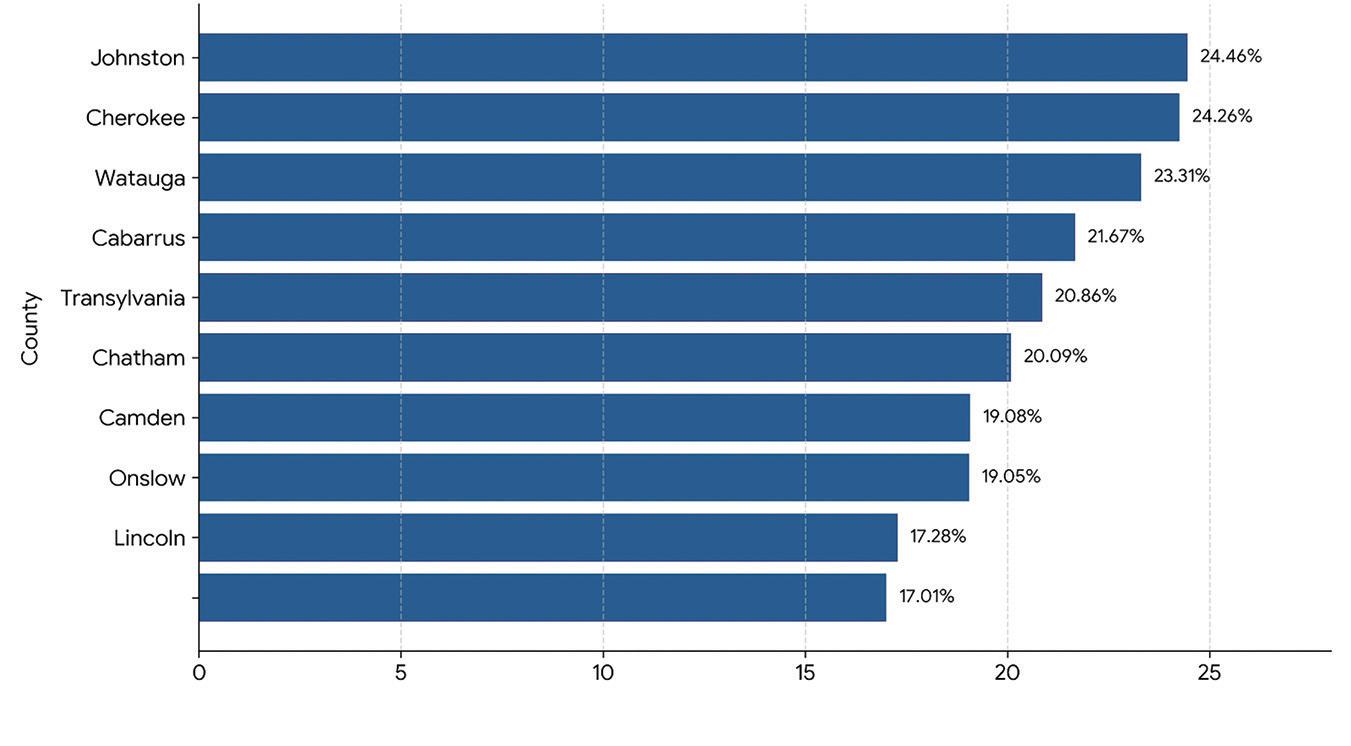
But in 64 of the state’s 100 counties, tax collections have risen faster than property values, the Tax Foundation notes.
The 10 counties with the fastest growth in revenues between 2018 and 2023 differ politically and demographically. Suburban areas such as Johnston, Cabarrus and Chatham counties figure prominently. Other big gainers include Watauga, home of Appalachian State University, and Onslow County, which includes Marine Corps Base Camp Lejeune.
Rep. Erin Paré, R-Wake, says state and local officials owe residents “a sense of predictability” that is missing now. “What’s been happening undermines homeownership,” she says, singling out the effect of revaluation-driven tax increases on retirees.
But Mandel’s summary of the options available to legislators highlighted that each potential action has a potential tradeoff. Restrictions on property tax increases can incent owners to hold on to homes longer than they otherwise might. That keeps homes and potential buyers off the market.
“If I’m retiring, I may be discouraged [from moving] to a smaller house because once it’s purchased at market value, I’ll be ending up paying more in taxes despite the fact I’m living in a smaller house,” he says. “And that doesn’t make sense.”
Tailored tax breaks like homestead exemptions for the elderly, which typically freeze property values, “are very piecemeal” responses to the root cause of property tax increases, which is local-government spending, he says.
Levy limits address that directly, Mandel adds, especially if they enable referendums for voters to override the limits if they want to expand services.
Rep. Brian Echevarria, R-Cabarrus, and other lawmakers have embraced that idea. Others argue that the state needs to clamp down more broadly on local governments, which some conservative legislators say aren’t providing residents enough value.
“The people that really make all this work are the folks that get up every day and they play by the rules,” says Rep. Jeff Zenger, R-Forsyth. “There’s only one thing that they get: a bill. Every regulation, every little tax, every little thing just keeps adding up and adding up and they’re getting squeezed.”
Leaders of North Carolina’s counties and cities disagree, explaining that growing communities need the latitude to add services. They also point to unfunded mandates and lack of fiscal support from state and federal governments.
Wake County forks out about $600 million a year to cover expenses the state should be picking up in its $2.3 billion annual budget, County Manager David Ellis says. Much of that is for the county’s public schools, which are funded jointly by the state and counties.
“If the state did its part, we could’ve lowered the property tax rate by 19 cents,” says Ellis. Instead, he’s asking county commissioners to approve a property tax rate increase of 2 cents per $100 of assessed value, to 53.71 cents.
Plans for a constitutional amendment winding through the House are receiving significant pushback from the overwhelmingly Democratic leadership of North Carolina’s large cities and counties. But Berger and House Speaker Destin Hall say it will be approved this session and go to the state’s voters in November. ■
LAKE EFFECT
A
rural western Piedmont county attracts its largest housing development.
By David Mildenberg
Change comes slowly to Alexander County, a picturesque foothills region with a southern edge bordering Lake Hickory on the Catawba River chain.
The pace is likely to pick up soon with the development of nearly 500 homes over the next several years by Scottsdale, Arizona-based Taylor Morrison, a top-10 U.S. home builder with annual revenue exceeding $8 billion. It’s in the unincorporated Bethlehem area on the north side of the lake across from the Catawba County city of Hickory.
“They’re probably going to build 80 homes a year there, which is more than the number of homes built in [Alexander county seat] Taylorsville in the past three or five years overall,” says Bruce Alexander, an Asheville developer and the site’s primary landowner since 2007.
It’s the biggest residential development ever in the county, and most likely the most impactful economic development trigger, reflecting the impact of new residents entering a formerly rural area. It also reflects the increasing popularity of the Hickory metro area as population growth spreads statewide. While no national home builders operated in the region a decade ago, several have projects there now.
In April, Alexander sold the land to Taylor Morrison in a deal facilitated by Dan Owens, owner and principal of Charlotte’s Senior Housing Services. The home building company has been working on the project for a couple of years. It will be part of its Esplanade brand, which caters to early retirees and active adults looking for what the company calls resort living. It has more than a dozen Esplanade communities in California, Florida, North Carolina and Texas. The sole N.C. project is in Indian Trail in Union County.
h While a giant company is the developer, two North Carolinians were among the key forces in the project. Bruce Alexander opened North Carolina’s first age-restricted housing development in 1996. He has since developed 12 projects around the Asheville area and one in Hickory, for a total of about 1,200 homes. Over the past 25 years, Owens has brokered dozens of independent living, assisted living, skilled nursing facilities and other projects related to senior housing in several states.
Taylor Morrison hasn’t set pricing for the project and it will be at least a year before homes are erected, says Patrick Creech, Alexander County’s planning director. But assuming the homes average $500,000, including higher-priced ones with lakefront views, the project could add about $250 million to the tax base of Alexander County. At a $600,000 average price point, it’s a $300 million impact.
In 2024, county leaders said the development would result in $1.6 million in annual property tax revenues, plus another $340,000 for fire district and water and sewer needs. That’s big news for a county that has a population of about 37,000, little changed over the past 25 years.
Bruce Alexander
DENSITY DESIGN
Alexander had planned to develop the Bethlehem-area project himself, but concluded it required a bigger operator. “I owned seven senior developments in 2009 when the recession hit and I struggled for seven or eight years.”
Seventy percent of the builders went out of business, he says. He rebounded, aided by support from his lender, Newton-based Peoples Bank. “But I thought this project was too big.”
A previous partnership with a Florida developer, which called for about 600 homes, fell through.
The Bethlehem-area development hasn’t come without a fight. Concerns over the density of housing, increased traffic and environmental impacts has spurred opposition to growth plans for years. Roadside signs and a Facebook group have opposed “highdensity” housing plans. The 215-acre property slated for a “resortliving” community with a clubhouse, docks and other amenities has been used for impromptu camping, ATV riding and other favored pastimes for years.
Realizing that growth was coming, Alexander County officials changed rules in May 2024 to eliminate minimum lot sizes in favor of “density-based zoning.” That also reduced front, side, and rear setback requirements for most areas.
Taylor Morrison’s plans call for 2.3 houses per acre, which is less than the four per acre permitted by the county. About 75 acres of the hilly area will be open space.
Some residents have pushed for an incorporation of Bethlehem as a way to provide stricter control over zoning and
add law enforcement and street maintenance services. The state Local Government Commission voted 6-2 in December for a proposal suggesting that Bethlehem’s incorporation could be financially viable.
However, the county’s five county commissioners promptly said they opposed the incorporation plan. Commissioner Josh Lail said a majority of the estimated 7,800 Bethlehem-area residents don’t favor a change, according to local media reports.
Now, county officials have approved the Taylor Morrison residential project and site development started in May. The company still has to submit and receive approval for proposed amenities, Creech said.
Alexander County “is in an excellent position to financially handle any future growth,” according to a study released in March by NC State economics professor Jeffrey Dorfman. Sponsored by state and local government agencies, the report noted that the county has surplus tax revenue from commercial and agricultural land uses to cover county services.
A home of about $170,000 can generate enough tax revenue to cover the cost of county services, Dorfman said. That’s well below the average sales price of homes in the region.
Lake Hickory has long been an under-the-radar destination for Charlotte-area buyers because few homes were available, Owens says. With nearly a mile of waterfront, it’s one of the largest undeveloped tracts on the Catawba River chain of lakes, he adds. “This Esplanade development will change everything.” ■
SLOW TURN
A tough housing market trends create challenges for a $3 billion N.C. business.
By Chris Burritt
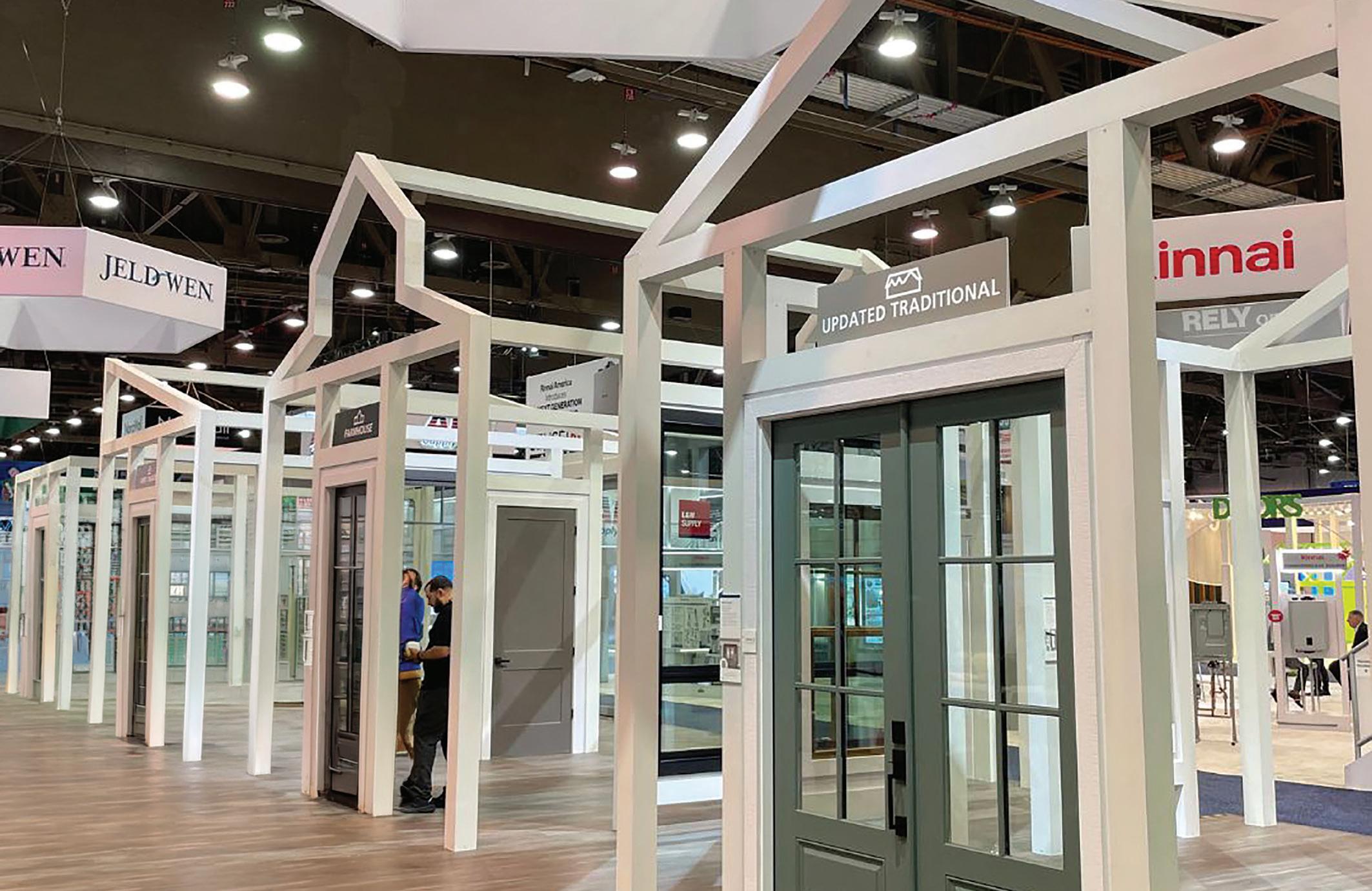
For Charlotte-based window and door maker JeldWen, industry trends offer little encouragement for its hopes to pull out of a lengthy descent.
Shares of the building products manufacturer have tumbled more than 90% over the past five years as service and delivery problems have prompted some customers to switch to rival brands. Jeld-Wen moved its headquarters from Oregon to Charlotte more than a decade ago, hoping to lower costs and improve the efficiency of its more than 70 manufacturing and distribution facilities in 14 nations.
But the business has reported cumulative losses of more than $850 million over the past two years, while revenue has declined from $4.5 billion in 2022 to $3.2 billion last year. Some of the reversal stems from closed or sold operations.
CEO Bill Christensen was hired in 2022 to “simplify and streamline” the company, according to an initial press release. He’d been a CEO of a Switzerland-based manufacturer. So far, signs of success appear limited. Amid shrinking sales, he eliminated about 2,300 full-time jobs last year, or 14% of the workforce.
In April, Jeld-Wen reported a loss of $77 million in the first quarter, but said its revenue for the year would be slightly higher than previously forecast. Revenue declined nearly 7% to $190 million. Housing starts remain sluggish because rising interest
rates are deterring first-time buyers, while people with low-rate long-term mortgages are reluctant to move.
Housing starts nationwide are forecast by Fannie Mae to decline 1.4% this year. The outlook helps explain the sharp decline in homebuilders’ confidence in April at the outset of the spring buying season, according to the National Association of Home Builders and Wells Fargo.
Bill Christensen
In another sullen signal, the National Association of Realtors reported sales of previously occupied homes barely budged higher in April from a month earlier, reflecting the drag of rising prices and higher interest rates.
Jeld-Wen shares have traded for less than $1 at times in recent months, but rebounded to the $1.60 range in mid-May. That level often reflects investor concerns over a company’s capital. Jeld-Wen reported total debt of $1 billion as of March 31, and net equity of $92 million.
“We continue to operate in a challenging and uncertain environment and our outlook reflects a cautious view rather than any expectation of a near-term recovery,’’ Christensen told analysts. “As we look ahead, we continue to focus on what we can control.’’ Christensen declined requests for an interview.
The company has said it is making $100 million in mostly maintenance-related capital improvements this year, aiming to improve the efficiency of its operations.
For 2026, Jeld-Wen is projecting revenue of $3.05 billion to $3.2 billion, about $100 million more than its previous forecast. It’s unlikely to top last year’s revenue as the company anticipates lower demand for windows and doors in the U.S. and Canada.
The company forecasts adjusted profit of $100 million to $150 million, and free cash flow of about $60 million this year. In the first quarter, higher prices for freight, metal and other materials pressured profit, outweighing gains from price increases. The company anticipates the benefit of more than $100 million in “right-sizing’’ efforts to improve productivity, automation and other operating improvements.
other options to improve liquidity, such as non-core assets and selective sale-leaseback opportunities,’’ company spokeswoman Melissa Farrington says in an email.
Company shares traded for more than $28 in the spring of 2021, fueled by hopes for a robust housing rebound amid historically low mortgage rates during the pandemic.
“We have ample liquidity and we’re actively managing cash in this soft macro environment,’’ the CEO said. “We’re feeling good about where we are currently.’’
Jeld-Wen is evaluating whether to raise more capital, possibly by selling its European unit, which contributed a third of sales last year. “In addition to the strategic review, we continue to evaluate
“Based on the current situation, there’s no strong belief that the whole industry or the company will have a good performance next year or in the near future,’’ says Feng Dong, assistant professor of finance at Elon University. Jeld-Wen’s “stock price may stay at that level for a long time.’’
Management’s approach to “basically cut costs, restructure and focus on the things that are still working’’ makes sense, according to Xu Jiang, associate professor of business administration at Duke University. Still, investors may wind up “catching a falling knife’’ even at the stock’s low price, he says.
One hopeful sign is that the average 30-year fixed mortgage rate is projected to decline over the next 18 months, albeit at a very slow pace, according to Fannie Mae’s forecast in April. The average rate opened at 6.6% this year and should decline to 6.2% and 6.1% in 2027, according to the mortgage finance company.
“It’s very risky because of the uncertainty of how long the housing market slump is going to continue,’’ Jiang said. “The housing market pretty much depends on mortgage rates. They’re not very likely to come down at least for this year.’’ ■
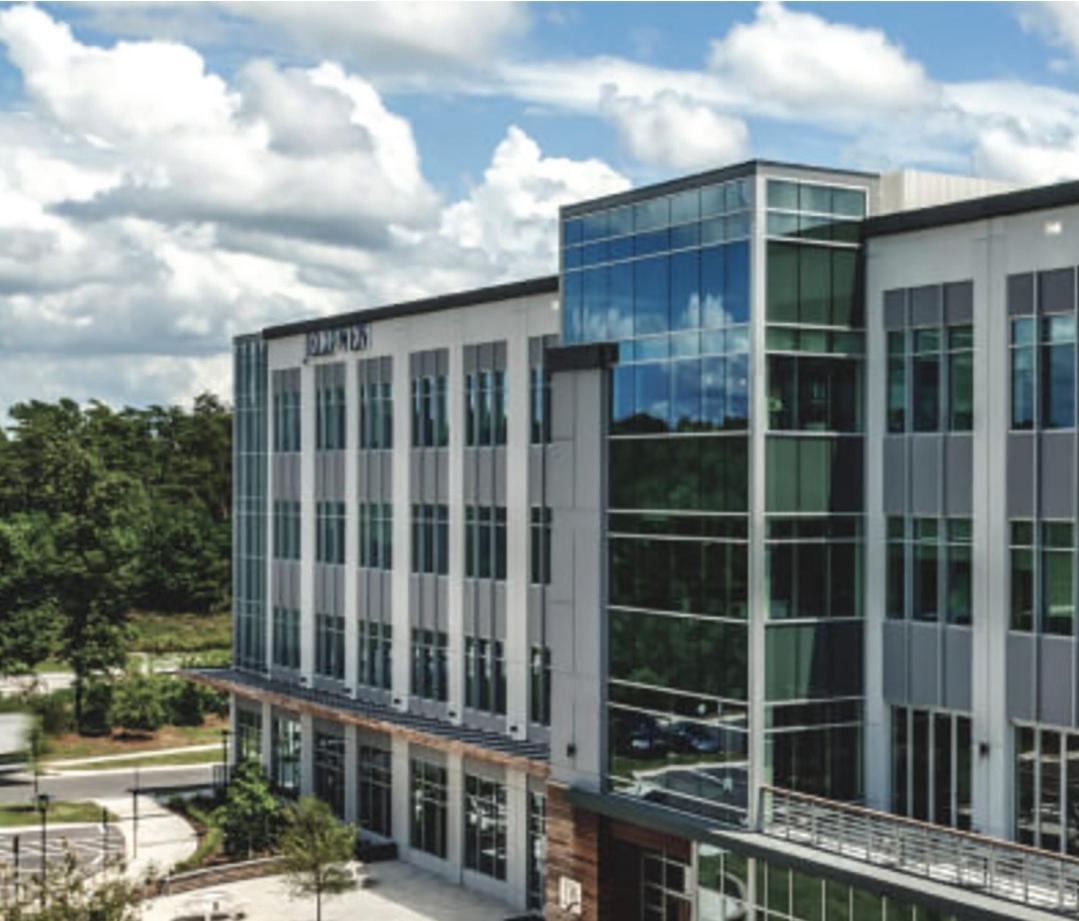
Jeld-Wen’s headquarters in southwest Charlotte.
FOOD FIGHT
A critic of Ingles Markets’ leadership gets a seat at the family’s table.
By Chris Burritt
An activist investor has cracked the boardroom of the family that controls Ingles Markets.
Grocery chain Chairman Robert Ingle II failed to persuade shareholders to support the company’s preferred director candidates. Instead, in late April shareholders elected company critic Rory Held, chief investment officer of the Summer Road investment firm. Dwight Jacobs, a retired Duke Energy executive favored by the company, was also elected to the board.
In the weeks leading up to the company’s April 30 annual shareholders meeting, Asheville-based Ingles attacked Summer Road because of its ownership by members of the Sackler family, who controlled OxyContin maker Purdue Pharma. In January 2025, the family and Purdue made a settlement that requires the family to pay $6.5 billion over 15 years to states and individuals related to harmful opioid use. Separately, Purdue is paying about $900 million.
“Sacklers’ Summer Road is Bad for Ingles, Bad for the Communities We Serve, Bad for Shareholders, Bad for Associates and Bad for Customers,’’ Ingles said in a post on its website. Summer Road punched hard, too. The West Palm Beach, Florida-based company owns about 3% of Ingles stock, worth about $37 million in mid-May. (Total market cap is about $1.6 billion.)
It bashed the company for failing to share pertinent information and declining to meet with investors. Held has sought financial information starting in 2022, and his firm’s filings cited various snubs by directors and executives. Since Summer Road nominated Held, Ingles’ shares have gained about 16% through mid-May.
Held won support of about 62% of Class A shareholders, Summer Road said after the shareholders meeting. Ingles’ release confirmed Held’s election, pending certification by an independent inspector of elections.
Held and Ingles officials declined to discuss the dispute.
Ingle, son of founder Bob Ingle, controls 72.5% of the company’s voting power, while holding about 23% of the Class A shares. Like some publicly traded companies, Ingles’ Class B shares give the controlling family effective control. Ingle, 57, holds 96% of Ingles’ Class B stock.
Held can’t force the eight-member board to adopt his views. Still, if the discord persists, he may prove to be “the skunk at the garden party’’ during board meetings, UNC Chapel Hill law professor John Coyle says.
One of his key proposals is to separate the chain’s real estate from its nearly 200 supermarkets in the southeastern U.S. The split may spur “strategic interest from larger grocers,’’ Summer Road says.
Ingles responded that separating assets would damage profit and shareholder returns.
Held “can disagree with what management is proposing, with what the family wants and with what the board may want to do,’’ Coyle says. “He can propose alternatives and try to persuade the board that they should follow a different path.’’
Though outnumbered by Ingle and six other directors aligned with the chairman, Held may influence some of their views, according to Will Sparks, a professor of leadership at Queens University in Charlotte. “[He] can have a tremendous impact on challenging assumptions, reframing risk and probing, setting a different perspective. I would not be surprised if this director were able to influence the discussion and, in doing so, change the dynamic.
“[In] a family-influenced generational board, very often there are some concerns beneath the surface’’ among directors now willing to speak up, says Sparks, co-author of “The Director’s Manual: A Framework for Board Governance.”
Buying out Summer Road’s investment to silence its criticism is an option, says Stephen Smulowitz, assistant professor of strategic management at Wake Forest University. “What (boards) do is pay a significant premium on what the investor paid in the market, and then the investor goes away.”
However, buying out an adversary raises the risk of attracting other investors looking for a similar payoff.
“The most important thing that the board could do is to not be defensive, to not be reactive, to not react emotionally, but to be as rational and as open in those discussions,’’ Sparks says. “If you fall into that trap of being defensive or reactive, you give the upper hand to the activist shareholder.” ■
Rory Held of Summer Road
CHARLOTTE
CHARLOTTE
Chipmaker Nvidia plans to invest $3.2 billion in Corning to build three new AI factories in North Carolina and Texas. The companies have not released details, but Corning already employs about 5,000 people in the state at sites in Hickory, Newton, Wilmington, Winston-Salem and Concord, with its optical communications headquarters here.
City Council’s 6-5 vote rescinded its support of a N.C. Department of Transportationdesigned plan to build toll lanes on I-77 from Uptown to the South Carolina state line. The move could threaten the state’s $600 million nvestment in the $4.3 billion project.
JPMorgan Chase plans to add 400 more jobs in the SouthPark area over the next few years, including plans for a 145,000-squarefoot space scheduled to open in early 2028. The largest U.S. bank employs about 1,000 people in the region. New jobs will include mostly investment and commercial bankers.
Former Bank of America executive Cathy Bessant retired as CEO of the Foundation for the Carolinas, the fifth-largest U.S. community foundation. Her successor is foundation President Laura Yates Clark.
Bessant had led the foundation since January 2024. Clark had been CEO of the United Way of Greater Charlotte since 2018 before joining the $5 billion foundation in May 2024.
Housing Impact Fund raised more than $100 million in private capital to acquire and renovate more than 1,500 apartment units for low- and moderate-income residents. It’s the third and largest fund to date for the social impact equity fund launched in 2020 by Charlotte investment banker Erskine Bowles, who was chief of staff to President Bill Clinton in the late 1990s, and his Carousel Capital co-founder Nelson Schwab. The fund puts restrictions on its properties so they remain affordable for low- and moderateincome families for at least 20 years.
JetBlue will return to Charlotte Douglas International Airport this summer, launching thrice-daily flights to Fort Lauderdale starting July 9. The move follows Spirit Airlines’ shutdown.
Chicago-based Riverside Investment & Development and Singerman Real Estate acquired the former Two Wells Fargo Center in Uptown for $36.5 million, far below its tax value, and plan a major mixed-use redevelopment. The project could include residential, retail, office and hospitality uses, with construction expected to begin in 2027.
TowneBank plans to build a five-story, 75,000-square-foot office on its existing site in the SouthPark area. It is partnering on the project with SouthPark developer Johnny Harris’ investment company. The $22 billion Portsmouth, Virginia-based bank plans a 60-employee operational center when it opens in 2028, with the three top floors to be leased to other tenants. The bank has naming rights for the adjacent Symphony Park.
OrthoCarolina will go from four to 10 ambulatory surgery center operating rooms over the next 18 months, a move that should lower costs and increase access to services for patients. About 70% of elective orthopedic surgeries can be performed at a freestanding
NC TREND ››› Statewide
center outside a hospital. It will expand its facility in Matthews and build a new clinic in west Charlotte.
Lions Services, a nonprofit that assists and employs the blind at a textile manufacturing operation, will lay off 107 workers on July 1. Lions Services has more than 226 workers, including 109 who are either blind or visually impaired.
Connecticut-based Bob’s Discount Furniture opened a University City store in May, and plans two other area stores in Pineville and Matthews this year. The chain entered the state last year with six stores. It plans to open a store in Hickory in 2027.
Johnson & Wales University will start a $42 million renovation to its eight-story, 97,000-square-foot residence hall, which had been a DoubleTree by Hilton hotel. The building will be redone with 150 upperclassmen rooms and 276 beds. It will also feature a welcome center that will double as a student lounge. Construction will take two years.
GASTONIA
CaroMont Health began construction of a 125,000-square-foot cancer center on the campus of its 476-bed hospital. It’s part of a $200 million investment in oncology care expected to be completed by 2028, doubling its capacity to care for cancer patients to 3,000.
Independent living retirement community Covenant Village completed 22 villa residences at a cost of $24 million, its first major expansion in 25 years. The units were pre-sold in two weeks, which represents the demand for senior housing.
KANNAPOLIS
Google signed an 88-month lease for a 729,872-square-foot industrial building at the Overlook 85 industrial park. The tech giant also holds rights to expand at the site.
It plans a warehouse and logistics operations. New York-based Hudson Capital Properties developed the property.
EAST
FAYETTEVILLE
Goodyear Tire & Rubber is closing its 1,700-employee factory in Fayetteville by the end of 2027. Kelly-Springfield Tire opened the plant in 1969. Goodyear acquired KellySpringfield in 1996. The Akron, Ohio-based company is the third-largest global tire maker.
The Arts Council of Fayetteville/ Cumberland County approved a $500,000 investment in Cape Fear Regional Theatre’s Act 2 Capital Campaign to support facility upgrades and expanded programming. Officials say the project is intended to boost tourism and strengthen the city’s position as a regional arts destination.
GREENVILLE
East Carolina University will discontinue 44 programs beginning this fall as part of a plan to generate $25 million in savings over three years. Officials cited declining enrollment and shifting student demand, with 50 programs ultimately slated for closure following a multi-year review.
KURE BEACH
The N.C. Aquarium at Fort Fisher closed May 26 for a 30-month, $70 millionplus renovation and expansion. Plans include new marine habitats, an education center and rooftop skydeck. A temporary “Discovery Bay” exhibit will open at Independence Mall in Wilmington during the construction period.
Pitt County Community College opened the $17.7 million, 37,000-squarefoot Toyota Welding Technology Building. Construction began in 2022. It’s the largest welding training center in the state and has nearly 400 students.
HENDERSON
Mars Petcare will close its pet food manufacturing site here, putting 149 people out of work. Production will end June 19, and the plant will be decommissioned by the end of the year. The company says it will terminate 120 employees by July 17 and the remaining 29 by the end of the year. Mars Petcare acquired the site in 2014 from Procter & Gamble.
PEMBROKE
The Lumbee Tribe of North Carolina will hold a June 23 vote on constitutional amendments that could pave the way for casino gaming on tribal land in southeastern North Carolina. Tribal leaders say a proposed Robeson County resort project could include gaming, retail, golf and other attractions if approved.
WILMINGTON
Contract research organization Alcami agreed to acquire the Netherlands-based contract packaging firm Tjoapack, marking its first European expansion. The transaction is expected to close by June. Tjoapack also has operations in Tennessee. It has a total of 400 employees.
Raleigh-based Curtis Media Group acquired five radio stations and two translators in the Wilmington region from Sunrise Broadcasting for $1.75 million. The deal expands Curtis Media’s coastal North Carolina presence and includes other stations in Wrightsville Beach, Southport, Boiling Spring Lakes and Jacksonville.
TRIAD
ASHEBORO
The North Carolina Zoo completed its 12.5-acre Asia Continent expansion but cannot open until the state’s budget is resolved. Officials say the impasse prevents hiring about 70 staff needed for operations, leaving the $75 million project in limbo. Veterinarian Mark Penning will assume the role of director this summer, succeeding Pat Simmons, who passed away last year.
BROWNS SUMMIT
Environmental Air Systems purchased its 53-acre headquarters campus for $56.7 million. The HVAC manufacturer, a subsidiary of Comfort Systems USA, is also expanding in Asheboro with 300 new jobs tied to a $20 million project supported by state and local incentives.
GREENSBORO
Tencarva Machinery acquired Texas firm WaterTech Services to expand its presence in Southwest municipal water markets. The deal continues Tencarva’s acquisition strategy backed by private equity partner Bessemer Investors.
Illinois-based AAR Corp. completed its $35 million acquisition of Aircraft Reconfig Technologies, an aviation interiors specialist with about 100 employees. The deal
expands AAR’s engineering and certification capabilities and builds on its recent HAECO Americas purchase, strengthening its maintenance, repair and overhaul presence at Piedmont Triad International Airport.
Kontoor Brands is reportedly negotiating with multiple parties to sell its Lee jeans business in a deal that could be worth around $600 million. Kontoor says it wants to focus on its Wrangler unit and outdoor apparel brand Helly Hansen.
Guerrilla RF reported a $1.1 million profit for the first quarter of fiscal 2026, marking the company’s first profitable quarter. Revenue climbed nearly 48% as demand grew for its wireless semiconductor products, while cost-cutting efforts and workforce reductions helped narrow expenses.
LEXINGTON
Online vitamin and wellness product retailer Vitacost will close its fulfillment center here in July, putting 130 people out of work. Vitacost had been owned by Kroger, which sold the business to Pasadena, California-based iHerb, one of the world’s largest online retailers in health and wellness products, in January.
MAYODAN
Publicly traded firearms manufacturer Sturm, Ruger & Co moved its headquarters from Southport, Connecticut to Rockingham County, where it already has a manufacturing plant and distribution center that employs more than 600 workers.
WINSTON-SALEM
Wake Forest University named Peter Rodriguez as president effective July 1, succeeding Susan Wente. Rodriguez has been dean of Rice University’s business school for nearly a decade, helping it double MBA enrollment and raise its national ranking. He has a Ph.D. in economics from Princeton University.
About 1,000 residents affected by the 2022 fire at Winston Weaver’s fertilizer plant are expected to receive roughly $5,000 each under an $8 million classaction settlement. The blaze prompted evacuations after officials discovered hundreds of tons of ammonium nitrate stored at the facility.
WINSTON-SALEM
Casual Furniture World acquired Wilmington outdoor furniture retailer Porch Concepts, expanding its footprint to four showroom locations across the Carolinas. The deal adds Porch Concepts’ 24,000-square-foot Wilmington showroom.
NC TREND ›››
TRIANGLE
APEX
North Carolina legislative leaders say a proposed state budget framework includes about $208 million for development of the planned N.C. Children’s hospital campus. The Duke Health and UNC Health joint venture remains on track to begin construction in 2027 on the multibilliondollar pediatric medical campus.
Developers are moving forward with Veridea Crossing, a $100 million retail district in the larger $3 billion Veridea project. The 220,000-square-foot village is expected to open in 2027 and is already drawing interest from major retailers as the town continues rapid growth.
CARTHAGE
Moore County Airport has applied for a $1 million federal grant that would complete a $3 million incentive fund aimed at attracting daily commercial airline service. Local businesses Pinehurst Resort, the USGA and FirstHealth have pledged more than $2 million toward the effort.
CARY
Raleigh-based Kane Realty is planning two projects that would add nearly 500 apartments, retail space and greenway connections. The developments include a seven-story downtown building called Flatiron and the redevelopment of an aging Weston Parkway office property into apartments in partnership with Highwoods Properties.
CHAPEL HILL
UNC Chapel Hill’s board of trustees selected Maryland-based Ayers Saint Gross
to create the master plan for the longdelayed Carolina North campus project on 228 acres near Martin Luther King Jr. Boulevard. The firm will guide land use, infrastructure and sustainability planning as UNC advances the mixed-use academic expansion project.
DURHAM
Pharmaceutical company AbbVie plans to invest $1.3 billion to build its first North Carolina manufacturing campus, which will employ 734 people by 2031. The plant is expected to open in 2028 and produce AbbVie medicines to treat obesity, cancer and neurological disorders.
Federal regulators fined energy-efficiency trader American Efficient $722 million, saying it’s behind “one of the largest and most brazen frauds” they’ve ever seen. The Federal Energy Regulatory Commission also ordered American Efficient and its corporate parent, Modern Energy, to return $409.8 million, plus interest, to the PJM Interconnection and another power-grid operator.
Blue Shield of North Carolina posted a $497.3 million loss in 2025, according to a regulatory filing. That compares with net income of $68.5 million and $136 million during the previous two years. It reported revenue of about $10.05 billion last year, about 15% less than the previous year. Medical claims soared 12% in 2025 to $11.9 billion. Blue Shield has more than 4.3 million members and about 5,000 employees.
BioCryst Pharmaceuticals entered into a licensing agreement with an Irish affiliate of Neopharmed Gentili to commercialize its angioedema drug Navenibart in Europe. BioCryst will receive $70 million upfront and will be eligible to receive up to $275 million in future payments, in addition to royalties on net sales. Last year, BioCryst entered into a similar deal with Neopharmed and its drug Orladeyo.
MEBANE
Japanese-based HI-CHEW candy manufacturer Morinaga America Foods opened its $136 million facility that’s expected to create 204 jobs in Orange County. The company opened its initial Mebane plant in 2016.
MORRISVILLE
Forge Nano has pushed back plans for opening a 200-job battery “gigafactory” from 2026 to early 2028, citing delays tied to federal funding reviews. The company says the project remains active, bolstered by a pending public listing.
Foundation Medicine, part of Roche, plans to acquire SAGA Diagnostics for up to $595 million. The deal centers on SAGA’s Pathlight blood test for cancer detection and monitoring, with the companies aiming to close in the third quarter and expand the platform’s reach globally.
RALEIGH
Charlotte-based Advocate Health is in talks to acquire WakeMed, a move that has been criticized by state and leaders in Wake County. WakeMed CEO Donald Gintzig says the $2.6 billion (revenue) hospital needs to merge into the $38 billion parent of Atrium Health because it can’t compete long-term in the state’s most populous county. Wake County commissioners paused the contract for at least 90 days to give the public more input into the decision.
A 29-story, 600-room Omni hotel is expected to boost downtown upon completion in late 2028. The $362 million hotel project is being built between the Raleigh Convention Center, which is undergoing a $387 million renovation, and the Martin Marietta Center of Performing Arts. Brasfield & Gorrie is overseeing construction of the hotel. The project architect is Rule Joy Trammell + Rubio.
RALEIGH
ChromaGenix opened a 6,500-squarefoot manufacturing facility at NC State’s Centennial Campus as part of a $35 million investment expected to create more than 40 jobs. The company produces purification products used in advanced drug manufacturing, including gene therapies and mRNA treatments.
Delta Air Lines will suspend nonstop service between Raleigh-Durham International Airport and Las Vegas from June 2 to Sept. 8, citing routine scheduling and higher jet fuel costs tied to the Iran conflict. The airline is trimming flights systemwide. Other carriers continue serving the route from RDU.
Kane Realty plans a major expansion of its North Hills Innovation District, proposing more than 1,200 new residential units, a hotel, retail space and additional office development across 28 acres near Navaho Drive. The project would replace existing apartments and office buildings as part of the district’s next growth phase.
A Wake County grand jury indicted four North Carolina lobbyists, alleging they unlawfully worked with the North Carolina Spirits Association to provide money that was used to pay for some N.C. lawmakers to attend an April 2024 lunch, “barrel pick” and reception at a Kentucky distillery. Lobbyists cited in the indictments are Kevin Wilkinson of The Southern Group, Bo Heath of McGuireWoods
Consulting, Doug Miskew of Public Sector Group and David Ferrell of MaynardNexsen. They deny wrongdoing.
A signature roast blend from 321 Coffee now sells at all Costco stores across North Carolina. The product launch marks a major milestone for 321 Coffee, a company dedicated to workforce inclusion for people with intellectual and developmental disabilities.
Macy’s and Saks Fifth Avenue are closing at Triangle Town Center, leaving two major anchor vacancies. Owner Summit Properties says the spaces could be repurposed for entertainment or smaller tenants.
Liberty Waste Solutions acquired Asheboro-based Randolph County Garbage Services, strengthening its residential waste collection presence in the Greensboro and Triad markets. The deal follows Liberty’s recent purchase of AJ Disposal as the company continues continues a growth strategy backed by Houston-based Allied Industrial Partners.
SANFORD
Caterpillar plans to add 600 workers to its plant where 2,000 employees currently make compact truck loaders. The Irving, Texas-based company came to Lee County in the early 1990s.
WEST
ASHEVILLE
Buncombe County expects a $2 million economic impact from two major sporting events in Asheville. The top six team in the Big South Conference will play for a championship at renovated HomeTrust Park, formerly known as McCormick Field, home of the Asheville Tourists. The National Association of Intercollegiate Athletics (NAIA) Men’s and Women’s Track & Field Championships will take place at UNC Asheville and its renovated Karl Straus Track. rly 200 supermarkets in the southeastern U.S.
BANNER ELK
Lees-McRae College received a $10 million gift from Charlotteans Howard “Smoky” Bissell and Margaret Bissell to build townhouses for 144 students and four employees. It’s a record gift for the campus. Construction will start this summer. Smoky Bissell is a Charlotte real estate development icon, best known for Ballantyne Corporate Park. Bissell’s daughter Barbara Bissell Kopczynski is chair of the college’s trustee board.
Twenty months after Hurricane Helene swept through, Lake Lure was expected to reopen over Memorial Day weekend. It had been drained to enable debris removal. Collaboration by the Federal Emergency Management Agency, the Army Corps of Engineers, AshBritt Environmental, and local partners and volunteers led to the removal of about 1.2 million tons of sand, silt, and sediment, as well as 100,185 cubic yards of debris, in the year after the storm. ■
LAKE LURE
In today’s global marketplace, companies are expected to do more than simply generate profits. Consumers, employees, investors, and communities increasingly expect businesses to act responsibly and contribute positively to society. Corporate citizenship refers to the ethical and socially responsible behavior of a company in areas such as environmental sustainability, employee welfare, community engagement, and ethical governance. While some organizations may view these efforts as optional or costly, being a good corporate citizen is ultimately good business. Companies that prioritize responsible practices often strengthen their reputation, build customer loyalty, attract talented employees, and improve long-term profitability.
One of the primary reasons corporate citizenship benefits businesses is that it enhances public trust and brand image. Modern consumers are more likely to support companies that demonstrate concern for social and environmental issues. Businesses that engage in charitable initiatives, reduce their environmental impact, or maintain fair labor practices often develop stronger relationships with customers. A positive reputation can differentiate a company from competitors and increase customer loyalty, which directly contributes to sustained revenue and market growth.
Good corporate citizenship also helps companies attract and retain employees. Workers today increasingly seek employers whose values align with their own. Organizations that promote diversity, ethical leadership, employee well-being, and community involvement tend to experience higher employee satisfaction and lower turnover rates. Motivated employees are generally more productive, innovative, and committed to organizational success, creating a stronger and more effective workforce.
In addition, socially responsible behavior can reduce risks and improve financial performance. Companies that follow ethical business practices are less likely to face legal problems, public scandals, or regulatory penalties. Investors are also paying closer attention to environmental, social, and governance (ESG) factors when making decisions. Businesses with strong corporate citizenship records are often viewed as more stable and sustainable investments.
Ultimately, being a good corporate citizen is not just about fulfilling moral obligations; it is a strategic approach that benefits both society and the company itself. By acting responsibly and ethically, businesses can build stronger relationships, improve profitability, and ensure long-term success in an increasingly socially conscious world.
RELIEF. RECOVERY. REBUILDING.
A Playbook for Philanthropy After Hurricane Helene
When Hurricane Helene swept through Western North Carolina (WNC) in September 2024, washed-out roads, failing utilities and overwhelmed health systems exposed how fragile rural infrastructure in Appalachia can be. But the crisis also revealed vital lessons about how people, communities and funders can respond when disaster strikes.
Dogwood Health Trust was created in 2019 to dramatically improve the health and well-being of the people and communities of WNC. In the wake of the hurricane, that purpose fueled a disaster response that helped position the region for stronger long-term recovery. ose e orts and lessons learned have been captured in a disaster response playbook detailing how philanthropy can move quickly and strategically to help communities rebuild stronger through times of crisis.
In the weeks and months following Helene, Dogwood rapidly deployed more than $80 million in exible funding to local nonpro ts, health providers and
small businesses working toward recovery, demonstrating an important lesson: relief and recovery happens fastest when local leaders are trusted and equipped to act.
Early grants focused on stabilizing essential services so that organizations could respond to urgent needs, a critical approach in a region where distance and terrain complicate access to care, food and employment. With the resources and autonomy to respond in real time, local partners kept clinics open, distributed supplies and cared for neighbors. As one partner shared, having that support meant they could focus on people, not payroll.
However, a second lesson quickly came into focus. Recovery of such magnitude takes time, stamina, collaboration and ingenuity, in addition to thoughtful, future-forward investments. Dogwood’s long-term Helene grantmaking expanded into housing, behavioral health, early care and education, and small business recovery, helping communities rebuild stronger than before. By early 2025, this work attracted
tens of millions in additional public and private investment, strengthening the region’s path forward.
Disasters have a way of revealing the deeper challenges communities were already facing. Similarly, they shine a light on assets that communities can draw upon. Hurricane Helene reinforced the importance of partnership, purpose and aligning disaster relief with long-term strategies that improve the health and wellbeing of people and communities. Helene also reinforced the profound strengths of the region’s people and what it takes to collaborate with others in building a region back.
Dogwood’s playbook o ers re ections on what was learned and a guide for how philanthropy can show up faster, smarter and stronger when the next crisis comes.
Visit dogwoodhealthtrust.org/ hurricane-helene/ to learn more about Dogwood’s relief e orts and to download the playbook.
Cardiac care in rural North Carolina can be difficult to access. FirstHealth’s Reid Heart Center in Pinehurst offers the latest diagnostics and treatments, helping meet that need in southeastern North Carolina.
HEART OF THE MATTER
The leading cause of death in North Carolina is heart disease. Healthcare systems and providers statewide are working to reduce it by recruiting workers, expanding access to care and deploying cutting-edge technology.
Dr. William Harris was born and raised in Pembroke, and he can’t recall a time when he wasn’t interested in science and helping people. So, it was natural that he leaned toward practicing medicine when selecting a career. His fate was sealed when a medical crisis hit close to home. “My mother had a major heart event,” he says. “She was very sick and spent a considerable amount of time at FirstHealth Moore Regional Hospital receiving care from a team of cardiovascular specialists and surgeons.”
After earning his bachelor’s degree in biology from UNC Chapel Hill and his medical degree from UNC School of Medicine, Harris completed a residency in internal medicine at Atrium Health Wake Forest Baptist Medical Center and fellowships in cardiovascular disease and interventional cardiology at East Carolina University’s Brody School of Medicine in Greenville. He was committed to staying in North Carolina, so he returned home to practice with the same hospital system that treated his mother. He’s now the medical director for FirstHealth Cardiology and Reid Heart Center in
Pinehurst. He also maintains clinical duties at the hospital’s Pinehurst and Laurinburg locations.
Harris calls Reid Heart Center the epicenter of FirstHealth’s cardiovascular care efforts. They radiate through Moore, Hoke and Richmond and spread to Anson, Lee, Robeson, Scotland and several more surrounding counties. “I wanted to contribute to healthier communities in rural southeastern North Carolina,” he says. “FirstHealth offers a world-renowned, highly technical cardiovascular program, which provides high-quality care across our region.”
Expanding top-shelf care to rural communities is one way FirstHealth and healthcare systems statewide are meeting North Carolina’s growing need for cardiovascular care. They also are developing and deploying the latest technology and recruiting the best and brightest workers. Joining their efforts are worldclass universities, where doctors, nurses and other healthcare workers are trained, research is undertaken, and groundbreaking procedures and medications developed. It all helps North Carolinians live better and longer.
MEETING NEEDS
Heart disease is the leading cause of death in the country and North Carolina, according to N.C. Division of Public Health. It caused nearly 22,000 deaths — an average of 2.5 every hour. The state has the country’s 25th highest age-adjusted heart disease death rate. That need for care is amplified by North Carolina’s explosive population growth. The U.S. Census Bureau says it’s the country’s third fastest-growing state, and it added nearly 150,000 residents between July 2024 and July 2025.
Residents in certain parts of the state are affected more by heart disease. “Heart and vascular disease are about 10% more prevalent in eastern North Carolina due to elevated regional rates of diabetes, smoking and obesity,” says Dr. Joseph Haurani, a vascular surgeon with ECU Health and professor of vascular surgery at ECU. “And on top of that, vascular specialists are scarce in the region, which causes travel challenges for patients who need specialty care.”
ECU Health, the result of Vidant Health and East Carolina University’s Brody School of Medicine’s 2022 merger, serves 29 counties in mostly rural eastern North Carolina. “We work predominantly on peripheral arterial disease, which generally impacts people over the age of 65 with a history of smoking, high blood pressure, diabetes, bad cholesterol and other factors that contribute to heart disease,” Haurani says. “Genealogy also plays a role.”
Haurani says more healthcare workers are needed to meet eastern North Carolina’s need for cardiovascular care. “We are in what I call a vacuum, where the number of heart specialists in the area compared to the population is too low,” he says. “But we’ve been fortunate that over the next three to six months we’re going to have three new surgeons joining us.”
ADDING CAPACITY
New Hanover County continues to add residents, including seniors who choose to retire near the coast. N.C. Office of State Budget and Management expects its 2030 population to be 262,155 people, 16.1% more than in 2020. And the call for services, especially healthcare, will grow in step.
Novant Health Regional Medical Center in Wilmington is answering that call with $1 billion of renovations and additions. A new heart and vascular patient tower at its South 17th Street campus was included in the plan that was unveiled earlier this year. Consolidating inpatient and surgical care, it will offer inpatient beds, surgical spaces, and catheterization and electrophysiology labs when it opens in 2031. Novant also is building an 80,000-square-foot heart
ECU Health combined its general surgery and vascular fellowship programs to create a vascular surgery residency. That compresses years spent pursuing education, enabling fledgling surgeons to begin practicing sooner. It also inspires them to stay in rural North Carolina. A 10year study undertaken by the American Board of Family Medicine and shared in 2024 found that 62% of physicians were practicing in the state where they completed their residency, and more than half were practicing within 100 miles of their program and nearly a quarter were practicing within 5 miles.
and vascular medical office building nearby, adding outpatient services capacity.
The tower is a major addition to Novant’s heart and vascular care. “It’s the largest investment commitment Novant has ever made in a local health system,” says Laurie Whalin, president of acute care operations and New Hanover Regional Medical Center / NH Coastal Region. And it’s not coming too soon: Novant Health Heart & Vascular Institute expects to see 18,000 new patients this year in the Coast Region, which includes Brunswick, Columbus, Duplin, New Hanover, Onslow
and Pender counties and portions of northern South Carolina.
Collectively, the HVI team completes more than 120,000 outpatient clinic visits each year, along with more than 12,500 surgeries and procedures. “Our goal is to reserve the 17th Street Tower and New Hanover Hospital for high level tertiary care, while growing services in our community hospitals and surrounding counties,” says Dr. Bill Smith, an electrophysiologist and clinical physician executive of the Novant Health Heart & Vascular Institute in the Coastal Region. “This landmark tower will fully integrate cardiac services, supporting interdisciplinary collaboration, continuous learning, patient safety and excellence in high acuity care.”
HVI has its sights set on adding 75 physicians and advanced practice providers over the next decade to meet increased demand for care. Its bolstering its efforts by committing $330 million in additional salary and benefits and partnering with UNC Wilmington and Cape Fear Community College to expand nursing programs. UNC Wilmington has asked the UNC Board of Governors for permission to explore establishing a medical school. It would create an additional pipeline of doctors in the region.
DEPLOYING TECHNOLOGY
Beyond training, attracting and retaining healthcare workers, ECU Health is extending and improving care through technology. Its doctors have plowed new ground with robotic technology and regenerative heart valves since 2000, when Dr. W. Randolph Chitwood Jr. performed the country’s first mitral valve repair surgery using robot technology. He joined Dr. L. Wiley Nifong to lead successful FDA clinical trials on the use of surgical robots on cardiac patients. More than 900 surgeons have traveled to Greenville to study the minimally invasive surgical techniques that they pioneered. And more than 1,300 minimally invasive or robotic procedures have been performed at ECU Health to date.
ECU Health has lead the way when it comes to innovative technologies and surgical procedures, says Dr. Douglas Boyd, a cardiac surgeon, professor of surgery and vice chair of surgical operations and innovation within ECU’s Department of Cardiovascular Sciences.
Dr. John Catanzaro started the Electrophysiology Fellowship at ECU Health. This two-year program is designed to train the next generation of specialists to treat heart rhythm disorders with cutting-edge technology and procedures.
That cutting edge cardiac care offers patients less invasive surgeries, which lead to better outcomes. “Access to robotic technologies and regenerative medicine has allowed us to think outside the box,” he says. “Several months ago, we performed the world’s first robotic regenerative tricuspid valve right here at ECU.” These valves integrate with the patient, offering the ability to repair themselves during natural wear and tear, reduce the occurrence of infection and include superior biocompatibility. They offer significant advantages over traditional artificial valves, according to the National Institutes of Health.
ECU Health is one of seven sites in an FDA study of a regenerative extracellular matrix tricuspid valve, which uses biological material to attract the body’s stem cells. “At ECU, we’re using special material that regenerates the patient’s own tissue, allowing them to grow their own replacement valve,” Boyd says. “It’s remarkable.”
Dr. Hector Crespo Soto saw devastating warzone injuries firsthand while deployed as a U.S. Army surgeon, so he made it his mission to detail his practice to vascular trauma. A surgeon at Atrium Health’s Sanger Heart & Vascular Institute in Charlotte, he has broadened his focus to carotid artery disease and limb salvage. He led the world’s first team to use implantable reinforcement fish-skin grafting in reconstructive surgery.
The graft is made from Atlantic cod skin and jellyfish collagen. The combination spurs skin, cartilage, bone and soft tissue generation. “The material resembles human skin, but it’s robust, pliable and tear-resistant,” Crespo Soto says. “It can be easily cut or meshed for application and only requires brief hydration with saline before use.”
Surgeons place it on a patient’s wound, creating a kind of scaffolding. That allows the tissue underneath to receive the oxygen and nutrition it needs to heal.
The fish-skin graft can prevent amputations in patients whose wounds aren’t healing well. Severe symptoms, such as severe cramping, signal critical limbthreatening ischemia, which can lead to non-healing ulcers or gangrene. Without prompt intervention, this condition carries a high risk of amputation or mortality. “People with chronic limb threatening ischemia have the same risk of dying as those with breast cancer, lung cancer or pancreatic cancer,” Crespo Soto says.
The possibilities propagated by the fish-skin graft procedure has spurred Crespo Soto’s passion for treating patients in danger of an amputation because of hampered blood flow caused by artery disease. The procedure has been called a breakthrough in wound care and improving quality of life. And the
Journal of Vascular Surgery reports that high mortality rates can be associated with minor amputation for patients with diabetes and/or peripheral artery disease.
Technological advancements abound in cardiovascular care. There are biodegradable stents, which expand vessels and encourage blood flow, bringing oxygen to help wounds heal. Today, surgeons can insert stents with minimally invasive procedures, using imaging to guide them into position through small incisions in a patient’s groin. Outside of the operating room, directed drug therapy uses medications, such as aspirin, anticoagulants and high-dose statins, to prevent inflammation and decrease cholesterol, slowing or stopping the progression of heart and vascular disease.
But despite these breakthroughs, doctors still advocate that patients adopt a healthy lifestyle. Everyone can benefit from eating a healthy diet, exercising, and avoiding smoking and processed sugar. Harris says lifestyle discussions are part of every clinical encounter that FirstHealth physicians have with patients. “We manage many patients’ health under our chronic disease management protocol,” he says. “That means we see them not only when they’re acutely ill, but after they stabilize, we continue to work with them throughout the course of their lives.” ■
— Teri Saylor is a freelance writer in Raleigh.
Atrium Health’s Sanger Heart & Vascular Institute was the first in the world to use implantable fish-skin grafting in reconstructive surgery.
Dr. Hector Crespo Soto
COMPOUNDED INTEREST
It seems everyone wants to be in North Carolina, which added nearly 150,000 people in the year ended June 30, 2025, third-most in the nation. Businesses are making large investments. Out-ofstate banks are opening branches. Their interest is driven by a variety of reasons, from low taxes to a high quality of life, all of which add up for the state’s banking and financial services industry. Several leaders recently joined Business North Carolina to discuss the industry’s successes and challenges. Their conversation was moderated by Publisher Ben Kinney. The transcript was edited for brevity and clarity.
regional president
Financial Partners
partner and director of tax services DMJPS
president and CEO blueharbor bank
Jim Marshall
David Allen
Pinnacle
Rollin Groseclose
WHAT’S THE STATUS OF THE STATE’S BANKING INDUSTRY?
MARSHALL: I’m North Carolina Bankers Association chair until [July]. It has afforded me a unique perspective, riding across the state, visiting every headquarters, and meeting each CEO and management team, starting with the three people running Hertford Savings, which has $19 million in assets. We should be proud of North Carolina banking. It has some really good bankers.
North Carolina’s economy and taxes are envied by many. It has diverse geography and great universities. People want to live here. The banks are capitalized as well as they ever have been. Earnings are good and solid. People are borrowing money. I’m pleased with what I see and hear.
Blueharbor bank started in 2008. That wasn’t a good time for banks, but we hunkered down. Now we have more than $600 million in assets. We’re not throwing anything against the wall to see if it sticks. We’re more stringent in how we do things. People are putting
more capital into projects than ever before. We’re doing the right things.
GROSECLOSE: We work with many folks, so many financials cross our desk. We can read the pulse of North Carolina clients and businesses. Across the country and around the world, baby boomers are retiring, and that’s a big factor. Many business owners believe they’ll live forever, so they don’t plan for succession. That’s an opportunity for us. Our clients make us who we are, so their success is our success. And we’re seeing plenty.
North Carolina is a great state. It has undertaken legislative efforts to simplify its tax structure, lowering income and corporate rates. It was a tradeoff, because many incentives were eliminated. People choose our state over surrounding ones based on tax rates. We’re watching that play out.
I was surprised to see private equity come into our space as hard as it did a few years back. Many people, including me, didn’t predict that, because our business is so regulated. But they found ways to overcome that
such as coming alongside or something similar.
We’re not going the PE route. Some people see the PE influx as a competition issue. We see an opportunity. It creates an obligation for us to be intentional. We can’t keep doing things the way we have, because it’s forcing us to stay on our game and pay attention to what’s important.
PATCH: Our recent acquisition by Virginia-based TowneBank is a good example of businesses wanting to be in North Carolina. TowneBank has a tremendous market share in Virginia and a good one in North Carolina — Charlotte, Greenville and Raleigh. It sees North Carolina as its growth engine.
We’re still trying to win the deposit game. The balance sheet’s asset side comes easier to us, given the amount of growth in these markets. Driving our cost of capital has been the story for several years, and it continues. We spend a lot of time talking about deposit gathering without a branch network.
PNC Financial Services Group
The discussion was sponsored by:
•blueharbor bank
•DMJPS
•Pinnacle Financial Partners
•PNC Finanical Services Group
•TowneBank North Carolina
Stewart Patch
eastern Carolinas president TowneBank
Jim Hansen regional president, Southeast territory executive
ALLEN: We recently merged with Synovus, becoming a $120 billion company from about $60 billion. We have complementary markets, only about 10% overlap. We’re well positioned in great growth markets in the Southeast. We’re watching banks headquartered in other states enter our markets. We’ve experienced organic growth, expanding into new markets, including Washington, D.C., and Jacksonville, Florida, independent of the merger. That continues to be a key strategy for us.
Optimism abounds in North Carolina. It was named business news outlet CNBC’s Top State for Business three times, and other independent organizations have named it their best place to work or do business. It has benefited from many economic development wins. The Carolina Core, for example, is building around Toyota’s EV battery factory in Liberty.
A Chapel Hill economist recently predicted that Raleigh and Charlotte will continue as higher growth metros, but the Triad and some ancillary markets, such as Wilmington and Asheville, will see more growth as capital is deployed by these economic development wins. We want to be well positioned to leverage it. We’re all in a good spot to do it.
HANSEN: We recently reached $600 billion in assets and about 2,400 branches nationwide, including more than 100 in North Carolina. Each of the three other bankers in this discussion are friends and support this industry. We cooperate as much as we compete. We all benefit from North Carolina’s growth.
I recently shared lunch with some clients and others in one of our markets. You
can hear and feel what the state’s economy is doing beyond its big cities. That growth benefits all of us. North Carolina is a growth market for PNC. All of our markets should have a growth mentality, but North Carolina continues to speak volumes to us.
HOW DIFFICULT IS IT TO FIND AND HIRE SKILLED WORKERS?
ALLEN: An entry level position at a large bank historically has included a training program. But they’re expensive, so many large banks have cut them. Small banks aren’t equipped to offer training programs. Hiring and developing young talent is more challenging without these programs. Our workforce is aging, and there aren’t many younger, well-trained and experienced bankers available. We face that, and it isn’t going to improve
much. That good old-fashioned commercial banker will be in high demand.
Filling niche positions within the industry will continue to be a challenge. If you asked us five years ago, we probably would have said credit analyst and some other positions would be largely filled by artificial intelligence. But some positions that were people driven may not be moving forward. We’ll watch how that evolves. We’re looking for opportunities to appropriately leverage AI, but we also must build career paths that create the bankers who we want. Hiring them, as we did in the past, isn’t an option.
HANSEN: I see four fronts. The country is in a demographic dip in regards to age. Baby boomers are retiring, and the 50- and 60-year-old group is dipping,
creating different pressures such as succession planning, leadership talent in companies or inside banks, and clients.
Secondly, you have the 2008 hit, which ended training programs in many companies, though ours has continued. So, 18 years later, the last graduates of those programs are 40-year-old bank employees. Did they get that foundational training? Are they prepared to carry forward?
We’re building 50 branches, so we need 300 more employees in the next four years in North Carolina. That’s on top of trying to attract and retain people at our current branches. And we’re not the only bank building branches.
And lastly, how do you add and support talent? How do you make banking attractive to tech employees, especially in markets that have many tech companies with attractive brands? How do you attract and support them in our industry while we’re talking
about AI and other options? We’re always trying to figure out the correct labor mix, taking advantage of those who are graduating from school and building their careers here.
MARSHALL: We say we’re in the banking business, but we’re really marketing ourselves. We’re in the sales business. Effective banking people have those skills. They do what they say they’re going to when they say they’re going to do it. They take ownership and do the little things. Those people did well in the industry in the past and will continue to do well in the future.
It boils down to a people business. That hasn’t changed. We can use AI, but people still need to visit a branch and open accounts. They want someone who’s going to smile and wait on them today, not schedule an appointment three days away.
PATCH: It’s easy to pick people who were born, raised and have longstanding connections in North Carolina,
who you believe would make good relationship managers. But as more people move here, fewer possess those connections. So, it becomes challenging to select and train people in a way that ensures they have the skills needed to build relationships over time. Finding the right people is the difficult variable of the talent equation.
Young people who work on the emotional intelligence side of the equation will excel in today’s world. They have relationship building and other skills that machines can’t replicate. You may go to school to learn Excel today, but in the future, some of those classes will be replaced, evolving with the skill set that today’s marketplace demands.
GROSECLOSE: We’re trying to reset expectations about our hires. Many of us wanted to find a great place to work, plug in and stay for years. I did that, and it worked for me. I’ve been here for 30 years. But that era, expecting someone to spend their
career at one place, may be gone in many respects.
Some people, maybe they’re recent graduates, are already talking about what they want to do in three or four years. It might be starting their own business. We need to meet them where they are, get the most from them for your company while recognizing if you help them now, they might help you in the future, putting in good words for you with other people.
That’s a difficult shift for those of us who’ve been around a while. We try to embrace that, finding a way to make the most of what it is rather than changing it or talking them into staying longer. I’m not sure we can change that mindset.
HOW IS THE INDUSTRY EMBRACING AI?
GROSECLOSE: Genuine curiosity is one interesting trait possessed by successful brand-new folks. They want the why behind an answer, especially AI-generated ones. It leads to better client interactions, explaining things or validating AI-generated results. We can give them the behind-the-scenes information that AI won’t. That has been really good.
We see AI as a tool for lower-risk work such as managing files or drafting emails. That makes our time more meaningful, interpreting information and similar tasks.
HANSEN: AI helps us augment expertise at scale. It handles behindthe-scenes tasks, such as detecting fraud, that benefit customers at a scale and speed that human employees can’t match. But we remain a regulated
industry. Customer data, privacy and trust underpin our entire business. While efficiency and intelligence should steer AI development, strong data governance and security must lead the way. This isn’t a freewheeling industry that uses AI to make every decision. It must begin with what’s best for the customer.
Customer support teams, for example, make many different queries. AI can instantly bring those together to quickly find needed data. We’re not using an open chat GPT tool. We’re using our internal data and information, making it more accessible in less time to improve customer service.
MARSHALL: Community banks lack the resources of a PNC, Truist, Bank of America or Chase to develop an AI model. But there’s a cottage industry of good fintechs, which have AI tools
and other cool stuff. We can pick and choose from those. And if it’s not working for us, we can walk away. We aren’t tied to a proprietary system that represents millions or billions of dollars of investment. That helps us stay on the cutting edge, right there with some of the biggest banks, offering really good products and services.
ALLEN: Some entry level jobs will be replaced by AI, though not in totality. The need for true talent will continue. Tecāology won’t replace the person, not in our lifetimes for sure. AI isn’t going anywhere, so we must adopt it appropriately. It’s a tool that makes us better with our clients opposed to replacing our client-facing employees. People want to deal with people. They want touch and tecāology.
We’re all searching for that balance, having all the bells, whistles and shiny
objects while maintaining face-to-face interaction. Geography is an important component of how people decide where they bank. They want access to a local branch staffed by actual people, whether or not they use either. They want them there if they need them.
WHAT ARE THE INDUSTRY’S CHALLENGES? WHICH ARE PARTICULAR TO NORTH CAROLINA?
PATCH: North Carolina and other places experiencing population gains are challenged to maintain what attracted those people in the first place. As their population increases, they must find ways to remain affordable and preserve their attractive tax situations.
GROSECLOSE: Everything moves faster, and everyone’s plate is fuller.
Business and economics are more complex. But being forced to look back, at least to the COVID pandemic and Hurricane Helene for some of us, makes life even more difficult. But we must take the opportunity to go back and recover money spent.
Recently enacted tariffs have been reversed or essentially invalidated, so people can recover that money. But they have to go back. They have to dive into their records on top of everything else that they’re juggling. Hopefully, they have detailed records that list which tariffs were paid to whom. Then they’ll know which doors to knock on to recover them.
Polarization is a challenge. We don’t always know where we’re going to land. Could this change in a few years? Should I track this in case it’s eventually
Dogwood Joins Hands and
reversed? Many of us wish we didn’t have to keep looking back. But we know we must to some degree because of how things have gone the past five or six years.
MARSHALL: The drumbeat of outside forces encroaching on the banking industry keeps getting louder. Our model is simple. We accept deposits, and we loan money. But our primary objective is protecting depositors’ money. Many folks see that money as a big gravy train: Let me go in there and figure out how to take those deposits.
I’ll use stablecoin — digital assets designed to maintain a stable value — as an example. They want those deposits and will pay some interest on them. They’re exploiting that loophole, and we’re trying to rein that in. We’re all for competition; it has been part of this country for 250 years.
But they want to do it without regulatory oversight that protects depositors, the Community Reinvestment Act oversight, the community responsibilities that banks face. There are many cool products and services out there.
They’re enticing, but they lack oversight protections. That’s a challenge to the industry and deposit protection. We’ll find the right balance. We always have. It’s something I’ve been working on, as has Peter Gwaltney, North Carolina Bankers Association president and CEO.
HANSEN: North Carolina is the ninth most populous state, and it may be fifth in less than 20 years. That’s many great residents. We want them to be employed and successful. We want them to borrow money to buy a house or a car. We want them to do things
for their family, such as invest in an education.
The onus is on all of us to support, grow, educate and build the state while preserving what made it attractive to new residents in the first place. That’ll guarantee economic prosperity for individuals and companies. Our business benefits from economic prosperity for all residents.
Our industry directly employs more than 100,000 people. And there’s added employment, from the folks who landscape the branches to the fintechs that offer support. Those account for 175,000 more jobs in North Carolina. It’s a major industry in the state, but it’s a major industry that depends on the success of others and the success of the state. ■
NC Banking 2026
12 THINGS TO KNOW ABOUT NORTH CAROLINA FINANCE
Already the largest U.S. bank with nearly $5 trillion in assets and more than 5,000 branches, JPMorgan Chase is pouring it on with growth plans in many regions, including North Carolina. It had more than 50 o ces in the state as of May, with plans calling for 25 more. Most of the branches are in the three major metro areas, but JPMorgan is also adding an o ce in Jacksonville in Onslow County. O cials have noted branches typically cost more than $3 million to build, and another $1 million to operate annually.
One of Japan’s largest nancial companies, Sumitomo Mitsui Banking, or SMBC, plans to invest $50.5 million and hire 2,000 workers to establish Charlotte as its second U.S. headquarters in 2032. It already has about 160 workers here. e work will require lots of technology and operations sta ers, with average median annual pay of about $165,000.
Fidelity BancShares plans to acquire Georgia’s A nity Bancshares for $142.8 million, marking its entry into the state. Pending regulatory approval, the deal would create a combined institution with $5.5 billion in assets. Raleigh’s Holding family, which owns the much larger First Citizens Bancshares, also controls Fuquay-Varina-based Fidelity.
Citigroup opened an o ce in Charlotte’s Ballantyne area in March that expects to grow from 275 employees to 800 over the next three years. e New York-based bank is investing about $16 million in the o ce expansion.
Virginia-based TowneBank bought Dogwood State Bank for $476 million in a deal that closed in January. Raleigh-based Dogwood was founded in 2019 following a $100 million recapitalization of Morehead City-based Sound Bank. TowneBank has about $22 billion in assets.
e most pro table N.C. banks last year were Farmers and Merchants Bank in Granite Quarry in Rowan County and blueharbor bank of Mooresville in Iredell County. ey were the only N.C. banks with return on assets topping 2% and return on equity exceeding 15%. 1 2 3 4 5 6
Truliant Federal Credit Union plans a merger with Piedmont Advantage Credit Union, which has about $400 million in assets. Both groups are based in Winston-Salem. e deal is expected to close in early 2027, pending regulatory approval. Truiliant is North Carolina’s third-largest credit union, behind State Employees’ Credit Union and Coastal Credit Union.
Los Angeles-based Capital Group, one of the world’s largest asset managers with more than $3.3 trillion under management, plans to invest $60 million to create 600 jobs in uptown Charlotte over the next ve years. Capital owns the American Funds group of mutual funds. It says the average annual wage will be about $194,000.
Bank of America has eliminated about 2,000 jobs since mid-2025 through automation and AI, according to CEO Brian Moynihan. AI tools now deliver productivity equal to 11,000 workers, he says. Bank of America has about 213,200 employees as of March, including 22,000 in North Carolina and 19,500 in the Queen City. It had 288,000 employees in 2010.
Civic Federal Credit Union, which formerly was known as Local Government Employees FCU, reported a net loss of $123.7 million in 2025. Its assets declined to $3.3 billion from $4 billion at the end of 2024, while membership sank 12.8% to 355,581. Civic is based in Raleigh.
Live Oak Bank terminated its $1.5 million incentives deal with the state a er falling short of its pledge in 2022 to create more than 200 jobs. e Wilmington-based rm hadn’t received any dollars from the state, while it has invested $47 million in its campus to date. It had about 837 employees in North Carolina, the bank said.
Truist expects to build 100 branches over the next ve years and renovate more than 300 established locations, mostly in high-growth markets including Austin and Dallas in Texas and Miami and Orlando in Florida. 7 8 9 10 11 12
BANK DEPOSIT MARKET SHARES IN THE STATE OF NORTH CAROLINA
Source: S&P
Financial 50
LARGEST BANKS AND CREDIT UNIONS BASED IN NORTH
CAROLINA
(Ranked by revenue) Credit unions are in red italic.
Source: S&P Global Market Intelligence
Data compiled April 30, 2026, from banks, thrifts and credit unions that filed regulatory reports for the year ended Dec. 31, 2025.
Revenue is the sum of net interest income, noninterest income, and gains on sales of securities.
Net income is the sum of net interest income after provision, noninterest income, gain on securities, extraordinary items less noninterest expense and taxes.
Carolina Convert
How Stephen Philipson is helming U.S. Bank’s efforts to build a major wholesale banking enterprise.
By David Mildenberg
Talented people exiting from prestigious companies to join a lesser-known businesses know the refrain: “You’re making the biggest mistake of your life.”
at’s what a top xed-income trading executive told Stephen Philipson when he resigned from a Morgan Stanley job in New York to join Wachovia Securities’s debt syndication business in 2005. “Commercial banks won’t be in this business in two years,” the New York boss advised.
Another leader assumed Philipson was moving because of pressure from his wife, assuming she was a Southerner like him. (He grew up in New Orleans.) “I said, no, she’s not. She actually doesn’t want to move out of New York,” Philipson says.
Laura Philipson, who grew up near Philadelphia, told her husband that she supported his change. “Just get this out of your system and we’ll get back to New York,” he recalls her saying.
Twenty years later, her husband is among the top executives of U.S. Bank as head of wealth, corporate, commercial and institutional banking. Reporting to CEO Gundjan Kedia, he oversees much of the h-largest U.S. bank’s business that doesn’t involve retail banking.
Stephen Philipson
10 LARGEST U.S. COMMERCIAL BANKS
Company Assets (Dec. 31) Market cap (May 15)
JPMorgan Chase
Bank of America
Citigroup
Wells Fargo
U.S. Bank
Capital One
PNC
$4.42 trillion
$3.41 trillion
$2.66 trillion
$2.15 trillion
$692 billion
$798 billion
$353 billion
$210 billion
$225 billion
$82 billion
$669 billion
$600 billion
$116 billion
$85 billion
Truist
TD Group*
Fifth Third
$548 billion
$59 billion
$520 billion NA
$295 billion
TD Group is part of Toronto-Dominion Bank
$43 billion
Source: S&P Global
And he’s stayed in Charlotte through two decades, having made the shi to Minneapolis-based U.S. Bank in mid-2009, about six months a er Wells Fargo acquired Wachovia. at followed the December 2008 re sale caused by the Queen Citybased bank’s ill-timed investments in mortgage lending before U.S. real estate values plunged.
Charlotte’s renown as an important nancial capital dates back to the mid-1980s, with dealmakers Hugh McColl Jr. and Ed Crutch eld turning their regional banks into national rms. e expansion in the city’s nancial service sector has ebbed and owed, but never really stopped.
In the past year, in particular, the pace accelerated with JPMorgan Chase, Sumitomo Mitsui Banking, Capital Group, Citigroup and SoFi Technologies among the powerful companies cumulatively pledging thousands of new regional jobs in Charlotte.
AHEAD OF THE CURVE
U.S. Bank saw the opportunity in Charlotte nearly two decades earlier. It came a er an approach by Jim Kelligrew, who had helped Bank of America and later Wachovia build their capital markets businesses over the previous decade. “Jim said, `I think I could do something for you like I did at those places,’” Philipson recalls.
Unlike BofA or Wachovia and many other peers, the Minnesota super-regional bank didn’t report a quarterly loss during the 2008-09 nancial crisis and maintained strong capital ratios. While it received $6.6 billion in federal bailout loans, exCEO Richard Davis criticized the “lousy” program and repaid the debt quicker than many other banks.
Kelligrew helped recruit an initial team of about 20, including Philipson, who was already advising U.S. Bank on most of their bond deals. “ ey were among my best clients” during his four years at Wachovia, he says.
Now, U.S. Bank employs about 1,500 people in Charlotte. While many are in capital markets, Philipson says, “every part of the bank has found that there’s just great talent here.” Key executives in corporate lending, wealth management risk, real estate nance and treasury services work from Charlotte for the company. (Kelligrew retired in 2023 and is now a consultant.)
Previously, U.S. Bank had grown through a roll-up strategy of buying other banks and taking out costs versus adding new capabilities. Competing with the four U.S. megabanks in corporate nance wasn’t a priority.
“ ere was a realization at that point in the crisis that we were in a position where we could grow our lending commitments and do some bolt-on acquisitions that few others could do,” Philipson says. “So why don’t we use this to get into some new areas.”
CEO Kedia praised the capital market business in her rstquarter report to investors, highlighting a 29% increase in revenue from a year earlier as a sign of “strong new product penetration
Philipson, right, with Michael Smith of Charlotte Center City Partners at the Brooklyn Village light-rail station in Uptown Charlotte.
with long-standing clients and favorable market volatility.” In laymen’s terms, Philipson says that means U.S. Bank is gaining market share from rivals by adding new services for its customers, who rely on the bank’s advice and lending during a turbulent period for oil, gas and many other commodity markets.
Philipson credits U.S. Bank’s risk-management skills along with a sense of humility for its stronger role in wholesale banking. “It wasn’t, we got this right and everybody else got it wrong. It was we were fortunate, and now we don’t know about this business we are building, but teach us about it, and we’ll help support you.”
Key colleagues in Charlotte include Jimmy Whang, who also joined USBank in 2009 in Charlotte and heads the capital markets business, and longtime local banker Dee O’Dell, who is head of business banking sales. eir o ces and Philipson’s happen to be in the same Tryon Street o ce tower where Truist has its headquarters.
Charlotte was the rst market where U.S. Bank built retail branches on its own, without buying a smaller company. It now has seven Charlotte-area o ces with another on the way. Overall, the company operates nearly 2,900 branches, in 26 states, with more than a quarter of them in California.
U.S. Bank’s capital markets push took another stride earlier this year with a plan to buy New York-based investment bank BTIG for as much as $1 billion. While U.S. Bank remains focused on xed income, foreign exchange and derivatives, the pending BTIG deal would add equity and investment banking services, CFO John Stern told analysts in April.
Now, one of U.S. Bank’s challenges is to make its brand more visible. One recent step was becoming the o cial and wealth management sponsor of the NFL, the world’s richest sports league. Truist had the title for the past ve years.
U.S. Bank has had ties to the NFL for more than 20 years, partly as a nancial backer of the Minnesota Vikings in its home state. Terms weren’t released, but the agreement includes adding the U.S. Bank Financial Edge program, which is aimed at helping players make better nancial decisions. Philipson and Steve Vogel, who heads the bank’s sports nance group, will lead the partnership.
Kedia says Philipson has helped make capital markets a signi cant contributor at U.S. Bank while aiding Charlotte’s growth as an important hub. “Stephen has a unique ability to build businesses and create high performance cultures and teams,” she says. “I personally value his deep client focus and his infectious sense of humor.”
Meanwhile, the ow of large nancial companies into Charlotte should continue because “it’s a great market for talent and it’s a great, high quality place to live,” Philipson says. For folks in their 20s and 30s enthused about nance careers, the city is much more attractive because of the diversity of job options, development of the South End area and the continued growth of Charlotte Douglas International Airport as a major hub, he adds.
“It’s been such a great market for us and I’m looking forward to continuing to see it grow.” ■
Billionaire’s Club
Our annual listing of North Carolina-based money management rms includes 30 enterprises that manage at least $1.7 billion, based on required annual federal lings.
All but a handful of the wealth managers reported more assets under management than a year earlier. Half of the rms scored asset increases topping 10%. e reports were mostly led in March or April.
Gains stem from the rising stock market, customer pickups, and in a few cases, acquisitions of other rms. e S&P 500 index
has gained 16%, 23% and 24% in the past three calendar years, respectively. It advanced another 9% through mid-May.
Large asset managers based in other states, such as Fidelity and Vanguard, are not included. e listed businesses are the home teams, most of whom operate under the radar. Fi een companies are based in the Charlotte area, while 12 hail from the Triangle.
Raleigh’s Captrust again tops the list, aided by an aggressive acquisition strategy. Its assets under management gained 15% last year, following a 27% increase in the previous year.
ASSETS UNDER MANAGEMENT (BILLION); CHANGE FROM 2025
1. CAPFINANCIAL (CAPTRUST)
Raleigh $1,237
Fielding Miller cofounded the business in 1997. Key investors include PE groups GTCR and The Caryle Group, along with Miller.
Guardian Capital Group of Canada bought the company from Truist in 2024. Scott Haenni became CEO in 2023. 4.
President Darrell Cronk is chief investment officer for Wells Fargo’s wealth and investment unit. 5. ALIGHT FINANCIAL ADVISORS
Charlotte
Acts as a recordkeeper for retirement plans. Unit of publicly traded Alight.
Most clients are universities and foundations. Managing Partner Stephanie Lynch is former CIO at The Duke Endowment.
Robert Russo founded the company in 2014. LPL Capital Partners is a minority owner.
Provides reporting and other services to wealth advisers.The GTCR PE group is the owner.
9. HORIZON INVESTMENTS
technology, John
Horizon launched exchange-traded funds last year. Drahzal is CEO.
10. WEDGE CAPITAL MANAGEMENT Charlotte
Mutual-fund adviser, formed in ‘84, has 11 general partners, including Brad Horstmann, Joā Norman and Andrei Bolshakov
11. VERITAS ADVISORS
Cary
$5.99 NA 8
Steve Simpson cofounded the company in 2001. He is a graduate of East Carolina University.
12. ALUMINA INVESTMENT MANAGEMENT Charlotte
$5.26 -64% 2
Former Carlyle Group executive Greg Kares started the firm in 2012.
BRAGG FINANCIAL ADVISORS
Charlotte
$4.67 20% 39
Benton Bragg is CEO of the fast-growing family business, which uses TV advertising in its marketing.
FRANKLIN STREET ADVISORS Chapel
$4.53 16% 40
CEO Robert Newell leads the firm, which was started in 1990. Fifth Third Bancorp is owner.
15. SALEM INVESTMENT COUNSELORS
Winston-Salem
$4.19 10% 18
David Rea heads the company founded in 1979. CNBC has ranked it as a top financial advisory firm several times. 16. BILTMORE FAMILY OFFICE Charlotte
$3.47 8% 24
CEO Chris Cecil founded the firm in 2008. Other owners include Nicole Gokey, Michael Farrell and Israel Gorelick.
17. COLONY FAMILY OFFICES
Charlotte
$3.36 13% 16
Managing director Eric Ridenour and Thomas Byrd lead the wealthmanagement business.
18. VERGER CAPITAL MANAGEMENT
Winston-Salem
$3.28 14% 18
Wake Forest University owns the firm formed in 2014. Jim Dunn is CEO.
19. CORNERSTONE ADVISORS Asheville
$3.04 20% 7
Owner Ralph Bradshaw is president of the publicly traded Cornerstone Strategic Value Fund. 20. NEW REPUBLIC PARTNERS
Charlotte
$3.03 21% 28
The wealth manager is backed by the Belk and Close-Bowles families. Senior leaders include Tom Hoops, Zelle Dunn and David Routh.
22. GUARDIAN WEALTH ADVISORS
Raleigh
$2.74 NA 50
Managing partners are Christian Keedy, Michael Hensley and David Misenheimer.
23. FIRST CITIZENS INVESTORS SERVICES
Raleigh $2.63 NA 352
Company is owned by First Citizens Bancshares. David Biliter is president.
24. CAPITAL INVESTMENT ADVISORY
Raleigh
$2.39 NA 91
Richard Bryant and Bobby Edgerton formed the company in 1984. Its Capital Investment Counsel manages another $1 billion in assets.
Gregory Smith is chair aand Scott Batchelor is CEO of the firm founded in 2003.
President James Richard Sotell owns the company, which serves pensions and profit-sharing plans.
26. NOVARE CAPITAL MANAGEMENT
Charlotte
$1.92 12% 23
Don Olmstead, who cofounded the business with Bill Baynard in1999, retired last year.
27. ETON ADVISORS GROUP
Chapel Hill
$1.89 -2.5% 11
Robert Mallernee, Jack Parham and Teresa Eriksson are cofounders. Its owner is PE firm Clayton Dubilier & Rice.
28. MORGAN CREEK CAPITAL MANAGEMENT
Chapel Hill
$1.79 19% 29
Mark Yusko, former chief investment officer at UNC Chapel Hill, started the firm in 2004. He’s an expert on bitcoin investing.
29. LINDEN THOMAS
Charlotte
$1.77 9% 14
Owner Stephen Thomas formed his company in 2005.
30. DELEGATE ADVISORS
Chapel Hill
$1.71 17% 13
Assets under management increased more than 60% over the past two years. CEO Andy Hart is based in Austin, Texas.
Source: Securities and Exchange Commission
Memory Merchants
How Generational Nostalgia Sells
North Carolina businesses turn childhood memories into modern business models.
By Shannon Cuthrell
At the N.C. State Fairgrounds, thousands of shoppers move through racks of vintage Duke Blue Devil gear, Y2K denim, old T-shirts, vinyl bins, picking through other people's pasts for pieces that feel new again. Some are old enough to recognize the first life of the product they're buying. Many are not, but that hardly matters. The appeal is tactile, worn-in and more distinctive than today's mass-produced styles.
It’s not limited to vintage clothing. Across North Carolina, businesses are finding demand for the past in different forms — from resale racks to newsletters to dinnerware cabinets. The customer base cuts across generations. Teenagers hunt for NASCAR jackets. Millennials chase the feeling of a Scholastic book fair. Older shoppers search for the missing plate from a wedding set. In a fast-growing state where forests and farmland convert to subdivisions or warehouses seemingly overnight, continuity is increasingly cherished for many.
The Vintage Experience Economy
For Aaron Wan and Garrett Young-Wright, the nostalgia business started as a hobby. They met at UNC Chapel Hill, bonded over vintage jerseys and Nike gear, and talked about turning re-selling into a business.
After graduation, they went separate ways — Wan into tech in the Triangle, Young-Wright into retail in New York — but kept taking road trips, stuffing cars with old Nike and college gear. When the pandemic pushed collectibles online, they sold vintage clothing through Instagram live auctions using their Secondhand Concession Stand brand.
Early flea markets were hit or miss, so they stopped chasing customers and built an event for people already interested. Their first test, a parking lot market near Duke University, drew a dense, young crowd. They sold nearly everything. “The Duke rack was absolutely obliterated,” Wan says.
Today, NC Vintage Bazaar runs a twice-yearly event at the State Fairgrounds in Raleigh, drawing 8,000 to 10,000 attendees. Vendor fees cover the cost to rent an expo hall, while tickets priced at $10 to $15 drive most of the profit. Recent events have reached six figures in profit, allowing both founders to work on the business full time. To stand out from outdoor markets, they focused on building an indoor atmosphere with added programming like photo installations, vintage gaming tournaments and appearances by rapper Petey Pablo, professional wrestling siblings the Hardy Boyz and other North Carolina figures.
The Bazaar's audience attracts mostly high school, college and youngprofessional shoppers. The founders point to factors like TikTok and Instagram spreading trends quickly and frustration with fast fashion. Wan also says the stigma older generations felt about wearing strangers’ clothes has largely faded, opening up “a huge world” of existing garments.
Right now, early 2000s styles still dominate with baggy fits, jean shorts (or “jorts") and bright colors, but that’s starting to change. Young-Wright says slimmer 2010s silhouettes and more prep-influenced menswear are picking up, along with more mixing of styles.
NC Vintage Bazaar attracts crowds of up to 10,000 shoppers to twice-yearly events at N.C. State Fairgrounds. (Below) Aaron Wan, left, and Garrett Young-Wright started NC Vintage Bazaar after meeting at UNC Chapel Hiill.
Nostalgia as a Media Product
Nostalgia comes in different formats. If NC Vintage Bazaar shows how younger shoppers wear nostalgia, The ’92 shows how millennials read, click and subscribe to it. In Charlotte, Grant Stimmel built a throwback newsletter around 1990s childhood references like Scholastic book fairs, Blockbuster weekends, and Nickelodeon slime. It launched about three years ago after a boss threatened to fire him for poor performance, even though Stimmel believed he was doing good work. The next day, he drafted the first edition.
He knew newsletters from previous marketing work and used Facebook ads to grow subscribers. The money dribbled in, just $32 in his first year. "Even though it was financially somewhat of a disaster for a long time, I enjoyed reliving my childhood and just kept going," Stimmel says. He kept working on it alongside a fulltime job until last spring, when he went all in.
The ’92 now has 150,000 active subscribers, with more than 400,000 sign-ups over time. Stimmel removes subscribers who stop engaging after 30 days. Early on, Stimmel expected sponsorships to carry the business, but he found selling readers books, games and other products was more reliable than one-off brand deals. The ’92's appeal is specific. Millennials, now in their 30s and 40s, have kids, mortgages, burnout and willingness to pay for small returns to a pre-digital childhood.
"I think in the future, I'll continue doing almost everything until it's no longer fun — but it's been three years and it's still fun," Stimmel says.
Dead Media, Alive Again
Physical media keeps outlasting predictions of its death. Vinyl has grown for 19 straight years, surpassing $1 billion in U.S. sales in 2025, according to the Recording Industry Association of America.
In Wilmington, Yellow Dog Discs built a business around that persistence. The store began as Disc Go Round in 1996 and became Yellow Dog Discs in 2000. It sells vinyl, CDs, DVDs and games — formats often labeled “dead media" today.
Owner Tim Freeman says that when he took over the store in 2004, digital downloads dominated and nostalgia for physical media seemed to be fading. He kept stocking quality pre-owned and new products anyway, positioning Yellow Dog Discs to benefit when demand for physical formats returned.
Business has since grown by about 10% or more annually. New vinyl leads, but other formats like DVDs and CDs also remain strong as they become harder to find. "Since most retailers have discontinued selling them, we are the place they come to 'scratch that itch,'" Freeman says.
Grant Stimmel, above, started The '92 for people like him who grew up in the 1990s. Yellow Dog Discs, below, started in 1996, showing the resiliency of both the store and so-called 'dead media.'
Yellow Dog Discs, which has four employees today, draws customers across generations. "We have customers from 13-year-old girls looking for their first Taylor Swift record to a 65-year-old man that has been looking for this particular cassette tape since the 80s and wants the joy of finding it 'in the wild' instead of buying it online," Freeman says. Some buyers don't even own turntables but like the "cool factor" of having records on the shelf, he adds.
Across North Carolina, other businesses are building experiences around retro physical products. Arcade bars, retro game shops and entertainment centers make nostalgia interactive. Asheville Retrocade advertises more than 5,000 games under one roof, including pinball, skeeball, foosball and retro music. Farther east, Boxcar Bar + Arcade has locations in Raleigh, Durham and Greensboro, with arcade games, drinks and live events. On the coast, Mac Daddy’s Entertainment Center in Cape Carteret folds arcade games into a larger entertainment complex with bowling, food and outdoor attractions.
In retail, Huntersville-based Video Game World shows that old consoles and cartridges still have a market. The company started in 2013 and has expanded into four locations specializing in retro games, Funko Pop figurines and more collectibles.
Candy Barrels, China Patterns and Legacy
Nostalgia
Mast General Store has sold memory as an experience for decades. The business began in 1883 in Valle Crucis in Watauga County, eight miles west of Boone. It now operates 11 locations in the Carolinas, Tennessee and Virginia, blending traditional general store goods with modern outdoor gear.
When Lisa Cooper’s parents reopened the original store in 1980, she says, customers often responded with stories. Products such as Rosebud Salve, which was once sold door to door, and oldfashioned candy return shoppers back to their childhoods.
Cooper, who is president, describes nostalgia as fond memories from the past. For her, that includes childhood toys such as the Rubik’s Cube, Lite-Brite and Etch A Sketch. For customers, it might be Charles Chips, Slinkys, cast iron cookware, Stanley products or the rows of old merchandise displayed on the store’s upper shelves. “The top shelves are truly a walk back in time,” Cooper says. “A living museum filled with yesterday’s treasures.”
“The nostalgia has slowly changed over the years,” Cooper added. “While staying true to the general store roots, we have updated the selections.” That evolution has helped Mast keep its sense of history without freezing itself in one period. Items from the 1980s and 1990s now sit alongside newer products, including Pokémon. A North Carolina-made knife collection continues to perform well, she says, as do local goods tailored to each market, including town-branded merchandise, handmade soaps and regional foods.
Mast General Store sells both old-timey games, updated versions and newer toys.
The company’s strongest departments are mercantile and candy. Poppy popcorn, made in Asheville, has become one of Mast’s newer top sellers, alongside the nostalgic Charles Chips, a brand started in 1942. Mast employs about 530 people, and Cooper says sales have nearly returned to pre-Hurricane Helene sales levels.
Today's main challenges are tariffs and shipping costs, but the competitive strategy remains rooted in the old general store model. Cooper emphasizes experiential retail, customer service, a broad product mix and stores tied to their communities. Mast plans to open a store in Chattanooga, Tennessee, in spring 2027 and hopes to launch a customer-loyalty program by the end of that year.
Replacements, Ltd., founded in 1981 and based in McLeansville in Guilford County, occupies a distinct niche as the world’s largest retailer of discontinued and active china, crystal, silver and tableware. Its customers often arrive looking for one missing piece: a broken plate from a wedding set, a serving dish from a holiday table, a pattern that belonged to a parent or grandparent.
"The pieces we offer often carry stories, from everyday family meals to special celebrations, and our customers tell us those connections matter deeply," says founder Bob Page. "For me, nostalgia is personal too. Seeing something like McCoy Pottery or Fostoria American immediately brings back memories of my mother."
Replacements’ core customer is often a woman over 50. "While most customers come to us for a specific pattern or piece, they’re often open to discovering something new that fits their personal style," Page says. "Budgets vary, but our customers are generally willing to invest in pieces that hold both practical and sentimental value."
Page reports growing interest in collectibles and vintage pieces across generations, including with younger customers drawn to the uniqueness of those items. "Younger customers continue to show interest in active dinnerware patterns and everyday functional pieces as they create traditions of their own," Page says. "It’s been encouraging to see younger generations embracing categories that many people once thought only appealed to older customers."
Replacements, Ltd., products often carry sentimental value.
Replacements has about 350 employees and is actively hiring. Nearly half its employees have been there 20 years or more. The company also recently drew more than 40 employee referrals for openings, a small but telling sign of loyalty inside a business built around long-term attachment. Despite inflation and rising costs, the private company reports steady growth, driven in part by demand for collectibles.
Nostalgia's Internet Pace
North Carolina already trades on memory. Mountain towns sell general-store Americana. College towns sell vintage sportswear and youth culture. Beach towns sell repeat family rituals: the same neon stores, rainy-day arcades, ice cream counters and souvenir aisles revisited every summer.
The state's rapid growth is also changing the context for nostalgia. The U.S. Census Bureau estimates North Carolina had about 11.2 million residents in 2025, up 7.2% from the 2 020 estimates base, while state demographers project another 534,000 residents between 2025 and 2030. As new residents arrive and hometowns change, businesses with familiarity offer cultural continuity.
Competition is rising for experiential businesses like NC Vintage Bazaar, which bets that indoor, ticketed events can outpace smaller pop-ups. The founders plan to keep it rooted in North Carolina while expanding music and other interactive elements.
Older companies face pressure to stay relevant. At 45, Replacements competes on customer experience and product availability. "Our sourcing efforts are especially important in categories like sterling silver, where rising commodity prices and increased scrapping have made pieces harder to find," Page says. He adds that the company’s edge comes from its expertise, ability to offer both single pieces and collections and customer loyalty.
At Yellow Dog Discs, success has brought competition. "Within the past five years, we went from two record stores in this town to six with many 'weekend warriors' that keep trying to buy up collections to sell at vendor markets on the weekends," Freeman says.
Another risk is speed. Nostalgia now moves at an internet pace. Y2K shifts to 2010s prep, vinyl turns from format to wall art, and childhood brands are revived and burned out within a single cycle. What once took decades to become collectible now happens in years. The businesses that last pair memory with something more, like experience, product depth or community, giving people a reason to return.
Across North Carolina, that plays out in different ways: Gen Z remixes eras it never lived, millennials monetize the childhood they miss and older customers hold onto traditions they don’t want to lose. Somewhere, someone is turning their version of the past into a business.
By Kevin Ellis
Business North Carolina and industry association NC TECH collaborated to create the Next Tech Awards to spotlight those who go the extra mile, build products, grow revenue, support operations and manage projects that propel businesses forward. The award is meant to spotlight those individuals who often work in the trenches of an organization.
This feature recognizes 30 of the state’s rising stars working at the state’s tech and tech-enabled companies. Supervisors and colleagues submitted nominations for the awards and a selection committee picked winners in one of three categories: tech and innovation, tech professional and sales and marketing. The winners solve problems at work, make teams better and often contribute in ways that are not a formal part of the job description.
NC TECH is a not-for-profit, membership-driven trade association and the primary voice of the technology industry in North Carolina. Its mission is to foster growth and champion innovation in the state’s tech sector, while providing a voice for a membership that includes 700 companies, organizations and institutions employing more than 250,000 workers in North Carolina.
TECH + INNOVATION
MELISSA BANKES
software consultant and designer | Wysh Durham
Born and raised in Illinois, Bankes came to North Carolina in 2015 and first worked at the Institute for Emerging Issues at NC State, and then spent five years managing projects at Duke Health. She joined Wysh three years ago.
One tech skill we should all learn: Understanding the “money story.” Clarity amongst teams in understanding prioritization and what financial changes will result for the organization.
Giving back: StepUp Durham empowers jobseekers to access resources and holistic support to build sustainable employment. A job changes everything.
Outside work: Hot yoga and hosting “Just Because” gatherings at my apartment.
AL BENNAH
executive director, services innovation Toshiba
Commerce Solutions Durham
Kennah grew up in Johnson City, Tennessee, after immigrating from Liberia as a teenager. He has a computer science degree from East Tennessee State University and MBA from NC State University. A knack for system-level thinking, led him to computers.
Favorite tech executive: Bill Gates for democratizing computing through accessible technology and for improving the human condition through philanthropy on a global scale.
One tech skill everyone should learn: Avoid the “solutioning trap” before the problem scope is clearly understood. It allows the team to focus on the right approaches.
Bucket list: Hike part of the Grand Canyon with my wife.
Bennah as a vampire at Toshiba Halloween party.
Bankes, right, and her cousin Abby Walter at Triple Falls at DuPont State Forest in Transylvania County.
CAMERON CAUDILL
senior solutions manager | Sunrise Tecāologies
Winston-Salem
Caudill majored in marketing with a minor in supply chain management at Appalachian State University. Over the past 10 years at Sunrise Technologies, he has helped businesses across industries implement applications and solutions. Originally from Wilkesboro and now in High Point, he helps companies statewide and globally.
Favorite tech
executive: The way Satya Nadella led the infusion of AI into Microsoft products we use every day was visionary.
One tech skill everyone should learn: How to use AI in our daily tasks. That does not mean using AI as a replacement of thinking, but to leverage the tools to improve output and efficiency.
Bucket list: Log 600 total miles running and complete three half-marathons.
MAGGIE CRIQUI
software consultant and designer | Atomic Object Raleigh
Criqui moved to North Carolina seven years ago, although her husband is from the area. She has undergraduate and graduate degrees from George Washington University and Indiana University, respectively. Her first job out of college was with IBM, which led her to a community of women teaching women to code. Her work in software development led her into product design.
How is AI changing your job: What’s changed is the speed and depth at which I can get there. AI has become a powerful addition to my toolkit, allowing me to synthesize research more thoroughly, iterate rapidly through design directions and create interactive prototypes to strengthen communication with developers and clients.
One tech skill everyone should learn: Visual communication.
DEEPIKA GADAM
software engineering tecāical leader | Cisco Research Triangle Park
Growing up in a small town in India, Gadam’s parents and uncle were committed to her and her siblings getting an education. After earning an undergraduate degree in India, she earned a masters degree in Virginia at Norfolk State University. At Cisco, she helps build AI-driven observability platforms that improve reliability and operational intelligence at scale.
Making a difference: Through my church, I teach and lead programs that support youth and women, and I’ve also participated in medical missions in Kenya and computer skills training to some who were using a computer for the first time.
Bucket list: Antarctica and Iceland. I’m excited to experience the untouched landscapes, glaciers and unique wildlife in the most remote environments on Earth.
KJ JACKSON
principal engineer | Element451 Raleigh
Aftter years of being a barista and part-time copywriter, Jackson came to software engineering after a 12-week coding bootcamp. A six-month stint at a failed startup led to Element451 nine years ago and a career as an engineer.
How is AI changing your job: It has revolutionized the way code is designed, generated, reviewed and debugged. I’m more productive and more creative, and can spend more effort on the most complex and interesting questions.
Outside passion: Protecting my peace. As a neurodivergent person, quiet time isn’t being lazy or boring, it’s essential. It allows me to recharge so I can show up fully for my family and friends while staying focused and effective at work.
Caudill running at a 10-mile race at Walt Disney World in April.
Criqui and her dog, Brie.
Gadam at the Arctic Circle in Alaska.
Jackson and her cats, Harry and Ozzy.
DAVID MAI
IT security architect | Wake County
Raleigh
A family friend gave Mai a used Commodore 64, which not only ignited an interest in computers, but showed him the power of kindness and mentorship. The lifelong North Carolina resident says every day he tries to help others and learn something new.
One tech skill we should all learn: Cybersecurity awareness and basic digital hygiene.
Outside work: Woodworking. There is deep satisfaction of being able to build something tangible versus something in the digital world.
Giving back: People underestimate the impact of small quiet acts of kindness. This could be picking up trash at a park, sending extra supplies to a school or telling a business owner how to better secure their email.
DAVE MURRAY
deputy CISO and chief security architect | Enact Raleigh
IT is Murray’s third career. He dropped out of Purdue University to go back to his Ohio farm. That didn’t work out, so he put his self-taught mechanic skills to use. An evening computer programming class immediately hooked him. A job brought him to Raleigh in 1994 and he’s been with the company ever since through two name changes.
How is AI changing your job: AI is my first search for technical issues. It is a consultant on troubleshooting. It’s a coding assistant for small projects. AI is changing the cybersecurity landscape in identifying vulnerabilities.
Major influence: My dad grew up on a farm and was a “do it yourself” individual so I learned many skills at an early age. He always said, “If you see a job that needs to be done, do it. Don’t wait for me to tell you to do it.”
ALBERT MOORE
security operations manager | N.C. Department of IT
Raleigh
Originally from Pamlico County, Moore settled in the Raleigh area after a stint in the Army. He developed an interest in IT and it evolved into cybersecurity work. Moore credits his military experience with instilling a sense of team work and team building that he has carried into his career.
How is AI changing your job: Both of the speed of attack and the capability of our security products.
Outside work: I live on a small sheep farm.
One tech skill we should all learn: Identifying phishing red flags.
SAM REICHLE
senior consultant | CGI Charlotte
Reichle grew up outside Birmingham, Alabama, and followed his older brother and sister to Charlotte after graduating from the University of Alabama five years ago. He credits his dad with teaching him the value of hard work and his mom for teaching him the importance of love, empathy and caring for others. A desire to solve problems and produce results led him to a tech career.
Favorite tech executive: Elon Musk pursues ideas others consider impossible, showing how bold thinking can accelerate innovation.
One tech skill we should all learn: How to incorporate AI into daily tasks so time can be spent on the work that matters most.
Mai hiking the Half Dome at Yosemite National Park.
Moore and his wife, Alesia, in Las Vegas.
With a low, single-digit handicap, Murray registered to play in a U.S. Senior Amateur qualifier.
Reichle enjoying a coco loco at Playa Flamingo in Costa Rica.
TECH + INNOVATION
PANKAJ SAHASRABUDHE
senior applied AI manager
NC Department of Health and Human Services
Cary
Born in India and raised in Louisville, Kentucky, Sahasrabudhe’s career journey has taken him to grid computing research at Argonne National Lab to roles in Toronto and New Jersey, before settling in Cary with Deutsche. The evolution of AI ignites his passion for discovery.
Favorite tech executive: Steve Jobs had an unparalleled ability to translate complex technological topics into simple, relatable terms. One tech skill we should all learn: When not to use a flashy new technology just for the sake of it.
Outside work: I sing and perform at area shows
Giving back: My son’s Boy Scouts troop.
BRYAN WALL
senior competency leader –software and cloud engineering | Experis
Charlotte
Growing up in Charlotte, he and his friends taught themselves engineering and basic electrical engineering through computer magazines and trips to RadioShack. After earning a degree from NC State University, Wall spent 11 years as a software engineer and technical director across finance, video games, advertising, and startups. He moved back to Charlotte in 2017 and joined Experis in 2023.
How is AI changing your job? I often use it as a sanity check to validate that I am approaching a problem in the right way. Negative ways: AI has made it harder to accurately assess individual expertise.
Favorite tech executive: Steve Wozniak was always the brains behind Apple. A natural-born engineer, he built things because he was curious and enjoyed the work.
PRAKASH TALREJA
senior IT manager
NC Department of Health and Human Services
Raleigh
Educated in India, Talreja came to the U.S. in the late 1990s, fell in love with Cary and settled here and raised a family. He works with all 100 counties in the state with the Medicaid program.
How is AI changing your job: DHHS is using AI to bring in efficiency and solve problems.
Favorite tech executive: Elon Musk for his work to build Tesla and SpaceX.
Outside work: Watching Bollywood movies, music, soccer and golf.
TECH PROFESSIONAL
KATHIE CHAPUIS
economic services business manager
N.C. Department of Health and Human Services
Raleigh
The North Carolina native has provided leadership across six statewide programs, including food and nutrition services, child care, refugee services and energy. Her low-income water assistance program earned White House recognition, serving more than 3,000 residents and helping families with more than $1 million in assistance.
Favorite tech executive: Tonya Prince, director of IT at Information Technology Division, is someone who helps resolve issues.
Outside work. Played piano for a Methodist Church for 35 years, including worship services and weddings.
Sahasrabudhe with Mo at Hilton Head, South Carolina, in 2024.
Talreja on the Canadian side of Niagara Falls.
Wall in Shibuya, Tokyo.
Chapuis and Coco.
TECH PROFESSIONAL
BETH COLLINS
vice president | Deutsche Bank
Cary
Collins was raised in Chapel Hill, and after more than 15 years away studying and working in five other states, returned to the Triangle in 2017. Her technology career began after earning an MPA from the University of Louisville in 2010. Her work focuses on proactive risk management, streamlining governance processes and driving cross-functional collaboration.
MICHAELA GILLIAM
chief operating officer | STEM PLUG
Raleigh
A Raleigh native, Gilliam co-founded the STEM education company in 2022. She has a background in biology and project management, and transitioned to the mission-driven startup. She hopes to create opportunities for STEM careers in people who may not have thought that possible.
How is AI changing your job: We know threat actors are using AI to attack our systems and environment in an increasingly rapid space. We have to stay ahead of the curve and leverage AI to protect ourselves.
Favorite tech executive: Joanne Hannaford, CIO of Corporate Bank at Deutsche Bank. Her pursuit of engineering excellence and keeping the client’s success at the heart of what we do keeps me motivated.
MALLORY GLADDEN
director of service delivery
ATCOM Business Tecāology Solutions
Charlotte
A native Charlottean, Gladden says she stumbled across IT by volunteering at a tech show in 2013. Volunteering for that even changed her career path.
Favorite tech executive: Satya Nadella with Microsoft. His mission statement is inspiring: “I define my mission and that of my company as empowering every person and every organization on the planet to achieve more.”
One tech skill we should all learn: Identifying cybersecurity risks.
Giving back: Me and my husband volunteer at Toys for Tots, Reed Parlier Foundation, and participate in the Camp Care Tournament. Since children were not a part of our personal path, we love to secretly adopt a family for some random Christmas to take the holiday pressure off of a single parent or guardian.
Favorite tech executive: Melinda French Gates has leveraged technology not just for innovation, but for equity. She represents leadership that looks beyond profit and focuses on long-term impact.
Bucket list: Expand STEM PLUG’s reach nationally by partnering with more school systems and universities, especially in underserved communities.
WALTER HADLEY
IT procurement specialist
Wake County Government – Information Tecāology
Raleigh
Hadley grew up in places like Fort Bragg, New England, Germany and Arizona as a “military brat.” His father purchased him his first computer, a Tandy TRS80, when he was 10, starting his interest in technology. Hadley became an IT support tech liaison while working second shift for 16 years at Eaton before moving to Wake County in 2022. His job helps other departments in county government carry out their day-to-day tasks.
Major influences: My father was in the U.S. Army for 22 years and about a decade after retiring he became an IT admin for a local company.
Favorite tech executive: Lisa Su, CEO of Advanced Micro Devices, gambled on going all in on innovative cliplet technology, which has paid off.
One tech skill we should all learn: Backing up data offline instead of relying on the cloud.
Collins and her husband, Dan, and twins Laura and Tommy.
Gilliam at Childress Vineyards.
Gladden with a bucket of crabs in Baltimore.
Hadley and Simone “The Ladybug” Hadley.
DIMPLE KATIRA
project management office director
N.C. Department of Information Tecāology
Raleigh
After earning a degree in electronics engineering from Mumbai University, Katira arrived in North Carolina three decades ago on a project assignment. A role in mainframe development evolved into a career spanning Java development, techn ical leadership, and project management, eventually leading to her current role heading the project management offi ce.
How is AI changing your job: AI tools uncover insights that would remain buried in vast amounts of data. It’s important to remember that human judgment should validate and interpret AI-driven results.
Giving back: Teaching young karatekas at Triangle’s Best Karate. Organizing volunteer events with Kramden Institute of Techn ology to support digital literacy, and partnering with food banks.
ZOE SMITH
senior project manager | Lucid Dream Durham
Smith describes her move to healthcare tech as “kismet,” in that she was wanting to do something more impactful and challenging after working in marketing. Getting into life sciences changed her career trajectory, and Smith says her clients inspire her.
How is AI changing your job: It raises the bar for how I drive clarity, decisions and outcomes.
Outside work: My husband and I love to travel. Most recently we were in Lapland, Finland, to see the Northern Lights. Seeing the world through new cultures lights my soul on fire.
Bucket list: My husband and I are traveling the North Coast 500 in Scotland for our anniversary. We will road trip 500 miles through the Scottish Highlands, stopping in small towns and staying in B&B’s along the way.
JENNIFER RAY
director of tecāology engagements | Apparo Charlotte
Growing up in a military family, Ray lived in several states and countries before settling in her father’s home state of North Carolina. She became interested in technology after realizing it had the power to provide people with disabilities greater access to education, jobs and the physical environment. Job satisfaction is guiding people to the “ah-ha” moment when they see the benefit of a tech tool or process.
Favorite tech executive: Steve Jobs for making tech approachable, visually appealing and intuitive for the average user.
Outside work: Walking along hiking trails helps me rebalance priorities and reminds me of the interconnection between mankind and nature.
CHELSEA SUTTON
IT communications specialist | NC State University Raleigh
Sutton says she has taken a communications career and veered it into tech. She advocates for the campus community through technology changes and helps them find support.
How is AI changing your job: The rise of AI-powered phishing is increasing the need for more communication and cybersecurity awareness.
One tech skill we should all learn: How to clearly communicate technology in plain language.
Katira at Bridal Veil Falls north of Skagway, Alaska.
Guitarist asking Ray if she’s enjoying the show.
Smith with gray Dusky and black Shadow.
Sutton hiking in West Jefferson.
TECH SALES + MARKETING
LAURA BIROLDI
account executive | Cisco
Research Triangle Park
Biroldi transitioned from education to tech sales in 2011, which eventually led to Cisco. Her career has been defined by using techn ology to solve real-world problems, from virtual fi eld trips that expand student experiences, to immersive, ground-breaking entertainment at Disney and enhancing safety in correctional facilities via telehealth solutions.
Favorite tech executive: Samira Panah
Bakhtiar, general manager of Media & Entertainment, Games, and Sports at Amazon Web Services. I worked for her when she was at Cisco. She has never let the answer ’No’ stop her from what she’s set out to accomplish, and she’s an advocate for women, both in tech and in life.
One tech skill we should all learn: “Tech-savvy skepticism.”
AMY GRAY
Gray has spent nearly 20 years working in public relations across a wide range of industries, from radio stations in the early 2000s to global agencies in the nation’s capital. She moved to North Carolina in 2021 to raise her family. She joined Toshiba because it offered a chance to build something from the beginning. At work, she co-founded the AccessAbility Network employee resource group, which focuses on advocating for accessible technology and creating a space for employees to connect and support the community.
How is AI changing your job: What’s published about a company doesn’t just live in news cycles anymore. That makes earned media even more essential for businesses, because it directly influences how a company is seen, understood and trusted.
Giving back: I’m a Girl Scout troop co-leader, where my marketing skills come in handy during cookie season.
FRED HOFFMANN
NC education consultant | PowerUpEDU Thomasville
Hoffmann spent 21 years as a science teacher and coach before transitioning to his current role two years ago. He uses those classroom years as he manages a $1.5 million N.C. Department of Public Instruction grant. He learned how the right hands-on technology can transform a disengaged student into a curious learner.
Favorite tech executive: Apple co-founder Steve Wozniak has always championed the idea that technology should be accessible, intuitive, and, most importantly, fun.
Major influence: Spending two decades directly instructing kids gave me a realistic perspective on what technology works in practice versus what just sounds good in theory.
Giving back: I lead a monthly court-appointed course for families recently separated and divorced through the nonprofi t Court Support for Families.
CHRISTINA MELVIN
senior business development representative Element451
Raleigh
Seeking a career change five years ago, Melvin submitted her resume and was hired. She grew up in Kenly, but has lived in Wilson for 26 years. She says a sales role has kept her position exciting.
How is AI changing your job: AI is supercharging my role by automating processes, creating email campaigns and connecting with partners in a more personable way.
One tech skill we should learn: Using tools like ChatGPT to automate tedious tasks, analyze complex data and create high-level content without ever having to write a single line of code.
Biroldi on the Wilderness Run Alpine Coaster in Banner Elk.
Hoffmann and his children Rhys and Riley.
Gray enjoying a s’more.
Melvin in an AI-generated image.
KRISTEN NORRIS
manager of sales operations | WorkSmart Durham
Norris worked in the restaurant industry, where she developed an interest in logistics while dispatching for a delivery company. In 2019, she joined WorkSmart, where she helps teams embrace change and adopt emerging technologies like AI and automation.
How is AI changing your job: It reduces manual and repetitive tasks so our team can focus on higher-value work that requires critical thinking and creativity.
One tech skill we should learn: Knowing how to find relevant insights distinguishes a good team member from a great one.
Bucket list: I recently got my passport and am excited to get my first stamp and experience somewhere new.
TIA PULIKAL
client development and marketing associate
Roboro
Raleigh
Pulikal grew up in the Raleigh area and interned at Roboro while attending UNC Chapel Hill, and she has not left. Her job allows her to use her political science and communications background to give clients legislative insights.
Outside work: I am a proud AMC A-Lister, and you will find me in a movie theater multiple times a week. I’m also a big foodie! I love to cook, eat, try new restaurants and explore new places through the lens of food.
One tech skill we should learn: AI can be helpful to augment and support your work, but shouldn’t replace what humans do best - think.
VINCENT PELLECCHIA
senior managing director, national account manager Genesis10
Charlotte
MHelping people find gainful employment resonated with Pellecchia and was his entry into the profession. He has a degree from Florida Atlantic University.
How is AI changing your job: It’s helping upskill employees across our organization.
Outside work: Sports and travel and spending time with family.
One tech skill we should learn: Excel
Giving back: One positive interaction at a time with a pay it forward mentality.
GAY THORNE
chief growth officer | Cloud Giants
Research Triangle Park
Seeing “hello world” flash across her TV screen when she picked up her first Commodore-64 computer sparked a lifelong obsession with computing. She grew up in the rural community of Farmers Union in Columbus County. Her high school teacher, Jeanne Lloyd, was a catalyst for her career.
How is AI changing your job: It has become a thought partner for everything ranging from client proposals to internal strategy planning. I even use it at home for gardening tips and meal planning.
One tech skill we should learn: How to talk to AI machines. The better we articulate a problem, the better tool it is to solve it. It’s the universal language of productivity.
Painting is just one creative outlet Norris uses to unwind.
Pellecchia in Napa, California.
Pulikal at Angkor Wat in Cambodia.
Thorne is part of a broad tennis community in Lake Norman.
ONLY THE BEST
Traditional company benefits such as healthcare insurance and paid time off seem almost a given in today’s work climate, especially at larger companies. To recruit and retain employees, companies are offering perks that include remote work, half-day Fridays, a clear path to promotions and even plans for workers to share an ownership stake.
In what human resources experts call a “slow to fire, slow to hire” economy and unemployment under 5% overall, many companies know retention is about more than pay and time off. Companies aid employees with tuition assistance, career and personal coaching and policies that foster a balance between one’s work life and personal responsibilities.
In Business North Carolina’s annual list of the state’s Best Employers, several themes prevail: Many of the companies emphasize flexible work schedules, community involvement, and concern for employees, with perks that include maternity and paternity benefits and on-site fitness facilities or reimbursement for gym memberships. They also sponsor fun activities such as outings to sporting events and happy hours. Some companies welcome children to the office when a school day gets canceled, while others welcome a pet dog to add a chill vibe to the office. Free food inevitably draws a crowd.
Forty-nine companies made the list, including 13 newcomers. Workforce Research Group, based in the Houston area, compiles the list for Business North Carolina by asking employers dozens of questions about their workplaces.
Topping the list in four categories, from small to extra large employers, are the Independent Insurance Agents of North Carolina trade association and three construction firms: Bobbitt, Barringer Construction and Skanska USA Building.
2026 TOP TEN OVERALL
BEST
EXTRA-LARGE EMPLOYER (250+ U.S. EMPLOYEES)
1. Skanska USA Building (overall 1)
2. IEM (overall 7)
3. Davenport & Company (overall 9)
4. Smith Anderson (overall 11)
5. Swinerton (overall 13)
6. First Bank (overall 19)
7. Williams Mullen (overall 35)
8. NC Farm Bureau (overall 47)
BEST LARGE EMPLOYER (150-249 U.S. EMPLOYEES)
1. Barringer Construction (overall 5)
2. DMJPS (overall 23)
3. TransImpact (overall 24)
4. Aspida (overall 25)
5. BRC (overall 28)
6. Brunswick Electric Membership Corp. (overall 31)
7. Epes Logistics Services (overall 41)
8. Covenant Village (overall 43)
9. HonorBridge (overall 46)
10. Chapel Hill Tire (overall 49)
BEST
MEDIUM EMPLOYER (50-149 U.S. EMPLOYEES)
1. Bobbitt (overall 3)
2. Parrish & Partners (overall 10)
3. Wetherill Engineering (overall 12)
4. WingSwept (overall 14)
5. Electric Supply & Equipment Co. (overall 15)
6. LifeStore Financial Group (overall 16)
7. Carolina Therapy Connection (overall 17)
8. Everblue (overall 18)
9. Streamline Services (overall 20)
10. Highland Roofing Co. (overall 22)
11. TRP Sumner (overall 26)
12. Martin Starnes & Associates, CPAs (overall 27)
13. Jackrabbit Technologies (overall 29)
14. STG Solar (overall 30)
15. Champion Credit Union (overall 32)
16. Johnnie-O (overall 36)
17. Accelerate Therapy & Performance (overall 39)
18. National Coatings (overall 42)
19. Catapult Employers Association (overall 48)
BEST SMALL EMPLOYER (15-49 U.S. EMPLOYEES)
1. Independent Insurance Agents of North Carolina (overall 2)
2. Callahan & Rice Insurance Group (overall 4)
3. Blackman & Sloop Advisors (overall 6)
4. Johnson Insurance Services (overall 8)
5. Granite Insurance (overall 21)
6. Dry Otter Waterproofing (overall 33)
7. Marcellino & Tyson (overall 34)
8. The Nottingham Company (overall 37)
9. Carolina Small Business Development Fund (overall 38)
10. Brooks Group (overall 40)
11. Tayloe/Gray Agency (overall 44)
12. The Sales Factory (overall 45)
1 SKANSKA USA BUILDING
Durham, construction Mark Balling, executive vice president N.C. EMPLOYEES: 98 | TOTAL U.S. EMPLOYEES: 2,091
Skanska’s employees can take advantage of flexible work options that promote well-being. Outside work, Skanska organizes family fun nights at Durham Bulls games, pickleball and cornhole tournaments for charities and holiday gatherings for staff and family.
3
DAVENPORT & CO
Greensboro, finance N.C. EMPLOYEES: 37 | TOTAL U.S. EMPLOYEES: 520
Employees and their dependents have virtual access to a health center and pharmacy located at headquarters in Richmond, Virginia. Davenport also opened a new office in Durham last year. Camaraderie is built through an annual company picnic and outings to baseball games and Top Golf. Health insurance can include domestic partners at the 100% employee-owned company.
2 IEM
Raleigh, consulting John Schlegel, chief financial officer N.C. EMPLOYEES: 172 | TOTAL U.S. EMPLOYEES: 909
4 SMITH ANDERSON
Flexible work hours, wellness incentives and pet insurance are some of the perks employees enjoy. Company-sponsored bowling and game nights include families and create strong bonds. Virtual happy hours with trivia and games help keep remote workers engaged. There are also company picnics and crawfish boils. The company works with agencies to improve emergency response.
Raleigh, legal Byron Kirkland, managing partner N.C. EMPLOYEES: 279 | TOTAL U.S. EMPLOYEES: 279 1%
Employees get paid time off for volunteer work. Other benefits include a firmwide Week of Wellness, Carolina Hurricanes ticket raffles and an annual Family Day outing to foster connection across offices and roles. Employees can also take advantage of pet insurance offerings.
5 SWINERTON
Charlotte, construction Kevin Smith, vice president and division manager N.C. EMPLOYEES: 79 | TOTAL U.S. EMPLOYEES: 4,700
A 100% employee-owned company, employees have monthly volunteer opportunities, quarterly happy hours and an annual field day. Employee Resource Groups cover veterans, working parents, women, LGBTQ+, Latin, Black and Asian and Pacific Islanders. Employees also can take advantage of flexible work schedules. Fun events include tickets to sporting events, amusement parks or other entertainment.
6 FIRST BANK
Southern Pines, banking Adam Currie, CEO N.C.
First Bank has more than 100 locations and 1,400 associates across the Carolinas. Employees receive eight hours of paid volunteer time a year to serve the community. The bank matches charitable donations, organizes drives, and promotes involvement in local initiatives. Employees also can take advantage of discount tickets to The Biltmore House, Carolina Hurricanes games and other events.
7 WILLIAMS MULLEN
Raleigh, legal David F. Paulson Jr., regional managing partner N.C. EMPLOYEES: 67 | TOTAL U.S. EMPLOYEES: 449
Staff Appreciation Week recognizes employees through fun activities and food. Healthy Heart Week gets this legal team thinking about wellness and good choices. Three ERGs — Attorneys of Color, LGBTQ+ and Women’s Initiative — demonstrate a commitment to culture. Employees also can take advantage of flexible work hours.
8 NC FARM BUREAU
Raleigh, insurance (non-healthcare) Shawn Harding, president N.C. EMPLOYEES: 2,084 | TOTAL U.S. EMPLOYEES: 2,084
10%
Employees can take advantage of flexible work schedules, with some working from home two days per week. Those who obtain insurance or professional designations also get monetary awards. Employees take greenway wellness walks together and participate in volunteer activities. Employees also have an opportunity for tickets to sporting events, entertainment or other activities.
1 BARRINGER CONSTRUCTION
Charlotte, construction Emily Scofield, human resources director N.C. EMPLOYEES: 205 | TOTAL U.S. EMPLOYEES: 205
This 100% employee-owned company believes in working hard, playing hard and showing up for one another. Employees can take advantage of flexible work hours and improve themselves with personal development and stress management workshops. Employees also have self-organized Bible studies. Pet insurance is offered at a discount.
2 DMJPS
Greensboro, accounting Drew Haddock, CEO N.C. EMPLOYEES: 187 | TOTAL U.S. EMPLOYEES: 187
Reduced work schedules from April 15 through Dec. 31 helps make up for longer days during tax season. Book clubs, chili cookoffs, Super Bowl parties, family days and holiday parties keep workers connected. Employee recruitment bonuses of up to $4,000, and a CPA license bonus help keep workers engaged. They also receive commissions for bringing
3 TRANSIMPACT
Emerald Isle, tecāology Amy Nowell, director of marketing N.C. EMPLOYEES: 50 | TOTAL U.S. EMPLOYEES: 178
Workers bond over coffee with a co-worker and Friendsgiving events. Other perks include 20 hours of paid time off to volunteer in the community. From Memorial Day to Labor Day, employees get half-day Fridays. About 40% of workers are remote, but all can take advantage of flexible hours. Birthdays are celebrated with $100 gift cards.
4 ASPIDA
Durham, insurance (non healthcare) Brian Clark Kahl, vice president N.C. EMPLOYEES: 204 | TOTAL U.S. EMPLOYEES: 204
A new benefit allows workers with student loan debt to get employer contribution matches rather than 401(k) contributions. Workers also have flexible schedules and free, catered lunches every Tuesday and access to tickets for sporting events, amusement parks and museums.
Greensboro, accounting Alisa Moody, CEO N.C. EMPLOYEES: 192 | TOTAL U.S. EMPLOYEES: 208 11%
A party marks the end of tax season. The holiday party brings together employees from five offices across 10 states. Employees who pass the CPA exam get a bonus. There are other fun activities throughout the year, and the company takes steps to ensure remote workers are also connected.
6 BRUNSWICK ELECTRIC MEMBERSHIP CORP.
8 COVENENT VILLAGE
Gastonia, nonprofit Jennifer Barker, senior director of human resources
Supply, utilities Brookes Versaggi, manager of member engagement
N.C. EMPLOYEES: 194 | TOTAL U.S. EMPLOYEES: 194
Employees bond through outings at Myrtle Beach Pelican games, bowling nights and milk and cookies with Santa. Employees have flexible work schedules and can work hybrid remotely. Women in Rural Electric Distribution, or WIRED, is one ERG.
7 EPES LOGISTIC SERVICES
Greensboro, transportation Joey Herman, vice president N.C. EMPLOYEES: 131 | TOTAL U.S. EMPLOYEES: 153
Employees have flexible schedules, including work from home options. Perks include sports and entertainment tickets. A corporate chaplain comes by the office weekly and is available for private consultations. Fun events include a miniature golf course during Masters week and a “Family Feud” set up during December. The company fires up its Blackstone grill several times a year, but the most popular event is cooking Reubens around St. Patrick’s Day.
10 CHAPEL HILL TIRE
Chapel Hill, auto repair Marc Pons, president N.C. EMPLOYEES: 205 | TOTAL U.S. EMPLOYEES: 205
N.C. EMPLOYEES: 191 | TOTAL U.S. EMPLOYEES: 191
Covenant Village granted 10 employee “wishes” last year, which could be anything from an ice cream party to driving a sports car to work to more PTO. There are also bowling nights and employee “winter games” that focus on wellness. Young people who work a year receive a scholarship of at least $1,000 to continue their education.
9 HONORBRIDGE
Chapel Hill, healthcare Dena Daw, media relations and content writer
N.C. EMPLOYEES: 224 | TOTAL U.S. EMPLOYEES: 229
13%
Baseball games, family picnics and holiday lunches promote unity and fellowship outside the office. More than half are able to take advantage of working remotely. A “Cheers for Peers” program allows for recognition across all levels of employees. There’s also an annual service award dinner for workers who hit milestone anniversaries.
A family-owned business since 1954, Chapel Hill Tire invests in training and mentorship, creating clear paths for growth at every stage of a career. Employees get discount rates for vehicle maintenance and favorable work schedules. Employees build camaraderie through volunteering together, attending Durham Bulls games, Drive Shack Golf and go-carts. Women in the Workplace is one ERG. The company encourages employee side hustles and tries to give them business.
BOBBITT
1 WETHERILL ENGINEERING 3
Cary, construction Brian Denisar, CEO
N.C. EMPLOYEES: 140 | TOTAL U.S. EMPLOYEES: 141
This 100% employee-owned company has found success in creating accountability and shared ownership. Employees are able to take advantage of flexible work schedules and a corporate chaplain service that visits weekly and is available for support. An annual Lake Gaston day brings employees together and Safety Fiesta is celebrated during Construction Safety Week.
PARRISH & PARTNERS
Greensboro, engineering Jeff Kirby, president
N.C. EMPLOYEES: 21 | TOTAL U.S. EMPLOYEES: 60
This civil engineering firm has made the Best Employers list for seven consecutive years. About 29% of employees have the ability to work remotely, but all can take advantage of flexible work schedules. Perks include Monday happy hours, frequent lunch outings and tickets to sporting events and other entertainment. The office also has a fantasy football league.
Raleigh, engineering Greg Purvis, president and CEO
N.C. EMPLOYEES: 105 | TOTAL U.S. EMPLOYEES: 105
Frequent employee lunches, ice cream parties and employee-led hikes around Lake Joāson help build camaraderie. Employees have flexible work schedules. Other perks include tickets for sporting events and other entertainment events. Employees can be reimbursed up to $5,250 annually for educational expenses.
4 WINGSWEPT
Garner, tecāology Jay Strickland, CEO N.C. EMPLOYEES: 73 | TOTAL U.S. EMPLOYEES: 86
Monthly bonuses are awarded as part of a profit-sharing program. Twenty-four percent of employees work remotely, but all can take advantage of flexible work hours. Full-paid maternity and paternity leave. Eight hours paid time for volunteering. Events like Office Olympics, Lake Day and chili cookoff promote camaraderie.
5
ELECTRIC SUPPLY & EQUIPMENT CO.
Greensboro, electrical products and automation
Heather Jean, vice president, human resources
N.C. EMPLOYEES: 123 | TOTAL U.S. EMPLOYEES: 123
Employees connect over summer baseball outings, parties and events that usually involve food. A peer-to-peer recognition program allows employees to earn cash, time off or items from the company store. Events like the chili cookoff bring out a competitive spirit with prizes for the winners.
6 LIFESTORE FINANCIAL GROUP
West Jefferson, banking Bob Washburn, president and CEO N.C. EMPLOYEES: 114 | TOTAL U.S. EMPLOYEES: 114
Daycare assistance and college scholarship for employee children are unusual perks. Staffers get free checking, a safety deposit box and ID protection services. Employees have casual dress days. Stay interviews are conducted after six and 18 months and all new hires have lunch with the CEO during the quarter they are hired and again at their one-year anniversary.
7 CAROLINA THERAPY CONNECTION
Greenville, healthcare Cindy Taylor, founder N.C. EMPLOYEES: 82 | TOTAL U.S. EMPLOYEES: 82
Employees have a 37.5-hour workweek to support a work-life balance and have the option of flexible scheduling. A culture committee plans year-round events to help create connections. There are also baseball outings, office food trucks and a monthly staff bar with drinks and snacks. Team members can recognize one another and earn prizes.
8 EVERBLUE
Huntersville, tecāology Chris Boggiano, president N.C. EMPLOYEES: 51 | TOTAL U.S. EMPLOYEES: 51
Employees connect at hockey games and go-karting. One perk is having the office shutdown from Christmas through New Year’s. Weekly “win calls” celebrate individual and team achievements. About 75% of employees work remote and Everblue takes steps to keep them connected.
9 STREAMLINE SERVICES
Durham, construction Kerry Sweet, chief marketing officer N.C. EMPLOYEES: 58 | TOTAL U.S. EMPLOYEES: 58
The locally owned plumbing, HVAC and electrical company has been around since 2003. Employees bond at events at a local sport complex or as part of the company softball team. Employees can work a flexible schedule to care for family matters. More than half of Streamline’s employees are Gen Z. It started Top Tech University to provide skills to recent high school graduates and those leaving the military.
HEALTHCARE INSURANCE
PAID TIME OFF DOES NOT INCLUDE SICK DAYS AND HOLIDAYS TUITION ASSISTANCE
INCLUDES CERTIFICATIONS, UNDERGRADUATE OR ADVANCED DEGREES
REMOTE WORK EITHER FULL OR PARTIAL
Cities indicate office location
10 HIGHLAND ROOFING
Wilmington, construction Nick Catalano, sales and marketing manager N.C. EMPLOYEES: 97 | TOTAL U.S. EMPLOYEES: 97
Highland likes to keep a relaxed environment around the office, and that includes welcoming dogs to keep the workplace upbeat and comfortable. Quarterly safety raffles award six employees $500 and about half of employees have company vehicles with drive-home privileges. There are also quarterly lunches, college football outings and a big holiday party.
Fayetteville, accounting Taylor Stephenson, managing partner N.C. EMPLOYEES: 86 | TOTAL U.S. EMPLOYEES: 86
During demanding periods, morale is boosted through theme weeks and coordinated meals, participation prizes, giveaways and free snacks. Following the busy season, employees enjoy half-day Fridays while maintaining a 40-hour week. Employees get bonuses for passing CPA exams.
14 STG SOLAR
Pisgah Forest, construction Mike Kilpatrick, president N.C. EMPLOYEES: 27 | TOTAL U.S. EMPLOYEES: 74
Team lunches, holiday parties and community involvement help employees bond. Five percent of employees work remotely, although some drive out to job sites.
12 MARTIN STARNES ASSOCIATES, CPAS
Hickory, accounting Victoria Martin, president N.C. EMPLOYEES: 75 | TOTAL U.S. EMPLOYEES: 75
Super Bowl parties and Valentine’s Day celebrations help keep things fun. Employees who pass exams and achieve certifications get bonuses and cards to take their families out to a nice dinner. Employees enjoy flexible work hours and are allowed to work compressed workweeks. Employees can also volunteer without losing pay or vacation time.
13 JACKRABBIT TECHNOLOGIES
Huntersville, tecāology Mark Mahoney, CEO N.C. EMPLOYEES: 100 | TOTAL U.S. EMPLOYEES: 100
This 100% remote company connects employees through communication and flexibility. Teams stay aligned through regular video check-ins, weekly team meetings, and transparent goal tracking so everyone understands priorities and progress. Another perk is caregiver leave.
15 CHAMPION CREDIT UNION
Canton, banking Jake Robinson CEO N.C. EMPLOYEES: 112 |
Fifty-seven percent of employees work hybrid-remote schedules, while the company requires in-office attendance two days per week. Everyone comes into the office on Tuesdays to build connections. A summer picnic, a holiday party and volunteer week helps build camaraderie. Employees also meet with financial advisers for free.
16 JOHNNIE-O
Raleigh, retail Dave Gatto, CEO
N.C. EMPLOYEES: 47 | TOTAL U.S. EMPLOYEES: 115
What started as an East Coast sales office for the apparel retailer became its headquarters with about 50 employees across sales, marketing, retail and eCommerce. Workers connect over themed lunches, seasonal events and celebrations.
17 ACCELERATE THERAPY & PERFORMANCE
Salisbury, healthcare Delaine Fowler, CEO N.C. EMPLOYEES: 55 | TOTAL U.S. EMPLOYEES: 55
The question of the week on Fridays is just one way Accelerate tries to keep the office loose. Employees can take advantage of flexible work hours. Holiday parties and virtual meetings help them connect.
18 NATIONAL COATINGS
Raleigh, construction Zeb Hadley, CEO N.C. EMPLOYEES: 43 | TOTAL U.S. EMPLOYEES: 93
National Coatings awards employees with “core cash” when they exhibit company culture. Employees work with Habitat for Humanity and relax at company outings at TopGolf. Last year, employees went to a Colorado Rockies game. Each year, the company hosts training on suicide prevention and mental health.
19 CATAPULT EMPLOYERS ASSOCIATION
A. Boyko, chief human resources officer
Employees get paid time off between Christmas and New Year’s Day. Almost all employees work remotely, so Catapult helps keep employees engaged through strong communication practices. Employees can volunteer in the community without losing pay or vacation time. Charlotte, business
1
INDEPENDENT INSURANCE AGENTS OF NORTH CAROLINA
Cary, nonprofit Aubie Knight, CEO
N.C. EMPLOYEES: 39 | TOTAL U.S. EMPLOYEES: 39
Every other week employees can compress their workweek into four days to take Friday off. They can also take advantage of flexible schedules and remote options. Dress in the office is casual and also pet-friendly, with free snacks and a massage chair. This makes the second straight year the company has topped the small business category for best employers.
2 CALLAHAN & RICE INSURANCE GROUP
Fayetteville, insurance Landon T. Bentham, CEO
N.C. EMPLOYEES 16 | U.S. EMPLOYEES 16
Themed celebrations, team lunches, volunteer days and friendly contests build connection and boost morale. Employees are encouraged to participate in community service events during working hours without losing pay or vacation time. Once a quarter, the company president delivers seasonal drinks and snacks via a Happy Hour cart.
BLACKMAN & SLOOP ADVISORS 3
Chapel Hill, accounting Derek Haenke, manager of employee success N.C. EMPLOYEES 41 | U.S. EMPLOYEES 45
Employees engage with one another through multiple social events and a “fun at work” day. Bonuses are given for obtaining professional certifications. Diversity is helped by recruiting at nearby HBCUs. Remote employees fly in twice a year to interact in person with the headquarters staff.
4
JOHNSON INSURANCE
Mocksville, insurance (non-healthcare) Wes Johnson, CEO
N.C. EMPLOYEES: 17 | TOTAL U.S. EMPLOYEES: 17
Employees get every other Friday off to promote a work-life balance, and flexibility in work schedules allows employees to manage their schedules. Employees have clear career paths toward advancement. Weekly check-ins provide opportunities to acknowledge successes. Monthly potlucks and cooking experiences help employees to get to know each other.
5
GRANITE INSURANCE
Granite Falls, insurance Chase Keller, president; Cameron Annas, CEO N.C. EMPLOYEES: 44 | TOTAL U.S. EMPLOYEES: 44
Granite has a 100% flex policy where employees can either work in one of its offices or at a remote location. Team building is created through cooking classes, multiple volunteer service opportunities and a coordinated murdermystery event. There are also quarterly performance awards.
DRY OTTER WATERPROOFING 6
Denver, construction Kevin Sanders, owner N.C. EMPLOYEES: 24 | TOTAL U.S. EMPLOYEES: 24
Karaoke Fridays help make Dry Otter a fun place to work. A winter holiday party involves bowling and ax throwing, and the boss cooks breakfast for the staff periodically. Employees can volunteer time for community events without losing pay or vacation time.
7
MARCELLINO & TYSON
Charlotte, legal Matthew Marcellino, partner N.C. EMPLOYEES: 25 | TOTAL U.S. EMPLOYEES: 25
Work-life balance is encouraged by taking time off after a long day, limiting checking of emails or voicemails outside of work, and not working on vacation. If an employee appears to be struggling, they’re encouraged to take time off to rejuvenate and offered help to reduce stress.
8
THE NOTTINGHAM COMPANY
Rocky Mount, finance Kip Meadows, CEO
N.C. EMPLOYEES: 28 | TOTAL U.S. EMPLOYEES: 28
Employees experience a blend of fast-paced, big city financial tecāology and small town, southern hospitality. Management strives to create a sense of family by hiring the right people for the right spot. Onboarding is treated with the same care so that new hires are not only an asset to the company but an asset to the corporate culture.
9
CAROLINA SMALL BUSINESS DEVELOPMENT FUND
Raleigh, nonprofit Kevin Dick, president and CEO N.C. EMPLOYEES: 36 | TOTAL U.S. EMPLOYEES: 36
This company works to maintain a diverse workforce that’s committed to a work-life balance. Besides offering flexible work schedules, it offers partially paid maternity and paternity leave. Other perks include offering employees a pet insurance option. The company closes its offices down from Christmas Eve until after New Year’s Day.
10
THE BROOKS GROUP
Greensboro, business services Ginna Hall, director of content marketing N.C. EMPLOYEES: 24 | TOTAL U.S. EMPLOYEES: 29
Employees can take advantage of flex time, which allows them to deviate the start or finish their day by up to two hours. There’s also work-from-home summer Fridays, in addition to the general one-day WFH policy per week. Camaraderie is built through weekly all-company huddles, quarterly town hall, game lunches and celebrating life-event showers.
TAYLOE/GRAY AGENCY
Wilmington, advertising, marketing, pr Nathan Tayloe, owner N.C. EMPLOYEES: 18 | TOTAL U.S. EMPLOYEES: 18
Tayloe/Gray is a digital marketing agency that has invested in emerging tecāologies and AI training to ensure employees are equipped to future-proof their careers rather than fear disruption. The culture values accountability, innovation and community involvement. Fun outside the office includes golf outings and community volunteer events.
12
THE SALES FACTORY
Greensboro, advertising, marketing, pr Rob Belk, CEO N.C. EMPLOYEES: 49 | TOTAL U.S.
49
Employees are empowered with growth opportunities and clear career paths. Flex Fridays and wellness initiatives support the workplace culture. Turnover has been reduced by 75% over the last three years. The company was founded in 1984, and acquired this year by Rob Belk, whose family formerly owned the Charlotte-based department store chain.
WHERE LIFE IS FILLED WITH PROMISE.
Covenant Village, a leading Life Plan Community in the Charlotte region since 1982, offers exceptional senior living services for independent living, assisted living, skilled nursing, and memory care. A dedicated staff of about 280 serves 315 residents
through active living amenities, on-site health services, compassion, and a family-like atmosphere. Recognized for excellence and innovation, we prioritize quality care, safety, and community engagement, knowing that
investing in our staff sets us apart. Our commitment to improving the aging experience makes Covenant Village more than a place to live and a top employer in the state. It is also the place where life is filled with promise.
THE POWER BEHIND THE PERFORMANCE ISN’T A PRODUCT — IT’S PEOPLE.
A
best
employer culture that empowers teams and elevates every customer experience.
Founded in 1935, First Bank has built a legacy not only of dependable financial partnership, but of investing in the people who make those relationships possible. With a culture rooted in collaboration, accountability, and local empowerment, First Bank prioritizes what matters most — its employees and the communities they serve.
That commitment has earned First Bank recognition from Business North Carolina as a Best Employer, reflecting a workplace where employees are supported to grow, lead, and make meaningful contributions. From professional development opportunities to a culture of accessibility and trust, First Bank fosters an environment where individuals are empowered to do their best work every day.
This people-first approach directly shapes the customer experience. Teams are built with experienced professionals
who are not only knowledgeable, but engaged — bringing consistency, responsiveness, and care to every interaction. Local decision-making authority ensures employees can act quickly and confidently, strengthening both internal culture and external relationships.
First Bank’s strong workplace culture is complemented by national recognition for performance and stability. S&P Global Market Intelligence ranked
At First Bank, culture is not separate from performance — it fuels it. By creating an environment where employees feel valued and supported, First Bank delivers service that is consistent, personal, and built for the long term.
First Bank as the #14 Best U.S. Public Bank, and Forbes named it #23 on its America’s Best Banks list — reinforcing the strength behind the organization employees are proud to represent.
JOHNNIE-O: THE BI-COASTAL BRAND THAT MAKES ITS HOME IN RALEIGH
What started as a guy named John O’Donnell selling shirts out of his car in Santa Monica 21 years ago has grown into a major player in the clothing world—and they’re based right here in North Carolina. Johnnie-O, known for their iconic surfer logo, prides themselves on their East Coast tradition, West Coast style and Midwestern grit, but they’ve established one of the coolest offices in Raleigh complete with cornhole and a golf simulator.
Over the years, they’ve developed a reputation for making high-quality classics with a laid-back attitude for men, women and children. Their recipe for success starts with premium fabrics and reimagining styles with more comfort, a better fit and infusing special unique details they call “top spin.”
Even after two decades, it feels like the story is just beginning. The brand has just signed PGA stars Jake Knapp and J.T. Poston as well as many golf content creators including fan-favorite St. Andre. Most recently, the brand made waves by signing NFL MVP Matthew Stafford to their roster of ambassadors, a nod to both their athletic bent on clothing and their LA roots.
But the key to their success is their value of both hunger and humility. A walk through their office is a lesson in how to balance a relaxed brand with an appetite for growth. On any given day, you’re likely to find team members giving office tours to Italian mill representatives, listening to classic rock on the speakers and pitching in to help pack samples for
STRENGTH • STABILITY • LONGEVITY
Davenport & Company is proud to be included on Business North Carolina Magazine’s 2026 Best Employers in North Carolina list. At Davenport, we believe that wealth management is timeless. Opportunities arise, trends change, and technologies evolve—but the fundamentals of investment research and management remain. With an emphasis on building wealth together, our financial advice and personal service are the foundation of our success with individuals and institutions across generations.
Davenport is an independent, employeeowned firm, founded in Richmond, Virginia in 1863. Since our founding, we have experienced nearly every kind of financial market and we have learned the importance of balancing stability and innovation in a dynamic environment. We recognize that there is more to our business than delivering high-quality financial services; it is about building meaningful relationships. Our more than 500 associates,
across four states, maintain a discipline of putting our clients’ needs ahead of our own and delivering products and services that meet their goals.
We offer a comprehensive set of resources including financial and retirement planning, asset management, stock and bond brokerage, research, public finance, and corporate finance. Our boutique money management division, Davenport Asset Management, has emphasized long-term investing across a variety of disciplines in separately managed accounts for more than 30 years, and offers six publicly available mutual funds.
We are committed to the communities in which we live and work. Davenport Shares, our employee-run philanthropic initiative, actively supports local organizations and dedicates company time and resources to projects that enhance the vibrancy and quality of life in our communities.
NORTH CAROLINA:
Charlotte - Public Finance Office
101 N. Tryon Street, Suite 1220
Charlotte, NC 28246
Phone: (704) 375-0550
Durham
2828 Pickett Road, Suite 280
Durham, NC 27705 Phone: (919) 321-9500
Greensboro
628 Green Valley Road, Suite 306
Greensboro, NC 27408 Phone: (336) 297-2800
Raleigh 3605 Glenwood Avenue, Suite 310
Raleigh, NC 27612 Phone: (919) 571-6550
Sanford 201 Chatham Street, Suite 1
Sanford, NC 27330 Phone: (919) 777-9823
VIRGINIA:
Abingdon • Charlottesville • Danville
Farmville • Franklin • Fredericksburg
Harrisonburg • Kilmarnock
Lynchburg • Marion • Newport News
Norfolk • Richmond • Roanoke
Staunton • Suffolk • Virginia Beach
Williamsburg
Public
Atlanta, GA; Towson, MD
TRANSFORMING THE WAY YOU PROTECT YOUR FUTURE.
Callahan & Rice is proud to be recognized as an NC Best winner, guided by its mission to be the insurance leader in North Carolina’s major metro markets and a destination employer by protecting families locally, business regionally, and interests across the globe. Our purpose is transforming the way our clients protect their future.
At the heart of the organization are its core values: Cultivate Mastery - Pursuing Wisdom, Command the Process - Strength in Action, Clarity Over Chaos - Emotions Under Control, and Compassion for Community - Relational Stewardship. These principles guide every client interaction and internal initiative, shaping a team that is knowledgeable, disciplined, and deeply committed to those they serve.
Through this foundation, Callahan & Rice delivers meaningful impact for clients, employees, and the communities they support.
Together, these principles shape a team committed to excellence, accountability, and meaningful relationships, delivering trusted guidance to clients while fostering a workplace where employees thrive and grow.
Callahan Rice Insurance Group is your go-to local independent insurance agency in Fayetteville and Raleigh.
WE LIKE CALLING NORTH CAROLINA HOME
Thank you to Business North Carolina for once again recognizing North Carolina Farm Bureau as one of North Carolina’s Best Employers for 2026. Earning this distinction for a second consecutive year reflects the strength of our people. From our home office in Raleigh to our teams in offices across all 100 counties, our employees remain our best asset. Carrying out our mission of serving the needs of our members with honesty and care.
Since its founding in 1953, North Carolina Farm Bureau Insurance Company has worked to meet the needs of farmers and rural communities. Today, that commitment extends statewide as we continue to serve our members through a strong local presence and a relationship-first approach. Our organization is guided by core principles that shape how we serve and grow, including offering competitively priced insurance products tailored to our members, delivering service through a
trusted local agency network, and maintaining a focus on financial strength and stability.
In 2026, the North Carolina Farm Bureau Federation marks a significant milestone—90 years since its founding in Pitt County. Established in 1936 as a nonprofit organization, the Federation was created to unify and represent the voice of North Carolina farmers. It continues that role today as a leading advocate for agriculture, supporting members through education, public policy engagement, and a wide range of programs that strengthen farm and rural communities. With more than 600,000 member families, the Federation remains rooted in its grassroots foundation while continuing to grow its impact across the state and beyond.
Learn more about North Carolina Farm Bureau Mutual Insurance Company at ncfbins.com and North Carolin Farm Bureau Federation at ncfb.org.
BRC is a North Carolina-based CPA and advisory firm that has served clients for more than 75 years. With offices in Greensboro, Charlotte, Raleigh, Winston-Salem and Dunn, BRC supports middle-market companies, private businesses, nonprofits, small enterprises and government entities.The firm’s dedicated industry groups specialize in key sectors, offering tailored expertise. As a member of DFK International, a global association of accounting and consulting firms, BRC provides clients with access to expanded domestic and international resources when needed.
WE’VE BUILT A CULTURE THAT SHOWS UP IN THE WORK EVERY DAY.
At IIANC, we don’t just talk about culture - we’ve built one that shows up in the work every day. As the strategic partner to nearly 1,000 independent insurance agencies across North Carolina, we’ve created an environment where flexibility isn’t a perk, it’s a baseline. Flexible schedules, remote options, and standout benefits are standard. So is our in-office tranquility room, because high performance and personal wellbeing aren’t competing priorities here. They’re the same priority.
What holds it together is a valuesdriven culture that’s genuinely operational, not just decorative. Our six core values: Act with Integrity, Demonstrate Professionalism, Pursue Innovation, Foster Collaboration, Take the Initiative, and Be Responsive, aren’t just wall art. They’re the criteria we use to hire, develop, and make decisions. The result is a team that knows what it stands for and acts like it.
Our InsurAcademy program continues to change what a career entry point in insurance looks like,
attracting new talent, developing them fast, and giving them a reason to stay in the industry. The Agent Development Program has now expanded to more than 10 states, establishing IIANC not just as a North Carolina association, but as a national force in workforce development. We’re solving an industry problem while building something our people are proud to be part of.
101 Weston Labs, our national insurtech accelerator, is where that ambition gets its sharpest edge. Launched in 2023, it backs the entrepreneurs building the next generation of insurance technology, and it gives our members a front-row seat to what’s coming. That proximity to innovation shapes how everyone at IIANC thinks.
Nowhere is that clearer than in our approach to artificial intelligence. We’re not cautiously observing AI from a distance. We’re implementing it in daily workflows, in new product development, and in how we serve our members. We expect our people to be ahead of the curve, and we invest in making sure they are.
That investment runs through everything: professional development, mentorship, meaningful industry engagement, and a leadership team that’s actively building something significant and forward-thinking. Our team is deeply connected to IIANC’s vision of leading independent agencies into a prosperous future, and that shared purpose fuels a culture where employees aren’t just along for the ride… they’re driving it.
Since 1939, Brunswick Electric has proudly delivered safe, reliable, and affordable energy tohomes, schools, farms, and businesses across our service territory. As our community has grown,so have we, now serving more than 110,000 accounts while staying true to our mission of enrichingthe lives of those we serve.
We’re also proud to be recognized as a top North Carolina employer for the fourth consecutiveyear! This honor refl ects the dedication of our incredible team, whose commitment powerseverything we do.
Here’s to continuing to serve, support, and grow - together.
HR IS TOUGH. YOU DON’T HAVE TO GO IT ALONE.
Catapult is a nonprofit employers association and HR solutions partner founded in 1958. We support employers with practical, practitionerled guidance across the full employee lifecycle. Built to be more than a hotline or templated resource, Catapult pairs hands-on experts with data and tools so leaders can make decisions quickly, stay compliant, and build workplaces people want to join—and stay in.
At the heart of our work is a clear mission: to provide employers with the confidence to navigate everyday operational challenges, making workplaces more effective and employees more successful.
We provide HR compliance and policy support across ten strategic functional areas. Across these
offerings, Catapult’s goal is simple: give leaders a steady, trusted partner for the day-to-day realities of running a workplace—so they can move forward with clarity, protect their organizations, and create conditions where employees can thrive.
Our experts guide employers through multi-state compliance, handbook development, audits, and workplace investigations. Employers can also outsource key HR functions such as fractional/interim HR, onboarding and offboarding support, and strategic assessments.
For operations-heavy needs, Catapult offers payroll administration and endto-end benefits support—including enrollment, ACA reporting, COBRA, and administration of programs like FSA/HSA and retirement plan services.
To help organizations hire and retain talent, Catapult delivers recruiting and talent acquisition solutions (from targeted recruiting to executive search), along with background screening and related pre-employment services.
To build capability at every level, we offer learning and development resources such as manager training, compliance and harassment training, professional development, and certification preparation.
Finally, Catapult supports smarter pay and retention decisions through compensation and salary data, benchmarking, and total rewards consulting, and helps employers strengthen culture through engagement surveys and organizational development resources.
WE DREAM OF A NORTH CAROLINA WHERE THERE IS ECONOMIC OPPORTUNITY FOR ALL.
Founded in 1990, Carolina Small Business Development Fund is a nonprofit and U.S. TreasurycertifiedCommunity Development Financial Institution (CDFI) that fosters economic development in underservedcommunities through access to capital, technical assistance, and policy research to light the way for smallbusinesses. Since 2010,
CSBDF has contributed more than $131 million through more than 3,300 loans and grantsto dedicated small businesses across North Carolina, helping to create or retain more than 6,080 full-time jobswhile providing
more than 8,800 firms with technical assistance. CSBDF has been named the U.S. Small BusinessAdministration’s Community Advantage Lender of the Year for North Carolina for three consecutive years. CSBDFoperates in all 100 counties of North Carolina with Business Solutions Officers throughout the state, supportsSpanish-speaking entrepreneurs with CSBDF en Español, and supports small business owners in Western NorthCarolina with the Western Women’s Business Center (WWBC) conveniently located in the Asheville Mall. CSBDFalso offers a free, online learning tool in Vivid Digital Classroom which lights the way for entrepreneurs by providingtechnical assistance through free online courses designed to help small business owners start, support, and growtheir businesses. Vivid offers digital classes on a variety of small business topics in both English and Spanish,delivered by
industry experts to help entrepreneurs achieve small business success. In 2024-25, small businesseswho received grants and loans from CSBDF helped to support 734 jobs which generated more than $15.3 million innew total payroll earnings across North Carolina and helped to generate more than $4.5 million in new tax revenuecollected by municipalities, the state of North Carolina, and the federal government.
With a vision to createeconomic opportunity for all people, CSBDF is a partner for small business in North Carolina, a trusted smallbusiness guide, a small business advocate, and an accessible funding resource. With a diverse team of more than30 full-time employees and a passionate Board of Directors of bankers, government workers, attorneys, smallbusiness owners, and more, CSBDF is dedicated to serving North Carolina’s small business ecosystem.
LEARN, GROW AND FIND YOUR OWN YES
Williams Mullen is a business law firm with approximately 450 employees in offices across North Carolina, South Carolina and Virginia. Our clients’ success is at the forefront of what we do, and we are proud to have a strong team of attorneys and staff committed to providing exceptional client service. We know that Williams Mullen only succeeds when we foster an inclusive environment where our team feels supported, can contribute meaningfully and be their authentic selves. We offer our employees opportunities to learn, grow and find their own yes.
We celebrate the inclusion in Business North Carolina’s Best Employers.
Jackrabbit Technologies provides class management software to youth activity centers, including gymnastics and cheer gyms, dance studios, and music and swim schools. Jackrabbit is rich in features that elevate efficiencies by automating enrollment management, billing and registration, and offers skill tracking, a mobile app, live video streaming, and staff and customer portals.
Since 2004, Jackrabbit Technologies has continued to grow because of its passion for helping clients leverage tools and resources that help their businesses thrive.
LEADING THE WAY IN TECH, COMPANY GROWTH AND WORKPLACE CULTURE
Providing easy-to-use, full-feature cloud solutions through pricing tiers to help businesses of every size take advantage of its robust software.
We are always looking for great people so we can grow and operate efficiently while better serving our clients. We hire people who are passionate about what they do, provide them with the tools needed to succeed and then get out of their way. All of our employees enjoy the privilege of working 100% remotely. We always have, we always will. At Jackrabbit, we live by our vision, mission and values.
PIEDMONT TRIAD INTERNATIONAL AIRPORT
The Center of N.C. Aerospace
For decades, Piedmont Triad International Airport (PTI) has stood out in North Carolina not just as a transportation hub, but as a uniquely structured economic development enterprise. Unlike traditional commercial airports whose missions often stop at passenger service and airfield operations, PTI operates with a broader mission: to be a catalyst for major industry, global investment, and long-term regional competitiveness. This intentional approach, rooted in a master plan designed around industrial opportunity, has fundamentally reshaped the Triad’s economic landscape in support of the Carolina Core.
The results are impossible to miss. Over the past several years, PTI has landed some of the nation’s most significant aerospace and advanced manufacturing investments. This includes JetZero’s engineering and production program, which is slated to bring 14,500 high-wage aerospace manufacturing jobs to region. Other organizations, including Honda Aircraft Company, Boom Supersonic, Marshall USA, AAR, FedEx, Textron/ Cessna, and more, represent billions of dollars in capital investment to the state, while positioning the region as one of America’s most dynamic aerospace clusters.
But PTI’s impact extends beyond announcements. What differentiates the airport is our long-view strategy: acquiring land early, preparing sites in advance, building industrialscale infrastructure, and partnering closely with community and state leaders. In an era where speed-to-market determines global competitiveness, PTI has created an environment where companies can move from vision to vertical construction faster and with greater certainty.
That strategy has included new taxiway systems, road improvements, utilities, and site grading, designed specifically to support additional mega-projects. The goal is clear: ensure that when global manufacturers are ready to invest, PTI is ready to deliver. Just as significant is the future workforce anchored around the airport. Partnerships with community colleges and local universities and new training pipelines are providing a steady flow of talent in aviation maintenance, engineering, automation, and advanced manufacturing. PTI is not only attracting employers, we are also helping position North Carolina for the next century of aerospace innovation.
As the airport’s physical footprint transforms, so does our role in shaping the Carolina Core’s economic identity. We have become a place where industry builds, innovators gather, and North Carolina competes on a global stage. More than an airport, PTI is a platform for possibility and a model for how airports across the country can redefine their purpose for the century ahead.
Kevin Baker Executive Director Piedmont Triad International Airport
Recent economic development wins in the Piedmont Triad and larger Carolina Core didn’t happen by accident. They’re a result of workforce, transportation and education assets, guided by forethought and supported by a high quality of life.
CORE COMPETENCIES
The Honda Aircraft Co. was one of the first manufacturers to plant itself at Piedmont Triad International Airport in Greensboro, where it has designed, built and delivered its popular business-class HondaJet the past two decades. Other companies have followed, helping the airport grow into a globally recognized aerospace hub. More of its ground is being cultivated, making way for the largest job commitment in North Carolina history.
Aircraft manufacturer JetZero is building a $4.7 billion factory, along with reestablishing its Long Beach, California, headquarters, at PTI. It’s expected to create 14,560 jobs with an average annual salary of nearly $90,000. That’s 44% more than Guilford County’s average, according to N.C. Department of Commerce. “[The project is] moving along nicely,” says Kevin Baker, the airport authority’s executive director.
“We are negotiating lease agreements, working on site planning and design, and anticipate work on the first of their facilities to start in the next month or so. They are working on their demonstrator model, along with partner companies, under a contract with the U.S. Air Force. It is anticipated to fly in 2027.”
JetZero expects its first commercial planes to be ready by 2030. “The aircraft fills an important niche in aircraft size, 200 to 300 passengers, between the ubiquitous single aisle narrowbodies, like the B737 and A319/20/21 families, and the larger widebodies,” Baker says. “It will be perfect for hundreds of city-pair routes around the world.” Global air travel is projected to double by 2040, so JetZero’s arrival adds an important chapter in the region’s growing economic development success story.
The 12-county Triad, which is anchored by Greensboro, WinstonSalem and High Point, is home to three megasites and nearly two dozen industrial sites and buildings. They’re part of the larger Carolina Core, which stretches from Mount Airy to Fayetteville, across Alamance, Caswell, Chatham, Cumberland, Davidson, Davie, Forsyth, Guilford, Harnett, Johnston, Lee, Montgomery, Moore, Orange, Person, Randolph, Rockingham, Stokes, Surry, Wilkes and Yadkin counties. It includes universities and community colleges for workforce training and major highways and Class 1 railroads to move raw materials and finished goods.
The Carolina Core brand was unveiled in 2018. Since then, the region has welcomed 34 projects of more than $100 million. Its economy is a mix of industries, including
manufacturing, life sciences, energy and logistics. “For the third time in four years — in July 2022, July 2023 and July 2025 — North Carolina has been named CNBC’s Top State for Business,” says Carolina Core Regional Economic Development Director Loren Hill. “That No. 1 recognition reflects the strength of economic development efforts all across the state. We’re especially proud that the Carolina Core’s success in job creation, capital investment and other key metrics have played a meaningful role in helping North Carolina earn and maintain that top ranking.”
EXPANDING INDUSTRY
Baker says a long-term plan for economic development at PTI was put in place about 15 years ago. It’s built on land assets, which
were procured during the last half century. “That plan has laser-like focus on attracting the industry by understanding the needs of aerospace companies and preparing the airport to meet those needs,” he says.
PTI proved it could meet the needs of Boom Supersonic, which announced it was building a $500 million factory at the airport in early 2022. It expects to eventually employ 2,400 people to build Overture, the world’s fastest passenger plane. “It’s pretty much par for the course in the industry that the development of new aircraft often takes longer than expected,” Baker says. In the meantime, the company has made progress elsewhere. It’s developing an engine that has drawn the attention of companies that power data centers. The side business creates an opportunity for testing and revenue for aircraft development.
Boom was the first non-governmental entity to design, construct and fly a supersonic aircraft — XB-1 — without significant sonic booms at ground level. That led to the Supersonic Aviation Modernization Act, which eliminates the prohibition of supersonic flight over the continental U.S. The bill passed the House in late March and headed to the Senate. “This act changes fundamentally the supersonic aircraft calculus, because it now opens hundreds of domestic routes that previously could not be served by the Concorde,” Baker says. “That makes the economics of supersonic aircraft much more attractive. Imagine the demand for a supersonic ride from Los Angeles to New York for instance.”
The region’s economic development efforts help people soar at home, too.
“With the recent announcements at Piedmont Triad International Airport and beyond, the region’s employment in the aerospace industry will more than double from 15,000 jobs currently to nearly 32,000 jobs,” says Mike Fox, president and CEO of the Piedmont Triad Partnership. “Beyond these direct jobs are thousands more indirect jobs supporting the thriving industry.”
It’s all about building a better Carolina Core, which counts a workforce of more than 2.2 million people. “Thanks to the collective teamwork of so many partners, the Carolina Core is North Carolina’s new economic powerhouse, attracting more than 70,000 new jobs and $30 billion
in recent business investment from innovative companies around the world,” Fox says. “Announcements, like JetZero and Boom Supersonic, build upon North Carolina’s history as ‘First in Flight’ and shape the future of flight. The 200-plus aerospace companies in the Carolina Core are thriving thanks to an educated and productive workforce, high value cost of real estate and utilities and access to suppliers and market.”
DEVELOPING WORKFORCE
Companies representing industries beyond aviation and aerospace are blossoming in the region, including Wolfspeed’s $5 billion John Palmour Manufacturing Center for Silicon Carbide near Siler City, which is expected to create 1,800 jobs, and Toyota’s $13.9 billion EV battery factory in Liberty. The latter, which is at the Greensboro-Randolph Megasite and will eventually employ more than 5,100 people, shipped its first batteries last summer; they went to a Corolla assembly plant in Alabama. Plenty more will be on the way soon. The Japanese automaker has plans for eight production lines in Liberty by 2030.
Long before Toyota’s 2021 announcement, members of the
Boom Supersonic’s XB-1 aircraft proved its design could be flown at speeds faster than sound without the associated booms. That helped launch Overture, its supersonic passenger plane.
Piedmont Triad Partnership President and CEO Mike Fox says the region attracts domestic and foreign investments. More than $30 million have been made recently, resulting in an additional 70,000 jobs in the greater Carolina Core.
automotive industry were already working in the Triad. More than 230 work there today. Daimler Truck North America subsidiary Thomas Built Buses, for example, has been in High Point since 1916. Greensboro is home to Mack Trucks’ world headquarters, where engineering, design and marketing teams work. Siemens Mobility opened a $220 million passenger rail coach factory in April; it’s expected to create 500 jobs in Lexington. And Vietnamese automaker VinFast began construction of its $4 billion EV plant, where about 1,400 people will work, in Chatham County earlier this year.
Triad and Carolina Core leaders set a job-creation goal in 2018. They wanted 50,000 within two decades.
“At the time, [the job goal] felt ambitious, even audacious,” Hill says. “Just eight years into that 20-year timeline, more than 76,500 office and industrial jobs have already been announced. It’s a powerful testament to the region’s momentum and the strength of our economic development efforts. Our goal is 100,000 office and industrial jobs by that same end date of 2038.”
Creating well-paying jobs is one thing. Filling them with skilled workers is another. “With record-breaking announcements for the state, the region has expanded from its rich legacy
of textiles, tobacco and furniture manufacturing to a future-forward economy catalyzed by research, innovation and business partnerships coming out of local colleges and universities,” Fox says. “Key to attracting and growing businesses in the region are our award-winning community colleges providing handson skills training, certifications and customized solutions for industry.”
More than 30 colleges and universities contribute to the Carolina Core’s workforce. They offer hands-on training and certifications, industry partnerships and customized programs for specialty fields such as nanoengineering, bioethics, and global trade and commerce. Four-year universities Campbell, Elon and High Point offer workforce development
N.C. A&T State University welcomed James Martin as its chancellor earlier this year.
programs, and N.C. A&T State University in Greensboro offers a bachelor of science in automotive engineering technology. Wake Forest Institute for Regenerative Medicine in Winston-Salem and its Center for Artificial Intelligence Research at Innovation Quarter support workforce needs at biomedical and life-sciences companies.
The region’s four-year universities are making moves to better their efforts. Elon’s merger with Queens University in Charlotte is expected to be finalized in 2028. And N.C. A&T, the nation’s largest historically Black university, welcomed former University of Pittsburgh Dean of Engineering and Vice Chancellor James R. Martin as its chancellor in March. “[He] led an aggressive agenda of building external partnerships with agencies and corporations, enhancement of university operations, hiring a long list of vice chancellors and deans and accelerating the university’s path toward attaining the nation’s top designation for high-activity doctoral research universities: Research 1 in the Carnegie Classification of Institutions of Higher Education,” according to a university news release.
One of the strongest workforce development partnerships is between the N.C. Community College System and the region’s aviation and aerospace industry. Guilford Technical Community College’s Aviation Campus at PTI has 36,000 square feet of classroom and lab space and a 12,000-square-foot hangar. “At the end of the day, the companies need to be certain that whatever market they are moving to will be able to provide the workers they need,” Baker says. “We have a robust and mature ‘machine’ here that has been training folks for decades. GTCC currently has more than half of all the students enrolled in aerospace programs in technical colleges across the state. Forsyth Tech, with GTCC’s assistance, set up its own program
President Anthony Clarke leads Guilford Technical Community College. Its recently announced aviation center will meet the growing workforce needs of the region’s aerospace industry.
about five years back, and the two, along with other technical colleges in the region, are working together now to scale up even more to meet the new needs that will be in front of us.”
Scaling workforce development requires a team effort. “GTCC has reached out to the surrounding community colleges — Alamance, Davidson, Davie, Forsyth, Randolph, Rockingham — to join us in developing the pipeline for JetZero,” says Nicolas Yale, GTCC’s aviation programs director.
“Although GTCC has a core composites training program certified by the American Composite Manufacturing Association, expansion of composites manufacturing and assembly programs is required to meet the more complex needs of the new businesses in our area. The plan is to coordinate the acquisition of equipment, lab space and faculty training to expand our ability to ramp up composite training to meet production needs. This partnership and expansion of training areas in advanced composites manufacturing
will phase in over the next two years with the addition of Level II and Level III training. Once stabilized and we are assured that the training is a success at our new business partner locations, we will expand this into an AAS option with articulations to higher level degrees at regional four-year universities within the state.”
Aviation industry workforce needs are only expected to increase. “The projections provided by the state economic development board highlight over 17,000 new jobs in the aerospace industries near [PTI] by 2035,” Yale says. “To service this growth and needs in the talent pipelines, GTCC has begun construction on a 73,000 square foot new aviation center based on our Cameron Campus near the airport. This first facility is phase one of three, and we will be moving in spring of 2027 allowing for growth of 40% of capacity with the new building. Phase II will come directly behind Phase I, and the planning stage will begin shortly.”
Yale says GTCC’s Aviation Systems Technology, Aerostructures Manufacturing Engineering, Avionics and Electronics, and Aerospace Quick Manufacturing Careers programs are designed to meet current and future employers’ needs. “The growth in need for volume in the existing programs will be supported with partnerships with the local high school system in Guilford County,” he says. “Approved pathways are already in place to allow students to begin their technical training in their junior and senior years at our facilities with costs covered under the N.C. Career and College Promise programs. Further outreach to experienced personnel in the advanced composite manufacturing industry will be required. Becoming a faculty member, teaching young entrants to the industry, is a rewarding challenge I feel many would see as a great means of tapering off into retirement or as a good change of pace from industry.”
Forsyth Tech’s Aviation Systems Technology program prepares students to become FAA-approved aircraft mechanics.
IMPROVING LIFE
Carolina Core’s central location in the state and along the East Coast attracts more than companies. In January, the German men’s national soccer team announced Winston-Salem would be its home base for the 48-team 2026 FIFA World Cup, which begins this month and will be played at pitches across North America, including in 11 U.S. cities. The team will train at Wake Forest University’s Dennie Spry Soccer Stadium. Norway’s national team will train at UNC Greensboro. Its presence will generate about $4.2 million for the local economy, according to Greensboro Area Convention and Visitors Bureau.
Fox says there’s more to life in the Carolina Core than business and career opportunities. “Here, you’ll find a significantly lower cost of living, a higher quality of life, innovative career opportunities and much more,” he says. “More options, more money in your pocket, more access and more time on your hands to spend how you want.”
When Carolina Core residents are looking for something to do, many start their search at the Piedmont Triad Visitor Center in Pelham. An average of 25,000 people stop here each year. About two-thirds of them are following U.S. 29 to another state. They ask travel counselors to build itineraries for on-the-way stops or longer-stay attractions. “We provide more of an overview and get people going in the right direction,” says Hosanna Pennell, the visitor center’s director. “At the center, our goal is to have materials, such as visitor guide books, rack cards and brochures, produced and provided by each county’s destination marketing organization or tourism development authority as well as by individual attractions within all 100 counties.”
Pennell says opportunities for outdoor recreation is the top inquiry. “People ask about hiking trails, bicycling routes, camping — mostly RV camping, not primitive — waterfalls, outdoor festivals and in the summer tubing and kayaking,” she says. “Other top contenders include our North
Carolina pottery enclave in Seagrove in Randolph County; the N.C. Zoo, also Randolph County; and train rides. The Great Smoky Mountains Railroad and the North Carolina Transportation Museum are both popular.”
There are plenty of options for residents and visitors who want to explore the region’s roots. “Our area also is home to the North Carolina textile and furniture industries,” Pennell says. “There are many sites and museums dedicated to telling this portion of our history. We also have a rich agricultural heritage, and farming remains an active part of our culture and economy. A drive on any of our scenic byways will take visitors through crop fields, cattle pastures and various other large and small agricultural businesses and farming ventures in the Piedmont.”
Pennell says the Triad is “the heart” of North Carolina. “Our small towns are a great way to experience our culture and heritage,” she says. “Many revitalized downtowns feature small shops, breweries, cafes, farmers markets, galleries and small ventures, often housed in historic buildings and featuring restored, walkable streetscapes that delight visitors. From points throughout the region, you can be in the mountains or at the coast within a few hours’ drive, making the Piedmont a great spot for visitors and residents alike to begin their North Carolina traveling adventures.” ■
— Kathy Blake is a writer from eastern North Carolina.
People are drawn to the Carolina Core for more than business. Its high quality of life comes with a low cost of living, says Piedmont Triad Partnership President and CEO Mike Fox.
QUIRKY BY DESIGN
Across North Carolina, “iconic” transcends glass towers and marble monuments. It’s also whimsical structures that double as bold symbols of economic power. Consider this trio of unconventional landmarks as branding tools that anchor local identity, spotlight industry and promote tourism.
Standing 38 feet tall and 85 feet wide in downtown High Point, the World’s Largest Chest of Drawers highlights the city’s reputation as the “Furniture Capital of the World.” Built for the High Point Chamber of Commerce in 1926 and rebuilt in 1996, the 2,245-square-foot dresser is visual shorthand for the city’s economic roots and international brand. The biannual furniture market, which limits attendance to the industry, has an estimated annual economic impact of $6.7 billion. As of May, the building was under contract for sale by its owner, the Nido and Mariana Qubein Children’s Museum, at an asking price of $175,000.
In Winston-Salem, the Mickey Coffee Pot is proof that eyecatching design is a time-tested business strategy. Built in 1858 by
Moravian tinsmiths Julius and Samuel Mickey, the 7-foot kettle promoted the brothers’ shop making pots and other metal goods. The giant cauldron is big enough for 740 gallons, or roughly 12,000 cups, of coffee. Multiple community-driven relocations have helped preserve the structure as an iconic marker and a pioneer of roadside advertising. It’s owned by the city.
Eastward, Wilson has transformed folk art into an economic engine. Vollis Simpson Whirligig Park features two acres of massive wind-powered sculptures made from salvaged materials that constantly spin and shimmer in Wilson’s revitalized downtown. Opened in 2017 through public-private partnerships, the park has become a nationally recognized arts destination. It was named Best Sculpture Park in USA Today’s 10 Best Readers’ Choice Awards.
These treasures reflect how our state transforms creativity into community prosperity, preserving heritage, strengthening identity and fueling economic vitality. ■