





















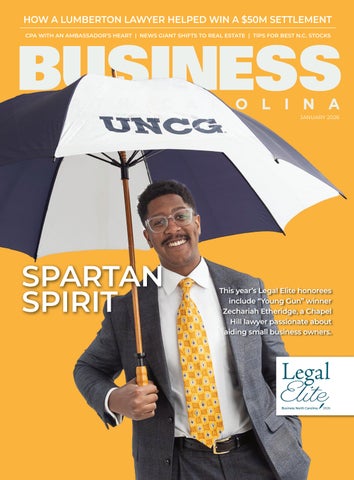










This year’s Legal Elite honorees include “Young Gun” winner Zechariah Etheridge, a Chapel Hill lawyer passionate about aiding small business owners.











North Carolina remains a top state for business, but rural areas face persistent challenges that threaten economic growth in 2026.
Truist CEO Bill Rogers emphasizes purpose-driven leadership and taking care of one’s “corner.”
10
Architect’s career blends design and community engagement; Why Maersk picked Charlotte; Economic achievers reap rewards; Mocksville business keeps musical acts rocking; Experts’ favorite stocks for the new.
The Palmer-Marsh House in Bath preserves North Carolina’s colonial and maritime history.
24 HR SUMMIT
Recognizing those who help build and manage thriving workforces.
26 ROUNDTABLE: ADVOCACY
A panel of experts discusses the importance of understanding different perspectives before pushing an agenda.
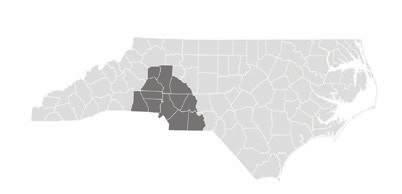
92 COMMUNITY CLOSE UP: STANLY COUNTY
Stanly County balances rapid economic development with farmland preservation, using location and talent pipelines to draw companies and residents.















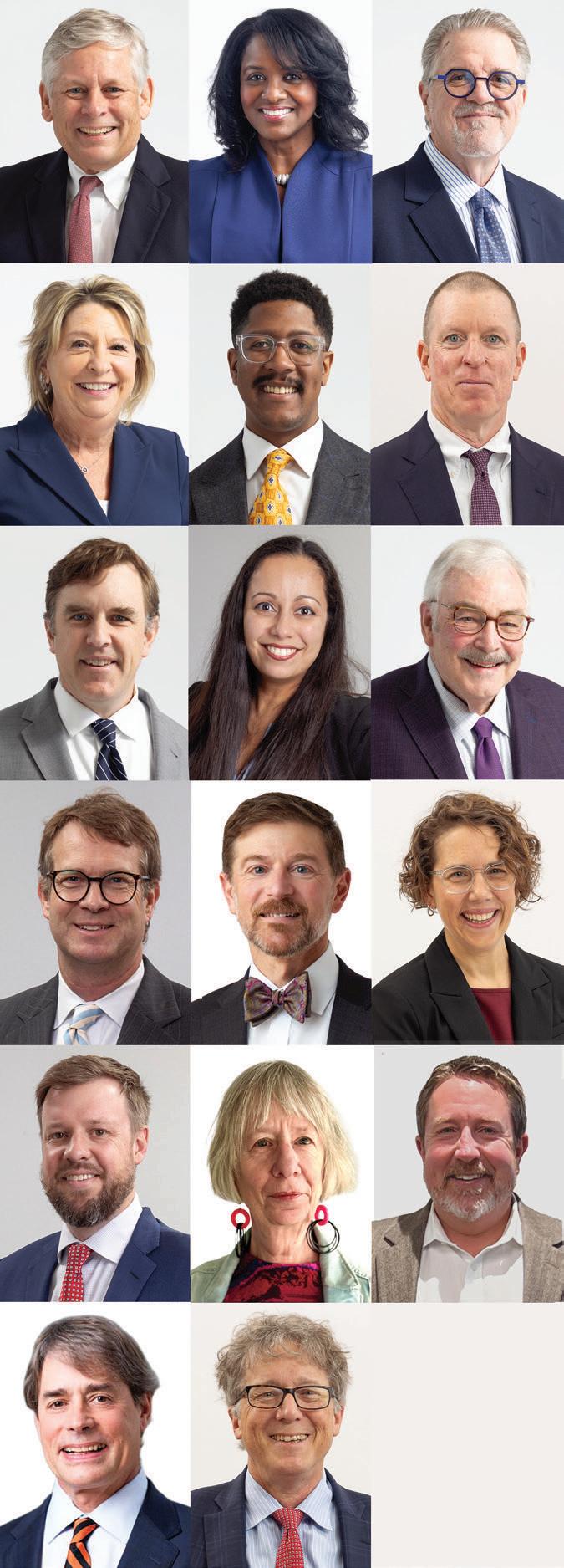

Our annual list of successful North Carolina lawyers as selected by peers. The 17 category winners share some insights and personal North Carolina favorites.
BY KEVIN ELLIS



As TV audiences shrink, Capitol Broadcasting puts more emphasis on real estate projects tied to fastgrowing communities.
BY KATHERINE SNOW SMITH





BY DAVID MILDENBERG



A tragic helicopter crash prompts a massive settlement in a state not known for huge payouts.



Ki-Hyun Chun couples a thriving CPA business with steadfast support for his fellow immigrants.
BY PAGE LEGGETT
Start your day with business news from across the state, direct to your inbox. SIGN UP AT BUSINESSNC.COM/DAILY-DIGEST.

January2026,Vol.46,No.1(ISSN0279-4276). Business North Carolina ispublishedmonthlybyBusinessNorthCarolinaat1230WestMoreheadStreet,Suite308,Charlotte,NC28208.Phone:704-523-6987. Allcontentscopyright©byOldNorthStateMagazinesLLC. Subscriptionrate:1year,$30.Forchangeofaddress,sendmailinglabelandallowsixtoeightweeks.PeriodicalspostagepaidatCharlotte,NC,andadditionaloffices. POSTMASTER:SendaddresschangestoBusinessNorthCarolina,1230WestMoreheadStreet,Suite308,Charlotte,NC28208oremailcirculation@businessnc.com.

PUBLISHER
Ben Kinney bkinney@businessnc.com
EDITOR David Mildenberg dmildenberg@businessnc.com
MANAGING EDITOR Kevin Ellis kellis@businessnc.com
ASSOCIATE EDITORS
Ray Gronberg rgronberg@businessnc.com
Cathy Martin cmartin@businessnc.com
CONTRIBUTING WRITERS
Dan Barkin, Chris Burritt, Bill Horner III, Tucker Mitchell, Page Leggett, Katherine Snow Smith, Lori D. R. Wiggins
CREATIVE DIRECTOR Cathy Swaney cswaney@businessnc.com
GRAPHIC DESIGNER Lauren Ellis
MARKETING COORDINATOR Jennifer Ware jware@businessnc.com
EVENT DIRECTOR Norwood Teague nteague@businessnc.com
ADVERTISING SALES
ACCOUNT DIRECTOR
Melanie Weaver Lynch, eastern N.C. 919-855-9380 mweaver@businessnc.com
ACCOUNT MANAGER Anne Brundage, western N.C. abrundage@businessnc.com
CIRCULATION: 818-286-3106
EDITORIAL: 704-523-6987
REPRINTS: circulation@businessnc.com
OWNERS
Jack Andrews, Frank Daniels III, David Woronoff, in memoriam Frank Daniels Jr.
PUBLISHED BY Old North State Magazines LLC
PRESIDENT David Woronoff




In 1991, Chris William wanted to promote his fledgling financial advisory practice, so he conceived the idea for a television show featuring Charlotte’s top business executives. He got a nudge from a fellow Rotarian who was then a top local Time Warner Cable executive.
Chris quickly learned that the community leaders were more interested in sharing wisdom than moving their investments to the young broker.
Fortunately, PBS Charlotte leader Hal Bouton liked Chris’ idea, resulting in about 1,700 broadcasts featuring CEOs, university and chamber of commerce presidents and other leaders focused on business issues in North Carolina and South Carolina.
After one year on Charlotte’s public TV station, “Carolina Business Review” became a weekly staple of the statewide public TV networks in North Carolina and South Carolina. Now, William is taking a break, unsure whether he will resurrect the show down the road.


With the exception of former UNC System President Bill Friday’s interview show on PBS North Carolina, Chris isn’t aware of any other continuously airing TV broadcast state that lasted show aired for death in 2012.) is that Chris handled the fundraising and paid be sure, he general managers Garner and

program in our 34 years. (Friday’s 41 years before his
He says he treated it as a small business and never posted an annual deficit. “I realized early on that we could call the shots if we were paying for it,” he says.
Having solid production quality was important, which Chris credits to his initial partner on the show, Gary Morris, a former producer at Jim and Tammy Bakker’s PTL network. Chris had been a radio DJ, but didn’t have TV experience.
The show’s first sponsor was his employer, the Interstate Johnson Lane brokerage that was acquired by Wachovia in 1998. Interstate CEO Jim Morgan approved the adviser’s plan for the show, a classy move that seemed natural then, but would probably be verboten today.
Over the decades, few, if anyone, have spent more time talking to a broad range of Carolinas’ CEOs than Chris. “We figured that if we could get the biggest business names on there, it would draw viewers and we could leverage that,” he says. Sure enough, the show attracted Hugh McColl, Ed Crutchfield, Bill Lee, Harvey Gantt, Jim Hunt and many others.







Picking favorite guests is a dangerous idea, but Chris offered up some top contenders. Former Nucor CEO Ken Iverson, who built from scratch what has become the biggest U.S. steel company, was the show’s first featured guest. Former Duke Energy CEO Jim Rogers was a brilliant communicator. Former Spartanburg Mayor Bill Barnet, who was also a real estate developer and corporate director, impressed Chris by mastering the business and government realms.

The key longevity for production. To praises PBS Charlotte Bouton, Elsie Burkett for lots of support.



As for the most difficult interviews, they were with politicians, who were often very guarded in their comments. He cites former North Carolina U.S. Sen. John Edwards, who had the political gift of answering questions without responding to the actual query.
Today’s public affairs broadcasts mostly feature fiery debates. That was never Chris’ goal. The CEOs and pols accepted invites for 15-20 minute chats because “they knew the dialogue was more about analysis than headlines. Then they could drop their defenses. It worked, by and large.” ■





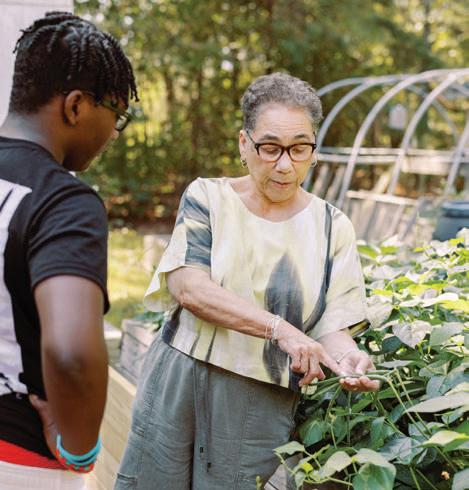
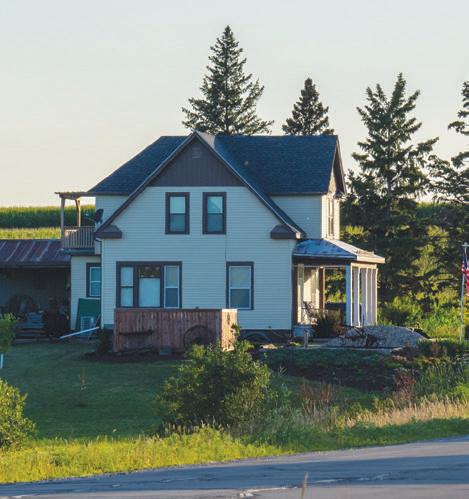



Four pain points for rural N.C. that bear watching.
BY BILL HORNER III
North Carolina shows few signs of losing its crown as the nation’s best state for business. As the meter clicks over to a new year, though, a disquieting melange of factors poses threats to business success and sustainability in our state’s rural spaces.
Here are four persistent pain points for the state’s rural areas:
The driver: the tenuous nature of the rural labor force — and a relatively weak pipeline — has resulted in troubling imbalances.

North Carolina earns its “best in business” moniker in part because of strong population and job growth. But for rural businesses, attracting, growing and retaining workforce is usually a function of proximity to large population centers.
The nature of isolation and population density helps account for the fact that more than half of North Carolina’s rural workforce (51.1%) is employed by small businesses, compared with 40.9% in urban areas. More than one-fifth in rural N.C. work in companies with fewer than 20 employees.
Workforce issues are compounded by a lower rural labor participation rate. The percentage of those 16 and older working or looking for work is just 56.3% in rural N.C., compared with 68.3% in the state’s urban areas.
And too often, when there is a convergence of available employees and open positions in rural markets, the pieces don’t fit. Too few ready, willing workers have skillsets that qualify them for better-paying jobs, manufacturers have told me.
A positive: North Carolina’s workforce development infrastructure is robust, aided by the state’s top-tier community college system. But Reginald Speight, the assistant secretary for Rural Economic Development at N.C. Commerce, suggests the state has overextended its reliance on community colleges — asking too much, providing too little funding and failing to adequately backstop campuses.
“The community college system is in an ebb and flow situation,” he says, hiring people to prepare for job training programs in partnerships with new industry, for example.
“And then it’s going to drop off, and you can’t sustain your business model that way,” Speight says. “So because of that, they’re always looking for and losing talented people, and then starting over. We have to be at a point where we can keep them at some type of what I call ‘level funding,’ but a level of enough funding to not only recruit the talented people, but to retain them. And then, if we’re doing things like that to prepare for businesses, it’s just a matter of scaling up or scaling down for the workforce.”
The driver: Low inventory and less “missing middle” housing stock has created barriers of affordability and availability.
This isn’t new. Even in a buyer’s market, finding affordable housing is an impediment for relocating workers everywhere in N.C. But simple supply and demand economics make it exponentially more daunting in rural spaces.
Elevated prices and borrowing costs and a constrained inventory are keeping many buyers sidelined. I heard stories from rural employers throughout 2025 about new hires who ended up walking away from a job because they couldn’t find housing they could afford close enough to their workplace.
“Everywhere we go, we get talked to about housing,” says Dalton Bailey, the research and data manager for the NC Rural Center, a Raleigh-based nonprofit. “And more and more it’s about workforce housing. Folks will say that sometimes there’s availability for really nice, upscale housing, and then they have housing for super-low income folks. But there’s this missing middle where somebody who might work at a factory or at a hospital in the area, or be a teacher.”
“Missing middle” housing — a term also referring to medium-density residences such as duplexes, townhomes, or multiplex dwellings — would be a welcome boon in most rural towns.
Speight suggests a surge there isn’t likely to happen anytime soon. Continued demand for higher-priced homes — way above the state’s median of just under $390,000 — is anchoring builders there. He shared what one builder told him after inquiring why there wasn’t more affordable housing here.
“He said, ‘Let me just be honest with you,’” Speight told me. “‘If someone is willing to pay me to build a $600,000 house, I’m going to build a $600,000 house. My business model is, if you want it, and I build it, and I tell you how much it’s going to cost, and you tell me to build it anyway, then I’m going to build it — because I’m a builder.’”
And until then, prices won’t go down.
“The market out there,” Speight says, “just isn’t friendly for affordable housing,”
Chris Estes, the new chief programs officer at the NC Rural Center, says conversations about housing in rural spaces have changed.
“Housing comes up in a way that it never did 15 years ago,” he told me. “It’s affordability but in some places, there’s just no decent housing there, or there’s no place to rent if you’re not ready to buy, and the only place you can go is a mobile home park that’s just really crappy and actually too expensive.”
The driver: medical professional shortages, churn and the threat of clinic and hospital closures exacerbate existing negative health outcomes already plaguing rural areas.
If you live in a rural space, you start at a disadvantage. Life expectancy for residents in rural North Carolina is 10% less than those living in urban areas. Since 2005, a dozen rural hospitals have closed. If you’re building a business, the unrelenting shortage of healthcare workers — there are nearly three times as many physicians per capita in urban areas than rural, for example — complicates attracting workers.
Worse news is this trend: the natural-cause mortality rate for people ages 25 to 54 in North Carolina’s rural areas, which was 6% higher than city folk back in 1999, has widened to 43%.
Worse yet: healthcare professionals, particularly in western N.C., cite a rapidly growing need for more behavioral and mental health services, particularly among the young — adding to the accessibility quagmire.
One positive sign is the growth of telehealth care. But poor broadband access, felt mainly in rural areas, is a nullifying factor.
The driver: Childcare access is problematic in most rural areas. Like housing, childcare availability across our state is abysmal. On average, five families compete for every one licensed childcare spot in North Carolina. Nearly half (46.2%) of N.C. families live in a childcare desert as defined by the Center for American Progress, and just 12.4% of families can afford infant childcare.
“If you want people to have kids and you also want them to work, childcare has to be available and affordable,” Bailey says.
Estes points out most of the world’s leading economies see childcare much differently than in the U.S.
“There’s been a struggle for the business world in particular to understand that infrastructure includes things like childcare for businesses,” he says. “Every place in the world you go where economies are doing well in a first world setting, childcare is thought of Everywhere we go in rural, it’s a huge issue.
“When people don’t have adequate child care, it’s hard to be on time [for work]. It’s hard to cover. You miss time. I don’t know what all the answers are, but I know that there are those kinds of barriers. And we’re not used to thinking about that in rural. We’re thinking, ‘Just get jobs and people will go to work, and they’ll figure it out.’”
More could be added to this list, including access to capital, socio-economic inequalities, a fast-aging demographic and infrastructure disparities and headwinds from Hurricane Helene.
Ultimately, Estes contends, rural prosperity emerges from a mixture of sustainability and breadth. Rural “has generally had things done to it,” and business success tends to be driven by a small number of people, he says. Prosperity comes by figuring out how to balance those out and find ways to meet pain points head-on.
Workforce, housing, healthcare accessibility and childcare are rural’s interlopers. Shared priorities around those, and alignment around progress, Estes and others contend, should be goals for rural N.C. in 2026. ■
Bill Horner III is a third-generation newspaper publisher who was an owner and editor of The Sanford Herald and the Chatham News + Record. He and his wife Lee Ann live in Sanford. Reach him at bhorner@businessnc.com
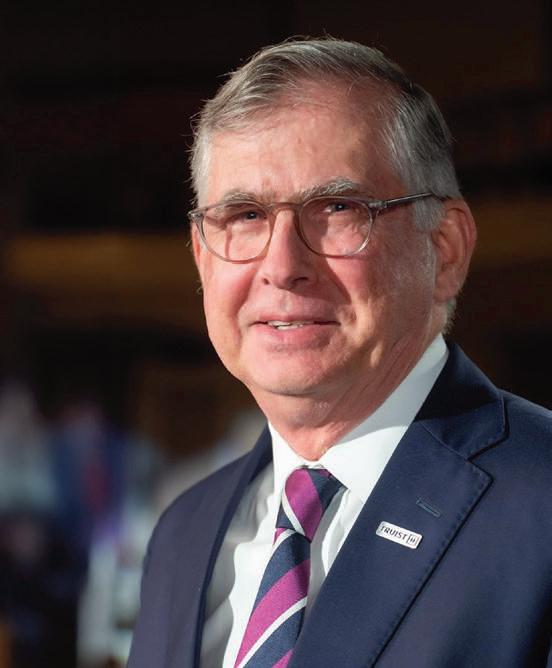





Truist CEO Bill Rogers joined High Point University President Nido Qubein in the Power List interview, a partnership for discussions with influential leaders. The interview was edited for clarity.
How did the name Truist come to be?
You’re not the first person to ask that question. I think there are about 300 million companies in the world. So a lot of names have been used.
We started a process, and we used a company to help us find a name that would represent who we are, find a name that can be protected and that does not mean something else in another language.
Truist came up organically. Different people see different things in it, which I love. The T at the beginning, the T at the end come together for our logo. So the concept of technology and touch equal trust as a concept.
There’s a U and an I in Truist. There’s a concept of trust.
So there are a lot of elements in the name. But at the end of the day, the brand is what you make it.
You speak a lot about purpose-driven leadership. What does that mean?
At its core, it is focused on the why and not focused on the how or the what. If we start talking to teammates about how or what, we’ve sort of lost our way.
Rogers is entering his 15th year as a CEO, having succeeded James Wells III at the helm of Atlanta-based SunTrust Banks in 2011. He helped orchestrate the 2019 merger with Winston-Salem-based BB&T Financial that created what is now the ninth-biggest U.S. bank with $535 billion in assets. He succeeded former BB&T leader Kelly King as Truist’s CEO in 2021 and now lives in Charlotte. He joined SunTrust predecessor Trust Company of Georgia in 1980 after earning a bachelor’s degree at UNC Chapel Hill. Truist has about 52,000 employees and operates 2,000 offices in 17 states, but has a national footprint in various corporate finance areas.
We talk about, “Why? Why are we here? What’s our purpose? What are we trying to accomplish?” We define our purposes as to inspire and build better lives and communities.
And we ask our teammates to talk about their own personal purpose. Why are they here? Does the work matter? I think people want to work for companies that do something meaningful. People want to do business with companies that do something meaningful.
How did the pandemic affect your company?
Clearly, what happened during COVID is that a lot more people adopted digital technologies. Even those who may have had some resistance. And what happened is they really liked it, and said, “Hey, this really works.”
Our concept is to marry the digital, marry the technology, with the touch. We never want to lose the touch component. We don’t want to just be a digital organization.
High tech, high touch. We think that’s the formula that equals trust because ultimately that’s the relationship we want to have with someone. Its foundation has to be on trust.
I remember when economists and futurists predicted with a high degree of confidence that the 5,000 or so banks in America would become no more than five or 50, that branches would all disappear. Why has that not happened?
Well, there are fewer branches. There are fewer banks than there were, but the concept of an ecosystem of banking is still just foundationally strong, including community banks, credit unions and large banks.
We think we’re a large community bank. We think we actually bridge both of those, but that concept’s still alive and still important. I think we’ll continue to be an ecosystem as long as we have that foundation of trust with our clients.
And that’s based on human connectivity and human communication?
Human connectivity, right. And being active in communities, being shoulder-to-shoulder, you know, elbow-to-elbow with people who are trying to build those communities. You just can’t do all that digitally.
How does a leader bring together two organizations and nurture and nourish the culture in a way that becomes one? That has to be very difficult.
In the construct of the physical things, very difficult. In the concept of the foundation of purpose, actually quite easy and quite focused.
We set out a course that we wanted to build something different. We wanted to build a company that was actually built on purpose, that the foundation would be deep, with deep pillars built into the concrete and predicate it on purpose. We would start with that as a foundation.
When we start with that, the other stuff becomes sort of easier. It drives the decisions. Why are we here? What are we trying to accomplish? What’s the North Star?
I hear you say that you appeal to the person. You make sure the person understands their important role in an organization. Then they’re willing to come together to make good things happen.
We have our company’s purpose, but we ask all 52,000 teammates, “What’s your personal purpose? Share that with us.”
Young people today have different aspirations and mannerisms for doing work. Tell us what you have seen change in the workforce.
Everybody talks about different generations. I think it’s about people. It’s not about generations. It’s not about putting people in buckets and defining them by when they were born.
They want more from companies. They want to work for companies that stand for something that’s meaningful. They want to do meaningful work.
That’s a great aspiration. I think they should challenge companies to provide that. They should demand more from us, and different generations are doing that.
We have to be the employer of choice. We have to be a place where people want to come. Then we have to develop it. We want people to have meaningful careers at our institution.
People talk about wanting to do a lot of different things. I’ve had seven or eight careers. I’ve just had ‘em at one company.
We believe in the fundamental concept that you can have a lot of careers, but why not have it at one company. So we invest in their leadership and development and in partnership with them, what’s important to them, what do they want to learn, what are their aspirations?
What frustrates you about recent college graduates, and what do you celebrate the most?
I don’t have a lot of frustrations because I think students coming out of college are much more clear-eyed about what they want to do. I remember when I started, I had no clue. I didn’t know what I wanted to do with a career. I thought I’d start in banking. I found that, “Wow, this really aligns with what I wanna accomplish.”
I think students today are much more clear-eyed. They’re better prepared for business and life. The university systems have done a really incredible job, because they’ve asked the questions, “What do you want? What are the life skills that you want to attain? How do we help you along that journey?”
Most students now have had a variety of internships. So they come in fairly clear-eyed, and I think that’s really positive.
But they are demanding more of us and we have to live up to their standards as well. That’s a great back and forth.
How does Truist manage the cybersecurity process? The financial spectrum internationally is so interwoven that it scares me and others.
One of the reasons that we merged was to create the capacity to invest in technology in terms of protecting our clients. The stakes are going up and they’re substantial.
You have to start with a framework of, “It’s the client’s data, not ours.” We have a fiduciary obligation to protect that data for our clients.
That’s foundational in everything we think about.
Then we’re constantly testing. We have people who are trained to attack us internally. We hire third parties to help evaluate us, and our regulators look at us relative to everybody else.
So it is a continual focus. It is an absolute arms race to make sure that we’re investing in the right level.
Unfortunately, the bad guys are also investing a lot and we have to make sure that we’re one step ahead.
You’ve spoken about Truist being engaged in the communities where you do business. It inspires me that Truist has programs on financial literacy for children.
Yes, we have a number of programs for children in school, both on financial literacy, and we also have some gamification for children for reading. It is foundational for all of us as a society.
We work closely with school systems, students and advocacy groups to make sure that we’re designing systems and capabilities that are relevant. It’s amazing. Kids love it.
If your children ask, “Dad, what are the two or three lessons you’ve learned that influenced your thinking and impacted your life,” what might you say to them?
I’m very blessed to have four children and 16 people in our immediate family, seven grandchildren, so I have a strong group around me. It really goes back to the same foundational thing, about living a purposeful life. If you stay focused, if the why is important to you, the other stuff sort of happens and comes along.
Then the scorecard is about living a purposeful life, that I help people.
But some people don’t know how to do that, right?
I agree. That’s why it’s important to have the conversation and to ask people, again, back to our personal purpose. “What is important to you? What do you want to accomplish?”
Then, you figure out the career things and all the pieces come together.
If the goal is to live a purposeful life, to make a difference in the community, or the world or whatever your sphere is, the other things sort of come together. You’ll do the things.
You’ll train. You’ll invest in yourself because you want to do more. You’re going to want to help more people. You want to have a bigger influence.
I talk about my personal purpose, which is to take care of my corner. Everybody has a corner. Your corner could be really small. It could be my family. It could be the people I work with. It could be my church, could be my synagogue, could be anything in your corner.
But is your corner better because you were there? Did you make a positive difference?
So I wake up thinking, “Am I making a difference? Because I was here, was my corner better? Did I have a positive influence? Did I help people along the way?” ■
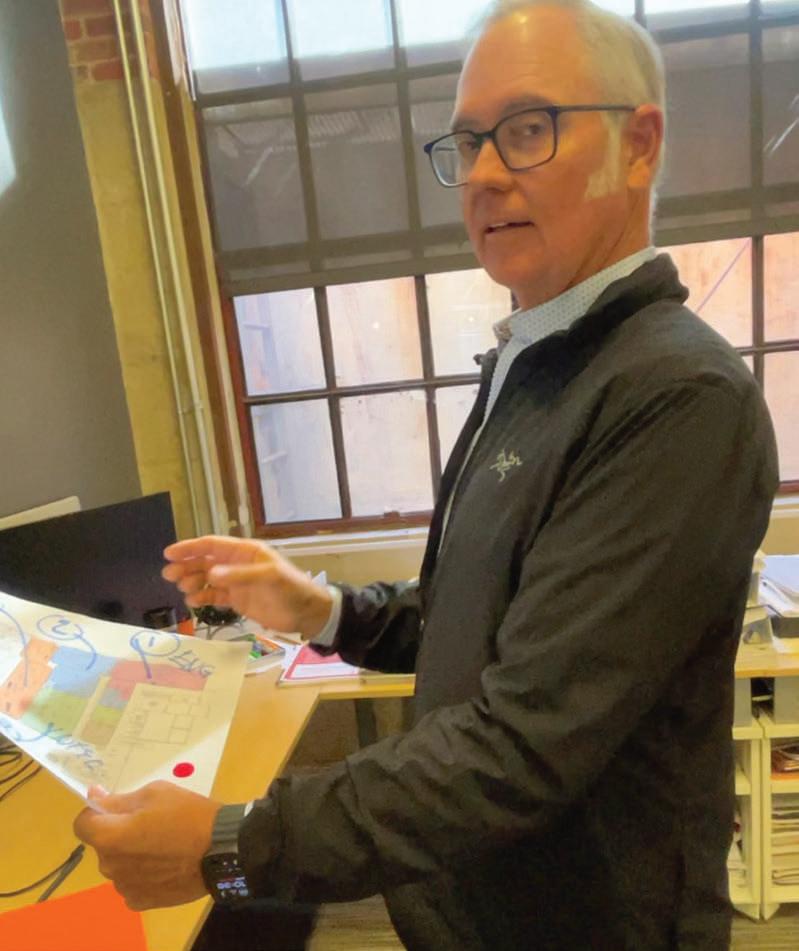
Durham architect Robert Bishop shares lessons from a lengthy design career.

By Lori D. R. Wiggins
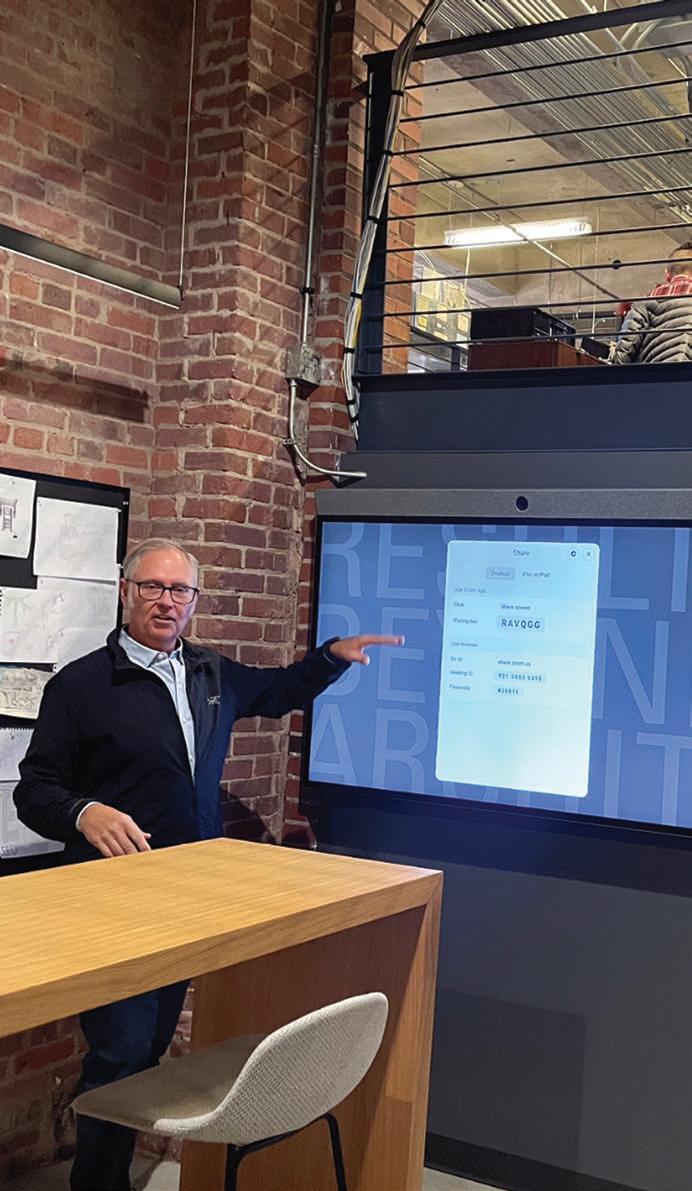
The Durham office of Little Diversified Architectural Consulting in the city’s Tobacco District is shaped as much by culture as design. Clean lines, nostalgic brick, warm woods, and sun-kissed collaborative spaces frame an aesthetic that feels both high-performing and welcoming.
Robert Bishop, who has led the Durham office for the past 18 years, retired from Little at the end of the year. The Virginia Tech University graduate joined the firm in 1998 after six years at a boutique firm and a decade at a large, Virginia-based architectureengineering firm.
Among his notable projects are the headquarters building for Quintiles (now IQVIA) on Interstate 40 in Durham and the repurposing of the famous Blue Cross Blue Shield building in Chapel Hill. It is now called The Parkline.
Architect Bill Little formed his company in Charlotte in 1964. It now has additional offices in Charleston, South Carolina; Durham; Newport Beach, California; Orlando, Florida and Washington, D.C., and 440 employees.
We sat down with Bishop to discuss his people-first, collaborative approach to design and mentoring, and architecture’s impact on the state.
Why architecture? What made you say, “This is it?”
I’m an identical twin. Early on, I realized one of the things we did not have in common is that I could draw and he could not. At 11, my dad’s friend, who was an architect, invited me into his studio. The walls were full of drawings he’d done. That moment clinched it for me.

He said, “Everyone is going to tell you that you need to be good at art. Really, you just have to have natural curiosity.” That stuck with me. It’s the secret to architecture. It’s the secret to everything, really.
How has that passion evolved over the years?
Here, we do commercial architecture. Over the last 15 years, my passion has taken a more personal dimension. My family owns 160 acres of farmland in the Virginia mountains. We call it “The Land.” I’ve designed and built my own house there, using regenerative design for (positive) environmental impact. We milled all of the lumber ourselves with a portable sawmill. That helps scratch that itch for intimate architecture. Energy-efficient design, solar orientation, radiant heating, and water reuse let me be a good steward of the environment and practice sustainability principles I believe in.
What project or moment are you most proud of?
I am especially proud of our long-term work with [Campbell University]: 11 new buildings, from medical education to a student union. We’ve helped evolve the campus from traditional Georgian architecture to progressive, cutting-edge spaces. We have truly been a big part of transforming that campus, and have built some lasting relationships.

Architecture blends creativity and technical precision. How do you balance the two?
If you were to ask people to describe me, “balance” would be a good word. I’ve always been both a design principal and a technical principal. Architects love to sketch, but we also have to understand how buildings are built. The devil is in the details. It’s never about choosing creativity or technical precision. You need both. I’m also a woodworker, which reinforces how things fit together, quite literally. You don’t see that a lot in architecture.
How have your business responsibilities affected your work?
It’s easy to get overwhelmed by operational duties, but I’m a strategist at heart. First, design excellence trumps all. Second, project-type diversity makes us better. Third, building trusting client relationships is key. We started in Durham in 1999 with five people; today, we have 80 in the Triangle and over 250 nationwide. We’ve added two pillars: mentoring young talent and deep community engagement. Giving back is part of our identity.
How have architecture firms changed over your career?
Early in my career, there were a lot of small boutique firms. They hardly exist any more. Now we have all these mega-firms. In just the last two years, about 30 architectural firms have merged.
What surprises you most about how architecture has changed?
Technology is the obvious change. I started with vellum (translucent paper) and lead. Now everything is in [Building Information Modeling], and we’re in an AI world, trying to figure out if it’s helping or hurting us. The growing obsession with project-type expertise stymies creativity. Louis Kahn designed Exeter Library as his first library, and it is iconic. Architecture is iterative. You refine, adjust, and improve early in the process. That leads to better buildings.
Are there early values that still guide?
Hard work. That’s the one people overlook now. At 13, my parents put me to work on the family farm. Later, I worked construction to pay my way through college. I saw how hard people work.
What’s the character of North Carolina architecture today?
There isn’t one defining style, and that’s what I love. North Carolina reflects a mix of aesthetics, with architects responding thoughtfully to client needs rather than chasing a singular look.
What challenges or opportunities lie ahead for architects?
Architects are problem solvers. One major challenge is mobility. In college, I read two books about the history of American cities and how transportation shaped everything. We have not gotten any better; in fact, we’ve gotten worse. Architects have to be part of the conversation: collaborate with planners, developers, and civic leaders to find creative solutions for traffic, light rail, air pollution, and reducing dependence on cars.
What advice would you give to emerging architects?
Just be patient. Absorb everything, ask smart questions, work on a variety of tasks, take problem-solving as a challenge, learn to see past obstacles, and never be afraid to ask for help.
If you had to sum up your career philosophy in a sentence, or two?
Everything happens for a reason. Look for the good in every person and in every circumstance. ■











A global transportation powerhouse expects its new N.C. base to boost its prospects and culture.
By Kevin Ellis and David Mildenberg
Charlotte won the headquarters relocation of shipping giant Maersk in November, with the largest company based in Denmark by revenue selecting the Queen City over Atlanta for its main North American o ce.
Maersk pledged to add 520 jobs and invest $16 million as it accepted a $9.8 million incentive package over 12 years from the state. It also lined up about $530,000 in city and county subsidies. Over time, the Copenhagen-based company plans to employ 1,300 people in Charlotte, where it has had a major o ce since buying the former Royal Sun Alliance headquarters building in 2006.
e publicly traded company remains controlled by descendants of the founding Mɵller family. It had net income of $6.1 billion and revenue of $55 billion in 2024, well below its record $29 billion pro t in 2022, when consumer demand for goods surged a er the global pandemic and a shortage of containers sent freight rates soaring. Shares traded on the Nasdaq Copenhagen exchange have gained 6% over the past ve years through mid-December.


Charles van der Steene was named president for North America in February 2024 and will be based in Charlotte. He joined Maersk in 2011 and has had posts in Denmark, the Netherlands, Dubai and New Jersey.


Here’s what the company said about its Charlotte move.
Are these new jobs coming from organic growth or positions now based in New Jersey?
e jobs will come with the relocation of roles from a variety of locations, primarily across the U.S.
What sparked the timing of this move?
Maersk in North America has been on a journey of growth and transformation into an end-to-end logistics provider. We’ve built up a network of planes, warehouses, ships and trucks to connect our customers with the world. Looking to the future, we feel that consolidating our footprint with the re-establishment of a true headquarters for the majority of our o ce-based colleagues is a natural next step. It will serve as the physical beating heart of our organization, where employees can experience our culture and work together to best serve our customers.
Has Maersk had a U.S. headquarters?
Our former o ce in Madison, New Jersey, functioned as a headquarters for many years, but with continued acquisitions, growth and an expanded footprint in logistics, we have leadership and operations in many locations across the U.S. Florham Park in New Jersey continues to be a strategic location.
How will this office benefit Maersk?
Our regional leadership team believes this decision is a natural next step for our business in North America, which has seen signi cant growth and transformation in recent years as we’ve built ourselves into an integrated logistics provider. With the majority of our o ce-based roles in one place, we believe we’ll be even better positioned to create a culture where our colleagues can thrive, do their best work and feel truly happy.
The Charlotte space opened in 2008 had space for 1,200 workers. Is that still true?
e facility will not undergo an expansion but will undergo renovations, through the lens of modern workspace design principles, to accommodate the additional colleagues. ■


North Carolina sets a record for job creation and pays out as past incentives’ promises pan out.
By Kevin Ellis

Arecord number of economic promises were made in North Carolina last year. Companies pledged to invest more than $24 billion and create 35,531 jobs.
Many of those projects are tied to state economic incentive grants, paid out only if companies hit job creation and investment targets.
It’s up to the Economic Investment Committee, part of the N.C. Department of Commerce, to track the deals and determine whether payouts are warranted. Companies usually have 12 years to follow through.
Here’s a snapshot of a dozen committee decisions in mid-November. The wins far outweighed the misses.
Sheetz, a Pennsylvania-based convenience store chain, set a 2012 target of 254 jobs and $29.5 million of investment in Burlington. It has created 255 jobs, invested $29.9 million, and pays an average wage of $65,195 more than double the target. The state provided an annual payment of $166,600, of a $1.9 million, 12-year grant.

Fresenius Kabi’s 2017 Wilson expansion aimed for 445 jobs and a $150 million investment to expand its syringe factory. The company delivered 439 jobs, invested $331 million, and retained 162 positions, with average wages of $81,311, almost 162% of the target wage. The German-based company received $708,300 from a $7.2 million, 12-year grant.

Gildan Yarns, a Canadian company, pledged 501 jobs across Bladen, Rowan, and Davie counties in 2013. It has added 504, invested $272 million, and retained 810 positions. Average wages hit $47,036 — 145% of the target — earning the company $291,550 this year from a $3.5 million, 12-year grant.
Tech giant Cisco promised 550 jobs in Research Triangle Park in 2014, paying $72,700 each. It delivered 549 jobs, retained 6,000-plus employees, and now pays $220,577 on average. The state granted $1.1 million of a $12.9 million incentive.
London-based Ernst & Young, or EY, committed in 2017 to add 375 jobs and make an $8.2 million investment in Charlotte. The business consulting firm added 469 positions paying on average $144,887, or 174% of its target wage. It also retained 1,484 positions and its target investment. The state awarded $300,750 this year from its $3.2 million, 12-year deal.
Austrian manufacturer Egger Wood Products pledged 400 jobs and a $300 million investment in Davidson County in 2017. It created 420 jobs, invested $415 million, and pays $65,483 on average. It received $468,000 from its $5.3 million, 12-year incentive.
Design Foundry pledged 202 jobs and a $3.1 million investment in Hickory for an upholstered furniture facility. It delivered 233 jobs and the state responded with a $125,972 award, the annual amount of the $1.5 million incentive agreement.
Paper product manufacturer
Cascades Holdings promised 66 jobs and $58 million investment in Scotland County in 2018. The state awarded Cascades $78,000, part of a $468,000 economic grant, after it created 67 jobs invested $77.4 million.
Chick-fil-A Supply pledged in 2020 to invest $52 million to create 140 jobs in Alamance County. It received $121,500, part of a $1.5 million, multi-year grant, after investing $55.9 million and adding 166 jobs in Mebane.
Not all companies hit the mark. Credit Karma pledged 400 jobs in Charlotte in 2020, but created only 254. The state withheld $1.7 million, even though the jobs pay $319,312 on average, 204% of the target wage.
Atlantic Building Components filled 60 of 85 positions pledged in Robeson County and got a partial $42,575 payment. Reidsville-based pet food company Farmina opened just 19 of 92 planned roles due to construction delays and received no grant funds. All three companies report they plan more hiring and will become eligible for payouts. ■


Stuff Group helps live music acts create epic performances.
By Tucker Mitchell
he increasingly complex concerts that ll America’s stadiums and arenas are big business. Gross receipts for the top 100 U.S. tours in 2024 topped $6.1 billion — a gure almost certainly eclipsed in 2025, according to the Pollstar News trade magazine.
TTo make the magic happen, acts and promoters frequently turn to Mocksville-based Concert Stu Group. Yes, that Mocksville, in Davie County. rough 15 companies under its umbrella, CSG and its 600 full employees provide set-up and staging services to concerts across America and beyond. e privately held company doesn’t release revenue gures, but it provided services for 75% of the Pollstar and Billboard top 100 tours this year.









“ ere are some companies that can provide two or three services, and a lot of single-discipline companies,” says Brammer. “We’re the only ones that are end-to-end.”
CSG has a liates or staging facilities in 12 U.S. cities, and opened facilities last year in Australia and New Zealand. Entering the Down Under markets stems from the company’s addition of a New Zealand-based ooring and major event planning company, among seven expansions in the past two years.
Its Davie County footprint is also expanding with a $5 million warehouse and parking addition. Future plans call for a garage facility for the company’s eet of 25 tour buses and 150 semis, a 150,000-square-foot warehouse, and a virtual recording studio/rehearsal studio that will allow acts a place to rehearse and record videos for use in shows.
“I mean, these acts, these big names, they’re going to be right here,” says Terry Bralley, president of the Davie County Economic Development Corp. “It’s putting us on the front page.”
Michael Brammer CSG, chief strategy officer
Clients include entertainers in multiple genres: Luke Combs, Zach Bryan, Bruce Springsteen, Madonna, Ed Sheeran, Pink, Metallica and more. en there’s staging for festivals including LA Pride in the Park and the Carolina Country Music Festival in Myrtle Beach, South Carolina; religious gatherings for televangelists such as Joel Osteen and Joyce Meyer Ministries; and a National Football League season kicko event.
CSG is one of the larger players in the industry, says Michael Brammer, son of the company founder and the chief strategy o cer. It’s the only company in the industry that can stage a complete event, he says.
CSG employs about 60 people at its Mocksville facility. A few others work in Mooresville. Bralley says CSG has been a good corporate citizen, helping supply tents during COVID and staging a Charlotte concert to raise money for mountain ood relief.
“You couldn’t ask for a better company to be your neighbor,” he says.
Brammer’s forecast calls for “steady, maintained growth, with us adding strategic business partners, when that makes sense.”
e company’s 10 partner-owners are a mix of people who helped Jim Brammer, 73, get started 40 years ago, and owners of companies that have joined CSG in recent times. All the partners still involved are working executives, says Michael Brammer.
“[Dad] is still heavily involved as CEO and chairman of the board,” he adds. “He’s certainly not slowing down. We’re doing everything to support him and to keep him around. But there are no non-working people in the company. Everyone with a piece of the pie is in their area, leading and making us better.”
CSG still views itself as “a premium boutique business” and has “never set out to be the biggest or the most competitive,” he says. e company’s acquisitions re ect cultural ts and preexisting relationships, a natural evolution in the chummy world of big-time entertainment, where shared struggles create longterm friends.
Michael Brammer is part of that. A er quitting college during his rst year, he went to work for the audio department in his dad’s company.
“I was a sound guy at heart,” says Brammer. “I went to concerts, then went back to the warehouse and rolled up cable, carried stu around. I worked my way and came to know a lot of people in the industry as I did. De nitely, a school of hard knocks guy.”
at mirrors his father’s entry into the business. Fresh out of the Navy in the late 1970s, Jim Brammer returned to his native Winston-Salem and decided he didn’t want to work at R.J. Reynolds or Hanes, or any other local manufacturing goliath.
Instead, he opened a nightclub. en he opened another, and another, including EJ’s, and the old Forum Music Hall. Brammer brought in a steady stream of concerts. ree Dog Night and Delbert McClinton both played at the Forum.
Evenutally, the elder Brammer saw he could make a business out of supplying all the stu — sound, lights, stages, etc. — that he had to rent for shows.
“He never really liked running a bar that much,” says Michael Brammer. “But he loved the concerts.” (Jim Brammer is partnering with auto dealership magnate Don Flow on a $25 million, 5,000-square-foot amphitheater in downtown Winston-Salem that is expected to open in 2027.)
Special Event Services opened in 1986, and added Special Event Transport 10 years later. Companies that provided barricades and temporary ooring, concert structures and “fabrineering” followed, and nally, in 2015, SES Integration was created to unite the various services.
Recent additions have added new categories, like video recording and production, and specialized structures and roo ng.
“ e industry today, its needs and expectations, are very complex,” says Michael Brammer. “It’s all about capturing and retaining the attention of the concert-goer, so it’s more techfocused, more bespoke. You compare it to even just 15 years ago and it’s like night and day.”


Concert Stuff Group’s 70-acre Mocksville headquarters has lots going on
A 52,000-square-foot facility opened in 2020, with a 7,500-square-foot addition completed last year.
A $5 million warehouse and parking expansion, including a 43,650-square-foot industrial space, four additional dock doors and 44-foot high ceilings, should be completed in 2026.
Future plans call for a building to house the company’s 150 trucks, 300 trailers and 25 tour buses; a 120,000- to150,000-square-foot warehouse; a rehearsal facility, and climate-controlled client storage.

e result is signi cant changes in the company, including creating CSG and its umbrella of specialty companies. A full-time CFO was hired several years ago, and the company formed a lending relationship with JPMorgan Chase to keep the business rolling.
Now, CSG is made up of essentially two elements: talented specialists in niche industries and tons of specialized equipment.
A single sound system for a stadium tour can cost more than $4 million, says Brammer. A video wall, which has become essential for large tours, is $3 million. e company’s custombuilt tour buses start at $1 million each and trucks are around $300,000 each.
“It’s capital-intensive with a very high cost of entry,” says Brammer. “ ere’s a high investment in human capital, too. e talent needed to pull it o is quite intense, and it’s all driven by relationships and trust. e people in the industry, the artists, the managers, the promoters, have to know you.” ■


Private equity firm CD&R will acquire Sealed Air in an all-cash transaction valued at $10.3 billion. Sealed Air stockholders will receive $42.15 per share, which represents a 41% premium to the packaging company’s unaffected stock price as of Aug. 14. The deal is expected to close in mid 2026.
NASCAR reached a settlement with Michael Jordan’s 23XI Racing and Front Row Motorsports, ending a federal antitrust trial and agreeing to make all team charters permanent. The deal follows damaging testimony on NASCAR’s leverage over teams and paves the way for new revenue-sharing terms starting in 2026.
San Francisco-based TPG and Montrealbased La Caisse acquired a majority interest in Pike, a utility services company that offers infrastructure engineering and construction services to more than 400 U.S. utilities and other organizations. The seller is New Yorkbased Lindsay Goldberg a PE firm that bought 50.1% of Pike in 2020. The selling price was reportedly more than $5 billion.


Driven Brands plans to sell IMO, its international car wash business, to New York City-based Franchise Equity Partners for about $476 million. The transaction is expected to close in early 2026 and includes 720 locations, primarily across the United Kingdom and Germany. The company says the move will allow it to focus on its Take 5 oil change business.
The co-owner and founder of Sycamore Brewing faces charges of statutory rape, indecent liberties with a child and firstdegree burglary charges in Stanly County. Justin Brigham, 44, co-founded Sycamore Brewing with his wife, Sarah, in 2013. It has a South End taproom and a now closed location at Charlotte Douglas International Airport, with a third location planned. Its products are distributed across seven states.
Hendrick Automotive Group bought a 2.6-acre site in SouthPark for $13 million from Lincoln Property. Lincoln had once proposed a 340,000-square-foot office tower at the site. Hendrick, which is the state’s largest private company by revenue, has its main office in east Charlotte.
Spectrum Center drew 325,000 attendees in its first month after a $245 million city-funded renovation, boosting Charlotte Hornets attendance by 11% .Upgrades include new premium seating, concessions and 1,400 lower-bowl seats. The arena’s lease was extended through 2045.

Spanish retailer Zara opened its first North Carolina store in SouthPark mall. The new store joins about 1,900 Zara and Zara Home stores operated by owner Inditex Group. Overall, the company operates more than 5,500 stores in about 100 counties, with revenue likely to top $40 billion in its current fiscal year. It has about 100 stores in the U.S.
Six Flags, the owner of Carowinds and dozens of other amusement and water parks, hired veteran amusement-park operator John Reilly as CEO. Reilly was a longtime executive at SeaWorld Parks and Entertainment, but most recently was group chief operating officer at Spanish theme-park company Parques Reunidos. He replaces Richard Zimmerman, who announced in August his plans to step down.
About 30 artists are seeking to recover artwork consigned to Coffey & Thompson Art Gallery after the longtime Eastover space was shuttered in September for unpaid rent. Artists report missing inventory, lost income and legal uncertainty as the landlord controls access to the locked gallery.
Gaston County’s only four-year university, Belmont Abbey College, appointed Jeffrey Talley as the college’s 21st president. Talley replaces Bill Thierfelder, who led the state’s only Catholic college for 20 years and announced his plans to retire
last year. The university is celebrating its 150th year.
Trane Technologies agreed to acquire Stellar Energy’s digital unit, a Jacksonville, Florida-based provider of liquid-to-chip datacenter cooling systems. The deal includes two assembly operations and about 700 employees. Terms weren’t disclosed. The business will join Trane’s commercial HVAC division while keeping its brand, direct-to-customer model, and existing customer relationships.
FIT Precast, an industrial concrete product manufacturer, plans to create 125 jobs by investing $102 million to build its headquarters and a concrete pipe production facility.
JGA Space & Defense, formerly Joe Gibbs Racing Solutions, will invest more than $25 million and add 40 jobs as it transitions from racing work to producing military space and defense components, including hypersonic rocket nozzles.
Atlanta-based RaceTrac opened its first North Carolina store here along U.S. 74. It has more than 750 convenience stores and is often credited with making self-service gasoline purchases a standard in the business.
UNC Health named Jeff Strickler president of UNC Health Rockingham to succeed Steve Eblin, who is retiring after leading the 108-bed hospital since 2019. Strickler will remain president of UNC Health Chatham, a 25-bed hospital in Siler City. He will leave his post as chief operating officer at UNC Hospitals’ Hillsborough campus when a replacement is found.
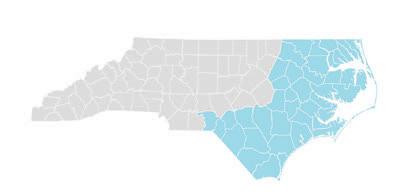
Beginning in 2026, Campbell University will cover full undergraduate tuition for new first-year students who live in Harnett County. The initiative is part of a broader recruitment strategy while reaffirming Campbell’s ties to its home community for 138 years.
Standard Technologies, an Ohio-based metal fabricator, plans an 85,000-squarefoot facility, investing in a 35-acre site and creating about 65 full-time jobs. The project requires county approval for a special use-permit and could expand further as demand grows.
A planned $19.2 billion, 900-megawatt data center planned by Energy Storage Solutions faces criticism. Residents raised concerns about natural-gas availability, air and noise pollution, water use and uncertain economic benefits
at an Edgecombe County commissioners meeting. Organizers say developers are overselling advantages while downplaying costs.
Airbus has taken over the 1,000-employee aerostructures plant long operated by Spirit AeroSystems, renaming it Airbus Aerosystems Kinston. The factory, key to A350 fuselage and wing-spar production, shifts to Airbus as Boeing acquires Spirit and the companies divide assets. Airbus now employs nearly 7,000 people nationwide.
Local Time Brewery has opened its second location downtown, adding a taproom while planning to expand brewing capacity next year. Founded in 2022, the brewery debuted in Holly Springs in 2023 and features globally inspired beers, live music and community events at the new site.
The Lumbee Fairness Act granting the Lumbee Tribe full federal recognition after decades of attempts — was included in the final National Defense Authorization Act, which received U.S. Senate approval on Dec. 17. iSupport spans most of N.C.’s delegation, though opposition remains from other tribes concerned about the recognition process.

VectorTex USA says it will invest more than $6 million to create a manufacturing site that will create 44 jobs. VectorTex is the U.S. subsidiary of Australian-based Vector Technologies, which develops medical device components and product technology for oyster farming. It also has sites in New Zealand and Thailand. This will be its first site in North America.
The Houston Astros agreed to sell the Fayetteville Woodpeckers to Diamond Baseball Holdings, which will keep the club as an Astros affiliate with local leadership intact. The Single-A team will continue playing at Segra Stadium as the deal awaits league approval. New York City-based Diamond owns more than 40 minor league teams, including the Charlotte Knights, Winston-Salem Dash and Hickory Crawdads.
A warehouse operated by Ryder in this Scotland County community will close on Jan. 30, resulting in the loss of 91 jobs. Ryder has operated the warehouse for about a year, according to a spokeswoman for the Coral Gables, Florida-based logistics company. Scotland County is one of about a dozen North Carolina counties that has had an unemployment rate above 5% in the past year.
Dublin-based power management company Eaton will add 30 jobs in Nash County with a $6.8 million investment to expand its aerospace components manufacturing facility, where it now employs about 100 workers. It has had a factory here since 1976 and manufactures hose and tubing products for commercial and defense customers.
Cannonsburg, Pennsylvania-based Pennsylvania Transformer Technology began construction on its $102.5 million expansion of its Hoke County plant that is expected to add 217 jobs. PTT makes power and distribution transformers and has had a factory here since 1992 that currently employs about 80 workers.
Advanced Glazings, a Nova Scotia maker of translucent insulated glass, formed a U.S. entity and started hiring. Cofounder Doug Milburn envisions a future campus that could include manufacturing alongside his other companies. The firm’s Solera product is used in commercial, institutional and emerging residential projects across North America.
Cape Fear Holdings withdrew from its $1.7 million bid to buy 1.65 acres on Chestnut Street for a proposed downtown grocery store. Co-founder Vin Wells said the project’s timing “was not aligned,” though the firm remains focused on downtown development. The city will fold the site into a broader master plan for its strategic land holdings.
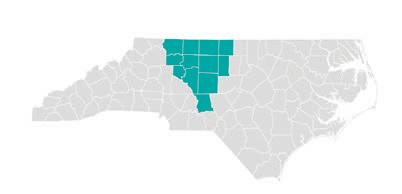
High Point-based Environmental Air Systems plans to invest $20 million to create an HVAC products plant here that expects to employ 300 people in the next two years. Houston-based Comfort Systems USA, a fast-growing public company, acquired EAS in 2016. EAS will be located in a former Klaussner Home Furnishings building that was vacated in 2023.
Marshall of Cambridge’s U.S. subsidiary terminated its rights to a $2.4 million state economic incentive grant because it won’t meet its job-creation and investment goals. In 2023, Marshall pledged to invest $50 million and create 240 jobs, but has only hired four workers with no immediate plans to increase that number.
Guilford College kept its accreditation after two years on probation, preserving access to federal aid and clearing the way for long-term planning. President Jean Parvin Bordewich led cuts of $3 million and a fundraising campaign topping $6 million, helping stabilize finances as the school of about 1,200 students prepares for its 2028 reaffirmation.
An Iowa-based trucking company with operations here will permanently close after losing the U.S. Postal Service as its primary customer. About 70% of 10 Roads Express’ revenue came from the postal
service. The company has approximately 2,600 drivers nationwide, including 74 based in the Gate City.
The U.S Justice Department appealed an April court decision that awarded developer Kotis Associates $52 million in a property takings case involving the city’s rails-to-trails greenway. The case involves land along 3.1 miles of the greenway built on part of a now unused Norfolk Southern route. The award is believed to be a record in a rails-to-trails case.
Reynolds American, which is celebrating its 150th year in business in the state, plans to add 200 more manufacturing jobs this year at its operations center in Tobaccoville. The move follows the addition of about 800 jobs over the past two years at Reynolds, which oversees U.S. operations for Londonbased BAT Group. It now employs more than 2,000 in the region as it shifts toward smokeless products.
Gildan CEO Glenn Chamandy says HanesBrands’ headquarters here will become the company’s retail operations hub following the Canadian company’s $4.4 billion acquisition. Job impacts remain unclear, but Chamandy projects growth by pairing Hanes’ basic-apparel brands with Gildan’s lower-cost manufacturing network. He expects production synergies across global plants and plans renewed investment to rebuild Hanes’ revenue.
Philanthropist MacKenzie Scott, a cofounder of Amazon and the former wife of Jeff Bezos, gave $50 million to WinstonSalem State University — the largest gift in the school’s 133-year history. The donation follows her $30 million contribution in 2020 and will bolster scholarships, endowment growth and campus expansion for the HBCU’s nearly 5,000 students. She also gave $24 million to Robeson Community College, the largest gift ever received by a North Carolina community college. Nearby, Bladen Community College received $12 million.

The jet engines that Boom Supersonic wants to build for airlines may wind up powering data centers first. Boom announced that it received an order from San Francisco-based data center operator Crusoe for 29 “Superpower” turbines. Crusoe has projects in store or online in Texas, Wyoming, Iceland and Norway, with Boom’s turbine engines serving as a stationary power plant.
After 88 years in business, K&W Cafeterias closed its remaining restaurants, which included eight in North Carolina and one in Virginia. At its peak, there were 35 K&W restaurants around the southeast. The owner was Texas-based Falcon Holding, which operates Piccadilly Cafeteria.
Humabiologics, a Phoenix-based regenerative medicine company, will open its first East Coast site in Innovation Quarter. Founded by CEO Mohammad Albanna, the company converts human tissue into biomaterials for research. The facility will focus on product development and early manufacturing, with plans to hire two or three employees.
WH Farms will relocate its hemp wellness headquarters and production here with help from a $250,000 state grant supporting a 12,300-square-foot building reuse. The company plans up to 44 jobs and nearly $3 million in investment. Its non-intoxicating, FDA-approved products meet upcoming federal THC limits.
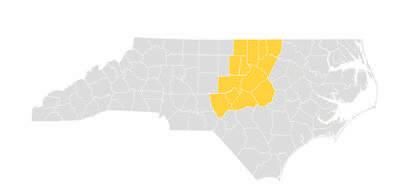
Durham-based Vulcan Elements, a manufacturer of rare earth magnets, says it will create 1,000 jobs and invest $918 million in Johnston County. The company plans to help the U.S. reshore a supply chain component for defense and commercial electronics. The project comes with a $120 million state and local government incentives package, a $620 million Department of Defense loan and $50 million in federal incentives.
UNC Health named Dr. Cristy Page as CEO, dean of the UNC School of Medicine
and UNC Chapel Hill vice chancellor for medical affairs. Page had served as interim CEO since April. UNC Health has 16 hospitals across 20 campuses. The $5.4 billion enterprise has about 5,600 employees.
NC Innovation, which invests in N.C. startups affiliated with UNC System researchers, named Michelle Bolas acting CEO. She has been executive vice president and chief innovation officer, having joined the group in January 2023. J. Bennet Waters, who led the organization since 2022, stepped down Nov. 30. NCI has awarded $18.8 million to 25 projects across 14 UNC System institutions.
BioCryst Pharmaceuticals won FDA approval to expand its lead drug Orladeyo to children ages 2–11, opening a new pediatric market for the hereditary angioedema treatment. Orladeyo generated most of BioCryst’s $468 million in 2025 revenue and is projected to reach $1 billion in annual sales by 2029.
Opine, founded by three JupiterOne veterans, raised $5 million to scale its AI platform that automates presales for complex business-to-business sales cycles. Led by CEO Akash Ganapathi, the company expects revenue growth to grow tenfold this year.
Novartis started construction on its Research Triangle expansion, launching construction on its total of $771 million plan here and in Morrisville. The investment is expected to create about 700 jobs and open a new manufacturing hub by 2027–28.
Aspida Financial will relocate its headquarters to long-vacant Imperial Tower, leasing nearly 90,000 square feet and planning a 1,000-job expansion. Owner Drawbridge Realty will invest $10 million in amenities — including an athletic field and golf simulator — with Aspida moving in after upgrades are complete in late 2026. Iqvia vacated the building in 2023.
Chipmaker Wolfspeed received $698.6 million in federal tax refunds authorized by the CHIPS Act. The advanced manufacturing investment tax credit follows $186.5 million in refunds that came the company’s way in its 202425 fiscal year. Wolfspeed officials say the latest refund bolstered the company’s cash balance to about $1.5 billion.
Citel America, a French manufacturer of industrial surge protection products, will invest $12.5 million and create at least 57 jobs to locate at an 82,900-square-foot facility. Citel plans to partner with leading area research institutions and to develop a UL-certified surge test laboratory.
Swiss medical technology company Ypsomed purchased a 110,000-squarefoot facility at The Yield for $31.5 million as it establishes its first U.S. manufacturing site. The company plans to invest almost $250 million, open in 2027, with 100 employees and expand to 200 workers as demand grows.
Texas-based Buc-ee’s started site work on its first North Carolina travel center — a 74,000-square-foot building with 120 gas pumps and 650 parking spaces off Interstate 85/40. The $38.7 million project includes $10 million in roadwork funded by Buc-ee’s and is expected to open by May 2027.
Cardinal Infrastructure Group went public on Dec. 10, then surged about 20% in its first three days of trading. Insiders retain majority voting control of the company, which does utility installations and other site development work.
Apple reports it needs a four-year extension to take advantage of an $845.8 million state economic incentive agreement, tied to
job-creation targets on a project on the Wake County side of Research Triangle Park. The maker of iPhones and MacBook computers announced plans in 2021 to invest $522 million and create 3,000 jobs. It has not begun construction on its proposed 1 million-squarefoot facility.
Dogwood State Bank shareholders approved its $476 million sale to Virginiabased TowneBank, expected to close in early 2026. TowneBank would reach $22 billion in assets and 73 branches. Dogwood is planning a downtown Winston-Salem branch, though no update was provided. Dogwood CEO Steve Jones will become TowneBank’s Carolinas president.
Second Empire Restaurant and Tavern in downtown ranks third nationally in Tripadvisor’s 2025 Travelers’ Choice Best of the Best awards, recognized for top-tier service, wine knowledge and upscale dining in the historic Dodd-Hinsdale House. Entrées average $33 to $44. Highlands’ Ristorante Paoletti also made the list at No. 13.
Rise Companies investment firm named Brooke S. Hughes as CEO. She is the daughter of Rise Capital founder Harry Smith, who will become board chairman and remain active in the company’s acquisition strategy, sales initiatives and long-term development efforts.
Dave D’Annunzio will succeed Dwayne Naylor as CEO of Civic Federal Credit Union on Jan. 16. Service glitches plagued the company’s merger in June and contributed to widening losses. Civic emerged as an independent $4 billion organization this past summer in its merger with Local Government Federal Credit Union. D’Annunzio is Civic’s CFO.
Carolina Hurricanes owner Tom Dundon is reportedly selling a significant minority stake in the NHL franchise at a $2 billion valuation to help fund his $4 billion acquisition of the NBA’s Portland Trail Blazers. Dundon, who revitalized the team and secured long-term arena development rights, had not commented as of midDecember.
City Council approved historic landmark
status for the former downtown Holiday Inn, preserving the 1969 circular tower once slated for demolition. Owner Tidal Real Estate Partners will receive a property-tax deferral while renovating the structure into a Hotel Indigo with a top-floor restaurant. The $33.8 million project is expected to reopen next year.
Dosher Memorial Hospital opened a 8,000-square-foot emergency department, doubling the size of its original ER and expanding treatment spaces from 10 to 14. The nearly $10 million project is Phase 1 of a broader expansion plan and was funded entirely through township tax revenues.
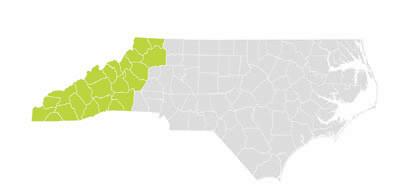
Deerfield Episcopal Retirement Community is planning a nearly $400 million expansion that will add about 200 units. The continuing care retirement community’s plan includes a center with dining and administrative space. The campus now consists of about 500 units that house more than 650 residents. Construction will start early next year and is expected to be completed in 2028.
The Economic Development Coalition urged officials to reject a rezoning that would allow Costco on 25 acres in Enka Commerce Park, arguing it would sacrifice the city’s last prime industrial site and weaken wage and tax growth. Supporters counter that residents want Costco and the site has sat underused for years. A decision is expected this month.
A downtown landmark at 1 Haywood St., long known as the Wells Fargo Building, sold for $8.5 million to Bhuna Corp. The buyer plans to build on its innovation-hub legacy. Tenants including the Asheville Museum of Science and The
Collider, a co-working space, will remain. The 104,000-square-foot, five-level building was built in 1969.
Salvage Station will reopen after Hurricane Helene destroyed the original music venue, with owners transforming a 13.5 acre former paper recycling facility into a new indoor space. The iconic “Homer Simpson” building will anchor the site, preserving murals and artifacts from the old location. No opening date has been set.
A proposed Boone Golf Club redevelopment featuring housing, a Topgolf-style range and public golf amenities drew questions from Town Council and public opposition. Speakers raised concerns over traffic, affordability, flood risk and loss of green space, while developers said the plan could expand access and add workforce housing. The
discussion was described as informal.
More than a year after Hurricane Helene triggered nearly 60 landslides, long stretches of the Blue Ridge Parkway between Mount Mitchell in Yancey County and McDowell County remain closed. The result is sharp revenue losses at local businesses for a second tourism season.
The North Carolina Supreme Court declined to hear an animal cruelty lawsuit against Case Farms. Legal Impact for Chickens sought to revive its 2023 lawsuit that was dismissed by a Burke County Superior Court judge in December 2023, and then upheld by the N.C. Court of Appeals in May.
Elk Bucks, which are gift cards launched by the Haywood Tourism Development Authority, are gaining traction beyond their original tourism incentive. Now available to locals, the cards can be used at more than 120 small businesses countywide. Officials say the program boosts holiday shopping and keeps spending local.
Cincinnati-based GE Aerospace will expand its manufacturing site with a $52.9 million investment expected to create 44 jobs over the next three years. GE Aerospace has had a site here since 2007, and it manufactures parts used in the so-called CFM LEAP engines, part of a joint venture with France’s Safran Aircraft Engines. GE Aerospace employs about 2,000 workers in North Carolina, including sites in Durham, Wilmington and Asheville.■







The U.S. stock market’s inexorable rise continued in 2025, marking the fourth year in the past ve in which the S&P 500 Index gained at least 15% (provided there wasn’t a sharp downturn a er our mid-December print deadline).
More than half of the index’s gains are attributable to the Magni cent 7 stocks, however. So it’s a tough challenge to ask our quartet of veteran investors to share their suggestions for the best stocks that are based in North Carolina or at least have strong ties here.
Looking back, Ann Zuraw scored the best pick with AAR, the aviation services company that gained 31% through mid-December. It has an increased presence in the Triad a er buying the HAECO maintenance business. Frank Jolley had a winner with fertilizer producer Nutrien, which gained 28%.
Quantum computing will be the next big thing in tech and IBM has the lead. Deep in a lab, IBM has been toiling away at quantum leadership. The stakes are high. IBM looks to have the smarts to hold the pole position.



e weakest selection came from Bobby Edgerton, who expected Krispy Kreme Doughnuts to rebound a er signing a deal to supply McDonald ‘s with pastries. e pact didn’t work and our state’s famous doughnut company declined an unsweet 55%.
Looking ahead, investors Zuraw and Edgerton both expect Old Dominion Freight Line to rebound a er declining about 22% over the past year. It was an unusual slump for the omasvillebased trucker, which was a top U.S. stock as it soared tenfold between 2016 and late 2024.
About 10 other stocks are recommended by our panel. And since everything is about AI these days, we asked ChatGPT to pick three North Carolina-based companies. See the results below.
Good luck, investors!
MARKET
$90.4 BILLION
MARKET
$32.7 BILLION
Old Dominion is the king of truckers in America, having replaced Yellow Roadway. It had basic cash flow of $1.7 billion last year. It operates in every state, Canada and Puerto Rico. There’s no better company in North Carolina. BOBBY EDGERTON Co-founder
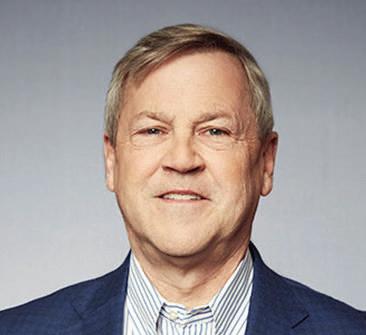
Managing director and co-chief investment officer
Live Oak Private Wealth Rocky Mount
Shares of the Raleigh-based regional banking company with over 500 branches and offices in over 30 states appear cheap at 115% of book value and less than 10 times estimated 2026 earnings. First Citizens’ class B shares appear even cheaper at $1.600 per share, but they are rarely traded.
The Charlotte company is no longer a boring utility. Providing power for the rapidly growing data center industry is a massive business opportunity. Harry Sideris, who succeeded Lynn Good as CEO in April, has worked for Duke for more than 30 years, and has had just about every role. Duke is on the move.
Honeywell is a Charlotte-based conglomerate that is breaking into three separate companies: Advanced Materials, Aerospace and Automation. As independent entities, it is expected that Honeywell Aerospace and Honeywell Automation will benefit from simplified strategies, more focused management and improved capital allocation. Activist investor Elliott Management owns 4.9% and believes eliminating the conglomerate discount could result in appreciation of more than 50%.
MARKET CAP $223.6 BILLION DIVIDEND YIELD 3.4%
Novo Nordisk is a Denmark-based pharmaceutical company with a large presence in the Research Triangle area. Shares are down more than 65% from their peak in June 2024, largely because of increasing competitive pressures on their GLP-1 drugs Ozempic and Wegovy from Eli Lilly. Eli Lilly is experiencing faster revenue and earnings growth with Mounjaro and Zepbound, but NVO shares trade at approximately 14 times trailing earnings, versus 53 times for Eli Lilly. With a 3.4% yield and solid balance sheet, we think NVO shares are attractive.
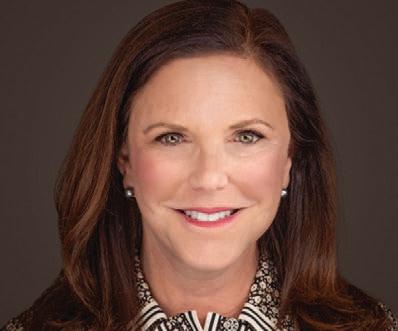
MARKET CAP $32.9 BILLION DIVIDEND YIELD (0.7%)
Old Dominion Freight is the lowest-cost operator in the lessthan-truckload (LTL) freight carrier industry, giving it a competitive advantage and pricing power.
The Thomasville-based company maintains a strong balance sheet with low debt levels and consistently robust cash flow. Even in difficult freight and macro environments, ODFL has a reputation for operational discipline and execution.
Although the stock has declined sharply this year, its fundamental strength positions it well for longterm recovery and growth when freight volumes for retail and manufacturing activity rebound.
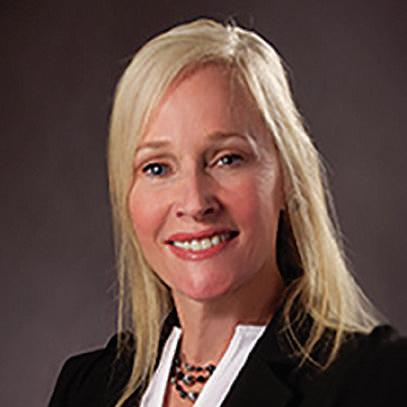
CHRISTY PHILLIPS Head of equity strategies and director of research
Franklin Street Partners
Chapel Hill
We believe the market is underestimating the value of the Montreal-based company’s merger with Hanesbrands, which essentially doubles Gildan’s annual revenue, strengthens its strong position in “printwear” and improves retail distribution. Gildan’s low-cost manufacturing advantage has enabled them to take share in North America, where they have operating margins of 22%. A potentially stronger consumer in 2026, along with realized cost savings from the Hanesbrands integration, sets Gildan for above-market growth in revenue, operating income, and free cash flow. Our estimated target price is $74, implying 30% upside.

YIELD N/A
Demand for clinical research, realworld evidence, and healthcare analytics is expected to remain strong, supporting stable earnings growth. Unlike traditional pharma, IQVIA profits from services across many drug developers — a diversified growth profile. Though upside isn’t as steep as some tech names and valuation may remain premium vs. peers, analysts still lean positive, but vary on magnitude of potential gains.
MARKET CAP $2.34 BILLION DIVIDEND YIELD N/A
Charlotte-based RXO has been pressured by the longest freight recession on record, but its acquisition of Coyote Logistics has expanded access to highquality carrier capacity and is beginning to generate technology and cost-structure synergies that should improve efficiency and market share in freight brokerage. Despite weak industry volumes, RXO maintains a large and stable network of 120,000 carriers and rising tender-rejection rates suggest tightening capacity and a potential low in spot rates. As the freight market stabilizes — helped by housing-market gains and significant regulatory changes — RXO is well positioned to benefit from improving rates and a more favorable competitive environment.
The key elements for IQVIA stock to outperform in 2026 are taking shape: The funding for clinical research organizations is improving, and we expect large pharma to start spending more thanks to the removal of key industry overhangs such as tariffs and potential drug pricing reform. IQVIA’s recent commentary also reflects an improved outlook across several variables that drive growth — the pricing environment, net bookings, accelerating demand and shorter client decision-making timelines. We believe IQVIA’s stock will move to its long-term average forward priceearnings multiple of roughly 21 times.
Analysts see stable funds from operations growth and strong engagement at outlet centers. Outlet shopping has been resilient compared with traditional malls, offering value-oriented options.
MARKET CAP $3.3 BILLION DIVIDEND YIELD:N/A
AAR is the dominant independent aircraft-maintenance provider in North America at a time when airlines are flying older fleets longer and global Maintenance, Repair, and Overhaul (MRO) capacity is constrained. AAR is well positioned for growth following its acquisition of HAECO Americas (formerly known as TIMCO Aviation Services) in November. This expands its Greensboro operations and strengthens its capabilities to meet rising demand for aircraft servicing. After divesting its landing-gear overhaul business in April 2025, the company is better positioned to capture high-margin opportunities. AAR’s September 2025 stock offering strengthens its balance sheet and provides capital for future acquisitions.
MARKET CAP $7.8 BILLION DIVIDEND YIELD: N/A
Solstice spun off from Honeywell in October as a pure-play, high-margin specialty materials company that sells to the HVAC and refrigeration industries and provides semiconductor materials for data center and nuclear energy applications. We believe the company can achieve peer like valuation, adjusted operating margins of 26%, and solid earnings growth outlook that supports an EBITDA multiple of 10.5 times for the shares. Our 12-month target price objective is a 28% increase from current levels.
Home improvement demand tends to be resilient even in slower consumer spending environments. The company has historically shown strong margins, consistent earnings and a growing dividend. Nice blend of value and modest growth. Not a high-growth tech stock, but strong consumer positioning and stable earnings make it good for core equity exposure. ■











The 2025 Carolina HR Summit & Awards drew a record turnout on Monday evening, October 27, filling Booth Playhouse in Uptown Charlotte with more than 240 HR and business leaders from across the Carolinas. Attendance doubled from last year’s inaugural event, marking the Summit’s growing role as a key regional gathering for HR executives, talent strategists, and people leaders.
The panel discussion was moderated by Jennifer Snellgrove, CPO at CPI Security Systems, and featured Allen Latty, Vice President of HR for Commscope; Andrea Frohning, Senior VP and CHRO for Dentsply Sirona; and Scott Howland, CHRO at TTX Company. The panelists shared real stories, thoughtful perspectives, and a few laughs along the way, creating a conversation that was both engaging and genuinely enjoyable for the audience.
The event was presented in partnership by Search Solution Group, Business North Carolina, and the Charlotte Regional Business Alliance, with additional support from NFP, Charlotte Business Group, Suttmeier Productions, and Cannavo Studios.
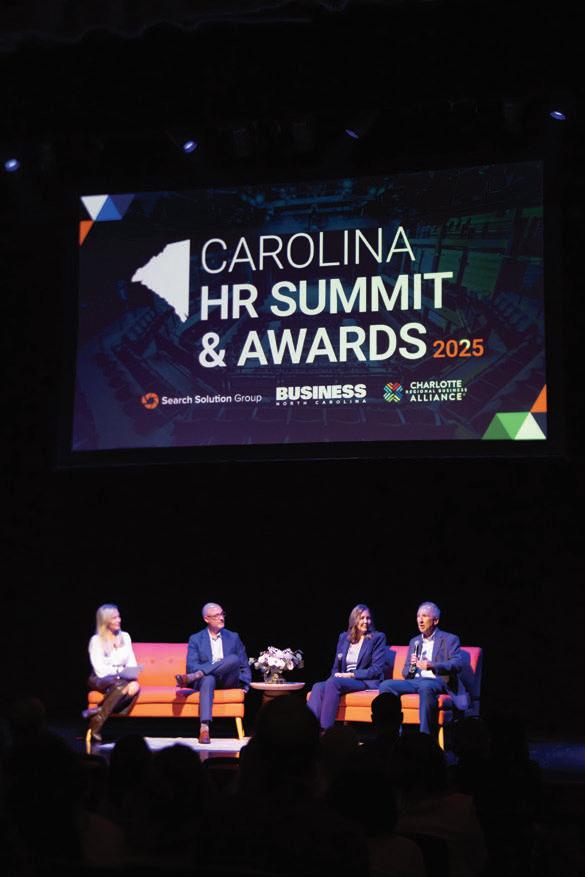



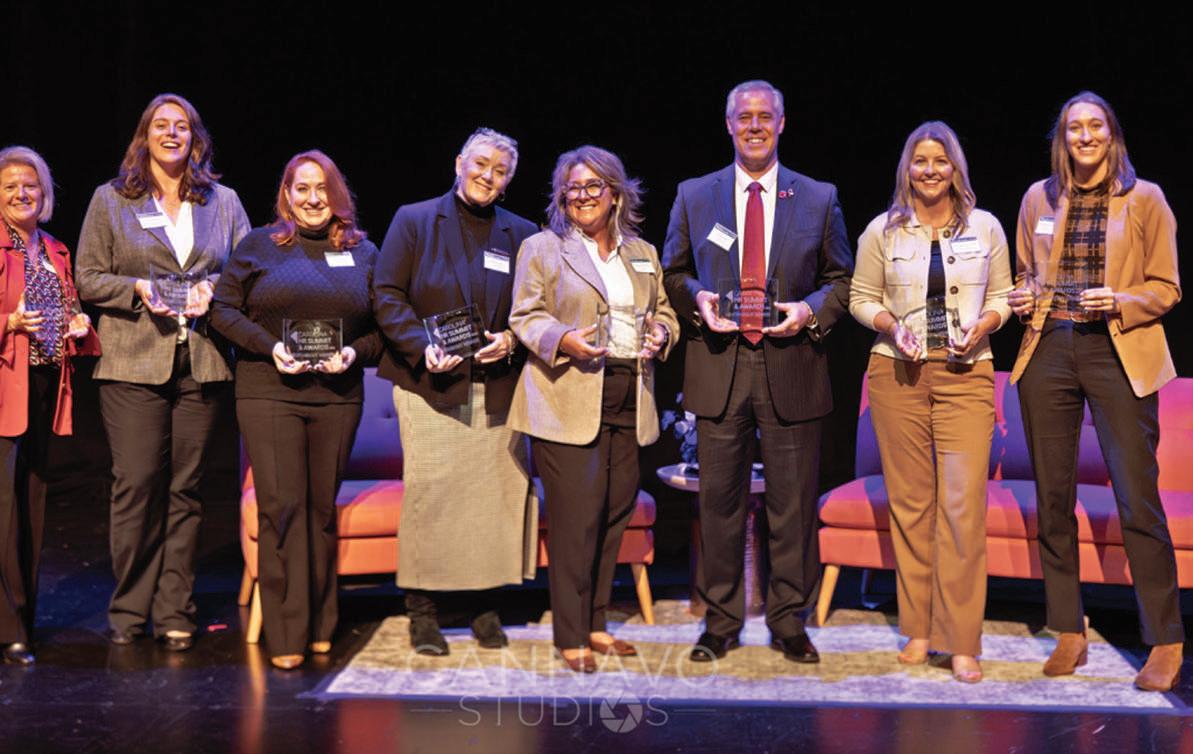








The Carolina HR Standout Awards, honoring ten HR professionals for leadership, innovation, and impact across their organizations were presented to the following.
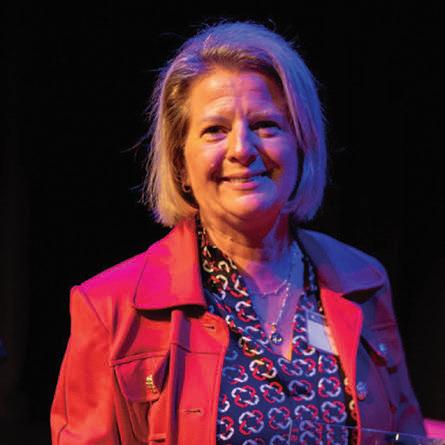


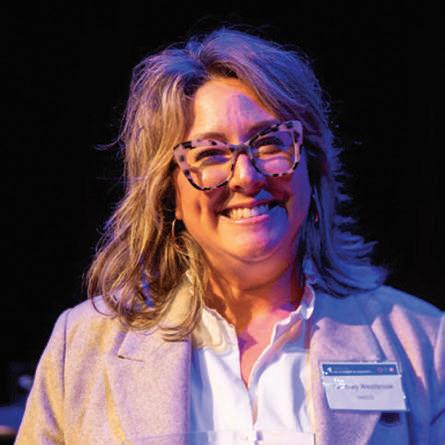


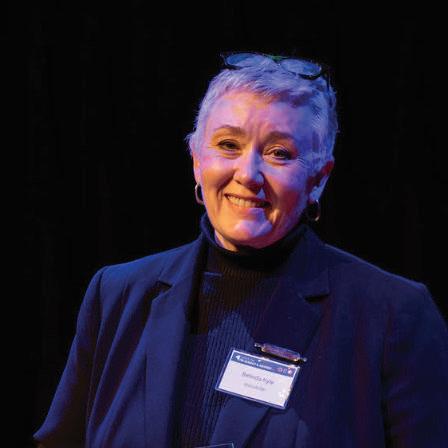





Emerging HR Professional Award Winner
Carma Hooper
HR Specialist Positive Childhood Alliance North Carolina
Carma has transformed HR operations and culture at Positive Childhood Alliance North Carolina through her leadership, innovation, and dedication to people. From guiding the organization’s name transition to completing a cybersecurity course at Duke University, she continues to drive growth and connection while embodying excellence in HR and community service.

Director/Manager Level Award Winner
Randy Gartz
Manager, Talent Acquisition Crete United
Randy has played a key role in advancing Crete United’s growth by building strong hiring strategies and developing trusted partnerships across the company. Known for his integrity and commitment to people, he creates lasting connections and leads with purpose, making a meaningful difference in every team he supports.
Director/Manager Level Award Winner
Whitney Westbrook
Director of Talent
HAECO
Whitney has transformed HAECO’s talent strategy through innovative leadership and strategic execution. She improved hiring, onboarding, and leadership development while enhancing employee engagement and organizational culture. Her efforts drove the hiring of 500 new employees in 2024 and positioned HAECO as a leading employer in the Triad region.
Director/Manager Level Award Winner
Maryann Trumpfheller
HR Business Partner nVent
Director/Manager Level Award Winner
Stephanie Warfield
Talent and Development
Okuma America
Stephanie has elevated HR and talent development at Okuma America Corp. through strategic leadership and innovative programs. She has implemented management training, succession planning, and digital performance tools that enhance engagement and strengthen company culture. Her commitment to developing talent and driving organizational excellence continues to make a lasting impact across the organization.
Director/Manager Level Award Winner
LoriAnn Boyer
HR & Talent Development Executive Director
Wray Ward
LoriAnn has redefined HR at Wray Ward through her leadership, empathy, and commitment to people. She implemented the agency’s first HRIS system, guided teams through the pandemic, advanced DEI initiatives, and led comprehensive compensation and talent development programs. A lifelong learner and mentor, LoriAnn continues to build a more human-centered, inclusive, and futureready workplace.

Maryann brings 17 years of HR expertise and military experience to her role at nVent. She has improved engagement, expanded workforce growth, and strengthened culture through leadership development, talent acquisition, and strategic planning. A proud veteran and advocate, she continues to empower employees and drive organizational success.
Executive HR Leader Award Winner
Onna O'Meara
Chief Human Resources
Miller Environmental Group
Since stepping into her role as Chief Human Resources Officer at Miller Environmental Group, Onna has strengthened HR foundations and built trust across the organization. She has improved policies, enhanced hiring and training, and created a culture centered on accountability and care. Her leadership reflects true dedication to her profession.
Director/Manager Level Award Winner
Kim Stavropulos
Area HR Director
Waste Management
Since becoming HR Director in 2025, Kim has strengthened engagement, retention, and leadership development through strategic, people-focused initiatives. She launched a companywide manager training series, reduced turnover, and guided a successful partnership integration with Stericycle. Kim’s visionary leadership and commitment to culture have made a lasting impact on both her team and the broader organization.
Executive HR Leader Award Winner
Belinda Kyle
Chief People Officer
Biscuitville Fresh Southern®
Belinda leads with heart, courage, and vision, transforming Biscuitville’s people strategy into a genuine culture of care. She has advanced accessibility, wellness, and growth initiatives that make every employee feel valued and supported. Through her resilience, compassion, and leadership, Belinda continues to inspire her team and community every day.
Executive HR Leader Award Winner
Tracy White
Senior Vice President, Human Resources
Meduit



Tracy has elevated Meduit’s culture through strategic HR transformation and a holistic focus on employee well-being. She launched impactful wellness initiatives, strengthened engagement, and restructured HR to align with company goals, leading to major gains in retention and recognition as a Best Place to Work for Women. Her authentic and peoplecentered leadership continues to inspire lasting change.





The new year begins as the previous ended; the winds of change are blowing. From decisions made in Washington, D.C., to opinions served at kitchen tables in North Carolina’s smallest communities, there are plenty of voices wanting to be heard on a matching number of issues. That makes the work of advocates even more important. Business North Carolina recently gathered experts from the field to discuss what’s important to their groups and what that means to business and life in general across North Carolina, how they’re navigating these confusing seas and how to find common ground, where different viewpoints can row together. Their conversation was moderated by Publisher Ben Kinney. The transcript was edited for brevity and clarity.

Nancy Bailey account director E&V Strategic Communications

Jake Cashion vice president of government affairs NC Chamber
Hope Williams president North Carolina Independent Colleges and Universities
The discussion was sponsored by:
•Electricities of North Carolina
•NC Chamber
•North Carolina Independent Colleges and Universities
•E&V Strategic Communications
WILLIAMS: Most people are familiar with their local independent or private college or university. But they may not realize there are 36 across North Carolina. They have about 60,000 undergraduate students and about 25,000 graduate and professional students.
These schools award about 90% of the physician-assistant degrees in the state. If you’ve visited a doctor’s office lately, you likely saw a PA if you didn’t make an appointment three months earlier. So, they’re critical to delivering healthcare in the state. They also award about 65% of the law degrees, 60% of medical degrees and 56% of pharmacy degrees in the state.
Those efforts and others contribute to a great quality of life for our students, and they’re critical to employers. Business news channel CNBC named North Carolina its Top State for Business three of the past four years, and we want a four-peat. But that will require the proper workforce. It’s a double-edged advantage, not a sword. It transforms lives in North Carolina and meets employers’ needs. That supports strong economic development.
CASHION: NC Chamber supports North Carolina’s position as a top state for private-sector job growth. Our team advances policies that make it one of
the world’s best places to do business. Those efforts create an environment that supports existing businesses and that economic developers can sell. The Chamber has developed international relationships, including with business groups in Northern Ireland and Abu Dhabi. We recently signed agreements with the Mexican Business Council for Trade, Investment and Technology and ProColombia. We recently hosted a group from Invest in Cartagena, part of our ProColombia effort. We toured them across the state and introduced them to key people. We’re already seeing interesting benefits from these relationships in North Carolina, and we’re excited about the future.
BAILEY: We have clients across the state representing different sides of various issues. I lead our public engagement practice. My goal isn’t necessarily to get consensus but understand the communities that we’re working in and identify their voices and leverage them. We want to know who these communities are and what is important to them.
Growth, as positive as it is, elicits different feelings from different people. We work at the state level, trying to understand these organizations’ macro goals and how they’ll impact communities. That allows our clients to work authentically in these communities, advancing their projects without creating opposition.
It’s great that North Carolina was ranked the top state for business three times. But what does that mean at the community level? It depends on the work being done. We’re tapping into that. Those voices are important, regardless of who you’re advocating for. Sometimes it’s neighbors and property owners. Other times it’s elected officials or community leaders.
What we’re doing well right now is understanding the landscape in North
Carolina and how people feel and approach these large issues coming to or growing within the state. Then we adjust our client’s advocacy efforts to be effective with the policies they’re trying to influence. As soon as you think you’ve figured out one viewpoint, there’s a different one. It’s an interesting game to play.
CASHION: Our policy committees are working through different issues, updating our legislative agenda. We base everything on education, talent supply, competitive business climate, and infrastructure and growth. There’s a plethora of efforts coming from the business community that look at maintaining our position and maintain growth in a balanced way across the state.
We continue to push for the elimination of the state’s franchise tax. The legal climate is a top priority. We’re working to keep dark money — third-party litigation investment — out of North Carolina courts. It’s an investment into a lawsuit for a return to an investor. We believe that’s bad for business, consumers and national security. Our legal institute is working on ideas to attract more corporate headquarters, moving the state into a Delaware-type space. We hope some become policy.
We’re working to remove work barriers. We want more service members and their families to stay in North Carolina after they leave the military. We’re looking at ways to connect them to employment, whether as employees or entrepreneurs. We recently released an energy report. We have a watersupply report that we’re promoting at the General Assembly. We’re working with our communities to decide what that policy needs to look like. Agriculture policy will be top of mind moving forward.
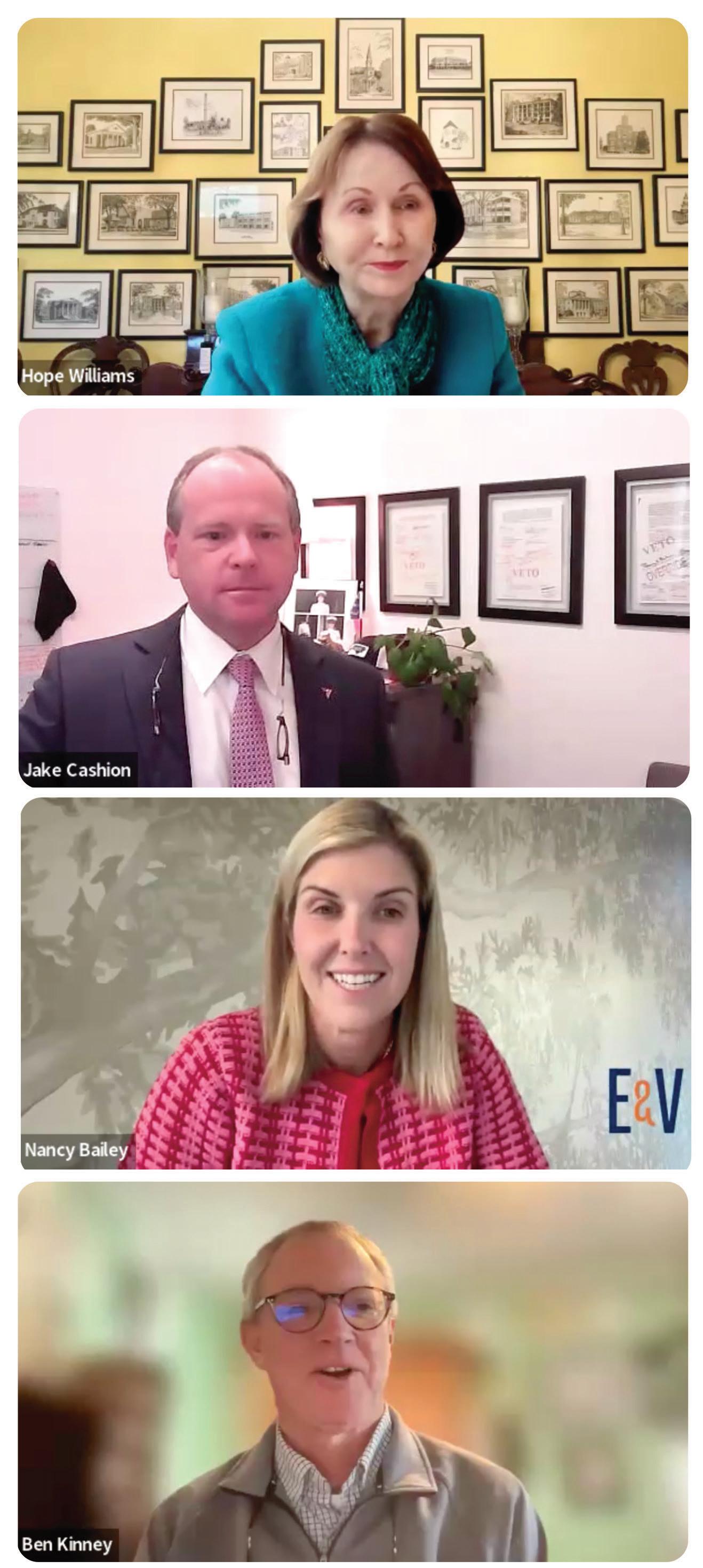
WILLIAMS: Our focus is always on access and affordability for our students. When people think of college, they immediately think of traditional age students, and that’s absolutely true. One concern in reaching our attainment goal of adults with a degree, some college or a credential is that the state’s number of traditional high school graduates is plateauing.
There’s been a slight downtick in the percentage of students going to college since the COVID pandemic. But North Carolina has an increasing number of early college students, who graduate high school with an associate degree. They can transfer anywhere to complete a four-year degree, but they need an affordable way to do it.
North Carolina historically has had one of the country’s lowest out-migration rates; about 7% to 8% of high school graduates left the state for college. That has incrementally increased to between 15% and 17%. They’re going to University of South Carolina, University of Georgia, University of Alabama and other schools that offer in-state tuition rates to our students. The idea behind that is economic development, getting those students there and keeping them after college. Many students come to North Carolina to attend college and remain afterward. But we want our students to stay here. It’s a significant issue.
North Carolina has always had many adult students. About 1.1 million adults in North Carolina have some college but no degree. We want to make completing their degree or credential affordable. Many have families and jobs and need to make returning to the classroom work for them.
Maintaining access and affordability is key. But it’s a challenge, because about half of North Carolina students are eligible for federal Pell grants. It takes federal and other aid, including state
need-based scholarships and help from colleges and universities. Put in about $1.3 billion annually in institutional aid, because it takes that complete financial aid package to make it possible for students to attend college.
BAILEY: We understand organizations’ legislative agendas, so when clients come to us, we know who’s out there, what they’re advocating for or against, and how we could work within that. Success is being aware of the environment, from the grassroots to the grass tops — chamber executives, local elected officials, anyone who might not be the ultimate vote on an issue but has significant direct access to that vote. So, we can be smart for our clients on how to approach both levels of the conversation around the issue they’re advocating for at the legislative level. Sometimes that’s all you need to create the future, the path of the issue. But increasingly there are more voices at
play. Their power is everywhere, from traditional lobbying and advocacy streams to viral Instagram campaigns, which can gin up a sentiment around an issue. I’ve seen the latter change the trajectory of a vote in the legislature.
We’re paying more attention to them. Facebook and Reddit conversations, for example, are good ways to understand how people feel. They might be one data point, or they could lead you to change the course of the work. If you don’t pay attention to those, you don’t have the tools to monitor, analyze and potentially equip them with what you want to say. They’re a powerful leg of the stool that needs to be considered.
WILLIAMS: Many of the negative policy impacts on our colleges and universities are coming at the federal
level. There have been major changes. Through the passage of the “Big Beautiful Bill,” the Education Department is limiting funding for graduate and professional student loans. Most of the available financial aid is for undergraduate students.
There is little in terms of grants for graduate and professional students beyond tuition remission or an assistantship or something similar. But those are limited in what colleges can provide. There have been Graduate Plus loans, but they’re now limited to about 10 different doctoral degrees. PA students aren’t eligible for those loans. Occupational therapy, physical therapy and other healthcare degrees aren’t eligible either. So, we’ll look to the state and others to help fill that void. If a student can’t finance their education, then we won’t have the workforce that we need.


Many North Carolina costs are below the national average. Everybody’s concerned about cost, and we have financial aid to help address that. But at the end of the day, we have to pay our faculty and staff, equip the labs and classrooms, and have everything else that’s required. And students must be able to figure out how to finance it.
CASHION: We released a report that says if the stars align over the next five years, we’ll see an almost $500 billion economic impact, 2 million new jobs and billions in tax revenue. We want to figure out how to make this work.
We recognize that at some points and times controversial, sensitive and complex issues arise in our state’s diverse business community. We must deal with those.
We’re working on the affordable housing piece now. It’s critical to our workforce, and it’s an economic growth opportunity. We want to keep people in communities. In the community where I make my home, for example, 90% of the police department can’t afford to live there. That’s not right.
Some local government leaders don’t appreciate the complexities around why
we need more housing. We need to educate them, so they can help solve this crisis. If we don’t, it will be an economic development challenge. I look at it from wastewater, housing, transportation and workforce perspectives. We need to figure out those issues by finding ways in the current political environment to push good policy that helps meet needs. It’s difficult to do politically.
We need to think about transportation infrastructure, too. North Carolina has invested billions in it over the last decade or so. It’s one of the state’s biggest untold success stories as it relates to economic development. Tax regulation and infrastructure are top issues expanding and relocating companies review. North Carolina is in a good spot, but growth brings challenges.
BAILEY: Growth keeps me up at night but not in a bad way. It’s exciting and brings opportunities, whether its data centers or developments in a growing town. It can be many things, so you must define it.
But not everyone wants growth. There are opportunities to drill into that to understand why people are opposed and what might lead them to be more open to
it. There are many great organizations that are looking at how we do smart growth in North Carolina.
Technology keeps me up, too. Policymakers want more data and storytelling to justify points. Data is getting easier to generate, analyze and provide. It’s amazing. Technology also gives more people a voice. Flip on your camera, take a picture and post it. You don’t have to be powerful, connected or have credentials to become part of the conversation. That’s not a bad thing; that’s the current reality. The job at the end of the day is learning how to leverage, manage and deal to keep conversations factual, civil and effective for everyone.
WILLIAMS: We’ll be asking for more financial aid for higher education. It’s usually spared from budget cuts, but everything was cut during the Great Recession. It remains below its prerecession level despite some increases. Students need that support to attend and complete college.
Advocacy often involves discussions with state lawmakers. Here, the N.C. Senate opens a session.

While money from the general fund can be difficult to secure, sports wagering may provide an alternative. Despite our athletic teams playing under the same sports-wagering restrictions, all the higher education funding from it currently goes to UNC institutions. It helps them improve their athletic programs. We want to be competitive for students, because our teams are playing teams that are benefiting. Between 60% and 70% of students at some of our institutions are athletes. They compete in Division I, Division II and Division III, which doesn’t provide athletic scholarships.
Colleges compete against each other in athletics and for enrollment. Most students look at public and private institutions. You often must go to the sixth or seventh most populous cross-app in applications before you find another private college. If a student is deciding between two institutions, then they may go where the athletic facilities are improved and enhanced. That’s a concern for us.
The state’s education sectors collaborate, too. NC College Connect, for example, has the potential to be transformational for many students, helping them understand that college is possible


for them. The program guarantees admission to about 30 of our institutions, several UNC institutions and all community colleges, which have open admission, for about 70,000 students, each with a 2.8 or higher weighted GPA, in our public and independent high schools. Let’s figure out your choice, and we’ll discuss financial aid packages.
The program helps North Carolina’s many first-generation college students. It helps students from lower-income families, too. Knowing that you’ve been accepted in early fall and we’re there to help, makes college possible for many students. Though some parents were skeptical when the acceptance letter for their child arrived out of the blue, wondering if it was real. You do have to wonder these days. But it’s a real thing. The number of applications is tremendous. There were more for the most recent College Application Week, when many colleges and universities waive their application fees, than in the past.
CASHION: We recently released our second annual lawmaker scorecard, How They Voted. We had 105 Jobs Champions, each scoring 80% or higher on the votes that were taken. We hope their pro-growth and pro-free market philosophy continues. We saw great gains in childcare and public-private
partnership legislation, energy and military opportunities, and regulatory reforms.
The General Assembly passed Carolina HealthWorks, one of the biggest pieces of legislation in maybe a generation. We worked with the state Insurance Department on its language to get it approved. It’s for small businesses with between two and 50 employees who are a member of their local chamber or the state chamber. Hopefully, it will drive down healthcare costs, allowing them to invest in their businesses and employees. We’re receiving good feedback. It’s active in the marketplace. The Blue Cross broker network and local chambers are promoting it.
BAILEY: We’re digging into recently enacted federal policies, including Make America Healthy Again. A federal approach that has variances at the state level, it touches many industries in many ways. Identifying the voices, players and potential outcomes is important here, too. How do these industries and individual companies approach this new framework at the policy level? We’ve created thoughtleading presentations, which aren’t client specific, that offer approaches to this type of policy. They drill down into these large federal policies and many of the changes that are coming to see how they impact the industries at the state level. ■
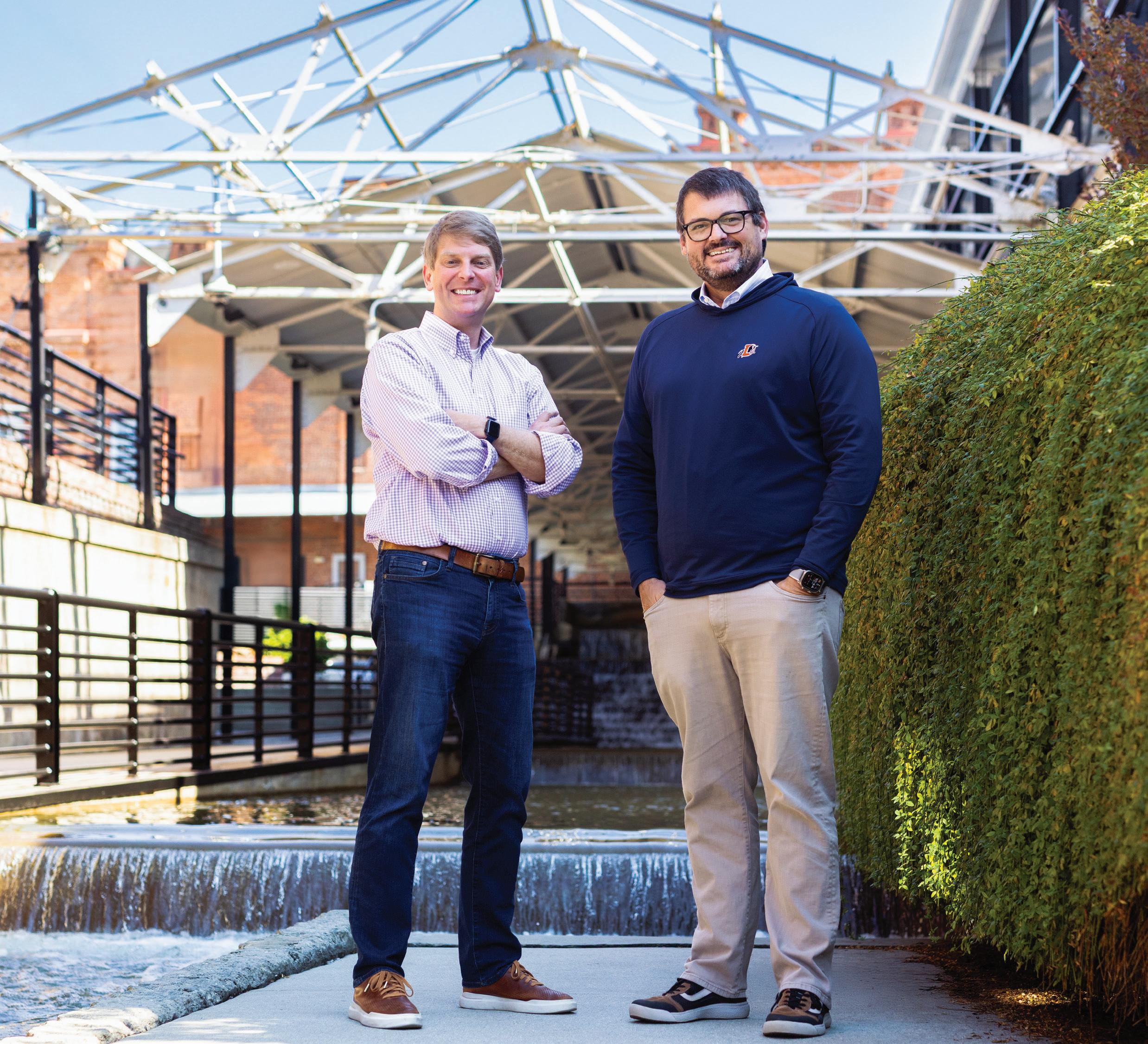


By Katherine Snow Smith

Capitol Broadcasting looks to real estate amid a changing media landscape.


Taylor McDonald







While real estate’s longstanding rule is “location, location, location,” another mantra holds just as true for all businesses: "diversi cation, diversi cation, diversi cation.”
Raleigh-based Capitol Broadcasting Co. is putting both creeds on the fast track with plans for stepping up its real estate development. e almost 90-year-old company veered sharply from its radio and television legacy in 1991, buying the Triple-A Durham Bulls minor league baseball team and ballpark. A decade later, it developed the adjacent, 1-million-square-foot American Tobacco Campus in long-empty cigarette factories.

Now, 25 years later, with almost 3 million square feet of real estate in its portfolio, Capitol plans to develop at least two projects a year in either North Carolina or South Carolina.



“We created a speci c development division about a year ago that has a core and sole focus on the sourcing and development,” says Michael Goodmon, the CBC executive vice president who leads the real estate and sports divisions. “We are trying to do things that will add new sources of revenue and new opportunities for the company.”




e company that built its pro ts on local news broadcasts faces shrinking audiences and seemingly endless competing platforms. A Pew Research report found 3.1 million people nationally watched the local evening news of ABC, CBS, Fox and NBC a liates in 2022, down from 4.1 million people nationwide in 2016.
WRAL broadcasts both Fox and NBC a liates in the Triangle region, which is the 22nd largest U.S. media market. It’s the only independent owner of an ABC, CBS or NBC a liate in the top 25 markets.
“It’s one of the very few locallyowned stations le in the country,” says Charlie Tuggle, who leads the broadcast journalism program at UNC Chapel Hill. “ ey don’t have to listen to a corporation. ey get to run their own ship.”


e station remains strong, he adds. WRAL has 143 employees, e Assembly website reported in a September story that cited the departures of about a dozen veteran station employees over the past two or three years. Jimmy Goodmon told the website the station has more news sta ers than 10 years ago and is reinvesting in its media business, unlike most larger national rms.
“Maybe they don't have the viewers they had in the past, but all of the stations have really branched out into more of the digital content,” Tuggle says.
at local ownership “is really important to us and allows us to be exible,” says Jimmy Goodmon, 49, who succeeded his father, Jim Goodmon, as CEO in May. He is Michael's older brother by three years. “We run our company di erently from a lot of broadcasters that are just broadcasters. We love that part of our business but we also do other things.”
CBC Real Estate’s expanding lineup includes Overlook on Main in Holly Springs in south Wake County. e project is breaking ground early this year with plans for 237 apartments and retail space, including two roo op restaurants across from Ting Stadium, home of the Holly Springs Salamanders. CBC purchased the amateur baseball team, which plays in the collegiate summer Coastal Plan League, in 2019.

It’s not a rule, but CBC leans toward developing real estate that’s tied to sports. It’s developed four projects since the American Tobacco Campus.
* e 300,000-square-foot Rocky Mount Mills, which opened in 2018, is adjacent to the municipally-owned Rocky Mount Sports Complex. It has more than 20 courts and elds.
* In 2021, CBC Real Estate and Chapel Hill-based East West Partners developed Bandwidth’s 530,000-square-foot corporate headquarters in west Raleigh, near the Lenovo Center, where the Carolina Hurricanes and NC State University’s men’s basketball play.
* e 165,000-square-foot MoJud Lo s opened in 2024 in a former textile mill in Greensboro with 173 apartments next to First Horizon Coliseum, the city's main arena.
* e read, a 200,000-square-foot complex with o ce and retail, opened in 2024 next to Rock Hill, South Carolina’s Sports & Event Center, which has 24 basketball and volleyball courts. CBC developed the former textile mill with e Keith Corp., Springsteen Properties and Springs Creative. Still, there’s no set formula for success, Michael Goodmon says.
“ e similarities between American Tobacco and Holly Springs, and I’m rounding up here: none. You can’t take a cookie-cutter approach to a community. Real estate is, at the end of the day, a pretty local game. e care of that region and the area you’re working in is important to the outcome of the project.”
One of the biggest differences is the risk factor. Holly Springs, which had fewer than 1,000 residents in 1990, is a boomtown.
“You can do a Google search on economic development and be stunned by what’s happening in Holly Springs,” he says. The town’s population of 49,000 has doubled since 2010 and grown by 19% in the past four years, according to Nathan Dollar, director of Carolina Demography, a unit of UNC Chapel Hill.
That isn’t what Durham looked like when American Tobacco opened.
“I started with CBC 17 years ago [in 2008]. At the time, there was one restaurant on Main Street in the heart of downtown. Today, there are restaurants with James Beardaward winning or nominated chefs all over the place,” says Mark Stanford, CBC vice president of real estate. “It was in no way, shape or form what it is now and I think people lose sight of that.”
Jimmy Goodmon was in his 20s when his father bought the long-vacant tobacco facility. He recalls trees growing inside and remnants left behind by police officers using the buildings for mock tactical maneuvers.
“There were canisters of tear gas on the ground,” he says. “I was like ‘Dad, what are we doing?’” The elder Goodmon had visions of boosting his baseball team and the city of Durham.
“A founding principle of my father’s is that the success of the community is paramount to the success of the company,” says Michael Goodmon, who donned a Durham Bulls pullover in a recent interview. “Community growth is company growth.”
“Everybody has to win,” Jimmy Goodmon adds. “The community has to want it. The government has to want the project. The private entity doing the development needs to want the project.”
CBC owns 13 TV and radio stations that broadcast mostly around the Triangle and Wilmington areas. Holding an existing stake in numerous communities gives CBC Real Estate an edge over national developers, the Goodmons believe.
Though four CBC developments have been in historic buildings, that’s not its focus moving forward.
“The opportunity for historic tax credits are few and far between in this state and any state really and they are very complicated,” Jimmy Goodmon says.
“We looked at the environment and said ‘Let's open up a development arm in our real estate division that can go out and take our expertise and deliver it with other partners.’
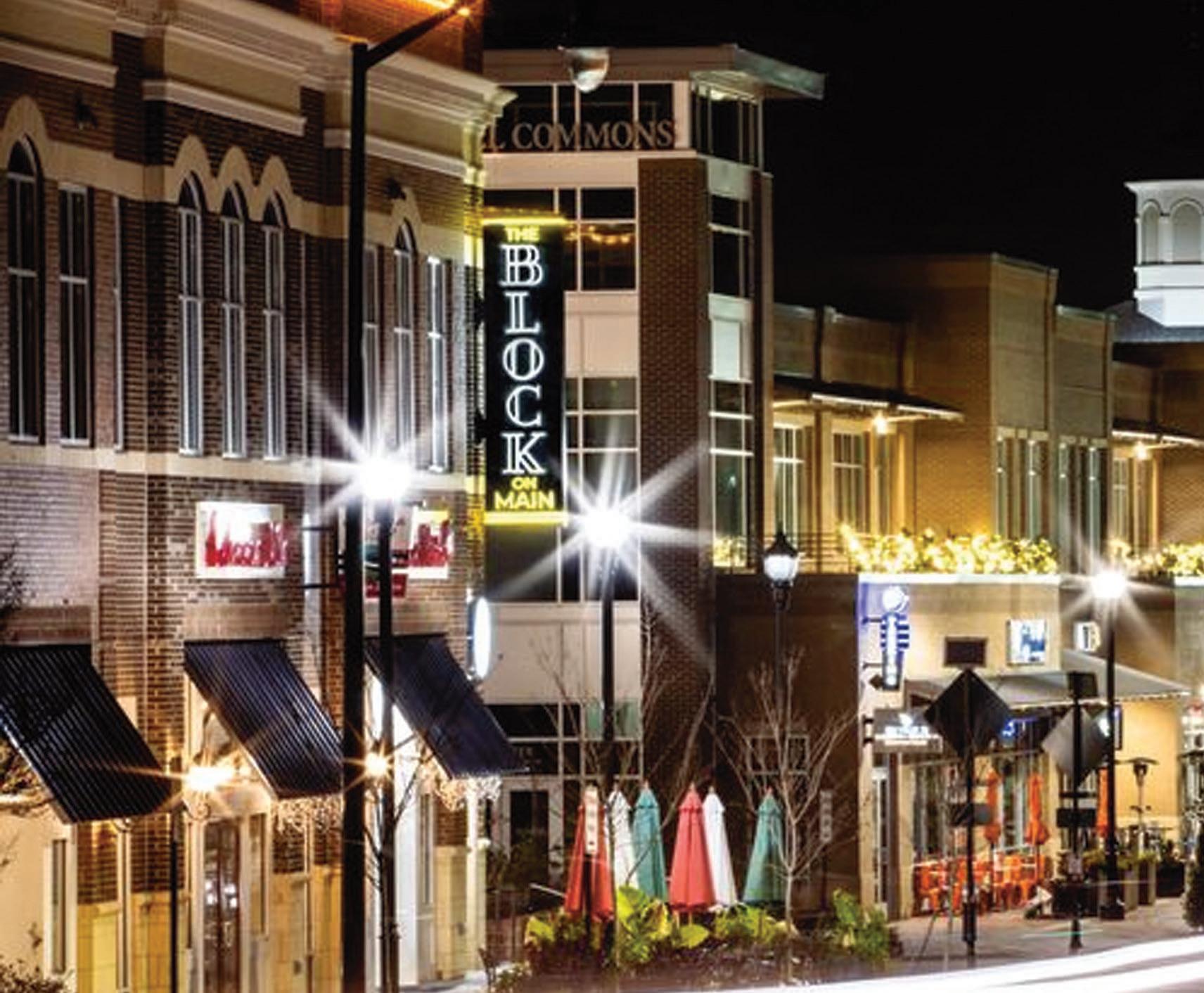
"We’re expanding into all of North Carolina, which we feel very comfortable with. This is where we have worked and played our whole lives.”
Having started at WRAL studios as teenagers, the Goodmons are experienced at answering to the public on various levels. While working in WRAL at age 20, Jimmy recalls taking a call from an angry woman. “She’s mad, yelling at me because she doesn't like what the lady in ‘The Young and the Restless' is wearing.”
In the state rated tops for business by CNBC and others, Holly Springs is a key beneficiary as life science companies Fujifilm Diosynth, Amgen and others collectively make billions of dollars of investments.
Michael Dayton and his wife are among those moving in. They left north Raleigh five years ago for a smaller town that they considered safer for their children. The couple also wanted to find a better house for less money.
“We drove 27 hours over four weekends looking at places from Wake Forest to Holly Springs,” he says on a recent night while visiting The Blind Pelican Seafood House. A wooded residential lot and numerous parks were high on their wish list. The couple landed on Holly Springs and a home in the Twelve Oaks golf community.

“We bought in the mid $600s, and now it would cost about $1.2 million,” Dayton says.
The often-crowded Blind Pelican speaks to the growth of Holly Springs. The restaurant between downtown and Ting Stadium is known for its beachy decor, seafood and over-the-top bloody marys.
An entry level drink generously accented with bacon and vegetables costs $11.50. But on many a Saturday, bartenders fill close to 100 orders of the $100 Medusa,
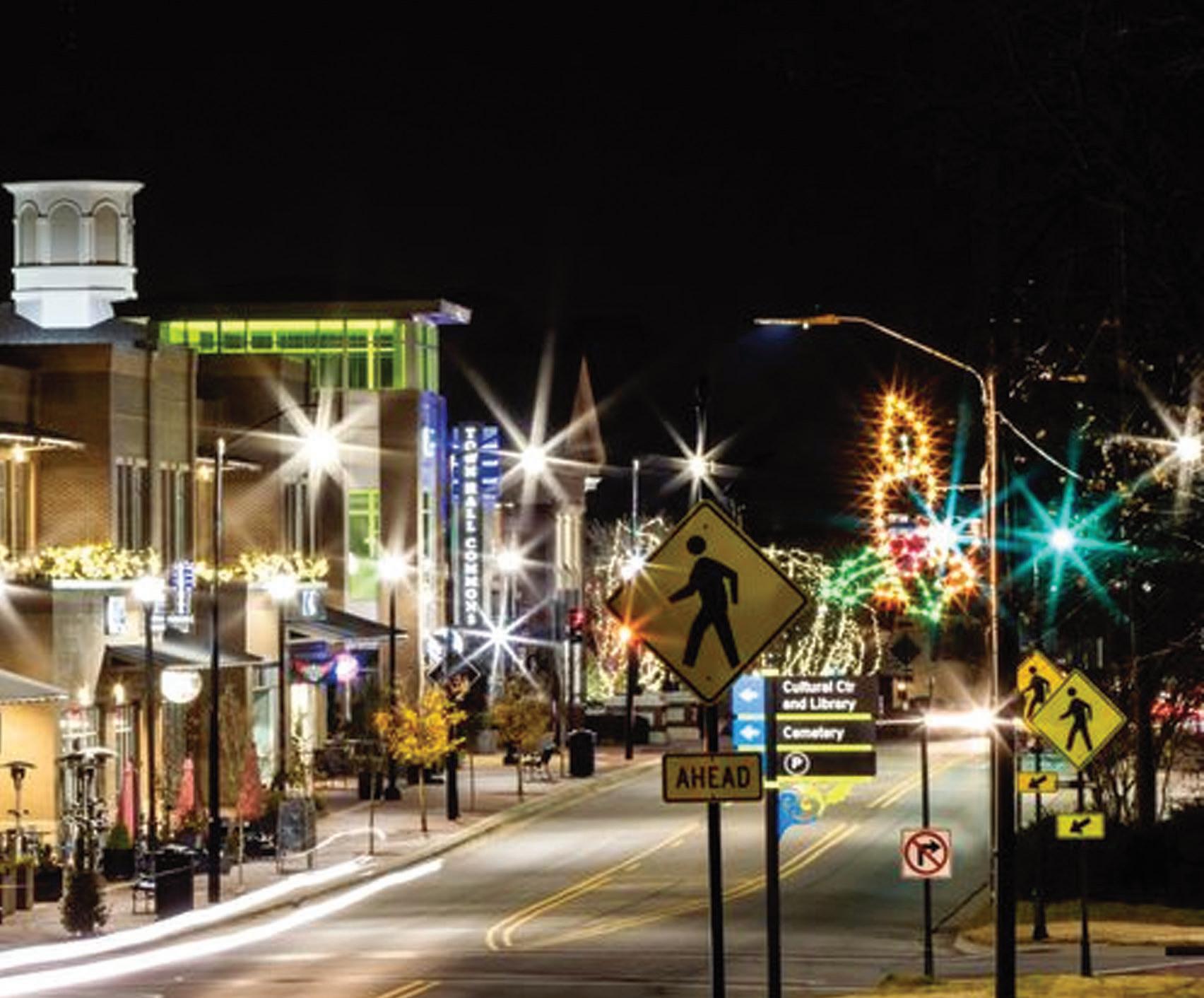
which sprouts a lobster tail, crab legs, bacon and skewers filled with shrimp and a 6-ounce filet mignon.
In August, a group from Texas set the Guinness World Record for “most expensive bloody mary,” ringing up a pre-planned $8,887 cocktail at the Blind Pelican.
“You can walk around the restaurant and there’s somebody who flew in from Texas and somebody who flew in from Maine. Somebody was here last week from Alaska,” says Nikki Stafford, who opened the bar in 2019 with her husband Andrew. They started the My Way Tavern there in 2010.
“The population was around 14,000 people then. When we got our loan, we qualified for it because we were (bringing business) to a rural area,” Stafford says, laughing. As more residents came to Holly Springs, so did chain restaurants. The Staffords worked with an executive chef to develop a more distinctive menu.
“The people of Holly Springs get tired of driving to Cary for a good meal. We’ve seen tremendous growth. You can see all the traffic driving down the street. It’s good for business,” she says, adding that the downtown has flourished with new residents and demands.
The demand for more restaurants will only continue as large corporations fill thousands of jobs in Holly Springs.
* San Francisco-based Genentech is building a $700 million facility that is expected to add 400 manufacturing jobs. It will make metabolic and weightloss medicines, starting in 2029.
* Switzerland-based Ypsomed is investing $195 million in its first North American manufacturing facility, creating 62 jobs. It produces injection systems for self-administered liquid medicine.
* UK-based Fujifilm Diosynth Biotechnologies opened a $3.2 billion facility in September and has hired more than 650 workers as of November. It will make injectable drugs with cells grown in three-story bioreactors.
* California-based biotech giant Amgen is investing $1 billion to expand its existing $500 million plant. The company expects to employ 725 people there by 2032.
“We’re really excited about this market with so much potential. The flood gates are open there,” says Stanford. Owning the Salamanders is an important precursor to Overlook on Main. “You watch and understand how people interact with the community asset,” he says. “You craft the real estate around that.”
While the Holly Springs boom should aid Overlook on Main’s prospects, other CBC real estate developments have had more difficult starts.
CBC bought the Durham Bulls thirty-five years ago with plans to move the team to a Triangle Central Park area that Jim Goodmon and other leaders envisioned near the Raleigh-Durham International Airport, Michael Goodmon recalls. The goal was to promote regionalism, countering the tradition of Raleigh, Durham and Chapel Hill operating independently.
The collaborative idea fizzled, leaving CBC with an aging venue next to abandoned cigarette plants. The company pivoted and created American Tobacco Campus. It now has several dozen tenants that together employ 4,000-plus people.
“We kind of started with the hardest thing we could possibly do,” Michael Goodmon says. Tenants include restaurants, tech firms, Durham Tech’s Culinary Arts Program and the American Underground workspace for startups.
Cristo Rey Research Triangle High School opened in 2021. Nearly 400 students, many who are first in their family to graduate high school, attend classes four days a week and work one day for employers such as Cisco, Wolfspeed, NC State and Empire Properties. The first graduating class in May had a 100% college acceptance and collectively received $10 million in scholarships.
CBC didn’t initially envision a school or tech incubator as tenants. “We have to be shapeshifters in what we are trying to be,” Michael Goodmon says. “You have to look at new things and experiments as experiments.”
Rocky Mount Mills, which includes apartments and retail sites, has had a longer path to profitability. “It was really hard, extremely risky, and remains hard and risky to this day — it was an important project for us, and to be honest, it’s a project that is not highly replicable,” says Stanford.
CBC expects its new projects will both benefit their communities and have a shorter path to boosting the bottom line.
Starting this month, CBC is leasing and managing the municipally-owned Five County Stadium in Zebulon in western Wake County. Its plan for revamping the former home of the former Carolina Mudcats baseball team led to a 10-year contract with Wake County.
“Our sports division is focused on how to maximize the sports venue itself,” says Michael Goodmon. “Zebulon is also a highgrowth area. The opportunity is high.” ■








How a tragic helicopter crash sparked a $50 million wrongful death settlement in a state not known for immense awards.
By David Mildenberg
North Carolina has never been viewed as a money pot for plaintiffs’ attorneys, those skilled barristers able to convince juries to hand over tens or even hundreds of millions of dollars to aggrieved parties.
That’s often viewed as a positive by leaders in the business community, and less so by those who feel the state is too restrictive in permitting what critics call “runaway verdicts.”
One factor is that North Carolina is one of only four states that has a “contributory negligence” law that prevents plaintiffs from receiving damages if he or she was even 1% at fault for causing an injury or death.
But a horrific crash that killed a Charlotte TV meteorologist and a helicopter pilot in 2022 led to a $50 million settlement last fall, showing that massive awards can still occur in the state. Much of the money went to the weatherman’s family estate, The pilot was not included in the settlement because his recovery is capped under N.C. workers' compensation laws to as much as 500 times the "average weekly wage."
“This was the largest settlement for a single-death case in North Carolina history,” says Will Owen, a Lumberton attorney who was the local counsel representing the family of Jason Myers, who tracked weather for the city’s CBS affiliate, WBTV. “You’re seeing verdicts of $75 million or $100 million in other states, but there’s never been one like this in North Carolina.”


Circumstances around the helicopter crash made the settlement possible, though it wasn’t an easy resolution. “It was hotly disputed for three years, and we took dozens of depositions, while the defendants who operated the helicopter were represented by very competent defense lawyers,” says Andrew Robb, a Kansas City lawyer who partnered with Owen to represent the Myers family. “They challenged us at every turn.”
On Sept. 19, the parties agreed to a public settlement that avoided a trial and enabled the lawyers to discuss the case. That was at the insistence of Myers’ wife, Jillian, who wanted to ensure that the award sent a signal about the importance of aircraft safety, Owen says. Many settlements are handled privately, so there’s a possibility that someone has received a larger award in North Carolina. Owen considers that doubtful.
Requests for comment were declined by Bill Starr, a Charlotte lawyer with Baker Donelson, which represented the primary insurance carrier, National Union Fire Insurance, a Pittsburgh-based subsidiary of AIG.
Chip Tayag, who had more than 20 years experience, was flying a Robinson R44 helicopter along Interstate 77 in the Charlotte area on Nov. 22, 2022, with Myers aboard. The purpose was to train Myers as the chopper hovered over a simulated news scene, a National Transportation Safety Board report noted.
Evidence showed that the crash was most likely caused by inadequate maintenance by the Total Traffic & Weather Network, which owned six helicopters used by TV stations in Los Angeles, New York and other cities. TTWN was owned since 2017 by iHeart Media, a San Antonio, Texas-based radio and digital business.
Experts for the plaintiffs said “it was one of the worst maintenance operations they had ever seen,” Owen says.
TTWN used a metal nut known to crack or corrode that connected the helicopter’s control rod, while dismissing Robinson Helicopters’ repeated warnings to use a different product. It’s also common for stripes to be placed over exterior bolts, which can be reviewed to see if there was any movement during the previous flight.
But the Myers’ lawyers discovered that the helicopter involved in the crash had not been inspected in-person by a TTWN mechanic on its 29 previous flights. The manufacturer had sent repair kits that were not used on the chopper, which was built in 1999, Owen says.
“It is hard to believe that this information was ignored,” he says. “The control rods control the helicopter’s pitch, speed and direction, and we think they came out in mid-flight and the pilot lost total control.”
The crash sparked massive publicity in Charlotte, where Myers, 41, had become a viewer favorite at WBTV and an active church leader. The Salisbury native earned a bachelor’s degree in meteorology from NC State University and started working at Raleigh-Durham International Airport while in college. He later took jobs at stations in Texas, Virginia and Kentucky before returning to his home state in 2019.
Within weeks of the incident, the Myers family hired the Robb & Robb law firm, which is led by Andrew Robb’s father, Gary. Forbes magazine has called him “by far the most successful helicopter crash lawyer in the country.” His wrongful death cases have included jury verdicts of $350 million and $116 million, the highest for U.S. helicopter crashes, according to his website.
The firm represented the widow of NBA star Kobe Bryant after his death in a California crash in 2020, leading to an undisclosed private settlement the following year.
State law requires lawyers licensed in North Carolina to handle in-state cases, so the Kansas City firm chose Owen as local counsel in the Myers case.
The 2014 graduate of N.C. Central University law school acknowledges he isn’t among the state’s best-known plaintiff’s lawyers, such as former U.S. Sen. John Edwards of Chapel Hill, Raleigh’s Don Bryson and Mona Lisa Wallace of Salisbury. But Owen had developed ties to the Robbs, seeking their help on another helicopter crash tragedy in eastern North Carolina.
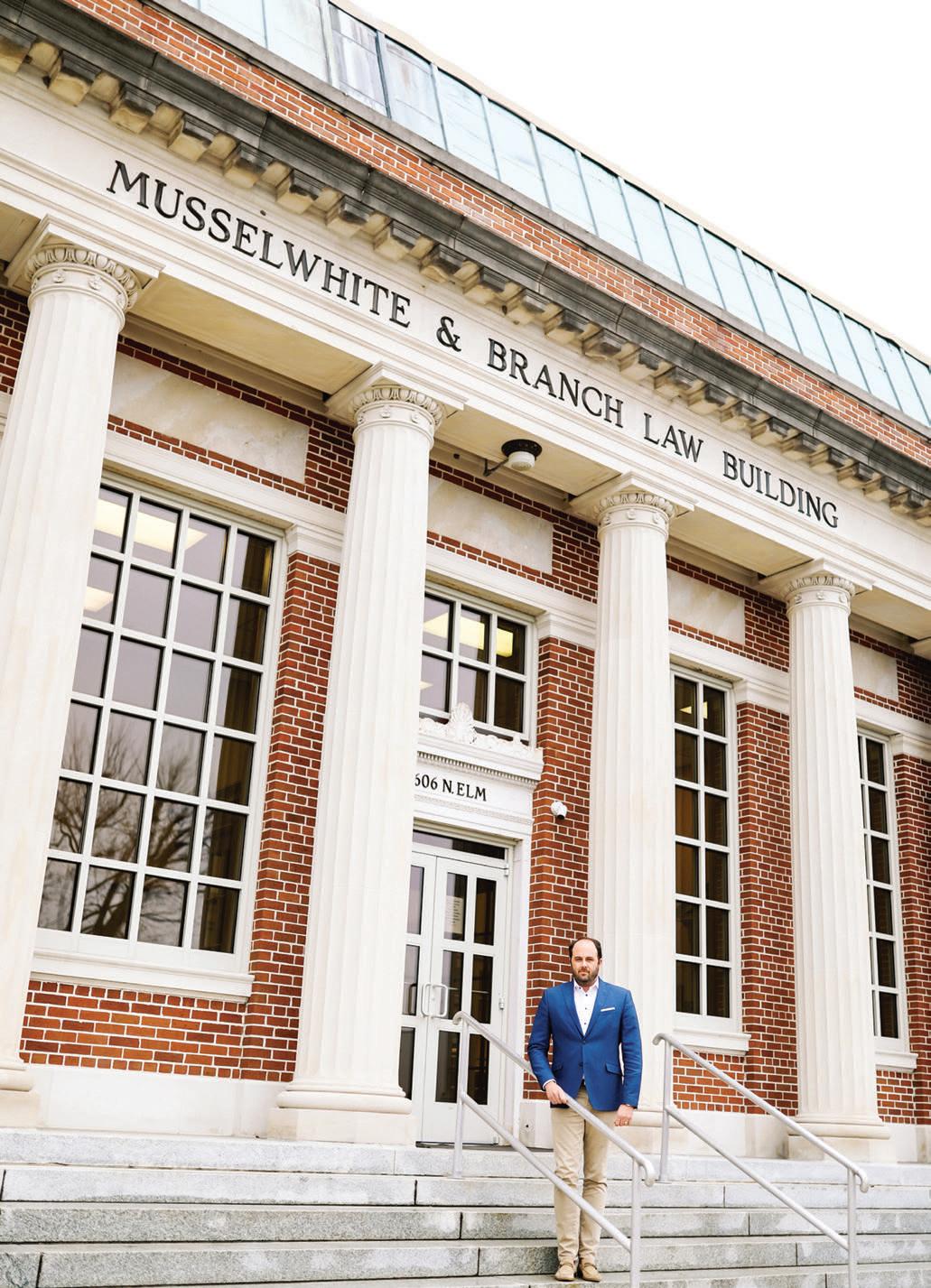
On Feb. 13, 2022, eight people died when a Pilatus PC-12 crashed in the Atlantic Ocean near Beaufort. The plane was returning in bad weather from a duck hunting trip in Hyde County and its passengers included pilot Ernest “Teen” Rawls, his son and co-pilot Jeffrey, and four high school students. Another passenger was the plane’s co-owner, Hunter Parks, founder of Green Assets, a Wilmington-based business that advises forest property owners on receiving income from carbon-emission tax credits.
After being hired by one of the Beaufort-area families, Owen contacted Gary Robb to check his interest in the case. “I emailed him out of the blue, and within 30 minutes, he and Andrew called me back. I told them I was a lawyer in Robeson County and that I knew they were the best of the best.”
The estates of five deceased passengers sued the plane’s ownership entity, leading to a $15 million settlement on Nov. 30, 2022. That was eight days after the unrelated crash near Charlotte that killed Myers and Tayag.
The Beaufort case hinged on the lawsuit’s contentions that the pilot suffered “spatial disorientation,” didn’t use flight instruments, and relied on his son, who had inadequate flight experience.
“It was entirely preventable if the pilot had filed a flight plan and used the autopilot,” Owen says. “He was a very experienced pilot, but he was hand-flying the plane. It had the hallmark signs of disorientation, and there was no mayday call.”
Owen grew up in Wilmington and earned a bachelor’s degree at East Carolina University in 2011, then added the law degree three years later. The first in his family to be a lawyer, he then joined Musselwhite, Musselwhite, Branch & Grantham, a 70-yearold Lumberton firm that focuses on personal injury cases. It has represented an estimated 60,000 people in eastern North Carolina.
While Owen is the first in his family to be a lawyer, joining the firm right out of law school was a natural move. His wife, Anna, is the granddaughter of the firm’s founder, and the daughter of partner Eddie Musselwhite. His uncle, J.W. Musselwhite, retired in 2024.
The couple lives in Wilmington, where they are raising three children. He commutes three hours a day, five days a week, to Robeson County because of the firm’s heritage and rich environment for cases in the multiracial, relatively low-income region, he says. “This area is very good for plaintiffs. The insurance companies know me and Robeson County very well.”
Overall, state law and the N.C. court system provide a fair opportunity for residents to have their grievances handled, says Carma Henson, a Raleigh lawyer at Henson Fuerst and president of the N.C. Advocates for Justice, a trade association for plaintiffs’ lawyers.
For example, North Carolina does not have a cap on damages in personal injury cases, with the exception of medical malpractice matters, she says. Efforts to chip away at the contributory negligence doctrine continue, though the GOP-led state legislature has shown no interest in a change.
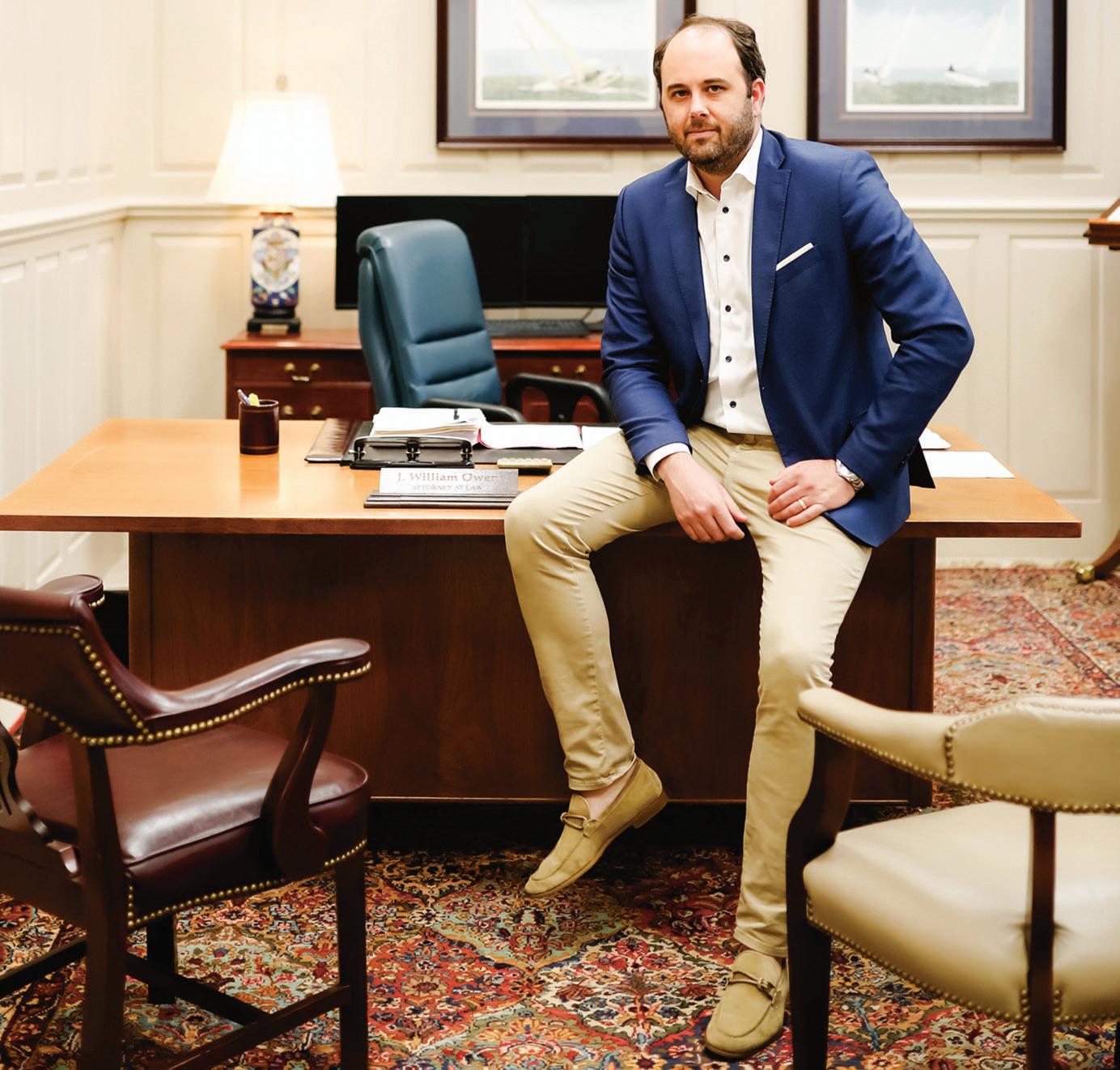
The N.C. Chamber, a statewide businesspromotion group, “is always concerned about trends that impact the legal climate,” says Ray Starling, president of the chamber’s Legal Institute. That is part of the overall business climate and member companies consider issues like jury award trends and so-called “nuclear verdicts” when deciding where to move or expand their businesses, he says.
North Carolina isn’t listed on the American Tort Reform’s list of “Judicial Hellholes” for 2025-26, “and we want to keep it that way,” Starling adds.
The Tar Heel state’s trial bar tends to operate with less flash than peers in Texas and some other states, where a few personal injury lawyers have gained notoriety for flashy behavior in and out of the courtroom.
“We’ve seen better states, we’ve seen worse,” says Andrew Robb. “But North Carolina was a more than adequate place to bring this case for the Myers.”
So how did a $50 million settlement happen?
“Cases hinge on coverage, liability and damages. And many cases are worth a lot of money,” Owen says. While the Myers case involved much publicity, no one knew if the case was worth $2 million or $100 million.
But Owen credits a confluence of essential factors. One was the conduct of TTWN’’s mechanic, which he calls “unconscionable.”
Another one was Myers and his family. At 41, he was entering his peak earning years with the potential for moving to a larger TV station. His wife taught kindergarten at a Christian school, and the couple was raising four young children.
“Their loss was massive,” he says. “Jason was young in his career and likely to go to a bigger market. “
Second, settlements often turn on the amount of insurance coverage involved. iHeartMedia describes itself as the No. 1 audio company in the U.S. through its 860-plus radio stations and digital companies. Despite nearly $4 billion annual revenue, the public company has struggled because radio is a tough business. iHeart reported more than $2.5 billion of losses between 2021-24.
Overall, iHeart had nearly $200 million of liability insurance coverage for its TTWN helicopter program, which provided a prime target for recovery. That included $50 million of coverage provided by the primary insurer, and multiple layers of “excess coverage,” through various specialty insurance companies.
"If there is a large loss, the insurance company is the one paying for damages,” Owen says. "iHeart itself likely did not pay a dime or pay for the defense of this case.”
Superior Court Judge Forrest Bridges approved a final judgment of $126.3 million, reflecting $105 million in coverage, and $21 million in interest. While the primary insurer agreed to pay the estate $50 million, the excess carriers had denied coverage.
Myers’ widow agreed to forgo a trial that was set to start Oct. 13, 2025, instead accepting $50 million. Her estate is seeking additional compensation from the excess carriers in a New York court, aided by the Robb law firm. Owen isn’t involved in that litigation.
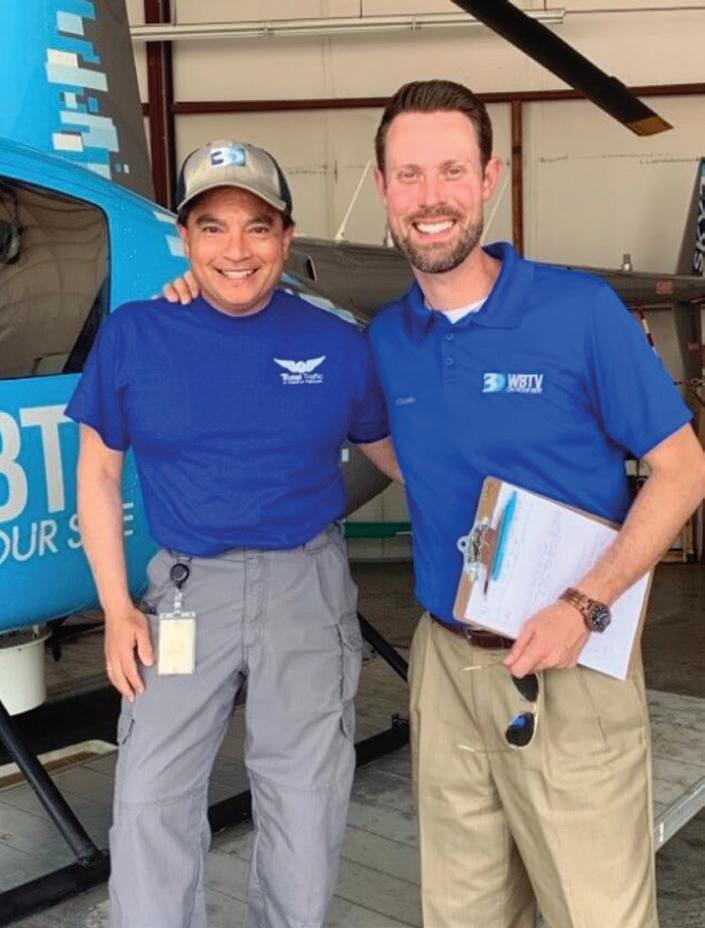
The American Tort Reform Foundation annually rates “Judicial Hellholes,” which it defines as places “where judges systematically apply laws and court procedures in an unfair and unbalanced manner.”
These jurisdictions were cited in the group’s 2025-26 report:
Los Angeles - The estate of an 88-year-old woman received a $1 billion verdict that suggested she developed mesothelioma from using baby powder since childhood.
New York City - Many fraudulent cases involving staged accidents and fake construction injuries
Owen wouldn’t disclose how much he and the Robbs received and split in the two North Carolina tragedies. A standard contingency fee is 33% to 40% of the total settlement, with the aggrieved parties typically not required to spend any money. Such agreements are set at the beginning of cases, he says. Both sides say their partnership has been effective.
“I can’t say enough good things about Will Owen,” Andrew Robb says. “He did fantastic work on both matters. He’s a really good family man and he’s going no place but up.”
The two major successes are prompting Owen to work harder, not ease up, he says.
“We get motivated by the process and the investigation. I want to find the truth and why something happened. We enjoy helping innocent victims of negligent conduct.”
Still, the caricature of greedy lawyers may never go away, Owen agrees. “You hate us till you need us.”
South Carolina - 300% increase in asbestos case filings in a year
Louisiana - Coastal erosion litigation, including a $744 million award against Chevron
Philadelphia - A $2.2 billion award involving Roundup
St. Louis - A $462 million verdict in a truck-car crash that was reduced to $120 million
Cook, Madison & St. Clair counties in Illinois - Several large awards tied to baby formula cases
King County and Washington - A $185 million verdict for three teachers who blamed their health problems on exposure to fluorescent light fixtures.







































































A Korean-American CPA in Charlotte serves the immigrant community in countless ways.




By Page Leggett








hat kid dreams of growing up to be an accountant?








As a child in Seoul, South Korea, Ki-Hyun Chun, a long-time Charlotte CPA, certainly did not. He wanted to be a diplomat. So, when he and his wife Sunny came to Hickory to attend Lenoir-Rhyne University on a Rotary International scholarship in the 1970s, he decided on a political science major.


One day in the school library, Chun, now 84, noticed a student struggling with a math problem. “For more than half an hour, he tried to gure it out,” says Chun, who o ered his help. “I solved it in two minutes,” he says. at prompted a college newspaper story about the mathematics genius from Korea. Other students started asking for tutoring. Chun, who was washing dishes in the school cafeteria for $1.05 an hour, o ered help for $5 an hour per student. Twelve signed up, so Chun was suddenly making $60 an hour. A professor sat in on a tutoring session and urged Chun to become an accountant.















He later earned a master’s degree in accounting at Appalachian State University and a Ph.D. in the subject from Philadelphia’s LaSalle University. He opened his CPA rm, the Chun Group, in 1983. Sunny had started her nursing career in Korea, and later worked at jobs in Morganton, Hickory and Charlotte, while helping raise the couple’s three children.
Chun initially marketed his rm to Asian immigrants. “I was the only Asian CPA in North Carolina, South Carolina, Tennessee and Florida,” he says. e rm has diversi ed its roster of business and individual clients and its employee base. e 15 sta ers hail from Eastern Europe, Russia, Ukraine, China, Korea and the U.S.
One innovative way to land clients was by publishing a guide to understanding the requirements for a North Carolina driver’s license and the citizenship test. He printed versions in four languages.
Chun’s father, a philosophy professor, challenged his young son to read 5,000 books in his lifetime, as he had done. Chun met that goal years ago, and has stopped counting. It was never about keeping score.
“Reading books makes you a better person,” he says. He shares his love of reading, literally, with Charlotte’s Asian community. Many immigrants are forced to leave their books when moving to the U.S.
In 1985, Chun founded the Asian Library, which has grown to become the largest private one of its kind in the United States. It’s on the rst oor of his CPA rm in Charlotte’s midtown area. What began with 68,000 books has swelled to more than 132,000, with a value Chun estimates at $5.4 million. e books are in Korean, Japanese, Chinese, Vietnamese and English, and visitors check them out as they would at a public library.
Chun’s tough father was gentle in some respects, with a motto of “Live for others.” He also o en urged his son to “Minimize what you spend on yourself so you can give more to others.”
When his father died, he hadn’t le enough money to pay for a funeral. He recalls his mother saying, “I don’t have any money, so bring some money for the funeral when you come.”
At the memorial, Chun noticed a man with four grown sons standing in front of his late father’s photograph. e man shouted, “Kneel down! Kneel down!” Chun approached and told the man to show more respect.
e man, whom Chun had never met, responded, “Your father paid tuition for all four of my children. And now, they are successful because of him.”
Chun took his father’s lessons to heart. He prefers to shop at Goodwill, pointing to his necktie and shoes, which cost a few dollars at the thri shop.
While the Chuns lived in Boone, Sunny’s mother came to live with them. A deeply devout woman who’d been married to a Christian minister, she needed a church that conducted services in Korean. e trouble was, there wasn’t one in the area.
So in 1977, Chun started Charlotte Presbyterian Church for the region’s growing Asian immigrant population. For three years, the family commuted from Boone every Sunday.
Sunny eventually le nursing to work with her husband. In her early 80s, she is the Chun Group’s CFO and CEO of Chun University.
“I tried to get my CPA license, but I had to give up if I wanted to continue to have a relationship with my husband,” she jokes.
“Anyway, our son became a lawyer and a CPA.”

Daniel Chun is a tax lawyer who speaks six languages and now works at the family rm. e plan is for him to take over leadership, should his father ever retire. Daniel’s sisters are also lawyers: Lena Chun Lee has her own practice in Charlotte, and Lisa Chun Birkos is a senior attorney with the Detention Project at the National Immigration Justice Center in Chicago.
Chun laments the current anti-immigrant sentiment in the U.S. as anti-Christian and anti-American. He’s switched his party from Republican. “America has always helped others,” he says. “Trump is the opposite.”

CHARLOTTE METRO AREA
2020 population: 138,952 291% increase from 2000
(Includes 39,833 Asian Indian; 14,439 Vietnamese; 14,187 Chinese)
Median household income: $100,000 (area average of $65,000)
Poverty rate: 5% (area average of 10%)
Home ownership rate: 64% (area average of 65%)
Bachelor’s degree-plus educational attainment: 64% (area average of 38%)
RALEIGH-DURHAM METRO AREA
2020 population: 157,212 292% increase from 2000
(Includes 47,434 Asian Indian; 23,839 Chinese; 8,411 Vietnamese)
Median household income: $102,300 (area average of $72,000)
Poverty rate: 9% (area average of 10%)
Home ownership rate: 655% (area average of 64%)
Bachelor’s degree-plus educational attainment: 75% (area average of 50%)
GREENSBORO-WINSTON-SALEM METRO AREA
2020 population: 53,823 174% increase from 2000
(Includes 10,133 Asian Indian; 9,598 Vietnamese and 5,395 Chinese)
Median household income: $78,300 (area average of $50,920)
Poverty rate: 6% (area average of 15%)
Home ownership rate: 72% (area average of 65%)
Bachelor’s degree-plus educational attainment: 53% (area average of 29%)
Source: UNC Asian American Center; U.S. Census data; 2019 American Community Survey
Chun’s Christian faith guides everything he does, and it’s not separate from his work life. “I’ve been a practicing CPA for 43 years,” he says, “and every morning before we start work, we have devotion.” Ministers receive free accounting services from the rm.
When Chun attended a 1985 Billy Graham crusade, he waited a erward for close to 45 minutes to meet the evangelist.
“I shouted three times, ‘Rev. Graham, I want to take a picture with you,’” he says. A Graham associate approached him, “twisted my arm and said, ‘Are you crazy? Don’t shout.’ I shouted again. e man called a policeman over, who said he’d arrest me. I shouted one more time, and Rev. Graham heard me and said, ‘Let him come.’”
“I told him, ‘I feel like I’m meeting our Lord Jesus Christ today.’ I told him my father and mother had passed away. And when they died, they told me, ‘Don’t cry. We will meet you in heaven.’”
Graham posed for the photo, and Chun asked him to autograph it. Two weeks later, the autographed picture arrived in the mail. It hangs in Chun’s o ce, along with scores of other photos of Chun with Bill Clinton, Hugh McColl Jr., U.S. Sen. Sam Ervin and others. Ervin’s wife commissioned Chun to paint a portrait of the famous senator from Morganton. Many of the CPA’s paintings, including orals, landscapes and Sunny as a young woman, also adorn the o ce.
Neither Chun nor Graham ever forgot that encounter. e evangelist le the old windpipe organ he’d played as a child to Chun. An auctioneer seeking the organ told Chun it could fetch more than $1.5 million, but it’s not for sale. It’s now at Chun University.
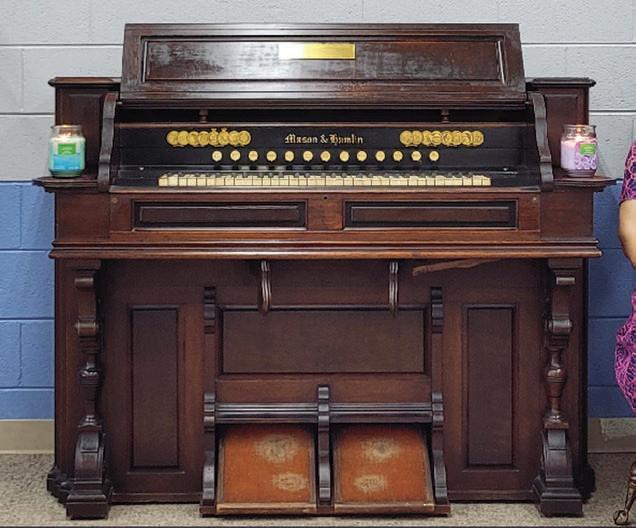



The Chun Group’s workday starts with a devotional, followed by the office singing “God is So Good” in five languages — English, Chinese, Korean, Bulgarian and Russian. Sunny provides the piano accompaniment.
The family’s love of sacred music led to the 2014 opening of Chun University, a Christian music conservatory. The school became licensed in 2014 to grant degrees, and the first students graduated five years ago.
Chun has visited 127 countries, often joined by his family, including five grandchildren. His next trip is to Australia and New Zealand for a church convention. While not an official envoy, he’s worked tirelessly to help generations of Asian immigrants adapt to American life.
Chun didn’t abandon his dream of being a diplomat when he changed his major. He became one. ■
Chun established the Asian Herald, which was printed monthly in English, Chinese, Korean and Vietnamese. It is no longer published.
He created a topiary and sculpture garden behind his office. There’s no charge for those who use the garden for weddings or other events.

Chun was an adjunct professor at Johnson C. Smith University for nearly a decade.
He founded the Carolinas Asian American Chamber of Commerce in 1999. It now represents a community that is more than 100,000 members and 17 ethnicities.
Chun is president of the Korean Christian Council of the World, an organization representing 12,700 churches.












By Kevin Ellis
Photography Becky & Bert VanderVeen




marks the 25th class of Business North Carolina’s Legal Elite, which honors the state’s as chosen by their peers.






lawyers than 17 members. vote.



than 1,100 made the list, compared with 30,000 attorneys regulated by the North State Bar. ose receiving the most votes in categories are recognized as Hall of Fame
More than 4,000 attorneys received at least
We asked the 17 category winners of this year’s Legal Elite class to share words of wisdom they recall when things get tough. Some shared practical guidance, related to speci c decision or task. Others passed on more philosophical words of wisdom like “this too will pass” and “don’t borrow trouble.”

Business North Carolina thanks the attorneys who took time to vote on their peers, and we appreciate those who participated in this feature.
Responses have been edited for length and clarity. Previous Hall of Fame members are listed by their rm at the time of selection, unless otherwise noted.
Business North Carolina contracted DataJoe Research to facilitate an online peer-voting and internet research process. DataJoe Research is a Boulder, Colorado-based so ware and research company specializing in data collection and veri cation, and it conducts various nominations across the nation on behalf of publishers. DataJoe con rmed that each published winner had, at the time of review, a current, active license status with the appropriate state regulatory board. If unable to nd evidence of a lawyer’s active registration with the state regulatory board, that lawyer was excluded from the list. In addition, we checked available public sources to identify lawyers disciplined for an infraction by the state regulatory board. ey were excluded from the list. DataJoe presented the tallied results to Business North Carolina for its nal review and adjustments.
e messages came from both familiar sources, such as parents, mentors and diverse authorities, ranging from eodore Roosevelt to rapper Kendrick Lamar, who performed at the most recent Super Bowl.
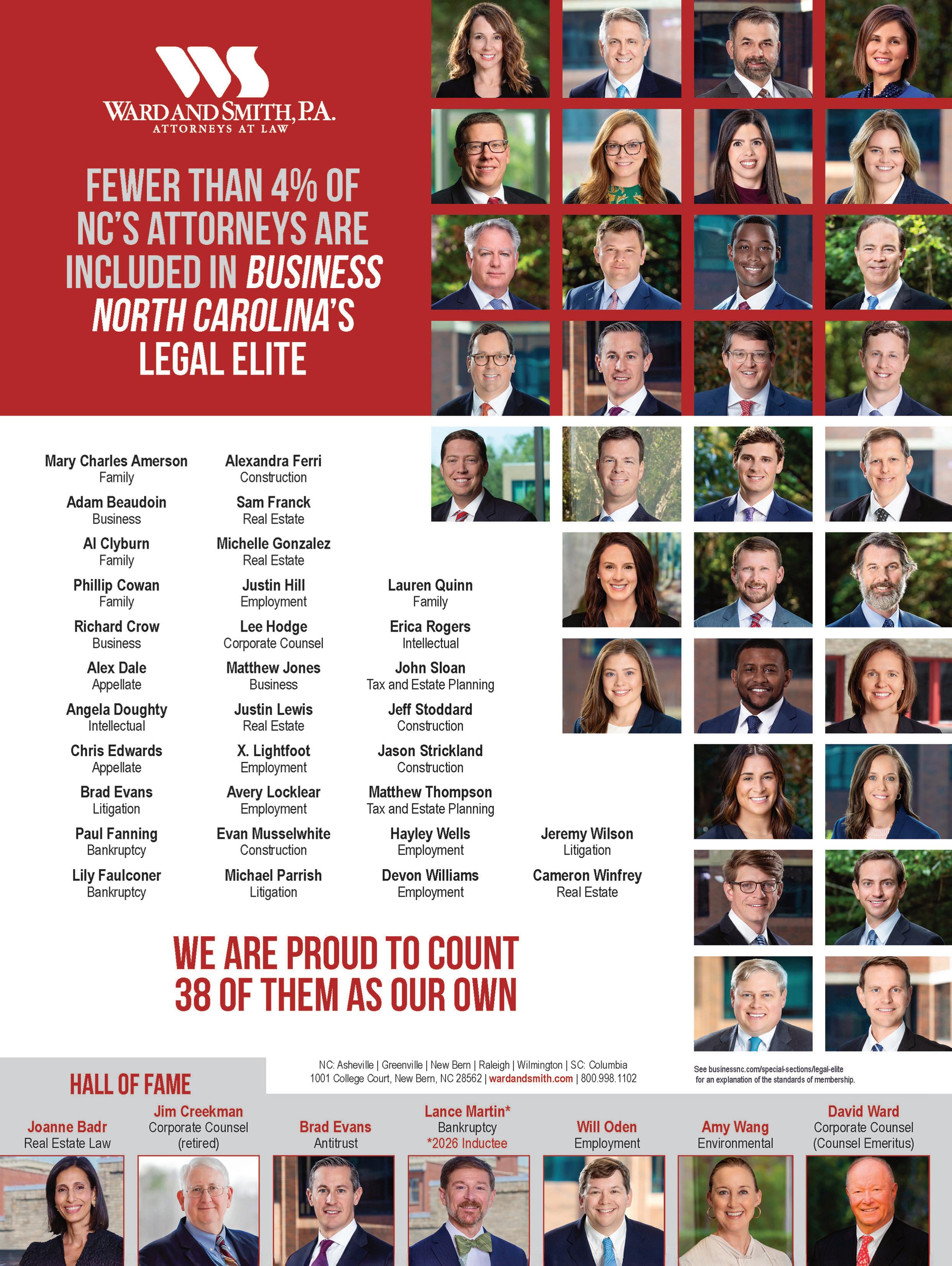
ROBERT KING III
Brooks Pierce
Greensboro
Lawrence C. Moore III
Robinson Bradshaw & Hinson
Charlotte
Michael T. Medford
Manning Fulton & Skinner
Raleigh
George Sanderson
The Sanderson Law Firm
Raleigh
Gregory L. Skidmore
Robinson Bradshaw & Hinson
Charlotte
Nathan C. Chase Jr.
Robinson Bradshaw & Hinson
Charlotte
Clinton R. Pinyan
Brooks Pierce
Greensboro
Larry S. McDevitt
The Van Winkle Law Firm
Asheville
PRESTON O. ODOM III
James, McElroy & Diehl
Charlotte
James W. Kilbourne Jr.
Allen Stahl + Kilbourne
Asheville
Mark J. Prak
Brooks Pierce
Raleigh
Chris Edwards
Ward and Smith
Wilmington
Bonnie Lynn Keith
Green Lewis Brisbois
Charlotte
J. Blakely Kiefer
Wyrick Robbin
Raleigh
Robert Daniel Gibson
Davis Hartman Wright Attorneys
New Bern
Jonathan McGirt
North Carolina Advocates For Justice
Raleigh
Rebecca K. Watts
Collins Family & Elder Law Group
Monroe
Erik Randall Zimmerman
Robinson Bradshaw & Hinson
Chapel Hill
Michelle Ann Liguori Ellis & Winters
Raleigh
M. Duane Jones
Hedrick Gardner Kincheloe Garofalo
Charlotte
Alexander Dale Ward and Smith
Wilmington
David S. Pokela
Maynard Nexsen
Greensboro
Lorin J. Lapidus
Nelson Mullins Riley & Scarborough Winston-Salem
Mark Russell
Sigmon Lee Segui
Raleigh
Amie Carol Sivon Ragsdale Liggett
Raleigh
Kip David Nelson Fox Rothschild Greensboro
Lucy Inman Bryson, Harris, Suciu & DeMay
Raleigh
John Korzen Wake Forest Law Winston-Salem
Ryan Y. Park McGuireWoods Raleigh
John R. Wester Robinson Bradshaw & Hinson
Charlotte
Jill Schnabel Jackson Jackson Family Law
Raleigh
Ashley Ann Crowder Round 2 Legal
Charlotte
Charles W. Clanton Wyrick Robbins
Raleigh
Stephen D. Feldman
Robinson Bradshaw & Hinson
Raleigh
Jonathan Y. Ellis McGuireWoods
Raleigh
C. Todd Browning Browning & Long
Charlotte
Sam J. Ervin IV Brooks Pierce Greensboro
Tricia Shields
Campbell University Raleigh
Charles E. Coble Brooks Pierce Raleigh
D. Martin Warf
Nelson Mullins Riley & Scarborough Raleigh
Brian C. Bernhardt Fox Rothschild Greensboro
David C. Hawisher Roberts & Stevens Law Asheville
Daniel F. E. Smith Brooks Pierce Greensboro
Jaye Elizabeth Bingham-Hinch Batten McLamb Smith Raleigh
Daniel M. Blau Blau Hynson Law
Raleigh


ANTITRUST and COMPLEX BUSINESS
BROOKS PIERCE
GREENSBORO
HOMETOWN: Charlotte
UNDERGRAD: UNC Charlotte


LAW SCHOOL: Wake Forest University School of Law,

PRACTICED LAW: 37 years
FAMILY: Wife, Julie Davis, son, Rhyne King, and daughter,

FAVORITE NC PRODUCT: A tie between Texas Pete and FIRST JOB: Delivering newspapers on my bike taught want to deliver newspapers on my bike.
GO-TO STRESS RELIEVER: Running or walking, depending condition of my knees; yoga; gardening; doing what my me to do.


MOST MEMORABLE CASE: Representing Wake Forest in a wrongful death case, It was an honor to work with at that school.


WHY DID YOU BECOME A LAWYER: I was born with arguing and writing are two of them.
FAVORITE NC HANGOUT: My screened-in porch, which several acres of woods.
BEST ADVICE: [Brooks Pierce partner] Ed Winslow on “No one wants to read what you are writing, so make it possible.”


YOUR BEST ADVICE: I have stolen Ed’s advice. Also, life practice of law are difficult enough without making things being unnecessarily difficult and ugly to others. Read one more time than other people would think rational find mistakes that you missed the first few readings.




BEST WORK HABIT: I start early each day and make things like timesheets before the new day really starts.



FAVORITE MUSICAL ACT AT 18: The Who; Talking Heads; 1988 King sweetpotatoes me that I don’t the University few talents, but looks out over writing briefs: and the sure tie off ice work. talking situations in the Kinks
2026 WORK-LIFE CHANGE: Less stress, more ice cream


BIGGEST RISK: Concentrating on litigation vs. non-courtroom I am at heart an introvert and (when young), uncomfortable publicly; building a career based on dealing with stressful front of a crowd is not in my DNA.











































Steven Andrew Bader
Cranfill Sumner
Raleigh
Christopher G. Smith
Smith Anderson
Raleigh
LANCE P. MARTIN
Ward and Smith
Asheville
Andrew J. Kilpinen
Allen Stahl + Kilbourne Winston-Salem
Paul Fanning
Ward and Smith
Winterville
Lisa P. Sumner
Maynard Nexsen
Raleigh
George M Oliver
Law Offices Of George Oliver
New Bern
Andrew W. J. Tarr
Robinson Bradshaw & Hinson
Charlotte
Laurie B. Biggs
Biggs Law Firm
Raleigh
Jack Miller
Rayburn Cooper & Durham
Charlotte
Glenn Clark Thompson
Hamilton Stephens Steele + Martin
Charlotte
Brian Richard Anderson
Fox Rothschild
Greensboro
Charles N. Anderson Jr.
Ellis & Winters
Raleigh
Stacy C. Cordes
Cordes Law
Charlotte
Andrew Thomas Houston
Moon Wright Houston
Charlotte
Joseph Zachary Frost
Buckmiller Boyette Frost
Raleigh
Jamey Mavis Lowdermilk
Brooks Pierce Greensboro
Joseph W. Grier III
Grier Wright Martinez
Charlotte
David M. Schilli
Robinson Bradshaw & Hinson
Charlotte
Joseph Jude Vonnegut
Hutchens Law Fayetteville
Robert Ashley Mays
Mays Johnson Law
Asheville
Damon Terry Duncan
Duncan Law Greensboro
Michael Leon Martinez
Grier Wright Martinez
Charlotte
Ben Eisner The Law Offices Of George Oliver
New Bern
Ronald D. P. Bruckmann
Shumaker Loop & Kendrick
Charlotte
Matthew Alexander Winer
Hamilton Stephens Steele + Martin
Charlotte
John C. Bircher III
Davis Hartman Wright Attorneys
New Bern
Felton E. Parrish
Young Conaway Stargatt & Taylor
Charlotte
Rayford K. Adams III Spilman Thomas & Battle Winston-Salem
Ashley S. Rusher
Blanco Tackabery Attorneys Winston-Salem
Ashley Lee Hogewood III K&L Gates
Raleigh
Benson T. Pitts Pitts Hay & Hugenschmidt
Asheville
Philip M Sasser Sasser Law Firm
Cary
William Howard Kroll
Everett Gaskins Hancock
Raleigh
Jennifer Lyday Waldrep Wall Babcock & Bailey Winston-Salem
Melanie Raubach
Hamilton Stephens Steele & Martin
Charlotte
Cole Hayes
Hayes Law
Charlotte
Kathleen O’Malley
Stevens Martin Vaughn & Tadych
Raleigh
William E. Brewer Jr Sasser Law Firm
Cary
William C. Smith Jr.
Manning Fulton & Skinner
Raleigh
Richard B. Fennell
James, McElroy & Diehl
Charlotte
Kevin L. Sink
Waldrep Wall Babcock & Bailey
Raleigh
Alan W. Pope Moore & Van Allen
Charlotte
Daniel C. Bruton
Bell Davis & Pitt Winston-Salem
Brian D. Darer
Parker Poe
Raleigh
Benjamin Waller
Hendren Redwine & Malone
Raleigh
James C. Lanik
Waldrep Wall Babcock & Bailey
Winston Salem
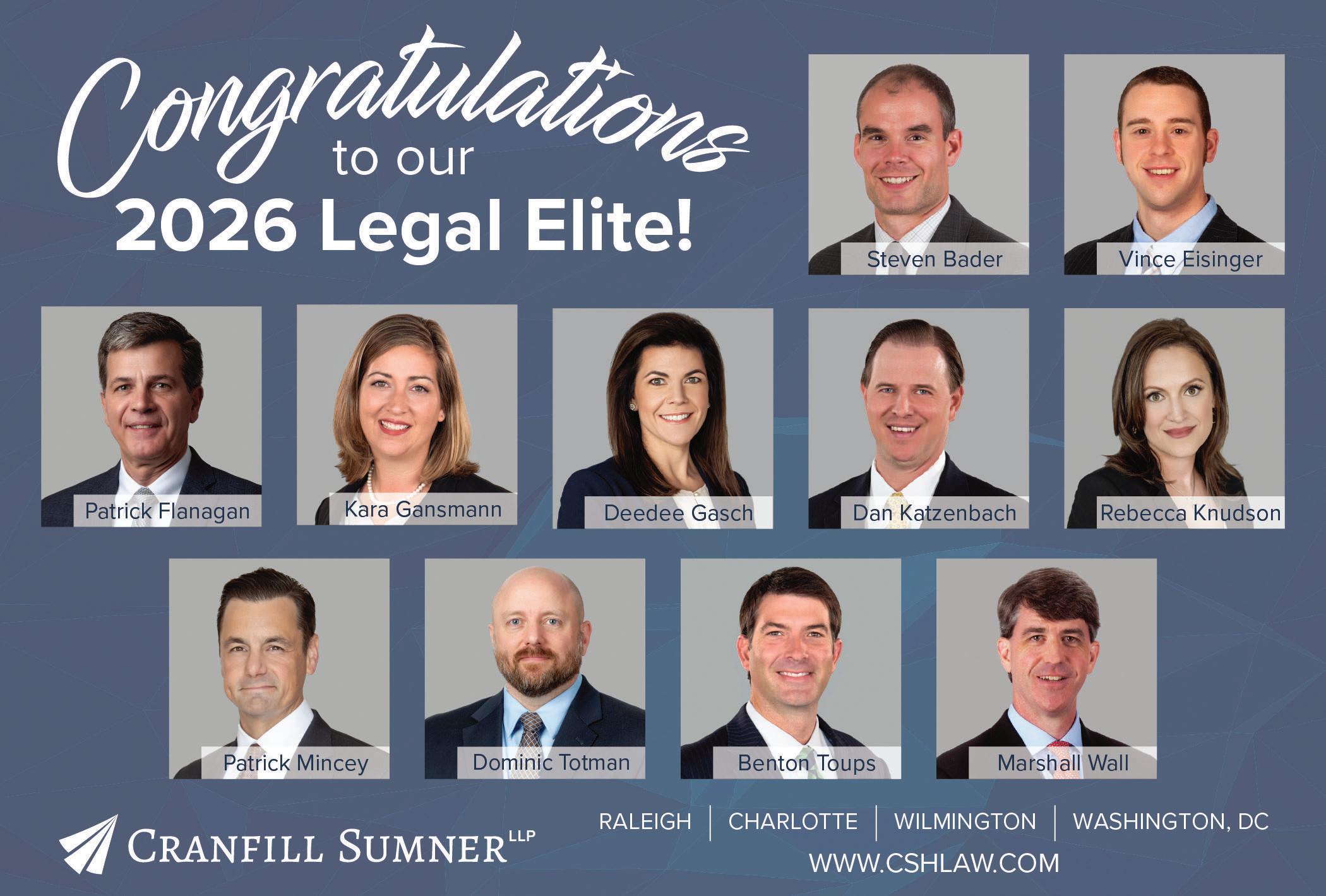
GARDNER SKELTON CHARLOTTE
HOMETOWN: Tallahassee, Florida
UNDERGRAD: Florida State University
LAW SCHOOL: Florida State University School of Law, 1997
PRACTICED LAW: 28 years
FAMILY: Son, Elijah Odom, daughters, Grace and Avery Odom
FAVORITE NC PRODUCT: Mt. Olive products – I love pickled cucumbers, jalapeno peppers, banana peppers (hot and mild), okra, red peppers, and pepperoncini.
FIRST JOB: Mowing lawns taught me both the value of hard work and the severe nature of my allergies to most grasses.
GO-TO STRESS RELIEVER: Playing pickleball, walking or flatwater kayaking.




MOST MEMORABLE CASE: Helping the late Bill Diehl Jr. and John Buric represent driver Jeremy Mayfield in a drug-testing dispute against the National Association for Stock Car Auto We managed to persuade U.S. District Court Judge Graham to issue a preliminary injunction against NASCAR.

John policy Auto Racing. C. Mullen

WHY DID YOU BECOME A LAWYER:: A “Street Law” class sophomore year in high school. I then decided during my at Florida State that becoming a lawyer would align with desire to help people and my aptitude for critical thinking.




FAVORITE NC HANGOUT: It used to be Cork and Cask in which regrettably closed last year. Currently, Pins Mechanical Charlotte.


BEST ADVICE: It’s actually both the best and worst advice received: “Remember, there are 24 hours in a day.” The late
YOUR BEST ADVICE: Love yourself well so you can love

during junior both Cornelius, in I’ve Bill Diehl Jr.


2026 WORK-LIFE CHANGE: Integrating more standard my practice to become more efficient.

others well.

BEST WORK HABIT: Being curious about everything – which sometimes spawns wild goose chases, also often fosters results for my clients.
FAVORITE MUSICAL ACT AT 18: Run DMC



BIGGEST RISK: Leaving my former firm, James, McElroy nearly 25 years to join my new firm, Gardner Skelton, in


favorable in & Diehl, after August.





























Mark M. Harris
Smith Dickey & Dempster
Fayetteville
Richard Rayburn
Rayburn Cooper & Durham
Charlotte
Lydia C. Stoney
Hendren Redwine & Malone
Charlotte
Lily Faulconer
Ward and Smith
Winterville
Trey Rayburn
McGuireWoods
Charlotte
David R. Badger
David R Badger
Charlotte
James B. Angell
Atkins Angell & Davis
Raleigh
Paul Rudd Baynard
Offit Kurman Attorneys At Law
Charlotte
Dirk W. Siegmund
Ivey, McClellan, Siegmund, Brumbaugh & McDonough Greensboro
Algernon L. Butler III
Butler & Butler
Wilmington
Chip Ford
Parker Poe
Charlotte
Luis Manuel Lluberas
Moore & Van Allen
Charlotte
Brooks Pierce
Greensboro
Nick Kendall
Johnston Allison & Hord
Charlotte
David Scott Rugani
Johnston Allison & Hord
Charlotte
J. Dickson McLean
Block Crouch Keeter Behm & Sayed
Wilmington
Philip S. Chubb
Shumaker Loop & Kendrick
Charlotte
Matthew Jones Ward and Smith
Wilmington
Catherine A. Barnes
James, McElroy & Diehl
Charlotte
Carolyn P. Meade
Moore & Van Allen
Charlotte
David K. Liggett
Ragsdale Liggett
Raleigh
Joshua J. Otto
Wyrick Robbins
Raleigh
Ryan W. Coffield
Coffield Heedy Kilgore
Asheville
Caroline Wannamaker Sink
Robinson Bradshaw & Hinson
Charlotte
Patrick S. Bryant
Robinson Bradshaw & Hinson
Charlotte
Lonnie M. Player Jr.
Player Mclean
Fayetteville
Katie M. Ertmer
Wyrick Robbins
Raleigh
Elizabeth E. Lane
McGuireWoods & Bissette
Asheville
Fred Parker
Gardner Skelton
Charlotte
Robert B. Womble
K&L Gates
Raleigh
Scott Jackson Maynard Nexsen
Greensboro
Curtis C. Brewer IV
Smith Anderson
Raleigh
Matthew S. Black Pinna Johnston & Burwell
Raleigh
Adam Beaudoin Ward and Smith
Wilmington
Jonathan Jenkins
Brooks Pierce Greensboro
Dorothy Bass Burch Ragsdale Liggett
Raleigh
Thomas Duke Ricks
Alexander Ricks
Charlotte
Michael Burger NC PLanning
Cary
Fred D. Hutchison
Hutchison
Raleigh
Hilton T. Hutchens Jr. Hutchens Law Fayetteville
Thomas C. Watkins
Schell Bray
Greensboro
Matthew R. Joyner
Bishop Dulaney Joyner Abner
Charlotte
William P. Bray
Bray & Long
Charlotte
Robert E. Futrell Jr. Wyrick Robbins Raleigh
Paul A. Steffens
Troutman Pepper Locke
Charlotte
Robert D. Kidwell Fox Rothschild Greensboro
J. Scott Flowers Hutchens Law Firm Fayetteville
Ross Fulton Rayburn Cooper & Durham
Charlotte
Richard Crow Ward and Smith
Wilmington
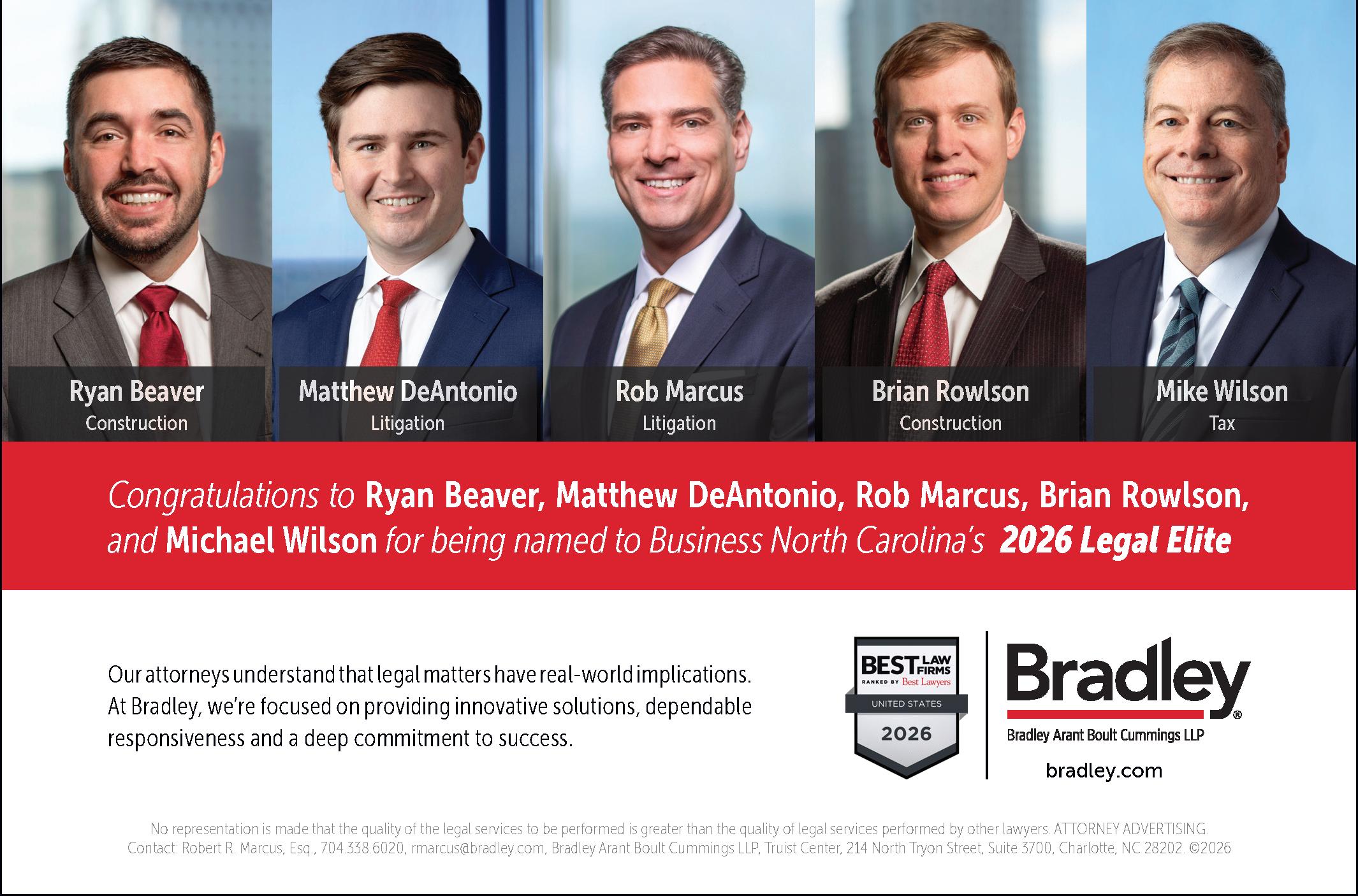
Ward and Smith
HOMETOWN: Chauvin, Louisiana
UNDERGRAD: Spring Hill College (Mobile, Alabama)
LAW SCHOOL: Tulane Law School, 1995
PRACTICED LAW: 31 years
FAMILY: Married to Anne Conquest for 30 years and two sons, Max and Leo
FAVORITE NC PRODUCT: East Fork Pottery because Rice Krispies really pop in their bowls.
FIRST JOB: My dad was a crane operator for a drilling company in Louisiana and got me a summer job as a deckhand on a 65-foot crew boat moving personnel and supplies to rigs in the Gulf of Mexico. I learned how to tie knots, swab decks, navigate in fog and fend off roughnecks eager to haze a future “college boy.”
GO-TO STRESS RELIEVER: Long walks
MOST MEMORABLE CASE: Representing victims of Hal Brown, who played the bongo drums for Up With People, then ran a Ponzi scheme in Biltmore Forest before taking residence at a federal prison in Talladega, Alabama. Talk about a life in full.
WHY DID YOU BECOME A LAWYER: I was a liberal arts major in college. To paraphrase Robert Frost, when I graduated, two roads diverged in the woods. I took the one more traveled. Also, I liked the TV show “LA Law.”
FAVORITE NC HANGOUT: Asheville
BEST ADVICE: Omit needless words. From “The Elements of Style” by William Strunk Jr. and E.B. White.
YOUR BEST ADVICE: Prioritize your spouse’s career over your own.
BEST WORK HABIT: I finish each workday with an empty email inbox. Most of the time, I can delete all my unread emails without consequence.
2026 WORK-LIFE CHANGE: A substantial increase in salary and reduction in billable hours based on receiving this honor.
BIGGEST RISK: I know people do it all the time, but moving from New Orleans to Greenville (North Carolina) in 1999.
FAVORITE MUSICAL ACT AT 18: The Cure and I have the eyeliner stains to prove it.































































Rob Rust
Moore & Van Allen
Charlotte
Glen E. Caplan
Robinson Bradshaw & Hinson
Chapel Hill
Stephen M. Bennett
Arnold & Smith
Charlotte
Jonathon Adam Martin
Robinson Bradshaw & Hinson
Chapel Hill
Joseph W. Norman
Moore & Van Allen
Charlotte
Dominic Totman
Cranfill Sumner
Raleigh
Matt Villmer
Villmer Caudill
Charlotte
Christie A. Hartinger
Wyrick Robbins
Raleigh
Sophia Pappalardo
Villmer Caudill
Charlotte
Jacob A. Johnson
Robertson & Associates
Charlotte
Patrick T. Strubbe
Womble Bond Dickinson
Charlotte
Scott Cooper
Rayburn Cooper & Durham
Charlotte
W. Scott Jones
Searson, Jones, Gottschalk & Cash
Asheville
Richard C. Stephenson
Stephenson Law
Cary
Steven Carr
Ellinger & Carr
Raleigh
Marshall Wall
Cranfill Sumner
Raleigh
Cory Andrew Rayborn
Tuggle Duggins
Greensboro
Jeffrey R. Wolfe
Davis Hartman Wright Attorneys
New Bern
Katherine Kliebert
Kliebert Law
Charlotte
Grant Sigmon
Sigmon Klein Bennington
Greensboro
Jesse Hofers Jones
Fourscore Business Law
Raleigh
Peter Singh
Fourscore Business Law
Raleigh
CARL J. BURCHETTE
Rosenwood Rose & Litwak
Charlotte
Kevin J. Stanfield
Wyrick Robbins
Raleigh
Jeffrey Kendal Stahl
Allen Stahl + Kilbourne
Asheville
Jon P. Carroll
Gardner Skelton
Charlotte
Christopher K. Behm
Block Crouch Keeter Behm & Sayed
Wilmington
B. David Carson
Johnston Allison & Hord
Charlotte
Nancy Stewart Litwak
Rosenwood Rose & Litwak
Charlotte
Evan Musselwhite
Ward and Smith
Raleigh
Gary J. Welch
Johnston Allison & Hord
Charlotte
Keith E. Coltrain
Wall Templeton Haldrup
Raleigh
Matthew C. Bouchard
Poyner Spruill
Raleigh
Judson A. Welborn
Manning Fulton & Skinner
Raleigh
Robert Jason Herndon
NC DRC Certified Mediator
Raleigh
Rebecca Ann Knudson
Cranfill Sumner
Wilmington
Jonathan Massell
Maynard Nexsen
Raleigh
Carmela Mastrianni
Hamilton Stephens Steele + Martin
Charlotte
W. James Johnson
Mays Johnson Law
Asheville
Robert L. Burchette
Johnston Allison & Hord
Charlotte
Steele B. Windle III Windle | Terry | Bimbo
Charlotte
John T. Benjamin Jr. Office Of John T Benjamin Jr.
Raleigh
John M. Nunnally
Ragsdale Liggett
Raleigh
Daniel G. Katzenbach
Cranfill Sumner
Raleigh
Andrew S. Culicerto Shumaker Loop & Kendrick
Charlotte
Bryan G. Scott
Baker Donelson
Winston-Salem
Steven Allen Bimbo
Windle | Terry | Bimbo
Charlotte
Kevin Anthony Marshall
Johnston Allison & Hord
Charlotte
Dave Levy
Gardner Skelton
Charlotte
Joseph W. Moss Jr. Maynard Nexsen
Charlotte
Scott M. Tyler
Moore & Van Allen
Charlotte
David C. Kimball
Robinson Bradshaw & Hinson
Charlotte
John Thomas Floyd
Moore & Van Allen
Charlotte
Whitaker Boykin Rose Rosenwood Rose & Litwak
Charlotte
Benjamin Thomas Buskirk
Poyner Spruill
Raleigh
Adam Reese Denobriga
James Denobriga
Charlotte
Jeffrey M. Reichard Maynard Nexsen
Greensboro
William W. Pollock Ragsdale Liggett
Raleigh
John I. Mabe Jr. Maynard Nexsen
Raleigh
Gilbert C. Laite III
Williams Mullen
Raleigh
Mark Hamlet
Hamlet Law
Wilmington
Eric H. Biesecker Maynard Nexsen
Greensboro
BROOKS PIERCE GREENSBORO
HOMETOWN: Manhattan Beach, California
UNDERGRAD: University of Denver

LAW SCHOOL: UCLA School of Law, 1996
PRACTICED LAW: 29 years
FAMILY: Wife, Caroline, three stepchildren, Alexandra, Harrison and Carter
FAVORITE NC PRODUCT: “Fall”—I grew up in southern California and never really experienced the season until I moved to North Carolina. I love the colors of fall. I hate cleaning up the leaves.
FIRST JOB: Assistant buyer for Case Goods, a 15-store chain in southern California, dealing with furniture. Buyers run their own businesses within the larger store business, and so that job taught me every aspect of running a business: inventory control and purchasing, advertising, staffing, cost control.
GO-TO STRESS RELIEVER: Walking in the woods with my dog, Daisy.
MOST MEMORABLE CASE: NCDOT v. 74 Holdings, et al. It was an eminent domain case in Brunswick County. NCDOT offered our client $140,000. The jury gave us $2.6 million plus interest.
WHY DID YOU BECOME A LAWYER: After working in sales and marketing for eight years, I wanted a different intellectual challenge.
FAVORITE NC HANGOUT: Wrightsville Beach
BEST ADVICE: My father: “Success” equals achieving to the best of your abilities; accomplishing as much as you have the ability to accomplish; and working as hard as necessary to achieve your potential.
YOUR BEST ADVICE: Do not worry about things or people that you can’t control.
BEST WORK HABIT: Attention to detail.
2026 WORK-LIFE CHANGE: Involve the firm’s associates more to try and pass my expertise in a couple of niche areas to the next generation.
BIGGEST PROFESSIONAL RISK YOU’VE TAKEN: At age 36, I left a job where I was successful and making a significant amount of money to attend law school and change careers.
FAVORITE MUSICAL ACT AT 18: Loggins & Messina or the Eagles.

































Allen L. West
Hamilton Stephens Steele & Martin
Charlotte
Ward Davis
Bell Davis & Pitt
Charlotte
W. James Johnson
Mays Johnson Law
Asheville
Jeffrey Anderson
Long James Denobriga Long
Charlotte
Jason Strickland
Ward and Smith
Raleigh
Ryan Lee Beaver
Bradley Charlotte
Brian M. Rowlson
Bradley Arant Boult Cummings
Charlotte
Aaron Lay
Hamilton Stephens Steele & Martin
Charlotte
Benjamin C. DeCelle
Robinson Bradshaw & Hinson
Charlotte
Steven C. Hemric
Spilman Thomas & Battle Winston-Salem
Alexandra E. Ferri
Ward and Smith
Raleigh
Melissa Dewey Brumback
Ragsdale Liggett
Raleigh
James Shelton Derrick Womble Bond Dickinson
Charlotte
David A. Senter
Maynard Nexsen
Raleigh
David S. Coats
Bailey & Dixon
Raleigh
Jay M. Wilkerson
Conner Gwyn Schenck
Raleigh
Donald R. Pocock Akerman
Winston-Salem
Adrianne Huffman Chillemi
Parker Poe
Charlotte
Walt Rapp
McAngus Goudelock & Courie
Asheville
Mitzi Riana Smith
Smith Bowers
Raleigh
Brian E. Wolfe
Wolfe Gunst & Hinson
Charlotte
Scott C. Harris
Bryson Harris Suciu & DeMay
Raleigh
R. Lee Robertson Jr.
Robertson & Associates
Charlotte
Edward Aubin Jesson
Jesson & Rains PLLC
Charlotte
Jeff Stoddard Ward and Smith
Wilmington
JANET B. THOREN
North Carolina Real Estate Commission Raleigh
Kenneth B. Hammer
Campbell University
Raleigh
Matthew A. Cordell
Lawyers Mutual Liability Insurance
Cary
Stuart Hale Russell Truliant Federal Credit Union Winston-Salem
Fred Bauer Window World North Wilkesboro
Jennifer Venable Capitol Broadcasting Raleigh
Clara Cottrell BASF Corp. Research Triangle Pk
Dan Tracey Bryant Corp Raleigh
Alexander R. Atchison SanStone Health & Rehabilitation
Raleigh
Lee Hodge Ward and Smith New Bern
Brooks Pierce Greensboro
Megan Farley
Allen Stahl + Kilbourne
Asheville
Sheldon M. Stokes Johnston Allison & Hord
Charlotte
Vincent D. Childress Jr. Roberts & Stevens
Asheville
Stephen P. Gennett II Johnston Allison & Hord
Charlotte
William Clark Isenhour Johnston Allison & Hord
Charlotte
April Epley Kight Schell Bray Greensboro
Thomas I. Lyon Manning Fulton & Skinner
Raleigh
M. Heath Gilbert Jr. Baucom Claytor Benton Morgan & Wood Charlotte
Jeffrey J. Owen McGuire Wood & Bissette
Asheville
Christopher Kouri Maynard Nexsen
Charlotte



ROSENWOOD, ROSE & LITWAK


HOMETOWN: Charlotte
UNDERGRAD: University of Alabama
LAW SCHOOL: UNC School of Law, 2014
PRACTICED LAW: 11 years
FAMILY: Wife, Katie Burchette, daughter, Clara, 4, and son, Jack, 1
FAVORITE NC PRODUCT: Texas Pete tastes great on everything. North Carolina barbecue — making it, visiting the restaurants and eating it with friends — reminds me of home and family.

GO-TO STRESS RELIEVER: Fly fishing in the mountains.


FIRST JOB: Working as a laborer for Crowder Construction in Charlotte taught me the value of hard work and the teamwork required on a construction project.
FAVORITE NC HANGOUT: Asheville





MOST MEMORABLE CASE: I tried a case that resulted in a settlement prior to jury deliberation. We were able to have six members of the jury come back, sit in the box, and have them deliberate in front of attorneys and the judge on the major issues and give us feedback. then had the judge give us feedback. It was a learning experience what worked and didn’t work at trial.







WHY DID YOU BECOME A LAWYER:: Growing up in a family full of attorneys, I saw the value an attorney can bring in helping clients solve problems. I really enjoy helping clients at all stages, particularly when negotiating and drafting contracts with the benefit of having litigated the issues you’re trying to avoid.

BEST ADVICE: Don’t borrow trouble. I grew up hearing it from my parents. It’s a reminder to focus on the issues in front of you that you can control or work to solve.

CHARLOTTE all full the
YOUR BEST ADVICE: Tom Hanks said, “This too shall pass.” Give yourself grace to understand tough times in a case or in life will pass. Take advantage of the times when work is slow, and celebrate even little victories you or others experience.



BEST WORK HABIT: Taking a walk around the block to get up, move and clear my head.
2026 WORK-LIFE CHANGE: Pick key times during the work day to check emails.
BIGGEST RISK: Joining a small firm my partners started.
FAVORITE MUSICAL ACT AT 18: Red Hot Chili Peppers.




Paul Joseph McAdams
Baker Donelson Winston-Salem
Sarah M. Rozek
Fox Rothschild Greensboro
Evan K. Auberry Fox Rothschild Greensboro
Larry E. Robbins Wyrick Robbins
Raleigh
Byron B. Kirkland
Smith Anderson Law
Raleigh
W. Berry Trice Murchison Taylor & Gibson
Wilmington
Sean M. Jones
K & L Gates
Charlotte
John N. Fleming McGuireWoods & Bissette
Asheville
Joseph J. Santaniello Shumaker Loop & Kendrick
Charlotte
Jennifer Weaver
Manning Fulton & Skinner
Raleigh
Chadwick I. McCullen Young Moore And Henderson
Raleigh
Christopher Poe Wyrick Robbins
Raleigh
Chris Clark Clark.Law Cornelius
Elizabeth S. Brewington
Brooks Pierce Greensboro
William B. Gwyn Jr.
Manning Fulton & Skinner
Raleigh
G. William Joyner III
Kilpatrick Townsend & Stockton Winston-Salem
Galen G. Craun III Bell Davis & Pitt Winston-Salem
Kevin D. Israel
Venture Law Firm
Raleigh
Annalise F. Perry Wyrick Robbins
Raleigh
C. Cowden Rayburn
Moore & Van Allen
Charlotte
Andrew D. Steffensen Schell Bray Greensboro
JOSEPH E. ZESZOTARSKI JR. Gammon Howard Zeszotarski
Raleigh
David G. Budd II Offices Of David G Budd Asheville
Christopher C. Fialko Fialko Law
Charlotte
C. Melissa “Missy” Owen
Tin Fulton Walker & Owen
Charlotte
Jones Pharr Byrd Jr. Bell Davis & Pitt Winston-Salem
F. Hill Allen Tharrington Smith Raleigh
W. Rob Heroy Goodman Carr Charlotte
Tony Scheer Rawls Scheer Clary & Mingo Charlotte
Christophe Anthony Beechler Beechler Tomberlin Winston-Salem
Tee Leitner
Leitner Bragg & Griffin
Monroe
Tim Cannady Leitner Bragg & Griffin
Monroe
John P. O’Hale
John P O’Hale Smithfield
Christian E. Dysart Maynard Nexsen
Raleigh
Roger W. Smith Jr. Tharrington Smith
Raleigh
Robert O’Hale Greensboro NC Law Greensboro
Bill Powers Powers Law Firm
Charlotte
Christine Elizabeth Clarke-Peckham Office Of Chrissy Clarke Peckham
Charlotte
Christon Stephanie Halkiotis Office Of Christon S Halkiotis Greensboro
Ryan Willis Ryan Willis Law
Raleigh
Raymond Tarlton Tarlton Law
Raleigh
Adam AJ Hauser II Mecklenburg County Public Defender’s Office Charlotte
Kristen Dewar Minick Law
Asheville
Kasi Wahlers Robinson
Brooks Pierce Greensboro
James Austin Davis Davis & Davis Attorneys at Law Salisbury
Christopher R. Clifton
Grace Tisdale Clifton Winston-Salem
Joel Hart Miles Jr. Cheshire Parker Schneider
Raleigh
Andrew C. Clifford Clifford & Harris Greensboro
Tanisha Palvia Moore & Van Allen
Charlotte
George V. Laughrun III Goodman Carr Laughrun Levine & Green Charlotte
NORTH CAROLINA REAL ESTATE COMMISSION
RALEIGH
HOMETOWN: Fayetteville
UNDERGRAD: Pembroke State University
LAW SCHOOL: UNC School of Law, 1988
PRACTICED LAW: 37 years
FAMILY: Husband, Bruce Crisp, daughter Kristine, son Zach, stepsons Austin and Logan. Dogs Bailey and Easton.









































FAVORITE NC PRODUCT: Carolina Hurricanes. My son and stepsons played hockey in various leagues and travel leagues and all three played in college. I’ve spent a lot of very early mornings in some very cold ice rinks.





FIRST JOB: Making and dishing out soft-serve yogurt at a little stand in Fayetteville. I learned a lot about customer service and solving problems because the machines broke down a lot. Most of the time I was working alone. Those are the times the best and the most.



GO-TO STRESS RELIEVER: It’s hard to be stressed when you get outside, look and feel a little sunshine.


MOST MEMORABLE CASE: A broker allowed a tenant to move into a property permission from the absent owner, an older woman. The owner found out neighbors started gossiping because he had moved a heart-shaped jacuzzi property. She was embarrassed to think her neighbors thought the jacuzzi She drove to Raleigh to personally thank me.









WHY DID YOU BECOME A LAWYER: I was a business major and when my law class ended, the professor gifted me with the LSAT prep course materials. pointed me in a direction, and I followed the path all the way.









FAVORITE NC HANGOUT: It became a dream for us to build a house on Lake We moved in last year, and I wouldn’t trade it for anything. The sunsets are amazing, and it’s hard to be stressed when you can grab dinner and go out on the lake few hours.


BEST ADVICE: A partner in the firm I worked for, Doug Hargrave, taught me on that being the most prepared person in the room equalizes the competition, matter how well-known or how long they have been practicing.





YOUR BEST ADVICE: You only learn from your mistakes. Own them when you them and fix things. They are there to teach you.
BEST WORK HABIT: Always over prepare.




FAVORITE MUSICAL ACT AT 18: The Rolling Stones and Bruce Springsteen still top my list.



BIGGEST RISK: I left private practice and went to work for the Real Estate Commission. I wanted a better work-life balance, but worried it would box me in. I was wrong. much more than real estate. It’s employment law, open records, open meetings, law, insurance, contracts, timeshares, legislative issues, education laws, environmental laws. On any given day, I need to know at least a little about a lot of things.









Aaron Michael Goforth
Hatch Little Bunn
Raleigh
William Gray Smith
Mason Mason and Smith
Wilmington
Parker S. Lucas
Lucas & Lucas
Kenly
Sean P. Devereux
Devereux Banzhoff
Asheville
Thomas R. Sallenger Sallenger Law
Wilson
Myron T. Hill Jr. Hill Law Firm
Greenville
Paul K. Sun Jr. Ellis & Winters
Raleigh
William D. Young IV
Hatch Little Bunn
Raleigh
Amos Tyndall Parry Law
Chapel Hill
Christopher A. Connelly Office of Christopher A Connelly
Charlotte
Noell P. Tin
Tin Fulton Walker & Owen
Charlotte
Robert A. Blake Jr.
Wyatt & Blake
Charlotte
Jan E. Pritchett
Schlosser & Pritchett
Greensboro
Edwin L. West III
Brooks Pierce
Raleigh
Brian S. Cromwell
Parker Poe
Charlotte
N. Paxton Butler
Davis & Davis Attorneys At Law
Salisbury
Berryman J. Fitzhugh III
Sandman Finn & Fitzhugh
Raleigh
Anna Elizabeth Smith Felts
Law Offices Of Anna Smith Felts
Raleigh
Edd K. Roberts III
Roberts Law Office
Raleigh
James Bradley Smith
James B Smith
Charlotte
James F. Rutherford
James Rutherford Attorney at Law
Wilmington
James Thomas Amburgey Amburgey Law
Asheville
James Prescott Little
Hatch Little Bunn
Raleigh
Patrick B. Weede
Weede Law
Raleigh
Grayson Cheek
Wilmington Personal Injury
Wilmington
Diane DePietropaolo Price
Olsinski Injury Family and Criminal
Lawyer
Charlotte
Patrick Melton Mincey
Cranfill Sumner
Wilmington
Thomas Taylor Manning
Manning Law Firm
Raleigh
Stephen Lacy Cash
Searson Jones Gottschalk & Cash
Asheville
Aaron D. Bates
Bates Law
Wadesboro
William Scott Harkey
Harkey Law
Winston-Salem
Aaron R. Lee Lee & Lee Law Firm
Huntersville
Emily Jones Queen Burney & Jones
Wilmington
Blake J. Spale The Shotwell Law Group
Wilmington
Eli Timberg Rawls Scheer Clary & Mingo
Charlotte
Ryan Stowe Stowe Law
Salisbury
M. Rashad Moore
Moore Law Group
Graham
Sharon E. Dunmore
Triad Legal Group
Greensboro
Daniel D. Adams
Brooks Pierce
Charlotte
Shana LaVerne Fulton
Brooks Pierce
Raleigh
Thomas Courtland Manning
Manning Law
Raleigh
Bradford F. Icard The Icard Law
Charlotte
David T. Courie
Beaver Courie Law
Fayetteville
Elizabeth Freeman Greene
Bradley Arant Boult Cummings
Charlotte
Deno Thomas Frangakis Williford Crenshaw Boliek & Frangakis
Fayetteville
Jason C. St. Aubin Marcilliat & Mills
Charlotte
Michael Dowling
Dowling
Raleigh
Doug Edwards Edwards Law
Asheville
Daniel Allen Harris
Clifford & Harris
Greensboro


HOMETOWN: Chapel Hill
UNDERGRAD: UNC Chapel Hill
LAW SCHOOL: UNC School of Law, 1984
PRACTICED LAW: 41 years
FAMILY: Wife, Diane, adult children, Scott and Sarah

FAVORITE NC PRODUCT: My formative years, ages 9 24, were spent in Chapel Hill, which exposed me to experiences opportunities I otherwise would not have been exposed less explored.



FIRST JOB: Weekend dishwasher and busboy at Ye Olde me I should pursue work that was more mental than
GO-TO STRESS RELIEVER: Running for many years, and many more.

MOST MEMORABLE CASE: Three years out of law school, the seller in a large, complicated business sale transaction negotiated and closed over a period of about one year. have been one of the most intense transactions I’ve ever years, the client is still with our firm.
WHY DID YOU BECOME A LAWYER: It matched my writing, reasoning and counseling.
FAVORITE NC HANGOUT: Chapel Hill


and Waffle Shop taught physical in its demands.
BEST ADVICE: “Go to law school.” My father’s immediate my junior year when I was debating law school or business

YOUR BEST ADVICE: Pursue a variety of relationships are meaningful to you. They will make your life more fulfi become a more effective lawyer.
BEST WORK HABIT: Trying to put myself in the shoes communications, and being proactive in trying to stay matters, large and small, so as to reduce the risk of falling unexpected matters arise.
FAVORITE MUSICAL ACT AT 18: The Who
tennis for represented I still consider it to handled. After 38
relative strengths: response during school. and activities that fulfilling and help

BIGGEST RISK: At the time, it felt like a risk joining Brooks after law school. I clerked with two other firms that had offers. I had less firsthand knowledge of Brooks Pierce that I would meet the firm’s expectations.
2026 WORK-LIFE CHANGE: Work on developing a clearer plan regarding “retirement,” whatever form that might take and whenever
of the client in all current on all client behind when that might occur. Pierce straight extended permanent and dence















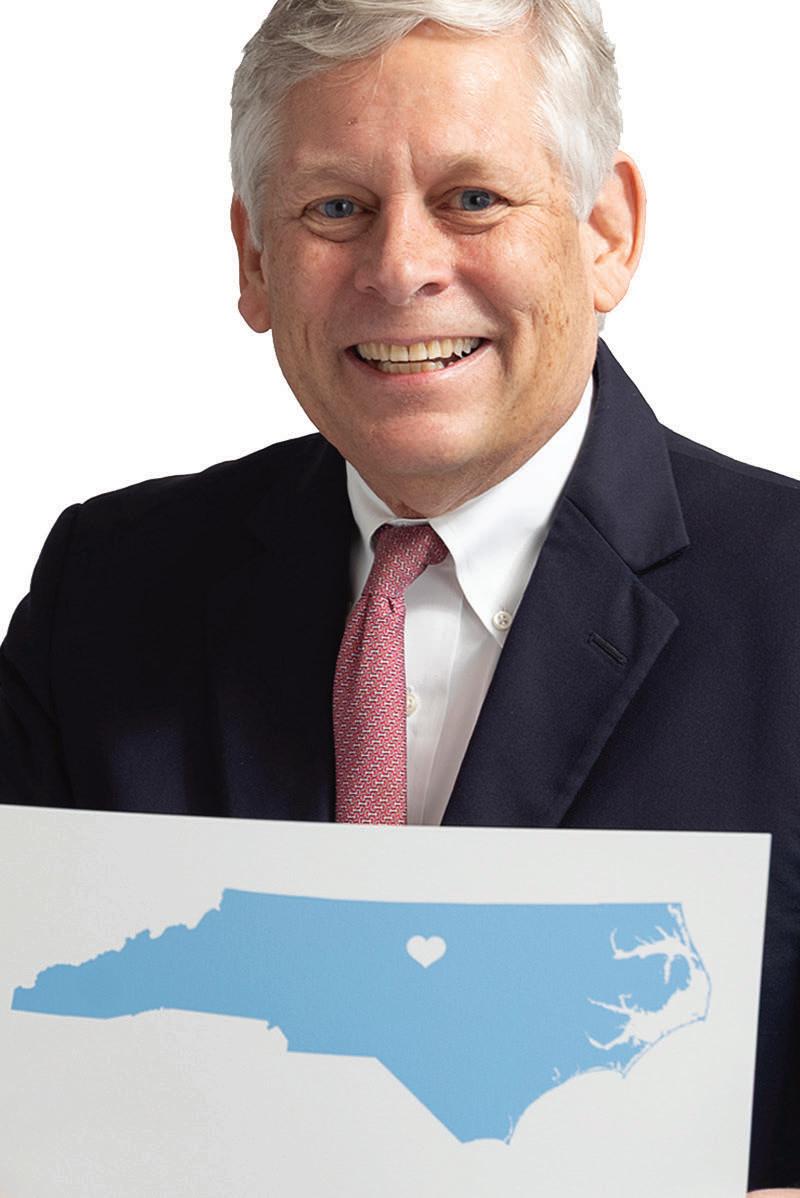






MARC E.
Bell Davis & Pitt
Charlotte
Robert C. Carpenter
Allen Stahl + Kilbourne
Asheville
Sabrina P. Rockoff
McGuireWoods & Bissette
Asheville
G. Bryan Adams III Van Hoy Reutlinger Adams Pierce
Charlotte
Jonathan Tristram Coffin
Johnston Allison & Hord
Charlotte
Kelly Margolis Dagger Ellis & Winters
Raleigh
David E. Stevens
Johnston Allison & Hord
Charlotte
T. Cullen Stafford Wyrick Robbins
Raleigh
X. Lightfoot
Ward and Smith
Raleigh
D. Beth Langley
Brooks Pierce Greensboro
Andrew K. McVey
Murchison Taylor & Gibson
Wilmington
Daniel J. Palmieri
Wyrick Robbins
Raleigh
Joshua Reed Van Kampen
Van Kampen Law
Charlotte
Tamara Lynn Huckert
Strianese Huckert
Charlotte
Bridget A. Blinn-Spears
Maynard Nexsen
Raleigh
Linda Nicole Patino
Law Offices Of L Nicole Patino
Greensboro
Kathleen N. Worm
Worm Law
Raleigh
Benton Louis Toups
Cranfill Sumner
Wilmington
Angelique R. Vincent
Robinson Bradshaw & Hinson
Charlotte
Laura Noble The Noble Law
Charlotte
Caleb J. Holloway
Robinson Bradshaw & Hinson
Charlotte
Jessica Thaller-Moran
Brooks Pierce
Raleigh
Kristen E. Finlon
Gardner Skelton
Charlotte
Patrick E. Kelly
Johnston Allison & Hord
Charlotte
Karin M. McGinnis
Moore & Van Allen
Charlotte
Frederick M. Thurman Jr.
Shumaker Loop & Kendrick
Charlotte
Brian Clarke Van Kampen Law
Charlotte
Christine Mayhew Oak City Law
Durham
William S. Cherry III
Manning Fulton & Skinner
Raleigh
Sarah Hayward Negus Moore & Van Allen
Charlotte
Murphy Horne Fletcher McGuireWoods & Bissette
Asheville
Ashley L. Felton
Michael Best & Friedrich
Raleigh
Avery Locklear Ward and Smith
Raleigh
Dawn M. Dillon
Young Moore And Henderson
Raleigh
Theresa M. Sprain
Baker Donelson
Raleigh
Mimi Soule
Soule Employment Law
Raleigh
Katie Weaver Hartzog Hartzog Law Group
Raleigh
Kelly S. Hughes
Ogletree Deakins Law
Charlotte
Kevin M. Ceglowski
Smith Anderson Law
Raleigh
Kevin Patrick Murphy Herrmann Murphy
Charlotte
Amy E. Puckett
Moore & Van Allen
Charlotte
Devon Williams Ward and Smith
Raleigh
Katie D. B. Burchette
Johnston Allison & Hord
Charlotte
Jennifer Diane Spyker Tin Fulton Walker & Owen
Charlotte
Tory I. Summey
Parker Poe
Charlotte
Virginia M. Wooten
Ogletree Deakins Nash Smoak & Stewart
Charlotte
Liz Vennum Hull & Chandler
Charlotte
Zachary S. Anstett
Parker Poe
Raleigh
Alice Y. Magnuson
Wyrick Robbins
Raleigh
Cecil Harrison Poyner Spruill
Raleigh
Kenneth P. Carlson Jr. Constangy Brooks Smith Prophete Winston-Salem
Julian H. Wright Jr.
Robinson Bradshaw & Hinson
Charlotte
J. Heyd tPhilbeck
Bailey & Dixon
Raleigh
Jonathan Wall Higgins Benjamin Greensboro
Kathleen K. Lucchesi
Jackson Lewis PC
Raleigh
Wood W. Lay Moore & Van Allen
Charlotte
L. Michelle Gessner GessnerLaw
Charlotte
Danae Woodward
Woodward Woodward
Charlotte
GAMMON & ZESZOTARSKI RALEIGH
HOMETOWN: Green Brook, New Jersey
UNDERGRAD: Muhlenberg College (Allentown, Pennsylvania)
LAW SCHOOL: Wake Forest, 1994
PRACTICED LAW: 31 years

FAMILY: Wife Dana, daughters Anne and Amelia, dog

FAVORITE NC PRODUCT: Bertie County peanuts salted the shell. Good and good for you.
FIRST JOB: Laborer for a plumbing company







GO-TO STRESS RELIEVER: My doctor would want me say exercise, but red wine is probably more accurate.

MOST MEMORABLE CASE: Tie between representing law in the NC Supreme Court when the district attorney filed a petition disclosure of what his deceased client had told him in a murder lost.) Also, representing Dr. Jeffrey MacDonald in the Fourth Circuit corpus petition to overturn his convictions for the murder of his family that took place in 1970 (I lost). I guess I learn more than the wins.





WHY DID YOU BECOME A LAWYER:: I ask myself that question
FAVORITE NC HANGOUT: Back porch of our family’s condo at
BEST ADVICE: Seeing my father work multiple jobs for meager days, nights and weekends in an effort to support a large family. impression on a young person.

BEST WORK HABIT: My motto is that no one ever drowned in sweat.

YOUR BEST ADVICE: I stole this from (the late Sampson County judge) Doug Parsons. I remind (almost) every criminal defendant wants to testify at trial, “I can probably explain this to the jury that is why you hired a lawyer.”
2026 WORK-LIFE CHANGE: Resuming my sorry golf game after or so hiatus.
BIGGEST RISK: Leaving a comfortable partnership at a great own firm, when I had a small child and a pregnant spouse.


FAVORITE MUSICAL ACT AT 18: That is easy for someone who Jersey – Bruce Springsteen.










investigation. (I on a habeas from the losses most every day. Atlantic Beach. pay on It leaves an attorney and client who better than you can a 15 year at firm to start my That grew up in New

































Michael A. Kornbluth Kornbluth Ginsberg Law Group Durham
Shannon (Missy) Spainhour Constangy Brooks Smith Prophete Asheville
Jeremy R. Sayre Fox Rothschild Raleigh
Lori P. Jones
Jordan, Price, Wall, Gray, Jones & Carlton Raleigh
Nicholas J. Sanservino Jr. Edwards Beightol Raleigh
Michael Douglas McKnight Ogletree Deakins Nash Smoak & Stewart Raleigh
Michael Clyde Harman Harman Law Huntersville
Lisa M. Williford Fox Rothschild Greensboro
Sean Franklin Herrmann Herrmann Murphy Charlotte
Donavan J. Hylarides Craige Jenkins Liipfert & Walker Winston Salem
Chris Strianese Strianese Huckert Charlotte
Cate Edwards Edwards Beightol Raleigh
Taylor P. Boyles Moore & Van Allen Charlotte
Kyle T. Watson The Watson Law Office Charlotte
Matthew E. Lee Lee Segui Raleigh
Meredith A. Pinson McGuireWoods Charlotte
Samuel Eric Bass Venn Law Group
Charlotte
Lindsey B. Nelson Maynard Nexsen
Raleigh
Patrick H. Flanagan
Cranfill Sumner
Charlotte
Jill Susanne Stricklin Pierson Ferdinand Winston-Salem
Robert A. Sar
Ogletree Deakins Nash Smoak & Stewart Raleigh
Benjamin R.Holland Ogletree Deakins Nash Smoak & Stewart Charlotte
Phillip J. Strach
Nelson Mullins Riley & Scarborough Raleigh
Roberta King Latham
King Latham Law Winston-Salem
Catherine E.Lee
Hedrick Gardner Kincheloe Garofalo Raleigh
Allison Clarice Tomberlin Beechler Tomberlin Winston-Salem
Hayley Wells Ward and Smith Asheville
Elizabeth R. Gift Ogletree Deakins Nash Smoak & Stewart Charlotte
Benjamin Winikoff
Daggett Shuler Law Firm Winston-Salem
Christy C. Dunn
Young Moore and Henderson Raleigh
Justin Hill Ward and Smith Raleigh
BILLY CLARKE
Roberts & Stevens Asheville
Matthew J. Giangrosso
Allen Stahl + Kilbourne
Asheville
Lori Hinnant
Wyrick Robbins
Raleigh
Charles S. Carter Earth And Water Law
Raleigh
Joseph Andrew Ponzi
Brooks Pierce Greensboro
Nancy Dunn Hardison Brooks Pierce Raleigh
Steven J. Levitas Kilpatrick Townsend & Stockton
Raleigh
Christopher Shields Walker Alexander Ricks Charlotte
Benjamin L. Snowden Fox Rothschild Raleigh
Peter J. McGrath Jr. Moore & Van Allen Charlotte
Melissa A. Romanzo
Robinson Bradshaw & Hinson
Charlotte
I. Clark Wright Jr. Davis Hartman Wright Attorneys New Bern
David W. Berry
Smith Anderson Law
Raleigh
Noelle Wooten
Baker Donelson
Charlotte
William E. Burton III
Fox Rothschild
Greensboro
Steven D. Weber
Parker Poe
Charlotte
David A. Franchina
McGuireWoods
Charlotte
Stanford D. Baird K&L Gates
Raleigh
Collin Brown
Alexander Ricks
Charlotte
John D. Noor Roberts & Stevens Law
Asheville
Laura B. Truesdale
Moore & Van Allen
Charlotte
Andrew R. Wagner
Robinson Bradshaw & Hinson Chapel Hill
Amanda Kitchen Short
Parker Poe
Charlotte
THERESA EILEEN VIERA Modern Legal Charlotte
Nicole Applefield Engel
Johnston Allison & Hord
Charlotte
Jennifer P. Moore Marcellino & Tyson Charlotte
Alice Stubbs Tharrington Smith
Raleigh
Jessica B. Heffner
Wyrick Robbins Raleigh
HOMETOWN: Monroe
UNDERGRAD: UNC Chapel Hill
LAW SCHOOL: Indiana University Maurer School of Law
PRACTICED LAW: 24 years


FAMILY: Wife, Jane, children, Knox, 12, and William, 10

GO-TO STRESS RELIEVER: Tennis

FAVORITE NC PRODUCT: Lance crackers, or as my dad a pack of nabs. They bring back so many childhood memories.

FIRST JOB: Cutting grass in my neighborhood. Doing the work wasn’t always the hard part, getting paid sometimes was.

BELL, DAVIS & PITT CHARLOTTE would told
MOST MEMORABLE CASE: I represented a large national chain where the CEO stood in his conference room and he would fire the person responsible for the fraud that had committed. A few days later, we were in the same conference room firing him. He went to jail.




WHY DID YOU BECOME A LAWYER: The people I looked up to in my hometown were lawyers.
FAVORITE NC HANGOUT: Top of Grandfather Mountain
BEST ADVICE: “Don’t get cute,” my Dad would say.

BEST WORK HABIT: Responsiveness
YOUR BEST ADVICE: “Don’t worry about anything because it will change. For the same reason, you should enjoy things while they last.”
2026 WORK-LIFE CHANGE: To work out more during the workday
FAVORITE MUSICAL ACT AT 18: Pearl Jam

BIGGEST RISK: Sold an old Land Rover to a partner I worked















































Penelope Lazarou Hefner
Sodoma Law
Charlotte
R. Maria Hawkins
Wyrick Robbins
Raleigh
Brittany Capps Hall
Block Crouch Keeter Behm & Sayed
Wilmington
Linda B. Sayed
Block Crouch Keeter Behm & Sayed
Wilmington
Susan S. Simos
Craige Jenkins Liipfert & Walker
Winston-Salem
J. Albert Clyburn
Ward and Smith
Wilmington
Mark D. Riopel
Hamilton Stephens Steele + Martin
Charlotte
Monica R. Guy
Kurtz Whitley Guy Sanders & Rainey Winston-Salem
Irene Patrice King
King Collaborative Family Law
Charlotte
John Paul Tsahakis
James, McElroy & Diehl
Charlotte
Lindsey S. Dasher Dasher Law
Matthews
Maren Tallent Funk
Godley Glazer & Funk
Statesville
Jordan Griffin Leitner Bragg & Griffin Monroe
Sarah Dees Miranda Miranda Law Firm Fayetteville
Lauren Vaughn Lewis
Essex Richards
Charlotte
Bennett D. Rainey
Kurtz Whitley Guy Sanders & Rainey Winston-Salem
Grace Massarelli
Gailor Hunt Davis Taylor & Gibbs
Raleigh
A. Michael Davis Jr.
Davis & Davis Attorneys at Law
Salisbury
Emily Jeske
Bosquez Porter Family Law
Raleigh
Charles W. Coltrane
Coltrane & Overfield
Greensboro
Michelle D. Connell
Connell & Gelb
Raleigh
Michael S. Harrell
Manning Fulton & Skinner
Raleigh
Rik Lovette Rik Lovett & Associates
Raleigh
Patrick S. McCroskey Ghma Law
Asheville
Jonathan Daniel Feit
James, McElroy & Diehl
Charlotte
Lydia Bree Laughrun
Essex Richards
Charlotte
Meghan A. Van Vynckt
Cordes Law
Charlotte
Rebecca J. Lawrence Freedom Law NC
Charlotte
Joshua L. Finney Mcilveen Family Law
Charlotte
Angela M. Watkins Leitner Bragg & Griffin
Monroe
Marcia H. Armstrong The Armstrong Law
Smithfield
Rose M. Stout
Smith Debnam Narron
Raleigh
Gena Graham Morris
James, McElroy & Diehl
Charlotte
Lisa M. Angel The Rosen Law Firm
Raleigh
Tamela T. Wallace Law Office Of Tamela T Wallace
Charlotte
Joy Gragg McIver Montford Family Law
Asheville
Rebecca Wofford Wofford Law
Charlotte
Jennifer M. Bradley Triangle Smart Divorce
Cary
Ned W. Mangum
Smith Debnam Narron Drake Saintsing & Myers Raleigh
Deborah L. Dilman
Modern Legal|Viera Legal
Charlotte
Robi M. Lalley Sodoma Law
Charlotte
Mary Charles Amerson Ward and Smith
Wilmington
Courtney Hamer Smith Tin Fulton Walker & Owen
Charlotte
Anastasia Cowan
Arnold & Smith
Charlotte
Paul Doughton Horton Sodoma Law
Charlotte
Carolyn Love joy Krueger-Andes Krueger-Andes Law
Charlotte
Danielle Jessica Walle Marcellino & Tyson
Charlotte
Tara Austin Harrawood Marcellino & Tyson
Charlotte
Lindsay Woodard Willis Rosen Law
Raleigh
Dara Duncan Larson Duncan Larson Law
Charlotte
Wesley Peter Gelb Connell & Gelb
Raleigh
Lillie Ashworth Soni Brendle Charlotte
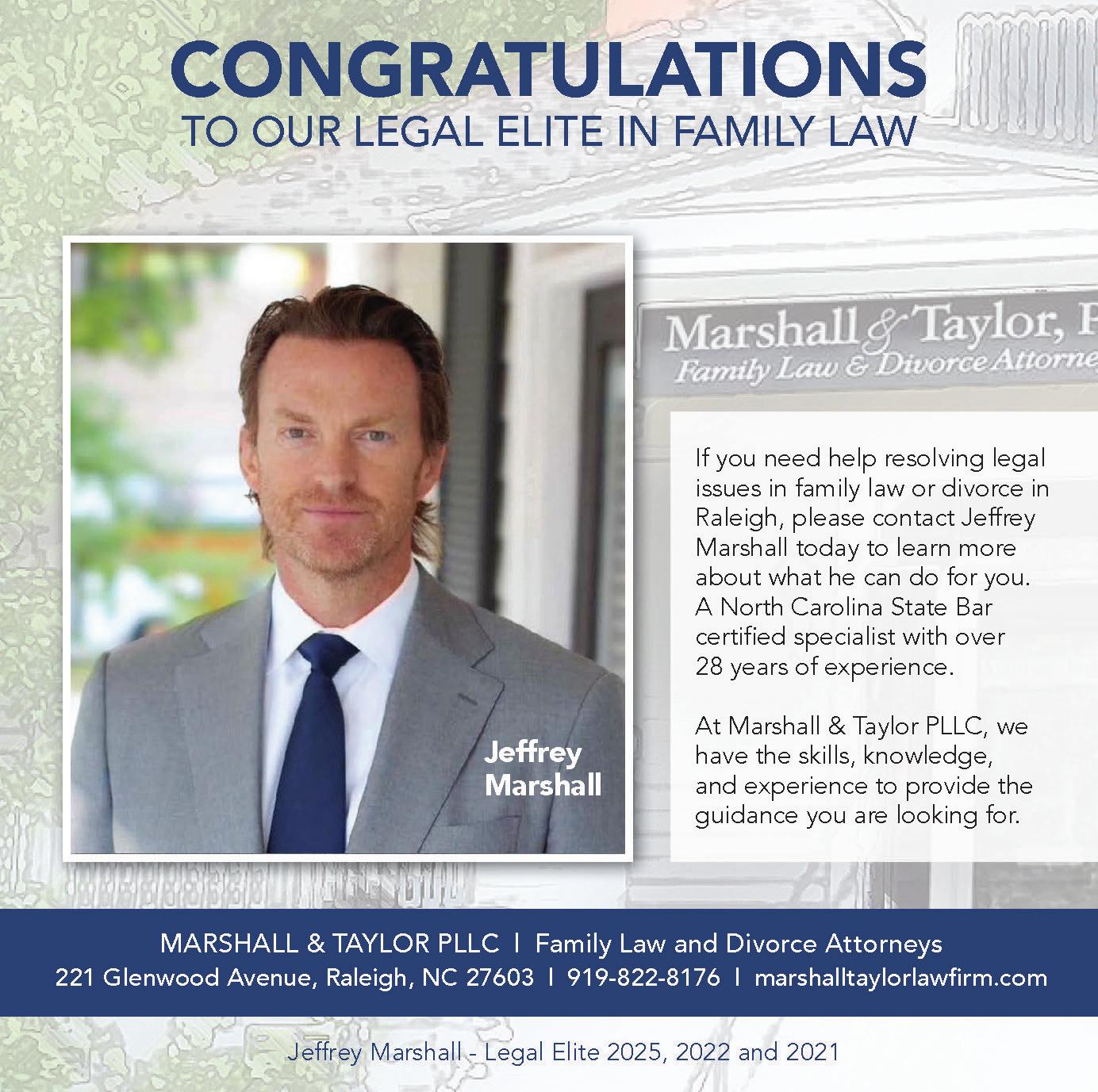
Clara AnnIgnich Bell Davis & Pitt Winston-Salem
Carly G .Baker Wake Family Law Group
Raleigh
Madeline Hurley The Mueller Law Firm Raleigh
Amy Lynn Britt Parker Bryan Family Law Raleigh
Lindsey Easterling Easterling Law Matthews
James W. Lea III The Lea/Schultz Law Firm Wilmington
Robin J. Stinson Bell Davis & Pitt Winston-Salem
Barbara R. Morgenstern Coltrane & Overfield Greensboro
Jim Siemens Siemens Family Law Group
Asheville
Jon B. Kurtz Kurtz Whitley Guy Sanders & Rainey Winston-Salem
Carole R. Albright Law Firm Carolinas Greensboro
Lisa Lefante Triangle Smart Divorce
Cary

ROBERTS & STEVENS
ASHEVILLE
HOMETOWN: Fairview, just outside Asheville

UNDERGRAD: Princeton University
LAW SCHOOL: UNC School of Law, 1982
PRACTICED LAW: 43 years







FAMILY: Wife, Cynthia Williams Clarke, five children, seven grandsons






FAVORITE NC PRODUCT: Many years ago, I would have said tobacco. Today I will say sweetpotatoes
FIRST JOB: Working on the family farm, milking baling hay, cutting silage. It taught me the value of hard work and working together with family and neighbors.





GO-TO STRESS RELIEVER: Hiking and being outdoors with my dog, Prince. Wife, Cindy, and son, Will,






also pictured.





MOST MEMORABLE CASE: We had to try a sedimentation and erosion case twice because the Court of affirmed the first verdict on liability but sent the issue back for retrial. We tried it again and got the second time



WHY DID YOU BECOME A LAWYER: Many of the people I knew growing up who were doing good things were lawyers, not necessarily practicing ones. might practice for a few years, then do something but here I am 40-plus years later.

Appeals damages in North Carolina else,


FAVORITE NC HANGOUT: Too many to name. in the west, but North Carolina has so many interesting and beautiful places, including the cities and
Many places




BEST ADVICE: My long-time partner and mentor, told me, “Do good work, and the rest will follow.”

YOUR BEST ADVICE: Sometimes when I get about the position a client finds itself or him or remind myself and others, “They got themselves My job is to do the best I can to get them out.”
BEST WORK HABIT: Do not take yourself too







2026 WORK-LIFE CHANGE: Work a little less.

BIGGEST RISK: Deciding to work in Asheville was 11% and the town looked like it was closing

Jack Stevens, discouraged mess. seriously. in 1982 when unemployment down.



FAVORITE MUSICAL ACT AT 18: Creedence Clearwater Revival and Johnny Cash

Jeffrey E. Marshall
Marshall & Taylor
Raleigh
J. Huntington Wofford Wofford Law
Charlotte
Tamara A. Smith
Pennington Smith
Wilmington
Evan Horwitz
Tharrington Smith
Raleigh
Elise Morgan Whitley
Kurtz Whitley Guy Sanders & Rainey Winston-Salem
Arlene M. Zipp
Roberson Haworth & Reese
High Point
Allison Holstein
Dozier Miller Law Group
Charlotte
Dave Holm
Parker Bryan Britt Tanner & Jenkins
Holly Springs
Lynn Wilson McNally
Smith Debnam Narron Drake
Saintsing & Myers Raleigh
Melissa J. Essick
Gailor Hunt Davis Taylor & Gibbs
Raleigh
Julia M. Pendleton
Law Office Of Julia M Pendleton
Greensboro
Christine Farrell Mulligan Attorneys
Wilmington
Ryan Binderup Schultz
The Lea/Schultz Law Firm
Wilmington
Shannan Barclay Tuorto
Tuorto Family Law
Asheville
Jennifer Davis Hammond Davis & Davis Attorneys
Salisbury
Sarah Privette
Oak City Family Law
Raleigh
Andrew Steven Brendle
Soni Brendle
Charlotte
Anna Ayscue
Rosen Law Firm
Raleigh
Matthew Krueger-Andes Krueger-Andes Law
Charlotte
David Matthew Krusch
Plumides Romano & Johnson
Charlotte
Jonathan Melton
Gailor Hunt Davis Taylor & Gibbs
Raleigh
Margaret Aiken Barrow
Tharrington Smith
Raleigh
David Christopher Herring
David Christopher Herring Law
Charlotte
Jillian Mack Moore
Moore Law Group
Graham
Manisha Pravinchandra Patel Office Of Manisha P Patel
Greensboro
Mallory A. Willink
Conrad Trosch & Kemmy
Charlotte
Lauren Ellis Leader
James, McElroy & Diehl
Charlotte
Kyle Frost
Hamilton Stephens Steele + Martin
Charlotte
Candace S. Faircloth
Collins Family & Elder Law Group
Monroe
Alexander French McIlveen Family Law
Gastonia
Blake Caulder
Caulder & Valentine Law
Shelby
Josh Valentine Caulder & Valentine Law
Shelby
Chelsea E. Gajewski
Sodoma Law
Charlotte
Kathryn Yates Easterling Law
Matthews
John Taggart Mcilveen Family Law
Gastonia
Brianne LeeVan Apeldoorn Irons & Irons
New Bern
Janet Gemmell Cape Fear Family Law
Wilmington
Andrea Bosquez-Porter Bosquez Porter Family Law
Raleigh
Robert A. Ponton Jr. Wyrick Robbins
Raleigh
Shelby D. Benton
Benton Family Law
Goldsboro
Jaye Meyer Tharrington Smith
Raleigh
Stephanie Jenkins
Parker Bryan Family Law
Raleigh
Carolyn T. Peacock
Peacock Family Law
New Bern
Katherine Ann Frye
Oak City Family Law
Raleigh
Katherine Hardersen King Wake Family Law Group
Raleigh
Lesley Wiseman Albritton
Legal Aid Of North Carolina
Raleigh
Nicole Taylor
Gailor Hunt Davis Taylor & Gibbs
Raleigh
Elizabeth Johnstone James
Hamilton Stephens Steele & Martin
Charlotte
Lauren Quinn Ward and Smith
New Bern
Phillip Cowan Ward and Smith
Raleigh
Carrie Tortora Tortora Family Law
Raleigh
Tonya Graser Smith GraserSmith
Charlotte


HOMETOWN: Multiple cities and towns, including Edison, New Jersey; Washington Heights in New York City; Tobyhanna, Pennsylvania; Cary
UNDERGRAD: George Washington University
LAW SCHOOL: UNC School of Law, 2012
PRACTICED LAW: 13 years
FAMILY: Husband, Sangeet
FAVORITE NC PRODUCT: Cheerwine. I don’t drink soda often, but when I do, I prefer the best.
FIRST JOB: Retail, where patience and customer care are the cornerstone of service.
GO-TO STRESS RELIEVER: Meditation
MOST MEMORABLE CASE: Every case where a child is in a safe, healthier situation afterward.
WHY DID YOU BECOME A LAWYER: To help children and families.
FAVORITE NC HANGOUT: On my rooftop deck
BEST ADVICE: Be humble, sit down — Kendrick Lamar
YOUR BEST ADVICE: Consistency allows you to overcome most, if not all, obstacles.
BEST WORK HABIT: Deep breaths
2026 WORK-LIFE CHANGE: Grow my business and my family.
BIGGEST RISK: Open a law firm in the midst of a pandemic.
FAVORITE MUSICAL ACT AT 18: I became a professional ballroom dancer, so anything dance related.







































Lee C. Hawley
Roberson Haworth & Reese
High Point
Alicia Jurney
Parker Bryan Britt Tanner & Jenkins
Raleigh
David Kenneth Self
David Self Law
Cornelius
Angela White McIlveen McIlveen Family Law Firm
Gastonia
Megan E. Spidell Spidell Family Law Greensboro
Rachel D. Rogers Hamrick Charlotte Collaborative Divorce
Charlotte
Courtney Lynn
Carter Arnold & Smith
Charlotte
Tiasha L. Wray Wray Law Firm
Charlotte
Kavita Christina Desai
James, McElroy & Diehl
Charlotte
Abigail Comfort Seymour Camino Law Greensboro
Dale V. Stephenson
Ward Family Law Group
Cary
Corey Alexander Noland Arnold & Smith
Charlotte
Jeffrey R. Russell Tharrington Smith
Raleigh
HELEN PARSONAGE
Elliot Morgan Parsonage Winston-Salem
Carla Vestal Vestal Immigration Law
Davidson
David J. Garrett Maynard Nexsen
Raleigh
Steven H. Garfinkel Garfinkel Immigration
Charlotte
Douglas Bradley Clawson and Staubes
Charlotte
Cynthia A. Aziz Aziz Law Firm
Charlotte
Hannah Faith Little Garfinkel Immigration
Charlotte
Lindsey Taylor Goehring
Charlotte Immigration
Charlotte
Mary Lynn Tedesco
Tedesco Legal
Charlotte
Colleen Forcina Molner Garfinkel Immigration
Charlotte
Jeremy L. McKinney
McKinney Immigration
Greensboro
Nicola Ai Ling Prall
Jackson Lewis
Raleigh
Vanessa Ann Gonzalez
Law Office Of Vanessa A Gonzalez
Wilmington
Rosa Maria Corriveau
Ogletree Deakins Nash Smoak & Stewart Raleigh
Ann Robertson
Robertson Immigration
Raleigh
Jordan Grace Forsythe Cauley Forsythe Immigration
Charlotte
Julie Spahn Miller
Spahn Law
Charlotte
Areli Jaimes Jaimes Law Office Asheboro
John L. Pinnix
Allen Pinnix
Raleigh
Stephen Hugh Smalley
Ogletree Deakins Nash Smoak & Stewart Raleigh
Helen Laura Tarokic
Helen Tarokic Law
Wilmington
Carlos Andres Lopez
Lopez Law
Charlotte
Nam Douglass Garfinkel Immigration
Charlotte
SHAWNA CANNON LEMON Stanek Lemon Charlotte
Scott K. Burger Allen Stahl + Kilbourne Winston-Salem
Eva Gullick Frongello Parker Poe Raleigh
Sloan L. E. Carpenter Parker Poe Raleigh
Thomas G. Varnum Brooks Pierce Wilmington
Jeffrey J. Schwartz Schwartz Law Charlotte
Seth L. Hudson
Maynard Nexsen
Charlotte
Patrick B. Horne
Shumaker Loop & Kendrick
Charlotte
S. Alex Long Jr.
Shumaker Loop & Kendrick
Charlotte
Daniel S. Porper
Wyrick Robbins
Raleigh
Steven N. Terranova
Withrow Terranova
Apex
William Barker Cannon
Parker Poe
Raleigh
Karen Boardman
Alignment Legal
Charlotte
Christina Davidson
Trimmer Shumaker Loop & Kendrick
Charlotte
Ticora Davis
The Creator’s Law Firm
Charlotte
Benjamin Withrow Withrow Terranova
Apex
William Kevin Ransom
Moore & Van Allen
Charlotte
Devon E. White Wyrick Robbins Raleigh
Jason S. Wood Wyrick Robbins Raleigh
Angela Doughty Ward and Smith New Bern
William G. Heedy Coffield Heedy Kilgore Asheville
W. Lyle Gravatt Michael Best & Friedrich Raleigh
Erica Rogers Ward and Smith Raleigh
Timothy E. Emmet Wyrick Robbins Raleigh
Rick Matthews Williams Mullen Raleigh
Robert Van Arnam Williams Mullen Raleigh
John Kivus Morningstar Law Group Raleigh
Steven D. Gardner Kilpatrick Townsend & Stockton Winston-Salem
Darrell A. Fruth Smith Anderson Raleigh
Alton Luther Absher III Kilpatrick Townsend & Stockton Winston-Salem
Justin R. Nifong NK Patent Law Raleigh
Ani Agrawal NK Patent Law Raleigh
Emmett Weindruch Holland & Knight
Charlotte
Doug Meier NK Patent Law Raleigh
CLINTON S. MORSE
Brooks Pierce Greensboro
Vince Eisinger Cranfill Sumner Raleigh
Harrison A. Lord Lord & Lindley Charlotte
Andrew Larry Fitzgerald Fitzgerald Litigation Winston-Salem
Samuel A .Slater Wyrick Robbins Raleigh
Mona L. Wallace Wallace & Graham Salisbury
Chris Graebe Morningstar Law Group Raleigh
Colin J. Tarrant Block Crouch Keeter Behm & Sayed Wilmington
Matthew S. Roberson McGuire Wood & Bissette Asheville
Kimberly Jill Kirk Johnston Allison & Hord Charlotte
Bo Brandon Caudill Villmer Caudill Charlotte
Ellie Bragg Leitner Bragg & Griffin Monroe
Patrick Michael Kane Fox Rothschild Greensboro
Charles George Wyrick Robbins Raleigh
Benjamin L. Worley Longleaf Law Partners Raleigh
Whitney Wallace Williams Wallace & Graham Salisbury
Austin R. Walsh Johnston Allison & Hord
Charlotte
Lucas D. Garber Shumaker Loop & Kendrick Charlotte
Jacob M. Morse Morse Fritts Raleigh
Jonathan A. Berkelhammer Ellis & Winters Greensboro
Alan M. Ruley Bell Davis & Pitt Winston-Salem
R. Susanne Todd
Johnston Allison & Hord
Charlotte
William Kirk Sanders
Hendrick Bryant Nerhood Sanders Otis Winston-Salem
ELLIOT MORGAN PARSONAGE
WINSTON-SALEM
HOMETOWN: London
UNDERGRAD: University of Birmingham, United Kingdom
LAW SCHOOL: North Carolina Central, 2006
PRACTICED LAW: 19 years
FAMILY: Husband, three sons and a granddaughter.
FAVORITE NC PRODUCT: Seagrove pottery. I am a collector of art pottery.
FIRST JOB: Being a line server in a cafeteria taught me that’s not what I want to do.
GO-TO STRESS RELIEVER: Spinning and knitting
MOST MEMORABLE CASE: In Nasrallah v. Barr, I was successful in a U.S. Supreme Court case in 2020 where my client, Nidal Khalid Nasrallah, sought protection using Convention Against Torture in a court battle not to send him back to Lebanon.
WHY DID YOU BECOME A LAWYER: I love picking issues apart and winning arguments.
FAVORITE NC HANGOUT: Blue Ridge Mountains or Oak Island
BEST ADVICE: Just do it.
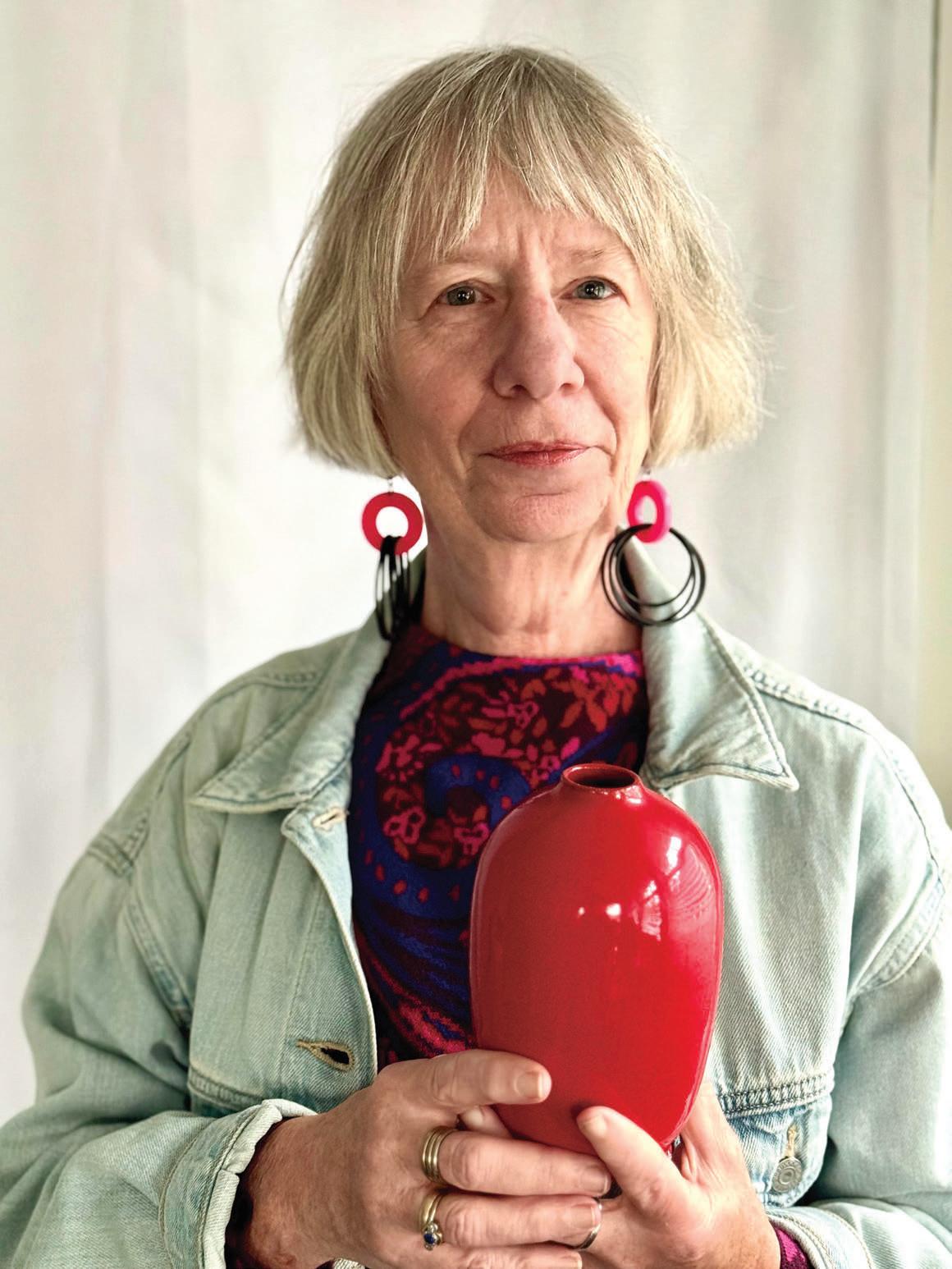

BEST WORK HABIT: Keeping a balance and not working evenings or weekends
2026 WORK-LIFE CHANGE: Cutting back some.
BIGGEST RISK: Going back to law school with three children at home.
FAVORITE MUSICAL ACT AT 18: Pink Floyd
Henry L. Kitchin Jr.
McGuireWoods
Raleigh
Tricia M. Derr
Lincoln Derr
Charlotte
Joshua B. Durham
Bell Davis & Pitt
Charlotte
Thomas Hamilton Segars
Ellis & Winters
Raleigh
Trey Lindley
Lord & Lindley
Charlotte
Brandon S. Neuman
Nelson Mullins Riley & Scarborough
Raleigh
Jeffrey R. Monroe
Miller Monroe Plyler
Raleigh
Jeremy Scott Maddox
Law Offices Of James Scott Farrin
Charlotte
Walter L. Tippett Jr.
Williams Mullen
Raleigh
Benjamin F. Leighton
Alexander Ricks
Charlotte
David C. Wright III
Robinson Bradshaw & Hinson
Charlotte
John R. Hughes
Wallace & Graham
Salisbury
Kenneth T. Lautenschlager
Johnston Allison & Hord
Charlotte
Jared Gardner
Gardner Skelton
Charlotte
Brad Evans Ward and Smith
Winterville
K. Alan Parry
Parry Law
Chapel Hill
Michael D. DeFrank
Wyrick Robbins
Raleigh
Colin Stockton
Alexander Ricks
Charlotte
J.D. Hensarling
Vann Attorneys
Raleigh
Mark Doby
Wallace & Graham
Salisbury
Jason A. Miller
Miller Monroe Plyler
Raleigh
J. Haydon Ellis Hutchens Law Fayetteville
Heryka R. Knoespel
Troutman Pepper Locke
Charlotte
Justin W. Freeman
Davis & Davis
Salisbury
Jennifer K. Van Zant
Brooks Pierce
Greensboro
Eric M. David
Brooks Pierce
Raleigh
David Neal Allen
Brooks Pierce
Charlotte
John N. Hutson Jr.
Young Moore and Henderson
Raleigh
James P. Cooney III
Womble Bond Dickinson
Charlotte
Lawrence M.Baker
Willson Jones Carter Baxley
Charlotte
William C. Robinson
Robinson Elliott & Smith
Charlotte
Luther D. Starling
Daughtry Woodard Lawrence & Starling Smithfield
Pamela Duffy
Ellis & Winters
Greensboro
W. Bradford Searson Searson, Jones, Gottschalk & Cash
Asheville
Kirkland Hardymon Rayburn Cooper & Durham
Charlotte
Philip S. Anderson The Van Winkle Law
Asheville
Shannon R. Joseph Morningstar Law
Raleigh
Valecia M. McDowell Moore & Van Allen
Charlotte
Kevin G. Williams Bell Davis & Pitt Winston-Salem
Lori Keeton Law Offices Of Lori Keeton
Charlotte
J. Christopher Jackson Morningstar Law Group
Raleigh
Ryan James Adams
Adams Howell Sizemore & Adams
Raleigh
Harry H. Albritton Jr. Irons & Irons Greenville
Jonathan C. Krisko
Robinson Bradshaw & Hinson
Charlotte
Amy E. Richardson
Harris Wiltshire & Grannis
Raleigh
E. Kenneth Coble
Willson Jones Carter Baxley
Charlotte
Jeffrey A. Bunda Hutchens Law
Charlotte
Drew Erteschik Poyner Spruill
Raleigh
Cary B. Davis
Robinson Bradshaw & Hinson
Charlotte
James Hash Gaskins Hancock Tuttle Hash
Raleigh
Michael James Hoefling Johnston Allison & Hord
Charlotte
Noah Breen Abrams Abrams & Abrams
Raleigh
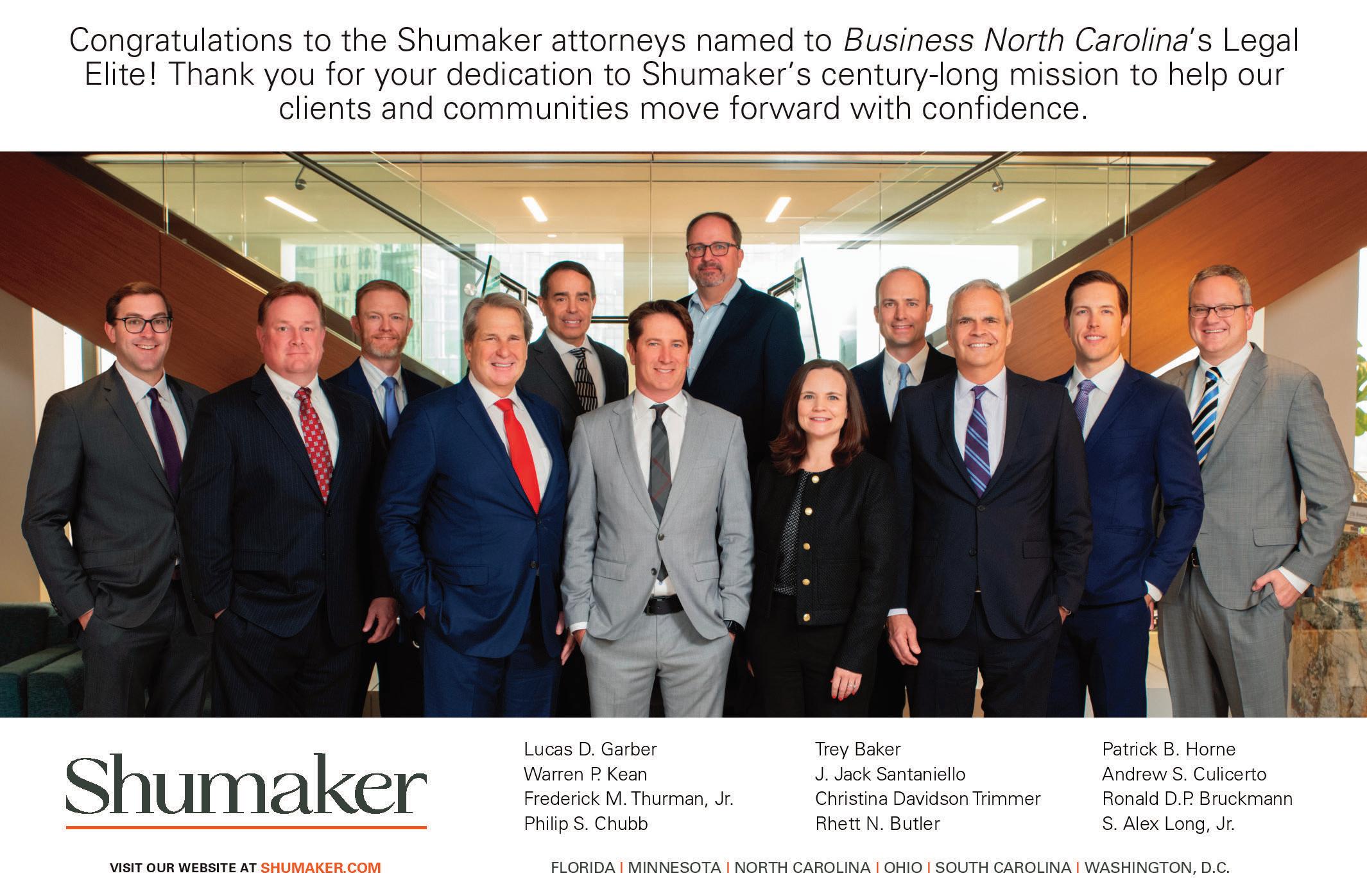
STANEK LEMON CROUSE + CHARLOTTE




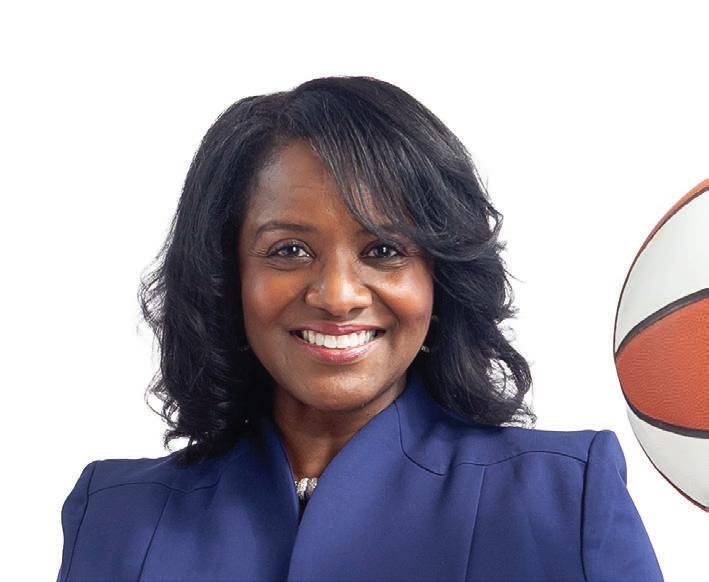

HOMETOWN: Columbia, South Carolina

UNDERGRAD: Wofford College, Spartanburg, South Carolina; doctorate in biomedical science/pharmacology from the University
PRACTICED LAW: 24 years




LAW SCHOOL: UNC School of Law,
of South Carolina

FAMILY: Husband of 31 years, Brian, Grayson, 26 and Nicholas, 21
2001

children Claudia, 29,
FAVORITE NC PRODUCT: Basketball. but I love basketball and we have so
I’m a die-hard football mom, much talent in the Triangle.

FIRST JOB: In high school, I was on the Rich’s (now Macy’s) Teen Board as a student ambassador. Through my passion for empowering other



this experience, I discovered women.
“Days of Our Lives” and “The Young grandparents when I was growing up.

GO-TO STRESS RELIEVER: Watching and The Restless” like I did with my Makes me feel safe and deeply loved.

MOST MEMORABLE CASE: I had to and Trademark Office in Alexandria, evaluate my client’s drug properly bring it inside the building. I cleared
convince an examiner at the U.S. Patent Virginia, to drink a bottle of Gatorade to after first convincing security to let me every hurdle and the patent was issued.


Law was my first passion, even though playing the role of advocate on behalf

WHY DID YOU BECOME A LAWYER: it was my second career. I remember of other students in elementary school.


FAVORITE NC HANGOUT: Golf & spa at The Grandover Resort in Greensboro.


YOUR BEST ADVICE: Stay true to your sometimes only a few will stand with


BEST WORK HABIT: Plan my day the reminders to set goals and prioritize
BEST ADVICE: My mentor [Raleigh career that client development takes time attempts.
attorney] Mike Sajovec told me early in my and not to be discouraged by unsuccessful morals and values, understanding that you.


night before, using notes and calendar tasks.
like to join another corporate board. I in law, science, leadership, and a book that chronicles my journey in
2026 WORK-LIFE CHANGE: I would believe that my multidisciplinary background entrepreneurship would be an asset. I also want to write overcoming workplace toxicity.
after 16 years to start over. In 2019, I
BIGGEST RISK: Leaving a firm in 2016 co-founded an intellectual property firm with three extraordinary partners and three exceptional support staff members.

FAVORITE MUSICAL ACT AT 18: Prince


BROOKS PIERCE GREENSBORO
HOMETOWN: Grew up in Roanoke, Virginia, as a Texan born in Houston.
UNDERGRAD: James Madison University
LAW SCHOOL: Wake Forest University School of
PRACTICED LAW: 17 years
FAMILY: Wife, Diana Morse, Shepperd Morse, 12,
seventh-generation












Law, 2008

Brady, 9

FAVORITE NC PRODUCT: The American Chestnut. I love being a part of the effort to bring this tree back that was nearly blight in the early 1900s. Contributing what you success will only be obtained decades in the future,
wiped out by a terrible can to a cause, even if is inspiring.
FIRST JOB: Being a Division I tennis player taught with dedication, focus, hard work and desire.
GO-TO STRESS RELIEVER: Tending to the chestnut Grayson County, Virginia.
MOST MEMORABLE CASE: I get the best result problem as if it is my own. To that end, it is impossible memorable case,” because, win or lose, each of my my family for that case.


me goals can only be reached
trees at our property in by taking on my client’s to choose one “most clients become part of
WHY DID YOU BECOME A LAWYER: As a third-generation that my dad, perhaps unwittingly, trained me to be a lawyer from a young age. -All the work he put in making me speak in public, and teaching me about competition made me an


FAVORITE NC HANGOUT: Proehlific Park to watch And the tracks and cross-country courses to watch High Point Blaze.
Brady play football. Shep run for the
BEST ADVICE: From Theodore Roosevelt: “It is not man who points out how the strong man stumbles could have done better. The credit belongs to the arena so that his place shall never be with those neither victory nor defeat.” One of the many quotes

lawyer, I believe keeping arguments logical attorney.
YOUR BEST ADVICE: Do not be afraid to lose. Litigation your clients about the risks, and then go and do
is inherently risky. Advise clients everything you can to win.
2026 WORK-LIFE CHANGE: Get more associates
the critic who counts: not the or where the doer of deeds man who is actually in the cold and timid souls who knew Dad made us memorize.
BEST WORK HABIT: Fighting for what I believe is important, while relaxing when facing the insubstantial. Also, giving high fives around
to my office teammates. arguing matters earlier.
BIGGEST RISK : Taking on $100,000 in student-loan
FAVORITE MUSICAL ACT AT 18: Dave Matthews
debt to become an attorney.


Band



























Matthew S. DeAntonio
Bradley Arant Boult Cummings
Charlotte
Deedee Rouse Gasch
Cranfill Sumner
Wilmington
Elizabeth Zwickert Timmermans McGuireWoods
Raleigh
Matthew E. Meany
Willson Jones Carter Baxley
Raleigh
Angela D. Zachary
Willson Jones Carter Baxley
Charlotte
Jason Michael Burton
Burton Law Firm
Raleigh
James A. Davis II Davis & Davis
Salisbury
Jeffrey M. McCraw
Crisp Cherry McCraw
Charlotte
Jeremy M. Wilson Ward and Smith
Wilmington
John W. Holton
Miller Monroe Plyler
Raleigh
Jessica Blair Vickers
Manning Fulton & Skinner
Raleigh
Amanda Pickens Nitto
Robinson Bradshaw & Hinson
Charlotte
Lee D. Denton
Spilman Thomas & Battle Winston-Salem
Mark A. Hiller
Robinson Bradshaw & Hinson
Chapel Hill
Travis S. Hinman
Robinson Bradshaw & Hinson
Charlotte
Scottie Forbes Lee Ellis & Winters
Greensboro
Timothy James Readling Davis & Davis
Salisbury
Zachary Walton
Walker Allen
Charlotte
Kathleen Elizabeth Perkins
Hunton Andrews Kurth
Charlotte
Spencer S. Fritts
Morse Fritts
Raleigh
Scott Hazelgrove
Wyrick Robbins
Raleigh
Darby M. Festa
Moore & Van Allen
Charlotte
Mary Mchugh Webb
Ragsdale Liggett
Raleigh
Elizabeth H. Overmann
Ragsdale Liggett
Raleigh
Benjamin S. Chesson
Brooks Pierce
Charlotte
Alan W. Duncan
Mullins Duncan Harrell Russell
Greensboro
Michael W. Mitchell
Smith Anderson
Raleigh
R. Brittain Blackerby
Harris Creech Ward & Blackerby
New Bern
Allen C. Smith
Murphy & Grantland
Charlotte
Robert R. Marcus
Bradley
Charlotte
Sara R. Lincoln
Lincoln Derr
Charlotte
L. Cooper Harrell
Mullins Duncan Harrell Russell
Greensboro
Erik M. Rosenwood
Rosenwood Rose & Litwak
Charlotte
William L. Esser IV
Parker Poe
Charlotte
Ashley Kamphaus Brathwaite
Ellis & Winters
Raleigh
Matthew William Buckmiller
Buckmiller Boyette Frost
Raleigh
Ann Patton Hornthal
Roberts & Stevens
Asheville
Stephen M. Russell Jr.
Mullins Duncan Harrell Russell
Greensboro
Michael Parrish
Ward and Smith
New Bern
Christopher Donald Tomlinson
Moore & Van Allen
Charlotte
Edward Hallett Maginnis
Maginnis Law
Raleigh
Fred William DeVore IV
Devore Acton & Stafford
Charlotte
John Alexander Heroy
James, McElroy & Diehl
Charlotte
David J. Overton
Ricci Law
Raleigh
Karl Gwaltney
Maginnis Howard
Raleigh
Steven Corriveau
Martin & Jones
Raleigh
Ross J. Bromberger
Rosenwood Rose & Litwak
Charlotte
Mallory G. Horne
Bovis Kyle Burch & Medlin
Greensboro
Chad Alan Archer
Blanco Tackabery
Winston-Salem
Michael Ingersoll
Womble Bond Dickinson
Charlotte
Kevin G. Sweat
Lord & Lindley
Charlotte
S. LEIGH RODENBOUGH IV
Brooks Pierce Greensboro
RANDALL A. UNDERWOOD
Brooks Pierce
Greensboro
John Covington Overfield
Coltrane & Overfield
Greensboro
Peter U. Kanipe
McGuire Wood & Bissette
Asheville
Charles V. Archie
Wyrick Robbins
Raleigh
Nathaniel Howard Cook
Block Crouch Keeter Behm & Sayed
Wilmington
Robert George Lindauer Jr.
Johnston Allison & Hord
Charlotte
Douglas John Short
Manning Fulton & Skinner
Raleigh
Cameron Todd Ware
Johnston Allison & Hord
Charlotte
Susan R. Benoit Hutchens Law
Fayetteville
Thomas Patrick Hockman
Schell Bray
Greensboro
Christopher W. Loeb
Robinson Bradshaw & Hinson
Charlotte
John R. Buben Jr. Johnston Allison & Hord
Charlotte
Andrew Mccullough Venn Law Group
Charlotte
Sam Franck Ward and Smith Wilmington
Anna Hartzog Tison Martin Marietta
Raleigh
Nikhil Pankaj Vyas Vyas Realty Law Raleigh
Trey Baker Shumaker Loop & Kendrick Charlotte
John W. King Jr.
John W King New Bern
Jeffrey P.Keeter Block Crouch Keeter Behm & Sayed
Wilmington
Alison R. Cayton
Manning Fulton & Skinner
Raleigh
Keith Burns Maynard Nexsen
Raleigh
Elizabeth R. Harrison
Gaskins Hancock Tuttle Hash
Raleigh
Nicole Sabourin Loeffler Weatherspoon & Voltz
Raleigh
Jeanne A. Pearson
Johnston Allison & Hord
Charlotte
Joseph B. Bass III Manning Fulton & Skinner
Raleigh
Jennifer M. Hall Wyrick Robbins Raleigh
Mark Hanson Alexander Ricks
Charlotte
Louis Penn Clarke Longleaf Law Partners Raleigh
Alexander Serkes Maynard Nexsen
Raleigh
Anthony J. Barwick
Brooks Pierce
Raleigh
Robert J. Ramseur Jr. Ragsdale Liggett
Raleigh
Lindsay Parris Thompson Van Winkle Law Firm
Asheville
LaDeidre Dianne Matthews Fox Rothschild
Charlotte
John M. May
Robbins May & Rich Pinehurst
Thomas E. Terrell Jr. Fox Rothschild Greensboro
Christopher P. Edwards
Christopher P Edwards Attorney Farmville
Holden Reaves Reaves Law Fayetteville
Tonya Powell Maynard Nexsen Raleigh
Brian J. Schoeck Johnston Allison & Hord Charlotte
Peter F. Morgan Knipp Law Office Belmont
Justin M. Lewis Ward and Smith
Wilmington
Daniel Adam Merlin
Alexander Ricks
Charlotte
Scott M. Holmes Murchison Taylor & Gibson
Wilmington
Catherine Barr
Johnston Allison & Hord
Charlotte
Brooks F. Jaffa
Cranford Buckley Schultze Tomchin Allen & Buie
Charlotte
HOMETOWN: Greensboro
UNDERGRAD: UNC Chapel Hill
LAW SCHOOL: UNC School of Law, 1980
PRACTICED LAW: 45 years
FAMILY: Married Melanie Hyatt Rodenbough in 1980, and lost Melanie to metastatic breast cancer in 2021; I found new love and married Kelly Peterson in November 2024; four children, Andy Rodenbough, Anna L. Rodenbough, Libby Rodenbough, MK Rodenbough; two grandchildren
FAVORITE NC PRODUCT: Mipso, the Chapel Hill-based band that my daughter Libby, has toured with for about 13 years.
FIRST JOB: Priming tobacco at age 12 and caring for 20,000 adolescent chickens for local farmers in the Rockingham County town of Madison. You can not imagine the amount of methane produced by 20,000 chickens.
GO-TO STRESS RELIEVER: Working out in the morning with my trainer, Nicholas Kimps.
MOST MEMORABLE CASE: A series of land title cases involving thousands of acres on Hatteras Island acquired in 1929 by Andrew Carniege’s partner, John H. Phipps, and his son, John S. Phipps. They used the land for hunting, fishing and gun clubs at Avon and Buxton. For about a decade, I traveled there every other week with my partners, Randy Underwood and Bill McNairy, to search titles in Dare, Hyde and Currituck counties. We ate a lot of seafood, met colorful characters and made friends as we came to love Hatteras Island.
WHY DID YOU BECOME A LAWYER: My father was a solo practitioner who would let me observe court proceedings from age 10. From high school to when I was in law school, I worked in his office. So becoming a lawyer was in my DNA.
FAVORITE NC HANGOUT: Holden Beach. Melanie and I honeymooned there in 1980, and my family and I have rented oceanfront houses there all but a handful of summers since.
BEST ADVICE: From my late partner, Edgar B. Fisher: “There are no gray areas in the practice of real estate law – it is either right or it is wrong. But good and thoughtful lawyering can cure any error in a chain of title or the drafting of an instrument.”
YOUR BEST ADVICE: Law truly is a jealous mistress that can consume you all day, every day, so make time first for your family, your faith and your community.





















BEST WORK HABIT: Doing whatever it takes to solve a problem and get the best result for our client, without regard to how long it takes or how much of that time gets billed to the client.
2026 WORK-LIFE CHANGE: Delegate more, get to bed earlier and travel with my wife, Kelly.
BIGGEST RISK: Forgoing opportunities to go in-house to continue practicing law with Brooks Pierce, a decision I have never regretted.
FAVORITE MUSICAL ACT AT 18: Brice Street, a band from Greensboro that I saw perform at the Town Hall my first night in Chapel Hill.
Lawrence “Larry” Joseph Shaheen Jr. McIntosh Law
Davidson
Dana M. Lingenfelser nCino
Wilmington
Jacqueline Cajigal
Block Crouch Keeter Behm & Sayed
Wilmington
Ashleigh E. Black Ragsdale Liggett
Raleigh
William H. Weatherspoon Jr. Weatherspoon & Voltz
Raleigh
Donna R. Cohen
Donna R Cohen Attorney At Law
Raleigh
Stephen E. Klee
Fox Rothschild
Greensboro
Kent Jones
Womble Bond Dickinson
Charlotte
Janeen Miller Hogue
The Miller Hogue Law
Charlotte
Jennifer Scott Shipman & Wright
Wilmington
Benjamin R. Kuhn Ragsdale Liggett
Raleigh
Christina Freeman Pearsall Schell Bray
Greensboro
Jessica L. Elliott
Manning Fulton & Skinner
Raleigh
Mark S. Hartman
Davis Hartman Wright
New Bern
Robbie Parker Lee Kaess
Wilmington
Gary T. McDermott McDermott Law Waxhaw
Stephanie E. Greer
Troutman Pepper Locke
Charlotte
Camden C. Betz
Parker Poe
Raleigh
Justin K. Humphries
Humphries Law
Wilmington
Derek M. Wisniewski
Kirk Palmer & Thigpen
Charlotte
Jonathan W. Anderson
Law Office of Jonathan W Anderson
Raleigh
David L. Hillman
Williams Mullen
Raleigh
Holly S. Mills
Longleaf Law Partners
Raleigh
Hunter S. Edwards
Womble Bond Dickinson
Charlotte
Sarah Lucente Kunkleman & Lucente
Charlotte
Heather Dawn McDowell Ellinger & Carr
Raleigh
G. Grey Littlewood Littlewood Law
Raleigh
Andrew Steven Felts
Baker Donelson Winston-Salem
Stephen J. Perry
Wyrick Robbins
Raleigh
William A. Pully II Littlewood Law
Raleigh
M. Brien Bowlin Jr.
Paladin Law
Huntersville
Brittnay Morgan Franklin Alexander Ricks
Charlotte
Michelle Gonzalez
Ward and Smith
Raleigh
Katie King
Brady Boyett
Raleigh
Angelika B. Drossopoulos
James, McElroy & Diehl
Charlotte
Jonathan T. Sizemore
Adams Howell Sizemore & Adams
Raleigh
Jonathan Peter Goldberg
Alexander Ricks
Charlotte
Marshall Horsman III
Fox Rothschild
Charlotte
Walter D. Fisher Jr.
Troutman Pepper Locke
Charlotte
William B. Kirk Jr.
Kirk Palmer & Thigpen
Charlotte
John R. Rose
Goosmann Rose Colvard Cramer
Asheville
Joseph B. Dempste Jr. Poyner Spruill
Raleigh
Jeffery J. Malarney
Jeff Malarney
Kitty Hawk
Don T. Evans Jr.
Clark Newton Evans
Wilmington
Susan Y. Ellinger Ellinger & Carr
Raleigh
Susan K. Irvin Irvin Law Group Cornelius
John F. Renger III Renger Reynolds
Charlotte
Stephen Francis HorneIII Horne Horne Greenville
Mary Burgett Ashley
Ashley Law Firm
Charlotte
Evan Michael Bass
Moore & Van Allen
Charlotte
Tikkun A. S. Gottschalk Searson, Jones, Gottschalk & Cash
Asheville
James Scott Efird
St Amand & Efird
Charlotte
James C. McCaskill
Longleaf Law Partners
Raleigh
James Bryant Haynes Brooks Pierce Greensboro
Erin Cowan Mosley Maynard Nexsen
Greensboro
Kyle Smalling Capital City Law Wake Forest
Cameron Winfrey Ward and Smith
Raleigh
Parker Cheatham Lee Person & Lee Fayetteville
B. Zachary Taylor Jr. Manning Fulton & Skinner
Raleigh
SARA R. VIZITHUM Brooks Pierce Greensboro
Clifton Williams Allen Stahl + Kilbourne
Asheville
Christian L. Perrin Perrin Legal
Charlotte

BROOKS PIERCE GREENSBORO
HOMETOWN: Big Rapids, Michigan
LAW SCHOOL: UNC School of Law, 2002
PRACTICED LAW: 23 years
FAMILY: Husband, BJ, children, Lily and Will











UNDERGRAD: Hope College (Holland, Michigan)


FAVORITE NC PRODUCT: UNC Chapel Hill. My I are both graduates. We love the school and Tar Heels.




FIRST JOB: Legislative correspondent for U.S. Dave Camp of Michigan. I learned to always be to never walk into someone else’s office without pen.







GO-TO STRESS RELIEVER: A walk, preferably the beach or the woods. Even better if it is with someone me laugh.
MOST MEMORABLE CASE: Sitting at the counsel the NC Court of Appeals a few weeks after passing and holding the watch for my (now) partner. It time in a courtroom other than for a swearing







husband and rooting for the Representative prepared and and who makes table the bar only in.
WHY DID YOU BECOME A LAWYER: I loved books. I wanted to be a private investigator (like an attorney (like her dad). The more I learned I could do as an attorney and how I could help realized that was what I wanted to do for a living.











FAVORITE NC HANGOUT: Anywhere in the mountains.

BEST ADVICE: My mentor, [Brooks Pierce partner] McNairy, taught me that you always get a better when you collaborate.




BEST WORK HABIT: Trying to learn and improve
2026 WORK-LIFE CHANGE: Making time for exercise


Nancy Drew Nancy) about what people, I Bill day. daily
BIGGEST RISK: Working part-time while my kids young. It was worth it.





FAVORITE MUSICAL ACT AT 18: Depeche Mode







Rebecca Lane Smitherman
Craige Jenkins Liipfert & Walker Winston-Salem
Thomas H. Cook Jr. Wyrick Robbins Raleigh
Sandra M. Clark
Manning Fulton & Skinner Raleigh
Holly Berry Harris Norvell Johnston Allison & Hord Charlotte
Elinor J. Foy Wyrick Robbins Raleigh
Holly Simpson Simpson Law Charlotte
Keith A. Wood Carruthers & Roth Greensboro
Lucy Siler
Johnston Allison & Hord Charlotte
Maria Magdalena
Satterfield Satterfield Legal Charlotte
Julie Mario Bradlow Darrow Everett Charlotte
Davis W. Puryear Hutchens Law Fayetteville
John R. Cella Jr. Ragsdale Liggett Raleigh
Stanton P. Geller Culp Elliott & Carpenter Charlotte
Adam Tarleton Brooks Pierce Greensboro
Robert Hammock Wall Baker Donelson Winston-Salem
Lauren S. Martin
Johnston Allison & Hord Charlotte
Stephen T. Byrd
Manning Fulton & Skinner Raleigh
Richard A. Kort McGuire Wood & Bissette Asheville
Harris M. Livingstain McGuire Wood & Bissette Asheville
Jennifer L. J. Koenig Schell Bray Greensboro
Janice L. Davies Davies Law Charlotte
Andrew Lamberson Nesbitt Nesbitt Law Charlotte
Matthew W. Thompson Ward and Smith Wilmington
Christian P. Cherry
Crisp Cherry Mccraw Charlotte
Mitchell Kemp Mosley Narron Wenzel Raleigh
Lawrence Moye IV EQV Advisory Raleigh
David Eric Anderson
David E Anderson Wilmington
Charles Joseph Del Papa
Wyrick Robbins Raleigh
B.J. Kilgore
The Van Winkle Law Firm Asheville
Caroline Corry Munroe Blanco Tackabery Winston-Salem
Stacy M. Reid
Monroe Johnston Allison & Hord
Charlotte
Lauren Campbell Maxie NC Planning
Cary
Amy K. Smith Bell Davis & Pitt Winston-Salem
Reed J. Hollander Young Moore and Henderson Raleigh
Sarah Sparboe Thornburg McGuireWoods & Bissette Asheville
Stephanie Daniel Kirk Palmer & Thigpen Charlotte
Andrew F. Dana Parker Poe
Charlotte
S. Kyle Agee
Johnston Allison & Hord
Charlotte
John W. Forneris
Robinson Bradshaw & Hinson
Charlotte
Paul Anthony Yokabitus
Cary Estate Planning
Cary
Kelly Rains Jesson Jesson & Rains
Charlotte
Cristine R. Dixon
Craige Jenkins Liipfert & Walker Winston-Salem
Jeneva Alicia Vazquez Bray & Long Charlotte
Joseph A. Kimmet Wyrick Robbins Raleigh
Jennifer C. Noble Fox Rothschild Greensboro
C. Wells Hall II Nelson Mullins Riley & Scarborough
Charlotte
Robert D. Lyerly Jr. Maynard Nexsen
Charlotte
John T. Burns Burns & Gray
Monroe
Mary Kay Baynard
James, McElroy & Diehl
Charlotte
Amy S. Klass Fox Rothschild Greensboro
John R. Sloan
Ward and Smith
Wilmington
Kimberly H. Stogner
Womble Bond Dickinson Winston-Salem
J. Michael Wilson
Bradley Arant Boult Cummings
Charlotte
Louise M. Paglen McIntosh Law
Davidson
Deni C. Pifer Pifer Estate Law
Charlotte
John Randolph Hemphill Hemphill Gelder
Raleigh
Andrew D. Atherton McGuireWoods & Bissette
Asheville
Jeremy Todd Canipe The Canipe Law Firm
Charlotte
Jason R. Page Law Office of Jason R Page
Wilson
Sabrina Winters Sabrina Winters Attorney At Law Charlotte
Mark J. Hale Jr. Baddour Parker Hine & Hale Goldsboro
Jeffery J. Morris Parker Poe Charlotte
Helayne Levy Payne Elder Law & Life Care Planning Center Shallotte
Lora M. Howard Lora M Howard Greensboro
Mary Robinson Hervig Roberts & Stevens Asheville
Bradley Wooldridge Longleaf Law Partners Raleigh
Adam Gates Kerr Kerr Law Greensboro
Kara O. Gansmann Cranfill Sumner Wilmington
Galina “Allie” Petrova Petrova Law Greensboro
H .Denton Worrell Worrell Sides Raleigh
Adrienne R. Cherry Leitner Bragg & Griffin Monroe
Nicole A. Corley Murray & Corley Fayetteville
Samantha J. Hovaniec Brooks Pierce Raleigh
Joseph D. Shealy Johnston Allison & Hord Charlotte
Paula Alyse Kohut Kohut Adams & Randall Wilmington
Warren P. Kean
Shumaker Loop & Kendrick
Charlotte
Beth Wood
Alexander Ricks
Charlotte
Ansley Chapman Cella
Smith Anderson
Raleigh
Daniel Brinson Finch
Pinna Johnston & Burwell
Raleigh
Jill Lynn Peters Kaess
Lee Kaess
Wilmington
Bradley T. Van Hoy Moore & Van Allen
Charlotte
Joshua D. Bryant
Smith Anderson
Raleigh
Michael Murray Murray Moyer
Raleigh
Tanya Nicole Oesterreich Oesterreich Law
Concord
Adam Brook Snyder Wyrick Robbins Raleigh
Stephen Aaron Brown Young Moore and Henderson
Raleigh
Abigail Elizabeth Peoples Law Firm of Abigail E Peoples Greensboro
Thomas A. Cooper Austin Cooper Legal
Charlotte
Margaret Troy Kocaj Kocaj Consulting
Charlotte
Jonathan M. Parisi Spangler Estate Planning Greensboro
Sarah Warren
Trinity Partners
Charlotte
ZECHARIAH ETHERIDGE Etheridge Law Chapel Hill
Alexander Nibert
Johnston Allison & Hord
Charlotte
J. Nate Pierce
Johnston Allison & Hord
Charlotte
Max E. Isaacson Longleaf Law Partners
Raleigh
Lauren Trask Millovitsch Creamer Millovitsch
Davidson
Jasmine Michelle Pitt
Baker Donelson Winston-Salem
Joseph Robert Shealy
Katten Muchin Rosenman
Charlotte


YOUNG GUNS
ETHERIDGE LAW
CHAPEL HILL



HOMETOWN: Morven (Anson County)
UNDERGRAD: UNC Greensboro
LAW SCHOOL: Elon University School of Law, 2021
PRACTICED LAW: 3 years

FAMILY: Wife, Kendall, dog, Clover, cats Lavender and Willow
FAVORITE NC PRODUCT: Hole Doughnuts in Asheville has set the bar so high. They are made to order and you can’t go wrong with any of them.
GO-TO STRESS RELIEVER: Weightlifting

FAVORITE NC HANGOUT: Battleground Park, Greensboro





FIRST JOB: Bagging trash, cleaning bathrooms, working the pool and checking families in for sporting events at Little Park in Wadesboro at age 15 taught me how important community spaces are to the people that live in that community, to work independently and be a team member. Plus, spending time goofing off with my older brother.
MOST MEMORABLE CASE: I drafted a petition for clemency for a woman incarcerated, seeking early release due to the circumstances of her conviction, pro bono. She was 17 at the time of the offense and under immense pressure. I am still holding out hope for her.

WHY DID YOU BECOME A LAWYER: I enjoy making complicated concepts easy to understand. Many bad situations (insolvency, criminal and civil violations) are more or less avoidable with the right knowledge and guidance.
BEST ADVICE: Attitude determines altitude. My late grandfather, Theodore Carr II.
YOUR FAVORITE MUSICAL ACT AT 18: The Lion King

YOUR BEST ADVICE: Take risks to become someone you are proud of and live a life you enjoy. Tomorrow isn’t promised, and a life of regrets is worse than 1,000 failures. Have a reasonable backup plan that you can be comfortable with if plan A does not fully pan out.
BEST WORK HABIT: After losing valuable physical notes, I started taking electronic notes for meetings with opposing counsel or clients. Chapel Hill lawyer Jim White shared this tip with me, and I’m very grateful for it.
2026 WORK-LIFE CHANGE: More speaking engagements for small business owners on contracts and loan documents, so they do not have to come see me for a bankruptcy consultation later.
BIGGEST RISK: I narrowly failed my first attempt at the bar exam. I had a job offer at my first law firm and moved to Raleigh, even though I didn’t know whether I would pass on my second attempt. I restarted my life, while fully aware I could lose the law firm job. It all worked out and I thank my wife for the courage to make that move.




































Preetha Suresh Rini
Robinson Bradshaw & Hinson Raleigh
S. Collins Saint Brooks Pierce Greensboro
Trent S. Allard
Johnston Allison & Hord
Charlotte
Olivia Smith Wallace & Graham Salisbury
Chris N. Bobby
Manning Fulton & Skinner Raleigh
Amanda S. Hawkins Brooks Pierce Raleigh
Diane B. Burks
Katten Muchin Rosenman
Charlotte
Jack R. Magee
Wyrick Robbins
Raleigh
Daniel Wallace
Wallace & Graham Salisbury
Tyler Peacock Lord & Lindley
Charlotte
Worth Mills Longleaf Law Partners Raleigh
Ashley Barton Chandler Fox Rothschild Greensboro
Alexa Marie Voss Godley Glazer & Funk Cornelius
Vanden G. Nibert McGuireWoods Charlotte
Ashley B. Oldfield
Rayburn Cooper & Durham Charlotte
Alaina Taylor Prevatte
Rech Law
Charlotte
Rhett N. Butler
Shumaker Loop & Kendrick
Charlotte
Caleb M. Rash
Murchison Taylor & Gibson
Wilmington
Andrew Parks Carter Maynard Nexsen Greensboro
Alexis Gadzinski
Marcellino & Tyson Charlotte
Jacob D. Farrell
DLA Piper Greensboro
Phoebe E. Bulls
McGuire Wood & Bissette
Asheville
Phillip A. Vargo II Davis & Davis Salisbury
Thomas G. Gardner
Johnston Allison & Hord
Charlotte
Agustin Martinez Brooks Pierce Greensboro
Erin K. T. Berry Ragsdale Liggett Raleigh
Casey Fidler Tharrington Smith
Raleigh
Lawrence D. Graham Jr.
Manning Fulton & Skinner
Durham
Alison Elizabeth Smith
Edwards Beightol
Raleigh
Kara Marie Murphy Brunk Smith Anderson
Raleigh
Disclaimers: DataJoe uses best practices and exercises great care in assembling content for this list. DataJoe does not warrant that the data contained within the list are complete or accurate. DataJoe does not assume, and hereby disclaims, any liability to any person for any loss or damage caused by errors or omissions herein whether such errors or omissions result from negligence, accident, or any other cause. All rights reserved. No commercial use of the information in this list may be made without written permission from DataJoe. For research/methodology questions, contact the research team at surveys@datajoe.com.
Jeremy D. Locklear
Parker Poe
Raleigh
Austin Dutch Entwistle III
Hartsell & Williams Attorneys
Concord
Preston W. Rollero
Hedrick Gardner Kincheloe & Garofalo Raleigh
Jaylyn N. Powell
Johnston Allison & Hord
Charlotte
Santiago Arroba Osborn Injury Lawyers
Raleigh
Jackson Connelly Pridgen
Johnston Allison & Hord
Charlotte
Abbie N. Hornberger Roberts & Stevens
Asheville
Mary Kate Gladstone Wyrick Robbins
Raleigh
Elliot J. Boerman Manning Fulton & Skinner
Raleigh
Carter B. Cole
Howard Stallings Law
Raleigh
Suzannah K. Davidson Mcangus Goudelock & Courie
Wilmington
Dylan M. Willis Venture Law
Raleigh
Kyle Adam Pierce Moore Law Group Graham
Chanon M. Smith Ragsdale Liggett
Raleigh
Lindsey Umin
David Self Family Law and Mediation Cornelius

Cameron S. Williams
SKUFCA Law
Charlotte
Brody O’Neal
Block Crouch Keeter Behm & Sayed
Wilmington
Jessie Boylan
Block Crouch Keeter Behm & Sayed
Wilmington
Grace G. Gean Wake Family Law Group
Raleigh
William S. Graebe Morningstar Law Group Raleigh
Kristen Marie Kirby McGuireWoods Raleigh
Julia Kirby Stage
Essex Richards
Charlotte
Sophia V. Blair Wyrick Robbins Raleigh
Melissa Li Hua
McKinney Blanco Tackabery & Matamoros Winston-Salem
Brooke E. Webber
Howard Stallings
Raleigh
Marianna Baggett McMurry Howard Stallings
Raleigh
Joseph Walton Milam III Rosenwood Rose & Litwak
Charlotte
Matthew P. Muntean
Manning Fulton & Skinner
Raleigh



























Sabrina Winters, Attorney at Law, PLLC 6406 Carmel Road Suite 301 Charlotte, NC 28226
704-843-1446 | SabrinaWintersLaw.com

Sabrina Winters, Esq. has delivered over two decades of compassionate estate planning and probate guidance to Charlotte families. Motivated by her own experience with loss, she offers a warm, client-centered approach that simplifies difficult decisions. As a respected attorney, speaker, and educator, she empowers families to plan confidently and protect their most important assets.







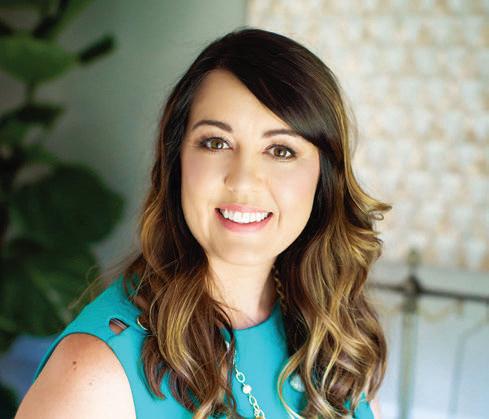




Easterling Law PLLC 2514 Plantation Center Drive Matthews, NC 28105

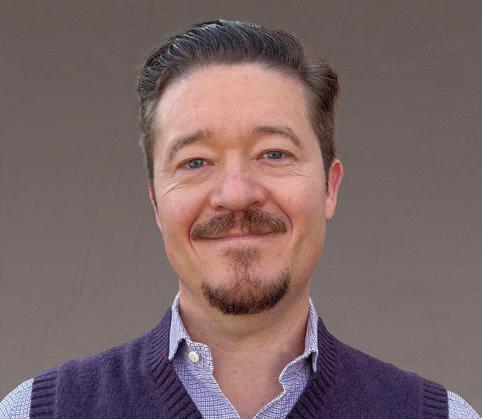
Culp Elliott & Carpenter, PLLC 6801 Carnegie Blvd Suite 400 Charlotte, NC 28211
704-973-5321 | SPG@ceclaw.com
Stanton P. Geller is Co-Chair of the Audit and Tax Controversy practice group and practices in the areas of federal and state income, estate, and gift tax planning; corporate, partnership and business law; succession planning; estate planning; federal and state tax audit, appeal, and controversy; and commercial real estate transactions. Stanton focuses on minimizing taxes, preserving wealth, and managing risk for his clients.
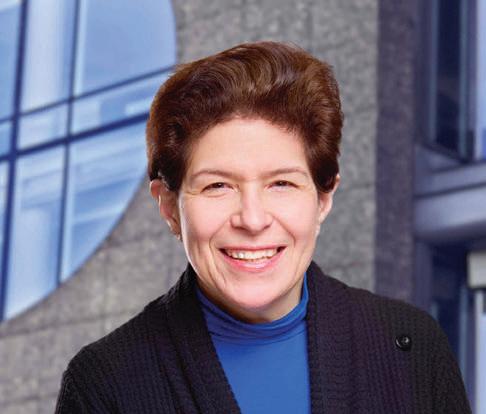

DarrowEverett LLP 1515 Mockingbird Lane Suite 7120 Charlotte, NC 28209
Julie M. Bradlow is the Chair of DarrowEverett’s Tax Practice Group, and a Practice Leader for its Government Investigations Practice Group. Her background encompasses federal, state, and international tax planning, tax controversy, employee benefits, executive compensation, corporate law, and regulatory matters. Together with an understanding of such broad-based subject matter, Julie brings practical experience to solving complex problems for her clients. Prior to joining the DarrowEverett team, Julie








| Lindsey@easterlingfamilylaw.com
The law is always the foundation in her cases, but this is the LOWEST standard of conduct. Families do better with resolutions that fit their specific needs. Processes like Collaborative Law help families transition from the title of Husband and while remaining Mom and Dad forever.





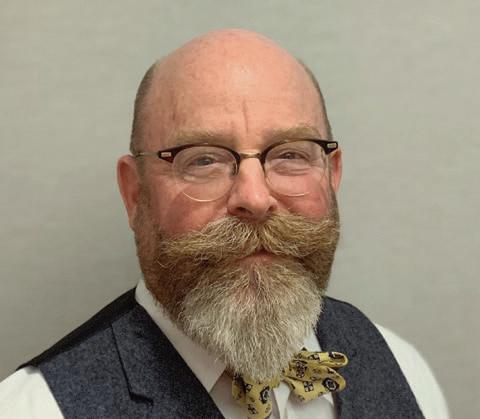
Bishop, Dulaney, Joyner & Abner, P.A.
4521 Sharon Road, Suite 250 Charlotte, NC 28211
704-945-9850 | mjoyner@bdjalaw.com
Matt Joyner helps business owners with their corporate and transactional legal needs, including asset purchases and sales, mergers and acquisitions, joint ventures, franchises, “business divorces,” non-competition agreements, LLC operating agreements, corporate shareholder agreements employment agreements and negotiating and drafting contracts for businesses. A Phi Beta Kappa graduate of Dartmouth College and a former Editor of the University of Pennsylvania Law Review, Matt also shares real world, practical business experience with his clients from his time as General Counsel and Vice President of Administration of an international chemical manufacturing company. He is a former judicial clerk on the US Court of Appeals for the Fourth Circuit, past Chair of the NC Bar Association’s Corporate Counsel Section and currently serves as President of the Mecklenburg Historical Society. Matt welcomes referrals of conflicts from other firms.

|
Easterling Law PLLC 2514 Plantation Center Drive Matthews, NC 28105
Kathryn’s passion for law stems from her desire to help individuals and families on a personal level. Her natural ability to build strong relationships with clients, attorneys, and other professionals enables her to find solutions and effectively reduce conflict for clients in or outside of court or as a Family Mediator.

J. D. Scott Law, PLLC Po Box 1547 Pittsboro, NC 27312
919-236-9263 | jenscott@gmail.com
Jennifer has vast experience representing clients at all stages of development from entity selection, contract negotiation, due diligence, complex financing and land use planning to permitting and advocacy with agencies and municipalities. Recognized as a dual Real Property Law Specialist by the NC State Bar together with being educated at UNC and The Stonier School of Banking at the Wharton School, she is a credentialed and experienced advocate for her clients statewide.

Kliebert Law, PLLC 1300 Baxter Street Suite 253 Charlotte, NC 28204
Kate Kliebert serves as the go-to fractional general counsel for small and medium-sized growing businesses across North Carolina. With a strong record of advising companies in the tech sector, she provides practical, business-minded legal guidance that helps leaders navigate growth, manage risk, and respond strategically when challenges arise. Kate’s clients rely on her ability to understand their operations, their risk tolerance, and the realities of day-to-day decision making. She offers direct, steady counsel when business questions surface without warning, helping teams think clearly, plan their next steps, and keep momentum moving forward.
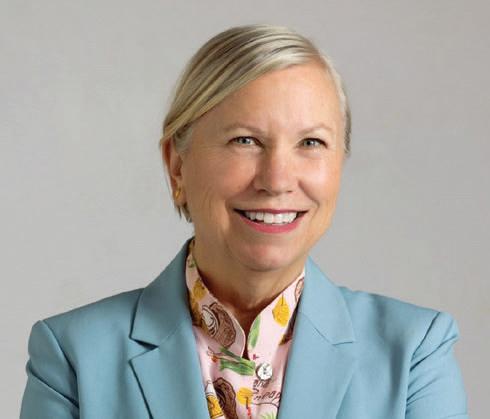
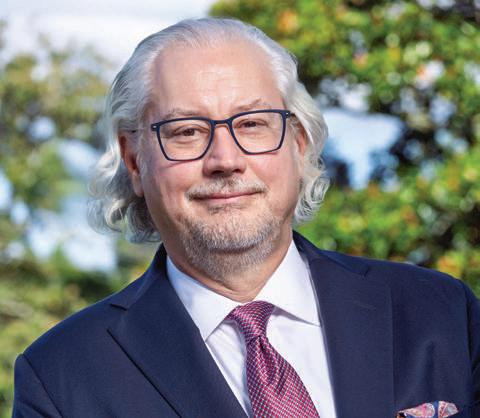

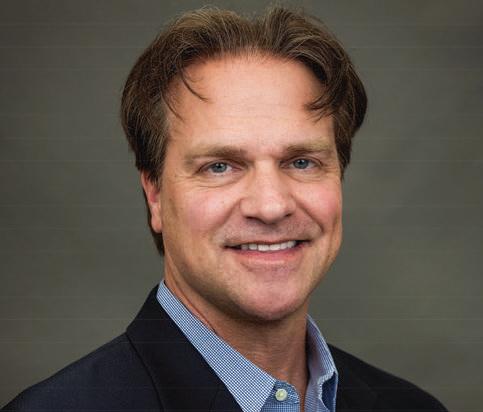

Schwartz Law Firm, P.C. 6100 Fairview Road Suite 1135 Charlotte, NC 28210
704-552-1889 | schwartz-iplaw.com
Jeffrey J. Schwartz is the founder and owner of Schwartz Law Firm, P.C. based in Charlotte, North Carolina with clients throughout the United States and internationally. Jeff is a registered patent attorney with more than 30 years of experience in the field of intellectual property law. His patent services involve a broad range of technologies including computer software, wireless communications, medical devices and processes, military products and equipment, mechanical devices, textiles and textile machinery, sports equipment, and more. Jeff has also been certified by the North Carolina State Bar as a specialist in Trademark Law.
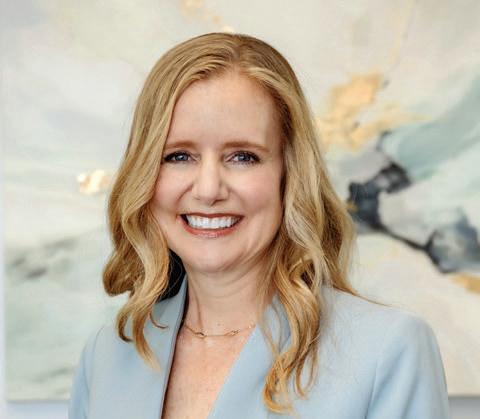

Simpson Law Firm 17250 Lancaster Hwy Suite 601 Charlotte, NC 28277
With over a decade of experience in estate planning and estate administration, Holly Simpson founded Simpson Law Firm to deliver elevated, client-centered legal services. She leads the firm with a focus on integrity, excellence, and the consistent delivery of well-crafted estate plans that support North Carolina families through every stage of life.
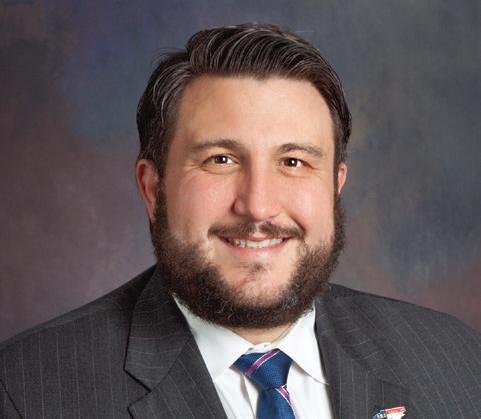
Lawrence J. “Larry” Shaheen, Jr. is an attorney with The McIntosh Law Firm. His practice focuses on commercial real estate development,
valuation appeals, corporate law, as well as government & corporate affairs. His experience makes him a tremendous resource and advocate for commercial real estate clients. Larry attended the University of Carolina at Chapel Hill and received his JD from the University of South Carolina School of Law.
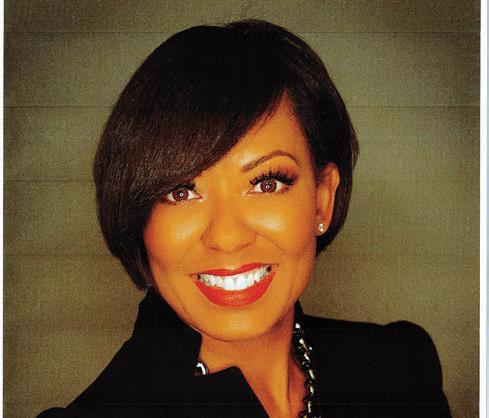

Law Office of
Tamela T. Wallace, P.A.
301 S. McDowell Street Suite 406 Charlotte, NC 28204
704-371-4212 | tamelatwallace.com
She has been licensed and practicing in the state of North Carolina since 1994. She obtained her North Carolina bar license immediately after graduating from North Carolina Central University School of Law. While at North Carolina Central University, she received several American Jurisprudence awards for academic excellence. In 1999 she established The Law Office of Tamela T. Wallace, P.A. Attorney Wallace believes relationships with her professional peers are important as well. Therefore, she is a member of the following legal organizations: NC Bar Association, American Bar Association, North Carolina Black Lawyers Association, John S. Leary Bar, the Mecklenburg County Bar Association and Alpha Kappa Alpha Sorority, Inc.
Chrissy Clarke-Peckham, a University of Maryland and Washington & Lee Law alumna, has served North Carolina since 1999. A former Council for Children’s Rights juvenile defender, she remains committed to indigent defense. Chrissy currently represents clients in high level criminal cases (both North Carolina and federal) and juvenile delinquency matters.
Latham Law, PLLC 301 N.
and
law firm,
Latham Law, PLLC
by Chamber and Partners in 2025 for a Spotlight in Commercial Litigation. In addition to professional recognitions, Roberta has served in numerous leadership positions, including with the North Carolina Bar Association and Susan G. Komen. Chrissy Clarke-Peckham The Law Office of Chrissy Clarke-Peckham 101 N. McDowell St. Suite 126 Charlotte, NC 28204

ANTITRUST AND COMPLEX BUSINESS DISPUTES
Matthew W. Sawchak, Ellis & Winters, Cary (2002, 2003); Rodrick J. Enns, Enns & Archer, Winston-Salem (2004); Larry B. Sitton, Smith Moore, Greensboro (2005); Everett J. Bowman, Robinson, Bradshaw & Hinson, Charlotte (2006); Douglas Wayne Kenyon, Hunton & Williams, Raleigh (2007); Mark W. Merritt, Robinson, Bradshaw & Hinson, Charlotte (2008); Mark J. Horoschak, Womble Carlyle Sandridge & Rice, Charlotte (2009); Jennifer K. Van Zant, Brooks, Pierce, McLendon, Humphrey & Leonard, Greensboro (2010); Catharine B. Arrowood, Parker Poe Adams & Bernstein, Raleigh (2011); Jonathan Heyl, Smith Moore Leatherwood, Charlotte (2012); Noel L. Allen, Pinnix & Nichols, Raleigh (2013); John F. Graybeal, Parker Poe Adams & Bernstein, Raleigh (2014); Press Millen, Womble Carlyle Sandridge & Rice, Raleigh (2015); W. Andrew “Andy” Copenhaver, Womble Carlyle Sandridge & Rice, Winston-Salem (2016); Stephen Feldman, Ellis & Winters, Raleigh (2017); Brad Evans, Ward and Smith, Greenville (2018); Henry “Hal” L. Kitchin Jr., McGuireWoods, Wilmington (2019); Brian Hayles, Bradley Arant Boult Cummings, Charlotte (2020); Alan Duncan, Turning Point Litigation, Greensboro (2021); Dhamian Blue, Blue, Raleigh (2022); Denise M. Gunter, Nelson Mullins Riley & Scarborough, Winston-Salem (2023); John A. Price, Calhoun, Bhella & Sechrest, Durham (2024); Cassandra J. Creekman, Wyrick Robbins Yates & Ponton, Raleigh (2025); Robert J. King III, Brooks Pierce, Greensboro (2026)
APPELLATE
Matthew Nis Leerberg, Smith Moore Leatherwood, Raleigh (2018); Toby Hampson, Wyrick Robbins / NC Court of Appeals, Raleigh (2019); Drew Erteschik, Poyner Spruill, Raleigh (2020); Beth Brooks Scherer, Fox Rothschild, Raleigh (2021); Michelle D. Connell, Fox Rothschild, Raleigh (2022); Angela Farag Craddock, Young Moore and Henderson, Raleigh (2023); Troy D. Shelton, Fox Rothschild, Raleigh (2024); Matthew W. Sawchak, Robinson Bradshaw & Hinson, Raleigh (2025); Preston O. Odom III, Gardner Skelton, Charlotte (2026)
J. Michael Booe, Kennedy Covington, Charlotte (2002, 2003); Gregory B. Crampton, Nicholls & Crampton, Raleigh (2004); Richard M. Hutson II, Hutson Hughes & Powell, Durham (2005); C. Richard Rayburn Jr., Rayburn Cooper & Durham, Charlotte (2006); Terri L. Gardner, Nelson Mullins Riley & Scarborough, Raleigh (2007); John A. Northen, Northen Blue, Chapel Hill, (2008); Holmes P. Harden, Williams Mullen, Raleigh (2009); Christine Myatt, Nexsen Pruet, Greensboro (2010); Gerald A. “Jeb” Jeutter Jr., Gerald A. “Jeb” Jeutter Jr. Attorney at Law, Raleigh (2011); Kenneth M. Greene, Carruthers & Roth, Greensboro (2012); Trawick H. “Buzzy” Stubbs Jr., Stubbs & Perdue, New Bern (2013); Benjamin Kahn, Nexsen Pruet, Greensboro (2014); James S. “Charlie” Livermon, Poyner Spruill, Rocky Mount (2015); Richard S. Wright, Moon Wright and Houston, Charlotte (2016); Heather W. Culp, Essex Richards, Charlotte (2017); William P. Janvier, Janvier Law Firm, Raleigh (2018); Richard D. Sparkman, Richard D. Sparkman & Associates, Angier (2019); George Sanderson, e Sanderson Law Firm, Raleigh (2020); John “Woody” C. Woodman, Essex Richards, Charlotte (2021); Rebecca Finch Redwine, Hendren Redwine & Malone, Raleigh; (2022); Matt Tomsic, Rayburn Cooper & Durham, Charlotte (2023); Je rey E. Oleynik, Brooks Pierce, Greensboro (2024); Jason L. Hendren, Hendren Redwine & Malone, Raleigh (2025); Lance Paul Martin, Ward and Smith, Asheville (2026)
Russell M. Robinson II, Robinson, Bradshaw & Hinson, Charlotte (2002, 2003); Doris R. Bray, Schell Bray, Greensboro (2004); J. Nor eet Pruden III, Kennedy Covington, Charlotte (2005); William M. Flynn, Hunton & Williams, Raleigh (2006); Robin L. Hinson, Robinson, Bradshaw & Hinson, Charlotte (2007); Peter C. Buck, Robinson, Bradshaw & Hinson, Charlotte (2008); Gerald F. Roach, Smith, Anderson, Blount, Dorsett, Mitchell & Jernigan, Raleigh (2009); Mark Davidson, Brooks, Pierce, McLendon, Humphrey & Leonard, Greensboro (2010); Stephen M. Lynch, Robinson, Bradshaw & Hinson, Charlotte (2011); Amalie L. Tu n, Whitmeyer Tu n, Raleigh (2012); Grayson S. Hale, Morningstar Law Group, Morrisville (2013); David D. Beatty, Myers Bigel Sibley & Sajovec, Raleigh (2014); Charles S. Baldwin IV, Brooks, Pierce, McLendon, Humphrey & Leonard, Wilmington (2015); James R. Forrest, Forrest Firm, Durham (2016); Gregory S. Connor, e Connor Law Firm, Raleigh (2017); John Babcock, Waldrep Wall Babcock & Bailey, Winston-Salem (2018); M. Keith Kapp, Williams Mullen, Raleigh (2019); Matthew Marcellino, Marcellino & Tyson, Charlotte (2020); George Stephen Diab, Murchison, Taylor &
Gibson, Wilmington (2021); Daniel Stephen Trimmer, Skufca Law, Charlotte (2022); John M. Cross Jr., Brooks Pierce, Greensboro (2023); Heather Culp, Essex, Richards, Charlotte (2024); Milton Heath Gilbert Jr., Baucom, Claytor, Benton, Morgan & Wood, Charlotte (2025); Brian J. McMillan, Brooks Pierce, Greensboro (2026)
CONSTRUCTION
James A. Roberts III, Lewis & Roberts, Raleigh (2004); Je rey J. Davis, Moore & Van Allen, Charlotte (2005); John L. Shaw, Poyner Spruill, Raleigh (2006); Dudley Humphrey, Kilpatrick Stockton, Winston-Salem (2007); James S. Schenck IV, Conner Gwyn Schenck, Raleigh (2008); Michael Wilson, Johnston Allison Hord, Charlotte (2009); John B. “Jack” Taylor, Nexsen Pruet, Charlotte (2010); Peter J. Marino, Smith, Anderson, Blount, Dorsett, Mitchell & Jernigan, Raleigh (2011); William H. Gammon, Nelson Mullins Riley & Scarborough, Raleigh (2012); Richard D. Conner, Conner Gwyn Schenck, Greensboro (2013); Joseph H. Nanney Jr., Meynardie & Nanney, Raleigh, (2014); Bob Meynardie, Meynardie & Nanney, Raleigh (2015); Harper Heckman, Nexsen Pruet, Greensboro (2016); Nan E. Hannah, Hannah Sheridan Loughridge & Cochran, Raleigh (2017); James Johnson, Smith Terry & Johnson, Asheville (2018); Tracy James, Hamilton Stephens Steele & Martin, Charlotte (2019); Jason James, Bell, Davis & Pitt, Charlotte (2020); Bentford “Ben” Martin, Hamilton Stephens Steele & Martin, Charlotte (2021); Erik Rosenwood, Rosenwood, Rose & Litwak, Charlotte (2022); Arty Bolick II, Brooks Pierce, Raleigh (2023); Greg C. Ahlum, Johnston Allison Hord, Charlotte (2024); Neale T. Johnson, Fox Rothschild, Greensboro (2025); Carl Je ress Burchette, Rosenwood, Rose & Litwak, Charlotte (2026)
CORPORATE COUNSEL
James E. Creekman, First Citizens Bank & Trust Co., Raleigh (2003); Douglas R. Edwards, Wachovia, Charlotte (2005); Stephen K. Coss, Sonic Automotive, Charlotte (2006); Keith Smith, Carolinas HealthCare System, Charlotte (2007); John Taggart, Genworth Financial, Raleigh (2008); B. Judd Hartman, Pharmaceutical Product Development, Wilmington (2009); Gaither M. Keener, Lowe’s, Mooresville (2010); Meredith B. Stone, NACCO Materials Handling Group, Greenville (2011); Lisa D. Inman, Waste Industries USA, Raleigh (2012) Robert Wicker, General Parts International, Raleigh (2013); Michael A. Springs, Bank of America, Charlotte (2014); Santiago Estrada, Quintiles Transnational Holdings, Durham (2015); Je rey M. Davis, Lincoln Financial Group, Greensboro (2016); Gerald L. Walden Jr., e Fresh Market, Greensboro (2017); Andrew Spainhour, Replacements Ltd., Greensboro (2018); Chris Matton, Bandwidth, Raleigh (2019); Jennifer
Venable, Capitol Broadcasting, Raleigh (2020); Greg Murphy, Nucor, Charlotte (2024); Christopher F. Buchholtz, RTI International, Research Triangle Park (2025); Janet oren, NC Real Estate Commission, Raleigh (2026)
Russell M. Robinson II, Robinson, Bradshaw & Hinson, Charlotte (2002); David L. Ward Jr., Ward and Smith, New Bern (2004); John M. Cross Jr., Brooks Pierce, Greensboro (2021); Jonathan Jenkins, Jenkins Haynes, Greensboro (2022); Rob Rust IV, Moore & Van Allen, Charlotte (2023); John David Love, Michael Best & Friedrich, Raleigh (2024); Anne E. Croteau, McGuireWoods, Raleigh (2025); Marc Bishop, Brooks Pierce, Greensboro (2026)
Wade M. Smith, arrington Smith, Raleigh (2004); James F. Wyatt III, Wyatt & Blake, Charlotte (2005); David Freedman, White and Crumpler, Winston-Salem (2006); Joseph B. Cheshire V, Cheshire, Parker, Schneider, Bryan & Vitale, Raleigh (2007); James P. Cooney III, Womble Carlyle Sandridge & Rice, Charlotte (2008); Stephen T. Smith, McMillan, Smith & Plyler, Raleigh (2009); T. Patrick Matus II, Essex Richards, Charlotte (2010); David S. Rudolf, Rudolf, Widenhouse & Fialko, Charlotte (2011); Locke T. Cli ord, Cli ord Clendenin & O’Hale, Greensboro (2012); Peter C. Anderson, Beveridge & Diamond, Charlotte (2013); Michael J. Greene, Goodman, Carr, Laughrun, Levine & Greene, Charlotte (2014); Robert K. Corbett III, Law O ces of Harold Cogdell Jr., Charlotte (2015); Ryan T. Smith, RTS Law Group, Charlotte (2016); George V. Laughrun II, Goodman, Carr, Laughrun, Levine & Greene, Charlotte (2017); Les Robinson, Robinson Law Firm, Greenville (2018); Wes J. Camden, Ward and Smith, Raleigh (2019); Kearns Davis, Brooks Pierce, Greensboro (2020); Cristopher L. Oring, Oring Law, Wilmington (2021); Elliot Abrams, Cheshire Parker Schneider, Raleigh (2022); Rob Heroy, Goodman Carr Laughrun Levine & Greene, Charlotte (2023); Caitlin Poe, Williams Mullen, Raleigh (2024); Russell D. Babb, arrington Smith, Raleigh (2025); Joe Zeszotarski, Gammon & Zeszotarski, Raleigh (2026)
Philip M. Van Hoy, Van Hoy, Reutlinger, Adams & Dunn, Charlotte (2002); George J. Oliver, Smith Moore, Raleigh (2003); Penni Pearson Bradshaw, Constangy, Brooks & Smith, WinstonSalem (2004); Jonathan R. Harkavy, Patterson Harkavy, Greensboro (2005); Patricia L. Holland, Jackson Lewis, Cary (2006); Louis L. Lesesne Jr., Essex Richards, Charlotte (2007); Robert M. Elliot, Elliot Pishko Morgan, WinstonSalem (2008); Sarah J. Kromer, Sara J. Kromer, Charlotte (2009); Susan Brown Grady, SPX, Charlotte (2010); Lisa Grafstein, Disability Rights North
Carolina, Raleigh (2011); N. Renee Hughes, Essex Richards, Charlotte (2012); W. Randall Lo is Jr., Constangy, Brooks & Smith, Winston-Salem (2013); Amie F. Carmack, Morningstar Law Group, Morrisville (2014); Nicole Gardner, Gardner Skelton, Charlotte (2015); Mike Okun, Patterson Harkavy, Chapel Hill (2016); Bryan L. Tyson, Marcellino & Tyson, Charlotte (2017); Susie Gibbons, Poyner Spruill, Raleigh (2018); Denise Smith Cline, Law O ces of Denise Smith Cline, Raleigh (2019); Kyle R. Still, Wyrick Robbins, Raleigh (2020); David C. Lindsay, K&L Gates, Charlotte (2021); Meredith Je ries, Alexander Ricks, Charlotte (2022); Patti W. Ramseur, Ramseur Maultsby, Greensboro (2023); Alex Maultsby, Ramseur Maultsby, Greensboro (2024); William Augustus Oden III, Ward and Smith, Wilmington (2025); Marc Gustafson, Bell, Davis & Pitt, Charlotte (2026)
Charles D. Case, Hunton & Williams, Raleigh (2002; 2003); H. Glenn Dunn, Poyner Spruill, Raleigh (2004); George W. House, Brooks Pierce, Greensboro (2005); William D. Dannelly, Hunton & Williams, Raleigh (2006); Benne C. Hutson, Helms Mulliss & Wicker, Charlotte (2007); Amos C. Dawson III, Williams Mullen, Raleigh (2008); Richard C. Gaskins Jr., Catawba Riverkeeper Foundation, Charlotte (2009); Stephen W. Earp, Smith Moore Leatherwood, Greensboro (2010); Ramona Cunningham O’Bryant, Smith Moore Leatherwood, Greensboro (2011); William Clarke, Roberts & Stevens, Asheville (2012); Grady L. Shields, Wyrick Robbins, Raleigh (2013); Craig A. Bromby, Hunton & Williams, Raleigh (2014); Garry S. Rice, Duke Energy, Charlotte (2015); Sean M. Sullivan, Troutman Sanders, Raleigh (2016); Carol Jones Van Buren, Van Buren Law, Charlotte (2017); Steve Berlin, Kilpatrick Townsend & Stockton, Winston-Salem (2018); Keith Johnson, Poyner Spruill, Raleigh (2019); Amy Wang, Ward and Smith, New Bern (2020); Susan H. Cooper, Womble Bond Dickinson, Charlotte (2021); Mary Katherine Stukes, Moore & Van Allen, Charlotte (2022); Amy Rickers, Johnston Allison Hord, Charlotte (2023); Natalie D. Potter, Essex Richards, Charlotte (2024); F. Bryan Brice Jr., Law O ces Of F. Bryan Brice Jr., Raleigh (2025); Billy Clarke, Roberts & Stevens, Asheville (2026)
John H. Parker, Cheshire, Parker, Schneider, Bryan & Vitale, Raleigh (2007); Carlyn Poole (retired), arrington Smith, Raleigh (2008); Richard D. Stephens, Dozier, Miller, Pollard & Murphy, Charlotte (2009); Lana S. Warlick, Law O ce of Lana S. Warlick, Jacksonville (2010); Michael F. Schilawski, Wake Family Law Group, Raleigh (2011); D. Caldwell Barefoot Jr., Barefoot Family Law, Raleigh (2012);
Stan Brown, Hamilton Stephens Steele + Martin, Charlotte (2013); Lori M. Vitale, Vitale Family Law, Raleigh (2014); Kimberly Bryan, Cheshire Parker Schneider & Bryan, Raleigh (2015); Rob Blair, Essex Richards, Charlotte (2016); A S. Johnson-Parris, Ward Black Law, Greensboro (2017); Chris Eatmon, Eatmon Law Firm, Wake Forest (2018); Kristin M. Hampson, Hampson Family Law, Raleigh (2019); Mariana Godwin, Barefoot Family Law, Raleigh (2020); Cary Close, Close Smith Family Law, Raleigh (2021); Richard Gantt, Gantt Family Law, Raleigh (2022); Ketan P. Soni, Soni Brendle, Charlotte (2023); Heidi C. Bloom, Wyrick Robbins, Raleigh (2024); Janet Haney Amburgey, GHMA Law, Asheville (2025); eresa E. Viera, Modern Legal, Charlotte (2026)
IMMIGRATION
Laura Edgerton, Edgerton Immigration Law, Raleigh (2018); Gerard M. “Gerry” Chapman, Chapman Law Firm, Greensboro (2019); Murali Bashyam, Bashyam Shah, Raleigh (2020); Gigi Gardner, Gardner Gordon, Charlotte, Raleigh (2021); Devon Senges, Dummit Fradin Attorneys at Law, Greensboro (2022); Benjamin A. Snyder, Chiesa Shahinian & Giantomasi, Charlotte (2023); Laura Deddish Burton, Fox Rothschild, Greensboro; Ana So a Nunez, Fay Gra on Nunez, Raleigh (2025); Helen Parsonage, Elliot Morgan Parsonage, Winston-Salem (2026)
INTELLECTUAL
Mitchell S. Bigel, Myers Bigel Sibley & Sajovec, Raleigh (2002; 2003); Kenneth D. Sibley, Myers Bigel Sibley & Sajovec, Raleigh (2004); Wesley addeus Adams III, Adams Evans, Charlotte (2005); J. Scott Evans, Yahoo!, Charlotte (2006); Philip Summa, Summa, Allan & Additon, Charlotte (2007); Susan Freya Olive, Olive & Olive, Durham (2008); David M. Carter, Carter & Schnedler, Asheville (2009); David M. Krasnow, Smith Moore Leatherwood, Raleigh (2010); William J. Mason, MacCord Mason, Wilmington (2011); E. Eric Mills, Ward and Smith, New Bern (2012); Anthony Biller, Coats & Bennett, Cary (2013); Larry L. Coats, Coats & Bennett, Cary (2014); Sarah E. Nagae, Triangle Trademarks, Raleigh (2015); Maury M. Tepper III, Tepper & Eyster, Raleigh (2016); John C. Nipp, Additon, Higgins & Pendleton, Charlotte (2017); Matthew Ladenheim, Trego, Hines & Ladenheim, Charlotte (2018); Julie H. Richardson, Myers Bigel, Raleigh (2019); Russ Racine, Cran ll Sumner, Charlotte (2020); Rick McDermott, McDermott IP Law, Charlotte (2021); Rebecca Crandall, McGuire Wood & Bissette, Asheville (2022); Kimberly Bullock Gatling, Fox Rothschild, Greensboro (2023); John R. Owen, Coats & Bennett, Cary (2024); David W. Sar, Brooks Pierce, Greensboro (2025); Shawna Cannon Lemon, Stanek Lemon, Charlotte (2026)
James T. Williams Jr., Brooks Pierce, Greensboro (2002; 2003); Clarence W. Walker, Kennedy Covington Lobdell & Hickman, Charlotte (2004); Gary S. Parsons, Brooks Pierce, Raleigh (2005); William K. Davis, Bell, Davis & Pitt, Winston- Salem (2006); Dan J. McLamb, Yates, McLamb & Weyher, Raleigh (2007); Robert D. Walker, Walker, Allen, Grice, Ammons & Foy, Goldsboro (2008); J. Donald Cowan Jr., Ellis & Winters, Greensboro (2009); G. Gray Wilson, Wilson, Helms and Cartledge, Winston-Salem (2010); James H. Kelly Jr., Kilpatrick Townsend & Stockton, Winston-Salem (2011); Daniel L. Brawley, Williams Mullen, Wilmington (2012); Lee M. Whitman, Wyrick Robbins, Raleigh (2013); Michael J. Byrne, Byrne Law, Raleigh (2014); Jonathan D. Sasser, Ellis & Winters, Raleigh (2015); Jean Sutton Martin, Law O ce of Jean Sutton Martin, Wilmington (2016); Greg Merritt, Harris, Creech, Ward & Blackerby, New Bern (2017); Ward Davis, Bell, Davis & Pitt, Charlotte (2018); Elizabeth Scott, Williams Mullen, Raleigh (2019); Clay A. Campbell, Marcellino & Tyson, Charlotte (2020); Kristen L. Beightol, Edwards Kirby, Raleigh (2021); Fred W. DeVore III, DeVore, Acton & Sta ord, Charlotte (2022); Ross Fulton, Rayburn Cooper & Durham, Charlotte (2023); W. Scott Jones, Searson, Jones, Gottschalk & Cash, Asheville (2024); J. Scott Flowers, Hutchens Law Firm, Fayetteville (2025); Clint Morse, Brooks Pierce, Greensboro (2026)
Winston-Salem (2024); Marc L. Isaacson, Isaacson Sheridan, Greensboro (2025); S. Leigh Rodenbough IV, Brooks Pierce, Mclendon Humphry & Leonard, Greensboro (2026)
TAX & ESTATE PLANNING
Alfred Adams, Womble Carlyle Sandridge & Rice, Winston-Salem (2004); Barry D. Mann, Manning, Fulton & Skinner, Raleigh (2005); Brent A. Torstrick, Robinson, Bradshaw & Hinson, Charlotte (2006); Samuel T. Oliver Jr., Manning, Fulton & Skinner, Raleigh (2007); Charles Gordon Brown, Brown & Bunch, Chapel Hill (2008); C. Steven Mason, Smith, Anderson, Blount, Dorsett, Mitchell & Jernigan, Raleigh (2009); Timothy G. Sellers, Sellers, Hinshaw, Ayers, Dortch & Lyons, Charlotte (2010); Frank M. Bell Jr., Bell, Davis & Pitt, Winston-Salem (2011); George W. Sistrunk III, Hamilton Stephens Steele & Martin Charlotte (2012); Robert Charles Lawson, Williams Mullen, Raleigh (2013); Michael G. Winters, Ellis & Winters, Raleigh (2014); Holly H. Alderman, Schell Bray, Chapel Hill (2015); Brian W. Byrd, Smith Moore Leatherwood, Greensboro (2016); Anna P. McLamb, Wyrick Robbins, Raleigh (2017); Beth Voltz, Weatherspoon & Voltz, Raleigh (2018); Annika M. Brock, e Brock Law Firm, Asheville (2019); Allen York, Smith Anderson, Raleigh (2020); Diana R. Palecek, Fox Rothschild, Charlotte (2021); Philip Hackley, Wyrick Robbins, Raleigh (2022); Joanne Badr, Ward and Smith, Asheville (2023); Julian Robb, Blanco, Tackabery & Matamoros,
Robert C. Vaughn Jr., Vaughn Perkinson Ehlinger Moxley & Stogner, WinstonSalem (2002; 2003); W. Curtis Elliott Jr., Culp Elliott & Carpenter, Charlotte (2004); Ray S. Farris, Johnston Allison Hord, Charlotte (2005); Elizabeth L. Quick, Womble Carlyle Sandridge & Rice, Winston-Salem (2006); James W. Narron, Narron, O’Hale & Whittington, Smith eld (2007); E. William Kratt, Herring Mills & Kratt, Raleigh (2008); Christy Eve Reid (died May 8, 2014), Robinson, Bradshaw & Hinson, Charlotte (2009); Michael H. Godwin, Schell Bray Aycock Abel & Livingston, Greensboro (2010); Maria M. Lynch, Lynch & Eatman LLP, Raleigh (2011); Graham D. Holding Jr., Robinson, Bradshaw & Hinson, Charlotte (2012); Andrew H. Veach, Edwards Craver Veach, Winston- Salem (2013); Robert H. Haggard, Van Winkle Lam, Asheville (2014); Michael A. Colombo, Colombo, Kitchin, Dunn, Ball & Porter, Greenville (2015); Jason Walls, e Walls Law Firm, Apex (2016); Debra L. Foster, Foster Royal, Charlotte (2017); Elizabeth “Liz” K. Arias, Womble Bond Dickinson, Raleigh (2018); Jean Gordon Carter, McGuireWoods, Raleigh (2019); Rudy Ogburn, Young Moore and Henderson, Raleigh (2020); Jessica Mering Hardin, Robinson Bradshaw, Charlotte (2021); Brooks Ja a, Cranford, Buckley Schultze, Tomchin, Allen & Buie, Charlotte (2022); Michael Cory Howes, Strauss Attorney, Raleigh (2023); Amy H. Kincaid, Schell Bray, Greensboro (2024); Heidi Elizabeth Royal, Heidi Royal Law, Charlotte (2025); Sara Vizithum, Brooks Pierce, Greensboro (2026)
J. Christian Stevenson, Kirk Palmer & igpe, Charlotte (2012); George Mason Oliver, Oliver Friesen Cheek, New Bern (2013); Michael F. Easley Jr., McGuireWoods, Raleigh (2014); Alvaro R. De La Calle, Calle Law, Greensboro (2015); Aaron Lay, Hamilton Stephens Steele + Martin, Charlotte (2016); Elie Foy, Wyrick Robbins, Raleigh (2017); Matthew T. Marcellino, Marcellino & Tyson, Charlotte (2018); Nancy S. Litwak, Rosenwood, Rose & Litwak, Charlotte (2019); Antonia A. “Toni” Peck, Nelson Mullin, Raleigh (2020); Holden B. Clark, Holden B. Clark, Attorney at Law, Gastonia (2021); Carl Burchette, Rosenwood, Rose & Litwak, Charlotte (2022); Keith Boyette, Director of State Government Relations, North Carolina Healthcare Association, Raleigh (2023); Katarina “Katie” Wong, Brooks Pierce, Raleigh (2024); Carlie Anne Smith, Manning Fulton, Raleigh (2025); Zechariah Etheridge, Etheridge Law, Chapel Hill (2026)








North Carolina healthcare providers are investing in orthopedic care to keep up with a growing population and improve outcomes.
Dr. Kurt Wohlrab can’t wait until Southern Pines Orthopedic Surgery Center opens. “It’s still under construction, and we’re expecting to get the keys in April,” says the Pinehurst Surgical Clinic orthopedic surgeon. Constructed in partnership with FirstHealth of the Carolinas, the 24,000-square-foot orthopedic outpatient clinic will have two operating rooms, four procedure rooms and on-site physical therapy. It’s expected to employ 30 people, and he anticipates moving as many as 3,000 surgeries a year from Pinehurst Surgical Clinic and adding more from there.
All types of orthopedic procedures will be performed at Southern Pines Orthopedic Surgery Center. That capacity is expected to create efficiencies for providers. It’ll help patients, too.
“Focusing solely on orthopedic procedures will save patients time and money,” Wohlrab says. Dubbing it an “orthopedic center of excellence,” he says its ability to provide same-day procedures, for example, eliminates the overhead costs associated with overnight hospital stays. “Outpatient surgery centers also free up hospital operating rooms for more serious procedures,” he says.
Demand for orthopedic care is growing across North Carolina. Meeting that need has become a priority for healthcare providers. They’re adding capacity in small towns and big cities alike. They’re applying unique strategies to ensure needs are met and outcomes improve for patients of all ages.
North Carolina’s population is one of the country’s fastest-growing. The N.C. Office of State Budget and Management projects it’ll reach 11.7 million people in 2030, making it the seventh most populous state, up from ninth now. Nearly a quarter of its counties, from Onslow in the east to Buncombe in the west, had populations greater than 125,000 people in 2020.
Demand for orthopedic surgery and services is growing in step with North Carolina’s population, says Dr. Joshua Patt, vice chair of education for Atrium Health, who specializes in musculoskeletal oncology and spine surgery and serves as director for the orthopedic surgery residency program. Atrium Health’s parent company is Advocate Health, headquartered in Charlotte and one of the largest healthcare systems in the United States.

“There’s a higher burden of need as we age, and the baby-boom generation is creating a huge amount of need for total joint arthroplasty,” he says. “Our workforce has not kept up, and we are forecasted to see a significant deficit of orthopedic surgeons over the next 20 years.”
The National Library of Medicine reported there will be 2% fewer orthopedic surgeons and 3% more demand for their services by 2036. And projection models used in a study presented at the 2023 annual Meeting of the American Academy of Orthopaedic Surgeons show that orthopedic surgeons will have to double their total joint arthroplasty caseload or increase their numbers by 10% every five years to meet demand by 2050.
Traditionally, orthopedic practices have treated older adults suffering from arthritis, broken bones from falls or worn out joints. Today, more adults are active well into their senior years, and older athletes are showing up with sports injuries. In Pinehurst, where golf, horseback riding, tennis and other activities are age defiant, Wohlrab says the local community of retirees strives to stay in the game. Pickleball and CrossFit top the list of causes for sports injuries among baby boomers, he says. “I have a 74-year-old lady who is in the CrossFit games every year and a couple of 60-plus men who compete in CrossFit nationally,” he says. “Our active seniors realize they only have one body in this life, and they want to use it.”
Helping patients return to an active lifestyle is what Wohlrab and his fellow orthopedic surgeons love most about their profession. “They tell us we gave them their lives back, and they appreciate it,” he says. “That’s what makes our job great.”
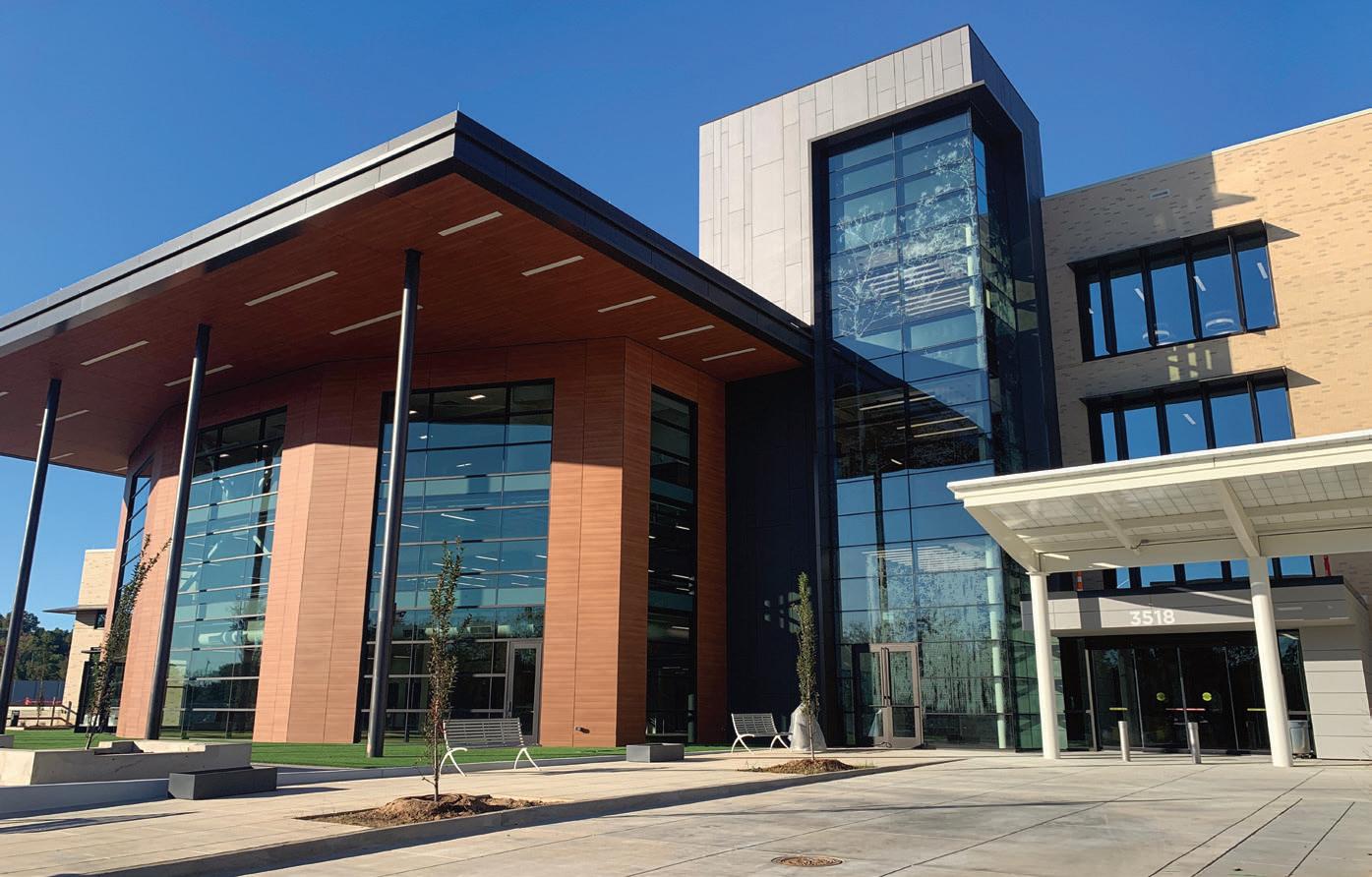
Sagewell Health & Fitness inside the Cone Health MedCenter Greensboro at Drawbridge Parkway offers a medically supervised fitness center.
North Carolina’s certificate of need law was written with good intentions. As a means of cost control and placing healthcare services where they’re needed, state Department of Health and Human Services permission is required before healthcare providers procured certain equipment, built buildings, offered services or added beds. But to help meet growing demand, legislation began relaxing those requirements in November, when ambulatory surgical centers no longer needed a certificate of need to expand in counties with populations greater than 125,000 people as of 2020. The acquisition of MRI machines won’t need a certificate of need in those counties starting in November. This opens the door for further expansion of services in urban areas for other surgical centers and for moving more surgical cases from
inpatient hospitals to ambulatory surgical centers.
A certificate of need to relocate two operating rooms to Pinehurst Surgical Clinic was given in 2023. And while the recent changes won’t impact Moore County, whose population is about 100,000 people, other practices are poised to take advantage of the opportunities created.
EmergeOrtho is the largest physician owned orthopedic practice in North Carolina and was ranked as the country’s sixth-largest orthopedic practice in 2023. It was formed in 2016, when four North Carolinabased orthopedic groups merged, and it now has more than 65 locations across the state. In October, it merged with three physician-owned orthopedic practices in Greensboro, collectively known as Southeastern Orthopaedic Specialists.
Pardee Orthopedics and Sports Medicine, was voted #BestofBlueRidge's best Sports Medicine and Orthopedic Center.
EmergeOrtho CEO Allison Farmer says the practice logs more than a million office visits, more than 600,000 therapy visits and more than 50,000 surgeries annually. Its expanding medical team currently counts about 370 orthopedic specialists and physicians. “We’re finding that with advances in technology and certificate of need relief on being able to expand the operating rooms in ambulatory surgery centers that is going to get people back home and back to work faster and at a lower cost,” she says. “Adding the certificate of need relief on MRI machines means that EmergeOrtho can take advantage of both opportunities to bring greater care at a higher value to North Carolina.”
Loosening Medicare requirements are facilitating growth, too. At one time, they dictated that joint replacement surgeries must be done as inpatient procedures, but data found that ambulatory surgical centers were just as safe as hospitals and better for patients in most cases. “When I started training, patients receiving a knee replacement were in the hospital for three to five days after surgery,” Atrium’s Patt says. “Now their average hospital stay is zero days.”




Many places in rural America suffer from a healthcare deficiency, according to the National Library of Medicine. That includes orthopedic care. These healthcare deserts are created by many factors, including fewer healthcare workers, fewer medical students with rural backgrounds and the lack of notable exposure to rural practices during residencies. Limited local community and healthcare system opportunities and financial barriers add to these concerns. Solutions include building a pipeline of rural orthopedic talent with support from industry, healthcare systems, professional organizations, government and academic institutions. When large healthcare systems expand into rural communities, patients have the best of both worlds. They can receive treatment close to home while having a large fully equipped urban hospital nearby. CarolinaEast Health System serves the residents of its hometown, New Bern, whose population was 31,291 in 2020, according to the U.S. Census Bureau. But it also serves those living in surrounding rural counties.
Pinehurst-based FirstHealth has nine locations in surrounding rural counties and attracts patients from a 15-county radius. Some insurance carriers list FirstHealth as a preferred provider,
and Wohlrab often sees patients from even farther away.
Cone Health OrthoCare has six locations, starting in Greensboro. There is an OrthoCare Alamance office in Burlington and one in Eden, which is open two days a week with full X-ray capabilities. Dr. Mark Cairns is an orthopedic surgeon and one of two specialists at OrthoCare Reidsville. He and Dr. Stanley Harrison split the surgical duties. “We’re mostly a general practice, although my fellow physician and I have training in sports medicine,” Cairns says. “He does total knee replacements, while I do total shoulder replacements and some hip replacements. So, we run almost the full gamut and see a little bit of everything.”
At EmergeOrtho, which serves rural communities by providing comprehensive orthopedic services through a network of 60 outpatient offices from the mountains to the coast, patients can make appointments or urgent care visits for same-day needs without a referral. Access to urgent care clinics makes a difference in rural regions. “People who have an orthopedic injury look for access and answers immediately,” Farmer says. “At our orthopedic urgent cares, we have the imaging equipment and casting supplies and providers that know how to diagnose fractures and the need for possible surgeries.”












Dr. Jessica Woodcock is a general orthopedic surgeon at CarolinaEast, and her patients range from toddlers to senior citizens. “I see patients ranging from kids with fractures to high schoolers with sports injuries, and as they age, I see them for joint replacements,” she says. “The beauty of my practice is being able to take care of a patient over the years. I did many knee replacements for patients when I was pregnant nine years ago, and they still remember that and keep track of my family.”
Woodcock’s patients, regardless of their age, benefit from technology.







Technology is improving care for orthopedic patients. It’s giving them better diagnoses, personalizing their surgeries and aiding in recovery. And that contributes to better outcomes.





It makes surgeons more efficient, which directly improves patient outcomes. Robotics, for example, is taking a bigger role in surgery and image guidance and increasingly personalizing the implants used in joint replacements. “Technology and orthopedics go hand in hand,” she says. “When I came out of training over 10 years ago, robotic surgery was starting to phase in, and over the past two or three years, many joint surgeons have started using some sort of navigation robotics.”
Artificial intelligence is starting to play a role in how physicians document their patients’ progress






and update their records. Woodcock believes that AI will someday predict genetic factors that create a need for orthopedic surgeries. “I think we’ve gotten pretty good at repairing tendons, ligaments and bones, but there is a big future for AI at the molecular level, how we help people heal and how we can prevent diseases,” she says. “It’s being studied in the labs at big institutions and may lead someday to preventing conditions like osteoporosis and osteoarthritis.”■
Teri Saylor is a freelance writer in Raleigh.

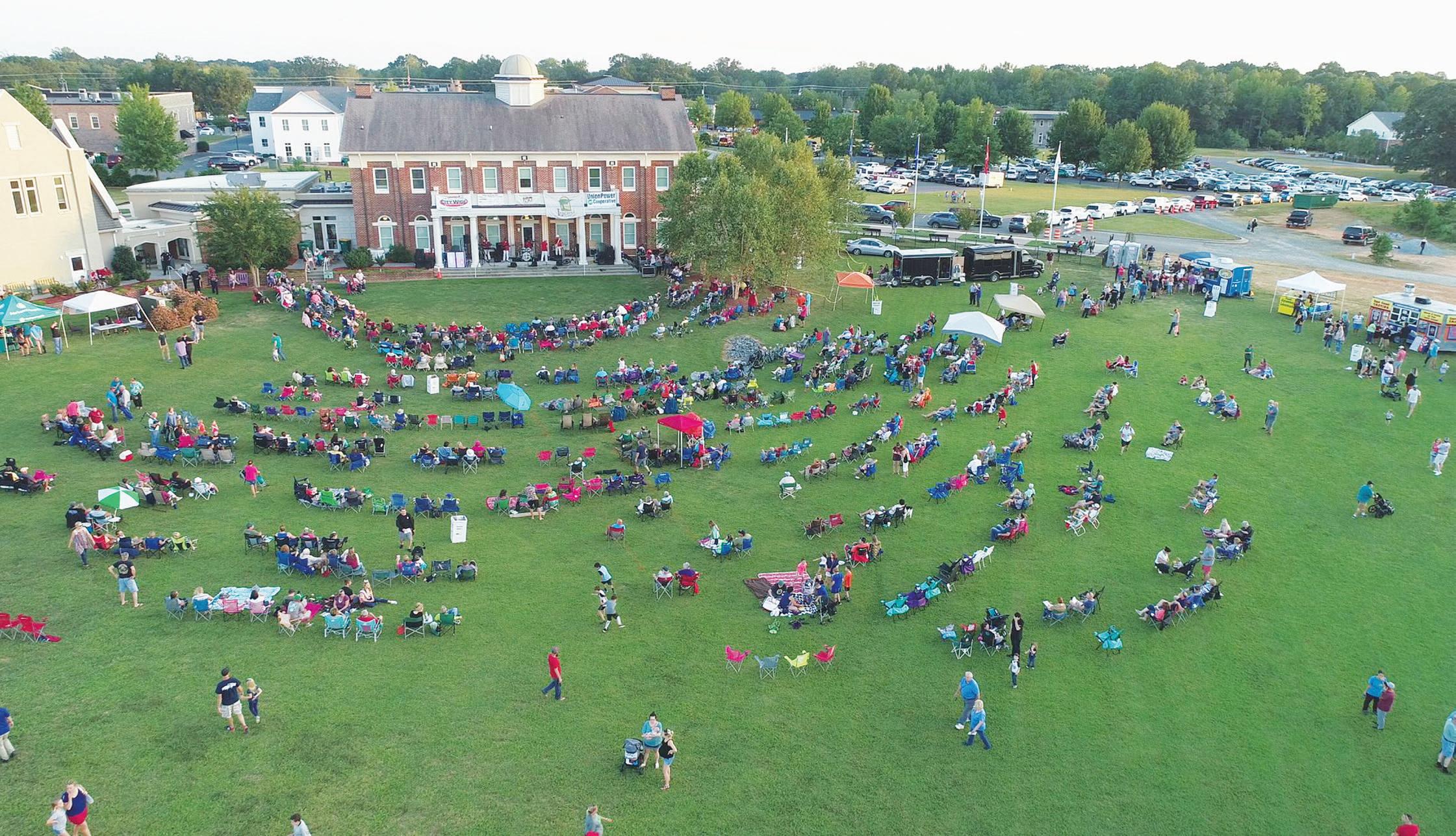



Stanly County is moving into the future while protecting its rural roots. That balance is attracting businesses and residents.
About five years ago, 282 acres along highways U.S. 52 and N.C. 24-27 in Stanly County were no more than a patch of unused dirt. Today, the property includes the Albemarle Business Center, a Class A industrial park. “We have a site ready for development,” says Elizabeth Underwood Kazimir, director of the county economic development commission. “The city of Albemarle has invested over $12 million to prepare the site, the road, the infrastructure. We’re excited. It’s like the gold shining star in the county right now.”
There are more bright spots in this corner of North Carolina. The town of Locust is building an $800,000 park complete with playground and ADA-compliant pathways. “Locust is becoming a hub for young professionals and families, because it’s accessible to Charlotte, but it’s also affordable,” Kazimir says. “It’s not a bedroom community at all. People want to get somewhere where they belong and can be involved in their community, and they have a lot of community events. There is momentum and energy in Locust.”
According to the Charlotte Regional Business Alliance, Stanly County’s population is 64,578, about 1,000 more people than in 2023, and it’s expected to increase to 69,215 by 2030. Many are choosing to live in Locust and other communities in western Stanly County. That’s where subdivisions are sprouting up along routes that share pavement with Mecklenburg County. It’s less than 20 miles from Locust to Interstate 485, which circles the Queen City. “It’s definitely getting closer,” says Jeff Parsons, vice president of academic affairs and chief academic officer at Stanly Community College in Albemarle. “There are a lot of houses being built in Stanly County; it’s hard to drive more than five minutes without seeing houses being built.”
Parsons says location is a key asset for mostly rural Stanly County. “We’re close to Charlotte, but on the other side, we have the Uwharrie National Forest and lakes, so it’s two different experiences,” he says. “It’s like a Goldilocks moment. We’re in just the right spot, really.” Officials are working to ensure Stanly County remains the
right spot. Business recruitment is a priority but so is preserving land for agriculture, the county’s top industry. And they’re developing unique assets, too.
Stanly County Airport in New London, north of county seat Albermarle, is one of the state’s 62 general aviation airports. Its 12,000-square-foot terminal, which was built in 2010, has two conference rooms, passenger waiting area with fireplace and wide-screen television. The airport also has rentable hangers, a flight training flight training school and sight-seeing flights. But something different took off there in October, when a ribbing-cutting ceremony opened Phase 1 of North Carolina Emergency Training Center.
NCETC plans were announced in 2017. Gov. Roy Cooper signed a budget four years later that dedicated the first $28 million toward its construction, including a state-of-the-art aircraft rescue and firefighting crash simulator. State Fire Marshall Brian Taylor has been the key player in working with state leaders to
bring the project to fruition, says Mark Tyler, chief operating officer of the Office of State Fire Marshall. “He’s been very instrumental in making this happen,” he says. The state has committed $87 million to the project so far.
NCETC provides world-class training for firefighters, law enforcement officers, emergency management personnel and members of the military. The center hosts a variety of courses, including Swift Water Rescue, Aircraft Firefighting, Urban Search and Rescue, Hazardous Materials Response and Fire Investigation Technician. About 275 people attending the opening, when they witnessed demonstrations of aircraft rescue burns, jet fuel burns, and swift water boat and helicopter rescues. “This is a statewide facility for anyone in the fire services and rescue services in the state,” Tyler says. “We’re close to getting water capabilities, and we will have national and international interest.”
The water sector, expected to be complete in January, simulates events emergency workers encounter during floods and hurricanes. “There are three


primary components,” Tyler says. “[First is] a self-contained water facility, where there’s a big lake, where all the water is stored, then we have massive pumps that pump it into a swift water channel, like the Whitewater Center. And we have a third component, an urban flood village. We open the water into an urban streetscape, like we’re doing rescue work in a small town. We also have boat operators on the lake who train in various components and an environment where we can simulate flooding like a river.”
NCETC’s Phase 2 is planned, and it will add to the center’s economic impact. Dormitories and a cafeteria will be built across the street from the airport. It’s expected to be complete at the end of the year. “People come from all over the nation to train,” Kazimir says. “The center is gigantic, about double the size of the Whitewater Center in Charlotte, but it isn’t for tourists. It’s just for training.”
Stanly Community College’s newest asset, the 31,600-square-foot Trades Facility, opened in October. “It’s exclusively for trades and revolutionary for our economic development efforts,” Kazimir says. “Not only can we show companies the building, but we can build a curriculum for them. We’re at a definite advantage over some other places in the state, because there’s talk like there will be a workforce deficit that will hit when our trade forces retire in the next five years, and we’re trying to get ahead of that.”
Named the Brown Building in honor of longtime SCC contributor Richard Lane Brown, the $12 million investment expands SCC’s programs in electrical line work, welding, mechatronics engineering, heavy equipment operations, computer-integrated machining, and air-conditioning, heating and refrigeration. Its new programs include plumbing, electric systems technology and building construction technology.
While many employment sectors are drifting toward artificial intelligence, Parsons says the hands-on skills taught in the Brown Building are timeless. It now has about 150 students, a third of whom are Career and College Promise high school students. “We have an employer advisory board, and one of the things we’ve encouraged all our programs to do is ask, ‘How do you see AI changing the workforce? How are your entry-level employees going to be different three, five years into the future?’” he says. “And we re-evaluate the skills we’re teaching and the skills they need. At the same time, parallel to that is for our students to leave here with a sense of reality and critical thinking and the ability to communicate. We need to incorporate reliability and dependability into the curriculum, because those are the students who will be successful.”
Parsons says AI won’t be the boss. “I think AI will change some jobs, but there’s an aspect of creativity that AI can’t do,” he says. “AI may take care of some repetitive tasks, but that means the skill level has to go up. For example, AI might help an HVAC worker troubleshoot, but they still have to verify what AI says. That level of critical thinking will have to go up, because AI does make mistakes. We work very closely with the [Stanly County] Economic Development Commission and oftentimes have a seat at the table when companies are having a look at the city. We also have meetings in our new facility. And it’s been very beneficial.”
When business officials tour the Brown Building, they find that “skilled trades” isn’t the same visual as in the past. “We’ve been very excited with the reaction,” Parsons says. “It’s a great facility to change the narrative of what skilled trades looks like. It’s not dirty and nasty. The equipment we have is top-notch. So is the faculty. You can have great buildings and great equipment, but unless you have a great staff, you don’t accomplish much.”
Parsons also emphasizes SCC’s Small Business Center. “It helps aspiring entrepreneurs with tasks like writing a business plan and finding resources for marketing, whatever they need to get started,” he says. “So, we encourage our trade students, like those who may want to run their own HVAC company or their own heavy equipment and grading company to take advantage of the Small Business Center and get some experience.”
Misenheimer-based Pfeiffer University opened a Charlotte campus in 1977 and a Raleigh-Durham campus in 2004. It is a private liberal arts institution affiliated with the United Methodist Church and accredited by the Southern Association of Colleges. In 2020, it opened its $18 million Center for Health Sciences in Albemarle, where students study in the Master of Physician Assistant Studies and Master of Science in Occupational Therapy programs. “Pfeiffer’s presence is promoting expansion of the health science field in downtown Albemarle,” Kazimir says. “Also, we’re seeing a lot more foot traffic and vibrancy. Every time I’m in a coffee shop, there are young people in there studying or mingling.”
In October, while other in-state four-year schools were considering a 3% tuition increase for in-state undergraduate
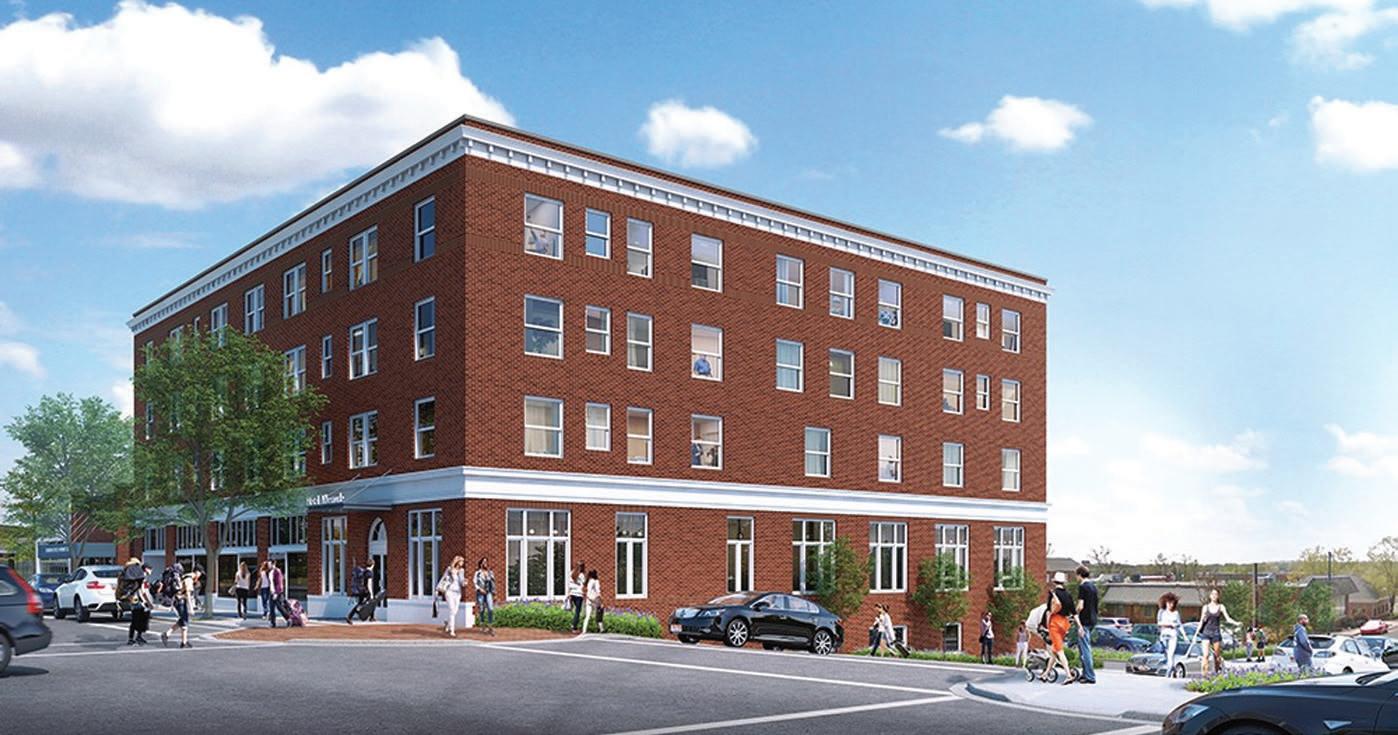
students, Pfeiffer announced itwould not raise its tuition. It said the move “underscores Pfeiffer’s enduring commitment to accessibility, affordability and high-quality education.”
Pfeiffer University President Scott Bullard says holding the line on tuition made sense. “We believe that a transformative, personalized education should remain within reach for every student,” he said in a news release. “By holding undergraduate tuition, fees and room rates steady for 2026-27, we are investing in our students’ futures and reaffirming our promise to keep Pfeiffer affordable without compromising excellence.”
Downtown Albemarle has been reinvented. No longer a stagnant textile town, it’s an emerging place for education, retail and affordable living. “Since the Health Sciences Center opened, downtown Albemarle has shifted from a quiet business district to a place with more life after hours,” says Lindsey Almond, the city’s economic development director. “Students, faculty and new residents are walking the sidewalks; monthly or weekly events draw people into the evening; the mix of uses is shifting toward ‘live-work-play’ rather than just 9-to-5. The adaptive reuse of historic buildings like the Albemarle Hotel and Lowder Hardware brings residents and demand for retail/restaurants.”
“The Residences at the Albemarle Hotel provide modern apartment living right in the heart of downtown, drawing new residents into the core and helping catalyze
nearby retail and restaurants,” Almond says. “The building was redeveloped by Anchor & Pillar with 29 upscale apartments and a gorgeous restaurantcommercial space on the first floor. Like the Residences, [the Lowder building] is another key downtown conversion repurposed into high-end apartments with ground-floor commercial/retail — increasing the resident base downtown and adding demand for restaurants and stores after business hours.”
Downtown has a new Courthouse Plaza gathering spot, and an annual $90,000 Downtown Catalyst Grant, now in its fourth year, supports local downtown businesses with funds released up-front not as reimbursements. “The Catalyst Grant funds help make downtown more attractive and active, while the business park, Albemarle Business Center, is a regionally competitive site with large lot sizes, major infrastructure, proximity to Charlotte, ready utilities and a city that controls the site and is curating its tenant base.”
There’s baseball, too. “Three years ago, the city was ecstatic to announce that we were adding a collegiate wood-bat baseball team that is based in downtown Albemarle, the Uwharrie Wampus Cats,” Almond says. “From a downtown-vitality standpoint, having regular summer games, fireworks nights, such as on Independence Day, and associated events brings folks downtown in the evening, supporting bars, restaurants, retail and activity beyond the 9-to-5 day.” The team will be one of the six founding members of the Blue Ridge League this season.
The N.C. County Extension counts 649 farms in Stanly County. They cover 109,164 acres, which is 43.1% of the county. Most county farms, 299 of them, are in the 10- to 49-acre range, followed by 220 at 50 acres to 179 acres. Thirtyone are more than 1,000 acres.
Stanly County farms bring in their fair share of revenue, starting with what’s grown and raised. The market value of products sold in 2022 was more than $91 million; the net cash farm income was nearly $29 million. Top crops and livestock included cotton, wheat, cattle and turkeys.
Farming supports jobs in insurance, financing, equipment, marketing, food preparation and chemical distribution, in addition to farm labor, says County Extension Director Molly Alexi. “Farming is considered the county’s No. 1 industry and a vital economic driver, with top agricultural products including soybeans and chickens. The sector’s influence extends to the community by
maintaining open space, preserving the county’s rural character and fostering a supportive local economy.”
Kazimir sees a priority in balancing rural and urban and land reserved for farms. “People elsewhere are losing farms, and that’s something we don’t want to ever happen to us,” she says. “What’s unique about us is we want to blend agriculture and businesses and grow the agriculture industry in our county as we grow. It’s our core identity. Agriculture is 100% now and forever will be our largest business in the county and the most-valued. We don’t ever want to get away from that.”
Eastern Stanly County has 10,000 acres of lakes, Morrow Mountain State Park and Uwharrie National Forest, campgrounds and fishing holes, vineyards, golf courses, bike trails, parks and urban farms. All feed a flourishing tourism industry. VisitNC reports that visitors spent nearly $116 million in Stanly County in 2024; that’s $8 million more than the previous year. Of the
state’s 100 counties, Stanly moved from 52nd to 50th in tourism spending in 2024.
Tourism is a group effort. “Visit Stanly, the Stanly County Convention and Visitors Bureau, partners with 10 municipalities, Stanly County and area attractions to promote visitors to come enjoy all the great activities and events held in each corner of the county,” says Kasey Brooks, director of Stanly County Convention and Visitors Bureau. “Visit Stanly works closely with the chamber of Commerce, Morrow Mountain State Park, hotels and attractions to encourage visitors to support the local businesses while in the county.”
Brooks says wedding venues, sporting events, restaurants, wineries, breweries, concerts and antique shops add to the list of visitor attractions. “Visit Stanly will continue to work to encourage visitors to come to Stanly County to enjoy our great natural beauty and perhaps stay a few days,” she says. ■
Kathy Blake is a writer from eastern North Carolina.
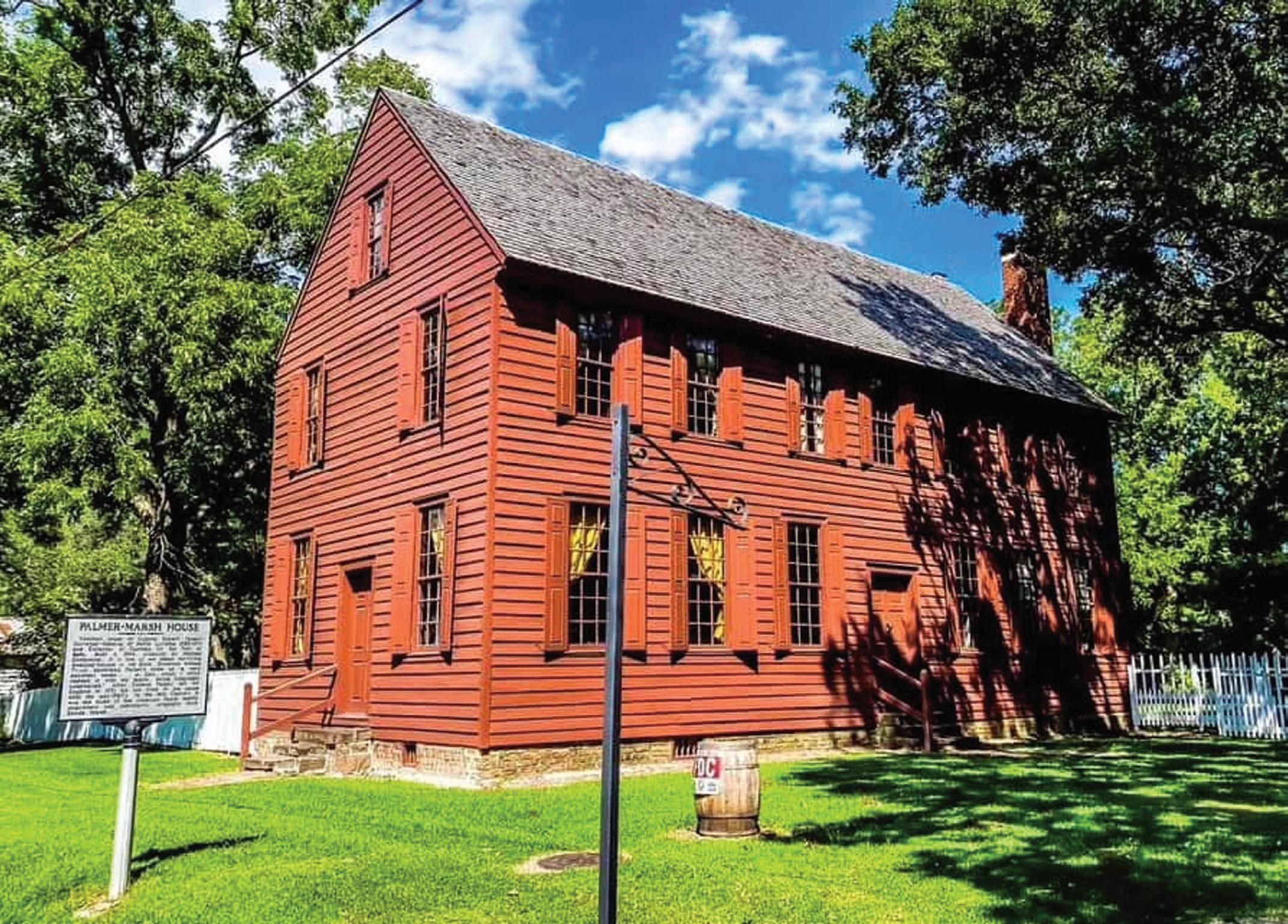
Anchoring the historic district in Bath, the first incorporated city, and North Carolina’s first port, the Palmer-Marsh House museum is one of the state’s oldest and most notable 18th-century residences.
Built around 1750, the house’s huge chimneys, large rooms, and a spacious parlor made the two-and-a half- story, five-bedroom house remarkable from its beginnings as the home of Michael Coutanche. He was a British-born merchant and colonial administrator who played a significant role in the town, which is in Beaufort County and about 37 miles east of Greenville.
After Coutanche’s death, Scottish-born Colonel Robert Palmer, the town’s customs collector and surveyor general, bought the house. He oversaw trade in molasses, salt, sugar, rum, and imported English goods, and frequently hosted lawmakers, ship captains and visiting dignitaries.
With the American Revolution came upheaval, and Palmer’s son, William, was left to deal with the turmoil. Conflicted by his loyalty to the British monarchy and his life in North Carolina, he left Bath.
In 1802, Rhode Island-born merchants Jonathan and Daniel Marsh bought the house, and operated a trade network connecting Bath to England, the West Indies and other Eastern seaboard ports. An heir, William Marsh, was a Yale University graduate and Confederate Army captain who died at Antietam in 1862.
Marsh descendants owned the property until 1915, while the Ormond family sold the house to the Beaufort County Historical Society several decades later. Around 1960, its colonial appearance was restored and it was opened for tours. Ownership transferred to state government in 1964.
Designated a National Historic Landmark in 1970, the PalmerMarsh House museum offers visitors an immersive exploration into the town’s past. A fire in 1989 led to major repairs. Significant research then also revealed history of the area’s enslaved people, along with seafarers and immigrants who passed through the port, which now has fewer than 300 residents. ■
Lori D. R. Wiggins