LOWERING the value-added tax (VAT) rate to 10 percent would trigger a chain of economic and fiscal consequences, according to a top official from the Department of Finance (DOF).
Speaking at the recent Philippine Tax Academy’s (PTA) convention, Finance Undersecretary Karlo Fermin S. Adriano said that reducing the VAT rate to 10 percent from the current 12 percent will reduce revenues to about P330 billion annually, equivalent to around 1 percent of the country’s gross domestic product (GDP).
This would widen the fiscal defi-
cit from the 2025 target of 5.5 percent to about 6.5 percent, reversing fiscal consolidation efforts.
“So, definitely, we will not be able to do fiscal consolidation because our fiscal deficit last year was only 5.7 percent,” Adriano said.
“And, if we do not do fiscal consolidation, if we cannot show that we are not capable of fiscal consolidation, what will happen? Interest payments will also increase,” the DOF official added.
Because of this, Adriano said the country’s credit rating could be downgraded, which would then push up borrowing costs and increase debt servicing.
“All of our debts will increase and that’s a cycle of more debt,”
Adriano said.
If the government is really keen on lowering the VAT rate, the other option, Adriano said, is to decrease government expenditures of around P300 billion a year. However, this means government programs will also be lessened.
“Definitely, there are some positives, but there are also some negatives,” Adriano noted.
The House Committee on Ways and Means is currently studying the proposal to reduce the VAT rate from 12 percent to 10 percent to ease inflationary pressures and give Filipino households much-needed relief. (See: https://businessmirror.com. ph/2025/09/03/house-panel-
reviewing-vat-decrease-proposal/).
Batangas 1st District Rep. Leandro Leviste filed House Bill 4302, or the proposed VAT Reduction Act of 2025, to help households save an estimated P7,000 annually.
“This bill is about giving ordinary Filipinos a break. The VAT is regressive, hitting the poor and middle class the hardest. Lowering it makes our tax system more progressive,” Leviste said. However, Adriano said the country’s VAT system is not regressive, based on a World Bank study. Adriano said many VAT exemptions already exist, particularly for food, which accounts for around
BREACHES TOTAL OF 2024
By Cai U. Ordinario
The data showed the country’s external debt service already reached $148.87 billion in the January to June period this year. This showed that in the six-month period, external debt service already breached the total of $137.63 billion posted in the whole of 2024. The external debt service data showed the government accounted for the bulk of the amount at $94.8 billion in the six-month period. This was 18.76 percent higher than the $79.825 billion posted in the same period last year.
“This is a warning signal, though not necessarily a fatal one. It underscores the growing burden of foreign liabilities, higher amortization schedules, and in-
terest cost pressures,” Philippine Institute for Development Studies (PIDS) Senior Fellow John Paolo Rivera told BusinessMirror “The concern is that this could strain forex reserves, tighten fiscal space, and heighten rollover risk especially if global rates stay elevated or the PHP [Philippine peso] weakens further,” he added. However, Union Bank Chief Economist Ruben Carlo Asuncion told this newspaper that the latest data “is not alarming” given the country’s debt to GDP ratio stands at 31.2 percent.
He added that the country’s dollar reserves or the Gross International Reserves (GIR) stood
By Ma. Stella F. Arnaldo
historic high of US$2.1 trillion to the worldwide economy, surpassing the record high of $1.9 trillion in prepandemic 2019 by 10.5 percent. At the launch of its latest Economic Impact Report (EIR) at the 2025 World Travel & Tourism Council (WTTC) Global Summit in Rome on Monday, WTTC Interim Chief Executive Officer Gloria Guevara said: “These results tell a story of strength and opportunity. The United States remains the world’s largest travel and tourism market, China is surging back, Europe is powering ahead, and destinations across the Middle East, Asia, and Africa are delivering record growth.”
The EIR also showed that 371
million jobs are estimated to be supported by the travel and tourism sector, almost 4 percent more than the 357 million jobs last year. “By 2035, one in eight jobs worldwide will be supported by travel and tourism, with an additional 91 million new jobs supported, the majority in the Asia-Pacific region, resulting in one in three new jobs globally supported by the sector,” the report added.
Confidence in the sector remains strong with the EIR seeing global investment continue to rise this year after exceeding $1 trillion in 2024. Last year’s investment level was 9 percent more than in 2023.
“The US, China, Saudi Arabia, and France together accounted for more than half a trillion dollars of that investment [last year],” the reported noted. Most powerful market DESPITE being the “world’s
By Lorenz S. Marasigan
THE Department of Information and Communications Technology (DICT) is turning to blockchain as its weapon of choice against corruption, banking on the technology’s permanence to protect government transactions from tampering or erasure.
ICT Secretary Henry Aguda said blockchain’s strength lies in its design: data stored on the chain cannot be altered or deleted, creating a permanent, verifiable record of transactions.
Aguda described this feature as an “immutable ledger” that would allow the public to trace everything from budget allocations to actual purchases, ensuring a single ver-
sion of the truth.
“The nice thing about it is it’s immutable. So if there [is] anything unusual in the database, even if you don’t see it now, you can still find it down the road,” he said. “You have an immutable ledger, meaning it will forever be there. It’s a single version of the truth.”
The DICT chief said this digital safeguard comes at a critical moment, as the government grapples with revelations that some Department of Public Works and Highways (DPWH) employees tampered with or wiped out project records that could have implicated them in the multibillion-peso flood control corruption scandal.
The Independent Commission on Infrastructure (ICI) recently
disclosed that some files had been destroyed, complicating efforts to establish accountability for projects that were either substandard or never built at all.
“[With blockchain] the data is not stored in one place, it’s distributed. It’s not like we can just delete or destroy the server,” Aguda said.
At the same event, FPJ Panday Bayanihan Party-list Rep. Brian Llamanzares, vice chair of the House Committee on Appropriations, pushed House Bill 4489, or the proposed Blockchain for Government Transparency Act. See related Story on page A4 Economy.
The House measure seeks to mandate that the entire national budget be placed on blockchain,
ensuring citizens can independently verify every peso allocated, released, and spent.
“When we’re talking about blockchain and how it works, we want all government transactions to be verified on the chain. What we’re doing is putting digital infrastructure in the Philippines that allows people to view these through a public portal,” Llamazares said. Marc Boiron, the CEO of blockchain company Polygon Labs, noted that “putting a national budget onchain shows a bold commitment to transparency and accountability.”
“This is exactly the point of blockchain technology, and it positions the Philippines as a leader that others will want to follow,” he said.
senators of the 19th Congress in the 2025 General Appropriations Act (GAA).
He said that while the said insertions were not entirely illegal, it was suspicious.
Palace Press Officer Claire Castro admitted that Marcos was not aware of the said insertions in the 2025 GAA, but she said it will no longer be allowed in future national budgets, especially after the President and the public have expressed outrage against any corrupt practices in government public works.
“When the budget was implemented, he definitely did not know in detail what the insertions of the said senators were,” she said in Filipino in a press briefing in Malacañang last Monday.
“But now, because the President has really seen and really noticed what happened to the funds for flood control projects, it has also resulted in him knowing about those kinds of insertions,” she added.
The President created the Independent Commission for Infrastructure, which was tasked to investigate substandard and non-existent flood control projects and then recommend to concerned government agencies the prosecution of the involved individuals or parties.
In his fourth State of the Nation Address (SONA), Marcos said he will veto the 2026 GAA if it contains any provisions, which are not aligned with the priority of his administration. Butch Fernandez, Samuel P. Medenilla
DTI told: Don’t extend ₧16 tariff on imported cement
By Andrea E. San Juan @andreasanjuan
EXTENDING the period of imposition of the P16 tariff per 40-kilo bag of imported blended cement will only jack up prices of local cement, which could undermine competition and burden Filipino consumers, according to consumer group United Filipino Consumers and Commuters (UFCC).
“The Department Order 25-01 was signed by the Secretary on February 20, 2025. It will take effect for 200 days, so if we count the 200 days, any moment now the 6-7 months or 200 days period will end. So now, we hear that the cartels have an appeal to continue this,” UFCC President Rodolfo B. Javellana Jr. told reporters in
Filipino during the consumer group’s protest in front of the building of the Department of Trade and Industry (DTI) in Makati City.
“What will happen to these cartels? Of course, the price will increase. They will dictate the price more. This was the situation in 2016. The price was really high,” added Javellana.
Cutting VAT to 10% to…
Continued from A1
Asked how many workers would be affected by the tariffs imposed on imported cement, the head of the consumer group said: “We think there are around 5,000 mothers and fathers, the direct ones, who will be affected, who will lose their livelihood.”
However, he noted that this number excludes the cement contractors, delivery men, among others.
“So please, Secretary Roque, we appeal to you, stop this. Let’s not extend it to 1,000 days or 2,000 days or 5,000 days. Let’s stop the P16 [tariff]. So that we can boost competition and consumers will have a chance to pick whatever cement brand they want,” stressed Javellana, speaking in Filipino.
In a letter sent by the consumer group to Trade and Industry Secretary Cristina A. Roque on September 29, 2025, Javellana said:
“We write to express our concerns regarding the imposition of emer-
50 percent of the poorest of poor households’ spending.
“That’s why it’s not regressive because we have so many exemptions,” Adriano noted.
If the government were to actually decrease the VAT rate, Adriano said higher-income households would mostly benefit since they consume more goods and services subject to VAT.
Data from the Bureau of Internal Revenue and Bureau of Customs show VAT collections have
gency tariffs on imported cement for the next three years, estimated to come to P400 per metric ton or P16 per 40-kilo bag of blended cement and Portland cement.”
“We have noted that this is the second letter we have sent to your office, and we hope that the first letter has not fallen on deaf ears,” the letter of the UFCC chief read.
The consumer group said it believes that DTI has a “johnnycome-lately” attitude towards this issue, saying the agency is claiming the measure was intended to protect local cement producers, which UFCC notes are “bigtime producers themselves and are not likely to declare bankruptcy anytime soon.”
“But clearly action to protect local production should have been made earlier, at the time when change in the tax regime is not likely to also create changes in the price of other basic commodities,” Javellana pointed out.
increased nearly eightfold—from P156.67 billion in 2005, when the rate was raised to 12 percent under the Expanded VAT Law, to P1.20 trillion in 2024.
The Philippines currently imposes the highest VAT rate in Southeast Asia. In comparison, Vietnam and Cambodia charge 10 percent, Indonesia 11 percent, Singapore 9 percent (GST), and Thailand 7 percent. Malaysia, Laos, and Myanmar impose between 5 and 7 percent.
most powerful travel and tourism market,” the US will attract less tourist spend this year, falling by $12.5 billion, such that total spending will inch up a mere 0.7 percent. The group warned that “without destination promotion, traveler-friendly policies, and reduced visa costs, it could lose its competitive edge.” The US contributed $2.6 trillion to its economy, as expressed in gross domestic product (GDP), in 2024. The report pointed to the US domestic market as the “strongest in the world, sustaining millions of jobs and underpinning sector resilience.” China is the world’s second-largest market and is projected to contribute over $2 trillion to its economy, 22.7 percent from 2024. “This highlights China’s rapid return to international prominence and its pivotal role in shaping global travel flows,” said the WTTC.
Japan, the world’s most popular destination according to global travel surveys, is estimated to add $13.8 billion to its GDP this year, and reach close to $325 billion. As per EIR, the country’s is the world’s fifth largest travel and tourism market.
Fastest-growing region MEANWHILE , the Middle East remains one of the fastest-growing regions in the world for travel and tourism, with Saudi Arabia continuing to stand out as a “global powerhouse, with inbound visitor spend surging and infrastructure investment reaching record levels.”
Earlier, the WTTC projected tourism’s contribution to the Philippine economy at 21 percent, adding some $102.6 billion to the GDP this year. This represents an 11.8-percent change from $91.8 billion GDP contribution in 2024, although a slower growth from the 27.6-percent, yearon-year change in 2024/2023. This year’s estimated tourism contribution is 13.5 percent higher than the prepandemic $90.4 billion recorded. (See, “Int’l tourism spending in PHL to breach pre-Covid levels,” in the BusinessMirror, June 16, 2025.)
“Our institutions are clearly abused. They are used for personal gain...and we have already seen the testimony of witnesses about corruption and there is practically nothing happening in our country,” Duterte said in Filipino.
Palace Press Officer Claire Castro, however, tagged the Vice President’s recent pronouncements as lies, which he said only aims to tarnish the reputation of President Ferdinand Marcos.
“We know that our government is strong. The Marcos Jr. administration is only being destroyed by obstructionists like them,” she
6-month…
at $105.3 billion and could still “provide strong cover” for the country’s debts and import receipts.
“The increase reflects valuation effects and planned borrowings, not distress,” Asuncion told this newspaper on Monday. Meanwhile, private external debt service data showed a 7.38-percent growth to $54.07 billion in the January to June period this year, compared to the $50.36 billion posted in the same period last year.
Moving forward, Rivera said the national government must implement stronger debt management strategies which includes lengthening debt maturities and favoring concessional or low-cost borrowing.
Rivera said these strategies also include debt swaps and buybacks, as well as keeping a “prudent” debt mix between domestic and external sources. Asuncion added that the gov-
told Palace reporters last Monday.
“They probably don’t see what the President is doing because they are turning a blind eye,” she added.
Marcos, she said, has already made significant gains in unearthing the said corrupt practices in public works through the Independent Commission for Infrastructure compared to previous administration.
“So it cannot be said that our President is doing nothing. Let’s remember that he himself initiated this investigation,” Castro said. Butch Fernandez, Samuel P. Medenilla and Jovee Marie N. Dela Cruz
ernment should endeavor to maintain the 80-20 borrowing strategy that favors domestic over external sources.
“Importantly, improving revenue mobilization and ensuring efficient public spending are key to sustaining the country’s ability to service external obligations without compromising development goals. The degree of corruption in the country also makes managing this more challenging,” Rivera told BusinessMirror
Earlier, the government’s retail treasury bond (RTB) drove the surge in borrowings in August, pushing total gross borrowings in eight months to P2.266 trillion.
Latest data from the Bureau of the Treasury (BTr) showed the government’s gross borrowings for August surged by 192.19 percent to P508.526 billion from last year’s P174.034 billion. Broken down, domestic borrowings soared by 198.25 percent to P498.213 billion in August from P167.045 billion in the same month a year ago. (See: https://businessmirror.com.ph/2025/09/29/ govt-aug-borrowings-nearlytriple-to-P508-5b).
From September 28 to 30, over a thousand delegates, including 310 chief executive officers and chairs, will explore opportunities and challenges shaping the future of travel and tourism.
WTTC officials said, among the key trends this year are “a demand for experience-led and sustainable travel, the integration of artificial intelligence [AI], shifts in consumer preferences, the growth of the shortterm rental market, and the ongoing importance of business travel.”
Through the lens of the local sugar industry, Philippine Sugar Millers Association (PSMA) executive director Jesus “Cocoy” Barrera said during the hearing: “I echo the statement of Ms. Madarang regarding the availability of NTMs being imposed by the EU, particularly in agricultural imports.”
Barrera underscored that since the negotiation focuses on tariffs, “We may get market access, or we may appear to get market access because of the reduced tariff, the presence of NTMs may prevent us from having that market access.”
Data obtained by the BusinessMirror from DTI-EMB showed that the top Philippine food exports to EU in 2024 were: Coconut (copra), coconut oil and its fractions, prepared or preserved fish, caviar and caviar substitutes prepared from fish eggs; Desiccated coconuts; Fruit, nuts and other edible parts of plants, otherwise prepared or preserved; Bread, pastry, cakes, biscuits and other bakers’ wares; Pineapple juice; Flours, meals and pellets of meat or meat offal, of fish or of crustaceans, molluscs or other aquatic invertebrates. The top 10 food exports of the Philippines to the EU amounted to $1.45 billion in 2024.
Zaldy Co resigns as congressman
By Jovee Marie N. dela Cruz, @joveemarie
Joel San R. San Juan
@jrsanjuan1573
& Samuel P. Medenilla
PARTY-LIST Rep. Elizaldy
Co of Ako Bicol on Monday announced his resignation from the House of Representatives, strongly denying the allegations of wrongdoing leveled against him.
“With a heavy heart, I tendered my resignation as a Representative in the Lower House of Congress,” Co said in a statement. His announcement came as Speaker Faustino G. Dy III gave him a deadline to return to the country and face the charges, warning that failure to comply “shall be construed as a refusal to subject yourself to the lawful processes of the House and will result in the initiation of appropriate disciplinary and legal actions.”
In his resignation letter and reply to the September 22 lettercomplaint filed by Navotas Rep. Tobias Tiangco, Co cited “the real, direct, grave, and imminent threat to the lives of my family members and me, and the evident denial of my right to due process of law” as reasons for stepping down.
“I am constrained to tender with immediate effect my irrevocable resignation as a member of the House of Representatives. The Ako Bicol Party-list [group] will inform your good office of the nominee who will take my place in the House of Representatives,” he said.
Jan Chan, the third nominee of the Ako Bicol, is expected to assume Co’s vacated seat.
Responding to Tiangco’s accusations that he manipulated the 2025 national budget as chairman of the House Committee on Appropriations, Co issued a categorical denial.
“I did not mastermind, tolerate, or allow any supposed last-minute insertions and realignments in items in the 2025 GAA. All items… were approved at plenary sessions and following the collegial process of both Houses of Congress,” he said. “It is improbable, if not absolutely impossible, that I, on my own, could make any supposed insertions without the knowledge or approval of the members of both chambers of Congress.”
He emphasized that the validity of the 2025 budget remains under review by the Supreme Court and the Office of the Ombudsman.
“It is prudent to await the resolution…to prevent any premature
Palace allocates ₧38.9 million for typhoon-affected farmers
By Samuel P. Medenilla @sam_medenilla
AS damage to agriculture by the recent weather disturbances breached the billion peso mark, President Marcos has allocated P38.9 million worth of aid for typhoon-affected farmers, according to Malacañang.
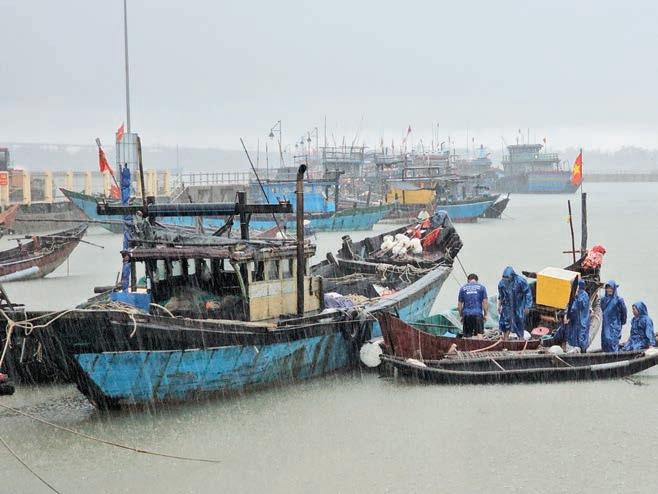
In its latest situation report, the National Disaster Risk Reduction and Management Council (NDRRMC) reported that the combined effects of the southwest monsoon, as well, as the tropical cyclones Mirasol, Nando, and Opong (international name: Bualoi) has reached P1.01 billion as of 29 September 2025.
TBy lenie Lectura @llectura
HE Department of Energy (DOE) has brought together stakeholders in the power sector to restore power in Masbate which was the hardest hit by tropical storm Opong.
“Every resource and partner are now on the ground or on the move for Masbate. The full force of the energy sector is united to restore electricity swiftly, protect lifeline facilities, and bring relief to every community affected by the storm,” said DOE Secretary Sharon S. Garin.
The agency reported on Monday that a 13-member team from the First Catanduanes Electric Cooperative, Inc. (FICELCO) arrived on Sunday night to provide support to the Masbate Electric Cooperative, Inc. (MASELCO).
Nine more teams from Region V, while three to four others will be dispatched to Ticao Island to back up Tablas Island Electric Cooperative, Inc. (TIELCO).
The DOE said teams from Regions VI and VII are currently at Polambato Port in Cebu, with the Philippine Ports Authority (PPA) prioritizing their deployment through Pio Duran and Pilar ports. Moreover, 40 more teams from
conclusions and/or decisions that may compromise the integrity, fairness, and impartiality of this Committee,” he added.
On the claim that he violated the Code of Conduct for Public Officials by failing to submit medical certificates for his absences and allegedly displaying wealth, Co said such accusations were unfounded.
“At the outset, there is no requirement for me to submit medical certificates when applying for a leave of absence,” he said, stressing that his past travel requests had been duly approved. “I deny that my family and I indulge in extravagant or ostentatious display of wealth in the eye of the public. Our lifestyles have not changed from before I became a public official up to now.”
No ostentatious display
“MY wife and children keep away from the media and they certainly do not display what we own to the public. While I do have postings through media, these are focused on the various projects of the Ako Bicol Partylist. My family and I do not also live beyond our means,” he added.
Co, likewise, rejected allegations that he benefited financial -
DBM eyes SUC funding to avoid budget shortfall
It affected 37,012 farmers and fisherfolk and damaged around 37,000 hectares of crops.
“The President also prepared interventions worth 38.9 million pesos to help farmers who were severely affected by the typhoon,” Palace Press Office Claire Castro said in Filipino in a press briefing at the Palace last Monday.
During the weekend, the Department of Agriculture (DA) reported that among the interventions the government is preparing for the affected farmers includes the distribution of seeds of palay or unmilled rice, corn, vegetables, while for fisherfolk, they will receive fingerlings.
See “Palace,” A11
Regions III, V, IV-A, VI, and VII will be transported to Masbate with the assistance from the Philippine Navy.
The National Power Corporation (NPC), meanwhile, said it deployed Power Restoration Task Force in Masbate and sent nine units of 12kilowwatt generator sets at the Mobo Substation for immediate deployment to critical facilities.
The DOE also reported that out of 27 gasoline stations in Masbate, 13 are operational.
The National Electrification Administration said 25 electric cooperatives (ECs) in 22 provinces across eight regions remain under monitoring due to the combined effects of Typhoon Nando, Opong, and Habagat.
Of these, 18 ECs are still experiencing partial power interruptions, while five—Batangas II Electric Cooperative, Inc. (BATELEC II), Capiz Electric Cooperative, Inc. (CAPELCO), Quezon I Electric Cooperative (QUEZELCO I), Camarines Sur I Electric Cooperative (CASURECO I), and Ilocos Norte Electric Cooperative (INEC) have already restored normal operations. There are two ECs-MASELCO and TISELCO (Ticao Island Electric Cooperative Inc.), which are in total power interruptions.
ly from infrastructure projects. “I have not acquired or received personal pecuniary interest from such projects, and I should not be penalized on the basis of mere speculation,” he said.
“Tiangco claims that I ‘could have acquired or received personal pecuniary interest during [my] incumbency as member of the House of Representatives’ from infrastructure projects awarded to Sunwest, Inc. I have not acquired or received personal pecuniary interest from such projects and I should not be penalized on the basis of Representative Tiangco’s mere speculation about this matter. Again, it is premature for Representative Tiangco to make such speculations considering that no court of law has made a determination as to whether or not I acquired or received anything from such projects,” he added.
“In any event, I am reserving my right to address the sham and baseless accusations made by Representative Tiangco at the appropriate time and before the appropriate forum,” he said. “In light of my irrevocable resignation, I will make the necessary arrangements for my office at the Batasang Pambansa to be cleared of my personal belongings in order
THE Department of Budget and Management (DBM) is open to recalibrating the funding of state universities and colleges (SUCs) to prevent possible budget shortfalls.
Budget Secretary Amenah F. Pangandaman said on Monday that the budget department will coordinate closely with Congress to increase the budget allocation for the education sector, specifically for SUCs.
“Few days ago, the President mentioned the reallocation of DPWH funds for priority programs—and the education sector is part of that. We stand with this realignment, and we will make sure it is implemented properly so that our students, teachers, and SUCs receive the support they deserve,” Pangandaman was quoted as saying.
President Ferdinand R. Marcos Jr. ordered that the P255.5 billion reduction in DPWH’s budget be diverted to agencies, such as the Department of Education, Commission on Higher Education and Technical Education and Skills Development Authority.
“It is our hope that Congress will heed this call and put more resources where they matter most - in preparing our youth for the future,” Pangandaman said.
This comes after Senator Paolo Benigno Aquino IV said that the DBM’s package might be inadequate to support the new enrollees in SUCs in 2026.
Aquino cited projections from the Philippine Association of State Colleges and Universities that the number of students enrolling in SUCs could increase by 300,000 to 2.27 million, from the current 1.97 million students.
The lawmaker warned that the DBM’s allocation, proposed at P128.825 billion for next year, might fall short by P3.29 billion if allocations don’t match projections.
In response, Pangandaman said projections per SUC and the corresponding Free Higher Education
See “DBM,” A11
that the substitute nominee of the Ako Bicol Partylist may seamlessly transition into her or his role as its representative.”
Co has been accused of receiving kickbacks from flood control projects and of allegedly inserting questionable allocations into the national budget.
Co also on Monday announced that he is taking a leave of absence from the Ako Bicol partylist group.
Remulla to Co: Return
JUSTICE Secretary Jesus Crispin
Remulla on Monday challenged Co to return to the country and answer allegations that he pocketed billions of pesos from flood control projects and manipulating the national government budget through illegal insertions during his term and head of the House Ccommittee on Appropriations.
Remulla issued the call after learning that Co had decided to resign as member of the House of Representatives.
“We have to face the music. You need to face the charges. And if you say you are innocent then due process is always here,” Remulla said.
Remulla added that Co would likely be considered a fugitive once an arrest warrant is issued against him by a court
for various criminal charges. Co along with Speaker Martin Romualdez and several other lawmakers, are facing a complaint for graft and falsification of legislative documents before the Office of the Ombudsman. The complaint was filed by the Citizens Crime Watch over the alleged P241 billion worth of insertions in the 2025 national budget.
The National Bureau of Investigation has also recommended Co’s prosecution for violation of Republic Act 3019 or the AntiGraft and Corrupt Practices Act, indirect bribery under Article 211 of the Revised Penal Code (RPC) and malversation of public funds under Article 211 of the RPC in connection with the affidavit executed by former Bulacan district engineer Henry Alcantara. Alcantara claimed that Co and several lawmakers benefited from budget insertions through kickbacks involving flood control and other projects of the Department of Public Works and Highways (DPWH).
The Anti-Money Laundering Council (AMLC) has also been tapped to look into the possibility of freezing Co’s assets.
See “Co,” A11
DOE finds relief for power-starved Masbate
Tuesday, September 30, 2025
Economy
Loose southern borders fuel counterfeit trade
By Bless Aubrey Ogerio
ZAMBOANGA CITY—The Philippines continues to make headway in protecting intellectual property (IP), yet weak border surveillance in the country’s southern backdoor still allows counterfeit goods to slip into local markets.
IP lawyer Maria Pilar Luisa Elago told the BusinessMirror that IP enforcement remains uneven across regions, with authorities heavily concentrated in Metro Manila while southern gateways remain vulnerable to illicit trade.
“Especially because we are from ZamBaSulTa where there are known issues of smuggling—it is
very common in our area,” Elago said in a mix of English and Filipino in an exclusive interview. “It’s one of the long-standing problems because it’s very easy to smuggle from Malaysia, Indonesia and the nearest countries.”
ZamBaSulTa—short for Zamboanga, Basilan, Sulu and TawiTawi—is not an official administrative grouping but a term commonly used to refer to the cluster of island provinces in the country’s southernmost frontier.
“In fact, it’s very common to find here in Zamboanga items that are Malaysian and you’re not sure if they are regulated or not, if it’s original or not,” she said.
Beyond fake goods, she noted that the region has long served
LEADERSHIP SKILLS THAT WILL MAKE YOU IRREPLACEABLE
By: Henry J. Schumacher
EVERYONE talks about leadership qualities like “vision” and “charisma.”
But those are vague, and frankly, not what you really need. You need to develop real, tangible, high-leverage skills.
Why does this matters more than ever: technology is moving fast. AI, as we all know by now (unless you’re living in a cave), is already taking over tasks once thought to be safe, from writing reports to analyzing data to summarizing meetings. If AI can handle large parts of “management,” what’s left for human leaders?
The answer: the deeply human skills that no algorithm can replicate.
That’s why if you want to be future-proof, the kind of leader who’s not just valuable but irreplaceable, you need to focus on building on high-value skills.
I will walk will outline some high-value leadership skills that will make you irreplaceable.
Ready? Let’s dive in.
1. Strategic Thinking STRATEGIC thinking is the ability to zoom out, see patterns, and connect the dots others miss. It makes you valuable not just for execution, but for shaping the future.
2. Influence Without Authority
INFLUENCE without authority is the difference between compliance and commitment. It’s how you get things done in matrixed, global organizations.
3. Decision-Making Under Uncertainty
WEIGHING scenarios and rallying the team to move. This is what makes decisive leaders irreplaceable: they create clarity when others are paralyzed.
4. Coaching and Talent Development
COACHING is an ultimate multiplier. Leaders who grow others extend their influence far beyond their own capacity.
5. Conflict Navigation and Resolution
CONFLICT in the workplace and in leadership is inevitable. The question is whether it breaks trust or builds it. The answer is: it helps the team to walk away stronger. Leaders who can navigate
as an entry point for other illegal activities. “We have been the backdoor not only for counterfeit goods but including trafficking, drugs, among others,” she said.
A 2025 report by the United States Trade Representative (USTR) noted that while the Philippines has remained off the Special 301 Watch List for 12 consecutive years, concerns persist that the country continues to be a global source of counterfeit pharmaceuticals.
In the case of medicines, the IP lawyer said that companies like Unilab have been among the most proactive in combating counterfeits, often publishing advisories on how to identify original products.
it productively become invaluable.
6. Delegation and Leverage LEADERS who master delegation multiply output and free themselves for strategic work, while giving space to their team to grow and lead.
7. Time Prioritization and Focus FOCUS is what separates leaders who make progress from those who stay stuck in motion. They schedule thinking time and consistently drive 2-3 priorities that make a difference.
8. Communication That Lands COMMUNICATION is about speaking so people understand, remember, and most importantly, act. It tells a clear, simple story with data and examples, ending with a decisive task.
9. Emotional Intelligence and Self-Awareness WE all have bad days, but what matters most is how we react to them. Think of emotional intelligence as the skill that holds every other leadership skill together. Without it, everything else falls apart.
Final Thoughts TECHNOLOGY will continue to advance, but no matter how advanced it becomes, it can’t replace the deeply human side of leadership — the skills that inspire trust, build resilience, and move people forward. That’s why your edge as a leader isn’t in being the smartest person in the room, or the one who can crank out the most output. It’s in mastering the skills that no algorithm can do better: thinking strategically, coaching others, and creating clarity in chaos.
You don’t need to build all nine skills at once. Pick one or two, practice them deliberately, and watch how your influence grows.
So, which skills are you planning to pick up? Let me know. Send your comments to hjsschumacher59@gmail.com.
“The biggest counterfeited medicine is Biogesic,” the expert said, adding that public awareness remains low. “Filipinos are not aware that only pharmacies are allowed to sell medicines.”
The Intellectual Property Office of the Philippines (IPOPHL) reported that counterfeit goods seized by the government reached P40.99 billion in 2024.
In the same year, the InterAgency Council Against Trafficking (IACAT) launched a maritime assessment to trace irregular sea routes across ZamBaSulTa, identifying areas frequently used for smuggling and human trafficking.
‘Start with grassroots’ IP enforcement can only be effective
if matched with public awareness, Elago emphasized.
“It’s always a challenge to enforce IP laws when most people don’t even understand IP,” she said. “People can’t help if they don’t know what they’re looking for.”
She called for broader access to IP education and professional support outside Metro Manila.
“IPOPHL and DOST (Department of Science and Technology) are very encouraging. They have free programs that assist inventors,” she said.
However, she added, “Unfortunately, they’re not well-known. Only researchers in universities are aware, and even if they know, they don’t know who to approach or what to do.”
Elago said that costly training fees and the absence of IP professionals in rural areas make it difficult to strengthen local capacity.
“The problem with IP trainings is that they’re very expensive—at least P50,000 for registration only. You’ll spend P100,000 for each training. How can a probinsyana afford that?” she said.
“If they really want to strengthen IP protection, they have to build a grassroots community of IP professionals who can assist and help push for greater IP protection,” she added.
In a separate report, the IPOPHL said copyright registrations reached 1,700 filings in the first quarter of 2025 from 1,367 in the same period last year.
Legislator sees blockchain use to stop govt corruption
By Jovee Marie N. dela Cruz @joveemarie
BLOCKCHAIN technology can be the key to full transparency in government transactions and the national budget, a House Committee on Appropriations vice chairperson asserted on Monday, stressing that every Filipino deserves open access to these processes.
FPJ Panday Bayanihan Partylist Rep. Brian Llamanzares made the pitch at a news conference on blockchain for governance, joined by Information and Communications Technology (DICT) Secretary Henry Aguda, DICT Assistant Secretary Luis Miguel Planas, Polygon Labs CEO Marc Boiron, BayaniChain CEO Paul Soliman, and BayaniChain CGO Gelo Wong.
The event explored how blockchain could strengthen transparency, accountability, and efficiency in government systems.
“When we’re talking about blockchain and how it works, we
want all government transactions to be verified on the chain. What we’re doing is putting digital infrastructure in the Philippines that allows people to view these through a public portal,” Poe said.
The lawmaker highlighted House Bill 4489, or the proposed Blockchain for Government Transparency Act, which he filed in the chamber. The measure seeks to place the entire national budget on blockchain, ensuring all transactions related to public funds are not only accessible but also easy to navigate by citizens.
“The Constitution mandates the full public disclosure of all transactions involving public interest. Public office is a public trust. House Bill 4489 seeks to uphold this principle by making sure every peso allocated, released, and spent can be independently verified, traced, and safeguarded against manipulation,” Poe added.
Aguda, for his part, noted the persistent challenges government
agencies face in retrieving records, stressing blockchain’s value as an immutable database.
“Imagine a day where the citizens can inspect all the transactions of the government...That’s the intention,” he said.
“We saw that on the ‘Sumbong sa Pangulo’ website. They exposed the transactions. A lot of people investigated. Now, we’re here; the truth is coming out, so it’s like the ‘Sumbong sa Pangulo’ website, but we take it at a much higher level,” he explained.
Bolton commended the Philippines’ forward-looking approach.
OBy Lenie Lectura @llectura
IL companies announced Monday they will implement mixed price adjustments in pump prices this week.
Effective Tuesday morning, diesel and kerosene prices will increase by P0.90 per liter each. Gasoline, on the other hand, will slightly go down by P0.20 per liter.
Almost all oil companies will adjust their prices at 6 a.m. of September 30 while Cleafuel will implement it at 4:01 p.m.
Llamanzares emphasized that his measure is not merely a technological upgrade of fiscal systems but a structural reform aimed at institutionalizing integrity in governance.
“Despite decades of reforms, the Philippine budget process continues to face challenges—opacity in fund flows, delayed or incomplete disclosures, misuse of appropriations, and corruption-driven leakages. Blockchain can change that,” he said. He also said that the reform empowers not only oversight institutions but also the people themselves.
“Now more than ever, we must rebuild trust in the government, safeguard public resources, and ensure that every Filipino can see exactly where their taxes.
“When I first heard what the Philippines is considering, I thought—here is a country that truly understands what blockchains are good for. Putting a national budget on-chain shows a bold commitment to transparency and accountability. This is exactly the point of blockchain technology, and it positions the Philippines as a leader that others will want to follow,” Boiron said. Soliman echoed this, saying the Philippines is ready to adopt the technology. “The Philippines is ready for blockchain—not just in ideas but in real implementation,” Soliman noted.
Diesel, kerosene prices to increase by 90 centavos per liter
This is the sixth consecutive week of increase for diesel and kerosene and the fifth for gasoline. Oil companies adjust their prices every week to reflect movements in the world oil market. Jetti Petroleum added that the price adjustments also reflect freight and market
premiums in the international market. The Department of Energy (DOE) last week cited the heightened geopolitical risks, such as the US action for European nations to stop buying Russian energy and the resumption of Iraq exports viva pipeline to Turkey.
‘Graduating’ 4Ps households may apply for low-cost housing
THE government has released a new policy aligning the Pantawid Pamilyang Pilipino Program (4Ps) with the national housing initiative, allowing qualified beneficiaries to access affordable housing.
Under the directive jointly issued by the Department of Human Settlements and Urban Development (DHSUD) and the Department of Social Welfare and Development (DSWD), the 4Ps and the Pambansang Pabahay para sa Pilipino Housing (4PH) Program will be formally linked to identify and endorse eligible families for housing support.
CLARK FREEPORT—Clark emerged as the top investment destination in Central Luzon for the first half of 2025, securing the largest share of pledged investments in the region, according to the Department of Economy, Planning and Development (DEPDev) Region 3.
“Among the four key investment and promotion agencies in the region, Clark Development Corporation captured the biggest investment share,” said DEPDev Regional Director Nerissa Esguerra during the Philippine Economic Briefing (PEB) held at Hilton Clark Sun Valley Resort on
“Large
The policy, which is outlined in a Joint Memorandum Circular, was signed on Wednesday at Abuab Towers in San Mateo, Rizal, one of the pilot sites for its implementation.
Housing czar Jose Ramon Aliling said the directive seeks to establish a uniform process between the two agencies in determining 4Ps beneficiaries who can qualify for the 4PH Program.
For his part, DSWD Secretary Rex Gatchalian said the partnership would help ensure that families graduating from 4Ps have access to socialized housing.
During the ceremony, three 4Ps households were awarded housing units under the Expanded 4PH Program. Abuab Towers, located in Brgy. Guitnang Bayan 2, spans 4.6 hectares and includes 17 buildings with a total of 4,330 units. It is one of several sites identified for the rollout of the policy. The two agencies had earlier partnered in August, marking their first 4Ps-related deal that formally tied the program to housing assistance. Bless Aubrey Ogerio
NFA
invites bids for 1.16-M bags of aging rice stocks worth ₧1.6B
TBy Ada Palonia @adapelonia
HE National Food Author -
ity (NFA) is inviting the public to participate in the tender for more than 1 million 50-kilo bags of aging rice stocks.
In a notice it posted on its website, the NFA said it will sell 1.16 million 50-kilo bags or 57,997 metric tons (MT) of aging rice with a total transaction value of P1.6 billion.
The NFA has started issuing auction documents. The Central Office Auction Committee (COAC) will issue these documents until October 8, while documents from the Bids and Awards Committee (BAC) Secretariat will be available until October 7.
Interested bidders are required to tender a 10-percent bond of the total price offer, which will be deducted from the overall payment of the winning bidder.
The purchase of non-refundable auction documents will be based on the total amount of the total transaction value (TTV) on a per lot basis.
For those whose TTV ranges P500,000 and below, the maximum cost of auction documents or tender forms is P500; more than P500,000 up to P1 million, P1,000; more than P1 million up to P5 million, P5,000.
Those with a TTV of more than P5 million up to P10 million, the maximum cost is P10,000; those with more than P10 million up to P50 million, the cost is P25,000;
more than P50 million up to P500 million, P50,000; and more than P500 million, the cost is P75,000.
Meanwhile, the respective minimum bid prices (MBPs) will depend on how long the rice has been stored.
For rice stocks stored in warehouses for more than three months to six months, the MBP is P27.96 per kilo; more than six months to nine months, P27.37 per kilo; over nine months to 12 months, P26.49 per kilo.
Furthermore, rice stocks aged over 12 months to 15 months, the MBP stands at P25.9 per kilo, while those aged more than 15 months to 18 months, the floor price is P25.02 per kilo.
The auction is open to interested farmers’ organizations, cooperatives, or groups and private individuals or entities engaged in the grains business, including processing, wholesaling, and retailing.
“The NFA reserves the right to accept or reject any or all bids, waive any formalities or defects found therein, and to annul the auction process and reject all bids at any time prior to contract award, without thereby incurring any liability to the affected bidders and to accept only such bids most advantageous to the government.”
The Department of Agriculture (DA) said the trade of aging rice stocks would allow the government to prevent spoilage, free up warehouse space, and support rice supply amid the import ban.
ICI recommends prosecution of Elizade Co, 17 others over ₧289.5M anomalous flood control project in Oriental Mindoro
THE Independent Commission for Infrastructure (ICI) has recommended the prosecution of Ako Bicol Rep. Zaldy Co and 17 other individuals for criminal and administrative charges in connection with the P289.5 million anomalous flood control project in Naujan, Oriental Mindoro implemented by the Department of Public Works and Highways.
ICI Executive Director and spokesperson Brian Keith Hosaka said the recommendation was embodied in the interim report it submitted to the Office of the Ombudsman on September 29. Among the charges recommended against Co and other DPWH officials were violation of the provisions of Republic Act No. 3019 or the Anti-Graft and Corrupt Practices Act, malversation of public funds under Article 217 of the Revised Penal Code (RPC) in relation to Article 171 of the RPC or falsification of public documents by a public officer.
Aside from Co, the ICI identified the other individuals who may be prosecuted in connection with the anomalous project were Gerald A. Pacanan, DPWH-MIMAROPA regional director (Region IV-B); Gene Ryan Altea, assistant regional director; Ruben Santos, Jr., assistant regional director; Dominic Serrano, chief construction division and bids and awards committee (BAC) chairperson; Felisardo Casuno, project engineer III; Timojen Sacar, materials engineer; Montrexis Tamayo, OICchief planning and design division; Juliet Calvo, chief maintenance division; Dennis Abagon, OIC-chief quality assurance and hydrology division and regular BAC member; Lerma Cayco, accountant IV; Grace Lopez, BAC regular member; Friedrich Karl Camero, BAC vice chairperson; Aderma Angelie Alcazar, president and chairman of the board of directors of Sunwest construction firm; Cesar Buenaventura, board member and treasurer of Sunwest; Consuelo Aldon, board member of Sunwest; and Anthony Ngo, board member of Sunwest.
The ICI also recommended the filing of administrative charges against the said individuals for violation of Sections 4(a), 7 (a) and (b) of the Code of Conduct and Ethical Standards for Public Officials and Employees and other possible violations of Civil Service Rules and Regulations.
The ICI told the Ombudsman that it would submit further evidence in support of its recommendation within 15 days. The interim report was signed by ICI
DOE poll: Over 70% of Filipinos ready to embrace nuclear energy
TBy Lenie Lectura @llectura
HE Department of Energy
(DOE) said on Monday that many Filipinos have signified their support for nuclear power, according to the results of a survey conducted over a year ago.
The DOE said it commissioned the Social Weather Stations (SWS) for the survey conducted from May 6 to 24, 2024 with 7,520 respondents aged 18 and above across the country.
According to the results of the Public Perception Survey on Nuclear Energy in the Philippines, over 70% of Filipinos believe
that nuclear can deliver reliable electricity, reduce reliance on imported fuels, create jobs, and help fight climate change, while 76% of Filipinos are eager to learn more about nuclear energy.
The survey further revealed that net approval for rehabilitating the Bataan Nuclear Power Plant is at +66 nationwide, while support for building new nuclear plants stands at +45. Support is also stronger among higher-income households, younger Filipinos, and those with higher levels of education.
“The strong public support reflected in this survey tells us that Filipinos are ready to em -
brace nuclear energy as part of our energy future. This gives us the confidence to move forward with careful, calibrated steps to ensure safe, secure, and sustainable development of nuclear power in the Philippines,” DOE Secretary Sharon S. Garin said in a statement.
The agency did not say why it took 16 months to make public the results of the survey.
Global nuclear leaders and supply chain experts will convene this week for the Philippine International Nuclear Supply Chain Forum (PINSCF) 2025.
Participating countries include Argentina, Canada, United Arab Emirates, South Korea and the
Marcos taps Azurin, his controversial first PNP chief, as new adviser at ICC
PRESIDENT Ferdinand Marcos has named retired Philippine National Police Chief Rodolfo Azurin Jr., who has been linked to several controversies during his term, as the new Special Adviser and Investigator of the Independent Commission for Infrastructure (ICI).
The announcement comes after Malacañang confirmed the chief executive has accepted the resignation of Baguio City Mayor Benjamin Magalong as a special adviser of the ICI.
chairperson, former Supreme Court Associate Justice Andres Reyes Jr. and commissioners Rossana Fajardo and Rogelio Singson.
The recommendation stemmed from the inspection conducted by DPWH Secretary Vince Dizon of the project that was undertaken by Sunwest, Inc., the construction firm being linked to the family of Co.
The project involves the construction of a road dike along Mag-Asawang Tubig River. During the inspection, it was observed that the materials used were substandard which resulted in public losses in the estimated amount of over P63 million.
The commission also noted apparent deficiencies in documentation supporting progress billings.
It noted that several payments were approved despite missing records and in some instances, identical photographs were reused to justify separate billings.
“Ultimately, the responsible DPWH Officials who made the progress payments possible by reason of their certifications and signatures of approval are possibly liable for criminal and administrative penalties (whether on their own, or possibly in conspiracy with other officials and the responsible officers/ directors/employees of the Contractor, Sunwest),” the ICI said.
“These circumstances may indicate lapses in project verification. Certifications by DPWH officials attesting to compliance with specifications and workmanship thus appear questionable and require further investigation,” it added.
It also noted that Sunwest has been reported to have historical links to Co, former chairperson of the House Committee on Appropriations.
“While Cong. Co claims to have divested his interests, reports suggest he may potentially retain beneficial ownership. The Commission underscores that additional evidence is needed to establish any definitive connection,” the ICI stressed.
“Ultimately, the responsible DPWH Officials who made the progress payments possible by reason of their certifications and signatures of approval are possibly liable for criminal and administrative penalties (whether on their own, or possibly in conspiracy with other officials and the responsible officers/directors/ employees of the contractor Sunwest. Joel S. San Juan
In a statement issued last Monday, the Office of the President (OP) announced Azurin’s will assume his duties after concluding his personal and administrative arrangements.
“The administration is confident that General Azurin’s experience and leadership will further strengthen the Commission’s mandate to uphold accountability and transparency in the use of public funds,” the OP said.
Azurin was the first ever PNP chief Marcos appointed since he started his presidency in 2022.
The former head of PNP was involved in several controversies during his term, including the alleged cover-up in the arrest of the police sergeant, who yielded 990 kilos of shabu or methamphetamine, which is said to be worth P6.7 billion. He was also reported to have been deported from a Canadian airport in 2023.
Azurin denied there was such a cover-up on the said drug case and also his reported deportation from Canada.
He is expected to replace Magalong, who resigned as special adviser of the ICI after Marcos ordered his legal team to look into possible conflict of interest or violation of the Constitution in the former police official’s designation as special adviser of the ICI, while serving as chief executive of Baguio.
Magalong, however, assured that he is still ready to extend support to the ICI’s probe on substandard and non-existent flood control projects and other public works.
Palace Press Officer Claire Castro confirmed last Monday that Marcos already accepted Magalong’s resignation.
“The President has accepted and respects Mayor Magalong’s decision. Our President recognizes Mayor Magalong’s merit, but his resignation as special adviser, we hope, will not affect the work of ICI because its [members are] complete and the integrity of ICI members is still there,” she said in a press briefing in Malacañang.
Despite his less than a month stint at the ICI, Magalong, the OP said, was able to make considerable contributions to the independent fact-finding panel’s campaign against corruption in infrastructure projects. Samuel P. Medenilla
Sen. Escudero files disbarment vs lawyer
SUnited States—all recognized for their extensive experience in nuclear technology, infrastructure and regulation.
The DOE leads the Nuclear Energy Program-Inter-Agency Committee (NEP-IAC), a 24-member panel that undertakes a whole-ofgovernment approach in assessing and fortifying the Philippine Nuclear Energy Program according to the highest standards set by the International Atomic Energy Agency.
The Philippines targets to have 4,800 megawatts (MW) of nuclear in the power generation mix through 2040 under the Philippine Energy Plan 2023-2050.
Cayetano moves to restore SUC budget cuts
By Butch Fernandez @butchfBM
SENATE Minority Leader Alan Peter Cayetano has called for the restoration of the proposed 2026 budget cuts for State Universities and colleges (SUCs), warning that the reductions will strain their operations and derail long-term projects.
At the same time, the Minority Leader pushed for performancebased reforms to ensure that government funds are maximized and used transparently. This statement comes as students across the Cordillera raise alarm over steep cuts to the region’s SUCs.
By Joel R. San Juan @jrsanjuan1573
ENATOR Francis “Chiz” Escudero has sought the disbarment of lawyer Jesus Falcis III for alleged violation of the Code of Professional Responsibility and Accountability (CPRA) in connection with his alleged malicious and defamatory Facebook posts against him in relation to the anomalous flood control projects.
In a verified complaint filed on Monday, Escudero, who is a lawyer himself, said Falcis remarks and statements “are actually gratuitous instruments of contempt designed to publicly humiliate” him.
“As such, their irresponsible and unrestrained character serve to provide a bad and scandalous example of how a lawyer should not behave publicly,” he added.
The senator said Falcis “failed to abide by the highest standards of the legal profession as to warrant the extreme penalty of disbarment.”
The complaint cited multiple posts from July to September 2025 that maliciously maligned Escudero over the 2025 national budget and flood control programs.
Among Falcis remarks, according to Escudero, were calling him “shameless,” “the worst
Senate President in history,” and repeatedly referring to him as “bulok na keso” or “rotten cheese.”
The complaint said that Falcis violated Canon II (Propriety) by failing to act with courtesy and civility toward a fellow lawyer, and Canon III (Fidelity) by undermining respect for the rule of law when he aired accusations on social media rather than before the proper forum.
It also noted that Falcis had previously been cited by the Court for direct and indirect contempt in another case, showing a “propensity to violate and continue to violate” the CPRA.
Such violations, according to Escudero, should warrant Falcis disbarment and the removal of his name from the Roll of Attorneys for being “unfit for the profession.”
“Respondent’s irresponsible conduct and vitriolic language compel the complainant to urgently bring the matter before this Honorable High Court for appropriate action,” Escudero said.
Escudero cited the High Court’s previous decision which disbarred lawyer Berteni “Toto” Causing for posting a draft plunder complaint on Facebook that subjected a government official to “public hate, contempt and ridicule.”
In the said case, Escudero
noted that the Court ruled that Facebook was not a proper forum for grievances and that lawyers cannot hide behind free speech when their words undermine respect for the legal system.
Falcis, however, questioned Escudero’s filing of the complaint and its subsequent publication, saying that it violates Section 18, Rule 139-B of the Rules of Court.
The filing by Escudero of a disbarment complaint against me and his subsequent publication actually violates Section 18, Rule 139-B of the Rules of Court which provides that:
“Proceedings against attorneys shall be private and confidential. However, the final order of the Supreme Court shall be published like its decisions in other cases.”
Falcis stressed that the only exception to the rule on confidentiality of disbarment proceedings is the publication by the Supreme Court of its final order on the matter.
Instead of filing disbarment cases against lawyers, Falcis Escudero should focus on explaining his alleged kickbacks from flood control projects P142 Billion budget insertions he made in the 2025 Budget.
He, however, maintained his statements that Escudero “is indeed shameless and the worst Senate President in history.”
According to the proposed 2026 National Expenditure Program (NEP), six out of seven SUCs in the Cordillera will lose funding in one or more budget classifications. Three of these are ranked among the ten hardest hit nationwide in terms of percentage reductions.
The Department of Budget and Management (DBM) earlier asked SUCs to submit new “wish lists” after portions of their requested allocations were excluded from the 2026 NEP.
Among the affected institutions is Benguet State University, which lost nearly P25 million in capital outlay for infrastructure projects, including its planned medical school facility.
Earlier, Cayetano already urged both Congress and the SUC system to work together to shield higher education from severe financial strain while introducing reforms to ensure accountability and efficiency in spending.
“ Marami pa ang magagawa (ninyo) kung dadagdagan natin (ang budget). So I’m asking you and the SUC body na magtulungan tayo .Let’s work on some long term reforms for all SUCs. Marami pa tayong pwedeng baguhin ,” he added.
The senator emphasized that strengthening SUCs is not only about increasing subsidies but also about designing a system where schools are incentivized to improve outcomes and manage resources wisely.
All around the world, tinitingala ang Pilipino. So ang trabaho ng education…is to provide the good soil or the environment so that the seed can prosper,” Cayetano said.
A6 Tuesday, September 30, 2025
Editor: Angel R. Calso
Netanyahu says Israel working on ceasefire plan on eve of Trump meeting; death toll tops 66,000
By Samy Magdy, Melanie Lidman & Giovanna Dell’orto The Associated Press
TEL AVIV, Israel—On the eve of meeting with US President Donald Trump, Israeli Prime Minister Benjamin Netanyahu said Sunday that Israel is working on a new ceasefire plan with the White House, but details are still being sorted out.
Netanyahu has come under heavy international pressure to end the war, especially during the ongoing offensive in Gaza City. The death toll in the Israel-Hamas war has topped 66,000 Palestinians, Gaza’s Health Ministry said Sunday.
In Monday’s White House meeting, Trump is expected to share a new proposal for ending the conflict.
to leave Gaza as part of a deal ending the conflict.
“If they finish the war, release all the hostages, we let them out,” he said.
Growing international pressure on Israel
TRUMP has so far stood behind Israel. But the US leader has shown signs of impatience lately, particularly after Israel struck the headquarters of Hamas’ political leadership in Doha, Qatar, earlier this month. Ceasefire talks have stalled since, despite growing international and domestic protests.
include the release of all hostages within 48 hours and a gradual withdrawal of Israeli forces from the Palestinian enclave, according to three Arab officials briefed on the plan. The officials, who spoke on condition of anonymity to discuss the ongoing talks, said the proposal is not final and changes are highly likely.
Trump the proposal with Arab leaders in New York on the sidelines of the United Nations General Assembly.
Gaza’s Health Ministry said in its daily report the death toll has climbed to 66,005, with a further 168,162 wounded since the war started.
The ministry, part of the Hamas-run administration, does not differentiate between civilians and militants in its toll, but has said women and children make up around half the dead. Its figures are seen as a reliable estimate by the UN and many independent experts.
to evacuate. The strike leveled the 16-story Macca tower. No casualties were reported.
The Israeli military said the building housed “military infrastructure belonging to Hamas.” It is the latest in a series of demolitions in recent weeks as Israel expands its offensive.
“We’re working on it,” Netanyahu told Fox News Sunday’s “The Sunday Briefing.” “It’s not been finalized yet, but we’re working with President Trump’s team, actually as we speak, and I hope we can -we can make it a go.” Arab officials briefed on the plan say the 21-point proposal calls for an immediate ceasefire, the release of all hostages held by Hamas within 48 hours and a gradual withdrawal of Israeli forces from Gaza. The officials spoke on condition of anonymity because the proposal has not been formally announced.
Key Western allies have joined a list of countries recognizing a Palestinian state over Israeli objections. The European Union is considering sanctions and there are growing moves for a sports and cultural boycott against Israel.
Netanyahu has vowed to continue fighting until Hamas, whose Oct. 7, 2023, attack triggered the war, is destroyed. But he repeated an offer to allow Hamas operatives
A defiant Netanyahu told fellow world leaders Friday at the UN General Assembly that his nation “must finish the job” against Hamas in Gaza, where 48 hostages are still held captive, around 20 of them believed by Israel to be alive.
Trump’s 21-point ceasefire plan TRUMP’S ceasefire proposal would
A Hamas official said the group was briefed on the plan but has yet to receive an official offer from Egyptian and Qatari mediators. Hamas has said it is ready to “study any proposals positively and responsibly.”
The official said the group had previously said it was willing to release all hostages in return for an end to the war and a complete withdrawal of Israeli forces from the strip.
Nonstop explosions reported in Gaza
LOCAL hospitals in central Gaza said at least 10 people were killed when at least two strikes hit homes in the Nuseirat refugee camp.
Residents reported hearing sounds of explosions overnight across the city, likely coming from the demolition of buildings through the detonation of explosive-laden vehicles and robots. “They were nonstop,” Sayed Baker, a Palestinian who shelters close to a Shifa hospital, said of the explosions.
The Israeli military did not immediately comment on the strikes, but said it struck 140 Hamas military targets over the past 24 hours, including militants, observation equipment and infrastructure.
On Sunday, the military said it had struck a high-rise building in Gaza City after warning residents
Israel’s offensive has destroyed vast areas of Gaza, displacing around 90% of the population amid a catastrophic humanitarian crisis, with experts saying Gaza City is experiencing famine.
On Sunday, a 20-year-old Israeli soldier died of wounds sustained in an attack at a road junction near Nablus in the West Bank, and security forces shot dead the alleged attacker, the army said. The attack was praised by Hamas. Violence has surged in the Israeli-occupied West Bank, which alongside Gaza and east Jerusalem was captured by Israel in the 1967 Mideast war and the Palestinians want for a future state.
Magdy reported from Cairo and Dell’Orto reported from Jerusalem. Associated Press writer Sam Mednick in Tel Aviv contributed to this report.
Mideast nations confront chaos in their region, which Egypt warns ‘is at a point of implosion’
By Edith M. Lederer
The Associated Press
NITED NATIONS—Saudi Arabia,
UEgypt, the United Arab Emirates and Oman—all nations in the thick of the unrest that has pervaded the Middle East—confronted the crisis in the region at the annual UN gathering of world leaders, with Egypt’s top diplomat warning that the Mideast “is at a point of implosion.”
All four countries on Saturday decried Israel’s ongoing pursuit of war in Gaza and the horrific impact on Palestinian civilians—and they bemoaned the failure of the United Nations and the broader international community to achieve a ceasefire and end the bloodshed.
The four ministers spoke a day after Israeli Prime Minister Benjamin
Netanyahu—facing protesters, critics and growing global isolation over his Gaza policies—told the General Assembly his country “must finish the job” against Hamas for its Oct. 7, 2023, surprise attack in southern Israel that killed about 1,200 people. Hamas also took 250 hostages. Israeli forces recently launched an offensive to take control of Gaza City. Here’s a country-by-country look at
those four leaders’ takes from the UN podium on the overall Mideast situation and Gaza in particular.
Egypt
FOREIGN Minister Badr Abdelatty, whose country has been a key mediator in Gaza along with the United States and Qatar, sharply criticized the international community “standing idly by as a spectator”
while international law is systematically violated in Gaza and elsewhere in the Middle East.
Israel’s “wanton, unjust war waged against defenseless civilians for a sin they did not commit” is “transpiring without accountability, and it has affected one country after another,” he said.
Abdelatty recalled former president Anwar Sadat’s historic visit to Israel in 1977, and Egypt becoming “one of the first to anchor the pillar of peace in the region.” But surveying the turmoil in the Mideast today, he accused Israel of committing genocide in Gaza—which it vehemently denies—and blocking the Palestinians from establishing an independent state.
Abdelatty said Israel can’t be secure unless other countries in the region are secure, and “the region cannot see stability without an independent state of Palestine.”
In the region, he pointed to civil war in Sudan, the need for elections in divided Libya, resolving Yemen’s crisis between the internationally recognized government and Houthi rebels who control the capital and most of the north, and ending repeated Israeli violations of Lebanese and Syrian territory.
Saudi Arabia
SAUDI ARABIA’S foreign minister, Prince Faisal bin Farhan, whose country hosts Russia-Ukraine-US peace talks, said the suffering of Palestinians and unprecedented humanitarian crisis in Gaza make it imperative for the international community to end the war in Gaza and achieve peace through a two-state solution.
Farhan said Saudi Arabia, along with Norway and the European Union, launched an international coalition to implement the two-state solution, and it co-sponsored Monday’s high-level meeting with France that saw at least 10 countries officially recognize the state of Palestine, bringing the total to near 160 recognitions.
“Such recognition is an important step towards achieving the two-state solution and bolstering the path towards a just and lasting peace,” he said. Farhan condemned Israel’s recent attack on Qatar. He also called for “international measures” to stop Israel’s actions, “and to deter it from such criminal behavior that threatens regional security and stability.”
Oman
OMANI Foreign Minister Badr bin Hamad al-Busaidi, whose country has mediated US-Iran talks, called on the international community “to apply effective pressure to bring Israel to the negotiating table”— and to adopt measures limiting its ability to continue its killings, destruction, occupation and policies “of starvation and blockade against the Palestinian people.”
He condemned Israeli aggression against Iran, Yemen, Syria and Lebanon and called for sanctions against Israel in response to its violation of international law and “unlawful encroachment” on the sovereignty of states.
“We call for a global peaceful campaign to lift the blockade and undo the injustice imposed on the Palestinian people and to secure their freedom through the establishment of an independent and sovereign Palestinian state,” al-Busaidi said.
A two-state solution to the nearly 80-year Israeli-Palestinian conflict is “the only path that would guarantee the security of all countries in the region,” he said. “The failure of the international community to take firm actions to end the Israeli aggression and violation will only cause further instability and insecurity regionally and globally” and “will have grave consequences and will escalate war crimes and acts of genocide.”
See “Mideast,” A8
Netanyahu meets Trump amid growing isolation and pressure to end Gaza war
By Adam Geller & Sam Mednick
The Associated Press
DAYS after his defiant speech at the United Nations rejecting demands to end the war in Gaza, Israeli Prime Minister Benjamin Netanyahu is set to confer with his most important supporter.
But Monday’s meeting with President Donald Trump in Washington comes at a tenuous moment. Israel is increasingly isolated, losing support from many countries that were long its steadfast allies. At home, Netanyahu’s governing coalition appears more fragile than ever. And the White House is showing signs of impatience.
The question now is whether Trump, who has offered steadfast backing to Netanyahu throughout the war, will change his tone and turn up the pressure on Israel to finally wind down the conflict.
In a post Sunday on social media, the president said: “We have a real chance for GREATNESS IN THE MIDDLE EAST. ALL ARE ON BOARD FOR SOMETHING SPECIAL, FIRST TIME EVER. WE WILL GET IT DONE!!!”
Trump and Netanyahu are scheduled to meet in the Oval Office, and a joint press conference is expected later.
The uncertainty surrounding the meeting casts it as “one of the most critical” in the yearslong relationship between the two leaders, said professor Eytan Gilboa, an expert on US-Israeli relations at BarIlan and Reichman universities.
“Netanyahu might have to choose between Trump and his coalition members,” a number of whom want the war to continue, Gilboa said. A move by Netanyahu to end the war would leave him on shaky political ground at home a year before elections.
Oded Ailam, a researcher at the Jerusalem Center for Security and Foreign Affairs, agreed that Trump is likely to demand a permanent ceasefire, leaving Netanyahu with few options. Netanyahu has repeatedly vowed to continue the offensive until Hamas is destroyed. Israel could seek to include ‘red lines’ IF Trump puts the pressure on, the Israeli leader would probably seek to include “red lines” in any deal, Ailam said. He might demand that Hamas be dismantled, Ailam said. Netanyahu might also set a condition that if the militant group resumes fighting or returns to power, the Israeli military would have the right to operate freely in Gaza, he said.
Trump joined forces with Netanyahu during Israel’s brief war with Iran in June, ordering US stealth bombers to strike three nuclear sites, and he’s supported the Israeli leader during his corruption trial, describing the case as a “witch hunt.”
But the relationship has become more tense lately. Trump was frustrated by Israel’s failed strike this month on Hamas officials in Qatar, a US ally in the region that had been hosting negotiations to end the war in Gaza.
Recent comments have hinted at growing impatience from Washington. Last week, Trump vowed to prevent Israel from annexing the
West Bank—an idea promoted by some of Netanyahu’s hardline governing partners. The international community opposes annexation, saying it would destroy hopes for a two-state solution.
Michael Doran, senior fellow at the Hudson Institute, dismissed the idea that Trump’s comments about the West Bank were a sign of friction. He said the remarks allowed Netanyahu to resist pressure from right-wing members of his government.
“That was a clever move by Trump,” Doran said. “It simultaneously showed responsiveness to Arab and Muslim allies while actually helping out Netanyahu.”
On Friday, Trump raised expectations for the meeting with Netanyahu, telling reporters on the White House lawn that the US was “very close to a deal on Gaza.”
Trump has made similar pronouncements in the past with nothing to show for it, and it’s unclear if this time will be different.
Proposal does not include expulsion of Palestinians TRUMP’S proposal to stop the war in Gaza calls for an immediate ceasefire, the release of all hostages within 48 hours and a gradual withdrawal of Israeli forces from the Palestinian enclave, according to three Arab officials briefed on the plan. They spoke on condition of anonymity because the plan has not been formally unveiled.
Hamas is believed to be holding 48 hostages, 20 of whom are believed by Israel to still be alive.
The militant group has demanded that Israel agree to end the war
altogether and withdraw from all of Gaza as part of any permanent ceasefire.
Trump discussed the plan with Arab and Islamic leaders in New York on the sidelines of the UN General Assembly. It doesn’t include the expulsion of Palestinians from Gaza, which Trump appeared to endorse earlier this year.
The 21-point proposal also calls for an end to Hamas rule of Gaza as well as the disarmament of the militant group, the officials who were briefed on the plan, said. Hundreds of Palestinians, including many serving life sentences, will be released by Israel, according to the proposal.
The plan also includes the establishment of an international security force to take over law enforcement in post-war Gaza, they said.
A Palestinian committee of technocrats would oversee the civilian affairs of the strip, with power handed over later to a reformed Palestinian Authority, they said. Netanyahu has rejected any role for the authority, the internationally recognized representative of the Palestinians, in postwar Gaza.
A Hamas official said the group was briefed on the plan but has yet to receive an official offer from Egyptian and Qatari mediators. The group has repeatedly rejected laying down arms and has linked its weapons to the establishment of an independent Palestinian state.
Netanyahu acknowledged the US plan Sunday in an interview with Fox News, saying Israeli officials were “working with President Trump’s team...and I hope we can make it a go.”
In his speech Friday at the UN, Netanyahu praised Trump multiple times, calling him an essential partner who “understands better than any other leader that Israel and America face a common threat.”
Israel has lost much of the world’s goodwill BUT apart from the US leadership, Israel has lost much of the international goodwill it once could count on.
At a special session of the UN Security Council last week, nation after nation expressed horror at the 2023 attack by Hamas militants that killed about 1,200 people in Israel, saw 251 taken hostage and triggered the war. Then many of the representatives went on to criticize the response by Israel and call for an immediate ceasefire in Gaza and influx of aid.
Israel’s sweeping offensive has killed more than 66,000 Palestinians in Gaza, according to the Gaza Health Ministry, which is part of the Hamas-run administration. Its figures are seen as a reliable estimate by the UN and many independent experts. The fighting has displaced 90% of the Gaza population, with an increasing number now starving.
In recent weeks, 28 Westernaligned countries that circled behind Israel two years ago have called on it to end the offensive in Gaza. They also criticized Israel’s restrictions on humanitarian aid, which have contributed to famine in parts of Gaza.
Ten countries—including
Britain, France, Canada and Australia—recognized Palestinian statehood last week, hoping to revive the long-moribund peace process. Several Arab states, including some with longstanding relations with Israel, have accused it of committing genocide in Gaza, as have leading genocide scholars, UN experts and some Israeli and international rights groups. The UN’s highest court is weighing genocide allegations raised by South Africa that Israel vehemently denies.
Aaron David Miller, who served as an adviser on Middle East issues to Democratic and Republican administrations, said there were too many unresolved issues to believe that an end to the conflict is near.
“The more crowing that is done about how we’re in the final stages, the more skeptical I become,” he said.
Geller reported from New York, and Mednick reported from Jerusalem. Associated Press writers Sam Magdy in Cairo; Joseph Krauss in Ottawa, Ontario; and Chris Megerian in Washington contributed to this report.
Xi Jinping urges US to explicitly oppose Taiwan independence in diplomatic
push
By Bloomberg News
CHINESE President Xi Jinping is renewing a push for the US to change a decades-old phrase describing its stance on Taiwan independence, a concession that would be a major diplomatic win for Beijing.
China has asked the Trump administration to officially declare that it “opposes” Taiwan independence, according to a person familiar with the matter, who asked not to be identified discussing private information.
T he suggested wording is stronger than the Biden administration’s previous statement that US officials “do not support” the self-ruled island seeking formal independence, and would add to China’s campaign to isolate Taiwan on the world stage. The Wall Street Journal first reported the request.
T he Trump administration has not made a decision regarding the demand, and it’s one in a long list of asks from the Chinese side under consideration, according to a separate person familiar with the matter, who asked not to be identified as the information is private. A State Department fact sheet on US ties with Taiwan is currently unavailable on its website.
Language defining the US relationship
See “Xi,” A8
www.businessmirror.com.ph
Democrats dig in on healthcare demands, risking govt shutdown
By Stephen Groves & Mary Clare Jalonick
The Associated Press
WASHINGTON—
Democratic and Republican congressional leaders are heading to the White House for a meeting with President Donald Trump on Monday in a late effort to avoid a government shutdown, but both sides have shown hardly any willingness to budge from their entrenched positions.
If government funding legislation is not passed by Congress and signed by Trump on Tuesday night, many government offices across the nation will be temporarily shuttered and non-exempt federal employees will be furloughed, adding to the strain on workers and the nation’s economy.
Republicans are daring Democrats to vote against legislation that would keep government funding mostly at current levels, but Democrats so far have held firm. They are using one of their few points of leverage to demand that Congress take up legislation to extend health care benefits.
“The meeting is a first step, but only a first step. We need a serious negotiation,” Senate Democratic leader Chuck Schumer said in an interview Sunday on NBC’s “Meet the Press.” Trump has shown little interest in entertaining Democrats’ demands on health care, even as he agreed to hold a sit-down meeting Monday afternoon with Schumer, along with Senate Ma -
jority Leader John Thune, House Speaker Mike Johnson and House Democratic leader Hakeem Jeffries. The Republican president has said repeatedly that he fully expects the government to enter a shutdown this week.
“If it has to shut down, it’ll have to shut down,” Trump said Friday. “But they’re the ones that are shutting down government.”
The Trump administration has tried to pressure Democratic lawmakers into backing away from their demands, warning that federal employees could be permanently laid off in the midst of a funding lapse.
“Chuck Schumer said a few months ago that a government shutdown would be chaotic, harmful and painful. He’s right, and that’s why we shouldn’t do it,” Thune, a South Dakota Republican, said Sunday on “Meet the Press.”
Still, Democrats argued that Trump’s agreement to hold a meeting shows that he is feeling the pressure to negotiate. They say that because Republicans control
with Taiwan has long been a sensitive subject. In February, after the State Department abruptly removed from its website a phrase saying the US does “not support Taiwan independence,” Beijing swiftly urged Washington to “correct its wrongdoings.” Prior to that, the Biden administration removed the phrase in May 2022 but reinstated it after Chinese officials protested. China’s Foreign Ministry didn’t respond to a request for comment. Taiwan’s Ministry of Foreign Affairs spokesman Hsiao Kuang-wei said Taipei “continues to closely monitor Beijing’s manipulative
the White House and Congress, Americans will mostly blame them for any shutdown.
But to hold on to their negotiating leverage, Senate Democrats will likely have to vote against a bill to temporarily extend government funding on Tuesday, just hours before a shutdown—an uncomfortable position for a party that has long denounced shutdowns as pointless and destructive.
The bill has already passed the Republican-controlled House and would keep the government funded for seven more weeks while Congress works on annual spending legislation.
Any legislation to fund the government will need support from at least 60 senators. That means that at least eight Democrats would have to vote for the short-term funding bill, because Republican Sen. Rand Paul of Kentucky is expected to vote against it.
During the last potential government shutdown in March, Schumer and nine other Democrats voted to break a filibuster and allow a Republican-led funding bill to advance to a final vote.
narratives, while maintaining smooth and close communication with the US and other partner countries.”
The US State Department didn’t reply to a request for comment made outside working hours.
Any change in wording will fan concerns that Washington’s position on the self-ruled democracy, which Beijing considers a part of its territory, is becoming a trade war bargaining chip. In an abrupt policy reversal, Trump already put on the negotiating table some tech curbs imposed on China over national security concerns.
The significance is less about an imminent US policy change and more about Beijing testing Washington’s resolve on wording it sees as central to its position,” according to Craig Singleton, senior director of the China program at the Washington-based Foundation for Defense of Democracies.
The New York Democrat faced fierce backlash from many in his own party for that decision, with some even calling for him to step down as Democratic leader.
This time, Schumer appears resolute.
“We’re hearing from the American people that they need help on health care and as for these massive layoffs, guess what? Simple one-sentence answer: They’re doing it anyway,” he said.
Democrats are pushing for an extension to Affordable Care Act tax credits that have subsidized health insurance for millions of people since the Covid-19 pandemic. The credits, which are designed to expand coverage for low- and middle-income people, are set to expire at the end of the year.
Some Republicans are open to extending the tax credits, but want changes. Thune said Sunday that the program is “desperately in need of reform” and Republicans want to address “waste, fraud and abuse.” He has pressed Democrats to vote for the funding bill and take up the debate on tax credits at a later date.
China repeatedly raised this rhetorical shift with the Biden administration, which refused to comply, he added: “The fact it’s being raised again is consistent with Beijing’s incremental strategy: pocket small wins and then push for more.”
T he discussions come as President Donald Trump and Xi prepare for an expected meeting at an upcoming summit in South Korea, where they’ll continue to hash out the terms of a broader deal. As those negotiations drag on, Washington still hasn’t signed a trade deal with global chip hub Taiwan, despite at least four rounds of negotiations.
Underscoring the sensitivities, Trump appears to be balancing efforts to maintain cordial ties with Taiwan with not disrupting dialogue with Xi. In July, US officials denied Taiwan President Lai Ching-te permission to transit through
Moldova’s
pro-EU party wins parliamentary polls fraught with Russian interference claims
By Stephen Mcgrath The Associated Press
CHISINAU, Moldova—Moldova’s pro-Western governing party won a clear parliamentary majority, defeating pro-Russian groups in an election that was widely viewed as a stark choice between East and West.
With nearly all polling station reports counted on Monday, electoral data showed the pro-EU Party of Action and Solidarity, or PAS, had 50.1% of the vote, while the pro-Russian Patriotic Electoral Bloc has 24.2%. The Russia-friendly Alternativa Bloc came third, followed by the populist Our Party. The right-wing Democracy at Home party also won enough votes to enter parliament.
The tense ballot Sunday pitted the governing PAS against several Russiafriendly opponents but no viable pro-European partners. Electoral data indicate the party will hold a clear majority of about 55 of the 101 seats in the legislature.
It is likely that President Maia Sandu, who founded PAS in 2016, will opt for some continuity by nominating pro-Western Prime Minister Dorin Recean, an economist who has steered Moldova’s government through multiple crises since 2023. Recean has also previously served as Sandu’s defense and security adviser.
The election was widely viewed as a geopolitical choice for Moldovans: between a path to the European Union or a drift back into Moscow’s fold.
Cristian Cantir, a Moldovan associate professor of international relations at Oakland University, told The Associated Press that PAS’s victory is “a clear win for pro-European forces in Moldova, which will be able to ensure continuity in the next few years in the pursuit of their ultimate goal of EU integration.”
“A PAS majority saves the party from having to form a coalition that would have most likely been unstable and would have slowed down the pace of reforms to join the EU,” he said, adding that “Moldova will continue to be in a difficult geopolitical environment characterized by Russia’s attempts to pull it back into its sphere of influence.”
New York, after China raised objections with Washington about the visit. That hesitation unnerved some officials in the US, who fear Trump may concede too much to Beijing, people familiar with the matter said when the trip was canceled.
S ince President Richard Nixon broke formal ties with Taipei to establish relations with Beijing in the 1970s, the US has adopted a “one-China policy” that leaves Taiwan’s sovereignty undetermined. For decades, Washington has adopted “strategic ambiguity” over whether US forces would defend Taiwan against a Chinese attack. Taiwan is one of the biggest flashpoints in China’s relationship with the US, which is already fraught over issues such as trade, technology transfers and human rights.
Washington is Taipei’s biggest military backer, though Trump has suggested the island should have to pay for protection.
The outcome of Sunday’s high-stakes ballot was noteworthy considering Moldovan authorities’ repeated claims that Russia was conducting a vast “hybrid war” to try to sway the outcome. Moldova applied to join the EU in 2022 in the wake of Russia’s full-scale invasion of Ukraine, and was granted candidate status that year. Brussels agreed to open accession negotiations last year. The alleged Russian schemes included orchestrating a large-scale vote-buying scheme, conducting more than 1,000 cyberattacks on critical government infrastructure so far this year, a plan to incite riots around Sunday’s election, and a sprawling disinformation campaign online to sway voters.
In an interview with the AP, days before the vote, PAS leader Igor Grosu also warned of Russian interference, and said Sunday’s results would define the country’s future “not just for the next four years, but for many, many years ahead.”
“But I believe in the determination and mobilization spirit of Moldovans, at home and in the diaspora,” he said. Election day was dogged by a string of incidents, ranging from bomb threats at multiple polling stations abroad to cyberattacks on electoral and government infrastructure, voters photographing their ballots and some being illegally transported to polling stations. Three people were also detained, suspected of plotting to cause unrest after the vote. PAS campaigned on a pledge to continue Moldova’s path toward EU membership by signing an accession treaty to the 27-nation bloc by 2028, doubling incomes, modernizing infrastructure, and fighting corruption. After a legislative election, Moldova’s president nominates a prime minister, generally from the leading party or bloc, which can then try to form a new government. A proposed government then needs parliamentary approval.
Some 1.6 million people, or about 52.1% of eligible voters cast ballots, according to the Central Electoral Commission, with 280,000 of them coming from votes in polling stations set up abroad.
Beijing would portray any change as an erosion of US support for Taiwan and the ruling DPP, said Sarah Beran, a former senior National Security Council official in the Biden administration handling China and Taiwan issues.
“Washington should have a high bar for a change like this—demanding a verifiable, measurable reduction in Chinese military activity around the island that would meaningfully shore up cross-strait peace,” added Beran, who is now a partner at Macro Advisory Partners. With assistance from Jing Li, Michelle Jamrisko and Colum Murphy/Bloomberg
Since Taiwan’s Democratic Progressive Party won power in 2016, the Chinese government has ramped up its global message that the self-ruled democracy is an “inalienable part” of the People’s Republic of China. Such efforts are paying off, according to the Lowy Institute, which found more governments in developing countries have subscribed to Beijing’s version of that narrative.
Mideast. . .
Continued from A6
United Arab Emirates CALLING it “a pivotal moment” in a world engulfed in turmoil and conflict, the United Arab Emirates’ deputy foreign minister Lana Nusseibeh said there is no justification for Hamas taking hostages or for Israel targeting “tens of thousands of civilians or besieging them or starving them and forcibly displacing them.”
Israel’s “unacceptable, expansionist ambitions including the threat of annexing the West Bank” are also inexcusable, she said.
Nusseibeh urged all countries to recognize the state of Palestine “as an investment in a better future for the region.”
The UAE has tried to bridge divides elsewhere in the conflict-torn world, she
said, pointing to its role in the exchange of thousands of prisoners between Russia and Ukraine, hosting peace talks between Armenia and Azerbaijan, and helping to de-escalate tensions in south Asia and beyond. “Our aim is not simply to manage conflicts, but to resolve them sustainably,” Nusseibeh told the assembly. “The urgent need for this approach is clear around the world, whether in the Gaza Strip, Ukraine, Sudan, Yemen, Libya or the Sahel.” Many crises have been exacerbated by extremist ideologies, hate speech and incitement, which is why the UAE is promoting an agenda of tolerance, peace and security, she said. The UAE is also the largest donor of aid to Gaza, she said.
Edith M. Lederer has been covering international affairs for The Associated Press for more than a half century.
Michigan church attack: Former Marine kills 4, wounds 8 in shooting and arson
By Isabella Volmert & Corey Williams
The Associated Press
GRAND BLANC TOWNSHIP,
Mich.—An ex-Marine smashed a pickup into a Church of Jesus Christ of Latter-day Saints church in Michigan, opened fire and set the building ablaze during a crowded Sunday service and then was fatally shot by police. At least four people were killed and eight wounded, and authorities were searching the building ruins for more victims.
The attack occurred about 10:25 a.m. while hundreds of people were in the building in Grand Blanc Township, outside Flint.
The man got out of the pickup with two American flags raised in the truck bed and started shooting, Police Chief William Renye told reporters. The attacker apparently used gas to start the fire and also had explosive devices but it wasn’t clear if he used them, said James Dier of the Bureau of Alcohol, Tobacco, Firearms and Explosives.
Authorities identified the shooter as Thomas Jacob Sanford, 40, of the neighboring small town of Burton. The FBI is leading the investigation and considered it an “act of targeted violence,” said Ruben Coleman, a special agent in charge for the bureau.
Officers responding to a 911 call were at the church within 30 seconds, Renye said. After the suspect left the church, two officers pursued him and “engaged in gunfire,” killing him about eight minutes later, the chief said.
People inside the church shielded children and moved them to safety during the attack, Renye said.
Flames and smoke poured from the large church for hours before the blaze was extinguished.
Two bodies were found during a search of the debris, and Renye said more victims could be found as searchers made their way through the entire church. One of the wounded people was in critical condition Sunday evening and the seven others were stable.
Renye said “some” people were unaccounted for, but he didn’t have an exact number.
Michigan State Police Lt. Kim Vetter said bomb threats were
made at other churches in the area after officers shot and killed Sanford. No bombs were found and police were investigating the threats.
The motive not yet clear INVESTIGATORS were searching Sanford’s residence but authorities did not say what they found or provide any additional details about him, including whether he was a member of The Church of Jesus Christ of Latter-day Saints, widely known as the Mormon church.
Sanford served in the Marines from June 2004 through June 2008, working as an automotive mechanic and vehicle recovery operator, according to military records obtained by The Detroit News. He was deployed to Iraq from August 2007 through March 2008 and had the rank of sergeant.
It was the latest of many shooting attacks on houses of worship in the US over the past 20 years, including one in August that killed two children during Mass at the Church of the Annunciation in Minneapolis.
It also was the second mass shooting in the US in less than 24 hours. On Saturday night, a man in a boat opened fire on a crowd in Southport, North Carolina, killing three and injuring five, President Donald Trump applauded the FBI for its response to the Michigan shooting in a social media post. Local authorities said the FBI was sending 100 agents to Grand Blanc Township, a community of roughly 40,000 people. “PRAY for the victims, and their families. THIS EPIDEMIC OF VIOLENCE IN OUR COUNTRY MUST END, IMMEDIATELY!”
Trump wrote.
The church building, circled by
a parking lot and a large lawn, is near residential areas and a Jehovah’s Witness church.
Brad Schneemann, whose home is about 400 yards (365 meters) from the church, told The Associated Press that he and his daughter heard “two rounds of four to five shots” around 10:30 a.m. “Then, we really didn’t hear anything for a while” before they left their home to see what was happening.
Tight-knit church community
TIMOTHY JONES , 48, said his family is part of another Church of Jesus Christ of Latter-day Saints congregation, or ward, about 15 minutes away, but that his children were at the Grand Blanc Township ward Saturday night for a youth fall festival. He and his family moved to Flint two years ago in large part because of how strong the faith’s community is in the area, he said.
As people in his congregation got word of the shooting from texts and phone calls during their Sunday service, his ward went into lockdown and police came as a precaution, he said. His children were “frantically, just trying to get word that people were OK.”
Sundays are “supposed to be a time of peace and a time of reflection and worship,” Jones said. Yet in the wake of violence at other houses of worship, a shooting “feels inevitable, and all the more tragic because of that,” he added.
The shooting occurred the morning after Russell M. Nelson, the oldest-ever president of the Utah-based faith, died at 101.
The next president is expected to be Dallin H. Oaks, per church protocol.
“The church is in communication with local law enforcement as the investigation continues and as we receive updates on the condition of those affected,” spokesperson Doug Anderson said.
“Places of worship are meant to be sanctuaries of peacemaking, prayer and connection. We pray for peace and healing for all involved.”
The impact of the shooting spread throughout the area
When striking nurses at nearby Henry Ford Genesys Hospital heard about the shooting, some left the picket line and ran the short distance to the church to help first responders, Teamsters Local 332 President Dan Glass said.
“Human lives matter more than our labor dispute,” Glass said.
Michigan Gov. Gretchen Whitmer said in a statement that her heart was breaking for the community. “Violence anywhere, especially in a place of worship, is unacceptable,” she said.
The impact spread quickly to neighboring communities, including the small city that shares a name with the township.
“Although we are two separate governmental units, we are a very cohesive community,” said city of Grand Blanc Mayor John Creasey. “This sort of thing is painful for our entire community.”
About 100 people gathered for a prayer service Sunday evening at The River Church in Grand Blanc, a nondenominational Christian church about 5 miles (8 kilometers) from The Church of Jesus Christ of Latter-day Saints. Many bowed their heads, some cried softly. A few spoke their prayers aloud, asking for healing for the victims, the victims’ families and first responders.
“We live in days that are difficult and troubled, days that are weary and tiring,” said Pastor Chuck Lindsey, leading the congregation in prayer. “We’re exhausted by the evil, we’re exhausted by these things. But Lord, you are our refuge.”
The Associated Press reporters Safiyah Riddle in Montgomery, Alabama; Sophia Tareen in Chicago; and Christopher Weber in Los Angeles contributed to this report.
Iran weighs confrontation or diplomacy after UN sanctions reimposed over its nuclear program
By Jon Gambrell & Amir Vahdat
The Associated Press
DUBAI, United Arab Emirates—Iran’s theocracy prepared Sunday for a possible confrontation with the West after the United Nations reimposed sanctions over its nuclear program, even as some pushed for continued negotiations to ease the economic pain squeezing the country.
The sanctions imposed before dawn Sunday again freeze Iranian assets abroad, halt arms deals with Tehran and penalize any development of Iran’s ballistic missile program, among other measures. It came via a mechanism known as “snapback,” included in Iran’s 2015 nuclear deal with world powers.
Iran’s Parliament briefly denounced the sanctions before going into a closeddoor session likely to discuss the country’s response, which could include abandoning the Nuclear Nonproliferation Treaty and rushing for the bomb. People worry about a new round of fighting between Iran and Israel, as well as potentially the United States, as missile sites struck during the 12-day war in June now appear to be being rebuilt.
Meanwhile, Iran’s rial currency fell to a new record low of 1.1 million to $1, sending food prices even higher and making daily life that much more challenging.
“The government must negotiate. This is a world of business,” said Mohsen Rahaei, a 49-year-old Tehran resident. “One must get along with everyone, with all countries.
Until when we want to fight? We won’t gain anything.”
Iran considers withdrawing from treaty
IRAN tried a last-ditch diplomatic push at the UN General Assembly in New York this week, but efforts by its officials, as well as China and Russia, failed to stop the sanctions.
Speaking to the Young Journalists Club, which is affiliated with Iranian state television, lawmaker Ismail Kowsari said Parliament would discuss withdrawing from the nuclear treaty. Nonproliferation experts fear such a move could see Iran follow a path first laid down by North Korea, which said it abandoned the treaty before obtaining nuclear weapons.
Kowsari however said it wouldn’t mean Iran would go for the bomb. Such a move would need the approval of Iran’s 86-yearold Supreme Leader Ayatollah Ali Khamenei. Iranian diplomats have long pointed to Khamenei’s preachings as a binding fatwa, or religious edict, that Iran won’t build an atomic bomb.
Parliament Speaker Mohammad Bagher Qalibaf issued his own warning to those who would honor the UN sanctions as the chamber began meeting Sunday.
“We announce that if any country wants to take action against Iran based on these illegal resolutions, it will face serious reciprocal action from Iran, and the three European countries that are the initiators of this illegal action will also face our
See “Iran,” A10
Typhoon Bualoi makes landfall in Vietnam: Mass evacuations, power outages, and airport closures
By Aniruddha Ghosal The Associated Press
HANOI, Vietnam—Vietnam
evacuated thousands of people from its central and northern provinces Sunday as Typhoon Bualoi raced toward the country faster than expected and made landfall in the early hours of Monday.
lost power because of the storm. Strong gusts ripped off corrugated iron roofs along the highway and toppled concrete pillars. In Phong Nha commune, about 45 kilometers (28 miles) from Dong Hoi, residents described “terrible gusts” of wind and pounding rain.
“No one dares to go out,” said Le Hang, a resident told state media VNExpress.
Authorities grounded fishing boats in the northern and central regions and ordered evacuations. State media reported coastal city Da Nang planned to relocate more than 210,000 people, while Hue to its north prepared to move more than 32,000 coastal residents to safer ground.
Lam, deputy director of the National Center for Hydro-Meteorological Forecasting, according to a government newspaper.
Forecasters warned of more heavy rain through Oct. 1, raising risks of flooding and landslides in northern and central provinces.
Bualoi was the second major storm to threaten Asia in a week. Typhoon Ragasa, one of the strongest to hit in years, left at least 28 deaths in the northern Philippines and Taiwan before making landfall in China and dissipating Thursday over Vietnam.
The storm came ashore in northern coastal province Ha Tinh and forecasters said it would move inland before weakening as it pushed northwest toward the hilly regions of Ha Tinh and neighboring Nghe An. Bualoi has left at least 20 people dead in the central Philippines since Friday, mostly from drownings and falling trees, and knocked out power in several towns and cities, officials said. It forced about 23,000 families to evacuate to more than 1,400 emergency shelters.
In Vietnam, the typhoon was expected to bring winds of up to 133 kph (83 mph), storm surges of more than a meter (3.2 feet) and heavy rains that could trigger flash floods and landslides. State media reported that more than 347,000 families had
The Civil Aviation Authority said operations were suspended at four coastal airports, including Danang International Airport, with several flights rescheduled.
Heavy rains have drenched central provinces since Saturday night. In Hue, floods swamped low-lying streets, storms ripped
off roofs and at least one person was reported missing after being swept away by floodwaters.
In neighboring Quang Tri province, a fishing boat sank and another was stranded while seeking shelter. Nine people have been rescued while efforts were underway to reach two others at sea, state media said.
A 16-year-old was also killed Sunday in the province by electrocution during heavy rain and strong winds. He was traveling with a friend on a village road when the accident happened.
The storm is likely to move slowly, bringing longer periods of wind and rain and raising risks of damage and flooding, said Dr. Hoang Phuc
Global warming is making storms like the July storm Wipha stronger and wetter, according to experts since warmer oceans provide tropical storms with more fuel, driving more intense winds, heavier rainfall and shifting precipitation patterns across East Asia.
The Associated Press writer Jim Gomez in Manila, Philippines contributed to this report.
Suriname pledges to shield 90% of tropical forests, far beyond global conservation goal
By Steven Grattan
The Associated Press
OGOTA, Colombia—
BSuriname’s government has pledged to permanently protect 90% of its tropical forests, a move conservationists say is among the most ambitious commitments to climate and biodiversity ever made by an Amazonian nation.
The announcement came during Climate Week in New York City. Foreign Minister
Melvin W.J. Bouva delivered the pledge on behalf of President Jennifer GeerlingsSimons, who took office two months ago.
Suriname already has the world’s highest share of forest cover, with about 93% of its land blanketed in tropical rainforest. Most of that remains primary forest untouched by logging, agriculture or mining.
Scientists say Suriname is one of only three countries worldwide that absorbs more carbon dioxide than it emits—a so-called “carbon sink”—making its forests a critical buffer against global warming.
“We understand and accept
Continued from A9
the immense responsibility of stewarding over 15 million hectares of tropical rainforest in a world that is seeing her forests fall day in and day out,” Geerlings-Simons said in remarks released by her office.
The pledge far surpasses the “30x30” global target—a UNbacked goal for countries to protect 30% of land and oceans by 2030. It comes weeks before COP30, the UN climate summit that will be hosted in Belem, Brazil, at the heart of the Amazon rainforest.
Suriname’s government says it will update conservation laws by the end of the year to create stronger protections for its forests. The new framework could also recognize the ancestral lands of Indigenous and Maroon peoples— descendants of enslaved Africans who escaped into the rainforest—and aims to expand opportunities in ecotourism and the growing carbon credit market.
A coalition of environmental donors has committed $20 million to help finance the effort and support local jobs tied to forest protection.
Conservationists hailed the move as unprecedented for the
reaction,” Qalibaf said without elaborating, according to a report by the state-run IRNA news agency.
Amazon, where deforestation has risen again this year despite international pledges to reverse forest loss.
“This sets a new standard for the Amazonian region as a whole, which has suffered from serious deforestation in recent decades,” said Russell Mittermeier, chief conservation officer at Re:wild, a global conservation nonprofit.
Suriname’s rainforests harbor jaguars, giant river otters, tapirs and more than 700 bird species, as well as the striking blue poison dart frog. Advocates say keeping such ecosystems intact is vital not only for local communities but also for stabilizing the global climate.
Calls for legal recognition and enforcement
HUGO JABINI , a lawyer from Suriname’s Saamaka Maroon community and a 2009 Goldman Environmental Prize winner, said the pledge will mean little unless the government addresses longstanding Indigenous and tribal land rights.
“Suriname is the only country in the Western Hemisphere where Indigenous
Parliament soon after entered a closed session, without any formal announcement on what, if anything, was decided.
Iran warns against any military attack
LEADERS in both Iran’s regular military and its paramilitary Revolutionary Guard both issued statements Sunday, warning that their forces were ready for any possible attack. Concerns have grown among the public that Israel could launch a new attack in the wake of the sanctions.
Israel’s Foreign Ministry applauded the sanctions being reimposed.
“The goal is clear: prevent a nucleararmed Iran,” the ministry said. “The world must use every tool to achieve this goal.”
France, Germany and the United Kingdom triggered “snapback” over Iran
30 days ago, citing Tehran’s restrictions of monitoring its nuclear program and the deadlock over its negotiations with the US.
and tribal land rights are not legally recognized,” he told The Associated Press. “Without recognition, the very people who depend on the forest— and who are best placed to protect it—cannot truly safeguard it.”
He warned that illegal mining, logging and roadbuilding already threaten communities despite international court rulings ordering Suriname to halt concessions. Protecting 90% of the forest, he added, will require international support to create sustainable alternatives to extraction.
Sirito Yana Aloema, president of the Organization of Indigenous Peoples in Suriname, also cautioned that the pledge will be meaningless without enforcement. But Aloema warned that weak infrastructure, corruption and the lure of illegal mining undermine efforts. He said Indigenous communities want to be recognized as legal guardians of the forest.
“To protect our forests, we need to be in the forest,” he said. “The best people to do this are the Indigenous people
Iran further withdrew from the International Atomic Energy Agency monitoring after Israel’s war in June, which also saw the US strike nuclear sites in the Islamic Republic.
Meanwhile, Iran still maintains a stockpile of uranium enriched up to 60% purity—a short, technical step away from weapons-grade levels of 90%—that is largely enough to make several atomic bombs, should Tehran choose to rush toward weaponization.
Iran has long insisted its nuclear program is peaceful, though the West and IAEA say Tehran had an organized weapons program up until 2003.
The three European nations on Sunday said they “continuously made every effort to avoid triggering snapback.” But Iran
“has not authorized IAEA inspectors to regain access to Iran’s nuclear sites, nor has it produced and transmitted to the IAEA a report accounting for its stockpile of high-enriched uranium.”
and the Maroon people.”
The nations also noted Iran enriches uranium at a level that no other peaceful program does.
US Secretary of State Marco Rubio praised the three European nations for “an act of decisive global leadership” for imposing the sanctions on Iran and said “diplomacy is still an option.”
“For that to happen, Iran must accept direct talks,” Rubio said.
Tehran maintains ‘snapback’ shouldn’t have happened
TEHRAN has argued the three European nations shouldn’t be allowed to implement snapback, pointing in part to America’s unilateral withdrawal from the accord in 2018, during the first term of President Donald Trump’s administration.
Iranian Foreign Minister Abbas Araghchi, speaking to Iranian state TV before the sanctions were imposed, sought to downplay the effect UN sanctions would have on the country.
“It will have some damages, some losses for us,” Araghchi said Saturday night. “However, they have presented it in their own media as something far greater and much bigger than it actually is, and they have tried to create a monster to frighten the Iranian people and then force our government and our foreign policy to give concessions and pay tribute in this regard.”
However, the Iranian public already say they feel the pinch of sanctions with the rial’s fall and other economic pressures. One Tehran resident, who gave only his first name Najjari for fear of reprisal, warned against abandoning negotiations.
“If we continue to get into a fight with the outside world and become isolated like North Korea, good things won’t happen at all,” he said. “We’re already seeing the impact of this, the dollar rate is going up.”
Vahdat reported from Tehran, Iran.
FISHERMEN are evacuated ahead of Typhoon Bualoi in Hue, Vietnam, Sunday, Sept. 28, 2025. MAI HUYEN TRANG/VNA VIA AP
LOGS tagged for export are lined up along the Suriname River near Asidonhopo, Suriname, July 14, 1995. AP/JOHN MCCONNICO
www.businessmirror.com.ph
DAR issues condonation certificates, declares over 100 Misamis Occidental farmers debt-free
MORE than 100 agrarian reform beneficiaries (ARBs) in Misamis Occidental are now debt-free after the Department of Agrarian Reform (DAR) distributed loan condonation certificates amounting to a total of P876,720.42 in waived amortizations and interests.
DAR Northern Mindanao, led by Regional Director Zoraida O. Macadindang, awarded 79 Certificates of Condonation with Release of Mortgage (COCROMs) to 110 ARBs, covering 183.22 hectares of agricultural land during a simple ceremony in Oroquieta City recently.
The debt condonation program aims to ease ARBs’ financial burdens by clearing their unpaid amortization obligations, allowing them to focus on cultivating their land and improving productivity. The event was part of the nationwide “Handog ng Pangulo: Serbisyong Sapat Para sa Lahat.”
“This condonation is not just about erasing debts. It is about giving our farmers a fresh start, empowering them to maximize their land,
improve their livelihood, and build a better future without the heavy weight of financial obligations. This is a step toward genuine rural development and lasting progress for agrarian reform communities,” said Macadindang.
As part of the one-day service caravan, DAR also launched “Agraryong Abogado, Todo Serbisyo para sa Benepisyo,” a free legal assistance initiative that provided ARBs and other participants direct access to DAR lawyers for consultations on agrarian-related cases and legal concerns.
Following the ceremony, DAR Misamis Occidental continued distributing the COCROMs to the remaining beneficiaries to ensure all qualified farmers promptly received their certificates.
DAR emphasized that the activity reflects President Ferdinand R. Marcos Jr.’s commitment to empowering farmers not only through land ownership but also through programs that eliminate barriers to their growth and long-term stability. Jonathan L. Mayuga
Typhoon Opong and monsoon disrupt education for 13.3 million students in 13 regions—DepEd
THE Department of Educa -
tion (DepEd) on Sunday reported that over 13.3 million learners were affected by the effects of Severe Tropical Storm Opong and southwest moonson across 13 regions.
Based on the data released by DepEd Disaster Risk and Management Service as of 5 p.m. of September 27, 23,796 public schools in 128 divisions in 13 regions across the country declared class suspension, affecting 13,368,541 learners.
The report of DepEd added that 254 classrooms were totally damaged, 225 with major damaged classrooms, and 891 minor damages.
“The Department of Education is undertaking both lateral
They will also be given access to drugs and biologics for livestock and poultry, Survival and Recovery (SURE) Loans and crop insurance indemnification.
“According to President Marcos Jr., the government’s priority is to restore and revitalize the livelihoods of farmers,” Castro said.
The heavy rains and floods from the three typhoons and the southwest monsoon already
funding must be aligned so that no institution is left behind or underfunded.
“Investing in education is an investment in the nation’s future.
Providing sufficient resources for SUCs will not only address immediate enrollment pressures but will also strengthen the country’s long-
Palace: Future insertions in national budget will not be tolerated under the Marcos administration
SBy Samuel P. Medenilla @sam_medenilla
USPICIOUS insertions by lawmakers in the future national budget will not be tolerated under the Marcos administration, according Malacañang.
This, after Senator Panfilo “Ping” M. Lacson exposed that there were P100 billion insertions from almost all senators of the 19th Congress in the 2025 General Appropriations Act (GAA).
The former Philippine National Police chief claimed that while the said insertions were not entirely
illegal, it was suspicious.
Palace Press Officer Claire Castro admitted that Marcos was not aware of the said insertions in the 2025 GAA, but she said it will no longer be allowed in future national budgets, especially after the President and the public have expressed outrage against any corrupt practices in government public works.
Over 84,000 people have joined the protests to condemn the multibillion corruption in public works earlier this month.
“When the budget was implemented, he definitely did not know in detail what the inser -
tions of the said senators were,” she said in Filipino in a press briefing in Malacañang last Monday. “But now, because the President has really seen and really noticed what happened to the funds for flood control projects, it has also resulted in him knowing about those kinds of insertions,” she added.
The President created the Independent Commission for Infrastructure, which was tasked to investigate sub-standard and non-existent flood control projects and then recommend to concerned government agencies
Martin behind attempts to ‘destabilize’ Senate to escape accountability for flood fund mess–Chiz
SBy Butch Fernandez @butchfBM
and vertical coordination for effective information management and conducting rapid damage and needs assessments,” the DepEd said, adding that the School DRRM and the affected local government units are implementing response protocols and preparing schools for the resumption of classes.
The DepEd also assured that they are actively monitoring the situation’s effects on the education sector to pinpoint urgent needs that will ensure continuity in learning.
“Coordination with the Education Cluster and the humanitarian partners is ongoing to mobilize resources and provide technical support for the affected regions,” the DepEd said.
Claudeth Mocon-Ciriaco
affected 3.42 million people nationwide, according to the NDRRMC. Of which, 27 died, while 33 were injured.
During the weekend, Marcos led the distribution of P6.17 million family food packs, hot meals, drinking water and non-food items to the typhoon-hit communities in La Union, Pangasinan at Cagayan during the weekend.
The Chief Executive also provided P153 million financial aid to Cagayan, Ilocos Norte, Ilocos Sur, La Union and Pangasinan through the Department of Social Welfare and Development.
term human capital development,” Pangandaman added. Moreover, the government is also using the Program Convergence Budgeting approach, which aims to reduce overlapping programs and maximize resources across agencies.
The budget secretary said the method ensures that funds are matched with outcomes and that duplicative spending is minimized. Reine Juvierre S. Alberto
ENATOR Francis “Chiz” G. Escudero on Monday warned against political machinations orchestrated by former Speaker Martin Romualdez to weaken the Senate as an institution and endanger national security in the latter’s attempt to mislead the public and shield the real masterminds from accountability over the unprecedented scandal involving flood control projects. In a privilege speech, Escudero called on his colleagues to collectively reject what he called “script and sarswela” designed to bring down the Senate by linking only senators while sparing members of the House of Representatives, who have direct control over the budget in more than 300 districts across the country, including funds intended for infrastructure and flood control projects.
After several Senate Blue Ribbon Committee public hearings, only Ako Bicol Partylist Rep. Zaldy Co has been identified by witnesses among House members, while connecting six incumbent and former senators to the controversy.
“For that is what is happening now—selective justice and mob justice. Members of the Senate have been thrown off a cliff and before the court of public opinion in an attempt to mollify the people’s rage, thereby covering up the real perpetrators and giving them a chance to get away,” Escudero said.
“Mr. President, do not allow justice to be weaponized in the pursuit of selective accountability because this corrodes the legitimacy of the law before our people’s eyes. Walang naniniwala, at bagkus lahat nagtatanong: bakit walang congressman na kasama sa mga imbestigasyon?”
According to him, this deliberate campaign of selective justice and political manipulation by Romualdez is undermining the
The Independent Commission for Infrastructure (ICI) has also recommended Co’s prosecution before the Ombudsman violation of the provisions of Republic Act 3019 or the Anti-Graft and Corrupt Practices Act, malversation of public funds under Article 217 of the Revised Penal Code (RPC) in relation to Article 171 of the RPC or falsification of public
very foundation of the country’s democratic institutions due to the cover-up.
“I will defend myself, Mr. President, against these malicious and false allegations. In fact, I will be filing the necessary and appropriate charges against my accuser. And, with the help of the Almighty, I am confident that I will be vindicated and declared innocent,” Escudero declared.
Escudero, who has served in public office for over 27 years—15 in the Senate—touted his record: “I have neither been accused nor charged with corruption. That is the sterling record which they are trying to tear down. They will not succeed.”
Escudero questioned the absence of Romualdez and other congressmen from ongoing investigations, despite being named in affidavits and testimonies.
He accused Romualdez of sowing discord across sectors to distract the public from his own wrongdoing.
“Ginoong Pangulo, hindi ba natin nakikita na pilit na pinagaaway-away tayo? Mamamayan laban sa lingkod-bayan; lokal laban sa nasyonal na opisyal; congressman laban sa kapwa congressman; senador laban sa kapwa senador; pamilya laban sa pamilya; at Pilipino laban sa kapwa Pilipino. Tandaan po natin, mas madaling manipulahin ang nag-aaway at nagkakawatak-watak na bansa.”
Romualdez, according to Escudero, cannot escape accountability for pocketing taxpayers’ money following the testimony of retired Sgt. Orly Guteza, a former VIP security for Co, that he had delivered 37 pieces of luggage containing hard cash to the residence of Romualdez in Makati worth P1.7 billion.
And yet, Escudero lamented, Romualdez was not included in the recommendation of the Department of Justice or the National Bureau of Investigation for possible case nor in the freeze order by the Anti-Money Laundering Council of the assets of those who linked to allegedly anoma -
documents by a public officer.
“We will wait for his warrant so we can have the Interpol [International Police] moving, we will wait for his warrant,” Remulla stressed. Whereabouts MALACAÑANG said the government is now tracking the whereabouts of Co, who has yet to return from his trip abroad for a medical treatment.
In a press briefing on Monday, Palace Press Officer Claire Castro confirmed that
lous projects.
“Is this how powerful Martin Romualdez is? Tila ‘Da Name Dat Cannot Be Mentioned’ until now,” he pointed out. “Why is the investigation focused on just half? And when it comes to Martin Romualdez, will ‘work on it’ only?” Escudero continued, partly in Filipino.
He also lamented the unequal standards applied to whistleblowers, citing the case of the Discaya witnesses who named multiple congressmen and Romualdez himself. “Why are there so many conditions before admitting Discaya for witness protection?” he asked.
“But when it comes to Alcantara, Hernandez, and Bernardo, no similar conditions are set?” Escudero said, referring to former Department of Public Works and Highways (DPWH) Engineers Henry Alcantara and Brice Hernandez, and former Undersecretary Roberto Bernardo.
He further questioned the selective scope of investigations, noting that Bernardo dropped six names, but only half were investigated.
Escudero expressed dismay over the disproportionate attention given to senators allegedly implicated by Hernandez.
“Why is everyone interested in knowing the six senators that Brice Hernandez was supposed to name? But when Brice said he would name only a congressman and not a senator, the attention shifted away from him.
The narrative that the Senate is obstructing justice did not sit well with Escudero, arguing instead that it is being scapegoated for political convenience. “Are we truly for transparency and accountability? Or are we merely offering a politically-convenient sacrificial lamb?”
He further alleged that Romualdez blamed him for the removal of Co as House Appropriations Committee chair, the flagging of questionable projects, and the dismissal of the impeachment complaint against Vice President Sara Duterte.
the Department of Justice has already requested the Interpol to issue a “blue notice” against Co.
The blue notice does not give law enforcers the right to arrest Co abroad.
“Our country will only be given updates on where and what is the location of the said person who is the subject of the blue notice,” Castro said.
She said the DOJ will be coordinating with the ICI to give updates on the current location of Co abroad.
the prosecution of the involved individuals or parties. In his fourth State of the Nation Address (SONA), Marcos said he will veto the 2026 GAA if it contains any provisions, which are not aligned with the priority of his administration.
Castro said the President will also oppose any anomalous insertions in the national budget next year.
“So, we can be sure that with all these things happening, the people can hope that the 2026 budget will be above board and that the President will not allow anomalous projects,” she said.
DOJ to summon lawmakers identified by Discayas as among those who received kickbacks from flood control projects
THE Department of Justice (DOJ) is set to summon several lawmakers implicated by the construction-couple Curlee and Sarah Discaya in the multibillion anomalous flood control projects of the government. At a press briefing, Justice Secretary Jesus Crispin Remull a said the DOJ will be issuing invitations to 17 lawmakers in order to validate the information that the Discayas have provided in their first affidavit submitted before the Senate Blue Ribbon Committee during its hearing on the ghost flood control projects under the Marcos administration.
Remulla said if the lawmakers would not cooperate, the National Bureau of Investigation (NBI) will formally issue a subpoena in order to compel their attendance.
“We will invite them first. We will let the NBI invite them. If they don’t show up, then we will have the NBI subpoena them because this is an active investigation, charges from sworn statements,” Remulla said.
“So, the NBI as a law enforcement agency, has the power to investigate these charges,” he added.
In their sworn affidavit, the Discayas identified 17 lawmakers they claim solicited or received kickbacks in connection with flood control projects.
Among them are congressmen Roman Romulo (Pasig City), Jojo Ang (Usbag Ilongo Partylist), Patrick Michael Vargas (Quezon City), Juan Carlos Atayde (Quezon), Nikki Briones (Agap Partylist), Florida Robes (San Jose del Monte, Bulacan), Leandro Jesus Madrona (Romblon), Benjamin Agarao Jr. (Laguna), Leody Tariela (Occidental Mindoro), Reynante Arrogancia (Quezon City), Marvin Rillo (Quezon City), Teodoro Jaresco (Aklan), Antonieta Yudela (Zamboanga, Sibugay), Dean Asistio (Caloocan), and Marivic Co Pilar (Quezon City).
The Discayas also named several Department of Public Works and Highways officials as among those who illegally benefitted from these projects.
Last Friday, the DOJ identified 21 individuals that the NBI had recommended for prosecution for their supposed links in the anomaly.
The names include Ako Bicol Partylist Rep. Elizaldy “Zaldy” S. Co, Senator Francis Joseph “Chiz” Escudero, Senator Joel Villanueva, Senator Jose “Jinggoy Estrada” and Former Senator Ramon Bautista “Bong” Revilla Jr. Joel R. San Juan
Restoring trust: Why swift justice is key to fighting corruption editorial
SWIFT justice is essential not only for the law to function properly but also for maintaining the people’s faith in democracy.
The recent budget hearings on the judiciary—and the emphatic calls from Senators Sherwin Gatchalian and Francis Pangilinan, as well as members of the House—underscore a simple truth: without prompt and effective disposition of corruption cases, public trust in government will continue to erode, and the rule of law will become a meaningless phrase. (Read the BusinessMirror story, “Judiciary told: Resolve corruption cases swiftly,” September 25, 2025).
The scale of the corruption scandals now roiling the country—bluntly described by Sen. Pangilinan as “the largest corruption scandal” in our history—demands a proportionate response from the institutions charged with accountability. The judiciary cannot wait on the sidelines while allegations proliferate and evidence grows cold. Speedy trials and decisive verdicts are a deterrent; delays are a license to plunder.
Sen. Gatchalian’s commitment to supporting initiatives that enhance court efficiency is a positive step: funding for judges, staff, modern casemanagement systems, digital filing, secure virtual hearing infrastructure, and well-equipped hearing rooms will all help reduce the average caseload of 291 cases per judge. Yet money alone cannot cure systemic bottlenecks. The judiciary must present a clear, time-bound roadmap for case disposition, as Gatchalian has urged, and be held accountable for meeting concrete milestones.
Rep. Chel Diokno’s insistence on fast-tracking corruption cases and creating a permanent monitoring database for convicted officials is precisely the kind of constructive pressure that can close accountability gaps. A national registry that tracks the status of cases, convictions, appeals, and the actual execution of sentences would address a perennial problem: convictions on paper that fail to translate into real consequences.
Reforms should also target procedural bottlenecks. The Sandiganbayan’s move to draft rules shortening corruption trials to 120 days, if crafted carefully to protect due process, could be transformative. The danger is twofold: in rushing procedures, courts must not sacrifice the rights of the accused or the thoroughness of fact-finding; nor should shortened timelines be used as a veneer to suggest action where meaningful reform is absent. Any accelerated timetable needs complementary investments—more prosecutors, better forensic capacity, judicial training, and a mechanism to prioritize complex, high-impact cases.
It is also telling that the Justice Sector Convergence Program—intended to coordinate replies across agencies and help monitor convicted officials—had its funding slashed from a proposed P475 million to P175 million. Cutting coordination tools while promising faster justice is a contradiction. If the goal is to restore trust, the state must be willing to invest in the systems that make law enforcement, prosecution, adjudication, and correctional follow-through possible and transparent.
Finally, public trust is not rebuilt by prosecutions alone. It requires consistent institutional performance, visible enforcement, and a political culture that respects outcomes even when they affect powerful actors.
The scandal of misplaced public funds has real victims: communities left vulnerable to floods and citizens deprived of services. The remedy is straightforward: equip courts to act promptly, improve inter-agency monitoring so convictions mean enforcement, and sustain the political will to let justice run its course.
Swift disposition of corruption cases is the most credible antidote to cynicism. The 2026 judiciary budget debate must move beyond rhetoric to measurable reforms: funding that matches stated priorities, enforceable timelines for case resolution that respect due process, and an integrated monitoring system that makes accountability visible and immutable. Without these, promises of reform will remain just that—promises. With them, the country can begin to recover one of its most precious assets: the public’s trust.
Opinion
Agri: Asia moves, PHL waits
AJohn Mangun
OUTSIDE THE BOX
SIA’S quietest revolution is unfolding not in parliaments or protests, but in its fields. Over the past 30 years, agriculture’s grip on the region’s workforce has loosened dramatically. Fewer people are farming. This is not news.
What is telling is why—and where the exodus leads. In Vietnam, former rice farmers now assemble electronics in industrial parks near Ho Chi Minh City. In China, many have become urban service workers or returned to larger, mechanized family plots that operate more like agribusinesses than subsistence farms.
But in the Philippines, the path out of the paddies often ends at a sari-sari store, behind the wheel of a tricycle, or on a construction site
with no contract, no benefits, and no certainty beyond tomorrow’s wage. The numbers speak plainly enough. Agricultural employment in the Philippines has fallen from 45 percent of the workforce in 1990 to just 23 percent in 2023. On the surface, this mirrors regional trends. But look closer. In countries that managed their agrarian transition well, workers moved into formal, higher-productivity jobs. In the Philippines, they moved into informal-
ity. More than one-third of Filipino workers (37 percent according to the Philippine Statistics Authority) now operate outside the formal economy—selling snacks, driving for ridehailing apps without insurance, or taking odd jobs with no safety net.
This is not economic transformation. It is economic evasion.
Part of the problem lies in stubbornly low agricultural productivity. Philippine rice yields average just over 4 metric tons per hectare— well below Vietnam’s nearly 6 and China’s 7 or more. Fertilizer use tells part of the story: Filipino farmers apply about 90 to 100 kilograms of nitrogen per hectare, compared to Vietnam’s 180 to 200.
But the issue is not reluctance—it is access. With the vast majority of farms under 2 hectares, most smallholders simply cannot afford the inputs that would boost their output, even when the math says they should. And without reliable irrigation, only about half the country’s cropland has it. Filipino farming remains a gamble
with the weather, not a profession with predictable returns. Then there is government policy, or the performance of it. The 2019 Rice Tariffication Law was hailed as a bold step toward modernization— replacing import quotas with tariffs and creating a dedicated fund for farmer support. Five years later, the results are underwhelming. A significant portion of that fund has yet to reach actual producers. Instead, it lingers in administrative limbo or flows toward projects that benefit middlemen and agro-dealers more than the men and women knee-deep in mud at planting season. China’s experience offers both warning and wisdom. After decades of chemical-intensive farming that degraded soils and polluted waterways, Beijing reversed course. It capped fertilizer use, invested in precision agriculture, and encouraged consolidation through cooperatives and larger operational units. Yields did not collapse—they held steady See “Mangun,” A13
Diplomacy amid disputes: Balancing sovereignty, security, and economic engagement
By Henry Go
A diplomatic gathering in Manila
TAmbassador Antonio L. Cabangon Chua
T. Anthony C. Cabangon
M. Fernandez Jennifer A. Ng Vittorio V. Vitug Lorenzo M. Lomibao Jr., Gerard S. Ramos
Lyn B. Resurreccion, Dennis D. Estopace Angel R. Calso, Dionisio L. Pelayo
Ruben M. Cruz Jr.
Eduardo A. Davad Nonilon G. Reyes
D. Edgard A. Cabangon Benjamin V. Ramos Aldwin Maralit Tolosa Rolando M. Manangan
BusinessMirror is published daily by the Philippine Business Daily Mirror Publishing, Inc., with offices on the 3rd floor of Dominga Building III 2113 Chino Roces Avenue corner De La Rosa Street, Makati City, Philippines. Tel. Nos. (Editorial) 817-9467; 813-0725. Fax line: 813-7025. (Advertising Sales) 893-2019; 817-1351, 817-2807. (Circulation) 893-1662; 814-0134 to 36. E-mail: news.businessmirror@gmail.com www.businessmirror.com.ph
HE Chinese Embassy in Manila celebrated the 76th anniversary of the People’s Republic of China founding with a reception at Shangri-La at the Fort on September 25, 2025. Guests included First Lady Liza Marcos, House Speaker Bojie Dy, Acting Foreign Secretary Ma. Theresa Lazaro de Vega, and Vice President Sara Duterte, who attended by video message. Lawmakers, diplomats, businesspersons, and community members also attended. Their presence demonstrated that, in spite of existing tensions, the two nations still maintain communication and collaboration avenues open.
In his valedictory statement, Ambassador Huang Xilian spoke of six years, noting that the peopleto-people tie is the long-term basis of bilateral relations and calling for patience and goodwill amidst existing tensions. Philippine leaders replied with a balanced note: Vice President Sara Duterte, in a taped message, congratulated China and thanked Huang, saying there was a need for relations based on respect and equality. House Speaker Bojie Dy saw cultural and intellectual exchange as beacons of friendship, with Acting Foreign Secretary Ma. Theresa Lazaro de Vega pointing out the importance of responsibly managing differences while maintaining open channels of communication.
Balancing diplomacy with public opinion YET these words came against a backdrop of difficult realities. Surveys show strong distrust of China among Filipinos—an August 2025
OCTA poll found that 85 percent distrust China and 74 percent view it as the country’s top security threat. These views, shaped by repeated maritime disputes and amplified by media and nationalist voices, make cooperation harder. For Philippine leaders, public opinion cannot be ignored, but diplomacy requires patience and a longer view. Restraint and sensitivity from both sides are needed to keep dialogue open and prevent disputes from overshadowing shared interests.
Economic cooperation amid strains DESPITE political tensions, economic cooperation has never ceased. The Philippines is now a destination of choice for some companies exiting China, which has attracted new investments and employment opportunities (Philippine News Agency, 2025). Chinese companies have been mentioned by the Philippine Economic Zone Authority as assisting in enhancing the nation’s position in
international supply chains (PEZA, 2025). This combination of economic interaction and political strains is not new. Like many Asian countries, the Philippines must tactfully manage disputes with China while making sure economic ties bring real benefits and are not disrupted by sea incidents.
The South China Sea problem
THE greatest tension in the relationship is the South China Sea. In January 2025, the Philippines suspended a marine scientific survey near Thitu Island after its vessels were harassed and blocked by Chinese coast guard and navy ships (Reuters, January 25, 2025). By June, China’s military conducted sea and air patrols in the South China Sea, warning the Philippines against what it called ‘provocative actions’ (Reuters, June 15, 2025). These events demonstrate how precarious the situation is. Even minor encounters at sea can rapidly become political hotspots. Both countries need crisis-management tools to prevent small episodes turning into larger confrontations. Mechanisms for communication, protocols for meetings, and more regional cooperation could reduce tensions.
Lessons from Asean neighbors
THE Philippines isn’t the sole nation with difficult relations with China. Vietnam has regular clashes with China in the South China Sea but maintains strong trading ties. Malaysia disputes but generally shuns
loud diplomacy. Indonesia, even as a non-claimant in the Spratlys, has also experienced confrontations with Chinese vessels near the Natuna Islands, but it stands firm on negotiations on Asean terms. These examples show that Southeast Asian governments are not at liberty to break relations with China, even when tensions run very deep. What they do instead is to balance assertiveness on sovereignty and cooperation in trade and investment. For the Philippines, this implies that it can take a page from its neighbors’ book: stand up for its rights in the South China Sea, but also maintain lines of communication so that conflict does not shut doors to economic opportunity.
Why neighbors matter THERE is a saying: neighbors are preferable to far-off wealthy relatives. For the Philippines, this means that while alliances with the United States, Japan, and other nations are necessary, geography makes China an unavoidable partner. The two countries share waters, sea lanes, and proximate obligations. This is not an abandonment of alliances or sovereignty. Instead, it suggests that the outside alliances have to be offset by solid relationships with a proximate neighbor. For the Philippines, living in the same region makes engagement with China unavoidable.
must continue AMBASSADORS and leaders may
One recipe, one kitchen: Coordinating flood control probes
TJoel L. Tan-Torres
DEBIT CREDIT
HE Bureau of Customs (BOC) has its own forfeiture and seizure powers under the Customs Modernization and Tariff Act (CMTA, RA 10863), which can directly apply if the flood control anomaly perpetrators are found owning untaxed, smuggled, or misdeclared motor vehicles.
The BOC can forfeit vehicles, including cars, planes or yachts, owned by the flood control anomaly perpetrators if these were smuggled or misdeclared in importations, or if the owners cannot present official importation documents and BOC clearances. The BOC, upon finding probable cause (e.g., no valid import documents), can issue a Warrant of Seizure and Detention against the vehicle. Subsequently, these seized properties can be forfeited in favor of the government after the application of several measures, including the auction of said vehicles. The BOC made a big show of seizing 10 of 12 imported luxury cars owned by contractor couple Curlee and Sarah Discaya in early September 2025.
Simultaneously, the BOC can assess the unpaid duty and taxes and impose up to 500 percent surcharge on these, plus 20 percent per annum of interest on unpaid duties and taxes for smuggled vehicles. The smuggling cases can also be filed as criminal cases that can result in imprisonment.
The Bureau of Internal Revenue (BIR) designated its tax investigators to conduct a multi-year audit of the tax declarations of the flood control contractors, including the top 15 contractor companies cited by the President in his televised broadcast last August 2025. BIR Commissioner Romeo Lumagui, Jr. has designated its various investigating offices, including the National Investigation Division, to audit the flood control perpetrators. The BIR investigators can conduct criminal tax fraud audits and utilize net worth investigations, resulting in both deficiency tax assessments with 50 percent fraud surcharge and 20 percent per annum interest and criminal prosecution for tax fraud that carries fines and imprisonment. Commissioner Lumagui has mandated the multiyear audit of the tax liabilities of these construction companies. The investigation should cover all the related or dummy companies, the owners, and their relatives. The tax cases of these persons and companies
that have been closed by earlier tax investigations of BIR district offices should be reopened and investigated again with the authority of the Commissioner.
I suggest that the Presumptive Taxation or the best-evidence assessment approach be applied appropriately. Section 6(B) and 6(C) of the National Internal Revenue Code give the BIR the authority to assess taxes on the “best evidence obtainable” if the taxpayer’s records are incomplete, falsified, or non-existent. This is a powerful authority that the BIR investigators can utilize to come up with immediate results even when the taxpayers being audited do not submit complete records and documents.
The BSP, AMLC, SEC, BOC, and BIR must now show that they can bite as well as bark. The flood control perpetrators have flaunted their ill-gotten wealth for too long, hiding behind dummies, offshore accounts, and smuggled toys. By freezing their assets, seizing their hot cars and planes, and hammering them with tax fraud assessments that lead to prison time, the financial watchdogs can prove that the rule of law still has teeth. But as I have stressed in many of my columns, laws and powers are meaningless without relentless follow-through. It is up to all of us—tax professionals, civil society, and ordinary taxpayers—to demand results and keep watch, lest this investigation be remembered as another showpiece probe that went nowhere.
To be continued
Joel L. Tan-Torres was a former Commissioner of the Bureau of Internal Revenue. He has also held various positions, including Dean of the University of the Philippines School of Business, Chairman of the Professional Regulatory Board of Accountancy, Tax partner of Reyes Tacandong & Co., and SyCipGorres and Velayo & Co., and director of various corporate boards. He is a Certified Public Accountant who ranked No. 1 in the CPA Board Examination of May 1979. He has his own tax and consultancy practice in JL2T Consulting and can be contacted at joeltantorres@yahoo.com.
Opinion
Transfer pricing in the Philippines: A ticking time bomb
IT has been more than a decade since transfer pricing (TP) was formally introduced into the Philippine tax landscape. Yet, compared with our peers in the Asia-Pacific region, our local TP enforcement remains relatively underdeveloped.
For many taxpayers, transfer pricing is still treated as a secondary concern. However, recent developments suggest that businesses must now aim to stay ahead of the curve. The introduction of BIR Form 1709 and ongoing discussions on implementing Advance Pricing Agreements (APAs) underscore that TP is no longer a distant threat. Rather, it resembles a ticking time bomb—one that could result in significant tax exposures if left unaddressed.
Adding to this urgency, the courts have started to encounter cases that indirectly touch on transfer pricing issues. While Philippine jurisprudence has yet to provide definitive rulings on the appropriate TP methods or what constitutes an arm’s length transaction, the trajectory is clear: disputes are coming. These cases, though not always explicitly framed as TP disputes, hint at the questions and challenges that both taxpayers and the Bureau of Internal Revenue (BIR) will increasingly face.
In this article, we revisit some of the notable cases that relate to transfer pricing, drawing lessons on where the law stands today and what taxpayers can expect in the years ahead, e.g.:
CTA Case No. 5908 —The CTA emphasized that while the taxpayer must first show that its transfer prices follow the arm’s length principle, once this is done, the burden shifts to the BIR to prove otherwise. The taxpayer successfully argued that its export sales could be priced lower than domestic sales because export markets were highly competitive, while the domestic market was cap -
tive under an exclusive agreement. The CTA accepted this reasoning, noting the BIR failed to provide evidence to support its position.
TP Relevance: This case is significant in Philippine transfer pricing as it underscores the importance of market differentiation, burden of proof allocation, and the practical application of the arm’s length principle.
CTA Case No. 4724—The taxpayer was engaged in the marketing of various products in the areas of pharmaceutical, animal health and nutrition, and crop protection chemicals as well as medical devices. The tax authorities issued an assessment for deficiency income tax, arising from (a) overstatement of cost of goods due to transfer pricing of products, namely; aurofac and minocycline, which taxpayer purchased from its parent company, American Cyanamid; and (b) unnecessary and unreasonable payment of royalties to the latter company for the supply of technical know-how.
The CTA ruled in favor of the taxpayer and cancelled the BIR’s deficiency tax assessments. The BIR had argued that the taxpayer overstated its cost of goods in purchases from its parent company and made unnecessary royalty payments for technical know-how.
The CTA disagreed, finding the BIR’s actions arbitrary and unsupported. It noted that the products compared under the Comparable Uncontrolled Price (CUP) method were not sufficiently identical to justify price adjustments. On royalties, the Court upheld their validity, stressing that the licensing agreement was
duly approved and essential for the taxpayer’s continued operations in the Philippines.
TP Relevance: The case highlights the importance of proper comparability analysis under the CUP method and the necessity and reasonableness test for royalty payments in relatedparty transactions.
CTA Case No. 8809—The CTA set aside the BIR’s tax assessment. The BIR had attempted to impute “theoretical interest” on the taxpayer’s non-interest-bearing loans to its affiliates.
Relying on the Supreme Court’s ruling in the Filinvest case, the Court reiterated that the Commissioner of Internal Revenue (CIR) has no authority under the Tax Code to impute interest where none was contractually agreed. Under Philippine law, interest is only due if expressly stipulated in writing. Since there was no such agreement, and the BIR failed to show that the taxpayer received any interest income, the assessment was deemed baseless.
TP Relevance: The case reinforces that interest cannot be imputed on intercompany loans without a written agreement, and any tax assessment must be grounded on clear statutory authority and evidence.
CTA Case No. 6156—The BIR issued an assessment against the taxpayer under Section 43 (now Section 50) of the NIRC, alleging that the taxpayer’s cash advances to affiliates constituted loans subject to documentary stamp tax (DST) under Section 180. The CIR argued that inter-office memos, letters of instruction, and vouchers evidencing the advances were effectively in the nature of promissory notes. Moreover, the CIR imputed “imaginary” interest income on the advances, asserting that the taxpayer understated taxable income by not charging its affiliates.
The Court ruled predominantly in favor of the BIR, upholding the CIR’s authority under Section 43 to allocate income among controlled taxpayers to reflect arm’s length results. While the taxpayer claimed exemption, the Court allowed imputation of interest on unsubstantiated advances amounting to P106.3 million, applying a 16.2 percent rate to arrive at P5.48 million of undeclared interest income. The ruling affirms that interestfree advances to affiliates may be recharacterized as loans, and tax authorities can impute interest un-
der transfer pricing rules to prevent income distortion.
TP Relevance: Illustrates application of transfer pricing principles in financial transactions, highlighting the treatment of intra-group advances and the authority of the CIR to impute arm’s length interest.
Why these cases matter WHAT we can glean from the cases mentioned above is that it is only a matter of time before we see developments in transfer pricing disputes. Most, if not all, of these cases address familiar topics including: n Intra-group services. n Intercompany loan arrangements. n Royalties.
These areas are likely to be the primary focus of challenges from the Bureau of Internal Revenue (BIR). To defend deductions effectively, robust documentation and benefit tests will be crucial. It is important to note that economic substance is prioritized over contractual form. Additionally, transactions involving goods and financing arrangements may soon face increased scrutiny. To support their position in transfer pricing disputes, taxpayers must ensure they have comprehensive transfer pricing documentation and a proper comparability analysis. In summary, taxpayers can no longer afford to treat transfer pricing as an afterthought. Although the legal precedents are still developing, the trend is clear: there will be stricter enforcement and higher compliance expectations moving forward. Transfer pricing in the Philippines may not yet have the maturity of other Asia-Pacific jurisdictions, but the warning signs are telling. Recent cases and regulatory moves indicate that TP is fast becoming a central pillar of tax enforcement.
The author is a center manager of Global Transfer Pricing Resource Center Manila, the transfer pricing arm of Du-Baladad and Associates (BDB Law) (www.bdblaw.com.ph).
The article is for general information only and is not intended, nor should be construed as a substitute for tax, legal, or financial advice on any specific matter. Applicability of this article to any actual or particular tax or legal issue should be supported, therefore, by a professional study or advice. If you have any comments or questions concerning the article, you may e-mail the author at joanne.padilla@ globaltpcenter-manila.com.ph or call 8403-2001 local 310.
The Philippines stakes its claim at UNGA80
By Troi Santos Conclusion
Dor even improved slightly.
The Philippines has no such strategy. Fertilizer runoff continues to foul rivers like the Pasig and lakes like Laguna de Bay, yet enforcement of environmental safeguards remains inconsistent at best. Climate-resilient rice varieties—many developed right here in Los Baños—exist in abundance, but they rarely reach the farmers who need them most, thanks to a skeletal extension system that has not been meaningfully updated in decades. Land reform remains the ghost that haunts every agricultural discussion. The agrarian reform program launched more than three decades ago did distribute millions of hectares, but much of it was marginal upland or forested terrain. The best rice lands in Central Luzon and other prime regions remain tightly held by political families and corporate entities. Without secure tenure or the possibility of scale, smallholders cannot invest, cannot innovate, and cannot com-
pete—not even with their neighbors. And let us not overlook the women. They constitute more than onethird of the agricultural labor force. They plant, weed, harvest, dry, mill, and sell. Yet they hold a tiny fraction of land titles and are routinely excluded from credit programs, training sessions, and decision-making forums. Their labor is essential—but their agency is optional in the eyes of many policymakers. Rural youth see all this and make the rational choice: they leave. Not because they hate the land, but because the land no longer offers a future with dignity, security, or respect. Until that changes—until farming becomes a viable livelihood, not just a cultural relic—no amount of political theater about “rice self-sufficiency” will fill the fields. The ships will keep arriving. And the quietest revolution in Asia will remain the one the Philippines keeps postponing.
OMESTIC politics will inevitably shape this campaign. Council elections hinge not just on foreign policy but on perceptions of governance at home. If the Philippines demonstrates stability, respects institutions, and manages divisions with credibility, it strengthens its case. If turbulence or rights concerns dominate headlines, votes could slip away, particularly from regions that prize democratic norms. Manila must therefore project both foreign policy ambition and domestic steadiness to convince the General Assembly it can be a consistent voice in the chamber.
The pitch leaned on experience at home, citing the Bangsamoro peace process as evidence of lessons learned. It was a persuasive frame, but it raised the question, does the Philippines have the diplomatic muscle to secure votes in a field where blocs and great powers often dictate outcomes?
Lazaro’s critique of the global financial system was among her
sharpest passages. She described it as untenable, explaining how climate vulnerable countries pay borrowing costs higher than their growth rates. Development funds are shrinking even as nations sprint toward the Sustainable Development Goals. Her call echoed the Global South’s demand for structural reform. Yet Manila’s leverage remains limited. It can argue, but reforms will be pushed by larger economies like Brazil, India, and South Africa.
On the environment, Lazaro announced ratification of the BBNJ Agreement on biodiversity beyond national jurisdiction. But the strongest moment came with her South China Sea remarks. Without naming China, she condemned “illegal, coercive, aggressive, and dangerous actions” against Philippine vessels and fisherfolk, grounding her claim in UNCLOS and the 2016 Arbitral Award. It was the sharpest edge of the speech, a reminder that Manila is willing to speak hard truths in a hall where silence often masks fear. Still, such defiance raises the stakes, because sustaining it requires resources Manila has often struggled to muster.
commonalities and therefore
Her focus on people, migrants and seafarers, aimed to humanize the Philippines’ global role. The 1.9 million Filipino seafarers who carry 90 percent of global trade became her emblem of interdependence.
It was an effective pivot, showing that behind resolutions are workers whose labor keeps commerce alive.
Her call for dignity in migration resonated, though again Manila’s power here is moral rather than structural.
Technology closed her arc. Artificial intelligence, she warned, is both promise and peril. It can connect, equalize, or fracture. The framing was apt, but Manila’s influence in shaping AI governance is limited.
The Philippines can raise caution, but decisions will be driven by larger tech economies.
The speech ended as it began, with Romulo. Lazaro recalled his words at the first General Assembly in 1946 about a shared destiny of hope and anxiety. It was poetic, looping history into the present, and it cast the Philippines as a bridge between worlds.
Yet here is the sharper truth. For Manila, speeches are easier than strategy. A Security Council bid re-
Dialogue cannot solve all problems but can prevent conflicts from growing
T he September 25 event of the Chinese embassy in the Philippines proved that despite the tensions in the South China Sea, trade and
quires relentless lobbying, coalition building, and proof of diplomatic value. Calls for financial reform demand long term alliances. Standing firm in the South China Sea requires resources Manila has rarely had in surplus. What Lazaro achieved was coherence. She wove conflict, finance, oceans, migration, and technology into a single narrative of the Philippines as law bound, peace seeking, globally connected. But coherence is not the same as clout. The Philippines can speak eloquently at the podium, the test is whether it can turn words into sustained leverage in a world where power remains uneven.
In my view, Lazaro’s address at UNGA80 was one of Manila’s stronger showings, measured, principled, ambitious. Yet ambition alone is not enough. To secure a Security Council seat, push financial reform, and defend its seas, Manila will need more than speeches. It will need alliances, resources, and credibility. The bridge Romulo once described still stands. The question is whether the Philippines can bear the weight it now seeks to carry.
dialogue persist. Sustained stability will hinge on the establishment of confidence through consistent and genuine interaction, and on each side looking past disagreements to create enduring patterns of cooperation.
DTI flags NTMs imposed by EU, covering PHL exporters
By Andrea E. San Juan @andreasanjuan
THEDepartment of Trade and Industry-Export Marketing Bureau (DTI-EMB) has unveiled the list of non-tariff measures imposed by the European Union that Philippine agriculture exporters must comply with even with a EU-Philippines Free Trade Agreement (EU-PH FTA) in place.
In a Viber message sent to the BusinessMirror, DTI-EMB Director Bianca Pearl R. Sykimte underscored: “Even with a future EUPhilippines FTA, these NTMs will remain in place because they protect health and safety.”
However, she noted that the FTA can “ease compliance by eliminating tariffs, fostering regulatory cooperation, and enabling recognition of Philippine certifications— helping exporters reduce costs and speed up market access.”
To access the EU market, Sykimte
said Philippine agriculture exporters to the 27-member bloc must comply with these NTMs: Sanitary and Phytosanitary (SPS) requirements such as: Phytosanitary and veterinary certificates, inspections for pests and diseases, pesticide residue limits, quarantine checks and health certifications.
Meanwhile, the “Technical Barriers to Trade [TBT]” that Philippine exporters would have to comply with are: Accurate labeling, proper packaging, compliance with product standards and “robust” trace -
AFTER quickly getting a Senate subcommittee to endorse her P902-million 2026 budget for the Office of the Vice President, Sara Duterte on Monday told a press conference her informants had told her a long time ago of the “luggage” of money being delivered to former Speaker Martin Romualdez, her bitter political rival. VP Duterte’s comments, made in a press conference after presenting the OVP’s proposed 2026 budget, quickly drew reactions from Romualdez and the Palace.
She said that recent revelations of billions in taxpayer money being wasted on ghost or substandard projects had “saddened” her father, detained former President Rodrigo Duterte, and she expected him to say, “sinabi ko na si BBM ay hindi marunong [I told you that President Ferdinand Marcos Jr. doesn’t know how to govern]...he is a weak leader,” blaming him for the mess that has engulfed both the Executive and Congress in recent weeks. Speaking mostly in Filipino, she said her father was sad, “not because of how they smeared his name, but more because of what they did to the country,” referring to those accused of corruption in the flood projects scandal, both in the Executive branch and the lawmakers who vet and approve the annual appropriations.
She said that soon after she took office in 2022, “we had already heard of the “deliveries of money.” However, she added, it was not only kickbacks from infrastructure projects that Romualdez allegedly got, but also from “illegal gambling.”
‘Pure fiction’—Romualdez
LEYTE Ferdinand Martin G. Romualdez on Monday strongly rejected allegations made by Vice President Sara Duterte that he received “suitcases of cash” from illegal gambling operations, calling the accusations baseless and politically motivated.
“I hear the accusations. Let me
say this directly: it is not true that I receive money from illegal gambling,” Romualdez said in a statement. “These stories about ‘suitcases of cash’ are pure fiction—nothing but imagination. Until today, no evidence has ever been presented, only rumors repeated over and over.” Romualdez dismissed the claims as recycled lies meant to discredit him. He also clarified that he has no involvement in the Okada/Delaware casino dispute that had resurfaced in public discussions, after VP Duterte also mentioned it.
“On the Okada/Delaware issue, it is clear: I am not involved, I am not being investigated, and I am not accused. I have nothing to do with that case, which is simply a dispute between two businesses. It is only being revived now to malign me,” he said.
Romualdez further questioned the credibility of the Vice President, who faces her own controversies.
“It is sad that the Vice President herself—who was impeached by the House for misuse of funds—has resorted to spreading such lies. When the source itself has lost credibility, why should anyone believe these baseless claims?” Romualdez said.
Palace on Sara: ‘Obstructionist’ MALACAÑANG called Vice President Sara Duterte an “obstructionist” who is trying to derail the government’s ongoing crackdown against anomalous flood control projects after she cast doubt on the “stability” of the Marcos administration.
In her press conference at the Senate on Monday, Duterte claimed that the Marcos administration was no longer stable as the ongoing probe dragged several lawmakers in the said controversy, undermining public trust on government institutions.
She claimed the probe is being politicized and that it has yet to result in any conviction, which benefited the public.
ability systems.
Sykimte revealed these non-tariff measures after the Tariff Commission held last week the Public Consultation on Philippine Participation in the Philippines-European Union (PH-EU FTA).
In the consultation, Philippine agriculture groups expressed concern on the non-tariff measures that may prevent exporters from utilizing the free trade deal with EU, given the 27-member bloc’s stringent requirements.
Imelda J. Madarang, CEO of Fisherfarms Inc., an aquaculture processor and a pioneer innovation of farm-raised seafood products in the Philippines, pressed DTI on whether the agency is monitoring the non-tariff measures which the local industry is currently experiencing.
“We’re very happy that we are still with the GSP [EU GSP+], although we are a little bit afraid that we might graduate but again, we have to be prepared for that. But at the moment, we’re very happy. As far as tariff is concerned. I was just wondering if you are also focusing or really monitoring the non-tariff measures which we are actually experiencing, because it’s very, very steep,” Madarang, who also chairs
the Philippine Export Development Council-Networking Committee on Agri-Policy (NCAP) said during the hearing.
“We are just wondering because these were the issues raised by the industry, but we didn’t know where to go—whether it’s the Tariff Commission or somewhere else because it’s really, really steep,” added the representative from the aquaculture industry.
The industry representative aired the concern during the tariff hearing as she shared that Indonesia and India complained at the Shrimp Global Forum about the new regulations being imposed by the 27-member bloc European Union.
“It says that all animal-based food products will be covered, and that will include us. I suppose they are now requiring a list of antibiotics that we do not use. And again, a guarantee from the Philippine government or from the governments about the compliance and the control system which is very, very steep,” Madarang explained.
She also cited issues on packaging certifications, ingredients in terms of color, additives, among others.
BOC PLAYS DOWN RICE IMPORT BAN’S IMPACT ON TARIFF TAKE
By Reine Juvierre S. Alberto @reine_alberto
THE prolonged temporary import ban on rice will have only a minimal impact on the government’s tariff take, according to the Bureau of Customs (BOC).
Customs Assistant Commissioner Vincent Philip C. Maronilla said the rice import ban extension will have an impact, but the revenue shortfall the BOC will suffer will be “very minimal.”
“Based on our analysis, we can make do… We’re talking about a three-month sacrifice for better stabilization of the prices and helping out our farmers,” Maronilla told reporters on the sidelines of a convention last week organized by the Philippine Tax Academy (PTA).
President Ferdinand R. Marcos Jr. has ordered the extension of the rice import ban, which began on September 1 and is supposed to end on November 2, to support Filipino farmers and stabilize rice prices. (See: https://businessmirror.com. ph/2025/09/27/marcos-orders-riceimport-ban-extended-beyond-nov-2/).
Maronilla said the BOC will put in additional work to search for other sources of revenue to cover any deficiencies in its collections caused by the rice import ban.
This year, the BOC is tasked to collect P958.7 billion, which makes up 21.20 percent of the government’s full-year revenue target of P4.520 trillion.
“We look into tightening our assessment procedures so that certain loop -
holes can be plugged and maybe help out in the deficiencies that we will experience because of the rice importation ban,” he said.
The BOC is also anticipating collections to improve during the “ber months,” when demand for food, not only rice but also alternatives such as corn and bread, typically rises, Maronilla added.
“Every time you plug one item, an alternative item comes up,” she said, explaining that it may lead to increased consumption or importation of alternatives, offsetting the impact on revenues.
Finance Secretary Ralph G. Recto said earlier that collections on rice tariffs are going down because world market prices are also declining.
Theoretically, Recto said the government suffers a loss of about P2 billion every month from the rice importation ban.
“Last year, we reduced the tariff, but the volume of imports went up. So we almost had no losses last year,” Recto said. To recall, President Marcos signed Executive Order 62 in June 2024, reducing the rice tariffs from 35 percent to 15 percent starting July 2024. The lowering of the
CHANGES introduced by lawmakers during budget deliberations are part of the regular budget process, and provide a check and balance mechanism to ensure prudent use of public funds, Senate President Vicente Sotto III asserted Monday. In a speech at the start of the regular session, Sotto sought to “clarify some matters brought to the forefront by recent events,” after Senate President Pro Tempore reported in a radio interview at the weekend that “almost all” senators made insertions in the 2025 budget. The current budget has been widely deemed “the most corrupt” budget in recent years owing to the
d iversion of precious resources into graft-ridden flood-control projects.
“Amendments, insertions or whatever you want to call it, whether individual or institutional, done during the deliberations in the Senate, are part of the regular budget process. It is within the mandate of the Senators to amend and determine the government spending allocation. It serves as a crucial check-andbalance mechanism to ensure that public funds are spent in accordance with the law.
“It is unfortunate that the issue on ghost projects and failed flood control projects affect and generalized all amendments as illegal or
improper,” Sotto declared. Some of these amendments are for additional classrooms, farm to market roads and bridges that will benefit our people, especially those in the far flung provinces. Some of which were never funded and were tagged “for later release” (FLR).
These requests come from LGU’s, province, municipalities and even barangays that were not included by their respective Regional Councils due to numerous reasons. These basic services are as equally important and it is within the duty of the Senators, upon assessment, to include these amendments that will benefit the people.”
He then assured the public that,
as “agreed in our caucus, rest assured that for the 2026 budget, the Senate will institute changes for greater transparency, people’s participation and accountability. That is the reason that we have included live streaming in all the steps of the budget process.”
Palace: No ‘suspicious insertions’ SUSPICIOUS insertions by lawmakers in the future national budget will not be tolerated under the Marcos administration, according Malacañang.
This after Senator Lacson exposed that there were P100-billion total insertions from
Editor: Jennifer A. Ng
First Gen, Meralco keen on gas deal extension—exec
By Lenie Lectura @llectura
FIRST Gen Corp. (FGen) and the Manila Electric Co. (Meralco) are currently in talks for another extension of their gas deal that will eventually pave the way for the continued supply of electricity being sourced from FGen’s gas plant in Batangas.
“You know that the Sta. Rita was extended up to January, but we’re hoping that will also be extended beyond. But that’s work in progress,” said First Gen
President Francis Giles Puno.
The Energy Regulatory Commission (ERC) had granted a five-month extension, or until January 2026, of their power purchase agreement (PPA), effectively averting the shutdown of the 1,100-megawatt (MW) Sta. Rita gas power plant.
Puno, however, could not yet say how long First Gen and Meralco want the gas deal to remain in effect. “That’s currently in negotiation.”
Meralco utility economics head
Lawrence Fernandez had said that during this period both parties will
continue negotiations on the PPA extension and will have to go back to the ERC after the negotiation. Without the extension, First Gen would likely be constrained to shut down the Sta. Rita plant, the biggest among the four-gas fired power plants it operates in its Clean Energy Complex in Batangas. However, the extension may result in higher generation rates, the ERC noted in its previous decision.
“Although the motion evidently impacts Meralco’s generation charge… there exist other equally compelling and urgent reasons that justify the proposed extension,” the ERC said. “The issue transcends mere rate concerns and becomes a matter of energy security. Such a scenario could
lead to widespread blackouts, with repercussions extending beyond potential increases in Meralco’s generation charge. Ultimately, the resultant blackouts could severely impact the national economy. In the end, this is what the commission is asked to reconsider and rule upon.”
These reasons, added the ERC, are anchored in policy considerations, such as ensuring grid and supply security and reliability, which fall more appropriately within the purview of the Department of Energy (DOE).
The DOE, for its part, told the ERC that the interim extension will not violate any DOE policy, particularly the competitive selection process (CSP) requirement because the Sta. Rita PPA was approved pre-Electric Power Industry Reform Act (Epira). Hence, the PPA is beyond any CSP policies issued by the DOE under Epira.
First Gen’s PPA with Meralco involving the 420-MW San Gabriel gas plant already expired last year while a similar agreement involving the 500MW San Lorenzo gas plant will expire in 2027.
Last August, First Gen said it recorded a slight increase in its net income at $151 million (P8.6 billion) in January to June from $150 million (P8.4 billion) a year ago due to lower
revenues. Revenues stood at $1.213 billion (P69.3 billion), down 5 percent from $1.278 billion (P72.1 billion) because of lower electricity volumes, particularly in the gas platform, sold during the period.
The natural gas portfolio accounted for 66 percent of the company’s total consolidated revenues, while 30 percent came from the geothermal, wind and solar plants of Energy Development Corp. (EDC). The balance of 4 percent comes from the company’s hydroelectric power plants.
Meanwhile, Meralco reported last July that it will close the year with about P50 billion in consolidated core net income (CCNI), higher than last year’s P45.1 billion, after posting a CCNI of P25.5 billion in the first half.
In the first half, Meralco’s CCNI stood at P25.5 billion from P23.2 billion in the same period last year, with the distribution business accounting for the largest share of 54 percent or P13.7 billion. It also realized significant contribution from the growing power generation business with its share now at 37 percent to P9.4 billion of the CCNI.
The retail electricity supply and non-electricity businesses, meanwhile, brought in a combined P2.4 billion or 9 percent.
B1
Coal Asia investors sell stake to Pure Energy
TBy VG Cabuag @villygc
HE majority owners of Coal Asia Holdings Inc. has signed a share purchase agreement with Pure Energy Holdings Corp. to sell as much as 71.68 percent of the company.
In its disclosure, Coal Asia’s majority stockholders Dexter Y. Tiu, Eric Peter Y. Roxas, Gertim G. Chuahiong, Alexander Y. Tiu, and John L. Capinpin have agreed to sell their ownership to Pure Energy, Pure Water Corp. and Quadwater Corp.
The deal involved some 28.67 billion common shares of Coal Asia. The total transaction value is P220.91 million.
Under the agreement, Pure Energy acquired 4.99 billion common shares, representing 12.48 percent of the company’s issued and outstanding capital stock. Pure Water and Quad each acquired 11.84 billion shares, representing 29.6 percent.
“The selling shareholders currently expect to finalize this transaction before year-end 2025, subject to the satisfaction of various pre-completion conditions, including, but not limited to, the fulfillment of any mandatory tender offer requirement by the buyers to the shareholders of COAL,” the company said.
Pure Energy is a holding company, and its first tier subsidiary, Pure Wa-
ter, together with Quad Water, has an equity participation in Tubig Pilipinas Group Inc.
Pure Water is a unit of Pure Energy, while Quad is not affiliated with either of the two companies.
Pure Energy and Pure Water and Coal Asia have interlocking directors, such as Tiu, Roxas and Chuahiong. Coal Asia’s shares closed at P0.026 apiece on Monday.
Coal Asia was incorporated on June 11, 2012, primarily to be the holding company of Titan Mining and Energy Corp., a company engaged in the operations of coal mining and energyrelated business.
Titan Mining owns coal operating contracts (COC) in Davao Oriental and Zamboanga Sibugay. In 2016, preliminary mine development activities commenced at the Davao Oriental project, although Titan Mining is still awaiting the conversion of the COC from exploration to development and production. It submitted a five-year work program with a feasibility study for the Zamboanga Sibugay project to the Department of Energy (DOE) in August 2016.
Last January 22, the DOE terminated Titan Mining’s COC No. 166 for failing to submit complete requirements for conversion from exploration to development and production phase, requiring Titan Mining to vacate and restore the contract area.
BDO Foundation: Finding ways to uplift lives and the nation
By Francine Medina
SINCE October 2023, BDO Foundation, the corporate social responsibility arm of BDO Unibank, has been delivering its unwavering commitment to its community while contributing to both national and global goals.
This program is a response to the low levels of financial literacy among Filipinos, as revealed by BSP studies and other institutions. This program also contributes to the Bank’s inclusive growth advocacy and complements the national goals (NEDA’s AmBisyon Natin 2040) and global goals (the UN Sustainable Development Goals or SDGs). The second pillar—disaster response, rehabilitation, and rebuilding—covers relief operations and the rehabilitation of rural health units (RHUs) or health centers in the country.
“Disaster response is needed to help ease the suffering of affected families, especially in communities where the Bank’s branches and field offices are located. Focusing on rehabilitation and rebuilding health centers was made based on our recognition that the RHUs are among the most important facilities in communities,”explained Mario Deriquito, president of BDO Foundation.
“The network of RHUs across the country also constitutes part of the country’s primary health care delivery system. Thus, the program also contributes to the goals of universal health care.”
Power of collaboration
To ensure that the needs of communities are met, the foundation follows a set of criteria and a vetting process to validate the need for intervention. The foundation also looks at available data about the community.
Deriquito recognizes, however, that the foundation cannot do it alone: “We collaborate with different groups through a three-year memorandum of agreement.
of the Philippines, Philippine National Police, Bureau of Fire Protection, and other local government units.
For capability-building of micro-entrepreneurs, BDO Foundation has created ight modules on “Unlocking Entrepreneurial Potential” that have been completed and are on the pilot-testing stage.
For relief operations, there is an ongoing operation based on need. We have an allocation for 100,000 affected families every year.
For rural health units rehabilitation, 191 projects were completed as of the end of 2024. A total of 37 projects were turned over in 2025, with a total of 228 to date.
ship
Continuing journey
With
“While
Banking&Finance
Why we run out of money before payday
THIS here is a familiar story.
The salary comes in and, for a moment, there is relief. Bills can be paid, the pantry can be restocked and, maybe, enjoying even a small treat or two. But before the next payday arrives, the money is gone; sometimes disappearing faster than expected.
Why does this keep happening even when we know the basics of personal finance? Why do so many of us feel like we are always catching up, never ahead?
The payday high
THE days right after payday often feel like a celebration. The stress of waiting is over and, finally, there is money to spend. Psychologists call this the “payday high,” a temporary sense of relief that can quickly turn into overspending.
It feels good to buy the things we postponed during the tight days before payday. A meal out, a new gadget, or a flash sale on an app suddenly feels justified. We tell ourselves, “I deserve this.” Some even joke that payday is the one time of the month when they feel “rich.” The problem is, that feeling does not last long. By the time bills, obligations, and savings goals catch up, the budget is already stretched thin.
Why does money slip away so fast
SEVERAL common patterns make this cycle repeat:
Front-loading expenses. Rent, utilities, loan payments, and tuition often fall right after payday. What looks like a full paycheck on day one can shrink dramatically after a few transactions.
Impulse spending. Discounts and sales are everywhere, and marketing is designed to make us buy quickly. Having fresh cash makes it easier to give in to those flash deals.
Family obligations. Many Filipinos feel a strong responsibility to send money to parents or siblings first. While this comes from love and gratitude, it often leaves little for personal savings.
Untracked daily spending. Delivery fees, coffee runs, rideshares, and small “add to cart” buys slowly eat away at what is left. Because they seem harmless in the moment, we only notice the impact when the account balance is nearly empty. These habits are not just financial issues. They are also behavioral and emotional.
The hidden triggers
RUNNING out of money before payday is not always about income. Even people with higher salaries experience it because of lifestyle creep, social pressure, or stress spending. The truth is, the more we earn, the more tempted we become to increase our spending. Without limits, expenses rise to match income. Money is also tied to emotions. We spend to celebrate, to relieve stress, or to show love. For many, generosity is expressed through
By VG Cabuag @villygc
treating family or friends. Cultural expectations add another layer. Saying no to a family request can feel like turning our back on our values. Declining an invitation with friends can feel like rejecting the people we care about. These triggers make it difficult to stretch the budget until the next payday, even when the math seems simple on paper.
How to break the cycle
ESCAPING this cycle does not happen overnight. It takes small, practical steps that address both the numbers and the behaviors behind them.
Pay yourself first. Set aside a portion of your income for savings before paying bills or spending. Even a small amount builds the habit of prioritizing your future. Automate good habits. Schedule a savings transfer or an investment top-up as soon as you get paid. If money leaves your account immediately, you are less tempted to use it on non-essentials.
Limit variable spending. Allocate a fixed amount for food, transport, or leisure using cash or a separate e-wallet. Having a boundary makes it easier to see where your money is going and stops overspending before it happens. Track the little things. A few pesos for delivery fees or snacks may not seem much, but over weeks they create holes in the budget. Writing them down or using a simple app helps you see patterns and adjust.
Build a cushion. Even P500 a week in savings creates breathing room and reduces the anxiety of running out before the next paycheck. Small wins build confidence, and confidence builds momentum.
Create a plan for fun. Overspending often comes from feeling deprived. Instead of avoiding all wants, include a “fun fund” in your budget. Having a small, guiltfree allowance helps control bigger splurges later.
Toward financial wellness
THE struggle of running out of money before payday is not about intelligence or effort. It is about habits, triggers, and the way we relate to money. Financial wellness means managing not just the technical side of budgeting, but also the emotional and cultural factors that influence our choices.
When we begin to shift small behaviors, we move closer to balance. And when money becomes less about stress and more about security, we discover that the true goal is not just making it to the next payday, but building peace of mind in between.
Janice Sabitsana is a Registered Financial Planner of RFP Philippines. The writer’s views and his written piece do not necessarily reflect those of the BusinessMirror. For tips and resources, visit www.thepinayinvestor.com. To learn more about personal financial planning, attend the 113th RFP program this September 2025. Email info@rfp.ph or visit rfp.ph to learn more about the program.
Strong demand pushes down T-bill rates for 13 wks straight
By Reine Juvierre Alberto @reine_alberto
ALL tenors of Treasury bills (T-bills) sold last Monday fetched lower rates for thirteen weeks straight, as investors seeking safer havens amid stock market volatility further drove demand for short-term debt papers.
The Bureau of the Treasury (BTr) saw its auction 3.6 times oversubscribed as the short-dated government securities attracted total tenders of P80.475 billion. Given this, the Treasury’s auction committee made a full award of T-bills and raised the programmed offering of P22 billion.
The 89-day T-bills fetched rates from a low of 4.710 percent to a high of 4.900 percent, and averaged at 4.828 percent. This went down by 5.5 basis points from the previous auction’s 4.883 percent.
The average yield of the 89-day T-bill is also lower than the key over-
THE Land Bank of the Philippines (LandBank) clarified that its handling of contractor accounts tied to flood control projects was neither irregular nor unlawful, as these followed banking regulations and anti-money laundering protocols.
A statement issued by the staterun lender last Monday read that “all transactions in question were carried out within the bounds of Philippine banking laws and regulations, and in full compliance with government mandates and oversight requirements.”
According to the LandBank, the money transferred to the Department of Public Works and Highways (DPWH) contractors’ accounts came from the Department of Budget and Management (DBM) and were released pursuant to the General Appropriations Act, which was passed by Congress and disbursed by the DPWH.
“These funds are legitimate gov-
Dnight rate of 5 percent of the Bangko Sentral ng Pilipinas (BSP).
Tenders for the security reached P21.930 billion, exceeding the P7.5billion offering by 2.9 times.
As for the 182-day T-bills, the average rate inched down by 0.6 basis points to 5.075 percent from 5.081 percent in the last auction. Yields were as low as 4.940 percent to as high as 5.117 percent.
Bids submitted for the debt paper hit P31.2 billion, about four times higher than the P7.5-billion offering. Meanwhile, the average rate of 364-day T-bills posted a decrease of 2.4 basis points, down to 5.171 per-
ernment allocations, not private or unverified sources. LandBank, or any other financial institution, has no legal authority to block or question duly appropriated government disbursements,” the lender further asserted.
The Landbank issued a statement after senators flagged that about P457 million was withdrawn from Landbank in just two days and channeled up a chain of contractors and, eventually to lawmakers. (See: https://businessmirror.com.ph/2025/09/26/ dpwh-usec-cos-aide-tag-morenames-in-flood-mess/).
LandBank Malolos Branch Head
Maria Lilibeth P. Lim told lawmakers she did not question the withdrawals since the funds were sourced from the government and for the projects.
Lim’s explanation raised eyebrows at the hearing, with senators pointing out that this very laxity may have allowed billions in flood control funds to be siphoned off as cash kickbacks.
cent from 5.195 percent in the last auction. Rates ranged from 5.027 percent to 5.215 percent.
The debt paper recorded total bids of P27.345 billion, nearly four times the P7-billion set for the tenor.
The rates during the Monday auction were all lower than the Philippine Bloomberg Valuation (PHP BVAL) Service Reference Rates: 4.935 percent for the three-month, 5.164 percent for six-month and 5.261 percent for one-year tenor.
According to Michael L. Ricafort, chief economist at the Rizal Commercial Banking Corp., the T-bill yields declined after recent volatility in the stock market prompted investors to shift to T-bills and other local fixed-income investments.
The shift in appetite occurred amid the continued positive effects brought by the possible inclusion of the government’s bonds in JP Morgan’s emerging market bond index. The latter development, according to Ricafort, could help attract more foreign investments, increase liquidity and lower borrowing costs.
He further noted that T-bill yields also declined after the recent signal of the US Federal Reserve of anoth-
According to the state-run lender, all contractors are required under DBM Circular 2018-14 and Bureau of the Treasury (BTr) Circular 3-2018 to open and maintain deposit accounts with banks, such as LandBank, “to facilitate fulfillment of government contracts.”
The LandBank asserted through the statement that it fully observes “know your client” (KYC) protocols and risk management procedures. It added it imposes documentation requirements for the opening of contractors’ LandBank accounts.
The LandBank further said it is mandated by the Anti-Money Laundering Act (AMLA) to automatically report to the Anti-Money Laundering Council (AMLC) through a “Covered Transaction Report” all cash withdrawals exceeding P500,000. Any transaction deemed “suspicious” at the time of execution is also immediately flagged to the AMLC through a “Suspicious Transaction Report.”
er two rate cuts for the rest of the year, as these reductions could be matched locally by the BSP, which signaled “baby steps” in lowering the policy rate.
“The series of BSP rate cuts in recent months and possible BSP and Fed rate cuts in the coming months led more investors to lock in yields before they go down further in the coming months amid still relatively larger total bid/demand in recent weeks,” Ricafort added.
This September, the Treasury raised a total of P122 billion through the issuance of T-bills in the domestic debt market.
For October, P88 billion in T-bills of various tenors are programmed to be auctioned.
This is part of the government’s P2.6 trillion borrowing target for the year, of which 87.15 percent is already raised. BTr data showed gross borrowings from January to August reached P2.266 trillion, 17.22 percent higher than the P1.933 trillion generated in the same period in 2024. The government’s outstanding debt hit P17.27 trillion as of endJune, 11.5 percent higher year-onyear from P15.48 trillion.
LandBank stressed that the legitimacy of fund sources, the lawful purpose of the payments and the KYC account opening documentation of the contractors have all been properly established and recorded.
“There was, therefore, no basis under the law to withhold the release of funds,” Landbank said.
“The bank remains committed to the highest standards of integrity, regulatory compliance, and public trust. At the same time, it stands ready to fully cooperate with the proper authorities and investigating bodies to help establish the truth and serve the ends of justice,” it said.
“Landbank also affirms that this matter does not diminish its ongoing work of carrying out its mandate—empowering the agricultural sector, supporting farmers and fishers, and advancing the goals of the farming community, which remain at the heart of Landbank’s mission of nation-building,” the bank added.
Reine Juvierre S. Alberto
By Cai U. Ordinario @caiordinario
IRECT cash in transactions to the GCash platform will be routed via InstaPay starting in October for zero fees, according to its operator G-Xchange Inc.
In a statement, the company said this decision followed the directive of the Bangko Sentral ng Pilipinas (BSP) that online banks and e-wallets adopt InstaPay.
Citing the BSP, G-Xchange said routing cash-ins can help ensure that transactions are done “faster, safer, and more transparent fund transfers across the country.”
“We remain committed to keeping our services safe, seamless, and affordable, while working with part-
ner banks and regulators to serve you better,” the company said.
While GXchange confirmed that it will not charge direct cash in fees under the new InstaPay model, partner banks may adjust their own service fees. This, however, will depend on their policies related to this shift. It advised GCash users and those doing cash-ins to check with their respective banks for transition schedules and updated service fees.
Based on BSP data, InstaPay transactions reached 369.01 million worth P983.5 billion in July 2025. The transactions more than tripled from 116.8 million while the value of transactions grew 60.92 percent from the P611.16 billion in July 2024.
CEO Rahul Hora said. The study found that 64 percent of Millennials and Gen Zs—or those people born starting 1981—said they are pursuing health to avoid getting sick, and 44 percent said they want to minimize potential medical expenses. Many are driven by their personal well-being and self-image about feeling and looking good: 44 percent said they want to look good or fit, and 43 percent said they want to look youthful. Younger Filipinos, especially women, are also putting more focus on health-span, or the number of the
In January to July 2025, total InstaPay transactions reached P5.96 trillion, a 52.97 percent growth from the P3.9 trillion posted in the same period in 2024.
In January, the central bank said it is now more partial to a subscription fee instead of per transaction fees when sending funds via digital platforms, even prodding the two biggest digital payment operators to adopt a new system.
years we live healthily, over lifespan, the study said. According to the survey, 60 percent of female respondents prefer to prolong their health-spans, while 53 percent of males prefer to prolong their lifespans.
“We’re seeing that for young Filipinos, intent alone isn’t sufficient. While many are motivated to pursue healthier lives, they’re facing a complex mix of stressors and lifestyle gaps, which make it difficult to follow through,” Hora said.
Coined by Jeff Rohlfs at Bell Labs in 1974, a “network externality,” or network effect, refers to the idea that as users increase, so does the value of a product or service.
Remolona said the central bank intend to minimize these externalities by relying less on fees per transactions and shifting to fixed costs like subscriptions. (See: https://businessmirror.com.ph/2025/01/10/ bsp-prodding-gcash-maya-onsubscription-fee-system).
In a Rotary Club of Manila forum, BSP Governor Eli M. Remolona Jr. said charging fees on a per transaction basis when undertaking online fund transfers “is the wrong model.” Initially, the BSP wanted to bring down all the transaction fees between individuals to zero up to a certain threshold. Remolona said the central bank has not determined this threshold and that it has been opposed by banks. The fundamental issue, Remolona said, is the concern about network externalities which happens in payment systems when adding more participants.
“These habits quietly derail their ability to prioritize wellness. That’s why the next step is to find ways to embed wellness into their daily routine. By offering health and wellness-focused programs and collaborations with likeminded partners, we are helping them bridge the gap between intention and action, turning wellness goals into sustainable, everyday behaviors supporting their long-term health and longevity aspirations,” added the insurer’s top official.
Art BusinessMirror
For Katrina Cuenca, the form is the message
MOST visual artists treat solo exhibitions as platforms to showcase something new, something fresh. Then there’s acclaimed abstractionist Katrina Cuenca, who, in her latest one-artist presentation, made no bones about maintaining the status quo.
“As with all of my work, it’s the same principle,” she said about the theme of her most recent exhibit at Art Lounge Manila-Alabang, underscoring instead the consistent sense of optimism that radiates from her colorful, kinetic artworks. “The intention is always for the viewers to feel some semblance of peace and happiness—a sense of calm.”
In no way does Cuenca’s statement suggest a lack of vision. If anything, it feels more like a refreshing approach, one that challenges the notion that novelty serves as the lone currency of an artist’s creativity.
While Cuenca’s own practice has evolved into other mediums, she chooses to ground her artworks on the principle it’s best known for, communicating the same message she still finds fulfilment in spreading.
As always, positivity shone bright in her latest show, Elysium. Around 30 artworks comprised of paintings and her newer ventures into sculpture filled Art Lounge’s high-ceiling exhibition space at Molito Lifestyle Center in Alabang from September 17 to 29.
During the artist’s reception over the weekend, the self-taught Cuenca shared that she tries to keep true to her practice’s identity no matter what. The exhibit’s featured series, for instance, was created during a “dark period” following her mother’s passing. And yet, her artworks still hold form as vintage Cuenca with its twisting forms and entrancing palette, reminiscent of a betta fish dancing underwater. It’s a disarming sight, eliciting from the viewer a sense of surrender, as if saying let go and let be.
“That’s how I wanted to feel [during that challenging period,]” she said, “and I think people can relate to that, as well.”
The message pervades Cuenca’s Elysium. In the sizeable 44” x 77” painting Regal Atmospheres, we see her signature forms bursting from a void, its motion and drama heightened with a strategic framing made of silverleaf. Cuenca also uses goldleaf in other artworks, pointing to how as a selfconfessed “Discovery Channel nerd,” the idea that people are attracted to shiny objects like gold always stuck with her. She remembers that it’s also described as a “happy color,” that interacting with it releases happy hormones.
“It’s a sort of lucky charm,” she said.
“It’s like whoever is the custodian of my work, I’m giving that person luck.”
The same goes for Cuenca’s auspicious Talisman series, which features golden diamond backgrounds that accentuate her dynamic figures. Meanwhile, the exhibit also presented Cuenca’s more recent
Benilde ensures SLIM’s legacy lives on
GEARED to solidify its status as a toptier institution in the Philippine fashion education, the De La Salle-College of Saint Benilde (DLS-CSB) embraces its new role as the custodian of the legacy of the only National Artist for Design who founded a fashion school—Salvacion Lim Higgins, known as SLIM.
Established in 1960 by Salvacion and her sister Purificacion, Slim’s Fashion & Arts School is the oldest fashion institution in the Philippines and is set to celebrate its 65th anniversary this October.
Some of its notable alumni are Michael Cinco, Cesar Gaupo, Joey Samson, Albert Andrada, Martin Bautista, Oliver Tolentino, Ezra Santos, Chito Vijandre, Barge Ramos, Gang Gomez, Jaz Cerezo, Jo Ann Bitagcol, and National Artist nominee Joe Salazar.
On the other hand, the Fashion Design and Merchandising (FDM) Program of Benilde is the first-ever fashion bachelor’s degree program in the country.
The college is also home to the country’s pioneering museum of modern Philippine fashion, the Benilde Fashion Museum (BFM).
“The idea is really to position Benilde as the premier fashion school not just in the country but in Asia, both with Slim’s, the Fashion Design and Merchandising Program, as well as the Benilde Fashion Museum,” Benilde president Br. Edmundo Fernandez FSC stated during the first ceremonial signing between the two schools.
“We want to keep the tradition, knowledge and history [of Slim’s], and
forays into glass sculptures, including the cerulean Fractus Caeli, which appears like an elemental block taken straight out of the ocean, frozen in time.
Cuenca’s experimentation with different materials and explorations into other mediums demonstrates her natural inquisitiveness. “As an abstract artist,” she said, “it’s my job to keep experimenting.”
She’s also excited to test the artistic potential of various items, just like dichroic films, stretched beyond its industrial applications. Even the way she paints puts limits to the test. Her process involves her placing the canvas upside-down and in other different positions just to see how her forms dance at every angle.
What remains constant amid all the changes, however, is the positive, inspiring and enriching energy of her artwork.
Cuenca said, “I think that’s where I found my purpose.”
introduce it to a new generation of Filipinos.”
Mark Lewis Higgins, the son of SLIM and the last remaining heir of the Lim Higgins family, pursued his succession plan aimed at preserving the school’s curriculum and archives for the years to come.
“It needed an institution like Benilde because they will become custodians of not just the curriculum, the textbooks, but there’s an entire archive of the bounty of work of our national artists,” Higgins shared.
“There are over 300 dresses, a fashion library of all kinds of books, even fashion magazines bound from 1939, and an archive of press articles with my mom’s whole career.”
The BFM, headed by Ar. Gerry Torres,
is now the guardian of Slim’s collection of dresses and alumni works. The press archives of both the school and SLIM herself will also be housed at the college and the BFM, along with an archive of vintage embellishments, original fashion photographs from 1947 to 1990, SLIM’s original fashion designs, and her National Artist medal.
The institution likewise turned over its fashion library of over 800 books, as well as the personal collection of Mark.
Slim’s provided in-depth technical lessons in garment construction and subjects in Fashion Design with a foundation deeply rooted in fine arts. Its Patternmaking curriculum is copyrighted and registered as the “Slim’s Method.”
(May 21-June 20): A change will do you good. Different surroundings, engaging in discussions with people from diverse backgrounds or beliefs, and setting boundaries to curb temptation and indulgence will contribute to a positive outcome. Be smart regarding health and physical risk factors. Don’t share your feelings prematurely. ★★★
CANCER (June 21-July 22): Keep moving. Being busy helps ward off stress and gives you a chance to recognize what’s advantageous and what’s detrimental. Discipline, hard work and persistence will set the stage for advancement. Your efforts will gain momentum and recognition. ★★★
LEO (July 23-Aug. 22): Monitor what’s happening around you, and you’ll get a glimpse of something new and exciting you may want to investigate. Lending a helping hand will lead to a unique circle of people who can offer a different perspective. It’s time to explore the possibilities and consider where you want to direct your time and energy. ★★★
VIRGO (Aug. 23-Sept. 22): Love who you are, and so will everyone you encounter. A happy disposition will break barriers that stand in your way. An event you attend will turn into a meet-and-greet session that leads to a great connection. Speak passionately about your likes, dislikes and concerns, and insightful questions and considerations will follow. ★★★★★
LIBRA (Sept. 23-Oct. 22): Tidy your space to accommodate your needs. The changes or moves you pursue will make your life easier and help guide you in a direction that allows you to utilize your skills and experience to reflect what’s marketable. ★★
SCORPIO (Oct. 23-Nov. 21): You’ll need an outlet for your angst. Get to the gym or immerse yourself in work responsibilities to ward off potential clashes with individuals trying to use emotional manipulation to reprogram your beliefs or choices. Manifest opportunities that are sensitive to your needs, not to someone else’s. ★★★★
SAGITTARIUS (Nov. 22-Dec. 21): Be careful with money matters; you can be generous without going broke. Offer your thoughts, guidelines and connections, nothing more. Chances are you need your resources more than those asking for too much. An interesting job opportunity will grab your attention. Check what’s available and update your resume accordingly. ★★★
CAPRICORN (Dec. 22-Jan. 19): Don’t sell yourself short. Scrutinize every possible outcome before agreeing to an offer, contract or resolution that comes your way. An opportunity is apparent, but it’s up to you to set high standards and to negotiate to ensure you get a fair deal. Use finesse and facts to get what you want. ★★★
AQUARIUS (Jan. 20-Feb. 18): Expand your interests, dig deep and prepare for whatever scenario might come your way. Refuse to let someone one-up you due to an oversight on your part. Do your work, and refrain from reacting openly to what others say or do. Use your intellectual savvy to outmaneuver the competition and win the position you want. ★★★
PISCES (Feb. 19-March 20): Relationships will face mixed emotions. Be
‘One
Battle After Another’ opens with $22.4 million
NEW YORK—One Battle After Another, Paul Thomas Anderson’s widely acclaimed American epic of rebellion and resistance, opened with $22.4 million in ticket sales from North American theaters over the weekend, according to studio estimates on Sunday. Anderson’s ultracontemporary opus signifies a major gamble by Warner Bros. With One Battle After Another, the studio is making a $130 million-plus bet that audiences would come out for 170-minutelong powerhouse drama from one of cinema’s most celebrated auteurs the way they usually only turn up for a franchise or superhero movie.
Anderson, many critics said, delivered the movie of year. One Battle After Another, starring Leonardo DiCaprio, Teyana Taylor and Sean Penn, has been hailed as a film brimming with many of the political conflicts of today. Oscar prognosticators have pegged it this year’s best-picture front-runner. Aided by DiCaprio’s drawing power, the film added $26.1 million overseas.
But good reviews, star power and a marquee filmmaker are nowadays often insufficient to make a hit. For a movie that cost at least $130 million to make, plus many millions more to market, One Battle After Another will have a long road to reach profitability. For most releases with such a high budget, a $22.4 million start would be a disappointment.
Executives for Warner Bros. declined to be interviewed about the opening.
Yet, One Battle After Another, like movies from earlier movie eras, will hope its time in theaters is more about the long run than opening weekend. Warners is hoping word-of-mouth, awards conversation and a rolling awareness that One Battle After Another is a major movie event, will keep ticket sales strong in the weeks, or even months, to come.
Some signs suggest that’s possible. Audiences gave One Battle After Another an “A” CinemaScore. That’s far better than CinemaScores for previous Anderson wide releases, including 1997’s Boogie Nights (“C”), 1999’s Magnolia (“C-”) and 2002’s Punch-Drunk Love (“D+”).
“The long-term playability is going to be key for this,” said Paul Dergarabedian, senior media analyst for Comscore. “And given the outpouring of support by critics and audiences alike, that’s where it’s going to make back its budget.”
Yet, as highly regarded as Anderson is, his films have rarely made a big impact at the box office. His biggest hit was 2007’s There Will Be Blood, which collected $76.4 million worldwide.
For Warner Bros., One Battle After Another marked its ninth movie this year to open No. 1, more than any other studio. That success—with $4 billion in global sales—has included some refreshingly original films that haven’t always made their most obvious way into theaters. Warners released Ryan Coogler’s Sinners in April, and it went on to gross $366.7 million worldwide. One Battle After Another chose to opt out of the usual fall festival platforms for prestige films, and first screened while most critics were in Venice or Toronto. Yet, Sinners and One Battle After Another will likely be favorites for many of the same prizes in the coming awards season.
After two weeks atop the charts Sony Pictures and Crunchyroll’s sleeper hit Demon Slayer: Kimetsu no Yaiba Infinity Castle slid to third place. It added $7.1 million to its $118.1 million haul, a North American record for anime releases. AP
Show BusinessMirror
DESPITE the ongoing madness in the local political landscape, the Philippines also got good news one after the other recently.
In a matter of only 24 hours, Jessica Sanchez won America’s Got Talent (AGT ), Kirk Bondad was proclaimed Mister International, and Veejay Floresca took home the grand prize in Project Runway US.
Sanchez’s victory was imminent after a stunning, soul-stirring performance of “Die with a Smile” ( a collaboration between Bruno Mars and Lady Gaga) during the final show before Americans started to cast their final votes.
Sanchez is from Chula Vista in San Diego and married to Ricky Gallardo. She recorded a short video upon getting home: “I cannot believe what just happened. I was a complete mess onstage emotionally, and I’ve just been doing interviews and stuff, and I still feel the adrenaline and I’m soaking it all in with my husband. I’m just so honored and so grateful to everyone who believed, cheered and voted for me.”
The big dream started 20 years ago when as an 11-year-old hopeful, she joined AGT but didn’t make it very far. In 2012, she almost won American Idol, finishing runner-up to Philip Philips.
In a post victory interview, Sanchez talked about her big dream. “That dream started on the AGT stage a long time ago and I think it ignited this fire in me to believe in something bigger. Even though I didn’t make it through that time, and I was devastated as a 10-year-old, I’m so glad to have found that little bit of strength to keep going, and throughout the years it’s really been hard and challenging trying to find myself as a woman and as an artist. But you know, the biggest message is perseverance and just finding that little bit of faith to push though and believe in yourself again.
So, here I am, the AGT winner of Season 20, and it’s
just so amazing and so crazy,” she enthused. Floresca was a surprise winner for Project Runway’s season 21, which has been bashed consistently for many things: choice of designer contestants and judges, constant bickering and drama, boring outputs, and just the overall quality of content in many aspects of the show.
But in the end, after the many plot twists, the US immigrant from the Philippines made history as the first-ever transgender winner of the series, much to the delight of his fans and followers.
Once more, Floresca has proven that not giving up on our dreams is indeed very crucial because it is the reflection of our deepest desires and potentials.
“If you have thought long and hard about something and it feels right, and it does consistently feels good, then you should not let anyone talk you out of it. Reaching for our dreams require bravery. And bravery is not the absence of fear but the strength to keep moving forward despite every hurdle. The path may seem challenging, even rough, but being brave means embracing all these struggles and continuing, knowing that the reward is always worth the effort you give,” she told us when she first learned that she made it to season 21 of Project Runway.
Floresca added, “Giving up was never an option because it can lead to missed opportunities. I’ve always wanted to be a designer—a good, successful and respected designer. I know Project Runway will open bigger doors and make this dream of mine come true.” For her feat, Floresca, who competed in the local version of Project Runway in 2008, won a cash pot of $200,000, plus six-month representation by Agentry PR, a mentorship program with the Council of Fashion Designers of America and a spread in Elle magazine. And then there’s Kirk Bondad, who won Mister International in Thailand a few days ago. Bondad, only the third Mister Philippines to have won the crown after Alexander Aquino in 2001 and Florencio Mata Jr. in 2014, was obviously nervous before he was called out as the winner.
“Your vision is unique to you and only you, and even if others might not see what you see, it is what you think and and what you feel that matter most. After my devastating loss in Mister World, I knew I cannot give up on my dreams,” he told us before flying to Thailand earlier this month.
Bondad, who is half German and half Filipino, carries his mom’s surname in all his modelling and pageant activities. His father’s surname is Wachsmuth.
In summation, these victories reaffirm that it takes courage to pursue a dream, especially when others doubt or dismiss it. Just always follow your inner voice, keep your heart and intentions real and pure, and your mind undistracted. It is always okay to reset, restart and refocus, but never give up on your dreams.
Indeed, the big wins of Jessica Sanchez, Kirk Bondad and Veejay Floresca only confirm that big dreams, when pursued with courage, mindset, determination and hard work, have no deadlines.
Selena Gomez marries Benny Blanco: ‘My wife in real life’
SANTA BARBARA, California Selena
Gomez has married music producer and songwriter Benny Blanco, announcing the news in an Instagram post showing the couple kissing and embracing on a lawn.
“My wife in real life,” Blanco responded to the post Saturday by the Grammy- and Emmy-nominated performer. Gomez wore a white halter bridal dress with floral flourishes, and Blanco wore a tuxedo and bow tie, both
custom-made by Ralph Lauren. Paparazzi had snapped photos of a massive outdoor tent and other preparations in the Santa Barbara area. Friends in the entertainment industry and brands she’s linked to responded with heart emoji and congratulations.
“Our Mabel is MARRIED,” said the account of her Only Murders in the Building series, and her Rare Beauty line of cosmetics posted: “so happy for you two.” Best wishes were also sent
Introducing the courtside reporters of NCAA Season 101
AFTER its historical centennial season, the National Collegiate Athletic Association (NCAA) is set to continue its legacy of greatness for another year, with a new set of courtside reporters—and a twist. Returning to the sidelines are five veteran reporters, handpicked from the past four seasons, and three new faces to complete the roster. Coming back from Season 97 and 98 is Chantal “Cha” Laude, a proud alumna of De La Salle-College of Saint Benilde and an aspiring diplomat. She will bring her signature style to Season 101. Fatima Faye Reyes also returns after reporting from Season 98 to 99. Beyond her passion for storytelling behind the mic, she is also a registered nurse, ready to thrive in two demanding fields.
Balancing her medical career with her courtside duties, she truly lives up to her moniker as the “Dedicated Nurse Reporter ng Bulacan.”
After Season 98 to Siglo Uno, veteran courtside
reporter Kristine San Agustin is back for her fourth consecutive season. Glycel Galpo returns after recently graduating from Colegio de San Juan de Letran. She now brings her expertise, honed over the past two seasons, back to the sidelines. And lastly, Florance “Flo” Del Agua, the “Teacher turned Reporter ng Sta. Mesa,” returns for her second year with the NCAA. After a successful rookie season and valuable off-season experiences, she is determined to bring more greatness to the court. NCAA also proudly introduces three new additions to the roster this season.
Aaron Dy is not new to the role behind the mic, as he's one of the young anchors in the local sports scene. He previously called games for NCAA Juniors Basketball, and other professional leagues. Now, he brings the same passion and drive from the panel to the sidelines. Tatyana Austria, a physical therapy graduate and
by Camila Cabello, Amy Schumer and others.
Blanco, 37, and Gomez, 33, met about a decade ago and got engaged at the end of last year. They worked together on the 2019 song “I Can’t Get Enough,” which also featured J Balvin and Tainy.
Among the songs he’s credited on as a writer and producer: Katy Perry’s “Teenage Dream,” “Circus” by Britney Spears and Maroon 5’s “Moves Like Jagger.” Gomez, whose hits include “Calm Down,” “Good for You,” ’’Same Old Love” and “Come & Get It,” has also earned awards nominations in recent years for her ongoing role alongside Martin Short and Steve Martin in Hulu’s Only Murders in the Building Gomez has a massive audience on social media with 417 million Instagram followers, the most for any woman on the platform. AP
professional model, began her courtside reporter journey in one of the country’s premier volleyball leagues. As an all-around talent who balances her studies and work, she is dedicated to making each day count.
Completing the list for Season 101 is Bianca Tagarda. An all-around student, she has also been on the sidelines as a resident courtside reporter for a local basketball league.
Catch these talented courtside reporters as they bring the freshest updates and inside scoops on the upcoming NCAA games.
NCAA Season 101: Building Greatness officially arrives on October 1, 12 pm, at the Smart Araneta Coliseum. The opening ceremony airs at 1:30 pm on GTV, featuring a double-header with the first game scheduled at 2:30 pm (Heart of Asia/GTV) and the second game at 5 pm on Heart of Asia. More updates can be found at www.ncaa.com.ph.
FROM left: Kirk Bondad, Jessica Sanchez and Veejay Floresca
SHFC’s ECMP projects reach 19, benefiting over 3,400 families
The Social Housing Finance Corporation (SHFC) has now approved a total of 19 Enhanced Community Mortgage Program (ECMP) projects nationwide, providing secure housing opportunities to more than 3,400 families across the country.
This milestone was achieved with the approval of seven ECMP projects this month of September, marking steady progress in expanding the program since its launch in July.
Led by SHFC President and CEO Federico Laxa, together with members of the Credit Committee, the approvals underscore SHFC’s commitment to fast-tracking housing solutions in support of President Ferdinand Marcos, Jr.’s Expanded Pambansang Pabahay para sa Pilipino (4PH) Program, being implemented by the Department of Human Settlements and Urban Development (DHSUD) under Secretary Jose Ramon Aliling.
“We are on track in reviewing and approving ECMP projects as our commitment to President Marcos, Jr.’s housing agenda,” said Laxa after the approval of the ECMP application of Villa Soledad Homeowners’ Association, Inc. (HOAI) in Barangay Pinagbuhatan, Pasig City on September 17. He added that SHFC continues to work closely with partner communities to ensure that more families gain access to decent and affordable housing.
The other newly approved projects include communities of Pagkakaisang Maralita ng Antipolo Phase II HOAI in Antipolo, Rizal; Msgr. Eddie L. Eleazar Village HOAI in Tagkawayan, Quezon; Don
Vicente
and San Roque Block 7 Resettlement HOAI in Tarlac; and Ylagan Ville HOI Phase 1 in Calapan, Oriental Mindoro.
Moving forward, SHFC expects to approve more ECMP projects in the coming weeks, in line with DHSUD’s directive to award lots to the initial batch of about 5,000 beneficiaries by October.
As part of its transformative approach to ECMP, the agency is supporting communities not only in gaining improved access to essential services such as water, electricity, and drainage, but also in providing livelihood and skills training to foster sustainable growth.
Seas Against the Climate Crisis,” a global call to action addressing marine debris and the impacts of climate change on oceans. Manila Bay, a vital resource for nearby communities and marine ecosystems, has long faced challenges from pollution—making initiatives like this cleanup essential for resilience and biodiversity.
A total of 358 volunteers from Okada Manila’s Security and Safety Division, various business units, and partner agencies took part in the drive, clearing debris from the shoreline and loading the collected waste into city trucks for proper disposal. Together, the volunteers collected 4.49 metric tons of trash from the coastline, helping protect marine life and restore the beauty of Manila Bay. The morning activity combined teamwork, awareness, and tangible action, turning environmental responsibility into measurable impact.
“At Okada Manila, we believe sustainability isn’t just a commitment, it’s action,” said Patrick Henry Villacorte, Okada Manila’s Chief Security and Safety Officer. “This coastal cleanup is proof that when we come together, we can make a real difference not just for the environment, but also our future.”
The event also built on Okada Manila’s earlier cleanup efforts in 2018 and 2023, demonstrating consistency in its environmental stewardship. Beyond immediate results, the activity strengthened ties with the local government, engaged team members in meaningful volunteer work, and contributed to broader sustainability goals, including the United Nations Sustainable Development Goals (SDG 13: Climate Action and SDG 14: Life Below Water).
As Okada Manila expands its Green Heart initiatives, the coastal cleanup stands as a testament to its enduring promise: to transform sustainability into action, inspire collective responsibility, and help shape a cleaner, healthier future for all.
To learn more about Okada Manila’s comprehensive sustainability initiatives and the Okada Green Heart program, visit our website at https://www.okadamanila.com/okadagreen-heart.
THE country’s top culinary school, the Center for Culinary Arts (CCA Manila) will launch the first-ever Tikim Weekend Food Market on October 3 to 4, 2025 at the Brittany Hotel in Bonifacio Global City. More than just a food fair, Tikim is envisioned as a celebration of Filipino culinary talent, a marketplace of ideas, and a hub for aspiring food entrepreneurs.
“Tikim is a learning space as much as it is a celebration,” says Dr. Veritas F. Luna, Chancellor of CCA Manila. “By bringing together entrepreneurs, chefs, alumni, and foodies, we hope to highlight the hard work and creativity that go into building food businesses. This event reflects CCA’s vision of nurturing Filipino talent and shaping leaders in the culinary industry.”
The two-day festival kicks off with “Tikim Business Workshops” on October 3 at the hotel’s Acacia Room, where participants can gain practical insights on turning food ideas into sustainable enterprises. From scaling a single-store concept, to building smarter kitchens and mastering content that sells, the sessions will be led by chefs, restaurateurs, and entrepreneurs who are shaping today’s food landscape. Alumni success stories will also take center stage, with graduates of CCA Manila sharing how they transformed culinary passion into thriving businesses.
Speakers include Cyrill Chan of Panero (From Oven to Enterprise), Chef Menoy Gimenez (From Kitchen to Cash Flow), Princess San Diego of What’s Your Flan? (Beyond One Store), Aaron Limpe-Aw of Destileria Limtuaco (Sip to Success), David Sison of Mama Lou’s (Smarter Kitchens, Smoother Ops), Chit Juan of ECHOStore (Green and Local Advantage).
On October 4, the spotlight shifts to the “Tikim Live Kitchen” at the 8th floor Tavern, where chefs and culinary creatives will showcase food as both craft and storytelling. Guests can expect dynamic cooking demonstrations that range from heritage dishes by Chef Reggie Aspiras and Chef Martin del Prado, global-meetslocal flavors with Chef Sharwin
and
CCA
Blood, beans, and billiards: How two cousins turned passion into business
BLOOD is thicker than water and these cousins prove it’s also a formula for business.Cousins Arnel Sawal, 69, and Engr. Jeff Reyes, 40, teamed up to launch a joint venture that combines two passions: good coffee and billiards. Their new spot offers brews that can rival stateside brands while giving customers a place to enjoy a few games.
The idea began at the alfresco South Corner Pocket Sports Bar, where Jeff, a Perpetual University graduate and billiards enthusiast, saw an opportunity.
“Hindi naman kami na-ze-zero, pero sayang yung opportunity, madami nasasayang na customers,” he recalled.
From a modest billiards hub with three tables atop a building inside South City Subdivision, Jeff decided to expand.
Now located in an airconditioned hall on the 2nd floor of the University Center Building, just across from his alma mater, the upgraded South Corner Pocket welcomed more students.
To complement the billiard hall, which opened in late 2023, Jeff invited his cousin Arnel to put up a coffee shop inside.
For Arnel, it was perfect timing. He had been looking for a place to start his coffee business. On August 18, 2024, he officially opened The Grumpy Café.
“In just a month and five days, ok naman, we’re averaging 30 cups a day,” Arnel said. “We use local beans to support farmers and introduce quality coffee sa mga bata.”
As a billiards champion himself, Jeff believed Arnel’s café would balance the sports bar with a steady flow of good food and drinks. Together, they share the same passion to bring the best experience to their growing number of regulars.
The Grumpy Café caters not only to seniors and middle-aged coffee drinkers but also to students looking for affordable but quality concoctions.
“Gusto ko makatikim sila ng masarap at abot-kayang kape,” Arnel added.
Meanwhile, Jeff has his eyes set on developing the next generation of pool champions, naming Johann Chua, Cheska Centeno, Carmille Buhat Lumawag, and Rhaki Constantino as inspirations.
“Unlike basketball, walang height factor sa billiards,” he explained. “Pwede ang mga babae at mga bata. Dito sila nagla-lunch, dala ang mga baon nila, gumagawa ng assignments, tapos naglalaro.”
Since opening, South Corner Pocket has already hosted two tournaments and plans to organize more, in line with the local government unit’s efforts to promote the sport.
“Besides, part ng PE ng school ang billiards. Hindi imposible na makapag-produce tayo ng world pool champion,” Jeff said.
Arnel, on the other hand, hopes The Grumpy Café can scale up beyond its current average of 30 cups daily.
“That’s something to start with,” he said. “Hopefully, we can open a new branch next year and hire more baristas and cooks to spread the love of the game.”
Currently, the billiard hall employs three staff, while the café has another three. Together, they offer good brews and affordable dishes for their customers.
The cousins are optimistic. They believe that by 2026, both the café and billiard hall will reach even greater heights, proving once again that family ties, passion, and a bit of grit can turn a dream into a winning business.
Filinvest Land Triumphs
FILINVEST Land, Inc. (FLI) has once again demonstrated its strength, clinching a triple victory at the Dot Property Philippines Awards 2025, bringing home the titles of Best Developer Visayas, Best Developer Mindanao, and the Special Recognition in Corporate Social Responsibility (CSR).
These awards cement Filinvest Land’s position as one of the Philippines’ leading full-range property developers affirming its enduring mission to drive progress across regions while championing developments that uplift communities and shape local economies. Winning Best Developer Visayas highlights decades of trailblazing growth in the region. With FLI’s long-standing roots in Cebu which began in 1967, FLI has grown thriving towns alongside the Visayas, shaping landscapes with largescale townships, retail hubs, and mixed-use communities. Today, the company looks to the future with exciting new projects, such as Futura Shores in Dumaguete, Iloilo Centrale in Leganes, Iloilo and Filinvest Shoppes Cebu, designed to bring together wellness, accessibility, and sustainable growth. FLI also proudly won the Best Developer Mindanao Award for the second consecutive year. FLI has expanded its Mindanao footprint with Futura Homes Koronadal and One Oasis in Cagayan de Oro, while pioneering master-planned condo communities through
heart across Mindanao.
Equally significant is FLI’s second straight Special Recognition in CSR for its Pusong Filinvest program. This program has grown more than corporate philanthropy. It is now a movement driven by the company’s mission to build not just structures, but lasting change. Through this program, the employees are able to uplift lives and touch communities through disaster relief, education, and livelihood initiatives. with compassion. From largescale programs to small, heartfelt acts of service, Pusong Filinvest embodies the generosity and dedication of FLI’s employees, whose passion fuels “These awards are reflections of the communities we serve, the families who place their trust in us, and the Dream Builders of Filinvest Land who pour their heart into every project and initiative,” said Filinvest Land President and CEO Tristan Las Marias. “They inspire us to continue Building the Filipino Dream with passion, purpose, and heart.” With this triple recognition, Filinvest Land continues to shape vibrant, inclusive, and future-ready communities, proving that progress is best
in
Villas HOAI Phase 8 in Cabuyao City, Laguna; Zone 5 San Juan Bautista HOAI
In the photo are, from left, Jeff Reyes and Arnel Sawal, owners of South Corner Pocket Bar and Grill and Grumpy Café. Text and photos by Bernard S. Testa
Futura Vinta in Zamboanga and Futura Bay in General Santos. This back-to-back win reaffirms FLI’s commitment to building with resilience, purpose, and
Okada Manila Leads Coastal Cleanup Drive during International Coastal Cleanup Day 2025
Okada
Yamashita’s surrender: Ifugao marks 80th anniversary of historic event
HOME to the world-famous Rice Terraces, an iconic tourist destination and a Unesco World Heritage Site, Ifugao province was a mute witness to the last days of the Second World War that ended 80 years ago.
On September 2, 1945, General Tomoyuki Yamashita of the Imperial Japanese Army surrendered to American forces after being besieged by Filipino fighters in the mountains of Kiangan town following months of successive defeats.
To highlight the occasion, the province of Ifugao and the municipality of Kiangan, in cooperation with the Philippine Veterans Affairs Office (PVAO) and the Veterans Federation of the Philippines recently held the 80th Victory Day.
Themed “Saluting the Guardians of Valor, Saluting Their Valor,” the two-day commemoration was held at the World War II
National Shrine, a PVAO military memorial in Kiangan, Ifugao that honors the gallant warriors who fought to liberate the archipelago from Japan.
The Victory Day commemorative program was highlighted by the traditional wreath-laying and military honors led by guest of honor and speaker Armed Forces Chief of Staff General Romeo Brawner Jr., and a 21-gun salute to the war dead.
In his keynote address, Brawner said that the observance is both a celebration of the uncommon valor of our forebears who fought for our freedom, and a continuing quest for peace even in the midst of the territorial
tension in Southeast Asia.
“The guardians whom we honor today are our own ancestors. Their sacrifices are in the soil beneath us, their courage is in our heritage and their legacy lives on in every one of us, the proud people of the Cordilleras and of the Philippines,” he said.
“You are the living embodiment of our nation’s history. In your youth you carried the weight of war so that we may carry the gift
of peace. This commemoration is about honoring the legacy that you have continued to entrust to us, a legacy that we vow to protect and uphold for generations to come,” he added.
Meanwhile, Ifugao Governor Jerry Dalipog paid tribute to the towns in Ifugao that figured in the war’s closing chapter, such as Mayoyao where the last major battle took place, Hungduan whose mountains became Japa -
nese holdouts, and Banaue and Lagawe where the prisoners of war were processed.
Honored in the program was 112-year-old Pedro Indunan, one of the province’s few surviving war veterans.
Another highlight of the observance was the inauguration of the newly-restored Peace Museum, the Home Economics Building of the Kiangan Central School, where Yamashita and his staff surrendered.
The school building’s restoration was spearheaded by the Kiangan municipal government and is maintained by local volunteers and supervised by The National Museum-Ifugao. It houses vintage photographs, war relics and memorabilia unearthed around the area, audio-visual equipment, and assorted historical documents, and is expanding its exhibit collection.
A unique activity within the program was the symbolic turnover of a military sword by a historical reenactor to Brawner and Dalipog to recreate the surrender of Yamashita by the Republica Filipina Reenactment Group.
Adding color to the commemorative event was a sociocivic and cultural program, which featured dancers from the Ifugao Intangible Heritage Performing Arts Society, and the Veterans Night and PVAO organizational matters. Dubbed “Tiger of Malaya”, Yamashita was later flown by the Allied Forces to the US High Commissioner’s Residence in Camp John Hay, Baguio City where he formally signed the instruments of surrender on Sept. 3.
An American nurse in Gaza City films ‘insanity’ of hospital’s collapse as Israeli forces surround it
By Abdel Kareem Hanna, Samy Magdy & Sarah El Deeb
The Associated Press
DEIR AL-BALAH, Gaza Strip—As Israeli troops bear down, the health care system in Gaza City is coming under fire and being pushed toward collapse.
Nearly two weeks into Israel’s latest ground offensive on Gaza’s largest city, two clinics were destroyed by airstrikes, two hospitals shut down after being damaged and others are barely functioning, with medicine, equipment, food and fuel in short supply.
Many patients and staff have been forced to flee hospitals, leaving behind only a few doctors and nurses to tend to children in incubators or other patients too ill to move. Bombardment outside shakes hospitals’ walls and Israeli drones buzz around, often firing nearby, making it dangerous to come and go, according to health workers.
Al-Quds hospital, at the southern edge of Gaza City, hurriedly evacuated most of its patients this past week as Israeli forces closed in.
Medics dropped off one patient at a field of rubble. Covered in gauze for severe burns on 40% of his body, they told him to find his way to a clinic for treatment, according to Andee Vaughan, an American nurse who was among the medics.
“It is insanity,” Vaughan said in an interview the day she also was evacuated.
“That is the state of the health care system,” which she says Israel is purposefully dismantling.
Al-Quds once had capacity for 120 patients. Now, roughly 20 remain, including two babies in intensive care. About 60 doctors, nurses and patients’ families are sheltering there.
Vaughan is from Seattle and volunteered through the Palestinian Australian New Zealand Medical Association since July. She kept a video diary of her time at al-Quds, occasionally posting on social media. She shared dozens of videos with The Associated Press, which verified them.
Volunteers in Gaza like her have become a vital source of information, as Israel has forbidden foreign media.
Like at other hospitals, water, electricity and oxygen are in short supply at al-Quds.
The hospital oxygen station was hit by Israeli gunfire.
Israel says its campaign in Gaza City aims to destroy Hamas’ infrastructure and free hostages taken during its Oct. 7. 2023, attack on Israel that started the war. The military has ordered the entire population to leave and go south, saying it is for their safety. On Thursday, Nebal Farsakh, a spokesperson for the Palestinian Red Crescent, which administers al-Quds, said Israeli vehicles had surrounded it, “completely restricting” the movement of remaining staff and patients, while drones fired upon the hospital and nearby buildings.
Israel accuses Hamas of using health facilities as command centers and for military purposes, putting civilians in harm’s way, though it has presented little evidence. Hamas security personnel have been seen in hospitals and have kept some areas inaccessible.
The Israeli army said Saturday that the incident at al-Quds “is under review.”
Repairs were completed at the hospital’s water tanks and work is being allowed to fix its oxygen room.
Vaughan was evacuated Tuesday with another doctor and headed south.
“I am getting messages from my coworkers there asking me why I left,” said Vaughan, speaking from a guesthouse in Deir al-Balah after she was evacuated.
“They are telling me they are going to die.”
Hospitals are coming under fire DESPITE Israeli orders to leave, hundreds of thousands of Palestinians remain in Gaza City, which had close to 1 million residents before the ongoing offensive. International experts say the city is in a famine.
Israel has closed the border crossing into northern Gaza since Sept. 12, preventing direct aid shipments to the city. Aid groups have scrambled to deliver supplies from the south, traversing dangerous roads as Israel increasingly restricts their movement, according to the United Nations.
Over the past week, Israeli strikes destroyed at least two clinics at opposite ends of Gaza City and forced two others to shut down, including a children’s hospital and a specialized eye center, according to the UN The Jordanian government said a field hospital it had run was evacuated as Israeli troops closed in.
The UN says 27 other medical stations and primary health care centers in Gaza City, many of them crucial in malnutrition treatment, were forced to suspend or shut service in September.
Nearly 100 patients fled Wednesday and Thursday from Gaza City’s main hospital, Shifa, as Israeli tanks approached. Fearful of getting caught up in a raid, many staff
stopped showing up to work.
“The fear is real,” said Hassan AlShaer, medical director at Shifa.
More than 160 medical workers from Gaza were estimated to be in Israeli detention as of February, according to rights groups. Israel said the detentions are carried out in accordance with the law, saying some were involved in “terrorist activities” or were members of Hamas.
Many patients and staff have been forced to flee hospitals, leaving behind only a few doctors and nurses to tend to children in incubators or other patients too ill to move. Bombardment outside shakes hospitals’ walls and Israeli drones buzz around, often firing nearby, making it dangerous to come and go, according to health workers.
On Wednesday, the Israeli army claimed on social media that gunmen were operating inside Shifa. It attached a grainy video it said showed gunmen opening fire.
The AP couldn’t verify the claim and doctors at Shifa denied it, calling it a pretext to raid the hospital.
On Saturday, the Israeli army said it’s allowing humanitarian convoys of international aid organizations and health personnel to reach the Shifa Hospital area, even though it’s “an active combat zone.”
Hospitals are emptying out as Israeli forces advance
ISRAELI troops raided al-Quds for a week in November 2023, temporarily shutting it down. Parts of it were destroyed, and at least one civilian was killed, the Red Crescent said then.
The UN and some human rights groups say Israel has systematically targeted hospitals, using direct strikes, siege tactics and raids.
Once a hospital is out of service, nearby residents typically relocate, said Azra Zyada, a U.K.-based health systems analyst who works closely with medical teams in Gaza.
Before the latest offensive on Gaza City,
staff at al-Quds began discharging noncritical patients, fearing for their safety, Vaughan said. They also diverted traffic away from the hospital as Israeli drones fired at surrounding buildings, she said.
A nurse’s video diary
VAUGHAN shot cellphone video of warplanes and projectiles descending on the city and around the hospital.
In one, her room shakes, and huge plumes of smoke block the view from her window. In another, from one of the hospital’s lower floors, a child carrying a water jerrycan as large as himself stops as an explosion rocks the walls.
Last week, hundreds of Palestinian families who had sheltered in and around the hospital fled, many after previously fleeing Israeli forces advancing from the north.
On Saturday night, Vaughan said a caravan that drove near the hospital came under fire. A teenager sustained a superficial head wound, she said. He may have been the last patient to be admitted to al-Quds.
A day later, Vaughan shadowed the nurses of the neonatal unit. She held “skin to skin” one of the two remaining babies— just 13 days old—to try to soothe her. The baby’s
A JAPANESE soldier historical reenactor hands over a military saber to General Romeo Brawner Jr. and Ifugao Governor Jerry Dalipog as a symbolic sign of surrender at the commemorative program.
By Josef Ramos
CE setter Jia Morado-
ADe Guzman has all the reasons to smile—and set a goal—along with her Alas Pilipinas Women teammates.
We’re so, so happy. We couldn’t believe it at first but now we are here,” said Morado-De Guzman moments after FIVB president Fabio Azevedo and volleyball icon Leila Barros jointly announced that the Philippines will host the 2029 women’s world championship.
“That’s giving us a lot of time to prepare,” tha Ate and captain of the Alas Women said. That’s quite enough room for Alas Women to prepare.
“There are just so many possibilities with what the Alas Men showed with only 16 months of preparation,” Moradi said. They performed well.” The Alas Men didn’t disappoint and made world volleyball history by beating Egypt, 29-27, 23-25, 25-21, 25-21, and moved to within a net point away from beating Iran to advance to the round of 16. They ranked No. 19 in the 32-team world championship.
We’re so excited to be going against the top teams in the world,” said libero Dawn Macandili-Catindig. “We want to know how far we can go in the next four years.”
MEMBERS of the Alas Women strike a pose with volleyball icon Leila Barros of Brazil before the gold medal match to show support to the championship match protagonists and to the country’s hosting of the world championship.
Looking beyond ‘best-ever’
CdM Vargas leads early planning for Philippine team to LA 2028
University and UCLA are among the candidate sites for training camps as they offer world-class facilities for our national athletes.
UCL A, for one, offers a sprawling 400-acre campus which will house around 80-percent of the Olympic Village.
Vargas said that the plan is to bring a delegation of 20 to 25 athletes, along with their coaches and trainers, to camp in Los Angeles a month before the Games to maximize preparation and fast track their acclimation.
Vargas, who was joined by Cignal First Vice President and Head of Channels and Content Sienna Olaso and Cignal Vice President for Sports Business Development Miguel Vea in the trip. “ We’ve done the first round. In February, we’ll do another round and hope to finalize details,” he said. Vargas added: “One of our goals is to confirm a training site which we hope will be better and more equipped than in Metz [France], where we set up camp before the Paris Olympics.” Campuses such as Pepperdine University, Loyola Marymount
A side from the training sites, Vargas inspected potential hospitality and event centers for the Philippine Olympic Committee (POC), where guests and supporters may be hosted during the Games.
Among those options were The Petersen Automotive Museum and the Film Academy Museum, while 20 hotel rooms are also set to be booked in a central location to house key officials and staff.
T he group also paid a courtesy call on Philippine Consul General in Los Angeles Adelio Cruz and met with the Consulate’s Management Committee to explore ways of rallying support from the Filipino community in Southern California.
By Aldrin Quinto
PREPARE for the next level after the “best-ever.”
Following the world governing body Fédération Internationale de Volleyball’s declaration of the Philippines’ hosting of the FIVB Volleyball Men’s World Championship as “10 out of 10,” the hosts are gearing up for a recordshattering encore.
Philippine National Volleyball Federation president Ramon “Tats” Suzara is setting his sights higher, identifying areas of improvement as the country prepares to host the 2029 FIVB Volleyball Women’s World Championship.
“The Poland organizers were here. They said it’s different—our hospitality…always smiling. People are very friendly,” Suzara said. “Here, Filipinos are always laughing— volunteers, media, everyone. It’s very helpful. So at least one of our strongest assets is our hospitality and hard work. We are efficient.”
“They say it’s the best ever— unforgettable. But we still need to improve in some areas. I’m sure we can do better,” he added.
Suzara also saluted the fans, saying their passion and energy made the 32team tournament a huge success.
“I’d like to give this tribute to our Filipino fans… If not for the fans, our World Championship will not be successful,” said Suzara, also president of the Asian Volleyball Confederation on Sunday after the awarding ceremony.
The gold medal match made history as the most-attended men’s volleyball match in the Philippines—Italy claimed its second straight title, beating Bulgaria in four sets in front of a crowd of 16,429 at the SM Mall of Asia Arena.
A las Pilipinas also pulled in massive support, with the high-stakes match against Iran drawing 14,240 spectators and silencing critics after being written off as mere participants rather than competitors.
“Thank you so much to the Filipino fans, to all of you, to all the Filipino families here, and to everyone who watched—for the success of this,” Suzara said.
Italians moved by Filipino hospitaliy
A SIZABLE contingent of Italians filled the seats during the matches, while a large crowd of Filipinos also turned out in impressive numbers. The atmosphere made it easier for the Italian players, who endured homesickness throughout the 17-day volleyball spectacle.
“It’s very beautiful, big entertainment, we enjoyed it,” said Yurio Romano, who was named Best Opposite Spiker. “The fans are crazy, we feel all their love and we feel they cheer for us. It’s very fun
to be here,” Romano added.
MVP and Best Outside Spiker Alessandro Michieletto, who has been to the Philippines for the Volleyball Nations League, said he is looking forward to another Manila stint.
“For Filipino fans, I’m so grateful because playing here is incredible. They love volleyball, they are very kind. So I hope that I will come back here to play. Thank you very much,” Michieletto said.
Mattia Bottolo lauded the Local Organizing Committee for a job well done and expressed his appreciation for the hospitality of Filipinos.
“Being far away from home for three weeks, just training and hotel, was really tough for us. This is the World Championship, and if you want to play that, you have to live this toughness,”
Bottolo said. “The Philippines has helped us a lot because your people are incredible.… They treated us very well every day, so I have to say thank you very much.”
SENATE Minority Leader Alan Peter Cayetano on Monday lauded the Philippines’ “10 out of 10” rating for solo hosting the 2025 FIVB Men’s World Championship and credited much of the success to Filipinos’ warmth and world-class hospitality. “ What makes us a perfect venue for hosting multiple teams and multiple sports is our hospitality, the
gold medal match by anointing the Philippines as the best host ever. Cayetano, Chairman Emeritus of the Philippine National Volleyball Federation (PNVF) and co-chair of the Local Organizing Committee of the world championship, said the recognition proves the Philippines’ ability to host world-class events. He, however, warned that such success will not last without a longterm national plan. Cayetano renewed his call for the creation of a Department of Sports, saying the country needs a dedicated agency to build on its recent hosting success and turn the Philippines into a sports tourism powerhouse.
IREWORKS are expected as the International Container Terminal
Junior Finals kicks off tomorrow with the Four-Ball competition at The Country Club in Laguna.
W ith two high-stakes matches scheduled in each of the three age categories (7-10, 11-14 and 15-18), the stage is set for an intense, drama-filled opener to Ryder Cup-style showdown.
In a refreshing break from traditional junior tournaments, the JPGT Finals employs a Ryder Cup-style team format—a rarity in junior golf. A ction begins with the boys’ 7-10 division from the first tee, followed by the 11-14 and the marquee 15-18 age groups. Simultaneously, girls’ divisions tee off on the 10th, ensuring
non-stop action across both nines. On Day 2, the pressure mounts with the Foursomes (Alternate Shot) format with the grand finale—Friday’s singles duels—featuring 24 matches staged in a winner-takes-all format. With one point at stake per match, the race to reach 24.5 points becomes a pressure cooker of nerves, skill and willpower. In the event of a 24-24 tie, the stakes rise even higher: one age group will be drawn at random, and each captain must nominate a player to engage in a suddendeath playoff—a heart-stopping finish that promises to be unforgettable.
B annering Team North are boys’ 15-18 standouts Patrick Tambalque and Zachary Villaroman, boys’ 11-14 contenders Zianbeau Edoc and Ryuji Suzuki and 7-10 aces Zoji Edoc and Zach Guico. The South squad will lean on Alexis Nailga and Luciano Copok (15-18), Ralph Batican and Ken Guillermo (11-14) and Ethan Lago and Kvan Alburo (7-10).
“Right now, we have the Philippine Sports Commission. But as a commission, it doesn’t receive a regular budget every year,” he said. “We really need a dedicated department that will provide focused leadership and a clear roadmap toward the sports industry we envision for the Philippines.”