OUNTRIES in the AsiaPacific region, including the Philippines, must integrate principles of decent work into their national trade standards if they want to drive and sustain economic growth, an expert said.
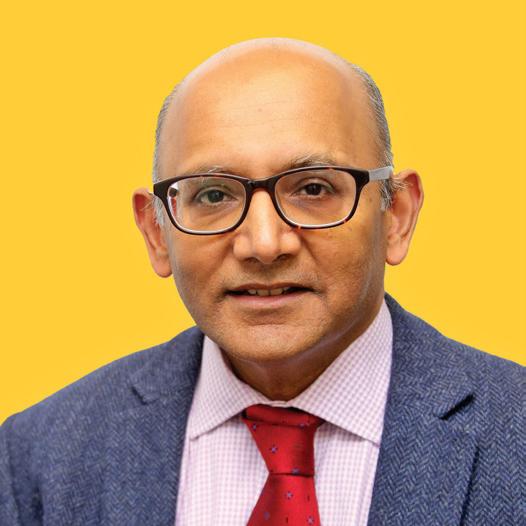
Khalid Nadvi, an international development professor at the University of Manchester in the United Kingdom, raised the need for regional governments to “step outside the box” and tap into the role of decent work in trade standards.
“Decent work, by generating sustainable employment, rising income and workers’ rights, can and will drive economic growth,” Nadvi said in a forum hosted by the International Labour Organization (ILO).
He cited Indonesia as an example, noting how its highest standard on its palm oil industry is now gaining global recognition despite being a counterpoint to the standards set by the global Roundtable on Sustainable Palm Oil.
“By incorporating elements of labor and environmental concern . . . into their standard, they were able to give it credibility in ways that grow purchase among global buyers,” he said. He also noted the rise of regional standards developed by other countries in the Asia Pacific region.
“Many of these developments have weaknesses in them, especially on enforcement mechanisms, but they point to a growing trend and recognition that in emerging economies, standards do and will matter.”
Collaboration
NADVI noted the gaps in how people understand public policy, saying that none of the regional and bilateral trade agreements among global south partners contain an explicit social clause.
Such agreements, he observed, rarely extend beyond compliance with national labor laws, adding that enforcement of these laws remains weak.
For Nadvi, collaboration is important between stakeholders, private companies and government agencies in formulating effective and sustainable trade standards.
“In some countries in the global south, you see states and private actors coming together to develop sustainability standards.”
“In this region you have Asean. Asean can be a very important player and you have to also think about how bringing together regional organizations to develop collective responses can actually improve the ability to develop the new rule spaces.”
The Philippine labor department’s National Wages and Productivity Commission Technical Service Director Jerome Yanson shared the same sentiment, saying that the country’s strategic compliance plans are developed through a tripartite process that involves labor groups, employers
and relevant agencies, including local governments.
Yanson cited Mindanao’s aquaculture sector, wherein a local industry tripartite council was established to strengthen social dialogue and oversee the implementation of compliance plans that would improve labor standards and productivity.
“In the Philippines, as a developing country, we rely on supply chains for economic activities to drive innovation, to create employment opportunities and, of course, to promote sustainable development. So to achieve this, we are guided by our principle that economic activities must always be balanced with protection and promotion of workers’ rights and welfare,” Yanson said.
Labor inspectors, microenterprises DOLE’s technical and advisory visits, according to Yanson, also rely on cooperation with microenterprises, which make up the bulk of Philippine businesses. He said inspectors work directly with owners to assess compliance, develop months-long action plans and provide technical assistance to help small businesses meet labor and safety standards.
“So the action plans also include interventions like, of course, social protection services, occupational safety and health standards and even productivity interventions. They all need these interventions because these microenterprises are actually crucial to the economy of the Philippines.”
This approach, he said, encourages voluntary compliance and strengthens the role of microenterprises within supply chains.
In November last year, the Philippines became the 151st member state to ratify ILO’s Convention No. 81, which sets out requirements for a national labor inspection framework to enforce laws on working conditions in both industrial and commercial workplaces.
The Philippine labor department was able to conduct a total of 97,150 labor inspections consisting of technical visits, regular assessments and workplace safety
WALK THE TALK
ILO challenges Asia-Pacific countries to integrate decent work into national trade standards if they want to sustain growth
investigations from July 2022 to March 2025.
“We saw the need to focus on microenterprises because these are dominant forms or business forms in the country, in the Philippines.... And more importantly, we believe that when they comply with labor standards, it will help facilitate their full integration into the supply chain,” Yanson said.
Challenges STILL, Nadvi said challenges remain in the labor sector as technological innovations continue to reshape the workforce. According to him, digitalization, robotics and advanced artificial intelligence (AI) tools are driving a reduction in employment in manufacturing, raising concerns about the future of jobs.
“So we need to think about appropriate social protection measures to offset such impacts on labor from new technologies. We also need to think about appropriate skills training to engage with the technological revolution and with the opportunities that AI offers and the challenges that AI will impose.”
At the same time, the rapid growth of the informal and gig economy presents additional challenges for promoting decent work, said Nadvi.
The World Bank estimates that the gig economy now accounts for up to 12 percent of the global labor market, with demand continuing to rise, particularly in developing countries. In China, more than 200 million workers participate in gig work, representing roughly a quar-
ter of the nation’s workforce.
The gig economy in the Philippines has also seen growth, especially during the Covid-19 pandemic. According to the Philippine Statistics Authority (PSA), approximately 9.9 million Filipinos were engaged in gig work as of 2022, comprising about 22 percent of the total employed population of 44 million.
Gig work in the Philippines spans multiple sectors, including retail, agriculture, construction, administrative services and personal services. While PSA noted that 17 percent of gig workers are engaged through online platforms or mobile applications, the majority work in private establishments or operate as self-employed individuals.
With the growing gig employ-
ment in the Asia-Pacific, Nadvi called for a deeper understanding of how labor standards can be upheld in these expanding sectors to ensure that workers are protected even outside traditional employment structures.
The discussion was part of ILO’s forum on “Emerging Trends in Supply Chains in Asia-Pacific,” which brought together policymakers, labor groups and industry representatives to examine challenges and opportunities in creating sustainable and resilient supply chains in the region.
ILO is a United Nations agency that sets international labor standards and facilitates dialogue among governments, employers, and workers to develop policies on employment, social protection and workplace rights.
Khalid Nadvi, International Development Professor, on technology and the workforce: “We need social protection measures and skills training to navigate the opportunities and challenges AI and digitalization bring.”
TSMC’s rise to push Taiwan past South Korea in key wealth gauge
By Miaojung Lin, Heesu Lee and Yian Lee Bloomberg
TAIWAN is set to surpass South Korea this year in terms of wealth for the first time in over two decades, marking a shift in Asia’s economic ranks made possible by the ascent of Taiwan Semiconductor Manufacturing Co.
According to the latest forecasts released Thursday by Taiwan’s central bank, the island’s gross domestic product is expected to expand 4.55% in 2025, a further upward revision from the 4.45% estimate made by the statistics bureau in August.
The growth trajectory puts Taiwan on track to exceed South Korea’s GDP per capita — a key measure of living standards — already in 2025, a year earlier than predicted by the International Monetary Fund in April. While both are ahead of Japan, Taiwan with this year’s projected GDP per capita of just over $38,000 remains at less than half the level of Singapore. Although skewed by the Taiwanese currency’s surge against the US dollar, Asia’s new pecking order offers another glimpse into how a global spending boom around artificial intelligence has transformed the economic fortunes of the self-governing island of 23 million people.
Taiwan saw its economy stagnate for decades after key manufac-
turers started to depart for China to take advantage of cheaper costs there starting in the late 1980s. But pandemic-era chip shortages vaulted its firms into global prominence, when state leaders and executives from the US to Europe scrambled to secure the semiconductors they needed to keep their economies humming.
The advent of ChatGPT then turbocharged that growth for TSMC and others like Foxconn Technology Group, which together assemble the majority of the world’s most advanced chips and servers essential to the development of AI. By contrast, Samsung Electronics Co., a conglomerate whose revenue is equivalent to about 11% of South Korea’s economy, has been struggling to catch up.
“South Korea’s economy spans a wide range of industries, including struggling sectors like petrochemicals, while Taiwan is more concentrated in the tech sector and has benefited more from the global AI boom. With Korea’s potential growth rate slipping due to aging and other structural issues, the trend may continue rather than
prove temporary,” said Bloomberg economist Hyosung Kwon.
Global demand for high-end tech products from Taiwan and South Korea has kept them both relatively immune to the sweeping US tariffs imposed by Donald Trump.
But whereas South Korea’s economy has stagnated, expanding less than 1% from a year earlier in the second quarter, Taiwan clocked one of the world’s quickest growth rates with a gain of over 8%.
The Bank of Korea projects full-year growth at 0.9%. BOK
Governor Rhee Chang Yong has repeatedly warned that structural challenges such as a low birthrate and an aging population are dragging the economy’s potential growth rate into the 1% range.
Taiwan’s dominance in products underpinning AI development has created boom times for its exports, which exceeded those of South Korea in August for the
first time.
That milestone is especially telling given how South Korea’s population and overall GDP are more than double Taiwan’s size.
The rapid appreciation of Taiwan’s dollar this year is another factor that helps explain why the island’s GDP per capita has caught up so fast.
It’s the best performer among
Asian currencies this year with a gain of around 9%, after exporters rushed to sell the greenback in part on expectations the authorities will allow it to strengthen to help reach a trade deal with the Trump administration. The South Korean won has gained just over 6% against the US dollar so far in 2025.
While the currency fallout has done nothing to slow tech powerhouses like TSMC, a stronger and more volatile exchange rate is a threat to Taiwan’s other, more traditional exporters.
Looking ahead, the worry for the economy is that its over-reliance on a single industry — with the US accounting for an evergreater share of Taiwan’s exports — risks turning a strength into a vulnerability, especially at a time of geopolitical unease and tensions with China.
“Given limited resources, it is very hard for Taiwan to diversify to other industries,” said Woods Chen, chief economist of Yuanta Securities Investment Consulting in Taipei. “What’s needed is to transform traditional industries into suppliers for high-tech companies like TSMC. Then the government needs to figure out how to redistribute revenues generated from tech companies.”
from
India’s high-speed trading firms offer $14,000 a month to interns
By Alex Gabriel Simon Bloomberg
HIGH-SPEED trading firms are rapidly increasing pay for entry-level jobs in India, brushing off a regulatory crackdown on the world’s biggest equity derivatives market.
Amsterdam-based IMC Trading BV has offered interns in India up to 1.25 million rupees a month ($14,182) this year, a threefold jump from 2024, according to people familiar with the matter. Quadeye, one of the biggest recruiters locally, paid newbies up to 750,000 rupees, up 50% from last year, the people said, asking not to be named due to company policy. Indian finance professionals earn an average annual base pay of about 700,000 rupees, according to Glassdoor.
The hiring push and lavish pay packages continue even as increased regulation to protect the interests of loss-making retail investors has helped curb derivatives trading by more than 40% from a peak last year. That’s because of the sheer potential for gains the world’s top equity derivatives market by volume has to offer: foreign funds and proprietary trading desks using algorithms made $7 billion in gross profits in the year to March 2024 alone.
“The demand for profitable traders is as strong as ever,” said Daniel Vaz, co-head of quant and trading technology recruiting at Aquis Search. “We’re getting inquiries to set up new desks almost every month, and there is intense competition to attract top-tier traders, quant researchers and trading system engineers in India.”
Global giants and homegrown players aren’t backing away even as the Securities and Exchange Board of India looks set to further increase its scrutiny of the market, particularly in the wake of its findings with regard to Jane Street Group LLC.
The regulator in July accused Jane Street entities of using their trading and technological might to influence prices in India’s stock and derivatives markets on expiry days, booking hefty profits in the process. The New York-based trading firm — which was temporarily
banned from the market by SEBI — has disputed the allegations and is seeking to overturn the order, arguing that it has been denied access to crucial documents it needs to fight accusations of market manipulation.
Brokers providing high-speed trading services such as Estee Advisors and iRage Broking Services LLP say that while these recent events have made some potential clients cautious, there is still a steady pipeline of companies looking to enter this segment.
Bengaluru-based Optimus Prime Securities & Research has scaled up its HFT operations recently, according to people familiar with the matter. The Bilakhia Group, which has business interests in healthcare and education technology, is also planning to expand into such trades with Minix Holdings, one of the people said.
Quadeye and IMC declined to comment for this story. Optimus and Minix didn’t respond to emails seeking comments.
Meanwhile, billionaire Ken Griffin’s Citadel Securities hired an options trader in India last month and plans to add more staff to bolster its operations, Bloomberg reported. The Miami-based firm opened its office in Gurugram in 2022 and has more than a dozen employees there after hiring a chief operating officer and head of trading this year. Citadel and trading firm Tower Research are also buying minority stakes in India’s National Commodity & Derivatives Exchange Ltd.
“We’re still seeing very robust interest, frankly, with some of the issues with Jane Street being clarified, the interest is only going to grow,” said Sandeep Tyagi, founder of Estee Advisors, citing interactions with clients.
Many firms are opting to hire interns to grab the best minds before they’ve finished their studies at the top engineering schools — the Indian Institutes of Technology. Pay at these high-frequency trading firms far outweighs other companies, recruiters said. The intern packages for this year were awarded before the Jane Street ban but after the broader crackdown on options trading.
Increasing competition and shifts in technology have forced firms to be more nimble and sophisticated with trading strategies. Some 70% of equity derivatives trades by value were executed by algorithms as of the end of March. That’s up from 60% three years ago, according to data from the National Stock Exchange of India Ltd. Rajib Borah, chief executive officer at iRage, said that strategies that he could earlier run for six months or more profitably, now work for about two months before he has to shift to new ones.
“One needs to be much sharper now, firing all engines and adapting much faster,” Borah said. As more firms start exploiting these opportunities, “alpha decay” will be even faster, he said, referring to how an investment strategy loses its edge or ability to beat the market over time.
THE TSMC Museum of Innovation in Hsinchu, Taiwan.
Editor: Angel R. Calso
The World
Sunday, September 21, 2025 A3
Meta unveils $799 smart glasses with built-in screen, paving way for AI-powered eyewear
By Mark Gurman
META Platforms Inc., seeking to turn its smart glasses lineup into a must-have product, on Wednesday unveiled its first version with a built-in screen.
The latest model, the $799 Meta Ray-Ban Display, features a screen in the right lens. It can show text messages, video calls, turn-byturn directions in maps and visual results from queries to Meta’s AI service. The subtly integrated display can also serve as a viewfinder for the camera on a user’s phone or surface music playback.
Speaking at the company’s annual Meta Connect event, Chief Executive Officer Mark Zuckerberg said Meta’s future glasses will be a vehicle for “superintelligence,” a term he has adopted to describe advanced artificial intelligence development and the name of a team inside the company.
“AI should serve people, not just be something that sits in a data center, automating large parts of society,” he said Wednesday from the stage at Meta’s Menlo Park, California headquarters.
For smart glasses—or AI glasses, as Meta now calls them—a display is key. The addition, over time, could allow consumers to offload some functionality to their eyewear that they would normally expect their phones to handle.
In an interview ahead of their launch, Chief Technology Officer Andrew Bosworth called the new glasses “the first serious product” in the space. This launch is a key part of Meta’s effort to build its own consumer electronics ecosystem, positioning itself against rivals like Apple Inc. and Alphabet Inc.’s Google. Since debuting its first virtual reality headset in 2016, Meta has aimed to attract users away from the dominant platforms.
“This feels like the kind of thing where you can start to keep your phone in your pocket more and more throughout the day,” Bosworth said. He added that the phone isn’t going away, but glasses offer a more convenient way to access its most popular features.
The glasses introduce a new control system. While users can still swipe along the frame as with previous models, the primary interface is now hand gestures, detected by a neural wristband strapped around the wearer’s dominant hand.
The user can select items by pinching their thumb and index finger, swipe through items by sliding a thumb across their gripped hand, double tap their thumb to invoke Meta’s AI voice
By Anthony Di Paola
assistant, or twist their hand midair to adjust music volume and other controls.
In addition to app interactions and the ability to handle AI queries, the glasses include a live caption feature that displays spoken words in real time—including translations—similar to closed captions on a TV. The video calling function lets wearers see the person they’re speaking with while sharing their own point of view.
Users can reply to texts by sending an audio recording or dictating a response. Later this year, the wristband will add another option: handwriting words in the air. A future update will also let the glasses focus on the person a wearer is speaking with while filtering out background noise.
The new glasses will go on sale Sept. 30 and will include the wristband. Meta is offering two sizes and two color options: black and a brown shade called sand. They will be sold by EssilorLuxottica SA’s Ray-Ban, Lenscrafters International Inc., Best Buy Co. and a limited number of Verizon Communications Inc. locations.
At launch, they’ll support apps like Facebook Messenger, WhatsApp and a music app powered by Spotify Technology SA. The Instagram app will initially only support direct messages, but Meta plans to add Reels viewing later this year.
The glasses’ display offers a limited 20-degree field of view with a resolution of 600 x 600 pixels. Its brightness ranges from 30 to 5,000 nits, providing decent visibility in most outdoor conditions, though it can struggle in the brightest sunlight. Some prescriptions are supported, but only as a built-toorder option.
The external camera matches past Ray-Ban glasses with a 12-megapixel sensor but falls short of new non-display models, also introduced Wednesday, in video resolution and battery life. The glasses record 1080p video and last six hours per charge, with the external case providing an additional 30 hours—roughly four full recharges.
Zuckerberg attempted live demos of a new version of the company’s Ray-Ban Meta glasses and the AI display glasses from the stage on Wednesday, but experienced technical difficulties with both.
“You practice these things a hundred times,” Zuckerberg quipped.
The wristband, called the Meta Neural Band, comes in three sizes and offers 18 hours of battery life. At launch, Meta is steering buyers to retail stores for proper fitting and onboarding before eventually
selling the glasses online.
Glasses partnership
BEYOND the engineering, branding and partnerships were also a challenge. Meta’s partner EssilorLuxottica initially hesitated to put the Ray-Ban brand on the display glasses, setting off a race for the social network to win over its longtime partner.
“The truth is, when we started this thing, Ray-Ban wasn’t even sure it would look good enough to be a Ray-Ban product,” Bosworth said. “It was just going to be Meta display glasses. And we did a ton of work to get it into a place that they felt like ‘oh wow, OK, we can see this actually being a Ray-Ban product.’”
Then there’s the $799 price, which is about as much as a smartphone that needs to be paired with the glasses costs. “Does it survive first contact with the market is the real question,” Bosworth said. “We’re feeling really confident with where this product is.”
The social networking giant has invested billions in hardware, betting that glasses will become a primary way users experience Meta’s AI products and social services. Meta recently made a $3.5 billion investment in EssilorLuxottica, taking about a 3% equity stake.
“We’re investing a lot of money,” Bosworth said. “We do think it is an investment that we expect to make a return on investment from. We do think we can get there on the hardware side, as well as on software and services.” he added.
New screen-free models
THE new screen-free models are an updated version of its standard smart Ray-Bans and a new offering under the Oakley brand. That continues a push from June, when the company introduced the higherend Oakley HSTN smart glasses.
The new Ray-Bans come in colors like navy blue, add 3K video recording (up from 1080p resolution on the previous models) and offer 40% more battery life.
Notably, Meta raised the starting price of the updated model to $379, up from $299, citing components and desire for margins rather than tariffs. The cheaper previous-generation model will continue to be sold.
The company also launched the Meta Oakley Vanguard, a sports-focused design that wraps around the wearer’s face and includes improved water resistance. The glasses feature a centered camera, louder speakers with deeper bass and new shooting modes such as 60-framesper-second video, slow-motion and time-lapse capture.
Bosworth said the Vanguard edition may eventually gain another feature: the ability to function like a walkie-talkie. For example, a group of users could go snowboarding together and communicate without placing traditional phone calls.
Market potential
THE new display glasses serve as a stepping stone to full augmented reality, or AR, glasses—immersive eyewear that overlays interactive content across both lenses. Meta is developing its first consumer AR glasses for a planned 2027 release, Bloomberg News has reported.
While Meta is the dominant player in this space and the first major consumer brand to bring display glasses to market, it’s not the first to try—and rivals are close behind.
“Google Glass was here first and in some ways was a great product,” Bosworth said. “Timing is everything, right? And there are no bad ideas in Silicon Valley, just bad timing.” The $1,500 Google version debuted in 2012, falling flat due to its price, features and privacy concerns.
Meta is likely to face future competition from the search engine giant, Samsung Electronics Co. and Apple, which is planning to unveil its first glasses as early
as next year. Chinese startups like Xreal Inc. are also moving quickly into the market.
Bosworth predicts Meta will sell over 100,000 units of the display glasses by the end of next year and expects the company to sell every unit it makes. “We really feel like we’ve captured something, a zeitgeist, at the right time with the AI boom coming,” he said.
“We really wanted to bias these in favor of the people who are going to actually put them on and use them,” Bosworth said, referring to the glasses as a low-volume product, “rather than technology enthusiasts who may buy them just to have and not really use them.”
Alex Himel, who leads the glasses work under Bosworth, said in a separate interview that he believes AI glasses will gain “mainstream traction” by the end of the decade.
Future bets
BOSWORTH is already exploring future display models, including versions with cellular connectivity and binocular displays (screens in both lenses). He envisions multiple offerings across non-display, display and AR segments.
He also sees potential for a dedicated app store but cautioned that it isn’t imminent, since running it would require an upgrade from the Qualcomm Inc. component used in
the first-generation model.
“We don’t have the compute space right now to run arbitrary software,” he said, referring to non-essential apps. (The nondisplay glasses, however, are now being opened up to developers.) At the same time, the bigger picture here may be moving away from apps altogether and just using the AI to get things done. “AI is a tremendously good solution” to replacing the litany of apps that people download to their gadgets today, Bosworth said. Looking beyond glasses, Bosworth said his group, known as Reality Labs, is experimenting with several other form factors. He revealed the company has “gotten pretty far down the path” of launching a smart watch to compete with Apple and that he’s considering some “pretty promising” prospects. “We’ve had some pretty exciting experience breakthroughs the last couple of weeks,” he said.
Looking even further down the road, Himel said the company has researched contact lenses that could, one day, replace glasses for providing AR. But such an offering may never arrive given the technological barriers. “There isn’t anything we’re not looking at.” With assistance from Kurt Wagner and Vlad Savov/Bloomberg
Efforts to punish Israel over Gaza grow in sports and cultural arenas
By Graham Dunbar AP Sports Writer
GENEVA—A major cycling race in Spain was disrupted by protests against an Israeli team. A basketball game in Poland was preceded by fans booing the Israeli national anthem. And several European countries are threatening to boycott a signature entertainment event if Israel takes part.
The global backlash against Israel over the humanitarian toll of the war in Gaza has spread into the arenas of sports and culture. Israel’s critics say it should be sidelined from international events just like Russia has been since its full-scale invasion of Ukraine in 2022.
Unlike Russia, which faced widespread condemnation and Western sanctions, Israel has not been shut out by global sports institutions like the International Olympic Committee or world soccer body FIFA. Besides the small international Muay Thai federation, there’s been little will in international sports to prevent Israeli athletes from competing under their national flag.
But Spanish Prime Minister Pedro Sánchez raised the temperature earlier this week by siding with pro-Palestinian protesters who disrupted the Spanish Vuelta cycling race, saying it’s time to boycott Israel from international sports
Big-ticket deals
THE complexities of getting multibilliondollar cross-border deals over the line will stay in focus as XRG chases other acquisitions, including gas assets in the US. Those aspirations have enticed Wall Street firms, with bankers flying in from around the world for a slice of the fees from XRG’s deal spree.
“We have a rich pipeline of opportunities and will continue to pursue them with the discipline and responsibility of a long-term investor,” XRG said in a statement.
While the collapse of the Santos deal would come as a blow to banks, it’s an early marker of Adnoc’s willingness to be disciplined over valuations, despite its vast financial firepower.
events until the “barbarity” in Gaza ends.
A day later, Spain’s public broadcaster joined three other European countries threatening to withdraw from and not carry next year’s Eurovision Song Contest—a hugely popular event in Israel and across Europe—if Israel is allowed to compete.
Earlier this month, some Hollywood filmmakers, actors and other industry figures signed a pledge to boycott Israeli film institutions—including festivals, broadcasters and production companies.
Why, Sánchez asked, shouldn’t Israel be expelled from sports just like Russia?
“THIS is different,” the IOC’s executive director for Olympic Games, Christophe Dubi, said this week in Milan when asked to compare the two.
Both the IOC and FIFA have said the legal reasons for acting against Russia have not been reached in Israel’s case but haven’t given detailed explanations.
The IOC has said Israel hasn’t breached the Olympic charter like Russia, when it annexed territories in eastern Ukraine.
Also, European soccer federations and clubs are not refusing to play Israeli opponents.
FIFA declined a request for comment on its Israel policy and the delayed work of two panels reviewing formal complaints by the Palestinian soccer federation, which has
Qamar Energy. That might have an impact on XRG’s pursuit of Covestro and show the European Union that Adnoc is willing to play hard ball, he said. XRG was envisioned as a nimble, acquisition-oriented company that the state giant itself would struggle to be. The firm is overseen by Adnoc Chief Executive Officer Sultan Al Jaber, a prominent executive who outlined the firm’s investment strategy last year in Houston, where he handed out rubber bracelets with the XRG logo and ended his speech with the slogan “Make Energy Great Again.”
long tried to bar Israel from competition over its treatment of Palestinians.
Israel reacts strongly to Spanish prime minister’s comments
ISRAEL reacted strongly to Sánchez’ call for a sports boycott. Foreign Minister Gideon Saar called the Spanish leader an “antisemite and a liar.” Israel has dug in its heels in the face of international isolation and criticism of its military campaign, which came in response to the Oct. 7, 2023, attack on Israel by Hamas-led militants.
The most notable exclusion from international sports was imposed on Apartheid-era South Africa. It did not compete at any Olympics after 1960 until the 1992 Barcelona Summer Games, two years after Nelson Mandela was released from prison.
Russia was swiftly blacklisted by most sports federations after the February 2022 invasion of Ukraine. Its athletes competed under a neutral flag at the Paris Olympics.
Currently there is no momentum for Israel to face the same fate. Still, some analysts said the move by Spain is significant, not least because it is a major soccer power set to co-host the 2030 World Cup. It also will host an NFL game next month and the opening stage of next year’s Tour de France bike rice.
“Until now we haven’t seen this type of outrage against Israeli action in Gaza,”
for its part, recently agreed with OMV AG to create a chemicals giant worth more than $60 billion, two years after Bloomberg News first reported the talks. The firm transferred its 25% stake in OMV to XRG earlier this year, as part of a strategy to consolidate its international portfolio.
‘Tailored approach’
AL Jaber touted his ambition for XRG in Houston in March, pitching plans to buy US assets, including upstream gas production, and to expand into powering AI and data centers.
said Antoine Duval of the Asser Institute, a Netherlands-based think tank. “I think this tide is turning now.”
Sports federations have complained about playing Israeli teams
How impactful Spain’s move will be remains to be seen. No world leader has so far followed Sánchez’ call for excluding Israel from international sports.
On Thursday, a British lawmaker in Birmingham called on European soccer body UEFA to “urgently cancel” soccer team Aston Villa’s Nov. 6 Europa League match against Israeli club Maccabi Tel Aviv “to ensure public safety and community harmony.” UEFA has not shown any indication it will do so.
Israel’s culture and sports ministry didn’t return messages seeking comment.
In Europe, several sports federations have groused about having to play Israeli teams, while noting they have no choice since Israel isn’t banned from international competitions.
“Facing Israel in these circumstances is not a scenario we would wish,” Basketball Ireland chief executive John Feehan said last month about being drawn to play Israel in a Women’s Eurobasket qualifying game in November. “But there has been no change in Israel’s status within sport.”
Feehan said Ireland’s basketball federation could face sanctions “should
we elect not to play, which would be hugely damaging to the sport here.”
In men’s soccer, Italy and Norway will host Israel next month in a World Cup qualifying matches and both federations spoke this week of their dissatisfaction with the situation.
Italian soccer leader Gabriele Gravina said he was “well aware of the sensitivity of Italian public opinion” about the Oct. 14 game in Udine. But refusing to play would result in a 3-0 loss by forfeit, according to FIFA’s rules.
“Not playing also means clearly saying we’re not going to the World Cup, we have to be aware of that,” Gravina said, adding that a boycott would instead help Israel advance closer to the finals tournament in the United States, Canada and Mexico.
Norway, which will play Israel on Oct. 11, said it would donate profits from ticket sales to Doctors Without Borders for its humanitarian work in Gaza.
Fans voice their protests against Israeli teams WHEN the Israel men’s national team played in Poland at Eurobasket last month, there were protests outside the arena in Katowice. Inside, the Israeli anthem was loudly booed by fans.
Last year, Maccabi Tel Aviv fans were involved in violent clashes with residents in Amsterdam while attending a soccer game there.
Protests inside stadiums are regularly seen in European soccer, even at the Champions League final in May. A “Stop Genocide In Gaza” banner in French was displayed during the game by Paris SaintGermain fans congregated behind one goal in Munich.
UEFA did not open a disciplinary case, despite having rules prohibiting political messaging. It fueled the debate at its own Super Cup game in August: Before kickoff in Udine, banners saying “Stop Killing Children. Stop Killing Civilians” were laid on the field in front of the PSG and Tottenham players.
In tennis, Canada hosted Israel in the Davis Cup last weekend behind closed doors in Halifax, Nova Scotia, due to “escalating safety concerns.” The move came after hundreds of Canadian athletes and academics urged Tennis Canada to cancel the matches over Israel’s actions in Gaza and the West Bank.
In 2023, Indonesia lost hosting rights for the men’s Under-20 World Cup for FIFA rather than accept Israel playing on its turf. But its stance appears to have changed.
Israeli media reported in July that the country’s gymnastics federation was invited by Indonesia to send a team to the world championships in Jakarta later this year. Indonesia is currently in talks with the IOC to be considered as a host for the 2036 Summer Games.
“It might not be a bad thing tactically to show they can walk away,” said Robin Mills, founder of Dubai-based consultancy
to double that over the next decade. This month, Adnoc said it would transfer roughly $120 billion of stakes in its listed energy companies in Abu Dhabi, giving XRG access to cash flow and dividends to fund deals.
“Adnoc’s LNG ambitions have not gone away,” said Saul Kavonic, head of energy research at MST Marquee in Sydney. “Adnoc will need to pursue LNG exposures across the US, Africa and Australia to realize their targets.”
“This is going to be a company that covers the whole value chain of energy,” he said at the time. “It’s a custom tailored approach to ensure that XRG becomes the supplier of energy that will meet the exponential growth in AI.” He reiterated those aspirations when President Donald Trump visited the United Arab Emirates in May.
“The outcome of the Santos deal suggests a cautious, measured approach rather than a bold, risk-heavy strategy,” Nakhle said. With assistance from Manuel Baigorri and Keira Wright/Bloomberg Abu Dhabi. . . Continued from A3
Its board is stocked with executives boasting vast international energy and dealmaking experience, including Blackstone Inc. President Jon Gray and former BP Plc Chief Executive Officer Bernard Looney. Klaus Froehlich, the former Morgan Stanley banker, spearheads most of Adnoc’s international expansion plan. While it has struggled to hammer out big deals, XRG has snapped up assets in the US, Turkmenistan and Mozambique. Adnoc,
Set up in November as an internationalfocused unit of Adnoc, XRG had an initial target for $80 billion of assets with plans
The collapse of the Santos deal is more of a setback for the Australian firm than for Adnoc, according to Carole Nakhle, chief executive officer and founder of energy consultant Crystol Energy Ltd. It still came as a missed opportunity for the Emirati energy giant, she said, adding that XRG’s move offered a window into the company’s thinking.
‘Children are bound to die’: Corruption, aid cuts and violence fuel hunger crisis in South Sudan
By Caitlin Kelly The Associated Press
JUBA, South Sudan—At 14 months, Adut Duor should be walking. Instead, his spine juts through his skin and his legs dangle like sticks from his mother’s lap in a South Sudan hospital. At half the size of a healthy baby his age, he is unable to walk.
Adut’s mother, Ayan, couldn’t breastfeed her fifth child, a struggle shared by the 1.1 million pregnant and lactating women who are malnourished in the east African country.
“If I had a blessed life and money to feed him, he would get better,” Ayan said at a state hospital in Bor, 200 kilometers (124 miles) from the capital, Juba.
A recent UN-backed report projects that about 2.3 million children under 5 in South Sudan now require treatment for acute malnutrition, with over 700,000 of those in severe condition. The report attributes the rising numbers to renewed conflict in the northern counties and reduced humanitarian assistance. Independent since 2011, South Sudan has been crippled by violence and poor governance. United Nations investigators recently accused authorities of looting billions of dollars in public funds, as 9 million of South Sudan’s almost 12 million people rely on humanitarian assistance. Now, funding cuts, renewed violence, climate change and entrenched corruption are converging to deepen the unfolding hunger crisis.
Funding cut
IN the basic ward at the hospital in Bor, dozens of mothers cradle frail children. Malnutrition cases have more than doubled this year, a crisis worsened by recent staff cuts. Funding cuts this spring forced Save the Children to lay off 180 aid staff, including 15 nutrition workers who were withdrawn from Bor in May. Funding cuts have also hit supplies of ready-to-use therapeutic food, RUTF, the peanut paste that has been a lifeline for millions of children around the world. USAID once covered half global production, but Action Against Hunger’s Country Director Clement Papy Nkubizi warns stocks are now running dangerously low.
“Twenty-two percent of children admitted for malnutrition at Juba’s largest children’s hospital have died of hunger,” Nkubizi said. “Triangulating this to the field…there are many children who are bound to die.” He explains that families now walk for hours to reach support after the organization closed 28 malnutrition centers. UNICEF says more than 800 (66%) of malnutrition sites nationwide report reduced staffing.
Violence hampering aid delivery VIOLENCE in South Sudan’s northern states has compounded the crisis, blocking humanitarian access and driving hundreds of thousands from their farmland.
Although a 2018 peace deal ended the country’s five-year civil war, renewed clashes between the national army and militia groups raise fears of a return to largescale conflict. In Upper Nile State, where the violence has resurged, malnutrition levels are the highest.
The UN said intensified fighting along the White Nile River meant no supplies reached the area for over a month in May, plunging more than 60,000 already malnourished children into deeper hunger.
In June, the South Sudanese government told The Associated Press it turned to US company Fogbow for airdrops to respond to needs in areas hit by violence. Although the company claims to be a humanitarian force, UN workers question the departure from the established system.
Laguna to institutionalize bamboo industry for livelihood
282,930 culms worth about P7 million.
Sby John Eiron R. Francisco
TA. CRUZ, Laguna—Provincial officials said they are eyeing the institutionalization of the bamboo industry to unlock its full potential, strengthen its supply chain, and ensure long-term support for local producers.
In an interview with the BusinessMirror on the side of the “Laguna Bamboo: Growing with Purpose, Rooted in Resilience” conference on September 9 at the provincial capitol, Provincial Board Member Karla Monica Adajar-Lajara, chairman of the committee on agriculture, said that the measure to formally establish the industry is already in progress.
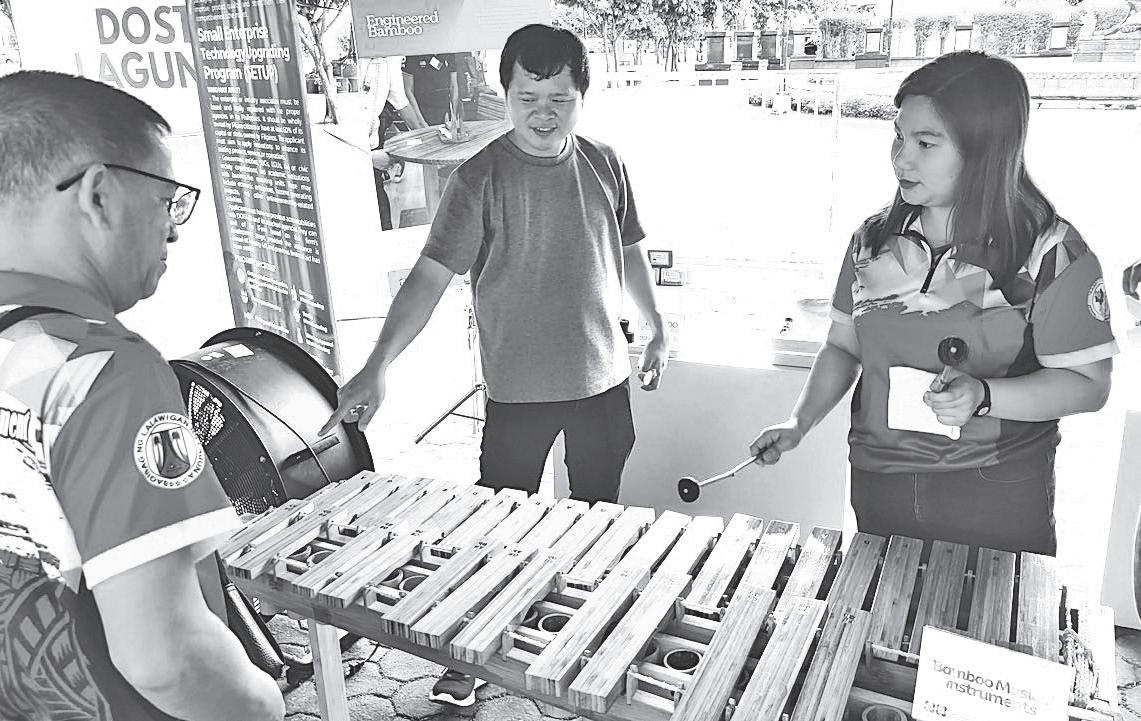
“With the support of the DOST [Department of Science and Technology], we aim to boost livelihoods through the bamboo sector. Since we already have the University of the Philippines Los Baños and other science institutions here in the province, we might as well maximize their expertise to benefit our people,” she said, partly in Filipino at the event organized by the DOST–Forest Products Research and Development Institute (DOST-FPRDI).
strengthen the industry further?” he added.
“Through this ordinance, we want to bridge the gap and encourage our youth to get involved. Bamboo has long been overlooked, but in reality, it provides ecological benefits and holds great potential in the market,” Adajar-Lajara added.
P100-million industry with bigger potential
DOST-FPRDI Director Rico J. Cabangon told the B usiness M irror that the industry already generates at least P100 million annually in Laguna. He pointed out, however, that the project’s real goal is to give the sector greater momentum.
“Hopefully there will be more entrepreneurs, more plantations, and a stronger bamboo industry in Laguna. With more momentum, this P100 million can grow into much more,” Cabangon said.
Asked why the industry is emerging only now, Cabangon explained that “science was not yet fully explored.”
He said the lack of data in the past hindered growth, but with current information, the sector can chart a clearer path forward.
“Laguna is already exporting bamboo poles. But instead of exporting raw materials, why not process them here, add value, and
The proposed ordinance will focus on developing the industry from the grassroots, identifying areas for bamboo planting, and ensuring training and technology transfer. It also seeks to spark the interest of the youth in farming, noting that many farmers are aging and the younger generation is increasingly disengaged from agriculture.
Cabangon pointed to examples in Pangasinan, known for bamboo hats and home to one of the country’s largest engineered bamboo factories, as well as Bukidnon, which supplies giant bamboo for another major manufacturing facility.
He noted that Laguna has the same potential to be recognized as a bamboo hub, provided it sustains policy support and innovation.
“We give thanks to our governors here for supporting the laguna bamboo industry. Hopefully, this will be the start of something bigger for Laguna,” Cabangon emphasized.
He noted that with interested investors and the available technologies and processing techniques, the province is well-positioned to produce high-quality bamboo products.
“What I hope to see is a product that people can immediately recognize as proudly made in Laguna,” he added.
‘Thriving bamboo economy’
BASED on the Laguna Bamboo Industry Development Plan presented by Dr. Carl Anthony O. Lantican, project leader of strengthening science-based and policyinformed industry-level support for bamboo enterprises in Laguna, the province has seen significant growth in the sector.
From only eight enterprises in 2018, the number rose to 95 by 2023, and now stands
at 105. Most of these businesses remain informal and unregistered but continue to operate and thrive.
“It goes to show how vibrant the industry is,” Lantican said.
According to Lantican, nearly half of these enterprises are processors that convert bamboo into finished products.
The concentration of resources and processing are found in Laguna’s third and fourth districts, with Cavinti hosting the most number of pole sources. The second district leads in ornamental bamboo production, while Siniloan has the highest number of bamboo processors.
Among the notable species cultivated in the province are “sina” or “bolo” (Schizoastachyum lumampao Blanco), “kawayan tinik” (Bambusa spinosa), “buho” (Gigantochloa levis), and “kawayan kiling” or ‘taiwanak” (Bambusa vulgaris Schrad ex Wendl).
Ornamental bamboo varieties, such as Thailand, variegated, Buddha, black, and golden bamboo are also grown and sold as live plants for landscaping.
Industry data show that sina or bolo bamboo has an estimated annual volume of 240,680 culms, generating nearly P19.5 million at an average market price of P81 each.
Kawayan tinik contributes 111,200 culms annually, valued at over P10.1 million, while buho—traded at P248 per bundle of 10— yields the highest production volume with
Art and science: Research uncovers ‘Spoliarium’ ‘yakal’ frame, traces other Juan Luna paintings
SCIENCE and art indeed can go together. This was proven in a landmark discovery linking science and national heritage through the Department of Science and Technology’s (DOST) partnership with the National Museum of the Philippines (NMP).
The partnership has identified the wood species used in the massive frame of Juan Luna’s “Spoliarium” as yakal (Shorea astylosa), a durable hardwood native to the Philippines.
The DOST-Forest Products Research and Development Institute (DOST-FPRDI) finding was part of a broader initiative to study the materials behind Luna’s historic artworks through scientific wood identification.
The initiative underscores the critical
role of science and technology in heritage preservation, said the DOST-FPRDI. Included in the National Fine Arts Collection are six oil-on-panel paintings by Luna, a seminal figure in Philippine art and the late 19th-century Propaganda Movement.
The DOST-FPRDI experts used advanced analysis of wood patterns, which are distinct for each species. The Institute’s experts were able to determine the geographic origin of the artworks based on the wood species used. Three of these works—“Mi hermano en nuestra celda en la Fuerza de Santiago [My brother in Our Cell in Fort Santiago, c. 1896–1897],” “Altos hornos de Vizcaya [Study for Obreros en el taller de convertidores Robert de ‘La Vizcaya’, c. 1893–1894], and “Chula
Madrileña [Madrid Wench, undated]—were found to have been painted on Philippinenative species: “ipil’ (Intsia bijuga) and “batikuling” (Litsea) species.
The findings indicate that the artworks were created during Luna’s time in the Philippines.
The other three paintings were confirmed to have been made in Europe, based on their wood types and characteristics.
Meanwhile, despite its visual grandeur, the type of wood used in Spoliarium’s imposing frame remained unknown—until now.
The identification of yakal, known for its strength and resistance to decay, adds a new layer of understanding to one of the most iconic and celebrated works in Philippine art.
Science Secretary Renato U. Solidum Jr. emphasized the broader implications of the study.
“This is the kind of science that goes beyond the laboratory. By uncovering the very materials that hold our cultural treasures together, we are able to connect history, art, and technology,” Solidum said.
DOST-FPRDI Director Rico J. Cabangon highlighted the collaborative spirit behind the achievement.
“This is science, technology, and innovation at work—protecting our heritage, enriching our identity as scientists and researchers, historians, artists, but most of all as Filipinos. DOST-FPRDI, through its collaboration with NMP, ensures that masterpieces like Juan Luna’s Spoliarium and other works are preserved for generations to come,” Cabangon pointed out.
DOST-FPRDI said these achievements reinforce the Institute’s leadership in wood and non-wood scientific research, and commitment to advance initiatives that protect the country’s cultural legacy, strengthen national identity, and inspire future generations. Idohna Leah B. Jomaoas, Maylin P. Smith and Michelle Arreana T.
Media Services
Cruz/S&T
Kawayan kiling records a smaller contribution of 400 culms valued at P14,800.
The ornamental bamboo sector, however, emerges as a major economic driver with 409,840 units produced annually, valued at a remarkable P83.1 million.
Beyond raw production, bamboo in Laguna is deeply integrated into local trade and processing. Furniture makers craft sala sets and bamboo beds using bolo and tinik, sourcing materials from Kalayaan, Magdalena, Tanay, Talim Island, and Quezon.
Processing hubs are concentrated in Laguna municipalities of Paete, Sta. Cruz, Majayjay, and Alaminos, with markets reaching Cabuyao, Calamba, and Los Baños.
Production is largely demand-driven, with buyers paying 25 percent to 50 percent upfront and waiting three to seven days for completion.
For housing, oversized bolo poles are transformed into traditional “bahay kubo [nipa-bamboo huts].” Materials are sourced from Cavinti, Pañgil, Luisiana, Majayjay, Liliw, and Victoria, and processed in Mabitac, Victoria, San Pablo, Calamba, Magdalena, and Los Baños.
They are sold to as far as Batangas, Quezon, Cavite, Bulacan, and even Boracay.
Construction requires a 50-percent down payment and takes from three days to two weeks.
Handicrafts also play a vibrant role, with products including baskets, “sawali” panels, sticks, chicken coops, ladders, hammocks, “biltay,” and smaller furniture pieces. Most are sourced and processed in Siniloan, Mabitac, and Majayjay, and then distributed to markets in Sta. Rosa, Cabuyao, Batangas, Bulacan, Quezon City, Marikina, and Quiapo in Manila. Distribution channels vary from roadside sales and phone orders to trader-managed delivery.
Meanwhile, ornamental bamboo has carved out a direct-to-consumer market. Grown in Catauan, Los Baños, and Bay, these live plants are sold primarily for landscaping, with traders managing both logistics and plant care.
While acknowledging the opportunities, Cabangon also pointed out key challenges in developing a bamboo-based industry. Chief among them, he said, is the need to establish plantations that can provide a steady source of raw materials, without which the sector cannot prosper.
“We need to have plantations from the government as well as from the private sector,” he said, noting that policies are already in place to support stakeholders. With the creation of the Bamboo Industry Development Council and a drafted ordinance underway, Cabangon said the council could soon allocate funds to sustain operations within the province.
No compromise on AI ethics—experts
By Bless Aubrey Ogerio
ARTIFICIAL intelligence (AI), regardless of its sophistication, cannot replace human judgment or serve public interests without clear rules and value-based frameworks.
At the 23rd Development Policy Research Month (DPRM) forum at Mariano Marcos State University (MMSU) on Tuesday, experts pointed out that ethics and governance in AI are nonnegotiable, cautioning that it should not operate as an unchecked force shaping society.
“For administrators, AI can streamline enrollment systems, predict student retention trends, and provide data-driven insights for better resource allocation,” said MMSU Research Director Dionisio Bucao.
“And for researchers, AI tools accelerate literature reviews, data analysis, and simulation modeling, enabling deeper inquiry and faster solutions,” he added.
Bucao emphasized that technology must always serve people. “AI must be used with integrity, guided by ethics, safeguarding human rights and promoting inclusive development,” he said.
The university has integrated AI policies across its faculty, research staff, and student body. MMSU recently approved a Board of Regents policy on AI use to ensure responsible, values-driven adoption campus-wide.
MMSU President Virgilio Julius Manzano Jr., said the forum comes at a pivotal time.
“Artificial intelligence is no longer just a buzzword of the future. It is here, influencing the way we teach, conduct research, learn, govern, and make decisions every day,” he said.
“Harnessing AI is not only about improving systems—it is about empowering educators, researchers, learners, and communities to thrive in a rapidly changing world,” Manzano added, noting that it should remain a partner, not a replacement, for human intelligence.
For her part, Maria Cristina Pammit, OIC at Social Development Research Center, provided context for the forum, noting that DPRM was established under Presidential Proclamation 247 in 2002 to promote evidence-based policymaking and research-driven governance.
“This event underscores the importance of cultivating a strong research culture and increasing public literacy on socioeconomic issues,” Pammit said. She also cautioned that while AI can enhance governance and public service delivery, it raises challenges, such as algorithmic bias, labor displacement, opaque decision-making, and inequality.
Data from the United Nations Educational, Scientific and Cultural Organization projects the country’s AI market at $772.1 million in 2024, with expected annual growth of 28.57 percent, reaching approximately $3.49 billion by 2030.
The Philippines also improved its standing in the 2024 Government AI Readiness Index by Oxford Insights, ranking 56th out of 188 countries, up from 65th the previous year.
Story & photos
Faith Sunday
A6 Sunday, September 21, 2025 Editor:
‘PHL being devoured by spiritual crocodile’
Philippine Catholic Church leaders urge Filipinos to fight corruption peacefully, and through prayer
TBy Roy Lagarde
WO cardinals and an archbishop called on Filipinos to fight peacefully and through intense prayer the raging issue of graft and corruption currently enveloping the country that allegedly involve politicians, public works engineers and contractors in questionable flood control projects.
The head of Manila’s Roman Catholic Church, Cardinal Jose F. Advincula, called on Filipinos to take “concrete but peaceful and non-violent actions” against corruption, describing it as “one of the vilest scams in the history of our nation.”
For his part, Cardinal Pablo Virgilio David of Kalookan has called for intense prayer as he warned that the Philippines is being devoured by a “spiritual crocodile” at work in corrupt politicians, while outgoing Bishop Alberto Uy of Tagbilaran called on Catholics to take a firm stand against the issue.
‘Cannot be ignored anymore’ “THE issue of corruption plaguing our nation cannot be ignored anymore,” Advincula said in a pastoral statement issued on September 15. Advincula denounced corruption as “a concrete form of evil,” accusing “callous individuals both in government and
the private sector” of drowning Filipinos in its “floodwaters.”
“Let us put our country and the people’s interest foremost in our mind,” he said. “Let us hope and pray that justice and peace may reign in our hearts, that God will hear from heaven, forgive our sins, and heal our broken land.”
He urged parishes, shrines, mission stations, and religious communities to organize prayerful reflections, circles of discernment, and civic initiatives against corruption.
While stressing that protests and public actions must remain peaceful, he said they reflect “the people’s collective moral conviction” rather than mere political opposition.
“In a healthy democracy, the people’s fiscalizing participation in governance is not confined to the election season,” Advincula said. “It continues between elections, by holding leaders accountable through acts of vigilance, discernment, and when necessary, protest.”
The cardinal’s statement comes as more than 200 sectoral groups and church organizations prepare to hold twin rallies in Metro Manila on September 21 to denounce alleged massive corruption in flood control projects.
The demonstrations—in Luneta Park in Manila and at the People Power Monument in Quezon City—will coincide with the
CARDINAL Jose Advincula presides at the opening Mass of the 39th National Meeting of Diocesan Directors of Liturgy at Manila Cathedral on September 9.
53rd anniversary of late President Ferdinand Marcos Sr.’s declaration of martial law, a date heavy with symbolism under the administration of his son, President Ferdinand Marcos Jr.
‘Turn to Virgin Mary for protection’
IN his homily at a Mass with the Filipino community in the US city of Los Angeles, Cardinal David criticized politicians, engineers and contractors who “shamelessly plunder public funds while the poor are drowning in the floodwaters of corruption.”
“My dear fellow Filipinos, please pray hard for our country. We are presently in a deep state of political crisis,” said David, who presided at the annual Virgen de los Remedios Mass on September
Pope Leo XIV marvels at his ‘huge learning curve’
ROME—Pope Leo XIV marveled at the “huge learning curve” he has taken on as pontiff and likened some aspects of the job to jumping “in on the deep end of the pool very quickly,” in excerpts of an interview released Sunday on his 70th birthday.
The pope also lamented widening income gaps between the working class and CEOs, recalling the recent news that Elon Musk could be in line to become the world’s first trillionaire.
“If that is the only thing that has value anymore, then we’re in big trouble,” Leo said in the comments, the pope’s first interview as history’s first American pope. The comments came just a day after Musk’s brother’s company, Nova Sky Stories, staged a light show over the Vatican featuring 3,000 drones depicting images from the Sistine Chapel and even Pope Francis’ face.
The interview was conducted this summer by Vatican correspondent Elise Ann Allen for her forthcoming biography of Leo.
Excerpts were published Sunday on Allen’s Catholic news site “Crux,” and in the El Comercio daily of Peru.
In the excerpts, Leo spoke about feeling both American and Peruvian, given his dual citizenship and 20 years of missionary experience in Peru. He said that experience gave him great appreciation of the Latin American church and Pope Francis’ ministry as history’s first South American pope.
Asked whether he would root for the US or Peru in a future World Cup, Leo drew parallels to his childhood in Chicago and the value of not shutting down opponents.
“Even at home, I grew up a White Sox fan, but my mother was a Cubs fan, so you couldn’t be one of those fans that shut out the other side,” he said.
“We learned, even in sports, to have an open, dialogical, friendly and not angry competitive stance on things like that, because we might not have gotten dinner had we been!” he added.
Francis promoted Leo to a top
14 at the Cathedral of Our Lady of the Angels.
The liturgy, attended largely by Kapampangans, also marked the 69th anniversary of the canonical coronation of the image of Virgen de los Remedios de Pampanga.
“The next few days or weeks or months ahead are now very uncertain,” said David, who is also the president of the Catholic Bishops’ Conference of the Philippines.
“It is at this time that we need to invoke the Blessed Mother … the one who intercedes to remedy the crisis situation,” he added.
He urged Filipinos to turn to the Virgin Mary for protection in what he described as a worsening political crisis.
“We commend our country to the Virgen de los Remedios… the one who leads us to follow
job at the Vatican in 2023, making clear he viewed him as a potential successor. Nevertheless Leo said he wasn’t fully prepared for the job.
“There’s still a huge learning curve ahead of me,” he said, adding that he had found his footing as pastor, but that the challenge was the job as world leader.
“On that one I had to jump in on the deep end of the pool very quickly,” he said.
Leo’s 70th birthday is celebrated at the Vatican
THE interview was released on September 14 as Leo marked his 70th birthday, which was celebrated at the Vatican during his traditional noon blessing.
Leo saw giant “Happy birthday” banners, in English, Italian and Spanish, balloons and congratulatory signs held up by the faithful gathered in St. Peter’s Square. Groups of Peruvian believers, including dancers in traditional attire, were out in force.
“Dear friends, it seems you know today I have turned 70,” Leo said to cheers. “I thank the Lord, my parents and all those who remembered me in their prayers.”
When he was elected last May at age 69, the former Robert Prevost was the youngest pope since 1978, when Karol Wojtyla was elected Pope John Paul II at age 58.
Many people in the square knew it was Leo’s birthday and wished him well, especially given the weight of responsibility he had taken on to run the Catholic Church.
“Well, he definitely needs a lot of support, because he has to carry on a pontificate during a particularly difficult period, both for geopolitical issues and certainly for internal matters,” said Lorenzo Vecchio, a member of a Catholic university group in the piazza. “We are certainly happy that he is a very young pope.” Nicole Winfield/ Associated Press
not Satan’s way, not my way, but God’s way,” he said.
The Virgen de los Remedios Mass is an annual religious event introduced nearly 20 years ago by Filipino immigrants in Southern California.
‘To steal from the poor is to steal from Christ Himself’
IN his homily at the Holy Name University gymnasium in Tagbilaran City on September 16, Uy urged the clergy, consecrated persons and laypeople to live their faith through concrete action.
“Stand against corruption and dishonesty; remember, to steal from the poor is to steal from Christ Himself,” Uy said as he celebrated his farewell Mass with the diocese ahead of his new role as archbishop of Cebu.
His appeal came as government officials face widespread allegations of corruption tied to multibillion-peso flood control projects.
Uy, 58, was appointed in July by Pope Leo XIV to succeed retired Archbishop Jose Palma as head of the Archdiocese of Cebu. He will be installed during a Mass at the Cebu Metropolitan Cathedral on September 30.
The bishop expressed both gratitude and sadness as he looked back on more than eight years of serving as shepherd of the diocese.
“This is not an easy moment for me. My heart is filled with gratitude, but also with sadness,” Uy said. He recalled walking with the faithful through both joys and struggles, including the devastation of Super Typhoon Odette and the Covid-19 pandemic. He also admitted his own shortcomings, asking forgiveness for times he may have failed to meet expectations.
Uy thanked the clergy, religious communities and lay leaders who served alongside him, especially the faithful of Bohol, whom he praised for their resilience and generosity.
“This is not a goodbye—it is a ‘padayon,’ a ‘let us continue,’” he said. “Please pray for me as I begin my mission in Cebu. And I promise, I will always carry you in my heart and in my prayers.” CBCP News
ROME—Italian police divers have cleaned one of the biggest underwater attractions of the Mediterranean, using pressurized water hoses to remove crustaceans from the “Christ of the Abyss” statue that was placed on the seabed off Italy’s northern coast in 1954.
The 2.5-meter (8-foot) tall bronze statue, depicting Christ with his hands raised in blessing, was made using the melted-down medals of Italy’s fallen soldiers, canons and ships and was designed as a memorial to those who died at sea.
It is appreciated here as a potent symbol of sacrifice in World War II, and similar statues are found off Key Largo, Florida and in Grenada.
The statue is located about 300 meters off the beach between the resort towns of Portofino and Camogli on Italy’s northern Ligurian coast, at a depth of around 18 meters (59 feet).
The archaeological office of Italy’s Culture Ministry says that, because of
its proximity to the coast and relatively shallow depth, the “Christ of the Abyss” site is the most frequented dive spot in the Mediterranean.
The site, located in the bay of San Fruttuoso, also draws kayakers and paddleboarders since the statue can be seen from the surface.
Every year, divers carefully waterblast the statue to remove bacteria and corrosive crustations that have accumulated. This year, the cleaning took place August 19 and involved Italian police, coast guard and four other forces.
The pressurized cleaning process uses seawater itself and causes no damage to the bronze or the marine ecosystem as the microorganisms are dislodged and released back into the sea, said Alessandra Cabella, art historian from the Ligurian archaeology superintendent’s office.
“There are a ton of marvelous fish who come to watch,” she said in an interview Thursday. “It’s truly
an activity with zero impact on the environment.”
The water-blasting technique has been in use since 2004, when the statue was taken from the water for a full restoration after a hand had broken off and was re-attached.
It was then that restorers realized that the previous underwater cleaning method—scraping the bronze with metal brushes to remove the crustaceans—had caused irreparable damage to the statue’s surface, creating crevices in the bronze patina that attracted even more marine material to accumulate.
The statue is also delicate because when it was made, by Italian artist Guido Galletti to honor an Italian diver who died in the area, it was filled with cement and iron rods to stabilize it on the seabed. The presence of the iron has helped corrode the bronze from the inside, Cabella said. Silvia Stellacci And Nicole Winfield/Associated Press
ARCHDIOCESE OF LOS ANGELES/CBCP NEWS
ARCHBISHOP Alberto Uy delivers the homily at his farewell Mass for the Diocese of Tagbilaran at Holy Name University in Tagbilaran City on September 16. SAMMY NAVAJA/CBCP NEWS
Italian divers clean the underwater statue of Christ off Portofino
A SCUBA diver of the Italian Navy cleans the bronze statue of Jesus Christ in the Mediterranean Sea, off San Fruttuoso, between Camogli and Portofino on the Italian Riviera, on August 19. SUPERINTENDENCY OF ARCHAEOLOGY, FINE ARTS AND LANDSCAPE FOR LIGURIA VIA AP
Asean Champions of Biodiversity Media
Editor: Lyn Resurreccion
Biodiversity Sunday
Horsefield’s bronze cuckoo: An intriguing, exciting find
By Jonathan L. Mayuga
THE Department of Environment and Natural Resources-Biodiversity Management Bureau (DENR-BMB) posted recently a photo of the Horsfield’s bronze cuckoo, a bird known to science but had never been seen or recorded in the Philippines.
A Horsfield’s bronze cuckoo ( Chalcites basalis ), is typically found in Australia, New Zealand, and nearby Pacific islands, according to the DENR-BMB.
The species was sighted in the Philippines for the first time at the Lawak Island Critical Habitat (LICH) in the Kalayaan Island Group, in Palawan, an island province in Luzon dubbed as the country’s last ecological frontier.
It was discovered in June 2025 during an avian survey conducted by the Palawan Council for Sustainable Development Staff (PCSDS).
Lawak Island Critical Habitat
ATTY. Teodoro Jose S. Matta, executive director of the PCSDS, said LICH was established as a critical habitat in 2022 through a resolution of the Environmentally Critical Areas Network Board of the Local Government Unit of Kalayaan. It was subsequently declared as such by the PCSD.
According to the Philippine Clearing House Mechanism, a critical habitat is a specific area outside of officially declared protected areas that serves as a vital habitat for one or more threatened or endemic species, requiring special protection to prevent the species’ extinction.
LICH is known as a vital hub for migratory birds—such as sooty terns, great crested terns, and brown noddies.
This small island in the Kalayaan Island Group is also a significant ecological site within the West Philippine Sea because it provides sanctuary for resident species.
“The isolation of Lawak Island within the KIG makes it a significant area for migratory and vagrant bird species, as its location provides a natural stopover and resting site. This highlights the ecological importance of protecting LICH, both as a critical habitat and as a unique area for scientific discovery and conservation,” Matta said.
Vagrant bird
ACCORDING to the Asean Centre for Biodiversity (ACB), Horsefield’s bronze cuckoo is commonly found in Australia, with a known distribution including New Guinea and parts of Indonesia and Malaysia. It is not native to the Philippines.
The ACB told the BusinessMirror via e-mail on September 12 that the recent ornithological or study of birds, where a Horsfield bronze cuckoo was spotted on Lawak Island in Palawan highlighted the significance of biodiversity monitoring in the region, and emphasizes the dynamic nature of the distribution of avian species, where one or two can occasionally appear far from their primary habitats.
Experts say vagrancy is a common phenomenon, where a bird may end up in a new area due to either external factors like weather
or internal factors related to the bird’s own behavior.
An unlikely pet ASKED if there was a possibility that the bird was brought as a pet and was only accidentally released into the wild, the ACB said that while migration and vagrancy are the most likely explanations, the possibility of the Horsfield’s bronze cuckoo being a former pet and accidental released into the wild cannot be entirely ruled out.
However, the ACB said Horsfield’s bronze cuckoos are not commonly known to be kept in captivity, partly due to their brood parasitic lifestyle, which makes it difficult to care for or breed.
“Furthermore, released pet birds also tend to struggle in the
wild, as they may lack the necessary survival skills and are vulnerable to predators. Without clear evidence, such as signs of captivity [e.g., leg bands, clipped wings] or a local record of this species being kept as pets, this explanation remains far less likely than migration or vagrancy,” the ACB added. Intriguing, exciting find FORMER ACB executive director Theresa Mundita S. Lim said the recent sighting of the Horsfield’s bronze cuckoo in the Philippines is both intriguing and exciting.
“While this species is not new to science, its appearance in our country marks a first confirmed record, and is therefore significant in the context of Philippine ornithology and migratory bird monitoring,” said Lim, a former DENR-BMB director and executive director.
She said that new species discoveries or first country records are becoming increasingly rare, particularly in countries like the Philippines, where most habitats have already been explored, or, unfortunately, degraded.
‘Recently recorded species’ “DURING my more than two decades at the BMB, only six new bird species were described as new to science: Camiguin hawk-owl (Ninox leventisi), Cebu hawk-owl (Ninox rumseyi), Calayan rail (Gallirallus calayanensis), Bukidnon woodcock (Scolopax bukidnonensis), Sierra Madre ground warbler (Robsonius thompsoni), and a subspecies elevation of the Philippine hanging parrot (Loriculus
philippensis), with ongoing debate on taxonomy,” she said.
A licensed veterinarian, Lim said that each of these discoveries reflects years of fieldwork, scientific collaboration, and conservation focus in the country’s remaining wild areas.
“However, the case of the Horsfield’s bronze cuckoo is different—it is not native or endemic to the Philippines but is a migratory species, breeding in Australia and New Zealand and moving northward during the austral winter to countries like Indonesia, Malaysia, and Papua New Guinea,” she said.
This new record, along with other recent sightings of rare migratory birds—such as the hooded crane, pied avocet, and the critically endangered spoonbilled sandpiper—reinforces the Philippines’ vital role in the East Asian-Australasian Flyway, one of the world’s major bird migration routes, Lim said.
Monitoring, citizen science LIM said the new record highlights three important observations. First is the improved monitoring and citizen science.
“We are now seeing the fruits of better field monitoring, supported by citizen scientists, birdwatching communities, and advances in digital documentation,” she said, adding that photo sharing, GPS tracking, and instant communication with experts have enabled quicker and more accurate species identifications.
HONG KONG—Critically endangered yellow-crested cockatoos found an unexpected sanctuary among Hong Kong ’s towering skyscrapers, but like their human neighbors they now face trouble finding a place to call home.
“These habitats, such as wetlands, mudflats, and forest edges, must be protected and restored to ensure continued avian biodiversity,” she pointed out.
Indicators of climate, ecological change LASTLY, she said the sightings of new species are indicators of climate and ecological change.
“Some sightings—like the Dalmatian pelican in Leyte in 2009— may represent cases of extreme weather displacement or shifts in migratory paths,” she explained.
She said monitoring these patterns is essential in understanding the broader ecological impacts of climate change.
“As for the Horsfield’s bronze cuckoo, further study is needed to determine whether this is a regular migratory visitor, a rare vagrant or straggler, or possibly even an escaped exotic pet,” she said.
According to Lim, continued documentation and observation will be key in determining its status.
“Every confirmed sighting— whether of a new species or a new national record—should inspire not only scientific curiosity but also public appreciation for the rich and dynamic bird life of the Philippines. These moments serve as reminders of the interconnectedness of ecosystems and the need to conserve habitats both for our resident and migratory wildlife,” she ended.
Second, she explained the persistence of key habitats despite pressures only proves that the Philippines still maintains important stopover and feeding sites that support migratory birds during critical points of their journey.
Nest boxes help endangered cockatoos find homes in urban Hong Kong
Native to Indonesia and East Timor, the snow-white birds, their crests flashing like yellow crowns, squawk through the urban parks of the Asian financial hub. They make up roughly 10 percent of the species’ global wild population, which numbers only up to 2,000 mature birds.
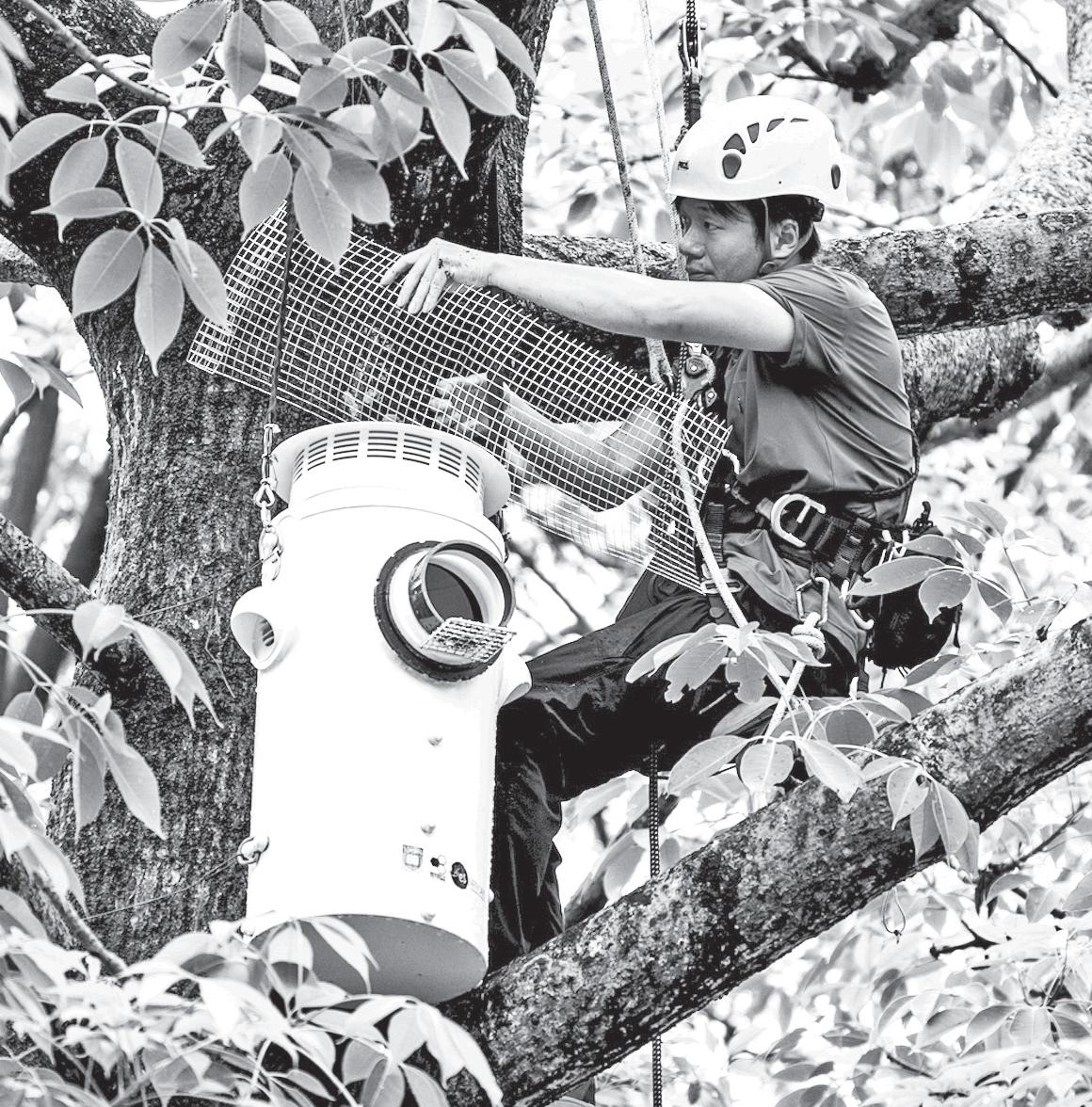
stepped in with a solution: installing artificial nest boxes that mimic these natural hollows.
Research shows the city’s cockatoo population has stagnated as the birds, which live in tree cavities, are losing natural nesting spaces in old trees due to typhoons and government tree trimming for public safety. That’s adding to global pressures on cockatoos, such as the illegal pet trade and climate change. Hong Kong’s conservationists have
Astrid Andersson, a postdoctoral researcher at the University of Hong Kong who led the project, said a pair of birds already settled in a nest box her team fixed onto a tree on her campus, the city’s oldest university.
She aims to install 10 boxes by year’s end and ultimately boost that figure to 50 in the
next few years across Hong Kong Island.
“And then they can continue to live in the city,” she said.
Pet trade, habitat loss push species in Indonesia to the brink ONCE widespread across island chains from central to eastern Indonesia and East Timor, the yellow-crested cockatoo has vanished from many islands and clings to survival on others.
The International Union for Conservation of Nature says as much as 90 percent of the population is thought to have disappeared since 1978, mainly due to trapping for pet trade.
Weak enforcement of a 1994 export ban by Indonesia has allowed the trade to persist, including targeting chicks. In 2015, Indonesian police arrested a man on suspicion of smuggling about 20 birds by stuffing them inside water bottles.
Deforestation from farming and logging is another problem. Indonesia lost 107,000 square kilometers of its original tropical rainforest between 2002 and 2024—an area about the size of Iceland—accounting for about a third of all tree cover loss during that time, according to Global Forest Watch. Climate change is making things worse. Rising temperatures dry out forests, leaving them more vulnerable to fires. Many birds live on volcanic islands, where eruptions can spark wildfires in the parched landscapes.
“The fires are humongous,” said Bonnie Zimmermann, director of the Indonesian Parrot Project, a nonprofit organization.
Hong Kong bird market sales raise concerns
THE wild cockatoos in Hong Kong’s urban parks could be from escaped or released pets, Andersson said.
One urban legend says they descended from pet birds released by a British governor before he surrendered to invading Japanese troops in 1941. Hong Kong, a former British colony, returned to Chinese control in 1997.
Hong Kong bans commercial trading in wild-caught cockatoos, but allows captivebred sales for operations registered under the Convention on International Trade in
Endangered Species of Wild Fauna and Flora (CITES). However, there is no such breeding operation registered in the city.
In August, a three-month-old chick was priced at 14,000 Hong Kong dollars ($1,800) in the city’s bird market.
A 2017-2018 survey by Andersson found 33 cockatoos for sale, triple the number of birds imported since 2005. They could be from home breeding, trafficking from abroad or Hong Kong’s wild population, the university said in a statement.
Andersson has developed a forensic test to help distinguish between those who live in the wild and those bred in captivity, and she hopes it can be applied in the market one day.
Many Hong Kongers do not know the birds are critically endangered. Dreamy Cheung said she was unaware when she bought her pet, Mochi, in 2021 for 20,000 Hong Kong dollars ($2,570). She felt anxious after learning of her intelligent bird’s endangered status, especially given its missing identification leg ring and possible illegal origins.
“It’s like taking away someone else’s baby,” she said.
In an emailed statement to The Associated Press, the Agriculture, Fisheries and Conservation Department said the government was committed to protecting endangered species, with regular inspections at markets and shops. It has no record of cockatoo poaching in the past five years, but it will investigate any reports, it said.
It added that it will provide advice on bird conservation for any tree trimming that may affect wild birds.
Creating space for coexistence HONG KONG’S cockatoos symbolize how humans and wildlife can coexist in a highly urbanized environment, said Andersson. Local birds also may carry some distinct genetic lineages missing in their native range, helping to sustain their genetic diversity.
“Hopefully, Hong Kong’s population will be able to contribute to saving this species from extinction,” she said. Her team plans to use cameras installed inside the nest boxes to collect data about cockatoo reproductive behavior, a topic that has not been extensively studied. Cockatoos squawked in the upper branches of a tree in a park in the city’s Causeway Bay area as conservationist Harry Wong installed a wood chip-filled nesting box. Wong tried a similar project a decade ago without success.
This time, watching cockatoos occupy a nest box at the University of Hong Kong just two months after it was installed, he was excited and surprised.
“We can create small things in the city that allow the animals who live here to coexist with us,” he said.
Kanis Leung, Chan Long Hei, Aniruddha Ghosal And Katie Tam/Associated Press
HORSEFIELD’S bronze
By Aldrin Quinto
’M very proud of them.”
ICoach Angiolino Frigoni repeated it several times. In the middle of an interview, again he paused, smiled, and said it once more: “By the way, I’m very proud of them. Very proud of them.”
The 71-year-old Italian coach deflected the praise, shining the spotlight on Alas Pilipinas for their exceptional breakthrough performance in the FIVB Volleyball Men’s World Championship.
“Coaches think that the improvement of the player is dependent on the coaches… but players don’t get better if they don’t want to,” Frigoni said.
“I’m proud of them. They have improved a lot and showed they play good volleyball.... They played with skill and power, with heart and mind.”
Topbilled by Bryan Bagunas, Alas Pilipinas put on a show. Leo Ordiales thrived in his co-starring role, as did Marck Espejo. Owa Retamar’s part was central to the entire saga. The charismatic Josh Ybanez dazzled with fearless flair, and the rest of the ensemble brought depth and dimension to the court.
Frigoni also said fans were the emotional engine behind Alas Pilipinas’ spirited run.
“Thank you to all the fans that came here, they supported us very much,” Frigoni said.
Nearly 15,000 spectators packed the MOA Arena for the Philippines’ match against Iran, which ended in a jolting reversal.
Kim Malabunga had sent back Ali Haghparast’s attack for a 20–18 count and what could have been a spot in the knockout round, sending the crowd into delirium.
But a challenge was raised, and the replay showed the veteran middle blocker grazing the bottom of the net with his hand. Play resumed, and Iran went on to win, 21–25, 25–21, 17–25, 25–23, 22–20.
It was a heartbreaking end to a feelgood story, but Bagunas credited the crowd for their all-out support ’til the end.
“Playing here in the Philippines made a huge difference. We felt the energy, the love, the pride,” Bagunas said. “That kind of support—it lifts you. It makes you fight harder.”
One of the few Filipino players who has played professional volleyball in overseas leagues, Bagunas said the World Championship tops them all.
“This might be the most memorable volleyball experience of my career.”
Alas Pilipinas: Frigoni’s pride
Espejo was also very grateful to fans for providing the lift and believing in the team through every high and low.
“I’m very thankful to all the fans who came and supported us,” Espejo said. “The crowd erupted when we thought we’d nailed it.”
The world watches THE Philippines’ spirited campaign was seen across the globe, and the leaders of the sport recognized the remarkable rise.
The president of the Italian Volleyball Federation, Giuseppe Manfredi, said
Malabunga on net fault: It’s hard to explain, that moment was mine
KIM MALABUNGA took the blame for his net fault as his potential game-winning block became the biggest “what-if” for Alas Pilipinas.
Malabunga blocked Ali Haghparast, sending the 14,240-strong home crowd and the team into a wild celebration on Thursday at the SM Mall of Asia Arena. However, Iran called for a net fault challenge and the replay clearly showed Malabunga’s contact with the net, tying the decider at 19-all.
Haghparast and Yousef Poshtpari then sealed the comeback, sending Iran to the Round of 16 with a 21-25, 25-21, 17-25, 25-23, 22-20 victory.
Malabunga appeared apologetic as he entered the mixed zone for media interviews and met supporters at the fan zone.
“It’s hard to explain. I was really down after the game. That moment was mine,” Malabunga said. “We should’ve won, but I lost my balance. I’m really sorry. That’s on me.” Fans—both online and at the arena—were quick to encourage him, noting it wasn’t entirely his fault and that he gave his best effort.
In fact, Malabunga scored 10 points, helping Alas Pilipinas take a 2-1 match advantage and keeping the team in contention despite trailing 6-10 in the decider.
“All I can really say is I feel both happy and sad. I’m happy because I see our coaches and teammates proud of the result,” he said.
“Everything we worked so hard for over the past year really showed in this game. But at the same time, I can’t help but feel a bit of regret.”
It will take time for Malabunga to move on from this heartbreaker, but Alas Pilipinas still earned global respect by proving it belongs among the 32 nations at the World Championship—with a breakthrough win over African champion Egypt and nearly reaching the Round of 16 against world No. 16 Iran.
“This World Championship means a lot to us. It’s such a big experience, and it’ll help us grow for the next tournaments. We’ll just keep working harder so we can make it up to the Filipino people,” Malabunga said.
“I truly believe men’s volleyball in the Philippines is going to rise after this. You saw it. We didn’t go down easily. In our last two games, all the hard work from the past year really came through.” www.philippineswch2025.com
he was deeply impressed by the team’s growth and grit in a congratulatory message to PNVF president Ramon Suzara after the Philippines fell just short of the knockout rounds.
“Your team has shown amazing talent and determination,” Manfredi said.
“Unfortunately, the outcome is not what we hoped for, but I know great things are coming thanks
to the motivation and commitment I know you all have.”
The team that started the tournament with modest goals ended up challenging for a spot in the Round of 16.
Alas Pilipinas wound up proudly in 19th place, just behind three-time world champion Brazil and Paris Olympics gold medalist France.
Alas Pilipinas started slow and dropped the opener against Tunisia, before finding its rhythm and taking down African champion Egypt.
Marck Espejo, who suffered an ankle injury in the leadup to the World Championship, fought through the pain to deliver when it mattered most.
He vowed to fight on.
“The journey doesn’t end here,” Espejo said, as he thanked the Philippine National Volleyball Federation for bringing the World Championship to the Philippines. “I’m proud of this team, because nobody expected this team to go far and we reached this far. I told the team there’s nothing to be ashamed of.”
HONDA Philippines Inc. (HPI) has joined the roster of sponsors for the 2025 FIVB Volleyball Men’s World Championship (VMWC), one of the most prestigious sporting events in the world where the Philippines made a global impact. Honda is proud to be part of the global stage, reinforcing its commitment
to inspire the youth while embracing the passion, energy, and excellence that world-class volleyball represents.
As part of its sponsorship, HPI showcased its newest motorcycle lineup—all-new PCX160, Honda NAVi and Winner X.
Oro Premiere last August 30. This marked the first time a Southeast Asian country is hosting the world championship making HPI’s participation even more meaningful.
Ahead of the championship, HPI has already kicked off activities to engage fans and communities nationwide— official Kick-Off event at SM Mall of Asia Music Hall last August 13, followed by a Road Tour Activity in SM Stores—SM Seaside Cebu last August 16, SM Laoag City last August 23 and SM Cagayan de
“Honda is honored to be part of this historic moment in Philippine sports,” said Apple Magaling, HPI Motorcycle Planning Department Manager. “Just like the worldclass athletes competing in this tournament, we at Honda Philippines are continually striving to inspire and empower the youth with advanced, safe and innovative mobility solutions.”
“Smart is proud to support platforms like PusoP.com that bring the passion of Filipino sports fans closer to the action,” said Jude Turcuato, Head of Sports at PLDT and Smart. “Whether it’s volleyball or basketball, we want to make sure fans never miss a moment— wherever they are.”
DANCERS from the group Buganda
Deadly Nepal protests reflect a wider pattern of Gen Z political activism across Asia
2
SEPTEMBER 21, 2025 | soundstrip.businessmirror@gmail.com
SWAMP SPECTACLE
Shrek returns to Manila to reconnect with family audiences
Story by Justine Xyrah Garcia
The swamp is opening its gates once more.
After more than a decade, Shrek the Musical is stomping back into the local stage, aiming not just to reintroduce the beloved ogre to longtime fans but also to connect with an entirely new generation of kids — and their parents who might just sing along too.
Based on the 2001 Oscar-winning DreamWorks Animation film and the 1990 picture book by William Steig, Shrek the Musical first opened on Broadway in 2008 and has since toured internationally.
Manila audiences last saw it in 2018 in a staging by Atlantis Productions.
This new revival, however, is coming from the Full House Theater Company that has made a name producing both homegrown blockbusters (Ang Huling El Bimbo, Buruguduy Stun Stugudunstuy) and big-name Broadway imports (The Sound of Music, Annie).
Artistic Director Menchu Lauchengco-Yulo described the decision to bring back Shrek as part
Publisher :
T. Anthony C. Cabangon
Editor-In-Chief :
Lourdes M. Fernandez
Aldwin M. Tolosa
Concept :
Y2Z Editor :
SoundStrip Editor : Group Creative Director : Graphic Designers :
Jt Nisay
Edwin P. Sallan
Eduardo A. Davad
Niggel Figueroa
Chow Jarlego
Contributing Writers :
Tony M. Maghirang
Rick Olivares
Jingo Zapata
Reine Juvierre S. Alberto
John Eiron R. Francisco
Ica Hontiveros-Cheng
Ana Zoe V. Davad
Justine Xyrah Garcia
Ginger Franz S. Ocampo
Trixzy Leigh Bonotan
Bless Aubrey Ogerio
Photographers :
Bernard P. Testa
Nonie Reyes
Y2Z & SOUNDSTRIP are published and distributed free every Sunday by the Philippine Business Daily Mirror Publishing Inc. as a project of the
The Philippine Business Mirror Publishing, Inc., with offices on the 3rd Floor of Dominga Building III 2113 Chino Roces Avenue corner
Dela Rosa Street, Makati City, Philippines. Tel. Nos. (Editorial) 817-9467; 813-0725. Fax line: 813-7025
Advertising Sales: 893-2019; 817-1351,817-2807. Circulation: 893-1662; 814-0134 to 36. www.businessmirror.com.ph
of a conscious effort to reconnect with family audiences.
“We haven’t done a children’s musical in a while...So you know, ushering Christmas and Halloween, which is really geared for children, we decided to bring back a musical that is good for families," Lauchengco-Yulo explained during a roundtable with BusinessMirror and other media organizations.
“And so Shrek was the obvious choice in terms of trying to bring back that market."
Director Dexter M. Santos also pointed out that this isn’t just a rerun of what audiences might remember.
Staged in Newport Performing Arts Theatre's expansive amphitheater, the new Shrek will have bigger production numbers, a much larger ensemble, and a reimagined dragon.
For him, the ambition is to go beyond spectacle and create an experience that feels immersive.
"My dream is to make it feel like it's such a theme park for the kids so that it's very much enjoyable...There's a lot of technology that has changed when it comes to staging based on the available resources that we have," Santos shared.
This “theme park” idea matters because Shrek is being revived at a time when younger audiences—many of whom weren’t even born when the original movie came out in 2001—may be encountering the characters for the first time.
Santos and his team are betting that live theater can make Shrek, Fiona, and all the fairy-tale creatures resonate all over again.
Finding the heart beneath the humor
For theater veteran Jamie Wilson, stepping into Shrek’s green skin is equal parts funny and moving.
“Shrek has always been an everyman to me,” he says. “He’s outcast just for being born different, but he learns he can still be the hero of his own story. That’s something everybody can relate to.”
He also admitted that singing the ballad Who I’d Be is an emotional challenge—sort of a reminder that behind the burps, farts, and wisecracks, Shrek’s journey is really one of self-discovery and acceptance.
“It’s so meaningful, it’s hard to sing it without crying. Anybody who’s ever wanted to be something more will feel that.”
Meanwhile, Krystal Kane described Princess Fiona as far from a traditional fairytale princess.
She sees her as spunky and headstrong, qualities that make the role appealing.
Coming off a vocally demanding project with Sandbox Collective's Side Show the Musical, she feels prepared for Fiona’s songs but admitted that the choreography remains the biggest hurdle.
“It’s nerve-racking, but also exciting. It’s going to help me grow,” she said.
Why Shrek still matters?
Beyond the laughs and big production numbers, Lauchengco-Yulo believes the show remains relevant because of its message.
"Basically it's about acceptance...Everybody in this world is created differently and in their own
unique way, we should accept and embrace that and not try to be something we're not," she said.
For Filipino audiences, the team added, the story of misfits learning to embrace who they are is especially resonant in a society still grappling with issues of identity, inclusion, and difference.
Tickets, ranging from P1,500 to P4,500, are now available at TicketWorld, HelixPay, and the
The Cast and Creative Team of Shrek The Musical 2025 at Newport World Resorts.
Photos by Full House Theatre Company
From left: Julia Serad as Dragon, Jamie Wilson as Shrek, Topper Fabregas as Donkey, Krystal Kane as Fiona, and Alfredo Reyes as Lord Farquaad
Topper Fabregas as Donkey Krystal Kane as Fiona
Jamie Wilson as Shrek Alfredo Reyes as Lord Farquaad
Director Dexter M. Santos
Full House Theater Company Co-Artistic Director Menchu Lauchengco-Yulo
Newport World Resorts Chief Hospitality Officer John Lucas
The Shrek the Musical opens on October 31 at the Newport Performing Arts Theater and runs until December 6.
Newport World Resorts Box Office.
NO HYPE, JUST PURPOSE
The Juans’ decade-long journey culminates in ‘Tawid’
Story and photos by John Eiron R. Francisco
Adecade in music can feel like a lifetime, filled with soaring highs, quiet valleys, and countless notes strung together to tell one story. For Filipino pop band The Juans, ten years is not just a measure of time but a testament to purpose.
“Longevity is the name of the game. It’s not chasing a hype. It’s not being on top all the time. But it’s about living our purpose every chance we get,” said Carl Guevarra, the band’s main vocalist, guitarist, and keyboardist, during an exclusive event with reporters.
He explained that every opportunity to share their music and connect with fans has been a reminder of why they started.
“The ultimate goal is to keep living out our purpose. That’s what has allowed us to be here after ten years. If we had been chasing hype, we might have burned out or been disappointed long ago,” Guevarra said, partly in Filipino.
He added that the life of an artist is not always filled with mountaintop moments. There are valleys too—times of self-doubt, comparison, and quiet reflection. But staying true to their purpose has kept them going, knowing that their music continues to touch lives.
‘
TAWID ’
On August 29, The Juans staged TAWID LIVE, a milestone concert marking their 10th year in the music industry. The show went beyond a typical performance, serving as a celebration of the group’s music, stories, and decade-long journey with their fans. Supporters were also treated to a live preview of the band’s latest album ahead of its release.
Two weeks later, on September 12, The Juans launched their 10-track milestone album Tawid—a project more than half a year in the making, with some songs written years back.
The word Tawid in Filipino means “crossing over” or “journey across,” and Guevara said that it symbolizes the band’s reflection on the past decade and their step into a new chapter.
“This whole Tawid live is not just for the people we’re performing for; it’s also for us,” Guevarra said.
Reflecting on the first day of rehearsals for their recent concert, he shared:
“That first rehearsal was actually the word we talked about—Tawid. It was the first step in crossing over to our next season, to our next level. The whole process of writing the album, talking about where we are in life, preparing for the show—this is literally our Tawid moment as well. We believe that after this season, God will take us to a different place, to a different level. By heart, spiritually, mentally, Tawid was literally a crossing for us.”
He recalled a moment from their concert when their mentor encouraged everyone to “take a step forward,” and the band followed suit. “That was our Tawid—stepping forward into the unknown. Ten years behind us, but what’s next? I’m not sure. But if God is with me, then I’ll take the next step. That’s kind of what we did here.”
But behind the milestone album was also a process marked with doubts and difficult decisions. At one point, the band even considered cutting the tracklist short.
“Honestly, nung una, pinag-uusapan namin kung nine or ten songs ba talaga. Kasi may kaba factor—what if people don’t accept it?” recalled RJ Cruz, vocalist and guitarist.
He added, “But then we realized, if we don’t believe in the songs we’re releasing, who else will? Some people out there might need these songs. When we were reminded of that, we said, ‘Sige, let’s do this.’"
For Guevarra, the bigger challenge was not the music but the execution. “Our team was the one really overwhelmed,” he admitted with a laugh.
“On our 10th anniversary, we didn’t just want to release a studio album—we wanted a live version too. And we’re a small team; you can count them on one hand," Guevarra added.
He detailed the ambitious lineup of plans: finish the album before the live show, release a live version first, produce a music video featuring Pinoy Big Brother housemates, and mount the concert itself—all within a threemonth calendar.
“Natural sa amin na medyo ambisyoso,” Guevarra said. “We wanted to dream bigger than what we’ve done before. And honestly, our team—many of them fresh graduates—rose to the challenge. They were our frontliners, and I’m very proud of what they achieved.”
After the whirlwind of preparations, the band realized that all the pressure and sleepless nights were not just about pulling off an ambitious show and album release. For The Juans, it was also proof that their ambition has always been rooted in something deeper than chasing the spotlight.
“I think yung pagiging ambisyoso namin is one of the reasons why we keep pushing, even if we don’t always see the results right away,” Guevarra reflected.
He acknowledged that not all of their songs became hits and they weren’t always the talk of the town. Still, he said, their dream had grown bigger than fame—it was about inspiring listeners, providing for their crew, and maybe even helping send someone to school one day. That, he emphasized, is what drives them to keep going despite life’s unfair turns.
“We’re human, and we feel those things too,” he admitted. “But at the end of the day, we’re thankful that our dream is bigger than just us. We’re dreaming for others—and that keeps us going every day.”
The Juans
Deadly Nepal protests reflect a wider pattern of Gen Z political activism across Asia
By DB Subedi
The University of Queensland
EARLIER
this month, thousands of mainly young people in Nepal took to the streets in mass protests triggered by the government’s decision to ban 26 social media platforms.
Some 22 people died and hundreds were injured within in a few hours in the clashes between protesters and police.
Prime Minister KP Sharma Oli and his cabinet ministers resigned in the face of growing public outrage and widespread criticism, both domestically and internationally, over the protesters’ deaths.
Provoked by the deaths of the protesters on September 8, angry, young demonstrators burned down several government buildings across the country, including the parliament and supreme court. Several politicians’ residences were also set on fire, while leaders of major political parties went into hiding.
to meet the public’s hopes for real reforms. For the first time in the country’s history, a protest of this size has been entirely led by young people from Generation Z (born roughly between 1997 and 2012). Out of nearly 30 million people in Nepal, about 40 percent belong to this generation.
Growing up in a digital culture shaped by internet and social media platforms, this generation has lived through Nepal’s worst years of political instability and frequent government
‘The protests in Nepal mirror similar movements led recently by young people elsewhere in Asia. (In these parts, thousands are expected to join anticorruption protests today at Luneta Park and the EDSA
Despite some improvements in roads, electricity and the internet, inequality, political corruption, elitism and nepotism continue.
Making the situation even worse is an unemployment rate that exceeds 10 percent overall–and more than 20 percent for young people.
The social media ban that sparked action
IN a country where more than 73 percent of households own a mobile phone and about 55 percent of the population uses the internet, social media platforms are not only a source of entertainment and networking, but also a way of amplifying political voices–especially when traditional media is perceived as being biased towards political interests.
Nepal’s Gen Z is using social media both as a social and political space. #Nepobaby is often trending on TikTok, while Instagram posts detail the lavish lifestyle that politicians and their children enjoy compared to the hard reality of many young people, who work lowwage jobs or have to leave the country just to survive.
on September 8, but it could not save the coalition government.
Similarities in other countries
THE protests in Nepal mirror similar movements led recently by young people elsewhere in Asia, especially Bangladesh, Sri Lanka and Indonesia. (In these parts, thousands are expected to join anti-corruption protests today at Luneta Park and the EDSA People Power Monument—Ed.)
Like Bangladesh in 2024, the young protesters in Nepal were frustrated with corruption and joblessness. Similar to Sri Lanka’s “Aragalaya” movement in 2022, Nepal’s protesters fought against inequality and nepotism, resulting in the collapse of the government. And like Indonesia’s student protests in recent weeks, the Nepali protesters relied on memes, hashtags and digital networks, rather than party machines to organize.
Where to from here?
WHAT comes next for Nepal is unclear. The army chief is now coordinating with Gen Z activists to set up an interim civilian government that will prepare for fresh elections.
This is a remarkable shift: the youth who shook the streets are being asked to help shape the country’s political future. Yet, challenges remain.
The young protesters are still a loose, leaderless network lacking the experience to run a state system. After an online meeting September 10, the protesters reportedly agreed to propose former Chief Justice Sushila Karki, now in her 70s, as a leader of the interim civilian government.
Nepal’s key institutions, such as the courts, bureaucracy and security forces, are still largely dominated by older elites, as well. Any attempt to shift power may face resistance.
Unrest leads to protests
POLITICAL protests and public uprisings are not new in Nepal. The country’s first mass uprising in 1990 (labelled “Jana Andolan I”) and the second in 2006 (“Jana Andolan II”) both called for major changes in the political system. The governments that followed failed
changes. There have been 14 governments in the past 15 years.
In 2008, Nepal declared a shift from its constitutional monarchical system to a federal republic system, but the new federal constitution was only passed in 2015. But this massive change has delivered few improvements for everyday people.
On September 3, the government banned these social media platforms, citing a directive requiring companies to register in Nepal. The government justified the move as necessary to control fake news, misinformation and disinformation.
But Gen Z saw the ban as censorship. The frustration spreading on social media quickly turned into a nationwide uprising. The government lifted the ban
Perhaps Nepal can take a lesson from Bangladesh’s recent experience, where young protesters stepped in to help form an interim government, under the leadership of Nobel Peace Prize winner Muhammad Yunus.
Despite the challenges ahead, the uprising has provided a historic opportunity to fix Nepal’s broken government system. But real change depends on how power shifts from the old guard to new leaders, and whether they can address the structural and systemic issues that drove young people to the streets. The Conversation n Cover photo by Joe Yates on Unsplash