




By Troi Santos
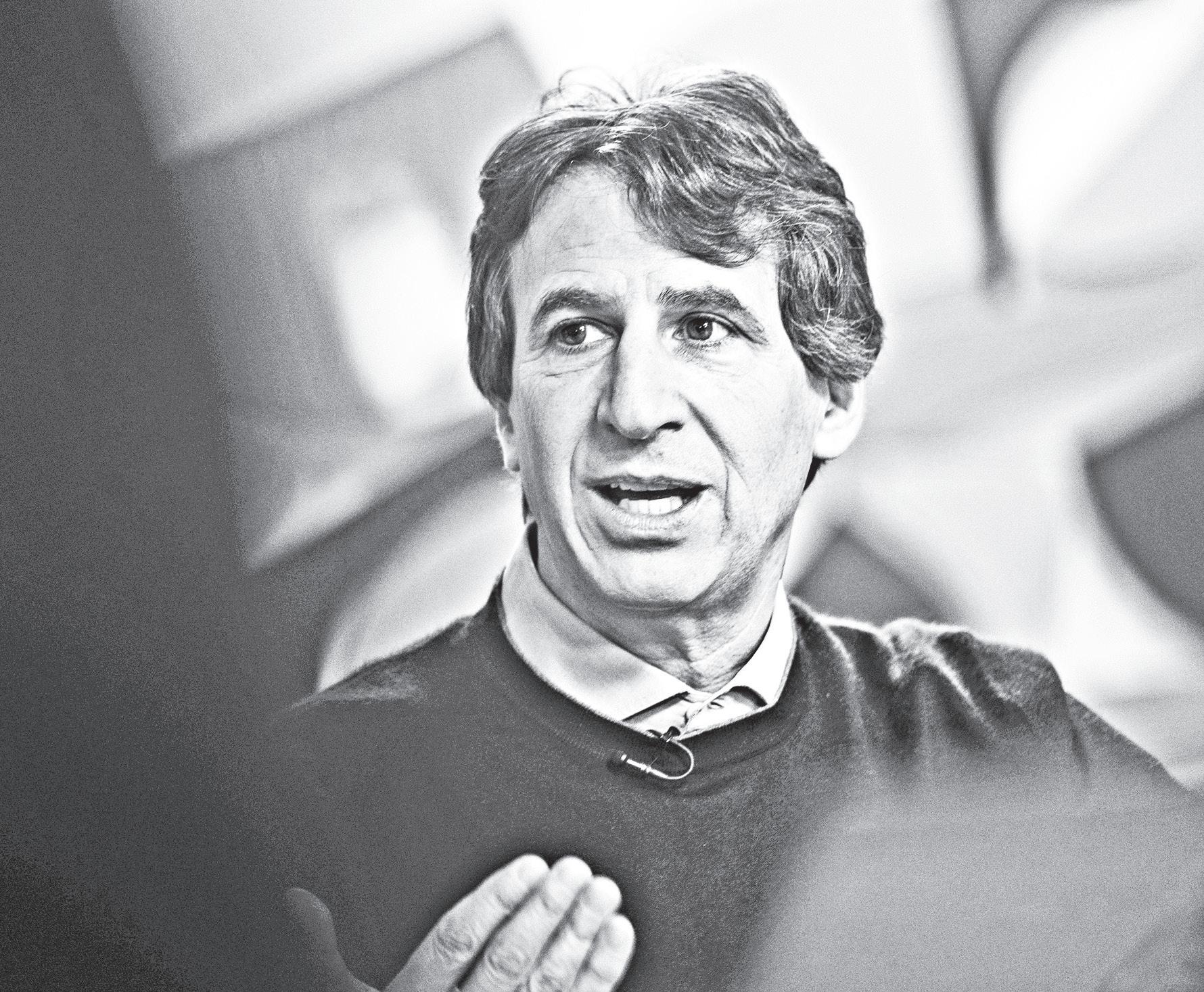
PEOPLE should watch the movie first. That was the quiet challenge Lav Diaz carried back from Toronto, where Magellan had just screened.

I welcomed him back after almost 14 months away, time he had spent filming the project that almost took his life. Seeing him again in New York felt like closing a loop, returning from exile, bringing with him reels of cinema and the fatigue of survival. He looked exactly as he always does, black shirt, black pants, black shoes, with a black hat and a pair of bargain-bin glasses from Manila.
The lenses were so cheap he said they fogged up whenever the weather shifted, forcing him at times to stop filming altogether because he could not see. The image was almost comical, an acclaimed auteur blinded by his own thrift, yet it suited him. His cinema has always come from endurance rather than luxury, clarity hard-won through fog. Even the sweeping Magellan, with its patient grandeur and painterly frames, had been shot on a modest Lumix G7, far from the Panavision rigs many assume.
We began, as we often do, not with theory but with food. He asked for his usual vegetarian Chinese dishes, a nod to his lifelong preference, and later we sat at a diner along Northern Boulevard. With coffee in hand, the conversation unfolded in slow stretches, broken by pauses and bursts, much like the cadence of his film.
Lapu-lapu, Humabon
HE reflected on the reception of Magellan. Historian Ambeth Oc -
ampo had given him supportive feedback, but the wider public seemed to circle around the wrong things. Much of the conversation fixated on his portrayal of LapuLapu, whom he had reframed not as the immortal warrior carved into Philippine legend but as an older, diminished leader, stripped of myth and made mortal. Audiences latched onto that provocation, but he considered the real silence elsewhere. For him, the deeper fracture of history was Magellan’s order to discard the sacred anitos, an act that forced the rejection of indigenous icons and beliefs. That spiritual erasure, he believed, marked the beginning of colonization long before the first encomienda decree or battle of conquest. From there, his attention turned to Rajah Humabon. History has often cast Humabon as traitor or collaborator, but Diaz emphasized another angle, that after Magellan’s death, Humabon invited the remaining Spaniards to a feast, only to massacre them at their most vulnerable.
In his reading, Humabon, not Lapu-Lapu, could just as easily be remembered as the first Filipino hero, a figure who outwitted invaders when they least expected it. The point was not to replace one idol with another, but to fracture the rigidity of memory and show how messy resistance and betrayal could be when lived in real time.

ON ‘MAGELLAN’ AS PHL ENTRY TO OSCARS: ‘Our stories resonate across cultures’

SEN. Loren Legarda expressed her deep pride as the film Magellan, directed by Lav Diaz, was officially selected as the Philippines’ entry for Best International Feature Film at the 98th Academy Awards.
“As a firm believer in the power of the creative industries to ignite our national consciousness, I am filled with pride to see Magellan represent the Philippines on the world stage, first in Cannes, and now in the Oscars,” said Legarda.
“The film’s selection for the 98th Academy Awards highlights the talents of Filipino artists to the world and underscores the significance of our stories as they resonate across cultures through Director Lav Diaz’s distinctive artistic interpretation of our pivotal past,” Legarda added.
Premiering at the Cannes Film Festival to international recognition, Magellan unflinchingly revisits the complex story of Ferdinand Magellan through a uniquely Filipino lens. The film, directed by internationally acclaimed director Lav Diaz and starring Gael Garcia Bernal, has drawn praise for its fearless engagement with long-held historical narratives, uncompromising artistry, and riveting performances.
“By revisiting our history with discernment and integrity, Magellan inspires every Filipino to think critically, engage openly, and take pride in our roots. Our stories, when told with conviction, can move hearts across the globe and illuminate the Filipino spirit for all to see,” Legarda said.
The four-term senator, a patron of arts and culture who has championed legislation in support of national heritage and the arts, also serves as one of the executive producers of Magellan, alongside Director Paul Soriano.
“Achievements like this remind us why we must continue to invest in culture, education, and the creative industries. Magellan sets a new standard for international recognition and should inspire generations of Filipino storytellers to follow their passion and pursue excellence. My heartfelt congratulations to the entire team, especially to Director Lav Diaz, Producer Paul Soriano, the lead actor Gael Garcia Bernal, and everyone behind this inspiring work,” Legarda concluded.
He widened the frame to the larger shadow left behind. What began with Magellan’s demands and Humabon’s betrayal soon hardened into the encomienda system, the machinery of forced tribute and labor that turned the islands into a colony of extraction. To him, this was not dead history, but a lingering condition, a wound that still runs through the veins of the nation. Filipinos, he believed, continue to live with the memory of dispossession even if the language of it has faded.
The early years OVER coffee, he drifted into memory. Before film, he had been a journalist who loved words and a guitarist who loved rhythm. Those instincts converged in cinema, where precision of language and cadence of sound met endurance of image. In his early years, he saved money simply to buy film stock, one roll at a time, while already shouldering the responsibilities of adulthood. Nothing about it was glamorous, it was survival. Later, in Queens, New York, he shaped his cinematic voice in cramped apartments and borrowed editing rooms, as he pieced together reels that stretched across ten or eleven hours. Queens, he often said, taught him patience. It gave him the capacity to endure. That endurance would be tested in ways he never expected. During the making of Magellan Diaz contracted tuberculosis. At first, he thought he would not finish the film. His body was failing, his lungs heavy, his energy scattered into fragments. Shooting days were interrupted not by artistic pause but by sheer physical collapse. He described feeling as though the very breath needed to animate his actors and his camera was being stolen from him.
For weeks, he thought he could not finish the project. But then he reminded himself that there were people relying on him, colleagues, assistants, actors, and crew members who tied their livelihoods to his persistence. To stop would mean not just his own surrender, but the unraveling of a fragile community bound together by the promise of the film.
Colonial weight in films IT struck me as a mirror of the themes in his work. His body, frail and failing, became a living metaphor for the colonial weight his films expose, history pressing down like illness, threatening to extinguish voice and vision. And yet, as in his cinema, survival depended on endurance. He mustered what strength he could, carrying not just his own ambition but the sustenance of others. The illness that almost silenced him became another layer in the story of Magellan, the private battle beneath the public epic. The film that questions survival in history became itself a survival film in the making. His career has always carried that duality of solitude and solidarity. Serafin Geronimo: Ang Kriminal ng Barrio Concepcion in 1999, Batang West Side in 2001, Evolution of a Filipino Family in 2004, Death in the Land of Encantos in 2007, Norte, the End of History in 2013, From What Is Before in 2014. Each of these films asked audiences not for entertainment but for endurance. Recognition followed: the Golden Leopard at Locarno, the Silver Bear at Berlin for A Lullaby to the Sorrowful Mystery, the Golden Lion at Venice for The Woman Who Left. Even his sung-through allegory Season of the Devil in 2018 continued his conviction that cinema must provoke rather than soothe.
By Troi Santos
YORKTOWN HEIGHTS, NY—In February, while reporting with the US State Department’s Foreign Press Center in New York, I visited IBM’s Yorktown Heights headquarters to cover IBM Quantum Heron—IBM’s currently available and most performant quantum processor—and the company’s broader vision to combine artificial intelligence, classical high-performance systems, and quantum machines into a single computing fabric.
That report outlined how IBM was linking AI models, semiconductor advances, and open-source platforms to accelerate science and enterprise adoption, presenting a first glimpse of a future where boundaries between hardware and algorithms blur.
On June 10, 2025, IBM introduced plans to build IBM Quantum Starling, the system it describes as the world’s first large-scale, fault-tolerant quantum computer. Starling is targeted for 2029 at a new IBM Quantum Data Center in Poughkeepsie, New York, with the
capacity to perform 100 million quantum operations on 200 logical qubits. IBM says representing its computational state would require more than a quindecillion, or 10⁴⁸, of today’s supercomputers. IBM has assigned avian names to its processors to illustrate deliberate progress. IBM Quantum Loon in 2025 will test long-range couplers that enable qubits to interact over distance, a requirement for implementing new errorcorrecting codes in hardware. IBM Quantum Kookaburra in 2026 will be the first modular proces-
sor, integrating quantum memory with logic to create an expandable foundation. IBM Quantum Cockatoo in 2027 will demonstrate the entanglement of Kookaburra modules with L-couplers, establishing the principle of linking processors like nodes in a network. Starling in 2029 is described as a data-center grade system, while Blue Jay remains a concept machine extending performance to a billion operations on 2,000 logical qubits, on the IBM roadmap for around 2033.
Each step is designed to demonstrate scalability. IBM is choosing modular expansion rather than oversized chips, a strategy that mirrors how cloud clusters grow by adding nodes.
Quantum computers are vulnerable to noise and decoherence, which destabilize qubits. Traditional error correction required immense overhead, sometimes more than a thousand physical qubits for one logical qubit, making fault tolerance appear unattainable.
In 2024, IBM proposed bivariate bicycle quantum LDPC codes, published in Nature, which reduce overhead by about ninety percent. These codes are less resource-intensive and align with IBM’s hardware trajectory. To support them, IBM created a real-time decoder suitable for FPGA and ASIC hardware, allowing errors to be identified and corrected quickly enough to guide ongoing circuits.

This combination of compact codes and fast decoders gives IBM confidence in Starling’s feasibility. “It is an ambitious engineering challenge to architect a system that can effectively implement these codes,” said Antonio Mezzacapo, Principal Research Scientist for quantum-centric supercomputing at IBM Quantum. He emphasized that the project is grounded in defined stages and resource estimates.
IBM frames Starling within quantum-centric supercomputing, where quantum processors, GPUs, CPUs, and QPUs work together. Quantum devices would focus on tasks that exceed classical limits, while conventional hardware provides stability, scale, and interpretation. This model is already visible. In Japan, IBM and RIKEN installed the first IBM Quantum System Two outside the United States, co-located with the Fugaku supercomputer in Kobe. By linking Fugaku with IBM’s Heron processor, researchers modeled molecular nitrogen and iron-sulfur clusters, work published in Science Advances as evidence of scientific value in hybrid workflows.
In August 2025, IBM and AMD announced a collaboration to integrate IBM quantum systems with AMD’s CPUs, GPUs, and FPGAs. The partnership builds on AMD’s role powering Frontier and El Capitan, the fastest supercomputers in the world, and is aimed at enabling real-time error correction and new hybrid algorithms.
IBM points to ongoing projects where hybrid quantum-classical systems are being tested. Moderna is developing algorithms to predict mRNA secondary structures, a central step in vaccine and therapeutic development. Cleveland Clinic is exploring quantum simulations of molecular interactions for drug discovery. Lockheed Martin, with IBM researchers, has published results in The Journal of Chemical Theory and Computation demonstrating quantum modeling of open-shell molecules, which resist classical methods. E.ON, a major European energy company, is applying quantum-informed analysis to pricing structures. CERN and Ikerbasque teams are combining quantum processors with classical high-performance computing to probe advanced particle physics.
These projects show how quantum routines are being integrated into established workflows, pre-

paring industry and science to adopt larger systems as they become available. IBM describes the next four years as an engineering effort involving cryogenics, chip packaging, supply chains, and control systems, turning prototypes into reliable data-center machines. The company projects quantum advantage by 2026, defined as performing a task faster, more efficiently, or more accurately than classical systems, with validated results. By 2029, Starling is intended to achieve full fault tolerance, running circuits of 100 million gates on 200 logical qubits while correcting errors in real time.
Mezzacapo emphasized that success depends on adoption. Enterprises, universities, and governments will need to integrate quantum workflows into their operations. “IBM can’t do this alone,” he said, noting that partnerships will be central to making quantum part of mainstream computing.
Starling is presented not only as a machine but as the backbone of a global ecosystem. IBM stresses
that its publications, resource estimates, and images are intended to create transparency and trust. If Starling comes online in Poughkeepsie in 2029, the metaphor of a bird in flight becomes tangible, with quantum and high-performance computing functioning as one architecture.
The goal is that quantum will no longer be a laboratory demonstration but a computing necessity. If milestones hold, IBM believes industries from life sciences to aerospace and finance will treat quantum workflows as fundamental. The transformation would be visible not just in academic papers, but in enterprise procurement, product pipelines, and national strategies.
The question is no longer whether quantum machines can exist, but how quickly they can be scaled, validated, and adopted. IBM has set its answer in the discovery of a quantum advantage next year, and at its data center in Poughkeepsie, with Starling as the large-scale, fault-tolerant milestone that defines the decade.
Diaz has accumulated fellowships and lifetime achievement awards, from a Guggenheim to the Prince Claus Award, from Harvard’s Radcliffe Fellowship to the highest recognitions from FAMAS and Gawad Urian. Yet he brushes them aside as trinkets. For him, they are not proof of success but curiosities. What matters is whether a film unsettles memory, whether it disrupts silence. Even the Oscars, where Magellan now stands as the Philippines’ official submission, do not stir him into spectacle. The award, he insisted, is not the point. The questions are.
Admiration from critics CRITICS at Cannes and Toronto responded with admiration. Variety called Magellan mesmerizing and politically rigorous. The Hollywood Reporter praised it as exquisitely shot and surprisingly accessible for Diaz. Screen International described it as sardonic, detached yet compelling. TIFF introduced it as a grand, decolonial
retelling. Online, the discourse split more sharply. Some hailed it as towering and hypnotic, others found its pacing punishing or accused it of sympathizing too much with Magellan. Filmgoers on Letterboxd speculated about a longer cut focused on Beatriz, Magellan’s wife. Diaz regarded this chatter with calm. For him, the film had done its job. Cinema was not meant to end debates but to ignite them. As the afternoon wore on, I asked him about the future. He paused and finally answered that his next epic might be nothing less than Noli Me Tangere. Rizal’s 1887 novel, the work that seeded the Philippine Revolution, would be his next mountain to climb. If Magellan interrogated the birth of conquest, Noli would confront the birth of resistance. One film wrestles with the fracture imposed by empire, the other would map the stirrings of a nation imagining itself free.
To Diaz, these works are not separate chapters but bookends of the same national story. At
one end, the forced discarding of anitos, the breaking of belief. At the other, the assertion of identity through revolt and the pen of a writer who became a martyr. In between lies the central question his films return to again and again, how do we remember?
The answer, for him, is never simple, never settled, always blurred like the fog on his glasses. The lenses on his face cloud over, forcing him to pause, but his cinema insists on clearing history’s vision. His body may falter, as it did with tuberculosis, but his work persists because others depend on him and because memory itself demands it. People should watch the movie first. It was less instruction than invocation. For Diaz, cinema is not an argument to be won in advance, not a spectacle to be consumed and discarded. It is an experience to endure, absorb, and debate only afterward. The fog may linger for a moment, but through his films, the lens clears, and the past is forced into focus once more.
Editor: Angel R. Calso

By Dake Kang & Yael Grauer
BThe Associated Press
EIJING—American tech companies to a large degree designed and built China’s surveillance state, playing a far greater role in enabling human rights abuses than previously known, an Associated Press investigation found. They sold billions of dollars of technology to the Chinese police, government and surveillance companies, despite repeated warnings from the US Congress and in the media that such tools were being used to quash dissent, persecute religious sects and target minorities.
The AP investigation was based on tens of thousands of leaked e-mails and databases from a Chinese surveillance company; thousands of pages of confidential corporate and government documents; public Chinese language marketing material; and thousands of procurements, many provided by ChinaFile, a digital magazine published by the nonprofit Asia Society. The AP also drew from dozens of open record requests and interviews with more than 100 current and former Chinese and American engineers, executives, experts, officials, administrators, and police officers.
American tech firms were by far the biggest suppliers, but German, Japanese, and Korean firms also had a role. Here are some examples:
MILITARY ACCESS: A Chinese military contractor worked with Armonk, New York-based IBM in 2009 to design national intelligence systems, including a counterterrorism system, according to classified Chinese government documents. These systems were used by China’s secret police, the Ministry of State Security, and the Chinese military. IBM referred to any such deals as “old, stale interactions”: “ ... If older systems are being abused today—and IBM has no knowledge that they are—the misuse is entirely outside of IBM’s control, was not contemplated by IBM decades ago, and in no way reflects on IBM today.”
ANTI-TERROR ANALYSIS:
IBM agents in China sold IBM’s i2 policing analysis software to the Xinjiang police, China’s Ministry of State Security, and other Chinese police units throughout the 2010s, leaked e-mails show. i2 software was subsequently copied and deployed by one former IBM agent, Landasoft, as the basis for a predictive policing platform that tagged hundreds of thousands of people as potential terrorists during a brutal crackdown in China’s far west Xinjiang region. IBM says it ceased relations with Landasoft in 2014, prohibited sales to police in Xinjiang and Tibet since 2015, and has no record of any sales of i2 software to the Public Security Bureau in Xinjiang.
ETHNIC REPRESSION: Dell and then-subsidiary VMWare sold cloud software and storage devices to police and entities providing data to police in Tibet and Xinjiang, even as late as 2022 after ethnic repression there was widely known. Dell addressed race in its marketing: In 2019, Dell said on WeChat it had teamed up with surveillance firm Yitu to sell a “military-grade” AI-powered laptop for Chinese police with “all-race recognition.” Dell, based in Round Rock, Texas, told AP it conducts “rigorous due diligence” to ensure compliance with US export con -
trols. Chinese policing systems, including in Xinjiang, also used software from Oracle, based in Austin, Texas, and from Microsoft, based in Seattle, according to procurements and a leaked database obtained by AP.
FINGERPRINT RECOGNI -
TION: Chinese defense contractor Huadi worked with IBM to construct China’s national fingerprint database; IBM said it never sold “fingerprinting-specific” products to the Chinese government and that any possible misuse “for fingerprinting purposes” was done without its knowledge or assistance. HP and VMWare sold technology used for fingerprint comparison by Chinese police. Intel said in 2019 marketing material that it partnered with Hisign, a Chinese fingerprinting company that sold to Xinjiang police, to make their fingerprint readers more effective, and that the new reader was “fully tested in an actual application scenario” with a municipal police bureau. Hisign was still an Intel partner as of last year, according to Chinese media reports. Californiabased Intel said it has not had any technical engagement with Hisign since 2024, and told AP it would “act swiftly” if it became aware of any “credible misuse.”
AI CAMERAS: IBM, Dell, Tokyo-based Hitachi, and VMWare promoted facial recognition for use by Chinese police. Japanese electronics giant Sony said on its official WeChat account that it wired a Chinese prison with “intelligent” cameras, saying it was widely trusted for “surveillance projects.” California chip giant NVIDIA and Intel partnered with China’s three biggest surveillance companies to add AI capabilities to camera systems used for video surveillance across China, including in Xinjiang and Tibet, until sanctions were imposed. Relations with other Chinese surveillance companies continued more recently: NVIDIA posted on its WeChat social media account in 2022 that Chinese surveillance firms Watrix and GEOAI used its chips to train AI patrol drones and systems to identify people by their walk. NVIDIA told AP those relationships no longer continue.
SURVEILLANCE RESEARCH: NVIDIA, IBM, and Hitachi staff collaborated with Chinese police researchers and companies on surveillance technology. NVIDIA said in a post dating to 2013 or later that a Chinese police institute used its chips for surveillance technology research. NVIDIA said it doesn’t currently work with Chinese police but did not address the past. And in 2021, an IBM and a US Army researcher coauthored an AI video study with a Chinese police researcher working at a sanctioned company, according to a paper unearthed by IPVM, a surveillance research publication. The US Army told AP the Chinese police researcher only worked on the paper after the Army researcher’s work had concluded.
DNA: Chinese police DNA labs bought Dell and Microsoft software and equipment to save genetic data on police databases. In 2021, Hitachi advertised DNA sequencers to Chinese police, and police labs bought pipettes from German biotech firm Eppendorf last year. And until contacted by AP in August, Massachusettsbased biotech firm Thermo Fisher Scientific’s website stated that its

kits are made for China’s national DNA database and “designed” for the Chinese population, including “ethnic minorities like Uyghurs and Tibetans,” and featured the work of a Chinese police researcher who discussed using Thermo Fisher kits to identify ethnic Uyghur and Manchu populations at a 2016 conference. Thermo Fisher stopped sales in Xinjiang in 2021 and in Tibet in 2024, but still promotes kits to police elsewhere in China, including at a police trade show earlier this year. In a statement to AP, Thermo Fisher said its kits “are designed to be effective across diverse global populations” but “do not have the capability to distinguish among specific ethnic groups.”
INTERNET POLICE: In 2014, VMWare said Internet police in cities across China used its software, and in 2016, Dell said on its WeChat account that its services assisted the Chinese internet police in “cracking down on rumormongers”—essentially promoting censorship. An undated IBM marketing presentation said that Internet police in Shanghai and Guangzhou used its i2 software, with metadata suggesting it was from 2018. IBM held a conference in Beijing promoting i2 in 2018, according to its official WeChat account.
ENCRYPTION TECHNOL -
OGY: Leaked government blueprints show Illinois-based Motorola provided encrypted radio communications technology to the Chinese police for handling “sudden and mass events in Beijing.” Motorola did not respond to requests for comment.
AI DRIVES: Californian hard disk giants Seagate and Western Digital and Tokyo-based Toshiba sell hard drives specialized for AI video systems for use by Chinese police. In 2022, Toshiba wrote about how its surveillance hard drives can help police monitor communities to “identify and control suspicious” or “blacklisted” individuals. “They’re optimized and adapted for security systems,” Toshiba sales director Feng Hao told AP. Last year, Western Digital touted its partnership with Chinese surveillance company Uniview at a policing trade expo, months before Uniview was sanctioned over complicity in rights abuses. And Seagate said on WeChat in 2022 that it sells hard drives “tailor made” for AI video systems in China for use by police to help them “control key persons,” and promoted their drives to police at a security trade association in
China this year.
MAPPING SOFTWARE: Blueprints show that in 2009, IBM, Oracle, and Esri, the creator of ArcGIS based in California, sold hundreds of thousands of dollars’ worth of software to build China’s Police Geographic Information System, and in 2013, HP said it sold “digital fencing” solutions to Chinese police. Such systems alert Chinese police even today when
Uyghurs, Tibetans or dissidents stray out of provinces, counties or even villages. The US curbed exports of such mapping software to China in 2020. But the restrictions are narrow in scope, and Esri maintains a research center in Beijing that marketed to police and other Chinese clients. Esri denied involvement.
POLICE GEAR: Chinese police patrol the streets equipped with foreign technology. Officers stroll the streets of Beijing with Motorola walkie-talkies, for example, while Korean electronics giant Samsung sells microSD cards for police body cameras, advertising them at Chinese police trade shows in 2023 and 2024. And in WeChat posts, Chinese stateowned company Jinghua said it cooperated with German electronics giant Philips on China’s first “AIpowered 5G” police body camera and advertised Philips-branded recorders and cameras to Chinese police. In a statement, Philips said it had no partnership with Jinghua, did not authorize sales of Philips-branded body cameras in China, and would be contacting Jinghua over the posts.
IBM, Dell, California network seller Cisco, Seattle-based Amazon Web Services, Seagate, Intel, Thermo Fisher and Western Digital all
said they adhere to relevant export controls, laws and regulations where they operate. Eppendorf, Sony, and Hitachi declined to describe their business relationships in China but said they respected human rights.
Oracle, Hewlett Packard Enterprise, and California tech conglomerate Broadcom, which acquired VMWare in 2023, did not comment on the record. HP, Motorola, Samsung, Toshiba, Huadi, and Landasoft did not respond. Microsoft said it did not knowingly provide software for updates to China’s main policing system. The Xinjiang government said in a statement that it uses surveillance technologies to “prevent and combat terrorist and criminal activity” and does not target any particular ethnicity. The statement said Western countries also use such technology, calling the US “a true surveillance state.” Other government agencies did not respond to a request for comment.
Yael Grauer is an independent investigative tech reporter. AP journalists Garance Burke in San Francisco, Larry Fenn in New York and Byron Tau in Washington contributed to this report, along with Myf Ma, an independent investigative journalist, researcher and programmer in New York covering China.

Sunday, September 14, 2025
By Esteban Duarte, Scott Carpenter & Silas Brown
ADVANCED Credit Solutions
is a tiny finance firm based in Luxembourg that was founded by a Belgian and works with insurers. Despite its outwardly bland appearance, the business it does is anything but.
The little-known outfit is the brains behind Fox Hedge, a roughly $5 billion fund created for Apollo Global Management Inc., according to people with knowledge of the situation. It’s a highly complicated investment vehicle that pushes the boundaries of just how creative the titans of private capital can be when putting regulated insurance capital to work.
In recent years Apollo and other peers with private equity roots have been buying up swaths of the life assurance and annuity industry, getting their hands on a mountain of savings. But there’s a snag. Using this cash for riskier, more lucrative bets on private credit and similar assets often inflicts hefty capital charges on insurers. And safer harbors like Treasuries and mortgage bonds don’t usually offer the returns that fund managers want to entice clients.
As private markets boom, insurers are desperate not to miss out.
That’s where Fox Hedge steps in. Working with ACS, Apollo bundled up a smorgasbord of assets plucked from its own funds, including safer assets and racier stuff like real-estate debt, into a Bermuda-based vehicle. They then sold bonds against it with investment-grade ratings and unusually long lifespans.
The plan was to give an insurer private credit-style returns while only having to set aside a fraction of the regulatory capital needed if directly investing in such assets, multiple people with knowledge
say. The 40-year final maturity was built to match the needs of an insurance company with longterm liabilities.
Apollo didn’t need to go far to find its main buyer. Most of the debt was snapped up by its own insurer, Athene—about 86% of it as of December, Moody’s estimates.
The deal goes to the heart of two concerns that are starting to exercise regulators and ratings companies right now: insurers’ growing hunger for more exotic, and more profitable, credit wagers; and the implications of so much of the insurance industry being in the hands of private capital—a world known for its tolerance of high-risk, high-reward gambits.
Combining such an assortment of assets in a single vehicle does break new ground, people with knowledge of Fox Hedge say. But they argue it’s potentially safer than other bundled debt because the sheer variety of collateral makes its cash flows more reliable. And it contains individual assets that are better rated than those in collateralized-loan obligations, an established way for insurers to buy investmentgrade products made up of slices of junk-rated credit. Still, the maturity on Fox Hedge bonds is far longer than on the assets it uses as collateral, so they’ll need to be swapped out over time. Investors are counting on future returns without being sure of where they’ll come from.
Fox Hedge pushes the envelope in other ways, too. Although it looks and feels like a securitization—a kind of vehicle that packages debt into bonds—it also has features of corporate debt, which potentially lets it include securitizations as collateral without tripping some countries’ rules on re-securitizing assets.
ACS also used the safest cash flows from Fox Hedge, the management fee, as collateral to help pay for its purchase of a chunk of the riskiest part of the structure, the equity, people familiar say. Banco Santander SA helped with that and the fund’s creation, according to people with knowledge of the matter.
This story is based on conversations with about a dozen people who know Fox Hedge, all of whom asked to stay anonymous discussing private information. Apollo, Athene and Santander spokespeople declined to comment. Representatives for ACS didn’t respond to requests for comment.
Happy returns FOR Athene and its owner Apollo, the appeal of Fox Hedge is obvious. The senior fixed-rate portion has a 6.05% coupon, Bloomberg data shows, while the lower-ranking floating-rate notes are at 7.32% and 8.32%. That’s a tasty return on an insurer’s regulated capital.
Apollo boss Marc Rowan has shown an interest in the initiative, two people with knowledge of the matter say, and his firm is considering a second similar fund. Fox Hedge makes up a very small part of Athene’s overall holdings in investment-grade fixed income, another person adds.
There’s incentive for others to try similar. Researchers at the US Federal Reserve reckon insurers could cut capital charges by a factor of 10 by replacing direct-loan holdings with investments in vehicles containing the same loans.
Any successful model for long-duration credit would be catnip, too.
The 2064 final maturity on the
main portion of Fox Hedge’s debt is far longer than nearly all other non-government investmentgrade assets. That satisfies some of Athene’s vast needs, but it adds risk because of the fund’s need to swap out shorter-term assets as it ages. Athene will have power of approval for any future collateral, says a person with knowledge of the fund.
“All financial innovation is generally there to solve a problem,” says Andrew Lo, director of the Laboratory for Financial Engineering at MIT Sloan School of Management. “If you’ve got some long-dated obligations, you want long-dated assets to mature and pay them off.”
Lo, speaking generally and not about Fox Hedge, adds that complex ways of engineering longdated investments could end up creating their own problems if they become common.
Sliced and diced
WHILE ACS founder Alexandre Kartalis doesn’t have much of a public profile, he did pop up in a British court ruling from 2019 on a commercial dispute involving an
outfit called Blackstar Advisors and hedge fund Cheyne Capital.
According to documents, Kartalis played a part in a complicated deal between the two firms involving pension money and special-purpose vehicles. In his witness statement, he said the deal included a “long-term commitment” of “substantial funds.”
The ACS website says he also once had roles at Swiss investment banks UBS Group AG and Credit Suisse—and that he’s a former shareholder of Harbourmaster Capital, a European loan and CLO manager that was sold to Blackstone Inc.’s credit business.
People familiar with Fox Hedge say it has elements of how you’d assemble a CLO and other structures such as collateralized-fund obligations, which slice and dice PE portfolios into bonds, many with investment-grade ratings.
Apollo placed assets from several of its funds—including CLOs, asset-backed securities, direct loans and corporate credit—as well as equity stakes in Apollo funds, in an SPV. The vehicle issued senior and junior notes backed by the assets’ cash flows.
Fox Hedge’s debt was privately rated with grades that reached as high as AA-. Bloomberg data shows that a significant portion of the senior debt was bought by Athene through funds managed externally.
Apollo kept a portion of the unrated equity slice that makes up the riskiest bit of these kinds of instruments, according to people familiar. Having Apollo, and not Athene directly, keep that portion let the insurer avoid the onerous capital charges that stem from holding poorly protected assets, they say.
ALTHOUGH there’s some recognition that insurers can’t afford to sit out the relentless rise of private credit, some are troubled by the exotic ways in which they’re investing. The Fed has noted a shift in “portfolio allocations toward risky corporate debt, while exploiting loopholes stemming from rating agency methodologies and accounting standards.” Moody’s calculates that roughly a third of US life insurers’ $6 trillion cash and invested assets is already tied up in various forms of private credit, and the share’s rising.
Some market participants say they’re less worried by Apollo pioneering more complex products for insurers, even its own, and are more bothered about copycats with less financial muscle and expertise trying similar.
As usual with private markets, regulator anxiety stems largely from questions about how you might value rarely traded assets. Bundling them can make it even tougher to track.
“Even with very transparent, inconsistently liquid assets, it can be difficult to accurately determine true prices,” says Ken Froot, professor emeritus at Harvard Business School. “With illiquid assets that aren’t just opaque and complex but also have very long durations, it’s much harder.” Bloomberg News
Nadine Menendez gets 4.5 years and blames husband for
By Patricia Hurtado & Chris Dolmetsch
THE wife of former Senator Bob Menendez was sentenced to 4 1/2 years in prison after she tearfully blamed her husband for masterminding a plan to accept an array of lavish bribes, including cash, gold bars and a Mercedes Benz.
Nadine Menendez, 58, was convicted by a federal jury in Manhattan in April for playing what prosecutors said was a crucial role in a years-long bribery scheme with her husband, once an influential Democrat from New Jersey who was chairman of the Senate Foreign Relations Committee.
US District Judge Sidney Stein imposed his sentence in federal court in Manhattan on Thursday, saying that she was not “an innocent observer” or an unwitting participant in a scheme led by her husband, as her lawyers described her. He also ordered her to forfeit more than $922,000.
“You were a central participant in a wide-ranging, extensive conspiracy involving the corruption of one of the most high-ranking United States senators, the chairman of the Foreign Relations Committee,” said Stein. “You set up meetings, you initiated actions. You involved others. You knew what you were doing throughout.”
Nadine Menendez said that she

only did what her husband told her to do, saying that “there was no way he would lead me astray or ask me to do anything illegal, or so I thought.”
“I put my life in his hands and he strung me like a puppet,” Nadine Menendez told the court, sobbing. “I trusted him blindly when my my life was on the line. The blindfold is off. I now know he’s not my savior.”
Prosecutors had asked that she get a prison term of at least seven years, saying she played “a critical role” in the scheme. Her lawyers asked for leniency, citing among other factors, that she is suffering from cancer and needs several medical procedures.
The US said that soon after the couple started dating in 2018, she began collecting bribes to insulate Bob Menendez from directly accepting payoffs. In return, the senator helped the Egyptian government as it sought military aid, and assisted an Egyptian American businessman trying to protect a monopoly on inspecting halal meat bound for Egypt. He also tried to influence the outcome of criminal investigations to help corrupt businessmen, according to the US.
Nadine Menendez promised that her husband “would use his power and his office to secretly act on behalf of the people who were lining their pockets,” prosecutors said, and also tried to influence national security and foreign rela -

tions by promising that Menendez would approve billions of dollars in military aid to Egypt.
Early in the hearing, Stein said he intended to impose a term “substantially below” federal guidelines, which are advisory. He said that she will be allowed to remain free until next July to undergo further medical procedures.
During a five-week trial, prosecutors showed evidence that she accepted hundreds of thousands of dollars in bribes, gold bars, envelopes stuffed with cash and a noshow job in exchange for promises to influence her husband.
‘Nice life’
“THE defendant led a nice life, in -
deed far better than the average person,” prosecutor Lara Pomerantz said. “But she wanted more and so she sold Robert Menendez’s office.”
Bob Menendez was convicted last year at a trial where he blamed Nadine for accepting the bribes without his knowledge. But he wrote to the court from federal prison where he is serving an 11year sentence in early August, asking the judge to spare her from any time behind bars.
“Nadine is not the person who prosecutors, or for that fact, what the defense attorneys made her out to be,” wrote Menendez, who is inmate #67277-050 at Allenwood Federal Correctional Institution in
Pennsylvania.
He revealed that an abusive former boyfriend severely beat her, leaving her with brain contusions, as well as permanent loss of her senses of smell and taste. As a result, she “was looking for the affirmation and approval of others,” making it easy to take advantage of her because she couldn’t say no.
“You gave me a tough sentence that surely serves the deterrent value you said was needed,” he said. “To imprison Nadine, would not recognize the trauma she has suffered, how it has affected her and her judgment, and I would respectfully say would not have any greater deterrent effect.”
Stein noted Bob Menendez’s metamorphosis during his wife’s sentencing.
“During the first trial they said she was the bad guy,” he said. “The senator moved away from that in his supporting letter. He said that how she was portrayed in that trial is not who she is.”
Both of the Menendezes are appealing their convictions. At the end of the hearing, her lawyer Sarah Krissoff asked the judge to lift a ban which barred Nadine Menendez from visiting her husband. As she left court, Nadine Menendez was asked if there was an irreconcilable rift in her marriage. “I do not plan on divorcing him,” she said. With assistance from David Voreacos/Bloomberg

By Bless Aubrey Ogerio
ROXAS City, Capiz—Being an “enabler” of progress means ensuring that every sector can have the tools and knowledge they need to grow, according to the Department of Science and Technology (DOST).
DOST Secretary Renato Solidum Jr. on Wednesday called on the public to take part in science-driven opportunities and dialogues.
“DOST’s role is to be an enabler—to ensure that every community, every entrepreneur, and every learner can access the tools, knowledge, and technologies they need to succeed in the modern economy,” Solidum said at the opening of the Regional Science and Technology Week (RSTW) in Western Visayas.
The Science secretary noted that the celebration comes at a
time when the region continues to record growth in agriculture, fisheries, manufacturing, and other key sectors. With this, he emphasized the importance of collaboration, broader technology access and encouraging innovation.
This year’s RSTW in Region 6 carries the theme “Siyensya, Teknolohiya at Inobasyon: Kabalikat sa Matatag, Maginhawa at Panatag na Kinabukasan” (Science, Technology, and Innovation: Partners for a Strong, Comfortable, and Secure Future).
Solidum said it highlights science, technology and innovation

(STI) as not only drivers of economic progress but also as “pillars in building a future where every Filipino can live in a strong, prosperous, and peaceful society.”
“All these efforts point toward our subtheme, ‘Building Smart and
Ateneo did it again: Rocketry team dominates Malaysia’s aerospace competition
DBy Manuel T. Cayon
AVAO CITY—Ateneo de Davao University
(AdDU) Rocketry Team soared high anew for the Philippines last week as it lorded over other Asian competitors in Malaysia Rocket CanSat Competition 2025.
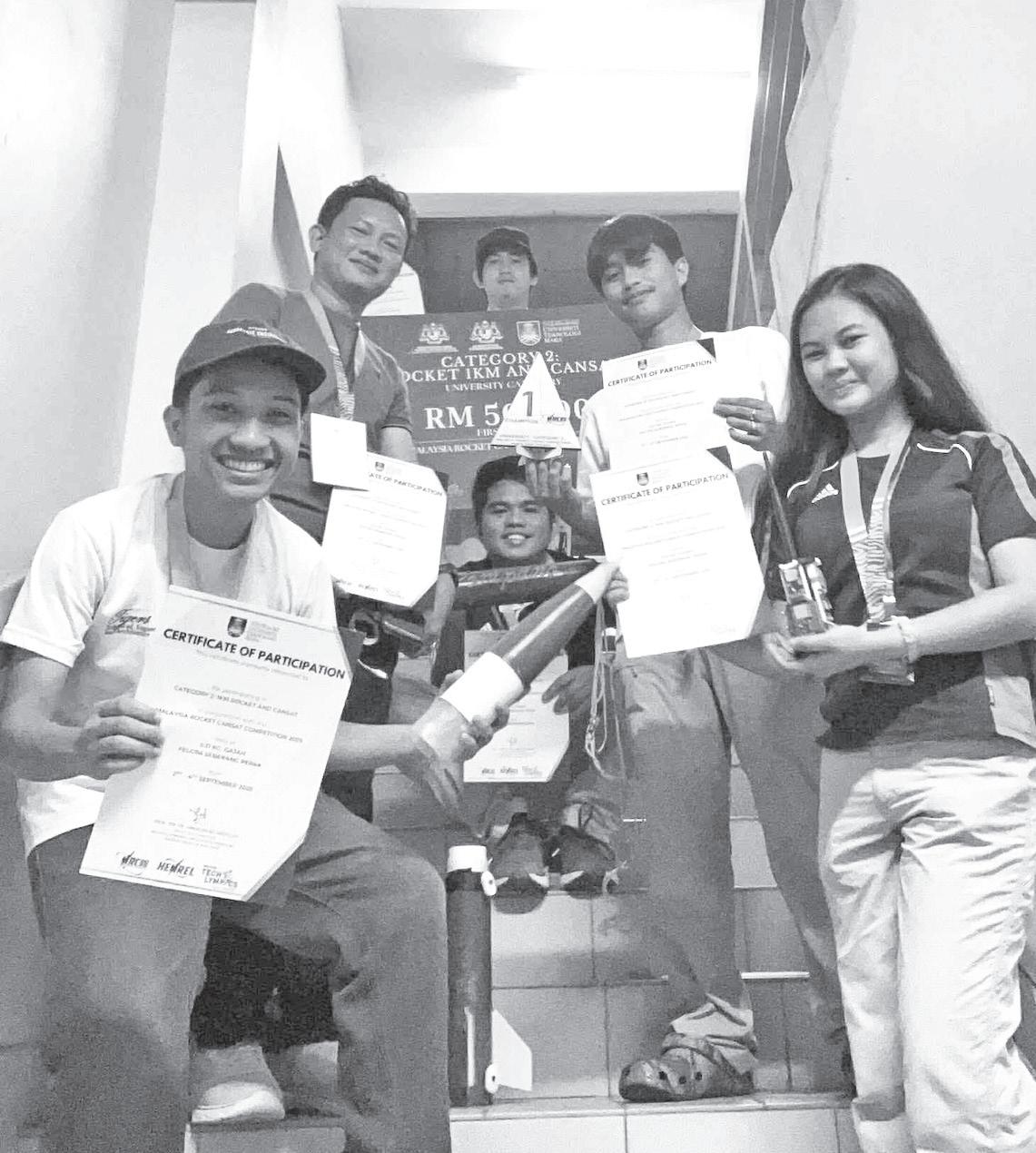
The AdDU Rocketry Team clinched first place at the Malaysia Rocket CanSat Competition (MRC) on September 3 with its uniquely named “Pompano” rocket besting an international field of 65 entries from the host country Malaysia, Singapore, India, Indonesia and other countries.
The Ateneo team entered into the Rocket 1KM with CanSat (can-sized satellite) category, which required participants to fly their rockets at the restricted height of 1 kilometer and to record the designated atmospheric data like temperature, positional xyz coordinates and global positioning system altitude location. The competition had three categories including Category 1 Rocket 1-Kilometer Altitude, and Category 3 CanSat Deployment via Drone. Each tested different skill sets from highpower rocketry to miniaturized satellite design, the Ateneo said.
The MRC 2025 was held in Perak, Malaysia, that has set a lower altitude ceiling because of the flight height restriction imposed by the Civil Aviation Authority of Malaysia, the country’s regulatory body responsible for aviation safety,

technical regulations, and the overall operation of civil aviation.
“We are the only team that fully recovered the intact rocket,” said Engr. Wilfredo Pardorla Jr., of AdDU’s Aerospace Engineering program who provided expert supervision and helped the team integrate their rocket’s subsystems into a winning design.
“The intact rocket was located through the GPS gadget attached to the rocket. All the other national teams either had their rockets totally damaged or retrieved at knee-deep waters at private plantation or properties around the launched site in Perak,” Pardorla said.
The MRC registered 65 teams from across Asia. The AdDU Rocketry team hastily constructed its custom-built rocket Pompano only in August, due to the different schedules of team members formed for the Malaysian competition.
Team member Fritzie Mae Maniquez named their 100-centimeter long rocket “Pompano” after their family fish business in Panabo City, while she and team leader, Avery Clyde Dimasuhid, were perfecting the can-sized satellite and electronics component of the rocket to ensure the mini-satellite could transmit data and withstand the stresses of launch.
The team was also composed by Derrick John Garay and Clarence James Valenzuela, who served as structures specialists, designing


a sturdy yet lightweight airframe for the rocket.
Overseeing the critical recovery system was Carlos Leo Panelo, who engineered the parachute deployment.
Garay said the fiber glass material protected the rocket from damage at descent and touchdown, compared to the other teams which used other less sturdy materials like cardboards.
For his part, Pardorla said the Malaysian experience was educational for the Ateneo aerospace students, saying that the team had to design, build, and launch rockets capable of carrying a soda-can-sized satellite payload (a CanSat) to around 1,000 meters, then safely recover both rocket and payload.
“By doing so, students gain hands-on experience in aerospace engineering challenges. The event provided a platform for students to engage in STEM [science, technology, engineering and mathematics] fields, fostering innovation and nurturing the next generation of aerospace engineers,” he said.
“This focus on practical learning and innovation has made MRC one of the most significant rocketry competitions in the region’s educational community, aligning with Malaysia’s Techlympics initiative to inspire youth in advanced technology fields,” he added.
The haste by which the rocket was built but with a performance that bested other competitors demonstrated that AdDU’s aerospace engineering has achieved the skilled level in rocketry program and is ready for the more complicated demand of data collection.
The school rocketry team was also the country’s first and still the lone rocketry program in the Philippines to participate twice in the most prestigious rocketry competition in the US, reaching the required altitude heights of 10,000 meters and 30,000 meters, although it failed on the second category.
“AdDU’s victory at MRC 2025 was propelled by the exceptional performance of their rocket Pompano. Measuring 100 cm in length, Pompano was making its debut appearance in competition, yet it delivered a flawless flight that impressed judges and peers alike.
Launched in the Rocket 1KM + CanSat category, the rocket carried a self-built CanSat payload to the target altitude and deployed a parachute for a safe descent,” the Ateneo said.
“In fact, Pompano achieved the sole perfect recovery of the entire competition, meaning it returned to earth intact and reusable, a distinction no other team’s rocket managed to accomplish in any category. This reliability in design and execution not only secured the first-place finish for AdDU, but also earned admiration as a model of engineering excellence under competition conditions,” AdDU said.
The Malaysia Rocket CanSat Competition is a premier annual aerospace competition organized by Malaysia’s Ministry of Science, Technology, and Innovation in partnership with the High Energy Material Research Laboratory of Universiti Teknologi MARA (Majlis Amanah Rakyat [Council of Trust for the Indigenous People]).
Sustainable Communities,’ the essence of what we aim to achieve: Agham na Ramdam [Science that is Felt]—communities that are not only productive, but also resilient, inclusive, and environmentally responsible,” he explained.
Exhibits at the RSTW in the region showcased innovations across various fields. “Waves of the Future” features technologies advancing aquaculture and marine resource development, while “Smart Harvests” presents modern
agriculture systems.
Others include “Innovation for Smarter and Safer Communities,” which focuses on disaster risk reduction, and “Next Gen Science Learning and Intelligent Machines,” which displays new platforms for science education and robotics.
Based on the Philippine Development Plan, STI is positioned as central to industrialization, competitiveness and the production of high-value, resilient goods and services.
Priorities include modernizing agriculture and agribusiness, revitalizing industry and strengthening the services sector.
According to the DOST, the target for gross expenditure on research and development (R&D) as a share of gross domestic product is set at 0.5 percent by 2025, up from the 0.4 percent in 2024. Meanwhile, academe-industrygovernment linkages in R&D are being reinforced, with the Philippines aiming to improve its ranking in the Global Innovation Index from 53rd among the 133 economies last year. It ranked 50th in 2020 and 51st in 2021.
WITH mushroom farming thriving across the Bicol region, the waste after harvesting the crop is a concern. On the other hand, the price of fish feed is becoming costly.
The good news is that researchers from Partido State University are now exploring an answer for these two issues—an innovative way to turn mushroom farming waste, or spent mushroom substrate (SMS), into fish feed for tilapia aquaculture.
SMS is the leftover material used after mushrooms have been harvested. This organic mix, usually made from crop residues and fungal mycelia, or the vegetative structures of fungi, is typically considered as agricultural waste.
However, with the booming mushroom industry producing large amounts of SMS, researchers are looking into its potential as a sustainable and cost-effective fishfeed ingredient.
Oyster mushroom production has grown rapidly and has become popular among local growers due to their high yield and ability to thrive in Bicol’s warm and humid climate.
Compared to other farming ventures, mushroom cultivation requires lower capital, making it an attractive livelihood option for smallscale farmers.
On the other hand, aquaculture, especially tilapia farming, faces rising costs of fish feed, which is one of its most expensive inputs.
Traditionally, fish feeds are made using fishmeal or plant-based ingredients like soybean meal. However, the cost and environmental concerns tied to these ingredients have prompted a search for more sustainable alternatives.
The development of a more sustainable option for fish feed is being explored through the project, “SMS in Aquafeeds: Development of an alternative aquafeed ingredient using spent mushroom substrate.”
The project is being funded by the Philippine Council for Agriculture, Aquatic and Natural Resources Research and Development of the Department of Science and Technology (DOST-PCAARRD).
Now on its second year, the project led by Liezel D.C. AtoleNieva generally aims to formulate
and produce an effective aquafeed in tilapia aquaculture using locally derived ingredient—the SMS.
The project team collected two types of SMS—the freshly harvested and the aged from local mushroom farms—to determine which version is more suitable for feed use.
The samples were then analyzed at the University of the Philippines Los Baños to assess their nutrient composition, including protein, fiber, fat, and moisture content.
The analysis also identified 12 types of beneficial bacteria from the Bacillus family living in the SMS. These microbes are known for their ability to survive in tough environments and even improve gut health in animals, making them a promising addition as aquafeeds.
Five types of fish feeds were developed, each with varying amounts of SMS replacing soybean meal. The experimental feeds were evaluated for key qualities—such as durability in water, safety from harmful bacteria, nutritional value, and how well fish accepted them.
Results from the project showed significant differences in their proximate compositions, microbial loads, and functional characteristics, each influencing their suitability for different applications. Generally, aged SMS was found to be more suitable as an aquafeed ingredient as it has higher protein and fiber levels, lower fat and moisture, and showed better stability, making it a good option for feed formulation.
The project is not only helping researchers explore valuable options for agricultural waste but also aims to raise awareness among local fish farmers.
By repurposing SMS, the initiative supports a circular economy, turning what was once discarded into a useful resource while also reducing the cost of aquafeeds.
In the long run, the project seeks to achieve improved tilapia production, less waste from mushroom farms, and more affordable fish farming across the region.
Rizza B. Ramoran/S&T Media Services


A6 Sunday, September 14, 2025

Editor: Lyn Resurreccion • www.businessmirror.com.ph
THE country’s Catholic bishops have urged Filipinos, especially the youth, to take a stronger role in confronting corruption, calling on them to use their voices and digital presence to build a culture of accountability.
In a pastoral letter on corruption in flood-control projects, the Catholic Bishops’ Conference of the Philippines (CBCP) appealed to young people to play a decisive role in reclaiming integrity in public life.
“To our young people: you hold the keys to a new culture. You live in the digital space where truth and lies battle daily. Use your platforms not only for outrage, but for vigilance,” the bishops said.
“Expose injustice, share facts, demand reforms. Make corruption shameful again,” they added.
The statement, signed by Cardinal Pablo Virgilio David as CBCP
president, linked corruption in public works to systemic poverty, warning that billions in stolen funds deprive Filipinos of basic services.
Kickbacks and commissions, it said, consume much of project budgets, leaving communities with weak and substandard infrastructure.
The bishops called for accountability not only among contractors but also among legislators, engineers, auditors, and financiers involved in what they described as a “multi-layered” system of graft. They urged restitution of stolen wealth to public coffers and

pressed for the creation of an independent probe into budget insertions and public works projects.
“We must demand visible accountability: quick audits, real penalties, and transparency that people can see,” the bishops said.
At the same time, the bishops acknowledged shortcomings within the Church itself, admitting that silence and inconsistent witness have sometimes undermined its moral voice. “This call begins with us,” the letter said.
The statement outlined nine concrete steps for renewal, beginning with vigilance and the rejection of patronage politics.
It urged Filipinos to model honesty in daily life, from families to communities, and to build “communities of truth” that counter disinformation and promote accountability.
The bishops also encouraged civic and parish engagement in movements for good governance and ecological justice, pushed for an independent probe into floodcontrol projects, and demanded criminal charges against those guilty of large-scale theft.

They said dioceses and parishes must lead by example through transparency and accountability, while appealing to leaders in government, business, and the Church to embrace modest living and reject extravagance.
Independent probe AFTER calls were made by some leading lawmakers, the civil society, and Catholic bishops for an independent investigation into alleged corruption in the

By Troi Santos
HEN Pope Leo XIV canonized
WCarlo Acutis and Pier Giorgio Frassati on September 7, the headlines focused on Acutis, dubbed “God’s Influencer.” It was an irresistible phrase for a teenager in sneakers who taught himself coding and enjoyed video games.
But to reduce their sainthood to mere virality is to miss the deeper truth. Together, these two young men show how the Church continues to guide the faithful, bridging generations with lives of holiness that still speak today.
Radical devotion
CARLO’S life was strikingly ordinary, a boy in Milan who balanced school, friendships, and afternoons online. Yet beneath that ordinary surface was radical devotion. He attended daily Mass, prayed the rosary, and built a digital catalogue of Eucharistic miracles. His own reflection captures that spirit: sadness comes from looking only at ourselves, happiness comes from looking toward God.
In October 2006, Carlo was diagnosed with acute promyelocytic leukemia—that struck with devastating speed, and within less than two weeks of the diagnosis he was gone.
Even in those final days he offered his suffering for the pope and the Church, and he reminded those around him that many others endured greater pain than he did.
Shortly before his death on October 12, 2006, at just 15 years old, he said he was ready to die because he had not wasted his life on things that displeased God. His body now rests in Assisi and continues to draw young pilgrims.
What made his canonization even more moving was the presence of his family. His parents, Antonia Salzano and Andrea Acutis, along with his younger twin siblings,
Francesca and Michele, were in St. Peter’s Square to see him declared a saint.
For the first time in living memory, a saint’s mother and father were alive to witness the canonization of their child. Their tears and prayers gave the ceremony a human weight that underscored the Church’s teaching: holiness is not distant, but lived in families, homes, and daily life.
‘Man of the Beatitudes’ STANDING alongside Carlo at the canonization was Pier Giorgio Frassati, born in Turin in 1901. The son of an influential family, he studied engineering, loved mountain climbing, and joined Catholic Action.
His friends remembered him as joyful and adventurous, but also deeply prayerful. He gave away his train fare to the poor, organized aid for miners, and spent long hours in Eucharistic adoration.
In 1925, while serving the sick, he contracted polio and died at just 24 years old. Pope John Paul II beatified him in 1990, calling him “the Man of the Beatitudes.”
Nearly a century later, members of the extended Frassati family were in attendance at his canonization. While his parents and siblings had long since passed, his descendants carried his memory to Rome.
Just as the Acutis family wept for the son they knew, the Frassati relatives stood as witnesses that his legacy of charity and joyful service had endured across generations.
Bridge across time
TOGETHER, Acutis and Frassati form a bridge across time: one a saint of the early 20th century, climbing mountains with friends and carrying food to the poor, the other a saint of the early 21st century, climbing through code and online networks to bring the Eucharist to the digital generation.
Pope Leo XIV captured their unity when he told the crowd that both invite us, especially the young, to direct our lives upwards and make them masterpieces. He also reminded the faithful of Carlo’s simple motto: “Not I, but God.”
Some critics say Acutis’s canonization came too quickly, only 19 years after his death. But speed does not cheapen sanctity.
The Vatican followed its rigorous process, with diocesan investigations, theological reviews, and the confirmation of two miracles.
The pace reflected pastoral attentiveness rather than haste. In a world where young Catholics seek models of holiness, the Church recognized what the faithful already knew.
This balance is the Church’s strength. Devotion may spread fast on Instagram, TikTok, or WhatsApp, but popularity has never been the measure of holiness.
Rome canonized Acutis and Frassati because their lives, their devotion to the Eucharist, and the fruits of their intercession met every standard the Church has safeguarded for centuries.
That discernment matters. Without it, sainthood could dissolve into a popularity contest. With it, holiness is safeguarded.
The Dicastery for the Causes of Saints is currently reviewing more than 1,600 causes worldwide, each one studied with the same rigor.
The canonization of Acutis and Frassati demonstrates that the Church can embrace signs of the times while holding firmly to theological truth.
Holiness can thrive in peaks OF the Alps, glow of computer screen
The fruits of that discernment are visible. In Assisi, young pilgrims line up at Carlo’s tomb, where he lies in jeans and Nike sneakers. In Turin, devotees continue to pray at Frassati’s resting place, inspired by a young man who mixed mountain climbing
with acts of mercy.
For many, the Church feels closer when it lifts up saints who prove holiness can thrive both in the peaks of the Alps and the glow of a computer screen.
The Church has always raised up saints for each age: Francis of Assisi in an era of reform, Thérèse of Lisieux with her “little way,” Romero in a time of justice and struggle. Carlo Acutis and Pier Giorgio Frassati belong to the digital and modern ages. What has not changed is the Church’s steady hand, testing, discerning, proclaiming.
Skeptics may still question whether media attention or family resources sped Carlo’s cause. But the evidence of grace remains. The miraculous healings in Brazil and Costa Rica were investigated, verified, and accepted as signs that cannot be explained away. Rome canonizes only when the fruits of God’s action are unmistakable.
Carlo and Pier Giorgio are not proof that the Church is chasing relevance. They are proof that the Church continues to recognize holiness wherever it appears—whether in a student in Turin or a teenager with a laptop.
That discernment gives devotion its credibility, reassuring Catholics that sanctity is not declared by algorithms but by the Spirit.
Sainthood has always risen from both the devotion of the people and the confirmation of the Church. The digital age only quickens the pattern, but does not weaken it. That speed highlights, rather than diminishes, Rome’s authority.
Carlo Acutis and Pier Giorgio Frassati are saints for the digital and modern age, and they will not be the last. When future generations ask how the Church kept its footing in a time of constant change, they will look back to September 7, 2025, as proof that Rome knew how to read the signs of the times without losing sight of eternity.
government’s flood-control projects, Malacañang announced on September 11 the creation of a fact-finding body mandated to investigate alleged corruption, irregularities, and misuse of funds in government flood control and related projects within the last 10 years.
President Ferdinand R. Marcos Jr. signed Executive Order 94 creating the Independent Commission for Infrastructure in line with his administration’s commitment
to uphold honesty and integrity in public service, consistent with the constitutional mandate that public office is a public trust.
In an earlier pastoral letter, the bishops have urged the faithful to press for the creation of an independent body to probe the controversy and to demand accountability from those involved.
“Let us insist on legal action, including criminal charges against those guilty of systematically plundering public funds,” the bishops said.
The statement came as both the Senate and the House of Representatives are investigating alleged anomalies in flood-control projects.
But the bishops questioned the credibility of the inquiries, noting that some lawmakers are themselves implicated. The pastoral letter warned that corruption threatens the country’s future as much as natural disasters.
“If floodwaters rise because public funds are stolen, the greater flood is corruption itself, drowning our nation’s future,” the bishops said. Roy Lagarde/CBCP News
Pilgrim relic of ‘millennial saint’ Carlo
HE pilgrim relic of Blessed Carlo Acutis, who became the Catholic Church’s first millennial saint on September 7 will be brought to the Philippines later this year, Church organizers announced.
The relic—a section of the saint’s pericardium, the membrane that surrounds and protects the heart—will be in the country from November 28 to December 15, according to the Friends of Blessed Carlo AcutisPhilippines.
The organization was formed in 2020 to promote the devotion to Blessed Acutis especially among the Filipino youth, while also fostering a deep love for the Eucharist and for the Virgin Mary.
“This historic visit is a moment of renewal and celebration for the Filipino Church, especially for our youth and families, who are invited to encounter the witness of the young saint who reminds us that the Eucharist is truly our
‘highway to Heaven,’” it said. The visit was confirmed by Bishop Domenico Sorrentino of Assisi-Nocera Umbra-Gualdo Tadino, Acutis’s home diocese, and entrusted to the Friends of Blessed Carlo AcutisPhilippines.
The pilgrimage will be carried out under the episcopal guidance of Bishop Dennis Villarojo of Malolos, in coordination with a commission responsible for relic pilgrimages.
Acutis, who died of leukemia in 2006 in Monza, Italy, at the age 15, was beatified in 2020 and has since drawn global devotion, especially among young Catholics, for his deep love of the Eucharist and use of technology to spread the faith.
Organizers encouraged dioceses, parishes, schools, and communities to begin preparations for the relic’s arrival. Detailed schedules of the pilgrimage will be released at a later date.


Editor: Lyn Resurreccion


By Rio Renato P. Constantino
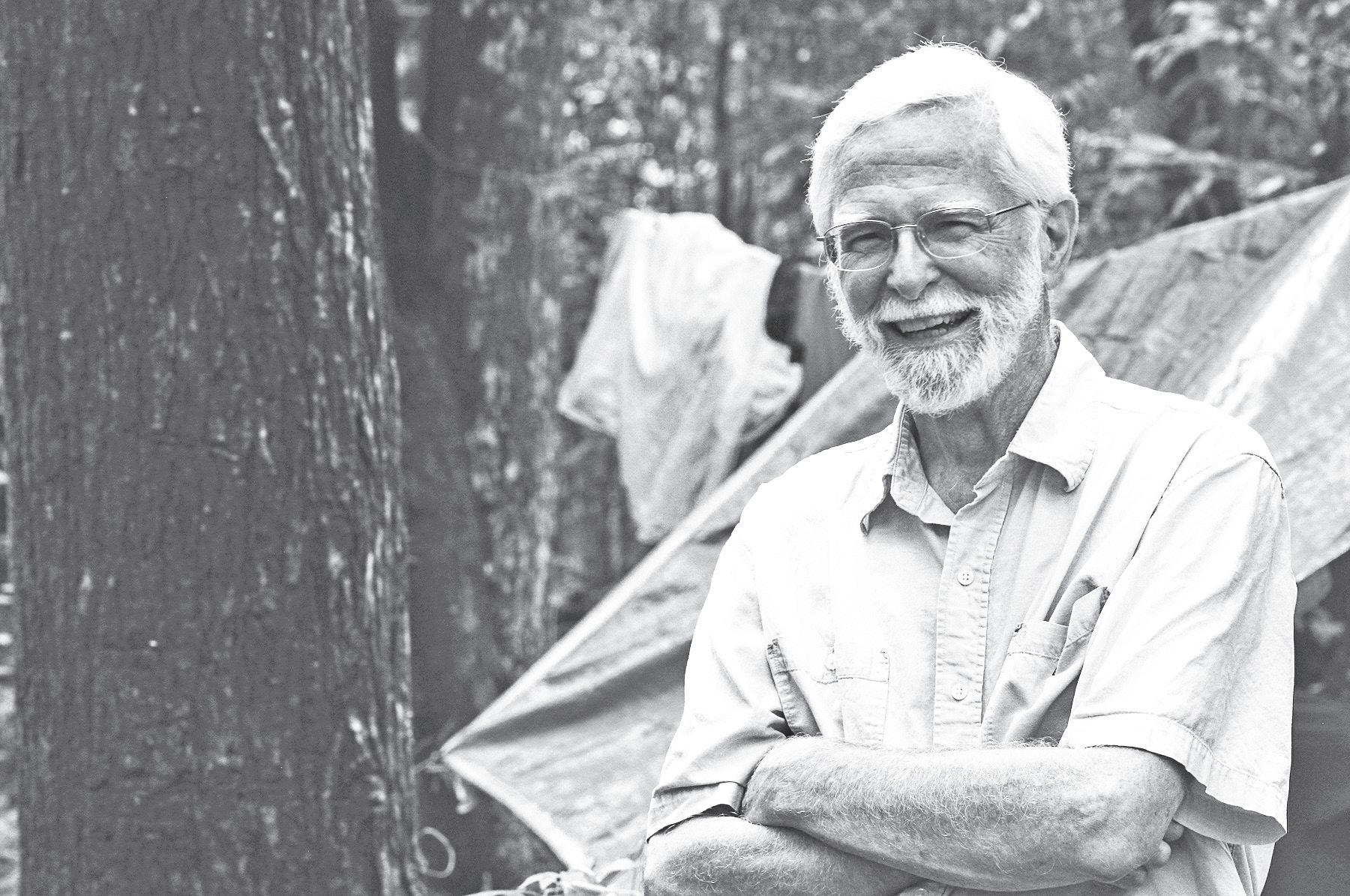
DR. Lawrence Heaney has been studying Philippine mammals since the 1980s. Over that time, he’s named and described dozens of new species of small mammals, from furtive earthworm mice to giant cloud rats—helping cement the country as one of the foremost biodiversity hotspots in the world.
Heaney is also freshly retired. But before he stepped down from his post as curator of mammals at the Field Museum of snowy Chicago, he embarked on what may yet be his last trip to the Philippines last August.
Befitting the significance of such a journey, he brought with him treasure bound for the National Museum of Natural History—over 750 biological specimens, including a mind-boggling number of “pickled” bats and rodents, all preserved in ethanol and quadruple-sealed in a plastic crate for the long plane ride across the Pacific, along with a smattering of ancient fossils.
I had a chance to talk with Larry, as he insists he be called, while he was at the Biodiversity Research Laboratory in University of the Philippines Diliman. Very early on, he emphasized that he was merely returning material that had been
borrowed a long time ago for further study in the United States.
“I was allowed to export them under permits from the National Museum, and they are the property of the National Museum.” Nothing special about it, or so he says. “It’s more or less a standard loan of specimens. Museums do that sort of thing all the time.”
At the same time, however, standard loan they may be, the specimens Larry brought home also represent literal lifetimes of work.
They’re the product of not just his expertise, but also his close collaboration with many other brilliant scientists, including the late greats Danilo S. Balete and Maria Josefa “Sweepea” Veluz.
And the scope of the hoard become even more impressive once you realize the amount of labor needed to prepare such a collection. It once took Larry and his col -

leagues four years to publish a paper describing one of their discoveries. And that was them at their fastest.
“More typically, it takes 15 years,” he says.
Part of the reason it takes so long is the need for more data points. Let’s say you enter a forest. You catch a strange-looking rodent. Great! But a single odd critter isn’t enough evidence for you to claim you’ve found a new species.
So, three years later you organize another expedition. And then five years later, another expedition. All until you have enough samples to properly represent the entire range of variation between juveniles and adults, males and females, even individuals from different localities.
“And over time you gradually build up the sample size you need from the entire biogeographic region to get some sense of confidence to plunge into this terribly detailed and tedious work,” Larry explains.
Fast forward a decade. You’ve preserved your samples in ethanol, measured them, catalogued them, numbered them, and written a manuscript describing this potential new species. What follows over the next year or two is the forbidding next step: peer review.
“Everybody who works on the systematics of mammals,” says Larry, which isn’t a lot globally, but still quite a few, “is in full agreement, that we as a community need to make a few mistakes as possible.”
And one of the most reliable ways to do that is to have your draft meticulously critiqued by an anonymous panel of equally expert colleagues.
“We always get some comments, some suggestions.” The feedback can get wonderfully arcane, including one comment Larry received requesting more detail about certain foramina at the base of the skull.
The science is so careful because it’s so important.
“Virtually everything that we do with biodiversity is based on species-level taxonomy. How many species are there? Where do they live? Who are they related to?” he points out.
Before answering these questions, you first have to know what you’re talking about, which means having a precise definition of the species in question: what it weighs, how it looks like, including the necessary features of the skull and the shape of its teeth. After all, how can you conserve the giant bushy-tailed cloud rat if you can’t tell the difference between it and the Northern Luzon slender-tailed cloud rat? Without a strong foundation, everything above it collapses into gibberish, he further notes.
And so scientists brave the lengthy process of peer review because, as Larry explains, “the result is a stronger paper, one that can bear the test of time.”
The final version of Musser and Heaney 1992, re-describing two genera of Philippine forest mice, reads: “The alisphenoid canal is open in most specimens, not concealed by a lateral strut of bone, foramen ovale accessorius has coalesced with buccinator and masticatory foramina…”
If your run-of-the-mill specimens can be thought of as precious stones—pretty garnets, twinkling
shards of quartz—then holotypes are the jewels of the dragon’s hoard. They’re the specimen upon which the definition of an entire species is based, chosen by the authors of that species themselves. In a sense, they’re like entries in a MerriamWebster dictionary.
“Anytime in the future, anybody wants to know more about exactly what we meant by the name that we assigned to a species, they go to the holotype,” Larry says.
Of the 750 specimens that he brought back to the Philippines, 52 of them are holotypes.
Out of the blue, I asked Larry how he might explain the importance of pickled rodents to someone encountering them 500 years from now. At first he laughed. And then after giving the matter some thought, he started talking about his wife, Terry.
“So my wife—did you meet Terry?—she was trained as an ecologist who studied the physiology of wild populations of small mammals,” he says.
Over time, however, Terry’s field shifted farther and farther away from the study of animals in nature. The focus turned to lab work, meaning lab mice, then from there down to the cellular level. More recently things have shrunk to the molecular.
Terry had enough. “About may be eight or 10 years ago she said: ‘To hell with this, I’m not doing this anymore.’” She left on an unofficial sabbatical for two years, and then came back with a new research topic brewing in her head.
“What she wanted to do was use her knowledge of physiology
to investigate the physiological, medical basis for the benefits that everyone knows they gain from nature,” Larry says.
Think about it. Almost everyone is happier after spending some time in the wild. Try asking anyone how they feel about parks. “But there’s very little research on a physiological basis why this is true,” he quips.
After a pause, Larry then said, addressing the hypothetical future: “Do you enjoy spending time in nature? Do you value that? Is it worth protecting what you have? In order to protect it, what do we need to know?”
A forest must be conserved before it can be enjoyed, and conservation relies on having a solid definition of all the species a forest contains.
“What we do,” and by extension, what the specimens do, “is to provide a basis for that enjoyment.”
Perhaps most importantly, especially as support for natural history museums seems to be declining around the world, is that the specimens must be used. Caring for them also means not allowing them to be forgotten in a cabinet somewhere.
“Biological collections in general, unlike art collections, have no intrinsic economic value.” People don’t buy them at auctions. They don’t sell for millions of pesos. A beautiful painting? Yes. An endemic rat preserved in ethanol? No. “What makes biological specimens important is using them. They are valuable to the extent they are used.”
So his final words about the specimens? Simple. “Use them.”
SEATTLE—For decades, scientists believed Prochlorococcus, the smallest and most abundant phytoplankton on Earth, would thrive in a warmer world. But new research suggests the microscopic bacterium, which forms the foundation of the marine food web and helps regulate the planet’s climate, will decline sharply as seas heat up.
A study published Monday in the journal Nature Microbiology found Prochlorococcus populations could shrink by as much as half in tropical oceans over the next 75 years if surface waters exceed about 82 degrees Fahrenheit (27.8 Celsius).
Many tropical and subtropical sea surface temperatures are already trending above average and are projected to regularly surpass 86 degrees Fahrenheit (30 Celsius) over that same period.
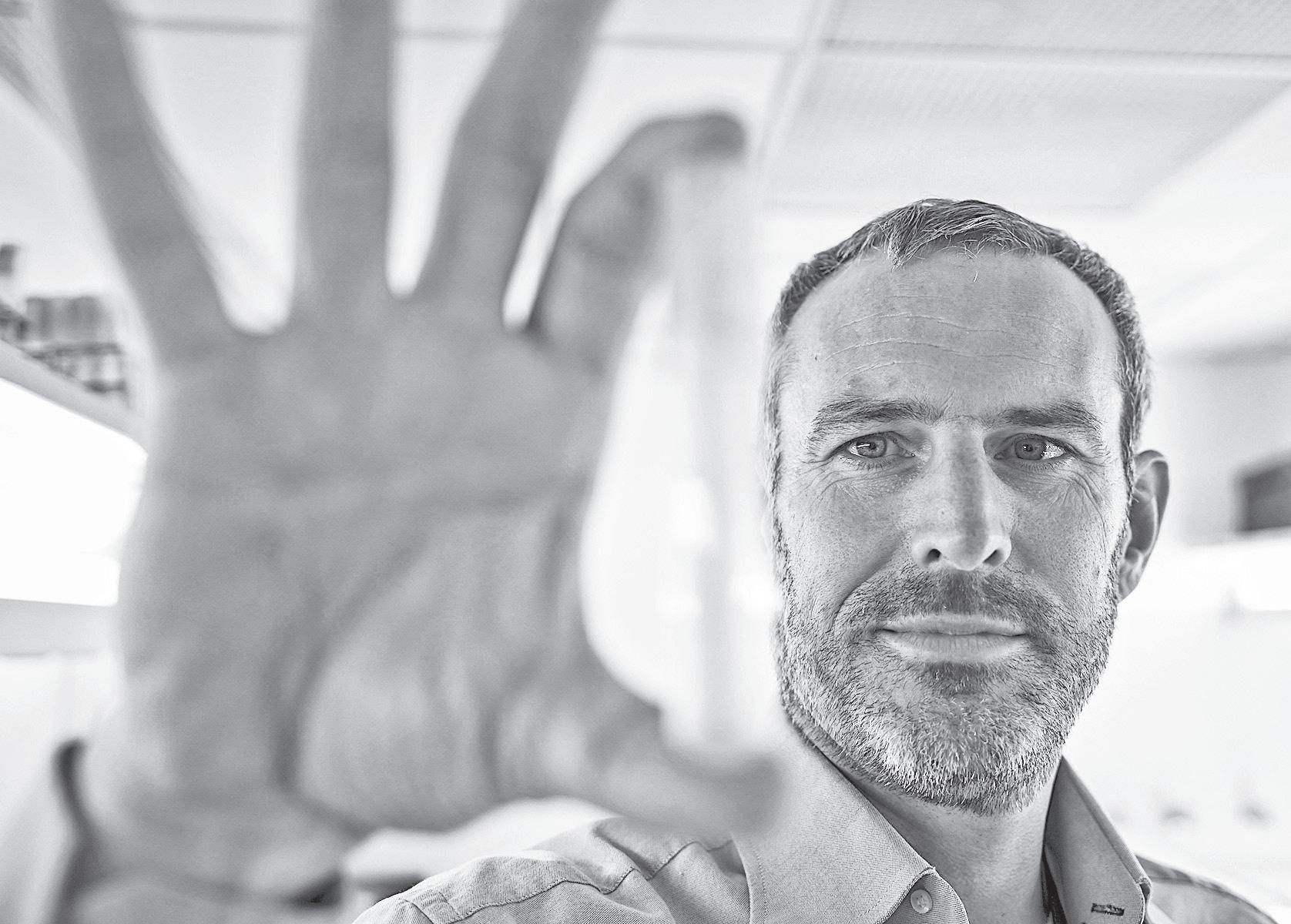
“These are keystone species—very important ones,” said François Ribalet, a research associate professor at the University of Washington’s School of Oceanography and the study’s lead author.
“And when a keystone species decreases in abundance, it always has consequences on ecology and biodiversity. The food web is going to change,” Ribalet said.
These tiny organisms hold a vital role in ocean life
PROCHLOROCOCCUS inhabit up to 75 percent of Earth’s sunlit surface waters and produce about one-fifth of the planet’s oxygen through photosynthesis. More crucially, Ribalet said, they convert sunlight and carbon dioxide into food at the base of the marine ecosystem.
“In the tropical ocean, nearly half of the food is produced by Prochlorococcus,” he said. “Hundreds of species rely on these guys.”
Though other forms of phytoplankton may move in and help compensate for the loss of oxygen and food, Ribalet cautioned they are not perfect substitutes.
“Evolution has made this very specific interaction,” he said. “Obviously, this is going to have an impact on this very unique system that has been established.”
The findings challenge decades of assumptions that Prochlorococcus would thrive as waters warmed. Those predictions, however, were based on limited data from lab cultures.
For this study, Ribalet and his team tested water samples while traversing the Pacific over the course of a decade. Over 100 research cruises—the
equivalent of six trips around the globe— they counted some 800 billion individual cells taken from samples at every kilometer.
In his lab at the University of Washington, Ribalet demonstrated the SeaFlow, a box filled with tubes, wires and a piercing blue laser. The custom-built device continuously pulls in seawater, which allowed the team
to count the microbes in real time.
“We have counted more Prochlorococcus than there are stars in the Milky Way,” Ribalet said.
Experts warn of ‘big consequences’ PAUL BERUBE , a research scientist at
Massachusetts Institute of Technology who studies Prochlorococcus but was not involved in the work, said the breadth of data is “groundbreaking.” He said the results fit with what is known about the microbe’s streamlined genome, which makes it less adaptable to rapid environmental changes.
“They’re at the very base of the food web, and they feed everything else—the fish eat the things that eat the phytoplankton and we eat the fish,” he said.
“When changes are being made to the planet that influence these particular organisms that are essentially feeding us, that’s going to have big consequences,” Berube said.
To test whether Prochlorococcus might evolve to withstand hotter conditions, Ribalet’s team modeled a hypothetical heat-tolerant strain but found that even those would “not be enough to fully resist the warmest temperature if greenhouse emissions keep rising,” Ribalet said.
He stressed that the study’s projections are conservative and don’t account for the impacts of plastic pollution or other ecological stressors.
“We actually tried to put forth the best-case scenario,” Ribalet said. “In reality,
things may be worse.”
Steven Biller, an associate professor at Wellesley College, said the projected declines are “scary but plausible.” He noted Prochlorococcus form part of the “invisible forests” of the ocean—tiny organisms most people never think about, but are essential to human survival.
“Half of all photosynthesis is happening in the oceans and Prochlorococcus is a really important part of that,” Biller said. “The magnitude of the potential impact is kind of striking.” Biller, Berube and Ribalet said that while other microbes may compensate somewhat, the broader risks to biodiversity and fisheries are real.
“We know what drives global warming. There is no debate among the scientific community,” Ribalet said. “We need to curb greenhouse gas emissions.”
He hopes the findings bring more attention to tropical oceans, which could serve as natural laboratories for warming adaptations and as early warning signals for ecological collapse.
“For the first time, I want to be wrong. I would love to be wrong,” he said. “But these are data-driven results.” Annika Hammerschlag/Associated Press
FAITH
FAITH GARCIA is bracing for another grueling test of will, strength and endurance as she leads a formidable group of contenders in the Damosa Land 5150 Triathlon on September 21— an Olympic-distance race marking its inaugural run on the stunning Island Garden City of Samal in Davao Gulf.
For Garcia, a beauty queen turned triathlete, this is a chance to finally seize a breakthrough win in the women’s 30-34 category—a race that will also crown the firstever champions of the Samal 5150, offering bragging rights and a place in history as the island’s first triathlon titleholders.
Set against one of the country’s most idyllic backdrops, the Samal 5150 promises a unique and unforgettable racing experience.
From the crystal-clear waters of Bridgeport, to the breathtaking bike ride along the coastal Samal Circumferential Road, and through the vibrant heart of the city’s business district, every stage of the race offers not only a physical challenge, but a multisensory journey like no other.
While the Open division is expected to draw the spotlight with athletes like Ira Kaye Bragat, Ivy Mar Daguplo, Clare Marie Ciriaco and Melgin Hibaya going headto-head in a showcase of speed, strategy, and stamina, Garcia, also a successful entrepreneur who has also competed in IRONMAN 70.3 races, is determined to grab the spotlight.
Known for her grit and consistency, she’ll face stiff competition from the likes of Anne Relova, Gamy Aragon, Althaea Benignos and Rousanne Bernos, among others—all vying for that top podium spot in the group.
The younger divisions are also stacked with emerging stars. Moira Aves and Alessandra Aquino will lead the charge in the women’s 20-24 class, while Kat Dayao, Kathleen
Chin, Patricia Serrano, Katrina Leuenberger, Coralyn Lim, and Jesseca Bayoyos highlight the fierce rivalry in the 25-29 bracket.
From first-timers trying the Sprint (750m swim, 20km bike, 5km run) and Relay divisions, to elite competitors in the Open and Age Group battles, the Samal 5150 offers something for everyone—a celebration of endurance, community and adventure.
For listup and details, visit ironman.com/races/5150-samal/ course . For inquiries, e-mail sai. mayol@ironman.com.
What sets the 5150 Samal apart is its unmatched setting and demanding layout. The 1.5km looped swim course begins at Bridgeport, a luxury marina in Brgy. Caliclic, tracing a turquoise coastline that feels more like a postcardperfect vacation than a race start.
But make no mistake—this course bites back. The 40km bike leg, a double-loop route along the Samal Circumferential Road, features rolling terrain and elevation changes that will punish the unprepared and reward the strong. With sweeping views of Davao Gulf and the city skyline, it’s a test of both leg power and mental grit.
The race wraps with a 10km run through Samal’s lively urban core, where cheering locals and festive community support promise to energize every step toward the finish line. It’s a route designed to push limits and deliver unforgettable moments.
Beyond the battle for top honors, the host city is committed to delivering a world-class racing experience. The organizing Sunrise Events Inc. is pulling out all the stops to ensure a smooth, safe, and memorable event that showcases the natural beauty and vibrant culture of Samal.
TOKYO—It was small news that dropped during a busy sports week in June. A much-hyped track meet in Los Angeles fronted by one of the sport’s greats, Michael Johnson, was being canceled.
It marked the second major event pulled off the 2025 calendar in America’s second-largest population center—a city once known for its glamorous melding of track and fame—and the news came a mere three years before Los Angeles hosts its first Summer Olympics since 1984. The lead-up to the LA Games was supposed to be a time to return the sport to the glory days that peaked in ‘84, when Carl Lewis, Edwin Moses and the rest of track’s stars ran and jumped in the Coliseum by day, then hit red carpets and sat with Johnny Carson by night. But in some ways, the sport feels more divided and less organized than it’s ever been—bogged down by the seeming collapse of Johnson’s much-hyped track circuit, a US media deal that makes the sport harder to find and top stars like Noah Lyles, Sha’Carri Richardson, Sydney McLaughlin-Levrone and an ever-churning cycle of Jamaican sprinters who don’t line up against each other enough.
A8 | SundAy, September 14, 2025 mirror_sports@yahoo.com.ph
Editor: Jun Lomibao

Russians still banned as athletics world championships get going
TOKYO—Sebastian Coe, the head of World Athletics, on Friday said the organization is sticking to its long-held position that Russian athletes won’t be allowed at the upcoming world championships and other big events until a peace settlement is reached in its war in Ukraine.
Track and field’s hard-line stance is an outlier among Olympic sports, many of which allowed Russians to compete as neutral athletes at the Paris Olympics last year, and also at some world championships. Russians have been almost
it enacted a new one related to Russia›s then-recent invasion of Ukraine.
“It’s pretty obvious that we want a full contingent,” Coe said on the eve of world championships, when asked if there were any changes to the Russia policy. “We need a settled position. We need a peaceful agreement before we can move off that landscape.” The world championships will feature about 2,000 athletes from 200 countries. They’ll take place at Japan’s $1.4 billion National Stadium, which was built for the 2020 Tokyo Olympics. Those Games were delayed a year by the pandemic and eventually held in Tokyo—but without fans. At those Olympics, World Athletics granted only 10 spots for Russians who competed as “Authorized Neutral Athletes.” Among them was Maria Lasitskene, who won the gold medal in high jump but has not competed in a major international event since.
“No, nothing has changed,” Coe said about the policy. “I hope to God that it does change—not just for athletics—because it’s an unsustainable situation.” AP
It came to a tipping point when the cancellations of two meets set for UCLA’s Drake Stadium—a US Grand Prix event and Johnson’s Grand Slam Track league—were announced within a few weeks.
“It’s one of the odd situations for a sport that has such an incredible history and legacy, an incredible athlete base,” said Casey Wasserman, the president of the LA organizing committee. “It’s an odd thing that there isn’t a great track meet here.”
Momentum from Paris didn’t last a year THE buzz was palpable as track and field closed down the Paris Olympics.
There was drama over each of the 10 days of action bookended by Lyles’ .005-second victory in the men’s 100 and distance star Sifan Hassan elbowing her way to victory in the women’s marathon to capture her third medal of the Games.
“This is our moment,” World Athletics President Sebastian Coe declared at the time. “We can’t sort of allow this to glidepath gently into anything other than a really successful 2028.” What happened over the ensuing 12 months has been anything but gentle.

Most of the attention revolved around Grand Slam Track, the multimillion-dollar start-up brought to life by Johnson who, like so many in the sport’s hierarchy, tired of seeing the athletes fade into the background once the Olympic torch went out.
He offered big money and promised head-on-head racing. McLaughlin-Levrone and Olympic gold medalist Gabby Thomas signed on. Lyles and Richardson did not.
That league promised four meets, but problems began after the opener in Jamaica that failed to wow potential investors. A few weeks before the seasonending LA meet was scheduled came news that virtually none of the runners who signed up were getting paid.
“Understandably, this has led to frustration, disappointment and inconvenience to our athletes,” Johnson wrote on the league’s Instagram page last month, responding to reports that the $30 million in seed money he touted turned out to be more like $13 million.
“I know this damages trust.”
Moses, the legendary hurdler who spent his career advocating for track stars to get paid, said he heard complaints from every corner.
“It just shakes the pillars of track and
LAS VEGAS—Even in a city known for staging some of boxing’s greatest fights, the Canelo Alvarez-Terence Crawford match stands nearly alone.
It will be the first fight at 5-year-old Allegiant Stadium, the Saturday night showdown underscoring the magnitude of an event that will have implications for both boxers trying to further strengthen their Hall of Fame-worthy careers.
Alvarez (63-2-2, 39 knockouts), as is typically the case when the Mexican great fights in his boxing home of Las Vegas, will have the vast majority of the crowd behind him as he defends his unified super middleweight championship. The 35-year-old is a -175 favorite at BetMGM Sportsbook.
“This fight for me is big,” Alvarez said. “It’s one of the


field, when an athlete can’t get paid and they’ve already competed,” he said. Amid all this, the venerable Diamond League stayed the course, offering 16 meets, mostly across Europe but with a few spread in Asia and one in the US. Only once over those 16 meets did the three biggest names in sprinting in either men’s or women’s competition line up in the same 100-meter race.
biggest fights of my career for sure.”
Crawford (41-0, 31 KOs) is moving up two weight classes, and the 37-year-old from Omaha, Nebraska, already has captured two unified division titles. No male fighter has accomplished that feat in three classes.
“This is a massive fight,” Crawford said. “It’s talked about all over the world right now.”
It’s certainly a talking point in Las Vegas. The city known as the “Fight Capital of the World” is used to hosting big-time matches, but there was no stadium like Allegiant to house some of the great bouts of the past. Resorts such as Caesars Palace’s outdoor arena, The Mirage and Las Vegas Hilton hosted some of the more notable fights in 1980s and 1990s before
“There’s a lot of different factors,” McLaughlin-Levrone said. “Having exciting races is part of it, but if nobody can see those races, that doesn’t really help anybody.”
That’s a reference to the Diamond League’s long-term association with NBC’s streaming arm, Peacock, not being renewed after 2024. Instead the US rights went to FloTrack, the track-specific website that charges somewhere between 5 percent and over 100 percent more than Peacock, depending on the subscription. Athletes were among the many scratching heads about that arrangement.
“This might be the worst news I’ve heard from the diamond league since... ever,” Thomas posted on social media.
“I think that’s horrible for the sport,” Moses said. AP
giving way to MGM Grand Garden Arena and then T-Mobile Arena. Top Rank matchmaker Bruce Trampler, who was inducted into the International Boxing Hall of Fame in 2010, has booked many of those matches, but he’s not involved with this one. UFC CEO and President Dana White and Riyadh Season are promoting this card.
“I think it’s right up there with the great fights in Las Vegas history,” Trampler said. “You’ve got two champions fighting. There’s a lot of storylines—Crawford moving up in weight, Canelo hoping to cement his
Mayweather Jr. faced Manny Pacquiao in 2015. “Crawford doesn’t reach the level of stardom,” Iole said. “He will if he wins, but going into this fight, he’s not as big as a Sugar Ray Leonard was. Tyson, Sugar Ray Leonard, even an Oscar De La Hoya, those guys were just bigger names. So when they had their biggest fights here, those guys were bigger because of their names.” AP

What made ‘K-Pop Demon Hunters’ click? Relatability


2
SEPTEMBER 14, 2025 | soundstrip.businessmirror@gmail.com
They say that love is sweeter the second time around, this may not only be applicable with love and relationships, and in some cases may also happen when a song is re-released and is given a new lease in life. Enter Anthony Meneses, a fast-rising Filipino singer-songwriter with over half a million monthly Spotify listeners who has re-released his song “Paruparo” but this time as a duet with Korean singer Kim Gyeol.
Crossing cultural borders Anthony is the first artist signed under ABYSS Company Philippines, an expansion from South Korea-where the company is known as a powerhouse in the entertainment industry and is behind artists such as Sandara Park, Sunmi, and Melomance.
During an intimate media preview last August 13, Anthony and Kim performed their duet of “Paruparo” which in the vernacular means butterfly. It was a sweet performance further bridging the gap from different

Publisher :
T. Anthony C. Cabangon
Lourdes M. Fernandez
Editor-In-Chief :
Concept :
Aldwin M. Tolosa
Y2Z Editor :
SoundStrip Editor : Group Creative Director : Graphic Designers :
Jt Nisay
Edwin P. Sallan
Eduardo A. Davad
Niggel Figueroa
Chow Jarlego
Contributing Writers :
Tony M. Maghirang
Rick Olivares
Jingo Zapata
Reine Juvierre S. Alberto
John Eiron R. Francisco
Ica Hontiveros-Cheng
Ana Zoe V. Davad
Justine Xyrah Garcia
Ginger Franz S. Ocampo
Trixzy Leigh Bonotan
Bless Aubrey Ogerio
Photographers :
Bernard P. Testa
Nonie Reyes
Y2Z & SOUNDSTRIP are published and distributed free every Sunday by the Philippine Business Daily Mirror Publishing Inc. as a project of the
The Philippine Business Mirror Publishing, Inc., with offices on the 3rd Floor of Dominga Building III 2113 Chino Roces Avenue corner
Dela Rosa Street, Makati City, Philippines. Tel. Nos. (Editorial) 817-9467; 813-0725. Fax line: 813-7025
Advertising Sales: 893-2019; 817-1351,817-2807. Circulation: 893-1662; 814-0134 to 36. www.businessmirror.com.ph
countries and showing that language is indeed not a barrier when it comes to music. This was followed by a quick Q&A session with the media.
Bridging the gap
When asked about their decision to expand into the Philippine market this is what Timothy Kim, COO of ABYSS Company had to say: “The reason why we decided to expand into the Philippine market is because, first off, we fell in love with the kind of music that you have in this culture. And second, we feel that there’s a lot of common similarities with the Korean music scene as well, as well as the Filipino music scene. As well as the love for music is very similar, so we thought that it would be best to expand here and work with artists such as Anthony and create more global opportunities for our current network, and collaborating with Korean artists like we saw today to further the Filipino market to the global stage.”
As for what ABYSS sees in Anthony and his possible potential there is nothing but excitement: “The style of music that Anthony has shown so far, is only a small portion of what he has. You’ll be very excited to hear what we have coming. Anthony has a lot of potential in different genres such as RnB and Pop as well. Which we feel will resonate more outside of the Philippines. From a basic standpoint his vocals are very strong, his talent in music is very raw and natural, so hopefully through our internal processes, and our ability to work with him to further his natural talent is going to be very important for us.” Kim answered. On going global with their music and collaborations Timothy Kim said: “We want to bridge the gap from different continents, so far we’ve successfully worked with our K-Pop artists, but expanding from a global perspective this is just the beginning of what we are trying to do, which is (producing) very fruitful



music collaborations between different cultures and different musical backgrounds, of course Kim Gyeol is a very talented indie singer-songwriter from Korea, we thought would go very well with Anthony’s ‘Paruparo’ which is why this project came to light. By doing so, we wanted to continue creating opportunities for OPM artists globally, not only in Asia but also on the western front as well.”
When asked about what kind of new song he would want to work on with Kim, given that “Paruparo” was originally released in February 2023, Anthony answered that he would like to do a ballad with her. This seems to be a good fit, since we got to hear Kim perform a solo song and it felt like we were transported in a Korean drama, which turns out is no coincidence, since Kim’s management has also produced songs for popular K-Drama’s such as “Crash Landing On You” and “It’s Okay Not To Be Okay.” When you visit Kim’s Spotify page you would see under Music
Video that her song “Never Going Back” is from the South Korean crime psychological thriller “Hunter With A Scalpel.” And given how much Filipinos love K-Drama it’s no surprise that the collaboration of Anthony and Kim felt like a long time coming. While Kim is on a short business only trip for the promotion of the collaboration of the “Paruparo” single, among others, she did say that she enjoys discovering Filipino food and that Jollibee was her favorite.
So you see, a song can also be sweeter the second time around, and in this case “Paruparo” became sweeter not just because of Kim Gyeol’s gentle and vulnerable singing but because of the calm and easy blending of her and Anthony’s voices, which you can say was just like the coming together of two cultures and celebrating their shared love for music.
You can listen to “Paruparo (Duet Version)” featuring Kim Gyeol which is now out on all major streaming platforms.
Story by Jingo Zapata
For quite some time, the surviving members of Filipino metal band Slapshock had not been on speaking terms.
The back story is that the group split up just before a controversy blew up in the media, followed closely by the death of its front man.
But Slapshock is still relevant to its hordes of fans — the SLAP ARMIES — to be left in the dustbin of history. In fact, the band’s songs continue to earn royalties.
We’re talking about a considerable amount of money which, all bands with popular songs, for that matter, should be legally entitled to — with the right contract.
That is the meat of this story — how Slapshock’s surviving members, who had been duped of royalties without their knowledge until recently, have now patched up their differences and signed an agreement that would bind them forever as co-creators of almost 80 of the band’s songs.
The new deal formally allows them “to reclaim ownership of all their songs and thus preserve the group’s legacy.”
In an announcement furnished to Soundstrip, “the contract, called a collaboration agreement, returns to guitarists Lean Ansing and Jerry Basco, bassist Lee Nadela, and drummer Chi Evora the publishing and intellectual property rights and other privileges to all Slapshock songs written, recorded, and produced in the band’s 23-year history.
“It entitles each member, including the heirs of the band’s late vocalist, Jamir Garcia, an equal share of royalties and other future revenues from Slapshock’s discography.
“The contract enables Slapshock’s surviving members to move forward after a bitter conflict led to the band’s breakup in 2020, amid estafa and qualified theft charges filed in court against Garcia — involving royalties from digital sales of songs, as well as talent fees received from a corporate sponsor over a five-year period.
“In October 2020, the dispute was reported in the media. A month later, Garcia was found dead at home, which police declared as a suicide.
“More revelations of financial misdeeds surfaced in May 2023, when documents from Slapshock’s record label showed Garcia had claimed full ownership of almost
80 songs — without the other members’ knowledge.
“In 1999, when the band released its debut album, 4th Degree Burn, all members had agreed that every song they would record from then on would be credited to each one of them as co-author.
“But when the band decided to end its contract with its record label, a ‘non-renewal’ document — which Garcia had signed and received as the band’s de facto representative — indicated him as “composer, 100 percent” of all Slapshock songs released until 2017.
“The document had never been seen by the rest of the band until May 2023.
“All along, the other members said, they were made to believe by Garcia himself that royalties from sales of their albums were intact — which they had looked forward to as their retirement funds.
“As it turned out, Garcia had been getting all the royalties for himself. The band’s record label disclosed that Garcia had already collected all of the band’s royalty checks until 2017.
“Now, with a legally executed collaboration agreement, ownership of all Slapshock songs has reverted to the band’s surviving members following an emotional but productive meeting.
“In the interest of fairness, the contract likewise entitles Garcia’s heirs — his two children — to equal representation.
“The agreement covers all future royalties, fees and revenues from the songs’ publishing rights, including new recordings, or versions of the songs, as well as a share of fees from the songs’ licensing to movies, television, video games, among other mediums.
“The band’s former record label acknowledged the agreement. On July 31, Ansing, Basco, Nadela, and Evora finally received their equal shares of royalties after many years.
“From its formation in 1996 until its breakup in 2020, Slapshock built a steady, lucrative career with its intense, aggressive type of rock music, supported by a huge fan base and corporate sponsorship.




“‘We no longer wish to hold on to hate. We want to embrace forgiveness and peace so we can truly move on,’ its members said. ‘Thank you, SLAP ARMIES, for being part of this journey. May we all continue to enjoy the songs. These songs will outlive us all, and may they keep inspiring everyone — young and old — who has heard of Slapshock.’”
How much did each member receive, with this new contract in effect?
I’m not at liberty to tell, but suffice it to say that it’s not a pittance.
There are lessons here for musicians:
First, when signing record deals, get a good royalty rate for your songs. Remember Yano, that band from the 1990s which, at its peak, was regarded as second only to the country’s top band at the time, the Eraserheads? For its debut album, Yano’s first managers negotiated a royalty rate that would earn the band’s two songwriters
12 percent of each album sold.
The funny thing was, when the first royalty check came in, it was so big that the record label didn’t want to pay in cash, but offered instead a Mitsubishi van to match the amount.
The sad part was — and this was just whispered to me — one of the two Yanos had allegedly been receiving the succeeding royalty checks without the knowledge of the other one, who was, at the time, been dealing with mental health challenges.
Is that the reason why the aggrieved one had stopped talking to the culprit?
In any case, it’s always good to open communication lines — like what Slapshock’s members did.
Second, make sure you have a copy of all your contracts and, most importantly, you understand everything in the contract. A good, trustworthy lawyer should come in handy.
In Slapshock’s case, the members didn’t bother to pore over the band’s contracts, until it was too late — well, better late than never.
By Cholong Sung University of London
AS Netflix’s animated film, KPop Demon Hunters, smashes records and captures audiences everywhere, one question lingers: what makes this animation stand out from the rest? An answer lies in how relatable the main characters are.
The film follows three K-pop girl group members who use their music and voices to protect the world from demonic forces. While the storyline centers on the fantastical notion of “demon hunters,” grounding the protagonists in the guise of K-pop idols adds on-trend authenticity. As co-director Chris Appelhans explained, the aim was “making girls act like real girls, and not just pristine superheroes.”
Rather than dwelling solely on their heroics, the film portrays the characters’ everyday moments and ordinary behavior. Food, clothes and familiar locations in South Korea are rendered with surprising
‘KPop
Tprecision, to the extent that even Korean audiences are astonished at their accuracy, despite the production being based overseas.
But how closely does the film’s version of K-pop reflect the real thing?
Take the first appearance of Huntr/x members Rumi, Mira and Zoey: with only minutes to go before a performance, they are shown devouring kimbap, ramen, fish cakes and snacks–fuel for the stage. In
idols often put themselves through intense workouts to build impressive physiques, showing off toned bodies and six-packs on stage for their fans.
Then there is the question of accommodation. In the film, Huntr/x members share a luxurious penthouse overlooking Seoul’s skyline. In reality, agencies often provide dorm accommodation to facilitate scheduling and teamwork, usually near the company, and often managers live with artists.
‘More than any other element, it’s the music that gives the film its sharpest sense of realism.’
reality, idols may often end up grabbing a quick bite of kimbap or ramen in the car between packed schedules. More commonly, however, strict diets are the norm. There are reports that sometimes trainees–aspiring K-pop idols who are part of an entertainment company’s training program–are even forced to shed weight by agencies: one of the industry’s darker aspects.
Yet, as idols mature, many develop their own healthier routines, not simply for looks but to ensure longevity in their careers.
Meanwhile, in the case of boy group Saja Boys, the film highlights the fans’ fascination with their sculpted abs. In reality, male
The quality varies greatly, with newcomers typically placed in modest housing.
After debut, successful idols may upgrade their accommodation as the money starts to roll in, but a penthouse, as shown in the film, is more fantasy than fact. BTS being a notable exception, progressing from sharing a converted office (not even a proper house) to one of Seoul’s most prestigious apartments. Most idols tend to strike out on their own some years after debut, balancing solo activities with personal life. By then, their choice of home usually reflects their individual earnings.
The film mirrors K-pop reality in other respects. One Huntr/x member, Zoey, is
Korean-American–reflecting the industry’s trend since the 2000s towards multinational line-ups designed to create a global audience. Blackpink, for instance, includes two Korean members with overseas backgrounds and one foreign national, which has bolstered their international reach.
More than any other element, it’s the music that gives the film its sharpest sense of realism.
Executive music producer Ian Eisendrath teamed up with record label THEBLACKLABEL to produce K-pop tracks that sound right at home in the current charts. Blending trendy and catchy hooks with the story itself has drawn in not only animation fans but also audiences lured by the music alone.
Co-director Maggie Kang put it plainly in an interview: “We really wanted to immerse the world in K-pop.” At the same time, she noted that the film deliberately heightens certain aspects of the genre. That kind of exaggeration is only natural in animation, where drama is part of the appeal. What matters is that every flourish is still grounded in reality.
For viewers familiar with Korean culture and K-pop, that means spotting a wealth of details that might otherwise go unnoticed – and it’s this layer of discovery that may well be among the key factors driving the popularity of KPop Demon Hunters. The Conversation
n On the cover: edited photo from Netflix
By Orville Tan
HE South Korean cultural wave, or Hallyu, has grown into a worldwide economic force, driving record sales, tours, and the tourism industry in general.
By 2023, Hallyu-related exports topped $14 billion (about P780 billion), showing how K-pop, K-dramas, and films are now among South Korea’s major exports. Government support since the 1990s helped, but global fans fuel the momentum. From streaming to shopping for Kbeauty, audiences are spending heavily on Korean culture.
K-pop has also lifted beauty, fashion, and food worldwide. Live events are projected to grow from $8.1 billion in 2021 to $20 billion by 2031 (around P1.1 trillion), driven by concerts, fan meets, and conventions. Without a doubt, Kwave has become a multi-billion-dollar driver of economic activity.
Netflix’s ‘KPop Demon Hunters’
A RECENT showcase of K-pop’s global impact is KPop Demon Hunters, an animated musical blending K-pop style with action. Co-produced by Sony and acquired by Netflix, the film became the most-watched Netflix original upon its June 2025 release.
Within weeks, it reached 266 million views. In August, Netflix released a two-day theatrical sing-along version that earned ₱1.1 billion
in weekend ticket sales (about $20 million), topping the U.S. box office. This was Netflix’s first number one box-office hit despite limited screenings. A sequel is already in development with Netflix set to distribute.
From Drones to Noodles: Brand Tie-ins and Korea’s Gains
KPop Demon Hunters also turned into a marketing event. In Seoul, its characters were the highlight of a Han River drone light show. Food companies capitalized, with Nongshim launching limited-edition Shin Ramyun and snacks featuring the characters. All 6,000 ramen cups sold out in under two minutes, with overseas exports announced soon after. Samyang Foods also benefited, with its stock price hitting a record high. These tie-ins show how popular content drives product sales, raises company valuations, and promotes Korean brands.
Fan Power: The Market of Idol Interaction
AT the heart of the K-pop economy is fan participation. Fans organize, vote, stream, and push for projects supporting their favorite artists. This has created a thriving fan interaction market. Voting apps such as KDOL, Mubeat, and Fan N Star host daily contests where millions join, often purchasing tokens or watching ads for extra votes. KDOL rewards top-ranking idols with LED billboards in Seoul or Times Square.

These apps convert fan loyalty into measurable metrics and revenue. Platforms like Weverse, offering exclusive artist content, reached nearly 10 million monthly users in 2024 and over 150 million downloads. Agencies monetize through memberships, paid chats, and virtual fan meetings. Dedicated apps now rival traditional social media for engagement. Companies continue investing heavily, knowing fans will pay for closer connections.
K-Fandom
THE Philippines, home to a large K-pop fan community, is seeing these trends grow locally.
A new platform called FanFlare brings the Korean fan culture model to local fans. Unlike crowdfunding sites, fans on FanFlare do not directly fund campaigns. Instead, they vote

for the projects they want to see realized, such as LED billboards or themed events. Winning campaigns are then implemented through FanFlare’s partnerships with ad vendors and venues. This system makes it easier for fans to mount impactful campaigns in the Philippines while ensuring transparency. Korean mentors, including the team behind KDOL, support its adaptation to Manila. Filipino fans can now see their votes turn into real projects both locally and abroad.
FanFlare also connects fandom with community service. Partnerships with groups like the Yellow Boat of Hope Foundation will enable campaigns to support education or transport for remote communities. Filipino fans have already shown enthusiasm through billboard celebrations and charity projects. FanFlare strengthens these efforts, showing how fan activity can create both cultural and social impact.
As FanFlare expands, it highlights the localization of the K-wave. Filipino businesses gain from fan spending, charities receive support, and idols enjoy stronger overseas promotion. The growth of ranking apps, fan votes, and organized projects signals a future with richer and more interactive fan experiences. Fans can now express support both online and offline, from Manila malls to Seoul skylines. K-pop’s success begins in Korea but extends globally, with fans driving its growth across borders.