Blindsided economic team backs rice price cap
By Jasper Emmanuel Y. Arcalas @jearcalas
THE economic team of the Marcos Jr. administration is throwing its “full support” behind the state’s mandated price ceiling on rice, even if the measure was not subjected to their scrutiny prior to imposition. I n two separate statements, the Department of Finance (DOF) and the Department of Budget and Management (DBM) emphasized that they are in “favor” of the price ceiling on rice to address the surge in local prices.

F inance Secretary Benjamin E. Diokno described the price ceiling measure as an “essential stop-gap measure” to address the rise in do -
mestic rice prices. We agree with the President that implementing a price cap on rice is the most prudent course of action at the moment to achieve two critical objectives: stabilizing rice prices and extending immediate support to our fellow countrymen,” Diokno said on Monday.
Budget Secretary Amenah F. Pangandaman concurred with Diokno, adding that the present market conditions “warrant a special mitigating measure” like price ceiling. “ In an ideal scenario, we can let the market dictate prices. However, as Neda [National Economic and Development Authority] noted, we are now faced with extraordinary factors
that we have to consider,” Pangandaman said on Monday.

Economic team blindsided

THE statements were issued a few days after Diokno revealed that the economic team was not consulted about the imposition of the rice price ceiling.
D iokno said the economic team was taken aback when President Marcos Jr. issued Executive Order 39 imposing a price ceiling on regular-milled and well-milled rice sold in the domestic market.
A t the time that Marcos issued the EO, Diokno together with Pangandaman and Socioeconomic Planning Secretary Arsenio M. Balisacan were in
Tokyo, Japan for the 14th PhilippinesJapan High-Level Joint Committee Meeting on Infrastructure Development and Economic Cooperation. However, the power of the President to impose a mandated price ceiling does not require any prior consultation with his economic team.
Under the Price Act, the President can implement the measure upon the recommendation of an implementing agency of the law or the Price Coordinating Council.
T he implementing agencies of the Price Act are the Department of Agriculture (DA), concurrently headed by Marcos himself, and the Department of Trade and Industry (DTI).

FDI FLOWS DOWN 20.4% IN FIRST SEMESTER—BSP
By Cai U. Ordinario @caiordinario
THE country’s weak economic growth prospects and global uncertainties led to a 20.4-percent contraction in Foreign Direct Investments (FDIs) in the first semester of the year, according to the Bangko Sentral ng Pilipinas (BSP).
Data showed FDI net inflows decreased to $3.9 billion in the January to June period this year from the $4.9-billion net inflows recorded in the same period in 2022.
I n June 2023, net FDI was at $484 million, a 3.9-percent decline from the $503-million net inflows in the same month last year.
“ The slowdown in FDI may be due largely to investor concerns over weak growth prospects amid persistent global uncertainties,” BSP said in a statement on Monday.
I n the first semester, net investments in equity capital (other than reinvestments of earnings) contracted 7.3 percent to $744 million while reinvestment of earnings contracted 11.2 percent to $459 million.
T he data also showed that when it came to net debt instruments, this declined 24.6 percent to $2.71 billion in the January to June period of 2023.
I n June, BSP said the decline in FDI was due to the recorded declines in non-residents’ net investments in equity capital (other than reinvestments of earnings) by 11.8 percent to $111 million in 2023 from $126 million last year.
T he data also showed that in terms of reinvestment of earnings, there was a decline of 26.8 percent to $89 million in June 2023 from US$122 million in June last year.
Net investments in debt instruments, however, increased by 11 percent to $283 million in June 2023 from $255 million in June 2022.
“ Bulk of the equity capital placements in June 2023 were sourced primarily from Japan, the United States, and Singapore.
By Andrea E. San Juan @andreasanjuan
AT least 83 percent of Chief Executive Officers (CEOs) surveyed in the Philippines said they are confident in their industry prospects for the next 12 months, according to the Philippine CEO Survey 2023 conducted by PwC Philippines in collaboration with the Management Association of the Philippines (MAP).
B ased on the survey, 83 percent of the 157 CEOs who answered the online survey expressed optimism about their industry prospects for 2023.

However, businesses face threats from inflation, macroeconomic instability, cyber risks, and supply
chain constraints.
T he survey had 39 percent of the CEOs saying they believe their company will be highly exposed to the threat of inflation in the next 12 months; 35 percent said they will be highly exposed to supply chain constraints; and 31 percent said they will be highly exposed to macroeconomic volatility.
M oving forward, businesses have their respective strategies to mitigate potential economic challenges and volatility in 2023. For one, 42 percent of the CEOs said their companies are considering raising prices of products and services in the next 12 months; 39 percent intend to diversify their product/service offering; while 28 percent plan
to reduce operating costs. C urrently, 54 percent of the CEOs are already reducing operating costs to cushion the impact of potential economic challenges and 49 percent are already diversifying their products/service offering.

Despite these potential economic threats, 79 percent of the CEOs expressed confidence that their company will experience revenue growth in the next 12 months, while 87 percent said they are confident their company will experience revenue growth in the next three years.
Key growth drivers
MEANWHILE , the CEOs said that infrastructure development, domestic consumption, and the (business process outsourcing) BPO and
services sector will be the “key growth drivers” of the Philippine economy in the next 12 months.
T he survey showed that 59 percent of the CEOs said infrastructure development will be a key growth driver; 59 percent said domestic consumption would spur the country’s economic growth; while 38 percent said the BPO and services sector would drive the Philippine economy.
T he executives were asked to evaluate the Philippine government, and 64 percent of the CEOs said the government is forging stronger relationships with other nations; 62 percent said the government is performing well in the area of infrastructure development and 46 percent said it is
THE country’s fight against high inflation is not yet over and this will lead the Bangko Sentral ng Pilipinas (BSP) to delay any move to cut key interest rates to 2024, according to Australia and New Zealand Banking Group’s think tank.
I n its latest Philippine Insight, ANZ Research said rising food and energy prices are reversing the country’s progress in cooling inflation.
T he rice price ceiling recently imposed by the President may also only yield temporary relief for consumers as this can stoke inflation or create shortages.
The Philippines’ inflation battle is not yet over. Even if rice price caps alleviate some pressure and second-round effects are not accounted for, full-year 2023 inflation is likely to exceed our current baseline forecast of 5.3 percent,” ANZ Research said. “
We are therefore revising our 2023 average inflation forecast to 6 percent from 5.3 percent previously. Our 2024 inflation forecast also now stands at 3.5 percent versus 3 percent previously,” it added.
Given this, it is unlikely that the BSP will start reducing interest rates this year. ANZ Research said it expects the BSP to maintain policy rates at 6.25 percent until the end of the year.
T he think tank said this is because inflation is expected to average above 4 percent until the end of the year. The BSP’s inflation target is between 2 and 4 percent.
“
The reversal in the softening trend of inflation will also have a bearing on monetary policy. Indeed, the BSP has often reiterated that it is ready to act should inflationary pressures intensify,” ANZ Research said.
“
For now, we maintain the view that the BSP will hold the policy rate at 6.25 percent and that a cut is unlikely even in 2024. Our earlier view was the BSP would be able to start cutting the policy rate from the second quarter of 2024,” it added.
BusinessMirror ROTARY CLUB OF MANILA JOURNALISM AWARDS 2006 National Newspaper of the Year 2011 National Newspaper of the Year 2013 Business Newspaper of the Year 2017 Business Newspaper of the Year 2019 Business Newspaper of the Year 2021 Pro Patria Award 2018 Data Champion EJAP JOURNALISM AWARDS BUSINESS NEWS SOURCE OF THE YEAR (2017, 2018, 2019, 2020, 2021) DEPARTMENT OF SCIENCE AND TECHNOLOGY 2018 BANTOG MEDIA AWARDS w P25.00 nationwide | 2 sections 26 pages | n Tuesday, September 12, 2023 Vol. 18 No. 330 See “Blindsided,” A2 See “FDI,” A2 See “PHL ,” A2 See “Inflation,” A2
PHL CEOs SEE RISKS, BUT UPBEAT ON INDUSTRY PROSPECTS
Fight vs high inflation not over, says ANZ Research
PESO EXCHANGE RATES n US 56.6590 n JAPAN 0.3860 n UK 70.6991 n HK 7.2266 n CHINA 7.7140 n SINGAPORE 41.5206 n AUSTRALIA 36.1541 n EU 60.7215 n KOREA 0.0424 n SAUDI ARABIA 15.1059 Source BSP (September 11, 2023)
SILENT HOPE Amid the pall cast by persistently high inflation and the strain on household budgets from surging commodity prices, Santa Claus seems to signal a quiet yet hopeful presence from a stockroom window in Tagaytay City. In the Philippines, where the Christmas season begins as early as September, this cherished celebration takes on even greater significance as families navigate economic challenges, making spending decisions more deliberate and meaningful. NONIE REYES
Marcos’s vision: Double rice production with tech
By Samuel P. Medenilla @sam_medenilla
Speaking at the 2023 Mariano Marcos State University (MMSU)Philippine Rice Research Institute (PhilRice) rice paddy art exhibition on Monday, the chief executive disclosed he wants the local rice production to be on a par with other countries.
Production is very important. We need to increase our production. In other countries, they are doing 10 tons per hectare, eight tons per
Continued from A1
performing well in promoting foreign investment.
I n contrast, only 3 percent of
hectare on average...and their production cost is low,” Marcos said partly in Filipino.
B ased on data from the Philippine Rice Research Institute (PhilRice), the average rice harvest yield in the country last year was 4.11 metric tons per ha.
T he President stressed the importance of increasing the country’s rice production amid the threat of climate change on international
the CEOs said the government performs well in fighting corruption; only 19 percent said the government is doing well in managing interest rates; only 31 percent said the government is doing well in terms of managing inflation; and only 34 percent agreed that
food supplies.
He said he is hopeful the agriculture research and development from PhilRice and other local schools such as the MMSU will help boost farmland production.
There are so many things [in agriculture] that need to be changed and studied so that we can make sure that we have a stable source of supply and that that supply is affordable to ordinary Filipinos... So that is the process that we are trying to do. And that’s the part that MMSU, PhilRice, such institutes such as yours play,” the chief executive said.
Stable price
A SUFFICIENT supply, he said, will keep the price of rice stable.
“ We have had to control the prices of rice because the markets are very volatile, so we are trying to stabilize it here in the Philippines …we need to increase our production,” the President said.
L ast week, Marcos issued Ex-
the government is doing well in promoting trade.
I n a statement on Monday, MAP and PwC said that although the CEOs believe that the government’s performance in infrastructure development, forging stronger relationships with other nations, and
ecutive Order (EO) No. 39, which temporarily imposed a P41 per kilogram price cap for regular milled rice (RMR) and P45 per kilogram for well-milled rice (WMR) so the food staple will remain affordable, especially for the poor.
T he measure was in response to alleged attempts by some hoarders to keep the price of rice high through market manipulation despite the sufficient local supply of the food staple.
However, as a consequence of the price cap, some retailers will have to sell their RMR and WMR at a loss.
T he government allocated P1 billion for the cash aid to be distributed by the Department of Social Welfare and Development (DSWD) to the affected retailers.
D uring the weekend, DSWD was able to distribute P15,000 cash aid to around 300 retailers in Quezon City, and the cities of San Juan and Caloocan. More are expected to get assistance this week.
promoting foreign investments have been satisfactory so far, there is still “room for improvement.”
T he CEOs suggest that the government prioritize improving the ease of doing business in the Philippines and enhancing technology and infrastructure across the country to further boost collaborations with other countries.
The government’s support is crucial in ensuring that businesses continue to thrive amid the challenges. We need to work together towards a more favorable business environment that fosters innovation and growth,” said Roderick M. Danao, Chairman and Senior Partner of Isla Lipana & Co./PwC Philippines.
Continued from A18
N VAT Fresh Online is projected to sell 5,000 tons of produce, accounting for 3 percent of NVAT’s total volume.
A fter five years, they projected that sales would surge to 20,000 tons, generating P500 million (USD8.8 million).
U SAID Philippines Deputy Mission Director Rebekah Eubanks stressed the crucial role that farmers play in achieving inclusive and resilient economic growth.
“As your partner in prosperity, the United States remains committed to supporting the Philippines in advancing digitalization to help improve the lives of farmers and agricultural traders, and more importantly, enhance the country’s food security,” Eubanks said.
T he USAID has a five-year project worth P1 billion (US$18 million) to strengthen and expand the transformation of private enterprises for the digital economy.
“ Thank you, USAID, for heeding our call. To say that NVAT is a trailblazer is an understatement.
The birth of NVAT Fresh [Online] is a significant accomplishment,” DTI Secretary Alfredo Pascual said in remarks delivered by DTI Undersecretary and Chief of Staff Ana Carolina Sanchez.
D epartment of Agriculture Senior Undersecretary Domingo Panganiban said platforms like NVAT Fresh Online has an impact on farmers.
“ The most striking feature of progress in agriculture today is the rapid increase in the utilization of information technology to provide both farmers and consumers alike with reliable, data-driven information and guidance,” Senior Undersecretary Panganiban said.
T hese were infused largely to the 1) manufacturing; 2) real estate; and 3) information and communication industries,” BSP said.
B ased on the data, the top investors of the country in January to June 2023 were Japan, Germany, United States and Singapore.
T he data showed that in the first semester, manufacturing accounted for 54 percent of these FDIs, followed by Others at 21 percent; Real Estate, 15 percent; and Financial and Insurance, 10 percent.
“ FDI includes [a] investment by a non-resident direct investor in a resident enterprise, whose equity capital in the latter is at least 10 percent, and [b] investment made by a non-resident subsidiary/associate in its resident direct investor,” BSP said. “FDI can be in the form
T he reversal of inflation in August was significant as it was mainly caused by food. This, ANZ Research said, is significant for the Philippines.
B ased on their estimates, food and energy, or non-core items, account for 28.1 percent of the Philippines’ Consumer Price Index (CPI). These non-core items are considered as intermediate inputs that could start another round of cost-push inflation.
T he increase in oil prices has also prompted jeepneys to call for a fare hike in the National Capital Region (NCR) or Metro Manila. The increase in the prices of these commodities could also feed into wages leading to calls for wage hikes.
Oil and food prices can also impact inflation expectations and raise the risk of second-round effects through the wage-price spiral. Consumer inflation expectations in the Philippines are usually adaptive and, like other emerging markets, are influenced
Under EO 39, Marcos explained that the imposition of price ceiling was a joint recommendation by the DA and the DTI.
N onetheless, Diokno maintained that a price on rice could be “proven effective” in the “near term” but should not last for an “extended period.” He earlier disclosed that he foresees the price ceiling being lifted after a month of implementation since local rice farmers have started harvesting their crops.
“ The imposition of a price cap on rice is geared at addressing non-competitive practices by some market players and discourages hoarding, thereby reducing the price of rice,” Diokno said.
O f its total budget, P4.98 billion will be allotted for major programs: the Anti-Corruption Investigation Program, the Anti-Corruption Enforcement Program, the Ombudsman Public Assistance Program, and the Corruption Prevention Program.
H ouse Committee on Appropriations Chairman Elizaldy Co said a strong and independent Ombudsman is not merely a luxury but a necessity, ensuring that the values of integrity, transparency, and accountability continue to thrive in our public service, ultimately serving the greater good of the nation.
“The Ombudsman, also referred to as Tanodbayan, is the guardian of good governance and acts as a watchdog to ensure that government officials conduct themselves with honesty and moral uprightness. Through thorough investigations into allegations of corruption, malfea -
of equity capital, reinvestment of earnings, and borrowings.”
T he BSP’s FDI statistics are distinct from the investment data of other government sources. BSP FDI covers actual investment inflows. By contrast, the approved foreign investments data that are published by the Philippine Statistics Authority (PSA), which are sourced from Investment Promotion Agencies (IPAs), represent investment commitments, which may not necessarily be realized fully, in a given period.
Such PSA data are not based on the 10-percent ownership criterion under BPM6. Moreover, the BSP’s FDI data are presented in net terms (i.e., equity capital placements less withdrawals), while the PSA’s foreign investment data do not account for equity withdrawals.
heavily by prices of food, transport and utilities,” the think tank said.
E arlier, successive typhoons caused commodity prices to surge in August with vegetables like tomatoes and the country’s staple, rice, leading the charge to increase inflation to 5.3 percent, according to the Philippine Statistics Authority (PSA).
T he poorest Filipinos experienced an even higher rate of inflation at 5.6 percent, as food inflation for the bottom 30-percent income households at the national level moved at a faster pace of 7.7 percent in August 2023 from 6.1 percent in July 2023 and 7.1 percent in August 2022.
However, the Bangko Sentral ng Pilipinas (BSP) as well as the National Economic and Development Authority (Neda) remain confident that the country’s inflation rate will slow to 2 to 4 percent by the last quarter of 2023. Cai U. Ordinario
Continued
“ We understand and fully support the decision of the President because there really are market players who have been misbehaving. Unfortunately, there really are hoarders and speculators. We needed to act fast to effectively address this problem with a tit-fortat strategy against unscrupulous traders, at least in the near-term,” Pangandaman said.
T he Neda earlier pointed out that the price ceiling on rice would give Filipinos a much-needed reprieve in terms of high inflation as well as discourage hoarding . (Related story: https:// businessmirror .com.ph/2023/09/04/ neda-rice-price-cap-temporary-necessary/)
sance, and unethical conduct, the Ombudsman helps root out corruption, fostering an environment where trust in public institutions can flourish,” he said.
“ The Ombudsman, by ensuring that those who abuse their power or engage in wrongdoing are held answerable, reinforces the idea that no one is above the law and that public officials must be accountable for their decisions and actions and act in the public’s best interest,” he added.
Co said the Ombudsman also serves as a bridge between the government and the governed, ensuring that public services are delivered efficiently, fairly, and without prejudice.
“
This transparency fosters public trust, as citizens can see that their government is acting in their best interests,” he added.
PHL...
Veggies...
BusinessMirror www.businessmirror.com.ph Tuesday, September 12, 2023 A2 News FDI...Continued from A1 Inflation...
A1 Blindsided...
Continued from
from A1 Ombudsman...Continued from A18
PRESIDENT Ferdinand R. Marcos Jr. wants to at least double the country’s rice production per hectare (ha) using new technology to keep the food staple affordable.
‘Reds’ scored for continued use of banned APMs vs govt troops
tH e ar med Forces of the p h ilippines (a F p) condemned the new people’s army (npa)
f or its continued use of the banned antipersonnel mines (a pm ) , which caused the death of five C a F GU ac tive a u xiliary (C a a) d uring an encounter in ta gkawayan, Quezon last September 1.
th is as a F p chief Gen. r o meo Brawner Jr. visited the wake and paid his respects to these fallen personnel last September 8.
“In the solemn wake of five courageous C a F GU members who made the ultimate sacrifice in the line of duty, the CS a F p witnessed in awe their heroism and gallantry. t h ese valiant personnel displayed unwavering dedication to safeguarding our nation, facing danger with unyielding resolve,” a F p public affairs office chief Lt. Col. e n rico Gil Ileto said Sunday. these fallen C aa s were identified as Ceasar Sales, Jeffrey San antonio, Jomarie Guno, John Ven pe rez, and a don James r a fa. a l l five were laid to rest in the newly inaugurated “Himlayan ng mga Bayani” at the public cemetery of ta gkawayan, also on September 8.
“ th eir selfless commitment to defending our homeland serves as a testament to the indomitable spirit that resides within our
By Joel R. San Juan @jrsanjuan1573
aL
aW Y e r on m o nday urged the Supreme Court (SC) to allow courts to admit video recordings taken by mobile phones, dash cams and CC t V footage obtained from anonymous sources as part of evidence in criminal proceedings.
In his letter addressed to Chief Justice a l exander Gesmundo, which he posted in his Facebook account, lawyer r a ymond Fortun cited the viral video of dismissed cop Wilfredo Gonzales physically assaulting a cyclist while holding a gun seeking the adoption of a new rule.
a s ide from the video of Gonzales, Fortun told the Chief Justice that another concerned person sent him a video last September 5 of another road rage incident that happened on a u gust 19 where an unknown individual had pulled out and cocked a gun at a taxi driver.
t h e concerned netizen, according to Fortun, appeared to have captured the incident using his dash cam installed inside his motor vehicle.
Unfortunately, the lawyer said, the individual gave him specific instructions not to reveal his identity out of fear for his life.
Fortun said the owners of the said videos have refused to testify or authenticate the said videos for the
armed forces. th eir sacrifice will forever be etched in the annals of our military history, a reminder of the profound courage exhibited by those who wear our nation’s uniform,” Ileto added.
Brawner also condemned the rebels’ continued use of banned a pm s in their campaign against government troops and civilians.
“ t h eir attack on government troops and use of banned a pm s proved once again their apt designation as a terrorist organization with their wanton disregard and continued violation of the International Humanitarian Law’s ban on the manufacture, transport, stockpile and use of anti-personnel mines,” Ileto said.
m
e anwhile, six n pa rebels were killed and seven high powered firearms were captured in successive encounters between the a r my’s 47th Infantry Battalion and remnants of the defunct Bohol pa rty Committee at Barangay Campagao, Bilar, Bohol, on September 7. th is accomplishment further erodes the capability of the communist terrorists to conduct atrocities in the province and brings the a F p closer towards a complete victory in the whole Visayas region, Ileto said.
Rex Antony Naval
purpose of filing criminal cases against the offenders out of fear of retaliation for themselves and their families if they come out in the open.
“ t h is concerned netizen appears to have captured this incident using his dash cam installed inside his motor vehicle, but he gave me specific instructions not to reveal his identity out of fear for his life,” Fortun said.
“I am certain that Your Honors recognize the importance of these video footages to establish the commission of criminal offenses, aid law enforcement officers in the apprehension of the perpetrators and the subsequent filing of criminal charges based on probable cause,” he added.
n o ting the potential for current technology to aid in crime prevention, Fortun said the Court should consider the passage of a new r u le of p r ocedure or, in the alternative, an amendment/ amendments of the current r u les on e l ectronic e v idence, in order to allow courts to consider the admission of video recordings from mobile phones, dash cams, and CC t V footages obtained from anonymous sources.
Fortun cited the case of Singapore where its law enforcement agencies have a website dedicated for video and photograph sharing in aid of criminal investigation or to uncover unreported crimes, while keeping their identities confidential.’
Defense chief welcomes addition of 2 ex-Cyclone patrol vessels to Navy fleet
By Rex Anthony Naval & Malou Talosig-Bartolome
Department of n a tional Defense
(D n D ) Secretary Gilberto C. te odoro
Jr. on m o nday called the two newly commissioned a varez-class patrol vessels
(formerly the Cyclone-class patrol vessels in the US n a vy service) a welcome addition to the country’s naval force.
He made this comment as the p h ilippine n a vy ( p n ) christened and commissioned into service these two exCyclone patrol vessels as the B r p Valentin Diaz ( p S -177) and B r p Ladislao Diwa ( p S -178) in honor of Filipino patriots who were among the Katipunan’s founders that launched the p h ilippine r e volution against Spain in 1896. “ to day we witness once again two additions which was borne out of our continuing cooperation and collaboration with our treaty partner the United States into our littoral fleet and this a welcome and timely addition because the sooner we can complete, of course in coordination with our partners, the p h ilippine Coast Guard, our littoral defenses the sooner we can pursue a more robust position in defending our sovereign rights in the 200 nautical mile exclusive zone and other jurisdictions of the r e public of the p h ilippines,” te odoro said during the christening and commissioning ceremonies held at n a vy headquarters in n a val Station Jose a n drada, r o xas Boulevard, m a nila.
“ th is is a task I have given to [ a r med Forces of the p h ilippines] General Headquarters, aligned with past pronouncements that we have to revision and rehorizon our strategic thoughts from strategic principles, defense planning guidances to our modernization to our strategic basing in order for us to be more responsive to the challenges of the times,” the defense chief noted.
a s this developed, n a vy spokesperson Captain Benjo n e granza said these new ships of the a l varez-class patrol vessels will boost the n a vy’s capability to undertake coastal patrols along the country’s littoral waters and sea lanes of communications. t h ese vessels could also conduct other naval missions like humanitarian assistance and disaster relief operations.
t h e first ship of the class, the B r p General m a riano a l varez ( p S -38), was the former USS Cyclone ( p C -1), acquired and activated by the n a vy in 2004.
“It can maneuver efficiently in coastal and shallow waters where larger vessels could struggle due to its small size and shallow draft. It is suited for patrol operations, interdiction, and surveillance against hostile surface craft. It is a fast and reliable platform that can respond to emergency requirements in a littoral battle space within a low-intensity conflict environment,” n e granza said.
the US nav y transferred these two Cycloneclass patrol vessels upon decommissioning in Bahrain this m a rch 28 through its e x cess Defense a r ticle ( e Da) program.
t h ese two former US patrol vessels were stationed at m a nama, Bahrain at the time of their decommissioning.
t h e two ex-Cyclone class patrol vessels were delivered to the country last m a y and are projected to undertake coastal patrols along the country’s littoral waters and sea lanes of communications, maritime interdiction, escort, surveillance and special operations, as well as humanitarian assistance and disaster response missions.
t h e Cyclones are a class of US n a vy coastal patrol vessels consisting of some 14 ships and were constructed from 1992 to 1994.
t h ese vessels weigh around 328.5 long tons and have a length of 179 feet, a beam of 25 feet, and a draft of 7.5 feet.
t h eir maximum speed is placed at 32 to 35 knots and they have a range of between 2,000 to 2,500 nautical miles.
Cyclone-class patrol vessels are armed with 25mm auto-cannons and several high-powered machine guns.
US patrol crafts
t H e U nited States e m bassy in m a nila commemorated the 911 anniversary m o nday with the commissioning of the two US patrol crafts, which saw action in the war against terrorism in a f ghanistan and Iraq, and opening of the training center for p h ilippine Coast Guard.
US a m bassador to m a nila m a ryKay Carlson said the two newly commissioned US patrol crafts were funded through US
foreign military financing worth p 7 80 million ($13.8 million).

t h is ceremony symbolizes continued US support for our p h ilippine n a vy allies, who are on the frontlines defending p h ilippine sovereign rights in the South China Sea, or West p h ilippine Sea,” Carlson said in her speech during the transfer ceremony.
B r p Valentin Diaz and B r p Ladislao Diwa, she added, “bring real, strategic benefit” not only for the p h ilippine external defense, but also to the US alliance in the Indo- p a cific region.
as the philippines continues its courageous stand to uphold the international order and defend its rights in the West p h ilippine Sea, rest assured the United States stands with you in this all-important endeavor,” Carlson said.
t h e two patrol boats saw action as USS m o nsoon and USS Chinook in the a r abian Gulf during the Operations e n during Freedom and Iraqi Freedom.
t h e vessels were refurbished and turned over to the p h ilippines under the US Foreign m i litary Financing (F m F ) program.
Since 2015, the United States has delivered more than p h p57 billion ($1.14 billion) worth of planes, ships, armored vehicles, small arms, and other military equipment and training to the p h ilippines making the latter the largest recipient of US military assistance in the Indo- p a cific region.
t h e Valentin Diaz and Ladislao Diwa are entering into service for the p h ilippine n a vy at an important time when the maritime security environment in the Indo- p a cific is increasingly complex,” she said.
a s ide from patrolling the West p h ilippine Sea and other waters around the archipelago, the two US-financed retrofitted vessels will also be used to combat illegal fishing, deliver humanitarian assistance and help in the disaster relief.
Coast Guard training center
In the afternoon, a m bassador Carlson and officials from the Japanese e m bassy attended the handover of the Balagtas te chnical tr aining Center’s main classroom building to the p h ilippine Coast Guard in Bulacan.
t h e US-funded center will serve as training base for vessel operations and
maintenance for the 12 m u lti- r o le r e sponse Vessels delivered by Japan. t h is building, and the training it will facilitate, mark an important advance in the p h ilippine Coast Guard’s ability to safely operate and maintain p CG assets that preserve maritime safety, protect the marine environment, enforce maritime laws, and defend p h ilippine sovereign rights in the waters around the p h ilippines, including in the West p h ilippine Sea,” she said. It took six years for the p h ilippine and US governments to complete the “ambitious” p 2 50 million project. th is training center underwent a change in location as well as pandemic-related delays during its lifecycle. th rough all of the twists and turns, a great deal of hard work on the part of many, many people went into realizing this major accomplishment, and I would like to extend my personal thanks to everyone involved,” she recalled.
Mutual Defense Board
Car L SO n also announced that the US senior military leaders will arrive next week for the annual m u tual Defense Board and Security e n gagement Board meeting. t h e m D B meeting will finalize the plans for additional US assistance programs as well as the conduct of Balikatan and other joint military exercises.
“a l these engagements, large and small, help strengthen the US- p h ilippine a liance, building trust and enhancing interoperability—providing protection for us all,” Carlson said.
Remembering 911
“Septem B e r 11 marks a solemn date for a m ericans and others around the world who remember the nearly 3000 people from more than 100 countries—including at least 20 Filipinos—who died during coordinated terrorist attacks on US soil 22 years ago,” Carlson said.
t h e a m bassador chose to commemorate the 911 attacks to “reflect on the ways” the two US retrofit boats “will protect and defend the p h ilippines and strengthen our alliance.”
She also cited the role of the new training center in Bulacan in “enabling the p C G to accomplish its life-saving mission.”
PBBM on his dad’s birthday: He fought for peace, order and devt
atr U e Filipino and an Ilocano icon.
t h is was how p r esident Ferdinand r m a rcos Jr. remembered his father, the late strongman and former p r esident Ferdinand e m a rcos Sr. during a wreath laying ceremony on the monument of the latter in Batac, Ilocos n o rte.
t h e event aims to commemorate the elder m a rcos’ 106th birthday on m o nday, September 11.
During the ceremony, the Chief executive recalled his father’s legacy in fighting for peace and order as well as development, which he hopes will inspire future generations.
“ to the young leaders and government
PHL Camera Club to mount photo exhibit in Greece

and in launching the club’s 95th anniversary book project titled “Heart to Heart— Glimpsing p h ilippine Goodness.”
t h e book, which compiles distinctive photography work by club members, will be officially launched here on n o vember 8 at the ay ala m u seum.
a b ejo said it would be a prestigious honor for the Camera Club of the p h ilippines to exhibit the best of its collected photographs at the House of Lucie, which features a modern exhibition space presenting the work of local and international photographers.
officials: It is my earnest hope that my late father’s values, ideals, and visions for the country will spur you into aspiring for greater roles and more meaningful endeavors—much like how these have inspired me,” marcos said.
“Let us act in our own small and unique ways to support [the] government, to support our people in all the initiatives and programs and continue to instill in every Filipino the sense of ownership and accountability in building our great nation,” he added. t h e statement comes amid the recent
concerns raised by the a l liance of Concerned te achers (aC t ) on the alleged attempt by the administration at “historical revisionism” after the Department of e d ucation (Dep e d ) decided to remove the name of m a rcos Sr. from a part of the social studies syllabus for Grade 6 students covering the elder m a rcos Sr.’s term as president. m a rcos Sr. placed the entire country under martial law from 1972 to 1981, which was a period marked by rampant accusations of violation of human rights and
press freedom as well as alleged “plunder” of government funds.
He died in 1989, three years after being ousted from the presidency by the e D S a pe ople po wer r e volution.
During his participation at the World ec onomic Forum in Switzerland last January, m a rcos Jr. said among his motivation from running in the previous elections was to ensure his father’s legacy as well as the political “survival” of his family.
Samuel P. Medenilla
tH e Camera Club of the p h ilippines, the oldest photographic society in the country, will put up a photo exhibit at the House of Lucie in a t hens, Greece in celebration of its 95th founding anniversary. Club president t i m a b ejo said the exhibit will be inaugurated on September 12 by no
less than a m bassador of the p h ilippines to Greece Giovanni e pa lec.
t h e photo exhibit will be on display at the House of Lucie until September 30.
a b ejo and other photography enthusiasts belonging to the club, along with House of Lucie Foundation chairman Hossein Farmani, will join pa lec in opening the photo exhibit
t h e House of Lucie is also home to the Lucie Foundation, which holds the annual Lucie aw ards for master photographers to honor their contributions to the field of photography.
t h e Camera Club of the p h ilippines was founded in 1928, and, except for a brief hiatus during World War II, has preserved an unbroken organized existence until today, a b ejo said. Henry Empeño
A3 Tuesday, September 12, 2023 www.businessmirror.com.ph • Editor: Vittorio V. Vitug
SC asked to admit CCTV, mobile phone, dash cam videos from anonymous sources as proof in commission of crime
One of the photos to be exhibited by the Camera Club of the Philippines at the House of Lucie
PEZA secures ₧10.8-billion investment expansion pledges from Japanese firms
By Andrea E. San Juan @andreasanjuan
THE Philippine Economic Zone Authority
(PEZA) on Monday announced it has secured P10.8 billion worth of investment expansion commitments from PEZA-registered Japanese enterprises.
H eld from August 28 to September 2, 2023, the investment promotion agency said it participated in an investment forum organized by Junca Global Holdings, and a series of business-to-business (B2B) meetings that capitalized on investment leads sought by PEZA, and those from Sumitomo Corporation and the First Philippines Industrial Park, Inc. (FPIP), one of PEZA’s leading developer-operators.
The investment mission allowed PEZA to secure P10.8 billion in investment commitments from Japanese companies namely the Terumo Corporation, with P1 billion, Taiyo Yuden with P1.6 billion, TDK Corporation with P7.2 billion, and Almex Technologies with P1 billion.
In par ticular, PEZA Director General Tereso O. Panga reported that Taiyo Yuden Co., Ltd. has an investment plan to operate their business in Taiyo Yuden (Philippines), Inc., which Panga said is a locator that has been growing within PEZA’s ecosystem since 1989.
The ongoing investment plan [of Taiyo Yuden] covers the calendar year 2023-2024, with the total investment amounting to P1.6 billion. This signifies a continued era of trust and confidence in the country’s investment
facilitation climate,” Panga said in a news statement.
PEZ A said the metal power inductor is Taiyo Yuden’s newly patented product with cutting-edge technology. It added that the Philippine facility is the first manufacturing site aside from the facilities in Japan.
The new product is the world’s first multilayer-type metal power inductor with the latest multilayer technology and its unique metal material characteristics,” the in vestment promotion agency noted.
Mean while, PEZA said TDK Corporation, which is an electronics manufacturing company that uses leading magnetic technology, would have its first expansion from 2023 to 2026, while its second expansion will begin in 2024. TDK’s new product, it noted, is a bio-magnetic sensor for monitoring heartbeats.
I n relation to the secured Japanese investments, Panga said 2023 is “proving to mark the significant rise of the semiconductor industry with several industry leaders proceeding with their expansion plans to address the projected demand in their products due to the rise of the electronic vehicle industry and steady technological advancements in the downsizing of gadgets and their parts.”
“PEZ A will make sure that the country will be poised to receive these investments as we have a small window to get the manufacturing of new high-tech products into the Philippines given the competitiveness of the industry,” Panga added.
Moreover, PEZA noted promising investment leads are in the pipeline such as the partnership with Kiraboshi Bank, LTD. As one of the largest regional banks in Tokyo, Japan, PEZA said Kiraboshi Bank caters to a large network of enterprise clients, including PEZA registration-eligible business enterprises.
PEZ A also divulged that talks with the SME Support JAPAN led to the “possible inclusion” of the Philippines in the conduct of CEO Business Meetings, which PEZA said will allow “direct linkage” between Japanese small and medium enterprises (SME) and PEZA registered business enterprises (RBE).
SME S upport Senior Director General Soma Hirohisa said SME Support is “looking forward to the possible partnership with PEZA to produce more success stories for Japanese SMEs, similar to those who set up manufacturing facility in the ecozones to export these products to Japan and other global markets.”
Another Japanese c ompany, Kaneko Cord Co., LTD, a company engaged in various industries, such as the production of electrical wires, cables, and the manufacture of medical tubes, among others, is interested in transferring its Japan-based operations to the Philippines, PEZA said.
In fac t, PEZA said Kaneko representatives later lauded the productive meeting with PEZA, stating that the meeting “surely expedited the beginning of [their] business in the Philippines.”
Melt ec Corporation, a company “working on challenges of precise etching processing,”
Petroleum firms adjust fuel pump prices anew
By Lenie Lectura @llectura
OIL prices are on the rise again this week.
In separate advisories, oil firms said Monday they would increase gasoline prices by P0.20 per liter and diesel by P0.40 per liter.
This was announced Monday by Petron,
Shell, Caltex, Total, Unioil, Phoenix, PTT, Seaoil, and Cleanfuel.
The upward price adjustment takes effect at 6 a.m. of Tuesday, September 12.
Cleanfuel, for its part, will adjust its prices at 4:01 p.m. This is the 10th consecutive week of increase for diesel and kerosene and the ninth for gasoline.
Last September 5, oil companies
implemented an increase of P0.50 per liter for gasoline, P1.20 per liter for diesel and P1.10 per liter for kerosene. These price adjustments resulted in a year-to-date net increase of P15.30 per liter for gasoline, P10.70 per liter diesel and P7.74/per liter for kerosene. Movements in the world oil market affect local pump prices. Saudi Arabia and Russia have extended their oil export cuts
DOE and NGCP jointly craft next transmission development plan
THE Department of Energy (DOE) and the National Grid Corporation of the Philippines (NGCP) are jointly working on crafting the next transmission development plan, a move that would ensure that more renewable energy (RE) capacities would be synchronized to the grid, Energy Secretary Raphael Lotilla announced on Monday.
“The DOE, in collaboration with the NGCP, is completing the smart and green grid plan aimed at ensuring the seamless integration of additional RE capacity to the grid in the coming years. The smart and green grid plan would serve as the basis for the transmission development plan of the NGCP,” Lotilla said during the Giga Summit on Sustainable
Energy, Efficiency, and Future Grid. Lotilla said the private sector would play a crucial role in boosting RE as the central pillar in achieving sustainable energy. For the government’s part, the DOE is in the process of conducting public consultations on the draft 2023-2050 Philippine Energy Plan (PEP), which aligns with the objectives outlined in the Philippine Development Plan (PDP) 2023-2028, setting the stage for the country’s strong economic recovery and social transformation.
“The cornerstone of the draft PEP hinges on the increased utilization and accelerated RE development. Recognizing the need to reinforce our climate actions and improve energy self-sufficiency, the
as described by its website, also has plans to expand their operations in the Philippines due to the country’s strategic location to its clients and the presence of Filipino workers with high-quality skills and positive attitude.



D uring the first nine months of 2023, Panga said the PEZA Board has already approved P111.207 billion in investments and expansion announcements by some of PEZA’s biggest locators such as Knowles (Philippines) Electronics Cooperation, Terumo, Wipro Philippines, Inc., and Isla Import Terminals, Inc.
Mean while, PEZA, in the same statement, announced that on September 1, 2023, it entered into a memorandum of understanding (MOU) with software company NEOJAPAN that will allow PEZA to use NEOJAPAN’s desknet’s NEO and Appsuite, free of charge to PEZA for a limited period.
“ The use of these groupware solutions will allow PEZA to digitize, automate, and centralize most of its internal documents and processes under a secure IT environment,” PEZA said in its statement. Under this par tnership, PEZA said it would be taking the lead in government administration, being one of the first Philippine government agencies to use the product as a standard operating office system.
In Japan, desk net’s NEO is used by 40 percent of all Japanese local government units, ministries such as he Ministry of Internal Affairs and Communication, universities such as The University of Tokyo, and large enterprises such as Toyota, Mitsubishi Motors, Mizuho, Pilot, and Fujifilm.
PEZ A emphasized that the MOU is also in compliance with Republic Act (RA) No. 10173 or the Data Privacy Act of 2012 and Confidentiality of Information.
by one million daily and 300,000 barrels per day, respectively.
Department of Energy (DOE) Secretary Raphael Lotilla commented that the fuel price hike is a global concern. “If I had a way to bring them down, I could,” he said when asked for comment.
LPG (liquefied petr oleum gas) prices also went up early this month by P6.65 per kilogram. Likewise, auto LPG also increased by P3.7 per liter. Petron said this reflect the international contract price of LPG for the month of September.
Integrity Compliance–do you have a Framework?

records conform to standard accounting principles, comply with SEC’s requirements on disclosure and transparency, and abide by anti-money laundering laws (Republic Act 9160) and international conventions. We pay fair taxes and comply with all laws on taxation.”
Procurement
By Henry J. Schumacher
YOU have? Great!!
As a test, please check the guiding principles per focus area of the Integrity Compliance Framework and establish whether your management and your employees are fully familiar with them.
“
Top Management
WE firmly believe that the sustainability of our business operations can only be achieved by adopting high ethical standards and promoting a culture of integrity. Our top management internally and externally communicates zero tolerance on bribery, fraud, corruption, and unethical business practices; complies with all the requirements of government regulatory bodies; and does not tolerate any cover-ups and falsified reports that conceal improper transactions. Management strongly supports integrity practices and allocates sufficient resources for their implementation.”
Human Resources
“WE strive to instill a culture of integrity among our employees. The management maintains open lines of communication, particularly regarding ethical issues. All employees have the right to file complaints against practices suspected to be illegal or unethical. We have appropriate tools to confidentially receive, monitor, and act on internal and external complaints. Employees filing complaints will be protected from all types of retaliation, while those involved in corrupt and illegal activities will be subject to strong disciplinary measures. We have instituted training programs on business ethics covering all levels of the organization.”
“ TRACK record of integrity and compliance with existing laws is considered when we vet third party consultants, suppliers, intermediaries, and agents. Our company has a competitive system for procurement and does not tolerate collusion between and among our employees and suppliers. Recognizing that ethical practices are widely shared within the business community, we enter into integrity pacts with our suppliers and ensure that they understand the provisions of our pact. Contracting a third party to bribe or commit corrupt practices on behalf of the company is strictly prohibited.”
Logistics
WE comply with laws and regulations pertaining to supply chain management. We do not tolerate any breaches in existing laws in exchange for undue advantage, illegal and unethical concessions, or favors. We pay correct duties and taxes based on transparent assessments of goods and services. We do not compel our employees to breach existing laws to meet the demands of our operations. Employees are not penalized for refusing to pay bribes or facilitation payments, or for refusing to engage in corrupt practices, even if it results in failure to meet deadlines or loss of revenue.”
How did the check go?
RatingDescription

n Complete and correct documents are available
n Responsibilities clearly established
Compliant
n Full compliance to the requirements of all control activities
n Documentation incomplete
n Assignment of responsibilities not clear/not documented
Conditional
Plan boldly sets forth an aggressive target of RE integration. Our desired goal is to attain a minimum of 35 percent RE share in the power generation mix by 2030, and 50 percent by 2040,” he said.
The PEP encourages the adoption of modern technologies, smart grid systems, and demand-side management to bring down overall energy consumption, lower greenhouse gas (GHG) emissions in various sectors and reduce energy intensity in the production of goods and services.
A longside RE and the government’s Energy Efficiency Conservation (EEC) program, the DOE is setting its sights on the integration of progressive technologies that are reshaping the global energy landscape. The energy
storage systems (ESS), Lotilla said, hold the ability to optimize variable RE integration, which, in turn, contributes to improving the country’s power system.
T he DOE is also looking into the potential of alternative fuels and emerging technologies, such as hydrogen, ammonia and even tidal energy.
The agency is also working on expanded solar rooftop program and improvement of solid waste management, while enhancing on the policies on the development of offshore-wind (OSW), taking into account the streamlining and stricter timeframe set forth in the Energy Virtual One-Stop Shop (EVOSS) law on the processing and issuance of licenses and permits by the concerned national and local government entities. Lenie Lectura
Sales and Marketing
“OUR company has clear guidelines on gifts, tokens of hospitality, and charitable contributions to/from public and private organizations and their representatives. No employee is permitted to offer, promise, or give, as well as demand or accept concessions— directly or indirectly—in order to obtain, retain, or secure any undue advantage in the conduct of business.
We abide by existing laws when making transactions with government agencies (as stipulated under Republic Acts 6713 - Code of conduct and ethical standards for public officials and employees and 3019 - Anti-graft and corrupt practices act) and commit to abide by future anti-corruption and antitrust legislations.”
Finance and Accounting
“WE require all our employees to ensure that all books and records they create or are responsible for are complete and accurate. Our financial
Failed
n Not enough transactions to conclude implementation of controls
n Documentation of controls negligible
n Responsibilities are not fixed and partly performed
n Documentation and evidence of implementation not fulfilled
If you can wholeheartedly say that you are compliant and these guiding principles are fully implemented in your organization and are regularly audited, you can clearly demonstrate that you are ahead of your competition.
If you feel, however, that you fall under “conditional” or you “failed” and that more needs to be done within your organization to implement the guiding principles, I encourage you to contact me so that training programs can be discussed to move your organization to ‘compliant’; you can contact me at hjschumacher59@gmail.com
2023-2024 raw sugar output could reach 1.85 MMT–SRA
THE Philippines’s total raw sugar production could remain below 2 million metric tons (MMT) for the third consecutive crop year, according to the state’s Sugar Regulatory Administration (SRA).
The SRA projected that the raw sugar output in crop year 2023-2024 could reach 1.85 MMT, which could be the highest volume produced by the country in the past three crop years.
However, the SRA cautioned that the projected output could decline by 10 percent to 15 percent depending on the severity and impact of the anticipated El Niño phenomenon occurring in the present crop year.
The SRA’s estimated raw sugar output is higher by about 50,000 MT than the previous crop year’s nearly 1.8 MMT recorded production.
Since crop year 2021-2022, the Philippines’ raw sugar production fell below 2 MMT, which was the country’s average output for at least two decades.
The last time that the country’s raw sugar output was consecutively below 2 MMT was more than two decades ago.
For three crop years, from 1999 to 2002, the Philippines’s raw sugar output was below 2 MMT before recovering to 2.162 MMT in crop year 2002-2003.
The SRA estimated that total raw sugar withdrawal in the current crop year would be at 2.2 MMT.
To ensure stable domestic sugar supply, the SRA board decided to allocate the current crop year’s production for domestic consumption, according to Sugar Order (SO) 1, which was published on Monday. This marks the third consecutive crop year that the Philippines did not allocate a single metric ton of raw sugar for export to the US market.
SO 1 sets the sugar policy for a given crop year, which starts on September 1 and ends on August 31 of the following year.
SO 1 of crop year 2023-2024 was signed by the following officials: Agriculture Senior Undersecretary Domingo F. Panganiban, SRA Administrator and CEO Pablo Luis S. Azcona, Board Member (Miller’s representative) Ma. Mitzi V. Mangwag and Board Member (Planters’ representative) David Andrew L. Sanson. Jasper Emmanuel Y. Arcalas
A4 Editor: Vittorio V. Vitug • www.businessmirror.com.ph Tuesday, September 12, 2023
PHL should emerge as world leader on AI use in call centers, expert says
By VG Cabuag
Sanjay Sarma president, CEO and dean of the Asia School of Business, said AI is going to replace jobs. However, he said the Philippines should emerge the country that leads the world on how to use AI, at least in call centers.
It will put some people out of work, but at least you define the
rules of how it works,” Sarma said. “ In the Philippines, it has to be a national effort. The government needs to be really, really, really cognizant, that this is an epic moment. It’s like, you know, climate change is going to damage the environment, it’ll hurt a lot of people, this is going to hurt a lot of
people. This is technology change, just like climate change.”
S arma, also a professor of mechanical engineering and the Sloan School of Management at the Massachusetts Institute of Technology, said AI is developing at an unprecedented pace and will be everywhere soon.
“
I’m telling you. It’s not 10 years; its one or two years. The reason is that for these transforming technologies, there are now lots of companies working. And there’s millions, hundreds of millions of dollars being spent on it,” he said.
W hile older and successfully adopted technologies such as automated teller machines took about 15 years to be widely accepted, people no longer have the luxury of time with AI.
In the case of ATMs, Sarma said
the immediate concern was that bank tellers would lose their jobs.
“ But that did not happen. In fact, bank tellers did something more advanced, which is selling mortgages and things like that. The job changed. So they had to become cognitive. They did the more cognitively advanced tasks and ATMs did the cash. But it took 10 years or 15 years. The problem here is moving very fast.”
“ I mean, chat GPT only appeared in December or November 2022. We are now in September 2023. It now has more than 100 million users,” he said.
To adapt to changes that will be brought by the use of AI, Sarma said local industries like the business process outsourcing sector will need to upgrade more into the technology space.
Sen. Ejercito scrutinizes DMW budget for 2024
By Butch Fernandez @butchfBM
“ You can’t be at this level, you have to go up, because the attack comes from below. It’s like a tiger, you know, it’s chasing you, you climb a tree, the tiger learns to climb the first 10 feet, well, you have to climb higher. So you have to go higher up in the cognitive stock to go higher,” he said.
S arma is a leading authority in AI, Internet of things and education. The ASB, established in 2015 by Bank Negara Malaysia in collaboration with MIT Sloan School of Management, aims to be a premier business school that develops transformative and principled leaders who will contribute to the advancement of the emerging world, particularly in Asia.
H e teaches there alongside Bangko Sentral ng Pilipinas Governor Eli Remolona.
CHED chief pressed to junk tie-ups between PHL and China universities
A SENIOR lawmaker on Monday urged the Commission on Higher Education (CHED) to scrap the partnership agreements recently signed between several Philippine and Chinese universities.
I n a statement, Cagayan de Oro City 2nd District Rep. Rufus Rodriguez said the CHED, particularly Chairman Prospero de Vera, should cancel the partnerships amid China’s aggression in the West Philippine Sea.
The 10 new agreements were signed during the Philippines-China University President Cooperation Dialogue as part of the 2023 ChinaAsean Education Cooperation Week. “ While we have been protesting
By Joel R. San Juan @jrsanjuan1573
BROADCAST journalist Alfonso
Tomas “Atom” Araullo has filed a civil suit seeking a P2.07 million in damages against former Palace official Lorraine Badoy and former New People’s Army (NPA) member Jeffrey Celiz for allegedly redtagging him.
I n his 47-page complaint for damages filed through his lawyer Rico Domingo of the Movement Against Disinformation (MAD), Araullo claimed that the acts of Celiz and Badoy have harmed his personal and professional life.
“ Their red-tagging statements, which have been widely disseminated, have caused substantial harm to his reputation, leading to both emotional and financial distress,” Araullo’s camp said. The complainant was referring to the “defamatory” statements made by the respondents in their television program “Laban Kasama
against continuous Chinese aggression in the West Philippine Sea, here we have the CHED going the opposite direction by engaging with Chinese universities,” he said.
By initiating the engagements, De Vera and the CHED are sending the wrong signal that we, as a country and people, are not united in showing our dismay, disgust, disappointment, and even anger over Chinese harassment and bullying of our soldiers, Coast Guard, and fishermen in the West Philippine Sea,” he said.
He said CHED “should take the cue from our military,” which has stopped sending officers to China for education, training, or social visits
ang Bayan” aired on the SMNI News Channel and an online video interview of Celiz posted on the “Today” Page on Facebook from early 2022 to the end of January 2023.
A raullo said in those episodes, he was subjected to “utterly false and malicious vilification” by the respondents who publicly branded him as the “spawn” of “active” CPP (Communist Party of the Philippines) Central Committee leaders; accused him of taking part in the “systematic orchestrated attack” against the government; declared that he was a member of the “communist party; accused him of victimizing Filipinos and protecting terrorists; claimed that he is using his profession to destroy and attack others; and accused him of producing documentaries that are faithful to the lies of the CPP-NPA-NDF.”
He said the public statements of the respondents generated public hatred towards him and his mother,
and has even refused to conduct joint patrols with them within our maritime territory.
We cannot do what Mr. de Vera and several of our universities have done or we will be sleeping with the enemy. I support the actions taken by our military. We cannot have an enemy and a bully joining us in watching over our own backyard, on which it has encroached and it does not want to leave despite our repeated protestations and arbitral victory,” he said.
He added that instead of Chinese higher education institutions, local universities should partner with their counterparts in the United States, Japan, South Korea,
based on the public comments and reactions posted by various individuals on the subject videos.
A raullo said the said videos are still being circulated and shown on various social media platforms by other users.
“ Plaintiff had suffered, and still continues to suffer, damage to his good name and reputation, resulting to moral shock, fright, serious anxiety, sleepless nights, depression, social humiliation, and besmirched reputation,” the complaint said.
A raullo’s lawyer said the complaint was filed pursuant to Articles 19, 20, 21, 26, and 33 of the Civil Code, which are designed to safeguard every individual’s personal rights, human relations and dignity.
Mr. Araullo, as a seasoned journalist, television anchor, documentary filmmaker, and co-founder of an independent media organization, has built a credible reputation centered around
Australia, and other Philippine allies.
H e pointed out that these countries “have supported our sovereign rights over our 200-mile exclusive economic zone under the United Nations Convention on the Law of the Sea and the 2016 international arbitral award.”
R odriguez recently visited Seoul, South Korea, together with members of the board of regents of the University of Science and Technology of the Southern Philippines (USTP).
He said they signed a partnership agreement with Korea University and Sogang University, which are among the biggest higher education
institutions in South Korea.
USTP President Butch Cultura signed the agreements for the state university, which has its main campus in Cagayan de Oro City.
Rodriguez said the engagements aim to strengthen USTP’s research and development programs and train USTP professors on research and development at Sogang University in Seoul.
T hey will also provide opportunities for USTP students to study under scholarships at Sogang University for three-year diploma courses after passing an online Korean language proficiency course, he said.
Jovee Marie N. Dela Cruz
suit vs alleged red-taggers
integrity and truth-telling. These baseless and malicious attacks not only tarnished his reputation and professional credibility but also endangered his personal safety and that of his mother,” MAD said in a statement.
“Given the vital importance of trust in the field of journalism, such defamatory content directly impacts Mr. Araullo’s ability to effectively perform his duties and sustain public confidence in his work,” it added.
A side from the P2 million moral and exemplary damages, Araullo is also seeking attorney’s fees and cost of litigation against the respondents.
I t can be recalled that last October 2022, the Supreme Court ordered Badoy, a former National Task Force to End Local Communist Armed Conflict (NTF-ELCAC) spokesperson, to answer the petition filed by law deans and lawyers seeking to cite her for indirect contempt for red-tagging
a Manila trial court judge after the latter dismissed the government’s proscription case seeking declare the CPP-NPA as terror organizations.
The petitioners which include former Philippine Bar Association (PBA) president Rico Domingo, Ateneo Human Rights Center executive director Ray Paolo Santiago, former Ateneo law dean Antonio “Tony” La Viña and Soledad Deriquito-Mawis of the College of Law of Lyceum University, Anna Maria Abad of Adamson University College of Law and Rodel Taton of the Graduate School of Law of San Sebastian College-Recoletos and several lawyers said Badoy’s Facebook post was intended to “assault and humiliate” Manila Regional Trial Court Judge Marlo Magdoza-Malagar after she rendered the decision.
The Court also issued a show cause order directing Badoy why she should not be cited in contempt over her social media post red-tagging Judge Malagar.
WITH the bulk of the 2024 budget of the Department of Migrant Workers (DMW) going to its attached agency the Overseas Workers Welfare Administration (OWWA), senators want to know if enough resources are being set aside to handle most of the issues besetting migrant workers.
At a hearing to examine the proposed outlay for the country’s newest department, Senator Joseph Victor “JV” Ejercito, who presided over the Finance Subcommittee hearing on Monday, said the committee is tasked to scrutinize the DMW’s budget and evaluate its performance not just in terms of utilization but more importantly how its budget for the current year was spent.
We also want to know the significant accomplishments of the DMW and how its programs contributed to the improvement of our OFWs’ lives and situation,” Ejercito said in his opening statement.
What we want to know...is the agency’s allocation enough so that no more OFWs will be abused or lose their lives abroad?” he asked.
T he DMW proposed a total of P15.309 billion budget for 2024, with P3.359 billion being allocated to the Office of Secretary, while the remaining P11.949 billion will go to the Overseas Workers Welfare Administration (OWWA) as its attached agency.
The DMW’s first secretary, Susana “Toots” V. Ople, died last month of cancer after overseeing the difficult transition that saw four agencies merged under one department, the DMW.
In an interview with CNN Philippines on Friday, Hans Cacdac, who was designated DMW Officer-in-Charge Secretary by President Marcos, said they intend to pursue Ople’s agenda and work hard to finish the most important tasks she had been focusing on. This includes helping thousands of OFWs laid off by giant Saudi corporations during the last financial crisis to get their backpay as guaranteed by the Saudi government.
PGH Foundation holds biennial art auction on September 26
ART collectors, enthusiasts and philanthropists will once again try to outbid each other for the acquisition of choice works of art from the country’s national and other well-known artists in the upcoming 8th Biennial Art Auction to be conducted by the PGH Medical Foundation Inc. (PGHMFI) at the Manila Polo Club in Makati City from 4:30 p.m. to 9:00 p.m. on Tuesday, September 26.
PGHMFI is a non-stock, non-profit organization founded in 1997 by a group doctors, nurses and some business leaders during the term of Dr. Antonio M. Montalban, Philippine General Hospital (PGH) director, to assist PGH achieve its mandate of providing excellent health care to the poorest of the poor patients of the hospital. The Foundation became fully operational in 2003 under the leadership of Dr. Gregorio T. Alvior, Jr. who was then appointed as president of the Foundation.
T he PGHMFI will showcase the magnificent collections of art pieces from famous artists, namely:
A National Artist Fernando Amorsolo
B National Artist Arturo Luz
THE rising number of workers’ unemployment and underemployment is “alarming” and paints a stark picture of the labor market, said the President of labor group Federation of Freedom Workers (FFW).
According to the latest Philippine Statistics Report (PSA), the number of unemployed Filipinos as of July 2023 is 2.27 million. The number of underemployed Filipinos, on the other hand, has reached 7.1 million in the same timeframe.
This translates to an unemployment rate of 4.8 percent and underemployment rate of 15.9 percent in July 2023.
The increasing number of unemployment and underemployment is still alarming,” said FFW President Sonny Matula in Filipino.
The unemployment rate in July is higher by
17,000 compared to April 2023.
The rising number of underemployment rates highlights the struggles faced by many workers to secure a stable and decent employment, Matula added.
As a result, this could “threaten social stability and economic growth.”
Should the issue not be addressed, the labor leader said, the number of jobless and underemployed individuals in the Philippines could continue to rise.
“ We call upon the government, industry leaders, and trade unions to collaborate in finding solutions that prioritize the needs of our workforce and youth,” Matula said.
Patrick V. Miguel
WITH a vote of 22-0-0, the Senate approved on third and final reading a priority bill for the development of the Philippine salt industry, which has been in the doldrums the past decades.
C hampioned by Senator Cynthia Villar, chair of the Agriculture Committee, the Salt Bill was among the priority measures of the 19th Congress, as cited by the LegislativeExecutive-Development-Advisory Council (LEDAC).
V illar thanked her peers for the unanimous vote that allowed the measure to sail through second and third readings in quick succession. L ast week, she introduced
amendments to Senate Bill No. 2243 or the Philippine Salt Industry Development Act, which seeks to reverse the fast and steady decline of the local salt-making sector.
T he measure seeks to boost the salt industry in the country, amid findings that it imports 90 percent of its salt requirements despite being an archipelago with one of the longest coastlines and wide access to salt water.
R eplying to Sen. Pia Cayetano’s question, Villar explained that the soon to be created council under SBN 2243 shall be concerned with the development of the salt industry, while the existing board under
Republic Act 8172 or the Act of Salt Iodization Nationwide (ASIN) law shall continue to focus on food grade salt.
V illar confirmed the Health Secretary shall be a member of the soon to be created council once the measure is signed into law.
E arlier, Villar said Filipino farmers used to produce 89 percent of the country’s salt requirement in the 1970s. She said farmers stopped producing salt when the ASIN law was passed because they were not taught how to iodize salt. ASIN requires all salt, including those used for fertilizers and industry, to be iodized. Butch Fernandez
C . Juvenal Sanso, known as the Master of Visual Artistry D Ramon Orlina, a Contemporary Filipino Glass Sculptor E Marge Organo, a Female Glass Sculptor
F Other equally well-known artists.
Mrs. Diana Joanne D. Liwanag, Art Auction chairperson, who said the Foundation expects to net some P5 million to help sustain its medical assistance program for PGH indigent in-patients, which reached 31,336 charity admissions, in 2018.
In a media interview, Dr. Telesforo E. Gana Jr., PGHMFI chairman and president, cited the valuable support and involvement of the country’s artists to help sustain the Foundation’s fundraising activities.
For more details, please refer to Ms. Lourdes de la Rea and Mr. Victor Zoleta at 85362874.
News www.businessmirror.com.ph | Editor: Vittorio V. Vitug Tuesday, September 12, 2023 A5 BusinessMirror
THE rapid progression in the development and application of artificial intelligence (AI) can no longer be denied or ignored and Philippine corporations may have to adjust or be left behind.
Araullo
P2-M
Senate OKs salt industry devt bill on third reading Unemployment, underemployment figures alarming–FFW official
Broadcast journalist Atom
files
damage

ESTABLISHMENT / ADDRESS No. NAME OF FOREIGN NATIONAL , POSITION AND BRIEF DESCRIPTION QUALIFICATION AND SALARY RANGE ESTABLISHMENT / ADDRESS No. NAME OF FOREIGN NATIONAL , POSITION AND BRIEF DESCRIPTION QUALIFICATION AND SALARY RANGE BusinessMirror A6 www.businessmirror.com.ph Tuesday, September 12, 2023 ESTABLISHMENT / ADDRESS No. NAME OF FOREIGN NATIONAL , POSITION AND BRIEF DESCRIPTION QUALIFICATION AND SALARY RANGE 66 GLOBAL SOLUTIONS INC. 9th & 11th/f Ssk Building, Block 7 Lot 5 Kennedy Road Corner Mindanao Avenue, Don Galo, City Of Parañaque 1. HUANG, CHAO IT Technical Mandarin Brief Job Description: Perform diagnostic test and troubleshooting to identify client’s issues. Basic Qualification: At least an associate’s degree in computer science, networking or programming. Salary Range: Php 30,000 - Php 59,999 2. HUANG, HAO IT Technical Mandarin Brief Job Description: Perform diagnostic test and troubleshooting to identify client’s issues. Basic Qualification: At least an associate’s degree in computer science, networking or programming. Salary Range: Php 30,000 - Php 59,999 3. HUANG, WEI IT Technical Mandarin Brief Job Description: Perform diagnostic test and troubleshooting to identify client’s issues. Basic Qualification: At least an associate’s degree in computer science, networking or programming. Salary Range: Php 30,000 - Php 59,999 4. LI, TAO IT Technical Mandarin Brief Job Description: Perform diagnostic test and troubleshooting to identify client’s issues. Basic Qualification: At least an associate’s degree in computer science, networking or programming. Salary Range: Php 30,000 - Php 59,999 5. LIN KHANT AUNG IT Technical Mandarin Brief Job Description: Perform diagnostic test and troubleshooting to identify client’s issues. Basic Qualification: At least an associate’s degree in computer science, networking or programming. Salary Range: Php 30,000 - Php 59,999 6. MAO, BO IT Technical Mandarin Brief Job Description: Perform diagnostic test and troubleshooting to identify client’s issues. Basic Qualification: At least an associate’s degree in computer science, networking or programming. Salary Range: Php 30,000 - Php 59,999 7. REN, QINGYUAN IT Technical Mandarin Brief Job Description: Perform diagnostic test and troubleshooting to identify client’s issues. Basic Qualification: At least an associate’s degree in computer science, networking or programming. Salary Range: Php 30,000 - Php 59,999 8. TAN, CHANGLIANG IT Technical Mandarin Brief Job Description: Perform diagnostic test and troubleshooting to identify client’s issues. Basic Qualification: At least an associate’s degree in computer science, networking or programming. Salary Range: Php 30,000 - Php 59,999 9. WANG, WEIYE IT Technical Mandarin Brief Job Description: Perform diagnostic test and troubleshooting to identify client’s issues. Basic Qualification: At least an associate’s degree in computer science, networking or programming. Salary Range: Php 30,000 - Php 59,999 10. ZHANG, CHUANG It Technical Mandarin Brief Job Description: Perform diagnostic test and troubleshooting to identify client’s issues. Basic Qualification: At least an associate’s degree in computer science, networking or programming. Salary Range: Php 30,000 - Php 59,999 7 PRIME TECH, INC. 10/f Ewestpod, Eton Westend Square, Yakal St. Cor. Don Chino Roces Ave., San Antonio, City Of Makati 11. ELVITA LIORASARI Indonesian Speaking Customer Service Officer Brief Job Description: Manage large amount of calls, handle customer concerns Basic Qualification: Must be fluent in Indonesian Speaking. Salary Range: Php 30,000 - Php 59,999 12. FELIX WIJAYA Indonesian Speaking Customer Service Officer Brief Job Description: Manage large amount of calls, handle customer concerns Basic Qualification: Must be fluent in Indonesian Speaking. Salary Range: Php 30,000 - Php 59,999 13. NEVIL ANGELLYNA Indonesian Speaking Customer Service Officer Brief Job Description: Manage large amount of calls, handle customer concerns Basic Qualification: Must be fluent in Indonesian Speaking. Salary Range: Php 30,000 - Php 59,999 14. VIONITA STONE Indonesian Speaking Customer Service Officer Brief Job Description: Manage large amount of calls, handle customer concerns Basic Qualification: Foreign Language Speaking Salary Range: Php 30,000 - Php 59,999 ACCENTURE, INC. 7f, Robinsons Cybergate Tower 1, Pioneer St, City Of Mandaluyong 15. MEHTA, ANURAG Service Delivery Ops Lead Senior Manager Brief Job Description: Assign all work assignments, commit the team to the work, manage the quality of the work and drive the people management activities, automation, innovations, and digitization within the team. Basic Qualification: College graduate. With at least 8 years of work experience of delivery/ people management experience. Salary Range: Php 150,000 - Php 499,999 AIRBUS HELICOPTERS PHILIPPINES INC. Padc Hangar 2 Bldg., Domestic Airport, Barangay 191, Pasay City 16. HOIKKA, JUHA-PEKKA Managing Director Brief Job Description: Accountable for the global performance of the local activities of Airbus in the Philippines. Basic Qualification: College graduate. Strong leadership and managing skills. With at least 5 years’ experience in aviation industry. Salary Range: Php 500,000 and above AMDOCS PHILIPPINES INC. 23rd, 25th, And 26th Floors Eco Tower, 32nd St. Cor. 9th Ave. Bonifacio Global City, Fort Bonifacio, City Of Taguig 17. CHURIWALLA, NEERAJ Software Development & Support Manager Brief Job Description: Manage and lead design, development and maintenance projects. Basic Qualification: Bachelor’s degree and has in-depth knowledge in the domain (technology and/ or projects). Salary Range: Php 150,000 - Php 499,999 AVANZADO OUTSOURCING SERVICES CORP. U-501 Prestige Tower Condominium, F. Ortigas Jr. Road, Ortigas Center, San Antonio, City Of Pasig 18. WU, CHANGJIU Project Manager Brief Job Description: Accountable for planning and allocating resources, preparing budgets, monitoring progress, and keeping stakeholders informed throughout the project lifecycle. Basic Qualification: Can speak, write, and type in Mandarin Language. Salary Range: Php 30,000 - Php 59,999 BEHOLD TRADING INTERNATIONAL INC. Unit G-h Legaspi Tower 300, Vito Cruz St. Cor Roxas Blvd, Barangay 719, Malate, City Of Manila 19. GAO, XUANYU Bi-lingual Business Administrative Brief Job Description: Open & maintain customer accounts by recording accounts info. Basic Qualification: Great interpersonal and communication skills. Salary Range: Php 30,000 - Php 59,999 20. YU, WENSI Bi-lingual Business Administrative Brief Job Description: Identify and assess customers need to achieve satisfaction. Basic Qualification: Great Interpersonal and communication skills. Salary Range: Php 30,000 - Php 59,999 21. HU, MENGCHAO Bi-lingual Business Administrative Brief Job Description: Identify and assess customers need to achieve satisfaction. Basic Qualification: Great Interpersonal and communication skills. Salary Range: Php 30,000 - Php 59,999 BETCONSULT INTERNATIONAL CONSULTING, INC. 50/f Pbcom Tower, 6795 Ayala Ave. Cor. V.a Rufino St., Bel-air, City Of Makati 22. QIN, JUNQIAN Customer Care Associate Brief Job Description: Resolving phone, walk-in, mail, fax, and email customer inquiries. Basic Qualification: Fluent in mandarin, both oral and written. Salary Range: Php 30,000 - Php 59,999 BZC IT SERVICES INC. 3f Salcedo One Center, 170 Salcedo St., San Lorenzo, City Of Makati 23. YAN, XIN Server Database Administrator Brief Job Description: Manage SQL. Server database. Configure and maintain database servers and processes. Monitor the system’s health performance. Assist developers with query tuning and schema refinement. Basic Qualification: Can speak, write, and type in Mandarin Language. Salary Range: Php 30,000 - Php 59,999 C’EST LA VIE EVENT MANAGEMENT INC. 230, Narra Street, Marikina Heights, City Of Marikina 24. CAI, JINXING Field Sales Consultant Brief Job Description: The one responsible to “get the sale” using various customer sales methods. Basic Qualification: Can research accounts and generate or follow through sales leads; can valuate customer’s skills, needs and build productive long lasting relationships; can meet personal and team sales targets. Salary Range: Php 30,000 - Php 59,999 CARGILL PHILIPPINES, INC. 26/f W Fifth Bldg.. 5th Ave. Cor. 32nd St., Bonifacio Global City, Fort Bonifacio, City Of Taguig 25. ANKITHA Business Segment Controller Brief Job Description: Direct end-to-end reporting for the business segment. Conducting reporting activities across the region to build accurate business review documents. Basic Qualification: College graduate. With at least 4 years of relevant work experience as Financial Controller. Salary Range: Php 500,000 and above CRAWFISH HEAVEN CORPORATION Unit H-5c, Philippine National Bank Citem Hall Bldg., Diosdado Macapagal Boulevard St., Barangay 76, Pasay City 26. YE, WAN Wok Chef Brief Job Description: Set up all ingredients for wok, grill, and sauté menu items according to station par prior to beginning of service. Restock, organize and maintain back up for all ingredients, and ensures the restaurant does not run out of product. Basic Qualification: College graduate. Basic English proficiency and fluent in ChineseMandarin language. Able to handle high volume of production during lunch and dinner rushes. Salary Range: Php 60,000 - Php 89,999 CRONYX INC. 6-12, 15-19/f Royal Peak Tower A, 485 Quirino Avenue, Tambo, City Of Parañaque 27. HU, QINGBO Chinese Speaking Admin Associate Brief Job Description: Provides administrative support to ensure efficient operation of sales training department Basic Qualification: Have excellent verbal and written communication skills and able to organize their work using tools Salary Range: Php 30,000 - Php 59,999 28. LI, QIANG Chinese Speaking Admin Associate Brief Job Description: Responsible for many clerical tasks to ensure the staff can communicate. Basic Qualification: Have excellent oral and written communication skills and able to organize their work using tools. Salary Range: Php 30,000 - Php 59,999 29. HU, JUN Chinese Speaking Business Development Associate Brief Job Description: Identify and maintain new business opportunities and existing partners. Basic Qualification: Have excellent verbal and written communication skills and able to organize their work using tools Salary Range: Php 30,000 - Php 59,999 30. HUANG, XU Chinese Speaking Business Development Associate Brief Job Description: Identify and maintain new business opportunities and existing partners. Basic Qualification: Have excellent verbal and written communication skills and able to organize their work using tools Salary Range: Php 30,000 - Php 59,999 31. LU, ZHINING Chinese Speaking Business Development Associate Brief Job Description: Assist with drafting business plans, sales, pitches, presentations, reference material and other documents as required. Basic Qualification: Excellent written and verbal communication skills. With strong organization and project management skills. Salary Range: Php 30,000 - Php 59,999 32. ZHANG, SHIYUAN Chinese Speaking Business Development Associate Brief Job Description: Identify and maintain new business opportunities and existing partners. Basic Qualification: With at least 6 months’ experience and good in oral communication and written. Salary Range: Php 30,000 - Php 59,999 33. LUONG PHUONG NHI Chinese Speaking Data Entry Clerk Brief Job Description: Scanning through information to identify pertinent information. Basic Qualification: With at least 6 months’ experience and good in oral communication and written. Salary Range: Php 30,000 - Php 59,999 34. MAI THI NU HANH Chinese Speaking Data Entry Clerk Brief Job Description: Gather data and capture the information into databases. Basic Qualification: Ability to concentrate for lengthy periods/ good in oral communication and written. Salary Range: Php 30,000 - Php 59,999 35. NGO THI THUY LINH Chinese Speaking Data Entry Clerk Brief Job Description: Scanning through information to identify pertinent information. Basic Qualification: With at least 6 months’ experience and good in oral communication and written. Salary Range: Php 30,000 - Php 59,999 36. NGUYEN THI HUONG Chinese Speaking Data Entry Clerk Brief Job Description: Scanning through information to identify pertinent information. Basic Qualification: With at least 6 months’ experience and good in oral communication and written. Salary Range: Php 30,000 - Php 59,999 37. NGUYEN, THI HUONG Chinese Speaking Data Entry Clerk Brief Job Description: Gather data and capture the information into databases Basic Qualification: Ability to concentrate for lengthy periods/ Good in verbal and written Salary Range: Php 30,000 - Php 59,999 38. VI THI BE Chinese Speaking Data Entry Clerk Brief Job Description: Gather data and capture the information into databases. Basic Qualification: Ability to concentrate for lengthy periods/ good in oral communication and written. Salary Range: Php 30,000 - Php 59,999 39. HOANG, THI HUONG Chinese Speaking Graphic Designer Brief Job Description: Planning concepts by studying relevant information and materials. Basic Qualification: With at least 6 months’ experience and good in oral communication and written Salary Range: Php 30,000 - Php 59,999
ESTABLISHMENT / ADDRESS No. NAME OF FOREIGN NATIONAL , POSITION AND BRIEF DESCRIPTION QUALIFICATION AND SALARY RANGE ESTABLISHMENT / ADDRESS No. NAME OF FOREIGN NATIONAL POSITION AND BRIEF DESCRIPTION QUALIFICATION AND SALARY RANGE ESTABLISHMENT / ADDRESS No. NAME OF FOREIGN NATIONAL , POSITION AND BRIEF DESCRIPTION QUALIFICATION AND SALARY RANGE BusinessMirror A7 www.businessmirror.com.ph Tuesday, September 12, 2023 40. HOANG, THI THUY Chinese Speaking Graphic Designer Brief Job Description: Liaising with clients to determine their requirements, timescale and budget. Basic Qualification: Planning concepts by studying relevant information and materials. Keeping up to date with design and software trends. Perform retouching and manipulation of images. Salary Range: Php 30,000 - Php 59,999 41. LI, LIANG Chinese Speaking Graphic Designer Brief Job Description: Liaising with clients to determine their requirements, timescale, and budget Basic Qualification: Have excellent verbal and written communication skills and able to organize their work using tools Salary Range: Php 30,000 - Php 59,999 42. LUONG, THI NGOC BICH Chinese Speaking Graphic Designer Brief Job Description: Planning concepts by studying relevant information and materials. Basic Qualification: With at least 6 months’ experience and good in oral communication and written Salary Range: Php 30,000 - Php 59,999 43. NGUYEN, HOANG LE HOA Chinese Speaking Graphic Designer Brief Job Description: Planning concepts by studying relevant information and materials. Basic Qualification: With at least 6 months’ experience and good in oral communication and written Salary Range: Php 30,000 - Php 59,999 44. NGUYEN, THI THUY NGA Chinese Speaking Graphic Designer Brief Job Description: Liaising with clients to determine their requirements, timescale, and budget Basic Qualification: Have excellent verbal and written communication skills and able to organize their work using tools Salary Range: Php 30,000 - Php 59,999 45. PHAM THI THU HUYEN Chinese Speaking Graphic Designer Brief Job Description: Planning concepts by studying relevant information and materials. Basic Qualification: With at least 6 months’ experience and good in oral communication and written Salary Range: Php 30,000 - Php 59,999 46. TUONG NAM GIANG Chinese Speaking Graphic Designer Brief Job Description: Liaising with clients to determine their requirements, timescale, and budget Basic Qualification: Have excellent verbal and written communication skills and able to organize their work using tools Salary Range: Php 30,000 - Php 59,999 47. XIE, SENFA Chinese Speaking Graphic Designer Brief Job Description: Liaising with clients to determine their requirements, timescale and budget. Basic Qualification: Planning concepts by studying relevant information and materials. Keeping up to date with design and software trends. Perform retouching and manipulation of images. Salary Range: Php 30,000 - Php 59,999 48. DAO THI NHUNG Chinese Speaking Hr Associate Brief Job Description: Managing HR records including resumes, applicant logs, and employees forms. Basic Qualification: Excellent communication and interpersonal skills. Previous experience working in human resources Salary Range: Php 30,000 - Php 59,999 49. HU, BIN Chinese Speaking Hr Associate Brief Job Description: Managing HR records including resume’s, applicant logs and employee forms. Basic Qualification: Excellent in communication and interpersonal skills, with previous experience in human resources. Salary Range: Php 30,000 - Php 59,999 50. PHAN THI DIEM KIEU Chinese Speaking Hr Associate Brief Job Description: Managing HR records including resumes, applicant logs, and employee forms. Basic Qualification: Excellent communication and interpersonal skills. Previous experience working in human resources Salary Range: Php 30,000 - Php 59,999 51. HOANG THI NGAN Chinese Speaking Program Designer Brief Job Description: Testing and deploying programs and systems. Basic Qualification: With experience in computer aid design. Good in oral and written communication. Salary Range: Php 30,000 - Php 59,999 52. JIAO, YUBAO Chinese Speaking Program Designer Brief Job Description: Testing and deploying programs and systems. Basic Qualification: With experience in computer aid design. Good in oral and written communication. Salary Range: Php 30,000 - Php 59,999 53. KONG, SHAOBO Chinese Speaking Program Designer Brief Job Description: Testing and deploying programs and systems. Basic Qualification: With experience in computer aid design. Good in oral and written communication. Salary Range: Php 30,000 - Php 59,999 54. QIN, RUIQIANG Chinese Speaking Program Designer Brief Job Description: Testing and deploying programs and systems. Basic Qualification: With experience in computer aid design. Good in oral and written communication. Salary Range: Php 30,000 - Php 59,999 55. WANG, TAO Chinese Speaking Program Designer Brief Job Description: Testing and deploying programs and systems. Verify and deploy programs and systems. Basic Qualification: With experience in computer design. With good in oral and written communication. Salary Range: Php 30,000 - Php 59,999 56. WEI, PING Chinese Speaking Program Designer Brief Job Description: Testing and deploying programs and systems. Basic Qualification: With experience in computer aid design. Good in oral and written communication. Salary Range: Php 30,000 - Php 59,999 57. WU, SHANGMEI Chinese Speaking Program Designer Brief Job Description: Testing and deploying programs and systems. Basic Qualification: With experience in computer aid design. Good in oral and written communication. Salary Range: Php 30,000 - Php 59,999 58. YANG, TINGTING Chinese Speaking Program Designer Brief Job Description: Testing and deploying programs and systems. Basic Qualification: With experience in computer aid design. Good in oral and written communication. Salary Range: Php 30,000 - Php 59,999 59. ZHONG, NIANCHUN Chinese Speaking Program Designer Brief Job Description: Testing and deploying programs and systems, verifying and deploying programs and systems. Basic Qualification: With experience in computer-aided design. Good in verbal and written communication Salary Range: Php 30,000 - Php 59,999 DANISH TRADE UNION DEVELOPMENT AGENCY (DTDA) ASIA OFFICE Unit 401 Manila Luxury Condo., Pearl Drive, Ortigas Center, San Antonio, City Of Pasig 60. NIELSEN, MORTEN WINTHER International Adviser Brief Job Description: Provide technical assistance to DTDA’s partners in Asia and ensures the implementation of DTDA’s programmes in Asia. Basic Qualification: College graduate. With exhaustive knowledge of labor market, trade union organizations, workers’ and human rights. Fluent in Danish and English languages. Salary Range: Php 30,000 - Php 59,999 DYNAMIC STUDIO TECHNOLOGY INC. 5th To 8th/f & 10th/f Platinum Tower Building, Aseana Ave. Cor. Fuentes Street, Baclaran, City Of Parañaque 61. DONG, JING Chinese Speaking Admin Associate Brief Job Description: Responsible for providing overall administrative support to the team he/ she will be assigned to chinese team. Basic Qualification: Associate/supervisor shall provide uncompromising quality support to improve the operation of the admin team, performs administrative duties related to the operations of the human resource and business services office the Chinese team and provides administrative support to ensure efficient operation of sales training department. Salary Range: Php 30,000 - Php 59,999 62. BUI, THI BICH NU Chinese Speaking Business Development Associate Brief Job Description: Identify and maintain new business opportunities and existing partners. Basic Qualification: With at least 6 months’ experience, good in oral and written communication. Salary Range: Php 30,000 - Php 59,999 63. GUO, CHEN Chinese Speaking Business Development Associate Brief Job Description: Identify and maintain new business opportunities and existing partners. Basic Qualification: End to end partner management from opening to closing sales, conducting market research and identifying potential clients and collating and maintaining client information. Salary Range: Php 30,000 - Php 59,999 64. LINUS BIN LUDGERUS Chinese Speaking Business Development Associate Brief Job Description: Identify and maintain new business opportunities and existing partners. Basic Qualification: End to end partner management from opening to closing sales, conducting market research and identifying potential clients and collating and maintaining client information. Salary Range: Php 30,000 - Php 59,999 65. NGUYEN, VAN MEN Chinese Speaking Business Development Associate Brief Job Description: Identify and maintain new business opportunities and existing partners. Basic Qualification: With at least 6 months’ experience, good in oral and written communication. Salary Range: Php 30,000 - Php 59,999 66. HO PHAT DIN Chinese Speaking Data Entry Clerk Brief Job Description: Gathering invoices, statements, reports, personal details, documents and information from employees, other departments and clients. Basic Qualification: With at least 6 months’ experience, good in oral and written communication. Salary Range: Php 30,000 - Php 59,999 67. PHAM NGOC THUY Chinese Speaking Data Entry Clerk Brief Job Description: Gathering invoices, statements, reports, personal details, documents and information from employees, other departments and clients. Basic Qualification: With at least 6 months’ experience, good in oral and written communication. Salary Range: Php 30,000 - Php 59,999 68. PHAM THE HIEN Chinese Speaking Data Entry Clerk Brief Job Description: Gathering invoices, statements, reports, personal details, documents and information from employees, other departments and clients. Basic Qualification: With at least 6 months’ experience, good in oral and written communication. Salary Range: Php 30,000 - Php 59,999 69. TEDDY SUFENDY Chinese Speaking Data Entry Clerk Brief Job Description: Gathering invoices, statements, reports, personal details, documents and information from employees, other departments and clients. Basic Qualification: Scanning through information to identify pertinent information, correcting errors and organizing the information in a manner that will optimize swift and accurate capturing and entering and updating information into relevant databases. Salary Range: Php 30,000 - Php 59,999 70. LE ANH DUC Chinese Speaking Graphic Designer Brief Job Description: Planning concepts by studying relevant information and materials. Basic Qualification: With at least 6 months’ experience, good in oral and written communication. Salary Range: Php 30,000 - Php 59,999 71. LE THANH TRI Chinese Speaking Graphic Designer Brief Job Description: Planning concepts by studying relevant information and materials. Basic Qualification: With at least 6 months’ experience, good in oral and written communication. Salary Range: Php 30,000 - Php 59,999 72. NGUYEN PHUONG LINH Chinese Speaking Graphic Designer Brief Job Description: Planning concepts by studying relevant information and materials. Basic Qualification: With at least 6 months’ experience, good in oral and written communication. Salary Range: Php 30,000 - Php 59,999 73. WANG, JINGNAN Chinese Speaking Graphic Designer Brief Job Description: Liaising with clients to determine their requirements, timescale and budget. Basic Qualification: Planning concepts by studying relevant information and materials, keeping up to date with design and software trends and Perform retouching and manipulation of images Salary Range: Php 30,000 - Php 59,999 74. FAN, ZHAOYUN Chinese Speaking HR Associate Brief Job Description: Issuing employment contracts and verifying completion. Basic Qualification: With at least 6 months’ experience, good in oral and written communication. Salary Range: Php 30,000 - Php 59,999 75. KE, BAIFA Chinese Speaking HR Associate Brief Job Description: Issuing employment contracts and verifying completion. Basic Qualification: With at least 6 months’ experience, good in oral and written communication. Salary Range: Php 30,000 - Php 59,999 76. LI, YAHUI Chinese Speaking HR Associate Brief Job Description: Managing hr records including, résumés, applicant logs, and employee forms. Basic Qualification: Communicating with potential job candidates, contacting candidate references and verifying education listings, issuing employment contracts and verifying completion and issuing new employees with enrollment documents. Salary Range: Php 30,000 - Php 59,999 77. SHUAI, YANGHENG Chinese Speaking HR Associate Brief Job Description: Managing HR records including, résumés, applicant logs, and employee forms. Basic Qualification: Communicating with potential job candidates, contacting candidate references and verifying education listings, issuing employment contracts and verifying completion and issuing new employees with enrollment documents. Salary Range: Php 30,000 - Php 59,999 EASTERN GOLD CORPORATION 503, Nueva St., Barangay 289, Binondo, City Of Manila 78. LI, FANGLING Marketing and Sales Agent Brief Job Description: researches and develops various marketing strategies for products and services and implements marketing plans and works to meet sales quotas. Basic Qualification: can contributes information, ideas, and research to help develop marketing strategies; can help to detail, design, and implement marketing plans for each product or service being offered. Salary Range: Php 30,000 - Php 59,999 EASYTECH SUPPORT INC. 9-11/f, 14/f Capella Bldg., Asean Drive Filinvest, Alabang, City Of Muntinlupa 79. ZHU, SHUXUN Mandarin Speaking Customer Service Representative Brief Job Description: Recommends potential products or services to management by collecting information and analyzing customer needs. Basic Qualification: Proficient in speaking, reading and writing in mandarin. Salary Range: Php 30,000 - Php 59,999 80. TRAN, NHU NGOC Vietnamese Speaking Customer Service Representative Brief Job Description: Responding to Vietnamese customer queries via email, live chat, video, phone, and social media channels. Basic Qualification: Proficient in Vietnamese speaking. Salary Range: Php 30,000 - Php 59,999 FIBERHOME PHILS., INC. 20/f Nex Tower, 6786 Ayala Ave., San Lorenzo, City Of Makati 81. XIE, ZHILI Administrative Manager Brief Job Description: In-charge of company’s management expenditures etc. Basic Qualification: Fluent in Mandarin and English language both verbal and written. Salary Range: Php 30,000 - Php 59,999
ESTABLISHMENT / ADDRESS No. NAME OF FOREIGN NATIONAL , POSITION AND BRIEF DESCRIPTION QUALIFICATION AND SALARY RANGE ESTABLISHMENT / ADDRESS No. NAME OF FOREIGN NATIONAL POSITION AND BRIEF DESCRIPTION QUALIFICATION AND SALARY RANGE ESTABLISHMENT / ADDRESS No. NAME OF FOREIGN NATIONAL , POSITION AND BRIEF DESCRIPTION QUALIFICATION AND SALARY RANGE BusinessMirror A6 www.businessmirror.com.ph Tuesday, September 12, 2023 FLYING DRAGON NETWORK PHILIPPINES INC. Malate Bayview Mansion, 1781 M. Adriatico Street. 076, Barangay 699, Malate, City Of Manila 82. CAO, CHUNLI Chinese Customer Service Brief Job Description: language fluency Mandarin & English. Basic Qualification: Fluent in written and oral Mandarin and English. Salary Range: Php 30,000 - Php 59,999 83. CHEN, YANTU Chinese Customer Service Brief Job Description: language fluency Mandarin & English. Basic Qualification: Fluent in written and oral Mandarin and English. Salary Range: Php 30,000 - Php 59,999 84. DUAN, LIRONG Chinese Customer Service Brief Job Description: Language fluency mandarin & English. Basic Qualification: Fluent in written and oral Mandarin and English. Salary Range: Php 30,000 - Php 59,999 85. TANG, ZHEN Chinese Customer Service Brief Job Description: language fluency Mandarin & English. Basic Qualification: Fluent in written and oral Mandarin and English. Salary Range: Php 30,000 - Php 59,999 86. WANG, YANG Chinese Customer Service Brief Job Description: language fluency Mandarin & English. Basic Qualification: Fluent in written and oral Mandarin and English Salary Range: Php 30,000 - Php 59,999 FLYING FUTURE SERVICES INC. 21/f Yuchengco Tower 1 Rcbc Plaza, 6819 Ayala Ave, Bel-air, City Of Makati 87. HOU, JINXIU Mandarin Operations Specialist Brief Job Description: Maintain accurate sales record. Basic Qualification: Can speak Fluently in Mandarin. Salary Range: Php 30,000 - Php 59,999 88. CHEN, YEN-YU Mandarin Supervisor Brief Job Description: Manage and develop employee performance expectations Basic Qualification: Can speak Fluently in Mandarin. Salary Range: Php 90,000 - Php 149,999 HINDUJA GLOBAL SOLUTIONS LIMITED 11th To 21st Floor, Zeta Tower Bridgetowne C5 Road, Ugong Norte, Quezon City 89. JAIN, SATYAM Director for Operations Brief Job Description: Responsible for all departments within the campaigns. This includes operations, training & development, quality & Process improvement, employee relations and workforce management. Basic Qualification: Must be a college graduate. Must be in the same role or at least as sr. Manager for operations. Must have extensive experience in banking and finance campaign. Salary Range: Php 150,000 - Php 499,999 INTEGRITY GLOBAL GROUP, INC. 2/f Ayala Malls Circuit, A.p. Reyes Ave., Carmona, City Of Makati 90. LIM, GUNWOO IT Customer Support Service Brief Job Description: Outstanding in resolving conflict, has patience, and adaptability to assist clients. With exceptional positive attitude and Customer service skills towards Clients. Basic Qualification: Experience in Management, strong personal and judgment, with good oral communication skills specifically English speaking. Salary Range: Php 30,000 - Php 59,999 INVECH TREASURE PROCESSING CORPORATION 2nd, 3rd, 4th & 5th Floor Building E, Six West Campus, Le Grand Avenue, Mckinley Hill, Fort Bonifacio, City Of Taguig 91. PARK, GEUMJUNG Korean Customer Support Representative Brief Job Description: Experts at their product, and their primary duty is to resolve customer issues quickly and efficiently. Basic Qualification: Experts at their product, and their primary duty is to resolve customer issues quickly and efficiently. Salary Range: Php 30,000 - Php 59,999 92. LIEW LI YIN Malaysian Customer Support Specialist Brief Job Description: Experts at their product, and their primary duty is to resolve customer issues quickly and efficiently. Basic Qualification: Able to speak and write in VIETNAMESE and at least college level with related BPO experience. Salary Range: Php 30,000 - Php 59,999 93. SHOO YONG HAO Malaysian Customer Support Specialist Brief Job Description: Experts at their product, and their primary duty is to resolve customer issues quickly and efficiently. Basic Qualification: Able to speak and write in MALAY and at least college level with related BPO experience. Salary Range: Php 30,000 - Php 59,999 94. GAO, JINCHUAN Mandarin Customer Support Representative Brief Job Description: Supports customers by providing helpful information, answering questions, and responding to complaints. Basic Qualification: Able to speak and write in Mandarin and at least college level with related to BPO experience. Salary Range: Php 30,000 - Php 59,999 95. WANG, LIYING Mandarin Customer Support Representative Brief Job Description: Supports customers by providing helpful information, answering questions, and responding to complaints. Basic Qualification: Able to speak and write in Mandarin and at least college level with related to BPO experience. Salary Range: Php 30,000 - Php 59,999 96. BUI THI HOAI THUONG Vietnamese Customer Support Representative Brief Job Description: Supports customers by providing helpful information, answering questions, and responding to complaints. Basic Qualification: Able to speak and write in Vietnamese and at least college level with related to BPO experience. Salary Range: Php 30,000 - Php 59,999 97. DO MINH PHUONG Vietnamese Customer Support Representative Brief Job Description: Preform diagnostic test and troubleshooting to identify client’s issues Basic Qualification: At least an associate’s degree in computer science, networking or programming Salary Range: Php 30,000 - Php 59,999 98. DOAN THI HA NHI Vietnamese Customer Support Representative Brief Job Description: Supports customers by providing helpful information, answering questions, and responding to complaints. Basic Qualification: Able to speak and write in Vietnamese and at least college level with related to BPO experience. Salary Range: Php 30,000 - Php 59,999 99. HIN MY LINH Vietnamese Customer Support Representative Brief Job Description: Supports customers by providing helpful information, answering questions, and responding to complaints. Basic Qualification: Able to speak and write in Vietnamese and at least college level with related to BPO experience. Salary Range: Php 30,000 - Php 59,999 100. HUYNH THI TU LIEN Vietnamese Customer Support Representative Brief Job Description: Supports customers by providing helpful information, answering questions, and responding to complaints. Basic Qualification: Able to speak and write in Vietnamese and at least college level with related to BPO experience. Salary Range: Php 30,000 - Php 59,999 101. NGUYEN QUANG KHAI Vietnamese Customer Support Representative Brief Job Description: Supports customers by providing helpful information, answering questions, and responding to complaints. Basic Qualification: Able to speak and write in Vietnamese and at least college level with related to BPO experience. Salary Range: Php 30,000 - Php 59,999 102. TRAN VAN KHANH Vietnamese Customer Support Representative Brief Job Description: Supports customers by providing helpful information, answering questions, and responding to complaints. Basic Qualification: Able to speak and write in Vietnamese and at least college level with related to BPO experience. Salary Range: Php 30,000 - Php 59,999 103. LE HONG BICH Vietnamese Customer Support Specialist Brief Job Description: Experts at their product, and their primary duty is to resolve customer issues quickly and efficiently. Basic Qualification: Able to speak and write in Vietnamese and at least college level with related to BPO experience. Salary Range: Php 30,000 - Php 59,999 104. NONG THI THUY TRAM Vietnamese Customer Support Specialist Brief Job Description: Experts at their product, and their primary duty is to resolve customer issues quickly and efficiently. Basic Qualification: Able to speak and write in Vietnamese and at least college level with related to BPO experience. Salary Range: Php 30,000 - Php 59,999 105. SIN SENH HANG Vietnamese Customer Support Specialist Brief Job Description: Experts at their product, and their primary duty is to resolve customer issues quickly and efficiently. Basic Qualification: Able to speak and write in VIETNAMESE and at least college level with related BPO experience. Salary Range: Php 30,000 - Php 59,999 106. THAI HOANG LONG Vietnamese Customer Support Specialist Brief Job Description: Experts at their product, and their primary duty is to resolve customer issues quickly and efficiently. Basic Qualification: Able to speak and write in MALAY and at least college level with related BPO experience. Salary Range: Php 30,000 - Php 59,999 JCB INTERNATIONAL ASIA PACIFIC PTE. LTD. MANILA BRANCH 2f, 6788 Ayala Ave., San Lorenzo, City Of Makati 107. TAMURA, WATARU Deputy Country Manager Brief Job Description: Recruiting staff and requesting its approval to JCBIAP. Evaluating the staff activities and result. Basic Qualification: College graduate. Fluent in Japanese language. Salary Range: Php 90,000 - Php 149,999 JTI GBS PHILIPPINES, INC. 14th And 17th Floor - Office A, Ten West Campus Building, Le Grand Avenue, Fort Bonifacio, City Of Taguig 108. RAKHMANKULOV, ALBERT Bts People & Culture Process Expert Manager Brief Job Description: Acts as a business consultant to provide expertise both on the business process side and system functionality. Basic Qualification: At least 5 years’ experience. Salary Range: Php 150,000 - Php 499,999 109. CHIUNGUZENI, FLORENCE MTISUNGE Leaf Bts Process Analyst Manager Brief Job Description: As the primary owner of application support requests originating from the Global Service Desk (GSD), the incumbent takes full responsibility for providing comprehensive support to both the Production and Development environment. Basic Qualification: The ideal candidate should possess 2-4 years of professional experience working with software solutions built on Microsoft technologies. Salary Range: Php 150,000 - Php 499,999 NEO INCORPORATED North Tower Centrum Bldg., Aseana Avenue, Entertainment City, Baclaran, City Of Parañaque 110. CHEN, KAI Chinese Speaking Admin Associate Brief Job Description: Responsible for providing overall administrative support to the team. Basic Qualification: With at least 6 months’ experience and good in oral communication and written. Salary Range: Php 30,000 - Php 59,999 111. CHI, ZHISHAN Chinese Speaking Business Development Associate Brief Job Description: Identify and maintain new business opportunities and existing partners. Basic Qualification: With at least 6 months’ experience, good in oral and written communication. Salary Range: Php 30,000 - Php 59,999 112. LI, WENZHAN Chinese Speaking Business Development Associate Brief Job Description: Identify and maintain new business opportunities and existing partners. Basic Qualification: With at least 6 months’ experience and good in oral communication and written. Salary Range: Php 30,000 - Php 59,999 113. LONG VONG KIU Chinese Speaking Business Development Associate Brief Job Description: Identify and maintain new business opportunities and existing partners. Basic Qualification: With at least 6 months’ experience, good in oral and written communication. Salary Range: Php 30,000 - Php 59,999 114. NGUYEN NGOC HOANG Chinese Speaking Business Development Associate Brief Job Description: Identify and maintain new business opportunities and existing partners. Basic Qualification: With at least 6 months’ experience and good in oral communication and written. Salary Range: Php 30,000 - Php 59,999 115. ZHANG, XINGBO Chinese Speaking Business Development Associate Brief Job Description: Identify and maintain new business opportunities and existing partners. Basic Qualification: With at least 6 months’ experience, good in oral and written communication. Salary Range: Php 30,000 - Php 59,999 116. CAO, HAN Chinese Speaking Data Entry Clerk Brief Job Description: Gathering invoices, statements, reports, personal details, documents, and information from employees, other departments and clients. Basic Qualification: Proficiency in handling customer concerns about services and products Salary Range: Php 30,000 - Php 59,999 117. GAO, JUTING Chinese Speaking Data Entry Clerk Brief Job Description: Gathering invoices, statements, reports, personal details, documents, and information from employees, other departments and clients. Basic Qualification: Proficiency in handling customer concerns about services and products Salary Range: Php 30,000 - Php 59,999 118. HAO, HUIHUI Chinese Speaking Data Entry Clerk Brief Job Description: Gathering invoices, statements, reports, personal details, documents, and information from employees, other departments and clients. Basic Qualification: Proficiency in handling customer concerns about services and products Salary Range: Php 30,000 - Php 59,999 119. HU, JIN Chinese Speaking Data Entry Clerk Brief Job Description: Gathering invoices, statements, reports, personal details, documents, and information from employees, other departments and clients Basic Qualification: Proficiency in handling customer concerns about services and products Salary Range: Php 30,000 - Php 59,999 120. KYEIN BAN KYAY Chinese Speaking Data Entry Clerk Brief Job Description: Gathering invoices, statements, reports, personal details, documents and information from employees, other departments and clients. Basic Qualification: With at least 6 months’ experience, good in oral and written communication. Salary Range: Php 30,000 - Php 59,999 121. MA, WENJING Chinese Speaking Data Entry Clerk Brief Job Description: Gathering invoices, statements, reports, personal details, documents, and information from employees, other departments and clients. Basic Qualification: Proficiency in handling customer concerns about services and products Salary Range: Php 30,000 - Php 59,999 122. MANDY LEE MYN YEE Chinese Speaking Data Entry Clerk Brief Job Description: Gathering invoices, statements, reports, personal details, documents, and information from employees, other departments and clients. Basic Qualification: Proficiency in handling customer concerns about services and products Salary Range: Php 30,000 - Php 59,999 123. NGUYEN THANH TUNG LAM Chinese Speaking Data Entry Clerk Brief Job Description: Gathering invoices, statements, reports, personal details, documents, and information from employees, other departments and clients. Basic Qualification: Proficiency in handling customer concerns about services and products Salary Range: Php 30,000 - Php 59,999 124. NGUYEN THI QUYNH Chinese Speaking Data Entry Clerk Brief Job Description: Gathering invoices, statements, reports, personal details, documents and information from employees, other departments and clients. Basic Qualification: With at least 6 months’ experience, good in oral and written communication. Salary Range: Php 30,000 - Php 59,999 125. PENG, QING Chinese Speaking Data Entry Clerk Brief Job Description: Gathering invoices, statements, reports, personal details, documents, and information from employees, other departments and clients. Basic Qualification: Proficiency in handling customer concerns about services and products Salary Range: Php 30,000 - Php 59,999 126. WANG, JIANGHONG Chinese Speaking Data Entry Clerk Brief Job Description: Gathering invoices, statements, reports, personal details, documents, and information from employees, other departments and clients. Basic Qualification: Proficiency in handling customer concerns about services and products Salary Range: Php 30,000 - Php 59,999 127. GOU, LIYAO Chinese Speaking Graphic Designer Brief Job Description: Liaising with clients to determine their requirements, timescale and budget. Basic Qualification: Planning concepts by studying relevant information and materials, keeping up to date with design and software trends and perform retouching and manipulation of images Salary Range: Php 30,000 - Php 59,999 128. NGUYEN THI HA Chinese Speaking Graphic Designer Brief Job Description: Liaising with clients to determine their requirements, timescale and budget. Basic Qualification: Planning concepts by studying relevant information and materials, keeping up to date with design and software trends and perform retouching and manipulation of images Salary Range: Php 30,000 - Php 59,999 129. TRAN THI HOAI SUONG Chinese Speaking Graphic Designer Brief Job Description: - liaising with clients to determine their requirements, timescale and budget. Basic Qualification: Planning concepts by studying relevant information and materials, keeping up to date with design and software trends and perform retouching and manipulation of images Salary Range: Php 30,000 - Php 59,999
ESTABLISHMENT / ADDRESS No. NAME OF FOREIGN NATIONAL , POSITION AND BRIEF DESCRIPTION QUALIFICATION AND SALARY RANGE ESTABLISHMENT / ADDRESS No. NAME OF FOREIGN NATIONAL POSITION AND BRIEF DESCRIPTION QUALIFICATION AND SALARY RANGE ESTABLISHMENT / ADDRESS No. NAME OF FOREIGN NATIONAL , POSITION AND BRIEF DESCRIPTION QUALIFICATION AND SALARY RANGE BusinessMirror A9 www.businessmirror.com.ph Tuesday, September 12, 2023 130. HU, MINGXING Chinese Speaking Program Designer Brief Job Description: Communicate overall design and approach to a team of programmers; create flowcharts, diagrams, other models, and programming instructions to guide programming team. Basic Qualification: With at least 6 months’ experience, good in oral and written communication. Salary Range: Php 30,000 - Php 59,999 131. LIAO, XINBIN Chinese Speaking Program Designer Brief Job Description: Communicate overall design and approach to a team of programmers; create flowcharts, diagrams, other models, and programming instructions to guide programming team. Basic Qualification: With at least 6 months’ experience, good in oral and written communication. Salary Range: Php 30,000 - Php 59,999 132. LIU, BO Chinese Speaking Program Designer Brief Job Description: Collaborate with other IT specialists, technicians to deliver software solutions. Basic Qualification: With at least 6 months’ customer service experience/good in oral communication and written. Salary Range: Php 30,000 - Php 59,999 133. LIU, XIA Chinese Speaking Program Designer Brief Job Description: Gathering invoices, statements, reports, personal details, documents, and information from employees, other departments and clients. Basic Qualification: Proficiency in handling customer concerns about services and products Salary Range: Php 30,000 - Php 59,999 134. SHEN, CHUANXIANG Chinese Speaking Program Designer Brief Job Description: Communicate overall design and approach to a team of programmers; create flowcharts, diagrams, other models, and programming instructions to guide programming team. Basic Qualification: With at least 6 months’ experience, good in oral and written communication. Salary Range: Php 30,000 - Php 59,999 135. WANG, QIANG Chinese Speaking Program Designer Brief Job Description: Collaborate with other IT specialists, technicians to deliver software solutions. Basic Qualification: With at least 6 months’ customer service experience/good in oral communication and written. Salary Range: Php 30,000 - Php 59,999 136. YUAN, WEI Chinese Speaking Program Designer Brief Job Description: Collaborate with other IT specialists, technicians to deliver software solutions. Basic Qualification: With at least 6 months’ customer service experience/good in oral communication and written. Salary Range: Php 30,000 - Php 59,999 137. ZHAO, HUI Chinese Speaking Program Designer Brief Job Description: Collaborate with other IT specialists, technicians to deliver software solutions. Basic Qualification: With at least 6 months’ customer service experience/good in oral communication and written. Salary Range: Php 30,000 - Php 59,999 138. ZHAO, WEI Chinese Speaking Program Designer Brief Job Description: Collaborate with other IT specialists, technicians to deliver software solutions. Basic Qualification: With at least 6 months’ customer service experience/good in oral communication and written. Salary Range: Php 30,000 - Php 59,999 NEW ORIENTAL CLUB88 CORPORATION 3rd, 5th, 6th, 7th, 8th, 9th & 10th/f Sapphire Seaview Park, Pacific Avenue, Don Galo, City Of Parañaque Sky Garage Bldg., Aseana Avenue, Entertainment City, Tambo, City Of Parañaque 139. CHEN, NAYAN Chinese Customer Service Brief Job Description: Manage incoming calls and inquiries, handling complaints, provide solutions, process customer accounts and file documents. Basic Qualification: College Graduate, preferably 1-year experience in the similar field, Speaks and write fluently (Native Language). Salary Range: Php 30,000 - Php 59,999 140. CHEN, YU Chinese Customer Service Brief Job Description: Customer support and database services Basic Qualification: Knowledgeable in computer applications with good oral and written communication skills Salary Range: Php 30,000 - Php 59,999 141. HAN, CHAO Chinese Customer Service Brief Job Description: Manage incoming calls and inquiries, handling complaints, provide solutions, process customer accounts and file documents. Basic Qualification: College Graduate, preferably 1-year experience in the similar field, Speaks and write fluently (Native Language). Salary Range: Php 30,000 - Php 59,999 142. HU, XUE Chinese Customer Service Brief Job Description: Manage incoming calls and inquiries, handling complaints, provide solutions, process customer accounts and file documents. Basic Qualification: College Graduate, preferably 1-year experience in the similar field, Speaks and write fluently (Native Language). Salary Range: Php 30,000 - Php 59,999 143. HUANG, YUHANG Chinese Customer Service Brief Job Description: Manage incoming calls and inquiries, handling complaints, provide solutions, process customer accounts and file documents. Basic Qualification: College Graduate, preferably 1-year experience in the similar field, Speaks and write fluently (Native Language). Salary Range: Php 30,000 - Php 59,999 144. HUANG, ZHI Chinese Customer Service Brief Job Description: Manage incoming calls and inquiries, handling complaints, provide solutions, process customer accounts and file documents. Basic Qualification: College Graduate, preferably 1-year experience in the similar field, Speaks and write fluently (Native Language). Salary Range: Php 30,000 - Php 59,999 145. HUANG, ZHIHANG Chinese Customer Service Brief Job Description: Manage incoming calls and inquiries, handling complaints, provide solutions, process customer accounts and file documents. Basic Qualification: College Graduate, preferably 1-year experience in the similar field, Speaks and write fluently (Native Language). Salary Range: Php 30,000 - Php 59,999 146. LI, YUANYI Chinese Customer Service Brief Job Description: customer support and data base services Basic Qualification: knowledgeable in computer application with good oral and written communication skills Salary Range: Php 30,000 - Php 59,999 147. LIU, ZHAOJIE Chinese Customer Service Brief Job Description: customer support and data base services Basic Qualification: knowledgeable in computer application with good oral and written communication skills Salary Range: Php 30,000 - Php 59,999 148. LOU, BICHENG Chinese Customer Service Brief Job Description: Manage incoming calls and inquiries, handling complaints, provide solutions, process customer accounts and file documents. Basic Qualification: College Graduate, preferably 1-year experience in the similar field, Speaks and write fluently (Native Language). Salary Range: Php 30,000 - Php 59,999 149. LUO, JIE Chinese Customer Service Brief Job Description: Manage incoming calls and inquiries, handling complaints, provide solutions, process customer accounts and file documents. Basic Qualification: College Graduate, preferably 1-year experience in the similar field, Speaks and write fluently (Native Language). Salary Range: Php 30,000 - Php 59,999 150. NONG, CHENGWAN Chinese Customer Service Brief Job Description: Customer support and database services Basic Qualification: Knowledgeable in computer applications with good verbal and written communication skills Salary Range: Php 30,000 - Php 59,999 151. WANG, LI Chinese Customer Service Brief Job Description: Customer support and database services. Basic Qualification: Knowledgeable in computer application with good verbal and written communication skills. Salary Range: Php 30,000 - Php 59,999 152. XU, SHIJIN Chinese Customer Service Brief Job Description: Manage incoming calls and inquiries, handling complaints, provide solutions, process customer accounts and file documents. Basic Qualification: College Graduate, preferably 1-year experience in the similar field, Speaks and write fluently (Native Language). Salary Range: Php 30,000 - Php 59,999 153. YIN, JIAMING Chinese Customer Service Brief Job Description: Manage incoming calls and inquiries, handling complaints, provide solutions, process customer accounts and file documents. Basic Qualification: College Graduate, preferably 1-year experience in the similar field, Speaks and write fluently (Native Language). Salary Range: Php 30,000 - Php 59,999 154. ZHANG, BO Chinese Customer Service Brief Job Description: Customer support and database services. Basic Qualification: Knowledgeable in computer applications with good verbal and communication skills. Salary Range: Php 30,000 - Php 59,999 155. ZHONG, HAIBIN Chinese Customer Service Brief Job Description: Customer Support and Data Base Services. Basic Qualification: Knowledgeable in computer applications with good verbal and written communication skills. Salary Range: Php 30,000 - Php 59,999 156. PAEZ ARMOA, JORGE FRANCISCO Customer Service Representative Brief Job Description: customer support and data base services. Basic Qualification: knowledgeable in computer application with good oral and written communication skills Salary Range: Php 30,000 - Php 59,999 157. NYEIN THIRI ZAW Myanmar Customer Service Brief Job Description: Manage incoming calls and inquiries, handling complaints, provide solutions, process customer accounts and file documents. Basic Qualification: College Graduate, preferably 1-year experience in the similar field, Speaks and write fluently (Native Language). Salary Range: Php 30,000 - Php 59,999 158. YE HTET AUNG Myanmar Customer Service Brief Job Description: Manage incoming calls and inquiries, handling complaints, provide solutions, process customer accounts and file documents. Basic Qualification: College Graduate, preferably 1-year experience in the similar field, Speaks and write fluently (Native Language). Salary Range: Php 30,000 - Php 59,999 159. YE YINT KYAW Myanmar Customer Service Brief Job Description: Manage incoming calls and inquiries, handling complaints, provide solutions, process customer accounts and file documents. Basic Qualification: College Graduate, preferably 1-year experience in the similar field, Speaks and write fluently (Native Language). Salary Range: Php 30,000 - Php 59,999 160. ZWE MUN Myanmar Customer Service Brief Job Description: Manage incoming calls and inquiries, handling complaints, provide solutions, process customer accounts and file documents. Basic Qualification: College Graduate, preferably 1-year experience in the similar field, Speaks and write fluently (Native Language). Salary Range: Php 30,000 - Php 59,999 161. HTET NYEIN Myanmari Customer Service Brief Job Description: Knowledgeable in computer application with good oral and written communication skills Basic Qualification: Customer support and data base services Salary Range: Php 30,000 - Php 59,999 162. ME ME ZIN Myanmari Customer Service Brief Job Description: customer support and data base services Basic Qualification: knowledgeable in computer application with good oral and written communication skills Salary Range: Php 30,000 - Php 59,999 163. NANG PHWAY KHAM Myanmari Customer Service Brief Job Description: Customer support and database services Basic Qualification: Knowledgeable in computer applications with good verbal and communication skills. Salary Range: Php 30,000 - Php 59,999 164. NANG SAN OO Myanmari Customer Service Brief Job Description: Customer support and database services Basic Qualification: Knowledgeable in computer applications with good verbal and communication skills. Salary Range: Php 30,000 - Php 59,999 165. SOE MOE AUNG Myanmari Customer Service Brief Job Description: Knowledgeable in computer application with good oral and written communication skills Basic Qualification: Customer support and data base services Salary Range: Php 30,000 - Php 59,999 166. BE, HONG MEN Vietnamese Customer Service Brief Job Description: Customer support and database services Basic Qualification: Knowledgeable in computer applications with good verbal and written communication skills Salary Range: Php 30,000 - Php 59,999 167. BE, THI HUE Vietnamese Customer Service Brief Job Description: Manage incoming calls and inquiries, handling complaints, provide solutions, process customer accounts and file documents. Basic Qualification: College Graduate, preferably 1-year experience in the similar field, Speaks and write fluently (Native Language). Salary Range: Php 30,000 - Php 59,999 168. BE, VAN QUANG Vietnamese Customer Service Brief Job Description: Customer support and database services Basic Qualification: Knowledgeable in computer applications with good verbal and written communication skills Salary Range: Php 30,000 - Php 59,999 169. BUI NHAT HAO Vietnamese Customer Service Brief Job Description: Customer support and database services. Basic Qualification: Knowledgeable in computer application with good verbal and written communication skills. Salary Range: Php 30,000 - Php 59,999 170. BUI, CONG MINH Vietnamese Customer Service Brief Job Description: Customer support and database services Basic Qualification: Knowledgeable in computer applications with good verbal and communication skills. Salary Range: Php 30,000 - Php 59,999 171. BUI, HO BAO HOANG Vietnamese Customer Service Brief Job Description: Customer support and database services Basic Qualification: Knowledgeable in computer applications with good verbal and written communication skills Salary Range: Php 30,000 - Php 59,999 172. CAO XUAN LAP Vietnamese Customer Service Brief Job Description: Customer Support and Data Base Services. Basic Qualification: Knowledgeable in computer applications with good verbal and written communication skills. Salary Range: Php 30,000 - Php 59,999 173. CHU, QUAN KHU Vietnamese Customer Service Brief Job Description: Manage incoming calls and inquiries, handling complaints, provide solutions, process customer accounts and file documents. Basic Qualification: College Graduate, preferably 1-year experience in the similar field, Speaks and write fluently (Native Language). Salary Range: Php 30,000 - Php 59,999 174. CHU, THI DAI Vietnamese Customer Service Brief Job Description: Customer support and database services Basic Qualification: Knowledgeable in computer applications with good verbal and written communication skills Salary Range: Php 30,000 - Php 59,999 175. CHU, THI LIEN Vietnamese Customer Service Brief Job Description: Customer support and database services. Basic Qualification: Knowledgeable in computer application with good verbal and written communication skills. Salary Range: Php 30,000 - Php 59,999 176. CHU, VAN TUAN Vietnamese Customer Service Brief Job Description: Customer support and database services Basic Qualification: Knowledgeable in computer applications with good verbal and written communication skills Salary Range: Php 30,000 - Php 59,999
ESTABLISHMENT / ADDRESS No. NAME OF FOREIGN NATIONAL , POSITION AND BRIEF DESCRIPTION QUALIFICATION AND SALARY RANGE ESTABLISHMENT / ADDRESS No. NAME OF FOREIGN NATIONAL POSITION AND BRIEF DESCRIPTION QUALIFICATION AND SALARY RANGE ESTABLISHMENT / ADDRESS No. NAME OF FOREIGN NATIONAL , POSITION AND BRIEF DESCRIPTION QUALIFICATION AND SALARY RANGE BusinessMirror A6 www.businessmirror.com.ph A10 Tuesday, September 12, 2023 177. CHUNG LE QUAN LUAN Vietnamese Customer Service Brief Job Description: Customer support and database services. Basic Qualification: Knowledgeable in computer application with good verbal and written communication skills. Salary Range: Php 30,000 - Php 59,999 178. DAM, THI HONG MAY Vietnamese Customer Service Brief Job Description: Customer Support and Data Base Services. Basic Qualification: Knowledgeable in computer applications with good verbal and written communication skills. Salary Range: Php 30,000 - Php 59,999 179. DANG NGOC TUYEN Vietnamese Customer Service Brief Job Description: Customer support and database services Basic Qualification: Knowledgeable in computer applications with good verbal and communication skills. Salary Range: Php 30,000 - Php 59,999 180. DANG SY HIEP Vietnamese Customer Service Brief Job Description: Customer support and database services Basic Qualification: Knowledgeable in computer applications with good verbal and communication skills. Salary Range: Php 30,000 - Php 59,999 181. DANG VAN THIEN Vietnamese Customer Service Brief Job Description: Customer support and database services Basic Qualification: Knowledgeable in computer applications with good verbal and communication skills. Salary Range: Php 30,000 - Php 59,999 182. DANG, DUY SANG Vietnamese Customer Service Brief Job Description: Customer support and database services Basic Qualification: Knowledgeable in computer applications with good verbal and written communication skills Salary Range: Php 30,000 - Php 59,999 183. DANG, MINH QUANG Vietnamese Customer Service Brief Job Description: customer support and data base services Basic Qualification: knowledgeable in computer application with good oral and written communication skills Salary Range: Php 30,000 - Php 59,999 184. DANG, NGOC THIEN Vietnamese Customer Service Brief Job Description: Customer support and database services. Basic Qualification: Knowledgeable in computer application with good verbal and written communication skills. Salary Range: Php 30,000 - Php 59,999 185. DANG, THI HUE Vietnamese Customer Service Brief Job Description: Manage incoming calls and inquiries, handling complaints, provide solutions, process customer accounts and file documents. Basic Qualification: College Graduate, preferably 1-year experience in the similar field, Speaks and write fluently (Native Language). Salary Range: Php 30,000 - Php 59,999 186. DANG, THI THU HUYEN Vietnamese Customer Service Brief Job Description: Customer support and database services Basic Qualification: Knowledgeable in computer applications with good verbal and written communication skills Salary Range: Php 30,000 - Php 59,999 187. DANG, VAN VU Vietnamese Customer Service Brief Job Description: Customer support and database services Basic Qualification: Knowledgeable in computer applications with good verbal and communication skills. Salary Range: Php 30,000 - Php 59,999 188. DAO, VAN THU Vietnamese Customer Service Brief Job Description: Customer support and database services Basic Qualification: Knowledgeable in computer applications with good verbal and communication skills. Salary Range: Php 30,000 - Php 59,999 189. DINH, MANH HUNG Vietnamese Customer Service Brief Job Description: Customer support and database services Basic Qualification: Knowledgeable in computer applications with good verbal and communication skills. Salary Range: Php 30,000 - Php 59,999 190. DINH, THI HUYEN Vietnamese Customer Service Brief Job Description: customer support and data base services Basic Qualification: knowledgeable in computer application with good oral and written communication skills Salary Range: Php 30,000 - Php 59,999 191. DINH, THI LIEU Vietnamese Customer Service Brief Job Description: customer support and data base services Basic Qualification: knowledgeable in computer application with good oral and written communication skills Salary Range: Php 30,000 - Php 59,999 192. DINH, VAN TUY Vietnamese Customer Service Brief Job Description: Customer support and database services Basic Qualification: Knowledgeable in computer applications with good verbal and written communication skills Salary Range: Php 30,000 - Php 59,999 193. DO DUY KHANH Vietnamese Customer Service Brief Job Description: Manage incoming calls and inquiries, handling complaints, provide solutions, process customer accounts and file documents. Basic Qualification: College Graduate, preferably 1-year experience in the similar field, Speaks and write fluently (Native Language). Salary Range: Php 30,000 - Php 59,999 194. DO THI THU HA Vietnamese Customer Service Brief Job Description: customer support and data base services Basic Qualification: knowledgeable in computer application with good oral and written communication skills Salary Range: Php 30,000 - Php 59,999 195. DO, THI TRANG Vietnamese Customer Service Brief Job Description: Customer support and database services. Basic Qualification: Knowledgeable in computer application with good verbal and written communication skills. Salary Range: Php 30,000 - Php 59,999 196. DO, VAN HA Vietnamese Customer Service Brief Job Description: Customer support and database services. Basic Qualification: Knowledgeable in computer applications with good verbal and communication skills. Salary Range: Php 30,000 - Php 59,999 197. DO, VAN TUYEN Vietnamese Customer Service Brief Job Description: customer support and data base services. Basic Qualification: knowledgeable in computer application with good oral and written communication skills Salary Range: Php 30,000 - Php 59,999 198. DU, DINH PHONG Vietnamese Customer Service Brief Job Description: Customer support and database services Basic Qualification: Knowledgeable in computer applications with good verbal and communication skills. Salary Range: Php 30,000 - Php 59,999 199. DUONG, VAN KIEN Vietnamese Customer Service Brief Job Description: customer support and data base services.. Basic Qualification: knowledgeable in computer application with good oral and written communication skills Salary Range: Php 30,000 - Php 59,999 200. HA, CHE DANG THU Vietnamese Customer Service Brief Job Description: Customer support and database services. Basic Qualification: Knowledgeable in computer applications with good verbal and communication skills. Salary Range: Php 30,000 - Php 59,999 201. HA, LE PHUONG THAO Vietnamese Customer Service Brief Job Description: customer support and data base services. Basic Qualification: knowledgeable in computer application with good oral and written communication skills Salary Range: Php 30,000 - Php 59,999 202. HA, THE ANH Vietnamese Customer Service Brief Job Description: customer support and data base services. Basic Qualification: knowledgeable in computer application with good oral and written communication skills Salary Range: Php 30,000 - Php 59,999 203. HA, THI DUNG Vietnamese Customer Service Brief Job Description: Manage incoming calls and inquiries, handling complaints, provide solutions, process customer accounts and file documents. Basic Qualification: College Graduate, preferably 1-year experience in the similar field, Speaks and write fluently (Native Language). Salary Range: Php 30,000 - Php 59,999 204. HA, VAN AN Vietnamese Customer Service Brief Job Description: Customer support and database services. Basic Qualification: Knowledgeable in computer applications with good verbal and communication skills. Salary Range: Php 30,000 - Php 59,999 205. HO, BA NAM Vietnamese Customer Service Brief Job Description: Customer support and database services. Basic Qualification: Knowledgeable in computer applications with good verbal and communication skills. Salary Range: Php 30,000 - Php 59,999 206. HOANG THI HUONG Vietnamese Customer Service Brief Job Description: Knowledgeable in computer application with good oral and written communication skills Basic Qualification: Customer support and data base services Salary Range: Php 30,000 - Php 59,999 207. HOANG THI TRANG Vietnamese Customer Service Brief Job Description: Manage incoming calls and inquiries, handling complaints, provide solutions, process customer accounts and file documents. Basic Qualification: College Graduate, preferably 1-year experience in the similar field, Speaks and write fluently (Native Language). Salary Range: Php 30,000 - Php 59,999 208. HOANG VAN DAT Vietnamese Customer Service Brief Job Description: Customer support and database services. Basic Qualification: Knowledgeable in computer applications with good verbal and communication skills. Salary Range: Php 30,000 - Php 59,999 209. HOANG VAN PHONG Vietnamese Customer Service Brief Job Description: Customer support and database services Basic Qualification: Knowledgeable in computer applications with good verbal and communication skills. Salary Range: Php 30,000 - Php 59,999 210. HOANG VAN THUAT Vietnamese Customer Service Brief Job Description: customer support and data base services. Basic Qualification: knowledgeable in computer application with good oral and written communication skills Salary Range: Php 30,000 - Php 59,999 211. HOANG, CONG CHINH Vietnamese Customer Service Brief Job Description: Customer support and database services. Basic Qualification: Knowledgeable in computer applications with good verbal and communication skills. Salary Range: Php 30,000 - Php 59,999 212. HOANG, MINH TUAN Vietnamese Customer Service Brief Job Description: customer support and data base services. Basic Qualification: knowledgeable in computer application with good oral and written communication skills Salary Range: Php 30,000 - Php 59,999 213. HOANG, THANH NUONG Vietnamese Customer Service Brief Job Description: Manage incoming calls and inquiries, handling complaints, provide solutions, process customer accounts and file documents. Basic Qualification: College Graduate, preferably 1-year experience in the similar field, Speaks and write fluently (Native Language). Salary Range: Php 30,000 - Php 59,999 214. HOANG, THI TRINH Vietnamese Customer Service Brief Job Description: Customer support and database services Basic Qualification: Knowledgeable in computer applications with good oral and written communication skills Salary Range: Php 30,000 - Php 59,999 215. HOANG, VAN HOAN Vietnamese Customer Service Brief Job Description: Customer support and database services Basic Qualification: Knowledgeable in computer applications with good verbal and communication skills. Salary Range: Php 30,000 - Php 59,999 216. HOANG, VAN KHOA Vietnamese Customer Service Brief Job Description: customer support and data base services Basic Qualification: knowledgeable in computer application with good oral and written communication skills Salary Range: Php 30,000 - Php 59,999 217. HOANG, VAN MANH Vietnamese Customer Service Brief Job Description: Customer support and database services Basic Qualification: Knowledgeable in computer applications with good verbal and communication skills. Salary Range: Php 30,000 - Php 59,999 218. HOANG, VAN TIEN Vietnamese Customer Service Brief Job Description: Customer support and database services Basic Qualification: Knowledgeable in computer applications with good verbal and communication skills. Salary Range: Php 30,000 - Php 59,999 219. HUYNH, THI TUYET LAN Vietnamese Customer Service Brief Job Description: Customer support and database services Basic Qualification: Knowledgeable in computer applications with good oral and written communication skills Salary Range: Php 30,000 - Php 59,999 220. LA THI KIM ANH Vietnamese Customer Service Brief Job Description: Knowlegable in computer application with good oral and written cpmmunication skills Basic Qualification: Customer support and data base services Salary Range: Php 30,000 - Php 59,999 221. LAI LUONG KIET Vietnamese Customer Service Brief Job Description: Customer support and database services Basic Qualification: Knowledgeable in computer applications with good verbal and communication skills. Salary Range: Php 30,000 - Php 59,999 222. LAM, THI HANH Vietnamese Customer Service Brief Job Description: Customer support and data base services. Basic Qualification: Knowledgeable in computer application with good oral and written communication skills. Salary Range: Php 30,000 - Php 59,999 223. LANH, MINH PHUOC Vietnamese Customer Service Brief Job Description: Customer support and database services Basic Qualification: Knowledgeable in computer applications with good verbal and communication skills. Salary Range: Php 30,000 - Php 59,999 224. LANH, THI VIEN Vietnamese Customer Service Brief Job Description: Customer support and database services Basic Qualification: Knowledgeable in computer applications with good verbal and written communication skills Salary Range: Php 30,000 - Php 59,999 225. LAO QUOC QUANG Vietnamese Customer Service Brief Job Description: Customer support and database services Basic Qualification: Knowledgeable in computer applications with good verbal and written communication skills Salary Range: Php 30,000 - Php 59,999 226. LAU, NHAT PHI Vietnamese Customer Service Brief Job Description: Customer support and database services Basic Qualification: Knowledgeable in computer applications with good verbal and communication skills. Salary Range: Php 30,000 - Php 59,999
ESTABLISHMENT / ADDRESS No. NAME OF FOREIGN NATIONAL , POSITION AND BRIEF DESCRIPTION QUALIFICATION AND SALARY RANGE ESTABLISHMENT / ADDRESS No. NAME OF FOREIGN NATIONAL POSITION AND BRIEF DESCRIPTION QUALIFICATION AND SALARY RANGE ESTABLISHMENT / ADDRESS No. NAME OF FOREIGN NATIONAL , POSITION AND BRIEF DESCRIPTION QUALIFICATION AND SALARY RANGE BusinessMirror A11 www.businessmirror.com.ph Tuesday, September 12, 2023 227. LE ANH TUAN Vietnamese Customer Service Brief Job Description: customer support and data base services Basic Qualification: knowledgeable in computer application with good oral and written communication skills Salary Range: Php 30,000 - Php 59,999 228. LE KHANH TUNG Vietnamese Customer Service Brief Job Description: customer support and data base services Basic Qualification: knowledgeable in computer application with good oral and written communication skills Salary Range: Php 30,000 - Php 59,999 229. LE NGOC ANH Vietnamese Customer Service Brief Job Description: Customer support and data base services. Basic Qualification: Knowledgeable in computer application with good oral and written communication skills. Salary Range: Php 30,000 - Php 59,999 230. LE NGOC BAO ANH Vietnamese Customer Service Brief Job Description: Customer support and data base services. Basic Qualification: Knowledgeable in computer application with good oral and written communication skills. Salary Range: Php 30,000 - Php 59,999 231. LE TIEN KIEN Vietnamese Customer Service Brief Job Description: Customer support and data base services. Basic Qualification: Knowledgeable in computer application with good oral and written communication skills. Salary Range: Php 30,000 - Php 59,999 232. LE TU ANH Vietnamese Customer Service Brief Job Description: Customer support and data base services. Basic Qualification: Knowledgeable in computer application with good oral and written communication skills. Salary Range: Php 30,000 - Php 59,999 233. LE VAN DUNG Vietnamese Customer Service Brief Job Description: Customer support and data base services. Basic Qualification: Knowledgeable in computer application with good oral and written communication skills. Salary Range: Php 30,000 - Php 59,999 234. LE VAN HOA Vietnamese Customer Service Brief Job Description: customer support and data base services Basic Qualification: knowledgeable in computer application with good oral and written communication skills Salary Range: Php 30,000 - Php 59,999 235. LE VAN HUY Vietnamese Customer Service Brief Job Description: Customer support and database services Basic Qualification: Knowledgeable in computer applications with good verbal and written communication skills Salary Range: Php 30,000 - Php 59,999 236. LE VAN KHAC Vietnamese Customer Service Brief Job Description: Customer support and database services Basic Qualification: Knowledgeable in computer applications with good verbal and communication skills. Salary Range: Php 30,000 - Php 59,999 237. LE VAN LOI Vietnamese Customer Service Brief Job Description: Customer support and data base services. Basic Qualification: Knowledgeable in computer application with good oral and written communication skills. Salary Range: Php 30,000 - Php 59,999 238. LE, HUU NAM Vietnamese Customer Service Brief Job Description: Customer support and database services Basic Qualification: Knowledgeable in computer applications with good verbal and written communication skills Salary Range: Php 30,000 - Php 59,999 239. LE, MINH TU Vietnamese Customer Service Brief Job Description: Customer support and database services Basic Qualification: Knowledgeable in computer applications with good oral and written communication skills Salary Range: Php 30,000 - Php 59,999 240. LE, NGOC VAN Vietnamese Customer Service Brief Job Description: customer support and data base services Basic Qualification: knowledgeable in computer application with good oral and written communication skills Salary Range: Php 30,000 - Php 59,999 241. LE, SI HUNG Vietnamese Customer Service Brief Job Description: Customer support and data base services. Basic Qualification: Knowledgeable in computer application with good oral and written communication skills. Salary Range: Php 30,000 - Php 59,999 242. LE, SY HUYNH Vietnamese Customer Service Brief Job Description: Customer support and database services Basic Qualification: Knowledgeable in computer applications with good verbal and communication skills. Salary Range: Php 30,000 - Php 59,999 243. LE, VAN QUAN Vietnamese Customer Service Brief Job Description: Customer support and data base services. Basic Qualification: Knowledgeable in computer application with good oral and written communication skills. Salary Range: Php 30,000 - Php 59,999 244. LE, VAN Y Vietnamese Customer Service Brief Job Description: Manage incoming calls and inquiries, handling complaints, provide solutions, process customer accounts and file documents. Basic Qualification: College Graduate, preferably 1 year experience in the similar field, Speaks and write fluently (Native Language). Salary Range: Php 30,000 - Php 59,999 245. LE, VIET BAC Vietnamese Customer Service Brief Job Description: Customer support and data base services. Basic Qualification: Knowledgeable in computer application with good oral and written communication skills. Salary Range: Php 30,000 - Php 59,999 246. LE, VIET QUANG Vietnamese Customer Service Brief Job Description: Knowledgeable in computer application with good oral and written communication skills Basic Qualification: Customer support and data base services Salary Range: Php 30,000 - Php 59,999 247. LUONG THI NGOC VAN Vietnamese Customer Service Brief Job Description: Manage incoming calls and inquiries, handling complaints, provide solutions, process customer accounts and file documents. Basic Qualification: College Graduate, preferably 1-year experience in the similar field, Speaks and write fluently (Native Language). Salary Range: Php 30,000 - Php 59,999 248. LUONG VAN NAM Vietnamese Customer Service Brief Job Description: Customer support and database services Basic Qualification: Knowledgeable in computer applications with good verbal and communication skills. Salary Range: Php 30,000 - Php 59,999 249. LUONG, MINH QUANG Vietnamese Customer Service Brief Job Description: Manage incoming calls and inquiries, handling complaints, provide solutions, process customer accounts and file documents. Basic Qualification: College Graduate, preferably 1-year experience in the similar field, Speaks and write fluently (Native Language). Salary Range: Php 30,000 - Php 59,999 250. LUONG, VAN HAI Vietnamese Customer Service Brief Job Description: Customer support and data base services. Basic Qualification: Knowledgeable in computer application with good oral and written communication skills. Salary Range: Php 30,000 - Php 59,999 251. LUU GIA HAO Vietnamese Customer Service Brief Job Description: Customer support and data base services. Basic Qualification: Knowledgeable in computer application with good oral and written communication skills. Salary Range: Php 30,000 - Php 59,999 252. LUU GIA THANH Vietnamese Customer Service Brief Job Description: customer support and data base services Basic Qualification: knowledgeable in computer application with good oral and written communication skills Salary Range: Php 30,000 - Php 59,999 253. LUU, HOANG HIEP Vietnamese Customer Service Brief Job Description: customer support and data base services Basic Qualification: knowledgeable in computer application with good oral and written communication skills Salary Range: Php 30,000 - Php 59,999 254. LY, THI HIEN Vietnamese Customer Service Brief Job Description: Customer support and database services Basic Qualification: Knowledgeable in computer applications with good oral and written communication skills Salary Range: Php 30,000 - Php 59,999 255. LY, VAN GIANG Vietnamese Customer Service Brief Job Description: customer support and data base services Basic Qualification: knowledgeable in computer application with good oral and written communication skills Salary Range: Php 30,000 - Php 59,999 256. LY, VAN THANH Vietnamese Customer Service Brief Job Description: Manage incoming calls and inquiries, handling complaints, provide solutions, process customer accounts and file documents. Basic Qualification: College Graduate, preferably 1-year experience in the similar field, Speaks and write fluently (Native Language). Salary Range: Php 30,000 - Php 59,999 257. MAI NGOC HONG Vietnamese Customer Service Brief Job Description: Customer support and database services Basic Qualification: Knowledgeable in computer applications with good oral and written communication skills Salary Range: Php 30,000 - Php 59,999 258. MONG, THI QUYNH MAI Vietnamese Customer Service Brief Job Description: customer support and data base services Basic Qualification: knowledgeable in computer application with good oral and written communication skills Salary Range: Php 30,000 - Php 59,999 259. NGO, CHI CUONG Vietnamese Customer Service Brief Job Description: Customer support and database services Basic Qualification: Knowledgeable in computer applications with good verbal and written communication skills Salary Range: Php 30,000 - Php 59,999 260. NGO, THI HANG Vietnamese Customer Service Brief Job Description: customer support and data base services Basic Qualification: knowledgeable in computer application with good oral and written communication skills Salary Range: Php 30,000 - Php 59,999 261. NGO, THI LAN PHUONG Vietnamese Customer Service Brief Job Description: customer support and data base services Basic Qualification: knowledgeable in computer application with good oral and written communication skills Salary Range: Php 30,000 - Php 59,999 262. NGOC, THI THU Vietnamese Customer Service Brief Job Description: Customer support and database services Basic Qualification: Knowledgeable in computer applications with good verbal and written communication skills Salary Range: Php 30,000 - Php 59,999 263. NGUYEN ANH THANH TAM Vietnamese Customer Service Brief Job Description: Customer support and database services Basic Qualification: Knowledgeable in computer applications with good oral and written communication skills Salary Range: Php 30,000 - Php 59,999 264. NGUYEN ANH TUAN Vietnamese Customer Service Brief Job Description: Customer support and data base services. Basic Qualification: Knowledgeable in computer application with good oral and written communication skills. Salary Range: Php 30,000 - Php 59,999 265. NGUYEN DUY HIEU Vietnamese Customer Service Brief Job Description: Customer support and data base services. Basic Qualification: Knowledgeable in computer application with good oral and written communication skills. Salary Range: Php 30,000 - Php 59,999 266. NGUYEN HONG DUC Vietnamese Customer Service Brief Job Description: Customer support and data base services. Basic Qualification: Knowledgeable in computer application with good oral and written communication skills. Salary Range: Php 30,000 - Php 59,999 267. NGUYEN MANH KIEN Vietnamese Customer Service Brief Job Description: Customer Support and Data Base Services. Basic Qualification: Knowledgeable in computer applications with good verbal and written communication skills. Salary Range: Php 30,000 - Php 59,999 268. NGUYEN NANG HONG Vietnamese Customer Service Brief Job Description: Customer support and database services Basic Qualification: Knowledgeable in computer applications with good oral and written communication skills Salary Range: Php 30,000 - Php 59,999 269. NGUYEN NGOC LINH Vietnamese Customer Service Brief Job Description: Knowlegable in computer application with good oral and written cpmmunication skills Basic Qualification: Customer support and data base services Salary Range: Php 30,000 - Php 59,999 270. NGUYEN NHAN QUY Vietnamese Customer Service Brief Job Description: Manage incoming calls and inquiries, handling complaints, provide solutions, process customer accounts and file documents. Basic Qualification: College Graduate, preferably 1-year experience in the similar field, Speaks and write fluently (Native Language). Salary Range: Php 30,000 - Php 59,999 271. NGUYEN QUANG KHAI Vietnamese Customer Service Brief Job Description: customer support and data base services Basic Qualification: knowledgeable in computer application with good oral and written communication skills Salary Range: Php 30,000 - Php 59,999 272. NGUYEN QUYNH TRANG Vietnamese Customer Service Brief Job Description: customer support and data base services Basic Qualification: knowledgeable in computer application with good oral and written communication skills Salary Range: Php 30,000 - Php 59,999 273. NGUYEN THANH TAM Vietnamese Customer Service Brief Job Description: Customer support and database services Basic Qualification: Knowledgeable in computer applications with good oral and written communication skills Salary Range: Php 30,000 - Php 59,999 274. NGUYEN THANH TUNG Vietnamese Customer Service Brief Job Description: Knowlegable in computer application with good oral and written cpmmunication skills Basic Qualification: Customer support and data base services Salary Range: Php 30,000 - Php 59,999 275. NGUYEN THI HUYEN Vietnamese Customer Service Brief Job Description: customer support and data base services Basic Qualification: knowledgeable in computer application with good oral and written communication skills Salary Range: Php 30,000 - Php 59,999 276. NGUYEN THI HUYEN TRANG Vietnamese Customer Service Brief Job Description: Customer support and database services. Basic Qualification: Knowledgeable in computer application with good verbal and written communication skills. Salary Range: Php 30,000 - Php 59,999
ESTABLISHMENT / ADDRESS No. NAME OF FOREIGN NATIONAL , POSITION AND BRIEF DESCRIPTION QUALIFICATION AND SALARY RANGE ESTABLISHMENT / ADDRESS No. NAME OF FOREIGN NATIONAL POSITION AND BRIEF DESCRIPTION QUALIFICATION AND SALARY RANGE ESTABLISHMENT / ADDRESS No. NAME OF FOREIGN NATIONAL , POSITION AND BRIEF DESCRIPTION QUALIFICATION AND SALARY RANGE BusinessMirror A6 www.businessmirror.com.ph A12 Tuesday, September 12, 2023 277. NGUYEN THI LE Vietnamese Customer Service Brief Job Description: Manage incoming calls and inquiries, handling complaints, provide solutions, process customer accounts and file documents. Basic Qualification: College Graduate, preferably 1-year experience in the similar field, Speaks and write fluently (Native Language). Salary Range: Php 30,000 - Php 59,999 278. NGUYEN THI LUU DUYEN Vietnamese Customer Service Brief Job Description: Customer support and database services Basic Qualification: Knowledgeable in computer applications with good verbal and written communication skills Salary Range: Php 30,000 - Php 59,999 279. NGUYEN THI NHAT HA Vietnamese Customer Service Brief Job Description: Customer support and data base services. Basic Qualification: Knowledgeable in computer application with good oral and written communication skills. Salary Range: Php 30,000 - Php 59,999 280. NGUYEN THI THU HANG Vietnamese Customer Service Brief Job Description: Customer Support and Data Base Services. Basic Qualification: Knowledgeable in computer applications with good verbal and written communication skills. Salary Range: Php 30,000 - Php 59,999 281. NGUYEN THI THU LINH Vietnamese Customer Service Brief Job Description: Customer support and database services Basic Qualification: Knowledgeable in computer applications with good oral and written communication skills Salary Range: Php 30,000 - Php 59,999 282. NGUYEN THI THU NHAN Vietnamese Customer Service Brief Job Description: customer support and data base services Basic Qualification: knowledgeable in computer application with good oral and written communication skills Salary Range: Php 30,000 - Php 59,999 283. NGUYEN THI THUY Vietnamese Customer Service Brief Job Description: Customer support and data base services. Basic Qualification: Knowledgeable in computer application with good oral and written communication skills. Salary Range: Php 30,000 - Php 59,999 284. NGUYEN THI VAN ANH Vietnamese Customer Service Brief Job Description: customer support and data base services Basic Qualification: knowledgeable in computer application with good oral and written communication skills Salary Range: Php 30,000 - Php 59,999 285. NGUYEN VAN GIANG Vietnamese Customer Service Brief Job Description: customer support and data base services Basic Qualification: knowledgeable in computer application with good oral and written communication skills Salary Range: Php 30,000 - Php 59,999 286. NGUYEN VAN TIEN Vietnamese Customer Service Brief Job Description: Knowledgeable in computer application with good oral and written communication skills Basic Qualification: Customer support and data base services Salary Range: Php 30,000 - Php 59,999 287. NGUYEN VAN TRINH Vietnamese Customer Service Brief Job Description: Customer support and data base services. Basic Qualification: Knowledgeable in computer application with good oral and written communication skills. Salary Range: Php 30,000 - Php 59,999 288. NGUYEN, CUU LOC Vietnamese Customer Service Brief Job Description: customer support and data base services Basic Qualification: knowledgeable in computer application with good oral and written communication skills Salary Range: Php 30,000 - Php 59,999 289. NGUYEN, DANG BAO Vietnamese Customer Service Brief Job Description: Customer support and data base services. Basic Qualification: Knowledgeable in computer application with good oral and written communication skills. Salary Range: Php 30,000 - Php 59,999 290. NGUYEN, DANH PHONG Vietnamese Customer Service Brief Job Description: customer support and data base services Basic Qualification: knowledgeable in computer application with good oral and written communication skills Salary Range: Php 30,000 - Php 59,999 291. NGUYEN, DINH TUAN Vietnamese Customer Service Brief Job Description: customer support and data base services Basic Qualification: knowledgeable in computer application with good oral and written communication skills Salary Range: Php 30,000 - Php 59,999 292. NGUYEN, DINH VUONG Vietnamese Customer Service Brief Job Description: customer support and data base services Basic Qualification: knowledgeable in computer application with good oral and written communication skills Salary Range: Php 30,000 - Php 59,999 293. NGUYEN, DUC DONG Vietnamese Customer Service Brief Job Description: Customer support and data base services. Basic Qualification: Knowledgeable in computer application with good oral and written communication skills. Salary Range: Php 30,000 - Php 59,999 294. NGUYEN, DUC THUAN Vietnamese Customer Service Brief Job Description: Customer support and data base services. Basic Qualification: Knowledgeable in computer application with good oral and written communication skills. Salary Range: Php 30,000 - Php 59,999 295. NGUYEN, HAI QUYNH Vietnamese Customer Service Brief Job Description: Customer support and data base services. Basic Qualification: Knowledgeable in computer application with good oral and written communication skills. Salary Range: Php 30,000 - Php 59,999 296. NGUYEN, HONG QUANG Vietnamese Customer Service Brief Job Description: Customer support and data base services. Basic Qualification: Knowledgeable in computer application with good oral and written communication skills. Salary Range: Php 30,000 - Php 59,999 297. NGUYEN, HUU THANH Vietnamese Customer Service Brief Job Description: Customer support and data base services. Basic Qualification: Knowledgeable in computer application with good oral and written communication skills. Salary Range: Php 30,000 - Php 59,999 298. NGUYEN, KHANH HOI Vietnamese Customer Service Brief Job Description: Customer support and data base services. Basic Qualification: Knowledgeable in computer application with good oral and written communication skills. Salary Range: Php 30,000 - Php 59,999 299. NGUYEN, KHANH LOI Vietnamese Customer Service Brief Job Description: customer support and data base services Basic Qualification: knowledgeable in computer application with good oral and written communication skills Salary Range: Php 30,000 - Php 59,999 300. NGUYEN, PHAM NHAT MINH Vietnamese Customer Service Brief Job Description: Customer Support and Data Base Services. Basic Qualification: Knowledgeable in computer applications with good verbal and written communication skills. Salary Range: Php 30,000 - Php 59,999 301. NGUYEN, QUANG QUI Vietnamese Customer Service Brief Job Description: Customer Support and Data Base Services. Basic Qualification: Knowledgeable in computer applications with good verbal and written communication skills. Salary Range: Php 30,000 - Php 59,999 302. NGUYEN, QUOC HUY Vietnamese Customer Service Brief Job Description: Customer support and data base services. Basic Qualification: Knowledgeable in computer application with good oral and written communication skills. Salary Range: Php 30,000 - Php 59,999 303. NGUYEN, TAT DAT Vietnamese Customer Service Brief Job Description: customer support and data base services Basic Qualification: knowledgeable in computer application with good oral and written communication skills Salary Range: Php 30,000 - Php 59,999 304. NGUYEN, THAI TAY Vietnamese Customer Service Brief Job Description: Customer support and database services. Basic Qualification: Knowledgeable in computer application with good verbal and written communication skills. Salary Range: Php 30,000 - Php 59,999 305. NGUYEN, THE HAN Vietnamese Customer Service Brief Job Description: Customer support and database services. Basic Qualification: Knowledgeable in computer application with good verbal and written communication skills. Salary Range: Php 30,000 - Php 59,999 306. NGUYEN, THI ANH DAO Vietnamese Customer Service Brief Job Description: Customer Support and Data Base Services. Basic Qualification: Knowledgeable in computer applications with good verbal and written communication skills. Salary Range: Php 30,000 - Php 59,999 307. NGUYEN, THI HA CHI Vietnamese Customer Service Brief Job Description: Customer support and database services Basic Qualification: Knowledgeable in computer applications with good verbal and written communication skills Salary Range: Php 30,000 - Php 59,999 308. NGUYEN, THI HOANG ANH Vietnamese Customer Service Brief Job Description: Manage incoming calls and inquiries, handling complaints, provide solutions, process customer accounts and file documents. Basic Qualification: College Graduate, preferably 1-year experience in the similar field, Speaks and write fluently (Native Language). Salary Range: Php 30,000 - Php 59,999 309. NGUYEN, THI KIEU MY Vietnamese Customer Service Brief Job Description: Customer support and database services Basic Qualification: Knowledgeable in computer applications with good oral and written communication skills Salary Range: Php 30,000 - Php 59,999 310. NGUYEN, THI MAI Vietnamese Customer Service Brief Job Description: Customer support and database services Basic Qualification: Knowledgeable in computer applications with good verbal and written communication skills Salary Range: Php 30,000 - Php 59,999 311. NGUYEN, THI MAI HAO Vietnamese Customer Service Brief Job Description: customer support and data base services Basic Qualification: knowledgeable in computer application with good oral and written communication skills Salary Range: Php 30,000 - Php 59,999 312. NGUYEN, THI MY LINH Vietnamese Customer Service Brief Job Description: Customer support and database services. Basic Qualification: Knowledgeable in computer application with good verbal and written communication skills. Salary Range: Php 30,000 - Php 59,999 313. NGUYEN, THUY BINH Vietnamese Customer Service Brief Job Description: customer support and data base services Basic Qualification: knowledgeable in computer application with good oral and written communication skills Salary Range: Php 30,000 - Php 59,999 314. NGUYEN, TIEN MAI Vietnamese Customer Service Brief Job Description: Customer Support and Data Base Services. Basic Qualification: Knowledgeable in computer applications with good verbal and written communication skills. Salary Range: Php 30,000 - Php 59,999 315. NGUYEN, TIEN MANH Vietnamese Customer Service Brief Job Description: Customer Support and Data Base Services. Basic Qualification: Knowledgeable in computer applications with good verbal and written communication skills. Salary Range: Php 30,000 - Php 59,999 316. NGUYEN, TRUNG KIEN Vietnamese Customer Service Brief Job Description: Customer support and database services. Basic Qualification: Knowledgeable in computer application with good verbal and written communication skills. Salary Range: Php 30,000 - Php 59,999 317. NGUYEN, VAN DO Vietnamese Customer Service Brief Job Description: Customer support and database services Basic Qualification: Knowledgeable in computer applications with good verbal and written communication skills Salary Range: Php 30,000 - Php 59,999 318. NGUYEN, VAN DUONG Vietnamese Customer Service Brief Job Description: Knowledgeable in computer application with good oral and written communication skills Basic Qualification: Customer support and data base services Salary Range: Php 30,000 - Php 59,999 319. NGUYEN, VAN KHOA Vietnamese Customer Service Brief Job Description: Customer support and data base services. Basic Qualification: Knowledgeable in computer application with good oral and written communication skills. Salary Range: Php 30,000 - Php 59,999 320. NGUYEN, VAN MANH Vietnamese Customer Service Brief Job Description: customer support and data base services Basic Qualification: knowledgeable in computer application with good oral and written communication skills Salary Range: Php 30,000 - Php 59,999 321. NGUYEN, VAN TUAN Vietnamese Customer Service Brief Job Description: Customer Support and Data Base Services. Basic Qualification: Knowledgeable in computer applications with good verbal and written communication skills. Salary Range: Php 30,000 - Php 59,999 322. NGUYEN, XUAN NGHIA Vietnamese Customer Service Brief Job Description: Customer support and database services. Basic Qualification: Knowledgeable in computer application with good verbal and written communication skills. Salary Range: Php 30,000 - Php 59,999 323. NGUYEN, XUAN THANH Vietnamese Customer Service Brief Job Description: customer support and data base services Basic Qualification: knowledgeable in computer application with good oral and written communication skills Salary Range: Php 30,000 - Php 59,999 324. NGUYEN, YEN LINH Vietnamese Customer Service Brief Job Description: Customer Support and Data Base Services. Basic Qualification: Knowledgeable in computer applications with good verbal and written communication skills. Salary Range: Php 30,000 - Php 59,999 325. NONG, SI LAM Vietnamese Customer Service Brief Job Description: Customer support and data base services. Basic Qualification: Knowledgeable in computer application with good oral and written communication skills. Salary Range: Php 30,000 - Php 59,999
ESTABLISHMENT / ADDRESS No. NAME OF FOREIGN NATIONAL , POSITION AND BRIEF DESCRIPTION QUALIFICATION AND SALARY RANGE ESTABLISHMENT / ADDRESS No. NAME OF FOREIGN NATIONAL POSITION AND BRIEF DESCRIPTION QUALIFICATION AND SALARY RANGE ESTABLISHMENT / ADDRESS No. NAME OF FOREIGN NATIONAL , POSITION AND BRIEF DESCRIPTION QUALIFICATION AND SALARY RANGE BusinessMirror A13 www.businessmirror.com.ph Tuesday, September 12, 2023 326. NONG, THI DUNG Vietnamese Customer Service Brief Job Description: customer support and data base services Basic Qualification: knowledgeable in computer application with good oral and written communication skills Salary Range: Php 30,000 - Php 59,999 327. NONG, THI HA Vietnamese Customer Service Brief Job Description: Customer Support and Data Base Services. Basic Qualification: Knowledgeable in computer applications with good verbal and written communication skills. Salary Range: Php 30,000 - Php 59,999 328. NONG, VAN NGHIA Vietnamese Customer Service Brief Job Description: customer support and data base services Basic Qualification: knowledgeable in computer application with good oral and written communication skills Salary Range: Php 30,000 - Php 59,999 329. NONG, XUAN HAI Vietnamese Customer Service Brief Job Description: Manage incoming calls and inquiries, handling complaints, provide solutions, process customer accounts and file documents. Basic Qualification: College Graduate, preferably 1-year experience in the similar field, Speaks and write fluently (Native Language). Salary Range: Php 30,000 - Php 59,999 330. PHAM DOAN CUONG Vietnamese Customer Service Brief Job Description: Customer support and database services Basic Qualification: Knowledgeable in computer applications with good verbal and written communication skills Salary Range: Php 30,000 - Php 59,999 331. PHAM THI DIEM PHUONG Vietnamese Customer Service Brief Job Description: Customer support and database services. Basic Qualification: Knowledgeable in computer application with good verbal and written communication skills. Salary Range: Php 30,000 - Php 59,999 332. PHAM, DUC HUONG Vietnamese Customer Service Brief Job Description: Customer support and database services. Basic Qualification: Knowledgeable in computer application with good verbal and written communication skills. Salary Range: Php 30,000 - Php 59,999 333. PHAM, QUANG MINH Vietnamese Customer Service Brief Job Description: customer support and data base services Basic Qualification: knowledgeable in computer application with good oral and written communication skills Salary Range: Php 30,000 - Php 59,999 334. PHAM, THANH HUNG Vietnamese Customer Service Brief Job Description: Customer support and database services. Basic Qualification: Knowledgeable in computer application with good verbal and written communication skills. Salary Range: Php 30,000 - Php 59,999 335. PHAM, THI HONG Vietnamese Customer Service Brief Job Description: customer support and data base services Basic Qualification: knowledgeable in computer application with good oral and written communication skills Salary Range: Php 30,000 - Php 59,999 336. PHAM, TUAN ANH Vietnamese Customer Service Brief Job Description: Customer support and database services. Basic Qualification: Knowledgeable in computer application with good verbal and written communication skills. Salary Range: Php 30,000 - Php 59,999 337. PHAM, VAN DUOC Vietnamese Customer Service Brief Job Description: customer support and data base services Basic Qualification: knowledgeable in computer application with good oral and written communication skills Salary Range: Php 30,000 - Php 59,999 338. PHAM, VAN NGOC Vietnamese Customer Service Brief Job Description: Customer support and database services. Basic Qualification: Knowledgeable in computer application with good verbal and written communication skills. Salary Range: Php 30,000 - Php 59,999 339. PHAM, VAN TRUNG Vietnamese Customer Service Brief Job Description: Customer Support and Data Base Services. Basic Qualification: Knowledgeable in computer applications with good verbal and written communication skills. Salary Range: Php 30,000 - Php 59,999 340. PHAM, VAN VUONG Vietnamese Customer Service Brief Job Description: Customer support and database services. Basic Qualification: Knowledgeable in computer application with good verbal and written communication skills. Salary Range: Php 30,000 - Php 59,999 341. PHAN CONG QUYEN Vietnamese Customer Service Brief Job Description: Customer support and database services. Basic Qualification: Knowledgeable in computer application with good verbal and written communication skills. Salary Range: Php 30,000 - Php 59,999 342. PHAN QUOC PIN Vietnamese Customer Service Brief Job Description: Customer support and database services. Basic Qualification: Knowledgeable in computer application with good verbal and written communication skills. Salary Range: Php 30,000 - Php 59,999 343. PHAN THI THUONG Vietnamese Customer Service Brief Job Description: Customer support and database services. Basic Qualification: Knowledgeable in computer application with good verbal and written communication skills. Salary Range: Php 30,000 - Php 59,999 344. PHAN, DUC TUAN Vietnamese Customer Service Brief Job Description: Customer Support and Data Base Services. Basic Qualification: Knowledgeable in computer applications with good verbal and written communication skills. Salary Range: Php 30,000 - Php 59,999 345. PHUN, NGOC SINH Vietnamese Customer Service Brief Job Description: customer support and data base services Basic Qualification: knowledgeable in computer application with good oral and written communication skills Salary Range: Php 30,000 - Php 59,999 346. SAM, THI HA Vietnamese Customer Service Brief Job Description: Customer support and database services Basic Qualification: Knowledgeable in computer applications with good oral and written communication skills Salary Range: Php 30,000 - Php 59,999 347. SLEN, THANG HUNG Vietnamese Customer Service Brief Job Description: Customer support and database services. Basic Qualification: Knowledgeable in computer application with good verbal and written communication skills. Salary Range: Php 30,000 - Php 59,999 348. TANG, NHUC LIN Vietnamese Customer Service Brief Job Description: Customer support and database services. Basic Qualification: Knowledgeable in computer application with good verbal and written communication skills. Salary Range: Php 30,000 - Php 59,999 349. TO, THI HUONG Vietnamese Customer Service Brief Job Description: customer support and data base services Basic Qualification: knowledgeable in computer application with good oral and written communication skills Salary Range: Php 30,000 - Php 59,999 350. TONG, NGOC BINH Vietnamese Customer Service Brief Job Description: customer support and data base services Basic Qualification: knowledgeable in computer application with good oral and written communication skills Salary Range: Php 30,000 - Php 59,999 351. TRAN BUI THINH Vietnamese Customer Service Brief Job Description: Customer support and database services. Basic Qualification: Knowledgeable in computer application with good verbal and written communication skills. Salary Range: Php 30,000 - Php 59,999 352. TRAN DINH DAI Vietnamese Customer Service Brief Job Description: Customer support and database services. Basic Qualification: Knowledgeable in computer application with good verbal and written communication skills. Salary Range: Php 30,000 - Php 59,999 353. TRAN THI DUYEN Vietnamese Customer Service Brief Job Description: Customer support and database services Basic Qualification: Knowledgeable in computer applications with good oral and written communication skills Salary Range: Php 30,000 - Php 59,999 354. TRAN TUAN VIET Vietnamese Customer Service Brief Job Description: Customer Support and Data Base Services. Basic Qualification: Knowledgeable in computer applications with good verbal and written communication skills. Salary Range: Php 30,000 - Php 59,999 355. TRAN VAN DAO Vietnamese Customer Service Brief Job Description: Customer support and database services. Basic Qualification: Knowledgeable in computer application with good verbal and written communication skills. Salary Range: Php 30,000 - Php 59,999 356. TRAN VAN LUAN Vietnamese Customer Service Brief Job Description: Customer support and database services. Basic Qualification: Knowledgeable in computer application with good verbal and written communication skills. Salary Range: Php 30,000 - Php 59,999 357. TRAN VAN THANG Vietnamese Customer Service Brief Job Description: Knowledgeable in computer application with good oral and written communication skills Basic Qualification: Customer support and data base services Salary Range: Php 30,000 - Php 59,999 358. TRAN, KHA CONG Vietnamese Customer Service Brief Job Description: customer support and data base services Basic Qualification: knowledgeable in computer application with good oral and written communication skills Salary Range: Php 30,000 - Php 59,999 359. TRAN, LE VAN Vietnamese Customer Service Brief Job Description: customer support and data base services Basic Qualification: knowledgeable in computer application with good oral and written communication skills Salary Range: Php 30,000 - Php 59,999 360. TRAN, MONG THUY Vietnamese Customer Service Brief Job Description: Customer support and database services Basic Qualification: Knowledgeable in computer applications with good oral and written communication skills Salary Range: Php 30,000 - Php 59,999 361. TRAN, QUANG DUNG Vietnamese Customer Service Brief Job Description: customer support and data base services Basic Qualification: knowledgeable in computer application with good oral and written communication skills Salary Range: Php 30,000 - Php 59,999 362. TRAN, QUANG THINH Vietnamese Customer Service Brief Job Description: customer support and data base services Basic Qualification: knowledgeable in computer application with good oral and written communication skills Salary Range: Php 30,000 - Php 59,999 363. TRAN, QUOC CUONG Vietnamese Customer Service Brief Job Description: customer support and data base services Basic Qualification: knowledgeable in computer application with good oral and written communication skills Salary Range: Php 30,000 - Php 59,999 364. TRAN, QUOC DUNG Vietnamese Customer Service Brief Job Description: customer support and data base services Basic Qualification: knowledgeable in computer application with good oral and written communication skills Salary Range: Php 30,000 - Php 59,999 365. TRAN, QUOC TUAN Vietnamese Customer Service Brief Job Description: customer support and data base services Basic Qualification: knowledgeable in computer application with good oral and written communication skills Salary Range: Php 30,000 - Php 59,999 366. TRAN, THI HUONG Vietnamese Customer Service Brief Job Description: Customer support and database services Basic Qualification: Knowledgeable in computer applications with good oral and written communication skills Salary Range: Php 30,000 - Php 59,999 367. TRAN, THI HUYEN Vietnamese Customer Service Brief Job Description: Customer support and database services Basic Qualification: Knowledgeable in computer applications with good verbal and communication skills. Salary Range: Php 30,000 - Php 59,999 368. TRAN, VAN CUONG Vietnamese Customer Service Brief Job Description: customer support and data base services Basic Qualification: knowledgeable in computer application with good oral and written communication skills Salary Range: Php 30,000 - Php 59,999 369. TRAN, VAN HOAN Vietnamese Customer Service Brief Job Description: Customer Support and Data Base Services. Basic Qualification: Knowledgeable in computer applications with good verbal and written communication skills. Salary Range: Php 30,000 - Php 59,999 370. TRAN, VAN TUAN Vietnamese Customer Service Brief Job Description: Manage incoming calls and inquiries, handling complaints, provide solutions, process customer accounts and file documents. Basic Qualification: College Graduate, preferably 1 year experience in the similar field, Speaks and write fluently (Native Language). Salary Range: Php 30,000 - Php 59,999 371. TRUONG THANH HUY Vietnamese Customer Service Brief Job Description: Customer Support and Data Base Services. Basic Qualification: Knowledgeable in computer applications with good verbal and written communication skills. Salary Range: Php 30,000 - Php 59,999 372. TRUONG, GIA LE Vietnamese Customer Service Brief Job Description: Customer support and database services Basic Qualification: Knowledgeable in computer applications with good verbal and communication skills. Salary Range: Php 30,000 - Php 59,999 373. TRUONG, QUANG DAT Vietnamese Customer Service Brief Job Description: Customer Support and Data Base Services. Basic Qualification: Knowledgeable in computer applications with good verbal and written communication skills. Salary Range: Php 30,000 - Php 59,999 374. TRUONG, THI KIM YEN Vietnamese Customer Service Brief Job Description: Customer support and data base services. Basic Qualification: Knowledgeable in computer application with good oral and written communication skills. Salary Range: Php 30,000 - Php 59,999
ESTABLISHMENT / ADDRESS No. NAME OF FOREIGN NATIONAL , POSITION AND BRIEF DESCRIPTION QUALIFICATION AND SALARY RANGE ESTABLISHMENT / ADDRESS No. NAME OF FOREIGN NATIONAL POSITION AND BRIEF DESCRIPTION QUALIFICATION AND SALARY RANGE ESTABLISHMENT / ADDRESS No. NAME OF FOREIGN NATIONAL , POSITION AND BRIEF DESCRIPTION QUALIFICATION AND SALARY RANGE BusinessMirror A6 www.businessmirror.com.ph A14 Tuesday, September 12, 2023 375. VI THI BE Vietnamese Customer Service Brief Job Description: Customer support and data base services. Basic Qualification: Knowledgeable in computer application with good oral and written communication skills. Salary Range: Php 30,000 - Php 59,999 376. VI, THI HUONG Vietnamese Customer Service Brief Job Description: customer support and data base services Basic Qualification: knowledgeable in computer application with good oral and written communication skills Salary Range: Php 30,000 - Php 59,999 377. VO VAN TUNG Vietnamese Customer Service Brief Job Description: Customer support and database services. Basic Qualification: Knowledgeable in computer application with good verbal and written communication skills. Salary Range: Php 30,000 - Php 59,999 378. VO, HUU HUY Vietnamese Customer Service Brief Job Description: customer support and data base services Basic Qualification: knowledgeable in computer application with good oral and written communication skills Salary Range: Php 30,000 - Php 59,999 379. VO, TA TRUNG Vietnamese Customer Service Brief Job Description: Customer Support and Data Base Services. Basic Qualification: Knowledgeable in computer applications with good verbal and written communication skills. Salary Range: Php 30,000 - Php 59,999 380. VONG, CHU PHU Vietnamese Customer Service Brief Job Description: Customer support and database services. Basic Qualification: Knowledgeable in computer application with good verbal and written communication skills. Salary Range: Php 30,000 - Php 59,999 381. VONG, NHOC BAU Vietnamese Customer Service Brief Job Description: Customer support and database services. Basic Qualification: Knowledgeable in computer application with good verbal and written communication skills. Salary Range: Php 30,000 - Php 59,999 382. VU KHANH DUNG Vietnamese Customer Service Brief Job Description: Customer support and database services. Basic Qualification: Knowledgeable in computer application with good verbal and written communication skills. Salary Range: Php 30,000 - Php 59,999 383. VU QUOC BAO Vietnamese Customer Service Brief Job Description: Manage incoming calls and inquiries, handling complaints, provide solutions, process customer accounts and file documents. Basic Qualification: College Graduate, preferably 1-year experience in the similar field, Speaks and write fluently (Native Language). Salary Range: Php 30,000 - Php 59,999 384. VU, QUOC TUAN Vietnamese Customer Service Brief Job Description: Manage incoming calls and inquiries, handling complaints, provide solutions, process customer accounts and file documents. Basic Qualification: College Graduate, preferably 1-year experience in the similar field, Speaks and write fluently (Native Language). Salary Range: Php 30,000 - Php 59,999 385. VUONG XUAN NAM Vietnamese Customer Service Brief Job Description: customer support and data base services Basic Qualification: knowledgeable in computer application with good oral and written communication skills Salary Range: Php 30,000 - Php 59,999 386. VY, THI HUYEN Vietnamese Customer Service Brief Job Description: Customer support and database services. Basic Qualification: Knowledgeable in computer applications with good oral and written communication skills Salary Range: Php 30,000 - Php 59,999 NINEEASY CONSULTING CORPORATION Unit 25d 2/f Zeta Ii Bldg., 191 Salcedo St., San Lorenzo, City Of Makati 387. SHI, XIAOLING Consulting Project Manager Brief Job Description: Consulting project managers are responsible for managing all aspects of a consulting firm’s projects. They work with clients to determine what services they need, manage the consultants who will be providing those services, and ensure that everything goes smoothly once the project gets underway. Basic Qualification: Can speak, write, type in Mandarin Language. Salary Range: Php 30,000 - Php 59,999 ONIM INC. Gf Oceana Residences, Sunrise Drive Cbp, District 1, Barangay 76, Pasay City 388. ZOU, WENWEI Purchasing Officer Brief Job Description: Conducting product research and sourcing new suppliers and vendors. Sourcing materials, goods, products, and services and negotiating the best or most cost-effective contracts and deals. Performing inventory inspections and reordering supplies and stock as necessary. Inspecting stock and reporting any faulty items or inconsistencies immediately. Basic Qualification: Can speak, write, type in Mandarin Language. Salary Range: Php 30,000 - Php 59,999 OPTIMORE INC. Unit 3-c 3/f Lpl Tower, 112 Legaspi St., San Lorenzo, City Of Makati 389. TANGGAARD, MAJA Multilingual Customer Service Specialist Brief Job Description: It process complaints and issues related to products or services, they help customers complete purchases, and returns, and frequently provide advice and technical assistance as well. Basic Qualification: 18-50 y/o, good organizational skills, proficient in relevant computer applications Salary Range: Php 30,000 - Php 59,999 RIDGE OUTSOURCING SERVICES INC. 12/f Pbcom Tower, 6795 Ayala Ave. Cor. V.a.rufino St., Bel-air, City Of Makati 390. NGUYEN BICH PHUONG Vietnamese Customer Service Representative Brief Job Description: Manage large amount of incoming phone calls. Basic Qualification: Foreign language speaking Salary Range: Php 30,000 - Php 59,999 SEN YEH PHILIPPINES, INC. Unit 1202 Global Tower Condominium, Gen. Mascardo St., Cor. Capt. M. Reyes St., Bangkal, City Of Makati 391. OEI IE BENG Administration Manager Brief Job Description: Ensure all accounting activities and internal audits comply with financial regulations. Basic Qualification: 5 years’ work experience in the same field. Salary Range: Php 60,000 - Php 89,999 392. HSIAO, PO-WEN Deputy Administration Manager Brief Job Description: Integrate the company’s business regulations and administrative regulations Basic Qualification: 5 years’ work experience in the same field. Salary Range: Php 60,000 - Php 89,999 393. KYO, SHOGI Deputy Construction Manager Brief Job Description: Manages supervises and coordinates assigned construction Basic Qualification: 5 years’ work experience in the same field Salary Range: Php 30,000 - Php 59,999 394. CHEN, CHAO-MING Deputy Project Manager Brief Job Description: Track work project budget preparation and control Basic Qualification: 5 years’ work experience in the same field. Salary Range: Php 90,000 - Php 149,999 395. HU, MAU-CHANG Deputy Project Manager Brief Job Description: Track work project budget preparation and control Basic Qualification: 5 years’ work experience in the same field Salary Range: Php 90,000 - Php 149,999 396. KANG, BING-YUAN Deputy Qa & Qc Manager Brief Job Description: Internal sampling inspection and audit of project quality Basic Qualification: 5 years’ work experience in the same field Salary Range: Php 90,000 - Php 149,999 397. TENG, HUNG-KUI Design Consultant Brief Job Description: Perform track design and walkway design in accordance with the contract specifications Basic Qualification: 5 years’ work experience in the same field Salary Range: Php 90,000 - Php 149,999 398. LIAO, CHUNG-CHIH Design Manager Brief Job Description: Tracks alignment analysis and design Basic Qualification: 5 years’ work experience in the same field Salary Range: Php 90,000 - Php 149,999 399. CHANG, HUAI-HSIU Interface Manager Brief Job Description: Responsible for ensuring the effective operation of the interface management process within the project area Basic Qualification: 5 years’ work experience in the same field. Salary Range: Php 60,000 - Php 89,999 400. CHANG, CHIA-HO Logistic & Supply Chain Technician Brief Job Description: Coordinate the sea and land transportation of railway materials. Basic Qualification: 5 years’ work experience in the same field. Salary Range: Php 30,000 - Php 59,999 401. LEE, LU a.k.a. LUKE LEE Procurement Manager Brief Job Description: Integrate the company’s business regulations and procurement regulations Basic Qualification: 5 years’ work experience in the same field Salary Range: Php 30,000 - Php 59,999 402. HUANG, HSIAO-HSUAN Procurement Technician Brief Job Description: Monitors adjustment to the equipment needed to maintain optimum supply of equipment. Basic Qualification: 5 years’ work experience in the same field Salary Range: Php 90,000 - Php 149,999 403. HSU, WEI-CHIH Survey Team Leader Brief Job Description: Supervise and provide guidance to field staff Basic Qualification: 5 years’ work experience in the same field. Salary Range: Php 60,000 - Php 89,999 WELL TREASURE PHILIPPINES INC. Unit No.602-p, Flr., No.6/f Five E-com Center Bldg. Blk. No.18 Pacific Drive Ext. Mall Of Asia Complex Subd. Zone 10, Barangay 76, Pasay City 404. KIM, HYUNJONG Customer Service Manager Korean Speaking Brief Job Description: Supervise, hire, and train employees, manage quality assurance programs, strategize process improvements, and more. Basic Qualification: Experience in Management, strong personal and judgment, with good verbal communication skills specifically Japanese and English speaking. Salary Range: Php 30,000 - Php 59,999 405. MANNAMI, TAKAYUKI Japanese Customer Support Manager Brief Job Description: Supervise, hire, and train employees, manage quality assurance programs, strategize process improvements, and more. Basic Qualification: Experience in Management, strong personal and judgment, with good verbal communication skills specifically Japanese and English speaking. Salary Range: Php 30,000 - Php 59,999 WISHLAND SOFTWARE TECHNOLOGY INC. 28/f Techzone Condo Corp., 213 Buendia Ave., San Antonio, City Of Makati 406. ZHANG, FUYAN Chinese Language - Marketing Staff Brief Job Description: Providing details to clients relative to services being offered. Basic Qualification: Excellent in Chinese Language. Salary Range: Php 30,000 - Php 59,999 407. CHEN, YUCHANG Chinese Language Research Analyst Brief Job Description: Conduct research on products and services as specified Basic Qualification: Excellent in Chinese language Salary Range: Php 30,000 - Php 59,999 408. HAN, CHUNLEI Chinese Language Research Analyst Brief Job Description: Conduct research on products and services as specified Basic Qualification: Excellent in Chinese language Salary Range: Php 30,000 - Php 59,999 409. GREGORY DIMAS RUDY Indonesian Language - Marketing Staff Brief Job Description: Conducting research and marketing strategies to develop areas of the business opportunities Basic Qualification: Excellent in Indonesian language Salary Range: Php 30,000 - Php 59,999 410. IGNATIA GIFFANI Indonesian Language - Marketing Staff Brief Job Description: Conducting research and marketing strategies to develop areas of the business opportunities Basic Qualification: Excellent in Indonesian language Salary Range: Php 30,000 - Php 59,999 411. IRMA YULIANTI Indonesian Language - Marketing Staff Brief Job Description: Conducting research and marketing strategies to develop areas of the business opportunities Basic Qualification: Excellent in Indonesian language Salary Range: Php 30,000 - Php 59,999 412. IVAN OKTAVIANUS Indonesian Language - Marketing Staff Brief Job Description: Conducting research and marketing strategies to develop areas of the business opportunities Basic Qualification: Excellent in Indonesian language Salary Range: Php 30,000 - Php 59,999 413. KEVIN AHMAD MULYANTO Indonesian Language - Marketing Staff Brief Job Description: Conducting research and marketing strategies to develop areas of the business opportunities Basic Qualification: Excellent in Indonesian language Salary Range: Php 30,000 - Php 59,999 414. PRAYOGI ERLANGGA CHRISTIAN Indonesian Language - Marketing Staff Brief Job Description: Conducting research and marketing strategies to develop areas of the business opportunities Basic Qualification: Excellent in Indonesian language Salary Range: Php 30,000 - Php 59,999 415. RIDWAN MALIK Indonesian Language - Marketing Staff Brief Job Description: Conducting research and marketing strategies to develop areas of the business opportunities Basic Qualification: Excellent in Indonesian language Salary Range: Php 30,000 - Php 59,999 416. RIZKY ABDILLAH Indonesian Language - Marketing Staff Brief Job Description: Conducting research and marketing strategies to develop areas of the business opportunities Basic Qualification: Excellent in Indonesian language. Salary Range: Php 30,000 - Php 59,999 417. YANG, QIUWEN Indonesian Language Research Analyst Brief Job Description: conducting research & marketing strategies to develop. Basic Qualification: Excellent in Chinese Language. Salary Range: Php 30,000 - Php 59,999 418. AJI SUKMAJAYA Indonesian Language-marketing Staff Brief Job Description: Conducting research and marketing strategies to develop areas of business opportunities Basic Qualification: Excellent in Indonesian language Salary Range: Php 30,000 - Php 59,999 419. CANDRA HERMAWAN Indonesian Language-marketing Staff Brief Job Description: Conducting research and marketing strategies to develop areas of business opportunities Basic Qualification: Excellent in Indonesian language Salary Range: Php 30,000 - Php 59,999 WNS GLOBAL SERVICES PHILIPPINES, INC. 9/f 1880 Bldg., Eastwood City Cyberpark, Bagumbayan, Quezon City 420. ANAND SUBRAMANIAN Head - International Delivery Locations Brief Job Description: Customer & client-facing and strive to deliver excellent customer experience drive continuous improvement experiments through your team and harvest ideas. Basic Qualification: Experience of 2 years and above Salary Range: Php 500,000 and above *Date Generated: Sep 11, 2023 In the ad material of Notice of Filing of Application for Alien Employment Permits published on AUGUST 30, 2023, the Position CHIEF TECHNICAL OFFICER, of ICHIKAWA, TAKAHIRO under SUMITOMO METAL PHILIPPINE HOLDINGS CORPORSTION should have been read as CHIEF FINANCIAL OFFICER and not as published. Any person in the Philippines who is competent, able and willing to perform the services for which the foreign national is desired may file an objection at DOLE National Capital Region located at DOLE-NCR Building, 967 Maligaya St., Malate Manila, within 30 days after this publication. Please inform DOLE National Capital Region if you have any information on criminal offense committed by the foreign nationals.
RISHI SUNAK BLOOMBERG
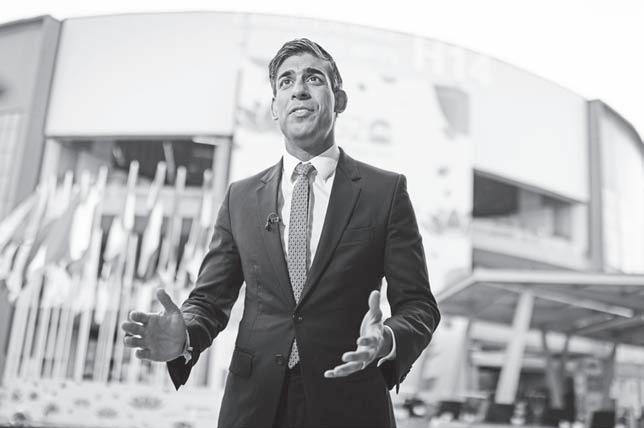
Sunak confronts Chinese Premier Li after two Westminster spying arrests
By Harry Wilson & Alex Wickham
BRITISH Prime Minister
Rishi Sunak told Chinese premier Li Qiang he had “significant concerns” about “interference” from Beijing, hours after it emerged that two men had been arrested in the UK for allegedly spying for China.
Sunak said he’d confronted the Chinese official after news that a parliamentary researcher linked to a number of Tory MPs had been detained earlier this year on suspicion on espionage-related offenses.
“I raised a range of different concerns that we have in areas of disagreement, and in particular, my very strong concerns about any interference in our parliamentary democracy, which is obviously unacceptable,” Sunak told broadcasters in New Delhi, where he attended the Group of 20 summit.
A male suspect in his late twenties who’d worked as a researcher on international policy matters in the House of Commons was arrested by counterterrorism police in March, along with another
Russian strikes on Ukraine kill 2 foreign aid workers, target Kyiv
By The Associated Press
man in his thirties, according to a person familiar with the details.
The Sunday Times first reported the arrests.
Chinese state media reported in a separate readout from the Sunak-Li meeting that the Chinese premier said the two nations “should oppose mixing trade and economic cooperation with politics and security.”
Speaking on Sky News, UK justice secretary Alex Chalk said China was an “epoch-defining threat” before correcting himself to say “challenge.” Chalk added that there was a “rigorous approach” to providing access to Parliament, but that the authorities would have to see if there were lessons to be learnt once the police investigation was over.
Chinese Foreign Ministry spokeswoman Mao Ning said Monday at a regular press briefing in Beijing that “the so-called China espionage activity in the UK is nonexistent.”
“We urge the UK side to stop spreading false information and its anti-China political manipulation and malicious framing of China,” she said. Bloomberg News
China economy shows stability signs as credit and CPI improve
By Bloomberg News
CHINA’S credit demand improved, deflationary pressures eased and the yuan rallied, adding to a recent trickle of signs that the economy and financial markets may be stabilizing after a sharp downturn.
The strong credit data published Monday showed recent steps to bolster the real estate market may be starting to lift household demand for mortgages, while corporate loans also picked up. The yuan gained after the central bank escalated its defense of the currency.
Those add to the encouraging signs from the weekend, with consumer prices returning to gains after a drop in July—albeit by the slimmest of margins. Factory-gate deflation also narrowed.
The policy measures helped the economy to stabilize,” said Zhang Zhiwei, chief economist at Pinpoint Asset Management Ltd. “The key question is to what extent the economic momentum can be sustained.”
The world’s second-largest economy is trying to regain traction as an ongoing property crisis and weak confidence drag on its recovery, creating risk for the government’s annual growth target of about 5 percent. The improvement in the August data suggests July’s grim figures—which showed consumer prices tipping into deflation and monthly loans plunging to a 14-year low—may have been the worst of the slump.
The benchmark CSI 300 Index rose 0.7 percent on Monday, snapping a four-session losing streak. The yuan also rallied after falling to its weakest since 2007 against the dollar last week as the People’s Bank of China issued forceful guidance and stressed its confidence in keeping the yuan stable. The government’s supportive efforts— including cuts to policy loan rates, mortgage rates and down-payment requirements for home purchases—are likely helping the recovery somewhat. Goldman Sachs Group Inc. economists estimate the policy measures announced so far had a total impact equal to
about 60 basis points, or 0.6 percent, of gross domestic product.
Now the question is whether China’s property sector is capable of definitively turning a corner and lifting overall confidence in the economy.
Rec ent policies “may generate a shortterm rebound in property transactions, but are insufficient to stabilize the property market,” the Goldman analysts wrote in a Sunday research note. They expect more easing, including interest rate cuts or measures to support the property market, if home sales continue to slide and growth slows further.
“August’s stronger-than-expected credit suggests China’s monetary and fiscal stimulus may be starting to gain traction. But declines in long-term borrowing by business and households show private-sector demand has yet to rebound, despite signs of bottoming in purchasing managers surveys and trade,” said Bloomberg economist Eric Zhu.
While new household mid- and long-term loans, a proxy for mortgages, expanded after a contraction in July, they remain far below the levels recorded in August 2022, along with those seen pre-pandemic.
The improvement to aggregate financing relied to a large extent on the issuance of special local government bonds, according to Ming Ming, chief economist at Citic Securities Co.
Local governments ramped up borrowing in August to lift spending on infrastructure projects. While that can help economic growth, it also potentially pressures financial markets and may spur more monetary policy easing.
There are also signs that services growth is waning after being a major driver of the economic recovery earlier this year. That suggests more policy support may be needed to bolster household spending.
D eflationary pressures aren’t gone entirely, either: The consumer price index remains well below the government’s official target of around 3 percent for the year. With assistance from Wenjin Lv and Zhu Lin/Bloomberg
The four volunteers from the Road to Relief group, which helps evacuate wounded people from front-line areas, were trapped inside the van as it flipped over and caught fire after being struck by shells near the town of Chasiv Yar, the organization said on its Instagram page.
Road to Relief said that Anthony Ihnat of Canada died in the attack, while German medical volunteer Ruben Mawick and Swedish volunteer Johan Mathias Thyr were seriously wounded, it said.
Road to Relief added that it couldn’t trace the whereabouts of the van’s fourth passenger, Emma Igual, a Spanish national who was the organization’s director. Hours later, Spain’s acting Foreign Minister José Manuel Albares told Spanish media that authorities in Madrid had received “verbal confirmation” of the 32-year-old Igual’s death.
The volunteers were on their way to assess the needs of civilians on the outskirts of Bakhmut, Road to Relief said, in reference to the eastern town that saw the war’s longest and bloodiest battle before falling to Moscow in May. Ukrainian forces have held on to Bakhmut’s western suburbs and are pushing a counteroffensive in the area.
Also on Sunday, Ukrainian officials reported that Russia launched “dozens” of drones at
Kyiv and the surrounding region early in the morning, wounding at least five civilians.
Ukraine’s air force later said it had brought down 26 out of a total of 33 drones. The head of Kyiv’s military administration, Serhii Popko, reported that debris from Iranian-made Shahed drones fell in several districts of the city and wounded at least one civilian. Popko said there was no risk to the person’s life, and added that most of the wreckage fell in open ground, although one high-rise apartment was damaged.
Kyiv Mayor Vitali Klitschko later confirmed that one civilian was wounded in the city’s historic center and received help on the spot. The governor of the Kyiv region, which surrounds but doesn’t include the capital, also reported that the drone strike wounded four people across the province, one of whom had to be hospitalized.
In a Facebook post, Gov. Ruslan Kravchenko said that the drones damaged an infrastructure facility as well as civilian buildings including homes and stores, a hospital, a rehabilitation center, a school and a kindergarten.
Russia’s Defense Ministry said in the early hours of Sunday that Moscow’s forces earlier destroyed three US-supplied speedboats carrying Ukrainian soldiers that had been traveling toward Russian-occupied Crimea. The claim
couldn’t be independently verified. Earlier on Sunday, the ministry said in a separate statement that Russian air defenses shot down eight Ukrainian drones targeting Crimea, as well as another that flew over the Bryansk region bordering Ukraine.
On Aug. 24, Ukrainian military intelligence said that its special forces landed in Crimea, which Moscow illegally took from Ukraine in 2014, and raised the Ukrainian flag along the peninsula’s western shore before leaving “without casualties.”
Ukrainian army representatives on Sunday reported further small gains near Robotyne in the southern Zaporizhzhia region, where Kyiv has mounted a counteroffensive, days after Russianinstalled authorities acknowledged that Russian forces had left the village.
Oleksandr Shtupun, a press officer for Ukraine’s Tauride Defense Forces, said on Ukrainian TV that Kyiv’s troops had retaken a further 1.5 square kilometers (0.6 square miles) near Rabotyne, and that heavy fighting is ongoing.
“The Russians are clinging to every meter of our Ukrainian land…however, the Ukrainian Defense Forces are trying to make it as difficult as possible to supply
Biden highlights business deals and pays respects at John McCain memorial to wrap up Vietnam visit
By Josh Boak & Aamer Madhani
 The Associated Press
HANOI, Vietnam—President Joe Biden closed a visit to Vietnam on Monday by spotlighting new business deals and partnerships between the two countries and paying respects at a memorial honoring his late friend and colleague Sen. John McCain, who endured a lengthy incarceration during the Vietnam War.
Biden met with Prime Minister Pham Minh Chính, who also accompanied the president to a quick drop by at a meeting of American and Vietnamese business leaders. Biden also sat down with President Võ Văn Thuong, who hosted the US president for a state luncheon of steamed codfish and Hanoian beef noodle soup. Biden spoke about strengthening Vietnam’s semiconductor industry and his administration’s commitment to an open Pacific.
“My message today is quite simple. Let’s keep it up,” Biden told the CEOs. “We need to develop and drive our collaboration. We need to forge new partnerships.”
The prime minister also stressed the need to improve cooperation and said “the sky is the limit” for the expanding US-Vietnam relationship.
“We truly wish to receive strong political commitment from the US government including you, Mr. President, who has had great affection for Vietnam,” the prime
minister said.
Highlights of the major deals announced by the White House during Biden’s first-ever visit to Vietnam include US-based Boeing’s $7.5 billion deal with Vietnam Airlines to buy about 50 aircraft and Arizona-based Amkor Technology’s plans for a $1.6 billion factory in Bac Ninh Province.
The White House also said the administration would help “build Vietnamese capacity to fight regional and international transnational crime,” including targeting illegal, unreported and unregulated fishing. China has been locked in long-running territorial conflicts with Vietnam, along with the Philippines, Malaysia and Brunei, as Beijing claims waters in the other nations’ exclusive economic zone.
Biden arrived in Vietnam on Sunday and met with Nguyen Phú Trong, general secretary of the Communist Party of Vietnam. Trong formally announced Vietnam had elevated the US to its highest diplomatic status, comprehensive strategic partner. Biden said the shift demonstrated how far bilateral relations had evolved from the “bitter past” of the Vietnam War.
At the same time, Biden insisted that his roughly 24-hour visit was not about trying to start a “cold war” with China but was part of a broader effort to improve global stability by building relationships throughout Asia, including with Vietnam, at a time of tensions with Beijing.
Before departing, Biden visited the John Sidney McCain III Memorial near the site
where, as a 31-year-old Navy lieutenant commander, McCain’s Skyhawk dive bomber was shot down by the North Vietnamese. Both sides exchanged documents Monday on unaccounted US service members and Vietnamese soldiers. Biden left one of his commemorative coins at the memorial, the White House said.
McCain parachuted out of the plane and landed in a lake in Hanoi, North Vietnam. He broke both arms and a leg in the fall, was dragged from the water by an angry crowd, and was beaten and bayoneted.
The harrowing 1967 incident began a more than five-year ordeal that became the defining moment for the future Republican senator from Arizona and two-time presidential candidate.
After six weeks in the hospital, McCain, who had lost about one-third of his weight, was transferred to a prison cell. After a brief time with cellmates, McCain, the son and grandson of four-star admirals, began two years in solitary confinement in a 10-by-10 foot (3-by-3 meter) room.
At one point, McCain’s captors asked if he wanted to go home, but it was a trick question. The US military’s code of conduct required prisoners to be released in the order they were detained. The North Vietnamese wanted to make a show of releasing McCain early as his father assumed command over the Pacific. McCain refused.
For four days after he refused release, McCain was beaten every two to three hours by 10 guards. Filled with thoughts of suicide,
the Russian army, and in certain areas this is bearing fruit,” Shtupun said, without giving details.
Hours later, Ukraine’s General Staff said in the latest of its Facebook updates that its forces had “partial success” near Robotyne as well as Klishchiivka, a village 9 kilometers (5.6 miles) southwest of Bakhmut, dislodging Russian troops from their positions. It gave no further details, and the claim could not be verified.
A Washington-based think tank late on Saturday assessed, citing geolocated footage, that Russian forces had captured territory between Robotyne and two nearby villages: Verbove, some 10 kilometers (6 miles) east, and Novoprokopivka, 5 kilometers (3 miles) to the south.
The Institute for the Study of War also said in the latest of daily updates that Ukrainian forces had advanced along the border between the Zaporizhzhia region and the Donetsk province farther east, near Novomaiorske village. It acknowledged earlier Ukrainian claims of advances “south of Klischiivka,” but gave no evidence to support them.
The Associated Press writer Aritz Parra in Madrid contributed to this report.
McCain broke and agreed to sign an anti-US propaganda statement confessing to “black crimes.” He later wrote: “I had learned what we all learned over there: Every man has his breaking point. I had reached mine.”
It was the last time McCain would break. He refused to sign any other statements or meet with visiting American anti-war activists. Eventually, McCain was removed from solitary confinement and mingled with other US prisoners of war. He was released on March 14, 1973.
McCain returned home, retired from the Navy in 1981, moved to Arizona and launched a political career. He was elected to the House in 1982 and, in 1986, to the Senate, where he and Biden were colleagues. Despite his experience in Vietnam, McCain was a strong advocate of restoring diplomatic relations with the country that had so badly mistreated him.
He was the Republican presidential nominee in 2008, but lost to Democrat Barack Obama. He died of brain cancer in 2018. Biden delivered an emotional eulogy at McCain’s funeral in Arizona.
At the luncheon, Biden said he missed McCain. He praised McCain and John Kerry— another Vietnam War veteran and former Democratic senator, secretary of state in the Obama administration and Biden’s climate envoy—for playing critical roles in the two nations’ “50 year arc of progress.”
“Where there was darkness you all found light,” Biden said.
On the way back to Washington, Biden was stopping at Joint Base Elmendorf-Richardson in Anchorage, Alaska, to address service members, first responders and their families to mark the 22nd anniversary of the Sept. 11, 2001 attacks on New York, Washington and Pennsylvania.
BusinessMirror Tuesday, September 12, 2023 www.businessmirror.com.ph • Editor: Angel R. Calso A15 The
World
KYIV, Ukraine—Two foreign aid workers were reportedly killed in eastern Ukraine on Sunday as Russian shelling hit a van carrying a team of four working with a Ukrainian nongovernmental organization, while dozens of Russian drones targeted Kyiv and wounded at least one civilian.
AP/JAE C. HONG
A DOVE painted by artist TvBoy adorns the wall of a building damaged by Russian shelling attacks in Irpin, Ukraine on July 7, 2023. Life in the capital of a war-torn country seems normal on the surface. In the mornings, people rush to their work holding cups of coffee. Streets are filled with cars, and in the evenings restaurants are packed. But the details tell another story.
editorial Japan
China’s radioactive dust an environmental horror
started releasing treated radioactive wastewater from the Fukushima nuclear power plant into the pacific Ocean on august 24, 2023. Following the controversial discharge of the wastewater, China right away banned seafood from Japan.
In a September 7, 2023 edition of Lei’s Real Talk on YouTube— A radioactive “pandemic” rising?—Lei, the host, said nuclear radiation detectors are selling like hotcakes in China. “Sales surged 232 percent in less than a week. Now they were sold out, and on back order. This is because Beijing has stirred up a national publicity campaign over the release of treated Fukushima water.”
It turned out that the Geiger counters, or nuclear radiation measuring devices, were needed by millions of Chinese citizens concerned about the risk of being exposed to radiation, not from Japan but from Inner Mongolia, which is about 500 kilometers away from Beijing.
In the capital city of Inner Mongolia, Hohhot (Huhehaote), people have been lining up in hospitals to be treated for ashma-like symptoms. China Central Television (CCTV) reported that on the night of September 2, there was a sudden surge of asthma cases in the city after a thunderstorm. The report quoted the Deputy Director of the Pediatric Department at the Inner Mongolia Medical University Hospital as saying “we admitted more than 400 children.”
Dr. Li-Meng Yan, a scientist who worked at the Hong Kong School of Public Health, posted on X: “There is a large-scale radioactive material leakage from a mine near Ordos city of Inner Mongolia. Since September 2, numerous people got radiation injuries, especially acute respiratory injuries. According to our exclusive sources in CCP’s Central Military Commission and Ministry of Emergency, the radioactive materials were mined by PLA’s Armed Police to make dirty bombs. Armed Police thought they have mined all the radioactive materials, so they abandoned the place. Then PLA sold the concession of the coalmine to some business owners. Recently they mined it in the open air, so the radioactive materials were spread by convectional rainfall.”The official Chinese Communist Party (CCP) media gave the disease a name—“Thunderstorm asthma.” They said it was caused by the Artemisia plant, which allegedly has a high pollen concentration in August to September. But people wonder, Inner Mongolia always has had this type of plant, so why is this year particularly bad.
On September 4, some Chinese social media posts said people in Inner Mongolia have been exposed to radioactive uranium, like those used in nuclear plants, and the uranium has been reportedly excavated from a local coalmine. This is where the radioactive dust particles inhaled by people reportedly came from.
The CCP has reportedly deployed its Chemical, Biological, Radiological, and Nuclear Regiment to manage the emergency.
Dr. Yan added: “There is no official registration of the radioactive mine. Based on classified report from our sources in Ministry of Emergency Management, the radioactive coalmine is in Shiguai district of Baotou, Inner Mongolia. Based on official data, radiation dose around the coal stockpiles is over one millisievert [mSv] per hour. The annual limit for radiation exposure for a member of the public is one mSv per annum. The government is still covering up the leakage. Currently, there are patients of such respiratory radiation injuries in Tianjin and Beijing. But the government insists on “Thunderstorm asthma related to plants,” claiming it would last for another two to three weeks.”
Open pit mining activities in the area started on August 20, 2023. A few days later, something bizarre happened. Two haul truck drivers suddenly developed ulcers all over their bodies, and passed brown urine. Sexually transmitted disease was the initial suspicion, but later, they were sent to the Chinese Center for Disease Control and Prevention, where they died. China’s CDC discovered they had radiation infection and reported the case to higher authorities. The two drivers were buried in lead-lined coffins.The Ministry of Emergency Management traced the source of the radiation back to the open piles of coal in the Ordos coalmine. Unfortunately, all but a negligible quantity of the newly mined coals have already been shipped to other coal yards and thermal power plants across China. So it was difficult to track where all the coal went. At this point, the Ministry of Emergency Management requested the People’s Liberation Army to help. Until now, Lei said this information is not being shared with the public.
‘Temporary price ceiling’
Manny B. Villar


THE EnTrEprEnEur
president Ferdinand Marcos Jr. underscored the importance of keeping consumer prices stable when he ordered a temporary cap on rice prices to make sure our main staple remains affordable to all.
That is a Solomonic solution that good leaders resort to—intervene in the market for the sake of the majority. While it is not a long-term solution, the rice price ceiling demonstrates the government’s priority to put inflation under control in the face of supply constraints.
It is timely in the wake of the Philippine Statistics Authority’s report that the headline inflation rate kicked higher in August, following six months of deceleration. We know rice in the basket of goods as measured by statisticians has the biggest contribution to inflation in the Philippines. Rice inflation climbed to 8.7 percent in August from 4.2 percent in July, highlighting the urgency to prevent the price volatility.
Per the PSA, headline inflation climbed to 5.3 percent in August from 4.7 percent in July. The figure brought the average in the first seven months of 2023 to 6.6 percent, above the government’s target range of 2 percent to 4 percent for the year. The target range refers to what the government thinks is appropriate for

a rapidly growing economy like the Philippines.
The higher August inflation was led by the faster price increases of rice, vegetables and fish amid the supply disruptions caused by recent typhoons. Non-food inflation also went up in line with the series of petroleum price hikes.
What the President recently did is he tried to remove the distortions in the market by ordering the opening of big warehouses and imposing a price cap that will discourage traders from hoarding grains. While some economists disagree with such action, the measure reminds us that the government has the responsibility to ensure food security for everyone.
The National Economic and Development Authority, the government’s highest economic planning body, supports the President’s Executive Order No. 39 that imposes a price ceiling of P41 per kilogram of regular milled and P45 per kilo of well-milled rice. Neda assured the public the government is work-
ing to ensure food security, protect consumers and provide assistance to farmers.
Per Neda Secretary Arsenio Balisacan, the price of rice rose in August on expected lower rice production with the anticipated El Niño dry spell, as well as the export ban imposed by major rice producers, such as India and Myanmar. The Philippines is a net rice importer and relies on other Asian countries to augment local supply.
We are among the biggest consumers of rice in the world, with many Filipino families taking three rice meals each day despite the availability of other crops. Other staple foods in rest of the world include corn, oats, barley, rye, millet, sorghum, soybeans, potato, sweet potato, cassava, yam, other roots and tubers, bananas, plantains, cabbage, lettuce and wheat-based products, such as bread and noodles.
Our heavy reliance on rice makes us vulnerable to supply issues. According to Neda, alleged hoarding incidents, artificial shortage and speculative business decisions of market players may have put further upward pressure on the domestic retail prices of rice in August. There was also the impact of Typhoon Egay and enhanced monsoon rains that resulted in rice and vegetable production losses.
Given all these factors, the government decided to impose the rice price ceiling along with other measures to help consumers, small-scale retailers and farmers who would be affected by the decision. The Department of Social Welfare and Devel-
A weakened USA is a weaker world
John Mangun
YesterdaY marked the 22nd anniversary of the airline hijackings committed in 2001 against the United states. the significance of that event has naturally been diminished over time, but in retrospect it was a turning point for the Us and therefore the world.
If, as some conspiracists claim, the US government engineered the event to further enhance US global power and dominance, then 9/11 was a total failure. Julius Caesar was assassinated because there was a formidable group that believed Caesar wanted to become absolute authoritarian ruler of Rome. As it turned out, the chaos that resulted from Caesar’s death gave his suc-
cessor, Caesar Augustus/Octavian, the opportunity to hold the Roman Empire in his unquestionable control for 26 years.
Octavian was the absolute dictator of every aspect of the government, the military, and was the chief high priest with the power of moral censorship, all for life. Think of Ayatollah Ruhollah Khomeini 2000 years later.
If the purpose of 9/11 was to weaken US global power and dominance, it was unnecessary. The US did that to itself beginning with the US helicopters taking off from its South Vietnamese embassy at the end of the Vietnam War. US geopolitical power peaked after the dramatic victory in the First Gulf War in 1991. But the US squandered that power in the wake of 9/11, with subsequent strategic failures in Iraq and Afghanistan.
The captain of a ship, whether competent or foolish, has one singular purpose and that is the survival of the vessel. The crew depends on that as a fact regardless of any other issues. The world depended on the US post-World War Two. But like Ahab of “Moby Dick” whose hubris and obsession with the whale destroyed everything, the US has failed in its leadership as the strongest nation on the planet.
In its quest to bring “democracy” to North Africa and the Middle East, the US alienated allies and strength-
opment was tasked to roll out the Food Stamp Program to assist poor consumers and the Sustainable Livelihood Program to provide cash aid to small-scale rice retailers affected by EO 39.
There are also proposals to review the tariff rate on rice, which is now at 35 percent. This is worth looking into to lower the cost of the staple and counterbalance the rise in global prices.
Our Congress in 2019 passed the Rice Tariffication Act to allow the private sector to import the commodity, but the still-high tariff rate prevents the Filipino consumers from enjoying its full benefit.
Rice is our main staple, so its contribution to inflation will remain significant in the years to come. Local production is not enough to meet national demand, and imports are needed to augment supply.
The government is always trying to strike a balance between ensuring adequate rice supply and protecting local farmers. Both are crucial and complementary to each other. Stable rice prices will benefit farmers because they are also consumers, while improving farm productivity will lead to higher supply.
A temporary price ceiling on rice, in my opinion, works for the common good. It is the government’s way of prioritizing the interest of consumers and farmers at the same time. It ensures price and economic stability, which is good for the nation.
For comments, send e-mail to mbv_secretariat@vistaland.com.ph or visit www.mannyvillar. com.ph

ened its foes. One of the keys to US foreign policy during the last 60 years was to ensure that Russia and China never formed an alliance. Keeping them separated was critical for everyone. Specifically, the US strived to make certain that no power, or combination of powers, could dominate. Today BRICS effectively controls the global crude oil supply and consequently the price.
The US’s reckless use of its economic power has been counterproductive. BRICS rebelled against the ways the US has used the dollar as a financial weapon. The US battled and sanctioned Chinese Huawei Technologies with export restrictions to bar Huawei from producing semiconductors derived from technology/software of US origin. Now, the US Commerce Department is panicking while it rushes to understand how sanctioned Huawei was able to design and manufacture a 7-nanometer processor. Time for See “Mangun,” A17

www.news.businessmirror@gmail.com
Tuesday, September 12, 2023 •
Opinion BusinessMirror A16
Editor: Angel R. Calso
OuTSIDE THE BOX
BusinessMirror A broader look at today’s business Publisher Editor in Chief Associate Editor News Editor Senior Editors Online Editor Creative Director Chief Photographer Chairman of the Board President Advertising Sales Manager Group Circulation Manager T. Anthony C. Cabangon Lourdes M. Fernandez Jennifer A. Ng Vittorio V. Vitug Lorenzo M. Lomibao Jr., Gerard S. Ramos Lyn B. Resurreccion, Dennis D. Estopace Angel R. Calso Ruben M. Cruz Jr. Eduardo A. Davad Nonilon G. Reyes D. Edgard A. Cabangon Benjamin V. Ramos Aldwin Maralit Tolosa Rolando M. Manangan BusinessMirror is published daily by the Philippine Business Daily Mirror Publishing, Inc., with offices on the 3rd floor of Dominga Building III 2113 Chino Roces Avenue corner De La Rosa Street, Makati City, Philippines. Tel. Nos. (Editorial) 817-9467; 813-0725. Fax line: 813-7025. (Advertising Sales) 893-2019; 817-1351, 817-2807. (Circulation) 893-1662; 814-0134 to 36. E-mail: news.businessmirror@gmail.com www.news.businessmirror@gmail.com Printed by brown madonna Press, Inc.–Sun Valley Drive KM-15, South Superhighway, Parañaque, Metro Manila Ambassador Antonio L. Cabangon Chua Founder Since 2005 ✝ MEMBER OF
When LOA strikes twice
Atty. Irwin C. nidea Jr.
TAx lAw fOR BuSInESS
HOW rare is it to get struck by lightning twice? Google says it’s around one in nine million. does it have the same probability as a taxpayer being served with a letter of authority not once but twice for the same taxable year? i would say that the odds are probably in favor of taxpayers being served two lOas. But is the service of more than one lOa for the same taxable year justified under the law? are there remedies available to taxpayers who will be awaken by the same nightmare twice?
In many decisions, the courts clarified that for income tax purposes examination and inspection of a taxpayer’s books of accounts shall be made only once in a taxable year.
In other words, generally, a taxpayer can only be issued one LOA for one taxable year. The revenue officers can only conduct their examination once. Like everything in life, misery must end. Taxpayers must be given the peace of mind that they deserve, after a tax assessment has been concluded.
Unfortunately, the same as any rule, there are exceptions. A taxpayer may be issued a second LOA for the same taxable year if there is fraud, irregularity, or mistakes, as determined by the Commissioner. So, if a taxpayer has committed fraud in the preparation and payment of his tax returns, a second LOA is forthcoming. Does this mean that even after an assessment has been concluded, the BIR can bring an assessment back from the grave and there is no time limit for them to exercise this power?
As regards the first question, according to the courts, the discovery of substantial under declaration upon verified information provided by an “informer,” as well as the necessity of obtaining information from third parties to ascertain the correctness of the return filed or evaluation of tax compliance in collecting taxes, are circumstances warranting exception from the general rule. If the substantial underdeclared income in the returns filed by the taxpayers are amounts equivalent to more than 30 percent constitutes prima facie evidence of fraud. In this case, the law allows the issuance of a second LOA for the same taxable year.
The next question is whether the BIR can conduct a second examination indefinitely? This is a valid concern since the BIR might decide to investigate transactions that happened 10 years ago. Supporting documents that can counter a BIR assessment might no longer be available at the time of examination.
The Tax Code provides that any assessment of internal revenue taxes against any taxpayer shall only be done within the three-year period after the last day prescribed by law for the filing of their respective returns unless if the payment of said internal revenue taxes was attended with fraud. If there is no indication in the LOA that the tax examination that would be conducted by the BIR is the result of any findings of fraud
Continued from A16
the US Congress to hold “investigative hearings.”
As I wrote in August, the Philippines is “Torn between two lovers.” Or maybe not.
A local economist says that oil prices are actually not that high when the price is “adjusted for inflation.” Except, the inflation data used is based on US inflation over the years, not Philippine inflation. The peso price of a barrel of crude oil in January 2000 was P2,000 versus P5,094 today, increasing by 154 percent. The Philippine Consumer Price Index is 105 percent higher.
“Adjusted for inflation”—for the Philippines—crude oil is actually “that high.”
We read every day that the Philippine stock exchange did this or that
against the taxpayer, the three-year period should be applied. The courts said that a second LOA is void if prescription to assess has set in. While the period to assess may be made within the extraordinary period of 10 years pursuant to the Tax Code, it must be shown that the tax examination that would be conducted by the BIR was the result of any findings of fraud against the taxpayer. In other words, it must be shown that the second LOA was issued for the conduct of a formal fraud investigation. For example, substantial under declaration upon verified information provided by an “informer” was discovered by the BIR. The BIR must conduct a preliminary investigation first and show that there is a finding of prima facie existence of fraud that justifies the issuance of the second LOA before the same may be issued.
In ordinary cases where fraud assessment is not involved, a second LOA may still be issued if the prior assessment for the same taxable year is not closed and terminated. There are instances when taxpayers pay based on a memorandum or worse based on a mere informal computation prepared by the BIR. Payment without issuance of Termination Letter or Authority to Cancel Assessment (ATCA) or BIR Form No. 17.58 will give the BIR an opening. It may reopen the case, issue a new LOA, and argue that the new investigation is just a continuation of the old LOA.
In sum, taxpayers must be aware that the BIR cannot issue a second LOA for the same taxable year out of whim. It must be shown that a preliminary investigation was conducted and there is a finding of prima facie existence of fraud as a result thereof. Also, taxpayers must not only rely on an informal computation sheet when paying a tax assessment and they must always secure a termination letter or ATCA to protect themselves from being stricken by lightning twice.
The author is a senior partner of Du-Baladad and Associates Law Offices, a member-firm of WTS Global.
The article is for general information only and is not intended, nor should be construed as a substitute for tax, legal or financial advice on any specific matter. Applicability of this article to any actual or particular tax or legal issue should be supported therefore by a professional study or advice. If you have any comments or questions concerning the article, you may e-mail the author at rwin.c.nideajr@ bdblaw.com.ph or call 8403-2001 local 330.
and we need to compare it to New York Stock Exchange action. But the PSE more closely follows the activity of our “other lover,” the Shanghai Composite Stock Market Index. Over the past 12 months, the PSEi is down 5.82 percent. Shanghai is 4.46 percent lower. The Dow Jones is up 7.54 percent. From the Covid low: Dow up 57 percent, Shanghai up 13 percent, and PSE up 17 percent. But “USA, USA, USA.”
The global stability and restraint that the US previously provided the world no longer exists. We must realize the reality and accept that as a fact. These are dangerous times and conditions are only going to deteriorate further in 2024. E-mail
Out of courtesy
Siegfred Bueno Mison, Esq.
THE PATRIOT
Headlines of late have accentuated yet another occasion to revisit the phrase “out of courtesy.” Finance Undersecretary Cielo Magno, reportedly forced to resign regarding her social media post on rice price caps, has received the official communication from Malacañang on the termination stating the “expiration” of her tenure as undersecretary of the department of Finance (dOF).
Such a reason might be considered within the locution of “out of courtesy” despite the fact that the Office of the Executive Secretary (OES) officially stated that Magno’s appointment was terminated because “she clearly does not support the administration and its programs for nation building.” Either way, Usec Magno’s letter of resignation can be deemed as an act of courtesy.
Parallel to this scenario is the quick passage of the P2.385 billion budget proposal submitted by the Office of the Vice President (OVP) in the recently concluded budget hearings. As if on cue, Ilocos Norte Representative and Presidential son Zandro Marcos moved to immediately terminate the committee hearing “out of parliamentary courtesy” to VP Sara Duterte’s office. During the supposed deliberations, the audio of ACT Teachers’ Party-List Representative France Castro was surprisingly muted as she was about to question some million-peso expenditure of the VP’s office.
Much to the chagrin of the many who believe in the comity of “equal departments,” the budget of the OVP was passed without complication by way of parliamentary courtesy. Silencing the opposition by instantly moving for the termination of all hearings on a Vice President’s budget proposal is the subdued way of lending good manners to said “coequal” office.
Both acts appear to reflect “courtesy” to the supposed “other” party. Preserve the relationship in the case of Usec Magno and in the case of VP Sara Duterte for future interactions.
Nip the rose in the bud, as it were, and let another bud flourish if needed.
But booting out an undersecretary via a letter citing tenure expiration, as well as her letter of resignation, unfortunately does not assuage the curiosities of those whose minds have been dynamically functioning.
Evidently, the social media posts of Usec Magno, which placed “color” on the government’s rice price caps, fail to epitomize the words “for,” “in favor of,” and “alongside” the government of which she is so much a part of. Magno might have been judged not as a team player. She was seen as the “opposition,” a thorn that could prick instead of support the policies of the current administration.
Interestingly, however, Usec Magno happens to be well-versed in her fields of expertise: an economist, a professor, a member of the International board of the Extractive Industries Transparency Initiative, and an outspoken advocate of transparency and good governance. She is likewise an advocate of increased taxation on mining corporations. Simply put, Magno is an asset to a department that needs more minds and hands than most.
The explanation of the DOF (“expiration of tenure”) was the more
polite exit, but the statement the OES (adversarial actuations) is the one that actually gave color to the act of courtesy. In the same vein, the muting of the audio of ACT Teachers’ Party-List congresswoman Castro also exposed the color of the act of courtesy observed in a committee hearing.
Studies on the origins of the phrase “out of courtesy” indicate ethics and etiquette as its foundation. The Oxford Academic further burrows on the concept by advancing civility (decency and deference), differentiating the standard of the civil versus the bestial. Thus, in legal documents or judicial parlance, we use the term “in due deference to (the Honorable Court of Appeals)” when assailing the said appellate court’s decision.
Thus, too, we sometimes give respect to the next person who tells a long story with no point by smiling or giving a little chuckle at the end, out of courtesy. The virtuous power of courtesy apparently figured in many generations and has been a constant standard in human relations. There is no altering it, even during these modern times and albeit the wiles and wishes this world may offer.
The way the Marcos administration terminated the services of Usec Magno brings back memories of how the Cory Aquino administration terminated the services of my late father, Salvador Mison, who served as the Customs Commissioner. My father only learned of his “termination” through a journalist. My father was never asked to resign; he just confirmed his “sacking” from the erstwhile DOF Secretary Jess Estanislao. Despite this, my father dutifully left the office and never had ill feelings to those responsible for his untimely removal, even until his own death last July.


Perhaps all these actions were done with due respect for the other party. Colored or otherwise, the principle of austere regard for others may still be the highest benchmark,
which we are all called to observe. After all, the holy command is “To speak evil of no one, to avoid quarreling, to be gentle, and to show perfect courtesy toward all people.” ( Titus 3:2). And this is perfectly in line with the equally sacred instruction, “For the whole law is fulfilled in one word to: You shall love your neighbor as yourself” (Galatians 5:14 ). Many a time, we lose the sense of simple courtesy towards other people. Disregarding decency and sensibilities, some chastise others on social media not knowing what the other endures. Almost commonly, people craft one rumor after another, with little or no regard to the feelings of their “subjects.” And as father taught me, arriving late for meetings, even in golf, is another way of disrespecting others. Acts done “out of courtesy” may appear minor, trivial, even mundane. But it is this little and modest act that is required of us by the very foundation of our faith as believers of Jesus Christ—the one Man who exhibited the greatest courtesy of all by offering His life on the Cross for our redemption. Without regard for Himself, but observing the highest regard for mankind, He gave His life so that we can all enjoy peace, freedom, joy, health, healing and wellness. All blessings we received, which His precious blood paid for, came not only out of courtesy but also out of love! Let’s start doing acts out of courtesy, preferably without color, in the same manner Jesus Christ showed us while here on earth.
A former infantry and intelligence officer in the Army, Siegfred Mison showcased his servant leadership philosophy in organizations such as the Integrated Bar of the Philippines, Malcolm Law Offices, Infogix Inc., University of the East, Bureau of Immigration, and Philippine Airlines. He is a graduate of West Point in New York, Ateneo Law School, and University of Southern California. A corporate lawyer by profession, he is an inspirational teacher and a Spirit-filled writer with a mission. For questions and comments, please e-mail me at sbmison@gmail.com.
The Rice Tariffication Law and its role in the current rice crisis
By Raul Montemayor
in 2018, the country underwent a rice crisis. By October, retail prices of well-milled rice (WMR) reached almost P50 per kilo, up 14 percent over prices in the previous year. Prices for regularmilled rice (RMR) rose by 16 percent. This coincided with the depletion of national Food authority stocks, delays in import arrivals, and a dip in local production. it was only when then President Rodrigo duterte ordered nFa to immediately import and allow private traders to bring in rice did rice prices stabilize.
The current situation is eerily similar. NFA stocks are down to just one day’s national consumption. Entering the 3-month lean period in July 2023, overall inventories (held by farm households, private traders and NFA) sufficed for only about 60 days. Rice from abroad was supposed to cover the 30-day gap, but the war in Ukraine, climatic disturbances and the Indian export ban rendered rice importation expensive and risky. As stocks began thinning out in August and September, prices ascended to levels beyond those in 2018.
The 2018 rice crisis triggered the rapid passage of the Rice Tariffication Law in February 2019. Blaming government import controls, RTL’s proponents argued that the private sector could manage the rice market more efficiently. As a result, NFA’s importation, regulatory and price stabilization functions were abolished. The agency was relegated to buffer stocking for calamities. The private sector was given free and unlimited rein over rice importations.
Imports immediately surged to 3.17 million tons in 2019, from previous annual levels of 2 million tons or less. In 2022, they registered an alltime high of 3.85 million tons. These voluminous inflows, especially during local harvests, led to severe drops in palay prices. Between 2019 and 2021, farmers’ incomes declined by P4,500 per hectare per season, compared to normal pre-RTL figures.
Low farmgate prices disincentivized farmers; more so, when fertilizer and fuel costs rose starting in 2021.
While improving slightly, total rice output did not keep pace with growth in population and demand. Our selfsufficiency ratio, or the percentage of total food and other requirements produced by our farmers, decreased from 90 percent prior to RTL to 79 percent in 2021. We became increasingly dependent on foreign suppliers. Rice imports accounted for an average of 19 percent of our total annual supply during the RTL period, compared to only 14 percent before that.
Meanwhile, RTL’s promised benefits to consumers in terms of lower rice prices did not materialize. Studies by the Federation of Free Farmers show that net savings to consumers in the first three years of RTL amounted to a measly P52 per person per year. Importers and traders pocketed the gains from cheaper imports, even as many undervalued their shipments to reduce their tariff obligations. Many now call the RTL the “Rice Traders Liberalization Law.”
The country’s growing reliance on imports, coupled with our farmers’ diminished capacity to satisfy our rice requirements, are the proximate causes of the current crisis (extremely tight supplies and prohibitive prices of rice). While the proponents of RTL may not have intended this to happen, they bear responsibility for hastily pushing for its enactment and for peddling their faulty theories and bloated projections about the virtues of full-scale liberalization and deregulation of our rice markets. According to the Department of Agriculture (DA), as of August 1 this
year, the country’s rice stocks had fallen to 39 days level of consumption. This meant that rice good for an additional 21 days of consumption—about 750,000 metric tons—needed to be sourced either from imports or early palay harvests (before the main harvests could start replenishing inventories from late September onwards).
Unfortunately, imports did not come in as expected. As international prices increased, foreign suppliers started reneging on contracts. Local importers themselves scaled down their imports; a few reportedly cancelled their orders. The raiding and padlocking of warehouses of supposed hoarders, and the subsequent imposition of price ceilings on major rice grades, aggravated the problem and caused importers to adopt a wait-andsee stance.
Throughout all this, government was left almost powerless to control events. It could have stepped in early to augment supplies once it detected traders’ reluctance to import. However, RTL specifically prohibited NFA from importing. RTL’s implementing rules do allow the Philippine International Trade Corporation to undertake importation “only in the event of (a) rice supply shortage.” However, the DA repeatedly claimed that there was no rice shortage.
RTL also severely curtailed government’s ability to monitor the rice industry. It removed NFA’s powers to license market players, inspect warehouses, and track stock movements.
This led to essentially fishing expeditions by law enforcers and some legislators to apprehend alleged hoarders, and the recent imposition of price ceilings to ferret out unidentified profiteers! The price caps eventually led retailers to lose money, government to spend money to compensate the retailers, and farmers to suffer from drops in palay prices, with no hoarder or profiteerer being apprehended so far.
The same economic agencies and interests that advocated RTL’s passage are now recommending tariff cuts on rice imports from 35 percent
to 10 percent, ostensibly to bring down rice prices and control inflation. True to form, they again look abroad to salvage the situation—which their pro-importation policy bias created in the first place.
A tariff reduction will only further discourage our farmers from redoubling their productive efforts. It will make our food security even more dependent on external players and factors. Nor is there any guarantee that importers and traders will pass on any tariff savings to consumers.
Before humoring these economic theorists and interests again, let us hold them to account for the harm that their wrong prescriptions have inflicted on millions of our small farmers and poor consumers. Let us not allow them to repeat the same mistakes and force others to pay for them.
If El Niño persists until next year, and international prices remain high, we could end up in an even worse predicament, come the lean months of 2024.
There is still some time to prepare for this contingency. We should provide our farmers with the right price incentive in the coming harvest season, so that they will scale up production during the next production cycle. We should put in place the necessary postharvest facilities to reduce losses and enhance the quality and market value of their produce. We can give farmers the option to store their harvests in idle NFA warehouses, borrow money against their deposits, and then sell them in the open market when commodity prices improve. And we can set up systems that will enable farmers and their organizations to sell their products directly to consumers—with government, together with the private sector, providing logistical support.
Most important, we should renew trust and confidence in our own farmers, and exorcise the myth that open markets are the best guarantee for our food security.
Tuesday, September 12, 2023 Opinion A17 BusinessMirror www.news.businessmirror@gmail.com
Raul Montemayor is the National Manager of the Federation of Free Farmers.
me
mangun@gmail.com. Follow me on Twitter @mangunonmarkets. PSE stock-market information and technical analysis provided by AAA Southeast Equities Inc.
. .
at
Mangun.
OMBUDSMAN: GOVT-WIDE CORRUPTION ‘ENDEMIC’
By Jovee Marie N. dela Cruz @joveemarie
OMBUDSMAN Samuel Martires on Monday told the House of Representatives on Monday that government-wide corruption is now “endemic.”
D uring the briefing for the Office of the Ombudsman’s budget for 2024, Martires said a lifetime is not enough to solve this corruption unless values are changed.
Now that we no longer have respect for God and ourselves, we will not be able to solve corruption during this lifetime,” he said.
Corruption in the Philippines is becoming endemic; corruption in the Philippines is becoming like a passion because money becomes power, and if you have power, you are really famous,” added Martires.
A ccording to Martires, corruption is increasing in every government agency.
You will be surprised that these incidents [of corruption] are not only at the Bureau of Customs and the Bureau of Immigration; there are government departments that you don’t think are corrupt but are even more corrupt than other agencies,” he added.
So with what is happening
now, what we actually need right now to fight corruption—to stop [this corruption]—is to introduce a subject through a law, a good manners and right conduct (GMRC) subject that is God-centered. If you just teach GMRC but forget religion, then there is still no point,” he said.
M artires said the separation of church and state has nothing to do with values formation, so if “you want to have a good person, then separation of church and state is set aside.”
2 offices merged MEANWHILE , Martires said the OMB has decided to merge the Fact-Finding Investigation Group and the Preliminary Investigation Group so the investigation of cases against corrupt officials will be fast-tracked.
Moreover, Martires said they would not ask Congress for more funding next year, saying it will “tighten its belt” in 2024. We will do our best; we will tighten our belt at the Office of the Ombudsman. We will be happy with whatever money you give us. Just don’t lower it to previous years,” he said.
For 2024, the government has allocated the Office of the Ombudsman P5.05 billion.
16 projects from PBBM trips to be realized soon–Pascual
By Andrea E. San Juan @andreasanjuan
projects
We’re looking at 16 projects all in all, including the 9 that I referred to earlier with a total value of US$1.2 billion to come on stream soon,” the Trade chief said in a televised interview on Monday.
A ccording to Pascual, these 16 projects are now registered with the investment promotion agencies (IPAs), namely, the Board of Investments (BOI) and the Philippine Economic Zone Authority (PEZA).
O f these 16 projects, the Trade chief said 15 are registered in the green lanes, which are instituted to speed up the permitting and licensing process internally in the Philippines.
A t the House Committee on Appropriations hearing on the Department of Trade and Industry’s (DTI) proposed 2024 budget last August 24, Albay 1st District Rep. Edcel Lagman asked Pascual on the latest data and trend on inflow of foreign direct investments (FDI) into the country.
I n response, Pascual, who also chairs the Board of Investments (BOI), said that “the sum total of it all is that with all the visits so far that we have done, we’ve been able to generate investment leads in the amount of US$71 billion.” This, he added, is equivalent to 130 projects that will form part of the pipeline of
investments which will be realized this year and the coming years.
A t the time, Pascual divulged that only nine of the 130 projects were already operational and these projects are spread across these industries: Business Process Outsourcing (BPO), Technology, Healthcare, Manufacturing (Unilever and Procter & Gamble).
T he nine projects worth US$205 million that have been realized so far which the Trade chief disclosed at the budget hearing have now gone up to 16 projects, or amounting to US$1.2 billion.
Meanwhile, at the same interview on Monday, Pascual said the Philippines is aiming to become the second-highest FDI destination in the Association of Southeast Asian Nation (ASEAN) region.
To achieve the administration’s goal to be number two in Asean in terms of FDI inflows, the Trade chief is banking on the country’s priority sectors such as semiconductor and electronics, among others.
“ Very clear in terms of our priority sectors. Our biggest exports consist of electronic devices, electronic products and semiconductors. We will continue to pursue
this then our transition to green energy is also a major magnet for foreign investments. In fact, among the investment prospects we have lined up are renewables, projects in renewables like floating offshore wind and even floating solar on Laguna de Bay,” Pascual said. However, Pascual said that the road ahead is not spared from challenges. He said that the cost of power in the Philippines is a “major deterrent” to foreign investments, adding that “that’s something that we are addressing.”
I n fact, the Trade chief illustrated the case of how manufacturing companies are dealing with the issue of power supply in the country. “ What’s happening now is some of the manufacturing companies that are setting up shop in the Philippines are putting up their own power supply within their own factory site and we’re giving incentives to those companies,” Pascual explained.
For one, he said, they have had “discussions with [Japan manufacturing firms] both in Tokyo and Manila about the incentives that we can grant to solar farms that they’re setting up, as a source of energy for their manufacturing operation.”
By Rex Anthony Naval
DESPITE the dangerous maneuvers executed by the China Coast Guard (CCG) against Filipino ships engaged in the “rotation and resupply” (RORE) missions for the detachment in Ayungin Shoal, resupply efforts will continue, Department of National Defense (DND) Secretary Gilberto “Gibo” C. Teodoro Jr. said Monday.
T his as he scored the “irresponsible behavior” of the CCG for conducting harassment maneuvers during the Friday, September 8, resupply mission to the troops manning the BRP Sierra Madre.
We will continue to resupply BRP Sierra Madre, and of course the Philippine Coast Guard vessels were once again dangerously harassed. This is to me irresponsible behavior on the part of the Chinese coast guard and I think that the world knows who is in the right here, so it doesn’t need much more saying, or talking about, the world has reacted before to the water cannoning,” Teodoro said during the sidelines of the commissioning of the two newest ships of the Alvarez-class patrol ships at the Philippine Navy (PN) headquarters in Naval Station Jose Andrada, Roxas Boulevard, Manila on Monday.
A nd while the CCG ships involved in these dangerous maneuvers against Filipino ships did not fire their water cannons like in the August 5 resupply mission, this latest incident can be considered an “egregious violation of maritime safety.”
T his was emphasized by videos taken by media teams covering the resupply missions that show CCG vessels cutting and tailing Philippine ships so close that collision or ramming is an ever-present danger.
D espite this, Teodoro maintained that escorts for RORE missions would continue.
“ Tayo dere-deretso lang nageescort ng ating RORE vessels, eh sila nanggigitgit ng ganun, so
sino ang iresponsable dito sa akin obvious na po ang kasagutan. (We will continue escorting our RORE vessels, while they try to corner and cut into our ships, so who is the irresponsible one here, for me the answer is pretty obvious),” the defense chief noted.
T he National Task Force for the West Philippine Sea (NTF-WPS) earlier said that the resupply for troops in Ayungin Shoal was successfully completed despite Chinese harrasment last Friday. The resupply was conducted by the Armed Forces of the Philippines’ Western Command with assistance from the Philippine Coast Guard.
The Task Force is also informed that the harassment, dangerous maneuvers, and aggressive conduct of the vessels of the CCG and Chinese Maritime Militia (CMM) against our public vessels took place again during the conduct of routine and regular operations well within our nation’s exclusive economic zone,” NTF-WPS stressed.
I t also noted that these operations are part of the Philippine government’s legitimate exercise of its administrative functions and jurisdiction over the WPS that is firmly anchored on the United Nations Convention on the Law of the Sea (UNCLOS) and the final and binding 2016 Arbitral Award.
The Task Force strongly deplores and condemns the continued illegal, aggressive, and destabilizing conduct of the CCG and the CMM within our nation’s EEZ. We reiterate what President Ferdinand Marcos Jr. said during the recently concluded 43rd Asean Summit regarding the South China Sea: Practical cooperation in the maritime domain can only flourish with an enabling environment of regional peace, security, and stability anchored in international law. We call on all to do their part in ensuring a peaceful and rules-based interna -
in the oceans.”
Find Luzon veggies on NVAT online platform
By Malou Talosig-Bartolome @maloutalosig
CHEAPER upland and lowland vegetables from Luzon are now available online through a “trailblazing” joint project of the United States government, the Department of Trade and Industry, and farmers and entrepreneurs from Nueva Vizcaya. Tomatoes, which have skyrocketed to P150-220 per kilo this week, are available at P130 only through the e-commerce platform entitled NVAT Fresh Online Platform (NVATFresh.com).
R ed onion is P145 per kilo, cheaper compared to a number of
Metro Manila markets which sell it at P150-190 per kilo.
I mported garlic is also offered at P110 per kilo, P10-50 cheaper than those offered in markets in NCR.
O ther vegetables in the platform include broccoli, cauliflower, carrots, squash, sayote, ampalaya, wombok, cabbage and seedless native orange.
N VAT stands for Nueva Vizcaya Agricultural Terminal, which is based in Bayombong. It is one of the best-performing food terminals in the country, with extensive wholesale markets directly sourced from Benguet, Ifugao and Pangasinan. It delivers 60 percent of its fresh
fruits and vegetables to Metro Manila and Central Luzon.

T he US Agency for International Development (USAID) provided technical assistance and training for the NVAT to launch this website.
T he e-commerce website aims to strengthen the Philippines’ agricultural supply chain.
A ccording to the US Embassy in Manila, this is the first of its kind e-commerce platform that expands the market reach of Luzon-based farmer-traders.
“ The NVAT Fresh Online Platform (NVATFresh.com), directly managed and operated by the Luzon-based agricultural hub, is a business-to-business (B2B) online
platform where farmers can list their produce for large enterprises such as supermarkets, food processing companies, and restaurant chains,” the Embassy said.
A side from Nueva Vizcaya, produce coming from Benguet, Ifugao and Pangasinan are also being traded in the e-commerce website.
Through the platform, farmers can leverage competitive pricing, secure a consistent income, reduce food wastage, and ensure the delivery of fresh, affordable produce straight to businesses and consumers,” the US Embassy said in its statement.
tional order
See “Veggies,” A2 A18 Tuesday, September 12, 2023
OF the 130 investment pledges secured during the foreign trips of President Ferdinand R. Marcos Jr., 16
valued at US$1.2 billion are expected to be realized soon, according to Trade and Industry Secretary Alfredo E. Pascual.
Ayungin resupply missions to continue despite sea harassment–defense chief
See “Ombudsman,” A2
FROM left to right: USAID SPEED Chief of Party Vice Catudio, USAID Philippines Deputy Mission Director Rebekah Eubanks, and Nueva Vizcaya Agricultural Terminal (NVAT) General Manager Gilbert Cumila hold wombok cabbages from farmer-traders. PHOTO COURTESY USAID
Editor: Jennifer A. Ng
Companies
Tuesday, September 12, 2023
Nuclear energy will benefit off-grid areas–Pangilinan
By Lenie Lectura @llectura
During the Giga Summit on Sustainable energy, ef ficiency, and Future Grid 2023, the president of the Manila electric Co. (Meralco) said the utility firm is “indeed in favor of exploring nuclear power” for the country, citing the benefits it could bring to off-grid areas.
“We started prefeasibility. It will take three months. The feasibility draw list will take another six months. We should engage Ultra Safe to conduct prefeasibility study and will then lead to full blown feasibility study which we would like to share with the government and the participants of the industry itself,” said Pangilinan.
The study is being undertaken by United States-based Ultra Safe Nuclear Corp.
The project cost will be determined in the study. “They say roughly about a third of the cost of their MMR would be the reactors, one third would be the nuclear fuel component, and two thirds is the actual iron that contains the fuel. So how much does it cost? I don’t know; and
how much does it translate to power cost? They haven’t told us that yet,” said Pangilinan when asked about the investment cost.
The MMR would have a smaller capacity than small modular reactors (SMR). These are typically between 5 to 15 megawatts (MW) which, Pangilinan said, are ideal for energizing island provinces, island cities, and data centers.
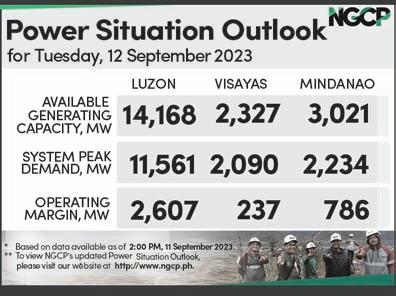
“There are two interesting benefits that it could bring. one is the impact of MMR to supply adequate and 24/7 power supply to hyperscale data centers. Another side of it is its impact on desalination plants. We have inadequate supply of water… this will solve water issue as well by adopting this nuclear solution,”
Pangilinan said.
early this year, Meralco said it was in talks with at least two US-based nuclear developers for the company’s possible entry into the nuclear space.
Pangilinan said then that Meralco officials met with nuclear power firms during the visit of President Ferdinand R. Marcos Jr. in the US.
The President met with representatives of two nuclear power firms, NuScale Power Corp. and Ultra Safe, during his last US visit.
NuScale is engaged in developing SMR, while Ultra Safe is involved in MMRs.
Local talents
DURING the 3-day Giga Summit organized by Meralco Power Academy (MPA), Meralco launched the Filipino Scholars and Interns on Nuclear engineering (FISSIoN) program in a proactive bid to develop skilled professionals and advance the Philippines’ push for the integration of nuclear power in the country’s energy portfolio.
Pangilinan said Meralco will invest in local talents and support aspiring Filipino nuclear engineers to help accelerate the development of the country’s technical and regulatory talent pipeline through education and training in the highly specialized field of nuclear engineering.
“Meralco will send some of our engineers to a two-year graduate program targeting local talents who are graduates and practicing Mechanical, electrical, Material engineering, and related areas in universities in the US, in Canada, Korea, Japan, France.”
Part of FISSIoN ’s objectives is to address identified gaps that could impede the government’s transformative initiatives, such as the absence of expert safety regulators and technical professionals capable of operating
nuclear technologies, specifically the SMR and MMR.
Scheduled to run from 2025 to 2027, this two-year graduate program will be offered to graduates and practitioners in the fields of Mechanical, electrical, Materials, and Metallurgical engineering, Physics, and other related disciplines.
Meralco is eyeing top global engineering universities, including the University of California in b e rkeley, the University of Illinois, the Korea Advanced Institute of Science and Technology, the University of o ntario Institute of Technology, and Université Paris–Saclay, for the program.
FISSIoN will also include a oneyear immersion and internship from 2027 to 2028 at partner SMR facilities abroad like Atomic energy of Canada ltd. and Ultra Safe Nuclear Corp. (USNC), both of which are participating in the ongoing Giga Summit.
Upon completion of the graduate and internship programs, Meralco will implement a re-entry action plan to facilitate the scholars’ return to the Philippines in 2029. The scholars are expected to render their expertise to the company and to the Philippine government.


The application process for the pilot batch of the program will open in 2024. Meralco will announce qualifications and other details of the program in the coming months.
Nidec to expand Subic operations
 By Henry Empeño Contributor
SU b I C b a y Freeport—Nidec
Subic Philippines Corp., a manufacturer of small highprecision motors and electronic and optical components, will be implementing a P4.2-billion expansion project here to produce high-accuracy
“Kinematix” gearboxes for industrial robots.
Nidec President Takeshi Yamamoto said the expansion project aims to assemble some 288,000 medium- to large-size gearboxes for industrial robotics gears annually, with the products valued at about P5.065 billion.
The company will be directly exporting all the gearboxes produced by its Subic facility.
Yamamoto said Nidec chose Subic for its expansion project due to its strategic location, which makes it more efficient to market products to the european Union, United States, bra zil, Korea and China.
The Japanese chief executive also told Subic bay Metropolitan Authority (SbM A) officials in a meeting last week that the expansion will generate about 5,000 jobs from the start of the program until the last incentivized year of the project.
SbM A Chairman and Administrator Jonathan D. Tan noted that Nidec-Subic’s manufacturing resurgence marks the first expansion of the company outside of Japan.
He said the expansion program is made possible under the Corporate Recovery and Tax Incentives for enterprises (CR e ATe) Act, which provides stimulus measures to help the country recover from the adverse economic impact of the Covid-19 pandemic.
The SbM A awarded last week the firm’s certificate of registration with
incentives under CR e AT e
Tan also hailed the Nidec expansion as a boost to the local manufacturing industry, pointing out that the high-tech gearboxes to be exported will be “Gawang Pinoy.”
“This is certainly a milestone for Subic Freeport as this new product will be solely manufactured by Nidec Subic.”
SbM A Senior Deputy Administrator for b u siness Renato W. l e e III said CR e AT e grants incentives like a 6-year income tax holiday, 10year special corporate income tax, 16-year Customs duty exemption on importation of capital equipment, raw materials, spare parts and accessories, 16-year valueadded tax (VAT) zero-rating on local purchase, and a 16-year VAT exemption on importation.
Kinematix gearboxes, which are used as base, arm or shoulder for industrial robots for auto tool changer or machine loader, will be a new product for Nidec.
The company used to manufacture direct-drive spindle motors and other precision electronic equipment here since its establishment in 1998 as one of the pioneer investors at the Subic Techno Park.
As of December 2020, the firm had listed 1,197 direct hires on its rolls, aside from 211 workers sourced out from a manpower provider and 36 from a security firm.
However, at the height of the Covid-19 pandemic, the firm shuttered its base production of spindle motors in February 2021 and retrenched more than 70 percent of its work force here to maintain the viability of company operations.
The firm now employs 622 workers and it looks forward to recruiting new employees under the expansion project, said Nidec Subic General Manager Marissa Tamayo.
B1
Globe ties up with insurance platform
 By Lorenz S. Marasigan @lorenzmarasigan
Globe Telecom Inc. on Monday said it has partnered with international insurance technology (insurtech) platform bolttech to launch a gadget switching program for postpaid users.
With their deal, Globe and bolttech have co-developed the Gadget Xchange Program, which allows postpaid users to easily switch their devices or replace their screens with “no questions asked.”
Under the program, new and re-contracting Globe Postpaid and Platinum customers can avail of these new benefits through a monthly subscription fee of between P89 and P499 per month for two years.
Device switch or replacement services can be requested at any time through an online platform, with free pick-up and doorstep delivery to boot.
It also includes a 12-month warranty for device replacements and a three-month warranty for screen replacements.
“Globe is very proud to launch this new service with bolttech as we continue to look for innovative ways to serve our customers. This offer is another first and exclusive from Globe Postpaid, with the convenience of switching mobile devices, no questions asked,” Darius Delgado, Head of Globe’s Consumer Mobile b u siness, said.
“With Gadget Xchange, Globe Postpaid customers no longer have to wait for their contract renewal to change their devices, and they get to easily ensure device protection.”
b o lttech recently found that almost half of Philippine-based customers found that flexibility to switch their mobile device for a different model “important.”
Furthermore 50 percent of Filipi-
nos “prioritize” gadget protection against cracked screens, accidental breakage, and liquid damage. o u r partnership with the Philippines’s leading telecommunications brand Globe allows us to elevate the device protection services locally. Together, we share a vision of providing customers with an enhanced experience, making it easy and convenient, with added flexibility and choice in obtaining the protection they need,” bolttech C e o b a ldev Singh said.
The wide array of device options for customers includes switching or replacing their mobile device with an identical or similar model of the same brand, or to a different brand within a predefined model selection.
Globe Telecom Inc. said recently that the revenues of its mobile business grew by 1 percent yearon-year in the first half despite the mandatory registration of SIM cards.
Darius Delgado, the head of Globe’s Consumer Mobile b u siness, said revenues of the mobile business reached P54.8 billion in the first six months of 2023, inching up from the P54 billion it reported the year prior.
He said the SIM registration mandate “filtered out inactive subscribers from its total base.” Globe’s 53.7 million registered SIMs account for “over 99 percent of its revenue-generating subscriber base,” consistent with company guidance that the SIM registration exercise will not have any impact on its top-line results for the year.
“We see that SIM registration has no material impact on revenues. We’ve observed our top-ups remain unaffected and acquisitions in the last five weeks are still at least 50 percent higher than pre-deadline run-rates. It’s evident that we have already covered 99 percent of our revenue base,” he said.
BusinessMirror
AprefeAsibility study for the development of micro modular reactors (MMr) in the philippines has commenced, according to business tycoon Manuel V. pangilinan.
Photo shows the Nidec factory building at the Subic techno Park in the Subic Bay Freeport. Henry empeño
Banking&Finance
ADB flags vulnerabilities in region’s bond market
By Cai U. Ordinario @caiordinario
HIGH interest rates caused the growth of total outstanding bonds in the region to slow in June, according to the Asian Development Bank (ADB).
Based on the Asia Bond Monitor, the ADB said total outstanding local currency (lC Y) bonds only increased two percent to $23.1 trillion in the second quarter 2023.
In the Philippines, the local currency-bond market growth was slower at 1.3 percent to $211.8 billion at the end of June 2023 from the previous quarter.
“Asia’s banking sector showed resilience during the recent banking turmoil in the US and Europe; but we’ve seen vulnerabilities and defaults among both public and private borrowers since last year,” said ADB Chief Economist Albert Park. “Higher borrowing costs pose a challenge especially for borrowers with weak governance and balance sheets.”
Based on the report, Treasury and other government bonds, which account for 82.4 percent of the total debt stock, grew 2.3 percent quarter on quarter in the second quarter of 2023.
ADB said this was due to issuances that exceeded maturities, while central bank securities contracted 15.8 percent on a quarter on quarter basis due to a decline in issuance in April to June period amid easing inflation.
The report also stated the corporate bond market, which accounted for 13.6 percent of the total debt stock, rebounded 1.2 percent quarter on quarter in the second quarter of 2023.
The Manila-based multilateral development bank said this was due to the large volume of issuances during the quarter, a reversal from the 2.2 percent quarter on quarter contraction in the first quarter of 2023.
ADB said 81 percent of the total corporate bonds outstanding at the end of the second quarter of 2023 was dominated by the property, banking, and holding firms sectors.
“Issuances of treasury and other government bonds exceeded maturities, even as central bank securities contracted. A large volume of issuances helped corporate bonds rebound,” ADB said about the lC Y bond market in the Philippines.
ADB said, however, the Philippines experienced some of the region’s largest increases in the 2-year and 10-year yields.
The report noted that the twoyear tenor rose 33 basis points (bps) and the 10-year rising 55 bps, driven by elevated inflation.
“Government bond yields rose for most tenors between 1 June and 31 August, influenced by a still elevated inflation and a slower-thanexpected economic growth in the second quarter that dampened investor sentiment. Only the 1-month and 3-month tenors posted declines during the review period,” ADB said.
Meanwhile, ADB the softening inflation in the past months allowed most central banks in the region to hold off on further interest rate hikes, and some have started lowering rates to boost economic growth.
However, ADB warned that the elevated price pressures, solid job market, and robust economic performance in the United States could lead to further interest rate increases by the US Federal reserve.
“A faster-than-expected decline in inflation in advanced economies, combined with a cooling in the job market and/or lessened financial stability and growth concerns, might lead to less hawkish monetary stances,” ADB said.
Sustainable bonds in ASEAN plus the PrC , Japan, and the republic of korea (ASEAN+3) expanded 5.1 percent from the previous quarter to $694.4 billion, accounting for 19.1 percent of global sustainable bonds outstanding.
ASEAN+3 remains the world’s second-largest regional sustainable bond market after the European Union, although the segment only accounts for 1.9 percent of the group’s overall bond market.
Govt raises ₧15B from sale of T-bills as investors relax
3-month T-bills.
By Jasper Emmanuel Y. Arcalas @jearcalas
The Bureau of the Treasury (BTr) made a full award of T-bills tender on Monday, marking the fourth consecutive week that it was able to raise the whole programmed amount of the auction.
Investors’ average asking rates across all three tenors of T-bills continued to fall below secondary-market benchmark levels; also relatively
lower than previous week’s auction.
The average rate for the 91-day T-bills settled at 5.575 percent, compared to its secondary market counterpart of 5.655 percent. However, it was slightly higher than its previous week’s average yield of 5.552 percent.
Investors sought rates between 5.5 percent and 5.6 percent for the
GSIS opens multi-purpose loan window for teachers
STATE pension fund Government Service Insurance System (GSIS) has unveiled its “Multi-Purpose l oan Flex” (MPl Flex) program to public school teachers and other GSIS members in celebration of the National Teachers’ Month.
The program, according to GSIS, provides competitive interest rates starting from 6 percent and extends the repayment term to 15 years from the previous 10-year limit.
The lower interest rate and longer payment term translate to lower monthly payments.
According to GSIS President and General Manager Jose Arnulfo A. Veloso, the MPl Flex initiative is “in response to the call of Vice President and DepEd Secretary Sara Z. Duterte to bolster the financial resilience of teachers.”
Veloso was quoted in the GSIS’s statement as saying that the program “provides

an important lifeline to teachers to improve their financial capacity by using the loan for their various needs including capital to start their own business.”
The program also allows members with a mere one-month premium contribution to apply, as opposed to the earlier threemonth contribution requirement.
“The program is so flexible that borrowers can customize their loan terms based on their unique needs and financial situation,” Veloso said.
In addition, full repayments before the end of the loan term will incur no pretermination fees.

Eligible applicants are active and special members not on unpaid leave during the application period. They should have made at least one premium payment in the six months leading up to their application and have no pending administrative charge.
Politician posits proper play for palay pricing, purchase
By Jovee Marie N. dela Cruz
@joveemarie
ECONOMIST-l A w M A k E r
Jose Maria Clemente “Joey” S.
Salceda cited the best play in pushing down the prices of rice per kilo is combining tariff cuts with aggressive buying by the National Food Authority (NFA). Doing so could see the price of imported rice to go down by as much as P6 per kilo.
Salceda issued his proposal after the Department of Finance (DOF) signaled its push for the reduction of rice tariffs to as low as zero percent to cushion the impact of rising world market rice prices and temper the increase in the price of the staple locally. “ with three weeks left before Congress adjourns, this decision is best left to the President and his power to adjust tariff rates when Congress is not in session,” Salceda said. “Obviously, it will be a temporary modification. But it is a viable solution for present
rice price issues.”
The lawmaker expressed support to the state’s stance “to ensure that we have all the options necessary to meet our local demand and reduce the consumer price of rice.”
Earlier, President Ferdinand r Marcos Jr. urged Filipinos to report violators of Executive Order 39. The order has set the mandated price ceiling of regular milled rice at P41 per kilogram and of well-milled rice at P45 per kilogram.
According to Salceda, the DOF proposal will not compromise the implementation of the r ice Competitiveness Enhancement Program (rCEP). He explained that the P10 billion in tariff revenues required to fund the rCEP have already been met by this year’s tariff collections. Salceda also “strongly suggests” that the rice-tariff reduction “should be accompanied by more aggressive palay-buying operations by the NFA to ensure that the surge in imports does
not unduly depress farmgate prices.”
He noted the move is allowed by the r ice Tariffication l aw: It “allows the NFA to source palay locally.”
However, Salceda said the longterm and sustainable solution is still to produce more rice domestically in a way that is resilient to climate risks.
“Actually, the PBBM administration has achieved a 3-percent growth in palay harvest for 2023. we are poised for a bumper crop year this year. we need to reduce our dependency on rice imports to protect us from rice trade volatility. That is the direction of this administration,” he added.
Earlier, Finance Secretary Benjamin E. Diokno said reducing the rice tariffs temporarily to zero or up to a maximum of 10 percent would help in “arresting” the surge in local rice prices.
‘Nail in the coffin’
BUT Assistant Minority l eader and Gabriela rep. Arlene D. Brosas ex-
The average yields for the 182day and 364-day T-bills were both lower than their secondary market benchmark levels and their previous week’s rates.
The 182-day T-bills fetched an average rate of 5.96 percent versus the secondary market’s 5.987 percent and last week’s 5.966 percent. Meanwhile, the 364-day T-bills’ yields averaged 6.190 percent, lower than the 6.193 percent secondary market benchmark level and 6.198 percent it posted last week.
According to the Treasury, the auction was 3.5-times oversubscribed, attracting P51.8 billion in total tenders.
Treasury data showed that the 364-day T-bills were the most oversubscribed at P21.116 billion followed by the 182-day government
security with total bids of P15.983 billion. The 91-day T-bills fetched a total offer of P14.715 billion.
The Treasury has been able to make full awards of its T-bills auction so far this month. Monday’s results came after the BTr suffered its first partial award of Treasury bonds (Tbonds) for its borrowing program this month.
So far, the Treasury has been able to raise P51.187 billion from two auctions of T-bills and one tender of T-bonds. In comparison, it was P8.813 billion short of the P60 billion it programmed to borrow across the three total tenders. For this month, the national government plans to borrow a total of P180 billion from the domestic market through the tender of government securities, according to the Treasury.
A tale of financial impact on family dynamics
DO you know that there are two different kinds of old age? l et us consider the short story below.
There once was a father who retired from the corporate world due to his compulsory retirement age. He opted to stay with his youngest daughter. Upon waking up one morning, he overheard his daughter talking to his son at the living room. The conversation went like this:
Daughter: Brother, what now?
w hen are you going to take Dad with you? He has stayed here too long already. we can hardly make both ends meet. My husband is already complaining of the expenses due to Dad’s overstaying.
den, he is now a blessing to them and his children needs him more than he needs them. This is the second type of old age.
pressed opposition to the DOF’s proposal to temporarily slash the tariff rates for rice imports from 35 percent to zero.
“Only the largest rice importers benefited from the r ice l iberalization l aw [r e public Act 11203]. This proposal by the DOF will ensure another huge volume of rice imports, which will further benefit big cartels as rice can be easily smuggled,” Brosas added.
The lawmaker said that while the recent imposition of a price ceiling can only do so much, lowering or removing tariffs is not the solution.
According to Brosas, the government promised four years ago that r A 11203 “would improve farmers’ productivity and food security.”
“But now, with the current state of our rice industry, import dependency and the trade deficit worsened, while rice self-sufficiency and farm gate prices plummeted,” she said.
GoTyme Bank taps Robinsons Retail for off-line transactions
By VG Cabuag @villygc
GO k O NG w E I-l E D GoTyme
Bank Corp. announced it has inked a partnership deal with r o binsons r e tail Holdings Inc. for the use of the latter’s flagship convenience store banner Uncle John’s.
According to the digital bank, the partnership expands its deposit and withdrawal footprint just as it hits the one-million customer mark in less than a year of operations.
GoTyme account holders who require physical transactions can deposit and withdraw cash at any of Uncle
John’s 340 branches nationwide, the bank said.
The transactions are efficient, free and done within two minutes, it said.
“By providing seamless digital products and services supported by human touch, we deliver personal service with greater empathy. By revolutionizing the way we can bank in every corner, in every street, in every neighborhood, we bring GoTyme Bank closer and closer to you, with our human touch—just a few steps away from your doorstep,” GoTyme Bank co-CEO Albert r aymund O. Tinio said. we are very happy to have partnered with GoTyme Bank in bringing
more convenient ways for their users to deposit and withdraw money. Now, you can easily access your funds and pay through your GoTyme Bank app with seamless convenience and effortless comfort. with this unique and growing partnership, preferred banking will always be at your fingertips or just around the corner,” robinsons Supermarket Corp. Convenience Store Division General Manager r Suresh r a malinggam said.
GoTyme Bank customers can also pay for purchases at Uncle John’s and other partner merchants with the app’s new “Pay with Qr feature. Uncle John’s customers who pay with Qr are
entitled to a raffle entry for “Fry Free for a Year” with every P200 purchase. winners get a year’s supply of Uncle John’s fried chicken. Customers can earn unlimited raffle entries but can only win once. Promo period is until end October. GoTyme Bank also recently rolled out a new feature that allows users to pay their bills via the GoTyme Bank app, via a partnership with Bayad Center. Participating billers include Meralco, Maynilad water, Manila water, Home Credit, Pag-Ibig, Smart, Sky Affiliates, Converge, Visayan Electric, Autosweep r FID, Davao light, Cignal, Pag-Ibig OF w and Easytrip r FID.
Brother: My apologies, we are also having a hard time as of the moment. Maybe Dad can stay a little bit longer. Also, we do not have any room available for him. And besides, we are already too crowded. Honestly, I do not know if my wife will agree to have Dad live with us. Is it possible for our eldest sister to take Dad?
Daughter: Oh, no. Don’t you know that my husband and I are already stressed out because of Dad?
Obviously, the father felt the world crashing down on him. The truth of the matter is that he has become a liability to his children (after being a good provider in the past). His daughter and son are having financial problems already and having him in their home is more of an additional burden to them. His children belong to the “sandwich generation” where they have to feed their own family and, at the same time, take care of their parent. This is the first type of old age.
Another scenario:
Daughter: Hey, brother, how come Dad has been staying with you for so long? My children are already missing him. w hen do you intend to let Dad live with us?
Son: Oh I’m so sorry. You know, my children do not want to let go of Dad because they are happy to have him here. My children enjoyed mall hopping with Dad, and Dad enjoys as well. Possibly, Dad might be with you next month. If you want, why not pay Dad a visit in our place so you can bond with him? Bring your kids along too. Any father who overhears this exchange of conversation would have been the happiest one alive.
In this case, the father is an asset to the children. Instead of a bur-
The short story above depicts a real life scenario that happens to everyone when their golden age arrives. The first kind of old age shows that the father is an unwanted guest ( pinagpapasapasahan) in the family while in the second one, he is a welcome guest ( pinag-aagawan). In both cases, there is only one common reason: Money. The lack of or bounty of money spell a big difference in the treatment a father will receive from his children come his golden years.
It is a fact that all parents sacrifice a lot to give a good future for their children. The only problem, especially with Filipinos, is that the parents consider their children as investments, such that when they finish their obligations, it is now payback for their parenting. This is a wrong mindset.
It must be noted that the only way the children can pay back their parents is for them to become parents. This is what is called paying forward. Further proof can be found in Proverbs 13:22: “a good person leaves an inheritance for their children’s children.” This verse means that even as parents providing for their children, they should not forget to build their retirement fund that will support them in their old age.
By having a good retirement fund, his children will not be burdened at all, and he will always be in demand by his children and grandchildren. If his retirement fund outlives him, then it can be passed on to his descendants. By successfully building his retirement fund, in effect, he eliminated the first kind of old age. He also eliminated the possibility of retiring broke, suffering from emotional stress and feeling of helplessness.
w hat kind of old age do you want?
BusinessMirror Editor:
Estopace • Tuesday, September 12, 2023 B3 www.news.businessmirror@gmail.com
Dennis D.
THE state successfully borrowed P15 billion from the domestic market through the sale of Treasury bills (T-bills) as investors’ asking yields continued to fall.
visit
edmund
Edmund Lao is a registered financial planner of RFP Philippines. To learn more about financial planning, attend the 104th RFP program this October 2023. Please
email info@ rfp.ph or
http://www.rfp.ph for details. persoNal fiNaNce
lao
Art BusinessMirror

Rare, early Botong Francisco painting hits Salcedo Auctions sale
Friday, September 15, from 9 am to 6 pm at NEX Tower, 6786 Ayala Avenue, Makati City. The online catalogue can be viewed at www.salcedoauctions.com
For all its important featured lots, Lerma maintains that The Well-Appointed Life sale is “more than a pinnacle auction by the country’s premier auction house.” He writes that it is “a testament to the fusion of creativity and history, and an occasion to honor those who understand the potency of art to enrich lives.”
Thus, serving as a backdrop of sorts to the sale, Salcedo Auctions recently introduced a new program under its gallery arm, Salcedo Private View, titled Private Art, Public Lives. According to Lerma, the exhibition series is the realization of a long-standing commitment to support the educative work of museums and higher institutions of learning.
Lerma worked as director and chief curator of the Ateneo Art Gallery for over a decade. It is during that time where he got the inspiration for the series after the Ateneo, Ayala Museum, and Lopez Memorial Museum launched “Zero-in” in 2002. The consortium broke ground for investigating “how difference collections move outside of individual or familial domains to become part of the public trust,” as Lerma wrote in a 2006 newspaper column.
“Nearly two decades hence,” Lerma said during his speech, “having planted the seeds of trust that have since grown into a vast garden of knowledge that the collective expertise of Salcedo Auctions’ specialists continue to nurture and grow, we felt the need to renew our resolve and fulfill our duty to continue to share important collections to the public.”
TODAY’S HOROSCOPE
By Eugenia Last
CELEBRITIES BORN ON THIS
DAY: Ryan Potter, 28; Emmy Rossum, 37; Jennifer Hudson, 42; Benjamin McKenzie, 45.
HAPPY BIRTHDAY: Don’t give away your secrets. Be discreet regarding what you know and the changes you adopt. Stay focused on your endgame, and stop fretting over things you cannot control. Listen to your inner voice, be true to yourself, take pride in your work and embrace challenges. You have plenty to gain if you are willing to go the distance. Your numbers are 4, 15, 22, 28, 31, 39, 45.
ARIES (March 21-April 19): Do something exhilarating. Once you start, you’ll get into the groove and enjoy the process. A highenergy approach to life and love will help you tap into something you excel at and enjoy. Don’t settle for less when you can achieve more. ★★★★★
TAURUS (April 20-May 20): Stick close to home and protect yourself and your possessions from anyone trying to exploit you. Put your energy into doing your best and avoid appearing vulnerable to someone trying to compete with you. Keep your thoughts and plans simple and doable. ★★
GEMINI (May 21-June 20): Reach out to friends and relatives who share your sentiments; together, you will accomplish something to strengthen your bond. Protect against people who don’t share your beliefs or are diligent regarding changing who you are and what you want. ★★★★
CANCER (June 21-July 22): An orderly home and lifestyle will put your mind at ease. Ask an expert for input and follow through with noteworthy suggestions when in doubt. A networking function, fundraiser or self-improvement project will occupy your time and encourage you to move forward with an open mind. ★★★
LEO (July 23-Aug. 22): Emotional issues will surface if you jump into something prematurely. Be a responsible observer and spare yourself grief. Focus on self-improvement and tidying up loose ends. By decluttering your life, you’ll clear your head and find something meaningful to pursue. ★★★
VIRGO (Aug. 23-Sept. 22): View options, decide what you want to achieve and don’t waste time on trivialities that won’t make a difference to the desired outcome. Take the path that will get you where you want to go, even if it is the road less traveled. ★★★
auction is a gateway to immerse in these narratives, to feel the resonance they bring, and to connect with the creative intent and milieu of the country’s most important artists and artisans.”
The inaugural exhibition of Private Art, Public Lives featured the collection of Union Bank President Edwin Riego Bautista and his wife Aileen Beltrano Bautista. Curated by Floy Quintos, the showcase presented pre-colonial jewelry, amulets and revolutionary weapons, among other items that shared untold tales of Philippine history.
LIBRA (Sept. 23-Oct. 22): Station yourself where you feel most welcome or pursue something that makes you feel helpful and good about yourself. Dedicate your thoughts and time to making a difference and doing things your way. It’s OK to have personal preferences. ★★★★

ARARE artwork by National Artist Carlos “Botong” Francisco is set to go under the hammer as one of the star lots in the upcoming September edition of Salcedo Auction’s The Well-Appointed Life public sale.
Prized as an early piece of the celebrated Angono muralist, Francisco’s 1938 work, titled Ang Aguinaldo, reflects his formative post-impressionist style. The 28” x 38” oil painting from the collection of the MIB Capital Corp. (formerly Multinational Investment Bancorporation) hints at the idealized heroic proportions that would define the master’s grandscale legacy canvases and murals.

Aside from the Francisco painting, other highlights of the auction include a 1956 oil on canvas by National Artist HR Ocampo from the Guevara family, the bust of Juan Luna y Novicio by Mariano Benlliure, and the abstract masterpieces of the Yaleeducated Constancio Bernardo, a student of the influential 20th-century abstractionist Josef Albers.
“Each stroke of a brush, every sculpted curve, and all creative expressions on display carry stories that transcend time,” writes Salcedo Auctions’ chairman
The sale features a special section, called “Important Philippine Art.” Along with two works by Bernardo, other pieces presented in this category include that of National Artists Ang Kiukok, Jose Joya, Federico Aguilar Alcuaz, Arturo Luz, J. Elizalde Navarro, and BenCab. There are artworks as well by pioneering modernists Juvenal Sansó, Oscar Zalameda, Nena Saguil, Fernando Zobel, Romulo Olazo, and Malang. Rounding out the group is an esteemed list of contemporary artists, including Lao Lianben, Emmanuel Garibay, Solomon Saprid, Betsy Westendorp, Ramon Orlina, and Santiago Bose, along with trailblazers Rodel Tapaya, Jose John Santos III and Pam Yan-Santos, Alfredo Esquillo, Jr. and Andres Barrioquinto.
There is also a category called “Connoisseur Collection.” It’s a showcase of 19th-century hardwood and antique furniture and decor, including an exquisite altar table with Olympic and Eagle motifs, and an outstandingly crafted 18th-century relief of San Juan Evangelista. Ethnographic and indigenous art from the early to mid-20th century completes the collection, along with rare prints, maps, books, and other valuable collectibles.
The Well-Appointed Life, September Edition, which is supported by RHK Land Corp., takes place this Saturday, September 16, at 2 pm. Meanwhile, the auction preview opened last week and runs until
“Edwin and Aileen epitomize the ethos of Salcedo Auctions—that a well-appointed life means having a life that gives back to society,” Lerma said. “It gives me great pleasure to have Salcedo Auctions work with them to have their finer pursuits contributing in their own way to the country’s cultural landscape by providing the unparalleled access that this exhibition provides the public.”
Private Art, Public Lives A Passion for Connections and Their Narratives from the Collections of Edwin and Aileen Bautista concluded its run on September 3 at Salcedo Auctions in Makati City. ■
Kutcher...
CONTINUED FROM B5
Both rapes took place in Masterson’s Hollywoodarea home in 2003 when he was at the height of his fame on the Fox network sitcom That ‘70s Show. The victims testified that Masterson drugged them before violently raping them.
Kunis said in the apology video that their letters did not mean to undermine the testimony of victims.
“Our heart goes out to every single person who’s ever been a victim of sexual assault, sexual abuse, or rape,” she said. AP
SCORPIO (Oct. 23-Nov. 21): Be a friendly observer, but don’t get involved in something that might jeopardize your time, position or reputation. Dedicate your time and skills to worthwhile improvements and contributions. ★★
SAGITTARIUS (Nov. 22-Dec. 21): Have confidence in yourself and what you can accomplish. Walk away from negativity and those using misleading tactics to distract you from the path that beckons you. Think for yourself, learn to say no and love the person you choose to be.
CAPRICORN (Dec. 22-Jan. 19): Strive for perfection, get the most out of whatever situation you encounter and speak the truth. Be the one to set an example and open your doors to those who need a pep talk, but don’t offer to pay for someone else’s mistake. ★★★
AQUARIUS (Jan. 20-Feb. 18): Set a budget, put a plan in motion that contributes to your security and ease stress. Put time and effort into how you represent yourself. Build the life you want and associate with those who fit a profile that makes you feel comfortable. ★★★
PISCES (Feb. 19-March 20): Get in the game and have some fun. Explore what’s possible and affordable. Distance yourself from frivolous people eager to part you from your cash, position or reputation. Choose your path and stick to it, regardless of the decisions others make. ★★★
BIRTHDAY BABY: You are sensitive, underrated and meticulous. You are persistent and unique.
The Universal Crossword • Edited by David Steinberg/Anna Gundlach


B4 Tuesday, September 12, 2023 • Editor: Gerard S. Ramos www.businessmirror.com.ph
ACROSS 1 “Chiquitita” quartet 5 Figure out 8 Relax in a recliner, perhaps 12 Fearless 13 Church platform 15 Impulse transmitter 16 Fuel from a mine 17 2007 Michael Moore movie about health care 18 Palindromic act 19 Goes shopping, perhaps...or, after flipping a letter, reaches one’s limit 22 Borscht vegetable 23 Ad headline 24 Actress Grier...or, after flipping a letter, Fido’s foot 27 Singer Gwen 29 The first “T” of TNT 32 Become adjusted 34 Purged (of) 35 ___ Frome 37 Nudges 38 Aladdin prince 39 Nephew’s sister 40 Acted like 41 Martin or McQueen 43 Get ready, for short 44 Tuxedo shirt fastener 45 Common carafe size 46 Joke around 47 Alternative to work? 49 “Ah, me!” 51 Indiana basketball pro 53 Code-cracking org. 56 Toothbrush brand 59 Neighbor of Canada: Abbr. 60 Indian spiced drink, redundantly 63 Spy vs. Spy magazine...or, after flipping a letter, mouthful of gum 64 Bubkes 65 Do a surfboard stunt 66 A Wrinkle in Time director DuVernay 67 Actor Penn 68 Like most music 69 “Huzzah!” DOWN 1 20/20 network 2 “You stink!” 3 Boring 4 Go off script 5 Beautiful people 6 Carve in stone 7 Loses intentionally 8 Big dipper? 9 Skater’s jump 10 Actress Caldwell 11 Discontinue 13 Money in the bank, say 14 Eternal City dweller...or, after flipping a letter, Atkinson of Mr. Bean 20 Exams 21 Roswell crash victim, supposedly 24 Dads 25 Welcome to the family 26 Ref’s correction...or, after flipping a letter, hotel service delivered by phone 28 ___-O-Fish 29 Prime minister after David Cameron... or, after flipping a letter, “It’s possible” 30 Track events 31 Not competent 33 Hawk, as one’s wares 36 Where singles go in a bar? 41 Artful 42 Victorian, for one 48 Foot’s curve 50 Cash advance 51 Rebellious rock style 52 China setting 53 Prefix meaning “one billionth” 54 Communicate silently 55 Lead-in to “girl” 57 Flow from Mount Etna 58 Annual celebration, briefly 61 Fez, e.g. 62 Moray, say Solution to today’s puzzle:
★★★★★
ANG 1938 oil painting by National Artist Carlos “Botong” Francisco, is among the featured lots in Salcedo Auction’s “The Well-Appointed Life” public sale this Saturday, September 16.
‘worm’s eye view’ BY PAUL
COULTER
After FIBA, concert venues now await world-class artists

shared Thomas.
To start the fourth quarter adrenaline rush in musical concerts, Grammy award-winning singer Sam Smith is set to enthrall his Manila fandom once more, when he stages Gloria, the touring concert, at the SM Mall of Asia Arena on October 21. Smith’s Asian itinerary will also include Bangkok and Singapore.
AFTER the much talked-about FIBA basketball games where most of the top players from all over the globe came to the Philippines to show everyone why the sport remains one of the most followed sports worldwide, it is time for musical artists to fill the Philippine concert venues and arenas once again. This week, we happily share to our readers which world-renowned acts are coming to entertain their Filipino fans.
The widely followed diamond certified artist Post Malone will be performing at the SM Mall of Asia Arena on September 18, as part of his If Y’All Weren’t Here, I’d Be Crying World Tour.
Malone has achieved back to back no. 1 debuts on the Billboard charts, and his rise started with his quintuple-platinum 2016 debut Stoney.
Another well-loved duo is coming back to the Philippines. The Arkansas-based JOAN is set to tickle local fans once gain on September 19 in an intimate show at the New Frontier Theater in Quezon City as part of its first-ever headlining tour, labeled as Superglue
Alan Thomas and Steven Rutherford make up JOAN and the duo has been charming its worldwide fans since 2017 with its signature synth-pop sound. Since it first released its extended play (EP) album, titled Portra, it has won the hearts of its huge Asian fans with songs, like “I Loved You First,” “Drive All Night,” “So Good” and “Superglue.”
These amazing singer-songwriters believe that connecting with a song can lift one’s spirits. “When we see how our music brings people joy and happiness, it is always beyond words. It is what keeps us going every single day. It has become our purpose,”
Gloria is also the name of Smith’s fourth album, which he spent a lot of time completing and choosing the songs. “It was both exhilarating and beautiful for me to be able to sing freely again, something like a coming-of-age experience. It feels like having emotional, sexual and spiritual liberation all at the same time, something so magical and totally in a different realm,” he declared. Music analysts around the globe are saying that Smith’s Gloria is a totally different kind fo achievement—it’s a kind of freedom that is both personal, sophisticated, unpredictable and mesmerizing, something that only a celebrated virtuoso and soulful artist like Smith can pull off. The October show will be Smith’s third visit to the Philippines.
In November, the Toronto-born Johnny Orlando will prove to the audience in the Philippines that he is undoubtedly the rising pop superstar of his generation.
Orlando, who has amassed almost 3.5 billion career streams, is excited to perform at the Filinvest Tent in Alabang on November 20th. He is set to sing the songs from his new album, The Ride, and will perform in six key Asian cities.
Following the spectacular sellout success of Coldplay’s November 2023 shows in the Asian and Australian territories, the band has announced a second run of dates for early 2024, as part of their record-breaking Music of the Spheres World Tour. So it is now official that Coldplay is having a one-night concert on January 19 at the Philippine Arena in Bulacan.
The band had sold-out shows in Manila in March of 2022, and reports have it that it has now sold over 7 million tickets—the most for any touring group since the pandemic.
And because the group continues to do its share in climate change advocacies, the people behind
the band recently released an update on the tour’s sustainability initiatives, announcing that on a showby-show comparison, their current tour has so far produced almost 50 percent fewer CO2e emissions compared to their previous tours in 2016 and 2017. Moreover, it was revealed that more than five million trees have been planted around the world.

Many say that the Filipino fans are one of the most wonderful and appreciative audiences, and they carry on in supporting really gifted artists, whether local or foreign, who continue to give them the worldclass entertainment they deserve. That is why we’re more than glad that our friends from Live Nation Philippines continue to be instrumental in bringing these amazing artists to entertain us. n
Filipino Japanese boy group Skygarden joins altg Records roster
THE popular Japanese trio consisting of Ryoichi “Ryo” Rivera Nagtsuka, Hiro Ozaki, and Iwaki “Iwa” Maegawa, Skygarden officially joins GMA Music’s dynamic sublabel AltG Records. The contract-signing happened on July 28 with GMA Music managing director Rene Salta, artist and repertoire manager and inhouse producer Kedy Sanchez, and Skygarden manager Ruby Cuevas.
Since their debut in 2022, the Skygarden trio of Ryo, Hiro, and Iwa have won the hearts of Filipinos with their energy, creative ideas and engaging video content. Their videos quickly went viral across social media platforms, amassing impressive viewership on Facebook, Tiktok, and YouTube. This caught the attention of the network and led them to become

soon. They have been producing covers of popular OPM songs, adding their unique spin and Japanese touch. Their much-anticipated debut single “Kokoa” is now available on digital platforms worldwide. Written by Hiro, the song carries a profound message of love and affection. The title was derived from the Japanese phrase “Kokoro kara Aishiteru” which translates to “I love you from the bottom of my heart.” It was inspired by Iwa’s experience in love and blends Japanese anime rock with Tagalog lyrics.
“We’ve always believed in pushing boundaries and bringing something fresh to our audience. ‘Kokoa’ is a testament to our dedication to authenticity and creativity. Our music, just like our content, is a reflection of who we are as individuals and as a group,” shares Ryo.
James Reid, gino Padilla, gigi De Lana wow ilagueños at festival
MaMMangi Festival 2023 is a grand festival like no other replete with colorful, joyous thanksgiving activities for a good harvest of corn and honoring the corn farmers who have been the real foundation of the City of ilagan’s economy through the years. a grand comeback this year after a three-year hiatus due to the pandemic, the 2023 edition, which was also held in time for the city’s 11th cityhood anniversary, featured various activities such as the showcase of agri-ecotourism booths by the city’s 91 barangays which were divided into four clusters, namely Centro Poblacion Cluster, northeastern Cluster, San antonio Cluster, and Western Cluster.
it was followed by the highly anticipated Binibining i agan 2023 grand Finals and Coronation night held at the City of ilagan Sports Complex hosted by Miss Universe Philippines 2021/Miss Universe 2021 Top 5 winner Beatrice Luigi gomez who did a remarkable job as pageant host together with gMa talent Carlo “Kaloy” Tingcungco. The night was livened up by a mini-concert by James Reid.

another exciting night for the ilagueños was the Barangay night and awarding of Sikan na ilagan and Outstanding ilagueños 2023 held at ilagan Community Center. The night was capped by a modern dance competition with five contingents joining the merry-go-round. Singer-actress
g entertainment and laughter.
Street Dance and Showdown Competition, was also held at the city’s massive sports complex. winners.
MAsterson cAuseD
LOS ANGELES—Ashton Kutcher and Mila Kunis apologized on Saturday for character letters the celebrity couple wrote on behalf of fellow That ‘70s Show actor Danny Masterson before he was sentenced for rape this week.
A judge in Los Angeles on Thursday sentenced Masterson to 30 years to life in prison for raping two women in 2003.
In a video posted on Instagram, Kutcher and Kunis said they were sorry for the pain they may have caused with the letters, which were made public on Friday. Kutcher said the letters that asked for leniency “were intended for the judge to read and not to undermine the testimony of the victims or retraumatize them in any way. We would never want to do that and we’re sorry if that has taken place.”

Kutcher said Masterson’s family approached them after the actor was convicted in the rapes in May and asked them to write character letters describing “the person that we knew for 25 years.”
The letters were posted online by The Hollywood Reporter and other digital publications.
Masterson starred with Ashton Kutcher, Mila Kunis and Topher Grace in That ‘70s Show from 1998 until 2006. He had reunited with Kutcher on the 2016 Netflix comedy The Ranch, but was written off the show when the Los Angeles Police Department investigation was revealed the following year.
Los Angeles Superior Court Judge Charlaine F. Olmedo handed down the sentence to Masterson, 47, after hearing statements from the women, and pleas for fairness from defense attorneys.
Kutcher described Masterson as a man who treated people “with decency, equality, and generosity,” he wrote in his letter dated July 27, 2023. Kunis in her letter to Olmedo called Masterson “an outstanding role model and friend” and an “exceptional older brother figure.”
B5 Editor: Gerard S. Ramos • Tuesday, September 12, 2023 www.businessmirror.com.ph Show BusinessMirror : an Post Malone, and
CeLeSTe LegaSPi and Dulce (first row, second and third from left) join the ilagan Chorale and other performers.
See “Kutcher,” B4
World class theme park Enchanted Kingdom celebrates its 28th anniversary next month
Knorr Philippines, GMA Foundation partner for Quezon nutrition program
WHILE economic disparities can impact access to nutritious food, Knorr Philippines and GMA Kapuso Foundation are determined to make nutritious, delicious, and affordable meals accessible for Filipino families.
Knorr Philippines joined GMA Kapuso Foundation (GMAKF) in its “Give A Gift Feed A Child” project to help communities in General Nakar, Quezon. Over 300 children from across three schools, between kinder to third grade, graduated from the six-month-long nutrition program partnership in July.

With guidance from General Nakar local officials and the Department of Education, the municipality was identified as among those that would benefit from a holistic nutrition program based on the results of the nationwide 2021 Operation Timbang conducted by National Nutrition Council.
Together with GMAKF, Knorr stepped in as among its main sponsors to run the program in the community.
The “Give A Gift Feed A Child” program is envisioned to alleviate short-term hunger in undernourished children through a 120-day in-school supplementary feeding program; improve school attendance and class performance; and raise awareness on proper health and nutrition among parents and guardians of beneficiaries through interactive lectures, including learning sessions based on Knorr’s NutriSarap education module.
About 88 percent of the beneficiary students’ weights improved, and 85 percent have recorded an increase in height over the program period. It was also observed that students had increased alertness and energy in their classes.
The initiative was also boosted by the active involvement of the mothers who prepared nutritious meals for the in-school
THE Knorr team with the children of General Nakar, Quezon who are beneficiaries of the 6-month feeding program. feeding program, nurtured the gardens, and put into practice the knowledge gained from Knorr’s nutrition education modules.
“It was truly moving to see the collective efforts of private organizations, parents, teachers, and local officials as we embarked on a transformative six-month journey for the benefit of the children of General Nakar. Knorr’s commitment to the fight malnutrition spans two decades, and this collaboration is proof that when the community unites, we make meaningful progress,” shared Unilever Nutrition Philippines Business Lead Bindoy Baltazar. Feeding programs end after a defined period with the intent for the community to sustain healthy habits and results through tools and resources gained from the program.
In the case of GMAKF and Knorr’s adopted community in General Nakar, the right foundations are in place, including school and backyard gardens and trained parents
and guardians. The program sponsors remain confident that the community will continue to rally together to sustain improvements in undernutrition rates in their area.
“We’re proud that Knorr helps mothers sustain this journey in their own homes through our Knorr Nutri-Sarap Budget Journal. This invaluable resource empowers them with affordable meal planning techniques, enabling them to make healthier choices for their families. With a collection of 21 days of nutritious, delicious, and budgetfriendly recipes assessed by DOST-FNRI, we ensure that every meal is a step toward a healthier future,” added Baltazar.
Knorr is Unilever’s biggest food brand and is committed to using its scale and reach by inspiring people to make more nutritious, more planet-friendly food choices every day. Through products, programs, and partnerships, Knorr champions a sustainable way of eating.
guides PCPPI
manufacturing facilities
to reduce the company’s dependency on grid electricity produced from fossil fuels. With the shift, PCPPI is looking reduce use of grid electricity in select plants up to 30 percent, while a reduction of eight percent is expected in the organization’s total grid electricity usage.
“We assess our organizational priorities based on where we can make the most impact. Among the initiatives we have in place addresses our use of water and energy for our returnable glass bottles (RGB),” Firmeza said. “Our bottle washers consumes most of a facilities’ energy. As such, we ensure that we use energy-efficient washers, conduct proper and regular maintenance, and train our teams on how they can help support our productivity goals,” he added.
PCPPI’s programs reinforce the company’s sustainability agenda, in response to the global effort toward achieving the United Nations’ SDGs, specifically contributing to the targets of SDG 7 (Affordable & Clean Energy) and 13 (Climate Action).
ENCHANTED Kingdom, the first and only world class theme park in the Philippines, is inviting guests for its 28th anniversary celebration this October with the theme “Be The Magic! Be Enchanted!”

The year-long celebration places the spotlight on recreating enchanting stories from the past and creating new magical experiences for every guest.
“Enchanted Kingdom remains to be part of our guests’ personal milestones throughout its 28 years. We are very excited to capture these enchanting stories from our past and present guests, and celebrate these magical experiences with the future generation,” said Nico Mamon, 28th Anniversary Celebration Wizard and the Head of Organization Development and Corporate Planning.
Mamon also shared that due to popular demand, Enchanted Kingdom will bring back the Sky Wizardry Fireworks Competition after its last spectacle eight years ago. “Apart from entertaining and dazzling the guests, Enchanted Kingdom has collaborated with Filipino fireworks manufacturers to showcase their products and creativity. As a proud Filipino company, we highlight local artistry with pyrotechnics and music, enchanting Filipinos for the past 28 years,” Mamon emphasized.
Enchanted Kingdom will also introduce
its very own storybook characters with the launch of its grand parade. Apart from the iconic Eldar the Wizard, Princess Victoria and Princess Madeline, meet and greet these lovable characters this October as part of the Enchanted Kingdom story for guests of all ages to enjoy.
Enchanted Kingdom invites everyone to be part of this magical experience this October. Stay tuned for more enchanting news and events in the upcoming weeks.
For more information about this celebration and other upcoming events, visit https://www.enchantedkingdom.ph/ and EK’s official social media accounts @ enchantedkingdom.ph for Facebook and Tiktok, and @ek_philippines for Twitter and Instagram.
SAFC, CARMUDI Philippines collaborate to push #IamGREENHERO Reduce, Reuse and Redrive effort
the role of the preferred financing partner for buyers within the CARMUDI ecosystem. This alliance extends beyond financial assistance; it’s a testament to our commitment to nurturing a culture of conscious and environmentally ecofriendly car ownership.”
CARMUDI Philippines Chief Executive Officer for Used Auto, Ramjit Lahiri and SAFC President and Managing Director, Joel C. Cruz
AFC, one of the leading and fastestgrowing non-bank financial institutions in the Philippines and is distinguished for its groundbreaking approach to sustainable secondhand car financing solutions, is proud to announce a transformative partnership with CARMUDI Philippines, a rising player in the Philippine automotive industry. This strategic collaboration marks a milestone in driving forward sustainable transportation and offering innovative financing options for buyers within the automotive industry. For nearly two decades, SAFC has been a stalwart advocate of sustainability, revolutionizing the second-hand car financing landscape by championing the principles of its SAFC Heroes’ #IamGREENHERO Reduce, Reuse, and Redrive campaign. By embracing these tenets, SAFC not only maximizes the lifespan of vehicles but also significantly reduces the environmental footprint attributed to new car manufacturing. The company’s resolute belief that responsible transportation choices are paramount to environmental preservation has been at the forefront of their commitment.
Ramjit Lahiri, Chief Executive Officer for Used Auto of CARMUDI Philippines, added, “We are excited to join hands with SAFC on this pioneering journey towards sustainable mobility. This partnership underscores our commitment to providing our customers with not just vehicles, but also a responsible and ecoconscious way to own and drive them. Together with SAFC, we aim to redefine car ownership in the Philippines, making it not only accessible but also environmentally responsible.”
This collaboration enhances the environmentally conscious efforts of both organizations and drives their shared commitment to a more sustainable future. The utilization of CARMUDI’s user-friendly online platform tailored for effortless car transactions, aligns seamlessly with SAFC’s steadfast focus on sustainable second hand car financing. This synergy assures customers an elevated experience that embodies the principles of ecological stewardship.
Under the banner of the SAFC Heroes’ #IamGREENHERO campaign, SAFC and CARMUDI Philippines are synergizing their efforts to empower individuals to make informed, sustainable choices regarding their transportation needs. By encouraging the adoption of pre-owned vehicles, the partnership actively contributes to the reduction of harmful emissions and the advancement of a greener lifestyle. Beyond being a testament to environmental protection, this collaboration sets a potent precedent for both the industry and society as a whole.
WHEN the United Nations sought to develop initiatives to protect the environment, the 1987 Brundtland Commission defined the concept of sustainable development as “meeting the needs of the present generation without compromising the ability of future generations to meet their own needs.“ Organizations around the world strive to align their sustainability goals and strategies with this in mind.
For its long-term environmental, social, and governance (ESG) commitments, PepsiCola Products Philippines, Inc. (PCCPI) is looking to the United Nations’ Sustainable Development Goals (SDGs) as a reference. The company takes its role as a responsible environmental steward seriously, as it strives to manage its use of water, electricity, energy, and fuel in all its manufacturing facilities.

By upholding the three pillars of sustainability, namely Circular Economy, Water Stewardship, and Inclusive Business, PCPPI is committed to creating a positive impact on society with programs focused
on environmental sustainability, nationbuilding, and inclusive development.
“For water, our target is to reduce usage by 10 percent; while for fuel, energy, and power, our goal is to reduce them by four percent. As of end-July this year, we have already reduced our total energy use by 1.5 percent, keeping us on track with our targets,” said Director for Manufacturing Walton Firmeza.
The organization’s resource management policies are embodied in the Luntiang Yaman program, which focuses on five critical areas for environmental conservation and development; namely water usage reduction, electricity use optimization, fuel yield optimization, solid waste management, and community-building participation. These include the 3Rs approach to manage water consumption: reduce, re-use, and recycle.
As for reducing its energy consumption, PCPPI focused on shifting to renewable energy as it will install solar panels in select manufacturing facilities for the project’s first phase. The move to solar power is seen
On track with its sustainability targets, PCPPI also strengthened its lightweighting efforts to reduce plastic content in its products and packaging.
As the organization reported recently during its Annual Stockholders’ Meeting, another milestone achieved in 2022 was volume reduction of carton material used in its packaging by 99.1 metric tons.
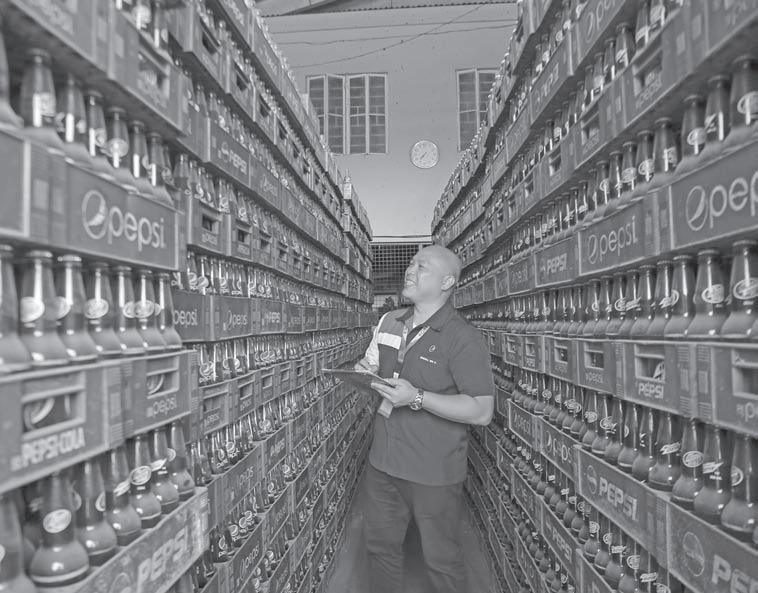
“Through these initiatives, we are able to reinforce our commitment to take action to protect our planet, while inspiring and empowering our people to do the same,” said Frederick D. Ong, PCPPI President and Chief Executive Officer.
PCPPI is the exclusive manufacturer of PepsiCo beverages in the country. Other than Pepsi, it distributes wellloved brands such as Mountain Dew, 7-Up, Mirinda, Mug, Gatorade, Sting, Tropicana, Lipton Iced Tea, Milkis, Chum Churum Soonhari, and Premier Purified Water. For more information about PCPPI and its products, please visit www. pepsiphilippines.com.
Joel C. Cruz, President and Managing Director of SAFC, stated, “Within SAFC, we aspire to create a world where sustainability and mobility seamlessly intertwine. Our strategic alliance with CARMUDI Philippines perfectly encapsulates this vision as we take on
As SAFC becomes the preferred financing partner for CARMUDI buyers, the partnership represents a crucial step forward in reshaping the landscape of car ownership financing. With their shared mission to foster sustainable practices, this collaboration promises a brighter and more environmentally-conscious future for the Philippines.

Tuesday, September 12, 2023 B6
‘Responsible environmental stewardship‘
in resource consumption in all
FIRST METRO JOINS BRIGADA ESKWELA 2023. First Metro Investment Corporation, together with its subsidiaries First Metro Securities Brokerage Corporation and First Metro Asset Management, Inc., embarked on a transformative CSR mission through Brigada Eskwela. Employee volunteers of the First Metro Group joined hands to provide a more conducive learning environment for the students of Jacinto Zamora Elementary School (JZES) in Paco, Manila by repainting the classrooms and school canteen in time for the opening of classes. The First Metro Group also donated buckets of paints and essential painting materials. Through the vibrant transformation of the school premises, the Group hopes to inspire a love for learning and foster a learning environment where young minds can thrive and grow. Brigada Eskwela is an annual event that brings together parents, teachers, students, local government units, and various stakeholders to prepare public schools, aiming to create a safe, clean, and conducive learning environment for public school students. The theme of this year’s Brigada Eskwela is “Bayanihan Para sa Matatag na Paaralan”. In photo are First Metro Group officers and staff together with JZES faculty and personnel and volunteers from the Philippine Air Force.
Security in Ecuador has come undone as drug cartels use banana industry to ship cocaine
By Regina Garcia Cano The Associated Press
GUAYAQUIL, Ecuador—Men walk through a lush plantation between Ecuador ‘s balmy Pacific coast and its majestic Andes, lopping hundreds of bunches of green bananas from groaning plants twice their height.
Workers haul the bunches to an assembly line, where the bananas are washed, weighed and plastered with stickers for European buyers. Owner Franklin Torres is monitoring all activity on a recent morning to make sure the fruit meets international beauty standards—and ever more important, is packed for shipment free of cocaine.
Torres is hypervigilant because Ecuador is increasingly at the confluence of two global trades: bananas and cocaine.
The South American country is the world’s largest exporter of bananas, shipping about 6.5 million metric tons (7.2 tons) a year by sea. It is also wedged between the world’s largest cocaine producers, Peru and Colombia, and drug traffickers find containers filled with bananas the perfect vehicle to smuggle their product.
Drug traffickers’ infiltration of the industry that is responsible for about 30% of the world’s bananas has contributed to unprecedented violence across this once-peaceful nation. Shootings, homicides, kidnappings and extortions have become part of daily life, particularly in the Pacific port city and banana-shipping hub of Guayaquil.
“This is everyone’s responsibility: the person who transports it, the person who buys it, the person who consumes it,” vendor Dalia Chang, 59, a lifelong resident of Guayaquil, said of the cocaine trade. “They all share responsibility. They have ruined our country.”
The country, which is not a major cocaine producer, was especially rattled when a presidential candidate known for his tough stance on organized crime and corruption—Fernado Villavicencio—was fatally shot at the end of an Aug. 9 campaign rally. He had accused the Ecuadorian Los Choneros gang and its imprisoned leader, whom he linked to Mexico’s Sinaloa cartel, of threatening him and his campaign team days before the assassination.
In addition to its proximity to cocaine production, cartels from Mexico, Colombia and the Balkans have settled in Ecuador because it uses the US dollar and has weak laws and institutions, along with a network of long-established gangs like Los Choneros that are eager for work.
Authorities say Ecuador also gained prominence in the global cocaine trade after political changes in Colombia last decade. Coca bush fields in Colombia have been moving closer to the border with Ecuador due to the breakup of criminal groups after the 2016 demobilization of the rebel group Revolutionary Armed Forces of Colombia, better known by their Spanish acronym FARC.
A record 2,304 metric tons of cocaine was manufactured in 2021 around the world, mostly in Colombia, Peru and Bolivia. That year, nearly a third of the cocaine seized by customs authorities in Western and Central Europe came from Ecuador, double the amount reported in 2018, according to a United Nations report citing data from the World Customs Organization.
Large drug busts have become more frequent and within the past month, European authorities have made record-setting busts after inspecting containers carrying bananas from Ecuador.
Authorities on Aug. 25 announced Spain’s biggest cocaine haul yet: 9.5 metric tons hidden among cardboard boxes of bananas from Ecuador in a refrigerated container. Dutch officials also made their country’s largest-ever cocaine seizure last month—nearly 8 metric tons—in a container of Ecuadorian bananas. Authorities in Greece and Italy also announced seizures of cocaine hidden in Ecuadorian bananas this year.
Bananas headed to Europe are boxed at plantations, loaded into trucks that take them to massive warehouses in and around Guayaquil and transferred to maritime containers driven to an area port.
Then the ships head northeast to the Panama Canal, cross to the Caribbean Sea, and go east across the Atlantic.
Knowingly or not, banana growers, exporters, shipping corporations, port operators, private security companies, customs agents, agriculture officials, police, and buyers offer opportunities that drug traffickers have exploited.
Some traffickers have created front companies to mimic legitimate banana exporters, while others have acquired legitimate businesses, including plantations. They have found companies willing to be complicit in trafficking. They also have paid off, threatened or kidnapped truck drivers and other workers to help get cocaine into shipments.
Other traffickers have corrupted or intimidated police, customs agents, security guards and port workers to assist with—or ignore—tampering with containers at the ports.
Drug trafficking has contributed to the number of violent deaths in Ecuador, which doubled from 2021 to 2022, when 4,600 died, the most ever recorded in a year. The country is on track to break the annual record again, with 3,568 violent deaths tallied in the first half of 2023.
In Guayaquil, where maritime shipping containers are part of the landscape, people live in fear these days. Pedestrians don’t dare take their phones out of their pockets. Convenience stores have floor-to-ceiling metal bars that prevent customers from entering from the sidewalk. Restaurants that survived the pandemic close early.
Along with the rise in homicides, the amount of cocaine seized at the country’s ports has increased, too, reaching 77.4 metric tons last year. That is more than three times the amount seized in 2020.
National Police Gen. Pablo Ramírez, Ecuador’s national director of anti-drug investigations, attributed the change to increased smuggling, not better enforcement.
Police data also show that of last year’s total, a record 47.5 metric tons of cocaine were found in shipments of bananas, even though the fruit’s exports dropped 6.4% compared to 2021.
No more than 30% of containers is currently inspected at Ecuadorian ports, a process done manually or with drug-sniffing dogs. President Guillermo Lasso’s government says it wants to use scanners on entire containers. Twelve of those machines were supposed to be operating already but Ramírez said that has not happened yet.
Ramírez said he expects all ports to have operational scanners by mid-2024. He said two ports have tested the scanners to smooth out internal procedures and train the people who will be working with the machines.
The operator of the largest port in Guayaquil, Contecon Guayaquil S.A., turned down Associated Press requests for an interview and access to the port to see existing security procedures. In response to written questions about the measures, spokeswoman Alexandra Pacheco said in a statement that the operator entered into an agreement with the National Police in 2022 to among other things “reinforce operations in the port.” She added that the operator plans to spend about $15 million on the scanners.
Jose Hidalgo, executive director of the Association of Banana Exporters of Ecuador, said the industry faces greater exposure to trafficking than other commodity exports because of the volume of containers that it uses.
“It is because of bananas that there are so many ports,” Hidalgo said. “It opens routes to other export products.”
He explained that exporters spend about $100 million annually on security measures, which include surveillance cameras at plantations, GPS monitoring of trucks and the identification of land routes that require police patrols to keep criminals away.
Nonetheless, some exporters have been accused of being complicit or directly involved in trafficking cocaine. The organization behind the record-setting cocaine bust in Spain, according to that country’s tax agency, operated through a banana exporting company in Machala, a city south of Guayaquil.
Hours after this story was published Monday, agriculture and customs officials in Ecuador announced in a statement that the administration had purged a government-run banana-export database. It annulled the profiles of export companies deemed to be fake or incomplete and revoked permits of plantations covering 16,000 hectares (39,537 acres) determined to be nonexistent.
Money and politics seen holding back world’s biggest climate deal
By Harry Suhartono, Faris Mokhtar & Jennifer A. Dlouhy
WHEN Indonesia agreed last year to clean up its energy system with an estimated $20 billion of help from a coalition of wealthy countries and large financial institutions, world leaders hailed the deal as “extraordinary,”
Almost 10 months later, as Southeast Asian leaders gather in Jakarta, the hosts have little to show off. A much-anticipated investment blueprint has been postponed. Parties have yet to agree on governance, baseline data or the funding required to curb greenhouse emissions and wean the world’s largest coal exporter off fossil fuels. The most ambitious of the Just Energy Transition Partnerships—the international finance projects designed to cut climate-warming emissions—is faltering.
One especially thorny issue is that Indonesia’s coal-dependency is greater and more complex than all sides initially acknowledged. A 362-page draft document reviewed by Bloomberg spotlights the rapid growth of a fleet of dedicated, “captive” coal-fired plants powering industrial expansion but not connected to the grid. Incomplete data, especially on new and planned facilities, means even the exact scale of the problem is unclear.
“The process started topdown,” said Edo Mahendra, chair of the secretariat tasked with turning the JETP, as the climate package is known, into reality. “Once we do the bottom up, all the devils that lurk in the details come out.”
How these issues are resolved will set a precedent for any future deals, determining to what extent the agreement can create “valuable lessons for the global community [that] can be replicated in other countries to help meet our shared climate goals through concrete collaborative actions,” as Indonesian president Joko Widodo put it in November, when he announced the deal in Bali alongside US President Joe Biden.
Indonesia is the biggest emitter in Southeast Asia by a long shot, thanks to vast coal reserves and a power-station construction boom over the past decade or so. But its regional neighbors and other emerging economies also depend on coal-fired plants that will need to be retired to prevent the worst consequences of global warming. Vietnam is advancing with its own JETP. Senegal struck a deal in June.
In the end, the outcome in Indonesia will also reflect on the credibility of countries that enriched themselves through coal and other fossil fuels for centuries and now cite the need for global emissions cuts. It will test the claims of big private financial institutions that the capital markets can create solutions to the world’s biggest problems.
Bloomberg reporters spoke with more than a dozen people with knowledge of the negotiations, most of whom asked to remain anonymous because the discussions are private and ongoing. They described deep gaps between all sides over even the most basic
a quarter is eligible for shutting down coal-fired power plants, a cornerstone policy that has failed to attract meaningful support in practice.
terms and the scope of the problem they have to fix.
The initial promise of peaking Indonesia’s power sector emissions by 2030 at no more than 290 million tons of carbon dioxide, about 20% below a baseline level for the year, looks out of the question. An alternate scenario laid out in the draft plan would raise the target maximum to 395 MT of CO2, to account for the construction of new captive plants to serve growing industrial power needs.
Officials have said they are aiming to have a revised—perhaps final—investment plan before COP28 begins in Dubai at the end of November, taking on public feedback. But to do that, they will need to come to agreement on at least three major, interrelated issues: the money, the emissions target and the mechanics of the coal phaseout, including changes to Indonesian laws and policies that hold back wider green progress.
First, the funds. At around $21.5 billion, according to the latest figures, this is the biggest attempt to blend private and public capital to jump-start the energy transition in the developing world, more than twice the size of the original deal struck with South Africa in 2021. The capital is supposed to come from two sources: $11.5 billion mostly in grants and concessional loans from the donors (the Group of Seven economies plus Denmark and Norway), the rest from private-sector investments, marshaled by members of the Glasgow Financial Alliance for Net Zero.
But there may not yet be enough in either bucket. There is just $289 million in grants, with half earmarked for technical assistance— funding for experts, consultants and advisors to model and support the energy transition. Almost all of the rest is loans, at interest rates to be determined later.
For Indonesia, which is responsible for a tiny fraction of historical emissions relative to the donor countries, this adds up to a problem. JETPs are supposed to bring costs for emerging countries more in line with what already wealthy nations would pay, via grant financing or ultra-low-rate loans. They are intended as catalysts, facilitating affordable investment. Otherwise, there’s little financial incentive for Southeast Asia’s biggest economy to risk its own development to clean up the rich world’s mess, as Jakarta sees it, especially when interest rates are rising globally.
To make matters more complicated, there are significant restrictions on how the public money can be used. Around $4.2 billion has already been allocated to specific projects, including two early coal-plant retirements currently underway. The remainder is more flexible—but only roughly
On the private side, people close to the bank partners say investors are waiting to see what their options are. So far, there’s been little appetite for funding phase-outs currently in more advanced negotiations, energysector and financing sources say, one a privately owned power plant in Cirebon, the other the state-owned facility in Pelabuhan Ratu. Risks are high, and coal exclusion policies remain in place for many large banks and funds. All fear accusations of greenwashing.
“We welcome the progress that has been made on the Indonesia JETP,” GFANZ said in an email. It declined to comment on ongoing negotiations.
Then there is the question of the emissions target agreed last year. People close to those discussions say negotiators sidestepped the impact of Indonesia’s growing fleet of captive coal-fired power plants, single-purpose engines built to support nickel production and other heavy industry in places the grid doesn’t reach. At best, the issue was dramatically underestimated, which may explain why the original deal included a loophole for new captive coal plants.
This is no mere detail. The captive plants underpin a nickelprocessing boom that has placed Indonesia among the major suppliers of minerals critical to the global energy transition. Jokowi, as Indonesia’s president is known, hopes to parlay those reserves into domestic battery and electric-vehicle industries—manufacturing growth, in short, and jobs. The current system is geared to make the most of the country’s resources and fast, but it also means cleanenergy ambitions at home and abroad are built on the dirtiest of fossil fuels.
According to the draft, current captive capacity is around 13 gigawatts with another 21.5 in the pipeline, and almost half of that is already under construction. That is higher than previous assumptions—Indonesia’s total coalpower fleet is usually pegged at roughly 40 GW, so captive accounts for about a third—and points to a rate of growth at odds with the need to eliminate coal entirely by mid-century to hit global climate commitments.
Worse, the lack of centralized data casts doubt even on the new figures and makes credible estimates for a cleanup impossible. There are questions around the age, size and function of captive coal plants, which are not part of the numbers published by the state utility and where few parties involved have incentives to be transparent.
All of this is before considering the policies in Indonesia that continue to hamper the transition, including a law governing the sale of state assets that complicates any sale at a loss. Without specific exclusions, executives risk jail, and the past experience of state-owned enterprise bosses offers little ground for comfort. The measure was an anti-corruption tool, designed to prevent directors from cutting sweetheart deals for personal gain, but it’s now also slowing down the reshaping of an economy that relies on coal for growth.
To wind down plants owned by the state utility Perusahaan
Listrik Negara, known as PLN, all parties have to agree on the market value of the facilities. Those are likely to be lower than what’s currently on the utility’s books—in 2015, it revalued the assets to help cope with heavy debts—so any kind of sale or refinancing tied to early retirement would register as a loss.
“This is the first constraint,” said President Director Edwin Syahruzad of state-owned infrastructure financing company PT Sarana Multi Infrastruktur, or SMI, set to play a key role in the phaseout. “There’s no way we can have a transaction below the estimated book value because it will bring PLN to the risk of state losses.”
Indonesian officials hope to reassure PLN directors, and the draft proposal lobbies for legislative changes to provide official cover. That’s unlikely to happen soon, given the country is heading into an election year. Meanwhile, processes like the early phaseout of the Pelabuhan Ratu power plant, which PLN values between 12 trillion and 14 trillion rupiah ($790 million to $920 million), remain uncertain.
Of course, there are other pending questions. Will Indonesia negotiate with all of its partners as a group or with each individually? Where will the money come from to update and expand the power grid so it can eventually accommodate renewable energy? What about the government subsidies and other measures that keep coal power cheap, and limit investor interest in solar and wind projects?
People close to the process acknowledge that the issues are more complicated than they anticipated in the months leading up to the initial JETP agreement. They bemoan overly ambitions timelines and insufficient technical preparation.
South Africa’s JETP is also struggling with its own structural, financial and ultimately political issues, which is reassuring to some involved in Indonesia’s planning but ominous to others.
“We really need to make sure we’re finding tools that are a little more of a wholesale approach to this,” said Jake Schmidt, a strategic director at the Natural Resources Defense Council, a USbased advocacy group. “These have t o succeed. We have to be able to figure out how to help some countries do an early retirement of their coal fleet.”
Despite the delays and hurdles in Indonesia, no one is yet walking away. The draft investment plan, however imperfect, is in progress. Jokowi has made this one of the signature initiatives that will define his final term in office. For the US and its partners, including development banks and some of the financial sector’s biggest private institutions, success will give new credibility to their environmental commitments and burnish their influence in the Global South.
“In an ideal world, of course, there would have been a framework in place, the science would be done, there would be method in the madness,” said Aditya Lolla, the Asia Programme Lead for energy think tank Ember. “But topdown climate action is currently moving the debate, and we take what we can get. Of course, there is a lot of frustration, but there is no going back.” With assistance from
Clara Ferreira Marques, Norman Harsono and Yudith Ho/Bloomberg
BusinessMirror Tuesday, September 12, 2023 www.businessmirror.com.ph • Editor: Angel R. Calso B7 World Features
“realistic,” and “historically large.”
WORLD CHAMPIONS
Germany’s players and coaching staff celebrate on the podium with the Naismith Tyophy and their gold medals following their 83-77 victory over Serbia in the final of the FIBA Basketball World Cup on Sunday night at the SM Mall of Asia Arena. It was Germany’s first World Cup title since its bronze medal at Indianapolis in 2002.

B8 Tuesday, sepTemBer 12, 2023 mirror_sports@yahoo.com.ph
Editor: Jun Lomibao
FIBA IN MANILA: ALL PRIDE
By Tim Reynolds
The Associated Press
NONE of the teams that medaled in the 2019 Basketball World Cup made the medal round at this year’s World Cup.
And only two quarterfinalists from 2019 made the quarterfinals this year.
It represents almost unprecedented turnover, and FIBA doesn’t mind.
FIBA secretary general Andreas Zagklis, in his traditional end-of tournament news conference on Sunday, said basketball’s governing body is seeing the impact of recent decisions to increase the size of the field to 32 teams and to have 80 teams be part of the qualification process for those spots.
Parity is good,” Zagklis said. “It’s good because it means competitiveness.
It is excellent if it comes together with a higher level of play all the time. What we have achieved is we have reached a greater depth in the roster of countries. Nine of the 32 that came to this World Cup did not play in the previous World Cup.”
The quarterfinalists in 2019: The US, Serbia, Argentina, France, Spain, Poland, Australia and the Czech Republic. Of those, only the US and Serbia made it that deep into this year’s tournament. Spain, Argentina and France won gold, silver and bronze four years ago—Spain was ousted in the second round this year, Argentina didn’t even make the tournament and France
Abueva, Romeo make Cone’s fighting 12 for Asian Games

P ringle, Cone said, is 13th on the list as a reserve
“if anything happens.”
A bueva is oldest at 35 and was with Romeo in the Gilas Pilipinas team that engaged Australia in an ugly brawl in 2018 at the Philippine Arena.
By Josef Ramos
IT’S the “usual suspects”—as what
Tim Cone hinted four days ago— alright who showed up for Day 1 of practice of the men’s national team for the Hangzhou 19th Asian Games at the PhilSports Arena on Monday morning.
C alvin Abueva and Terrence Romeo—players who depict not only savvy but bravado as well—included.
This is our 12, this is our group, and this is what we want to go with,” said Cone, Barangay Ginebra San Miguel’s head coach who has the most titles in the Philippine Basketball Association but on whose laps lie the enormous task of honing a team for the Asian Games that start under two weeks from now.
W ith Abueva and Romeo in Cone’s 12 who joined the first practice were FIBA World Cup veterans June Mar Fajardo, Scottie Thompson, Roger Pogoy and Japeth Aguilar and Chris Newsome, Calvin Oftana, Moala Tautuaa, naturalized players Justine Brownlee and Ange Kouame, Jason Perkins and Stanley Pringle.
“ It’s an honor to be part of the national team again after five years,” Abueva told reporters. “I am thankful to coach Tim [Cone] and San Miguel Corp. management. It’s going to be a different Abueva.”
“ I will give my 110 percent effort in the Asian Games,” he added.
Cone said Abueva could play multiple positions and always exudes energy on the court.
He’s always been a great defender. His transition game is really dynamic,” Cone said. “I always thought that in Asia, Calvin can dominate.”
Perkins? Cone said the 6-foot-4 from Phoenix would provide the team quickness and height.
Primarily, it’s like him [Abueva] and Jason Perkins who fill out positions that we don’t have. We don’t have the huge energy guy.”

R omeo, on the other hand, expressed excitement on his return to the national team.
Malaysian embassy holds Friendship Open
THE Embassy of Malaysia in Manila and the Malaysian Chamber of Commerce and Industries Philippines Inc. (MCCI) hosted a well-attended annual Malaysia Friendship Open last Saturday at the Pradera Verde Golf and Country Club in Lubao, Pampanga.

M alaysia Ambassador to the Philippines Dato’ Abdul Malik Melvin Castelino led the ceremonial tee off along with ambassadors and members of the diplomatic corps and members of the Malaysian community, Philippine dignitaries and sponsors and representatives from the private sectors. The Malaysia Friendship Golf has been organized for many years but this year we wanted to rename it and
was eliminated in Round 1. The decision to open up to 80 teams the qualification has changed global basketball on the men’s side,” Zagklis said. “There’s no doubt about that. I do believe that we have seen very high-level basketball.”
He also lauded the work that the three host nations—the Philippines, Indonesia and Japan—did to execute the event.
M anila, Jakarta and Okinawa played host to first- and secondround games. The final rounds were played in Manila, and Sunday’s goldmedal game capped a 45-year wait for the basketball-crazed nation to play
in bringing the World Cup to Manila. “It’d been quite some time since 1978, 45 years. I just thought the Philippines deserved it again.”
He came up with an unusual strategy—spread the event out over three countries, because he thought FIBA would be reluctant to award a second consecutive World Cup to an Asian country after China played host in 2019.
So, we had to be quite creative,” Pangilinan said. “We took a lead from FIFA because there was a time when Korea and Japan co-hosted the World Cup. We thought about this…and we had the sympathetic ear of Patrick Baumann.”
Baumann was FIBA’s secretary general until his unexpected death in 2018. He asked Pangilinan to lay out his vision, promising to listen with
Uy goes after rare hat trick at LPGT South Pacific Classic
Container Terminal Services Inc.
(ICTSI) South Pacific Classic blasting off Tuesday at the South Pacific Golf Club in Davao City. No one from among the compact 24-player field is coming into the P1 million championship with as much confidence and resolve than Uy, who snapped a run of stretch-run fold-ups that had cost her titles with victories at Forest Hills last June and at Del Monte last week.
“I’m confident I can win again,” said Uy after winning in the rain at Del Monte with a final round charge anchored on aggressive play. She drew Harmie Constantino, Mikha Fortuna and Monica Mandario in the 8:10 a.m. flight on No. 1, after the foursome of amateurs Mafy Singson and Velinda Castil, Gretchen Villacencio and Sarah Ababa.

At Forest Hills, it was more like of playing it safe. But in Del Monte, I was very confident of my drives. Since the course is rather long for us, I forced myself to hit the driver and it worked since it gave me more
an open mind. In December 2017, the tri-nation bid was formally accepted by FIBA and the World Cup was awarded.
“And the rest is history,” Pangilinan said.
FIBA saw its single-game attendance record broken on Day 1 of the World Cup when the Philippines officially drew 38,11 local officials contend the number of tickets distributed was even higher—for a game against the Dominican Republic. FIBA pointed to other successes from this tournament, such as a game involving Japan’s national team being that country’s most-watched television show this year, and huge rises in social media engagement and follower numbers compared to China 2019.
What a tournament we’ve had,” Zagklis said.
chances for birdies,” said the former Junior World champion, who scored her LPGT breakthrough at Riviera in 2021.
But it took her long before scoring a second victory, enduring a number of sorry misses, including a playoff loss to Constantno at Luisita, before edging Yvon Bisera by one in Antipolo.
Determined to go further her game, Uy vied in the Ladies Professional Golf Association of Japan Tour Q-School and passed the first stage of the grueling qualifier and her stint this week and in the next LPGT leg at Mimosa will all the more gauge her readiness to compete with the best in Japan and the region’s other rising players.
She posted a joint 18th finish and will head to Stage II next month on some kind of a roll with Asian Gamesbound Lois Kaye Go, who tied for 27th, likewise resuming her bid for a pro card.
But at South Pacific, no one holds a distinct edge, this being the first time that the Arnold Palmer-designed par-72 layout, one of Sta. Lucia Realty’s top championship courses, which features a great landscape of creeks and ponds and rolling greens, will host an LPGT event.
Lascuña tries to derail Mondilla in Davao
HOMEGROWN talent Tony Lascuña knows only too well how a streak works to boost one’s confidence and mental toughness and he vows to do everything he can to halt Clyde Mondilla from completing a “three-peat” on home turf.
Djoko captures 24th Grand Slam crown after hard-earned 3-set US Open win
NEW YORK—Halfway through a second set that lasted one hour and 44 minutes, a test of tenacity as much as talent amid a US Open final as exhausting as it was exhilarating, Novak Djokovic and Daniil Medvedev engaged each other in a 32-stroke point.
It was among many such elongated exchanges between two men whose styles are nearly mirror images, and Djokovic capitulated by netting a backhand. He fell to his back and stayed down, chest heaving. The crowd roared. Djokovic sat up but remained on the ground for a bit. The crowd roared some more, appreciating the effort, saluting the entertainment.
Using every ounce of his energy and some serve-and-volley guile—an old man with new tricks—Djokovic emerged for a 6-3, 7-6 (5), 6-3 victory over Medvedev at Flushing Meadows to claim a historic 24th Grand Slam title on Sunday night in a match more closely contested than the straightset score indicated.

I never imagined that I would be here standing with you talking about 24 Slams. I never thought that would be the reality,” said Djokovic, a 36-yearold from Serbia and the tournament’s oldest male champion in the Open era, which dates to 1968. “But the last couple of years, I felt I have a chance, I have a shot for history, and why not grab it if it’s presented?”

He moved one major singles title ahead of Serena Williams and is the first player to win 24 in the Open era. Margaret Court also collected a total of 24, but 13 of those came before professionals were admitted to the Slam events.
call it Malaysia Friendship Open and to showcase our friendship to the rest of the world especially Philippines,” Castelino said.
C astelino expressed his gratitude to organizing committee chairman Stephen Khaw, general manager of Pradera Verde Golf and Country Club Mike Singgaran, Pampanga Governor Dennis “Delta” Pineda and Lubao Mayor Esmeralda Pineda. The drew participants and supporters from various sectors and attracted a resounding support from 61 generous sponsors. The annual sport event is seen as a platform to bridge Filipino and Malaysian businesses and promote the Malaysian trade and tourism industries.
But it will take more than inspiration from the local crowd to carry out the mission as Mondilla comes into the International Container Terminal Services Inc. (ICTSI) South Pacific Classic unfolding Tuesday in Davao City brimming with confidence following victories at the rolling Forest Hills in Antipolo last June and in his domain at Del Monte Golf Club just last Friday.
Clyde [Mondilla] is on a roll. His confidence is high and he’s playing great golf. It will be tough to beat him but there’s always a chance,” said Lascuña, whose game somewhat went on a downswing after dominating the Caliraya Springs leg last April.
He tied for seventh at Luisita, wound up joint sixth at Valley, shared fifth place at Forest Hills and finished at tied ninth at Del Monte.
“I’ve been working on my putting. I know I would yield some yardage off the tee against the Tour’s long hitters but I can measure up with them in hybrid or
iron play and wedge shots. But the key here is putting,” Lascuña added.
He knows. With the right strokes, he produced seven birdies en route to a course-record tying 66 at the South Pacific Golf Club, turning what had been a tight final round battle into a three-stroke victory over Ira Alido and earning the bragging rights as the first winner of the event in 2019.
Still, Lascuña said it will be a toss-up in the next four days with the loaded roster all aiming to nail a victory in the Philippine Golf Tour season about to end, including Asian Tour and Asian Development Tour regulars Justin Quiban, Angelo Que and Lloyd Go, leg winners Reymon Jaraula, Rupert Zaragosa, Jhonnel Ababa and Alido, Dutch Guido van der Valk, and local aces Jay Bayron, Elmer Salvador, Elmer Saban, Ramil Bisera and Mhark Fernando, among others.

Quiban, for one, is due for a big finish, barely losing steam in the stretch at Del Monte, which he had led in one stretch before ending up solo third. Zaragosa, the runaway winner at Iloilo, also finished strong to place fourth, while Ababa, who topped the Villamor Philippine Masters, is out to make up for a final round struggle at Del Monte where he reigned four years ago.
There were snapshots, particularly in the miniseries of a second set, when it appeared Djokovic was faltering. After some of the most grueling points—and there were many—he would lean over with hands on knees or use his racket for support or pause to stretch his legs.
And then, suddenly, he would snap to.
That’s Novak,” Medvedev said.
“No matter what, he can be there.”
There was an inescapable sense, on the part of the participants and any observer, that whichever man succumbed in the second set would be unable to overcome it.
I don’t think I have ever played a longer set in my life,” Djokovic said. Medvedev’s take on that segment of the match?
Oh, regrets, for sure,” he said.
“Should have won it.”
Medvedev came within a single point of taking that set while returning at 6-5. Djokovic rushed the net behind his serve, and while Medvedev had an opening for a backhand passing shot by hitting it down the line, he instead went crosscourt, and Djokovic had it covered. In the tiebreaker, Medvedev led 5-4 before Djokovic grabbed the next three points. AP
Sports BusinessMirror
NONIE REYES
AN old man with new tricks, Novak Djokovic emerges for a 6-3, 7-6 (5), 6-3 victory over Daniil Medvedev. AP
MALAYSIA Ambassador to the Philippines Dato’ Abdul Malik Melvin Castelino (right) with Malaysian Chamber of Commerce and Industries Philippines Inc. (MCCI) chairman for golf and CSR Stephen Khaw.
DANIELLA UY is in harness to repeat as champion in
ROMEO ABUEVA
