

LA NIÑA COULD LEAD TO

By Cai U. Ordinario
FILIPINOS may need to brace for higher prices in the coming months as La Niña conditions could lead to faster inflation for the rest of the year.
On Friday, the Philippine Statistics Authority (PSA) reported that commodity prices posted a 1.5 percent inflation in August. This is faster than the 0.9 percent posted in July but slower than the 3.3 percent posted in August 2024. Department of Economy, Planning, and Development (DEPDev) Secretary Arsenio M. Balisacan said La Niña conditions, which may develop from September to December, could lead to flooding and crop damage in high-risk areas.
meat and other parts of slaughtered land animals, 6.15 percent.
“When they are combined, their weight is quite substantial. So these are the risks we see even in the past months—the prices have been rising and contributing positively to the inflation rate; and this was just offset by the negative impact of the price of rice and other items,” he said, partly in Filipino.
ery, the DEPDev said the Department of Agriculture’s (DA) Disaster Risk Reduction and Management Operations Center has allocated agricultural inputs to regional field offices. These include rice, corn, high-value crop seeds, drugs and biologics for livestock and poultry, and fish stocks with the necessary aquaculture equipment.




By Malou Talosig-Bartolome
IN the global maritime industry—long steered by tradition, hierarchy, and masculine norms—the presence of women has often been treated as an anomaly. Their stories, rarely reflected in policy briefs or industry forecasts, are marked by quiet perseverance, systemic exclusion, and moments of extraordinary courage. At the recent International Conference on Seafarers’ Human Rights, Safety and Well-Being held in Manila, these stories finally took center stage. Among them was the journey of Daryl Sevilleno Enriquez, whose rise from cadet to executive offers a stark portrait of the sacrifices required to break through in a maledominated sector.
A coin toss and a career
Mapa explained that food items, specifically meat, fish and vegetables, significantly contributed to the increase in inflation. He added that when combined, these items have a significant weight in the basket of goods.
In terms of weight in the Consumer Price Index (CPI), vegetables, tubers, cooking bananas and pulses was at 4.01 percent; fish and other seafood, 8.5 percent; and
“In anticipation of these weather shocks, we must ramp up preparatory activities and proactively ensure sufficient food supply to protect Filipino consumers from price volatility,” Balisacan said. During the briefing, National Statistician Claire Dennis S. Mapa said the increase in inflation between the 0.9 percent in July and the 1.5 percent in August was substantial.
The data showed vegetables, tubers, etc., posted a 10-percent inflation in August, a substantial increase from a deflation of 4.7 percent.
PSA data showed fish and other seafood posted an inflation of 9.5 percent in August from 6.3 percent in July 2025.
Meat and other parts of slaughtered land animals, the data showed, posted an inflation rate of 7.1 percent. However, this was slower than the 8.8 percent posted in July 2025.
“We might see the rise of inflation in the next coming months,” Mapa said.
Production support TO support production and recov-
Registered farmers affected by extreme weather may also access financial and insurance assistance through the Survival and Recovery Loan Program of the Agricultural Credit Policy Council, indemnification under the Philippine Crop Insurance Corporation, and rehabilitation funding through the Quick Response Fund.
“We also welcome the Department of Agriculture’s upcoming soft launch of a command center in November that will enhance data-driven management of the food supply chain and improve supply-demand forecasting. Initially focused on the rice value chain, the system will eventually cover high-value crops, livestock,
Bank NPL ratio at highest level since Nov ’24; M3 grows 6.2%
Bpercent, the highest since the 3.54 percent recorded in November 2024. The data showed gross NPL amounted to P535.45 billion in July 2025. The gross Total Loan Portfolio of the banking system amounted to P15.77 trillion.
“NPLs may stay elevated in the short term as rate cuts take time to filter through. But if consumer confidence and job creation pick up, we could see stabilization by yearend,” Jonathan Ravelas, senior adviser at professional services firm Reyes Tacandong & Co. said. Based on BSP data, outstanding loans from universal and commercial banks (U/KBs) to businesses and indi-
vidual consumers rose in July.
Preliminary data showed loans from universal commercial banks (UKBs) slowed to a growth of 11.8 percent yearon-year in July from 12.1 percent in June. Compared to the previous month and after adjusting for seasonal fluctuations, outstanding U/KB loans grew by 0.7 percent month-on-month in July. The BSP said outstanding loans to residents increased by 12.4 percent in July from 12.6 percent in June. Meanwhile, outstanding loans to non-residents decreased by 8.1 percent in July from a 6.4-percent decline in the previous month.
The data showed loans for business activities slowed to 10.8 percent in July from 11.1 percent in June.
Lending increased for real estate activities at 10.7 percent; electricity, gas, steam, and air-conditioning supply, 30.3 percent; wholesale and retail trade, repair of motor vehicles and motorcycles, 8.5 percent; financial and insurance activi-
ties, 13.1 percent; and information and communication, 8.5 percent. Meanwhile, consumer loans to residents—which include credit card, motor vehicle, and general-purpose salary loans— grew by 23.6 percent from 24 percent.
It may be noted that credit card loans slowed to 29.2 percent in July compared to the 29.9 percent recorded in June this year.
However, Motor Vehicle Loans increased 19.4 percent in July from 18.4 percent in June; while salary-based loans slowed to a growth of 6.4 percent in July from 8.3 percent in June.
“The BSP monitors bank loans because they are a key transmission channel of monetary policy. Looking ahead, the BSP will ensure that domestic liquidity and bank lending conditions remain aligned with its price and financial stability objectives,” the BSP said.
M3 grows 6.2%
MEANWHILE , with the amount of
loans, the BSP data showed M3 or domestic liquidity grew 6.2 percent to P18.6 trillion in July.
Preliminary data showed the growth of M3 was faster than the revised 5.9-percent increase in June. On a seasonally adjusted basis, M3 grew 0.9 percent in July.
“M3 is a broad measure of money supply that includes currencies in circulation, bank deposits, and other financial assets that are easily convertible to cash,” the BSP said.
The data showed claims on the domestic sector, which includes private and government entities, rose by 10.5 percent year-on-year in July from the revised figure of 10.8 percent in June.
Claims on the private sector alone grew by 11 percent in July from the revised figure of 11.4 percent in the previous month, driven by the continued expansion in bank lending to non-financial private corporations and households. Cai U. Ordinario
IN 2010, Enriquez was selected for a fully sponsored scholarship under the Norwegian Shipowners Association (NSA) Philippines Cadet Project. She graduated magna cum laude from the University of Cebu-Maritime Education and Training Center. Yet despite her academic promise, she and five other female cadets were denied placements by sponsor companies—while 72 male classmates were accepted without question.
The NSA intervened, flying the women to Manila to advocate for their inclusion. What followed was a moment that would define Enriquez’s entry into the industry: a literal coin toss to determine which of the two remaining women would secure the final slot with OSM. Enriquez won the toss. Her career began not with certainty, but with chance.
“It was surreal,” she recalled. “That coin decided whether I would sail or be left behind.”
Hostility on board
ONCE on board, Enriquez faced a culture that was not just indifferent—but openly hostile. She was betted upon by crewmates who predicted she would either fail or become pregnant within three months. She endured sexual harassment, including being cornered in an elevator and propositioned for “nasty personal favors” in the middle of the night. Her personal belongings were violated—her underwear went missing from her cabin.
Despite receiving recommendations from captains, she was repeatedly denied shore-based promotions while male colleagues advanced. The message was clear: competence alone was not enough.
Yet Enriquez persisted. A single mother who entered maritime for the promise of free education, she rose through the ranks to become a pioneering dynamic positioning operator at Solstad. Today, she serves as President and General Manager of Solstad Management Philippines, and was the first Filipino named among the “10 Women to Watch in Shipping” by YoungShip Oslo.
Her ascent is not just a personal triumph—it is a rebuke to the structures that tried to keep her down.
The numbers behind the struggle ENRIQUEZ’S experience is not an anomaly. It reflects a broader crisis of representation in maritime.
Globally, women make up just 1 percent of the seafaring workforce. Of over 211,000 mariners surveyed, only 2,223 are women. The Philippines, despite being the world’s largest supplier of seafarers, accounts for the highest number of female mariners—but even here, their presence remains marginal.
This underrepresentation is especially alarming given the projected shortfall of nearly 90,000 seafarers by 2026. Women represent an untapped reservoir of talent—yet systemic barriers continue to block their full participation.
From coin toss to command: Women seafarers navigate an ocean of barriers
Continued from A1
Beyond inclusion:
The case for diversity
THE push for gender equality is not just a moral imperative—it is a strategic one.
Studies across industries show that diverse teams perform better, are more innovative, and foster safer working environments. In maritime, where safety and adaptability are paramount, the inclusion of women is not a concession—it’s a competitive advantage.
Yet the barriers remain formidable. Jihyeon Gina Kim, IMO Liaison Assistant at the International Transport Workers’ Federation (ITF), emphasized the psychological toll of being a minority on board. “Women often feel the need to overperform to prove themselves,” she said. “This leads to excessive working hours, which can compromise safety and wellbeing.”
The lack of peer support, mentorship, and institutional safeguards leaves many women isolated—and vulnerable.
Harassment and psychological safety
THE accounts shared during the conference—including Enriquez’s—highlight a pervasive culture of harassment and impunity. Many women choose silence
over confrontation, fearing retaliation or job loss.
The industry is beginning to respond. The ongoing review of the International Safety Management (ISM) Code and recent amendments to the Standards of Training, Certification and Watchkeeping for Seafarers (STCW) Convention are steps toward embedding human rights and psychological safety into maritime governance. But policy alone is not enough. A cultural shift is needed—one that recognizes women not as exceptions, but as equals.
The Manila Declaration: A commitment to change WITH over 200 delegates from at least 30 countries, the conference culminated in the adoption of the Manila Declaration on Seafarers’ Human Rights, Safety and WellBeing—a landmark document placing gender equality and inclusivity at the heart of maritime reform.
The Declaration acknowledges that women comprise less than 5 percent of the global maritime workforce and calls for intensified efforts to “unlock the benefits of diversity in human capital for a just and more dynamic maritime industry.” It frames gender equality as an “indispensable part of cooperation” among stakeholders, especially as the sector confronts
challenges like decarbonization, digitalization, and rapid transformation.
Voices from the frontline CAPTAIN Jasmine Labarda, a 2003 graduate of the Maritime Academy of Asia and the Pacific (MAP), paid tribute to leaders who championed women in maritime. She recalled how the late Captain Gregorio Oca, founder of Amosup, insisted “there should always be a woman” on board—even in 1998. Former Navy chief Vice Admiral Eduardo Ma R Santos, then MAP president, was the first to command a Navy ship with an all-women crew.
Labarda’s own journey was marked by isolation and abuse. “No one knew about the hardship of sailing,” she said. “I had no seniors to look up to. I experienced all the abuses—and nobody knew.”
Her decision to join the ITF in 2014 was driven by a desire to make women’s stories heard. “We’re not asking for special treatment,” she said. “We have dreams. We have families to feed. And we can accomplish what is impossible.”
Second Officer Maribel Singan, who earned her captain’s license at 26, praised the conference for creating space for dialogue. She highlighted that the Manila Declaration’s eight commitments include fostering inclusion and women’s empowerment.

“As a female seafarer,” she said, “I feel safer knowing you are thinking about us—and how we can sail toward a more progressive and innovative future.”
Best practices and bold interventions
SEVERAL organizations shared replicable models for inclusion. In Nigeria, one maritime administrator recounted how her agency paid for female cadets to be placed on conservative vessels—challenging cultural biases head-on. After six months, skeptical shipowners became advocates, hiring more women and expanding the program.
In the Philippines, companies like OSM Maritime and Solstad Management are pioneering holistic support systems, including:
• Women’s desks for 24/7 reporting and counseling
• Telemedicine and menstrual hygiene kits onboard
• Anti-harassment and bullying policies across fleets
• Maternity coverage for onboard pregnancies
• Career mentoring and life skills training for women seafarers and their families
These programs are not just about retention—they’re about
transformation. As one executive put it, “Women should not have to choose between life at sea and life at home. They should be enabled to build both.”
Recruitment starts early
THE Norwegian Training Center shared striking data: 50 percent of its new recruits are women. This success stems from proactive outreach—not just to colleges, but to high schools and communities. By planting the dream early, they’re reshaping perceptions of maritime as a viable, dignified career for women. Other stakeholders echoed this approach. From martial arts self-defense classes to female-led mentorship programs, the goal is to equip women not just with technical skills—but with confidence, networks, and visibility.
Women a civilizing force–Locsin
AT the closing ceremony, Philippine Ambassador to London and Permanent Representative to the International Maritime Organization (IMO) Teodoro Locsin Jr. delivered a speech that captured the urgency and moral clarity of the moment.
“We are missing out on the
skills of half of the world’s population,” he said. “Women are the equal, if not the better half, in quality and proper behavior.” He warned of the dangers of all-male environments, where abuse—physical, psychological, and sexual—can flourish unchecked. “Men are on their best behavior in the presence of women co-workers. Maybe, they remember mommy.” Locsin called for a transformation—not just of policy, but of culture and values. “The presence of more women in the maritime workforce will have, yes, a civilizing effect on the maritime milieu.” From coin toss to culture shift
DARYL SEVILLENO ENRIQUEZ’S journey—decided by a coin toss— reveals how fragile and arbitrary opportunity can be for women in maritime. Her rise to leadership proves what’s possible when women are given a fair chance, but it also underscores the need to replace luck with deliberate inclusion. The industry must ensure that no woman’s career begins with a coin toss, but with dignity, structure, and the full recognition of her rightful place at sea.
LA NIÑA COULD LEAD TO FASTER INFLATION–PSA
poultry, and fisheries. It will also establish a central registry of food and cold storage facilities and dry warehouses, including their stock levels,” the country’s chief economist said.
In addition, the Food and Drug Administration has approved the commercial use of Volvac B.E.S.T. (Baculovirus Expressed System Technology) AI plus ND, the country’s first avian influenza vaccine. The vaccine provides immunity against the highly pathogenic avian influenza (HPAI) subtype H5N1 and velogenic Newcastle disease, both of which pose serious threats to poultry, public health, and food security.
“We remain committed to implementing strategic policies that ease supply constraints and improve market efficiency. Our priority is to protect Filipinos, especially the most vulnerable, from the impact of rising prices while building resilience in our production systems to ensure stable and affordable food commodities for every household,” Balisacan added.
Rates
THE Bangko Sentral ng Pilipinas (BSP) said that while inflation remains within its expectations, electricity rate adjustments and higher rice tariffs could raise inflationary pressures over the policy horizon.
“The Monetary Board observed that domestic demand has
held firm. However, the impact of US policies on global trade and investment continue to weigh on global economic activity. This could temper the outlook for the Philippine economy,” BSP said.
The Central Bank said emerging inflation risks will continue to be monitored. It assured that the Monetary Board will continue to safeguard price stability by ensuring monetary policy settings are conducive to sustainable economic growth and employment.
“This [inflation rate] is also higher than expectations of 1.3 percent,” Jonathan Ravelas, senior adviser at professional services firm Reyes Tacandong & Co., said in a reply to a BusinessMirror post on X (formerly Twitter).
“This gives the BSP room to cut in October assuming Fed cuts this month. This is despite a higher Core Inflation reading, which some may argue a pause in October,” he added.
Meanwhile, Rizal Commercial Banking Corporation Chief Economist Michael L. Ricafort said policy rate cuts remain possible in the coming months as inflation is expected to remain benign “amid higher base/denominator effects.”
Ricafort added that the latest inflation print could support further BSP rate cuts that match future Fed rate cuts for the rest of 2025. He said this is consistent with signals/hints from local monetary officials.
“BSP Governor [Eli] Remolona [Jr.] gave less dovish signals on a

possible one 0.25-basis-point rate cut for the rest of 2025, but could be near the end of the monetary policy cycle wherein a nominal interest rate of 4 percent is a bit low and could reduce incentives for banks to place funds with the BSP,” he added.
Meanwhile, HSBC Asean economist Aris Dacanay said the BSP is still expected to reduce rates as the pickup in August inflation is shortterm.
Dacanay said he expects inflation to slow once supply conditions for food stabilize and this momentum in prices seen in both headline and core CPI wanes.
HSBC, Dacanay said, continues to believe that the Central Bank will reduce its policy rates by 25 basis points to 4.75 percent by the end of the year.
“This isn’t to say that headline inflation wouldn’t accelerate. Base effects will likely fade in the months ahead, leading to headline CPI accelerating year-on-year. But we continue to believe that inflation will average below 3 percent in 2026—well below the 3.3 percent that the BSP is forecasting,” Dacanay said. “Overall, we think the door for one more rate cut this year is still wide open.”
BMI’s view
EARLIER , BMI, a Fitch Solutions company, said the BSP is expected to maintain policy rates in its next meeting following the “tightest rate differential” seen between the United States Federal Reserve and the Bangko Sentral ng Pilipinas interest rate. In its latest note, BMI said the differential between the Federal Reserve and BSP’s rates declined to 50 basis points after the Central Bank reduced policy rates by 25 basis points last month. By maintaining policy rates in its next meeting, BMI said policy rates will be kept at 5 percent in October but will be reduced further by 25 basis points in the last meeting of the year in December (See: https://businessmirror.com. ph/2025/09/01/bsp-to-keep-ratesat-next-meeting-says-bmi/).
Continued from A1

Law extends to 99 yrs maximum foreigners’ lease of private lands
By Samuel P. Medenilla
TO help attract more foreign investors
into the country, President Ferdinand Marcos signed Republic Act 12252, which extended the maximum duration of their lease of private lands from 75 years to 99 years.
Under RA 12252, which is also known as the Act Liberalizing the Lease of Private Lands by Foreign Investors or the Investors
Lease Act, the aggregate period for the lease contract shall not exceed 99 years. The President, however, upon the recommendation of the Fiscal Incentive Review Board (FIRB) and other relevant government agencies, may impose a shorter lease period for investors engaged in vital services or industries.
Prior to RA 12252 amending the provisions of RA No. 7652, the lease contract for foreign investors lasted only for 50 years, which may
be extended by not more than 25 years.
The longer lease period comes with additional conditions before it can be availed of by foreign investors.
They will now be required to have an approved and registered investment under RA 11534 or the Corporate Recovery and Tax Incentives for Enterprises Act and their lease contract should be recorded in the Registry of Deeds of the province or city, where the lease area is located.
The registered lease contract cannot be subjected to a collateral attack, altered, modified, or cancelled except in a direct proceeding. It can now also be renewed without the previous 25 years limits.
RA 12252 also allows foreign investors to sublease their leased lands if it is allowed in their contracts, approved by their lessor, and complied with the necessary registration requirements.
It also provides for an extensive due
PBBM assures Siquijor of stable power with 3 new diesel plants
POWER supply in Siquijor is now expected to stabilize after President Ferdinand
Marcos Jr. led the inauguration of the three new diesel power plants in Siquijor which provided additional electricity sources to the island province after the Energy Regulatory Commission stopped the operation of the Siquijor Island Power Corp. (Sipcor) earlier.
On Friday, the chief executive returned to Siquijor for the switch-on ceremony of the three new power facilities, which can generate the total capacity 17.8-megawatt of power.
Marcos said the additional power capacity will exceed the 9 MW peak demand in Siquijor,
ensuring the province will have reliable power supply for its economic and residential growth.
“With our return here in Siquijor, we can guarantee that the power supply here in Siquijor will be more than enough for the [power] demand [in the province],” he said in Filipino during the ceremony.
The President visited Siquijor in June to inspect government efforts to address the regular brownouts in the province.
Once the three new power plants become operational, the Presidential Communications Office (PCO) said it will provide a “dependable capacity of 12.25
MW and a 1.7 MW reserve.”
The plants are located in the municipalities of Larena (4.4 MW), Lazi (06.6 MW) in Lazi, and Siquijor (6.8 MW).
They were built through the collaboration of National Electrification Administration (NEA), the Province of Siquijor Island Electric Cooperative, Inc. (Prosielco), and the Cebu Electric Cooperative (Cebeco) I and III, and partner stakeholders,
Marcos said they will work to further expand the existing 8-MW surplus power supply in Siquijor in anticipation of the growing electricity demand in the province.
Pipeline of PPP projects down to ₧2.77-T in Sept
By Bless Aubrey Ogerio
THE government’s pipeline of public-private partnership (PPP) projects posted a lower value in
September, sliding to P2.77 trillion from P2.86 trillion in July, data from the PPP Center showed.
As of September 3, the pipeline consisted of 229 projects, one fewer than
the 230 listed in July. This includes two new proposals and the removal of three others, all of which were national projects.
The PPP Center said the additions came from unsolicited proposals it had

process before a lease contract is deemed terminated if the foreign investor is unable to start the investment project within three years from its signing.
The fines for the contracting parties if they violate legislated requirements for such lease contracts has been raised to not less than P1 million not more than P10 million. This was significantly higher compared to the fines under RA 7652, which only ranged between P100,000 to P1 million.
He blamed the power shortage in Siquijor in previous months to the poor management of the Villar-owner Sipcor.
On August 29, 2025, ERC revoked the permit to operate Sipcor for violating its memorandum of agreement with Prosielco when it failed to provide sufficient power to said cooperative.
Marcos said the government took over the operations of Sipcor; there were no improvements in the power supply in Siquijor. He said the operations of Sipcor were turned over to Prosielco.
Samuel P. Medenilla
endorsed to implementing agencies for their decision—whether to proceed with a detailed evaluation or reject the projects already included in the official list.
The delistings, meanwhile, were traced to failed negotiations involving unsolicited proposals, as well as, shifts in the mode of implementation of certain projects.
The biggest new entry was the proposed P29.62-billion Metro Manila Waste-toEnergy project, an unsolicited undertaking under review by the Metropolitan Manila Development Authority.
Another addition was the fourth phase of the Public-Private Partnership for School Infrastructure Project, which is still in the conceptual stage, and with cost yet to be determined.
On the other hand, the largest project removed from the list was the planned P29.39-billion, 3,000-ton-per-day Manila Waste-to-Energy Facility, also under the MMDA.
Two other projects were delisted: the P320-million digitalization project of the Philippine Retirement Authority, and the Sanitary Landfill and Wasteto-Energy project in New Clark City by the Bases Conversion and Development Authority, the cost of which was still to be determined.
In July, the pipeline had expanded from P2.6 trillion in June, with six projects added and five removed during that period.
The Board of Investments of the Department of Trade and Industry and the Land Registration Authority were tasked to release the implementing rules and regulations of RA 12252 within 90 days from its effectivity. Marcos signed RA 12252 on September 4, 2025. It will take effect 15 days after it is published in the Official Gazette or in a newspaper of general circulation. It is among the priority measures of the Legislative-Executive Development Advisory Council.
PCC studies PHL water distribution market, a ‘natural monopoly’
By Andrea E. San Juan
THE Philippine Competition Commission (PCC) said it is studying the water distribution market in the Philippines which currently operates as a “natural monopoly,” to assess whether existing choices for consumers have been “unfairly restricted.”
An Executive Summary of the Water Distribution Market Study obtained by the BusinessMirror from the country’s competition watchdog noted that this study is not an argument against the natural monopoly structure in the water sector, as it recognizes the “significant” benefits this structure offers, particularly in terms of efficiency and cost-effectiveness.
“However, in cases where multiple WSP [water service provider] options are legally or practically available due to the imperfect nature of the water industry, consumers should not be restricted in their choices,” the summary of the study underscored.
PCC explained that population growth and economic development drive increasing demand for water. Therefore, it said, ensuring that the existing water distribution systems are optimized for efficiency and consumer satisfaction becomes “ever more critical.”
Recognizing the role of competition in water service provision, the competition watchdog noted the market study aims to assess the competitive landscape within the water distribution market, particularly in the residential segment, with the ultimate objective of ensuring competition among water service providers (WSPs) leading to improved quality of services and increased satisfaction among users.
The market study dissects the water distribution market by analyzing it at different levels, ranging from the district level, which offers the “broadest” scope, down to the household level, representing the narrowest range.
This approach, PCC said, enables a “comprehensive” examination of the

availability and competition among WSPs across the different levels of the distribution market.
The country’s competition watchdog said the study has employed an analytical framework applying the concepts of “competition for the market” and “competition in the market” in industries characterized by natural monopoly.
“The framework sheds light on the dynamics of WSP selection and the limitations and costs of switching faced by consumers,” said PCC.
PCC said the framework underscores that while water distribution can be characterized as a “natural monopoly,” the presence of multiple WSPs in some areas and the possibility of switching or availing of additional WSP services may require an approach that considers both competition for and in the market when analyzing the competitive landscape.
PCC pointed out that this study does not seek to provide a specific number of WSPs operating in the relevant market. Rather, it aims to assess whether or not existing choices for consumers have been “unfairly restricted.”
On the issue of consumer choice, PCC explained, as the industry is typically a natural monopoly, it is understood that consumer choice may be limited.
Nonetheless, it said the benefits of competition may still be attained by ensuring that the monopolist undergoes a “competitive” selection process. However, PCC said this process typically occurs only at the district level. At the household level, competition seems to be “constrained” by the developers’ preconstruction decisions and residential managers’ operational choices, which already limit available options.
The study also highlighted the “significant” costs associated with switching WSPs.
“These costs, both monetary and non-monetary, include logistical barriers, such as the need to modify existing infrastructure, and contractual restrictions imposed by developers and residential managers,” PCC noted.
As a result, the competition watchdog explained that even when alternative providers are available, the practical ability of residents to switch providers is “severely constrained, reinforcing the monopolistic control of the incumbent WSPs.”
Given these issues, the study suggests enhancing consumer choice through improved transparency and the dissemination of information about available WSP options.
“This can be achieved through the development of a centralized and periodically updated online platform that provides detailed information about accessible WSPs,” the PCC Executive Summary underscored.
In addition, the study advocates the enforcement of regulations that prohibit “exclusivity clauses” at the household level, ensuring that individual households retain the right to switch providers.
PCC explained that the study is not an argument against the natural monopoly structure in the water sector, as it recognizes the “significant” benefits this structure offers, particularly in terms of efficiency and cost-effectiveness.
However, PCC said, in cases where multiple WSP options are legally or practically available due to the imperfect nature of the water industry, consumers should not be restricted in their choices.
“Switching costs should be kept low and transparent to ensure they can exercise their right to choose the most appropriate provider,” added PCC.
Time BusinessMirror Our
Expanded Centenarians Act successfully implemented

TBy Wilnard Bacelonia
HE National Commission of Senior Citizens (NCSC) has assured the public of its strong commitment to safeguard the welfare of older Filipinos, highlighting the successful implementation of the Expanded Centenarians Act and related programs for indigent seniors.
NCSC Chairperson and Chief Executive Officer Dr. Mary Jean Loreche said the agency has established a system to ensure transparency and accountability in the distribution of benefits, with trained personnel in regional offices, regular monitoring, and liquidation in compliance with the Commission on Audit (COA).
“It’s not being coursed through anywhere, neither it is being paid through any PayMaya or GCash. Our people on the ground actually hand over the money. Seniors are very happy when they see the cash being counted in front of them and held in their hands,” Loreche said in an interview with Bagong Pilipinas Ngayon on Monday.
She recalled that the program was officially launched in Malacañang on February 26, with President Ferdinand R. Marcos Jr. personally witnessing the rollout.
Initial feedback showed that many beneficiaries used the grant for medicines and food, while others deposited it in banks for future needs.
“Masaya talaga iyong ating mga older persons dahil na-realize nila, mahal pala sila ng ating gobyerno (Our older persons are really happy because they realize the government values them),” she added.
Loreche acknowledged challenges in delivering benefits to seniors in far-flung areas, but stressed that
the NCSC works closely with other government agencies such as the Philippine Coast Guard, Philippine National Police, and local government units to provide transportation, security, and manpower.
“This again showcases the wholeof-government approach,” she said.
The NCSC continues to accept applications through local Offices of Senior Citizens Affairs (OSCA) and social welfare offices, with the regional and central offices validating and cross-checking data to prevent duplication.
The Expanded Centenarians Act (Republic Act No. 11982), signed into law in 2024, extends benefits to senior citizens by providing a P10,000 cash gift to those who reach the milestone ages of 80, 85, 90, and 95 years old. Centenarians (those turning 100) will still receive a P100,000 cash gift and a letter of felicitation from the President. This expansion of benefits aims to honor and provide financial recognition to elderly Filipinos at multiple points in their lives, not just at 100 years old.
The measure was designed to ensure that more elderly Filipinos benefit from the cash incentive while they are still alive and able to use it.
Beyond cash benefits, Loreche said the commission is also developing programs on health and livelihood for the elderly.
Hindi lang po cash benefit ang nakaumang para sa mga seniors… may mga programa po tayo sa pangkalusugan at pangkabuhayan (It’s not just cash benefits that we give to our seniors, we also have health and livelihood programs),” she said, expressing gratitude to President Marcos for his full support to the agency’s mandate. PNA
Hontiveros pushes for creation of specialty hospital for seniors
SENATOR Risa Hontiveros is pushing for the creation of a specialty hospital for senior citizens to ensure that they receive quality and age-appropriate healthcare.
Hontiveros filed the Philippine Geriatric Center (PGC) Act or Senate Bill No. 1302, which seeks to upgrade the National Center for Geriatric Health in San Miguel, Manila into a tertiary specialty hospital for the elderly.
In filing the measure, Hontiveros said that the Philippine Statistics Authority (PSA) reported that there are 12.3 million senior citizens in the country. They constitute 11.31 percent of the country’s total population as of May 2020. The country is projected to transition to an aging population between 2025 and 2030. The increasing number of older people will have implications for their pensions and their overall health.
She added that in 2019, more
than half or 55 percent of our senior citizens have no pension, 23 percent receive a pension from the private sector, 6 percent receive a pension from the government, and 16 percent receive a social pension of only P5,000. Furthermore, the Department of Health (DOH) reported geriatric wards’ unavailability and a shortage of geriatricians.
“Most of our aging population have little to no financial means, making the highly specialized field of geriatric medical and long-term care even more out of reach. Thus, a need for accessible and quality health care for older people to respond to their health and medical conditions, risks, and vulnerabilities. This bill seeks to address these gaps through the establishment of the Philippine

Philippine Geriatric Center,” she said. Malaking ginhawa para sa ating mga lolo’t lola kung magkaroon ng specialized na ospital na tututok sa kanilang kalusugan ,” Hontiveros said. “Kailangan ng ating mga senior citizens ng specialized care na madalas ay hindi accessible sa kanila dahil kulang ang kakayanan at pasilidad sa mga health center at pampublikong ospital.” Once established, the PGC will promote medical services to the elderly and scientific research for the prevention, diagnosis, treatment, care, rehabilitation, and relief of
diseases of seniors.
Sisiguraduhin rin nating abot-kamay ng lahat ng seniors sa buong bansa ang specialized care na kinakailangan nila sa pamamagitan ng pagtatayo ng regional geriatric centers,” Hontiveros said.
The bill also seeks to provide scholarships, incentives, and continuing professional development for healthcare workers specializing in geriatrics.
“Ang PGC ay magiging daan para mapunan ang kakulangan ng mga doktor, nurses, officers, social workers, barangay health workers, at iba pang medical at technical personnel sa pag-aalaga sa kalusugan ng mga nakatatanda,” Hontiveros said. She added: “Ang mga lolo’t lola natin ang ilan sa mga naging sandigan natin sa ating paglaki. Ngayong tumatanda na sila at dumarami ang mga sakit, bigyan rin natin sila ng institusyon na maasahan para bantayan ang kanilang kalusugan.”
Hontiveros also filed two other bills for the benefit of senior citizens that seek to provide them with a P1,500 monthly social pension and free medicines, vitamins, and supplements.
The ‘kartero’ doesn’t knock on our gate anymore
THE last time a mailman knocked on the pedestrian gate of our house was about 10 years ago. He delivered a birthday card for my wife sent from her friend in the province. No mailman/ postman comes anymore because no one sends us enveloped mail anymore. Even parcels or packages are no longer sent through the old post office.
By Leilanie Adriano
LAOAG CITY—The Land Transportation Office (LTO) is offering theoretical driving course and road safety seminar for persons with disabilities (PWDs) in Ilocos Norte. Carolyn Domingo, disability affairs officer of the Provincial Social Welfare and Development Office, said the activity started in August.
“We have a total of 100 participants to be accompanied by their locals from the different local government units of the province. This was held at the Function Hall of the Dormitory Building of the Centennial Arena,” Domingo told the Philippine News Agency in an interview. She said the initiative was part of the celebration of the 47th National Disability Rights Week with the theme “Innovation for Inclusion: Building Inclusive Communities Together.” Domingo

For those of us who grew up from the 1950s to the late 1990s, the postman was a significant figure in both
Sender” and “The Letter.” People used to say being a postman was the best job in the world. You’re up and out, in the fresh air, meeting people; it’s a healthy job, you’re active. It gave you a good feeling; everyone used to look forward to getting their post. As one retired postman says: “I’ve been a postman for more than 10 years and I do, even now, genuinely love my job. And Christmas is the best —and worst—of times for a postal worker like me.”

The mail carrier or postman is now just a vague “character” of the past, to be put into the cache of collective memories. He is in fact just one of the people who used to knock on our gate who are vanishing from our daily existence one by one. Gone too are the electric and water meter readers and bill collectors.
Anyare? What happened? Digital technology happened!
The only ones regularly knocking on our gate are the delivery riders and rotating gallery of individuals asking for food or money or both: street urchins, stroke victims, flood victims and more. Occasionally, young adult males soliciting donations for an obviously concocted local basketball tournament. On some Sundays, a group of Jehovah’s Witnesses in teams of two or three asking to be let in, which we politely decline time and again.
In our time and place, we referred to him as “kartero,” derived from the Spanish word “cartero,” which means mailman.
The “kartero” has been part of our history for over 250 years, dating back to the establishment of the first post office in Manila by royal decree in 1767. That was four years before the establishment of the US
the highs and lows of our lives. How many of us recall that remarkable postman who delivered our school entrance exam results, appointment letters, money orders, and important documents that impacted our families?
As Turkish writer Mehmet Murat ildan eloquently said: “A postman’s bag is always heavy because it carries the life itself: It carries all the sorrows and all the joys, all the worries and all the hopes!”
Many of us have a romantic recollection of the mailman. He delivered love letters that were sent and received by swooning young lovers. No wonder many songs have been composed about the postman and letters, such as “Please Mr. Postman” “Return to
It is heartening to note that in India, the postman is still a cherished part of the community, especially in rural areas. “People trust us with documents that can change the course of their lives,” says postman Saravanan, patting his post bundle. He enjoys his job because, as he puts it: “I’ve seen a lot of happy tears.” But not everything was easy for the traditional “kartero.” In rural areas, he sometimes found himself taking narrow roads with thick vegetation on either side, which make them ideal nests for snakes. Every postman would have received a dog bite at least once. One of the most moving depictions of the travails of a postal

gnantly portrays a city man who is assigned as a postmaster in a steaming outback depot. Just as when he is getting used to jungle life, he contracts malaria. Thankfully the sick postmaster is cared for with utmost devotion by an orphan girl who feels indebted to him for teaching her how to read and write during his free time. Worn down, he goes back to the city, leaving the poor rural girl who has grown attached to him, probably seeing him as an older brother or uncle. The “kartero” during my youth was not only friendly and approachable but he also enjoyed our trust. I still remember receiving letters from a relative in the US, containing a few dollar bills tucked inside, delivered untouched and unpilfered. The e-mail and digital messaging platforms have replaced the old ways of letter writing for most people. “Special delivery” letters and “telegrams” have completely vanished. Courier services have made parcel deliveries through post offices obsolete. This is why I am surprised that PHLPost still runs more than 1,215 post offices nationwide and employs over 8,000 personnel. Even so, the bell is tolling for the traditional postal service. The fire that devastated nearly the entire iconic Philippine Post building two years ago serves as a metaphor for its eventual demise. Alas, the “kartero” who had found a significant place in the lives of people back then is destined to fade into rapid obsolescence. I can only quietly agree with what a heritage expert ruefully expressed: “When we lose them, we lose a piece of ourselves. We lose a piece of our community.”
Let us salute and thank all the unknown “karteros” of the past for their unrecognized service. You may have been replaced or displaced by nonhuman electronic mail carriers but in our hearts, the echoes of your knocks on our gate long ago will never completely fade away.
Postal Service on July 26, 1775, with Benjamin Franklin serving as its first Postmaster General.
worker is a short film entitled “Postmaster” by the great Indian director Satyajit Ray. The film poi-
SENATOR Risa Hontiveros
with the
government of Manila, headed by Manila Mayor Francisco Domagoso and Vice Mayor Angela Lei Atienza. PNA PHOTO BY YANCY LIM













BusinessMirror
Wonder Axon uses different technologies to help build muscle mass

THESE days, staying healthy and being well is not just about being thin. Health experts see muscle training as a form of medication, with studies claiming that muscle mass is a health parameter just like blood pressure and heart rate. But it is not easy to build muscle. It takes good nutrition and hours of weight training to build muscle mass.
Marie France has launched in the Philippines Wonder Axon, a treatment that combines muscle building and body contouring. More than just a weight loss system, Wonder Axon uses three advanced technologies: Neuromuscular Stimulation, Electromagnetic Field, and Radio Frequency.
In combination, these three technologies aim to deliver up to 60,000 deep muscle contractions in just 25 minutes targeting six key muscle groups. These are the legs, obliques, arms, quads, glutes, and abs. Wonder Axon uses a unique combined technology called neurostimulation, which induces as many as 36,000 contractions of the deep muscles in one treatment, and a heat wave. The system also uses highly focused radio frequency, which penetrates deeper through the skin and affects the dermis that is regenerated and the production of new collagen then begins.
Neurostimulation, by the way, is also used to treat conditions like chronic pain, epilepsy, Parkinson’s disease, and movement disorders.
Here’s the claim: The body’s own skin is renewed, the texture and structure of the skin is improved, cellulite is eliminated, the fat layer is burned off, the skin is firmed and tightened, in a half-hour treatment.
Studies showed that after four sessions of Wonder Axon, muscle mass increases by an average of 16 percent and fat decreases by an average of 20 percent. This should be done in conjunction with a healthy lifestyle. A 25-minute session of Wonder Axon produces the same muscle building, metabolism rate improvement, and calorie consumption as several
Seeing big rooms in small spaces with Jabra PanaCast 40 VBS
BY PATRICK VILLANUEVA
VIRTUAL meetings can feel awkward, especially if you have a whole team needing to talk to clients while sharing a small office space.
Picture this, you’re in a boutique ad agency and have to virtually meet with your client. The team comprises the creative designer, copywriter, account manager, and team lead. Meanwhile, the office you share is set up in a 90-sqm room, so you only have a table and a few cubicles that you share with your officemates. You do have a designated meeting room but it’s no larger than a bedroom, and only one meeting can occur at a time.
A member of your team talks about the design. Since your office is set up in that way, you can’t help but hear him/her talk in your office and also through the computer. It can be distracting at times. On the other hand, your meeting room is not big enough for the camera’s depth of view. Sure, it can hold five to six people at once. But the view through the screen? Horrible. You might see two to three people max without moving the laptop or webcam. It lacks intimacy and, quite frankly, is distracting.
And that’s where Jabra PanaCast comes in.
Jabra PanaCast 40 VBS (Video Bar System) is the first Android-powered video bar designed for small rooms, getting a 180° view through its innovative

dual-camera system that makes even the smallest of rooms look big. While traditional solutions struggle to get everyone equally in the room, this solution captures every participant and makes sure that members of the team can provide valuable insights in the meeting without being a distraction.
collaborations across the globe, Jabra PanaCast offers a more dynamic and intimate space even if the meeting happens on the screen. Even in tight spaces, there’s still more room for everyone to gather for better and productive meetings.
Concentrix launches integrated health hub for employees and their dependents
BY RIZAL RAOUL REYES
GLOBAL technology and service provider
Concentrix recently launched Kalix—its own company-built and fully managed integrated health hub designed to serve its people and eligible dependents.
Amit Jagga, executive vice president and chief executive officer of Concentrix Philippines, said the establishment of the P123 million Kalix is designed to provide quality healthcare for eligible employees, called game-changers, as well as their families. A new and innovative strategy, Jagga said Kalix is a fully integrated health hub that will offer primary care, multi-specialty consultations and clinic services, diagnostics, physical therapy, and heart screenings.
Located in Exxa in Bridgetowne, Kalix can serve about 28,000 eligible game-changers from various levels and locations, including work-at-home in Metro Manila, as well as their dependents.
“Like any other investment, you want to see the success of the investment opening the first Kalix clinic or the primary clinic in the Bridgetown campus, where we have lots of staff members being changed and their dependents,” Jagga said in a press briefing during the launch of Kalix in Bridgetowne.
“Kalix, as a first-of-its-kind initiave, demonstrates that challenging the status quo makes a difference. We know that health wellness are big priorities and potentially financially challenging for our eligible game-changers and their dependents, so Kalix providing free, centralized, fast but personal care is empowering for everyone. It’s truly a holistic wellness initiative, “ said Concentrix Philippines vice president for People Solutions Hazel Banas.
Jagga said looking after the well-being of the staff has part of the company’s fundamental DNA. He said putting up Kalix is timely as “we were struggling a little bit because of the fragmented experience of our game changers. The investment came in because the space was underserved,” Jagga said.
Banas said Kalix will also be putting a lot of focus and attention on driving mental wellness as well. She added the company has been hiring a lot of psychiatrists and psychologists to provide a better mental well-being situation for their game changers.
Jagga said Concentrix plans to expand Kalix but it wants initially to assess and evaluate the performance of the first Kalix. “Our plan is definitely to expand, but we want to test out the idea first and also learn through the business process because it’s important for any new initiative that you first get your lessons learned and then understand,” said Jagga.
“And that’s why we have started with one. But once we create the business case and the success of the first one, we will expand very quickly to motor projects as well, and outside of Metro Manila,” Jagga added.


And, as a professional audio brand, its sound capture is nothing short of a phenom. Backed by GN Group’s unique sound processing capabilities, the PanaCast 40 VBS is powered by a single high quality speaker and six microphones that utilizes intelligent audio algorithms for a better and more crisp sound clarity and voice pickup.


If interested, the Jabra PanaCast 40 VBS is priced at P110,000 for the bar only, while the full set is pegged at P165,000.
Banas said there are future plans to offer virtual services. Although it is not part of their services in the current setup, Banas said offering virtual services can be an option in the future.

Jabra PanaCast 40 VBS has five camera modes: Intelligent Zoom (default – framing visible people within six meters), Virtual Director (zooming in to focus on the person speaking), Panoramic View (getting a panoramic view of the room), Singlestream Dynamic Composition (a tiled view for each participant that’s actively speaking), and Smart Gallery-Multi stream (for Zoom rooms).


“Actually, we wanted to make sure that we go live first, secure all the necessary requirements input and ensure that our operation would run,” she




said. Overall, Kalix will serve about 20,000 endnumber could go as high as 28,000. Inspired by the Filipino words “ (health) and “kalinga intelligent experience, the center is designed to care to the game-changers and their dependents. speaking), Panoramic View (getting a stream Dynamic Composition (a tiled view for
With Filipino workspaces undergoing transformations, shifting to more digital


Overall, Kalix will serve about 20,000 endusers. If it includes the family members, the kalusugan” ” (care), combined with “ix” for intelligent experience, the center is designed to provide fully integrated and free primary health care to the game-changers and their


A6 Saturday, September 6, 2025 • Editor: Gerard S. Ramos
JABRA PanaCast 40 VBS (Video Bar System)

FIBER-LIKE SPEEDS, EFFORTLESS SETUP, AND A HOME WIFI THAT MOVES WITH YOU
GLOBE is redefining home broadband with Globe AT HOME 5G loop, delivering fiber-like internet through 5G technology, perfectly built for shared WiFi experiences at home, and the freedom to bring home with you on the go, wherever life happens. As the first in the world to launch the loop, Globe marks a global milestone in redefining shared digital experiences.
Globe AT HOME 5G loop is tailor-made for today’s families. It’s perfect for streaming in ultra-clear resolution, creating content together, or bonding over music, memes, and calls with loved ones. It levels up every shared experience at home, including video calling, which brings conversations to life with both sound and screen. Whether you’re lounging on the couch or moving room to room, Globe AT HOME 5G loop keeps everyone in the loop.
As more Filipinos rely on strong, seamless connections for both work and life, Globe is responding to what truly matters: keeping people close, no matter the distance, and making digital experiences more intuitive and inclusive.
“Globe AT HOME 5G loop reflects our commitment to serving the evolving needs of the Filipino family,” said Globe president and CEO Carl Cruz.
“This is more than connectivity. It’s about enabling shared experiences that are simple, secure, and built around real life. ” Need to head out? Globe AT HOME 5G loop goes with you and your loved ones. With unlimited data and flexible all-data promos, staying connected is seamless. The device is portable and WiFi 6-enabled, with a built-in speaker, camera, and a huge touchscreen, so whether you’re in the living room, a café, or out on a quick trip, your internet stays with you, wherever home is.
“This is a new way to connect, create, play and share. Globe AT HOME 5G loop is for people who want the freedom to experience the internet the way they live,” said Abigail Cardino, vice president and head of brand management, broadband business at Globe.
“It’s cleverly designed, effortlessly easy, and built for whatever comes next. It’s home WiFi that moves with you.”
Globe AT HOME 5G loop will be available for pre-order starting September 1. Visit Globe stores in Megamall, Glorietta, or the Globe Iconic Store in BGC to reserve your device, with more stores to follow soon.
Priced at P10,999, each device comes with 30 days of unlimited data, giving families a simple and powerful way to stay connected and enjoy shared digital experiences wherever they are.
BusinessMirror
Tecno Pova 7 Ultra 5G:
unbeatable value?

DID you know that nearly 40 percent of the world’s esports fans are based in just two countries—China and the Philippines?
With over 43 million active gamers, the Philippines has become one of the most important markets in competitive gaming.
Local tournaments fill malls and even arenas, livestreams trend nightly, and every international win by our esports teams draws national pride.
But Filipino players are not just spectators. The country holds the most esports gold medals in SEA Games history and continues to make headlines globally. These victories cemented the Philippines as a global powerhouse in mobile esports and shaping how young Filipinos choose their devices. Gaming phones are no longer niche—they are priority gear for a generation that plays, streams and competes on mobile first.
This year, Tecno debuts its first Ultra variant for its game-centric Pova series, and it does so by firing headshots aimed at the competition. The Tecno Pova 7 Ultra 5G enters with credentials that matter: hardware and features to match the pace of Filipino gamers and a price tag that’s very much accessible.
READY FOR ULTRA GAMING REQUIREMENTS
LET’S start with hardware. A true gaming phone requires heavy computing power, and the Pova 7 Ultra 5G delivers it with the MediaTek Dimensity 8350 Ultimate. Built on a 4nm process, this chip pushes clock speeds up to 3.35 GHz and pairs with LPDDR5X RAM plus UFS 4.0 storage.
It brings flagship-class architecture into a mid-priced device, giving Filipino gamers access to performance usually reserved for more expensive phones. In our benchmark tests, it scored around 1.5 million on AnTuTu and almost 4,000 on Geekbench multi-core, figures that translate into stable frame rates in real matches.
Now, I don’t usually play PUBG unless I’m testing a gaming phone but every time I do, I remember why—I lose track of time and can’t put the phone down and the current Transformers tie-in only added to my obsession. PUBG Mobile ran at up to 120 FPS with consistent pacing across multiple matches. Gunfights and explosions didn’t cause frame drops, and inputs felt sharp thanks to the 2160 Hz touch sampling rate.
I skipped my afternoon siesta for a quick sesh and finished way past dinner time. Tecno even partnered with a local telco, bundling a prepaid SIM with an UNLI PUBG offer, giving players daily PUBG Mobile data through Level-Up promos.
This was also the first time I tried Honor of Kings, and it showed the same stability. Team fights in crowded lanes did not trigger lag or throttling, thanks to the 12-layer cooling system with a 5,300 mm² vapor chamber. Tecno rates the system for a 3 °C reduction under load, and extended play sessions stayed within comfortable temperatures.
The 6,000 mAh battery supported long hours of play, and when it was time to top up, the 70W Ultra Charge refilled 50 percent in about 18 minutes and reached full capacity in under 45 minutes. If you want to keep gaming while plugged in, it also supports Bypass Charging, letting the phone draw power directly, reducing heat and battery strain during marathon scrims.
Another bonus? It supports 30W wireless charging through its special case and even comes with a wireless magnetic power bank. It can also handle 10W reverse charging, giving it power bank functionality in a pinch.
And Tecno says the battery is built to last—even after 1,800 charging cycles, it can still hold more than
80 percent health. That’s roughly four years of daily use without worrying about capacity dropping off too fast. For gamers who need reliability over the long haul, this is an underrated but important feature.
120FPS ACTION, DOLBY ATMOS AUDIO
THE 6.67-inch AMOLED display outputs at 1.5K resolution with a 144 Hz refresh rate and peaks at 4,500 nits brightness, ensuring visuals stay sharp indoors and under sunlight. The screen-to-body ratio hits 93.8 percent, making it immersive for both gaming and streaming.
The panel also supports 1.07 billion colors and has Corning Gorilla Glass 7i protection, which adds durability for everyday wear-and-tear.
Dual stereo speakers tuned with Dolby Atmos delivered clear positional sound, an edge when tracking footsteps and gunfire in competitive matches, and just as satisfying when watching content or listening to music. Combined with Hi-Res Audio certification, the Pova 7 Ultra sounds fuller than what you’d expect in its price range.
The Pova 7 Ultra 5G proved itself as a reliable teammate in actual gameplay. Whether it was PUBG Mobile, Honor of Kings, or other heavy titles, I never encountered slowdown and the heat stayed manageable.
INTERSTELLAR AESTHETIC, GAMER IDENTITY
THE Pova 7 Ultra 5G is built to look like a gaming machine in smartphone form. Its Interstellar Spaceship Design uses stacked geometries and sharp lines to create a futuristic vibe, centered around the triangular emblem on the back. That emblem houses the Mini-LED Status Light, a grid of 104 mini LEDs capable of 30+ animated effects that trigger during calls, charging and gameplay.
For gamers, it feels like the mobile equivalent of an RGB-lit rig: flashy, functional and undeniably part of gaming culture.
At 8.87 mm thin and 201 grams, the phone has heft without being bulky. The matte finish in Geek Black and Geek White keeps fingerprints away while adding a stealth-like quality. The look is both futuristic and practical, the kind of styling that stands out in a crowd yet still feels polished in daily use. The accessories complete the gamer aesthetic. Tecno bundles magnetic cards that snap to the back of the phone, turning the device into a customizable badge of identity (I love these magnetic cards and hope other brands follow suit). The wireless magnetic power bank extends play without breaking the flow. Every design choice, from light effects to modular accessories, reinforces the idea that the Pova 7 Ultra is styled for the serious gamer.
CAMERAS: READY FOR SOCIALS
THE Pova 7 Ultra isn’t marketed as a photography phone, but it doesn’t fall short where it counts. The 108 MP main camera, paired with an 8 MP ultrawide and a 13 MP front shooter, delivers clear, vibrant shots that are more than enough for stories, social posts, or quick content captures.
The real bonus is 4K video recording, which content creators can use for vlogs, gameplay clips, or edits without needing another device. The dual video mode also allows simultaneous capture from front and rear cameras—handy for reaction-style content or game commentary.
It also comes with AI Studio, where tools like AIGC Portrait 2.0, AI Eraser, and AI Image Extender make editing fast and simple. Add AI Wallpapers that adapt dynamically to user preference, and you have a phone that’s as social-ready as it is game-ready. For gamers who also create content, this balance matters. You can finish a ranked match, then instantly capture, edit and upload without switching devices.
HIOS 15 AND TECNO AI: CUSTOMIZABLE, AND SMART
THE Pova 7 Ultra 5G runs on HiOS 15 Special Edition, layered



HiOS 15 is also deeply customizable. Users can adjust 300+ system icons, switch between dynamic or static wallpapers, and even change system fonts with cleaner, sans-serif options designed for legibility. On top of that sits Tecno AI, a suite of tools that goes beyond gaming. The AI Anywhere Portal acts as a central hub for shortcuts and essential tools, streamlining the phone experience so everything important is only a swipe away. Combined with Circle to Search for instant visual lookups and AI Writing for quick captions or rewrites, the Pova 7 Ultra’s software ecosystem matches the pace of Filipino gamers and young creators who live online and share constantly. Even communication gets an AI boost. The FullLink Call Assistant includes real-time call translation, noise cancellation, and auto-answer with summaries, useful for busy players who need to stay connected across multiple platforms.
FINAL WORD: The Tecno Pova 7 Ultra 5G proves that mobile gaming performance doesn’t have to come with a flagship price tag. Priced officially at P16,999, it lands firmly in the midrange while offering features gamers usually expect from premium phones. At this price point, the value proposition is undeniable. You’re not just paying for 120 FPS gameplay, a 6,000 mAh battery with wired, wireless and even reverse charging support, and a 12-layer cooling system—you’re also getting durability features like IP64 dust and water resistance and Gorilla Glass 7i protection, plus immersive extras like dual Dolby Atmos speakers and Hi-Res Audio certification. Its Interstellar Spaceship Design, Mini-LED Status Light, and modular accessories like magnetic cards and wireless charging support make it one of the few phones in its class that wears its gamer DNA proudly. The 108 MP camera with 4K video and dual video mode adds flexibility for creators, supported by AI editing tools that make content quick and easy to produce. Tecno further sweetens the package with a Pova wireless powerbank (5000 mAh), a customized Prepaid Gaming SIM for PUBG Mobile, and a special edition PUBGM case card bundled with the device. The Tecno Pova 7 Ultra 5G redefines a true gaming phone: powerful enough to compete, durable enough to endure, and affordable enough for Filipino players.


NBDB’s alliance of advocates pushes for three-point agenda to promote readership
THE National Book Development Board’s National Alliance of Reading Advocates (NARA) is pushing for further access to Philippine books to promote a culture of reading in the country.
In its “State of the Reading Nation Address (SORNA)” for the first semester of this year, NARA presented a progress report in its 2025-2030 Agenda to further promote the access and reading of Philippine books. This will be accomplished by expanding access, foundational skills, and remediation through community-driven solutions, sustained partnerships, and scaling up of effective models.
“The NBDB continues to push for a stronger national readership by mobilizing its allies [nationwide]. The reading gap that we have now—as we have learned from recent surveys—deserves…immediate attention and action,” said Executive Director Charisse Aquino-Tugade of NBDB. “This is…why we formed NARA: to mobilize…the public and private sectors in reversing this reading gap. It’s about responding to the issue while nurturing the next generations of readers.”
EDUCATORS SPEAK
NARA is a project of the NBDB’s Readership Development Division, composed of 152 readership advocates and serves as an integral part of the agency’s ongoing efforts to boost the love for reading in the country. The alliance covers schools, universities, national government agencies, local government units, nonprofit and
small-scale organizations, and advocacy arms of corporations.
Best practices
“NARA has been instrumental in connecting us with partners who support our mission and advocacy at the center,” said Natalie Tabayan who is the co-lead of Better World Smokey Mountain (BWSM): an effort of AHA! Learning Center—one of NARA’s active members. “The NBDB provided valuable insights [that include] notes on monthly surveys for book requests, a book-return policy, and a library etiquette or code of conduct.”
AHA! Learning Center is a nonprofit organization that launched a reading campaign in Tondo, Manila last year to cultivate the love for reading and establish consistent reading habits among BWSM’s students. The

initiative is an empathy-informed learning system, offering academic and social-emotional interventions for children, as well as support system skills development for parents and teachers.
With the help of other network members, AHA! has significantly increased its collection of Filipino storybooks and improved its book spaces by adding more shelves, posters and designs. It even established a dedicated reading corner for mothers stocked with Filipino pocket books, Liwayway magazines, and other local fiction books.
“Through the NARA network, the Corazon Sanchez Atayde Memorial Foundation had the opportunity to connect with like-minded organizations nationwide—sharing best practices, exchanging insights, and fostering meaningful collaborations in literacy development,” shared Program Director Rylene Ngeta-a of CSAMF, which is an active NARA member.
Over the past year, the foundation has reached 910 learners who are either struggling or have the least access to reading support from various areas such as Pasig City, Tawi-Tawi, Rizal Province, Bulacan, Pampanga and Mountain Province.
Ngeta-a emphasized that through NARA members’ shared innovations, authors, writers and readers in many areas now have deeper engagement with Philippine books.
What if every student had a book worth reading?
By Jeric Olay
WHEN I read about the early lives of some of my favorite writers, I noticed a recurring theme: they fell in love with books because they had them at hand—whether through a family library or a relative who lent them reading material. That kind of access truly made a difference. I can’t help but imagine our public school students enjoying the same privilege. We often complain that today’s learners don’t read. But even with programs meant to promote reading, do they actually have good books within reach?
Take for instance, the erstwhile “Catch-Up Fridays”—a national reading program launched by the Department of Education (DepEd) in 2024. Ironically, no book was published specifically for it. It was like telling students to embrace reading while failing to hand them something worth reading. Unsurprisingly, the program is now terminated.
This is why I believe our textbooks need a companion anthology—a book that offers young people literature they can genuinely enjoy. Producing such a book is reasonable and practical. But the key is not simply printing
one; the real challenge lies in selecting the right texts.
Learning from the past IN the postwar years, public schools distributed a slim anthology filled with works by prominent Filipino writers of the time. Its selections were brief but powerful—a deliberate choice, I think. Students with short attention spans are more likely to finish a two-page story, than plow through something that feels endless. That remains true today. Many works considered “fine literature” are simply too long and too complex for high school readers. An anthology for students should instead feature short, manageable, and engaging pieces. Now, then: What if we placed local stories at the center? On my shelf is a book of oral narratives from Leyte— tales that are magical, funny, and distinctly Filipino. One retells the Snow White story, but with rice cakes instead of a poisoned apple. These are the kinds of stories that can spark wonder in young readers because they echo the bedtime tales our lolos and lolas once told.
Such stories don’t just captivate— they preserve our literary heritage. Including them in a national anthology would hit two birds with one stone:

encouraging reading while safeguarding tradition. Of course, we shouldn’t forget the classics. But it’s also time to recognize emerging voices whose works capture today’s realities—identity, protest, globalization, and more. Publications like Philippines Graphic Reader, the Cotabato Literary Journal, Bangsamoro Literary Review, Dagmay, and Katitikan offer excellent contemporary selections that deserve a place alongside older works.
A practical investment
SKEPTICS might ask: Is this even possible when DepEd struggles to provide

FEU Career Fair 2025 empowers students, builds industry linkages

A GUIDE leads a participant at the fair.
STUDENTS and top employers from Far Eastern University (FEU) shared spaces of exploration, inspiration and opportunity in this year’s Career Fair, organized by the Career Development and Placement Office (CD&P) with “FEUture Fest: Celebrating Pathways, Empowering Dreams” as the theme.
Held on campus, the fair bridged academic learning with real-world career possibilities and offered a vibrant platform for students who connected with professionals across multiple fields. More than just a recruitment event, the fair was a celebration of career readiness and student growth.
“This year’s FEUture Fest was designed not only to provide job opportunities, but also to give our students a more meaningful and empowering experience,” said CD&P Director Vannesa Cabiedes. “We wanted them to walk away…with clarity, confidence and courage in taking the next step toward their dreams.”
enough textbooks?
Budget is always a hurdle. Yet the kind of anthology I’m proposing need not be pricey. Like the postwar versions, it can be compact and printed on inexpensive paper. Importantly, it would differ from the textbooks we have now. Too often, those books resemble worksheets—packed with exercises but light on inspiring content. Activities may reinforce learning, but too many can drain a student’s interest. An anthology should focus on the literature itself, perhaps with a few guiding questions but nothing that overshadows the reading experience. The goal is not to replace textbooks, but to enrich them. A thoughtfully curated anthology could serve as a much-needed companion—one that makes reading less of a chore and more of a discovery. Getting our students to read may seem like a tall order. But what if this small investment—a simple anthology of stories, poems, and essays— could change the picture? We owe it to our young readers to find out.
Olay is a teacher, poet and opinion writer from Macrohon, Southern Leyte. Recently, he has begun exploring creative nonfiction.
A total of 38 companies and two government agencies—the National Bureau of Investigation and the Philippine Health Insurance Corp. or PhilHealth—participated in the event. These organizations represented diverse industries that included business services, finance, hospitality, health services, architecture, creative arts, education and public service. Their presence reflected FEU’s ongoing commitment to preparing students for both local and global work environments.
The inclusion of government agencies was initiated by the Institute of Arts and Sciences Student Council; while the Institute of Law, Alumni Relations Office, and FEU Academy contributed additional career development touchpoints for attendees. Students also had the chance to fulfill pre-employment requirements which reinforced the event’s practical value.
To ensure a dynamic and studentcentered experience, the fair featured a mix of activities: activity card challenge, photobooth for memorable snapshots, student feedback survey, and interactive wall where students shared their aspirations through words and art. These additions fostered a more engaging atmosphere, while ensuring that student voices were heard.
“We were intentional about making this year’s fair more inclusive and enjoyable,” added Cabiedes. “We matched participating [firms with
our graduating students’ profiles] to ensure relevance. It was also heartening to see FEU alumni come back as employer representatives—proof of how our graduates continue to thrive and pay it forward.”
Students from the FEU Group of Schools’ network were also welcomed, which made the event a collaborative effort that extended its impact. Participating employers were provided with industry kits, certificates, and tokens of appreciation as recognition for their support.
Employer insights
PARTICIPATING companies praised the preparedness, drive, and character of FEU students, as they echoed a shared sentiment: the Tamaraw talent pool is one to watch.
Mega Prime Foods, represented by FEU alumnus Gebrel Al Bari, noted that their company seeks individuals who are “hungry, humble, and smart”—qualities they saw abundantly in FEU students. He emphasized the students’ curiosity and eagerness to contribute to nationbuilding, which aligns with the company’s core values.
DDB Philippines, whose participation was bolstered by the alumni ties of CEO Gil G. Chua, was equally impressed. Company representative Clodene Abrigo remarked on the students’ high level of engagement: “They asked insightful questions, showed genuine curiosity, and displayed a level of passion we look for in young professionals.”
Returning participant Cardinal Santos Medical Center observed strong interest from students not only in clinical roles but also in finance, accounting, and marketing. Human Resources Specialist Reyvelyn Bataan shared: “FEU students are eager to learn and connect. Even beyond games and giveaways, they showed interpersonal skills that make a real difference.”
Across the board, employers recognized the initiative, enthusiasm, and professionalism of FEU learners, with the observation that these are hallmarks of a university committed to developing career-ready and socially responsible graduates.
“Our goal at CD&P is to open doors for our students and help them realize that their dreams are valid and achievable,” said Cabiedes. “This year’s Career Fair proved that with the right support and mindset, our students can and will thrive.”
Editor: Mike Policarpio
Tourism&Entertainment
Tourism Editor: Edwin P. Sallan
THE ACCIDENTAL PILGRIM
Exploring the Christian churches in Chennai

CHENNAI , formerly called Madras, is located in southern India, and very different from other parts of the subcontinent. The area is dominated by the Tamil ethnic group and majority prefer to speak in English rather than India’s official language, Hindi.
I didn’t do research on Chennai before I arrived, figuring I could wing it, and ask around—something that any traveler must try to avoid. But by possible divine intervention, locals told me I must visit the Christian churches. They also told me about an apostle of Jesus Christ who found his way to Chennai.
The Christian faith was said to have been introduced to India by St Thomas the apostle. While the Bible says St Thomas doubted the resurrection of Jesus Christ, historical records say he was steadfast in his evangelization across India. He is credited for being the first to bring Christianity to Asia—arriving India in the year 52 CE, beating Vasco da Gama, who arrived India in 1498; and Ferdinand Magellan, who brought the Christian faith via the Philippines in 1521. And while Christianity may be a minority religion in India—comprising less than five percent of the total Indian population, that doesn’t mean a dearth in history or tradition of the Christian faith.
Chinnamalai: Where St Thomas lived and preached
ST Thomas lived in a cave in an area locals refer to as Chinnamalai, or Little Mount. The cave is about 14 feet wide and 15 feet long—pretty
spacious for someone living in spartan solitude. He is said to have spent hours in prayer, his arms on top of a boulder. That rock must have been damp year-round because there are indentations that do resemble two arms. The faithful says these belong to St Thomas.
In front of the prayer rock, Christian pilgrims constructed an alter with a statue of St Thomas, a cross which contains one of his relics, and a painting of Jesus and Mary, believed to have been painted by St Luke in 50 CE. (more on this cave later) Indian Christian tradition holds that St Thomas converted several Brahmin families in the area, who eventually founded Christian sects in India. Above the cave, there was a grotto where St Thomas would preach. Inside, St Thomas himself is said to have carved a cross on the rock, which said to “bleed,” even after bloodstains are wiped off. Around the grotto, St Thomas’ footprints are said to be impressed on a rock. When crowds listening to him preach got thirsty, St Thomas is said to have struck a rock with his stick and a spring bubbled up with water. To this day, the spring water continues to flow which the faithful believe offers healing to those who drink it.
Visitors are no longer allowed to draw water from this spring, but I got lucky—the priest assigned to the adjacent church gave me a bottle of spring water to take home.
Now back to the cave. Like majority of Jesus’ disciples, St Thomas ministry posed a threat to the ruling class during that time. In 72 CE, he was ambushed inside the cave and narrowly escaped through a small open -


ing which is said to have miraculously appeared. St Thomas palm and fingerprints were said to be imprinted on the rock as he crawled out to escape.
In 1551, Portuguese colonizers found the site and built a church above it. Today, the Shrine of Our Lady of Health still stands, a bigger church constructed, drawing thousands of Christian devotees.
Parangimalai: Where St Thomas was martyred
WHILE St Thomas managed to escape the cave in Chinnamalai, he was pursued relentlessly. They eventually caught up with him uphill in Parangimalai, now known as St Thomas Mount, where he was killed with a spear.
Perched 300 feet above sea level, St


Thomas Mount also served as a lighthouse for Portuguese and Armenian ships in the 16th and 17th centuries.
A cross said to have been carved by St Thomas on a stone as he bled to death from the spear wound was accidentally discovered by Portuguese colonizers as they were constructing a church in the 1500s. Today, the church and all the priceless relics are undergoing renovation and restoration.
Outside the church, a museum houses relics of 124 apostles and saints, including a bone fragment from St Thomas. The place also offers an overview of what happened to the apostles of Jesus Christ as they went about their ministry, most of whom were said to have been martyred, dying for their faith through
violent means.
The mount also offers pleasant vistas of Chennai. From the ground, there are about 160 steps to the church and museum. There’s also a hiking trail with lush surroundings.
Santhome: Where St Thomas was buried
THERE are only three Basilicas in the world built over the tomb of an apostle of Jesus Christ and Santhome, or the National Shrine of St. Thomas Cathedral Basilica, is one of these.
The basilica traces it roots to a small church built over the tomb of St Thomas in 72 CE. In 1521, Portuguese missionaries renovated the church and in 1545, St Francis Xavier stayed at Santhome for a year, often in prayer or celebrating mass.

The entire basilica was
by the British in 1896, in
architecture, with spires and stained glass. The entrance to the tomb of St Thomas is behind the basilica, along with a small museum housing priceless Christian artifacts such as the spear that killed St Thomas, and relics of St Francis Xavier, St Philomena and St Bartholomew. Today, much of the relics of St Thomas rest in the Cathedral of Saint Thomas the Apostle in Ortona, Italy. But his original tomb continues to draw the faithful seeking inner healing and peace.
Locals say there are many other churches of historical significance such as the Church of Our Lady of Light, built in 1516 in Gothic and Baroque ornamentation; the Anglican St Mary’s Church, called the Westminster Abbey of the East; and the Armenian Apostolic Church, one of the oldest in Chennai. I’m told there are even older churches founded by St Thomas in the neighboring state of Kerala. With such a wealth of Christian tradition, Chennai and southern India could become a compelling destination for Christian pilgrims, similar to Israel, Fatima in Portugal, or Lourdes in France.
How to get to Chennai THERE are no direct flights yet between Manila and Chennai. The most efficient (and more affordable) is to take a connecting flight via Kuala Lumpur via Air Asia.
Of mat weavers, waterfalls and footsteps of the Tabon Man in Palawan

IN Brooke’s Point, far from Palawan’s celebrated beaches, a small community of Jama Mapun known as the “People of Mapun”, has made its home. Originally from Tawi-Tawi, they brought with them a tradition perfected over generations: the intricate art of mat weaving. Central to their craft is a technique called tupi, or “fold,” which allows each dyed pandan leaf to be bent and redirected with precision, forming complex geometric patterns. The leaves are harvested from a riverside plantation just a short walk from the settlement. “Malapit lang,” says Nanay Arita Kulihim, president of the weaving cooperative Takin Bawat Tipo. The name, drawn from the Jama Mapun Sama-Bajau language, reflects both place and purpose: Takin in reference to their barangay, Bawat which means “work”, and Tipo translating to “mat”. Inside the modest weaving center, one weaver was at work during our visit. “The
others weave from home,” Nanay Arita explains, gesturing to a half-finished mat. Among them is 85-year-old Lola Talmala, who continues to practice with remarkable vigor. A large mat can take her a month to finish; even smaller ones require weeks. Yet despite the artistry and labor, their mats sell for as little as 3,500 to 6,000 pesos, prices that hardly capture the effort involved. The mats are more than functional objects. Their vivid patterns, painstakingly folded and woven, seem to make one ask: how did they imagine such designs? But beyond their visual power lies something deeper, stories of migration and survival, of identity preserved through color and texture. Each mat is both heirloom and declaration, a living tradition woven not only with skill but with memory, passed from hand to hand, generation to generation.
After a hearty lunch of Chaolong, a Filipino take on pho, introduced by Vietnamese refugees after the fall of Saigon in 1975. we concluded our time in Brooke’s Point with

a visit to one of 34 quincentennial markers commissioned by the National Historical Commission of the Philippines.
Set in Sitio Tagusao, the marker commemorates the Magellan-Elcano expedition’s first circumnavigation of the globe, believed to have passed through these shores 500 years ago. Far from simple plaques, the markers are sculptural works. Created by sculptors Jonas Roces and Francis Apiles, each features a dust-marble relief based on sketches by muralist Derrick Macutay, who reframed the landings from the viewpoint of the locals, rather than the colonizers.
In the town of Quezon, Palawan, nature and history blend beautifully. Our day began with a half-hour hike to Tumarbong Falls, a 25-foot cascade tumbling into a wide, jade-green pool that spills into the river below. Beside it sits a tucked-away glamping site, which, according to its caretaker, has found an unlikely following

among Italian visitors.
It isn’t hard to see the appeal. The falls offer a near-complete escape: no cellphone signal, no crowds—only a cool, clear basin and a tropical canopy that filters the light just enough. A dip in its waters feels like it’s the most ordinary thing to do.
From there, we drifted downstream aboard a small boat, the slow pace allowing the scenery to present itself in rich detail; rippling water, sounds of birdsongs, the fading roar of the falls behind us. It was a perfect end to our first day in Quezon.
The next morning, blessed with calm seas and bright skies, we set out islandhopping. On Tataran Island, a sandbar unfurled at low tide, stretching almost a kilometer into the sea. Nearby, Sidanao Island greeted us with powdery white beaches, coconut groves, and a scattering of rustic huts, the kind of place where an afternoon picnic could easily slip into an overnight stay.

Bookending our journey to Quezon, Palawan, was a place etched into the memory of many Filipino childhoods: the Tabon Caves.
Long before I saw them, I first encountered their story in my Sibika at Kultura textbooks; the story of the Tabon Man.
Set along the cliffs of Lipuun Point, the cave complex provides context to the earliest chapters of Philippine history. To explore the caves, after years of fascination, was surreal.
Between 1962 and 1965, excavations led by American archaeologist Dr. Robert Fox unearthed burial jars, stone tools, and human remains. Among these was a tibia fragment dated to about 47,000 years ago—the oldest known Homo sapiens sapiens (modern human) fossil in the Philippines. (By comparison, the oldest known hominin fossil in the country, Homo luzonensis, an extinct archaic human species, was discovered in Callao Cave, Cagayan, and dates back some 67,000 years.) Later
finds at Tabon added depth: a 31,000-yearold mandible from a young female and a 16,500-year-old frontal bone, both critical clues in tracing early human migration across Southeast Asia. More than 200 caves have been identified here (8 of which are open to visitors), and the site continues to yield discoveries. A newly inaugurated branch of the National Museum of the Philippines, adjacent to the complex, deepens the narrative through four galleries. Palawan: Cradle of Heritage presents the caves and their iconic finds, including replicas of the Manunggul Jar— its original housed in the National Museum of Anthropology. Surviving Heritage highlights Palawan’s ecological richness, while Bituun explores the knowledge systems of the island’s ethnolinguistic groups. The final gallery, Stories of Origins, retraces the work of Fox and his team, who peeled back
of
Photos by Charo Logarta
rebuilt
Gothic
Photos by Marky Ramone Go
layers
earth to reveal layers of human history.
LOLA Talmala
A CHURCH was built on top of the cave were St Thomas lived by Portuguese missionaries in 1551
THE writer praying in the very spot very St Thomas was said to have knelt in prayer
PORTUGUESE missionaries built this archway up to St Thomas Mount in 1726
GOTHIC architecture of Santhome, or the National Shrine of St Thomas Cathedral Basilica, only one of three basilicas in the world built over the tomb of an apostle of Jesus Christ
A RELIC of St Thomas the apostle
A CRUCIFIX said to have been carved by St Thomas at the cave’s entrance
NATIONAL Museum of the Philippines Tabon Cave Complex
TUMARBONG Falls
A10
Saturday, September 6, 2025
BusinessMirror
Marcos eyes expanded trade, tourism exchanges in meetings in Cambodia
By Samuel P. Medenilla
RESIDENT Ferdinand Marcos Jr. is
Peyeing to boost trade and tourism exchanges during his meeting with Cambodian business leaders in his state visit to Cambodia next week, according to the Department of Foreign Affairs (DFA).
The chief executive is set to lead a roundtable meeting with key Filipino and Cambodian business leaders during the state visit on September 7 to 9, 2025.
At the meeting, Marcos will discuss the possibility of increasing the country’s exports to Cambodia, DFA spokesperson Angelica Escalona said.
“We are looking at food beverage pharmaceutical products; we are also looking at franchising,” Escalona said in a press briefing
in Malacañang on Friday.
“We just want to see more Filipino products in our fellow Asean [Association of Southeast Asian Nation] countries. And we are looking at Filipino companies investing in Cambodia but can’t give details,” she added.
The DFA official said the Philippine delegates will also explore opportunities on how to attract more Cambodian tourists to the Philippines.
Based on the latest data from the Department of Trade and Industry (DTI), the country’s exports to Cambodia significantly rose to US$42.9 million last year from US$17.4 million in 2023.
The country’s imports from Cambodia in the last two years remain almost the same at around US$63 million.
Besides expanding economic cooperation
and bilateral trade with Cambodia, Marcos will discuss strengthening cooperation in addressing transnational crimes, that includes human trafficking, with Cambodian officials, including Cambodian Prime Minister Samdech Moha Borvor Thipadei Hun Manet.
Escalona said the President will also seek Cambodia’s support in the Philippines hosting of the 2026 Asean Summit.
At least three agreements on combating transnational crimes, higher education and air services are expected to be finalized during the state visit.
“The visit is expected to result in agreements and initiatives that will expand cooperation and bring tangible benefits to both Filipinos and Cambodians,” the DFA official said.
Marcos will also meet with some of
the 7,500 Filipinos currently in Cambodia, working mostly in the field of education and services.
DFA said the state visit is significant since it reciprocates the official visit to the Philippines of Prime Minister Hun Manet in February 2025, and will be the first state visit by a Philippine leader to Cambodia in almost nine years.
Among the Cabinet officials who will accompany the President are Foreign Affairs
Secretary Maria Theresa Lazaro, Agriculture Secretary Francisco Tiu-Laurel Jr., Trade Secretary Maria Cristina Aldeguer-Roque, Migrant Workers Secretary Hans Leo Cacdac, Commission on Higher Education Chairperson Shirley Agrupis and, Presidential Communications Office Acting Secretary Dave Gomez.
PHL committed to maintaining sovereignty in WPS–Teodoro
By Rex Anthony Naval
AS the country observes
“Maritime and Archipelagic Nation Awareness Month” (MANA Mo) 2025 this September, Department of National Defense (DND) Secretary Gilberto Teodoro Jr. on Friday said the country remains determined to protect its sovereignty in the West Philippine Sea (WPS).
And this is despite ongoing tensions with China regarding the vital waterway.
“As we observe this year’s MANA Mo, the DND stands with our people in protecting our patrimony. In the face of attempts to undermine our sovereignty and territorial integrity, especially in the WPS, we remain resolute in our stand against coercion and manipulation,” he added.
Teodoro said this stance is necessary as the Philippines’ vast maritime domain is the
lifeblood of the nation.
“The richness of our archipelagic terrain and the expanse of our ocean spaces are indelible parts of our identity as a people,” the DND chief pointed out.
He also urged all Filipinos to be united as to defend the country’s way of life and heritage as an archipelagic nation.
This is also to secure our maritime domain for generations yet to come, Teodoro stressed.
Then President Rodrigo R. Duterte on
Sept. 14, 2017 signed Proclamation No. 316 declaring every ninth month of the year as “Maritime and Archipelagic Nation Awareness Month” or MANA Mo. Proclamation No. 316 is in line with Article XII, Section 2 of the Constitution, which stipulates that the State is mandated to protect the nation’s marine wealth in its archipelagic waters, territorial sea, and exclusive economic zone and reserve its use exclusively for Filipino citizens.
Bong Go asks DFA, DMW: Be ready to help 24/7 amid Indonesia unrest
SIndependent probe body ideal for flood-control mess–Tulfo
By Butch Fernandez
THE formation of an independent commission to investigate anomalies in flood control projects is the best way to ease public skepticism that the ongoing congressional hearings will lead to nowhere because even some lawmakers are being tied to certain contractors, the vice chairman of the Senate Blue Ribbon committee said on Friday.
Speaking partly in Filipino, Tulfo said that if it were up to him, “I agree with the idea of an [independent probe body] and I’m really very eager and waiting that the Philippine Independent Commission the President plans to create can be set up soon to investigate all of this.”
The Senate Blue Ribbon under chairman Rodante Marcoleta is set to hold its third hearing on Monday (Sept. 8), and Tulfo acknowledged in a radio interview that they cannot summon for questioning the members of the House whose names have been associated with the notorious contractors of idled/failed/substandard and ghost projects. Neither can they, as part of parliamentary courtesy, grill their own peers. However, he expressed hope that some lawmakers would volunteer to speak up as “resource persons” just to clear the air.
Asked if any lawmaker is to appear alongside the contractors and DPWH officials who were subpoenaed, Tulfo replied, “that’s what we will discuss with Chairman Dante Marcoleta Monday morning before the hearing—what can be done...because in truth, you don’t subpoena lawmakers as a [inter]parliamentary courtesy. The House cannot investigate the Senate. Senate cannot investigate the House. That’s why I can’t blame some of our countrymen for not having full faith in the outcome of this investigation and thinking this is all drama.”
decides and approves everything. We can only suggest, but that’s a good point. I will suggest if it’s possible to invite as resource person some congressmen and senators.”
Meanwhile, the Blue Ribbon has not yet adopted a similar tack as the Department of Justice, to offer some of the public works officials or contractors to be possible state witnesses
The DOJ, he said, should lose no time charging those contractors and public works officials, “because just from the list given by the President, we already saw 15 substandard ghost projects. Just from that point the DOJ investigation can take off.” He said the burden should be “placed on the contractor to prove all his projects were completed, none of them is a ghost project or substandard. As they say, the ball is in their hands, not the Department of Justice.” He continued: “I think the DOJ can already file charges against officials of DPWH, including those who admitted that they frequent casinos.” As well, DOJ can sue, he added, contractors with ghost projects. Or in the list of President Marcos or Sen. Ping Lacson. “I believe, they can sue these people already.” The ombudsman, he said, can also start investigating motu proprio those officials associated with the mess—not just those in DPWH, but even lawmakers.
Meanwhile, the immigration lookout bulletin issued by the Bureau of Immigration is not enough, Tulfo said, because an outbound contractor or official can only be grilled by a BI officers as to his/her destination, but not kept from leaving.
“The immigration will ask, for example, where are you going, Mrs. Discaya? If she says I’m going to Hong Kong, they can ask, what will you do there? And if she says, I”ll just have a checkup but will return next week, that’s it.
EN. Christopher “Bong” Go urged the Department of Foreign Affairs (DFA) and the Department of Migrant Workers (DMW) to ensure that their offices are open 24/7 to provide immediate assistance to overseas Filipino workers (OFWs), especially amid the ongoing unrest in Indonesia where protests and violence have placed many Filipinos at risk. Go, the vice chairperson of the Senate Committee on Migrant Workers, emphasized that Filipinos abroad must be able to rely on their government during emergencies.
“The DFA and DMW should focus on the needs of our countrymen abroad. Ensure their offices are open 24/7 to give urgent assistance to OFWs at and their families,” he stressed. Indonesia is experiencing one of the most significant waves of unrest in years, initially sparked by intense public outrage over lawmakers’ lavish 50millionrupiah monthly housing allowances, which amount to nearly 10 times Jakarta’s minimum wage. The anger surged when a young motorcycle

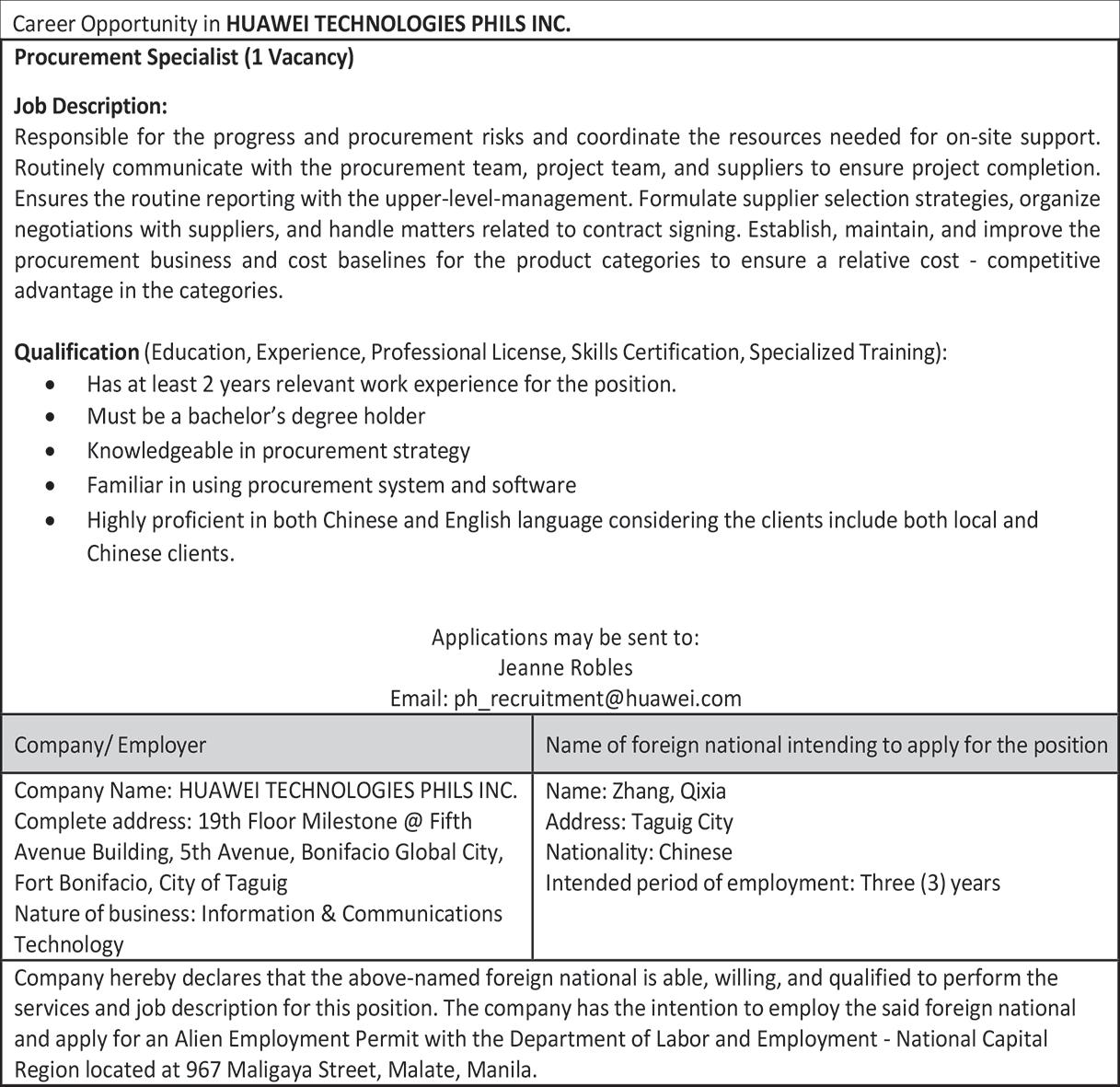
taxi driver, Affan Kurniawan, was tragically run over by a police vehicle, igniting mass protests across major cities.
Go has consistently affirmed his commitment to OFWs. He is one of the authors and co-sponsors of Republic Act No. 11641, which created the DMW to provide better protection and streamlined services for migrant workers. This law consolidated government efforts to deliver more efficient and responsive assistance to Filipinos working abroad.
In support of migrant workers’ health needs, Go also filed Senate Bill No. 414, which seeks to institutionalize the OFW Hospital in San Fernando City, Pampanga, ensuring its long-term operations as a dedicated medical facility serving OFWs and their dependents.
He then urged both DFA and DMW to strengthen coordination, especially during crises such as conflicts, natural disasters, or sudden changes in host country policies affecting Filipino workers.

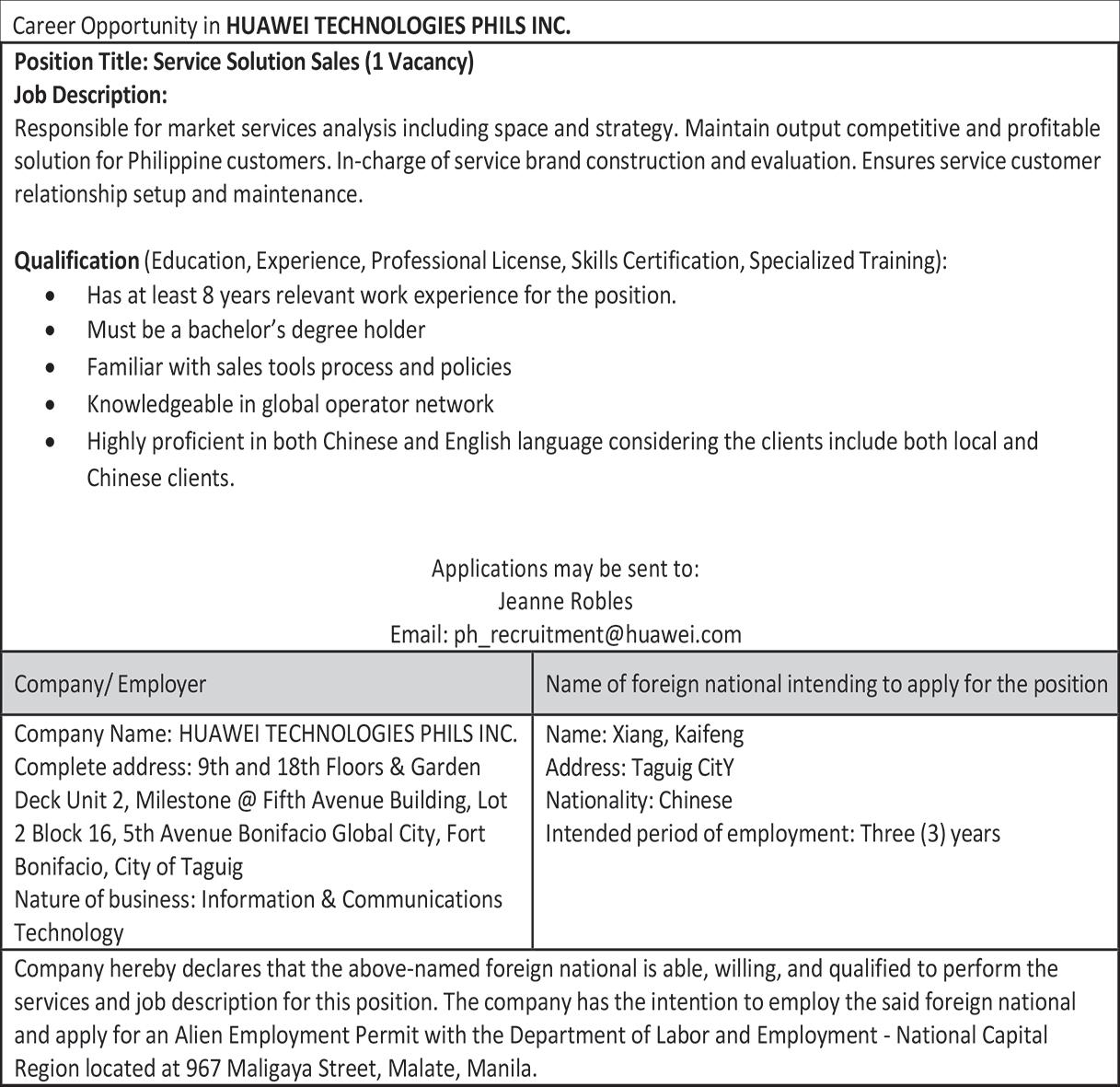
He said they could ask some congressmen if they are willing to appear, “but we don’t want to preempt our chairman Dante Marcoleta. He
“What is important is the hold departure order, HDO. If there is an HDO the Bureau of Immigration can really stop you from flying out. But a lookout bulletin? It won’t serve the purpose.”
GCash chief information security officer Miguel Geronilla named Digital Leader of the Year at PhilSec 2025
Cash, the country’s leading finance super app, continues to set the gold standard in digital trust and cybersecurity as Miguel Geronilla, Chief Information Security Officer of Mynt, the holding company of GCash, was recognized by PhilSec, the Philippines’ premier cybersecurity conference, as the PhilSec Summit 2025 Digital Leader of the Year. The award affirms Geronilla’s trailblazing leadership in shaping a resilient and future-ready cybersecurity infrastructure that protects the millions of GCash users across the country. Under his leadership, GCash has advanced a proactive, intelligence-led approach to digital security.


A11 Saturday, September 6, 2025
Citing abuse, solons demand overhaul of ₧11-B TUPAD
By Justine Xyrah Garcia
LAWMAKERS on Friday pressed the Department of Labor and Employment
(DOLE) to overhaul its emergency employment program, saying its value is being eroded by abuse and politicization.
At the House Committee on Appropriations budget deliberations, Zamboanga del Norte Rep. Adrian Amatong warned that the Tulong Panghanapbuhay sa Ating Disadvantaged/Displaced Workers (TUPAD) program is straying from its purpose.
“Sometimes it’s just one leaf and five people sweeping...It’s painful to see because your intention is good, but the value of the work gets lost...Sometimes the beneficiaries do not even need the job,” Amatong said.
He urged DOLE to tighten coordination with local governments and hold regional officers accountable for condoning current practices.
TUPAD provides 10 to 30 days of community-based work for displaced, underemployed, and seasonal workers, with pay based on the highest prevailing minimum wage in the region.
Typical assignments include clean-up drives, clearing debris, and minor repairs of public infrastructure.
But Amatong insisted the program should move beyond menial sweeping and ensure that workers contribute to meaningful, value-adding tasks.
4k Party-list Rep. Iris Marie Montes backed the call, warning that the program has become vulnerable to politics instead of leading beneficiaries toward stable jobs.
“The program is not bad, but it is being politicized. It’s time we improve it, to reform how TUPAD is implemented so that the work becomes more impactful and meaningful. I recommend we focus on green jobs and community enterprises,” Montes said.
For 2026, DOLE is slated to receive P45 billion, down from last year’s P51.2 billion.
TUPAD will get P11 billion—still one of DOLE’s biggest allocations, but far below its P17-billion funding in 2025.
In 2024, the program assisted more than 4.45 million individuals, triple its original target of 1.35 million.
As of July 2025, over 1.14 million displaced workers have already benefited. Lawmakers, however, questioned how many have actually secured longterm employment.
DOLE said it has yet to provide the exact figures, only assuring that its interventions are “continuous” to properly assist beneficiaries.
‘TUPAD is not just sweeping’
MEANWHILE , Labor Secretary Bienvenido E. Laguesma also defended the program, stressing that it should not be reduced to street sweeping.
“We already gave instructions to regional directors . . . We want projects related to reforestation...We will reach out to identify specific activities or work that can be prioritized in your area,” Laguesma told lawmakers. He acknowledged instances of political interference but said the department is investigating and blacklisting those who exploit the program.
“The community should not be penalized, but we will blacklist [violators]. We need to send a strong signal because many benefit during times of calamity. It may be temporary, but we bridge it to livelihood, upskilling, and reskilling,” he said. DOLE Assistant Secretary Amuerfina R. Reyes added that TUPAD is a stopgap measure meant to transition workers to other services.
“If the intention is for them to be employed...we have training and employment facilitation services. If they want more sustainable income... that’s where our livelihood programs come in,” Reyes said.
Under Department Order No. 173, beneficiaries must signify at the start of the program if they intend to pursue skills training for future employment.
The Technical Education and Skills Development Authority (Tesda) or its accredited institutions conduct the training under the Training for Work Scholarship Program.
Continued from A10
Since 2021, the Philippine Security Summit (PhilSec) has been at the forefront in securing the nation’s digital landscape. Every year, PhilSec gathers government, industry, and cybersecurity leaders to address threats and build resilient digital infrastructure. Its commitment to awareness, knowledge exchange, and strong security practices is vital for the Philippines’ digital future.
“At GCash, trust is not a feature—it’s our foundation. This recognition reflects years of relentless work to make digital finance safe and secure for every Filipino,” Geronilla said in his acceptance remarks.
Geronilla was lauded for driving multi-sectoral partnerships and pioneering AI-powered fraud detection systems, real-time scam alert rollouts, and a fasttrack reporting mechanism that supports law enforcement. These efforts have helped fortify the country’s transition to a secure, inclusive cashless economy.
The PhilSec Awards, co-presented by the National Privacy Commission (NPC), the Cybercrime Investigation and Coordinating Center (CICC), and the Armed Forces of the Philippines (AFP), honor individuals and organizations advancing the country’s cybersecurity posture.
With this award, Geronilla further emphasized the enduring commitment of GCash to cooperation across sectors. “GCash remains committed to upholding the integrity of digital transactions—protecting every scan, send, and swipe,” added Geronilla.
At the core of the digital security strategy of GCash is a whole-of-society approach, realized through sustained cooperation with key government agencies, including the Philippine National Police Anti-Cybercrime Group (PNP-ACG), the National Bureau of Investigation (NBI), the NPC, and the Department of Information and Communications Technology’s Cybercrime Investigation and Coordinating Center (DICT-CICC). These partnerships align response protocols, deepen intelligence sharing, and promote inclusive cybersecurity literacy nationwide, ensuring that digital safety is not only a corporate priority but a shared national mission.
For more on GCash’s security programs and inter-agency partnerships, visit www.gcash.com/security or follow @gcashofficial across platforms.

A12 Saturday, September 6, 2025
Editor: Angel R. Calso
Veteran Thai politician Anutin Charnvirakul wins vote in Parliament to become next prime minister
By Jintamas Saksornchai
The Associated Press
ANGKOK—Veteran Thai
Bpolitician Anutin Charn -
virakul won a vote in Parliament on Friday to become the country’s next prime minister, according to an unofficial running tally broadcast live on television.
Anutin, leader of the Bhumjaithai party, won more than 247 votes—the required majority— from the House of Representatives’ 492 active members. His total must be certified after voting is completed. He and his government are expected to take office in a few days after obtaining a formal appointment from King Maha Vajiralongkorn.
Anutin succeeds Paetongtarn Shinawatra, who was dismissed by court order as prime minister last week after being found guilty
of ethics violations over a politically compromising phone call with neighboring Cambodia’s Senate
President Hun Sen.
The dispute erupted into a deadly five-day armed conflict in July.
Anutin had served in Paetongtarn’s Cabinet, but he resigned his position and withdrew his party from her coalition government after news of the leaked phone call caused a public uproar.
Only five candidates, nominated during the last general election in 2023, were eligible under Thailand’s constitutional rules.
Pheu Thai, currently leading a caretaker government, attempted to dissolve Parliament on Tuesday, but the acting prime minister said their request was rejected by the king’s Privy Council.
The 58-year-old Anutin had served in the Pheu Thai-led co -




LEADER
alition government that took power in 2023 and before that in the military-backed but elected
government under former Prime Minister
Chan-ocha.
Anutin is best known for suc -



cessfully lobbying for the decriminalization of cannabis, a policy that is now being more strictly regulated for medical purposes.
He also played a high-profile role as health minister during the Covid-19 pandemic, when he was accused of tardiness in obtaining adequate vaccine supplies to fight the virus.
His party has promised to dissolve Parliament within four months in exchange for support from the People’s Party. That party’s leader, Natthaphong Ruengpanyawut, said it would remain in the opposition, leaving the new government potentially a minority one.
The People’s Party also said that an Anutin-led government would have to commit to organizing a referendum on the drafting of a new constitution by an elected constituent
assembly. The party has long sought changes to the constitution—which was imposed during a military government—to make it more democratic.
The People’s Party, then named the Move Forward Party, won the most seats in the 2023 election but was kept from power when a joint vote of the House and the Senate failed to approve its candidate for prime minister. Senators, who were appointed by a military government and were strong supporters of Thailand’s royalist conservative establishment, voted against the progressive party because they opposed its policy of seeking reforms to the monarchy. The Senate no longer holds the right to take part in the vote for prime minister.


See “Anutin,”
Prayuth
of Bhumjaithai Party Anutin Charnvirakul arrives at Parliament in Bangkok, Thailand, Friday, September 5, 2025. AP/SAKCHAI LALIT
Beijing’s balancing act: Can regulators sustain China’s stock rally without creating a bubble?
By Bloomberg News
CHINESE investors are put -
ting their faith in the government to engineer a slow and steady rise in share prices, betting that previous periods of boom and bust have given regulators the tools needed to push back against wild price swings.
The benchmark CSI 300 Index has soared more than 20% from its April lows, and fund managers inside the country increasingly expect Beijing to rein in a rally that risks becoming a bubble. There are already signs of a pushback from regulators, who are now considering measures including the removal of some curbs on short selling and policies to dampen speculative trading.
Although these moves may cause short-term pain, they are also fueling hope among local in -
vestors that battle-hardened regulators and giant state-linked funds known as the national team can effectively stage-manage a prolonged rise in share prices.
“The conditions for a slow bull market this time are more ripe than the cycles of the past,” said He Wenpin, a fund manager at Beijing Youhe Private Equity Management Co. “The national team now has plenty of power over the trajectory of the major gauges, and it’s relatively simple for them to control the speed of index gains.”
The talk of a controlled rise is a sign of the euphoria in China’s stock market, where even downdays are seen as a stepping stone on the road to more gains. The CSI 300 Index was around 1% higher on Friday, paring some of its Thursday losses that came after a Bloomberg News report


on regulators considering moves to quell speculative activity. The tech-heavy ChiNext Index also reversed course, rising 3.9% by afternoon trading.
The hope that Beijing can keep stock prices rising while avoiding speculative bubbles is based partly on sheer numbers: National team funds now own around $200 billion of exchange-traded funds, according to figures compiled by Bloomberg, giving them huge sway over the direction of stock prices.
But the confidence also comes down to the dizzying variety of official and unofficial policy tools available to the China Securities Regulatory Commission and other government departments. Unlike in previous periods of market volatility, regulators now have numerous levers they can pull—and plenty of experience in doing so.
Here are some of the tools.
Expanded playbook
CHINA’S national team of statelinked funds is Beijing’s most powerful weapon to slow the bull run, but it is also potentially the most dangerous.
Central Huijin Investment Ltd and other state-linked funds now own at least three-quarters of each of China’s six largest ETFs, led by the $52 billion Huatai Pinebridge CSI 300 ETF. The implicit threat is that they could one day pare those positions to cool off rallies.
“If the market goes insane, I think it’s reasonable that they might sell some,” said Chen Da, founder of investment consulting firm Dante Research in Shanghai.
“But you never know what kind of repercussions there will be, especially when we are just starting to see some bullishness after all these years. Sending that signal could easily lead things to overcorrect.”



That may encourage officials to rely on other big state-owned funds, who can sell stocks without fueling as much speculation that Beijing is fighting the market. That happened during a blistering rally in 2020, when China’s national pension fund and other investors said they were selling shares— briefly taking the air out of a rally that had made Beijing nervous.
Short selling
A POTENTIAL wild card is Beijing loosening its restrictions on short selling, which is permitted in China but expensive and hard to do.
The removal of at least some curbs on short selling has recently been discussed by top policymakers, according to a Bloomberg News report citing people with the matter.
The CSRC increased margin requirements for short sellers a year ago, as stocks were sliding.
At the same time, China Securities Finance Corp. stopped lending shares to brokerages, cutting off one of the country’s biggest sources of stock borrow. Those moves contributed to a sharp drop in the balance of short selling in the local market.
Regulators may also target single stocks or particular trading accounts, a limited way of sending a message to the wider market. The CSRC’s options include public warnings to investors, forced trading halts and the seizure of trading records and chat logs. Local brokers refer to these trading halts as placing stocks in “solitary confinement.”
Ningbo TIP Rubber Technology Co. whose Shanghai-listed shares jumped around the maximum 10% for nine sessions in a



Macron announces 26 allies to deploy troops to Ukraine as security guarantee
By Illia Novikov & Samuel Petrequin The Associated Press
KYIV, Ukraine—French President Emmanuel Macron said Thursday that 26 of Ukraine’s allies have pledged to deploy troops as a “reassurance force” for the wartorn country once fighting ends in the conflict with Russia.
Macron spoke after a meeting in Paris of the so-called “coalition of the willing,” a group of 35 countries who support Ukraine. He said that 26 of the countries had committed to deploying troops in Ukraine—or to maintaining a presence on land, at sea, or in the air—to help guarantee the country’s security the day after a ceasefire or peace is achieved.
Earlier Thursday, Macron and other European leaders met with Ukrainian President Volodymyr Zelenskyy and the US envoy for peace talks, Steve Witkoff, to discuss ways of ensuring long-term military support and continued American backing for Ukraine once the conflict ends. Zelenskyy also held a closeddoor meeting with Witkoff. Macron said at a news conference alongside Zelenskyy that the reassurance force “does not have the will or the objective of waging war against Russia,” but will aim “to prevent any new major aggression and to involve the 26 states very clearly in the lasting security of Ukraine.”
Macron and Zelenskyy say US backs the plan
THOUGH details of any US participation in the security guarantees remain unclear, both Macron and Zelenskyy said Washington had expressed willingness to be part of the plan, and the Ukrainian president said he was grateful about that. “As for in what format, I am not yet ready to tell you in detail,” Zelenskyy added.
“The planning work will be finalized with the United States,” Macron said.
Macron and British Prime Minister Keir Starmer, who lead the “coalition of the willing,” previously have insisted that any European “reassurance” force in Ukraine needs the backing of the United States.
The European leaders—some of whom joined the meeting virtually—said Russian President Vladimir Putin must now work toward ending the fighting, and the German government suggested European sanctions on Russia would increase if Moscow drags
its feet. The European leaders also spoke by phone with US President Donald Trump after their meeting.
Starmer’s office said the British prime minister “emphasized that the group had an unbreakable pledge to Ukraine, with President Trump’s backing, and it was clear they now needed to go even further to apply pressure on Putin to secure a cessation of hostilities.”
Trump phone call
FINNISH President Alexander Stubb told Finnish media that, in the phone conversation with European leaders, Trump emphasized the need to put economic pressure on Russia, and said Europe must stop buying Russian oil and gas that he said was funding the war.
Trump stressed that Russia received €1.1 billion in fuel sales from the EU in one year, according to a White House official. Trump also emphasized that European leaders must place economic pressure on China for indirectly funding Russia’s war efforts, according to the official, who was not authorized to comment publicly about the private talks and spoke on the condition of anonymity.
German government spokesman Stefan Kornelius said that German Chancellor Friedrich Merz laid out three “areas of action,” including working toward a summit that would include Zelenskyy, and “a ceasefire must be agreed there.”
“If the Russian side continues to play for time, Europe will increase the pressure of sanctions to increase the chances of a diplomatic solution,” the statement said.
The Ukrainian president said


a meeting with Putin is needed. “This is not a matter of a desire, this is a matter of necessity,” Zelenskyy said. “We support any format, bilateral meeting, trilateral meeting, I believe that Russia does everything to defer it.”
There was no immediate reaction from Russian officials.
Putin—isolated by Western leaders but backed by China in his war effort—said Wednesday that he believed “if common sense prevails, it is possible to agree on an acceptable option for ending the conflict,” adding that Trump has “a sincere desire” to reach a settlement.
Positive signals IN a policy shift earlier this month, the US sent positive signals over its readiness to support security guarantees for Ukraine that resemble NATO’s collective defense mandate, Zelenskyy previously has said. It is unclear what that support would look like in practice. Ukraine is hoping for continued US intelligence sharing and air support.
NATO Secretary-General Mark Rutte said that a broad coalition of nations is needed to support Ukraine’s defense against Russian aggression, but also to strengthen Europe to deter further military action by Moscow.
Citing European military and intelligence officials who have warned of Russian plans to strike other European countries, Rutte said that “we have to make sure that our deterrence is such that they will never try, knowing that our reaction will be devastating.”
Rutte also called for the world to “not be naive about Russia.”
“We know what Putin tries to do and the evidence is there in Ukraine as we speak,” he said.
Meanwhile, in Ukraine, Russia fired 112 strike and decoy drones across the country overnight Thursday, according to Ukraine’s Air Force morning report. Air defenses intercepted or jammed 84 drones, the statement said.
Russia on Thursday announced that it was expelling an Estonian diplomat in a tit-for-tat move after Estonia declared a Russian diplomat persona non grata last month.
Petrequin reported from London. The Associated Press reporters from across the globe contributed to this report.
old limit.
row, suspended trading on Thursday, citing a need to protect investor interests after abnormal fluctuation.
Deposit ratio
THE CSRC could lift the minimum margin deposit ratio for brokers, after cutting it to 80% from 100% in 2023. Shanghai-based Sinolink Securities Co. raised its margin deposit ratio on some trades to 100% last month, the first public move by a broker to revert to the
Beijing may next attempt to slow the buying spree by raising stamp duty, or rolling back waivers on dividend tax payments. China halved the stamp duty on securities trading in 2023, part of a slate of policies to rev up trading after a years-long lull. The move saved investors around 250 billion yuan ($35 billion) in taxes over two years, according to estimates by the state-run China Economic Times.
The most pain-free option, though, will be speeding up the registration of initial public offerings. Since these deals add to the

Xi Jinping unites world leaders sick
of being pushed around by Trump

By Bloomberg News
WHILE Donald Trump is hard to beat when it comes to stealing the global spotlight, Xi Jinping proved this week he can also put on a good show.
In memorable scenes reminiscent of a family reunion, the Chinese leader embraced and riffed with some of the world’s preeminent strongmen—including an impromptu conversation with Russia’s Vladimir Putin and North Korea’s Kim Jong Un about organ transplants and immortality.
But the most surprising image may have been a chummy threeway gathering between Xi, Putin and Indian Prime Minister Narendra Modi, who made his first visit to China in seven years.
Beyond the symbolism of seeing them laugh and hold hands, as well as Modi riding in Putin’s limo, they also hold the biggest potential for real economic shifts that could offer the world an ability to withstand threats from Trump to impose financial pain for defying the US.
For the moment, the ties that bind them center primarily around energy. One of the big outcomes this week was Russia saying it has reached an agreement with China on the Power of Siberia 2, a vast pipeline that Beijing had sought to delay for years, as it neither needs the fuel nor wants the energy dependence on its neighbor. While key details over pricing are still unclear, the decision to move forward now served as a sign of deeper cooperation. At the same time, India signaled it would keep buying oil from Putin’s regime, something Trump has already targeted with punitive tariffs.
supply of shares, they put downward pressure on secondary prices.
But they also allow capital-hungry firms to raise cash—something that can ultimately help China’s shaky economy. In July, the Shenzhen Stock Exchange urged brokers to speed up applications to its tech-focused ChiNext board.
“Regulators have been keeping a light touch on investigating and punishing speculative trades, and the gates to IPOs are still tightly guarded,” said Yang Tingwu, fund manager at Fujian Tongheng Investment. “That may change if things start to get out of hand.”
Continued from A12
After Move Forward was blocked from taking power, Pheu Thai had one of its candidates, real estate executive Srettha Thavisin, approved as prime minister to lead a coalition government. But he served just a year before the Constitutional Court dismissed him from office for ethical violations.
“This is a significant and serious inflection point,” said Matthew Bartlett, a former State Department appointee under President Trump during his first term. “It really reveals how energy security is critical to national security in the 21st century.”
The newfound bonhomie in China this week also raises a question of the business, economic and strategic implications if the three nations were to move closer together in other areas, even if that remains a remote possibility at the moment. The China-Russia nexus alone serves as a powerful counterweight to the US, prompting Trump and others in his administration to warn earlier this year about the dangers of their budding alliance. Adding India to the mix would make that an even more formidable partnership. The three nuclear powers collectively hold a third of the world’s population, vast natural resources and world-beating manufacturing power. Today they account for roughly a quarter of global gross domestic product, up from about 5% at the turn of the century, and China has made steady strides in coming closer to catching up to the most cuttingedge US technology.
While the obstacles to more fulsome economic integration among the three nations are vast, Trump’s use of tariffs to inflict economic damage opens the door to imagine the possibilities. Beyond energy, that could include efforts to build up alternatives to the dollar, expand investment opportunities and explore other ways to withstand US sanctions and tariffs. In China this week, Xi and Modi pledged to resume direct flights between the nations.
Whether Chinese officials will ultimately use all of these tools remains to be seen, and depends in large part on whether the country’s rapid move higher in stock prices keeps going at pace. There will also be suspicions of more familiar interventions along the way: As stocks were sliding Thursday, shares of Agricultural Bank of China Ltd. and Industrial and Commercial Bank of China Ltd. experienced a rapid jump higher, softening some of the market’s losses. The national team and China’s finance ministry are together the biggest shareholders in both. Bloomberg News
Srettha’s replacement Paetongtarn, former Prime Minister Thaksin Shinawatra’s daughter, also lasted just a year in office. But even before she was forced out, her government was greatly weakened when Anutin’s Bhumjaithai Party abandoned her coalition right after her controversial call in June with Cambodia’s Hun Sen. Its withdrawal left Pheu Thai’s coalition with just a tiny and unstable majority in Parliament.
UKRAINE’S President Volodymyr Zelenskyy, left, and French President Emmanuel Macron, arrive to attend a summit on Ukraine at the Elysee Palace, in Paris, France, Thursday, September 4, 2025. LUDOVIC MARIN/POOL PHOTO VIA AP
RUSSIAN President Vladimir Putin, from left, Indian Prime Minister Narendra Modi and Chinese President Xi Jinping talk ahead of the Shanghai Cooperation Organization (SCO) summit at the Meijiang Convention and Exhibition Center in Tianjin, China, Monday, September 1, 2025. SUO TAKEKUMA/POOL PHOTO VIA AP
Saturday, September 6, 2025 A15
Continued from A14
“The classic maxim of foreign policy is unite your friends and divide your adversaries,” former Treasury Secretary Larry Summers said on Bloomberg Television’s Wall Street Week with David Westin. “We have pursued policies that have managed to unite our adversaries and divide our friends.”
“This should be an occasion for some real soul-searching on the part of America’s national security thinkers,” said Summers, a Harvard University professor and paid contributor to Bloomberg TV.
The idea of a strategic Eurasian triangle consisting of Russia, India and China dates back to the late 1990s, when Moscow sought to diversify its foreign policy away from an over-reliance on the US and Europe. The group struggled to take flight, but eventually spawned the creation of the BRICS grouping that also included Brazil and South Africa. That bloc has since expanded to include nations like Indonesia and several from the Middle East, and is set to hold a virtual call next week to discuss Trump’s trade policy.
Since Putin’s invasion of Ukraine, China has served as Russia’s most important economic partner, even as it has been careful to appear like it’s not overtly supporting his war effort. Xi’s government has also become bolder in testing US sanctions: Last week, it took a single cargo of liquefied natural gas from Arctic LNG 2, a US-sanctioned project dear to Putin’s heart and energy ambitions.
Under the previous administration, the US was quick to slap retaliatory sanctions on any vessel or company that appeared to be circumventing restrictions on Russian LNG. It isn’t clear how Trump will react, and the White House hasn’t commented on the trade.
“Rigorous enforcement of US sanctions, including against Novatek and Arctic LNG 2, has been key to maintaining pressure on the Kremlin to reverse course and accept a diplomatic solution to the war in Ukraine,” said Geoffrey Pyatt, a distinguished fellow at the Atlantic Council Global Energy Center and former US assistant secretary of state who helped craft Arctic LNG 2 sanctions under the Biden administration. It’s still unclear if China’s pipeline deal with Moscow is more signal than substance. China and Russia haven’t agreed on a price yet—a key sticking point before the project can move forward. Beijing will likely only greenlight the pipeline if Moscow accepts a price close to what domestic Russian consumers pay, according to a report from Columbia University’s Center on Global Energy Policy.
What’s more, if all the capacity is used, China would be taking more than 40% of its imported gas from Russia—a dramatic shift for a country that has long sought to keep a diverse stable of suppliers as part of its energy security drive. China also imports significant volumes of gas from Qatar and Australia.
China’s progress in renewable energy is also closing the window for the Russians to get more gas into the Chinese market, according to Alexander Gabuev, director of the Carnegie Russia Eurasia Center.
“The Russians, in order to get there, will really need to accept the conditions that make China happy,” he said. “And so far, I think it seems that the conditions look like straight robbery.”
The roadblocks to closer cooperation with India are also high. Modi’s trip to China is more a rebalancing away from the US orbit than an embrace of Beijing, according to an Indian official familiar with the matter, who asked not to be identified. The trust deficit on both sides remains high after ties suffered following a 2020 border clash, and India is far away from easing restrictions on Chinese investment, the official said.
While Modi attended the summit of the Shanghai Cooperation Organization in Tianjin, he stayed away from Xi’s military parade in Beijing several days later. The Indian leader also stopped in Japan, a key US ally, ahead of the China visit.
“Modi was going to send some signals that he’s going to maintain India’s strategic autonomy, and to show that he has options, and won’t be pushed around,” said Daniel Kritenbrink, former assistant secretary for East Asian and Pacific Affairs in the Biden administration. “But India is going to be careful and cautious. And I remain cautiously optimistic that because of the fundamental common interests that the United States and India hold, that there’s an opportunity to bring things back together there as well.”
Trump’s administration has kept up a steady barrage of verbal attacks on India in recent weeks, with White House trade adviser Peter Navarro accusing New Delhi of funding Russia’s campaign in Ukraine and even calling it “Modi’s war.” New Delhi and Moscow have deep ties dating back to the Soviet era, and Russia is India’s biggest supplier of weapons.
The US president also accused Xi, Putin and Kim of conspiring against the US during their meeting in China. On Wednesday, he said that US relations with all of the leaders who were in Beijing was “very good,” while warning that “you’ll see things happen” if Putin doesn’t meet Trump’s deadline for holding talks with Ukrainian President Volodymyr Zelenskyy.
Western officials familiar with the matter were impressed with Xi’s parade, calling it a military version of China’s 2008 Olympics that signals it will soon become a US peer. They also said the events in China made them believe that Xi viewed himself as the boss of both Putin and Kim, and will only cooperate with them on favorable terms to Beijing.
A goal of the parade was to showcase China’s industrial prowess by featuring weaponry made with Chinese technology, according to Wang Yiwei, a professor of international relations at Renmin University and former diplomat seen as close to the government in Beijing. The aim, he said, “is to tell the world ‘there is no need to fight a war with China anymore. You won’t win anyway.’” Beijing often seeks to instill stability in its capital markets around major national events. Ahead of the parade, Chinese stocks jumped about 10% in August, but that rally is starting to cool.
At the SCO summit, Xi also sought to extend China’s influence among more than 20 leaders in attendance by taking veiled shots at the US and emphasizing that all countries should be treated equally. While the body is often dismissed as a bureaucratic talk shop in the West, the expansion of membership in recent years and shift to create a development bank helps provide a more stable partner to leaders roiled by Trump.
Many of the leaders who went to Beijing aren’t necessarily trying to side with China or Russia against the US, but rather to look for space to maneuver between the world’s big powers and preserve flexibility.
“They were hoping I was watching,” Trump said. “And I was watching.” With assistance from Sudhi Ranjan Sen, Jing Li, Alex Wickham, Soo-Hyang Choi and Jasmine Ng / Bloomberg


Jahns makes it back-to-back in PGT Binitin

By Aldrin Quinto
at 18-under 262 to clinch his third title on the Philippine Golf Tour in commanding fashion.
His back-nine birdie binge wiped out all the drama that unfolded early.
Concepcion cut Jahns’ lead to one with two front-nine birdies, while ahead of them, Angelo Que was making a scorching run.
Already with two wins on the Philippine Golf Tour this season, Que looked determined to add to that collection as he got to five-under on the front nine highlighted by eagle on the par-4 No. 2. That surge got the three-time Asian Tour winner within three shots of the leader.
Jahns would not be denied, however, with birdie on No. 14 restoring his two-stroke lead and, as icing on the cake, picked up two more shots on the final two holes with the spectators erupting as he sank the monster 32-foot putt on the 18th.
“I stayed very patient,” Jahns said.
“I struggled on the front nine, made just one birdie and had to grind out a lot of up-and-downs for par. But I was fortunate to make a few birdies coming in.”
Concepcion carded a bogey-free 67 after rounds of 68-66-65 for a 14-under 266 total, while Que finished with a 64 for a 12-under 268.
“I just trusted my short game.
Distance control is really tough on this course. Even when I missed greens, I stayed confident around the edges.”
Villanueva plays with a flourish
DINO VILLANUEVA also got huge cheers from the gallery as he aced the 184-yard finishing hole with a Mizuno 241 6-iron and a Trust Premium No. 1 ball.
It was Villanueva’s ninth hole-inone and second in a competition.
Villanueva last week aced the 167yard hole No. 3 at Ayala Greenfield while
tuning up for the Bacolod Golf Challenges.
The ace provided a great finish to a tough round for Villanueva, who carded a 73 and wound up in 24th spot.
He received P20,000 from the organizing Pilipinas Golf Tournaments, Inc. and P10,000 from Bacolod Golf and Country Club.


Big cheque for for Fil-Am Jahns KEANU JAHNS bagged P356,000 from the P2 million purse, while Concepcion pocketed P356,000 in the tournament organized by Pilipinas Golf Tournaments, Inc. and sponsored by ICTSI. Que, champion at Pradera Verde and Eagle Ridge, received 134,000.
Aidric Chan was one-under at the turn then caught fire on the back-nine, shooting down four birdies on the way to a 67 for an 11-under 269 aggregate. That was good for fourth place and P104,000.
Five-time Order of Merit winner Tony Lascuna had a sizzling 65 to finish at 270.
NBy Josef Ramos
OW that his time has come to finally call the shots after playing for 16 seasons and working as a deputy coach for a little over two years, former University of the East Red Warrior Ronald Tubid owns full responsibility—and the consequences— to guide the Terrafirma Dyip in the Philippine Basketball Association (PBA). And the first major task for journeyman who seven teams in the pro league is to get the best possible pick in this year’s Rookie Draft.
“We want a big man but the only thing we can share is we are going to get the most dominant and the most talented player there on Sunday,” Tubid said. “We only have a few names, but we cannot say who he is for the meantime.” Terrafirma owns the first pick in the draft and Tubid was at the Draft

Also at 10-under sharing fifth place were last year’s champion Reymon Jaraula, who carded a 67, and South Korea’s Ha Taewon, who closed with a 69.

KEANU JAHN’S back-nine birdie binge wipes out all the drama and wraps up the crown with a closing 65 to rule the Bacolod Golf Challenge by four strokes. PGT PHOTO
Combine at the Ynares Center in Pasig City when he spoke on the phone with BusinessMirror on Friday morning and was monitoring every move of each of the available big men in the draft set Sunday at the SM Mall of Asia Music Hall.
The bigs up for grabs among the 128 aspirants are 6-foot-10 Geo Chiu, who played in the Japan B. League and Maharlika Pilipinas Basketball League and 6-foot-8 former Ledis Lepalam from the College of Saint Benilde.
“We are still scouting and weighing all options so far,” he said.
Converge got the second pick in the draft order from Phoenix Super LPG Bryan who traded Bryan Santos and its eighth pick, followed by Blackwater, NorthPort, NLEX, Magnolia of new coach LA Tenorio, Meralco and Phoenix. San Miguel Beer will select at ninth while Rain or Shine has the 10th and 12th spots and Barangay Ginebra San
Kim Tae Soo of South Korea had the day’s best round of 63 with an eagle and five birdies, taking a share of eighth at nine-under with Carl Corpus, who had a 66, and Russell Bautista, who had a 68.

Miguel the No. 11 position.
Slasher Juan Gomez de Liaño is expected to top the draft with Dalph Panopio, Filipino-American playmaker
Jason Brickman and Will Gozum favored to be picked inside the top five.
A three-way trade involving NorthPort, Converge and Phoenix, meanwhile, was approved the Commissioner’s Office—Phoenix got guard Evan Nelle from NorthPort, Converge received the rights of banger Larry Muyang from Phoenix and NorthPort acquired 6-foot-8 Jeo Ambohot from Converge.

the 154-pound limit of junior middleweight. His last official bout of his 50-win career was against MMA star Conor McGregor in 2017.
That fight, along with his victories over Manny Pacquiao and Canelo Alvarez, were the three richest bouts in boxing history.
“I’ve been doing this for 30 years and there hasn’t been a single fighter that can tarnish my legacy,” Mayweather said. “You already know that if I am going to do something, it’s going to be big and it’s going to be legendary. I’m the best in the business of boxing. This exhibition will give the fans what they want.” AP
World volleyball epicenter rumbles in Southeast Asia
VOLLEYBALL’S epicenter rumbled in Southeast Asia with the inauguration on Friday of the first-ever Asian Volleyball (AVC) House in Bangkok with Thailand entering the last two days of its hosting of the FIVB Women’s World Championship and the Philippines taking its turn to host the men’s global tournament in a week’s time.
“This is the home of Asia volleyball now and it easy for us to work around here with the success of volleyball in Southeast Asia,” AVC president Ramon “Tats” Suzara, also head of the Philippine National Volleyball Federation (PNVF), told a wellattended inauguration ceremony that drew the who’s who in world volleyball.
Philippine Sports Commission chairman Patrick “Pato” Gregorio stood alongside FIVB VIPs headed by its president, Fabio Azevedo, and his predecessor, Ari Graza, and Suzara’s own predecessor at the AVC, Rita Subowo during the historic ceremony.
“All volleyball stakeholders are welcome especially in Asia, volleyball fans ,too, universities and club teams, and of course we are open to many sports stakeholders,” added Suzara, who was also joined by PNVF secretary-general Donaldo Caringal
and Mayor Eric Singson, who’s bidding to host the 2026 AVC Women’s Cup Candon City. Thailand Volleyball Association president Somporn Chaibangyang and National Olympic Committee of Thailand secretary-general Thana Chaiprasit joined Suzara, Azevedo and Gregorio and leading the toast for the AVC House—a two-storey mansion
“I’m
Women’s NCAA 56th season gets going in Makati
THE 56th season of the Women’s National Collegiate Athletic Association (WNCAA) unwraps Saturday at the Makati Coliseum, with a festive opening ceremony prepared by host Assumption College-San Lorenzo. The event starts at 10 a.m. with the participation 16 participating schools parading their athletes and colors and also with three basketball matches scheduled in the afternoon.
Assumption College will take on sister team Assumption Antipolo at 1 p.m., followed by the University of Santo Tomas-Angelicum College vs St. Jude Catholic School clash at 2:30 p.m., both in the juniors division.
Centro Escolar University, the 12time seniors defending champion, faces University of Makati at 4 p.m.
On Sunday, the volleyball tournament starts at St. Scholastica’s College-Manila gym; basketball 3x3 (midgets division) at the Makati Coliseum and futsal at St. Paul College-Pasig City.
Other members of the country’s first and only tri-level league for women are Chiang Kai Shek College, La Salle College Antipolo, De La Salle Zobel, Miriam College, Philippine Women’s University, St. Stephen’s High School, San Beda College Alabang and University of Asia & the Pacific.
They will also compete in chess, badminton, swimming, taekwondo, poomsae, table tennis, tennis, cheer dance/cheerleading and street dance.
This year’s theme is “Breaking Barriers, Building Legacies.”
“We take pride in elevating the role of women not just in sports, but in their overall being,” Assumption College Sr. president Irene Cecile Torres said during the media launch on Wednesday.
The 55th season overall champions were Assumption Antipolo (midgets), De La Salle Zobel (juniors) and Centro Escolar (seniors).

Five French women boxers miss world champs over new sex tests
PARIS—Five French women boxers will miss the world championships starting on Thursday in England because of complications with new sex tests that are compulsory after a furor at the 2024 Paris Olympics
The French team said it was “with astonishment and indignation” its boxers cannot compete after missing a deadline to get the test results from England. The tests are prohibited in these sporting circumstances in France by a law protecting women’s privacy.
World Boxing announced its mandatory testing policy on May 30 as a response to controversy last year in Paris, where Imane Khelif of Algeria and Lin Yu-ting of Taiwan won gold medals amid a campaign to cast doubt on their eligibility.
Female boxers have to undergo a polymerase chain reaction (PCR) test or an equivalent genetic screening test to determine their sex at birth.
The new boxing governing body— which was not involved in the Paris Olympics then was provisionally recognized by the International Olympic Committee in February— suggested the French federation was responsible for the missed deadline
ahead of the worlds in Liverpool.
“It is very disappointing for the boxers that some national federations have not been able to complete this process in time,” World Boxing said on Thursday in a statement.
“[T]he organization has made it clear that testing will be the responsibility of national federations as they have the closest links and most access to their boxers and are best placed to manage the testing process.”
The French boxing federation said it was told to expect the results “within 24 hours and that we could therefore, without fail, present them when registering our boxers.”
The five boxers excluded were Romane Moulai, Wassila Lkhadiri, Melissa Bounoua, Sthélyne Grosy and Maëlys Richol. Richol shared on her Instagram page a message by Estelle Mossely, a former candidate to lead the French boxing federation, calling for officials responsible to
Khelif also will not compete in
RONALD TUBID’S mettle as a coach gets an initial test.
Aryna roars to final
Sabalenka roars after beating