AS they walked up to the thick metal pillars of the border wall dividing Tijuana and San Diego, the Hussaini siblings carried nothing from their lives in Afghanistan than a hazy fantasy of what awaited them on the other side.
Amir, 21, and his sisters, Suraiya, 26, and Bano, 27, arrived in northern Mexico with an appointment for January 24, four days after US President Donald Trump took office. That was the day they were supposed to enter the US and make their case, marking what they thought would be an end to the repression by the Taliban after the withdrawal of American troops in 2021, and to their 17,500-mile journey by foot, canoe, bus and plane across the world.
That was all before the door to asylum slammed shut along the US southern border moments after Trump took office. Trump’s victory was based in no small part on support from voters who embraced his hard-line immigration views. Within days, his administration had transformed what it meant to seek refuge in the US, casting aside an ethos of helping the persecuted that is nearly as old as the country itself. Families such as the Hussainis are suffering the cascading consequences of larger political shifts as countries tighten asylum policies
and turn away refugees. In Afghanistan, whose tumultuous history is intertwined with American military and foreign policy, the expulsion carried an added sting because the Hussainis believed they would find safe harbor in the US. Instead, Amir watched his sisters being torn away from him by American border agents under the harsh fluorescent lights of a detention facility. It was the last time he saw them.
Half a year later, the family has been dispersed to different countries as part of the administration’s push to send immigrants and refugees to far-flung, unfamiliar and often dangerous places. One sister is trying to navigate life in the far reaches of South America. The second is marooned in Central America. Amir is back in Afghanistan, plagued by fear in the very country the family fled.
“We had reached the end of our journey…and our hopes were completely shattered,” Suraiya said. “I can’t necessarily call it a betrayal, but the fact that they didn’t interview us, ask about our fears or why
we fled our country. It all seemed very cruel.”
Watching a future in Afghanistan dissolve FOR most of their lives, even as their homeland was riven by war, Suraiya and her siblings never dreamed of leaving.
But as the years rolled on, they watched the life they were building dissolve. That was when they turned to the US, which once funneled hundreds of billions of dollars in humanitarian and military aid into Afghanistan, as the place that could offer them a new life.
The Hussainis grew up in an area run by local gangs on the fringes of Kabul, the capital, after the fall of the Taliban in 2001. Their father was a metalworker. Their mother could not attend school but wanted everything for her children.
After centuries of targeted
massacres and persecution, the Hussainis’ ethnic minority group, the Hazaras, felt a respite with the Taliban out of power. For women, the doors to education and work finally were opened.
“I never thought I would go to America. I hadn’t even seen American soldiers up close until they left and the Taliban came back” four years ago, Suraiya said. “My family was in Afghanistan. I just wanted to be here doing the things my parents were never able to do.”
Amir, an aspiring musician with thick, curly black hair and an optimistic smile that crinkles the corners of his eyes, would spend weekends working as a wedding DJ. Suraiya, his more reserved older sister, studied computer science in a public university sitting side by side with men.
Suraiya dreamed of a career, but that changed in her third semester in college in 2021, when
the Taliban-led government resumed a yearslong effort to systematically exclude women from much of society.
Taliban officials came to her classes and told women they were no longer allowed to attend school alongside men. She was transferred to a Taliban-run school, where women were only allowed to study dentistry. Ultimately, women were banned from higher education.
For Amir, work evaporated when the Taliban prohibited most forms of music, which they said was against the teachings of Islam.
In 2023, authorities announced that religious police would scour wedding halls in Kabul to enforce the ban. In 2024, they announced they had “seized and destroyed” over 21,000 instruments.
“The Taliban told me I had to quit my job a number of times. But if I gave it up, I would have lost everything—my work, my livelihood, my entire way of life,” Amir said.
Under the new government, some of Afghanistan’s millions of Hazaras have been killed in raids and attacks as part of a campaign of violence and discrimination.
Suraiya became increasingly scared to go outside. The home she shared with her parents and five siblings felt more like a prison.
“We were considered nothing just because we were Hazaras,” she said.
The Hussainis felt they had no choice but to leave.
The Taliban government did not respond to a request for comment about criticisms of humanrights concerns about their treatment of Hazaras and women under its rule.
Crossing continents TO finance their journey to the US, the three siblings sold everything they owned in 2023, including a family home.
Along with Bano and her husband, the siblings traveled to neighboring Iran, where they spent a year applying for a humanitarian visa to Brazil. While they waited, Bano gave birth to her first daughter.
In Iran, the family and the baby lived in a ramshackle home in Tehran, eluding detection to avoid being swept up in deportations by Iran’s government. In spring of 2024, their spirits lifted when they boarded a flight to Brazil with new humanitarian visas. A world of possibilities seemed to await.
The airport in São Paulo is the starting point for many migrants traveling to reach the US. In a span of months, the Hussaini family crossed 11 countries, winding their way north by bus through the highaltitude deserts of Bolivia and the dense forests of the Andes.
Suraiya carried a hair clip her mother had given her and a few totems from friends. Then, in Ecuador, those small pieces of her former life were stolen.
The siblings joined more than a million people who crossed the Darien Gap between 2022 and 2024. Controlled by criminal gangs, the perilous stretch of jungle dividing Colombia and Panama has turned into a migratory highway for those fleeing economic crisis, repression and war. Suraiya remembers the pouring rain and the crying of her sister’s baby as they trudged through the rainforest. By the time they
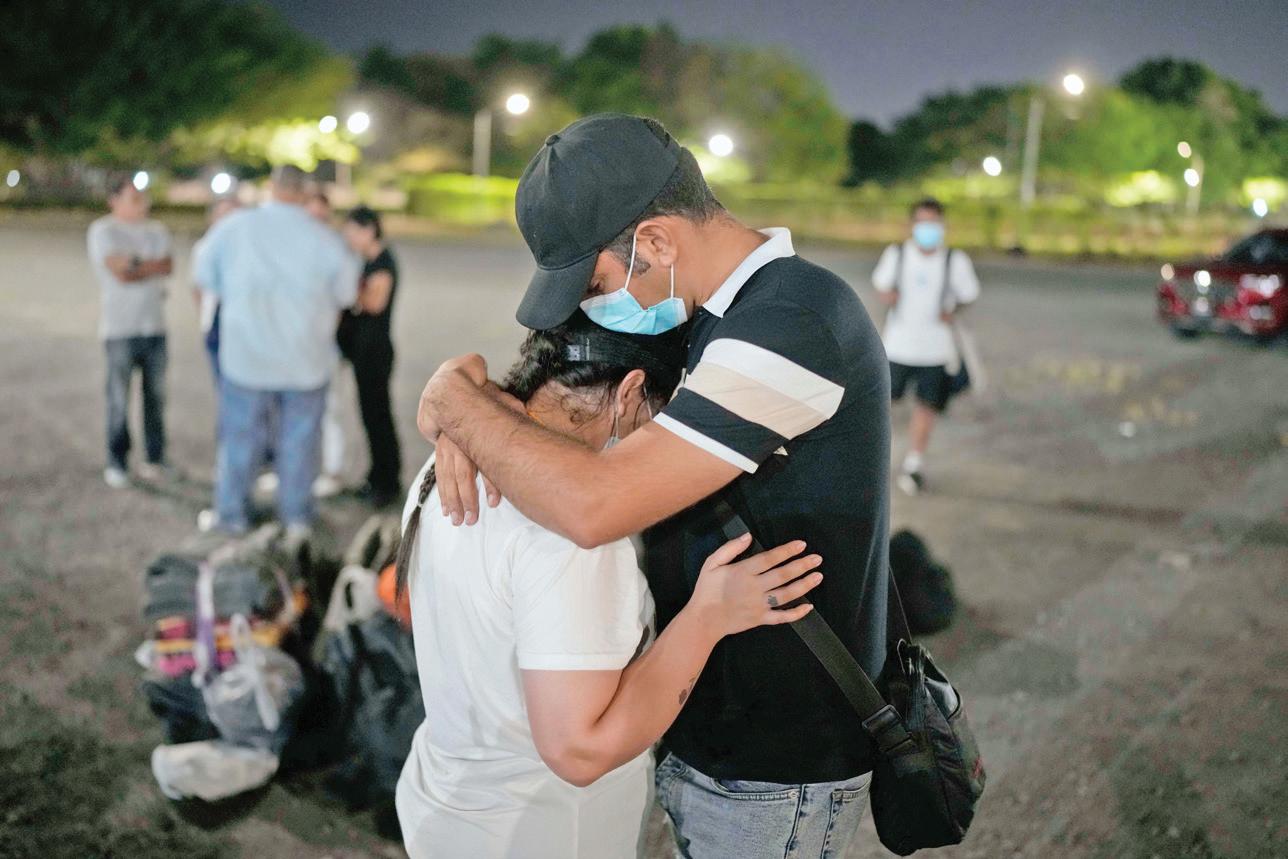
ASYLUM seekers embrace upon arriving in Panama City, March 8, 2025. AP/MATIAS DELACROIX
PEOPLE in San Diego wave across the border structure to others in Tijuana, Mexico, November 23, 2018. AP/RODRIGO ABD
LEFT BEHIND BY HISTORY: An Afghan family’s
Continued from A1
climbed out of the jungle days later, their shoes were in tatters.
Only able to speak their native Dari, they did their best to learn small words like “amigo” and basic questions to communicate.
One night, she heard that three people, including a 6-yearold child, had drowned in the river next to where they were sleeping.
For the first time, she wondered if they had made a mistake.
“Nothing was as difficult as the jungle . . . I had never seen anything like it,” she said. “There was this feeling of regret, but there was no way to go back.”
Asylum contracting globally
AS they were traveling, access to asylum was constricting globally. In September, the United Nations refugee agency warned that governments around the world, namely the US and European countries, were increasingly undermining the global convention on refugees and asylum-seekers.
“The institution of the asylum worldwide is under more threat now than it has ever been,” Ruvendrini Menikdiwela, assistant high commissioner for protection at the agency, told reporters.
Experts describe the shift as “protection fatigue” triggered by rising rates of displacement around the world.
By the end of 2024, at least 123.2 million people worldwide— approximately 1 in 67 people— were living forcibly displaced from their homes, according to the UN.
“Governments have gotten much less tolerant of asylum,” said Susan Fratzke, a senior policy ana-
lyst at Migration Policy Institute. “Rather than trying to solve these problems within their asylum systems, they’re increasingly turning to measures that really push the boundaries of what’s legal.”
Democratic President Joe Biden’s administration had already been cutting access to asylum and trying to slow the flow of migrants before the 2024 election. Under Republican Trump, access to asylum along the US-Mexico border has virtually disappeared.
Governments from Europe to Australia to Asia have heightened restrictions and even imposed laws criminalizing asylum-seekers.
Nigel Farage, the head of the United Kingdom’s far-right party, promised to carry out mass deportations if it wins elections next year, regardless of the dangers that asylum-seekers may face back home.
“We cannot be responsible for all the sins that take place around the world,” Farage said.
‘No other country will take you’ AMIR, Suraiya, Bano and her husband and daughter arrived in Mexico in the fall of 2024. Like many asylum-seekers, they spent nearly half a year in limbo waiting for the chance to make their case to American authorities.
They would wake up and immediately apply for an appointment on a Biden-era app, known as CBP One, a daily lottery under which more than 900,000 people entered the US without a visa for up to two years, with eligibility for a work permit and a shot at getting asylum through immigration courts. It was a game of chance and patience more than circumstance.
To pay for a small room they
shared with other migrants, they cleaned the streets of Mexico City for coins. They went to bed each night unsure of their fate.
In January, they received word that their names were selected. As they made their way to the TijuanaSan Diego border, their once-vague ambitions gave way to imaginings of returning to college, finding work and building a life in the US.
But the date of their appointment was January 24, four days after Trump took office. Their plan to seek asylum disappeared when his new administration shut down the app and canceled all appointments, stranding tens of thousands of people like the Hussainis in Mexico.
Desperate, the family decided to cross the border illegally and present themselves to authorities as refugees in early February. American and international law allows vulnerable populations to seek asylum regardless of whether they enter legally, but under Trump that has virtually disappeared.
The family crossed a muddy Alamar River running along the border. Reeking of sewage, they were detained by Border Patrol agents who brought them to a detention center near San Diego that was wedged between farms along the border fence.
The few belongings—phones, passports and a small packet of medicine—they had left were seized and the family was torn apart.
Locked in the concrete facility for more than a week and wearing the same grimy clothes, the siblings begged authorities to see each other or to call family in Afghanistan and in the US for help.
It was all in vain. They were not told where they were going and
search for sanctuary in a world of walls
were not permitted to present their asylum case.
“You have no options,” Suraiya remembers being told by US Customs and Border Protection officers. “Because you have been in prison here in the US, no other country will take you.”
Within weeks, the Hussaini siblings were loaded onto three separate planes that would scatter them overseas, setting each on very different paths.
Department of Homeland Security spokesperson Tricia McLaughlin said their case was a “sob story” and that reporting on their separation was “pure garbage.” She did not answer multiple questions inquiring why the siblings were separated and sent to other countries. She said those seeking humanitarian protection should ask at official border crossings, not enter illegally, even as that path has become largely impossible under Trump.
“These are grown adults who made a choice to try and enter our country illegally,” she said.
A family torn apart AMIR felt utterly alone.
It was March. He had spent two sleepless days and nights aboard commercial airlines with no hint where he was headed.
His plane stopped in Dubai, where he stepped out into the white halls and flashing lights of the airport. Armed guards met him, soon confirming his suspicion that he would be returned to Afghanistan.
He sobbed for hours in a cell at the airport and begged guards not to send him back. He went to the restroom and tore up documents confirming his asylum appointment and deportation papers, anything that could provide evidence to the Taliban that he had sought asylum in the US.
Shortly after, he said he was forced aboard a plane to Kabul.
“At first there were two soldiers, then there were four. I kept refusing to board and they dragged me onto the plane while I cried,” he said.
The stories of people like the Hussainis are mostly lost in the headlines about US Immigration and Customs Enforcement raids and deportations, which have only accelerated.
ICE averaged 710 arrests a day during Trump’s first six months in office, up from 311 a day during the final budget year under Biden, according to agency data obtained by Deportation Data Project, based at University of California, Berkeley and analyzed by The Associated Press.
Less visible is the human toll of the policies and what is in store for those denied asylum when they return home.
Migrants are often dropped back into the circumstances that forced them to flee, and they also often face a combination of economic deprivation, physical danger and social exile.
In Afghanistan, with no political opposition, the Taliban wield unchecked power and have targeted everything from civil society to musicians, while extremist groups attack Hazara minorities.
The US has urged member nations not to deport anyone, even those who have been denied asylum, to Afghanistan.
In a July report, the UN warned that people being returned to Afghanistan increasingly face “threats, arbitrary arrest, detention, torture and ill-treatment” only exacerbated by closing pathways out of the country. As a result, they are forced into hiding.
Despite that, ICE arrests of Afghans in the US have jumped along with that of people of other nationalities since Trump took office, compared with arrests during the final year of the Biden administration. Living in the shadows in Afghanistan BACK in Afghanistan’s capital of 5 million people, fear follows Amir like a shadow.
When he returned, he walked through the Kabul airport with his eyes cast downward, terrified he would be targeted.
“The dangers I face are these: If I am arrested, I will be questioned about why I left the country. Secondly, I might be accused of being a spy because I came back from America,” he said. “Simply fleeing the country is itself considered a threat.”
Every night, he tries to sleep in a new place, often with friends or extended family, though many of them have cast him away, worried they could become targets.
“Most nights I am alone. I try not to communicate with many people,” he said.
After he had his phone searched at a police checkpoint, Amir began to delete messages and contacts in his phone. He wants to work, but worries that returning to the same place every day could draw attention. That’s only been exacerbated by soaring unemployment and instability fueled by mass-expulsions of Afghans from nearby countries.
His money gone, Amir has been left to ask friends for assistance. He awakens each day to shrinking options. Sleep eludes him, fear grips him, hunger torments him. He tries to not let hopelessness overwhelm him.
“I’ve lost everything.” he said.
“You lose hope in life.”
Dropped in a legal ‘black hole’ in Central America AMIR’S sisters tried to track him down and search for help, writing aid groups and anyone they could for help or more details on his whereabouts. That was when Suraiya first messaged The Associated Press, and when months of correspondence with journalists began. AP later spoke to Suraiya from a migrant refuge in Panama, with Amir over the phone as he hid away in Kabul, and maintained contact with them in their native Dari since.
The sisters struggled to aid their brother as they struggled in their own world of precarity.
In early February, his sisters were awakened by officials in the morning in their cells in the California detention center and loaded onto separate flights to Central America.
Bano, her husband and 1-yearold daughter were sent to Costa Rica. Suraiya was sent alone to Panama, part of a larger deal struck with the US government.
They were sent with 400 other people fleeing war and repression in Afghanistan, Iran, Russia, China and Sudan, and were among the first to be deported from the US and dropped in third countries. Others have been sent to El Salvador, South Sudan, Eswatini and Mexico.
Human-rights groups have argued that those deportees have been dropped into a legal “black hole,” part of a punitive strategy by the administration to dissuade others from attempting the journey north. Panama’s then-vice foreign minister told the AP that the government was detaining deportees such as Suraiya to help the Trump administration “send a signal of deterrence.”
In October, the chief of the UN’s refugee agency suggested that Trump’s deportations practices were breaking international law.
Without speaking Spanish or English or having the money to pay for a lawyer, people deported to third countries often lack basic legal protections and have few ways out.
The increasing use of such deportations have fueled concern that the governments are creating a roving population of migrants with few safeguards.
In a September AP-NORC poll, three in four of those polled said the US opening its doors to refugees fleeing violence in their own countries should be a high or moderate priority, marking a slight warming by Americans toward refugee populations since just before Trump took office. Nearly half of Americans maintain that Trump’s deportation efforts have gone too far, an opinion split along partisan lines.
‘We cannot stay here’
SURAIYA stepped out of the military plane into thick tropical air feeling disoriented. She tried to figure out where she was. Then she saw guards with uniforms that said
“Panama,” the same place she had passed through months before.
She and some 200 migrants were locked into hotel rooms in the country’s capital. While some deportees held up signs reading “help,” Suraiya peered down at the city from her window, held a hand up to her head and cried.
“It was a feeling of hopelessness and heartbreak, like being beaten down,” she said. “After all the hardships, after the long journey and the struggles of the jungle, they brought us back.”
One late February night, she said Panamanian officials took them from their beds and drove them to a remote camp in the Darien Gap, where their phones were seized. In jungle heat, guards threatened to send them back to their home countries, and fed the detainees rotten food, Suraiya, other detainees and human-rights groups said. Officials refused to provide an increasing number of sick people medicine unless they paid, detainees said.
Facing international criticism, Panamanian authorities dropped Suraiya and others on the streets of Panama City. Human-rights groups later offered them shelter in a former school.
It was there, in the small brick gymnasium, that she heard from her siblings for the first time in weeks. In Costa Rica, Bano and her family were bused with hundreds of others to a former factory that was turned into a migrant detention facility along the Panama border. The hundreds of migrants, including 81 children, were barred from leaving the facility for months. That led to a lawsuit by a human-rights group arguing that the government had subjected the kids to “inhumane treatment.”
Later released and given temporary protections in Costa Rica, Bano and her family have spent the past months applying for asylum in Canada and Switzerland. She said the countries refused.
“In Costa Rica, we have no one from our country, no friends, no family, and no money,” Bano said. “We cannot stay here.”
What weighs on Suraiya most, though, is her brother.
She spends her days glued to her phone in a sparsely furnished room she shares with other Afghan deportees, checking on Amir and writing to human-rights organizations. A small fan cuts through the afternoon heat.
“From afar, I can’t help my brother at all,” she said. “I saw with my own eyes everything he went through on our journey. I knew his goals, his dreams. But when he was deported to Afghanistan, I knew that was all gone.”
Finding refuge in one country willing to open its doors IN September, Suraiya finally found some relief as she boarded a plane out of the Panama City airport. After months of humanitarian groups searching and herself going door to door to foreign consulates with other Afghans in a push to find any place that would accept them, Chile agreed to open its doors.
As she looked out on the Andean mountains towering over the Chilean capital, Santiago, and wandered the streets of her new city, she allowed herself to wonder what her new life would look like. Perhaps she would return to school. She thought first of getting Amir out of Afghanistan, then of her sister stranded in Costa Rica, then her younger sisters whose studies had been cut off just like hers. She thought of the future she could finally build.
When she arrived at her new home and called her parents, the first thing she said was, “All I want is for you to come so we can build a life together.”
Associated Press photojournalist Matias Delacroix contributed to this report from Panama City.
African nation of Lesotho had victories in HIV fight; then the US aid cuts came
By Renata Brito The Associated Press
HA LEJONE, Lesotho—In the snow-topped mountains of Lesotho, mothers carrying babies on their backs walk for hours to the nearest health clinic, only to find HIV testing isn’t available. Centers catering to the most vulnerable are shutting their doors. Health workers have been laid off in droves. Desperate patients ration or share pills.
This Lesotho was unimaginable months ago, residents, health workers and experts say. The small landlocked nation in southern Africa long had the world’s second-highest rate of HIV infections. But over years, with nearly $1 billion in aid from the United States, Lesotho patched together a health network efficient enough to slow the spread of the epidemic, one of the deadliest in modern history. Then, on Jan. 20, the first day of US President Donald Trump’s second term, he signed an executive order freezing foreign aid. Within weeks, Trump had slashed overseas assistance and dismantled the US Agency for International Development. Confusion followed in nearly all the 130 countries with USAIDsupported programs. Nine months later in Lesotho, there’s still little clarity.
With the single stroke of a distant president’s pen, much of a system credited with saving hundreds of thousands of lives was dismantled.
It’s a moment of chaos and temporary solutions WEEKS ago, the US announced it would reinstate some of its flagship initiatives to combat HIV worldwide. Officials here applauded the move. But
the measures are temporary solutions that stress countries must move toward autonomy in public health.
The State Department told The Associated Press in an email that its six-month bridge programs would ensure continuity of lifesaving programs—including testing and medication, and initiatives addressing mother-to-child transmission—while officials work with Lesotho on a multiyear agreement on funding. Those negotiations will likely take months, and while programs may have been reinstated on paper, restarting them on the ground takes considerable time, Lesotho health workers and experts told AP.
HIV-positive residents, families and caregivers say the chaos that reigned most of this year has caused irreparable harm, and they’re consumed with worry and uncertainty about the future. Most feel deep disappointment—even betrayal—over the loss of funds and support.
“Everyone who is HIVpositive in Lesotho is a dead man walking,” said Hlaoli Monyamane, a 32-year-old miner who couldn’t get a sufficient medication supply to support him while working in
neighboring South Africa.
HIV prevention programs— targeting mother-to-child transmission, encouraging male circumcision, and working with high-risk groups including sex workers and miners—were cut off. Unpaid nurses and other workers decided to use informal networks to reach isolated communities. Labs shuttered, and public clinics grew overwhelmed. Patients began abandoning treatment or rationing pills.
Experts with UNAIDS—the UN agency tasked with fighting the virus globally—warned in July that up to 4 million people worldwide would die if funding weren’t reinstated. And Lesotho health officials said the cuts would lead to increased HIV transmission, more deaths and higher health costs.
Calculating how many lives are lost or affected is a massive task, and those responsible for tracking and adding data to a centralized system were largely let go.
Lesotho Health Secretary Maneo Moliehi Ntene and HIV/ AIDS program manager Dr. Tapiwa Tarumbiswa declined repeated requests to be interviewed or comment about the aid cuts. But Mokhothu Makhalanyane, chairperson of Lesotho’s legislative health committee, said the impact is huge, estimating the country was set back at least 15 years in its HIV work.
“We’re going to lose a lot of lives because of this,” he said.
Lesotho reached a milestone late last year—UNAIDS’s 95-95-95 goal, with 95% of people living with HIV aware of their status, 95% of those in treatment, and 95% of those with a suppressed viral load. Still, the nation must care for the estimated 260,000 of its 2.3 million residents who are HIVpositive.
Overall, Lesotho and even global HIV efforts accounted for small parts of the United States’ massive international aid efforts. USAID spent tens of billions of dollars annually. Its dismantling has rocked the lives of millions of people in low- and middle-income nations around the world.
For patients, ‘this has been the most difficult time’ FOR many in this mountainous country and elsewhere, a positive HIV test 20 years ago was akin to a death sentence. If untreated, most people with HIV develop AIDS, acquired immunodeficiency syndrome. At the height of the epidemic in 2004, more than 2 million people died of AIDS-related illness worldwide—19,000 in Lesotho, UNAIDS estimated.
In 2003, the US launched the President’s Emergency Plan for AIDS Relief. PEPFAR became the largest commitment by any nation to address a single disease, and its main implementing partner was USAID. PEPFAR became so important and well known in Lesotho and other countries that health professionals and residents use the term as shorthand to refer to any HIV aid.
When foreign assistance was frozen, Lesotho lost at least 23%
of PEPFAR money, putting it in the top 10 countries for share of such funding cut, according to the Foundation for AIDS Research.
Mapapali Mosoeunyane is among Lesotho residents who credit PEPFAR with helping save them. After learning she had the virus in 2009, she was certain dying was just a matter of time. Neighbors gossiped, she was fired, and she considered giving up her two young sons for adoption.
But around 2013, she got access to antiretroviral medication—which suppresses HIV levels in the blood, with the potential to bring it to undetectable levels. In 2016, Lesotho was the first African country to “test and treat all”— everyone who tested positive was prescribed ARVs. That work, officials say, was possible because of PEPFAR.
Today, 62-year-old Mosoeunyane leads a peer support group in her village, Ha Koloboi. Neighbors ask for advice and trust her with their green medical booklets, where they record medical history, viral load, symptoms and medications.
Lately, the group mostly worries—about the future, losing medication access, getting sick again.
“This has been the most difficult time for me,” Mosoeunyane said.
Many in Mosoeunyane’s group wish Trump himself could hear their concerns. “Trump’s decision is already translating into real life,” said Mateboho Talitha Fusi, Mosoeunyane’s friend and neighbor.
The worries span Lesotho society: from rural to urban, low to middle income, patients to officials. Many Basotho—as people in Lesotho are known— feel hopeless.
Since aid was cut, confusion and changes haven’t stopped WHEN Trump dissolved USAID, Lesotho leaders said they tried to talk to US officials, even through their South African neighbors after failing to connect directly. But, they said, they got more information from news reports.
For Lisebo Lechela, a 53-yearold sex worker turned HIV activist and health worker, the news was fast and blunt. Days after Trump’s order, she was about to distribute medication, but a call from her boss interrupted her.
“Stop work immediately,” she was told.
Lechela’s organization, the USAID-funded Phelisanang Bophelong HIV/AIDS network, had drop-in centers at gas stations where sex workers could seek services. Workers set up tents outside bars with condoms and the prevention medication known as PreP. Teams delivered medication directly to patients who wouldn’t step foot in public health clinics, for fear of discrimination.
Lechela’s group earned the trust of the skeptics and the stubborn. All that work is gone, she fears. She still gets calls from people desperate for services and refills. She does what she can, and their stories haunt her.
Among them is a textile factory worker who turned to sex work at night to support her three children. She used to take PrEP and isn’t sure how she’ll protect herself. Most clients won’t use condoms, she said, some turning violent if sex workers insist.
“I have to put bread on the table,” said the woman, speaking on condition of anonymity because her husband, who works in South Africa, wouldn’t approve of her sex work. She can’t miss a day of factory work to wait in line at a clinic.
Visiting the woman at home, all Lechela could do was demonstrate how to use a female condom—and hope her clients wouldn’t notice or protest.
With nearly all community groups and local organizations like Lechela’s closed and 1,500 health workers fired, some Lesotho officials see overdue signs that their nation and others must stop relying on international aid.
“This is a serious wake-up call,” said Makhalanyane, the health committee chair. “We should never put the lives of the people in the hands of people who are not elected to do that.”
Rachel Bonnifield, director of the global health policy program at the Center for Global Development, called the Trump administration’s new vision for PEPFAR—with funds sent directly to governments rather than through development organizations—ambitious but high-risk.
“It is disrupting something that currently works and works well, albeit with some structural problems, in favor of something with high potential benefits ... but is not proven and does not currently exist,” she said, noting that US House Republicans recently said they’d like to see PEPFAR funding cut in half by 2028.
Lesotho had made recent gains UNAIDS’ main goal is to end the AIDS epidemic as a public health threat by 2030. Lesotho had made enough progress in reducing new infections and deaths to be on track, according to Pepukai Chikukwa, UNAIDS’s country director in Lesotho. But after the aid cuts, things were “just crumbling,” she said, though she commended Lesotho’s efforts to mitigate the impact.
“Lesotho’s made progress one should not overlook; at the same time, it is still a heavily burdened country with HIV.”
Chikukwa was optimistic about the September announcement by the US State Department—which took over implementation of foreign aid programs—that it would temporarily reinstate some lifesaving programs, including one to prevent mother-tochild HIV transmission. She also applauded US efforts to buy doses of a twice-a-year HIV prevention shot and prioritize them for pregnant and breastfeeding women in low- to middle-income countries, including Lesotho, via PEPFAR.
“We lost some ground,” she said. “The uncertainty was very high; now there is some hope.” But it’s not clear how much the US bridge programs will “close the gap,” added Chikukwa, even as she’s leaving Lesotho. Her role was eliminated because of the aid cuts. The South Africa UNAIDS office will oversee Lesotho, she said, but she wasn’t sure where she’d be reassigned.
In its e-mail to AP, the State Department said Secretary Marco Rubio had approved lifesaving PEPFAR programs and urged implementers to resume their work. The email emphasized that officials will work with Lesotho to continue providing health foreign assistance, but didn’t give specifics about the amount of funding.
Lesotho funded only 12% of its own health budget. The US and other foreign donors provided the rest. USAID alone accounted for 34% of the budget; the US Centers for Disease Control and Prevention, 26%, according to a May presentation to lawmakers.
Health committee chair Makhalanyane said this month that it remains unclear how much US aid is being reinstated, even if temporarily. There had been only verbal promises, nothing in writing, he noted, and hundreds of health workers who had been promised they’d be absorbed by the national health system remain unemployed.
Unlike other PEPFARsupported countries, Lesotho funded medication for 80% of its HIV patients—a figure officials tout as they try to move toward a self-sustaining system. Still, the aid cuts sparked panic over supply and distribution.
Lesotho regularly gave patients a six- to 12-month supply to help its mobile population, including many who work in South Africa, stick with treatment. But when the cuts were announced, some nurses gave out even more drugs than usual.
Nurses were told to cut back. Patients grew alarmed.
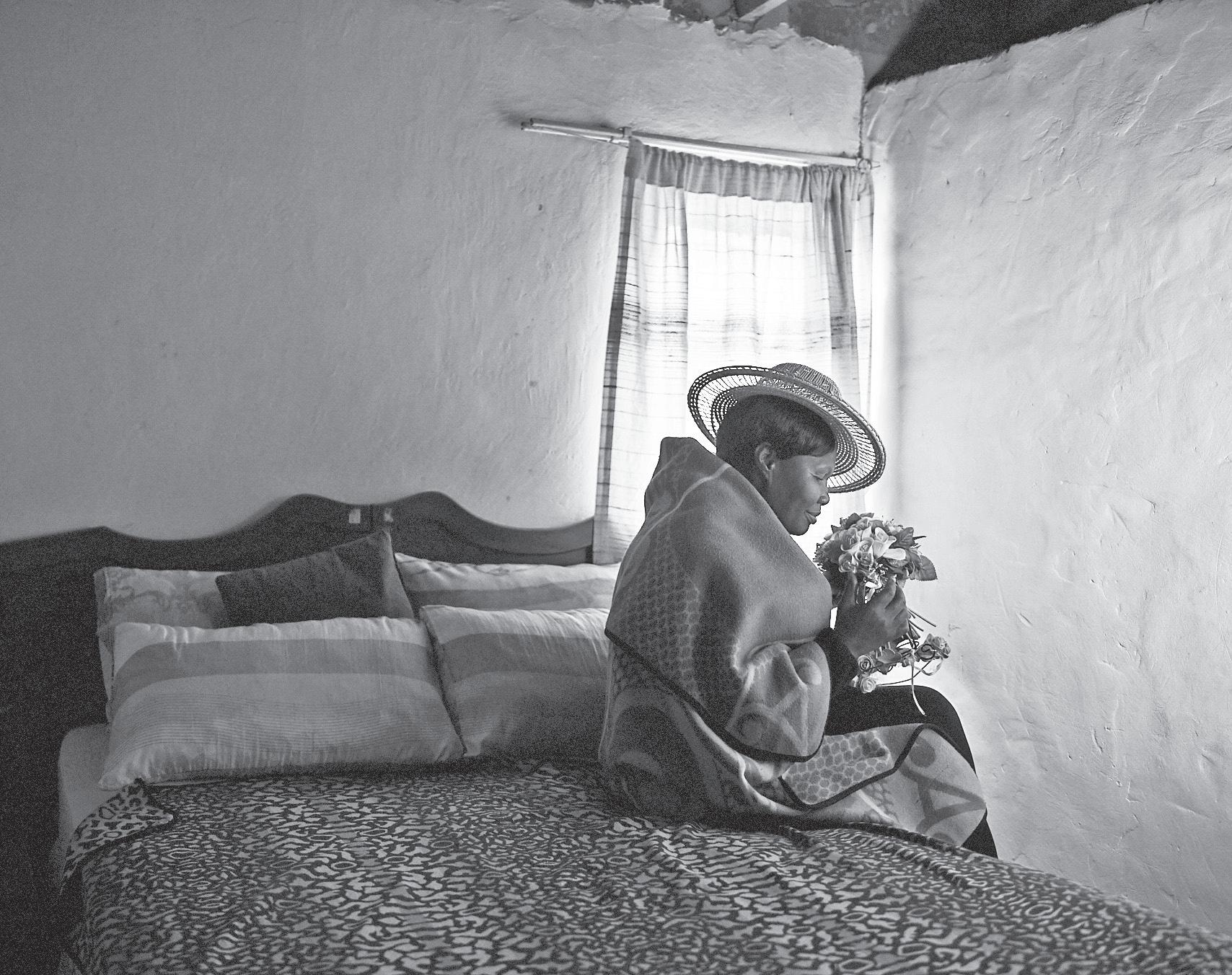
LISEBO LECHELA , 54, an HIV-positive sex worker turned activist and health worker, poses for a portrait in her house in Maputsoe, Lesotho, July 17, 2025. AP/BRAM JANSSEN
Why Shanghai is the world’s most compelling coffee city
By Matthew Kronsberg
MAINLAND China offers plenty to surprise first-time visitors. Shockingly efficient mass transit. Deeply integrated digitalfirst communication and payment ecosystems. A way with offal that will convert even non-organ-meat enthusiasts.
But on a recent trip to Shanghai, I experienced an even greater surprise: a world class coffee scene. My jet lag never stood a chance in the face of the caffeine tsunami I stepped into. As of 2024 the city had a whopping 9,115 coffee shops—including more Starbucks locations than any other city—as reported by Dao Insights, a publication by the China-focused digital creative agency Qumin. According to the USDA’s Foreign Agricultural Service, “China’s coffee consumption surged almost 150% in the last 10 years and is forecast to reach 6.3 million bags in 2024/25,” with each bag weighing 60 kilograms.
But Shanghai’s coffee scene isn’t just defined by quantity; it courses with style, creativity and quality. Coffee here is presented both seriously—George Jinyang Peng, owner of the Captain George Flavor Museum coffee shop, just won the World Brewers Cup championship— and as a vehicle for eccentric but photogenic flights of fancy.
“No restaurant can resist a viral boost,” says local guide and author Christopher St. Cavish. Shortly before I got there this spring, Time Out Shanghai rounded up a bunch of the city’s “unhinged coffee creations,” including a latte served in a green bell pepper and an affogato modeled after stinky tofu. Shortly after I left, St. Cavish sent me a picture of a latte served in a cup made of naan flatbread from Pin Hui Wei, a restaurant serving halal food from the northwestern Xinjiang region. It was, he said, “a gimmick still waiting for liftoff.”
Speaking of lift-off, one thing that took getting used to was that coffee in Shanghai isn’t primarily a morning thing. Lei Yang, who owns popular cafes Coffee Spot and Spot Table, says they’re busiest from 3 p.m. to 5 p.m. If you’re an early riser, you’ll probably have to head to Starbucks or the even larger Chinese chain Luckin for an eye opener, since many coffee shops don’t open until 9 a.m. or 10 a.m. But even at those behemoths, you’ll find your brew in flavors and formats you’d be hard pressed to locate in New York or Milan.
Layered libations
HAVING an orange juice with your coffee is about as basic as it gets. But having one in your coffee? That’s about as Chinese as it gets. While this would be strange, borderline offensive, to a coffee purist, the bittersweet flavor of the ubiquitous orange americano is not that different in spirit from the espresso tonics that were all the rage during the 2010s third wave coffee boom. I liked the orange americanos a lot, and not just because the contrasting colors made it look like a Rothko in a cup. At chains like Luckin and Cotti, juiced americanos are a category unto
themselves, with seasonally changing flavors including apricot, pomelo, pineapple and watermelon encouraging customers to taste the rainbow, as it were.
Another frequent favorite with its own color gradient is the dirty coffee, where hot espresso is gently layered over a base of cold milk. Drinking one is as much of an art as making it. You want to slug it back quickly, in three big sips, to combine the flavors and temperatures in your mouth. Each sip is like a different drink. The first is dominated by espresso, like a macchiato; the second has the balance of a cortado, and the third is gently milky, like a latte. Dia, a sunny industrial-style cafe in the Jing’an neighborhood, serves it in a frozen glass to further contrast temperatures. Likewise, pistachio, black sesame durian, avocado and other flavors add additional interest. Dia’s Love Is Dirty includes verbena, muscat grape, Japanese Meiji milk, and, wait for it, “love.”
Coffee as cocktail OFTEN , coffee is treated as a featured ingredient rather than an end in itself. This is most evident in “signature” drinks, as elaborately constructed as cocktails. No place is more closely connected with this coffee style than O.P.S., whose minimalist storefront on leafy Taiyuan Road has become a pilgrimage site for coffee nerds from across the globe since its 2017 opening. An hourlong wait to get in is not uncommon. When I visited, just five cocktail-style drinks were on offer, with names like Recompose: Purple Muscat, Burnt Green, and Ruby Diamond. All were 55 yuan, or just shy of $8. If you wanted a cappuccino, you were in the wrong place.
Parties are admitted one at a time into a small white room, filled almost entirely by a stainless steel island laid with exotic garnishes, giant ice cubes and scientific looking equipment. In halting English, a masked bartender explained each step as he prepared my drink, the Pipe Dream, a blend of Ethiopian and Colombian coffees, fermented pink strawberry, yuzu salt and cacao-nib-infused olive juice. After crowning it with coconut foam, he handed me the drink with an embossed card to bring into an equally small, adjoining room, where you can stand and sip. On one side of the card, in English and Chinese, were my drink’s components; on the reverse, beneath the sentence “Maybe I’m stuck in a pipe dream,” was a long paragraph in Chinese that described the drink in more detail. It was written like a journal entry—a habit that’s spread to other shops and even inspired some satire. As more people trickled into the room,
strangers shared their cards and even sips of their drinks. And, of course, took pictures and video for Xiaohongshu, known outside of China as RedNote.
Competition cups BY this point you might be thinking that Shanghai is all about coffee drinks for people who don’t really like coffee. While there are a surfeit of concoctions that go notably light on the java, the efforts many quality-oriented shops take to help new coffee drinkers develop an understanding and appreciation of the stuff were perhaps the most heartening, impressive thing I encountered.
At Coffee Spot, an outdoor cafe near the 800-year-old golden-roofed Jing’an Temple that operates out of a tiny brutalist guard building, and at nearby Spot Table, in a modernist glass-walled pavilion facing the opulent Ho Tung Mansion, you can order an All in One set. Owner Yang explained that it’s inspired by one of the ways competitors in the World Brewers Cup demonstrate their prowess to judges. On a tray you are presented with the same coffee three ways: black, with milk and as a “signature” coffee. (You’ll also get accompanying cards with the essential details, down to the milk’s source and temperature.) At least choosing the coffee itself is kept simple— the two shops only ever offer two choices, both sourced from the Captain George Flavor Museum.
Aesthetically, the Flavor Museum couldn’t be more different from the Coffee Spot and Spot Table, or for that matter, O.P.S., just a block away. Instead of concrete, steel and glass, the Captain George Flavor Museum looks like a 19th century apothecary with dark wood medicine cabinets lining the backbar and warm lighting. (You almost expect Captain George to be some kind of Doctor Dolittle-esque Victorian era explorer.)
But founder George Jinyang Peng is real, and he’s obsessed with temperature and its impact on flavor. Some coffees come presented on a tray with a small infrared thermometer suspended above the cup to display the drink’s temperature at any given moment. With it comes a card—notice a trend?—spelling out the aroma and tasting notes for each temperature band. If you order one of their rare brews, like a Panama La Esmeralda Ea16 Geisha Anaerobic Natural, which was going for 268 yuan (about $38 a cup), you could have it in the speakeasy-like back room, where it’s prepared and served at a bar by a barista who’ll guide you through the tasting. There’s also a blending lab where you can create your
own brew to take home.
Even though I had by now consumed palpitation-inducing quantities of caffeine, I couldn’t resist a final stop, at the Shanghai Jing’an World Coffee Culture Festival. The gathering, which drew more than 50,000 people, offered me a final opportunity to see the myriad ways Shanghai has embraced coffee in all its forms. The use of uniquely local ingredients continued to be a theme. Two favorites: an americano flavored with aged vinegar from Shanxi province and a traditional Chinese-medicine-inspired
coffee infused with dandelion and licorice and garnished with Sichuan peppercorns. From there it was off to the airport. Needless to say, I didn’t sleep a wink on the flight home.
More buzzworthy Shanghai spots 3½ Coffee. For cocktail-style coffee with the creativity of O.P.S. but without the lines (and with the option of a “normal” brew) this stylish coffee bar is ideal. The Fantasy of the Deep Forest coffee, topped with bamboo-scented oolong tea foam, is both evocative and delicious.
Can Company. The signature drink at this cafe with several locations throughout the city is the Soft Rice, named for a stray puppy the owners adopted while opening their first location. Whipped fermented (or “soft”) rice gives this layered espresso drink local character.
Lucky Draw. Your favorite barista’s favorite coffee place, light on the flash and gimmicks. The focus here is firmly on what goes in the cup. Mainstream staples such as the ubiquitous coconut latte are rendered with the same care as a perfectly pulled espresso. Starbucks Reserve Roastery. When it opened in 2017, this 30,000-square-foot emporium was the world’s largest Starbucks. It still inspires Wonka-esque wonder, offering exclusive drinks like the smoked butterscotch latte and the Melrose St, made with cold brew and bitters, plus a liquor-soaked Luxardo Maraschino cherry. Yunnan Dehong Dehome. Until recently, China’s domestically grown coffee was largely considered commoditygrade stuff, hardly worth lingering over. These shops, dedicated to showcasing the best beans from its namesake southwestern China province, are changing the narrative.
Bloomberg News
THE Captain George Flavor Museum MATT KRONSBERG/BLOOMBERG
Sunday, October 26, 2025
Netanyahu eyes 2026 election with pitch that he saved Israel
By Galit Altstein & Ethan Bronner
TWO years ago, after Hamas killed and kidnapped its way across southern Israel, Prime Minister Benjamin Netanyahu seemed finished. “Mr. Security,” as he billed himself, would either resign in shame or be driven out by a devastated public.
Yet this week he promoted his candidacy in next year’s election by saying he’d saved the nation from oblivion with a slew of military successes against Iran and its proxy militias. Between those and a fractured opposition, it’s looking like the country’s longest-serving leader may hold onto his post for a while longer.
“He doesn’t need to win the next election, just not to lose it,” said Nadav Shtrauchler, a political adviser who’s worked closely with Netanyahu in the past, referring to the possibility of remaining in power without a majority. “He’s still there, astounding observers, whether they’re impressed or frustrated.” Netanyahu, who’s clocked 17 non-consecutive years at the top, out-polls all other candidates for the job. And while surveys show that his coalition—the most right-wing in Israel’s history— won’t attract enough votes to form the next government, neither will the opposition.
When the election is held— it’s due by next October—the country risks a repeat of the years 2019-2022, when it was dragged through five ballots while a transitional government with limited authority ran the country. Apart from 18 months of that period, Netanyahu held power.
This week, Netanyahu told parliament that what he has accomplished in the two years since Hamas’ Oct. 7, 2023 attacks, especially by bombing Iran’s nuclear facilities in June, ensures unprecedented national safety.
If his opponents were in charge, he said, “You Members of Knesset, all citizens of Israel without exception—Jews, Arabs, leftists, rightists, ultraOrthodox, secularists—would all go up in atomic smoke.”
A day earlier, he announced that Israel’s battles against Hamas, Lebanon’s Hezbollah, the Houthis of Yemen, and their sponsor Iran—alongside the collapse of former Syrian President Bashar al-Assad’s regime—had so boosted the country’s strategic position since 2023 that he’s renaming them the “War of Redemption.”
What he didn’t say, but
Loyal retail investors resist takeover of vaccine maker Bavarian Nordic
By Sanne Wass
ON Danish investment forums, retail shareholders in Bavarian Nordic A/S have for weeks traded messages like battlefield dispatches.
Miner Monyamane said he got a three-month supply, not his usual 12. So instead of continuing to work in South Africa, he decided to remain in his small village of Thaba-Tsoeu Ha Mafa. Like many miners, he chose his health over a job and steady paycheck. He fears diseases such as tuberculosis—a leading cause of death in Lesotho, attributed to weakened immune systems—may creep up on him if he interrupts treatment.
everyone understood, is that the name applies to his political career as well.
For his critics, who are legion in Israel and abroad, this seems beyond belief. He was in charge on Oct. 7, 2023, the day of Hamas’ attack and the worst single-day in the Jewish state’s history. Indicted by the International Criminal Court for alleged war crimes in Gaza, on trial in Tel Aviv for bribery and fraud, Netanyahu, 76, who denies all the accusations, should be at his political end point.
Sever Plocker, a longstanding commentator at the centrist Yedioth Ahronoth newspaper, wrote this week what many believe—that unless Netanyahu is replaced the country can’t move on. Netanyahu, Plocker wrote, is “one of the most hated statesmen in the world” and “Israel today is more isolated than ever before.”
While Netanyahu got a shot in the arm after the remaining living hostages were released from Gaza, not everyone lays the win at his feet. Trump’s son-in-law and confidant, Jared Kushner, and Middle East envoy Steve Witkoff spoke to families in Tel Aviv’s Hostage Square as exchanges took place. They were hailed for their role in securing the deal, but Witkoff was met with jeers when he tried to credit the Israeli prime minister.
Netanyahu’s handling of the war in Gaza, in which tens of thousands of Palestinians have been killed, humanitarian aid was and continues to be blocked and much of the strip reduced to rubble, alienated many around the world. That derailed Israel’s hopes for the normalization of ties with more Arab and Muslim countries—a major strategic goal at home and in the US.
US President Donald Trump hopes to one day persuade Saudi Crown Prince Mohammed bin Salman to recognize Israel and join the so-called Abraham Accords—one of Trump’s flagship achievements in his first term. The kingdom’s defacto ruler has so far held off. Publicly, he has set an independent Palestinian state as a precondition—an idea opposed
‘You can’t just hang a shingle’ THE system propped up by foreign aid was always meant to be temporary. But public health experts say the shift to Lesotho and other countries becoming self-reliant should have been gradual.
At the United Nations General Assembly last month, Lesotho Prime Minister Samuel Matekane acknowledged the threat posed by declining foreign aid but fell short of pointing fingers. He said Lesotho is mobilizing domestic resources to address gaps.
But Catherine Connor, of the Elizabeth Glaser Pediatric AIDS Foundation, emphasized that “any step backward
by Netanyahu and his coalition partners.
The economy and businesses have also taken a hit from mass call ups of Israelis for reserve duty. The country’s gross domestic product is still smaller, in shekel and real terms, than it was on the eve of the conflict.
Netanyahu dominates the Likud Party, whose domestic base makes little distinction between fealty to the prime minister and to the party. The opposition, a mix of secular leftists and nationalist hawks, is united only by opposition to him, making it unlikely that an alternative coalition can emerge.
Challenges within THE prime minister’s legal troubles have discouraged most politicians from working with him in recent years, driving Netanyahu into the arms of the ultra-nationalists and ultra-Orthodox with whom he now shares power. That pact holds two key threats to the government: a walkout from far-right partners if Hamas isn’t quickly disarmed and removed from positions of influence in Gaza, and a law exempting the ultra-Orthodox from military conscription.
Finance Minister Bezalel
Smotrich and National Security Minister Itamar Ben Gvir are skeptical that Trump’s plan for peace in Gaza—announced with great fanfare earlier this month—can bring down Hamas, designated a terrorist group by the US and many others. They have voiced hopes of resettling Gaza with Israeli Jews and annexing the West Bank—which both Trump, and consequently Netanyahu, reject.
The Trump administration is pushing Netanyahu to be patient about Gaza and not return to war. It wants Israel to focus on rebuilding in parts of the strip even if armed Hamas militants are still operating elsewhere.
The conscription of ultraOrthodox men, also known as
creates a risk of resurgence.”
In the 16 years her organization has worked in Lesotho, HIV transmission from mother to child dropped to about 6% from nearly 18%. Lesotho’s government should get credit, Connor said, but her group and others were key in targeting children’s treatment and prevention.
Since 2008, Connor’s group received more than $227 million from the US for Lesotho programming, USASpending. gov data shows. This fiscal year, about half the work it planned has been terminated.
“You can’t just hang a shingle that
Haredim, still lingers over the government. In July, the United Torah Judaism and Shas parties quit government—though stopped short of collapsing it— and are still boycotting votes on any government-proposed legislation, de facto paralyzing the cabinet and feeding a dynamic that could see it fall apart.
The two parties are unlikely to fully rejoin the government unless a bill exempting most ultra-Orthodox men from military service gets underway. The exemption on religious grounds is unpopular among many voters, including Netanyahu’s base, which wants to see Haredi men share the burden of fighting.
Gila Gamliel, a cabinet member in his party, said in a radio interview this week, “I believe that the government can serve out its term.”
Few Israeli governments have achieved this, and speculation has been rife that Netanyahu will call early elections to harness the small popularity boost on the back of military gains and the return of hostages from Gaza.
But this week Netanyahu hinted he intends to hold off on elections when he said he wanted to pass the 2026 budget “soon.” In the past, Israeli lawmakers have often blocked the passing of budgets as a way to bring down governments.
Trump gained a great deal of the praise for the ceasefire in Gaza, and he remains a key asset for Netanyahu. Addressing Israeli lawmakers last week, Trump urged President Isaac Herzog to pardon the prime minister.
Strategist Shtrauchler said that wasn’t coincidental.
“Trump effectively launched Netanyahu’s election campaign,” he said. “The prime minister is counting on Trump’s presence moving forward. They are fully coordinated.” With assistance from Chris Miller /Bloomberg
says, ‘Get your ARVs here,’ and people line up,” Connor said.
Most at risk, she and others stressed, are children. As of late August, half of PEPFAR funding targeted toward children in Lesotho was terminated, and 54% of infants tested for HIV before their first birthday in fiscal year 2024 were evaluated by programs that had been cut, according to Foundation for AIDS Research data.
“When a child never gets diagnosed, it feels like a missed opportunity,” Connor said. “When a child who was receiving treatment stops getting treatment, it feels like a crime against humanity.”
Faced with a takeover bid from Nordic Capital and Permira, many of those investors in the vaccine maker are holding their ground in what’s become a slow-burn drama and one of Denmark’s most closely watched corporate standoffs.
“Stay strong,” one urges. “Don’t budge!” replies another.
It’s a sign of how the private equity bidders misjudged the company’s owners.
In the saga that started in late July, Nordic Capital and Permira have already had to raise their offer and twice lower the acceptance threshold for the deal they expressed confidence in.
“They saw Bavarian Nordic as a delicacy, as an undervalued stock,” said Lars Hytting, head of trading at local asset manager ArthaScope, who has campaigned against the bid and is now rejecting the final offer.
“The problem is that they’ve misread the shareholder base.”
It all began on July 24, when Bavarian confirmed a Bloomberg report it was in takeover talks with Nordic Capital and Permira. Four days later, the private equity duo announced plans to buy the Danish vaccine maker for 233 kroner ($36.2) per share, seeking 90% ownership, enough to squeeze out remaining shareholders and delist the company. Bavarian’s board endorsed the deal, calling it “attractive.”
Just hours later, the bid hit its first hurdle: Danish pension fund ATP, Bavarian’s largest shareholder with more than 10%, immediately rejected the offer, balking at the price.
The bidders tried to bypass ATP by lowering the acceptance threshold to 75%. But other investors were unhappy too, and the proposal soon sparked an uproar.
Danish Shareholders Association ran a “No thanks to price 233” campaign that gathered thousands of signatures. Last year the stock had traded at as much as 283 kroner. Soren Lontoft Hansen, an analyst at Sydbank A/S, said he was puzzled by the board labeling the offer as lucrative. A quarter of Bavarian’s shareholders accepted the bid.
So why do Danish stockholders have such intense feelings for Bavarian?
The company develops travel vaccines and supplies mpox and smallpox shots to governments and global health agencies. Founded in 1994 by Asger Aamund, one of Denmark’s most recognizable business figures, the company grew from a small biotech startup into a listed inoculation developer with global ambitions.
Aamund, a skilled communicator frequently present in Danish media, helped attract a loyal base of retail investors who saw Bavarian not just as a stock but as a cause to rally behind, a sentiment that still shapes the emotional attachment many feel toward it today.
“They are driven by hope, emotion and empathy,” said Per Hansen, an investment economist at Nordnet AB. Many have stuck with Bavarian even when the company time and again failed to deliver on expectations, he said. Retail investors account for about 30% of Bavarian’s shareholder base, according to July figures.
“Permira and Nordic Capital have had no grasp of the affection investors feel for it,” Hansen said. “They had no idea where ATP stood. It’s incredibly surprising. The entire expectation management has completely failed.”
The bidders then made further
A lack of trust in what remains of the system
RETHABILE MOTSAMAI , a 37-yearold psychologist and mother of two, has worked since 2016 for aid-funded organizations. But months ago, her HIV counselor role was eliminated.
She worries for the populations her work served.
“They have to travel for themselves to the facilities—some are very far,” she said, adding that she knows some patients simply won’t try. “They’ll just stop taking their medication.” Those who do make the trip may be met with a dead end. Clinics have
concessions. On Oct. 15, they raised their offer to 250 kroner per share. Less than a week later, they lowered the acceptance threshold again, to two-thirds of shares. Preliminary uptake is now at about 36%.
“We are now seeing broad and growing support from shareholders—both retail and institutional,” Florian Kreuzer, a managing director at Permira, said by email. These shareholders, he added, recognize that the bid provides “compelling, certain and immediate value,” with a 47.4% premium to the six-month volumeweighted average share price before takeover talks were known to the public. Still, Bavarian shares have consistently traded below the new price, signaling market skepticism about the deal’s success. Bigger investors look at the new price differently, seeing opportunities.
Many institutional holders have long been eager to exit Bavarian, viewing the stock as too volatile and frustrated by a series of management missteps, including failed Covid-19 and RSV vaccine projects, according to Michael Voss, an investment adviser at local investment association Fundamental Invest. Voss helped negotiate a new price with the bidders on behalf of other institutional investors, and is accepting the offer.
Bavarian has long been targeted by speculators and short sellers. Because vaccine development depends on high-risk projects where outcomes can dramatically shift fortunes, the stock has swung wildly on the Copenhagen exchange over the years. In 2017, the stock plunged 48% in a single day after a prostate cancer-vaccine failed, while in 2022 it more than tripled in three months as concern over a global mpox outbreak boosted demand for Bavarian’s shot.
But, ATP is holding its ground. Its continued opposition could prove to be the hurdle that ultimately sinks the deal. It’s Denmark’s largest pension fund and administers the country’s mandatory retirement scheme, funded by contributions from nearly all working Danes. ATP’s stance—to remain a long-term owner—carries significant weight with other investors, Chief Executive Officer Mikael Bak of the shareholders’ association said. The body has no plans for another campaign against the new price, but Bak said many are unconvinced by the sweetened offer.
Caspar Rose, an associate professor at Copenhagen Business School who has studied takeover offers on Nordic exchanges, said the lack of explicit backing from major shareholders in the initial bid documents is unusual.
Bavarian’s chairman Luc Debruyne said that because Bavarian was not for sale, a recommendation from the board was a prerequisite for a bid to be submitted at all—in line with normal practice for a friendly takeover—and that it would only then be for shareholders to make a decision. The board “followed the standard procedure” for this type of transaction, he said by email.
Christian Hedegaard, a managing director at Nordic Capital, said the bidders are “highly focused on running the most transparent process possible.”
“We are well aware that Bavarian Nordic has a relatively large proportion of retail investors, and therefore, we are openly communicating about the offer and explaining the reasoning,” he said. The private equity duo has previously said the deal would accelerate Bavarian’s growth strategy by providing fresh capital to pursue value-creating acquisitions. With assistance from Christian Wienberg/ Bloomberg
continued to close. For Lechela—the longtime activist— the upheaval and loss of her job mean she once again depends solely on sex work. As she walked by the closed doors of her former clinic, passersby stopped and begged her to reopen. “I don’t trust anyone else,” a young woman called out. “Please! Please!” Lechela smiled but couldn’t bring herself to reply. Like
BENJAMIN NETANYAHU in Jerusalem, Oct. 22.
Anti-stomach ulcer vaccine? Ateneo experts are researching for one
VACCINE against stomach ulcers? You read it right.
Painful stomach ulcers may soon be a thing of the past, thanks to Ateneo de Manila University scientists who are doing a research to prevent the disease. Since ancient times, it was thought that painful stomach ulcers were caused by eating spicy foods or having an unhealthy diet. However, researchers have found that Helicobacter pylori—a common bacterium found in over 60 percent of the world’s population—was the real culprit behind most stomach ulcers and a high risk for stomach cancer.
Scientists from the Ateneo de Manila University School of Science and Engineering’s Department of Biology are on the way to finding a vaccine to fight off the bacterium, possibly preventing stomach ulcers and lowering the risk for stomach cancer, Ateneo said.
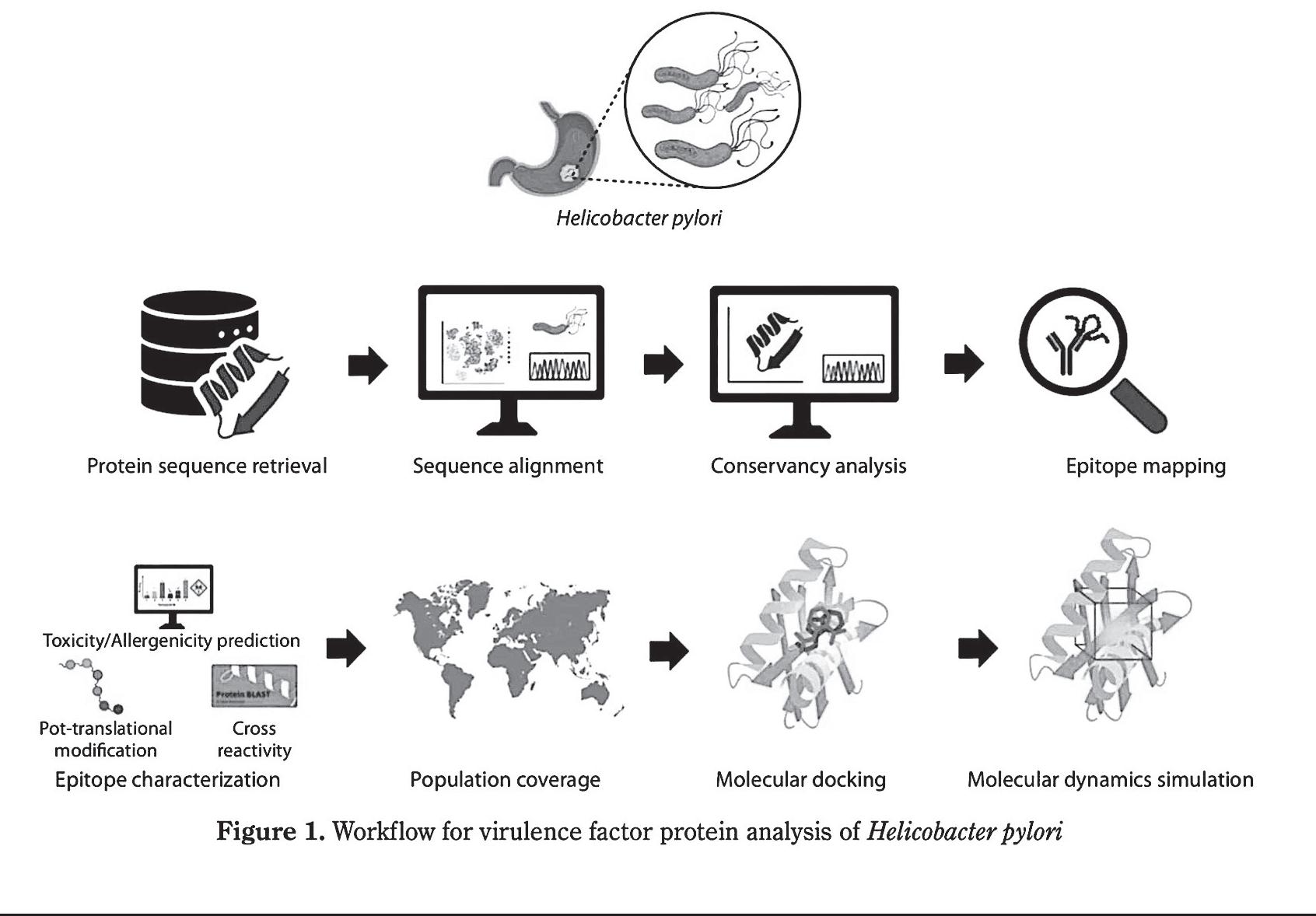
Ateneo biologists Demy Valerie Chacon, Kiana Alika Co, Daphne Noreen Enriquez, Aubrey Love Labarda, Reanne Eden Manongsong, and Edward Kevin Bragais used a cutting-edge approach called “immunoinformatics” that combines computer science with immunology to scan the genetic makeup of pathogens and predict which parts of them can trigger a strong immune response.
By running thousands of gene sequences through these computational tools, researchers can narrow down the most promising vaccine targets much faster and at lower cost than through trialand-error lab work alone.
The Ateneo biologists have identified key proteins produced by H. pylori that help it survive stomach acid, stick to the stomach lining, and evade the body’s natural immune system. Their analysis also identified parts of these proteins that are most likely to be safe, non-allergenic, and capable of activating protective immune cells.
While their research findings are still preliminary and based on computer simulations, the next steps include laboratory testing to validate these predictions.
There are currently no approved vaccines against H. pylori despite ongoing tentative research in other laboratories around the world.
If successful, the Ateneo research could pave the way for the first-ever H. pylori vaccine that could help guard against stomach ulcers and cancer.
The Ateneo biologists’ study “In Silico Prediction of Cytotoxic T-Cell Epitopes From Helicobacter pylori Virulence Factors Using an Immunoinformatics Approach” is published in Archium Ateneo.
various proteins produced by H. pylori. SOURCE: CHACON ET AL., 2025
Dr. Gay Jane P. Perez appointed as PhilSA OIC
MALACAÑANG has designated Deputy Director General Dr. Gay Jane P. Perez to serve as officerin-charge of the Philippine Space Agency (PhilSA), the agency said in a news release this past week.
The Palace appointed Perez to the post after PhilSA’s founding director general, Dr. Joel Joseph Marciano Jr., resigned last month. Perez has served as the PhilSA Deputy Director General for Space Science and Technology since 2021. She earned her doctorate in Physics from the University of the Philippines (UP) Diliman before conducting postdoctoral research at NASA’s Goddard Space Flight Center, where she specialized in remote sensing and satellite data applications.
A 2021 National Academy of Science and Technology Outstanding Young Scientist, and 2019 The Outstanding Women in the Nation’s Service awardee, Perez is the first Filipino recipient of the Asean-US Science Prize for Women, that recognized her groundbreaking research using satellite data to forecast droughts and improve agricultural productivity.
She was also honored by the Philippine Senate through Resolution 923 that recognized the global excellence of Filipino scientists.
She led the team involved in the development of the Philippines’ first microsatellites, Diwata-1 and Diwata-2, which underpins the current technological innovations in PhilSA such as the ongoing development of the Multispectral Unit for
Land Assessment satellite. As OIC, Perez is in-charge of the continuity of PhilSA’s programs and partnerships across the Space Value Chain, advancing the agency’s mandate under the August 2019 Philippine Space Act (Republic Act 11363).
She reaffirms PhilSA’s commitment to harness Yamang Kalawakan—the emerging domestic space ecosystem—for sustainable development and nationbuilding.
Marciano served as the agency’s founding director general for five years.
In a letter posted on PhilSA Facebook account announcing his resignation last month, Marciano said he received a letter from the Office of the President acknowledging his irrevocable resignation. He said he will return to UP to resume his teaching profession. With a PhD in Electrical Engineering and Telecommunications, Marciano is a university professor at the UP College of Engineering
He promised he “will continue to be part of this [space] ecosystem to help strengthen the capabilities” they have built in the last more than 10 years with the micro satellite Diwata Program in UP and the Department of Science and Technology. PhilSA said in its Facebook account that Marciano’s leadership has established the agency, built its institutional framework, and advanced the Philippines’ role in the global space community.
His vision and dedication laid the groundwork for a strong and enduring national space, PhilSA added.
PHL expands scientist pool under career system
By Bless Aubrey Ogerio
THE government conferred a new batch and upgraded career scientists under the Scientific Career System (SCS), expanding the country’s pool of researchers recognized for their contributions to science and public service.
The oathtaking ceremony in Quezon City on October 17 gathered leaders from the science and civil service sectors.
A total of 14 new career scientists from various government agencies and state universities were conferred with Career Scientist Rank 1 (CS I) across four fields, such as health sciences, engineering, physical and mathematical sciences and agriculture.
The new batch of CS 1 includes: Dr. Eva Goyena of the Department of Science and Technology (DOST) Food and Nutrition Research Institute; Dr. Jayson Rogelio of the DOST-Metals Industry Research
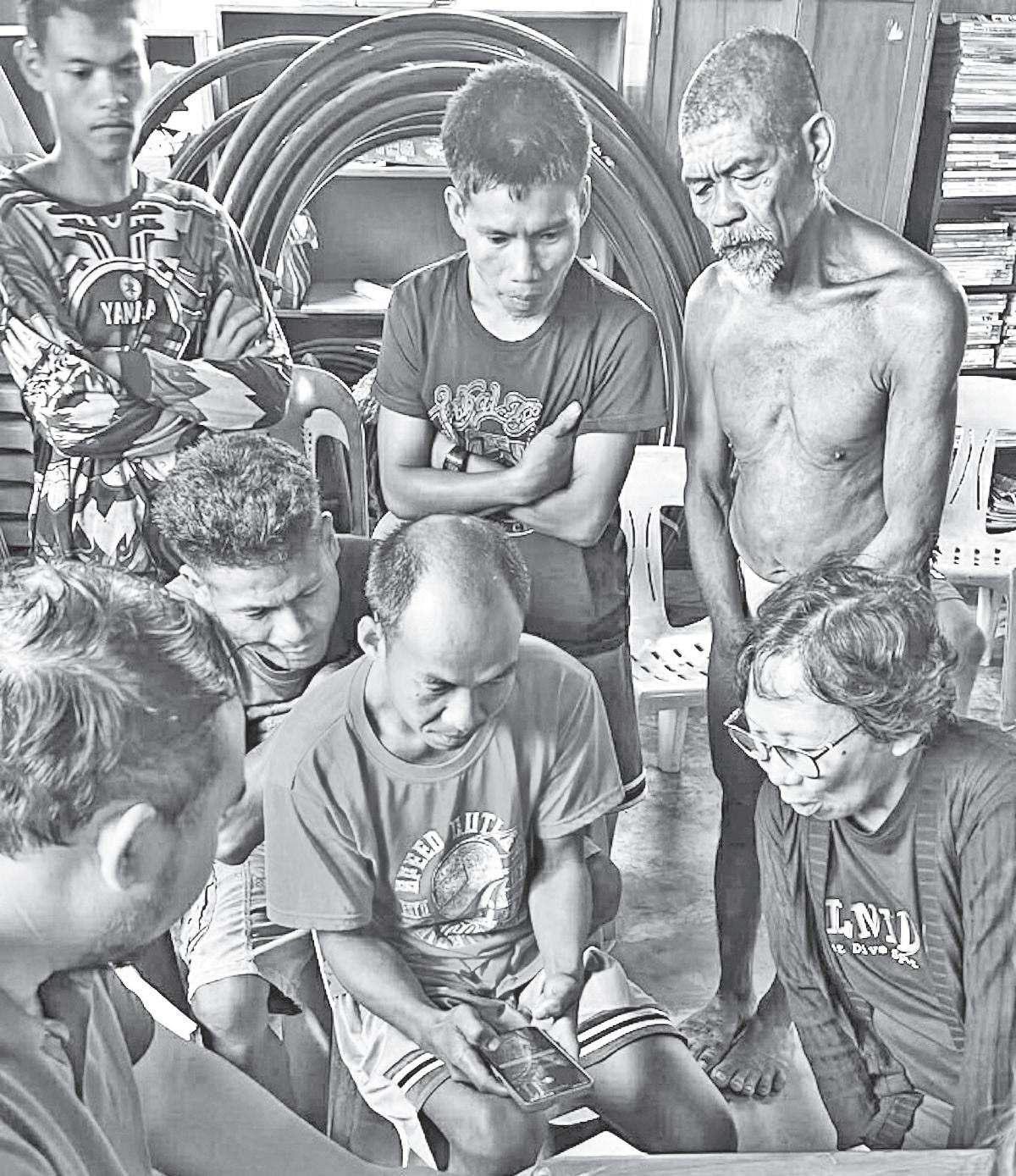
THE Department of Science and Technology’s Forest Products Research and Development Institute (DOSTFPRDI) has entered into a partnership with the Alangan Occidental Pangwat Bangkaw (AOPB) Indigenous Cultural Community in Occidental Mindoro to transform indigenous knowledge, including the use of natural dyes, into sustainable innovation.
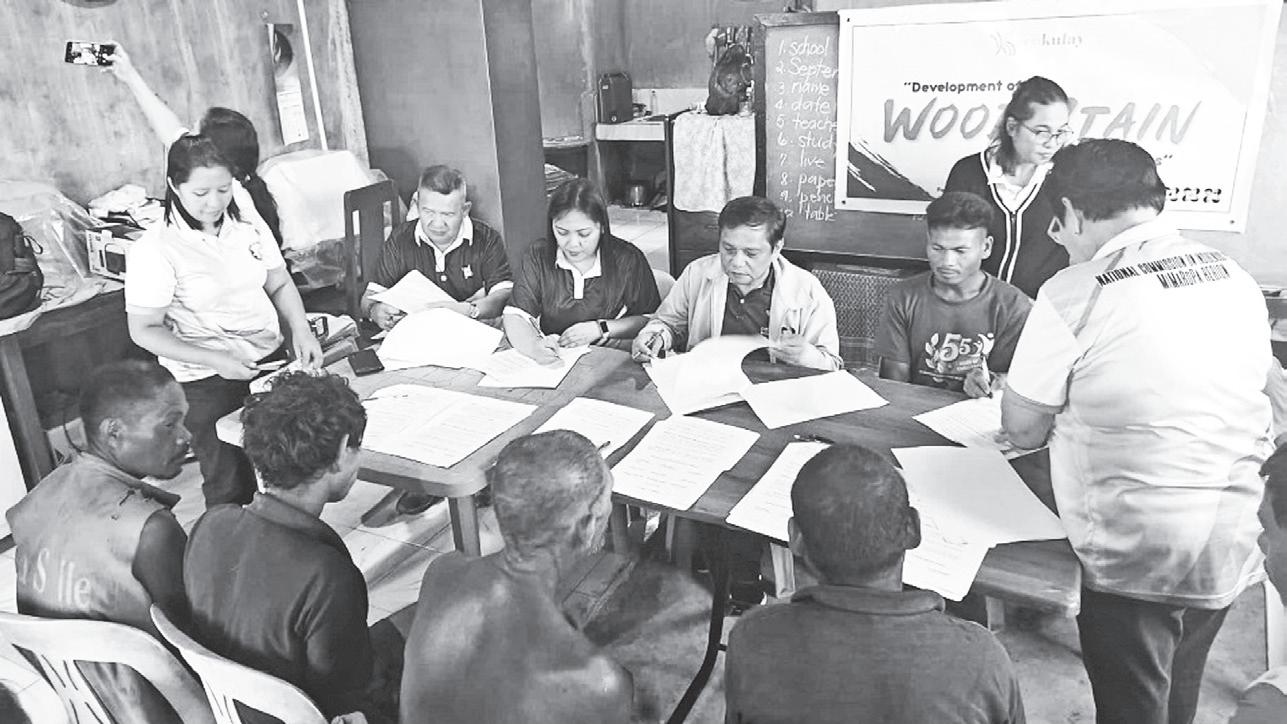
Through a Memorandum of Agreement signed on September 22, the DOST-FPRDI was granted approval to study and use AOPB’s traditional natural dyes, particularly indigo, to develop an ecofriendly wood stain.
The National Commission on Indigenous Peoples (NCIP) is also part of the initiative.
“True to DOST’s Agham na Ramdam mantra, this collaboration shows that science becomes truly meaningful when it thrives within our communities, not just inside laboratories,” said DOST Secretary Renato U. Solidum Jr.
“By working hand in hand with the Alangan community, we affirm that science can uplift lives, preserve culture, and create pathways toward sustainable livelihoods for our ‘kababayan.’ This initiative also underscores the potential of natural dyes as a biodegradable and renewable resource. Their production process is more environmentally responsible, using fewer harsh chemicals while harnessing the richness of our local natural materials,” Solidum added.
The partnership was established after a series of field validations and consultations with the Alangan tribe.
DOST-FPRDI also extended direct assistance to the community by providing them with a new marketing platform.
Institute designer Chris John -
and Development Center; and Dr. Persia Ada De Yro and Dr. Ronaldo Parreño of the DOST-Industrial Technology Development Institute; Dr. Hannah Bardolaza of the University of the Philippines (UP) Diliman National Institute of Physics; Dr. Joseph Basconcillo of the DOST-Philippine Atmospheric, Geophysical and Astronomical Services Administration; Dr. Joel Rivadeneira of UP Los Baños-Institute of Food Science and Technology (UPLB-IFST); Dr. Erlina Ronda of UP National Institute for Science and Mathematics Education Development; Dr. Emma Ballad of the Department of Agriculture (DA) Bureau of Fisheries and Aquatic Resources; Dr. Orlando Calcetas of DA Calabarzon; Engr. Edgar Flores of DA Philippine Center for Postharvest Development and Mechanization; Roanne Gardoce of UPLB Institute of Plant Breeding (UPLB IPB); Dr. Mary-Nia Santos of the DA-
niel France Rana developed packaging designs and created a dedicated Facebook page for AOPB’s natural dye products. He also conducted a hands-on tutorial to help the community manage their own social media page.
For DOST-FPRDI Director Rico J. Cabangon, the project is a model for blending science and heritage.
“Our work with the AOPB demonstrates how indigenous knowledge and modern research can complement each other to create meaningful innovations. More than technology development, this partnership is about empowering communities while promoting sustainable forest products,” he said.
According to Cabangon, the Institute also committed to provide training and other assistance to further improve their skills in handicraft production. With this, the AOPB is seen to access new market opportunities.
Besides Cabangon, present during the MOA signing were Technology Innovation Division Director Loreto A. Novicio and Project Leader Aralyn QuintosCortiguerra; Alangan tribe representatives led by AOPB Chairman Alex Magan and elders; NCIP Field Officers Maria Cristina Tupaz, Angeline de la Cruz, Eden Babatla and Hermie Cruz; and DOST Occidental Mindoro Provincial Director Ma. Ethelwilda G. Coronacion.
The DOST-FPRDI is one of the research and development arms of the DOST and is part of the Philippine government’s efforts to build a strong science and technology ecosystem in the country. It is at the forefront of scientific research on wood and non-wood utilization and conservation, pioneering initiatives that promote the responsible use of forest resources.
National Fisheries Research and Development Institute; and Dr. Lilian Villamor of the DA-Philippine Carabao Center. Six other scientists were recognized for career advancement within the system. They are Dr. Roel Suralta, CS IV of DA Philippine Rice Research Institute (DAPhilrice); Dr. Merdelyn Caasi-Lit, CS III of UPLB IPB; Dr. Fe dela Cueva, CS III of UPLB IPB; Marcela Navasero, CS III of UPLB-College of Agriculture and Food Science; Dindo King Donayre, CS II of DAPhilRice; and Edwin Martin, CS II of DA-PhilRice.
The ceremony likewise honored former members of the SCC and its special technical committees, including Academician and former DOST secretary Estrella Alabastro, Dr. Aimee Lynn BarrionDupo, Dr. Renato Vega, Dr. Portia Lapitan, Dr. Carmencita Mateo, Dr. Maria Natalia Dimaano, Dr. Edanjarlo Marquez, Dr. Erna Arrolado and Dr. Doralyn Dalisay, for
their service in advancing the SCS. Established through Executive Order 901, the Scientific Career System provides a merit-based pathway for government scientists to move up in rank and receive incentives tied to research output and innovation. It is jointly co-administered by the Civil Service Commission (CSC) and the DOST to strengthen the government’s research capacity and encourage long-term careers in science. CSC and SCC Chairperson Atty. Marilyn B. Yap administered the oathtaking of the scientists. The event was graced by DOST Secretary and SCC Co-Chairman Renato U. Solidum, Jr.; SCC member and Academician Jaime C. Montoya, who is the president of National Academy of Science and Technology, Philippines; Academicians—Fortunato T. de la Peña, also a former DOST secretary; Dr. Eufemio T. Rasco Jr.; and Dr. Fabian M. Dayrit, among other guests.
THE newly conferred career and upgraded career scientists take their oath before Civil Service Commission and Scientific Career System Chairperson Atty. Marilyn B. Yap. They are joined in the photo by Science Secretary Renato U. Solidum Jr., and Academicians Fortunato T. de la Peña, Dr. Eufemio Rasco and Dr. Fabian M. Dayrit. DOST PHOTO
Faith Sunday
A8 Sunday, October 26, 2025 Editor:
World’s Catholic population up, vocations down
By Almudena Martínez-Bordiú
ON the occasion of the 99th World Mission Day, celebrated on October 19, with the theme “Missionaries of Hope among all Peoples,” the Vatican news agency “Fides” presented some statistics that offer a general overview of the Catholic Church worldwide.
The study is based on numbers from 2023, in which the world population rose to 7,914,582,000, with a positive trend on all continents, including Europe. The increase in Catholics was 15,881,000 over the previous year.
The most notable growth in Catholics is in Africa, with an increase of 8,309,000; and the Americas with 5,668,000; followed by Asia with 954,000; Europe with 740,000; and Oceania with 210,000.
The percentage of Catholics in the world’s population increased
by 0.1 percent compared to the previous year, reaching 17.8 percent. The total number of bishops worldwide increased by 77 compared to the previous year’s survey, reaching 5,430. Diocesan bishops also increased by 84, while religious order bishops decreased by seven. In total, there are 4,258 diocesan bishops and 1,172 bishops belonging to religious orders.
Falling number of priests THE number of priests worldwide continues to decline. According
to data from Fides, in 2023 it decreased by 734 compared to the previous year, leaving a total of 406,996 priests.
The most significant decrease was again recorded in Europe, with 2,486 fewer priests, followed by the Americas, where the number fell by 800, and Oceania, with 44 fewer.
However, the number of priests increased in Africa, with 1,451 more, and in Asia, which added 1,145 new priests.
The number of diocesan priests decreased by 429, leaving a total of 278,742. Religious order priests also registered a decline—reversing the previous year’s trend—and now total 128,254, or 305 fewer than in the last survey.
Meanwhile, the number of permanent deacons continues to increase, reaching a total of 51,433. Growth is mainly concentrated in the Americas (1,257) and Oceania (57), while slight declines are recorded in Asia (1), Africa (3), and Europe (27).
The number of men in religious orders who are not priests also decreased, with 736 fewer than the previous year, standing at 48,748.
The decreases are in Europe
(308), the Americas (293), Asia (196), and Oceania (46), although Africa shows a slight increase (107).
Likewise, the number of women in religious orders continued its years-long decline. Currently, there are 589,423, which means 9,805 fewer than in the previous report.
They have increased in Africa (1,804) and Asia (46), but continue to decline in Europe
Cardinal David takes titular church in Rome
ROME—Cardinal Pablo Virgilio David of Kalookan on October 19, took possession of the Church of the Transfiguration of Our Lord Jesus Christ as his titular church in Rome.
The ceremony, highlighted with a Mass, affirmed the cardinal’s identity as a member of the clergy of Rome.
In his homily, David appealed for prayers for the Philippines as he expressed deep concern over growing public anger amid allegations of large-scale government corruption.
“Please pray for us, that we may find peace in truth and justice, not in blood,” the cardinal said.
“When anger grows faster than justice,” he warned, “it can easily explode into violence.”
Reflecting on the day’s readings, David reminded the faithful that perseverance in prayer and faith rests on three things: community, the Word and trust.
honorary member of the clergy of Rome. Each is given a titular church, symbolically serving as its pastor and to signify his connection to the pope’s pastoral ministry.
A cardinal’s bond with his titular church continues until death, even after retirement from active ministry. As a sign of that relationship, he is expected to celebrate Mass there from time to time.
Many titular churches in Rome date back centuries, adorned with artworks by renowned artists and tied to a long succession of distinguished cardinals throughout history.
(7,338), the Americas (4,066), and Oceania (251).
Declining number of seminarians
THE number of major seminarians, both diocesan and religious, also decreased, totaling 106,495 (the previous year was 108,481).
Africa alone recorded an increase of 383.
Minor seminarians, both diocesan and religious, also decreased, reaching 95,021, a decrease of 140.
Furthermore, Africa went from an increase in the 2022 survey to a slight decrease of 90.
Education and charitable works FIDES also reported that the Catholic Church operates a total of 74,550 kindergartens worldwide with 7,639,051 students; 102,455 primary schools with 36,199,844 students; 52,085 secondary schools with 20,724,361 students; 2,688,625 students in higher education institutions; and 4,468,875 students in Catholic universities.
In addition, in the field of health care and charitable works, there are 103,951 institutions affiliated with the Catholic Church, including 5,377 hospitals and 13,895 dispensaries; and 504 leper colonies. There are 15,566 homes for the elderly, chronically ill, or disabled; 10,858 day-care centers; 10,827 marriage counseling centers; 3,147 education or social reintegration centers, and 5,184 other types of institutions.
Data on the total world population and the number of baptized Catholics are updated as of June 30, 2023, while other data are updated as of December 31, 2023. Catholic News Agency via CBCP News
Baguio diocese launches Korean-language Masses
THE Diocese of Baguio has launched regular Korean-language Masses as part of its pastoral efforts for the growing Korean Catholic community in the city.
He added that arrangements for Holy Days of Obligation and solemnities may be made through the cathedral office or directly with the Korean priests.
“Perseverance is sustained by [the] community,” he said. “The strength to persevere doesn’t come from sheer stubbornness or will power, but from the power of God’s Word that lives in us.”
same year.
The 20th-century church, located at Piazza della Trasfigurazione 2 in the Monteverde Nuovo district, was completed in 1936 and established as a parish that
St. John Paul II designated it as a titular church in 2001 and assigned it to Cardinal Pedro Rubiano Sáenz of Bogotá in the same consistory—the year Pope Francis was also created a cardinal.
A cardinal is regarded as an
David is only the second cardinal assigned to the Church of the Transfiguration of Our Lord Jesus Christ, succeeding Sáenz, who died in April 2024.
Pope Francis appointed David among the 21 new cardinals on October 6, 2024. He was elevated to the College of Cardinals during a consistory at St. Peter’s Basilica on December 7 of the same year. Charm Villegas/CBCP News
In a circular released on October 20, Bishop Rafael Cruz invited all Korean Catholics within the diocese to attend the liturgy in their native language.
Starting in November 2025, the Mass in Korean will be celebrated every Saturday at 5 p.m. at the Holy Face Chapel of Baguio Cathedral.
Cruz said Korean priests have been assigned to regularly celebrate the Mass and administer the sacraments and sacramentals.
during their stay in the city. The Seoul Times on October 21 reported that about 10,000 Koreans live in Baguio, with roughly 90 percent being students learning English and the rest adults or missionaries. CBCP News
On Mount of Olives where Jesus prayed, monks and nuns keep harvesting olives
JERUSALEM—Come October, monks and nuns are busy harvesting olives at the Mount of Olives and the Gethsemane garden—where, according to the Gospel, Jesus spent the last night before being taken up the other side of the valley into Jerusalem to be crucified.
For two years, the Israel-Hamas war has cast a pall on the Holy Land. The hundreds of centuries-old olive trees here have shaken periodically in missile attacks targeting Israel. But this year’s harvest happened as a ceasefire agreement was reached, spreading a tenuous hope for peace—peace that olive branches have symbolized since the biblical story of the dove that brought one back to Noah’s Ark to signify the end of the flood.
“The land is a gift and the sign of a divine presence,” said the Rev. Diego Dalla Gassa, a Franciscan in charge of the harvest in the hermitage next to Gethsemane. The word Gethsemane is derived from the ancient Aramaic’s and Hebrew’s “oil press.”
For Dalla Gassa and the other mostly Catholic congregations on the hill, harvesting olives to make preserves and oil is not a business or even primarily a source of sustenance for their communities. Rather, it’s
a form of prayer and reverence. “To be the custodian of holy sites doesn’t mean only to guard them, but to live them, physically but also spiritually,” he added. “It’s really the holy sites that guard us.”
Harvesting olives by hand on the Mount of Olives EARLY on a recent morning, Dalla Gassa traded his habit for a T-shirt and shorts— albeit with an olive wood cross around his neck—and headed to the terraces facing Jerusalem’s Old City. The bright sun shone off the golden dome of Al-Aqsa Mosque, visible above the walls encircling the Temple Mount—the holiest site in Judaism—alongside the bell towers of Christian churches.
Dalla Gassa and some volunteers, ranging from Israeli Jews to visiting Italian law enforcement officers, picked the black and green olives by hand and with tiny rakes, dropping them onto nets under the trees.
Once they filled a wheelbarrow, Dalla Gassa put on ear covers and got the loud, modern press humming. Soon, the fragrance of freshly pressed green oil filled the air. It takes up to 10 kilograms (22 pounds) of olives to make one liter (34 ounces) of extra-virgin oil.
Harvesting as a form of prayer UP the hill from the Franciscan convent, Sister Marie Benedicte walked among more olive trees cradling the adopted kitty she has named “Petit Chat,” little cat in French.
“It’s easy to pray while picking and nature is so beautiful,” she said later while starting her harvest. “It’s like a retreat time.”
For more than two decades, the French nun has been in the Benedictine monastery founded at the end of the 19th century atop the Mount of Olives. Only half a dozen sisters
SISTER Marie Benedicte and Sister Colomba, two Catholic nuns, harvest olives in their monastery’s garden on the Mount of Olives, in Jerusalem, on October 17. AP/ODED BALILTY
live there now, their day flowing in a 16-hour rhythm of work, contemplative walks in the garden, and prayer.
“It’s very quiet here, very simple,” said Sister Colomba, who is from the Philippines and is in charge of ensuring there’s always enough olive oil in the church lamps to keep them burning by the tabernacle.
Olive trees are an essential crop in this desert region where they’ve grown for millennia. For decades they’ve been at the heart of sometimes-violent land disputes
between Palestinians and some Jewish settlers in the West Bank.
Israel occupied it in the 1967 war along with east Jerusalem, where the Mount of Olives is.
The congregations on the hill do not have commercial productions, dedicating the vast majority of the oil to their own use, both in the kitchen and for sacraments.
Many Christians use oil, blessed by clergy during an annual Chrism Mass, for rituals ranging from anointing the sick to blessing the baptized and new altars.
“Only good when pressed”: Olives and religious symbolism
FOR the religious brothers and sisters living among these trees, the harvest itself is spiritual and full of symbolism.
“In picking the olives, we learn how we are picked. We go looking for that last olive— that’s what God does with us, even those who are a bit hard to reach,” said Dalla Gassa. Squeezing a plump green olive between his fingers, he also spoke of the sacrifice that comes with fulfilling one’s vocation of love for God and neighbor.
“The olive is only good when pressed. It’s the same for us,” said Dalla Gassa.
The volunteers who’ve been harvesting this year share in the transcendent experience as much as in the dusty, hot working days.
“The garden is very special. It’s full of spirituality and holiness,” said Ilana PeerGoldin, who on a recent morning was helping Dalla Gassa with the harvest. An Israeli raised in Jerusalem, she draws from Jewish, Catholic and Buddhist practices.
Teresa Penta, who is from Puglia, Italy— one of the Mediterranean area’s top oliveproducing regions—has spent 13 years in the hermitage next to Gethsemane.
“This place has an eternal charm,” she said. The modern olive press has been in place only a few years. She said it added special meaning, returning Gethsemane to its original function.
This year’s harvest has been meager because of drought and fierce springtime winds that damaged the blossoms. Still, other congregations have been sending their olives to be processed by the monastery of Latrun, about halfway between Jerusalem and Tel Aviv.
Latrun’s Trappist monks also have olive trees and vines, though thousands of them were destroyed by a devastating fire this spring. Giovanna Dell’orto/Associated Press
POPE Leo XIV carries the Jubilee Cross before the start of a vigil with young people at Tor
Vergata in Rome on August 2, during the Jubilee of Youth. VATICAN MEDIA
CARDINAL Pablo Virgilio David of Kalookan celebrates Mass in Rome to take possession of his titular church, the Church of the Transfiguration of Our Lord Jesus Christ, on October 19. GOI VILLEGAS/CBCP NEWS
THE Holy Face Chapel of the Cathedral
Asean
Editor: Lyn Resurreccion
Biodiversity Sunday
Philippine eagle: Saving a vanishing breed
There is no precise estimate of the Philippine eagle population in Luzon, Eastern Visayas, or Mindanao
By Jonathan L. Mayuga
APHILIPPINE eagle named
“Mangayon” was killed by a gunshot wound in Davao de Oro in July 2024. The eagle was injured and died from severe blood loss and possible sepsis, despite efforts to treat it.
Mangayon is just one of the many fallen eagles gunned down for food or sports, now considered a major factor why, in 50 to 80 years, the world’s largest and rarest bird of prey, as well as the Philippine national bird, may become extinct.
Scientists concluded the species’ extinction to factors that continue to threaten their population in the wild.
Population viability analysis
IN 2024, a Philippine eagle Population Viability Analysis (PVA) 2024 was released by the Department of Environment and Natural Resources-Biodiversity Management Bureau (DENR-BMB), International Union for Conservation of Nature Species Survival Commission (IUCN SSC) Conservation Planning Specialist Group (CPSG), and the Philippine Eagle Foundation (PEF).
The PVA is a statistical model that simulates a species population in the wild based on the best scientific information available, mimicking how the species behaves and how its population may be affected by different variables.
Sought for comment, Marigio Laririt, assistant director of the DEMR-BMB, said via email on October 22 that the findings of the PVA quantify the probability based on specific factors, and the same would help improve the chances of species survival in the wild.
“For some time now, scientists and nonscientists alike have been talking about the possibility of extinction of the Philippine eagle. The findings of [PVA] quantify the probability based on specific factors. These should help all of us working toward saving the Philippine Eagle chart an even more science-based roadmap with added urgency,” she said.
Action plan
LAST month, the DENR-BMB, in
‘Para
Icollaboration with the IUCN-CPSG and Mandai Nature, conducted the “Philippine Eagle PVA and Revision of the Philippine Eagle Species Action Plan (Pesap) Workshop” in Davao City.
It was a follow-through of the Philippine Eagle PVA in April 2024, which identified the threats to population stability and their impacts and severity.
Besides validating the previous 2024 PVA, the draft Pesap was refined by identifying conservation needs of the Philippine eagle subpopulations in Luzon, Samar, Leyte, and Mindanao.
Unknown population
THERE’S no precise estimate of the Philippine eagle population in the Philippines, except for the known fact that they exist in Luzon, the Eastern Visayas and Mindanao.
This is attributed to the fact that the species is highly elusive and lives in remote, rugged terrain that’s extremely difficult to survey, said IUCN-CPSG
Single-species Conservation Planning Program Officer Simon Valle.
“Despite the excellent work done over the years by the [PEF], the species is highly elusive and lives in remote, rugged terrain that’s extremely difficult to survey,” Valle, a conservation ecologist and population biologist, told the BusinessMirror via email on October 18.
Nevertheless, he thanked Dr. Luke Sutton for his work, with the Peregrine Fund in collaboration with PEF.
“We now have a good sense of how many breeding pairs each region could potentially support, based on available forest habitat and what is known about the eagle’s territorial behavior,” he said.
Habitat loss, hunting
VALLE explained that through an extensive collaborative process involving the DENR-BMB, the PEF, academic partners, and representatives of Indigenous peoples, a detailed assessment of the threats facing the Philippine eagle across its range was made, identifying the continued loss and degradation of its forest habitat as the biggest danger to the species, followed by
intentional or accidental killings.
“Many of these incidents involve sub-adult birds—individuals that are fully grown but not yet of breeding age. Our population modelling shows that losing these young eagles has a particularly serious impact on the species’ long-term survival,” he said.
“These birds often wander into areas with human activity while searching for their own territories, where they may encounter farms, snares, or hunters. In that sense, these threats are also closely linked to the shrinking habitat and limited space for dispersal,” he added.
Valle said other pressures include forest fires, mining, harvest of nontimber forest products, and charcoalmaking.
“While these threats occur across all three main island populations, their intensity and nature vary depending on local conditions,” he said.
Juvenile ‘delinquency’
MEANWHILE , Valle said young eagles are most vulnerable to hunting. At this stage of life, they leave their parents’ territory in search of their own nesting sites, mates, and suitable breeding grounds.
“When forest habitat is limited, these young eagles are more likely to stray into areas with farms or human
settlements, where they can come into conflict with people… or fall victim to accidental or deliberate shooting,” he explained.
Hence, he said, the most effective way to reduce these risks is to secure as much suitable habitat as possible for the species.
This means expanding and protecting forest areas to provide the eagles more space to establish territorial safely, reducing dangerous encounters with humans.
“This should come hand-in-hand with a better understanding of the value of this amazing species by the people who are lucky enough to live with or in proximity to Philippine eagle territories,” he said.
Mindanao: A Philippine eagle haven
WHILE the Philippine eagle is present in all three major islands of the Philippines, there is more known or recorded pairs in Mindanao.
This is because perhaps of its favorable weather conditions, said Jayson Ibañez, director for Conservation and Research at the PEF.
“While there’s no precise population estimate that would point to Mindanao as having the largest number of Philippine eagle, the absence of typhoons in most of the island might mean a stable and intact environment,
thus, a higher ability of the habitat to accommodate more eagles,” he said.
However, he said such a hypothesis still needs to be tested and studied. The PEF, based in Davao City, implements its various programs mostly in Mindanao.
Asked whether the conservation program in Mindanao could be replicated in Visayas and Luzon, Ibañez responded in the positive.
“The same core activities of the conservation program can be replicated, assuming we have adequate financial and manpower resources. For example, the same level of effort in monitoring nesting pairs in Luzon and Samar is very important. Monitoring and studying nesting pairs means we can better understand numbers and threats,” he said.
Rescue center in Luzon?
IBAÑEZ said establishing a rescue and conservation breeding facility in Luzon would be very beneficial for the eagles, particularly in preserving the Luzon bloodlines via a pool of captive eagles representing distinct genetic lines of the lineage on the island.
He said conservation breeding that carefully pairs and interbreeds individuals result in genetically healthy offspring, just like what is being done in Mindanao.
“It helps in the genetic vigor of the species. A rescue and rehab facility also ensures that injured or sick birds are given a second chance to live longer and contribute new offspring to the wild,” Ibañez said.
“The island-specific conservation breeding facility can also exchange and interbreed [Philippine eagle] individuals, which can further bolster the genetic diversity, and consequently resilience of the population,” he pointed out.
Population transfer, translocation
HOWEVER , as far as the PEF’s population transfer or translocation program is concerned, the eagles from Mindanao to Luzon or Visayas, such as the ones released in Leyte island recently, chances remain uncertain, he said.
The release of captive-bred eagles from Mindanao and the transfer of
surplus young eagles from Luzon, Samar, and Mindanao (conservation translocation) are sound species reintroduction methods, based on international raptor conservation standards.
However, he said there are steps to follow to subscribe to the international protocol for species reintroduction set by the IUCN.
Such steps are clustered into three assessments in biological and technical feasibility to answer questions, such as:
1) Is there an adequate food/ prey base?
2) Are there adequate nesting trees?
3) Does the forest pass the high quality test in terms of canopy structure, tree density, forest vertical strata? etc.
Moreover, there should always be social and logistical feasibility to ensure that the stakeholders support the release, and that local laws and policies are in place to support the program and protect the eagles.
More importantly, the threats to the eagles in identified release areas should be eradicated.
Way forward
“EXPERIMENTAL releases of both captive-bred and translocated eagles in key sites that implement all of the IUCN assessments and test release protocols are the way forward. Such a test release is now being undertaken in Leyte. Similar test releases can be done in Southern Luzon in the near future,” Ibañez said. In Leyte, he said since 2004, a total of five Philippine eagles have been released—three males and two males. At least 15 to 20 eagles in total should be released in Leyte to establish a self-sustaining population of six eagle pairs (12 adults).
“After release methods are tested, refined, and the eagles’ range of responses to their new release environment is studied and understood, we will then begin systematic release programs in every vacant habitats in Leyte and Luzon. But this is certainly a cross-generational effort where interventions today must be continued by the next generation of conservationists, and the next, until eagle numbers have increased and have become stable,” Ibañez explained.
el MAR 2025’ recognizes innovations in marine conservation
LOILO CITY—“Let Para el MAR be a space for collaboration, learning, and renewed hope.”
Edwina Garchitorena, country director of the Zoological Society of London-Philippines, said this at the opening of the 2025 Para el MAR recent celebration themed “Bantay Karagatan, Bantay Kinabukasan: Local Action for Biodiversity and the Future.”
The 10th Para el MAR (MPA Awards and Recognition), organized by the Marine Protected Area (MPA) Support Network (MSN) and coincided with the network’s 20th anniversary at a hotel in Iloilo City, attracted over 200 participants. The Spanish phrase “para el mar” means “for the sea.”
First held in 2007, the Para el MAR has since been held biennially as a hallmark of excellence and innovations in marine conservation.
It honors communities, organizations, marine protected area (MPA) managers and practitioners, and leaders whose dedication safeguards the nation’s rich coastal and marine resources. This year’s Para el MAR not only recognized exemplary achievements, but also highlighted the continuing collective efforts of local communities in protecting biodiversity, sustaining fisheries, and strengthening climate resilience.
This year’s winners:
1 Best Mangrove Award, Champion: Balisungan MPA-Women-managed Area, Coron, Palawan Imelda S. Mazo, president of Shalom Women’s Biodiversity Conservation Association Inc., thanked all the partners that helped them along the way, making their success possible.
2 Outstanding Network, First Place: Southern Negros Coastal Development Management Council Roderico Bolo, information officer of SNCDMC and senior Environmental Management Supervisor of City Environment and Natural Resources Office, said: “With cooperation, networks work. Conservation and our advocacies will still continue, including our struggles.”
3 Outstanding National Integrated Protected Areas System (NIPAS) MPA Award, Champion: Sarangani Bay Protected Seascape (SBPS) Protected Area Superintendent Cirilo A. Lagnason Jr. said partly in Filipino: “We are offering this award, not only to the Protected Area Management Board, but to the people of Sarangani, to the communities—the fishermen
who depend on the Sarangani Bay Protected Seascape. This is not only a recognition—this is a testament... something that will be treasured for the rest of our service in SBPS.”
4 Outstanding Locally-managed MPA, First Place: Ranzo Fish Sanctuary, Pinalamayan, Oriental Mindoro
“At last!” exclaimed Pinamalayan Mayor Rodolfo Magsino as he
accepted the award. He expressed his gratitude for the unwavering support of the Bantay Dagat (sea wardens), the local government, community members of Barangay Ranzo, and all others who contributed to the sanctuary’s success. After several attempts as a contender in previous years, Ranzo Fish Sanctuary was finally named this year’s winner.
“For the very first time, I’m
proud to be a Pinamalenyo from Oriental Mindoro,” Magsino declared, “To God be the glory!”
Special citations:
1 Best in Enforcement Award for Locally-managed MPA (sponsored by Oceana): Punta Ilag Fish Sanctuary, San Teodoro, Oriental Mindoro 2.
2 Best In Enforcement Award for NIPAS MPA (Sponsored by Oceana): Sarangani Bay Protected Seascape
The Best in Enforcement awards are given to the MPAs that demonstrated outstanding commitment to upholding the rule of law and safeguarding their water for the benefit of both nature and the community.
3 Savior of the Sea Award (sponsored by Philippine National Police-Maritime Group): Ranzo Fish Sanctuary, Pinalamayan, Oriental Mindoro
The Most Outstanding Locally Managed MPA is also the automatic recipient of the Savior of the Sea Award. The PNP Maritime Group takes pride in recognizing the valuable efforts of an MPA whose dedication and commitment have significantly contributed to the protection of our marine environment and promotion of sustainable seas.
4 Largest MPA Award (sponsored by Pacific Environment): ConcepcionSagrada-Bogtong MPA, Busuanga, Palawan
The Largest MPA Award is given to the LMMPA with the largest core zone or no-take zone where no extractive activities are allowed and strict protection is enforced, as officially defined in their municipal ordinance. This is to incentivize the locallymanaged MPA that looks at both the quantity and quality of the MPA yielding positive outcomes for fisheries and marine biodiversity and conservation. The Largest Effectively-Managed MPA encompasses Pacific Environment’s vision to provide a model that can be replicated to both advance conservation outcomes and benefit the people who most depend on the health of our oceans—the coastal communities across the region and the world. Speaking on behalf of MSN Founder Dr. Perry Aliño, Dr. Hazel Arceo reminded that “Para el MAR is more than recognition—it is a celebration, a platform to showcase the country’s best-managed MPAs, where champions from across the archipelago come together to share their stories, exchange lessons, and inspire one another.”
PINAMALAYAN Mayor Rodolfo Magsino is jubilant when Ranzo Fish Sanctuary in Pinalamayan, Oriental Mindoro, wins first place in Outstanding Locally-managed Marine Protected Area in the recent Para el MAR awards.
PHILIPPINE eagle PHOTO BY GREGG YAN/FILE
2 Filipinos, 2 journeys in Osaka
By Troi Santos
NEW YORK—Tennis can be straightforward in how it separates winners from learners—in Osaka recently, two athletes with Filipino blood stood on different ends of the same tournament.
Alex Eala, the 20-year-old from Manila, bowed out early, and Leylah Annie Fernandez, the Canadian-Filipino, finished with the trophy.
One left quietly after the first round, the other ended with applause and a title.
Eala entered the Japan Women’s Open with confidence built from training and
previous tournaments, but against Czech teenager Tereza Valentova, she struggled to find her form.
She lost, 6,1, 6,2, in less than an hour as Valentova controlled the match from the first serve and Eala could not settle into her rhythm. It was not a career-defining loss but a reminder that she still needs match experience at this level—her groundstrokes and movement remain strong, yet her serve and focus wavered and her 2025 season has been uneven. Osaka? She continued that pattern.
Among those watching Eala closely was Lav Diaz, one of the Philippines’ most respected filmmakers and a longtime tennis enthusiast. Known for his marathon-length
Groundbreaking ceremony done for ‘Home of UAAP’ in Pasig City
THE University Athletic Association of the Philippines (UAAP) is one step closer from having its own home.
Led by owner and Akari Lighting and Technology Corporation CEO Christopher Tiu and top UAAP officials, a groundbreaking ceremony was held for the Home of the UAAP before the weekend on a 1.8-hectare site along Amang Rodriguez Avenue in Barangay Ugong in Pasig City. The 8,000-seat state-of-the-art arena will serve as the main venue of all indoor events of the 18 sports in the calendar of the Philippines’ premier collegiate league and will also house its office and headquarters.
“Three years ago, when we first set foot here, it was a massive parcel of land with very tall grass, which stretched out as far as our eyes could see,” Tiu said. “Honestly, during that time, we still didn’t have to think of this idea.”
“Little did we realize that one day it would turn into a field of dreams for thousands of student-athletes…,” he added. “Cement and steel will build this structure, but it is the dream and hope of every athlete that will complete this and bring it to life. Together, let us begin building and soon, they will all come.”
The official start of the construction marked the third of
its eight-checkpoint timeline of the project which had already completed its presentation and ground zero.
“Today marks a historic milestone for the UAAP as we break ground on the Home of the UAAP. On behalf of all eight member schools, we are deeply grateful to our partner Akari for making this vision a reality,” said Fr. Rodel Casancio, OP, of UST and UAAP Season 88 president.
Featuring an infinity-shaped design to symbolize the eight UAAP member schools and its core values, the complex will also feature a variety of well curated commercial spaces—making the Home of the UAAP not only a sporting venue but an entertainment destination for Filipinos.
Situated at the top most floor of the arena—designed in collaboration with local partners from Athletica Asia, ASYA Design, RS Caparros Associates & Co. and Redviper Ventures—will be a smaller arena which will host majority of the other indoor sports.
This will allow the league to hold simultaneous events to ease its burden from the demands of the UAAP schedule.
The Home of the UAAP, however, will not be exclusive to the league and will be open for other professional or collegiate leagues provided there will be no schedule conflicts.
THE indictments announced before the weekend of a poker cheating ring involving National Basketball Association (NBA) figures and backed by the mafia emphasized their alleged high-tech cheating methods.
But the con tactics they described are as old as poker itself, familiar from heist movies and James Bond films
Shady shuffles came not from quick-handed card sharks, but tricked-out machines and instead of mirrors or guys in the corner peeking over shoulders, there were X-ray tables and high-tech contact lenses.
Low-tech signals between players and old-fashioned beatings for debtors allegedly were used too.
Here’s a look at how the alleged fraudsters rigged the games, according to an unsealed indictment and the announcement from federal officials.
Underground poker
THE underground games were illegal by their very existence, and operated by mafia families.
So the indictments go out of their way to emphasize that these were extra illegal—as opposed to “straight” illegal games where at least the poker itself is legit.
Texas Hold ‘em was the poker they played, like most games these days—it involves very few cards, just five face-up public cards and two for each player and that potentially simplifies the scamming.
Victims and ‘face cards’ RICH targets known as “fish” were brought in by the allure of playing for high stakes in posh secret spots
in Manhattan with names like “The Lexington Avenue Game,” the indictment said. They were also attracted by the prospect of playing with pro athletes and coaches,
No Russia, Belarus athletes in Milan Paralympics
ONN, Germany—No athletes from Russia or Belarus will qualify for the 2026 Milan-Cortina Paralympics despite the International Paralympic Committee’s (IPC) recent vote to reinstate them
The IPC in September lifted partial suspensions of Russia and Belarus but said Thursday it received confirmation from each sport’s governing body that “in practice, no athletes from the two nations are likely to qualify for March’s Games.”
The sports’ governing bodies ultimately are responsible “for determining the qualification pathway for its sport, as well as the eligibility of athletes to compete in those qualification pathway competitions,” the IPC added.
The International Ski and Snowboard Federation (FIS), International Biathlon Union (IBU), and World Curling maintain bans, and while Russia can now compete in Para ice hockey, the World Para Ice Hockey confirmed to the IPC that “it is not possible in practice for the nation to qualify for March’s Games.” Belarus does not have an international-
level Para ice hockey team.
The Milan-Cortina Paralympics in Italy are from March 6 to 15 next year.
“The positions of FIS, IBU and World Curling currently mean that athletes and teams from Belarus and Russia cannot compete in their events, making it impossible for them to qualify for the Milano Cortina 2026 Paralympic Winter Games,” IPC president Andrew Parsons said in a statement
“While Belarus and Russia can now compete in Para ice hockey competitions, at this late stage of the qualification cycle, the six teams for November’s Paralympic Games qualification tournament have already been determined,” he added. Russia and ally Belarus have been banned from international sporting events after Russia’s invasion of Ukraine in early 2022. Winter Olympics THE Russian Olympic Committee has been suspended since 2023 by the International Olympic Committee for acronym AIN.
including Portland Trail Blazers coach and Hall-of-Fame
NBA player Chauncey Billups.
The operators called these “face cards.” Billups was charged with participating in a conspiracy to fix high-stakes card games tied to La Cosa Nostra organized crime families that cheated unsuspecting gamblers out of at least $7 million. Also charged was former NBA assistant coach and player Damon Jones.
Authorities
THIS OLD THING?
Why brands are hyping well-worn, heritage hand-me downs
OCTOBER 26, 2025 | soundstrip.businessmirror@gmail.com
LAST HURRAH
Cebu-based alternative band The Spirals celebrate demise with release of final album
One of the local music scene’s best kept secrets has unfortunately called it a day with an aptly if not self-deprecating title… The Death of the Spirals.
The Spirals is a Cebu-based alternative band whose sound straddled the post-punk goth boom with a punk snarl across three superb albums – A Decade After that was released 10 years after their founding, The Curse of the Spirals that came out in 2019, and their swan song Death of the Spirals that was put out in May of this year – hit their silver jubilarian year.
Instead of celebrating, the Spirals are holding a wake. And perhaps, one last sojourn to the nation’s capital to cap a “career” if one may call it that.
According to the band, the reason for the infrequent releases is an immunity to the pressures of releasing an album, or… their propensity for procrastination. Choose your pick. There’s dark humor in their album titles!
A Decade After was precisely that – a release
Publisher :
T. Anthony C. Cabangon
Lourdes M. Fernandez
Editor-In-Chief :
Concept :
Aldwin M. Tolosa
Y2Z Editor :
SoundStrip Editor : Group Creative Director : Graphic Designers :
Jt Nisay
Edwin P. Sallan
Eduardo A. Davad
Niggel Figueroa
Chow Jarlego
Contributing Writers :
Tony M. Maghirang
Rick Olivares
Jingo Zapata
Reine Juvierre S. Alberto
John Eiron R. Francisco
Ica Hontiveros-Cheng
Ana Zoe V. Davad
Justine Xyrah Garcia
Ginger Franz S. Ocampo
Trixzy Leigh Bonotan
Bless Aubrey Ogerio
Photographers :
Bernard P. Testa
Nonie Reyes
Y2Z & SOUNDSTRIP are published and distributed free every Sunday by the Philippine Business Daily Mirror Publishing Inc. as a project of the
The Philippine Business Mirror Publishing, Inc., with offices on the 3rd Floor of Dominga Building III 2113 Chino Roces Avenue corner
Dela Rosa Street, Makati City, Philippines. Tel. Nos. (Editorial) 817-9467; 813-0725. Fax line: 813-7025
Advertising Sales: 893-2019; 817-1351,817-2807. Circulation: 893-1662; 814-0134 to 36. www.businessmirror.com.ph
after 10 years that there was proof of life.
The Curse of the Spirals owed to the revolving door of members that you needed a scorecard to tell who was in and who was out (we are told they have had 30 musicians perform with the band in their 23-year history). Hence, “a curse”.
For the record, their last lineup featured Ernest Diño on guitars, Ian Intong on bass, Breezneb Rosende on drums, Bobbi Olvido on synthesizers, and Patrick Gallito on guitars and bass.
The Death, well, it isn’t quite obvious. It had to do more with the untimely passing of the band’s leader and remaining founding member, Alexander Louell Armas Lopez. Without Louell, well, it wasn’t the Spirals.
Outside their native Cebu, the Spirals rarely ventured out. What – twice in Manila and on a couple of occasions, Dumaguete and Bacolod?
Remember, they resisted the pressure of recording and being a rock band.
Which is why music fans missed a thoroughly underrated band that channeled the Cure, Siouxsie and the Banshees, and Interpol. Thank God that Cebu’s Pawn Records put out their albums to prove that the Spirals did exist and weren’t some figments of anyone’s imagination.
That, of course, is Pawn Records’ specialty –putting out the music of some of the Queen City of the South’s great bands such as Awkward Dancer and Coney Reyes on Camera among others.
When we asked how the surviving members would sum up the band’s career, once more, take your pick – the Spirals are sometimes an epiphany, but mostly a trainwreck.
Now do yourself a favor and check out their music. After all, even in death, there is always the afterlife.
The Spirals
THE VOICE AND HER LEGACY
Morissette celebrates 15th anniversary with ‘Ember’ concert
According to Google’s AI tool, Gemini, the term “i-Morissette mo yan” is “a Tagalog expression that alludes to the impressive vocal talent of Filipino singer Morissette Amon, which means to perform something with exceptional skill, power, and high-level execution, particularly when it comes to singing.”
That, in a nutshell, is what pretty much defines the 15-year musical odyssey of one of the most powerful voices of her generation. Named after her father’s favorite singer, Alanis Morissette, the singer-songwriter, now dubbed as Asia’s Phoenix, said it’s a big honor to be seen as someone many aspiring singers now look up to.
“I’m very grateful I got to this level because I remember being in that same position when I was starting out, back when people were saying, ‘i-Regine mo yan,” she said in reference to Regine Velasquez, one of her biggest influences.
Recalling her humble beginnings as a 14-year old contestant in TV5’s reality talent show, Star Factor where she won 2nd Brightest Star overall and later as a semi-finalist in ABS-CBN’s The Voice of the Philippines, Morissette has certainly come a long way with career highlights that included numerous accolades, a self-titled debut album that was certified platinum, represented the Philippines twice at the Asia Song Festival in South Korea and worked on two international reality talent shows, Bolt of Talent and Asian Dream with no less than fellow powerhouse singer, Michael Bolton.
So now, it comes as no surprise that this coming October 28, Morissette will be celebrating 15 years in music with Ember, a concert designed not only to showcase her vocal brilliance but also intended to reflect on a journey that has inspired her legion of fans.
During a recent exclusive interview with SoundStrip, I asked Morissette why she chose the word “ember” as the title of her concert.
“It’s called Ember because first of all, I took inspiration from Asia’s Phoenix, the title given to me by the fans. Using the symbolism of fire, ember is that small spark that comes from a big fire. Looking back in my journey, there was a moment in my career that felt like a small spark, then became a small flame until it peaked as a wildfire,” she explained.
“The Tagalog term for ember is alipato, which also means sparks that are flying. I feel like I’m in that stage of my life and my career where even if what I do is not always equivalent to a wildfire pero anytime na gusto ko magpasabog, kaya ko naman.”
So what can fans look forward to in Ember? Morissette is excited about what she’s cooking for her milestone concert.
“This concert has been a dream concept of mine for a long time. I’m inspired by many artists who perform all their original songs during their concerts. I’ve always wanted to do a show that celebrates the original songs that I’ve recorded through the years,” she enthused.
“While I do understand that I have fans who want me to do certain covers, I also want to shine the spotlight on originals that are very personal to me, that I feel are very beautiful songs.”
Of course, Morissette being a power belter with a reported five-octave range, there will always be fans who will clamor for her to sing more challenging numbers, including songs she does not always include in her set list.
“I do have many songs na mahirap kantahin. Hindi ko maiwasan pero gusto ko din nahihirapan ang sarili ko. But I’m very, very proud of those songs.
I just don’t always get the opportunity to put them in one show.”
Like most performers, Morissette has had her fair share of peaks and valleys. One low point in her career came around the time of her 2018 sellout concert at the Smart Araneta Coliseum.
“People thought that I was peaking at the time. What they don’t know is that I kept losing my voice around the time of that Araneta concert,” she revealed.
“So during the pandemic, I thought I needed to do something because music is what I wanted to do for the rest of my life. I needed to prioritize taking care of my voice. That took a lot of sacrifice and understanding that I don’t always need to push myself. Of course, there will always be highlights in every performance. Pero hindi na laging bigay-todo kasi mauubos at mauubos ako. Which is what happened.”
And one is more excited about what the future brings than Morissette herself.
Even after 15 years, a lot of people still want to watch me sing, want to watch me perform. It warms my heart that there’s still so much love for me. I don’t take that for granted. And so, I also want to make the most of that. The goal is sustainability,” she concluded.
Directed by Troy Laureta, Ember, a concert celebrating Morissette’s 15th anniversary in the music industry, is happening on October 28 at the Smart Araneta Coliseum. The show also features The Ridleys and surprise special guests. Tickets available at Ticketnet Online.
The lengthy lockdown periods during the pandemic were actually very helpful in preserving Morissette’s voice. She was not only able to rest, but she was also able to grow as an artist.
“I needed to recalibrate, decide what my next goals are for myself. 10 years into my career, I never wrote a song. I wanted to put out my own music. I was very inspired by the music that was coming out from almost out of nowhere from so many, especially indie artists. So I started writing and producing songs.”
Today, Morissette can now be considered a complete artist. With multifaceted dimensions to her artistry, the catch phrase, “i-Morissette mo yan,” is poised to take on a deeper and extensive meaning in, say, the next 15 years.
Morissette
THIS OLD THING?
Why brands are hyping well-worn, heritage hand-me downs
By Chris Rovzar Bloomberg
FINANCE
bros have broken out their Barbour jackets this fall in New York City.
A Northeastern preppy tradition that stretches back, like so many do, to Britain, Barbour apparel can trace its heritage to 1894, when Scotsman John Barbour launched a business selling oilskins to sailors and fishermen who worked in the rugged weather of northeastern England. Nowadays, it’s a very specific signifier of belonging to a certain class—worn by folks for whom work almost never involves exposure to bad weather.
A Barbour jacket doesn’t look attractive, exactly. It looks like it does a job, and well. At around $400, it’s not much pricier than, say, a Patagonia—but if you have one, there’s a strong chance your mother bought it for you, and you have been wearing it for decades.
“One of the unique things about our brand is that we always hear the stories that come with the garments,” says Paul Stephan, Barbour’s vice president of marketing for North America. “‘This was bought for me by my parents or handed down for me by my grandparents.’ We’ve heard stories of a jacket that’s lasted 40, 50 years.”
Here’s the secret: People can keep their Barbours for decades because you can get them rewaxed—which, like waxing your car or polishing your shoe, boosts its water resistance, nurtures the underlying material and protects its surface from wear and tear.
You used to only be able to mail your coat in for service, or bring it to a Barbour or Orvis store. But now you can drop it off at a wide array of retail locations, including Nordstrom, and get it shipped back to you in about four weeks—a faster turnaround time than a few years ago. You can also take it to the Barbour boutique located in Washington’s Georgetown neighborhood or on New York’s Upper East Side and watch it be waxed before your eyes. (The store clerk will put it on a heating table and spread hot wax on it with a sponge. It takes about 15 minutes total and is uncannily soothing to witness, like watching that old Mister Rogers video of how crayons are made.)
Every year in late September, I try to remind people through a post on Instagram to rewax their coats. Many followers respond with, “What are you talking about?” But a select few will say, “Thank you, I usually remember when it’s too late.”
This little secret is becoming more
widely known as shoppers become more attracted to items with real patina—the signs of use and love. Over the summer, GQ published an article about how Gen Z shoppers are snatching up weathered LL Bean Boat and Totes for hundreds of dollars. Original Boat and Totes cost all of $40, and beating them up is free, so this was a surprise to me. Who knew my mudroom closet contained thousands of dollar’s worth of merchandise?
The ‘Re-Loved’ program
IN my house, we have a surfeit of Bean Bags, but our inner Northeastern cheapskates won’t let us throw any away. Once, as a housewarming gift a decade ago, someone gave my husband and I a tote with our street address stitched into the side—but with the wrong building number. Obviously we still use it. And now I’m glad, because its coffee and baby formula stains, which I initially sighed over and then eventually learned to ignore, apparently make it even more valuable.
But if you’ve decided your Barbour coat has gotten too tattered for even your preppiest predilections, the company will buy it back from you for an $80 store credit. Company artisans will stitch, mend and wax it back together and then sell it again as part of the “Re-Loved” program that launched in 2019. Sometimes they’ll employ contrastcolor patches and tartan on the exterior to give the garments even more personality. Thousands of jackets, which start at $325, have been sold through the program, the company says.
“We’ll take in that jacket, clean, repair it to make it feel like new again. But it comes with the character that it was preowned, and there is such a big market for that nowadays,” Stephan says. “Shoppers will come straight to Re-Loved sometimes, in part because it’s a more approachable price point. Talk about a younger, let’s say, a college
consumer: They’re shopping secondhand anyway. This lets us be part of the conversation.”
In a partnership that began this year, designer Paul Smith made his own line of Re-Loved Barbours as part of his “Paul Smith loves Barbour” collection, featuring purple patches, jaunty oversize cuts, and, of course, stripes.
This glorification of the well-worn reminds me of when I was a kid, and I thought nothing was cooler than going in the back of my dad’s closet and wearing his buttersoft, beat-up jeans from college. I have squirreled away some of my own worn-in denim for my daughter for exactly this reason—she and her friends are going to look at the rectangular iPhone outlines etched into the left thigh of each pair and screech with laughter to one another through their brain computers. I can’t wait.
‘A
younger generation has gotten hip to things that look old’
OF course, denim purveyors have been trying to replicate the knee tears and the lap creases of long-term use for decades. But when patina is applied in a factory, it rarely looks real. That’s part of the appeal of Levi Strauss & Co.’s Secondhand program, which the brand introduced in 2020. Leadership wanted to boost the life of its rugged denim by buying some back and offering it at lower prices—character, at a discount.
There are similar Re-loved programs from American companies including Coach, Carhartt, Patagonia, Arc’teryx and Filson. They’re aimed squarely at Gen Z and millennial consumers who say they shop based on sustainability and durability.
Indeed, with the rise of resale sites in recent years, and Gen Z’s love of them, a younger generation has gotten hip to things that look old. Even in handbag and watch collecting, where for many years find-
ing something in mint condition—which promised the best resale value—reigned supreme, now serious collectors scour eBay and other vintage sights for watches that have unique signs of wear.
“I think younger people are so tired of all the digital stuff. Everything around them is digital. Obviously this is why they feel nostalgic for a pretechnology time. And preowned and vintage anything hearkens back to that,” says Tony Traina, the author of a popular Substack called “Unpolished.” The name refers to the current trend in watch collecting that favors timepieces in their original configuration, even if that means it’s slightly scuffed, and not polished or updated to look perfect. “Collectors appreciate the wear that comes naturally with these types of watches and—and are loving that and putting a value on that—instead of things looking all artificial and minty.”
I recently got an old 1956 GirardPerregaux watch fixed up at WatchCheck and wrote on the instruction sheet “DO NOT POLISH.” Its uneven Speidel bracelet, once gold-toned but now rubbed over the course of decades to a shiny hay color, is my favorite thing about the watch. And last week, I got my Barbour rewaxed at the Madison Avenue store in Manhattan—where I learned that throughout the fall there are customization pop-ups at Bloomingdale’s stores in New York, Chicago and Norwalk, Connecticut where Re-Loved items will be sold. The designs are very cute.
I recommend you go and check out one of the pop-ups. That way, when your friends compliment you on your distinctive new jacket, you can say, “What, this old thing?”
n ON THE COVER: Prince Charles, Prince of Wales, wearing a Barbour jacket and flat cap, looks every inch the country gentleman as he attends a cross country hunt event in Cirencester, England in 1978. ANWAR HUSSEIN/GETTY IMAGES VIA BLOOMBERG
“I THINK younger people are so tired of all the digital stuff,” says Tony Traina, the author of a popular Substack called “Unpolished.”
Wine Dine& BusinessMirror
Where to get your coffee fix in Eastwood City
John Eiron R. Francisco
‘TARA, KAPE?” or simply, “Let’s grab some coffee?” may sound like a casual invite, but it holds a lot more meaning than meets the ear. It’s an unspoken ritual, an excuse to pause, to catch up, to share stories, or even to find a bit of calm amid a busy day.
After all, a good cup of coffee can do wonders, it perks you up, sets the tone for your day, and sometimes, even fuels creativity and connection.
But let’s admit it, with cafés sprouting left and right, finding the perfect brew that matches your taste and vibe can be a challenge. Some coffee shops get the ambiance right but fall short on the flavor; others serve exceptional coffee but miss the cozy comfort we all crave.
If you happen to wander into Eastwood City, Megaworld Corporation’s vibrant live-work-play community in Quezon City, you’ll find no shortage of cafés that do both. From chic minimalist corners to rustic hideaways, Eastwood’s coffee scene offers not just spaces to sip and stay, but also quality brews crafted for every kind of coffee lover.
Here are some of the cafés that BusinessMirror explored during Megaworld Lifestyle’s exclusive Coffee and Matcha Crawl, each offering a unique experience for every kind of coffee moment from deep conversations to quick caffeine fixes or simply savoring the comforting aroma of a perfect brew.
UCC Park Coffee
ONE familiar stop is UCC Park Café, a Japanese coffee brand that has been around since 1933. Its Eastwood branch draws a mix of office workers, students, and friends who drop by for a steady cup and an easygoing atmosphere.
Their menu offers a good range from classic drip coffee and espresso-based drinks to Japanesestyle blends and newer seasonal creations. Among them, the Iced Hokkaido Mocha Latte stands out for its balance of flavors, smooth espresso layered with chocolate and finished with a silky touch of Hokkaido cream.
Pair it with the Basque Cheesecake (Tibok-Tibok), a creamy cross between the burnt Basque favorite and Pampanga’s traditional milk
pudding. For something lighter, there’s the Apple Banana Granola or Frozen Butter Yogurt, both ideal for a mid-morning snack.
If you’re not in the mood for coffee, try their Strawberry Matcha, a refreshing mix of earthy and fruity notes, or one of their mocktails like the Passion Fizz or Citrus Spark, both offering a crisp, zesty break from the usual caffeine fix.
Located at Unit 7A, Ground Floor, 1800 Building, UCC Park Café is open Sunday to Thursday from 7 am to 12 am, and Friday to Saturday from 7 am to 1 am.
Pedal Cafe NEXT on the crawl is Pedal Café, a coffee and beverage spot that has been gaining traction since it first started, quite literally, as a mobile bike café in 2017. Now parked at the fourth floor of Eastwood City Mall, it has found a cozy nook where its bike-inspired kiosk continues to embody its humble beginnings and energetic vibe.
Pedal Café serves a lineup of classics and flavored drinks at reasonable prices, ranging from P95 to P180. Favorites include Miss Saigon, Spanish Latte, Honey Oat Latte, Isla Chocolat, and the fun and nostalgic Shot Taho, a creamy
espresso-based drink inspired by the Filipino breakfast staple. For those who enjoy something different, their Peppermint Mocha and Strawberry Mocha offer sweet, refreshing twists on familiar flavors.
They also serve matcha, which can be a hit or miss for some. Admittedly, I’ve never been a fan of matcha myself. It often tastes too grassy or bitter for my liking. But Pedal Café’s version changed that. Their take on matcha leans sweeter and smoother, making it surprisingly enjoyable even for first-timers or self-confessed sweet tooths. It’s the kind of drink that might just convert you, too.
ied and thoughtfully crafted. The Green Latte is smooth and approachable, while the Dirty Matcha, a combination of espresso and matcha, delivers a deep, layered flavor that balances bitterness and creaminess.
To go with their drinks, Pedal Café offers a selection of cookies that pair perfectly with your cup, simple yet satisfying comfort treats.
Tom N Toms
FOR those who enjoy both indoor comfort and open-air relaxation, Tom N Toms at Eastwood Open Park offers the best of both worlds. You can settle into the air-conditioned calm indoors or step outside to soak in the gentle energy of the park.
The drink options are var-
Matcha Yogurt drinks, available in strawberry or blueberry, bring a refreshing tang, and the Green Tea Oreo Tomccino pairs earthy matcha with the sweet crunch of Oreos, creating a playful yet balanced experience. The matcha drinks are strong enough to satisfy purists, yet carefully balanced so the flavor remains smooth and enjoyable.
This Korean coffee chain’s pastries complement the beverages perfectly. Honey Butter Bread is soft, pillowy, and lightly toasted
with a fragrant honey-butter glaze that melts in your mouth. ChocoFilled Pretzels surprise with chewy dough and molten chocolate, while Honey Cheese Bread achieves a pleasing sweet-and-savory harmony. Together, these treats and drinks make for a well-rounded coffee experience, ideal for a midmorning break, an afternoon treat, or a casual catch-up with friends.
Pocofino
FINALLY, the retro-modern, Italian-inspired café Pocofino brings an authentic Italian coffee experience to Eastwood. Signature offerings include the Pocofino Latte, Tire Latte, Cannella Latte, Coconut Latte, and Jasmine Latte. Each drink is carefully crafted to highlight nuanced flavors, from the subtle sweetness of coconut to the warm spice of cinnamon.
Non-coffee options are available as well, including Ciobar Hot Chocolate and refreshing fruit so -
QUI PAN ASIAN BRASSERIE: A FRESH TAKE ON FAMILIAR TASTES
By Rory Visco Contributor
das. For those on the go, Pocofino also offers iced coffee in bottles and a curated selection of pastries to take out, making it convenient for a quick caffeine fix or a casual afternoon indulgence.
During my visit, I tried the Pocofino Latte, which showcased smooth, rich espresso notes paired with a delicate milk texture: classic, comforting, and distinctly Italian. Combined with their carefully selected pastries, Pocofino offers a well-rounded experience that captures both flavor and atmosphere. Exploring these cafés, I realized that while coffee remains a familiar comfort, there is value in trying something new. Matcha, flavored lattes, and curated pastries offer a chance to expand the palate. Perhaps we simply haven’t yet found the café or drink that truly resonates with us. The coffee scene in Eastwood City reminds us that the world of flavors is vast, diverse, and ready to be explored.
ordering the Pata Tim, a
Editor: Anne Ruth Dela Cruz |
Text and photos by
(Tibok-Tibok) with
HERE’S TO THE VEGAN LIFESTYLE
By Maridol Ranoa-Bismark Contributor
EGETARIANS are a breed
Vapart. Leafy greens in their diet is a fact of life. They don’t cringe at the sight of vegetables on their plate. They find a hundred and one ways to enjoy it – as refreshing juice, garnish, snacks, among other. They can take vegetables the whole day and not ask for more.
Riza Shanti Lim is one of them.
At 56, she can pass off for a millennial.
A lot has to do with how she consumed greens with a passion her five siblings didn’t possess when they were this tall.
Her mom noticed how unique Riza was from the rest of her brood.
Riza stayed healthy when her brothers and sisters came down with colds and cough. As she got older, Riza braved a roomful of coughing hospital patients, and emerged without even a sniffle.
Twenty one years ago, she took her vegetarian lifestyle to the next level.
“I used to be a vegetarian for a few days a week. Sometimes, I was a vegan, but I ate pork. Then, I gave up chicken little by little. After abstaining from red meat for a month, I saw my skin and said, `Wow, I look good!’ I also felt lighter,” she reports. She never looked back. Riza embraced the vegetarian lifestyle until it became her second nature. Amazingly, the new Riza never missed meat and seafood.
Rewards THAT’S because she’s reaping the rewards of the vegan life. Here are what she’s enjoying to the hilt:
Physical wellness Besides a strong immune system, Riza’s stamina made her climb Tiger’s Nest, Bhutan’s most iconic monastery in Bhutan, twice. The temple is 2,950 meters (9,678 feet) above sea level. She also climbed 3, 200 meters to reach the Mt. Everest base camp twice, and ascended Mount Kailash (Tibet’s) 5,638 (21,778 feet) thrice.
Mental stamina She remains cool and collected despite a busy schedule as a mom, resort owner (Orissa Garden of Wellness), yoga instructor and Manila Hotel vegan consultant.
Heart health Veganism is rooted in compassion for all living creatures. Riza shares her produce with others, and takes care of 13 dogs, whose illnesses she cures through plant-based concoctions.
Her cardiovascular health is in tip top shape.
Spiritual strength Eating consciously aligns one with peace and non-violence. It deepens one’s spiritual connection by cultivating harmony between inner and outer life. Riza’s faith made her unafraid to travel at the height of the pandemic.
Love for the environment She trusts Mother Nature’s intelligence by growing and choosing plant-based foods that reduce carbon footprint, conserves water, and helps preserve natural ecosystems for the next generation.
At the height of the pandemic, the unvaccinated Riza, her faith in divine protection and belief in the benefits of the vegan lifestyle as weapons, went to Europe for business. It felt eerie being a lonely trav-
eler. But she returned unscathed.
“Europe never closed its borders. I was doing business in Italy, and being the only one in the airport felt eerie,” she admitted in between spoonfuls of Vegan Scallop with Truffle Green Pea Puree at Manila Hotel’s Champagne Room.
Meanwhile, the pandemic gave birth to young and old plantitos and plantitas who found solace in plants and busied themselves while cooped indoors for years.
Forced to stay put in her spacious home, Riza planted more herbs, shared her harvest of fruits and vegetables so others may become healthier. She and her staff crafted herbal drinks that boost the immune system and support respiratory health.
The pandemic over, Manila Hotel president Atty. Jose “Joey” Lina
saw that demand for plant-based cuisine not only persisted. It continued to grow.
Manila Hotel goes vegan
Eighty percent vegan himself, the healthy septuagenarian launched the Vegan Fine Dining concept at The Manila Hotel during the “Ladies for a Cause” event last March 31, 2025 Riza worked furiously at the kitchen. Though many guests were unfamiliar with vegan cuisine, the full-course meal won everyone’s delight.
The next day, Riza’s friend Kate Belosillo shared that her usual high morning blood pressure was normal after the event, inspiring her to order vegan meals daily for her and her children. Riza went on board as the hotel’s vegan consultant that same day.
iconic place’s various outlets. Walter debunks misconceptions that vegan dishes are costly. He buys some of the fruits and vegetables from local sources The Champagne Room and Red Jade serve a curated Vegan Fine Dining Set Menu. Violin music and classic Chinese music respectively, play softly at The Champagne Room while guests partake of their meals.
Café Ilang-Ilang offers a dedicated Vegan Station as part of the grand buffet, featuring selections such as grilled mushroom skewers, papaya soup with moringa, and crisp cauliflower in Thai chili sauce. Those who prefer a la carte vegan dishes choose from the following:
less. Yes, Mother Nature’s caring ways is all we need.
Local importer introduces Japan’s Matsusaka beef to PHL market for the first time
Text and photos by
John Eiron R.
Francisco
MANILA-BASED importer and distributor of premium meats and fine foods, Prime Cuts by Doubleday, has introduced Japan’s Ito Ranch Matsusaka beef to the Philippine market for the first time.
Lorenzo Vega, CEO of Doubleday Enterprises, told BusinessMirror on the sidelines of the product launch at Shangri-La Plaza in Mandaluyong City on October 17, 2025 that bringing in Ito Ranch Matsusaka beef to Manila for the first time has been in the making for quite some time. He described its arrival as the “perfect time.”
“In terms of the dining scene, we’re quite ready. We’re ready for the premium market to experience what I think is the best beef,” Vega said.
High-end beef
HE added that he does not anticipate major challenges in positioning the high-end beef locally, noting that business opportunities are
often stronger in the premium and niche segments compared to the middle market.
“I think that if you really want to make a dent into the market, the premium segment or the niche segments are the best, and so I do not see any problem,” he said, noting that products such as Matsusaka beef could appeal to restaurants and hotels not only for their quality but also as potential marketing assets.
Addressing potential supply chain issues, Vega explained that logistics are managed internally through his company, My Shopping Box, which handles importation and transport using its own refrigerated trucks and facilities.
“Logistically, it’s not a problem,” he said, adding that the main concern moving forward is ensuring sufficient supply to meet market demand.
Leading producer ESTABLISHED in 1953 in Japan’s Mie Prefecture, Ito Ranch is recognized as one of Japan’s leading producers of Matsusaka beef, which
is considered part of Japan’s “big three” wagyu brands. The ranch maintains a herd of around 700 cattle raised in a stress-free environment to ensure consistent quality.
With more than seven decades of expertise, Ito Ranch has earned multiple top honors at the Matsusaka Beef Cattle Carcass Competition and is known for consistently achieving some of the highest A5
grading ratios in Japan.
According to Hiroki Ito, the thirdgeneration head of Ito Ranch, Matsusaka beef is produced exclusively from female cattle, raised with exceptional care and attention to detail.
“We are proud to share it with you in the Philippines for the first time,” Ito said, emphasizing that “every bite of Matsusaka beef represents generations of knowledge,
TBy Rory Visco Contributor
dish was discovered in China, dating back to 2000 BC, made from millet. But the pasta we know and love today is undeniably an Italian evolution. The 17th Century saw the commercialization of dried pasta production in Naples, Italy but the story wouldn’t be complete without the arrival of the tomato in the 18th Century, which cemented the iconic pairing and gave us those classic red sauces we can’t live without.
World Pasta Month and the Filipino story HOW does the world celebrate this glorious month? Italy, of course, goes all out with pasta festivals, cooking contests, and regional recipe
showcases. In the United States, restaurants offer pasta specials, and families host pasta-themed dinners. And in Asia, chefs create fusion dishes, blending local flavors with classic pasta preparations. Online, food bloggers and chefs share creative recipes and pasta hacks. Here in the Philippines, pasta is a non-negotiable dish for almost every celebration. From birthdays to Noche Buena, there’s always spaghetti on the menu. But, true to our sweet-loving nature, Filipino spaghetti is a unique creation. Unlike the savory, herb-heavy Italian sauces, the local version is typically meaty and sweet, made with banana ketchup, ground meat, hotdogs, and cheese. It’s a cultural blend that embraces pasta’s versatility, adapting it to local tastes while still appreciating classic Italian preparations.
Then there’s Clara Olé CLARA Olé elevates the pasta game by providing a convenient way for Filipino families to participate during World Pasta Month, whether recreating an Italian classic or perfecting a local favorite.
“At Clara Olé, we believe pasta can be both everyday comfort food and a centerpiece for cele-
dedication, and skill.”
Meticulous breeding HE added that from meticulous breeding to precise feeding practices, the process reflects the culmination of Japanese craftsmanship and tradition.
Meanwhile, Vega shared that the initial supply of Matsusaka beef is nearly sold out during pri-
brations,” according to Esfrey Sia, Brand Manager of Clara Olé. “Our sauces are crafted to give home cooks the confidence to create dishes that are easy, flavorful, and restaurant-quality, all while staying true to Filipino tastes. This World Pasta Month, we are proud to continue inspiring families to make every meal special with Clara Olé,” Sia told BusinessMirror. With a range of sauces catering to diverse tastes, Clara Olé makes it easy for home cooks to prepare a delicious, celebratory
vate tasting events alone, prompting the company to prepare for a second shipment expected to arrive in December.
He added that the product is currently available in select partner restaurants, including Teppanya and Sicilian Roast, which operates three branches, with a fourth set to open on November 15 in Molito, Alabang.
Today, Manila Hotel’s Swiss executive chef Konrad Walter, Riza and the hotel’s culinary team prepare and serve vegan dishes in the
Matsusaka beef
Executives from Doubleday Enterprises and Ito Ranch at the launch of Matsusaka beef.
Bagnet Penne Kare-Kare and Samalamig Cooler
Wine Dine&
SWEET SYNERGY
MIELE, ‘DUBAI CHOCOLATE CHEF’ PRESENT A TRIO OF INVENTIVE DESSERTS
By Bless Aubrey Ogerio
THE day opened not just with the hum of kitchen applianc-
es, but with the anticipation of tasting something rare.
At the Miele Flagship Showroom in Bonifacio Global City on October 23, 2025, pastry chef Nouel Catis, best known for creating the viral Dubai Chocolate, unveiled a limited-edition trio of desserts crafted exclusively for Miele’s Innovation Series.
Each creation reflected his signature balance of technical precision and flavor, designed to show that dessert can be both indulgent and intelligent.
Beyond the trend FOR chef Nouel, the collaboration was a chance to move past the “Dubai Chocolate chef” label and highlight the rest of his craft.
“Everyone keeps labeling me as the Dubai Chocolate chef,” he said during the launch. “But chocolate
is only 10 percent of who I am as a chef. The other 90 percent includes beverages, pastries, ice cream.”
The project, he said, mirrors his constant desire to “bridge heritages,” blending Filipino nostalgia with European technique. “The key to creating something that resonates with all of us is nostalgia,” he said. Partnerships, he added, are also ways to push creative boundaries. “I love doing collaborations, even with brands that are not directly related to food. That’s how you showcase creativity and a sense of innovation.”
His upcoming ventures, which are an ice cream line and beverage concepts, are part of the “other 90 percent” that defines his broader creative identity.
The trio flavors EACH of the three desserts carried a distinct identity while forming a cohesive theme of contrast and comfort.
The Barako-Dalandan Torte
was made for coffee lovers, but with restraint. The barako’s boldness asserted itself without overpowering the salted caramel, while the dalandan added a tart lift that cut through the richness.
Its sandy crumb and layers of yellow and deep brown mirrored the interplay of bright, bold and balanced flavor.
Then came the Miele Honey Cake, a small, white confection crowned with honeycomb and filled with chewy, chocolatey layers. Nutty, crunchy, and gooey all at once, it recalled the texture of a Ferrero Rocher, but darker and more nuanced.
Meanwhile, the Green Forest, built on a flaky croissant-like base, offered a cool, creamy filling that melted easily in the mouth. It was the most delicate of the trio, as it is light in both flavor and feel.
Despite its intricate construction, it evoked a familiar kind of sweetness, one that felt both refreshing and nostalgic.
For the chef, the trio was designed to have “something for everyone.” “There’s one that’s very light in flavor, one that’s a little more experimental, and one that’s very flavor-centric,” he explained on the sidelines of the event.
Miele’s innovation series
THE German manufacturer of high-end domestic appliances and commercial equipment marked the start of its Innovation Series, a campaign that pairs its kitchen technology with creative professionals in food and design.
“Chef Nouel’s artistry perfectly reflects Miele’s spirit of innovation,” said Angela Sy, head of finance and strategy at Focus Global Inc., Miele’s Philippine distributor.
She added that the collaboration demonstrates how technology and craftsmanship can elevate each other.
After the unveiling, guests were invited to explore the showroom, where Miele’s top-of-the-line
appliances were displayed. Ovens were priced at P450,000, vacuum cleaners at P66,000, and a washerand-dryer bundle, sleek and fully automated, at around P580,000.
Sy described Miele’s guiding principle, Immer Besser or “Forever better,” as the brand’s design philosophy. “Innovation, when done right, becomes timeless,” she said.
Enjoying Filipino Street Food at B Hotel Alabang
By Anne Ruth Dela Cruz
WHEN it comes to food, nothing connects Filipinos more than the comforting chaos of the streets, grills sizzling, smoke rising, and that unmistakable aroma of barbecue and pares filling the air. For Chef Roberto “Bam” Guevarra of B Hotel Alabang, these flavors aren’t just street staples; they’re the soul of Filipino dining.
“Street food has always been my inspiration when creating a menu,” Chef Bam shared. “I want guests to experience the street—its flavors and its fun—but in a hotel setting. I want them to enjoy it with-
out the fear of getting food poisoning or cholera,” he adds with a laugh. That blend of authenticity and comfort inspired the creation of Kanto-Style Street Eat, a weekly buffet that transforms Alejandro’s Dining Bar & Events at B Hotel Alabang into something playfully familiar and wonderfully Filipino. Priced at just P599, the buffet features an irresistible spread of favorites from smoky barbecue and sizzling isaw to hearty pares, colorful kakanin, and refreshing palamig
Scent of grilled meat
EVERY Friday, the scent of grilled meat fills the air, colorful jeepney-
inspired signages brighten the space, and cheerful chatter echoes from every corner. It’s as if the streets of Manila found their way indoors, dressed up in hotel flair but still beating with the same local energy that makes Filipino street food so special.
“Our setup is inspired by the streets,” Chef Bam said proudly. “Our signages look like jeepney signages— it’s fun, colorful, and very Filipino. We want guests to feel at home, to feel that sense of nostalgia.”
The concept, which first gained a devoted following at B Hotel Quezon City, was a runaway success. The Quezon City crowd couldn’t get
enough of it—foodies flocked to experience the inventive buffet, social media buzz amplified the excitement, and influencers raved about the fun, relaxed atmosphere. Soon, loyal patrons from the South began clamoring for their turn.
Filipino flavors
At its heart, the Street Food Buffet is a love letter to Filipino flavors— and to family. Chef Bam’s approach to cooking is deeply personal. His sauces, fondly called “Manong sauces,” are his own homemade creations.
“Those are mine,” he said with a smile. “They’re the same ones I
cook for my kids. My family loves this food, so that’s a big part of my inspiration. These are the dishes that bring us together.”
True to the chef’s passion, the buffet doesn’t just celebrate food; it celebrates connection. Every bite recalls moments of joy and togetherness: late-night barbecue runs, roadside pares after work, or sweet kakanin shared on a Sunday afternoon.
Simplest dishes
FOR Chef Bam, the success of the Street Food Buffet is proof that the simplest dishes can shine brightest when cooked with heart. “Every-
thing we serve here,” he said, “is something I personally love to eat. That’s the secret. If you love what you cook, people will taste it.” At B Hotel Alabang, street food isn’t just a craving; it’s an experience. It’s a celebration of local flavor, family, and Filipino creativity, wrapped in the warmth of Southern hospitality.
So if you’ve been missing the familiar comfort of kanto favorites but want to enjoy them in a more relaxed, elegant setting, head to B Hotel Alabang this Friday. Bring your appetite, your curiosity, and maybe a few friends—because the streets have never tasted this good.
Tanduay Puts the Spotlight on Flavor, Creativity in These Tiki Cocktail Recipes
Chef Nouel Catis and his creations In the photo are, from left,
Sy, Executive Vice President of Focus Global; Angela Sy, Chief Finance Officer of Focus Global, Chef Nouel Catis, and Stephen Sy, President of Focus Global. Focus Global is the owner of Miele.
Sago’t Gulaman and the jeepney signboards Maja Blanca
An assortment of favorite Filipino streetfood.
Chicken skin and Chicharon Bulaklak
Wine Dine& BusinessMirror
SWEET GIFTS MADE SIMPLE: DYLAN PATISSERIE BRINGS ITS SIGNATURE CAKES ONLINE FOR THE HOLIDAYS
By Anne Ruth Dela Cruz
WHEN the holiday season rolls around, few things delight the senses quite like the sight, and scent, of a beautifully crafted cake. At Dylan Patisserie, each confection tells a story of passion, craftsmanship, and family tradition, now made even more accessible with the launch of its e-commerce site, bringing sweetness straight to Filipino homes this Christmas.
For owner Dylan De Silva, the holidays have always been about togetherness, a value that lies at the very heart of his creations. “Our cakes are not just desserts; they’re an expression of love and celebration,” he shares. “We want to make it easier for Filipinos to share these moments of joy, especially during Christmas, through our online store. A cake is more than something you eat — it’s something you share.”
From Indonesia with Love
The story of Dylan Patisserie traces its beginnings of a pastry expert in Indonesia. What started as a small kitchen enterprise has since grown into a beloved brand known for its elegant cakes and signature strawberry cheesecake — a favorite of both Dylan and the company’s CEO, Harry Murti. Dylan’s father, an executive pastry chef, was the inspiration behind the brand. “He worked in the finest hotels in Jakarta, and his dedication to the craft inspired me,” Dylan recalls. “Every recipe we offer today carries a piece of his legacy — from the precision in baking to the joy in sharing.”
That legacy is what caught Harry’s attention, a longtime partner in the business and now the driving force behind Dylan’s Patisserie’s regional expansion. “I worked with Dylan’s father in Jakarta back in the ’90s,” he says. “He was the executive pastry chef, and I was the beverage manager at Four Seasons Jakarta. We started from scratch
— from baking and mixing to delivering the cakes ourselves. Now, seeing our brand reach the Philippines feels like coming full circle.”
A Second Home in the Philippines
Based in Surabaya, Indonesia Harry has been with the brand for over 25 years, helping steer it toward growth across Indonesia and beyond. When he heard that the owners were bringing the brand to the Philippines, his excitement was immediate.
“The Philippines is a big market, and people here love good food,” he says. “When we saw how Filipinos appreciate both quality and presentation, we knew Dylan Patisserie would find a second home here.”
The decision to expand wasn’t just about opportunity; it was about connection. “Filipinos and Indonesians share a lot of cultural similarities,” Harry notes. “We both love celebrations, gatherings, and good food. Cakes play a huge part in that, whether it’s birthdays, weddings, or Christmas, there’s always a reason to share something sweet.”
A Taste of Expansion
In addition to its flagship café in Makati, Dylan Patisserie also has branches in Quezon City and Parañaque City. Dylan also opened a kiosk in SM North Edsa and are planning to open more in the coming year. “Kiosks allow us to reach more people with lower investment while maintaining our quality,” Harry explains. “By 2026, we plan to open
more across Metro Manila — and soon in Baguio and Cebu.”
Their kiosk strategy, he says, is a way to make the brand recognizable and accessible. “With smaller spaces, we can expand faster and bring our products closer to customers who might not have time to dine in,” he says. “It’s about convenience — and that aligns perfectly with our e-commerce platform.”
Beyond cakes, the group is diversifying its portfolio with new dining concepts. Cut and Grill, a steakhouse brand well-known in Indonesia, will open its first Philippine branch in November. “We want to bring the same level of excellence and hospitality that Dylan Patisserie is known for, but in a savory form,” Harry says. “The goal is to offer the same quality as high-
end establishments, but at more reasonable prices.”
Sweet Shopping, Simplified
This Christmas, Dylan Patisserie is inviting everyone to celebrate the season with ease and elegance through its new online store. Customers can browse a curated selection of premium cakes, pastries, and dessert boxes — all available for convenient ordering and delivery. From classic favorites like the Strawberry Cheesecake and Belgian Chocolate Cake to holidaythemed creations, the platform was designed to make gifting effortless. “We want to give people the option to order their favorite cake or send it as a gift in just a few clicks,” Dylan explains. “It’s perfect for busy families, professionals, or anyone who
wants to make the season sweeter.”
Beyond convenience, the brand ensures that quality remains uncompromised. Each cake is freshly baked and carefully packed to preserve its flavor and form — a testament to the brand’s commitment to excellence.
“More than just selling cakes, our goal is to create connections,” Dylan adds. “Through our online store, we hope to reach families and friends who want to send love — even from afar. Because sometimes, the best gifts are the ones that you can taste and share.”
Looking Ahead
SAVOY Hotel Manila gathers culinary masters from Boracay, Cebu, and Manila for “Three Chefs, One Table,: a celebration of Filipino creativity and connection served through every plate.
When islands meet, the stories change flavor. I’ve been to both Boracay and Cebu. Each island leaves its own unforgettable imprint: the easy charm of the beach, the warmth of the coast and the food that speaks of place and people. Now to experience these places again, here in Manila, through the hands of three talented chefs at Savoy Hotel’s “Three Chefs, One Table” dining collaboration, feels like an exciting rediscovery of these familiar shores without leaving the city.
Three culinary masters from Savoy Boracay, Cebu, and Manila showcased their regions and the evolving character of Filipino cuisine this October. Hosted at Savoy Hotel Manila, the month-long specialties they served transformed the hotel’s dining space into a crossroads of flavors and emotions. Every plate feels both a discovery and a homecoming.
Gold medalist FROM Savoy Hotel Mactan Newtown comes Chef Coke Semblante, a name well-known in Cebu’s culinary circles. A gold medalist at the World Master Chefs competition, Chef Coke’s food reflects precision, nostalgia, and the comfort of the coast he grew up with. His Lobster Bisque with Emperador Brandy is luxurious and yet soulful, with each spoonful layered
with depth and gives you warmth. And his take on a Cebuano-inspired treat for dessert, the Rosquillos & Salvaro Ice Cream Sandwich with Salted Caramel Sauce brings one back to his childhood with crispy salvaro biscuits, creamy ice cream, and rich salted caramel drizzle.
Easy charm
ACROSS the table, Chef Vincent Yves Cabahug of Savoy Hotel Boracay brings the easy charm of the island into his cooking. Trained under a Michelin-starred mentor yet rooted in the flavors of his hometown, Chef Vincent merges artistry with heart. The Fisherman’s Pie is his favorite dish, a coastal medley of fresh seafood in creamy béchamel, topped with mashed potatoes. He refers to his Alugbati Salad with Crispy Danggit as an infusion of
true Filipino culture with its local greens paired with the danggit’s salty crunch. This salad has the perfect balance of flavors, and one of the better unique salads you’ll find in Manila’s hotel dining scene. He also reimagines the humble Barbecue Chicken Croquette, giving a familiar street-side barbecue favorite a new, elegant expression.
Refined experiences AND at the heart of it all stands
Chef Christian “Kit” Carpio, Savoy Hotel Manila’s Executive Chef, whose years of culinary mastery have been dedicated to transforming everyday Filipino ingredients into refined experiences.
Chef Kit’s dishes carry emotion; quiet stories told through textures and aroma. His Steamed Pompano with Chawanmushi XO Sauce bridges Japanese technique
“It’s part of our vision to bring people together through food, whether it’s indulgent or healthy,” says Harry. “We’re not just building a business; we’re building experiences that enrich people’s lives.”
And for this Christmas, that experience begins with something simple yet meaningful, a slice of cake shared with loved ones.
Visit www.dylanspatisserie.com. ph to explore their holiday selection of cakes and pastries. Follow Dylan Patisserie on Facebook and Instagram for updates on new products, seasonal offers, and store openings.
As Dylan Patisserie continues to grow, its leadership remains committed to innovation, authenticity, and community. Harry and Dylan are already exploring the possibility of introducing their wellness dining brand, Terra, to the Philippines, a concept that combines healthy cuisine, fitness, and lifestyle in one space.
Three Chefs, One Table: A Journey Across Islands at Savoy Hotel Manila
with local comfort. From something that he used to sell a lot during the pandemic, he improved upon it by infusing the Japanese style of cooking for this October feast at Savoy Hotel Manila to ensure that one will love and finish all parts of the dish, hence the Chawanmushi XO Sauce.
“This is not just a dish. This is also our childhood, our memories that we would like to share with you.” Chef Kit continues on to say that every dish has a story, and they hope that every time we taste a dish, that’s similar to what you can find at Savoy Hotel Manila’s Three Chefs, One Table menu, you would feel happy and remember their creations as well.
Though the dishes vary, there’s a harmony that ties them together, an undercurrent of warmth, respect, and a distinctly Filipino sense of joy. Every chef has a different rhythm, yet when they work and interact side by side as we have seen during the launch of this month’s menu.
Showcase
THE “Three Chefs, One Table” is more than a showcase, it’s a statement. According to Savoy Hotel Manila General Manager Den Navarro, the event represents the brand’s unity across destinations: Boracay Newcoast, Cebu-Mactan Newtown, and Newport City Manila.
“Each Savoy hotel has its own personality,” General Manager Den Navarro explains. “But at the core, we all share one heart—the Filipino heart. This collaboration is about celebrating our chefs, our regions, and our shared love of hospitality.” And indeed, the collaboration feels like that. Heartfelt, unpretentious, and proudly local. It’s the kind of dining experience that reminds you why Filipino chefs are thriving on the world stage: they don’t just cook for applause, they cook to welcome you, make you feel all sorts of happy emotions and feel loved.
The event ran throughout October, with dishes available à la carte or through rotating buffet themes, giving diners a chance to revisit the table and still discover something new. Each visit feels like a mini vacation. One moment you’re in Cebu, savoring chili crab and brandy lobster bisque; the next, you’re in Boracay, tasting the salt and more treasures of the sea. Just across NAIA Terminal 3, Savoy Hotel Manila stands as a gateway to the Philippines, the first taste of home for returning Filipinos, and the first hello for travelers from abroad. Hosting “Three Chefs, One Table” here makes that
Story and Photos by Nicole Paler
In the photo are, from left, Chef Vincent Yves Cabahug, Chef Kit Carpio and Chef Coke Semblante Chef Kit’s Thai Tea infused Creme Brulee Chef Vincent’s Alugbati Salad with Crispy Danggit
Deluxe Gift Hamper
Tiramisu Cake Strawberry Cheesecake
Dylan Patisserie in Makati
Dylan De Silva, owner of Dylan Patisserie Harry Murti, CEO, Dylan Patisserie
Premium Gift Hamper
Macarons
October 26, 2025
Edited by Jose F. Lacaba
Life Imitating Art
A documentary bags best film win at the 2025 Cinemalaya Festival
By Seymour B. Sanchez
It wasn’t the first time that a documentary won the top prize at a film festival. But it was a good start for Cinemalaya, in a time when the reality of living in the Philippines can be a dramatic rollercoaster ride to frenzy and suspense.
A dozen years ago, in 2013, the Venice International Film Festival bequeathed its Golden Lion Award to Sacro Gra, an Italian documentary about life around Rome’s Ring Road (referred to as the Grande Raccordo Anulare, commonly abbreviated as GRA).
In a Reuters interview, as reported by GMA News, the film’s director Gianfranco Rosi said: “Reality becomes drama, makes drama from the ordinary. So there is drama. There is a narrative structure. I thought about cinema when I made this film.” It was the first time that the
world’s oldest film festival (founded in 1932) gave a documentary the ultimate compliment—it’s top prize for film.
“I think that all the jury felt the poetic force of Rosi’s film and that’s all there is to be said,” commented Jury president and veteran Italian director Bernardo Bertolucci. The feat will be repeated again nine years later, also at the Venice International Film Festival.
DOCUMENTARY AS CINEMA IN 2022, as reported by Euronews ,
“the Competition jury of this 79th edition led by Julianne Moore has crowned Laura Poitras’ documentary All The Beauty And The Bloodshed as the winner of the coveted Golden Lion award for Best Film.” All The Beauty And The Bloodshed is the portrait of artist Nan Goldin and her campaign against the Sackler pharmaceutical dynasty, who was responsible for the opioid epidemic.
The film’s director Laura Poitras thanked the festival for rec -
ognizing that “documentary is cinema.”
In the next two years (2023-2024), it was the Berlin Film Festival’s turn to hail a documentary with its Golden Bear top prize.
The French documentary On the Adamant (Sur l’Adamant), directed by Nicholas Philibert, was named Best Film at Berlin’s 73rd International Film Festival in 2023. It was the only documentary entered in the Berlin Film Festival that year.
Continued on page 2
THE Bloom Where You Are Planted team receives the Balanghai trophy for Best Film award at the 21st Cinemalaya Film Festival
Sunday, October 26, 2025
2025 Cinemalaya Philippine Independent Film Festival
Continued from page 1
On the Adamant is a portrait of the L’Adamant Day Centre in Paris, a floating day-care barge for adults who suffer from mental disorders, Euronews reported.
The following year, Dahomey —a documentary about the restitution of 26 of the royal treasures of the Kingdom of Dahomey from France to Benin, West Africa—captured the Golden Bear Award.
A powerful and highly centralized West African Kingdom, Dahomey existed from around the early 1600s to 1904 in what is today southern Benin.
Directed by Mati Diop, Dahomey was described by Cornell University’s Cornell Cinema as “a poetic and immersive documentary that delves into real perspectives on far-reaching issues surrounding appropriation, self-determination and restitution.”
21st CINEMALAYA
THIS year, the Cinemalaya Philippine Independent Film Festival elevated documentary filmmaking to the top of the heap.
Nonilon Abao’s Bloom Where You Are Planted was awarded the prestigious Balanghai trophy for Best Film last October 12 at the Shangri-la Plaza Red Carpet Cinemas.
The full-length film focuses on the plight of land rights activists as they grapple with their unpredictable notions of home amid terror and red-tagging.
Jurors commended the film “for its powerful and deeply humane portrayal of political activists uprooted by violence yet steadfast in their pursuit of justice and belonging. Bloom Where You are Planted transformed the struggle for land, peace, and dignity in Cagayan Valley into a meditation on home, hope, and resilience.”
The Next 24 Hours by Carl Joseph Papa topped the short film category for “its hauntingly tender portrayal of trauma and survival.
The film rendered silence, fear, and resilience through rotoscope animation with profound sensitivity and compassion—using art as advocacy to give voice to those still struggling to speak.”
It follows Sheila (Christela Marquez), a 29-year-old woman in Metro Manila, as she endures the immediate aftermath of a sexual assault.
CELEBRATING BOLD VISION
SARI Dalena and Elian Idioma took home the Best Director awards for Cinemartyrs and I’m Best Left Inside My Head in the full-length and short film categories, respectively. Dalena was praised “for her bold and visionary authorship that fuses cinema, history, and haunting memory into a singular act of resistance; for reclaiming women’s voices within the nation’s buried traumas through guerrilla filmmaking that is both mystical and political.”
The film, which blurs the line between myth and documentary, follows a young filmmaker (Nour Hooshmand) determined to retell forgotten injustices in Philippine history.
Meanwhile, Idioma was recognized for his “deft control of tone, emotional precision, and psychological depth; for transforming a young man’s haunting homecoming to his former orphanage into a meditation on guilt, privilege, and belonging rendered with remarkable sensitivity and vision.”
The dark comedy short centers around a very successful man who returns to his childhood orphanage only to find that old friendships carry deeper scars than he remembers.
A TOAST TO GREAT ACTING
HABANG Nilalamon ng Hydra ang Kasaysayan almost swept the major acting categories.
The film, written and directed by Dustin Celestino, revolves around four Filipinos confronting the slow erasure of memory and truth in a
nation devoured by disinformation.
Jojit Lorenzo was recognized for the Best Performance of a Leading Actor “for his restrained yet piercing portrayal of a political strategist confronting disillusionment and moral exhaustion in a nation consumed by lies; for embodying the quiet despair and stubborn hope of a man searching for meaning amid history’s erasure.”
Mylene Dizon, on the other hand, received the Best Performance of a Leading Actress “for her searing and compassionate portrayal of a daughter haunted by the sins of her father—a one-time enforcer of a brutal regime – yet bound to protect him in his frailty; for embodying a conscience torn between love, guilt, and moral reckoning.”
Tanghalang Pilipino artistic director Nanding Josef also got the Best Performance of a Supporting Actor “for his chilling yet deeply human portrayal of a once-feared Martial Law general now fading into the fog of dementia; for embodying both the terror of tyranny and the fragility of remorse.”
Rochelle Pangilinan-Solinap of Child No. 82: Anak ni Boy Kana prevented the sweep, as she won Best Performance of a Supporting Actress “for her restrained yet searing por-
trayal of a mother holding her dignity amid abandonment and illusion; for embodying both the ache of loss and the quiet strength of survival as she watches her son chase the myth of a father who was never there.”
The ensemble cast of Open Endings —Janella Salvador, Jasmine Curtis-Smith, Klea Pineda, and Leanne Mamonong—went home with the special award for Best Ensemble Performance “for the seamless chemistry, emotional depth, and playful vitality of four performances that breathe life into a rare story of chosen family and intimacy; and for capturing with honesty, humor, and grace the enduring bonds between queer women navigating love, loss, and friendship.”
Open Endings, directed by Nigel Santos and written by Keavy Eunice Vicente, tells the story of four queer women in their 30s, exes-turnedbest-friends, as they navigate the complexities of friendship, love, and chosen family.
SCREENPLAY HONORS
CHILD No. 82 also secured the Best Screenplay for writers Tim Rone Villanueva and Herlyn Alegre, “for its witty and poignant writing that turns a son’s desperate longing to meet his legendary father into a
journey of truth and self-discovery; for peeling away the myth of a larger-than-life movie idol to reveal the fragile heart of fatherhood.”
The feature film, which is also directed by Villanueva, follows a persistent high school student (JM Ibarra) who must prove that he is the 82nd child of the biggest action-fantasy movie star in the Philippines, hoping to see his late father one last time.
Handiong Kapuno’s Figat got a similar award in the short film category “for its sheer authenticity, lyrical storytelling, and cultural depth, for its powerful affirmation of indigenous identity amid modern distractions, and for its heartfelt portrayal of a young Kalinga girl preserving her heritage through music.”
TECHNICAL RECOGNITIONS
ASIDE from winning the grand prize, Bloom Where You Are Planted bagged the Best Editing award for Che Tagyamon and Arnex Nicolas “for its seamless weaving of testimonies, memories, and silences into a resonant tapestry of truth; for transforming the stories of the detained, the disappeared, and the fallen into a cohesive and deeply affecting chronicle of courage.”
Raging, written and directed by Ryan Machado, brought home the Best Cinematography award for Theo Lozada “for its evocative interplay of light and shadow that mirrors a young man’s silence and awakening; for capturing the humid stillness of Romblon’s seas and forests as landscapes of both trauma and truth.”
The film, which stars Elijah Canlas as a young man whose quest for truth and justice intertwines with a plane crash mystery, also won the Best Sound Design for Lamberto Casas, Jr. “for its immersive soundscape that transforms silence, sea, and sorrow into an echo of buried trauma; for amplifying the unspoken anguish of a young man whose cry for help is met with indifference, deepening his isolation and pain.”
The award for Best Production Design went to Jeric Delos Angeles “for transforming archival fragments, survivor testimonies, and lived spaces into a seamless visual world where fiction and history converge. Angeles won for reconstructing 1972 Naga City with both authenticity and reverence—from the fluvial devotion of Peñafrancia to the ruins of the Colgante Bridge—and for crafting a setting that honors memory as much
as it reveals loss” in Jenn Romano’s Padamlagan. Cinemartyrs also got the award for Best Musical Scoring for Teresa Barrozo “for its inspired fusion of ethnic Mindanao rhythms and cinematic nostalgia; for weaving ancestral memory with the lyricism of old Tagalog screen romances to deepen a film on colonial violence and female artistry.”
SPECIAL AWARDS
DALENA’S film also received the Special Jury Prize for full-length film “for transforming the act of filmmaking itself into a gesture of remembrance and revolt, for fusing guerrilla filmmaking, mysticism, and archival memory to confront the ghosts of violence—both historical and cinematic—with conviction, and for her luminous homage to the first women filmmakers of Philippine cinema who turned art into testimony.” On the other hand, Maria Estela Paiso’s Kay Basta Angkarabo Yay Bagay Ibat Ha Langit (Objects Do Not Randomly Fall from the Sky) nabbed the Special Jury Prize for short film “for its fearless vision, poetic fury, and striking fusion of myth and memory; for transforming the West Philippine Sea’s wounds into a powerful cinematic allegory of sovereignty and rage.”
The Network for the Promotion of Asia Pacific Cinema (NETPAC) awards were given to Renei Dimla’s mockumentary Republika ng Pipolipinas and Daniel de la Cruz’s short film Hasang (Gills).
In Republika ng Pipolipinas, a disillusioned farmer (Geraldine Villamil) takes a revolutionary stand when the local government threatens to evict her from her own land.
The absurdist short Hasang follows a young boy (Igan James Nualda) who spends one summer caring for his grandmother (Ofelia Gempeson), only to witness her slowly transforming into a tilapia. Child No. 82 and Hannah Silvestre’s Ascension from the Office Cubicle, which tells the story of a call center agent trapped in the monotony of exploitation, appealed to the Cinemalaya 2025 viewers the most, bagging the Audience
Choice Awards for fulllength and short film, respectively.
SACRO Gra film director Gianfranco Rosi at the 2013 Venice International Film Festival. It was the first time that the world’s oldest film festival gave a documentary the ultimate compliment—it’s top prize for film.
DOCUMENTARY: All The Beauty And The Bloodshed, winner, Golden Lion award for Best Film, 2022 Venice International Film Festival— portrait of artist Nan Goldin and her campaign against the Sackler pharmaceutical dynasty, who was responsible for the opioid epidemic.
DOCUMENTARY: Dahomey, winner, Golden Lion Award for Best Film 2024
CHE TAGYAMON receives Balanghai trophy for Best Editing
CINEMALAYA officials and jury members
CINEMALAYA Competition and Monitoring Committee Chair Carlos Siguion-Reyna
CINEMALAYA Festival Director Chris Millado
CINEMALAYA Foundation President Laurice Guillen
CINEMARTYRS team the receives the Balanghai trophy for Special Jury Prize for full-length film
DIRECTOR Hannah Silvestre and producer Felice Sido receive the Audience Choice Award for short film
DIRECTOR Daniel Dela Cruz receives the NETPAC Award for short film
DIRECTOR Renei Dimla receives the NETPAC Award for full-length film