By Rory Visco
AMARKED shortage in fertilizer supply, both on a global and local scale, remains a big threat to food security. Dwindling fertilizer stock can also undermine the robustness of the productivity level of Philippine agriculture as soil nutrients are necessary for our crops to grow.
The Russia-Ukraine war is not helping in the global fertilizer issue either. As the world’s top fertilizer exporter, fertilizer shipments were also affected by the conflict. Couple this with bad weather and the linger ing Covid-19 pandemic. It is a scary recipe for food shortage in the coun try and the rest of the world.
Pillars
FORTUNATELY, the Department of Agriculture (DA) came up with its “OneDA Reform Agenda” initia tive, which focuses on four major pillars: farm consolidation, mod ernization, industrialization and professionalization to help allevi ate the burden of fertilizer short age on farmers.
One interesting project under the initiative that promises hope with regard to farmers’ fertilizer woes is the Balanced Fertilization Strategy, BFS.
What is balanced fertilization?

BALANCED fertilization is a meth od of fertilization that prioritizes the proper or optimum supply and the right balance of macro and mi cronutrients for both crops and soil.
Balanced fertilization is seen as a method that will help lessen local farmers’ dependency on im ported inorganic fertilizer as the “4Rs” principle in fertilization is applied—“Right Source,” “Right Placement,” “Right Amount” and “Right Rate” to help enhance soil health and productivity, prevent
soil fertility decline and improve fertilizer availability and costs.
The program is seen to help reduce fertilizer shortage because untapped alternative technologies like biofertilizers will be an op tion so farmers no longer have to depend 100 percent on inorganic fertilizers.
Traditional fertilization heav ily reliant on synthetic chemicals strips our soil of its essential nutri ents, resulting in less yield and qual ity of harvest, and pushes farmers to use more and more chemical inputs every crop season,” according to Rey mond Magdato, National Sales and Marketing Manager of Enviro Scope Synergy Inc.
The company is an active stakeholder and research partner for the nationwide implementation of the BFS to cater to specific fertil izer type and the right amount for particular crops.
Th is vicious cycle of chemicalreliant fertilization, he explained, is what makes soil rejuvenation— the process of improving the struc ture, microbial life, and nutrient density of the soil that has dete riorated from traditional fertiliza tion—necessary.
Balanced fertilization, there fore, is a sustainable method of re juvenating the soil to its healthiest state, Magdato added.

He says that balanced fertil ization can be applied to any type of soil to cultivate rice, vegetables and fruits. However, he noted
there are different types of fertiliz ers, and the specific mix and appli cation of fertilizers may differ de pending on the crop, which is why Enviro works closely with globally accredited research facilities that specialize in crop nutrition, as well as various Philippine government agencies for continuous research, development and innovation.

Making a difference Magdato said that when using bal


anced fertilization, soil testing prior to planting is required. When farm ers determine the right amount of nutrients needed, they will surely buy enough, therefore, lesser waste of money. “The application of the right amount of nutrient needed by the plant is very vital in the crop growth stages, while over or lack of application will also affect the total performance of the crops, particu larly on its yield and overall quality,” Magdato emphasized.
The right amount of nitrogen promotes growth. It is a building block for growing new stems and leaves, aside from being a neces sary part of chlorophyll, which makes the leaves green and helps plants photosynthesize. On the other hand, the right amount of phosphorus aids in the develop ment of flowers, fruits and root systems, while the right amount of potassium keeps roots healthy, and also aids in the growth of flowers and fruits, and helps plants toler ate forms of stress such as drought.

As soon as the program was introduced, Filipino farmers were quick to adopt it as long as the costs necessary to apply them made sense.
The biofertilizers used in Enviro’s balanced fertilization method cut their costs by 30-50 percent, and increased their yields by 30-40 per cent, making it a highly sustainable, cost-efficient way of farming.
Not only does balanced fer tilization make sense in terms of costs, it also takes care of farmers’ well-being. “Traditional chemi cal fertilizers negatively affect our farmers’ health so much that farmers need to wear face masks, gloves, and other protective gear just to stay safe.”
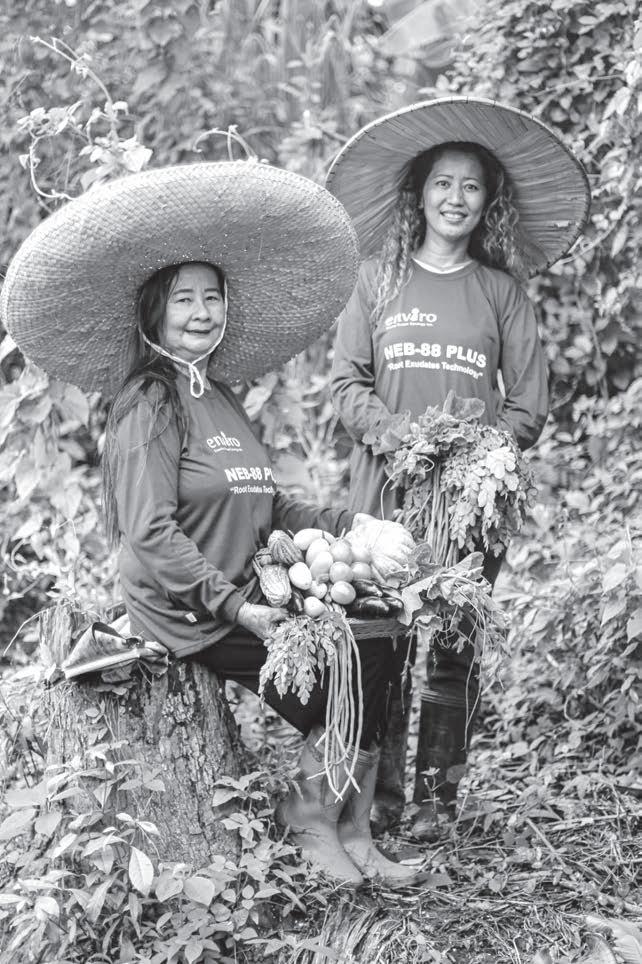
Farmers will not encounter any difficulty regarding its use, Magdato assures. “We’ve already developed the protocols to make it simple for any farmer to apply;
it just requires us to use products that are better for the earth—or ganic fertilizers instead of chemi cal ones. Organic products, how ever, are generally expensive, a hindrance that was solved through our biofertilizers at Enviro.”
At Enviro, Magdato said they aim to change the notion of how food is produced by offering their biofertilizer under the Balanced Fertilization program and address the country’s food production con cerns, while veering away from the use of destructive chemicals and unnatural methodologies, which regular fertilizer does.
Agri-preneurship
AT present, the Department of Agrarian Reform is pushing for more Filipinos to go in what it calls “agri-preneurship” or putting up businesses focused on agriculture, as a key to economic development.
Magdato said majority of busi nessmen are inclined to go into the retail and technology business at present simply because they don’t see the beauty of agri-preneurship in the long run. “As an advocate of the program, Enviro will have a massive information dissemi nation campaign by conducting trainings and partnership pro grams that will help encourage the young generation to venture into agri-preneurship. Enviro will strive to make it happen,” he said.
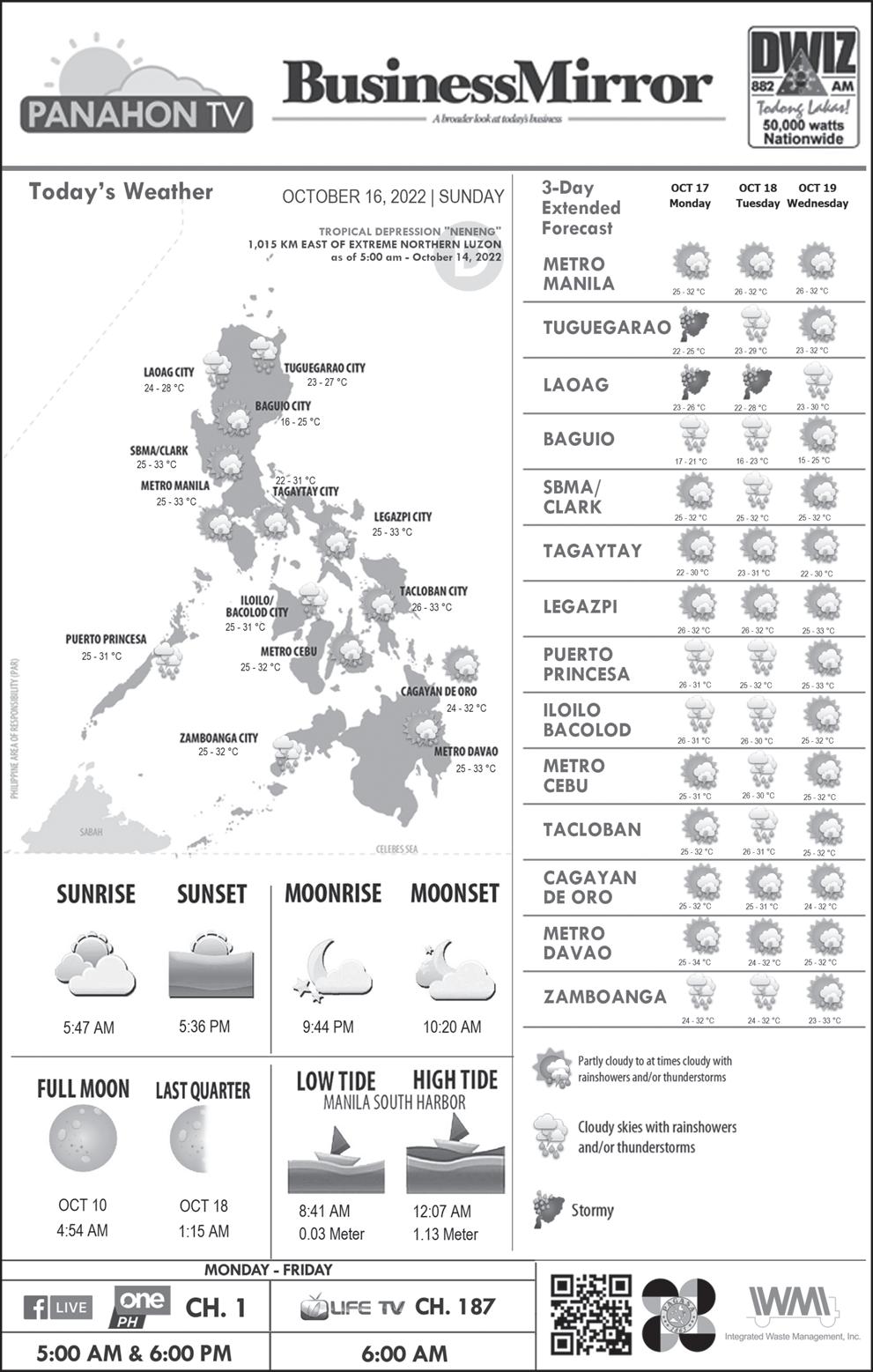
PESO EXCHANGE RATES n US 58.9500 n JAPAN 0.4005 n UK 66.8080 n HK 7.5101 n CHINA 8.2216 n SINGAPORE 41.1806 n AUSTRALIA 37.1208 n EU 57.6413 n KOREA 0.0412 n SAUDI ARABIA 15.6928 Source: BSP (October 14, 2022) NITSUKI DREAMSTIME.COM A broader look at today’s business EJAP JOURNALISM AWARDS BUSINESS NEWS SOURCE OF THE YEAR (2017, 2018, 2019, 2020) DEPARTMENT OF SCIENCE AND TECHNOLOGY 2018 BANTOG MEDIA AWARDS ROTARY CLUB OF MANILA JOURNALISM AWARDS 2006 National Newspaper of the Year 2011 National Newspaper of the Year 2013 Business Newspaper of the Year 2017 Business Newspaper of the Year 2019 Business Newspaper of the Year 2021 Pro Patria Award PHILIPPINE STATISTICS AUTHORITY 2018 Data Champion www.businessmirror.com.ph n Sunday, October 16, 2022 Vol. 18 No. 4 P25.00 nationwide | 2 sections 12 pages | 7 DAYS A WEEK
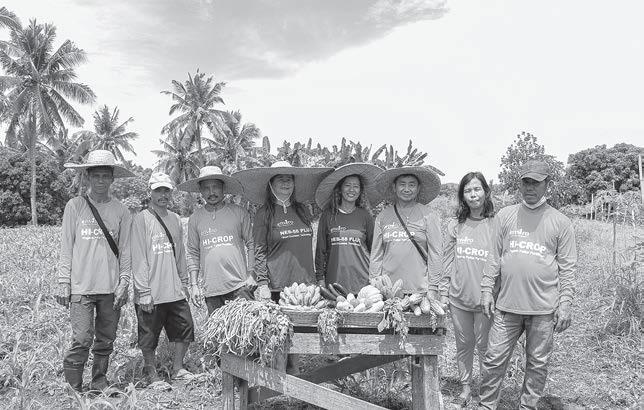
FARMERS who have adopted the balanced fertilization strategy strike a pose with their farm crop yield. CONTRIBUTED PHOTOS
NewsSunday
Observer: No matter who climbs Beijing's ranks, Xi rules
By Dake Kang and Ted Shaffrey The Associated Press
GREAT NECK, New York—For decades, Ho Pin made accurate predictions about China’s next leadership lineup—no small feat, given the black-box nature of Beijing politics.
But now, days before the open ing on Sunday of China’s most important political meeting in a decade, the New York-based jour nalist said there’s little point, giv en the power amassed by leader Xi Jinping.
“It’s not about who’s going to be in the Standing Committee any longer,” he said, referring to the handful of people who will be named to lead the ruling Commu nist Party for the next five years.
“No matter who they are, they all have one thing in common: They all have to listen to Xi.”
It’s a sharp contrast from an earlier era, when jostling factions leaked salacious details to the for eign media, and a reflection of a consolidation of power that has swept away competitors and stifled internal dissent.
Ten years ago, scandal after scandal rocked Beijing’s political establishment in the run-up to a Communist Party congress, the one that brought Xi to power.
Most damaging was the murder of a British businessman by the wife of Bo Xilai, a brash and rising po litical star. Bo was expelled from the party and sentenced to life in prison
for bribery and corruption—elimi nating a chief rival to Xi.
‘Hushed’
THE run-up to this party congress, by comparison, is hushed. Gone, Ho said, are the factions, pluralism and open political differences that once existed within China’s oneparty system.
Chinese politics is entering a completely new stage,” he said.
Even in the days of Chairman Mao Zedong, who founded com munist China in 1949, there were competing factions. Politicians were purged, then rehabilitated, then purged again, as Mao encour aged factional struggle to enhance his own power.
A fter Mao’s death, leader Deng Xiaoping loosened controls dramatically, sparking an eco nomic boom and some liberal ization. He also instituted term and age limits for party leaders, meant to prevent the rise of an other strongman like Mao.

But Xi has swept those rules aside. The party has loosened age restrictions, stopped naming ob vious successors to the Standing Committee, and scrapped term
limits for China’s presidency—pav ing the way for Xi to retain power for a third five-year term, and pos sibly indefinitely.
guess new appointments, Ho said. The previously formulaic rules of succession helped Ho forecast Chi na’s leadership lineup four times since 2002 by analyzing officials based on their age, education, work experience and relationship with other leaders.
Now, he said, China’s new lead ers are much more likely to be hand picked by Xi based on their compe tency and loyalty, unconstrained by past precedent and with little of the factional wheeling-and-dealing that used to take place.
But former Hong Kong jour nalist Willy Lam and other ana lysts such as Derek Scissors at the American Enterprise Institute say Xi could still be forced to compro mise and keep or promote people with different views on China’s governance.
Reliable information on who might be appointed has become ex tremely hard to come by under the state’s tightening grip, said Alfred Wu, a Singapore-based professor who rubbed shoulders with China’s leader decades ago as a journalist, when Xi was governor of Fujian province.

“It’s very hard to have substan tive conversations,” he said of his former contacts. “They know it’s not good to talk about politics.”
Ho was born in China and got his start at a state-run broadcaster in the 1980s. When pro-democracy protests came to Beijing’s Tianan men Square in 1989, Ho was there, writing for a Hong Kong paper, with access to high-level officials.
He left days before soldiers opened fire on protesters, convinced that bloodshed was inevitable.
A fter slipping across the bor der to Macao, Ho moved to Canada, then the United States, settling in Great Neck, a suburb of New York with a sizeable Chinese population.
A fter a stint working for a Taiwanese paper, he started a Chinese-language media group, Ming jing—which means “The Mir ror”—that now runs news web sites, magazines and bookstores in Taiwan and the US.
He mingles with sources and emigres in Chinese restaurants and at his office in Great Neck, which has shelves stacked with books and a picture of him with Tibet’s leader in exile, the Dalai Lama. At times, he offers scathing criticism of the Communist Party, and said he has no plans to go back.
Despite that, Ho refers to Chi na as his motherland, not Ameri ca. His publications and YouTube channel are in Mandarin for a Chi nese audience. In contrast to many dissident Chinese overseas, Ho often takes a dim view of Ameri can politics and blasts failures and flaws in the US system just as he criticizes the Chinese government.
But the one thing Ho does ap preciate about the US is the free dom to speak openly. “There’s no police knocking at your door here,” he said.
Many of Ho’s competitors in Chinese-language media overseas peddle conspiracy theories, driven by sheer opposition to Beijing. One, a journalist linked to the Fa lun Gong sect, spread rumors of a coup in China last month that turned out to be false.
Ho’s media group, in con trast, is generally grounded in fact, though it is heavy on Chinese po litical gossip. He has made a predic tion for who will make up China’s next generation of leaders, but in stead of making it public, he has set up a game that allows his audience to make predictions themselves— a way of keeping them engaged.
Ho is scathing about Xi’s crackdown on press freedoms, and
said that Beijing’s stiff propaganda and assertive diplomacy have ru ined China’s global reputation.
But contrary to many Western observers, he suggested Xi still has a chance to be a great leader. If he plays his cards right, Ho said, Xi’s iron rule could ultimately steer China away from collapse and avert the fate of the Soviet Union.
It is very different from the Chi na I imagined 30 years ago,” he said, “but it isn’t a simple reversion back to the Cultural Revolution, nor a move towards Western democracy.”
Xi’s advantage
THOUGH some business people and intellectuals dislike Xi, he still enjoys widespread support, Ho said. Many people have benefited from his programs to expand the social safety net, and agree with his nationalistic stance pitting China against the West.
Many Chinese have gone abroad, only to find that the West isn’t all that great, he said. Amer ica’s aging subways and struggling railways stand in stark contrast to China’s gleaming new infrastruc ture. Chinese contrast the chaos of elections in the West, Ho said, with the stability under Xi’s rule.
The younger generation in China has a strong sense of na tional pride,” he said. “That’s a very strong foundation for Xi Jinping.”
The biggest danger, Ho said, is that Xi rules for life, surrounded by “yes men.” If the question of succession is not resolved, he said China could fall into chaos, as it did in the final years of Mao’s rule. It’s a question of how Xi’s power is handed over, and who inherits it.
If he becomes a lifelong dic tator, it will be a disaster for the world, and a disaster for China,” Ho said.
BusinessMirror www.businessmirror.com.phSunday, October 16, 2022A2
Wild guess THAT has made it more difficult to
A PORTRAIT of Chinese President Xi Jinping is displayed near the words that mean ,“I will put aside my own well-being for the good of my People” at the Museum of the Communist Party of China in Beijing on Wednesday, October 12, 2022. AP
CHINESE dissident Ho Pin speaks during an interview with The Associated Press, Thursday, October 6, 2022, in Great Neck, N.Y. Ho said that considering Xi Jinping’s consolidation of power, there is little point in predicting the next leadership lineup, just days before the annual Communist Party congress. AP/MARY ALTAFFER
Survey: Majority of Americans see relations with adversaries souring
By Ellen Knickmeyer & Nuha Dolby The Associated Press
WASHINGTON—The US international outlook has undergone a major shift in recent years, a new poll shows, with a majority now expecting that US relations with allies will stay the same or improve but that US dealings with traditional adversaries like Russia and North Korea will only grow more hostile.
Two years into the Biden ad ministration, the assessments look much different from four years ago, at roughly the same point in the Trump administration. Now, 60 percent of US adults say relations with adversaries will get worse, up from 26 percent four years ago, ac cording to the poll from the Pear son Institute and The Associated Press-NORC Center for Public Af fairs Research. Just 21 percent say relationships with allies will dete riorate, down from 46 percent then.
In general, 39 percent expect the country’s global standing to worsen, compared with 48 percent who said that in 2018. Crucially, the United States’ own sharply divided domes tic politics influences views of the country’s standing abroad.
“Those results really, clearly show that it’s hyperpartisanship” affecting how confidently or bleakly, respectively, Democrats and Repub licans see the US standing abroad, said Sheila Kohanteb, a political sci entist and executive director of the
Global Forum at the Chicago-based Pearson Institute for the Study and Resolution of Global Conflicts.
In terms of the opinions that people in the US are expressing on US dealings abroad, the key factor is “political bloc sticking with political bloc,” Kohanteb said.
Four years ago, three-quarters of Democrats expected US global standing to suffer. Now, roughly that same percentage see stability or improvement in the near future. By comparison, about 6 in 10 Re publicans predicted improvements in 2018; now that same percentage expect the current administration to stumble.
Other countries are “probably laughing at us, waiting for us to fall apart,” said Kristy Woodard, a 30-year-old Republican in WinstonSalem, North Carolina. She said she saw the economy and US leader ship as suffering under President Joe Biden.
“I don’t think we really have al lies anymore because the United States is just a joke at this point,” Woodard said.
But David Dvorin, a 49-year-old Democrat in Pittsburgh who works as a price specialist, said Biden was winning respect abroad by rallying international allies to respond to Russian President Vladimir Putin’s
Pensions chaos deepens fears over UK shadow banking risks
By William Shaw & Tom Metcalf
WITH uncanny timing, the Bank of England’s quar terly review of the risks facing the banking system landed during a fresh bout of market panic. Wednesday morning’s financial policy summary expressed con fidence in the resilience of tradi tional banks to weather a down turn. Of greater concern was the shadow banking system, the industry of lenders, brokers and other intermediaries that fall outside the realm of traditional regulated banks.
“The vulnerabilities exposed by the gilt market dysfunction share characteristics with those in the non-bank financial system,” the central bank’s report said. It is crucial to boost “the resilience of non-bank financial institutions globally to sharp reductions in as set prices and liquidity.”
Such concerns echoed Governor Andrew Bailey’s call in a speech Tues day for tougher standards for the nonbank financial sector, which made up about half of all global financial as sets—some $227 trillion—in 2020, the Financial Stability Board said in a report in December.
Regulators have worried about this opaque market for years but such fears have sharpened over the past couple of weeks after the UK government announced a package of unfunded tax cuts. That caused chaos in a littleknown corner of the pensions market as funds dumped gov ernment and corporate bonds to cover their derivative positions.
With the Bank of England seem ingly determined to end its emergen cy bond-buying program on Friday, the turmoil is unlikely to ease. That could spill over into the wider shad ow banking system already hurting from higher interest rates.
“As inflation hits and interest rates rise, there will be a number of companies, a number of organi zations that will be in grave diffi culty, so I don’t think this crisis is
over because the pension funds have been rescued,” he said. “There’s got to be eternal vigilance about what has happened to what is called the shadow banking sector, and I do fear that there could be further crises to come.”
Shadow banking SHADOW banking is a catchall phrase that encompasses hedge funds, risky investment products, pawnshop and loan shark opera tions and so-called peer-to-peer lending between individuals and businesses. The common denomi nator is that these products and practices flourish outside the regular banking system and often beyond the reach of regulators.
Critically, they raise shortterm funds and buy assets with longer-term maturities. The mis match was a source of concern well before the mini-budget, drawing the attention of regulators world wide. The Financial Stability Board said in a review last year that the market mayhem at the start of the pandemic in March 2020 had highlighted vulnerabilities in the sector, and exposed the intercon nectedness of shadow banks and traditional lenders.
At the heart of the turmoil this time have been a little-watched cor nerstone of UK pension funds, which manage more than $1 trillion in as sets. These funds have offloaded all kinds of holdings in recent weeks to meet margin calls on derivatives they used to help ensure they have enough money to pay retirees de cades in the future.
The UK pension industry has operated through years of declin ing interest rates but rising rates are now the new normal, said Scott Peng, founder and CEO of Advocate Capital Management LLC. That has left the industry blindsided to the impact of tighter monetary policy. “This is the first time in over a decade that the UK LDI risk management framework has really been stress-tested and it did quite poorly,” he said. “This should result in a serious review
of pension risk and liquidity man agement.”

Multi-asset funds too are also a casualty of the pension industry’s dash for cash. Funds run by major asset managers, including Aviva Plc and Schroders Plc, have recorded hundreds of millions of pounds in net outflows since Sept. 23, when the UK government announced a pack age of unfunded tax cuts that sent the price of gilts tumbling.
Other entities or asset classes that rely on leverage may also find themselves in the spotlight, accord ing to Howard Davies, chairman of NatWest Group Plc and former dep uty governor of the central bank. Investment funds, hedge funds and private equity have all spent years in a world of low interest rates and the adjustment to higher rates could set off turbulence.
Property, cars
THE travails in the shadow banking world may spill out into the wider economy, given shadow banking firms now play significant roles in markets from real estate to car finance.
“Just as you’ve seen some mar ginal players in the mortgage markets pulling out because their wholesale funding isn’t available, I think you’re going to see that in other parts of shadow banking,” Davies said on Bloomberg Televi sion Wednesday. He said he’d pay particular attention on those ar eas that are dependent on shortterm funding.
That might include home loan providers outside of the traditional banks, a blow to an already squeezed housing market that’s seen mortgage costs spike, products pulled and caused some house sales to collapse.
Still, history suggests it will be difficult to predict where the crunch will come from.
“It’s the pattern of all financial crises for hundreds of years,” Char lie Parker, managing director at boutique investment manager Al bemarle Street Partners, said. “It’s always the bit of the market you’re least focused on.”Bloomberg
invasion of Ukraine.
“The war in Ukraine has shown the leadership of the Biden admin istration, to be able to hold most of Europe together,” Dvorin said.
Still, as Russia amps up its assault on Ukraine, tensions with China grow over Taiwan and other issues and the US confronts North Korea and Iran over those countries’ nu clear programs, similar percentages of Republicans and Democrats say that relationships with adversaries will get worse in the next year.
The Pearson Institute/AP-NORC poll also shows strong support for a US foreign policy that protects women and minorities around the world—even though few people think the US is doing a world-beat ing job of protecting those same interests at home.
Majorities of US adults said they see preventing discrimina tion against women and minorities around the world as an important US foreign policy goal and that the US government has significant re sponsibility for protecting the rights of those groups. And 78 percent of
people in the United States believe the US should withhold financial support from other countries that are failing to protect the rights of women and minority groups.
However, only about 1 in 5 US adults thinks the country is lead ing the world in safeguarding the rights of women and racial, ethnic and religious minorities, or LGBTQ people. Many think the US is among several countries that are doing it well, but about a third say there are other countries doing better.
Rick Reinesch, 61, of Austin, Tex as, who works as a project manager for a consulting firm and describes himself as a Democratic-leaning political independent, calls safe guarding the freedoms of women and minorities abroad “essential” for the US.
But the increasing Republican and Democratic divide at home means Americans’ performance on that point is a “mixed bag,” with rights deteriorating in states most influenced by former Presi dent Donald Trump’s dismissive outlook, he said.
Chris Ormsby, 53, of Edmond, Oklahoma, an administrator in higher education who describes himself as a political independent, pointed to women’s rights in Iran, where women are spearheading weeks of protests triggered by gov ernment demands that women cover their hair, as among the rights issues playing out overseas.
“Maybe we can take more proactive steps” abroad on that, Ormsby said. But “I think there’s other things to worry about, nu clear proliferation and things like that.” He called slowing climate change by moving the world away from fossil fuels a priority for US policy abroad.
That all makes for a strange split for those charged with shap ing America’s policy on protections of human rights, Kohanteb, the Pearson Institute official, said.
“American policy is not as ada mant about protecting our own rights as Americans believe we should be doing abroad,” she said.
Dolby reported from New York.
BusinessMirror Sunday, October 16, 2022www.businessmirror.com.ph • Editor: Angel R. Calso A3 The World
News
Journey
»life on the go
EclEctic ExprEssions

Mention Las
Casas Filipinas de Acuzar and immediately its famed 19th-century homes which evoke old World charm come into mind. Situated at a coastal village in Bagac, Bataan, it is a recipient of the prestigious 2021 Historic Hotels Worldwide Best Historic Hotel in Asia and the Pacific by Historic Hotels Awards of excellence.
But more than the ancestral homes were painstakingly transported from their original communities and meticulously restored, this heritage resort is also noted for its cuisine and crafts, which make it a quintessential and eclectic destination.
Beyond traveling back in time, guests can sink their teeth on a culinary journey which spans more than three centuries of cultural amalgamation of Spanish, Filipino and other influences.
Cusina ni Nanay Maria, the 60-seater main food and beverage outlet of Las Casas, is housed at Casa Unisan, an ancestral house from the old provincial capital of Quezon. As you may have guessed, its claim to fame are timeless Filipino dishes which remind you of your mother’s delectable and homestyle dishes, which uses freshly-caught seafood and locallysourced ingredients.
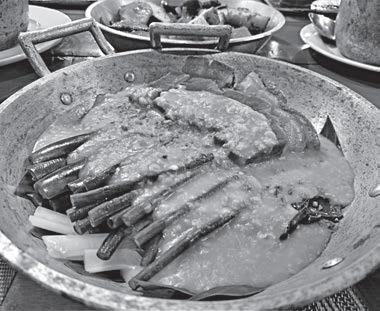
Lose yourself in the bevy of household heir loom recipes such as the sought-after karekare, lechon carajay, adobo and tinola, and top them off with desserts like leche flan and gabi ice cream. Because of its turn-of-the-cen tury feel and proximity to the picture-perfect nooks, the restaurant is ideal for lunch.
For an exclusive setting, small groups can bask on an intimate meal and long hours of chit-chat at an old house, most notably the Casa Hagonoy, a storied heritage house from this seaside town in Bulacan.
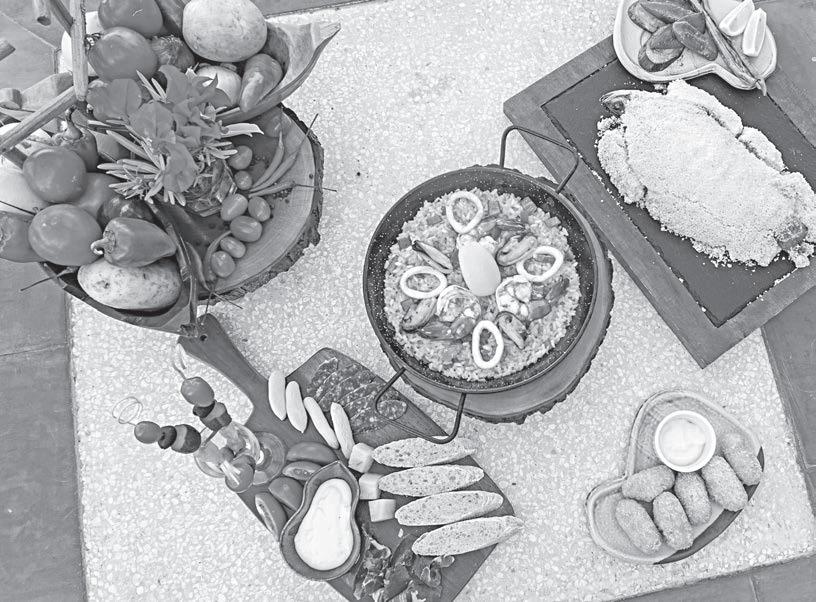
For dinner, Cafe del Rio is the cozy spot with its riverine location and breezy al fresco dining. Housed at Casa Sta. Rita, the 120-per son capacity Pampanga home serves Spanish delights, namely, the paella, pescado ala sal (fish wrapped in salt), an assortment of tapas, and a variety of wines and spirits.
Another option is La Bella Teodora, which is situated at Casa Biñan, the Laguna home named after Dona Teodora Alonzo, the mother of national hero Dr. Jose Rizal where the latter stayed during his student days. The equallystoried house, which was caught in the crossfire
of a heritage conservation controversy, and almost crumbled into oblivion quite literally if it did not find a safe space at Las Casas Filipinas. The romantic res taurant serves authentic Italian dishes such as Italian pizza and pasta.
La Parilla at Plaza de Castro is the place to be for snacks and in-between meals, popular Pinoy kakanin and homegrown drinks, such as puto bumbong, bibingka, native brewed coffee, and sala
bat (ginger ale).
For chilling out with a refreshing cock tail or cold drink, the poolside Dapitan Bar will give you a front row seat as you await the setting of the sun in the hori zon. The 40-seater bar is named after the once-obscure coastal town in northern Zamboanga where Rizal was deported by Spanish authorities and became his home from 1892-96.
The iconic Hotel De Oriente, the equivalent of a five-star lodging during the colonial-era in old Manila, is the most massive of the restored structures in the enclave.
Known for its elaborate interiors and staircase, the stately edi fice is also the center for social, cultural events, art exhibits and performing arts.
The hotel’s ground-floor multi-purpose hall, Binondo, which is named after the world’s oldest Chinatown is the buffet breakfast place.
An equally-exciting behind-the-scene story which shouldn’t be missed is its workshop tour which takes you to the
huge warehouses where community ar tisans and craftsmen painstakingly work on the oft-unseen details which make Las Casas a class of its own.
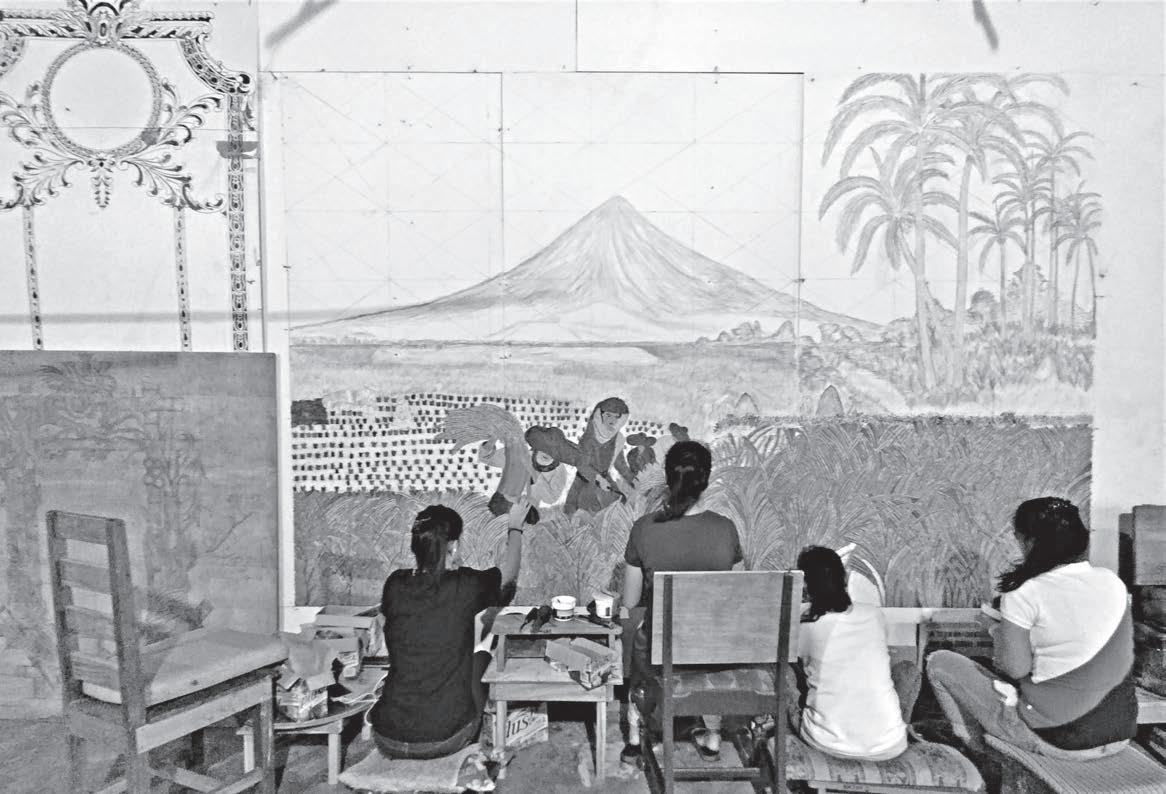
The walking tour brings you to the nondescript workshop on wood mosaic, ceramic tiles, wood carvings, and brick making, where you come face-to-face with the unsung heroes whose collective body of work who have made the prop erty a consummate work of art.
As part of an immersive experience, you can also make your own fiberglass mosaic piece to take home and serve as your bragging right.
Do a virtual time in style aboard a calesa horse-drawn carriage or a tran via coach, or navigate the waterway and marvel the houses on board a guided boat cruise.
Starting this weekend, visitors will enjoy another visual treat with the re vival of the pre-pandemic Freedom Land cultural shows which reenact key events in Philippine history such as Cry of Pugad Lawin, Execution of Dr. Jose Rizal, and the Proclamation of Independence, among others, through crowd-engaging presentations.
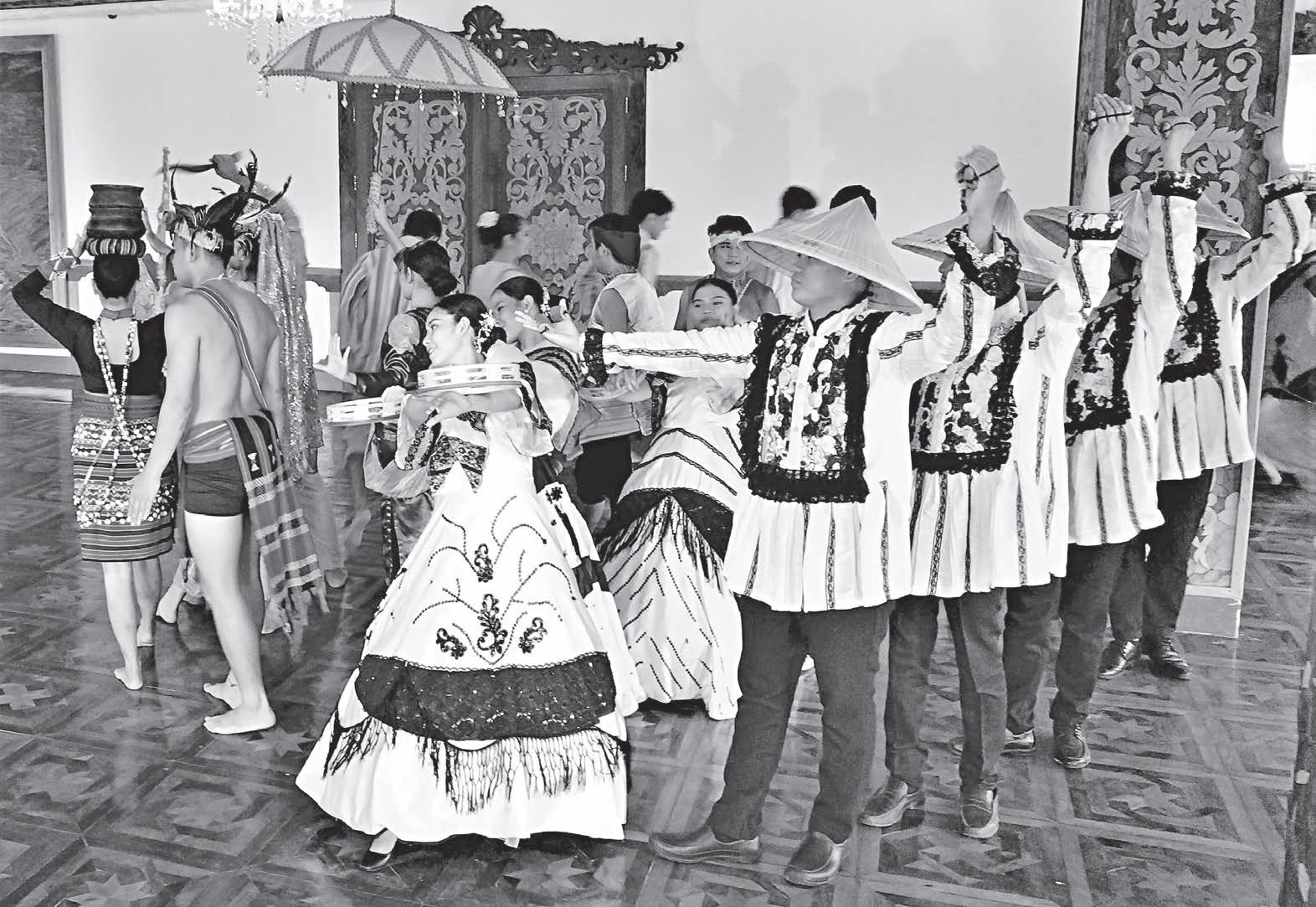
Lest we forget, the resort is also the perfect spot for a period-inspired pic torial for pre-nuptials and events, and even simple snapshots for its inimitable ambiance.
With the eclectic blend of cuisine, craft, cultural expressions, and every thing in between, Las Casas Filipinas de Acuzar is simply irresistible.
Editor: Tet AndolongBusinessMirror
Sunday, October 16, 2022A4 Story & photos by Bernard L. Supetran
Cafe Del Rio Spanish dishes
KaRe KaRe at Cusina ni Nanay Maria
Mo S ai C Workshop at Las Casas filipinas
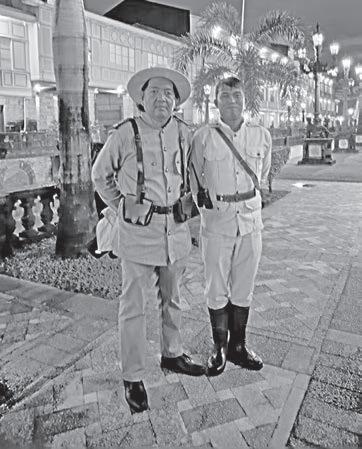
The author and a security officer dressed in rayadillo military uniform of the Philippine Revolutionary army
Cu LT u R aL performance at hotel De oriente
Science Sunday
 Editor: Lyn Resurreccion
Marcos Jr. pushes for more incentives for Balik Scientists
By Samuel P. Medenilla
Marcos gave the instruction to the Department of Science and Technology (DOST) during the Eighth Annual Balik Scientist Pro gram (BSP) Convention held at the Philippine International Conven tion Center (PICC), in Pasay City last Friday.
With the theme, “Balik Sci entist: Kasangga sa Paglinang ng Agham at Teknolohiya para sa Maunlad at Matatag na Kina bukasan,” the convention aims to present some of the notable achievement of the current Balik Scientists, and to entice more Fili pino experts abroad to join the pro gram and give back to the country. It has the slogan: “Balik puso, balik Pilipinas, balik scientists.”
“You must continue to strength en the implementation of the Balik Scientist Program and find ways to provide more incentives to en courage more Filipino scientists to come back to the country and share their expertise,” Marcos said in his speech in the event.
The additional incentives, he said, will be on top of what is al ready being provided by the Repub lic Act 11035, or the Balik Scientist Act of 2018, which include allow ances, education assistance for their minor children, participation in grants-in-aid projects.
Crucial role
MARCOS noted how the return ing scientists played a role in the country’s Covid-19 response, in cluding vaccine protocols.
Since the onset of the pandemic in 2020, DOST Assistant Secre tary Leah J. Buendia disclosed at the event that the country has 67 Balik Scientists.
Of which, seven worked in the Virology and Vaccine Institute of the Philippines. Marcos said scientists will also be playing a crucial role to ensure the country could cope with the ef fects of climate change, which he said has become an international “primordial problem.”
“We look to science to provide us with the answers for the miti gation and the adaptation that we have to undergo if we are going to flourish and do better in the fu ture,” Marcos said.
Lauds DOST
THE President lauded DOST for its continuous implementation of its BSP, which helped in local research and development initiatives and resulted in patents.
“I was impressed by the num ber of patents that have emerged. This is generally the guide that we use, this is generally the measure that we use when we are talking, especially of primary research,” Marcos said.
Since the launch of the BSP in 1975, Buendia said it was able to attract 603 scientists, who con ducted research for 130 host in stitutions nationwide.
Marcos said he hopes DOST will use the BSP as a way to attract the youth to take up courses related to science, technology, engineering and math (STEM).
“Let us also encourage our young people by showing them what a career in science, research and development, in what the work that is being done by Balik Scien tists and to motivate them and to inspire them, and to explain to them, that you can do this too,” Marcos said.
Frustrated scientist
AS a self-professed “frustrated scientist,” Marcos said he knows the importance of giving role models to the youth and their parents to develop appreciation for STEM-related courses.
“All my scholastic career was spent in science and it was only to ward the end that it was explained to me by my father that science was hard and I will not grow rich from it,” Marcos said.
Marcos amusingly said he would have loved to prove his father, for mer president Ferdinand E. Mar cos, wrong by showing him the business tycoons, who became rich from STEM-related endeavors.
“Boy, if he were alive now, I would like to introduce him to Elon Musk, I’d like to introduce him to Bezos, I’d like to introduce [him] to Microsoft, to Apple,” Marcos said.
The president vowed to con tinue extending support to DOST so it could continue with its BSP implementation.
“You may always be assured that I and my administration will ex tend all support in making science and innovation an instrument of progress and prosperity for the Filipino,” Marcos said.
BSP established under Marcos Sr. ESTABLISHED by Marcos Jr.’s fa ther, then-President Ferdinand E. Marcos through Presidential Decree 819 in 1975, the program sought to provide more opportuni ties for local scientists and boost the science, technology and inno vation (STI) capacity of the coun try. It also aims to present more opportunities to Filipino scien tists who were being recruited by foreign institutions.
The enactment of Republic Act 11035, or the Balik Scientist Act, in June 2018 was for DOST to provide Balik Scientists with competitive benefits, such as daily subsistence allowance, health in surance, roundtrip airfare, and among others.
The BSP specifically aims to re verse the effect of the brain drain; strengthen S&T capabilities; ac celerate the flow of technologies; and promote knowledge sharing.
The Balik Scientists
THE current 12 Balik Scientists presented their innovations with their host institutions, the three sectoral councils of the DOST, namely the Philippine Council for Health Research and Develop ment (PCHRD); Philippine Coun cil for Agriculture, Aquatic and Natural Resources Research and Development (PCAARRD); and Philippine Council for Industry, Energy and Emerging Technol ogy Research and Development (PCIEERD).
1. Dr. Myra O. Villareal VILLAREAL is a lecturer at Uni versity of Tsukuba in Japan.
Her project is, “Establishing Functional Food Research in SUCs [state universities and colleges] for a Future-ready and Healthy Philippines.”
She has been a Balik Scientist for host institutions Bicol Univer sity, University of the Philippines (UP) Manila, and University of the Philippines Los Banos (UPLB).
She has the vision of estab lishing a mammalian cell culture laboratory that will play a central role in creating a functional food
program at the Bicol University.
Her engagement has the po tential to increase the research capacity of the host institutions and inspire young researchers to pursue research in science that will contribute to national devel opment and economic growth in the future.
2. Dr. Julius Adam Lopez LOPEZ is a DOST-PCHRD Medi um-Term Balik Scientist and is af filiated with the Center for Natural Drug Discovery and Development, University of San Agustin (USA), Iloilo City.
His project is on “Empowering the countryside with nuclear mag netic resonance for better health and well-being of Filipinos.”
His engagement as a Balik Sci entist will address the regional disparity by providing his exper tise in nuclear magnetic resonance spectroscopy through assisting the laboratory operations of the USA DOST-PCHRD Tuklas Lunas NMR Laboratory Visayas in the USA, and co-authoring the Train ing Module on Fundamental NMR Spectroscopy and Standard Oper ating Procedure for Bruker NMR Spectrometers.
He will also equip potential NMR spectroscopists in the coun tryside through a training pro gram on NMR principles, data in terpretation, and use of the first and only 600 MHz cryoprobe NMR spectrometer in the country.
3. Dr. Thaddeus Carvajal
HE is an Associate Professor and Balik Scientist affiliated with the De La Salle University-Manila.
His project is “The Importance of Studying Vector Biology and Ecology of Mosquito-borne dis eases for Designing Appropriate Vector Control Strategies.”
Carvajal’s presentation high lighted the Philippine-based stud ies focusing on the biological and ecological aspects of dengue dis ease transmission. It also discussed the different biological control ap proaches and their effectiveness in reducing disease transmission through a systematic review.
4. Prof. Jocelyn Serrano
SHE is affiliated with the Uni versity of Tsukuba. Her project is “Establishing Functional Food Re search in SUCS for a Future-ready and Healthy Philippines.”
Serrano’s expertise in cell biology and functional food sci ence will help in the establishment
of an income-generating mamma lian cell culture assay laboratory through the DOST PCHRD NICER Health Program.
Her engagement is co-hosted by the UPLB and UP Manila to establish a collaboration that will further improve Bicol Uni versity’s capacity for instruc tion and research and extension engagements.
5. Engr. Syrus Gomari
GOMARI is a Medium-term Balik Scientist 2022. He is the CEO of Mobility Vision+, Munich, Germa ny and Manila, Philippines
His project is on “Urban Mobil ity Planning of Tomorrow.”
Through his engagement in BSP, Gomari, with his expertise on the intersection of sustainable urban mobility planning, stake holder engagement, data science and software development, au tomated vehicles, and video ar tificial intelligence, will identify data-driven approaches and tai lor solutions to fit the needs of decision-makers and planners in local government units.
Two cities in Metropolitan Manila are identified as his host institutions. The Balik Scientist will collect data and use deci sion-support software that will be used during the pilot-phase and beyond.
6. DJ Donn Matienzo, PhD
A POSTDOCTORAL research fel low/entrepreneurial lead, Matien zo is affiliated with UP Diliman and Technological Institute of the Philippines.
His project’s title is “Batteries and hydrogen technology: pathways for a sustainable energy future.”
His engagement will contribute to ongoing R&D projects on bat tery and hydrogen technologies.
It involves two essential tech nologies to decarbonize all sectors of the Philippine economy, such as the batteries and hydrogenproducing electrolyzers.
7. Dr. Chosel P. Lawagon
LAWAGON is the director of the Center of Green Nanotechnology Innovations for Environmental Solutions (CGNIES). She is with the University of Mindanao (UM).
With her project, “Panaw: A Balik Scientist’s journey in creating impact through sci ence,” Lawagon’s contribu tions brought about significant change in the scientific land scape of the UM.
8. Dr. Jonel P. Saludes
SALUDES is the associate vice president, Research and Global Relations at the University of San Agustin (USA).
His presentation is on “Visible and tangible impact of Balik Scien tists for the Filipinos: The Western Visayas experience.”
Through the BSP engagements at the USA-Iloilo, the university became known for its flagship degree programs in health. USA has since then hosted eight Balik Scientists, and five chose to repa triate and join its faculty.
Four research centers focus ing on aquaculture, chemical bi ology, bio- and health informat ics, diagnostics, drug discovery, marine microbial biotechnology, and nanomaterial engineering and nanotechnology were established.
To date, USA through the leadership of Balik Scientists es tablished four laboratories led by our Balik Scientists namely: Center for Advanced New Mate rials, Engineering, and Emerging Technologies Laboratory by Dr. Noel Peter Tan; Center for Natural Drug Discovery and Development by Dr. Jonel Saludes; Center for Chemical Biology and Biotech nology by Dr. Doralyn Dalisay; and Nuclear Magnetic Resonance (NMR) Spectroscopy Laboratory by Dr. Julius Lopez
9. Dr. Leilani S. Dacones
AN ASSISTANT professor, Dacones is affiliated with the Institute of Biology of UP Diliman
Her project is “Fungus-tic en gagement in the academe.”
The focus of the research was to gain a better understanding of the population biology of fun gal plant pathogens causing dis ease epidemics of economically important crops in the Philip pines by developing molecular markers and the subsequent establishment of recommenda tions for the implementation of cost-effective control.
The research has extended op portunities for providing access to crop growers in initially iden tifying potential cause of losses in their production fields and con sequently the measures to help mitigate these problems.
10. Dr. Homer Pantua
PANTUA is the co-founder and CEO of BioAssets Corp.
His presentation is on “Balik Scientist
and Private En gagements Toward Building a
The Balik Scientist and re searchers at the DOST-Industrial Technology Development Insti tute (ITDI) advanced its African Swine Fever virus point-of-need diagnostics kit development.
Through the engagement, ITDI and BioAssets Corp., collaborated to generate a whole genome se quence of the ASF virus. Such ge nomic information are important to further diagnostic development and vaccine research.
11. Dr. Jennifer Luangsa-ard A SENIOR researcher, Luangsaard is with the National Center for Genetic Engineering and Biotech nology, Thailand and Polytechnic University of the Philippines.
Her project is on “Diversity studies of invertebrate-pathogenic fungi in Quezon Province, search for novel species and new sources of biocontrol agents.”
This is the first study that ex plored the diversity of Inverte brate-pathogenic fungi (IPF) in the province of Quezon province. IPF, considered the least explored fungal groups in the Philippines in terms of biodiversity and its potential in biological control, are important natural enemies of insects and other invertebrates and their interactions have been shown to drive the dynamics of insect host populations.
12. Dr. Divina Amalin AMALIN is affiliated with De La Salle University.
Her presentation is on “Balik Scientist Program Brain Gain from the Perspective of the Host Institution.”
The De La Salle University (DLSU) as an active host institu tion partner of DOST for the BSP has an existing Visiting Scholar Program (VSP) with the inclusion of hosting a BSP under the Fili pino Professors and Researchers category.
The VSP assures the visiting scholars with work space, research support such as existing labora tory equipment, research consum ables and office supplies.
DLSU has hosted a total of 11 BSPs, two of which has been re tained by DLSU as regular em ployees. DLSU as a host institution benefits significantly in terms of research and education from the BSPs engagement, a manifestation of the brain gain from BSP.
BusinessMirror A5Sunday, October 16, 2022
www.businessmirror.com.ph •
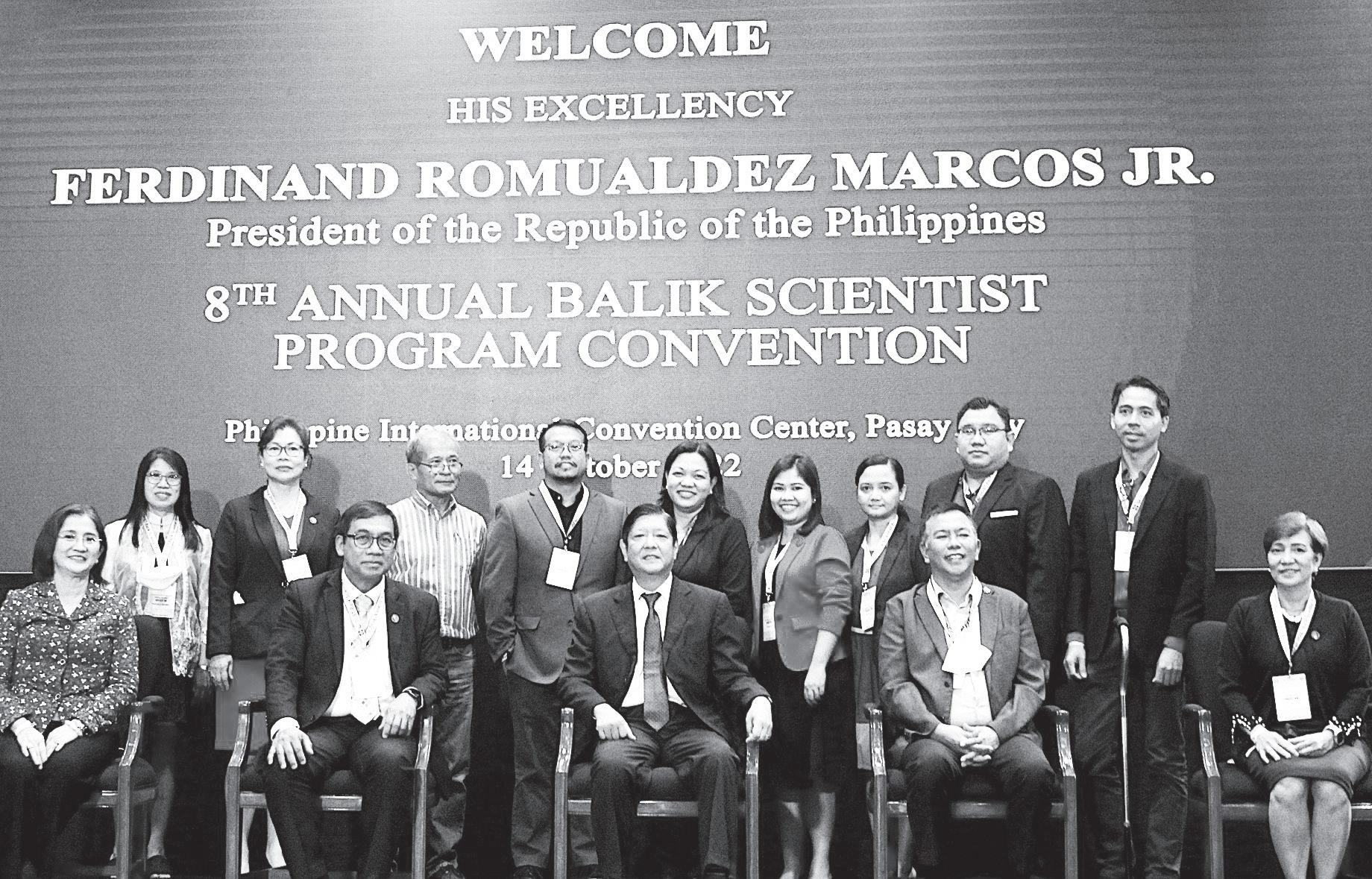
PRESIDENT Ferdinand R. Marcos Jr. is pushing for more incentives to bring home more Filipino scientists so they could help address the impact of climate change and in the country’s development.
Public
Biotechnology Atmosphere in the Philippines.”
With Lyn Resurreccion
PRESIDENT Ferdinand R. Marcos Jr. (seated, center) takes a photo with DOST officials and some Balik Scientists after he delivered the keynote address at the Balik Scientist Program Convention on Friday. In the photo with him are (from left, seated) Pasay City Mayor Imelda Calixto-Rubiano, Science Secretary Renato U. Solidum Jr., Undersecretary Sancho A. Mabborang for Regional Operations and OIC Undersecretary Leah Buendia for R&D. Standing at the back are nine of the 12 featured Balik Scientists. BSP PHOTO
Faith Sunday
Pope marks Vatican II’s 60th year: ‘Live the faith with joy’
VATICAN—On the 60th anniversary of the open ing of the Second Vatican Council, Pope Francis encour aged Catholics to leave behind criticism and anger and to live the faith with joy.
“May the Church be overcome with joy. If she should fail to re joice, she would deny her very self, for she would forget the love that begot her,” the pope said during Mass in St. Peter’s Basilica on October 11.
“Yet,” he continued, “how many of us are unable to live the faith with joy, without grumbling and criticizing? A Church in love with Jesus has no time for quar rels, gossip and disputes. May God free us from being critical and intolerant, harsh and an gry. This is not a matter of style but of love. For those who love, as the Apostle Paul teaches, do everything without murmuring.”
The Mass marked the 60th an niversary of the day the Second Vatican Council was opened by St. John XXIII on October 11, 1962. The council closed on De cember 8, 1965.
October 11 is also celebrated as St. John XXIII’s feast day in the Catholic Church.
In his homily, Pope Francis en couraged members of the Church to return “to the council’s pure
sources of love.”
“Let us rediscover the coun cil’s passion and renew our own passion for the council,” he said. “Immersed in the mystery of the Church, Mother and Bride, let us also say, with St. John XXIII: Gaudet Mater Ecclesia [Mother Church Rejoices].”
Francis also warned Catholics about the strategy of the dev il, who sows weeds of division among the faithful.
“Let us not succumb to his flattery, let us not give in to the temptation of polarization,” he urged.
“How many times since the council have Christians gone out of their way to choose a side in the Church, not realizing that they were tearing their Mother’s heart,” the pope said.
“How many times have they preferred to be ‘supporters of their own group’ rather than servants of all, progressives and conservatives rather than brothers and sisters, ‘of the right’ or ‘of the left’ rather than of Jesus; standing up as ‘guardians of the truth’ or ‘soloists of novelty,’ rather than recognizing themselves as humble and grateful children of holy Mother Church,” he added.
All people are children of God and our brothers, he added.
“The Lord does not want us this way: We are his sheep, his flock, and we are so only together, united. Let us overcome polariza tion and guard communion, let us become more and more ‘one,’ as Jesus pleaded before he gave his life for us,” the pope said.
Pope Francis noted that there is always the temptation to start from one’s self and one’s agenda, rather than from God and his Gospel.
We “let ourselves be caught up in the winds of worldliness in order to chase the fashions of the moment or to turn back the time that Providence has granted us,” he said.
“Yet let us be careful: both the ‘progressivism’ that lines up be hind the world and the traditional ism—or ‘indietrism’—that longs for a bygone world are not evidence of love, but of infidelity.”
“Let us rediscover the council in order to restore primacy to God, to what is essential: to a Church madly in love with its Lord and with all the men and women whom he loves; to a Church that is rich in Jesus and poor in assets; to a Church that is free and freeing. This was the path that the coun cil pointed out to the Church,” he pointed out. Hannah Brockhaus/Catholic News Agency via CBCP News
Nuestra Señora de Candelaria of Tondo gets episcopal coronation
THE Archdiocesan Shrine of Santo Niño de Tondo announced on Wednesday that its image of Our Lady of Can delaria will be granted an episco pal coronation by Cardinal Jose Advincula of Manila.
In a decree dated October 7, Advincula approved a petition for the episcopal coronation of the venerated Marian image.
Known formally as “Nuestra Se ñora de Candelaria y Purificación de Tondo,” historical records reveal that the veneration of the Marian title in Tondo dates back to the Spanish pe riod during the pastoral administra tion of the Augustinian friars.

The parish’s Marian confrater nity “Cofradia de la Purificación” was established in Tondo in 1789 and that it was approved by King Charles IV of Spain.
The oldest extant copy of the novena in honor of Our Lady of Candelaria was composed by Don Marian Lopez in 1835, thus prov ing that there is a historical basis to the cult of devotion.
Although the original image was destroyed during World War II, another one was commissioned by then curate Msgr. Jose Jovellanos that was blessed and enshrined on January 18, 1946.
The decree further stated that
Tondo’s traditions establish a link between the two patrons because yearly “the celebration of the feast of the Santo Niño concludes with the celebration of the feast of Our Lady of Candelaria”.
Advincula also noted that the coronation is “a most fitting honor to the Mother of God as this Chris tian community celebrates with gratitude this unique devotion aimed to deepen and renew their faith in the Triune God.”
T he image of Our Lady of Can delaria is the second image in the archdiocese to be granted an epis copal coronation after the image of Nuestra Señora de la Soledad
de Manila, which was crowned in 2017 at the Nuestra Señora de Soledad Parish Church in Binondo.
The archdiocese’s present territory is also home to seven pontifically crowned Marian images, namely Nuestra Señora de Guia (Ermita, Manila), Nuestra Se ñora de Peñafrancia (Paco, Manila), Nuestra Señora de los Desamparados (Santa Ana, Manila), Nuestra Señora del Carmen (Quiapo, Manila), Nuestra Señora de Consolación y Correa (Intra muros, Manila), Nuestra Señora del Pi lar (Santa Cruz, Manila) and Virgen de la Rosa (Makati City).
The shrine has yet to announce the date of the coronation rites.
Kendrick Ivan B. Panganiban/CBCP News
Headcovers have always been political in Iran–for all women
AFRIEND and I were strolling through Teh ran’s streets one afternoon when she was approached by a member of the “morality police,” an agency tasked with enforcing modesty laws in public.
First, the policewoman warned her to cover her hair by pulling forward her scarf. Next, she was ordered to remove her sunglasses.
“What do you have there?” the policewoman asked loudly, examining my friend’s green eyes for makeup. There was none, but her stare was full of hate.
“Behave yourself!” the policewoman warned.
As we walked away, my friend stopped, turned and looked back at her, pulling the scarf back again while putting her sunglasses back on.
Her husband lamented, “Woman, one of these days you will be arrested, and if lucky you will be alive when come to pick you up from the police station.”
This was 30 years ago. Similar scenes still play out daily. Since mid-September 2022, when a young woman, named Mahsa Amini, died in detention after being detained for not wearing her headscarf “properly,” protests against the morality police and the broader regime have erupted across the country and from sympathizers around the world.
Acts of defiance, big and small, have continued uninterrupted across multiple generations. Women’s activism has been constant, as has their imprisonment.
Role of the state IN Persian culture, the main variation of the veil has historically been the chador, a long cloak covering the body from head to toe, which the wearer holds closed in front of her.
Early women’s groups did not push back against it. Instead, they focused mainly on raising the marriage age, granting more rights to women in cases of divorce and custody, and allowing girls to attend school.
During the 1920s, some began to address the veil, as I wrote about in my book on the women’s rights movement.
This was a risky move. For example, when a woman’s magazine in the city of Mashhad published an editorial in favor of unveiling and equal rights, the editor’s house was looted and she had to flee, though she continued her work in other cities.
Around the same time, in the city of Isfahan, another publication owned by a feminist who advocated unveiling barely escaped a mob attack.
The journalist, Sediqeh Dowlatabadi, left instructions that no veiled woman should be allowed to participate in her burial or visit her grave.
The founder of the Pahlavi Dynasty, Reza Shah, banned the veil in 1936 as part of his modernization program.
By most accounts, this edict left an overwhelming majority of women, who had been veiled most of their lives, in a state of shock and isolation. Many did not leave their houses until the state allowed the wearing of hats and scarves.
When Reza Shah was forced to abdicate in favor of his son Mohammad Reza Shah in 1941, the prohibition was disbanded and headcovers returned in full force. During his reign, the veil became optional in public.
Yet the psychological and cultural aspects were rarely discussed or debated. I recall schoolmates of mine who were unveiled in school, but when our bus reached their neighborhood, they covered their heads before disembarking. Duality was the name of the game.
Role of the revolution
WITH the fall of monarchy in 1979 and the subsequent rise of the Islamist government, the headcover issue returned with a vengeance.
At this stage not only were many women wearing chadors, but a second variation of headcover emerged: an often but not always black veil that fit the head closely and a coatlike covering that loosely covered the body.
During the past few decades, however, women have been allowed to wear a scarf instead.
The first demonstrations against the new rules were held in 1979 when authorities declared that female government employees must wear the hijab and lasted five days.
The compulsory hijab went into effect in June 1980, sparking demonstrations by women dressed in black attire as a symbol for their loss of freedom. All women’s demonstrations were met with violence.
There were many women—often referred to as traditional, religious or pro-
regime—who favored forced veiling, as there are today.
Yet, it is never easy in Iran to speak of positions along simple party lines. There were practicing Muslim women who were veiled but opposed forced veiling.
On the other hand, there were men and women on the left who did not see a problem with forced headcovers, arguing there were more important issues to be addressed.
During the early days of the revolution, female members of recognized religious minorities, such as Zoroastrians and ethnic Christian groups, opposed the forced headcover as well. They argued that the government’s order went against the constitution, which permitted every community to adhere to its own traditions.
A small group of women wore their traditional historical attire in public, as a substitute, but were ordered to stop.
By 1985, all minority school girls were ordered to wear the Islamic headcover and full body attire. Teachers instructed mothers to cover their daughters’ heads while testing them on spelling and dictation at home, in order for the children to get used to hearing muffled words through the headcover.
The critical significance of the hijab in the state’s eyes was best expressed by the first supreme leader, Ayatollah Ruhollah Khomeini: “If the Islamic Revolution had no other outcome but the veiling of women, this in and of itself is enough for the Revolution.” Eliz Sanasarian, USC Dornsife College of Letters, Arts and Sciences/The
Bishop to govt: Act more on IPs’ ancestral land claims
district on October 9.
A
Catholic bishop has called on the government to pay more attention to legiti mate ancestral land claims by Indigenous peoples (IPs) living in different parts of the country.
Bishop Valentine Dimoc, chair man of the Catholic Bishops’ Con ference of the Philippines’ Episcopal Commission on Indigenous Peoples (CBCP-ECIP), said ancestral domain issues remain among major chal lenges that IP communities face until today.
“Many indigenous groups still do not have their CADT [certificate of ancestral domain title] and are still struggling,” Dimoc said.
“And sometimes, there is no NCIP [National Commission on Indigenous Peoples] to help them,” he lamented.
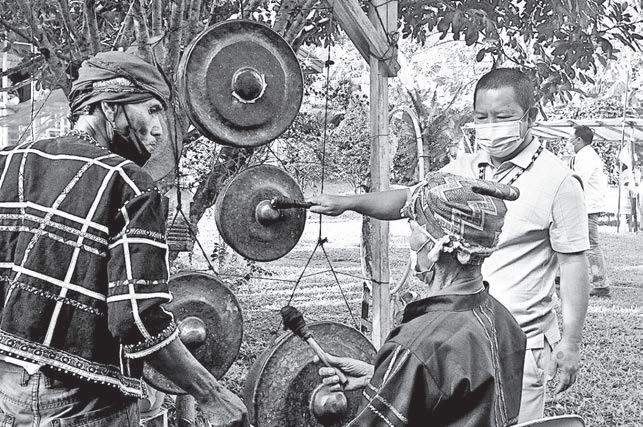
The bishop was speaking dur ing the national celebration of the 45th Indigenous Peoples’ Sunday at the Upper Sirib in the southern Philippine city of Davao’s Calinan
Speaking to the Bagobo-Klata tribe, he told them that they are “blessed” to have an NCIP that cares for them.
“I’m sure that your NCIP here, along with your government, your church and other organizations are biddable, merciful and loving that they worked for and helped you to have your CADT. Sana all [I hope that is true for all],” Di moc added, using a modern-day Filipino catchphrase.
This year’s IP Sunday national celebration was hosted by the Arch diocese of Davao in partnership with the ECIP.
Various activities were held dur ing the day including dialogues, tree-planting and Mass officiated by Archbishop Romulo Valles of Davao and former CBCP president.
The event was also held a day af ter the “Panagtagbo 2022,” a local celebration of the IPs “culture, faith and of life.” Nikko Balbedina/CBCP News
Asia’s Catholic bishops open 2-week conference in Bangkok
A
SIA’S Catholic bishops are in a two-week general con ference in Bangkok since October 12 to mark the 50th anni versary of the Federation of Asian Bishops’ Conferences (FABC).
“The Archdiocese of Bangkok, the Catholic community of Thai land and our friends, extend the warmest welcome to all the del egates of the FABC’s general con ference,” read a statement from the organizing body in the Thai capital.
“We proudly and joyously join in the celebration of the 50th Anniversary of the FABC and pray for the guidance of the Holy Spirit for the success of this his toric conference,” it added.
At least 270 Catholic Church leaders and guests will be wel comed by Thailand’s Minister of Culture Itthiphol Kunplome, Car dinal Francis Xavier Kriengsak Ko vitvanich, archbishop of Bangkok, and Bishop Joseph Chusak Sirisuth, president of the Catholic Bishops’ Conference of Thailand.
“We will start a monumental task of reaffirming, renewing, and revitalizing the Church in Asia,” said Cardinal Oswald Gracias of Bombay, convenor of this year’s celebrations, in a statement dur ing the opening ceremonies that were held in Bangkok on August 22.
“We will gather to commem orate, celebrate and chart the direction that we, as Church in Asia, will take on our journey to gether in the next decades,” the prelate said.
In his message for the occasion, Pope Francis expressed hope that FABC’s general conference will “re new the Churches in Asia in frater nal communion and in missionary zeal for the spread of the Gospel among the richly diverse peoples, cultures and social realities of the vast Asian continent.”
The gathering aims to “reaffirm, renew and revitalize” the Catholic Church in Asia under the theme, “Journeying Together As Peoples of Asia,” which is inspired by the scrip ture “then they went another way.”
Italian Catholic news agency Fides reported that some key
questions will be asked during the conference, including how the Church in Asia continue to be “Good News” in under “emerging realities.”
“How can the FABC serve and support the bishops and their epis copal conferences in Asia? How can Catholic communities on the conti nent contribute to a better Asia?” said the report.
The gathering will witness a “multicultural picture” of prayers and hymns that will be sung in Asian languages.

With the usual reflections and group work for the bishops, special events have been planned, such as a “Talk Show with Asia” where believ ers from all over Asia participate in a videoconference.
The life and pastoral activity of 14 selected parishes in different Asian nations will also be shared with those present, with a “virtual visit” of the bishops, who will meet online with the faithful of the spe cific local community.
The FABC is a voluntary associa tion of episcopal conferences in Asia that was established with the ap proval of the Holy See. Its aim is to foster among its members solidarity and co-responsibility for the welfare of Church and society in Asia.
Among those who are attend ing from the Philippines are Bishop Pablo Virgilio David, the current president of the Catholic Bishops Conference of the Philip pines and bishop of the Diocese of Kalookan, and Cardinal Orlando B. Quevedo of Cotabato, the Busi nessMirror was informed. They will be a moderator and Mass presider, respectively.
FABC members include Church leaders from Afghanistan, Ban gladesh, Brunei, Cambodia, India, Indonesia, Japan, Kazakhstan, Korea, Kyrgyzstan, Laos, Malay sia, Mongolia, Myanmar, Nepal, Pakistan, Philippines, Taiwan, Singapore, Sri Lanka, Timor-Leste, Tajikistan, Turkmenistan, Uzbeki stan, Vietnam, Thailand, China and its special administrative re gions, Macao and Hong Kong. Jose
A6 Sunday, October 16, 2022 Editor: Lyn Resurreccion • www.businessmirror.com.ph
Torres Jr./LiCAS.news via CBCP News
POPE Francis looks at the procession arriving for a Mass in St. Peter’s Basilica at the Vatican on October 11. Pope Francis commemorates the 60th anniversary of the opening of the Second Vatican Council by celebrating a Mass in honor of St. John XXIII, the “good pope” who convened the landmark meetings that modernized the Catholic Church. AP/ALESSANDRA TARANTINO
BISHOP Valentin Dimoc (right) of the CBCP Episcopal Commission on Indigenous Peoples play the gongs with Bagobo-Klata men during the national celebration of Indigenous Peoples’ Sunday at the Upper Sirib in the southern city of Davao’s Calinan district on October
9. NIKKO BALBEDINA
Conversation (CC) via AP
Biodiversity Sunday
Increased collaboration, awareness crucial to tackling biodiversity, climate concerns
 By Jonathan L. Mayuga
THE Philippines is one of the most biologically diverse countries in the world. How ever, it has also been identified as one of the world’s biodiversity hotspots due to biodiversity loss.
Aggravating the challenges posed on the country’s biological ecosystem are population growth, rapid urban ization, global warming and the global pandemic caused by Covid-19.

Biodiversity experts believe that maintaining a healthy ecology or strong biodiversity, is essential to hu man survival. Eventually, they believe it will lead to the path of sustainable growth and development
Ecosystem services
ECOSYSTEM services are the direct and indirect benefits humans obtain from nature, Executive Director The resa Mundita S. Lim of the Asean Centre for Biodiversity (ACB) told the BusinessMirror in an e-mail interview on October 1.
Citing various studies, Lim, an in ternational biodiversity expert, said different ecosystems provide differ ent types of services.
More importantly, she cited the provisioning services that include the supply of food, water, fiber, wood and fuels.
“Different ecosystems provide different types of services. Forests and trees aid in healing damaged ecosystems and in providing livable conditions,” Lim said.
Importance of forests
IN addition to producing tangible goods, Lim, a former director of the Biodiversity Management Bureau of the Department of Environment and Natural Resources, said forests re duce the effects of noise, floods and droughts.
“They purify water, bind harmful substances; they maintain soil fertil ity and water quality; they aid in con trolling erosion; they protect drinking water resources; and they can help with wastewater processing,” she said.
Besides reducing climate change,
Safari
forests help in controlling infectious diseases.
At the same time, Lim said oceans and seas provide a different set of eco system services.

There is also an increasing body of research in the indirect impact of biodiversity on human health, prov ing that exposure to nature, including urban green space, parks and woods, have measurable good effects on mental and physiological health, she pointed out.
Threats to ecological services
THE ecological services provided by for ests, however, are threatened by defor estation, pollution and biodiversity loss.
Food production, Lim noted, impacts all ecosystems. Agriculture, the main economic driver, along with habitat loss, are recurring threats to biodiversity and remain the primary concern.
Population growth also places added pressure on natural resources.
“Some countries are experiencing a rapid increase in population, while some experience close to negative growth,” she said.
Many parts of the world are experi encing increased pressure in the con sumption of food and resources due to the increasing population.
Climate change and biodiversity loss
SCIENTISTS and experts have time and again identified climate change as a major driver of biodiversity loss.
According to the Convention on Biological Diversity (CBD), climate change has already adversely af fected biodiversity at the species and ecosystem levels.
“Some species and ecosystems are demonstrating the capacity to adapt naturally. However, others show nega tive impacts under current levels of climate change,” Lim noted.
Meanwhile, the United Nations Environment Programme said bio diversity-rich forests are likely to be less vulnerable to climate risks and impacts than degraded and/ or fragmented forests and planta tions dominated by a single or a few species.
However, the current regulating service of forests as carbon sinks may be lost entirely and turn land ecosystems into a net source of carbon dioxide.
Meanwhile, in marine and coastal ecosystems, warmer temperatures lead to increased rates of coral bleach ing or a decline in coral health, Lim noted, citing a 2010 Asian Develop ment Bank study.
Climate change’s impact on agriculture
A STUDY by the Southeast Asian Regional Center for Graduate Study and Research in Agriculture (Searca) states that changes in climatic pat terns consequently alter the spatial distribution of agro-ecological zones, habitats, distribution patterns of plant diseases and pests, fish popula tions, and ocean circulation patterns that can significantly affect agricul ture and food production.
The manifestation of identified climate change-induced hazards and risks to agriculture will vary due to differences in geographical and
socioeconomic conditions across the region, according to the Searca study in 2013.
Lim noted that agrobiodiversity remains the main raw material for agroecosystems to cope with climate change as it contains the reservoir of traits for plant and animal breeders and farmers to select resilient, cli mate-ready germplasm, and produce new breeds, citing a study by Marambe and Silva.
Protected areas’ limited defense
CLIMATE change is likely to result in biodiversity loss, forest degradation, and reduction, migration and extinc tion of species.
Citing a World Wide Fund for Na ture (WWF) report, Lim said pro tected areas indeed have a limited defense against climate change and they should be improved to withstand climate impacts.
“Climate change also adds to pres sures of already vulnerable biodiver sity hotspots. If there is a signifi cant rise in sea level, all wetland and
album
marine and coastal Asean Heritage Parks (AHPs) will be affected,” she explained.
According to WWF, Lim noted, species existing in about 60 percent of AHPs are vulnerable to climate change due to decreasing niche space, considering these AHPs are 1,000 me ters above sea level.
AHPs in Cambodia, the Philippines and Vietnam have been previously af fected by past cyclones.
Lim pointed out that endangered plants and animals are the most com mon components in almost all AHPs that are sensitive to climate change.
Zoonotic disease
BIODIVERSITY loss and climate change aggravate the threat of zoonic diseases, Lim said.
“The exposure to vectors is in creased or altered by activities con nected to deforestation, such as min ing, hydroelectric projects, road con struction, mineral exploitation and agriculture. [They] have a profound impact, not only on the biology of vec tors or potential vector populations,
but also on the exposure of both native populations in the area and migrant populations,” she explained.
Lim pointed out that land-use changes are also associated with the creation of road networks, fur ther enhancing pressures on wildlife populations.
“A series of emerging infectious diseases, for example, severe acute re spiratory syndrome, Ebola and Middle East respiratory syndrome, have been linked to wildlife use, trade and con sumption,” she said.
Mainstreaming biodiversity
HOW can mainstreaming biodiversity conservation help mitigate the impact of climate change and reduce, if not to tally avoid yet another global pandemic?
Lim said that in many cases, dif ferent national government agencies work on climate change and biodiver sity separately.
She pointed out that “convergence” among relevant stakeholders on both issues is necessary to comply with commitments to both the United Na tions Framework Convention on Cli mate Change and the CBD.
“Regionally, there is a recognition of the vulnerability of Asean to the impacts of climate change. But an understanding of biodiversity conser vation as an effective mitigating mea sure against climate change impacts needs to be emphasized,” Lim said.
“Increased collaboration, shar ing of expertise and public aware ness on the interrelationship be tween climate change and biodiver sity are crucial to addressing these twin issues,” she added.
According to Lim, there is already an increasing recognition that pro tected areas may buffer against the emergence of novel infectious diseases by avoiding drastic changes in host/ reservoir abundance and distribution and reducing contact rates between humans, livestock and wildlife.
The current Covid-19 pandemic further emphasizes the fact that pro tected areas are at the forefront of preventing future disease outbreaks by maintaining ecosystem integrity, she said.
CRUNCH , crunch, crunch. Even with broken, yellow teeth, the hyena’s jaws, capable of biting down at 500 kilograms per square inch, snap cleanly through buffalo bone. The buffalo has been dead for a few days.
Inside an open-topped Land Rover 10 meters away, we excitedly prepare our cameras: DSLRs, mid-grade shoot ers, mobile phones. We keep our voices down, lest the animals dart off. They don’t seem to mind, preoccupied with their buffalo buffet. The wafting, leathery stench can only be described as...interesting.
We’re in mist-shrouded Ngorong oro Crater in Tanzania, one of the best places to photograph the wildlife of Africa. Unlike the sprawling, 31,000 square-kilometer Serengeti, this cal dera spans just 250 square kilometers, but hosts to over 20,000 large grazers plus hundreds of predators like lions, leopards and jackals.
The word “safari” in Swahili, the trade language of East Africa, means an adventure—and in this continent, wildlife safaris get the lion’s share of tourists.
Our team of Filipinos has been in Africa for nearly two weeks, ex ploring areas brimming with wild life—elephants, baboons, even tiny
chameleons blending perfectly into the bush. We’ve experienced truly magical moments, many captured by our cameras.
There was an enormous male lion, sleeping just two meters away from our vehicle.
“Don’t worry, it won’t attack. It’s too hot this afternoon and it doesn’t want to overheat,” explained our guide Ray Shirima. Still, we kept the Rover’s doors locked.
In Kenya lay lovely Lake Nakuru, an alkaline lake painted pink by thou sands of honking flamingos. On good years, the number can reach millions. When the birds took to the air, the sky became a blur of pink.
In the Serengeti plains emerged a giant, gentle elephant bull, so old its eyes sported cataracts, giant tusks long fallen off.
On safari in Africa, the sights, sounds and scents never cease. One’s photography opportunities are in finite.
“Over there, beside the elands [antilopes],” Shirima points out, back inside Ngorongoro Crater.
I don’t see squat. My teammates, blessed with eagle eyes, see them first—two black rhinos feeding by the banks of Lake Magadi.
For the first time, I consider not taking photos, just recording the sight with my mind. But memory is fleeting,
while a picture records details we’ll eventually forget.
I raise my DSLR, Horus, which is held together by duct-tape, and quickly snap pictures of the rhinos which I examine that night inside my safari tent, a heavy canvas between me and what sounded like a hyena or jackal prowling outside at 2 a.m. I didn’t check.
I look at the pictures at home a month later, and see fresh details I initially overlooked.
I’m looking at them right now,
imagining what the next safari might bring: herds of desert oryx in the shifting sands of Namibia, enigmatic mountain gorillas in Rwanda, endangered great white sharks off the churning coast of Cape Town.
Those days are still far away. They might never come. But thanks to my trusty camera, I can always go back to Africa through my safari snaps.
is Best Alternatives found er and executive director.
Gregg

A7Editor: Lyn Resurreccion Sunday, October 16, 2022
BusinessMirror Asean Champions of Biodiversity Media Category 2014
A
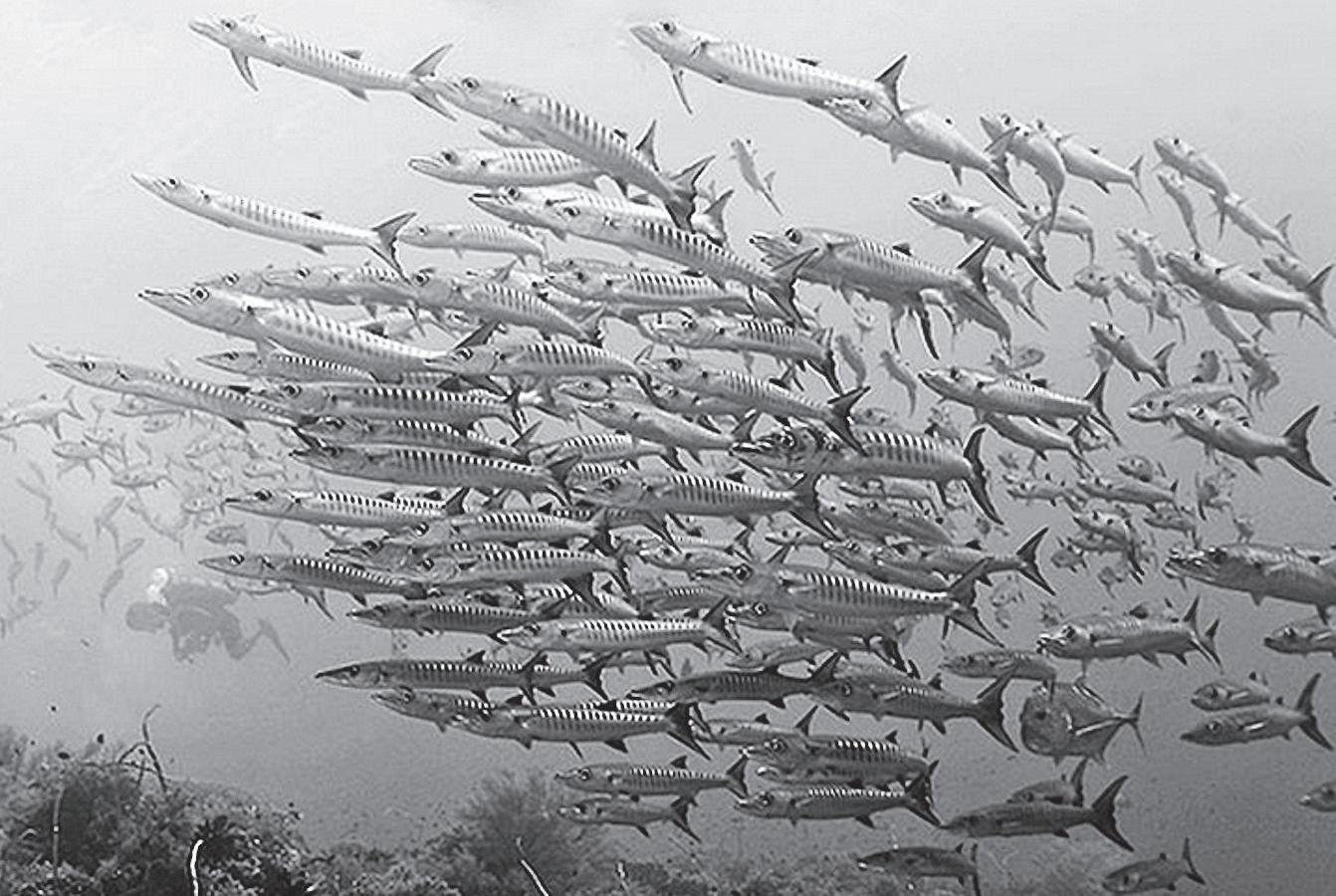
BATTERY of barracuda in Tubbataha Reefs Natural Park, a marine protected area in the middle of the Sulu Sea in Mindanao. WIKIMEDIA CC
BY
SA 4.0
Story
& photos by
Gregg Yan
MEMBERS
of Oceana, a nonprofit ocean conservation organization focused on influencing specific policy decisions on the national level to preserve and restore the world’s oceans, hold placards during a news conference in Quezon
City on October 11. The group, with its Vice President Gloria Estenzo Ramos (third from left), calls for the strict implementation of the Fisheries Code that aimed at restoring ocean abundance by protecting the 15-kilometer municipal water from the shoreline and giving the municipal fisherfolk the preferential rights for its use. The group said the state of sardines and fisheries has been in the red for decades. It was caused by years of neglect of marine environment that resulted in the country’s small artisanal fisherfolk and their households in coastal communities becoming among poorest. NONOY LACZA
Snaps: An African wildlife
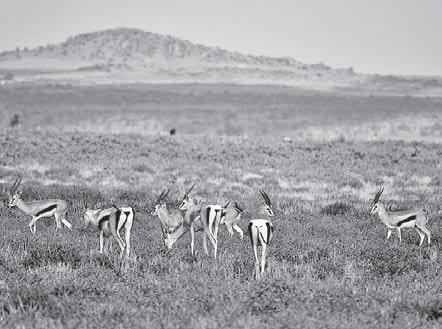
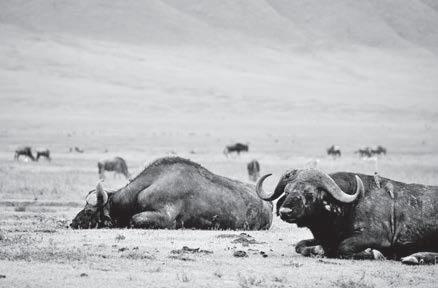
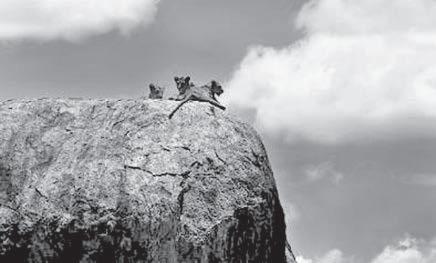
THE King of Beasts and Africa’s most famous animal, the lion (Panthera leo) hunts alone or as a pride. Simba, the name of the The Lion King hero, is the Swahili word for lion. We saw this pride of females lording over a zebra herd in the Serengeti. Though seemingly invincible, lions are still slaughtered by big game hunters who pay thousands of dollars for license to kill endangered animals. SKITTISH herds of swala or Thomson’s gazelle (Eudorcas thomsonii ) prance across the savannah. Vast tracts of grass combined with seasonal rains ensure a steady supply of food for millions of grazers. MBOGO, or cape buffalo (Syncerus caffer) massive bovines, are considered one of Africa’s “Big Five”—the most dangerous animals one can encounter. When enraged, cape buffalo are said to be unstoppable. Nothing short of a direct heart shot will stop one. But I found them to be very docile on the field. Often, when we don’t bother animals, they won’t bother us.
Yan
FBI collaborates with FIFA anew to help guarantee clean World Cup
Z
URICH—The FBI has been back at FIFA this week, working with soccer’s governing body to protect the World Cup in Qatar from potential crime including match-fixing.
Federal investigators from the United States joined a panel meeting in Zurich that included Interpol and betting monitoring experts to oversee “timely handling of integrity matters” at the tournament that starts on November 20, FIFA said on Thursday
T heir cooperation follows more than seven years after a United States federal investigation and related Swiss case was unsealed that removed a swath of international soccer officials and led to FIFA’s then-president Sepp Blatter being banned for financial misconduct.
FIFA is teaming with the FBI also because the US co-hosts the next World Cup with neighbors Canada and Mexico.
The FBI “as the principal law enforcement and investigative service of the United States will be joining the group to contribute with its experience and expertise, also in preparation for the FIFA World Cup 2026,” FIFA said.
FIFA said its Integrity Task Force will monitor “betting markets and in-game action in real time” for the 64 games being played in Qatar.
National team soccer was hit by match-fixing scandals in 2010 and 2011 that typically involved corrupting referees of friendly games that were targeted for betting scams by Asian crime syndicates. Several referees implicated in fixing were removed from FIFA’s list of officials approved for international games.
Blatter, now 86, was acquitted of wrongdoing in July by judges at the Swiss federal criminal court after a case that took more than 6 1/2 years to bring to trial.
A F IFA disciplinary judge and a former president of Venezuela’s soccer federation, meanwhile, were found guilty by the world soccer body on Thursday of financial corruption.
Former federation president Laureano González was banned for five years for mismanagement of its money including a “fictitious invoicing scheme,” FIFA said in announcing the verdicts of its ethics committee. González was ordered to pay a fine of more than $410,000.
C arlos Terán was a member of FIFA’s disciplinary committee when he approved and accepted “undue pecuniary advantages in the form of additional monthly payments,” FIFA said.
Terán was banned from soccer for two years and fined 10,000 Swiss francs ($10,000).
The offenses were linked to both men serving on an emergency management panel— known by the FIFA term “normalization committee”—that was running the federation.
Th ree more emergency panel members were found guilty of charges including conflicts of interest and taking monthly payments and fined $10,000. One-year FIFA bans for Bernardo Añor Guillamón, Luis Eduardo Fernández and Gilberto Velazco Ramírez were each suspended for two-year probation periods.
Venezuela is the only one of the 10 South American soccer federations whose men’s team has never qualified for a World Cup. AP
WILD, WILD WEST; EAST? Sports
Western Conference loaded with championship hopefuls
THERE are many one-word answers that could be given about the state of the National Basketball Association’s (NBA) Western Conference.
Loaded, deep, stacked, daunting: They all certainly apply.
Minnesota Coach Chris Finch has another word: “Brutal,” he said.
That one works, too.
The defending NBA champion Golden State Warriors rightly expect to contend again, and there will be no shortage of teams entering this season believing they’re good enough to compete for a title as well.
The Los Angeles Clippers get Kawhi Leonard back, the Phoenix Suns have won more games than any team in the NBA over the last two regular seasons, the Denver Nuggets have the two-time reigning MVP in Nikola Jokic, the Dallas Mavericks have a presumed future MVP in Luka Doncic, and the Memphis Grizzlies can say the same about Ja Morant.
Oh, and there’s LeBron James of Los Angeles Lakers, entering Year 20, somehow still not slowing down and maybe 50 or so games away from catching Kareem Abdul-Jabbar for the all-time scoring record.
When you put in the work,” James
said, “you see the results.”
L akers first-year Coach Darvin Ham knows a great offseason, or a great lineup on paper to start a season, doesn’t guarantee anything. He was an assistant coach for the Lakers in 2012-13, when the team entered the year with a lineup of Steve Nash, Kobe Bryant, Metta World Peace, Pau Gasol and Dwight Howard.
Th at group had two Hall of Famers in Nash and Bryant, and two likely future ones in Gasol and Howard. They started seven games together that season—and went 0-7.
The Lakers went through three coaches that injury-plagued year, won 45 games and got swept in the first round by San Antonio.
“ There’s a lot of work that goes into it, remaining healthy being at the top of the list,” Ham said. “And most important, also coming together as a team.”
F inch’s Timberwolves are another team that made big offseason moves, landing Rudy Gobert from Utah. But even with that acquisition, Finch knows nothing will be easy in the West. He noted the conference has so much quality that even some good teams—New Orleans was an example he cited—just aren’t getting talked about.

“ I think it’s open,” Finch said. “And I think it’s deep.... There’s certainly stratas of teams, but I think there’s no clear-cut, dominant team, as there has been. But yeah, it’s going to be a brutal
Eastern Conference has many contenders, many questions
NOBODY can be certain how the Boston Celtics will perform under their third coach in three years, or whether James Harden can flourish in Philadelphia alongside Joel Embiid, or if Ben Simmons’s first season playing with the Brooklyn Nets is already the last chance with Kevin Durant and Kyrie Irving.
Talent is spread all over the Eastern Conference. So are the question marks. It’s easy to see any of those teams, along with Milwaukee, Miami and perhaps others, finishing atop the conference. It’s also easy to see some of them derailed by drama.
For now, everybody is looking at the positives.
“There’s a lot of good teams, a lot of talent in the East, but once the games are being played, that’s when you’ll declare who the best team is,” Durant
said. “I think obviously first third of the season, halfway through, you’ll start to figure it out, but everybody feels great about their team around this time.”
D urant didn’t feel great over the summer, telling the Nets he wanted to be traded. At the same time, the Nets were declining to give Irving a contract extension after he was unavailable for so much of last season because he refused to get vaccinated against Covid-19.
But the Nets’ problems were old news by the time the Celtics, coming off an NBA Finals appearance, suspended coach Ime Udoka just before training camp for at least this season for multiple violations of team policies involving a woman in the organization.
Assistant Joe Mazzulla takes over for Udoka, who just finished his first season after replacing Brad Stevens.
Despite that, 76ers coach Doc Rivers still
looks at the Celtics, along with the Bucks, as teams that start 2022-23 in a strong spot. While his team strives to get the best out of former MVP Harden, who was swapped for Simmons at the February trade deadline, the top players on rival squads (Giannis Antetokounmpo, Khris Middleton and Jrue Holiday in Milwaukee; Jayson Tatum, Jaylen Brown, Marcus Smart and Al Horford in Boston) have played plenty of big games together.
I think as a coach, when you look around, you look at teams that have been together and teams that have an advantage there,” Rivers said. “Milwaukee. Boston, they’ve made some changes, but they still have their core guys, they’re still moving that core around. So those are the teams that a team like us, or teams that have made a lot of changes, you have to put a lot of work in. You have to put more work in, because they do have an advantage.” AP
full-time referees, including 2 more women
The National Basketball Association’s (NBA) roster of female referees continues to grow.
C heryl Flores and Dannica Mosher have been promoted to the level of full-time staff officials, the NBA said Thursday.
The NBA now has eight women at the full-time referee level, the most the league has ever had at one time.
F lores and Mosher earned promotions from the G League level, as did another pair of new hires— Matt Kallio, who becomes the NBA’s first international full-time official, and Robert Hussey.
“Cheryl, Robert, Matt and Dannica have demonstrated the ability and professionalism required to be a fulltime NBA officiating staff member,” said Monty McCutchen, the NBA’s senior vice president overseeing referee development and training. “We are excited for them to have reached this milestone in their careers.”
F lores and Mosher join Lauren Holtkamp-
Sterling, Simone Jelks, Ashley Moyer-Gleich, Natalie Sago, Jenna Schroeder and Danielle Scott as women at the full-time NBA referee level. Ten women have held that job in league history, with the current eight joining Violet Palmer and Dee Kantner on that list.
A record 12 women worked games last season in the NBA, some getting called up from the G League and non-staff levels to help when the league’s officiating roster was decimated by Covid-19. The current group of eight full-timers all did games, as did Clare Aubry, Sha’Rae Mitchell, Blanca Burns and Jenna Reneau.
F lores has spent nine seasons in the G League and 10 in the WNBA, and is also an accomplished women’s college referee
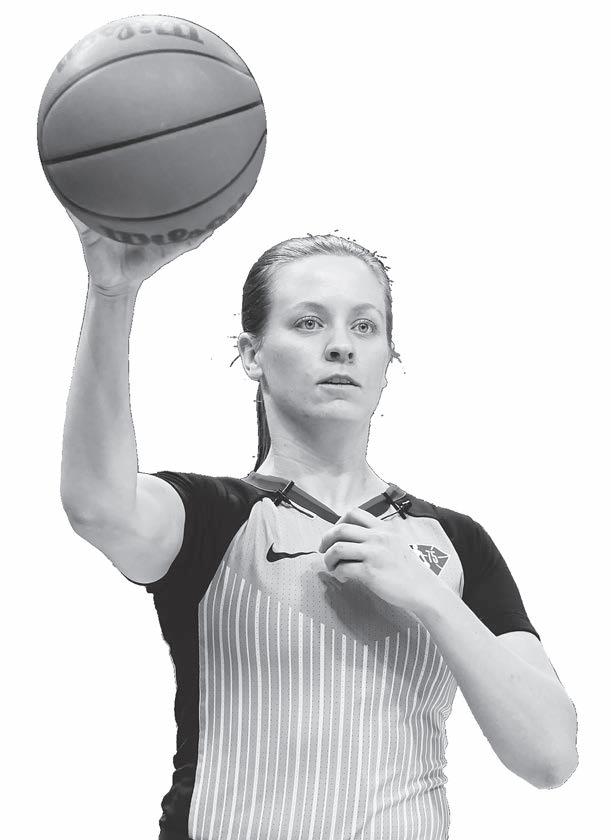

with two Final Fours on her resume. Mosher has four seasons of G League officiating experience, five seasons in the WNBA and worked both the G League Finals and the WNBA Finals last season.
Hussey has worked five G League seasons and two in the WNBA. Kallio—a native of Edmonton, Alberta—has seven years of G League experience, five years of WNBA experience and worked the Tokyo Olympics.
We’re looking for the best referees,” McCutchen said.
A dding women to the refereeing positions has been a priority for McCutchen and other NBA executives, including Commissioner Adam Silver. McCutchen has long said that the NBA will hire the best people to fill the job, regardless of gender.
“It’s just fantastic. And that’s the way our society should be,” McCutchen said. “The NBA feels very strongly that this should be a meritocracy. And this is exactly what a true meritocracy looks like.”
NBA adds 4 new
BusinessMirror A8 | SundAy, OctOber 16, 2022 mirror_sports@yahoo.com.ph Editor: Jun Lomibao
REFEREES Cheryl Flores and Dannica Mosher have been promoted to the level of fulltime staff officials. AP
one.” AP
STEPHEN CURRY and the Golden State Warriors are rightly expected to contend again, while Kevin Durant doesn’t feel great over the summer, telling the Nets he wants to be
traded. AP
“
AP
DemanD soars for

books

BusinessMirror October 16, 2022
kiDs’
aDDressing violence, trauma
ALL OF HIM
‘Legend’ embodies all of John Legend
By Patrick V. Miguel

IN 2013, John Legend brought out a profound song about love to the world, dedicated personally to his wife Chrissy Teigen. Everyone loved that song, and when his name is mentioned, “All of Me” comes first to mind for most. However, there is so much more when it comes to John Legend’s music.
JOHN Legend
Like any other artist, John is accustomed to making a routine before performing. He shared that warming up is very important before performing, and it is similar to how he writes songs.
In a recent interview with SoundStrip and other international media, John said, “I’ve been writing the same way for decades now and yeah I like to do it in the daytime. I like to do it thinking of it as if it was a work day, going to my studio and spending it as a work day and then coming home and focusing on my family.”
“That’s how I like to write, that’s how I like to structure my life when I’m in the studio and that routine has been working for me so far so I’m gonna keep going with it,” he added.
His process has been consistent throughout the years, adding that he starts first with the melody before adding the lyrics.
“I’m always writing more and I don’t like to hold on to all songs so I put them out now or you know, it may never come out because by the time next year I’ll be ready to write something new,” John said.
In his newest album “Legend,” the 43-year-old singer-songwriter shared that he wanted to make an album that represents and fully embodies who he really is.
John said, “When I named it ‘Legend,’ it was really me self-titleling the album because it really represents
who I am—all of my influences, all of my inspiration, all of my stories and experiences.”
“This album represents all of that and it’s really so much of who I am and who my heart and soul in to one project and I thought it would be good to name this album as a self titled album cause it really represents me as an artist in a very thorough way,” he added.
“Legend” was released on September 9 this year, featuring two discs with 24 songs in total. John said it was a pure exploration on the different sizes of love, infatuation, lust, sensuality, and going through a tough time with someone.
He shared that the decision behind the album cover, with him shirtless and facing the camera, was motivated by the desire to metaphorically “show” himself to the world. He said, “I felt like with the album cover was me with no shirt on and just bearing myself to the world, me bearing my emotions to the world in the music.”

Volume 1, according to John, is more about lust and sensuality. The second volume is more about “deeper love,” which is more romantic and more intimate.
John said that “All She Wanna Do” is one of his favorite songs from the album and that it is the one he wants everyone to listen to.
Reflecting about “Legend,” John shared, “I feel like you’re seeing various sides, you’re seeing different times of my life too. Times when I was bachelor, times when I was single and out in a day but also flashing back to this present time where I’m in a relationship. So you see all the different sides of me in this new album.”
But more than that, it is his family that inspires John to make music. “I’ve been a husband for nine years now, and then a dad for six years now, and a lot of my recent experiences have been with my family and they inspire a lot of my music.”
“Legend” is available on all major music-streaming platforms
BusinessMirror YOUR MUSIC OCTOBER 16, 2022 | soundstrip.businessmirror@gmail.com2
SoundSampler by Tony M. Maghirang
Ebe Dancel’s latest EP plus five new singles
EBE DANCEL “Habangbuhay “ EP
RENOWNED singer-songwriter
Ebe Dancel has just released his first “concept” album in extended play format. In an interview, Ebe said the tracks on his latest album draws from all his memories, emotions, recollections, and observations of the times he performed on weddings, some 50 of them so far, and counting.
He added that the minialbum was produced during the early days of the Covid-19 lockdown which presented its own challenges. But working during the wee hours of the morning, Ebe in collaboration with producer Rico Blanco managed to overcome it all even as most of the parts involved the participation of an orchestra.
Ebe Dancel’s “Habangbuhay” is available from Backspacer Records’ website at BackspacerRecords. com, or at their vinyl shop ON the second Floor of ACE Plaza, Brixton St. corner United St., Kapitolyo, Pasig City.

where modern society still puts conflicting pressure on how women should carry themselves in public. She said, “I’m really glad that I’ve stepped up my game in terms of completely understanding my individuality and sense of self. This energy somehow reflects my work, and I’m really proud of how it has honed my artistry and way of thinking on a musical and visual level.”
The upbeat jam penned by Ysa Yaneza herself is the official lead single of her upcoming self-titled EP, YSA
fallen in and out of love so many times that the process feels like a dance. It’s familiar and anticipatory, all while feeling like the first time all over again. Are they in tune with fate or are they against it?
The band behind the song, Lola Amour, is made up of 7 people who met in high school. Over the last five years, the band has grown into one of the most established artists in the country’s indie music scene, with their unique sound that kept them from being boxed in any broad genres.
The BREED “Lawless”
PINOY hard rockers The Breed are back. Their latest song is about surviving hard times with your head held high. It reminds that life is a constant battle between good and bad decisions.

At the end of the day, we have to stand our ground and keep our passion burning no matter what the cause or cost may be. The fervent hope is: May we not be remembered by our misdeeds, but for the courage and determination that we all firmly believed in.
I BELONG TO THE ZOO “Hands To Heaven”
PLAN B “Balang Araw”
SINGAPOREAN-Filipino singersongwriter Ysa Yaneza returns with an island-tinged, dancepop track titled “1Nightwitu ” Her new bop evokes the days of Y2K aesthetics and frosty digital futurism as she celebrates young ladies to embrace their sexuality and value their self-worth.
According to the indie pop star and social media influencer, her latest song is also about knowing one’s self, especially in a time
OPM
band, I Belong To The Zoo, puts on a new flavor to “Hands To Heaven”, a song originally performed by English new wave band Breathe. The surprising remake should be a refreshing listening experience to OPM listeners glued to the radio in early 2000s.

As their fans would expect, IBTTZ’s “Hands To Heaven” has an alternative rock feel to it and it’s obvious that the group poured their hearts out in making this rendition. With beefy electric guitar tones and smooth vocals, I Belong To The Zoo indeed has a unique way of channeling the song’s core message to their listeners. The band also filmed an official performance video to support their latest release.
THIS new single “Balang Araw.” tackles the beauty of chasing one’s dreams in a world where anything is possible. The tenmember Filipino group PLAN B who’s behind the song puts a fun and delightful take on hip-hop even as they transform positivity and ambition into a universal call for the crossover audience. The euphoric rap tune is produced by prolific beatsmith CTBeatsPH with the intention to make it sound uplifting and inspiring in creative direction.
“The song is about people who are never afraid to dream big,” PLAN B shares. “We want to inspire them further to hustle responsibly, and never stop believing in themselves.” The release of the track is accompanied by a music video developed by Chapters PH, a group of creative visual storytellers. PLAN B is an up-andcoming hip-hop/rap ensemble, consisting of members from all around the Philippines.
THE
LOLA AMOUR “Dahan-Dahan”
new track “Dahan-Dahan” is about two people who have
T. Anthony C. Cabangon Lourdes M. Fernandez Aldwin M. Tolosa Jt Nisay Edwin P. Sallan Eduardo A. Davad Niggel Figueroa Anabelle O. Flores Tony M. Maghirang, Rick Olivares, Leony Garcia, Patrick Miguel
Kaye VillagomezLosorata Annie S. Alejo Bernard P. Testa Nonie Reyes
Mirror
3rd Floor of Dominga
III 2113 Chino Roces Avenue corner
Rosa Street, Makati City, Philippines.
813-7025
817-9467; 813-0725.
Sales: 893-2019; 817-1351,817-2807.
893-1662; 814-0134 to 36.

soundstrip.businessmirror@gmail.com | OCTOBER 16, 2022 3 BUSINESSMUSIC
YSA
YANEZA “1Nightwithu”
Y2Z & SOUNDSTRIP are published and distributed free every Sunday by the Philippine Business Daily Mirror Publishing Inc. as a project of the The Philippine Business
Publishing, Inc., with offices on the
Building
Dela
Tel. Nos. (Editorial)
Fax line:
Advertising
Circulation:
www.businessmirror.com.ph Publisher : Editor-In-Chief : Concept : Y2Z Editor : SoundStrip Editor : Group Creative Director Graphic Designers Contributing Writers : Columnists : Photographers :
Demand soars for kids’ books addressing violence, trauma
by claire Savage The Associated Press
cHIcAGO—As
the new school year swings into gear, some students carry heavier worries than keeping up with homework: Demand has been growing steadily for children’s books that address traumatic events such as school shootings.
Sales of books for young readers on violence, grief, and emotions have increased for nine straight years, with nearly 6 million copies sold in 2021—more than double the amount in 2012, according to NPD BookScan, which tracks US retail sales of print books.
As anxiety and depression rates have soared among young Americans, educators and advocates say children’s books can play a role in helping them cope.
“While it might be second nature to try to shield kids from the harsher realities of life and scary news, it’s proving difficult to avoid big society issues,” said Kristine Enderle, editorial director at Magination Press, the children’s book publishing arm of the American Psychological Association. “Kids face these issues and challenges in their dayto-day life.”
‘This is what our stories are like now’
ON E book, I’m Not Scared … I’m Prepared, was reprinted several times to meet demand after the massacre at
Uvalde’s Robb Elementary School in May, according to the National Center for Youth Issues, the nonprofit group that published the book. The story, first published in 2014, features a teacher who shows children what to do when a “dangerous someone” is in their school.
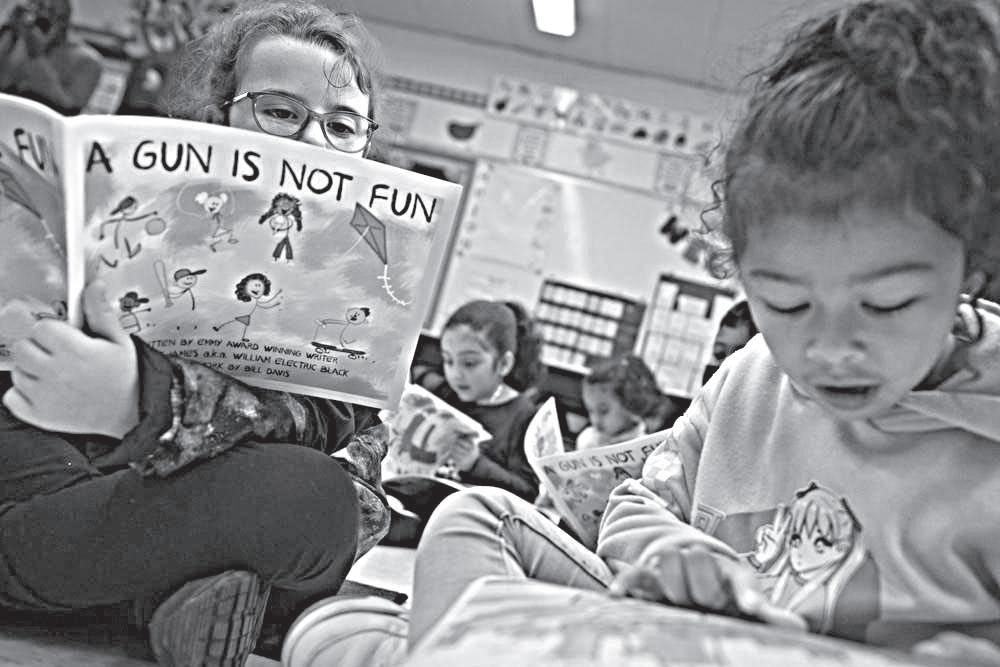
Bookstores around the country see interest in titles from the genre rise and fall depending on local and national headlines, according to bookseller Barnes & Noble.
Some newer titles engage directly with real-world gun violence.
In Numb to This, a graphic novel released this month, author Kindra Neely details the 2015 Umpqua Community College shooting in Oregon, which she survived, and the aftermath as she tries to heal amid repeated shootings elsewhere. Initially, Little, Brown Books for Young Readers editorial director Andrea Colvin said she was shocked when Keely pitched the idea.
“I had to remember that, yes, this is what our stories are like now. This is what young people have experienced,” Colvin said.
Should be age-appropriate
MIChELE GAY, whose 7-year-old daughter Josephine was killed in the 2012 Sandy hook Elementary School shooting, turned to children’s books herself to help her two surviving daughters. One picture book she read to them was The Ant hi ll Disaster, about a boy ant who is afraid to go back to school after it is destroyed.
“It was one of many books that was of comfort to them and gave them a little bit of confidence to just face one more day, one more minute, because we can do it together,” said Gay, who advocates for improved security in schools through a nonprofit she co-founded, Safe and Sound Schools.
Parents should make sure books addressing trauma are age-appropriate and backed by psychologists, experts say.
It’s important to be aware of whether children are aware of or feeling stress about frightening things in the news, said Aryeh Sova, a Chicago psychologist who works with children who attended the July 4 parade in suburban highland Park, Illinois, where seven people were killed in a shooting. A child
asking lots of questions about an event may signify that they are anxious or fixated on it, he said.
“If it’s coming from the kid’s need, then books could be a great way for kids to learn and to read together with their parents and to review it on their own and to process it at their own speed, at their own pace,” Sova said.
But bringing up violence when a child isn’t worried about it could increase their anxiety unnecessarily, Sova said.
Helping them save themselves
SOME young children experience gun violence at alarmingly high rates, particularly in communities of color.
For them, it is important to start early to address the effects, said Ian Ellis James, an Emmy award-winning Sesame Street writer known by his stage name William Electric Black. he is the author of the illustrated children’s book A Gun Is Not Fun. he said young children in areas afflicted by gun violence are more aware of it than parents may think.
“They know about flowers and candles and cards in the street. They walk by them every day,” he said.
Through children’s literature and theater, Black works to reduce urban gun violence. “If you start when they’re 5, and you go back when you’re 6, 7, 8, 9, you’re going to change the behavior,” he said.
In the spring, he will collaborate with New York public school P.S. 155 in East harlem with a series of gun violence awareness and prevention workshops for early readers, using puppets, storytelling and repetition.
“They won’t even get rid of assault weapons here in this country. So my thing is, we have to go in and we’ve got to help them help themselves save themselves,” Black said. “We’re really kind of failing at that.”
Kids as young as 8 should be screened for anxiety, health panel says
HEALth experts are recommending children and adolescents be screened for anxiety and depression as a step to address the US youth mental health challenges.
For the first time, US Preventive Services task Force recommended last week that children ages eight and older be screened for anxiety. It also suggested those 12 and older be screened for depression.
A month ago, the group recommended all adults under 65 be evaluated for the same conditions. The task force urges pre-
ventative screening for children and adolescents who don’t have a mental health diagnosis and don’t show symptoms.
Suicide was the second highest cause of death for Americans ages 10 to 14 and 25 to 34 in 2020, according to the Centers for Disease Control and Prevention. The US has taken some steps to address the mental health crisis, including rolling out a national hotline in July, connecting anyone who dials 988 to the suicide prevention lifeline.
It’s not just an American issue: Rates of anxiety and depression rose by about
25 percent worldwide in the first year of the pandemic, according to a report by the World health Organization. Young people were at the greatest increased risk of suicide and self-harm, the W hO said.
The task force cites a survey of primary care physicians which found that while 76 percent believe it’s important to talk to adolescent patients about their mental health, only 46 percent said they always do. The group says it’s crucial to start screening early.
“Children and adolescents with de-

pression typically have functional impairments in their performance at school or work, as well as in their interactions with their families and peers,” it said in a statement. “Depression can also negatively affect the developmental trajectories of affected youth.”
About 5.8 million children were diagnosed with anxiety and about 2.7 million were diagnosed with depression between 2016 and 2019, according to the CDC, which says the first step to treatment is to talk with a health-care provider. Bloomberg
BusinessMirror OctOber 16 20224
Children read as ian ellis James, an emmy award-winning Sesame Street writer known by his stage name William electric Black, leads a first grade class in a book reading on urban gun violence prevention at the drexel Avenue School in new York. AP
