THE ‘DREAM WEAVER’
Girl keeps tribal handloom weaving craft alive–and still fashionable–in Mindanao

 By Manuel Cayon
FOR years, eight-year-old Leianzy Mamites would be staring and observing her grandmother weave the abaca threads into a cloth with intricate patterns of colored lines, diamond shapes and squares inked from natural colors from bushes, barks and leaves.
W hen the Covid-19 pandemic shut down the world and locked the population into their homes, Leianzy had more time to be around her Lola Vivencia Mamites, 58, in her gaballanan, a manual traditional hand loom which the Mamiteses owned.
Her grandmother deemed it time to let Leianzy immerse herself in to the wooden loom and learn the craft of the tribe’s weaving chores.
Leianzy adapted well and quickly into the weaving lesson, and just in her second session with the loom, she was already on her own.
She would be continuing the weaving of the cloth left unfinished by Vivencia, who would commonly finish a three-meter by onemeter cloth in one week.

Th is would be the main material of women’s skirts noted for their pattern of deep maroon, red and brown colors identified with the Bagobo-Klata tribe, one of the 18 ethnolinguistic tribes of Mindanao.

Ironically, abaca and cloth weaving is waning, even a dying art of the indigenous peoples in
BIG COSTS FOR ENERGY R.E.SET
DOE outlines challenges, costs to PHL’s shift to low-carbon energy future
 By Lenie Lectura

the Philippines, and pageant representatives of the tribes in Davao City sent the appeal to the younger tribal generation to help revive the art of weaving.
Lone child weaver
LEIANZY was a media sensation at the sidelines of a recent summit of artists, digital creators, performing artists and businesspersons

organized by the Department of Trade and Industry (DTI) at the Philippine Women’s University.
She demonstrated her improving skill at arranging the threads and sliding the wooden stick through the string of threads to form the tightly knit cloth. Like all tribal weavers, Leianzy would be seen with a meticulous eye for detail and indicators of errors.
“She would last, at most, for one hour before she would disengage from the loom,” Vivencia told the BusinessMirror

It turns out that Leianzy is the lone child weaver of the BagoboKlata community outside Bansalan town, Davao del Sur.
We are awed and inspired to develop our own next line of weavers,” said Jennifer Tomarokon, one of the cloth and cotton weavers of the Kagan tribe, one of the 11 Moro tribes in Mindanao, and who inhabit the municipality of San Isidro, Davao Oriental.
Jennifer and another Kagan weaver also put up their own weaving loom beside that of the Mami-
teses, who were all helped by the DTI train their women and establish their own weaving and tribal center in their localities.
Th e Kagans’ more sophisticated woven loom produces a softer cloth of synthetic fibers with colors of blue, red, white and yellow, “the colors of our flag,” she said. Currently, there are only three weavers in their community, including Jennifer.
“Fifteen were actually trained during the pandemic. Unfortunately, they lost interest,” she said.
L eianzy could become the blooming symbol that inspires tribal youth everywhere to take a second, interested look at the art of weaving, she said.
Her grandmother Vivencia is optimistic of the inspiration Leianzy has brought to her classmates and village mates to revive interest in the tribal art of weaving. “You can see the sparkle and awe in the eyes of her school mates and other village children when Leianzy demonstrates her skills.”
Continued on A2
DEVELOPING countries, such as the Philippines, would need financial assistance from industrialized countries in order to fully enforce energy transition plans towards a sustainable and low-carbon energy future, Energy Secretary Raphael Lotilla said. tail costs. And this means therefore additional cost not only for the developed countries but also even for developing countries like the Philippines. I am glad that this is a concern common to Asean. But since most of the Asean countries are not the ones
The Philippines is committed to bring in more clean energy fuels and technologies for the next 17 years; specifically, 35 percent of renewable energy (RE) should comprise the country’s power generation mix by 2030 and 50 percent in 2040.
“Any transition is going to en-

Continued on A2

PESO EXCHANGE RATES n US 56.6320 n JAPAN 0.3814 n UK 69.0684 n HK 7.2326 n CHINA 7.7440 n SINGAPORE 41.4401 n AUSTRALIA 36.0633 n EU 59.7524 n KOREA 0.0421 n SAUDI ARABIA 15.0998 Source BSP (October 6, 2023) A broader look at today’s business BusinessMirror EJAP JOURNALISM AWARDS BUSINESS NEWS SOURCE OF THE YEAR (2017, 2018, 2019, 2020, 2021) DEPARTMENT OF SCIENCE AND TECHNOLOGY 2018 BANTOG MEDIA AWARDS ROTARY CLUB OF MANILA JOURNALISM AWARDS 2006 National Newspaper of the Year 2011 National Newspaper of the Year 2013 Business Newspaper of the Year 2017 Business Newspaper of the Year 2019 Business Newspaper of the Year 2021 Pro Patria Award PHILIPPINE STATISTICS AUTHORITY 2018 Data Champion www.businessmirror.com.ph n Saturday, October 7, 2023 Vol. 18 No. 355 P25.00 nationwide | 16 pages | 7 DAYS A WEEK
YOUNG Leianzy Mamites diligently weaving at the loom.
LEIANZY MAMITES is the lone child weaver of the BagoboKlata community outside Bansalan town, Davao del Sur.
ENERGY Secretary Raphael Lotilla
3RD GOLD MEDAL FOR PHL Annie Ramirez breaks into tears after beating Kazakhstan’s Galina Duvanova in jiu-jitsu’s women’s -57 kgs final on Friday for the Philippines’ third gold medal in the 19th Asian Games in Hangzhou. NONIE REYES
THE ‘DREAM WEAVER’
Jennifer is also hopeful that Leianzy could inspire the youth of other tribes. “With such a pretty young soul at the loom, who would not be moved to start training and taking the lessons of their elders in weaving.”
Potential IN August, during the fruit harvest festivities dedicated to the tribes, many of the Hiyas ng Kadayawan pageant representatives in Davao City expressed their concern over what they described as “the lost art of weaving.”
The Kadayawan festival in Davao City is considered the best-covered and attended harvest festival in Mindanao. The event is dedicated to promote the culture and tradition of the 11 Moro and tribal groups of the city.
A mong their advocacies was to encourage the other women and girls in their respective tribes to bring back the skill of knitting and weaving their own cloth as part of the lost prized heirlooms of the past generations.

Gone are the days when homes bustled with women at the looms, and outside, the yards were adorned with vibrant abaca cloths, hung along clotheslines, showcasing an array of colors and designs.
A s the digitally driven world, powered by artificial intelligence, engulfs the new generation, it transforms everything into portable and disposable items, from human interaction to old traditions. This trend raises concerns about preserving social, tribal values, and customary practices.
During the innovation summit last week, government trade and industry planners aimed to harness digitalization to benefit various sectors, including crafts and arts. Cloth weaving emerged as one of the domains and sectors undergoing development for professional and international exposure, utilizing the digital platform.
The Kagans, for example, take pride in their recent foray into the pageant world during the 2019 edition of the Miss Earth competition. They showcased tribal cloths, beads, and women’s apparel and accessories in their gown and costume presentations.
Jennifer shared with BusinessMirror the Kagan cloths and accessories transformed into elegant designs for the shawls and head scarves of the candidates. She expressed gratitude to Davao City designer Kathryn Fanlo for the “cultural respect and care” she demonstrated in incorporating the Kagans’ and other tribes’ cultural materials into the Miss Earth pageant.
“ We are very proud of what we have achieved so far. And we have the evidence to show that we can,” she said. “And that is why, there should be enough drive and dedication to maintain and revive the tribal art of weaving.”
Th is makes the ancient ancestral handlooms still valuable and essential to tribal craftmanship that only the tribes themselves have the mastery of the art of weaving.
A nd on this Filipino Tribal Month of October, the spotlight would be a little brighter along the seams of tribal dresses as the indigenous peoples put their best costumes and traditions forward.
BIG COSTS FOR ENERGY R.E.SET
responsible for the climate emergency, then the developed countries must provide resources that will enable the developing countries to finance their transition to low carbon technologies,” Lotilla said during a news conference.
No quick fix
LOTILLA also pointed out that the energy transition journey is not going to happen overnight. He said the Philippines needs to prepare for a longer period of transition, and if additional costs come with delays, then there should be “no transfer of burden and I have emphasized this in the past.”
Of the Asean countries, Indonesia and Vietnam have already entered into just energy transition partnerships. In the case of Indonesia, it received a pledge for $20 billion, while Vietnam got $15.5 billion.
But unfortunately, even with these two countries who have been ahead of coming up with agreements, the progress has been slow,” and this accounts for “the realization that the transition is going to be slower than expected,” he said.
“In the case of Indonesia, after one year of negotiations, the most positive news that they came up with is that they were able to establish a secretariat,” Lotilla noted.
Financing scheme
THE Philippines is not yet part of any Just Energy Transition Partnerships, but Lotilla has already called on the World Bank to support the country’s RE goals.
My challenge to the World Bank and our other development partners… that the green transition or the climate transition or securing a clean energy future must be a just and fair transition.
“And that means that transition financing or climate financing or call it by any other name, such financing should be available to the country… unfortunately, we are not part of any of the Just Energy Transition Partnerships (JETP) that have already been put in place,” said Lotilla.
The JETP is a financing cooperation scheme that aims to
help coal-dependent countries shift towards clean energy. It was launched at the November 2021 United Nations Climate Change Conference or COP26.
Signatories to the COP26 agreement agreed to phase out coal-fueled power generation in the 2030s for richer countries, and the 2040s for poorer nations.
In its report, the World Bank called the Philippines “uniquely positioned” to transition toward a renewable energy-dominated power system, seen to “not only improve energy security but also enhance affordability through primarily private financing.”
The private sector, which has been driving developments and investments in the energy sector over the past decade, will need to take on more risks and hasten the pace of adoption of new technologies and innovations as the power system pivots to variable renewable energy sources,” said the report.
It added that the Philippines’s development partners would also be called upon to do more, especially in facilitating the flow of concessional climate investment funds and technology transfers.
Challenges up ahead
ASIDE from increasing the RE share, the Philippine energy transition plan includes a 5-percent energy savings on oil products and electricity by 2040; 10-percent electric vehicle penetration rate in road transport by 2040; exploring new and efficient technologies; adopting advanced and interoperable ICT in the energy chain; and resilient and climate-proof energy infrastructure.
W hile the DOE is confident such targets will be achieved, Energy Undersecretary Rowena Guevara said the country must address challenges in the electric power industry — the resiliency of infrastructures to natural calamities, and exposure to geopolitical conflicts.
Specifically, we are challenged with providing affordable price of electricity to the consumers, while allowing the market forces to work and minimize the market distortions, such as market caps and subsidies. Second is
ensuring supply security and grid reliability in this ongoing power sector transformation,” Guevara said in a recent forum.
A s such, Guevara said the Philippines would welcome the opportunity to partner with the private sector, international donor community, and development partners to drive the transformation of the power sector in an “ambitious, just and sustained manner.”
USAID eyed
FOR instance, the DOE wants to tap again the United States Agency for International Development (USAID) for its technical assistance in identifying RE zones suitable for offshore wind and floating solar technologies.
The agency’s intent to launch another Competitive Renewable Energy Zone (CREZ) was conveyed to USAID, DOE Assistant Secretary Mylene Capongcol told a forum on wind energy organized by the Nordic Chamber of Commerce of the Philippines and NIRAS.
We will discuss this officially. We have sent our official request so we will meet on this to talk about scope of work, timeline, among others,” said Capongcol.
The USAID and the US Department of Energy’s National Renewable Energy Laboratory were instrumental in crafting CREZ 1, launched in September 2020.
CREZ 1 did not include offshore wind, floating solar. In CREZ 2, hopefully, if USAID will support, it will include those technologies involving bodies of water like offshore wind, floating solar, and possibly tidal,” said Capongcol.
There are 25 CREZ for solar and wind across the Philippines, which can produce 58,110 megawatts (MW) and 93,987 MW from solar and wind power plants, respectively.
Institute for Climate and Sustainable Cities Senior Policy Advisor Pedro Maniego Jr. had said that RE bares no supply limitations, and further increasing its share in the energy mix will entail more affordable, reliable and secure power to the country. He added that the country must move more aggressively and more urgently.
NewsSaturday BusinessMirror www.businessmirror.com.ph
Saturday, October 7, 2023 A2
Continued from A1
Continued from A1
THE Kagans’ more sophisticated woven loom produces a softer cloth of synthetic fibers with colors of blue, red, white and yellow. Currently, there are only three weavers in their community.
www.businessmirror.com.ph • Editor: Vittorio V. Vitug A3

DMW team Milan-bound as DFA chief Manalo vows case buildup vs recruiters
By Samuel P. Medenilla & Malou Talosig-Bartolome
FOREIGN Affairs Secretary Enrique Manalo has given assurances the government will relentlessly pursue investigation and case buildup, up to prosecution, of guilty parties through efforts of the Department of Foreign Affairs and the Department of Migrant Workers (DMW).
This, as the Department of Migrant Workers (DMW) announced the deployment of a high-level fact-finding team next week to look into the massive illegal recruitment schemes in Italy. The DMW will also constitute an expanded task force to protect OFWs from investment scams.
DMW Officer-in-Charge Atty. Hans Leo
J. Cacdac said on Thursday the Italy-bound fact-finding mission will cover the victims of Golden Power SRLS, a registered business in Milan, owned and staffed by Filipinos.
The information gathered by the factfinding team will bolster the case build-up against Golden Power for their illegal recruitment activities,” Cacdac said in a statement. On Thursday night, Manalo gave an update of the actions being taken by the DFA, through its consulate in Milan, in an interview with CNN Philippines’ Pia Hontiveros.
Manalo told CNN Philippines, “Our consulate in Milan is continuing to assist Filipinos in their complaints” against the agencies that solicited payments from OFWs who wanted to take advantage of the Italian government’s “Decreto Flussi” program opening its doors again to migrant workers in limited industries. The OFWs wanted to help their relatives in the Philippines land jobs in Italy as well.
There have been 60 complaints lodged so far, Manalo added. “At the same time, the Consulate also continues to interview key witnesses,” and the consulate has been instructed to help build up the cases. The DFA recently approved the hiring of Italian lawyers to help handle the case, a move recommended in August by Consul General Elmer Cato when reports of the apparent scam surfaced. Cato subsequently met with Italian authorities to seek their support.
Manalo told CNN Philippines, “we will continue to await fresh reports from our Consulate” and expressed hope the investigation will be further helped along by the DMW’s sending its own fact-finding team.
In approving the deployment of the team, DMW revealed that some OFWs submitted complaints to DMW, alleging that Golden Power SRLS charged them placement fees ranging from €1,500 to as much as €4,000 Euros (P90,000 to P240,000 pesos) in exchange for fake jobs in Italy.
The fact-finding team will also assist in the separate investigation being conducted by the Philippine Consulate General in Milan on similar complaints raised against yet
another Filipino-owned company in Milan, Alpha Assistenza.
Alpha Assistenza is under investigation for collecting fees ranging from €2,000 to €3,500 Euros (about P120,000 to P210,000 pesos) from their victims, whose relatives in the Philippines were promised non-existent jobs in Italy.
In an earlier interview with The B usinessM irror , the Filipina owner of the Milan-based consultancy services company denied she is engaged in recruitment of OFWs to Italy, and instead accused her former liaison officer based in Manila of doing the “illegal activities” without her knowledge.
Krizelle Respicio, CEO of Alpha Assistenza, said she flew to Manila immediately after learning that the Italian Embassy in the Philippines “made a wholesale rejection” of work visas that they have applied for their clients’ relatives in the Philippines.
As of Monday, 60 OFWs in Milan have sought the assistance of the Philippine Consulate, saying Alpha Assistenzia duped them. They said they paid as much as €3,000 (P180,000) so that their relatives in the Philippines can get jobs in Italy.
Respicio said her company is not recruiting. Their business, she said, is “Patronato”— authorized by the Italian government to provide assistance to anyone who wanted help in filling up forms and complying with other requirements to avail public services such as social security, pension and even immigration.
T his year, when the Italian government opened its doors again to migrant workers under the Decreto Flussi, many OFWs sought their help to “bring their relatives to Italy,” she said.
“MeronkamingkasunduanngmgaOFWs dun sa Milan [We have an agreement with them]. We can only assist you, we don’t recruit. Alamnilangrisk ito [They know there’s a risk here],” she told B usiness M irror
Complaints with DOJ
DMW has assisted 68 victims of both illegal recruitment agencies in filing the necessary complaints before the Department of Justice.
In a related development, Cacdac said they will create a new task force to protect OFWs against investment scams.
H e said this was in response to the concerns raised by some senators on the proliferation of such scams, which includes an online paluwagan, a Filipino moneylending scheme.
DM W is now coordinating with the Securities and Exchange Commission and the Department of Justice for the creation of the task force.
Among the roles of the task force will be to disseminate information to avoid investment scams and to help victims of such illegal activities.
Sen. Go to PhilHealth, other govt agencies: Implement stronger cybersecurity measures
SENATOR Christopher Lawrence “Bong”
Go has reiterated his call for the Philippine Health Insurance Corporation (PhilHealth) as well as other government agencies to bolster their cybersecurity defenses amid the recent ransomware attack that led to the exposure of sensitive data.
Go said the protection of data and the continuity of services, especially for the underprivileged, should be of utmost priority.
Go, chairperson of the Committee on Health, specifically urged PhilHealth to take immediate and stringent measures.
“Dapat ay mayroon tayong preventive measures na hindi na maulit ang ganitong insidente. Kailangan nating palakasin ang ating cybersecurity defenses,” he added.
The senator also stressed the importance
PHL unemployment rate drops in Aug, but PSA data show uptick in poor quality jobs
By Cai U. Ordinario
NOTWITHSTANDING an improvement in the latest employment figures, Philippine Statistics Authority (PSA) data on Friday indicated an uptick in poor quality jobs.
The preliminary result of the Labor Force Survey (LFS) showed there was a 3.4 million increase in the number of employed persons in August 2023 to 48.07 million from the 44.63 million posted in July 2023. (Full story here: https://businessmirror.com. ph/2023/10/06/48-07m-filipinosemployed-labor-force-survey/)
At news briefing on Friday, National Statistician Claire Dennis S. Mapa said self-employed workers increased by 1.89 million, while unpaid family workers grew 1.85 million. However, there was only an 87,000 increase in the number of salary and wage workers, which are considered
high quality jobs.
“To raise the quality of employment further, the Marcos administration is committed to exerting all efforts to shape an attractive business climate for investors with the resources needed to bring in high-quality and high-paying jobs,” National Economic and Development Authority (Neda) Secretary Arsenio M. Balisacan said.
Balisacan also noted that the number of middle- and high-skilled occupations contracted by 54,000, while low-skilled occupations increased by 551,000 compared to the previous year.
PSA data also showed the top occupations that posted increases were skilled agricultural, forestry and fishery workers, which grew 567,000; elementary occupations, 551,000; plant and machine operators and assemblers, 345,000; technicians and associate professionals, 74,000; and clerical support workers, 12,000.

However, PSA data showed the largest reductions in employment were recorded among service and sales workers with a decline of 683,000; craft and related trade workers, 397,000; managers, 185,000; and professionals, 88,000.
In a news statement, Balisacan said the government will continue to ramp up efforts to boost economic growth and quality job creation amid economic headwinds.
He also cited recent developments, such as the Senate’s approval of the Public-Private Partnership (PPP) Act and the launch of the National Innovation Agenda and Strategy Document (NIASD) 2023-2032, that are expected to open greater opportunities for the Philippine labor market.
Passed by the Senate after its third and final reading on September 25, 2023, the PPP Act aims to establish a stable and predictable environment for collaboration between the public
CDO opens ₧44.3-B investment projects in transportation, power, water, property
By Andrea E. San Juan
DESPITE the stigma attached to Mindanao as an “unsafe and risky” region to invest in, Cagayan De Oro government officials said the city is seeking investment partners for P44.3 billion worth of investment projects in the areas of transportation, power, water, and property.
“There’s always a wrong stigma about Mindanao. One of the reasons talaga na stopping investors from coming in yung stigma na magulo, risky, delikado ang Mindanao. ’Yun ang sinasabi namin na huwag niyong lahatin,” John W. Asuncion said, Local Economic Development and Investment Promotions Officer (LEDIPO).
The CDO local government unit (LGU) emphasized that the insurgency within a province should not affect the image of the entire region as this will pose a challenge in attracting investments into a region, like what’s happening in Mindanao.
For his part, Roy Hilario P. Raagas, City Administrator for City of Cagayan De Oro echoed Asuncion’s statement, saying not all cities within Mindanao experience issues related to peace and order.
of ensuring that PhilHealth’s services remain uninterrupted, especially for the poor.
According to reports, the hackers exposed PhilHealth employees’ identification cards, payroll details, and other sensitive information.
The ransomware attack, which used Medusa ransomware, demanded a ransom of $300,000 or approximately P17 million from the agency.
PhilHealth confirmed that user data, including names, addresses, and identification numbers, were compromised.
The Department of Information and Communications Technology (DICT) and the National Privacy Commission are still determining the extent of the compromised data. Go called for proper support to mitigate the risks of identity theft and further cyber attacks.
Moreover, Raagas cited a Filipino-Italian company that’s into real estate that has been operating in Cagayan De Oro for more than 10 years already.
“It’s in the uptown…’yung Italpinas. It’s owned by a group of Italians with local partners. They have started developing real estate condominiums there,” Raagas said.
The Italian-owned real estate company, Raagas said, is expanding, which he said only indicates that foreign investors already find Cagayan De Oro safe and a secure place to invest in.
According to investment opportunity brief documents obtained from the Cagayan De Oro Investment Forum 2023, the city is encouraging investors to invest in P44.3 billion worth of investment projects in property, water, transportation, and power sectors.
For the development, construction and operation of the Cagayan de Oro City Sewerage Project, the CDO LGU noted in the investment opportunity document that the investment would cost P4 billion.
“The project will involve construction of a Sewage Treatment Plant [STP] along with the conveyance, a Separate Sewer System. It will use the Sequencing Batch Reactor [BTR]technology,” the investment opportunity file noted.
The STP will have a capacity of 52.5 million liters per day, the investment document added. The investment proposal of the LGU stemmed from the “pressing need” to address the deteriorating quality of all water bodies within the city.
Meanwhile, CDO is also pitching to investors a waste-to-energy (WTE) project, which would cost P4.5 billion. This project, the investment pitch document noted, was proposed by the city to address the increasing solid waste volume of CDO and the opportunity of turning these waste to produce power.
“The project’s multifaceted approach encompasses optimizing waste collection and segregation, implementing state-of-the-art thermal conversion technologies, such as incineration or gasification, capturing heat for electricity production, and enforcing stringent environmental safeguards,” the investment pitch document noted.
The document also stated that this project aims to provide an “integrated” waste management and energy generation solution for the city.
In the area of transportation, CDO is inviting investors to invest in the development, construction and operation of the CDO Aerial Mass Transit System. The city government said in its investment pitch document that this project would cost P8.8 billion, with the system expected to cater up to 4,000 persons per hour per line (3 lines) with fare rates ranging from P25 to P50.
“The establishment of an Aerial Mass Transit System [AMTS] using cable cars [gondolas] to improve mobility of the people of Cagayan De Oro
and private sectors by reducing transaction costs and improving the ease of doing business for PPPs.
On the other hand, the NIASD 2023-2032, which was approved by the National Innovation Council chaired by the President on June 30, and launched on September 27, 2023, provides strategies to improve innovation governance in the country, including capacitating innovation actors with the necessary resources and skills.
“The PPP Act is a welcome development for investors as it clarifies long-standing ambiguities that have hindered the implementation of several projects crucial to creating better job opportunities,” Balisacan said.
“The NIASD will serve as the government’s blueprint for establishing a dynamic innovation ecosystem, comprising a Filipino workforce equipped with 21st-century skills to enhance their employability,” he added.
traveling to and from downtown and west uptown areas of the city. It will serve as a feeder/alternative transport mode that will complement the planned city-wide transit system, to significantly reduce the number of private and public vehicles on the road,” the investment opportunity brief noted.
CDO is also encouraging investors to invest in the P27-billion development of Paraiso Hill—a 39-hectare master planned, mixed-use estate. With this project, the city sees an opportunity to transform a singleowned, empty 39-hectare property into a master-planned, mixed-use business center.
“The proposed premier mixed-use estate development will be established within the 39-hectare property in Taguanao, Indahag, Cagayan de Oro City,” the investment pitch read. According to the city government of CDO, the preliminary conceptual master plan aims to propose a “commercial-focused” development.
The investment document noted that Cagayan De Oro is the “growth driver” of Northern Mindanao. Its Gross City Domestic Product (GCDP) at P239 billion grew by 9.6 percent from 2020-2021 to make up 27.4 percent of the region’s (gross regional domestic product) GRDP. “The city outpaced the region, which grew 6.3 percent, contributing to three of the region’s five fastest growing industries, Human Health and Social Work Activities [24.7 percent], Accommodation and Food Service Activities [51.7 percent], and Education [28.2 percent],” the investment pitch document stated.
Police rescue 27 Pinoys from cyber-scam farm in Cambodia their cases.
By Malou Talosig-Bartolome
CAMBODIAN police rescued 27 Filipino workers who were trafficked to work in clandestine cyber scamming operations in a remote town near the border of Cambodia and Thailand.
Consul General to Phnom Penh
Emma Sarne said the 27 Filipinos were about to be transported and probably “sold” from scamming facility to another when Cambodian police made a timely
By Claudeth Mocon-Ciriaco
METRO Manila mayors on Friday unanimously supported Executive Order Number 41 issued by President Ferdinand R. Marcos Jr. on the suspension on the collection of pass-through fees on national roads to motor vehicles transporting goods or merchandise while passing through any national roads and such other roads not constructed and funded by local government units (LGUs).
“In the interest of public welfare, said LGUs are further strongly urged to suspend
or discontinue the collection of fees, such as but not limited to, sticker fees, discharging fees, market fees, toll fees, entry fees, or Mayor’s permit fees, that are imposed upon all motor vehicles transporting goods and passing through any local public roads constructed and funded by said LGUs,” the mayors’ resolution read.
Interior Secretary Benjamin Abalos Jr., for his part, lauded the mayors of Metro Manila for their support to EO 41.
Abalos thanked the mayors for “the true spirit of bayanihan” in unanimously suspending their pass-through fees collection.
interception on them last September 26.
“If not for the timely action of the Cambodian National Police, they might have been sold,” Sarne said.
Sarne said like other victims of human trafficking, the 27 OFWs came to Cambodia as tourists.
They worked in a scamming facility in O’smach District in southern Cambodia, near the border with Thailand. Some of them had been there since January this year.
Filipinos sought the help of the Philippine
Embassy in Cambodia and provided that tip that they will be transferred to Sihanoukville, a coastal province southwest of Cambodia.
T he Embassy then coordinated with the Deputy Chief of the Cambodian National Police and its Intelligence Department, and a number of interested and concerned parties and entities “which we cannot divulge at the moment,” Sarne added.
The Ministry of Social Affairs, Veterans and Youth Rehabilitation are processing
The Embassy has been working with the IOM, A21 Foundation, Caritas Cambodia, the Filipino Community in Cambodia led by the Samahan ng mga Pilipino sa Cambodia and the Philippine Eagles Phnom Penh Chapter, as well as with partner agencies in the Philippines in extending assistance to the Filipinos and facilitating their immediate return home.
In a show of solidarity, these groups and the rest of the Filipino community in Cambodia also stepped up and donated food, snacks and hygiene kits to assist the victims.
Philippines puts 42 airports on alert due to bomb threat
THE Philippines on Friday placed 42 airports on “heightened alert” following a bomb threat, its civil aviation authority said.
The Air Traffic Service received a warning via email that bombs could be set off in airplanes from Manila bound for the tourism hubs of Puerto Princesa, Cebu, Bicol, and Davao, the aviation authority said in a statement.
“While the information is currently under validation, immediate enhanced security measures are being implemented across all airports,” it said.
The agency said it’s working with the police and military to intensify monitoring and intelligence gathering. Security at the airports have also been tightened with stringent access control procedures for both personnel and vehicles and thorough inspections
of passengers and cargo, it said.
“There are no expected impact to any scheduled flights and we would like to assure the traveling public that protocols are in place to ensure everyone’s safety and security,” Transportation Secretary Jaime Bautista said in a separate statement.
On October 2, it was reported that a bomb joke disrupted flights at the Bicol International Airport. Bloomberg News
Saturday,
October 7, 2023
News BusinessMirror
Metro mayors throw support behind Palace order to halt collection of pass-through fees
Saturday, October 7, 2023
House, DSWD to distribute rice, cash aid to 2.5-M indigents in next 2 weeks
By Jovee Marie N. Dela Cruz
THE House of Representatives and the Department of Social Welfare and Development (DSWD) will distribute rice and financial aid to at least 2.5 million Filipinos within the next two weeks under the Malaya Rice Project, Speaker Ferdinand Martin G. Romualdez announced late Thursday.
At a news conference, Romualdez said the new rice distribution program aligns with President Ferdinand R. Marcos Jr.’s initiative to make “affordable, quality rice accessible to the populace, especially those who are in dire need.”
“Each beneficiary would receive P1,000 and 15 kilos of rice worth P500
to P600, with the process taking less than a month,” he said.

The President requested Speaker Romualdez to initiate the program in Metro Manila.
Pursuant to the President’s instruction, the House leader said the handing out of rice would begin in Metro Manila in partnership with the region’s 33 lawmakers, and DSWD Secretary Rex Gatchalian.
Romualdez said he has asked the 33 House members to identify 10,000 indigent residents who would receive the rice assistance, including senior citizens, solo parents, and persons with disability.
“And we would like to have this done and replicated in other urban areas. And this will hopefully help alleviate
the burden on the people, especially in the non-rice-producing areas. And we would like to use this similar mechanism to buy the palay from the rice growers. And this is to afford better prices not just for the consumers but also for the growers and the farmers themselves. So we will start this program this October within, I think, the next two weeks,” he added.
The Speaker pointed out that this month’s rice distribution “will just be the first round.”
“This is not a one-shot deal. So this will be part of the program again, handin-hand with the DSWD using the AICS [Assistance to Individuals in Crisis Situation]...and once it is successful, and I’m confident that it will be...we’ll be able to replicate this and do further
No Chinese involvement in boat ramming incident that killed three fishermen–PCG
By Rex Anthony Naval
THE Philippine Coast Guard (PCG) on Wednesday doused
speculations that Chinese coast guard or maritime militia vessels were behind the incident where a Filipino fishing boat was hit and capsized, killing three fishermen last October 2.
PCG spokesperson for the West Philippine Sea, Commodore Jay Tarriela, also corrected an earlier report claiming that the incident took place near Bajo De Masinloc during a television interview.
“Ito ay isang aksidente, walang kinalaman sa Tsina, hindi ito nangyari sa Bajo

De Masinloc, hindi ito yung mga naglalabasang spekulasyon nga kahapon ano na baka daw Chinese Maritime Militia or Chinese Coast Guard at deliberately na nagram ng bangka ng ating mga kababayang mangingisda[It is just an accident, China has nothing to do with this, and it did not took place as earlier reported in Bajo De Masinloc, also speculations that came out claiming that the Chinese maritime militia or Chinese Coast Guard deliberately rammed our fishing boat are not true],” he added.
Tarriela also clarified that the incident took place some 180 nautical miles from Agno, Pangasinan.
“As I said, hindi ito nangyari sa immediate vicinity ng Bajo De Masinloc,



masyado itong malayo sa Bajo De Masinloc. [As I said, this did not happen in the immediate vicinity of Bajo De Masinloc, the mishap location is too far from Bajo De Masinloc],” he added. Tarriela also said the incident, per the PCG’s initial assessment, is “purely accidental.”
The FFB Dearyn, which is homeported in Subic, Zambales, was tied to a “payao” some 180 nautical miles off Agno, Pangasinan in adverse weather condition when it was stuck by a “foreign commercial vessel” around 4:20 a.m. of October 2.
Three fishermen aboard were killed, while 11 others, who were out fishing, survived and gave their
successive rounds of this,” he said. He described the rice distribution project as a “good” initiative.
“Because, as you know, the President has already taken out the caps or the ceilings on the prices [of rice]. So there might be a tendency for it to come up again. We hope that this will stave off the tendency for the prices of rice to come up again because of the widespread distribution of this program within the NCR,” he said.
“And we’ll try to do this in other areas like Metro Cebu and Davao, in the big areas, and then further find out throughout the country, even in the rice producing areas, with the intent of buying palay at the right prices so that we make sure that everyone is afforded with quality and affordable rice,” he said.
There are more than 250 legislative districts in the country. With an initial target of 10,000 recipients in each district, the program will benefit at least 2.5 million Filipinos in its first round.
statements to authorities.
“According to their statements, on 02 October 2023, at approximately 4:20 a.m. while FFB Dearyn was moored at their ‘payao’ [fish trap] adverse weather conditions and darkness may have contributed to their boat not being detected by the passing tanker vessel, thus resulting in the accidental ramming,” the PCG earlier said.
It also added that it is now investigating the crude oil tanker, Marshall Islands-flagged Pacific Anna, as the “vessel of interest” as the ship was the only vessel in the vicinity at the time of the mishap.
It added that they already informed the Singapore port state authorities of the mishap as the ship is expected to arrive there Friday.
Aside from this, the PCG said that they already informed the vessel’s flag state of the incident, for other actions.
Balisacan cites downside of possible rate increase
By Cai U. Ordinario
WHILE the economy can still withstand further rate hikes, it may be an unnecessary recourse that could hurt local producers and slow down the country’s GDP growth, according to the National Economic and Development Authority (Neda).
In a briefing on Friday, Socioeconomic Planning Secretary Arsenio M. Balisacan said he is not in favor of further rate hikes, saying inflation is being caused by supply side issues that jack up commodity prices. Such a situation, he said, does not call for monetary policy tightening.
“If were in the monetary board, I would say ‘no’ because we have been the most aggressive in our region in raising interest rates, that was clear in the data of the IMF [International Monetary Fund] report. And of course we know that raising interest rates will hurt the economy, hurt consumers, will hurt producers, and that has also long-term effects,” Balisacan said.
Further, raising interest rates would also not lead to a competitive peso, he added. Balisacan said a weak peso is what the country needs to grow faster since this will allow exporters and local producers to earn more as well as increase the purchasing power of dollar earners and their families in the Philippines.
Balisacan explained that it is a misnomer that a weak peso translates to a weak economy. On the contrary, it allows sectors such as Business Process Outsourcing (BPO) and Overseas Filipino Workers (OFWs) to have greater purchasing power.
This increase in income is good for consumption-driven economies like the Philippines. Conventionally, the bulk or 70 percent of the economy is driven by consumption and 10 percent of this is accounted for by the consumption from overseas Filipino workers’ remittances.
“Neda has always [favored] a competitive exchange rate such that our producers, our local producers will have a better chance of competing with our neighbors. Soyunghigh interest rates will have an impact on the exchange rate... parang double-whammy yun eh. Tatamaan ka na sa high interest rates [and you will have] an overvalued currency [which is a] tax. You are taxing imports and you’re taxing the local substitutable products,” Balisacan explained.

Balisacan also said that previously, the Philippines was sensitive to a weak
peso because of its foreign debts, which could increase in peso terms if the peso is weak.
However, he said, majority or 70 percent of the country’s debt today is already composed of domestic debts.
Further, the Neda chief said even if the country remains a net food and oil importer, the net gain of a weak peso “is positive especially from a growth.”
Meanwhile, Balisacan said if the decision of the Bangko Sentral ng Pilipinas (BSP) is anchored on core inflation, this is correct but currently, core inflation is slowing already thus hiking interest rates unnecessary.
Based on the latest data from the Philippine Statistics Authority (PSA), core inflation slowed to 5.9 percent in September.
However, on Thursday, Bank of the Philippine Islands (BPI) Chief Economist Emilio S. Neri told B usiness M irror that while core inflation is slowing, it has been above 4 percent “for far too long already.” This makes it possible for the BSP to consider another rate hike. (Full story: https://businessmirror.com. ph/2023/10/06/rate-hike-morelikely-after-inflation-spike/)
Earlier, the BSP said the relentless onslaught of supply shocks would likely keep it hawkish until next year as conditions may merit more than one rate hike.
In an interview on Bloomberg TV, BSP Governor Eli M. Remolona Jr. said the central bank is considering a rate hike in November as mounting inflationary pressures are bound to increase in the coming months.
Remolona said while Thursday’s vote to maintain policy rates was unanimous; the vote was “pretty close between hiking and not hiking.”
He said the Monetary Board’s primary consideration was the increase in fares and electricity rates as these could add 0.5 percent to the inflation forecast of the BSP, especially in 2024.
Remolona added that while supply shocks tend to be temporary, this is not the case in the Philippines right now as petitions for transport fare hikes may be granted. This includes adjustments in commuter rail, jeepney, and taxi fares. F urther, the Supreme Court upheld the decision of the Energy Regulatory Commission (ERC) to allow power firms to pass on increases in their cost to consumers, which would likely lead to higher electricity costs.
BusinessMirror A4 www.businessmirror.com.ph News
www.businessmirror.com.ph
Time BusinessMirror Our
HOPE Hero Awards: Heroism knows no age and capability
Approved Senate measure bats for cash gifts for octogenarians
By Manuel T. Cayon | Mindanao Bureau Chief
reading late last month and is expected to be reconciled by a Bicameral Conference Committee with the version of the House of Representatives, which was approved on March 21.
If enacted into law, the proposed measure provides senior citizens who reach the ages of 80 and 90 a cash gift amounting to P10,000 and P20,000, respectively.
 By Roderick Abad Contributor
AGE and disability are not hindrances for anyone to become a hero. This is proven true by remarkable Filipinos who were feted at the inaugural HOPE Hero Awards for their exceptional dedication to spread hope and make a positive impact with their respective causes for migrant workers and education.
Mission for Migrant Workers
(MFMW) General Manager Cynthia Abdon-Tellez was proclaimed the HOPE Hero of the Year for her commitment to the rights and well-being of migrant workers in Hong Kong.

She has been a champion of overseas Filipino workers (OFWs) for more than four decades. In 1980, the young Filipina social worker was sent to Hong Kong by religious organizations to check on the conditions of domestic helpers and see what kind of assistance they need.
With her report submitted thereafter, she was asked three months later to move to Hong Kong to work on her recommended project, including the establishment of a shelter for troubled migrants. She agreed on condition of staying there with her family. Hence, MFMW was born in 1981, mainly after recognizing the urgent need to support workers in Hong Kong, especially her fellow Filipinos, many of whom were trapped in cycles of exploitation and abuse.
For 42 years, Tellez’s unwavering leadership, despite her age of 70, has continued the organization to provide essential services to 380,000 foreign and domestic workers there.
With her advocacy, she has also shed light on the problems faced by these workers, 98 percent of them are women from underdeveloped country.
Her profound impact is not only evident in the critical services that MFMW provides, but also in her role as a catalyst to empower migrant women workers to rise above victimhood and become advocates or leaders themselves. Under her leadership, grassroots migrant organizations, crisis centers, and unions have flourished in Hong Kong, creating a united front for asserting rights and advocating for change.
“I am so honored and humbled that this award goes beyond me. It is in recognition of the hard work that our Filipino women and men—the workers who breathed, exiled and froze even far—have done to save their families and, eventually, our country full of hope. I share this with them,” she said in her acceptance speech.
Her runners up were Book for Kids
Project Cofounder Zacarias Mansing Jr. and Yellow Boat of Hope Foundation Cofounder, President and Chief Hope Paddler Dr. Anton Mari Lim.
The former rose above his physical condition, embodying the spirit of a socio-civic volunteer, a persons with disability (PWD) advocate, and a wheelchair-bound motivational speaker. He said: “I may be a person with disability, but I am able to make a difference in the community.”
Mansing Jr. uses his platform to propagate awareness about disabilities, advocate for inclusive education, combat bullying, and instill Filipino
values in children. His family’s Book for Kids Project is an outreach initiative that touches the lives of more than 50,000 school kids across 250 public schools in 20 municipalities and cities in the province of Negros Oriental. Beyond being a donation vehicle, it ignites the love for reading among young learners and helps elevate literacy levels in the country.
“The Philippines is ranked the highest in terms of ‘learning poverty,’ which means that there’s really a problem when it comes to reading comprehension for those 10-year-old students and below. They are having a difficult time trying to comprehend what they are reading,” he told reporters in a briefing that followed the awarding rites. “This [award] will really evolve and intensify my advocacy so I could reach out to more schools in my community and try to promote love for reading and improve the literacy rate.”
Moved after seeing children crossing a river just to get to school, Dr. Lim, who is a veterinarian by profession, founded the Yellow Boat of Hope Foundation to provide safe transportation for children in the Zamboanga Peninsula. These boats, which are painted yellow, ferry the students to their schools safely, thus, helping increase their attendance and educational opportunities.
As of April 2023, the Foundation has provided 5,241 boats,13 school buildings, five dormitories, three classrooms, two bridges, 59 educational hubs, four Teach Anywhere chapters, and three community learning hubs—all impacting 127 communities and 143 public schools nationwide.
“This award reaffirms our commitment to be the guiding light for these remarkable children. We pledge to continue our voyage, navigating through storms and calm waters alike, ensuring no child is left behind, and that their dreams continue to illuminate the path forward,” he said.
The first batch of HOPE Hero awardees received trophies and cash prizes—P250,000 for the grand winner and P50,000 each for the runners up. They bested more than 60 individuals nominated by third parties for meeting with high scores the award criteria, such as community impact and reach, consistency and creativity to give hope.
During the online rites, HOPE Founder and Chairwoman Nanette Medved-Po announced that their organization will also build classrooms for the benefit of the young learners of the Book for Kids Project and Yellow Boat of Hope Foundation.
“We have an amazing group of winners,” she said. “While we were watching the winners, especially the two runners up, I think what we would like to do in addition to the recognition, the trophy and again the prize money is not meant to be commensurate to the effort that you’ve put in. But we would really like to make sure that HOPE builds classrooms for your communities. We do build around the country in places that need it most. And it is very clear from your videos that your locations are one of those that need it most.”
Senate Bill 2028 principally authored by Senator Imee Marcos and co-authored by Sen. Christopher Lawrence Go “seeks to provide a
lifeline to those who have reached the remarkable age of 80 years,” Go said in a statement.
The bill was approved on final
Under the proposed law, the monthly stipend shall be released to qualified beneficiaries in the form of cash, direct remittance, electronic transfer, or other modes of delivery, whichever is more convenient to the beneficiary. Furthermore, transaction or service fees upon release of the allowances to target beneficiaries
shall be waived.
“As stated in the rationale of the Committee Report, it will have a greater impact on more senior citizens if the cash benefit is given at a time when health interventions would have mattered for a better chance of healing and achieving better health outcomes,” Go said.
The senator said the financial assistance “would go a long way in ensuring that elderly citizens live a dignified and comfortable life during their golden years.”
Go also co-authored Republic Act No. 11916 that amended RA 7432, which increased the monthly pension allowance for senior citizens from P500 to P1,000.
Palace orders govt agencies to support Elderly Week
By Ruth Abbey Gita-Carlos
MANILA—Malacañang has issued Memorandum Circular (MC) 34 directing national government agencies and encouraging local government units (LGUs) to support activities and programs for senior citizens during the annual celebration of the Linggo ng Katandaang Filipino (Elderly Filipino Week).
Under MC 34 inked on September 29 by Executive Secretary Lucas Bersamin by authority of the President, the National Commission of Senior Citizens (NCSC) is designated to spearhead the conduct of activities and programs during the annual celebration of the Elderly Filipino Week.
Under its mandate under Republic Act (RA) 11350 or the National Commission of Senior Citizen Act, the NCSC is directed to ensure the full implementation of laws, policies and programs of the government pertaining to senior citizens.
“The success of the annual celebration of the Elderly Filipino Week will require participation of all national government agencies [NGAs] and instrumentalities, including
government-owned or -controlled corporations [GOCCs], government financial institutions [GFIs], state universities and colleges [SUCs], and local government units [LGUs],” the memorandum read.
“All NGAs and instrumentalities, including GOCCs, GFIs and SUCs are hereby directed, and all LGUs are hereby encouraged, to extend full support for and cooperation
PCSO assures senior citizens of more accessible services
with the NCSC in the conduct of relevant activities and programs for senior citizens during the annual celebration of the Elderly Filipino Week,” it added.
The funding requirements for the implementation of MC 34 will be taken from the current and available appropriations of concerned agencies, subject to pertinent budgeting, accounting, and auditing laws, rules
and regulations. By virtue of Proclamation 470 issued in 1994, the first week of October of every year is declared as Linggo ng Katandaang Filipino (Elderly Filipino Week) to highlight the significant role of the elderly sector in nation building and in promoting their rights and welfare.
Section 2 of RA 11350 declares it a policy of the State to adopt measures that will advance the health and well-being of senior citizens, provide services, programs and activities that are beneficial to them, and ensure a supportive and enabling environment for the elderly.
NCSC Chairperson Franklin Quijano said the Philippine Plan of Action for the Senior Citizens and the guidelines for Philippine AgeFriendly Local Governments, AgeFriendly Cities, Municipalities and Communities would be launched, to develop a “homegrown, age-friendly approach” benefiting the senior citizens.

Over 2.8 million senior citizens have registered at the NCSC’s online registration system.
The NCSC is eyeing the registration of around 9 million senior citizens by December this year. PNA
Pfizer and GSK’s new RSV vaccines on track for $2 billion in sales
By Nacha Cattan
GSK Plc and Pfizer Inc. are on pace to sell a combined $2 billion of their new RSV vaccines for older adults this year, more than five times what analysts had expected, according to Bloomberg Intelligence.
Pfizer, Sanofi and AstraZeneca Plc received US Food and Drug Administration approval for RSV immunizations for infants.
GSK beats Pfizer
AS the country commemorates Elderly Filipino Week, the Philippine Charity Sweepstakes Office on Wednesday assured senior citizens that it remains committed to making the agency’s services more accessible to them in recognition of their contributions to nation-building.
Taos-pusong pagpupugay sa mga kapwa ko senior citizens! You deserve all the recognition and goodwill because of your collective efforts to help build our nation,” PCSO Chairperson Junie E. Cua said in a statement.
“We support the whole nation in all activities to commemorate this week. We assure our senior citizens that their welfare and convenience are on top of the mind of the PCSO,” he said.
Cua pointed out that the PCSO has dedicated lanes for the elderly at its Main Office’s outpatient clinic, for lotto prize claims, as well as for branch office services, and vowed that the agency “will continue to look for ways to improve services for senior citizens.”
The first week of October is declared as Elderly Filipino Week by Proclamation 470 issued in 1994.
Data from the Philippine Statistics Authority show that there were 9.22 million senior citizens in the country in 2020.
According to the Population Commission, the country’s elderly population 12 years from now will grow to 14 percent from the current 8.5 percent. PNA
Early data from US prescription sales for GSK’s Arexvy and Pfizer’s Abrysvo show the shots are in higher demand than expected, BI analyst John Murphy wrote in a research note. If that rate is sustained, up to 6.5 million patients will be injected this year in the US alone.
The two RSV vaccines for people 60 and older have been on the market for a little over two months after scientists worked for six decades to develop immunization against the common, but sometimes deadly, respiratory syncytial virus. Global sales for adult RSV shots are expected to reach $10 billion by 2032, according to Bloomberg Intelligence.
Analyst estimates of $340 million in 2023 revenue for both adult RSV vaccines “seems out of whack with the early prescription data we’ve analyzed,” Murphy writes in his research note.
In addition to the two adult vaccines approved for use this year,
IN the US alone, Murphy expects GSK to sell about $1.1 billion of its adult vaccine in 2023, while Pfizer will bring in $680 million. Globally, analysts expect GSK revenue of $269 million from the shot this year, and Pfizer to only take in $71 million, a “stark contrast,” Murphy writes.
GSK is likely beating Pfizer due to a major ad campaign starring exNBA star Earvin “Magic” Johnson and a simpler dosing process, Murphy writes. He said Pfizer may also be more focused on its much larger Covid-19 franchise. Pfizer could use a win as it struggles with months of sluggish demand for its Covid products. Its shares have fallen 35 percent this year, the most among the five biggest US pharmaceutical companies. Discovered in 1956, RSV is a leading cause of infant hospitalization and can also prove dangerous for the elderly. The virus affects an estimated 64 million people globally and causes 160,000 deaths each year, according to the US National Institute of Allergy and Infectious Diseases. Bloomberg
DAVAO CITY—A Senate bill that is seeking an expanded cash assistance to the elderly apart from the Centenarian Act that grants a one-time cash gift of P100,000 to those who reach 100 years old has been approved.
Angel R. Calso • Saturday, October 7, 2023 A5
Editor:
PCSO Chairperson Junie E. Cua PNA Photo
SEniOr citizens wait for their turn at the social pension distribution of the Department of Social Welfare and Development in Barangay Bahay Toro, Quezon City, on December 13, 2022. Malacañang has issued Memorandum Circular 34 directing national government agencies and encouraging local government units to support activities and programs for senior citizens during the annual celebration of the Linggo ng Katandaang Filipino (Elderly Filipino Week). PNA Photo by RobeRt oswAld P. AlfileR
CLOCKWiSE, top from left: HOPE Chairperson nanette Medved-Po, HOPE Hero of the Year winner Cynthia Caridad Abdon-Tellez, HOPE Hero of the Year runners up Zacarias Mansing Jr. and Dr. Anton Mari Lim.
Saturday, October 7, 2023
Education BusinessMirror
Gatchalian: Survey on nationwide literacy, learning should be more frequently done
plore the possibility of shortening the five-year gap in conducting the FLEMMS. The PSA official cited the example of the Family Income and Expenditure Survey (FIES), which was previously being done every three years. The PSA board, however, decided to conduct FIES every two years instead of three to shorten the interval on the release of official poverty reports.
 Editor: Mike Policarpio

school
By Roderick L. Abad
FOLLOWING
The FLEMMS is a householdbased nationwide survey conducted every five years. The 2019 edition was the sixth in the series that started in 1989.
In a hearing of the National Economic and Development Authority and its attached agencies’ proposed budgets, Gatchalian asked the Philippine Statistics Authority (PSA) about the possibility of shortening the survey’s interval of conduct.
“FLEMMS is not only used by
the Second Congressional Commission on Education [or EDCOM II], but also by the Literacy Coordinating Council to monitor literacy rates in our country, and by local government units to gauge the type of literacy programs that they should implement,” said Gatchalian, who is the chair of the Senate Committee on Basic Education.

“It’s [a vital tool, but the] five-year gap is…very long...” National Statistician Dr. Dennis Mapa explained that, consider -
ing the impact of the pandemic on literacy, the PSA last year sought a budget allocation for the FLEMMS’ conduct, but was not granted. The agency, however, will push through next year, which will be covered under the PSA’s budget proposal. The last FLEMMS was in 2019.
Dr. Mapa added that in its next meeting, the PSA board will ex -
According to Dr. Mapa, a threeyear cycle for conducting the FLEMMS could be a reasonable option.
Aside from shortening the FLEMMS’ conduct interval, Gatchalian also raised the possibility of making the data more granular by conducting the survey all the way to the city level. Dr. Mapa said that this can be done but would require increased budgetary requirements.
A cycle of the FLEMMS costs around P60 million, according to the PSA chief.
La Salle Green Hills expands Alternative Education courses
LA SALLE GREEN HILLS (LSGH) has continued to bolster its Alternative Education Unit (AEU) through the years.
THE Asian Institute of Management (AIM) has appointed Erramon I. Aboitiz as the new chair of its board of trustees, succeeding Peter D. Garrucho Jr.
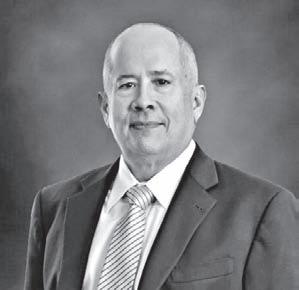
Aboitiz brings a wealth of experience and expertise that will “undoubtedly contribute to AIM’s continued success,” according to a statement from the institute.
AIM also welcomed the appointment of Eugene Acevedo (MBM 1987) as vice chair, further strengthening the institute’s leadership team.
The institute also introduced two new members of its board of trustees: Jose Teodoro “TG” K. Limcaoco, who is the Bank of the Philippine Islands’ president and CEO; and Carmelo Maria L. Bautista (MBM 91), president and director of GT Capital. Both officials bring wisdom and perspective that align with AIM’s commitment to excellence in education and leadership development. They will each serve initial threeyear tenures.
Outgoing trustees Isidro “Sid”
A. Consunji and Ma. Alexandra “Sandy” Prieto-Romualdez provided invaluable contributions to AIM during their consecutive three-year terms. Their dedication and insights have helped shape the direction of the institute, especially during the pandemic.
Garrucho Jr., as outgoing board chair, deserved a special note of appreciation, according to AIM: “Serving as the Lopez family’s representative since 2011, and subsequently as chair from 2017, Garrucho has steered AIM with exemplary leadership and vision. His two terms as chair were characterized by transformative growth and innovation. He [concluded] his chairmanship on September 1, 2023.”
AIM expressed its gratitude to its outgoing board members and chair for their “unwavering commitment [in] advancing management excellence in Asia and beyond. The institute looks forward to its continued growth and success under the leadership of Mr. Aboitiz.”
Since its creation in 1978, the AEU—formerly LSGH’s “Adult Night High School,” is now in its 45th year of operations. From 2023’s 800 students, the unit is set to welcome more than 1,000 new enrollees from different origins and diverse backgrounds. It has one goal: to help the disadvantaged.
“As long as they are unable to study due to poverty, they can apply,” shared Associate Principal Rey Ducay of LSGH. “There are no grade requirements. Everyone under these programs are scholars, with no tuition fees to be paid.”
“More people should be aware about this initiative. It’s about time we bring this to light,” Ducay said. “Let’s break the stereotype that La Salle is just for the rich.”
The AEU has diversified into three distinct, yet interconnected programs. The Alternative Learning System (ALS) offers basic literacy courses and elementary-level education, while the Adult Night High School continues this path through its seniorhigh school offerings. Meanwhile, the Technical-Vocational Education Training (TVET) focuses on certificate courses certified by the Technical Education and Skills Development Authority (Tesda).
The ALS takes a different route in LSGH. It offers a course for absolute non-readers, colloquially referred as “no read, no write” individuals, an elementary level for those who have yet
to finish grade six, and a junior-high school program.
“In our case, we try to reach more…disadvantaged [persons]. In fact, that’s why we offer ALS in jails. Some of them don’t even know how to read and write… Imagine them going through trials and attending court hearings,” Ducay lamented.
LSGH also offers Adult Night High School, where less than half of the enrollees are employed. The associate principal continued that “younger age groups range from 16 to 20 years old, while others are kasambahays, or other minimum-wage earners. Their goal is to finish high school and secure a better-earning job.”
TVET offers short courses in the fields of dressmaking, bookkeeping, events management, electrical installation and maintenance, as well as computer systems servicing. They likewise have programs on food and
the handover ceremonies of learning materials across all academic levels in Muntinlupa City, Mayor Rozzano Rufino “Ruffy” Biazon recently led the simultaneous distribution of school supplies to daycare learners enrolled in all the local government unit’s Child Development Centers.
“We already provided the free school packages to more than 90,000 student-beneficiaries in all public schools in Muntinlupa: from Kindergarten to senior-high school,” Biazon shared. “About 7,800 students across all the 89 daycare centers [received] their free ‘Balik-Eskwela’ package.”
“The city government’s purpose is to make every child in Muntinlupa grow productively; [that] they will have the grit and ability to work,” the mayor said. “This will be possible [via education. One of our ‘7K Agenda’ priorities] is ‘Karunungan.’”
The local chief executive handed the free kits at the Sucat and Laguerta Covered Courts to “Bulilit Center” learners and their parents.
On his behalf, department heads also took part in the simultaneous distribution of the free packages in other areas of the city. Each Balik-Eskwela kit includes a school bag, two notebooks, two jumbo pencils, a box of crayons, and a water tumbler.
The Early Childhood Education Division targets the following ageprofiles for its program: Infant and toddler early development for learners 2 to 2.11 years old, pre-Kindergarten I for learners 3 to 3.11 years old, and the preKindergarten II for learners 4 to 4.11 years old.
beverage servicing, cookery, and bread and pastry production.
After a 10-month course, each student will receive a certificate from LSGH. Once they pass the National Competency Exam, they likewise obtain another from Tesda. Most classes are held at night, supervised by Tesdalicensed educators, since most of the students are employed, but are looking to upgrade their resumés.
“The most in-demand course is bookkeeping. It is difficult, but… popular [and appealing due to the white-collar jobs that await learners],” explained Ducay. “We make certain [they will] have a continuous path to education.”
He believes that “the AEU has to be exposed to the world, and even be made aware to those who can extend a generous hand.”
Next year, LSGH’s AEU expects to produce around 430 graduates.
UST Museum, Artiste Musaeum mount exhibition on Indonesian works of art
ART enthusiasts and culture aficionados embarked on a captivating journey into Indonesia art and cultural works, as the University of Santo Tomas (UST) Museum and Artiste Musaeum presented “ Nusantara : A Celebration of Indonesian Art and Culture.”
The term “Nusantara” is derived from combining two old Javanese words: nusa or “island,” and antara , meaning “between.” Combined, they refer to the Malaysian Archipelago comprised of Singapore, Brunei Darussalam, and Malaysia,
plus Indonesia and the Philippines.
It also captured the exhibition’s essence of unity in diversity, and a testament to the region’s artistic brilliance, historical significance, and cultural vibrancy.
Curated by Anthony “Tonet” V. Gedang, who is the owner of Artiste Musaeum, “Nusantara” allowed visitors to experience the magic of Indonesia’s indigenous traditions, artistic mastery, and captivating stories. From anthropomorphic sculptures, tribal masks, accessories, and Wayang Kulit shadow puppets, Nusantara showcased the
profound connection between art and identity.
With deep appreciation for Indonesia’s artistic heritage, Gedang exhibited Nusantara to honor the nation’s artistic genius, as it fostered a deeper understanding and appreciation of its cultural tapestry.
Nusantara was a collaboration between the International Council of Museums-Philippines, Artiste Musaeum, and the UST Museum under its director Rev. Fr. Isidro Abaño OP. The exhibition ran until September 25, 2023.
IBM has announced its commitment to train 2 million learners in artificial intelligence (AI) by the end of 2026, with focus on underrepresented communities, as its way of helping close the global skills gap on the new technology.
To achieve this goal on a global scale, the “Deep Blue” firm is expanding AI education linkages with schools worldwide, tying-up with partners to deliver AI training to adult learners, and launching new generative AI coursework via “IBM SkillsBuild.” These are seen to expand upon the IT giant’s existing programs and careerbuilding platforms in offering enhanced access to AI education and in-demand tech roles.
A recent global study by IBM Institute of Business Value surveyed executives who estimated that implementing AI and automation will require 40 percent of their labor force to re-skill in the next three years, mostly those in entry-level positions. This further bolsters generative AI as creating demand for new roles and skills.
“AI skills will be essential to tomorrow’s work force,” said Justina Nixon-Saintil, IBM vice president and chief impact officer. “That’s why we are investing in AI training, with a commitment to reach 2 million learners in three years and expanding IBM SkillsBuild to collaborate with universities and nonprofits on new generative AI education for learners all over the world.”
AI training for universities
IBM collaborates with the world’s universities to build capacities around AI by way of its network of experts. Faculty members will have access to IBM-led training such as lectures and immersive skills experiences, plus certificates upon completion.
Also, the IT giant will provide courseware for faculty to use in the classroom, including selfdirected AI learning paths. Aside from faculty training, IBM will offer students flexible and adaptable
resources—including free online courses on generative AI and Red Hat open-source technologies.
New, free course offerings THROUGH IBM SkillsBuild, learners across the world can benefit from AI education created by IBM experts to provide the latest in cutting-edge technology. It already offers free coursework in AI fundamentals, chatbots, and crucial topics like AI ethics. The new generative AI roadmap includes coursework and enhanced features.
The former includes “PromptWriting,” “Getting Started with M achine Learning,” “Improving Customer Service with AI,” and “Generative AI in Action.”
AI-enhanced features within the IBM SkillsBuild learning experience will include chatbot improvements to help support learners in their journeys, and tailored learning paths based on each student’s personal choices and experiences.
These courses are all completely free and available to learners around the world. At course completion, participants will be able to earn IBM-branded digital credentials that are recognized by potential employers.
The new effort builds on IBM’s existing commitment to upskill 30 million people by 2030, and is intended to address the urgent needs facing today’s labor force. Since 2021, over 7 million learners have enrolled in IBM courses. Worldwide, the skills gap presents a major obstacle to the successful application of AI and digitalization, across sectors, and beyond technology experts. This requires a comprehensive world view to be developed and implemented.
IBM’s legacy of investing in the future of work includes making free online learning widely available, with clear pathways to employment, and a focus on historically underrepresented communities in tech, where the skills gap is wider.
A6
SEN. Sherwin Gatchalian wants a more regular conduct of the Functional Literacy, Education and Mass Media Survey (FLEMMS) for better monitoring of the country’s literacy rates.
SENATOR Gatchalian MARK CAYABYAB/OS WIN GATCHALIAN
AIM announces new board chair, members
LSGH Alternative Education graduates ABOITIZ
Muntinlupa LGU distributes
supplies to ‘Bulilit Center’ learners
MAYOR Ruffy Biazon (left) hands over a free “Balik-Eskwela” package to a daycare learner.
IBM to upskill 2 million for AI in 3 years, focus on underrepresented communities
&Entertainment
Tourism Editor: Edwin P. Sallan
A DIFFERENT PERSPECTIVE
SmAll TowN hoPPINg IN EuRoPE
EuropE’s big cities are all that many tourists hope for (myself included). The art galleries, museums, restaurants, architecture, and extensive public transportation are all worth the trip. However, the smaller cities and towns ooze with old world charm. The narrow and cobblestoned streets, quaint shops, restaurants and cafes, historical significance, and picturesque views, give visitors a different perspective.
Cesky Krumlov

Prague takes center stage whenever one is in Czechia. For visitors staying more than two days, Cesky Krumlov is a popular day trip or overnight
destination. This u N e S CO World
Heritage-listed town has a charming medieval atmosphere with its narrow paths and cobblestone streets. Mid13th century Bohemian nobles had
MANILA’S HIDDEN FORT
a castle built high above the Vltava. a s t he town grew in influence and affluence, the castle complex grew. The aristocrat residents had Baroque and r e naissance features incorporated into their expansion projects. Today, the castle complex is one of the largest in the region.
The town surrounding the castle is teeming with old world allure. The preserved houses and shops provide you with a glimpse of life centuries ago. Weaving in and out of the narrow paths is like stepping into a time warp. What makes Cesky Krumlov a popular destination for both locals and visitors is that you can easily access it by bus or car from Prague.

Rothenburg ob der Tauber
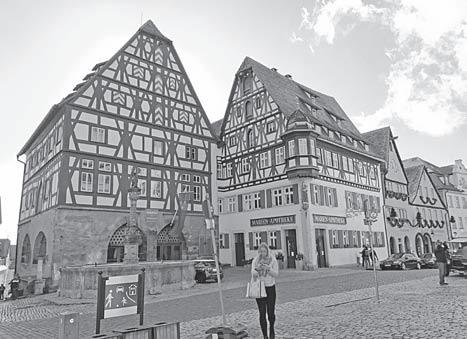


I F ever you find yourself in Bavaria, g e rmany, consider adding the quaint town of r ot henburg to your itinerary. This destination is along the country’s famous r omantic r oad. You don’t need your own vehicle to reach it though. You can take multiple train rides
to arrive at the town. My base was Nuremberg, which made traveling to r o thenburg ob der Tauber convenient despite the multiple transfers. e x ploring this fairytale-like small town feels like you’ve just entered a child’s storybook. The colorful houses, cafes, and shops will stir your imagination and maybe even elicit your inner child. r o thenburg has centuries old buildings and walls. Out of the many picturesque corners of the town, Plönlein or Little Square is the most popular. The bright colored building at its intersection is most likely the picture you see when you look for pictures of r o thenburg online. Some of the well-preserved buildings include the St. James’s Church, r o thenburg Town Hall, and the Master Builder’s House. If you’re visualizing something quintessentially g e rman, this town might be the picture you have in your head.
Bled

C O NV e N I e N TLY l ocated around an
Getting reacquainted with Fort San Antonio Abad
Story & photos by Benjamin Locsin Layug
Relatively unknown to many, Manila has another fort, aside from the wellknown Fort Santiago, located south of ntramuros and this one is not easy to visit as it is located within the confines of the high-security Bangko Sentral ng Pilipinas Complex (BSP) - the 1.2-hectare, trapezoidshaped and equally historic but hidden Fort San a n tonio a b ad. Considering its current location, tightly sandwiched between the imposing main tower of the BSP and the old Metropolitan Museum of Manila Building (now transferred to its new home at Bonifacio Global City in ta guig City), the fort is understandably overlooked these days. a l so known as Fort Malate or Fort San a n tonio, this fortification was completed in 1584 and named in honor of its patron saint, Saint a n thony the a b bot (feast day: January 17). l ke the walled city, the fort evolved into a variety of stone fortress popularized by renowned French military architect Sebastien l e Prestre de va uban, with two signature bastions at the corners of the canted walls. t h ough relatively small in size, it certainly occupies a significant place in the history of Manila as it played a role in three great conflicts – the Seven ye ars War, the Philippine- a m erican War and World War ii l o cated in what was then a separate hamlet of Malate, the fort served as a rear protec-

tion for the Manila as well as to guard the Manila–Cavite route.
t h e Spanish used the fort as a polvorista (“little fortress” or gunpowder magazine to safely store gunpowder) known as F uerte de Polverina. On September 26, 1762, during the Seven ye ars’ War, it was captured by British forces under Rear- ad miral Samuel Cornish and Brigadier-General William Draper when they invaded Manila. t h ey transformed the fort into a garrison, setting up an artillery battery. From here, the British forces launched their land offensive against the Spaniards defending i n tramuros.
O n March 26, 1764, upon the end of the British occupation of Manila, the fort was returned to Spanish control and rebuilt, again becoming a gunpowder storage facility. On a u gust 13, 1898, after bombardment by U.S. warships during the sham B attle of Manila, the fort was captured and the first a m erican flag hoisted by the First Battalion of the First Colorado vo lunteer Regiment under the command of lt .-Col. Henry Bayard McCoy.
i n 1937, the Historical Research and Markers Committee (now the national Historical Commission of the Philippines) installed a historical marker.
During World War ii , F ort San a n tonio a b ad was seized by o ccupying Japanese troops and it was used as a bunker, with a cannon installed. During the l i beration of Manila, the fort suffered considerable damage. a f ter World War ii, t he very young


Offshore Patrol, with the Manila Naval Station (MNS) as its main support unit, set up its headquarters at the fort. t h ey vacated the place in 1965.
On June 1974, coinciding with the establishment of the new main office complex of the BSP, the restoration of the fort was again started (the first restoration was at the beginning of the 19th century) by a r chitect Carlos e . Da S ilva, during the term of former Central Bank Gov. Gregorio S. l i caros, and completed in 1976. t his battle-weary and proud structure is now a beautiful little park and events place with paved walkways and street lamps. Where guards once stood, there are now roaming gardeners keeping the manicured garden trim. Within the garden is a now unused well with a windlass for raising water.
i n 2018, together with ntramuros (collectively known as the “Fortifications of Manila”), the fort was named a National Cultural tr easure (NC t ) for their architectural, historical, scientific and archaeological significance, by the National Museum of the Philippines. Both forts were essential parts of the defense of Spanish Colonial Manila and scientifically important in terms of military and structural engineering. t he NC t m arker is now installed there and in Plaza Roma in i ntramuros.
at t he fort’s south entrance, two historical plaques (the 1976 renovation plaque and the NC t plaque) are mounted. t h e 1937 plaque, mounted on the wall to the right of
this entrance, is topped by a semicircular arch niche, flanked by Doric columns, with an antique wooden statue of St. a n thony a b bot within. i n turn, the niche is framed by a decorative moldings ending in scrolls. t he original segmental arched main entrance of the fort, with its quaint iron gate, faces north. t h is latter entrance is decorated with a basrelief of the traditional Spanish coat of arms of l e on (the lion) and Castille (the castle) and topped by finials.

t h e fort can be quickly explored in less than half an hour. at t he lower level of the fort are a series of square embrasures, openings in fort’s walls where cannons can be fired. t he se openings, flared outward to enlarge their field of fire, once faced the sea but are now facing the back of the museum.

yo u can walk around the entire wall perimeter via very narrow, 2-foot wide ramparts which can be reached via stone steps. Standing on either side of the fort, on arrowhead-shaped bulwarks (e a st and West), are two large, sea-facing naval guns which were damaged when the a m erican a i r Force bombed the fort during the 1945 l ib eration of Manila in World War ii . C ast by Sir William a r mstrong & Co. (e ngland), these two 19th century, rifled breech-loading guns, weighing 20,238 and 20,220 pounds respectively, had a bore of 8 inches. t h e original gun carriages are now gone (probably destroyed during the bombing) and have been replaced by concrete supports.
hour by bus and approximately 40 minutes by car from Ljubljana, Bled is a must visit when in Slovenia. The town’s lake and mountain views (with hiking trails) make it a go-to destination for nature lovers and visitors who just want time away from the hustle and bustle of the city. The view of the church on the island is the picture you’ll see splashed on several magazines, postcards, and websites. You’ll get magnificent views of this from high up on the castle. Take a leisurely walk around the lake to soak in the views and fresh air. If you have the time, take on the hiking trails that provide you with different overlooking views of the lake and mountains.
Melk
T HI S q uaint town around an hour away from Vienna by train, is home to the Melk a b bey. Founded in 1089, this huge structure dominates over the town and its church contains some of the most beautiful frescoes I’ve seen. Inside you’ll also find a fetching

library containing medieval manuscripts. The town itself is quite lovely. Walk around its charming streets, get a souvenir from one of the shops, or dine in one of the restaurants. Time moves slowly here, much like the meandering water of the Danube r i ver. Riomaggiore
T HI S v illage is one of a handful located in Cinque Terre. It dates to the 13th century and is famous for its colorful houses built on ridges along the coast. a railway and trail connect r io maggiore with other villages in Cinque Terre. Many visitors follow the trails to travel from one village to the next. r io maggiore is one of the biggest and most picturesque. The cafes and restaurants provide visitors with beautiful views while wining and dining. These are only a handful of the small towns you can visit in e u rope. The continent has plenty more to offer visitors that want a glimpse of history and time away from bustling cities.

A7 BusinessMirror Tourism
Saturday, October 7, 2023
Story and photos by Joshua Berida
C E SK y K rumlov V IE w of Cesky Krumlov’s castle O VERLOOKIN g view of
Krumlov P IC T u RE p erfect Plönlein R OT HENB u R g ob der Tauber R I OMAgg I ORE F ORT S an Antonio Abad N I CHE w ith statue of St. Anthony Abbot P O CKMARKED william Armstronggun at we st Bastion T H E now unused well with windlass Armstronggun at we st Bastion wILLIAM Armstrong gun at the East Bastion L AK E Ble d B IRD S eye view of Melk
Cesky
SB19, Ben&Ben finally perform ‘MAPA’ onstage Automation, career growth are keys for aging logistics sector to win young talents
BY RODERICK L. ABAD Contributor

STILL hot as it used to be at the onset of the Covid-19 crisis, the global market continues to find e-commerce sexy but not its matured allied industry
This holds true, too, for the labor sector which— albeit the constant rise of online trading even after the pandemic—keeps on leaving the latter for the former.
PROOF that OPM is doing very well is that in the last two months, I have been to two concerts featuring the most popular Filipino artists of today, including SB19, Ben&Ben, Zack Tabudlo, Spongecola, December Avenue, and Ely Buendia.
A few weeks ago, SB19, Zack Tabudlo, and Ben&Ben headlined Watsons Playlist: The Feel Great Concert held on September 24 at the Smart Araneta Coliseum. Tickets to the event were made available to 10,000 Watsons Club members and it was truly a great experience for them to be there. VIP ticketholders were treated to an exclusive soundcheck session with the artists before the concert while others got the chance of a lifetime to meet their favorite artists backstage via a raffle. Thirty winners from the VIP Standing, VIP Seated, and Patron tiers also received signed posters from the artists.
BINI opened the show with “Karera,” after which Zack Tabudlo took to the stage with his soulful voice. One of the songs that he performed was “Give Me Your Forever.” The singer said he usually doesn’t perform this in the Philippines.
After Zack Tabudlo, it was the turn of Ben&Ben to showcase their songs. The band showcased their heartfelt lyrics and melodious tunes which resonated with the audience, setting the stage for an emotionally charged evening. The band took the Watsons Club members in the audience on an emotional roller coaster as they performed hit after hit, including “Kathang Isip,” “Could Be Something,” “Paninindigan Kita,” and “Langyang Pagibig.”
Then it was the turn of SB19 to take centerstage. You really couldn’t tell that Pablo, Stell, Ken, Justin, and Josh had come from a grueling world tour. Their energy was so high! They opened with their global hit
Huawei...
CONTINUED FROM A9
which it effectively retrieves satellite signals.
While the Watch GT 4 isn’t the first to allow you to answer calls on your watch, its enhanced Bluetooth Calling feature improves on the quality and clarity of calls. It supports Bluetooth calling distance of up to an impressive 100 meters from the paired smartphone. Now, when I’m driving, I don’t have to reach for my phone. I can even send quick replies in just a couple of taps. You can customize these quick replies via the Huawei Health App. Perhaps the biggest issue with smartwatches (even the most expensive ones) has to be its battery life. The Huawei Watch GT 4 again stands out, with the 46mm variant promising up to two weeks of battery life while the 41mm can last for a week on a single charge. Lastly, it also has an 5ATM IP68 rating so you don’t have to worry about getting it wet.
FINAL WORD: The Huawei Watch GT 4 doesn’t just tell time; it tells the world about your commitment to both fashion and functionality, and your desire to live a healthier life. With its innovative health monitoring features, timeless elegant design and long battery life, it’s not just about ticking boxes; it’s about how seamlessly and elegantly they all come together on your wrist. The Huawei Watch GT 4 looks incredible, and with prices starting at P12,999 (for the Black Fluoroelastomer variant), it’s certainly way more affordable than those luxury watches that inspired its superb design. Preorder now and you can get up to P6,297 worth of freebies which includes a Freebuds SE2, an extra watch strap, watch face, and trade-in voucher. ■
“Gento,” of course.

During the concert, SB19 members also revealed that they would bring their successful tour to Asia.
Every artist performed well on that night but for me, the highlight of Watsons Playlist was the collaboration between SB19 and Ben&Ben. The two groups performed “MAPA,” a tribute to parents and they seamlessly performed the song with their respective musical styles.

By the way, the official music video of “MAPA” with SB19 and Ben&Ben has gained widespread acclaim, garnering an impressive 16 million views and counting, and attained over 19 million streams on Spotify.
MOIRA IS MARIA CLARA SANGRIA’S ‘VIRGIN’
IN early September, Maria Clara Sangria announced that Moira dela Torre was now its brand ambassador. Moira even composed “Maria Clara,” a full-length song that is the brand’s new jingle.
“‘Maria Clara’ is a reminder of where you’ve been
Maria Clara Virgin, which doesn’t contain alcohol.
“If I can be completely honest, I had to think about it very well because it’s an alcohol brand and I really wanted to be careful with my endorsements. And then they presented the campaign to me and I do drink sangria, I do drink Maria Clara and I come from Olongapo. That’s where I grew up in and I remember for New Year’s my family, my titas would bring in Maria Clara. So these are things that are not foreign to me,” said Moira.
During the event to announce her being the Maria Clara ambassador, Moira talked about her drinking habits, among other things.
Parang mga three glasses before I get a hit. But it depends. It depends when I’m sad. In our industry we always have to be social and I’m an introvert but I had to learn to be social. And I’m an introvert and I have ADHD (Attention-Deficit/Hyperactivity Disorder). And so I had to learn how to be social and to be around people. So I have learned to kind of drink socially. So when I’m out, I kind of know how to
Club offers unmatched benefits for Filipino pet owners
AN all-in-one digital pet care solutions provider, PetPal unveils the PetPal Club offering pet owners unparalleled care for their furry companions combined with substantial savings and exclusive benefits.

Recognizing challenges that pet owners face in accessing quality healthcare for their pets, PetPal has developed a way to combine convenience with top-notch care from licensed and accredited veterinarians. This is aligned with its mission to enable pets to live their happiest and healthiest lives.
The platform is user-friendly, accessible every day of the week from 8 am to 9 pm, and has a range of services tailored to meet the unique needs of each pet. It also provides a digital pet booklet, the Pet Pawrtal, to conveniently track a pet’s healthcare journey.
PetPal’s latest offering, the PetPal Club, empowers pet owners with a comprehensive package of benefits, ensuring security and peace of mind. For an annual fee of just P2,499, members are treated to unlimited teleconsultations for two pets, a complimentary home vet visit, a special rate of P999 instead of P1,200 for subsequent visits, a 10-percent discount at affiliated clinics, and free vouchers worth up to P30,000 from partner establishments. Booking a subscription is a breeze. Pet owners may visit
the PetPal Club website, click on “Become a member today,” choose from multiple payment options, and wait for the PetPal Club catalog in their e-mail.
“We’re here to change the way pet owners approach pet care. With the PetPal Club, we’re offering a holistic solution that ensures every pet in the Philippines has the opportunity to live a long, healthy and happy life,” said Miguel Guerrero, 917Ventures entrepreneur in residence.
Carlo Flordeliza, senior venture builder at 917Ventures, echoed this sentiment: “The PetPal Club is a testament to our commitment to innovation and excellence. We listened to the needs of pet owners, and with this information we crafted a subscription that truly delivers. This is just the beginning, and we’re excited about the future of pet care in the country.”
With the PetPal Club, pet owners can focus on what truly matters: spending quality time with their pets. Whether it’s treats, cuddles, or walks, PetPal ensures that pets and their owners have more time to enjoy life’s simple pleasures. Watch out for grooming products and other new offerings from PetPal coming soon.
For those interested in joining the PetPal Club, visit www. petpal.asia/petpal-club today. PetPal is a tech startup under 917Ventures, a member of the Globe Group.







In a report written by AutoStore Vice President (VP) for Business Development in Asia Pacific Philipp Schitter, he delved on the increased pressure of e-commerce on its undermanned logistics partner and how it could win talents back.
He cited Gi Group Holding’s study that shows three-fourth or 75 percent of warehouse operators in developed countries have difficulty attracting employees. Eventually, it leads businesses to run at a lower capacity, with less efficiency and revenue cut.
“One reason for the lack of manpower stems from the sector having a reputation of physically demanding and strenuous jobs, which play a role in affecting potential workers in their foray into the industry. Another reason is linked to the change in cultural and social shifts within countries,” Schitter wrote.
Some reports, noted the top executive, also indicate that this industry is aging, wherein 45 percent of workers in transportation and warehousing are 45 years old and above. He said: “With that, there is constant constraint on fulfilling the increasing demands of the supply chain due to this lack of labour.”

By promoting a promising career growth and using cutting-edge technologies, logistics companies can attract and keep Gen Z employees who will comprise 27 percent of the workforce by 2025.
Doing so, it is important for industry players to develop strategies aligned to their job ethics and preferences, Schitter noted.
One way to do it is showcasing how logistical innovations work, such as the Automated Storage and Retrieval System (ASRS).

This will be appealing and exciting for Gen Zs who are keen on digital solutions to purposely work and stay with the company.
Since they seek growth and progression, it’s also essential to provide them with continuous mentorship programs, cross-training initiatives, and ongoing skill development endeavors, he added.
What’s more, logistics players need to adopt automation to stay competitive in their field and attractive to the labor market, per Schitter. At present, more than 80 percent of warehouses do not operate automatically.
By using technologies like the ASRS to perform tasks with less human intervention, he said that businesses can highly shorten order processing time, enhance inventory management, and improve overall operational efficiency while aligning with an ideal workplace a Gen Z worker desires.
AutoStore is one caterer of such, with its warehouse robots that are capable to give businesses with 100 percent stock access and 99.7 percent operational uptime, while helping reduce their carbon footprint through their energy consumption of only 100 Watts during operation.
The VP for business development believes that automation helps the current generation of workers lighten the arduous aspects of logistical tasks—a magnet for the future workforce. For him, bridging the gap between the work ethic of today’s generation of labor and demands of the logistics industry is pivotal for the sustainable growth and success of the sector.
“By understanding the characteristics of Gen Z, leveraging technology and automation, and implementing strategies that align with their values, logistics companies can attract and retain the next generation of talent,” Schitter stressed.

“Embracing innovation and showcasing the opportunities for growth within the industry will not only meet the demands of Gen Z but also ensure a thriving and dynamic logistics sector for years to come.”


A8 Saturday, October 7, 2023
www.businessmirror.com.ph BusinessMirror
• Editor: Gerard S. Ramos
SB19 take to the Watsons Playlist stage (left). Singer Moira is the ambassador of Maria Clara Sangria. PHOTOS FROM WATSONS AND MARIA CLARA SANGRIA.
Huawei Watch GT4 review: Make that fashion-forward switch
NOT counting the Casio calculator and robot watch I had during elementary, I think the Huawei TalkBand B2 was the very first smart wearable that I had. I could still remember how amazed I was when I first wore it. Not only did it count my steps, timed my runs and monitored my sleep, but it also detaches and transforms into a Bluetooth earpiece for answering calls or listening to music.
I felt like James Bond trapped in Fat Bastard’s body whenever I wore it, so I made sure everyone was looking whenever I answered a call. Then came the OG Huawei Watch (which I still have, and still works) followed by the “bands,” “watch fits,” “GTs” and all their yearly updates.
While having all these choices are good for the consumer, I felt kind of overwhelmed to the point that I even had to decline reviewing other smartwatch brands. When you’re a “desk” jockey like me who’s more afraid of the gym than the dark, I felt guilty of doing these smartwatches a big injustice by not being able to use all their features.
So, for this review of the Huawei Watch GT4, I’m warning you not to expect too much in terms of the physical data I gathered from testing those doing workout modes. I think the most number of steps I recorded on the Huawei Watch GT4 was about 11,000—and that was at the mall, while I was toy hunting and I had to head over to my favorite unliKorean BBQ just to recover.
I was, however, able to do a lot of sleeping experiments the past few weeks. I also learned how to keep my stress levels low and to constantly check my heart rate. Oh, and those breathing exercises have done wonders for my anger issues especially whenever I’m stuck in traffic or watching the local news.
So, if you’re planning to get a new timepiece but still thinking twice about getting a “real” smartwatch, the Huawei Watch GT 4 offers plenty of reasons to make the switch.
■ DESIGN FORWARD: Huawei has always been a trendsetter in wearable technology, seamlessly integrating its latest innovations with timeless fashion. As the company marks its 10th year in the smart wearables industry, the Huawei Watch GT 4 showcases the pinnacle of the company’s design evolution with geometric aesthetics. It features cutting-edge material design, utilizing amorphous zirconium alloy and a diverse range of watch straps such as refined calf leather and Fluoroelastomer. The Watch GT 4 caters to varied tastes and is available in 46mm and 41mm sizes. The 46mm design

exudes a “Classic Evolved” philosophy, showcased by its unique octagonal watch body. Drawing inspiration from the faceted brilliance of diamond cuts and the sharp aesthetics of octagonal headlights in highperformance cars, this design is reminiscent of the elegance seen in traditional luxury timepieces.
You get four strap choices, first being the Black Fluoroelastomer Strap, blending sleekness and sophistication that embodies sporty elegance, making it perfect for those who love working out. The Brown edition combines its silver stainless steel body with the comforting tan leather strap that radiates a sophisticated versatility fitting any style or occasion.
The Rainforest Green comes with green woven composite strap that combines 70 percent oceanrecycled nylon with 30 percent recycled polyester from plastic bottles. This blend reflects Huawei’s dedication to protecting nature including oceans and forests, and its commitment to sustainability and environmental stewardship. Last is the Stainlesssteel Edition, designed with an integrated stainless steel strap, this version caters to those who value exquisite craftsmanship and seek a statement-making accessory. The strap appears as a natural extension of the case, forming a singular, unified piece.
On the other hand, there are three strap options for the 41mm variant. The basic Black Fluoroelastomer Strap again is for younger, active users; there’s also the White strap, with its gold Stainless Steel Case, beautifully paired with a pristine white leather strap linked to the watch lugs; and the Silver two-tone Piano Key Bracelet with tasteful gold accents.

If you’ve always wanted to get a smartwatch but don’t want something that looks like a prop from some sci-fi flick, then you’d instantly like the Huawei Watch GT 4’s new octagonal shape. It borrows hints of style from those eye-wateringly expensive luxury watches at a fraction of the amount and with more


useful features.
■ CLEAR DISPLAY: The Watch GT 4 46mm features a stunning 1.43-inch AMOLED screen and an impressive 326 ppi (pixels per inch) density. Similarly, the Huawei Watch GT 4 41mm is equipped with a 1.32inch AMOLED screen, offering a remarkable 352 ppi density. This improvement represents a significant increase of 13 percent in the screen-to-body ratio, providing a larger and more immersive display for the user. The auto-brightness setting of this smartwatch is so good, I never had to make adjustments as the display remains clear and visible whether I’m indoors or under direct sunlight.
One good thing about the Huawei Watch GT 4 is that almost all of its features work with both iOS and Android. To get started, simply scan the QR code on the box to get a download link to the Huawei Health App from the website.
■ ACTIVITY RINGS: To keep you motivated, the upgraded Activity Rings serve as a visual target, empowering users to develop healthy exercise habits by providing a clear and motivating indicator of their progress. It provides valuable insights and actionable feedback, ensuring that users have a clear understanding of their progress and the steps they need to take to achieve their desired outcomes. This personalized approach empowers users to take action, stay focused, and make meaningful progress towards their goals. The Huawei Watch GT 4 can monitor over 100 diverse sports modes, and as if that wasn’t enough it adds 19 more professional sports modes, covering indoor and outdoor activities such as walking, running, cycling, swimming, and more. There are even custom modes for soccer, basketball, and—get this—esports. I have yet to find out how it works exactly, but for all you serious gamers out there, this might help you figure out the things that can raise your heartbeat and stress levels so you can make
APPLE EXEC DEFENDS THE DECISION TO MAKE GOOGLE ITS DEFAULT SEARCH ENGINE ON IPHONES AND MACS
WASHINGTON — A top Apple executive defended the tech giant’s decision to make Google the default search engine on Apple iPhones and Macs, saying there was no “valid alternative.’’
Testifying in the biggest antitrust trial in a quarter century, Eddy Cue, Apple’s senior vice president of services, said on Tuesday that there wasn’t “anybody as good’’ as Google at helping phone and computer users search the internet.
The US Department of Justice has accused Google—a company whose very name is synonymous with scouring the web—of smothering competition by paying Apple, Verizon and other tech companies to make its search engine the first users see when they open their devices.
Google counters that it dominates the market because its search engine is better than the
competition, a position Cue supported in his testimony. Google also argues that users can, in any event, switch to other search engines with a couple of clicks.
The antitrust case, the biggest since the Justice Department went after Microsoft and its dominance of internet browsers 25 years ago, was filed in 2020 during the Trump administration. The trial began September 12 in US District Court in Washington DC.
Mikhail Parakhin, Microsoft’s head of advertising and web services, testified Tuesday that Google’s dominance feeds on itself. The more searches Google processes, the more data it collects that can be used to improve future searches.
“The more data you have, the better the results are,’’ he said, echoing one of the government’s
arguments. Dominating the market helps in other ways, Parakhin said. For example, restaurants are more likely to make sure their location and hours are accurate in results on the leading search engine, while they are far less likely to bother correcting information on smaller search engines.

Experience shows, he said, that search engines need 20 percent market share to survive. Otherwise, “their quality degrades rapidly, and they disappear.’’’ US District Judge Amit Mehta likely won’t issue a ruling until early next year. If he decides Google broke the law, another trial will determine how to rein in its market power. The Mountain View, California-based company could be stopped from paying Apple and other companies to make Google the default search engine. AP
adjustments—or just alert you to stand up once in a while.
■ HEALTH READINGS: The Huawei Watch GT 4 series has enhanced TruSeen 5.5+ heart rate monitoring technology, offering meticulous and efficient insights into workout metrics and daily health. Utilizing advanced AI algorithms, TruSeen 5.5+ refines the data derived from the sensor’s optical readings. This is further amplified by a multi-channel signal enhancement algorithm, based on Huawei’s proprietary AI insights, guaranteeing unparalleled accuracy in heart rate measurements.
Now, to be truly careful with your heart, the GT 4 further elevates heart monitoring with the inclusion of Photoplethysmography (PPG) Arrhythmia Analysis. It’s a mouthful to say, but with rising cardiac issues, having an accessible way to monitor irregularities is invaluable. The PPG arrhythmia feature in the GT 4 offers real-time heart rate monitoring using light-based technology. What makes it unique is its capability to detect arrhythmias, which are irregular heartbeats that might indicate underlying health issues. While it doesn’t replace professional medical diagnostics, this feature provides an early warning system. For users, this means a potential proactive approach to their health, allowing them to seek timely medical intervention if irregular patterns are consistently detected. If you have elders who have heart problems this feature might help you be more aware of their condition.
Any expert will tell you that sleeping can help improve your physical and mental health and with Huawei TruSleep 3.0 sleep monitoring technology, you can figure out the best sleeping habits for you and help you sleep better. This technology has been researched, developed, and optimized for four years, and is currently the industry’s leading technology based on infrared light to monitor sleep. It can perform sleep stage monitoring, real-time heart rate monitoring, sleep breathing monitoring, and assessment of sleep quality without disturbing the user’s sleep. Like I mentioned earlier, this was probably the feature I tested most. Now I just need to increase my steps to get rid of those pounds I gained from oversleeping during weekends.
For the women, the Watch GT 4 can also intelligently Monitor & Predict your Menstrual + Ovulation Cycle. This intelligent prediction feature can then send reminders based on the monitored health data, assisting women in preparing for their special days—and warn us partners to be extra understanding or at least stay a safe distance.
Advanced GNSS for Precise Tracking: The Watch GT 4 pioneers the use of intelligent GNSS directional satellite tracking technology, which intuitively adjusts the signals to follow the movement of satellites in orbit. This breakthrough innovation boosts GNSS signals of the built-in dual-band five-system highprecision GNSS positioning chip’s antenna design, which ensures that the direction of the radiation waves is constantly pointed towards to the sky, from SEE “HUAWEI,” A8

A9 Editor: Gerard S. Ramos • Saturday, October 7, 2023 www.businessmirror.com.ph BusinessMirror
THE Huawei Watch GT 4 isn’t just about keeping up with the times—it’s about setting the pace.
Yulo vows to rule floor exercise event in Antwerp world championships
PARIS Olympicsbound Carlos “Caloy” Yulo vowed to bring home the floor exercise gold medal from the World Artistic Gymnastics Championships on Saturday at the Sportspaleis Arena in Antwerp, Belgium.
Despite failing to qualify in other apparatuses finals and the individual all-around event, the 23-year-old Asian gold medalist remained in high spirits.
“He promised us that he will get the gold this time after the early mistakes,”
Gymnastics Association of the Philippines (GAP) president Cynthia Carrion told BusinessMirror on Friday.
“Before I left Antwerp, we saw Caloy [Yulo] training so hard. I believe his determination will help win the gold, he is going to bounce back,” she said. “After the world championships, Caloy will be competing in world cup events next year before the Paris games.”
Yulo, the world floor exercise champion on 2019, will clash with Israel’s Artem Dolgopyat, who led the qualification round in floor exercise followed by American Richard Frederick, No. 4 Japanese Kazuki Minami, No.5 Canadian Felix Dolci, No. 6 Japanese men’s all-around champion Daiki Hashimoto, No. 7 Kazakhstan’s Milad Karimi and No. 8 British Harry Hepworth.
Yulo placed third in the qualification last Sunday. He also qualified for an Olympic berth next year after earning “the highest-ranked eligible athlete on each apparatus, based first on the apparatus finals results, and then if needed, on the apparatus qualification results, will obtain one quota place by name.”
Japanese star Hashimoto, meanwhile, defended his by overcoming an early mistake on floor exercise to become the first athlete to win back-to-back world all-around titles in eight years.
The 22-year-old Hashimoto posted a total of 86.132, over a point clear of Illia Kovtun of Ukraine at 84.998.
American teenager Fred Richard, a sophomore at Michigan, earned a surprising bronze at 84.332.
When I came here, I had a list of three things: stay healthy, have fun, do smooth gymnastics,” Richard said. “I thought if I did all three, I’d win a medal.”
Hashimoto finished third in qualifying behind teammates Kenta Chiba and Kazuma Kaya, meaning he did not automatically earn a berth in the finals because of rules that limit each country to two entries.
Hashimoto ended up taking Kaya’s spot, a decision the Japanese delegation made unanimously in deference to Hashimoto, who won the all-around gold at the Tokyo Olympics.
Hashimoto struggled on the floor exercise to start the finals, his lone misstep on a night in which he showed again that he is the rightful heir atop the sport following countryman Kohei Uchimura, a two-time Olympic and six-time world champion. Hashimoto became the first man to win consecutive world all-around titles since Uchimura went back-to-back in 2014 and ‘15.
R ichard, who is from Massachusetts, became the first US male gymnast to finish in the top three in the all-around since Jonathan Horton earned a bronze in 2010. He did it despite a mistake on high bar during the final rotation that sent him tumbling to the mat. Richard collected himself to finish his routine and appeared to be resigned to finishing off the podium, telling a nearby camera, “It’s part of the journey.”
Just not the end of it.
M iscues by the others hoping to stand with Hashimoto during the awards ceremony—namely Chiba and Sun Wei of China—opened the door for Richard to become the youngest American man ever to win an individual medal at worlds.
A nd it came two days after Richard helped the US win bronze in the team finals, the first time the Americans have finished in the top three in a major international competition since 2014.
R ichard, who also will compete in the floor exercise final later this week, said he has “a lot of gas left in the tank” and is eager to see where the men’s program can go as it eyes the Paris Olympics and beyond.
Josef Ramos with AP
A WINDFALL FOR OBIENA
IT’S not an Olympic gold medal but Ernest John “EJ” Obiena’s already at least P10 million richer after ruling the men’s pole vault competition in record fashion in the 19th Asian Games in Hangzhou.
T he world No. 2 and Asian champion’s benefactors are members of the Filipino-Chinese community who honored him with appropriate ceremonies in his alma mater Chiang Kai-siek College (CSK) in Manila on Friday.
By Jun Lomibao
HANGZHOU—After Meggie Ochoa, Annie Ramirez took over and collected the Philippines’ third gold medal with three days of competition left following her victory in jiu-jitsu in the 19th Asian Games on Friday.
R amirez capped her gold medal run in the women’s -57 kgs division with a 2-0 conquest of Kazakhstan’s Galina Duvanova in the final at the Xiaoshan Linpu Gymnasium.
This is the only medal that’s lacking in my collection,’’ the 32-yearold Ramirez said in tears. “I’ve been thinking about this almost everyday since that [Asiad] defeat.”
R amirez brought back the memories of 2018 in Jakarta where her bid for the gold went down in vain.
T hat brings the Philippine gold medal haul in the games to three on Ernest John “EJ” Obiena’s new men’s pole vault games record and Meggie Ochoa sparking the haul in jiu-jitsu in women’s -48 kgs on Thursday.
First, it’s Annie, now it’s Meggie in jiu-jitsu, and we’re still on target,” said Philippine Olympic Committee president Rep. Abraham “Bambol” Tolentino. “There’s still soft tennis and karate.”
It took Ramirez three fights to get into the finals all in the same day. She drew an opening round bye at the bottom of the bracket, won by advantage over Le Thi Thuong, clobbered Singapore’s Fionah Toh, 7-0, and beat by submission the United Arab Emirates’ Shamsa Alameri.
“I felt really bad after losing in the previous Asian Games that I just couldn’t wait to recover from that defeat,” said Ramirez, who’s now 3-0 in her headto-head encounter with the Kazakh.
“Winning the gold here is sweet redemption for me.”
The three-time Asian champion stayed underneath Duvanova for most of the contest before Ramirez turned the tide to her favor with a sweep with 30 seconds to go.
She was on top most of the time, but that’s okay,” said Ramirez, who didn’t get past the first round in Jakarta. “I just waited for the right opportunity to strike.”
Ochoa on Thursday fought sick in beating Balqees Abdulla, 1-0, of United Arab Emirates to rule jiujitsu’s women’s -48kg category gold.

My prayers got answered,” said the two-time world champion Ochoa, 33. “This victory is different from the rest, because here, I represent our country.”
Ochoa wasn’t feeling well when he arrived here three days ahead of her campaign.
The Philippines also clinched another bronze medal on Friday in sepak takraw to improve its tally to three gold, two silver and 12 bronze medals good for 20th place.

THE Philippine Football Federation (PFF) is fully supporting the bid of Saudi Arabia to bid host the FIFA World Cup 2034. As a fellow member association of the Asian Football Confederation, it gives great pride that the Kingdom of Saudi Arabia will take the lead in bringing the FIFA World Cup back to Asia in 2034,” the PFF said in a
China was way ahead in the medals race with 184 gold medals, a haul that’s impossible to topple even by combining the golds won by the nine nations in the top 10 of the tally board.
Japan was a far second with 44 gold medals, followed by South Korea with 36, India with 21, Uzbekistan 19, Chinese Taipei 16, North Korea and Bahrain with 10 apiece and Iran with nine.

K aila Napolis, a two-time world championships bronze medalist salvaged a bronze medal in jiu-jitsu after dealing Hessa Alshamsi a piercing 4-2 defeat in their -52kg encounter.
When the match was tied, I didn’t know what to do,” the 27-year-old Napolis said. “But I remembered what my coach told me in situations like these and I was able to pull through.”
A lshamsi was in control almost throughout the five-minute clash, before Napolis turned things around by escaping her opponent’s grip just in the nick of time.

I wasn’t able to win the gold, but I’m still happy with this medal,” Napolis said. “All the hard work paid off.”
Napolis earlier beat Kazakhstan’s Kristina Zhurabekova and South Korea’s Jeonghye Park, but lost to Asma Alhosani of United Arab Emirates, 2-0, in the semifinal.
I n karate, Jamie Lim won her round of 16 match on karate, 3-1, over Uzbekistan’s Zulkhumor Tursunalieva, but missed the medal round after losing to Assel Kanay, 1-0, of Kazaksthan in the quarterfinals.

Obiena got P3 million from the CSK board of trustees, P5 million from the Federation of Filipino Chinese Chamber of Commerce, P1 million from businessman Anton Tan and P1 million from Ambassador Carlos Chan, who owns Oishi Philippines.
He studied at
Chiang Kai-siek from pre-school to high school.
The Paris Olympics-bound Obiena is also bound to receive P2 million from the government through the Philippine Sports Commission under Republic Act 10699 or the National Athletes Benefits and Incentives Act.
A nother P1 million is coming his way as a bonus from the Philippine Olympic Committee headed by Rep. Abraham “Bambol” Tolentino.
O biena easily won the Asian Games gold medal with his recordsetting leap of 5.90 meters. He attempted 6.02m twice but failed.
The Southeast Asian Games champion joined the elite 6.0m club when he cleared the height twice, first in July and in August.
He ended the Philippines’ gold medal drought in the Asian Games.
The late Lydia de Vega Mercado won the country’s last gold in the 200m at the Seoul 1986 games. Obiena’s medal also was the first since Elma Muros Posadas’s bronze in long jump in 1994 in Hiroshima.
South Korea eyes not only football crown, but also military exemption in final vs Japan
OUTH KOREA’S under-24 players are preparing for the biggest game of their careers on Saturday, but standing between Asian Games gold and military exemption is
The Asian Games, being staged in the Chinese city of Hangzhou, a year later than scheduled due to China’s strict pandemic lockdown policies in 2022, has brought the two rivals together in the final for the second successive


“We absolutely have to win that match. No questions asked,” South Korea coach Hwang Sunhong said. “We will pour everything we have into winning that match.”
All male gold medal winners at the Asian Games are, by South Korean law, granted exemptions from the 18 to 21 months of military service that all able-bodied men must start by the time they turn 28. Olympic medals are also enough.
PFF backs Saudi’s World Cup bid
statement on Friday.
Saudi Arabia is also hosting the continent’s showpiece event, the AFC Asian Cup in 2027.
“As a partner in the growth of Asian football, we are supporting the Kingdom of Saudi Arabia in its intention to bid for the FIFA World
Cup 2034,” PFF president Mariano Araneta said. This is a unique opportunity for our fellow AFC MA [member association] in the Middle East to mount the beautiful’s game landmark competition,” he added. The FIFA World Cup 2034 provides
A t the 2018 Asian Games, Son Heung-min led the team to gold, defeating Japan in the final, earning him the right to stay at English Premier League team Tottenham Hotspur, a year before he would have had to return home.
T he focus this time is on Lee Kang-in. The midfielder signed for Paris Saint-Germain in the summer but is now in China. Injury meant the 22-year-old arrived late and has been used, so far, sparingly by coach Hwang.
It’s not up to me whether I play the full 90 minutes or not. It’s up to the coach,” Lee, who played 30 minutes in the 2-0 win over host China in the quarterfinal and one hour in the 2-1 semifinal victory over Uzbekistan on Wednesday, said.
I am not disappointed at all about my playing time,” Lee, who also plays for the senior national team, said. “It doesn’t matter how many minutes I play in the next one. I just want to win the gold medal here.”
A s the team’s major creative force, Lee is set to start the final. The meeting with Japan is a repeat of the 2018 final when South Korea won, 2-1, after extra time.
S ince then however, Japanese soccer has been in the ascendancy and, at senior level, has defeated South Korea 3-0 in the last two meetings. That was the same score line when the two nations met in the final of the Asian U-17 Cup
Asia an opportunity to host the world football’s premier competition for the third time in history after the FIFA World Cup 2002 hosted by Korea Republic and Japan and FIFA World Cup 2022 hosted by Qatar.
With the success of the FIFA World Cup in Qatar last year, I am confident that the Kingdom of Saudi Arabia will represent Asia well in its FIFA World Cup 2023 bid,” Araneta added.
earlier this year.
I n October, Japan won 4-1 in Germany, the latest in a string of impressive results while South Korea has been struggling under new coach Jurgen Klinsmann, winning just one of six games this year.
Japan has already defeated Korean opposition at the Asian Games. At the end of the 2-1 victory over North Korea in the quarterfinal, during which Japan’s players had been on the receiving end of some physical challenges, opponents clashed with the referee. This match was as we expected,” Japan coach Go Oiwa said. “I think the most important thing is that we were able to finish the match without any serious injuries to our players.”
19TH A SIAN GAMES MEDAL TALLY R Country G S B T 1 People’s Republic of China 185 104 59 348 2 Japan 44 55 60 159 3 Republic of Korea 36 47 83 166 4 India 21 34 36 91 5 Uzbekistan 19 18 26 63 6 Chinese Taipei 17 16 25 58 7 Democratic People’s Republic of Korea 10 16 9 35 8 Thailand 10 14 30 54 9 Bahrain 10 35 18 10 Islamic Republic of Iran 9 17 18 44 11 Kazakhstan 9 16 41 66 12 Hong Kong, China 8 16 29 53 13 Indonesia 7 11 18 36 14 Malaysia 57 17 29 15 Qatar 563 14 16 Suadi Arabia 4239 17 Singapore 366 15 18 United Arab Emirates 358 16 19 Viet Nam 34 17 24 20 Philippines 32 12 17 G S B ANNIE WINS GOLD,
Sports BusinessMirror A10 SAturdAy, OctOber 7, 2023 mirror_sports@yahoo.com.ph Editor: Jun Lomibao
TOO!
ANNIE RAMIREZ (below) bursts into tears after beating Kazakhstan’s Galina Duvanova in the final and later joins (from left) Philippine Olympic Committee president Abraham”Bambol” Tolentino, Kyla Napolis, Meggie Ochoa and Jiu-jitsu Federation of the Philippines president Ferdie Agustin. NONIE REYES (CANON EOS R6)
JAIME CHRISTINE LIM in action against Uzbekistan’s Zulkhumor Tursunalieva. NONIE REYES (CANON EOS R6)
BusinessMirror A6 www.businessmirror.com.ph A11 Saturday, October 7, 2023
The World
Bangladesh gets 1st uranium shipment from Russia for Moscow-built nuclear power plant
DHAKA,
The Rooppur power plant will produce 2,400 megawatts of electricity—powering about 15 million households—when the twinunit facility goes fully online. The plant is being constructed by Rosatom, Russia’s state nuclear energy corporation.
Moscow has funded the construction with a $11.38 billion loan, to be repaid over two decades, starting from 2027.
Once Rooppur starts production,
Bangladesh will join more than 30 countries that run nuclear power reactors.
The uranium, which arrived in Bangladesh late last month, was handed over to the authorities at a ceremony in Ishwardi, where the plant is located, in the northern district of Pabna on Thursday.
Bangladesh’s Prime Minister Sheikh Hasina and Russian President Vladimir Putin joined the ceremony—both by video link.
Putin said the plant will cover about 10 percent of Bangladesh’s energy consumption when launched. He said more than 20,000 people worked on its construction and that over 1,000 people were trained to operate it.
“Together with you, we are building not just a nuclear power plant, but the entire atomic industry,” Putin said.
Hasina said that Russia has promised to take back the spent fuel from Rooppur and she also assured her nation that the plant is safely constructed against damage from natural disasters.
On Thursday, Aleksey Likhachev, head of Rosatom, handed over the fuel at the function to Bangladesh’s Science and Technology Minister Yeafesh Osman, according to the United News of Bangladesh news agency. The report provided no other details on the amount of uranium that was shipped.
Rafael Mariano Grossi, head of the UN nuclear watchdog— the International Atomic Energy Agency—also joined by video conference, the report said.
to allow Hong Kong’s sanctioned leader, Chief Executive John Lee, to attend, in response to a report Biden planned to bar him from the event.
Osman was cited as saying the first unit at Rooppur will become operational in July 2024 and the second in July 2025. The fuel is expected to allow the reactor to operate for one year, after which more fuel will have to be loaded.
The uranium was produced at the Novosibirsk Chemical Concentrates Plant in Russia, a subsidiary of Rosatom’s fuel manufacturing company TVEL.
Bangladesh and Russia have traditionally maintained good relations, which haven’t changed in the wake of Russia’s invasion of Ukraine last year. Dhaka has signed several contracts with Moscow on cooperation in the nuclear power industry, trade and finances, and in other sectors.
Bangladesh has planned to rely less on natural gas, which now accounts for about half of power production in the country. It is also setting up coal-fired power plants while it has a longterm plan to source 40 percent of the nation’s electricity from renewable sources such as solar, wind and hydroelectric power by 2041. AP
THE US and China are moving closer to setting up a meeting between Presidents Joe Biden and Xi Jinping at next month’s Asia-Pacific Economic Cooperation (APEC) summit, according to people familiar with the matter, though officials in Beijing haven’t yet signed off. Advance teams for both countries have been scouting meeting sites in San Francisco before a “likely” encounter, according to people familiar with the matter.
But Xi, who skipped last month’s Group of 20 summit in India and whose government has expressed frustration with recent comments by the American President, hasn’t committed to the meeting.
A US official described the meeting as pretty certain to the Washington Post on Thursday, but the White House’s National Security Council (NSC) downplayed that characterization.
A spokesperson for the NSC said Thursday evening that while Biden looks forward to a meeting, nothing has been confirmed.
A summit between the two leaders would mark the first time they have spoken since meeting
during the G-20 Summit in Bali, Indonesia last November. Relations deteriorated shortly after that exchange when an alleged Chinese spy balloon flew over the US.
A flurry of diplomacy in recent months has steadied ties between the world’s two largest economies, with the Biden administration sending a stream of Cabinetlevel officials to Beijing to pave the way for a leaders’ summit. A bipartisan group of US senators is heading to Beijing this weekend to discuss the investment climate for US businesses in China, among other issues.
Under normal circumstances, a one-on-one meeting between the two leaders on the sidelines of a major gathering like the APEC summit would be routine—even obligatory. The fact China hasn’t committed to such an event even now underscores the fragility of the efforts to ease tension.
China’s Foreign Minister Wang Yi last month called on the US to “create more favorable conditions for a smooth APEC meeting.” Previously, the Chinese foreign ministry asked Washington
Pentagon developing AI to aid Indo-Pacific, other commands
THE Defense Department is speeding its development of artificial intelligence (AI) tools for the commander of US forces in the Indo-Pacific, according to a senior Defense official.
AI can assist Admiral John Aquilino, who is focused on the threat from China, with some of the problems “he is most worried about,” Deputy Defense secretary Kathleen Hicks said in an interview.
“We’re helping him with that,” Hicks said of the Pentagon’s efforts to develop AI applications for Aquilino’s command, arguing that adversaries recognize the US military’s strength at command and control, or the ability to run missions and direct forces.
Several AI platforms under development aim to speed up that process, connect commanders
and their forces and increase the volume of data they can analyze at one time.
The Pentagon, which already has 800 AI projects underway, has “obviously accelerated” its AI efforts and is seeing “month over month improvements at the tactical edge” in AI and in the data flows that power it, Hicks said.
Hicks, who met with AI data teams and watched AI-enabled exercises in the Indo-Pacific region in July, said intelligence analysts, operators and technologists are now sitting side-by-side experimenting with AI “to create real capability.”
The Defense Department has faced criticism that it is failing to keep up with commercial innovation in AI, but also that it is falling far short of safeguards involving “meaningful” human
Lee and other top Hong Kong and mainland Chinese officials were put on Washington’s Specially Designated Nationals list in 2020 for cracking down on civil liberties in the city. Generally, US people or entities are banned from engaging with those on the list.

The US’ diplomatic efforts to ease tensions with China were also undercut in June by Biden’s off-the-cuff remarks likening Xi to a dictator, comments Beijing condemned as “ridiculous and irresponsible.”
Any Xi-Biden meeting would unfold as the US faces the possibility of a government shutdown and as Beijing contends with economic turmoil and investigations of corruption in China’s military. China’s foreign minister is expected to travel to Washington this month to further lay the groundwork for a potential leaders’ gettogether, people familiar with the matter said.
The Biden administration is also set to announce updated curbs for semiconductors, a move that is likely to anger the Chinese government if it comes ahead of a face-to-face gathering in November. Bloomberg News
control that campaigners would like to see when it comes to the use of AI in warfare.
Hicks argued the Pentagon has developed the most responsible policy on the use of AI of any military and has made AI development a priority.
She added that the experience of the war in Ukraine has shown the strength of having data shared in near real-time within the Ukrainian armed forces, arguing that the ability to act quickly on accurate information provides “a meaningful advantage for any military.” She said that AI would in the future mean that “you can be thinking about thousands of different points and points of information at once.”
Hicks said that Central Command, which is responsible for thousands of US troops in the Middle East, has developed advances in AI that “will absolutely redound to the benefit of other combatant commands.”
Bloomberg News
Russian strike on cafe kills 51, Ukrainian officials say, as Zelenskyy seeks more Western support
HROZA, Ukraine—A Russian rocket blast turned a village cafe and store in eastern Ukraine into rubble Thursday, killing at least 51 civilians in one of the deadliest attacks in the war in months, according to President Volodymyr Zelenskyy and other top officials in Kyiv.
Rescuers searched for survivors in the remains of the only cafe in the village of Hroza. Body parts were strewn across a nearby children’s playground that was severely damaged by the strike. Cellphones were collected and put in a courtyard nearby, waiting to be claimed.
Occasionally, one of them rang, lighting up a shattered screen.
Around 60 people, including children, were attending a wake at the cafe when the missile hit, Ukrainian officials said. Zelenskyy, attending a summit of about 50 European leaders in Spain to drum up support from Ukraine’s allies, denounced the strike as a “demonstrably brutal Russian crime” and “a completely deliberate act of terrorism.”
According to preliminary information from Kyiv, the village was hit by an Iskander missile.
White House Press Secretary Karine Jean-Pierre called the strike “horrifying” and said it demonstrated why the United States is doing everything it can “to help the brave people of Ukraine to fight for their freedom, to fight for their democracy.”
Hroza, which had a population of about 500 before the war, is in the northeastern Kharkiv region and was seized by Russia early in the war before being recaptured by Ukraine in September 2022. It’s only 30 kilometers (19 miles) west of Kupiansk, a key focus of the Russian military effort. Zelenskyy visited the area Tuesday to meet with troops and inspect equipment supplied by the West.
On Thursday, Zelenskyy was at a summit of the European Political Community in Granada, Spain, where he asked for more Western support, saying that “Russian terror must be stopped.”
“Russia needs this and similar terrorist attacks for only one thing: to make its genocidal aggression the new norm for the whole world,” he said in a statement posted on his Telegram channel. “Now we are talking with European leaders, in particular, about strengthening our air defense, strengthening our soldiers, giving our country protection from terror. And we will respond to the terrorists.” AP
BusinessMirror Saturday, October 7, 2023 www.businessmirror.com.ph A12
Biden, Xi meeting becomes more ‘likely,’ sources say
Bangladesh— Bangladesh on Thursday received the first uranium shipment from Russia to fuel the country’s only nuclear power plant, still under construction by Moscow. Once finished, the plant is expected to boost Bangladesh’s national electrical grid and help the South Asian nation’s growing economy.

ESTABLISHMENT / ADDRESS No. NAME OF FOREIGN NATIONAL , POSITION AND BRIEF DESCRIPTION QUALIFICATION AND SALARY RANGE ESTABLISHMENT / ADDRESS No. NAME OF FOREIGN NATIONAL , POSITION AND BRIEF DESCRIPTION QUALIFICATION AND SALARY RANGE ESTABLISHMENT / ADDRESS No. NAME OF FOREIGN NATIONAL , POSITION AND BRIEF DESCRIPTION QUALIFICATION AND SALARY RANGE ACCENTURE, INC. 7f, Robinsons Cybergate Tower 1, Pioneer St, City Of Mandaluyong 1. KHANDUJA, MANISH Business Operations Associate Manager Brief Job Description: Support the MU develops leads in operating the delivery management processes, including driving high-quality reporting submissions. Support ad hoc data, reporting, and initiative requests from stakeholders that contribute to improved contract and portfolio-level outcomes. Use a range of data and correlations to identify contract and portfoliolevel risk indicators and continuous improvement opportunities using detailed data insights for the assigned portfolio. Support CDLS from the assigned portfolio with delivery management fundamentals (mmd contract set up, reporting, metrics, etc.) requires strong communications skills, stakeholder management, and the ability to actively drive results at a Senior leadership level. Basic Qualification: Strategic thinker with the ability to navigate complexity and ambiguity to achieve results/outcomes and effectively resolve conflicts as they arise. Strong collaboration, stakeholder management, and communication skills and demonstrated confidence and assertiveness in working with senior executives. Salary Range: Php 90,000 - Php 149,999 ALTERA KARNA BUSINESS CORP. 5th, 6th, 7th Flrs. Eighty-one Newport Blvd., Newport City St., Barangay 183, Pasay City 2. PHU VAN NGUYEN Customer Service Representative (Chinese Speaking) Brief Job Description: Provide customer service to clients. Basic Qualification: Any nationality who can speak and write Chinese fluently, preferably 6 months to 1-year customer service experience, detailoriented and has the ability to multi-task. Salary Range: Php 30,000 - Php 59,999 BYTEDANCE PHILIPPINES, INC. Figari Solutions, 12th Floor, The Curve Building, 32nd Street Corner 3rd Avenue, Bonifacio Global City, Fort Bonifacio, City Of Taguig 3. CAI, LIN Assortment Operations Brief Job Description: Develop deep qualitative and quantitative data research on both internal platform traffic funnel and competitor trending, form overall assortment strategy, underlying segmentation and identify demand-supply gap. Define prioritized target for Acquisition team across categories along with seller incentive PKG, define mechanism to incubate and grow key seller. Work with platform operation team across channels, campaign, search and feed operation team to further grow the target merchant and assortment’s control share against competitor. Partner with regional product & tech teams across domains to create scalable processes with technology as backbone. Maintain and cultivate the growth of TikTok community creator/ top creator/celeb/MCN/TSP towards performance goals, continue improvement of content for both live streaming and short video, maximizing the business as well as monetization growth. Basic Qualification: With related work experience. Salary Range: Php 90,000 - Php 149,999 CHINA HARBOUR ENGINEERING COMPANY 5/f Section E Ramon Magsaysay Center, 1680 Roxas Blvd., 076, Barangay 699, Malate, City Of Manila 4. GONG, QINGHONG Mandarin Quality Inspector Brief Job Description: The Mandarin quality inspector will be a strategist and a leader able to steer the company in the most profitable direction while also implementing its vision, mission, and long-term goals. Basic Qualification: Proven experience as a Mandarin quality inspector, familiarity, knowledge, and awareness of Machinery and heavy equipment used by the company, and demonstrable experience in developing strategic business plans. Salary Range: Php 30,000 - Php 59,999 CHINA ROAD AND BRIDGE CORPORATION Unit 2605, 2607, 2608, & 2609, High St. South Corporate Plaza, Tower 1, 9th Avenue Corner 26th St. Bonifacio Global City, Fort Bonifacio, City Of Taguig 5. WU, YUKUI Administrative Officer Brief Job Description: Process and respond promptly to incoming communications and accurate message talking. Basic Qualification: Experience in management and fluent in English and Chinese. Salary Range: Php 60,000 - Php 89,999 6. HE, WEI Assistant Deputy Manager Brief Job Description: Assists in planning and coordinating construction activities on daily basis. Basic Qualification: Experience in management and fluent in English and Chinese. Salary Range: Php 60,000 - Php 89,999 7. HUANG, XIAOXING Construction Superintendent Brief Job Description: Overseeing the construction in jobsite. Basic Qualification: Experience in construction management and fluent in English and Chinese. Salary Range: Php 60,000 - Php 89,999 8. LI, XUGUANG Materials Quality Supervisor Brief Job Description: Overseeing operations in jobsite including maintenance, safety, and regulatory compliance. Basic Qualification: Experience in materials management and fluent in English and Chinese. Salary Range: Php 60,000 - Php 89,999 9. WANG, JIANGTAO Operation Manager Brief Job Description: Overseeing construction projects from start to finish. Basic Qualification: Experience in management and fluent in English and Chinese. Salary Range: Php 60,000 - Php 89,999 10. MA, YONG Procurement Manager Brief Job Description: Develops procurement strategies that are inventive and cost effective. Basic Qualification: Experience in procurement management and fluent in Chinese and English. Salary Range: Php 60,000 - Php 89,999 11. XI, JUN Project Supervisor Brief Job Description: Reviewing project progress reports to tract the status of the project site. Basic Qualification: Experience in project management and fluent in Chinese and English. Salary Range: Php 30,000 - Php 59,999 12. XIA, TIHENG Purchasing Officer Brief Job Description: Compares and evaluates supply offers from different suppliers. Basic Qualification: Experience as purchasing officer and fluent in Chinese and English. Salary Range: Php 60,000 - Php 89,999 13. YANG, LIUXIANG Site Equipment Technician Brief Job Description: Performs regular inspections to identify and correct equipment malfunctions, repairs and replacements. Basic Qualification: Experience in handling site equipment and fluent in Chinese and English. Salary Range: Php 60,000 - Php 89,999 CONDUENT BUSINESS SERVICES PHILIPPINES, INC. 7f One E-com Building, Palm Coast Avenue, Mall Of Asia Complex, Pasay City 14. VIANNEY MOREL, KITIMBI SIMO HR Solutions Services Associate Brief Job Description: Answer telephone, e-mail, or chat queries related to HR following client policies and procedures. Basic Qualification: At least 2nd year college or senior high school, minimum 6 months BPO experience, and fluent in English and Mandarin languages. Salary Range: Php 60,000 - Php 89,999 CRONYX INC. 6-12, 15-19/f Royal Peak Tower A, 485 Quirino Avenue, Tambo, City Of Parañaque 15. BANG THI HUE Chinese Speaking Graphic Designer Brief Job Description: Liaising with clients to determine their requirements, timescale and budget. Basic Qualification: Have excellent verbal and written communication skills and able to organize their work using tools. Salary Range: Php 30,000 - Php 59,999 16. DOAN THI THUY Chinese Speaking Graphic Designer Brief Job Description: Liaising with clients to determine their requirements, timescale and budget. Basic Qualification: Have excellent verbal and written communication skills and able to organize their work using tools. Salary Range: Php 30,000 - Php 59,999 17. HO THAI DUONG Chinese Speaking Graphic Designer Brief Job Description: Liaising with clients to determine their requirements, timescale, and budget. Basic Qualification: Have excellent verbal and written communication skills and able to organize their work using tools. Salary Range: Php 30,000 - Php 59,999 18. HOANG THUY LAM Chinese Speaking Graphic Designer Brief Job Description: Prepare rough drafts, present ideas, and conceptualize visuals based on requirements. Basic Qualification: Proven graphic designing experience. Good in verbal and written communication. Salary Range: Php 30,000 - Php 59,999 19. HOANG VIET DUC Chinese Speaking Graphic Designer Brief Job Description: Planning concepts by studying relevant information and materials. Basic Qualification: With at least 6 months of experience. Good in verbal communication and written. Salary Range: Php 30,000 - Php 59,999 20. LE XUAN BAC Chinese Speaking Graphic Designer Brief Job Description: Gathering invoices, statements, reports, personal details, documents and information from employees, other departments and clients. Basic Qualification: Have excellent verbal and written communication skills and able to organize their work using tools. Salary Range: Php 30,000 - Php 59,999 21. LE, TRAN LUC Chinese Speaking Graphic Designer Brief Job Description: Liaising with clients to determine their requirements, timescale, and budget. Basic Qualification: Have excellent verbal and written communication skills and able to organize their work using tools. Salary Range: Php 30,000 - Php 59,999 22. LUONG THE ANH Chinese Speaking Graphic Designer Brief Job Description: Liaising with clients to determine their requirements, timescale and budget. Basic Qualification: Have excellent verbal and written communication skills and able to organize their work using tools. Salary Range: Php 30,000 - Php 59,999 23. LUU VAN MINH Chinese Speaking Graphic Designer Brief Job Description: Liaising with clients to determine their requirements, timescale and budget. Basic Qualification: Have excellent verbal and written communication skills and able to organize their work using tools. Salary Range: Php 30,000 - Php 59,999 24. LY NHAT PHUNG Chinese Speaking Graphic Designer Brief Job Description: Liaising with clients to determine their requirements, timescale and budget. Basic Qualification: Have excellent verbal and written communication skills and able to organize their work using tools. Salary Range: Php 30,000 - Php 59,999 25. NGO VAN TRIEU Chinese Speaking Graphic Designer Brief Job Description: Gathering invoices, statements, reports, personal details, documents and information from employees, other departments and clients. Basic Qualification: Have excellent verbal and written communication skills and able to organize their work using tools. Salary Range: Php 30,000 - Php 59,999 26. NONG THI THAM Chinese Speaking Graphic Designer Brief Job Description: Planning concepts by studying relevant information and materials. Basic Qualification: With at least 6 months of experience. Good in verbal communication and written. Salary Range: Php 30,000 - Php 59,999 27. PHAM THI THOA Chinese Speaking Graphic Designer Brief Job Description: Liaising with clients to determine their requirements, timescale, and budget. Basic Qualification: Have excellent verbal and written communication skills and able to organize their work using tools. Salary Range: Php 30,000 - Php 59,999 28. PHAN DANG QUAN Chinese Speaking Graphic Designer Brief Job Description: Gathering invoices, statements, reports, personal details, documents and information from employees, other departments and clients. Basic Qualification: Have excellent verbal and written communication skills and able to organize their work using tools. Salary Range: Php 30,000 - Php 59,999 29. PHAN VAN DUC Chinese Speaking Graphic Designer Brief Job Description: Planning concepts by studying relevant information and materials. Basic Qualification: With at least 6 months of experience. Good in verbal communication and written. Salary Range: Php 30,000 - Php 59,999 30. PHUNG XUAN BINH Chinese Speaking Graphic Designer Brief Job Description: Liaising with clients to determine their requirements, timescale and budget. Basic Qualification: Have excellent verbal and written communication skills and able to organize their work using tools. Salary Range: Php 30,000 - Php 59,999 31. SAI HTET AUNG Chinese Speaking Graphic Designer Brief Job Description: Prepare rough drafts, present ideas, and conceptualize visuals based on requirements. Basic Qualification: Proven graphic designing experience. Good in verbal and written communication. Salary Range: Php 30,000 - Php 59,999 32. THAN HTIKE OO Chinese Speaking Graphic Designer Brief Job Description: Planning concepts by studying relevant information and materials. Basic Qualification: With at least 6 months of experience. Good in verbal communication and written. Salary Range: Php 30,000 - Php 59,999 33. TRAN LOC DIN Chinese Speaking Graphic Designer Brief Job Description: Liaising with clients to determine their requirements, timescale, and budget. Basic Qualification: Have excellent verbal and written communication skills and able to organize their work using tools. Salary Range: Php 30,000 - Php 59,999 34. TRAN QUANG TRUONG Chinese Speaking Graphic Designer Brief Job Description: Planning concepts by studying relevant information and materials. Basic Qualification: With at least 6 months of experience. Good in verbal communication and written. Salary Range: Php 30,000 - Php 59,999 35. TRAN VAN HUONG Chinese Speaking Graphic Designer Brief Job Description: Correcting errors and organizing the information in a matter that will optimize swift and accurate capturing. Basic Qualification: Have excellent verbal and written communication skills and able to organize their work using tools. Salary Range: Php 30,000 - Php 59,999 36. TRAN VAN TOAN Chinese Speaking Graphic Designer Brief Job Description: Planning concepts by studying relevant information and materials. Basic Qualification: With at least 6 months of experience. Good verbal communication and written. Salary Range: Php 30,000 - Php 59,999 37. UNG OI KIN Chinese Speaking Graphic Designer Brief Job Description: Liaising with clients to determine their requirements, timescale, and budget. Basic Qualification: Have excellent verbal and written communication skills and able to organize their work using tools. Salary Range: Php 30,000 - Php 59,999 38. VO TA THANH Chinese Speaking Graphic Designer Brief Job Description: Liaising with clients to determine their requirements, timescale and budget. Basic Qualification: Have excellent verbal and written communication skills and able to organize their work using tools. Salary Range: Php 30,000 - Php 59,999 39. VUONG NGOC BOI Chinese Speaking Graphic Designer Brief Job Description: Liaising with clients to determine their requirements, timescale, and budget. Basic Qualification: Have excellent verbal and written communication skills and able to organize their work using tools. Salary Range: Php 30,000 - Php 59,999 40. PHAN VAN TRUONG Chinese Speaking HR Associate Brief Job Description: Managing HR records including, resumes, applicant logs, and employee forms. Basic Qualification: Excellent communication and interpersonal skills. Previous experience working in human resources. Salary Range: Php 30,000 - Php 59,999 BusinessMirror A13 www.businessmirror.com.ph Saturday, October 7, 2023
ESTABLISHMENT / ADDRESS No. NAME OF FOREIGN NATIONAL , POSITION AND BRIEF DESCRIPTION QUALIFICATION AND SALARY RANGE ESTABLISHMENT / ADDRESS No. NAME OF FOREIGN NATIONAL POSITION AND BRIEF DESCRIPTION QUALIFICATION AND SALARY RANGE ESTABLISHMENT / ADDRESS No. NAME OF FOREIGN NATIONAL , POSITION AND BRIEF DESCRIPTION QUALIFICATION AND SALARY RANGE 41. YANG, YANG Chinese Speaking HR Associate Brief Job Description: Managing HR records including, resumes, applicant logs, and employee forms. Basic Qualification: Excellent communication and interpersonal skills. Previous experience working in human resources. Salary Range: Php 30,000 - Php 59,999 42. CHENH KIM PHUONG Chinese Speaking Program Designer Brief Job Description: Testing and deploying programs, and systems, verifying, and deploying programs, and systems. Basic Qualification: With experience in computer-aided design. Good in verbal and written. Salary Range: Php 30,000 - Php 59,999 43. HOANG THI HIEN Chinese Speaking Program Designer Brief Job Description: Testing and deploying programs, and systems, verifying, and deploying programs, and systems. Basic Qualification: With experience in computer-aided design. Good in verbal and written. Salary Range: Php 30,000 - Php 59,999 DIGICHROM INC. Unit 2001-a, 2602 & 2603 20/f & 26/f Pbcom Tower, 6795 Ayala Ave. Cor. V.a. Rufino St., Bel-air, City Of Makati 44. TRINH KIET Vietnamese Speaking Customer Service Representative Brief Job Description: Manage incoming and outgoing calls, chats and emails. Basic Qualification: Proficient in speaking reading and writing in Vietnamese. Salary Range: Php 30,000 - Php 59,999 DSV AIR & SEA, INC. 6/f 8912, Aseana Ave. Bldg. Cor. N. Abueva Street, Tambo, City Of Parañaque 45. GONISHI, RYO Business Development Manager, Strategic Accounts - Japanese Brief Job Description: Secure, develop and maintain accounts with Japanese companies. Establish and grow long-term business relationships with Japanese companies’ stakeholders. Basic Qualification: College graduate. Fluent in Japanese language. Highly skilled in dealing with C-suite executives of Japanese companies. Salary Range: Php 90,000 - Php 149,999 EASTERN GOLD CORPORATION 503, Nueva St., Barangay 289, Binondo, City Of Manila 46. ZHANG, JIE Marketing And Sales Agent Brief Job Description: Researches and develops various marketing strategies for products and services and implements marketing plans and works to meet sales quotas. Basic Qualification: Can contributes information, ideas, and research to help develop marketing strategies; and can help to detail, design, and implement marketing plans for each product or service being offered. Salary Range: Php 30,000 - Php 59,999 EASYTECH SUPPORT INC. 9-11/f, 14/f Capella Bldg., Asean Drive Filinvest, Alabang, City Of Muntinlupa 47. LI, DONGLIAN Mandarin Speaking Customer Service Representative Brief Job Description: Recommends potential products or services to management by collecting information and analyzing customer needs. Basic Qualification: Proficient in speaking, reading and writing in Mandarin. Salary Range: Php 30,000 - Php 59,999 48. NGUYEN THI NGA Vietnamese Speaking Customer Service Representative Brief Job Description: Responding to Vietnamese customer queries via email, live chat, video, phone, and social media channels. Basic Qualification: Proficient in Vietnamese speaking. Salary Range: Php 30,000 - Php 59,999 ENCORA MANAGEMENT SERVICES PHILIPPINES INC. U-801/802 8/f Bdo Plaza, 8737 Paseo De Roxas, Bel-air, City Of Makati 49. DAS, NILIM BINOY Engagement Manager Brief Job Description: Plan, budget, oversee and document all aspects of the specific project(s) of the company. Basic Qualification: College graduate. Proficient in Project Management tools and CRM software. Salary Range: Php 150,000 - Php 499,999 GIGA INFORMATION TECHNOLOGY AND SOFTWARE DEVELOPMENT INC. 31/f Pbcom Tower 6795 Ayala Ave., Cor. V.a. Rufino St.,, Bel-air, City Of Makati 50. IDRIS ADHITYA Indonesian Account Specialist Brief Job Description: Track main trends in Korea through blogs, micro blogs and forums. Basic Qualification: Fluent in both Indonesian & English languages. Salary Range: Php 30,000 - Php 59,999 51. YUKI NOFA Indonesian Account Specialist Brief Job Description: Track main trends in Korea through blogs, micro blogs and forums. Basic Qualification: Fluent in both Indonesian & English languages. Salary Range: Php 30,000 - Php 59,999 INTERNATIONAL SOS (PHILS.), INC. Unit 1201-a, 12/f One Corporate Centre, Doña Julia Vargas Cor. Meralco Ave., Ortigas Ctr., San Antonio, City Of Pasig 52. WESTON, STEVEN JOHN General Manager Brief Job Description: Leading the Intl. SOS Phils. Business to ensure its continued financial & operational success. Basic Qualification: Leadership and people management, networking, operational, entrepreneurial customer centric skills. Salary Range: Php 150,000 - Php 499,999 JTI GBS PHILIPPINES, INC. 14th And 17th Floor - Office A, Ten West Campus Building, Le Grand Avenue, Fort Bonifacio, City Of Taguig 53. KALIUGA, VASILII GSD Service Delivery Manager Brief Job Description: Ensure that the GSD IT Support services provided to JTI Users in Asia/Americas region are delivered up to JTI GSD service standards - SLA and KPI targets, as well as quality standards, are met, and service is delivered in full alignment with JTI GSD processes. Basic Qualification: At least 3 to 5 years of experience. Salary Range: Php 150,000 - Php 499,999 54. SOLDATOVA, EKATERINA Intelligent Automation Process Analyst Manager Brief Job Description: Assess technical feasibility, assign potential solutions in alignment with stakeholders, and estimate investment needed/ effort required for realization. Align capacity availability in BTS / IT to feed into implementation planning. Basic Qualification: University degree (focus on information technology & ideally Intelligent Automation). 3-5 years of working experience in a business analysis/technical role of a similar nature. Salary Range: Php 60,000 - Php 89,999 55. CHIKAOKA, TOMOMI Talent Management And Learning Development Specialist Brief Job Description: Ensure efficient delivery of Talent Management and Learning and services to all stakeholders (entities, Regions, HQ, JTI employees) in line with agreed Service Level Agreements. Basic Qualification: 2- 3 years of experience in a multinational organization in a similar role, preferably with hands-on Success Factors and/or mentoring experience. Salary Range: Php 60,000 - Php 89,999 K2K TRAVEL AND TOURS INC. Unit 1202 Sunshine Mansion Bldg, Aguilar St., Barangay 294, Binondo, City Of Manila 56. GUO, I-CHEN Interpreter Brief Job Description: Assist foreign guests and accurately interpret spoken and written conversations in both languages. Basic Qualification: College graduate. Fluent in Chinese-Mandarin and English languages. Salary Range: Php 30,000 - Php 59,999 KNW TECHNOLOGY INC. 103 Equinox Plaza, Sierra Madre, Highway Hills, City Of Mandaluyong 57. DANG VAN TAM Customer Service Representative - Vietnamese Speaking Brief Job Description: Providing customers with details of supplementary products or services that may suit their need. Basic Qualification: 4 years graduate in Mass Communication, and must be fluent in Vietnamese and English languages. Salary Range: Php 30,000 - Php 59,999 58. DINH THI NHU QUYNH Customer Service Representative - Vietnamese Speaking Brief Job Description: Confirms customers language preferences as you assist them. Basic Qualification: Excellent written and verbal communication skills (Vietnamese and English). Salary Range: Php 30,000 - Php 59,999 59. DINH, HOANG LONG Customer Service Representative - Vietnamese Speaking Brief Job Description: Providing customers with details of supplementary products or services that may suit their need. Basic Qualification: 4 years graduate in Mass Communication, and must be fluent in Vietnamese and English languages. Salary Range: Php 30,000 - Php 59,999 60. DO, THI YEN NHI Customer Service Representative - Vietnamese Speaking Brief Job Description: Providing customers with details of supplementary products or services that may suit their need. Basic Qualification: 4 years graduate in Mass Communication, and must be fluent in Vietnamese and English languages. Salary Range: Php 30,000 - Php 59,999 61. HO PHUC TAN Customer Service Representative - Vietnamese Speaking Brief Job Description: Confirms customers language preferences as you assist them. Basic Qualification: Excellent written and verbal communication skills (Vietnamese and English). Salary Range: Php 30,000 - Php 59,999 62. HOANG MINH TUAN Customer Service Representative - Vietnamese Speaking Brief Job Description: Confirms customers language preferences as you assist them. Basic Qualification: Excellent written and verbal communication skills (Vietnamese and English). Salary Range: Php 30,000 - Php 59,999 63. HOANG THI KIM OANH Customer Service Representative - Vietnamese Speaking Brief Job Description: Confirms customers language preferences as you assist them. Basic Qualification: Excellent written and verbal communication skills (Vietnamese and English). Salary Range: Php 30,000 - Php 59,999 64. HOANG, BONG Customer Service Representative - Vietnamese Speaking Brief Job Description: Confirms customers language preferences as you assist them. Basic Qualification: Excellent written and verbal communication skills (Vietnamese and English). Salary Range: Php 30,000 - Php 59,999 65. NGO, THUAN PHUOC Customer Service Representative - Vietnamese Speaking Brief Job Description: Providing customers with details of supplementary products or services that may suit their need. Basic Qualification: 4 years graduate in Mass Communication, and must be fluent in Vietnamese and English languages. Salary Range: Php 30,000 - Php 59,999 66. NGUYEN THI MINH Customer Service Representative - Vietnamese Speaking Brief Job Description: Providing customers with details of supplementary products or services that may suit their need. Basic Qualification: 4 years graduate in Mass Communication, and must be fluent in Vietnamese and English languages. Salary Range: Php 30,000 - Php 59,999 67. PHAM THI HONG HANH Customer Service Representative - Vietnamese Speaking Brief Job Description: Providing customers with details of supplementary products or services that may suit their need. Basic Qualification: 4 years graduate in Mass Communication, and must be fluent in Vietnamese and English languages. Salary Range: Php 30,000 - Php 59,999 68. QUACH DINH HAI Customer Service Representative - Vietnamese Speaking Brief Job Description: Confirms customers language preferences as you assist them. Basic Qualification: Excellent written and verbal communication skills (Vietnamese and English). Salary Range: Php 30,000 - Php 59,999 69. THAI LE DUY HAI Customer Service Representative - Vietnamese Speaking Brief Job Description: Providing customers with details of supplementary products or services that may suit their need. Basic Qualification: 4 years graduate in Mass Communication, and must be fluent in Vietnamese and English languages. Salary Range: Php 30,000 - Php 59,999 70. TRAN, THI KIM YEN Customer Service Representative - Vietnamese Speaking Brief Job Description: Confirms customers language preferences as you assist them. Basic Qualification: Excellent written and verbal communication skills (Vietnamese and English). Salary Range: Php 30,000 - Php 59,999 71. VO, THI NGAN Customer Service Representative - Vietnamese Speaking Brief Job Description: Confirms customers language preferences as you assist them. Basic Qualification: Excellent written and verbal communication skills (Vietnamese and English). Salary Range: Php 30,000 - Php 59,999 MACRO EXCEL CONSULTANCY INC. Unit 606 6/f Vicente Madrigal Bdg., 6793 Ayala Ave., Bel-air, City Of Makati 72. XU, QIUNA Chinese Speaking Business Consultant Brief Job Description: Improving system efficiency by consulting with end-users and providing innovative solutions. Basic Qualification: Have excellent verbal and written communication skills and able to organize their work using tools. Salary Range: Php 30,000 - Php 59,999 73. YE, WENJUN Chinese Speaking Technical Consultant Brief Job Description: Improving system efficiency by consulting endusers and providing innovative solutions. Basic Qualification: Have excellent verbal and written communication skills and able to organize their work using tools. Salary Range: Php 30,000 - Php 59,999 74. WANG, SHICHAO Chinese Speaking Technical Consultant Brief Job Description: Improving system efficiency by consulting with end-users and providing innovative solutions. Basic Qualification: Have excellent verbal and written communication skills and able to organize their work using tools. Salary Range: Php 30,000 - Php 59,999 MARKETROLE ASIA PACIFIC SERVICES, INC. 27/f & 28/f The Enterprise Center Tower 1, 6766 Ayala Ave. Cor. Paseo De Roxas, San Lorenzo, City Of Makati 75. LI, CHAO Customer Service Representative Brief Job Description: Provide outstanding and exceptional customer service. Basic Qualification: Can speak Chinese/ Mandarin fluently. Salary Range: Php 30,000 - Php 59,999 76. MA, CHONG Customer Service Representative Brief Job Description: Provide outstanding and exceptional customer service. Basic Qualification: Can speak Chinese/ Mandarin fluently. Salary Range: Php 30,000 - Php 59,999 77. NGUYEN NGOC THACH THAO Customer Service Representative Brief Job Description: Provide outstanding and exceptional customer service. Basic Qualification: Can speak Chinese/ Mandarin fluently. Salary Range: Php 30,000 - Php 59,999 78. NGUYEN, NGOC HA TRANG Customer Service Representative Brief Job Description: Provide outstanding and exceptional customer service. Basic Qualification: Can speak Chinese/ Mandarin fluently. Salary Range: Php 30,000 - Php 59,999 79. SU, PENG Customer Service Representative Brief Job Description: Provide outstanding and exceptional customer service. Basic Qualification: Can speak Chinese/ Mandarin fluently. Salary Range: Php 30,000 - Php 59,999 80. VU TUAN AN Customer Service Representative Brief Job Description: Provide outstanding and exceptional customer service. Basic Qualification: Can speak Chinese/ Mandarin fluently. Salary Range: Php 30,000 - Php 59,999 81. WEI, WENGEN Customer Service Representative Brief Job Description: Provide outstanding and exceptional customer service. Basic Qualification: Can speak Chinese/ Mandarin fluently. Salary Range: Php 30,000 - Php 59,999 82. YANG, KAIFANG Customer Service Representative Brief Job Description: Provide outstanding and exceptional customer service. Basic Qualification: Can speak Chinese/ Mandarin fluently. Salary Range: Php 30,000 - Php 59,999 MDBI CONSTRUCTION CORP. 7/f Mdc Corporate Center, Radian St., Arca South, Western Bicutan, City Of Taguig 83. HENDRIKS, BAS WILLEM GEERT Senior Design Manager Brief Job Description: Getting the design for all related façade from design brief to approval of construction drawings from architect and ensure timely delivery of construction drawings, sample approval, mock up, site works, etc. to overall project construction schedule. Basic Qualification: With a Bachelor or Master’s Degree in Engineering, or a related engineering field and experience as a construction superintendent. Salary Range: Php 90,000 - Php 149,999 84. GOMES ANTUNES, DAVID Site Superintendent Brief Job Description: Collaborate with engineers, subcontractors, etc., set performance goals and deadlines, and plan construction processes. Basic Qualification: With a Bachelor or Master’s Degree in Engineering, or a related engineering field and experience as a construction superintendent. Salary Range: Php 90,000 - Php 149,999 MJP-INTERNATIONAL TECH INC. Unit 906 The Finance Centre 26th Street, Bonifacio Global, Fort Bonifacio, City Of Taguig 85. YOON, HYUNSEOK Technical Support Specialist Brief Job Description: Offer assistance to computer system users, such as hardware and software support. Basic Qualification: College graduate. Fluent in Korean language. Advance knowledge of computer hardware and proficient in MS application. Salary Range: Php 30,000 - Php 59,999 MOA CLOUDZONE CORP. 4th-11th Flr. Nexgen Tower, C4 Rd. Edsa Ext., Barangay 76, Pasay City 86. GUO, MENGQI Chinese Customer Service Representative Brief Job Description: Managing incoming calls and customer service inquiries. Basic Qualification: Able to speak, read and write Chinese language. Salary Range: Php 30,000 - Php 59,999 87. YANG, HUAN Chinese Customer Service Representative Brief Job Description: Managing incoming calls and customer service inquiries. Basic Qualification: Able to speak, read and write Chinese language. Salary Range: Php 30,000 - Php 59,999 BusinessMirror A6 www.businessmirror.com.ph A14 Saturday, October 7, 2023
ESTABLISHMENT / ADDRESS No. NAME OF FOREIGN NATIONAL , POSITION AND BRIEF DESCRIPTION QUALIFICATION AND SALARY RANGE ESTABLISHMENT / ADDRESS No. NAME OF FOREIGN NATIONAL POSITION AND BRIEF DESCRIPTION QUALIFICATION AND SALARY RANGE ESTABLISHMENT / ADDRESS No. NAME OF FOREIGN NATIONAL , POSITION AND BRIEF DESCRIPTION QUALIFICATION AND SALARY RANGE 88. DOAN MINH TUONG Customer Service Representative Brief Job Description: Supports customers by providing helpful information, answering questions, and responding to complaints. Basic Qualification: College graduate/ level, preferably with customer service or sales experience, and fluent in Mandarin and basic English. Salary Range: Php 30,000 - Php 59,999 89. LE THI HUYEN Customer Service Representative Brief Job Description: Supports customers by providing helpful information, answering questions, and responding to complaints. Basic Qualification: College graduate/ level, preferably with customer service or sales experience, and fluent in Mandarin and basic English. Salary Range: Php 30,000 - Php 59,999 90. LE, VINH QUANG Customer Service Representative Brief Job Description: Supports customers by providing helpful information, answering questions, and responding to complaints. Basic Qualification: College graduate/ level, preferably with customer service or sales experience, and fluent in Mandarin and basic English. Salary Range: Php 30,000 - Php 59,999 91. LY THI TUOI Customer Service Representative Brief Job Description: Supports customers by providing helpful information, answering questions, and responding to complaints. Basic Qualification: College graduate/ level, preferably with customer service or sales experience, and fluent in Mandarin and basic English. Salary Range: Php 30,000 - Php 59,999 92. NGUYEN HUY DUNG Customer Service Representative Brief Job Description: Supports customers by providing helpful information, answering questions, and responding to complaints. Basic Qualification: College graduate/ level, preferably with customer service or sales experience, and fluent in Mandarin and basic English. Salary Range: Php 30,000 - Php 59,999 93. NGUYEN, HONG HANH Customer Service Representative Brief Job Description: Supports customers by providing helpful information, answering questions, and responding to complaints. Basic Qualification: College graduate/ level, preferably with customer service or sales experience, and fluent in Mandarin and basic English. Salary Range: Php 30,000 - Php 59,999 94. NGYEN KIEU OANH Customer Service Representative Brief Job Description: Supports customers by providing helpful information, answering questions, and responding to complaints. Basic Qualification: College graduate/ level, preferably with customer service or sales experience, and fluent in Mandarin and basic English. Salary Range: Php 30,000 - Php 59,999 95. VONG NHIT SAU Customer Service Representative Brief Job Description: Supports customers by providing helpful information, answering questions, and responding to complaints. Basic Qualification: College graduate/ level, preferably with customer service or sales experience, and fluent in Mandarin and basic English. Salary Range: Php 30,000 - Php 59,999 96. LE LY HUYNH Vietnamese Customer Service Representative Brief Job Description: Managing incoming calls and customer service inquiries. Basic Qualification: Able to speak, read and write Chinese language. Salary Range: Php 30,000 - Php 59,999 NEO INCORPORATED North Tower Centrum Bldg., Aseana Avenue, Entertainment City, Baclaran, City Of Parañaque 97. SUN, DECHUN Chinese Speaking Admin Associate Brief Job Description: Responsible for providing overall administrative support to the team he/she will be assigned to. Basic Qualification: With at least 6 months of experience, and good in verbal and written communication. Salary Range: Php 30,000 - Php 59,999 98. CAO PHUONG MINH Chinese Speaking Business Development Associate Brief Job Description: End-to-end partner management from opening to closing sales. Basic Qualification: Have excellent verbal and written communication and able to organize their work using tools. Salary Range: Php 30,000 - Php 59,999 99. CHE, MENGLIN Chinese Speaking Business Development Associate Brief Job Description: End to end partner management from opening to closing sales. Basic Qualification: Have excellent verbal and written communication and able to organize their work using tools. Salary Range: Php 30,000 - Php 59,999 100. CHEN, HONGWEI Chinese Speaking Business Development Associate Brief Job Description: Identify and maintain new business opportunities and existing partners. Basic Qualification: With at least 6 months of experience, and good in verbal and written communication. Salary Range: Php 30,000 - Php 59,999 101. CHENG, MINYI Chinese Speaking Business Development Associate Brief Job Description: End-to-end partner management from opening to closing sales. Basic Qualification: Have excellent verbal and written communication and able to organize their work using tools. Salary Range: Php 30,000 - Php 59,999 102. CHU THI THANH TAM Chinese Speaking Business Development Associate Brief Job Description: Assist with drafting business plans, sales, pitches, presentations, reference material and other documents as required. Basic Qualification: Excellent written and verbal communication skills. With strong organization and project management skills. Salary Range: Php 30,000 - Php 59,999 103. DANG THANH TUAN Chinese Speaking Business Development Associate Brief Job Description: End-to-end partner management from opening to closing sales. Basic Qualification: Have excellent verbal and written communication and able to organize their work using tools. Salary Range: Php 30,000 - Php 59,999 104. DENG, XIANHUANG Chinese Speaking Business Development Associate Brief Job Description: Identify and maintain new business opportunities and existing partners. Basic Qualification: With at least 6 months of experience, and good in verbal and written communication. Salary Range: Php 30,000 - Php 59,999 105. DING, JIAN Chinese Speaking Business Development Associate Brief Job Description: Planning concepts by studying relevant information and materials. Basic Qualification: With at least 6 months of experience, and good in verbal and written communication. Salary Range: Php 30,000 - Php 59,999 106. DUONG, QUANG CHUNG Chinese Speaking Business Development Associate Brief Job Description: Assist with drafting business plans, sales, pitches, presentations, reference material and other documents as required. Basic Qualification: Excellent written and verbal communication skills. With strong organization and project management skills. Salary Range: Php 30,000 - Php 59,999 107. FANG, KUIXU Chinese Speaking Business Development Associate Brief Job Description: Identify and maintain new business opportunities and existing partners. Basic Qualification: With at least 6 months of experience, and good in verbal and written communication. Salary Range: Php 30,000 - Php 59,999 108. HAN THI KIEU LIN Chinese Speaking Business Development Associate Brief Job Description: End-to-end partner management from opening to closing sales. Basic Qualification: Have excellent verbal and written communication and able to organize their work using tools. Salary Range: Php 30,000 - Php 59,999 109. LE, BAO TRUNG Chinese Speaking Business Development Associate Brief Job Description: End-to-end partner management from opening to closing sales. Basic Qualification: Have excellent verbal and written communication and able to organize their work using tools. Salary Range: Php 30,000 - Php 59,999 110. LIU SY LIN Chinese Speaking Business Development Associate Brief Job Description: End-to-end partner management from opening to closing sales. Basic Qualification: Have excellent verbal and written communication and able to organize their work using tools. Salary Range: Php 30,000 - Php 59,999 111. LUC TAI MUI Chinese Speaking Business Development Associate Brief Job Description: End-to-end partner management from opening to closing sales. Basic Qualification: Have excellent verbal and written communication and able to organize their work using tools. Salary Range: Php 30,000 - Php 59,999 112. NG BAO LING Chinese Speaking Business Development Associate Brief Job Description: Identify and maintain new business opportunities and existing partners Basic Qualification: Have excellent verbal and written communication and able to organize their work using tools. Salary Range: Php 30,000 - Php 59,999 113. NGUYEN THI UYEN Chinese Speaking Business Development Associate Brief Job Description: Identify and maintain new business opportunities and existing partners. Basic Qualification: With at least 6 months of experience, and good in verbal and written communication. Salary Range: Php 30,000 - Php 59,999 114. TANG MY LINH Chinese Speaking Business Development Associate Brief Job Description: End-to-end partner management from opening to closing sales. Basic Qualification: Have excellent verbal and written communication and able to organize their work using tools. Salary Range: Php 30,000 - Php 59,999 115. WANG, LINFENG Chinese Speaking Business Development Associate Brief Job Description: End-to-end partner management from opening to closing sales. Basic Qualification: Have excellent verbal and written communication and able to organize their work using tools. Salary Range: Php 30,000 - Php 59,999 116. WU, JIE Chinese Speaking Business Development Associate Brief Job Description: Contacting candidate references and verifying education listings. Basic Qualification: With at least 6 months of experience, and good in verbal and written communication. Salary Range: Php 30,000 - Php 59,999 117. CAI, JUNKAI Chinese Speaking Data Entry Clerk Brief Job Description: Gather data and capture the information into databases. Basic Qualification: Ability to concentrate for lengthy periods. With good in verbal and written communication skills. Salary Range: Php 30,000 - Php 59,999 118. CHEN, ZHONGWEI Chinese Speaking Data Entry Clerk Brief Job Description: Scanning through information to identify pertinent information. Basic Qualification: With at least 6 months of experience, and good in verbal and written communication. Salary Range: Php 30,000 - Php 59,999 119. FAN, YING Chinese Speaking Data Entry Clerk Brief Job Description: Gathering invoices, statements, reports, personal details, documents and information from employees, other departments and clients. Basic Qualification: With at least 6 months of experience, and good in verbal and written communication. Salary Range: Php 30,000 - Php 59,999 120. HE, JIALE Chinese Speaking Data Entry Clerk Brief Job Description: Gather data and capture the information into databases. Basic Qualification: Ability to concentrate for lengthy periods. With good in verbal and written communication skills. Salary Range: Php 30,000 - Php 59,999 121. LI, QINYI Chinese Speaking Data Entry Clerk Brief Job Description: Gathering invoices, statements, reports, personal details, documents and information from employees, other departments and clients. Basic Qualification: With at least 6 months of experience, and good in verbal and written communication. Salary Range: Php 30,000 - Php 59,999 122. LIU, JIADONG Chinese Speaking Data Entry Clerk Brief Job Description: Gathering invoices, statements, reports, personal details, documents and information from employees, other departments and clients. Basic Qualification: With at least 6 months of experience, and good in verbal and written communication. Salary Range: Php 30,000 - Php 59,999 123. MAI VAN LOC Chinese Speaking Data Entry Clerk Brief Job Description: Contacting candidate references and verifying education listings. Basic Qualification: With at least 6 months of experience, and good in verbal and written communication. Salary Range: Php 30,000 - Php 59,999 124. NGUYEN THANG Chinese Speaking Data Entry Clerk Brief Job Description: Correcting errors and organizing the information in a manner that will optimize swift and accurate capturing. Basic Qualification: Have excellent verbal and written communication and able to organize their work using tools. Salary Range: Php 30,000 - Php 59,999 125. NIE, ZHIXIN Chinese Speaking Data Entry Clerk Brief Job Description: Gathering invoices, statements, reports, personal details, documents and information from employees, other departments and clients. Basic Qualification: With at least 6 months of experience, and good in verbal and written communication. Salary Range: Php 30,000 - Php 59,999 126. THAN TOE AUNG Chinese Speaking Data Entry Clerk Brief Job Description: Gathering invoices, statements, reports, personal details, documents and information from employees, other departments and clients. Basic Qualification: With at least 6 months of experience, and good in verbal and written communication. Salary Range: Php 30,000 - Php 59,999 127. TING WEI JIE Chinese Speaking Data Entry Clerk Brief Job Description: Gathering invoices, statements, reports, personal details, documents and information from employees, other departments and clients. Basic Qualification: With at least 6 months of experience, and good in verbal and written communication. Salary Range: Php 30,000 - Php 59,999 128. XIANG, XIAHUI Chinese Speaking Data Entry Clerk Brief Job Description: Gathering invoices, statements, reports, personal details, documents and information from employees, other departments and clients. Basic Qualification: With at least 6 months of experience, and good in verbal and written communication. Salary Range: Php 30,000 - Php 59,999 129. ZENG, WEIWEI Chinese Speaking Data Entry Clerk Brief Job Description: Gathering invoices, statements, reports, personal details, documents and information from employees, other departments and clients. Basic Qualification: With at least 6 months of experience, and good in verbal and written communication. Salary Range: Php 30,000 - Php 59,999 130. ZHANG, HAN Chinese Speaking Data Entry Clerk Brief Job Description: Gathering invoices, statements, reports, personal details, documents and information from employees, other departments and clients. Basic Qualification: With at least 6 months of experience, and good in verbal and written communication. Salary Range: Php 30,000 - Php 59,999 131. ZHU, JING Chinese Speaking Data Entry Clerk Brief Job Description: Gathering invoices, statements, reports, personal details, documents and information from employees, other departments and clients. Basic Qualification: With at least 6 months of experience, and good in verbal and written communication. Salary Range: Php 30,000 - Php 59,999 132. CAI, JIE Chinese Speaking Graphic Designer Brief Job Description: Prepare rough drafts and present ideas and conceptualize visuals based on requirements. Basic Qualification: Proven graphic designing experience. Good in verbal and written communication. Salary Range: Php 30,000 - Php 59,999 133. GAO, HUANHUAN Chinese Speaking Graphic Designer Brief Job Description: Prepare rough drafts and present ideas and conceptualize visuals based on requirements. Basic Qualification: Proven graphic designing experience. Good in verbal and written communication. Salary Range: Php 30,000 - Php 59,999 134. HO DAC TRI Chinese Speaking Graphic Designer Brief Job Description: Scanning through information to identify pertinent information. Basic Qualification: With at least 6 months of experience, and good in verbal and written communication. Salary Range: Php 30,000 - Php 59,999 135. JIANG, XUAN Chinese Speaking Graphic Designer Brief Job Description: Prepare rough drafts and present ideas and conceptualize visuals based on requirements. Basic Qualification: Proven graphic designing experience. Good in verbal and written communication. Salary Range: Php 30,000 - Php 59,999 136. PAN, HONGCUN Chinese Speaking Graphic Designer Brief Job Description: Prepare rough drafts and present ideas and conceptualize visuals based on requirements. Basic Qualification: Proven graphic designing experience. Good in verbal and written communication. Salary Range: Php 30,000 - Php 59,999 137. VU THI LE Chinese Speaking Graphic Designer Brief Job Description: Scanning through information to identify pertinent information. Basic Qualification: With at least 6 months of experience, and good in verbal and written communication. Salary Range: Php 30,000 - Php 59,999 138. WANG, SHUXIN Chinese Speaking Graphic Designer Brief Job Description: Planning concepts by studying relevant information and materials. Basic Qualification: With at least 6 months of experience, and good in verbal and written communication. Salary Range: Php 30,000 - Php 59,999 BusinessMirror A15 www.businessmirror.com.ph Saturday, October 7, 2023

ESTABLISHMENT / ADDRESS No. NAME OF FOREIGN NATIONAL , POSITION AND BRIEF DESCRIPTION QUALIFICATION AND SALARY RANGE ESTABLISHMENT / ADDRESS No. NAME OF FOREIGN NATIONAL POSITION AND BRIEF DESCRIPTION QUALIFICATION AND SALARY RANGE ESTABLISHMENT / ADDRESS No. NAME OF FOREIGN NATIONAL , POSITION AND BRIEF DESCRIPTION QUALIFICATION AND SALARY RANGE 139. FIONA Chinese Speaking HR Associate Brief Job Description: Communicating with potential job candidates. Contacting candidate references and verifying education listings. Basic Qualification: Have excellent verbal and written communication skills and able to organize their work using tools. Salary Range: Php 30,000 - Php 59,999 140. DALE WONG TAI YOONG Chinese Speaking Program Designer Brief Job Description: Collaborate with other IT specialists, technicians to deliver software solutions. Basic Qualification: Have excellent verbal and written communication skills and able to organize their work using tools. Salary Range: Php 30,000 - Php 59,999 141. GAN, HANQIAN Chinese Speaking Program Designer Brief Job Description: Communicate overall design and approach to a team of programmers; and create flowcharts, diagrams and other models. Basic Qualification: Have excellent verbal and written communication skills and able to organize their work using tools. Salary Range: Php 30,000 - Php 59,999 142. SAM, VAN LONG Chinese Speaking Program Designer Brief Job Description: Communicate overall design and approach to a team of programmers; and create flowcharts, diagrams, other models, and programming instructions to guide programming team. Basic Qualification: With at least 6 months of experience, and good in verbal and written communication. Salary Range: Php 30,000 - Php 59,999 143. SHI, CAISHUANG Chinese Speaking Program Designer Brief Job Description: Contacting candidate references and verifying education listings. Basic Qualification: With at least 6 months of experience, and good in verbal and written communication. Salary Range: Php 30,000 - Php 59,999 144. WANG, RUIHONG Chinese Speaking Program Designer Brief Job Description: Collaborate with other IT specialists, technicians to deliver software solutions. Basic Qualification: With at least 6 months of experience, and good in verbal and written communication. Salary Range: Php 30,000 - Php 59,999 NEPC POWER CONSTRUCTION CORP. 15/f Cyber One Bldg., Eastwood Cyberpark City, Bagumbayan, Quezon City 145. ZHENG, CHENGZHI Mandarin Operations Supervisor Brief Job Description: Performs supervisory responsibilities for managing all aspects of the construction. Basic Qualification: Proven experience as Mandarin Operations Supervisor. Salary Range: Php 30,000 - Php 59,999 NEW ORIENTAL CLUB88 CORPORATION 1331 Pearl Plaza Bldg., 133 Quirino Ave., Tambo, City Of Parañaque Sky Garage Bldg., Aseana Avenue, Entertainment City, Tambo, City Of Parañaque 146. ZHAO, YINTUAN Chinese Customer Service Brief Job Description: Customer support and database services. Basic Qualification: Knowledgeable in computer application with good verbal and written communication skills. Salary Range: Php 30,000 - Php 59,999 147. NGUYEN THI LAM Vietnamese Customer Service Brief Job Description: Customer support and data base services. Basic Qualification: Knowledgeable in computer application with good verbal and written communication skills. Salary Range: Php 30,000 - Php 59,999 148. NGUYEN, THI QUYNH Vietnamese Customer Service Brief Job Description: Customer support and data base services. Basic Qualification: Knowledgeable in computer application with good verbal and written communication skills. Salary Range: Php 30,000 - Php 59,999 149. NGUYEN, VAN TUAN Vietnamese Customer Service Brief Job Description: Customer support and database services. Basic Qualification: Knowledgeable in computer application with good verbal and written communication skills. Salary Range: Php 30,000 - Php 59,999 OCEAN MIGHT SUPPORT MANAGEMENT INC. 33/f Tower 6789, Ayala Ave., Bel-air, City Of Makati 150. LUU THI YEN Customer Service Representative Brief Job Description: Responsible for handling questions, comments and complaints regarding a particular business. Their ultimate goal is to provide positive customer experiences by enhancing relationships between them. Basic Qualification: 18-55 y/o, with at least 6 months of experience, and with good verbal and written skills. Salary Range: Php 30,000 - Php 59,999 POWERCHINA B7 PHILIPPINES CORP. Unit 2101 21/f Bdo Equitable Bank Tower, 8751 Paseo De Roxas, Bel-air, City Of Makati 151. LIU, QIHUA Construction Technician Brief Job Description: Supervise the equipment and check the operators. Basic Qualification: Must know how to speak Mandarin. Salary Range: Php 30,000 - Php 59,999 152. DAI, JUNJIE Logistic Supervisor Brief Job Description: Shipment supervision and monitoring. Basic Qualification: Must know how to speak Mandarin. Salary Range: Php 30,000 - Php 59,999 POWERCHINA PHILIPPINES CORPORATION Unit 2101 21/f Bdo Equitable Tower, 8751 Paseo De Roxas, Bel-air, City Of Makati 153. DU, WEIHONG Chinese Hydroelectric Plant Technician Brief Job Description: Operating and maintaining various components of the power plant and monitor the operations of these systems. Basic Qualification: Fluent in Mandarin and English. With working knowledge in the field of construction. Salary Range: Php 30,000 - Php 59,999 154. GUO, PEIXIN Chinese Hydroelectric Plant Technician Brief Job Description: Operating and maintaining various components of the power plant and monitor the operations of these systems. Basic Qualification: Fluent in Mandarin and English. With working knowledge in the field of construction. Salary Range: Php 30,000 - Php 59,999 155. MA, LULU Chinese Hydroelectric Plant Technician Brief Job Description: Operating and maintaining various components of the power plant and monitor the operations of these systems. Basic Qualification: Fluent in Mandarin and English. With working knowledge in the field of construction. Salary Range: Php 30,000 - Php 59,999 156. SHAO, CHUANJIU Chinese Hydroelectric Plant Technician Brief Job Description: Operating and maintaining various components of the power plant and monitor the operations of these systems. Basic Qualification: Fluent in Mandarin and English. With working knowledge in the field of construction. Salary Range: Php 30,000 - Php 59,999 157. WANG, WEI Chinese Hydroelectric Plant Technician Brief Job Description: Operating and maintaining various components of the power plant and monitor the operations of these systems. Basic Qualification: Fluent in Mandarin and English. With working knowledge in the field of construction. Salary Range: Php 30,000 - Php 59,999 158. WU, DAOXUN Chinese Hydroelectric Plant Technician Brief Job Description: Operating and maintaining various components of the power plant and monitor the operations of these systems. Basic Qualification: Fluent in Mandarin and English. With working knowledge in the field of construction. Salary Range: Php 30,000 - Php 59,999 159. WU, MINGJIE Chinese Hydroelectric Plant Technician Brief Job Description: Operating and maintaining various components of the power plant and monitor the operations of these systems. Basic Qualification: Fluent in Mandarin and English. With working knowledge in the field of construction. Salary Range: Php 30,000 - Php 59,999 160. HU, DAIQING Chinese Structural Erector Specialist Brief Job Description: Determine the type and amount of required materials and labor and make arrangements to acquire both. Basic Qualification: With work-related experience. Salary Range: Php 30,000 - Php 59,999 161. LU, ZHOULI Chinese Structural Erector Specialist Brief Job Description: Determine the type and amount of required materials and labor and make arrangements to acquire both. Create and maintain effective liaison with suppliers to ensure timely delivery of supplies and tools. Basic Qualification: Fluent in Mandarin and English both written and verbal with working knowledge in the field of construction. Salary Range: Php 30,000 - Php 59,999 162. WANG, YUNZHONG Chinese Structural Erector Specialist Brief Job Description: Determine the type and amount of required materials and labor and make arrangements to acquire both. Create and maintain effective liaison with suppliers to ensure timely delivery of supplies and tools. Basic Qualification: Fluent in Mandarin and English both written and verbal with working knowledge in the field of construction. Salary Range: Php 30,000 - Php 59,999 163. ZHOU, KEJIANG Chinese Structural Erector Specialist Brief Job Description: Determine the type and amount of required materials and labor and make arrangements to acquire both. Create and maintain effective liaison with suppliers to ensure timely delivery of supplies and tools. Basic Qualification: Fluent in Mandarin and English both written and verbal with working knowledge in the field of construction. Salary Range: Php 30,000 - Php 59,999 164. WANG, GANG Multilingual Safety Officer Brief Job Description: Oversee workplace repair, installations, and any other work that could harm employees’ safety. Check if all the employees are acting in adherence with rules and regulations. Basic Qualification: Fluent in Mandarin and English both written and verbal with working knowledge in the field of construction. Salary Range: Php 30,000 - Php 59,999 165. YANG, GUOSHENG Multilingual Administration Manager Brief Job Description: Plan, coordinate, and manage all administrative procedures and systems. Allocate responsibilities and office space. Basic Qualification: Fluent in Mandarin and English both written and verbal with working knowledge in the field of construction. Salary Range: Php 30,000 - Php 59,999 166. HU, DAIBING Project Design And Layout Supervisor Brief Job Description: Design new construction blueprint, layout, and design products and processes. Basic Qualification: Fluent in Mandarin and English. With working knowledge in the field of construction. Salary Range: Php 30,000 - Php 59,999 167. JIANG, DIANCHENG Project Design And Layout Supervisor Brief Job Description: Design new construction blueprint, layout, and design products and processes. Basic Qualification: Fluent in Mandarin and English. With working knowledge in the field of construction. Salary Range: Php 30,000 - Php 59,999 168. LU, XINGXUN Project Design And Layout Supervisor Brief Job Description: Design new construction blueprint, layout, and design products and processes. Basic Qualification: Fluent in Mandarin and English. With working knowledge in the field of construction. Salary Range: Php 30,000 - Php 59,999 TELUS INTERNATIONAL PHILIPPINES, INC. Units 23/f, 31st/f - 37th/f Discovery Centre, Adb Avenue, Ortigas Center, San Antonio, City Of Pasig 169. ICHIMURA, TOMOYO Japanese Operations CSR II Brief Job Description: Provides expedient and accurate customer service to Japanese speaking clients and customers. Basic Qualification: College graduate. Exceptional customer service. Fluent in Japanese and English. Salary Range: Php 60,000 - Php 89,999 VISSIONARIES INC. 15/f Salcedo Towers, 169 H.v. Dela Costa St., Bel-air, City Of Makati 170. NGUYEN THI PHUONG THAO Recruitment Associate (Vietnamese Speaking) Brief Job Description: Scheduling interviews, changing the calendar as needed, returning phone calls and checking emails. Basic Qualification: Graduate of any college course. Preferably 6 months to 1-year experience with the recruitment. Salary Range: Php 30,000 - Php 59,999 171. DUONG, THI HOA TAO Recruitment Associate (Vietnamese Speaking) Brief Job Description: Scheduling interviews, changing the calendar as needed, returning phone calls and checking emails. Basic Qualification: Graduate of any college course. Preferably 6 months to 1-year experience with the recruitment. Salary Range: Php 30,000 - Php 59,999 WISHLAND SOFTWARE TECHNOLOGY INC. 28/f Techzone Condo Corp., 213 Buendia Ave., San Antonio, City Of Makati 172. SU, RENHUI Chinese Language - Marketing Staff Brief Job Description: Providing details to clients relative to services being offered. Basic Qualification: Excellent in Chinese language. Salary Range: Php 30,000 - Php 59,999 173. YAN, ZHIWEI Chinese Language - Marketing Staff Brief Job Description: Conducting research and marketing strategies to develop areas of the business opportunities. Basic Qualification: Excellent in Chinese language. Salary Range: Php 30,000 - Php 59,999 174. DENNYANTO Indonesian Language - Marketing Staff Brief Job Description: Providing details to clients relative to services being offered. Basic Qualification: Excellent in Indonesian language. Salary Range: Php 30,000 - Php 59,999 175. HANSEN LIENARDO Indonesian Language - Marketing Staff Brief Job Description: Conducting research and marketing strategies to develop areas of the business opportunities. Basic Qualification: Excellent in Indonesian language. Salary Range: Php 30,000 - Php 59,999 176. RICKY Indonesian Language - Marketing Staff Brief Job Description: Conducting research and marketing strategies to develop areas of the business opportunities. Basic Qualification: Excellent in Indonesian language. Salary Range: Php 30,000 - Php 59,999 177. DIANDRA PRAFASTA Indonesian Language Research Analyst Brief Job Description: Conduct research on products and services as specified. Basic Qualification: Excellent in Indonesian language. Salary Range: Php 30,000 - Php 59,999 178. LIEU NY TAM Vietnamese Language - Marketing Staff Brief Job Description: Providing details to clients relative to services being offered. Basic Qualification: Excellent in Vietnamese language. Salary Range: Php 30,000 - Php 59,999 179. TRAN NHOC QUAY Vietnamese Language - Marketing Staff Brief Job Description: Providing details to clients relative to services being offered. Basic Qualification: Excellent in Vietnamese language. Salary Range: Php 30,000 - Php 59,999 180. VONG THANH NGOC Vietnamese Language - Marketing Staff Brief Job Description: Providing details to clients relative to services being offered. Basic Qualification: Excellent in Vietnamese language. Salary Range: Php 30,000 - Php 59,999 YANBIAN KOREAN PRODUCTS INC. Ub 111 Paseo De Roxas Building, Paseo De Roxas, San Lorenzo, City Of Makati 181. LIN, CHANGWEI Chinese Product Specialist Brief Job Description: Provide support for marketing collaterals, advertising materials, marketing campaigns and other promotional activities. Basic Qualification: College graduate. With at least 3 years of work experience in a related field. Salary Range: Php 30,000 - Php 59,999 YOUBIN CONSULTANCY INC. 7c Westgate Tower Condominium, Investment Drive, Mbp Ayala, Alabang, City Of Muntinlupa 182. HONG, JINGJING Chinese Consultant Brief Job Description: Provides professional land knowledgeable consultation. Basic Qualification: 18-55 years old, With at least 6 months of customer service experience and knowledgeable in computer applications. Salary Range: Php 30,000 - Php 59,999 183. HUANG, TIANEN Chinese Consultant Brief Job Description: Provides professional land knowledgeable consultation. Basic Qualification: 18-55 years old, With at least 6 months of customer service experience and knowledgeable in computer applications. Salary Range: Php 30,000 - Php 59,999 184. YAN, LONG Chinese Consultant Brief Job Description: Provides professional land knowledgeable consultation. Basic Qualification: 18-55 years old, With at least 6 months of customer service experience and knowledgeable in computer applications. Salary Range: Php 30,000 - Php 59,999 185. ZHANG, WAN Chinese Consultant Brief Job Description: Responsible for handling questions, comments and complaints regarding a particular business. Their ultimate goal is to provide positive customer experiences by enhancing relationships between them. Basic Qualification: 18-55 y/o, with at least 6 months of experience, and with good verbal and written skills. Salary Range: Php 30,000 - Php 59,999 *Date Generated: Oct 6, 2023 Any person in the Philippines who is competent, able and willing to perform the services for which the foreign national is desired may file an objection at DOLE National Capital Region located at DOLE-NCR Building, 967 Maligaya St., Malate Manila, within 30 days after this publication. Please inform DOLE National Capital Region if you have any information on criminal offense committed by the foreign nationals. BusinessMirror A6 www.businessmirror.com.ph A16 Saturday, October 7, 2023
