





weak basic education is diluting its workforce and dragging down its global competitiveness, say experts
By Justine Xyrah Garcia
THE Philippines’ failure to strengthen basic education is weakening its workforce and dragging down its global competitiveness, according to industry experts who warned that poor literacy and numeracy at the earliest levels are feeding into the country’s widening talent gap.
In the 2025 IMD World Talent Report, the Philippines placed 64th out of 69 economies, lagging behind its Asean peers which improved their rankings by investing heavily in education and training (Related: https://businessmirror. com.ph/2025/09/11/imd-reportexposes-phls-talent-crisis-a-call-toaction-for-educational-reforms/).
The report tracks how countries develop, attract and retain talent, and experts said the Philippines’ low standing is rooted in weak literacy and numeracy at the primary level.
Philippine Business for Education (PBEd) Executive Director Hanibal Camua said the poor performance was no surprise.
“Related assessments will tell us that there’s really a problem.... We’re always at the bottom. That’s just on the education sector. When you’re looking at this World Talent Rankings and particularly talking about talent, what prepares our workforce is really our education and our training ecosystem,” Camua said at a recent panel discussion.
In the 2022 Programme for International Student Assessment
(PISA), which tested 15-year-olds in 81 countries, the Philippines ranked near the bottom in all subjects—third lowest in science with an average score of 356, sixth lowest in mathematics with 355, and also sixth lowest in reading with 347. These results showed little improvement from 2018, when the country scored 357 in science, 350 in mathematics, and 340 in reading.
A World Bank study also earlier found that as of 2021, nine out of 10 children were unable to read and understand a simple text by age 10.
Camua warned that this collapse in early learning is carried forward through the education system.
“If we are not doing very well in basic education, then basically those that will proceed to senior high school and eventually to college will have low competencies. And it shows,” he said.
The Philippine Statistics Authority’s (PSA) Functional Literacy, Education and Mass Media Survey (FLEMMS) reported that while basic literacy among Filipinos aged 10 to 64 reached 90 percent last year, functional lit-

eracy—defined
According
The
training without the minimum skills needed to keep up.
“Some of those graduating from basic education, even higher education, still do not know how to read and write. They cannot really comprehend well, and the numeracy facility is very low,” said Tesda Executive Director El Cid Castillo, noting that this lack of foundational skills makes it difficult for many to qualify for or finish technical courses.
The lack of preparation has also spilled into the job market.
According to JobStreet by SEEK Managing Director Dannah Majarocon, some employers are struggling to match workers with vacancies.
“This continued growth in job openings is not just an indicator of business growth but it’s also an indicator that there are jobs that are harder to fill because of the missing talent that we have,” she said.
Majarocon added that the timing is critical, with younger cohorts now entering the workforce.
“In the next two years or so, those who are currently 25 and under will be dominating the workspace. These are the very people we are saying we have an educational crisis,” she said.
This generational shift, experts noted, highlights how deeply rooted the problem has become.
Camua stressed that the crisis cannot be pinned on a single administration, as decades of underinvestment have eroded the system.
“It’s been a systemic negligence, I would say. It’s not attributable to this administration or the previous administration,” he said.
He warned that unless reforms are carried out soon, the country’s so-called demographic dividend could turn into a liability.
“Do not delay in solving the education crisis because the longer that we delay this, the more it becomes a liability,” he added.
Falling behind ASEAN peers THE Philippines, once regarded as a model for education in Southeast Asia, has been overtaken by its neighbors.
“Malaysians and Indonesians would come here to study our education system. But the irony now is we are already left behind,” Camua said.
Both Indonesia and Thailand have shown improvements in recent years, but the 2025 IMD results placed them ahead of the Philippines despite mixed movements.
Malaysia ranked 25th, climbing eight spots, while Indonesia slipped to 53rd but still remained well above the Philippines at 64th.
Thailand also kept its position in the middle of the pack (43rd), improving gradually in talent development indicators where the Philippines has consistently lagged.
Panelists said this widening gap reflects years of underinvestment in literacy, numeracy and functional reading, areas that must now be prioritized alongside higher per-student spending and stronger accountability mechanisms.
They added that government cannot rely solely on companies to close the gap.
“It’s a very, very practical viewpoint around it, but I feel like the cycle around relying on the private sector or businesses to actually upscale and reskill employees just because that need is so very urgent is absolutely unsustainable,” Majarocon said.
By Agnieszka de Sousa Bloomberg
WHEN a group of leading scientists and nutrition experts unveiled a global diet plan several years ago, few expected it to ignite one of the fiercest food debates in recent memory. Their central prescription seemed innocuous: For an increasingly populous planet to thrive, wealthy nations should eat less meat and more plants.
But soon after publication, the report from the EAT-Lancet Commission became a lightning rod. The authors were subjected to threats, accused of elitism and targeted in social media campaigns backed by the meat industry. Some policymakers embraced its recommendations, while others, particularly in the US, dismissed it as a “woke” attempt to take away meat from people’s plates.
Round two of that debate has now arrived. Pulling from fresh data and input from ex-
perts in more than 30 countries, the commission released a second version of its report on Friday, doubling down on largely the same message: Eat less meat, and more beans, nuts and vegetables — especially if you live in the rich world. The shift could prevent about 15 million premature deaths a year globally and cut farm emissions by 15%.
“By improving diets we would improve the environment,” said Walter Willett, professor of epidemiology and nutrition at Harvard


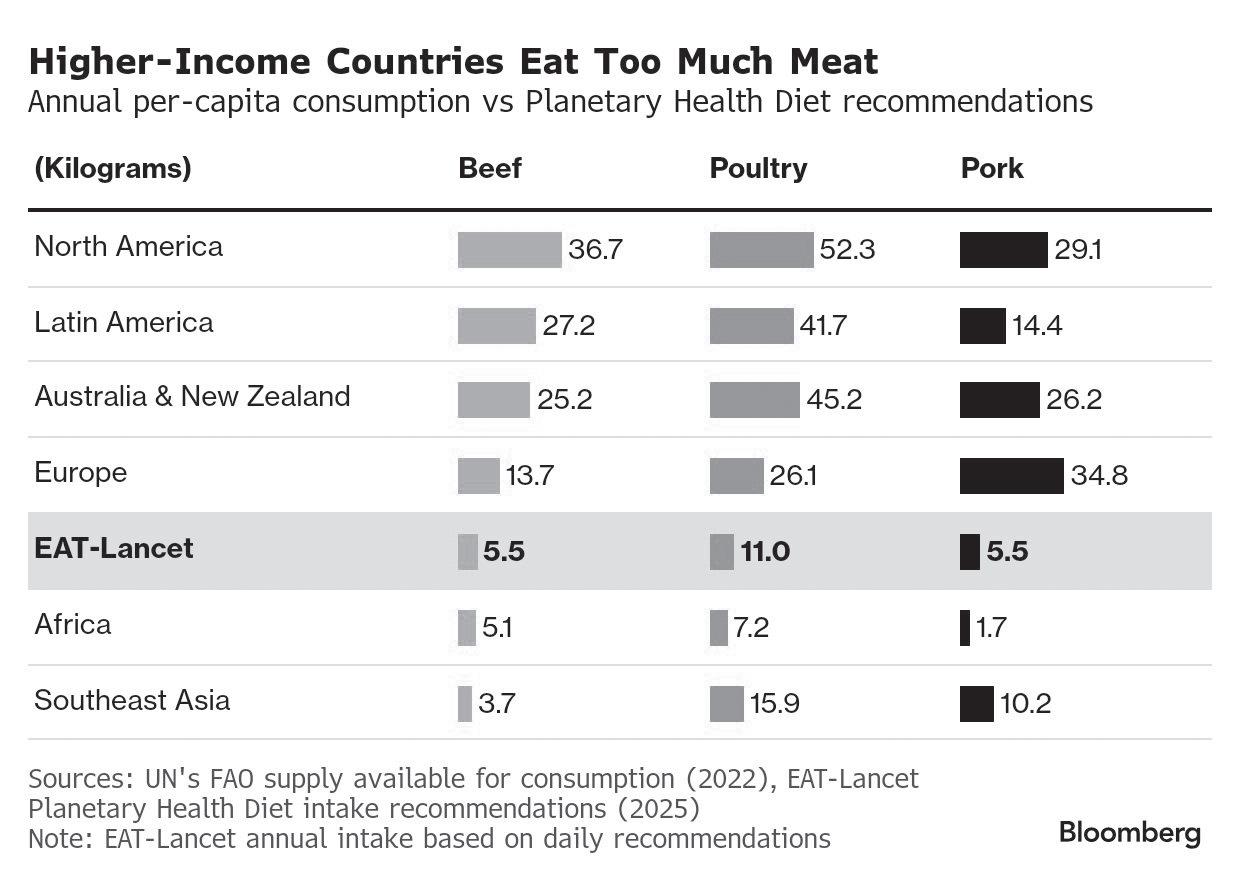
University and co-chair of the commission. “There’s an element of urgency here that has only grown since the last time.” Food systems account for about a third of global greenhouse gas emissions, driven largely by animal farming, which is a major source of methane and a drain on land and water resources. Even if the world transitions away from fossil fuels, food alone could push temperatures past the 1.5°C threshold needed to limit warming. The onus falls disproportionately on the wealthy: The richest 30% of the world’s population are responsible for more than 70% of food-related pressures, the report said.
The commission’s so-called “planetary health diet” resembles the Mediterranean diet and other traditional ones around the world, with recommendations presented as ranges that allow flexibility, according to Willett. It’s not pushing veganism, but simply supporting the idea that animal-sourced foods should be optional, moderate and guided by a “1+1” principle: one dairy serving and one other animal protein source daily. “It allows for cultural diversity and individual preferences,” Willett said.
The biggest changes will hit the meat and dairy industries. Production of beef, goat and lamb must fall by one-third from 2020 levels through 2050, the report says, and global herds of cattle and
other ruminants have to shrink by about a quarter. Still, the report makes clear that diet change alone won’t be enough. Reducing food waste and increasing agricultural productivity are also crucial.
The updated commission report, dubbed EAT-Lancet 2.0, was prepared by a panel that included experts in livestock, economics, nutrition and climate. It underwent peer review and was funded by organizations including the Rockefeller Foundation and the Novo Nordisk Foundation.
The first version was widely cited after its publication in 2019, appearing in more than 600 policy documents. Cities such as Milan, London and Tokyo pledged to align public food procurement with its recommendations. Policymakers saw it as a “go-to” guide for integrating sustainability into dietary guidelines, said Tim Benton, professor at the University of Leeds and a food security expert.
Yet its rollout has been limited. Global meat consumption is still climbing and alternative protein sales are faltering. The pandemic, Russia’s invasion of Ukraine and soaring food prices have eroded political and consumer appetite for sustainability. Meanwhile, the political climate has shifted with the rise of right-wing populism. The manosphere and MAGA-influenced machismo have fueled the popularity of the carnivore diet.
“The political power of the
livestock sector and then this kind of right-wing populism that ‘no one’s gonna tell me that I can’t eat meat ’— all of those things come together to mean that the EATLancet was quite a juicy target for what we now would call the antiwoke agenda,” Benton said. For some of the report’s leading figures, the backlash has been deeply personal.
Gunhild Stordalen, the physician who co-founded the EAT Foundation and coordinated funding for the report, was cast online as part of a “Davos elite.” An investigation later found evidence of orchestrated efforts to discredit the study. Critical social media posts, amplified by a network of “misinfluencers” with ties to the livestock industry, used the hashtag #yes2meat, according to the nonprofit Changing Markets Foundation, which warned last week of a fresh campaign against the update.
The new report attempts to answer some earlier criticism, including claims that its focus was too Western and ignored local diets or affordability. This time, the emphasis is on “just” food systems: Almost half of the world’s population does not have access to affordable healthy diets, fair wages and safe environments.
The commission says that while the Global North must cut back sharply, parts of the Global South may need to increase animal protein intake to address malnutrition — though not to the levels seen in wealthy countries.
Delivering those changes, the report argues, will require new policies, from subsidy reforms to taxes, to ensure that healthy food is affordable and accessible. Stordalen said the commission will take the updated report on a global roadshow to highlight its impact in different regions and cultures. It’s also set to host dialogues with anyone from farmers and chefs to consumers and doctors.
“We are bringing all key stakeholders to the table to have conversations, brave conversations, and really trying to change mindsets,” she said.
Editor: Angel R. Calso

By Sam Mednick & Sally Abou Aljoud The Associated Press
AFTER weeks of scraping by to feed her six children in Gaza, the 38-year-old woman thought she’d found a lifeline.
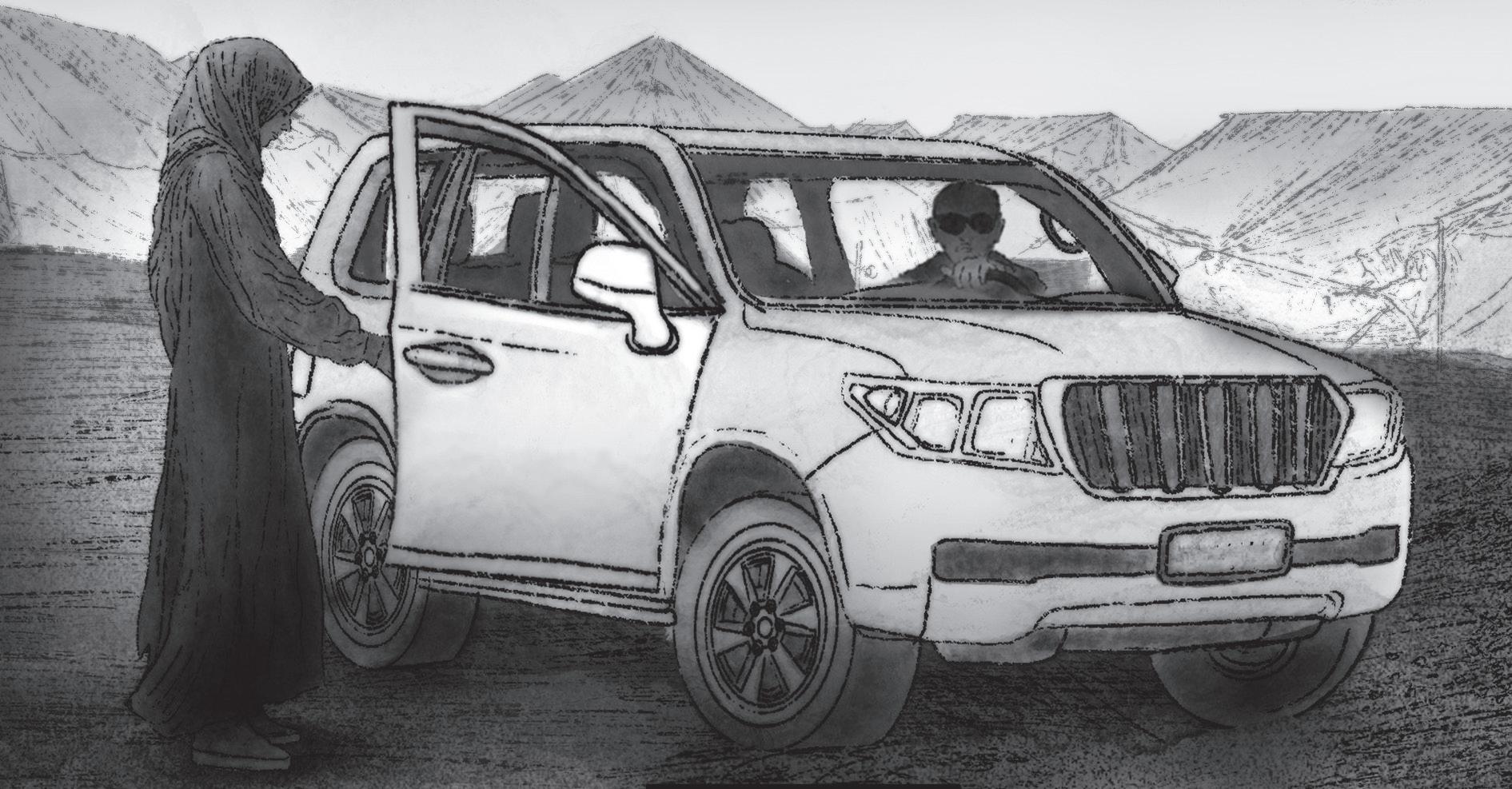
At a shelter, a friend told her about a man who could help with food, aid, maybe even a job. The woman—separated from her husband, and forced to shutter the business that once kept the family afloat—approached him. It was about a month into the war in Gaza, she said, and he promised her work, a six-month contract with an aid agency. On the day she believed she’d sign the paperwork, he drove her not to an office but to an empty apartment. He complimented her, she said, and told her to remove her headscarf.
He told her he loved her and wouldn’t force her, she said, but he also wouldn’t let her leave. Eventually, they had a sexual encounter, she said. She declined to give details of the nature of their interaction, saying she felt fear and shame.
“I had to play along because I was scared, I wanted out of this place,” the woman said.
Before she left, she said, he handed her some money—100 shekels, about $30. Two weeks later, he gave her a box of medicine and a box of food. But for weeks, the job didn’t materialize.
As Gaza’s humanitarian crisis grows, women say they have been exploited by local men—some associated with aid groups—promising food, money, water, supplies or work in exchange for sexual interactions. Six women detailed their experiences to The Associated Press, each speaking on condition of anonymity for fear of retribution from their families or the men and because sexual harassment and assault are considered taboo topics. Sometimes, they said, the men’s solicitation was blatant: “Let me touch you,” one woman recalled being told. Other times, it was culturally coded: “I want to marry you,” or “Let’s go together somewhere.”
Aid groups and experts say exploitation often arises during conflicts and other times of desperation, particularly when people are displaced and reliant on assistance. Reports of abuse and exploitation have emerged during emergencies in South Sudan, Burkina Faso, Congo, Chad and Haiti.
“It’s a horrible reality that humanitarian crises make people vulnerable in many ways—increased sexual violence is often a consequence,” said Heather Barr, associate director for the women’s rights division at Human Rights Watch. “The situation in Gaza today is unspeakable, especially for women and girls.”
Four psychologists working with women in Gaza described patients’ accounts to AP. One said her organization—focused on protecting women and children—treated dozens of cases involving men sexually exploiting vulnerable women, including some in which
they became pregnant. The psychologists, all Palestinians working for local organizations in Gaza, spoke on condition of anonymity because of privacy concerns for the women involved and the sensitive nature of the cases, in a conservative culture where sex outside of marriage in any context is seen as a grave offense. They said none of their patients wanted to speak with AP directly.
Five of the women who shared their stories with AP said they did not engage in sexual interaction with the men. The psychologists said some women who came to them agreed to the men’s demands, while others refused.
Six human rights and relief organizations—including the local Palestinian group the Women’s Affairs Center and the Protection from Sexual Exploitation and Abuse network, which coordinates with various aid groups including United Nations agencies—told AP they were aware of reports of sexual abuse and exploitation linked to receiving aid.
Aid groups say the context in Gaza—nearly two years of war, the displacement of at least 90% of the population, and turmoil over aid access—has made humanitarian work for vulnerable people particularly challenging. As hunger and desperation grow across the enclave, women in particular say they’ve been pushed to make impossible decisions.
The groups blame Israel’s offensive and blockade for the humanitarian crisis and say the war has made documenting exploitation cases difficult. More than 66,000 Palestinians have been killed, according to Gaza’s Health Ministry, which is part of the Hamasrun government and staffed by medical professionals. The ministry does not say how many of those killed were civilians or combatants, but it says women and children make up around half the fatalities.
“Israel’s siege on the Gaza Strip and the restrictions on humanitarian aid are what’s forcing women to resort to this,” said Amal Syam, director of the Women’s Affairs Center.
Israel says there are no restrictions on aid and that it has taken steps to expand what comes into Gaza. Israel also accuses Hamas of siphoning off aid—without providing evidence of widespread diversion—and blames UN agencies for failing to deliver food it has allowed in. The UN denies there is widespread aid diversion.
Some say limited data is just ‘the tip of the iceberg’ ONE of the women who spoke to AP described phone calls that began in October, a year into the war. At first, she said, the man’s questions were simple. What happened to her husband? How
many children did they have?
But, the 35-year-old widow said, his tone took a turn. What underwear was she wearing? How did her husband please her?
She said she’d met the man in Muwasi, a strip of land Israel designated a humanitarian zone. She described standing in line to get assistance and giving her phone number to an aid worker—a Palestinian in a uniform labeled UNRWA, or the United Nations Relief and Works Agency.
Shortly after he took her number, the late-night calls began. He would ask sexual questions, she said, and she’d stay silent. She said that at one point, he asked to come to her, for sex. She refused, and after nearly a dozen calls but no aid, she blocked his number, she added.
The woman said she reported him to UNRWA in Gaza in a verbal complaint. She said she was told she needed a recording of the conversations as proof, but she had an old phone that couldn’t record calls.
UNRWA communications director Juliette Touma said via e-mail that the agency has a zero-tolerance policy for sexual exploitation, takes each report seriously, and doesn’t require proof. But she wouldn’t say whether staff were aware of this particular incident, citing UNRWA’s policy against discussing individual cases, and wouldn’t comment further on its awareness or work on exploitation cases overall.
The PSEA network—to which UNRWA belongs—said survivors can report anonymously or without naming the perpetrator and are never required to provide proof.
Understanding the scale of exploitation is challenging, said Sarah Achiro, a coordinator for the network, which works to prevent, and respond to sexual exploitation and abuse in humanitarian and development settings. Gaza’s limited connectivity restricts calls that could report abuse, and constant displacement makes it harder for survivors to seek in-person help and for aid groups to build trust.
Achiro noted that sexual violence is vastly underreported, particularly in humanitarian and conflict settings, where data often shows just “the tip of the iceberg.”
The PSEA network said that last year, it received 18 allegations of sexual abuse and exploitation linked to receiving humanitarian aid in Gaza, all involving either aid
workers or those associated with it, such as community representatives or private contractors. Allegations against aid workers are investigated by the employer organization. The network wouldn’t indicate how many of the cases were being investigated, saying it can’t disclose information unless they are formally concluded.
‘I told myself that no one would believe it’ FOUR of the women who spoke to AP said the men who solicited them identified themselves as aid workers, and, in one case, a community leader promising aid.
Like the widow, several women said it happened while registering or trying to register for aid, with men taking their numbers—frequently a step in the aid process—and later calling. The women said all the men were Palestinian. Several said they weren’t able to identify which aid group the men seemed to be associated with.
The UN and aid groups generally work with local communities: paying people as contractors, using volunteers, or having leaders appointed by the community as liaisons.
The mother of six said the man who promised her a job
drove a car with UN markings.
After their interaction, she said, the messages kept coming—latenight sexual calls and requests for photos. She described dodging them with excuses: She was busy, her phone was broken, she couldn’t talk.
But about a month after their sexual interaction, she saw the man at an aid site, in December 2023. He then helped her get a six-month position with UNRWA, which she completed, she said.
She told AP she never reported the man, their encounter or his exploitation attempts.
“I told myself that no one would believe it,” she said.
“Maybe they would say I am only saying this so that they would give me a job.”
Asked about the woman’s story, UNRWA’s Touma emphasized the organization’s zero-tolerance policy and said it would seek more information on the exploitation incidents and accusations.
Since the interaction and her job, the woman has been displaced, doesn’t have work and struggles to feed her family.
She said she blocked the man’s number but he’s tried to contact her as recently as this summer.
Groups say that despite stigma, exploitation is clearly on the rise
SOME women say they’ve been solicited multiple times, by various men throughout the war.
A 37-year-old mother of four told AP she was approached twice, once by the head of a shelter. She said the man offered food and shelter if they could “go together somewhere,” like the sea. She said she understood he was asking for something sexual. She refused.
Psychologists and women’s groups said cases have increased as the crisis worsened—with more people displaced, reliant on aid, and crammed into camps. One psychologist said some women were kicked out when their husbands learned what happened. Before the war, exploitation reports happened once or twice a year, but are up dramatically, said Syam, of the Women’s Affairs Center. But she said many organizations won’t highlight the numbers or the issue.
“Most of us prefer to keep the focus on the violence and violations committed by the Israeli occupation,” Syam said. Israel says it is fighting to dismantle Hamas and release the hostages taken in the 2023 attack that sparked the war, and that it mitigates civilian harm as much as possible.
The women who spoke to AP said it’s important to try to hold on to their dignity as the war continues.
For weeks last fall, a 29-yearold mother said she received calls from an aid worker asking her to marry him in exchange for nutritional supplements for her four children.
She refused and blocked his number, she said, but he called from different phones. He insisted he liked her and made distasteful comments that she called too vulgar to repeat.
“I felt completely humiliated,” she said. “I had to go and ask for help for my children. If I didn’t do it, who would?”

BBy Kareem Chehayeb & Malak Harb
The Associated Press
EIRUT—Syrian government fighters entered the city of Sweida over the summer in an apparent bid to assert control over the enclave of the Druze minority that for years had operated in semiautonomy. It backfired. Sectarian attacks on Druze civilians during the ensuing fighting have hardened Sweida’s stance against the government, pushed it toward Israel, and led some in the minority sect to go as far as calling for secession.
Now Druze groups have set up a de facto military and governmental body in Sweida, similar to the Kurdish-led authorities in the country’s northeast. It is a major setback for Damascus struggling to exert its authority across the country following a 13-year civil war and win the support of minorities.
When former President Bashar Assad was brought down by Islamist-led insurgents in December, many Druze celebrated, welcoming a new era after over 50 years of autocratic rule. They were willing to give interim President Ahmad al-Sharaa, a former al-Qaida-linked militant who promised a democratic and inclusive political transition, a chance.
Among them was Omar Alkontar, a 21-year-old biology student. Then his village










outside the city of Sweida was burned to the ground in July’s clashes.
Now, he said, “The main idea is that we have to separate (from Damascus) to prevent another massacre.”
A de facto Druze administration
WHILE many Druze were initially willing to work with the new authorities, a notable exception was Druze spiritual leader Sheikh Hikmat al-Hijri, a divisive figure who had flipflopped between support for Assad and anti-government protests and now opposed dealing with the new government.
In July, armed groups affiliated with al-Hijri clashed with local Bedouin clans, spurring intervention by government forces who effectively sided with the Bedouins. Hundreds of civilians, mostly Druze, were killed, many by government fighters.
Videos surfaced online showing armed men killing Druze civilians kneeling in squares and shaving the mustaches off elderly men in an act of humiliation.
The sectarian violence changed the minds of many Druze about the new authorities—and about al-Hijri, who has emerged as the dominant Druze figure in Syria. In August, he established a government-like body called the Supreme Legal Council.
Dozens of armed factions originally formed to counter drug gangs and Islamic State group extremists have banded together under the National Guard. Critics say it includes former Assad loyalists and allied militias trafficking the amphetamine known as Captagon. It also includes former opponents of al-Hijri, most notably the Men of Dignity, a prominent group that had endorsed cooperation with Damascus before the July violence.
“We urge all the honorable in the
world…to stand with the Druze sect in southern Syria to declare a separate region that keeps us protected until the end of time,” al-Hijri said in August, upon welcoming the Men of Dignity into the National Guard.
Al-Hijri did not respond to interview requests and it is unclear exactly what kind of system he envisions.
Many in Sweida want some form of autonomy in a federal system. A smaller group is calling for total partition. Local Druze figures that still back al-Sharaa are now widely seen as traitors.
The attacks in Sweida sounded “strong alarm bells among the Druze” as well as other minority groups, said Mazen Ezzi, a Syrian researcher from Sweida now based in Paris.
“The Druze realized that to stay part of this new political status quo” under the new authorities “will be extremely difficult,” he said.
Israel seizes the moment MOST of the roughly 1 million Druze worldwide live in Syria, with the rest in Lebanon, Israel and the Golan Heights which Israel seized from Syria in 1967 and later annexed.
The Druze of Syria take pride in their historic involvement in revolts against Ottoman and French colonial rule to establish a secular, nationalist Syrian state.
Sheikh Mowafak Tarif, Israel’s Druze spiritual leader, was largely rejected by Druze leaders in Syria and Lebanon, who opposed Israel and supported the Palestinians.
But what happened in July has shaken about a century of Syrian Druze political history and driven many toward a formerly taboo ally.
When violence broke out in Sweida, Tarif called for Israeli military
intervention to protect the Druze. Israel responded, launching strikes on Syrian government forces and on the Syrian Defense Ministry headquarters in Damascus. Syrian forces withdrew from Sweida.
Tarif told The Associated Press that he and al-Hijri stay in touch “all the time,” organizing deliveries of aid to the besieged province.
Tarif also meets with senior Western politicians and diplomats and has called for a demilitarized southern Syria and establishment of a humanitarian corridor from Israel to deliver food and medical supplies to Sweida. Israeli officials have also pushed for a wider demilitarized zone in Syria’s south.
Al-Hijri has thanked Israel publicly on several occasions.
The impact on the ground is apparent.
When someone hoisted an Israeli flag in Sweida in March, residents quickly took it down. Now, in Karama Square, where people once gathered to celebrate Assad’s downfall, portraits of al-Hijri and Tarif appear side by side at protests against al-Sharaa. Most carry the Druze faith’s five-colored flag, but some also wave the Israeli flag.
It’s a sign of “a people who feel let down by their nationalism,” Ezzi said.
Alkontar, the biology student, doesn’t believe Israel’s motives are altruistic, but says its intervention was a lifeline for many in Sweida.
“It’s not necessarily a love for Israel. They felt safer after the strikes, which is very sad,” Alkontar said after attending a protest in Karama Square.
“You want the army of your own government to provide you with that security, not a foreign country.”
Damascus struggles to change course
AL-SHARAA has tried to appeal to the Druze community since the July
fighting and warned that Israel is trying to exploit the tensions.
“Mistakes were made by all sides: the Druze community, the Bedouins, even the state itself,” he said in an interview with state television.
“Everyone who committed wrongdoing, made mistakes, or violated people’s rights must be held accountable.”
The president then formed a fact-finding mission. Last month, Damascus alongside the United States and Jordan announced a road map to return displaced Druze and Bedouins, deliver aid to Sweida, and bring about reconciliation.
Both moves were widely dismissed in Sweida.
A Sweida resident, whose fiance and members of his family were killed by gunmen who raided their village, accused Damascus of “covering the attacks up.” She spoke on condition of anonymity after previously receiving threats for speaking out.
“When the (Assad) regime fell, we were the first people to celebrate … but I think Ahmad al-Sharaa is a murderous extremist,” she said. Alkontar is disheartened as he walks past another long breadline in a small bakery near ruined buildings after visiting a displaced family.
He believes some Druze “could have a change of heart ... if the government changes its ways and extends a hand.” But many will not.
“As long as this government in Damascus stays, people will lean towards partition or independence,” Alkontar said. “I prefer we stay part of Syria without this ruling group. But as long as they’re there, I don’t know if even federalism will keep us safe.”
The Associated Press writer Melanie Lidman in Tel Aviv, Israel, contributed to this report.
Haitians give cautious welcome to new international force approved by UN to combat escalating violence
By Dánica Coto & Evens Sanon The Associated Press
PORT-AU-PRINCE, Haiti— Radios across Haiti were abuzz on Wednesday with the news that the U.N. Security Council had approved the creation of a so-called gang suppression force to help the troubled Caribbean country.
The force would replace a smaller UN-backed mission led by Kenyan police that remains understaffed and underfunded and whose mandate expired on October 2.
“I’m hoping these people are serious this time,” said Darlene Jean-Jacques, who lives with her 10-year-old son in a crowded and filthy shelter after gangs raided their neighborhood and killed her partner. “A force to come and support Haitians would be wonderful so people can have their life back.”
Gangs have grown in power since the assassination of President Jovenel Moïse in 2021. They now control 90% of the capital, Port-au-Prince, and have expanded their activities, including looting, kidnapping, sexual assaults and rape, into the countryside. Haiti has not had a president since the assassination.
But Haitians and experts alike remain cautious about yet another international force, that was approved Tuesday.
A gap in security
LITTLE is known about the deployment timeline of the new force, which would have 5,550 personnel, a 12-month mandate and the power
to arrest suspected gang members, something the current force lacks.
“There are some answers and still a lot of uncertainty,” said Diego Da Rin, an analyst with the International Crisis Group.
The US government has said it’s confident there’ll be enough troops to send to Haiti between Africa and the Western Hemisphere, but “some observers doubt it will be so easy,” Da Rin said.
A UN Support Office would guarantee money for the mission, but the salaries of the personnel will rely on voluntary contributions, and there have been no meaningful negotiations on who would be ready to provide those funds, he said.
Another major concern is how the current mission will transition into a gang-suppression force.
Ongoing discussions estimate that the new force could be on the ground and operating within a year, but there’s currently not enough money to keep the service contract that provides the current mission with food, accommodations and other services going beyond this year, Da Rin said.
That vacuum in security, he noted, could be problematic.
‘International community failed’
Like many other Haitians, Mario Jean-Baptiste has been living in an overcrowded shelter with his three young children since gangs destroyed their Solino neighborhood last year.
“It’s a good thing that a new force is coming in, but I hope they’re not like the jokers who are here,” he said of the current mission in Haiti. “We need people who are really going to go after these guys so that one day we’ll be able to go back home.”
The current mission began more than a year ago, but it still has less than 1,000 personnel, far below the 2,500 envisioned, and some $112 million in its trust fund—about 14% of the estimated $800 million it needed annually.
“The international community failed Haiti with (that mission),” Da Rin said. “It didn’t have the opportunity to demonstrate whether it was effective or not.”
However, he said the Kenyan force helped slow the advances of gangs that control about 90% of Port-auPrince and have seized numerous communities in Haiti’s central region.
“They call themselves revolutionaries,” Jean-Baptiste said of the gangs. “They’ve only destroyed my life.”
Little is known about the deployment timeline of the new force, which would have 5,550 personnel, a 12-month mandate and the power to arrest suspected gang members, something the current force lacks.
The gang that raided his neighborhood also burned a small bus he rented to use as a taxi, leaving him without any income.
“I can’t send my kids to school,” he said. “I don’t foresee any money anytime soon so they can get an education.” ‘Decisive’ months ahead
GANG violence has left a record more than 1.3 million people homeless across Haiti in recent years, and hunger and poverty are only deepening.
Millions of Haitians remain frustrated that their situation has not improved despite the promise of a new international force.
“They’re not going to come here to do anything!” yelled a woman, who only identified herself as Estere before she walked away at a makeshift shelter. But Haitian and US officials remain hopeful.
US Secretary of State Marco Rubio said the US government would work with others to ensure the “swift deployment” of the gang suppression force.
The new force “will address Haiti’s immediate security challenges and lay the groundwork for long-term stability,” he said.
Romain Le Cour, head of the Haiti Observatory at the Global Initiative Against Transnational Organized Crime, said: “The adoption of the resolution sends a message to criminal groups and their potential supporters. The coming months will be decisive for the future of the country.”
Coto reported from San Juan, Puerto Rico.

By Bless Aubrey Ogerio
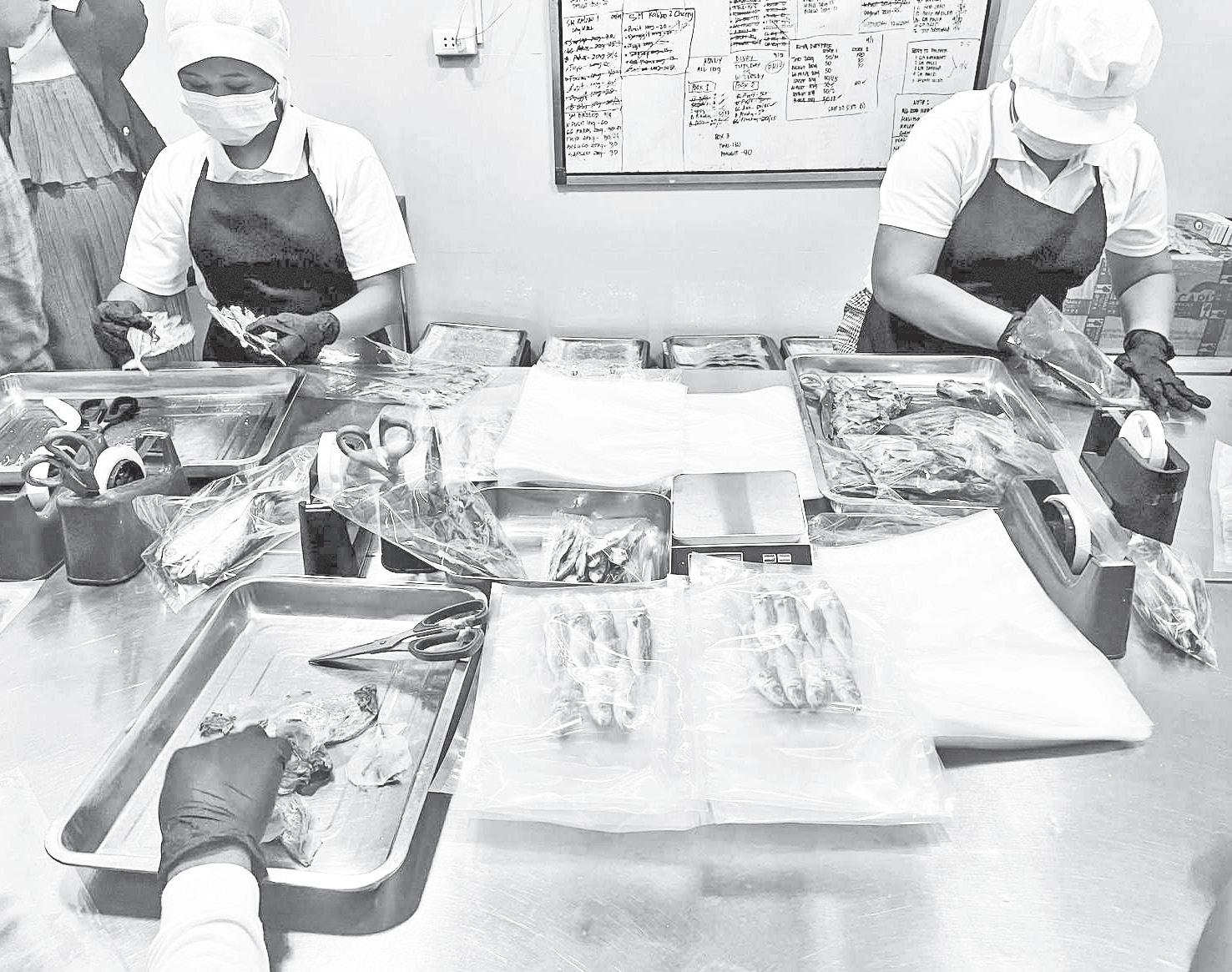
ROXAS CITY—What began as a sideline for couple Lucille and Eugenio Dalida in Singapore has now grown into a thriving local enterprise in Capiz.
Drawing from a family with more than 30 years of dried fish tradition, the pair started producing gourmet “tuyo” (dried fish) in olive oil for the Filipino community abroad, until they turned the venture into a full-time business.
They have now expanded into dried fish variants and snacks—such as sweet dilis, squid rings and shrimp chips.
“With these machines, we can already produce around 800 to 1,000 bottles of tuyo in a day,” Eugene said. “For the snacks, we can also make about the same, around 1,000 daily. Before, we could only manage about 200 at most.”
Stories like this are what the Department of Science and Technology (DOST) hopes to multiply as it ramps up assistance to micro, small and medium enterprises (MSMEs).
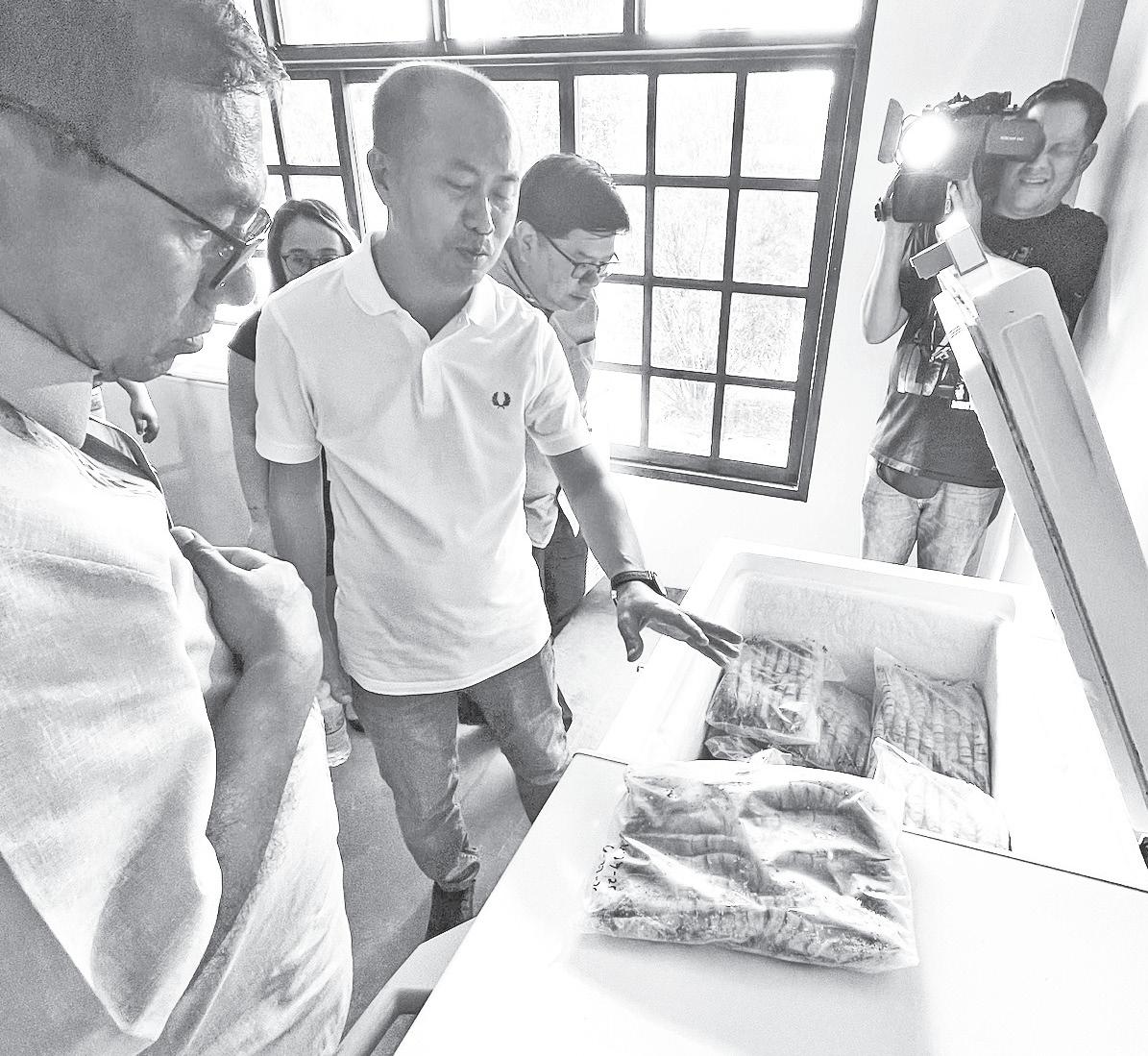
Science Secretary Renato U. Solidum Jr. said the agency has already extended nearly P900 million worth of support to MSMEs, adding that the program’s expansion aims to help firms scale up and sustain growth.
“We’re close to P1 billion funding for our MSMEs,” Solidum told reporters during a visit to the couple’s home-based factory in Roxas City.
The event was part of the 2025 Regional Science and Technology Week hosted by DOST VI (DOST Western Visayas) at a mall in Roxas City from September 10 to 12.
“Of course, if we can help more, we can increase a little bit. What we really want is to create more impact. If they are small and they want to grow into medium, we can still support them,” he added.
Regional directors, he noted, are now authorized to approve up to P5 million in funding assistance, with larger requests endorsed to the central office. The aid covers not only production but also measures that reduce operating costs, such as investing in solar power.
According to the Science chief, the forecast for MSME participation is promising, citing repayment rates of 85 percent to 90 percent.
“It means they are able to pay back the interest-free assistance, and they graduate,”
Solidum said.
Scientific help to MSMEs INNOVATION initiatives such as technology transfer training, laboratory services and funding are some of the ways the DOST has broadened its support to enterprises, the agency said.
According to Solidum, for the first half of 2025 alone, 9,000 firms were assisted, creating 4,000 jobs and receiving P249 million in funding.
“We are still catching up in the second half, but if we look at job creation, it was close to 10,000 jobs last year. Hopefully, we can match that,” he said. To allow more entrepreneurs to benefit, the Science department has removed the cap on assistance.
“Before, MSMEs had a limit of only two chances to get help. Now it is unlimited, as long as they continue to grow and create employment,” he added.
The requirement for firms to be at least three years in operation is also being reconsidered, with plans to reduce it to two years to expand the coverage.
Data provided by the DOST to B usiness M irror showed how its programs have
DOST ties up with Lazada to expand MSMEs’ online reach

THE Department of Science and Technology (DOST) has teamed up with e-commerce platform Lazada Philippines to expand the digital presence of micro, small, and medium enterprises (MSMEs) assisted by the agency.
The partnership, formalized on Wednesday through the signing of a Memorandum of Understanding, seeks to bring more DOST-supported businesses into online marketplaces by integrating the agency’s MSMEs oneSTORE initiative with Lazada’s platform.
It also aims to provide MSMEs with access to the platform’s logistics, marketing, and payment systems to strengthen their market reach and competitiveness.
“This collaboration is especially significant because MSMEs make up more than 99 percent of businesses in the Philippines and provide over 60 percent of employment,” Science Secretary Renato U. Solidum Jr. said during the signing ceremony. He said expanding their digital footprint could help small firms keep pace with changing consumer trends and market demands. Under the agreement, participating MSMEs will undergo training through
Lazada University, which offers modules on digital marketing, supply chain management, customer engagement, and online selling.
The two parties will also co-develop targeted campaigns promoting DOST-assisted products and innovation-driven enterprises. Lazada Philippines government affairs head John Kenneth Estiller said the collaboration is designed to help MSMEs scale up their operations and improve their competitiveness both in local and global markets.
The partnership builds on DOST’s ongoing efforts to support small enterprises through technology-based programs, such as the Small Enterprise Technology Upgrading Program; Community Empowerment through Science and Technology; and the Science for Change Program. From 2022 to 2024, thousands of MSMEs and local governments have benefited from these initiatives, according to the agency.
Data from the latest Global Innovation Index showed that the Philippines currently ranks third among lower-middle-income economies in innovation performance. Bless Aubrey Ogerio
supported MSMEs from 2022 to 2024.
The DOST’s Small Enterprise Technology Upgrading Program (SETUP)— the agency in charge of providing assistance to MSMES to adopt technology and innovation—has reached 21,920 firms and other science and technology (S&T) entities nationwide.
The National Capital Region (NCR) recorded the highest number of assisted firms with 4,059, while 29,131 jobs were created across the country, led by Cavite, Laguna, Batangas, Rizal and Quezon Region (Calabarzon) with 5,013.
Funding under the program has totaled P2.57 billion, with NCR receiving the largest share at P333 million.
In terms of projects, 3,379 were implemented nationwide, with Region IX (Zamboanga Peninsula), accounting for the most at 1,086.
On the other hand, the Community Empowerment through Science and Technology program (CEST), has also targeted poor and marginalized areas by introducing sciencebased livelihood opportunities, health and nutrition services, and environmental management practices.
It has assisted 2,018 communities nationwide, led by Central Luzon with 814.
The initiative generated 4,739 jobs, most of which were in NCR with 1,373. Investments reached P1.03 billion, with Central Luzon cornering the biggest share at P248.7 million.
DOST has likewise established 51 Innovation Hubs (iHUBs), as platforms where startups, researchers, and innovators can collaborate, access mentorship, and build prototypes. Region XI (Davao Region) hosts the largest number with eight hubs.
The Science department also runs the Innovation, Science and Technology for Accelerating Regional Technology-Based Development program (iSTART), which helps local government units (LGUs) integrate STI into their agenda.
So far, 88 LGUs have enrolled, with Caraga in Mindanao leading at 17. The program has resulted in 50 technologybased enterprises, most of them in Region I (Ilocos Region) with 23, and the formulation of 62 STI-driven policies, again led by Caraga with 17.
Moreover, the Science for Change Program (S4CP) has been piloted in 111 LGUs, with Western Visayas hosting the most at 17 investments have totaled P333 million, the largest share of which went to Region II
(Cagayan Valley) at P104.6 million.
For overseas workers, the iFWD PH program has trained 708 OFWs, the highest number in NCR with 111.
A total of 176 were provided with technical and consultancy services, led by Mindoro, Marinduque, Romblon and Palawan region (Mimaropa) with 54, while 124 received funding, including 45 from Mimaropa.
Meanwhile, the OneLab network, which provides standardized testing and calibration services to industries and MSMEs, has conducted 61,081 services and assisted 104,197 firms nationwide.
Mimaropa posted the highest number of OneLab services at 158,904 and served the most firms at 40,550.
The network now links 336 laboratories locally and abroad, with Mimaropa hosting 147 of them.
Challenges
HOWEVER, according to DOST Western Visayas (Region VI) Director Rowen Gelonga, the Science department, particularly the regional office, faces the challenge of sustaining its programs, a difficulty exacerbated by limited public resources.
“The number one challenge is that we
have limited research and development [R&D] funds, but that has been partly addressed,” Gelonga said in the same event on Thursday.
For 2026, the Science agency is set to receive P30.4 billion budget, an increase from its 2025 budget of P28.46 billion. A large portion, P8.9 billion, will go to the Grants-in-Aid program to fund projects under the Harmonized National Research and Development Agenda.
Meanwhile, the department’s R&D institutes will get P3.9 billion for work in various sectors like manufacturing, energy, and food. (See related story: https:// businessmirror.com.ph/2025/08/15/ dost-to-use-bigger-2026-budget-forrd-commercialization/)
Gelonga added that ensuring the use of technologies generated by research institutions is another hurdle, as some policy-makers still struggle to fully appreciate and apply scientific knowledge.
“But we have seen that many local chief executives are already embracing sciencebased policy formulation,” he noted.
Tapping the aid TO qualify for DOST support, enterprises must be duly registered with the Department of Trade and Industry (DTI) and paying taxes, a requirement Solidum said ensures government to recoup its investment through compliance rather than interest payments. Applications are coursed through provincial or regional science and technology offices, where staff can help firms refine proposals and identify the type of assistance needed.
Solidum is encouraging interested entrepreneurs to take the initiative.
“Talk to us if you have an idea or a business that needs productivity improvement or expansion. That is the major role of DOST, because if it is only for promotion, that falls under DTI,” he said.
He added that regional standards and testing laboratories are also available to evaluate products and help businesses secure licenses to operate from the Food and Drug Administration.
“What is good about this is that we provide assistance. If our DOST staff cannot handle it, we engage experts who can,” he said.
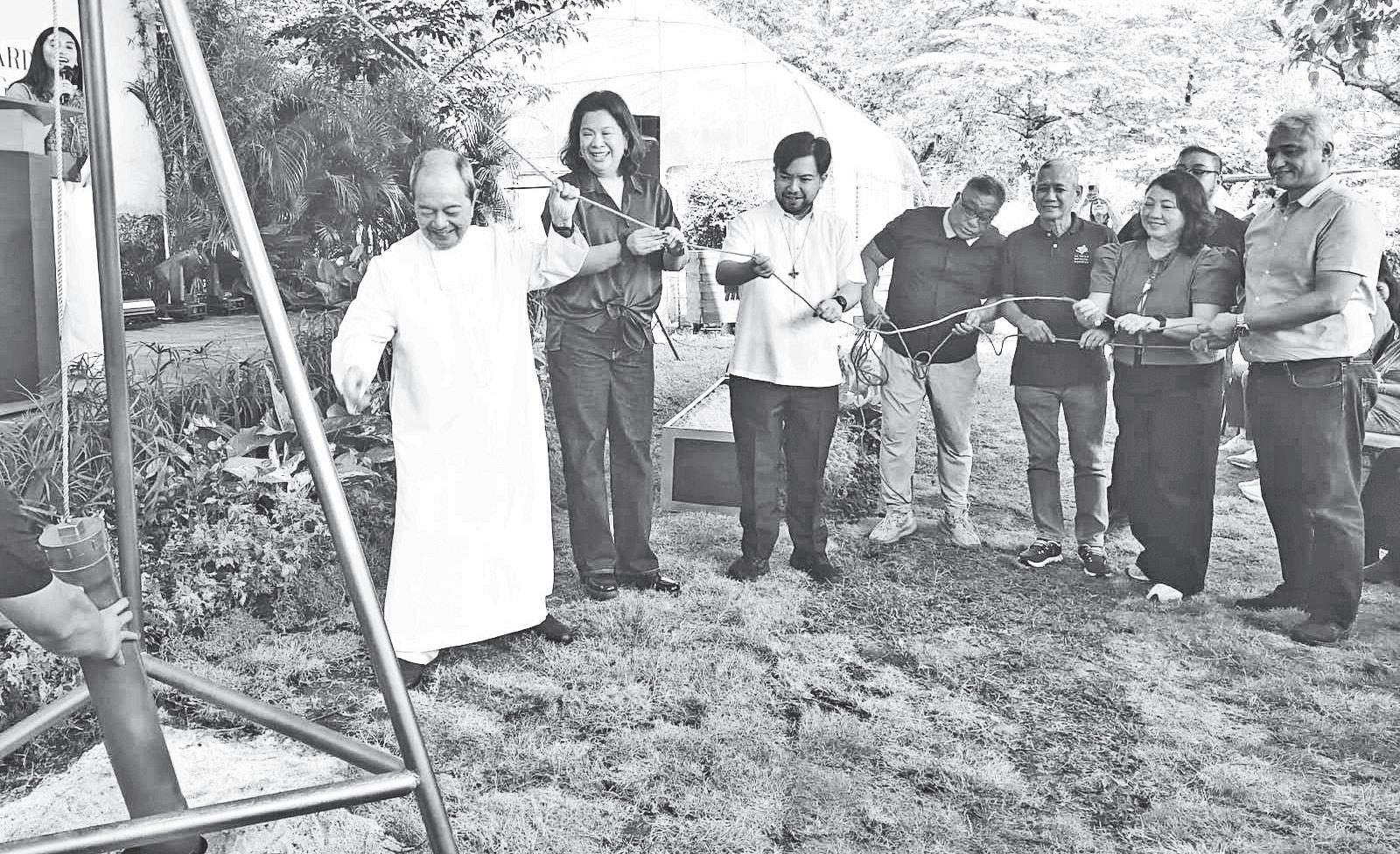
PORAC, Pampanga—The De La Salle Philippines has begun developing a 24.4-hectare botanical garden that will cultivate rare and native plant species to support research on habitat restoration and ecological rehabilitation.
Through its Lasallian Institute for the Environment (LIFE), the La Salle Botanical Gardens (LSBG), located within AyalaLand’s Alviera estate in Porac, is envisioned as a living laboratory where scientists can study how disturbed landscapes recover and regenerate over time.
Esperanza Maribel Agoo, a botanist and biology professor at De La Salle University, told the B usiness M irror the project will prioritize species endemic to Central Luzon’s biogeographical zone.
“We’re focusing on native species with rare and threatened status,” Agoo said. “Among the rarest plants on earth can be found here—cycads, or ‘pitogo,’ local bamboo species, ferns, and some herbs and legumes that help fertilize the soil.”
“These species will help us demonstrate habitat restoration in areas disturbed by lahar, floods and typhoons,” she added.
Porac, one of the hardest-hit towns during the 1991 Mount Pinatubo eruption, was buried under repeated lahar flows that reshaped its terrain and river systems. The botanical garden seeks to transform these scarred areas into models for ecological recovery.
The LSBG forms part of La Salle Philippines’ broader environmental program on biodiversity conservation, ecological education, and science-based land management.
Agoo said the first phase of planting would include around 100 species of trees, palms, ferns and soil-stabilizing plants suited for regeneration.
An earlier inventory recorded at least 45 tree species, which can be expanded through nursery propagation.
“We’re selecting plants that naturally occur here,” Agoo added. “It’s not just about conservation, but showing the natural process of recovery.”
To understand how flora and fauna interact in recovering ecosystems, researchers will also monitor wildlife activity.
Ronaldo Lagat, a herpetologist and faculty member at De La Salle Dasmariñas,
said the approach is designed to recreate a functioning ecological system where plants coexist with animals.
“We’re not just planting trees, we’re creating a system,” Lagat told the BusinessMirror.
“Animals like birds and bats help disperse seeds, while insects serve as pollinators. A quarter of the site will be left untouched so we can observe natural succession, how a disturbed area heals itself,” he explained.
Data collected from the site will guide future rehabilitation programs and policymaking, providing evidence on which species to prioritize or avoid in reforestation efforts, he said.
“With the right data, we can identify which plants thrive and which ones may become invasive,” he said. “This information will help make rehabilitation more effective.”
The Philippines is home to hundreds of threatened native species listed by the International Union for Conservation of Nature.
The LSBG was first conceptualized in 2016 and formally planned following a land donation in 2018. Its master plan, developed with landscape architects from the United Kingdom and the Philippines, was followed by fundraising and nursery propagation during the pandemic. Bless Aubrey Ogerio
A6 Sunday, October 5, 2025


PBy Roy Lagarde
OPE Leo XIV has offered prayers and condolences to victims of the magnitude 6.9 earthquake that struck northern Cebu on Tuesday night, newly installed Cebu Archbishop Alberto Uy said on Thursday.
Uy said he received the message through Apostolic Nuncio to the Philippines, Archbishop Charles John Brown.
“The Apostolic Nuncio to the Philippines, Archbishop Charles John Brown, called me to convey the Holy Father’s heartfelt sympathies for all the survivors of the earthquake, and his prayers for the eternal repose of the victims,” Uy said.
He added that the pope assured the faithful of his spiritual closeness as communities grieve and begin recovery efforts.
The death toll from the quake has risen to 72, while 294 were injured, according


to the report released by authorities as of October 3.
The National Disaster Risk Reduction and Management Council also reported that a total of 170,959 people have been affected, and 20,000 people remain displaced as of Thursday.
It also said that at least 53 cities and municipalities have been placed under a state of calamity.
Several churches were damaged, prompting the Archdiocese of Cebu to suspend their use until structural assessments are completed.
The Archdiocesan Shrine of Santa Rosa de Lima in Daanbantayan, built in 1886, partially collapsed.
In an advisory, the archdiocese directed parishes in hard-hit areas to refrain from celebrating Mass inside the churches until engineers declare the buildings safe. It also ordered inspections of all
churches and rectories in the archdiocese.
“Refrain from using your churches until the proper experts have carried out the assessment and declared the structures safe for use,” it added.
However, despite the strong tremors from the magnitude 5.1 aftershock early in the morning on October 3, a 6 a.m. Mass was held at Kapilya de Sta. Rosa de Lima, said the shrine’s Facebook post.
On October 1, the shrine posted a photo with the caption saying the images of Santa Rosa de Lima and St. Martin de Porres at the “safety of the parish convent.”
A separate photo showed the “unscathed” retablo image of Santa Rosa de Lima image wrapped in unused plastic bag for protection from heavy rains and dust.
“Other than the tabernacle where the Blessed Sacrament is kept, the miraculous retablo image of Santa Rosa de Lima was one of the few images in the shine that wasn’t
damaged by the earthquake! The other unscathed images so far is the Virgen del Carmen, and the Immaculate Conception,” the Facebook post said.
An earlier BusinessMirror report said that in Bantayan portions of the façade of the 1863 Parroquia de San Pedro Apostol also gave way during the tremor.
In his homily for the Feast of the Guardian Angels on October 2, Uy urged the faithful to embody the mission of the angels by helping those in need.
“In these difficult days…we are invited to show the spirit of the angels by sharing whatever we can—food, clothing, shelter, prayers, and even our time,” said Uy, who was installed just early in the day on September 30 when the magnitude 6.9 earthquake occurred in the late evening.
“Every act of generosity becomes a way of guarding, guiding, and comforting others.” he said.
KATHMANDU, Nepal—A 2-year-old girl chosen as Nepal’s new living goddess was carried by family members from their home in a Kathmandu alley to a temple palace Tuesday during the country’s longest and most significant Hindu festival.
Aryatara Shakya, at 2 years and 8 months, was chosen as the new Kumari, or “virgin goddess,” replacing the incumbent, who is considered by tradition to become a mere mortal upon reaching puberty.
Kumaris are chosen from the Shakya clans of the Newar community, indigenous to the Kathmandu valley, and revered by both Hindus and Buddhists in the predominantly Hindu nation.
The girls are selected between the ages of 2 and 4 and are required to have unblemished skin, hair, eyes and teeth. They should not be afraid of the dark.
During the Indra Jatra festival earlier in September, the former Kumari was wheeled around on a chariot pulled by devotees. The Kumari always wears red, pins up her hair in topknots and has a “third eye” painted on their forehead.
The weeklong Indra Jatra festival was the first of a series of celebrations in October including Dashain, the main festival, and Tihar or Diwali, the festival of lights.
Tuesday marked the eighth day of Dashain, a 15-day celebration of the vic -

tory of good over evil. Offices and schools were closed as people celebrated with their families.
Family, friends and devotees paraded the new Kumari through the streets of Kathmandu before entering the temple palace, which will be her home for several years.
Devotees lined up to touch the girls’ feet with their foreheads, the highest sign of respect among Hindus in the Himalayan
nation, and offered her flowers and money. The new Kumari was scheduled to bless devotees, including the president, last Thursday.
“She was just my daughter yesterday, but today she is a goddess,” her father Ananta Shakya said, adding that there were already signs she would be the goddess before her birth.
“My wife during pregnancy dreamed that she was a goddess and we knew she was
going to be someone very special,” he said.
The former Kumari Trishna Shakya, now aged 11 years old, left from a rear entrance on a palanquin carried by her family and supporters. She became the living goddess in 2017.
Families of the Shakya clan who qualify for the prestigious seat compete to have their daughters selected. The family of the Kumari gains an elevated position in society and within their own clan.
But Kumaris live a sequestered life. They have few selected playmates and are allowed outside only a few times a year for festivals.
Former Kumaris face difficulties adjusting to normal life, learning to do chores and attending regular schools.
Nepalese folklore says men who marry a former Kumari will die young, which has resulted in many of the girls remaining unmarried.
Over the past few years, there have been many changes in tradition and the Kumari is now allowed to receive an education from private tutors inside the temple palace and even have a television set.
The government also offers retired Kumaris a small monthly pension of about $110, which is slightly above the minimum wage fixed by the government.
Binaj Gurubacharya/Associated Press
SALT LAKE CITY, Utah—President Russell Marion Nelson, worldrenowned heart surgeon and 17th president of The Church of Jesus Christ of Latter-day Saints (the Church of Jesus Christ), passed away peacefully at his home in Salt Lake City on September 27. He was 101 years old, the oldest prophet in the history of the Church.
Born on September 9, 1924, in Salt Lake City, Nelson was the second of four children of Marion C. and Edna Anderson Nelson. His early life was marked by a love of learning, music, and faith that shaped both his professional and spiritual journeys. Medical career
PRESIDENT Nelson graduated at the top of his medical class at the University of Utah in 1947 and later earned a Ph.D. from the University of Minnesota. He helped develop the heart-lung
machine that made open-heart surgery possible and performed Utah’s first successful open-heart operation in 1955. Over the course of his career, he performed more than 7,000 surgical operations. He served as president of the Society for Vascular Surgery, as director of the American Board of Thoracic Surgery, and as chairman of the Council on Cardiovascular Surgery for the American Heart Association. He authored chapters in medical textbooks and numerous scholarly publications, gaining worldwide recognition for his skill and innovation.
Family I N 1945, he married Dantzel White in the Salt Lake Temple. Together they raised 10 children. After Sister Dantzel’s passing in 2005, he married Wendy L. Watson, a professor of marriage and family therapy, in April 2006.
Nelson is survived by Sister Wendy Nelson, eight of his children, 57 grandchildren, and more than 167 great-grandchildren.
Church service NELSON was called as a member of the Quorum of the Twelve Apostles on April 7, 1984, and served for more than three decades. On January 14, 2018, he was set apart as the President of The Church of Jesus Christ of Latter-day Saints. His presidency was marked by significant initiatives that reshaped the global Church.
He announced the construction of 200 new temples, emphasized the importance of the revealed name of the Church, reorganized priesthood quorums, and introduced changes to ministering, missionary, and youth programs.
He also modified temple recommend interview questions and addressed policies

Uy added that to be an angel for someone is “to protect the weak, to accompany the lonely, and to give hope to those who have lost much.”
“This is the best way to honor our guardian angels: by imitating their mission of love,” he said.
On Wednesday, the archbishop visited several parishes severely affected by the earthquake and offered prayers at the Daanbantayan District Hospital for the injured.
On October 1, the morning after the powerful earthquake, Uy extended his condolences to families who lost loved ones in the tremor that struck northern Cebu.
“My condolences to all who lost their loved ones because of the earthquake. May the Lord grant you strength and hope,” Uy said in a statement.
He called on communities to remain united in prayer and mutual support as
they recover from the disaster.
“In times of hardship, let us all unite in prayer and mutual help,” he said.
The quake struck at 9:59 p.m. on September 30, with the epicenter about 21 kilometers northeast of Bogo City. The Philippine Institute of Volcanology and Seismology said the tremor had a shallow depth of 5 kilometers, making it widely felt across the Visayas, as well as parts of Mindanao and the Bicol region.
The Cebu archdiocese urged the faithful to place their trust in God during this period of uncertainty.
“We continue to pray to our Loving Father for calmness and strength in the midst of these trials. We entrust ourselves, our families, and our communities into His merciful hands. May the Lord shelter us under His wings, protect us from every harm, and guide us to safety and peace,” it said. CBCP News
affecting families.
As prophet, he ministered across the globe, visiting 32 countries and US territories, and met with world leaders, including Pope Francis in 2019. In January 2016, then-Elder Russell M. Nelson made his final visit to the Philippines, ministering to thousands of Latter-day Saints in multiple cities across the country.
President Nelson has also built bridges with faith and civic organizations, notably partnering with the National Association for the Advancement of Colored People to advance initiatives in education, selfreliance, and community service.
Legacy
PRESIDENT Nelson will be remembered for his
and for


Editor: Lyn Resurreccion

Considered as pests, ants play crucial ecological roles by helping decompose organic waste, that enhance soil fertility for forest regeneration
By Jonathan L. Mayuga
MOST kids know about ants more than you think they know. Thanks to the fable “The Ant and the Grasshopper,” which taught children the value of working hard and saving for rainy days.
In reality, however, children know only of two types of ants: The friendly black ants that mysteriously appear inside the jar of cookies and table sugars, and the fearsome red ants, the “unfriendly” creature with a powerful bite that can make even the bravest of children cry in pain.
As teenagers, we learn about bigger red ants—the “hantik”—the “giant” red ants we all fear of the most. They all seemed to be protecting the trees we climb in our backyard for a taste of our favorite fruits.
New ant species
DID you know that conservatively, there are more than 10,000 ant species already known to science, and perhaps 10,000 more species are still out there, waiting to be discovered?
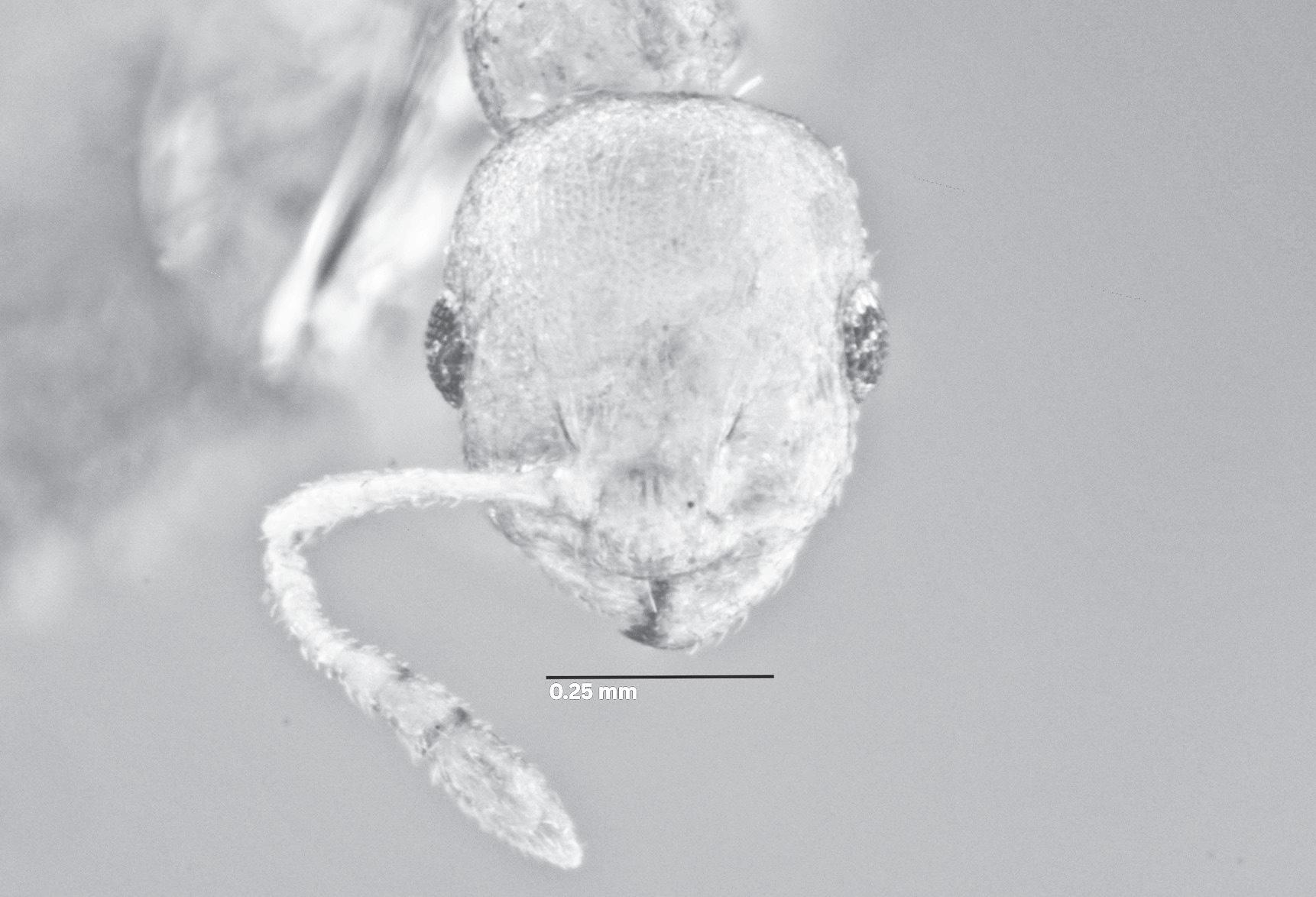
A new species of ant was recently discovered from Mt. Isarog Natural Park in the Bicol Peninsula by David Emmanuel M. General, a Research Associate Fellow at the National Museum of Natural History.
Scientifically named Temnothorax melanieae n. sp., it is the first species described from the Philippines.
It is distinguished by the 11-segmented antennae with a 3-segmented club, a longitudinally gently convex clypeus with a median carina, an absent metanotal groove, and an acutely cuneiform petiole.
The species is known in colder in regions, and it was the first time that such a species was recorded in the Philippines.
General told the B usiness M irror that the discovery was rare but not very surprising because Mt. Isarog is known for its cool temperature.
head of the newly discovered
described from the Philippines.
everywhere
BUT did you know that ants are everywhere on the planet?
Anson Tagtag, chief of the Wildlife Resources Division, a unit under the Department of Environment and Natural Resources-Biodiversity Management Bureau (DENR-BMB) said ants are part of biodiversity and they are recognized for their ecosystem values.
“Every species has ecosystem values. Any organism must be conserved. Incidentally, ants are almost always dismissed,” Tagtag said in an interview on September 28.
While ants may be considered “pests” when they “invade” homes, in their natural habitats, they play very important roles. They consume carcasses, in the process eliminating rotten flesh of dead animals that may eventually cause or trigger a pandemic, if uncontained. Ants are opportunistic omnivores. According to experts, their diets vary by species but they generally include carbohydrates, such as nectar, fruits, and sugary human foods, which explains why they often invade homes; proteins like dead insects; and meat and fats,
including animal remains.
Welcome development
THE discovery of a new species of ants in the Philippines is a welcome development, considering that many ant species remain undiscovered.
“This is a great discovery as it expands the known range of the genus Temnothorax Mayr. There are well over 10,000 ant species worldwide, present in all but the coldest regions like Iceland, Greenland, and Antarctica,” says Gregg Yan, executive director of Best Alternatives.
“In 1994, Harvard University Professor Edward Wilson claimed that the world’s ants, estimated then at 10 thousand trillion individuals, weighed more than the world’s human population [this was eventually debunked...especially now that people are eating more fast food and are getting fatter each year!].”
Deeper understanding YAN said every species discovery gives people a deeper understanding of the planet’s rich biodiversity, while potentially catalyzing the advancement of medicine.

“For instance, some ant species have been found to have peptides that can help regulate blood sugar, leading to new anti-diabetic medicines. Ants with bites that can cause great amounts of pain can show bioprospectors novel ways of developing painkillers. For all we know, the cure to cancer, HIV, Alzheimer’s, and other incurable diseases may lie in the bodies or secretions of unknown plants, animals, or fungi,” he added.
Only by finding and studying these species can we find out if nature has the “keys to unlock new doors for science in general and medicine in particular,” he said.
Novel discovery RESPONDING to a B usiness M irror inquiry about whether ants could be invasive species, international biodiversity expert Theresa Mundita S. Lim said the newly discovered species is entirely novel and has not been recorded anywhere else in the world, making it highly unlikely to be an invasive alien species.
Lim, a former DENR-BMB director and executive director of the Asean Centre for Biodiversity, said in contrast, there are well-documented examples of invasive
Jane Goodall, primatologist, conservationist, dies at 91
JANE GOODALL , the intellectual, soft-spoken conservationist renowned for her groundbreaking, immersive chimpanzee field research in which she documented the primates’ distinct personalities and use of tools, has died. She was 91.
The environmental advocate became a beloved household name who transcended generations through her appearances in documentaries and on television, as well as her travels to address packed auditoriums around the world.
The Jane Goodall Institute announced the primatologist’s death Wednesday in an Instagram post. According to the Washington, D.C.based institute, Goodall died of natural causes while in California on a US speaking tour.
Her discoveries “revolutionized science, and she was a tireless advocate for the protection and restoration of our natural world,” it said.
While living among chimpanzees in Africa decades ago, Goodall documented them doing activities previously believed to be exclusive to humans.
Her observations and subsequent magazine and documentary appearances in the 1960s transformed how the world perceived not only humans’ closest living biological relatives but also the emotional and social complexity of all animals, while propelling her into the public consciousness.
“Out there in nature by myself, when you’re alone, you can become part of nature and your humanity doesn’t get in the way,” she told The Associated Press in 2021.
“It’s almost like an out-of-body experience when suddenly you hear different sounds and you smell different smells
and you’re actually part of this amazing tapestry of life,” she added.
Goodall never lost hope for the future
SHE had been scheduled to meet with students and teachers on Wednesday to launch the planting of 5,000 trees around wildfire burn zones in the Los Angeles area. Organizers learned of her death as the event was to begin at EF Academy in Pasadena, said spokesperson Shawna Marino.
The first tree was planted in Goodall’s name after a moment of silence.
“I don’t think there’s any better way to honor her legacy than having a thousand children gathered for her,” Marino said.
Goodall in her later years devoted decades to education and advocacy on humanitarian causes and protecting the natural world. In her British accent, she was known for balancing the grim realities of the climate crisis with a sincere message of hope for the future.
From her base in the British coastal town of Bournemouth, she traveled nearly 300 days a year, even after she turned 90, for public speeches.
Between more serious messages, her speeches often featured her whooping like a chimpanzee or lamenting that Tarzan chose the wrong Jane.
Tributes from animal rights organizations, political leaders and admirers poured in following news of her death.
“I’m deeply saddened to learn about the passing of Jane Goodall, our dear Messenger of Peace. She is leaving an extraordinary legacy for humanity ans our planet,” said United Nations Secretary-General António Guterres.
Nature broadcaster Chris Packham reflected on her relentless advocacy
until the very end.
“In many ways Jane just died on the job,” he said. “The job that her life became. And that was protecting life on earth.”
Living among the chimpanzees
WHILE first studying chimps in Tanzania in the early 1960s, Goodall was known for her unconventional approach. She didn’t simply observe them from afar but immersed herself in every aspect of their lives. She fed them and gave them names instead of numbers, which some scientists criticized.
Her findings were circulated to millions when she first appeared on the cover of National Geographic in 1963 and then in a popular documentary.
A collection of photos of Goodall in the field helped her and even some of the chimps become famous. One iconic image showed her crouching across from the infant chimpanzee named Flint. Each has arms outstretched, reaching for the other.
In 1972, the Sunday Times published an obituary for Flo, Flint’s mother and the dominant matriarch. Flint died soon after showing signs of grief and losing weight.
“What the chimps have taught me over the years is they’re so like us. They’ve blurred the line between humans and animals,” she said in 1997.
University of St. Andrews primatologist Catherine Hobaiter, who studies communication in chimpanzees, said that when she first heard Goodall speak, it transformed her view of science.
“It was the first time as a young scientist working with wild apes and wild chimpanzees that I got to hear that it was OK to feel something,” she said.
Goodall earned top civilian honors from a number of countries. She was awarded the Presidential Medal of Freedom in 2025 by then-U.S. President Joe Biden and in 2021 won the prestigious Templeton Prize, which honors individuals whose life’s work embodies a fusion of science and spirituality.
The Humane World for Animals said Wednesday that Goodall’s influence on the animal protection community was immeasurable.
“Her work on behalf of primates and all animals will never be forgotten,” said Kitty Block, president and CEO of the group formerly the Humane Society of the United States and Humane Society International.
Charting a course from an early age BORN in London in 1934, Goodall said her fascination with animals began around when she learned to crawl.
In her book, “In the Shadow of Man,” she described an early memory of hiding in a henhouse to see a chicken lay an egg. She was there so long her mother reported her missing to police.
She bought her first book—Edgar Rice Burroughs’ “Tarzan of the Apes”— when she was 10 and soon made up her mind about her future: Live with wild animals in Africa.
That plan stayed with her through a secretarial course when she was 18 and two different jobs. By 1957, she accepted an invitation to travel to a farm in Kenya.
There she met the famed anthropologist and paleontologist Louis Leakey at a natural history museum in Nairobi. He gave her a job as an assistant secretary.
Three years later, despite Goodall not having a college degree, Leakey
ants, such as the red imported fire ant (Solenopsis invicta), which is native to South America.
“This species has already been introduced in several regions, including the United States, China, South Korea, Australia, and parts of Southeast Asia. These ants deliver painful stings that can cause severe allergic reactions in humans and are known to outcompete native ant species, resulting in serious ecological imbalances and biodiversity loss,” she said via Messenger on September 30.
Not all ants are ants LIM said not all ants are actually ants, citing, for instance, the infamous “white ants” abhorred by many for destroying human homes.
“As for white ants, I believe you’re referring to termites, which are not ants but are sometimes mistaken for them due to their social behavior and appearance,” she said.
“While I am not a termite expert, I know that termites are generally considered pests in human settings because they feed on wood and cellulose, often damaging
wooden homes and structures. However, in their natural habitats, termites play a vital role in the ecosystem,” she explained. Termites, often referred to as white ants, help break down dead wood and plant material, converting them into organic matter that enriches the soil, Lim said.
“In forest ecosystems, their populations are naturally regulated by predators, such as certain birds, and in Palawan, by pangolins, which are known to feed on them. Termites typically live in soil or burrows and act as ecosystem engineers by aiding in nutrient cycling and soil formation,” she pointed out.
Human encroachment
POINTING out that it is not ants that really invade human homes, but the other way around, Lim said that as humans build structures close to or over their habitats—and as natural predators decline due to habitat loss—termites are forced to consume available wooden structures, leading to the perception of them as pests.
“According to the article by General, ants in the genus Temnothorax have previously been recorded in countries in Southeast Asia, like Vietnam, but the newly described species, Temnothorax melanieae, is the first species in this genus recorded in the Philippines. This, thus, becomes another remarkable addition to our native insect biodiversity,” she said.
Lim explained that ants, in general, play crucial ecological roles. They help decompose organic waste, such as leaves, turning them into nutrient-rich substrates that enhance soil fertility, thereby supporting forest regeneration and plant productivity.
“Ants also serve as prey for a wide range of species, forming an essential link in food webs. Without our native ants, not only would soil health and plant growth suffer, but the food sources for natural predators that depend on them would also decline— ultimately disrupting the entire ecological pyramid, including impacts that reach us humans at the apex,” she said.

asked if she would be interested in studying chimpanzees in what is now Tanzania. She told the AP that he chose her “because he wanted an open mind.”
The beginning was filled with complications. British authorities insisted she have a companion, so she brought her mother. The chimps fled if she got within 500 yards (460 meters) of them.
She also spent weeks sick from what she believed was malaria.
Eventually she gained the animals’ trust. By the fall of 1960 she observed the chimpanzee named David Greybeard make a tool from twigs to fish termites from a nest. It was previously believed that only humans made and used tools.
She also found that chimps have individual personalities and share humans’ emotions of pleasure, joy, sadness and fear. She documented bonds between mothers and infants, sibling rivalry and male dominance. She found there was no sharp line between humans and the animal kingdom.
In later years, she discovered chimpanzees engage in a type of warfare, and in 1987 she and her staff observed a chimp “adopt” a 3-year-old orphan that wasn’t closely related.
Becoming an activist HER work moved into global advocacy after she watched a disturbing film of experiments on laboratory animals in 1986.
“I knew I had to do something,” she said. “It was payback time.” When the Covid-19 pandemic hit in 2020 and halted her in-person events, she began podcasting from her childhood home in England. Through dozens of “Jane Goodall Hopecast” episodes, she talked with guests including US Sen. Cory Booker, author Margaret Atwood and marine biologist Ayana Elizabeth Johnson.
“If one wants to reach people; If one wants to change attitudes, you have to reach the heart,” she said during her first episode. “You can reach the heart by telling stories, not by arguing with people’s intellects.”
In later years, she pushed back on “gloom and doom” messaging and aggressive tactics by climate activists, saying they could backfire. Her advice: “Focus on the present and make choices today whose impact will build over time.” Hallie Golden/Associated Press

COlympic champion runner Caster
Semenya is ending a seven-year legal challenge against sex eligibility rules in track and field, her lawyers said Thursday, despite winning a ruling at the European Court of Human Rights in July that appeared to have reignited one of sports’ most contentious cases.
Patrick Bracher, a lawyer for Semenya, said in an e-mail to The Associated Press that they wouldn’t take her appeal back to the Swiss supreme court, which was an option and what many presumed to be Semenya’s next step after the European rights court ruling.
“Caster’s legal challenge reached the highest possible court with a highly successful outcome and will not be taken further in the circumstances,” Bracher wrote.
Landmark case
CASTER SEMENYA is a two-time Olympic gold medalist in the 800 meters from South Africa who has been banned from running in her favorite race at major international meets like the Olympics and world championships since 2019 because she refused to follow the rules and take medication to artificially reduce her hormone levels.
Since 2018, she has taken her legal battle against the rules enforced by track governing body World Athletics to three courts; the Switzerland-based highest court for sports, the Swiss Federal Tribunal and the European Court of Human Rights.
She has argued that the rules infringed her rights. She lost her appeals at the Court of Arbitration for Sport and at the Swiss Federal Tribunal.
However, the European Court of Human Rights ruled in July that she hadn’t had a fair hearing at the Swiss tribunal and it hadn’t properly considered some of the complex arguments. That opened an avenue for her to continue her challenge.
Career ended at its peak
CASTER SEMENYA was the world’s dominant middle-distance runner and was unbeaten in more than 30 races when she was barred. Now 34, she has moved into coaching, with the regulations effectively ending her career.
She has been the face of fiercely contentious sex eligibility rules in sports since she won the world championships as a teenager in 2009 and was forced to undergo sex verification tests. Semenya has one of a number of conditions known as differences in sex development, or DSD. She has the typical male XY chromosome pattern but also female physical traits and high levels of naturally occurring testosterone. DSD conditions are sometimes called intersex conditions.
Semenya is not transgender despite her case often being conflated with the divisive debate over the participation of transgender athletes in female competitions. She was identified as female at birth, raised as a girl, and has always identified as female. AP

LONDON—The NFL plans to launch women’s and men’s professional flag football leagues “in the next couple of years,” Commissioner Roger Goodell said Thursday. The timeline outlined by Goodell at a sports conference in London would see the leagues created ahead of the
2028 Los Angeles Olympics, which will feature flag football for the first time.
“We’re committed to creating a women’s professional league, and a men’s professional flag league. We’ve had a great deal of interest in that and I expect that we’ll be able to do that, launch that, in the next couple of years,” Goodell said at the Leaders in Sport
at
The league has prioritized flag football as a way to attract young fans, both male and female.
“The demand is there. We’re seeing colleges in the states and universities internationally also that want to make it a part of their program,” Goodell said.
“If you set that structure up where

TEAM PHILIPPINES received a strong send-off for the 3rd Asian Youth Games with an Anti-
on anti-doping basics, while Chef de Mission Ramon “Tats” Suzara offered words of encouragement. The seminar featured live demos of the doping control process by officers Nathan Vasquez and Alethea Laquindanum.
Dr. Marion Rivera explained WADA’s Prohibited List and Therapeutic Use Exemptions, followed by a lively question and answer. A panel discussion titled “The Athlete’s Code” highlighted personal stories from Olympic swimmer
Jessie Lacuna and jiu-jitsu world
champion Meggie Ochoa, focusing on athlete rights and responsibilities.
Participants also joined interactive sessions on “Why Compete Clean?” and pledged to uphold honesty, discipline, and integrity. The event ended with certificate distribution and closing remarks from Dr. Pineda, reaffirming PHI-NADO’s commitment to clean sport.
Team Philippines is now set to compete with integrity on the global stage. Play True. Play Clean. Play Fair.
develop a system of scale. That’s an important infrastructure that we need to create.”
Mexico City in 2026
MEXICO City has been off the NFL’s rotation of hosts for international games while Azteca Stadium was under renovations ahead of the 2026 World Cup. It’s back in the picture now, though.
“We’ll be back in Mexico City next year, which we’re thrilled about,” Goodell said.
The league is playing a recordhigh seven games internationally this season—six of them in Europe. Brazil hosted one game.
Goodell reiterated the league’s plan to increase the number of games abroad to 16, and again stated that Asia will be the next region.
Australia has already been announced for a game next season.
“If you’re going to be global, you have to do it beyond Europe, beyond the Americas,” he said. “You need to reach
into other areas and territories, and next year we’re going to Australia. We have plans to go to Asia shortly thereafter.” League officials declined to comment on where in Asia they’re considering.
Football and sports “bring communities together” Goodell said football can be a unifying force.
“We read about different issues and we see the different things that go on in politics and otherwise…and unfortunately negative things like war,” he said. “Again, I think football—and sports in general—I do think bring communities together. That’s a positive thing that we need a little more of.” Later Thursday at the same conference, Cleveland Browns coowner Jimmy Haslam expressed a similar sentiment.
“The US is extremely divided today politically,” Haslam said. “The great thing about sports is, no matter who I voted for or who you voted for…for the three hours or two hours we’re watching that game, we’re rooting for our team, and that’s all we care about.” AP



AS part of its vision to make New Clark City a top sports destination, the Bases Conversion and Development Authority (BCDA) recently signed a memorandum of understanding with the Philippine Tennis Association (PHILTA) to build the Philippine Tennis Center.
BCDA President and CEO Joshua Bingcang and Philta Secretary General John Rey Tiangco formalized the partnership. “This project ensures every Filipino child with a dream of becoming a tennis player has the chance to pursue it,” said Bingcang.
BCDA has allocated 10 hectares for the center, which will meet international standards and support grassroots development and youth training. The
initiative aligns with the Philippine Development Plan 2023–2028 and aims to boost sports tourism and economic growth.
“New Clark City is the perfect location because of our shared vision for sports tourism,” Tiangco said.
New Clark City already hosts world-class facilities, including a World Athletics-certified stadium with a gallery that can seat 20,000, a World Aquatics-approved center with 2,000


How to shop secondhand clothing sustainably and look cool doing it
OCTOBER 5, 2025 | soundstrip.businessmirror@gmail.com
Story by Trixzy Leigh Bonotan
Despite the inclement weather brought by Typhoon Opong (which packed Nando-level gusts of wind), Cecile Licad’s concert at the Metropolitan Theatre in the heart of Manila offered a powerful, exhilarating escape from the gloomy day. It was my first visit to the historic Met, and entering its marble-clad halls, buzzing with anticipatory excitement, was an unforgettable experience. I knew immediately this night would be etched into my memory.
From the very first note, the Metropolitan Theater seemed to come alive. Under the baton of Maestro Grzegorz Nowak, every movement of the Philippine Philharmonic Orchestra (PPO) felt charged—like the music itself was dancing in the air. The orchestra’s precision, energy, and collective artistry filled the hall with an almost tangible current, instantly pulling the audience in.

Publisher :
T. Anthony C. Cabangon
Editor-In-Chief :
Lourdes M. Fernandez
Aldwin M. Tolosa
Concept :
Y2Z Editor :
SoundStrip Editor :
Group Creative Director : Graphic Designers :
Jt Nisay
Edwin P. Sallan
Eduardo A. Davad
Niggel Figueroa
Chow Jarlego
Contributing Writers :
Tony M. Maghirang
Rick Olivares
Jingo Zapata
Reine Juvierre S. Alberto
John Eiron R. Francisco
Ica Hontiveros-Cheng
Ana Zoe V. Davad
Justine Xyrah Garcia
Ginger Franz S. Ocampo
Trixzy Leigh Bonotan
Bless Aubrey Ogerio
Photographers :
Bernard P. Testa
Nonie Reyes
Y2Z & SOUNDSTRIP are published and distributed free every Sunday by the Philippine Business Daily Mirror Publishing Inc. as a project of the
The Philippine Business Mirror Publishing, Inc., with offices on the 3rd Floor of Dominga Building III 2113 Chino Roces Avenue corner
Dela Rosa Street, Makati City, Philippines. Tel. Nos. (Editorial) 817-9467; 813-0725. Fax line: 813-7025
Advertising Sales: 893-2019; 817-1351,817-2807. Circulation: 893-1662; 814-0134 to 36. www.businessmirror.com.ph
The concert opened with Rossini’s “Overture to L’Italiana in Algeri,” which began quietly with plucked strings before bursting into a sudden wave of orchestral chords. An oboe then lulled us with a sweet, gentle melody, only to build again into a grand crescendo. Thanks to the Metropolitan’s superb acoustics, every sweeping note was heard in stunning clarity.
Then came Cecile Licad.
Called “the pianist’s pianist,” Licad is one of the Philippines’ greatest musical treasures, celebrated not just for her virtuosity but for her ability to breathe life into complex pieces. The moment she took her place at the piano, a quiet, palpable silence fell over the hall—an anticipation that hinted at the extraordinary event to come.
As the soaring notes of Chopin’s “Piano Concerto No. 2, op. 21, F minor” filled the air, emotions and senses were heightened. In Licad’s hands, the piece became a deeply personal narrative. Her piano served as the primary voice, conversing with the orchestra through soaring, romantic



phrases. She found the perfect balance between the music’s tender lyricism and its dramatic outbursts, leaving the audience utterly absorbed in Chopin’s world.
The concert’s second half began with Mozart’s “Die Zauberflöte (Magic Flute) Overture”—a piece familiar to many, even if only from the famous “Queen of the Night” aria (a favorite of Barbie fans, like myself, who remember it from Fairytopia!). The light, energetic pace made everyone’s head sway along to the beat, led by Maestro Nowak’s masterful, agile baton.
Saint-Saëns’ “Piano Concerto No. 2 in G minor, op. 22” followed, and it was impossible not to be emotionally swept away. Licad brought a powerful feeling to the opening movement, switched seamlessly to the light and playful wit of the middle movement, and delivered a blazing display of flawless technique in the final rush.
The result? Thunderous applause and hollers. A continuous string of “Bravo!” and “Brava!” filled the hall as the audience showed their unrestrained appreciation.
What sets Cecile Licad apart is not just her technical brilliance, but the way she forces you to truly listen. Every note, every pause, and every delicate flourish felt deliberate—like a cinematic scene unfolding in real time. Her fingers danced effortlessly, making the most demanding passages look almost casual, as though the piano were an extension of her own will.
For me, the experience was deeply personal. I found myself recognizing selections that are usually just familiar background companions in my daily routine. But hearing them live, in Licad’s hands, was like tasting something familiar in a completely new way. Imagine the pure delight of Remy from Ratatouille when he first tried cheese and strawberry together—two ordinary things that suddenly created something extraordinary. That was the effect of Licad’s music: familiar, yet completely transformed.

The PPO, under Maestro Nowak’s masterful guidance, was the perfect partner, elevating the entire evening into a shared emotional journey across centuries of music—Rossini, Chopin, Mozart, and Saint-Saëns. That was perhaps the greatest gift of the night: the reminder that music is not meant to be passively heard but actively felt. In Licad’s hands, the piano was not just an instrument, but a brilliant storyteller.
An Encore to Remember
Just when the audience thought the evening had reached its peak, Licad added another layer of intimacy. With touching sincerity, she dedicated a Chopin piece to her dear friend, Ms. Nedy Tantoco. The melody was tender, almost fragile, wrapping the hall in a mood of quiet reflection.
But Licad wasn’t finished.
With a mischievous smile and effortless charm, she launched into Scott Joplin’s Maple Leaf Rag. Suddenly, the entire room lit up. The playful ragtime rhythms instantly disarmed the audience, and soon the crowd was nodding, tapping, and even laughing with delight. In that moment, the formal concert hall felt more like a gathering of friends, united by the simple, universal joy of music.
That, perhaps, is Cecile Licad’s greatest gift: her ability to bridge worlds. She can perform the most demanding classical repertoire with staggering mastery, yet she also knows how to disarm her audience with warmth, humor, and joy. She reminds us that classical music is not an artifact preserved in a glass case, but a living, breathing art form—one that can move you to tears one moment and make you grin the next.
For nearly two hours, Licad, Maestro Nowak, and the PPO transported us. It was a powerful reminder of why live performances matter: no recording can truly capture the charged feeling of being in the same room as music being made. With every note, Cecile Licad proves why she is—and always will be—the pianist’s pianist.
Story by Ica Hontiveros-Cheng
As the world continues to open and the barriers that language used to have crumbles away, more artists like 19 year old Rol3ert (pronounced as ‘Robert’) are making their mark in the music scene while using their unique upbringing. Born in the US and raised in Japan, Rol3ert is greatly influenced by western pop culture, and grew up playing in bands with music similar to Coldplay and One Republic, and admiring musicians like Michael Jackson.
As a musician, he is creating music by tapping into his Japanese roots, making sure to include Japanese lyrics to his mostly English songs, what we have is a unique blend of catchy J-Pop (Japanese Pop) with Western indie-pop influences.
Having debuted in January this year, Rol3ert has made great leaps across Asia, slowly building a fanbase in Indonesia and the Philippines. He also recently performed in the popular FUJI ROCK FESTIVAL in Japan, the three day festival sees more than 100,000 attendees.
We sat down in an exclusive interview with Rol3ert and talked about how his unique upbringing influences his music, how he got started in music, and what he hopes to accomplish before the end of the year.
What’s in a name? Why did you decide to spell it as ‘Rol3ert’ ?
I started my solo career with just ‘Robert’ but it looks so simple and I wanted to make it more unique and catchy, so that’s why I put numbers in it.
Your songs are written in both Japanese and English, but instead of the usual Japanese phrase in an English song, it’s a whole stanza. What made you decide on this style of writing?
I think it’s natural for me to write lyrics in English, better than Japanese. I think it’s because I always listen to English songs, like music from abroad. I believe that I can express myself more naturally in English, and I also believe that if I can naturally release it, it has the potential to resonate with more people. But I feel like having this Japanese identity is pretty strong, because Japanese lyrics are unique and a lot of people want to hear it. So I put a little Japanese lyrics in it to give it more of a Japanese identity.
I used to write lyrics all in English because it’s more natural to me. But I feel like adding Japanese lyrics makes it more unique. It sounds cute. So that’s why I wanted to make that kind of point in this song. And I feel like a lot of people are surprised with the Japanese lyrics.
What was it like getting to perform in a big festival like FUJI ROCK? Given the chance, what


music festival would you like to be a part of?
Fuji Rock was fun and it was a great experience for me because I was part of the line up and there were a lot of famous people included in the line up also. I could study a lot of things there. My dream festival (to perform in) would be Summer Sonic. I actually went there this year and I saw a lot of famous people like Camilla Cabello, Alicia Keys, so it would be great if I could be a part of that.
How did you get started in music? Was it something you always wanted to do as a kid?
I didn’t have a passion for music when I was a kid, what I wanted to be was a movie director, a script writer, I wanted to be able to create something. That’s why I make music right now.
I started a band when I was 14 or 15, and then I got into a lot of bands, not just like Japanese bands, but more like bands like Coldplay and One Republic. And that was the time that I got intrigued to make music.
What was it like being born in the US and raised in Japan? How did that influence you in your journey as a musician?
I feel like there was no big or specific difference whether I was born in the US or in Japan. I moved here when I was two, so I had to study English anyway. But I feel like I was always influenced by American (pop) culture, like Marvel movies, and Michael Jackson and stuff like that. Even if I was born in Japan and raised here, I think nothing is going to change.
What was it like working with acclaimed Japanese musicians like Yuto Uchino of The fin..,and Yusuke Okada? Given the chance, who would you like to work with in the future?
They were both very kind, I finished my demo and it wasn’t a fully finished one, I wasn’t a savvy enough producer. Yuto-san added some synth in it, so it sounds so much better, but it still sounds like me too. Which is super interesting, so I really love that creative process. It was my first time to have this raw drum sound, which sounds much better than on the demo.
My dream collaboration would be with Joji, he’s half-Japanese and he’s famous around the world, he’s someone I look up to and I want to be just like him. It would be great if I would love to collaborate with him.
We only have a few months left in the year. What are the goals that you would like to accomplish by the end of the year?
I think I have so many specific goals, like performing. I have many live performances coming up, so I have to do my best, and give it my all. My main goal is just to make good music and make a hit song, all I have to do is to keep creating music.
Rol3ert’s latest single ‘say my name’ was released last August 27, the track is an alternative ballad which showcases his vulnerable vocals accompanied by weeping guitar riffs and moving synths. The song, which despite his young age, deals with mature themes such as life, death, and symbolic love, leaves a haunting, lingering feeling with its listeners. More than just a rising star, Rol3ert is proving that he is part of the new face of Japanese pop, one that is ready to step up on the global stage. Rol3ert is set to return to the stage for his second solo headline show ‘katachi’ on February 27, 2026 at Shibuya WWW X.
By Kiki Sideris
The Associated Press
MORE online platforms are giving secondhand shopping a digital upgrade, rolling out features like livestream shopping and AI-powered search to make thrifting faster and more exciting.
Although choosing secondhand over new is often the more sustainable option, experts say it’s not a license to overconsume. They warn that resale has its limits, since buying more than you need still fuels waste, and shopping online can add emissions from servers and shipping, thrifted or not.
Here’s how industry experts and fashion-forward shoppers shop secondhand sustainably—and how to find quality pieces that last while looking cool, too.
The rise of online secondhand fashion
AT eBay’s secondhand runway shows in New York and London, models wore pre-loved designer pieces that guests could shop live. Secondhand items like those make up 40 percent of the company’s sales, said Alexis Hoopes, eBay’s vice president of fashion.
“One of our big priorities is making secondhand just as good as shopping in the primary market,” she said.
ThredUp and The RealReal have reported record sales this year, signaling that the online resale market is growing quickly. Live-auction apps like Whatnot are giving shoppers more platforms to bid on used clothing.
Shoppers navigating growing online options with an eye toward sustainability can still end up buying more than they need.
“People who buy secondhand clothing were found to buy more clothing than people who don’t,” said Meital Peleg Mizrachi, a postdoctoral fellow at Yale University who researches textile waste. “Not only that, they tend to get rid of those clothes faster than other consumers. So they’re ending up creating more textile waste because they’re buying more and using that clothing for a shorter period of time.”

Less than 20 percent of clothing donations to charities are resold in their stores, according to the Council for Textile Recycling. The rest is downcycled, exported—often to countries in the Global South—or ultimately discarded in landfills.
Online resale also generates emissions from shipping and packaging, and running massive e-commerce platforms consumes energy, all factors that need to be considered, said
“Haul” culture—the social media trend of showing off massive shopping sprees—shows overconsumption in a new way, said Katrina Caspelich, communications director for Remake, an advocacy group for human rights and climate justice in fashion.
“Responsible secondhand shopping means choosing pieces you’ll truly wear, investing in quality and resisting the pull of endless trend cycles,” she said
‘Look for silk, cotton, bamboo— things that breathe and last— versus synthetics like polyester or nylon.’— Katrina Caspelich of Remake, an advocacy group for human rights and climate justice in fashion.
Alana James, a fashion professor at Northumbria University. But all of that pale in comparison to the environmental impact of producing a new garment, she said.
Experts say truly sustainable fashion requires breaking away from the fast-fashion mindset—the constant pressure to “buy now” and the manufactured sense of scarcity that fuels overconsumption.
Spotting the best quality pieces IT can be difficult to determine quality when shopping online, but asking the seller about the garment’s composition can help, said Wisdom Kaye, a menswear content creator.
Natural fabrics are a good place to start, said Caspelich.
“Look for silk, cotton, bamboo— things that breathe and last—versus

synthetics like polyester or nylon,” she said.
Shoppers should look for items that are lined and make note of the quality of the stitching, said Julian Carter, a menswear content creator.
Other secondhand buyers want to buy heftier clothing made before the mid-1990s, when more US products were made without outsourced labor or a lot of cost-cutting, said Wesley Breed, a fashion history content creator.
From the year to the color, shoppers sifting through hundreds of thousands of search results online should be very specific about what they want, said Aimee Kelly, a fashion content creator.
“It helps you find the cooler pieces,” she said. “And have patience— look around, you’re gonna find it.”
Making your pieces last
FINDING the right item is only the first step—caring for it ensures it stays in circulation.
Stuff bags to maintain their shape, keep clothing in garment bags, and use muslin bags and lavender sprays to keep out moths that eat natural fabrics like silk, wool and fur, said Liana Satenstein, host of eBay’s Endless Runway secondhand fashion show.
People can also wear clothes more between washes, spot-clean and airdry clothes, and learn to sew.
“You’d be shocked how many people just toss a cardigan because a button fell off,” Caspelich said.
Secondhand sustainability isn’t just about keeping clothes out of landfills. People who try to sell or give away their clothes should be mindful of where they’re going, said Mizrachi, the Yale researcher.
“Try to give them to smaller community stores or shelters—places that you know are happy to get those clothes,” Mizrachi said.
Zara, H&M and other brands have launched recycling programs.
eBay recently partnered with British retailer Marks & Spencer for a take-back program that lets shoppers return items in-store to be resold on eBay.
But the most sustainable choice is simply buying less, Mizrachi said. The only way to make fashion companies change how they do business is to make overconsumption unprofitable—which means buyers need to change their habits, she said.
“We can’t purchase our way out of the climate crisis,” Mizrachi said. n Cover photo by cottonbro studios on Pexels.com