


Thailand, a powerhouse in farm output in Southeast Asia, shows how technology, innovation and a keen pulse for the market make it a top exporter.



Thailand, a powerhouse in farm output in Southeast Asia, shows how technology, innovation and a keen pulse for the market make it a top exporter.
By Ada Pelonia
CHIANG MAI, Thailand—
Innovation lives and breathes at the heart of Thailand’s fertile soils, with a bird’s-eye view from the plane’s porthole offering a vast expanse of plantations thousands of feet above the ground.
The country’s agricultural output leaves a mark as a powerhouse in Southeast Asia, given its role as a major exporter of farmfresh produce that impacts global food markets.
Smith Taweelerdniti, Vice President of the Thai Future Food Trade Association, said Thailand’s food exports reached 1.6 trillion last year ($48.28 billion). Of which, the outbound shipments of farm goods accounted for 819.07 billion, while processed products clawed the remaining share at 821.21 billion.
“When looking at the valueadding sector of the processed food industry, [ . . . ] it’s still growing,” Taweelerdniti said during a press conference here for the upcoming Fi Asia Thailand 2025 and Vitafoods Asia 2025.
Canned seafood, sugar and molasses, pet foods, and beverages were among the country’s leading processed food exports last year.
But as the country boosts its agricultural prowess, the largest city in Northern Thailand pulsates with blossoming progress.
Chiang Mai, sprawling with intricate architecture and lush farmlands, shows a promising future for value-added products built on traditions that constantly evolve to mark its place in the domestic and international scene.
Superfood NOPPHADA Superfoods Co. Ltd. started with the family’s garlic
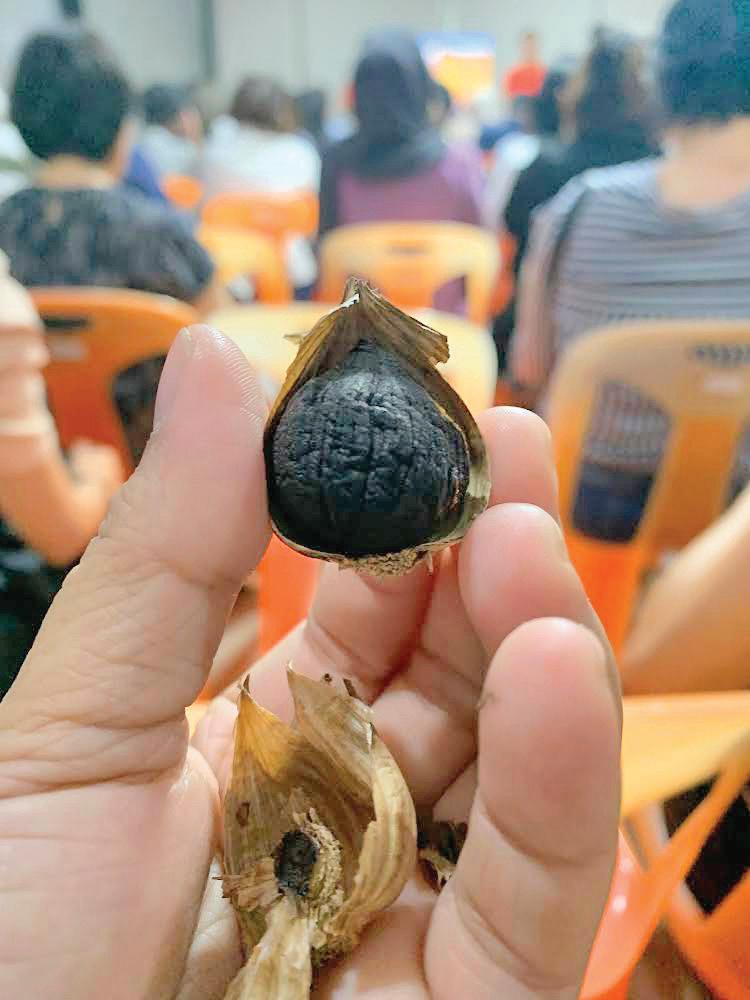
business in the late 1960s when it faced fierce competition from the influx of cheap garlic from China during its four-decade run. By 2015, the Thai firm said these low-cost imports dragged the local garlic trade “to the brink of collapse.”
For Nopphada Atikakamphu, CEO of Nopphada, this ushered the need to innovate, veering away from the garlic business but with a twist in his bid to boost the lot of farmers counting on the crop for their livelihood.
Atikakamphu banked on research and development (R&D) to turn the critical aromatic for Thai cuisine into black garlic through the process of fermentation, si-



phoning off the pungent scent while retaining its jam-packed health benefits.
Having collaborated with the Science and Technology Park (STeP) of Chiang Mai University, Nopphada developed and enhanced their black garlic products, which helped the business thrive and expand to the global e-commerce market.
“We looked for ways to add value to what Thai farmers already grow. That’s when we turned through fermentation, transforming fresh garlic into something new, functional, and full of potential.”
Beekeeping AS far as innovation goes, it always has a beginning. For Chiang Mai Healthy Product Co., Ltd., its famed honey brand Fora Bee started with beekeeping as a hobby.
Sanguan Ruengsiri founded the Thai company in 1975, bringing back the beekeeping knowledge from where he studied in Taiwan to his home country. Having started with merely four hives, he expanded it to over 10,000 colonies.
As years passed, Ruengsiri’s workers eventually established their respective farms, which the company has been engaging through contract farming to fulfill the brand’s honey requirement.
However, every business has its fair share of setbacks.
Yutthapong Ruengsiri, Assistant Managing Director of Chiang Mai Healthy Product and among the second generation of the family’s business, said the blow to the Thai firm came in the form of a booming honey output.
“Back in 2000, we had a problem with the oversupply of honey. We couldn’t sell all the honey we bought from local beekeepers,” Ruengsiri said.
“So, we tried to focus more on R&D to increase the value of the honey and bee products,” he added.
By Josh Xiao and Monica Raymunt Blooomberg
MORE than two years ago on the outskirts of a medieval German town, China’s biggest EV battery company placed a €1.8 billion ($2 billion) bet on the future of global trade.
The decision by Contemporary Amperex Technology Co. Ltd. to open a sprawling factory in central Germany — its first outside China — symbolized President Xi Jinping’s recognition that protectionist impulses around the world are here to stay. The idea was simple: invest abroad, create local jobs and keep Chinese goods flowing into key markets. CATL — which this week started trading in Hong Kong after raising $4.6 billion — is a flagship example of that initiative.
“I see ourselves as a blueprint for Chinese companies who are looking to expand in Europe,” Matthias Zentgraf, the battery giant’s European president, said from his factory office outside the town of Arnstadt. With the EU slapping tariffs as high as 45 percent on
Chinese EV exports last year, it’s a tactic being rolled out from Spain to Hungary by companies including BYD Co., Chery Automobile Co. and Zhejiang Leapmotor Technology Co. As tariffs and protectionism rise around the world, that strategy is looking like a critical lifeline for China’s economy. CATL has little exposure to the US, so new American tariffs have limited impact. Building factories abroad helps Beijing defuse complaints about surging exports and widening trade deficits. Chinese overseas investment surged by $48 billion, or 28 percent, in the first quarter of 2025 from a year earlier, according to preliminary data from the State Administration of Foreign Exchange.
Yet Chinese companies are discovering some downsides to the build-abroad strategy, including more labor-management tensions than are typical in China, higher operational costs and the risk that key technology and know-how leak to competitors.
Even in Arnstadt — where CATL’s arrival is seen as a success — it hasn’t been an entirely smooth run for the company’s first-ever overseas plant and its approximately 1,700 European and Chinese employees. The factory’s ramp-up was plagued by cultural hurdles, labor disagreements and other issues that frequently hobble new operations overseas.
For starters, the company found Germany’s higher energy costs to be a problem compared to working in China — partly the result of lost Russian gas supplies after the Ukraine war began. Energy prices have driven almost half of the companies surveyed last year to consider limiting production or moving abroad, according to a poll by the German Chambers of Industry and Commerce.
“Nobody here in Germany can build products at a competitive market price because of the high energy costs,” Zentgraf said in a February interview.

There are also issues specific to the EV market. European car sales barely grew last year as persistent inflation, higher borrowing costs and apathy toward electric models led consumers to hold off on buying. That may be changing: EV sales in Europe rose 28 percent in the first quarter, with demand surging in markets including Germany, the UK and Italy.
Then there are the labor issues.
A technical supervisor at the CATL plant, who asked not to be identified discussing internal issues, said the company’s mostly European workforce prefers a fixed schedule, while the visiting Chinese workers are more likely to embrace overtime and tolerate less predictable routines. Local staff even went on strike last year over a lack of toilet paper in the bathrooms, seeing it as a bid to keep them from taking breaks, according to two former employees who asked not to be identified.
They’re the kind of mundane, but still critical, tensions that Western companies long confronted when setting up operations in China. Zentgraf, CATL’s European president, conceded there is a “productivity gap” when it comes to the mixed European-Chinese workforce, but he added that it’s “offset by CATL’s closer proximity to major European customers and the ability to react to local change in demand.”
CATL didn’t directly address a question about last year’s strike, but said the company “supported the election of a works council at the German plant” and is working to ensure “an open and progressive work environment for everybody.”
The company tried to get ahead of some of the risks in Arnstadt, a city of about 30,000 people along the Gera River whose claim to fame is that composer Johann Sebastian Bach was once a local church organist.
The company brought in several hundred Chinese workers to get the factory going, accounting for about 30 percent of its workforce, but started scaling that back as more local hires were trained. Today CATL’s batteries are assembled, packed and delivered by an overwhelmingly European team to Germany’s biggest automakers, including Volkswagen AG and BMW AG.
Arnstadt Mayor Frank Spilling admitted that there were some “reservations” locally when the CATL factory arrived about too many foreign workers coming to take all the jobs. But it’s all proven to be “nonsense” since then, he said. The biggest threat to China’s strategy for now may be US President Donald Trump’s attempts to leverage negotiations with other nations and the European Union to limit trade with Beijing. That could include restrictions on Chinese investments and preventing countries from absorbing Beijing’s excess industrial capacity. Xi is fighting the Trump administration’s approach, even as China and the US hit pause on weeks of escalating trade tensions. China’s Ministry of Commerce has repeatedly warned countries against reaching agreements with the US that sideline or isolate Beijing. The country “resolutely opposes any party reaching a deal at the expense of China’s interests,” the ministry said last month.
China is also promoting itself as a more reliable steward of the global trading regime. That’s a message Xi took on the road in April, visiting Vietnam, Malaysia and Cambodia to build support for closer ties, as well as this month in meetings with Latin American leaders. It’s one he’s sure to emphasize when European ministers travel to Beijing in July.
Continued from A1
Currently, the Thai brand houses a range of bee- and honey-based products, such as herb-infused honey, honey vinegar, royal jelly, and bee pollen. It also ventures into skincare products like soaps, bath gels, facial cleanser, serum, lip balm, and hand cream.
Ruengsiri said the company aims to penetrate the food and beverage (F&B) industry by engaging with more R&D and developing new honey-based products.
“In Thailand, we are a hot country. These cafes and restaurants use honey as well. I just see the opportunity in this market, so I’m trying to create more products that I can supply to them,” he said.
Market opportunity
RUNGPHECH CHITANUWAT, Regional Portfolio Director of Asean Informa Markets, said the Thai government props up the sector by encouraging industries to capitalize on value adding.
“The government invests in the Ministry of Higher Education, Science and Innovation’s (MHESI) research and development for value-added products,” Chitanuwat told reporters in an interview here.
“There’s a lot of research happening in every university and scientific institute, and that research can be used [by industries] through technology transfer,” she added.
As it goes, R&D comes as part and parcel of value-added products, taking shape in a series of trials against the back-

drop of consumer preference and demand, while using a variety of ingredients like flavors and spices in the process.
Such ingredients, which producers worldwide can tap into to enhance their respective products, will be showcased in the Fi Asia Thailand 2025 and Vitafoods Asia 2025 taking place from September 17 to 19 at the Queen Sirikit National Convention Center (QSNCC), Bangkok.
Fi Asia Thailand is the leading event for the Asean food and beverage ingredients industry, which garners over 750 exhibitors and 23,000 visitors from more than 70 countries.
Meanwhile, Vitafoods Asia is the premier nutraceutical industry event providing an ideal opportunity to connect, gain knowledge, and build enduring partnerships in the health and nutrition sector.
Chitanuwat said producers from countries like the Philippines, whose small and medium-sized enterprises (SMEs) comprise 99 percent of its business establishments, could foster market opportunities through these exhibits.
“With the Philippines, we need to develop the SME level to have the quality products in the market [by] using the right packaging [and] technology. If we can build up the SME, I think the industry can go further,” she said.


Editor: Angel R. Calso

By Simone Foxman
WALMART
Inc. stunned civil-rights
activists in November by saying
it was pulling back on diversity, equity and inclusion efforts. The world’s largest retailer said it would stop using the term “DEI” in official communications, remove some LGBTQ products from its website and no longer consider race and gender to boost diversity when granting supplier contracts, among other changes. Six months later, the company’s moves seem less like a reversal and more like modest changes. “Belonging” has replaced most mentions of DEI— a semantic transition that began two years ago— but jobs posted on the company website still call for applicants who will support its policy of “diversity, equity & inclusion.” A landing page boasts about goods from “LGBTQIA+ founded brands,” accompanied by the tagline “Pride always.” And Walmart offers similar pages for Hispanic-, Black- and women-owned brands, noting that some have been categorized in collaboration with external groups that offer diversity certifications.
Walmart is hardly alone. Many programs at large US companies that have fallen under the diversity, equity and inclusion banner haven’t disappeared, according to interviews with more than two dozen senior staffers from large US companies and corporate advisors. Even businesses that have made announcements purporting to curtail their DEI initiatives have, in most cases, made mostly minor adjustments, while promising investors and employees that nothing meaningful has changed.
A Walmart spokesman said the company is addressing outdated references in job postings. “Our goal is to foster a sense of
belonging, create opportunities for all our associates, customers and suppliers, and be a Walmart for everyone. We want to make Walmart the best place to work and shop,” a Walmart spokesperson said.
Executive orders targeting what President Donald Trump has termed “illegal DEI” have rattled general counsels across the country’s largest companies—especially a directive that federal agencies compile lists of organizations to target for investigation by May 21. The administration argues that rather than reducing bias and encouraging managers to hire and promote based on merit, DEI policies have been “deeply demeaning,” and have increased hostility between different groups.
But the orders haven’t fundamentally changed employment law, no matter how sweeping they may sound, said Jonathan Segal, a partner at law firm Duane Morris. And in many cases, familiar DEI efforts remain because those programs weren’t discriminating against employees. “You can do almost everything you were doing before with modest changes,” Segal said.
Nor have the orders persuaded executives that all the programs that came to be known as DEI were a bad idea. Many admit that some elements of DEI went too far. However, by and large they continue to believe that efforts to recruit, promote and retain candidates from underrepresented groups are key to making sure they have the most capable and talented staff. They are loathe to eliminate policies that help workers feel welcomed and supported. They continue to fear discrimination lawsuits from workers of color, women, LGBTQ people and those with disabilities—not to mention the wrath of investors and the press.
With guidance from lawyers, many
companies have focused on a handful of changes. Gone are specific targets for demographic representation across their workforces, though companies are still required to collect data on the race and gender of their employees. Some people who once had titles like “diversity officer” are now called something else and run newly renamed initiatives. Employee resource groups—affinity organizations that cater to a characteristic like race, gender, sexual orientation, disability status and more—face new scrutiny and limits on their spending, but most continue to exist. Health benefits for trans employees and employees’ trans family members have hardly budged.
Internship and mentorship programs developed to elevate traditionally marginalized groups mostly remain, with the new caveat that anyone can apply. Recruiting programs, especially at historically Black colleges and universities, haven’t changed. Molson Coors Beverage Co., Ford Motor Co., Deloitte LLP, McDonald’s Corp. and Boeing Co. are among those who’ve sought applicants in recent weeks through partnerships with the Thurgood Marshall College Fund, a nonprofit group that helps some of the country’s largest companies orchestrate internship and scholarship programs for students at HBCUs, primarily Black institutions and historically Black community colleges.
In one example of how companies are trying to send one message to DEI critics and another to investors, last summer Lowe’s Cos. announced a rollback that would restructure its employee resource groups, curtail external sponsorships and limit participation in external workplace surveys. But in December, a top executive promised the scale of changes were limited: “These are the only changes that we have made,” Janice Dupré, executive
vice president of human resources stressed at the company’s investor day, before touting the senior leadership team as “one of the most diverse in the Fortune 500.”
“Our commitment to diversity and inclusion is embedded in our values and core to who we are as a company,” a Lowe’s spokesperson said in a statement. “We’re proud of our accomplishments, and we will continue to strive to cultivate a workplace that reflects the customers and communities where we operate and where everyone feels welcomed, valued and respected.”
Subha Barry, once the chief diversity officer at Merrill Lynch, now runs Seramount, a company that provides workplace training and inclusive leadership plans for large companies. Because she stays away from more controversial discussions about social justice, she said she’s seen little impact on demand for her company’s services.
“There’s a return to a new sense of normalcy where companies are adapting, adjusting,” she said. “Ninety percent of our companies are saying they don’t see any major disruptions happening in the long term.” DEI is the latest term used to describe corporate policies that developed in response to the Civil Rights Act. In the 1980s, as companies prepared for rising shares of women and people of color in the workforce, executives began developing programs to better recruit, develop and integrate talent. These efforts ultimately evolved into the myriad initiatives often called DEI.
While initially centered on race, the acronym came to also embody programs that would benefit a variety of minority groups, including women, people who identify as LGBTQ, those with disabilities and veterans. Such recruitment and training programs were slow to produce results, and often developed
only after an investigation found evidence of rampant discrimination.
Then came the 2020 murder of George Floyd, an unarmed Black man killed by a White police officer in Minneapolis, setting off waves of protests about racial justice. Corporate executives responded by adopting sweeping, transformative language to spur their workforces into action, and setting ambitious goals for boosting diversity in their ranks. But just as today’s rhetoric about DEI rollback run into the reality of corporate inertia, the loud calls for boosting DEI after Floyd’s death often amounted to merely incremental changes. Many companies poured money into expanding DEI efforts based on programs they already had, hoping increased attention to race would help them transform their workforces.
Such efforts met resistance almost immediately, with critics arguing that diversity programs amounted to discrimination against White (and sometimes Asian) people. They argued that bias training blamed employees for the sins of their ancestors, amplifying rather than diminishing racial angst. The pushback gained steam with the Supreme Court’s decision in Students for Fair Admissions v. Harvard, a landmark case that overturned affirmative action in college admissions in 2023.
While not directly implicated in that ruling, corporate America quickly began to question whether its own programs— especially those open to people only on the basis of race or gender—might run afoul of the course set by the court. Meanwhile, Trump’s return to the presidency has elevated DEI’s most ardent critics. His administration has argued that “corporations and universities use DEI as an excuse for biased and unlawful employment practices and illegal admissions
preferences.” He’s intensified the pressure on federal contractors, who must pledge that they’re not engaging in “illegal DEI,” while providing little detail on what exactly that is.
“President Trump’s executive order mandates recommendations to strengthen enforcement of federal civil rights laws against unlawful discrimination, including DEI initiatives, and he anticipates further actions to ensure equal opportunity for all Americans,” White House spokesperson Harrison Fields said in a statement. Meanwhile, critics like influencer Robby Starbuck and activist group Alliance Defending Freedom have pushed companies to stamp out even elements of DEI that don’t violate the law, arguing that employers shouldn’t be making statements or instituting policies that express “woke” beliefs, especially about gender or race. Starbuck has said he intends to go after companies who pledged to abandon DEI but whose commitment was only “surface level.” Companies “don’t want to end up on a list, don’t want to be a target,” said Craig Leen, a partner at law firm K&L Gates and the former director of the Office of Federal Contract Compliance Programs during Trump’s first term.
Trump has ordered each federal agency to identify up to nine large companies, associations and nonprofit groups that should be investigated over DEI policies. But while the administration’s signaled a new enforcement priority, the president’s actions haven’t meaningfully changed antidiscrimination law. “A lot of what companies are doing in the DEI area they’re still able to do,” Leen said, though he suggests they consider re-branding.

By Rachel Cohrs Zhang
THE Trump administration issued a report blaming the rise in chronic diseases in the US on unhealthy food ingredients, chemicals, overreliance on medication and corporate spending. But it stopped short of attacking growers and manufacturers as much as they feared.
The 69-page report was compiled by the “Make America Healthy Again Commission.”
The group was created through an executive order issued in February and is led by Health and Human Services Secretary Robert F. Kennedy Jr., a former environmental lawyer and longtime vaccine critic.
“Unlike other administrations, we will not be silenced or intimidated by the corporate lobbyists or special interests,” President Donald Trump said at an event Thursday at the White House promoting the report. “And I want this group to do what they have to do.” Food makers, agricultural companies, pharmaceutical manufacturers and others have worried Kennedy’s push to root out the causes of chronic diseases will lead to a raft of new regulations. However, the report doesn’t lay the groundwork for the type of aggressive policies that had most concerned them.
For example, chemical companies braced for the Trump administration to blame glyphosate, a widely used weedkiller, for bad health outcomes including cancer. It raises some concerns about such links, but notes that past federal reviews of pesticides have reached encouraging conclusions and says disrupting current farm practices could threaten the food supply.
The report and its rollout lays bare tension in a Republican administration over how far
to take allegations that US industries are damaging American health. In a call with reporters, administration officials called out the corrupting influence of money while also praising industry and insisting the report shouldn’t be interpreted as a broadside. “There is no difference between good economic policy, good environmental policy and good public health policy and good industrial policy,” Kennedy said Thursday. “We can have all of them.”
Policy recommendations stemming from the report are expected by mid-August.
Besides Kennedy, the panel includes Secretary of Agriculture Brooke Rollins, Environmental Protection Agency Administrator Lee Zeldin, Food and Drug Commissioner Marty Makary, National Institutes of Health Director Jay Bhattacharya, White House Deputy Chief of Staff Stephen Miller and White House economic and budget advisers.
Here’s what the report points to as major contributing factors to chronic illness:
Processed food
THE report didn’t call for immediate, sweeping change to the food system, but pointed out a long list of concerns.
It singles out processed sugars like highfructose corn syrup and “ultra-processed grains,” linking them to conditions including type 2 diabetes and childhood obesity. It also calls out seed oils such as soybean and canola oils, noting their “potential role in inflammation.”
Those concerns have long existed, though multiple meta-analyses have also indicated that the fatty acids within seed oils that have raised concerns have no significant effect on inflammation or the risk of dying from cardiovascular disease.
The report also lists out additives it deems a concern, including artificial sweeteners like aspartame and the preservative butylated hydroxytoluene, which the FDA added last week to a list of chemicals that it will evaluate. Additionally, it points to titanium dioxide and propylparaben—both additives the FDA also said it would hasten an existing review on.
If Kennedy approaches those ingredients as he did artificial food dyes, which he has also blamed for a raft of negative health effects, it’s likely to set the food industry at ease. After fearing artificial food colorings would be banned outright, HHS and FDA said in April that they’ll work with food producers to eliminate the dyes by the end of 2026. Industry groups have said no agreement exists on the matter.
“The MAHA report signals the need to balance preservatives in our food with quality. Industry leaders like Tyson, InN-Out and Steak ’n Shake, have all made pledges that align with this mission and are jumping on the MAHA bandwagon,” said David Mansdoerfer, a former senior Trump appointee at HHS.
The report also said government nutrition programs are “compounding the issue,” while signaling for more federal assistance to fruit and vegetable farmers.
Participants in the USDA’s SNAP program, which provides food assistance to lowincome families, are at a greater risk of heart disease and diabetes, the report said, also noting that children using the benefits are likely to consume more sugary drinks and processed meats.
THE commission report suggests that the

totality of vaccines that children receive hasn’t been sufficiently studied. It states the number of vaccines children routinely get has grown significantly in recent decades, and points out vaccine requirements are more strict in the US than in Europe.
The commission calls for the use of inert placebos in vaccine trials, longer follow-up periods and larger sample sizes.
Vaccines are studied for safety before they’re approved. Many vaccines for new diseases are tested against inactive placebo shots, but vaccines for existing diseases are often tested against existing products for ethical reasons to avoid exposing people to preventable and potentially fatal illness.
Commission members also point to lax tracking of vaccine injuries as a problem.
The report also says that HHS has a conflict of interest on vaccine safety, as it is both responsible for regulating vaccines and promoting vaccination.
THE MAHA report doesn’t go as far to suggest certain drugs shouldn’t be used, but takes aim at so-called overmedicalization of American children. It specifically focuses on treatments for Attention-Deficit/ Hyperactivity Disorder, or ADHD, antipsychotics, antidepressants, antibiotics and popular weight-loss medications known as GLP-1s.
Examples of harms associated with overtreatment, according to the report, include serious side effects linked to some psychiatric drugs and stigma associated with certain mental health disorders. It says that these established harms are the “tip of a potentially vast iceberg” and that more pediatric-specific clinical trials are needed. It also calls for more research on the longterm developmental impacts of commonly
Continued from A3
In response, many large employers have pulled back on any initiative that might inhabit a legal gray area. DEI critics have argued that numeric goals for workforce demographics, even when only aspirational, effectively amount to illegal quotas; such metrics were on the chopping block at almost half of companies who announced changes to their DEI plans, according to a Gravity Research study. Wells Fargo & Co. and BlackRock Inc. are among financial firms who said they’d no longer require hiring managers to interview a diverse slate of job candidates.
Segal, the employment law specialist, also tells clients to go a step further, revisiting the underlying messaging behind their DEI plans. For example, companies that say they want a workforce that “reflects the diversity of the community” might draw scrutiny, because it could be seen as suggesting a
prescribed drugs.
“When people get sick, they should have every option available to them to get better—including medicines,” Stephen Ubl, president and CEO of Pharmaceutical Research and Manufacturers of America, said in a statement in response to the report. “Medicines are part of the solution, not the cause of chronic disease.”
OVERALL, the report is light on pesticides, noting that federal reviews of recent years have determined that trace levels of crop-protection chemicals in food samples are compliant with government safety limits. Even so, the report cites a handful of studies that have raised concerns about possible links between herbicides glyphosate and atrazine and developmental disorders.
The US government will probably update its health assessment of common herbicides in 2026, the report said. It stressed that reviewers need to consider how any big changes to farming practices threaten to endanger the world’s food supplies. Any new regulations on crop-protection products would need to account for costs and whether it’s easy to replace the tools.
Food safety groups and trade groups representing farmers had mixed reactions. The National Corn Growers Association decried the report as fostering “fear-based” misinformation about pesticides. However, the Center for Biological Diversity—a nonprofit that works to protect endangered species—said it was a boon to corporate farmers.
“The report’s acknowledgment of pesticides’ risks to our children’s health is a small step forward. But it’s clear that Big Ag was successful in strong-arming” commission members, the group said.
company employ a certain number of people from each demographic group. But seeking a workforce that “reflects the talent in our community” likely mitigates the risk. Surely all companies have a responsibility to shareholders to seek out the best talent, taking care to look for people with backgrounds that might historically have been overlooked.
“It sounds a little bit like semantics, but the words matter,” Segal said. He estimates that three quarters of firms he’s worked with “have made changes to their communications” about diversity initiatives to ensure that they can’t be interpreted as discriminatory, but by and large the underlying programs remain intact.
Companies are also saying less. The director of a nonprofit group focused on Latino entrepreneurship said it had scrapped a planned press release about financial backing from corporate philanthropy. The donor didn’t want publicity, even though they’d sought such recognition in the past. Similarly, a banker said his employer

“AMERICAN children are experiencing unprecedented levels of inactivity, screen use, sleep deprivation, and chronic stress,” according to the report.
The MAHA Commission blamed the transition from play-based childhoods to ones centered around technology for most of those ills. In particular, it called out social media use as contributing to the rise of anxiety and depression.
THE commission worked to strike a delicate balance between blaming companies for spending money to influence the government at the expense of children’s health, while also claiming that the report was not intended to attack industry.
The report accuses the pharmaceutical, food and chemical industries of spending vast sums of money to influence scientific literature, legislative actions, academic institutions, regulatory agencies, medical journals, physician organizations, clinical guidelines and the news media. The commission singles out the pharmaceutical industry for special scrutiny, saying that drugmakers pay to influence patient advocacy groups and regulators at the FDA, in part by hiring former government officials. At the same time as it paints a picture of corporations’ power. Multiple officials repeated that the report was not intended to malign companies.
“This is not in any way an attack on the farmers or the industry. What this is, is a commitment to get excellent answers, excellent science, so that we can enable people to do the right thing,” Bhattacharya said on a call with reporters. With assistance from Tim Loh, Madison Muller, Will Kubzansky, Ilena Peng and Kim Chipman/Bloomberg
balked at adding its name to an event championing Latinos in tech, but still sponsored the event for its client-building potential.
In a survey of C-suite executives published in February, law firm Littler Mendelson PC found 55% were more concerned about the risk of lawsuits related to DEI after Trump’s inauguration than they were before. Even so, 49% of respondents said they were not considering any new or further rollbacks of their programs after Trump’s executive orders, while 27% said they were considering them only “to a small extent.” In the short term, they’re simply desperate to avoid government scrutiny. Johnny Taylor, the CEO of the Society for Human Resource Management, said leaders of large public companies mostly want to maintain diversity and inclusion programming that keeps workers happy. Executives don’t want to find their companies’ names on a government list of “woke” companies, he said. But they’re also worried that top law firms who’ve struck deals with the Trump administration—like Paul Weiss Rifkind Wharton & Garrison and Latham & Watkins LLP—will fulfill their pledges to provide pro bono legal services by representing aggrieved former employees claiming reverse discrimination.
What Taylor hears from CEOs is a version of: “Tell us what we can do that will affirm our commitment to this work but is not going to get us sued and get us into a protracted legal battle,” he explained. One way executives are solving that puzzle is by keeping battles quiet. A few companies, including Costco Wholesale Corp. and Apple Inc., have publicly defended their diversity efforts in the face of proposals from conservative groups to curtail those initiatives. But Deere & Co., McDonald’s and IBM—all companies that have made statements to employees or the public signaling retrenchment on DEI—have kept a much lower profile while asking shareholders to reject similar proposals. The government’s next steps remain a crucial unknown for corporate America, and the uncertainty has left lawyers at top firms guessing—and their phone lines busy.
Employment “law used to be more about looking at the different court cases and giving your advice about what a court is likely to do,” said Leen, the K&L Gates lawyer and former government official. “When you have a very active administration, companies are more interested in what the administration might do than what a court might rule down the line.” Bloomberg News

ELEMENTARY students struggling with math and science lessons now have a more engaging way to learn—through RadyoEskwela sa Siyensya, an animated series launched by the Department of Science and Technology-Science Education Institute (DOST-SEI).
As distance learning becomes more widespread, creative approaches to teaching math and science have become essential to overcoming its challenges. One such approach is story-based lesson delivery, which helps make complex concepts more relatable and easier to understand.
RadyoEskwela sa Siyensya is one of DOST-SEI’s latest learning resources for students, teachers, and parents.
What began as a series of radio lessons has now evolved into an animated series—designed for early, primary, and intermediate grade levels —available for free on nulab’s Facebook page.
Students can now enjoy learning with Kaikai and Bart—the animated lead characters of RadyoEskwela—as they go on exciting adventures while guiding young learners through fun lessons and science experiments.
There are currently 15 episodes covering a wide range of fundamental concepts in both math and science.
Math topics include financial literacy, rate and ratio, and area and volume. Science episodes explore both physical and life sciences—such as plant propagation, sea sponge, chemistry colors, vaccines, vitamins and minerals—as well as earth and physical phenomena like density, solar eclipse, earthquake, volcanoes.
The series also features Filipinothemed episodes, including “Bakit Blue ang Langit?,” “Gagambahay,” and “Kiwot Bees,” which creatively blend science with local culture.
Diversifying learning delivery tools is part of DOST-SEI’s commitment to making
STEM education more accessible for every Filipino.
By transitioning from radio to animation, learners may now have a more immersive learning experience whether they be at home or at school.
“RadyoEskwela embodies our mission to make science and math education inclusive, engaging, and accessible to all Filipino learners,” said DOST-SEI Director Dr. Jayeel S. Cornelio.
“With this animated series, we are not only expanding its reach but also making learning more interactive and exciting for young Filipinos. We hope this initiative sparks interest among students to further explore STEM,” Cornelio added.
More learner support programs HIGH SCHOOL students can also benefit from TuklaSiyensya—a program that introduces complex science, technology, engineering and mathematics (STEM) concepts in a fun, interactive way, while inspiring interest in STEM careers.
The first season of TuklaSiyensya featured 15 episodes, showcasing lessons and demonstrations by scientist-facilitators, animation explainers, and post-viewing activities to engage students.
Similar to RadyoEskwela, the TuklaSiyensya animated series are available for free on nulab’s Facebook page, ensuring easy access for students, teachers, and parents.
As demand for STEM education continues to grow, these learner support programs are essential in making education more inclusive and engaging. Schools, educators, and parents are encouraged to take advantage of these free resources to enhance science and math instruction.
For more information on RadyoEskwela and other DOST-SEI initiatives, visit sei.dost. gov.ph or follow DOST-SEI on Facebook at facebook.com/DOST.SEI
DOST-FPRDI secures patent for wastewater treatment equipment
AN internationally recognized invention from the Department of Science and Technology (DOST) that is geared towards ensuring effective wastewater treatment and preventing environmental pollution was granted a patent by the Intellectual Property Office of the Philippines (IPOPHL).
The DOST-Forest Products Research and Development Institute (DOST-FPRDI) recently secured a Letters Patent Invention 1/2022/050420 for its “Equipment System and Process for Treating Wastewater from Wet-Type Finishing Spray Booths” granted by the IPOPHL.
The patent gives the institute the exclusive right to prevent any unauthorized person or entity from making, using, offering for sale, selling, or importing the patented equipment, as well as any product derived directly or indirectly from its process.
DOST-FPRDI’s technology treats wastewater from finishing spray booths used by furniture and handicraft makers, which often contains toxic substances—such as aromatics, benzene derivatives, alcohols, siloxanes, and organic acids.
The system addresses the harmful practice of discharging untreated wastewater into drains or nearby bodies of water, which contributes to environmental pollution. Last year, the technology was recognized as the Best International Invention and Innovation by the National Research Council of Thailand during the Seoul International Invention Fair in Seoul, South Korea.
“This wastewater treatment equipment exemplifies how science and technology can
help address environmental and industrial challenges at the same time. This move ensures that innovation like this is not only protected but is effectively integrated into local industries,” said Science Secretary Renato U. Solidum Jr. The development of this technology was funded in May 2020 through the DOST Collaborative Research and Development to Leverage Philippine Economy Program.
DOST FPRDI industry partner in developing the technology is RSU Manufacturing Corp., a Pampanga-based furniture and handicraft company.
Highlighting the importance of safeguarding and transferring technologies,
DOST-FPRDI Director Rico J. Cabangon said:
“At our Institute, we strive to ensure that our technologies reach those who need them. Securing a patent is a critical part of that goal. It protects innovation, assures manufacturers, and improves the chances of successful adoption. With this legal protection in place, we can support industries in meeting regulatory requirements and improving their operations.”
Technology inventors include Engr. Edward Paul S. Marasigan, Aralyn QuintosCortiguerra, Benjo S. Salvatierra, Jeremiah Vi R. Dumalaon, Jason P. Esguerra and Liza B. Patacsil.
DOST-FPRDI is committed to filing more patent applications for its developed technologies, strengthening its mission to transfer appropriate technologies that make local industries more competitive in both domestic and global markets, while also benefiting the general public. Angelique B. Evangelista and Apple Jean C. Martin-de Leon/S&T Media Service

THE Philippine Nuclear Research Institute (PNRI) anticipates a tougher competition at this year’s second International Nuclear Science Olympiad (INSO) in Malaysia in July, with contenders intensifying their training in a bid to surpass the Philippines’ gold-winning performance from last year.
“Our expectation, since the competition for second INSO is really competitive, we expect a more competitive pool of members of our Philippine national team,” PNRI Senior Science Research Specialist Jeffrey Tare told the BusinessMirror after the awarding ceremony of the second Philippine Nuclear Science Olympiad (PNSO) at the PNRI headquarters in Quezon City on May 16.
Tare explained that after witnessing the first INSO hosted by the Philippines last year, participating countries now have a better grasp of the competition’s level and are expected to ramp up their training, knowing they need to surpass both the Philippines and Singapore—last year’s top-performing teams. While Singapore took home the most gold medals, the Philippines claimed the highest individual scorer of the event.
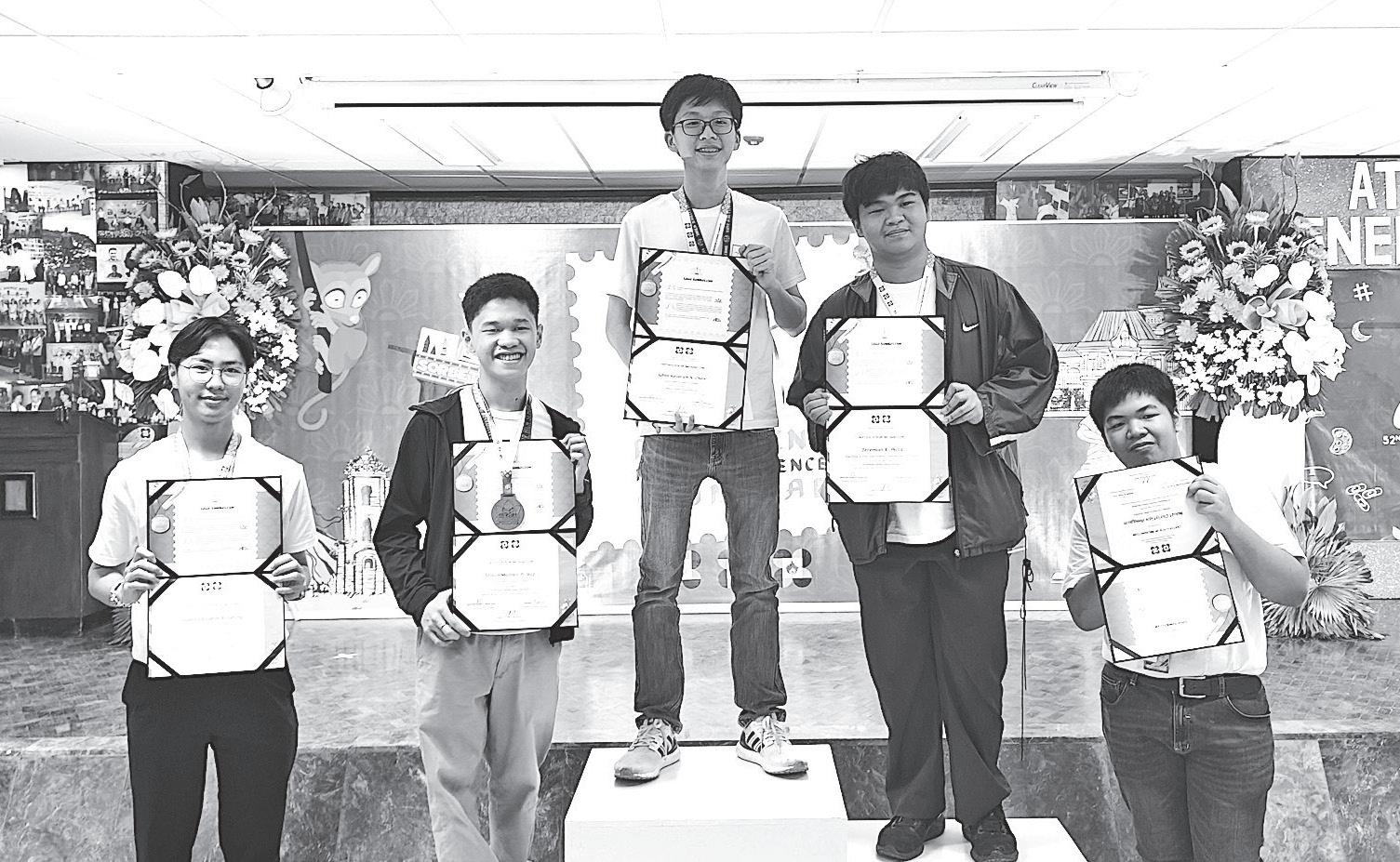
That top scorer was Mohammad Nur Casib, who was named the first “Nuclear Ambassador” for achieving the highest combined score in both the theoretical and experimental categories.
“So, we expect more competitiveness,” added PNRI Supervising Science Research Specialist Kristine Marie Romallosa-Dean.
The INSO is an annual competition for junior and senior high school students designed to raise global awareness about the peaceful applications of nuclear science, boost student interest in the field, strengthen nuclear education, and inspire future careers in nuclearrelated disciplines.
The Philippines recently named its representatives to the INSO with the PNSO winners.
Keinrich Chen of Saint Jude Catholic School claimed the PNSO top spot. He was followed by Jeremiah Auza of Philippine Science
High School (PSHS)-Central Visayas and Shaun Mannix Yap, also from Saint Jude.
Nouel Christian Amaguin of Manila Science High School and Thomas Eugene Leung of PSHSCordillera Administrative Region earned finalist scores.
“It’s very unexpected; I never thought that [I would win the top prize]. It really feels like all the hard work paid off,” Chen said after being recognized as the top scorer among the top 20 finalists from across the country.
Romallosa-Dean explained that the top five finalists will undergo a Nuclear Science Training Program (NSTP) to prepare for the international competition happening from July 30 to August 6 in the host country. The NSTP covers all
the modules included in the PNSO curriculum.
She highlighted that the students already have a solid foundation from their studies, and the face-to-face training will focus on reinforcing their knowledge, building stamina, and teaching time management techniques for problem-solving.
She added that some students have even started preparing on their own, and the training will help fine-tune their skills. Unlike last year, when hosting the event limited their access to the scientific committee due to exam preparations, this time PNRI has more experts available to train the team, which they hope will lead to an equal or better performance.
By Manuel T. Cayon
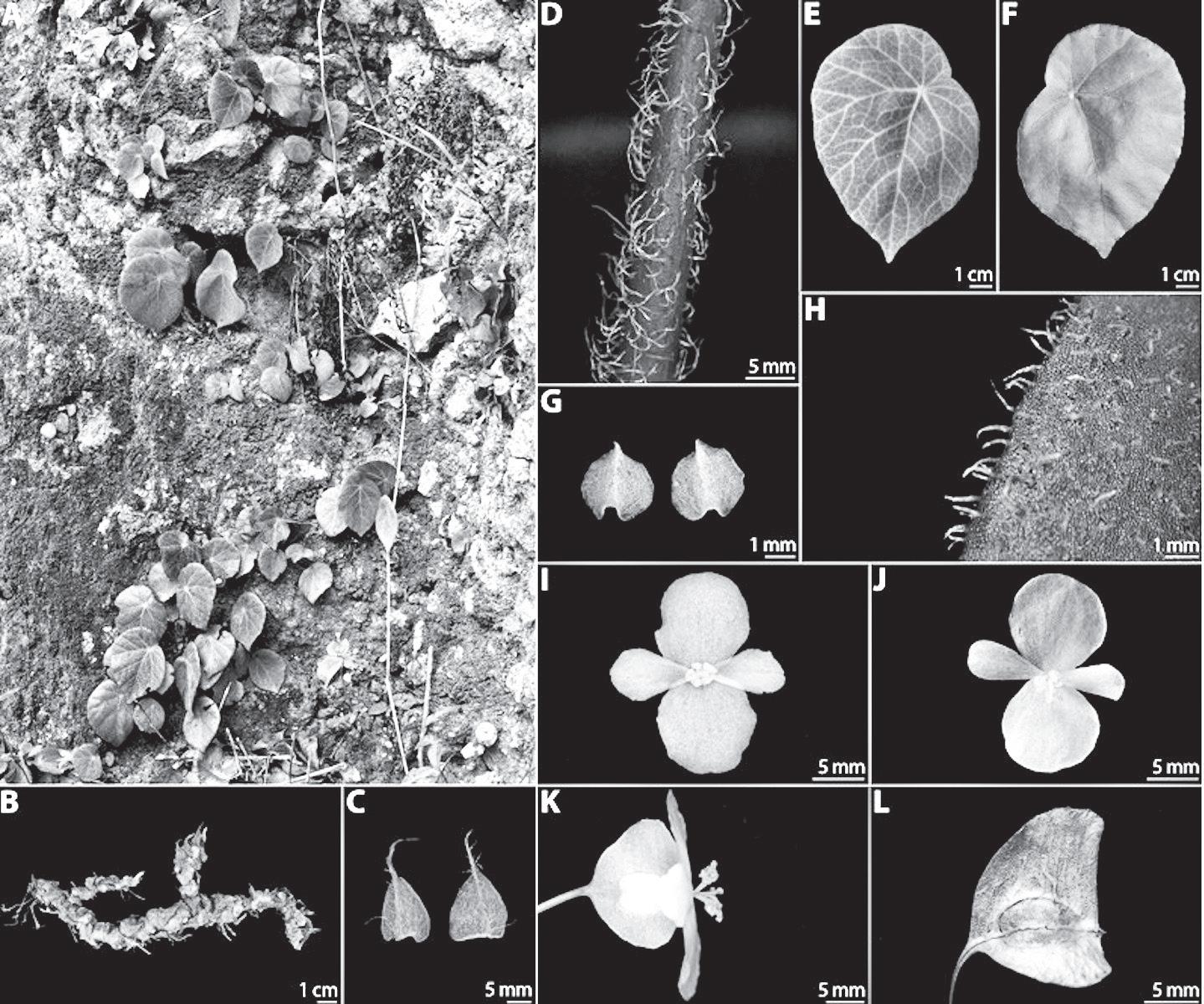
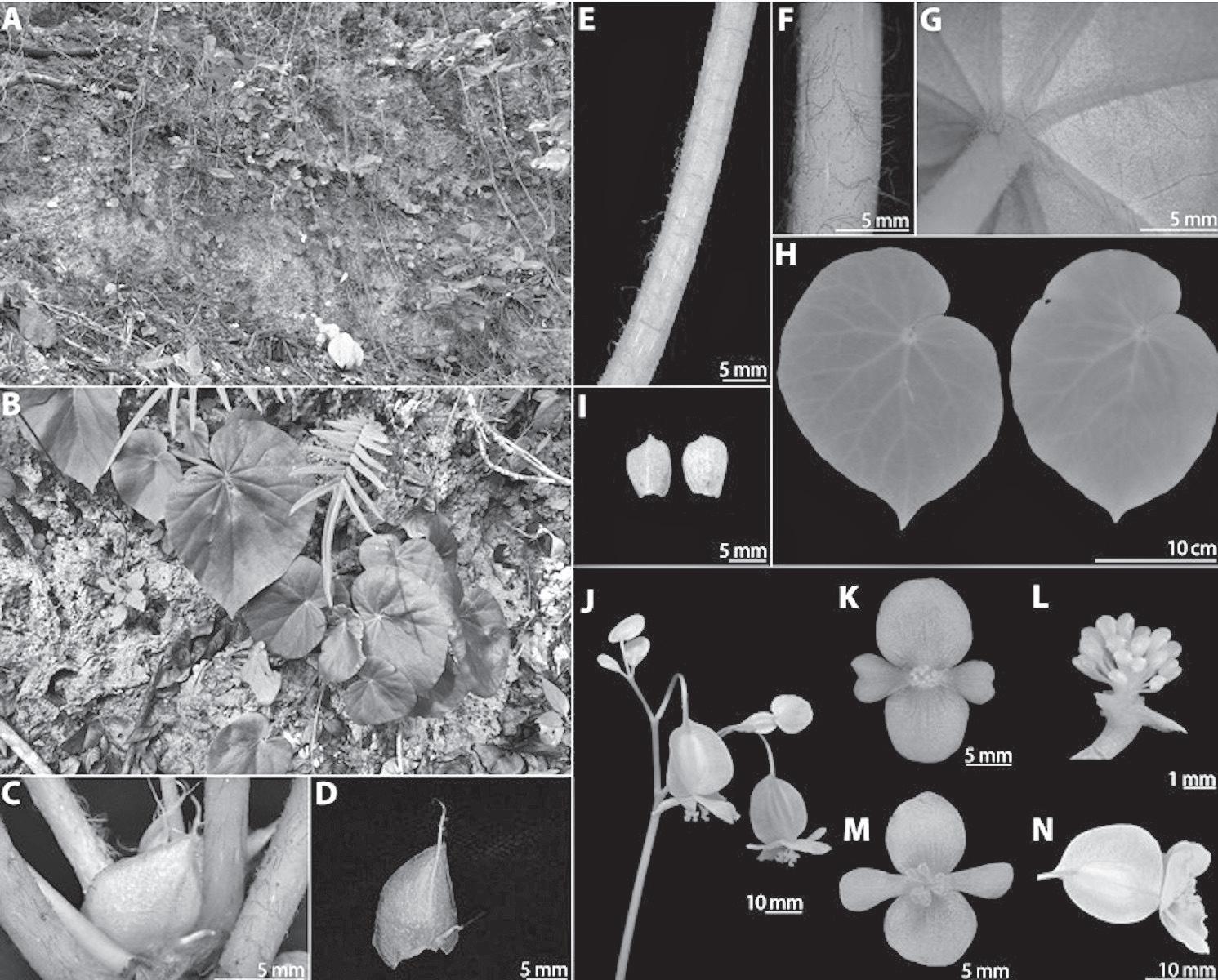
DAVAO CITY—Filipino and Taiwan botanical scientists recently discovered two new species of the Begonia flowering plants in Davao Oriental, a province that lay along the country’s rich Eastern Mindanao Biodiversity Corridor (EMBC).
The two species were named the “Begonia medinae” and “Begonia dorisiae,” after renowned Filipino scientist Dr. Milton Norman Medina of the Davao Oriental State University and co-founder of the Philippine Coleopterists Society Inc., and television reporter Doris Bigornia.
The Department of the Environment and Natural Resources (DENR) Davao office said the Begonia species were discovered by Filipino scientists Dr. Danilo Tandang and Rosario R. Rubite from the Philippine National Herbarium, Botany and National Herbarium Division of the National Museum of the Philippines.
With them are several scientists from various scientific institutions in Taiwan—including Mark Angelo Bucay of the Department of Life Science, National Taiwan Normal University, and Kuo-Fang Chung, Hong-Wun Chen and Li -Wei Tsai of the Research Museum and Herbarium, Biodiversity Research Center, Academia Sinica.
The discovery resulted from a research expedition in Caraga, Davao Oriental, involving scientists and researchers from the Taiwan International Graduate Program, Academia Sinica, and the National Museum of the Philippines.
The species were confirmed as new following detailed morphological and molecular analyses of both species from section Baryanda.
The DENR did not say when the expedition was conducted and when the discovery was made although the team that discovered it published the report on May 2
in “Phytotaxa,” the world’s largest journal in botanical taxonomy and is published in Auckland, New Zealand.
The discovered species were also entered as Issue Vol. 698 No. 4: 2 May 2025 in its library.
In the publication, the scientists described the two new species as: “We compared these species with two other species found in EMBC. B. dorisiae resembles B. amparoae but is distinct by tomentose hairs with a bulbous base on the petioles and abaxial side of the lamina. B. medinae resembles B. elmeri, both of which are the only peltate Mindanao species to date but is distinct mainly on the dense pilose hairs on its lamina, petioles and peduncles.”
The DENR said the newly described species and their phylogenetic placement alongside other Philippine species “can further shed light on the intricate biogeographic patterns of Philippine wildlife, especially
on areas less studied such as EMBC.”
It said the corridor’s forests “are home to iconic and flagship species, like the Philippine Eagle and are home to 2,300 species of plants, 31 percent of the Philippines’ plant diversity.”
The discovery of the new species also came after scientists also found earlier two Begonia species, B. abhak and B. noraaunoriae, the latter was earlier named after the late Filipino National Artist Nora Aunor.
The DENR said the flowering periods differ slightly: B. medinae blooms from August to September, while B. dorisiae flowers from July to August.
It said both species were recommended for inclusion on the threatened flora list with the B. medinae as critically endangered due to its limited population and habitat threats, and B. dorisiae as vulnerable because its coastal habitat is susceptible to wave and typhoon damage.
A6 Sunday, May 25, 2025
SBy Edwin P. Galvez
T. Thérèse is someone just like us—a “flesh-and-blood human being who fought her battles and won, not unscathed, but wounded and scarred.”
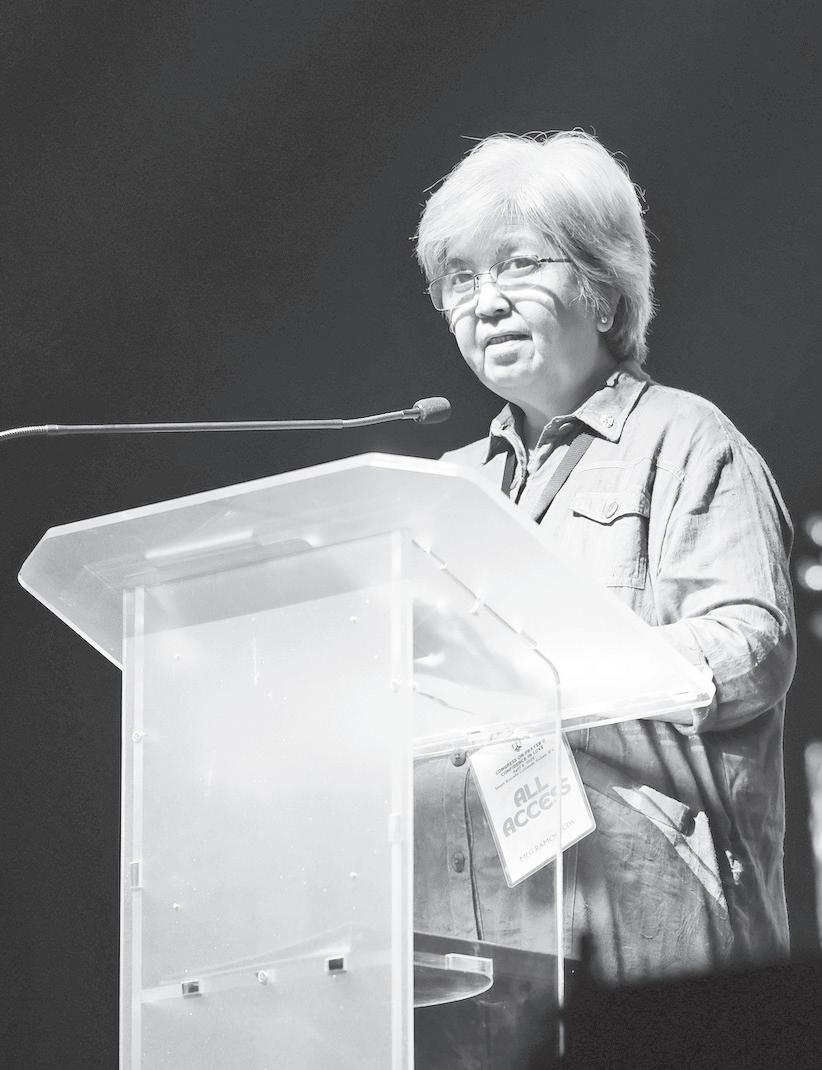
This was emphasized by Imelda D. Ramos, OCDS, president of the Secular Order of Discalced Carmelites Philippine Province, in discussing “St. Thérèse: Warrior Soul” at the Congress on Prayer II (COPII) held at the Smart Araneta Coliseum in Quezon City on April 9.
The event—organized by the Secular Order of Discalced Carmelites together with the Order of Discalced Carmelites friars and nuns—marked the centennial of the canonization of St. Thérèse of the Child Jesus and the Holy Face. She was canonized on May 17, 1925.
“Thérèse is a warrior because she fought the battles God wanted her to fight,” she said.
As a warrior, Ramos said St. Thérèse can be “strong and weak at the same time, courageous and afraid at the same time, and can win and lose at the same time.”
She added: “Thérèse is confident, not because of her, but because of Him. She won her battles because she was willing to lose first. Because with God, the way forward often starts with a step backwards.”
According to Ramos, who is also the director of formation of St. Edith Stein Community Makati, St. Thérèse fought three battles in her life: battle with separation anxiety, battle with her emotions, and battle with trials of faith.
Battle with separation anxiety IN her formative years, St. Thérèse fought the battle of separating from her own mother and her “mother figures.”
The saint was only two months old when she was given to and weaned by a wet nurse named Rose because St. Zélie, her mother, could not produce enough milk to sustain her.
After becoming “very attached” to Rose as if she were her own mother for almost a year, she was returned to St. Zélie.
Her “sense of loss” was replaced with maternal obsession when she became very attached to her own mother. But she lost her to breast cancer when she was four years and 11 months old.
“The death of her mother changed her personality and how she related to the world. It was so traumatic that it determined how she experienced the different chapters of her life. It became her inner reference point,” Ramos said. She cited an entry in St.
POPE Leo XIV’s multicultural and missionary background will enrich his papacy and bring a unique perspective to his role as leader of the Catholic Church, a Filipino cardinal said.
Cardinal Luis Antonio Tagle pointed out that while the papal ministry is primarily a work of divine grace, the human dimension of the pontiff’s experience helps him relate to the Church’s diverse global community.
“Without denying the primacy of grace in the ministry of Pope Leo, I believe that his human, cultural, religious and missionary background will give a unique face to his ministry,” said Tagle, whose name was among those prominent as possible pope to succeed Pope Francis who died on April 21.
“But this is true of all popes,” he said. “The Petrine ministry of

Editor: Lyn Resurreccion • www.businessmirror.com.ph
Thérèse’s autobiography, “The Story of a Soul,” where “symptoms of depression were quite evident:”
“My happy disposition completely changed after Mama’s death. I, once so full of life, became timid and retiring, sensitive to an excessive degree. One look was enough to reduce me to tears, and the only way I was content was to be left alone completely. I could not bear the company of strangers and found my joy only within the intimacy of the family.”
Ramos said that “on the day of Zélie’s funeral,” Pauline, the second eldest child and St. Thérése’s childhood ideal, became her “second mother.”
“[But] God called Pauline to Carmel,” she said, which deeply wounded the then nine-year-old “Thérése who was frightened to death of being abandoned.”
What made receiving the “devastating news” of Pauline’s leaving more painful for St. Thérèse was overhearing it in a conversation between Pauline and their sister Marie.
“It was as if a sword were buried in my heart,” St. Thérèse wrote.
Ramos said that stress began to take its toll on St. Thérèse, who would later suffer from headaches.
While Pauline’s letters temporarily relieved her pain, what finally “cured” her was the smile of a Mother, “in fact, the Mother of God,” according to Ramos.
St. Thérèse wrote: “Finding no help on earth, poor little Thérèse had also turned toward the mother of heaven and prayed with all her heart that she take pity on her.
“All of a sudden, the Blessed Virgin appeared beautiful to me, so beautiful that never had I seen anything so attractive; her face was suffused with an ineffable benevolence and tenderness, but what penetrated to the very depths of my soul was the ‘ravishing smile of the Blessed Virgin.’ At that instant, all my pain disappeared, and two large tears glistened on my eyelashes, and flowed down my cheeks silently.”
Battle with emotions
ST. Thérèse had also battled with “extreme touchiness or hypersensitivity,” according to Ramos.
When she reached the age of 14, her father, St. Louis, had expressed stopping the Christmas Day tradition of filling the shoes of the “baby of the family with little gifts.”
Overhearing her father’s remark, St. Thérèse sat on her bed crying, which her sister Céline saw and “told her not to go downstairs in this state.”
This seemingly very ordinary event, Ramos said, became “the turning point in St. Thérèse’s life.”
strengthening brothers and sisters in the faith in Jesus, the Son of the living God, remains the same— but each pope lives and exercises it through his unique humanity.”
The cardinal, pro-prefect of the Vatican’s Dicastery for Evangelization, described the pope’s “multicontinental and multicultural background” as an asset that will “surely help him in his ministry and benefit the Church.”
The Catholic Church stands at the dawn of a new chapter with the recent election of Pope Leo XIV, whose unexpected yet swift rise through the conclave has already sparked global interest and hopeful curiosity.
Among those who know the new pope personally is Tagle, the former archbishop of Manila, who shared his reflections in an interview with Vatican News, the news

St. Thérèse wrote: “God made me strong and courageous, arming me with His weapons. Since that night I have never been defeated in any combat…The source of my tears was dried up… [and I received] the grace of leaving my childhood, in a word, the grace of my complete conversion.”
For Ramos, leaving childhood means “having the strength not to be ruled by our emotions or allowing our feelings to dictate our choices and possessing the determination to stand upright in the face of an emotional storm.”
She said that God did not heal St. Thérèse of her hypersensitivity, but was given the strength to deal with it.
According to Ramos, “her feelings were not changed; rather, she was given the strength to control them: ‘Forcing back my tears… [and] controlling the poundings of my heart.’”
She added: “God did not remove Thérèse from the battle with her
emotions but gave her the fortitude to remain in the battle.”
What kind of combat did St. Thérèse refer to? She wrote: “There is in the community a sister who has the faculty of displeasing me in everything, in her ways, her words, her character, everything seems very disagreeable to me.”
“Would you ever think that a saint as great as her would experience this?” Ramos asked the audience. “Yes, because she is one of us.”
“Thérèse felt a natural antipathy toward Sr. Teresa of St. Augustine, [but] that antipathy did not prevent Thérèse from acting in love,” Ramos said.
St. Thérèse wrote: “I told myself that charity must not consist in feelings but in works; then I set myself to doing for this sister what I would do for the person I loved the most.”
Ramos said that “love and suffering are inseparable.”
“If we are unwilling to suffer, then we cannot love. The grace of her Christmas conversion gave Thérèse the strength to embrace this truth. And it revealed to her that true happiness lies only in love,” she said.
St. Thérèse wrote: “I felt charity enter into my soul, and the need to forget myself and to please others, since then I’ve been happy.”
According to Ramos, “if we do not understand this truth, then we cannot understand what Thérèse meant when she said that she loved suffering.”
Citing Sigmund Freud, she said that “therapy ends when we are dealing with our problems, and they are no longer dealing with us.”
“Never make it your goal to conquer your faults,” Ramos said. “Simply ask God for the grace to resist the temptation of the mo -

eral
ment…You will always have tendencies toward certain sins and self-destructive behaviors, which will always be opportunities for you to grow in virtue and rely upon the grace of God.”
She added: “Thérèse understood that the emotional wounds of her childhood were not obstacles but [they are] vital components for her spiritual growth.”
Battle with trials of faith RAMOS said that St. Thérèse’s trial of faith began on Easter Sunday, April 5, 1896, two days after her first hemoptysis.
“We know she died of tuberculosis. Doubts of all kinds regarding the existence of heaven, the meaning of her vocation, and God’s love for her, began to plague her mind,” she said.
Asking the audience if a great saint like St. Thérèse could experience doubts about faith, Ramos said, “Yes. The answer is yes.
“But I do not wish to view this from a psychological and emotional perspective because it will certainly look like the worst of times. I’d rather look at it from the spiritual vantage point, because it will have the potential to be the best of times,” Ramos said.
In fact, in her “Last Conversations,” St. Thérèse said: “If I had not had any faith, I would have committed suicide.”
Ramos, however, disagrees that it was “a trial of faith” but “a testament of rock faith.”
“Because at that instant, she would say, ‘if I had not had any faith.’ And she had faith. And she was not talking about it, she was not conscious about it, she was simply living it,” she said.
For her, St. Thérèse teaches us one of the paradoxes of the
crossed again in the Roman Curia beginning in 2023, when the then-Cardinal Robert Prevost served as prefect of the Dicastery for Bishops.
From these shared years of service, Tagle offered a portrait of a pontiff marked not only by intellect and spiritual maturity but also by extraordinary openness.
“He has a deep and patient capacity for listening and engages in careful study and reflection before making a decision,” he said.
“What also emerges is a pope deeply grounded in prayer and mission. He is intellectually and culturally well-prepared, but without showing off,” Tagle added. “In his relationships, Pope Leo brings a calm warmth, shaped by prayer and missionary experience.”
That missionary experience
is one of us
spiritual life.
“It is at the point at which we are devoid of all human support but continue to say yes to God that we experience a support that is beyond the human and a divine energy wells up from within us,” she said.
Ramos added: “Charity, which is the very life of God, came to perfection in Thérèse during her night of faith. Without the interest and the natural props that buoyed up her resolve and response to daily life, Thérèse chose to love her neighbor with what she called ‘unfelt love,’ which is love that issues forth from the will alone.”
Ramos shared that during the last year of St. Thérèse’s life, “while her body was being consumed by tuberculosis and her soul was shrouded in darkness,” she volunteered to work with Sister Marie of St. Joseph in the linen room.
“At the lowest point in her life, Thérèse was given the strength to freely love the most difficult person in her community,” she said. She added: “Similarly, Thérèse’s faith came to fruition at the point at which she felt she had lost it. Thérèse’s doubts of faith were not contradictory to her faith but the context in which her faith matured.”
Fighting our own battles
“GOD has called us to be spiritual warriors, but we fight the wrong battles,” Ramos said. She said that “we fight to prove we are always right and consume a lot of energy proving that we are better or the best…or to always have our way or for vindication, not justice.”
“[But] are we really winning these fights or are we losing because we keep fighting the wrong battles?” she asked.
Ramos said that “sometimes, the greatest battles are not the ones that everyone sees on the outside but those that need to be healed on the inside.”
“Be strong to fight the battles that matter most but also be strong enough to apologize when you get it wrong. Have the courage to own up to your part. Have the faith and the courage to receive an apology and to forgive others as you have been forgiven.
“Have the strength to step in and say I am sorry—I love you. I care about you. Don’t hold that back for a moment. Do not feel it and not express it because that will empower another warrior,” she said.
“Yes, you might have messed up somewhere, screwed up sometimes, but you’ve been given what it takes. Because you have God in you,” she ended.
is no footnote. Pope Leo XIV served as a missionary bishop in Peru and was formed as a priest far from his birthplace in the United States. His geographical and spiritual journey has led some to call him a “pope of two worlds.”
The cardinal’s words echo a wider hope: that Pope Leo’s multinational formation will serve as a bridge across cultures and continents.
For Asia, where Tagle has been a prominent voice, the pope’s background is not just welcomed— it resonates.
“The people of Asia love the pope as pope, whichever country he comes from,” he said. “He is loved not only by Catholics, but also by other Christians and followers of non-Christian religions.” Roy Lagarde

Editor: Lyn Resurreccion

TBy Jonathan L. Mayuga
HE Asean Centre for Biodiversity (ACB) welcomed the appointment of its new executive director, Dr. Jerome L. Montemayor, an educator and peatland expert, who vowed to continue celebrating Asean’s natural and cultural treasures, build bridges, foster partnerships, and nurture collaborative programs and projects, amid challenges, including low financing for biodiversity.
Philippine Environment Undersecretary Jonas R. Leones, the concurrent chairman of the Asean Senior Officials on Environment, administered Montemayor’s oath at the ACB Headquarters in Los Baños, Laguna on May 19. Montemayor is the fourth Filipino to assume the top ACB post. He succeeded Dr. Theresa Mundita S. Lim, a staunch biodiversity advocate who was the former director of the Biodiversity Management Bureau (BMB) of the Department of Environment and Natural Resources (DENR). Montemayor assumes the post as the Philippines will host the Asean Summit meetings next year.
Educator, development worker
MONTEMAYOR is a development professional with over three decades of experience in social development work in the fields of public education improvement, sustainable development, conservation management, and climate action initiatives in the Philippines and Asia. Before joining the ACB, he was the executive director of the Foundation for the Philippine Environment, the first grant-making organization for civil society environmental initiatives in the country. Under the guidance of the governing board of the ACB, Montemayor will be responsible for crafting and pursuing the Centre’s vision and mission, translating them into strategic goals and operational activities.
His role includes ensuring the sustainability of the Centre through effective resource mobilisation, planning, and strategic development, as well as establishing networks with external organisations.
By Edmund Dennis Ladaw
I
N a party scene from the classic film The Graduate, a male guest gives unsolicited advice to the main character played by Dustin Hoffman. He says: “Plastics. There’s a great future in plastics, think about it.” The man may have been right. The film came out in 1967, a time when no one knew about the havoc plastic would create on the environment.
For several years now, plastic trash has become the scorn of environmentalists and marine life. Consumers buy plastic products and much of what they’ve used find their way into the seas and oceans.
Canada-based Plastic Bank is out to reduce plastic waste by helping companies offset plastic, including those in the Philippines. Under Republic Act 11898, or the Extended Producer Responsibility (EPR) Act of 2022, large enterprises are legally required to take accountability for their plastic packaging waste.
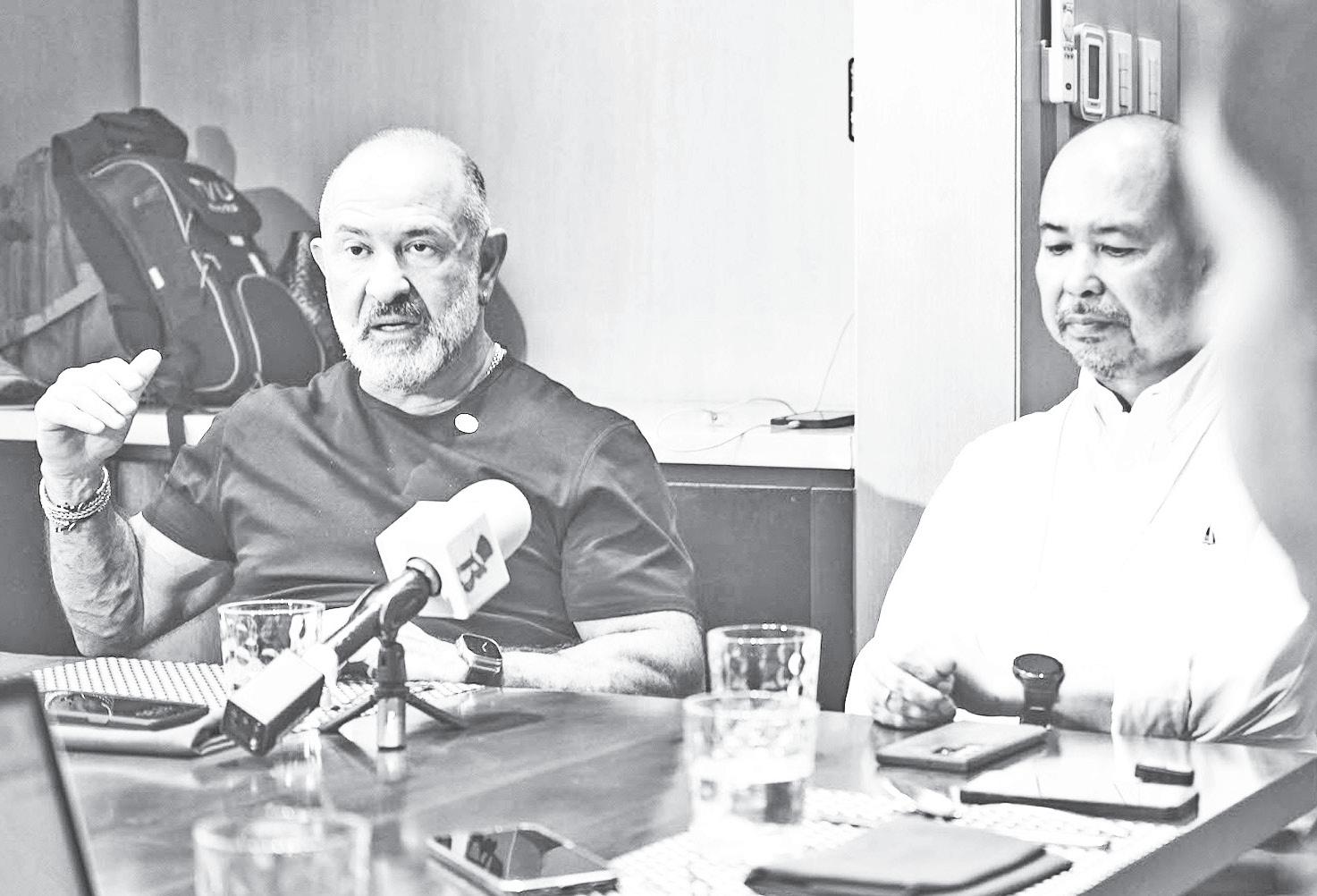
A producer responsibility organization, Plastic Bank offers solutions that simplify EPR compliance, while transforming it into a force for social and environmental good. At a forum held in collaboration with the Canadian Chamber of Commerce in the Philippines on May 21 in Taguig City, Plastic Bank founder and CEO David Katz explained how his organization helps companies go beyond compliance.
“We make it easy to offset plastic use, track every step from collection to recycling, and share verified impact stories,” Katz said.

ACB responds to biodiversity loss
ESTABLISHED 20 years ago, in 2005, ACB is Asean’s response to the challenge of biodiversity loss.
An intergovernmental organization, it facilitates cooperation and coordination among the 10 Asean member states (AMS) and regional and international organisations on the conservation and sustainable use of biological diversity, and the fair and equitable sharing of benefits arising from using such natural treasures. The ACB’s flagship program is the Asean Heritage Parks (AHP), which identifies the “best of the best” protected areas in the region.
ACB is based in the Philippines, with its headquarters in Los Banos, Laguna, that sits at the heart of the Mount Makiling Forest Reserve, one of the country’s AHP.
The Convention for Biological Diversity has chosen the ACB as one of the 18 regional and subregional technical and scientific cooperation support centers for the implementation of the Kunming-Montreal Global Biodiversity Plan.
A new chapter LEONES said the event celebrated the numerous accomplishments of the ACB under the guidance of its former leaders while anticipating a new chapter of achievements through the vision and competent direction of its incoming leader.
He highlighted the strong and long -
standing partnership and cooperation between the Philippines and the ACB.
“We confidently look forward to more fruitful years of pushing for nature conservation, as we continue working with the ACB, with you at the helm,” Leones said, addressing Montemayor.
Outgoing Acting Executive Director Clarissa C. Arida welcomed Montemayor, saying his assumption into office marks the beginning of a new and exciting chapter for the ACB.
“We look forward to more significant wins, not only for the ACB and the AMS, but ultimately for Asean biodiversity,” Arida said. She handed the ACB flag to Montemayor.
A salute to past leaders IN his message, Montemayor acknowledged and commended his predecessor, Lim, the Centre’s first female and third executive director, and Arida, who assumed its stewardship six months before his appointment.
Lim, he said, guided the ACB through the challenging Covid-19 pandemic years and credited her for enhancing biodiversity conservation efforts in the Asean.
More importantly, he acknowledged Lim’s efforts in working for the declaration of 22 AHPs.
Arida, on the other hand, led the ACB during the crucial transition period, he said, which saw the continued growth of ACB’s programs with several new projects being kick-started in six months.

Building bridges, empowering local communities
UNDER his leadership, Montemayor vowed to continue celebrating the different natural and cultural treasures of Asean, build bridges, foster partnerships, and nurture collaborative programs and projects.
“We will continue to serve the needs of [AMS] in their pursuit of their respective biodiversity conservation and climate action programs, toward the attainment of the Asean Biodiversity Plan,” he said.
He also vowed to ensure that local voices are heard and empowered, while pursuing and promoting science-based conservation and strengthening the ACB’s institutional capacity.
“We will continue to strengthen, diversify, and expand ACB’s resource mobilizations for biodiversity conservation and climate action,” he said.
Montemayor said the ACB, together with AMS and partners, will implement the Asean Biodiversity Plan, conservation and ecosystem restoration, and identification of degraded areas suitable for ecosystem restoration.
He highlighted a plan to build networks of marine protected areas and marine corridors, and put a premium on wetland protection and migratory waterbird conservation in the Asean region.
Carbon accounting, communityconserved areas
HE said the ACB and the Asean member
states will endeavor and apply advanced technologies to measure long-term realtime forest carbon fluxes for improved carbon accounting, while working to enhance indigenous people’s and communityconserved territories and areas.
“We will sustain biodiversity and support the livelihoods of local communities within and around select Asean Heritage Parks,” he said, while moving to shift to organic farming through a participatory guarantee system.
Montemayor pointed out that the road to the ACB’s collective aspirations is not easy and that working together as one is the only way forward.
“ACB is a treasure chest of highly competent, talented, and committed individuals.
As one team, we are formidable; we can do wonders for biodiversity, climate, and the people of Asean,” he said, adding that he looks forward to working with all the people of ACB.
‘Global partnership,’ balancing act
DURING a news briefing, Montemayor highlighted the need to further strengthen partnerships with various stakeholders in Asean, and share plans to go beyond Asean, with the hope of making ACB global.
“We will showcase Asean’s natural wealth, biodiversity, and culture, and the significance of protecting and conserving our biodiversity, and use it to address the climate crisis,” he said in Filipino.
The new ACB Chief said the challenge revolves around the balancing act of development and environmental conservation. He said there is a need to raise people’s awareness about the environment and the importance of protecting and conserving biodiversity, likening the environment to a building’s strong foundation, without which it would collapse.
“We have to make sure that we have sufficient diversity in the environment, as well as culture, to ensure resiliency. The risk is more about the behavior, attitude, and policies,” he said.
According to Montemayor, the ACB will continue to strengthen the capacity of various stakeholders, including the Asean member states, to mainstream biodiversity and implement their respective biodiversity action plans.
Financing biodiversity MORE importantly, Montemayor said there’s a need to finance biodiversity, citing the Philippines, which budget for the environment is less than 1 percent of the entire national budget.
He said this is where the ACB will come in, by facilitating diversified funding sources for its partners, while working with the private sector and civil society organizations (CSOs).
“If we can start with the top 10 corporations, we will do it. As for the CSOs, I think we have 20,000 or more; they can be our partners,” he said.
He is looking forward to lobbying for an increased budget for biodiversity conservation, in partnership with CSOs, starting with the DENR.
“We may not be directly lobbying for more fund in Congress, but we can provide technical assistance to our counterparts, say in the BMB, to identify programming, and with the help of the media, empower the people to ask Congress for a bigger budget for the environment,” he said. He said the ACB will help the Asean member states through science communication that will translate to a better understanding of the current situation of the environment and biodiversity and the climate crisis, and increased funding or financing for biodiversity.
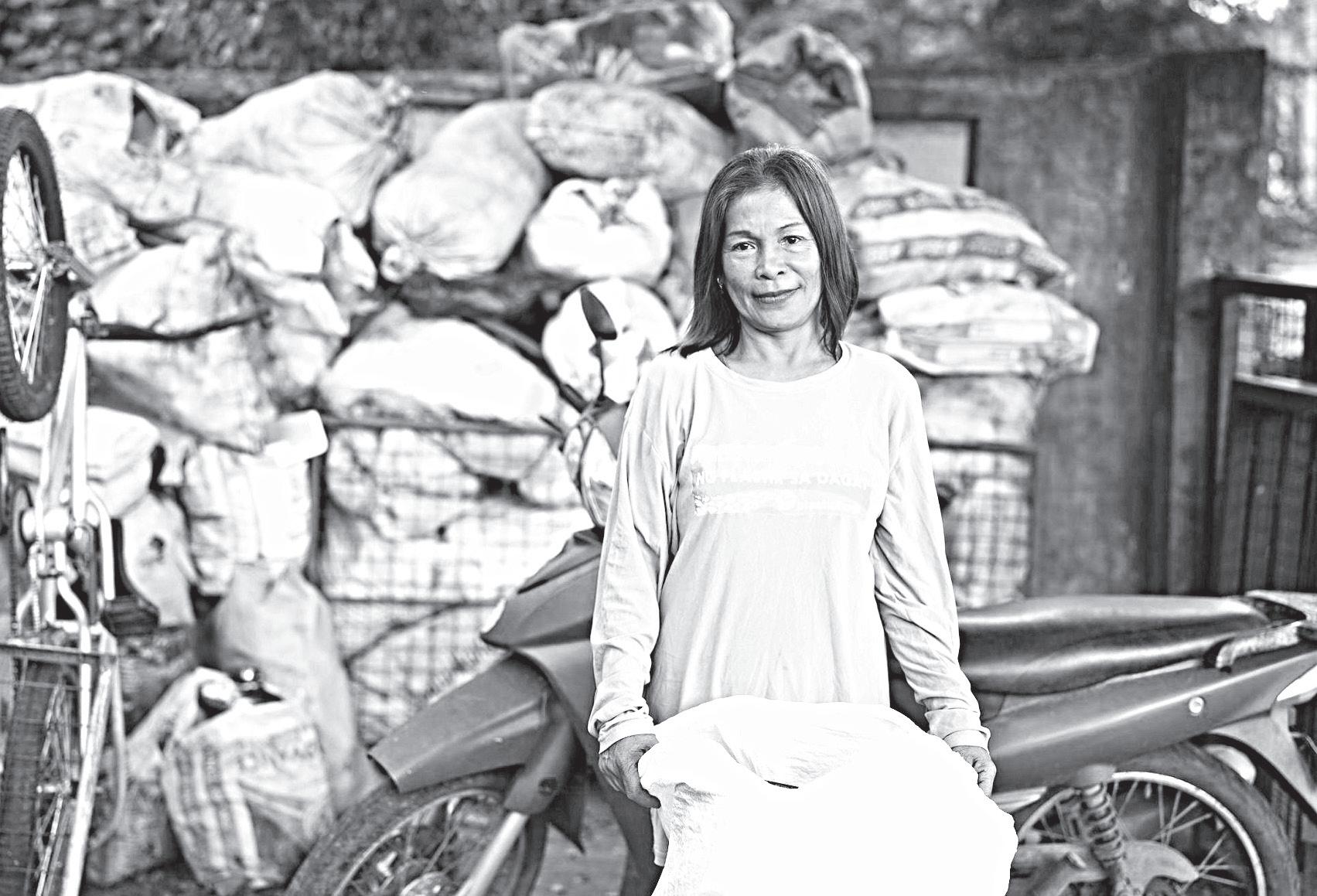
In the Philippines, Plastic Bank partnered with four waste processors, operates over 260 active collection branches that range from junk shops to public schools. It supports more than 22,900 individual collectors who exchange plastic for money and social benefits like grocery vouchers, school supplies, and digital connectivity. Its ecosystem model ensures plastic is traceable, in full alignment with the standards set by the Department of Environment and Natural Resources. So far, more than 1.7 billion plastic bottles have been collected in the country, which is equivalent to more than 35 million kg of plastic.
He said the focus is not only to support circular economy goals, but also to empower communities and build trust with stakeholders.
Dressed casually in slacks and a shortsleeved polo, Katz seemed ready to go on a beach cleanup. His manner of dressing actually says he means serious business when it comes to reducing plastic waste. He is persuasive and offers hope and solutions, rather than mouth doomsday scenarios.
Plastic Bank Philippines country manager Rene Guarin explained: “Plastic Bank offers expanded solutions, including linking plastic collection from companies to collection branches, material-specific collection to supply feedstock for recycled plastic packaging, and retail and consumer engagement toolkits that brands can use at their consumer touch points.”
8 billion bottles collected
PLASTIC Bank, which currently has operations in the Philippines, Indonesia, Brazil, Egypt, Thailand, and Cameroon, has achieved a milestone of collecting 8 billion bottles earlier this year.
This is the equivalent of over 140 million kilograms of plastic removed from the environment.
But Guarin clarified that the bank isn’t a nongovernmental organization.
“Its a primarily a business. We call ourselves a social fintech. What we do is we leverage technology to provide digital services to the informal waste collectors,” he said.
Plastic Bank members are informal waste pickers from the underserved communities. Using the app, they can earn income and avail themselves of social benefits by collecting plastic waste.
They sell the collected waste materials to junk shops affiliated with Plastic Bank.
The process ensures traceable collection, reliable income, and verified reporting through a blockchain-secured platform.
Through the process, businesses reduce their environmental footprint and support communities through EPR programs, and the recovered plastic re-enters the economy as recycled feedstock.
“Plastic Bank is a prosperity-based business that is focused on finding additionality and value in everybody and everything. The material we collect we do sell to the larger brands of the world. We share this story with them so they can tell the world they’re helping change the world,” Katz said.
One of Plastic Bank’s partners is a manufacturer of contact lenses, Coopervision. Because of its commitment to social
and environmental good, the manufacturer has committed to recover its plastic through Plastic Bank.
“In that sense, what we do in Indonesia is we provide vision care, and so our collector communities can receive glasses and assessments to see if they’re visually impaired. That’s an example of our ‘for profit’ and ‘for prosperity’ relationship,” said Katz.
Partners for the planet KATZ began this business 12 years ago. “It’s been quite a journey talking to people. But the pressure is now with the corporations and they’re now finding us,” he said. Plastic Bank’s other major partners include huge softdrink companies. The bank has also partnered with the the local governments of Naga City in Camarines Sur and General Trias City in Cavite.
“Our processing partners are an integral part of what we do because they’re the ones that receive the material that add value to the country, exporting it and earning US dollars,” said Katz.
Improve lives Plastic Bank is accomplishing its
So, how much does Pope Leo XIV bench? His trainer can’t speak to his papal power, since Robert Prevost was focused on posture and cardio capacity.
ROME—The Omega gym in Rome has long been frequented by residents of the up-market Prati district, as well as priests, nuns and monsignors from the nearby Vatican City. And also, to the delight of gym staff, the man who would become pope.
Robert Prevost came to the Vatican from Peru in 2023 to serve as the powerful head of the office that vets bishop nominations from around the world. Cardinal Prevost broke a sweat at Omega for two years until, earlier this month, he was elected Pope Leo XIV
“When the name of the pope was announced, my phone rings and my son tells me, ’Dad, it’s Robert! Robert, our member!’” Francesco Tamburlani, the owner of the gym, said in an interview. “I heard the gym staff behind him cheering.... This moved us, filled us with joy.”
A typical workout for someone of Prevost’s age, 69, was a mere warm-up for the little-known American cardinal, according to Valerio Masella, his personal trainer. Although it is hard to define an age group for personalized programs, Prevost’s plan was more befitting of men aged 50-55.
Masella would train him two or three times a week in sessions lasting up to an hour.
So, how much does the pope bench? Masella can’t speak to his papal power, since Prevost was focused on posture

and cardiovascular capacity. He ran on his favorite treadmill that faces a mural featuring famous local landmarks, among them St. Peter’s Basilica in the Vatican.
“We would start off slow and then go pretty strong, I must say. Especially a lot of resistance on the exercise bike, a very strong climb,” Masella said.
Throughout their two-year training, Masella never knew Prevost was a cardinal, nor did he
A8 SundAy, MAy 25, 2025 mirror_sports@yahoo.com.ph Editor: Jun Lomibao

ABy Josef Ramos
TOP official of the Japan B.League praised Filipino players who always rise to the challenge and show the heart and courage to stand strong before global fans.
Especially when a game is on the line.
“Filipino basketball players are so good when crunch time comes, they are real clutch players and the fans all over the world, especially the Japanese fan base, love it,” Nao Okamoto, the Japan B. League’s executive officer for international business, told BusinessMirror on Thursday during a basketball clinic at the Gateway Mall in Quezon City.
hear him utter a discouraging word. “I don’t think I’ve ever heard him make a comment about anything that wasn’t positive. He was always positive about everything—the weather, the city, the people, also for me, he said he liked the gym.”
A Vatican spokesperson didn’t reply when asked for comment.
A sporting pope isn’t new. Pope John Paul II, who was elected at the age of 58, was an avid skier and mountain trekker.
DShaun Horne is all about Detroit’s professional sports teams. But when it comes to playing, the high school junior has his eyes on one game.
“I only play golf,” Horne said after taking his turn on a simulator inside a gym on Detroit’s westside.
Embracing golf makes the 16-yearold a rarity among his Detroit peers— particularly Black high schoolers.
Coaches and community groups in the city are taking ambitious steps to spread the game’s popularity among students—noting that only about 50 of more than 14,000 high school students in Detroit’s school district play golf on school teams.
In Detroit, the biggest challenge is exposing Black youth to the game, said Jesse Hawkins, who is Black and coaches Horne’s team at Renaissance High School. Backing from local corporations and nonprofits, providing access to equipment and even college scholarships is helping.
“When you go into high schools and you go into elementary schools often times we’ll hear narratives around basketball players, football games, those things,” Hawkins said. “And golf is really not as propagated as much for our community.” In Detroit, advocates of increasing play among Black young people have partnered with some of the city’s largest businesses and community organizations.
At least two nonprofits offer programs that teach kids how to play golf. The Rocket Classic has steered nearly $10 million from the annual PGA event held in Detroit to local charitable organizations.
Of that, $800,000 has been given to programs that teach kids how to play the game. One program provides access to college scholarships to high school seniors, while upward of 700 children and teens take part each year in programs put on by First Tee of Greater Detroit.
“Golf is the why we get them there, but while we have them there we’re teaching them life skills,” said Carl Bentley, chief executive of First Tee of
Greater Detroit, which has donated a golf simulator to the school district.”
“Learning how to say ‘yes sir, yes ma’am’—shake a hand properly, how to start a conversation. We’re teaching them life skills and then we get to putting and swinging and things like that,” he added.
Among the 28.1 million Americans who played golf on a course in 2024, about 25 percent were Black, Asian or Hispanic, according to the National Golf Foundation Interest is wider when considering those who played or followed professional golf coverage on TV, in writing or via podcasts, but Hawkins said his experience as a coach suggests Black high schoolers aren’t among that audience. AP

Chicago-born Prevost’s game is tennis. On May 15, he met topranked player Jannik Sinner, who gave him a racket and offered to play during an off day at the Italian Open. Leo had said earlier in the week that he would be up for a charity match when it was suggested by a journalist.
After Prevost took over the Vatican’s Dicastery for Bishops in 2023, he said in an interview with the Augustinian Order that his new job had left him little free time
to practice his game. While the Mediterranean climate makes tennis possible year-round, the papacy will likely leave him even fewer chances to step onto a court.
Tamburlani, the Omega owner, says the Holy Father is welcome back any time he wants to squeeze in a workout.
After all, his membership’s still active.
“This would make us so happy,” he said. “We would organize our gym to guarantee his safety and his privacy. We would just need a sign.” AP

“They are so competitive as Asian quota players and we really appreciate their competitiveness,” Okamoto said. “Filipino players, like Bobby Ray Parks Jr., are true fighters who drive fans to watch games.”
Besides Parks, who plays for Osaka Evessa, five other Filipinos are plying their trade in Division 1 of the Japan.B League—Kai Sotto (Koshigaya Alphas), Matthew Wright (Kawasaki Brave), Kiefer Ravena (Yokohama Corsairs), AJ Edu (Nagasaki Velca) and Dwight Ramos (Levanga Hokkaido). Okamoto added that Japan B. League could be the Filipino players’ way of making it to the international stage and being recognized.
“Their talents are in the international level and they create significant impact every time they play,” Okamoto said. Parks and Wright supervised 3x3 game last Friday while Ramos and Ravena take their turn in the weekend.
Parks has played four years playing in league.
“I’m really grateful for the B League for giving equal opportunities to everybody,” he said. “They have the right formula to make things right. It’s beautiful that the game of basketball is international and it is going to be good for the next generation.”
KATHLYN BUGNA booked a dominant triple-title sweep—two in girls’ singles—at the Villa Aurora Racquet Club (VARAC) National Juniors Tournament in Cebu City recently. The 14-year-old sensation from La Carlota City in Negros Occidental, reinforced her status as one of the country’s most promising young players after she defended her throne in her age category at the expense of doubles partner Theriz Zapatos, 6-1, 6-1.
Bugna then showcased her grit and staying power in a grueling 16-and-under championship match against Donna Mae Diamante, 7-5, 2-6, 6-3, to complete another double.
Capping her amazing run, Bugna and Zapatos teamed up to clinch the 14-and-under girls’ doubles
title with an 8-1 rout of Sabrina Aldeguer and Isobel Alipo-On, securing Bugna another multi-title haul following similar feats in Pasig City’s MAC Crankit tournament and in previous Palawan pawnshopPalawan Express Pera Padala (PPSPEPP) legs in Iloilo, Bacolod, Roxas and Kalibo.
Bugna’s standout performance earned her another MVP citation in the Group 2 tournament presented by Dunlop, part of the national grassroots tennis talent search spearheaded by PPS-PEPP president and CEO Bobby Castro. In other finals results, Tuburan’s (Cebu) Diamante bounced back to clinch the 18-and-under girls’ title over Jannine Dela, 6-0, 6-1. Kate Chavez lived up to her billing in the girls’ 12-and-under after beating Loren Nocos, 6-1, 7-6(3); Enzo Niere, representing Bogo City, topped the 10-and-under unisex champion after drubbing Dale Diamante, 4-1, 5-4(5); Enzo Niere later shared MVP honors with Anthony Espinosa, who captured the boys’ 16-and-under crown with a stunning 6-1, 7-5 win over top seed Rizzjun Labindao. Al Jose Gairanod, Jr., seeded sixth from Kasambagan, Cebu City, stunned No. 5 Paul Verallo, 6-3, 6-3, to claim the 18-andunder boys’ singles title. Lawrence Villarin, an unseeded entrant from Consolacion, Cebu, upset Ian Gairanod, 6-4, 7-6(3), in the 14-and-under final, while Pete Niere survived a tight encounter with Gairanod, 7-5, 7-6(3), to clinch the 12-and-U boys’ title. Other doubles winners were Ian Gairanod and Pete Niere, who outlasted Gil Niere and Lawrence Villarin, 8-5, to take the 14-andunder boys’ crown; Atila Deocampo and Besper Zapatos narrowly edged Mae Diamante and Molly Tan, 8-7(5), for the 18-and-under girls’ title; and AJ Gairanod and Paul Verallo dominated Patrick Rabaya and Andrian Rodriguez, 8-2, to win the boys’ 18-and-under crown.



MAY 25, 2025 | soundstrip.businessmirror@gmail.com
Story and photos by
jingo zapata
When Red Rocks — Club Dredd’s predecessor — opened in Timog, Quezon City in 1989, one of the first bands to play there was Color It Red.
At the time, the band’s members had just graduated from high school at College of the Holy Spirit.
&

Color It Red stood out because it had three women among its members — Barbi Cristi on rhythm guitar; Maricar Florendo, keyboards; and Cooky Chua on lead vocals.

Publisher :
T. Anthony C. Cabangon
Lourdes M. Fernandez
Editor-In-Chief :
Concept :
Aldwin M. Tolosa
Y2Z Editor :
SoundStrip Editor : Group Creative Director : Graphic Designers :
Jt Nisay
Edwin P. Sallan
Eduardo A. Davad
Niggel Figueroa
Chow Jarlego
Contributing Writers :
Tony M. Maghirang
Rick Olivares
Jill Tan Radovan
Reine Juvierre S. Alberto
John Eiron R. Francisco
Pocholo Concepcion
Francine Y. Medina
Justine Xyrah Garcia
Bea Rollo
Trixzy Leigh Bonotan
Bless Aubrey Ogerio
Photographers :
Bernard P. Testa Nonie Reyes
Y2Z & SOUNDSTRIP are published and distributed free every Sunday by the Philippine Business Daily Mirror Publishing Inc. as a project of the
The Philippine Business Mirror Publishing, Inc., with offices on the 3rd Floor of Dominga Building III 2113 Chino Roces Avenue corner
Dela Rosa Street, Makati City, Philippines. Tel. Nos. (Editorial) 817-9467; 813-0725. Fax line: 813-7025
Advertising Sales: 893-2019; 817-1351,817-2807. Circulation: 893-1662; 814-0134 to 36. www.businessmirror.com.ph
Cooky, the unassuming, shy chinita who usually wore a loose Snoopy T-shirt, electrified the room with her intense singing in Rolling Stones, Doors, and other rock classics.
The boys at Red Rocks, and, later, at Club Dredd when it moved to Cubao, naturally fell in love with Cooky. Mike Villegas, who had then joined Color It Red as lead guitarist, wooed her. (Mike went on to marry Bayang Barrios, a close friend of Cooky’s.)
Nino Mendoza, then the lead singer of Situation 2, and later, the Blue Jean Junkies, won her heart.
But it was Earl Ignacio — the actor from UP Diliman whose college girlfriend was Christine Bersola — whom Cooky went steady with. Bersola went on to marry fellow broadcaster Julius Babao.
Cooky bore a son, Waki Ignacio, before she and Earl split up.
I recalled these scenes as I found myself back in Poblacion after a long time. Pobla — as the kids call the old Makati town — used to be nightlife central with good live music in pre-Covid times.
The scene has since spread out to different areas in Quezon City and BGC, but Kashmir Live in

Poblacion (4634 Molina corner Quintos, the same address where La Collina was before it closed down) has been drawing a regular crowd with its varied lineup of bands.
Kashmir Live was where Cooky’s pride, Waki, now 29 years old, played with his band, the Winstons, on a recent Saturday night.
Kashmir’s dark interiors and second-floor music hall reminded me of Red Rocks, but this one had a bigger space and the Gen Z crowd looked laid-back.
Waki was outside smoking with his bandmates when I arrived. The wait staff said it was SRO upstairs, and since there was another band still playing, I killed time downstairs and sampled Kashmir’s Indian cuisine.
The Chole Masala (spiced chickpea curry with biryani and roti) warmed the belly with fiber goodness.
Moments later, sitting near the stairs as Waki and the Winstons started playing, I looked up and took notice. The band had a groove that rocks — not hard as in abrasive, but solid enough to sway to.
Waki — looking retro in a ’70s mullet hairstyle and earrings — exuded a magnetic presence as he cranked out lead lines from his axe and sang in a clear, emotional tone.
The 29-year-old Waki Ignacio exudes a magnetic stage presence as lead singer and guitarist of his band The Winstons.

The songs, all originals, were new, Waki informed the audience. One of them, “Yugto,” had in fact just been recorded and the band gave a preview.
Funky like a P.O.T. tune but with Bamboo-like vocals, “Yugto” has ambiguous lyrics dripping with irony: “At ’di ko na alam, ba’t ang tamis ng aking padurusa…”
Early in the performance, there were instances when drummer Nathan Salera sounded offbeat in a tentative way, but that’s rock ’n’ roll — imperfect but vibrant.
The band’s keyboardist, Reisa Elginoclin, was unavailable that night, but Elis Silviya nonetheless provided some restraint but wonderful jazz fills.
Rounding off the personnel were bassist Lenard Magtira and rhythm guitarist Diego — both competent and able to match Waki’s bursts of energy.
Now I understand why Cooky has been acting like a stage mother this early. What’s great is that Waki has started his career by writing his own songs.
The metro’s live music scene has something new to get excited about.
Story by Bea Rollo
The pulse of Manila’s street culture beat louder than ever as Red Bull Dance Your Style Manila Qualifiers transformed the city into a hotbed of rhythm, freestyle, and electrifying energy at XYLO at The Palace last April 25.
As part of the Red Bull Dance Your Style Asia Tour, the Manila Regional Qualifier became a spotlight moment for the country’s top street dancers.
In true Red Bull fashion, the night pulsed with spontaneity. Each one-on-one battle was powered by a random mix of music genres, leaving no room for choreography and demanding true improvisation. But more than just technical skill, it was heart, soul, and crowd energy that determined each dancer.
The audience are the judges, who had the final say—bringing an electric layer of interaction that ignited every round.
Among dozens of fierce competitors, only one dancer came to claim the title as Manila’s champ and it is Jigoro who rose above the rest. With a blend of charisma, flow, and flawless execution, Jigoro captivated the crowd and danced his way into the National Finals.
“I’m so happy and it’s all worth it, being a full-time dancer, this is a big feat for me.” Jigoro shared after his win.
His journey is powered not just by talent, but by an unshakable community. “Despite the fierce competition on the battle stage, all the love from my fellow competitors is really one of the most memorable things to me about the competition,” he added.
Moreover, runner-up EBOY also brought fire to the floor and earned his place in the National Finals lineup alongside SUJI and SPADECKX from the Davao Qualifier.
They are part of a new generation of Filipino freestyle artists stepping into the national limelight, aiming for a shot at representing the Philippines on the world stage in Los Angeles this October.
Global stars meet local legend
The event was made even more monumental by the arrival of international street dance icons as part of the Red Bull Dance Your Style Asia Tour. Vietnamese pop phenomenon and reigning World Champion MT Pop, Japanese hip-hop powerhouse THE D Soraki, and Korean waacking queen Yoon Ji graced the Manila stop, inspiring both audience and dancers alike.
“I’ve really been wanting to come to the Philippines, and a lot of dancers from here have been messaging me to ask when I will come here. Finally, I’m in the Philippines and I’m really happy to be here.” MT Pop shared.
For MT Pop, whose journey from Vietnamese street corners to world stages has inspired many, this tour is about connecting Southeast Asia’s vibrant dance communities.
“Just keep going. Keep learning. Everybody has had (their share of) difficulties, but for me what’s important is that when we love it, we do it. Dream it. Wish it. And, do it,” he added.
Not to be outdone: Cebu
The competition continues for the best dancer hunt at the Red Bull Dance Your Style World Finals. As for the next stop, it’s Cebu. Another roster of elite dancers showcased their wits and talent to the Qualifier round, with PlayMaker emerging as champion and part of the Top 4 finalists that also included Popping Gee, Baby Titan and JPY. All 4 plus the Manila and Davao finalists now have a chance to showcase their wares—with a dream flight to Los Angeles—at stake for the National Finalist.
Who do you think will represent the Philippines in the Red Bull Dance Your Style scene?




By Wes Cabangon
ISPENT the day at the Weibo ACG World culture convention in Beijing on May 5th, 2025—a vibrant showcase of comics, animation, and games. Beyond the colorful cosplays and pop-up booths, something else stood out: the unmistakable momentum of Chinese cultural output.
China has long been considered a massive consumer market for global culture. But that narrative is shifting fast. The country is now stepping confidently into the role of exporter—of games, animation, toys, aesthetics, characters, and even short-form narratives.
According to private equity firm Epyllion’s 2025 report, 42 percent of the global growth in consumer spending on games over the past 14 years came from Chinese-made titles. This includes breakout successes like Mobile Legends and Genshin Impact (See last week’s Y2Z cover story, titled “’Genshin Impact’ creator dives into AI for growth beyond games”—Ed.). Part of the list as well is the highly anticipated Black Myth: Wukong , which has achieved remarkable commercial success.
As of early 2025, Black Myth: Wukong has sold over 25 million copies worldwide, generating approximately $1.1 billion in revenue, with about 70 percent of sales coming from China. This performance surpasses that of other major titles like Assassin’s Creed Shadows, which has sold over 3 million copies, and Baldur’s Gate 3, which has sold about 15 million copies.
Chinese publishers are growing their presence in the gaming market place Steam’s global charts. In fact, more users on the platform now operate in Chinese than in English. Meanwhile, in animation, titles like Scissor Seven, The King’s Avatar, and Nezha have become breakout IPs, showing that Chinese stories can compete—and resonate—on a global scale. Nezha, for instance, is one of the highest-grossing animated films in Chinese history and performed well across Asia.
But perhaps the most powerful vector of cultural transmission today is short-form video—and China owns the rails.
TikTok, known as Douyin in China, is

now arguably the most influential media platform on Earth. It’s not just a tool for dance trends and viral memes. It’s become a full-fledged ecosystem for content discovery, storytelling, commerce, and cultural influence. Through TikTok, Chinese characters, fashion, animation, and storytelling formats are reaching foreign audiences at scale—often without users even realizing the origin. This matters deeply for countries like the Philippines.
Filipino viewers are already immersed in Chinese cultural products: from Labubu collectibles being resold in malls, to Chinese mobile games topping the app store, to AI-generated short stories and Chinese myth-inspired comics populating social feeds. These influences shape what our youth aspire to, what creators mimic, and what our advertisers fund.
At the same time, Filipino creatives are being pushed into a much more competitive global market. While Japan and Korea have long been the benchmarks for Asian soft
power, China’s well-funded creative economy—backed by state support, venture capital, and export-friendly platforms—is now producing rival content at scale and with reach.
This shift is both a challenge and an opportunity. The Philippines must choose whether to remain mostly a consumer of imported content, or to invest seriously in its own cultural industries—developing local IPs and telling stories that reflect our own values, experiences, and humor. Filipino creators have the talent and the sensibility to succeed—but they need support to compete globally.
China’s cultural rise is not just about nerd-culture media. It’s about the reshaping of digital culture itself—from who makes it, to who spreads it, to who gets to define the future. Filipinos would do well to pay close attention—and act accordingly.
By Shaoyu Yuan Research scientist, Division of Global Affairs, Rutgers University – Newark
ISHOWSPEED, a 20-year-old American YouTuber and internet star, livestreamed hours-long tours of Chinese cities including Beijing and Shanghai in March, showcasing the locations to some of his nearly 40 million viewers.
“China is so underrated wtf,” reads one top comment. “After watching this video, I realized how foolish my previous views on China were,” reads another.
The providence of such comments isn’t clear. Nonetheless, to someone who researches the use of Chinese soft power, I find the spectacle of a young American burnishing China’s image to Western audiences hugely signifi -
cant It provides an example of how soft power norms have been upended in recent years–and how China appears to be having some success in winning over the global youth.
Soft power refers to a country’s ability to influence others, not through coercion but through attraction—by shaping preferences through culture, values and public diplomacy. Coined by political scientist Joseph Nye, the term captures how nations project power by making others want what they have, rather than forcing outcomes through military or economic pressure.
Throughout the Cold War and into the 21st century, U.S. soft power didn’t have to try that hard. It came wrapped in denim, was broadcast on MTV and blasted from boom boxes. And in China, Michael Jackson became a pop icon well before
McDonald’s or Hollywood blockbusters arrived, symbolizing a glamorous, open America that millions dreamed of. To many growing up in China in the 1990s, American culture wasn’t just entertainment–it was persuasion, aspiration, even subversion.
The US is, of course, still a cultural powerhouse; American stars of film and music continue to be recognizable around the world. But there are signs that China is chipping away at that dominance, from cinema to video games.
Meanwhile, on the smaller screens we carry in our pockets, another Chinese export has embedded itself deeply into global culture: TikTok. As of 2025, TikTok boasts over 1.6 billion monthly users worldwide.
Every minute that Western youths spend scrolling TikTok is a minute

they’re within a Chinese-designed cultural sphere. Little wonder the U.S. government has fretted about TikTok’s influence—it’s not just about data security, it’s about cultural security.
All these strands tie into a larger truth: China is rapidly building its soft power as America risks letting its own erode. At a time when the U.S. slashes foreign aid, China expands its influence through the Belt and Road Initiative and development loans. And while the U.S. curtails visas for students and scientists, China’s universities–some of which now rank in the global top 20–become more attractive destinations.
The question is no longer whether China can compete for soft power influence but whether America has a plan to hold its ground. The Conversation
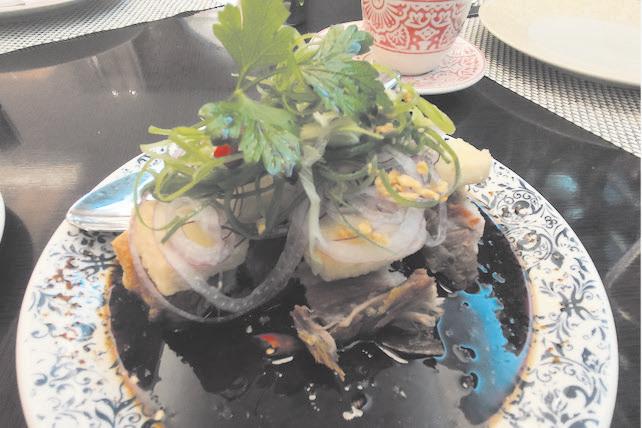
each dish has passed our standards for quality, taste, and texture.”
FPart of our collective memories as a nation include the food we ate with our family, the people who took care of us, and what we ate during times of great celebrations, grief, and even healing. The ingredients used by our mothers and grandmothers, or whoever labored in the kitchen, were also reflective of the season, the passage of time, and the creativity employed with whatever’s available.
So, it’s such a fortunate delight that Solaire North in Quezon City, which is celebrating its first anniversary this month, isn’t just for people who are into gaming. It’s also for people hankering for good restaurants with diverse cuisines in very elegant settings.
ARevering humble origins
At Manyaman, the Filipino restaurant of Solaire North, the lineup of familiar dishes doesn’t disappoint. They’re thoughtfully presented with their authentic taste profile retained.
Manyaman in Kapampangan means “delicious.” The restaurant, however, isn’t entirely a Kapampangan restaurant. Sous chef Arnel Velasquez, who was holding the fort at the time for head chef Jeffrey Fong, said, “It’s not entirely Kapampangan although we have Sisig, Sipo Egg, and Tibok-Tibok. But the name really stands for the food that we serve: delicious. Also, it should make you feel like you’re home enjoying happy food prepared by our team who makes sure
Velasquez worked at Solaire Resort Entertainment City for eight years before joining Fong at Solaire Resort North. Both properties are operated by Bloomberry Resorts and Hotels, Inc.
Elevated, the word du jour, refers to its top-grade ingredients and professional cooking techniques. Relying on the ingredients’ freshness and quality, as Velasquez mentioned, elevated may as well just mean cooking Filipino dishes very well.
For starters, Tokwa’t Baboy (P330) prompted pleasurable bites into its crispy pork cubes, and crunchy tofu soaked in sourish and spicy dipping sauce. The secret to the crackly pork skin, says Velasquez, is that the pork was boiled and dehydrated before it was fried.
Tuyo Caesar (P380) is the classic salad with a local twist. It had kesong puti, pandesal croutons, and tuyo (instead of anchovies) in its dressing. The fried egg as topping became cold easily, which should probably be better if the salad had sous vide egg instead for its warm and runny yolk.
Morcon (P1,380), one of the main dishes, consisted of Australian beef tenderloin with a hearty filling of free-range eggs, bacon, chorizo, pickles, kesong puti, gar-
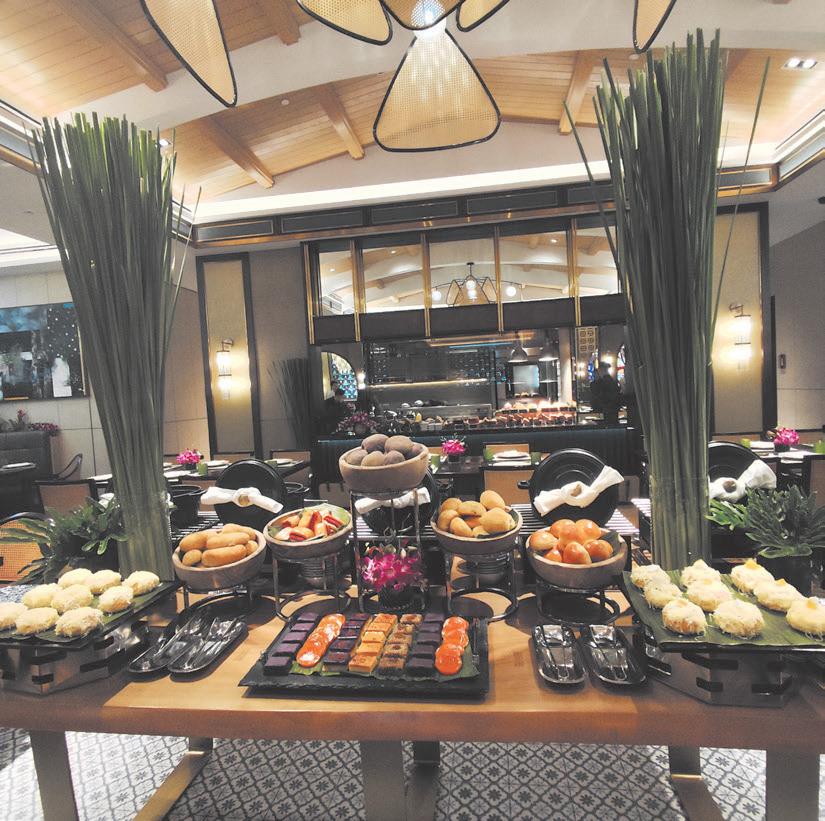
lic confit, and the meat’s jus, which makes the roulade flavorful.
Laing (P530) was prepared the classic way and on the creamy side. The restaurant, we were told, dries its own taro leaves to ensure food safety and the tenderness of the leaves when cooked.
Off the Manyaman menu— you can ask your waiter for it—is Sinaing na Isda. A classic Batangueño dish, the restaurant substituted tulingan or bullet tuna with gindara, which has a melt-in-your mouth texture. The tanginess of dried kamias and cherry tomatoes, and the slight sweetness of the fried shallot topping balanced the fatty taste of the fish. The fish was simmered in coconut cream with vinegar and other aromatics. An extra portion of this sauce is also served on the side.
For dessert, Tibok-Tibok (P150) nicely ended this hearty meal. The silky mouth feel of the carabao milk pudding with bits of toasted coconut flakes and vanilla ice cream on the side, and the warm bed of latik gave diners the unbridled choice of how this dessert should be savored in one mouthful: either cold with the ice cream or warm with a slather of the thick latik.
Manyaman has a range of beverages that can be paired with these dishes: Craft beers, whiskey, spirits, cocktails, coffee, fresh juices to local teas.
By Brian King Ong
NOTHER popular Japanese burger chain, Niku Niku Oh!! Kome, opened its doors on April 25, 2025, at Level 1, North Main Mall, SM Mall of Asia in Pasay City. Niku Niku Oh!! Kome 肉肉大米 (Rou Rou Da Mi) is a Japanese-style beef burger chain with 29 locations in Mainland China and one location in Hong Kong. The brand name
translates to “Meat Meat Rice”. Niku Niku Oh!! Kome offers Japanese beef hamburger steaks perfectly paired with freshly polished rice and egg. The 40-bar seater and open kitchen layout is perfect for solo diners to enjoy their meal prepared right in front of them.
Following its success and long queues in bustling cities like Shanghai and Hong Kong, “Filipino diners can now savor the unique solo
dining experience that has made Niku Niku Oh!! Kome a sensation.”
Beyond Just a Burger: A
Japanese Omakase Experience
More than a burger, Niku Niku Oh!! Kome delivers an omakase-style culinary journey centered around the delightful aroma and sizzling sound of freshly ground and grilled premium beef hamburger steaks. Each meal is a personalized
experience, allowing diners to enjoy their hamburger steak cooked to their preferred doneness and served alongside freshly polished Japanese rice, soup, grilled vegetables, and onsen egg for an authentic Japanese dining experience. In the Philippines, you can enjoy three kinds of steak – the original hamburg steak, the cheese hamburg steak, and the seasonal menu the mushroom gravy ham-
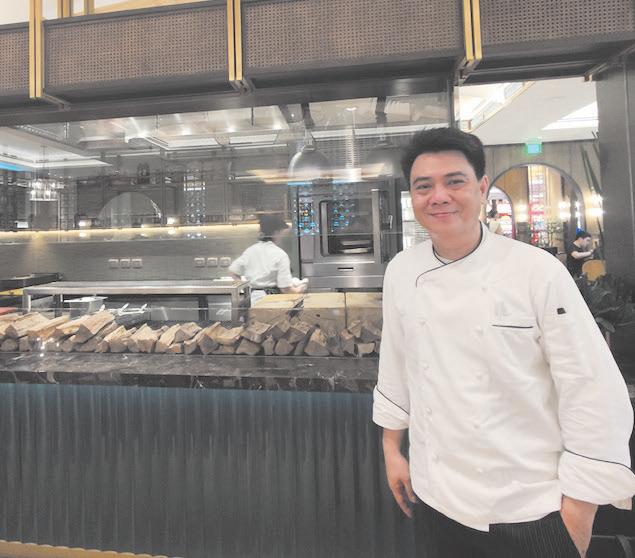
There’s more to look forward to for one’s next visit. For the main course: Crispy Lechon Kawali Menudo (P1,310), which needs no further explanation. Sipu Egg (P1,610) gone luxurious with grilled prawns and lobster (instead of small shrimps) with diced vegetables in heavy cream sauce. And ooh-so-rich Hipon sa Aligue (P1,100) consisting of prawns sauteed in crab fat, coconut milk, aromatics, and chili.
The restaurant has a Halo-Halo Cart offering either Classic Halo-Halo (P210) with the colorful sweet beans, leche flan, and ube on shaved ice with evaporated milk or the Kapampangan version (P180) with pastillas, leche flan, sweetened saba, macapuno, over shaved ice and poured with carabao’s milk or evaporated milk.
Dishes are good for sharing (three to four pax)—except for dessert, which is best savored solo. Expect to spend about P2,500 and up for a meal.
Now popular is Manyaman’s Merienda Cena weekday buffet starting from 2 pm till 5 pm for P1,300+ per person. Enjoy native treats like Goto, Pork Mami, Maruyang Camote, Squid Balls and Kikiam, Pancit Sisig, Pancit Luglug, various Kakanin, Filipino breads, Iskrambol, Halo-halo, Bibingka, and more. It comes with free Sago’t Gulaman or Kapeng Barako.
ILIPINO food is best enjoyed in the homes of cooks where sharing meals and graciousness are part of the ingredients that make it an appealing cuisine. burg steak – and presented as a set menu, complete with one fresh egg, unlimited rice and sides (broccoli and miso soup). Enjoy all three kinds of steak when you choose the Set H for only P899. To enhance the gastronomic adventure, Niku Niku Oh!! Kome offers a curated selection of delectable sauces,

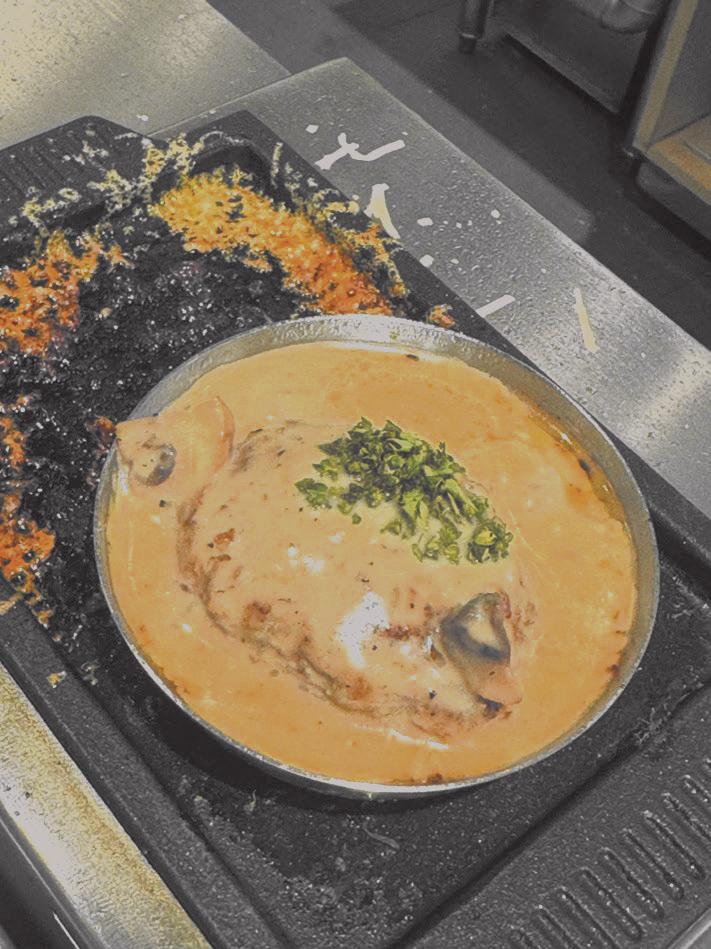

a lot of winning focal points for players and nonplayers
to enjoy. For one, it’s got a breathtaking 88.5 glass sculpture by American artist Nikolas Weinstein.
Other rewarding experiences in this 38-story complex is the breathtaking view of Sierra Madre and Laguna da Bay from its upperfloors. One can, of course, book in any of its luxurious 528 guests rooms and suites, gaze at 2,000 art works scattered all over the property, and most of all, dine and drink at any of its 14 restaurants. Meanwhile, Velasquez lets us in on a secret, “In our briefings, we’re always told to make sure food is delicious and everyone should know what we’re serving, the taste, and how we prep and cook things here. Also, the team should be in a happy mood. I think that makes a difference.”
Food prepared with joy is really the point of cooking. The hospitality of the staff likewise adds to that homey vibe. Here, time seems to stop while old and new food memories brew together in the company of good peers and family. And therein lies the true luxury at Manyaman.
• Manyaman is open from 11:30 a.m. to 11:30 p.m. It’s located on the 3rd floor of Solaire North, Quezon City. For reservations, go to https:// sn.solaireresort.com/dining/manyaman
From Japan to Hong Kong to Manila Niku Niku Oh!! Kome is one of the brands under Monogatari Corporation, a leading Japanese restaurant chain operator with 15 restaurant brands, including yakiniku, ramen, sushi and shabu-shabu, and over 700 restaurants across Japan and beyond.
This Japanese brand started in 2022 and is now expanding to the Philippines to further its brand presence across Asia, following the opening of its first Niku Niku Oh!! Kome in Hong Kong in October 2024.
Seasoned restauranteurs Eric and Emelda Teng of Mango Tree Restaurants have brought Niku Niku Oh!! Kome to the Philippines – adding another world-class international dining concept to cater to the growing Filipino global palate. After entering the restaurant business in 2010 with the first Mango Tree restaurant in the Philippines, the couple has successfully expanded the Thai restaurant chain to 13 branches and launched several international restaurant chains, including Genki Sushi, SenRyo, and Tunglok Seafood, among others. With the success of these brands—and now Niku Niku Oh!! Kome—could another Japanese dining concept be next? Niku Niku Oh!! Kome is excited to welcome the Filipino community to experience its unique take on the beloved Japanese hamburg
Level 1, North Main Mall,
of
“Superfood” label is a crown in Mega Sardines’ commitment to producing high-quality food
By Rory Visco Contributor
ONE of the country’s most ubiquitous brand of sardines, Mega Sardines, elevated the sardines to an entirely new level after it was hailed by the Medical Wellness Association (MWA), a US-based organization of the world’s largest aggrupation of physicians and wellness experts, as a “Superfood.” With this, Mega Sardines is now the first sardine brand in the Philippines and in the world to receive such a global and prestigious distinction.
According to James Michael Lafferty, Founding Board Member of the MWA, Mega Sardines stood out in all areas in their socalled “System-6 criteria” for a “Superfood.” “Filipinos value nutrition wellness, especially when preparing meals for their families. With the product being rich in omega-3, high in vitamins, and processed with world-class safety, we can say it’s more than a pantry essential— it’s a food that supports overall health.”
The MWA brought to the fore Dr. Christopher Golden, Assistant Professor at Harvard T.H. Chan School of Public Health, who pointed to a small fish-like sardines as a powerful source of essential nutrients with minimal contaminant risk. These findings helped shape the MWA’s unique System- 6 Criteria that ultimately led to Mega Sardines being recognized as a Superfood. Under the System-6 Criteria, it found Mega Sardines as a “Rich Source of Omega-3 Fatty Acids,” which is essential for brain health and reduction of inflammation; it is also “High in Essential Nutrients” that include Vitamin B-12 to make it one of the world’s most nutrient-dense foods; “Supports Heart and Metabolic Health,” which is a vital benefit that is particularly relevant in the country where heart disease is a primary health issue; “Sustainable Supply with Low Contamination Risk,” meaning sardines are small, fast-growing fish that is naturally low in mercury; Mega Sardines are “Processed with Maximum Food Safety,” being never touched by human hands during production for optimal hygiene; and
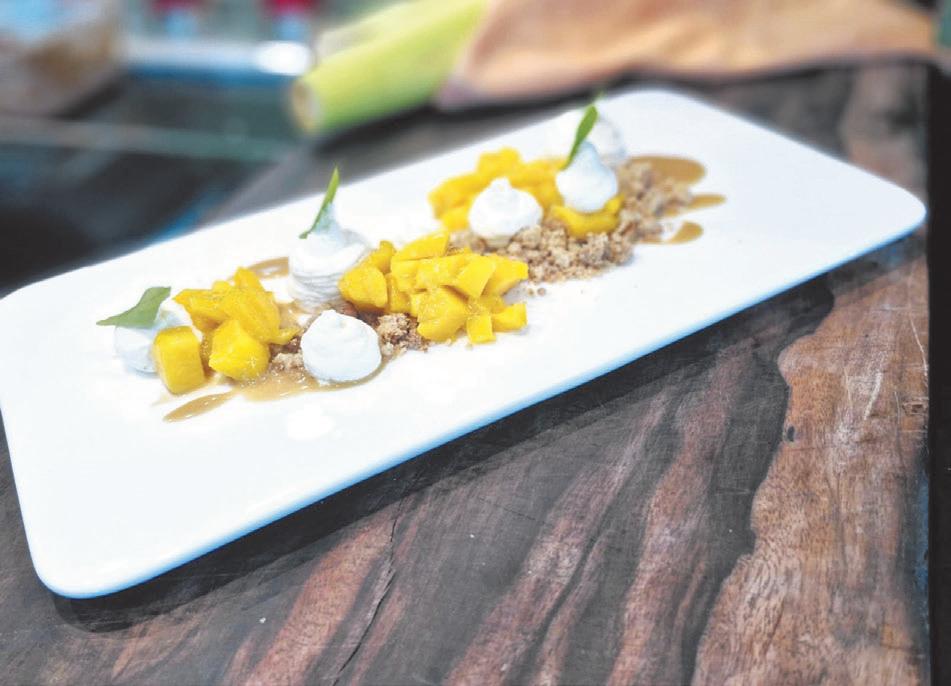
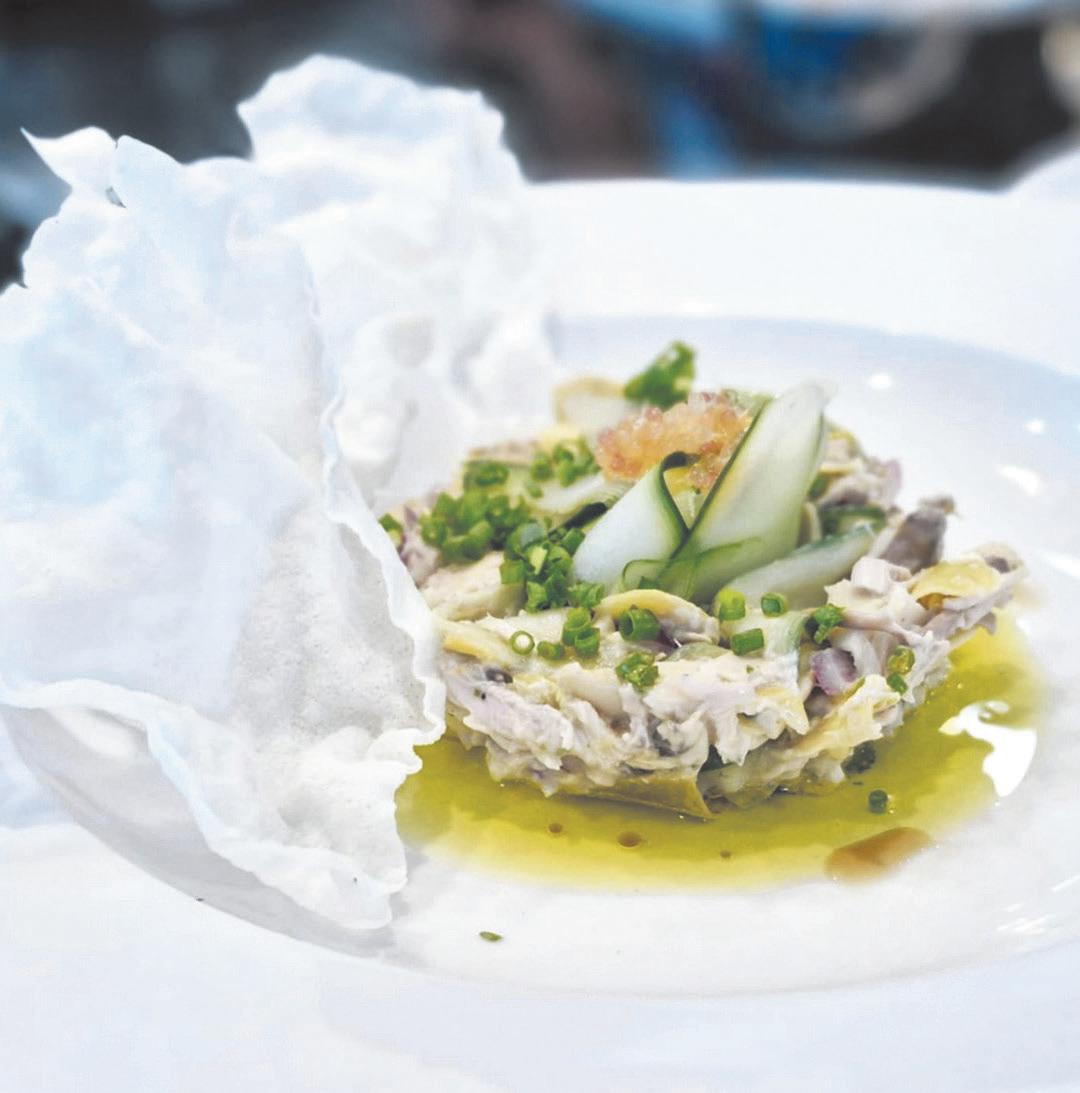
By Benjamin Layug Contributor
L“Catch-to-Can” in 12 hours to ensure freshness and nutrient preservation.
Lafferty explained that Mega Sardines is not just a pantry staple but also a wellness powerhouse. “Based on these proven health benefits, the MWA is proud to bestow its professional recommendation to Mega Sardines—the first and only sardine brand in the Philippines to receive this endorsement. In fact, it is the only seafood brand to do so. This is a proud moment not just for the brand, but for the entire Philippines.”
Tiny yet nutrient-packed superfood
IT’s tiny, humble, and packs a most affordable price range than most food types anyone can see in supermarket shelves. It is packed with glorious amounts of nutritional value like omega-3 fatty acids, high-quality protein, calcium, and Vitamin D, thus making it a true nutritional powerhouse yet still often overlooked by many. And yes, despite being highly nutritious, the lowly canned sardines are generally seen as food for people and families on a tight budget trying to make ends meet or lives on a hand-to-mouth basis.
But lately, the fish that has long been a staple in most Mediterranean diets and coastal cuisines is undergoing sort of a renaissance, being rediscovered by health-conscious eaters and sustainable food advocates alike that makes this modest fish so mighty once more.
Marvin Tiu Lim, Chief Growth and Development Officer of Mega Prime Foods Inc., the company behind brands such as Mega Mackerel, Mega Prime Quality fruits and vegetables and the newly acquired Jimm’s Coffee Mix, countered that they have always believed in making smart, nutritious food choices that are accessible to every Filipino family. “This recognition reminds us why we do what we do—to provide healthy, high-quality food that every Filipino deserves.”
The endorsement by the MWA is indeed a significant milestone in Mega Prime Foods’ 50-year journey and perfectly aligns with the company’s broader commitment to wellness not only for consumers but within the organization itself.
AST May 18, 2025, renowned celebrity chefs Morris Danzen Catanghal and Michael Francis Pastrana of Adobros Melbourne, Australia, joined Mama Sita’s to celebrate Filipino heritage cuisine through “Kwentong Adobo atbp. with Chef Morris and Chef Michael.” This special culinary event, held at Santini’s Kitchen in Makati, was a gastronomic experience of the famed adobo, the country’s most beloved dish. Here, memory met modernity as it brought together the bold flavors, reimagined classics and heartfelt stories rooted in Mama Sita’s timeless legacy.
After a career shift from music, the award-winning Chef Morris worked in Cambodia, China, and Malaysia before spending close to a decade in Italy running La Bottega Fusion Cuisine in Sicily. During his stay there, he won the Gino Cerca Chef, Italy’s premier cooking show, beating over 400 Italian chefs. However, contemplating a better future for his two sons, he decided to move to Australia in March 2023, where he now resides with the family. Bringing his culinary expertise from Italy, he took a position at Buono, a top Italian restau-
By Candy P. Dalizon Contributor
FOR 22 years, The Coffee Bean & Tea Leaf (CBTL) Philippines has thrived, and this year, the celebration is all about saying thank you. Its anniversary campaign is a heartfelt expression of gratitude to the loyal community that has shared countless moments over cups of coffee and tea.
Using the hashtag #WithLoveCBTL,
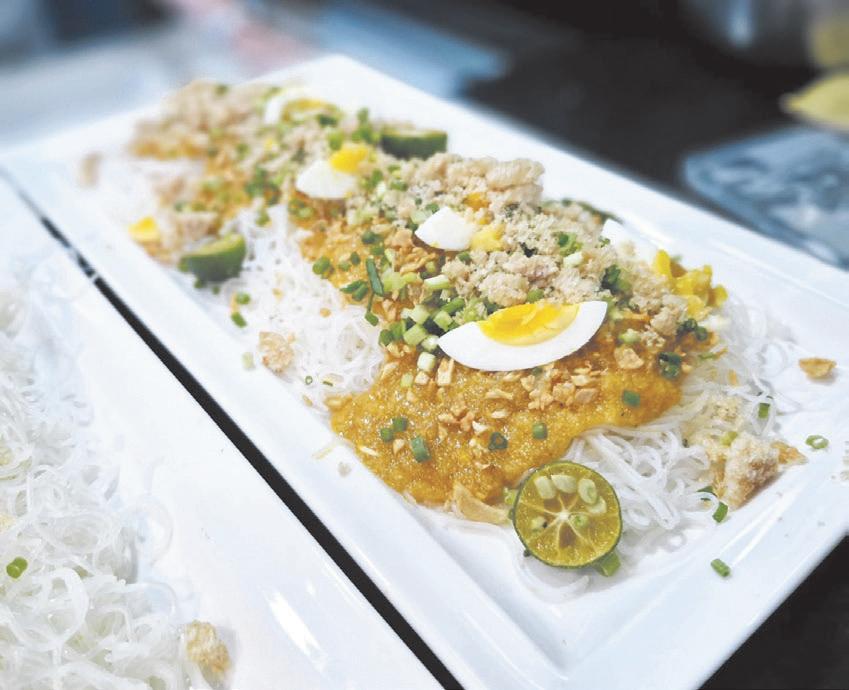
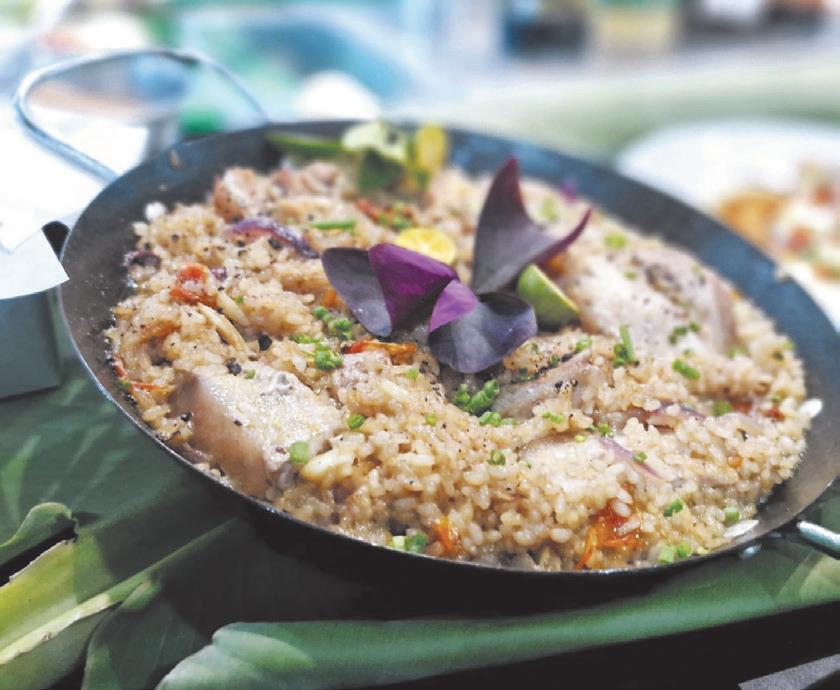

rant located in Melbourne.
Chef Michael, on the other hand, initially moved to Melbourne for international studies but, instead, graduated with a Bachelor’s Degree in Cooking and Related Culinary Arts, at Melbourne Polytechnic in 2021. Although an accountant in the Philippines, he used to own and manage multiple restaurants in Quezon Province and, just like Morris, he has two sons at the heart of his personal and professional decision-making.
The two chefs met at a Filipino gathering in Melbourne and, as fate would have it, they found common ground in their passion for food, family experience, and earnest advocacy for Filipino heritage and giving back to the community. Both share a firm belief that Filipino food deserves to be in the global spotlight. Adobo was also one of the things that Chef Michael and Chef Morris have in common, thus forming the foundation of their brotherhood and giving birth to Adobros, in April 2023, both as a supper club and a culinary initiative that aims to showcase Filipino cuisine, beyond traditional boundaries, by incorporating fine dining techniques while staying true to its roots. Using the best Australian produce to elevate Filipino flavors, it is now making waves in Melbourne.
Both chefs are passionate advocates of Filipino cuisine, sharing its rich flavors and stories across Australia and beyond. They also believe that dining is more than just a meal—it’s an experience that brings people together through flavors, stories, and creativity. Today, Adobros continues to push Filipino food forward by bridging cultures and inspiring new generations in the industry and across the globe.
Mama Sita, a legacy that spans five generations of fine Filipino cooking, was named after Teresita “Mama Sita” C. Reyes, the woman who inspired the pioneering line of Filipino sauces, spice mixes and other condiments. Her mother, Engracia “Aling Asiang” C. Reyes, known as the “Mother of Filipino Cooking,” ran the famous Filipino restaurant Aristocrat with her family. Mama Sita’s products, known for their quality and use of time-honored recipes, are available globally.
The gathering featured a live cooking demonstration where both chefs showcased the best of Filipino cuisine with a modern twist, inspired by a unique perspective shaped by international experiences yet deeply rooted in heritage. Grounded in tradition, yet infused with global taste, the duo’s creations tapped into fond memories. Chef Morris creatively reinterpret-

ed the typical adobo, known for its soy sauce, vinegar and garlic notes, with his Adobo na Kinagisnan, using Mama Sita’s All-Natural Vinegar. In a daring twist, Chef Morris also took Sisig to the next level by using octopus, incorporating a balanced combination of savory and tangy flavors with Mama Sita’s Toyo & Kalamansi.
Chef Michael, on the other hand, freshened up the palette with his Kinilaw na Puso ng Saging, developing its flavor profile with Mama Sita’s All Natural Sukang Tuba. Also prepared by the duo was Pansit Palabok (a tasty and celebratory noodle dish with a rich shrimp base), Beef Pares (a hearty and meaty stew with fragrant soybased vinegar) and, for dessert, Mama Sita’s Samalamig Geli Cooler with its perfectly sweet brown cane sugar syrup.
Joining both chefs at the kitchen was Chef Nancy Reyes Lumen. Also known as the “Adobo Queen” (Nancy is the author of the best-selling The Adobo Book), she is a Filipino food advocate, writer, stalwart cuisine ambassador and niece of Teresita Reyes. All three engaged in conversation about Filipino food, culture, and stories behind the dishes we love. This cooking demonstration was followed by a tasting session.

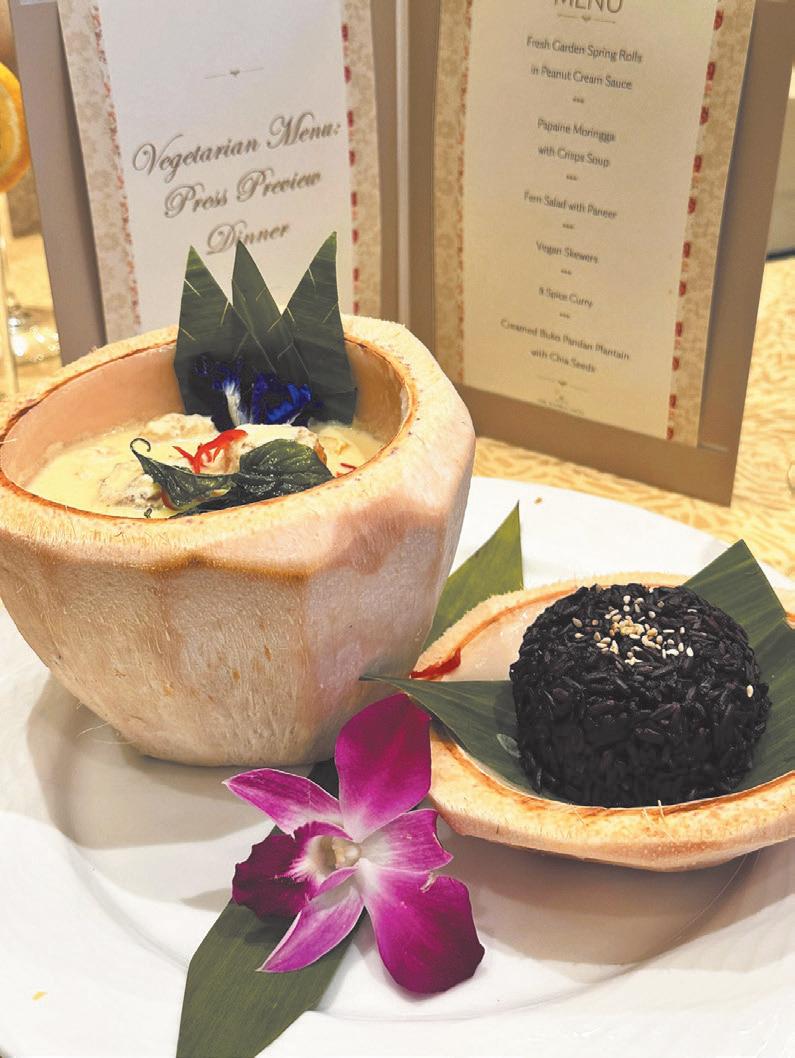
IT’S no surprise that an increasing number of people all over the world have opted to adopt a vegan or vegetarian lifestyle in recent years. Going vegan or vegetarian is a personal choice that has a profound impact on individual health, animal welfare, and the environment.
Not a few are discovering new ways to nourish their bodies by adhering to plant-based eating habits. Whether it’s just a few meals a week or a complete transformation, the benefits of reducing animal product consumption is not only meaningful but is also an ideal way to align lifestyle and values.
In line with this, the Manila Hotel recently launched a curated selection of vegan and vegetarian dishes designed to be showcased at its dining outlets and banquet of-

ferings. During the press preview that took place at the Champagne Room last May 7, 2025, we were treated to a wonderful selection of vibrant and palatable dishes that included Fresh Garden Spring Roll
in Peanut Cream Sauce, Papaine Moringga with Crisps Soup, Fern Salad with Paneer, Vegan Skewers, 8 Spice Curry, and Creamed Buko Pandan Plantain with Chia Seeds. Thoughtfully prepared, the
multi-course preview of the vegetarian fine dining menu was executed by Chef Riza Shanti Lim, supervised by Executive Chef Konrad Walter and assisted by The Manila Hotel’s culinary team.
A consultant chef at The Manila Hotel, Chef Riza is an internationally certified holistic health practitioner, clinical nutritionist, and plant-based culinary advocate. Her expertise is key to the conceptualization, development, and presentation of each dish.
And it showed in the samplings that were served during our dinner. The knock on vegan and vegetarian dishes is that they often compromise on taste. These ones didn’t and it all started with a yummy note with the Fresh Garden Spring Roll in Peanut Cream Sauce.
From then on, it was one de-
By Rory Visco Contributor
THERE has been a significant shift in the country’s hospitality sector in recent years, primarily toward the incorporation of plant-based menus since many Filipinos have begun to embrace the value of living healthier lifestyles and increased consciousness of the environment has become of primary importance.
This shift pushed players in many hotels, resorts, and restaurants to adapt by offering plantforward options that cater to both local and international palates. Thus, it has become imperative for hospitality industry players globally to make moves that are more aligned to global sustainability goals, reduction of carbon footprint when it comes to food operations, and diverse food offerings to attract a broader market.
And this is why hospitality group The Ascott Limited Philippines has made the commitment to reconfigure about 30 percent of its menu offerings to plant-based op -
tions by 2027, thus making it the first in the country’s hospitality sector to formalize such a comprehensive dining initiative.
Dramatic shift IT starts with a 20-percent shift across Ascott’s entire portfolio of over 17 properties nationwide, making the group a pioneer in sustainable hospitality practices within the Philippines, demonstrating meaningful progress toward environmental responsibility while establishing new benchmarks for the industry through innovative menu development. The commitment started with
its Slow Food Community Linkages program at Citadines Bacolod City. Since October 2024, the property has partnered with local producers such as coffee farmers and Criollo cacao growers to indigenous fruit cultivators, spotlighting local ingredients like rare Bugnay wild berries and naturally grown coconuts and created signature culinary experiences—from specialty coffee that features local beans to creative plant-focused dishes using regionally sourced produce.
“This commitment reflects our dedication to sustainable hospitality and meeting evolving guest pref-
erences,” according to Caleb Han, Food and Beverage Director of The Ascott Limited Philippines. “As part of our Ascott CARES framework, we recognize the significant environmental benefits of plant-based foods and are proud to lead this transition in the Philippine market. This initiative complements our broader sustainability goals and reinforces our position as an industry leader in responsible hospitality practices.”
Ascott CARES is Ascott Limited’s global sustainability program that’s built on five core pillars— Community, Alliance, Respect, Environment, and Supply Chain—
petals meet pour-overs, and memories blossom anew.
This is not just a café—Vine Café Lounge is a curated experience for the modern-day romantic, the kind who journals over lattes, arranges floras on their Sunday tables, and believes in the beauty
lightful serving after another. The Papaine Moringga with Crisps Soup was another standout. Served with papaine (papaya), squash, pureed moringa leaves and soya-based crisps, this fascinating, green-colored soup has a soothing and uplifting effect.
The Fern Salad with Paneer salad consisted of fresh fern (pako) greens, paneer bits, diced watermelon and cherry tomatoes served with light and tangy dressing, resulting in just the right amount of sweetness, juiciness and crunchiness—all the “ness” in one package.
Easily the favorite dish among the invited members of the media (myself very much included) is the Vegan Skewers. Hard to believe they’re not actually meat, these roasted veggies and mushrooms are bursting with umami flavor and further punctuated with tasty barbecue sauce. Not surprisingly, many of us were requesting for additional servings. Although it looks like a dessert with its elaborate presentation, The 8 Spice Curry is actually a rich and filling entrée that is intriguingly paired with nutritious black rice. Served inside a young coconut, it is filled with stewed coconut milk that comes with cauliflower, squash, and fried tofu.
designed to embed responsible practices throughout all facets of its operations.
Food tasted better—and healthier MANY believe that plant-based meals can help combat lifestylerelated illnesses such as heart disease, diabetes, and obesity, while from a culinary standpoint, it encourages creativity in the kitchen and redefines Filipino dining preferences by celebrating vegetables, legumes, and native ingredients in innovative ways. Ultimately, this can hopefully lead to more sustainable food systems, support local agriculture, and influence a cultural shift toward more mindful and balanced eating habits.
According to Marielle Lagulay, Sustainability Program Manager at Lever Foundation, a US-based public charity which partnered with Ascott to develop this pioneering policy group, local and international guests have become increasingly mindful about their food choices for their personal well-being, and the impact on animals and the planet. Plant-based dining has already gained significant ground in
chia seeds. Can’t help but easily be reminded of the classic ginataan minus the bilo-bilo. It was a wonderful way to cap off a wonderful evening of vegan and vegetarian delights. And these healthy choices are only the beginning as Chef Riza promises more different course of vegan and vegetarian dishes at The Manila Hotel. For his part, Chef Konrad says the enhanced offerings are part of the hotel’s “commitment to wellness, sustainability, and evolving with the modern palate, without compromising the richness, tradition, and flavor that define Filipino cuisine.”
The new vegan and vegetarian dishes will soon be available for private banquets, special events, a dedicated station at the buffet in the renowned Café Ilang-Ilang, and a la carte dining at the hotel’s iconic restaurants—Champagne Room, Red Jade, and Lobby Lounge—as well as through in-room dining and M Takeout. For inquiries, call +632 8527 0011 or +632 5301 5500, email info@themanilahotel.com, or visit www.manila-hotel.com.ph.
Asia, and the Philippines stands out notably, where numerous studies have showed Filipinos to be the most receptive to plant-based foods among all Asia-Pacific markets.
“What makes Ascott’s leadership in this space so commendable is their recognition that this is not a passing trend, but a datadriven movement that warrants a thoughtful business response. The group has consistently anticipated and adapted to evolving consumer preferences—making this initiative a natural extension of their forward-thinking philosophy.”
“Most importantly, this initiative marks a meaningful milestone not just for Ascott, but for the wider hospitality industry in the Philippines,” she added. “As our country steadily catches up with the plant-based movement gaining momentum across Asia, Ascott’s leadership reflects a timely and thoughtful response to this regional shift, aligning with evolving consumer values while advancing meaningful sustainability goals. It sets a strong example for other hospitality brands looking to innovate and lead in this changing landscape.”
By Bless Aubrey Ogerio
IF you are craving for an elevated Japanese experience in the South—think silky ramen, crispy tempura, savory yakitori, and now, sushi that borders on art—well, you’re in luck.
Last April 21, 2025, The Standard Hospitality Group officially reopened Kiwami at Alabang Town Center, now sporting a refined new look and an even sharper culinary vision. This relaunch isn’t just a facelift, but a statement that Japanese master kitchens deserve more than nostalgia; they demand reinvention.
If you have dined at Kiwami’s first branch in Bonifacio Global City or are a loyalist of The Standard Group’s culinary heavyweights like Yabu (that iconic tonkatsu), Ippudo (comfort ramen royalty), Hannosuke (tempura perfection), and Hachibei (smokekissed yakitori), then you know the group does not do things halfway.
But just when you thought Kiwami had done enough to simulate a Tokyo back alley food crawl, they push even further. The
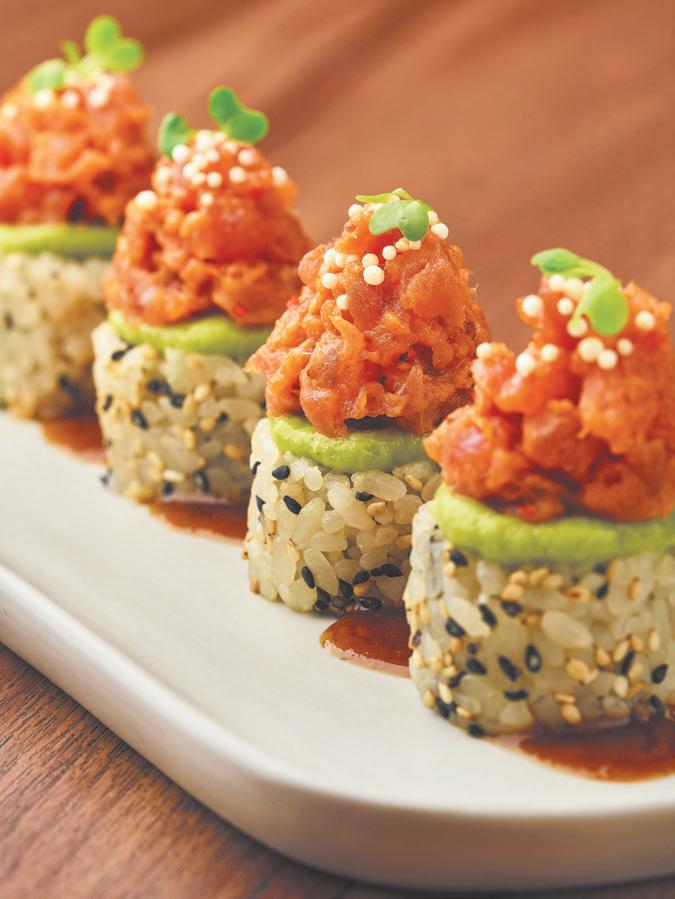
TAlabang Town Center branch now proudly debuts another master kitchen, and it’s all about sushi.
Sushi reimagined KOYO now brings its contemporary sushi craft to the South.
The Standard Group hails it as its boldest kitchen yet, melding age-old Japanese techniques with modern culinary edge. At the helm is Chef Mark Manaloto, a Filipino talent who sharpened his skills in omakase institutions across Chicago and New York. His creations are defined as technical but expressive.
Koyo’s menu is a playground of handrolls, reimagined makis, and sashimi that blends respect for Japanese tradition with the courage to break its rules. Each handroll comes with a plastic designed to preserve its snap-crisp seaweed shell until the moment it hits your lips. It’s a sensory experience, though possibly a sustainability issue.
Expect classics like the California Crunch, made with kani salad, shio koji, and avocado mousse, or the Spicy Tuna roll featuring tuna loin, chili aioli, and
and spinach.
For crispy bites, there’s the Tuna Edamame introduced with soy ginger with edamame purée and a kick of spiced tenkasu, while Chirashi combines salmon, snapper, tuna, ikura, and tamago.
Scallop Aburi surprises with yuzu miso, mango, and pear, while Unagi Tamago is served with sweet potato, garlic aioli, eel sauce. If you want serious depth, the Ebi Katsu, filled with creamy crab and crowned with a cured quail yolk, delivers in richness and crunch.
Sashimi, meanwhile, is just as layered in flavor and presentation. The Tuna Ponzu sits in a tangy yuzu bath, garnished with roastedpickled rakkyo and mango; the Salmon Soy Ginger is flash-brûléed with orange segments for a smokysweet finish.
Each sushi piece ranges from P170 to P280, and sashimi is from P600 to P620—steep, perhaps, but the payoff is flavor-packed and chef-calibrated. Aside from the food, you’re paying for technique.


New flame
AS IT the sushi from Koyo were not enough, Kiwami’s south branch is upping the ante with Hibachi Large Plates, which is a menu crafted by Sydney-based chefs Max Smith and Douglas Barker, whose collective resume includes Michelin-starred kitchens.
The concept? Grilled, communal, and bold.
Expect meats kissed by Binchotan charcoal: Charcoal Chicken, Pork Chop, Blue Marlin, Kampachi, and Hanger Steak. All of these are designed for sharing, and all best served with a bowl of Japanese rice.
Also, maybe a warning: the serving sizes are not for the faint of appetite. From first bite to last, the flavors are assertive and smoky.
“This menu highlights precision, technique, and innovative twists, ensuring every bite is rich, smoky, and unforgettable,” the group stated.
Kiwami ATC, located at the G/F Corte de las Palmas in Alabang Town Center, is open from 11 am to 9 pm on weekdays and from 10 am to 9 pm on weekends.
EA has long held its place in everyday moments and grand traditions. Beyond its well-known health benefits, it has become a fixture in popular culture, celebrated for its versatility, elegance, and ability to adapt to the changing tastes of the times. At Newport World Resorts, this timeless beverage is honored through thoughtfully crafted high tea experiences that embrace sustainable sourcing, wellness, and a refined sense of indulgence.
Yawaragi at Hotel Okura Manila presents a Japanese-style afternoon tea through its seasonal Haru Afternoon Tea. Spring marks the peak of matcha’s freshness and complexity—making it the perfect time to enjoy its vibrant, layered flavors. This exquisite set features prized teas from Fukuoka, Japan, including Yame Sencha and Matcha, celebrated for their depth and craftsmanship. Priced at P2,150++ per set, good for two guests, the Haru Afternoon Tea is available until May 31, 2025. It will be followed by a summer-inspired version, Natsu, launching in June 2025. For reservations, contact 0917 842 9067 or 02 5318 2888. Inquiries may also be sent to yawaragi.service@ hotelokuramanila.com.
Hilton Manila introduces its Tea Society experience at Madison Lounge and Bar, offering a bespoke setting for elevated social gatherings. Designed for birthdays, bridal showers, reunions, and corporate socials, the experience includes a choice of two distinctive themes:



Gatsby’s Glamour, inspired by the opulence of the 1920s, and Dapper’s Lounge, which captures a more contemporary, polished aesthetic. Each gathering is enhanced by music, curated décor, and a menu of either Western-inspired delicacies or Filipino favorites. Priced at P2,500++ per person with a minimum of 20 guests, the Tea Society package exemplifies Hilton’s signature hospitality. For more information, guests may contact 0917 851 4044 or email mnlph_F&Binquiries@hilton.com.
in the
of
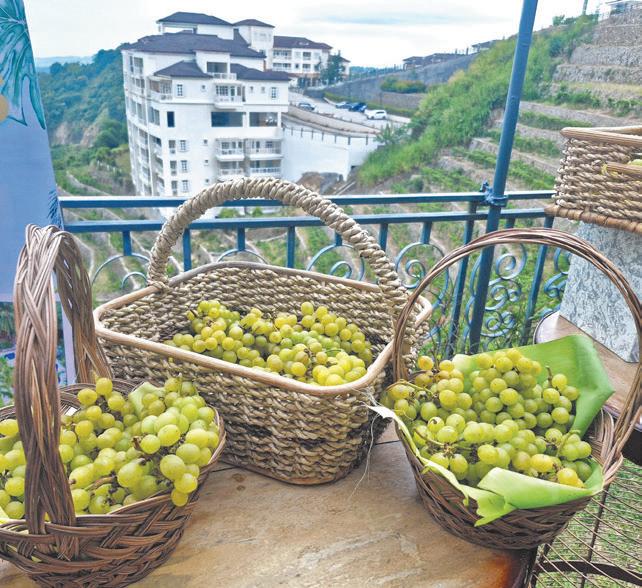
LText and photos by Benjamin Layug
AST May 3, 2025, Twin Lakes Hotel, a picturesque retreat known for its old European architectural style, rustic charm, panoramic views of Taal Lake and Volcano, cool mountain air and proximity to nature, offered a European-inspired countryside experience to guests and invited media as they rediscovered the joy of the grape harvest season via its First Grape Harvest Festival.
Traditionally, the grape harvest season is a time of celebration in different European countries that brings people together to share in the bounty of nature and the joy of community. Now, you don’t have to book a plane ticket to Europe to experience this countryside lifestyle. Launched in 2013 and developed by property giant Megaworld Corporation’s sister company and tourism estate developer Global Estate Resorts, Inc. (GERI), Twin Lakes is the country’s first and only vineyard resort township community, a truly unique and remarkable feature that separates Twin Lakes from the others.
Its sprawling, one-hectare real grape vineyard, managed by GERI’s affiliate Emperador Group and overseen by agriculturist Efren Magpantay, is carved into terraces along the hillside. Aside from this, just about every place here speaks of grapes and wine – from its inhouse, Wine Gallery to it Vineyard Residences, which covers 2.3 hectares and comprises three, seven-storey towers aptly named as Shiraz, Merlot and Chardonnay.
The 65-pax Wine Gallery, with its Frenchinspired industrial architecture, features exquisite artwork (sourced from the Fundador bodegas in Spain), sophisticated furnishings (liquor bottle lamps, Toile de Juoy shades, etc.) and a grand window that is reminiscent of Victor Laloux’s Musee d’Orsay clock that chimes every hour.
During the Grape Harvest Festival, we were invited to take part in a meaningful tradition, a rare opportunity to experience fully immersive vineyard living in the Philippines, combining hands-on activities and countryside relaxation. The highlight of the festival was a scenic walk through the estate’s grape vineyard and the chance to hand-pick, plump,
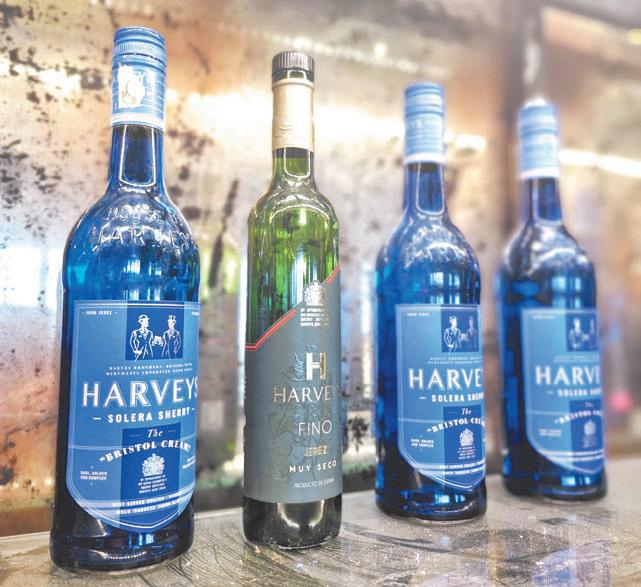
tea. Priced at P750
per person and available until June 30, 2025, it is ideal for a
afternoon
or a casual yet
get-together. For more information on Newport World Resorts, visit www.newportworldresorts.com and follow @ newportworldresorts on Facebook, Instagram, and TikTok. Join Newport World Resorts Viber Community at https://newportwr.com/nwrvibercommunity for exclusive updates. Every visit is made more rewarding with an Epic
and

ripe grapes straight from the vine. Guides also gave us educational insights into the different grape varieties and harvest cycle (between March and April every year). Three grape varieties are cultivated in the vineyard —Catawba grapes, Brazilian hybrids, and Red Cardinals. Catawba grapes are a red American grape variety, grown predominantly along the East Coast of the United States, used for wine as well as juice, jams and jellies.
Brazilian hybrid grapes, combining the disease resistance and cold hardiness of the native grapes with the flavor profiles and winemaking potential of the European varieties, are a result of breeding between native Brazilian grape species and the more widely known European Vitis vinifera grapes. Red Cardinal grapes are a red table grape variety, originated in California in 1939, known for their large, dark red berries, with a pearly grey finish, that are popular as a table grape and for making raisins).
Probably for the first time in the country, we all got to witness grape stomping done, alternately, by beauty queens Cassandra Chan (Miss World 2022 1st Princess), Gwendolyne Fourniol (Miss World Philippines 2022) and Ashley Subijano Montenegro (Miss Eco International Philippines 2022).
Also known as grape treading or pigeage (French), this traditional and ancient winemaking method, where grapes are crushed by bare feet in a large vat to release their juice and initiate fermentation, is both a labor-intensive part of the winemaking process and a fun, interactive experience for visitors to experience a piece of winemaking history. The celebration was capped with a sumptuous buffet dinner, at the Wine Gallery, featuring grape-inspired dishes.
The resort has no winery yet but it is a long-term goal of Emperador Distillers, Inc. (EDI) to put one up to produce wine commercially. In the meantime, you can always order a glass or a bottle of the hotel’s best Harveys



Edited by Jose F. Lacaba
Film Development Council of the Philippines partners with iACADEMY to mount 1st Academic Film Society 2025 meet
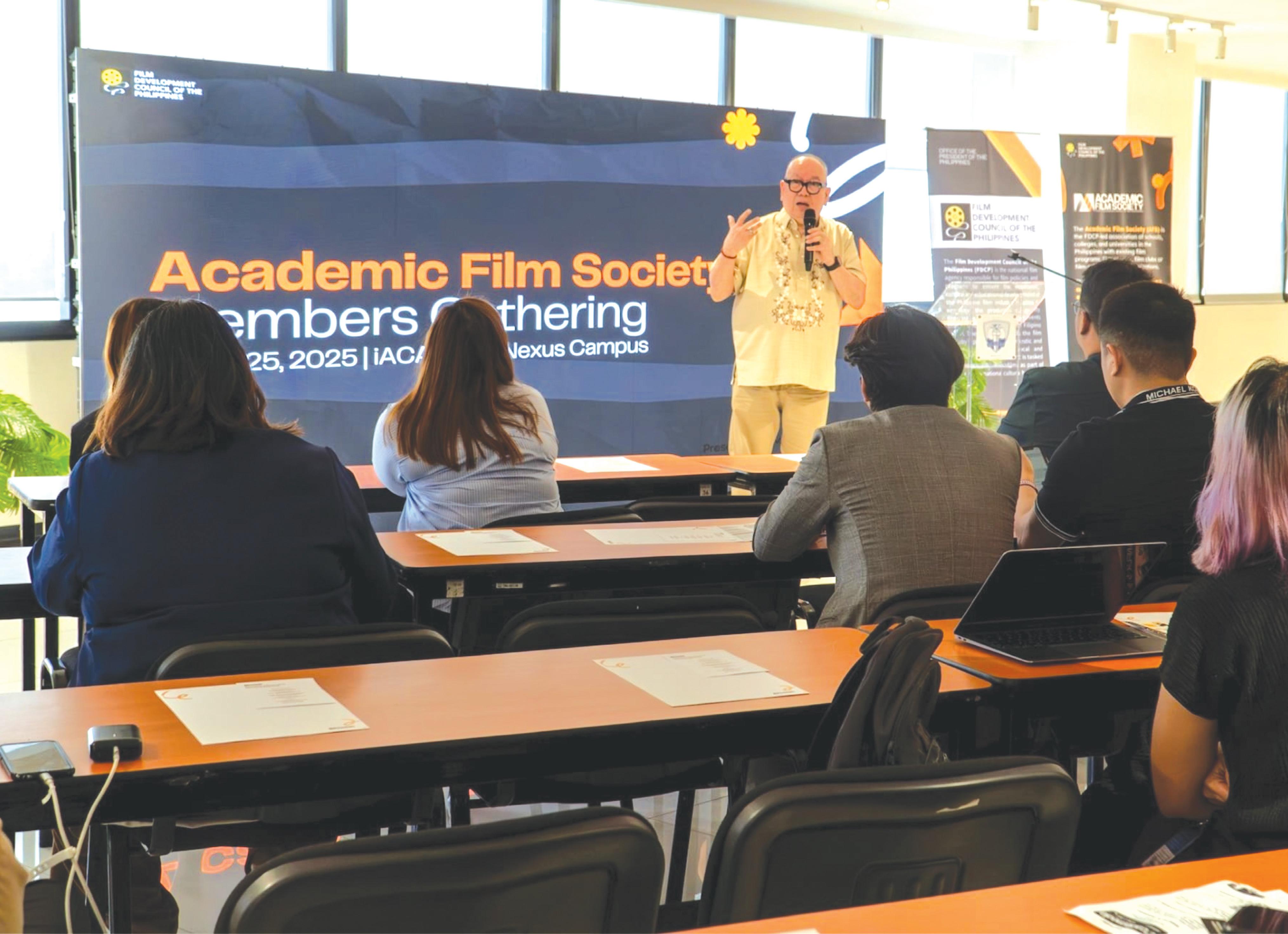
By Seymour B. Sanchez
THE Film Development Council of the Philippines (FDCP) recently co-hosted with iACADEMY the first Academic Film Society meeting for 2025, bringing together representatives from universities, colleges, and high schools nationwide that offer film subjects and other film-related programs.
The FDCP is strengthening its commitment to the future of Filipino filmmaking. The national agency aims to empower students by providing access to workshops, financial assistance, and other essential support to hone their skills and contribute to the growth of Philippine cinema.
The AFS is an FDCP-led initiative which aims to cultivate a strong community of student filmmakers. Beyond student development, the AFS also promotes the use of film in broader academic activities and offers training for educators on effectively integrating film in teaching.
DIALOGUE, COLLABORATION THE gathering at iACADEMY’s mul-
tipurpose hall served as a platform for dialogue and collaboration, with a key focus on outlining the FDCP’s plans and programs for the first half of 2025 to benefit AFS member institutions and their students.
iACADEMY President and Chief Operating Officer Raquel Perez-Wong welcomed the attendees to the event. “Today, we come together not just as individuals but as a thriving community of filmmakers, educators, and visionaries dedicated to shaping the future of Philippine cinema.”
“As we embark on this gathering, let this be more than just an exchange of ideas. Let it be a spark for new collaborations, a catalyst for bold storytelling, and a celebration of the art
that unites us all,” Perez-Wong shared.
FDCP Chairman and CEO Jose
Javier “Direk Joey” Reyes thanked the educators and institutions for attending the event. He stressed the importance of education and what Wong described as their “unwavering belief in the power of film” in keeping the industry alive.
Reyes emphasized the importance of the AFS in bridging the gap between academic learning and practical filmmaking. He highlighted the need to support educators and provide students with opportunities to explore their unique voices and perspectives through cinema.
Moreover, he discussed the crucial role the AFS plays in promoting film
literacy and appreciation among the student population by encouraging film-related events with educational components, such as talks, workshops, and fora, to cultivate a more film-literate society.
FILM EDUCATION
THE meeting identified the diverse needs of schools and explored how AFS can best serve their institutions, discussing the progress of film education in member institutions for 2025. Towards promoting Juanflix, the FDCP channel, the AFS said it would offer educational subscriptions to members.
Sunday, May 25, 2025
Continued from page 1
Other issues tackled included: realignment of the FDCP events calendar for student and faculty participation, discussions regarding the faculty symposium partnership between the Philippine Association of Communication Educators and FDCP scheduled in the coming months, and the possibility of a second edition of the Film Education Convention in 2026. Project Development Officer Korina Dela Cruz presented the filmrelated events supported by AFS and what the FDCP can offer to the members as part of its mandate.
WORKSHOPS, MASTERCLASSES
THE FDCP is organizing workshops led by local film experts and collaborating with international groups to provide specialized training, such as the “Cinematic na Authentic: Finding your Voice in Visual Storytelling” workshop in partnership with the Mowelfund Film Institute. This program is an intensive hands-on program focused on cinematography.
Student Film Assistance Program
The FDCP continues to offer the SFAP, providing financial grants up to P50,000 to eligible student filmmakers from AFS-registered institutions for their thesis or capstone projects. This program alleviates financial constraints, enabling students to realize their creative visions.
Access to FDCP Facilities and Platforms AFS members can utilize FDCP resources, including cinematheque centres across the country for screenings and events, and JuanFlix: The FDCP Channel for virtual film festivals, offering valuable platforms for showcasing student work.
Industry Connections and Networking
The FDCP facilitates connections between emerging filmmakers and industry professionals through various events and programs, providing invaluable networking opportunities.
Curated Film Screenings and Talkback Sessions
The AFS organizes screenings of exemplary student short films, followed by engaging talkback sessions with the filmmakers to foster a deeper understanding of the craft and provide constructive feedback.
JuanFlix: The FDCP Channel FDCP Exhibition Head Jeanivieve Lopez-Marcos promoted JuanFlix educational subscriptions and programs to advance film education nationwide.
The open forum, moderated by FDCP Technical Consultant for Academic Linkages Seymour Sanchez, addressed benefits for AFS members, membership concerns, and aligning partner schools with the FDCP’s 2025 event calendar.
Representatives from different schools discussed film education, shared best practices, and explored opportunities for collaboration on school projects.
The event concluded with a renewed sense of enthusiasm and commitment from the FDCP and its member institutions. The collaborative spirit and upcoming programs promise a dynamic year for film education, paving the way for a brighter future for Philippine cinema with a new generation of talented and wellequipped filmmakers.
The FDCP continues to encourage academic institutions and student film organizations to join the AFS and become part of a growing community dedicated to the art and craft of filmmaking.
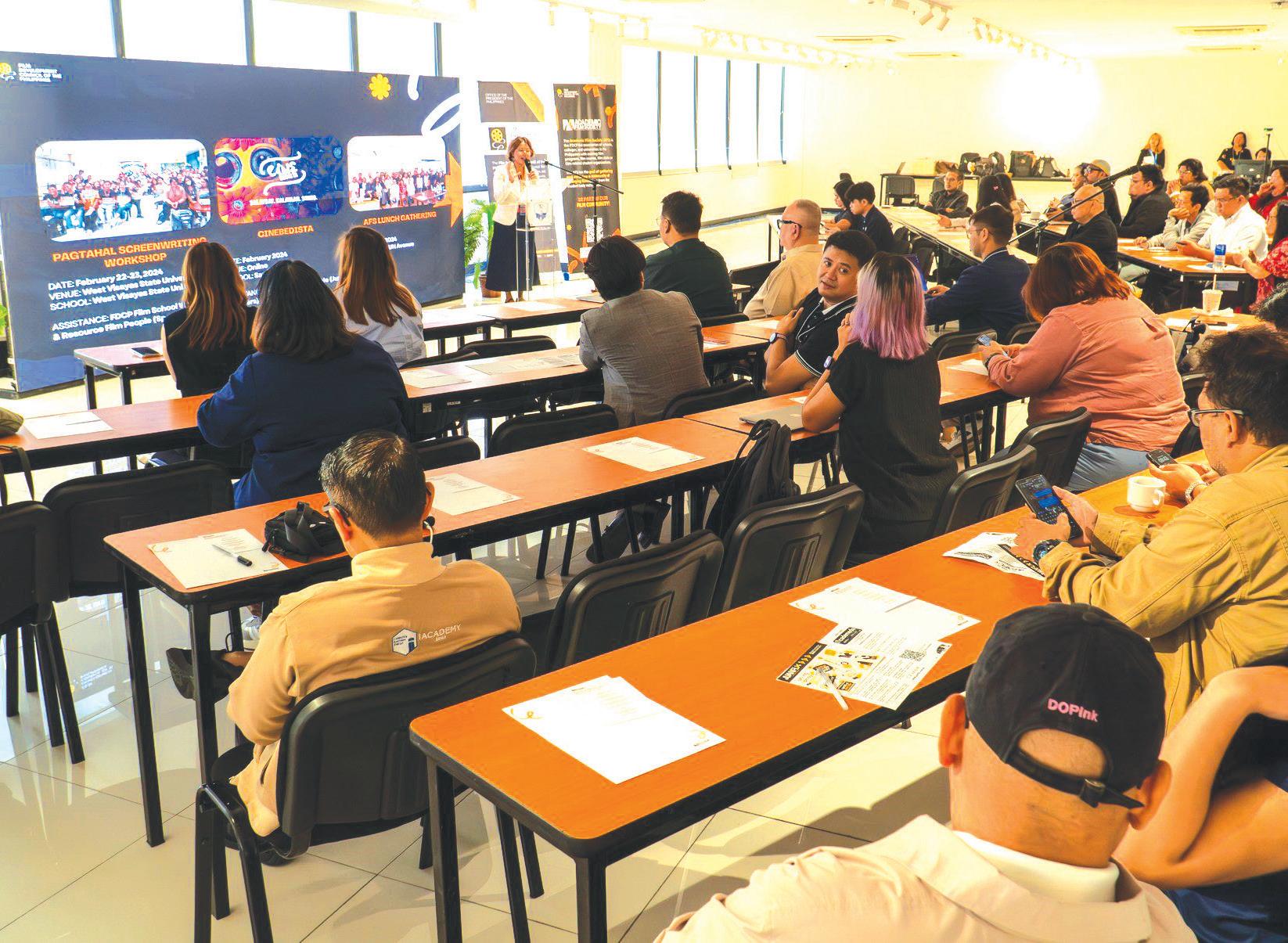





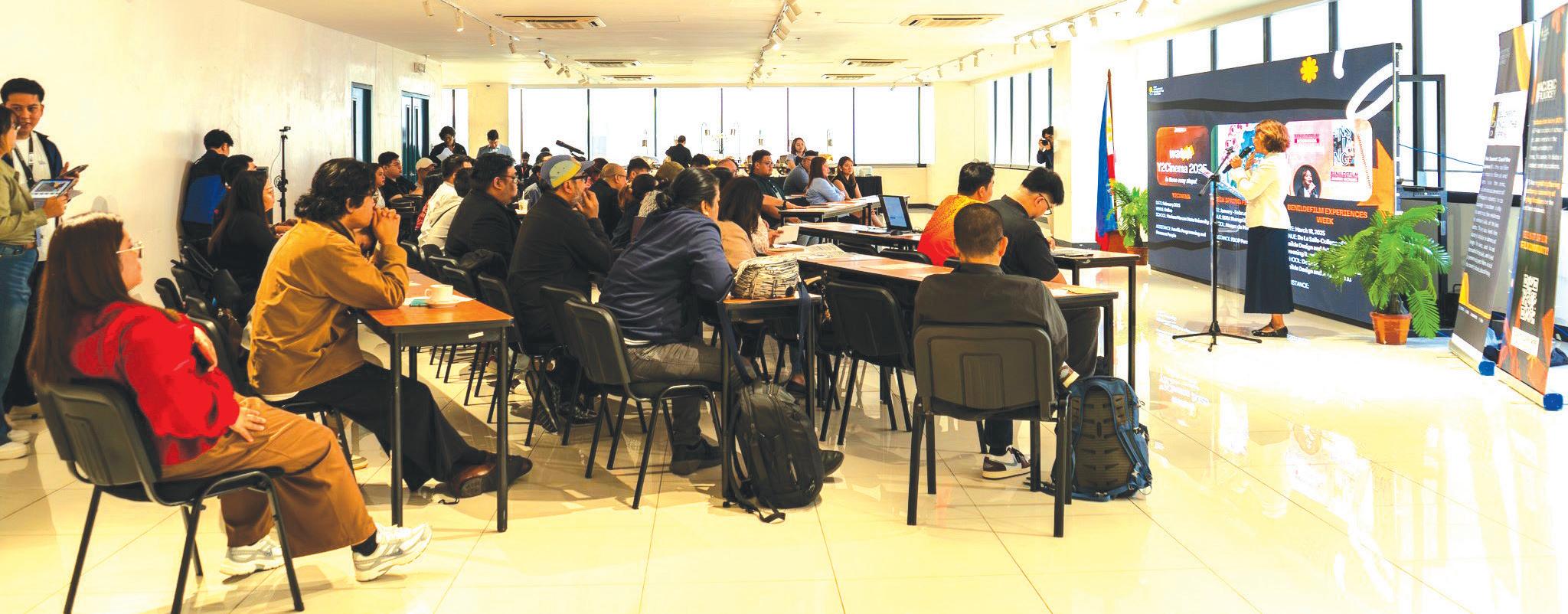
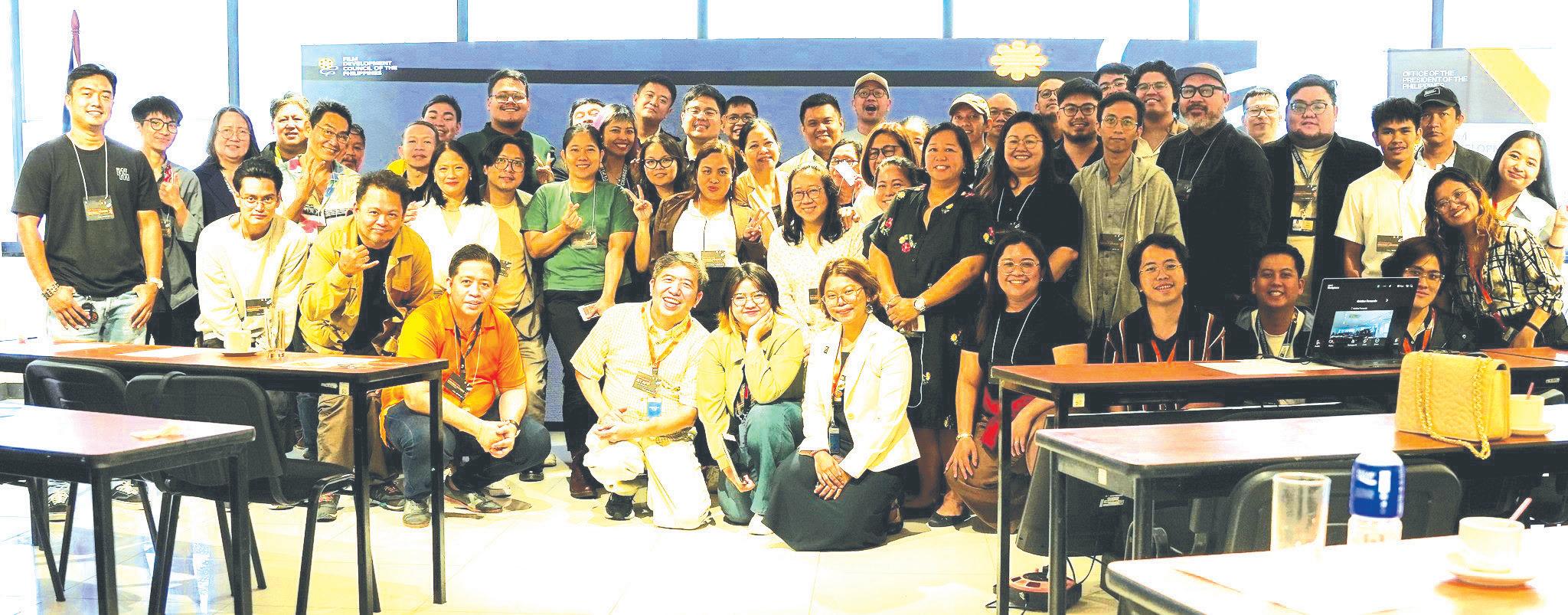


THE Carlos Palanca Foundation, Inc. is now officially accepting entries to the 73rd Carlos Palanca Memorial Awards for Literature (Palanca Awards).
The most prestigious literary competition in the Philippines, the Palanca Awards invites all Filipino citizens or former Filipino citizens of all ages, whether based locally or abroad, to participate.
Authors are allowed to submit only one entry per category: n English Division—Short Story, Short Story for Children, Essay, Poetry, Poetry Written for Children, One-act Play, and Full-length Play; n Filipino Division—Maikling Kuwento, Maikling Kuwentong Pambata, Sanaysay, Tula, Tula Para sa mga Bata, Dulang May Isang Yugto, Dulang Ganap ang Haba, and Dulang Pampelikula; n Regional Languages Division—Short Story-Cebuano, Short Story-Hiligaynon, and Short Story-Ilokano; and n Kabataan Division—Kabataan
Essay (English) and Kabataan Sanaysay (Filipino)
KABATAAN ESSAY THE Kabataan Division, dedicated to young writers under 18 years old, is also now accepting submissions in its two categories. Entries should consist of informal, personal essays on the theme: “AI is rapidly transforming daily life, revolutionizing how we learn, analyze information and solve problems. How can I effectively use AI to enhance learning while maintaining personal responsibility, independent thought, and ethical integrity?” for Kabataan Essay (English). Mabilis na binabago ng AI ang pang-araw-araw na buhay, binabago ang paraan ng ating pagaaral, pagsusuri ng impormasyon, at paglutas ng mga suliranin. Paano
Reading Literacy held at Tahanan ng Kabataan Laguna



Mko epektibong magagamit ang AI upang mas mapahusay ang pagaaral habang pinapanatili ang personal na responsibilidad, malayang pag-iisip, at integridad sa etika ?” for Kabataan Sanaysay (Filipino). Works eligible for the contest include those that were first published or produced between 1 June 2024 and 30 June 2025, as well as unpublished or unproduced works.
FOR the Dulang Pampelikula category, only unproduced works are eligible. Entries that have received a prize in another contest before midnight of 30 June 2025 are not qualified. Submissions must be done online through the Palanca Awards website at <http://www.palancaawards.com. ph/>. The Carlos Palanca Foundation will not accept printed or email
submissions for any categories.
DEADLINE FOR SUBMISSION OF ENTRIES: 30 JUNE 2025. FOR the official contest rules and forms, visit the Palanca Awards website. Inquiries and other concerns may be directed via email at <cpfoundation@palancaawards.com. ph> or landline at +632 8478 7996 and look for Ms. Ester Alfaro.

Metro Manila gets first taste of epic promos with exclusive sneak peek of 2025 Book Sale at V-Mall
Good news, Metro Manila Wolfies! Your favorite big book sale is coming back to the city at V-Mall, Greenhills in San Juan.
The
GLOBAL ADVOCATE
WE’RE so excited to bring the Big Bad Wolf Book Sale to Metro Manila again. It’s going to be a wonderful experience and hopefully a lot of moments that spark joy for readers,” said Big Bad Wolf Books Co-founder, Jacqueline Ng.
She added, “This upcoming Metro Manila Book Sale is an opportunity for families, young readers, and lifelong book lovers to connect and grow together. We’ve worked hard to make sure there’s something for everyone.”
Ng also touched on the growing importance of literacy advocacy: “We came across a report from the Philippine Statistics Authority that said nearly 19 million students in the Phil-
ippines are struggling with functional literacy—and that’s a number that really moved us. It’s a wake-up call and a reminder that access to books and reading isn’t just about enjoyment, it’s about giving people the tools to navigate life, to understand the world around them, and to write their own stories.”
“That’s why programs like Red Readerhood mean so much to us,” she continued. “Through it, we’re able to donate books to underserved communities and help ignite that first spark of imagination. We believe every child deserves a chance to read, dream, and grow—and if Big Bad Wolf Books can help even one child get closer to that, then we know we’re on the right path.”
GET A GLIMPSE OF THE BOOK HUNT TO give guests a true feel of the upcoming book sale, the Big Bad Wolf set up a mini mock-up version of the sale. With carefully curated shelves and actual book selections available for browsing, the preview showcased the incredible variety readers can expect at the book sale.
From bestselling novels, BookTok sensations to educational gems, delightful children’s activity books and more, check out your favorite titles at the Big Bad Wolf Book Sale in V-Mall (Virra Mall).