



By Andrea E. San Juan
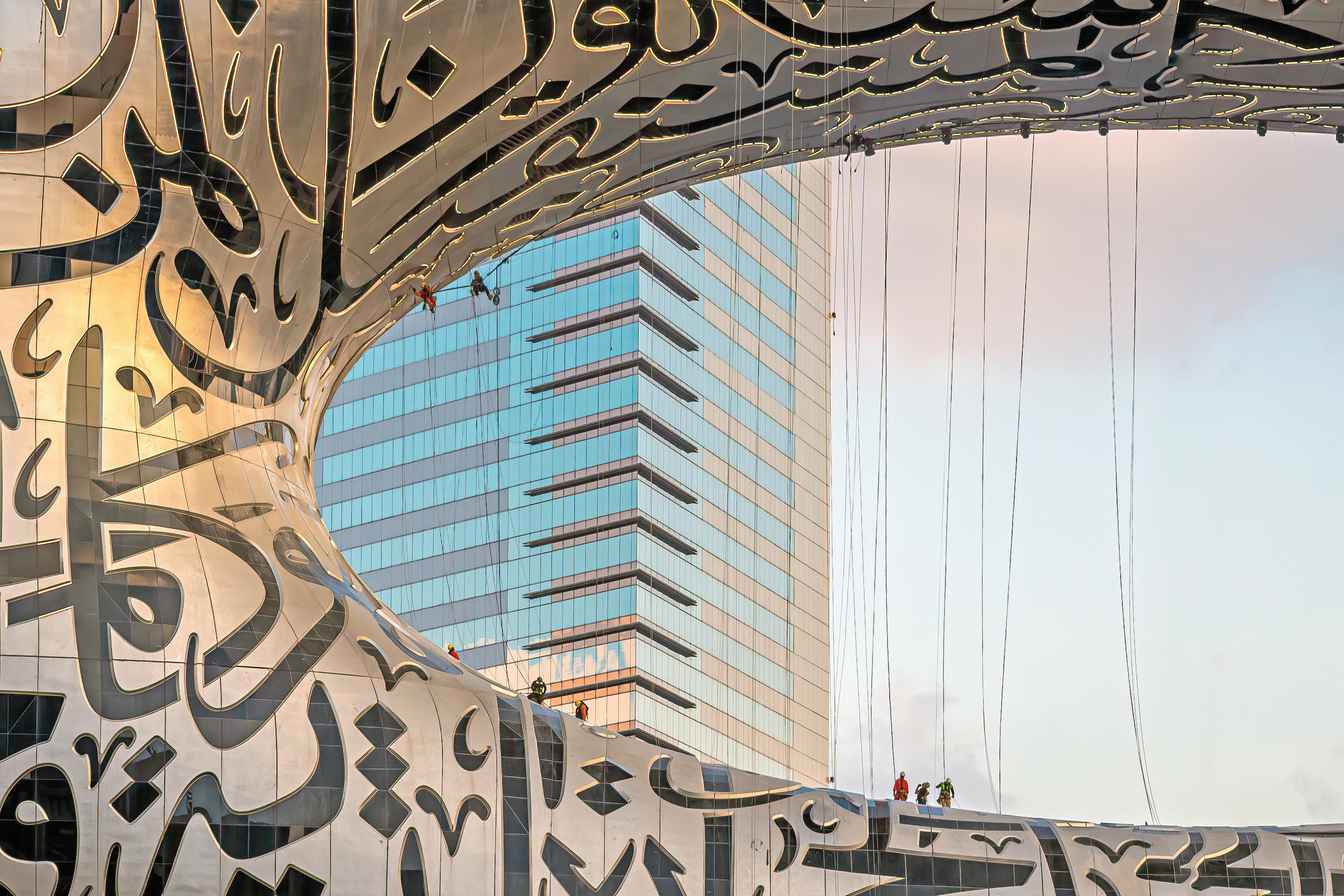
AMID concern over expectations of lower cash remittance levels from conflict-stricken Middle East countries, Filipinos working in these countries and the seafarers sent more money back home, apparently fearing that prices of goods will continue to escalate in their home country.
Zooming in on the Middle East region, an analyst explained to the BusinessMirror why Filipinos working in the conflict-stricken region sent more money back home “amid the dangers to their lives that the bombings bring.”
“Sensing that the Middle East conflict may not be a quick one, it may be likely that OFWs in the Gulf countries have sent some of their saved incomes to loved ones on top of their usual remittances,”
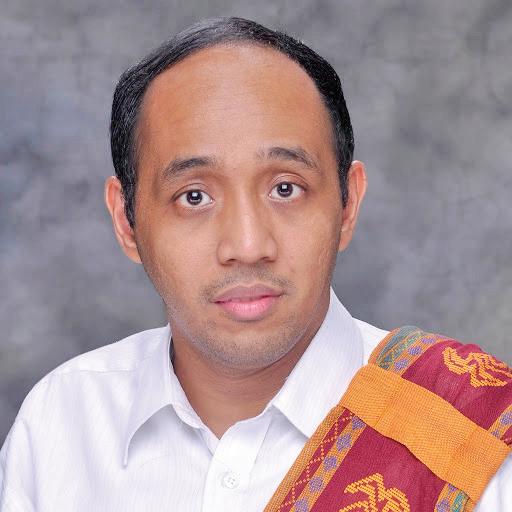
Jeremaiah Opiniano, executive director of the Institute for Migration and Development Issues (IMDI) and professor at the University of Santo Tomas, told the BusinessMirror
Opiniano said this effort may be a “response” to rising inflation rates in the Philippines, even if inflation rates rose in the Middle East countries as well.
John Paolo R. Rivera, Senior Research Fellow at state think tank Philippine Institute for Development Studies (PIDS), shared the same view as Opiniano, saying: “OFWs may be sending more money home to help families cope with rising prices and economic uncertainty in the Philippines.” Further, Rivera pointed out that “historically, OFWs tend to increase support for their families during crises rather than reduce it.”
Based on the data released by the Bangko Sentral ng Pilipinas (BSP) on overseas Filipino cash remittances by country source, the money sent home by Filipinos based in Middle East countries climbed by 19.94 percent to $565.91 million in March 2026, from the $471.84 million recorded in February.
The Middle East conflict broke on February 28, when the US and Israel attacked Iran, which retaliated with missile and drone attacks on strategic energy hubs that sent global oil prices soaring. Of the 12 host countries in the Middle East that cater to Filipino migrant workers, only cash remittances from Jordan and Israel declined in March.
The money sent home by Filipinos working in Jordan fell to $5.47 million, down 16.39 percent from $6.54 million in the previous month, while remittances from Israel plunged to nearly $12 million from the $12.47 million in February 2026.
Meanwhile, host countries which saw positive growth rates in remittances in March were: Iraq, United Arab Emirates (UAE), Saudi Arabia, Oman, Libya, Lebanon, Bahrain, Egypt, Kuwait, and Qatar.
Remittances from Iraq jumped to $9,000 in March 2026, from the

The money sent home by UAE-based Filipino workers rose to $164.23 million in March, up 27.88 percent from the $128.42 million in the previous month.
Given these developments, Opiniano called the Filipino overseas worker in the Middle East “heroic.”

“Amid the dangers to their lives that the bombings bring, they still try to send more money back home. Noticing the trends of the crisis to individual countries last March, it seems to be too early to tell when the crisis will affect the real economies of these individual Middle East countries,” he told this newspaper.
He added: “For now, if some Gulf countries shield themselves from drone and missile attacks through modern missile interception artillery, Filipino workers use their incomes—their remittances—to continually shield themselves from the conflict’s attacks on their incomes.”
In this instance, Opiniano stressed: “Truly, foreign remittances are countercyclical. They rise even if the origin country faces economic downturns and challenges. The Filipino worker is heroic truly.”
Opiniano also noted that in the absence of data on how many Filipino workers were displaced from their work given the bombings, “There is a sense that these compatriots of ours were not displaced from their jobs on a large scale.”
He said the nearly 11,000 OFWs repatriated by DMW “unfortunately lost their jobs or other income-earning opportunities, but the number gets dwarfed by over 2 million Filipinos still working in these Gulf countries.” Rivera pointed out that many Gulf economies remain operational despite geopolitical tensions, particularly sectors where Filipino
By Aniruddha Ghosal & Jim Gomez The Associated Press
HANOI, Vietnam—He had met his 6-year-old son only once. A few days together in a life otherwise spent apart.
For 15 years, Mohammad Abdullah Al Mamun worked in Saudi Arabia, sending money home to his family in one of the poorest areas of Bangladesh. This year, he had planned to return, build a larger house with his savings and spend time with the child he barely knew. Then, on March 8, a missile struck his workers’ camp. He suffered severe burns and later died. He was among more than two dozen foreign workers killed across the Middle East after the United States and Israel went to war with Iran in February.
Tens of millions of foreign workers have helped build the Gulf Arab states’ modern, oil-fueled economies—with many not fully sharing in their prosperity. Now they face an even sharper dilemma: Keep working in the Mideast, where wages are far higher, hoping that a shaky ceasefire endures; or return to already poor countries where prices have soared because of the conflict.
“We don’t know what we will do next,” said his widow, Sadia Islam Sarmin.
Millions work with little protection
MIGRANT workers make up a majority of the population in many Gulf Arab states. Westerners, Arabs and Indians dominate business and finance, while laborers from poor countries in Asia and Africa toil for long hours in scorching temperatures at oil facilities and construction sites—often with few protections.
The Coalition for Labor Justice for Migrants in the Gulf, an advocacy group, says few had access to bomb shelters and many were stranded by the conflict. It says attacks killed at least 24 foreign workers in the Gulf and four in Israel as Iran and allied armed groups launched waves of missile and drone strikes. Their count includes eight mariners killed at sea.
Mamun’s choice was made for him. He arrived home in a coffin earlier this month.
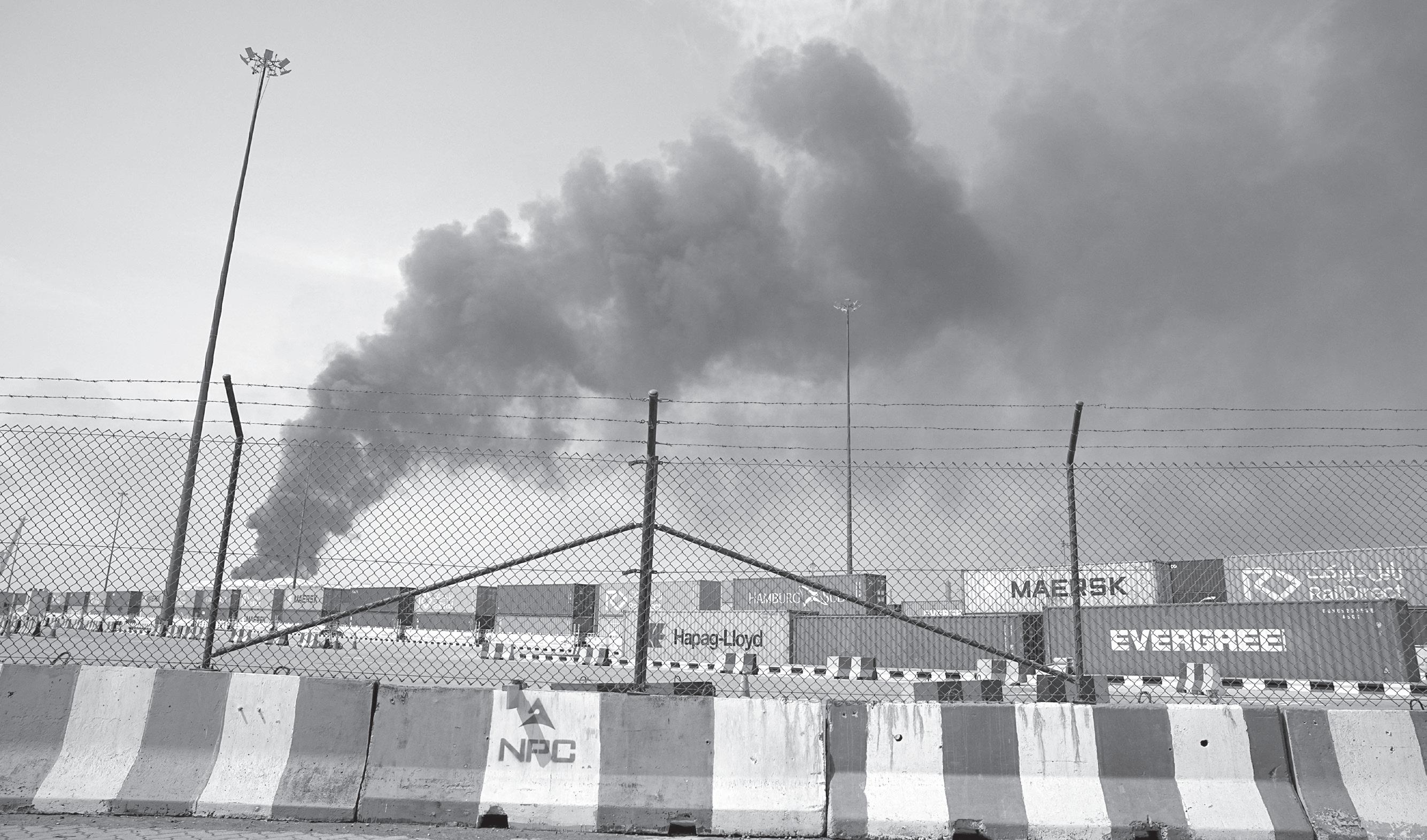
On Monday, three Indian workers were moderately injured in the United Arab Emirates when an Iranian drone sparked a fire at an oil facility. It was the first time the UAE came under attack since a fragile

ceasefire took hold in early April.
“It’s a very precarious situation for migrant workers,” said Udaya Wagle, who studies labor and migration at Northern Arizona University.
Though the ceasefire has mostly held, negotiations to end the war have repeatedly stalled. Iran has effectively blocked the Strait of Hormuz, a key waterway for global oil and gas, and says it will only reopen it if the war ends and the US lifts its blockade.
The resulting spike in the price of gas, fertilizer and other goods has hit Asian countries particularly hard.
Remittances from the Gulf make up about 1% of the gross domestic product of India, 3% to 5% of the GDP in Bangladesh, Pakistan and Sri Lanka; and nearly 10% in Nepal. Now they are more vital than ever, as household incomes are strained and governments seek foreign currency to buy oil and gas.
The Gulf economies also face a bleak outlook, with exports bottled up and key energy facilities in need of repair after missile strikes. The fighting could resume, as Iran rejects US President Donald Trump’s demands.
Low-wage laborers are the most vulnerable MAMUN’S family awoke on March 9 to phone calls saying the 35-yearold had been hurt. Video footage shot by another worker showed him sitting in the open, badly burned and bleeding, crying out for help.
“He never imagined he would be hurt. That a missile would fall on him,” said Maruf Hasain, his younger brother.
Workers like Mamun are the
most vulnerable since they do the “most dirty, dangerous and difficult” jobs, said Shariful Islam Hasan of the Bangladeshi development organization BRAC. In Qatar, a 27-year-old Bangladeshi factory worker labored through 12-hour shifts as missiles flew overhead. Shrapnel from one strike fell near his living quarters. When alarms sounded, he said, workers went to a designated room.
He earns less than $400 monthly and sends two-thirds home. “We have no choice but to keep working,” he said on condition of anonymity for fear of angering the authorities.
Qatar enacted several reforms in the run-up to hosting the 2022 World Cup, including the partial dismantling of a system that tied workers to their employers. But activists say abuses are still widespread and that workers have few avenues to pursue justice.
Ahmed al-Aliyli, a taxi driver in Qatar, has not sent money home to his family in Egypt for two months. He once earned as much as $3,000 a month, but his income has plunged to a third of that as the war has disrupted travel. “We are the collateral damage of this war,” he said.
A slowdown in key sectors like real estate and construction will hit migrant workers directly, said Hasan, of BRAC. Workers from Bangladesh and Pakistan are especially vulnerable, as they are often employed informally and without fixed contracts, he said. Despite reforms in some countries, work permits are also often tied to a single employer and, in some cases, workers are effectively stranded, according to the labor coalition. It warned that some
Continued from A1
workers are concentrated, such as healthcare, engineering, logistics, and household services.
“This highlights the resilience of remittance flows, especially during periods of uncertainty,” Rivera also told this newspaper.
Beyond quick response, plan for crises LOOKING ahead, Opiniano said “The Philippine macroeconomy must go beyond heaving sighs of relief when host countries face economic and civil disruptions that affect our workers, and these may negatively affect remittance sending.”
employers may use the conflict to withhold wages, deny leave or carry out arbitrary dismissals.
For many, going home isn’t an option WHEN the war began, Mamun’s mother, Shahida Khatun, urged him to come home.
He had been saving up since November. In his last call home, he promised his younger brother and sisters he would pay for their studies, that he would build a larger house for his parents and return for good this spring. Now, his family is struggling to recover his wages and piece together a life without him.
“The pain of losing a child. There are no words to describe the agony,” Khatun said.
For many workers, going home would mean giving up a steady income and much higher wages.
Marlene Flores, a Filipina worker in Qatar, said she felt the shudder each time a missile was intercepted. But the tax-free pay and health insurance made it feel safer — in a way — than the Philippines, which has declared a “national energy emergency.”
“It’s not easy for me to say,” she admitted. “But I would really stay here.”
Israel also has a large population of foreign workers. Filipino caregiver Jeremiah Supan continued caring for his two elderly charges despite near-daily missile alerts, sometimes dashing out for food or medicine despite the danger. He questions whether his own family could survive if he returns to the Philippines.
“I know that in the blink of an eye, one can die,” he said. “But what life shall we return to?”
“Surely, the Department of Migrant Workers had responded with repatriation and reintegration measures, and even cash aid to those still in the Middle East. The government already knows what to do during these situations. However, external crises happened and this decade alone has a lot of these global, regional and country-level crises,” added Opiniano. He also emphasized that Filipinos must learn from the lessons that the Covid-19 pandemic wrought on economic lives, including those with overseas remittances.
“The entrepreneurial and investment programs for overseas
Filipinos and their families may need more help from as many stakeholders nationwide—especially the private sector and from rural financial institutions,” added Opiniano. Remittance-receiving families, meanwhile, had better improve their capacities to bolster their savings, save for the rainy day, enroll in financial products that protect their future (insurance, pension) and exercise prudence in using their family incomes that foreign remittances bolstered.
Editor: Angel R. Calso
By Swati Pandey & Claire Jiao
THREE of Asia’s most vulnerable economies are showing rising strains as their central banks come under pressure to tighten policy even as the economic hit from the Iranwar oil shock deepens.
Indonesia, the Philippines and India are already grappling with capital outflows and free-falling currencies as Middle East tensions hurt consumers and companies alike. Now, global bond ructions
are piling on further pressure.
Higher US bond yields drive up the dollar and reduce the appeal of emerging-market assets, fueling capital outflows from Asia. That raises the burden of servic -
ing dollar-denominated debt and pressures central banks to raise interest rates to defend their currencies and boost the appeal of local debt, even as domestic growth is set to weaken—leaving authorities in a catch-22.
“Growth in much of the region is set to come under greater pressure, leaving central banks in a bind whether and how to respond to soaring price pressures,” said Frederic Neumann, chief Asia economist at HSBC Holdings Plc. “The going may get tougher still. We are not out of the woods yet.”
Elevated oil prices and inflation concerns have pushed government bond yields around the world to multi-year highs, with 30-year Treasury yields climbing to their highest levels since 2007.
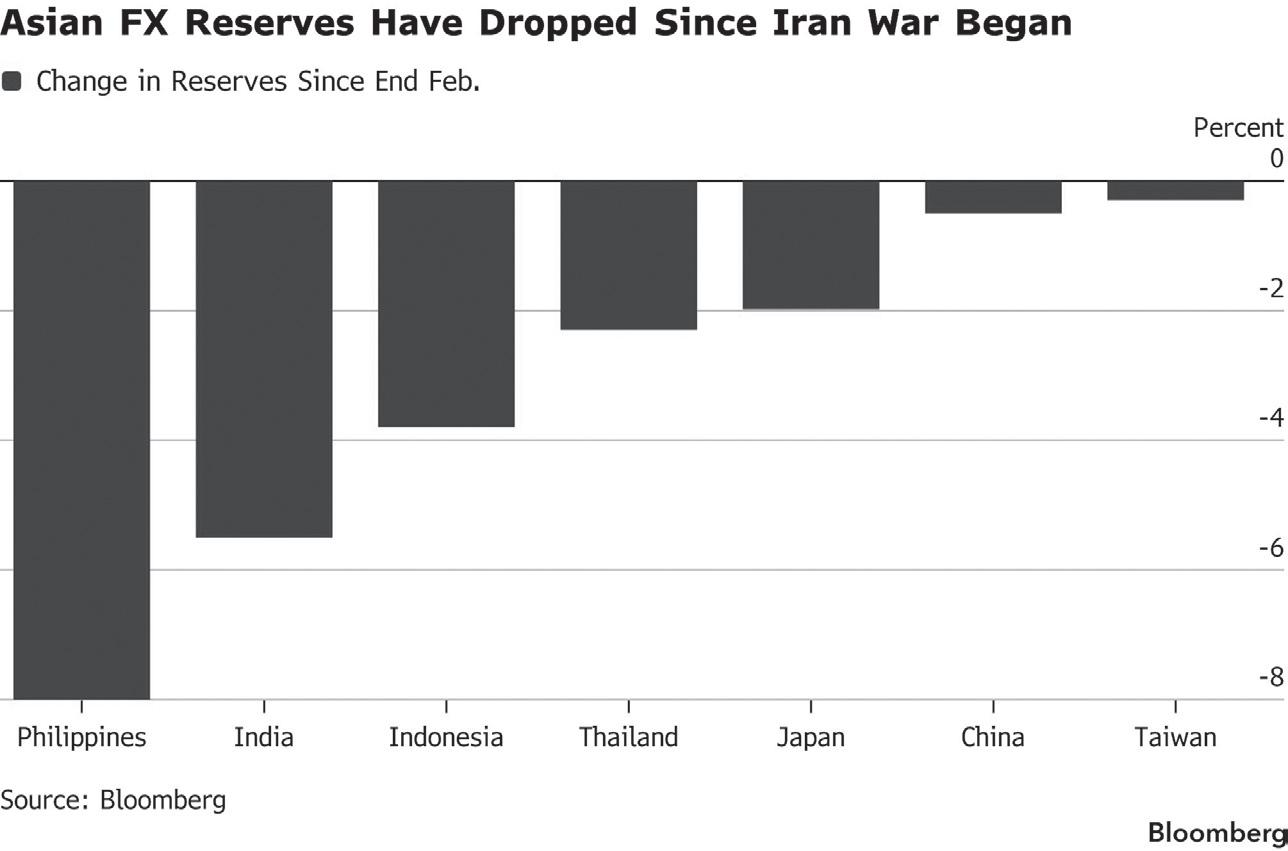
The jump in US yields has intensified pressure across emerging Asia. Aside from China’s yuan, all major Asian currencies have weakened since the Iran war, with the Philippine peso, Indian rupee and Indonesian rupiah among the region’s worst performers. A Bloomberg index of Philippine bonds has lost 13% for dollar-based investors, the steepest decline in emerging Asia.
Bank Indonesia on Wednesday surprised with a jumbo rate hike and pledged to step up intervention to defend the rupiah, which has plumbed new record lows this
month.
“It is a good surprise and should help stabilize sentiment, but it is not a silver bullet,” said OverseaChinese Banking Corp. strategist Christopher Wong. “For the rupiah to see stronger follow-through, the external backdrop also needs to turn more conducive—oil needs to ease, geopolitical tensions need to de-escalate, and the selloff in developed markets long-end bonds needs to abate.”
Bank Indonesia has begun purchasing long-term bonds while selling short-term paper—akin to the “Operation Twist” it introduced in 2022, when the central bank tried to temper a sharp rise
in borrowing costs following the Covid pandemic. The Indonesian government has also started buying back its bonds, to the tune of $113 million daily, in an effort to cool rising yields.
In the Philippines, traders and economists are increasingly discussing the possibility of a large or off-cycle rate increase should pressure on the peso intensify further. The government rejected all bids for Treasury bonds it auctioned on Tuesday to prevent a sharp rise in yields.
India has so far largely responded with currency intervention and trade protectionism with gold and silver imports facing
tougher curbs. Economists say similar measures could spread to Southeast Asia, especially if food prices surge.
Economists led by Samiran Chakraborty at Citigroup Inc. said future policy options for India may include tighter capital controls, including restrictions on overseas direct investments by residents and stricter rules requiring exporters to bring foreign-currency earnings back into the country.
Chakraborty said the likelihood of such measures being introduced over the next month is “high,” adding that while India’s foreign-exchange reserves remain “reasonable” for now, they are “progressively worsening.”
The risks are especially acute for emerging Asia because history shows how quickly investor sentiment can turn when global financing conditions tighten.
During the 1997-1998 Asian financial crisis, countries including Thailand, Indonesia and South Korea saw currencies plunge and foreign reserves evaporate within months after investors lost confidence in their ability to finance large current-account deficits and defend exchange rates. The turmoil triggered deep recessions, soaring inflation and political upheaval.

By Anders Melin & Nguyen Kieu Giang
VIETNAM’S richest person spent billions of dollars of his personal fortune on his emerging electric automaker and other ventures last year as the shares of his corporate group soared.
Pham Nhat Vuong contributed $900 million to VinFast Auto Ltd. and paid another $1.59 billion to acquire some of its research and development assets. The $2.5 billion bet more than doubles his disclosed lifetime contributions to
the EV-maker, according to data compiled by Bloomberg from corporate disclosures. Vuong established VinFast, which has yet to break even, in 2017 in a quest to build a global carmaker. The company lost nearly $4 billion
last year as it opened plants in Indonesia and India as part of a pivot to Asia, following largely unsuccessful efforts to crack the US and European markets. On Thursday, the US state of North Carolina said it sued VinFast, alleging the company breached agreements tied to a planned electric vehicle factory.
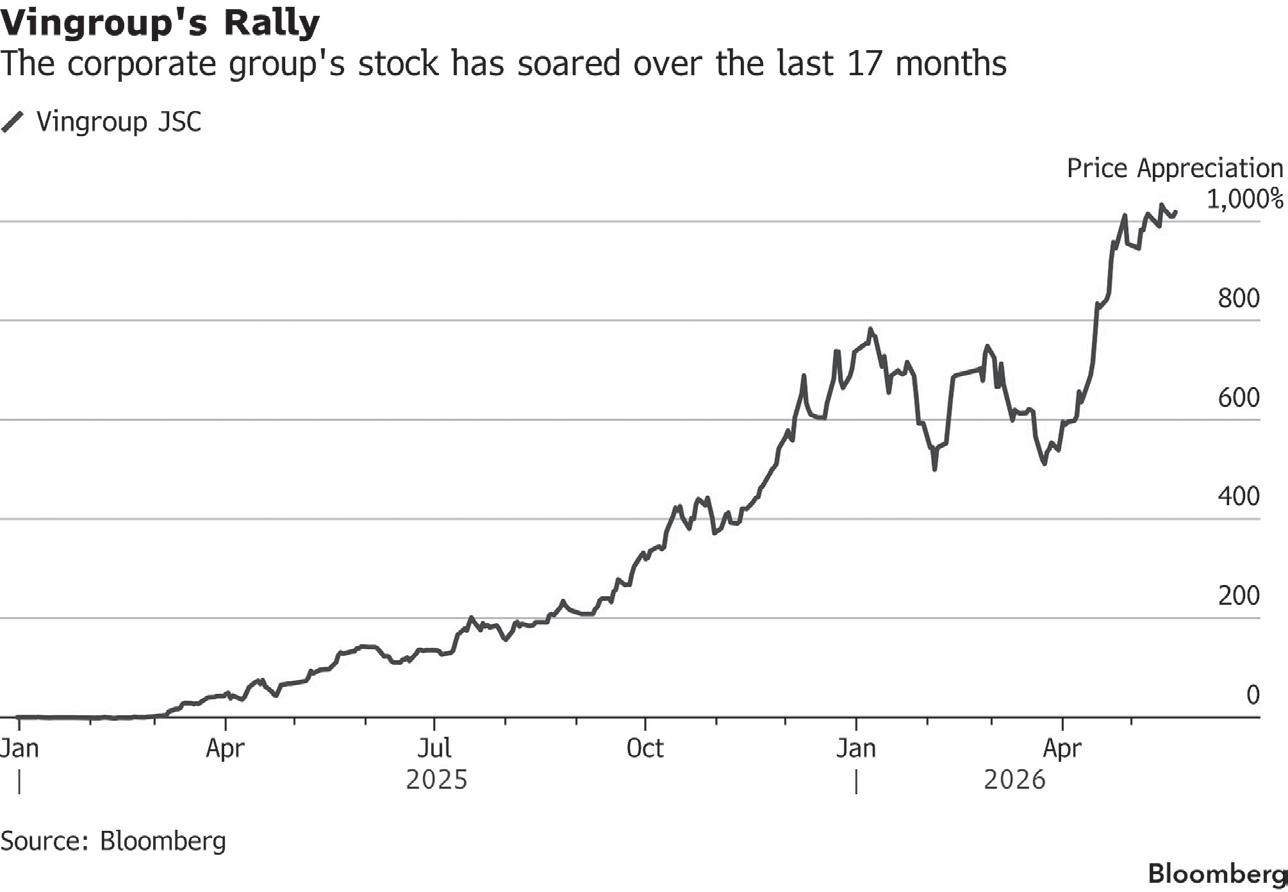
The majority of Vuong’s wealth is derived from Vingroup JSC, his sprawling conglomerate that’s also VinFast’s parent. After rising eightfold last year, Vingroup’s shares have kept climbing through 2026, making him Southeast Asia’s richest person. He is worth about $30 billion, according to the Bloomberg Billionaires Index.
The long rally reflects Vingroup’s role as the No. 1 stock for foreign investors looking for exposure to Vietnam, but it also raises questions about the company’s valuation, said Bloomberg Intelligence analyst Jason Low. It currently trades about 150 times price-to-earnings.
“The appreciation in Vingroup’s share price over the recent period primarily reflects the positive macroeconomic outlook of Vietnam,” a spokesperson for Vingroup said in response to emailed questions. “We aim to leverage favorable market conditions and capitalize on our market experience and execution capabilities to further strengthen and expand our businesses.”
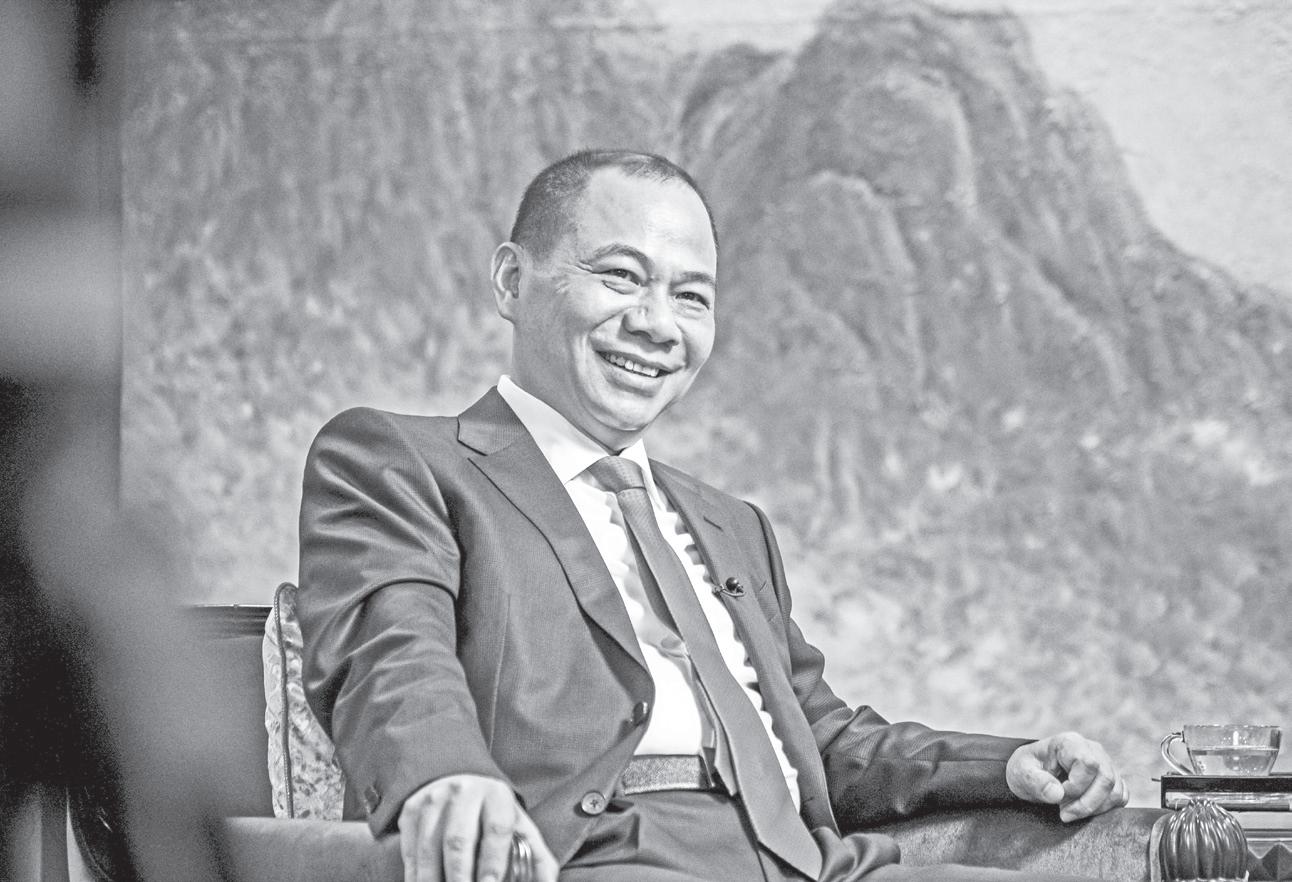
To many in Vietnam, including senior government officials, Vuong and Vingroup are a testament to the country’s progression from a socialist economy to a market-oriented one. Vuong started in property development in the early 2000s after making a small fortune in Ukraine with an instant-noodle business. Today, Vingroup develops and operates residential and commercial real estate, resorts, hospitals and schools all over Vietnam, and has recently started ventures focused on robotics, films, steel and more. VinFast is Vuong’s biggest bet to date. When its first car rolled off the assembly line, then-Prime Minister Nguyen Xuan Phuc declared it “a great day for Vietnam.”
The government’s increasing emphasis on the role of the private sector is also helping Vingroup’s share appreciation, a spokesperson for the company said. Vuong has personally contributed at least one-quarter of the $17 billion of financing that’s been deployed since VinFast was founded. It sold nearly 197,000 cars last year and more than 400,000 electric scooters and bikes, posting $3.59 billion of revenue. Vingroup and other companies controlled by Vuong were responsible for 27% of that, down from 31% the prior year. This month, VinFast said it will offload its Vietnam factories to a separate company, sell it and then enter into a manufacturing con -
tract with it. The planned transaction will raise 13.3 trillion dong ($505 million) for VinFast. Besides VinFast, the billionaire has recently expanded his corporate group into technology and energy—ventures that are potentially promising but very costly. They include green energy startup VinEnergo Energy JSC and high-speed rail company VinSpeed High-Speed Railway Investment and Development JSC. Last year he gave some of his personal shareholdings in Vingroup to help establish and fund those two companies, regulatory filings show. It’s not clear what has happened to the shares, which currently would be worth nearly $6 billion. Vingroup said the companies can sell the shares as needed, or use them for capital-raising purposes. So far, they haven’t sold the stakes. The market sees Vingroup “as a key beneficiary of the new progrowth government,” said Anton Berg, an analyst at Sweden-based asset manager Coeli. The company can thank its size and ability to make huge investments, coupled with its low free float and retail investors chasing momentum trades, for its long stock rally, he said. But “the share price performance isn’t backed fundamentally,” he said. It’s “been a headscratcher for the last two years.” Bloomberg News
By Antony Sguazzin
& Mathabiso Ralengau
ON a Friday last November, government officials representing Lesotho, a mountainous enclave in eastern South Africa, sat down in the capital Maseru for three hours of negotiations with Trump administration counterparts. Earlier that year, the US suddenly cancelled funding for healthcare programs in the country as part of billions of dollars in cuts to international aid. For Lesotho, a nation of 2.4 million people with the unhappy distinction of having the world’s second-highest HIV rate and the fourth-highest tuberculosis rate, the loss of support threatened thousands of lives.
To unlock future funding, the US wanted something back. While previous US assistance came with few strings attached — and never included commercial terms—documents seen by Bloomberg detailed the conditions the Trump administration expected. Those included “preferential consideration” of US partnerships, technologies, equipment and supplies, a demand that US regulatory approvals for drugs be recognized by Lesotho, and tax exemptions for companies carrying out work paid for by the US. It also asked for 25-year access to Lesotho’s medical data, though that was later reduced to five years.
Lesotho’s officials were given just weeks to sign the deal—terms that Mokhothu Makhalanyane, a



member of the ruling Revolution for Prosperity party, characterized as a form of extortion. “The US just locked the ministers in a room somewhere and threatened them with the deadline.”
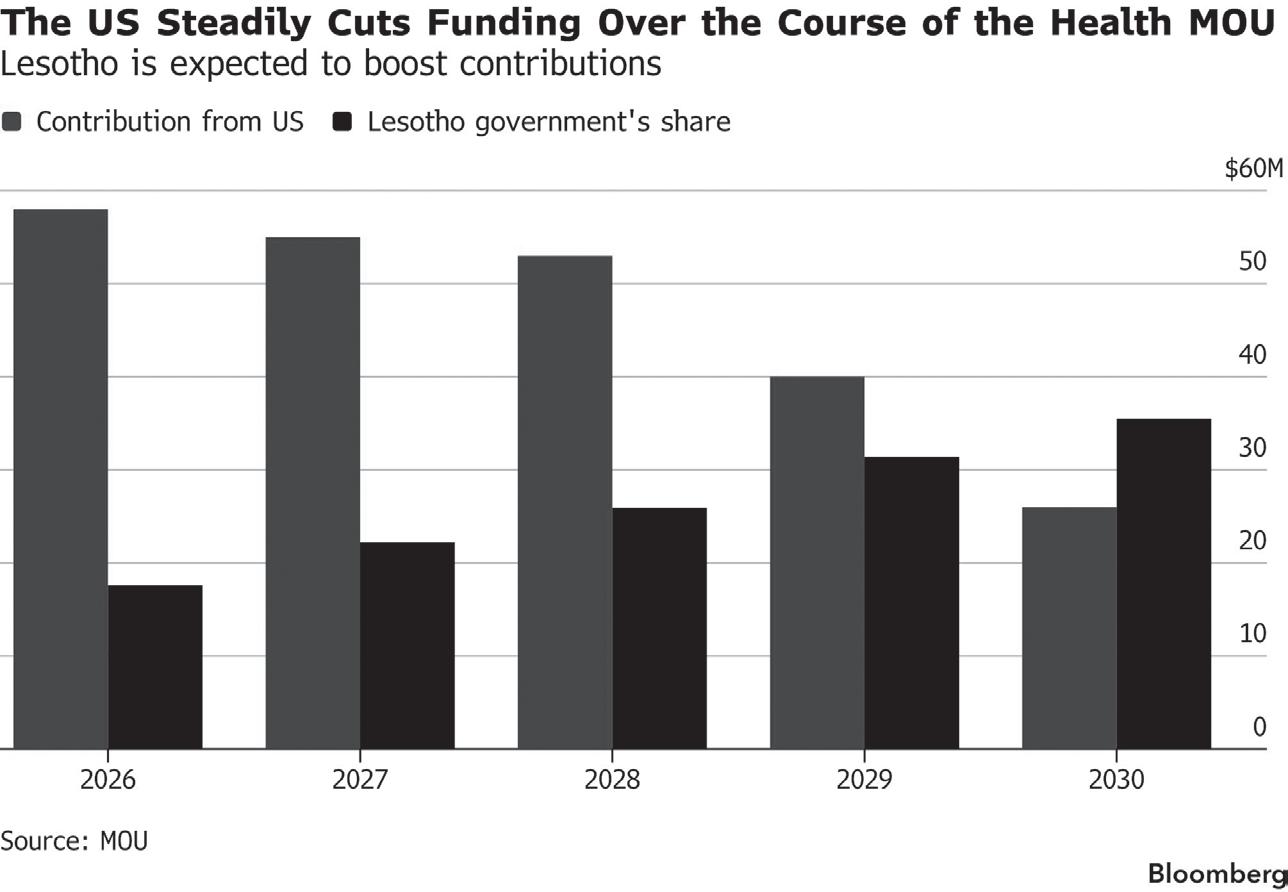
A month later, the US Embassy in Lesotho issued a press release stating that the acting US Charge d’Affaires and Lesotho’s finance minister had signed an agreement. The US would give the country $232 million in health aid over five years so long as Lesotho also provided $132 million of its own money. That represented a significant curtailment. In 2024 alone, Lesotho received about $150 million in health assistance from US government agencies.
But the biggest shock to parliamentarians was how the process was handled. There had been no debate about the memorandum of understanding beforehand, nor was it published by either government after it was signed. As the document still hasn’t been made public, it remains unclear who will oversee its implementation, whether it will affect existing international agreements or if it violates privacy laws. It’s also not clear whether the deal was constitutional, as it never received parliamentary approval ahead of time.
More than a year after the United States Agency for International Development was dismantled, the situation offers a rare window into how the Trump administration is

leveraging foreign aid to advance its geopolitical agenda, and how smaller countries are responding.
Nearby nations have also reported unprecedented demands in exchange for US assistance. Eswatini agreed to accept third-party nationals deported from the US, while Zimbabwe and Zambia have said that the US made health care aid contingent on access to minerals. (Both countries rejected the offer, and the US ambassador to Zambia denied that his country would withhold aid if it didn’t get access to critical minerals). According to the US State Department, 32 nations have signed the agreements.
A State Department spokesperson said that “cordial” discussions were held with officials from Lesotho’s foreign, health and


finance ministries as well as with the country’s National Aids Commission. The representative added that none of the signed memorandums require that signatories give US companies “preference” when procuring medical goods, equipment or data services.
“This MOU is designed to reinforce Lesotho’s sovereignty and accelerate its path to self-reliance in the fight against HIV/AIDS,” the State Department said. Some US demands either disappeared or were softened in the signed version of the memorandum, which was also seen by Bloomberg. Yet when the document was circulated among a small group of senior politicians, two appendixes related to data sharing and the handover of medical data were redacted. That has stoked

further concern about what exactly Lesotho agreed to.
“There is this fear: What is the US coming to take from Lesotho?” said Sebabatso Ntlamelle, coordinator for health, education and social development at the Lesotho Council of NonGovernmental Organizations. Health Minister Selibe Mochoboroane agreed to an interview with Bloomberg about the arrangement, but canceled the dayof, saying a 30-minute meeting had turned into an all-day affair. He then offered a virtual interview but didn’t honor that commitment before leaving his post in late April. Finance Minister Retšelisitsoe Matlanyane referred questions to Mochoboroane, and new Health Minister Mamokete Ntsekhe and the office of Prime Minister Sam Matekane did not respond to questions.
Mochoboroane let some details slip about the pressure Lesotho had been put under in late March, when he appeared in parliament to defend the agreement.
“It is true that America proposed to bring dangerous criminals into Lesotho,” he said. “But we declined.”
Until the memorandums were introduced, US foreign health aid agreements were mostly characterized by transparency and accountability, said Brian Honermann, deputy director of policy at amfAR, a US-based nonprofit dedicated to ending the HIV/ AIDS epidemic. Under the new US guidelines, the bulk of information in the agreements—and details about partner countries’ progress—will remain confidential. “It creates a situation where both parties with access to the data have an interest in making sure the MOUs look like they’re doing really well—without the ability for external oversight,’’ said Honermann.
By Edna Tarigan & Anton L. Delgado The Associated Press
JAKARTA, Indonesia—Indonesia is overhauling its trade policies for key commodities in a sudden move that some experts liken to a hostile takeover of major industries in the resource-rich nation, with global implications.
The new regulation announced to parliament Wednesday by Indonesian President Prabowo Subianto mandates that a recently set up state-owned enterprise will handle the country’s exports of coal, palm oil and iron alloys by September.
Prabowo said one aim is to increase tax revenues. That would help restore dwindling government reserves that have been exhausted by the energy shocks from the war in Iran. Given Indonesia’s role as a major commodities exporter, the new rules likely will ripple across international supply chains.
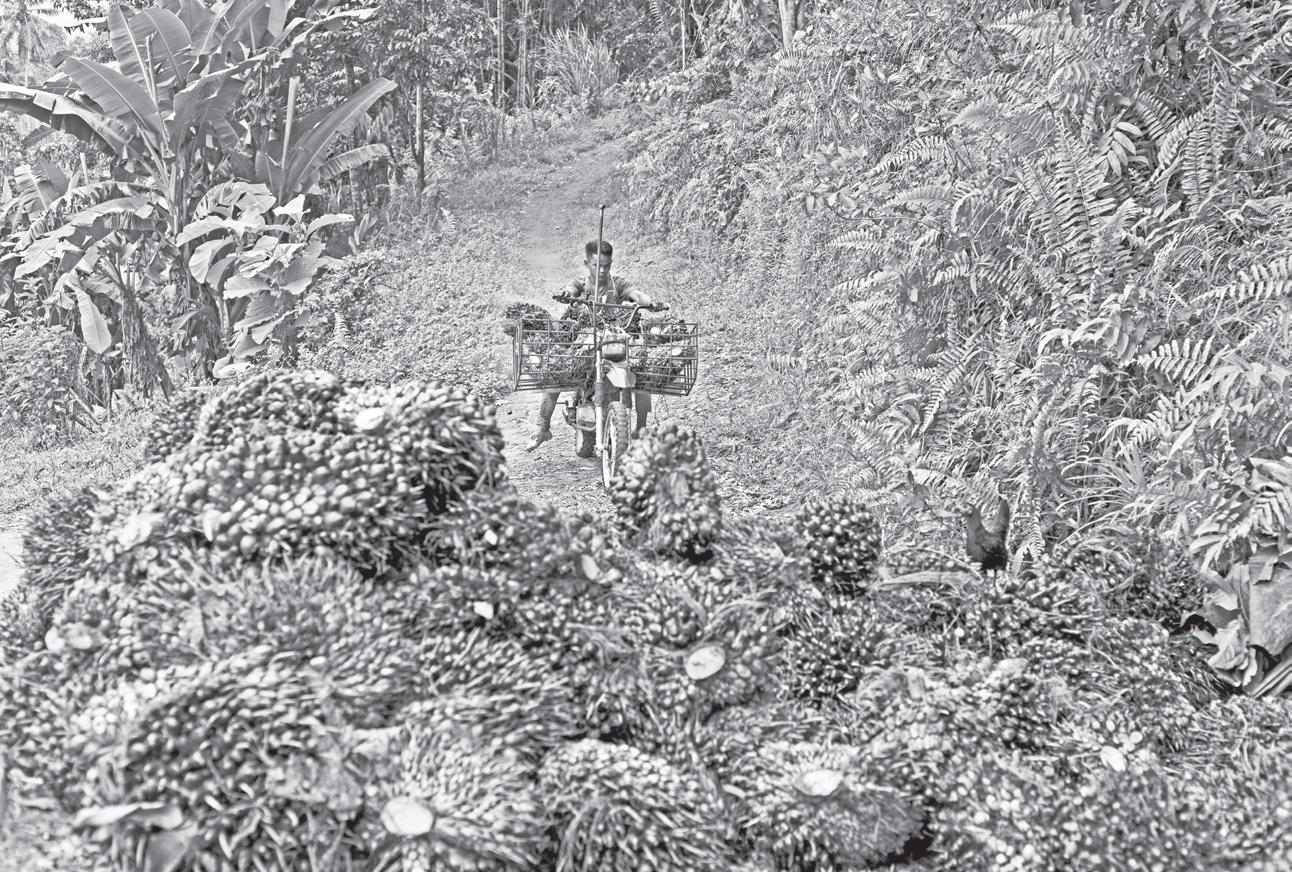
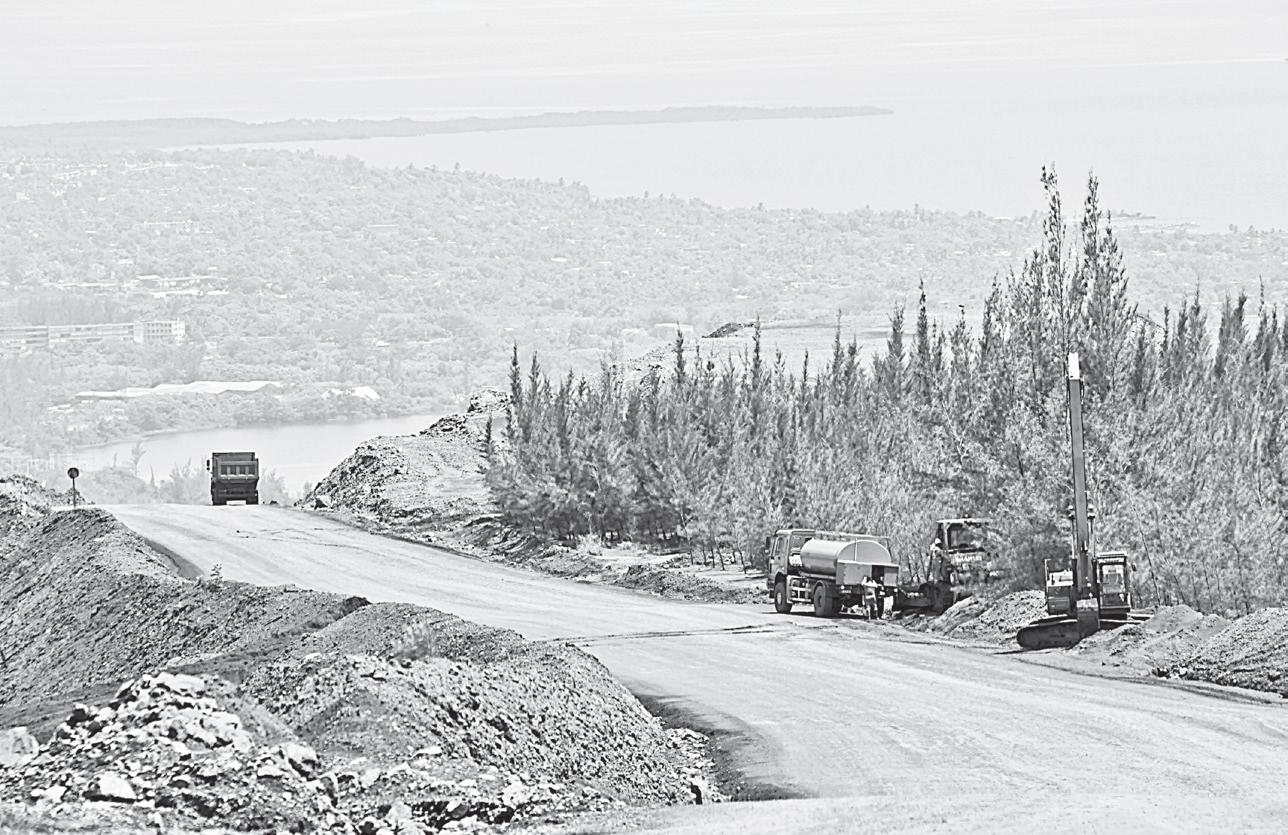
Indonesia is the largest exporter of thermal coal, which is burned for energy, and palm oil, a key ingredient in everything from cosmetics to biofuels. The Southeast Asian nation of roughly 287 million people also has the world’s biggest known reserve of nickel, a mineral needed for electric vehicle batteries and stainless steel.
As Indonesia’s largest trading partner, China will feel the brunt of this policy pivot, experts said. China is closely watching Indonesia’s “initiative to nationalize” and considering “how it would impact China’s further cooperation,” said Lei Xie with the UK-based think tank Third Generation Environmentalism. “The future path that Indonesia is taking is highly important for China.”
The swiftness of the new rule’s implementation could affect access to needed resources for China’s clean technologies industries, which use Indonesian commodities to supply growing demand for renewable energy. Chinese companies are major investors in many Indonesian industries, including critical minerals.
“Indonesia has become vital to China” since it supplies the commodities that “underpin China’s dominance in electric vehicles, batteries, and industrial manu -
Continued from A3
The 2013 “taper tantrum” sparked by signals the Federal Reserve would begin winding back stimulus led to sharp capital outflows from emerging markets as US bond yields surged. India, Indonesia and the Philippines were among the countries hit hardest.
aid. . .
Continued from A4
Over the course of its five-year deal with Lesotho, the US will progressively reduce its health funding as the African country’s contributions increase. If Lesotho fails to meet its financial obligations, the US can reduce or cancel funding entirely. This puts Lesotho in a delicate position: it’s already struggling with a decline in exports, and the additional
facturing,” said Li Shuo with the US-based Asia Society Policy Institute’s China Climate Hub. “But the relationship is evolving.”
If handled well, the centralization of Indonesia’s trade may also open the door to more American investment, analysts said, as it competes with China for key resources.
“Such a move is a clear signal that US investment is being attracted to come to Indonesia even more,” said Bhima Yudhistira with the Jakarta-based Center of Economic and Law Studies. He called the new policy a “hostile takeover” that will mean every contract in industries controlled by China may be revised.
Indonesia tightens its grip on natural resources
PRABOWO told lawmakers Indonesia had lost as much as $908 billion because exporters underreport their sales to avoid paying taxes and other fees.
“The primary objective of this policy is to strengthen oversight and monitoring—and to combat under-invoicing, transfer pricing and the diversion of export proceeds,” he said.
The new entity taking over Indonesia’s exports of these commodities—PT Danantara Sumberdaya Indonesia—was officially registered the day before Prabowo’s announcement. It is 99% owned by Danantara, the sovereign wealth fund the president launched last year, and will strengthen the government’s influence on setting the price of its commodities.
This “represents a governance reform, a step toward strengthening our credibility in managing strategic commodity trade in an orderly and accountable manner,” said Yvonne Mewengkang with Indonesia’s Ministry of Foreign Affairs.
From June to August, private
This time around, central banks in the region have stepped up foreign exchange intervention, yet their currencies remain under pressure.
“Such scale of FX intervention will become increasingly difficult to sustain as FX reserves have been already substantially drawn down, while the energy price headwind has not subsided,” Sanjay Mathur, chief economist for Southeast
money it has agreed to spend is roughly the equivalent of a year of its health budget.
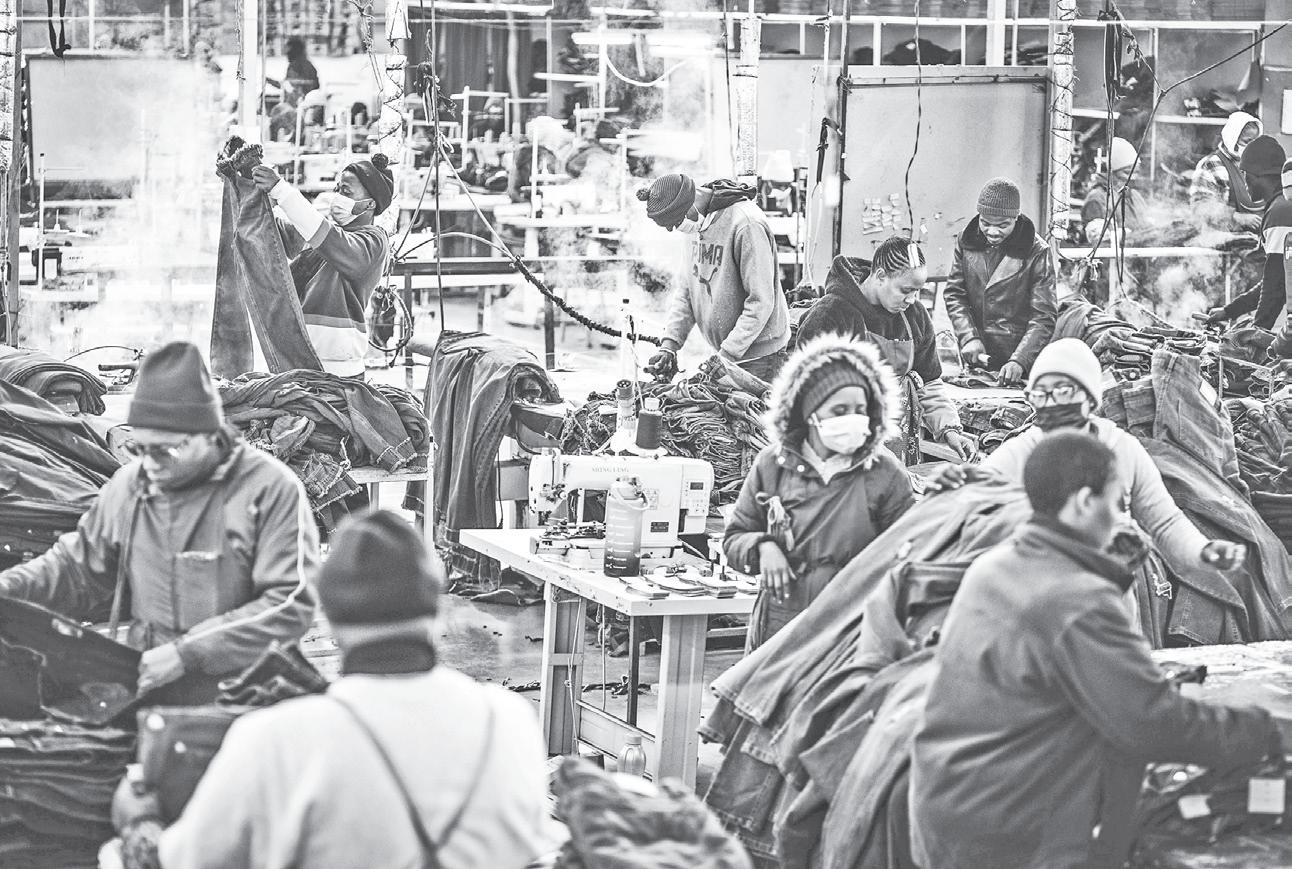
Lesotho has few sources of income beyond sales of mohair from one of the world’s biggest herds of angora goats; water, which it sells to South Africa; diamonds and an ailing textile industry. Ntlamelle, the NGO coordinator, believes budget cuts will be needed to pay for the agreement.
“If it’s not provided for in the budget, then there’s going to be $30 million to $40 million a year
companies are expected to turn over their import and export transactions to Danantara, which by September should manage all trade transactions with foreign buyers.
“There will be an explanation for investors later, so that stakeholders will be informed before June 1,” said Airlangga Hartarto, the coordinating economic minister in Indonesia. “After all, in the initial phase, we are focusing on transparency in reporting.”
Trade analysts are skeptical that the government will be able to seamlessly take over trade in all those industries within less than four months.
New policies hurt Chinese industries
CHINA is Indonesia’s top trading partner and one of its biggest sources of foreign direct investment.
Chinese firms dominate Indonesia’s nickel industry and China is a top importer of the resources affected by the trade takeover.
Other major importers of Indonesian palm oil, coal and nickel include the US and the European Union. India, Japan and South Korea and neighboring Malaysia, Vietnam and the Philippines would also be affected.
Under Prabowo, the government has been increasing control over strategically important commodities, cracking down on unauthorized mining operations, taking over plantations and pushing for the development of a domestic refining industry for critical minerals.
Even before Prabowo’s announcement, the China Chamber of Commerce in Indonesia sent a five-page protest letter last week highlighting investors’ concerns about Indonesia’s
Asia and India at Australia and New Zealand Banking Group Ltd., wrote in a note last week.
ANZ economists forecast current account deficits for India and Indonesia at 1.9% and 1.1% of gross domestic product in 2026, with the Philippines at 4%.
The Philippines—among the world’s hardest hit by energy shortages—is also being weighed by political turmoil. The govern -
that’ll have to be found,” she said.
“This is not an allocation that we can afford as a country.”
That’s true across the continent for countries now grappling with the loss of US aid, said Emily Wong, an associate professor at the African Health Research Institute.
“The funds available are orders of magnitude less than what was available from the US,” she said.
Concern is also brewing among Lesotho’s nonprofit organizations that the politics of the current US administration could impact who
unstable business climate.
Chinese enterprises recently have faced “excessively stringent regulation, over-enforcement, and even corruption and extortion by competent authorities,” the letter said. This has “severely disrupted normal business operations” and “undermined long-term investment confidence.”
“Prabowo didn’t listen to the complaint from these Chinese companies and then did something very, very shocking with this new body to control the export,” said Yudhistira with CELIOS.
It’s an opening for other investors
By exerting state control over key industries, Indonesia is trying to diversify its investors, according to Yudhistira. Reducing Chinese control may attract interest from others, like the U.S.
This will only intensify the race for resources between the two superpowers, he warned.
Whether this new policy does attract new investors, however, will depend on the transparency of its implementation, said Syahdiva Moezbar with the Finland-based Centre for Research on Energy and Clean Air in Jakarta.
Private businesses say they are still in the dark.
Danantara’s impact on smallvolume trade, specialized product exports and downstream industries still needs to be spelled out, according to Eddy Martono, chairman of the Indonesian Palm Oil Association.
“Exporters usually already have their own established markets,” he said. “We must ensure we do not lose these markets if they are not managed properly.”
Delgado reported from Bangkok.
ment is in the midst of an impeachment case against Vice President Sara Duterte, who is accused of misusing public funds.
The oil shock has slowed Philippines GDP growth to its weakest since 2009, outside the pandemic. Inflation also breached 7%, well over the central bank’s 2%-4% target.
In Indonesia, President Prabowo Subianto’s expansive fiscal
receives access to medical care. Previous US funding in the region focused strongly on vulnerable groups such as sex workers, unmarried mothers and members of the LGBTQ+ community, who often face prejudice at state-run facilities. Those groups go unmentioned in the signed memorandum, and according to an analysis of similar agreements conducted by the nonprofits, family planning initiatives have largely been eliminated.
While Lesotho has made strides
By Collin Binkley And Matt O’brien The Associated Press
WASHINGTON — President Donald Trump called off plans to sign a new executive order on artificial intelligence hours before an expected White House ceremony Thursday because he said he was worried the measure could dull America’s edge on AI technology.
Trump said he was postponing the Oval Office event with tech industry executives because he did not like what he saw in the order’s text. “We’re leading China, we’re leading everybody, and don’t want to do anything that’s going to get in the way of that lead,” Trump told reporters.
The order would have established a framework for the government to vet the national security risks of the most advanced AI systems before their public release, according to a person familiar with the White House’s deliberations with the tech industry but not authorized to speak about them publicly. The directive was being characterized as a voluntary collaboration with participating US-based tech companies, including Anthropic, OpenAI and Google, the person said.
The push for some kind of government action to review leading AI systems follows growing concern within the banking industry and other institutions about the leaps in AI’s abilities to find cybersecurity vulnerabilities in the world’s software.
Treasury Secretary Scott Bessent and outgoing Federal Reserve Chair Jerome Powell convened an urgent meeting with Wall Street CEOs in April, warning them about the cybersecurity risks posed by Anthropic’s AI model, Claude Mythos.
The meeting, urgently assembled at the Treasury Department’s headquarters, was intended to ensure that banks were aware of the risks associated with the models, Bessent said at CNBC’s “Invest in America Forum” in Washington in April. “This new Anthropic model is very powerful,” he said. “Some banks are doing a better job in cybersecurity than others, and we want to have the ability to convene them and talk about what is best practices and where they should be heading.”
That led some allies of the Republican president to propose better methods for getting those AI tools in the hands of trusted cybersecurity experts.
Trump’s hopes for AI have run up against voters’ fears of its impact TRUMP had pledged to undo the AI safety regulations set by his predecessor, Democratic President Joe Biden. Trump’s administration has viewed the AI sector as an engine to help deliver on his pledges to expand the economy and he has promoted its major players at events at the White House and around the world. Last week, Trump had tech CEOs in tow for a summit with China’s Xi Jinping.
Trump’s ambitions for the sector have collided with the fears of voters over the impact of the technology on American life, jobs and electricity bills. Republicans themselves are divided over whether to embrace the AI industry or side with voters who express skepticism about the technology.
Also complicating the government’s interest in working with Anthropic on cybersecurity is the government’s ongoing legal fight with the company. Trump in February ordered all US agencies to stop using Anthropic’s chatbot Claude after an unusually public clash between the Pentagon and CEO Dario Amodei.
There are competing factions within the administration, said Serena Booth, a computer science professor at Brown University and former AI policy fellow in a Democratic-led Senate committee.
“We do see this kind of public fighting,” she said. “’We will release an executive order. No, we won’t. We’re going to sign it this afternoon. Oh, the signing is canceled.’ I think this whiplash is because we’re seeing these fractures.’”
Some of those divides are balancing what Booth said is a “reasonable idea” to test the most capable AI models before their public release, with a concern that government scrutiny, if it takes too long, could burden AI developers.
“It does come at a potential very large cost to innovation and speed of development,” she said. “There is, I think, a real risk here and I do see both sides.”
The White House has pushed back against state laws seeking to regulate AI, saying the measures could curb growth. A new executive order that could have been perceived as government screening of commercial AI models would have signaled a significant shift in the administration’s approach.
At the same time, similar screening is already happening. Trump’s Commerce Department announced earlier this month that it signed agreements with Google, Microsoft and Elon Musk’s xAI to evaluate their most powerful AI models before their public release, building on previous agreements the Biden administration made with Anthropic and OpenAI. But the announcement later disappeared from the Commerce Department website.
O’Brien reported from Providence, R.I. Associated Press writer Fatima Hussein contributed to this report.
ambitions—including his flagship free meals program—have unnerved investors already worried about the country’s debt trajectory and sovereign ratings outlook.
India’s Narendra Modi, while politically on more solid ground, is also navigating competing pressures to maintain infrastructure spending and welfare support even as oil prices threaten to widen the
in recent years to advance rights for marginalized communities, about 40% of the country’s health care is administered by the Christian Health Association of Lesotho, which does not “provide services that conflict with church doctrine.” Under the new funding terms, Tampose Mothopeng, executive director of the LGBTQ+ rights association People’s Matrix, worries that these groups may have an even harder time accessing health care.
“So now the MOU and its execu -
fiscal deficit and stoke inflation.
“The lesson from the taper tantrum and Asian crisis is how risk premium can rise very quickly and reserves which seem adequate can diminish very fast,” said Rob Subbaraman, chief economist at Nomura Holdings Inc. “Rising cost of living pressures can lead to growing political instability as the general public blame the government.” With assistance from Marcus Wong/Bloomberg
tive orders are pushing Lesotho into a corner where we have to abandon our values, our constitution and our national regulations. They want to shift the world to where they want the world to be,” Mothopeng said. Makhalanyane, the politician, is also skeptical that the deal will do much to advance Lesotho’s health objectives.
“This is eroding and frustrating government systems, not building them,” he said. “It’s straight bullying.” Bloomberg News
By Sybilla Gross, Paula Sambo & Stephen Wicary
THE Trump administra -
tion’s hard line against Cuba pushed Sherritt International Corp. to the brink.
Now, an ex-adviser to the US president may be the Canadian mining company’s salvation. The nearly 99-year-old company, whose former chief executive was once known as Fidel Castro’s favorite capitalist, has staked its business on a bet few Western companies would touch. After entering Cuba in the 1990s, Sherritt developed a nickel-and-cobalt mine through a joint venture with the state before expanding into energy. The result was a sprawling business that’s survived commodity busts, US political pressure and economic instability on the island.
That wager abruptly unraveled this month, plunging Sherritt into turmoil. After President Donald Trump expanded sanctions on the communist country, Sherritt initially announced plans to dissolve its mining venture in Cuba. On Wednesday the US charged former Cuban President Raúl Castro with murder, sharply escalating a standoff with Havana as the Trump administration attempts to reshape the island’s political order.
But just days after Sherritt announced its retreat from Cuba, a potential rescuer emerged in the form of a Dallas family office linked to Ray Washburne, a real estate executive appointed by Trump in 2017 to lead the Overseas Private Investment Corp. Washburne’s Gillon Capital LLC signed a non-binding preliminary agreement on Wednesday that would hand the family office a controlling stake in Sherritt.
“It came out of nowhere,” Peter Hancock, Sherritt’s interim chief executive officer, said in an interview. “I would like to tell you that I’m a business genius and that I knew an American entity would see that it could create value in the situation that Sherritt was in. But no, I didn’t foresee that.”
As Trump’s foreign policy during his second term turns markedly more aggressive, Sherritt is still at risk of losing its Havana gamble. The saga underscores the dangers facing companies and investors from shifting geopolitics amid a rapidly changing world order. While major multinational firms have not been immune to conflict-driven losses, the threat is particularly acute for companies with assets concentrated in a single country outside of the US.
It’s not clear whether Sherritt’s preliminary pact with Gillon signals a potential shift in Trump’s Cuba strategy. On Wednesday, he played down the need to further ratchet up pressure on the Cuban government after the charges against Raúl Castro. Representatives for Gillon and the State Department didn’t immediately respond to requests for comment.
But for Hancock, the sudden backing from Gillon helped “bridge the huge gap” between Sherritt and the administration.
“This deal happened because an actor in the United States was able to make a case to the US State Department,” he said. “We were collateral damage in a larger policy objective for the United States.” Sherritt was founded in 1927 and named after Carl Sherritt, a trapper who staked copper pros -
pects in Manitoba. The company’s first foray into Cuba was steered by Ian Delaney, who became CEO after a proxy fight in 1990 and secured a deal with the Castro government one year later. The state agreed to sell Sherritt unprocessed nickel from Moa, a mine in eastern Cuba that was nationalized after the country’s 1959 revolution.
It was a milestone deal for the Canadian firm, which needed raw material to feed its key asset: a refinery in Alberta. The company entered into a joint venture agreement in 1994 with the state to operate Moa, which produces cobalt and nickel, both key metals for the energy transition and providing power to data centers.
For years, Sherritt was enormously successful in Cuba. Its market capitalization jumped to almost C$5 billion ($3.6 billion) in 2008, while the stock traded as high as C$18. Sherritt, by that time, had poured significant investment into the country, including stakes in electricity, oil and natural gas ventures alongside state companies.
Sherritt executives became the first people barred from entering the US under the Helms-Burton Act, a law passed in 1996 to target firms doing business in Cuba. But Canada and several European nations opposed the law and maintained diplomatic ties with Havana, allowing Sherritt to keep selling most of its nickel and cobalt into those markets as well as Asia.
Yet at the height of Sherritt’s rise following its success in Cuba, the company made costly bet on a nickel project in Madagascar. The decision would ultimately shred its balance sheet, driving debt to almost C$2.5 billion at its peak in 2013. Then came a prolonged slump in nickel prices, leaving the company periodically teetering on the brink of insolvency.
Saddled with a heavy debt load and years of weak cash flow, the company became even more reliant on Cuba, exiting other assets including its Canadian coal business to fund loan repayments and eventually writing off its Madagascar venture. Today, Cuba accounts more than 70% of the company’s asset base on a book value basis. “They had an ample opportunity to eliminate their indebtedness entirely,” Jeffrey Gavarkovs, a managing partner at Northstream Capital Inc., said in an interview. But “the combination of Cuba and a debt load that was a little bit too heavy was their poison pill.”
While Sherritt continued receiving distributions from its power and nickel operations, the company spent more than C$100 million on an offshore well, a higher-risk category of oil exploration, Gavarkovs said. The effort yielded a well that was ultimately written off as uneconomic.
But according to Gavarkovs, who owns Sherritt bonds, the company’s biggest flaw was its bloated corporate overhead for what had effectively become a single-asset mining company. Directors on the board, rather than ensuring that unsecured note-holders received cash interest payments as required by the debt covenants, prioritized vesting cash-settled stock options, he said. The company also spent millions trying to fend off several activist campaigns against it, he added. Last year investment firm Pala Assets Holdings won its bat -
tle against Sherritt, resulting in the resignation of CEO Leon Binedell and a shakeup of the board.
When US forces captured Venezuelan leader Nicolás Maduro in January, investors began speculating that Cuba could be the Trump administration’s next target. In Venezuela’s case, US oil majors and Western mining companies swarmed into the country after Maduro’s arrest, with Chevron Corp. emerging as one of the clearest winners.
But unlike Chevron, which has a diversified asset base, Sherritt was facing a worsening a fuel shortage as the US blocked Venezuelan exports to Cuba. The company announced plans to pause mining at Moa in February after receiving notice that planned fuel deliveries could not be fulfilled.
As Cuba’s economy continued to crumble, with mass blackouts sweeping the island as Trump tightened his squeeze on the nation of 10 million people, Sherritt faced a choice: keep operations going at a loss and at reduced capacity, or mothball the company’s most valuable asset. In late March, the company announced it was seeking an emergency cash injection of as much as C$50 million to support Moa.
After Trump’s expansion of Cuba sanctions on May 1, Sherritt abruptly decided to relinquish its joint venture stakes on the island. But soon after, the company reversed course.
Hancock was at home in Halifax on Monday, a public holiday in Canada, watching the Giro d’Italia cycling race on TV when the phone rang. On the other end was Washburne, calling with his offer for Sherritt.
Two days later, the Canadian company announced that it had signed a non-binding term sheet with Gillon. Sherritt said the US State Department had no objections to the discussions.
It’s far from certain that Ottawa will support a US investor taking majority ownership of Sherritt, however. Canada instituted a new policy in 2024 to make it more difficult for foreign companies to take control of Canadian critical minerals assets.
To Ben Rowswell, a former Canadian ambassador to Venezuela, the move by a Trump-friendly investor to take control of Sherritt in Cuba exemplifies what’s become known as the Donroe Doctrine, the US president’s take on Washington’s 19th-century push for hemispheric domination.
The latest move provides “further insight into the changing character of the US relationship with the region as it’s turning into an extractive predator” that uses its power over all countries, said Rowswell, now a consultant with strategic advisory firm Catalyze4.
The government of Prime
Minister Mark Carney might be reluctant to attempt to block the takeover of Sherritt by a US investor to avoid complicating efforts to renew a free trade agreement with the US, Rowswell said, adding that he believes Carney’s administration should defend the company against US sanctions.
A spokesperson for Canada’s industry department said the government welcomes foreign investment that benefits Canada’s economy, but declined to comment on specific transactions.
Sherritt isn’t the only foreign company with mining operations in Cuba: Singapore-based commodities trading giant Trafigura has a lead-and-zinc mine there in a joint venture with the state. The company has said that it complies with all applicable sanctions and maintains a regular dialogue with relevant authorities.
Despite the potential deal with Gillon, Sherritt’s situation remains tenuous. Three board members have resigned from Sherritt, leaving just Hancock and one other director. Its chief financial officer and its auditor also departed earlier this month. The company now trades as a penny stock, with a market capitalization near C$80 million. Without essential nickel and cobalt supplies from Cuba, the available inventory at the company’s Alberta refinery will run out in mid-June, it said earlier this month.
“A lot of things will need to happen to get to the state where the full value is realized,” said Hancock, adding that sourcing key inputs such as fuel and sulfur would also be critical to unlocking Sherritt’s full potential. But, he added, “the
posture of the US government with respect to this deal opens up a much wider world of financing.”
The Fort Saskatchewan refinery is one of just a few nickel processing facilities in North America. As governments and manufacturers race to build critical-minerals supply chains outside of China, the facility carries growing strategic importance, according to Northstream’s Gavarkovs.
For Hancock, a former engineer with commodities trader Glencore Plc, there have been “a lot of very unexpected twists and turns” since he stepped in as interim CEO of Sherritt in December. If the Gillon proposal goes ahead, any easing of tensions between the Trump administration and Cuba would likely improve the payoff for the Washburne family office, he added.
Gillon is “very, very familiar with the business and the value that they see down the track,” he said. “This deal signals that they believe Sherritt has got a real bright future when things normalize in Cuba.” With assistance from Laura Dhillon Kane and Jack Farchy/ Bloomberg
A8 Sunday, May 24, 2026
By Helen Wieffering
The Associated Press
WASHINGTON In the year
since President Donald Trump signed an executive order promising to create a deep-sea mining industry from scratch, businesses have raised millions of dollars from investors, stock prices have soared and federal regulators have raced to fast-track a permitting process.
At least nine companies are in talks with the government for access to seabed minerals, according to an Associated Press review. Sections of the seafloor from American Samoa to Alaska could be auctioned for offshore mining this summer and through the fall.
All the action suggests the US may soon give the green light for companies to commercially mine the seabed something that’s never been done in international waters.
But a close look at some of the companies involved reveals uncertain track records and histories spattered with legal disputes, while major questions about how the minerals would be processed and refined remain unanswered.
Watchers of the nascent industry are skeptical the promised riches will ever materialize.
“It just feels right to people thinking that there is a cornucopia of metals on the bottom of the seafloor that are just there to be plucked up like seashells on the seashore,” said Victor Vescovo, a private equity investor and deep-sea explorer who has chosen not to back any deep-sea mining companies.
“If there’s more scrutiny on their actual financial models,” he added, “you would go, ‘Wait a second, this is much more uncertain.’”
Tapping the global seabed TRUMP’S executive order in April last year marked a sudden embrace of an industry long dormant in the US. The president hailed seafloor minerals as vital to America’s future prosperity and its trade independence from China. He directed US agencies to expedite permitting.
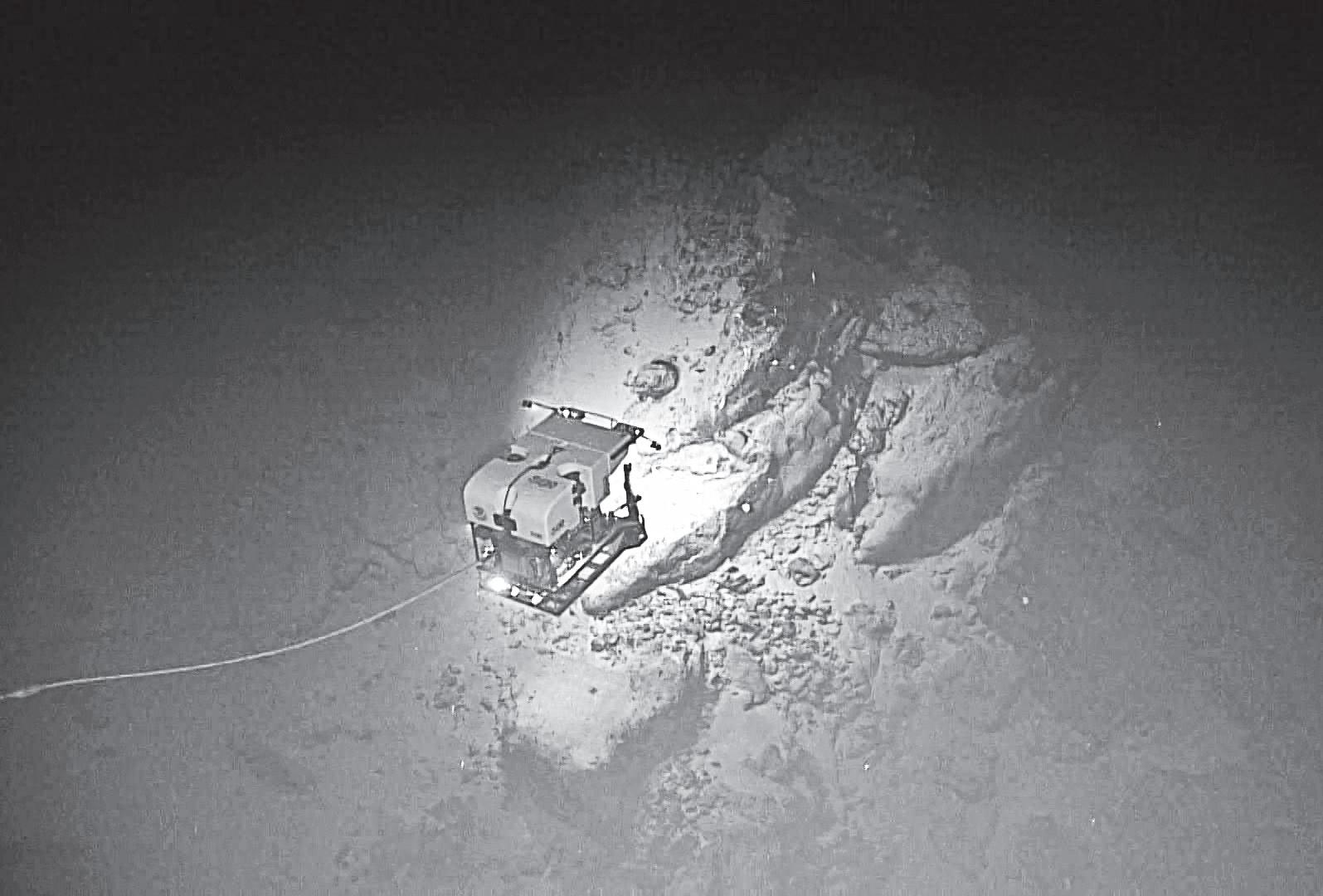
The most widely prized ores are fistshaped rocks known as polymetallic nodules, formed over millions of years from the remains of sunken shark teeth and shells. They contain high grades of manganese, copper, nickel and cobalt, and much smaller amounts of rare earth elements.
Other parts of the seafloor have drawn prospectors, too: the mineralrich crusts atop volcanic seamounts, and the rocky mounds flecked with gold and silver near hydrothermal vents. Nearer to shore, companies have proposed dredging ocean sands for titanium, zirconium and phosphorites. But for many companies, seafloor nodules hold the most allure.
Trillions of nodules lie on the international seabed between Mexico and Hawaii, scientists say. For more than a decade, delegates from dozens of countries have convened at the headquarters of the International Seabed Authority in Jamaica with the difficult task of creating globally agreed upon mining rules for those areas, which belong to no single country.
The agency has so far granted exploration rights to nearly two dozen contractors, but has not allowed any to mine commercially. Under its mandate, the minerals are designated for the shared benefit of “all humankind.”
Trump’s order suggests the US will decide for itself when to mine the global seabed, reversing the decision of previous administrations to honor the seabed authority’s rules.
In a statement, a White House spokesperson said “all presidential actions are legally sound.”
Fast-tracking the process
Geologists have known about polymetallic nodules for more than a century, but it wasn’t until the 1960s that
companies started building technology to haul them to the surface.
At the time, the laws of the sea were still in the making, with ongoing talks at the United Nations over how countries would use and protect the oceans beyond their borders. When it came to seabed mining, the US was at odds with much of the world over how the resources and technology should be shared.
In 1980, with global talks still in progress, Congress passed the Deep Seabed Hard Mineral Resources Act and created a process for US companies to mine the deep sea. The US issued four exploration licenses in 1984.
Yet in the decades that followed, low metals prices and the brewing uncertainty around international rules pushed several of those companies to forfeit their licenses or dissolve. Today, more than 150 countries agree that deep-sea mining should be mutually governed by the seabed authority. Lockheed Martin holds the only two exploration licenses still active in the US.
Two US agencies will enforce rules: the National Oceanic and Atmospheric Administration, which oversees minerals beyond US borders, and the Bureau of Ocean Energy Management, a division of the Department of the Interior that regulates offshore oil, gas, wind and minerals in US waters.
NOAA has never approved a commercial project for seabed mining; nor has BOEM, beyond a short-lived mining effort in California waters more than 60 years ago. But their leaders, appointed by Trump, are pushing for that to change.
In June, Interior Secretary Doug Burgum announced a mandate for BOEM to “speed up” the development of critical minerals offshore, and outlined steps to streamline the regulatory process. The agency soon announced it was evaluating seabed mining in the waters of Alaska, Virginia, American Samoa and the Northern Mariana Islands. It plans to hold the first lease sale as early as August, according to a budget proposal, and in the coming months will restructure under the new name of the Marine Minerals Administration.
NOAA, too, is working quickly to approve permits. Until this year, the agency required companies to have an exploration license before they could pursue commercial operations; in January, it said companies could apply for both activities at once. NOAA has requested funds to expand its permitting staff and set a target of processing 16 applications next fiscal year.
Treasure hunters of the deep SO far, the companies answering the call of Trump’s executive order include a firm that once made its money hunting for sunken treasure, and a South Carolina-based startup that sprung from an effort to find Amelia Earhart’s long-lost plane. And it includes The Metals Company, long seen as the front-runner in the industry. If the US grants a permit, the firm says it is ready to commercially mine the seafloor before the end of next year. It is one of few companies to have tested equipment in deep-water conditions hauling up 3,000 metric tons of nodules in a 2022 trial.
The company has close ties to the Trump administration. CEO Gerard Barron says he was in the White House on the day Trump signed the executive order, and since then, he’s been invited to speak at three congressional hearings on deep-sea mining. The Metals Company has received financial advice from Cantor Fitzgerald, the investment group Commerce Secretary Howard Lutnick led for decades until Trump appointed him to federal office. Lutnick is now in charge of NOAA and could be influential in the final decision on permits.
In a January congressional hearing, US Rep. Ed Case, a Hawaii Democrat,
accused The Metals Company of being “in bed” with NOAA and having advance knowledge of the agency’s plans, citing the close timing of certain events. The Metals Company submitted its seabed mining applications within a week of the executive order last year, and resubmitted them under the streamlined regulations one day after NOAA finalized the new rules.
At the hearing, Barron denied the accusation, saying it’s the company’s job to respond to and anticipate government action. “We had lobbied hard” against some of the regulatory inefficiencies, he added.
Since 2024, records show the company spent nearly $800,000 on lobbying for seabed mining issues, including permitting. Its stock price hit record highs across the last year.
A spokesperson for The Metals Company said in a statement the firm had no unfair advantages, and is well-poised to address the strategic priorities of the U.S. after 15 years of preparation and testing.
Barron got his start in deep-sea mining as an investor of a company, Nautilus Minerals, which won a license from Papua New Guinea for the world’s first commercial seabed mining effort in 2011. But Nautilus folded before mining began, leaving the government, which had a 15% stake in the project, with more than $100 million in debt. Tampa, Fla.-based Odyssey Marine Exploration has also signaled interest in offshore mining. Odyssey formed in the 1990s with a mission to discover sunken treasure and sell the artifacts for profit. The company claims to have found more shipwrecks than any other organization in the world.
But Odyssey ran into trouble in 2007, when it discovered an underwater shipwreck littered with silver and gold coins that Odyssey brought to the US. Later, the government of Spain said the wreck matched descriptions of a Spanish naval ship sunk by the British in 1804. Warships are immune to the claims of salvagers. Odyssey argued the remains couldn’t reliably be identified, but after years of bitter court battles, relinquished the treasure.
Amid the legal fight, the company pivoted to pursuing seafloor minerals.
There, too, Odyssey ran into controversy. The company’s subsidiary was awarded mining permits in Mexico’s Gulf of Ulloa for a project that would have dredged 7 million tons of mineral sands per year, operating 24 hours per day, according to Odyssey’s proposal, with a goal of extracting phosphate for fertilizer.
But the Mexican government withdrew its support during its environmental review out of concern the mining would disturb marine habitats and threaten loggerhead turtles. Officials later argued Odyssey didn’t have enough mining experience.
The company sought damages from the government of Mexico, winning $37 million in 2024 in arbitration, more than 10 years after it received the first mining permit.
In December, BOEM announced that
Odyssey had requested the agency begin the regulatory process to consider mining off the coast of Virginia. As in Mexico, the company is hoping to dredge coastal sands.
In a statement, an Odyssey spokesperson said the company carefully selected the area to avoid sensitive marine habitats and shipping traffic, and that dredging is an established tool for construction projects and can be done safely.
This spring, the company said it will merge with and adopt the name of American Ocean Minerals Corporation, which incorporated last year and has applied for NOAA’s permission to explore for seafloor nodules.
Worry about environmental and economic harm
OUT in the US territories of the Pacific Ocean, another fight is brewing over potential mining. The startup Impossible Metals has set its sights on seafloor nodules in US waters near American Samoa and the Northern Mariana Islands, despite growing outcry from local residents and leaders.
American Samoa has banned deepsea mining in local waters, while a similar push is underway in the Northern Marianas. Nearby Guam has banned deep-sea mining, too. Republican House representatives from all three territories worry their constituents will bear the environmental and economic harms. But the final decision is in the hands of the federal government, which controls US waters beyond 3 miles from shore.
Impossible Metals boasts of being the most environmentally friendly deep-sea mining company. Most mining machines are built to drive along the seafloor, endangering the sea sponges, nematodes and brittle stars that live among nodules. Impossible Metals is building a fleet of robots that it says will float above the seabed and collect only rocks that don’t contain marine life. The company has offered island territories 1% of future profits.
Critics question whether the technology will work, and if there will in fact be any profits to share.
Impossible Metals didn’t respond to the AP’s questions or requests for comment. The company has said previously that it’s engaging with local communities and is committed to building something lasting.
Still other companies are lining up for US permission. American Metal Resources and SeaX, both formed last year, applied for exploration licenses that are under NOAA review.
Deep Sea Minerals Corp., founded in 2022, is publicly traded in Canada and announced its application to explore for nodules in March. The company recently issued a press release saying its advertisements may have “overstated” the certainty of its future growth. It does not yet have deep-sea mining rights or any specialized marine technology, it said.
There are some early signs of discord: American Metal Resources and The Metals Company have both sued
each other, alleging the misuse of confidential information.
No guarantee of profit
DEEP-SEA ecologists and ocean advocates have fought against seabed mining for years on the grounds that the deep ocean remains vastly under-studied, and that mining could extinguish its fragile life.
But a number of analysts and investors also question its economic merit.
Of the four metals contained in polymetallic nodules, copper is the surest bet to see sustained demand given the booming need for electrical wiring.
But mineral forecasts, said mining consultant Lyle Trytten, “often get a lot of attention when they’re very high, and then things change.”
Five years ago, The Metals Company built its marketing on the surging demand for metals to build electric vehicle batteries. Forecasters projected global shortages and prices soared.
In the years since, battery design has evolved and no longer depends as much on cobalt and nickel, leaving seabed mining companies with a more subdued outlook on profits. Even highly-sought copper is already being replaced in some industry sectors with aluminum.
Ian Lange, a professor of mineral economics at the Colorado School of Mines, said deep-sea mining advocates seem to overlook the more affordable and widely available sources of minerals on land. He questioned whether demand is strong enough: Copper mines in Michigan and Wyoming are fully permitted but inactive; a cobalt mine is idled in Idaho.
“I personally am skeptical that what’s holding people back (from deepsea mining) is nonmarket things like permitting,” he said.
The Securities and Exchange Commission requires publicly listed mining companies to assess the economic viability of their projects in a document known as a pre-feasibility study.
The Metals Company did so last year, and forecast that it would break even in its eighth year of commercial seabed mining—the same year that it forecast the mineral reserves to be “all mined.”
“No one goes into a project saying, ‘In the best-case scenario, we’ll break even,’” said mining consultant Steven Emerman. “Anyone at my level would know to come to the conclusion that now is the time to abandon the project.”
Unless the project expands, said Simon Jowitt, Nevada’s state geologist and director of the Nevada Bureau of Mines and Geology, “there’s not going to be any profit in the project.”
The Metals Company says it expects to find billions of dollars’ worth of seabed minerals after the project breaks even. But it has yet to prove those additional resources are economical to mine.
Forecasting this way is unusual, Jowitt said.
Other experts, including Trytten and Emerman, said the company’s forecast is overly optimistic, projecting high metals prices and low costs. Trytten reviewed the forecasts at the request of an environmental group, the National Ocean Protection Coalition, and Emerman at the request of opponents to deep-sea mining, including Greenpeace. Both said their analysis was independent.
The Metals Company said it had completed mining plans and seafloor surveys for the first eight years of the project, and that the costs of surveying, sampling and analyzing additional seafloor minerals were best incurred once the project was underway. The company is confident those resources will be minable, a spokesperson said.
It would take at least three landbased mines to produce the four minerals that exist in seafloor nodules, the company said, and this variety makes the project resilient to economic headwinds or changing demand for metals.
Deep-sea mining companies will also face challenges around where to process the nodules. Despite Trump’s focus on trade independence, the US currently has no major processing facilities for nickel, manganese or cobalt.
Building these facilities on US soil will take time and money—a lot of it.
“That is going to take some engineering and some capital,” said James Deckelman, head of Deep Sea Minerals Corp. “But there’s just so much support from the US government right now, so much momentum.” Indeed, the White House told AP it’s a priority to expand domestic refining capacity.
Records show The Metals Company began lobbying around “financing for domestic processing of minerals” early this year.
In the near term, companies will have to rely on existing supply chains abroad. The Metals Company has thus far explored processing in Japan, South Korea and Indonesia.
But reliance on foreign partners could raise a host of legal issues for companies. Most other countries involved in deep-sea mining are bound by their commitments to the International Seabed Authority. Their governments, companies or citizens could be sued for helping the US tap the global seabed, said Coalter Lathrop, a legal expert on the law of the sea.
It could be financially devastating to The Metals Company if foreign companies cut ties. The firm relies heavily on the Swiss company Allseas, which owns the deep-sea mining ship and designed the deep-sea “collector vehicles” that would gather nodules from the seafloor. In a statement, Allseas said it was committed to following all national and international laws, and would deploy its technology “only once we are confident that all relevant regulatory conditions are satisfied.”
In a congressional hearing, Impossible Metals suggested the US government could smooth over some of these hurdles by purchasing nodules for the National Defense Stockpile a store of metals held in reserve for supply chain emergencies.
Stockpiling the nodules would offer deep-sea mining companies “a guaranteed buyer” in the government, said Oliver Gunasekara, CEO of Impossible Metals, in his January testimony. Not only would it spur industry investment, he suggested, but the government could profit in the future as metals prices rise.
Trytten, the mining consultant, disagrees. “If you can’t process it, it doesn’t do you any good sitting there in a warehouse.”
A spokesperson for the Defense Logistics Agency, which runs the national stockpile, said there was currently no plan to acquire seafloor nodules.
Elizabeth Klein, BOEM’s director under the final two years of Joe Biden’s presidency, denied a 2024 request from Impossible Metals to consider a mining lease near American Samoa. She told the AP she was concerned about local opposition and the suitability of current regulations to a novel industry.
“You want to make sure that the operators are financially capable … (that) they actually have the skills and the resources that would be required,” Klein said. “The current regs don’t speak to much of that at all.”
A spokesperson for BOEM said in a statement that companies demonstrate their financial capability in the bidding process for a mining lease, along with a required deposit. Current regulations require BOEM to ensure the project is carried out safely and responsibly, the spokesperson said.
Tony Romeo, founder of Deep Sea Rare Minerals, which changed its name to Eco Minerals this week, isn’t discouraged by the naysayers. Every new source of energy or metal requires some trial and error before it becomes profitable, he told AP.

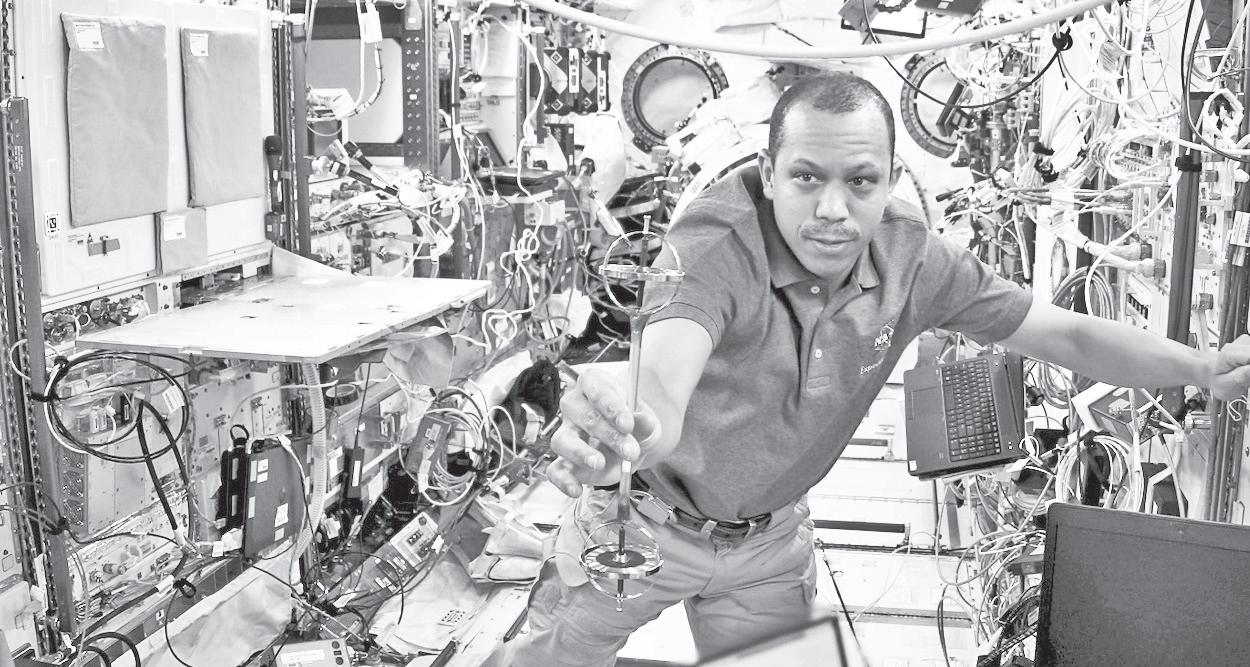
THIS is a proud moment for the astronomy students of the Philippines’ Rizal Technological University (RTU).
The Double Gyroscope experiment designed by the RTU students was successfully conducted onboard the International Space Station (ISS) as part of the 2025 Asian Try Zero-G (ATZG 2025) competition, the Philippine Space Agency (PhilSA) announced.
National Aeronautics and Space Administration (NASA) Astronaut Christopher Williams performed their experiment inside the Kibo module of the ISS last March 24.
Double Gyroscope was developed by third-year RTU astronomy students majoring in astrophysics: Christopher Tumamac, Ryan Andrew Doña, and Rose Ann Cezar. Their experiment was chosen, alongside 10 others from Australia, Bangladesh, Japan, Malaysia, Singapore, Taiwan, Thailand, and UAE for the finals of the ATZG competition.
Williams conducted the 11 experiments on the ISS while being livestreamed and viewed by the fi -
nalists at the Japan Aerospace Exploration Agency (JAXA) Tsukuba Space Center in Ibaraki, Japan.
JAXA’s ATZG competition invites young scientists from the Asia-Pacific to submit creative experiments designed for microgravity conditions. Selected experiments are performed by astronauts aboard the Kibo module in the ISS.
The Philippines has participated in the competition through PhilSA, which serves as the local organizer as part of its education and outreach initiatives.
Since 2022, experiments from Filipino students have consistently been selected as ATZG finalists and carried out on the ISS by astronauts.
The successful experiments were the rotation of dumbbellshaped objects in space by William Kevin Abran; Oloid’s Movement in Microgravity by Paul Anton Mahinay; and the Effectivity of Elastic
Resistance Band Exercise when performed in Zero-Gravity by Gabriel John Guila, Dianne Cristine Cabiedes, Sean Matthew Castaneda, Franz Joshua Corpuz, Jose Ernest Guila, Arniel Kurt Macalla, Lee Andrew Medina, Giorgione Parrera, and Ace Gabriel Pega.
Team members Doña and Tumamac were given the opportunity to present their experiment proposal at the JAXA Tsukuba Space Center before the live execution of their experiment. The observed results successfully aligned with the hypotheses outlined in their study.
JAXA Kibo Utilization Center Director Dr. Masaki Shirakawa and JAXA Astronaut Norishige Kannai awarded certificates of recognition to the
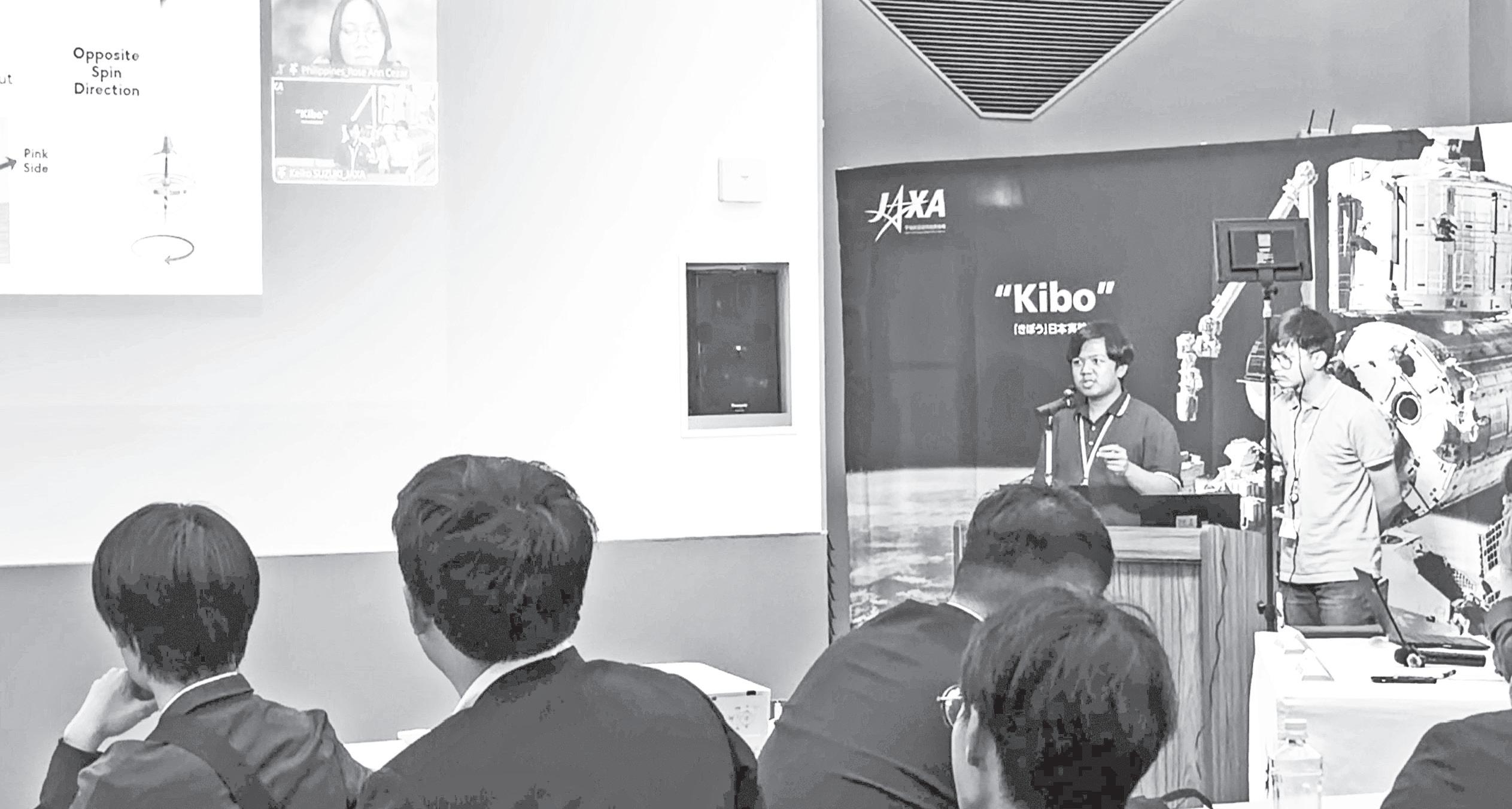
finalists during the event.
Reflecting on their ATZG experience, the team shared that conducting experiments in a zero-gravity environment presents unique challenges and opportunities, as weightlessness can affect how objects move despite careful planning.
“We are very thankful for this opportunity given to us by PhilSA and I hope in the next batches of ATZG, more Filipino students will apply so they can also experience proposing an experiment in zero-gravity, see their experiment carried out, and learn a lot,” the Philippine team added.
Double Gyroscope
DOUBLE Gyroscope demonstrates
a key principle used in spacecraft orientation, or how satellites and spacecraft control the direction they face in space. This experiment focused on two gyroscopes, or spinning devices used to help measure or maintain direction and balance, placed at the end of a stick.
The students hypothesized that when the gyroscopes spin in opposite directions, their motion may cancel each other out, causing the system to appear stable or nearly motionless.
However, small differences in spinning could slowly change the direction the device points to over time.

To observe the movement in zero gravity, Williams repeatedly conducted tests by spinning the gyroscopes and observing its movements closely. Results from the experiments and winners of the competition will be presented in the 2025 ATZG wrap-up session later this year. Double Gyroscope was selected from the 89 proposals submitted nationwide from November 15, 2024 to January 17, 2025. Following the national selection process, it became part of the official Philippine entries to the 2025 ATZG and was later selected by JAXA. The Kibo-ABC program THE Kibo-ABC program, or Asian Beneficial Collaboration through Kibo Utilization, was established by the Space Frontier Working Group of the Asia-Pacific Regional Space Agency Forum to promote the utilization and share the value of the Japanese Experiment Module “Kibo,” enhance the capacity of participating organizations, and foster collaborative projects between Japan and Kibo-ABC member countries. ATZG, through its member organizations, is one of the activities under the Kibo-ABC program that aims to expand the use of the Kibo module on ISS and develop the youth’s understanding of space environments.
Scientists: The worst climate future is less likely, but the best one is slipping away
ASHINGTON—Scien -
Wtists are jettisoning their worst and best case scenarios for a warming world as no longer plausible. That shows how modest gains in the fight to curb climate change have dialed back the most catastrophic of future heating but also confirmed that there’s no chance to limit warming to the international goal set in 2015.
Researchers’ new list of seven plausible carbon pollution scenarios for the future are pushing aside two staples of climate policy: the extremes on either end.
The extremes have become less probable in the past several years because of how we power our world.
Carbon dioxide, released from the burning of gas, oil and coal, is chiefly responsible for warming.
Increasing use of green energies—like solar, wind and geothermal— which don’t emit carbon dioxide, have lowered top end carbon pollution projections.
However, because those changes haven’t been fast enough, the bottom end projections have risen.
The Paris climate agreement in 2015 set a goal of limiting warming to 1.5 degrees Celsius (2.7 degrees Fahrenheit) since pre-industrial times, or the mid-1800s, giving rise to the mantra “1.5 to stay alive.”
But now scientists say that even their best-case scenario still shoots past that signature temperature mark.
On the other end, those same new scenarios no longer include the
coal-heavy future that would lead to 4.5ºC (8.1ºF) of warming by 2100, a scary scenario that many scientific studies used in their future projections.
The new proposed worst case scenario has an end-of-the-century warming of about 3.5ºC (6.3ºF), a full degree (1.8ºF) less than the old scenario, while the updated best case future is a couple tenths of a degree Celsius (0.36ºF) warmer than previously theorized, squeezing past the Paris goal, said climate scientist Detlef Van Vuuren of Utrecht University, lead author of a recent study laying out future scenarios.
“There is kind of a narrowing of the futures. It cannot be as bad as we thought, but it cannot be as good as we hoped,” said Johan Rockström, director of the Potsdam Institute for Climate Impact Research in Germany.
The scenarios include a “middle” one where by the end of the century the world warms 3ºC (5.4ºF) above pre-industrial times, which is roughly the path society is currently on, scientists said.
The world is now about 1.3ºC (2.3ºF) above preindustrial times. Even tenths of a degree of warming cause problems for Earth’s ecosystems, as species die off, fresh water becomes more scarce and extreme weather events, such as flooding and heat waves, intensify.
It’s too late to keep below 1.5ºC goal
BECAUSE carbon pollution keeps
rising globally and stays in the atmosphere for about century, the best case scenario is for warming to shoot past the 1.5ºC mark, peak at 1.7ºC (3.1ºF) for maybe as long as 70 years, and eventually somehow come back down below 1.5ºC if a technology can be designed to remove massive amounts of carbon from the air, said nine of the 10 scientists interviewed for this article.
The world is warming at a pace of a tenth of a degree Celsius (nearly 0.2ºF) every five years, they said.
“This is just physics,” said climate scientist Bill Hare, CEO of Climate Analytics, a policy institute.
“We’re losing the ability to limit warming even by two degrees without strong action and people need to be aware of that and be aware that
it’s a political failure. It’s not an act of God or anything. It is just because politicians in many places are not acting fast enough,” Hare said.
The 1.5 goal is not just a number, said Cornell University climate scientist Natalie Mahowald, co-author of a UN science report detailing the harms of going higher than 1.5 degrees.
“There’s a lot of implications for, you know, not being able to meet the 1.5. And, of course, the people who will suffer the most are on the small island developing states,” Mahowald said. “Some of them will go underwater.”
Highest warming scenario changes spark debate
AMERICAN Enterprise Institute’s
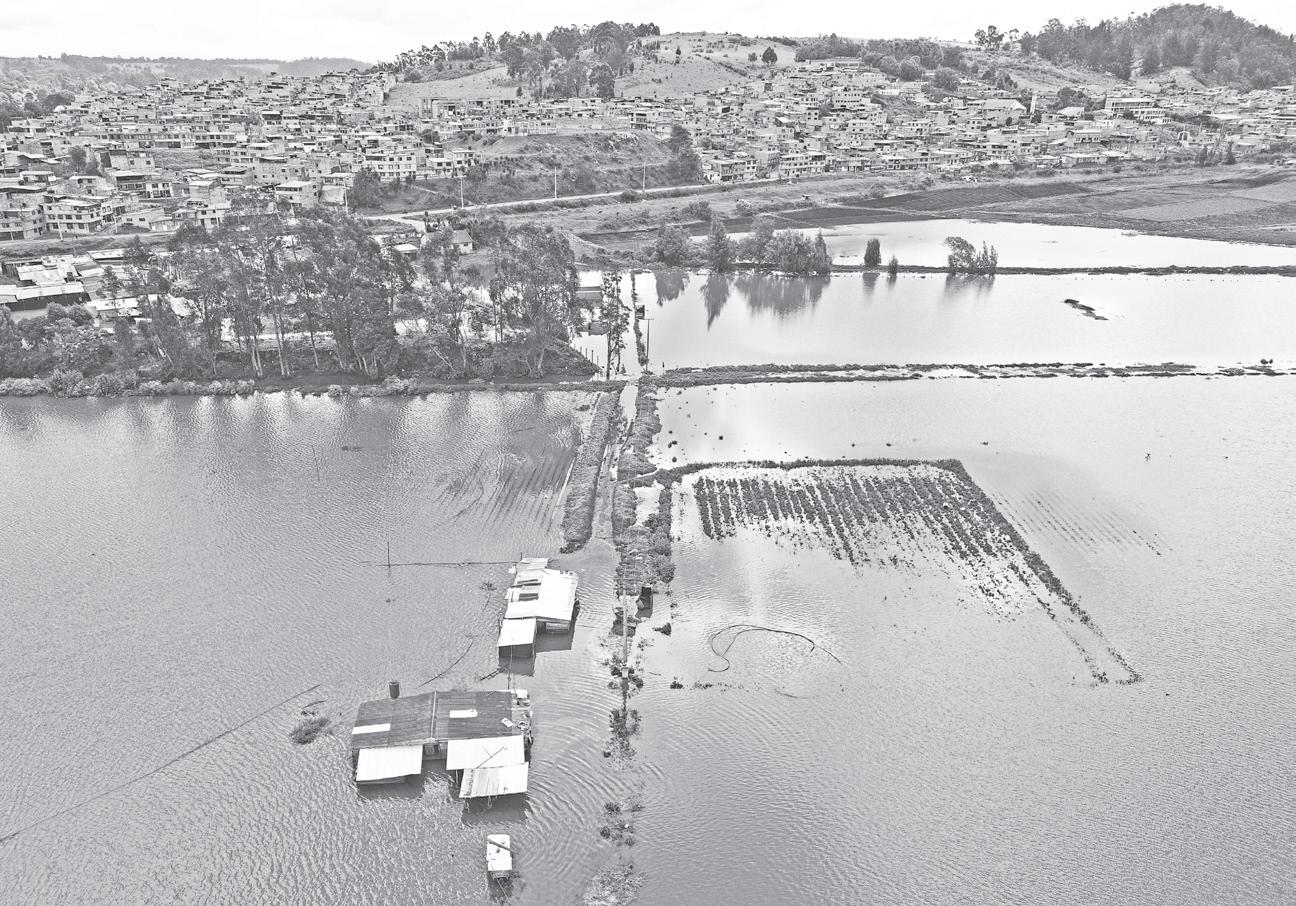
Roger Pielke Jr. said changes to the highest end scenario matter because it was presented as a likely future that could come true if nothing changed.
Thousands of scientific studies have been based on that highest warming scenario, called RCP8.5, even though research had already shown it to be improbable.
“It was always presented as where we were headed absent explicit climate policy,” even though it was based on out-of-date and incorrect coal-heavy energy theories, Pielke said in an email.
Keywan Riahi, lead author of the 2011 study that introduced that scenario, said when it was designed the high-end case was not where scientists thought the world was heading.
“It was never a likely case. It was basically, given the underlying studies in the literature at that time, a plausible higher bound of what possible emissions could look like. This is very different than if you would ask the question, what is now the most likely scenario,” said Riahi who is director of the Energy, Climate and Environment Program at the International Institute for Applied Systems Analysis in Austria.
It’s a success story, said Riahi, because “in the last 10 years or the last 15 years, the cost of renewables, particularly solar and wind, have fallen by almost 90 percent.”
President Donald Trump jumped into the fray with a social media post saying: “GOOD RIDDANCE! After 15 years of Dumocrats promising
that ‘Climate Change’ is going to destroy the Planet, the United Nations TOP Climate Committee just admitted that its own projections [RCP8.5] were WRONG! WRONG! WRONG!”
“The risks of climate change have not disappeared,” responded study author and scientist Van Vuuren. “The good news is that we did not follow the most dramatic emission pathway. However, we are still heading toward a future with significant climate impacts; a future we should avoid.”
A big asterisk looms WHILE the upward curve of emissions is flattening, there’s a factor that could still make the older high end temperature estimates come true, Mahowald, Rockstrom and Hare said. That’s because the newest batch of scenarios only look at emissions from the burning of fossil fuels, which is the control knob that humans can turn. Nature has another knob of its own referred to as climate feedbacks, which humans don’t control. Scientists have had a hard time projecting climate feedbacks, and that can add another half a degree Celsius (nearly a degree Fahrenheit) of warming on top of what’s caused by emissions. Those feedbacks include release of massive amounts of heat-trapping carbon now being stored in the world’s oceans, in forested areas and in the Amazon, along with changes to ocean currents and cloud reflectivity, Rockstrom said. Seth Borenstein, Ap Science Writer
A10 Sunday, May 24, 2026

Editor: Lyn Resurreccion • www.businessmirror.com.ph
CEBU’S Catholic archbishop appealed for equal justice and impartial investigations as political tensions intensified over the impeachment proceedings against Vice President Sara Duterte and allegations involving a multibillion-peso floodcontrol scandal.
In a pastoral appeal on May 19 addressed to Filipinos, Archbishop Alberto Uy stressed that every accused person deserved fairness and due process, but warned public trust weakens when justice appears selective or unevenly enforced against political rivals and allies.
“The tension arises when people begin to feel that justice is not being applied equally,” Uy said, referring to public questions surrounding the pace of investigations into alleged flood-control anomalies.
He said some ask why certain personalities are pursued quickly while others, especially those
allegedly involved in the floodcontrol anomalies, seem not to be investigated with the same urgency.
“Whether these perceptions are accurate or not, our people need reassurance that justice is fair, impartial, and not selective,” Uy said.
The archbishop appealed directly to President Ferdinand R. Marcos Jr., government leaders and investigative agencies to pursue the flood-control investigation “seriously, sincerely, and without favoritism” if they hoped to restore public confidence.
He also called on fellow bishops within the Catholic Bishops’ Conference of the Philippines to
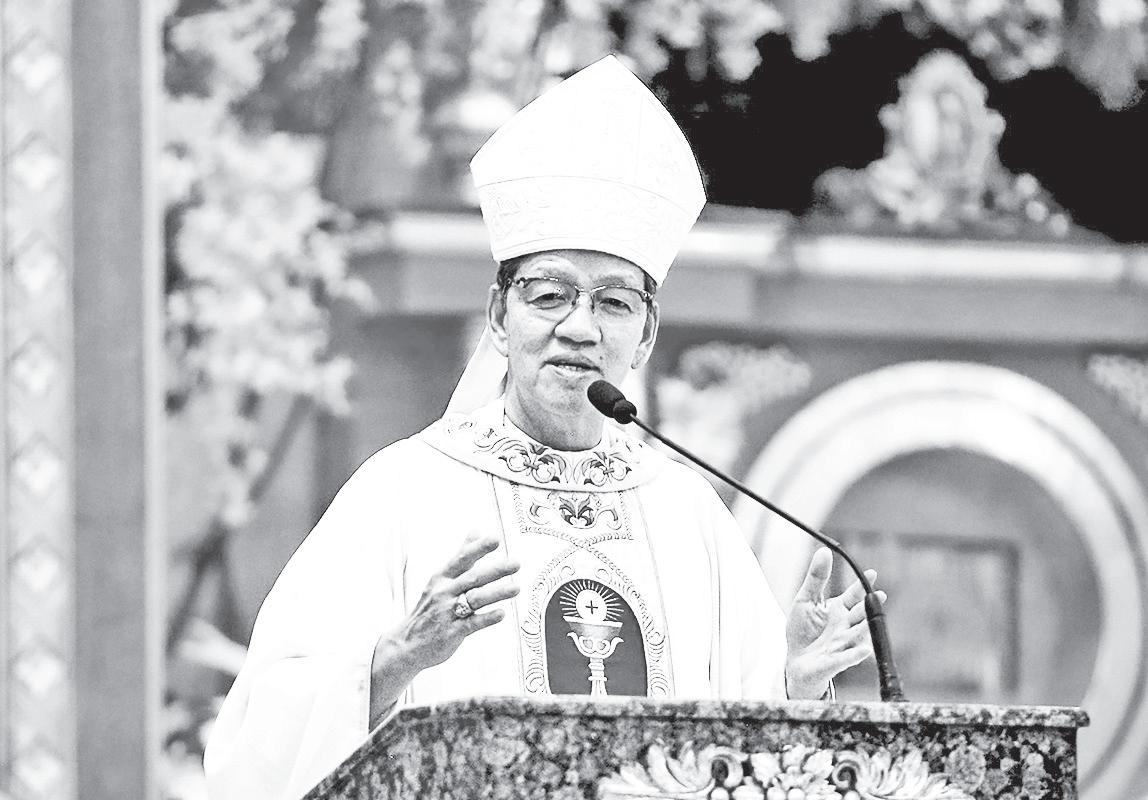
speak as strongly against corruption allegations as they had in urging the Senate to convene an impeachment court promptly.
The episcopal conference earlier appealed for the Senate to proceed with constitutional impeachment processes involving Duterte, while separately condemning alleged corruption connected to flood-control projects in a previous statement issued last year.
“We should be just as strong in urging a swift and credible investigation into the flood-control
anomalies as we are in calling for the proper constitutional process regarding the impeachment case,” Uy said.
He also warned the public against political fanaticism, hatred and disinformation, saying growing divisions were emotionally burdening many citizens struggling to determine whom to trust.
“This is not the time for blind loyalty to politicians,” Uy said.
“This is the time to love our country honestly, prayerfully, and responsibly.”
THE Vatican announced last week that Pope Leo XIV’s first encyclical will be published on May 25 with the title “Magnifica Humanitas.”
Pope Leo will speak at a presentation for the release of the social encyclical—a papal letter to the Church— at 11:30 a.m. Rome time on May 25 in the Vatican’s Synod Hall.
The Vatican also confirmed that the full title of the encyclical is Magnifica Humanitas: “On the Protection of Human Dignity in the Age of Artificial Intelligence [AI].” Magnifica Humanitas is Latin for “magnificent humanity.” Leo signed the letter, which is expected to provide moral guidance on the digital revolution and emerging technologies such as AI, on May 15.
The speakers at the encyclical’s presentation will be: Cardinal Víctor Manuel Fernández, prefect of the Dicastery for the Doctrine of the Faith; Cardinal Michael Czerny, SJ, prefect of the Dicastery for Integral Human Development;
Anna Rowlands, professor of ethics and political theology at the University of Durham in the United Kingdom; Christopher Olah, co-founder of Anthropic USA; and Léocadie Lushombo, IT, professor of theological ethics at the Jesuit School of Theology at Santa Clara University in Berkeley, California. Secretary of State Cardinal Pietro Parolin will offer concluding remarks.
May 15 marked the 135th anniversary of the publication of Pope Leo XIII’s 1891 encyclical on capital and labor, Rerum Novarum, “Of New Things”—the first in a long line of social encyclicals produced in the modern era of the Catholic Church.
Pope Leo XIV indicated at the beginning of his pontificate that he intended to follow in the footsteps of his predecessor Leo XIII by responding to today’s industrial revolution: “developments in the field of artificial intelligence.”
Addressing the College of Cardinals on May 10, 2025, the new

POPE Leo XIV’s first encyclical, “Magnifica humanitas,” will be released on May 25. The pope is scheduled to attend a presentation event with several speakers the same day. VATICAN MEDIA
pope said he chose to take the name Leo XIV for various reasons, “but mainly because Pope Leo XIII in his historic encyclical Rerum Novarum addressed the social question in the context of the first great industrial revolution.”
“In our own day,” he continued,
“the Church offers to everyone the treasury of her social teaching in response to another industrial revolution and to developments in the field of artificial intelligence that pose new challenges for the defense of human dignity, justice, and labor.” Hannah Brockhaus/Ewtn News
Via Cbcp News
WASHINGTON—Thousands of people streamed onto the National Mall for a daylong prayer rally on May 17 billed as a “rededication of our country as One Nation under God.” Against the backdrop of the Washington Monument, worship music blared from a stage that made clear the event’s Christian focus.
Arched stained-glass windows, set underneath grand columns resembling a federal building, depicted the nation’s founders alongside a white cross.
Most speakers celebrated Christianity’s ties to American history, a blending of ideas that critics flagged ahead of the prayer gathering as supporting Christian nationalism. President Donald Trump read a passage of Scripture in a video shown at the rally. Filmed in the Oval Office, it was the same footage used during a marathon Biblereading event last month.
The verses from 2 Chronicles are often cited by those who believe America was
founded as a Christian nation.
“If my people, which are called by my name, shall humble themselves, and pray, and seek my face, and turn from their wicked ways,” Trump read, “then will I hear from heaven, and will forgive their sin, and will heal their land.”
Other top Republicans, including Vice President JD Vance, Defense Secretary Pete Hegseth, Secretary of State Marco Rubio and House Speaker Mike Johnson, RepublicanLos Angeles, were also on the schedule as part of the celebrations marking 250 years of US independence.
Many names on the Rededicate 250 program were among Trump’s longtime evangelical supporters.
“We are deeply concerned that what is really being rededicated is a nation to a very narrow and ideological part of the Christian faith that betrays our nation’s fundamental commitment to religious freedom,” said the Rev. Adam Russell Taylor, a Baptist minister who leads the progressive Christian organization Sojourners.
The conservative Christian lineup featured guests who often argue that the United States was founded as a Christian nation, a narrative disputed by many historians and other religious traditions.
Rabbi Jonah Dov Pesner, director of the Religious Action Center of Reform Judaism, noted the religious diversity of early America, including Jews, Muslims and Indigenous people.
“I want to shine a light on America’s history as a nation that welcomes, celebrates, and protects people of all faiths and those of no faith,” Pesner said.
Attendees believe prayer event is significant
MANY in the crowd wore Trump hats and patriotic colors, joining the festivities under a sweltering sun.
“It’s all about Jesus,” said Denny Smith, 72, of Rhode Island, who rented a motorized scooter to traverse the National Mall.
Retha Bond, 58 and from southern Illinois, also heard Trump speak not far
away on January 6, 2021. She said she did not join the protesters who rioted later that day at the Capitol but has remained a steadfast Trump supporter.
“I’m not saying Trump is the savior,” Bond said. She added that “this is one of the most important things that could be going on in the world, for us to rededicate our nation back to God.”
Speakers mentioned the late conservative activist Charlie Kirk from the stage. Kirk’s activism has been a powerful example for Alessandra Seawright, 15, of Santa Fe, New Mexico, who came to Rededicate 250 with her mother.
“I think we just need more of this in our country, and we just need to share the word of the Lord,” she said. “We love going to events like this.”
They also attended Kirk’s memorial service, which mixed Christian worship and political messages. Events like these, Seawright said, help her feel less alone in her conservative Christian beliefs. Tiffany Stanley/Associated Press
US teen Buddhist lama now a monk studying in the Himalayan foothills
ATEENAGE Buddhist lama recently blessed thousands at a monastery in the Himalayan foothills.
Just six months earlier and half a world away, he was pulling all-nighters to play Madden NFL on his Xbox at his home in a Minneapolis suburb. Both are home to Jalue Dorje.
Dorje grew up a typical American teen, loving rap music, video games and football. He’s also an aspiring spiritual leader—recognized from an early age by the Dalai Lama as a reincarnated lama.
The Associated Press began following his story several years ago when he was 14. Now he’s 19. He graduated from high school last year and moved to northern India to join the Mindrolling Monastery, about 7,200 miles (11,500 kilometers) from his home in Columbia Heights.
The US teen’s life today RECENTLY, he came to Nepal to meet his parents, who flew from Minneapolis, and attend sacred rituals and teachings conducted by the abbot of Shechen Monastery. Located near the 1,500-year-old Boudhanath stupa, it is one of Tibetan Buddhism’s most sacred sites. He no longer wore his usual hoodies and sweatpants—only maroon and golden monastic robes. But beneath his robes, he wore white Crocs decorated with Jibbitz charms of “The Simpsons.”
Each morning, he’d awake at dawn. After prayers, he walked from his hotel through crowded Kathmandu streets near the soaring white dome and spire of Boudhanath—with its colorful Tibetan prayer flags and the painted, ever-watching eyes of the Buddha.
Being recognized as a reincarnated lama
SINCE the Dalai Lama recognized him at age 2, Dorje had spent much of his life training to become a monk. He memorized sacred scriptures, practiced calligraphy and learned the teachings of the Buddha.
The process of identifying a lama is based on spiritual signs and visions. Dorje was 4 months old when he was identified by Kyabje Trulshik Rinpoche, a venerated master of Tibetan Buddhism.
He was later confirmed by several lamas as the eighth Terchen Taksham Rinpoche— the first was born in 1655.
Dorje’s parents took him to meet the Dalai Lama in 2010 when the Tibetan Buddhism’s spiritual leader visited Wisconsin.
The Dalai Lama cut a lock of Dorje’s hair in a ceremony. He advised the parents to let their son stay in the US to perfect his English and then send him to a monastery.
As a child, he often wondered why he couldn’t sleep later on weekends and watch cartoons like other kids. His dad would tell him that one day it would pay off, “like planting a seed that one day would sprout.”
Fluent in English and Tibetan, Dorje excelled in public school. Although he was enthroned as a lama in a 2019 ceremony in India, his parents let him stay in the US until graduation. Growing up, he kept a photo of the Dalai Lama in his room above DVD collections of “The Simpsons,” “South Park,” and “Family Guy,” next to the manga graphic novel series “Buddha.”
He had a deal with his father, who would give him Pokémon cards in return for memorizing Buddhist scriptures. He collected hundreds, sometimes sneaking them in his robes at ceremonies.
Football and sacred scriptures EVERY morning he awoke to recite sacred texts. Then school, followed by football practice. He returned home for tutoring on Tibetan history and Buddhism.
At night, he practiced calligraphy or listened to rappers. When he got his license, he drove around listening to Taylor Swift.
An avid sports fan, he roots for the Atlanta Hawks in basketball, Real Madrid in soccer, and the Atlanta Falcons in football.
On the football field, his teammates praised his positivity; he reminded them to have fun and keep losses in perspective.
But in the final game of his senior season, he shed tears, realizing it would likely be his last game ever.
He also loves writing and journalism. In high school, he wrote an award-winning story about Tibet for the student newspaper.
He often helped with events representing the local Tibetan community.
For his 18th birthday, the AP was there when more than 1,000 people gathered at the Tibetan American Foundation of Minnesota for the last party before he joined the monastery in India.
Monastic college on the foothills of the Himalayas HE packed light for his new life: headphones, laptop, a Fantasy Football magazine, and a book on the Indian Buddhist master who brought Tantric Buddhism to Tibet. His parents flew with him to New Delhi and then drove north to Dehradun, near the Himalayan foothills, in the equivalent of college drop-off. They bought him a larger bed, more apt for a football player than a monk. They painted his monastic room and erected a shrine where he could pray.
He took lessons on Buddhist philosophy, and practiced his calligraphy and chanting in India, while his friends attended history, science and literature classes in US colleges. Just the beginning DESPITE the 10-hour time difference, he kept in contact with friends back home through texts and WhatsApp. On time off from chanting and prayers, he built Legos, walked to an arcade to play the FIFA soccer video game, and watched Marvel superhero films and NBA and NFL games on his laptop.
He was especially psyched about the halftime Super Bowl show and praised what he called an incredible performance by Bad Bunny.
It was his first time experiencing a life of asceticism. He ate a daily
community. His goal is to become “a leader of peace,” following the examples of Nelson Mandela, Gandhi and the Dalai Lama.
It’s a long path that began soon after his birth. But he feels ready, saying that this, “is just the beginning.” Luis Andres Henao/Associated Press

Editor: Lyn Resurreccion

By Jonathan L. Mayuga
SOME years back, the Department of Environment and Natural Resources (DENR) launched a comprehensive assessment of the biological diversity of Boracay Island. It discovered that the country’s top tourist destination is seriously at risk of losing its remaining wildlife and unique habitats due to the unbridled development and unsustainable tourism practices.
The Boracay Island Biodiversity Assessment was conducted just after it was closed to tourists from April 26 to October 26, 2018. It underwent a massive environmental rehabilitation and redevelopment on orders of then-President Rodrigo Duterte after describing the island as a “cesspool” due to uncontrolled overdevelopment, sewage problems, and overcrowding.
San Miguel’s unsolicited proposal TODAY, Boracay is facing yet another predicament with the proposed Caticlan-Boracay Bridge Project, or Boracay Bridge Project, San Miguel Holdings Corp. proposed.
According to the Public-Private Partnership (PPP) Center of the Philippines, which invited interested parties to submit comparative proposals as early as January 2025 following the approval of the unsolicited proposal, the project involves the construction of an approximate 2.54-kilometer limited-access bridge system, including an access road infrastructure with facility hubs on both islands.
The project proposal also involves the construction of commercial spaces for lease and parking areas for the service and operation of public transport vehicles and cargo/delivery vehicles between Boracay and Barangay Caticlan in the municipality of Malay in Aklan province.
Through a PPP arrangement for a period of 30 years, the project is expected to open up new all-weather access for vehicles and pedestrians, manage the environmental carrying capacity of the island, and alleviate overcrowding and overuse of existing facilities.
The project proponent cited the positive impact of its proposal, primarily anchored on improving transport and mobility, enhancing waste management, improving disaster and emergency response, and ensuring regulated carrying capacity.
The Department of Public Works and Highways (DPWH) and the project proponent are finalizing the execution details of the 39-year Build-Operate-Transfer concession agreement.
Strong opposition
THE proposed project continues to face stiff opposition from various stakeholders, including the local government units (LGUs) of Malay and Aklan, environmental groups, transport cooperatives, business stakeholders, and indigenous communities.
The LGUs cited lack of consultation and disregard for local autonomy.
While other would-be affected stakeholders cited its potential adverse impact on their income and livelihood, and in their way of life, environmental and conservation advocates are also worried about its impact on the island’s fragile environment—its terrestrial forest, caves, coastal and marine ecosystem, and threatened wildlife. Mamamayang Liberal Rep. Leila de Lima has already sought a congressional inquiry into the controversial project.
Local autonomy, mandate
ENVIRONMENTAL lawyer Gloria Estenzo Ramos lauded the LGUs of Malay and Aklan, which have political jurisdiction over Boracay, for sounding the alarm.
In a voice call via Messenger on May 20, Ramos said local of -
ficials have every right, and are duty-bound to question the project in the absence of multi-sectoral consultation.
“It is an environmentally critical project in an environmentally critical area, and the LGUs have every right to question the project.
In fact, there’s a DILG [Department of Interior and Local Government] Circular of their role,” Ramos, an ocean conservation champion, told the BusinessMirror, referring to DILG MC 2022018, which reiterates the role of LGUs on projects covered by the Philippine Environmental Impact Assessment System.
Transparency is key ACCORDING to Ramos, the national government and the proponent of every project, must exercise transparency in environmentally critical projects, given that the DPWH is itself embroiled in a corruption scandal involving flood control.
“Haven’t they learned anything?” a dismayed Ramos told the BusinessMirror
She said the DPWH and the project proponent must conduct genuine consultation and release to the public the result of its environmental impact assessment to make the people of Malay and other would-be affected sectors properly informed about the potential adverse impact of the project.
“This is not a small project. This is a big project and the people, especially the fishermen, stand to be affected,” Ramos said in Filipino.
ENVIRONMENTAL and climate justice advocate John Leo Algo, national coordinator of Aksyon Klima, told the BusinessMirror on May 18 via Messenger that given the vulnerability of the Philippines to disaster, every project must be anchored on sustainability.
“The DPWH keeps missing the point when it comes to these projects; it’s not just about the sustainability of the infrastructure, but more importantly, it’s about the sustainability of the island,” he said.
According to Algo, Boracay may be one of the faces of Philippine tourism, but “it is still a small island like thousands in the country.”
Ecological damage, economic losses
“BESIDES the short-term ecological damage and the loss of economic sectors like local ferries, this project could also compromise the island’s long-term carrying capacity, which would result in even more adverse impacts on its ecosystems and inhabitants,” he said.
Algo recalled that the island was closed down some years back partially due to adverse environmental impacts.
“Does DPWH, or SMC [San Miguel Corp.], expect that a significant increase in traffic and tourists due to that bridge would not induce even more stress on the island? The local governments object to it, the local communities oppose it, yet it was still approved by the DPWH,” he lamented.
According to Algo, the Boracay Bridge Project is not the only SMC project around the area facing severe opposition, citing the hydropower project in Malay as another example.
Top-down approach
“THIS is yet another example of a ‘top-down’ style in Philippine governance, instead of the ‘bottom-up, needs-based’ approach that we need to enable more. It is clear the government, especially the DPWH, refuses to learn from the mistakes committed in recent years. It keeps listening to the whims and wishes of corporations over the calls of the people
it is mandated to serve,” Algo pointed out.
He said the government keeps prioritizing gray infrastructure for its outdated, misguided notion of “development” over improving services, protecting ecosystems, and enhancing the well-being of communities.
“What the island needs is not a bridge. It needs a finished drainage system and additional sewerage treatment plants. It needs improved medical facilities and modernized ports and boats. It needs its terrestrial and marine biodiversity and ecosystems to be better protected,” he said.
Sensitive habitats
DIUVS DE JESUS , Oceana Campaign and Science Specialist, told the Business Mirror via Messenger on May 19 that the CaticlanBoracay bridge could significantly impact marine ecosystems, especially sensitive habitats like coral reefs and seagrass beds that may be damaged during construction.
“In the long term, it can alter currents and sediment flow, leading to further beach erosion and habitat changes,” de Jesus said.
He added that increased tourism and water activities like diving, swimming, and boating can also physically damage reefs and put more pressure on these ecosystems, not just through pollution, but through direct disturbance.
“Moving forward, efforts should focus on sustaining Boracay’s rehabilitation and protecting remaining habitats, while ensuring tourism and development remain environmentally responsible,” he said.
Fragile island ecosystem
AN international biodiversity expert, Theresa Mundita S. Lim, a former executive director of the
Asean Centre for Biodiversity, recalled the already fragile state of Boracay’s unique ecosystem during the conduct of the Boracay Island Biodiversity Assessment in 2018.
“Based on the biodiversity assessments we conducted in Boracay during its closure in 2018, the remaining limestone and beach forests, its important flying fox roosting areas in Yapak, its caves with bat populations and cave-dependent species, as well as its coral reefs, seagrass beds, wetlands, and coastal systems provide critical ecosystem services to the island,” Lim told the BusinessMirror on May 20. She said that the proposed bridge connecting Caticlan to Boracay must, therefore, be approached with utmost caution and guided by rigorous, transparent, and science-based assessment.
“While improved access may offer logistical benefits, Boracay is an ecologically fragile landscape and seascape whose forests, caves, wetlands, coral reefs, seagrass beds, coastal habitats, and wildlife populations are already under significant pressure,” said Lim, a former head of the DENR’s Biodiversity Management Bureau. She suggested that before any construction proceeds, Boracay’s ecological carrying capacity should be reviewed anew. A bridge may unintentionally accelerate over-tourism by making entry easier, faster, and potentially less regulated.
Thus, visitor entry control systems, transport caps, real-time monitoring, zoning, strict habitat buffers, no-disturbance areas, marine protection measures, waste and wastewater safeguards, and biodiversity-sensitive tourism protocols must be in place before— not after—the bridge is built.
WASHINGTON—Global warming is causing rivers to slowly lose oxygen, threatening fish and other lives in the waterways, a new study shows.
Researchers in China used satellites and artificial intelligence to track and analyze oxygen levels in more than 21,000 rivers across the globe since 1985. They found oxygen levels have dropped an average of 2.1 percent since 1985, according to a study published Friday in Science Advances.
That doesn’t seem like much but it adds up and if it continues or accelerates, rivers in the Eastern United States, India and across the tropics could lose enough oxygen by the end of the century to suffocate some fish and create dead zones, the study said. Basic chemistry and physics dictate that warmer water holds less oxygen, scientists said. Warmer water, which happens with human-caused climate change, releases more oxygen into the atmosphere.
If the oxygen loss rate continues at
the current pace, the world’s rivers on average will lose an additional 4 percent of their oxygen by the end of the century, and in some cases close to 5 percent, the study found. That’s when oxygen loss—called deoxygenation—becomes problematic for fish and people who rely on rivers, according to the study’s lead author Qi Guan, an environmental scientist at the Chinese Academy of Sciences in Nanjing.
More dead zones appear SCIENTISTS worry that oxygen levels in rivers could fall so low that dead zones appear, as they have in the Gulf of Mexico, Chesapeake Bay and Lake Erie. Those are areas where fish struggle to breathe and die.
“Deoxygenation is a very slow process. If we have a long period, the negative impact will attack the river ecosystems,” Guan said.
“The low level of oxygen can cause a series of ecological crises—such as biodiversity decline, water quality degradation
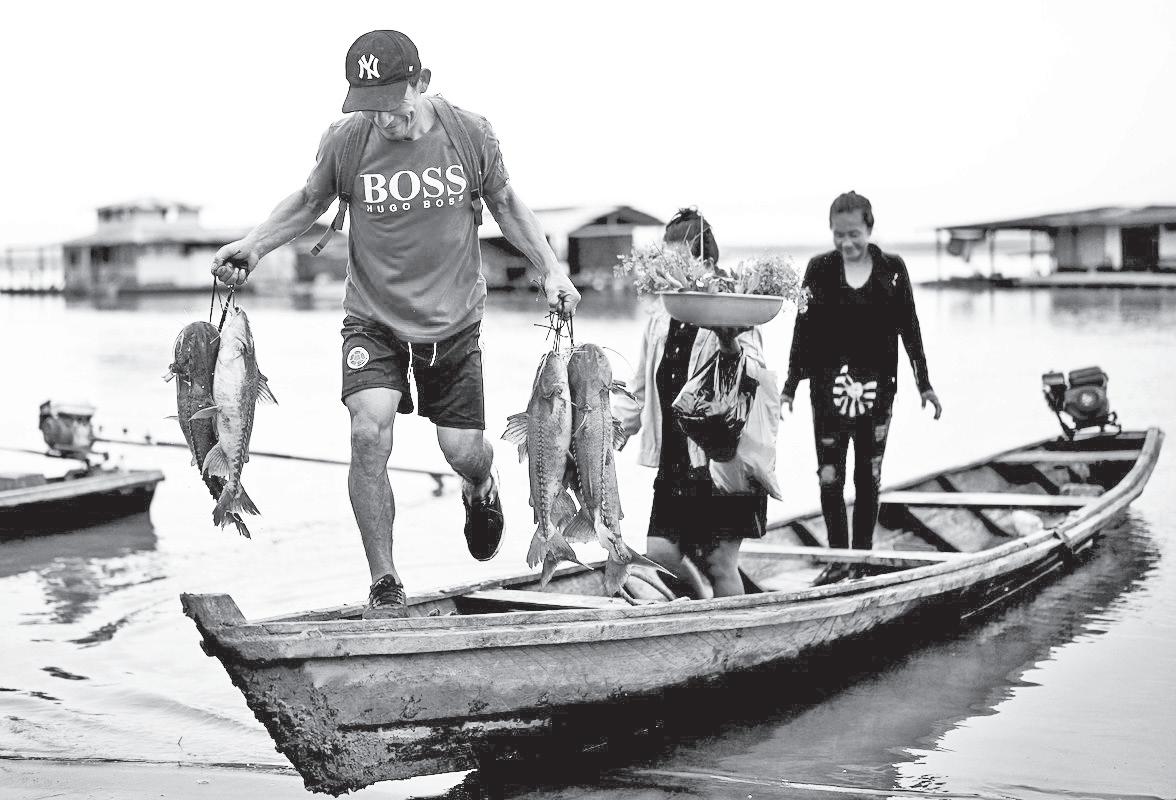
and maybe some fish will die.”
University of Arizona geoscientist Karl Flessa, who wasn’t part of the study, said in an email that losing oxygen in rivers means “a future of more stinky dead zones [hypoxia], especially during heat waves.”
Some rivers are in such bad shape that “a small change can tip them into the danger zone,” Flessa said. “if your favorite fishing hole gets too warm, oxygen levels will go down and there won’t be any fish to catch.”
India, Eastern US and the Amazon are hot spots
EARLIER this century, India’s heavily polluted Ganges River was losing oxygen more than 20 times faster than the global average, the study said.
Even with moderate-to-high increases in global carbon dioxide emission rates— not the implausible worst-case scenario— rivers in the Eastern United States, the Arctic, India and much of South America are projected to lose about 10 percent of their oxygen by the end of the century, the analysis showed.
Guan said he worries about tropical rivers especially, such as the Amazon in Brazil.
Since 1980, the number of days with dead zone spots in the Amazon rose by nearly 16 days per decade, a study last year found.
Hydrology professor Marc Bierkens of Utrecht University in the Netherlands, said a study he and colleagues did last year showed oxygen stress in the world’s rivers increased by 13 days every decade and dead
zone occurrences increased by nearly three days a decade since 1980.
As the world continues to warm, those numbers should jump even higher, said Bierkens, who didn’t participate in the Chinese study.
Guan’s study found several reasons for oxygen loss in the world’s rivers, including nutrient pollution from fertilizer and urban runoff, along with dam construction, flow and wind issues.
But nearly 63 percent of the problem is from warmer water, the study found.
Duke University ecologist and biogeochemist Emily Bernhardt, who wasn’t part of the study, said “as rivers warm it becomes easier and easier for the same pollution problems as before to cause more severe, more long lasting or more widespread hypoxia and anoxia.” Anoxia is the total loss of oxygen.
“Water pollution reduction is more important than ever and will be harder as rivers warm,” she said. Seth Borenstein, Ap Science Writer
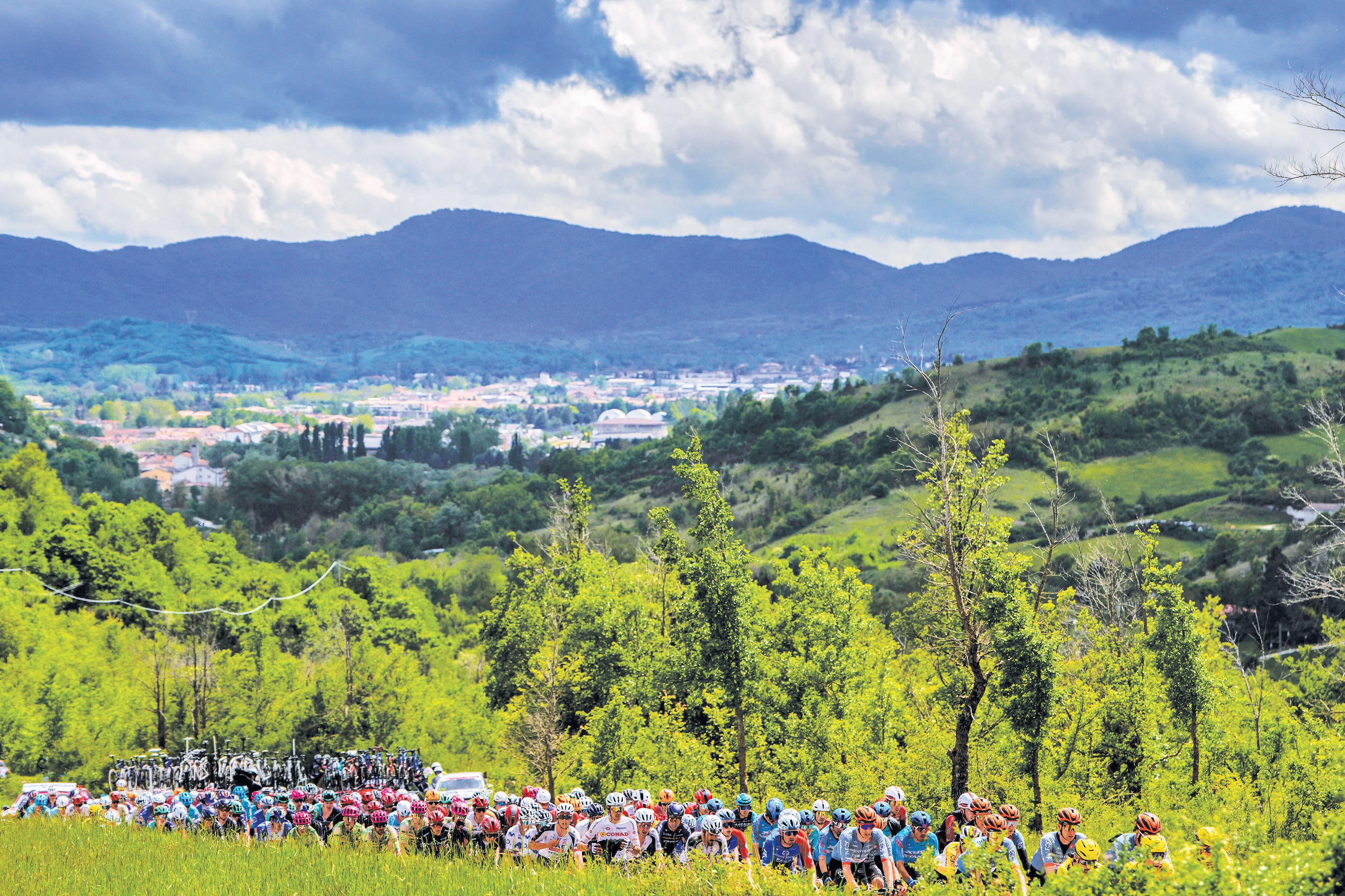
The latest edition of the World Cup—co-hosted by the United States, Canada and Mexico— will push the boundaries of how far the most popular sport on the planet can go before it reaches breaking point.
forward Clint Dempsey told The Associated Press.
The expanded format has effectively removed the chance of several top teams being drawn in the same group—known as a “group of death” in soccer vernacular.
Much of the jeopardy traditionally seen in the early stages of the tournament has been removed until the round of 16 because the eight best third-place teams also advance to the round of 32.
“The biggest danger is dilution of spectacle,” said Jonathan Wilson, author of The Power and the Glory: A New History of the World Cup.
“Maybe FIFA gets away with it this time because it’s the first expanded tournament and because ticket prices are enormous. But eventually broadcasters and fans may stop caring if the tournament doesn’t become interesting until the last 16,” Wilson said. “A World Cup game should feel almost must-watch....Nobody is watching 90 out of 104 games. It’s just too much.”
FIFA says it’s growing the game
FIFA President Gianni Infantino says the expansion of the tournament will make the game “truly global” and create opportunities for countries that “would never have dreamed to participate” in a World Cup.
The theory is that given a greater chance to qualify, more nations would increase grassroots funding and therefore improve the standard of soccer around the globe.
of playing in the World Cup. But it was just a dream, a fantasy when you’re a child,” Haiti midfielder Yassin Fortune said.
“Qualifying and being able to participate is unimaginable.”
There are certainly feel-good stories. Like Haiti goalkeeper Josué Duverger, who will swap regional soccer in Germany to rub shoulders with Brazil superstars like Vinícius Júnior and Neymar. New Zealand has called up defender Tommy Smith from Braintree Town, which was relegated from the fifth tier of English soccer this season. AP

are prepared to pay for tickets—or even parking—the pressure points are numerous going into the June-July tournament. With an expanded 48-team format—up from 32—played out over nearly six weeks, some say the tournament risks a dilution of FIFA’s most prized product.
“I personally think it’s kind of taken a little bit of the excitement and quality away from the tournament and it’s almost like it doesn’t start until the round of 32,” former US
ENGLISH golfer Aaron Rai distanced himself from the chasing pack and won the PGA Championship at Aronimink Golf Club last Sunday.
Like I said last week in my column, the year’s second major, and the venue it’s being held at didn’t really create that much excitement for me, at least. But the course set up did its job of being a tough but fair test.
Players
Four nations will be making their debut next month, including tiny Curaçao , the smallest by population ever to qualify.
“It’s a big achievement for us to make it, but we also want to show that we can play and that we deserve to be there,” Curaçao goalkeeper Eloy Room said.
Jordan, Cape Verde and Uzbekistan are the other debutants. Haiti has qualified for the first time since 1974.
“As children, we all watched the World Cup. We all dreamed
By Manuel Cayon
DAVAO CITY—The Bangsamoro Autonomous Region in Muslim Mindanao (BARMM) sent a 763-member delegation to compete in this year’s Palarong Pambansa in Prosperidad, Agusan del Sur, as the team aims to improve on the 15 medals won last year. The delegation witnessed its sendoff on Wednesday at the Cotabato City Central Pilot School. The delegation was led by officials of the Ministry of Basic, Higher and Technical Education (MBHTE) and the coaches of athletes to compete in the week-long national sporting event set to start Sunday in Prosperidad.
The athletes are set to represent the Bangsamoro region in various competitions, “carrying with them the discipline, determination, and resilience of Bangsamoro youth,” the MBHTE said. The multi-sport competition will gather thousands of student-athletes competing under 20 athletic associations, including the country’s 18 regional delegations, the National Academy of Sports and Philippine Schools Overseas.
This year’s Palarong Pambansa will feature 39 sports disciplines, including para games, demonstration events and exhibition sports. The MBHTE has encouraged Bangsamoro athletes and coaches to uphold the values of courage, discipline, unity, and true sportsmanship throughout the competition.
“Compete with pride and determination, support one another, stay safe, and always pray for guidance and protection in every game,” MBHTE stated.
The BARMM sent a delegation of 400, of whom 282 were athletes, to the 64th Palarong Pambansa in Laoag City last year, winning 15 medals including five golds.
“Bring the honor, excellence, and heart of the Bangsamoro in every game. Show the strength, talent, and resilience of the Bangsamoro,” the MBHTE said.

stacked
fending of the game’s best, including Scheffler, McIlroy, and Rahm breathing down his
used to be known as one of the nicest, humblest guys in
golf. He uses iron covers to remind himself of the time when his family sacrificed a lot to give him the best equipment. Now that he gets clubs for free, he still protects them as a reminder not to take his success for granted. As much as Aaron Rai is known for his personality and values, he will now also be known as a major champion.
ICTSI Caliraya Springs Pro-Am
ONCE in a while, I get the chance to participate in Pro-Am tournaments. Early this week, the Pilipinas Golf Tour headed to Caliraya Springs for the 2026 International Container Terminal Services Inc. (ICTSI) Caliraya Springs Championship. Being my “second home club,” Caliraya is where I get to play the most, as it is the nearest course to where I live in Laguna. It’s a gorgeous course, with views of Caliraya lake and Mt. Banahaw in some holes.
This year, our group got paired with a lady professional, 18-year old Korean Tiffany Lee. Tiffany is an accomplished golfer, having previously won two ICTSI legs before—one at Lakewood, and at Splendido.
Having moved to the Philippines as a toddler, she can be considered a local, having gone to school here and developed her game at Riviera in Cavite. Coached by her dad, Eric Lee,
it was nice to see the father-daughter team go through their routines, strategizing and managing the course. Tiffany looked to be headed for a top-5 finish, currently at third place behind Harmie Constantino


A new Swatch model is the latest example in ‘drop culture’
MAY 24, 2026 | soundstrip.businessmirror@gmail.com
Story by Justine Xyrah Garcia
Paying rent. Doing laundry. Looking for work in a foreign city.
These are not usually the kinds of things indie musicians write songs about. But for Iggy San Pablo, adulthood in Toronto became the very thing worth singing over.
Best known as frontman of the Manila-based indie band Rusty Machines, Iggy is entering a new chapter through his solo project, simple socks (stylized as lowercase), a bedroom pop-driven venture shaped by migration, distance, and the tough realities of building a life away from home.
The songs under his upcoming EP Joanna Drive move away from youthful romance and toward something more grounded: house chores, taxes, job hunting, and the emotional weight of navigating adulthood away from home.
“I came from a privileged background in Manila,” he admitted during a recent media roundtable with BusinessMirror’s SoundStrip

Publisher :
T. Anthony C. Cabangon
Editor-In-Chief :
Lourdes M. Fernandez
Aldwin M. Tolosa
Concept :
Y2Z Editor :
SoundStrip Editor : Group Creative Director : Graphic Designers :
Jt Nisay
Edwin P. Sallan
Eduardo A. Davad
Niggel Figueroa
Chow Jarlego
Contributing Writers :
Tony M. Maghirang
Rick Olivares
Jingo Zapata
Reine Juvierre S. Alberto
John Eiron R. Francisco
Patrick Villanueva
Ana Zoe V. Davad
Justine Xyrah Garcia
Ginger Franz S. Ocampo
Trixzy Leigh Bonotan
Bless Aubrey Ogerio
Photographers :
Bernard P. Testa
Nonie Reyes
Y2Z & SOUNDSTRIP are published and distributed free every Sunday by the Philippine Business Daily Mirror Publishing Inc. as a project of the
The Philippine Business Mirror Publishing, Inc., with offices on the 3rd Floor of Dominga Building III 2113 Chino Roces Avenue corner Dela Rosa Street, Makati City, Philippines. Tel. Nos. (Editorial) 817-9467; 813-0725. Fax line: 813-7025
Advertising Sales: 893-2019; 817-1351,817-2807. Circulation: 893-1662; 814-0134 to 36. www.businessmirror.com.ph
and other media organizations,
Suddenly, there was rent to pay, laundry to do, and bills that carried real consequences when missed.
That adjustment, he said, changed not only his life but also the stories he wanted to tell through music.
For years, Iggy mostly wrote about romance and youthful relationships. But adulthood—and distance from home—expanded what love and loss meant to him.
Now, he finds himself writing not only about romantic relationships, but also friendships fading over time, separation from family, and the emotional exhaustion that comes with rebuilding life in a different country.
Even the project’s name reflects that search for comfort amid uncertainty.
“simple socks” came from a phrase he and his wife used at home to describe cozy clothes worn indoors during Toronto’s colder months. For Iggy, socks symbolized warmth, familiarity, and the feeling of home—qualities he wanted the music to carry despite its heavier themes.
The transition to life abroad did not just reshape Iggy’s songwriting. It also forced him to navigate an entirely new music scene from scratch.
Despite years of experience performing with Rusty Machines, Iggy admitted he still feels like he is on “training wheels” while trying to establish himself in Toronto—much like the theme behind his debut single, which centers on stepping beyond one’s comfort zone.
The uncertainty comes not only from being a solo artist for the first time, but also from adjusting to a music culture vastly different from Manila’s close-knit indie scene.
“I still feel like I’m suddenly on training wheels because there’s still so much I need to learn and navigate when it comes to the music scenes here because it’s very diverse,” Iggy said.
That unfamiliarity also shaped the way he wants simple socks to exist publicly.
At a time when many musicians are expected to constantly create online content and cultivate highly curated personas, Iggy said he wants to resist that pressure as much as possible.
He observed that many artists today feel more like content creators than musicians, with social media aesthetics sometimes taking priority over the art itself. simple socks, in contrast, intentionally leans toward simplicity and sincerity.
“I really just want to focus on the music. Of course, you’ll still see me creating content here and there, but I want to push back against the




oversaturation of too much curation,” he added.
Those experiences ultimately became the foundation of Joanna Drive, the upcoming EP that formally introduces simple socks.
The title comes from the first address Iggy lived in after moving to Toronto, where many of the songs were written inside a basement apartment over nearly two years.
For him, the space became closely tied to the emotional realities that shaped the record: homesickness, adulthood, isolation, and learning how to start over.
The EP’s lead track, “Training Wheels,” actually began years earlier during the pandemic, when Iggy and his wife were temporarily separated by distance. While she was based in Singapore, he started writing the song before eventually shelving it amid the uncertainty of the time.
Years later, after settling in Toronto and waiting to begin a new job, he revisited the



unfinished voice note while conceptualizing Simple Socks.
The song eventually evolved into what he described as a love letter to his family back in the Philippines—a way of saying he missed them, but was trying to survive and make them proud while building a new life abroad.
Moving forward, Iggy said he is also looking forward to collaborating with fellow FilipinoCanadian artists as he continues building connections within Toronto’s music community.
“We're keeping in touch, of course. We want to keep the Manila local indie scene here alive,” he added.
At the same time, he admitted that collaborating with Canadian acts like Broken Social Scene remains part of his long-term aspirations as a musician starting over in a new country.
For now, though, Iggy seems content embracing the uncertainties that come with that process—one song, one responsibility, and one adjustment at a time.
Story and photos by Patrick Villanueva
AFILIPINO global sensation deserves nothing less than a grand homecoming.
And that’s exactly what went down during Jessica Sanchez’s concert at the Smart Araneta Coliseum on May 16, 2026, as her one night concert was filled with golden moments that made her visit all worth it.
Sheopenedthenightwithsongsshepreviouslyperformedfor America’s Got Talent, “Golden Hour” and “Beautiful Things,” withthelattergettingherawell-deservedgoldenbuzzer.Her beautiful renditions of the songs set the tone for the night, as her otherworldly vocals became the recurring theme that was delivered to the fans.
Her solo acts were as expected from the amazing singer. Her original songs from the latest album Szn “Electric Honey,” and “What’s Your 20,” still part of her Act 1, has shown her performer side as well, giving a
it’s her first time in the Philippines so it’s a very special moment for me,” Jessica shared with the audience.
Her strong vocals were always a huge point for her. And no song was more evident than that than when she sang the classic “I Will Always Love You,” showcasing that Filipino throat chakra that is known globally.
She also held her strong religious beliefs, saying how her faith became her stronghold to face challenges she encountered throughout her career. “But I also had a lot of hate throughout my life. And it’s all over the internet, people hating on me. I’m sure other artists felt it too,” she shared.
“I actually was gonna give up on my career right before AGT. You know, the only thing that got me through AGT, and even before then… now to this day is my faith. My faith is my foundation,” Jessica added, right before




BEING in the Philippines, she also had the opportunity to
Her first collaboration was with Morissette, sharing her high and angelic voice with their collaboration song “Stronger Than Before.” Morissette then had her moment
From one legend to another, Jessica shared the stage with Asia’s songbird Regine Velasquez, who had nothing but praises for Jessica. “I was in awe with you. You were amazing in Idol. You are amazing then, you are incredible now… we are so very proud of you,” Regine shared, right
Going back to her Filipino roots, Jessica brought out none other than Martin Nievera to perform “Ikaw,” a song which Jessica’s grandmother introduced to her, and has loved ever since. Of course, Martin, being the Concert King himself, knew about how Filipinos loved singing, saying “what she’s finding out now is that the
As such, he proved to Jessica how so by singing a medley of beloved classics “Be My Lady,” “Say That You Love Me,” and “You Are My Song,” which the audience
It was a very chill night with Mr. Energy himself, Gary Valenciano, as he proved that it’s not always the exaggerated dance moves that gives momentum, but rather the energy in which you give the performance. He
Meanwhile, the new generation of OPM artists James Reid and Darren Espanto brought a different energy to the night. James Reid serenaded the audience with Jessica with Bruno Mars’ “Risk it All” while Darren brought out dance
With all that, Jessica ended the night on a high note, singingaclubmust-havesong“Clarity,”asbrightconfettifilled the stage. And with that, her grand homecoming was truly a moment to celebrate, as it was filled with cheers, laughter, and love, with both the audiences and Jessica matching









By Laurie Kellman
The Associated press
LONDON— In Paris, police deployed tear gas. In Milan, Italy, a fistfight erupted. All-night queues snaked from the doors of Swatch stores elsewhere—the latest examples of status-symbol “drop culture” to flash across the globe when status symbols and resale value collide.
The company at the center of it all, Swatch, no stranger to over-the-top retail outbreaks, said it was time to chill. The Swiss watchmaker said Monday that there’s no shortage of its Royal Pop pocket watch, a collaboration with Audemars Piguet’s luxury timepieces.
All for a “bioceramic” timekeeper that retails for around $400—but perhaps more to the point, resells for thousands of dollars. By Monday, the candy-colored flex objects proliferated on eBay, with one boasting: “IN HAND!!! Swatch x AP Royal Pop,” for 3,055.58 British pounds ($4,092.31) “or Best Offer.”
It was the latest eruption in a generation-long trail of consumerist frenzy—both online and in the physical world—that has touched companies from Nike to Walmart to Apple as human beings race, sometimes frantically, to keep pace with buying trends and the potential for resale.
“It looks like people got crazy to get a Royal Pop to make money through resale, not because they are fans of the Swatch,” said Pierre-Yves Donze, a business history professor at Osaka University Graduate School of Economics. “People want money, especially. Royal Pop is not like a cool product, but a way to make easy money.”

That’s a change, he said in an email, from past product drops from Swatch and other brands that benefit from the reach of social media to create the appearance, at least, of overwhelming demand. Previously, he said, people spent the money on buzzy objects because “they wanted to have it in their collection.”
Swatch did not respond to a question about its products being resold way above retail. But in a statement to The Associated Press, the company pointed at demand and retailers. It said that in about 20 of Swatch’s 220 stores worldwide where the Royal Pop was launched, “challenges arose on launch day because the queues of interested customers were exceptionally long and the organization of some shopping malls was not sufficient to handle this level of turnout.”
ON social media, the Royal Pop has received over 11 billion views since the launch, the statement said.
It compared the Royal Pop to that of the MoonSwatch launch during the pandemic in March 2022 in partnership with sister company Omega. Then, a similar swoon appeared to ensue: masked people could be seen on social media from Singapore to Sydney, running apparently to Swatch stores.
Swatch has more than four decades of experience with hype. In 1984, it suspend-

ed a 13-ton yellow Swatch from a building in Frankfurt, Germany, around the same time people started donning its innovative timekeepers that were mass produced, affordable and very different from traditional heirlooms. People old and young began wearing timepieces in “White Memphis” and “Chrono-tech,” with its primary color hands.
This past weekend, the Swatch store in festive Carnaby Street again drew a line of people, this time ahead of the release of the Royal Pop. A mob of several dozen blocked the sidewalk at the Swatch store on nearby Oxford Street on Sunday, just before it opened. Then police closed all Swatch stores in London and several other U.K. cities. News outlets around the world reported similar scenes, with shuttered stores in the Netherlands and a “mosh pit” vibe in New York’s Times Square.
In France, police used both tear gas grenades and tear gas spray to disperse crowds that gathered outside the country’s Swatch
boutiques, the national police service said. It said officers used gas grenades at the sprawling Westfield Parly 2 shopping mall west of Paris, where TV footage also showed officers with riot shields and helmets stationed outside the watchmaker’s outlet, its shutters down. Officers in the southeast city of Lyon also deployed a gas grenade when a crowd ignored repeated warnings to disperse on the city’s Bellecour public square, while municipal police in the southern city of Montpellier used tear gas spray, the police service said. It said crowds gathered peacefully outside Swatch outlets in other towns.
Swatch France posted on Instagram that “because of public security considerations,” its stores in a half dozen French locations were closed for the day.
Reassurances that supply will keep up with demand
THE company, meanwhile, issued a statement assuring people that the Royal Pop will be available for months.
The pocket watch launched only in retail stores and was not available online — a risky move, some critics said, because the atmosphere was likely amped up by the big money at stake for the resellers in line. There were sporadic injuries reported as well as some arrests and property damage.
To many companies, the liability risk of the hype is too high.
“A lot of the streetwear drops and sneaker drops that used to happen when I was younger, all of them have moved online because of safety concerns,” said Odunayo Ojo, a London-based fashion and cultural critic, said on his YouTube channel, Fashion Roadman. Either Swatch “didn’t get the memo,” he said, underestimated the draw to the new product or strategically hyped the drop to pump sales.
“Swatch already has a track record of understanding how these things go,” Ojo said.
By Monday, the lines had died down, perhaps because, as onlookers near a Swatch store in Paris said, there were no Royal Pop watches left in stores. New shipments, they’d heard, were on the way.
n Cover photo by Artūras Kokorevas on Pexels.com
GLOBAL apparel retailer Uniqlo unveiled its second store in Bulacan, gathering flocks of shoppers during the opening of its new SM City Marilao branch on May 15.
Shoppers within and around the province get easier access to LifeWear items for men, women, and kids. Several collaborations and partnerships were lined up as well to mark the store opening. From May 15 to 17, the first 100 customers at Uniqlo SM City Marilao re -
ceived a custom Puni basket handcrafted by PUNIQUE, a social enterprise that empowers women. Each basket also contained well-loved Bulacan delicacies in an effort to further integrate the brand into the local community, including toasted pastillas from Rosalie’s Pasalubong.
But this partnership was more than just a promotion of their product as it was also a moment to reflect on their corporate responsibility. In this, PUNIQUE will also have puni weaving workshops for
students to make them appreciate and maintain the tradition of this Bulacan craftsmanship.
Extending this initiative further, PUNIQUE also hosted puni weaving workshops for students designed to grow their appreciation for the craft and help ensure the continuity of this traditional Bulacan craftsmanship. Moreover, Uniqlo partnered with Yellow Boat of Hope to donate a motorized boat, school supplies, and pre-loved clothing to the students

of Pamarawan Elementary School to help improve access to education. The effort reinforced the brand’s continued commitment to supporting the communities it serves.
The opening of Uniqlo SM City Marilao reflects the brand’s broader commitment to strengthening its presence in key locations nationwide, while making LifeWear essentials more accessible to Filipino families. The new store is located on the 2nd floor of SM City Marilao. Patrick Villanueva