



By John Eiron R. Francisco
“
ALTHOUGH academics are very important, characters should always be there.”
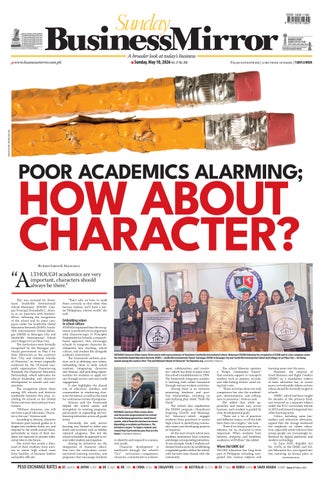
This was stressed by Stonyhurst Southville International School–Malarayat (SSISM) Campus Principal Donnabelle L. Atienza in an interview with BusinessMirror, following the recognition of the school and its sister campuses under the Southville Global Education Network (SGEN): Southville International School–Batangas (SSISB) in Batangas City and Southville International School and Colleges in Las Piñas City.
The institutions were formally recognized by the Batangas provincial government on May 4 for their distinction as the country’s first “City and National Schools of Character,” an honor originally conferred by the US-based nonprofit organization Character.org (formerly the Character Education Partnership), which advocates for ethical leadership and character development in schools and communities.
The recognition places them among 103 schools and districts worldwide honored this year, including 94 schools in the United States and nine international institutions.
“Without character, you will not have a good education. Character is the one,” Atienza said.
According to Atienza, character formation goes beyond grades as it shapes how students think, act, and respond to the world around them, particularly as many of their students are expected to assume influential roles in the future.
She noted that nearly a thousand of their students from nursery to senior high school come from families of business leaders and public officials.

“That’s why we have to mold them correctly so that when they become leaders, we’ll have a better Philippines, a better world,” she said.
Embedding values in school culture
ATIENZA explained that the recognition is anchored on its alignment with Character.org’s 11 Principles Framework for Schools, a researchbased approach that encourages schools to integrate character development into teaching, school culture, and student life alongside academic instruction.
The framework outlines practices such as defining core values, embedding them in daily school routines, integrating character into lessons, and providing opportunities for students to apply values through service and real-world engagement.
It also highlights the shared role of educators, families, and communities in reinforcing character formation, as well as the need for continuous review of programs.
Atienza said the framework helped the school assess and strengthen its existing programs, particularly in expanding servicelearning initiatives across all grade levels.
Previously, she said, service learning was limited to select year levels and activities such as holiday outreach programs. This led the school to broaden its approach to ensure wider student participation.
Among its initiatives are the integration of character education into the curriculum, socialemotional learning activities, and programs that encourage students


to identify and respond to community needs.
Character development is reinforced through the school’s “5Cs” curriculum—competence, character, commitment to achieve-
ment, collaboration, and creativity—which has been in place since the school’s establishment in 1996. The framework integrates academic learning with values formation through various student activities.
Among these is an initiative promoting kindness and positive relationships, including an anti-bullying play titled “Hold My Hand.”
The school also implements the SIGMA program—Stonyhurst Inspiring Growth and Meaningful Advocacy—which engages students from preschool to senior high school in identifying community issues and developing projects in response.
At the start of each school year, students brainstorm local concerns and design corresponding initiatives. In one example, Grade 5 students addressed food scarcity by establishing a vegetable garden within the school, with harvests later shared with the community.
The school likewise operates a “King’s Community Pantry” that extends support to transport workers such as jeepney, tricycle, and ride-hailing drivers amid rising fuel costs.
“These activities show not only competence but also the students’ grit, determination, and willingness to persevere,” Atienza said.
She added that while approaches and issues vary across learners, each student is guided by clear developmental goals.
“There are a lot of practices and different issues, so all the kids have their own targets,” she said.
“Even if we always push for academics, for us, character is more important. When students have honesty, integrity, and kindness, academics will follow,” she added.
Where Did GMRC Go?
VALUES education has long been part of Philippine schooling, integrated into various subjects and
learning areas over the years.
However, the removal of Good Manners and Right Conduct (GMRC) as a standalone subject in basic education has, in recent years, revived public debate on how values should be formally taught in schools. GMRC, which had been taught for decades at the primary level, was removed as a separate subject under the K-12 curriculum reform in 2013 and instead integrated into other learning areas. Critics, including some lawmakers and education advocates, argued that the change weakened the emphasis on values education, especially amid concerns that young people are increasingly influenced by digital platforms and modern technology.
In June 2020, Republic Act No. 11476, or the GMRC and Values Education Act, was signed into law, restoring its formal place in
Continued from A1 the curriculum. The measure mandates a strengthened values formation program across all levels of basic education.
Under the law, GMRC is taught as a separate subject from Grades 1 to 6, while being integrated into kindergarten activities. In junior high school (Grades 7 to 10), Values Education is offered as a distinct subject aligned with other core learning areas, while in senior high school (Grades 11 to 12), it is integrated across subjects to reinforce character development alongside academic instruction.
Gatchalian: Call-out vs bullying IN April 2025, Senator Sherwin Gatchalian renewed his call for the full implementation of Republic Act 11476, citing rising cases of bullying in schools.
“That’s why among all our subjects, this is the only one that’s legislated. The law stipulated: this is a separate subject,” Gatchalian said, partly in Filipino, during a Senate Committee on Basic Education public hearing on April 8, 2025, which he presided over.
“We are yet to see the full rollout of GMRC. What we demand is a full rollout for the 2025 to 2026 school year. We cannot wait anymore. We can no longer wait for an-
other child to die just because our youth are not taught early enough,” he added.
Low in grades, high in bullying THE Philippines has consistently ranked among countries with high reported cases of bullying in the Program for International Student Assessment (PISA).
In its latest results, the country again recorded one of the highest incidences among more than 70 participating nations, continuing a trend flagged in previous assessments where it was described as among the “bullying capital” countries based on student-reported experiences.
However, the Department of Education (DepEd) reportedly said that its implementation was not carried out in School Year 2022–2023 due to necessary adjustments in response to the Covid-19 pandemic, including shifts in learning modalities to ensure continuity of education.
A nationwide survey by Tangere (Acquisition Apps, Inc.) found that 68 percent of Filipinos reported having experienced bullying, either in person or online.
Among those affected, verbal abuse was the most common form at 86 percent, followed by social bullying at 50 percent, physical bullying at 42 percent, and cyber-
bullying at 33 percent.
Schools were identified as the primary setting of incidents, with 78 percent of respondents who experienced physical bullying saying it occurred within educational institutions.
(Read here: https://businessmirror.com.ph/2025/11/04/ survey-7-out-of-10-filipinoshave-experienced-bullying-mostly-inschools-and-online/)
‘Collective effort’
MEANWHILE, Batangas Governor Vilma Santos-Recto, who personally congratulated the institutions, said students today are growing up in a fast-paced, digitally driven environment where exposure to social media is constant, making strong moral guidance even more essential.
“Challenges will come and go but the foundation [moral values] will make them stronger,” she said.
She emphasized that the recognition earned by the institutions carries significance not only for the schools involved but for the province as a whole that reflects how educational progress is shaped through sustained collaboration across sectors.
“The impact of this recognition is a big thing for the whole province of Batangas, the support and at the same time the inspiration they can give,” Santos-Recto
told the BusinessMirror during a side interview.
While the provincial government continues to roll out education-related initiatives, she stressed that long-term progress in the sector cannot rest on government efforts alone.
“It’s not just the government but the partnership we can create so that we can return to the needs of Batangas,” she said partly in Filipino, underscoring the role of communities, schools, and private institutions in strengthening educational outcomes.
Santos-Recto also drew attention to the need for balance in both governance and education, where competence must be matched with empathy.
“Hindi naman pwedeng puro talino at walang puso. At hindi rin naman pwedeng puro puso at walang talino [All brain and no heart is not good; neither is all heart and no brain],” she said.
Asked about current education programs in the province, she cited adjustments in scholarship assistance, including increased financial support for students.
“We have adjusted our scholarship program. We have meritbased scholarships,” she said.
She noted that educational assistance for scholars has been increased, with support for students in private schools raised from P5,000, while those in public schools—previously receiving P3,000—will now also receive P5,000.
“We have the funds, let’s give it back to them,” she said.
Santos-Recto added that the merit-based program is designed to both support and motivate students to perform better academically.
“We are doing our share, we are supporting you. Your share is to study well,” she said.
She explained that incentives increase depending on academic performance, with higher grades receiving greater financial support.
“For example, if you reach a general average of 1.25 or 96 to 98, instead of P5,000 you will receive P25,000. If you get a 1.5 or 93 to 95 average, you will receive P15,000,” she said.
“This is to inspire students and reward their hard work because they are the future,” she added.



Beyond scholarships, she said the provincial government is also investing in early childhood and basic education infrastructure, including daycare centers, school buildings, and rehabilitation of damaged classrooms.
Support has also been extended to digital learning, with the provision of laptops, smart TVs, and other teaching tools for educators.
In areas with limited connectivity, the provincial government has coordinated with the Department of Information and Communications Technology (DICT) to install Starlink internet services in schools.
Santos-Recto said the approach is guided by consultation with educators and school officials to ensure that resources match actual needs.
“We ask teachers and superintendents what they need before procurement. We don’t just buy— we provide what is needed,” she said.
She described the province’s education strategy as a holistic approach covering daycare, elementary, secondary, and tertiary levels, supported by infrastructure, learning tools, and digital access.
“So far, with God’s help and the support of different sectors, we are seeing progress in education,” she said, adding that the goal is to ensure that public service is felt across all levels of learners.
Inside the classroom
In 2023, the Department of Education introduced the MATATAG K to 10 Curriculum to address persistent learning gaps by decongesting lessons, strengthening foundational skills, and refining 21st-century competencies.
A Philippine Institute for Development Studies (PIDS) discussion paper, “Promise and Growing Pains in Curriculum Reform:
A Mixed-Methods Evaluation of MATATAG K to 10 Curriculum’s First-Year Pilot Implementation,” found that student learning outcomes are shaped by both school and non-school factors, including home conditions and socioeconomic background.
Students from more advantaged households consistently performed better, underscoring the influence of income, parental edu-






cation, and household stability.
Within schools, teacher quality, disciplinary climate, and access to learning resources were identified as key drivers of performance. Early childhood education also emerged as a strong predictor of later achievement, highlighting the long-term value of foundational learning.
The study likewise flagged bullying as a significant barrier, linked to weaker academic performance and reduced engagement.
While the curriculum “shows promise,” the study stressed the need to scale up effective pilot practices and strengthen implementation support through training and resources. It noted modest gains in Filipino and Mathematics, pointing to gaps in assessment literacy, differentiated instruction, and classroom management among teachers.
Evidence also suggests that smaller class sizes can improve learning outcomes, complementing teacher-focused interventions. At the secondary level, Grade 8 results were uneven. Science showed the strongest improvement, while Mathematics, MAPEH, and TLE posted gains.
Other subjects such as Araling Panlipunan, Filipino, Values Education, and English recorded improvements that were not statistically significant, reflecting variability in implementation and instructional delivery.
Teachers cited challenges such as incomplete learning materials, limited instructional time—particularly in Science and Mathematics—and shortages in laboratory and technical resources. These constraints may have contributed to weaker results in some subjects.
While schools can use Maintenance and Other Operating Expenses (MOOE) to address resource gaps, administrators note that these funds are often prioritized for utilities, minor repairs, and other School Improvement Plan (SIP) needs, as outlined in DepEd Order No. 8, s. 2019. As a result, limited funding remains available for instructional materials and classroom support tools.
In many focus group discussions, teachers also raised concerns about compensation, noting that salary levels and allowances often fall short of actual classroom-related expenses. This has led some educators to personally shoulder costs for instructional needs.
Teacher development also remains a key concern, with many reporting a continued need for training in both pedagogical and administrative skills.
School-based collaboration through Learning Action Cells (LAC) and Collaborative Expertise Sessions (CES) has helped address some gaps, but its effectiveness varies depending on workload, staffing, and subject distribution within schools. In some cases, limited staffing per subject makes meaningful collaboration more difficult.
To support the transition to the MATATAG curriculum—particularly its reduced class time and increased preparation demands— policies should ensure access to ready-made instructional and assessment materials. Professional development focused on efficient lesson planning, delivery, and assessment design is also critical.
Finally, school leaders, supervisors, and curriculum designers must ensure that lesson planning and assessment preparation are supported within teachers’ regular working hours to help prevent overload and burnout, while sustaining improvements in learning outcomes.
Editor: Angel R. Calso

By Nicole Winfield The Associated Press
VATICAN CITY—Pope Leo XIV had tried during his first year as pontiff to insist that his essential role was that of a pastor accompanying his flock. President Donald Trump’s continuing criticisms and Leo’s increasingly bold retorts—complicated the effort and overshadowed Friday’s anniversary of Leo’s election.
Leo spent the eve of the 1-year mark meeting with US Secretary of State Marco Rubio, who had come to the Vatican on a fence-mending visit. Trump’s repeated broadsides against history’s first US pope created an unprecedented back-andforth on issues of the Iran war and peace that strained US-Holy See relations.
Leo who the world has come to learn in this first year is at heart a mildmannered, 70-year-old Midwestern missionary priest, and a reserved one at that. He likes to play the solitary game of tennis, quotes the 5th century philosopher St. Augustine from memory and insists he is merely quoting the Bible when he calls for peace.
The Trump-Leo feud aside, the former Robert Prevost seems driven not by the dramatic gesture or headline-grabbing tensions that often fueled his predecessor, Pope Francis. Rather, Leo seems inspired by the calm, persistent zeal to preach the Gospel and thanks to his Augustinian spirituality emphasize community and harmony.

large. He seems intent on healing divisions, even as new threats of schism emerge.
That seemed to be Leo’s modus operandi when, days into his recent Africa trip, he temporarily quelled the Trump broadsides by essentially declaring he was above the president’s social media rants. While insisting he would continue preaching the Gospel message of peace, Leo said it “is not in my interest at all,” to debate Trump.
“I primarily come to Africa as a pastor, as the head of the Catholic Church to be with, to celebrate with, to encourage and accompany all the Catholics throughout Africa,” he said.
By the end of the visit, both the Vatican and the State Department stressed their strong bilateral ties. But the episode nevertheless pushed Leo out of his comfort zone and onto the global stage to make zingers like the one this week, after Trump’s latest misrepresentation of his views.
A year of learning and unifying LEO began his improbable papacy promising to work for unity in a polarized world and church, and at the one-year mark, he seems to be delivering.
“If someone wants to criticize me for announcing the Gospel, let him do it with the truth,” Leo said. It’s all a bit out of character for
After Francis’ revolutionary and sometimes divisive 12-year papacy, Leo has brought a calming balm to the Vatican and church at
That has certainly been the case as he navigates some of the thorniest challenges facing the Catholic Church: tensions between traditionalists and progressives, financial problems facing the Holy See and the geopolitical crises at the heart of the Trump vs. Leo dissonance.
“I think the challenge that the Holy Father has is to strengthen the unity of the church,” said Cardinal Wilton Gregory, a Chicago native
like Leo and the retired archbishop of Washington. While there have always been divisions, Gregory said social media had amplified them, and that Leo seems intent on tamping them down.
“Social communication makes it possible for people to take sides, and sometimes taking sides adds to the divisiveness that we have to deal with and that the Holy Father, as the Bishop of Rome, has to respond to,” Gregory said in an interview.
“He has to call us to our better angels,” he added.
He repeated that message at the trip’s conclusion, saying the political role that comes with being pope, a head of state and global moral authority, was simply not his priority.
An English-speaking American pope FOR many, the shock of an American pope, who defied the taboo precluding a Rome-based moral counterweight to the White House, still hasn’t worn off.


AHOME carries the quiet rhythms of everyday love. It’s felt in thoughtfully prepared meals, welcoming spaces, and the small details that make family life feel warm and secure. For many mothers, caring for the home is an extension of caring for the people in it. This Mother’s Day, those everyday choices can also become gentle acts of care for the planet. Every intentional purchase from Green Finds at SM Home becomes a step in a homemaker’s journey toward a more sustainable home, each one a quiet expression of a mother’s enduring love. Rest is often where that care begins. After long days spent tending to everyone else’s needs, moments of rest matter deeply. Thoughtfully made essentials like the Royal Linen Tencel Pillow and Uratex Eco Deluxe bamboo bed linens invite deeper, more restorative sleep. Crafted from renewable, ecofriendly materials, these pieces bring understated comfort rooted in responsible sourcing—proof that everyday luxury can move in harmony with nature. The kitchen and dining spaces, meanwhile, remain the heart of the home. It’s where families gather, stories are shared, and traditions quietly take shape. Sustainable wooden serveware such as the Kea Groove Serving Bowls and Crysalis Serving Boards, made from responsibly sourced acacia wood, add warmth and natural elegance to daily meals and weekend gatherings alike. Paired with the Masflex Bamboo Wooden Tray, these pieces turn simple moments like quiet breakfasts, merienda spreads, or family dinners into meaningful rituals grounded in care. Beyond mealtimes, a thoughtfully kept home supports calm amid life’s constant motion. Handcrafted storage pieces like the Kea Buri and Charlotte baskets, woven from locally sourced natural materials, bring both order and texture into living spaces. Their organic feel reflects a softer,





to
reflect, and unwind. Locally made, these finishing touches remind us that sustainability extends beyond materials to the people behind each product. These are the kinds of choices that may go unnoticed yet are deeply felt. Choosing materials that last, items that are thoughtfully made,

By Yassir Abdalla, Fatma Khaled &Fay Abuelgasim The Associated Press
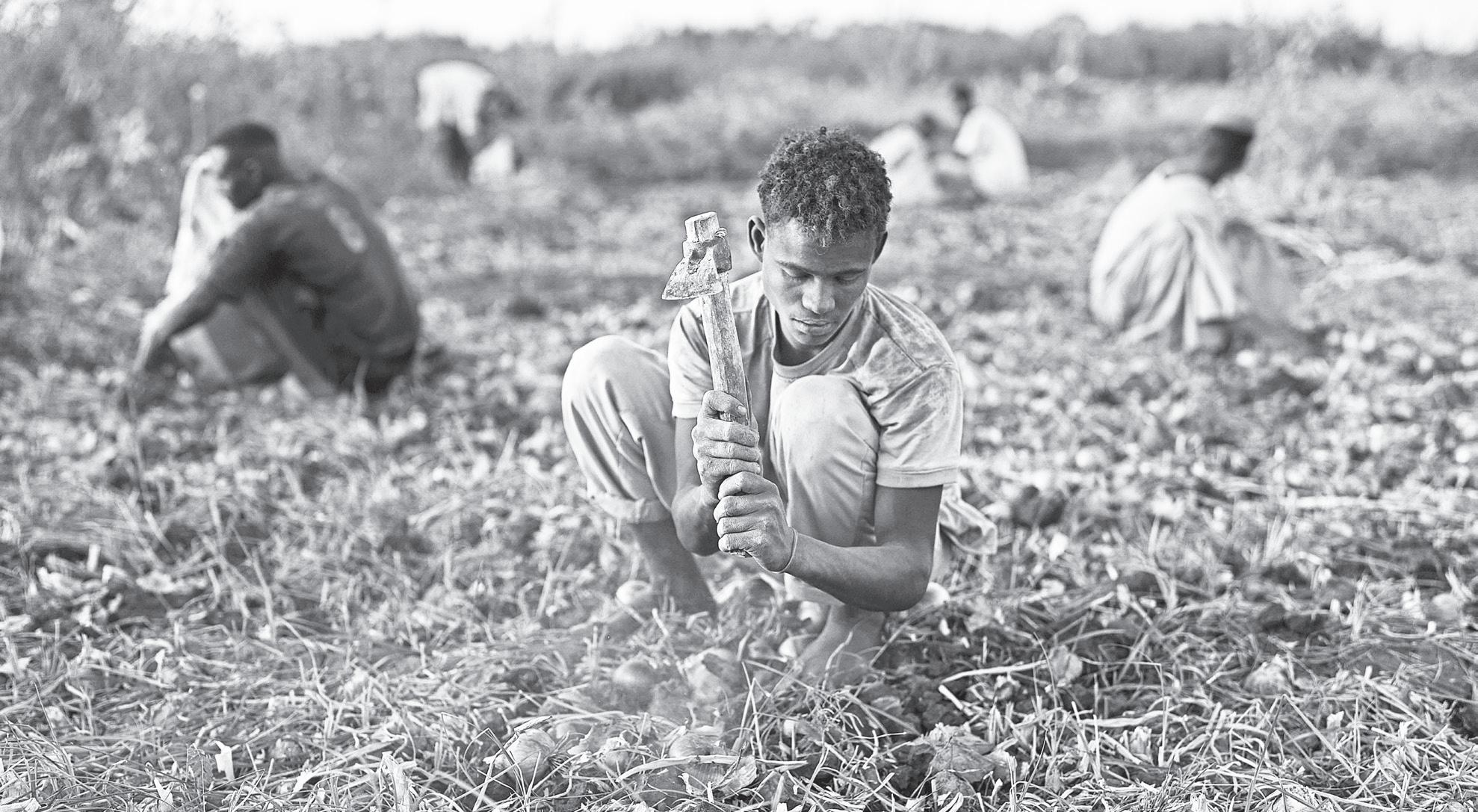
OMDURMAN, Sudan Two years after Sudan ‘s war forced him from his land, Omer al-Hassan returned to rebuild his farm. But now a new conflict in the Middle East threatens to push him deeper into financial loss and food insecurity as fuel and fertilizer prices rise.
Al-Hassan and other farmers in Sudan are bracing for an expensive planting season in the weeks ahead. Some told The Associated Press they are reducing production or not planting at all dangerous news for a country where three years of war have left millions hungry.
The Iran war has “affected everything related to agriculture,” al-Hassan said as he and others pulled onions from the ground. They had spent two months clearing the weed-choked land, “plowed the soil and we said God bless, and even then we struggled so much, one had to sometimes skip a meal.”
He and 10 other farmers who work his land said they can’t handle agricultural costs without government support, forcing cuts in production and rationing of fertilizer on his farm that also produces potatoes and tomatoes.
Another farmer, Mohammed al-Badri, said he could afford to
plant only half his farm because of the rising costs: “The rest of it is nothing.”
The Gulf region, where hundreds of commercial ships have been stranded for weeks because of Iran’s grip on the Strait of Hormuz, provides over half of Sudan’s fertilizer that’s imported by sea. And fuel prices have shot up by around 30%.
That means food prices in Sudan are jumping, too.
Experts warn of a ‘dangerous chain reaction’ SORGHUM . Millet. Sesame. These staple crops for Sudan are now at risk.
Farmers already stressed by the war at home between Sudan’s military and the paramilitary Rapid Support Forces are now watching costs rise for fertilizer, gasoline to power farm equipment and diesel for irrigation pumps. The rising costs have created
“a dangerous reality” for farmers who will struggle without government intervention, said Abdoun Berqawi, a farmer in Gezira, one of the country’s main food-producing regions.
Berqawi said a 50-kilogram (110-pound) bag of urea fertilizer now costs about $50, up from $11 the same period last year. Fuel for tractors has risen from $2.50 to $8 per gallon.
Officials in Sudan’s agriculture ministry didn’t immediately respond to requests for details on how they are addressing the crisis.
A member of the military media accompanied the AP during its visit, including during interviews. The AP retains full editorial control of its content.
The Iran war has triggered a “dangerous chain reaction ... at the wrong moment” as farm -
ers prepare for planting season, said Melaku Yirga, Mercy Corps vice president for the Africa region, who recently visited Sudan’s provinces of Kassala and Gedaref, another top food-producing region.
“People are buying less food, cutting or skipping meals, selling assets and taking greater risks just to survive,” Yirga said. “Mothers are being forced to make painful choices about who gets to eat the little food that is available, while some families are resorting to leaves or animal feed just to get by.”
And farmers who took bank loans risk jail if poor crop yields leave them unable to repay, said Merghany Omar, a farmer in alMatammah in River Nile province. He said onion farming, a local staple, no longer covers planting costs there.
All of this is occurring alongside existing vulnerabilities including currency depreciation, said Samy Guessabi, country director for Action Against Hunger in Sudan.
People in some of the country’s most remote areas, Kordofan, White Nile, Darfur and Blue Nile, are hurting the most where “agricultural zones are remote and poorly connected,” he said.
Few know better the pain of hunger than farmers EVEN in Sudan’s urban areas, vegetables and dairy have risen by about 40% due to fuel price spikes.
Already, the war at home had left many people hungry. The U.N. World Food Program estimates that 19 million people across Sudan are facing acute hunger, with many families on the brink of fam -
ine. Last year, famine was declared in two major regions, Darfur and Kordofan.
Now, the humanitarian response has been badly delayed by the Iran war and its effects on supply chains.
WFP has said its Sudan-bound food assistance shipments are traveling 9,000 kilometers (5,500 miles) farther to reach their destination, adding costs and time.
That’s in part because many vessels also avoid the Bab elMandeb Strait at the southern end of the Red Sea, another crucial waterway, according to WFP shipping chief Henrik Hansen. Iranian-backed Houthi rebels in Yemen have threatened some shipping there.
Mubarak al-Nour, a farmer and former parliamentarian in Gedaref, said even if farmers in Sudan secure fertilizer, delays mean they could miss the planting season that runs from June to November. Some farmers are switching to growing cheaper crops that require less or no fertilizer and scaling back on growing corn, sesame and other rain-fed crops.
Even if farming supplies reach Sudan in time, the battle is not over.
Fuel shortages in some areas are the result of warring parties blocking essential supplies, said Mathilde Vu, an advocacy manager with the Norwegian Refugee Council. She said local fuel markets have been heavily bombed in recent months amid a “senseless escalation” of drone attacks nationwide.
Khaled reported from Cairo.
By Barbara Ortutay & Matt O’brien AP Technology Writers
OAKLAND, Calif. At the heart of the trial pitting Elon Musk against OpenAI CEO Sam Altman is a moment when they found common cause on an ever more pressing question: how to protect humanity from the risks of artificial intelligence.
It turned sour, and the jury is charged with settling the ensuing legal dispute between the two Silicon Valley titans.
But the unresolved questions about the dangers of AI have been looming over the federal courthouse in Oakland, California, since the trial began last week. The technology itself is not on trial – the judge has warned lawyers not to get “sidetracked” by questions about its dangers – but witness testimony has touched on concerns around workforce disruptions and the prospect raised by Musk that superhuman AI might one day kill us all. Musk, the world’s richest per -

son, filed the case accusing his fellow OpenAI co-founder of betraying promises to keep the company as a nonprofit. Altman, in turn, accuses Musk of trying to hobble the ChatGPT maker for the benefit of his own AI company.
One witness, AI pioneer Stuart Russell, said that the “winner take all” power struggle over AI’s future is itself threatening humanity.
Musk’s lawyers brought Russell to the stand as an expert witness, at the rate of $5,000 an hour. The University of California, Berkeley computer scientist listed a host of AI dangers, from racial and gender discrimination to jobs displacement, misinformation and emotional attachments that take some AI chatbot users down a spiral of psychosis.
“Whichever company develops AGI first would have a very big advantage” and an increasingly big lead over everyone else, Russell told the court, using the initials for artificial general intelligence, a term for advanced AI technology that surpasses humans at many tasks.



A judge’s warning hasn’t kept out talk of AI’s dangers
The trial centers on the 2015 birth of OpenAI as a nonprofit startup primarily funded by Musk.
Both Musk and Altman, who has not yet testified in the trial, have said they wanted OpenAI to safely develop AGI for the benefit of humanity and not for any one person’=s gain or under any one person’s control. And both camps allege it’s the other guy who was trying to control it.

A jury of nine people selected from the San Francisco Bay Area will get to say which one of them is telling the truth.
Early on, Judge Yvonne Gonzalez Rogers warned lawyers, particularly Musk’s, not to delve into broader AI concerns that go beyond Musk’s claims that OpenAI violated its charitable mission.
“This is not a trial on the safety risks of artificial intelligence. This is not a trial on whether or


not AI has damaged humanity,” Gonzalez Rogers told lawyers before jurors arrived at the federal courthouse.
Still, Musk managed to skirt that guidance in his testimony last week. Asked to describe artificial general intelligence, Musk said it is when AI becomes “as smart as any human,” and added that “we are getting close to that point,” and AI will be smarter than any human as soon as next year.
Musk said he has “extreme concerns” about AI and has had them for a long time. Musk said he wanted a “counterpoint” to Google, which at the time had “all the money, all the computers and all the talent” for AI, with no counterbalance.
“I was concerned AI would be a double-edged sword,” he said.
Musk and OpenAI each say they are working for humanity’s benefit DURING his testimony, Musk repeatedly said that he could have founded OpenAI as a for-profit company, just like the other companies he started or took over. “I

deliberately chose this,” he said, “for the public good.” The judge expressed some skepticism. In comments to lawyers last week before the jury came into the room, Gonzalez Rogers pointed out that Musk, “despite these risks, is creating a company that is in the exact same space,” referring to the billionaire’s xAI artificial intelligence company, which launched in 2023 and has since merged with Musk’s rocket company SpaceX. OpenAI’s side also claims its goals are to benefit the public. OpenAI co-founder and president Greg Brockman, a defendant in Musk’s lawsuit along with Altman and their company, said he thought the technology OpenAI was developing was “transformative” bigger than corporations, corporate structures and bigger than any one individual. It was, he said, “about humanity as a whole.” Brockman testified this week that his No. 1 goal was always the “mission” of OpenAI and it was Musk who sought unilateral control over the company. Brockman recalled a meeting where at first Musk seemed open to the idea of Altman being OpenAI’s CEO. In the end, however, “he said people needed to know he was in charge.” In addition to damages, Musk is seeking Altman’s ouster from OpenAI’s board. If Musk wins, it could derail OpenAI’s plans for an initial public offering of its shares O’Brien reported from Providence, Rhode Island.
By Amir-Hussein Radjy, Lee Keath & Sarah El Deeb
The Associated Press
CAIRO In the heartland of Iran’s famed carpet-making industry, manufacturing has ground to a near halt. Dairies struggle to find packages for milk and butter. Giant steel mills that once drove Iran’s economy have gone silent. Hundreds of thousands have lost jobs, and millions more are at risk.
Over more than five weeks of bombardment, US and Israeli strikes hit thousands of factories. The damage is reverberating across Iran’s economy, threatening increasing waves of layoffs, even as Iranians face skyrocketing prices.
The cost of chicken is up 75% the past month, and beef and lamb jumped 68%. Many dairy products have increased by half.
It could get worse as the United States blockades Iranian ports, choking off many imports and oil exports that bring in billions of dollars. Economic woes sparked the mass protests that were crushed before the war and could again push Iranians into the streets.
Still, Iran has its own weapon pointed at the global economy, with its grip on the Strait of Hormuz. Iran’s leaders say they will only reopen the key waterway for global energy if the blockade is lifted and the war ends. They are betting that an economy built to be self-reliant under decades of in -
ternational sanctions can endure the pain longer than US President Donald Trump. Iran has lost at least 1 million jobs directly because of the war, Deputy Labor Minister Gholamhossein Mohammadi said, according to state media.
But the ripple effects put some 10 million to 12 million jobs at risk half of Iran’s labor force warns Hadi Kahalzadeh, an Iranian economist.
Steel and petrochemical production crippled ISRAEL claimed to have struck the industrial base of Iran’s paramilitary Revolutionary Guard. But the strikes went well beyond, hitting facilities not owned by the force.
Airstrikes damaged 20,000 factories, some 20% of the country’s production units, according to Kahalzadeh, a research fellow at Brandeis University. The stricken facilities included Tofigh Daru, Iran’s largest pharmaceutical hold-
ing, producing anticancer drugs among other things. Optics and chemical developers, and aluminum and cement factories, were also hit.
Perhaps most damaging, Israel hit Iran’s biggest steelmaking and petrochemical factories, most of them in a wave of strikes just before the April 8 ceasefire. The two biggest steel producers, Mobarakeh Steel and Khuzestan Steel, as well as smaller mills, halted production. More than 50 petrochemical complexes have been shut down, according to Iran’s semiofficial Jamaran news agency.
That has crippled Iran’s two biggest non-oil exports, and higher prices have affected everything from plastics to pipes, to fabrics and packaging for groceries like milk, butter and cheese.
Strikes are not the only cause of economic woes. The internet has largely been shut down since the protests, gutting small and medium-sized businesses reliant on online sales. Even before the US blockade, Iranian strikes on the United Arab Emirates, on which it relied for around a third of its imports, led that country to cut off trade.
Ripple effects
AROUND 80% of rug and carpet manufacturers have stopped operations in the industrial zone of the city of Kashan, the center of Iran’s rugmaking industry, said the son of a rugmaker. His family factory, which employs 20 to 30 people and used to machinemake hundreds of rugs a month, is among those that shut down, though his father still goes to the facility every day.
“Never have I heard my father
so upset,” said the son, who lives in the United States and spoke on condition of anonymity for his family’s security.
Kashan, home to hundreds of carpet manufacturers, “relies on the rug industry and unfortunately it’s been crippled,” he said. Exports plummeted since the war began, and domestic sales are almost zero. Prices for synthetic fibers have leaped 30%- 50% partly a downstream effect of hits on petrochemical facilities, he said.
Mehdi Bostanchi owns a ventilation and air conditioning factory, and a second producing household fans, with a total of more than 1,130 employees. Both still operate. But the HVAC factory heavily depends on the construction industry, and “construction is facing a massive shock,” he said.
Most new building is on hold, while the price of iron sheeting has more than doubled.
Bostanchi, a member of a council representing Iranian industrialists, said “all the country’s industries in some way rely on our petrochemical industry.” Even companies that don’t directly need steel or petrochemical products have contracts with those that do.
A chemical engineer working at one of Iran’s biggest private construction contractors said it laid off half of its 180 headquarters staffers and had to shut down a project with Mobarakeh Steel, costing 1,000 jobs.
A Tehran resident quit his job as a consulting engineer just before the war, and the new job he had lined up is now uncertain.
“I am at the top 1% (of society), and I am without a job. I am super worried about my future,”
By Melanie Lidman The Associated Press
IRAN’S grip on the Strait of Hormuz has jolted the world economy, causing a spike in fuel prices that has rippled through other sectors with effects far beyond the Middle East. It has also left tens of thousands of mariners and hundreds of ships stranded in the Persian Gulf.
Iran effectively seized control of the critical waterway after the US and Israel attacked it on Feb. 28. Weeks of heavy bombing and a US naval blockade imposed last month have yet to loosen its grip. Iran says it will only reopen the strait if the war ends and the blockade is lifted. US President Donald Trump is seeking wider concessions, including the rollback of Iran’s disputed nuclear program. Here is a look at the strait by the numbers:
21 miles (34 kilometers)
THIS is the width of the strait, which bends like an elbow, at its narrowest point between Iran and Oman. Ships follow narrow lanes to safely navigate the shallow water, making it even more of a chokepoint.
20%
BEFORE the war, a fifth of the world’s traded oil typically flowed through the strait every day, as well as large supplies of natural gas, fertilizer and other petroleum products.
100-130
THE number of ships that passed through the strait each day before the war began, including oil tankers and cargo ships, according to research firm Lloyd’s List Intelligence.
534
THE number of ships that are believed to have passed through the strait from the start of hostilities through May 4, according to Lloyd’s List Intelligence. Many are believed to have carried Iranian oil. In normal times, an estimated 6,500 to 8,450 ships would have transited the strait during the same period.
50%
THE amount that the average price of gas in the US has risen since the war began. The average price of a gallon was $4.56 on Thursday, according to AAA. The closure of the strait has also nearly doubled the cost of jet fuel.
Up to 10%
INSURANCE rates for ships have skyrocketed from 1% of the ship’s goods up to as much as 10%, according to shipping experts.
45 million
THE number of people who could experience hunger, mostly in Asia and Africa, if the strait does not open soon, according to the U.N. World Food Program. The blocking of fuel and fertilizer shipments could soon push the price of food and other necessi -
ties out of reach for those already in a precarious situation, it said.
10
THE number of mariners who have been killed since the Iran war began, according to the U.N.’s International Maritime Organization.
32
THE number of ships that have come under attack, according to the International Maritime Organization.
1,550
THE number of vessels, from 87 countries, currently stranded in the Persian Gulf, according to the US military.
22,500
THE number of mariners stranded
on these ships, including many from South and Southeast Asia.
15,000
THE number of US soldiers, accompanied by 100 aircraft, committed to enforce Project Freedom, according to the US military. Trump’s initiative to guide ships through the strait was paused on Tuesday, just two days after he announced it.
2
THE number of ships that the US said it successfully guided through the strait as part of Project Freedom.
The Associated Press writer David McHugh in Frankfurt, Germany, contributed.

he said, adding that people’s savings will start to run out in the coming weeks.
Both he and the chemical engineer spoke on condition of anonymity out of security concerns.
Projecting resilience
MILLIONS took to the streets in January’s protests that were triggered by worsening inflation but turned into calls for the end of the Islamic Republic, bringing a bloody crackdown.
Officials are trying to reassure the public that Iran can withstand the economic pain. The government has promised to increase unemployment insurance. But the burden on Iran’s social security system is rising even as its funding is gouged, since it depends heavily on its stakes in petrochemical companies and other key industries, Kahalzadeh said.
The US blockade threatens to cut off export revenues: Iran sold some $98 billion in exports in 2025, just under half of it from oil.
But a complete blockade is difficult; around half of Iran’s nonoil trade goes overland or through
Caspian Sea ports, according to Esfandyar Batmanghelidj, an economic expert.
Iran has also built up significant resilience and “readiness for worst-case scenarios,” Batmanghelidj wrote for the Bourse and Bazaar Foundation, a research group he heads on economic development in West and Central Asia.
Iran maintains large reserves of vital supplies. At the end of 2025, Iran had stored up enough electrical machinery for nearly eight months, cement to last nearly six months and enough steel and iron for four months, he wrote, adding that supplies could be further stretched by rationing.
Bostanchi, the factories owner, said he believes Iran’s economy could bounce back once the war ends. But how much depends on whether Iran can win an end to international sanctions.
“If we cannot lift the sanctions in any agreements, then no, the optimistic forecast…will not happen,” he said.
El Deeb reported from Beirut.

During times of uncertainty, mothers have always been the first line of defense, but they cannot protect their families just on their own. Here are some tools to help them go through the challenging times.
By Reine Juvierre S. Alberto
LATELY, a trip to the grocery store has tested a mom’s inborn talent—budgeting. A P1,000 grocery budget would usually fill a cart with essentials and some treats kids would beg their moms to buy. This budget could no longer stretch far since the value of P1,000 in 2018 has dropped to only P730 in April 2026.
Inflation is at its highest in three years—at 7.2 percent in April—and may even reach double digits in the coming months due to the broader impact of rising oil prices.
As fuel prices climb due to the ongoing Middle East crisis, the pressure is cascading through basic commodities, such as food, electricity, and transportation.
At the center of these are mothers, who bear the responsibility of making sure that every peso stretches just enough, even if it means swapping brands, cutting portions, or letting go of what the family can do without.
“Mothers are the quiet economists of every Filipino household,” said Karlo Biglang-awa, a registered financial planner of RFP Philippines.
Having talked with clients over the years, Biglang-awa said that while a mother’s situation varies, they all share the same concern: keeping their families secure amid rising living costs.
“They are the ones that typically manage cash flow in the homes,” said ASEAN family business coach Prof. Eric Soriano.
Stay-at-home moms manage tight budgets on a single income, working moms allocate their salaries to cover tuition fees and utility bills, and single moms bear the full financial responsibility on their own.
Assess the family budget.
Since the budget that worked a year or two ago is now outdated, Biglang-awa said mothers need to reassess their finances based on current prices to make informed adjustments.
“Before blaming inflation, take an honest look at your spending,” Biglang-awa said, as not all price increases can be pointed to inflation. Sometimes, it’s also due to changes in the family’s lifestyle.
Streaming subscriptions, frequent food deliveries, and other daily conveniences can add pressure to already strained budgets, he added.
“Cutting back on lifestyle inflation is often the quickest way to free up cash flow without affecting the family’s essentials,” he recommended.
In an inflationary environment, high-interest debt can also be more dangerous. Biglang-awa advised to focus on paying down the highest-rate debts first if a family has credit card balances or personal loans.
“Avoid taking on new debt for non-essentials. If your current obligations feel overwhelming, talk to your bank about restructuring,” he added.
However, some financial decisions cannot just be made by moms

alone.
Biglang-awa said discussing finances with spouses and even children can turn a difficult situation into an opportunity to build financial awareness and shared responsibility within the family.
Find other sources of income
But for many families, economizing is no longer enough.
“Mothers should start becoming more self-reliant, especially in these trying times,” Soriano said.
He suggested starting small home-based businesses or a week-
end garage sale to sell unused items accumulating in the house.
Aside from selling, Biglangawa said using passion and skills— such as baking, tutoring, and freelance work—could become a modest side income.
“In a time of rising costs, an extra source of income is no longer a luxury; it’s a buffer,” he said.
For those with existing assets, such as idle real estate, either rent it or sell it, Soriano said. “Idle assets are technically liabilities in the balance sheet.”
Working moms who cannot be
full-time entrepreneurs should also consider investing in real estate or buying projects nearing completion.
This allows them to build assets with relatively low upfront costs gradually. “By simply investing, you suddenly grow your net worth,” Soriano said.
Protect your loved ones.
During times of uncertainty, mothers have always been the first line of defense, but they cannot protect their families just on their own.
“Insurance would be a wonderful [tool], not just for peace of
mind, but also to use for days that are a bit dry,” Soriano added, noting that it can serve as a fallback if a breadwinner loses income or faces unexpected disruptions.
Biglang-awa also stressed the importance of having the right insurance coverage to protect the family from financial shocks.
Reviewing existing policies—or securing life and health insurance that fits current cash flow—can help ensure that a single emergency does not derail household finances, he added.
For families with more financial flexibility, investing remains a way to stay ahead of inflation.
Biglang-awa advised exploring diversified options, such as mutual funds, unit investment trust funds, and equities, once emergency savings and insurance are in place.
“Investing is how mothers can protect their family’s future buying power, not just maintain today’s pesos,” he said.
Still, these strategies are not equally accessible to mothers as they navigate the constant pressure of making ends meet while shielding their families from the full weight of economic strain.
“To all the mothers who quietly bear the weight of rising prices for their families, your strength does not go unnoticed. Inflation is a season, not a permanent situation,” Biglang-awa said.
For now, Filipino mothers continue to adapt—reworking budgets, finding new income streams, and making difficult choices to keep their households afloat.
By John Eiron R. Francisco
MOTHERHOOD is a lifelong responsibility that rarely pauses. It’s a constant balancing act between work, household duties, and countless other responsibilities, often with no paycheck to match the effort.
Yet, as every mother knows, the reward is seeing her children thrive in a safe, nurturing environment, surrounded by love and care, priceless moments that no amount of money can replace.
In today’s world, however, parenting has become more complex. Children are growing up in a time of fast-changing language, online trends, and digital habits that are often unfamiliar to older generations.
At the same time, gadgets have become part of daily life, from smartphones to tracking apps and learning platforms.
While not always necessary, many mothers find these tools helpful in staying updated on their children’s activities and daily errands.
But with technology evolving so quickly, it can also be confusing to decide which devices or apps are truly useful, easy to use, and reliable in the long run, especially as modern mothers are
expected to be more flexible, balancing work and family demands while still making the most of their own lives in an increasingly digital routine.
Among the most commonly used are smartphones that balance practicality and ease of use. The vivo V70 5G, for instance, is a mid-range smartphone built for everyday multitasking.
It features a 6.59-inch 120Hz AMOLED display for clearer viewing of messages and documents, and a Snapdragon 7 Gen 4 processor that keeps apps running smoothly even when switching between work and personal tasks.
Its 6500mAh battery with 90W fast charging is designed for long days, important for mothers who move between office work, errands, and home responsibilities without time for frequent charging.
Its triple 50MP ZEISS camera system also makes it easy to capture family moments or handle work-related photos without needing separate devices.

For heavier use, the vivo X300 Pro offers stronger performance with a Dimensity 9500 chipset and a large 6510mAh battery that supports
V5 5G are also gaining attention among
users. With its 7.95-inch foldable OLED display, it allows users to view emails, messages, and schedules on a larger screen, almost like carry-
small tablet and phone together. Powered by the Snapdragon 8 Elite processor and a 5820mAh
Alongside smartphones, wearable devices have become part of this work-life balance ecosystem. Smartwatches from
Samsung, and Garmin allow mothers to check calls, messages, and reminders instantly—without constantly reaching for their phones. During work hours or household chores, this small convenience helps reduce interruptions while still staying connected. Some models also track sleep, activity, and stress levels, offering subtle reminders to pause and take care of personal well-being. And while no gadget can replace a mother’s instinct, patience, and care, the right technology can help ease the demands of modern life. Sometimes, upgrading a device is less about luxury and more about choosing tools that match the pace of everyday responsibilities, helping moms stay organized, connected, and present for the moments that matter most. Because modern motherhood is not just about doing more, but about finding smarter ways to balance life, family, work, and self-care in a world that never seems to slow down.
AMOLED 2X display, Snapdragon 8 Elite Gen 5 or Exynos 2600 processor, and a 50MP triple-camera system. Its biggest advantage is long-term use, supported by extended software updates and AI features that simplify tasks like editing photos or organizing schedules, useful for mothers who prefer stability in a device they can rely on for years.
On its seventh year the message of InLife Sheroes remains steadfast: empowerment is a tangible practice found in classrooms, farms, and small businesses.

IN the Filipino household, the mother is often called the “ilaw ng tahanan (light of the home).” But for the seventh anniversary of InLife Sheroes, that light shone past the four walls of the residence, illuminating entire communities and transforming millions of lives across the country.
This year, the Insular Life (InLife) Sheroes movement celebrated its milestone anniversary with the theme “HERizon: Seven Years Forward.” The event served as a powerful tribute to the “motherhood of service”—a kind of leadership that transcends biological ties to make a meaningful, lasting impact on society.
Since its inception, InLife Sheroes has operated on four fundamental pillars: financial literacy, health and wellness, women-specific solutions, and socialbusiness networking. However, for InLife Executive Chairperson Nina D. Aguas, the movement’s success isn’t found in a ledger.
“InLife Sheroes has never been just about numbers. It has always been about purpose,” Aguas emphasized during the celebration. “We only need women to reclaim their voices and ensure those voices are heard.”
That purpose is currently being felt by 16.3 million Filipinos, a reach fueled by the #StartWithin campaign and, at the same time, a byproduct of inner strength, cul-
tivated through mentorship and a supportive sisterhood. At the heart of the anniversary was an awarding highlighting three stories of women and organizations who accepted the mission and went out of their way for their respective causes—all necessary for nation-building.
Mina Ballesteros: Preserving the faming heritage
As the Executive Director of the Gelacio I. Yason Foundation –Family Farm School, Mina Ballesteros views empowerment as something that grows from the soil. She dedicated her life to ensuring that rural youth do not have to sacrifice their education to preserve their farming heritage.
Beyond the classroom, Ballesteros has taken her “mothering” to the halls of government, lobbying for subsidies to be included in the rural farm school law. “When the system blooms like mushrooms in the field, and integrated development happens, that is how sustainability happens,” she noted,

likening her advocacy to tending a national garden.
Cherilyn Secillano: Nurturing holistic wellbeing
For Cherilyn Secillano, founder of the social enterprise Dwellbeing, entrepreneurship began with a “mother’s instinct.” Seeking natural remedies for her son’s severe allergies, the former corporate executive launched a natural home products brand that eventually became a sanctuary for the marginalized.
Today, Dwellbeing is a beacon of inclusivity, staffed by a 100% deaf team and sourcing materials from marginalized livelihood groups. “Live simply so others can simply live,” Secillano shared, quoting her grandfather. Her business model ensures that profit fuels a higher purpose: providing meals to families in poverty-stricken areas to end the cycle of hunger.
Foundation for Professional Training, Inc. (FPTI): Uplifting lives through tech voc
The Foundation for Professional Training, Inc. (FPTI), led by Imelda Nibungco, Elizabeth Lopez, Filipinas de Guzman, and Aileen Clutario, focuses on the “ultimate tribute” to motherhood: lifting young women out of poverty through technical-vocational excellence.
From transforming streetdwelling Badjao mothers in Cebu into skilled bakers to placing scholars in five-star hotels, FPTI acts as a collective matriarch. “I am moved to tears by their sto -

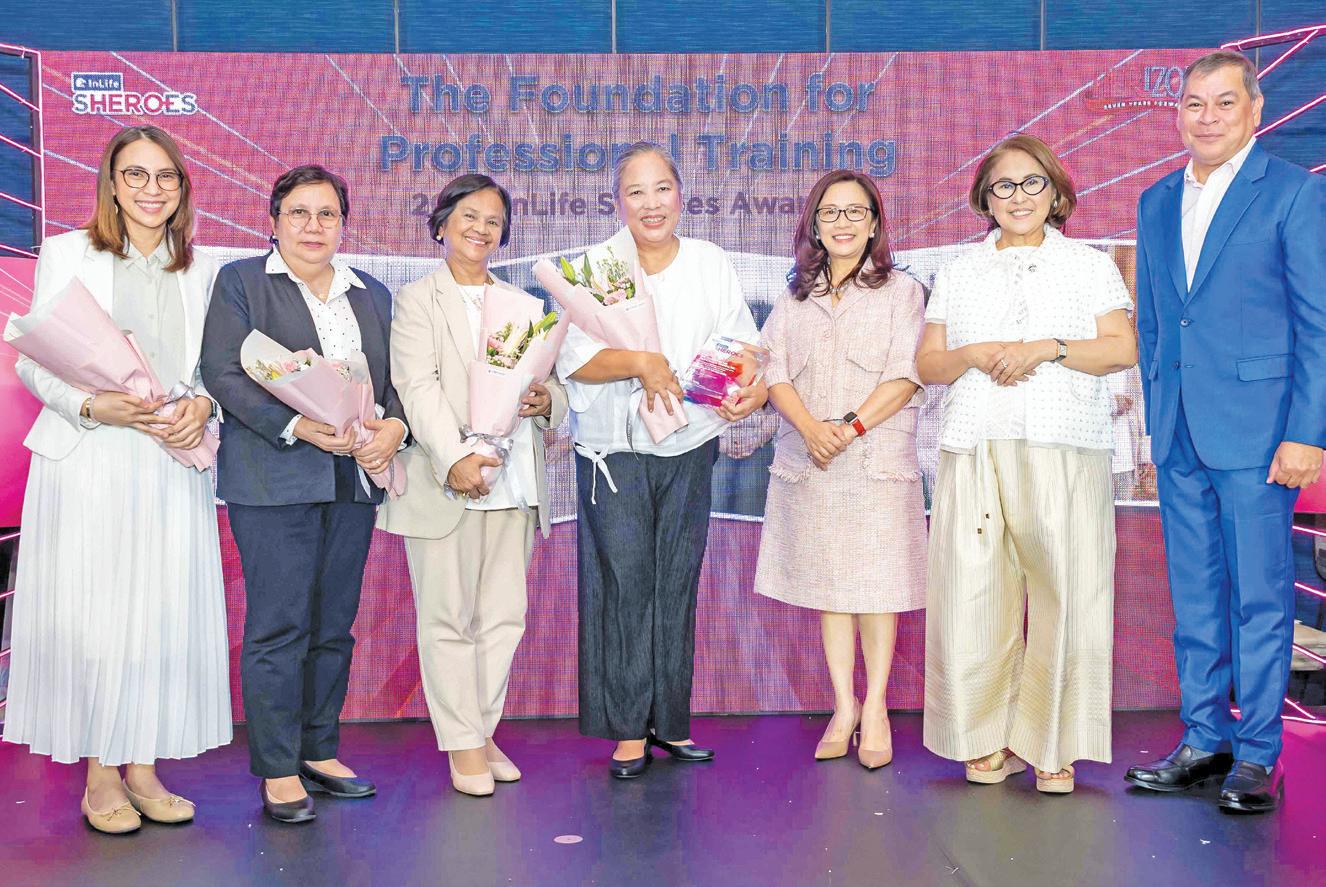
ries,” Nibungco said, reflecting on twenty years of graduations where students transitioned from being dependents to primary breadwinners. In its seventh year, the message of InLife Sheroes remains

MOTHER’S DAY hits different when you want to go all out but still stay in control of your finances. That’s where moneymaxxing comes in: making every peso work smarter so you can celebrate more, without the after-stress.
With Maya, the country’s #1 Digital Bank and leading all-in-one fintech platform, it’s easier to do just that, so you can enjoy the day without overthinking it later.
If you want it to feel special, don’t start with the price
It’s easy to default to one big, expensive gift, but more often than not, it’s the experience that people remember. A planned lunch, a small but thoughtful present, or even just uninterrupted time together can feel more personal than something rushed or over-the-top.
When you shift the focus this way, your spending starts to feel more intentional, not just bigger. If you’re going to spend anyway, make it work for you Mother’s Day spending is going to happen either way, so it helps when it gives something back.
Using the Maya Black Credit
Card means your everyday purchases earn Maya Miles, which you can use for shopping, dining, or even travel, so your spends now can turn into something you’ll actually enjoy.
Meanwhile, the Landers Cashback
Everywhere Credit Card gives you 5% cashback at Landers, 2% on dining, and 1% on most purchases, making it easier to get more value from the things you were already planning to buy.
And it doesn’t stop at rewards.
The more you use Maya for everyday transactions, the more you can boost your interest on Maya Savings, earning you up to 15% per annum, so your money keeps growing while you go about your day.
If timing is the issue, not your budget, adjust for that
Even with the best intentions, expenses don’t always line up neatly with your salary, and that’s usually when things start to feel stressful.
Having something flexible, like Maya Easy Credit1, can help you manage those short-term gaps if needed. With access to up to P50,000 that you can repay within 30 days, it gives 1 Approval and offer are subject to credit evaluation.
you a way to follow through on your plans without dipping into your savings or worrying about how the rest of the month will look.
And if you’re overthinking it— this part matters most At the end of the day, what makes Mother’s Day meaningful isn’t how much you spend. It’s the thought behind it, the effort to make the day feel considered, the intention to show appreciation, and the time you choose to spend together. Those are the things that stay. Moneymaxxing Mother’s Day simply means being thoughtful not just with your plans, but with your money too. So you can celebrate, enjoy the moment, and still feel good about your finances after. To know more, visit maya. ph or mayabank.ph, and follow @ mayaiseverything on Facebook, Instagram, YouTube, and TikTok to stay updated. Approval and offer are subject to credit evaluation. Maya Philippines, Inc. and Maya Bank, Inc. are regulated by the Bangko Sentral ng Pilipinas. www.bsp.gov.ph. For 24/7 assistance, visit the Help Center
A8 Sunday, May 10, 2026
By Safiyah Riddle & Amy Taxin
The Associated Press
Libyan Dr. Faysal Alghoula must renew his green card to continue caring for roughly 1,000 patients in southwestern Indiana, but hasn’t been able to since the Trump administration stopped reviewing applications for people from several dozen countries it deemed high-risk.
Alghoula’s current visa will expire in September if his application is denied.
But last week, the administration quietly made an exemption for medical doctors with pending visa or green card applications, possibly allowing Alghoula’s case to move forward. It’s a move physicians’ organizations and immigration attorneys had sought for months, citing widespread shortages and a high proportion of foreign-trained doctors, who disproportionately work in underserved areas, according to the National Library of Medicine.
The lack of doctors is top of mind for Alghoula, a pulmonologist and Intensive Care Unit doctor who serves a mostly rural population spanning parts of Indiana, Illinois and Kentucky.
“It is about four to five months wait to get the pulmonologist here,” he said.
Still, applicants and immigration attorneys say it’s unclear how big a difference the exemption will make. The change means doctors can have their cases reviewed, but it doesn’t guarantee their green cards or visas will be renewed. It is also unclear whether US Citizenship and Immigration Services will be able to process those applications in time to meet immigration deadlines like Alghoula’s.
Alghoula said he doesn’t trust the administration will approve him due to numerous stories about immigrants being detained at appointments to renew their paperwork like the one he has next month.
“I’m still scared to go to my in -
terview,” said Alghoula, who has lived in the US since 2016.
Meanwhile, the pause remains in effect for thousands of others including researchers and entrepreneurs from 39 countries including Iran, Afghanistan and Venezuela. While they’re on hold, many can’t legally work, get health insurance or a driver’s license. If they leave the US, they won’t be let back in.
Immigrants unable to work or see family
THE Trump administration decided last year to stop reviewing green card and visa applications for people from a list of countries deemed high-risk and this year stopped reviewing visa applications for citizens of more than 75 countries over concerns they would seek public assistance. The moves came amid the US government’s broader crackdown on immigrants.
The pause followed the shooting of two National Guard troops by an Afghan citizen, which the administration said highlighted “what a lack of screening, vetting, and prioritizing expedient adjudications can do to the American people.”
The Department of Homeland Security, which oversees immigration officials, didn’t answer questions about the pause or recent changes to exempt physicians but said in an email it wants to ensure applicants are properly screened

after determining the prior administration failed to do so.
“There are lots of bans and lots of pauses that are happening right now,” said Greg Siskind, an immigration attorney based in Memphis, Tennessee. “It is all about making life miserable for people who are here legally so they will choose other countries.”
It isn’t clear how many doctors have been affected by the pause, according to a spokesperson for the American Academy of Family Physicians, who said several doctors have reached out to the organization asking for help.
Some doctors have already been denied BEFORE the exemption, many immigrants filed federal lawsuits demanding the government issue decisions on their cases.
One of them was Iranian
Dr. Zahra Shokri Varniab, who came to the United States three years ago to conduct radiology research. She was waiting for a green card to attend a residency program but her application got stuck in the pause. She filed a lawsuit demanding an answer to her application and a federal judge ordered immigration officials to review her case.
They did — and denied her.
The 33-year-old doctor said she believes it was in retaliation for her lawsuit.
“I feel completely confused,” Shokri Varniab said.
In court filings, US government lawyers wrote that Shokri Varniab’s application contained inconsistencies about whether she plans to become a practicing doctor or researcher. She said she plans to do both.
She said the exemption doesn’t
TBy Dave Collins The Associated Press
HE Trump administration’s cancellation of more than $100 million in humanities grants to scholars, writers, research groups and other organizations was unconstitutional, and the Department of Government Efficiency had no authority to end the funding, a federal judge in New York ruled on Thursday. US District Judge Colleen McMahon in Manhattan sided with The Authors Guild, several other groups and several people who had their grants canceled and sued DOGE and the National Endowment for the Humanities. McMahon permanently barred the administration from terminating the grants and criticized DOGE’s use of artificial intelligence in nixing the funding. Government lawyers had argued that the cuts of more than 1,400 grants of congressionally approved funds were legal moves
Continued from A3
“It’s been the first year of an American pope who has been critical of what America is doing for the most part,” said Anthea Butler, senior fellow at the Koch Institute, Oxford University. She stressed that Leo is doing so “not coming full-on like Francis would,” but approaching issues from the side. He’s not naming names; he’s merely preaching the Gospel.
That approach has certainly helped some US Catholic institutions, after the American church developed an almost comically bad relationship with Francis. His criti-
to implement President Donald Trump’s directives, eliminate grants associated with diversion, equity and inclusion and reduce discretionary spending under the administration’s priorities.
The White House and Department of Justice, which defended against the lawsuit, did not immediately return emails seeking comment Thursday evening. It was not immediately clear if an appeal was planned.
McMahon said the government violated the First Amendment and the Fifth Amendment’s equal protection right, and DOGE did not have the lawful authority to cancel the grants. She wrote, for example, that it was “a textbook example of unconstitutional viewpoint discrimination” when officials canceled the grants based on DEI. “The public interest favors permanent relief,” McMahon wrote in her ruling. “The public has a strong interest in ensuring that federal officials act within the bounds set
cism of American-style capitalism was amplified by US-based conservative Catholic media during his papacy.
For many Vatican watchers, the Argentine pope simply didn’t “get” the US, and vice versa. Some US Catholics eventually soured on donating to the Holy See under Francis, following years of unrelenting stories of mismanagement, corruption and scandal.
But with a Chicago math major now pope, “he can’t be dismissed as being ignorant of the realities in the United States,” said Kerry Alys Robinson, chief executive of Catholic Charities USA, a national network of Catholic agencies. Robinson said she had never seen US Catholic bishops so united

by Congress and the Constitution.”
Several groups that sued the government, including the American Council of Learned Societies, American Historical Association and Modern Language Association, hailed the decision in a joint statement.
“This ruling in an important achievement in our effort to restore the NEH’s ability to fulfill the vital mission with which Congress charged it: helping to create
as now, particularly in speaking about the dignity of migrants and poor people. She credits that to many factors, including the Trump administration’s immigration crackdown and funding cuts that have created a common purpose. But she doesn’t discount the unifying message from Leo, in English.
“It’s very different when you are hearing the message without it being mediated through translation,” she said.
Repairing US relationships
WARD Fitzgerald, president of The Papal Foundation, which funds the pope’s charity projects in the developing world, said an English-speaking pope has been a boon especially in the US and Europe, where there is
and sustain ‘a climate encouraging freedom of thought, imagination, and inquiry’ through the humanities,” said Sarah Weicksel, executive director of the American Historical Association.
Yinka Ezekiel Onayemi, an attorney for the Authors Guild, called the grant cancellations “a direct assault on constitutional free speech and equal protection.”
“We’re pleased with the Court’s decision, which vindicates our
anecdotal evidence of a “Leo effect” spurring new converts.
“I think there’s lots of reasons for it, but I certainly think that having a pope who speaks English helps young people understand the messages of the Holy Father,” Fitzgerald said in an interview. That also translates to donors to the church, especially from the US.
“When you tell a donor, ‘I really appreciate what you do’ in English and they’re English I think it resonates,” Fitzgerald said. “And so they give a little more.”
The Papal Foundation recently announced 25 new families had joined its ranks since Leo’s election, a not-insignificant number given membership requires a minimum $1.25 million pledge.
clients: the brilliant academics, writers, and institutions doing work that is deeply important to our democracy,” Onayemi said in a statement. “It also reaffirms that Congress’s 60-year-old commitment to the humanities cannot be dismantled by an overreaching executive.”
The judge scrutinized how government officials classified grant projects as DEI and used ChatGPT to target them for funding cuts. In one case, she said officials, using the AI platform, labeled as DEI an anthology titled “In the Shadow of the Holocaust: Short Fiction by Jewish Writers from the Soviet Union.” She also listed numerous other examples.
McMahon also rejected the government’s argument that there was no constitutional problem because any viewpoint classification was ChatGPT’s doing, and not the government’s.
“ChatGPT was the Government’s chosen instrument for purposes of this project, and DOGE’s
Fitzgerald and members of the foundation met with Leo last week and gathered in St. Peter’s Basilica for a Mass celebrated by Cardinal Timothy Dolan, the towering figure of the US Catholic hierarchy and a kingmaker in the 2025 conclave that elected Leo.
Dolan is also chummy with Trump, and is a member of his Religious Liberty Commission.
In his homily, Dolan extolled the attributes of St. Joseph, the father of Christ and a figure so beloved in the church he is the patron saint of more causes than any other saint.
Dolan also revealed his feelings about Leo, whom he had watched in the Sistine Chapel become the 267th pope a year ago Friday. St. Joseph was a man of silence,
appear to apply to her since her case was decided but is seeking relief in court.
Immigration policy compounding war abroad
IMMIGRANTS who hold prestigious jobs in science and technology said they currently can’t work due to the pause because they’re waiting on employment authorization documents. Some said they are running out of money for rent and groceries and worry their careers could be thwarted if they’re forced to leave the country.
Those from Iran are especially worried about returning home during the ongoing war with US and Israeli forces. They said they can’t regularly reach family due to the Iranian government’s Internet blackout or count on them for financial support.
Kaveh Javanshirjavid came to the United States from Iran seven years ago to study for his doctorate in agriculture. He was supposed to start a lab job in January but needs employment authorization and his application is on hold.
The 41-year-old said he’s borrowing from friends to pay rent and relying on his wife’s doctorate stipend for basic necessities. But he doesn’t know how long that will last because she’s also Iranian and will need work authorization to get a job after graduating this summer.
“The whole of my life is on hold,” he said. www.businessmirror.com.ph
Judge rules Trump administration’s cancellation of $100M in humanities grants unconstitutional
use of AI to identify DEI-related material neither excuses presumptively unconstitutional conduct nor gives the Government carte blanche to engage in it,” she wrote. The grant cancellations were announced in April 2025, three months after Trump issued an executive order titled “Ending Radical and Wasteful Government DEI Programs and Preferencing.” In February 2025, Trump issued another executive order implementing DOGE’s “cost efficiency initiative.”
Michael McDonald, then the acting chairman of the National Endowment for the Humanities, sent letters to grant recipients informing them that their grants were canceled.
In a letter to one organization on April 1, 2025, he wrote, “The NEH has reasonable cause to terminate your grant in light of the fact that the NEH is repurposing its funding allocations in a new direction in furtherance of the President’s agenda.”
Dolan said, calm and secure in his place.
“A man who exuded a sense of depth and substance. A man who is shy, all right, a man who is focused on his mission,” he added. “A man, always attentive to God’s plan.”
Dolan then asked the Americans seated in the pews if they could think of anyone else who fit St. Joseph’s description.
“I can,” Dolan said. “Pope Leo reminds me of Joseph.”
The Associated Press religion
for

bioprinted human skin model; modular ultrasound training systems; and device for newborns with abdominal wall defects—are being developed by Filipino researchers
By John Eiron R. Francisco
PHILIPPINE-MADE biomedical technologies are now under development through projects funded by the Department of Science and Technology–Philippine Council for Health Research and Development (DOST-PCHRD), including a 3D bioprinted human skin model, modular ultrasound training systems, and a medical device designed for newborns with abdominal wall defects.
According to Engr. Angela Joy D. Landingin of the DOST-PCHRD, the agency’s Biomedical Engineering for Health (Biomed) Program not only supports the development of medical technologies but also promotes sustainable innovation and local capability-building in biomedical engineering.
Landingin said the program encourages the creation of technologies designed to reduce waste while building the skills and technical expertise of Filipino researchers and engineers in developing safe and effective healthcare solutions.
She added that the program has so far funded 75 biomedical projects worth more than P795-million fund.
“Our goal is to continue expanding support for more innovative research and technology that can help the health sector,” Landingin said.
“Through this, we hope to accelerate the development of local biomedical technologies and strengthen the capabilities of the country in this field,” she added.
The technologies were discussed at the recent Talakayang HeaRT Beat by the DOST-PCHRD.
New OB-GYN training platform UNDER the project “Development of a Phantom Model System for Gynecologic and Obstetric Ultrasound-Guided Procedures,” led by Dr. Melissa D.L. Amosco and Dr. Leslie Joy Lantisa Diaz, the team is working on a training platform to make ultrasound-guided procedures in obstetrics and gynecology safer, more customizable, and more accessible.
According to Diaz, ultrasoundguided interventional procedures
By Malou Talosig-Bartolome
AN international study has found that seeds of Moringa oleifera—commonly known in the Philippines as “malunggay”—can serve as a sustainable and cost-effective alternative to chemical coagulants in removing microplastics from drinking water.
Published in the peer-reviewed journal ACS Omega by researchers from São Paulo State University and the University of Birmingham, the study reported that malunggay seed extract achieved a 98.5-percent removal rate of aged polyvinyl chloride (PVC) microplastics, nearly matching the 98.7-percent efficiency of aluminum sulfate (alum), the industry’s standard coagulant.
Microplastics, defined as plastic fragments between 0.1 micrometers and 5 millimeters, are increasingly detected in water
have become standard practice in OB-GYN care due to their minimally invasive nature, accuracy, and lower cost compared to conventional surgical approaches.
“These procedures require strong hand-eye coordination because clinicians must maneuver needles carefully while viewing ultrasound images in real time to avoid damaging nearby organs,” Diaz said.
She noted, however, that current training practices often involve actual patients, raising concerns over avoidable risks during the learning process.
To address this gap, the team developed modular phantom models that replicate abdominal and pelvic structures—including the uterus, kidneys, cysts, and tumors—using tissue-mimicking materials that simulate both the acoustic and tactile properties of human tissue during ultrasound procedures.
The system enables clinicians to practice procedures, such as biopsies, fluid aspirations, and needle insertions in a controlled and repeatable training environment.
Researchers pointed out that most imported phantom models are expensive, rigid in design, and difficult to customize, limiting their use in local training programs.
The locally developed version is designed to be modular, portable, and gradually degradable, with the added goal of reducing material waste while allowing flexibility for different clinical training needs.
As part of the project rollout, 14 ultrasound specialists were trained to assemble and operate the phantom systems through structured manuals and hands-on workshops,
supplies worldwide. While researchers are still studying the full, long-term impact of microplastics on the human body, scientific consensus warns that ingesting them can leach toxic chemicals, carry harmful pollutants and pathogens, and even penetrate cells and organs—posing serious risks to human health.
Conventional rapid sand filters cannot trap particles this small without chemical assistance. Utilities typically rely on alum, but regulators have raised concerns over its residual toxicity and environmental impact.
The study highlighted that malunggay extract works across a wider pH range (5.0 to 8.0), reducing the need for costly pH-adjusting chemicals.
It also performed well in simplified “in-line filtration” systems, eliminating the need for energyintensive flocculation—a step

allowing the setup to be replicated in hospitals and training centers across the country.
The team is targeting completion of the current phase by July or August, with plans to pursue patent protection and explore small-scale manufacturing by year’s end.
Future work will focus on packaging design, shelf-life stability, storage durability, and potential commercialization, alongside further evaluation of its effectiveness in improving clinician performance compared to traditional training methods.
“Because of pilot testing, we could see the cost efficiency and feasibility of manufacturing this product. If it is distributed in a more cost-effective way, it will be more affordable to market it not only in the Philippines but also abroad,” Diaz said in Filipino.
3D bioprinted human skin
MEANWHILE, an Iloilo-based pharmaceutical company, GalenX Inc., led by its president, Jan Vincent Sollesta, is developing a three-dimensional bioprinted human skin model aimed at reducing animal testing in the research and development of topical drugs, cosmetics, and medical devices in the Philippines.
The project, titled “Development of a Three-Dimensional Bioprinted Human Skin Equivalent for In Vitro Biocompatibility Studies of Topical Formulation,” is implemented under the same program.
Sollesta said the initiative seeks to create a lab-grown human skin equivalent using 3D bioprinting technology as a safer and potentially more accurate alternative to animal testing.
“We find animal testing very expensive and also inhumane. A lot of formulations are developed, and every failed formulation can mean the death of test animals,” he said.
The team is using actual human cells combined with bio-ink and tissue scaffolds produced through a 3D bioprinter to replicate the structure
of human skin.
Sollesta explained that 3D bioprinting allows for more consistent and repeatable production of labgrown skin models.
“If we compare animal models to humans, they do not always give exact results. With lab-grown human skin, we use actual human cells and design them to closely mimic the morphology and structure of real skin, providing a more reliable testing platform,” he said.
He added that the approach also reduces species-related variation, a common limitation in traditional animal testing.
Beyond product development, the project aims to strengthen local capacity in tissue engineering and biomedical research.
Sollesta said GalenX partnered with the University of San Agustin in Iloilo City and DOST scientists to train research personnel in cell culture and 3D bioprinting techniques.
The initiative has already produced a trademarked lab-grown skin platform and trained personnel capable of handling bioprinting and laboratory cell culture work.
Validation tests are ongoing to determine whether the engineered skin accurately replicates the structure and behavior of natural human skin.
Sollesta said the technology could help accelerate the development of pharmaceuticals, cosmetics, and medical devices while opening opportunities for Filipino researchers in tissue engineering.
While similar technologies are already being used abroad, he noted that local development of such platforms remains limited in the Philippines.
“We are thankful to DOST for supporting these projects, which help strengthen the capability of our researchers, especially in pharmaceutical R&D here in the Philippines,” he said.
Abdominal wall closure device EXTENDING beyond laboratory

that adds to capital and operating expenses.
Researchers explained that the malunggay seed extract works by
neutralizing the negative electrical charges carried by microplastic particles. Proteins in the extract carry a
and clinical training innovations, another DOST-supported project is developing a pediatric abdominal wall defect closure assistive device aimed at improving outcomes for newborns with conditions, such as gastroschisis.
Led by Dr. Alvin Caballes, in collaboration with the University of the Philippines Manila and UP Diliman, the device is intended to assist clinicians in the controlled reduction of exposed or protruding abdominal organs back into the abdominal cavity, helping reduce risks, such as infection, hypothermia, and other complications.
Caballes said the project is currently still in the prototype stage and has not yet reached full functionality or clinical deployment.
“We have a very basic prototype. It is not yet a working prototype. Structurally, it is there, but it is still an early-stage system,” he said.
He added that while the device was initially focused on fabrication, the team encountered the need to comply with strict regulatory standards for biomedical devices, particularly since the system will come into contact with human tissue.
Caballes emphasized that biocompatibility remains a key requirement, noting that materials must undergo testing to ensure safety and compatibility with bodily fluids and tissues.
One of the tests conducted involved simulated peritoneal fluid, which mimics conditions inside the abdominal cavity, to assess whether the material would react adversely when exposed to the human body.
“We had to identify the specific materials and examine how they behave under biological conditions, including whether they dissolve or remain stable,” he explained.
However, the project has faced several constraints, including high regulatory standards, limited availability of specialized materials, and supply chain challenges for biomedical components. These
positive charge, which cancels out the repulsive forces that keep the particles suspended.
Once neutralized, the microplastics and organic matter attract each other and clump together into larger masses.
These clumps, known as flocs, are then much easier to remove.
As the water passes through a rapid sand filter, the larger flocs are physically trapped in the gaps between sand grains, while smaller neutralized particles adhere directly to the sand surface.
This process allows the previously elusive microplastics to be captured and removed efficiently.
Beyond plastics, the extract was effective in removing natural organic matter that can form hazardous trihalomethanes when exposed to chlorine.
Researchers cautioned, however, that crude seed extracts introduce additional organic carbon, which may complicate down -
factors have contributed to delays in development.
Despite these challenges, Caballes said the team has managed to produce a functioning structural prototype and establish a foundation for further refinement.
“Given the limitations, it is still encouraging that we have reached this stage,” he said.
ACROSS the DOST-supported biomedical engineering projects, researchers pointed out that development costs are being weighed against long-term performance, safety, and usability rather than short-term price.
Caballes said the team is prioritizing added functionality and safety features even if they increase initial production cost.
“What we may produce may not be cheap. But we are adding features that make it cost-effective in the long run,” he said. He noted that design choices include reusable components for certain applications and added safety mechanisms not commonly present in existing systems.
He added that cost is only one consideration alongside quality, safety, and local availability.
In the OB-GYN ultrasound training project, Dr. Jitka Quinagoran said affordability is being built into the design without sacrificing adaptability.
The locally developed phantom system is being designed for customization and wider clinical use. Diaz noted that the goal is to improve functionality while keeping it practical for Philippine training settings.
For Sollesta, cost was a key driver in shifting toward a 3D bioprinted human skin model as an alternative to animal testing.
He said traditional testing systems are resource-intensive, particularly due to the upkeep of animal facilities and repeated experimental cycles.
While acknowledging the high initial investment for equipment, Sollesta said the long-term benefit lies in reducing testing cycles and expanding access to laboratories and research institutions.
Across all three projects, the researchers underscored a shared direction: investing more at the development stage to reduce long-term costs, improve safety, and expand access to biomedical technologies in the country.
stream treatment. They recommended further work on purification methods to minimize leaching while preserving efficacy.
The findings add to earlier studies validating malunggay’s potential in water treatment.
A 2021 study reported up to 99.5-percent turbidity reduction in wastewater using malunggay seed powder, while a 2020 study found combined seed-and-leaf extracts improved both physicochemical and biological parameters in groundwater. For developing economies, including the Philippines, the use of locally sourced malunggay could reduce dependence on imported chemicals, ease foreign exchange pressures, and strengthen agricultural supply chains.
Water concessionaires may soon find the “miracle tree” a practical ally in delivering safer, plastic-free water to households.
A10 Sunday, May 10, 2026

Editor: Lyn Resurreccion • www.businessmirror.com.ph
ATLANTA—The past 25 years have been rough for American churches and other houses of worship.
The median worship attendance dropped by more than half. Church closures and the rise of the nones—those who claim no religion—have grabbed all the headlines. And faith in institutions like organized religion has plummeted.
Yet a new report from the Hartford Institute for Religion Research shows signs of a shift— for the first time in two decades, attendance is up. More people are volunteering, and there also seems to be a renewed sense of optimism among pastors and other clergy.
“The headline finding is cautious optimism,” Alison Norton, co-director of the Hartford Institute for Religion Research, told reporters at the annual conference of the Religion News Association, meeting in Atlanta.
She added that the data showed a story of resilience and recalibration.
“Across a range of indicators, there are signs of recovery and, in some cases, renewal,” the study’s authors wrote in a report released on April 24 which surveyed a representative sample of leaders at 7,453 congregations between September and December of 2025.
Median in-person attendance, which dropped from 137 in 2000 to 45 during Covid-19, is now at 70 adults, which is higher than the 2020 Faith Communities Today survey from the Hartford Center for Religious Research. That report found that the median attendance was 65.
Researchers said the attendance growth, which is self-reported by the surveyed congregations, is not enough to reverse years of decline.
Still, said Scott Thumma, director of the Hartford Institute for Religion Research, it has been a long time since there has been any uptick.
Thumma said researchers had expected to see continued decline and withdrawal.
“We were pretty surprised when we saw the 2025 data,” he said, adding that for many congregations, this might be the first sign that the trajectory of decline might be shifted.
As the report noted, “this is the first positive gain in median attendance in 25 years.”
Catholic and Orthodox congregations had the highest reported median attendance (200), in part because those traditions have

THE Order of Discalced Carmelites (OCD) in the Philippines installed Fr. Joey Mabborang on May 4 as provincial superior, beginning his leadership of the order’s Province of St. Teresa of Jesus.
He assumed office at the start of the congregation’s weeklong fourth ordinary provincial chapter at Our Lady’s Hill Center of Spirituality in Bago City, Negros Occidental.
“We entrust him to the Lord as he begins his term of service, and we pray for the continued growth and mission of the Province,” the congregation said.
The OCD opened its Provincial Chapter with a solemn Mass of the Holy Spirit, presided over by Most Rev. ArchbishopEmeritus Rolando Octavus J. Tirona, OCD, DD. Tirona also served as the recollection resource speaker with the theme, “ Pilgrims of Hope: Renewing Our Carmelite Fraternity and Mission.”
His conference invited the friars to deepen their identity as Carmelites, strengthen their fraternal communion, and renew their missionary zeal as faithful witnesses of hope in today’s world. Mabborang was elected provincial superior on February 7, succeeding Fr. Rey Sotelo, OCD.
The Conference of Major Superiors in the Philippines offered its “heartfelt congratulations and fraternal greetings” to Mabborang on his new role.

“May your leadership be guided by the spirit of service, unity and humility, and may the Lord sustain you as you shepherd your brothers and partners in mission,” CMSP said.
Mabborang entered the Discalced Carmelite Order in 2004, made his first religious profession in 2006 and took final vows in 2009.
He holds the distinction of being the first native of Apayao province in the Cordillera Administrative Region to join the Carmelite order.
on
He was ordained to the
fewer parishes than Protestants.
The median evangelical congregation reported 75 worshippers, while the median Mainline church reported 50.
Just under half of the congregations (43 percent) said they grew by at least 5 percent, while a similar number (46 percent) reported declining by at least 5 percent. The rest said they were stable.
“For the first time in decades, more congregations are stabilizing or growing rather than shrinking,” the authors wrote.
Thumma said that larger congregations are more likely to grow, while smaller churches are more likely to decline.
“After years of constraint, even modest gains can feel like recovery for these congregations,” Thumma said at the Religion News Association conference.
The report is part of a long-term study of congregations during the Covid-19 era and beyond. The survey asked about attendance, giving, volunteers and demographics, as well as how church members and leaders felt about the future of their congregations.
About half of the congregations were in the South, with the rest split between the Midwest, the Western US and the Northeast.
Earlier studies by Hartford showed that at first, congregations responded to the pandemic by adapting quickly to streaming and finding ways to minister when they could not gather in person.
Then there was a lull as the pan -

demic stretched on and churches went into survival mode.
Now that period seems to be over, said Charissa Mikoski, an assistant professor at Hartford Institute for Religion Research, who also worked on the study.
And the churches that are growing, said Mikoski, are implementing the lessons of resilience they learned during the pandemic.
“This is not just recovery, it’s adaptation and experimentation,” said Mikoski.
When the data showed attendance was up, researchers were skeptical.
“We did go back and check very thoroughly,” Mikoski said.
Other groups, like the Pew Research Center, have shown that the decline of religion in the US has stabilized, at least for now, she said.
The study also found that fewer clergy are thinking about leaving the ministry.
“It’s not too surprising if the congregations are feeling better and more volunteers are showing up, the clergy are going to start feeling better,” said Thumma.
Thumma suspects the pandemic acted a little bit like a wake-up call for churches. They could no longer pretend that everything was OK and had to start making changes for the future.
One other positive coming out of the pandemic? Giving is up, in large part because of a growth in online giving, said Thumma.
“People no longer need to be physically present or even remember to give in the moment,” said Thumma.
Median income grew from $120,000 in 2020 to $205,000
in 2025. The number of churches offering online giving rose from 58 percent in 2020 to 76 percent in 2025.
As of 2025, about 40 percent of revenue came from online giving. Evangelical and non-Christian congregations were most likely to report a surplus. Mainline churches were more likely to report deficits.
Thumma also noted that church expenses—especially for insurance and other building expenses—have grown.
Thumma said that it will take some time to know if this growth will continue. The center is planning for a major survey of congregations in 2030 that may shed more light.
The authors of the report were quick to say there’s no major revival in Christianity. The longer trajectory of decline remains in place, they noted.
But congregations do seem to be moving past survival mode and planning for the future.
“What it is not is a story of revival or return to a previous era of sort of congregational glory in the United States,” Norton said.
“Congregations have been through an extraordinary period of disruption, and though it has taken a while, many have come out of it with greater clarity about who they are and what they’re called to do. That’s showing up in the data in ways that are genuinely encouraging,” she pointed out. Bob Smietana/ Religion News Service Via Ap
Themes of peace, human dignity central to Pope Leo XIV in his first year in office
WHEN he was elected pope on May 8, 2025, Robert Prevost, who took the name Leo XIV, greeted the crowd with Christ’s words to his disciples: “Peace be with you.”
Peace has become a central theme of the pontificate of the first American pope. In recent months, opposing the war in the Middle East, Leo has said that the “world is being ravaged by a handful of tyrants.”
He led a “Prayer Vigil for Peace” on April 11, in which he criticized how the name of God has been used to justify war and death. He has also said that “military action will not create space for freedom” because true freedom can come only from patient dialogue.
Combined with his calls for peace is Leo’s equally outspoken emphasis on human dignity.
In an age where power is concentrated in the hands of a few, the pope has urged Christians to make a “radical choice in favor of the weakest.”
Technological advances, especially the rise of artificial intelligence, also endanger human dignity by threatening to override “human creativity, imagination and intellect,” he has cautioned.
In my view as a scholar of global Catholicism, the themes of peace and human dignity are crucial for understanding Leo’s first year as the 267th leader of the Catholic Church.
DURING his speech for the 59th World Day of Peace, on January 1, Leo echoed remarks he made after his election by saying the world should look to Jesus Christ as “our peace.” He called for “unarmed and disarming peace, humble and persevering,” contrasting peace built on military strength versus peace built on love.
In advocating for peace, Leo is echoing his predecessors. Pope Francis invited Presidents Shimon Peres of Israel and Mahmoud Abbas of the Palestinian National Authority to pray for peace in 2014.
Benedict XVI condemned “the useless slaughter of war,” recalling Benedict XV’s condemnation of World War I nearly 100 years earlier.
Pope John Paul II also argued that war should be “part of humanity’s tragic past” when he visited Coventry, England, which had been devastated during World War II.
Leo has specifically criticized war in Gaza by rejecting the “collective punishment” and “forced displacement” inflicted on Palestinians after Hamas’ attacks on Israelis on October 7, 2023.
Although he is repeating condemnations of war made by other popes, Leo has been drawn into an unprecedented conflict with a US president.
In criticizing the US and Israel’s war with Iran, the pope has condemned the loss of life and the failure of negotiations.
In response, President Donald Trump has called the pope “terrible for Foreign Policy.”
For his part, Leo has said that he does not look at policy through “the same perspective” as the US president and his words should not be interpreted as a personal attack.
The Catholic Church does have a
tradition of “just war theory,” which argues that war can be waged ethically.
Vice President JD Vance has stated that the pope is ignoring this tradition. After World War II, however, the Catholic Church has stated its opposition to war clearly and consistently, since modern warfare is so destructive.
Affirming human dignity
IN response to ongoing violence between and within nations of the world, Leo has called for dialogue and respect for humanitarian law.
His emphasis on human rights affirms the God-given dignity of all people, especially those whom society has cast aside.
Human dignity has been an important theme among the popes who have come before Leo.
John Paul II spoke about the dignity of the unborn and the elderly in his 1995 encyclical “The Gospel of Life.”
Benedict XVI emphasized how each and every human being has dignity because they are made in the image of God. Francis called attention to “throwaway culture” that

ignores the poor. Leo has reiterated all these themes in various contexts.
Overall, however, Leo is most clearly following the teachings of Francis on human dignity and applying them more specifically to ongoing international crises. He has spoken about the challenges to human rights and dignity in conflicts in many areas of the world: Ukraine, Venezuela, the Great Lakes region of Africa, the Caribbean Sea and Myanmar. As a missionary, teacher and bishop for over two decades in Peru, Leo’s perspective is shaped by his understanding of issues facing the Global South and how they relate to larger political and economic dynamics.
During his yearlong papacy he has given sustained attention to the challenges faced by migrants and the poor. Following his trip to Africa in April 2026, he stated that migrants and refugees are “treated worse than…house pets or animals.”
His focus on migration is also reflected in his appointment of Evelio Menjivar-Ayala—a former undocumented migrant—as bishop of the diocese of Wheeling-Charleston, West Virginia.
In his October 4, 2025, apostolic exhortation “Dilexi Te [I Have Loved You]”— Leo says that “in every rejected migrant, it is Christ who knocks at the door of the community.”
Using the words of Francis, Leo describes the Catholic Church’s mission to migrants as “welcome, protect, promote and integrate.” Dilexi Te’s main focus is the conditions facing the poor. In criticizing the pursuit of wealth at “all costs,” Leo argues for a cultural change that removes the social and economic aspects of poverty. In making this argument, Leo identifies

Editor: Lyn Resurreccion

By Jonathan L. Mayuga
HAVE you seen a tiny frog no bigger than the size of a microSD card?
The Platymantis guiting miniature frog species was recently discovered by researchers on Mt. Guiting-Guiting, a protected area on Sibuyan Island in Romblon province.
The Department of Environment and Natural Resources (DENR) office in the Mindoro, Marinduque, Romblon, and Palawan (Mimaropa) Region said the discovery highlights the importance of protecting not only Mt. Guiting-Guiting Natural Park, but the entire Sibuyan Island’s unique biodiversity.
Filipino researchers from the University of Kansas—Camila G. Meneses, Kier Mitchel E. Pitogo, Syrus Cesar P. Decena, Christian E. Supsup, and Rafe M. Brown— have described Platymantis guiting that is found only within the Romblon Island Group.
Measuring an average of just 14 millimeters in length—roughly the size of a microSD card—the species is among the smallest frogs recorded in the Philippines.
The discovery, published in the Raffles Bulletin of Zoology on April 14, came following years of fieldwork and scientific analysis.
20 years hiatus; close resemblance ALTHOUGH the frog was first observed on Sibuyan as early as 2004, it was initially identified to be Platymantis pygmaeus, a similar species found in Luzon.
However, the DENR said that nearly two decades of repeated surveys—supported by genetic, acoustic, and morphological
analyses—were needed to confirm that the frog populations in Sibuyan and nearby Tablas represent a distinct species.
Despite their close resemblance, researchers found that the Romblon frogs are not closely related to P. pygmaeus, providing a clear example of convergent evolution—where unrelated species develop similar traits.
They said the new species is distinguished by its shorter limb proportions and a unique advertisement call marked by repetitive clicking sounds used for mate recognition.
The second miniature frog of its kind in the country, P. guiting, adds to growing evidence of the Philippines’ remarkable amphibian diversity, particularly in isolated mountain ecosystems.
A species with a fragile range THE survival of P. guiting depends entirely on the protection and integrity of its forest habitat, the researchers said.
Because of this restricted distribution, the species has been provisionally assessed as critically endangered under the guidelines of the International Union for Conservation of Nature (IUCN) Red List, highlighting its vulnerability to habitat degradation and climate-related threats.
Named after a mountain THE species was named after Mt. Guiting-Guiting, Sibuyan Island’s iconic peak and a recognized center of endemism.
Its discovery adds to the growing list of species unique to the Philippines and further increases the known diversity of the genus Platymantis.
Scientists emphasized that

species with extremely limited distribution are among the most vulnerable to environmental change, making sustained conservation efforts in protected areas like Mt. Guiting-Guiting Natural Park essential.
Beyond scientific importance ACCORDING to the study’s authors, the discovery reinforces a broader message: even small, isolated islands like Sibuyan continue to harbor life forms that remain undocumented.
Protecting these habitats is critical—not only to preserve biodiversity, but to ensure that species like P. guiting are not lost before they are fully understood.
The finding also highlights the contribution of Filipino scientists working alongside international institutions, demonstrating how long-term research and global collaboration can advance biodiversity conservation.
More than just a new addition to Philippine wildlife, P. guiting
stands as a reminder of both the richness of the country’s natural heritage and the urgency of safeguarding it for future generations, the researchers said.
THE 15,700-hectare Mt. GuitingGuiting Natural Park was established in 1996. It is famous for its rugged, “saw-tooth” shaped peaks, which gave its name Guiting-Guiting, that locally means a mountain with jagged, or sawtoothed peaks.
Its rich biodiversity and high level of endemism, meanwhile, earned it the prestigious title of the “Galapagos of Asia.” According to scientists, about 77 percent of its species are not found elsewhere.
Mt. Guitting-Guiting, as well as the entire Sibuyan Island, however, is a fragile island ecosystem facing numerous threats.
Environmental advocate Rodne Galicha told the BusinessMirror via Messenger on May 3 that
N. Samar LGU pledges to build a more sustainable renewable energy system
THE provincial government of Northern Samar declared their commitment and determination to advance a cleaner and more sustainable energy future for the province during the Renewable Energy (RE) Roadmap Scoping Workshop with the Institute for Climate and Sustainable Cities (ICSC).
The workshop, held from April 27 to 30, was part of a series of engagements organized by ICSC following the signing of a Memorandum of Agreement with local chief executives.
The MOAs aim to institutionalize participatory local energy planning, craft local RE ordinances, and mobilize innovative financing for local government units (LGUs) in the region.
“The roadmap that we will develop here will shape how our province will move forward in the years to come. This journey toward a just energy transition is about creating an energy landscape that prioritizes our environment, supports our economy, and uplifts our communities more than just shifting away from fossil fuels,” said Northern Samar Gov. Harris Christopher Ongchuan in his keynote address. Attending the workshop were members of the Northern Samar Technical Working Group (TWG), with representatives from the LGU’s several offices, including disaster risk reduction and management; youth development; engineering; cooperative and community affairs; and environment and natural resources.
The TWG was also joined by executives from local civil society organizations—the Samar Crusade Against Poverty and the Center for Empowerment and Resource Development, Inc., and the Northern Samar Electric Cooperative.
Participants attended sessions that unpacked the Philippines’ national and local energy policy landscapes, on-grid and off-grid energy systems, RE project structures, financing and investment mechanisms for renewables, and streamlining permitting processes through the Energy Virtual One-Stop Shop.
Representatives from the Department of Energy Renewable Energy Management Bureau, Investment Promotion Office, and Electric Power Industry Management Bureau provided technical and policy inputs during the workshop.
DOE Undersecretary Mylene Capongcol walked the participants through the role local governments play in advancing the energy transition and in reaching the Philippines’ renewable energy targets.
“Local governments are not merely implementers of national policy, but key drivers in the transformation. LGUs are at the frontline of service delivery, closest to the realities of the communities you serve, and therefore, are in the best position to lead the transition towards cleaner, more reliable, and more affordable energy systems,” Capongcol noted.
TWG members also learned from experiences in Iloilo City and Butuan City, which both have established their RE plan and roadmap.
Northern Samar is not new to advancing the energy transition in their locality. They have already been recognized by the DOE in last year’s Sustainable Energy Awards as the winner in the local government units category.
In addition, the province institutionalized Ordinance 7, known as the “Green Lane Policy,” making them the first LGU in the country to adopt an integrated framework that combines investment promotion, facilitation, regulatory streamlining, and investor aftercare for energy.
It has a critical role to play in advancing the Philippines’ shift to renewable energy because of its high wind energy potential, both onshore and offshore as identified in the DOE’s Competitive Renewable Energy Zones.
In April 2025, the DOE awarded five service contracts in the province due to its favorable wind conditions, and just last month, it was announced that a new P7 billion wind power project is set to rise in Victoria, Northern Samar.
However, this potential must also be matched with grid and transmission readiness to support new RE and power generation infrastructure.
Ongchuan also shared that upon the enactment of Memorandum Circular 114 on energy conservation protocols, the Provincial General Services Office has reported a 40 percent reduction in the LGU’s electricity consumption.
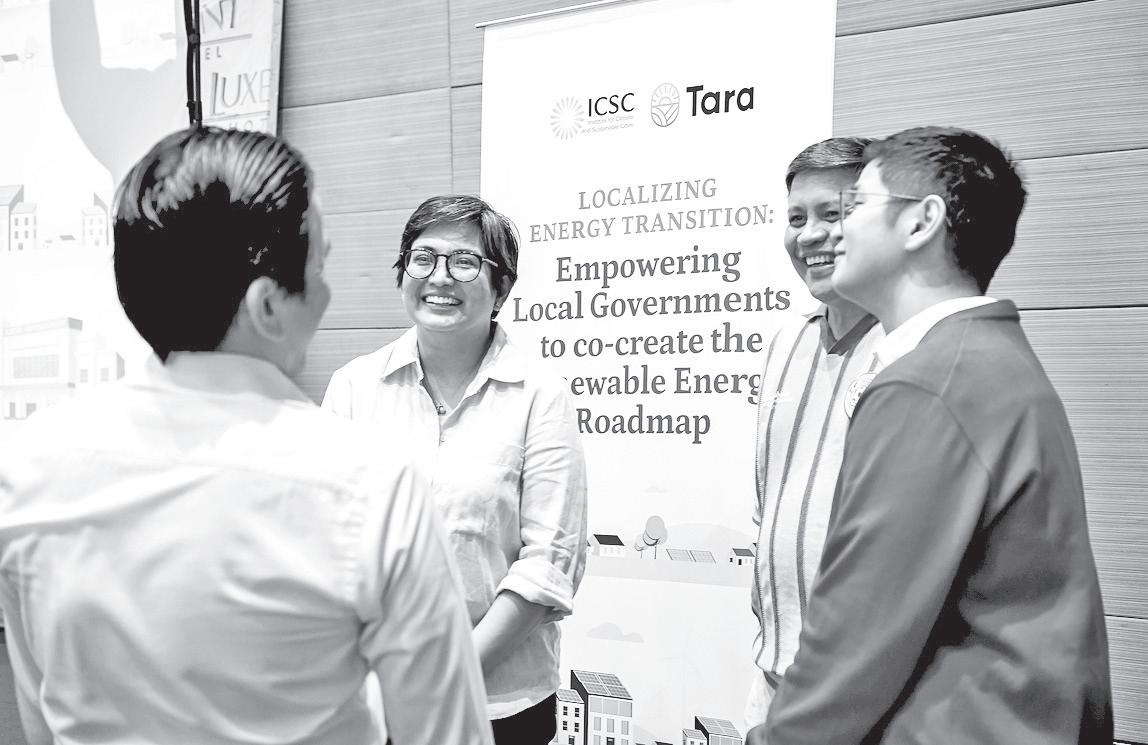
Sibuyan Island—particularly Mt. Guiting-Guiting—remains unprotected.
“As a Sibuyanon, I strongly call for the urgent protection of Mt. Guiting-Guiting Natural Park and the whole of Sibuyan Island,” Galicha said.
He pointed out that in the face of ongoing threats from mining, deforestation, and the climate crisis, it is clear that existing mining permits must be revoked and all pending applications permanently denied.
Irreversible environmental destruction
“OUR island must not be sacrificed for short-term profit at the cost of irreversible environmental destruction,” he said, referring to the threat posed by mining and other destructive development projects.
Galicha said that the destruction of the island’s forests means the loss of life—species found nowhere else on Earth, once gone, can never be recovered.
“The discovery of new species, such as Platymantis guiting, further affirms Sibuyan’s global significance. Last year, a crustacean species was named after me— Stammericaris galichai. This year, another gecko species has also been named, a humbling reminder that our work for the environment is deeply connected to life itself. These discoveries show that many species are only now being understood, yet they remain at risk of disappearing before we even know them,” he warned.
According to Galicha, Sibuyan must be advanced as a World Heritage Site under the United Nations Education, Science and Cultural Organization while strengthening ecologically sustainable programs,
“This reflects a conscious effort on our part to practice energy efficiency and responsible consumption,” he said.
Building on the learning sessions and existing initiatives of the province, the Northern Samar TWG collectively set the province’s RE targets, explored pathways for integrating RE in both on-grid and offgrid communities, and identified financing opportunities they can utilize.
“For Northern Samar, the opportunity is particularly meaningful. With its unique geography, including islands and remote communities, the province stands to benefit greatly from decentralized energy solutions such as rooftop solar, microgrids, and hybrid systems. These are not just technical options; they are powerful ways to inclusive development,” Capongcol said.
In the planning workshops, TWG members also put emphasis on the importance of prioritizing technical expertise and building the capacity of LGU personnel, embedding renewable energy in the province’s projects and programs, and harmonizing RE initiatives across all sectors to ensure the sustainability of energy transition efforts.
“Renewable energy is about resilience in times of crisis, opportunities for local investments and jobs, and sustainable growth that benefits everyone, even the farthest communities of our province,” Ongchuan added.
“We are 110 percent committed to RE in our province, we will make sure to capitalize on the learnings that we received, and we are highly determined in Northern Samar to continue these efforts,” said Board Member Emil Nicholas Ongchuan II, Chairperson of the Sangguniang Panlalawigan Committee on Energy, Utilities and Franchises in the province.
“We commit to doing our part and empowering LGUs across the country to better define and embrace their critical role in advancing renewable energy initiatives within their jurisdictions],” said ICSC Executive Director Angelo Kairos dela Cruz.
such as community-based ecotourism, regenerative agriculture, and environmental education.
“The future of Sibuyan lies not in mining, but in protecting it as a living heritage for the world—and for generations to come,” he said.
Limited manpower
JOYBERT MIJARES , Protected Area Superintendent of Mt. Guiting-Guiting National Park, said indeed the discovery of the new species of miniature frog is an added reason for the people of Romblon to protect Sibuyan Island.
Mijares said besides poaching, the ongoing project in Sibuyan is far from the protected area, and there is no active mining operation on the Island.
However, he said the threat of small-scale mining is becoming a problem, especially when some locals, not content with gold panning below the stream, would eventually try their luck upstream, inside the protected prea.
“Of course, we are protecting Mt. Guiting-Guiting, but our limited manpower can only do so much,” he said in Filipino during a telephone interview on May 6. According to Mijares, there are currently eight park rangers who take turns protecting the entire Mt. Guiting-Guiting.
“Even if we have, say, one park ranger for every 2,500 hectares, that is still not enough,” he pointed out.
Sadly, despite proposals to increase budget allocations for additional park rangers, their requests were always denied, exposing the Galapagos of Asia to the same old predicament that threatens not only its rich biodiversity but also its fragile ecosystem.
Trees are magic: Newport volunteers working to expand their healthy reach
NEWPORT, Rhode Island—On Newport’s south side, historic and opulent mansions sit on an avenue with mature trees that help cool the neighborhoods, clean the air and foster wildlife.
On the city’s poorer North End, where some streets are dotted with subsidized housing, big trees are a lot fewer and far between.
“People in this neighborhood aren’t receiving the benefits of trees,” said Natasha Harrison, executive director of the Newport Tree Conservancy. “They need more.”
The conservancy has planted hundreds of native trees to create a healthier forest in a 30-acre city-owned park, Miantonomi Memorial Park. Fifteen volunteers met staff from the conservancy at the park in the northern part of the city for recent Earth Day.
Many native trees in the park’s forest have been crowded out by invasive plants, killed by disease or eaten by deer, rabbits and squirrels.
This year, for the first time, the conservancy wanted to dig up native seedlings to nurture the trees in their nursery and replant them in the forest to better their chances of survival.
The conservancy’s goal is to grow the tree canopy in the area and raise its low “tree equity score.”
The score is a measure of whether there are enough trees in a neighborhood for people to experience the health, economic and climate benefits trees provide.
The conservancy’s work was supposed to be aided by federal funding the US Forest Service awarded to the Arbor Day Foundation, a global nonprofit dedicated to tree planting and conservation, Harrison said.
As President Donald Trump’s administration sought to end environmental justice initiatives, the Forest Service
terminated a $75-million grant last year to the foundation, which was working to plant trees in neighborhoods that might not otherwise be able to afford them. Harrison said the conservancy expected to receive $150,000 from the foundation. The conservancy’s donors made up the difference after the cancellation, and volunteers help the nonprofit to achieve its mission.
“It was stressful, but I didn’t want to let it derail us,” Harrison said. The conservancy has been partnering with the city to plant trees throughout Newport for almost 40 years and improve the tree canopy.
At Miantonomi Park, Joe Verstandig, the conservancy’s living collections manager, led the group into the forest. He pointed out the invasive species they are working against, like the groves of Aralia spinosa, commonly called devil’s walking stick, Norway maples and Japanese knotweed.
He showed them how to methodically dig up the plants they wanted to save, such as the arrowwood that is common throughout Rhode Island, elderberry and American holly.
The group included friends Allie Bujakowski and Mara Swist. Bujakowski lives a mile from the park and walks her dog there. Swist lives nearby in Portsmouth, Rhode Island. They both said they wanted to get their hands dirty for Earth Day and help the conservancy, which planted a tree in Bujakowski’s front yard.
“They are getting trees in spaces in the community where we really need them,” said Bujakowski, who wore a Newport mansions hat.
“It makes a big difference visually. see the trees they planted two years ago and they’re bringing the birds back.” Jennifer Mcdermott And Joshua A. Bickel/ Associated Press
‘The International Olympic Committee reaffirms that athletes’ participation in international competition should not be limited by the actions of their governments, including involvement in a
GENEVA—In a political shift, the International Olympic Committee (IOC) said before the weekend that athletes from Belarus should once again compete with their full national identity and not be vetted for neutral status, even as the war in Ukraine continues.
Though the non-binding advice to sports governing bodies does not yet apply also to Russia, it seemed to point toward being closer to ending Russia’s isolation in Olympic circles during its war on Ukraine as the 2028 Los Angeles Summer Games approaches.
Athletes from Russia and its mili tary ally Belarus had to be approved as neutrals who did not support the war for individual events at the 2024 Paris Olympics and February’s Milan Cortina Winter Olympics. The countries were barred from all team sports at the Olympics.
ASOUND investment for local tourism and the sport of karate that will pay off dividends immediately and beyond.
This was how Karate ng Pilipinas Sports Federation Inc. president Ricky Lim describes the country’s hosting of the Karate One Youth League presented by the Philippine Sports Commission (PSC) set May 14 to 17 at the Mall of Asia Arena in Pasay City.
“This tournament will be a huge boost for local tourism,” said Lim, who revealed that more than a thousand promising karatekas from 58 countries worldwide are seeing action in the four-day meet sanctioned by the World Karate Federation. Among those fielding huge contingents are Australia with 78, Saudi Arabia, 40; Malaysia, 47; New Zealand, 39, Kazakhstan, 27; US and Uzbekistan, 19; and, of course, the Philippines with 201 athletes from all over the country, according to the karate chief.
He pointed out that since “our participants are children, we expect most of their parents to tag along, meaning that we can expect at least double the foreign and local tourists to come to Manila for the competition.
“In fact, the Malaysian youth team was set to arrive yesterday so they can train with our young local karatekas,” he said.
Lim said that this was outside of the officials of the WKF, led by WKF president Anthony Espinos of Spain, and Asian Karate Federation who will preside and officiate in the meet also backed by the Philippine Olympic Committee, SM Group of Companies, Milo and Lanson’s Place.
“The IOC reaffirms that athletes’ participation in international competition should not be limited by the actions of their governments, including involvement in a war or conflict,” the Olympic body said.
The IOC noted the qualification period “starts this summer” for Los Angeles, where more than 200 national Olympic teams are set to compete for more than 350 medal events on the program.
The updated Olympic position more than four years into the war on Ukraine also comes after repeated calls from critics of Israel for sporting sanctions to be applied because of the conflict in Gaza
The IOC has under president Kirsty
the ever-increasing complex realities and consequences of the current geopolitical context.”
Anti-doping investigation ONE barrier to Russian athletes’ full return is an ongoing World Anti-Doping Agency (WADA) investigation into recent reports, including by the New York Times, implicating Russian anti-doping agency official Veronika Loginova.
The IOC said its executive board noted “with concern the recent information” being looked at by WADA, without naming Loginova.
The Russian Olympic Commitsuspended by the IOC since October 2023 for incorporating regional sports bodies in illegally occupied eastern Ukraine.

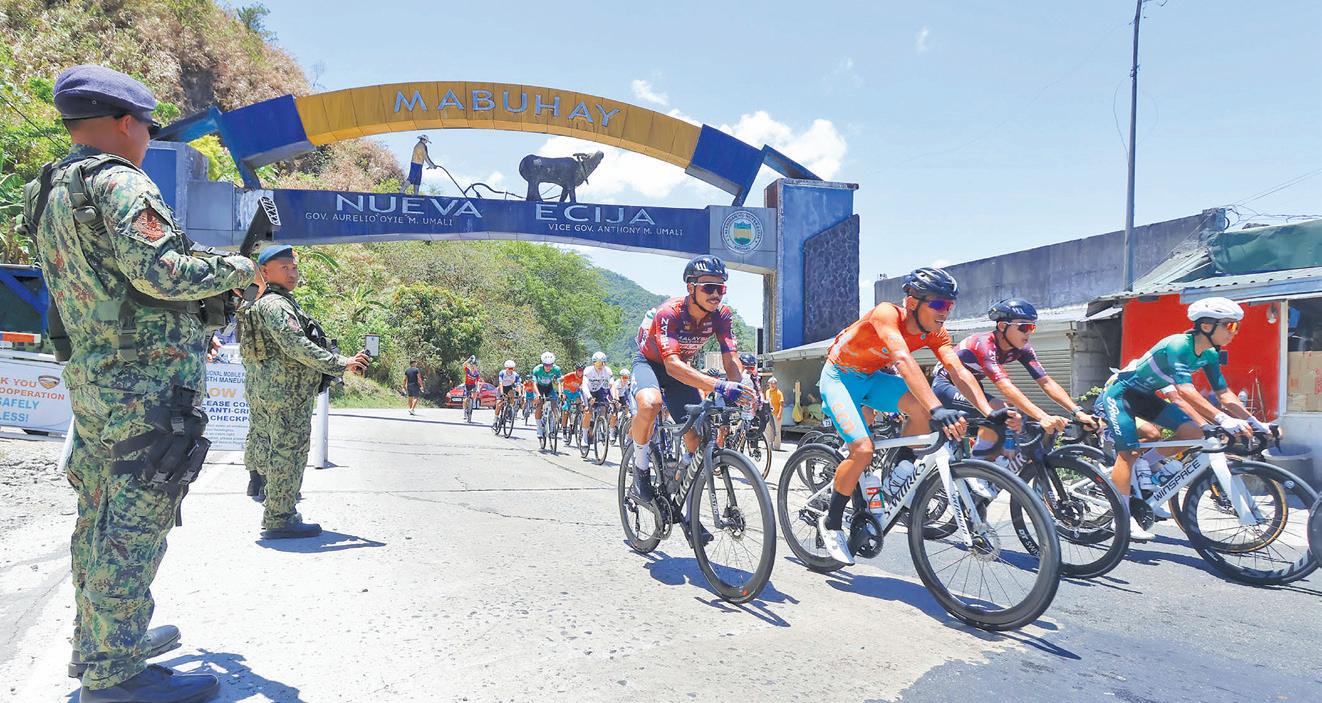


suspended while the IOC Legal Affairs Commission continues to review the matter.” Coventry told reporters at an online news conference there is no set timetable to complete the legal review.
Pushback from sports bodies TRACK and field’s World Athletics excluded athletes and officials from Russia and Belarus out of its international events within days of the war starting. The IOC›s move Thursday will not change that.
“Whilst the ROC has held constructive exchanges with the IOC on its suspension,” the IOC said, “it remains
“Our council has made a clear decision that when there is tangible movement towards peace negotiations it can begin to review its decisions,” the Monaco-based track body said.


NEW DELHI—With a massive population, a rapidly growing economy and already the global powerbroker in cricket, India is preparing to expand its influence in international sport.
The 2030 Commonwealth Games are already locked in for Ahmedabad, and there’s high expectations for India’s bid to host the 2036 Olympics Prime Minister Narendra Modi has envisioned a developed India by 2047, and the government is focused on improving living standards, transport infrastructure, education and becoming a global hub for tech and innovation And that’s the bedrock of India’s aspirations for the Olympics and beyond.
“India today reflects a confident and aspirational mindset, ready to lead and shape

MATT and Alex Fitzpatrick won the Zurich Classic of New Orleans a few weeks ago. It was the first time that brothers won the tournament, which has a unique team format— the only tournament on the PGA Tour where players compete in pairs.
And it’s not like Alex can simply lean on big brother Matt the entire way either because the format shifts from Best Ball (days 1 and 3) to Alternate Shot (days 2 and 4). So for at least half of the tournament, Alex needed to bring the goods. Together, the brothers set a tournament record 31-under par total, and a record 57 (-15) for a round when they tore up the course in round 3. I am sure playing with your brother is fun enough, but shooting a 57 in best ball? That must have been a blast.
The Fitzpatrick brothers first came onto our TV sets in 2013, when big brother Matt won the US Amateur at the iconic The Country Club in Brookline, Massachusetts. As Matt battled it out during the final, little Alex was
with him, serving as his caddy. Matt isn’t a big man by any stretch of the imagination, and having a caddy even smaller than him added to the endearment they received from the American crowd. As Matt lifted the US Amateur trophy, Alex was right there, happy and proud of his big brother. Recently, Alex was asked about his role carrying Matt’s
the future of global sport,” Dr. Mansukh Mandaviya, Union Minister of Youth Affairs and Sports, said in an interview with The Associated Press. “Our growing capability to host major international sporting events is a testament to how far we’ve progressed. “At the same time, our athletes continue to make the nation proud, signaling the steady rise of India as a formidable sporting force.” AP


Tech is turning increasingly to religion in a quest to create ethical AI
MAY 10, 2026 | soundstrip.businessmirror@gmail.com
Story
and photos
by John Eiron R. Francisco
More than 110,000 to 120,000 festivalgoers gathered over the weekend, moving in sync to the pulse of original Filipino music as the Aurora Music Festival marked its fifth year at Clark Global City in Pampanga.
Louie Alcantara, CEO and owner of Epic Events, told the BusinessMirror that the turnout exceeded typical expectations. While past editions—such as the 2025 run, headlined by Filipino pop phenomenon girl group BINI, which drew over 150,000 attendees—rank among the festival’s biggest, the event usually attracts at least 100,000 people. This year’s crowd remained robust, reaching an estimated 110,000 to 120,000.
Alcantara, however, acknowledged that rising fuel costs—now roughly double their previous levels—had some impact on attendance.

Publisher :
T. Anthony C. Cabangon
Editor-In-Chief :
Lourdes M. Fernandez
Aldwin M. Tolosa
Concept :
Y2Z Editor :
SoundStrip Editor : Group Creative Director : Graphic Designers :
Jt Nisay
Edwin P. Sallan
Eduardo A. Davad
Niggel Figueroa
Chow Jarlego
Contributing Writers :
Tony M. Maghirang
Rick Olivares
Jingo Zapata
Reine Juvierre S. Alberto
John Eiron R. Francisco
Patrick Villanueva
Ana Zoe V. Davad
Justine Xyrah Garcia
Ginger Franz S. Ocampo
Trixzy Leigh Bonotan
Bless Aubrey Ogerio
Photographers :
Bernard P. Testa Nonie Reyes
Y2Z & SOUNDSTRIP are published and distributed free every Sunday by the Philippine Business Daily Mirror Publishing Inc. as a project of the
The Philippine Business Mirror Publishing, Inc., with offices on the 3rd Floor of Dominga Building III 2113 Chino Roces Avenue corner Dela Rosa Street, Makati City, Philippines. Tel. Nos. (Editorial) 817-9467; 813-0725. Fax line: 813-7025
Advertising Sales: 893-2019; 817-1351,817-2807.
Circulation: 893-1662; 814-0134 to 36. www.businessmirror.com.ph
He noted that about 70 percent of festivalgoers traveled from outside Pampanga, coming from areas like Laguna, Tagaytay, Metro Manila, and as far north as Baguio and Pangasinan, which require long-distance travel.
“It’s a bit of an effect, but we’re very happy that despite the crisis, there’s still a strong turnout,” he said. “We were able to reach our goal for this year.”
Despite the challenges, Alcantara said the festival continues to benefit from a strong and evolving lineup each year.
He recalled that during Aurora’s first edition, acts like Ben&Ben—then at the height of their popularity—helped draw massive crowds.
Since then, the organizers have made it a point to bring in both established and emerging artists annually.
“We’re thankful to the artists who believed in Aurora,” Alcantara said. “This year, it’s like a throwback of the key artists who contributed to making Aurora successful.”
Day one of the festival featured a mix of crowd favorites, including Ben&Ben, December Avenue, IV of Spades, and P-pop group SB19.
“It’s like a full-circle moment. It’s our fifth anniversary, and they came back to perform again,” he said.
The lineup was also supposed to feature “Popstar Royalty” Sarah Geronimo, who was scheduled to perform but withdrew at the last minute due to health concerns, with her management citing her condition as the “foremost priority.”
Meanwhile, Armi Millare made her first appearance at the festival, alongside




girl group XONARA, managed by 1Z Entertainment, a talent agency founded by members of SB19. According to Alcantara, each act was allotted one hour on stage, with artists also extending their sets with additional songs.
According to Alcantara, each artist in the lineup was allotted one hour on stage, with performers also extending their sets by adding more songs.
Asked about plans for the next edition, Alcantara said he has already floated a concept to ABS-CBN executive Laurenti Dyogi—widely known as Direk Lauren—proposing an “all P-pop day” featuring acts such as BINI, Alamat, KAIA, and G22.
“So hopefully, we can complete it, because

right now, they already have a lot of international events,” he said, noting that scheduling remains a challenge due to the artists’ global commitments.
He added that organizers are prepared to adjust programming to accommodate a full P-pop lineup if schedules align.
“Ngayon nakikilala na tayo internationally, and I feel like next year, even Cup of Joe, Dionela, they can also meet internationally,” Alcantara said. “We’re very happy that we have a lot of artists—not only in the Philippines but also with fan bases abroad. So maybe next year, for fans coming to Aurora, it won’t just be Filipinos, but also people from Hong Kong, Korea, Japan.” “This is just the start of Aurora,” Alcantara concluded.
Story and photos by Vincent Peter Rivera
OPM will always have a place in every genre and every season—and this year’s Aurora Music Festival proved exactly that.
Launched in 2022, the Aurora Music Festival & Hot Air Balloon Display takes pride in being the country’s largest touring OPM circuit. Since its inception, it has served as a vital stage for local artists to showcase their craft and connect faceto-face with their audience. Naturally, the annual reveal of the lineup has become a high-stakes moment that fans eagerly anticipate.
Now in its fifth year, Aurora 2026 gathered a star-studded roster for its two-day showcase. Day 1 featured Armi Millare, December Avenue, and Ben&Ben, along with SB19 and the return of IV of Spades. While Sarah Geronimo was slated to perform, she unfortunately had to withdraw at the last minute due to health reasons. Day 2 kept the momentum high with a mix of legends and icons: Kitchie Nadal, Parokya ni Edgar, Kamikazee, SexBomb, and encore performances from IV of Spades and SB19.
When I first received the invitation for Day 2, I’ll admit I was hesitant. I initially felt the lineup didn’t quite align with my personal taste—an assumption that was proven spectacularly wrong by the end of the night. Ultimately, the irresistible pull of experiencing live music won me over.
By 3:30 PM, I had already arrived at the venue. The first thing that struck me was the sheer dedication of the crowd. Despite the scorching heat, fans had already claimed their spots across the grounds, with the most devoted camped out at the barricades to secure a front-row view.
Most were armed with cold drinks, snacks, and portable fans; others shielded themselves with umbrellas or lounged on mats, patiently waiting for the sun to dip.
As the clock hit 6:00 PM, the lights dimmed and the music took over, marking the start of what would become one of my most memorable live concert experiences to date.
Kitchie Nadal
The evening kicked off with the unmistakable voice of Kitchie Nadal. Bathed in a monochromatic stage design, she opened the show with the very anthems that defined an era: “Huwag na Huwag Mong Sasabihin,” “Same Ground,” and “Bulong.” While some might argue that 6:00 PM is a bit early for “senti” vibes, the collective hugot of her performance resonated deeply. Her unique, soulful rasp brought a wave of nostalgia that felt like a warm embrace.
Beyond her hits, Kitchie paid homage to the legends who paved the way, performing covers of the Apo Hiking Society’s “Pag-ibig” and The Eraserheads’ “Ligaya” from her Kitchie Nadal Medley project. She also gave us a glimpse of her current artistry with her new track, “Soundstrip.”
The atmosphere shifted from Kitchie’s muted tones to a vivid burst of color as the big screen flashed the name everyone knew: Parokya ni Edgar. The energy in the field spiked instantly as they launched into a setlist of “unli-hits” including “Para Sayo,” “Harana,” “Your Song,” and “Halaga.” Hearing “Buloy” live felt like a bucket-list moment—a raw, fulfilling experience shared with thousands of strangers.
Watching them for the second time, I realized that Parokya’s true magic lies in their effortless charisma. Chito Miranda is a master of the stage, constantly trading witty barbs with his bandmates and the crowd. Their spontaneity is a testament to decades in the industry; they aren’t just performers, they’re entertainers.
The highlight was undoubtedly their impromptu “Bagsakan” session. Seeing two fans plucked from the crowd to rap the verses of Francis M and Gloc-9, and absolutely nailing them, was a testament to how deeply these songs are woven into our DNA.
If Parokya was the party, Kamikazee was the riot. The stage turned a menacing, high-octane red—a warning that things were about to get wild. As Jay Contreras and the boys stormed the stage, the energy level went through the roof.
Their set featured iconic bangers like “Tamis ng Unang Halik,” “Talon,” and “Martyr Nyebera.” Jay’s ability to command a crowd is unparalleled; he’ll have you chanting odd sounds one second and call you “uto-uto” the next, yet it’s all in good fun.
His unfiltered, honest banter caught us off guard, but we couldn’t stop laughing. The peak of the set came when Chito Miranda rejoined the stage for “Narda,” a crossover moment that sent the crowd into a literal frenzy.
If there was a “revelation” of the night, it was the SexBomb Girls. I finally understood the hype behind their sold out “Get, Get Aw” concerts. Performing after two titan rock bands is no small feat, yet they sustained the energy with a contagious, high-power performance.
Dividing their set into dance numbers, song performances, and a grand finale, they brought OPM Novelty Dance-Pop back to life. From “Sumayaw Sumunod” to “Bomba,” the crowd was transfixed. I watched as people who were just headbanging to rock minutes ago were now singing along to every word of “Di Ko Na Mapipigilan,” proving the girls’ universal appeal.



As the night progressed, IV of Spades arrived like a breath of fresh air. In contrast to the highenergy acts before them, their presence was one of modesty and tranquility. Their blend of disco, funk-rock, and indie-pop felt “premium”—there is really no other word for it. Every note was polished, every movement on stage was cool and collected. Their setlist, featuring “Come Inside Of My Heart,” “Hey Barbara,” and their version of Unique Salonga’s “Sino,” felt like a journey back to my high school days. When the opening chords of an extended “Mundo” rang out, a sense of comfort settled over the venue. They provided a sophisticated, melodic pause that the night truly needed.
To be honest, I didn’t expect to see SB19 at the Aurora Music Festival, of all places, because I’ve been wanting to attend their concert ever since. Before they even stepped out, the audience began compressing toward the center stage in a wave of anticipation. When their intro video played, the


roar was deafening.
Starting strong with “Everblack,” “Emoji,” and “Memories” from their latest album Wakas at Simula, the boys delivered a masterclass in P-Pop. Their power vocals and sharp choreography are world-class.
However, the mood then shifted during “Wakas.” Listening to their harmonies and effortless high notes live gave me actual goosebumps. They eventually brought the house down by transitioning back to high-energy hits like “Gento” and “Crimzone,” leaving us all wanting more.
The Aurora Music Festival 2026 concluded with an alluring firework display. As the lights painted the night sky, I realized how wrong I had been to doubt the lineup.
I was reminded that music is, above all, a universal language. It was a privilege to witness OPM icons from different genres and generations gather in one space. Whether it was the nostalgic rock of the 2000s or the global sound of modern P-Pop, the festival proved that OPM doesn’t just have a place in every season—it owns the stage, every single time.
By Krysta Fauria The Associated Press
LOS ANGELES— Tech companies are increasingly turning to faith leaders for guidance on how to shape the technology, a surprising aboutface on Silicon Valley’s longstanding skepticism of organized religion.
As concerns mount over artificial intelligence and its rapid integration into society, leaders from various religious groups met last week with representatives from companies including Anthropic and OpenAI for the inaugural “FaithAI Covenant” roundtable in New York to discuss how best to infuse morality and ethics into the fast-developing technology. The event was organized by the Geneva-based Interfaith Alliance for Safer Communities, which seeks to take on issues such as extremism, radicalization and human trafficking. The roundtable is expected to be the first of several around the globe, including in Beijing, Nairobi and Abu Dhabi.
According to Baroness Joanna Shields, a key partner in the initiative, tech executives need to recognize their power—and their responsibility—to make the right decisions. The tech executive had stints at Google and Facebook before pivoting to British politics.
“Regulation can’t keep up with this,” she said. But the leaders of the world’s religions, with billions of followers globally, have the “expertise of shepherding people’s moral safety,” she reasoned. Faith leaders ought to have a voice, Shields added.
“This dialogue, this direct connection is so important because the people who are building this understand the power and capabilities of what they’re building and they want to do it right—most of them,” she said of AI tech executives.
The goal of this initiative, according to Shields, is an eventual “set of norms or principles” informed by different groups and faiths, from Christians to Sikhs to Buddhists, that companies will abide by.
PRESENT at the meeting were a variety of faith groups, including representatives from the Hindu Temple Society of North America, the Baha’i International Com -

munity, The Sikh Coalition, the Greek Orthodox Archdiocese of America and The Church of Jesus Christ of Latter-day Saints, widely known as the Mormon church.
Before these companies-initiated outreach, some traditions had issued their own ethical guidance on using AI. The Church of Jesus Christ of Latter-day Saints has given a qualified approval of the technology in its handbook. “AI cannot replace the gift of divine inspiration or the individual work required to receive it. However, AI can be a useful tool to enhance learning and teaching,” it reads.
The Southern Baptist Convention, the largest Protestant denomination in the U.S., passed a resolution in 2023: “We must proactively engage and shape these emerging technologies rather than simply respond to the challenges of AI and other emerging technologies after they have already affected our churches and communities.”
One challenge in creating a list of common principles is that global faiths, despite common ground, differ in their values and needs. “Religious communities see priorities differently,” said Rabbi Diana Gerson, a roundtable participant and the associate executive vice president of the New York Board of Rabbis.
The partnership highlights a growing coalition between faith and tech, born out of an effort to create moral AI—a contested concept which begs questions about whether that is possible and what it means.
“We want Claude to do what a deeply and skillfully ethical person would do in Claude’s position,” Anthropic states in the public “Claude Constitution” writ -
‘At best, it’s a distraction.’
–Rumman
Chowdhury, CEO of Humane Intelligence and the US science envoy for AI under the Biden administration
ten for its chatbot. That constitution was made with the help of a host of religious and ethics leaders.
In this burgeoning alliance, Anthropic has been the most assertive, at least publicly, in their efforts to court faith leaders. The move follows a public dispute earlier this year with the Pentagon over military use of artificial intelligence after Anthropic said it would restrict its technology from being used to develop autonomous weapons or for mass surveillance of Americans.
“There’s some aspect of PR to it. The slogan was ‘Move fast and break things.’ And they broke too many things and too many people,” said Brian Boyd, the U.S. faith liaison for the nonprofit Future of Life Institute. “There’s both a moral obligation on the part of the companies that they’re belatedly recognizing, as well as I think, for some members of the companies, an earnest questioning.”
BUT other advocates for AI regulation and safety aren’t so sure these efforts are genuine.
“At best it’s a distraction. At worst it’s diverting attention from things that really matter,” said Rumman Chowdhury, the CEO of the nonprofit Humane Intelligence and the US science envoy for AI under the Biden administration.

Chowdhury says she’s not inclined to believe religion is the best place to help answer questions surrounding AI and ethics, but thinks she understands why companies are increasingly turning to it.
“I think a very naive take that Silicon Valley has had for a couple of years related to generative AI was that we could arrive at some sort of universal principles of ethics,” she said. “They have very quickly realized that that’s just not true. That’s not real. So now they’re looking at maybe religion as a way of dealing with the ambiguity of ethically gray situations.”
It’s unclear to what extent these notoriously opaque companies are translating what they hear from faith leaders into action—and what that action might look like. But some critics fear the conversation about creating ethical versions of the technology distract from broader conversations about AI and its role in society.
“Under the guise of, ‘We’re gonna build all this stuff. That’s a given. And when we do build these things in these ways, how do we make sure that the end result is maybe good,’” said Dylan Baker, the lead research engineer at the Distributed AI Research Institute. “It’s like, ’Wait, wait, wait. We need to question whether we want to be building these things at all.”
n Cover photo by cottonbro studio on Pexels.com