
 By Reine Juvierre S. Alberto
THE national government’s debt-to-gross domestic product (GDP) ratio narrowed to 60.15 percent in the first quarter of 2024, according to the Bureau of the Treasury.
Debt-to-GDP from January to March 2024 is lower by 0.9 percent than the 61.05 percent recorded in the same period a year ago, based on Treasury’s data.
The ratio is also within the Cabinet-level Development Budget Coordination Committee’s (DBCC) target of debt ratio at 60.3 percent
under the revised Medium-Term Fiscal Framework (MTFF). However, this is above the recommended 60-percent threshold by multilateral lenders for emerging markets, such as the Philippines.
In 2023, the national government ended the year with a debtto-GDP ratio of 60.10 percent.
Domestic debt, as a share of the economy, inched up to 41.4 percent by the end of the first quarter this year from 41.2 percent as of end-2021.
Meanwhile, external debt to GDP declined to 18.7 percent as of end-March in 2024 from 18.9 percent recorded at the end of 2023.
In March, the government reported an outstanding debt of P14.925 trillion as of the end of first quarter of the year.
This was higher by 7.71 percent, or P1.068 trillion, year-on-year from P13.856 trillion in 2023; but lower by 1.67 percent compared to the end-February level of P15.178 trillion credited to the net redemption of domestic government securities. Moreover, deficit-to-GDP ratio also declined to 4.46 percent in the first quarter of 2024, lower than the 4.82 percent for the same period in 2023.
The government forecasts a full-year fiscal deficit equivalent
to 5.6 percent of GDP from the 6.2 percent in 2023 in line with fiscal consolidation efforts, the Treasury said.
The Philippine Statistics Authority (PSA) announced on Thursday that the economy posted a growth of 5.7 percent in the first quarter of the year, higher than the 5.5 percent posted in the last quarter of 2023 but slower than the 6.4 percent posted in the first quarter last year. (See: https://businessmirror .com.ph/2024/05/09/ phl-economy-posts-5-7-growthin-q1-of-2024-psa/).

SPENDING CUTBACKS TO CONTINUE, SAY EXPERTS
FILIPINOS
struggling with high commodity prices are expected to continue cutting back on their spending, limiting the growth of the Philippine economy in the coming quarters, according to local economists.
The economists projected this scenario after the Philippine Statistics Authority (PSA) reported that the country’s GDP growth averaged 5.7 percent, slower than the 6.4 percent in the first quarter but faster than the 5.5 percent posted in the last quarter of 2023. (See: https://businessmirror .com. ph/2024/05/09/phl-economy-posts5-7-growth-in-q1-of-2024-psa/).
National Statistician Claire Dennis S. Mapa said household consumption spending, which posted growth of 4.6 percent, was the slowest in 14 years, sans the pandemic years. Consumption spending accounted for 74.5 percent of the country’s GDP in the January to March period this year.

THE iconic five-star hotel by the
lot on which the 600-room hotel stands. Its current lease contract expires in 2041. A high-ranking government
source disclosed to the BusinessMirror that the holding firm has just written GSIS “this week” requesting for an extension on its contract, originally signed in 2016 for 25 years, but under “status quo” terms, which means no change in the lease amount and revenue-sharing agreement. But the pension fund wants an improvement on the lease terms, “to benefit the government,” said the source, “after all this time and over the long relationship” between both parties. Just last June, both parties agreed to expand the property under lease, which now encompasses
By Andrea E. San Juan @andreasanju
HYBRID setup, coupled with skills building, rebuilding and upskilling components make for the “biggest difference” in how job fairs are conducted in the country compared to the previous fairs, according to a Jobstreet official. Asked how different is the job fair this year compared to previous years, Dannah Majarocon, Jobstreet by SEEK Managing Director for Philippines, told reporters, “The biggest difference of this particular jobs initiative is the fact that there is a skills building, rebuilding and upskilling compo-
nent which addresses the need for our Filipinos to be able to match with the job that they want.”
On top of shifting the focus on addressing the skills mismatch in the country, Majarocon noted that the job fair this year is different “mainly because it has an online and offline component. Every week we have job fairs hosted by SM supermalls. And at the same time we have jobs available online.”
The Jobstreet official emphasized that the private sector, through SM Supermalls, has allowed the online job platform to widen the reach of its job fairs across the country.
 By Ma. Stella F. Arnaldo @akosistellaBM Special to the BusinessMirror
bay, Sofitel Philippine Plaza, will be closed by June 30. This developed as the hotel owner, Philippine Plaza Holdings Inc., is requesting the Government Service Insurance System (GSIS) for an extension on its lease contract for another 25 years,
until
The government pension fund owns the
or
2066.
By Cai U. Ordinario
@caiordinario
See “Hybrid,” A PESO EXCHANGE RATES US 57.4070 JAPAN 0.3691 UK 71.7473 HK 7.3441 CHINA 7.9471 SINGAPORE 42.3543 AUSTRALIA 37.7738 EU 61.7183 KOREA 0.0421 SAUDI ARABIA 15.3069 Source: BSP (May 9, 2024) w P. nationwide | sections pages | Friday, May 10, 2024 Vol. 19 No. 206 See “Debt-to-GDP,” A See “Sofitel,” A See “Spending,” A SOFITEL OWNER WANTS 25 YRS MORE ON ITS LEASE WITH GSIS Hybrid, upskilling, granular: 3 ways to improve job fairs Debt-to-GDP ratio narrows to 60.15% in Q1 BusinessMirror ROTARY CLUB OF MANILA JOURNALISM AWARDS 2006 National Newspaper of the Year 2011 National Newspaper of the Year 2013 Business Newspaper of the Year 2017 Business Newspaper of the Year 2019 Business Newspaper of the Year 2021 Pro Patria Award PHILIPPINE STATISTICS AUTHORITY 2018 Data Champion EJAP JOURNALISM AWARDS BUSINESS NEWS SOURCE OF THE YEAR 2017, 2018, 2019, 2020, 2021 DEPARTMENT OF SCIENCE AND TECHNOLOGY 2018 BANTOG MEDIA AWARDS TRABAHO PARA SA BAYAN SM, the Private Sector Advisory Council (PSAC), and industry giants join forces to bolster the workforce through Trabaho Para sa Bayan: Job Opportunities Building Skills (J.O.B.S.). A dedication ceremony for the program, spotlighting job creation and skills enhancement initiatives, took place at the SM Mall of Asia Music Hall on May 9, 2024. Leading PSAC’s J.O.B.S. initiative are SM Investments Corp. (SMIC) Vice Chairperson Teresita Sy-Coson (center) and SM Foundation Executive Director Deborah Sy (second from right), alongside: Philippine Exporters Confederation President Sergio Ortiz-Luis Jr., Go Negosyo Founder Joey Concepcion, Ayala Corporation Lead Independent Director Rizalina Mantaring, Employers Confederation of the Philippines (Ecop) Vice President Ferdinand Ferrer, Magsaysay Group of Companies President Doris Magsaysay-Ho, Philippine Chamber of Commerce and Industry (PCCI) Chairman George Barcelon, Jobstreet by SEEK Managing Director Dannah Majarocon, Special Assistant to the President for Investments and Economic Affairs Frederick Go, and Labor Secretary Bienvenido Laguesma. Full story below. CONTRIBUTED PHOTO
RUSSIA’S VICTORY DAY: CELEBRATION OF SOVIET TRIUMPH AND A JUSTIFICATION FOR UKRAINE WAR THE WORLD | A22
the original building site and the adjoining lots 19 and 41. The source did not want to disclose how much GSIS is receiving under the current lease contract and revenue-sharing agreement, “but these are monies of the government workers, and GSIS cannot just extend the lease without an increase.” GSIS, a governmentowned and -controlled corporation, is a membership fund from which government employees get their insurance, disability, separation, and retirement benefits. In a report by the Philippine Daily Inquirer last year, the holding firm said it paid GSIS over P10 million a month, which is a percentage of the gross revenues, under its lease contract.
Bye, bye buffet
MEANWHILE, a Sofitel Philippine Plaza insider said the property will stop accepting room reservations
Hybrid...
“Because of the partnership that we have for both the private and public sector, the footprint that SM Supermalls has allows us to go granular. Every region, every city in the country at the same time, because we have digital leg access all over the Philippines available for our job seekers,” Majarocon explained.
As to the jobs that are in demand, the JobStreet official said, “One of the fastest is the IT-BPM industry, education has also continued to grow, retail manufacturing is also continuing to grow.”
“by June 29.” Employees have already been informed of the closure but the source said, “it’s still not sure if it’s just for renovation, or closed [for good].”
According to separate industry sources, however, the hotel will be “permanently [closed], no renovation will be taking place.”
The closure was apparently announced “two days ago” in an internal memo. Since then, “Sofitel people have been posting on LinkedIn that they are open to work [for other employers].”
Spiral, the hotel’s popular buffet dining restaurant, is currently running ads on Facebook offering 40-percent off on its lunch and dinner buffet rates, including Sunday brunch, as well as free-flowing beverages.
‘17 years to go’
ASKED about closure, the govern-
Agreement with PSAC AT the same event, Jobstreet by SEEK inked an agreement with SM Supermalls and the Private Sector Advisory Council (PSAC) to launch the nationwide campaign called Trabaho Para sa Bayan: J.O.B.S (Jobs Opportunities Building Skills).
Jobstreet said the collaboration seeks to generate “quality” jobs for Filipinos and help address the job skills mismatch.
“It strives to contribute to nation-building through activities including a series of on- ground job fairs at SM Malls nationwide and daily online job fairs via Jobstreet by SEEK’s online platform,” the online job platform firm noted.
ment source said Philippine Plaza Holdings “still has 17 years on its lease [with the GSIS]. But they said they want to stop [hotel] operations because their stockholders want to study its refurbishment, of course because they may have leaks already and repairs needed.”
The source underscored, whatever direction the hotel owner decides, whether it be a permanent closure or renovation of the hotel, GSIS expects to be paid their lease.
“It’s their [Philippine Plaza Holdings] responsibility. They still have 17 years to go.”
Despite the high guest reviews of the hotel, managed by international hospitality chain Accor, visitors had complained that the reclamation being undertaken by the Pasay City government had ruined their view of the famous sunset of Manila Bay. In an email to this paper last August, Accor said renovations would take place to refresh the property.
“We look forward to the future
Jose Maria Concepcion III, PSAC Lead for Jobs, underscored in his speech that,“As big brothers in the private sector in different industries, we have that moral obligation to give everybody a chance for a better life.”
He added: “Economic empowerment cannot just be for us big companies. This program will work if our big brothers, the large corporations who are growing, will embrace and hire among workers. Yes, we have to upskill and reskill them,” the private sector representative added.
Veering away from the urbancentric jobs, another private sector representative was asked for her take on the private sector’s initiatives to address the shedding of

and adapting to the opportunities that the city’s expansion will bring. Sofitel Philippine Plaza Manila is dedicated to improving the guests’ experience by implementing several enhancement projects over the next 12 months. Accor has a longstanding relationship with the owning company of Sofitel Philippine Plaza Manila that we look forward to continuing into the future,” it said. (See, “Accor will still manage Sofitel PH Plaza despite reclamation controversy,” in the BusinessMirror , August 22, 2023.)
As of press time, Accor has not yet responded to this paper’s queries on the hotel’s closure next month. Sofitel Philippine Plaza was built in 1976 as part of then First Lady Imelda Romualdez Marcos’s construction projects for Manila’s hosting of the annual meetings of the International Monetary Fund and World Bank. It was first managed by Westin, followed by Accor in 2006.
over a million jobs reported by the latest data released by the Philippine Statistics Authority (PSA).
Jobs lost in agri
WHILE the Agriculture and Fisheries sector is not within her ambit as the private sector’s jobs representative, Sy-Coson noted that “I’m not in Agriculture but they do have their own target so I’m just consolidating everybody’s interest.”
“I think we’ll have to mainly upskill them to other jobs. So part of the things that we need would have to be trainings so we’d have to work with some government agencies,” the PSAC Jobs Representative noted.
According to the PSA data, agriculture and forestry, as well as fishing and aquaculture, posted the largest declines in employment with a combined 1.33 million jobs lost in March 2024.
“Among the most affected in terms of employment is the agriculture sector, including fisheries,” said National Statistician Claire Dennis S. Mapa, partly in Filipino. “[This is really] related to planting, harvesting, growing paddy rice and vegetables. The report on the value of production of agriculture and fisheries has been released, and one sees from there that, in crops and fisheries, including also livestock, particularly hog farming, there has been a reduction in value of production. So the value of production of agriculture and fisheries is consistent with labor statistics. So yes, they were affected by the El Niño,” Mapa explained.
Based on the data, jobs in agriculture and forestry declined by 881,000 to 9.04 million in March 2024 from 9.92 million in March 2023. (Full story here: https://businessmirror com.ph/2024/05/09/dry-spellcauses-agriculture-fisheries-1million-job-loss/)
Spending...
“Unless inflation decelerates in the coming months, one can expect household expenditures to decline in the coming quarters,” Ateneo de Manila University economist Leonardo Lanzona told BUSINESSMIRROR on Thursday.
Based on PSA data, Household Final Consumption Expenditure (HFCE) for food and non-alcoholic beverages slowed to 0.5 percent from 0.6 percent in the fourth quarter and 9.9 percent in the first quarter of 2023. The data also showed consumption for education slowed to 3.8 percent in the first quarter of 2024 from 8.3 percent and 11.5 percent in the fourth and first quarters of 2023, respectively.
The PSA also said spending for restaurants and hotels slowed to 11.9 percent in the first quarter of 2024 from 15.6 percent in the fourth quarter and 20.2 percent in the first quarter of 2023.
Spending for vices—alcoholic beverages and tobacco—contracted 2.7 percent in the first quarter of 2024. In the last quarter of 2023, spending for these items posted a growth of 0.6 percent and in the first quarter last year, 7.4 percent.
“Inflationary pressures: High inflation eroding purchasing power could have forced Philippinehouseholdstocutbackondiscretionary expenditures in Q1 2024,” Lanzona said.
“Since the central bank continued to raise interest rates to counter inflation, it may have increased borrowing costs and reduced disposable incomes, hitting consumption spending,” he added.
The data also showed that valuables, under gross capital formation, contracted 25.3 percent, the steepest decline since the first quarter of 2022. Valuables include the purchase of antiques, jewelries, and other high-value items that only the rich may be able to afford.
“High inflation and interest rates dampened consumption spending. If these factors persist, expect the growth slowdown in consumption to continue,” former Socioeconomic Planning Secretary Dante B. Canlas said.
Unionbank Chief Economist Ruben Carlo Asuncion told BUSINESSMIRROR that lower household consumption is the major challenge for the country’s economic growth in the coming months.
Asuncion said, however, that consumption “seems to be holding up” despite the high inflation environment. However, if the effects of the El Niño persist, it could keep commodity prices high and cause growth to soften.
“Because of the ongoing drought effects, we cannot discount the anticipation that GDP in the second quarter may go through a soft patch. However, as soon as drought dissipates and interest rates start to ease, we think that the economy will gear up quickly,”Asuncion said.
Former Ateneo Center for Research and Development (ACERD) director Alvin P. Ang told this newspaper that personal consumption expenditure may just be “normalizing,”causing it to slow to 4.6 percent in the first quarter of 2024. Ang maintained that growth levels are expected to remain the same despite expectations that consumption will slow on account of faster inflation. He said, “Current levels are good enough for overall growth.”
Turning the tide
THE recovery of HFCE in the coming quarters will depend on several factors. Jonathan L. Ravelas, senior adviser at professional services firm Reyes Tacandong & Co., told BUSINESSMIRROR if the government’s infrastructure spending increases, this could also trickle down to spending.
Ravelas added that inflation subsidies could also increase household spending, as well as the easing of geopolitical tensions such as between Israel and Hamas as well as Russia and Ukraine.
would increase and lead to lower prices and slower inflation. If this happens, this will remove some pressure on households and encourage them to spend.
“However, risk of La Niña later in 2024 would lead to some storm/flood damage and reduce output/production that could lead to temporary increase in inflation/prices,”Ricafort, however, said.
“So all these factors, on the balance, would support some pick up/improvement in consumer spending, which accounts for at least 74 percent of the economy,” he added.
Growth, interest rates
HSBC Asean economist Aris Dacanay said despite the high inflation environment and slower consumption spending, he expects growth to average 5.8 percent.
This will give the Bangko Sentral ng Pilipinas (BSP) more room to start cutting interest rates. The BSP earlier said it will consider the first quarter GDP growth in its next policy meeting slated for May 16.
“So the BSP has a lot of leg room to work with when it comes to timing its rate cut. To help lend support to the PHP and mitigate any FX-induced inflation, we only expect the BSP to cut after the Fed, which will be in 4Q 2024,” Dacanay said.
ANZ Research, meanwhile, expects any increase in consumption spending is not forthcoming in the near-term. Nonetheless, it expects the government to step up in terms of spending to boost growth.
The think tank said any possible underspending in the first six months this year will likely be recovered in the second half of the year. This will ensure the country’s steady economic growth this year.
“Today’s data indicate that the Philippine economy, particularly private consumption, is losing steam. Rising unemployment, stabilising income and elevated borrowing costs suggest that a subsequent recovery is unlikely to be robust,” ANZ said.
“Fiscal support, however, will remain. Although the government eyes fiscal consolidation in the medium term, it will likely take a more practical approach so that growth is not jeopardized,” it added.
ANZ Research expects the BSP to maintain key policy rates at 6.5 percent in the next Monetary Board meeting.
Meanwhile, Oxford Economics said the latest data confirmed its expectations that domestic demand will soften this year. Given this, it maintained its 5.2 percent full year growth forecast this year.
“Today’s figure is unlikely to change our outlook significantly.We maintain our view that domestic demand will soften this year, while the improvement in the external sector will be a gradual process,” Oxford Economics said.
“The subdued global momentum and mediocre support from the AI boom due to the country’s low value-added activities in the electronics sector will limit export growth,” it added.
Government efforts
NATIONAL Economic and Development Authority (Neda) Secretary Arsenio M. Balisacan said the government’s primary focus is to ensure food security to boost not only consumption spending but GDP growth.
Balisacan said the national government intends to increase investments in research and innovation to help the agriculture sector and food systems to cope with extreme weather conditions and climate change.
He added that the government is committed to employ “strategic trade policies to augment domestic production and establish mechanisms to empower consumers to combat inflation.”
‘Frontrunner’ in Asean IN a statement on Thursday, Finance Secretary Ralph G. Recto said the Philippine economy is a “frontrunner” in the Asean region, outpacing Vietnam (5.7 percent), Indonesia (5.1 percent), and Malaysia (3.9 percent).
“More than our performance in the region, what is to be celebrated here is the encouraging growth seen in the manufacturing sector as it is the most crucial sector for long-term employment, productivity, value-added generation, and innovation. This sets the course for the Philippines to become a premier manufacturing hub in Asia,” Recto said.
Recto added that the government will continue to ramp up its “growth-enhancing strategies” to boost economic expansion and for the country to reach its medium- to long-term targets amid domestic and external headwinds this year.
University of Asia and the Pacific economist Victor A. Abola also told BUSINESSMIRROR that if the government’s Public Private Partnerships accelerates, this could lead to faster spending.
Abola also expects that the worst is over when it comes to crude oil prices as these“have slumped and [are] unlikely to make a strong comeback.”
For his part, former Socioeconomic Planning Secretary Romulo L. Neri said factors such as those affecting agriculture policy would also affect spending. He said if food prices decrease, households may have more room to spend leading to faster economic growth.
“[There is] also a need to bring down tariffs on rice and possibly other commodities whose global prices have risen,” Neri told this newspaper.
Rizal Commercial Banking Corporation
Chief Economist Michael L. Ricafort told B USINESS M IRROR that once the heatwave dissipates, more Filipinos would be encouraged to spend more.
Ricafort also said the onset of the rainy season with destructive typhoons/floods would bode well for rice production as the country’s staple is a water-loving crop. As a result, agricultural production/output
“We also intend to take advantage of trade deals such as the CHIPS Act of the United States, which aims to improve the country’s semiconductor product assembly, testing, and packaging. We expect the CHIPS Act to lead to more investments in higher value-added segments in the semiconductor supply chain,” Balisacan said.
The country’s Chief Economist said the government is collaborating with utilities to manage the increasing electricity demand and workwithprivatewaterconcessionairestoaddress leaks and wastage to ensure water security.
Balisacan added “the swift decision” to revert to the June to March school calendar is also a crucial step to protect the health of the students and teachers amid the scorching heat that has engulfed the country the past few months.
“Our goal is to facilitate massive investments in physical and human capital to create more and better jobs, improve our economy’s competitiveness, and, most importantly, reduce poverty to single-digit levels by 2028,”Balisacan said. “Despite various risks and challenges, the economic outlook for the Philippines in the near and medium term remains bright.”
Continued from A
Continued from A
www.businessmirror.com.ph Friday, May 10, 2024 A2 News
Continued from A1
Debt-to-GDP...
BusinessMirror
Sofitel...
Continued from A1
Ombudsman affirms charges vs DBM officials, Pharmally execs
By Joel R. San Juan @jrsanjuan1573
THE Ombudsman has junked the p ea of former Budget U ndersecretary Ll oyd
Christopher A. L ao seeking to set aside its reso l ution issued in 2023 w hich found him crimina ll y l iab l e for graft.
I n a 14- paged order the Ombudsman Samue Martires maintained the decision issued in August 2023 w hich recommended the fi ing of charges against L ao and se v era l other officia s of the Procurement Ser v ice of DBM ( PS - DBM ) and officers of Pharma ll y Pharmaceutica Corp. in connection w ith the anoma ous procurement of P 4 1 65 bi ll ion w orth of Co v id -1 9 test kits in 2020. Consequent l y the Ombudsman directed the fi l ing of three counts of graft against L ao, former DBM procurement director Warren L iong DBM procurement management officer Pau J asper de G uzman as w e ll as Pharma ll y officia s Tw ink e Dargani , L inconn Ong, J ustine G arado H uang Tzu Yen and Chinese businessman L in Wei X iong, w ho ser v ed as Pharma ll y s financia l manager.
T he Ombudsman a l so ordered the fi l ing of one count of graft charge against Webster L aureñana acting di v ision chief of procurement di v ision.
T he anti - graft body c l arified that
L aureñana s name w as inad v ertent l y omitted in its 2023 order.
T he Ombudsman maintained that the transactions bet w een PS - DBM and Pharma ll y w ere anoma l ous considering the company s apparent v io l ation of the Anti - Dummy L a w t noted that Pharma ll y w as incorporated in the country on September 4, 20 1 9 w ith a primary purpose to engage in the business of se ll ing distributing , marketing at w ho l esa l e a ll kinds of pharmaceutica l products and to enter into a ll kinds of contracts and to enter into a ll kinds of contracts in v o lv ing a ll kinds of pharmaceutica l products.
T he company according to the Ombudsman had a paid - up capita of P625 , 000 or U S $1 2 , 035.
“T hus , Pharma ll y [1] being a domestic market enterprise w ith a paid - in equity of ess than U S $ 200 000 or U S $ 1 2 035.20 to be exact , and [ 2 ] being in v o lv ed in procurement transactions w ith PS - DBM w hich are contracts for the supp l y of goods to a go v ernment agency is a partia ll y nationa ized corporation ,” the Ombudsman pointed out.
Being a partia ll y nationa ized corporation the Ombudsman said Pharma ll y cannot hire any foreigner to inter v ene in its management , operation
and contro l w hether as officer or emp l oyee.
T he Ombudsman ho w e v er noted that H uang is a Singaporean citizen w ho, apart from being the argest stockho l der and a member of Pharma ll y ’s board of directors a l so ser v es as the President of said corporation.
“T his runs counter to the ban under Section 2 - A of the Anti - Dummy L a w w hich prohibits foreigners from being e l ected or appointed to management positions as president , v ice president , treasurer, secretary etc. ,” the Ombudsman said. Aside from H uang the Ombudsman said L in dec ared himse l f as a Chinese citizen. Despite his supposed disqua ification , the Ombudsman said L in a ll o w ed himse l f to be designated by Pharma ll y s board to be an officer of the corporation.
“ With such broad po w er conferred upon L in o v er the corporate assets and properties of Pharma ll y it w as ob v ious that his appointment and designation as finance manager breached the prohibition under Section 2 - A of the Anti - Dummy L a w,” the Ombudsman said.
“I n an apparent v io l ation of the l a w, Pharma ll y s board appointed L in to a position , w hich they created to grant him access and contro o v er the corporate funds in the depository bank as w e ll as o v er its assets and properties. Such
appointment w as done e v en if L in w as neither a stockho l der nor a member of the corporation ,” it added. F urthermore , the Ombudsman ru ed that Pharma ll y ’s funds came from its irregu l ar transactions ” w ith PS - DBM. I t pointed out that prior to its 2020 dea ings w ith PS - DBM officia l s the company had not
TBy Reine Juvierre Alberto @reine_alberto
DOJ warns prison guards vs abuses during searches
T(
, Director G enera l G regorio Catapang to conduct an investigation to determine if v io l ations were committed in the imp l ementation of the agency s strip search po l icy as part of its pre venti ve measures against the entry of contrabands inside prison faci l ities. In a statement attributed to J ustice Secretary J esus Crispin Remu ll a the DOJ said aside from administrati ve charges, crimina cases may a l so be fi l ed against the se ven prison personne involved if proven they went beyond their authority and functions.
“The l ightning s w ift action of Director Genera Catapang on urgent matters ike these perfectl y disp l ay his raging reso lve as a pub l ic ser vant to enforce what is within the boundaries of our l ega l system ,” the statement read. “This country s Corrections system needs more peop e l ike D G Catapang,” it added. Meanw hi l e Catapang admitted that he was baff ed by the comp l aints fi l ed by w i ves of prisoners before the Commission on Human Rights (C H R ), w ho c l aimed that they were subjected to “degrading and traumatic ” strip searches during their recent v isit at the Ne w Bi l ibid Prisons in Muntin l upa City. Catapang noted that the comp ainants had v isited their spouses se vera l times and signed wai vers a ll o w ing prison guards to conduct strip searches.
He cited the case of complainant Gloria Almonte, who had previous y signed 14 waivers prov ing that she vo untari l y a ll owed herse
to be subjected to the said security protoco
Another comp l ainant, Catapang said, had signed 11 wai vers.
“I’m confused. They signed wai vers many times a ready. Why are they raising [ these ] concerns now? They did conjuga l v isits se ven times,” Catapang said in a radio inter v ie w BuCor s security data he said indicate that 30 v isitors have been caught during strip searches trying to smuggle contraband such as suspected i ll ega l drugs and tobacco.
Catapang ear l ier said his agency is open to any investigation into a ll eged abuses committed by its personne l, but insisted that the conduct of strip search is part of the agency s Operator Manua l on Visitor
Students share stories of hope during Senate visit
R Y S TELLE MORA LE S cou l d not keep her tears at bay in a chance meeting
w ith Sen. Christopher G o during a v isit to the Senate Bui ding on Tuesday May 7 A Po l itica Science student from the U ni v ersity of the E ast in Mani l a , K ryste ll e to l d G o ho w the “ Ma l asakit Center Program” supported her fami y through a v ery heartbreaking period in their l v es. K ryste ll e s father J imbo, w as diagnosed w ith a brain tumor.
Natulungan po ng Ma l asakit [Center ] ‘yung papa ko kasi nagkasakit po siya ng brain tumor. Taposnungpanahonpo na‘yun sobranghirappopagdatingsa finances.Pero sobrang thankful po ako kasi natulungan kami ng Malasakit,” she reca ll ed. “Kasi po nung time po na ‘yun nasa P 1 mi ll ion po‘yung (kailangan n ya) Ganunpo kalaking halaga...hindi alam ng mama ko kungsaanposiyakukuhangpera,”K ryste ll e added w hi e ho ding back her tears.
Thanks to the support from the Ma asakit Centers , her father is no w on the path to reco v ery. “Pero nagpapasalamat po ako sa Ma l asakit kay Senator Bong G o po. Salamat po kasi natulungan niyo po ‘yung papa ko na ngayon po nakaka- sur v i v e na po siya at nagpapagaling na po,” she said.
F o ll o w ing K ryste ll e s story , fe ll o w student J aymes Mamorno a l so expressed his deep gratitude to w ards the Ma l asakit Centers for their in v a uab l e assistance during his mother s se v ere hea l th crisis.
“‘Yung nanay ko po kasi, may cancer, Stage IV breast cancer. Kailangan niyamagchemo SaMa asakit Center po kamini- refer ng mga LGU, at doon ko na-w itness na may gobyerno,” J aymes said. “ Senator Bong G o maramingsalamatpo dahil natu
the ife - sa v ing impact of the program. Ma l asakit Centers are one - stop shops that aim to support impo v erished patients in reducing their hospita l costs to the l east possib e amount. G o is the principa author and sponsor of Repub l ic Act N o. 114 63 or the Ma l asakit Centers Act of 20 1 9 w hich institutiona l ized the Ma l asakit Centers program. To date , 1 6 4 Ma l asakit Centers are operationa l nation w ide poised to assist w ith patients medica expenses. The Department of H ea th reports that the Ma l asakit Center program has a ready pro v ided aid to more than 1 0 mi ll ion F ipinos.
G o a so principa ll y sponsored and is one of the authors of RA 11 959 , a l so kno w n as the Regiona l Specia l ty Centers Act. T he l a w mandates the estab ishment of regiona l specia l ty centers w ithin existing DO H regiona l hospita l s. During their up l ifting encounter, G o imparted w isdom to the Po l itica l Science students and stressed the importance of prioritizing the nation s interests, especia ll y those of the underpri v i eged.
“Isa lang ang maipapayo ko sa inyo. Unahin parati ang interes ng bayan, interest ng mga mahihirap nating kababayan,” G o reminded the students.
G o a l so urged them to a lw ays appreciate their parents ’ sacrifices , emphasizing the hard w ork parents undertake to secure a better future for their chi l dren.
“ Of course pasalamatan niyo rin mga magulang niyo. Kaming mga magulang, nagpapakamatay kaming magtrabaho para sa inyo...Kayo ang kinabukasan ng bayan,” he said.
H igh l ighting his ro e as the chairman of the Committee on Sports G o a l so encouraged the students to engage in sports acti v ities to steer c l ear of drugs and maintain good hea l th.
“Kung mayroon kayong mga sports program kung kailangan niyo ng tulong ini- engganyo ko talaga ang mga kabataan to get into sports stay a w ay from drugs to keep us hea l thy and fit ,” remarked the senator.
G o w as instrumenta in se v era l egis l ati v e measures to strengthen the country s sports sector. N otab y he authored and co - sponsored Repub l ic Act N o. 1147 0 w hich l ed to the estab l ishment of the N ationa l Academy of Sports (N AS ) at N e w C l ark City in Capas Tar l ac. A go v ernment -
earning faci l ity aimed at honing
ll s of young ath l etes, N AS is a pi v ota institution that integrates a specia sports curricu um w ith secondary education de v e l oped in partnership w ith the Department of Education and the Phi l ippine Sports Commission. Moreo v er, G o is current l y sponsoring his authored Senate Bi ll N o. 25 14, a so kno w n as the proposed Phi ippine N ationa l G ames Act. T

A3 Friday, May 10, 2024
business acti v ity from September to December 20 1 9 and e v en incurred a net oss of P25 , 550 for the same year. But fo ll o w ing the a w ard of the contract for the CO VI D -1 9 test kits the company s net income ba ll ooned to P3 1 8.33 mi ll ion , w ith a dec l ared net sa es or re v enues of P 7 4 8 bi ll ion.
he payment detai l s for the test kits suggest that the checks in the name of the corporation w ere issued w hen L in w as the financia manager enjoying extraordinary po w er o v er the corporate funds in Pharma ll y s depositary bank. After a ll, Pharma ll y can be regarded as his dummy under the a w,” the Ombudsman exp l ained. “U nder these circumstanes a reasonab e mind cou l d not be fau ted from entertaining a w e ll- grounded be l ief that L in w as deep y in v o l ed in the irregu ar scheme conspiring w it a ll other officia l s of the PS - DBM and Pharma ll y,” it added.
“T
HE Department of J ustice ( DO J) on Thursday we comed the re ief of se ven prison guard from their posts pending
v
on a ll eged abuses
during strip search of inmates v isitors.
he se ven personne l have been p
“f l
status” immediate l y
the justice department
Bureau
in
estigation
committed
T
aced on
oating
after
ordered the
of Corrections
BuCor ) head
l, a ll
security
Contro l U nder the manua
v isitors are required to undergo a thorough body search and their be l ongings or packages screened for contraband before entering the
camp.
Bureau
Customs
)
Department
nformation
Communications Techno l ogy ( D I C T) ha v e aunched the e -Tra v e l Customs System in a ll internationa l airports to enab l e passengers to dec l are their baggage and currencies e ectronica ll y. T he BOC announced on T hursday that one QR code per passenger w hether arri v ing or departing sha ll be used in the e -Tra ve System starting Thursday May 1 0 for a “seam ess tra v e c l earance.” T hrough the e -Tra v e l system passengers can no w fi ll out the e l ectronic v ersions of the Customs Baggage Dec l aration Form ( e - CBD F) and Currencies Dec aration F orm ( e - CD F) using the e -Tra v e w ebsite at https://etravel.gov.ph/ or by do w noading the e G o v P H app ication. Passengers must comp ete the e l ectronic forms w ithin 7 2 hours or three days before arri v ing or departing from the Phi l ippines the BOC noted. A ll passengers entering the country must comp l ete the e - CBD F form , w hi l e those ea v ing the country w ho are bringing in or taking out more foreign or l oca currency than permitted must fi ll- out the e - CD F form. U pon arri v a or before departure the BOC said that passengers must present their passports to the mmigration Officer for e -Tra v e registration confirmation and the QR Code to the Customs Officer for c l earance. I n addition the BOC reminded the pub l ic of its strict enforcement of the regu l ations on cross - border transfer of currencies. Any person bringing in or taking out of the Phi ippines U S $1 0 000 or its equi v a l ent is required to dec l are the entire amount brought into or taken out of the Phi ippines in the e - CD F As for the Phi ippine currency a person is on l y a ll o w ed to bring into or take out of the Phi l ippines an amount not exceeding P50 000. A written authorization from the Bangko Sentra l is required for amounts above the l imit, and the entire amount brought into or taken out of the Phi ippines must be dec ared in the e - CD F, the BOC said. T he BSP permits cross - border transfer of l oca l currency exceeding the l imit on y for the purpose of testing / ca l ibration / configuration of money counting / sorting machines , numismatics ( co ll ection of currency ), and currency a w areness. “Vio l ation of the ru l es on cross - border transfer of currencies or fa l se dec l aration or non - dec l aration of Phi l ippine or foreign currencies sha ll resu t in confiscation by Customs authorities ,” the BOC w arned. T he BOC said that the BSP does not issue a w ritten authorization upon arri v a l or after confiscation of the excess currency. BOC, DICT rolls out e-Travel Customs System
HE
of
( BOC
and the
of I
and
K
ungan
ang
ina sa
shared high
l
niyo po
aking
pagki- chemo,” J aymes
ighting
his bi ll, a l so
Senate President J uan Migue l Zubiri
Majority Fl oor L eader Senator J oe l V i ll anue v a , seeks to institutiona l ize a comprehensi v e nationa l sports program starting at the grassroots l e v e l T he senator then reassured the students of his support in their educationa l and professiona l journeys , saying Basta, ako naman, bilang inyong Kuya Bong G o tawagin niyo lang akong ‘kuya Anytime kapag mayroong problema ang mga magulang niyo, sa hospita , o anong maitutulong ko, bukas ang aking opisina sa inyong lahat.” “Bilang inyong Mr. Ma asakit patuloy akongmagseserbisyo sa inyo dahil bisyo ko angmagserbisyoatakoay naniniwala naang serbisyosa taoayserbisyo‘yan saPanginoon, serbisyo ‘yan kay Allah,” underscored Go. The CHR said an investigation into the issue w ll be conducted by the I nvestigation Office and the Pre vention Cl uster. Joel R. San Juan
run
the ski
authored by
and
A4 Friday, May 10, 2024
More govt spending urged to hike GDP
By Jovee Marie N. dela Cruz @joveemarie
ALEADER of the House of Representatives on Thursday called on the government to “spend more, spend wisely, and spend fast” to stimulate economic growth.
Albay Rep. Jose Clemente “Joey” Sarte Salceda, chairman of the House Committee on Ways and Means, made the statement in reaction to the announcement by the Philippine Statistics Authority (PSA) that the Philippine
gross domestic product (GDP) grew by 5.7 percent in the first quarter of the year.Salceda emphasized the importance of strategic government spending as the primary lever to stimulate economic growth.
Salceda noted that although the Philippines has the potential to become the fastest-growing economy in Southeast Asia under the administration of President Marcos, “there is still room for improvement to align performance with the country’s weight in the global economy.”
“The normative growth of the Philippines, given its demo-
graphics, its strategic positioning, and its prospects, is 8 percent per year. While the Philippines will likely be the fastest growing ASEAN [Association of Southeast Asian Nations] economy under President Marcos, we still have room to actually perform according to our weight,” he said.
He called for “increased, wise, and expedited spending” to propel the economy forward, ensuring that the Philippines fulfills its economic potential and maintains its position in the global arena.
“We have only one lever of con-
trol among all the moving parts: government spending. We must spend more, spend wisely, and spend fast,” he said.
Salceda highlighted the crucial role of government spending in driving economic growth, emphasizing its impact on welfare gains.
“As with last year, growth in government spending is the key overhang. Government spending grew by 6.2 percent in the first quarter of 2023, but by just 1.7 percent in Q1 2024. That will come to bite us down the line, since earlier government spending means more
More than 20 stores in Pasay City sell ‘mercury cosmetics’
AWASTE and pollution watchdog denounced on Thursday the rampant sale of imported skin-whitening products laden with mercury in Pasay City.
EcoWaste Coalition in a statement said the rampant sale of the toxic cosmetic products is being done “as if such were not a prohibited act.”
The group identified more than 20 retail stores that sell one or more brands of cosmetics laden with mercury, a highly
toxic element not allowed as an ingredient in cosmetics such as skin whiteners.
Mercury and its compounds are included in Annex II of the Association of Southeast Asian Nations’s Cosmetic Directive (ACD), which enumerates the substances that must not be included among the ingredients of cosmetic products.
The ACD further sets a maximum limit of one part per million (ppm) for mercury as a heavy metal contaminant in cosmetics.


Based on the monitoring conducted by the group on May 5, 6, and 8, six beauty product stores sell mercury laden cosmetics at the Baclaran Terminal Plaza Mall, four in Victory Pasay Mall, three in Wellcome Plaza, two in Metro Point Mall, two in Two Shopping Center, two in Saulog-Vergara Building, and one in Baclaran Bagong Milenyo Plaza. A perfume store next to McDonald’s Epifanio de los Santos Avenue-Taft Rotonda store also offers mercury contaminated cosmetics.
Openly sold in these stores are eight cosmetics that were banned by the FDA from 2010 up to 2023 for containing mercury or for lacking market authorization, or both, including 88 Total White Underarm Cream, Collagen Plus Vit E Day & Night Cream, Golden Pearl Beauty Cream, Goree Beauty Cream with Lycopene, Goree Day & Night Beauty Cream, Goree Gold 24K Beauty Cream, Jiaoli Miraculous Cream, and Parley Goldie Advance Beauty Cream.
Also sold are five cosmetics discovered by the EcoWaste Coalition last month as contaminated with mercury and consequently reported to the FDA: Aima Gold Beauty Cream, Armena Gold Beauty Cream, Pure Pearl Beauty Cream, Zartaaj Beauty Cream, and Zoya Beauty Cream Gold.
Ten of the 13 cosmetics were manufactured in Pakistan and the rest came from China, Indonesia, and Thailand.
“As the unlawful trade of mercury cosmetics continues to persist in Pasay City and elsewhere, we appeal to local and national government agencies, including
customs, health, trade, and police authorities, to join forces to stop the smuggling of these contraband cosmetics, uphold the rule of law, and protect public health and the environment,” Aileen Lucero, EcoWaste Coalition national coordinator said in a statement.
“Concerted enforcement action must also be matched with a parallel advocacy challenging the ‘normalization of skin lightening’ and celebrating the diversity and equity of all skin tones,” she said.
“Mercury-laden cosmetics such as skin lightening creams were banned internationally by the Minamata Convention on Mercury because they are high-risk products,” Lee Bell, Mercury Policy Advisor of the International Pollutants Elimination Network (IPEN).
“Mercury is a powerful neurotoxin affecting women and children in particular. Not only do these cosmetics directly affect the person applying them, but they also contaminate the surrounding environment such as house furnishings, beddings, towels and clothes, causing exposure to others in the home.”
The World Health Organization (WHO) which has listed mercury among the 10 chemicals of public health concern earlier pointed out that mercury use in skin-lightening products can lead to adverse health effects, including skin rashes, discoloration, and scarring and reduced dermal resistance to bacterial and mycotic skin disorders. WHO has also warned that repeated applications of such products onto the skin can cause damage to the kidneys, the brain, and the central nervous system. Jonathan L. Mayuga


welfare gains,” he added. Salceda also underscored the decline in gross capital formation in durable equipment by 4.8 percent in the recent quarter, suggesting a cautious stance among businesses. Additionally, there was a substantial decline of 25.3 percent in spending on valuables, indicating potential challenges in certain sectors.
“The saving grace is exports of goods, which grew 5.8 percent from a negative 14.9 percent the same quarter last year,” he said.
However, he noted a deficit in
service trade, with more imports than exports.
Salceda suggested that initiatives such as Charter change, focused on opening up the services sector to attract investors, could address this issue.
“In services, we imported more and exported less. Resolution of Both Houses 6 [that calls for constitutional amendements], which is centered on opening up the services sector so that investors locate here rather than we buy from them abroad, could have remediated this,” he said.
PHL aims to regain world top spot in coconut exports
SEEING great opportunity for the country to become the world’s number one in coconut exports, President Marcos has strongly backed the Philippine Coconut Authority’s (PCA) ambitious endeavor to plant 100 million coconut trees, assuring that the PCA will receive the needed resources to execute the program effectively.
In a meeting with the Private Sector Advisory Council-Agriculture Sector Group (PSAC-ASG) at the Malacañan Palace on Wednesday, Marcos discussed their recommendations on the development of the coconut industry and other agricultural products.
Christopher Po of Century Pacific Group, a member of PSAC Agricultural Sector Group, said the group is recommending expediting the implementation of the extensive coconut tree planting initiative by bolstering seed nut production.
For his part, the President said he will see to it that enough funding is given to the PCA to carry out the program.
“This is really a great opportunity for the country. We have a chance to do it because of the market. Every single part of the nut [has] use and can be sold,” he said. Despite the current standing of the Philippines as the world’s second-largest coconut exporter, the government’s aspiration to have 100 million coconut trees planted by the culmination of the Marcos administration faces financial constraints, Po said.
In response to this challenge, the advisory body offered several recommendations including a presidential directiver to the PCA to develop a strategic roadmap aimed at expediting the rollout
of the coconut planting initiative. Additionally, it suggested the forging of contract farming agreements with local salt farmers to bolster the salt supply for use as fertilizer.
The PSAC’s recommendation on salt development is consistent with Republic Act 11985, or the Philippine Salt Industry Act. The law mandates local governments to identify the appropriate areas for local salt production in their areas of responsibility.
PSAC estimates that a P2.5 billion budget is needed for the fertilization of 55 million coconut trees and the doubling of local salt production. This could result in a 25 percent increase in nut productivity and additional profit for farmers, the body said. This year, the PCA aims to replant 8.5 million coconut seedlings on 59,744 hectares. It also intends to fertilize 2.8 million trees on 28,341 hectares.
Meanwhile, PSAC also wants the Department of the Interior and Local Government (DILG) and local governments to pilot areas for salt production. It also urged the Department of Energy (DOE) to develop a roadmap for the gradual implementation of the Biodiesel Act, increasing biodiesel from B2 to B59 over three years.
The DOE, through consultations conducted by the National Biofuel Board (NBB), intends to issue a circular on gradually increasing biofuel blends from B2 to B5 by 2026 for greater energy self-sufficiency and reduced CO2 emissions. The implementation of the mandatory 1 percent blend increase in 2024 was moved from July to August 2024. Jovee Marie N. dela Cruz



























19.
20.
21. ZHUANG, HONGJING Management Consultant
Brief Job
22. WU, PEIXIAO Marketing Executive
Brief
23. ZHUANG, SHAOLIN Marketing Executive
Brief
24. LI, JIANGBO Marketing Personnel
Brief Job Description: To guide clients through all procedures required and responsible for furnishing clients with relevant information.
25. SHI, YANGNAN Marketing Personnel
Brief Job Description: To guide clients through all procedures required and responsible for furnishing clients with relevant information.
26. SI, YACHAO Marketing Personnel
Brief Job Description: To guide clients through all procedures required and responsible for furnishing clients with relevant information.
27. WANG, BINBIN Marketing Personnel
Brief
28. WANG, XIANMING Marketing Personnel
Brief Job Description: To guide clients through all procedures required and responsible for furnishing clients with relevant information.
29. WU, ZUQI Marketing Personnel Brief
ESTABLISHMENT / ADDRESS No. NAME OF FOREIGN NATIONAL POSITION AND BRIEF DESCRIPTION QUALIFICATION AND SALARY RANGE ESTABLISHMENT / ADDRESS No. NAME OF FOREIGN NATIONAL , POSITION AND BRIEF DESCRIPTION QUALIFICATION AND SALARY RANGE BusinessMirror A6 www.businessmirror.com.ph Friday, May 10, 2024 ESTABLISHMENT / ADDRESS No. NAME OF FOREIGN NATIONAL , POSITION AND BRIEF DESCRIPTION QUALIFICATION AND SALARY RANGE 7 PRIME TECH, INC. 10/f Ewestpod, Eton Westend Square, Yakal St. Cor. Don Chino Roces Ave., San Antonio, City Of Makati 1. FEBRIANTI Bilingual Finance Support Specialist Brief Job Description: Handle and support the finance department. Basic Qualification: Excellent in speaking in foreign language. Salary Range: Php 30,000 - Php 59,999
DESSANDRA Indonesian Speaking Customer Service Officer Brief Job Description: Manage large number of calls and handle customer concerns. Basic Qualification: Foreign language speaking. Salary Range: Php 30,000 - Php 59,999 3. JUNAIDI Indonesian Speaking Customer Service Officer Brief Job Description: Manage large number of calls and handle customer concerns. Basic Qualification: Foreign language speaking. Salary Range: Php 30,000 - Php 59,999 4. RINA SARTIKA Indonesian Speaking Customer Service Officer Brief Job Description: Manage large number of calls and handle customer concerns. Basic Qualification: Foreign language speaking. Salary Range: Php 30,000 - Php 59,999 5. VICTOR Indonesian Speaking Customer Service Officer Brief Job Description: Manage large number of calls and handle customer concerns. Basic Qualification: Foreign language speaking. Salary Range: Php 30,000 - Php 59,999 6. WINDI AYU WULANDARI Indonesian Speaking Customer Service Officer Brief Job Description: Manage large number of calls and handle customer concerns. Basic Qualification: Foreign language speaking. Salary Range: Php 30,000 - Php 59,999 7. YANETA ULRIKA FIDYA AFANDI Indonesian Speaking Customer Service Officer Brief Job Description: Manage large number of calls and handle customer concerns. Basic Qualification: Foreign language speaking. Salary Range: Php 30,000 - Php 59,999 8. ZES SISKA NATALIA Indonesian Speaking Customer Service Officer Brief Job Description: Manage large number of calls and handle customer concerns. Basic Qualification: Foreign language speaking. Salary Range: Php 30,000 - Php 59,999 ACCENTURE, INC. 7f Robinsons Cybergate Tower 1, Pioneer St., Barangka Ilaya, City Of Mandaluyong 9. NAGASHIMA, KAZUTO Record To Report Ops Analyst Brief Job Description: Responsible for activities assigned by the Accounts Payable Team Lead. Basic Qualification: Experience with accounting systems. Microsoft Office skills. Japanese Proficiency Rating should be N2 up to Native. Salary Range: Php 30,000 - Php 59,999 10. VAID, ABHISHEK Service Delivery Ops Lead Senior Manager Brief Job Description: Support sales opportunities and delivery of the solution by leveraging Accenture’s full capabilities. Basic Qualification: Typically has a minimum of 12 to 2 years of experience doing similar work either at or outside of Accenture. Salary Range: Php 150,000 - Php 499,999 ACTIVEPH BUSINESS CONSULTANCY INC. Room 202 Apc Building, Quezon Ave., Paligsahan, Quezon City 11. GUAN, YULONG Assistant Consultant Brief Job Description: To guide clients through all procedures required and responsible for furnishing clients with relevant information. Basic Qualification: Bachelor’s Degree in Business Management. Excellent communication skills, verbal or written. Salary Range: Php 30,000 - Php 59,999 12. MENG, JIE Assistant Consultant Brief Job Description: To guide clients through all procedures required and responsible for furnishing clients with relevant information. Basic Qualification: Bachelor’s Degree in Business Management. Excellent communication skills, verbal or written. Salary Range: Php 30,000 - Php 59,999 13. WANG, ZHIYI Assistant Consultant Brief Job Description: To guide clients through all procedures required and responsible for furnishing clients with relevant information. Basic Qualification: Bachelor’s Degree in Business Management. Excellent communication skills, verbal or written. Salary Range: Php 30,000 - Php 59,999 14. XIA, FENG Assistant Consultant Brief Job Description: To guide clients through all procedures required and responsible for furnishing clients with relevant information. Basic Qualification: Bachelor’s Degree in Business Management. Excellent communication skills, verbal or written. Salary Range: Php 30,000 - Php 59,999 15. ZHAN, QILONG Chief Marketing Officer Brief Job Description: To guide clients through all procedures required and responsible for furnishing clients with relevant information. Basic Qualification: Bachelor’s Degree in Business Management. Excellent communication skills, verbal or written. Salary Range: Php 30,000 - Php 59,999 16. HE, YINGYANG International Consultant Brief Job Description: To guide clients through all procedures required and responsible for furnishing clients with relevant information. Basic Qualification: Bachelor’s Degree in Business Management. Excellent communication skills, verbal or written. Salary Range: Php 30,000 - Php 59,999 17. YAO, JIANHUA International Consultant Brief Job Description: To guide clients through all procedures required and responsible for furnishing clients with relevant information. Basic Qualification: Bachelor’s Degree in Business Management. Excellent communication skills, verbal or written. Salary Range: Php 30,000 - Php 59,999
ZHENG, KAIFENG International Consultant Brief Job Description: To guide clients through all procedures required and responsible for furnishing clients with relevant information. Basic Qualification: Bachelor’s Degree in Business Management. Excellent communication skills, verbal or written. Salary Range: Php 30,000 - Php 59,999
2.
18.
PU, JINGQIN Management Consultant Brief Job Description: To guide clients through all procedures required and responsible for furnishing clients with relevant information. Basic Qualification: Bachelor’s Degree in Business Management. Excellent communication skills, verbal or written. Salary Range: Php 30,000 - Php 59,999
Job Description: To guide clients through all procedures required and responsible for furnishing clients with relevant information. Basic Qualification: Bachelor’s Degree in Business Management. Excellent communication skills, verbal or written. Salary Range: Php 30,000 - Php 59,999
ZHAO, DANDAN Management Consultant Brief
Description:
guide clients through all procedures required
responsible for furnishing clients
relevant
Basic Qualification: Bachelor’s Degree in Business Management. Excellent communication skills, verbal or written. Salary Range: Php 30,000 - Php 59,999
To
and
with
information.
guide
required
relevant
Basic Qualification: Bachelor’s Degree in Business Management. Excellent communication skills, verbal or written. Salary Range: Php 30,000 - Php 59,999
Job Description: To
clients through all procedures
and responsible for furnishing clients with
information.
Basic Qualification: Bachelor’s Degree in Business Management. Excellent communication skills, verbal or written. Salary Range: Php 30,000
Php 59,999
Job Description: To guide clients through all procedures required and responsible for furnishing clients with relevant information.
-
Basic Qualification: Bachelor’s Degree in Business Management. Excellent communication
written. Salary Range: Php 30,000
Php 59,999
skills, verbal or
-
Basic Qualification: Bachelor’s Degree in Business Management. Excellent communication skills, verbal or written. Salary Range:
Php 30,000 - Php 59,999
Business Management. Excellent communication skills, verbal or written. Salary Range: Php 30,000 - Php 59,999
Basic Qualification: Bachelor’s Degree in
Basic Qualification: Bachelor’s Degree in Business Management. Excellent communication skills, verbal or written. Salary Range: Php 30,000 - Php 59,999
Job Description: To guide clients through all procedures required and responsible for furnishing clients with relevant information.
Basic Qualification: Bachelor’s Degree in Business Management. Excellent communication skills, verbal or written. Salary Range: Php 30,000 - Php 59,999
Job Description: To guide clients through all procedures required
responsible for furnishing clients with relevant information. Basic Qualification: Bachelor’s Degree in Business Management. Excellent communication skills, verbal or written. Salary Range: Php 30,000 - Php 59,999 30. XIE, QIUHUA Marketing Personnel Brief Job Description: To guide clients through all procedures required and responsible for furnishing clients with relevant information. Basic Qualification: Bachelor’s Degree in Business Management. Excellent communication skills, verbal or written. Salary Range: Php 30,000 - Php 59,999 31. FRANCIS TAN THUAN HENG Operation Supervisor Brief Job Description: To guide clients through all procedures required and responsible for furnishing clients with relevant information. Basic Qualification: Bachelor’s Degree in Business Management. Excellent communication skills, verbal or written. Salary Range: Php 30,000 - Php 59,999 32. LUO, MOUHAI Operation Supervisor Brief Job Description: To guide clients through all procedures required and responsible for furnishing clients with relevant information. Basic Qualification: Bachelor’s Degree in Business Management. Excellent communication skills, verbal or written. Salary Range: Php 30,000 - Php 59,999 33. XIA, YUN Operation Supervisor Brief Job Description: To guide clients through all procedures required and responsible for furnishing clients with relevant information. Basic Qualification: Bachelor’s Degree in Business Management. Excellent communication skills, verbal or written. Salary Range: Php 30,000 - Php 59,999 34. YEAN AIK HANG Operation Supervisor Brief Job Description: To guide clients through all procedures required and responsible for furnishing clients with relevant information. Basic Qualification: Bachelor’s Degree in Business Management. Excellent communication skills, verbal or written. Salary Range: Php 30,000 - Php 59,999 35. HU, YONG Resource Planning Manager Brief Job Description: To guide clients through all procedures required and responsible for furnishing clients with relevant information. Basic Qualification: Bachelor’s Degree in Business Management. Excellent communication skills, verbal or written. Salary Range: Php 30,000 - Php 59,999 36. LY THUC LINH Resource Planning Manager Brief Job Description: To guide clients through all procedures required and responsible for furnishing clients with relevant information. Basic Qualification: Bachelor’s Degree in Business Management. Excellent communication skills, verbal or written. Salary Range: Php 30,000 - Php 59,999 37. WANG, ZHIGANG Resource Planning Manager Brief Job Description: To guide clients through all procedures required and responsible for furnishing clients with relevant information. Basic Qualification: Bachelor’s Degree in Business Management. Excellent communication skills, verbal or written. Salary Range: Php 30,000 - Php 59,999 38. XIAO, KAIJIE Resource Planning Manager Brief Job Description: To guide clients through all procedures required and responsible for furnishing clients with relevant information. Basic Qualification: Bachelor’s Degree in Business Management. Excellent communication skills, verbal or written. Salary Range: Php 30,000 - Php 59,999 AIRTRAV CORPORATION Metro Asia Hangar Bldg., Domestic Road St., Barangay 191, Pasay City 39. BELTRAMONE, EMILIANO LORENZO Seaplane Pilot Brief Job Description: Transporting passengers and cargo, determine the safest routes, analyzing flight plans and weather conditions, calculating fuel and inspecting operation systems and navigation equipment. Basic Qualification: College graduate. Completed the number of training hours required to operate an airborne vessel and with excellent leadership skills and situational awareness. Salary Range: Php 150,000 - Php 499,999 AMERICAN EXPRESS INTERNATIONAL, INC. 23rd Floor, Bgc Corporate Center, 5th Avenue Corner 30th Street, Bonifacio Global City, Fort Bonifacio, City Of Taguig 40. CHATTERJEE, TANMOY Director, Operations Brief Job Description: Support the management of day-to-day operations as well as long-term strategic deliverables. Basic Qualification: At least 12 plus years of leadership experience in related credit operations/ collections or financial services industry, preferably supporting the US market. Salary Range: Php 150,000 - Php 499,999 ANOC99 CORPORATION 5/f To 10/f Ayala Malls Manila Bay Building D., Macapagal Blvd. Cor. Aseana Street, Tambo, City Of Parañaque 41. HTET MYAT ZAW Burmese Customer Service Representative Brief Job Description: Managing incoming calls and customer service inquiries. Basic Qualification: Able to speak, read and write in Chinese and Burmese languages. Salary Range: Php 30,000 - Php 59,999 42. HUANG, WEIMING Chinese Customer Service Representative Brief Job Description: Managing incoming calls and customer service inquires. Basic Qualification: Able to speak, read and write in Chinese language. Salary Range: Php 30,000 - Php 59,999 43. LAN, YONGPING Chinese Customer Service Representative Brief Job Description: Managing incoming calls and customer service inquires. Basic Qualification: Able to speak, read and write in Chinese language. Salary Range: Php 30,000 - Php 59,999 44. LI, FENGXIN Chinese Customer Service Representative Brief Job Description: Managing incoming calls and customer service inquires. Basic Qualification: Able to speak, read, and write in Chinese language. Salary Range: Php 30,000 - Php 59,999 45. LIU, JIE Chinese Customer Service Representative Brief Job Description: Managing incoming calls and customer service inquires. Basic Qualification: Able to speak, read, and write in Chinese language. Salary Range: Php 30,000 - Php 59,999 46. LIU, YANG Chinese Customer Service Representative Brief Job Description: Managing incoming calls and customer service inquires. Basic Qualification: Able to speak, read, and write in Chinese language. Salary Range: Php 30,000 - Php 59,999 47. NI, HAO Chinese Customer Service Representative Brief Job Description: Managing incoming calls and customer service inquires. Basic Qualification: Able to speak, read, and write in Chinese language. Salary Range: Php 30,000 - Php 59,999 48. GIANG, THI HOA LAN Vietnamese Customer Service Representative Brief Job Description: Managing incoming calls and customer service inquires. Basic Qualification: Able to speak, read, and write in Chinese and Vietnamese languages. Salary Range: Php 30,000 - Php 59,999 49. LAM TRAN QUYEN Vietnamese Customer Service Representative Brief Job Description: Managing incoming calls and customer service inquires. Basic Qualification: Able to speak, read, and write in Chinese and Vietnamese languages. Salary Range: Php 30,000 - Php 59,999
and
55.
Brief
56. XU, YONGBIN Marketing Specialist
Brief Job Description: Conducting market research to establish customer trends and habits.
57.
Brief Job Description: Conducting market research to establish customer trends and habits.
58. NGUYEN HUU HOANG Marketing Specialist
Brief Job Description:
Fluent in Mandarin language, both verbal and written.
Salary Range: Php 30,000 - Php 59,999
Basic Qualification: Fluent
Basic Qualification: Fluent in Mandarin language, both verbal and written.
Salary Range: Php 30,000 - Php 59,999
BusinessMirror
Basic
74.
75. LOH YUN YEE Bilingual IT Support Officer
Brief Job Description: Install and configure computer hardware operating systems and applications.
76. NGIEN HOCK KHIN Bilingual IT Support Officer
Brief Job Description: Install and configure computer hardware operating systems and applications.
77. PHAM VAN VIET Bilingual IT Support Officer
Brief Job Description: Install and configure computer hardware operating systems and applications.
78. TSAN LI SAN Bilingual IT Support Officer
Brief Job Description: Install and configure computer hardware operating systems and applications.
79. SUN, CHAO Mandarin Support Specialist
Brief Job Description: Prioritizing your workload to ensure the most critical issues are resolve first.
80. WU, YI-HSIN Mandarin Support Specialist
Brief
81.
ESTABLISHMENT / ADDRESS No. NAME OF FOREIGN NATIONAL , POSITION AND BRIEF DESCRIPTION QUALIFICATION AND SALARY RANGE ESTABLISHMENT / ADDRESS No. NAME OF FOREIGN NATIONAL , POSITION AND BRIEF DESCRIPTION QUALIFICATION AND SALARY RANGE ESTABLISHMENT / ADDRESS No. NAME OF FOREIGN NATIONAL , POSITION AND BRIEF DESCRIPTION QUALIFICATION AND SALARY RANGE
A7 www.businessmirror.com.ph Friday, May 10, 2024 50. LE THI PHUONG LAN Vietnamese Customer Service Representative Brief Job Description: Managing incoming calls and customer service inquires. Basic Qualification: Able to speak, read and write in Vietnamese language. Salary Range: Php 30,000 - Php 59,999 51. NGUYEN VAN GIANG Vietnamese Customer Service Representative Brief Job Description: Managing incoming calls and customer service inquires. Basic Qualification: Able to speak, read, and write in Chinese and Vietnamese languages. Salary Range: Php 30,000 - Php 59,999 AP ADVISORY INC. 10/f 8 Rockwell, Hidalgo Cor. Plaza Drive, Rockwell Center, Poblacion, City Of Makati 52. HUANG, YIJIA Management Consultant Brief Job Description: Liaising with foreign guest and customers to resolve light complexity issues on various projects. Provide accurate, valid and complete information by using the right tools, methods and processes. Basic Qualification: College graduate. With at least 2 years of work experience in a similar role. Salary Range: Php 60,000 - Php 89,999 53. LI, DEHONG Management Consultant Brief Job Description: Liaising with foreign guest and customers to resolve light complexity issues on various projects. Provide accurate, valid and complete information by using the right tools, methods and processes. Basic Qualification: College graduate. With at least 2 years of work experience in a similar role. Salary Range: Php 60,000 - Php 89,999
YUAN, ZHIJUN Project Consultant Brief Job Description: Identifying project parameters and specifications. Present project progress updates to senior executives. Analyze strength, weaknesses, and risk of existing project plans, as well as recommending improvements.
Qualification: College graduate. With at least 2 years of work experience in a similar role.
Range: Php 60,000 - Php 89,999 BETCONSULT INTERNATIONAL CONSULTING, INC. 50/f Pbcom Tower, 6795 Ayala Ave. Cor. V.a Rufino St., Bel-air, City Of Makati
54.
Basic
Salary
SHI, SHENGLAN Marketing Specialist
Job Description: Conducting market research to establish customer trends and habits. Basic Qualification:
BLUE-CHIP CENTRAL INC. Units 1-4 11/f Tower 6789, 6789 Ayala Ave., Bel-air, City Of Makati
in Mandarin language, both verbal and written. Salary Range: Php 30,000 - Php 59,999
LONG
VINH QUAY Marketing Specialist
Conducting market research to establish customer trends and habits. Basic Qualification: Fluent in Mandarin language, both verbal and written. Salary Range: Php 30,000 - Php 59,999 C’EST LA VIE EVENT MANAGEMENT INC. 230, Narra Street, Marikina Heights, City Of Marikina
HONG, MEILI Key Accounts Specialist Consultant Brief Job Description: Oversee the relationships of the company with Chinese clients, and responsible for obtaining and maintaining long term key customers by comprehending their requirements.
Qualification: Can develop strong positive relationships with executive and management contacts and able to speak and communicate using Mandarin language. Salary Range: Php 30,000 - Php 59,999 60. YANG, ZHIBAO Key Accounts Specialist Consultant Brief Job Description: Oversee the relationships of the company with Chinese clients, and responsible for obtaining and maintaining long term key customers by comprehending their requirements.
59.
Basic
Qualification: Can develop strong positive relationships with executive and management contacts and able to speak and communicate using Mandarin language.
Range: Php 30,000
Php 59,999 61. LIU, LIAN Project Coordinator Brief Job Description: The primary function of a project coordinator is to make sure projects run smoothly. Coordinating project schedules, resources, equipment and information. Basic Qualification: Must be willing to attend meeting, sales events and trainings to keep abreast of the latest developments. Must be willing to work on field. Salary Range: Php 30,000 - Php 59,999 CLICKPLAY SOLUTIONS CORP. 11 Ab Cyberzone Plaza Bldg., Eastwood Ave., Bagumbayan, Quezon City 62. SHEN, FEI Chinese Customer Service Representative Brief Job Description: A customer service representative supports customers by providing helpful information, answering questions, and responding to complaints. They’re the front line of support for clients and customers and they help ensure that customers are satisfied with products, services, and features. Basic Qualification: Must be a college graduate. Can prepare product or service reports by collecting and analyzing customer information. Can contribute to team effort by accomplishing related results as needed. Can manage large amounts of incoming calls. Salary Range: Php 30,000 - Php 59,999 COLAS RAIL PHILIPPINES, INC. Unit 708 7/f Tower One & Exchange Plaza, Ayala Ave., Bel-air, City Of Makati 63. MITTAL, ANKIT Senior Trackwork Specialist Brief Job Description: Responsible for overseeing and managing the planning, execution, and delivery of trackwork components within the construction projects, ensuring compliance with industry standards and client specifications. Basic Qualification: College graduate. With at least 5 years of work experience in railway construction projects. Salary Range: Php 150,000 - Php 499,999 CONCENTRIX CVG PHILIPPINES, INC. 25/f Ayala North Exchange, Tower 2, 6796, Ayala Ave. Cor. Salcedo & Amorsolo Streets, City Of Makati 64. SAMBO BITI, GABRIEL Advisor I, Technical Support Brief Job Description: Ensure client satisfaction by clearly communicating with and undertaking the concerns of local and/or international clients. Effectively explain technical procedures to clients in English and/or the applicant’s native language. Basic Qualification: College graduate. With at least 6 months of work experience in the call center industry. Fluent in English, French and Portuguese languages. Salary Range: Php 60,000 - Php 89,999 CONCENTRIX DAKSH SERVICES PHILIPPINES CORPORATION G/f Shops 10-12 And 11f-12f & 14f - 20f Tera Tower, Bridgetowne It Park, Ugong Norte, Quezon City 65. DOAN PHAM VINH HA Advisor I, Sales Brief Job Description: Participate in activities designed to improve customer satisfaction and sales performance. Basic Qualification: Strong communication and negotiation skills required. Salary Range: Php 90,000 - Php 149,999 DENSO TECHNO PHILIPPINES INC. 2/f Sm Jazz Residences, N. Garcia Cor. Jupiter Sts., Bel-air, City Of Makati 66. MATSUNO, TADAYOSHI General Manager - Meter Hardware Department Brief Job Description: Reporting directly to the President of the company. Responsible for the overall planning, leading, organizing and controlling of various activities in the software development projects for the Meter Hardware. Overall project management, group management, business planning and review. Basic Qualification: College graduate. With at least 4 years of work experience in overall planning, leading, organizing and controlling of various related projects. Salary Range: Php 150,000 - Php 499,999 DRAGONFLY TECHNOLOGIES INC. Unit 602 6/f Itc Bldg., 337 Sen. Gil Puyat Ave., Bel-air, City Of Makati
FEBRIYANTO Bahasa Speaking Customer Service Representative Brief Job Description: Accepts inbound calls and handles customers problems from products supported. Basic Qualification: Proficient in speaking, reading and writing in Bahasa language. Salary Range: Php 30,000 - Php 59,999 68. HANDOYO Bahasa Speaking Customer Service Representative Brief Job Description: Accepts inbound calls and handles customers problems from products supported. Basic Qualification: Proficient in speaking, reading and writing in Bahasa language. Salary Range: Php 30,000 - Php 59,999 69. HERMANTO Bahasa Speaking Customer Service Representative Brief Job Description: Accepts inbound calls and handles customer problem from products supported. Basic Qualification: Proficient in speaking, reading and writing in Bahasa language. Salary Range: Php 30,000 - Php 59,999 70. LAWRENCE SHINTANY MAHARATI Bahasa Speaking Customer Service Representative Brief Job Description: Accepts inbound calls and handles customer problem from products supported. Basic Qualification: Proficient in speaking, reading and writing in Bahasa language. Salary Range: Php 30,000 - Php 59,999 71. ESTHER CHAN JIA YING Bilingual IT Support Officer Brief Job Description: Install and configure computer hardware operating systems and applications. Basic Qualification: Excellent in bilingual languages. Salary Range: Php 30,000 - Php 59,999
HA XUAN BINH Bilingual IT Support Officer Brief Job Description: Install and configure computer hardware operating systems and applications. Basic Qualification: Excellent in bilingual languages. Salary Range: Php 30,000 - Php 59,999 73. LIM KOK WEI Bilingual IT Support Officer Brief Job Description: Install and configure computer hardware operating systems and applications. Basic Qualification: Excellent in bilingual languages. Salary Range: Php 30,000 - Php 59,999
Salary
-
67.
72.
operating
Basic Qualification: Excellent in bilingual languages. Salary Range: Php 30,000 - Php 59,999
LIU, VINH PHUC Bilingual IT Support Officer Brief Job Description: Install and configure computer hardware
systems and applications.
Basic Qualification: Excellent in bilingual languages. Salary Range: Php 30,000 - Php 59,999
Basic Qualification: Excellent in bilingual languages. Salary Range: Php 30,000 - Php 59,999
Basic Qualification: Excellent in bilingual languages. Salary Range: Php 30,000 - Php 59,999
Basic Qualification: Excellent in
Salary Range: Php 30,000
bilingual languages.
- Php 59,999
Basic
Salary
30,000
Php 59,999
Qualification: Proficient in speaking, reading and writing in Mandarin language.
Range: Php
-
Basic
speaking, reading
language. Salary
30,000 - Php 59,999
Job Description: Prioritizing your workload to ensure the most critical issues are resolve first.
Qualification: Proficient in
and writing in Mandarin
Range: Php
XU, WENMIN
Support Specialist
Job Description: Prioritizing your workload to ensure the most critical issues are resolve first. Basic Qualification: Proficient in speaking, reading and writing in Mandarin language. Salary Range: Php 30,000 - Php 59,999 82. ZHANG, SHENGCONG Mandarin Support Specialist Brief Job Description: Troubleshooting and resolving IT issues in a timely manner. Installing and configuring hardware and software. Basic Qualification: Proficient in speaking, reading and writing in Mandarin language. Salary Range: Php 30,000 - Php 59,999 DTCC SINGAPORE PTE. LTD. (DTCC MANILA) 8/f, 9/f Unit 902 Penthouse 1, V-corporate Centre, 125 L.p. Leviste St., Bel-air, City Of Makati 83. LEE (WIFE OF HAN), BOK RYE Client Support Specialist Brief Job Description: Accept, incoming client calls, web request and emails. Redirect client calls, if necessary, to appropriate support groups for resolution. Manage multiple incoming issues, taking responsibility for updating clients and escalating when necessary. Basic Qualification: College graduate. With at least 5 years of related experience in a similar role. With excellent communication skills. Salary Range: Php 30,000 - Php 59,999 EASTERN GOLD CORPORATION 503, Nueva St., Barangay 289, Binondo, City Of Manila 84. DUAN, HONG Marketing And Sales Agent Brief Job Description: Researches and develops various marketing strategies for products and services and implements marketing plans and works to meet sales quotas. Basic Qualification: Can contribute information, ideas, and research to help develop marketing strategies. Can help to detail, design, and implement marketing plans for each product or service being offered. Salary Range: Php 30,000 - Php 59,999 85. LAN, ZHIMING Marketing And Sales Agent Brief Job Description: Researches and develops various marketing strategies for products and services and implements marketing plans and works to meet sales quotas. Basic Qualification: Can contribute information, ideas, and research to help develop marketing strategies. Can help to detail, design, and implement marketing plans for each product or service being offered. Salary Range: Php 30,000 - Php 59,999 EASYTECH SUPPORT INC. 86. KYOE KYAR PE Mandarin Speaking Customer Service Representative Brief Job Description: Recommends potential products or services to management by collecting information and analyzing customer needs. Basic Qualification: Proficient in speaking, reading and writing in Mandarin language. Salary Range: Php 30,000 - Php 59,999 87. LIU, CHUNMING Mandarin Speaking Customer Service Representative Brief Job Description: Recommends potential products or services to management by collecting information and analyzing customer needs. Basic Qualification: Proficient in speaking, reading and writing in Mandarin language. Salary Range: Php 30,000 - Php 59,999 88. SAI AUNG LIN OO Mandarin Speaking Customer Service Representative Brief Job Description: Recommends potential products or services to management by collecting information and analyzing customer needs. Basic Qualification: Proficient in speaking, reading and writing in Mandarin language. Salary Range: Php 30,000 - Php 59,999 ETRANSS REMITTANCE INTERNATIONAL CORP. G/f Jx Tower Block 2 Lot 17 Fuentes Cor. San Pedro Street, Aseana, Tambo, City Of Parañaque 89. MERCYVINOLIA, STEPHEN Multilingual Finance And Account Manager Brief Job Description: Prepares monthly statements by collecting data, analyzing, and investigating variances, and summarizing data trends. Basic Qualification: Fluent in Mandarin and English languages, both in written and verbal. With working knowledge in the field of finance and virtual currency exchange. Salary Range: Php 30,000 - Php 59,999 EXLSERVICE PHILIPPINES, INC. 6th Floor, One E-com Center, Harbor Drive, Mall Of Asia Complex, Pasay City 90. SHARMA, SHAILESH KUMAR Senior Manager - Clinical Informatics Brief Job Description: Develop and enhance clinical and claims databased content and solutions used within EXL health analytics’ systems, models and reports. Basic Qualification: College graduate. With at least 5 years of work experience in US healthcare operations. Salary Range: Php 150,000 Php 499,999 FLASH EXPRESS SOFTWARE (PH) CO., LTD. INC. 11/f Cybersigma, Lawton Ave., West Mckinley, Fort Bonifacio, City Of Taguig 91. CHENG, SHUAI Operations Supervisor Brief Job Description: Oversee daily operations to ensure efficiency and supervise the activities of operations staff. Basic Qualification: Bachelor’s degree in relevant field or equivalent work experience. Salary Range: Php 60,000 - Php 89,999 92. WENG, FUTING Operations Supervisor Brief Job Description: Oversee daily operations to ensure efficiency and supervise the activities of operations staff. Basic Qualification: Bachelor’s degree in relevant field or equivalent work experience. Salary Range: Php 60,000 - Php 89,999 93. MOK, MAN OR Project Supervisor Brief Job Description: Oversee and manage all aspects of the project from initiation to completion. Basic Qualification: Bachelor’s degree in relevant field or equivalent work experience. Salary Range: Php 60,000 - Php 89,999 94. TANG, MEILIN Project Supervisor Brief Job Description: Oversee and manage all aspects of the project from initiation to completion. Basic Qualification: Bachelor’s degree in relevant field or equivalent work experience. Salary Range: Php 60,000 - Php 89,999 GIGA INFORMATION TECHNOLOGY AND SOFTWARE DEVELOPMENT INC. 31/f Pbcom Tower 6795 Ayala Ave., Cor. V.a. Rufino St., Bel-air, City Of Makati 95. XU, GENFA Bilingual Customer Service Representative Brief Job Description: Manage large number of incoming calls. Basic Qualification: Exceptional ability to provide technical support and resolve queries. Salary Range: Php 60,000 - Php 89,999 96. YUE, QIAN Chinese Account Specialist Brief Job Description: Prepares work to be processed by gathering, sorting, or organizing and recording data information and documents. Basic Qualification: Exceptional ability to provide technical support and resolve queries. Salary Range: Php 30,000 - Php 59,999 GLARION TECHNOLOGIES CORPORATION 4th-11th Flr. Nexgen Tower, C4 Rd. Edsa Ext., Barangay 76, Pasay City 97. GAO, MANLI Chinese Customer Service Representative Brief Job Description: Managing incoming calls and customer service inquires. Basic Qualification: College graduate/level and fluent in Mandarin/basic English language. Salary Range: Php 30,000 - Php 59,999 98. YU, SHASHA Chinese Customer Service Representative Brief Job Description: Managing incoming calls and customer service inquiries. Basic Qualification: Able to speak, read, and write in Chinese language. Salary Range: Php 30,000 - Php 59,999 HC CONSUMER FINANCE PHILIPPINES, INC. (HOME CREDIT) 15th Floor, Ore Central Building, 9th Ave. Cor 31st. Bonifacio Global City, Fort Bonifacio, City Of Taguig 99. HASARA, FRANTISEK Digital Chief Technology Officer Brief Job Description: Responsible for defining the online and transformation strategy with top management, coordinating a team of online and MarTech architects, platform and analytics engineer and overseeing business development and execution of strategic projects and activities on the digital transformation journey. Basic Qualification: College graduate. With at least 10 years of experience in product manager role, managing a full lifecycle of product feature delivery and with building e-commerce solutions. Salary Range: Php 150,000 Php 499,999
Mandarin
Brief
BusinessMirror
TECHNOLOGY
119. KUANG, SONGKE Mandarin Computer Programmer
Brief Job Description: Handles hardware and software programs. Debugs Mandarin programs.
120. ZHONG, WEIKUI Mandarin Computer Programmer
Brief Job Description: Handles hardware and software programs. Debugs Mandarin programs.
Basic Qualification: Fluent in Mandarin/English language. With 2 years of work experience related to the position.
Salary Range: Php 30,000 - Php 59,999
UNHOOP PHILIPPINES, INC. 10/f King’s Court I Bldg., 2129 Don Chino Roces, Pio Del Pilar, City Of Makati
121. SHIGEMATSU, TOMOMI Japanese Customer Support
Brief Job Description: Provide technical/customer support to Japanese customers and clients by researching and answering questions, troubleshooting problems, maintaining quality by using Nihongo/Japanese language as the means of communication.
Basic Qualification: College graduate. With previous work experience in a similar role. Fluent in Japanese/Nihongo and English languages.
Salary Range: Php 90,000 - Php 149,999
VEHICLE MASTER SERVICE CORP. #27, T. Santiago St., Canumay West, City Of Valenzuela 122. MAO, RUI General Automotive Mechanic Brief Job Description: Automotive mechanics help diagnose and repair various issues for different automotive vehicles, including cars, trucks and vans.

ESTABLISHMENT / ADDRESS No. NAME OF FOREIGN NATIONAL , POSITION AND BRIEF DESCRIPTION QUALIFICATION AND SALARY RANGE ESTABLISHMENT / ADDRESS No. NAME OF FOREIGN NATIONAL , POSITION AND BRIEF DESCRIPTION QUALIFICATION AND SALARY RANGE ESTABLISHMENT / ADDRESS No. NAME OF FOREIGN NATIONAL , POSITION AND BRIEF DESCRIPTION QUALIFICATION AND SALARY RANGE
A6 www.businessmirror.com.ph Friday, May 10, 2024 100. TULEGENOVA, ZERE Revolving System Manager Brief Job Description: Analyze/design product solutions on productspecific problems. Coordinate/ provide resolution and to escalate internal/external product issues. Basic Qualification: College graduate. With at least 5 years of work experience in handling revolving products. Salary Range: Php 150,000 - Php 499,999 HCL TECHNOLOGIES PHILIPPINES, INC. 10th Floor, Six/neo 5th Avenue Corner 26th Street E-square Crescent Park West, Bonifacio Global City, Fort Bonifacio, City Of Taguig 101. JAIN, ANJALI Pega Technology Lead Brief Job Description: Pega Development. Working in Pega PRPC and Pega layer cake structure, class structure rule resolution rule set structure, portals views and harness components. Basic Qualification: Pega CSA, CSSA certified/ Software developer. Salary Range: Php 90,000 - Php 149,999 HELLOCONNECT, INC. 7/f Inoza Tower, 40th St., Bonifacio Global City, Fort Bonifacio, City Of Taguig 102. DJOUMESSE NANA, CYRIL Customer Care Specialist French Speaker Brief Job Description: Being the first point of contact for customers, sharing our passion for delivering exceptional customer experiences at all opportunities. Basic Qualification: Must be fluent in French language. Above average English language communication skills. Able to communicate to potential and existing customers in a highly positive manner. Salary Range: Php 90,000 - Php 149,999 103. DOMO DOPGANG, NICOLE Customer Care Specialist French Speaker Brief Job Description: Being the first point of contact for customers, sharing our passion for delivering exceptional customer experiences at all opportunities. Basic Qualification: Must be fluent in French language. Above average English language communication skills. Able to communicate to potential and existing customers in a highly positive manner. Salary Range: Php 90,000 - Php 149,999 104. SETODJI-ANATROKU, MEYEVI SESSINOU NICOLAS Customer Care Specialist French Speaker Brief Job Description: Being the first point of contact for customers, sharing our passion for delivering exceptional customer experiences at all opportunities. Basic Qualification: Must be fluent in French language. Above average English language communication skills. Able to communicate to potential and existing customers in a highly positive manner. Salary Range: Php 90,000 - Php 149,999 HITACHI ELEVATOR PHILIPPINES CORPORATION (HEP) U-604 Penthouse Oppen Bldg., 349 Sen. Gil Puyat Ave., Bel-air, City Of Makati 105. WASHI, TAKAFUMI Project Management Adviser Brief Job Description: Project coordinator and on-site planner. Basic Qualification: Years of experience as project coordinator and on site. Salary Range: Php 150,000 - Php 499,999 HUAWEI TECHNOLOGIES PHILS. INC. 53/f Pbcom Tower, 6795 Ayala Ave., Cor., V.a. Rufino St., Bel-air, City Of Makati 106. DONG, CHENYANG Solution Manager Brief Job Description: Lead marketing promotion in the region, plan and execute key marketing activities in the Asia pacific region. Basic Qualification: Proficient in speaking, reading and writing in Mandarin language. Salary Range: Php 90,000 - Php 149,999 IIRMA INTERNATIONAL CONSULTANCY INC. 12, Rhapsody St., Talon Dos, City Of Las Piñas 107. SHAH, PRAVAKAR BIKRAM Administrative Manager Brief Job Description: Oversee and supervise the day-to-day support activities of the company and handling of administrative policies and procedures. Basic Qualification: College graduate. With previous work experience in a similar role. Salary Range: Php 30,000 - Php 59,999 JANGHO CURTAINWALL PHILIPPINES INC. Level 40 Pbcom Tower, 6795 Ayala Ave. Cor. V.a. Rufino St., Bel-air, City Of Makati 108. HUANG, XIAOYONG Material Controller Brief Job Description: Ensure that product quality standards are met by selecting materials that meet specification and rejecting those that do not meet the requirements. Basic Qualification: College graduate. With at least 1 year of workrelated experience in the similar industry. Salary Range: Php 30,000 - Php 59,999 NIKKEN LEASE KOGYO CO., LTD. Unit 6-c 6th Flr. Azure Business Center, 1197 Edsa, Katipunan, Quezon City 109. FUJITA, KOHEI Sales Manager Brief Job Description: Sales management, checking of quotation and drawing, and finding potential client. Basic Qualification: Good communication skills, sales planning and etc. Salary Range: Php 60,000 - Php 89,999 POWERCHINA PHILIPPINES CORPORATION Unit 2101 21/f Bdo Equitable Tower, 8751 Paseo De Roxas, Bel-air, City Of Makati 110. HUANG, YAN Civil Work Technologies Brief Job Description: Manage, design, develop, create and maintain smallscale through to large-scale construction projects in a safe timely sustainable manner. Basic Qualification: Fluent in Mandarin and English languages, both in written and verbal. With working knowledge in the field of construction. Salary Range: Php 30,000 - Php 59,999 111. PU, GUOYUAN Civil Work Technologies Brief Job Description: Manage, design, develop, create and maintain smallscale through to large-scale construction projects in a safe timely sustainable manner. Basic Qualification: Fluent in Mandarin and English languages, both in written and verbal. With working knowledge in the field of construction. Salary Range: Php 30,000 - Php 59,999 112. LIN, SHUMIN Multilingual Interpreter/Translator Brief Job Description: Provide accurate and fluid interpretation between two or more languages during meetings, conferences, interviews and other events. Basic Qualification: Fluent in Mandarin and English languages, both in written and verbal. With working knowledge in the field of construction. Salary Range: Php 30,000 - Php 59,999 113. CHEN, HONG Multilingual Project Manager Brief Job Description: Plan all construction operations and schedule intermediate phases to ensure deadlines will be met. Acquire equipment and material, monitor stocks timely and handle inadequacies. Basic Qualification: Fluent in Mandarin and English languages, both in written and verbal. With working knowledge in the field of construction. Salary Range: Php 30,000 - Php 59,999 PRIME METRO BMD CORPORATION 1040, Edsa, Magallanes, City Of Makati 114. BOUBAKER, FARES Design Manager Brief Job Description: Lead the effective and timely delivery of design deliverables of the project and coordinates the flow of accurate, high-quality and sound design and engineering information among the design consultants, operations team, sub-contractors, suppliers and clients. Basic Qualification: College graduate. With at least 10 years of combined work experience in project and contract management and leading large-scale projects in the international construction environment. Salary Range: Php 150,000 - Php 499,999 S & S CLOSET CORPORATION House No. 171 Unit No. U42-a Artina Homes Bldg., Villaruel St., Barangay 28, Pasay City 115. SONY, TAZMIN AKTER Marketing Manager Brief Job Description: Manage content and updates for customer and internal touch points, establish budget guidelines, participate in events, document business processes and provide sales support. Basic Qualification: College graduate. With previous work experience in a similar field. Salary Range: Php 30,000 - Php 59,999 SHINRYO (PHILIPPINES) COMPANY, INC. One Corporate Plaza, 845 Arnaiz Ave., San Lorenzo, City Of Makati 116. MAEDA, YOSHITAKA
Basic Qualification: College graduate. With at least 3 years of work experience in bid and project cost estimation. Salary Range: Php 90,000 - Php 149,999 SPARVA INCORPORATED 7/f Insular Life Bldg., 6781 Ayala Ave., Cor. Paseo De Roxas, Bel-air, City Of Makati 117. WILSON
Basic Qualification: Fluency in English and Mandarin languages is essential. Native speaker of Bahasa Indonesia. Salary Range: Php 30,000 - Php 59,999 TOPKING
INC.
Plaza
Plaza Drive,
Center,
City Of Makati
Basic Qualification: Fluent in Mandarin/English language. With 2 years of work experience related to the position. Salary Range: Php 30,000
Php 59,999
Senior Mechanical Manager (Job Grade 7) Brief Job Description: Mainly responsible for the review of contract documents, drawings, specifications and bid documents of assigned projects. Prepare, control and execute project budget.
Business Operations Analyst Brief Job Description: Resolve issues and give information when appropriate to solve issues effectively and promptly.
5/f Phinma
39
Rockwell
Poblacion,
118. HUANG, QINGWEI Mandarin Computer Programmer Brief Job Description: Handles hardware and software programs. Debugs Mandarin programs.
-
Basic
Salary
Qualification: Fluent in Mandarin/English language. With 2 years of work experience related to the position.
Range: Php 30,000 - Php 59,999
skills in areas like problem-solving, communication, and attention to detail. Strong communication skills are a critical component of an auto mechanic’s abilities. Time management also helps mechanics estimate how long each repair will take. Salary Range: Php 30,000 - Php 59,999
PAN, XIAOGANG General Automotive Mechanic Brief Job Description: Automotive mechanics help diagnose and repair various issues for different automotive vehicles, including cars, trucks and vans. Basic Qualification: Must develop skills in areas like problem-solving, communication, and attention to detail. Strong communication skills are a critical component of an auto mechanic’s abilities. Time management also helps mechanics estimate how long each repair will take. Salary Range: Php 30,000 - Php 59,999 124. WANG, SHUAI General Automotive Mechanic Brief Job Description: Automotive mechanics help diagnose and repair various issues for different automotive vehicles, including cars, trucks and vans. Basic Qualification: Must develop skills in areas like problem-solving, communication, and attention to detail. Strong communication skills are a critical component of an auto mechanic’s abilities. Time management also helps mechanics estimate how long each repair will take. Salary Range: Php 30,000 - Php 59,999 125. WEI, ZHONGFU General Automotive Mechanic Brief Job Description: Automotive mechanics help diagnose and repair various issues for different automotive vehicles, including cars, trucks and vans. Basic Qualification: Must develop skills in areas like problem-solving, communication, and attention to detail. Strong communication skills are a critical component of an auto mechanic’s abilities. Time management also helps mechanics estimate how long each repair will take. Salary Range: Php 30,000 - Php 59,999 126. HUANG, LIANXIANG Marketing And Sales Consultant Brief Job Description: Identify effective marketing campaigns that will reach targeted audiences effectively and efficiently. Basic Qualification: Strong knowledge of sales and persuasion techniques coupled with excellent knowledge of the products. Knowledge of data analysis and market research. Intuition about customer desires and practical needs. Salary Range: Php 30,000 - Php 59,999 127. LI, PEIDI Marketing And Sales Consultant Brief Job Description: Identify effective marketing campaigns that will reach targeted audiences effectively and efficiently. Basic Qualification: Strong knowledge of sales and persuasion techniques coupled with excellent knowledge of the products. Knowledge of data analysis and market research. Intuition about customer desires and practical needs. Salary Range: Php 30,000 - Php 59,999 128. LIU, JIYONG Marketing And Sales Consultant Brief Job Description: Identify effective marketing campaigns that will reach targeted audiences effectively and efficiently. Basic Qualification: Strong knowledge of sales and persuasion techniques coupled with excellent knowledge of the products. Knowledge of data analysis and market research. Intuition about customer desires and practical needs. Salary Range: Php 30,000 - Php 59,999 129. ZHANG, NYUHAO Marketing And Sales Consultant Brief Job Description: Identify effective marketing campaigns that will reach targeted audiences effectively and efficiently. Basic Qualification: Strong knowledge of sales and persuasion techniques coupled with excellent knowledge of the products. Knowledge of data analysis and market research. Intuition about customer desires and practical needs. Salary Range: Php 30,000 - Php 59,999 130. ZHONG, XIANYAN Marketing And Sales Consultant Brief Job Description: Identify effective marketing campaigns that will reach targeted audiences effectively and efficiently. Basic Qualification: Strong knowledge of sales and persuasion techniques coupled with excellent knowledge of the products. Knowledge of data analysis and market research. Intuition about customer desires and practical needs. Salary Range: Php 30,000 - Php 59,999 WINN TECH INC. 14/f Aseana 3 Building, Aseana Avenue Corner Diosdado Macapagal Boulevard, Tambo, City Of Parañaque 131. FANG KAR HING Chief Executive Officer Brief Job Description: Perform and lead the major corporate decisions, driving the workforce and resources of a company toward strategic goals. Act as the main point of communication between the board of directors and corporate operations. Basic Qualification: College graduate. With previous work experience in a similar role. Salary Range: Php 60,000 - Php 89,999 ZAPPORT SERVICES, INC. Unit Aro1-03 B,c,m,n,o,p,q 28th/f & 14/f U-c, B, Ar03, Ar02, Q,p,o,g,h,i,j01,02,03, K&l, Burgundy Corporate Tower 252 Sen. Gil Puyat Ave., Pio Del Pilar, City Of Makati 22/f & 36/f Burgundy Corporate Tower, 252 Sen. Gil J. Puyat Ave., Pio Del Pilar, City Of Makati 132. CINDY CRYSTHALIA Indonesian-speaking Customer Service Officer Brief Job Description: Write Indonesian reports on the daily operation of call center activities, performing customer-oriented telephone activities and various background operation duties. Basic Qualification: With at least 5 months customer service experience. With good verbal and written communication skills. Salary Range: Php 30,000 - Php 59,999 133. EGI PRASETYA Indonesian-speaking Customer Service Officer Brief Job Description: Write Indonesian reports on the daily operation of call center activities, performing customer-oriented telephone activities and various background operation duties. Basic Qualification: With at least 5 months customer service experience. With good verbal and written communication skills. Salary Range: Php 30,000 - Php 59,999 134. MARTINI Indonesian-speaking Customer Service Officer Brief Job Description: Write Indonesian reports on the daily operation of call center activities, performing customer-oriented telephone activities and various background operation duties. Basic Qualification: With at least 5 months customer service experience. With good verbal and written communication skills. Salary Range: Php 30,000 - Php 59,999 135. RICO Indonesian-speaking Customer Service Officer Brief Job Description: Write Indonesian reports on the daily operation of call center activities, performing customer-oriented telephone activities and various background operation duties. Basic Qualification: With at least 5 months customer service experience. With good verbal and written communication skills. Salary Range: Php 30,000 - Php 59,999 136. RIO VINCEN Indonesian-speaking Customer Service Officer Brief Job Description: Write Indonesian reports on the daily operation of call center activities, performing customer-oriented telephone activities and various background operation duties. Basic Qualification: With at least 5 months customer service experience. With good verbal and written communication skills. Salary Range: Php 30,000 - Php 59,999 137. SARAH NOPRISTA LUMBAN TOBING Indonesian-speaking Customer Service Officer Brief Job Description: Write Indonesian reports on the daily operation of call center activities, performing customer-oriented telephone activities and various background operation duties. Basic Qualification: With at least 5 months customer service experience. With good verbal and written communication skills. Salary Range: Php 30,000 - Php 59,999 *Date Generated: May 9, 2024 Any person in the Philippines who is competent, able and willing to perform the services for
Basic Qualification: Must develop
123.

May 10, 2024
NOTICE OF FILING OF APPLICATION/S FOR ALIEN EMPLOYMENT PERMIT/S (AEP/S)
Notice is hereby given that the following companies/employers have filed with this Regional Office application/s for Alien Employment Permit/s: NO.ESTABLISHMENT NAME OF FOREIGN NATIONAL, POSITION AND BRIEF DESCRIPTION QUALIFICATION AND SALARY
1 AICE PHILIPPINES ICE CREAM INC.
Block 9A, Lots 1-3, Lima Technology Center, San Lucas, City of Lipa, Batangas
2 ARMSTRONG WESTON ASIA INC.
XIN
Supervisor
Building 5B, Panorama Compound, Lot 3, Block 10A, Light Industry & Science Park III, Santa Anastacia, City of Sto. Tomas, Batangas DANI HARI NUGROHO Project Manager
3 GLARION TECHNOLOGIES CORPORATION
Covelandia Road, Binakayan, Pulvorista, Kawit, Cavite
4 GLARION TECHNOLOGIES CORPORATION
Covelandia Road, Binakayan, Pulvorista, Kawit, Cavite
Covelandia
Covelandia
Covelandia Road, Binakayan, Pulvorista, Kawit, Cavite
GLARION TECHNOLOGIES CORPORATION
Covelandia Road, Binakayan, Pulvorista, Kawit, Cavite
Able
5 GLARION TECHNOLOGIES CORPORATION
Covelandia Road, Binakayan, Pulvorista, Kawit, Cavite NAN KHAM SUT
Myanmari
6 GLARION TECHNOLOGIES CORPORATION
Covelandia Road, Binakayan, Pulvorista, Kawit, Cavite HUYNH TU CHAU
Vietnamese Customer Service Representative
Brief Job Description: Manage incoming calls and customer service inquiries
7 GLARION TECHNOLOGIES CORPORATION
Covelandia Road, Binakayan, Pulvorista, Kawit, Cavite
TRI LOC Vietnamese Customer Service Representative
Brief Job Description: Manage incoming calls and customer service inquiries
Able to speak, read and write Chinese and Vietnamese language
Salary Range: Php 30,000 - Php 59,999
Able to speak, read and write Chinese and Vietnamese language
Salary Range:
8 GLARION TECHNOLOGIES CORPORATION
Covelandia Road, Binakayan, Pulvorista, Kawit, Cavite
Covelandia Road, Binakayan, Pulvorista, Kawit, Cavite
15 GLARION TECHNOLOGIES CORPORATION
Covelandia Road, Binakayan, Pulvorista, Kawit, Cavite
NGUYEN THI HONG NGOC
NGUYEN THI THAO
16 GLARION TECHNOLOGIES CORPORATION
Covelandia Road, Binakayan, Pulvorista, Kawit, Cavite
NGUYEN THI THU HIEN Vietnamese
17 GLARION TECHNOLOGIES CORPORATION
Covelandia Road, Binakayan, Pulvorista, Kawit, Cavite
Covelandia Road, Binakayan, Pulvorista, Kawit, Cavite
XIANGYANG
Covelandia Road, Binakayan, Pulvorista, Kawit, Cavite
Unit-Lower Basement, Andenson Building 3, National Road, Parian, City of Calamba, Laguna
RANGE
Waste
Responsible
LIU,
Water Treatment Plant
Brief Job Description:
for daily management of sewage treatment facilities, complete operation management manuals and process operation procedures for sewage facilities. At least 2 years’ Salary Range: Php 60,000 - Php 89,999
Brief
all aspects
a
Knowledge
Project
Study
needed
project Salary Range: Php 30,000
Job Description: Oversee
of
project from planning to execution
in
Management:
and Plan
resources to complete the
- Php 59,999
NG ZHI PENG Malaysian
Brief
Manage
Able to speak, read
write Chinese
Malaysian
Salary Range: Php 30,000 - Php 59,999
Customer Service Representative
Job Description:
incoming calls and customer service inquiries
and
and
language
MOE THUZAR Malaysian Customer Service Representative Brief Job Description: Manage incoming calls
customer service
and
inquiries
to
Range: Php 30,000
Php
speak, read and write Chinese and Malaysian language Salary
-
59,999
Customer Service
Job Description: Manage incoming calls and customer service inquiries
to speak, read and write Chinese and Myanmari language Salary Range: Php 30,000 - Php 59,999
Representative Brief
Able
NGO
Php 30,000 - Php 59,999
NGUYEN
Vietnamese Customer Service
Brief Job Description: Manage incoming calls
customer service inquiries Able to speak, read and write Chinese and Vietnamese language Salary Range: Php 30,000 - Php 59,999
GLARION TECHNOLOGIES CORPORATION
NGUYEN DUC VIEN Vietnamese Customer Service Representative Brief Job Description: Manage incoming calls and customer service inquiries Able to speak, read and write Chinese and Vietnamese language Salary Range: Php 30,000 - Php 59,999 10 GLARION TECHNOLOGIES CORPORATION
Road, Binakayan, Pulvorista, Kawit, Cavite NGUYEN LE MINH TIEN Vietnamese Customer Service Representative Brief Job Description: Manage incoming calls and customer service inquiries Able to speak, read and write Chinese and Vietnamese language Salary Range: Php 30,000 - Php 59,999 11 GLARION TECHNOLOGIES CORPORATION
DUC HIEU
Representative
and
9
Covelandia
NGUYEN
Vietnamese Customer Service Representative Brief Job Description: Manage incoming calls and customer service inquiries Able to speak, read and write Chinese and Vietnamese language Salary Range: Php 30,000 - Php 59,999 12 GLARION TECHNOLOGIES
Road, Binakayan, Pulvorista, Kawit, Cavite
QUANG DAT
CORPORATION
Kawit,
Vietnamese Customer Service Representative Brief Job Description: Manage incoming calls and customer service inquiries Able to speak, read and write Chinese and Vietnamese language Salary Range: Php 30,000 - Php 59,999
Road, Binakayan, Pulvorista,
Cavite NGUYEN QUANG SANG
13 GLARION TECHNOLOGIES CORPORATION
Vietnamese Customer Service Representative Brief Job Description: Manage incoming calls and customer service inquiries Able to speak, read and write Chinese and Vietnamese language Salary Range: Php 30,000 - Php 59,999
NGUYEN THANH VIET
14
Vietnamese Customer Service Representative Brief Job Description: Manage incoming calls and customer service inquiries Able to speak, read and write Chinese and Vietnamese language Salary Range: Php 30,000 - Php 59,999
Vietnamese Customer Service Representative Brief Job Description: Manage incoming calls and customer service inquiries Able to speak, read and write Chinese and Vietnamese language Salary Range: Php 30,000 - Php 59,999
Customer Service Representative Brief Job Description: Manage incoming calls and customer service inquiries Able to speak, read and write Chinese and Vietnamese language Salary Range: Php 30,000 - Php 59,999
Vietnamese Customer Service Representative Brief Job Description: Manage incoming calls and customer service inquiries Able to speak, read and write Chinese and Vietnamese language Salary Range: Php 30,000 - Php 59,999 18
NGUYEN VAN TONG
GLARION TECHNOLOGIES CORPORATION
TRAN THI VIET Vietnamese Customer Service Representative Brief Job Description: Manage incoming calls and customer service inquiries Able to speak, read and write Chinese and Vietnamese language Salary Range: Php 30,000 - Php 59,999 19
GLARION TECHNOLOGIES CORPORATION
ZHOU,
Chinese Customer Service Representative Brief Job Description: Manage incoming calls and customer service inquiries Able to speak, read and write Chinese language Salary Range: Php 30,000 - Php 59,999
20 LITTLE V MOBILE TECH INC.
LI,
Chinese Business Consultant Brief Job Description: Help business to improve their performance, solve problems and achieve their goals Must be able to speak mandarin and able to work independently as a part of a team Salary Range: Php 30,000 - Php 59,999 BusinessMirror A9 www.businessmirror.com.ph Friday, May 10, 2024
LONGGANG
Unit-Lower Basement, Andenson Building 3, National Road, Parian, City of Calamba, Laguna
22 MALUGO PHILIPPINES, INC.
WANG, QINGJUN
Chinese Business Consultant
Brief Job Description:
Lot 4, Block 3, Building. II-B, Binary Street, Light Industry and Science Park, Diezmo, City of Cabuyao, Laguna OKURA, YOHEI
Sales Advisor
Must
27
Covelandia Road, Binakayan, Pulvorista, Kawit, Cavite
CHEN, JIANHAO
Chinese
Representative
Covelandia Road, Binakayan, Pulvorista, Kawit, Cavite DIAO, QINGHUA
Chinese
Covelandia
Covelandia
28
29
Chinese
Covelandia Road, Binakayan, Pulvorista, Kawit, Cavite DUAN, WENJIE
Covelandia Road, Binakayan, Pulvorista, Kawit, Cavite
Representative
Covelandia Road, Binakayan, Pulvorista, Kawit, Cavite HU, ZHIFEI
Chinese Customer Service Representative
Brief Job Description:
Covelandia Road, Binakayan, Pulvorista, Kawit, Cavite HUANG, GUOCAI
Chinese Customer Service Representative Brief Job Description:
Able
Salary
Covelandia Road, Binakayan, Pulvorista, Kawit, Cavite
37 MERIT LEGEND SOLUTIONS INC.
Covelandia Road, Binakayan, Pulvorista, Kawit, Cavite
38 MERIT LEGEND SOLUTIONS INC.
Covelandia Road, Binakayan, Pulvorista, Kawit, Cavite
39 MERIT LEGEND SOLUTIONS INC.
PANXIN
XIPING
Chinese
Covelandia Road, Binakayan, Pulvorista, Kawit, Cavite TANG, ZHANGUO
Chinese
Covelandia Road, Binakayan, Pulvorista, Kawit, Cavite
Covelandia
Covelandia
21 LITTLE
MOBILE TECH INC.
V
Help business to improve their performance,
solve problems and achieve their goals
be able to speak mandarin and able to work independently as a part of a team Salary Range: Php 30,000 - Php 59,999
Brief
Description: Spearhead the sample development Must have experience in Sales Salary Range: Php 90,000 - Php 149,999
MERIT LEGEND SOLUTIONS
Job
23
INC.
Customer Service
Brief Job Description: Ensure outstanding customer satisfaction by maintaining strong working relationships Able to speak, read and write Chinese language Salary Range: Php 30,000 - Php 59,999
MERIT LEGEND SOLUTIONS INC.
24
Customer Service
Brief Job Description: Ensure outstanding customer satisfaction by maintaining strong working relationships Able to speak, read and write Chinese language Salary Range: Php 30,000 - Php 59,999
Representative
25 MERIT LEGEND SOLUTIONS INC.
Customer Service
Brief Job Description: Ensure outstanding customer satisfaction by maintaining strong working relationships
to speak, read and write Chinese language
Range: Php 30,000 - Php 59,999
Able
Salary
26 MERIT LEGEND SOLUTIONS INC.
HE, JUN
Customer Service Representative
Job Description: Ensure outstanding customer satisfaction by maintaining strong working relationships
Chinese
Brief
to speak, read and write Chinese language
Range: Php 30,000 - Php
59,999
MERIT LEGEND SOLUTIONS INC.
Ensure
write Chinese language
Range: Php 30,000 - Php 59,999
outstanding customer satisfaction by maintaining strong working relationships Able to speak, read and
Salary
MERIT LEGEND SOLUTIONS INC.
Ensure outstanding customer satisfaction by maintaining strong working relationships
to speak, read and write Chinese language
Range: Php 30,000 - Php 59,999
Able
Salary
MERIT
LEGEND SOLUTIONS INC.
Chinese Customer Service Representative Brief Job Description: Ensure outstanding customer satisfaction by maintaining strong working relationships Able to speak, read and write Chinese language Salary Range: Php 30,000 - Php 59,999 30 MERIT LEGEND SOLUTIONS INC.
LIU, YIQUN Chinese Customer Service Representative Brief Job Description: Ensure outstanding customer satisfaction by maintaining strong working relationships Able to speak, read and write Chinese language Salary Range: Php 30,000 - Php 59,999 31 MERIT LEGEND SOLUTIONS INC.
Road, Binakayan, Pulvorista, Kawit, Cavite LUAN, DANDAN Chinese Customer Service Representative Brief Job Description: Ensure outstanding customer satisfaction by maintaining strong working relationships Able to speak, read and write Chinese language Salary Range: Php 30,000 - Php 59,999 32 MERIT LEGEND SOLUTIONS INC. Covelandia Road, Binakayan, Pulvorista, Kawit, Cavite MA, YE Chinese Customer Service Representative Brief Job Description: Ensure outstanding customer satisfaction by maintaining strong working relationships Able to speak, read and write Chinese language Salary Range: Php 30,000 - Php 59,999 33 MERIT LEGEND SOLUTIONS INC. Covelandia Road, Binakayan, Pulvorista, Kawit, Cavite NIU, YINGDUAN Chinese Customer Service Representative Brief Job Description: Ensure outstanding customer satisfaction by maintaining strong working relationships Able to speak, read and write Chinese language Salary Range: Php 30,000 - Php 59,999 34 MERIT LEGEND SOLUTIONS INC.
LI, YANGHAO
Covelandia Road, Binakayan, Pulvorista, Kawit, Cavite
Covelandia
Road, Binakayan, Pulvorista, Kawit, Cavite QIAN, SHAOFENG Chinese Customer Service Representative Brief Job Description: Ensure outstanding customer satisfaction by maintaining strong working relationships Able to speak, read and write Chinese language Salary Range: Php 30,000 - Php 59,999 35 MERIT LEGEND SOLUTIONS INC.
Road,
SHI, BEIHE Chinese Customer Service Representative Brief Job Description: Ensure outstanding customer satisfaction by maintaining strong working relationships Able to speak, read and write Chinese language Salary Range: Php 30,000 - Php 59,999 36 MERIT LEGEND SOLUTIONS
Binakayan, Pulvorista, Kawit, Cavite
INC.
SONG,
Chinese Customer Service Representative Brief Job Description: Ensure outstanding customer satisfaction by maintaining strong working relationships Able to speak, read and write Chinese language Salary Range: Php 30,000 - Php 59,999
HONGYANG
SUN,
Chinese Customer Service Representative Brief Job Description: Ensure outstanding customer satisfaction by maintaining strong working relationships Able to speak, read and write Chinese language Salary Range: Php 30,000 - Php 59,999
SUN,
Customer Service Representative Brief Job Description: Ensure outstanding customer satisfaction by maintaining strong working relationships Able to speak, read and write Chinese language Salary Range: Php 30,000 - Php 59,999
Customer Service Representative Brief Job Description: Ensure outstanding customer satisfaction by maintaining strong working relationships Able to speak, read and write Chinese language Salary Range: Php 30,000 - Php 59,999 40 MERIT LEGEND SOLUTIONS INC.
Road, Binakayan, Pulvorista, Kawit, Cavite WANG, JICHENG Chinese Customer Service Representative Brief Job Description: Manage incoming calls and customer service inquiries. Able to speak, read and write Chinese language Salary Range: Php 30,000 - Php 59,999 41 MERIT LEGEND SOLUTIONS INC.
Covelandia
Road, Binakayan, Pulvorista, Kawit, Cavite WANG, XIAOWEI Chinese Customer Service Representative Brief Job Description: Ensure outstanding customer satisfaction by maintaining strong working relationships Able to speak, read and write Chinese language Salary Range: Php 30,000 - Php 59,999 42 MERIT LEGEND SOLUTIONS INC.
Road, Binakayan, Pulvorista, Kawit, Cavite XIA, YANENG Chinese Customer Service Representative Brief Job Description: Manage incoming calls and customer service inquiries. Able to speak, read and write Chinese language Salary Range: Php 30,000 - Php 59,999 BusinessMirror A10 www.businessmirror.com.ph Friday, May 10, 2024
47
Covelandia Road, Binakayan, Pulvorista, Kawit, Cavite
Covelandia
Covelandia Road, Binakayan, Pulvorista, Kawit, Cavite
48
Covelandia Road, Binakayan, Pulvorista, Kawit, Cavite
Covelandia
Covelandia Road, Binakayan, Pulvorista, Kawit, Cavite
Covelandia Road, Binakayan, Pulvorista, Kawit, Cavite
49
Chinese
Covelandia Road, Binakayan, Pulvorista, Kawit, Cavite ZENG, YONGQI
50 MERIT LEGEND SOLUTIONS INC.
Covelandia Road, Binakayan, Pulvorista, Kawit, Cavite ZHANG, SHUANG
Chinese Customer Service Representative
Brief Job Description: Manage incoming calls and customer service inquiries.
51 MERIT
Covelandia
Able to speak, read and write Chinese language
Salary Range: Php 30,000 - Php 59,999
Covelandia Road, Binakayan, Pulvorista, Kawit, Cavite
Covelandia Road, Binakayan, Pulvorista, Kawit, Cavite
Covelandia Road, Binakayan, Pulvorista, Kawit, Cavite
Covelandia Road, Binakayan, Pulvorista, Kawit, Cavite
Covelandia Road, Binakayan, Pulvorista, Kawit, Cavite
Covelandia Road, Binakayan, Pulvorista, Kawit, Cavite OLIVIA THONG
VENDRICK ALVENDO
Covelandia Road, Binakayan, Pulvorista, Kawit, Cavite
43 MERIT LEGEND SOLUTIONS INC.
XUE, WEIMING Chinese Customer Service Representative Brief Job Description: Manage incoming calls and customer service inquiries. Able to speak, read and write Chinese language Salary Range: Php 30,000 - Php 59,999
MERIT LEGEND SOLUTIONS INC.
44
YANG, JINYU Chinese Customer Service Representative Brief Job Description: Ensure outstanding customer satisfaction by maintaining strong working relationships Able to speak, read and write Chinese language Salary Range: Php 30,000 - Php 59,999
MERIT LEGEND SOLUTIONS INC.
45
YANG, MANLING Chinese Customer Service Representative Brief Job Description: Ensure outstanding customer satisfaction by maintaining strong working relationships Able to speak, read and write Chinese language Salary Range: Php 30,000 - Php 59,999
MERIT LEGEND SOLUTIONS INC.
46
YANG, WEIMU Chinese Customer Service Representative Brief Job Description: Manage incoming calls and customer service inquiries. Able to speak, read and write Chinese language Salary Range: Php 30,000 - Php 59,999
Road, Binakayan, Pulvorista, Kawit, Cavite
MERIT LEGEND SOLUTIONS
INC.
YIN,
Customer Service
Brief Job Description: Manage incoming calls and customer service inquiries. Able to speak, read and write Chinese language Salary Range: Php 30,000 - Php 59,999
XINGCHI Chinese
Representative
MERIT LEGEND SOLUTIONS INC.
ZENG,
Chinese Customer Service
Brief Job Description: Ensure outstanding customer satisfaction by maintaining strong working relationships Able to speak, read and write Chinese language Salary Range: Php 30,000 - Php 59,999
LI
Representative
MERIT LEGEND
SOLUTIONS INC.
Customer Service Representative
Description: Manage incoming calls and customer
to speak, read and write Chinese language Salary Range: Php 30,000 - Php 59,999
Brief Job
service inquiries. Able
LEGEND SOLUTIONS INC.
Road, Binakayan, Pulvorista,
ZHOU, YUAN Chinese Customer Service Representative Brief Job Description: Manage incoming calls and customer service inquiries. Able to speak, read and write Chinese language Salary Range: Php 30,000 - Php 59,999
MERIT LEGEND SOLUTIONS INC.
Road, Binakayan, Pulvorista, Kawit, Cavite TAN, JIANG Chinese Customer Service Representative Brief Job Description: Manage incoming calls and customer service inquiries. Able to speak, read and write Chinese language Salary Range: Php 30,000 - Php 59,999 53 MERIT LEGEND SOLUTIONS INC. Covelandia Road, Binakayan, Pulvorista, Kawit, Cavite ZHENG, SHAOPO Chinese-Customer Service Representative Brief Job Description: Manage incoming calls and customer service inquiries. Able to speak, read and write Chinese language Salary Range: Php 30,000 - Php 59,999 54 MERIT LEGEND SOLUTIONS INC. Covelandia Road, Binakayan, Pulvorista, Kawit, Cavite GAO, HAIFENG Chinese Customer Service Representative Brief Job Description: Manage incoming calls and customer service inquiries. Able to speak, read and write Chinese language Salary Range: Php 30,000 - Php 59,999 55 MERIT LEGEND SOLUTIONS INC.
Kawit, Cavite
52
Covelandia
Road,
YUNINGSIH Indonesian - Customer Service Representative Brief Job Description: Manage incoming calls and customer service inquiries. Able to speak, read and write Chinese and Indonesian language Salary Range: Php 30,000 - Php 59,999 56 MERIT LEGEND SOLUTIONS
Binakayan, Pulvorista, Kawit, Cavite
INC.
VANDER Indonesian - Customer Service Representative Brief Job Description: Manage incoming calls and customer service inquiries. Able to speak, read and write Chinese and Indonesian language Salary Range: Php 30,000 - Php 59,999 57 MERIT LEGEND SOLUTIONS INC.
VIVIA VERAWATY Indonesian Customer Service Representative Brief Job Description: Manage incoming calls and customer service inquiries. Able to speak, read and write Chinese and Indonesian language Salary Range: Php 30,000 - Php 59,999 58 MERIT LEGEND SOLUTIONS INC.
WELLY HALIM Indonesian Customer Service Representative Brief Job Description: Manage incoming calls and customer service inquiries. Able to speak, read and write Chinese and Indonesian language Salary Range: Php 30,000 - Php 59,999 59 MERIT LEGEND SOLUTIONS INC.
WILLIAM Indonesian Customer Service Representative Brief Job Description: Manage incoming calls and customer service inquiries. Able to speak, read and write Chinese and Indonesian language Salary Range: Php 30,000 - Php 59,999 60 MERIT
LEGEND SOLUTIONS INC.
YANTO Indonesian Customer Service Representative Brief Job Description: Manage incoming calls and customer service inquiries. Able to speak, read and write Chinese and Indonesian language Salary Range: Php 30,000 - Php 59,999 61 MERIT LEGEND SOLUTIONS
INC.
Brief
Manage incoming calls and customer service inquiries. Able to speak, read and write Chinese and Indonesian language Salary Range: Php 30,000 - Php 59,999
Indonesian-Customer Service Representative
Job Description:
62 MERIT LEGEND SOLUTIONS INC.
Indonesian-Customer
Brief
Description: Manage incoming calls and customer service inquiries. Able to speak, read and write Chinese and Indonesian language Salary Range: Php 30,000 - Php 59,999 63 MERIT LEGEND SOLUTIONS INC.
Road,
CHRISTY LOH HUI CHEN Malaysian Customer Service Representative Brief Job Description: Manage incoming calls and customer service inquiries. Able to speak, read and write Chinese and Malaysian language Salary Range: Php 30,000 - Php 59,999 64 MERIT LEGEND SOLUTIONS INC. Covelandia Road, Binakayan, Pulvorista, Kawit, Cavite DESMOND HIONG XIANG RUI Malaysian Customer Service Representative Brief Job Description: Ensure outstanding customer satisfaction by maintaining strong working relationships Able to speak, read and write Chinese and Malaysian language Salary Range: Php 30,000 - Php 59,999 65 MERIT LEGEND SOLUTIONS INC.
Road, Binakayan, Pulvorista, Kawit, Cavite MYO MIN SETT Myanmari Customer Service Representative Brief Job Description: Manage incoming calls and customer service inquiries. Able to speak, read and write Chinese and Myanmari language Salary Range: Php 30,000 - Php 59,999 BusinessMirror A11 www.businessmirror.com.ph Friday, May 10, 2024
Service Representative
Job
Covelandia
Binakayan, Pulvorista, Kawit, Cavite
Covelandia
Covelandia Road, Binakayan, Pulvorista, Kawit, Cavite
67 MERIT LEGEND SOLUTIONS INC.
Covelandia Road, Binakayan, Pulvorista, Kawit, Cavite
68 MERIT LEGEND SOLUTIONS INC.
Covelandia Road, Binakayan, Pulvorista, Kawit, Cavite
69 MERIT LEGEND SOLUTIONS INC.
THIHA AUNG
Myanmari Customer Service Representative
Brief Job Description: Manage incoming calls and customer service inquiries.
NGUYEN, THUY NGA
Vietnamese Customer Service Representative
Brief
BUI, THI MINH HIEU
Vietnamese Customer Service Representative
Brief
Covelandia Road, Binakayan, Pulvorista, Kawit, Cavite BUI, THI NGOC ANH
Vietnamese Customer Service Representative
Brief Job Description:
70
Covelandia Road, Binakayan, Pulvorista, Kawit, Cavite
71 MERIT LEGEND SOLUTIONS INC.
Covelandia Road, Binakayan, Pulvorista, Kawit, Cavite
72 MERIT LEGEND SOLUTIONS INC.
Covelandia Road, Binakayan, Pulvorista, Kawit, Cavite
73 MERIT LEGEND SOLUTIONS INC.
Covelandia Road, Binakayan, Pulvorista, Kawit, Cavite
Brief
CU, THI DO
Vietnamese Customer Service Representative
Brief Job Description: Manage incoming calls and customer service inquiries.
DO, QUOC HUAN
Vietnamese Customer Service Representative
Brief Job Description: Manage incoming calls and customer service inquiries.
DOAN, VAN HUY
Vietnamese Customer Service Representative
Brief Job Description: Manage incoming
Able to speak, read and write Chinese and Myanmari language Salary Range:
Able
Salary
Able
Covelandia
Covelandia Road, Binakayan, Pulvorista, Kawit, Cavite
Able
Covelandia
Able
Salary
Able to speak, read and write Chinese and Vietnamese language
Salary Range: Php 30,000 - Php 59,999
Able to speak, read and write Chinese and Vietnamese language
Salary Range: Php 30,000 - Php 59,999
Covelandia Road, Binakayan, Pulvorista, Kawit, Cavite
Brief
HOANG YEN NHI
Vietnamese
Representative
Covelandia Road, Binakayan, Pulvorista, Kawit, Cavite
MERIT LEGEND SOLUTIONS INC.
Covelandia Road, Binakayan, Pulvorista, Kawit, Cavite
84 MERIT LEGEND SOLUTIONS INC.
Covelandia Road, Binakayan, Pulvorista, Kawit, Cavite
NGUYEN, THI KHANH LINH
NGUYEN, THI MAI
Vietnamese Customer
Representative
Covelandia Road, Binakayan, Pulvorista, Kawit, Cavite
NGUYEN, THI NGUYET HA
NGUYEN, VIET DUC Vietnamese
Covelandia Road, Binakayan, Pulvorista, Kawit, Cavite
MERIT LEGEND SOLUTIONS INC.
PHAM, THI ANH HONG
Covelandia
Covelandia Road, Binakayan, Pulvorista, Kawit, Cavite
Vietnamese Customer Service Representative Brief
66 MERIT LEGEND SOLUTIONS
INC.
Php 30,000 - Php 59,999
Job Description: Manage incoming calls and customer service inquiries.
to speak, read and write Chinese and Vietnamese language
Range: Php 30,000 - Php 59,999
Ensure outstanding customer satisfaction
Job Description:
by maintaining strong working relationships
to
Range: Php 30,000
Php 59,999
speak, read and write Chinese and Vietnamese language Salary
-
Ensure outstanding customer satisfaction by maintaining strong working
relationships
to speak, read and write Chinese and Vietnamese language Salary Range: Php 30,000 - Php 59,999
MERIT LEGEND SOLUTIONS INC.
CAO, VAN DUONG Vietnamese Customer Service Representative
Ensure outstanding customer
Job Description:
satisfaction by maintaining strong working relationships
to
speak, read and write Chinese and Vietnamese language
Range: Php 30,000 - Php 59,999
calls and customer service inquiries.
to speak, read and write Chinese and Vietnamese language
Range: Php 30,000 - Php 59,999
MERIT LEGEND SOLUTIONS INC.
Able
Salary
74
DUONG, NGOC PHUC Vietnamese Customer Service Representative
Job Description: Manage incoming calls and customer service inquiries. Able to speak, read and write Chinese and Vietnamese language Salary Range: Php 30,000 - Php 59,999 75 MERIT LEGEND SOLUTIONS INC.
Brief
LE VAN NGHIA Vietnamese Customer Service Representative Brief Job Description: Manage incoming calls and customer service inquiries. Able to speak, read and write Chinese and Vietnamese language Salary Range: Php 30,000 - Php 59,999 76 MERIT LEGEND SOLUTIONS INC.
Road, Binakayan, Pulvorista, Kawit, Cavite
LINH,
VIET
Customer Service Representative
Road, Binakayan, Pulvorista, Kawit, Cavite
VAN
Vietnamese
Job Description: Manage incoming calls and customer service inquiries. Able to speak, read and write Chinese and Vietnamese language Salary Range: Php 30,000 - Php 59,999 77 MERIT LEGEND SOLUTIONS INC. Covelandia Road, Binakayan, Pulvorista, Kawit, Cavite LOC, THI LAN Vietnamese Customer Service Representative Brief Job Description: Manage incoming calls and customer service inquiries. Able to speak, read and write Chinese and Vietnamese language Salary Range: Php 30,000 - Php 59,999 78 MERIT LEGEND SOLUTIONS INC. Covelandia Road, Binakayan, Pulvorista, Kawit, Cavite LUU, MINH HOANG Vietnamese Customer Service Representative Brief Job Description: Manage incoming calls and customer service inquiries. Able to speak, read and write Chinese and Vietnamese language Salary Range: Php 30,000 - Php 59,999 79 MERIT LEGEND SOLUTIONS INC.
Road, Binakayan, Pulvorista, Kawit, Cavite MAC, THI MAI Vietnamese Customer Service Representative Brief Job Description: Manage incoming calls and customer service inquiries. Able to speak, read and write Chinese and Vietnamese language Salary Range: Php 30,000 - Php 59,999 80 MERIT LEGEND SOLUTIONS INC.
Covelandia
MUHAM,
RAHIM Vietnamese Customer Service Representative Brief Job Description: Manage incoming calls and customer service inquiries. Able to speak, read and write Chinese and Vietnamese language Salary Range: Php 30,000 - Php 59,999 81 MERIT LEGEND SOLUTIONS INC.
Road, Binakayan, Pulvorista, Kawit, Cavite
MADABDAL
NGUYEN
LINH Vietnamese Customer Service Representative Brief Job Description: Manage incoming calls and customer service inquiries. Able to speak, read and write Chinese and Vietnamese language Salary Range: Php 30,000 - Php 59,999 82 MERIT LEGEND SOLUTIONS INC.
DINH
NGUYEN,
Customer Service
Description: Manage incoming calls and customer service inquiries. Able to speak, read and write Chinese and Vietnamese language Salary Range: Php 30,000 - Php 59,999 83
Brief Job
Customer Service
Brief Job Description: Ensure outstanding customer satisfaction by maintaining strong working relationships Able to speak, read and write Chinese and Vietnamese language Salary Range: Php 30,000 - Php 59,999
Vietnamese
Representative
Able to speak, read and write Chinese and Vietnamese language Salary Range: Php 30,000 - Php 59,999 85
Service
Brief Job Description: Manage incoming calls and customer service inquiries.
MERIT LEGEND SOLUTIONS INC.
Brief
Description: Manage incoming calls and customer service inquiries. Able to speak, read and write Chinese and Vietnamese language Salary Range: Php 30,000 - Php 59,999 86
Vietnamese Customer Service Representative
Job
MERIT LEGEND SOLUTIONS INC.
Customer Service
Brief Job Description: Manage incoming calls and customer service inquiries. Able to speak, read and write Chinese and Vietnamese language Salary Range: Php 30,000 - Php 59,999 87
Representative
Description: Manage incoming calls and customer service inquiries.
to speak, read and write Chinese and Vietnamese language Salary Range: Php 30,000 - Php 59,999 BusinessMirror A12 www.businessmirror.com.ph Friday, May 10, 2024
Job
Able
Able
Vietnamese
Covelandia Road, Binakayan, Pulvorista, Kawit, Cavite
Covelandia Road, Binakayan, Pulvorista, Kawit, Cavite
Covelandia Road, Binakayan, Pulvorista, Kawit, Cavite
Covelandia Road, Binakayan, Pulvorista, Kawit, Cavite
Covelandia Road, Binakayan, Pulvorista, Kawit, Cavite
Lot 1, Block 14, Phase II, First Cavite Industrial Estate, Langkaan I, City of Dasmariñas, Cavite OHATA, TAKAYUKI
Executive Vice President Brief Job Description: planning, investment program, organiza5tional and organizational development With 7-10 years relevant work experience in a Japanese Automotive Manufacturing set-up
Salary Range: Php 90,000 - Php 149,999
94 NEW WAVE INFOTECH LIMITED PHILIPPINES, INC.
6th , 7th , 9th -12th Floor, San Francisco, City of Biñan, Laguna
DOS SANTOS, GUSTAVO HENRIQUE
Foreign Customer Service Representative
Brief Job Description:
Field incoming help requests from foreign end users via both telephone and work orders in a courteous manner, consistent with the company
95 NEW WAVE INFOTECH LIMITED PHILIPPINES, INC.
6th , 7th , 9th -12th Floor, San Francisco, City of Biñan, Laguna HA, THI THAO
Foreign Customer Service Representative
Brief Job Description:
Field incoming help requests from foreign end users via both telephone and work orders in a courteous manner, consistent with the company
HOANG, THI OANH
96
6th , 7th , 9th -12th Floor, San Francisco, City of Biñan, Laguna
Computer literate and Secondary Education and must be able to speak, write and read Chinese , Malaysia, Vietnamese , Indonesia or Indian language.
Salary Range: Php 30,000 - Php 59,999
Computer literate and Secondary Education and must be able to speak, write and read Chinese , Malaysia, Vietnamese , Indonesia or Indian language.
Salary Range: Php 30,000 - Php 59,999
98
6th
Field incoming help requests from foreign end users via both telephone and work orders in a courteous manner, consistent with the company
Computer literate and Secondary Education and must be able to speak, write and read Chinese , Malaysia, Vietnamese , Indonesia or Indian language.
Salary Range: Php 30,000 - Php
help requests from foreign end users via both telephone and work orders in a courteous manner, consistent with the company
Computer literate and Secondary Education and must be able to speak, write and read Chinese , Malaysia, Vietnamese , Indonesia or Indian language.
Computer literate and Secondary Education and must be able to speak, write and read Chinese , Malaysia, Vietnamese , Indonesia or Indian language.
work orders in a courteous manner, consistent with the company
QUACH, HUU DINH
102 NEW WAVE INFOTECH LIMITED PHILIPPINES, INC.
6th , 7th , 9th -12th Floor, San Francisco, City of Biñan, Laguna
Foreign Customer Service Representative
Brief Job Description: Field incoming help requests from foreign end users via both telephone and work orders in a courteous manner, consistent with the company
SAEYANG, CHALERMKHAE
103 NEW WAVE INFOTECH LIMITED PHILIPPINES, INC.
6th , 7th , 9th -12th Floor, San Francisco, City of Biñan, Laguna
Foreign Customer Service Representative
Brief Job Description:
Field incoming help requests from foreign end users via both telephone and work orders in a courteous manner, consistent with the company
104 NEW WAVE INFOTECH LIMITED PHILIPPINES, INC.
Foreign Customer Service Representative
Brief Job Description:
Field incoming help requests from foreign end users via both telephone and work orders in a courteous manner, consistent with the company
Computer literate and Secondary Education and must be able to speak, write and read Chinese , Malaysia, Vietnamese , Indonesia or Indian language.
Salary Range: Php
6th ,
Brief Job Description:
Field incoming help requests from foreign end users via both telephone and work orders in a courteous manner, consistent with the company
Computer literate and Secondary Education and must be able to speak, write and read Chinese , Malaysia, Vietnamese , Indonesia or Indian language.
Salary Range: Php 30,000
6th , 7th , 9th -12th Floor, San Francisco, City of Biñan, Laguna WANG, ZENGCHUN
Foreign Customer Service Representative
Brief Job Description:
Salary Range: Php 30,000 - Php 59,999
Computer literate and Secondary Education and must be able to speak, write and read Chinese , Malaysia, Vietnamese , Indonesia or Indian language.
Salary Range: Php 30,000 - Php 59,999
Computer literate and Secondary Education and must be able to speak, write and read Chinese , Malaysia, Vietnamese , Indonesia or Indian language.
Salary Range: Php 30,000 - Php 59,999
105 NEW WAVE INFOTECH
6th , 7th , 9th -12th Floor, San Francisco, City of Biñan, Laguna
ZHANG, CHAO
Foreign Customer Service Representative
Brief Job Description: Field incoming help requests from foreign end users via both telephone and work orders in a courteous manner, consistent with the company Computer literate and Secondary Education and must be able to speak, write and read Chinese , Malaysia, Vietnamese , Indonesia or Indian language. Salary Range:
30,000 - Php 59,999
88 MERIT LEGEND SOLUTIONS INC.
THOONG,
CAI KHIN
Description: Manage incoming calls
customer
Customer Service Representative Brief Job
and
service inquiries.
to speak, read and write Chinese and Vietnamese language Salary Range: Php 30,000 - Php 59,999
MERIT LEGEND
89
SOLUTIONS INC.
Customer Service Representative
Job Description: Manage incoming calls and customer service inquiries.
to speak, read and write Chinese and Vietnamese language Salary Range: Php 30,000 - Php 59,999
MERIT
TRAN THI HONG THAM Vietnamese
Brief
Able
90
LEGEND SOLUTIONS INC.
HA
Customer Service Representative
Job Description: Ensure outstanding customer satisfaction by maintaining strong working relationships
to speak, read and write Chinese and Vietnamese language Salary Range: Php 30,000 - Php 59,999
MANH CUONG Vietnamese
Brief
Able
91 MERIT LEGEND SOLUTIONS INC.
HA
CUONG
Customer Service Representative Brief Job Description: Ensure outstanding customer satisfaction by maintaining strong working relationships Able to speak, read and write Chinese and Vietnamese language
Range: Php 30,000 - Php 59,999
MANH
Vietnamese
Salary
92 MERIT LEGEND SOLUTIONS INC.
VU,
Service
Description: Ensure outstanding customer satisfaction by maintaining strong working relationships
to speak, read and write Chinese and Vietnamese language Salary Range: Php 30,000 - Php 59,999
DINH LUAT Vietnamese Customer
Representative Brief Job
Able
PHILIPPINES
93 MITSUBA
CORPORATION
NEW WAVE INFOTECH LIMITED
INC.
PHILIPPINES,
30,000 - Php 59,999
NEW WAVE INFOTECH LIMITED PHILIPPINES, INC.
97
7th
9th
Floor, San Francisco, City
Biñan,
HOANG,
Foreign Customer Service Representative
,
-12th
of
Laguna
THI PHUONG
- Php 59,999
NEW WAVE INFOTECH LIMITED PHILIPPINES, INC.
, 7th , 9th -12th Floor, San Francisco, City of Biñan, Laguna KOH HUI HOON Foreign Customer Service Representative
Job Description:
Brief
59,999
NEW WAVE INFOTECH LIMITED PHILIPPINES, INC.
, 7th , 9th -12th Floor, San Francisco, City of Biñan, Laguna LIU TIEU BINH Foreign Customer Service Representative Brief Job Description: Field incoming
99
6th
100 NEW WAVE INFOTECH LIMITED PHILIPPINES, INC. 6th , 7th , 9th -12th Floor, San Francisco, City of Biñan, Laguna LUONG LE LE Foreign Customer Service Representative Brief Job Description: Field incoming help requests from foreign end users
both
work
company
NEW WAVE INFOTECH LIMITED PHILIPPINES, INC.
Floor,
Francisco,
NG, KAH YEW
Customer Service Representative
Job Description: Field incoming help requests from foreign end users via both telephone and
Salary Range: Php 30,000 - Php 59,999
via
telephone and
orders in a courteous manner, consistent with the
Computer literate and Secondary Education and must be able to speak, write and read Chinese , Malaysia, Vietnamese , Indonesia or Indian language. Salary Range: Php 30,000 - Php 59,999 101
6th , 7th , 9th -12th
San
City of Biñan, Laguna
Foreign
Brief
Chinese
Php
Field incoming help requests from foreign end users via both telephone and work orders in a courteous manner, consistent with the company Computer literate and Secondary Education and must be able to speak, write and read
, Malaysia, Vietnamese , Indonesia or Indian language. Salary Range:
30,000 - Php 59,999
LIMITED PHILIPPINES, INC.
Php
BusinessMirror A13 www.businessmirror.com.ph Friday, May 10, 2024
SQUARED ROUTE TECHNOLOGIES CORPORATION WANG, CHUNYANG
SQUARED ROUTE TECHNOLOGIES CORPORATION
ROUTE TECHNOLOGIES CORPORATION WANG, HAONAN
SQUARED ROUTE TECHNOLOGIES CORPORATION YANG, GUANG
SQUARED ROUTE TECHNOLOGIES CORPORATION YANG, WANLI
SQUARED ROUTE TECHNOLOGIES CORPORATION YANG, ZHIMING
SQUARED ROUTE TECHNOLOGIES CORPORATION YIN, JUNFEI
SQUARED ROUTE TECHNOLOGIES CORPORATION ZHANG, BOBO
129 SQUARED ROUTE TECHNOLOGIES CORPORATION ZHANG, XIANG
106 NEW WAVE INFOTECH LIMITED PHILIPPINES, INC. 6th , 7th , 9th -12th Floor, Laguna GUO, RUI Brief Job Description: Salary Range: 107 SQUARED ROUTE TECHNOLOGIES CORPORATION SOE MYAT THANDAR Brief Job Description: Salary Range: 108 SQUARED ROUTE TECHNOLOGIES CORPORATION THI THI HAN Brief Job Description: Salary Range: 109 SQUARED ROUTE TECHNOLOGIES CORPORATION CAI, LILAN Brief Job Description: Salary Range: 110 SQUARED ROUTE TECHNOLOGIES CORPORATION CHEN, FENG Brief Job Description: Salary Range: 111 SQUARED ROUTE TECHNOLOGIES CORPORATION FAN, YUKUN Brief Job Description: Salary Range: 112 SQUARED ROUTE TECHNOLOGIES CORPORATION HUANG, LIFEI Brief Job Description: Salary Range: SQUARED ROUTE TECHNOLOGIES CORPORATION KE, PEIQUE Brief Job Description: Salary Range: 114 SQUARED ROUTE TECHNOLOGIES CORPORATION LAN, XIAOLIN Brief Job Description: Salary Range: SQUARED ROUTE TECHNOLOGIES CORPORATION LI, XIANG Brief Job Description: Salary Range: 116 SQUARED ROUTE TECHNOLOGIES CORPORATION LI, YINGXIANG Brief Job Description: Salary Range: 117 SQUARED ROUTE TECHNOLOGIES CORPORATION LI, ZITONG Brief Job Description: Salary Range: 118 SQUARED ROUTE TECHNOLOGIES CORPORATION LI, ZUXIANG Brief Job Description: Salary Range: 119 SQUARED
LONG, WEI Brief Job Description: Salary Range: 120 SQUARED
SUN, ZHIXIANG Brief Job Description: Salary Range: 121
Brief Job Description: Salary Range: 122
VO,
Brief Job Description: Salary Range:
Brief Job Description: Salary Range:
Brief Job Description: Salary Range:
ROUTE TECHNOLOGIES CORPORATION
ROUTE TECHNOLOGIES CORPORATION
XUAN THANG
SQUARED
124
Brief Job Description: Salary Range: 126
Brief Job Description: Salary Range: 127
Brief Job Description: Salary Range:
Job Description: Salary Range:
Brief Job Description: Salary Range: BusinessMirror A14 www.businessmirror.com.ph Friday, May 10, 2024
128
Brief
130 SQUARED ROUTE TECHNOLOGIES CORPORATION
Covelandia Road, Binakayan, Pulvorista, Kawit, Cavite
131 SQUARED ROUTE TECHNOLOGIES CORPORATION
Covelandia Road, Binakayan, Pulvorista, Kawit, Cavite
132 SQUARED ROUTE TECHNOLOGIES CORPORATION
ZHANG, ZHIYUAN
Chinese Customer Service Representative
Brief Job Description: Manage incoming calls and customer service inquiries.
ZHENG, WANG
Chinese Customer Service Representative
Brief Job Description: Manage incoming calls and customer service inquiries.
Covelandia Road, Binakayan, Pulvorista, Kawit, Cavite LI, WEIDONG
Chinese Customer Service Representative
Brief Job Description: Manage incoming calls and customer service inquiries.
133 SQUARED ROUTE TECHNOLOGIES CORPORATION
Covelandia Road, Binakayan, Pulvorista, Kawit, Cavite ANGELIN
Indonesian - Customer Service Representative
Able to speak, read and write Chinese language
Salary Range: Php 30,000 - Php 59,999
Able to speak, read and write Chinese language
Salary Range: Php 30,000 - Php 59,999
Able
134 SQUARED ROUTE TECHNOLOGIES CORPORATION
Covelandia Road, Binakayan, Pulvorista, Kawit, Cavite
135 SQUARED ROUTE TECHNOLOGIES CORPORATION
Covelandia Road, Binakayan, Pulvorista, Kawit, Cavite
136 SQUARED ROUTE TECHNOLOGIES CORPORATION
Brief Job Description: Manage incoming calls and customer service inquiries. Able
HWI RANJASARI Indonesian - Customer Service Representative
Brief Job Description: Manage incoming calls and customer service inquiries.
Able
Able
Malaysian Customer Service Representative
Covelandia Road, Binakayan, Pulvorista, Kawit, Cavite IVEN LEE BIN MOHD RAZAK LEE
Brief Job Description: Manage incoming calls and customer service inquiries.
137 SQUARED ROUTE TECHNOLOGIES CORPORATION
Covelandia Road, Binakayan, Pulvorista, Kawit, Cavite SU LEE MING
Malaysian Customer Service Representative
Brief Job Description: Manage incoming calls and customer service inquiries.
KHAING KHAING KYWAL
138 SQUARED ROUTE TECHNOLOGIES CORPORATION
Covelandia Road, Binakayan, Pulvorista, Kawit, Cavite
139 SQUARED ROUTE TECHNOLOGIES CORPORATION
Myanmari - Customer Service Representative
Brief Job Description: Manage incoming calls and customer service inquiries.
Covelandia Road, Binakayan, Pulvorista, Kawit, Cavite AUNG KYAW
Myanmari Customer Service Representative
Brief Job Description: Manage
Covelandia Road, Binakayan, Pulvorista, Kawit, Cavite
Able to speak, read and write Chinese and Malaysian language
Salary Range: Php 30,000 - Php 59,999
Able to speak, read and write Chinese and Malaysian language
Salary Range: Php 30,000 - Php 59,999
Able to speak, read and write Chinese and Myanmari language
Salary Range: Php 30,000 - Php 59,999
Able
Covelandia Road, Binakayan, Pulvorista, Kawit, Cavite
Covelandia Road, Binakayan, Pulvorista, Kawit, Cavite
SQUARED ROUTE TECHNOLOGIES CORPORATION
Covelandia Road, Binakayan, Pulvorista, Kawit, Cavite
ROUTE TECHNOLOGIES CORPORATION
Covelandia Road, Binakayan, Pulvorista, Kawit, Cavite
MAR KHAING
TRUNG QUY
Covelandia Road, Binakayan, Pulvorista, Kawit, Cavite
SQUARED ROUTE TECHNOLOGIES CORPORATION
Covelandia Road, Binakayan, Pulvorista, Kawit, Cavite
150 SQUARED ROUTE TECHNOLOGIES CORPORATION
Covelandia Road, Binakayan, Pulvorista, Kawit, Cavite
SQUARED ROUTE TECHNOLOGIES CORPORATION
Covelandia Road, Binakayan, Pulvorista, Kawit, Cavite
152 SQUARED ROUTE TECHNOLOGIES CORPORATION
Covelandia Road, Binakayan, Pulvorista, Kawit, Cavite
153 SQUARED ROUTE TECHNOLOGIES CORPORATION
Covelandia Road, Binakayan, Pulvorista, Kawit, Cavite
COONG VAN NGHIEP
XUAN THIN
to speak, read and write Chinese language
Salary Range: Php 30,000 - Php 59,999
to speak, read and write Chinese
Indonesian
Salary Range: Php 30,000 - Php 59,999
and
language
IYAN
to speak, read and write Chinese and Indonesian language Salary Range: Php 30,000 - Php 59,999
Indonesian Customer Service
KELVIN PHO
Representative Brief Job Description: Manage incoming calls and customer service inquiries.
to
read
write Chinese
Php
speak,
and
and Indonesian language Salary Range:
30,000 - Php 59,999
customer
incoming calls and
service inquiries.
to speak, read
write Chinese
Range: Php 30,000
Php
and
and Myanmari language Salary
-
59,999 140 SQUARED ROUTE TECHNOLOGIES CORPORATION
CHINE HOUT Myanmari Customer Service
Brief Job Description: Manage incoming calls and customer service inquiries. Able to speak, read and write Chinese and Myanmari language Salary Range: Php 30,000 - Php 59,999 141 SQUARED ROUTE TECHNOLOGIES CORPORATION
Road, Binakayan, Pulvorista, Kawit, Cavite HTET MIN NYO Myanmari Customer Service Representative
Job Description: Manage incoming calls and customer service inquiries. Able to speak, read and write Chinese and Myanmari language
Range: Php 30,000 - Php 59,999
SQUARED ROUTE TECHNOLOGIES CORPORATION
Representative
Covelandia
Brief
Salary
142
TWAM KYAR SHWE Myanmari Customer Service Representative Brief Job Description: Manage incoming calls and customer service inquiries. Able to speak, read and write Chinese and Myanmari language Salary Range: Php 30,000 - Php 59,999 143 SQUARED ROUTE TECHNOLOGIES CORPORATION
Road, Binakayan, Pulvorista, Kawit, Cavite WIN NAING Myanmari Customer Service Representative Brief Job Description: Manage incoming calls and customer service inquiries. Able to speak, read and write Chinese and Myanmari language Salary Range: Php 30,000 - Php 59,999 144
Covelandia Road, Binakayan, Pulvorista, Kawit, Cavite
Covelandia
SQUARED ROUTE TECHNOLOGIES CORPORATION
SOE PAING OO Myanmari Customer Service Representative Brief Job Description: Manage incoming calls and customer service inquiries. Able to speak, read and write Chinese and Myanmari language Salary Range: Php 30,000 - Php 59,999 145 SQUARED ROUTE
TECHNOLOGIES CORPORATION
PHAM, THI
Vietnamese Customer Service Representative Brief Job Description: Manage incoming calls and customer service inquiries. Able to speak, read and write Chinese and Vietnamese language Salary Range: Php 30,000 - Php 59,999 146
TIEN LINH
ZIN
Myanmari Customer Service Representative Brief Job Description: Manage incoming calls and customer service inquiries. Able to speak, read and write Chinese and Myanmari language Salary Range: Php 30,000 - Php 59,999 147
SQUARED
DIEP
HAU Vietnamese - Customer Service Representative Brief Job Description: Manage incoming calls and customer service inquiries. Able to speak, read and write Chinese and Vietnamese language Salary Range: Php 30,000 - Php 59,999 148
VAN
SQUARED ROUTE TECHNOLOGIES CORPORATION
PHAN
Vietnamese - Customer Service Representative Brief Job Description: Manage incoming calls and customer service inquiries. Able to speak, read and write Chinese and Vietnamese language Salary Range: Php 30,000 - Php 59,999
149
CHU THI DEO Vietnamese Customer Service Representative Brief Job Description: Manage incoming calls and customer service inquiries. Able to speak, read and write Chinese and Vietnamese language Salary Range: Php 30,000 - Php 59,999
Vietnamese Customer Service Representative Brief Job Description: Manage incoming calls and customer service inquiries. Able to speak, read and write Chinese and Vietnamese language Salary Range: Php 30,000 - Php 59,999 151
DAO
Vietnamese Customer Service Representative Brief Job Description: Manage incoming calls and customer service inquiries. Able to speak, read and write Chinese and Vietnamese language Salary Range: Php 30,000 - Php 59,999
TIEN SY
Vietnamese Customer Service Representative Brief Job Description: Manage incoming calls and customer service inquiries. Able to speak, read and write Chinese and Vietnamese language Salary Range: Php 30,000 - Php 59,999
BUI VAN CAO
Vietnamese Customer Service Representative Brief Job Description: Manage incoming calls and customer service inquiries. Able to speak, read and write Chinese and Vietnamese language Salary Range: Php 30,000 - Php 59,999 BusinessMirror A15 www.businessmirror.com.ph Friday, May 10, 2024
HOANG
154 SQUARED ROUTE TECHNOLOGIES CORPORATION
Covelandia Road, Binakayan, Pulvorista, Kawit, Cavite HUA THI HIT
Vietnamese Customer Service Representative
Brief Job Description: Manage incoming calls and customer service inquiries.
155 SQUARED ROUTE TECHNOLOGIES CORPORATION
Covelandia Road, Binakayan, Pulvorista, Kawit, Cavite LE QUANG NGAI
Vietnamese Customer Service Representative
Brief Job Description: Manage incoming calls and customer service inquiries.
156 SQUARED ROUTE TECHNOLOGIES CORPORATION
Covelandia Road, Binakayan, Pulvorista, Kawit, Cavite LE VAN MINH
Vietnamese Customer Service Representative
Brief Job Description: Manage incoming calls and customer service inquiries.
157 SQUARED ROUTE TECHNOLOGIES CORPORATION
Covelandia Road, Binakayan, Pulvorista, Kawit, Cavite LUONG DUC TRI
Vietnamese Customer Service Representative
Brief Job Description: Manage incoming calls and customer service inquiries.
NGUYEN NGOC BANG TIEN
158 SQUARED ROUTE TECHNOLOGIES CORPORATION
Covelandia Road, Binakayan, Pulvorista, Kawit, Cavite
159 SQUARED ROUTE TECHNOLOGIES CORPORATION
Covelandia Road, Binakayan, Pulvorista, Kawit, Cavite
160 SQUARED ROUTE TECHNOLOGIES CORPORATION
Covelandia Road, Binakayan, Pulvorista, Kawit, Cavite
161 SQUARED ROUTE TECHNOLOGIES CORPORATION
Covelandia Road, Binakayan, Pulvorista, Kawit, Cavite
162 SQUARED ROUTE TECHNOLOGIES CORPORATION
Covelandia Road, Binakayan, Pulvorista, Kawit, Cavite
Vietnamese Customer Service Representative
Brief Job Description: Manage incoming calls and customer service inquiries.
NGUYEN XUAN HOA
Vietnamese Customer Service Representative
Brief Job Description: Manage incoming calls and customer service inquiries.
NGUYEN, THI THAO
Vietnamese Customer Service Representative
Brief Job Description: Manage incoming calls and customer service inquiries.
NONG, THI HIEU
Vietnamese Customer Service Representative
Brief Job Description: Manage incoming calls and customer service inquiries.
PHAN NGOC THUONG
Vietnamese Customer Service Representative
Brief Job
164
Able to speak, read and write Chinese and Vietnamese language
Salary Range: Php 30,000 - Php 59,999
Able to speak, read and write Chinese and Vietnamese language
Salary Range: Php 30,000 - Php 59,999
Able to speak, read and write Chinese and Vietnamese language
Salary
Able to speak, read and write Chinese and Vietnamese language
Salary Range: Php 30,000 - Php 59,999
Able to speak, read and write Chinese and Vietnamese language
Salary Range: Php 30,000 - Php 59,999
Able to speak, read and write Chinese and Vietnamese language
Salary Range: Php 30,000 - Php 59,999
Able to speak, read and write Chinese and Vietnamese language
Salary Range: Php 30,000 - Php 59,999
Able to speak, read and write Chinese and Vietnamese language
Salary Range: Php 30,000 - Php 59,999
Covelandia Road, Binakayan, Pulvorista, Kawit, Cavite
165 SQUARED ROUTE TECHNOLOGIES CORPORATION
Covelandia Road, Binakayan, Pulvorista, Kawit, Cavite
166 SQUARED ROUTE TECHNOLOGIES CORPORATION
Covelandia Road, Binakayan, Pulvorista, Kawit, Cavite
167 SQUARED ROUTE TECHNOLOGIES CORPORATION
Covelandia Road, Binakayan, Pulvorista, Kawit, Cavite
168 SQUARED ROUTE TECHNOLOGIES CORPORATION
Covelandia Road, Binakayan, Pulvorista, Kawit, Cavite
169 SQUARED ROUTE TECHNOLOGIES CORPORATION
SAM THI HUYEN
Vietnamese Customer Service Representative
Brief
TRAN, DANG HOP
Covelandia Road, Binakayan, Pulvorista, Kawit, Cavite TRAN, THI THU DIEU
Customer Service Representative
Brief Job Description: Manage incoming calls and customer service inquiries.
VO, NGOC KIM CHAU
170 SQUARED ROUTE TECHNOLOGIES CORPORATION
Covelandia Road, Binakayan, Pulvorista, Kawit, Cavite
171 SQUARED ROUTE TECHNOLOGIES CORPORATION
Covelandia Road, Binakayan, Pulvorista, Kawit, Cavite
172 YUMEX PHILIPPINES CORPORATION
Block 7, Lot 7, Phase II, First Cavite Industrial Estate, Langkaan I, City of Dasmariñas, Cavite
Vietnamese Customer
VUONG HUE BUU
Vietnamese Customer Service Representative
Brief Job Description: Manage incoming calls and customer service inquiries.
NEMOTO, TSUBURA
Assistant Division Manager
to speak, read and write Chinese and Vietnamese language
Range: Php 30,000 - Php 59,999
Brief Job Description: Develop strategic plan by opportunities, presenting assumptions, recommending objectives. planning & organizing production schedule. assessing project & resources requirement & overseeing production process. College graduate from reputable university or with extensive experience as assistant division manager, develops strategic plan by studying technological Salary Range: Php 30,000 - Php 59,999
Any person in the Philippines who is competent, able and willing to perform the services for which the foreign Building II, Parian, Calamba City, Laguna, within 30 days after this publication. foreign nationals.
Covelandia Road, Binakayan, Pulvorista, Kawit, Cavite
Brief
Able

To avail of free job referral, placement, and employment guidance services, at http://www.philjobnet.gov.ph

Range: Php 30,000 - Php 59,999
Description: Manage incoming calls and customer service inquiries.
to speak, read and write Chinese and Vietnamese language
Range: Php 30,000 - Php 59,999
Able
Salary
163 SQUARED ROUTE TECHNOLOGIES CORPORATION
PHAM THI HA
Customer Service Representative
Vietnamese
Job Description: Manage incoming calls and customer service inquiries.
to speak, read and write Chinese and Vietnamese language
Range: Php 30,000 - Php 59,999
Salary
SQUARED
TECHNOLOGIES
ROUTE
CORPORATION
Job Description: Manage incoming calls and customer service inquiries.
speak, read
write Chinese
Php 30,000 - Php 59,999
Able to
and
and Vietnamese language Salary Range:
Customer Service Representative
Job Description: Manage incoming calls and customer service inquiries. Able to speak, read and write Chinese and Vietnamese language Salary Range: Php 30,000 - Php 59,999
TO, THI NGOC Vietnamese
Brief
MY
Customer Service Representative Brief Job Description: Manage incoming calls and customer service inquiries. Able to speak, read and write Chinese and Vietnamese language Salary Range: Php 30,000 - Php 59,999
SY
TUYET Vietnamese
TRAN MINH
Vietnamese Customer Service Representative Brief Job Description: Manage incoming calls and customer service inquiries. Able to speak, read and write Chinese and Vietnamese language Salary Range: Php 30,000 - Php 59,999
CHIEN
Customer Service Representative Brief Job Description: Manage incoming calls and customer service inquiries Able to speak, read and write Chinese and Vietnamese language Salary Range: Php 30,000 - Php 59,999
Vietnamese
Vietnamese
Able to speak, read
write Chinese
Vietnamese language Salary Range: Php 30,000
Php 59,999
and
and
-
Service Representative
incoming calls
customer service
Able to speak, read and write Chinese and Vietnamese language Salary Range: Php 30,000
Php 59,999
Brief Job Description: Manage
and
inquiries.
-
Able
Salary
BusinessMirror A16 www.businessmirror.com.ph Friday, May 10, 2024
Biden refuses to provide offensive weapons for Israel assault on Rafah
By Zeke Miller & Aamer Madhani The Associated Press
WASHINGTON—President Joe Biden said Wednesday that he would not supply offensive weap-
ons that Israel could use to launch an all-out assault on Rafah—the last major Hamas stronghold in Gaza—over concern for the wellbeing of the more than 1 million civilians sheltering there.
Biden, in an interview with CNN, said the US was still commit-
ted to Israel’s defense and would supply Iron Dome rocket interceptors and other defensive arms, but that if Israel goes into Rafah, “we’re not going to supply the weapons and artillery shells used.”
The US has historically provided enormous amounts of mili-
tary aid to Israel. That has only accelerated in the aftermath of Hamas’ Oct. 7 attack that killed some 1,200 in Israel and led to about 250 being taken captive by militants. Biden’s comments and his decision last week to pause a shipment of heavy bombs to Isra-
el are the most striking manifestations of the growing daylight between his administration and Israel Prime Minister Benjamin Netanyahu’s government. Biden said Wednesday that Israel’s actions around Rafah had “not yet” crossed his red lines, but has
repeated that Israel needs to do far more to protect the lives of civilians in Gaza.
The shipment was supposed to consist of 1,800 2,000-pound (900-kilogram) bombs and 1,700
Continued on A
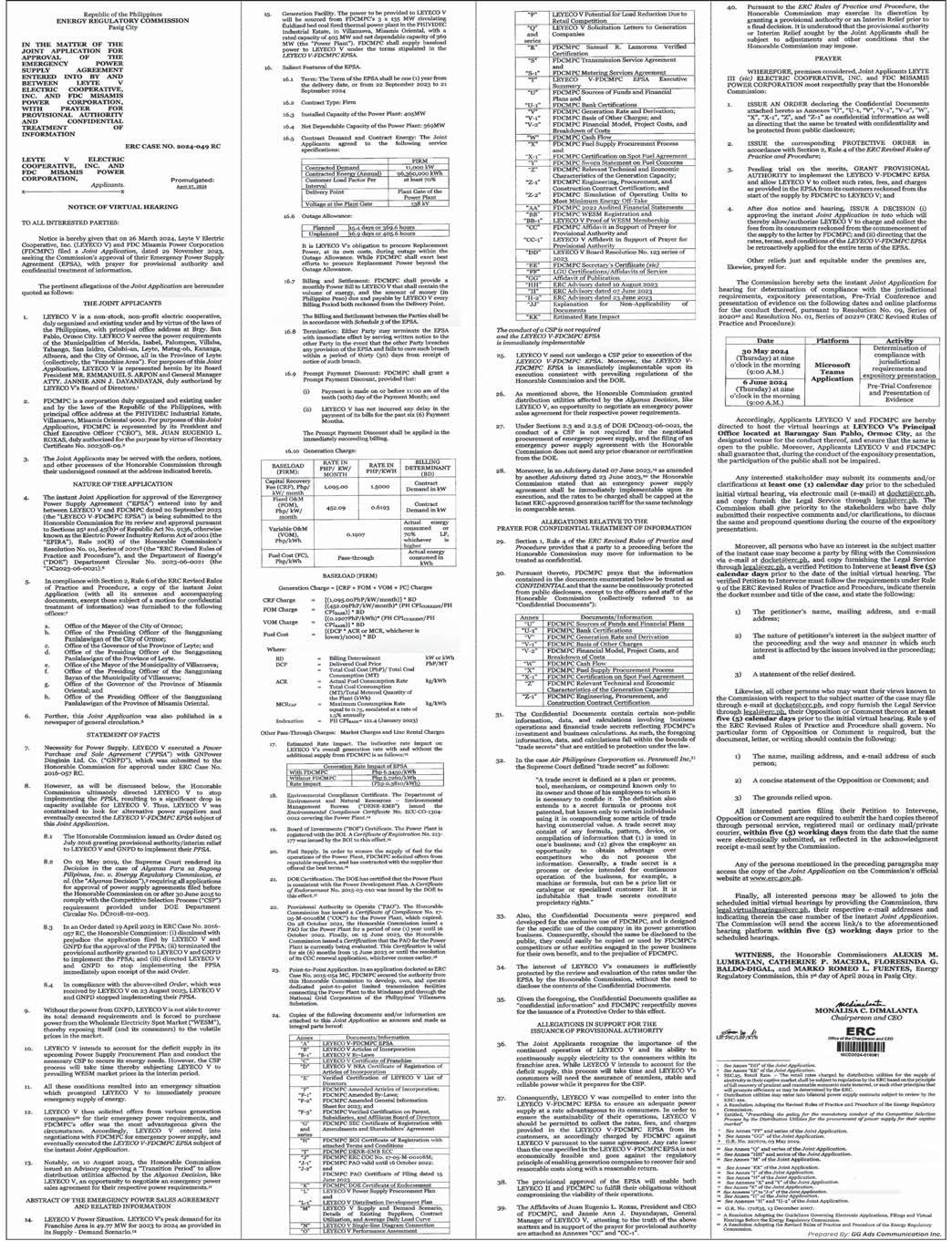
Friday, May 10, 2024 A17 www.businessmirror.com.ph

www.businessmirror.com.ph
• Editor: Angel R. Calso
Biden refuses to provide offensive weapons for Israel assault on Rafah
500-pound (225-kilogram) bombs, according to a senior US administration official who spoke on the condition of anonymity to discuss the sensitive matter. The focus of US concern was the larger explosives and how they could be used in a dense urban area.
“Civilians have been killed in Gaza as a consequence of those bombs and other ways in which they go after population centers,” Biden told CNN. “I made it clear that if they go into Rafah—they haven’t gone in Rafah yet—if they go into Rafah, I’m not supplying the weapons that have been used historically to deal with Rafah, to deal with the cities, that deal with that problem.”
“We’re not walking away from Israel’s security,” Biden continued. “We’re walking away from Israel’s ability to wage war in those areas.”
Defense Secretary Lloyd Austin earlier Wednesday confirmed the weapons delay, telling the Senate Appropriations Subcommittee on Defense that the US paused “one shipment of high payload munitions.”
“We’re going to continue to do what’s necessary to ensure that Israel has the means to defend itself,” Austin said. “But that said, we are currently reviewing some near-term security assistance shipments in the context of unfolding events in Rafah.”
It also comes as the Biden administration is due to deliver a first-of-its-kind formal verdict this week on whether the airstrikes on Gaza and restrictions on delivery of aid have violated international and US laws designed to spare civilians from the worst horrors of war.
A decision against Israel would further add to pressure on Biden to curb the flow of weapons and money to Israel’s military.

Biden signed off on the pause in an order conveyed last week to the Pentagon, according to US officials who were not authorized to comment on the matter.
The White House National Security Council sought to keep the decision out of the public eye for several days until it had a better understanding of the scope of Israel’s intensified military operations in Rafah and until Biden could deliver a long-planned speech on Tuesday to mark Holocaust Remembrance Day.
Biden’s administration in April began reviewing future transfers of military assistance as Netanyahu’s government appeared to move closer toward an invasion of Rafah, despite months of opposition from the White House. The official said the decision to pause the shipment was made last week and no final decision had been made yet on whether to proceed with the shipment at a later date.
US officials had declined for days to comment on the halted transfer, word of which came as Biden on Tuesday described US support for Israel as “ironclad, even when we disagree.”
Israel’s ambassador to the United Nations, Gilad Erdan, in an interview with Israeli Channel 12 TV news, said the decision to pause the shipment was “a very disappointing decision, even frustrating.” He suggested the move stemmed from political pressure on Biden from Congress, the US campus protests and the upcoming election.
The decision also drew a sharp rebuke from House Speaker Mike Johnson and Senate Republican Leader Mitch McConnell, who said they only learned about the military aid holdup from press reports, despite assurances from the Biden administration that no such pauses were in the works. The Republicans called on Biden in a letter to swiftly end the blockage, saying it “risks emboldening Israel’s enemies,” and to brief lawmakers on the nature of the policy reviews.
Biden has faced pressure from some on the left—and condemnation from the critics on the right who say Biden has moderated his support for an essential Mideast ally.
“If we stop weapons necessary to destroy the enemies of the state of Israel at a time of great peril, we will pay a price,” said Sen. Lindsey Graham, R-S.C., his voice rising in anger during an exchange with Austin. “This is obscene. It is absurd. Give Israel what they need to fight the war they can’t afford to lose.”
Independent Sen. Bernie Sanders of Vermont, a Biden ally, said in a statement the pause on big bombs must be a “first step.”
“Our leverage is clear,” Sanders said. “Over the years, the United States has provided tens of billions of dollars in military aid to Israel. We can no longer be complicit in Netanyahu’s horrific war against the Palestinian people.”
Austin, meanwhile, told lawmakers that “it’s about having the right kinds of weapons for the task at hand.”
“A small diameter bomb, which is a precision weapon, that’s very useful in a dense, built-up environment,” he said, “but maybe not so much a 2,000-pound bomb that could create a lot of collateral damage.” He said the US wants to see Israel do “more precise” operations.
Israeli troops on Tuesday seized control of Gaza’s vital Rafah border crossing in what the White House described as a limited operation that stopped short of the full-on Israeli invasion of the city that Biden has repeatedly warned against, most recently in a Monday call with Netanyahu.
Israel has ordered the evacuation of 100,000 Palestinians from the city. Israeli forces have also carried out what it describes as “targeted strikes” on the eastern part of Rafah and captured the Rafah crossing, a critical conduit for the flow of humanitarian aid along the Gaza-Egypt border.
Privately, concern has mounted inside the White House about what’s unfolding in Rafah, but publicly administration officials have stressed that they did not think the operations had defied Biden’s warnings against a widescale operation in the city.
The State Department is separately considering
Myanmar’s civil war: Resistance advances, civilian casualties soar with Army’s scorched-earth tactics
By David Rising The Associated Press
BANG K O K —Six months into an offensive against Myanmar ‘s military government, opposition forces have made massive gains, but civilian casualties are rising sharply as regime troops increasingly turn toward scorched-earth tactics in the Southeast Asian country’s bitter civil war.
There is pressure on all fronts from powerful militias drawn from Myanmar’s ethnic minority groups and newer resistance forces. Troops are retaliating with air, naval and artillery strikes on hospitals and other facilities where the opposition could be sheltered or aided.
“When the mass of people rise up against them, I think it terrifies them,” said Dave Eubank, a former US Special Forces soldier who founded the Free Burma Rangers, a humanitarian aid organization that has provided assistance to both combatants and civilians in Myanmar since the 1990s.
“They know that hospitals, churches, schools and monasteries are important places for human care, and gathering, and symbols—and they hammer them,” said Eubank. “That’s new.”
Military forces now control l ess than half the country, but are holding on tenaciously to much of central Myanmar including the capital, Naypyidaw—recently targeted by drone attacks— and largest city, Yangon, and is far better armed than the resistance forces, with support from Russia and China.
“People have been saying that the regime was on the brink of collapse since two weeks after the coup,” in February 2021, said Morgan Michaels, an analyst with the International Institute of Strategic Studies who runs its Myanmar Conflict Map project.
“On the other hand, obviously the regime is weaker than it’s ever been.... so there’s no doubt that it’s in serious, serious trouble,” he said.
Thet Swe, a spokesman for the military government, acknowledged an email from The Associated Press seeking comment but did not respond to questions.
As the fighting has moved into more populated areas, about 1 million people have been forced to flee their homes since the start of the offensive in October, contributing to the more than 3 million internally displaced people in the country of some 56 million, according to the U.N.’s humanitarian aid agency.
With the collapse of its health care system and food supplies dwindling, 18.6 million people are in need, up 1 million from a year ago, including 6 million children, the agency said. HOW
whether to approve the continued transfer of Joint Direct Attack Munition kits, which place precision guidance systems onto bombs, to Israel, but the review didn’t pertain to imminent shipments.
Itamar Yaar, former deputy head of Israel’s National Security Council said the US move is largely symbolic, but a sign of trouble and could become more of a problem if it is sustained.
“It’s not some kind of American embargo on American munitions support, but think its some kind of diplomatic message to Mr. Netanyahu that he needs to take into consideration American interests more than he has over the last few months,” he said. “At least for now it will not impact Israeli capability but it’s some kind of a signal, a ‘be careful.’”
The US dropped the 2,000-pound bomb sparingly in its long war against the Islamic State militant group. Israel, by contrast, has used the bomb frequently in the seven-month Gaza war. Experts say the use of the weapon, in part, has helped drive the enormous Palestinian casualty count that the Hamas-run health ministry puts at more than 34,000 dead, though it doesn’t distinguish between militants and civilians.
The US-Israel relationship has been close through both Democratic and Republican administrations. But there have been other moments of deep tension since Israel’s founding in which US leaders have threatened to hold up aid in an attempt to sway Israeli leadership.
President Dwight Eisenhower pressured Israel with the threat of sanctions into withdrawing from the Sinai in 1957 amid the Suez Crisis. Ronald Reagan delayed the delivery of F16 fighter jets to Israel at a time of escalating violence in the Middle East. President George H.W. Bush held up $ 10 billion in loan guarantees to force the cessation of Israeli settlement activity in the occupied territories.
The Associated Press writers Josef Federman in Jerusalem and Lolita C. Baldor and Matthew Lee contributed to this report.
their own interests.
“This is not a black and white situation. This is not the regime reconquering and reconsolidating control,” Michaels said of the fighting in the area.
“This is the regime hanging on, keeping a foothold by the razor’s edge.”
Opposition in Myanmar, also known as Burma, had been growing since the army seized power from the elected government of Aung San Suu Kyi in February 2021, but it gained new momentum in October when major militias known collectively as the Three Brotherhood Alliance launched a joint offensive.
Together, the Arakan Army, the Myanmar National Democratic Alliance Army and the Ta’ang National Liberation Army—among the most powerful militias formed by Myanmar’s ethnic minorities—made quick advances.
As they captured huge swaths of territory largely in the north and northeast, including economically important border crossings with China and several major military bases, other ethnic armed groups sensed momentum and joined the fighting.
At the same time, People’s Defense Forces— armed resistance groups that support the shadow National Unity Government, which views itself as Myanmar’s legitimate administration—have been increasing in number and launching their own attacks, often supported and trained by the ethnic armed militias.
Both sides claim they have inflicted heavy tolls.
And the military government under Senior Gen. Min Aung Hlaing has acknowledged it is under pressure, recently reintroducing conscription to increase its ranks.
That has pushed some young people into the resistance. Many more have fled to rural areas or neighboring countries to avoid fighting.
With the violence across its border, China helped broker a cease-fire in Myanmar’s north in January with the Three Brotherhood Alliance. But the alliance’s Arakan Army continues to fight in its home Rakhine state in the west and has made significant gains, while PDFs and other ethnic armed groups continue their own attacks elsewhere.
THE LATEST FIGHTING
The fiercest fighting in recent weeks has been in the southeast, where the main ethnic K aren fighting force, the K aren National Liberation Army, claimed in early April to have seized all the military bases in Myawaddy, the main town on the border with Thailand in K ayin state.
One army battalion clung to a position beside one of Myawaddy’s two bridges, assisted by the Border Guard Force, a rival K aren group that had been in charge of border area security for years, conducting lucrative business by providing protection to area casino resorts with links to organized crime.
The force, which declared itself neutral in January, now controls the town with military government administrators still in place, highlighting how some militia groups still prioritize
Meanwhile, the military has pushed K NLA and People’s Defense Forces out of K awkareik, a strategically important town along the road that connects Myawaddy with the rest of the country.
Thousands of civilians have fled Myawaddy and K awkareik. But many civilians haven’t managed to escape.
At least 1,015 civilian deaths have been documented from Nov. 1 through May 1, according to the Assistance Association for Political Prisoners, a watchdog group that tracks political arrests, attacks and casualties. It says 4,962 civilians have been killed overall since the military took power three years ago.
The watchdog blamed the deaths on the military’s increasing use of scorched-earth tactics and fighting moving into more populated areas.
“The military has increasingly lost areas of control in recent months, which has only increased their use of this strategy, responding with airstrikes, shelling and so on in civilian areas,” the AAPP said in an email.
The group added that the number of civilian deaths in the recent months of fighting is likely double what it reported, if not more, but that it can’t document the numbers due to the intensification of the conflict.
K yaw Zaw, a spokesperson for the shadow National Unity Government, said the military had destroyed 343 hospitals and clinics since it took power, and that those attacks had accelerated in the last two months, though he didn’t have specific details.
Eubank, with the Free Burma Rangers, said he and his teams operating near the front lines have witnessed the military, known as the Tatmadaw, fighting with a “ speed and force and a viciousness that we’ve never seen.”
But in fighting a common enemy, the resistance is showing growing unity, he said.
“The Burma army is still stronger than any of these resistance groups, and if they want to bring a division or two to bear, they will win the battle, but they’re not stronger than everybody else together,” he said.
WHAT COMES NEXT
Whether that unity will continue if the regime falls, and if the disparate resistance forces can agree on a common path ahead for Myanmar, is an open question, Michaels said.
“On one hand, Myanmar is not Syria—there is common cause in fighting the regime,” Michaels said. “But at the same time, as the regime has receded from some areas, there are at least indicators of potential future conflicts between groups.”
Friday, May 10, 2024 A19 The World
Continued from A17
IT BEGAN
US Navy defies China, sails destroyer through Taiwan Strait amid tensions
By Christopher Bodeen The Associated Press
TAIPEI, Taiwan—China’s military criticized a US destroyer’s passage through the Taiwan Strait, which occurred less than two weeks before the island’s new president takes office and while Washington and Beijing are making uneven efforts to restore regular military exchanges.
Navy Senior Capt. Li Xi, spokesman for the Eastern Theater Command, accused the US of having “publicly hyped” the passage of
the USS Halsey on Wednesday. In a statement, Li said the command, which oversees operations around the strait, “organized naval and air forces to monitor” the ship’s transit and handle matters “in accordance with laws and regulations.”
The Navy’s 7th Fleet said the Halsey “conducted a routine Taiwan Strait transit on May 8 through waters where high-seas freedoms of navigation and overflight apply in accordance with international law.”
The Arleigh Burke-class guidedmissile destroyer transited through a corridor in the Strait that is “be-




yond the territorial sea” of any coastal state, the fleet’s statement said. “Halsey’s transit through the Taiwan Strait demonstrates the United States’ commitment to upholding freedom of navigation for all nations as a principle,” it said. “No member of the international community should be intimidated or coerced into giving up their rights and freedoms. The United States military flies, sails, and operates anywhere international law allows.”
China’s accusation that the transit was “publicly hyped” has been standard practice when Beijing sees

the announcements as a means of pushing back against China’s illdefined claims to some degree of control of who can and cannot pass freely through the strait. There was no indication the US Navy had operated any differently in the latest case, or that the Chinese response was any more vociferous.
The last such passage was April 17, a day after US and Chinese defense chiefs held their first talks since November 2022 in an effort to reduce regional tensions. Militaryto-military contact stalled in August 2022, when Beijing suspended all such communication after thenHouse Speaker Nancy Pelosi visited Taiwan. China responded by firing missiles over Taiwan and staging a surge in military maneuvers, including what appeared to be a rehearsal of a naval and aerial blockade of the island.
The critical strait is 160 kilometers (100 mile) wide and divides China from Taiwan, the self-governing island democracy where President-elect William Lai Chingte will be inaugurated on May 20. Lai’s Democratic Progressive Party favors Taiwan’s de facto independent status that maintains strong unofficial relations with the US and other major nations.
Taiwan’s military heightens its alert status around sensitive dates, such as this January’s presidential and legislative elections, wary that China might use its vastly more powerful military to attempt to intimidate voters and sway public opinion in favor of Beijing’s insistence that unification between the sides is inevitable.
The sides divided amid civil war in 1949, and as recently as 1996, China fired missiles just north and south of the island and held military exercises in an ultimately counterproductive bid to deter voters from backing candidates they disfavored. Since then, China has largely kept a low profile around elections, favoring instead to curry favor with business groups and treat unification-oriented politicians and grassroots officials to allexpenses paid visits to the mainland.
Although the heavily transited strait is international waters and vital to global trade, China considers the passage of warships from the US, Britain and other nations through the Taiwan Strait as a challenge to its sovereignty.
China sends navy ships and warplanes into the strait and other areas around the island almost daily to wear down Taiwan’s defenses and seek to intimidate its 23 million people, who firmly back their de facto independence.
Taiwan’s Defense Ministry said 23 Chinese military aircraft and eight naval ships were detected operating around Taiwan in the 24 hours leading up to 6 a.m. Thursday. Eight of the planes crossed the median line in the strait and entered Taiwan’s air defense identification zone, prompting Taiwan to scramble jets and put coastal missile batteries and naval craft on alert.
In addition to sailing through the Taiwan Strait, the US Navy conducts what it calls freedom of navigation operations, or FONOPS, in which it sails and flies in close proximity to Chinese-held features in the South China Sea, many of them humanmade islands that have been ‘militarized’ over the years with air strips, radar stations and other capabilities.
China claims the South China Sea that is a principal maritime highway for global trade virtually in its entirety and reacts furiously to such moves, accusing the US of destabilizing the region. It often shadows the US vessels and planes with its own assets, demanding they leave the area immediately. The US claims it has the right under international law to sail in the area and a UN-backed arbitration panel has tossed out China’s claims, a ruling Beijing ignored.
Friday, May 10, 2024 www.businessmirror.com.ph A20 BusinessMirror The World
COMMUNICATION
CLASS ISMAEL MARTINEZ/US
IN this photo provided by the US Navy, the Arleigh Burke-class guidedmissile destroyer USS Halsey (DDG 97) conducts routine underway operations while transiting through the Taiwan Strait on Wednesday, May 8, 2024. MASS
SPECIALIST 3RD
NAVY VIA AP
www.businessmirror.com.ph
AstraZeneca pulls its Covid-19 vaccine from European market

LONDON—The pharma giant AstraZeneca has requested that the European authorization for its Covid-19 vaccine be pulled, according to the EU medicines regulator.
In an update on the European Medicines Agency’s website Wednesday, the regulator said that the approval for AstraZeneca’s Vaxzevria had been withdrawn “at the request of the marketing authorization holder.”
AstraZeneca’s Covid-19 vaccine
was first given the nod by the EMA in January 2021. Within weeks, however, concerns grew about the vaccine’s safety, when dozens of countries suspended the vaccine’s use after unusual but rare blood clots were detected in a small number of immunized people. The EU regulator concluded AstraZeneca’s shot didn’t raise the overall risk of clots, but doubts remained.
Partial results from its first major trial—which Britain used
to authorize the vaccine—were clouded by a manufacturing mistake that researchers didn’t immediately acknowledge. Insufficient data about how well the vaccine protected older people led some countries to initially restrict its use to younger populations before reversing course.
Billions of doses of the AstraZeneca vaccine were distributed to poorer countries through a UN-coordinated program, as it was cheaper and easier to produce and distribute. But studies later suggested that the pricier messenger RNA vaccines made by Pfizer-BioNTech and Moderna provided better protection against Covid-19 and its many variants, and most countries switched to those shots.
The UK’s national coronavirus immunization prog ram in 2021 heavily relied on AstraZeneca’s vaccine, which was largely developed by scientists at Oxford University with significant financial government support. But even Britain later resorted to buying the mRNA vaccines for its Covid booster vaccination programs and the AstraZeneca vaccine is now rarely used globally. AP
Vatican and Rome enter final dash to 2025 Jubilee with papal bull and around-the-clock construction
 VBy Nicole Winfield
The Associated Press
VBy Nicole Winfield
The Associated Press
ATICAN CITY—The Vatican crosses a key milestone Thursday in the runup to its 2025 Jubilee with the promulgation of the official decree establishing the Holy Year. It’s a once-every-quartercentury event that is expected to bring some 32 million pilgrims to Rome and has already brought months of headaches to Romans. Pope Francis will preside over a ceremony in St. Peter’s Basilica for the formal reading of the papal bull, or official edict, that lays out the spiritual theme of hope for the year. The event also kicks off the final seven-month dash of preparations and public works projects to be completed by Dec. 24, when Francis opens the basilica’s Holy Door and formally inaugurates the Jubilee.
For the Vatican, the Holy Year is a centuries-old tradition of pilgrims visiting the tombs of Saints Peter and Paul, and receiving indulgences for the forgiveness of their sins in the process. For the city of Rome, it’s a chance to take advantage of some 4 billion euros in public funds to carry out long-delayed projects to lift the city out of years of decay and neglect.
“In a beautiful city, you live better,” said the Vatican’s Ju-
bilee point-person, Archbishop Renato Fisichella, who himself is not indifferent to the added bonus of Jubilee funding.
“Rome will become an even more beautiful city, because it will be ever more at the service of its people, pilgrims and tourists who will come.”
Pope Boniface VIII declared the first Holy Year in 1300, and now they are held every 25 years.
While Francis called an interim one devoted to mercy in 2015, the 2025 edition is the first big one since St. John Paul II’s 2000 Jubilee, when he ushered the Catholic Church into the third millennium.
As occurred in the runup to 2000, pre-Jubilee public works projects have overwhelmed Rome, with flood-lit construction sites operating around the clock, entire swaths of central boulevards rerouted and traffic snarling the city’s already clogged streets.
The Tiber riverfront for much of the city is now off limits as work crews create new parks. Piazzas are being repaved, bike paths charted and 5G cells built, all aiming to bring the Eternal City up to par with other European capitals and take advantage of the 1.3 billion euros in special Jubilee funding and some 3 billion euros more in other public and EU
funds that are available.
And that’s not even counting the longer-term, separate project to extend Rome’s Metro C subway line to Rome’s historic center, which has encountered years of delays thanks to the archaeological excavations of ancient Roman ruins that must be completed first.
For the next four years at least, central Piazza Venezia and its Imperial Forum-flanked boulevard to the Colosseum are scheduled to be congested and blighted by giant, 14-meter (yard) high green silos that are needed for the subway drilling operation.
Rome Mayor Roberto Gualtieri said recently he was satisfied with the pace of the Jubilee works so far, noting that they got off to a months-delayed start due to the 2022 collapse of Premier Mario Dragi’s government.
But Gualtieri promised they would be completed on time. And in a nod to Romans and tourists who have suffered from the traffic chaos and acute shortage of taxis already, he promised that an extra 1,000 taxi licenses had been approved and would be in use by December.
Yet as of late last month, only two of the 231 city projects had been completed; 57 were under way and another 44 were expected to be started by the end of May, Gualtieri told reporters. Another 18 are up for bids, seven have been assigned, 90 are planned. Thirteen have been canceled.
“We have recovered a lot from the initial delay,” Gualtieri told the foreign press association, adding that he expected the “essential” projects to be completed on time while others were always planned to take longer than the Jubilee but were lumped into the overall project.
The most significant project, and one that has caused the greatest traffic disruption to date, is a new Vatican-area piazza and pedestrian zone connecting Castel St. Angelo with the Via della

Friday, May 10, 2024 A21 The World
MEDICAL staff prepares an AstraZeneca coronavirus vaccine during preparations at the vaccine center in Ebersberg near Munich, Germany on March 22, 2021. The pharma giant AstraZeneca has requested that its European authorization for its Covid vaccine be pulled, according to the EU medicines regulator on Wednesday, May 8, 2024. AP/MATTHIAS SCHRADER
Conciliazione boulevard that leads to St. Peter’s Square.
PILGRIMS crowd St. Peter’s Square at the Vatican on May 30, 1998, on Pentecost Day. The Vatican crosses a key milestone on Thursday, May 9, 2024, in the run-up to its 2025 Jubilee with the promulgation of the official decree establishing the Holy Year: a once-everyquarter-century event that is expected to bring some 32 million pilgrims to Rome and has already brought months of headaches to Romans. AP/ANDREW MEDICHINI
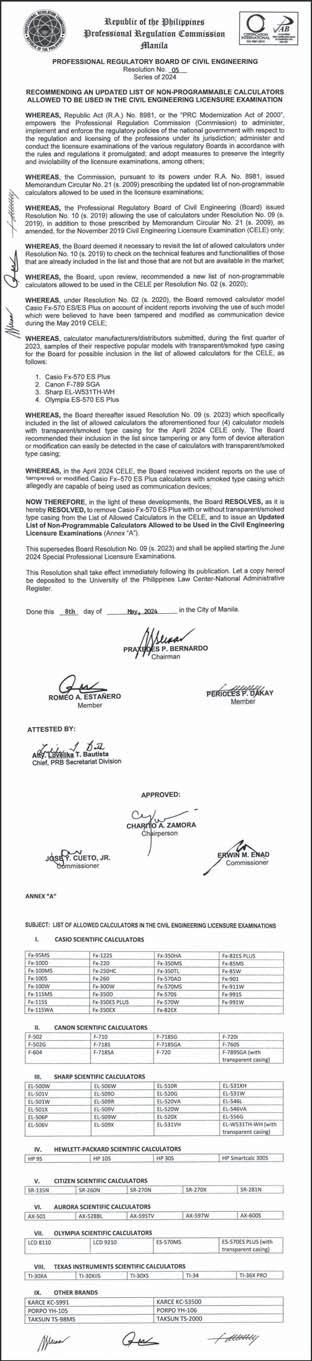
Russia’s Victory Day: Celebration of Soviet triumph and a justification for Ukraine war
MOSCOW—Russia is wrapping itself in patriotic pageantry for Victory Day, a celebration of its defeat of Nazi Germany in World War II that President Vladimir Putin has turned into a pillar of his nearly quarter-century in power and a justification of his move into Ukraine.
Even though few veterans of what Russia calls the Great Patriotic War are still alive 79 years after Berlin fell to the Red Army, the victory over Nazi Germany remains the most important and widely revered symbol of the country’s prowess and a key element of national identity.
Thursday’s festivities across Russia, led by Putin who this week began his fifth term in office, recall that wartime sacrifice in what has become its most important secular holiday.
The Soviet Union lost about 27 million people in the war, an estimate that many historians consider conservative, scarring virtually every family.
Nazi troops overran much of the western Soviet Union when they invaded in June 1941, before being driven back all the way to Berlin, where the USSR’s hammer and sickle flag was raised above the ruined capital.
The US, UK, France and other allies mark the end of the war in Europe on May 8.
The immense suffering and sacrifice in cities like Stalingrad, Kursk and Putin’s native Leningrad—now St. Petersburg—still serve as a powerful symbol of the country’s ability to prevail
against seemingly overwhelming challenges.
Since coming to power on the last day of 1999, Putin has made May 9 an important part of his political agenda, featuring displays of military might. Columns of tanks and missiles roll across Red Square and squadrons of fighter jets roar overhead as medal-bedecked veterans join him to review the parade. Many wear the black-and-orange St. George’s ribbon that is traditionally associated with Victory Day.
Putin, 71, talks frequently about his family history, sharing memories of his father, who fought on the front during the Nazi siege of the city and was badly wounded.
As Putin tells it, his father, also named Vladimir, came home from a military hospital during the war to see workers trying to take away his wife, Maria, who had been declared dead of starvation. But the elder Putin did not believe she had died—saying she had only lost consciousness, weak with hunger. Their first child, Viktor, died during the siege when he was 3, one of more than 1 million Leningrad residents who died in the 872day blockade, most of them from starvation.
For several years, Putin carried

a photo of his father in Victory Day marches—as did others honoring relatives who were war veterans— in what was called the “Immortal Regiment.”
Those demonstrations were suspended during the coronavirus pandemic and then again amid security concerns after the start of the fighting in Ukraine.
As part of his efforts to burnish the Soviet legacy and trample on any attempts to question it, Russia has introduced laws that criminalized the “rehabilitation of Nazism” that include punishing the “desecration” of memorials or challenging Kremlin versions of World War II history.
When he sent troops into Ukraine on Feb. 24, 2022, Putin evoked World War II in seeking to justify his actions that Kyiv and its Western allies denounced as an unprovoked war of aggression. Putin cited the “denazification” of Ukraine as a main goal of Moscow, falsely describing the government of Ukrainian President Volodymyr Zelenskyy, who
Britain to expel Russia’s defense attaché in response to ‘reckless and dangerous activities’ across Europe
By Brian Melley & Emma Burrows The Associated Press
LONDON—Britain will expel Russia’s defense attaché over spying allegations as part of several measures the government announced Wednesday to target Moscow’s intelligence gathering operations in the UK.
Home Secretary James Cleverly said the measures were aimed at what he called the “reckless and dangerous activities of the Russian government across Europe.”
The latest round of measures will boot the attaché, Maxim Elovik, a Russian colonel who the government termed an “undeclared military intelligence officer.” It will also
rescind the diplomatic status of several Russian-owned properties because they are believed to have been used for intelligence purposes, and impose new restrictions on Russian diplomatic visas and visits.
“In the coming days we should expect accusations of Russophobia, conspiracy theories and hysteria from the Russian government,” Cleverly said in Parliament. “This is not new and the British people and the British government will not fall for it, and will not be taken for fools by Putin’s bots, trolls and lackeys.”
Maria Zakharova, a spokesperson for Russia’s foreign ministry, told The Associated Press that “Russia will respond in kind.”
The UK has had an uneasy re-
lationship with Russia for years, accusing its agents of targeted killings and espionage, including cyberattacks aimed at British parliamentarians and leaking and amplifying sensitive information to serve Russian interests. Following Russia’s invasion of Ukraine, Britain has also sanctioned hundreds of wealthy Russians and moved to clamp down on money laundering through London’s property and financial markets.
The government said Wednesday’s actions followed criminal cases in London alleging espionage and sabotage by people acting on behalf of Russia.
It also cited allegations that the Russian government planned to sabotage military aid for Ukraine
Yemen’s Houthi rebels claim 2 attacks in Gulf of Aden, another unreported in Indian Ocean
By Jon Gambrell The Associated Press
J
ERUSALEM—Yemen’s Houthi rebels on Thursday claimed two missile attacks in the Gulf of Aden on two Panama-flagged container ships that caused no damage, while also saying they targeted a ship in the Indian Ocean in a previously unreported assault.
The claims by Brig. Gen. Yahya Saree come as the tempo of the rebel attacks have waned in recent weeks as they’ve been targeted by
repeated airstrikes launched by a US-led coalition warship in waterways crucial to international trade. The Houthis insist their assaults will continue as long as Israel’s war on Hamas in the Gaza Strip goes on.
Saree in a prerecorded statement claimed attacks on the MSC Diego and MSC Gina. The Joint Maritime Information Center, a US-led coalition of nations operating in the Mideast, said those two missile attacks happened early Tuesday. “Neither were hit and all crew
on board are safe,” the center said. “The vessels were last reported proceeding to next port of call.”
The center added that the vessels were “likely targeted due to perceived Israeli affiliation.”
Both vessels were operating for Geneva-based Mediterranean Shipping Co., which did not immediately respond to a request for comment.
Saree did not say why it took the rebels two day to claim the attacks. He also claimed the Houthis targeted the MSC Vittoria, another container ship, in the Indian
is Jewish and lost relatives in the Holocaust, as neo-Nazis.
Putin tried to cast Ukraine’s veneration of some of its nationalist leaders who cooperated with the Nazis in World War II as a sign of Kyiv’s purported Nazi sympathies. He regularly made unfounded references to Ukrainian nationalist figures such as Stepan Bandera, who was killed by a Soviet spy in Munich in 1959, as an underlying justification for the Russian military action in Ukraine.
Many observers see Putin’s focus on World War II as part of his efforts to revive the USSR’s clout and prestige and his reliance on Soviet practices.
“It’s the continuous self-identification with the USSR as the victor of Nazism and the lack of any other strong legitimacy that forced the Kremlin to declare ‘denazification’ as the goal of the war,” Nikolay Epplee said in a commentary for Carnegie Russia Eurasia Center.
The Russian leadership, he said, has “locked itself up in a worldview limited by the Soviet past.” AP
in Germany and Poland and carried out spying in Bulgaria and Italy, along with cyber and disinformation activities, air space violations and jamming GPS signals to hamper civilian air traffic.
“Since the illegal invasion of Ukraine, Russia’s attempts to undermine UK and European security have become increasingly brazen,” Foreign Secretary David Cameron said. “These measures are an unequivocal message to the Russian state—their actions will not go unanswered.”
Elovik has been based in Britain since at least 2020. Russian state news agency Tass said he was summoned to the UK’s Defense Ministry the day Russia invaded Ukraine in February 2022.
He has subsequently been pictured laying flowers to Soviet soldiers who died during the Second World War in both London and Manchester.
Ocean. An attack on that vessel, however, has not been acknowledged by any authorities.
The Houthis say their attacks on shipping in the Red Sea and Gulf of Aden are aimed at pressuring Israel to end its war against Hamas in Gaza, which has killed more than 34,000 Palestinians there. The war began after Hamas-led militants attacked Israel on Oct. 7, killing 1,200 people and taking some 250 others hostage.
The Houthis have launched more than 50 attacks on shipping, seized one vessel and sunk another since November, according to the US Maritime Administration. Shipping through the Red Sea and Gulf of Aden has declined because of the threat.
Friday, May 10, 2024 www.businessmirror.com.ph A22 BusinessMirror The World
RUSSIAN armored military vehicles roll during the Victory Day military parade dress rehearsal at the Red Square in Moscow, Russia on Sunday, May 5, 2024. The parade will take place at Moscow’s Red Square on May 9 to celebrate 79 years since the victory in WWII. AP/ALEXANDER ZEMLIANICHENKO
ERC, through OSG, asks SC to reverse CA ruling
By Lenie Lectura @llectura
THE Energy Regula-
tory Commission (ERC), through the Office of the Solicitor General (OSG), wants the Supreme Court to reverse the decision of the Court of Appeals (CA), which allowed the termination of the power supply agreements (PSAs) between the Manila Electric Company (Meralco) and units of San Miguel Global Power.
“Yes, OSG filed the petition for us with the SC. There was a deadline so we complied with it,” ERC chairperson
Monalisa Dimalanta said via Viber.
It can be recalled that the Thirteenth (13th) Division of CA granted the petitions filed South Premiere Power Corporation (SPPC) and San
Miguel Energy Corporation (SMEC) to annul the orders issued by the ERC on September 29, 2022, denying the power companies’ plea for electricity price increase.
SPPC and SMEC and Meralco sought the price adjustments to serve as temporary relief covering a combined P5.2 billion in losses incurred from January to May 2022 due to the unprecedented spike in fuel prices.
ERC’s appeal was welcomed by the Power for People Coalition (P4P). “We welcome the move of the ERC and its Chair, Monalisa Dimalanta, to uphold its duty of protecting consumers,” said P4P through convenor Gerry Arances. “We hope the Supreme Court will see reason and rule that SMC must abide by its contract and cannot raise prices
on electricity,” he added.
Arances also said the PSAs protected consumers in the Meralco franchise area from the spike in electricity prices which, he said, plagued customers of other distribution utilities in the country at that time. “In siding with SMC, the CA committed a grave disservice to consumers, exposing them to higher electricity prices even when protected by a contract,” said Arances.
SMGP: Due process won
HOWEVER, San Miguel Global Power said the CA decision upholds the constitutional mandate of due process that guarantees the right to be treated fairly and effectively by quasi-judicial bodies like the ERC, and in the process, assure a fair and balanced regulatory environment
GSIS teams up with PGEA
to
THE Government Service Insurance System (GSIS) announced last Thursday it is leveling up its engagement with the Philippine Government Employees Association (PGEA) in a move to further improve the collaboration of both institutions for the benefit of government employees nationwide.
that equally protects the rights and interests of all stakeholders involved.
The power firm, for its part, assured the public that it will continue to find ways to help ease the impact of the current power crisis, while ensuring it can sustain operations and meet the country’s evolving power needs.
“We assure the public that we will continue to find ways to help ease the impact of the current power crisis we are facing along with other nations globally, while ensuring we sustain operations and meet our country’s evolving power needs.
“We look to forge even stronger partnerships with government, consumers, and other key stakeholders to help shape a more resilient and sustainable energy landscape for all,” said SMC.
benefit govt workers
Chinese visa seekers face tighter PHL requirements
By Malou Talosig-Bartolome @maloutalosig
ANUMBER of Chinese nationals were caught submitting fake Chinese documents during visa applications at the Philippine Embassy in Beijing or consulates in other parts of China.
“Our major challenge is the submission of fraudulent, fake documents, particularly from the China side, especially IDs, bank statements and certificates of employment. Then, fixers brazenly advertise such things on WeChat,” Foreign Affairs Undersecretary Jesus “Gary” Domingo said in a press conference.
Aside from this, the DFA has also very limited local hires in the Embassy and consulates in China who can read and detect forged Chinese documents.
Because of this, the Department of Foreign Affairs will soon require Chinese nationals applying for visa to submit social insurance ID or certification issued by Chinese government.
This is the practice being done, he said, by other embassies in China.
He added that the DFA will continue to require proof of the financial capacity with employment certificates and bank statements.
to lure more Chinese tourists to the Philippines. But this was suspended three months later due to “technical issues.”
The DFA and the Department of Information and Technology are still working on the technical issues to launch the e-Visa for China, including the payment scheme since China uses WeChat Pay or AliPay.
In the meantime, the DFA will require Chinese visa applicants to go the nearest Embassy or consulate for personal appearance, as well as present roundtrip ticket with proof of payment and confirmed hotel bookings.
Meanwhile, Domingo said there are Chinese tourists who can enter the Philippines without the need to apply for Philippine visa.
“If Chinese tourists have valid visa issued by any AJACS-America, Japan, Australian, Canadian, Schengen—they can enter the Philippines visa-free and stay up to seven days,” he said.
Group tour DOMINGO said Chinese tourists have a better chance of getting Philippine visas if they join group tours.
“Group tours must come in as a group and leave as a group,” he stressed.
The GSIS and PGEA recently opened discussions in its partnership as it announced the establishment of a Joint GSISPGEA Education and Speakers Bureau.
The PGEA is an organization of govern-
“We are committed to improve our services to government workers. This collaboration with the PGEA plays a crucial role in keeping workers aligned with the latest developments and services of the GSIS throughout the bureaucracy. PGEA provides us very good feedback,” GSIS President and General Manager Jose Arnulfo A. Veloso was quoted in a statement as saying.
ment employees’ unions, implementing initiatives geared toward empowering government employees. It has established collaborative relationships with both local and international labor organizations, non-governmental organizations, the private sector and the government sector to empower its members and civil servants.
The institution supports and promotes optimum working conditions, fair employment practices and a firm commitment to defending workers’ rights.
Veloso said the GSIS is focused on improving its support to the Botika ng Bayan, which has been delivering a wide range of generic medications, including essential vitamins, to the general public.
“We would like to quickly build our collaboration with the PGEA in this area. We want to make medicine more accessible and affordable for government employees and their families,” the GSIS chief added.
“We’ll be more vigilant in scrutinizing the bank statements and accounts and imposing more stricter minimum requirements and level of bank accounts,” Domingo said.
Chinese tourists who were invited by someone from the Philippines will also be required to submit notarized invitations or affidavits or support from their Philippine host or guarantor.
Last August 2023, the DFA launched the e-Visa for Chinese tourists in a bid
He said Chinese tourists on tour groups no longer need to personally apply at the Embassy or consulate. Instead, the tour guide can apply on their behalf.
“We deeply appreciate the efforts of our travel agencies, tour operators and travel days in facilitating inbound tourism. However, we have to be more careful in scrutinizing and updating the accreditation of our travel and tour partners in both China and the Philippines,” he said, adding that they might need to revisit their previous arrangements with travel agencies “to better reflect present realities.”

News www.businessmirror.com.ph Friday, May 10, 2024 A23 BusinessMirror
The devastating impact of El Niño on poor families
THE latest labor force statistics released by the Philippine Statistics Authority (PSA) paint a grim picture of the impact of El Niño on the country’s agriculture and fisheries sector. Over a million jobs have been lost in March 2024, with the sector posting the largest decline in employment. This is a stark reminder of the vulnerability of our economy to natural disasters and climate change. (Read the BusinessMirror story: “Dry spell causes agriculture, fisheries 1 million job loss,” May 9, 2024). T he effects of El N
ion, the number of Filipino families experiencing involuntar y hunger has increased to 14.2 percent in March 2024, while 46 percent of families rate themselves as poor Unfortunately, the gover nment’s response to this crisis has been inadequate. Instead of taking concrete steps to address the root causes of poverty and hunger, policymakers seem more focused on downplay ing
the severity of the situation. For example, the gover nment has chosen to focus on underemployment, which, while a pressing issue, is only a symptom of a larger problem.
T he gover nment’s inability to adapt to changing climate conditions is a major concer n. As economist Leonardo Lanzona pointed out, policymakers were aware of the El Niño phenomenon as early as last year, but failed to take necessar y measures to mitigate its impact. T his “ institutional inflexibility” w ill only exacerbate the problem in the coming months, particularly w ith the onset of La Niña.
It is imperative that the government takes immediate action to address
the crisis in the agriculture and fisheries sector T his includes prov iding support to far mers and fisher men who have lost their livelihoods, as well as investing in programs that promote sustainable agriculture and fisheries practices.
Further more, it would do well for the gover nment to prioritize pov-
erty reduction efforts, including increasing the minimum wage to a
liv ing wage, implementing meaningful social protection programs, and investing in education and skills training. T he passage of bills such as the Apprenticeship Bill, Lifelong Lear ning Bill, and the Enter prise Productiv ity Act can also help to create a more agile and adaptive workforce.
W hile some argue that the impact of El Niño on unemployment is overstated, the undeniable truth is that climate change is posing a significant threat to the livelihoods of millions of Filipinos. T he gover nment’s focus on attracting foreign investment and promoting digital connectiv ity, while important for long-ter m economic growth, fails to address the immediate needs of those suffering the consequences of El Niño. Ignoring the plight of millions of Filipinos struggling w ith hunger and poverty is not an option.
T he El Niño crisis is a wake-up call for our policymakers to take a more proactive approach to addressing poverty and hunger We cannot afford to ignore the harsh reality of millions of poor and v ulnerable Filipinos. It is in times of crisis that true leadership and compassion shine through and we call upon our policymakers to rise to the occasion and prov ide the answers and solutions that these families desperately need.
Now is the time to take concrete action to ensure that no Filipino fam-
ily is left behind.
BusinessMirror
Antonio L. Cabangon Chua Founder

Supporting the growth of the creatives sector


TBETTER DAYS
HE Pulitzer Prizes are considered among the most prestigious, if not the most prestigious awards for the fields of journalism, books, drama and music. This year we saw three Filipinas who were among the finalists of the Pulitzer for journalism: New York Times contributor Hannah Reyes Morales, for feature photography; and The Washington Post’s Ren Galeno and Nicole Dungca, for illustrated reporting and commentary. We congratulate these brilliant journalists for their accomplishments that have brought honor, not only to their respective news organizations, but also to the Philippines as a whole.
A product of t he Universi
t he Phi l ippines, Morales g radu ated w it h a bac helor’s deg ree in speec h communicat ion, Cum Laude. T he Pu l itze r recogn i zed Mor ales for her creat ive series of photog raphs doc u ment i ng a “yout hqu ake” occ urring in Af rica where, by 2050, t he cont inent w i ll account for one qu a r ter of t he world’s popu lat ion and one-t hird of its young people.
The
paradox of plenty and remittances
by



AEAGLE WATCH
CLASSIC definition of economics that is attributed to British economist Lionel Robbins goes thus: “Economics is the study of the use of scarce resources that have alternative uses.” On the one hand, there is scarcity, which means that what everybody wants always adds up to more than what there is. On the other hand, to address scarcity, there is productivity, which deals with how land, labor, capital, and other resources are used to create goods and services.
The study cited the high number of college-educated OFWs across all levels, even in service jobs, compared to the lower educational attainment of their domestic counterparts. It suggested a potential brain drain hindering Philippine workforce development. Many skilled workers with college degrees have opted to work abroad to get better-paying jobs, even in less-specialized fields.
ries far less endowed. Indeed, one key lesson in economics is that an abundance of resources does not automatically guarantee an abundance of goods and ser v ices. W hat is really important is how well a countr y uses whatever g ifts that it has. Now, perhaps, aside f rom nat ural resources, t he Phi l ippines runs t he risk of squ andering its ot her g ifts, most notably t he rem ittances f
in 2023, higher by 2.9 percent from the $32.5 billion in 2022. T he g rowth in cash remittances f rom the United States, Saudi A rabia, and United A rab Emirates contributed mainly to the increase in remittances in 2023 T he United
tor y of the countr y, we have continuously strived to promote its growth and development. For instance, we have been filing our proposal for an A rtists Incentives Act in the past two Congresses. For the c
ve consequences to a g roup of Fi l ipinos ex hibited at t he 1904 World’s Fa ir in St. Louis, where some of t hem d ied. In the broadest sense, these Pulitzer Prize finalists, while affiliated w ith prominent news organizations, could be considered as being part of the creative sector T he United Nations Conference on Trade and Development (UNCTAD) includes advertising, architecture, arts and crafts, design, fashion, film, v ideo, photog r aphy, mu s ic, pe r for m i ng arts, publishing, research & development, software, computer games, electronic publishing, and TV/radio in the creative industries. T he ver y nature of creatives makes it hard to put them all inside a box. Just like UNCTAD, I u nderstand t h at t he concept of the creative economy is constantly expanding and evolv ing. T his is what makes this sector and the people who comprise it unique. T hey epitomize creativ ity and dynamism. T hey have the potential to fuel economic growth Recogn i z i ng t h e i mpo r tance of the creative sector as a way to showcase Philippine ingenuity and creativ ity and a means to offer the world a peek into the culture and his-
Friday, May 10, 2024 Editor: Angel R. Calso Opinion BusinessMirror A24 editorial
www.news.businessmirror@gmail.com
are far-reaching, w ith many Filipino families
stru
meet. T he loss of jobs in the agriculture
fisheries sector has a ripple effect on the entire economy, leading
i
reased
rty
r
rding
Foundat
iño
now
ggling to make ends
and
to
nc
pove
and hunge
Acco
to Ibon
Econom ics st ud ies t he consequences of decisions that are made about the use of scarce inputs that go into producing the volume of output that deter mines the standard of living of a countr y. It should be emphasized that those decisions and their consequences can be more important than the inputs themselves, for there are poor countries w ith rich natural resources and countries like South Korea and Singapore w ith relatively few natural resources but high standards of liv ing. An economy dete r m i nes how much of each scarce input to allocate to each of its many uses. An economy can make such decisions, in one way or another whether efficiently or inefficiently. Of course, doing so efficiently is precisely what economics aims to teach Sadly, however, the Philippines is often used as an illustration of the so-called “paradox of plenty” (“natural resource curse”), which is the commonly obser ved phenomenon whereby countries rich in natural resources tend to have less economic growth, less democracy, and worse development outcomes than count
rom its overseas Fi l ipino workers
As repor ted by t he Bang-
Galeno also g r adu ated f rom t he University of t he Phi l ippines w it h a deg ree in f ine a r ts, Magna Cum Laude. Toget her w it h Dungca, who is a Fi l ipina-American invest igat ive repor ter and president of t he Asian American Jour nal ists Assoc iat ion, and Claire Healy, the Pulitzer named t hem a f inal ist for t heir master f u l and sensit ive use of t he com ic for m to reveal the stor y of a g reat injustice
(OFWs).
ty of
A broader look at today’s business Publisher Editor in Chief Associate Editor News Editor Senior Editors Online Editor Creative Director Chief Photographer Chairman of the Board President Advertising Sales Manager Group Circulation Manager T. Anthony C. Cabangon Lourdes M. Fernandez Jennifer A. Ng Vittorio V. Vitug Lorenzo M. Lomibao Jr., Gerard S. Ramos Lyn B. Resurreccion, Dennis D. Estopace Angel R. Calso
M. Cruz Jr. Eduardo A. Davad Nonilon G. Reyes D. Edgard A. Cabangon Benjamin V. Ramos Aldwin Maralit Tolosa Rolando M. Manangan BusinessMirror is published daily by the Philippine Business Daily Mirror Publishing, Inc., with offices on the
floor
Dominga Building III 2113
Roces Avenue
De La Rosa Street, Makati City, Philippines. Tel. Nos. (Editorial)
(Advertising Sales) 893-2019; 817-1351, 817-2807. (Circulation) 893-1662; 814-0134 to 36. E-mail: news.businessmirror@gmail.com www.news.businessmirror@gmail.com
Ruben
3rd
of
Chino
corner
817-9467; 813-0725. Fax line: 813-7025.
Printed
BROWN MADONNA Press, Inc.–Sun Valley Drive KM-15, South Superhighway, Parañaque, Metro Manila
Since
MEMBER OF ko Sent ral ng Pi l ipinas just t hree mont hs ago, personal rem ittances f rom Fi l ipinos abroad reac hed an all-t ime high in 2023 on t he back of t he i nc reased deployment of overseas workers. Personal rem ittances amounted to $37.2 bi ll ion, up by t hree percent f rom t he $36.1 bi ll ion in 2022. T he f u ll-yea r 2023 remittances accounted for about 8.5 percent and 7.7 percent of g ross domest ic product and g ross nat ional income, respect ively. Cas h r em i ttances co ur sed through banks reached $33.5 billion
States had the highest share of overall remittances during the period, followed by Singapore, Saudi A rabia, Japan, and the United K ingdom. Alt h o u g h r em i ttances h ave strengthened the current account, supported the peso, and fueled domestic consumption, a recent study by the Philippine Institute for Development St u d i es (“Long-Te r m Effects of Labor Migration in the Philippines: ‘Napakasak it, Kuya Eddie!’”) has urged policymakers to look beyond remittances and address the complex social and emotional implications of labor migration. Among other issues, the study war ned of the overreliance on remittances, which could create dependency, discourage local labor participation, and even fuel inequality. T he st udy c ited t he high numbe r of college-ed u cated OFWs ac ross all levels, even i n ser v ice jobs, compa red to t he lower educat ional atta i nment of t heir domest ic counter pa r ts. It suggested a potent ial bra in d ra in hindering Phi l ippine workforce development. Many sk i lled workers w it h college deg rees have opted to work abroad to get better-pay ing jobs, even in less-spec ial i zed f ields. The authors underscored the need to create more job opportunities in the Philippines to foster domestic development, invest in local sk ills, and strengthen support systems for both OFWs and their families to mitigate the potential negati
Ambassador
2005
urrent 19th Congress, we re-filed the measure as Senate Bill No. 325 to pave the way for the grant of cash incentives to members of the creative sector who w in in inter national competitions, festivals and other ex hibitions. Under t he bi ll, t he g rant of incent ives shall apply to f i lmmakers, f i lm product ion ent it ies, l itera r y w riters, a r t ists and per for mers in t he c reat ive sector whose works merited t he highest recognit ion for tec hnical or a r t ist ic excellence in inter nat ionally notable and prest ig ious compet it ions, f i lm fest ivals, and ot her ex hibit ions as may be deter m ined by t he Nat ional Comm ission for Cu lt ure and t he A r ts, Fi lm Development Counc i l of t he Phi lippines, and the Cu ltural Center of t he Phi l ippines. In pushing for this bill, we want to encourage more Filipinos in the creative sector to come up w ith more quality work that can be showcased, See “Angara,” A
Sonny M. Angara
Dr. Ser Percival K. Peña-Reyes
See “Eagle Watch,” A
Govt ready
PBy Jovee Marie N. dela Cruz @joveemarie
RESIDENT Ferdinand R. Marcos Jr. said on Thursday that the government is prepared for the La Niña phenomenon but called on all local government units (LGUs) in the archipelago to brace for its arrival in the country.
Ombudsman suspends Cebu City mayor, 7 others
By Joel R. San Juan @jrsanjuan1573
r si x mont h s, pend i ng complet ion of t he respondents’ i nvest igat ion for c ri m inal and adm i n i st rat ive compla i nts f i led by four c ity h all employees for alleged v iolat ion of t he prov i sions of t he Ant i-Graft and Corrupt Pract ices Act, g rave m i sconduct, conduct u nbecom i ng of a publ ic off icer, conduct pre jud ic i al to t he best i nterest of t he ser v ice, g rave abu se of aut hority (oppression), and v iolat ion of t he Code of Conduct and Et hical Standa rds for Publ ic Off ic i als and Employees.
eco
By Cai U. Ordinario
o ri ty of t h e ir spendi ng goes towa rds i nter nat ional brand appa rel and accessories, lu x ur y reta i l, and quick ser v ice restaurants. Often, t hey spend double t he amou nt compa red to t hose who do not attend concer ts,” V i sa sa id i n a statement.
T he Ombudsman sa id its order i s immed iately exec utor y in accordance
w it h Sect ion 27 of Republ ic Act 6770
hows t he respect ive pa r t ic ipat ion of respondents Rama, C. Rosell, M. Rosell, Jacaban, Cabuga i , Pescante, Ben iga, and San rojo relat ive to t he u npa id sala ries of compla i nants si nce Ju ly 202 3 and t h e d i sc ri m i nat i on-oppression compla i nants h ave su ffered notw it h stand i ng t he dec i sion of t he CSC-RO 7 [C iv i l Ser v ice Comm issionReg ional Off ice 7], whic h decla red as i nval id t he reassignment orders and t h at compla i nants a re ent itled to t he release of t heir sala ries and ot her benef its,” t he 10-page resolut ion read.
or t he Ombudsman Act of 1989.
V i sa noted t h at t here i s a resurgence in travel, w it h t he same resea rc h i nd icat i ng 65 percent of sur veyed Fi l ipi nos plann i ng overseas le i sure t r avel i n t he next 12 mont h s. T he top t hree i ntended dest i nat ions i nclude Japan, whic h was preferred by 38 percent of t he respondents, followed by Sout h Korea at 29 percent and Si ngapore, 16 percent. T hese concer tgoers a re also known for t heir hig her d i sposable i ncome and a hi stor y of outspend i ng non-concer tgoers. Their expenditure is predominantly focused in Metro Manila,

mont h s, we shou ld expect heavy ra i nfall.” Hence, he called upon t he local gove r nment of Zamboanga and neig hbori ng mu n ic ipal it ies i n t he reg ion to rema i n v i g i lant at all t i mes. La Niñ a i s t he irreg u la rly rec urri ng upwell i ng of u nu su ally cold water to t he ocean sur face along t he wester n coast of Sout h America. It often occ urs follow ing an El Niño. It often d i srupts t he typical reg ional and global weat her patter ns, espec i ally i n a manner opposite to t h at of El Niño. Rega r d i ng t h e ongo i ng d r y spell, Ma rcos assured t h at t he gove r nment wou ld s uppor t affected local gove r nments. He ur ged t he pu bl ic and va riou s sector s to coord i nate w it h t hese LGUs to ava i l of gove r nment ass i stance. “Rest assured t h at your gover nment i s t irelessly work i ng to boost our economy to ac hieve a prosperou s l i fe for ever y Fi l ipi no,” he aff ir med. “T hi s v i sit ser ves as proof t h at t he gover nment does not neglect its dut ies. We stand by you i n ever y battle and st ride towa rds a brighter f ut ure,” he sa id. Two mu n ic ipal it ies and one c ity out of 67 mu n ic ipal it ies and f ive c it ies i n t he Zamboanga Pen i nsu la h ave been placed u nder a state of calamity due to huge losses incurred f rom t he d r y spell brought about by El Niño. Also, a total of 66,878 fam i l ies, or 33 4, 391 persons i n 165 out of 1,904 ba rangays, were affected by t he d roug ht as of May 7.
Add ressi ng t he aud ience duri ng t he d i st ribut ion of a id to fa r mers and f i sher men affected by El Niño i n t he Zamboanga Pen i nsu la, Zamboanga C ity, President Ma rcos rema rked, Mga k ababa yan, t he whole world i s fac i ng severe c h allenges broug ht about by cl i mate c h ange and weat her va ri abi l ity. We a re experienc i ng ext reme weat her cond it ions. We a re c urrently experienci ng i ntense heat, and i n t he com i ng A26 Friday, May 10, 2024
for La Niña, but LGUs must prep, too–PBBM PINOY CONCERTGOERS AMONG TOP 5 IN ASIAN PACIFIC–VISA
@caiordinario P INOY fans go abroad to see favorite acts and spend 58 percent more t h an nonconcer tgoers, accord i ng to t he latest data f rom V i sa. Visa noted that prior research al ready revealed t h at Fi l ipi no concertgoers are among the top five in the Asia Pacific region for overseas concert travel. T he data showed t h at duri ng t heir travels, Fi l ipino concer t goers spend for shopping, t heir prima r y expend it ure. T his includes consuming lu x ur y reta i l, apparel and accessories, and f requent ing depa r tment stores. “Ma j
particularly in the City of Makati which is home to a significant number of these concert enthusiasts. “Concertgoers, being more digitally connected and having more disposable income, are also more likely to shop online. This includes booking flights, shopping via platforms, department store purchases, food deliver y, and insurance in the Philippines,” Visa said. A Filipino concertgoer is defined for this study as someone who has bought concert tickets from April to December 2023 and traveled overseas for concerts between Januar y and March 2024. T hi s t r end was u ncove r ed t hroug h analysi s by V i sa Consu lt ing & Analyt ics (VCA), Visa’s payments adv i sor y a r m, u si ng V i saNet data. Jeff Navarro, Countr y Manager for Visa Philippines, emphasizes the importance of understanding the consumer behav ior of this affluent concer tgoer g roup. “Visa’s data-d riven i nsights help bu s i nesses connect w it h concer tgoers and many ot her targeted audiences through our trend analyses. We are committed to ensuring Visa is the best way for Filipinos to pay and be paid, whether they’re traveling overseas or shopping at home. Visa aims to create a more enjoyable, seamless, and secure shopping experience,” he explained. Visa is a world leader in d ig ital payments, fac i l itat i ng t ransact ions between consu mers, merc h ants, f i nanc i al i nst it ut ions, and gover nment ent it ies ac ross more t h an 200 cou nt ries and territories.
T HE Ombu dsman h as placed
ty Mayo r
i c h ael
seven ot her c ity of-
ic i als u nder prevent
ve su spens
on i n connect
on w it h t he adm i n i st rat ive case f i led aga i nst t hem i nvolv i ng t he alleged i llegal re-assignment and non-payment of sala ries of several employees. Aside f rom Rama, also su spended were t he c ity adm i n i st rator, lawyer Coll in Rossell; his w ife C ity Treasurer Ma ri a T heresa Rossell; Franc i s May Jacaban, Angel ique Cabu gao, JayA r Pescante, Lester Joey Ben iga and Nelyn San rojo. T he su spension w i ll last fo
Ceb u C i
M
Rama and
f
i
i
i
s to place Rama and his co-respon-
under preventive suspension pending resolution of the complai
“T he ev
on r
T he four compla i nants cla i med t hey were work i ng at t he C ity Assessor ’s Off ice but were reassigned to d i fferent off ices on May 17, 2023 T he employees bel ieved t h at t heir t ransfer was i llegal and in v iolat ion of t he 2016 Omn ibu s Ru les on Appoi ntments and Ot her Hu man Resource Act ions. Ombudsman Samuel Martires said antigraft investigators found sufficient basi
dents
nts.
idence
rd s
Editor: Jennifer A. Ng
By VG Cabuag @villygc
MONDE Nissin Corp. said its core income in the first quarter rose 53 percent to P2.88 billion, from the previous year’s P1.87 billion due to the record profits of its branded food group.
we bel i eve, g i ven c urr ent cond it i ons, t h at t h e second qu a r te r w i ll cont i nu e to r eflect t h ese i mp r ovements.”
“Fo r o ur Meat Alte r nat i ve b u s i ness, we r ema i n v i g i lant, m i n i m i z i ng costs and look i ng fo r eff i c i enc i es w it h t h e goal of r ema i n i ng EBITDA flat o r bette r fo
t h e yea r.” Co r e i ncome of i ts b r anded food u n i ts r ose 41 pe r cent to
G S u mm it Hold i ngs Inc., t h e hold i ng f ir m of t he Gokongwe i
G r o u p, sa i d its i ncome i n t h e f ir st qu a r te r almost do u bled to P 15.22 b i ll i on f r om t h e p r ev i o u s yea r ’s P 7.97 b i ll i on on t h e r ob u st ea r n i ngs of its co r e b u s i nesses.
Revenu es g r ew 18 pe r cent to
P 96.74 b i ll i on d uri ng t h e pe ri od, f r om P 82.25 b i ll i on last yea r T h e company sa i d its i ncome
was s u pplemented by t h e P 7.9-
bi ll ion ga i n f rom t he me r ge r of t he Bank of t he Phi l ippi ne Islands and Rob i nsons Bank, w hi c h became effect i ve at t h e sta r t of 2024.
Even w it hout t he me r ge r ga i ns, t h e sol i d pe r fo r mance of its l i sted u n its t r anslated to a 16-pe r cent
g r owt h i n t h e g r o u p’s consol idated co r e p r of its.
“We k i cked off 2024 w it h s u sta i ned i mp r ovements ac r oss o ur b u s i nesses, see i ng r ob u st sales volu mes i n our pet roc hem i cal and food b u s i nesses, as well as st r ong demand for a ir t r avel, le i s ure, and h osp ital ity se r v i ces. Ma r g i ns h ave been b u oyed by a comb i nat i on of vol u me g r owt h , managed i np u t costs, and ope r ati ng leve r age. We h ave also beg u n see i ng g r een s h oots i n o ur pet r oc hem icals a r m as value real i zat ion h as beg u n fo r its comme r c i al and ope r at ional i n it i at i ves,” company p r es i dent and CEO Lance Y. Gokongwe i sa i d.
JG S u mm it Olef i ns Co r p., t h e pet roc hem ical f ir m, saw i mprovements i n its sales vol u mes ac r oss all segments, expand i ng 65 pe rcent yea r -on-yea r com i ng f rom its planned s hu tdown d uri ng Feb rua r y and Ma r c h last yea r T he company, howeve r, repor ted a w ide r loss of P3 3 b i ll ion f rom last yea r ’s P 2.7 b i ll i on. T h e company sa i d its b u s i ness rema i ned c h allenged g i ven t he recent u pt i ck i n nap ht




our outlook remains cautiously optimistic and our expansion is on track.”
Banking accounted for 52 percent of reported net ear nings among the core businesses, followed by property at 29 percent, retail at 12 percent and portfolio investments at 7 percent.
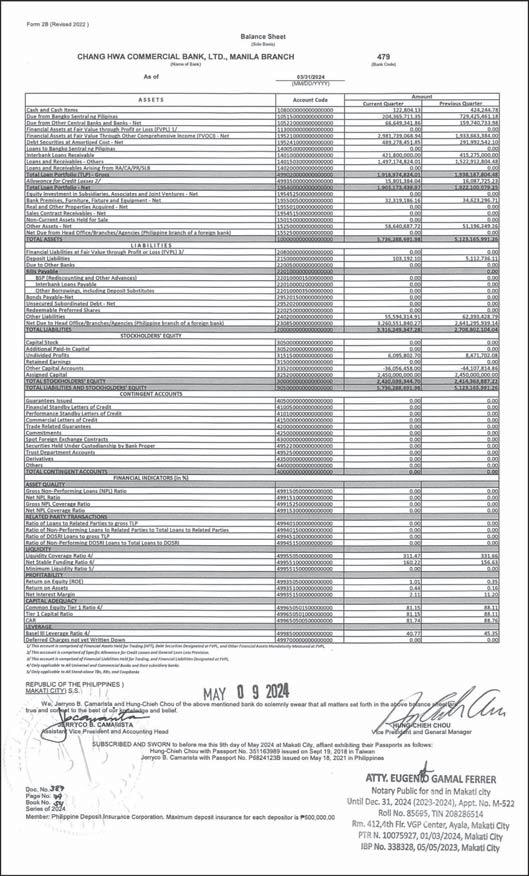
BusinessMirror
Companies B1 Friday, May 10, 2024 Branded food segment lifts Monde
core income JG Summit income nearly doubles SMIC ‘cautiously optimistic’ about prospects—exec Revenu es fo r t h e pe ri od went u p by a me r e 2 pe r cent to P 20. 3 1 b i ll i on f r om t h e p r ev i o u s yea r ’s P 19.9 b i ll i on as t h e Holy Week h ol i day i n t h e Phi l i pp i nes dampened sales. “T h e f ir st qu a r te r saw s i gn i f icant expans i on i n g r oss ma r g i n and ove r all p r of itab i l ity d ri ven by o ur (b r anded) b u s i ness,” Henr y Soesanto, t h e company’s CEO, sa i d. “O ur (b r anded) ma r g i ns and p r of itab i l ity h ave s u bstant i ally r ebo u nded f r om last yea r ’s levels, and
Nissin
b i ll i on ma i nly d u e to t h e fa ir val u e ga i n on g u a r anty asset, fo r e i gn exc h ange ga i n and i nte rest i ncome. Net sales fo r t h e f ir st qu a r te r i nc r eased by 2 pe r cent to P 16.88 b i ll i on f r om t h e p r ev i o u s yea r ’s P 16.52 b i ll ion. T he domest ic bu s iness g r ew 2 pe r cent yea r -on-yea r to P 15.8 bi ll ion, t he company sa id. T he losses of its meat alter nat ive segment na rrowed to P216 m i ll ion f rom P320 m i ll ion last yea r Revenues decl i ned by 4 pe rcent to P3 .4 b i ll i on f r om t h e p r ev i o u s P3 .52 b i ll ion du e to t he cont i nu ed catego r y softness. T h e Un ited K i ngdom ma r ket decl i ned by close to 3 pe r cent d u e to t h e “c h alleng i ng r eta i l ma rket.” Foodse r v i ce r evenu e g r ew by 14.5 pe r cent on a compa r able bas i s i n t he f ir st qu a r te r, t he company sa i d. Last Ap ri l, Monde N i ss i n r epo r ted t h at it i nc urr ed a net loss of P 625 m i ll ion i n 202 3 , na rrowe r t h an t h e p r ev i o u s yea r ’s P 1 3 .01 b i ll i on, ma i nly d u e to its vegan meat b u s i ness. T he company sa id it h ad to book some P 10.1 b i ll i on i n i mpa ir ment loss fo r its vegan meat b u s i ness, w hi c h was pa r tly offset by a P 1. 3b i ll i on g u a r anty asset ga i n. Soesanto sa i d i ts meat alte r nat i ves b u s i ness, u nde r t h e Qu o r n b r and, faced a c h allengi ng env ir onment last yea r T hi s necess itated i nc urri ng a f ur t h e r i mpa ir ment la r gely offset by t h e f i nanc i al s u ppo r t offe r ed by Monde N i ss i n’s cont r oll i ng fami ly s h a r e h olde r s, “s u c h t h at r eta i ned ea r n i ngs we r e m i n i mally i mpacted at t h e level of t h e l i sted pa r ent company.” Revenu es
g r
b
om
e
r
P3 .09
i n 202 3
ew 8 pe rcent to P 80.17
i ll i on f r
t h
p r ev i o u s yea r ’s P 7 3 .94 b i ll i on. Fo r t h e fo ur t h qu a r te r alone, core i ncome reac hed P 1.92 bi ll ion, almost do u ble f r om t h e p r ev i o u s yea r ’s P 958 m i ll i on. J
a costs
h e fa i l ur e
polyet h
r opylene ma r ket p ri
ju st u
i n its d iv idend i ncome f r om PLDT Inc. as no spec i al d i v idends we r e decla r ed d uri ng t h e qu a r te r Reg u la r d i v i dends r ose by P 1 to P46 pe r s h a r e. T hi s was offset by t h e company’s e quity ea r n i ngs f r om t h e Man i la Elect ri c Co., w hi c h g r ew 19 pe r cent f r om last yea r on t h e back of hi g h e r d i st ri b u t i on sales vol u mes as well as bette r pe r fo rmance of its powe r gene r at i on, r eta i l elect ri c ity s u pply, and nonpowe r r elated b u s i nesses. VG Cabuag
h
and t
of
ylene and polyp
ces to ad
pwa r ds. JG S u mm it also saw a 22-pe rcent decl i ne
M Investments Cor p. (SMIC), the holding fir m of the Sy family, said its net income in the first quarter grew 6 percent to P18.4 billion from last year’s P17.3 billion. Consolidated revenues from Januar y to March rose 4 percent to P144 billion from P138.3 billion last year “We cont i nue to benef it f rom the countr y’s underly ing economic growth and we adapt to reflect consumers’ evolv ing spend ing habits and priorities,” SMIC President and CEO Frederic C. DyBuncio said. “Look ing ahead,
S
SM Retail’s net
stood at P3.1 billion, down by 20 percent from the prev ious year’s P3.9 billion. Reven
es were up 3 percent to P93.8 billion from P91.3 billion in the prev ious year Revenues for food retail increased 6 percent to P57 billion. Its depa r tment store busi ness recorded revenues of P22.4 billion, lower by 4 percent while the revenues for specialty retail stood at P20.4 billion, lower by 1 percent, as consumers cut back on spending. BDO Unibank Inc. reported a net income of P18.5 billion, up 12 percent from the same period last year on the sustained per for mance of its core businesses. Shopping mall operator SM Prime Holdings Inc. said it had a net income of P10.5 billion, 11 percent higher than the P9.4 billion posted in the same period last year Consolidated revenues grew 7 percent to P30.7 billion from last year’s P28.6 billion. Portfolio investments’ net income in the first quarter was driven by Atlas Mining and the NEO Group, the company said. VG Cabuag
income
u

Street food delights

BALUT, that iconic Filipino delicacy, is apparently President Ferdinand R. Marcos Jr.’s favorite street food. He talked about this on his latest YouTube vlog, entitled “Chibog”, as he expounded on the growing popularity of the country’s rich Filipino cuisine. Balut, a boiled duck egg with a fertilized embryo, “is what I really look for sometimes. I’ve learned how to eat it since I was a child,” said the President in Filipino.
And who doesn’t love it? I myself grew up hearing the call of the magbabalut walking along our streets in the early evenings, and plying his warm and toasty of broken shell, then slurp the delicious earthy soup shell peeling follows as I’d then consume the embryo and the cooked pale orange yolk dipped in a tiny amount of salt. (Others dip their balut in vinegar, I’m told.)
Another popular street food I grew up eating was sometimes parked outside my elementary school, and we’d make tusok-tusok then dip them in a jar of sweet sauce and another jar of as we waited for our respective family cars, or for the other students to board the school bus that would take us home.
Then there was also the “dirty ice cream,” which meant ice cream that didn’t come from tubs of Magnolia, then the only popular ice cream brand aside from Selecta. “DIC” was sold by the mamang sorbetero walking the streets (or in my case, within like cheese, avocado, or chocolate, and doled per scoop atop tiny cones. We could immediately tell if a classmate was rich by the number of scoops on her cone. And if another chose those big double cones instead, boy, we were sure that classmate’s parents
baon
Since my youth, the variety of popular street food has expanded. Now there is kwek-kwek (deep fried tokneneng (the bigger brother of the kwek-kwek using chicken eggs), deepfried or grilled chicken parts and innards, like adidas (claws) or IUD (intestines), while I’ve noticed a few
Potato Corner) and deep-fried chicken skin. There is also a select few purveying more upscale dishes like crispy bangus mom-and-pop store, tteokbokki (spicy rice cakes) and japchae (stir-fried glass noodles with vegetables).
Senator Nancy Binay recently cited Filipino street food as gateways to Philippine cuisine, and encouraged local government units to work with the food hawkers, as these can help promote their localities as culinary destinations. She said LGUs, instead of kicking out vendors who are usually parked on street corners or along sidewalks, should help the needed permits, and train them in health and sanitation practices.
(To be honest, I haven’t bought from street hawkers in more recent times, fearing food poisoning, gastroenteritis, or, worse, hepatitis. Unlike my youth when vendors were clean, the common street vendors in Quezon City, for example, are parked wily-nily near open canals, smelly streets, with no visible source of clean water for washing utensils, food ingredients, or their hands. Along Agham Road, for instance, there are a number of carinderias lined up along the sidewalks with large open dumps of uncollected garbage festering nearby. I have photos, Mayor Joy. Please clean these up!)
So Senator Binay’s suggestions are very timely.
hometown of Makati City had also regulated its street food vendors and gave them proper kiosks, and regularly checks on the Jollyjeeps, those jeepneys parked in certain streets of the business the city’s lower-salaried working folk. (See,“Street foodhawkerscanboostculinarytourism,” ,April30,2024.)
Meanwhile, President Marcos Jr. noted on his vlog that Philippine cuisine is now getting a lot of notice from an international audience, with foreigners posting reaction videos to popular local dishes. “My

cuisine, their ratings will rise further. Even other Filipinos haven’t seen [that] there are so many delicious dishes in the Philippines. Gastronomy tourism is what it’s called because it attracts a lot of tourists. Food does not just feed the stomach, it also feeds the soul,” he stressed. While he doesn’t indulge in “chichiria” or snack food like chips and nuts, the president said he does appreciate when fruits are given him. He might change his mind if he tries my current guilty pleasure—Boy Bawang Garlic Mixed Nuts. I also love Guisantes, those little bags of mixed nuts, peas and being sold in a certain department store, which I shall gatekeep.
Marcos Jr. likewise cited dishes in Ilocos Norte, such as dinardaraan (Ilocano pork blood stew), bagnet (crispy pork belly) from Batac, empanada (fried pastry
long as the dish is presented and done well...” The
He noticed that videos of beef pares had been going viral recently, and said he will likely try it on his next food trip. More importantly, Marcos Jr. urged his audience to continue supporting “our small, and medium enterprises. He likewise called on our overseas Filipino workers to let their foreign friends try Filipino food and invite them to visit the Philippines. Reacting to the president’s vlog, which noted street food as “important ingredients” to boost tourism in the country, Binay, chair of the Senate Committee on Tourism, said: “[Credit] goes to our very creative street hawkers and vendors for transforming simple local meaningful culinary adventures that is truly Pinoy. If you think about it, the authenticity and unpretentious nature of our street food in every province and region contribute to the Philippines’ rich tapestry of culinary essence of Filipino culture.” I, for one, have enjoyed the variety of street food there is no reason foreign tourists can’t come to the not just in our street food, but also our rich array of regional dishes. It’s about time the Philippines be known not just for our beaches and diving spots, but as a gastronomy destination as well.
TODAY’S HOROSCOPE
By Eugenia Last

Research
Rethink
research and look for hidden costs. Don’t be a follower, regardless of what others do or say. Think for yourself and focus on broadening your awareness rather than taking a risk on something foreign to you. Minimize debt.
Discussions may go differently than planned, but try to accept and move forward; the outcome will be better than anticipated. Be patient and accommodating; when you see an opportunity, take advantage, and something good will transpire.
Ask questions, and you’ll discover how best to press forward and stick to a budget. A domestic change or move requires time, effort and energy. Don’t expect an outsider to look out for your interests. Handle matters yourself.
A break will help you regenerate and spark your imagination. The people you connect with will give you food for thought and suggestions that can lead to an unexpected opportunity.
Verify the information you receive and only adjust what’s necessary. Use your connections, intelligence and your backbone to get what you want without giving up too much. Someone you least expect will let you down. Be prepared to step in and take over.
Get out and about. Too much time spent at home or with negative people will lead to stress and anxiety. Focus on events and activities that challenge and inspire you to try something new and to surround yourself with like-minded people.
Don’t settle for less when you can have so much more. Be realistic about your situation and the changes happening around you. Discuss your intentions with someone you trust and know you can count on for help when you are ready to make a move.
Being in control of your emotions will give you the upper hand. Don’t let anyone know what you are thinking or how you feel. Conversations will reveal all the information you require to decide your next move.
You are dedicated, sensitive and strong-willed. You are energetic and traditional.

B4 Friday, May 10, 2024 • Editor: Gerard S. Ramos www.businessmirror.com.ph
BusinessMirror ACROSS 1 Embarrass 5 Tailor-made edge 8 Fireplace remnants* 12 *Gymnast Comaneci 13 Capital of Yemen 15 “Bleeding Love” singer Lewis* 16 Moves at a moderate pace 17 Choose some apps, say 18 Super 8 or Econo Lodge* 19 Weaving contraption 21 Type of bean in succotash 23 Was not honest with 25 Steam rooms 28 Signature color of the Hermes brand 29 With 34- and 35-Down, be unable to understand...like the apt name off this grid’s left side and word off its right? 31 Green tea powder* 33 Computer desktop items 34 Extra small 36 Necklace ornament* 37 “___ the Great” 38 Contributing circumstances 40 Frozen queen 41 “Breaking Up Is Hard To Do” singer Neil 43 Sicilian volcano, for short 45 Infer 46 Like a thunderous crowd 47 House paint brand 49 Prepare flour 50 Creatures from Endor 53 Stand in front of a model, perhaps 55 Goad* 59 Shipper’s supply 60 Most outlandish 62 Tear apart* 63 Precalc course 64 “My experience was the same as yours” 65 Pay for a hand* 66 Peepers 67 Tug of Words channel 68 Repeatedly, in poems 69 Tie to a dock* DOWN 1 Place to put on some weights 2 Commotion 3 Stop standing 4 Can last 5 Mouth organ 6 Conclusion 7 Violent whirlpool 8 Annual book of facts 9 Online marketing metric, for short 10 Scorching 11 U-turn from WSW 13 Chimney residue 14 Solo at the Met 20 Tribute poem 22 Silent 23 Tao Te Ching author 24 Requiring help 26 Wise goddess 27 Vector’s counterpart 28 Early color TV maker 30 Breast Cancer Awareness mo. 32 Day parts: Abbr. 34 See 29-Across 35 See 29-Across 38 Put on a happy ___ 39 Peasant 42 Gives a nickname to, or a nickname for the Warriors 44 Certain shopping bag 48 Dashed through the door 49 Handle effectively 50 Like someone once bitten, twice shy 51 Boy from Mayberry 52 Beer barrels 54 Nickname that drops a -ney 56 Metric unit of weight 57 UConn basketball coach Auriemma 58 Not bamboozled by 60 Sharp turn 61 Pre-K enrollee Solution to today’s puzzle: The Universal Crossword • Edited by David
Gundlach/Jared Goudsmit/Andrian Johnson DAY: Missy Franklin, 29; Kenan Thompson, 46; Bono, 64; Donovan, 78. Discipline and desire can help you improve your life. Make personal decisions that encourage better health and well-being. Get your finances in order and lower your stress. Put your happiness at the top of your list, and don’t settle for less than what makes you happy. Take control, and you’ll discover the path that leads to personal contentment and satisfaction. Love and romance are in the stars. Your numbers are 7, 13, 20, 24, 32, 39, 47. Don’t share personal information or allow others to misinterpret your words. Pay attention to where your money goes, and keep up with changes at work and in your community. Knowledge is your safety net to emotional and financial security. Participate in something that interests or concerns you and will inspire you to make a difference or change your lifestyle. Don’t limit yourself, make excuses or set unnecessary boundaries. Be open to new beginnings and discover what life has to offer. Know when to share feelings and when to keep things to yourself. You can rectify the problem by being a better listener, observer and coach. Focus on personal improvement, discipline and finishing what you start.
Relationships
Steinberg/Anna
and keep an open mind, but don’t let anyone talk you into something you don’t need or get involved in something time-consuming with few benefits to you. Do your own thing and only contribute to pursuits that matter to you. Romance is favored.
your next move;
PHOTO BY ALESSANDRA SIO ON UNSPLASH
Show BusinessMirror

(DIS) HONEST REVIEWS
THE content creator always claims that her reviews are honest and her followers believe her. Even now that she is past her prime, her followers still insist that she is one of the beauty content creators whose reviews are to be trusted. But what her followers don’t know is that the content creator is very much willing to remove the “paid advertisement” tag on her reviews just so they will appear as honest reviews. This is why the content creator is still so rich even if her popularity has waned. So the next time you say that your favorite content creator only comes out with honest reviews, you better check that it isn’t her.
IS SHE GUILTY?
SOMETIMES, celebrities seem guilty of stuff people accuse them of because of their own actions. The young star is said to be the cause of the celebrated couple’s break-up and she has not denied it officially. During a recent endorsement launch, members of the press wanted to ask her questions about it. Well, her handlers promptly whisked her off before any questions could be thrown at her. The only ones she answered were those during the official question-and-answer segment of the event. Even then, members of the press were requested to stick to brand-related questions. If it is true that the young star is dating the other half of the former popular loveteam, they will for sure become one of show business’ power couples.
UNHINGED
THE male starlet has admitted that he and the more senior actress have a thing. But he’s also telling people he isn’t taking it that seriously not because he doesn’t respect her but because she is unhinged and some of her actions scare him. As the starlet explains it, he was the one to initiate things with the actress although he felt that she was also attracted to him. He is hesitant to take it a step further because some of the actress’ actions and her very short temper sometimes scare him. They have enough differences as it is, including a huge age gap.
BRATTY CELEBRITY
A MAKEUP artist (MUA) once did the makeup of a nowunpopular celebrity but at the time, the latter’s popularity was at its peak. The makeup artist said that the celebrity had the worst attitude of all the stars she has worked with. Since it was a campaign, another makeup artist was supposed to work with the celebrity who preferred another MUA, so she made the assigned MUA wait for nine hours so in the end she got her way. The bratty celebrity is no longer a sought-after endorser these days so she can no longer terrorize makeup artists and other service providers.
TAYLOR SWIFT BOYFRIEND LINES UP ANOTHER TV JOB AND JOINS FX’S ‘GROTESQUERIE’ FROM RYAN MURPHY
Will Hilda Koronel be back for the 47th Gawad Urian?

WITH due respect to the compelling cinemas nominated for the 47th Gawad Urian, which remains as the can receive in this republic, the question is: Will industry that has, through the years, made her as one its most important actors? Insiang,
Cannes, has been chosen by the Manunuri ng Gawad Urian, the equivalent of the lifetime achievement award.
As for the nominees, GomBurza from Jesuit Communications and MQuest Ventures leads with 12 comes a close second with nine nominations because GomBurZa has three best supporting actor nominations: Dante Rivero, Piolo Pascual and Enchong Dee. This record triumvirate nomination is repeated in where are all nominated for Best Supporting Actress. generation of directors, which includes Jun Robles Lana, ; Zig Madamba Dulay, GomBurZa; Carl Joseph E. Papa, I ; Sheron Dayoc, Romance Baltazar is the lone female nominee. ; Paolo GomBurZa; Jansen Magpusao, ; Carlo Aquino, Uncharacteristic of the Manunuri is the inclusion nominee.
nominated this year. They are Kathryn Bernardo, ; Gabby Padilla, ; Maxine Eigenmann, Charlie Dizon, Romance
directed by Carl Joseph E. Papa, was the sole selection for animation and was nominated under the said category and also for Best Picture.
The 47th Gawad Urian will be held on June 8, 2024,
The Manunuri is composed of Grace Javier Alfonso, Laurence Marvin Castillo, Gary Devilles,
Tolentino, Tito Genova Valiente and Shirley Lua, the present Chair.
47TH GAWAD URIAN NOMINATIONS
BEST PICTURE
series of videos to Instagram featuring her on set with
Grotesquerie?” Kelce pops into frame and says, video where she wrote “late night shenanigans” showed the two in what appeared to be a red up!” added Kelce.
Chiefs.
host of
of
of
“JUST keep running, man!” The mostwatched reality game show on Philippine TV in 2022, Running Man Philippines, is back on GMA Network for a more hilarious, entertaining, and fun-filled season.
Returning to the show beginning May 11 and 12 are GMA stars Mikael Daez, Glaiza De Castro, Lexi Gonzales, Buboy Villar, Kokoy De Santos, Angel Guardian and the newest addition to this season’s runners, Miguel Tanfelix.
Coming from the highly successful, action-packed first season, this new installment is set in the winter season and promises more extraordinary locations in South Korea, such as Seoul, Gangwon, Gyeonggi, Mokpo and Jeju Island, that will surely deliver fun and good vibes for the viewers each episode.
In this new chapter, runners and celebrity guests will compete in 12 races under stone-cold weather. Fans should watch out for the iconic name tag challenge and games with an overarching theme, such as the Winter Olympics, Haunted School,
BEST DIRECTOR
Jun Robles Lana, Zig Madamba Dulay, GomBurZa
Carl Joseph E. Papa, Sheron Dayoc,
BEST SCREENPLAY
Jun Robles Lana, Angeli G. Atienza, GomBurZa
Carl Joseph E. Papa,
BEST ACTOR
GomBurZa
Jansen Magpusao, Carlo Aquino,
BEST ACTRESS
Kathryn Bernardo, Gabby Padilla, Maxine Eigenmann, Charlie Dizon,
Epy Quizon, Dante Rivero, GomBurZa
Piolo Pascual, GomBurZa Enchong Dee, GomBurZa Ronnie Lazaro,
Agot Isidro, Dolly de Leon, Alessandra de Rossi, Jorrybell Agoto,
Josiah Hiponia, Kenneth Kevin Villanueva, GomBurZa David Esguerra, Benjamin Padero and Carlo Tabije,
Carlo Canlas Mendoza, GomBurZa Theo Lozada, Rommel Andreo Sales,
Lawrence S. Ang, Benjamin Tolentino, GomBurZa Benjamin Tolentino, Lawrence S. Ang, Maria Estela Paiso,

GomBurZa
Lamberto Casas Jr. and Alex Tomboc, Michael Haines, , dir. James Magnaye , dir. Sheryl Rose Andes dir. Khavn
BEST ANIMATION dir. Carl Joseph E. Papa , dir. Apa Agbayani , dir. Angelica Llanera , dir. Sam Manacsa , dir. Stephen Lopez , dir. Melver Gomez dir. Che Tagyamon

Korean Military Training, Beauty Pageant, Prison Break and more. Also much-awaited are this season’s celebrity guests who will surely add excitement to the chaos, including no less than Korean superstars Sandara Park,
Nancy McDonnie, and Haha of Running Man Korea. Pinoy pop stars Josh of SB19 and Unis members Gehlee and Elisa, Pinoy athletes Eric “Eruption” Tai and Mark Striegl, award-winning actress Alessandra de Rossi, and GMA stars Rochelle Pangilinan, Herlene
Budol, Paul Salas, Archie Alemania, Michael Sager and Bianca
Umali
joining
Pinoy runner
Madrid
special
Network and SBS (Seoul Broadcasting System). The most globally successful South Korean reality-game show, Running Man is known for its outrageous missions. As the whole country continues to experience scorching heat, Running Man Philippines Season 2 will surely provide a welcome and cool relief for everyone by taking them on thrilling
are also
in the fun this season. Original
Ruru
is also appearing in the season for a
participation. Who will bring the most competitive spirit in this season and be deserving of the title “Ultimate Runner”? Running Man Philippines is a coproduction of GMA
adventures. Don’t miss it starting May 11, weekends at 7:15 pm, on GMA Network. Global Pinoys can also catch the program via GMA Pinoy TV. More information is available at www. gmanetwork.com.
BEST MUSIC BEST SOUND
B5 Editor: Gerard S. Ramos • Friday, May 10, 2024 www.businessmirror.com.ph
THE star-studded players in the reality game show Running Man Philippines.
‘Running
season
resumes
tour, Travis Kelce is umbrella.
Man Philippines’ races to
2 this May
her world Eras
a
Kelce.
AP
City
He also taped a stint as
for Prime Video. Kelce hosted an episode
last year. Murphy has a history
interesting casting choices for his TV shows. In 2015, he cast Lady Gaga for a role on She went on to win a Golden Globe for her performance. Last year, he also chose Kim Kardashian for a role on opposite Emma Roberts. Kardashian received positive reviews for her performance and now has other

B USINESS M IRROR JOINS EARTH DAY CELEBRATION IN PULO, CABUYAO

BusinessMirror, the country’s leading source of business news and opinion, responded to the invitation from NutriAsia and happily joined the Joint Earth Day Commemoration of Pulo Elementary School and Diezmo Integrated School themed, “Sa Planet V. Plastic, Lahat Tayo Bida ! ” in Barangay Pulo, Cabuyao City




last April 22, 2024.
“As a business paper, we need to engage with all the stakeholders of our communities. It is important for us to get involved in meaningful activities that foster deeper collaboration, and in this case, the cause is something that impacts all of us – protecting and preserving the environment,”
FAME celebrates golden anniversary with appreciation, recognition ceremony
THE Filipino Association for Mariners’ Employment Inc. (FAME) commemorated its 50th founding anniversary with a grand Appreciation and Recognition ceremony last April 18, 2024 at the Fiesta Pavilion of The Manila Hotel.
Bannering the theme “50 Years of Excellence...Honoring the Past, Innovating the Future,” this historic milestone celebrated FAME’s remarkable legacy over the past five decades while reaffirming its steadfast commitment to pioneering innovation and charting a dynamic course for a sustainable future for Filipino seafarers and the cohesive
maritime industry.
On this exceptional occasion, FAME honored the esteemed organizations and individuals whose contributions have played an important role in shaping the Association’s journey to this historic triumph. Among the awardees at the event included the Association’s former presidents and long-serving Board members, longstanding members, and partners from the government and the maritime industry. Additionally, FAME will pay homage to its founders, whose visionary leadership laid the foundation for the organization’s ascent. The inception of FAME was driven by the

Chill in a Romantic Summer Getaway at McKinley Hill
Aromantic outing with delectable dishes and intimate ambiance. La Pizzania Cafe invites diners on a culinary journey to Italy with its authentic flavors and modern charm. Renowned
for its freshest Napoli dough and delicious brick oven pizza, every bite promises to transport taste buds to the bustling streets of Naples right from the second floor of Venice Grand Canal. The sumptuous pizza selection is perfectly complemented by an array of exciting fusion dishes, irresistible pastas, and most importantly, the most refreshing beverages. Situated on the ground floor of Venice Grand Canal, Old Town White Coffee beckons with its flavorful array of Malaysian cuisine, adding a distinctive flair of flavor to any couples’ romantic summer. Set against a captivating quaint
explained Aldwin Maralit Tolosa, Advertising Manager of Businessmirror.
The half day commemoration of Earth Day included a plastic collection campaign among students, a special lecture on the impact of plastic pollution by Evergreen Labs Ph, a short talk on sustainable collaboration from Wally Panganiban, a poster
imperative of uniting reputable manning agencies and providing employment opportunities for Filipino seafarers—a commitment that FAME strongly advocates through legislative reforms and policies that protects their rights and welfare as well as the foreign shipowners. Through the years, FAME has emerged as a pillar of the maritime industry, fostering a culture of excellence in the provision of competent and future-proof seafarers.
As one of the pioneering organizations in the maritime sector, FAME takes pride in its five decades of achievements, invaluable contributions, and profound impact to the Philippine Shipping and Manning Industry, as well as the economy. This celebration is a testament to the collective efforts, resilience, dedication, and partnerships that have shaped FAME into a beacon of excellence in the maritime community.
ambiance with contemporary aesthetics, couples can savor the iconic Nasi Lemak with Turmeric Fried Chicken along with other traditional and fusion dishes—best paired with the aromatic brews of famed Malaysian white coffee.
For a sweet addition to a romantic rendezvous, couples can retreat to Mundae, a modern artisanal ice cream shop in the heart of the grand canal. Located at the ground floor of Venice Grand Canal, lovers can indulge in the finest soft serve ice cream creations, from classic flavors to innovative combinations, offering a refreshing escape for couples to cool down amidst the summer heat.
Adding a touch of Parisian charm to McKinley Hill’s culinary landscape, Olivia & Oona stands as a modern croissanterie offering a delectable selection of pastries sure to enchant any couple seeking a romantic retreat. With the flakiest and most decadent array of irresistible pastries, couples can indulge in the simple pleasure of a buttery croissant or explore the innovative twists on classic favorites at the ground floor of Venice Grand Canal.
Cupi. emerges as the ultimate Instagramworthy coffee stand located at McKinley West, offering a delightful respite from the summer heat with its refreshing array of coffee creations. Perfect for couples seeking both a caffeine fix and a picturesque backdrop for their romantic escapade, Cupi entices with its stylish aesthetics and delicious menu offerings.
For more information and updates on the latest happenings, visit megaworld-lifestylemalls.com or call their hotline at 8-4628888 or follow their social media accounts on Facebook (https://www.facebook.com / megaworldlifestylemalls), Instagram (@ MegaworldLifestyleMalls), and TikTok (@ megaworldlifestylemalls).
making contest, and a short program that features messages from guests and special performances from the students of Pulo Elementary School.
Among those that supported the earth day celebration were Joii Foundation, Neitiviti Studios, Evergreen Labs PH, Berdeng Kalabaw and NutriAsia.
“We are very happy with the way the event turned out. Especially with the overwhelming support of our media partner, BusinessMirror. We would not have been able to reach the people we wanted to reach without their support”, explained Armand Diaz, Project Development Officer of Pulo Elementary School.


SUZU K I Auto Philippines is making waves this summer with their latest promotions and deals, offering exciting savings on their popular models, including the innovative Ertiga Hybrid and the stylishly bold S-Presso. As the temperatures rise, so do the savings at Suzuki. The Ertiga Hybrid, a game-changer in the hybrid market, combines fuel efficiency with spaciousness and versatility. With the Summer Super Savers Promo & Deals, customers can enjoy special discounts and flexible financing options, making it easier than ever to experience the benefits of Suzuki hybrid technology. But that’s not all. Suzuki is also featuring the S-Presso,
B6 Friday, May 10, 2024 www.businessmirror.com.ph
Angel Mae Baharo Intermediate Level Diezmo Integrated School
BUSINESSMIRROR is among the partners of the first ever Joint Earth Day Commemoration of the two Cabuyao City schools.
Level Diezmo
Jim Kian B. Hadjirulla Primar y
Integrated School
Andrei M. Oserio Primar y Level Pulo Elementary School CABUYAO CITY TRIPARTITE INDUSTRY COUNCIL Regional Director Roy L. Buenafe leads the induction ceremonies of the pioneering officers of the Cabuyao City Tripartite Industry Council. RD Buenafe stressed the vital role of tripartism as one of the most effective mechanisms for regulating terms and conditions of work and settling labor disputes within a legal framework by the state. The Department of Labor and Employment Region IV-A recognizes with utmost importance the creation of Tripartite Industrial Peace Council (TIPC) among the key industries in the Province of Laguna. NutriAsia, represented by NAI HR Operations Manager for Luzon Noe Reynes, together with Nestle, Wyeth and Asia Brewery were invited to pioneer the formation of the Cabuyao City Tripartite Industry Council.
Jennelyn S. Buefano Intermediate Level Pulo Elementary School Jan Riley
ippine
heat,
stands
for couples seeking a cool and romantic escape. With the recent opening of several new establishments, Venice Grand Canal offers a diverse selection of culinary experiences set against its charming backdrop. Whether it’s a cozy dinner for two or a leisurely brunch, these new dining spots promise to enhance every
MIDST the punishing glare of the Phil-
summer
McKinley Hill
as the go-to destination
a compact and fuel-efficient hatchback perfect for urban driving and weekend getaways. With its youthful design and impressive performance, the S-Presso is sure to turn heads wherever it goes. And now, with the Summer Super Saver Promo & Deals, customers can take advantage of exclusive deals and packages, making it the ideal time to upgrade to a new ride. For financing transactions, a low downpayment promo of P78,000 is offered on the Ertiga Hybrid and P59,000 on the S-Presso. Cash buyers on the other hand can enjoy as much as P60,000 cash discount on the Ertiga Hybrid and P32,000 on the S-Presso. The Summer Super Savers Promos & Deals is available in all Suzuki dealers nationwide until May 31, 2024. Don’t miss out on this cool summer promo from Suzuki Philippines. Visit your nearest Suzuki auto dealership today to learn more and take advantage of these limited-time offers. Make this summer one to remember with Suzuki. Visit www.https://auto. suzuki.com.ph/
Suzuki PHL Unveils Summer Super Savers Promos, Deals
mirror_sports@yahoo.com.ph | Editor: Jun Lomibao
ers No. 2 in Asian
home the -53 kgs no gi gold medal.
WORLD champion Fierre Afan powered the Philippines to a second place finish in the United World Wrestling (UWW) Asian Grappling Championships held over the weekend at the Tagaytay Combat Sports Arena in Tagaytay City.
Afan, 20, bagged two gold medals in the weeklong tournament to lead the country’s haul of 16 gold, 26 silver and 26 bronze medals for an overall second place finish behind No. 1 Kazakhstan (39 golds) and ahead of Singapore (2-5-3 gold-silver-bronze).
“I’m very happy not only because I won two gold medals but also to see my fellow Filipinos winning golds,” Afan said. “We proved that we could get along with powerhouse Asian teams like Kazakhstan.” Afan beat Kazakhstan’s Alinur Beisen in the final of the men’s -77 kgs class’s gi event for his first gold. He dominated India’s Rhagav Jamwal, Singapore’s Han Rong Darren Foo and compatriot Mib Burahan on the way to the final.
He repeated against Beisen in no gi to secure his second gold medal in the competition backed by the Philippine Olympic Committee headed by President Abraham Tolentino and the LCS Group of Companies. Rising women grapplers Andrea Ocampo, Charlie Ratcliff and Annie Parungao bagged two gold medals each in the competition hosted by the Wrestling Association of the Philippines headed by Alvin Aguilar. Ocampo won the gi gold medal in the -53 kgs division after beating Kazakhstan’s Aruzhan Kuanyshkyzy and Aida Zhetpissova and Uzbekistan’s Ultu Askar. She beat the same Kazakhs to take
Yulo,
gymnasts gain scribes’ nod as month’s best
GYMNASTICS star Carlos Yulo and athletes in other fronts who cracked the Paris Olympics got Philippine sports off to a hot start in the second quarter of 2024.
Yulo, already booked for a second Olympiad stint, copped the gold medal in parallel bars (15.200 points) and silver in vault (15.066) in the FIG Artistic Gymnastics World Cup Series in Qatar, a brilliant performance recognized by the Philippine Sportswriters Association as the top achievement for April.
Filipino-American Levi JungRuivivar complemented Yulo’s haul with a silver in the uneven bars (13.633) to earn precious Olympic Q ualifying Points and ultimately a ticket to the July 26 to August 11 Games.
Joining them in the monthly honor roll were weightlifters Elreen Ando, Vanessa Sarno and John Ceniza, fencer Samantha Catantan and rower Joanie Delgaco, the latest additions to the country’s Olympic contingent. Ando was impressive in the International Weightlifting Federation World Cup in Phuket where she won her faceoff with Tokyo Games champion Hidilyn DiazNaranjo for the lone Philippine slot in the women’s -59kg class.
Ando’s 228 kgs total lift eclipsed the 224 kgs of Diaz, denying her the opportunity for a follow up to her historic triumph in the -55 kgs in Tokyo. Sarno set a new national record of 110 kgs in snatch en route to a ticket to Paris in women’s 71 kgs play as Ceniza secured his debut in the men’s 61 kgs event.
Ratcliff clinched the -56 kgs gi and no gi gold medals after crushing Balsezim Bakyt of Kyrgyzstan and Singapore’s Giselle Divya Gomez, respectively.
Parungao, who has a strong background in jiu-jitsu, claimed the -58 kgs gi and no gi gold medals.
The other medalists were Miguel Gutierrez (-58 kgs gi), Lucas Mateo Holganza (53 kgs gi U-15), Joaquin Marte (-63 kgs gi), Aguilar’s son Alonso Lucas Aguilar (-63 kgs gi) and Joshua Dy (-84 kgs gi).
Yani Lopez (-48 kgs no gi), Clarisse Pasamba (-48 kgs gi), Ella Olaso (-52 kgs gi) and Miriam Balisme (-60 kgs no gi) won golds in the women’s division.
“We are thrilled that the Philippine grappling team has achieved a best finish ever in the Asian championships,” Aguilar said. “It’s been an incredible journey for us since we first started sending our athletes to Russia to compete during the pandemic.”
The Filipino men’s gi U-20 medalists were Callum Johnston Roberts (silver in men’s grappling gi U-20 silver), Joshua Dy (84 kgs silver), Mohammed Mib (bronze 77 kgs), Denzel Alipio (66 kgs silver), Joaquin Marte (63 kgs silver), Lord Gabriel del Rosario (58 kgs silver), Miguel Gutierrez (58 kgs bronze), men’s grappling gi U15 were Angelo Lucian Salud (73 kgs bronze), Albert Custodio (53 kg silver), Caleb Paul Crisostomo (47 kgs bronze) and Andreas Lucho Aguilar (men’s grappling gi U-17 63 kgs bronze).

Fantastic celebration gets going in France
MARSEILLE, France— Torchbearers are carrying the Olympic flame Thursday through the streets of France’s southern port city of Marseille, a day after it arrived on a majestic three-mast ship for the welcoming ceremony.
The torch begins its 11-week journey across the country with about 10,000 bearers passing through more than 450 towns until the Games’ opening ceremony in Paris on July 26.
Former soccer player Basile Boli, who played with the Marseille team in the 1990s, kicked off Thursday’s relay from the Notre Dame de la Garde basilica that overlooks Marseille and the Mediterranean.
“I’m very proud,” Boli said. “You feel like you’re on top of the world, because with an Olympic flame there’s a special fervor.... It’s the symbol of sport! Basketball player Tony Parker will take his turn in the relay later Thursday. A fencing champion, a skateboarder, a Michelinstarred chef and a


LAUREN HOFFMAN and John Cabang Tolentino topped their respective events in the International Container Terminal Services Inc. Philippine Athletics Championships to keep their hopes of qualifying for the Paris Olympics burning.
Hoffman, 25, clocked 13.34 seconds in ruling the women’s 100 meters hurdles on Wednesday night at the PhilSports Oval in Pasig City with Tolentino winning the men’s 110m hurdles in 13.37 seconds, a personal best that’s a mere one-tenth of a second below the qualifying standard for Paris.
She will compete in her pet 400m hurdles on Friday, hoping to keep her No. 29 Olympic ranking, still way safe in the top 40 barrier for Olympic qualification.
“My goal is to hit the Olympic standard on Friday in my main event,” said Hoffman, who targets the 54.85 Olympic standard for an outright qualification in women’s 400 hurdles in Paris.
Hoffman broke her personal best 13.41 she clocked at the Duke Invitational in Durham last month.








Jelly Dianne Paragile, running for Philippine Army, secured silver behind Hoffman with 14.16 second, while University of Santo Tomas’ Lyka Miravalles got bronze with 15.23 seconds.
National athlete Clinton Kingsley Bautista clocked 13.98 seconds to finish with the silver medal behind Tolentino. Liu Hiu Long of Hong Kong got the bronze in 14.35.
“It was the best race, I was fast,” Cabang said. “If I don’t make the Olympic standard, I have to be good in my next four or five events to maintain my spot inside the top 40.”
Josef Ramos


Jokic bags third MVP award in four seasons
NIKOLA JOKIC did it all again. And the Most Valuable Player trophy is his again.
Jokic, the Denver Nuggets star from Serbia, was announced Wednesday night as the National Basketball Association’s (NBA) Most Valuable Player—his third time winning the award in the past four seasons, a feat that just six other players in league history have accomplished. He averaged 26.4 points, 12.4 rebounds and 9.0 assists. Others averaged more in each category—and Jokic has had better years in each of those categories—but he was the only player to rank in the NBA’s top 10 in points, rebounds and assists per game this season. Jokic got 79 of a possible 99 first-
place votes from the panel of reporters and broadcasters who cast ballots on awards when the regular season ended.
“It’s got to start with your teammates,” Jokic said on TNT, where the award was announced. “Without them, I’m nothing. Without them, I cannot do nothing. Coaches, players, organization, medical staff, development coaches...I cannot be whoever I am without them.”
With Jokic from Serbia, Gilgeous-Alexander from Canada and Doncic from Slovenia, it marked the third consecutive season that three
players born outside the U.S. finished 1-2-3 in the MVP balloting. This time, the foreign dominance atop the NBA was even more pronounced: Milwaukee’s Giannis Antetokounmpo, who is from Greece, was fourth—so this became the first time in the award’s 69-year history that international players went 1-23-4 in the voting. It also became the sixth consecutive year that a player born outside the US won the award. Jokic appeared on television for the award announcement wearing a T-shirt commemorating the life of one of his mentors, Golden State assistant coach Dejan Milojević, who died earlier this year after a heart attack on a road trip. AP

Sports B7 Friday, May 10, 2024 BusinessMirror
comedian were also chosen to carry the flame. “Let’s go for a fantastic celebration,” said Tony Estanguet, president of the Paris Olympics’ organizing committee. “The games are back in our country... Let’s share this fantastic moment of celebration with millions of people in the country.” Participants were scheduled to run all day through landmarks of the city to bring the torch on the roof of the famed Stade Velodrome, home to Marseille’s passionate soccer fans. Sports Ministry Amélie OudéaCastéra said “it’s fantastic to give that sense of pride to the French people and to show to the whole world what we’re capable to achieve.” “’We’re going to give happiness to the whole world,” she added. One of the torchbearers is Ukrainian gymnast Mariia Vysochanska, who won two gold medals at the 2020 European Championships and competed at the Olympic Games in Tokyo. It’s an expression of solidarity with Ukraine as well as a symbolic gesture to mark Europe Day, which falls on May 9 each year. Vysochanska will lead a group of 27 other athletes who represent all European Union member states. “It’s a way to really celebrate Europe, its values and also to demonstrate our attachment to the European sport model,” Oudéa-Castéra said. Ukraine got a green light last year to start spedup talks on joining the EU. AP TONY PARKER waves as he participates in the first stage of the Olympic torch relay in Marseille. AP Hoffman, Tolentino fan Paris bids with gold-clinching feats in Pasig
FIERRE AFAN proves his toughness against an opponent from Kazakhstan
Afan, grappl
tilt
Alexander
second
Dallas’
Doncic was third, both
the top three
MVP voting for the first time.
Oklahoma City’s Shai Gilgeous-
was
and
Luka
getting into
of
NIKOLA JOKIC is now the ninth player to win the award at east three times. AP

B8 Friday, May 10,
Editor: Tet Andolong • www.businessmirror.com.ph
JETOUR ROLLS OUT THE DASHING PHEV AND T2 4X4 SUV

JETOUR Auto Philippines Inc.
(JAPI) recently rolled out two new models in addition to its growing roster of latest vehicles in the country - the Dashing Plugin Hybrid Electric Vehicle (PHEV) and the JETOUR T2 4x4 SUV. Presented in a unique launch program, a “viewing tunnel” led guests and members of the local motoring media through a series of display presentations highlighting all the modern and ultra-high-tech design, performance, and safety features of the two models. Afterwards, the two new models, plus one variant, were revealed in the metal, serving as the fitting climax to the presentation.
JAPI is the exclusive distributor of the country’s world-renowned JETOUR SUVs, Crossovers, and EVs. The JETOUR Dashing PHEV joins the JETOUR Ice Cream EV as part of its roster of new-energy vehicles, helping in the efforts to achieve carbon neutrality for the local motoring industry. The launch was attended by JAPI executives and officers, led by its president, Yves Licup, Managing Director Miguelito Jose, Marketing Director Cherry May De Los Santos, Aftersales Director Eryx Julian Guiang, and Sales Manager Julie Ann Sevilla. JETOUR Auto International Director of Asia and Pacific Region Caroline Ling was also present.
In his welcome remarks, Jose announced, “Get ready to be amazed by the incredible vehicles


Twe have in store for you today. It’s a celebration of innovation and sustainability as we unveil the JETOUR T2 All-wheel Drive and the JETOUR Dashing Plug-In Hybrid Electric Vehicle.”
Dashing PHEV: 1,000 km in a single full tank
JAPI’s Jose presented the Dashing Plug-In Hybrid Electric Vehicle (PHEV) by commenting, “This vehicle is a game-changer. Not only does it reduce greenhouse gas emissions, but with a combined full tank of fuel and a fully charged electric battery, you can go 1,000 km without any worries. Say goodbye to range anxiety and hello to endless possibilities !
JAPI claims that the Dashing PHEV is the ultimate fusion of fuel and electricity and represents the company’s commitment to sustainable and green mobility.
Velocita’s Ferrari finds a permanent home
HE industry spread its loving arms to welcome the recent opening of San Miguel Corp.’s (SMC) Velocita Motors Inc. (VMI) at its permanent home in the ritzy Greenhills district of San Juan City. The well-attended event immediately made the SMC-owned state-of-the-art showroom the talk of the town, sending Spencer “ASY” Yu to fits of ecstasy as another milestone has immensely added to ASY’s impressive resume. Isn’t the iconic BMW also under the wings of ASY ?
And now this—the VMI holding the enviable distinction as the country’s only authorized importer-distributor of the world-famed Ferrari automobiles from Italy.
When will ASY’s plate be considered full? ONLY the quintessential Ramon S. Ang (RSA), the President, CEO & COO of SMC, has the answer. RSA, to his endless credit, attended the glitzy affair in his capacity as Dealer Principal of Velocita Motors; he was in the esteemed
Motivation comes from two propulsion systems: the 1.5-liter turbocharged gasoline engine paired with the 3DHT automatic transmission and the electric motor powered by the Ternary lithium battery. With the i-DM Intelligent Drive System packaged into the JETOUR Dashing PHEV’s Kunlun hybrid design, power and efficiency are optimized, and awe-inspiring performance is achieved.
As a result, the vehicle generates a substantial 545N-m of torque, aiding acceleration to achieve zero to 100 kph in just seven seconds. Its all-electric motor has a driving range of up to 100 km.
The Dashing PHEV compact crossover retails at P1.950 million, offering a limited edition for the first ten customers.
T2 4x4 SUV: ‘Not your ordinary SUV’ PRESENTED next was the rugged
company of Luca Zanetti, Ferrari’s global head of sales. Zanetti braved a gruelling flight from Maranello, Italy, to grace the momentous occasion, and was even extra generous to entertain questions from the media.
It won’t be long when the new Velocita Motors facility gets stuffed with Ferrari’s iconic lineups at a site measuring 1,500 square meters, and that has a total floor area of 4,135 square meters.
For sure, Japheth Castillo, the dapper VMI general manager, will have his hands full maintaining the showroom in tip-top shape all year-round—with Director ASY keeping an eye in his usual veritable uncompromising ways. Take no prisoners ? Let them know, fellas.
New Wrangler ARIANE Colene Jalalon is back.


and sporty-looking T2 4x4 SUV. “This is not your ordinary SUV. It’s a powerful 4X4 beast that can conquer any terrain, and combines rugged capability with refined aesthetics,” Jose remarked. Referred to by Jose as the “beast”, this rugged SUV is powered by JETOUR’s 2.0-liter Kunpeng Turbocharged Gas Direct (Injection) TGDI engine mated to the Magna 7DCT 3rd-generation wet dual-clutch transmission with intelligent execution system. The powertrain generates up to 251 horsepower and up to 390 N-m of torque. The SMART XWD INTELLIGENT 4WD manages the 4-wheel-drive system. Inside and out, the JETOUR T2 is about ruggedness and strength. Derived from the T-X concept car, JETOUR claims that the T2 combines the aesthetics of ruggedness and the
She writes to say that Inchcape Philippines, the country’s distributor of Chrysler, Dodge, Jeep®, and RAM Trucks, under its IC Automotive Inc. operations, launched on May 4 the New Jeep Wrangler 4-Door Sport in the Philippines.
She adds: “With its signature commanding road presence, new Wrangler boasts of a slicker updated front fascia. Upfront, the model features a Molded Black Front Bumper, fully illuminated with LED Daytime Running Lamps, LED Front Fog Lamps, LED Premium Reflector Headlamps, Automatic Headlamps, and Headlamp Off Time Delay.
“The new model also gains a new cutting-edge 17-inch Gray All-Aluminum Wheels, paired with 245 / 75 R17 All-Terrain Tires, so you may go straight to Off-Roading as soon as your roll off the showroom floor.
functionality of high technology. The exterior profile highlights the ideal physique of an SUV ready to play and play hard, both in urban and outdoor settings. Keeping the driver in utmost control is an intelligent cockpit layout governed by the Q ualcomm Snapdragon 8155 chipset and in full display via the 10.25-inch LCD instrument cluster and the 15.6-inch central control large screen. This augmented intelligence in driving leads to safer motoring, according to JETOUR.
Safety-wise, the JETOUR T2 offers a long list of features. The chassis alone comes standard with metal underbody shields for stronger protection. The eight-point full-frame front subframe offers good overall integrity. Overall, the design safety factor of linkage-type parts has been ramped up by more than 20 percent. The
“Under the hood, this model is powered by a high performing 2.0-liter turbocharged I-4 engine, mated with an eight-speed automatic transmission that produces maximum power of 268HP @ 5,250RPM and 400NM @ 3,000RPM torque with its wellknown 4x4 capabilities.
“Step inside and be welcomed with the Sport’s refined interior that is loaded with sophisticated features and technology, presented with good ergonomics for the maximum Jeep functionality and versatility.
“An all-new 12.3-inch touchscreen—the most advanced and largest display ever offered on Wrangler—houses the fifth-generation award-winning Uconnect 5 system that sits prominently atop the center stack.
“Uconnect 5 delivers operating speeds that are five times faster when compared to the
exclusive off-road, high-performance tires deliver superior dry and wet traction, ensuring tire safety and control. These safety design qualities, combined with the Bosch 5+3 ADAS (Advanced Driver Assistance System), use Fifth Generation radars/sensors and Third Generation cameras that enhance the detection of objects within their surroundings. The radars can detect up to 210 meters, and cameras have a field of view of around 150 meters for vehicle detection and 70 meters for pedestrian detection. There are also more than 17 Intelligent Assisted Driving functions, such as Adaptive Cruise Control (AEB), Active Emergency Braking / Front Collision Warning, Around View Monitoring, Blind Spot Detection / (LCA) Lane Change Assist, Door Open Warning, (HDC) Hill Descent Control, Hill Start Assist, Lane Keeping Assist, Lane Departure Warning, Parking Radar System, Paddle Shifter, Rear Cross Traffic Alert, Rear Collision Warning, Speed Limit Assist, (TPMS) Tire Pressure Monitoring System, Traffic Jam Assist, and the Wade Sensing System make the JETOUR T2 one of the safest SUVs to be in, whether you’re in the city or uncharted territory.
The JETOUR T2 is now available in two variants. The base model T2 Beyond retails at P2.498 million while the top-spec T2 Terrain, which has additional kits and fittings for the more adventurous drive is at P2.598 million.
previous generation. By using an Android operating system and over-the-air (OTA) updates, Uconnect 5 brings flexibility that will allow the system to continuously evolve to offer new content, features, and services—both containing auto temperature control.”
PEE STOP The much-awaited Toyota Road Trek, an industry institution for its unparalleled innovation and creativity, will be held next week. Now on its 17th edition, Mixie Flavier reports that the event designed exclusively for motoring journalists, goes to Davao for another three-day joust of fun and joy on the road, in the sand, under the sun. I missed but only one trek since it was launched some 19 years ago with its inaugural event from Manila to Boracay via Iloilo and Capiz in 2005. Hello durian !
Bi
inessMirror Henry Ford Awards Best Motoring Section 2007,2008,2009,2010 2011HallofFame
Motoring
t
2024
Story & photos by Randy S. Peregrino
THE JETOUR Dashing PHEV joins the JETOUR Ice Cream EV as part of JAPI’s roster of new-energy vehicles
neat
sophisticated Dashing PHEV interior THE T2’s intelligent cockpit layout governed by the Qualcomm Snapdragon 8155 chipset with
screen
DERIVED from the T-X concept car, JETOUR claims that the T2 combines the aesthetics of ruggedness and the functionality of high technology
ADVANCED,
and
large
displays
