
www.businessmirror.com.ph
www.businessmirror.com.ph

By Samuel P. Medenilla & Carmel Pedroza
PRESIDENT Ferdinand Marcos Jr. pushed for a crisis-ready Association of Southeast Asian Nations (Asean) during the concluded 48th Summit of the regional bloc in Cebu with proactive mechanisms on energy, food, trade, maritime security and migrant worker protection as it continues to reel from the economic impact of the Middle East conflict.
By Justine Xyrah Garcia
THE Philippine economy may be headed for a rougher year than previously expected as prolonged geopolitical tensions, stubborn inflation, and weakening domestic demand begin to weigh more heavily on growth.
BMI, a unit of Fitch Solutions, slashed its 2026 Philippine growth forecast to 4.2 percent from 4.7 percent after the economy expanded by just 2.8 percent in the first quarter—the weakest pace since the pandemic recovery period in 2021 and well below the government’s 5 to 6 percent target.
“The weak Q1 print, coupled with mounting spillover effects from the US-Iran conflict, has prompted us to revise down our 2026 growth forecast,” BMI said in a report on Friday.
The research firm’s latest outlook showed that nearly all major growth drivers are expected to remain under pressure this year.


FBy Andrea E. San Juan
OREIGN exchange intervention to smooth peso volatility alongside routine external payments brought the country’s foreign reserves, or the buffer against external shocks, to its lowest in 15 months, economists said.
Experts concurred that the drawdown in the country’s foreign reserves reflects “active” foreign exchange operations by the Bangko Sentral ng Pilipinas (BSP) to smooth excessive volatility of the Philippine peso after the local currency plunged to new record lows in April 2026.
This, they pointed out, after preliminary data from the central bank showed that the Gross International Reserves (GIR) settled at US$104.1 billion in April 2026. This is the lowest in 15 months or since January 2025. The latest figure is also 2.38 percent lower than the $106.64 billion recorded in end-March 2026. Year-on-year, the GIR fell by 1.15 percent from the $105.31 billion in
The chief executive also said there was a tacit agreement among Asean members during the summit to do more to help resolve the ongoing civil war in Myanmar.
Briefing journalists at the summit’s International Media Center, Marcos said Asean must respond collectively to mounting global uncertainties, including rising oil prices linked to the ongoing Middle East conflict.
“The global landscape has rarely been more complex or more consequential,” Marcos said, noting that escalating fuel costs have increased prices of basic goods across the region and placed Asean nationals abroad at greater risk.


The Philippine President said the summit focused on three urgent and interconnected priorities: regional energy security, food security, and the safety of Asean nationals overseas.
On energy security, Asean leaders agreed to strengthen regional energy supply chains, accelerate renewable energy development, and reduce dependence on volatile external markets.
Marcos highlighted two major initiatives discussed during the summit— the expedited ratification of the Asean Framework Agreement on Petroleum Security (Apsa) and the operationalization of the Asean Power Grid.
SBy Malou TalosigBartolome




“Bottom line: the BSP is using its reserves as intended, the external position remains sound, and this move reflects prudent management amid global uncertainty, not a weakening of fundamentals.”
—Jonathan L. Ravelas, senior adviser at Reyes Tacandong &
end-April 2025.
Union Bank of the Philippines’ (UBP) chief economist Ruben Carlo Asuncion said: “The sharp decline in the foreign exchange component of the GIR in April likely reflects active BSP foreign exchange operations amid heightened peso pressure and a strong US dollar environment.”
Similarly, Jonathan L. Ravelas, senior adviser at Reyes Tacandong
& Co., said the drop in the GIR to a 15-month low is “largely the result of active policy, not stress.”
Broken down, BSP data showed the foreign exchange component dragged down the country’s foreign reserves in April by 73.37 percent to $464.9 million from the $1.746 billion in March.
Foreign investments also plunged to $79.198 billion from the $80.09 billion in March while gold also declined by nearly 2 percent to $19.78 billion from the $20.18 billion in the previous month.
Asked why a huge chunk of foreign exchange holdings was used up, Ravelas said the central bank likely sold dollars to smooth excessive peso volatility.
Asuncion explained that when the peso experiences excessive volatility, “The BSP may deploy part of its FX reserves to smooth sharp market movements—not to defend a specific exchange rate, but to maintain orderly conditions.”
Rate hike should remain priority despite slow growth–analysts
DESPITE slow growth, the central bank should prioritize raising the key interest rate to address the “spillover” effects of higher fuel and food prices, analysts said.
“In terms of monetary policy, we continue to expect the Bangko Sentral ng Pilipinas (BSP) to continue its tightening cycle despite growth falling well below potential,” HSBC Global Investment Research Senior Asean Economist Aris D. Dacanay said in a commentary on Friday.
“This is because of the principle of who can best do what,” added Dacanay.
The HSBC Senior Asean Economist explained that growth has weakened due to weak government spending after the alleged anomalies in flood control projects broke out.
“Hence, the best way to bring growth back up is for government spending to go back up,” Dacanay said, asserting that keeping monetary policy accommodative will be a “less effective tool.”
“What the BSP can best address is stemming the spillover effects of higher fuel and food prices by signaling its commitment to do all that it takes to keep inflation expectations anchored,” he underscored.


Dacanay emphasized this especially as the spillover effects of oil “have crept in quicker than initially expected.” Despite slow growth, he noted: “We think an outsize 50bp rate hike is still on the table for the BSP in June if oil prices remain at or above $100 a barrel by that time.”
Another alternative is for the central bank to “smoothen” its tightening cycle by opting to do an off-cycle quarter point rate hike before the rate-setting meeting in June.







The proposed Asean Power Grid aims to connect electricity networks across all 11 member states, enabling cross-border power trading and improving access to affordable and reliable energy for nearly 700 million people in the region.
Leaders also tackled the impact of rising fuel prices and disrupted shipping routes on food supplies.
Marcos said Asean members are committed to maintaining open trade, reinforcing food reserve systems, and strengthening support for agricultural micro, small, and medium enterprises (MSMEs) and smallholder farmers.
The President also called for the swift ratification of the upgraded Asean Trade in Goods Agreement (Atiga), which seeks to modernize regional trade and remove non-tariff barriers while ensuring the continued flow of essential goods during emergencies.
Another key issue raised during the summit was the protection of Asean nationals working abroad.
Marcos emphasized the importance of faster coordination among member states, stronger cooperation with host governments, and improved systems for emergency assistance, evacuation, and repatriation.
“For the Philippines, this remains a deeply important priority,” Marcos said, citing the millions of Filipinos employed overseas in industries vulnerable to global disruptions.
Key documents adopted THE Asean leaders adopted several key documents that will reinforce cooperation in critical areas such as maritime issues and climate change.
Reporting on the outcome of the 48th Summit he chaired, President Marcos Jr. said in his postsummit press briefing that first among the documents is the Asean Leaders’ Declaration on Maritime Cooperation, affirming Asean’s collective commitment to strengthen maritime cooperation and highlighting the multi-dimensional nature of maritime issues.
“The Declaration also includes the proposal for the establishment of an Asean Maritime Centre in the Philippines,” said the President.
Another document, the Asean Declaration on the Empowerment of Youth in Climate Action and Disaster Resilience, recognizes young people’s participation in climate-risk reduction and disaster readiness.
Also adopted was the Asean Leaders’ Statement on the Asean Convergence on Disaster Response: the Asean Strategic Protocol for Emergency and Comprehensive Transformation (ASPECT) Framework, which bolsters regional coordination during emergencies.
The Summit also recognized the role of innovation, particularly the use of AI and digital tools to sharpen energy forecasting, food-system monitoring, and social-protection delivery—provided they remain anchored in human judgment, accountability, and global standards.
Marcos cited the support extended by the Asian Development Bank (ADB) for Asean programs in regional connectivity, capital markets, AI readiness, energy security, food security, blue economy, social protection, and health.
“We look forward to enhancing our cooperation with ADB through
its planned support for major Asean initiatives such as the Asean Power Grid, Asean Capital Markets Initiative, AI readiness, blue economy, and resilient rivers,” said the President.
Another significant outcome was the adoption of the Cebu Protocol to Amend the Charter of the Association of Southeast Asian Nations, marking the first amendment to the Asean Charter since its signing in 2007.
President Marcos said it is an important milestone not only for Timor-Leste’s full integration into Asean, but also for Asean’s continuing evolution as a stronger and more inclusive regional community.
The leaders recognized the extensive work and progress across the Political-Security, Economic, and Socio-Cultural Community Pillars, as the Asean began the first year of implementation of the Asean Community Vision 2045, which sets the bloc’s direction for the next two decades.
Asean leaders also acknowledged the role of artificial intelligence and digital technology in improving energy forecasting, food system monitoring, and social protection delivery, while stressing the need for human oversight and accountability.
Energy security AS chair of the 48th Asean Summit, the President said he pushed for measures designed to reduce the regional bloc’s “dependence on volatile external markets.”
He called for the expedited ratification of the Asean Framework Agreement on Petroleum Security (Apsa).
Signed in 1986, Apsa allowed

Asean states to share petroleum supplies. Its rules were updated in 2009 so that members of the regional bloc will supply 10 percent of a distressed country’s normal domestic requirement, on a voluntary and commercial basis.
Last month, Marcos proposed the Philippines, which is a net importer of petroleum products, to be the first to test the Apsa mechanism.
Intra-Asean trade
HE said Asean leaders have also agreed “to strengthen intra-Asean trade, and reinforce regional food security mechanisms” to help address rising prices of food and energy amid the ongoing Middle East crisis.
“This means building more resilient supply chains, supporting agriMSMEs and smallholder farmers, promoting climate-smart agriculture, and reinforcing Asean-led food reserve systems,” Marcos said.
The creation of the Asean Maritime Center in the Philippines, meanwhile, is expected to also help to ensure freedom of navigation in the South China Sea (SCS).
“The idea of the maritime center is to make a cohesive organization that will put together all the efforts of all the different countries, Asean and even other countries outside of Asean, who have an interest, who are stakeholders,” Marcos said.
He said the Philippines is also pushing for the completion of the code of conduct between Asean and China to help foster economic cooperation between the two parties.
To note, some Asean members including the Philippines and Vietnam have protested China’s encroachment of their maritime territories in the SCS.
ASEAN leaders, Marcos said, have also committed to work together to ensure the safety of their nationals, who are affected by the Middle East countries.
He noted the Philippines alone has over 2.4 million workers in the
Middle East. He said Asean has recognized the important role of AI and digital tools can sharpen energy forecasting, food system monitoring, and provide social protection to their nationals abroad as long as they are “anchored in human judgment, accountability, and global standards.”
Nano shift
DURING the concluded 40th Asean Summit, Marcos said Asean leaders have also voiced their frustration on the slow pace of the resolution of the civil war in Myanmar despite their issuance of a five-point peace plan to address the issue five years ago.
The peace plan includes immediate cessation of violence, constructive dialogues, as well as allowing a special envoy from ASEAN to mediate between the opposing groups for humanitarian aid to enter Myanmar.
The civil war broke out in Myanmar after its military seized power in 2021.
“We all agree that we would like to see more progress. We all agree that we all should try very hard to find ways to shift what has become a moribund process right now,” he said.
He said there was a “nano shift” when it comes to Asean’s approach in resolving the conflict, which now includes requesting for a meeting with Myanmar’s detained leader Aung San Suu Kyi as part of a “confidencebuilding measure.”
“In Myanmar, I wouldn’t even go so far as to call it a shift. I think it is more a recognition that we have to find other ways or something to move the thing forward,” Marcos said.
“And we’re talking about it in negotiations. Sometimes when you move the parameters one millimeter, it makes all the difference. So we’re still asking all the member states, all the leaders and their ministries, what that millimeter shift could possibly be,” he said.
He said he hopes the issue will be finally resolved soon since he considers Myanmar and important member of the Asean family.
Continued from A1
“This explains why drawdowns in the FX component can be pronounced during periods of stress and are largely policy- driven,” the Union Bank of the Philippines’ chief economist also noted.
Beyond FX intervention
ON top of foreign exchange intervention, analysts said the drop in GIR to a 15-month law was influenced by other “reserve uses and valuation effects.”
“Add to that routine external payments, some valuation losses in bonds and gold, and cautious global investors, and reserves naturally dipped,” Ravelas said.
These reserve uses, Asuncion said, include foreign exchange requirements for government external debt servicing, as well as declines in the dollar value of gold and non-US dollar assets amid global market movements.
“As such, not all of the decline reflects actual cash outflows, but also changes in the market value of reserve assets,” said Asuncion.
Philippine Institute for Development Studies (PIDS) Senior Research Fellow John Paolo Rivera said: “Elevated global uncertainty and capital flow volatility may have also contributed to reserve drawdowns.”
‘Current GIR level dequate’ NONETHELESS, the central bank said in a statement on Thursday night that this level “provides a robust external liquidity buffer, equivalent to 6.9 months’ worth of imports of goods and payments of services and primary income.”
“By convention, GIR is considered adequate if it can finance at least three-months’ worth of the country’s imports of goods and payments of services and primary income,” the central bank said.
BSP noted that the latest GIR level “ensures availability of foreign exchange to meet balance of payments financing needs, such as payment for imports and debt service, in extreme conditions when there are no export earnings or foreign loans.”
It said private consumption—the main engine of the Philippine economy—is expected to slow to 2.9 percent this year from 3.3 percent in 2025 as elevated prices continue to weigh on household spending despite support from remittances.
Government spending, meanwhile, is assumed to remain flat at 1.3 percent in 2026.
Still, BMI said investment activity could provide modest support later in the year following weak public infrastructure spending that dragged growth in 2025.
The firm expects fixed capital formation to recover to 0.2 percent in 2026 from negative 0.5 percent last year, as government infrastructure projects gradually resume following earlier underspending linked to corruption investigations.
The weaker outlook also comes as inflationary pressures continue to intensify amid rising global oil prices. Headline inflation accelerated to 7.2 percent in April, the fastest since March 2023, while core inflation climbed to 3.9 percent, which the firm said signals broader price pressures beyond food and fuel.
As a result, BMI raised its average inflation forecast for 2026 to 5.6 percent from 4.3 percent previously.
“With prices spiking, this will likely keep private consumption subdued in the subsequent quarters,” the firm said.
BMI said it now expects the Bangko Sentral ng Pilipinas (BSP) to deliver a 50-basis-point interest rate hike in June—or possibly through an off-cycle move—to prevent inflation expectations from becoming entrenched.
“Even tighter policy will then worsen an already weak consumption and investment outlook,” the firm added. BMI also warned that if the USIran conflict drags on longer than expected and oil prices average around $90 per barrel this year, Philippine growth could slow even further.
Continued from A1
For his part, BPI Lead Economist
Emilio S. Neri Jr. said: “A strong monetary response to inflation may still be needed despite the weak GDP print in the 1st quarter as inflation momentum continues to be strong.”
The BSP also noted current level covers about 3.8 times the country’s short-term external debt based on residual maturity.
Short-term debt based on residual maturity refers to outstanding external debt with original maturity of one year or less, plus principal payments on medium- and long-term loans of the public and private sectors falling due within the next 12 months, the BSP explained.
Analysts thus noted that despite the drawdown, the country’s current GIR levels remain well above “safety thresholds.”
“Current reserve levels continue to exceed standard adequacy thresholds, providing ample coverage for imports and short-term external obligations,” Asuncion said.
Overall, the UBP chief economist underscored the data suggest that the BSP retains sufficient policy space to manage external shocks and FX volatility, while supporting macroeconomic stability and investor confidence.
“Bottom line: the BSP is using its reserves as intended, the external position remains sound, and this move reflects prudent management amid global uncertainty, not a weakening of fundamentals,” Ravelas pointed out. Rivera warned that while the country’s foreign reserves remain adequate and still provide an important buffer against external shocks, reserves may “remain under pressure” if oil prices stay elevated and global financial conditions remain volatile.
Still, he noted: “Support from remittances, services exports, and potential foreign borrowing should help keep the country’s external position manageable.”
The Philippine peso dropped to a record low on April 29 as it closed at P61.567 against the dollar. (See: https://businessmirror.com. ph/2026/04/29/peso-plunge-puts-phlnear-levels-difficult-to-manage/).
On Friday, May 8, the local currency weakened after its three-day rally against the dollar as it closed at P60.613 per greenback. The rate is 19 centavos weaker than its previous finish of P60.42 against the dollar on Thursday.
Neri said that while tighter monetary policy could weigh on economic activity by increasing the cost of financing capital expenditures, “The damage caused by a prolonged period of elevated inflation may prove even more severe.”
As such, he added, “a stronger monetary response may be warranted, with the possibility of an off-cycle rate hike remaining if oil prices continue to stay high.”
Arsi: Controlling inflation now not necessarily bad MEANWHILE , the country’s chief economist, Department of Economy, Planning, and Development (DEPDev) Secretary Arsenio M. Balisacan said at Thursday’s press briefing on the 2026 First Quarter Performance of the Philippine Economy that controlling inflation now, albeit with lowering growth, is “not necessarily bad.”
Amid slower growth and rising inflation, Balisacan said: “There’s really no conflict there when prices are sharply increasing . . . that destabilizes the economy and that makes planning difficult and so the medium and long term can be affected.”
“So controlling inflation now even if it comes at lowering growth is not necessarily bad,” added the country’s chief economist.
Balisacan further explained that when economists talk about the different policy tools, they are not just looking at the “short term.”
“But we are also looking at the consequences of those tools that we deploy for the future and we need to find a balance so that your long-term objective is not adversely affected,” added the country’s chief economist.
On Thursday, the country’s GDP growth decelerated to 2.8 percent in the first quarter of this year due to weak economic activity, driven by the decline in construction spending and soft consumer demand. Andrea E. San Juan
www.businessmirror.com.ph
By Andrea Louise San Juan
THE Bangko Sentral (BSP) on Friday
warn the public, especially crypto users, not to deal with unauthorized virtual asset service providers (VASPs) as this could lead to loss of funds due to scam and security breach, among others.
In a statement on Friday, the central bank explained that VASPs facilitate virtual asset (also known as “crypto assets or cryptocurrencies”) activities such as exchange, trading, transfers, safekeeping, and payments.
BSP said engaging unauthorized VASPs could lead to loss of funds or assets owing to fraud, scams, and operational failures such as security breach, cyber attack and bankruptcy.
Another risk is the lack or absence of legal recourse and consumer assistance mechanisms in case of a VASP’s market misconduct such as poor service quality, misinformation, deceptive advertising, mishandling of private
DAVAO CITY—The Bangsamoro government released P60 million to the Cotabato Regional and Medical Center (CRMC) to boost its healthcare services for indigents in the region’s capital.
The fund transfer was made on April 30 from funds of the Office of the Chief Minister.
The BARMM said the latest tranche will help sustain hospital operations and improve its capacity to provide accessible and quality care.
Melvin Ellarina, head of automous region’s Information and Communication Unit said the medical assistance program called AMBaG “will be directly downloaded to CRMC’s bank account and will be used to provide medical assistance to qualified beneficiaries, particularly those from indigent and vulnerable sectors.”
The CRMC director, Dr. Ishmael Dimaren, received the funds on behalf of the hospital.
Chief Minister Abdulraof Macacua led the turnover, alongside AMBaG program head Mohd Asnin Pendatun, Deputy Program Manager Saharan Jurjani Silongan, and officials from the program’s project management office.
Data from the AMBaG Monitoring Unit show that as of April this year, the program has served 17,555 beneficiaries, including 7,434 patients covered under the zero-balance billing scheme. Total funds released to CRMC have reached P420 million.
The BARMM said continued support through the AMBaG program has helped
keys, other cyber incidents and data privacy issues, among others.
The BSP said there is also the risk of restriction of access resulting from government enforcement actions against unlawful operations of unlicensed VASPs.
With this, the central bank has vowed to continue working with the Securities and Exchange Commission (SEC), National Telecommunications Commission (NTC), and other relevant government agencies, as well as the private sector, in conducting market surveillance to restrict access of Filipinos to unauthorized VASP platforms.
“The BSP also enjoins financial consumers to protect their personal information, practice cyber hygiene, and transact only with duly licensed institutions,” the central bank said.
According to the central bank,the public may visit the following link for the list of BSPauthorized VASPs: https://www.bsp.gov.ph/ Lists/Directories/Attachments/19/VASP.pdf
A3 Saturday, May 9, 2026

By Malou Talosig-Bartolome
LAPU-LAPU CITY—Leaders of the Brunei Darussalam-Indonesia-MalaysiaPhilippines East Asean Growth Area (BIMP-Eaga) have adopted a 10-year roadmap to accelerate sub-regional growth, anchored on a policy shift toward public-private partnerships (PPPs).
Indonesian President Prabowo Subianto, however, pressed the Philippines to fast-track its physical and energy interconnection with Southeast Asian neighbors, warning that regional resilience depends on reducing exposure to global shocks.
The Mindanao Development Authority (MinDA) chairperson, Secretary Leo Tereso Magno, who was present during the BIMPEaga Summit on Thursday, said Prabowo urged Manila to scale up cooperation in oil, energy, digital, and transport infrastructure.
“Hindi naman siya [Prabowo] nagcomplain but rather [he] urge[d] us to hasten these projects,” Magno told reporters in a side interview.
“We have these plans, we should hasten the implementation of these plans because more than ever, we should be independent with what’s happening in the other regions,” he added, referring to the Middle East crisis.
Asian Development Bank studies a decade ago identified Borneo-Mindanao and BorneoPalawan as viable interconnection routes.
Prabowo stressed that Indonesia and Malaysia have already established power connectivity.
He said accelerating the plans of the Philippines to link its islands and for Mindanao and Palawan to link to BIMP-Eaga areas would allow the four nations to “rely on each other, not on other regions”.
The newly approved BIMP-Eaga Vision 2035 (BEV 2035) sets ambitious targets: nominal GDP (gross domestic product) growth of US$720 million, GDP per capita at US$7,650, US$300 billion in investments, and trade in goods exceeding US$1.1 trillion.
Priority infrastructure projects have now expanded to 265, requiring an estimated US$174.6 billion in financing.
To translate this vision into action, BEV 2035 will pursue strategic outcomes, specifically highlighting “climate-smart agroindustry and fisheries” and “seamless travel and sustainable tourism.”
President Marcos pushed public-private partnerships (PPP) as the preferred funding model, moving away from reliance on Official Development Assistance ODA). Magno confirmed that BIMP-Eaga members officially adopted the Philippines’ proposed modality during the summit.
Domestically, MinDA recently signed an agreement with the Department of Transportation to open the Mindanao Railway Project to private sector participation.
A PPP facilitation desk has also been launched to help local governments prepare bankable projects—from farm-to-market roads to transport links—for international investors.
The summit spotlighted opportunities in the Bangsamoro Autonomous Region in Muslim Mindanao (BARMM), which will hold its first-ever parliamentary elections
this September.
“The development of BARMM is the development of the whole of Mindanao. We cannot separate BARMM from Mindanao. The President highlighted this in the summit yesterday,” he added.
Mindanao’s halal industry was also identified as a major growth driver, alongside efforts to restore direct flight routes such as the Mindanao-Manado link to boost trade.
“This halal industry is a trillion-dollar [industry] and many chambers of commerce in our country... have been dealing with Mindanao Development Authority to find out how we can fix and how we can participate in this global business,” Magno explained. With these massive infrastructure and policy shifts underway, the government is anticipating greater engagement from international allies.
Following the upcoming elections, Magno noted they expect to see an “influx of assistance and partnerships in BARMM” as the region opens its doors to more development partners.
By Carmel Pedroza
expand access to essential medical services across the Bangsamoro region.
In Sulu province, the Bangsamoro Ministry of Health (MOH) turned over P12.5 million in medical assistance and program funding to two hospitals on May 4, with an additional P2.5 million committed for five more hospitals.
The funds came from the Transitional Development Impact Fund (TDIF) 2026 of Bangsamoro Parliament Deputy Speaker Nabil A. Tan, and the same assistance was meant as intervention “to ensure that indigent patients can access essential healthcare without incurring out-of-pocket expenses.”
The MOH allocated P10 million to the Sulu Provincial Hospital (SPH) under the Tulong Medical Assistance program and another P1.5 million under Kasama MOH sa Kalusugan. Meanwhile, the Panamao District Hospital received P1 million in medical aid.
A separate contract signing between Tan and hospital representatives was also held for the Bangsamoro Health Outreach for Everyone (B-HOPE) program, pledging P500,000 each to five hospitals. These were Panamao District Hospital, Tapul Municipal Hospital, Siasi District Hospital, Pangutaran District Hospital, and Tongkil Municipal Hospital.
“These interventions are intentionally directed to hospitals to ensure that assistance reaches those who need it most,” Tan said. Sulu has been officially dismembered from the BARMM but the latter said it will commit to the assistance until Sulu gets the regular funds from Region IX.
BARMM replenishes Cotabato City hospital healthcare fund with ₧60-M Piki Lopez seeks SEC probe, halt of ABS-CBN decline
BUSINESSMAN Federico “Piki” R. Lopez has asked the Securities and Exchange Commission (SEC) to audit ABS-CBN Corporation and investigate its top management, led by the media company’s chairman Martin “Mark” Lopez, for allegedly squandering tens of billions of pesos of the losing media company’s resources and for violating the Revised Corporation Code and the Securities Regulation Code. Aside from Mark Lopez, also named respondents in the complaint are ABS-CBN president Carlo L. Katigbak and its treasurer and group chief financial officer Ricardo B. Tan. Piki Lopez’s verified complaint, filed before the SEC on May 6, 2026, through attorneyin-fact and corporate finance professional Gonzalo Ocampo, sought an urgent investigation into systemic fraud, misrepresentation, and the “unabated dissipation” of ABS-CBN assets by the company’s top management. Piki Lopez is a member of ABS-CBN’s board of directors. His complaint alleged that the questioned actions of management “reveal a concerning pattern where a significant amount of corporate funds were disbursed in recent years to [i] unduly favor certain officers of the Corporation, or [ii] to siphon cash out of the Corporation through unnecessary expenses or both.” The complaint added that the expenses “are clearly causing damage and prejudice to the rank-and-file employees, minority shareholders, the creditors, and the investing public.” The complaint revealed ABS-CBN’s financial decline, as it piled up at least P45.5 billion
in accumulated net losses from 2020 to 2025. The decline began even before ABS-CBN lost its franchise in 2020, with the company reporting a net loss of P2.6 billion in 2019, despite being the number one network.
These losses wiped out entirely all the company’s retained earnings, which stood earlier at P13.8 billion, reversing it into a P6billion deficit by the end of 2025. Since 2020, ABS-CBN’s external auditor has repeatedly warned of “material uncertainty” regarding the company’s ability to continue as a going concern.
Piki Lopez asked the SEC to investigate the P3.18 billion released by ABS-CBN as payment to its top company officials and “favored persons” from 2020 to 2025. The complaint estimated that the compensation and advances to officers, managers, and other individuals would reach P10.6 billion—or 23.38 percent of the accumulated losses— during the same period.
“In a flagrant display of bad faith or gross negligence or both, ABS-CBN has continuously paid exorbitant amounts of money to management and other corporate officers booked as ‘compensation packages’ or ‘advances’ amidst billions in net losses,” the complaint said.
The complaint further pointed out that ABS-CBN’s top officials continued to receive bonuses from the company, but these were “reclassified…to hide the Top 5 Officers’ exorbitant compensation” and make it appear that these officials did not receive any bonuses
LAPU-LAPU CITY—In a landmark collaboration aimed at boosting economic ties and resource sovereignty, the Philippines and Indonesia have announced the establishment of an “IndoPhil nickel corridor.”
This initiative, spearheaded by the Philippine Chamber of Commerce and Industry (PCCI) and Kadin Indonesia, promises to be a “game-changer” for the global nickel industry and signifies a deeper partnership between the two Association of Southeast Asian Nations members.
Speaking at a news conference following the Indonesia - Philippines High Level Business Roundtable, Bernardino Vega, Vice Chairman for Foreign Relations at Kadin Indonesia (Indonesian Chamber of Commerce and Industry) and a member of the Asean Business Advisory Council Indonesia, highlighted the significance of the corridor.
“Indonesia has about 60 percent of the nickel deposit in the world. Philippines, about 15 [percent]. And together, we’re like 75, 80 percent,” Vega said, emphasizing that the alliance effectively corners the nickel market.
Meidy Katrin Lengkey, Secretary General of the Indonesian Nickel Miners Association (APNI), further elaborated on the collaboration’s potential, noting that while Philippine nickel may be a lower grade, its siliconmagnesium ratio is a “good sweetener” for Indonesian processing plants.
“We are the two countries Opec [Orga -
nization of Petroleum Exporting Countries] of nickel,” Lengkey declared, underscoring their collective influence on global nickel production and pricing.
The partnership aims to not only control volume but also to chase the value of nickel, with a focus on ESG (Environmental, Social, and Governance) factors.
Lawyer Dante Bravo, president of the Philippine Nickel Industry Association, expressed hope that the Indonesian experience in value-added processing would help the Philippines develop its own processing capabilities.
He added that the collaboration ensures a stable supply of battery-grade nickel materials for the energy transition and electric vehicle industries, as well as for stainless steel, reinforcing the region’s importance to global development.
Beyond the nickel corridor, the two nations signed a total of four other Memoranda of Understanding (MOUs), addressing critical areas for mutual growth and stability.
Both countries aim to collaborate on food security through trade, investment, and sharing technology and methodologies.
President Prabowo Subianto has agreed to President Marcos’s request to supply more fertilizer to enhance Philippine agriculture.
On energy security, currently, 43 percent of the Philippines’ energy mix relies on coal, with 97 percent of the supply coming from Indonesia.
While Indonesia will continue to supply coal for short-term energy needs, the MOU
emphasizes a medium-term transition to renewable energy sources.
Joint projects on hydroelectric and solar energy are being explored, with Indonesia offering expertise to help lower energy prices in the Philippines.
Recognizing a significant untapped market in the Philippines, the MOU focuses on developing the halal value chain.
Indonesia will mentor the Philippines in this sector, including establishing Sharia lending schemes, particularly benefiting the southern regions.
Vega mentioned additional MOUs, including agreements on aviation maintenance and investments from Indonesian steel companies in the Philippines.
Ferdinand “Perry” Ferrer of Philippine Chamber of Commerce and Industry said they are looking forward to these MOUs as well as excited for it.
“Between the two chambers, now we have a lot of work after this signing. Now, we have the deliverables. It is not just a photo thing,” Ferrer told Cebu reporters in an interview.
Both PCCI and Kadin Indonesia see these agreements as going beyond traditional trade, fostering a deeper relationship between the people of both nations.
They committed to form technical working groups and task forces to ensure the deliverables are met, with immediate efforts focused on addressing current crises like energy and food shortages, and longterm plans for net-zero transition and critical mineral exchanges.
Australia bets on chef-led campaign to boost lamb consumption in PHL
By Ma. Stella F. Arnaldo Special To The Businessmirror
AUSTRALIA’S lamb-sheep meat exports to the Philippines continue to struggle, with many Filipinos saying the product is too expensive or cannot find it in their nearby shops. Despite zero import tariffs imposed by the Philippines, Australia was only able to sell 651 tons of lamb last year, valued at A$8.7 million (P381.06 million). This was an increase of 32 percent from 493 tons in 2025, data from the Meat & Livestock Australia. Lamb exports to Southeast Asia reached 60,000 tons last year, which was topped by Malaysia (40,638 tons).
Australia hopes to change Filipinos’s minds about lamb meat through various marketing initiatives including appointing the Philippines own “Lambassador,” said Valeska, MLA Regional Manager-Southeast Asia International Markets in a news briefing.
On Thursday, Chef J. Gamboa was named as the Philippines’s new Lambassador, an MLA program, which began in Japan in 2015. Gamboa co-owns and helms popular Spanish restaurant Cirkulo, a Michelin Guide Select restaurant.
“Australian lamb is globally recognízed for its high standards in food safety, natural production systems and consistent eating quality. Through chef-led advocacy, the
‘Lambassador’ program aims to bridge the gap between product awareness and actual menu adoption,” said Valeska.
Why Filipinos aren’t lamb lovers
OF Chef J, Valesca added that, “[He] represents the best of what we look for in a Lambassador - culinary excellence, strong industry influence and a genuine passion for quality ingredients. We welcome him to the global Lambassador club.” Other countries with “Lambassadors” are the United States, Canada, Malaysia, the United Kingdom, Indonesia, Japan, South Korea, Singapore, Thailand, Vietnam, and the Middle East.
As “Lambassador,” Chef J. Gamboa will lead initiatives focused on inspiring menu innovation, strengthening chef engagement and making lamb more accessible in the local market.
“I’ve been a big fan of Australian Lamb since we opened Cirkulo in 1995. Through the years, Australian lamb has always been guest favorites on our menu: Garlic and Pepper Crusted Slow Roasted Australian Lamb Ribs, Cordero Lechal Asado [Roasted Australian Suckling Lamb with Chimichurri Sauce] to name a few. I’m honored to be a Lambassador and happy to share and promote our Australian Lamb and Beef dishes with our guests.”
According to MLA’s Global Consumer Tracker in 2022, 50 percent of Philippine
respondents said they don’t buy lamb because it’s “too expensive.” However, the survey also showed that availability may be an issue, as 42 percent of respondents said, “Lamb is not available where I shop.” Lamb cuts are usually available at high-end supermarkets which carry a lot of imported products, said Valeska, such as The Marketplace, S&R, Landers, and the like.
The MLA tracker also found other reasons Filipinos don’t buy lamb include: Not familiar with lamb (38 percent), Don’t know how to cook lamb (30 percent), Don’t like the smell of lamb (16 percent), Don’t like the taste of lamb (11 percent), among others.
Top beef market
“THE majority of Australian sheepmeat exports to the Philippines are utilized in high-end full-service restaurants, including four- and five-star hotels. Sheepmeat consumption and import demand post the Covid-19 pandemic have recovered as economic activity and tourism also recovered. Australia’s key sheepmeat exports to the Philippines are largely frozen lamb leg, shoulder and rack,” said MLA’s market snapshot. Meanwhile, the Philippines remains among the top 10 importing countries for Australian beef cuts and trims, globally.
PhilHealth launches mallbased Yakap in Davao
By Manuel T. Cayon
DAVAO CITY—The PhilHealth Regional Office (PRO) XI reported it successfully delivered essential healthcare services to more than 400 beneficiaries during the launch of the mall-based “Yakap Para sa Manggagawa, Yakap sa Pamilyang Pilipino” here. The event was held at Ayala Malls Abreeza during Labor Day, and the launching was aimed “at making primary care services more accessible and convenient for Filipinos, particularly workers and their families,” the PhilHealth said in a statement. It was held in simultaneous launching of mall-based Yakap centers nationwide. Selected beneficiaries received First Patient Encounter (FPE), empanelment, medical consultations, and medicines under the PhilHealth GAMOT program. Walk-in participants availed of membership validation and registration, eGOVph app assistance, and YAKAP clinic selection services, the PhilHealth said. The launching program also featured informational sessions on Yakap and Gamot program availment processes, guiding members from registration to consultation and medicine dispensing. Interactive booths, raffle draws, giveaways, and a community Zumba session were also held.
The mall-based centers were organized with Healthway MultiSpecialty Center, an accredited Yakap clinic located within the mall. The launching was supported by Generika Drugstore, Globe Telecom, the Department of Information and Communications Technology (DICT) XI, Philippine Statistics Authority (PSA) and the Local Government of Davao City.
Those who availed of included employees, mall tenants, call center personnel, and walk-in beneficiaries. In a statement, lawyer Harvey L. Carcedo, regional vice-president of PRO XI, “underscored the importance of bringing healthcare closer to the people”.
“By establishing mall-based Yakap Clinics, we are transforming everyday spaces into gateways of care, bringing essential health services closer to where people live, work, and spend their time,” he said.
To date, Davao Region has 185 accredited Yakap Clinics and more than 1.12 million registered beneficiaries. Through this initiative, PhilHealth continues to expand access to healthcare services by bringing them closer to communities through accessible, everyday locations.
Saturday, May 9, 2026
LBy Carmel Pedroza
APU-LAPU CITY—President Marcos on Friday opened the 48th Association of Southeast Asian Nations (Asean) Summit with a call for regional unity, resilience, and cooperation as Southeast Asian nations confront growing geopolitical and economic uncertainties.
Speaking before Asean leaders and delegates, Marcos said the summit comes at a “defining moment” for the region as member states face mounting global challenges, including the volatile situation in the Middle East and its effects on economies and livelihoods across Southeast Asia.
“Asean’s capacity to respond with unity, with wisdom, with resolve” is being tested
PROTECT 2026 convenes in Manila on May 14
EVERAGE International (Consultants)
LInc. will host PROTECT 2026, a landmark international conference on security and safety, on May 14, at the Asian Institute of Management (AIM) Conference Center in Makati City.
Themed “Doing Business Amidst New Threats,” the one-day conference will convene senior government officials, military leaders, foreign diplomats, academics, and business executives to address the most pressing security challenges confronting organizations today.
The conference will open with an address by National Security Advisor Eduardo S.L. Oban Jr., followed by the keynote address of Gen. Romeo S. Brawner Jr., Armed Forces (AFP) chief of staff.
Special messages will be delivered by Ambassadors to the Philippines Marc Innes-Brown of Australia, Saija Nurminen, of Finland, and Franz-Michael Skjold Mellbin of Denmark.
Maria Ressa, 2021 Nobel Peace Prize Laureate and Co-founder and
See “PROTECT,” A10
once again, Marcos said during his welcome remarks at the opening ceremony.
The President thanked participating delegations for attending despite “demanding schedules and pressing responsibilities at home,” saying their presence reflected Asean’s enduring commitment to “dialogue, cooperation, and mutual respect.”
Marcos highlighted Cebu’s historical significance as host of the summit, describing the province as a pre-colonial trading hub and long-standing gateway to the Philippines.
“Long before our modern borders existed, Cebu already stood as a crossroads of trade, ideas, and peoples,” he said. He also recalled that 20 years ago, leaders gathered in Cebu to sign the Cebu Declaration on the Blueprint of the Asean Charter, which
later paved the way for the formal adoption of the Asean Charter in 2007.
Marcos said the Philippines’ chairmanship theme, “Navigating Our Future Together,” reflects Asean’s collective approach to current global challenges.
The President acknowledged that the ongoing tensions in the Middle East prompted the Philippines to recalibrate its hosting of the summit by scaling down non-essential activities and shifting some meetings to virtual platforms.
“Despite the said calibration, we strive to remain responsive to the needs of our Asean community and focus on fulfilling our chairship goals,” Marcos said. He stressed that Asean’s work “must continue, not despite the challenges, but
Balikatan
because the times demand our answers to those challenges.”
According to Marcos, Asean ministers handling foreign affairs, economic concerns, agriculture, and energy had already convened to coordinate regional responses, while joint meetings between politicalsecurity and economic pillars were also held to align strategies.
Marcos emphasized that Asean’s strength lies not in uniformity but in unity, urging leaders to approach discussions with “wisdom, openness, and enduring commitment to one another.”
He said the summit discussions would be guided by the Philippines’ “three Ps” agenda—peace and security anchors, prosperity corridors, and people empowerment.
By Jovee Marie N. dela Cruz
LEADERS of the House of Representatives on Friday underscored the importance of discipline and accountability in delivering privileged speeches, following sharp criticism of Batangas Rep. Leandro Legarda Leviste for remarks that they said lacked evidence and unfairly implicated fellow lawmakers, stressing that such speeches must serve as a shield for truth, not a license for careless accusation.
Deputy Speaker Paolo Ortega V of La Union and Deputy Speaker Jay Khonghun of Zambales emphasized that privileged speeches are meant to uphold truth and integrity—not to air unverified claims or personal grievances.
“Privilege is given to members so we can speak truth with courage, not so we can weaponize the floor for rumors, innuendo and baseless accusations,” Ortega said.
“What Representative Leviste did was unparliamentary. Just because you are a
Continued from A3
Valeska told the BusinessMirror that 160,000 tons of beef were exported to Southeast Asia last year, of which 30,000 tons was bought by the Philippines. “So
congressman does not mean you can insult, make accusations, and drag the entire institution into controversy without any evidence,” Khonghun added.
Leviste’s speech dealt with Batangas politics but later drew sharp objections after he broadened his remarks into claims that all members of the House allegedly engaged in vote-buying and that election expenses in Batangas, Quezon and other areas in Calabarzon (Cavite, Laguna, Batangas, Rizal and Quezon) were supposedly higher than in other regions.
Iloilo Rep. Janette Garin, who moved to strike portions of the speech from the record, stressed that Congress cannot allow proceedings to become a platform for allegations unsupported by documents, sworn statements, or formal complaints.
During the session, the former senator and Justice Secretary, Party-list Rep. Leila de Lima of Mamamayang Liberal, also confronted Leviste over his general accusation, calling it offensive and unfair to members of the House
the Philippines is the second top buyer in Southeast Asia [after Indonesia], and among the top 10 markets in the world for Aussie beef,” she stressed.
Bulk of Aussie’s beef exports to the Philippines go to manufacturers of beef products like hamburger, corned beef, and the like. But there is also a marked
who did not engage in vote-buying.
The plenary later approved motions to strike from the record portions of Leviste’s speech that lawmakers found unsupported by evidence, with Garin moving to limit the deletion to remarks that could not be backed by documents.
Ortega, who presided over the session, said the incident serves as a reminder that while lawmakers are free to raise critical issues, they must do so with fairness and respect.
“Parliamentary privilege is a shield for truth, not a license for careless accusation,” he said.
Khonghun echoed the concern, warning that unfounded, sweeping allegations risk eroding public trust and damaging the credibility of institutions.
House leaders stressed that the true value of a privilege speech lies in its role as a tool for accountability—anchored on evidence, guided by responsibility, and mindful of its impact on both colleagues and public trust.
increase in wagyu beef exports, which are purchased by hotels and upscale restaurants, she added.
Australian wagyu cattle derives its lineage from Japanese wagyu cattle and crossbred with other breeds like Angus. The country is the world’s largest exporter of wagyu beef after Japan.

By Rex Anthony Naval
GEN. Romeo Brawner Jr., Armed Forces chief of staff, on Friday said that the just-concluded multilateral Exercise Balikatan is a demonstration on “nations that train with purpose, operate with trust and stand with clarity beside one another.”
In the closing ceremonies in Camp Gerneral Emilio Aguinaldo, Quezon City, Brawner said Balikatan was conducted across air, land, maritime, cyber, space, electromagnetic spectrum, and information domains.
He said this reflects the strength of the alliance and its commitment to regional stability and collective security.
“Together, these activities demonstrated increasingly integrated forces capable of operating across domains with
Cebu
speed, coordination, and precision. More importantly, they reflect the AFP’s continuing commitment to credible defense, interoperability with allies and partners, and the steady modernization of our capabilities,” Brawner said.
This year’s Balikatan took place from April 20 to May 8 and involved 17,000 troops from the Philippines, United States, Australia, Japan, Canada, France and New Zealand.
“From Northern Luzon to Palawan, from maritime operations to integrated air and missile defense, from live fire exercises to humanitarian and civic assistance missions, Balikatan 41 was never simply about conducting activities,” he stressed. It was also about strengthening the ability to respond together in real, complex conditions.
EYES were on Cebu as the Leaders of the Association of Southeast Asian Nations convened on Friday for the 48th Asean Summit at the Mactan Expo in Lapu-Lapu City. Cebu stands as a testament to the Philippines’ enduring connection to Southeast Asia deeply rooted in history.
Long before modern borders, Cebu thrived as a vital hub in the Sri Vijaya maritime trade network, where the exchange of silk, spices, and culture laid the foundation for the region’s shared identity.
Today, its strategic location in the center of the Philippine archipelago makes it a natural heartbeat of the 48th Asean Summit and Related Meetings. As host of the 48th Asean Summit, Cebu showcases a unique blend of heritage and modernity that provides a sophisticated backdrop for world leaders to navigate the region’s future. From the centuries-old stone of Fort San Pedro to its world-class white sand beaches to the towering structures that dot the skylines of Cebu City and Mactan Island, the province offers an atmosphere that enriches multilateral dialogue. Cebu is a powerhouse for MICE (Meetings, Incentives, Conferences, and Exhibitions) tourism. Its stateof-the-art convention facilities are comparable to the world’s best. By bridging its ancient role as a trade crossroads with its current status as a premier business destination, Cebu proves that it is more than just a venue—its heart beats at the center of a unified Southeast Asia.

FBy Jona C. Redondo
OR decades, dementia and Alzheimer’s disease were viewed primarily as brain disorders.
Emerging research reveals a profound connection: the gut microbiome. This vast community of trillions of microorganisms influences brain health through the gut-brain axis—a bidirectional communication network involving neural, immune, and metabolic pathways. Disruptions in gut health (dysbiosis) appear linked to cognitive decline, creating promising opportunities for prevention and early intervention in seniors.
Understanding the Gut-Brain Axis
THE gut and brain communicate constantly via the vagus nerve, hormones, immune signals, and microbial metabolites like shortchain fatty acids (SCFAs). Beneficial bacteria produce SCFAs that reduce inflammation, support the bloodbrain barrier, and aid neurotransmitter balance.
Dysbiosis—reduced diversity and increased proinflammatory bacteria—can cause a “leaky gut,” allowing toxins into the bloodstream. This triggers systemic and neuroinflammation, promoting amyloidbeta accumulation and neuronal damage central to Alzheimer’s. Aging naturally reduces microbial diversity, worsening these effects. Human studies consistently show distinct microbiome profiles in people with mild cognitive impairment (MCI) and Alzheimer’s: lower diversity, fewer SCFA-producers (Faecalibacterium, Ruminococcaceae), and more pro-inflammatory taxa.
By Perla Lena
apples to breakfast; include a side salad or steamed vegetables at lunch/ dinner; snack on carrots, almonds, or chia pudding.
Practical tip: Use pre-cut vegetables or frozen options if meal prep is challenging. Start small—add one extra serving of fiber-rich food per day to avoid digestive discomfort.
Limit ultra-processed foods, added sugars, and excessive red meat, which can promote harmful bacteria.
2. Include fermented and probiotic foods
Fermented foods introduce beneficial microbes. Try plain yogurt, kefir, sauerkraut, kimchi, miso, or kombucha (low-sugar varieties).
Senior-friendly: Start with ½ cup yogurt or kefir daily. If swallowing is an issue, opt for smoother textures.
Consider a doctor-approved probiotic supplement with Lactobacillus and Bifidobacterium strains, especially after antibiotics. Evidence links these to potential memory and executive function support.
3. Prioritize prebiotics
Prebiotics are fibers that fuel good bacteria. Sources: garlic, onions, leeks, asparagus, bananas, oats, and apples.

Simple addition: Sprinkle oats on yogurt or add cooked onions to soups/stews.
Inulin-rich foods (chicory root, Jerusalem artichokes) are potent but introduce gradually.
4. Stay hydrated and support digestion
Drink plenty of water (aim for 6–8 cups daily, adjusted for health needs). Proper hydration aids regularity and microbial balance. Gentle movement, like daily walks or chair exercises, supports gut motility.
5. Protect your microbiome
A 2026 George Washington University scoping review (Leigh Frame and colleagues) of 58 human studies confirmed these patterns, noting higher Pseudomonadota and Actinomycetota in Alzheimer’s patients. Frame stated these signatures help explain links to neuroinflammation.
A Nutrition Research systematic review (2026) of 15 studies with over 4,275 participants aged 45+ found that microbiome-targeted interventions improved memory, executive function, and cognition—especially in MCI cases. Benefits were weaker in advanced disease, highlighting early action.
G. Peter Gliebus, M.D., chief of neurology at Marcus Neuroscience Institute (Baptist Health), noted: “Changes in metabolism and the gut microbiome could serve as early biomarkers... enabling earlier detection and intervention.” He views neurodegenerative diseases as systemic.
NIA-funded work supports this: high-fiber diets boost SCFAs and calm brain inflammation; youthful microbiome transfers or SCFA producers improve outcomes in aged models; bile acid changes via gut bacteria correlate with decline.
Actionable tips for seniors: Supporting gut health for brain benefits
SENIORS can incorporate simple, evidence-informed habits. Always consult your doctor before major changes, especially with medications or conditions.
1. Adopt a gut-friendly eating pattern Follow a Mediterranean-style diet: emphasize vegetables, fruits, whole grains, legumes, nuts, seeds, olive oil, and fatty fish. Aim for 25–30 grams of fiber daily to feed SCFAproducing bacteria.
Easy daily targets: Add berries or
Use antibiotics only when necessary and discuss probiotics with your doctor during/after treatment.
Manage stress through short breathing exercises, gentle yoga, or social connection—chronic stress harms gut bacteria.
Prioritize sleep (7–9 hours); poor sleep disrupts the microbiome.
Maintain oral health: brushing, flossing, and regular dental visits matter, as oral bacteria can influence the gut.
6. Monitor and track progress Keep a simple food and symptom journal. Note energy, digestion, and mood. Discuss microbiomefriendly testing (stool analysis for diversity or metabolites) with a geriatrician or neurologist for personalized insights. Early metabolite changes may signal risks before full symptoms.
Lifestyle synergies: Combine these with brain-healthy habits—social engagement, cognitive activities (puzzles, learning), and managing blood pressure, diabetes, and hearing loss.
Promising research and realistic expectations
INTERVENTIONS like Mediterranean or ketogenic diets increase beneficial bacteria and SCFAs while reducing inflammation. Small studies on FMT show shifts, but it is not yet standard.
NIA researchers like Rodney Johnson (fiber/microglia) and Louise McCullough (microbiome rejuvenation) demonstrate mechanistic benefits in models. Rima KaddurahDaouk links gut-modified bile acids to Alzheimer’s pathology. Challenges remain: more largescale trials are needed for definitive protocols. Genetics (e.g., APOE ε4) may interact with the microbiome, pointing toward future personalization.
ILOILO CITY—The local government here continues to strengthen its delivery of social services, providing P1,000 financial assistance to 2,000 persons with disability (PWDs) and 1,000 senior citizens.
In an interview on Friday, Joy Gorzal, spokesperson for Iloilo City
Mayor Raisa Treñas, said the city government had already released P1,000 each to 900 indigent PWDs from Jaro, La Paz, Lapuz, and Arevalo districts last week.
On May 5, they released assistance to beneficiaries from the Molo, Mandurriao, and City Proper districts.
Gorzal said the beneficiaries can also inquire with the Atipan (Care) Center should they need therapy.
“They can come back and seek as-
sistance after every three months,” she said.
The city government has also increased the number of senior citizens who will receive the locallyfunded social pension, from 8,000 to 9,000.
Qualified senior citizens are advised to visit the City Social Welfare and Development Office (CSWDO) or their respective barangays to apply.
Meanwhile, Treñas met with members of the Pantawid Pamilyang Pilipino Program (4Ps), es -

pecially those who no longer have children being monitored by the Department of Social Welfare and Development.
She said their children who are interested in pursuing their college education will get assistance through the city government’s Uswag Scholarship Program.

TO all my fellow seniors who are feeling adrift or lost in retirement, bored, stressed out, worried or anxious, the problem is not in the stars. Fate is telling us that it’s time to stop focusing on the physical, superficial and external. Look inward, fellows! Spend the so-called golden years on making your inner life more enjoyable and worth living! Here’s my suggested daily routine to boost your inner life.
1. A cup of Kefi in the morning.
2. A chug of Ikigai all day.
er. My practice in the morning consists of a glass of warm water, deep breathing to take in the fresh morning air, limbering up in the gentle warmth of the morning sun, while listening to Mozart’s music to align with my brain’s frequencies.
Just as a hot cup of coffee sparks your day, starting your day with kefi will help you eager to embrace countless pleasant surprises and expectations that will come your way with the spirit of enthusiasm and joy.

3. A warm glass of Hygge as night cap.
Kefi. Ikigai. Hygge. Let’s ruminate on the three words one at a time.
Let’s begin with Kefi, a Greek word which translates as “the spirit of joy, enthusiasm, high spirits and frenzy, in which good times and passion for life are expressed with an abundance of excitement, happiness and fun.”
Have you seen Anthony Quinn in the film Zorba the Greek dancing? That’s the spirit of kefi unleashed. The dancing Zorba mythically captures a spirit of life that is uniquely and “typically” Greek. Greeks don’t seek kefi, they find it naturally in their day-to-day lives. It’s no wonder, they were able to give the world the foundations of Western civilization.
The native words I can think of that come closest to this concept is alab ” (ardor or fervor) and “sigla” (vigor or liveliness).
Think of kefi as a morning boost-
Whether you’re at age 60, 70, 80, or 90, the fact that you’ve woken up means you’re alive and you still have a lot to discover, gain and give. Look forward to the gift of a new day, don’t waste it. Get out of that bed and unleash your inner Zorba the Greek!
If kefi is the beverage to spark your day, ikigai is the energy you need to sustain you through the day.
Ikigai is now a popular concept worldwide. It is the Japanese word that means something worth living for, a passion that gives value and joy to life. It could be love for someone, friends, an avocation, a hobby, a skill, an advocacy, sports activity, or art.
I can’t fully describe ikigai but I can sense it in a person when it’s there. One example is my granddaughter aged 16. This morning, she was up as early as 6 in the morning. Ordinarily during school days, she would always wake up late. She wouldn’t skip breakfast. “Slow poke” we would tease her. That’s because she finds school boring. This time, she couldn’t wait to
Those interested in enrolling in technical and vocational courses will be referred to the Technical Institute of Iloilo City.
Gorzal said the mayor also announced that the city government will provide 4Ps mothers with assistance under the Sustainable Livelihood Programs and additional financial assistance and allowance to augment their business. PNA
go out of the house. When we told her to have breakfast first, without hesitation, she poured fresh milk over her bowl of cereals and lapped it up. The sense of excitement was palpable and it’s because she was going to play the first game of a volleyball tournament. Volleyball is the kefi that gives her a shot of enthusiasm. She spends vacation time joining volleyball training camps to sharpen her moves and skills. Her motive? To be a major player and win in the big leagues. It’s so obvious she’s found her ikigai!
courage you, instead they become enriching learning lessons. You’ll be pleased to know that people who are driven by ikigai have been found to live longer, richer lives.

The trick is to find one’s source of zest for life, and then to be engaged in it every day. For in the last phase of life, more than just tranquility or peace of mind, what we seniors need is, “the striving and struggling for some goal worthy of him,” to borrow the words of renowned psychiatrist Viktor Frankl.
How do you find your ikigai?
Marc Winn, a business coach, entrepreneur created the “Venn diagram of purpose” that can help you discover your ikigai if used as a basis to sort out your thoughts. It lists down four categories of purpose as interlocking circles: “what you love,” “what the world needs,” “what you can be paid for,” and “what you are good at.”

Then after a long, fulfilling day of pursuing your ikigai, it’s time to cap the night with a glass of soothing hygge. Hygge (pronounced “hoogah”) is a Danish word which means creating a warm atmosphere and enjoying the good things in life with good people, engendering a feeling of contentment or well-being.” The warm glow of candlelight is hygge. Cozying up with a loved one for a movie – that’s hygge, too. In short, it’s all about being together with people you care about— or even by yourself—to relax and enjoy life’s quieter pleasures. Night time, especially after dinner, should be hygge time for you and your loved

It starts with what you love to do most. If you have the knack for writing or cooking that could fulfill the categories of “what the world needs” and “what you can be paid for.” Your aim could be a modest one, such as writing a blog, or catering a friend’s party. Then you can increasingly become more ambitious in time. Though it may be difficult to fulfill all four categories, by keeping them in mind, you can make your ikigai even more fulfilling. As long as you have your ikigai, no day is boring. Sometimes it may seem too short. You never get tired. Even mistakes won’t dismay or dis-
ones. My wife and I are fortunate to have my adult children and our grandkids live with us in our modest home. By the way, hygge derives from a sixteenth-century Norwegian term, hugga, meaning “to comfort” or “to console,” which is related to the English word “hug.” This is why my wife and I hug each other, creaking bones and all, after night prayers, just like the young lovers we were before in another time. Kefi, ikigai and hygge. If you have these three spirit boosters fueling your daily life, there’s no such thing as bad weather, difficult aging or boring life. Each new day becomes a hot freshly cooked dish













Editor: Gerard S. Ramos

APPLE has said that the MacBook Neo is currently “supply constrained.” This means new purchases are likely to come with a delay before delivery. This is especially true for the colors Blush and Citrus.
The other colors are Silver and Indigo. The first shade to sell out in the Philippines was reportedly Blush.
Called a “minimalist powerhouse,” the MacBook Neo had the tech world buzzing with its eye-catching colors, powerful features, and affordable pricing (by MacBook standards). The MacBook Neo is a 13-inch device powered by the A18 Pro chip, the same processor found in the iPhone 16 Pro. Straight payment pricing starts at P39,990.
In person, the colors aren’t as bright and bold but you can still see the hues. The Neo weighs 2.7 pounds and is 0.50 inches thick, 0.06 inches thicker than the MacBook Air.
The MacBook Neo has 12.9-inch screen and a resolution of 2408 by 1506 and up to 500 nits of brightness. There’s a 1080p camera, a Touch ID sensor, and side-firing speakers with Dolby Atmos. The Touch ID sensor is only available on the model which comes with 512 GB of storage.
The MacBook Neo has a battery life of up to 16 hours of battery life. The Neo has a mechanical multi-touch trackpad and a non-backlit keyboard. The laptop supports one external monitor through one of its two USB-C ports. Either port can be used for charging. There’s also a headphone jack, located

next to the left side-firing speaker near the front of the device. The MacBook Neo comes with 8 GB of unified memory and you get the option of either 256 GB or 512 GB of storage.
Fresh off its global release, the MacBook Neo has officially landed in the Philippines at The Loop.
The Loop is elevating the release even further by transforming the Neo experience into a chic lifestyle movement. You can complete your Neo experience with a new ride, as customers who purchase a MacBook Neo at select The Loop branches until May 31, 2026 will get a chance to win a new Vespa S 125.
The official Philippine launch last April 23, 2026 was marked by exclusive drops at Ayala Center Cebu, SM City Baguio, and UP Town Center, where the
first 10 customers were treated to big surprises and P9,500 worth of exclusive freebies such as a SHOKZ OpenMove Bone Conduction Headphone, ADAM elements 8-in-1 hub, and premium cleaning kits.
Earlier pre-orders also enjoyed up to P11,000 worth of gear, including HP DeskJet printers, RIVACASE laptop bags, and a 1-year Microsoft Office 365 subscription.
Customers who bought at participating The Loop stores (Ayala Center Cebu, Ayala Malls Centrio, Ayala Malls Central Bloc, Bonifacio High Street, KCC Mall of Cotabato, Robinsons Manila, SM Center Dagupan, SM City Baguio, SM City Calamba, SM City Cabanatuan, SM Davao, SM City General Santos, S Maison, UP Town Center and Xentro Mall Vigan) from April 25 to 26, 2026 also got a free 1-year Microsoft 365 subscription.

BY PATRICK VILLANUEVA
LAST year, YouTube launched the Likeness Detection Program, a tool that manages AI-generated content, aimed to help creators under their YouTube Partner Program detect content that alters their faces (deepfakes) and suggest the removal of that content. The tool, stated by YouTube in their blog, works like Content ID “but for likeness.” It detects the likeness of a creator to be used in AI-generated content, and flags it to them. The creator can then review and submit a request for removal of said content. In March 2026, YouTube extended this program to a pilot group of government officials, journalists and political candidates. “I know exactly what it’s like to worry about the integrity of the story. And, more importantly, the integrity of our own faces and voices being
used to tell a story that we never worked on or authorized.” Rene Ritchie, YouTube’s Creator Liaison, explained, as he also shared that he used to be a tech journalist.
“YouTube is where the world comes to understand the events shaping our lives, from breaking news to the debates driving our civil discourse. And as AI-generated content evolves, the people at the heart of those conversations need this tool to protect our identities,” he added.
As such, on April 21, through their blog, YouTube extended the same protection to the entertainment industry, with talent agencies, management companies, and the celebrities they represent also benefiting from the program.
YouTube also stated that celebrities and entertainers “are now eligible to access this tool, regardless of whether they have a
YouTube channel.”
However, YouTube emphasized that detection does not guarantee removal, as they said that they maintain the importance of freedom of expression, including preserving content like parody or satire.
Those who wish to be a part of the program, apart from being eligible, must verify their identity before enrolling in the Likeness Detection Program. They also mentioned that this is only for safety and would not be used to train Google’s generative AI models.
“Technology alone is not the finish line. We’ll keep advocating for strong legal frameworks like the NO FAKES Act, which establishes a federal right of publicity and acts as a blueprint for international adoption to ensure technology serves—and never replaces—human creativity,” YouTube stated in their blog.
GLOBAL tech brand Infinix has announced plans to integrate the cutting-edge Snapdragon platforms from Qualcomm Technologies Inc. across select smartphones and broader product categories. Through its work with Qualcomm Technologies on system-level optimizations, Infinix aims to achieve deeper integration of chipset capabilities within Infinix’s product portfolio, delivering an enhanced and more seamless user experience.
Select models in the upcoming NOTE 60 Pro will mark the first time Infinix smartphones are powered by Snapdragon mobile platforms.
This launch represents a significant step in Infinix’s core platform strategy and an important milestone for the brand. By integrating the renowned Snapdragon system-on-a-chip solutions into select models, the NOTE 60 Pro is poised to unlock extraordinary possibilities and deliver a next-level experience to users worldwide.
By combining Qualcomm Technologies’ industry-leading technological expertise with Infinix’s strong capabilities in product design and user experience, the NOTE 60 Pro focuses on delivering elevated, consistent and stable performance across core areas, including power efficiency, immersive gaming, advanced imaging, and integrated AI experiences.
Over the past year, Infinix has adopted Snapdragon platforms in its tablet lineup, receiving positive market feedback. This success has laid the groundwork to expand into smartphones and broader product categories.
As Infinix continues to advance its premiumization strategy, deepening collaboration with leading technology partners remains a key focus in expanding its product ecosystem and strengthening long-term competitiveness.
“We are excited to collaborate with industry
leader Qualcomm Technologies. This important step for Infinix advances our mission for a tailored user experience through in-depth hardware-software integration, utilizing Snapdragon platforms and technologies to deliver greater innovation and quality for customers globally,” says Tony Zhao, CEO of Infinix.

BY RIZAL RAOUL REYES
FOR the Philippines to move from being an artificial intelligence (AI) “explorer” to an AI leader, Telemedia Global Datacenters (GDC) Philippines recently said the focus must be on the less glamorous but vital components such as core infrastructure, sustainable energy, and specialized talent.
In a recent press briefing Carlo Malana, president and CEO at STT Global Data Centres-Philippines, said an AI model without an AI network is like a powerful computer stranded on a deserted island.
“It possesses immense potential but zero utility. To scale AI, the Philippines must address three specific infrastructure pillars such as carrier neutrality and interconnectivity, data sovereignty and submarine cable capacities,” he said.

“AI requires massive data exchange. Facilities like STT Makati serve as vital hubs where diverse network options allow AI capabilities to connect directly to factory floors, point-of-sale systems, and mobile apps,” Malana continued.
He pointed out that having 90 percent of the Philippines’ cloud capabilities hosted offshore is a significant challenge. This dependency creates a vulnerability for government services and national security. Therefore, establishing worldclass, localized data centers is more than just a business move but a matter of national digital sovereignty.
Malana stressed connectivity meant not covering the domestic market. He said robust international connections via submarine cables are essential to ensure the Philippines remains integrated into the global AI ecosystem.
Since AI is power-hungry, Malana said the “compute” required to train and run large-scale models generates significant heat and consumes vast amounts of electricity. In a country like the Philippines, where fossil fuel dependency remains high at around 60 percent, Malana said the path to AI maturity must be green. “You can’t make progress if you don’t track,” he said.
In response to the call for bigger usage of sustainable energy, he said leading infrastructure providers are already pivoting. By committing to 100 percent renewable energy and electric vehicle fleets, he said data center operators are future-proofing AI operations against the volatility of diesel and coal prices. “Because the Philippines has a relatively free power market without heavy subsidies, the move toward renewable energy is not just an ethical choice but an economic strategy to provide long-term, stable costs for AI investors,” he explained.
According to STT GDC Philippines’ “Mind the Gap: Bridging the Philippines’ AI Infrastructure Readiness Divide” report, Malana said industry experts pointed out that the first point of failure in an AI “rush” wouldn’t be a power grid or a server—it would be talent.
He said “infrastructured” people must be transformed from generalists to certified specilists to be relevant to the current environment. “General electrical or mechanical engineering degrees are no longer enough. Programs like DC Power Up are now necessary to certify engineers specifically for the complex cooling and power requirements of highdensity AI data centers,” Malana said.
“Beyond technical skill, companies need leaders who can imagine what’s possible. We must move past manual processes such as physical restaurant reservations or manual disbursements, and redesign them through an AI lens,” Malana added. The evolution of AI in the Philippines mirrors the rise of fintech. Years ago, he recalled that digital payments were a niche “builder” project. Today, Malana said they are the norm and AI is currently in that building stage.
To reach the “leader” stage, he said the Philippines must compete with regional neighbors like Malaysia and Thailand by making it easier for companies to invest and build.
To be competitive, he said the country needs the following:
■ REGULATORY SUPPORT: Streamlining building codes and providing incentives through the Board of Investment (BOI) and the Department of Trade and Industry (DTI). ■ DATA LOCALIZATION: Ensuring that the “brains” of our digital economy reside within our borders.
He said partnership between physical infrastructure providers and application readers is vital as no single company can provide the full AI stack.
“The goal is a future where AI tools are as ubiquitous and instantaneous as a smartphone camera, such as replacing the ‘manual effort’ of today with a seamless, intelligent tomorrow,” Malana said.

With that, Infinix officially announces the launch of the NOTE 60 Pro, the brand’s flagship showcase cocreated with leading partners to deliver breakthrough performance, design, imaging, and audiovisual experiences powered by Snapdragon technology.
The Infinix NOTE 60 Pro launched on April 21, 2026. More information can be found at ph.infinixmobility.com.





www.businessmirror.com.ph









THE hard part about Mother’s Day is not the giving. It is finding something that actually says: “I was paying attention.” Not just to the occasion, but to her — the way her days run, what she reaches for, what would genuinely make things easier or better.
This year, Xiaomi’s Mother’s Day lineup is built around that idea: gifts that fit the life she is actually living:
■ For the mom who runs everything: REDMI Note 15 Pro+ 5G. She is already three conversations deep before breakfast, and her phone needs to keep up. The REDMI Note 15 Pro+ 5G was made for exactly that kind of day. The battery runs two days on a regular charge (6,500mAh silicon-carbon), and when it finally does need power, 100W fast charging brings it back in under an hour. The 200MP main camera has optical image stabilization, which is the technology that keeps photos sharp when hands are not. One phone for everything she carries in a day, for only P27,999.
■ Her wellness era: Xiaomi Watch S4. She has started paying more attention to herself. A walk in the morning. Getting to bed earlier. Small, quiet intentions she is trying to make stick. The Xiaomi Watch S4 fits that without making a fuss about it. For just P7,799, it looks like a proper watch—the kind she would wear to dinner or a meeting—not a fitness tracker with an identity crisis. It reads her heart rate through the day, keeps an eye on blood oxygen, and maps out her sleep at night by stage (light, deep, REM), so she wakes up knowing something more useful than just how many hours she got. Charge it once and forget about it for up to 15 days. It is the kind of gift that quietly does its job without demanding attention.
■ Good food, less fuss: Xiaomi Smart Air Fryer 6.5L. She knows what she wants to make. She just does not always have the hour it would normally take. The Xiaomi Smart Air Fryer 6.5L runs hot and fast with up to 220°C with 360° circulating heat so chicken wings come out crisp, meats stay juicy inside, and the whole thing happens with little to no oil. Big enough to do a whole chicken in one go (6.5 liters), with 12 built-in cooking modes and over 100 recipes through the app, so she is not improvising temperatures at 7 pm on a Tuesday. Dinner is done when she is ready, not when the fryer is, all for just P4,499.
■ Give her the weekend back: Xiaomi Robot Vacuum X20. Say this part clearly when you give it: this is not a cleaning gift. It is a Saturday morning, she does not have to spend time cleaning.
The Xiaomi Robot Vacuum X20 priced at P19,599 handles the floor on its own—suction strong enough for pet hair, dust, and debris on both hard surfaces and rugs (5,000Pa, for those who want the number), guided by laser navigation that maps the whole home before it starts so it covers every room properly. The base empties itself and goes up to 75 days between bag changes. The mop pads clean and dry themselves.
Xiaomi’s Mother’s Day collection is available now at Xiaomi Authorized Stores and official Xiaomi stores on Shopee and Lazada.







LET’S admit it. We all want new gadgets, but no one wants to sacrifice travel funds, school expenses, or weekend plans just to buy one.
The smarter choice is to choose devices built around endurance, durability, and daily reliability.
The long, hot summer days are the real test for budget gadgets. A device may look good on paper, but its value shows during commutes, classes, errands, travel, and family downtime.
Recently, I’ve been testing two devices that fit this budget-first mindset: the Honor Pad X8b and the nubia V80 Max. One is a family tablet built around toughness and entertainment. The other is a budget phone designed for long days outdoors.
They serve different needs, but they ask the same practical question: how much usable tech can you get without spending too much?
HONOR PAD X8B: TOUGHER FOR TODDLERS
TABLETS live rough lives inside Filipino homes. A phone usually belongs to one person, but a tablet gets shared. It moves from the sofa to the dining table, then to the bedroom, then inside a backpack.
That daily wear and tear explains the Honor Pad X8b’s main pitch.
Honor calls it the “Tablet Made Tough,” and the positioning fits the product. The Honor Pad X8b is aimed at young parents, students, first-time tablet buyers, and users who want an affordable device that can handle daily family use without feeling fragile.
The most important feature is its build. The Honor Pad X8b uses a metal body with embedding material technology. Honor says this improves structural strength by 90 percent. The company also claims 60 percent better drop resistance, 30 percent stronger crush resistance, and 30 percent improved water resistance.
The metal chassis gives it a solid feel without making it too heavy for casual use. At 499 grams and 7.25mm thin, it stays easy enough to carry around the house, bring to school, or hold for long periods. Honor also secured SGS Drop Resistance and SGS Crush Resistance certifications from Switzerland. During its launch, the company showed the tablet going through an arcade hammer challenge and a water drop test.
For the display, the Honor Pad X8b has an 11-inch Honor Eye Comfort FullView Display with a 1920 x 1200 resolution, 90Hz refresh rate, and 84 percent screen-to-body ratio. The size is large enough to be useful beyond entertainment, but still portable enough for everyday use.
The 90Hz refresh rate helps the tablet feel smoother when scrolling through apps, switching between screens, or browsing social media. The Honor Pad X8b also includes blue light filtering, E-Book
mode, and alerts for posture, distance, and brightness. These features do not replace responsible screen time habits, but they help create better guardrails.
Battery life is another major advantage. The Honor Pad X8b comes with a 10100mAh battery. Honor claims up to 21 hours of online video playback and up to 97 days of standby time. For a shared household tablet, that means fewer charging breaks and less battery anxiety throughout the day.
Performance comes from the Qualcomm Snapdragon 680 4G Mobile Platform. The chipset uses an octa-core CPU with 4 Cortex-A73 cores running at 2.4GHz and 4 Cortex-A53 cores running at 1.9GHz. It also uses an Adreno 610 GPU. The local model comes with 4GB RAM and 128GB storage.
This is not a tablet for heavy gaming or demanding creative work. The Snapdragon 680 is a sensible choice for streaming apps, learning apps, documents, browsing, Facebook, Messenger, TikTok, YouTube, Google apps, and video calls.
The quad-speaker system also makes the entertainment experience more immersive. Honor Sound technology powers four speakers, giving the tablet better separation and louder output than typical entry-level tablets. The device also supports Hi-Res Audio certification and smart voice enhancement, which helps make dialogue clearer during videos, online classes, and calls.
Honor Kids is another useful feature. This creates a controlled space for children, with parental controls, app management, usage reports, content controls, and time limits. Parents can set weekday and weekend rules, manage a Kids’ Playground with approved apps, and use dual-layer password protection. The tablet also provides learning reports, so parents can check usage patterns and interests.
Multi-Window lets users view up to three apps at the same time. One-Swipe Split-Screen makes it easier to activate split view. App Extender helps unsupported apps work better in landscape mode. Dynamic Shortcuts and Dynamic Folders help organize frequently used apps and actions.
The Honor Pad X8b is available in Space Grey with an SRP of P10,999, but it is offered during sale events for as low as Php 9,999 with a free stylus pen. At this price, it makes sense for families who need a shared tablet that can survive multiple users.
V80 MAX:
THEN we have the nubia V80 Max, which came out a few months ago. I honestly did not pay much attention to it at first since it is an entry-level device. But I came to appreciate it after covering several events in one day and forgetting to bring a power bank. My phones were both dead, and I still needed to book a ride out of BGC and coordinate with those working at our house. Good thing I had the nubia V80 Max. It still had plenty of juice and supports 10W reverse wired charging.
Priced at P9,999 SRP and often offered at a promo price of P6,499 for the 8GB RAM and 128GB storage variant, the nubia V80 Max is for people who need a phone that lasts long outside the house. That includes students, commuters, riders, field workers, and users who spend most of the day away from a charger.
Much like the Honor Pad X8b, the nubia V80 Max also puts durability near the top of its pitch. It includes


TÜV-certified 1.8-meter drop resistance and IP64 dust and water resistance. Nubia also reinforced the phone’s internal structure and display protection. The body feels solid and properly assembled.
This is useful for buyers who use their phones in rougher conditions. Students throw phones into bags with books, chargers and tumblers. Riders mount phones on handlebars for navigation. Commuters handle calls, messages, and payments in crowded spaces. A little extra protection gives the phone better odds of surviving daily accidents.
Beyond durability, battery life is the biggest reason to consider the nubia V80 Max.
The 6000mAh battery can comfortably last a full day, even with heavier use involving mobile data, messaging, social media, navigation, videos, and camera use. Moderate users can stretch the phone into a second day.
That matters more during a long day than any benchmark score. A long commute, a school day, a full shift, or a weekend trip becomes easier when you are not searching for a wall outlet by mid-afternoon. Nubia also added useful charging features. Bypass charging helps reduce heat when the phone is plugged in during use. AI Night Charging manages overnight charging habits. AI power-saving tools help extend battery life. The phone also supports 10W reverse wired charging, which lets it function as a small emergency power bank for accessories or another device. Charging speed is 22.5W wired which is decent for the price.
The phone has a 6.9-inch HD+ IPS display with a 120Hz refresh rate and up to 780 nits peak brightness. The large screen is useful for watching videos, reading messages, checking maps, browsing social media, and scrolling through documents. The 120Hz refresh rate also helps the interface feel smoother than expected from a phone in this price range.
The 780 nits peak brightness helps when using the phone outdoors, which matters during summer commutes, errands, and travel days.
Performance comes from the Unisoc T7250 octacore processor paired with 8GB RAM and 128GB storage. Nubia also advertises virtual RAM expansion that brings total memory allocation up to 16GB.
For everyday use, the phone performs well enough. Messaging, Facebook, TikTok, YouTube, navigation, calls, browsing, and online shopping run acceptably. Apps open at a reasonable pace, although this is not the kind of phone that feels fast under heavy multitasking.
The chipset shows its limits when too many apps are open or when running heavier games.
Camera performance stays within entry-level expectations. The nubia V80 Max uses a 50MP main rear camera, a 2MP depth camera, and a 16MP front camera. Daylight photos are good enough for Facebook, TikTok, Instagram, Messenger, and daily documentation. Colors look acceptable under good
THE Commission on Higher Education (CHED) has officially launched an online enlistment system for the Expanded Tertiary Education Equivalency and Accreditation Program (ETEEAP).
The program is designed to provide repatriated Overseas Filipino Workers (OFWs) access to higher education through flexible pathways to complete their academic degrees amid the ongoing tension in the Middle East.
This strategic government initiative, dubbed “ETEEAP National Registration and Onboarding for Lifelong Learning Overseas Filipino Workers (ENROLL OFWs), was inaugurated during the “ETEEAP Sa Bagong Pilipinas Forum: Pag-angat ng Kasanayan, Paghubog ng Kinabukasan” in collaboration with the De La Salle-College of Saint Benilde at its Design + Arts Campus.
Since 2004, the college has offered this alternative learning program, which awards working professionals an opportunity to obtain bachelor’s degrees without traditional classroom attendance. Its CHED-deputized programs include Hospitality and Luxury Management (formerly Hotel, Restaurant and Institution Management), Information Systems, Music Production, Production Design, and Dance.
“We saw early on that education must evolve. It must meet learners where they are, and must honor the diverse [paths] they took toward excellence,” Chancellor Benhur Ong of Benilde shared. “Through the years, [we have] worked to refine and strengthen its ETEEAP offerings, ensuring that they are rigorous, relevant, and responsive to industry demands.”
Central platform ENROLL OFWs institutionalizes a centralized
Newport World Resorts’ leisure, tourism academy opens 200-plus scholarships
THE Academy for Leisure and Tourism (ALT) of Newport World Resorts (NWR) is opening more than 200 scholarship opportunities this year across training sessions in Food and Beverage Services and the newly launched Housekeeping program.
The initiative aims to open more pathways into the hospitality industry and welcome more aspiring hospitality professionals. Under the scholarship program, qualified applicants may be awarded a full scholarship grant with daily allowances. Selection will be based on the Admissions Interview, Admissions Exam, and Financial Needs Assessment, with priority given to applicants from lowincome households. Shortlisted candidates will undergo a final interview before scholarship grants are awarded.
ALT continues to deliver its Food and Beverage Services-National Certificate II program accredited by the Technical Education and Skills Development Authority or TESDA, alongside the newly launched Housekeeping NC II program in partnership with Holiday Inn Express Manila, which are both set to accept applicants starting April 27, 2026. The four-month courses will provide students with hands-on training across NWR’s international hotel brands: Manila Marriott Hotel, Hotel Okura Manila, Hilton Manila, Sheraton Manila Hotel, and Holiday Inn Express Manila.
Classes are conducted at the ALT at the Horizon Centre of NWR, where learners are supported with modern training facilities, professional uniforms, and training kits. Through its scholarship program, the academy continues to expand access to hospitality education, supporting aspiring professionals and reinforcing NWR’s commitment to developing a skilled and future-ready hospitality workforce. For inquiries and enrollment assistance, call 0917-8788295 or contact admissions@academyforleisuretourism.com.

platform which enables Filipino migrant workers to register and undergo pre-assessment regardless of their geographic location. It can identify profiles of qualified OFWs, facilitate the ETEEAP application, grant streamlined enlistment services, and carry out expedited processing mechanisms through coordinated interagency support.
According to Chairperson Shirley Agrupis of CHED, the system will be implemented via a blended method of online and on-site enlistment platforms, such as registration portals and kiosks in various higher education institutions.
“The objective is to improve employment readiness, enable career mobility, and support the reintegration of OFWs,” Dr. Agrupis emphasized. “Taken together, these initiatives reflect a more responsive and coordinated approach to workforce reintegration that aligns education, labor, and migration systems in a more practical way.”
She likewise noted that CHED has teamed up with partner agencies, such as the Department of Foreign Affairs, Department of Labor and Employment (DOLE), Department of Migrant Workers (DMW), Commission on Filipino Overseas, and Overseas Workers Welfare Administration (OWWA) to bolster education and recognize the credentials of Filipinos abroad.
“We already have 1,409 OFW enrollees under the ETEEAP who are currently based overseas, primarily from the Middle East, Southeast Asia,
Europe, and the United States, taking programs in engineering, business and finance, allied health, education, and other fields aligned with their professional experiences,” she stated.
Actual demonstration
CHED Executive Director Cinderella Filipina Benitez-Jaro and Benilde ETEEAP candidate Judy Ann Melo who is an Italy-based professional taking up Hospitality and Luxury Management, led the demonstration of the ENROLL OFWs Online Enlistment System. Those who took the program also joined the event virtually to share their inspirational journeys on how they converted their professional knowledge into recognized academic qualifications.
Assistant Secretary Joel Gonzales also discussed the various programs and services offered by DOLE to assist returning OFWs. They include skills development interventions, employment facilitation, as well as livelihood and entrepreneurship support.
“ETEEAP recognizes the skills and experience of our workers,” Gonzales highlighted. “DOLE ensures that these are translated into real opportunities, jobs, livelihood, and protection.”
Also present during the event were Director Andrea Luisa Anolin of DMW, Director Atty. Marco Cicero Domingo of CHED-National Capital Region, and Vice Chancellor for Academics Angelo Marco Lacson of Benilde.

Campaign boosts pledge to education, provides 5K+ dream kits in 17th year
AWARD-WINNING strategic marketing agency TeamAsia’s annual advocacy campaign “My Dream In A Shoebox (MDIAS)” marked its 17th year with gift-giving events and donations—all made possible with the support of its partners. The mission continues to transform lives with the help of key contributors, including Eastern Telecommunications Phils Inc., Genpact Philippines, IUX, EGuardian Philippines, Zigzag Offshoring, Southbay Garden Basic Ecclesial Community, Creativents, and D’Source Coffee. Their contributions helped MDIAS support 65 scholars under the Yellow Boat of Hope Foundation Inc.—a nonprofit organization that makes education more accessible to Filipino children in remote and poverty-stricken areas. It also provided 5,497 dream kits consisting of educational tools to the communities of Payatas Orione Foundation, Arise 4 Dignity, Ascension of Our Lord Parish, Christ the King Parish, and the Corporate Communities supported by Top 100 Filipinos on LinkedIn “Our mission has always been to support children
across the Philippines to dream big and pursue their education,” said President and CEO of TeamAsia Bea Lim, who is also MDIAS co-chief dream builder. “Together with our amazing partners who share this same goal, we have been able to help more than 500,000 kids take a step closer to their dreams: a brighter future. We are incredibly grateful and hopeful.” MDIAS started with the belief that a shoebox can hold not just tools, but also big dreams. In 2009, the campaign was launched with only 200 shoeboxes from industry partners and friends. Over the years, it has expanded its efforts and began providing financial assistance to scholars and donations to its beneficiary partners. With the help of partners, the campaign was able to create positive change in the community, ensuring that more children continue to learn, grow, and dream. Grounded in the belief that no child should have to choose between education and financial circumstances, MDIAS continues to ensure that every student has the tools and support needed to continue their education. With collective efforts, their dreams can be within reach.
Editor: Mike Policarpio
PBEd: ‘Tap into innovation for holistic, future-ready learning’
By Rizal Raoul S. Reyes
NDUSTRY-LED advocacy group
IPhilippine Business for Education (PBEd) recently urged the government to harness innovation for more inclusive and futureready learning, as the education system undergoes significant reforms.
At PBEd’s leadership forum held at the PHINMA Plaza in Makati City on April 23, the group emphasized that the current education landscape must keep up with technological changes to harness students’ productivity in the digital economy.
“The world around our learners is changing faster than our education systems have ever been asked to keep pace with,” Chairman Ramon del Rosario Jr. of PBEd said. “Yet, for the first time in a long while, we find ourselves with the tools, the evidence, and the partnerships to respond meaningfully.”
Del Rosario observed that “we are at an inflection point. [Educational technology or edtech and artificial intelligence or AI] offer real and scalable possibilities for closing learning gaps, personalizing pathways, and reaching learners that traditional systems have long failed to serve.”
Shifts and reforms RECENT reforms by the government signal this shift: from the introduction of a national framework to guide the use of AI in schools, to structural changes in the school calendar.
Under the leadership of Secretary Juan Edgardo “Sonny” Angara, the Department of Education (DepEd) has recently begun laying the groundwork for responsible AI integration in education, with officials highlighting the technology’s potential to significantly reduce administrative workload and allow teachers to focus more on instruction.
At the same time, DepEd will be implementing a new three-term school calendar starting School Year 2026–2027 with the aim of improving lesson pacing, allow structured assessment periods, and support learning recovery efforts.
Nevertheless, the Alliance of Concerned Teachers (ACT) rejected the plan citing lack of genuine consultation, increased workload and pedagogical pressure, as well as “form over substance.” It said that changing the calendar is a “superficial reform” that avoids the root causes of the Philippine education crisis.
ACT maintains that a new schedule will not solve infrastructure gaps, personnel issues, and learning outcomes.
PBEd noted that these reforms create a critical window to integrate EdTech and AI not as add-ons, but as embedded tools within a more flexible and responsive education system.
People-centered forum MORE than a discussion about technology, the forum centered on people: learners who have fallen behind, graduates navigating an evolving labor market, and underserved communities at risk of exclusion. Speakers stressed that innovation must be intentionally designed and equitably deployed to ensure it reaches those who need it most. The event titled “Ensuring Education’s Promise in a Changing World: With EdTech, AI, and the Future of Work—How Do We Ensure No One Is Left Behind?” featured practitioners and thought leaders who have implemented education innovations across diverse contexts, offering grounded insights on how institutions can translate emerging tools into real learning gains.
The session also served as a learning session for PHINMA Education, enabling directors to draw practical lessons from global models and apply them to advancing outcomes for underserved Filipino learners.
“As we embrace innovation, we hold ourselves accountable to the learners who need it most,” del Rosario Jr. pointed out. “Ultimately, what we are accountable to [are] not the elegance of the policy framework, not the novelty of the technology platform, but the learner who shows up—often against considerable odds—and trusts that the system will meet them where they are.”
Mandarin workshop equips local educators
TO enhance the teaching skills and professional capacity of overseas Mandarin educators, Taiwan’s Overseas Community Affairs Council (OCAC), in partnership with the Culture Center of the Taipei Economic and Cultural Office in the Philippines, successfully held the 2026 Mandarin Teaching Workshop–Philippines Group on April 11 and 12 at the Filipino Chinese Cultural and Economic Association.
The two-day program drew nearly 100 Mandarin teachers from Chinese schools nationwide. Director Eric Po-chih Chuang led the opening ceremony, as he underscored OCAC’s long-standing commitment to advancing Mandarin education overseas through teacher training programs, professional workshops, and cultural initiatives that support educators worldwide.
The council continues to provide comprehensive teaching resources, including textbook series such as Let’s Learn Mandarin and its counterpart for children, alongside its global digital platform HuayuWorld ( https://www.huayuworld.or g), which integrates diverse learning materials for flexible classroom use.
It also works closely with local partners to organize cultural events that encourage students to demonstrate their Mandarin proficiency and appreciation of traditional culture.
Huang emphasized that Mandarin education plays a key role in preserving cultural heritage within overseas communities. He commended teachers for their dedication and encour -
aged them to continually refine their teaching methods, adapt to evolving educational trends, and inspire students with passion and perseverance. This year’s workshop featured a well-rounded curriculum, including Mandarin teaching methodologies, pronunciation and tone instruction, beginner-level listening and speaking techniques, and vocabulary activity design. Sessions also addressed common challenges encountered by overseas learners, offering practical strategies and solutions for classroom application.
To deliver high-quality training, OCAC invited two experienced instructors from the Chinese Language Center of National Sun Yat-sen University. Wei-Hsin Tung and Hsin-Yu Chang’s engaging teaching demonstrations received strong positive feedback from participants. Throughout the workshop, participants actively engaged in interactive activities such as icebreakers, group discussions, and peer exchanges, fostering collaboration and the sharing of innovative teaching ideas. The program concluded with a closing forum and certificate presentation, with teachers expressing appreciation for the valuable insights and practical tools gained.
OCAC said it remains dedicated to promoting Mandarin education globally. By working closely with overseas communities, the center aims to cultivate high-quality Mandarin educators and ensure the continued growth and vitality of Mandarin learning worldwide.
Tourism Editor: Edwin P. Sallan
Story & photos by Mike Policarpio
Switzerland—The week-long itinerary from Switzerland Tourism called for a visit to Piz Gloria: a revolving restaurant high atop the Schilthorn alps at almost 3,000 meters above sea level.
For long-time fans of the British spy series James Bond, that meant stepping foot at the location of the 1970 film On Her Majesty’s Secret Service (OHMSS), where most of the scenes were shot in and around the site. Only true-blue followers of the franchise will fully appreciate the magnitude of the place, as the movie did not feature the usual portrayers of the MI6 agent: Sean Connery or Roger Moore. Rather, it was Australian model George Lazenby, who was a virtual unknown in the movie industry at that time.
Having enjoyed four days of April spring at the city of Zurich, Jungfrau Region and Interlaken (a welcome respite from the blistering summer heat in Manila), our group of media practitioners from Southeast Asia headed to the mountain village of Mürren. After a smooth train ride and bus transfer, our first segment en route to Piz Gloria entailed a cable car ride from Stechelberg. Our first-class Swiss Travel Pass (which we had been using throughout our sojourns on business-level train coaches, bus trips, upper-deck boat cruises along Lake Thun, and even an entry to the centuries-old Thun castle) was our ticket to ride the “steepest cable system in the world,” according to Switzerland Tourism.
For the elevation-challenged and motionsickness-stricken, it meant overcoming, for the first segment of the climb from the Lauterbrunnen Valley to Mürren, an almost vertical ascent of 60 degrees—or a record-breaking gradient of 159 percent—coupled with negotiating an upward travel of 775 meters in 4 minutes. The cinematic experience of the elevation change can only be described—quite fittingly—as dramatic.
The sensory challenge was only overcome with an awe-inspiring vista of the Bernese Oberland Alps. The ranges that formed part of the Eiger, Mönch, and Jungfrau peaks served as commanding backdrops. Looking down below, skiers carved their way around the valleys, (which were less “furious” compared to the iconic chases by Ernst Stavro Blofeld (played by Telly Savalas) and his S.P.E.C.T.R.E henchmen on Bond and his beloved Tracy (Dame Diana Rigg)).
Clad in layered cold-climate outfits, we took a short walk from Hotel Alpenruh and back to the Mürren cable car station. In no time, we were among skiers and tourists who made their way into Birg station and inside another “gondola.” The area served as a key location and was frequently shown as part of the highaltitude alpine scenery, particularly in 007’s ski-escape sequence. It also figured in a scene where Bond escapes from the cable car wheelhouse on an icy cable.
We alighted at Birg and transferred to another cable car, which took us to our ultimate destination: the Piz Gloria. As we made the approach of the Schilthorn peak, the structure slowly appeared from the veil of snow. It was just as how it was portrayed in OHMSS when Bond, in disguise, first stepped foot on the massive edifice with its unmistakable rounded roof, which served as Blofeld’s stronghold.
(Trivia: The restaurant was half completed when the filming of OHMSS commenced. It was only after the production designer offered to install a helipad did the Swiss government give the green light to proceed with completing the structure.
Another one: According to the official James Bond website 007.com: “Constructing the set in such a remote location proved a logistical challenge. Only accessible by a limited number of cable cars, production had to wait until the daytime skiers had finished before transporting crushed rock and timber up…at night. Concrete was flown in by helicopter and poured with anti-freeze…to stop it from freezing. To power heavy-duty lights, a 20,000 amp generator was dismantled, taken up in pieces and then reassembled at the mountaintop.)
Inside the ‘set’
THE locale surrounding Piz Gloria will provide hints of its connections and legacy with the film that has become a cult classic for Bond diehards. Promotional materials are replete with the signature stance of Lazenby as 007 with his Beretta. They teased of “interactive spy adventures” that will reward a fan of the super spy for the “monumental” effort—pardon the pun—of visiting the set.
Prior to setting foot on the revolving restaurant, guests will be immersed with a plethora of information about the movie, as well as others that were also shot in Switzerland (for instance, the car chase scene with Connery at Furka Pass in Goldfinger, or the breathtaking ski chase pre-title sequence of The Spy Who Loved Me in St. Moritz). Background details about the engagements between OHMSS production and the Swiss government, the great lengths and travails the movie crew underwent into making the EON classic, and knowledge about the stars that may be widely available online, are there to fascinate fans both curious and the casual.
A 15-minute documentary about the intertwined histories of the movie and its core location provided a visual treat for fellow visitors that sparked further appreciation of the Piz Gloria. Snippets gave clues to the facility’s specific spots that were captured permanently on film.
Guests also got into some vintage action, as our colleague from Bangkok Post Thana Boonlert tried the simulated bobsled ride which mimicked the adrenaline rush of Blofeld’s fast-speed assault on 007.
We then went up to Piz Gloria’s main foyer.
From the stairs, a familiar sight for OHMSS fans greeted us: the lattice that was featured in one of the fight scenes with Tracy Bond, where she slammed a villain into the woodwork.
No fuss this time around though, as our group was promptly seated as we readied for a scrumptious buffet lunch. While enjoying our meal, we relished the “orbit” of the restaurant, which offered a full panorama of the surrounding Swiss alps. As we made a full turn around the dining area, more memorabilia of Mr. Bond made their presence felt, none more special than the gunbarrel-branded Bollinger—the franchise’s official champagne since the 1970s.
For our post-meal sensory satisfaction, we media representatives soaked in the sights of the “Big 3” peaks (along with more than 200 other mountains, according to our trip guide) of the Bernese Alps in the observation deck, as we posed for selfies and pin-worthy IG posts. Personally, I took my time feeling the chilly climate 3,000 meters (or 3 kilometers) above sea level (almost the exact height of Mindanao’s Mount Apo) as I had to return to the scorching summer swelter back home.
FOR the entire duration of our exposure visit in Switzerland, it was clear that tourism in the

Central European country is more than just numbers, or the mere volume of visitors. The goal is the country’s sustainable development as a tourist destination.
True to its “Swisstainable” campaign, our tour leader Nazrul Jumahat—who is the marketing and communications manager of Switzerland Tourism (ST), explained that the sustainable travel strategy means greater awareness, depth, and enjoyment: “It’s all about maximum relaxation in a natural setting. That means enjoying nature up close and firsthand, experiencing local culture in an authentic way, consuming regional products, and staying longer while delving deeper into the best that Switzerland has to offer.”
Indeed, our media group was treated to efficient, immersive and mesmerizing train travels along the extensive Swiss railways powered by SBB, as we traversed within its 3,000-kilometer-long network. The members used no physical tickets in all our voyages and other modes of transportation, as we conveniently flashed the QR code in our Swiss Travel Passes.
Jumahat also shared that Switzerland is also known as the “water castle of Europe,” as it holds about 6 percent of the continent’s fresh water reserves: “Many large rivers such as the mighty Rhone and Rhine, among others, emanate from here.”


We were also encouraged to drink (without hesitation) from the fountains not just from Mürren, but from our other locations—some of which were older than a century.
In terms of air quality, the European country, he said, has always been regarded as an “air and climate health resort, with therapeutic effects.” “In fact, as early as 1853, the health promoting climate of the Davos mountain air was already established.”
Sustainability is also evident in recycling efforts and waste management—particularly with the use of PET bottles, 85 percent of which are renewed to be used for other purposes. The ST official actually encouraged us to reuse the bottles from our earlier dine-outs as we moved into another area.
Hotels also subscribe to the practice, as they focus a great deal of attention on energy efficiency, or the availability of organic food offerings for their guests. Speaking of which, the Swiss happen to consume the most amounts of organic products per capita.
Our travel engagement ensured that we received orientations at every destination.
At our stop at the cable car’s station at Birg, machinist Oscar Quesada revealed that the Schilthorn Cableway is completely powered by hydroelectricity, which produces the massive energy to shuttle tourists to the top of Mount


Schilthorn where Piz Gloria is. He confirmed that “the entire network runs on water power.” This has earned the cableway a Level-1 “Swisstainable” certification, or “committed” to the program.
(Throughout our trip, the group documented several institutions carrying the green “Swisstainable” badges, such as the terminals, hotels, restaurants, shops and many others. Those under Level II are classified as “engaged,” and currently undergoing further development in sustainability; while Level III businesses are considered as “leading,” and have comprehensive, recognized credentials covering all dimensions of sustainability that are regularly audited by third parties.)
Quesada shared that the cableway will run on a hybrid system as part of its commitment to a sustainable future: “We will have a hybrid system, where batteries are fed by the braking energy of the cable cars, and solar panels on the Birg Station.”
AFTER our once-in-a-lifetime visit to Piz Gloria, we descended into the charming and picturesque village of Gimmewald, which is at the foot of the Jungfrau-Aletsch Protected Area—a UNESCO World Heritage site.
We took a leisurely 45-minute hike going into the car-free locale under a bright Saturday sun, while appreciating the full display of nature’s wonder. The backdrop of the Alps sent a medley of sensory delights courtesy of rolling landscapes, as well as brooks and streams cascading from the ice and glaciers from up above. Truly spellbinding.
If one had a classic image of Switzerland in mind, then it could have been captured in this area in the midst of Mürren and Stechelberg. The place was replete with Swiss chalets surrounded by farmhouses. The structures shelter cattle that produce milk, which in turn is made into authentic Swiss cheeses.
Our other guide Ellen van Tuyl had us sample two kinds of the dairy product straight from a farmer’s yield, as well as Swiss white wine— both of which could rival those from surrounding countries. She also ushered us into several “honesty stores” that sold cheeses, milk, textile items, and even locally brewed beer. We ended that weekend with a ride in the original cable-car line connecting Gimmewald and Mürren. The slower cruise allowed us to take in more of the sights of the Bernese Oberland and the alps as we were to head back to our home countries the following day. As a longtime fan of Bond fascinated by the locations of his films, being on the set of OHMSS was unmistakably an experience of a lifetime. And just like waiting for the franchise’s next offering, this writer is hoping hard to have a sequel to his “Swisstainable” journey.
Saturday, May 9, 2026
By Adam Schreck & Audrey Mcavoy
The Associated Press
UBAI, United Arab Emir -
Dates—The Iran war’s shaky ceasefire was further strained on Friday as the United Arab Emirates responded to a missile and drone attack hours after the US said it thwarted attacks on three Navy ships in the Strait of Hormuz and retaliated against Iranian military facilities.
There were no immediate reports of damage in the UAE.
Iran and the US are trading blows as their negotiators are seeking a deal to end the fighting, but so far, they’ve avoided a return to all-out fighting. It’s not clear how close the two sides are to deal on issues like Iran’s nuclear program, which the US and Israel vowed to halt when they launched the war on Feb. 28, or the Strait of Hormuz, a vital waterway that Iran has all but closed in a bid to pressure the global economy.
On Thursday, Tehran said it was examining the latest US proposals for ending the war delivered to it via Pakistan, which is serving as a mediator.
Trump played down the exchange of fire between Iran and the US Navy
on Thursday. In a phone call with a reporter for ABC, Trump called the retaliatory strikes against Iran “just a love tap.” He insisted the ceasefire is holding and a deal could come “any day,” but reiterated threats of bombing if Tehran does not accept a deal that allows for resumption of oil and natural gas shipments disrupted by the conflict.
“They have to understand: If it doesn’t get signed, they’re going to have a lot of pain,” he told reporters in Washington.
Iranian state media said the country’s forces exchanged fire with “the enemy” on Qeshm Island in Strait of Hormuz. It also reported loud noises and continuous defensive fire in western Tehran late Thursday night.
The ceasefire between the US and Iran has largely held since April 8. In-person talks between the two countries, hosted by Pakistan last month, failed to reach an agreement to end the war that began Feb. 28 when the US and Israel launched strikes against Iran.
US military says it’s not seeking escalation THE UAE’s defense ministry advised

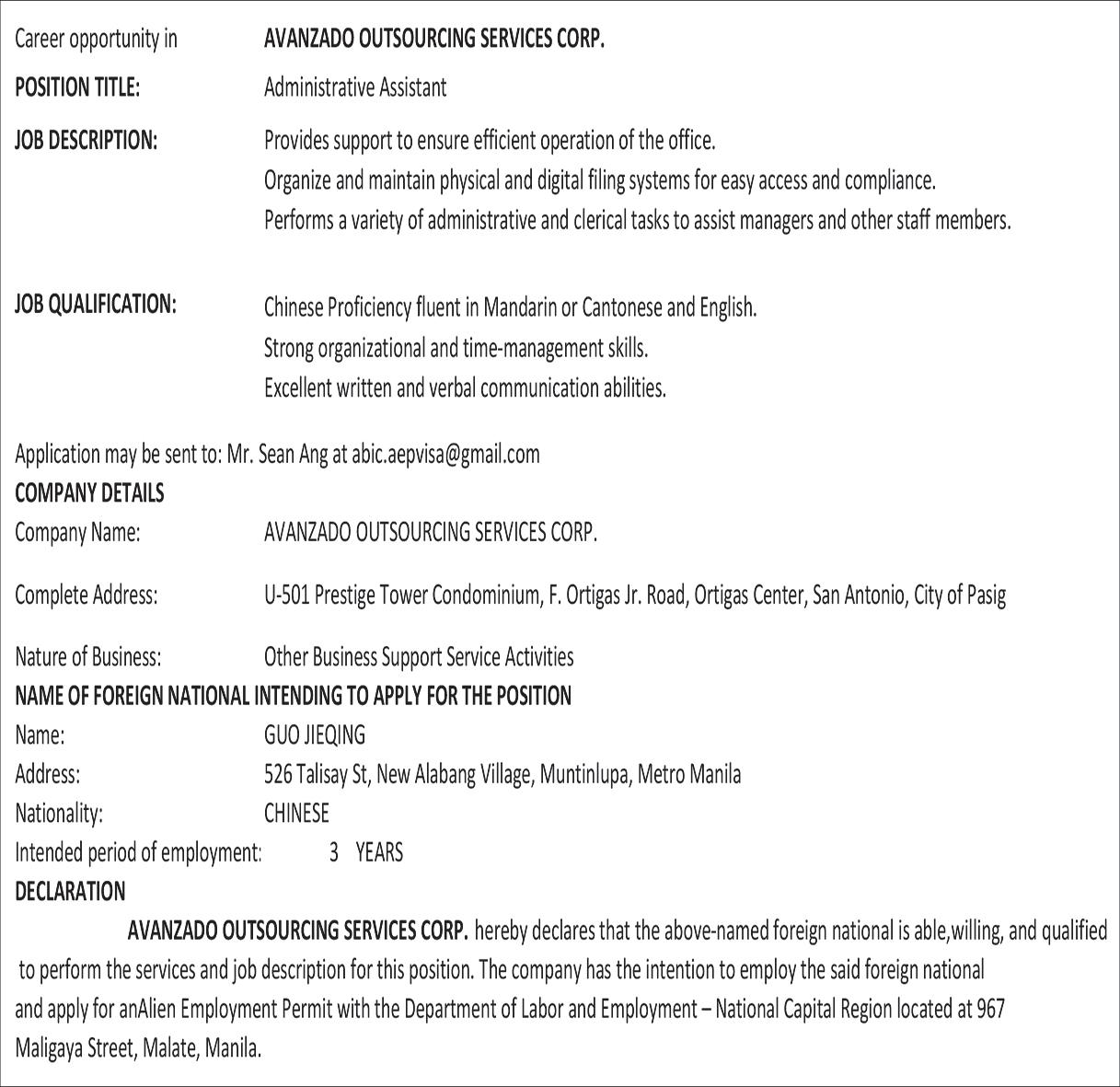
residents not to approach, photograph or touch “any debris or fragments that have fallen as a result of successful air interceptions.”
Hours earlier, the US military said it had intercepted Iranian attacks on three Navy ships in the Strait of Hormuz Thursday night and “targeted Iranian military facilities responsible for attacking US forces.”
US Central Command said in a social media post that US forces intercepted “unprovoked Iranian attacks” and responded with selfdefense strikes.
The US military said no ships were hit. It said it doesn’t seek escalation but “remains positioned and ready to protect American forces.”
President Donald Trump told reporters that the ceasefire was holding despite the violence.
Pakistani Foreign Minister Ishaq Dar spoke by phone Thursday with his Iranian counterpart, Abbas Araghchi, the Pakistani Foreign Ministry said.
“We expect an agreement sooner rather than later,” Pakistani Foreign Ministry spokesperson Tahir Andrabi said. “We hope the parties will reach a peaceful and sustainable solution that will contribute not only to peace in our region but to international peace as well.”
He declined to give a timeline.
Pakistani Prime Minister Shehbaz Sharif, speaking in televised remarks, said Islamabad remained in “continuous contact with Iran and the United States, day and night, to stop the war and extend the ceasefire.”
Continued from A4
CEO of Rappler, will deliver a special presentation on “Narrative Warfare and the Breakdown of Reality,” while Prof. Rohan Gunaratna of the S. Rajaratnam School of International Studies will discuss the “Global Impact of the Middle East War.”
Meanwhile, direct talks between Israel and Lebanon were scheduled to resume next week in Washington, according to a US official who spoke on condition of anonymity to discuss plans for the closed-door meetings.
The official said talks will be held May 14 and 15.
Iran creates agency to control passage at Hormuz
EARLIER on Thursday, a shipping data company reported that Iran has created a government agency to vet and tax vessels seeking passage through the crucial strait.
The Iranian effort to formalize control over the channel raised new concerns about international shipping, with hundreds of commercial vessels bottled up in the Persian Gulf and unable to reach the open sea. Still, hope that the two-month conflict could soon be over buoyed international markets.
The report by shipping data firm Lloyd’s List Intelligence that Iran has established a new government agency to approve transit and collect tolls from shipping in the strait raised concerns over the freedom of navigation on which global trade depends.
The agency, called the Persian Gulf Strait Authority, is “positioning itself as the only valid authority to grant permission to ships transiting the strait,” Lloyd’s reported in an online briefing Thursday. Lloyd’s said the authority had emailed it an application form for ships seeking passage.
On Friday, an oil tanker that passed through the Strait of Hormuz
Four Sessions
SESSION A – Major External Threats Affecting Business will feature panels on: (1) Territorial Disputes, Geopolitical Tensions, and Business Positioning; (2) Transnational Crime: Protecting Markets from Illicit Disruption; and (3) Climate Change as an Urgent and Growing Threat. Session B – Internal Threats to Doing Business will discuss Security Risks and Investor Confidence, Corruption and Poor
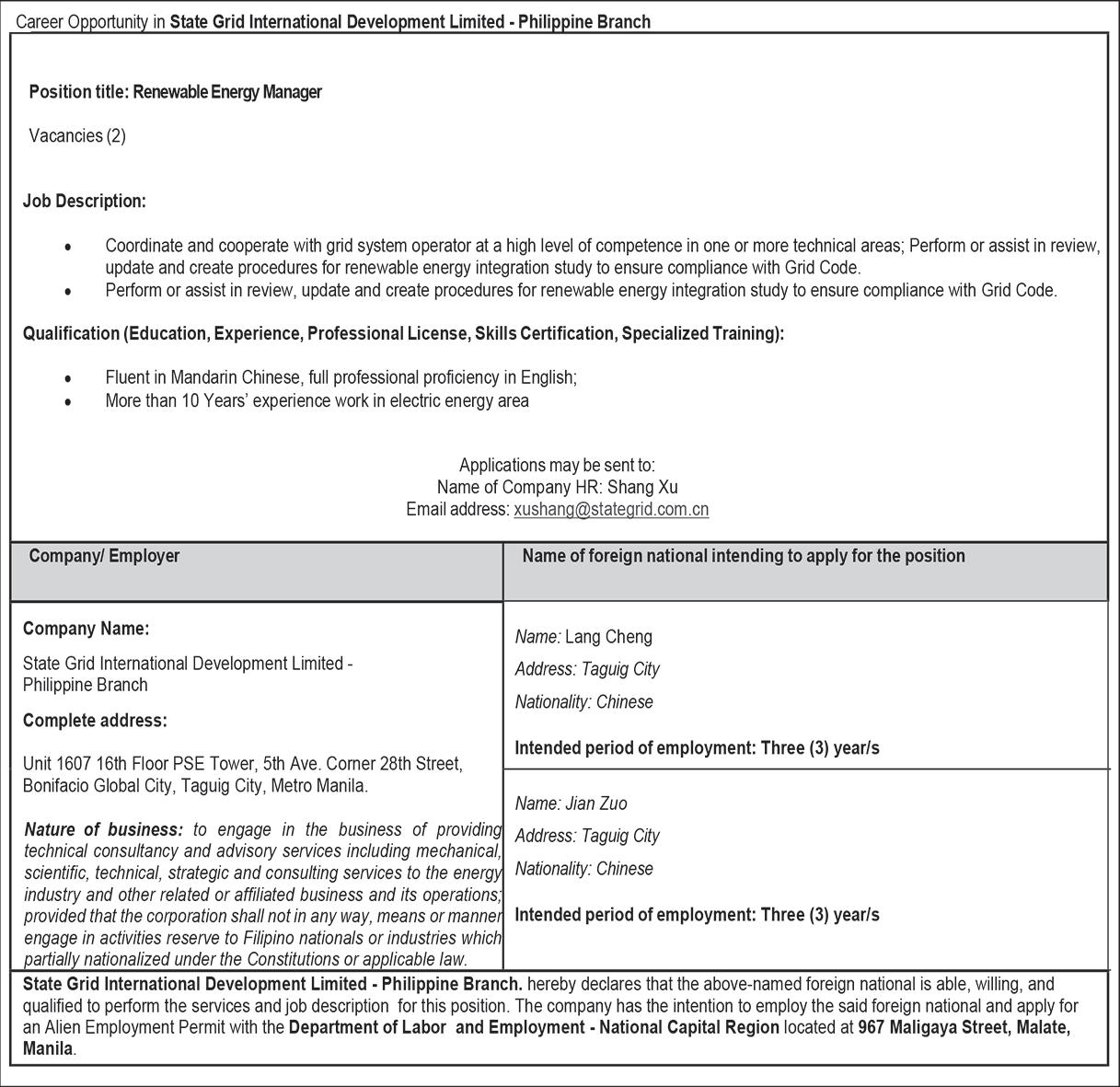
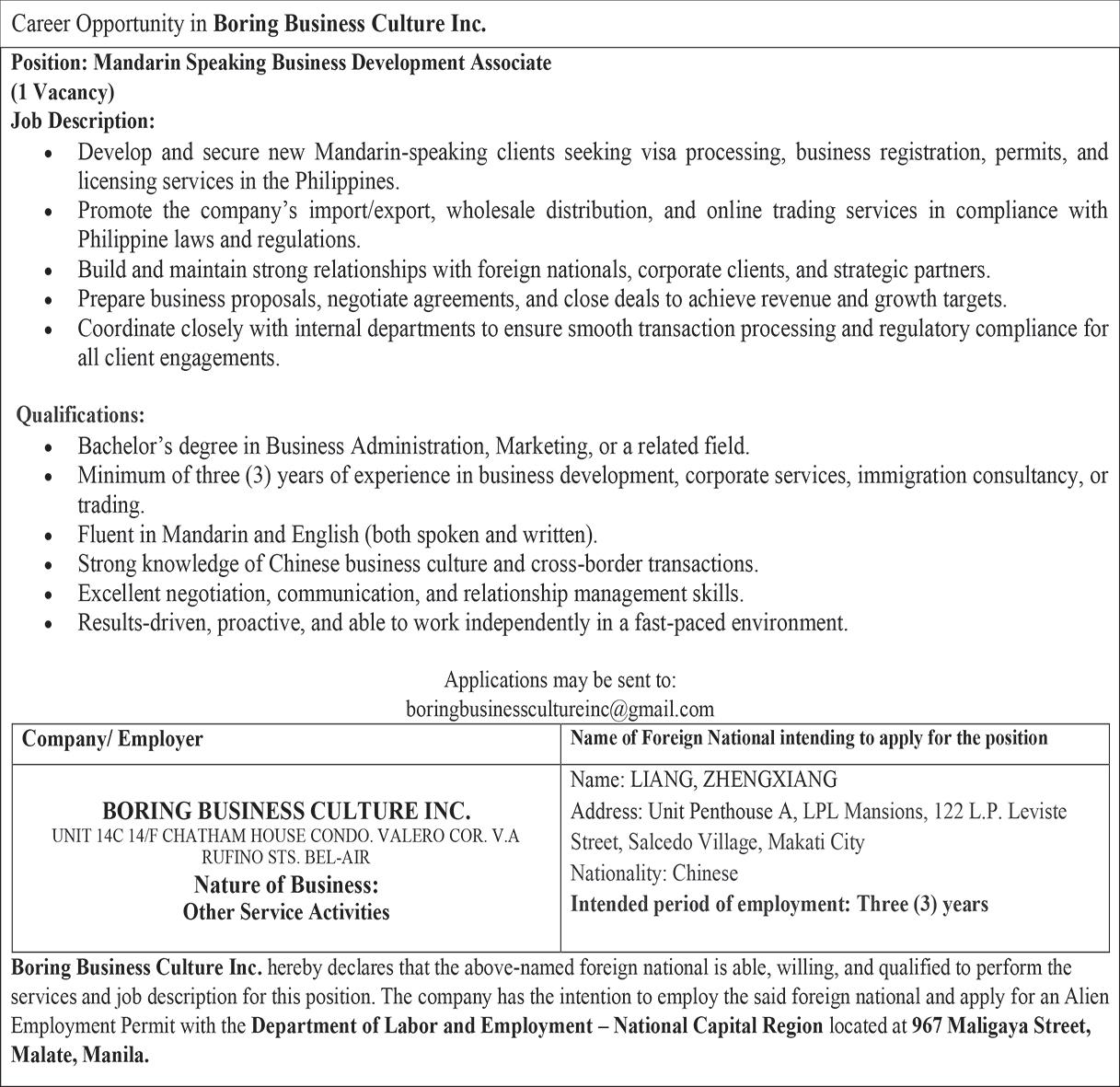
in mid-April arrived off South Korea’s coast for its 1 million barrels of crude to be unloaded at the HD Hyundai Oilbank refinery. South Korea, which last year imported more than 60% of its crude through the strait, has capped prices of gasoline and other petroleum products as the war raises fears of an energy crisis.
Iran has effectively closed the strait, a vital waterway for the shipment of oil, gas, fertilizer and other petroleum products, while the US is blockading Iranian ports. The disruptions have sent fuel prices skyrocketing and rattled the global economy.
The new Iranian agency formalizes a system Iran has used to let ships through the strait and charge tolls during the war. Iran aims to control which ships pass and, for at least some vessels, impose a tax on their cargo.
Maritime law experts say Iran’s demands to vet or tax vessels violate international law. The United Nations Convention on the Law of the Sea calls for countries to permit peaceful passage through their territorial waters. The US has threatened to impose sanctions on companies that pay tolls to Iran.
The US and its Gulf allies are pushing for the U.N. Security Council to support a resolution that condemns Iran’s chokehold on the strait and threatens sanctions. A prior resolution calling for reopening the strait was vetoed by Iran’s allies Russia and China.
McAvoy reported from Honolulu.
Governance, and Technological and Digital Challenges as Board-Level Issues.
Session C – Emerging Challenges from the Artificial Intelligence revolution will be moderated by Niel Pandya of IBM Digital Trust, with panelists from the Cybercrime Investigation and Coordinating Center, Ateneo de Manila University, and Globe Telecoms. Session D – Quantum Computing: A Future Tech or an Operational Differentiator? is a dedicated presentation session by Army
Editor: Angel R. Calso
Continued from A4
“And that matters because in today’s security environment, readiness cannot be improvised. Interoperability cannot be developed overnight. Trust cannot be built only in moments of crisis. These must already exist before they are needed. That is why exercises like Balikatan remain important,” Brawner noted. This is because drills like these sharpened coordination resiliency, and improved decision-making process across domains and across forces, and they reinforce the understanding that security in a region is a shared responsibility.
“What Balikatan demonstrated in full measure was preparedness. A professional and capable force working alongside trusted allies and partners to strengthen deterrence, stability, and peace. The strongest deterrent is a force that is prepared, credible, disciplined, and able to operate effectively with others,” Brawner said.
Likewise, the AFP chief said, “Balikatan helps ensure that the allies remain that kind of force.”
“As we conclude Balikatan 41, let us remember that this exercise ultimately represents, what this exercise ultimately represents. for the Filipino people, it is a direct investment in national defense, strengthening our ability to protect our sovereignty, defend our territory, and respond effectively to crisis,” Brawner said. And for the United States, it reflects a reliable alliance and a form of cooperation that contributes meaningfully to the stability in the Indo-Pacific.
“And for our allies and partners across the region and across the world... Balikatan stands as a model of multilateral cooperation. Building capability, reinforcing trust, and affirming our shared commitment to peace, security, and a rules-based international order,” Brawner also said.
Reserve Col. Roland Javines Ong INF head of Cybersecurity Architecture for Asia-Pacific at Asperiq AG, offering an expert deep dive into quantum computing’s real-world implications for business and national security. For registration and additional information, please visit their website at https://protect.leverageinternational.com/ or contact the Secretariat at leverage@ leverageinternational.com or call +(632) 8519-7578 or +(632) 8810-1389.

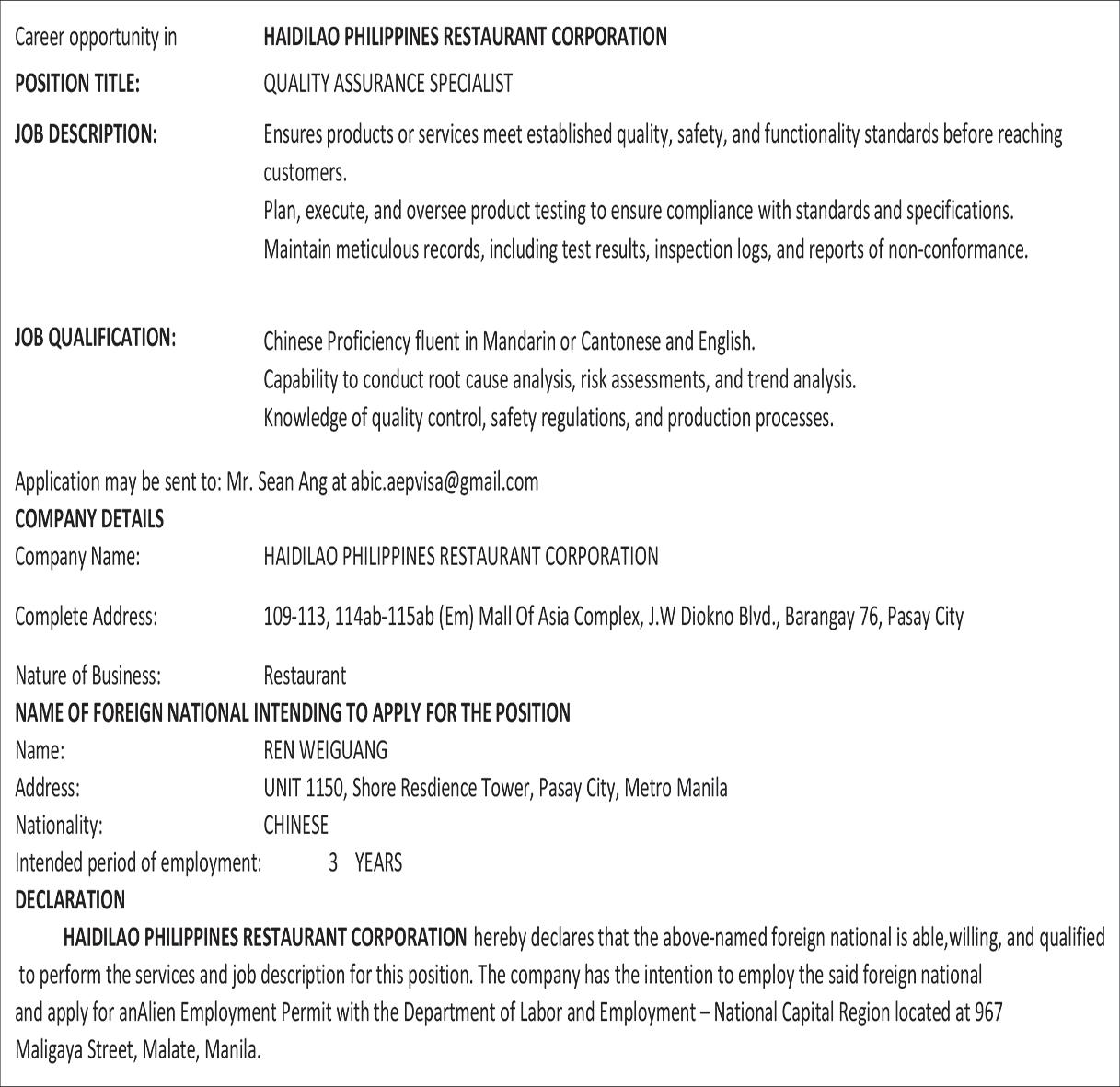
www.businessmirror.com.ph
during years the company was incurring substantial losses.
Authorizing the payment of P10.6 billion as compensation packages and advances despite the company’s solvency problems constitutes “a conscious and intentional design to do a wrongful act for the dishonest purpose of giving undue preference and benefit…,” the complaint claimed.
The complaint further raised concerns over ABS-CBN’s P12.1-billion purchases of “Property and equipment” between 2020 and 2025, when the company no longer possessed a franchise to construct, install, operate, and maintain radio and television broadcasting stations.
It said there is “more than sufficient basis to question whether these purchases of capital assets were for the benefit of [ABS-CBN] or were simply a means to further siphon corporate funds to the benefit of Management and other favored persons.”
Piki Lopez explained to the SEC that the respondents’ disbursement of P12.1 billion for capital assets—when ABS-CBN no longer had a franchise—and P10.6 billion for management compensation—amid the company’s persistent liquidity problems from 2020 to 2025—could not be considered reasonable under the circumstances. He alleged that these acts violated Sections 30 and 31 of the Revised Corporation Code, which hold directors liable for gross negligence or bad faith in directing corporate affairs and require fair and reasonable reporting of contracts with related parties.
By CHAN HO-HIM AP Business Writer
HONG KONG—Asian stocks retreated and oil prices rose on Friday as the fragile ceasefire with Iran was strained by missile and drone attacks that prompted US retaliatory strikes on Iranian military facilities.
US futures rose despite the latest flaring in the conflict. Investors are closely watching the war situation as negotiations between the US and Iran to end the war make limited progress. Tehran said Thursday that it was still examining the latest proposals from the US for ending the war.
Tokyo’s Nikkei 225 fell 0.2% to 62,713.65 after closing the day before at an all-time high. Energy

and technology giant SoftBank Group lost 4.6% after soaring 18% on Thursday.
Elsewhere in Asia, South Korea’s Kospi edged 0.1% higher to 7,498.00, a record closing high, as gains for tech shares offset wider losses.
Hong Kong’s Hang Seng dropped 0.9% to 26,387.90 and the Shanghai Composite index shed 0.1% to 4,176.71.
Australia’s S&P/ASX 200 lost 1.5%
to 8,744.40. Taiwan’s Taiex fell 0.8%, while India’s Sensex declined 0.7%. Oil prices traded higher early Friday after falling the day before. Brent crude, the international standard, climbed 0.7% to $100.78 per barrel. Brent crude was roughly $70 a barrel before the Iran war began in late February.
Benchmark US crude rose 0.6% to $95.36 a barrel. The US Central Command said Thursday that it intercepted “unprovoked” Iranian attacks on Navy ships in the Strait of Hormuz, although no vessels were struck. But US President Donald Trump told reporters the ceasefire with Iran
was still intact.
The United Arab Emirates, a US ally, said early Friday that its air defenses were “actively engaging” with a missile and drone attack. Oil and fuel prices are expected to remain elevated for as long as the Strait of Hormuz, a key waterway for oil and gas transit, remains largely closed and a US sea blockade on Iranian ports continues.
On Thursday, US stocks pulled back from records. The benchmark S&P 500 fell 0.4% to 7,337.11. The
0.6% to
Average
while the
composite dropped 0.1% to 25,806.20. Shares of Whirlpool sank 11.9% following weaker-than-expected results, and Shack Shack tumbled 28.3% likewise. McDonald’s fell 0.1% after recording latest quarterly revenue that was better than what analysts had expected. The US dollar fell to 156.82 Japanese yen from 156.93 yen. The
By Matthew Lee AP Diplomatic Writer
WASHINGTON—The United States is not looking at imminent military action against Havana despite President Donald Trump’s repeated threats that “Cuba is next” and that American warships deployed in the Middle East for the Iran conflict could return by way of the island, US officials say.
The officials involved in preliminary discussions with Cuban authorities also told The Associated Press that they are not optimistic the communist government will accept an offer for tens of millions of dollars in humanitarian aid, two years of free Starlink internet access for all Cubans, agricultural assistance and infrastructure support. But they say Cuba has not yet outright refused the offer, which comes with conditions that the government has long resisted, even
after the Trump administration imposed new sanctions Thursday on Havana. The largest of those sanctions is against GAESA, or Grupo de Administración Empresarial S.A., a business conglomerate operated by the Cuban Revolutionary Armed Forces.
The officials, who spoke on condition of anonymity to discuss the private talks, say there is still time for the government to accept the offer. They cautioned, though, that Trump could change his mind at any time and that military options are still on the table.
The Treasury and State departments announced the sanctions after Trump signed an executive order last week expanding the administration’s authority to impose penalties on Cuba.
Cuban Foreign Minister Bruno Rodríguez described the measures as “collective punishment” and denounced the US government’s “genocidal intent against Cuba.”

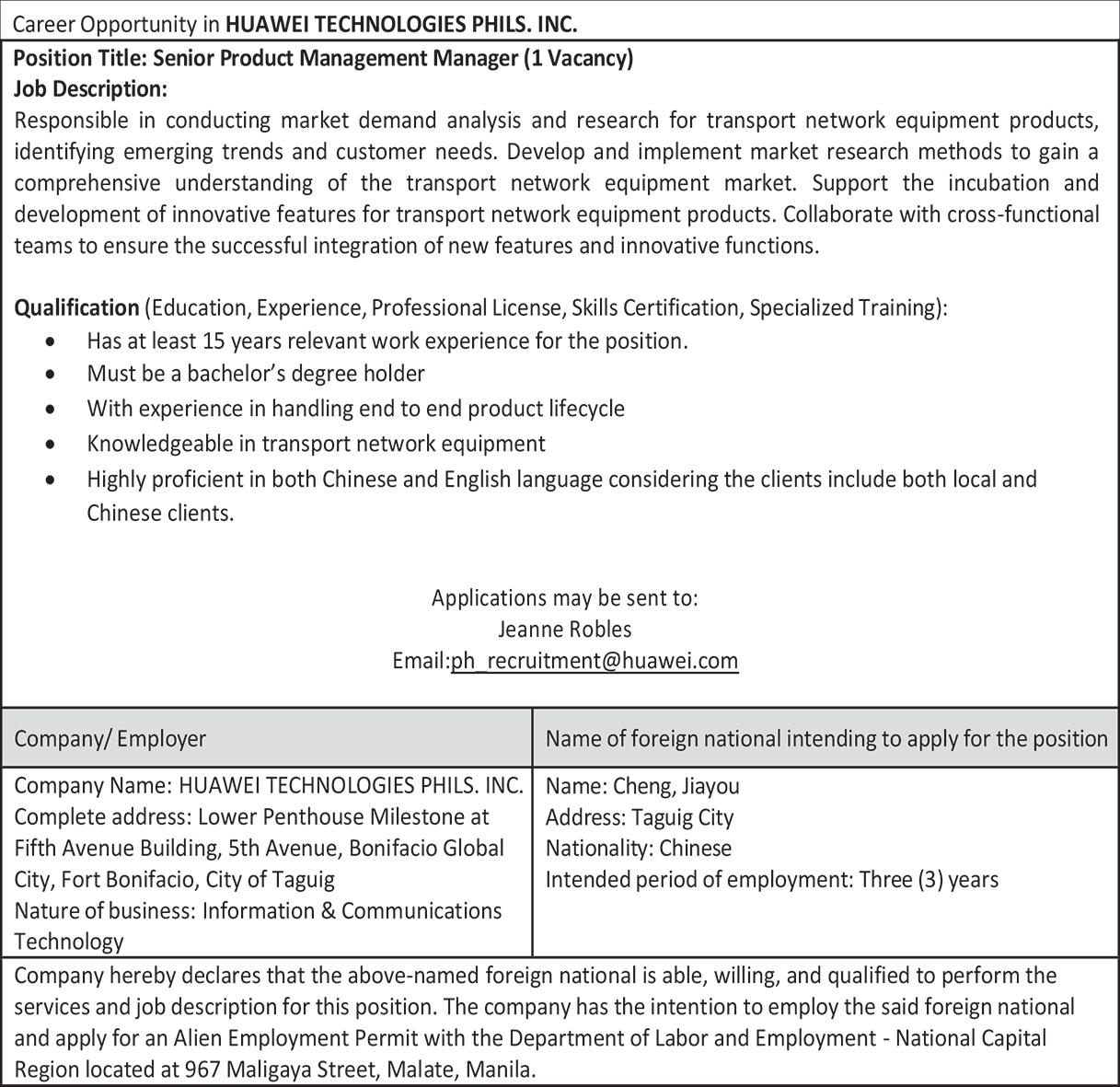
“These actions rely on the assumption that the United States can impose its will on the world while threatening foreign citizens and businesses with illegitimate coercion,” Rodríguez wrote on X.
Trump has suggested possible action against Cuba SHORTLY after signing the order Friday, Trump gave a speech mentioning that “Cuba’s got problems” and suggesting that a military show of force may be in the offing.
He said one of the US aircraft carriers on its way back from the Middle East could “come in, stop about 100 yards offshore, and they’ll say: ‘Thank you very much. We give up.’”
One official involved in the discussions said the new sanctions authority was intended, however, to make clear to the Cubans that the Trump administration’s immediate goal is “not regime change, but changing the regime’s failed policies.”
Secretary of State Marco Rubio, the son of Cuban immigrants who has long taken a hard line against Cuba’s leadership, has said repeatedly that the country’s government has failed. He said this week that Cuba’s economic model doesn’t work and those in power “can’t fix it.”
“And the reason that they can’t fix it is not just because they’re communist. That’s bad enough,” he told reporters Tuesday at the White House. “But they’re incompetent
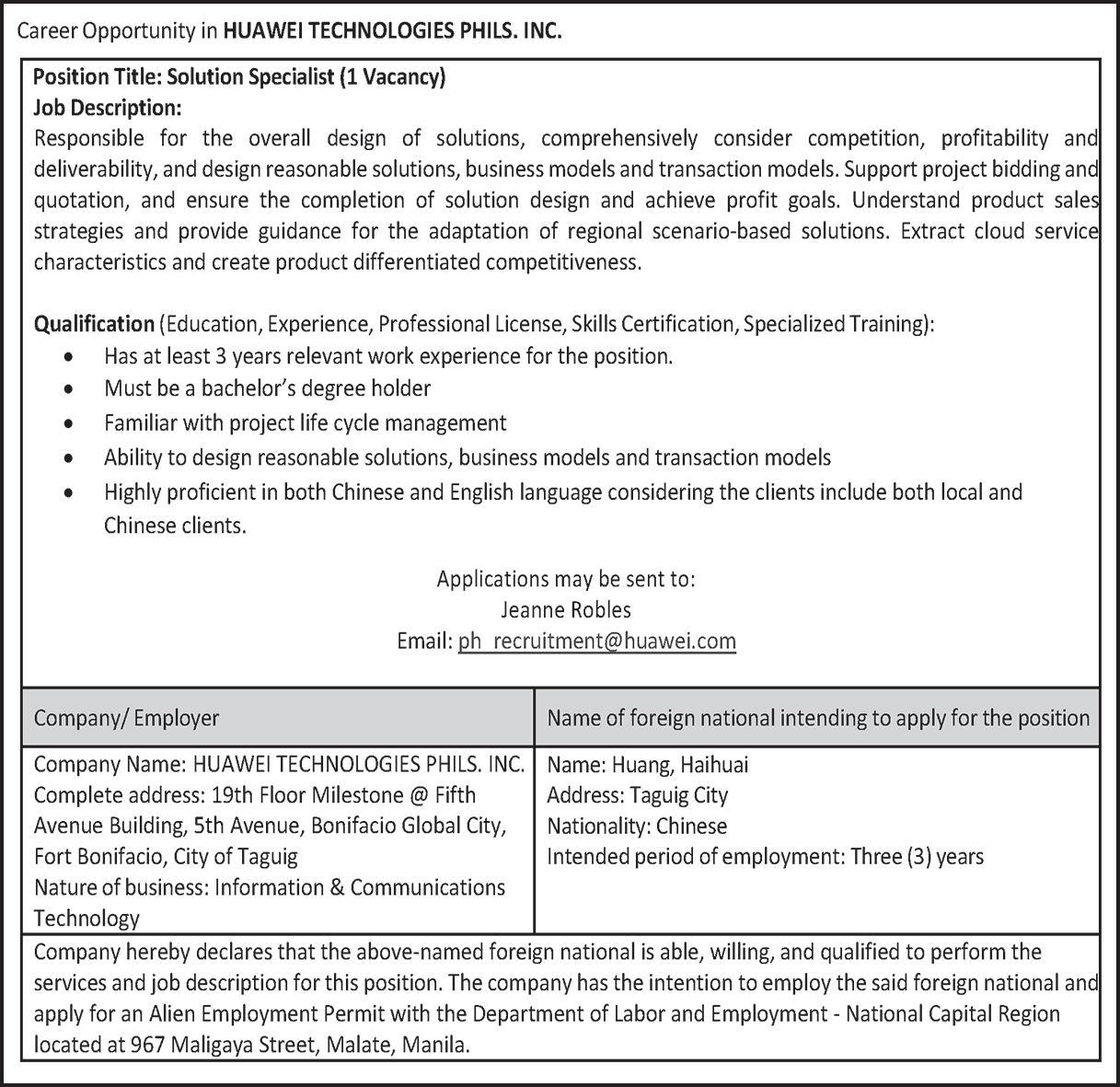
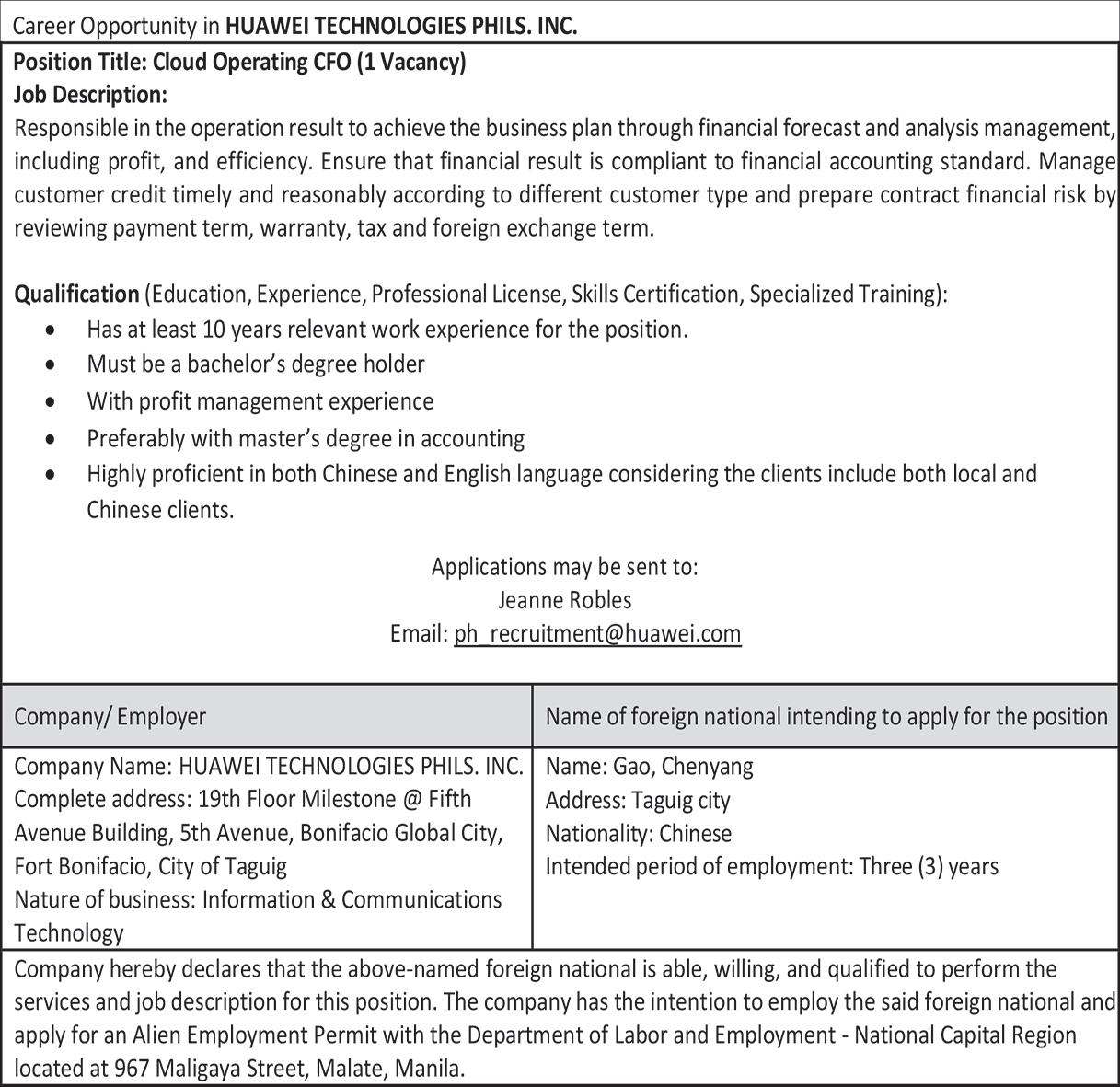
communists. The only thing worse than a communist is an incompetent one.”
Rubio is visiting Rome and Vatican City, meeting Pope Leo XIV on Thursday in part to discuss Cuba, where the Catholic Church has significant influence.
US officials don’t know if Cuba will accept conditions but say dialogue is open
ONE US official said it is an open question as to whether Cuba’s leadership is willing to meet US conditions, which include the release of political prisoners, an end to political and religious repression, and an opening to American private sector investment.
At the same time, the official said the door has not closed to dialogue that could help both countries given Cuba’s proximity to the US. The United States sees a national security threat in what the official called increasing influence on the island by China and Russia, including intelligence and logistics cooperation.
Cuban officials are adamant, though, that Cuba’s internal governance is not up for negotiation.
The Associated Press writers
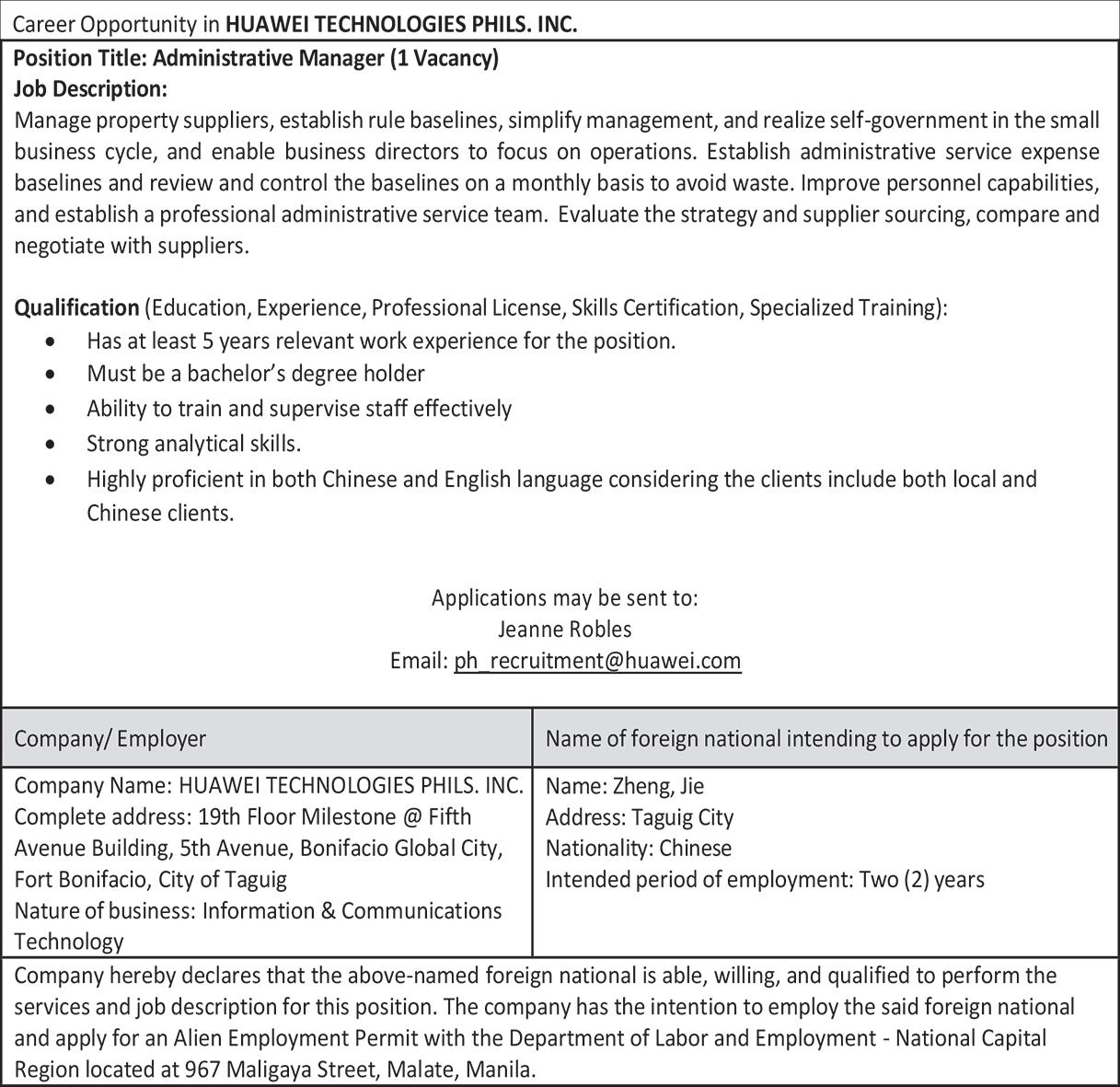
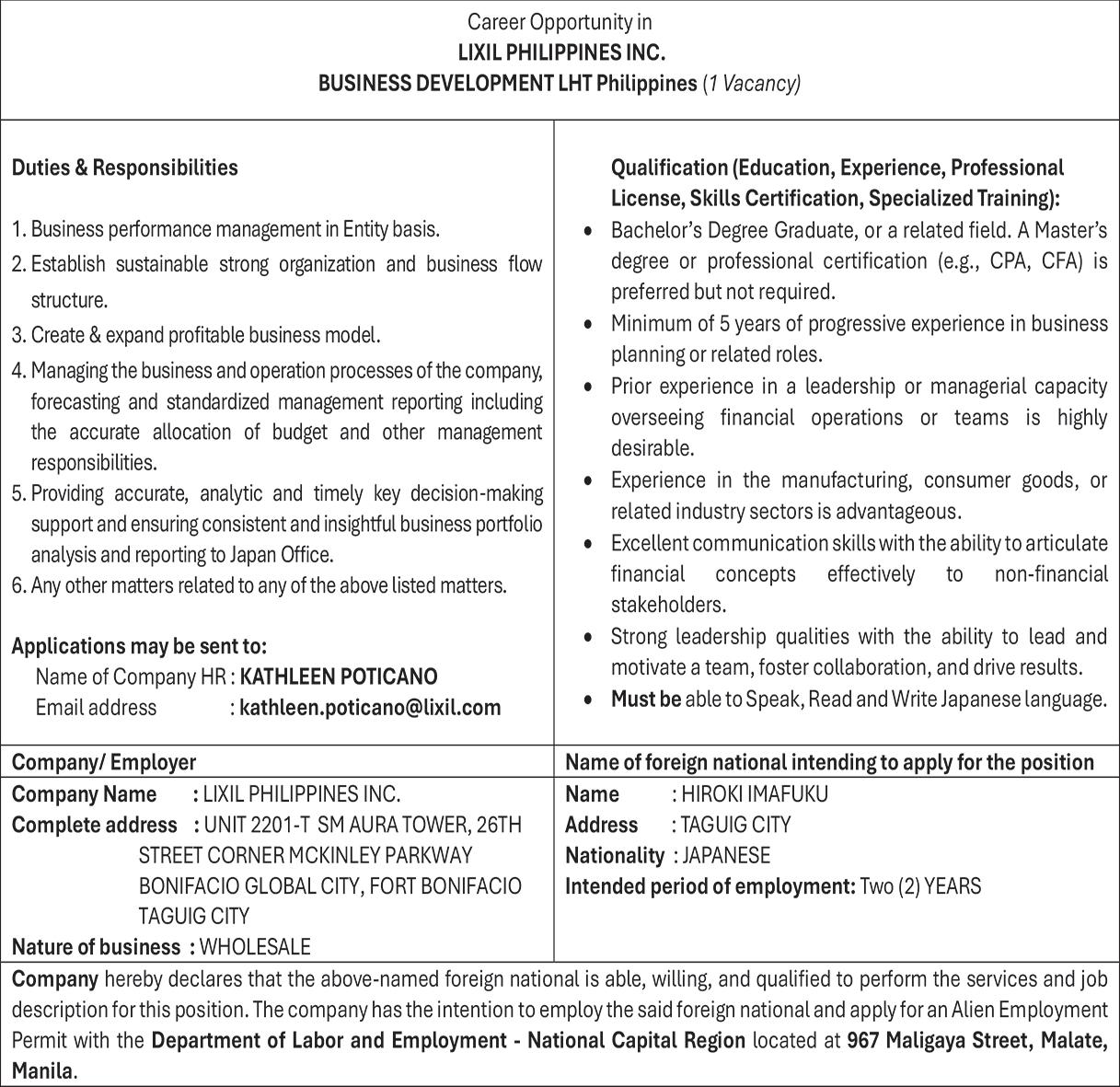
A12 Saturday, May 9, 2026

By Josef T. Ramos
ANDON CITY, Ilocos
CSur—Danish rider Daniel Ridwan Guld broke through with a long-awaited victory, ruling Stage 9 of the Metro Pacific Tollways Corporation (MPTC) Tour of Luzon on Friday.
The 25-year-old rider from the city of Aarhus surged from the back of the pack and launched an attack in the final 100 meters to edge out Pangasinan’s Benedict Soriano and Daniel Jay Fariñas.
It ended a long dry spell for Guld, whose last stage victory came in the 2023 East Japan Road Classic.
“My plan was just to break away,
and our young guys, my family, performed so well despite having no real sprinters or climbers,” Guld, riding for the CCN Factory racing team, told the BusinessMirror on Friday.
“Then I took my chance on the final break. Glad to get a win here in the Tour of Luzon.
“I struggled with the heat at first, but I am now starting to get used to it. It was a good day,” Guld said. Guld clocked thjree hours, 13 minutes and two seconds, while submitting the same times were Soriano, Fariñas, Ronnilan Quita of 7-Eleven Road Bike Philippines, Sumiso Basalan of Excellent Noodles, Marc Ryan Lago of Go for Gold, and Rrking Roque of MPT DriveHub after the 137.6-kilometer stage from Laoag


DE LA SALLE University looks to complete an unbeaten run to the crown in the women’s volleyball competition when the Lady Archers try to close out the National University Lady Bulldogs on Saturday at SM Mall of Asia Arena.
The Lady Archers hope to make it 16 straight victories after reaching the final via a 14-0 sweep of the eliminations and taking the opener of the title series. The match starts at 5 p.m.
La Salle also tries to avoid a repeat of the 2014 season, when the Lady Spikers swept the eliminations, but Ateneo won the finals.
“I don’t want a repeat of that [Season 76 loss],” De La Salle head coach Ramil de Jesus said. “This is the right time for us to get to that lofty position again. So we have to prepare hard for this one.” The architect of La Salle’s 12 titles said he is prepared for whatever adjustments his former ward, first-year NU coach Regine Diego may make, with the Lady
VBulldogs’ backs against the wall.
“We’ll have to play our game, what we’ve trained hard for,” de Jesus said.
Angel Canino, who had 17 points and nine digs in Game 1,
acknowledged that the Lady Bulldogs will not simply give up the crown.
“We expect a tough match against NU. We know they

City to the Candon City Arena. Quita, a 31 member of the Philippine national cycling team, had a shot at the stage win but blew past the final turn about 800 meters from the finish.
“It was painful but that is okay because there are still many stages. Anything can still happen in four stages,” Quita, from Tarlac, said.
Overall leader Nikita Shulchenko of Russia, riding for Life Cycle Works UAE, finished with the second group, 49 riders, just 23 seconds behind. Shulchenko has a cumulative time of 26:01:59, while teammate Yousef Ibrahiem Alrefai of Syria stayed in second in the individual general
will come prepared, be we also will,” Canino said.
Not since 2019 has the title series gone the distance, when Ateneo rallied from a series-opening defeat to beat University of Santo Tomas. With NU staring at the possibility of losing the crown, Diego emphasized the need for her

ANCOUVER, British Columbia—For former player and activist Khalida Popal, the formal recognition of an Afghanistan women’s refugee team on the international stage isn’t just about soccer. The FIFA Council agreed last week during a meeting in Vancouver to amend its rules to recognize the team after a long campaign by Popal, advocates and others, meaning it could someday qualify for the World Cup or the Olympics. It was a moment of celebration for Popal after years of fighting. “It has always been about the identity, it has always been about the greater mission, beyond football. We are not skillful, the most skillful team in the world, if you see our ranking, our results, it’s never been only about football,” Popal told The Associated Press. “Of course, football is the love and joy that brings. We’ll never forget that, but it was more about who we are as the identity, the women of Afghanistan.”
Popal was one of the founding members in 2007 of the Afghanistan national team, which fought for acceptance before the Taliban’s rise to power led to a prohibition on women playing sports. She was later instrumental in helping players flee the country in 2021 when Kabul
Popal, the players who escaped and other advocates for the team subsequently mounted a campaign to revive the national team as a refugee team that would be eligible to compete for spots in international tournaments. The victory for the team, which plays under the name Afghan Women United, also cleared the way for other teams that may face similar circumstances in the future.

“They have taken this great step to not only
classification, trailing by one minute and 38 seconds. Mervin Corpuz of 7-Eleven is running third, 4:15 behind, while Quita moved from sixth to fourth, 4:19 off the pace. Go for Gold kept the lead in the team classification with a time of 103:15:35, while Standard Insurance Philippines 1:40 behind and 7-Eleven trailing 3:04.
Saturday’s Stage 10 from Candon City to Cervantes has a punishing ascent along Bessang Pass in Cervantes that stretches around 30 kilometers of the 131.2-kilometer route.
“It is a 30-kilometer uphill tough race tomorrow. So, I will try my best again if I can do something, and I think it will be survival for the next few days,” Guld said.
team to stay mentally strong.
“It’s now more mental than physical. We just have to focus on that again and go back to the drawing board and do our best,” Diego said.
“I told them to hold their heads high because it’s not the end. If we get too emotional about this, it’s harder for us to move forward.”
Vange Alinsug admitted the Lady Spikers were the better team in the opener, and that the Lady Bulldogs’ response will determine whether the series goes the distance.
“La Salle’s confidence is now very high, one more win and the title is theirs. But there’s still time for us to polish our plays, we need to work on consistency,” Alinsug said.
The Lady Spikers last completed an undefeated season in 2004, when they were outright champions under the old format via a 14-0 sweep.
In the men’s division, NU aims for a sixth straight title as it faces a Far Eastern University side looking to regroup after a tough five-set loss in the opener.
The Bulldogs and Tamaraws face off at 12 p.m.
THE Lady Archers chase a 16-0 sweep. UAAP
AP

More than 80 Afghan refugee players are currently scattered across Australia, the United States and Europe. Two camps were recently held for the women, one in England and another in Australia. The team, led by Scottish coach Pauline Hamill, is expected to play a pair of exhibitions during the upcoming June international window. The location and opponents for the matches hasn’t been determined.
“I think that what this sort of says is that women can come together, and sport actually can be this vehicle or this conduit to change,” FIFA chief football officer Jill Ellis said. “I think that’s why we’re working so hard within FIFA to get women’s football into every country, because we all recognize the benefits in society of having women that are strong and confident. But now to see it in such a major statement, I think it just reinforces that sport actually can not
just bring people together, but create change and create opportunities, and rightly so, for those that either don’t have it or had it taken away from them.” Popal served as captain of the
because of threats to her
and settled in Denmark. She remained connected to the team and in
and
helped expose
involving the
program. Keramuddin Keram, the federation president, was banned for life by FIFA amid allegations of sexual abuse. In 2021, Popal was part of an international coalition, which included the global soccer players union FIFPRO, that helped some 75 people connected to the women’s team escape the country amid harrowing circumstances.
The first move toward the refugee team’s formal recognition came last October, when the Afghan refugees played in a tournament that included Chad, Libya and Tunisia in Morocco. AP