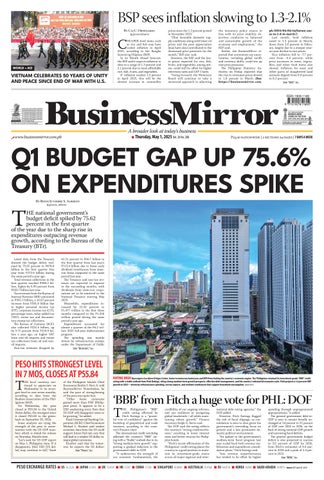
national government’s budget deficit spiked by 75.62 percent in the first quarter of the year due to the sharp rise in expenditures outpacing revenue growth, according to the Bureau of the Treasury (BTr).
Latest data from the Treasury showed the budget deficit widened by 75.62 percent to P478.8 billion in the first quarter this year from P272.6 billion during the same period a year ago. Total revenue collections in the first quarter reached P998.2 billion, higher by 6.90 percent from P933.7 billion last year.
Tax revenues from the Bureau of Internal Revenue (BIR) amounted to P931.5 billion, a 16.67-percent increase from P591.8 billion due to higher personal income tax (PIT), corporate income tax (CIT), percentage taxes, value-added tax (VAT), excise tax and documentary stamp tax collections.
The Bureau of Customs (BOC) also collected P231.4 billion, up by 5.72 percent from P218.9 billion a year ago, on higher VAT from non-oil imports and excise tax collections from oil and nonoil imports. Non-tax revenues dropped by
41.21 percent to P66.7 billion in the first quarter from last year’s P113.4 billion due to fewer early dividend remittances from staterun firms compared to the same period last year.
The Treasury said non-tax revenues are expected to improve in the succeeding months, with dividends from state-run corporations set to be remitted to the National Treasury starting May 2025.
Meanwhile, expenditures increased by 22.43 percent to P1.477 trillion in the first three months compared to the P1.206 trillion posted during the same period a year ago.
Expenditures accounted for almost a quarter of the P6.2 trillion 2025 full-year disbursement program.
The spending was mainly driven by infrastructure outlays under the Department of Public
By Cai U. Ordinario @caiordinario
CHEAPER food items such as rice and fish may have cooled inflation in April 2025, according to the Bangko Sentral ng Pilipinas (BSP).
In its Month Ahead forecast, the BSP said it expects inflation to slow to a range of 1.3 percent and 2.1 percent due to more affordable rice, fish, fruits, and vegetables. If inflation reaches 1.3 percent in April 2025, this will be the slowest increase in commodity
prices since the 1.2 percent posted in November 2019.
“[The] favorable domestic supply conditions along with lower oil prices and the peso appreciation [may have also] contributed to the downward price pressures for the month,” BSP also said.
However, the BSP said the lower prices expected for rice, fish, fruits, and vegetables, among others, could still be offset by higher electricity rates and LRT-1 fares.
“Going forward, the Monetary Board will continue to take a measured approach in adjusting
the monetary policy stance in line with its price stability objectives conducive to balanced and sustainable growth of the economy and employment,” the BSP said.
Earlier, the BusinessMirror reported that economists say uncertainties, including global tariffs and currency shifts, could stir up new price pressures.
The Philippine Statistics Authority on Friday reported that the rise in consumer prices slowed to 1.8 percent in March. (See: https://businessmirror.com.
ph/2025/04/04/inflation-eas -
es-to-1-8-in-march/)
Last month, food inflation eased to 2.3 percent in March, down from 2.6 percent in February, largely due to a steeper yearon-year decline in rice prices. Rice inflation fell to -7.7 percent from -4.9 percent, while price increases in meat, vegetables, and other food items also slowed. Inflation for meat
THE local currency continued to appreciate on Wednesday to its strongest level in over seven months, according to data from the Bankers Association of the Philippines (BAP).
On Wednesday, the peso closed at P55.84 to the United States dollar, the strongest since it closed P55.69 to the greenback on September 20, 2024.
Some analysts are tying the strength of the peso to uncertainties with the US GDP numbers which is slated for release on Thursday, Manila time.
“Let’s wait for US GDP report on May 1, Philippine time. If it disappoints, [the] USD [US dollar] may continue to fall,” Bank
of the Philippine Islands Chief Economist Emilio S. Neri Jr. told BusinessMirror. Nonetheless, he said the pace of strengthening of the peso was quite fast.
“Other Asian currencies gained more than PHP [Philippine peso]. It appears to be a USD weakening story. Bets that US GDP will disappoint seem to be growing,” he added.
Rizal Commercial Banking Corporation (RCBC) Chief Economist Michael L. Ricafort said weaker economic data from the US could support future Fed rate cuts that will lead to a weaker US dollar vs. major global currencies. Ricafort said that for tomorrow, he expects the US dollar/
THE Philippines’s “BBB” credit rating affirmed by Fitch Ratings is a “powerful vote of confidence” against the backdrop of geopolitical and trade tensions, according to the country’s Finance chief.
The international credit watchdog affirmed the country’s “BBB” rating with a “Stable” outlook due to its “strong medium-term growth” supporting a gradual reduction in the government’s debt-to-GDP.
“It underscores the strength of our economic fundamentals, the
credibility of our ongoing reforms, and our resilience in navigating global headwinds—all while maintaining robust growth,” Finance Secretary Ralph G. Recto said.
The DOF said the rating reflects the country’s “strong creditworthiness,” resulting in lower interest rates and better returns for Philippine bonds.
“Fitch’s recent affirmation of the Philippines’ credit rating places the country in a good position to maintain its investment-grade status across all major regional and inter-
national debt rating agencies,” the DOF added.
However, Fitch Ratings flagged the risk of fiscal slippage, as consolidation is seen to slow given the government’s overriding focus on growth and a less permissive domestic political environment.
“An update to the government’s medium-term fiscal program last year scaled back both revenue mobilization and expenditure consolidation plans,” Fitch Ratings said.
“Any revenue outperformance has tended to be offset by higher
spending
appropriations,” it added.
peso exchange rate to range between the P55.75 and P55.95 levels. In the next seven months, there will be a potential re-test of the P55.45 low posted on September 20, 2024. Meanwhile, as a net food importer, it can be noted that the strengthening of the peso are also periods of slow inflation. In September 2024, when inflation was hovering between 55 and 56, inflation was below two percent.
Data from the Philippine Statistics Authority was also the last month inflation averaged below 2 percent at 1.9 percent prior to March 2025, when inflation averaged 1.8 percent.
Jonathan Ravelas, senior adviser at professional services firm Reyes Tacandong & Co. told BusinessMirror that the weaker dollar benefits consumers through commodity prices.
However, he said the weaker dollar could dampen the purchasing power of Overseas Filipino Workers (OFWs) families. Cai U. Ordinario
3 mos since FTA began, PHL exports to Korea down 28.6%
PHILIPPINE
goods being shipped to South Korea saw a double-digit decline in the first quarter of 2025, three months from the date of effectivity of the free trade deal with South Korea.
Data from the Philippine Statistics Authority (PSA) showed that Philippine exports to South Korea declined by 28.6 percent to $735.64 million in the first quarter of 2025 from the $1.03 billion in the same period last year.
In contrast, the goods imported by the Philippines from South Korea in the three-month period this year grew by 8.2 percent to $2.28 billion from last year’s $2.11 billion.
Moreover, vegetables, tubers, and plantains saw a slight decline from 7.1 percent to 6.9 percent. However, inflation for fish and seafood bucked the trend, surging to 5.5 percent from 2.9 percent. (See: https://businessmirror.com.ph/2025/04/05/ slowing-inflation-brings-morequestions-than-relief/).
Sought for comment, Ateneo De Manila University (ADMU) economist Leonardo A. Lanzona explained to the BusinessMirror that having a free trade agreement (FTA) does not mean that trade can be “smoothly implemented right away.”
Lanzona added: “It is feasible that the goods that Philippines exports to South Korea can be produced there more cheaply or are
not differentiated from the goods they are already producing.”
He explained that it takes a lot of time and trading for the Philippines to know what these goods are and how to sell them to a larger group of customers at a larger scale.
With this, Lanzona said the Philippines needs to look at goods or services that lead to “trade creation,” not trade diversion.
“In other words, we need to trade in goods that lead to higher welfare and profits for both countries,” he added.
Further, the Philippines needs to discuss with South Korea “how we can produce the goods they would want to purchase from us, goods that are expensive for them to produce but cheaper for us to export them.”
While the Philippines is still working around its exports to
South Korea, Lanzona said: “This may require some transfer of technology mainly from their [Korea] side so we can participate in supply chains they are creating.”
In this case, he said Korea needs to invest in the Philippines first to enhance trade creation.
It is worth noting, according to Lanzona, that this was what Japan did after the JapanPhilippines Economic Partnership Agreement (PEPA) took effect.
“The idea is that FTA is a long-term process requiring the Philippines to catch up
with Korea. That is the reason we should open our economy to foreign companies,” added Lanzona.
Meanwhile, in a statement released by the Philippine Economic Zone Authority (Peza) on Tuesday, the investment promotion agency pointed out that South Korea was its top source of investments in the January to April 2025 period, amounting to P10.45 billion. Peza said this indicates that ecozones are “reaping from the country’s newly signed FTA with South Korea and the emerging China+2 strategy in the region.” Andrea E. San Juan
Meanwhile, the current account deficit is expected to remain unchanged in 2025 to 2026 after widening to 3.8 percent of GDP in 2024, on a strong pick-up in travel debits.
“Strong domestic demand, partly related to public infrastructure development, will continue to drive import growth, offset by lower hydrocarbon import prices and growth in remittances and service exports,” Fitch Ratings said.
The country’s current account deficits are financed through long-term external borrowings and foreign direct investments, which Fitch Ratings said are “gradually eroding its external position, making it a net external debtor in 2024, in line with the ‘BBB’ median.”
For the Philippines to land in a positive rating action or upgrade, Fitch Ratings said reductions in government debt-to-GDP must be sustained. The country’s debt-to-GDP is currently at 60.7 percent, slightly above the internationally accepted threshold of 60 percent. The debt and revenue ratios levels must also be below the ‘BBB’ category median due to reforms broadening the revenue base or gains in spending efficiency that do not undermine the growth outlook.
Outstanding debt soared to a new high of P16.632 trillion as of the end of February, while revenue collections amounted to P999.167 billion in the first quarter of the year.
“Rest assured, we are ready to respond to these risks with agility and resolve—through forward-looking reforms such as the CREATE MORE Act and strategic investments in innovation and human capital,” Recto said. The country’s economic managers aim to secure a credit rating upgrade within the Marcos Jr. administration. Reine Juvierre S. Alberto
It is also tasked with strengthening the capacities of national and local government agencies in planning and policymaking to ensure equitable access to economic opportunities. Cai U. Ordinario
the Economy, Planning and Development Act, which officially transformed Neda into DepDev. Under the law, DepDev is mandated to ensure the alignment of institutionalized national and regional plans, the integration of long-term strategies into the budgeting process, and the pursuit of proactive approaches to address emerging challenges.
earlier forecast of 6.1 percent in January 2025.
IMF’s outlook of a 5.5-percent economic growth is at the bottom of the government’s target of 6 to 8 percent this year. (See: https://businessmirror.com. ph/2025/04/23/imf-cuts-phlgrowth-outlook-from-6-1to-5-5/).
Josua Mata, the lack of direct dialogue is only one symptom of a larger issue: the continued rise of contractualization under Marcos’ administration.
The recent external developments, higher uncertainties, financial tightening and the lower-thanexpected growth outturn in the fourth quarter of 2024 triggered the lowering of the IMF’s growth projections for the Philippines.
cit will ultimately be financed by additional debt.
Works and Highways (DPWH) and social protection programs of the Department of Social Welfare and Development (DSWD).
Interest payments reached P241.0 billion, higher than last year’s actual payment of P193 billion by 24.88 percent.
Higher fund transfers to local government units and the Bangsamoro Autonomous Region in Muslim Mindanao, including the P32.8 billion transfer to the Coconut Farmers and Industry Trust Fund, also drove increased spending.
For March alone, the deficit nearly doubled to P375.7 billion from P195.9 billion in the same month last year. Revenues dropped 3.01 percent to P279.3 billion while expenditures rose 35.37 percent to P655 billion.
The widening fiscal deficit is expected to tighten government spending in the coming months and could pressure interest rates to rise, according to Leonardo A. Lanzona, economics professor at the Ateneo de Manila University.
“If the government continues to slack with revenues, then it has no other choice but to reduce its spending,” Lanzona told BusinessMirror.
Since the Department of Finance (DOF) said there will be no new taxes, Lanzona said the defi-
“The ongoing global uncertainties should prompt the government to raise taxes particularly by making it more progressive,” Lanzona said, adding that wealth taxes are the most feasible right now.
“The failure to do so will have severe effects on the country’s growth,” he added.
Incurring debt during a global recession will be almost impossible, Lanzona said, as people would rather hold on to cash.
“While higher public spending especially on infrastructure and social services can support economic momentum, the limited growth in revenues highlights structural constraints in our tax system,” John Paolo R. Rivera, senior research fellow at the Philippine Institute for Development Studies, told BusinessMirror Rivera said the DOF’s stance of no new taxes hinges on improving tax administration and digitalization.
However, without broadening the tax base or enhancing efficiency, it may be difficult to sustain revenue growth at a pace that matches rising expenditures, Rivera added.
“If this trend continues, the government could face fiscal consolidation pressures in the medium term, possibly affecting its ability to meet investment-grade credit expectations and social development targets,” Rivera said.
Mata said the problem has worsened since 2022, pointing to the services sector—which remains the country’s top job generator—as a primary driver.
These jobs, he noted, are often contractual and lack security of tenure. According to the February 2025 Labor Force Survey by the Philippine Statistics Authority, the services sector accounted for 30.29 million or 61.6 percent of the country’s total 49.15 million employment population. Subsectors such as accommodation and food service activities posted the largest annual increase in employment, with 377,000 new jobs—many of which are believed to be non-regular.
“This shows contractualization is here to stay. The government isn’t interested in ending it. How can they create fair labor policies if they don’t even understand the scale of the problem?” Mata told BusinessMirror He also flagged the rising number of gig economy workers, particularly delivery riders, as the “worst evolution” of contractualization. These workers, he said, remain largely unprotected under current labor laws.
Wage hike bill not getting certified soon MATA also revealed that Executive Secretary Lucas Bersamin had rejected calls to certify the proposed P200 across-the-board wage hike as urgent.
“In our dialogue with the Executive Secretary, he told us the Palace doesn’t certify bills that don’t enjoy majority support in Congress. But isn’t the administration part of the majority? Last time I checked, they are,” Mata said. He added that the administration appears unwilling to use its influence in Congress to push for proworker legislation.
Earlier this month, Malacañang confirmed it would not certify the wage hike bill as urgent, saying the matter should be left to the regional tripartite wages and productivity boards.
123RD PHILIPPINE LABOR DAY: DOLE LAUNCHES NATIONWIDE JOB FAIRS, EMPOWERS OFW’S RIGHTS AND WELFARE
The nationwide job fair will include a total of 216, 144 employment opportunities, including 181, 933 local vacancies and 34, 211 overseas jobs, offered by 2,281 participating employers in the 69 job fair sites all over the country.
By Vincent Peter Rivera
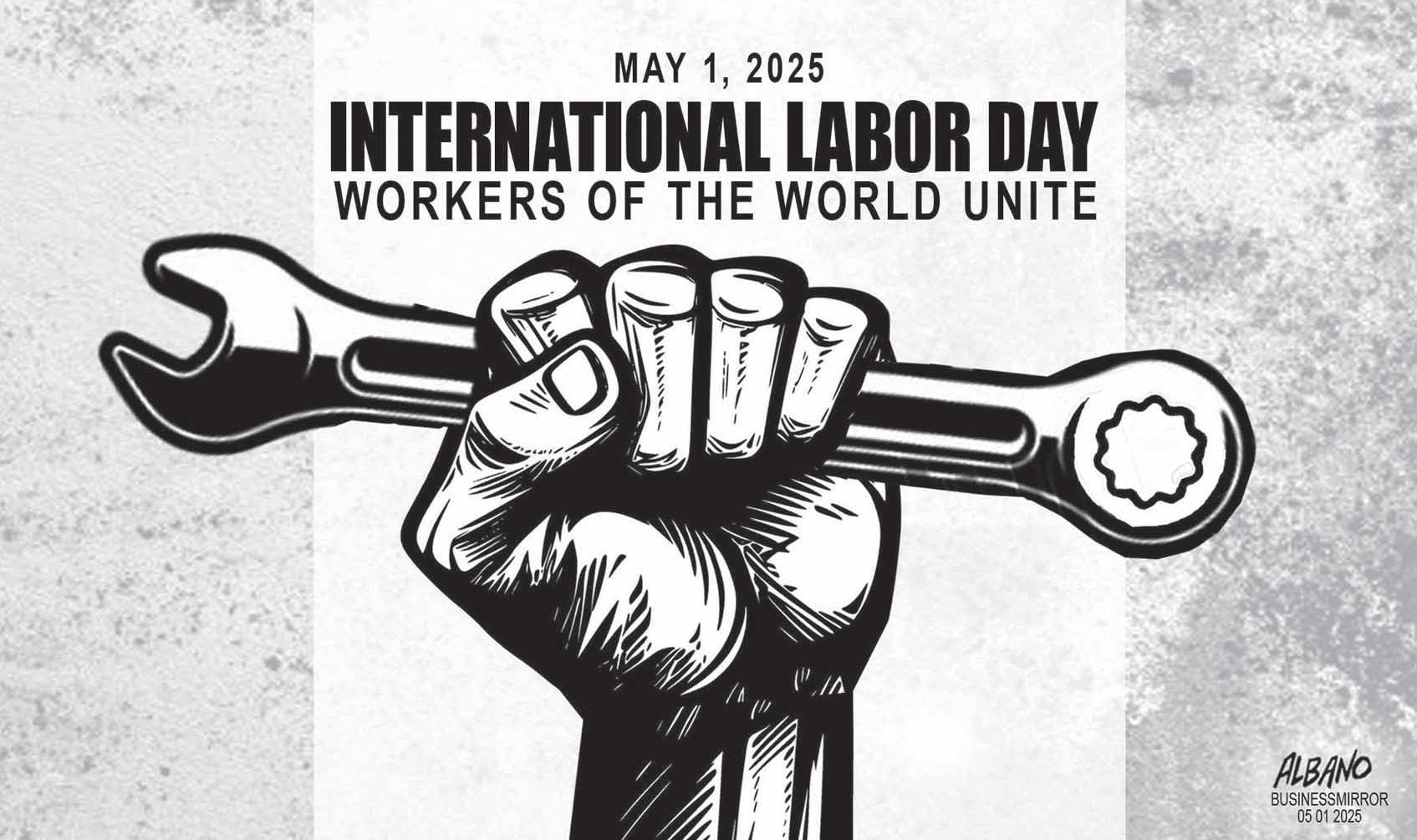
AS the calendar flips to May, the Philippines turns its attention to the backbone of its nation: its hardworking workforce. Today, May 1, the country proudly marks the 123rd Labor Day, a testament to the enduring spirit and vital contributions of Filipino workers.
Labor Day in the Philippines began with the first strike of Malabon Commercial Tobacco Factory workers when they walked out in factories in Manila on August 9, 1902. This bold action was intended to demand for better wages and working conditions, which unfortunately led to the arrest of early labor leaders like Isabelo de los Reyes, the president of Philippines’ first labor organization, Union Obrera Democratica de Filipina (UODF).
Dr. Dominador Gomez replaced delos Reyes and continued the fight despite the challenges that eventually led to his own arrest, as well. But the persistent efforts of the Filipino labor movement eventually led to the official recognition of May 1 as Labor Day and a national
holiday in 1908, marking a crucial victory in the struggle for workers' rights.
Championing the workforce
With this year’s theme, “Manggagawang Pilipino, Kaagapay sa Pag-unlad, Sandigan ng mas Matatag na Bagong Pilipinas,” the Department of Labor and Employment (DOLE) will once again conduct its annual Labor Day Job Fair to promote employment and livelihood opportunities all over the country.
The nationwide job fair will include a total of 216, 144 employment opportunities, including 181, 933 local vacancies and 34, 211 overseas jobs, offered by 2,281 participating employers in the 69 job fair sites all over the country.
This initiative is in partnership with the Department of Social Welfare and Development (DSWD), Department of Agriculture (DA), and Department of Health (DOH), to reinforce the “Trabaho sa Bagong Pilipinas” which now evolved into “Trabaho at Serbisyong Pangkalusugan sa Bagong Pilipinas.”
“This vital initiative in partnership with the private sector will bring thousands of local and overseas job opportunities directly to our Filipino jobseekers, reaffirming our dedication to connecting available talent with opportunities in the labor market,” said DOLE Secretary
“We are bolstering our efforts to empower our youth through the JobStart Program, Special Program for Employment of Students, and Government Internship Program,” Secretary Laguesma continued. “To ensure this thrust, DOLE is actively engaged in continuous capacity-building initiatives nationwide to strengthen the implementation of these youth employability programs through our Public Employment Service Offices and program implementers.”
Meanwhile, the Regional Tripartite Wages and Productivity Boards (RTWPBs) have also
approved wage increases for private sector employees nationwide. This significant adjustment is projected to benefit approximately five million workers across various private establishments in each region of the Philippines.
These wage hikes, ranging from Php 21 to Php 75, have already begun taking effect, with the most recent implementation on March 7, 2025. This adjustment also signals the commencement of the next minimum wage determination cycle, which will span from May 2025 to February 2026, varying depending on the specific region.
The new minimum wage rates will apply to the National Capital Region (NCR), Cordillera Administrative Region (CAR), Ilocos Region, Cagayan Valley, Central Luzon, CALABARZON, MIMAROPA, Bicol, Western Visayas, Central Visayas, Eastern Visayas, Zamboanga Peninsula, Northern Mindanao, Davao Region, SOCCSKSARGEN, and Caraga.
Improving the lives of OFWs worldwide
A key aspect of commemorating Philippine Labor Day is recognizing and celebrating Overseas Filipino Workers (OFWs). Since his inauguration in 2022, President Ferdinand Marcos, Jr. has pledged unwavering support for OFWs throughout his term. Since then, measures and regulations have been implemented to enhance their safety and empower them.
In a report of Philippine Information Agency, the country has already secured 53 bi-
and
processes, solidify the laborer’s protection, and ensure that fair labor conditions are met. Also in the same year, the Department of Migrant Workers (DMW) has also disseminated 333 anti-illegal recruitment and trafficking-inpersons (AIRTIP) seminars among approximately 41,000 Filipinos,
Bienvenido Laguesma.
‘Not provocation, only preparedness’
By Rex Anthony Naval
THE Armed Forces (AFP) on Wednesday said there was nothing wrong with conducting joint exercises with its allies especially if these are held within its own maritime domains.
Col. Francel Margareth Padilla, AFP spokesperson, in a statement also said such actions are not also aimed at provoking any nation but merely to improve the capabilities of its defense forces.
the Sea (Unclos), and rooted in responsible, forward-looking defense,” she stressed.
Padilla issued this statement after China scored the Philippines conduct of joint patrols and called it “maritime infringement provocations” which it claimed “caused disturbances.”
the emerging frontier of space— through comprehensive exercises that integrate tactical precision with strategic foresight,” Padilla said.
“To be clear: the Philippines is a sovereign state. No foreign power can dictate how we defend our home or with whom we stand in solidarity,” she added.
Chinese ‘spy’ subjected to inquest proceedings
By Joel R. San Juan @jrsanjuan1573
“The conduct of joint exercises and maritime domain awareness operations within our territorial waters and exclusive economic zone is not a provocation—it is preparedness,” she added. Padilla also maintained that the AFP stands firm in exercising its sovereign rights within our maritime domain.
“Our partnerships, especially with long-standing allies like the United States, reflect shared values and a collective commitment to safeguarding peace, security, and the rules-based international order. These collaborative efforts reinforce not just military capability but mutual trust and strategic interoperability,” she added.
“These are deliberate, lawful actions anchored on international law, particularly the United Nations Convention on the Law of
“As emphasized by the AFP chief of staff, Gen. Romeo S. Brawner Jr., ‘We will assess our readiness in all domains—air, land, sea, cyber, information, and
Lakas asks NBI to probe ‘Horus’
By Jovee Marie N. dela Cruz @joveemarie
THE dominant political par -
ty Lakas-Christian Mus -
lim Democrats (LakasCMD) has officially requested the National Bureau of Investigation (NBI) to conduct a thorough investigation into the source and distribution of a fabricated document labeled “Oplan Horus,” demanding that charges be filed against those responsible.
In a letter dated April 23, 2025, addressed to NBI Director Jaime B. Santiago, Lakas-CMD Executive Director Anna Capella Velasco expressed deep concern over the “malicious and falsified” nature of the circulating document.
The document, falsely attributed to the House Majority
Leader, Zamboanga Rep. Manuel Jose M. Dalipe, bearing his forged signature, was published in The Manila Times on April 23, 2025, and subsequently spread widely across social media platforms.
“It has caused significant reputational damage not only to the Office of the Majority Leader but also to the House of Representatives and the LakasChristian Muslim Democrats,” said Velasco.
Velasco stressed that the said document was “clearly fraudulent and contains a forged signature purporting to be that of Representative Dalipe.”
She emphasized that Dalipe “categorically denies any knowledge of or involvement with the said document.”
Lakas-CMD believes the incident constitutes identity fraud, cyberlibel, and potential violations of the Cybercrime Prevention Act of 2012. They are urging the NBI to identify the origin of the forged document and pursue legal action against the perpetrators.
“In light of this, we respectfully request…a full investigation to identify the individuals or groups responsible for the creation and distribution of the fabricated ‘Oplan Horus’ document,” the letter read.
The party also requested the NBI to determine how the forged document was published in a major news outlet and disseminated on social media, urging coordination with Meta and other digital platforms for forensics and user traceability.
Palace to comply with Comelec rules on ₧20/kilo rice program
By Samuel P. Medenilla @sam_medenilla
MALACAÑANG is ready to comply with the conditions set by the Commission on Elections (Comelec) for the implementation of the P20 per kilo rice program of the Department Agriculture (DA), including a 10-day suspension on its implementation.
Earlier, the poll body said that it wants the implementation of the program to be deferred from May 2 until end of the 12 May elections in line with its Resolution 11060.
“If that is the proposal and policy of the Comelec chairman, we will comply,” Castro said in
Filipino during a press briefing on Wednesday.
In a television interview with state-run PTV, Agriculture Assistant Secretary Arnel V. de Mesa said they are ready to defer the implementation of the program until after the elections.
“By the way, we expect that even if there is a ban from May 2 to May 12, by May 13 we will be ready to implement the program,” de Mesa said.
During the pilot implementation of the program in the Visayas, de Mesa said it will benefit 800,000 vulnerable households, which is equivalent to four million individuals. This is expected to rise to 15 million households
by the end of the year.
The qualified beneficiaries will be allowed to buy a total of 40 kilos of cheap rice per month.
The Department of Agriculture was able to secure a P5 billion budget for the pilot program this year.
Of the said amount P4.5 billion will be used as subsidies for the government to sell the P33 rice of the National Food Authority to just P20.
The remaining P500 million will be used to pay for the logistics, packaging and other expenses for the program.
DA earlier estimated the government will lose P10 billion to P12 billion if it NFA will sell its existing rice stocks with the subsidized price.
In a statement late on Tuesday, the Southern Theatre Command of China’s People’s Liberation Army said its forces had that same day carried out “routine” patrols in the South China Sea, without giving an exact location.
“Recently, the Philippines has been frequently carrying out maritime infringement provocations, creating disturbances and pulling in countries from outside the region to organize so-called ‘joint patrols,’” it said in a statement.
The group asked the NBI to
“initiate the appropriate legal proceedings and file criminal charges, if warranted, against those found responsible for the fabrication, publication, and malicious sharing” of the false material.
Velasco added that they are ready to submit all available evidence to support the investigation, including “the published document, screenshots of social media posts, digital copies, and sworn statements.”
“We urge the NBI to treat this matter with the utmost urgency,” the letter added.
“It involves not only the identity and integrity of a high-ranking public official but also the credibility of our democratic institutions ahead of the 2025 midterm elections,” it said.
The request was submitted on behalf of Dalipe, who also serves as executive vice president of Lakas-CMD.
PHL’s longest tunnel roads finally connected
By Manuel T. Cayon
DAVAO CITY—Engineers finally arrived at a breakthrough early this month in tunnelling works for the city’s longest bypass road, when it connected the two tunnel roads at the northbound tunnel, soon to be the iconic feature of the 45.5-kilometer long highway.
The two tunnels stretch for 2.3 kilometers each until construction works using the Austrian tunnelling model connected the twin tubes through difficult mountain terrian in barangay Waan, some 30 kilometers north of downtown.
“The ceremonial breakthrough of the northbound tunnel was held on April 28 in Barangay Waan after the completion of the excavation from opposite ends into a
See “Tunnel,” A7
THE Department of Justice (DOJ) on Wednesday subjected to inquest proceedings of Tak Hoi Lao, the Chinese man arrested on Tuesday for allegedly conducting spying activities from his vehicle parked outside the Commission on Elections (Comelec) office in Intramuros, Manila.
Tak is facing charges of misuse of devices, illegal interception and system interference both under Section 4 of Republic Act 10175 or the Cybercrime Prevention Act of 2012 and espionage under Section 1 of Commonwealth Act 616 also known as Espionage Act of 1934, as amended in relation to RA 10175.
An inquest proceeding is an informal and summary investigation conducted by a public prosecutor in criminal cases involving persons arrested and detained without the benefit of a warrant of arrest issued by the court.
The inquest serves to determine whether said persons should remain in custody and correspondingly be charged in court.
Tak, according to the Bureau of Immigration (BI), arrived in the country only last April 25 and has no derogatory records.
“We have already coordinated with the NBI [National Bureau of Investigation] to share details about his record,” BI spokesman Dana Sandoval said.
Authorities said they were able to seize from Tak’s vehicle a device believed to be an International Mobile Subscriber Identity (IMSI) catcher, which is capable of intercepting mobile phone communications and tracking location data.
The NBI has been conducting a series of arrests involving mostly Chinese nationals who were allegedly involved in spying activities in the country. Tak is currently in the custody of the NBI pending resolution of the inquest proceedings.
PNP vows ‘to do everything’ to solve Dayang’s killing
THE National Police (PNP) on Wednesday said that it will do everything it can to ensure that justice will be served for the killing of veteran journalist Juan “Johnny” Dayang who was gunned down by still unknown assailants in Aklan on Tuesday night. At the same time, Gen. Rommel Francisco Marbil, National Police chief, condemned the killing.
In a statement he said, “We strongly condemn this senseless and cowardly act. Mr. Juan ‘Johnny’ Dayang was not only a respected journalist but a cornerstone of Philippine media. To harm a man of his age and stature, in the safety of his own home, is both an affront to human decency and an attack on the very principles of press freedom he upheld throughout his life. The PNP will not rest until those responsible are brought to justice.”
Marbil also said that the PNP joins the nation in grieving the loss of Dayang—a respected elder of the press, a stalwart of Philippine journalism, and President Emeritus of the Publishers Association of the Philippines, Inc. (Papi)—whose decades of service left a lasting impact on the country’s media landscape.
Initial reports from the Kalibo police said that Dayang, 89, was shot by a still unidentified assailant inside his residence in Kalibo, Aklan, around 8:00 p.m. On Tuesday. He was rushed to Dr. Rafael S.
Tumbokon Memorial Hospital but was declared dead on arrival.
Marbil said the PNP is now working in close coordination with the Presidential Task Force on Media Security (PTFOMS) and other investigative bodies to immediately identify and arrest the assailants and the mastermind.
“We have mobilized our regional units and investigative teams, including the PNP Media Vanguards, to ensure that justice is delivered without delay, Marbil added.
“The Media Vanguards, composed of PNP officers specially trained to engage and support media practitioners, are also tasked to help strengthen our protection mechanisms for journalists across the country,” he said.
The PNP also echoes the call of PTFOMS executive director Undersecretary Jose Torres Jr. and stands in full solidarity with the media community.
“Mr. Dayang’s death is not just a heartbreaking loss to his family and colleagues—it is a profound loss to the nation and to the cause of press freedom,” it added.
In line with the ongoing investigation, the PNP is urging everyone with information relevant to the case to come forward and assist authorities.
“Together, let us defend our journalists and uphold the principles of truth, justice, and democracy,” the statement also said. Rex Anthony Naval
Administration coalition set to ramp up campaign effort
WITH just 10 days remaining until the May midterm elections, the administration-backed Alyansa Para sa Bagong Pilipinas senatorial slate is set to intensify on Friday its campaign in Quezon province, a key political battleground in Southern Luzon.
President Marcos’ endorsed 11-member slate will embark on a province-wide campaign culminating in a major rally at the Quezon Convention Center in Lucena City. The goal is to galvanize the province’s nearly 1.5 million registered voters and build significant
momentum in the final stretch of the election cycle.
This Quezon sortie follows successful campaign stops in other Southern Luzon areas, including Trece Martires City in Cavite, Santa Rosa City in Laguna, and Antipolo City in Rizal, demonstrating the slate’s concerted effort to secure a strong foothold in the region.
Alyansa campaign manager and Navotas City Rep. Toby Tiangco underscored the strategic importance of Quezon province.
“Quezon has always been a stronghold of civic energy and politi-
cal influence,” Tiangco said. “We’re here to win trust, listen closely, and offer leaders who will deliver real results.”
Quezon, home to over 2.2 million residents, encompasses Lucena City, Tayabas City, and 39 towns divided into four legislative districts.
Tiangco said Alyansa runs on a platform of infrastructure, good governance, jobs, and rural support—especially in provinces like Quezon, where agriculture, tourism, and small enterprises drive the economy.
“Our message is simple: we are here to serve, not just to speak,”
Tiangco pointed out. “Alyansa wants to uplift provinces like Quezon with real programs, responsive leadership, and resultsdriven policies.” The Alyansa ticket includes former Interior Secretary Benhur Abalos, Makati City Mayor Abby Binay, Senator Ramon Bong Revilla, Senator Pia Cayetano, former Senator Panfilo Lacson, Senator Lito Lapid, former Senator Manny Pacquiao, former Senate President Vicente Sotto III, Senate Majority Leader Francis Tolentino, ACT-CIS Rep. Erwin Tulfo, and Deputy Speaker Camille Villar. Jovee Marie N. dela Cruz
Labor groups urge Laguesma to support wage increase bill
By Justine Xyrah Garcia
WITH just two months left before the 19th Congress adjourns, labor groups are pressing Labor Secretary Bienvenido E. Laguesma to push President Marcos into certifying the P200 wage hike bill as urgent.
In a press briefing on Tuesday, Sentro Deputy Secretary General Nice S. Coronacion said Laguesma has the influence to elevate workers’ concerns to Malacañang.
“Cabinet secretaries are the alter ego of the President. As the head of the labor department, he [Laguesma] should be hearing by now that this is one of the top issues labor wants addressed. He has a voice that can influence the President to certify this measure as urgent,” Coronacion said.
The bill, which proposes a P200 across-the-board daily wage hike for all private sector workers nationwide, broke an eight-month impasse in the House of Representives Committee on Labor and Employment before it passed second reading in February.
Despite this progress, Malacañang
earlier this month said it has no plans to certify the bill as urgent, citing ongoing deliberations by the Regional Tripartite Wages and Productivity Boards (RTWPBs) on existing wage petitions.
The RTWPBs, created under the Wage Rationalization Act issued by former President Corazon Aquino, are mandated to determine minimum wages at regional, provincial, or industry levels, based on 10-point criteria set by the National Wages and Productivity Commission.
But for Carlos S. Oñate, spokesperson for the Trade Union Congress of the Philippines, the regional boards’ limited adjustments—“only P20 to P50 annually in most regions”—can no longer be the sole basis for setting wages.
“Secretary Laguesma should act on this issue. He must not oppose the wage hike the way he did last Labor Day,” Oñate said.
“It’s long overdue for him to initiate a dialogue between labor and the PresidentIt’s been three years without any labor dialogue in Malacañang...He can also recommend to the President that this P200 legislated wage hike be certified as urgent,” he added.
‘It’s in the hands of Congress’ IN a separate interview, Laguesma said that only Congress can do something about the proposed wage hike bill.
“The authority to pass laws rests with Congress. Our mandate is limited to adjusting minimum wages through the RTWPBs. It does not include legislated across-theboard increases,” Laguesma said. He said wage board consultations are ongoing, and once concluded, at least 4 million minimum wage earners are expected to benefit directly, while another 8 million workers may see pay adjustments due to wage distortion. When asked for the expected wage increase this year, Laguesma declined to provide estimates, saying he does not want to preempt the boards.
“There are several factors being considered. These boards also align wage policies with countryside development and employment generation outside Metro Manila,” he added. The national average daily wage currently stands at P469, with rates ranging from P645 in Metro Manila to P361 in the Bangsamoro Autonomous Region in Muslim Mindanao.
Marcos wants poor water service probed
TBy Samuel P. Medenilla @sam_medenilla
HE Villar-owned PrimeWater Infrastructure Corp. is in hot water after Malacañang announced President Ferdinand Marcos wants the alleged poor service of the water concessionaire to be investigated.
In a press briefing on Wednesday, Palace Press Officer Claire Castro said the Marcos administration will not tolerate spotty service from public utility providers.
“The people need clean water... an adequate supply of water. [Providing for such] should be a necessity and not just a business. If this is not the case, the needs of the people should be taken cared of.
The President will order an investigation into this,” Castro said in Filipino. She made the remark after House Assistant Majority Leader Jay Khonghun called for a congressional investigation on the water service disruption and high rates in areas within the concession areas of PrimeWater.
PrimeWater provides service to over 500,000 households in Batangas, San Pedro in Laguna, Camarines Norte, Cabanatuan City, Bulacan and Sorsogon City. Earlier this month, San Jose del Monte City in Bulacan opted to terminate its joint venture with PrimeWater owing to service-related issues.
“If there is a need for them to resolve the issues raised by the consumers, I think we should immediately take immediate action on that,” Castro said.
IT-BPM industry forcasts 2 million workers, $40-B revenue in 18 months
GLOBAL demand in the banking, financial services and health care sectors will drive the growth of IT and Business Process Management (IT-BPM) industry to two million jobs and $40 billion in revenues in the next 12 to 18 months, the IT and Business Process Association of the Philippines (Ibpap) said.
“We’re already at 1.82 million digital workers. We want to cross two million soon,” Ibpap President Jack R. Madrid told reporters on the sidelines of the Memorandum of Understanding (MOU) signing between Ibpap and the Department of Trade and Industry (DTI) on Monday.
Madrid said, however, that the goal of providing jobs to two million employees in the country’s IT-BPM industry within the next 12 to 18 months would be attained if the coming generation of job seekers are equipped with the skills needed amid the evolving demands in the IT-BPM landscape.
Tunnel. . .
Continued from A4
single tunnel,“ the Japan International Cooperation Agency (Jica) said.
Jica said the New Austrian Tunneling (NATM) method was applied for the excavation, “and plenty of Japanese technologies, know-how, and experience were utilized. Also, technology transfer from Japanese to the local staff was carried out, contributing to the local workers’ capacity development.”
In his report to Public Works Secretary Manuel M. Bonoan, Senior Undersecretary Emil K. Sadain noted that, “the construction breakthrough of the northbound tunnel, along with the ongoing excavation works for the remaining 202 meters of the southbound tunnel, which
“In order for our industry to grow, we must make sure that the upcoming generation of job seekers... these are the graduates, have relevant skills for the new work types of the future,” Madrid said.
“Because the work that we do keeps changing. Not just because of [artificial intelligence] AI, but the nature of work always changes,” he said. Meanwhile, Madrid said the industry “should cross $40 billion [in revenues] by the end of the year.”
Madrid expressed optimism that global demand in the banking, financial services and health care sectors will drive industry prospects this year.
Shrugging off shifting global policies, he emphasized that, “We should be scared about not being skilled enough. That’s the only thing I’m concerned of because the demand is there, we have the brand. The Philippines is a world leader.”
is now 91 percent completed, marks significant progress in this strategic infrastructure project.”
The 2.3-kilometer twin-tube tunnel, soon to be the longest road mountain tunnel in the Philippines, is a key feature of the 45.5 kilometer, four-lane Davao City Bypass Construction Project (DCBCP), the Department of Public Works and Highways said. Aside from the tunnel roads, the Jica-supported DCBCP involves the construction of a 29.7-km, four-lane road including bridges, with the Philippine government constructing the 15.8-km portion of the project.
“Not only does this project build roads and tunnels, but it also develops capacity on tunnel operations and maintenance using Japan experience and expertise,” said Jica Chief Representative Baba
PrimeWater is owned by Manuel Paolo A. Villar, one of the children of the business tycoon and former Senate President Manuel Villar, and outgoing Sen. Cynthia Villar. He is the brother of Las Piñas Rep. Camille Villar-Genuino, who is running for a Senate seat under the administration-backed ticket Alyansa Para sa Bagong Pilipinas. When asked if the PrimeWater issue will affect the chances of Genuino of being elected in the upcoming polls, Castro said Filipinos should still give the senatorial bet a chance to prove how she will perform.
“We have given it to her. But she must prove she can perform as a leader,” Castro said.
In an earlier statement, Ibpap said 70 percent of the Philippine IT-BPM industry’s client base is from the United States.
Madrid said Ibpap will review its targets in the IT-BPM roadmap by the middle of this year.
He earlier said that as the country pushes forward, “We must acknowledge that the environment has changed. These numbers were established more than two years ago, and context is evolving fast.” He noted that the headwinds that the industry face “require different interventions that we must increase.” The top challenge confronting the sector, he earlier said, is the talent and skills gap.
“In our midyear survey, this remains the top challenge, with 21 percent of respondents identifying as critical. The demand for advanced digital skills like data analytics, programming, and machine learning, as well as soft skills and domain-specific skills in healthcare, accounting and banking, outpaces our workforce’s current capabilities,” Madrid said in 2024. Andrea San Juan
Takashi during the tunnel breakthrough ceremony.
Jica cited the Tom Traffic Index 2024 which ranked Davao City the most congested metropolitan area in the Philippines. Currently, the travel time from Maharlika Highway’s Davao-Digos and Davao-Tagum sections will take around one hour and 44 minutes.
Jica said it has also been working in various parts of Mindanao through various cooperation, including Metro Davao Urban Development Master Plan, Flood Control Master Plan in Davao, Wastewater Management Master Plan in Davao, Flood Risk Management for Cagayan de Oro, Central Mindanao High Standard Highway, Road Network Development in Conflict-Affected Areas in Mindanao, and Capacity Development Project for Bangsamoro, among others.
MOVE IT to challenge LTFRB order cutting 14,000 riders ahead of Labor Day, citing livelihood impact
By Lorenz S. Marasigan @lorenzmarasigan
MOTORCYCLE taxi firm
MOVE IT said it will contest a recent order from the Land Transportation Franchising and Regulatory Board (LTFRB) that mandates the reduction of its rider pool by nearly 14,000 across the Philippines—just days before the country marks Labor Day.
In a memorandum issued late April 29, the LTFRB directed MOVE IT to immediately cease operations in Cebu and Cagayan de Oro and slash its Metro Manila rider count from 15,000 to 6,836.
The order effectively forces the company to delist 3,000 riders in
each of the two provinces and nearly 8,000 in the capital.
“This is a big blow to our riders’ livelihood, especially on the eve of Labor Day,” said Wayne Jacinto, MOVE IT general manager, in a press conference.
“We are filing a motion for reconsideration within the day and are appealing to the Department of Transportation Secretary. We are hoping that our riders will not lose their livelihood.”
Jacinto stressed that the company’s current rider base is aligned with the guidelines issued by the Motorcycle Taxi Technical Working Group in November 2020, which allocated 15,000 riders each for the three pilot operators: MOVE IT, Angkas, and JoyRide.
“We have repeatedly said that we never went beyond what was stated
in the guidelines,” he said, refuting allegations that the company exceeded its allowed allocation.
MOVE IT has been operating in Cebu and Cagayan de Oro since at least early 2023 with 3,000 riders in each city. However, the LTFRB’s latest order claims the company lacks authority to operate in these regions.
Jacinto disputed this, noting that the 2020 guidelines allow each pilot player to deploy 3,000 riders outside Metro Manila.
“We want equal treatment for all players and continuity for our riders’ honest livelihood,” he said.
During the press conference, five motorcycle taxi community leaders joined MOVE IT in denouncing the LTFRB order, calling it sudden and unjust. The groups vowed to mobilize and protest what they describe as a regulatory ambush.
Melody Viray, a MOVE IT rider leader, appealed to the government to rethink its decision.
“Many of us depend on this job. We are not asking for handouts, we are working to support our families. We hope you understand how painful it was for us to learn about this order,” he said.
He also pointed out the logistical dilemma of reallocating the thousands of riders who now find themselves displaced. “Every MC taxi operator has already reached its allocation limit. Where do we put the 8,000 displaced riders from NCR? Who decides which families go hungry?”
Comelec: No data breach, compromised systems amid alleged Chinese spying
By Justine Xyrah Garcia
HE Commission on Elections
T(Comelec) on Wednesday denied any breach of its systems following reports that a Chinese national suspected of espionage had been seen near the agency’s main office.
Comelec Chairman George Erwin M. Garcia said there was no cause for alarm, noting that their central office does not store any sensitive voter data.
“If someone was trying to steal data, they were in the wrong venue.... None of our systems or data were compromised. We immediately looked into the matter to see if anything could have been affected by what was confiscated from the arrested individual,” Garcia said in a press briefing.
On Tuesday, the National Bureau of Investigation (NBI) arrested Chinese national Tak Hoi Lao for alleged espionage. According to NBI Spokesperson Ferdinand Lavin, agents recovered an International Mobile Subscriber
Identity (IMSI) catcher from Lao.
The device has the capability to intercept data from active mobile phones within a radius of 500 meters to 3 kilometers, allowing unauthorized access to conversations, messages, and other mobile traffic.
Garcia said this development is deeply concerning—not just for Comelec, but for all government institutions.
“This suggests that this could be happening in other government agencies or even Comelec offices.
What we want to know is the purpose behind it. Is it meant to be used against individuals? Is it for mind conditioning? These are questions we need answers to,” he said. The Comelec chief added that they are now awaiting the final report from the NBI to determine the full extent and implications of the incident.
Just last week, the National Security Council confirmed that there were signs of possible Chinese interference in the Philippines’ national and local elections.
PHL bolsters defense ties with New Zealand, Japan amid Chinese aggression in West Philippine Sea
By Samuel P. Medenilla @sam_medenilla
AMID the growing global tensions, President Ferdinand Marcos said the signing of more defense and military pacts with New Zealand and other countries has become more crucial to ensure the Philippine’s territorial integrity.
The chief executive witnessed the signing of the Status of Visiting Forces Agreement (SOVFA) between Department of National Defense (DND) Secretary Gilberto Eduardo C. Teodoro Jr. and New Zealand Defense Minister Judith Collins in Malacañang last Thursday.
“I think it is well recognized that these partnerships have become very important in the face of all that is happening, not only in the region, just our region, but yeah, but it’s now unfortunately set for the rest
of the world,” Marcos said. The New Zealand embassy earlier said the SOVFA provides the legal framework for militaries of both signatory countries to cooperate and conduct exercises within their territories.
The SOVFA was signed a day after Marcos and Japan Prime Minister Ishiba Shigeru agreed to start negotiations for an Acquisition and Cross-Servicing Agreement (ACSA) and a security information agreement.
Under the Marcos administration, the country has been forging more defense agreements similar to its Visiting Forces Agreement (VFA) with the United States (US) amid China’s growing aggression in the West Philippine Sea (WPS).
Encroachment incidents
THE Philippines also signed a SOVFA
with Australia and a Reciprocal Access Agreement (RRA) with Japan.
Among China’s recent attempts to encroach the WPS--parts of the South China Sea within the Philippines Exclusive Economic Zone, was an attempt by the Chinese Coast Guard (CCG) to claim parts of the Sandy Cay located near Pag-asa Island by unfurling their flag on the sandbar.
Malacañang maintained that the Sandy Cay remained under Philippine control as demonstrated by the flagraising initiatives of the Philippine Navy, Philippine Coast Guard and the Philippine National Police (PNP) Maritime Group.
“The Armed Forces of the Philippines and partner agencies reaffirm their commitment to fight for the rights of the country, protect Philippine waters, and defend the country’s rights in accordance with international law,” Castro said.
Masbate’s Kho clan slapped with disqualification case
THREE members of the influential Kho family in Masbate are now facing a disqualification case before the Commission on Elections (Comelec) over alleged misuse of government resources during the campaign period.
On Wednesday, Masbate vice gubernatorial candidate Ruperto C. Gadia filed a formal complaint against incumbent Vice Governor Elisa T. Kho, First District Representative Richard T. Kho, Second District Representative Olga T. Kho, and Esperanza, Masbate Mayor Fernando P. Talisic.
Gadia accused the Khos and Talisic of exploiting the local government’s emergency cell broadcast system to promote their candidacies under the pretense of sending out an emergency alert.
“We filed this case because, first of all, it’s very clear that there was a violation of the Omnibus Election Code. We expect a disqualification ruling because this is a serious matter. They took advantage of government resources for their own campaign,” Gadia said.
“Instead of a warning for a calamity or any legitimate emergency,
what appeared were their names— promoting their candidacies for different positions,” he added.
Comelec had earlier issued a show cause order to the same candidates on April 13 for allegedly using the emergency alert system to advance their electoral bids.
Under the updated rules of Comelec’s Committee on Kontra Bigay, the commission presumes there is undue advantage when an incumbent official or public employee uses state resources to benefit their own candidacy, a political ally, or a relative
PNP corroborating claims of suspect in Anson Que kidnapping case
By Rex Anthony Naval
THE Philippine National Police (PNP) on Wednesday said that they are still gathering information that would corroborate claims made by suspect David Tan Liao who earlier implicated one of the sons of Filipino Chinese businessman Anson Que (also known as Anson Tan) in the crime.
In an interview in Camp Crame, Quezon City, PNP spokesperson Brig. Gen. Jean Fajardo said they are still gathering details on this.
“Maliban doon sa kanyang assertion, wala naman siyang naipapakita pa na ibang ebidensya Although may sinasabi siya doon sa kanyang state -
ments including the alleged meeting with the son and even the physical [meet] and even the calls, walasiyang mai-present (aside from his assertions, he is still to show evidence on this. He had said something about an alleged meeting, physical meeting and calls with the son on his statements, but he is still to present any evidence on this),” she added.
Liao earlier implicated the victim’s 42-year-old son Alvin Que in his extrajudicial confession following his arrest last April 19.
Fajardo clarified that the PNP is not taking the suspect’s testimony hook, line and sinker.
She also said that they are looking
into the possibility that Liao is trying to mislead the investigation to escape criminal liability.
“We cannot discount the possibility that David Tan Liao is misleading the investigation to cover for someone,” the PNP spokesperson said.
She also added that Alvin Que is cooperating with the PNP Anti-Kidnapping Group (AKG) and has surrendered his cellphone for forensic and scientific processing.
Initial investigation showed that Alvin Que acted as the family’s negotiator while Anson Que was held by the kidnappers.
He also transferred the initial P10 million ransom to a cryptocurrency account on March 31, followed by another
Spying case ASIDE from the CCG presence in the WPS, the Palace also expressed concern on the alleged espionage activities by Chinese nationals near Malacañang, Palawan and recently near the Commission on Elections (Comelec) main office in Intramuros, Manila.
Last Sunday, the National Bureau of Investigation arrested a Chinese national, who was supposedly using “spying” equipment near the Comelec office.
Castro said they are now closely monitoring the updates on the incident.
“It’s quite alarming. It’s quite alarming and there is still … The President has this trust in the intelligence agents that made the operation. So, we will just have to wait for the final investigation on that matter,” she said.
seeking public office.
This includes sudden or unjustified changes to scholarship and social welfare programs, the use of government vehicles for campaign activities, storing or distributing campaign materials in government buildings, and posting election paraphernalia in public offices or service vehicles.
According to Comelec, it is currently investigating 242 cases related to vote-buying and abuse of government resources. Of these, over 100 individuals have already been issued show cause orders. Justine Xyrah Garcia
P3 million on April 2.
Fajardo also described Que’s son as a “respondent” in the case.
“It is prudent on the part of the investigators and the AKG to include his name as one of the respondents. They will be given the opportunity to submit controverting evidence,” Fajardo stressed.
The remains of Tan along with his driver Armanie Pabillo were discovered last April 9 in Rodriquez, Rizal. Reports said the bodies bore bruises and signs of strangulation. The victims were last seen alive leaving their office in Valenzuela City on March 29.
The pair were aboard a
Trade war impact: China’s economy shows signs of cooling as tariffs rise
By Elaine Kurtenbach Ap Business Writer
HIGHER tariffs on US imports of products from China appear to be taking a toll on the world’s second-largest economy, according to monthly surveys of Chinese factory managers released Wednesday.
The official survey by the China Federation of Logistics and Purchasing shows export orders slowed in April, with Beijing and Washington in a standoff after US President Donald Trump ordered combined tariffs of up to 145% on Chinese goods.
China has imposed duties of up to 125% on US products, with some exemptions. It has also ordered other retaliation, such as tighter restrictions on exports of some strategically important minerals used for high-tech products such as electric vehicles.
The official manufacturing purchasing managers index fell to a 16-month low of 49.0 from 50.5 in March. That’s on a scale where 50 marks the break between expansion and contraction. A private survey by the financial information group Caixin fell to 50.4 from 51.2.
“The sharp drop in the PMIs likely overstates the impact of tariffs due to negative sentiment effects, but it still suggests that China’s economy is coming under pressure as external demand cools,” Zichun Huang of Capital Economics said in a report.
Earlier this week, senior Chinese economic officials convened a news conference where they showcased Beijing’s support for the economy and its capacity to do more to counter the impact of the tariffs.
The economy expanded at a solid 5% annual pace in 2024 and the ruling Communist Party has
set a target for growth at about that level this year.
But that was before Trump escalated his trade war, piling on still higher tariffs with an aim of compelling manufacturers to rebase production to the United States.
“Overall, in April, the expansion in supply and demand slowed, with exports stunted and employment shrinking slightly. Manufacturers sought to reduce stocks, logistics were delayed, and prices remained under pressure. Market optimism weakened significantly,” the Caixin report said.
Private economists have downgraded their forecasts for the economy this year and next. Capital Economics estimates the economy will expand only 3.5% in 2025.
The economy grew 5.4% from a year earlier in the first quarter of the year, as companies rushed to beat the higher tariffs. Chinese exports surged more than 12% year-on-year in March.
Although some Chinese exports will likely be diverted to other countries, Trump’s trade war has raised the risk of recession in the US and its impact is expected to ripple across the global economy.
The International Monetary Fund said in a recent update that the outlook for the US and global economies this year and next has significantly worsened.
It forecast the global economy will grow just 2.8% this year, down from its estimate in January of 3.3%.
Wall Street rises as corporate profits pile higher along with uncertainty about Trump’s trade war
By Stan Choe Ap Business Writer
NEW YORK—US stocks rose again
Tuesday as stronger-than-expected profits kept piling higher for companies, though CEOs said they’re unsure how long that can last because of uncertainty around President Donald Trump’s trade war.
The S&P 500 climbed 0.6% to extend its winning streak to a sixth day. The Dow Jones Industrial Average added 300 points, or 0.7%, and the Nasdaq composite rose 0.5%.
Honeywell International helped lead the market with a gain of 5.4% after reporting stronger profit and revenue for the latest quarter than analysts expected. Perhaps even more importantly for investors, it also raised its forecast for profit over the full year.
“Though we have not yet seen it in our results, we recognize we face an uncertain global demand environment for the remainder of 2025, and our company will work tirelessly, leveraging all tools available to us, to deliver for customers and shareholders,” CEO Vimal Kapur said.
Sherwin-Williams rose 4.8% for another one of the market’s bigger gains after the paint and coatings company likewise reported a better-than-expected profit.
CEO Heidi Petz said it expects to see softness from some of its customers persist well into the second half of this year, but she also said her company gets the majority of its raw materials from the regions where it manufactures. That could help blunt the possible impact from tariffs.
Other stocks weren’t as strong, even though their companies reported strongerthan-expected profits.
Much like the broader market, UPS stock swung between losses and gains at the day’s start of trading after it reported a stronger profit than analysts expected for the first three months of 2025. Because it’s the world’s largest package delivery company, UPS can offer a window into how the global economy is doing.
But UPS also said it wasn’t updating its financial forecasts previously given for 2025 because of “the current macro-economic uncertainty.” It also said it expects to cut about 20,000 jobs and close 73 buildings this year as part of a cost-cutting effort that CEO Carol Tomé said “could not be timelier.” Its stock finished 0.4% lower.
Investors fear Trump’s tariffs could bring a recession if left unaltered because they could freeze global trade and send prices higher for all kinds of products. And Trump’s on-againoff-again rollout could by itself throw into disarray the long-term plans for spending and investment by businesses and households.
US households are getting much more pessimistic because of tariffs, and a report from the Conference Board on Tuesday said their expectations for income, business and
job market conditions dropped to the lowest level since 2011 and are well below the level that usually signals a recession ahead.
US Treasury Secretary Scott Bessent said such economic uncertainty is a tool Trump can use as he negotiates tariffs and trade deals. “President Trump creates what I would call strategic uncertainty in the negotiations,” he told reporters at the White House.
The latest zigzag may be arriving for the US auto industry after White House Press Secretary Karoline Leavitt said Trump will sign an executive order Tuesday relaxing some of his 25% auto tariffs.
General Motors nevertheless slipped 0.6% despite reporting a stronger profit for the latest quarter than analysts expected. The company rescheduled a conference call with investors to discuss its results and forecasts for 2025 to Thursday because of “recent reports regarding updates to trade policy.”
JetBlue Airways’ stock bounced between losses and gains after CEO Joanna Geraghty said the airline was pulling its financial forecasts for the full year given “the macroeconomic uncertainty.” The airline also delivered a stronger profit than expected for the latest quarter. Its stock accelerated later in the day and finished 2.7% higher. Coca-Cola also overcame an early drop to rise 0.8%. The beverage giant reported betterthan-expected earnings in the first quarter and said the impact of tariffs on its business are likely to be “manageable.” Coke updated some of its financial forecasts for the year but left alone its guidance for an important underlying measure of revenue growth. All told, the S&P 500 rose 32.08 points to 5,560.83. The Dow Jones Industrial Average gained 300.03 to 40,527.62, and the Nasdaq composite climbed 95.18 to 17,461.32. In the bond market, Treasury yields fell. The yield on the 10-year Treasury dropped to 4.17% from 4.23% late Monday. Not only did the report on consumer confidence come in weaker than expected, so did an update on how many job openings US employers were advertising at the end of March. Such weaker-than-expected data could eventually push the Federal Reserve to resume cutting interest rates in order to give the economy a boost. Yields have largely been sinking since an unsettling, unusual spurt higher earlier this month rattled both Wall Street and the US government. That rise had suggested investors worldwide may have been losing faith in the US bond market’s reputation as a safe place to park cash. In stock markets abroad, indexes were mixed amid mostly modest moves across Europe and Asia.
AP Business Writer Elaine Kurtenbach contributed.
US businesses cancel China orders as Trump’s tariffs spark supply shortages and rising prices
By Paul Wiseman, Anne D’innocenzio & Christopher Rugaber Ap Business Writers
WASHINGTON—American businesses are cancelling orders from China, postponing expansion plans and hunkering down to see what trade
policy surprises President Donald Trump plans to spring on them next.
The president’s massive and unpredictable taxes on imports seem likely to mean emptier shelves and higher prices for American shoppers, perhaps within weeks. And the higher costs and paralyzing uncertainty could exact an economic toll: US consumers are in the biggest funk since Covid-19 hit five years ago, and economists say recession risks are climbing.
An early sign of the damage is expected to emerge on Wednesday when the Commerce Department releases its first look at first-quarter economic growth.
The economy is forecast to have expanded at an annual pace of just 0.8% from January through March, according to a survey of economists by the data firm FactSet. That would be the slowest quarter of growth in nearly three years and would be down from a healthy 2.4% in the last three months of 2024. Many economists suspect things were even worse.
Asked how much of deterioration in the world’s biggest economy could be traced to Trump’s erratic policies, Boston College economist Brian Bethune said: “All of it.’’
As he promised on the campaign trail, Trump has upended decades of American trade policy. He’s been imposing—then sometimes suspending—big import taxes, or tariffs, on a wide range of targets. He’s currently plastered a 10% levy on products from almost every country in the world.
He’s hit China—America’s third-biggest trading partner and second-biggest source of imported goods—with a staggering 145% tariff.
China has responded with retaliatory tariffs of its own—125% on American products. The take-no-prisoners trade war between the world’s two biggest economies has shaken global financial markets and
threatened to bring US-China trade to a standstill.
Gene Seroka, executive director of the Port of Los Angeles, warned last Thursday within two weeks arrivals to the port “will drop by 35% as essentially all shipments out of China for major retailers and manufacturers has ceased.’’ Seroka added that cargo from Southeast Asia also “is much softer than normal with tariffs now in place.’’ After Trump announced expansive tariffs in early April, ocean container bookings from China to the United States dropped 60% -- and stayed there, said Ryan Petersen, founder and CEO of Flexport, a San Francisco company that helps companies ship cargo around the world. With orders down, ocean carriers have reduced their capacity by cancelling 25% of their sailings, Flexport said. Many companies tried to beat the clock by bringing in foreign goods before Trump’s tariffs took effect. In fact, that is a big reason that first-quarter economic growth is expected to come in so low: A surge in imports swelled the trade deficit, which weighs on growth. By stockpiling goods ahead of the trade war, many companies “will be positioned to ride out this storm for a while,’’ said Judah Levine, research director at the global freight-booking platform Freightos. “But at a certain point, inventories will run down.’’ In the next few weeks, Levine said, “you See “Tariffs,” A12
WORKERS labor at a manufacturer of medical polymer precision catheters, in Nantong city in east China’s Jiangsu province on April 24, 2025. CHINATOPIX VIA AP
Trump to offer automakers some relief on his 25% tariffs, after worries they could hurt US factories
By Josh Boak & Alexa St. John The Associated Press
WASHINGTON—President
Donald Trump signed executive orders Tuesday to relax some of his 25% tariffs on automobiles and auto parts, the White House said, a significant reversal as the import taxes threatened to hurt domestic manufacturers.
Automakers and independent analyses have indicated that the tariffs could raise prices, reduce sales and make US production less competitive worldwide. Trump portrayed the changes as a bridge toward automakers moving more production into the United States.
“We just wanted to help them during this little transition, short term,” Trump told reporters. “We didn’t want to penalize them.”
Treasury Secretary Scott Bessent, who spoke earlier at a White House briefing on Tuesday, said the goal was to enable automakers to create more domestic manufacturing jobs.
“President Trump has had meetings with both domestic and foreign auto producers, and he’s committed to bringing back auto production to the US,” Bessent
said. “So we want to give the automakers a path to do that, quickly, efficiently and create as many jobs as possible.”
Trump signed one order on Tuesday that amended his previous 25% auto tariffs, making it easier for vehicles that are assembled in the US with foreign parts to not face prohibitively high import taxes.
The amended order provides a rebate for one year of 3.75% relative to the sales prices of a domestically assembled vehicles. That figure was reached by putting the 25% import tax on parts that make up 15% of a vehicle’s sales price. For the second year, the rebate would equal 2.5% of a vehicle’s sales price, as it would apply to a smaller share of the vehicle’s parts.
A senior Commerce Department official, insisted on anonym -
ity to preview the order on a call with reporters, said automakers told Trump that the additional time would enable them to ramp up the construction of new factories, after automakers warned that it would take time for them to shift their supply chains. The official said automakers would over the next month announce additional shifts for workers, new hires and plans for new facilities.
Stellantis Chairman John Elkann said in a statement that the company appreciates the president’s tariff relief measures.
“While we further assess the impact of the tariff policies on our North American operations, we look forward to our continued collaboration with the US Administration to strengthen a competitive American auto industry and stimulate exports,” he said.
General Motors CEO Mary Barra said the automaker is grateful for Trump’s support of the industry, and she noted the company looks forward to conversations with the president and working with the administration.
“We believe the President’s leadership is helping level the playing field for companies like GM and allowing us to invest even more in the US economy,” Barra said in a statement.
Jim Farley, president and CEO of Ford Motor Company, stressed that his company does more than its peers to manufacture domestically.
“We will continue to work close -
ly with the administration in support of the president’s vision for a healthy and growing auto industry in America,” Farley said. “As the right policies are put in place, it will be important for the major vehicle importers to match Ford’s commitment to building in America. If every company that sells vehicles in the US matched Ford’s American manufacturing ratio, 4 million more vehicles would be assembled in America each year.”
But changing direction doesn’t help an industry that thrives on stability, said Sam Fiorani, analyst at business forecasting firm AutoForecast Solutions.
“Finding a way to get the auto industry back working has to be paramount in this,” Fiorani said.
“The tariffs have not looked at this industry, the way it works, and expect it to be able to jump and relo -
Canadian company turns to Trump for permission to mine international waters, bypassing UN agency
By Dánica Coto The Associated Press
SAN JUAN, Puerto Rico—A Canadian company announced Tuesday that its US subsidiary submitted applications to the National Oceanic and Atmospheric Administration to mine the seafloor, sparking outrage by bypassing a U.N. agency that regulates deep international waters.
The Metals Company said it was seeking two exploration licenses and a commercial recovery permit, marking the first time a company applies to commercially mine the seabed.
The filing is expected to spark a complex legal battle since the Jamaica-based International Seabed Authority, a U.N. agency that regulates international deep-sea waters, has the power to authorize exploitation permits.
“Any commercial exploitation outside of national jurisdiction carried out without the authorization of ISA would constitute a violation of international law,” the authority said in late March after The Metals Company announced its intention to seek permission from the US government to start deep-sea mining in international waters.
There are currently no regulations in place to oversee such mining as scientists warn that extracting minerals from vital ecosystems that help regulate climate change could cause permanent damage.
Filing follows Trump directive
THE filing comes less than a week after US President Donald Trump issued an executive order that directs the Secretary of
Commerce to expedite the review and issuance of exploration and commercial recovery permits, among other things.
“With these applications, we are offering the United States a shovel-ready path to new and abundant supplies of nickel, copper, cobalt, and manganese—critical metals for energy, infrastructure and defense,” Gerard Barron, chairman and CEO of The Metals Company, said in a statement.
Environmentalists and activists decried the move, saying that ISA has the sole power to authorize exploitation permits.
“This unilateral American effort to carve up the Pacific Ocean already faces fierce international opposition,” said Ruth Ramos, Greenpeace’s international senior campaigner. “Governments around the world must now step up to defend international rules and cooperation against rogue deep-sea mining.”
For years, members of the authority’s council have debated how and if to allow deep-sea mining. So far, the authority has only issued exploration licenses, with most of the current exploratory activity concentrated in the Clarion-Clipperton Fracture Zone, which covers 1.7 million square miles (4.5 million square kilometers) between Hawaii and Mexico. At least 17 of 31 licenses have been issued for this zone, with exploration occurring at depths ranging from 13,000 to 19,000 feet (4,000 to 6,000 meters).
UN convention ratified by dozens of countries but not US
The International Seabed Authority was created in 1994 by the U.N. Convention on the Law of the Sea, which is ratified by more than 165 nations—but not the United States.
The Metals Company has argued that the US seabed mining code would allow it to start operations in international
waters, since it’s not a member of the authority and therefore not bound by its rules.
“After continuous delay at the international level, the United States now has a clear opportunity to reclaim its leadership role in the deep sea and set a global standard for responsible, science-based deep-seabed resource development,” Barron said.
US mining code is no guarantee of a mining permit
BUT Emily Jeffers, senior attorney for the US-based nonprofit Center for Biological Diversity, said it’s not a foregone conclusion that the company will be given permission to mine under the US seabed mining code, which requires a full environmental analysis.
“This statute has been on the books for 45 years, and
cate production at the blink of an eye. It just doesn’t work that way.
“Making a production change for vehicle manufacturing takes minimum, months, and usually years, along with hundreds of millions if not billions of dollars,” he added. “And so it is not something that they take lightly.”
The Wall Street Journal first reported details of the actions.
The White House’s Rapid Response account on X said Trump signed a second order Tuesday afternoon to prevent his various tariffs from being stacked on top of his existing taxes on imported autos and auto parts.
The tariffs imposed by Trump were seen by some as an existential threat to the auto sector. Ar -
thur Laffer, whom Trump gave the Presidential Medal of Freedom to during his first term, said in a
there’s a reason why no other companies have used it to extract minerals from the seafloor,” she said in a phone interview. “The science is clear that companies cannot satisfy the standard demanded by the statute. There’s no way to do deep-sea mining without having
private analysis that the tariffs without any modifications could add $4,711 to the cost of a vehicle. New vehicles sold at $47,462 on average last month, according to auto-buying resource Kelley Blue Book. Tariffs stress the automotive supply chain, a complex web which spans the globe. Not only do many auto parts cross North American borders several times before being assembled into a finished vehicle, auto manufacturers rely on suppliers around the world for thousands of components.
Increased levies would certainly cost new car buyers—sensitive to inflation—more, driving them to the used vehicle market and quickly straining the availability of pre-owned cars. Tariffs also impact the cost of owning and maintaining a vehicle.
The modifications come as Trump marks 100 days back in the White House by going to Michigan, a state defined by auto manufacturing. Trump won the state in last year’s election by promising to increase factory jobs. Still, it remains unclear what impact Trump’s broader tariffs will have on the US economy and auto sales. Most economists say the tariffs—which could ultimately hit most imports—would raise prices and slow economic growth, possibly hurting auto sales despite the relief that the administration intends to offer on its previous policies.
St. John contributed from Detroit.
a significant and catastrophic effect on the environment.”
Jeffers said that if the Trump administration approves the permit, it would
See “Trump,” A12
WHITE House Press Secretary Karoline Leavitt and Treasury Secretary Scott Bessent participate in a press briefing at the White House, Tuesday, April 29, 2025, in Washington. AP/EVAN VUCCI
Thursday, May 1, 2025
The World
Vietnam celebrates 50 years of unity and peace since end of war with US
By Aniruddha Ghosal The Associated Press
HO
CHI MINH CITY,
Vietnam—Vietnam on Wednesday celebrated the 50th anniversary of the end of the war with the United States and the formation of its modern nation with a military parade and a focus on a peaceful future.
The fall of Saigon on April 30, 1975 marked the end of a Vietnam divided into the communist North and U.-allied South, and the country’s top official told crowds the past decades had led to ever increasing unity.
“All the Vietnamese are the descendants of Vietnam. They have the rights to live and work, to have freedom to pursue happiness and love in this country,” said To Lam, the Vietnam Communist Party’s general secretary.
“In a spirit of closing the past, respecting differences, aiming for the future, the whole party, the people and the army vow to make Vietnam become a country of peace, unity, prosperity and development,” he added.
Thousands camped overnight on the streets of the former South Vietnamese capital, which was renamed Ho Chi Minh City after it fell to North Vietnamese and Viet Cong troops, to get the best vantage point for the parade. Many lingered on the streets later in the afternoon and had picnics while waiting for drone and fireworks shows scheduled for the evening.
The red and yellow of Vietnam’s national flag was everywhere in the city—fluttering from buildings, painted on the faces of eager teenagers and on the T-shirts of those who had traveled to the city from all over the country.
“Now it’s time for peace,” said spectator Nguyen Thi Hue, a city resident. “Peace is the dream that everyone in the world wants.”
One float carried the mythical Lac bird, Vietnam’s emblem, another a portrait of Ho Chi Minh. Chinese, Laotian and Cambodian troops marched behind Vietnamese army formations, including some wearing uniforms similar to what was worn by northern Vietnamese troops during the war. Helicopters carrying the national flag and jets flew over the parade near Independence Palace, where a North
could start seeing shortages ... it’s likely to be concentrated in categories where the US is heavily dependent on Chinese manufacturing and there aren’t a lot of alternatives and certainly quick alternatives.’’ Among them: furniture, baby products and plastic goods, including toys.
Jay Foreman, CEO of toymaker Basic Fun, said he paused shipments of Tonka trucks, Care Bears and other toys from China after Trump’s tariff plan was announced in early April. Now, he’s hoping to get by for a few months on inventory he’s stockpiled.
“Consumers will find Basic Fun toys in stores for a month or two but very quickly we will be out of stock and stock product will disappear from store shelves,” he said.
Kevin Brusky, who owns APE Games, a small tabletop game publisher in St. Louis, has about 7,000 copies of three different games sitting in a warehouse in China. The tariff bill of about $25,000 would wipe out
Vietnamese tank smashed through the gates on the final day of the war. And all the while, the crowds soaked it in. They had gathered outside the barricades and at some street corners where giant screens had been set up. Those at home huddled over their television sets.
Phones raised and eyes wide, they waved and cheered at the marching soldiers.
Sitting next to Vietnam’s leader were Cambodia’s former leader Hun Sen and Laotian Communist Party General Secretary Thongloun Sisoulith.
To Lam said beyond a victory over the US and South Vietnam, the fall of Saigon was a “glorious landmark” that ended a 30-year fight for independence that began with the fight to oust French colonial troops.
He said Vietnam owes its position in the world today to support from the Soviet Union, China and solidarity from Laos and Cambodia, as well as “progressive” people all over the world including the US, he said.
Vietnam’s changing global approach
THE emphasis on reconciliation and not, like previous years, on military victory reflected how Vietnam was approaching the changing tides of the global economy and geopolitics today, said Nguyen Khac Giang, an analyst at Singapore’s ISEAS–Yusof Ishak Institute. He added that the Vietnam War remains central to how the Communist Party framed its legitimacy, not just as a military triumph but also as a symbol of national unity. But To Lam’s comments underlined that the reconciliation remains unfinished.
“The war still defines Vietnam’s unity, and its unresolved divides,” Giang said.
For Pham Ngoc Son, a veteran who fought for the communists, today there is “only space for peace and friendship” between the US
his profit on the games, so he is launching a Kickstarter campaign next week to help defray the cost of the duties. Still, his sales representative is urging him to import the games if possible, because he expects that retailers will soon be desperate for products to sell. If he does import the games, Brusky is considering raising its price from $40 to at least $45. Worried that tariffs will push up prices and drive away customer, retailers have put expansion plans on hold for next year, said Naveen Jaggi, president of retail advisory services in the Americas for real-estate firm JLL. “What they are telling us is: ‘We want to slow down the decision to open up stores and commit to leases’ because they want to watch how the consumer reacts.’’ Consumers already seem to be freaking out. The Conference Board, a business group, reported Tuesday that Americans’ confidence in the economy fell for the fifth straight month to the lowest level since the onset of the Covid-19 pandemic. Nearly one-third of consumers expect hiring to
and Vietnam.
“The war is over a long time ago,” said the 69-year-old who, during the war, served as an army truck driver bringing troops and supplies from the north to the south along the Ho Chi Minh trail—the secret supply route used by North Vietnam.
Passage of time has led to improved relations with US T HIS year also marks the 30-year anniversary of diplomatic ties between Vietnam and the US.
In 2023, Vietnam upgraded its relations with the US to that of a comprehensive strategic partner, the highest diplomatic status it gives to any country and the same level of relations as China and Russia.
There are new signs of strain in the relationship with Washington, however, with President Donald Trump’s imposition of heavy tariffs and the cancellation of much foreign aid, which has affected war remediation efforts in Vietnam.
Vietnamese officials say the relationship with the US is anchored in American efforts to address war legacies such as Agent Orange contamination and unexploded ordnance in the countryside that still threaten lives.
The future of those projects is now at risk because of the Trump administration’s broad cuts to USAID.
Moreover, the export-dependent country is vulnerable in a global economy made fragile amid Trump’s tariff plans.
Vietnam was slammed with reciprocal tariffs of 46%, one of the highest. This puts a “big question mark” on what the US wants to achieve in Asia, said Huong Le-Thu of the International Crisis Group think tank.
Previously, close ties with Washington have helped Vietnam balance its relations with its much larger and more powerful neighbor
slow in the coming months, nearly matching the level reached in April 2009, when the economy was mired in the Great Recession.
Consumer spending accounts for about 70% of US GDP so if nervous consumers stop shopping, the economic fallout could get ugly. Economist Joseph Brusuelas of the consultancy RSM pegs the probability of a recession within the next 12 months at 55%.
Even gloomier is Torsten Slok, chief economist at Apollo Global Management. He sees a 90% chance of a recession by this summer if Trump’s tariffs remain in place. Businesses are already planning on significant disruptions, particularly from the 145% duties on goods from China, he said.
“You see that in company reactions: Orders are down, (spending) plans are down, costs are up, prices paid are up,” he said.
He expects large layoffs by trucking firms and retailers as soon as late May, as the slowdown in goods coming into US ports from China works its way through the supply chain.
Flexport CEO Petersen said shortages of products are “not a tragedy.”
For some Americans, the end of Vietnam War after Saigon fell 50 years ago still deeply felt
By Mark Thiessen & Julie Watson The Associated Press
ANCHORAGE, Alaska—The Vietnam War greatly impacted US society from the passage of the War Powers Resolution that restricts the president’s ability to send troops into extended combat without congressional approval to the cementing of college campuses as centers of student activism.
Millions of US troops fought in Vietnam. For some Americans, the war that effectively ended with the fall of Saigon 50 years ago Wednesday on April 30, 1975, continues to shape their lives.
China, she said. Vietnam is one of the countries, along with the Philippines, that has been involved in direct confrontations with China over conflicting maritime claims in the South China Sea.
Focus on economic and not strategic competition may mean that Vietnam and other countries in Southeast Asia become less important for the US.
“It really will be shaping up (on) how the new administration sees the strategic picture in the IndoPacific and where countries like Vietnam would fit in,” she said.
In Washington, State Department spokeswoman Tammy Bruce on Tuesday refused to comment on reports that the Trump administration had discouraged diplomats from attending anniversary events. “I’m not going to discuss what has been suggested or not suggested,” she said.
The Embassy in Hanoi said US consul general in Ho Chi Minh City Susan Burns had attended the event. US Ambassador Marc E. Knapper didn’t attend.
Who took part in the parade?
ABOUT 13,000 people, including troops, militias, veterans and local citizens took part in the parade. The route followed the main boulevard leading to the Independence Palace before branching into city streets and passed the US Consulate.
A video of Chinese troops singing the iconic song “As If Uncle Ho Were With Us on Victory Day” during a rehearsal was shared widely on social media. Chinese leader Xi Jinping had visited Vietnam earlier in the month in a bid to present the country as a force for stability in contrast with Trump.
Hau Dinh in Ho Chi Minh City, and Matthew Lee in Washington, contributed to this report.
“It’s going to be much more about the layoffs that follow,” Petersen said. “That’s where the real pain is going to be felt. Shortages mean companies aren’t selling stuff and therefore don’t have the profits that they need to pay their workers.’’
He said the stakes are so high that he expects the US and China to deescalate their trade war and bring down the tariffs. In fact, Trump and his advisers have sounded more conciliatory lately. Treasury Secretary Scott Bessent, for example, said that the triple-digit tariffs the US and China have slapped on each other are not sustainable. But more abrupt shifts in trade policy risk increasing the uncertainty that has paralyzed businesses and worried consumers. Moreover, said economist Cory Stahle of the Indeed Hiring Lab, “conditions may worsen in the coming months if people start behaving like they are in a recession. Softening some of the recent trade policy changes may ease some business concerns, but it may already be too late.’’
D’Innocenzio reported from New York
responsible for recovering and identifying service members listed as missing in action or prisoners of war.
“He deserves to be brought back home,” she said. “Even if it’s just a bone or a dog tag. Even the tangible things, like a dog tag or a piece of his plane, mean a lot to me because I don’t have anything else.”
Finding salvation after so many decades FOR George Bennett, the road to sobriety and mental health continued long after flying home through San Francisco in 1968, where “sneering” protesters met returning soldiers in the terminal.
They include: A woman dedicated to recovering her father’s remains after the Navy plane he piloted disappeared over Vietnam’s Gulf of Tonkin. A Vietnam veteran who was heckled like scores of other troops when he returned home and now assists fellow veterans in rural Alaska. And an anti-war movement stalwart who has spent decades advocating for free speech after her brother was wounded when Ohio National Guard troops fired into a crowd of protesters at Kent State University. Here are their stories.
Still waiting for dad to return home
FIFTY years after the fall of Saigon, Jeanie Jacobs Huffman has not lost hope of bringing her father home.
Huffman was only five months old when her father, Navy Cdr. Edward J. Jacobs Jr., was reported missing in action after the plane he was piloting to photograph enemy targets vanished in 1967 over the Gulf of Tonkin, off the coast of North Vietnam.
Huffman has dedicated her life to finding the plane and recovering his remains and those of his two crew members. She also serves on the board of directors of Mission: POW-MIA, a nonprofit group dedicated to finding unaccounted Americans from past conflicts.
“It’s a lot of missing, you know, a huge void in my life,” she said, breaking into tears.
A professional photographer, Huffman has made a poster featuring the faces of the 1,573 missing service members from Vietnam.
“After this many years, we should never leave anyone behind,” she said.
A year ago, she visited the Gulf of Tonkin through a trip with the United States Institute of Peace, a nonprofit that promotes education and research on conflicts to prevent future wars. The group’s translator, who was from North Vietnam and also lost family members in the war, walked with Huffman into the water. Holding hands, they both cried, sharing their grief.
“So that was the closest I’ve been to him in 58 years,” Huffman said of her father. She’s pushing for the Defense POW/ MIA Accounting Agency to conduct an underwater search operation next year in hopes of recovering the plane. The US Department of Defense agency is
face legal challenges from environmental organizations.
‘Not an experiment we should be conducting’
IN late March, the Vancouver-based company announced that it would seek permission from the US to start deep-sea mining in international waters to extract minerals used in electric car batteries and other green technology.
The announcement was made just hours before the council of the ISA met on the last day of a two-week conference focused on how and whether to allow such mining. Scientists have said that a rush to collect minerals that take millions of years to form could unleash noise, light and smothering dust storms deep in the Earth’s oceans.
“Deep-sea mining has the potential to impact not just the seabed environment, but all of the life in between,” said Jeff Watters, external affairs vice president for the US-based nonprofit Ocean Conservancy.
“There are so many mysteries about this part of the ocean where we’ve just been able to scratch the surface.”
Someone yelled out, “baby killer.” Another spit at them. He and his fellow soldiers were turned away from one airport restaurant.
Only later did he realize how much Vietnam had changed him because the war went against the strict sense of values and Indigenous practices instilled by his parents.
A member of Alaska’s Tlingit tribe, Bennett said, “I would go get my beer and come home…just drink beer and do nothing.”
“I think part of it was the fact that I was ashamed and guilty because I was part of the atrocity that occurred in Vietnam. I feel that I violated the value and some of our cultural norms, and it made me want to run.” And he did, from bar to bar and job to job. Finally, he wound up receiving help for alcoholism and post-traumatic stress disorder.
It’s taken him 30 years to feel better, largely because of the support of Mary, his wife of 55 years. She insisted they move to the southeast Alaska city of Sitka, where he has integrated back into his native Tlingit culture.
He’s now Alaska’s sole rural veteran liaison, helping veterans secure benefits in the military’s health care system.
“I really had to find my spiritual way again,” he said. “It took me a while to get there, but here I am.”
Kent State University protester sees lessons for today CHIC CANFORA still becomes emotional when she talks about the fall of Saigon. Canfora was part of an anti-war protest at Kent State University in 1970 when Ohio National Guard troops fired into the crowd, killing four fellow students and wounding nine others, including her brother. The bullets sent Canfora diving for cover. She believes the protest helped galvanize public opinion that would hasten the withdrawal of US troops and ultimately lead to the fall of Saigon and the war’s demise.
A decade ago, Canfora visited the Vietnam Veterans Memorial Wall in Washington and was overcome at seeing how the number of names of the fallen dwindled after 1970.
Watson reported from San Diego.
He said deep-sea mining is “not an experiment that we should be conducting.” Watters said in a phone interview that the area The Metals Company is seeking to explore is larger than the size of South Dakota and the extraction area larger than the size of Vermont.
“The size and scale is just huge,” he said.
Companies say mining seafloor is cheaper, safer than land MINING companies have said that harvesting minerals from the seafloor instead of from land is cheaper and has less of an environmental impact.
A spokesperson for the authority declined comment and referred to statements it made earlier this year.
The authority has said that it has the sole legal mandate to regulate mineral-related activities in the international seabed. It noted that the international legal regime established by the U.N. Convention on the Law of the Sea applies to all states, regardless of whether they are members or not.
“Any endeavor undertaken outside the recognized and consensual international framework, or in an attempt to circumvent international law, may incur legal, diplomatic, economic, security, financial and reputational risks,” the authority said.
CHINESE troops march during a parade to commemorate the 50th anniversary of the end of the Vietnam War in Ho Chi Minh City Wednesday, April 30, 2025. AP/HAU DINH
Imported rice will cost less this year—report
TBy Ada Pelonia @adapelonia
OP rice importers like the Philippines can heave a sigh of relief as international prices of the staple grain are expected to fall this year owing to ample global supply, the World Bank said in its latest report.
T he World Bank projected that rice quotations will drop by 29 percent in 2025, largely due to sufficient global stockpile and relaxed export restrictions by India, the world’s leading rice exporter.
“Global rice production in 2024-25 is expected to increase by 2 percent, with production in India—which accounts for about 40 percent of global exports—forecast to rise by 5 percent,” the international organization said in its commodities market outlook report.
It also expects rice quotations to remain stable next year as the slight rise in output tallies with the same level of growth in demand.
“Rice prices are projected to be stable in 2026 as preliminary estimates for the 2025-2026 season from the International Grains Council indicate that a small increase in global supply will be matched by a similar increase in consumption.”
This bodes well for the Philippines, the world’s top rice importer, which purchased 4.8 million metric tons (MMT) of the food staple from other countries last year.
In terms of other grains, the World Bank forecasts global corn quotations to edge down by 2 percent in 2025 and 2026, saddled by the increased tariffs on US-China trade and lower crude oil prices, “which reduce demand for ethanol, and thereby for maize.”
“Further downward pressure stems
from the price advantage of maize in recent months over soybeans and wheat, which is likely to incentivize maize acreage expansion, with production projected to rebound in the 2025-26 season,” the report read.
“However, the price decline is expected to be limited by tight inventories, projected to reach their lowest levels in over a decade.”
Global wheat prices would also decline in the 2025-26 season as downward demand pressure related to trade tensions is partially offset by tight supply conditions, according to the World Bank.
“Near-record wheat production is expected to be narrowly outpaced by consumption, resulting in a decline in global stocks.”
The international organization forecasts oils and meals price index to dip by 7 percent this year, mainly driven by reductions in soybean and soybean meal (SBM) prices.
The World Bank projects soybean prices to tumble by 17 percent this year as global output is expected to grow by 6 percent to a new record in the 2024-25 season, with the stocksto-use ratio climbing close to its 201819 record high.
Rice production DATA from the Philippine Statistics Authority (PSA) indicated that the country’s rice output in the first quarter was relatively flat compared to last year’s level as harvest shrank in January to March.
Figures from the PSA showed that palay output in the first quarter slightly grew by 0.29 percent to 4.7 MMT from the 4.69 MMT recorded in the same period last year.
Data from the state statistics agency indicated that the area harvested
in the reference period shrank by 2.31 percent to 1.15 million hectares from last year’s 1.17 million hectares.
The production of irrigated farms grew by 1.62 percent, reaching 3.66 MMT from the previous year’s 3.6 MMT. Rainfed farms produced 1.04 MMT, 4.11 percent lower than the 1.09 MMT recorded in 2024.
The palay output of Central Luzon, the country’s rice granary, rose by 4.25 percent to 808,601 metric tons (MT) from the previous year’s 775,643 MT. Central Luzon remained as the country’s top rice-producing region in the first quarter.
Cagayan Valley, another big rice producer, had 640,426 MT or 15.16 percent lower than the 754,832 MMT recorded in 2024.
This was followed by Western Visayas whose palay output tumbled by 5.11 percent to 549,512 MT in the first quarter of the reference period, from 579,108 MT.
This year, the Department of Agriculture (DA) aims to set a new record palay output of 20.46 MMT, higher than the previous all-time high of 20.06 MMT produced in 2023.
Meanwhile, PSA figures also showed that corn output dropped by 5.06 percent to 2.4 MMT in the first quarter from 2.53 MMT a year ago.
Yellow corn, which is used for making animal feeds, fell by 7.4 percent to 1.93 MMT from the 2.09 MMT recorded last year.
White corn inched up by 5.94 percent to 471,973 MT in the first quarter from 445,519 MT in the previous year.
Irrigation
TO produce more crops like rice, the leadership of the House of Representatives on Wednesday vowed to expand access to modern and
sustainable irrigation systems for Filipino farmers, highlighting the transformative impact of solarpowered pump irrigation projects (SPIPs) in rural communities.
Speaking at the inauguration of the P50-million Castañas Centro Communal Irrigation System (CIS) in Barangay Castañas, Sariaya, Quezon, Speaker Ferdinand Martin Romualdez said that the project—now irrigating 50 hectares and benefiting 33 farming families—represents more than just infrastructure.
“We are here to open greater opportunities for our farmers and the entire Sariaya community,” said Romualdez. “The goal is simple: to ensure that every crop, every harvest, and every dream of our farmers is not lost due to lack of water.”
He underscored the practical benefits of solar-powered irrigation, noting how it eases the financial burden on farmers.
“Instead of spending up to P80,000 per cropping season on diesel, our irrigation is now solarpowered—cheaper, more reliable, and environmentally friendly.”
This initiative in Sariaya is part of a larger commitment. At the 2025 National Irrigation Administration-Irrigators Association (NIA-IA) Congress last month, Romualdez pledged continued congressional backing for SPIPs nationwide, recognizing their role in uplifting farming communities.
NIA Administrator Eduardo Eddie G. Guillen commended the House’s support, pointing out that SPIPs are more cost-effective and quicker to implement than traditional irrigation systems, costing only P200,000 to P300,000 per hectare compared to P1.2 million for conventional systems. With a report from Jovee Marie N. Dela Cruz
International fertilizer prices seen rising on tight supply
NATIONS that depend on imported fertilizers like the Philippines may have to pay more for the essential farm input this year, according to the latest report published by the World Bank.
The World Bank said its fertilizer price index could grow by 7 percent this year, before stabilizing in 2026. This could stay above the 2015-2019 levels amid a combination of robust demand, higher input costs (especially natural gas), and continued export restrictions, particularly by China.
“A key upside risk is an increase in input costs, whereas a resumption of Chinese exports could cause prices to ease,” the international organization said in its commodities market outlook report.
Nitrogen (urea) quotations rose by nearly 20 percent higher than a year earlier due to demand and supply factors.
The World Bank said purchases from Brazil and India strengthened in late 2024 and are expected to remain robust through the first half of this year.
However, there have been production shortfalls, particularly in the Arab Republic of Egypt, where declining natural gas output has curbed nitrogen production.
“With market conditions expected to remain tight this year, urea prices are projected to increase by 15 percent in 2025 before declining by 4 percent in 2026, as new capacity comes online in East Asia and the Middle East,” the report read.
“Key upside risks to this price forecast include a smaller-than-expected expansion of production capacity, potential trade restrictions imposed by major exporters, and higher-thanforecast natural gas prices.”
DAP (diammonium phosphate)
prices rose 5 percent in the first quarter, which returned close to levels registered a year earlier.
The World Bank said this partly reflects China’s restrictions on phosphate exports and sanctions on Russia, which have disrupted global trade flows.
It noted that in 2024, China’s phosphate exports fell by 10 percent from the previous year due to government measures aimed at keeping domestic prices low and ensuring phosphate availability for lithium iron phosphate batteries used in electric vehicles.
As a result of higher DAP prices, the World Bank said the DAP affordability index, or the price of DAP relative to food, has risen further.
“The impact is particularly evident in Europe, where higher-cost supplies from Morocco, Saudi Arabia, and the United States have replaced imports
CIAC aims to cut food waste via Clark hub
By Andrea E. San Juan @andreasanjuan
CLARK International Airport Corp. (CIAC)
said it is targeting to start the construction of the first phase of the Clark National Food Hub by early next year.
“The preparation of the bidding documents, we’re doing it this year. So, that as early as 2026, we can already bid out the construction of that facility. That’s the target,” Melissa Feliciano, CIAC Corporate Planning Manager, told reporters on the sidelines of the Philippines Logistics Summit 2025 organized by the Procurement and Supply Institute of Asia (PASIA) on Wednesday.
The first phase of the Clark National Food Hub will cover 12 hectares. She noted that the Department of Agriculture (DA) pledged to fund this phase for P2 billion initially.
She said the funds for the first phase would come from the 2026 General Appropriations Act (GAA).
As early as now, Feliciano said CIAC is drafting the memorandum of agreement (MOA) with DA. “And in parallel, we’re already working on
the design of the facility. So that when the funding comes out by January, we’re ready to bid. And we’re ready to start the construction of the project.”
Phase 1 of the Clark National Food Hub will include cold storage facilities, non-cold storage facilities, and food warehouses which will address food wastage.
“Because currently, about 50 percent of our produce gets lost in transportation. We want to address food security, food wastage. So, a lot of cold storage facilities will be there,” she said.
“Of course you need the support facilities to make everything work and then we’re looking also into setting up a first border inspection facility.”
The entire 60-hectare Clark National Food Hub would cost around P8.5 billion. This will include wholesale food market, warehouse and cold storage, premium production wholesale and support zone, CIAC noted. The food hub will be located within the Clark Freeport Zone.
Some of the locators in this economic zone are FedEx, Luenthai, UPS, Texas Instruments and Yokohama.
Festival trains spotlight on Zambales
By Henry Empeño
I
BA , Zambales—The colorful Dinamulag Festival will again set Zambales on fire with a spectacular celebration of the province’s most popular product, the “dinamulag” or carabao mango, which was hailed as one of the sweetest in the world.
Set on May 21 to 24, this year’s festival promises more agro-cultural presentations and product shows laced with exciting sports events that bolster an ongoing program to further develop and promote the local mango industry, Governor Hermogenes Ebdane Jr. said last Saturday.
“Once again, we bring out for everyone to see this proud celebratory tradition that is held every year. But more than anything else, we would like to highlight serious stakeholder efforts to improve production and marketing of the dinamulag mango to sustain the industry,” Ebdane said.
from China and Russia.”
With this, the World Bank forecasts DAP prices to grow by 6 percent this year before declining by 8 percent in 2026, “as new production capacity comes online, easing supply conditions.”
The projection assumes that Russia’s exports will continue to be diverted from Europe to Brazil and India.
“However, further trade restrictions, supply disruptions, or surging ammonia and natural gas prices could push DAP prices higher.”
A report by the Congressional Policy and Budget Research Development (CPBRD) showed that fertilizer imports in 2023 reached 2.54 million metric tons (MMT).
“(This) shows that there was a cumulative total of 7.10MMT of fertilizer imports from 2021 to 2023, 63 percent of which were nitrogenous types like urea.” Ada Pelonia
The governor said the provincial government, in cooperation with industry stakeholders, initiated last year the P50million Green Mango Valley Project to expand mango production in the province, increase yield per hectare, and strengthen the mango value chain.
“There is more reason today to put out the Dinamulag Festival because our mango project has taken off very well and our collective efforts are paying off.”
This year’s reiteration of the Zambales Dinamulag Festival kicked off for the first time with an off-site program on last April 26, at the SM City Olongapo Central. The successful pre-event activity included mango product shows, fun challenges, a street-dancing presentation and the Zamba-Tuklas Talento audition for Cluster 1 that covers the towns of Castillejos, Subic and Olongapo City. Zambales tourism manager Tel Mora said the off-site kickoff aims to broaden the celebration and prep more audiences for the upcoming festival events.
Mora said the talent auditions will move on to the San Felipe Public Mall on May 16
for Cluster 2, covering the towns of San Marcelino, San Antonio, San Narciso, San Felipe, and Cabangan, and to the Balin Sambali Hotel in Iba on May 17 for Cluster 3 entries from the towns of Botolan, Iba, Palauig, Masinloc, Candelaria, and Sta. Cruz. The festival proper starts on May 21 with the Dinamulag Fun Run at 6 a.m. at the Zambales Sports Complex, followed by a thanksgiving mass at the Saint Augustine Cathedral, and a drum and lyre competition at the Botolan People’s Plaza. The following day, May 22, will witness the 2025 Mango Congress kicking off at the Botolan People’s Plaza, followed by Kadiwa ng Pangulo Likha at Disenyo exhibits, “Pinaka Manggahan” contest, Zambalubong Souvenir Contest, and Flavors of Zambales competitions.
On May 23, sports enthusiasts will see action at the Gov. Jun Ebdane 4x4 Off-Road Challenge and Gov. Jun Ebdane Motocross that will start simultaneously at 7:00 a.m. at Barangay Dirita in Iba town, followed by a capacity-building program for stakeholders at Balin Sambali, Iba at 8 a.m., and the Zambales-Tuklas Talento Grand Finals at 8 p.m. at the Botolan People’s Plaza. An open house will also be hosted by the Zambales Mango Industry Council on May 23 on the second day of Mango Congress, with mango pick and pay, and farm demo and exhibits at the Batungbacal Farms in Bulawen, Palauig town. The final day of the festival, May 24, will see the Dinamulag Mountain Bike Challenge at the Zambales Sports Complex, 5:00 a.m., and the championship races for the Gov. Jun Ebdane 4x4 Off-Road and Motorcross Challenges, as well as the Flavors of Zambales Cooking Challenge at 9:00 a.m. at the Micro Asia College campus in Iba. Meanwhile, the Zamba-Liwanag Float Parade, which will be the culminating activity for the Dinamulag Festival, will begin at the Iba Airport at 8 p.m. on May 24, make its way across the capital town of Iba, and end at the Zambales Sports Complex.
Glencore expects lower trading profits on uncertain outlook
GLENCORE Plc expects commodity marketing profits to fall again this year with increasing uncertainty over the prospects for the global economy.
Like many of its commodity trading peers, Glencore reaped bumper profits in recent years as Russia’s invasion of Ukraine whipsawed markets. Yet that is now easing and traders are adapting to a new normal, while President Donald Trump’s trade wars are also cooling economic activity.
Glencore said Wednesday that it currently expects its full-year marketing profits to be around the middle of its long-term guidance range of $2.2 billion to $3.2 billion. The company’s sprawling commodity trading business has already seen earnings decline from records set a couple of years ago. The unit earned $3.2 billion last year, down from $3.5 billion in 2023.
Glencore shares fell as much as 4.2 percent in London trading.
STILL , Glencore said that despite the financial-markets turmoil spurred by Trump’s tariffs, most commodity flows continued to operate normally. Should disruptions start arise, the firm said its traders could benefit.
“Owing to the various proposed and currently being implemented tariffs across commodity supply chains, it is likely that some physical trade flow re-orientation and dislocation will manifest over the coming months, which may present opportunities for our marketing business,” the company said.
Glencore maintained it current production targets, having earlier this year lowered its thermal coal output.
Coffee supply
THE premium that arabica coffee commands over cheaper robusta is near the highest since late 2011 on increasing concerns over poor supplies of the more expensive variety preferred by specialty coffee chains.
Arabica futures climbed as much as 2.2 percent before erasing gains and losing as much as 3.3 percent. Still, prices rose the last five straight sessions and are once again nearing a record hit earlier this year.
Mild-tasting arabica is now trading roughly $1.60 per pound in New York above the robusta variety that trades in London, which is typically used in instant coffee. That premium has climbed this year as top coffee exporter Brazil is set to harvest a smaller arabica crop due to drought.
Meanwhile, Brazil is also boosting its production of robusta. With most of the robusta producing areas in the country relying on irrigation, market analysts from Rabobank and Hedgepoint recently estimated growing robusta output this year. That could spur roasters to increase the percentage of robusta beans in coffee blends sold to consumers.
Arabica coffee futures are also seeing heightened price volatility, with investors reacting to an uncertain outlook for the global economy and coffee demand. While Nestle SA last week reported higher sales even after increasing prices for its coffee and cocoa products, current estimates are that Starbucks Corp could report weaker sales in North America due to a deterioration on consumer sentiment. Bloomberg News
Revitalizing global trade: The call for WTO reform amid escalating tensions
CONFRONTED with escalating global trade tensions caused by the trade war launched by US President Donald Trump and his administration’s erratic tariff policies, the Philippines stands at a critical juncture. Instead of merely responding to the changing demands of the US, the Philippines should actively collaborate with other nations to reinforce the World Trade Organization (WTO) and uphold established trade practices. (Read the BusinessMirror story: “PHL should join in boosting WTO amid US tariff swings,” April 28, 2025).
Trump’s recent decision to impose an additional 17 percent tariff on Philippine exports to the US is troubling, highlighting the urgent need for the country to actively participate in global initiatives aimed at advocating for reforms within the WTO.
The current state of global trade is increasingly characterized by unpredictability and a move away from the rules-based system that the WTO was designed to uphold. The “flip-flopping tariff policy” of the US, exemplified by the latest tariff hikes, demonstrates how the lack of clear, enforceable rules leaves countries like the Philippines vulnerable to the whims of major economic powers.
Economist Leonardo Lanzona of Ateneo de Manila University is spot on in saying that the Philippines cannot afford to simply sit down at the negotiating table and make concessions. The country has little leverage in bilateral negotiations, and any deals struck are likely to be unstable and short-lived, as the Trump administration’s reversal of trade policies has shown. Instead, the Philippines should join with other nations in advocating for a revival and strengthening of the WTO. As Lanzona argues, the WTO’s role in stabilizing global trade is crucial, but it has been “sidelined by protectionism and great power regime.” Reforming the WTO to give it more credibility and true enforcement powers is the best way to create a more predictable, rules-based trading environment that benefits countries like the Philippines.
This will not be an easy task. The WTO has struggled in recent years, and major economies like the US have shown little appetite for ceding sovereignty to strengthen international institutions. However, the alternative—a world of ad hoc bilateral deals and tit-for-tat tariffs—is a lose-lose scenario for the Philippines and other developing nations.
It would do well for the Marcos administration to work with Asean partners, as well as global allies, to help build momentum for WTO revitalization. Strengthening the institution’s dispute settlement mechanism, updating its rules for the digital age, and empowering it to sanction trade violations would all be important steps.
In the meantime, the Philippines should avoid any hasty concessions with the US that may provide short-term relief but undermine the country’s longterm interests. The best path forward is to advocate for a stable, predictable, and rules-based global trading system through a reinvigorated WTO.
The WTO’s revival is not just a matter of Philippine interest, but a global imperative. A stable and predictable trading environment is essential for promoting economic growth, creating jobs, and reducing poverty. The Philippines should work with other countries to reform the WTO and give it the credibility and enforcement powers it needs to effectively regulate global trade.
ISTORY is not a pageant of kings and swords. It grinds nations like waves pounding on jagged rocks. Peter Turchin and Sergey A. Nefedov in “Secular Cycles” (2009) reveal the rhythm of societies from ancient Rome to medieval England riding a two-to-three-century boom-bust wave. This is not a cosmic lottery or divine will. It is no more a matter of chance than a lunar eclipse.
Ecclesiastes and Ibn Khaldun cut through the fog—same plot, new faces. “What has happened before will happen again. What has been done before will be done again. There is nothing new under the sun.” “The past resembles the future more than one drop of water resembles another.” Today’s tycoons and influencers are just feudal lords with private jets and better Wi-Fi.
Imagine society as a Nueva Ecija or Mekong Delta rice field. In the Expansion Phase, the soil is rich, the harvests golden, and villages buzz with new babies and prosperity reigns. Think of ancient Rome under Augustus, from a Republic to an Empire, stability, and a flourishing culture known as the Pax Romana. Rome’s markets thrived like Wall Street in a bull run.
Eras of expansion forges iron states and happy peasants. But growth has a downside. People continue to have children, and soon the land cannot support everyone. The
Stagflation Phase strikes. Wages crash, prices climb, and the elites hoard resources. Inequality surges, and We the People struggle while the wealthy build grand haciendas.
Then, the collapse. The Crisis Phase: too many mouths to properly feed, greedy elites spark cash shortages, riots, wars, and fragile states.
Examples: France’s Valois dynasty with “Wars of Religion” or Russia’s ‘Time of Troubles’ with political instability, famine, foreign invasions, and social upheaval. The poorer population explodes, the elites are reduced, the system implodes, then reboots in the rubble.
Finally, the Depression/Recovery Phase creeps in when the numbers steady, wages rebound, and new elites set the stage for another cycle. On it goes, century after century. Fifty years after the Black Death came the Renaissance.
This echoes Strauss and Howe’s Fourth Turning. But Secular Cycles grind 200 to 300-year population
and cash traps, while Fourth Turning chases 80 to 100-year generational shifts for cultural reboots. Secular Cycles stresses structural pressures. The Fourth Turning emphasizes generational renewal.
The Fourth Turning is more applicable to individual societies and nations, riding generational archetypes and societal mood shifts leading to crises every fourth generation.
“Secular Cycles,” more of a global thing, emphasizes population demographics, elite overproduction, and resource strain as causes of expansion, stagflation, crisis, and recovery.
It is a global meat grinder: 100 years of boom, 50-60 of pain, 20-30 of chaos, then rinse and repeat.
A key insight is ‘elite overproduction’ when too many big shots compete for too little loot. This resonates today, with polarized leaders—politicians, oligarchs, and Social Media millionaires—vying for dominance. They turn against each other, destabilizing the system with, for example, spiking gold 25 percent and VIX Index volatility over 100 percent this year.
The fossil fuel age sparked the First Industrial Revolution flame 200 years ago. Late 19th century’s Second Industrial Revolution swapped steam for electric fire. Electricity, cheap steel, oil, assembly lines, telephones—industry roared and the world tightened.
Why does it matter? History does not repeat, but it echoes. Just look around—skyrocketing inequality, political gridlock, and elite power struggles mirror those stagflation and crisis phases. Whether it is the Philippines grappling with wealth/op-
portunity inequality or global powers mismanaging debt and unrest, these cycles highlight a truth. Neglecting fundamentals—population, resources, elites—courts disaster.
Turchin and Nefedov’s work emphasizes the importance of looking at the broader picture. Societies are not immortal; they are fragile systems requiring balance to endure. Secular Cycles warn us: ignore the structural pressures, resource limits, and elite greed, and history’s next crash is not far off. The crash is not just coming: the notice is already in your Spam folder. Where are we on this doom loop? Worldwide imports and exports, the lifeblood of economic growth, peaked as a percentage of global activity in 2008. Global Per Capita Energy Consumption increased by 15 percent since 2008, while Global Population increased by 21 percent. Translation? The global economy was running on debt fumes. However, as “fragile systems require balance to endure,” the spread between population growth and energy use has been more balanced since 2018.
We are in the Stagflation phase. We can still at least delay Crisis. A technological breakthrough might eventually mitigate the risk of economic collapse, but no such solution exists today. The trajectory and resolution of the ongoing economic downturn remain deeply uncertain and a significant source of worry.
E-mail me at mangun@gmail.com. Follow me on Twitter @mangunonmarkets. PSE stock-market information and technical analysis provided by AAA Southeast Equities Inc.
Concerns over inaccuracies in ‘Saving Masungi from Unsustainable Development’ article
AM writing to respectfully express serious concern regarding the article “Saving Masungi from Unsustainable Development” published on April 27, 2025, authored by Mr. Jonathan Mayuga. While we recognize the importance of discussing environmental protection efforts critically, Mr. Mayuga’s reporting regrettably failed to meet the standards of fairness and factual accuracy that are vital in today’s era of widespread disinformation.
Instead of providing a balanced report, the article repeats several unfounded allegations against the Masungi Georeserve without proper verification or context. I wish to correct some of the key inaccuracies as follows:
1. False implication of unsustainable development intentions.
The article suggests that Blue Star seeks to develop the area unsustainably.
Fact: On the contrary, Blue Star and Masungi have invested decades in rescuing, restoring degraded landscapes, fighting quarrying and illegal encroachment, and establishing protections for fragile karst ecosystems. No resort or traditional mass development has ever been proposed, much less carried out under their care. In contrast, the georeserve has been recognized as a sustainable development best practice by no less than the United Nations and other experts in the field.
2. No order to dismantle struc-
tures. The article claims that BSCDC and MGFI were ordered to dismantle the structures in the georeserve in the DENR’s letter of cancellation of the 2002 SJVA.
Fact: No such dismantling order exists. The facilities in question are covered by a valid Certificate of NonCoverage (CNC) issued by environmental authorities, certifying that the project has minimal environmental impact and does not require a full-blown Environmental Impact Study (EIS) and Environment Compliance Certificate (ECC). The false framing irresponsibly maligns legitimate conservation work.
3. Misleading presentation of the BuCor land title issue. The article claims the signing of a “perpetual land trust” triggered the dispute between BuCor and Blue Star.
Fact: In truth, BuCor’s title over Lot 10 was clandestinely issued in 2022 based on the false assertion that the 2002 Supplemental
Joint Venture Agreement (SJVA) did not exist—despite its existence and continued recognition across multiple administrations. The real anomaly/controversy stems from this unexpected issuance, founded on the inappropriate, unreasonable and misguided recommendation to designate the Masungi Georeserve as a relocation site for the New Bilibid Prison. The Masungi Georeserve Foundation’s 2017 Memorandum of Agreement is not a grant of land to the foundation. The contract clearly states that “the intent is to constitute the project site as perpetual land trust for conservation, subject to law.” The Foundation reiterates that the said provision responds to the international guidance on privately led conservation, which says that legal agreements need to demonstrate the intent to conserve an area in the long-term. The Foundation understands and agrees that it
Ambassador Antonio L. Cabangon Chua
Since 2005
The words we use and the harms we ignore
By Dr. Maria Encarnita Blanco-Limpin
“Basta drink moderately.”
“Yosi break lang.”
“Mas safe naman ang vape.”
THESE sound like everyday phrases baked into our culture. But have you ever paused to ponder what their origins were?
Today, there is an epidemic of alcohol, vape and tobacco use among our youth, and how we talk about these products is key to understanding the problem this represents. When one in eight Filipino youth is already using tobacco, and alcohol brands spend billions seemingly targeting younger consumers, it’s worth asking: how did we end up thinking of these as just another part of life? Who taught us that ‘yosi breaks’ are initiation rites for a person to belong in groups at work or in school? Who taught us that to celebrate, “kailangan magpainom”?
In 2023, the makers of Guinness, Smirnoff and Johnnie Walker launched a global responsible drinking campaign called “The Magic of Moderate Drinking.” The message was clear: you don’t have to let health get in the way of a good time as long as you moderate your drinking. If you can’t do that, then that is your fault.
But what we know in the medical community is that individual choices are shaped by our environment. It’s not at all an accident that brands tell us to “drink responsibly.” That vape companies sell the idea that it’s a “healthier choice.” These phrases aren’t neutral. They are calculated, tested, and designed to make harmful products feel like a simple lifestyle choice.
Here are the words we doctors have been using: alcohol-impaired driving fatality. Alcohol use disorder. Habit-forming chemical. Early exposure to harm. E-cigarette or Vaping Product Use-Associated Lung Injury or EVALI. Alcohol-attributable cancer deaths.
It’s likely you don’t hear these terms often. The popular language around alcohol, vape, and tobacco consumption has already been programmed by decades of meticulous advertising and public relations work.
When we talk about alcohol, tobacco, and vape harms, we’re not just talking about the more than P700 billion that their consumption costs the government or the one million children aged 10-19 who are drinking alcohol.
We’re talking about the culture that makes you feel like you have to explain yourself when you don’t feel like drinking alcohol.
We’re talking about the harm that hides behind advertising campaigns designed to make substance consumption look like an essential component of adulthood.
These messages don’t come from nowhere; they come from industries that profit off harm. Industries that tell young people alcohol makes you fun, smoking makes you cool, and vaping is harmless. They push the lie that vapes are
may only be the project manager for as long as the law allows.
4. Omission of real threats facing the watershed.
Crucially, the article omits mention of the true dangers confronting the Masungi landscape.
Fact: The real threats include illegal quarrying, land grabbing, and political encroachment—activities that Masungi and its defenders have actively fought against, often at great personal risk. Ignoring these realities misleads readers about where the true threats to conservation lie and obscures the bravery required to protect these lands.
5. Inaccurate allegation of poor coordination with DENR. The article repeats accusations that Masungi failed to coordinate with the DENR.
Fact: Multiple formal letters were sent by Masungi to the DENR requesting the convening of the Over-
Meta spars with FTC on whether TikTok, X, Reddit are competitor
By Kurt Wagner & Sabrina Willmer
TECH executives from major social media networks like TikTok, X, Reddit, Pinterest and Discord have appeared in federal court over the past week as part of the US Federal Trade Commission’s antitrust trial against Meta Platforms Inc.
Meta believes they are competitors. The FTC disagrees.
The fight to legally define the social networking market has taken center stage at the trial, which is in its third week in Washington. The initial excitement of the trial’s first few days, which saw high-profile witnesses such as Chief Executive Officer Mark Zuckerberg and Instagram co-founder Kevin Systrom, has given way to a slower but arguably more important phase of litigation: Defining Meta’s competitive market.
a “healthy alternative” to smoking, even though they come from the same playbook and have been linked to lung injuries, heart disease, impaired brain development among adolescents, and a higher risk of nicotine dependence. They prefer “drunk driving” instead of “drink driving,” because it leaves room for interpretation, implying that driving is still okay if you’re “just a little tipsy.”
But these aren’t just innocent choices when these products cause real, irreversible damage.
All this has made it so just seven of the biggest alcohol and tobacco companies in the Philippines ranked in the top 0.2 percent of highestearning enterprises, raking in over P506 billion in revenue and P72.2 billion in net profit in 2022, according to analysis from Action from Economic Reforms.
When we in the medical community talk about alcohol, tobacco, and vape harms, we’re talking about a harm that we as a society generally ignore. But it’s also a harm that is preventable—if only our candidates had the political will to act.
Language isn’t just words. It shapes what we tolerate and what we accept as normal. Language has power—because it’s in our culture, it’s in our environment, and it’s in the very words we use. It’s time we stop letting billion-peso industries write the script.
If our duty bearers don’t prioritize health—if they don’t see the effect of this kind of culture and language on the voting public—then the onus is on us to elect leaders who will.
In an election year, the real question isn’t whether we’ll keep talking about it. It’s whether we can elect leaders who will finally do something about it. Whoever it is you decide to throw your support behind, remember to justify it based on record and not reputation. This year, let’s get genuine champions who prioritize public health over profit in office.
Dr. Maricar Limpin is a pulmonologist and past President of the Philippine College of Physicians.
sight Committee and designation of a project manager, as required under the SJVA.
The recent Senate Blue Ribbon Committee hearing itself revealed that the lack of coordination was largely due to the DENR’s own failure to respond and appoint a point person—not neglect on the part of Masungi.
6. Misleading criticism of visitor fees and entry protocols. The article portrays Masungi’s conservation access fees as excessive compared to other protected areas.
Fact: Masungi follows a deliberate “value, not volume” model, prioritizing limited, low-impact visitation to protect fragile landscapes—a strategy aligned with internationally recognized best practices for conservation finance.
Comparisons to mass-access parks are inappropriate and misleading, as they fail to account for the realities of managing sensitive ecosystems where controlling visitor numbers is essential for long-term protection.
The FTC’s case—which aims to break Meta up and force it to spin off Instagram and WhatsApp— hinges on proving that Meta has obtained and held a monopoly in a narrowly defined market referred to in court as “personal social networking services.” That market consists primarily of products focused on sharing things online with friends and family.
Meta’s future, meanwhile, may depend on convincing US District Judge James Boasberg that its list of competitors is long, and that its products have evolved since their creation to compete in other areas like video, entertainment, shopping and private messaging.
Lawyers for the FTC have made great efforts to call out the distinct product differences between Face -
book and its potential competitors. X and Reddit Inc., for example, allow users to sign up anonymously and use pseudonyms, which is against Facebook’s user rules. TikTok Inc., meanwhile, relies almost entirely on a user’s interests to show people videos it thinks they may like, which is different from Facebook and Instagram’s historical approach of showing people posts based on their web of friends and family connections.
Meta has argued that its products have evolved. During early testimony, Zuckerberg claimed that the percentage of posts that users see on Facebook and Instagram related to their friends and family has been declining for the past several years.
On Tuesday, Javier Olivan, the company’s chief operating officer, echoed those comments and said he was seeing people who don’t have friends on the platform use it for other reasons such as shopping, dating and videosharing.
“Things have changed quite dramatically in the last few years,” he said.
A Meta spokesperson declined to comment.
TikTok and X
THE FTC has pulled up old interviews and marketing materials from potential rivals that are intended
to distance themselves from Meta.
During a video deposition with Blake Chandlee, a now-former TikTok executive, the FTC called out an interview he gave in 2022 in which he focused on the key differences between the two companies.
“We are an entertainment platform,” Chandlee said at the time. “The difference is significant. It’s a massive difference.”
X’s Keith Coleman, a product executive who has been at the company since 2016, well before Elon Musk’s takeover, testified Monday that X is primarily for people following posts about their interests. “Most people are following accounts of people they don’t know,” he said during questioning from the FTC’s lawyers.
In an old e-mail surfaced during discovery, former CEO Jack Dorsey was asked whether he believed X, then called Twitter, should focus on personal social networking in addition to public conversations. Dorsey was open to the idea, but noted that it shouldn’t be the core focus.
“There’s already a service out there that does personal network well,” he wrote, “so let’s focus on our strategy of interest network.”
Friend-focused WHILE the FTC has latched on to each network’s desire to differentiate from Meta—an important strategy to attract users and advertisers looking for alternatives—Meta has instead homed in on its rivals’ public messaging. Discord Inc., for example, shows some new users a screen that says “find your friends” when they sign up for the app, and allows people
to sync their phone contacts to connect with people they know. TikTok, too, has a “find friends” feature and lets users sync their contacts. X also had friend-focused messaging on its site. The company’s help page included a line that read, “X is a service for friends, families and coworkers to stay connected through exchange of quick, frequent messages.”
When asked about the messaging, Coleman was dismissive. “I don’t know who wrote that,” he replied. “I can’t believe that’s on the website.” In other cases, Meta has tried to steer the focus toward actual product features instead of product framing. Meta’s WhatsApp and Messenger services offer private messaging in much the same way Apple Inc.’s iMessage does, the company has argued. It also offers a rival short-form video product, called Reels, which is akin to TikTok, and has started to move away from friends and family sharing to recommend more posts based on a user’s interests.
But where Meta’s argument may be strongest is when it comes to business: Almost all the companies that have appeared in court compete for the same pot of advertising dollars that Facebook and Instagram do. Reddit listed both Facebook and Instagram as competitors in its public S-1 document before its IPO, Meta pointed out. So did Snap Inc., Pinterest Inc. and X, then called Twitter. Chandlee, who ran advertising for TikTok before stepping down earlier this year, acknowledged that TikTok competes with a “very broad” set of competitors, including Facebook and Instagram. Bloomberg
Trump bashes Powell, touts tariffs at rally marking 100 days
By Jennifer A. Dlouhy
PRESIDENT Donald Trump renewed criticism of Federal Reserve Chairman Jerome Powell as he championed his economic policies and tariff regime during a Tuesday event to mark his 100th day in office.
“Inflation is basically down and interest rates came down despite the fact that I have a Fed person who’s not really doing a good job,” Trump said at a rally just outside of Detroit, Michigan.
The president’s denunciation came even though earlier this month he said he did not plan to fire the central bank chief, despite persistent criticism of the Fed’s pace of interest rate cuts. Uncertainty around Powell’s fate jolted markets, compounding investor fears about Trump’s tariff plans.
“You’re not supposed to criticize the Fed,” Trump said. “You’re supposed to let him do his own thing —but I know much more than he does about interest rates.”
Trump wrapped the criticism in a broader defense of his signature economic policies, arguing that his sweeping tariff program would inspire a wave of economic growth
Moreover, Masungi’s access protocols are not designed to “exclude” people arbitrarily, but to safeguard fragile karst formations and surrounding forests, consistent with globally accepted conservation management standards. In the case of DENR personnel, we simply request that visits be properly coordinated in advance—a basic professional standard intended to maintain safety, security, and environmental integrity. On the other hand, Masungi actively implements free educational programs for groups who may have limited access, such as public schools, teachers, and local communities. These initiatives reflect Masungi’s commitment to making conservation accessible and inclusive, particularly for those who stand to benefit most from environmental education and empowerment.
7. Omission of Blue Star’s response to DENR contract allegations.
Blue Star Construction and Development Corporation (Blue Star), the development partner of the Masungi Georeserve, has reiterated
and lure manufacturers back to the US. Yet hours before the rally, Trump signed directives easing some of his planned tariffs—including a twoyear reduction in 25 percent auto parts levies for components used in cars and trucks finished in the US.
The president cast the move as “a little flexibility” designed to offer companies time to move their manufacturing back—while issuing a dire warning to automakers who might still look to import parts.
“We gave them a little bit of time before we slaughter them,” Trump said.
Polls show voters are wary of Trump’s economic agenda and worried that the tariffs could tip the economy into a recession and spike consumer prices. Consumer confidence in April hit a five-year low.
While Trump in Michigan dismissed the surveys as biased against him, he sought to rebuild support
that its conservation and development efforts at Masungi have consistently complied with Philippine law and with the terms of the 2002 Supplemental Joint Venture Agreement (SJVA).
The DENR’s claim that the project violated public bidding laws is baseless. Under prevailing rules at the time, the DENR’s negotiated procurement for the 2002 SJVA with Blue Star was allowed, considering that the subject lot is contiguous and adjacent to the property already covered under the publicly bidded 1997 Joint Venture Agreement. This was a permissible and standard procedure in procurement practices for projects involving contiguous developments.
As for the claim regarding the lack of a Presidential Proclamation, the requirement does not apply in this case. The cited provision under the Administrative Code only concerns the transfer of ownership of government property, and no such transfer has taken place under the 2002 SJVA. If a proclamation is eventually needed for the disposition of
for his economic agenda—framing the tariffs as a necessary step to offset the cost of his upcoming tax legislation.
The bill is an extension of his 2017 tax cuts, but with additional items including eliminating the tax on tipped wages, Social Security and overtime pay. He warned about possible Republican detractors, saying they should be challenged if they fail to support his agenda.
“Remember who those grandstanders are and vote them the hell out of office,” Trump said.
The event marked the fabled benchmark of early presidential success before an audience caught squarely in the middle of Trump’s campaign to overhaul global trade and rebuild the US industrial base.
Macomb County—which split 56 percent for Trump in the 2024 presidential race—is emblematic of many former Democratic, blue-collar strongholds that were receptive to the president’s economic promises on the campaign trail. Winning those areas helped him easily return to the White House, sweeping all seven swing states and securing the popular vote.
Many residents in places like sub -
government land, it falls under the DENR’s authority to recommend and initiate that process.
It is plainly untrue that Blue Star failed to fulfill its obligations under the agreement. On the contrary, even the DENR’s own letter of cancellation acknowledges that Lot 10 remains encumbered and uncleared of illegal occupants—the very condition that DENR was required to resolve before Blue Star’s development obligations could properly commence. Without clear and peaceful possession of the site, construction could not proceed as contractually stipulated.
Although efforts to clarify these issues and open constructive dialogue have faced challenges, the recent Senate Blue Ribbon Committee hearing has paved the way for more transparent and solution-oriented discussions. Blue Star welcomes and fully supports the process being led by the Senate, including the formation of a Technical Working Group to facilitate a fair, thorough, and factbased resolution. At a time when environmental de-
urban Detroit—home to plants tied to General Motors Co. and Stellantis NV—have championed Trump’s aggressive trade policy, seizing on his promises of revitalized domestic manufacturing and the resurgence of good-paying factory jobs. But automakers are warning that stiff levies could cause plant shutdowns and job losses instead. Auto plants It wasn’t immediately clear whether the changes announced Tuesday would be enough to restart production halted in the wake of Trump’s earlier import duty announcements. Stellantis had previously paused production to adapt to the changes, causing temporary layoffs in Michigan and Indiana, as well as at a Canadian plant across the Detroit River.
Another potential test case for Trump lies just down the road at Stellantis’ Warren Truck Assembly Plant, where workers build the company’s Jeep Wagoneer and Grand Wagoneer SUVs. Sales have been underwhelming, and output was temporarily halted this month because of a shortage of engines, with a restart expected in early May. With assistance from Gabrielle Coppola and Derek Wallbank/Bloomberg
fenders face threats not only on the ground but also through weaponized misinformation, journalists carry an even greater responsibility: to verify facts, provide context, and tell the full story with accuracy and care. Regrettably, Mr. Mayuga’s article falls short of this duty—omitting critical facts, amplifying misleading narratives, and unfairly tarnishing a globally recognized conservation effort that has been acknowledged by international institutions for its impact and integrity.
We trust that BusinessMirror , with its longstanding commitment to credible reporting and through our numerous collaborations on raising important environmental issues (i.e. “New Threat to Masungi,” published on February 11, 2024), shares the belief that civic and conservation initiatives deserve fair, factual, and responsible coverage.
Billie Crystal G. Dumaliang Director for Advocacy Masungi Georeserve Foundation
Thursday, May 1, 2025
BusinessMirror
‘EODB failure could make PHL miss boat in tariff tiff’
By Cai U. Ordinario @caiordinario
THE Philippines may still miss the opportunities presented by the relatively lower reciprocal tariffs slapped by Washington on local goods particularly if the government fails to make the country more business-friendly.
Department of Economic, Planning and Development (Depdev)
Secretary Arsenio M. Balisacan told reporters that now is not the time to be complacent even if the Philippines had one of, if not the lowest reciprocal tariffs among its peers in the region.
Balisacan noted that in the past five decades, the Philippines has missed many opportunities to post faster economic growth. Problems such as ease of doing business issues, high cost of services, poor infrastructure and governance of institutions as well as regulatory
concerns have hindered the country’s economic progress.
“That [lower tariffs that lead to faster growth], to me, does not give me space for complacency because the challenge is when the economy, the global economy recovers, because this is just a cycle, you know, one of those cycles,” Balisacan said.
“Sooner or later, the economy, the global economy will again come up. And the question is, will we be ready? Will we be able to export a lot? Will we be able to get those investments? That’s what we must be thinking about,” he added.
Pag-IBIG raises cash loan entitlement under MPL, eases access for members
PAG -IBIG Fund has upgraded its popular Multi-Purpose Loan (MPL), enabling members to borrow more, qualify sooner, and enjoy increased flexibility, affirming its dedication to supporting the financial needs of Filipino workers. Under the improved Pag-IBIG MPL, members can now borrow up to 90 percent of their total Pag-IBIG Regular Savings—12.5 percent more than the previous 80 percent. For members with upgraded Regular Savings, this means they can secure even larger loans, as loan entitlement is directly based on their total savings. This increase ensures members have greater access to financial resources when needed most. These enhancements—higher loan amounts and shortened eligibility—also apply to other PagIBIG Short-Term Loan programs, specifically the Health and Education Loan Programs (HELPS) and the Calamity Loan.
In addition to higher loan amounts, eligibility requirements have also been enhanced. Members now qualify after contributing for just 12 months, down from the previous 24-month requirement. This reduction allows newer members to swiftly access funds for their immediate financial needs. Meanwhile, members with existing loans under the previous guidelines may still apply for an additional loan under the enhanced Pag-IBIG MPL, should they require extra funds as a result of the increased loan entitlement. The enhancements shall become available to members starting May 16.
“We are continually enhancing our loan programs in response to what our members need most,” said Secretary Jose Rizalino L. Acuzar, Chairperson of the 11-member Pag-IBIG Fund Board of Trustees and head of the Department of Human Settlements and Urban Development. “These latest improvements are aligned with President Marcos’ directive
to deliver affordable and accessible financial services to Filipino workers. By offering bigger loans and reducing the eligibility period, we are making sure that more members can benefit quickly and effectively from the MPL.”
The upgraded Pag-IBIG MPL also introduces a new one-year repayment term, complementing the existing two- and three-year options. This additional term provides greater flexibility, allowing members to tailor their loan repayments according to their individual financial capacity.
Pag-IBIG Fund Chief Executive Officer Marilene C. Acosta highlighted that amid these enhancements, the loan remains affordable, with a competitive monthly interest rate of only 1.4583 percent. Additionally, the majority of the interest earned from MPL repayments is returned to members as dividends, further benefiting them.
“Our enhanced MPL reflects Pag-IBIG Fund’s commitment to financial inclusivity and responsiveness to the needs of our labor sector,” Acosta said. “We know members rely on these loans to start a small business, pay for tuition fees, cover medical expenses, undertake minor home improvements, or purchase furniture and other necessities. These changes mean our members can now more easily achieve their financial goals with greater ease and convenience.”
In 2024 alone, Pag-IBIG Fund released P70.3 billion in cash loans to more than 3.2 million members—the highest amount disbursed in a single year—underscoring the strong and growing trust of members in the program and the agency. Building on this momentum, Pag-IBIG Fund aims to assist an estimated 3.6 million members in 2025, with projected cash loan releases reaching P95.3 billion, as it continues to expand its reach and deliver accessible financial support to more Filipino workers.
Balisacan stressed efforts of the government should be poured into addressing the country’s development concerns. Nonetheless, he said, efforts have begun but these must continue in the near-, medium-, and long-term.
“I would rather stick [to solving] those [issues] so that when the opportunity for growth opens up, you are there. Because if you look at our history in the last five decades, ganun yun, eh [that’s how it has been]. When the opportunities come, we miss the boat because we did not prime, we did not shape up,” he stressed.
The lower reciprocal tariffs, initially placed at 17 percent, on Philippine goods entering the United States, has made many analysts optimistic about the country’s economic prospects.
Balisacan noted that in the recent International Monetary Fund (IMF) report, the Philippines and many countries in Asia saw lower growth forecasts. But the projection by the IMF on the country’s growth is the second highest at 5.5 percent for 2025 next to India’s 6.2 percent.
He admitted that based on Depdev’s model, the impact of the tar-
iffs imposed on the Philippines by the US would be minimal. This may have accounted for the shared optimism of many institutions on the country’s GDP growth.
Balisacan said the reason for the minimal impact is trade diversion benefits because, compared to its neighbors, the Philippines enjoyed lower tariffs on exported goods to the United States.
“For us to be able to respond to diversion benefits, we should be able to so much to have capacity. But we don’t have that. We need investments to expand existing capacities, plus the fact that a big part of our exports are going outside the US, including China,” Balisacan explained.
“So, when China was hit hard by the tariffs, the exports or imports of China and Philippine goods were also affected. So, that reduced the benefits of any of this trade diversion. So, that’s why the overall net effect is not that high,” he added.
Earlier, in its latest World Economic Outlook, the IMF projected the Philippine economy to grow by 5.5 percent in 2025. This is a significant downward revision from its
DEPDEV PROCESS COULD BLUNT PROJECT DELAYS
LONG -TERM planning through the Department of Economic, Planning and Development (Depdev) can prevent project delays that could lead to the waste of government resources.
At the sidelines of the last day of the 2025 National Innovation Day Celebration, Depdev Secretary Arsenio M. Balisacan explained that while the process linked to project approvals is similar to how the National Economic and Development Authority (Neda) previously operated, the new agency intends to make the process more efficient.
Balisacan said one example is in crafting roadmaps. Through Depdev, the government can ensure that well-crafted roadmaps are followed across administration, preventing delays in infrastructure projects and cost savings for the government.
“Of course, we are not promising [the] heavens, but at least there’s already a framework. And hopefully, as we move from one administration to another, there’s a better appreciation of what has transpired because it’s now the responsibility of Depdev, when the next administration comes, to brief the members of the cabinet about the plan,” Balisacan explained.
“Of course, the new administration may have a different view, may have a different perspective, and that happens. Conditions might have changed, so it may necessitate some changes. That’s fine. But at least we discussed, the other cabinet has that opportunity to discuss the merits and demerits of such changes that we ensure resources are [available for],” he added. Through these discussions and proper coordination, Balisacan hopes that changing roadmaps or scrapping millions-worth of infrastructure planning, will be avoided. He also expects proper vetting of projects to become second nature to government through Depdev.
“When new secretaries come in, that’s forgotten. When there is a change in the administration, that’s also forgotten. That’s sad because projects, especially if they are good ones, are not continued,” Balisacan said.
“And then you lose the continuity and you lose the coordination. And so projects become or suffer delays. They become very costly because you make changes without coordination with other agencies,” he added.
On April 10, President Marcos signed Republic Act 12145, or
DOLE defends PBBM absence in labor dialog
By Justine Xyrah Garcia
DESPITE calls from labor groups for a dialogue with President Ferdinand R. Marcos Jr., the Department of Labor and Employment (DOLE) maintained that the President’s lack of direct engagement with workers since taking office in June 2022 should not be interpreted as neglect or indifference.
Labor Secretary Bienvenido E. Laguesma defended the administration, saying efforts are being made to address workers’ concerns, even if the President has yet to personally meet with labor representatives.
“We’ll get there eventually. We know it’s not that simple. The President always wants concrete action. He’s not the type to hold meetings just for lip service,” Laguesma said in a recent press briefing.
“It’s not that he doesn’t want to engage. He will face the workers when the time is right,” he added.
Laguesma said the President has been rolling out programs that benefit workers, even if these are implemented through cabinet secretaries.
“I believe the President is not insensitive. Every program, even those from DOLE, is always worker-centered. We have mechanisms in place...The Cabinet secretary is the President’s alter ego, he face the
workers on his behalf,” he said. Still, major labor groups argue this is not enough. They are calling for a direct, substantive dialogue with the President, particularly to discuss critical issues such as wage hikes, job security, and contractualization.
In an interview with BusinessMirror, Federation of Free Workers Vice President Julius Cainglet said nothing compares to a President directly hearing the concerns of workers.
“It hits differently when it’s the President himself who sits down with workers. It makes them feel seen, heard, and valued,” Cainglet said. Cainglet said this is the first time a president has not
Editor: Jennifer A. Ng
Infra, real estate units pull down Aboitiz earnings in Q1
By VG Cabuag @villygc
ABOITIZ Equity Ventures Inc. (AEV) on Wednesday said its income in the first quarter fell 35 percent to P3.2 billion from the previous year’s P4.9 billion.
The conglomerate attributed the decline to the weak performance of its power and banking subsidiaries and the net loss incurred by its infrastructure and real estate units. Power accounted for 62 percent of the total net income contributions, while food and beverage accounted for 35 percent. Net income contributions from banking, real estate, and infrastructure were at 17 percent, -1 percent and -13 percent, respectively.
Aboitiz Power Corp.’s net income
contribution to AEV for the period fell 39 percent to P2.5 billion from the P4.2 billion recorded in the same period in 2024. On a standalone basis, AboitizPower’s performance benefitted from fresh contributions from Chromite Gas Holdings Inc. and its Laoag 159 megawatt-peak (MWp), Armenia (45MWp) and Calatrava (173MWp) solar plants. Lower spot market prices and the upfront scheduled outages of the Pagbilao, Therma Visayas Inc.
and GNPower Mariveles Energy Center plants tempered its income. Net income contribution from Union Bank of the Philippines reached P702.3 million, 28 percent lower than the P978.3 million recorded in the same period last year.
The bank’s revenues rose by 8 percent year-on-year to P19.4 billion.
Aboitiz Land Inc. had a net loss of P58.3 million, a reversal of the P280.3-million net income last year. This was primarily driven by lower sales and higher forfeitures, the company said.
Net income contribution from the food and beverage segment, which includes Pilmico Foods Corp., Pilmico Animal Nutrition Corp. and Pilmico International Pte. Ltd. (which houses Gold Coin Management Holdings Pte. Ltd.) and Coca-Cola Europacific Aboitiz Philippines Inc., reached P1.4 billion in the first quarter. This was 54 percent higher than
the P935.1 million previously, primarily driven by profitability gains across all divisions of Aboitiz Foods, led by strong margin and volume growth in both the flour and agribusiness segments, and full contributions of Coco-Cola, which financially closed only on February 23, 2024.
Aboitiz InfraCapital Inc. had a net loss of P207 million, a reversal of the P71.8-million profit it recorded last year.
“This was mainly the result of higher interest expense from its increased debt availments for its expansion,” the company said.
AEV’s share in Republic Cement and Building Materials Inc.’s loss for the first quarter amounted to P338.1 million, wider than the P228.1-million loss recorded in 2024 due to the continued decline in sales volume and selling prices driven by weak market demand for cement, the company said.
Meralco expands substations in Q1
By Lenie Lectura @llectura
HE Manila Electric Co.
T(Meralco) has completed three substation expansions and upgrades worth P683.74 million in the first quarter.
The power distribution firm said on Wednesday it recently expanded its Fort Bonifacio Global City-2 Gas Insulated Switchgear (GIS) substation to cater to the growing power needs of commercial establishments and residential customers in Taguig City and Makati City.
The project--which involved the commissioning of a new 83 megavolt ampere (MVA) power transformer and a 34.5- kilovolt (kV) GIS--will accommodate additional demand and improve flexibility and reliability in Bonifacio Global City and parts of Makati.
GMA Network declares dividend
GMA Network Inc. has declared a total of P2.4 billion in cash dividends for 2025, underscoring its confidence in its financial stability despite a drop in net income last year.
In a statement, the broadcast giant said its board of directors approved the declaration of cash dividends equivalent to P0.50 per share. The dividends will be paid out on May 20, to shareholders on record as of April 29.
“This move underscores the confidence of GMA Network’s Board and management in the company’s strong financial fundamentals and its positive outlook for 2025,” the statement read. The declared amount exceeds GMA’s 2024 net income of P2.07 billion, which had fallen by 35 percent from P3.17 billion in 2023 due to weaker advertising revenues—the network’s primary revenue stream. Advertising sales dropped by 5 percent to P16.24 billion, pulling total revenues down to P17.56 billion. Lorenz S. Marasigan
‘Philippine Airlines, Emirates want to expand partnership’
By Lorenz S. Marasigan @lorenzmarasigan
Gulf carrier Emirates and Filipino legacy carrier Philippine Airlines (PAL) are “exploring” a potential expansion of their partnership to provide more seamless travel and cargo services between the Philippines and the United Arab Emirates, and beyond.
It will benefit major customers in the area, such as the Department of Energy, St. Luke’s Medical Center, Philippine National Oil Company, Market! Market! and Serendra. This project is worth P226.49 million.
The expansion of its Malinta 115 kV-34.5 kV GIS substation, meanwhile, involves the installation of a new 83-MVA power transformer and 34.5kV GIS.
The P188.41-million project will provide additional capacity to accommodate load growth in the cities of Valenzuela and Malabon.
Meralco said it will also ensure flexibility and reliability of service in said areas, including critical customers, such as Manhattan Rubber Plastic Manufacturing, St. Jude Academy Valenzuela, Johnson Manufacturing Co.Inc., First Rubber Manufacturing Co. Inc., and Atlas Metal Production Manufac-
turing Co. Inc.
Just recently, it energized the Mesaland 115kV-34.5kV substation in Sta. Rosa, Laguna to serve the increasing requirements of the fast-growing commercial, industrial, and residential hubs in the province.
The P268.84-million substation will improve the power quality and system reliability in Sta. Rosa and Cabuyao in Laguna, as well as Silang and Tagaytay City in Cavite.
The project entailed the installation of a new 83-MVA power transformer, capable of supporting four new 34.5 kV distribution feeders.
Residential communities, as well as education and health institutions in the area, are expected to benefit from the new substation. These include Treveia, Adventist University of the Philippines, The Medical City South Luzon, Zadia Towers, Hacienda Sta. Elena, The Sonoma Resi-
dences, Abrio, Santierra, Lumira, and Venare.
The project will also serve the power requirements of business and commercial establishments including Landers Superstore, S&R, Ayala Malls Solenad, Robinsons Nuvali, The Landmark Supermarket, Seda Hotel, Concentrix, Asurion, AllHome Sta. Rosa, Vista Mall Sta. Rosa, Paseo de Sta. Rosa, and Promenade Sta. Rosa.
The company said the development of the substations is part of Meralco’s commitment to improve its distribution system to ensure the delivery of safe, stable, and reliable electricity service to its customers.
“Meralco will continue to invest in the expansion and enhancement of its distribution network, ensuring a reliable and efficient power supply for the communities it serves,” Meralco First Vice President and Head of Networks Froilan J. Savet said.
ON March 29, 2025, Club Ananda, managed by Citystate Properties and Management Corporation (CPMC), marked its 11th anniversary with a vibrant and successful event titled A Taste of Sandari: 11 Years of Love, showcasing its commitment to sustainable weddings. The celebration, held at Club Ananda, Sandari Batulao, was a lively display of love, ecoconscious design, and community collaboration.
The event was made possible by major partners Juan Carlo Catering,
Kim Torres Events, and Waveforce Lights and Sounds, who played pivotal roles in delivering a memorable experience. Suppliers and clients from various industries gathered throughout the day, from the event hall to the waterpark, offering a wide array of services and displays. An actual wedding setup in the garden captured the essence of the venue’s offerings, giving couples a chance to explore various options for their special day.
Aside from its major partners, Club Ananda also highlighted the contri-
butions of key suppliers who helped bring the celebration to life. Carlo Styling Events added a touch of elegance with beautifully designed wedding setups, seamlessly blending style with sustainability. Cutie Pans Foods and Booze Carts kept guests delighted with their interactive catering and refreshing drink selections. Several other trusted suppliers also played a role in making the event a success, each bringing their own creativity and expertise to the celebration.
Continued on B2
Emirates said in a statement that the executives of the two carriers met at the Arabian Travel Market in Dubai “to explore a potential expansion of their partnership with the shared goal of offering more convenient schedules and improved services to the traveling public.”
“Emirates and PAL agreed to consider the possibility of a reciprocal code sharing agreement on flights between the Philippines and Dubai, and on select routes beyond the gateways of each partner airline.”
If finalized, the move would allow passengers to enjoy simplified itineraries with single-ticket booking, unified baggage policies, and improved connections to more destinations across both carriers’ networks.
The two airlines are also studying opportunities for cargo interline agreements.
“Both carriers will also explore opportunities to enhance their cargo interline cooperation; exchange best practices in ground handling, catering, maintenance and technical trainings,” the statement read. The discussion builds on the enhanced interline agreement the two airlines signed in March 2023, which has since enabled smooth transfers for passengers flying to 10 PAL domestic destinations via Cebu and Clark, and to nine international destinations via Emirates’ Dubai hub. Emirates, which has served the Philippines since 1990, continues to deepen its footprint in the country with 28 weekly flights and a newly launched Emirates World Store in Manila—the first of its kind in Southeast Asia.
The airline operates its modern Boeing 777-300ER aircraft in a mix of three-class and two-class configuration on flights to Manila, Cebu and Clark.
It operates the world’s largest fleet of wide-body Boeing 777 and Airbus A380 aircraft, offering spacious cabins and iconic inflight features such as its A380 Shower Spa and Onboard Lounge, and its ice inflight entertainment system available in all seats across its fleet.
SBy Andrea E. San Juan @andreasanjuan
tate-run firm Bases Conversion and Development Authority (BCDA) and its subsidiaries have tapped Korea Water Resources Corp. (K-Water) for its planned smart water management system in Baguio City and Poro Point in La Union.
BCDA said its subsidiaries John Hay Management Corp. and Poro Point Management Corp. signed memoranda of understanding (MOUs) with K-Water.
“Under the agreements, K-Water will contribute its extensive expertise and proven track record in water resources development, management, and cutting-edge smart water technology,” it said in a statement.
BCDA said K-Water will leverage its “advanced expertise” in water supply management, particularly its Smart Water Network Management (SWNM) system, to deliver a solution tailored to the specific needs of the local environment.
The project will commence with the deployment of experts to assess existing infrastructure and develop a strategic implementation plan.
BCDA President and CEO Joshua M. Bingcang said K-water is the
“ideal” partner to address the critical water management challenges the state-run firm faces in the revitalization of Camp John Hay, the continued development of Poro Point, and the “dynamic” growth of New Clark City.
Bingcang said the collaboration with K-Water directly addresses the pressing challenges the Philippines faces due to climate change.
“By partnering with K-water, we are embarking on a transformative journey that will drastically reduce water loss and establish AI-powered water purification plants that will ensure a stable and high-quality water supply for the communities we serve,” he said.
“These agreements will also allow BCDA to focus on key areas such as diagnosing and improving water supply stability; investigating new water resources; reducing leakage; and sharing knowledge in the water sector.”
Last year, BCDA also partnered with K-Water on water resource development in New Clark City, where they conducted feasibility studies for comprehensive water management plans to ensure a “stable” supply through AI-driven water purification systems.
SUPPLIERS and Club Ananda employees and executives gather for a photo op at Club Ananda during “A Taste of Sandari: 11 Years of Love ft. Sustainable Weddings,” celebrating collaboration and the future of eco-friendly weddings.
PHOTO FROM WWW.EMIRATES.COM
Banking&Finance
Sustainability in Bank Marketing for a Sustainable Future
HAs the world moves toward sustainability, banks are in a unique position to create lasting impact—not just through funding, but by influencing behavior through purposeful marketing.
Aligning with UN’s SDGs “THE world will need to spend between $3 trillion and $5 trillion annually to meet the Sustainable Development Goals by 2030.” ( https://www.unglobalcompact.org/)
The UN Global Compact’s Fast Forward Initiative urges businesses to accelerate action across five key areas: climate action, gender equality, living wage, water resilience, and finance and investment. Banks’ marketers can contribute by aligning their financial and marketing strategies with these global goals—not just as a responsibility, but as an opportunity to unlock new markets and attract socially conscious consumers. What can bank marketing do? TODAY’S marketing must go beyond product promotion—it should educate, empower, and inspire. Here’s how banks can make a difference.
1. Environmental responsibility. Promote paperless banking, green financing, and sustainable investment options. Show your commitment through eco-friendly practices and by supporting climate solutions.
2. Social inclusion. Market programs that support both the banked and unbanked. Expand financial literacy to untapped markets and communities in rural areas.
3. Purpose-led. Focus on good values to its community to promote SDGS and highlight real stories of positive impact in society.
4. Gender equality. Promote equality and the workplace as well as customers who wish to avail of loans and credits ( e.g. women entrepreneurs for business financing).
5. Purpose-driven campaigns. Promote products that serve planet, people, peace, partnerships and prosperity.
6. Educate; not just sell. Use webinars, events, and talks to explain your sustainability initiatives. Share data and stories showing how your products help address real-world problems.
Case in Point: DBS Bank THE campaign “Live More, Bank Less” by DBS Bank (Singapore) focused on how it contributes to sustainability and changing lifestyles that promote sustainability rather than talk about its products. The tagline alone attracts customers who want to have a better life by choosing the right bank that cares for a sustainable life. It talks about real issues and small business that can make a difference.
“Zero Food Waste Solution” NATIONAL University of Singapore Food Science Alumni Oh Kai Ling and Chia Jia Yang founded “Jiro-Meat” picked up from “Zero-Meat” and have found a way to turn food waste into alternative meat with their start-up company. They collect soy pulp from manufacturers and turn into tasty, protein-rich food. They have been able to secure funds from the DBS Foundation to scale-up their production. (DBS, n.d.) Financial institutions have the power to change the world through a shift in mindsets and funding that can make a difference to the SDGs.
“Change the way you market your products and you help change the world.”
Yayu E. Javier is the vice-chairman of the UN Global Compact Network Philippines and the CEO of Avanza Inc., a technology-driven full-service loyalty and rewards company with international and local awards. She is also a director and the election chairman of the Bank Marketing Association of the Philippines. The views she expressed in this written piece do not necessarily reflect those of the BusinessMirror. Connect: yayu.javier@avanza.ph.
Pagcor income hits ₧4.22B on high revenues, low cost
By Reine Juvierre Alberto @reine_alberto
STATE-run Philippine Amusement and Gaming Corp. (Pagcor) booked a net income of P4.22 billion in the first quarter of the year on the back of strong gaming revenues.
Pagcor reported last Wednesday its net income rose by 23 percent to P4.22 billion in the first quarter of the year from P3.43 billion in the same period last year. This comes after Pagcor’s revenues reached P28.07 billion in the first quarter, up by 11.2 percent from P25.24 billion a year ago.
By Cai U. Ordinario @caiordinario
HIGHER claims on depository corporations, other sectors, and the central government led to a double-digit increase in the domestic claims of other financial corporations (OFCs) in the fourth quarter of 2024.
Based on its OFCs Survey, the Bangko Sentral ng Pilipinas (BSP) said domestic claims grew 12.6 percent in the fourth quarter of 2024 from the 11.9 percent increase recorded in the previous year.
“The increase in claims on depository corporations was due to higher deposits with the banks. Claims on other sectors also expanded due to higher holdings of equity shares issued by other nonfinancial corporations and more loans extended to households,” the BSP said last Wednesday. “Moreover, claims on the central government rose due to
TBy Andrea San Juan
HE Tariff Commission (TC) announced it will seek the public’s views on the country’s participation in the Asean-Canada Free Trade Agreement (ACAFTA) Negotations on May 7.
IAbout 91 percent of Pagcor’s revenues were derived from gaming operations, which amounted to P25.52 billion.
Revenues from electronic games and e-bingo segment contributed more than half to the total gaming revenues, reaching P14.32 billion in the first quarter.
higher investments in governmentissued debt securities.”
The data showed net foreign assets of the other financial corporations climbed by 20.6 percent year on year in the fourth quarter of 2024, slower than the 31.1 percent growth in the third quarter of 2024.
The central bank added that the sector’s other liabilities rose by 13 percent year on year, driven mainly by higher shares and other equity issuances. By component, claims on other sectors, specifically other nonfinancial corporations, comprised the bulk of the other financial corporations’ domestic claims in the fourth quarter of the year followed by claims on depository corporations and the central government.
Meanwhile, the BSP said domestic claims of OFCs increased by 2 percent quarter-on-quarter in the fourth quarter of last year.
In particular, the data showed,
Licensed casinos trailed by providing P8.32 billion or 32.6 percent of the total, while Pagcor-operated casinos added P2.88 billion or 11.31 percent to overall gaming revenues.
Pagcor also slashed its operating expenses by 15.54 percent to P6.21 billion in the first quarter from P7.36 billion in the same period last year.
Pagcor Chairman and CEO Alejandro H. Tengco credited the agency’s performance to improved operational efficiency and strategic reforms.
“This solid performance reflects Pagcor’s commitment to responsible governance and fiscal discipline,” Tengco said. “The gains we have made in the first quarter will allow us to contribute even more to nationbuilding for the rest of the year.”
tion will touch on are: mineral products; products of the chemical or allied industries; plastics and articles; and, raw hides and skins, leather, travel goods, handbags.
By Rizal Raoul S. Reyes @brownindio
NCREASING the capital gains tax to 10 percent from six percent will stifle real estate transactions in the local market, according to an executive of a real estate consultant firm.
Joey Roi Bondoc, research director of Colliers International Philippines Inc., said the proposed Capital Market Efficiency Promotion Act (CMEPA), which consolidated Senate Bill 2865 and House Bill 9277, will send a negative sentiment and disruption in the local property market.
“If you are a seller and want to factor in the entire capital gains tax, you’re likely to sell your property at a much higher price,” said Bondoc in his presentation last Tuesday at a forum in Taguig City.
“And that will result in slower real estate transactions for sale and transactions in the market right now. Therefore, it will affect the affordability of properties, especially in the secondary market,” Bondoc added.
He emphasized the capital gains tax is an additional issue that the property sector needs to reckon with because the local property sector is still tackling the oversupply for the secondary residential market in the National Capital Region.
“And given its implementation, that will likely slow the recovery of the secondary market. As you know, developers have been tampering with their
launches of new condominium units in the market right now because they want to see significant changes in the unsold ready-for-occupancy inventory right now,” Bondoc said. According to the Colliers executive, the inventory in the capital region stands at more than 70,000 units covering preselling as well as ready for occupancy (RFO). “If you factor in the RFO segment only, you have about 25,000 to 26,000 units that remain unsold at this point,” Bondoc explained.
Meanwhile, Finance Secretary Ralph G. Recto assured the government will not impose new taxes pointing out that there is no need for additional revenue measures at this time, given the government’s robust fiscal position.
Furthermore, Recto said in a statement issued last Tuesday afternoon that the government is properly managing its finances, ensuring that public needs are met without burdening the citizenry with new taxes.He said the DOF is aware of its herculean task of securing ample resources to safeguard the economy, especially in times of crisis. “Strategic measures were prepared to ensure fiscal sustainability and provide necessary buffers amid rising global economic uncertainty due to political tensions, prolonged higher interest rates, and unpredictable trade policies.
But given our current strong fiscal performance, these are not needed at this time,” he said.
The tariff body said this consultation will be covering products under Chapters 1 to 97 of the Asean Harmonized Tariff Nomenclature (AHTN) 2022.
Based on the TC website, AHTN 2022 covers these products: live animals; animal products; vegetable products; prepared edible fats; prepared foodstuffs; beverages; and, spirits and vinegar.
Other products that the consulta-
TBy Jonathan L. Mayuga @jonlmayuga
HE Philippines has secured its first Adaptation Fund (AF)-financed project worth $10 million.
The funding was approved during the 44th Board Meeting of the Adaptation Fund held in Bonn, Germany, in the first week of April. The funding seeks to boost the resiliency of communities in Tawi-Tawi to the impact of climate change.
The project etitled “Harnessing the water-energy-food nexus to address and adapt to climate change impacts in Tawi-Tawi” aims to support communities in securing climate-resilient water access by increasing the adaptive capacity of
Also included would be discussions on wood and articles of wood, textiles, footwear, umbrellas, cement, ceramic products, glass and glassware, precious metals, base metals,machinery and mechanical appliances, electrical equipment, vehicles, aircraft, arms and ammunition, medical or surgical instruments, furniture, works of art, among others.
According to DTI’s website, the Asean-Canada FTA aims to enhance economic cooperation and reduce trade barriers between the 10 mem-
the municipalities of Sibutu and Sitangkai, read a joint statement issued by the Department of Environment and Natural Resources (DENR) and the Department of Finance (DOF). The project will be implemented through various components throughout the project’s lifespan. This includes deploying resilient water supply systems integrated with existing renewable energy infrastructure in Tawi-Tawi, supplying local capacity building for sustainable water management, building the local communities’ resilience and strengthening their livelihoods, and providing knowledge management to scale up the project’s activities in the Philippines.
The DENR, as the “Designated Authority” of the AF, shepherded
As such, Pagcor’s total “contributions to nation-building” (CNB) during the period reached P18.9 billion, a 21.5 percent increase from the P15.56 billion posted during the same period a year ago. Tengco said the state gaming agency will continue to innovate and strengthen regulatory oversight to ensure that Pagcor’s revenues directly benefit the public through its nation-building and corporate social responsibility programs.
the sector’s domestic claims rose to P10.071 trillion in the fourth quarter of 2024, up from P9.87 trillion in the third quarter of 2024 and P8.94 trillion in the last quarter of 2023
“The q-o-q growth in the domestic claims of other financial corporations was primarily driven by an increase in their claims on depository corporations, particularly in the form of bank deposits,” the BSP said.
“However, the growth in the sector’s domestic claims was tempered by a decrease in its claims on the central government and other sectors,” it added.
The net foreign assets of other financial corporations dropped by 4.2 percent quarter on quarter to P465.9 billion in the fourth quarter of 2024 from P486.4 billion in the third quarter of 2024.
BSP said this decline was due primarily to a decrease in deposits with nonresident banks and invest-
This year, the Pagcor expects the country’s gross gaming revenues (GGR) to grow by double digits to P480 billion. The GGR reached P410.47 billion in 2024, the secondhighest in Asia after Macau. This is 24.81 percent higher than the P328.88 billion recorded in 2023. Tengco said the GGR will continue to be driven by the e-gaming sector. “[For] e-games, we continue to attract the unregistered to register because of the rates that are now comparable to the license fees of online gaming jurisdictions around the world.”
ments in nonresident-issued debt securities. Meanwhile, the sector’s other liabilities increased by 1.7 percent q-o-q to P10.53 trillion in the last quarter of 2024, mainly due to the expansion in shares and other equity issuances. The OFCS is a comprehensive measure of the claims and liabilities of the other financial corporations. Other financial corporations refer to institutional units providing financial services other than banks, nonbanks with quasi-banking functions, non-stock savings and loan associations, and the central bank. These institutional units, BSP said, are comprised of non-money market investment funds, other financial intermediaries except insurance corporations and pension funds, financial auxiliaries, captive financial institutions and money lenders, insurance corporations, and pension funds.
ber- countries of the Association of Southeast Asian Nations (Asean)— Brunei, Cambodia, Indonesia, Laos, Malaysia, Myanmar, the Philippines, Singapore, Thailand, Vietnam—and Canada.
“This agreement seeks to promote the exchange of goods, services, and investments by granting preferential access, ultimately fostering closer economic ties and boosting bilateral trade and investment,” DTI said.
On trade promotion, the Trade department said this aims to reduce tariff and non-tariff barriers to facilitate trade between Asean countries and Canada.
The DTI said this agreement will also be providing better market access for Asean products in Canada and vice versa.
Underscoring the importance of trading with Canada, DTI explained that Canada is rich in natural resources, including oil, gas, minerals, and forestry products. It also has a “strong technology sector, including IT, telecommunications, and biotechnology.”
According to the DTI, Canada is also major producer of agricultural products, including wheat, canola, and dairy.
Negotiations for the Acafta were launched in 2021.
In terms of investment promotion, this trade deal will encourage bilateral investments through investment protection and promotion clauses.
the development of this project with other relevant stakeholders to ensure that the adverse impacts of and risks posed by climate change in the water management sector in the Tawi-Tawi province are adequately addressed. The project will be implemented by the United Nations Industrial Development Organization (UNIDO) and the Mindanao Development Authority (MinDA).
According to Environment Secretary Maria Antonia Yulo-Loyzaga, the project is aligned with the DENR’s National Adaptation Plan. Yulo Loyzaga added that the project showcases how the water-energy-food nexus recognizes the interconnectedness of vital resources and leads to more effective climate solutions.
“By enhancing water security,
we are not only safeguarding the livelihoods of our seaweed farmers but also reinforcing the economic foundations of the communities affected by climate change,” the DENR Chief said.
The Philippines, through the Department of Finance (DOF), is a member of the AF Board representing the Non Annex I Parties (mostly comprising developing countries).
“This project is not only the country’s first access to the Adaptation Fund. It is, more importantly, an assertion of our promise that no Filipino will be left behind in our nation’s pursuit of climate resilience and sustainable development,” Finance Secretary Ralph G. Recto was quoted in the statement as saying.
Health&Fitness
BusinessMirror
Editor: Anne Ruth Dela Cruz
Gov’t needs to sustain gains in vaccination drive–experts
By Claudeth Mocon-Ciriaco
OVER the years, vaccines have prevented countless diseases and saved millions of lives, according to the Centers for Disease Control and Prevention (CDC).
There are vaccines for infants, children, adolescents, teens, adults, and elderly persons.
The Department of Health (DOH) said, babies from zero to 12 months may need: BCG for protection against tuberculosis; pentavalent for diphtheria, pertussis, tetanus, meningitis, hepatitis B; pneumococcal conjugate for pneumonia and meningitis; MMR for mumps, measles, and German measles; and OPV, to help prevent polio.
For senior citizens, the DOH said that flu and pneumococcal vaccine are being given for added protection.
For girls ages nine to 14, they can avail of the HPV vaccine to help prevent cervical cancer.
Meanwhile, pregnant women can be given tetanus diphtheria vaccine.
“Vaccination is a cornerstone of the DOH’s 8-Point Action Agenda. Towards Universal Health Care, we continue to engage local leaders, parents, health workers, and partners to build a strong and resilient immunization system, where the promise of improved vaccination coverage rates is realized, and more lives across life stages are protected from vaccine-preventable diseases [VPD],” said Health Secretary Teodoro J. Herbosa.
Reducing the burden on health system DURING a health forum hosted by
the Pharmaceutical and Healthcare Association of the Philippines (PHAP), the Philippine Foundation for Vaccination, the Philippine Medical Association, and the Philippine Alliance of Patient Organizations, Dr. Ana Ong-Lim, the Vice President of the Philippine Foundation for Vaccination, also emphasized the importance of vaccination. She said that preventing disease at all ages also reduces the burden on the health system and allows it to address other challenges.
“’ Yung resources na pwede nating gamitin [The resources that we can use] for addressing outbreaks... for preventing further spread, can be moved towards other opportunities for health promotion,” she said during the online forum on Monday.
From having over one million unvaccinated or “zero-dose children” in the Philippines from 2020 to 2021, the number dropped to 163,000 in 2023 following the intensified efforts of vaccination nationwide.
Immunization program
AS of February 2025, the DOH still managed to reduce the number of
at-risk children and has fully immunized a total of 1,542,282 out of the 2,392,392 aged zero to 12 months in the Philippines.
Meanwhile, the coverage for the Pneumococcal Polysaccharide Vaccine (PPV) remains at 66 percent among eligible indigent senior citizens, while the influenza vaccine has reached 65.57 percent of the eligible population including senior citizens, healthcare workers, and individuals with comorbidities.
“Sustained and intensified efforts, both on the local and national level, remain crucial to ensure every Filipino receives life-saving vaccines. Despite the significant improvement in battling hesitancy, persistent challenges within the immunization program are still to be addressed. Interconnected strategies on strengthening the supply chain to guarantee consistent vaccine availability will pave the way for higher vaccination coverage and a healthier future for Filipinos of all ages,” the joint statement of DOH, UNICEF, and the World Health Organization (WHO) read.
UNICEF Philippines warned that despite the improvements, decades
Advanced genetic testing for cancer, baby’s health now available in PHL
By Candy P. Dalizon Contributor
THE Medical City (TMC) and biotech innovator Gene Solutions have joined forces to bring advanced DNA testing closer to Filipino families. This collaboration has established a cutting-edge NextGeneration Sequencing (NGS) facility at TMC Ortigas, significantly reducing turnaround times and costs for crucial cancer and prenatal screenings. This partnership marks a transformative shift for families who previously faced weeks of waiting and substantial expenses associated with sending DNA samples overseas. Now, these vital tests can be conducted locally, delivering results more swiftly and affordably.
For Filipino patients, the advent of NGS technology locally marks a significant leap forward in healthcare accessibility. Previously confined to a select few, DNA testing is now within reach of a wider population, promising transformative benefits. This development offers the potential for earlier cancer screening through simple blood tests, enabling detection even before symptoms appear.
Expectant mothers can also look forward to safer pregnancy screenings, providing crucial insights into their baby’s health without invasive risks. Furthermore, for those already
battling cancer, NGS opens the door to personalized treatment approaches, allowing doctors to tailor therapies based on the unique genetic profile of each tumor, potentially leading to more effective and targeted care. This localization of advanced DNA testing signifies a crucial step towards a more proactive, safer, and personalized healthcare landscape for Filipinos.
Available Tests Now at TMC
THIS groundbreaking partnership now makes a range of advanced DNA tests readily accessible within the Philippines. triSure NIPT offers expectant parents a safe and non-invasive method to screen for common genetic conditions in their baby, such as Down syndrome and certain rare disorders, eliminating the need for
painful procedures.
SPOT-MAS, a revolutionary blood test, provides the potential for early cancer detection by identifying circulating tumor DNA in the bloodstream, often before any symptoms manifest. This technology also extends to single-cancer screening, initially focusing on lung and colorectal cancers.
For patients already diagnosed with cancer, oncoGS offers invaluable insights by analyzing the unique genetic makeup of their tumor, enabling doctors to identify the most effective and personalized treatment strategies.
“Before this partnership, we had to send samples to Gene Solutions’ central laboratories in Singapore and Vietnam, which could result in longer wait times and higher logistics costs.
Now, with our laboratory partnership with TMC, we are confident that this collaboration will bring significant benefits and greater accessibility to Filipino patients,” Gene Solutions Philippines Director Mary Josephine Rapadas shared.
Accelerates delivery of results
THE new local laboratory significantly accelerates result delivery by eliminating the need to send samples abroad. This also lowers testing costs by removing international shipping and handling fees. Patients also receive complimentary post-test counseling, providing expert guidance and support at every step to ensure a clear understanding of their results and confident decision-making regarding next steps.
“This collaboration is part of TMC’s commitment to give patients access to medical innovations that can lead to better outcomes. By making DNA testing more accessible, we want to empower patients and families to make informed health decisions,” said Dr. Ruben G. Kasala, Executive Vice President and CEO of TMC Ortigas.
These services will soon be available at other The Medical City hospitals and clinics nationwide, with all DNA samples processed locally at the Ortigas laboratory. For inquiries or to book an appointment visit www.themedicalcity.com.
PPPI pushes for National Drug Committee to expedite access to life-saving medicines
RECOGNIZING the urgent need to expedite access to vital medicines, particularly for complex and life-threatening conditions, the Philippine Pharma Procurement, Inc. (PPPI) is championing the establishment of a National Drug Committee. This initiative, underscored by PPPI President and CEO Maria Blanca Kim Lokin, signals a potential paradigm shift in how innovative treatments are evaluated and approved for public healthcare in the Philippines.
“This proposal could be a game changer for the public healthcare sector,” Lokin said during a recent forum hosted by the American Chamber of Commerce.
“It allows us to be more proactive in addressing the real-time needs of our population. From the approval of new medications to ensuring that the drugs in our formulary are relevant, up to date and available, this committee could significantly improve access to medicines,” she added.
Despite the role of the Philippine National Formulary (PNF) to ensure access to essential and cost-effective
drugs in public health, the rigorous evaluation of health technologies often hinders timely access to newer treatments. This poses significant challenges, especially for patients with rare diseases, cancers, and other serious illnesses requiring advanced therapies. Currently, before the government can procure a new medicine, it undergoes a strict approval process by the Health Technology Council (HTAC) under the Department of Science and Technology (DOST). While this assessment should ideally take one to two years, the DOST is facing significant challenges in evaluating health technologies, leading to substantial delays and a growing backlog.
Unburden of its current situation HOWEVER , Lokin clarified that the proposed drug committee is not meant to replace the HTAC but only to unburden it and relieve it of its current situation.
Recognizing this critical gap, PPPI is proactively expanding its role. Empowered by Republic Act 9502, the
agency is driving reforms across the entire pharmaceutical value chain, encompassing procurement, policy advocacy, delivery optimization, and public health education.
A key initiative is the Botika at Bakuna Para sa Mamamayan (BBM) Pharmacy, which directly addresses healthcare disparities by providing affordable medicines and vaccines to underserved communities. Notably, these pharmacies also serve as vital information hubs, where trained pharmacists offer guidance on both essential and advanced treatments.
Further extending its reach, PPPI
of hard-won progress in immunization would be lost without sustained action and funding. To prevent outbreaks, vaccine coverage must reach at least 95 percent of the eligible population for all vaccines.
“Routine immunization has saved many lives in the Philippines by eliminating maternal and neonatal tetanus, containing measles outbreaks, and ending polio transmission in 2021. The government’s continued investment in the national immunization program will build resilient, sustainable systems, especially in the last mile. Our children’s future, where they are healthy, protected, surviving, and thriving, is the dose of good news we need in unpredictable times,” said Behzad Noubary, UNICEF Philippines Acting Representative.
To increase vaccination coverage across life stages, the DOH, together with the WHO and UNICEF, continues to strengthen vaccination in communities.
World Immunization Week
AS part of its efforts, the DOH will be joining countries across the globe
in celebrating the World Immunization Week (WIW) on April 24 to 30, 2025, aimed at converting vaccines into vaccinations through stronger national and local immunization programs. “WHO commends the National Immunization Program Acceleration Plan and the growing efforts to engage local governments, civil society, and partners. Yet, persistent inequities remain a significant challenge—many unvaccinated children live in underserved communities. Leaders across all sectors must champion immunization and promote equity to reach every child, because every child vaccinated is a step toward a safer, healthier future—and a reminder of what is humanly possible,” said Dr. Rui Paulo de Jesus, WHO Representative to the Philippines. For the national launch of World Immunization Week in Calbayog City, Samar, more than 31,000 individuals were vaccinated on during week-long initiative, emphasizing the importance of collective action to ensure more Filipinos, especially children, are protected against VPDs.
Motorcycle riders advised to keep safe, hydrated in hot weather
By Rory Visco Contributor
IF you are planning to go on long motorcycle rides during the summer break, be prepared to take short breaks in between your rides and to hydrate.
The Motorcycle Development Program Participants Association, Inc. (MDPPA), the association that addresses the needs of stakeholders in the country’s motorcycle industry, said there are ways on how to correctly address health and safety concerns when riding out. The group recently introduced its “Tropang MAALAM (Tropang Modelo, Alerto, Aktibo, Ligtas, Aalalay, at Matalino) initiative in order to promote rider safety through education, awareness, and training.
Particular concerns for motorcycle riders are their health and of course safety when traversing the open roads. While dry and clear roads offer excellent visibility to help make motorcycle riding a breeze, riding out during the summer has its definite challenges on riders’ health and not just on safety like staying cool and safe under the sun’s intense heat.
Basic tips
THE MDPPA listed down some of the basic tips in order to stay healthy while riding to beat the heat during the summer months.
is preparing to deploy mobile pharmacies, featuring essential cold storage and solar power capabilities, to serve geographically isolated populations. Moreover, a strategic new agreement with Clark International Airport Corporation will establish a pharmaceutical logistics hub, significantly enhancing the speed and efficiency of medicine distribution, especially for products requiring cold chain management.
“Access is not enough—we must also build confidence, especially in vaccines and newer therapies, as misinformation continues to be a barrier to public health,” Lokin said as she pointed out the importance of building public trust beyond physical access.
By championing these initiatives and a more agile drug approval process, PPPI is actively contributing to the government’s overarching goal of a more inclusive and equitable healthcare system—one that ensures every Filipino can access not only essential medicines but also the most effective treatments. Candy P. Dalizon
Staying hydrated while riding is the group’s top tip. Dehydration can cause fatigue, dizziness, and poor concentration, a dangerous combination of conditions for riders in the open road. The group reminds riders not to forget to bring their reusable water bottle and drink water regularly, especially during long rides. A consideration for riders is to bring hydration packs for convenience. Also, don’t try to ride long hours just for the sake of getting to the destination quickly. The group advised riders to take short breaks in shaded areas to cool off and rehydrate before proceeding. Wear Breathable, UV-Protective gear. The MDPPA said most riders are often tempted to wear lighter clothing during their rides, but the group reiterated that health and safety should never be compromised. Choose riding gear made from breathable, moisture-wicking fabrics that offer both ventilation and protection. Choose jackets, pants, and gloves with mesh panels, and always wear a full-face helmet with good airflow and a UV-tinted
visor to shield the eyes from harmful sun exposure, or wear sunglasses for eye comfort in the scorching heat. Plan trips by riding during cooler hours, like early in the morning or late in the afternoon when temperatures are lower, according to the MDPPA. Best to avoid mid-day rides when the sun is at its peak, the group pointed out. Not only is it more comfortable, but it also reduces the risk of heatstroke and sunburn. When it comes to vehicle safety, riders should always be aware of the heat’s impact on their ride. The MDPPA warned that extreme heat can affect not just the rider’s body but also the motorcycle’s performance. High temperatures can cause tire pressure to increase, which may lead to premature wear or even blowouts. Always check tire pressure before and after a ride and adjust according to the manufacturer’s recommendations. Engines are also more prone to overheating in hot weather, especially in stop-andgo traffic situations. Better make sure the bike’s cooling system is in good condition. Also, check coolant levels regularly and ensure that radiator or cooling fins are clean and unobstructed.
Vehicle inspections
THE MDPPA also advised riders to do constant vehicle inspections when riding out since warm weather can speed up wear and tear. Before every trip, do a quick safety check of tires, brakes, oil, lights, and chain tension, and don’t ignore warning signs like odd noises or fluctuating engine temperature. Regular maintenance is key to avoiding breakdowns in the heat. These latter tips may be focused on the motorcycle’s performance, but neglecting to check on the vehicle’s performance and roadworthiness can have an impact on the health and safety of the rider.
State weather agency Philippine Atmospheric, Geophysical and Astronomical Services Administration (PAGASA) warned that hotter days ahead await Filipinos this month in terms of temperature and humidity, particularly in the provinces with popular summer destinations. Riders are also advised to keep track of regular weather updates before heading out.
Despite these rather bleak warning signs, the MDPPA concluded that through careful planning and awareness, riding in the summer can be an enjoyable endeavor without jeopardizing one’s health and safety.
DNA Testing now available at The Medical City through Next-Generation Sequencing Facility.
PPPI President and CEO Maria Blanca Kim Lokin
Envoys&Expats BusinessMirror
German-Phil. firms post growth prospects amid uncertainty
GERMAN-PHILIPPINE firms are upbeat on business development over the next 12 months, viewing the country as a promising growth market despite volatile conditions.
While companies acknowledge persistent challenges such as shifting economic policies, fluctuating demand and volatile raw material prices, they are also eyeing opportunities for expansion and investment.
Additional concerns include tariffs by the United States, a potential global recession, ongoing trade tensions, and the upcoming local elections.
The survey also highlights the European Union-Philippine Free Trade Agreement (FTA) potential that can influence corporate decisions around expansion, local investment and workforce development. These insights come from the Spring 2025 AHK World Business Outlook (WBO) Survey recently conducted by the GermanPhilippine Chamber of Commerce and Industry (GPCCI).
Prospects confidence
MORE than half of the respondents (58 percent) rated their current business situation positively, while 65 percent anticipate improved business development over the next 12 months. This sustains the upward trend from the 2024 survey, with companies showing strong interest in increasing their presence in the Philippine market. Notably, 44 percent of firms said they plan to raise their local investments, while 47 percent foresee
growth in employment. Meanwhile, 49 percent believe that local economic conditions will remain stable in the year ahead.
For GPCCI’s Policy and Advocacy chair Dr. Marian Majer, this continued confidence in the Philippine market reflects the deepening strength of German-Philippine business ties. “But with that optimism comes the clear need for policy consistency and regulatory stability to sustain momentum.”
Navigating risks
DESPITE the positive outlook, the survey also highlighted several concerns that remain top-of-mind for companies. Economic policy uncertainty emerged as the leading risk, driven by challenges such as inconsistent regulations, bureaucratic inefficiencies and unpredictable policy shifts.
Enterprises also pointed to fluctuating demand and rising raw material costs as critical issues that could impact stability and planning. Other significant worries include the impact of US tariffs, the probability of a global recession, tax audits, as well as the upcoming Philippine elections, political instability and port congestion.
In addition to local challenges, companies are closely watching global developments that could influence business decisions over the
medium term. Trade conflicts and protectionist measures were cited as the top concerns, alongside inflationary pressures and uncertainty in monetary policy frameworks. Rapid digital transformation—particularly the rise of artificial intelligence—is also seen as a disruptive force that could reshape industries.
GPCCI president Marie Antoniette Mariano said businesses are clearly taking a cautious view by balancing opportunity with the need to manage risks: “Supporting long-term…confidence will depend on consistent, forward-thinking policies that reduce uncertainty and encourage investment. There is a strong expectation that continuity and clarity in economic direction will remain [priorities] in the months to come.”
Regarding US tariffs, many firms reported no direct operational impact. However, others pointed to a range of effects, both positive and negative.
On the upside, firms noted greater trade possibilities between the EU and Southeast Asia, increased access to alternative markets and opportunities to diversify sourcing. Conversely, they cited supply-chain disruptions, increased import costs, and cancelled product deliveries as significant challenges.
Interest in EU-PHL FTA
THE EU-Philippines FTA potential continues to shape corporate strategies. Many firms indicated that the agreement is key in their expansion or investment considerations, particularly when evaluating local manufacturing, sourcing and operational plans.
There is also strong interest in the FTA’s possible support for workforce growth, with several companies noting that it may lead to moderate increases in hiring and
skills development if the agreement progresses.
For GPCCI executive director Christopher Zimmer, the agreement is poised to drive economic growth and enhance the business landscape in the Philippines: “In the face of global trade realignments, the FTA can offer businesses from the EU a timely opportunity to strengthen their supply chains, reduce exposure to external shocks, and plan more sustainably for the long term.”
About the survey
GPCCI initiated the “AHK WBO Spring 2025 Survey” in the Philippines from March 17 to April 11, 2025, which saw the participation of more than 130 companies related to German-Philippines business relations.
Participating sectors included the manufacturing or construction sectors (48 percent), services (37 percent), and trade (15 percent). About 48 percent of the respondents have less than 100 employees, 28 percent have 100 to 1,000 employees, and 24 percent have more than 1,000 employees.
In terms of company type, 40 percent of the respondents are local companies without a branch in Germany, 23 percent are subsidiary, branch or representations of a German company, 27 percent are global firms without a branch in Germany, 8 percent are international companies with a branch in the European country, and 2 percent are local enterprises with a branch there.
The AHK WBO is based on a regular survey among member companies of the German Chambers of Commerce abroad, delegations and representative offices around the world. It encompasses the feedback from more than 4,300 German companies, branches, and subsidiaries worldwide.
PHL eyes stronger defense cooperation with Finland
THE Philippines has recently expressed its interest to expand its defense ties with the Republic of Finland.
Defense Secretary Gilberto Teodoro Jr. conveyed such during his initial meeting in April with Amb. Saija Nurminen, said Asst. Sec. Arsenio Andolong who is the Department of National Defense (DND) spokesperson in a news release. “Sec. Teodoro remarked that Finland’s geography and history have cultivated its robust resilience to threat actors within its region,” Andolong relayed, as he noted that this has led to the European nation’s advanced capabilities in securing its defense supply chains.
Nurminen expressed Finland’s
Wwillingness to cooperate with likeminded countries like the Philippines that uphold a rules-based international order.
“She mentioned that Nokia—a known Finnish multinational company—is interested in supporting the Philippines’ Self-Reliant Defense Posture Program,” the DND spokesperson imparted.
Andolong said the meeting between the two officials concluded with Teodoro expressing the DND’s interest in enhancing its cooperation with the Scandinavian country, in conjunction with the Philippines’ “Comprehensive Archipelagic Defense Concept” in areas related to defense supply-chain management.
By Priam Nepomuceno/PNA
INE aficionados: Prepare to raise your glasses anew, as Sake Manila is back for 2025!
The Philippines’ premier celebration of Japanese beverages and culture makes its highly anticipated return on May 23 at the Grand Ballroom of Okada Manila. Now in its second year, Sake Manila continues to be a gateway to Japan’s finest beverages and timeless traditions that will offer a night of discovery, flavor and cultural immersion that brings Japan closer to the heart of Manila.
Organizers, including Philippine Wine Merchants, will bring more than 200 premium labels of sake, shochu, whisky, gin, beer, and wine direct from Japan’s most celebrated brewers and distillers. A “Meet the Makers” segment will have enthusiasts engage with master brewers, brand ambassadors and industry experts as they share the artistry behind every bottle.
There will also be the “Tuna Parade”—a fascinating culinary spectacle where master chefs will
SCHOLARSHIP PROJECT COMMITMENT On April 25, Secretary for Foreign Affairs Enrique A. Manalo and Amb. Kazuya Endo of Japan exchanged notes at the Department of Foreign Affairs Headquarters for “The
expertly carve fresh tuna in a tradition steep in Japanese heritage.
Guests can also look forward to cultural showcases: from the thunderous beats of taiko drums and the elegant sounds of the koto, to modern vibes courtesy of live DJs.
They can also look forward to exciting raffle prizes from event sponsors and partners, including airfare tickets.
According to organizers, everyone can expect an unforgettable evening of a luxurious, welcoming atmosphere perfect for connoisseurs, professionals and curious newcomers alike. From the first sip to the final toast, Sake Manila 2025 is not just an event: It will celebrate craftsmanship, culture and connection. Those interested can already reserve their spots via www.sakemanila.ph. Tickets are limited; never miss this special night of Japanese flavor and festivity. To that, we say: Kanpai to new memories at Sake Manila 2025!
By Josue Raphael J. Cortez
EXTREME shifts in the political pendulum, the rise and preponderance of autocrats, and reverting to the use of force in resolving tensions makes the power of democracy today heavily debilitated.
All these issues serve not just as potent threats to global peace; more importanly, to democracy itself, which after the Cold War served as the dominant ideology of the global system. Then again, the once crystal-clear power of democratic ideals and norms seems to have darkened over time, alongside the decrease of its capability to resolve the most pressing issues of our time.
With these shifts, the Global South—considered as lesser-developed and less powerful than its progressive and more influential counterparts—is gaining more prominence today. Despite its nuanced political and socio-economic contexts, it has the capacity to reimagine the international system. In this facet, the Indo-Pacific Region can be argued as the most integral bloc today due to the roles it plays: A gateway for North-South trading and strategic cooperation, as well as a key player in global manufacturing, to which the West heavily depends on.
The 10th Raisina Dialogue—a conference headed by India and dubbed as the “world’s largest democracy”—took place from March 17 to 19, 2025. This conference, which served as a platform where representatives of national governments, the private sector and civil society organizations can discuss timely and relevant issues, has once again highlighted the vitality of multilateralism, especially in terms of propelling South-South relations, both in geopolitical and geo-economic terms.
The Philippines, represented by Secretary for Foreign Affairs Enrique A. Manalo, took part for the very first time in these talks. This representation from Manila is undoubtedly a quintessential strategy in light of the multifarious challenges we face today—politically and economically.
Home to one of today’s volatile flashpoints, our involvement not only allowed us to explore further areas of collaboration with like-
minded nations, but also paved the way to rally on the importance of two pivotal global norms and standards—all of which the Global South upholds: the rule of law and freedom of navigation. As part of a geoeconomic region of strategic importance, the country’s participation made an impactful signaling to the rest of the world: that amid the hustle and bustle of Philippine politics today, we have once again manifested our commitment to multilateral processes, and that we continue to cling on to the belief that all these are still effective strategies to move forward. Our timely participation placed us in a position where we have global partners more than willing to assist us in the geopolitical and geoeconomic risks we try to hurdle today. This commitment, if sustained, can bolster our role within the Indo-Pacific: That we are not simply an archipelago of rich culture and heritage, but instead a key player in promoting norms and values that may be Western in nature, but are ideas that work for all nations. Democracy, after all, might have found a new home in the Global South: Ours.
(Cortez is a full-time faculty of the De La Salle-College of BenildeSchool of Diplomacy and Governance. Aside from teaching, he also servesasthepracticumcoordinator of its Diplomacy and International AffairsProgram.Hisresearchinterests include regionalism, discourse on collective identities, and efforts on artificial intelligence in regional blocs.)
AMB. Saija Nurminen and Sec. Gilberto Teodoro Jr. DND/PNA
CORTEZ
Sun Life marks 130th year with launch of sustainability-focused initiatives
SUN Life, the first and longest-standing life insurance company in the Philippines, is marking its 130th anniversary with a renewed commitment to empowering Filipinos to achieve lifetime financial security and live healthier lives. To commemorate this milestone, Sun Life is launching a series of impactful initiatives that aim to honor and celebrate its enduring bonds with Filipinos.
At the heart of Sun Life’s 130th anniversary is Circle of Light, a program in collaboration with global organization Liter of Light, National Museum of the Philippines, and local pottery studio Odangputik Art Space. Circle of Light will bring together Sun Life’s Clients, advisors, and employees to build at least 3,500 solar lamps.
The lamps will initially be showcased as an art installation to be displayed at the National Museum. Bringing the program to a global level, Sun Life will also aim for a GUINNESS WORLD RECORDS™ title, vying to create the largest display of solar powered lamps.
Then, working with the Department of Education, Sun Life will donate the solar lamps to underserved communities living in darkness, providing students with clean energy and enabling them to study at night.
“At Sun Life, we always strive to celebrate our milestones in a meaningful way,” said Benedict Sison, CEO & Country Head of Sun Life Philippines. “This endeavor not only aligns with our sustainability ambitions, but also symbolizes Sun Life’s unwavering dedication to bringing hope where we can.”
As a life insurance and asset
management business, Sun Life is committed to a sustainable future anchored on pillars such as Increasing Financial Security and Fostering Healthier Lives. This is reflected in the company’s other initiatives in line with its 130th anniversary.
To continuously promote financial literacy, Sun Life is continuing its Coffee and Play event series in select coffee shops nationwide. By hosting interactive game sessions featuring their original board game, “Play for Life: A Game of Choices,” Sun Life makes learning about financial concepts fun and accessible.
Meanwhile, Sun Pera-Aralan, a flagship project of Sun Life FinancialPhilippines Foundation, Inc. is also set to hit a milestone this year. Launched in 2018 in collaboration with AHA! Behavioral Design, the project helps public school teachers secure their finances through the Peso Sobre budgeting tool, Basic Money Management Lessons, and Advanced Financial Learning Sessions. The program is set to reach its target of 130,000 teachers towards the end of 2025.
Sun Life recently introduced its latest offering, Sun Life OFW Health
Protect, a life insurance and health protection plan specifically designed to address the unique health needs of Overseas Filipino Workers (OFWs). This aims to ensure that the country’s modern-day heroes would be able to cope financially in case of a medical emergency, keeping them on track towards the ultimate goal of coming home for good.
Also, building on the success of its Hoops + Health program last year, Sun Life will continue promoting active lifestyles by donating basketball equipment and conducting health and wellness workshops in 130 schools across Manila and its surrounding areas.
“As Sun Life celebrates 130 years of service, we also reaffirm our dedication to our Clients and the communities we serve,” Sison said. “Through all the initiatives we’re launching, Sun Life continues to pave the way for a brighter and more secure future for Filipinos across the country.”
To learn more about Sun Life Philippines’ sustainability ambition, visit https://sunlife.co/sustainabilityph. Stay updated by following Sun Life Philippines (@sunlifeph) on Facebook, Instagram, and TikTok.
Manalac, CREBA Vice-President for International Affairs, and Engr. Mario “Jun” Alzona Jr., President of CREBA Clark International Chapter (CREBA-CIC). Presentations were made by various entities such as Filinvest, Asialink, BESCO, Hausland, Boysen, Borland, Easy Gas, Megapines, Pampanga Technopark, Philippine Deposit Insurance Corporation (PDIC), and Home Development Mutual Fund (HDMF or Pag-Ibig Fund). The expo targeted clients looking for homes or real property investments, offering free seminars on home ownership and financing, raffles, discounts, and property auctions. Admission was free. CREBA, the country’s largest organization of business firms and professionals in real estate and housing, advocates for socioeconomic advancement and ecological integrity, aiming to provide “A Home for Every Filipino.” Its members include developers of land, housing lots, subdivisions, condominiums, resorts, hotels, industrial estates, and retirement facilities, as well as home builders, brokers, building contractors, urban and environmental planners, architects, engineers, real estate managers, property appraisers, financial advisors, and suppliers of land development and construction inputs.
Guided by the principle of “Business with a Social Conscience,” CREBA upholds the ideal of “Balancing of Interests.”
ENI Highlights Advanced Engine Oils at Manila International Auto Show 2025
ENILIVE, Eni’s dedicated mobility transformation company, recently participated in the Manila International Auto Show (MIAS) 2025. This engagement underscored Enilive’s commitment to delivering high-quality engine oils tailored to meet the diverse needs of Filipino drivers and businesses.
As an integral part of Eni’s innovative satellite model, Enilive operates as an independent entity focused on sustainable mobility solutions. This structure enables Enilive to access capital markets independently, fostering growth and specialization in areas such as biorefining, biomethane production, and smart mobility services.
Enilive is introducing a comprehensive range of Eni’s engine oils to the Philippine market, designed to enhance vehicle performance and longevity. These products include the i-Sint, i-Sint Tech, and i-Sint Professional series, each formulated to meet specific engine requirements and manufacturer specifications.
The i-Sint series comprises high-performance oils suitable for gasoline and diesel engines, with or without particulate filters. These lubricants meet the main performance specifications requested by manufacturers, ensuring optimal engine
Reso
PEnsaymada — a melt-in-your-mouth treat available in two luxurious variants: Classic and Ube Cheese.
Crafted with real quezo de bola, rich, farm-sourced ube halaya, and pure butter, each ensaymada delivers a comforting balance of sweetness and savory goodness. Whether savoring the nostalgic Classic or the vibrant Ube Cheese, every bite is a reminder that you deserve only the real thing.
Perfect for everyday moments or special gatherings, these soft, buttery pastries are priced at P125 (Classic) and P145 (Ube Cheese) per piece, with box sets also available.
Get your Mary & Martha Artisanal Ensaymada at Overdoughs Cafe and Express locations across Metro Manila, or order online via www.maryandmartha. ph and GrabFood (Taguig Commissary). Same-day delivery is available for Metro Manila and select Rizal areas.
Share the love, the tradition, and the joy — one artisanal ensaymada at a time.
Pilot Pro now available in the Philippines
REMIUM motorcycle communication systems brand Reso officially launched the Pilot Pro in the Philippines at the Marikina Moto Expo 2025 last April 4 to 6, 2025. The Pilot Pro is designed to redefine safety, connectivity, advanced tech features, and the overall riding experience.
Built with the DuoSync Dual-Band Hybrid Mesh HeadsetDuoSync, the Reso Pilot Pro is the world’s first motorcycle communication headset with dual-channel mesh intercom technology which offers riders a more stable and flexible communication. This innovative system seamlessly combines two distinct mesh networks: Soft Mesh, which promises virtually unlimited range by leveraging data connectivity, and Hard Mesh, providing a strong and reliable intercom connection for groups of up to 30 riders over a scope of 12-kilometer range (with a 2.5-kilometer unit-to-unit distance). This dual capability ensures riders stay connected during a convoy or spread group ride.
Adding to its durability, the Pilot Pro is protected with an IP67 rating water resistance that can withstand the unpredictable weather conditions that might occur on the road. It is installed with a magnetic mount, allowing for quick attachment and removal.
Reinforcing a seamless and clear communication during rides, the Pilot Pro was integrated with an Algorithmic Noise Reduction which intelligently identifies and eliminates background noise to ensure clear calls even at a speed of 140km/h.
It also has a 150m minimum latency that helps riders to achieve better real-time conversation with one another during their rides.
Reso’s new kit offers a long-lasting battery, providing up to 18 hours of music playback or 13 hours of intercom use on a single charge, making it ideal for extended rides. For those last-minute trips, a quick five-minute charge offers at least two hours of usage, while a full charge via USB Type-C takes approximately one hour.
With the advent of content creation on the road, Reso has streamlined the process of connecting action cameras with the help of this new intercom. It now enables riders to record conversations and document their ride commentary without the hassle of extra cables.
The Reso Pilot Pro also possesses a SOS Safeguard mode, paired with Global Navigation Satellite System (GNSS) and a gyroscope, which will alert the emergency contacts of riders whenever they encounter a case of collision.
Along these features are versatile connecting functions such as music sharing capabilities and intelligent voice assistant support for hands-free control.
To date, the Reso Pilot Pro comes with an introductory price of P12,500. You can purchase an additional cradle at P2,500 and a dedicated headset designed for motorsports or production environments for P4,800.
Noel “Toti” Cariño (left), and Engr. Mario “Jun” Alzona Jr., President of the CREBA Clark International Chapter (center), led the ribbon-cutting of the Real Estate and Housing Expo 2025 at the Health and Sanitation Division Training Hall, held from April 24 to 26 as part of the Central and North Luzon Regional Housing Conference. (Contributed Photos)
The Reso Pilot Pro.
Parentlife BusinessMirror
A mom’s many labors of love for our family and ourselves
MOTHERHOOD is the ultimate balancing act. We wear countless hats—nurturer, teacher, professional, cook, driver, cheerleader, and more. Some days, it feels like we are everything to everyone. While this is a beautiful privilege, the weight can be overwhelming. In today’s fast-paced world, many moms struggle to juggle multiple roles without losing their sense of self. In my interactions with parents in classes and talks, many have shared that motherhood has taken away a lot of the time they used to enjoy doing activities they loved before having children. Many even decide not to have more children after their first child.
According to a study conducted at the University of Maine on role balance, overload and coping in working mothers, role overload and the pressure to meet competing demands can negatively impact mothers’ emotional and physical health, especially when work hours are long and support is lacking. Mothers often report stress, fatigue and even burnout when trying to fulfill both family and career responsibilities. We often hear anecdotes about how moms of earlier generations did it all. However, it was a different environment back then. Safety concerns, school environments, and social media issues were very different—or even non-existent—at the time. Today, parents truly face so many more worries. That’s why I always advocate my simplified parenting mindset and tips to new moms, along with my perennial view of the “i-parent”—honoring our “I” in our parenting life. Therefore, self-care is not selfish. It is essential. For me, self-care is a powerful parenting tool, enabling me to respond better to my children’s needs. When we are well-rested, emotionally grounded, and give care to ourselves, we are more effective in caregiving for our children and our family.
WHY RHYTHM MATTERS
WE often hear about the need to balance our roles as mothers. I feel that there is more pressure when we talk about “balance.” I prefer the term “finding the rhythm.” We can set a rhythm with our family, work, other responsibilities, and personal needs by understanding our capacity, as well as our strengths and weaknesses. We do not have to know everything, nor do we have to do everything. Motherhood is an ongoing summation of our many labors of love. It is a journey, not a scorecard. It is our journey, which no one has the right to judge. Because every individual is unique, so is each motherhood journey. And like any of our life experiences, expect to have wins, doubts, worries and learnings. Write about them while they are happening, because going through them will become some of the best stories you can tell your child as they grow up. Below are some of my tips on how mothers can show
labors of love for themselves:
n PRIORITIZE YOUR WELL-BEING Try to inject small moments—like mindful breathing, stretching, or enjoying a quiet cup of tea—that can help recharge your energy and patience. Mothers who participate in healthpromoting behaviors report greater role satisfaction and less stress.
n SET REALISTIC EXPECTATIONS You can’t do everything perfectly—and that’s okay. Accepting that some days will be messier than others helps reduce guilt and pressure. Setting achievable goals and being kind to ourselves build resilience rather than frustration, and foster a growth mindset rather than burnout.
n DELEGATE AND ACCEPT HELP You are not expected to carry every burden alone. Lean on your partner, family and friends for support. “ParenTeam” is a term I have used in my columns since 2020. It started out meaning a couple jointly involved in the holistic development and lives of their children. Later on, I extended this to teamwork with the parent’s community. This includes our extended family, household staff, friends, teachers, and others who care for our child’s well-being.
n CREATE BOUNDARIES BETWEEN ROLES Designate specific times for work, play and rest. Communicating
your boundaries to your family and colleagues helps manage expectations and prevents burnout. This structure allows you to be more present in each role. My writing is my weekend alone time, which my husband and my children fully respect. I give the same respect to their alone times so they can recharge and regroup.
n CELEBRATE SMALL WINS Motherhood is full of quiet victories—handling a tantrum with patience, making time for family dinner, finishing a work project. Recognizing these accomplishments boosts confidence and motivation. You can find your favorite vase or bowl at home. Write a note with the date for each small win and put it inside. Every morning, randomly pick one note to remind yourself how fun it is to be a mom. Finding our rhythm in the many hats of motherhood is not about achieving perfection. It is about embracing flexibility, self-compassion, and finding lots of laughter in the journey.
To all the amazing mothers out there: YOU ARE ENOUGH.
By teaching your children that your labors of love include both your family and yourself, you set the foundation for them to love life with joy and growth. Happy Mother’s Month, everyone! n
JOLLIBEE BRINGS JOY TO STUDENTS OF ABULUG, CAGAYAN, IN CELEBRATION OF ITS 1300TH STORE
TO further share the joy and celebrate the opening of its 1300th store in the Philippines, Jollibee held a book donation drive in five local schools in Abulug, Cagayan. Preparatory to Grade 2 students from Calog Sur Elementary School, Pinili Elementary School, Libertad Elementary School, Lucban Elementary School, and Guiddam Elementary School were treated with children’s storybooks and lunch bags, emphasizing the brand’s support for education and youth development. Everyone’s favorite mascot, Jollibee, also delighted the students and teaching staff with a joyful performance.
Jollibee Abulug Cagayan is one of the northernmost branches of the brand, highlighting its continued commitment to bring the joy of eating to everyone, and reinforcing its dedication to make its signature offerings accessible even in far-flung communities.
Shingles is awful, but here’s another reason to get vaccinated: It may fight dementia
WASHINGTON—A vaccine to fight dementia? It turns out there may already be one – shots that prevent painful shingles also appear to protect aging brains.
A new study found shingles vaccination cut older adults’ risk of developing dementia over the next seven years by 20%.
The research, published Wednesday in the journal Nature, is part of growing understanding about how many factors influence brain health as we age – and what we can do about it.
“It’s a very robust finding,” said lead researcher Dr. Pascal Geldsetzer of Stanford University. And “women seem to benefit more,” important as they’re at higher risk of dementia.
The study tracked people in Wales who were around 80 when receiving the world’s first-generation shingles vaccine over a decade ago. Now, Americans 50 and older are urged to get a newer vaccine that’s proven more effective against shingles than its predecessor.
The new findings add another reason for people to consider rolling up their sleeves, said Dr. Maria Nagel of the University of Colorado Anschutz Medical Campus, who studies viruses that infiltrate the nervous system. The virus “is a risk for dementia and now we have an intervention that can decrease the risk,” Nagel said. With Alzheimer’s and other forms of dementia on the rise in an aging population, “the implications of the study are profound,” Dr. Anupam Jena, a Harvard
physician and health economist, wrote in a Nature commentary.
WHAT IS SHINGLES?
ANYONE who’s had ever had chickenpox—nearly everybody born before 1980—harbors that virus for the rest of their life. It hides in nerves and can break out when the immune system weakens from illness or age, causing painful, blister-like sores typically on one side of the body that last for weeks—what’s called shingles. About 1 in 3 Americans will get shingles, according to the Centers for Disease Control and Prevention. While most recover, it sometimes causes severe complications. If it infects an eye it can cause vision loss. Up to 20% of shingles patients suffer excruciating nerve pain months or even years after the rash itself is gone.
WHAT’S THE LINK BETWEEN SHINGLES AND DEMENTIA?
IT’S not clear exactly how Alzheimer’s and other types of dementia form. But certain viruses that sneak inside the nervous system—especially members of the herpes family including the chickenpox virus—have long been suspected of adding to genetic and other factors that make people more vulnerable.
Last summer, doctors at Boston’s Brigham and Women’s Hospital reported that an episode of shingles could raise someone’s risk of dementia by about 20%.
Partly, it’s because that virus can cause inflammation, bad for organs including the brain. It also can directly infect blood vessels in the brain, causing clots and impeding blood flow, said Colorado’s Nagel, a risk both for strokes and for dementia.
More intriguing, her lab also discovered shingles can spur formation of a sticky protein called amyloid that’s one of the hallmarks of Alzheimer’s.
DO SHINGLES VACCINES PROTECT AGAINST DEMENTIA?
ADULTS who get recommended vaccines tend to have other brain-healthy habits including exercising and a good diet, which made it hard to prove an extra benefit.
Stanford’s Geldsetzer took advantage of “a natural experiment” in Wales, which opened shingles vaccinations with an age limit: anyone 80 or older on September 1, 2013, was ineligible but those still 79 could squeeze in. Comparing seniors who just met or just missed that cutoff would mimic a research study that randomly assigned otherwise similar people to be vaccinated or not.
Geldsetzer’s team analyzed more than 280,000 medical records and found evidence that vaccination did offer some protection against dementia. At the time, people received a first-generation vaccine called Zostavax.
An important next step is testing whether today’s
vaccine, Shingrix, also offers dementia protection, Nagel said. Another research group recently reported some evidence that it does. Vaccine manufacturer GSK last month announced a collaboration with UK health officials to track seniors’ cognitive health as they get vaccinated.
Geldsetzer also hopes to further study that earlier shot to see if the type of vaccine might make a difference.
Javiniar tops Tour of Luzon ITT
Rondina-Pons reunion gets tough early test in Beach Pro Tour meet
ISI RONDINA and Bernadeth Pons
Sofficially make their comeback to the national beach volleyball team as the country hosts the Volleyball World Beach Pro Tour (BPT) Futures Nuvali starting on Thursday in the City of Santa Rosa, Laguna. Gold medalists in the BPT Future
Subic Bay in 2022 who went on to become rivals on the domestic indoor professional league, SiPons reunites with sights set on the Southeast Asian Games gold after twice earning bronze in the regional meet.
They begin battle at the world-class Nuvali Sand Courts on Thursday along with four other Alas Pilipinas women’s pairs and four men’s tandems in the event featuring teams from 19 countries, including the US, Germany, Latvia, the Netherlands, Israel, Australia, New Zealand, Canada and Italy.
Focus will also be on young stars Khylem Progella and Sofia Pagara of the Universoty of Santo Tomas, who have proven their worth outside the collegiate arena with solid performances in recent international events, as they vie for honors in the tough tournament that also has teams from Czechia, Greece, Lithuania, Finland, Hungary, Romania,
Philippines in the SEA Games, again teams up with Jen Gaviola of the Coast Guard after a promising stint last month in the Songkhla Futures in Thailand where they split their matches.
“We’re going to be competing, training, getting our mind right for the SEA Games,” Villapando said. “This is mental preparation.”
University Athletic Association of the Philippines champions Honey Grace Cordero and Kat Epa of National University are also seeing action, while Alexa Polidario teams up with Dij Rodriguez in the tournament organized by the Philippine National Volleyball Federation led by its president Ramon “Tats” Suzara, also chief of the Asian Volleyball Confederation and executive vice president of the world volleyball governing body FIVB. Volleyball World Beach Pro Tour Futures silver medalists again lead the Alas Pilipinas roster in the men’s division.
Jude Garcia and Jaron Requinton, members of the four-man Philippine team that bagged bronze in the 2023 SEA Games in Cambodia, also team up again for flag and country.
Lerry John Francisco again plays with Edwin Tolentino, while the Ronniel Rosales-Alex Iraya tandem has been retained.
Men’s world No. 88. Eylon Elazar and Kevin Cuzmiciovof Israel eye another title after ruling the BPT Futures Songkhla in Thailand last month.
Suzuki said. A recent
in Japan helped him adapt to challenging conditions. “I had a great experience in Japan, where it was much windier,” he said. “That helped me refine my club selection and learn to play with the wind instead of fighting it. I was able to hit a lot of greens and stay consistent.” Rafa Anciano clinched her second
By Josef T. Ramos
Pangasinan—
ABRADOR,
LSprint specialist Joseph Javiniar was fastest in the race against the clock Wednesday in Stage Seven of Metro Pacific Tollways Corporation (MPTC) Tour of Luzon: Great Revival.
The 24-year-old cyclist of Excellent Noodles Cycling Team woke up feeling heavy and sluggish but managed to shake it off and outshine the remaining field of 98 in the individual time trial (ITT).
Javiniar, who won the Clark to Clark Stage Five, conquered the 15.2-kilometer course from Lingayen to Labrador Municipal Hall in 17 minutes and 25 seconds.
Joo Dae-Yeong of Gapyeong submitted the second-best time, 38 seconds off Javiniar. Mervin Corpuz of
MPTC was third, 52 seconds behind.
“I woke up feeling so heavy, I don’t know why, but I recovered during warm up and got a positive result,” Javiniar told reporters after the awarding ceremony.
“Very thankful to my team. I hope we will do well in tomorrow’s last stage.”
Joo, the South Korean national champion, kept the leader’s yellow jersey with only one stage remaining in the eight-stage cycling race presented by DuckWorld PH and MPTC.
Corpuz remains a solid threat to the overall leader as he is only two minutes and 10 seconds off Joo’s overall time of 17 hours, 59 minutes and 37 seconds.
The 27-year-old rider from Umingan, Pangasinan, vowed to do his best to bag the P1 million cash prize for the general classification winner.
“I must focus on tomorrow’s
Giro d’Italia to go inside Vatican’s
ROME—It could very well be the biggest sporting event ever held inside the walls of the Vatican.
The Giro d’Italia will pay homage to the late Pope Francis by passing through the Vatican gardens behind St. Peter’s Basilica and in front of the Santa Marta hotel—where Francis lived—during the final stage of the cycling race on June 1. More than 150 cyclists will pedal for three kilometers (nearly two miles) through an area of the Vatican rarely seen by the general public and live TV images will broadcast the scenes around the world.
“The original idea was to have Francis signal the start of the last stage to promote the Vatican and the Eternal City in the 2025 Holy Year,” Giro director Mauro
straight win in dominant fashion, crushing Angelica Bañez by 36 strokes despite a closing 96 for a 54-hole total of 260 in the girls’ 15-18 category of the nationwide junior golf series, launched by ICTSI in 2023 as an elite platform for grooming young talents.
Despite a challenging day at the Greg Norman-designed layout, Anciano was unfazed. Her front nine included a quadruple bogey on the par-5 No. 2 and a triple on No. 6 plus a slew of back-nine bogeys, leading to a 24-over final card. Bañez had an even tougher outing, posting a 98 that featured a birdie on No. 3 but offset by five double bogeys at the front for a 50. She came in with a 48 marred by a triple-bogey on the par-5 18th for a 296.
Tbig climb to Baguio. My time trial performance is also okay. We will see tomorrow,’’ said Corpuz, nephew of three-time Tour champion Santy Barnachea and MPT Drivehub coach.
The eighth stage is a 177.54-kilometer killer route Lingayen to Camp John Hay in Baguio City.
Joo said he is ready to protect his lead.
“I am ready to protect the yellow jersey. I just saved my energy, so I’ll be prepared for it,’’ Joo, who has been riding in yellow since winning the opening stage in Paoay, Ilocos Norte, said.
The race is supported by Cignal, Pilipinas Live, Meralco, Cardinal Santos Medical Center, Maynilad, Metro Pacific Health, Megaworld, Landco, PLDT and Smart.
Nichol Pareja of Victoria Sports Cycling Team rose to third overall after finishing fourth in the ITT, 3:05 adrift of the South Korean overall leader as Jan Paul Morales moved a notch up to fourth, 3:09 back. They dislodged Jeremy Lizardo (3:14 behind) of Standard Insurance and Jonel Carcueva (3:36) of MPT Drivehub, who dropped to fifth and sixth, respectively. Jerico Lucero (4:03)
Pinoy surfers vying for honors in world longboard tourney
FBy Troi Santos
ILIPINO surfers are seeing action in the 2025 International Surfing Association World Longboard Championship in Surf City, El Salvador. Flying the flag for the Philippines in the tournament ending on Thursday are Jay-R Esquivel, Roger “King of LU” Casugay, Marama Lopez, and Daisy Valdez, coached by Bjorn Pabon and Manuel Melindo from the United Philippine Surfing Association (UPSA).
“This is more than just a competition. This is a chance for our surfers to show the world the heart, skill, and resilience of the Filipino athlete,” UPSA President Jose Raul Canlas said. “Let’s unite in spirit and support them all the way.” The campaign is backed by the Philippine Sports Commission, Philippine Olympic Committee and the MVP Sports Foundation.
walls in homage to Pope Francis
Vegni told The Associated Press on Tuesday following a presentation of the 21st stage.
Francis, however, died last week at 88.
“We wanted to go right up to Casa Santa Marta because we knew the pope was aging, so we thought he could come down and offer a blessing to start the final stage. Then unfortunately things turned out differently. But it will remain an homage to Francis,” Vegni added.
By June, there should be a new pope, with the conclave to elect Francis’ successor slated to start May 7.
Bishop Paul Tighe, the No. 2 in the Vatican’s culture and education ministry, said hosting the Giro highlights “that there is kind of an interest in the Church in the whole reality of sport. AP
HE Verde Aces National Juniors Championships gets going on Thursday with close to 200 players vying for honors at the Verde Aces courts in Bacolod City. All eyes will be on top seed Izabelle Camcam and the surging Kathryn Bugna, who are set to clash in the girls’ 14- and 16-and-under divisions of the Group 2 tournament. Camcam is seeded first in all three categories she’s entered, including the girls’ 18-and-under which includes strong contenders
RONDINA PONS
JOSEPH JAVINIER shakes off early jitters to bag his second stage win. ROY DOMINGO
RIDERS pass St. Peter’s Basilica at the Vatican during the last stage of the Giro d’Italia May 2023. AP
MARA LOPEZ, Kaila de la Torre, Rogelio Esquivel, Manuel Melindo, Crisanto Villanueva and Bjorn Pabon of the United Philippine Surfing Association (UPSA) gear up for the world meet.
SHINICHI SUZUKI sets up birdies with pinpoint wedge shots.