of weakness had already begun to surface in the Philippine economy early this year, even before escalating tensions in the Middle East added pressure to the global outlook, according to the University of Asia and the Pacific (UA&P).
In its latest Market Call report, UA&P said recent data, including a drop in employment in January, point to slower economic activity in the first quarter. The report estimates gross domestic product (GDP) growth at 3.1 percent year-on-year for the period.
“The ‘green shoots’ in economic data that we saw last month have just withered with the escalating Iran war and corresponding rocketing of crude oil prices,” the report noted.
Despite the weak start, UA&P remained hopeful. “Still, we anticipate a rebound in the following quarters, particularly in the second half of the year, with gross domestic product [GDP] projected to grow by more than 5 percent,
R(Philexport) said it recognizes the government’s move to declare a State of National Energy Emergency as a proactive step to secure energy supply, stabilize fuel prices and protect the econo
“Recent measures including in-
By Andrea San Juan @andreasanjuan
THE Marcos administration will borrow a total of P784 billion from the domestic debt market from April to June 2026 to meet the country’s fiscal obligations and fund various government programs and projects.
In a memorandum to all government securities eligible dealers on Wednesday, the Bureau of the Treasury (BTr) announced the schedule and volume of Treasury bills (Tbills) and Treasury bonds (T-bonds) offering for the second quarter.
The borrowing plan for the sec-
ond quarter (Q2) is lower by 4.85 percent from the P824 billion the government set in the previous three months.
The Q2 target, meanwhile, expanded by 6.67 percent from the P735 billion programmed in the second quarter of last year.
Michael L. Ricafort, chief economist at Rizal Commercial Banking Corporation (RCBC) explained: “Considerations include the catch up spending by the national government to make up for the underspending in the latter part of 2025 due to the anomalous flood control projects.”
This quarter, the government
will auction off 91-, 182- and 364day tenor T-bills every Monday and raise a total of P364 billion. Broken down, P108 billion is programmed for April, while P128 billion is set for May and in June. It will also raise a total of P420 billion from long-term T-bonds every Tuesday with maturities ranging from three to 20 years. As such, P140 billion is targeted in April, P140 billion in May and P140 billion in June.
This year, the government will borrow a total of P2.682 trillion from both external and domestic debt markets to meet its spending requirements, as well as to finance its budget deficit. A 77:33 financing mix will be followed this year, as the government reduces its reliance on foreign borrowings to mitigate foreign exchange risks and foster the local capital market. External borrowings will be higher at P627.104 billion compared to last year’s
and
underscore the
markets,” the group said. However, Philexport stressed that exporters are already feel-
ing the impact of rising fuel costs, which are driving up expenses for transport, shipping and production, potentially weakening the country’s competitiveness in global markets.
“Disruptions in global supply chains and freight routes further compound these pressures, particularly for time-sensitive and energy-intensive export sectors,” it added.
To cushion the impact, the group urged the government to roll out targeted support measures for exporters.
These include temporary relief on fuel and logistics costs, such as waiving government shares in port and toll fees, as well as the swift
THE International Labour Organization (ILO) and its partners are training young Filipino workers in green and digital construction skills, aiming to boost employability, support job creation, and prepare the sector for future demands.
Construction, one of the country’s largest employers, is undergoing a “twin transition,” combining digitalization and environmentally sustainable practices, creating both challenges and opportunities for the workforce, the ILO said.
“The challenges and opportunities from the twin digital and green transitions are felt much more in the Philippines,” ILO director for the Philippines Khalid Hassan said at a partnership forum on DigiGreen construction skills on Wednesday.
“Our focus is to ensure that training programs are accessible, especially for youth from low- to medium-skill backgrounds, who stand to benefit the most from these new job opportunities,” he added. Central to the organization’s
By Bless Aubrey Ogerio @blessogerio
By Bless Aubrey Ogerio @blessogerio
HOLY WEEK PRESENTATION Krus ng Kalbaryo Inc. (KNKI) propsman Gringo Nepomuceno carefully inspects and adjusts a costume ahead of its final fitting and dress rehearsal inside the Cruz compound
in Barangay Sto. Niño, Cainta, Rizal. Nearby, Johnrain Bendaña Cruz prepares his Judaean armor as performers make last-minute refinements in anticipation of their Holy Week presentation. BERNARD TESTA
ILO: PHL youth to gain green digital…
initiative are Building Information Modeling (BIM) and green construction competencies.
BIM, a digital tool used for more efficient and sustainable building design and management, is already standard in large projects in South Korea, Singapore, and Dubai. Its adoption in the Philippines is expected to increase productivity, reduce costs, and lower environmental impact, the ILO said.
“BIM and green construction skills are among the most important starting points for leveraging the digital and green transitions to improve youth employment in this sector,” ILO/Korea Partnership Programme chief technical adviser Hochul Shin said.
The forum also saw the formal handover of training modules to the Department of Labor and Employment (DOLE), the Technical Education and Skills Development Authority (TESDA), the Construction Manpower Development Foundation (CMDF) and the Philippine Constructors Association (PCA).
This effort is part of the ILO/Korea Partnership Programme’s Advancing Digital and Green Skills for Youth in ASEAN project, aimed at equipping young workers across the region with skills needed for the evolving construction industry.
Bless Aubrey Ogerio
FPI: Energy emergency aiding firms amid oil shocks
By Bless Aubrey Ogerio @blessogerio
MANUFACTURERS are tightening operations and focusing on cost control and continuity as global oil prices rise, with the Federation of Philippine Industries (FPI) backing the government’s declaration of a National Energy Emergency as a timely response to mounting pressures.
FPI chairperson Elizabeth Lee said the ongoing Middle East conflict, now in its third week, has already pushed up fuel costs, disrupted shipping schedules and raised the price of imported inputs, creating multiple layers of strain for local producers.
“Businesses are built for the long term, and operations are being actively managed to withstand volatility,” Lee said.
She noted that manufacturers are dealing with higher costs across energy, transport, raw materials and production timelines, prompting firms to step up mitigation measures to keep
operations running and protect jobs even as margins narrow.
Under Executive Order 110, government agencies led by the Department of Energy are authorized to implement measures to cushion the domestic impact of global supply disruptions.
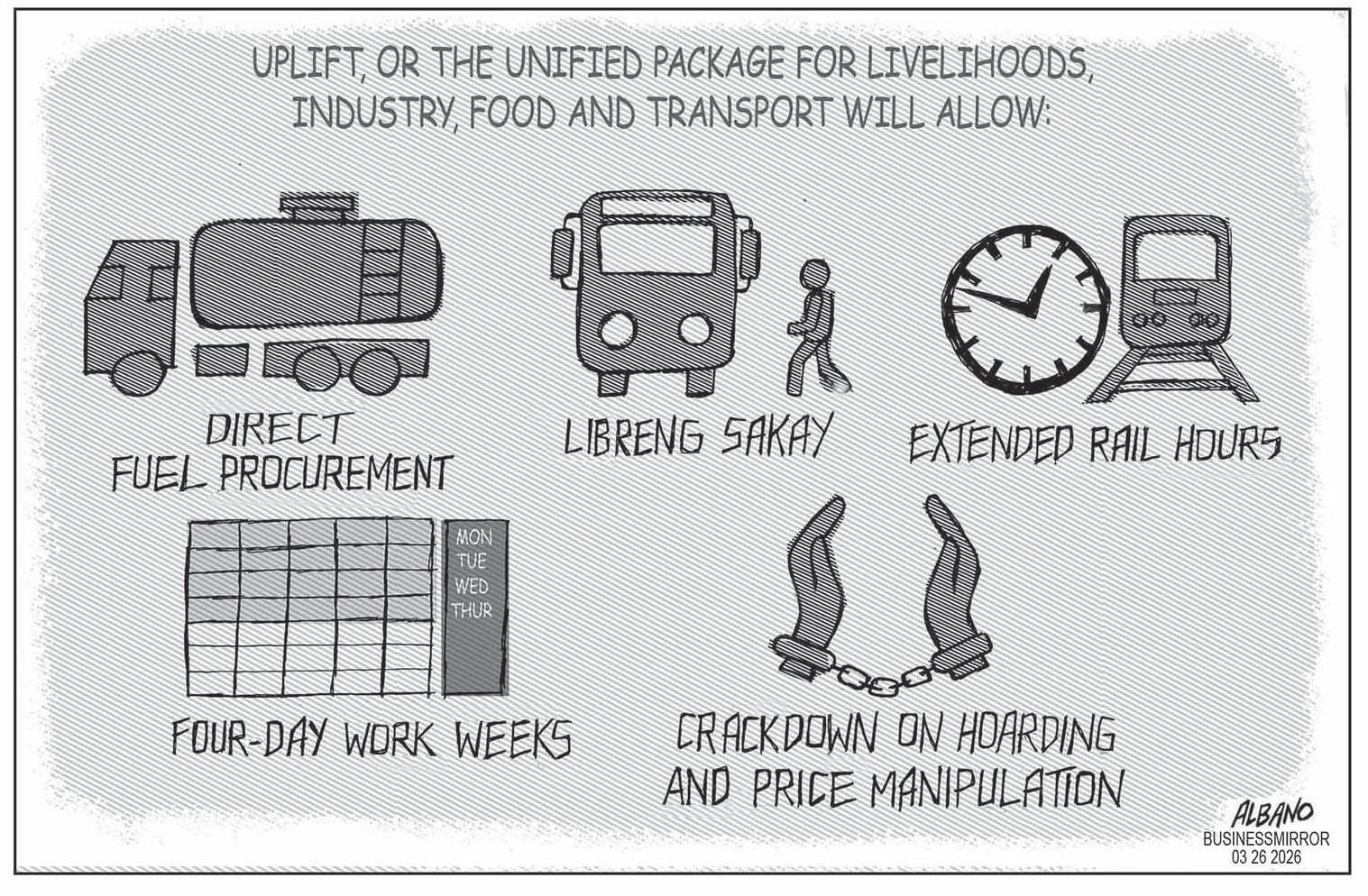
The order also created the Unified Package for Livelihoods, Industry, Food, and Transport (UPLIFT) Committee, which is tasked to ensure stable energy supply, uninterrupted essential services, and continued economic activity.
The committee, chaired by the Pres-
ident, brings together key economic and social sector agencies, including those handling energy, transport, agriculture, finance, and economic planning.
FPI said the UPLIFT framework offers a coordinated approach to help industries and communities navigate the effects of rising energy costs.
At the firm level, Lee said companies are adjusting production schedules to take advantage of off-peak energy rates, while introducing more flexible work arrangements, including cross-trained roles and remote setups for nonproduction staff where possible.
Manufacturers are also reviewing supplier contracts, tightening energy use through efficiency measures and improving logistics by consolidating shipments and maximizing truck capacity to reduce fuel consumption.
Beyond immediate responses,
Lee said the current environment is accelerating longer-term shifts in the sector.
Companies are diversifying supply chains, increasing local sourcing where feasible and investing more in renewable energy solutions such as rooftop solar to reduce exposure to fuel price swings, the FPI head cited.
“This crisis magnified our country’s vulnerabilities. Reforms that will deepen and expand local manufacturing as a national imperative will help the Philippines secure resilience, drive job creation, and help better shield the Philippine economy from global energy shocks,” Lee said.
“Industrial growth at scale— anchored on job creation, innovation, and sustainability—is no longer optional; it is the foundation of a more secure and competitive economy moving forward,” she added.
Japan-funded railway projects in NCR hit by fuel price spikes
By Malou Talosig-Bartolome
JAPAN-FUNDED railway projects in Metro Manila are reeling from surging oil prices triggered by the war in the Middle East, raising concerns over escalating costs for these big-ticket infrastructure ventures.
“We are a construction project and we use heavy machinery… so we need a lot of oil,” said Ricky Salenga, construction manager of Sumitomo Mitsui Construction Co. Ltd., the Japanese general contractor for Phase 1 of the Metro Manila Subway Project. The segment runs from East Avenue in Quezon City to Ortigas in Pasig City and is currently 30 percent complete.
Salenga said the team hauls nearly 1,000 cubic meters of land and construction waste daily, re -
quiring about 5,000 liters of diesel.
“That’s a lot of trucks, and we have three excavations,” he noted, adding that the company is absorbing the cost of diesel, which has doubled from P60 to P120 per liter.
Meanwhile, a Japanese-Philippine consortium composed of Taisei Philippine Construction Inc. and DM Consunji Inc. is building the depot of the NorthSouth Commuter Railway in Valenzuela City.
With construction already 85 percent complete, most imported supplies had been shipped before the conflict erupted.
“We still have some materials outside the country, and we are coordinating with manufacturers and suppliers,” said Engr. Gerardo Ancheta, consultant for DMCI’s railway projects.
impact of higher freight costs,” he said.
as infrastructure spending gains traction,” it said.
Recently, the Department of Economy, Planning, and Development reported that the administration’s pipeline of flagship infrastructure projects has reached 201, with a total cost of P9.97 trillion.
Inflation is also expected to pick up, with UA&P projecting a rise to 4.2 percent in March from 2.4 percent previously, driven largely by higher fuel costs.
“[It] may continue climbing until crude oil prices stabilize or decrease as more producers respond to higher prices and as Iran and the US allow additional tankers to transit the Strait of Hormuz,” the report said. Even before the latest geopolitical developments, the Marcos administration had already lowered its GDP growth target for the year to 5 to 6 percent, from an earlier 6 to 7 percent.
Some indicators, however, point to pockets of resilience. Manufacturing activity improved, with the February Purchasing Managers’ Index rising to 54.6, while the Volume of Production Index posted a 1.2-percent increase.
The government is now forming a crisis committee to address the potential long-term impact of the Middle East tensions, particularly on oil prices. Furthermore, UA&P expects exports to remain a bright spot, with double-digit growth likely. However, it warned that the peso may stay under pressure, potentially remaining above P59 to the dollar amid rising inflation and stronger demand for foreign currency assets.
Data from the Bankers Association of the Philippines showed the peso closed at P60.30 per dollar on Monday, weaker than its previous finish of P60.10.
Meanwhile, the Philippine Statistics Authority data showed export earnings rose to $7.09 billion in January 2026, up from $6.57 billion a year earlier.
The report also noted that higher oil prices, hovering near $100 per barrel for both Brent and West Texas Intermediate crude as of mid-February, have pushed local bond yields higher, particularly for longer-term securities.
Last week, National Treasurer Sharon Almanza said investor demand for government bonds remains strong despite global volatility, while Finance Secretary Frederick Go said the government may need to offer higher yields to attract investors.
“With a little backtracking by President Trump, oil and local bond yields eased,” the report said.
“Despite these, we don’t expect major downside movements until some semblance of certainty about the winding down of the Gulf War and freer flow of oil through the Strait of Hormuz emerge,” it added.
of ammonia and phosphate shipments pass through.
“As agriculture secretary, I don’t want to do this, but we could import what we need to ensure supply is sufficient. We could always cut tariffs to mitigate the
sector is not an industry interest alone—it is a public interest, as connectivity has proven indispensable in times of national crisis.”
Tiu Laurel also acknowledged that additional funding may be needed if oil prices reach $200 per barrel for an extended period.
“These are challenging times,” he said, stressing that sustained resilience will hinge on efficiency gains, stronger local production, and coordinated action across sectors.
The Konektadong Pinoy Act, which aims to expand digital connectivity nationwide, lapsed into law in August last year. It is seen as a landmark piece of legislation that will entice foreign investors to participate in the country’s telco industry, amid calls for better and more reliable services.
implementation of fuel subsidy programs for critical shipments.
Philexport also called for faster trade facilitation and digitalization to reduce non-energy costs, alongside closer coordination with logistics providers to prevent excessive or speculative rate increases.
At the same time, the group encouraged exporters to step up energy efficiency efforts, streamline supply chains, and explore alternative markets and transport options to manage risks.
“Philexport stands ready to work closely with government and industry stakeholders to ensure that the Philippines not only weathers this energy crisis but emerges more resilient, competitive, and sustainable in the global trading environment,” it said.
Anilag 2026 A BusinessMirror
ANILAG FESTIVAL 2026: Leveling up talent and tradition
The much-awaited yearly festival showcased Laguna’s culture and innovation, and reflected the strong collaboration between the government, private sector, and communities.
By Mary Jade Gale Jadormio
THE week-long Ani of Laguna (Anilag)
Festival, with the theme “Level Up 2026,” drew large crowds and boosted local enterprises, as the provincial government positioned the event as both a cultural showcase and platform for tourism and economic growth.
Held from March 16 to 21, the festival brought together all 24 municipalities and six cities of Laguna through a series of events highlighting local products, performances, and emerging tourism initiatives.
Th is year’s edition of the festival, under the governance of Laguna Governor Sol Aragones, kicked off with a Mass at the Capitol grounds.
The Mass highlighted Anilag’s deep roots in tradition and community unity. Early activities of the first day also introduced governance initiatives into the festival’s theme.
In her opening remarks, Aragones emphasized that the festival reflects the province’s spirit of productivity, not only in agriculture but likewise across culture and human capital.
“ The Anilag Festival symbolizes the ‘ani ng Laguna.’ It is not only the harvest of rice or products, but also the harvest of talent of every Lagunense,” she said.
A ragones used the stage to spotlight “Akay ni Gob Botika,” a program that provides free maintenance medication to residents in all municipalities and cities. She stressed the initiative’s inclusivity, saying it does not discriminate based on status and reflects shared investment in public health.
The provincial government also launched its pilgrimage tourism program, aimed at attracting faith based visitors by highlighting the distinct church heritage of Laguna towns and cities.
On the second day of the celebration, the Grand Trade Fair officially opened, transforming the venue into a vibrant marketplace of local goods, ranging from agricultural products and delicacies to crafts and startup innovations.
L ocal producers said the fair generated sustained foot traffic throughout the week, allowing them to network, sell, and build brand awareness with visitors from within and outside Laguna.
The most-awaited performance by some members of the SexBomb Girls was also held on the second day of the celebration. Aira Bermudez and Rochelle Pangilinan, along with other members, brought nostalgia and energized the audience with their performance.
The festival spotlight also shifted toward culinary and creative showcases. Food stalls and cooking demonstrations featured local delicacies, adding an economic layer to the festival’s cultural vision.
Traditional and contemporary performances also took center stage, giving communities opportunities to present pageantry, music, and narra-
tive through artistic expression.
Exhibits and competitions across multiple venues ensured that visitors engaged with culture in different formats.
Champions of the festival
One of the festival’s centerpiece events, “SAYAWIT Sing and Dance Competition,” unfolded as a marquee highlight, bringing musicality, choreography, and cultural expression together on stage.
In a competition that blended song and dance, contingents from all municipalities and cities participated, showcasing performances that fused narrative, tradition, and original scores.
The municipality of Los Baños was hailed as the champion of the competition, bagging the grand prize of P2 million. The secondplace award went to the municipality of Calauan, which took home P500,000, while San Pablo City earned third place with P250,000.
Special awards were also given, including:
n Fiesta Gas Choice Award: Calamba City
n Best in Costume: Santa Cruz
n Best in Choreography: San Pablo City
n Isuzu San Pablo Choice Award: Magdalena town
The Laguna governor praised the performers for elevating cultural expression and creativity, saying their work aligns with the festival’s “Level Up” direction in showcasing exceptional talent.
A lso conducted was a dance fitness competition, which was was a spirited event that fused dance, fitness, and local enthusiasm. Laguna province units and youth groups participated in the choreography competition, earning recognition for their performances and creative presentations.
The municipality of Majayjay took home the champion trophy with P100,000 as grand prize, while San Pablo City and Sta. Rosa City brought home awards as the second- and third-place finishers, respectively.
Organizers highlighted this segment as part of the festival’s efforts to promote active participation from residents while reinforcing cultural identity through movement and costume design.
More competitions commenced on the following days of the weeklong celebration, such as the pageantry, which remains a long-standing tradition in Anilag.
To spotlight individual talents and ambassadorial roles for culture and tourism, Laguna continued accomplishing the art of pageantry
genio, Maribeth Bichara, and Meynard
Biñan City clinched the championship, followed by Santa Rosa City as 1st Runner-up, and Calamba City as 2nd Runner-up. Other cities and municipalities received consolation prizes.
More than a competition, the event revived the sounds and styles of the 80’s and 90’s, bridging generations and uniting communities. It celebrated Laguna’s youth, culture, and creativity while reinforcing the province’s identity through music, dance, and shared heritage.
Youth engagement
Thousands of Lagunenses attended a full day of esports, sports, cheer, dance, and music competitions.
The day featured major competitions that highlighted youth talent. In the Mobile Legends tournament, Team Cyrax Zero Gravity took the championship, followed by Team Mix and Match and CCC Arise Esports.
The first-ever Anilag All-Star Basketball Game brought together local officials, PBA MotoClub members, and celebrity-athletes like Ronnie Alonte, ending in an exciting tie.
The Cheer Dance Competition crowned the City College of Calamba’s Valiants Pep Squad as champion, while STI Santa Rosa’s Blazing Lion Pep Squad and JZGMSAT’s Angels Pep Squad as runners-up.
Beyond competitions, the festival showcased Laguna’s culture and innovation, blending sports, music, and digital entertainment. The events reflected strong collaboration between the government, private partners, and communities.
Maraming salamat, mga minamahal na Lagunense, kayo ang puso ng tagumpay ng Anilag 2026,” said Governor Aragones, acknowledging the public’s support.
With high participation and diverse programs, Anilag 2026 has set a new standard for regional festivals and cemented Laguna as a hub for culture, sports, and youth development.
The evening of the final day capped off with a concert led by Filipino rock icon Bamboo, joined by local artists such as Bendeatha, and ended with a fireworks display celebrating the week-long festival. Balancing tradition and modernity
While Anilag’s expansion into new forms of recreation and entertainment created a new sight for the province’s residents, Gov. Aragones stressed that each program was carefully curated to retain its cultural significance.
All the activities we prepared were carefully selected,” Aragones told the BusinessMirror
“ We looked at the history, the culture, and the lessons that each program can give.”
Her office said that tourism and cultural departments collaborated closely in planning to ensure that heritage remains visible even as the festival evolves.
The festival serves not merely as a celebration but as part of a broader tourism master plan for Laguna.
“ This is just the beginning,” she told BusinessMirror. “We have a tourism master plan that we will follow throughout our term.”
The strategy, she noted, focuses on building awareness of Laguna’s natural and cultural offerings and sustaining interest beyond a single festival week.
W hen asked what she hopes first-time visitors to the province will discover and carry with them until the end of the celebration, she emphasized the beauty of Laguna’s centuries-old churches.
It’s not just the beauty of the churches that matters, but also the culture and heritage each one holds. It’s exciting because even now, other provinces are saying they will visit our churches, and our local products are being showcased in each church as well,” Aragones said. For more than two decades, the Anilag Festival has served as the province’s flagship cultural event. It brings together local governments, artists, producers, and communities to celebrate heritage, creativity, and communal achievements.
Th is year’s “Level Up” edition followed that tradition while introducing new competition formats, entertainment segments, and tourism driven features. As Laguna looks beyond Anilag 2026, efforts to preserve the festival’s cultural heart while expanding its reach and economic impact
will surely continue.
through Lakan at Lakambini, Ms. Gay Laguna, and Little Mister and Miss Laguna. Talents from different towns competed for recognition, and the festival continued the tradition of recognizing community figures who represent Laguna’s emerging cultural ambassadors.
Batang Laguna: Tunog 80’s to 90’s lit up the Festival Grounds of the Laguna Provincial Capitol on March 18, 2026, bringing together performers and spectators in a vibrant throwback of music, dance, and fashion.
Dance icons Wowie De Guzman, Danilo Barrios, Geleen Eu-
Marcellano were the judges of the competition.
Governor Sol Aragones and Bureau of Local Health Development Director Eric Tayag, together with other Laguna officials, walk towards the Capitol for the Mass.
Governor Sol Aragones delivers her opening remarks.
Three members of the popular SexBomb dance group perform their hit songs and viral grooves.
SAYAWIT: Sing and Dance Competition champions from Los Baños, Laguna.
Adobong Bangka sa Gata Birria Taco, an innovative way of presenting a traditional delicacy of Laguna.
Miss Gay Anilag with the runners-up.
Winners of the Lakan and Lakambini ng Laguna 2026.
Rock icon Bamboo performs during the closing night of the festival. Biñan City snags championship title in Batang Laguna: Tunog 80s-90s competition.
From left: Pagsanjan Mayor Jan Garcia, Sta. Cruz Mayor Benjo Agarao, Biñan City Mayor Gel Alonte, and Governor Sol Aragones with the Laguna basketball team and PBA Motoclub.
Anilag 2026 caps off with fireworks illuminating the night sky.
Newly crowned Lakambini ng Laguna Julianna Marie Quiambao of Biñan City.
Sara no show at impeachment proceedings
By Jovee Marie N. Dela Cruz | @joveemarie
VICE President Sara Z. Duterte on Wednesday snubbed the opening hearing of her impeachment proceedings at the House of Representatives, immediately raising questions about accountability, constitutional duty, and respect for the process.
The House Committee on Justice chairperson, Batangas Rep. Gerville Luistro, confirmed that the Vice President had been invited and was reportedly prepared to mount a full legal defense but ultimately chose not to appear.
“ The Vice President has been invited to participate... She is, apparently, ready to face the accusations and defend herself at length. And yet it appears she will not even participate,” Luistro said.
Her absence cast an early shadow over what Luistro described as a “minitrial,” where both sides are expected to present evidence and arguments before the panel determines whether
Internet…
Continued from A5
At the same time, average fixed broadband speeds have surged— from single-digit Mbps levels in 2016 to over 90 Mbps by 2025— while entry-level fiber plans have remained within the P1,299 to P1,699 range, significantly lowering the cost per Mbps.
D espite improvements in affordability, the group noted that delivering internet services at scale remains challenged by structural cost pressures. The high cost of electricity is one of the challenges of the delivery of internet services.
A ccording to the International Energy Agency and Association of Southeast Asian Nations (Asean) energy reports, the Philippines is consistently ranked among the countries with higher power rates in the region. The complex and often fragmented permitting process across local government units also continues to slow infrastructure rollout and increase costs.
“ These are not minor hurdles— they directly affect how fast and how far connectivity can reach,” Belmonte said. “They influence both pricing and the ability to expand services to underserved areas.”
At the same time, global energy market volatility—exacerbated by geopolitical tensions—poses additional risks. Fluctuations in oil prices have downstream effects on fuel and electricity costs, further straining both service providers and consumers.
Yet, Belmonte emphasized that connectivity itself can serve as a buffer against these pressures.
In times of rising fuel costs and economic uncertainty, digital connectivity becomes part of the solution,” he said. “The more we enable remote work, online transactions, digital public services, and e-commerce, the more we reduce reliance on physical mobility and mitigate the impact of higher transport and fuel costs.”
He added that strengthening digital infrastructure can help households adapt more effectively to economic disruptions.
“Connectivity is not only a cost driver—it is a cost stabilizer,” Belmonte said. “It allows families to save on transportation, access more opportunities from home, and manage rising expenses more efficiently.”
probable cause exists. C iting jurisprudence from past impeachment proceedings, Luistro warned that non-participation carries serious implications.
Failure to participate in the hearings before the Committee on Justice is tantamount to a culpable violation of the Constitution,” Luistro said.
She then directed the question to the public and her colleagues: “The question now is, can we also say this to the Vice President?”
L uistro stressed that public office demands accountability, not avoidance.
Despite Duterte’s absence, the
panel proceeded with the hearing.
Regardless of the participation of the Vice President…this committee will proceed. We will do our duty— with resolve, without hesitation, and without delay,” she said.
Probable cause AT this stage, the committee’s role is to determine probable cause—not to render a final judgment. Any full trial would take place in the Senate sitting as an impeachment court.
The complaints against Duterte include allegations of misuse of confidential funds, violations of Statement of Assets, Liabilities, and Net Worth (SALN) requirements, unexplained wealth, threats against the President, and disregard of constitutional safeguards.
“ These are not trivial matters,” Luistro said. “They go to the very heart of public trust.”
The Justice panel is conducting hearings to determine whether probable cause exists to elevate the impeachment complaints to the Senate, which will serve as the impeachment court. Further hearings are scheduled on April 14, 22 and 29.
Disrespect PARTY-LIST Rep. Leila de Lima of Mamamayang Liberal sharply criticized Duterte’s absence, calling it not just political defiance but an affront to a constitutional process.
“So this is disrespect, another
manifestation of her affront to the constitutional process,” de Lima said.
S he emphasized that while a respondent is not required to agree with the proceedings, respect for the institution is the bare minimum.
It’s very unfortunate that the respondent herself is disrespecting the proceedings before this committee. At the very least, she should have manifested formally that she will not be appearing before this committee rather than just issuing statements before the media,” De Lima said.
D e Lima also questioned the clarity of the communication sent by Duterte’s legal counsel, the Fortun, Narvasa and Salazar Law Office.
Because that letter submitted by her counsel, the Fortun Law Office, is not yet very clear there. Are they appearing or not? Show respect,” she added.
D e Lima underscored that the House is not yet acting as an impeachment court, rejecting arguments that trial-level rights should fully apply at this stage.
This is not a trial on the merits but simply akin to a preliminary investigation,” she said.
Subpoenae
IN a significant move, the committee voted to issue a subpoena to the Office of the Ombudsman for Duterte’s SALNs, placing her financial disclosures at the cen -
DSWD sets special payout for PUV drivers not on the list
THE Department of Social Welfare and Development on Wednesday said that it will schedule a special payout schedule for public utility drivers (PUV) who were not included on the list of original cash assistance relief (CRA) beneficiaries.
At the same time, the department said a total of 22,937 transport network vehicle services (TNVS) drivers each received P5,000 in cash relief assistance (CRA) on Tuesday to help their families cope with the effects of rising petroleum prices.
T he total number represents 84.39 percent of the total TNVS target beneficiaries provided to the DSWD by the Land Transportation Franchising and Regulatory Board (LTFRB).
We understand that some drivers were not included on the list, that’s why reminder po namin sa kanila [our reminder to them] is to submit their names and copy of their valid driver’s license doon sa kanilang [to their] transport regulatory unit so that the same would be submitted or forwarded to the LTFRB,” Social Welfare Assistant Secretary Irene Dumlao, spokesperson for the department, said in a televised interview on Wednesday.
She reiterated that PUV drivers who are not on the official list may bring their valid driver’s license, along with a photocopy, and submit it to the LTFRB help desk.
“ Kasi iyan po ang bilin ng Pangulong Marcos na dapat lahat ng
mga drivers natin [The directive of President Marcos is all drivers] who are facing various challenges as a result of the continued increase of fuel prices ay matulungan natin [should be assisted],” Dumlao said.
For TNVS drivers whose names were not found on the official list of beneficiaries, Dumlao said Social Welfare Secretary Rex Gatchalian will have a meeting with Grab Philippines on how they will be able to include the names of their “temporary drivers” in the list of CRA beneficiaries.
“We would like to inform the public that DSWD Secretary Rex Gatchalian will be meeting representatives of Grab, which is one of the TNVS operators or companies, to address this particular concern…whatever will
ter of the inquiry.
M anila Rep. Joel Chua moved for the subpoena, covering Duterte’s years in public office, including her tenure as Davao City mayor and Vice President.
T he subpoena marks a critical escalation in the investigation into allegations of unexplained wealth and possible discrepancies in asset declarations.
T he panel also approved a subpoena to the National Bureau of Investigation to obtain records related to alleged threats made by Duterte against President Marcos, First Lady Liza Araneta-Marcos, and former Speaker Ferdinand Martin G. Romualdez.
The alleged remarks stem from a news conference in which Duterte said she had instructed someone to kill the President, the First Lady, and the former Speaker in the event of her death—statements that triggered public concern and investigations.
The subpoena directs the NBI to submit certified records, documents, and photographs gathered during its investigation.
Party-list Rep. Chel Diokno of Akbayan, meanwhile, emphasized the need to scrutinize Duterte’s SALNs and ensure protection for key witness Ramil Madriaga, who has claimed knowledge of alleged cash deliveries tied to confidential funds.
See “Sara,” A5
be agreed upon, we will communicate it to the public. On the part of the DSWD, our objective is to include the drivers who were not reflected on the list at mabigyan po natin sila ng tulong [so we could provide them with assistance],” Dumlao said.
S he also shared that all of the Department’s Field Offices (FOs) are coordinating with local governments and LTFRB regional offices to prepare for the regional CRA payouts after Holy Week.
Even as we speak, our Field Offices are coordinating with the local government units for the list of tricycle drivers and the regional LTFRB offices for the drivers of the jeepney and other PUV drivers,” Dumlao said.
W ith the declaration of a state of national energy emergency by President Marcos, Dumlao also assured that the DSWD remains ready to speed up the provision of assistance to affected sectors, including the transport sector, to help cushion the impact of the rising prices of fuel products brought about by the Middle East crisis. PNA
PNP tightens security in energy facilities
THE National Police (PNP) has ramped up measures to secure key energy facilities, following President Marcos’s declaration of a national energy emergency.
We in the Philippine National Police will focus on securing critical energy facilities and in maintaining peace and order. Additional personnel will be deployed in key areas to prevent any disruption or exploitation of the situation,” Gen. Jose Melencio Nartatez Jr. PNP chief, said on Wednesday. Nartatez emphasized the need to protect substations, transmission lines and power plants, citing these as vulnerable to security risks during power shortages. We will maintain a strong presence in gas stations and energy plants to ensure that there will be no supply disruption,” he added. N artatez also highlighted measures to keep PNP operations running despite the current situation. Police forces nationwide are on heightened readiness to secure key installations, critical infrastructure, and communities.
The PNP will monitor and address any activities that may disrupt public order, assuring the public of its full capability to protect every Filipino,” said Nartatez.
“ We have contingency measures in place, including backup power systems in stations. Tuloy - tuloy ang serbisyo ng pulisya hindi tayo titigil kahit may [Police service continues— we will not stop even if there are] power interruptions. Our frontlines will remain open 24/7. Kahit may energy emergency, hindi titigil ang serbisyo ng PNP [Even if there is an energy emergency, PNP services will not stop],” he added.
O n Tuesday, President Marcos signed Executive Order 110, introducing the Unified Package for Livelihoods, Industry, Food, and Transport (Uplift) to assist sectors affected by rising fuel costs and global supply disruptions stemming from the Middle East conflict.
E O 110 activates a whole-ofgovernment response to ensure energy supply stability, protect vulnerable sectors and maintain public service.
D isruptions in critical supply routes, including the Strait of Hormuz, may constrain global fuel supply and trigger price volatility, posing risks to the country’s energy security, according to EO 110.
M arcos stressed the need to declare a state of national energy emergencytoenablethegovernment, through the Department of Energy (DOE) and other relevant agencies, to implement coordinated measures to ensure stable and adequate energy supply while mitigating economic impacts.
Meanwhile, the PNP reminded citizens to take simple precautions during potential brownouts.
Na rtatez said homeowners must lock their doors at all times and refrain from leaving lighted candles unattended.
“ Magsasagawa rin tayo ng increased night patrols sa mga apektadong komunidad para iwasan ang anumang krimen [We will also conduct increased night patrols in affected communities to prevent any crime],” Nartatez said.
T he Armed Forces (AFP) meanwhile expressed support
Cyber defense focus of 2026 Balikatan –Brawner
THIS year’s Exercise Balikatan among the Philippines and the United States and other allies will focus more on cyber defense drills.
In a press briefing late Tuesday afternoon, the Armed Forces (AFP) Chief of Staff, Gen. Romeo Brawner Jr., said modern conflicts such as the war between Russia and Ukraine and tensions in the Middle East involving the United States, Israel and Iran highlight the importance of cyber defense.
H e also said the US, before conducting any military operation, “often attacks the cyber networks of the forces opposing it as part of its efforts to paralyze and confuse its opponents.”
Because we saw from the lessons in Ukraine and in Iran that one of the first forms of warfare that was done was the cyber warfare to disable radar sites, disable command centers, disable firing batteries, etc,” Brawner stressed.
E xercise Balikatan 2026 is expected to open April 20 and will last until late May.
That is why it is very important that we develop this capability of defending our resources, our networks,” Brawner said. Meanwhile, the AFP chief said there is no need to ration fuel for participating units for Balikatan 2026, as resources such as petroleum and lubricants have already been allocated for the drills as early as last year.
“So hindi natin kailangan bawasan ito [we no longer need to reduce this]. We are going to continue with all the Balikatan exercises with all the components of these exercises despite the war going on in Iran,” he added.
Meanwhile, Brawner said Japan’s respect for international law is aligned with the country’s desire for a lasting peace in the Indo-Pacific Region.
“Japan’s respect for international law, freedom of navigation, and adherence to established norms aligns with the principles upheld by the Philippines for the region,” he added.
B rawner also said that this shared commitment is reflected in agreements such as the Reciprocal Access Agreement, which demonstrates a more responsive and coordinated security posture.
He emphasized the enduring strength and strategic significance of Philippines-Japan relations during a high-level panel discussion organized by the Stratbase Institute at The Peninsula Manila Hotel, Makati City, on Tuesday.
to the government’s move amid soaring oil prices due to the Middle East conflict.
“ While the Department of National Defense is not among the agencies directly tasked in the implementing committee, we recognize that this development has a direct bearing on our mandate to help ensure energy security, national stability, and the overall welfare of the Filipino people,” the AFP spokesperson, Col. Francel Margareth Padilla, said in a message to reporters.
“ The AFP remains ready to provide assistance when directed, with our forces on standby to augment efforts in critical infrastructure protection, logistics and transport of essential goods, engineering support, and rapid response operations, particularly in vulnerable and geographically isolated areas,” she added.
L ikewise, Padilla said the AFP remains committed to reinforce a whole-of-nation approach in safeguarding national resilience following this crisis. Rex Anthony Naval with PNA
T he event commemorated 70 years of diplomatic normalization between the two nations and gathered leading experts, policymakers, and stakeholders to reflect on past achievements, current realities, and future prospects of the bilateral partnership.
The forum also served as a platform for reaffirming the importance of regional cooperation in upholding international law and promoting shared prosperity.
Centering his message on the maturity of the defense partnership, Brawner highlighted how both nations navigate a complex security landscape through steady cooperation rather than provocation.
H e emphasized the role of key agreements in strengthening this partnership.
“ Through our partnership, we’ve shown that security can be strengthened without escalation, disputes managed without coercion, and trust built through accountability,” Brawner said, highlighting the Philippines and Japan’s model approach to cooperation in a complex regional environment.
DICT completes IRR of e-Governance Act
By Lorenz S. Marasigan @lorenzmarasigan
THE government is moving from “intent to implementation” on digital transformation, acting Information and Communications Technology Secretary Henry Aguda said, as his agency signed the implementing rules (IRR) of the e-Governance Act and approved the country’s strategic blueprint for a digitally integrated government.
Today, we move from intent to implementation—from plans to real, measurable change in how the government works, and more importantly, how it serves the Filipino people,” Aguda said.
The IRR establishes standards for interoperability, cybersecurity, and streamlined service delivery across all government agencies. It directs agencies to adopt common standards, re-engineer internal processes, and prioritize citizencentered service delivery in a wholeof-government approach Aguda describes as a “Digital Bayanihan.”
This is about removing friction, cutting red tape, and making sure every Filipino, wherever they are, can access government services efficiently,” Aguda said.
A longside the IRR signing, the
Aguda announced the approval of the E-Government Master Plan, the country’s strategic blueprint for digital transformation outlining key programs, priorities, and governance mechanisms to build a more integrated and interoperable government infrastructure.
T he move comes against a backdrop of longstanding public frustration over fragmented government systems, bureaucratic red tape, and uneven access to services—particularly in geographically isolated communities where physical access to government offices remains a persistent challenge.
K ey national agencies, including the Anti-Red Tape Authority and the Department of Budget and Management, expressed support for the initiative, stressing the need to align human resources, institutional capacity, and public financial management with the broader digital transformation agenda.
W ith both the IRR and the master plan now in place, Aguda said the department would lead implementation across agencies, with the goal of delivering government services that are faster, more secure, and accessible to all Filipinos regardless of location.
Marcos orders release of P20 billion emergency fund to secure fuel supply
PRESIDENT Marcos has ordered the release of P20 billion in emergency fund to ensure the country has an adequate fuel supply amid the global oil crisis brought about by the ongoing conflict in the Middle East.
The Department of Energy will receive the emergency fund through a Special Allotment Release Order and a Notice of Cash Allocation issued on Tuesday, the Department of Budget and Management (DBM) said in a statement.
T he DBM said the approved budget will be sourced from the Malampaya Gas Fund under the Special Account in the General Fund.
The funding will be charged against the Malampaya Gas Fund, ensuring that resources are readily available for urgent national energy security needs without disrupting other priority programs,” it said.
The P20 billion will be tapped for the implementation of the government’s Emergency Energy Security Program aimed at ensuring fuel availability, preventing supply shortage, and mitigating the impact of volatile global oil prices.
I t will fund the strategic procurement of fuel products, including diesel, gasoline, and liquefied petroleum gas (LPG), in an effort to boost national fuel inventory, stabilize pump prices, and ensure uninterrupted operations across transport,
logistics, agriculture, emergency response, and other critical sectors.
T he DBM said the program will be implemented by the Philippine National Oil Company –Exploration Corp. (PNOC-EC), which has already initiated procurement activities to immediately augment domestic supply.
“As global uncertainties continue to affect energy markets, the Marcos administration is taking a firm and proactive stance—ensuring that the Philippines remains resilient, prepared, and protected,” it said.
T he latest move comes amid escalating geopolitical tensions in the Middle East that have disrupted global oil production and distribution, posing serious risks to domestic fuel supply and the continuity of essential services.
M arcos on Tuesday signed Executive Order 110, declaring a state of national energy emergency for a year to stabilize the country’s energy sector.
DBM acting Secretary Rolando Toledo said the government would ensure that the fuel remains available, prices are moderated, and essential services are unhampered.
“ Every peso we release here is meant to keep the economy moving, keep goods flowing, and keep services running. This is what fiscal discipline looks like—using public funds where they matter most, at the time they are needed most,” Toledo said. PNA
Pagcor commits initial P1.37 billion for nationwide school bldg program
THE Philippine Amusement and Gaming Corporation (PAGCOR) on Wednesday announced that it has allocated an initial P1.37 billion for the construction of 25 public school buildings nationwide.
T he funding forms part of PAGCOR’s two-year plan to build 125 school buildings, or about 1,500 classrooms, to help address the country’s classroom backlog in partnership with the Department of Education (DepEd).
To formalize the initiative, PAGCOR signed a memorandum of agreement (MOA) with DepEd and representatives of the initial batch of 25 beneficiary local government units or LGUs.
PAGCOR Chairman and CEO
Alejandro H. Tengco said funds for the project totaling more than Php8 billion have already been earmarked, hence its implementation is assured.
Our commitment to the President (Ferdinand Marcos Jr.) is that all classrooms will be completed not later than 2027,” he said.
To ensure transparency and proper implementation, the funds will be released to the LGUs in three tranches based on construction progress and compliance with project standards.
The first batch of recipients includes LGUs in La Union, Pangasinan, Pampanga, Tarlac, Bulacan, Zambales, Batangas and Cavite, as well as those in Mindoro, Marinduque, Romblon, Albay, Camarines Sur, Antique, Samar, Davao Oriental, South Cotabato,
Lanao del Sur and Sulu.
E ach local government unit will receive about P55 million to build a three-story school building with 12 classrooms equipped with chairs, tables, PWD-friendly facilities, electric fans, microphones, a 75inch smart TV, and a one-year free internet subscription.
Tengco said the program aims to improve learning conditions particularly in areas where students continue to endure overcrowded classrooms, irregular schedules and makeshift learning spaces.
We have learned that the country has an estimated 165,000 classroom shortage, which is a daunting challenge for any administration,” he said. “ Tunay na mahalaga ang proyektong ito dahil naniniwala ako na kung maganda ang pundasyon ng edukasyon ng bawat kabataang Pilipino, malaki ang pag-asa ng ating bansa,” he said.
Tengco also announced a new initiative that will require PAGCOR’s online gaming licensees to allocate a portion of their gross gaming revenues to socio-civic programs, including the repair and rehabilitation of public school buildings nationwide.
Education Secretary Sonny Angara welcomed the partnership and said that the school building project brings renewed hope to the education sector despite ongoing challenges.
“ We thank PAGCOR for its continued support to the education sector,” he said. “These classrooms are not just physical structures; they are places where dreams can become reality for millions of young Filipinos.”
‘House focus remains on economy despite doing constitutional duty’
THE House of Representatives on Wednesday vowed to continue to prioritize measures aimed at strengthening the economy and easing the burden on Filipinos despite ongoing impeachment proceedings against Vice President Sara Duterte.
Batangas Rep. Gerville Luistro, Committee on Justice chairman, said that legislative work—particularly on urgent economic concerns—remains in full swing even as the chamber carries out its constitutional duty.
Even with the impeachment, we will continue to carry out our other obligations,” she said as the panel opened hearings on the remaining complaints
against the Vice President.
Luistro underscored that the House leadership, under Speaker Faustino G. Dy III remains focused on addressing rising fuel costs, inflation, and the overall cost of living.
“Even as we undertake this solemn constitutional duty, the House of Representatives does not forget its other responsibilities,” Luistro said.
A mong the key economic measures advanced by the chamber is a proposed law allowing President Marcos to suspend or reduce fuel excise taxes to cushion the impact of global oil price spikes.
“ That bill is already in place—it has been carefully studied and well thought
out and is expected to help our fellow citizens,” she said. Luistro added that lawmakers are actively pushing reforms targeting inflation, food security, and access to essential services, alongside initiatives to improve government efficiency and reduce costs for the public.
These include measures to abolish the travel tax, institutionalize digital payments in government transactions, and streamline public service delivery.
A lso, the committee voted to subpoena detainee Madriaga, who claims to have acted as Duterte’s alleged bagman.
The House Legislative Library Archives Division was directed to submit transcripts, video recordings, and related records of prior House hearings in 2024 on OVP and DepEd confidential funds, including the affidavit of former Education Undersecretary Gloria Mercado and related submissions.
Party-list Rep. Terry Ridon of Bicol Saro also sought subpoena to the Bureau of Internal Revenue (BIR) for income tax returns and
related records of Duterte; her spouse, Manases Carpio; and identified business entities.
The committee granted the motion directing the issuance of subpoena ad testificandum and subpoena duces tecum to a BIR representative covering tax records from 2007 to 2025. R idon also moved for subpoenae to the Securities and Exchange Commission for general information sheets and audited financial statements of several firms linked to Duterte and her family to verify ownership and financial activity, which the panel likewise approved.
CBy Rizal Raoul Reyes
ITIZENWATCH Philippines on Wednesday urged policymakers to formally recognize internet access as the country’s “fifth utility,” arguing that its role has become as critical as electricity, water, gas, and transport in sustaining daily life and economic resilience.
In connection with the alleged misuse of confidential funds, de Lima moved for subpoenas to the Commission on Audit official Gloria Camora to testify and produce liquidation reports, disbursement vouchers, certifications, and related submissions of the Office of the Vice President and the DepEd.
O n motion by Party-list Rep. Antonio Tinio of ACT Teachers, the committee also ordered the issuance of a subpoena to lawyer Michael Poa, who served as Duterte’s chief of staff and spokesperson at the DepEd when she was its secretary, during which the agency received P112.5 million in confidential funds in 2022 and 2023.
T he panel also ordered the Philippine Statistics Authority to provide and authenticate civil
I n a statement, CitizenWatch co-convener lawyer Christopher Belmonte said the steady decline in data costs and the rise of flexible internet promos have expanded access across income segments, allowing more Filipinos to participate in an increasingly digital economy. Consumers today are paying less for more data, with greater flexibility in how
registry documents, including birth, marriage, and death records for individuals listed in OVP and DepEd submissions to verify the identities of recipients of confidential funds.
Ground rules set
THE committee also approved ground rules to govern the proceedings, presented by San Juan Rep. Ysabel Maria Zamora.
The rules limit lawyers’ participation to advising clients, while only lawmakers may conduct questioning. Resource persons may speak only when recognized by the chair.
C agayan de Oro Rep. Rufus Rodriguez argued for broader participation of counsel, while Baguio Rep. Mauricio Domogan stressed the need for the respondent’s presence when presenting evidence.
Luistro emphasized that governance requires balancing immediate economic needs with accountability mechanisms.
“That governance is a constant balancing act—attending to urgent needs while fulfilling constitutional obligations.” She maintained that the House’s work on the economy and public welfare continues uninterrupted.
The justice panel on Wednesday formally opened impeachment hearings to determine whether probable cause exists to elevate the case to the Senate for trial.
T he House is also advancing education-related reforms to support long-term economic growth, including amendments to the Universal Access to Quality Tertiary Education Act and the Presidential Merit Scholarship Program to better equip the country’s future workforce.
Jovee Marie N. dela Cruz
‘Recognize internet access as fifth utility’
they spend on connectivity,” Belmonte said. “But beyond affordability, what we are seeing is a deeper transformation— connectivity is now central to how people live, work, learn, and transact.”
D ata from the Department of Information and Communications Technology (DICT), including updates under the National Broadband Plan, alongside global benchmarks from the International Telecommunication
Union (ITU), show sustained improvements in both broadband speed and affordability. The cost of 1 GB of mobile data in the Philippines has dropped from over 2 percent of gross national income per capita in the mid-2010s to below 1 percent in recent years, meeting the United Nations’ affordability target.
A6 Thursday, March 26, 2026
Editor: Angel R. Calso
Trump team offers 15-point ceasefire proposal to Iran as US sends major troop reinforcements
By Aamer Madhani, Jon Gambrell, David Rising & Samy Magdy
The Associated Press
DUBAI, United Arab Emirates—
The Trump administration offered a 15-point ceasefire plan to Iran, a person briefed on the contours of the proposal said late Tuesday, even as the US military prepared to send at least 1,000 more troops to supplement some 50,000 troops already in the Mideast.
The plan was submitted to Iran by intermediaries from Pakistan, who have offered to host renewed negotiations between Washington and Tehran, according to the person, who spoke on condition
of anonymity because they were not authorized to speak publicly.
The New York Times was the first to report that the plan had been delivered to Iranian officials.
The Pentagon is also in the process of deploying two Marine units that will add about 5,000 Marines and thousands of sailors to the region. The moves are being framed as Trump maneuvering to give himself “max flexibility” on what he will do next, the person added.
Israeli officials, who have been advocating for President Donald Trump to continue the war against Iran, were surprised by the submission of a ceasefire plan, the person said.
The White House did not respond to requests for comment.
Earlier in the day, Trump said the US was in talks with Iran to end the war as diplomatic efforts
picked up and Iran issued a newly defiant statement. Meanwhile, airstrikes battered the Islamic Republic while Iranian missiles and drones targeted Israel and sites across the region.
Iran has denied that any negotiations are taking place, and Trump delayed his self-imposed deadline for Iran to reopen the Strait of Hormuz. Tehran’s chokehold on the crucial waterway has snarled international shipping, sent fuel prices skyrocketing and threatened the world economy.
Talks would face big challenges ANY talks between the US and Iran would face monumental challenges. Many of Washington’s shifting objectives, particularly over Iran’s ballistic missile and nuclear programs, remain difficult to achieve.
It’s not clear who in Iran’s government has the authority to negotiate—or would be willing to, as Israel has vowed to continue killing the country’s leaders.
Iran remains highly suspicious of the United States, which twice under the Trump administration has attacked during high-level diplomatic talks, including with the Feb. 28 strikes that started the current war.
More troops to be sent to Mideast
AT least 1,000 troops from the 82nd Airborne Division will be sent to the Mideast in the coming days, three people with knowledge of the plans told The Associated Press. The 82nd Airborne is considered the Army’s emergency response force and can typically be
deployed on short notice. It’s the latest addition of American troops after US officials last week said thousands of Marines aboard several Navy ships will be heading to the region.
While the Marine units are trained in missions that include supporting US embassies, evacuating civilians and disaster relief, the soldiers of 82nd Airborne are trained to parachute into hostile or contested territory to secure key territory and airfields.
The Marine deployment to the region has raised speculation that the US may try to seize Kharg Island, which is vital to Iran’s oil network. The US bombed the Persian Gulf island more than a week ago, hitting its defenses but saying it had left oil infrastructure intact.
Oil drops over 5% while world stocks rise on hopes for de-escalation in Iran conflict
By CHAN HO-HIM AP Business Writer
HONG KONG—Oil prices fell more than 5% and world shares gained on Wednesday over the possibility of a de-escalation of the Iran war and negotiations between the United States and Iran. US futures were up 0.9%.
In early European trading, Britain’s FTSE 100 rose 1% to 10,072.60. France’s CAC 40 was up 1.4% to 7,855.31, while Germany’s DAX was 1.6% higher at 22,989.80. Tokyo’s Nikkei 225 was up 2.9% to 53,749.62. South Korea’s Kospi gained 1.6% to 5,642.21. Hong Kong’s Hang Seng rose 1.1% to 25,335.95, while the Shanghai Composite index was 1.3% higher at 3,931.84. Labubu doll maker Pop Mart’s Hong Kong-listed shares fell 22.5%, after it announced annual revenue for last year that was largely in line with analysts’ estimates. Australia’s S&P/ASX 200 climbed 1.9%. Taiwan’s Taiex was up 2.5%. US President Donald Trump’s
claims of progress being made from talks with Iran this week and his postponement on Monday of a deadline to “obliterate” Iran’s power plants over the reopening of the Strait of Hormuz have also fueled optimism that an end to the Iran war could come soon.
Trump’s administration has offered a 15-point ceasefire plan to Iran, but an Iranian military spokesperson mocked the US’s attempt at a ceasefire deal Wednesday.
With the Strait of Hormuz being a key waterway for crude oil and liquefied natural gas transport, oil and gas prices have spiked and fluctuated in recent days.
Oil prices fell again on growing hopes for a de-escalation. Brent crude, the international standard, fell 5.2% to $94.97 per barrel. It was around $104 on Tuesday.
Benchmark US crude was down 5.3% early Wednesday to $87.44 a barrel.
While Iran has denied negotiations were taking place, and attacks in the Middle East continued, Pakistan has offered to host talks between Washington and Tehran. And as Trump raised optimism of
a de-escalation of the war, at least 1,000 more American troops from the 82nd Airborne Division are said to be deployed to the Middle East in the coming days. On Tuesday, US stocks closed
Bahrain’s UN bid to allow ‘all necessary means’ to reopen the Strait of Hormuz meets resistance
By Farnoush Amiri & Edith M. Lederer
The Associated Press
UNITED NATIONS—A U.N. Security Council resolution calling for countries to use “all necessary means” to keep the Strait of Hormuz open is facing some opposition for raising the possibility of U.N.-backed military action against Iran, according to three council diplomats.
Bahrain put forward the proposal, which was obtained by The Associated Press on Tuesday, as world powers grapple with how to release Iran’s chokehold on the crucial waterway, which has sent fuel prices skyrocketing and threatened the world economy.
The draft resolution would authorize countries or naval partnerships to use military action to secure passage and “to repress, neutralize and deter attempts to close, obstruct or otherwise interfere with international navigation through the Strait of Hormuz.” It also demands that Iran “immediately cease all attacks against merchant and commercial vessels” and stop impeding freedom of navigation in and around the vital waterway, which is impacting international trade, energy security and the global economy.
One of the diplomats said the draft was being reworked Tuesday after a number of countries raised concerns about the resolution being placed under Chapter Seven of the U.N. Charter, which allows the council to authorize actions ranging from sanctions to the use of force.
Bahrain, the Arab representative on the U.N.’s most powerful body, is one of numerous countries in the region to be targeted by Iranian drones or missiles since the US and Israel began striking Iran on Feb. 28. It’s unclear if the US, which holds the council presidency this month, has thrown its support behind the measure, but US envoy Mike Waltz has previously
stated America’s preference for regional leadership on this issue.
China and Russia—both veto-wielding members of the 15-member council—are among the countries that are opposed to the current text, according to one of the diplomats.
Another council diplomat said France introduced a separate resolution on Monday that made no mention of Iran and would not be placed under Chapter Seven. Instead, the text urges all parties to refrain from further escalation and return to the path of diplomacy. The French mission to the U.N. did not respond to requests for comment.
The diplomats spoke on the condition of
anonymity to disclose private negotiations.
It is unlikely, given the disagreements, that either draft would be put to a vote this week. A separate Bahrain resolution condemning Iranian strikes on its territory
received near unanimous support from the council two weeks ago, with China and Russia abstaining from the vote.
See “Bahrain,” A9
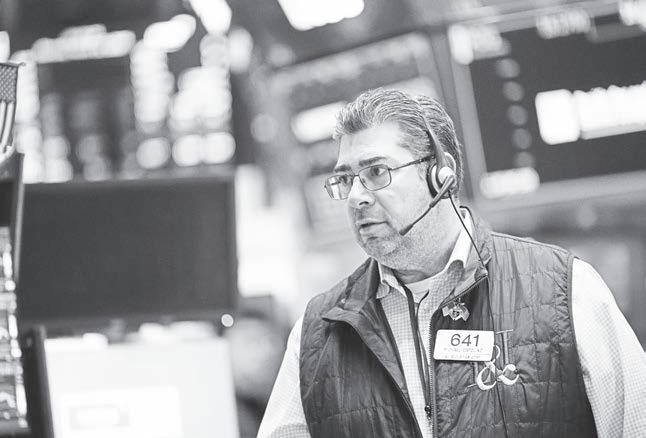
MICHAEL CAPOLINO works on the floor at the New York Stock Exchange in New York,
A8 Thursday, March 26, 2026
Iran denies talks as Trump’s ‘great progress’ claim heightens Middle East war uncertainty
By Jon Gambrell, Lee Keath & Munir Ahmed
The Associated Press
DUBAI, United Arab Emir -
ates—US President Don -
ald Trump’s surprising claim this week that talks with Iran were yielding great progress has only raised more confusion over a war whose goals were already unclear. The most basic question: What talks?
A 15-point plan from the Trump administration offering a potential pathway to an exit was offered late Tuesday to Iran through Pakistan, according to a person briefed on the contours of the plan but who was not authorized to speak publicly about it.
Iran has so far denied any negotiations were taking place, pledging to fight “until complete victory.” Pakistan, Egypt and Gulf Arab nations are trying behind the scenes to piece together talks, but their efforts still seem preliminary. Israel is vowing to keep up its attacks.
If anything, the war appears to only be escalating. Barrages were fired into Iran, Israel and across the Mideast on Tuesday. Meanwhile, thousands more US Marines were on their way to the Gulf, and the Army was preparing to deploy at least 1,000 troops from the 82nd Airborne Division to the Middle East in the coming days.
Here is a look at what’s known and not known about possible talks to wind down the war.
Push for negotiations
SINCE launching the war alongside Israel on Feb. 28, Trump has given shifting and often vague objectives,
and those mixed messages were on display in recent days. He has talked of degrading or destroying Iran’s missile capabilities, and its ability to threaten neighbors—goals that he has some flexibility in declaring accomplished. A much tougher goal is ensuring Iran can never build a nuclear weapon, and Trump has insisted that will be part of any deal.
A reopening of the Strait of Hormuz—a vital waterway for oil shipments that Iran made virtually impassable when the war began—is now also a priority, for Trump and the global economy.
As Trump talks of engaging with leaders in Iran, he has backed off promoting the Islamic Republic’s collapse. Israeli Prime Minister Benjamin Netanyahu, however, continues to say the war aims to help Iranians overthrow the theocracy.
Trump claimed that US envoy Steve Witkoff and Trump’s sonin-law Jared Kushner held talks Sunday with an Iranian leader. He did not say who that was.
Reports focused on Iranian Parliament Speaker Mohammad Bagher Qalibaf as a possible interlocutor. But Qalibaf quickly denied talks were taking place in a post on X.
The US agreed “in principle” to join talks in Pakistan, according to three Pakistani officials, one Egyptian official and a Gulf diplomat, while mediators were still working to convince Iran. The officials all spoke on condition of anonymity because they were not authorized to provide the details to the media.
The Egyptian official said efforts are centered on “trust-building” between the US and Iran, aiming to reach a pause in fighting
and a “mechanism” to reopen the Strait of Hormuz.
A 15-point peace plan delivered to Iran
A 15-point plan from the Trump administration has been delivered to Iran by intermediaries from Pakistan, who have offered to host renewed negotiations, according to a person briefed on the contours of the plan but who was not authorized to speak publicly about it.
Israeli officials, who have been advocating for Trump to continuing prosecution the war against Iran, were taken by surprise by the US administration’s submission of a ceasefire plan, the person said. But with the US taking steps to send additional soldiers and Marines to the Mideast, the move is being framed as Trump maneuvering to give himself “max flexibility” on what he’ll do next, the person added.
The White House did not respond to requests for comment on the administration submitting the 15-point plan.
Who speaks for Iran in any talks?
IRAN’S leadership appears to have remained relatively cohesive, despite weeks of heavy bombardment and the killing of its supreme leader and many top-ranking military figures.
But who actually is in charge is not known. The new supreme leader, Ayatollah Mojtaba Khamenei, hasn’t been seen or directly heard from since he was named to replace his slain father, Ali Khamenei. Within the Islamic Republic are other centers of power, including the military and the power -
ful paramilitary Revolutionary Guard, as well as political figures like Qalibaf, Foreign Minister Abbas Araghchi and President Masoud Pezeshkian.
It’s not certain anyone entering talks with the US would have backing from the military or Guard. In the ongoing war, Iran’s military has conducted strikes based on orders of local commanders, rather than from any political leadership, Araghchi has said.
The spokesman of Iran’s top military command, Maj. Gen. Ali Abdollahi Aliabadi, vowed on Tuesday that the fighting “will continue until complete victory.” It was a message of defiance to Trump’s claim that Iran was petitioning for peace, but possibly also a warning to anyone within the Iranian leadership not to back down in talks.
Was Trump just trying to buy time?
TRUMP’S sudden declaration of progress in talks on Monday came just as the deadline was about to run out on an ultimatum he had made over the weekend threatening to “obliterate” Iran’s power plants unless the country releases its stranglehold on the Strait of Hormuz. Iran threatened to retaliate against power, water and oil infrastructure across the Gulf.
Trump on Monday pushed the deadline back five days and said there’s a “very good chance” a deal could be reached this week. That was a relief to global oil and stock markets.
Trump’s move could signal he’s wary of the war’s possible longterm damage to the US and global economy, though his administration has insisted that any pain from spiking oil prices will quickly
be reversed once the war is over.
“Trump could be actively seeking an offramp,” the Soufan Center, a New York-based think tank, wrote in an analysis.
On the other hand, the Soufan Center noted, Trump could be buying time for thousands of Marines heading to the region to arrive.
The Marine deployment could be a tactic to pressure Iran on negotiations. But it has also raised speculation that the US may try to seize Kharg Island in the Persian Gulf, which is vital to Iran’s oil network, or carry out an operation to remove enriched uranium from inside Iran. Either would mean a greater escalation and a longer war.
Trump has said he has no plans to send ground forces into Iran but has not ruled it out. Israel has suggested ground forces could participate in the war.
What is there to talk about?
NUCLEAR negotiations were already taking place when the US and Israel launched their surprise attack on Feb. 28, killing the elder Khamenei in the opening salvos of the bombing campaign.
That only deepened Iranian mistrust of Americans in negotiations, especially after Trump’s unilateral withdrawal in 2018 from a landmark nuclear agreement reached with the United States three years earlier. Iran and the US held negotiations in early 2025, and when a two-month deadline set by Trump ran out, Israel hit Iran in a surprise attack that the US joined in a 12-day war, striking Iranian nuclear facilities and military positions.
Trump said Monday that any deal to end the war will entail the US removing Iran’s enriched uranium, which is critical to its
disputed nuclear program. Iran refused that demand in the past, insisting it has the right to enrich uranium for peaceful purposes. A less ambitious goal for talks could be to reach a ceasefire and the reopening of the Strait of Hormuz.
But Araghchi seemed to reject any partial deal in an interview with Al Jazeera last Wednesday. “We don’t believe in ceasefire. We believe in the end of war ... the end of war in all fronts,” Araghchi said, emphasizing the need for solutions to conflicts throughout the region.
What about Israel?
NOTABLY, Israel is not involved in the move for negotiations.
Israel has depicted itself as following Trump’s lead, and it seems unlikely to continue with its strikes on Iran if the US declared an end to the war. Still, it has pursued its own war aims beyond the Americans’. Its bombing last week of Iran’s offshore South Pars natural gas field triggered intensified Iranian attacks on the Gulf Arab states, and Trump told Israel to halt such attacks.
In a statement late Monday, Netanyahu acknowledged Trump’s diplomatic efforts but said Israel would continue to strike its enemies for the time being. Also, an end to the war on Iran does not mean an end to Israel’s bombing campaign in Lebanon. There, Israel has seized a new opportunity to try to crush Hezbollah after the militants fired rockets in support of Iran.
Keath reported from Cairo, Ahmed from Islamabad, and Aamer Madhani and Konstantin Toropin in Washington contributed.
Russia says it shot down 389 Ukrainian drones as Moscow and Kyiv escalate aerial barrages
By The Associated Press
RUSSIAN air defenses downed 389 incoming Ukrainian drones, Russia’s Defense Ministry said Wednesday, in what was the largest reported overnight attack on Russian regions and Crimea since Moscow’s forces invaded Ukraine more than four years ago.
The drones were stopped over 13 Russian regions as well as the Crimean Peninsula, which Russia illegally annexed from Ukraine in 2014.
The attack underlined the growing capability of Ukraine’s domestically developed and manufactured long-range drones.
It came a day after Russia fired almost 1,000 drones and 34 missiles at civilian areas of Ukraine in the space of 24 hours, extending its usual nighttime barrage into daylight hours in one of its biggest aerial attacks of the war. At least 6 people were killed and around 50 people were injured, Ukrainian authorities said. Alexander Drozdenko, governor
of the Leningrad region north of Moscow, said 56 drones were shot down there, and a fire broke out in the Baltic Sea port of Ust-Luga as the result of Ukraine’s attack.
Ukrainian forces also carried out a missile strike on the Belgorod region on the border with
Ukraine overnight, damaging energy infrastructure, its Gov. Vyacheslav Gladkov said. Power, water and heating supplies were disrupted, he said.
On Tuesday, Russia fired 948 drones of various types at Ukraine.
Cambodian man deported by US to Eswatini is being repatriated
CBy Gerald Imray
The Associated Press
APE TOWN, South Africa—
A Cambodian man deported by the United States to the African kingdom of Eswatini under the Trump administration’s third-country program was released on Wednesday to be repatriated after spending five months at a maximum-security prison with other deportees, his lawyer said. Pheap Rom was deported to the southern African nation in October and held at the Matsapha Correctional Center. He was due to take a commercial flight to Johannesburg, South Africa, to start his journey to Cambodia, his US-based lawyer, Tin Thanh Nguyen, told The Associated Press.
The US has sent 19 migrants from other countries to Eswatini in three batches since July. Rom is the second to be repatriated after a Jamaican man was flown home in September.
US President Donald Trump has taken a hardline stance on immigration and the US has deported around 300 migrants to countries they have no ties with under the third-country program, which lawyers have criticized as unlawful.
The US has struck deals with at least seven African nations to take some of those migrants. The US paid Eswatini $5.1 million to take up to 160 deportees, according to details of the deal released by the US State Department. While Eswatini’s government has previously
Iran has threatened to mine the gulf if the US appears to be on the verge of landing troops.
Trump said he would hold off on a threat to bomb Iran’s power stations while talks unfold—a delay that could be aimed at buying time for the Marines to arrive, the New York-based Soufan Center think tank wrote in an analysis.
However, the center also noted that “Trump could be actively seeking an offramp.”
Pakistan says it is ready to host talks
PRIME Minister Shehbaz Sharif wrote on X that Pakistan is ready to “facilitate meaningful and conclusive talks” to end the Iran war.
said the migrants are in “transit” there on their way home, the deal allows them to be held in Eswatini for up to a year.
Rom served a 15-year prison sentence in the US for attempted murder and was released in late 2024, Nguyen said, adding in a statement that Rom was illegally held at the prison in Eswatini for five months because he faced no criminal charges in the African country.
“Rom’s release proves what we have argued from the beginning. These third-country deportations are unnecessary and unlawful,” Nguyen said.
The thorny issue of third-country deportations
THE US State Department and the Department of Homeland Security have defended thirdcountry deportations as a means to quickly remove people who are in the US illegally. Many of the deportees sent to Eswatini were convicted of serious crimes and had completed their sentences in the US.
But lawyers say sending migrants to countries they have no ties with is a tactic by the administration to bypass US immigration laws and denies the deportees their rights. Third-country deportations have been the subject of several legal cases, both in the US and in some countries where migrants are sent.
Last year, the US Supreme Court allowed the Trump administration to go ahead with third-country
The US has agreed in principle to join talks in Pakistan, according to three Pakistani officials, one Egyptian official and a Gulf diplomat, while mediators were still working to convince Iran.
One diplomat from the region said the talks could happen by early next week, and that special envoy Steve Witkoff and Trump’s son-in-law Jared Kushner are expected to represent the US The officials spoke on condition of anonymity because they were not authorized to provide details to the media.
US and Iran issue conflicting statements on status of talks
SPEAKING Tuesday at the White House, the president said the US is “in negotiations right now” and that the participants included Witkoff, Kushner, Secretary of State Marco Rubio and Vice President JD Vance. “We have a number of people doing it,”
deportations. Last month, a US federal judge ruled that the policy was unlawful because it didn’t give migrants notice of where they were being sent or an opportunity to challenge their deportations. An appeals court lifted that order this month.
The deportations have been the subject of two legal challenges in Eswatini, which is ruled by a king and is one of the last absolute monarchies in the world. An Eswatini lawyer acting on behalf of deportees being held at the Matsapha prison—where Rom was also held—says he has been denied access to them and has sued the government. In a separate case, advocacy groups have challenged the legality of Eswatini holding foreign nationals for months in a prison when they have not been charged with any crimes in the African country.
Critics have also questioned the Trump administration’s choice of African countries to strike deportation deals with and pay money to, including nations with notoriously repressive governments and sketchy human rights records— such as Eswatini, South Sudan and Equatorial Guinea.
Eswatini’s King Mswati III has long been accused of clamping down on pro-democracy movements, sometimes violently.
The US has sent more than two dozen deportees to Equatorial Guinea, a small, authoritarian state in West Africa ruled by the same president since 1979 and where the government is accused of being one of the most corrupt in the world.
Democrats in the US have questioned the Trump administration over a $7.5 million payment it made to the government of Equatorial Guinea.
Trump said. “And the other side, I can tell you, they’d like to make a deal.”
Iranian Foreign Minister Abbas Araghchi’s office said he has been discussing the war this week with several counterparts. But Mohammad Bagher Qalibaf, the speaker of Iran’s parliament, denied Trump’s claim of direct talks, and an Iranian military spokesperson declared that the fighting would go on.
“Iran’s powerful armed forces are proud, victorious and steadfast in defending Iran’s integrity, and this path will continue until complete victory,” Iranian state television quoted Maj. Gen. Ali Abdollahi Aliabadi as saying Tuesday.
The Egyptian official said efforts are centered on “trust-building” between the US and Iran, with the aim of bringing about a pause in fighting. Israel is not involved.
The official, who is involved in the efforts,
said the priority is to prevent attacks on regional energy infrastructure and that they were working on a “mechanism” for Iran to reopen the Strait of Hormuz.
Talk of negotiations briefly drove down oil prices and boosted stocks. But that respite was short-lived, with the price of Brent crude, the international standard, nudging back over $100 a barrel Tuesday, up nearly 40% since the war started.
Iran hits Israel and Gulf neighbors while Israel attacks Beirut
ISRAEL said it carried out an extensive series of strikes on Iranian “production sites,” without providing more information.
In Tehran, a massive blast was heard in northern neighborhoods and another in the city center.
Iran also fired at least a dozen waves of
Danish election produces inconclusive result that leaves prime minister’s future unclear
By Kostya Manenkov, Geir Moulson & James Brooks The Associated Press
COPENHAGEN, Denmark—Denmark’s election Tuesday ended in an inconclusive result that left the prime minister’s future unclear, after a campaign that focused on breadand-butter issues rather than her handling of the crisis over US President Donald Trump ‘s ambitions toward Greenland.
Official results showed that Prime Minister Mette Frederiksen’s center-left Social Democrats lost ground compared with the last election in 2022, as did her two partners in the outgoing government.
Neither left-leaning nor right-leaning blocs won a majority in parliament. That left experienced Foreign Minister Lars Løkke Rasmussen, a former prime minister, in the role of kingmaker.
His centrist Moderate party, with 14 lawmakers in the 179-seat parliament, is in a position to determine whether Frederiksen can serve a third term at the helm of the European Union and NATO country.
Frederiksen said that she is ready to stay on as prime minister. “The world is unsettled. There are strong winds around us,” she said. “Denmark needs a stable government, a competent government. We are ready to take the lead.”
Kingmaker calls on rivals to ‘come and play with us’
LØKKE RASMUSSEN called on rivals on the left and right to climb down from some of the positions they staked out in the campaign, and “come and play with us.”
Denmark “is a small country of 6 million people in a world of 8 billion, which is in upheaval—and there is war in Iran, and there is war in Ukraine,” he said. He argued that “We are one tribe. We must come together. We must not be divided.”
But Defense Minister Troels Lund Poulsen, the best-placed center-right challenger to Frederiksen, made clear that he and his Liberal party don’t intend to go into government with her Social Democrats again.
The Social Democrats remained the biggest single party by some distance, but with 21.9% of the vote—well below the 27.5% they took in the 2022 election.
The 48-year-old Frederiksen is known for strong support of Ukraine in its defense against Russia’s invasion and for a restrictive approach to migration—continuing what has become a tradition in Danish politics.
Frederiksen called the election early
FREDERIKSEN called the election in February, several months before she had to. She apparently hoped that her resolute image in the standoff over Trump’s push for control of Greenland, rallying European allies behind Denmark, would help her with voters.
Her support had previously waned as the cost of living rose, something that, along with pensions and a potential wealth tax, has been a prominent campaign issue.
No single party had been expected to come anywhere near winning a majority. Denmark’s system of proportional representation typically produces coalition governments, traditionally made up of several parties from either the “red bloc” on the left or the “blue bloc” on the right, after weeks of negotiations.
Frederiksen’s outgoing administration was the first in decades to straddle the left-right divide.
Social Democrat lawmaker Morten Klessen said the outgoing government had performed well, but that “there’s been a lot of trouble in Europe and I think our government has had a lot of focus about Ukraine and I think we have lost a little bit in domestic votes for that.” He argued that “we need Mette Frederiksen in Europe for solidarity.”
Frederiksen herself said she had hoped for a better result, but it was normal for a party seeking a third term to lose ground. She compared Tuesday’s result with the 25.9% of the vote her party took in 2019, when she became prime minister.
“I have been in charge of this wonderful country for nearly seven years,” she said. “We have weathered the pandemic; we have had to deal with war. We have been threatened by the American president, and in those nearly seven years, we have seen a four percent decline.”
Moulson reported from Berlin.
missiles at Israel, and first responders said three people were wounded in southern Israel, and four others suffered minor wounds in Tel Aviv.
A Moroccan civilian contractor with the United Arab Emirates’ armed forces was killed in Bahrain in an Iranian attack, the UAE Defense Ministry said. In Kuwait, power lines were hit by air defense shrapnel, causing partial electricity outages for several hours.
Saudi Arabia said it destroyed Iranian drones targeting its oil-rich Eastern Province.
Israel pounded Beirut’s southern suburbs, saying that it was targeting infrastructure used by the Iran-linked Hezbollah militant group.
A strike on a residential apartment southeast of the Lebanese capital killed at least three people, including a 3-yearold girl, according to the Lebanese Health Ministry. Another five people were killed in the south.
In northern Israel, a woman was killed by shrapnel during an attack from Lebanon. Meanwhile, Lebanon declared Iran’s ambassador persona non grata and ordered him to leave by Sunday. Iranian flights have been banned from landing in Lebanon, out of fear that they would carry weapons or funding for Hezbollah, and some top Lebanese government officials have accused Iran of dragging Lebanon into another war with Israel.
Madhani reported from Washington. Rising reported
MATSAPHA Correctional Complex is seen in Matsapha, near Mbabane, Eswatini, July 17, 2025. AP
CPD sounds alarm over rising pregnancies in girls aged 10-14, urges passage of comprehensive sex education law
By Ada Pelonia @adapelonia
THE Commission on Population and Development (CPD) raised the alarm over the rise in pregnancies among adolescents aged 10 to 14, urging lawmakers to immediately pass a measure that would institutionalize comprehensive sexual education.
Region, then one from Western Visayas,” Quiray said in an interview on Wednesday.
With this, Quiray called for the immediate passage of the Adolescent Pregnancy Prevention Bill, which she said would institutionalize comprehensive reproductive health education.
“This [institutionalization] is something we desperately need because only more than 10 percent of Filipino parents talk about sex with their children,” she said.
education discussed would be ageappropriate.
“We always say this in CPD that starting the discussion is anchored on child protection, especially from abuse, teaching young kids to protect themselves,” she said.
“For those in the 10 to 14 age group, there may be some kind of abuse involved since the age of consent in the Philippines is 16, according to the law.”
DSWD to register 493,000 new 4Ps beneficiaries based on
A‘26 CBMS data
will be authenticated through the Philippine Identification System (PhilSys or National ID), while social workers will conduct assessments to validate eligibility.
CPD Information Management and Communications Division Chief Mylin Mirasol Quiray said adolescent births from girls aged 10 to 14 grew by 8 percent to 3,612 in 2024 from 3,343 in the previous year, citing data from the Philippine Statistics Authority (PSA).
THE Department of Economy, Planning, and Development (DepDev) wants to leverage the country’s chairship of the 2026 Association of Southeast Asian Nations (Asean) Summit to advance the sustainable infrastructure agenda.
DepDev Undersecretary Joseph Capuno stressed the country’s commitment to working closely with the regional bloc and development partners to build a “more connected, resilient, and prosperous” Asean through sustainable infrastructure development.
The Asean Committee on Sustainable Infrastructure (ACSI) plays a critical role in advancing regional cooperation on sustainable infrastructure, according to the DepDev.
In its recent ACSI meeting held at the Philippine International Convention Center (PICC), the discussion focused on the Sustainable Infrastructure Action Plan (SIAP) 2026-2030.
“Recognizing the pivotal role of sustainable infrastructure in enhancing regional connectivity, the SIAP aims to expand the network of sustainable infrastructure among ASEAN member states.”
SIAP is aligned with the Asean Connectivity Strategic Plan (ACSP), the DepDev said.
Adopted in 2025, the agency said ACSP outlines the region’s long-term vision to bolster physical, institutional, and peopleto-people connectivity in support of the Asean Community Vision 2045.
Capuno expressed support for the proposed Multi-Year Programme on Enhancing Sustainable Infrastructure Development and Cooperation in Asean.
“This initiative aims to forge stronger partnerships with external partners to bridge the gap between planning and implementation, thereby turning connectivity goals into tangible outcomes.”
Asean is an 11-member intergovernmental organization that boosts active collaboration and mutual assistance to expedite economic growth and social progress in the region.
Present at the meeting were the delegations from Laos, Malaysia, Myanmar, Singapore, Timor-Leste, Vietnam, and the Asean Secretariat.
Meanwhile, the heads of delegation from Brunei, Cambodia, Indonesia, and Thailand attended the meeting virtually. External partners of Asean, including the Asian Infrastructure Investment Bank, the European Union, Sumitomo Mitsui Banking Corporation, and UN-Habitat, were also present.
With the theme “Navigating Our Future, Together,” DepDev said the Philippine chairship of the Asean 2026 reflects the shared goals and aspirations that promote economic integration toward inclusive and sustainable development, which benefits all the members. Ada Pelonia
“It’s alarming because two of the youngest recorded were only 10 years old. One from the Bicol
She also expressed concern on teenaged Filipinos banking on social media as their secondary source of information for adolescent reproductive health.
Furthermore, Quiray stressed that the Department of Education (DepEd) ensures that the comprehensive reproductive health
To fast-track the bill’s passage, Quiray said there should be a quinta committee to harmonize different versions of the measure.
This committee should comprise the House Committee on the Welfare of Children, Basic Education and Culture, Health, Women and Gender Equality, and Youth and Sports Development.
50 House members file resolution urging ceasefire in West
By Jovee Marie N. Dela Cruz @joveemarie
FIFTY members of the House of Representatives have jointly filed a resolution calling for immediate cessation of hostilities in West Asia in light of global economic impacts of war, including escalating oil prices.
House Resolution 909 is titled “A Resolution Calling for the Immediate Cessation of Hostilities, Pursuit of Peaceful Dialogue, and Protection of Civilians amid Escalating Military Aggression in Iran and Expressing Concern over the Global Economic Impacts of War, including Rising Oil Prices.”
The resolution, led by the Makabayan Bloc, cited the February 28, 2026 military actions by the United States and Israel against
Asia amid rising oil prices
Iran. The lawmakers noted that the escalating conflict has not only endangered innocent civilians but has also triggered sharp increases in global oil prices, driving up fuel costs, transportation fares, electricity, and the overall cost of basic goods and services.
“The international community has a shared responsibility to prevent further escalation of violence and to pursue negotiations and peaceful solutions to conflicts. The Philippines, as part of the international community, must uphold diplomacy, dialogue, and international cooperation as essential pillars of global peace and stability,” the resolution stated.
It called on the House of Representatives to demand the immediate cessation of hostilities in Iran and an end to the military
aggression by the US and Israel to prevent further loss of life and humanitarian suffering.
The resolution also urged all parties to prioritize diplomacy and negotiations while encouraging Philippine government agencies to implement measures to shield consumers, public transport workers, farmers, and other sectors from the economic impact of rising oil prices.
“We urge all parties involved in ongoing conflicts to prioritize diplomacy, negotiations, and peaceful dialogue as the primary means of resolving disputes. We call on relevant Philippine government agencies to take appropriate measures to cushion Filipino consumers, public transport workers, farmers, and other affected sectors from the impact of rising oil prices,” it added.
Zambales fishers cope with surging fuel cost, Chinese bullying, low market prices
By Henry Empeño
MASINLOC, Zambales — Eking out a living from the sea is proving to be more difficult for fishermen in this province who have to contend nowadays with rising fuel prices, stagnant market prices, and continuing harassment by Chinese militia at sea.
Leonardo Cuaresma, president of the New Masinloc Fishermen’s Association and member of Task Force Karagatan in Zambales, said local fishers suffer from mounting fuel costs on top of Chinese bullying at their traditional fishing grounds in the West Philippine Sea (WPS).
Yanangmasiniindanila,angmataasna presyongdieselnaumaabotnasaP107kada litro[That’s what hurts them the most, the high cost of diesel fuel which reaches as much as P107 per liter],” Cuaresma told BusinessMirror on Tuesday.
He said ordinary fishermen use up around five liters of diesel fuel for eight hours of nighttime fishing within municipal waters.
“Nighttime fishing is less fuel-intensive; daytime fishing doubles fuel consumption to 10 liters,” Cuaresma explained.
He said a lot of Zambales fishermen have switched to diesel despite its higher price because regular gasoline engines consume more: from 20 to 30 liters of fuel for eight hours of fishing.
As of Wednesday, March 25, diesel fuel prices in Masinloc ranged from P107 to P118 among the seven gas stations in this town, according to a post by Mayor Hazel Lim. Elsewhere in Zambales, diesel prices ranged P102.80 to P121.30 as of Tuesday.
The Department of Agriculture (DA) has announced a P3,000 one-time fuel subsidy
for qualified municipal fishermen to cushion the impact of rising fuel costs, but this won’t be enough, according to the fisherfolk group PambansangLakasngKilusangMamamalakaya ngPilipinas (Pamalakaya).
The group said on Wednesday that most of the fisherfolk have yet to receive fuel subsidy and cash aid from the government, and estimated that only 40,000 to 45,000 farmers and fisherfolk will receive fuel subsidies from the DA after Holy Week.
Cuaresma, on the other hand, said that even with fuel subsidies given by the Philippine Coast Guard to fishermen at sea, fishing remains difficult as Chinese militia boats continue to drive local fishermen away from Bajo de Masinloc or Scarborough Shoal, their traditional fishing ground.
“Locals can only fish about 30 nautical miles away from Bajo de Masinloc because of Chinese restrictions,” Cuaresma said. “Which
is why they just fish around payaos [floating fish-aggregating devices] in the WPS using hook and line.”
He said locals used to bring home a bigger catch from spearfishing at the contested shoal. Despite rising fuel cost that eat into their income, fishermen here said fish prices have not increased consequently.
Lita Ebueng, a fish vendor at the Masinloc public market, said on Wednesday that prices of fish, which are abundant in this fishing community, remain low “just as when prices for diesel and gasoline fuel have increased.” Ebueng posted on social media prevailing fish prices per kilo here on Wednesday. These include galunggong at P120-P180, depending on sizes; matang baka, P120; squid, P160; and yellowfin tuna, P280.
Commenters noted that Masinloc fish prices are about half as lower than those
ROUND 493,000 poor and near-poor families identified through the 2026 Community-Based Monitoring System (CBMS) will be registered as new beneficiaries of the Pantawid Pamilyang Pilipino Program (4Ps), following a rigorous validation and verification process.
The Department of Social Welfare and Development (DSWD) said this move aligns with President Ferdinand R. Marcos Jr.’s directive to ensure that all Filipino families in need receive proper government support.
The agency is set to start registration this month, after receiving the official nationwide CBMS list of poor and near-poor households from the Philippine Statistics Authority (PSA). The list was compiled from PSA’s 2026 CBMS survey conducted across all regions.
“This is good news for all the qualified families who also seek to be included in 4Ps to help them in the health and education of their children, as well as in their daily expenses. We are also grateful to PSA for the CBMS list of poor and near-poor. This will be our basis in targeting new beneficiaries of the program. Due to the CBMS results, the number of 4Ps beneficiaries will now be filled, especially since many have already graduated from the program,” said Assistant Secretary Irene Dumlao, the DSWD spokesperson.
Under Republic Act 11315, or the Community-Based Monitoring System Act, DSWD is mandated to institutionalize CBMS as the standard system for targeting 4Ps beneficiaries. This ensures a unified, data-driven, and transparent selection process.
All households on the new list will undergo a three-step process: pre-registration, registration proper, and post-registration.
During pre-registration, barangays will post the list of prospective beneficiaries for 15 days to prevent duplication, verify eligibility, and confirm the existence of listed families. Beneficiaries
“The CBMS names are not final. We still need to assess and verify these families with the help of our social workers. The master list will first be endorsed to local governments, and then after 15 days of validation, we will finalize the names eligible for the 4Ps program,” Dumlao emphasized.
DSWD Field Office IV-A (CALABARZON) has started validating roughly 11,000 potential beneficiaries, while Field Office 12 (SOCCSKSARGEN) is distributing lists to local chief executives for validation in coordination with 4Ps city and municipal operations offices. Other regions have likewise begun their validation processes.
“Beneficiaries are advised to coordinate with local governments to check if they are included in this year’s 4Ps list. Remember, 4Ps membership is based on the PSA’s CBMS list, and there is no application process,” Dumlao added.
After validation and pre-registration, the actual registration will proceed, followed by an orientation on program responsibilities and benefits. Beneficiaries will also sign an oath of commitment to ensure understanding of conditionalities and truthful disclosure.
In the post-registration phase, municipal and city links will notify new beneficiaries of next steps, such as payroll account openings and other important announcements.
The 4Ps program is the government’s flagship poverty reduction and conditional cash transfer (CCT) initiative. It provides financial assistance to eligible households to support children’s health, nutrition, and education, aiming to break the intergenerational cycle of poverty through sustained human capital investment. Jovee Marie N. Dela Cruz
25,818 abandoned Balikbayan boxes returned to OFW families; 15,000 more set for release
By Andrea E. San Juan @andreasanjuan
25,818 abandoned balikbayan boxes from the Ports of Manila and Davao have been turned over to overseas Filipino workers’ (OFWs) families, according to the Department of Finance (DOF) and the Bureau of Customs (BOC).
Based on data as of March 23,2026, 13,842 boxes have been released in Cebu, 8,475 at the Manila International Container Port (MICP), 2,699 in Subic, 732 in Davao, and 70 at the Port of Manila. However, 15,084 boxes remain scheduled for release, primarily from MICP (14,487) and a smaller portion from Cebu (498).
Finance Secretary Frederick D. Go assured the public that the BOC and DOF, alongside the Department of Department of Migrant Workers (DMW), are continuously
working to facilitate the return of the abandoned boxes to the families of OFWs. Go emphasized the government’s duty to ensure that every hard-earned balikbayan box reaches its rightful owner and that those responsible for any misconduct are held accountable.
With this, Customs Commissioner Ariel F. Nepomuceno “reaffirmed” the BOC’s commitment to prioritize the “speedy” delivery of the remaining balikbayan boxes, citing the successful clearance of the Ports of Manila and Davao as evidence that the large-scale operation is “progressing smoothly.”
With the remaining boxes scheduled for release, Nepomuceno said the bureau will now focus on the Manila International Container Port (MICP) and Port of Cebu to complete all remaining deliveries.
Marcos: Record 290 ‘Doctors to the Barrio’ set to deliver ‘critical’ boost to rural healthcare
By Samuel P. Medenilla @sam_medenilla
RESIDENT Ferdinand Mar -
Pcos said the deployment of the largest batch of “Doctors to the Barrio” (DTTB) comes at a “critical time” since it will help address the labor shortage in healthcare in geographically isolated areas of the country.
Sandiganbayan finds DBP senior official guilty of graft for wrong valuation of foreclosed properties
THE Sandiganbayan has found a high-ranking official of the Development Bank of the Philippines (DBP) guilty of graft for setting and approving an incorrect appraised value of real properties in Cabuyao, Laguna prior to their foreclosure.
In a 72-page ruling penned by Associate Justice Kevin Narce B. Vivero, the Sandiganbayan’s Sixth Division sentenced Romeo Aguilar, DBP’s senior assistant vice president, between six to 10 years of imprisonment and ordered his perpetual disqualification from public office.
The anti-graft court also directed the forfeiture of Aguilar’s retirement and gratuity benefits.
Aguilar was also directed to pay DBP the amount of P43 million representing the amount lost by the bank as a result of his wrong computation.
It said the amount will earn six percent interest per year computed from the finality of the decision until fully paid.
“After a judicious assessment of the testimonial and documentary evidence on record, the Court finds, and so holds that accused Aguilar is guilty as charged,” the Sandiganbayan said. The case stemmed from the amended complaint filed by the Office of the Ombudsman accusing Aguilar of violating Section 3 (e) of Republic Act 3019 or the Anti-Graft and Corrupt Practices Act for causing undue injury to DBP amounting to P43.4 million by “setting and approving” the amount of P56.26 million as appraised value and P45.8 million as maximum bid price for the foreclosure sale of the Cabuyan real properties registered to Milestone Paper Products Inc. (MPPI) when the correct and adjusted appraised value and maximum bid price are around P116.8 and P89. 3 million, respectively.
By not having the properties properly appraised before foreclosing, the prosecutors said, Aguilar gave “unwarranted benefits and advantage” to JRK Holdings Corporation (JRK), the winning bidder for the foreclosed real properties during the foreclosure sale conducted on July 11, 2013 in the amount of P46 million.
The Sandiganbayan held that Aguilar indeed understated the bid price offered by the DBP for the Cabuyao real properties even though he was aware of the market value of the properties.
“Indeed, JRK made a killing at the auction sale, and DBP got the raw end because accused Aguilar, DBP’s steward, failed egregiously. This is precisely the lax attitude that Republic Act No. 3019 seeks to repress; this is, in every way, the cavalier disposition that a public officer cannot display and that the Court cannot countenance,” the ruling stated. Joel R. San Juan
This, despite the government achieving the historic milestone of zero doctorless municipalities nationwide last year.
“Access to healthcare in rural and geographically isolated areas remains heavily constrained by limited resources, by distance, and the absence of medical professionals,” the chief executive said during the send-off ceremony of
the 290 doctors last Wednesday in Malacañang.
“Many communities still rely on a single doctor despite the large number of people in need of medical services,” he added.
A total of 2,993 physicians were deployed across the country under the DTTB in the last three decades.
The 43rd batch of the pro -
Launched in 1993, the DTTB Program is an initiative of the government that aims to provide access to medical checkup and medication even in isolated parts of the country. It also aims to help curb the spread of common diseases such as tuberculosis and pneumonia, and strengthen healthcare for women and children.
Cebu City rolls out mobile markets for upland barangays starting March 27
By Carmel Pedroza
EBU CITY—Mobile mar -
Ckets carrying essential goods will roll out to upland communities in Cebu City beginning March 27, as the city government and private retailers move to improve access to basic commodities.
The initiative was finalized during a March 24 meeting attended by Mayor Nestor Archival, grocery owners, representatives from the Cebu Chamber of Commerce and Industry (CCCI) led by its president Regan Rex King, along with officials from the Department of Trade and Industry (DTI) and the Cebu City Police Office (CCPO) headed by City Director Police Col. George Ylanan.
Mayor Archival said the program aims to reduce the need for residents in mountain barangays to travel to the city proper for their daily needs, particularly as transportation costs continue to rise amid the ongoing conflict in the Middle East.
He emphasized that bringing goods closer to communities would help ease the financial strain on households in these areas.
Participating retailers have agreed, as part of their corpo -
rate social responsibility efforts, to maintain stable prices for the goods sold during the caravan, ensuring that upland residents can access affordable basic commodities.
There will be weekend caravan operations scheduled for March 27–29 in Barangay Babag and Barangay Guba, followed by a second run on April 10 to 12 in the same areas.
To facilitate the program, a technical working group led by Archival’s chief of staff Kenneth Siasar has been formed and has started visiting identified barangays to assess the specific needs of residents.
The information gathered will
gram has the biggest number of deployments to date with 290 doctors.
Marcos said the government will continue to expand programs to further improve health services in geographically isolated areas.
be used to determine which items will be included in each mobile market run.
DTI will oversee price monitoring and guard against hoarding, while both the CCCI and the city government will publish updated price lists to ensure transparency and protect consumers.
Security measures will also be in place during the operations, with the CCPO coordinating with barangay officials to maintain order.
Meanwhile, the business group is set to introduce a standardized price watch template to help keep the public informed about the cost of basic goods throughout the rollout.
SC asked anew to issue stop airport charges, govt’s concession agreement with NNIC for Naia rehab
TBy Joel R. San Juan @jrsanjuan1573
HE Ugnayan ng mga Lumalaban sa Airport Privatization (ULAP) on Wednesday asked the Supreme Court anew to grant its plea for the issuance of a temporary restraining order enjoining the implementation of the Ninoy Aquino International Airport (Naia) concession agreement and suspend recently imposed fee increases.
In its second reiterative motion, ULAP asked the Court to issue a TRO or preliminary injunction to stop the implementation of the Naia Public-Private Partnership (PPP) concession agreement dated March 18, 2024, as well as AO 1, which sets airport charges.
The group filed the reiterative motion as it noted that the government relief measures reductions to cushion the impact of rising fuel prices on airfare exclude Naia.
“The ongoing war in the Middle East and the significant economic impact it has had on every Filipino’s daily life further highlight the urgent need for the Honorable Court to spare Filipinos from the unnecessary and unjustified economic burden caused by the unconstitutional and illegal Revised AO,” the group said. It pointed out the Civil Aviation Authority of the Philippines’ (CAAP) recent announcement that
terminal fees in 44 CAAP-operated airports will be reduced starting April 1 to help stabilize airfares amid surging fuel prices linked to tensions in the Middle East.
Under the emergency measure, the international Passenger Service Charge (PSC) will be cut to P700 from P900, while the domestic PSC in airports will drop to between P150 and P200 from P300.
On the other hand, smaller airports will see reductions to as low as P50 while airlines will also receive up to P5,000 in discounts on landing and takeoff fees.
But the group noted that Naia, which handles the bulk of passenger traffic, is not covered by this emergency measure, as it is now operated by a private concessionaire.
“Recent developments show how the Naia concession deal has become the single biggest stumbling block to effective, responsive, and speedy regulation, especially in times of crisis,” ULAP convenor and petitioner Rico Domingo said.
Meanwhile, the New NAIA Infra Corporation (NNIC), which is undertaking the rehabilitation and operation of Naia, explained that Naia was not covered by government’s temporary fee relief because it applied only to CAPPoperated airports.
Aside from Naia, NNIC pointed out that Mactan-Cebu, Clark, and
others under the Public-Private Partnership or similar operating arrangements were also not included in the government measures.
“Against that backdrop, NNIC is working with government on practical ways to help ease cost pressures on the public where possible. Rising fuel and transport costs are serious concerns, but these are separate from airport charges and require their own targeted responses,” the NNIC said.
The NNIC added that there are existing protections that directly benefit Naia users such as exemptions from travel tax and international terminal fees being given to overseas Filipino workers (OFWs) and the 65 percent discount for local airlines on domestic landing and takeoff fees which helped reduce some of the cost of operating domestic flights.
“Improving Naia and making it safer, more modern, and more efficient requires sustained investment. That, in turn, requires a stable and fair funding structure,” it added.
The NNIC stressed that Naia concession comes with clear obligations, government oversight, and accountability to the public.
“It was awarded through an open and competitive bidding process, and we remain confident in its legal and contractual foundations,” the NNIC said.
“It is not enough to have a doctor in one area. It is also important to ensure continuous and accessible services are provided to our countrymen,” he said. The President also committed to strengthen the National Health Workforce Support System.
“We will invest in your training, in your safety, and your wellbeing so that you might be able to continue to serve with excellence, to heal with care, and to lead with compassion,” Marcos said.
DepEd, DOLE expand job fair program to help senior high and ALS graduates land jobs faster
TO help senior high school and Alternative Learning System (ALS) graduates transition more easily from school to work, the Department of Education (DepEd) and the Department of Labor and Employment (DOLE) are expanding the Bagong Pilipinas Serbisyo Fair (BPSF) to at least two schools in every region nationwide.
The nationwide rollout follows the successful pilot implementation of the program, which connects learners directly to employers while allowing them to process pre-employment requirements in one location. Not only the initiative is part of the Bagong Pilipinas agenda of President Ferdinand R. Marcos Jr.’s administration, which seeks to bring government services closer to communities and open more employment pathways for Filipino youth, Education Secretary Juan Edgardo “Sonny” Angara said the initiative also responds to the challenges faced by families amid global economic pressures and rising costs.
Sa panahon na nararamdaman ng maraming pamilya ang epekto ng krisis sa ekonomiya at pagtaas ng presyo ng mga bilihin, mahalaga na inilalapit ng pamahalaan ang mga serbisyo at oportunidad sa ating mga kabataan ,” Angara said during the nationwide launch at Batasan Hills National High School in Quezon City, Sa pamamagitan ng Serbisyo Fair, hindi na kailangang gumastos at pumunta pa sa iba’t ibang tanggapan upang makuha ang mga dokumentong kailangan para makapaghanapbuhay,” he added.
Under the program, learners can secure preemployment-related documents such as police and NBI clearances, PhilHealth registration, and other
Continued from A10
The latest distribution of the balikbayan boxes, the agencies noted, marked the “final stage” of delivering the balikbayan boxes that have been abandoned.
Go and Nepomuceno led the distribution in Cebu, facilitating the return of the boxes to 30 OFWs and their families.
The Finance chief advised the public to remain vigilant and to only transact with legitimate box forwarding companies to prevent similar problems in the future.
The government said it will con -
requirements that are often needed by first-time jobseekers.
Labor Undersecretary Carmela I. Torres of the Employment and Human Resource Development Cluster said the partnership between DepEd and DOLE strengthens efforts to ensure that young Filipinos are able to transition more smoothly from education to employment or what we call school-to-work transition.
“Through this partnership, we are bridging the gap between academic preparation and the realities of the labor market. Our goal is to increase employability and expand access to the employment opportunities of Senior High School graduates through this Serbisyo Fair,” Torres said.
Private companies also participate in the fairs, offering job vacancies and conducting recruitment activities directly in schools.
Initial results from the pilot rollout showed strong participation from both government agencies and private employers. In nine schools across Metro Manila, Sorsogon, Talisay City in Cebu, and Panabo City in Davao del Norte, 300 learners were hired on the spot, while 1,428 beneficiaries availed themselves of free government clearances and other employment-related services. Around 600 learners joined the launch event in Batasan Hills National High School, together with more than 20 private companies offering job vacancies and recruitment opportunities.
The expansion of the Bagong Pilipinas Serbisyo Fair will allow more graduates across the country to access employment opportunities, government services, and career pathways as they begin entering the workforce.
Claudeth Mocon-Ciriaco
tinue its efforts until all remaining balikbayan boxes are successfully delivered to their rightful owners. In early December 2025, the BOC said Go’s priority directive during his first command conference with the bureau is the urgent resolution of pending balikbayan box shipments. Go also expressed support for efforts to secure funding for a new customs headquarters and other essential operational requirements, as modern infrastructure is crucial to enabling efficient, secure and technology-driven customs services. (See: https://businessmirror.com.ph/2025/12/03/boc-toldexpedite-clearance-delivery-of-balikbayan-boxes/)
High power costs, higher frustration: The urgent need to implement RA 12120
FOR years, Filipino consumers have borne the unenviable distinction of paying the highest electricity costs in Southeast Asia. The familiar culprits—reliance on imported fuels and the absence of government subsidies—have left household budgets perpetually vulnerable to global shocks. As Middle East tensions send oil prices soaring, the situation for Filipino families has escalated beyond a bleak outlook; it has become a critical test of policy implementation and support.
In times like these, we look to our laws for protection. Yet more than a year after the passage of Republic Act No. 12120, or the Philippine Natural Gas Industry Development Act, the promise of tangible relief remains unfulfilled. The law’s intent was straightforward: to exempt from value-added tax (VAT) the purchase and sale of indigenous natural gas and, crucially, the electricity generated from it. This was not a vague aspiration but a direct legislative mechanism designed to lower power rates.
The machinery to deliver this relief is already in place. The Department of Energy (DOE) issued its implementing rules through Circular No. DC2025-04-0005 in April 2025. More recently, the Bureau of Internal Revenue (BIR) provided the detailed mechanics for the VAT exemption via Revenue Regulations No. 002-2026 issued on March 17, 2026. The legal framework is complete. The policy barriers have been removed. So why are consumers still waiting?
The answer should be plain and simple. The country’s indigenous natural gas supply—coming from the Malampaya field—flows through a relatively straightforward value chain. The consortium supplies gas to First Gen’s power plants, which in turn feed into the grid via supply agreements with distribution utilities like Meralco or through the wholesale electricity spot market. Billing systems already segregate the use of indigenous gas. Applying the VAT exemption should be a straightforward procedure, not a bureaucratic ordeal.
Yet every billing cycle that passes without the implementation of this exemption effectively imposes an illegal tax on consumers. With fuel prices rising amid the Middle East conflict and supply chains at risk, the government can’t just inform the public about global events and do nothing. It must take action.
The DOE must move beyond merely issuing policy. It must ensure implementation of the mandated VAT exemption without further delay. The trustworthiness of our public institutions depends on their ability to turn policy into visible results. A law passed to provide “immediate and tangible relief” loses its meaning if it gathers dust in the bureaucracy while families are forced to tighten their belts.
We recognize that the long-term solution to our energy woes involves diversifying the energy mix and reducing dependence on volatile global markets. But long-term solutions do not pay this month’s bill. The VAT exemption on indigenous natural gas is a low-hanging fruit—a benefit that is legally mandated, technically feasible, and urgently needed.
Filipino consumers have already shouldered the burden of rising global crude prices. They should not be made to wait for relief that has already been legislated in their favor. Compliance with the law is not negotiable. The government must enforce it now.
BusinessMirror
T. Anthony C. Cabangon Lourdes M. Fernandez Jennifer A. Ng Vittorio V. Vitug
M.
A. Cabangon Benjamin V. Ramos Aldwin Maralit Tolosa
Rolando M. Manangan
BusinessMirror is published daily by the Philippine Business Daily Mirror Publishing, Inc., with offices on the 3rd floor of Dominga Building III 2113 Chino Roces Avenue corner De La Rosa Street, Makati City, Philippines. Tel. Nos. (Editorial) 817-9467; 813-0725. Fax line: 813-7025. (Advertising Sales) 893-2019; 817-1351, 817-2807. (Circulation) 893-1662; 814-0134 to 36. E-mail: news.businessmirror@gmail.com www.businessmirror.com.ph
A crisis by design
UOUTSIDE THE BOX
NITED States Navy officer and historian Alfred Thayer Mahan summarized that whoever rules the waves rules the world. He spent more time in libraries than on warships, which did not stop his “command of the sea” doctrine from reshaping navies for a century.
Donald Trump appears to have arrived at the same conclusion.
On February 20, the US Supreme Court ruled against Trump’s tariff regime, narrowing his most reliable instrument of economic force. Eight days later, Operation Epic Fury began. Coincidence? But Trump has never been a man who takes a loss without finding another lever to pull.
The lever, this time, was the Strait of Hormuz.
Understanding why requires understanding what Trump actually wants. Not the daily grievance, but the underlying agenda he has described as an American ‘Golden Age’, rebuilding US supremacy over trade, energy, and the maritime arteries that carry both.
Since January 2025, that Golden Age has been expressed with unusual consistency. The Panama Canal. Greenland. The Caribbean. Each represents a chokepoint, a lane, a strategic position that either China controls, contests, or benefits from. Trump signed an executive order titled “Restoring America’s Maritime Dominance.”
He announced a naval initiative, the Golden Fleet, explicitly designed to outlast Chinese naval expansion. He pressed Panama to exit China’s Belt and Road Initiative, introduced a military alliance to control the Caribbean, and applied strong pressure on NATO over Greenland. What that agenda lacked, after February 20, was enforcement teeth.
Tariffs were that enforcement. They were the mechanism by which Trump could pressure allies into alignment on shipping agreements, maritime legislation, and trade frameworks where Washington and Beijing are in direct competition. When the Supreme Court clipped that mechanism, something else was needed. Perhaps a crisis concentrated in the world’s most consequential oil chokepoint, one that damages Asia and Europe far more than it damages the US.
The Strait of Hormuz carried roughly 21 million barrels of oil per day in 2024. The US Energy Information Administration estimated that 84 percent of that volume was
By Keira Wright & Joe Flynn
HUNDREDS of service stations across Australia have reported fuel shortfalls, as the war in the Middle East disrupts global supplies.
Tuesday. The shortages were mainly concentrated in the two most populous states, New South Wales and Victoria, where it affected about 10 percent of total outlets.
The near-closure of the Strait of Hormuz since the US and Israel first attacked Iran at the end of last month has cut off about a
fifth of the world’s oil, tightening fuel supplies and sending prices soaring. With limited domestic refining capacity, Australia imports more than two-thirds of its gasoline, diesel and jet fuel. Its biggest supplier, South Korea, has already said it will cap some exports.
The US engineered a crisis in the world’s most critical oil chokepoint that hurts Asia and Europe far more than it hurts America, and what looks like foreign policy foolishness may in fact be the policy.
destined for Asian markets. China alone absorbed nearly 38 percent of all Hormuz crude flows. China, India, Japan, and South Korea together accounted for 75 percent.
The US received roughly two and a half percent. The asymmetry is the point.
The Philippines sits at the far end of those Asian supply chains, meaning at the far end of the pain. Nearly all of the country’s raw crude originates in the Middle East, and nearly all of its liquid petroleum products arrive from Asian refineries—South Korean, Japanese, Singaporean, Chinese— that themselves depend on Persian Gulf crude.
ING Group placed the Philippines among the worst-impacted economies in Asia, and the reason is straightforward. Oil is not just fuel here. It is embedded in the price of every meal, every commute, and every bag of fertilizer.
The government has introduced a four-day work week for some public offices, and the Philippines has been here before. The Aquino administration did this during the early 1990s power crisis, and those of us old enough to remember know that the GDP cost was the easy part. The harder part was a silly three-day weekend.
Within 72 hours of launching the first strike, Trump ordered the
US International Development Finance Corp. to establish a US$20 billion maritime reinsurance facility for vessels seeking passage through the strait.
The British understood centuries ago that the party who sets the price of risk on the water eventually owns the water. Lloyd’s of London was not built as a service to merchants. It was built as a claim on their dependency. Trump’s reinsurance facility is a different century and the same idea.
The US engineered a crisis in the world’s most critical oil chokepoint that hurts Asia and Europe far more than it hurts America, and what looks like foreign policy foolishness may in fact be the policy. Mahan would have understood completely.
Trump has never distinguished between winning and being seen to win. A Court ruling that clips his authority is not a legal setback; it is a provocation. And the response to provocation, for this particular president, has never been patience. It has always been escalation to another theater where the rules are written by whoever is in control. This is not grand strategy in the academic sense. It is the instinct of a man who has spent his entire career finding the pressure point where the other guy needs something more than he does and then making them ask for it. No exit plan required. Just the patience to wait longer than the other side can afford to.
E-mail me at mangun@gmail.com. Follow me on Twitter
At least 600 retail sites across the country have run out of at least one type of fuel, Energy Minister Chris Bowen told parliament on Tuesday. The shortages were mainly concentrated in the two most populous states, New South Wales and Victoria, where it affected about 10 percent of total outlets.
John Mangun
Thailand at risk of losing 3 million visitors if war persists
By Patpicha Tanakasempipat
THE number of foreign visitors to tourism-reliant Thailand is at risk of falling to its lowest level in three years as the Middle East war threatens global travel.
The Southeast Asian country could see three million fewer foreign tourist arrivals this year if the conflict drags on for six months, according to Natthriya Thaweevong, permanent-secretary of the Ministry of Tourism and Sports. The drop could cost the economy 150 billion baht ($4.6 billion)—about 10 percent of the nation’s total foreign tourist receipts last year, she said.
The government had set a 2026 target of 35 million foreign visitors. The disruption could reduce that number to around the level of 2023, when the country recorded 28 million foreign visitors.
Airlines globally are grappling with a painful spike in oil prices, leading consumers to cancel travel plans or rush to lock in lower fares.
“The heart of tourism is the journey, and to make that journey you need fuel,” Natthriya said in a Tuesday interview with Bloomberg News. “Everyone is affected and faces the same high costs. We’ll lose tourists from all over.”
The nation’s tourism industry will still be hurt by a loss of one to two million foreign visitors even if the war ceases at the end of March, said Natthriya, the country’s top tourism official.
To cushion the blow, the tourism industry needs to court more wealthy Middle Eastern travelers seeking refuge from war through new marketing campaigns, she said. Thailand aims to attract at least 200,000 Middle East visitors this year—roughly a quarter of last year’s arrivals from the region, Natthriya said. Marketing budgets earmarked for Europe and the US will be redirected to country-specific campaigns in the Middle East, she added.
Tourists from that region are among the highest spenders, with each doling out an average of 80,000 baht per trip, according to government data analyzed by Bloomberg. That compares with an average of 61,000 baht for a European visitor, and about 39,000 baht for an Asian tourist. Travelers from the Middle East with deep pockets have no problems
Apaying higher commercial or charter flight fares, Natthriya said.
Flights to and from Thailand have almost returned to normal, with cancellations dropping from hundreds to fewer than 30 per day, she said.
The push to draw more Middle Eastern travelers is part of Thailand’s ongoing campaign to lure more affluent visitors by promoting itself as a destination for world-class medical treatment, with hospital operators such as Bangkok Dusit Medical Services Pcl. and Bumrungrad Hospital Pcl leading the efforts.
Authorities are also tailoring marketing campaigns to entice short-haul travelers from neighboring Asian markets, according to Natthriya.
The war has complicated efforts to revive Thailand’s tourism industry, which contributes about 12 percent to the country’s gross domestic product and has struggled to regain momentum after the Covid-19 downturn. Thailand welcomed 8.54 million tourists between January 1 and March 22 this year, a decline of around 3 percent from the same period a year ago.
Last year, Thailand recorded 32.97 million foreign visitors, down 7.23 percent from the previous year, as the country endured an earthquake, its worst flooding in recent history and deadly clashes with neighboring Cambodia. Asian tourists made up the largest group of visitors in 2025, with 22 million visitors, while Europe accounted for over 8.25 million, and the Middle East, more than 750,000.
The government is also looking to roll out incentives next month to spur domestic travel, such as allowing taxpayers to claim allowances from tourism receipts, Natthriya said. Lower tax rates or debt moratoriums for hotel operators are being discussed, and the government is weighing rationing at filling stations to ensure tour bus operators can get enough fuel, Natthriya said.
“Now, with the war affecting things, this growth driver might be faltering,” she said. “But we have to keep going.” Bloomberg
China’s Wang Yi pushes Iran to talk with US about ending war
By Iain Marlow and Foster Wong
CHINESE Foreign Minister Wang Yi urged his Iranian counterpart to engage in negotiations as soon as possible with the US to end the war, according to a government statement on Tuesday.
Wang, China’s top diplomat, made the comments to Iranian Foreign Minister Abbas Araghchi in a phone call, stressing that all parties should resolve disputes through dialog and negotiation rather than the use of force.
“Talking is better than fighting,” Wang said, according to the statement. “All parties should seize every opportunity for peace and start talks as soon as possible.”
The pressure from Wang comes a day after President Donald Trump said the US was engaged in talks with Iran to end the fighting. Still, there has been confusion over those purported behind-the-scenes discussions, including about the participants and likelihood of a potential deal. Iran has denied it is negotiating with the US, while neighboring Pakistan, a US defense partner, has offered to mediate between the two sides.
Iran and Israel showed no signs of letup in the conflict. Iran maintained its grip on the Strait of Hormuz, while Israel kept up strikes on the Islamic Republic. Trump is also sending more troops to the region.
Wang has previously called for an immediate ceasefire and for the international community to intensify efforts to promote peace talks. Since the US and Israel launched the war on Iran, Tehran has retaliated by striking energy facilities across the Gulf and by effectively shutting the Strait of Hormuz, a key chokepoint for oil and gas heading mostly to Asia. That’s caused global energy prices to soar and brought volatility to markets.
Only a small number of ships have transited the vital waterway since the war began in late February. That includes vessels with ties to Iran, China and Syria. Bloomberg
By Pablo S. Trillana III
NATION does not always announce its renewal with fanfare. Sometimes it begins with a house quietly saved in a German village, and a young Filipina stepping onto a hard court half a world away while scattered Filipinos rise as one, as though they had been waiting for that sight without quite knowing it. What changes first is not power, nor wealth, nor noise. It is bearing. It is tone. It is the faint but unmistakable change in the music.
That is why the purchase by Congressman Leandro Leviste of the historic house in Wilhelmsfeld, Germany matters more than it may first appear. Current reports say he acquired the property for preservation, with the intention of turning it into a museum open to Filipinos and foreign visitors, and doing so without cost to government. It is not merely a real-estate story. It is an act of custody. A young Filipino public figure has chosen to conserve a place where part of our national imagination was shaped.
Wilhelmsfeld was no ordinary stop in Rizal’s European journey. The town’s own historical brochure recalls that he met Pastor Karl Ullmer on the Philosophenweg in Heidelberg and accepted his invitation to stay in Wilhelmsfeld. There he found lowcost lodging, understanding people, recognition, and the peace and quiet he needed for study and literary work. He spent his 25th birthday there. He pinned a large map of the Philippines on the wall of his room. Even in quiet exile, his homeland remained before him.
And that quiet did something to his mind. Wilhelmsfeld did not erase the injustice he felt; it gave his indignation form. The same local account says he found there the calm
necessary for his studies and literary labor, and encountered a climate of religious openness and serious discussion about politics, society, tolerance, democracy, human rights, selfdetermination, and education. The brochure also says he completed his first great novel there and was “positively influenced” by what he learned and experienced. One sees, then, why Noli Me Tangere was never merely a cry of anger. It became something more enduring: a moral work shaped not only by outrage, but by reflection. Sometimes love of country is sharpened in struggle. Sometimes it is deepened by peace. The bond between Wilhelmsfeld and the Philippines did not end when Rizal left. The Ullmer descendants and the town itself kept that memory alive. The Wilhelmsfeld record notes that Karl Ullmer’s great-grandchildren, Dr. Fritz and Dr. Hans Hack, donated important Rizal memorabilia in Manila, including a personally dedicated original edition of Noli Me Tangere, drawings, and letters. It also recounts how the rectory fountain from which Rizal had drunk was shipped to Manila and ceremonially erected in Luneta in 1964, how Rizal Park in Wilhelmsfeld was later developed, and how the town’s partnership with Calamba was formally
sealed in 2011. Memory, in other words, was not left to moss and dust. It was carried.
The recent transfer itself carries that same note of continuity. Reports say Leviste held the signing with Dr. Franz Hack Ullmer, the great-grandson of Pastor Karl Ullmer, together with representatives of the Protestant church, Wilhelmsfeld’s mayor Dr. Tobias Dangel, and Sir Herbert Ehses, the Knights of Rizal Chapter Commander in the area. He was also reportedly given a table similar to the one Rizal used, along with items from the Ullmer family’s Rizal collection. That is more than ceremony. It is the old thread being taken up again by younger hands.
Now place beside that old house another young Filipino on another world stage. In the latest official WTA rankings, Alex Eala stands at World No. 29, a career high. The WTA has also noted that she has been buoyed by the fervent support of the Filipino diaspora, including during her run in Dubai, where it described a “Filipino frenzy” around her matches. That support has become one of the striking features of her ascent: wherever she goes, Filipinos gather not merely to watch a match, but to recognize themselves in someone carrying their name without apology and without strain.
So, what connects Leviste and Eala? Not hype. Not shallow nationalism. Certainly not the foolish boast that the world has suddenly fallen at our feet. The connection is subtler, and therefore more credible. In both figures, the Filipino appears before the world in a different register: not merely as labor export, remittance sender, colonial leftover, or back-
PBy Jennifer A. Dlouhy, Courtney Subramanian & Jen Judson
RESIDENT Donald Trump signaled that Iran had offered a “present” as a show of good faith in negotiations he has claimed are ongoing to end a 25-day conflict that’s upended global markets, even while he deploys more troops to the Middle East.
Trump wouldn’t detail the gift, “worth a tremendous amount of money,” but confirmed it was related to energy flows through the Strait of Hormuz. A Thai ship passed through the vital waterway earlier Tuesday, Iran’s Tasnim news agency reported.
“We’re in negotiations right now,” Trump told reporters at the White House, saying that special envoys Steve Witkoff and Jared Kushner as well as Secretary of State Marco Rubio and Vice President JD Vance were all involved. Still, Trump’s optimism contrasted with the Pentagon’s movement of more ground troops to the region.
Iran and Israel showed no signs of letup in the conflict. Iran maintained its grip on the Strait of Hormuz, while Israel kept up strikes on the Islamic Republic, with its Defense Minister Israel Katz saying the campaign would continue “at full intensity.”
The Trump administration has also ordered the Army’s 82nd Airborne Division to deploy about 2,000 soldiers to the Middle East, a person familiar with the matter said on Tuesday, a sign that the US—for all its talk of negotiations—was retaining the option to escalate further.
“As President Trump and his negotiators explore this newfound possibility of diplomacy, Operation Epic Fury continues unabated to achieve the military objectives laid out by the commander in chief and the Pentagon,” White House Press Secretary Karoline Leavitt said.
West Texas Intermediate oil futures fell as much as 4.9 percent at the open as optimism around reports of the US diplomatic push to end the war with Iran eclipsed news that more troops would be sent to the region. Among them, the New York Times reported that the US offered Iran a 15-point proposal for concluding the war.
Trump claimed again, as on Monday, that Iran was in agreement on some parameters of a potential deal—starting from the US insistence that the Islamic Republic is prevented from obtaining nuclear weapons. That has long been a US red line, and was a condition agreed when Iran and the US along with other
great powers forged a nuclear accord under President Barack Obama, a pact Trump withdrew from in 2018.
“They’re talking to us, and they’re talking sense. It all starts with they cannot have a nuclear weapon,” the US president said Tuesday. “Nobody knows who to talk to, but we’re actually talking to the right people, and they want to make a deal so badly, you have no idea how badly they want to make it.”
There remained broad uncertainty on Tuesday about who, exactly, is involved in the negotiations, the structure of talks and the outlines of any potential agreement. Axios, citing two sources with knowledge of the discussions, said that the US and a group of regional mediators were discussing the possibility of holding high-level talks with Iran as soon as Thursday, but were awaiting a response from Tehran.
The Times said the 15-point US plan was delivered by Pakistan. Who in Iran’s leadership received the overture and their reaction remained unclear, the Times said, citing two unnamed officials in the article.
Several Gulf states also signaled willingness to join the US-Israel campaign if Iran strikes their critical infrastructure.
In an indication of the market volatility, Treasuries unwound a portion of the day’s losses in late session trading Tuesday, following a report by Israel’s Channel 12 that suggested the US was seeking a one-month ceasefire for negotiations with Iran.
At home, Trump faces uneven support for the war effort, even within his own party. US gasoline prices have risen each day since the conflict began, marking the longest such streak since May 2022, according to American Automobile Association data. Chevron Corp. warned that California, where the price of gasoline is at nearly $6 compared to a national average of $4, is at risk of an energy crisis because of the Iran war.
The oil market’s focus remains squarely on the Strait of Hormuz, where Iran’s chokehold on the key oil and gas shipping lane has become a focus of the conflict. On Tuesday, the International
ground presence, but as steward, competitor, inheritor, and visible bearer of confidence. One protects memory. The other generates momentum. One preserves a sanctuary where our national mind was shaped. The other makes a dispersed people visible to themselves in real time. Rizal would have understood this at once. He did not become more Filipino by shrinking from the world. He became more Filipino by entering it deeply—through study, friendship, discipline, and contemplation—and then seeing his own people more clearly because of that larger horizon. Wilhelmsfeld was not an escape from the Philippines. It was one of the places where the Philippines was re-imagined. Eala, in her own field, is doing something parallel: not abandoning the islands she comes from, but carrying them into wider circuits of attention with talent, character, and grace.
Perhaps this is how shifts really begin—not as grand declarations, but as small islands of coherence that slowly begin to recognize one another. A preserved house in Wilhelmsfeld. A crowded court in Miami. A people long accustomed to being spoken about beginning, once more, to appear in their own right. No, the Philippines has not ceased to struggle; no serious observer would say that. But something in the national bearing may indeed be changing. And if we listen carefully, beneath the noise and cynicism of the age, we may hear it already: the faint but unmistakable change in the music. The task now is not to boast about it, but to become worthy of it—through memory, discipline, excellence, and a steadier love of country.
A house in Germany, a racket in Miami, and the faint change in the music US sees ‘possibility of diplomacy’ with Iran as war costs rise
Maritime Organization circulated a letter to members saying that Iran has said foreign ships are allowed to cross the strait, as long as they aren’t supporting acts of aggression against the country and follow regulations put in place by Tehran.
While Trump said on Monday that he’s refraining from US strikes on energy sites, giving the Islamic Republic five days to reach a deal, the fact that US Marines are on their way to the region raises the prospect of ground operations. US Central Command and the Office of the Secretary of Defense referred questions on potential troop movements to the White House. The Wall Street Journal reported the move earlier.
“All announcements regarding troop deployments will come from the Department of War,” White House spokesperson Anna Kelly said in a statement. “As we have said, President Trump always has all military options at his disposal.” At the same time, global leaders are jockeying for sway.
Trump has spoken with Pakistan’s army chief, Asim Munir, about the conflict, people familiar with the matter said. Prime Minister Shehbaz Sharif said in a social media post on Tuesday that Pakistan would be “honoured” to mediate the talks—a post that Trump later shared on his own account without saying whether he would accept the offer.
Indian Prime Minister Narendra Modi said he advocated for peace in a phone call with Trump that touched on the strait, a key route for India’s energy imports. Meanwhile, Prime Minister Benjamin Netanyahu asked close confidant Ron Dermer to monitor any US-Iranian negotiations to make sure their country’s interests are upheld, an Israeli official said. Elsewhere in the Middle East, American allies including Saudi Arabia and the United Arab Emirates have hardened their stances against Tehran because of consistent attacks on their territories.
Saudi Arabia told the US it’s ready to strike Iran if its own power and water plants were targeted by the Islamic Republic, according to people with knowledge of the matter. Foreign Minister Faisal bin Farhan Al Saud said last week the kingdom’s restraint isn’t “unlimited.” Saudi Arabia’s Crown Prince Mohammed bin Salman has been urging Trump to continue the war to help remake the region, the New York Times reported on Tuesday, citing people briefed by US officials on the conversations. The White
House declined to comment on the president’s private discussions.
Conflicting comments from Iranian officials and through state media have only added to confusion around the status of negotiations. Tehran received US requests through mediators for talks to end the war, the state-run IRNA cited foreign ministry spokesman Esmail Baghaei as saying. “Necessary warnings were given about the severe consequences of any aggression against Iran’s critical infrastructure,” Baghaei said.
Iranian Foreign Minister Abbas Araghchi has in recent days held calls with counterparts in Turkey, Oman, Pakistan, Egypt, Russia, Azerbaijan, Turkmenistan and South Korea.
The deputy speaker of Iran’s parliament, however, ruled out negotiations with Trump. Fars quoted Ali Nikzad as saying Iran would not negotiate “with someone who is a liar and in whom there is no sign of honor, humanity, or conscience.” Iran appointed a hardline veteran of the Islamic Revolutionary Guard Corps, Mohammad-Bagher Zolghadr, as the country’s top national-security leader, replacing Ali Larijani, who was killed in an Israeli airstrike last week. Zolghadr is a military man with little diplomatic experience.
The early indications suggest potentially arduous negotiations, with no guarantee the sides will be able to clinch a deal that ends the war. Iran has previously insisted on reparations and pledges from the US and Israel that they won’t attack in the future—demands Trump and Netanyahu are unlikely to accept.
The conflict has claimed more than 4,350 lives. About three-quarters of those have been in Iran, while over 1,000 people have been killed in Lebanon, where Israel is fighting Tehran-backed militant group Hezbollah. Traffic through the Strait of Hormuz, a conduit for about a fifth of the world’s oil and liquefied natural gas, remains all but stopped. Only a few tankers have passed through since the conflict began, often after engagement with Iran. Iran has started charging commercial vessels transit fees for passing through the strait, another sign of Tehran’s effective control over the world’s most important maritime energy channel. With assistance from Vivianne
Thursday, March 26, 2026
‘DON’T RUSH KONEKTADONG PINOY’S IMPLEMENTATION’
By Lorenz S. Marasigan
THE Philippine Chamber of Telecommunication
Operators (PCTO) is urging the government to slow down implementation of the Konektadong Pinoy Act, citing the strain the ongoing national emergency is placing on the sector’s operational and financial capacity.
In a formal statement, the industry group called on relevant government agencies and regulators to extend and space out policy consultations under the law’s implementing rules, warning that compressed timelines and simultaneous consultation processes are placing undue burden on telecom operators already grappling with crisisdriven disruptions.
“Adequate spacing of consultations will ensure that inputs are substantive, well-considered, and genuinely reflective of the entire industry stakeholders’ position,” the PCTO said.
The group flagged four specific concerns.
First, it asked that consultations covering the access list, dig-once policy, Spectrum Management and Policy Framework (SMPF), infrastructure sharing, and cybersecurity provisions be extended and appropriately
staggered.
Second, it appealed for regulators to account for the internal pressures operators are facing, including increased operational costs, supply chain disruptions, workforce constraints, and heightened demand for connectivity services.
Third, the PCTO invoked the Konektadong Pinoy Act’s own one-year statutory window for the promulgation of the SMPF, urging that the full period be used for comprehensive consultation and collaborative drafting rather than rushed through.
Compressing the SMPF process, it warned, risks producing a framework misaligned with technical realities and market conditions.
Finally, the group called for a moratorium on new circulars, directives, or policies that would materially affect the industry for the duration of the emergency, framing the pause not as a procedural concession but as a practical necessity.
“The overriding urgency at this time is to ensure that the telecommunications industry remains operational, financially viable, and fully capable of keeping critical telecom infrastructure functional and resilient,” the group said. “Stability in the
BusinessMirror
Pork retail prices could soar to ₧580 a kilo if war persists
By Ada Pelonia @adapelonia
LOCAL
retail prices of pork could hit a record P580 per kilo should the surge in oil prices driven by escalating Middle East tensions persist through August, according to the Department of Agriculture (DA).
Agriculture Assistant Secretary U-Nichols Manalo explained that the war could also trickle into the cost of feeds, jacking up farmgate prices of livestock, and potentially cause smallholders to close down or switch to other businesses.
During a Senate hearing on Tuesday, Manalo stressed that if the war persists until August and oil prices spike at an average of $200 per barrel, the “worst-case scenario” is that retail prices of local pork ham will leap to P558.10 per kilo and pork belly to P588.10 per kilo.
These would mark a 59-percent increase from the average retail
prices recorded prior to the conflict at P350 per kilo and P370 per kilo, respectively.
Retail prices of chicken could also jump to P324.64 per kilo, from P200 per kilo posted before the war started.
In these scenarios, the farmgate prices of pork and chicken are projected to spike to P345.19 and P199.64 per kilo from P185 and P101.5 per kilo, respectively.
Manalo noted that even if the Middle East war were to last for 60 days, with the average oil price settling at $100 per barrel, it would still significantly impact the cost of feedstocks.
Fuel shocks deepen MSME risks, says PCCI
MICRO, small, and medium enterprises (MSMEs) could face mounting pressure if the Middle East conflict drags on, prompting the Philippine Chamber of Commerce and Industry (PCCI) to urge the government to secure longer domestic supply buffers and sustain price stabilization measures. The business group said the declaration of a national energy emergency under Executive Order 110 is a necessary first step to cushion the impact of global supply disruptions, particularly as fuel costs continue to rise after three weeks of conflict.
PCCI President Perry Ferrer warned that prolonged instabil -
ity could weigh heavily on smaller firms, which form the backbone of the economy.
“The longer it [war] takes, the lesser the chances for our MSMEs to bounce-back. We have to understand our MSMEs are the backbone of our economy comprise of 1.2 million enterprises,” Ferrer said in a statement.
He noted that successive fuel price hikes are already feeding through to higher logistics, transport, and production costs, adding strain to businesses still recovering from earlier shocks.
“It has been three weeks since the war started and several increases have already been implemented—now we are seeing its effect—higher costs of logistics, transportation, and goods,” he
said. While expressing support for government interventions, the PCCI stressed the need to ensure that domestic energy and essential supplies can be sustained for at least 90 days or longer to help buffer the economy from pro -
longed volatility.
The group also called for a clearer long-term strategy to strengthen self-sufficiency, drawing lessons from past crises.
“We should rethink and reset our priorities locally so that our country will not panic in times of crisis. We should learn from our neighboring countries in Asia like Japan, which has reserves sufficient for eight months,” Ferrer said.
The business community likewise pushed for a consultative and transparent rollout of government measures, including programs under the Unified Package for Livelihoods, Industry, Food, and Transport (UPLIFT), to ensure that support reaches the sectors most affected by rising costs.
“The primary impact is on the cost of feeds, thus increasing production costs for livestock farmers since feeds make up around 60 to 70 percent of livestock production, rather than on overall supply.”
“Increased expenses for feeds and logistics will affect profitability, driving farmgate prices up. It is estimated that around two to three percent of smallholders [will] either go bankrupt or switch ventures altogether.”
For his part, Agriculture Secretary Francisco Tiu Laurel Jr. flagged the war’s risks on food prices driven by rising logistics and input costs, particularly urea-based fertilizer. While rice supply remains stable, Tiu Laurel warned that any sustained increase in production costs could start to affect rice prices by August, which could reach as high as P67.12 per kilo. The DA stressed its primary concern about the potential disruption in the Strait of Hormuz, a critical chokepoint for fertilizer supply, where about 30 percent of global urea trade and roughly 20 percent
Marcos gets emergency powers to suspend or slash fuel excise taxes
By Samuel P. Medenilla @sam_medenilla
RESIDENT Ferdinand R.
PMarcos Jr. will now have the power to suspend or reduce excise tax on petroleum products for two years after he signed Republic Act (RA) 12316.
Last Wednesday, the chief executive signed the new law, which he certified as urgent to provide him the tool to cut pump prices which have soared to unprecedented levels after the United States and Israel attacked Iran.
Under RA 12316, the President may use this power upon the recommendation of the Development Budget Coordination Committee (DBCC) and in coordination with the Secretary of Energy once the average Dubai crude oil price based on the Mean of the Platts Singapore (MOPS) reaches or exceeds $80 for one month immediately preceding the issuance of the suspension or reduction order.
The suspension may be applied to a specific petroleum product and will last for a period not exceeding three months. The said aggregate period for the said extension should also not exceed one calendar year.
The affected excise tax of petroleum products will automatically revert to its original rate a week after the one-month average of Dubai crude oil price based on MOPS falls below $80 per barrel as certified by
DOE or after the three-month limit.
Within 15 days after the power is used and every month after, the President, through DBCC in coordination with DOE must report to Congress the factual basis and policy goal of the suspension or reduction of the excise tax.
They must also report the estimated forgone revenue and affected social benefits for different household deciles and the expected impact on inflation and fuel prices, a cost-benefit analysis, an assessment of possible market distortions, leakages, or unintended consequences of using the said powers. The report must also include a recommendation if the use of the power must be maintained, modified, or lifted. While the suspension or reduced rates are in effect, oil companies must submit to the DOE monthly information on the cost components of the price of petroleum products sold.
DOE will then submit the report to the DBCC and Congress. As for the Bureaus of Customs and Internal Revenue, they will submit to lawmakers a monthly report on the declared value and volume of petroleum products which was affected by the suspension or reduction of excise tax rates. In a presidential address last Wednesday, Marcos said he will use the power provided by RA 12316 once the need for it arises.
By Bless Aubrey Ogerio @blessogerio
TRAFFIC,
PCCI President Perry Ferrer
Editor: Jennifer A. Ng
JG Summit swings to loss
By VG Cabuag @villygc
JG Summit Holdings Inc., the holding firm of the Gokongwei group, said it incurred a net loss of P87.9 billion last year, a reversal of the P35.55-billion income it posted in 2024, due to the discontinued operations of its petrochemical subsidiary.
Its 2025 results include the P114.3-billion impairment loss booked by JG Summit Olefins Corp., as the company wrote down its assets in the fourth quarter last year. Consolidated revenues from on-
going businesses reached P368.6 billion, mainly due to the double-digit growth posted by its airline and real estate subsidiaries.
“We have also started discussions with potential buyers of the moth-
balled asset and are determining the best use of the Batangas complex,” JG Summit President and CEO Lance Y. Gokongwei said.
Amid heightened global uncertainty, Gokongwei said the conglomerate is taking a “prudent and disciplined approach,” prioritizing cash flow protection, balance sheet strength and operational efficiency.
“At the same time, we remain focused on long-term value creation as we continue to advance our parent transformation, with our business units refining their value creation plans under clear governance and investment guardrails informed by our portfolio review.”
Food group Universal Robina Corp. posted a slim 4 percent revenue increase to P168 billion, driven by sustained volume momentum
in branded consumer foods in the country
Cebu Air Inc., the operator of Cebu Pacific airlines, recorded a 14-percent uplift in full-year revenues to P119.9 billion, driven by a record-breaking 26.9 million passengers flown, a 10-percent increase.
Equity income from the Manila Electric Co. rose by 12 percent yearon-year to P13.3 billion. This was driven by the solid performance of its power generation business, higher distribution pass-through charges, and increased retail electricity volumes.
Equity income from Singapore Land went up by 7 percent to P3.5 billion, supported by improved contributions from investment properties and enhanced performance across its Singapore-based assets.
Strong Q4 results lift D&L 2025 income
HEMICAL manufacturer
CD&L Industries Inc. on Wednesday said its income last year rose by 11 percent to P2.59 billion from the P2.34 billion recorded in 2024.
For the fourth quarter alone, the company said its earnings jumped 20 percent to P640 million from the previous P533 million.
Alvin Lao, the company’s president and CEO, said its annual rev-
enues were higher, up by 36 percent to P55.38 billion from P40.67 billion, but the company has been passing on price changes to its customers.
“Since prices of all raw materials rose that’s really the main reason why revenues are higher. What’s more important is really what’s happening in our bottom line,” Lao said.
“So, our domestic business did well in terms of growth in both revenue and gross profits. But in terms
of margins, our exports business still has much better gross profit margins coming in at 16.4 percent versus the domestic business where the gross profit margin is below 12 percent.”
Lao said this year presents a new set of uncertainties, particularly with the ongoing war in the Middle East and its potential impact on crude oil prices, raw material costs and global supply chains.
He said even if the war ended to-
day, the effects will still be felt for months to come.
“The price of everything is going up. Actually, that’s not the only problem. Never mind if prices are going up, but it seems access to supply for a lot of products is also affected. And that’s a big worry.”
VG Cabuag
RRHI to shutter all No Brand stores
ROBINSONS Retail Holdings Inc. (RRHI) on Wednesday said it will close all of its South Korean No Brand standalone stores in the Philippines by the end of June.
The company said it will wind down operations of all 11 stores.
“This development is consistent with the company’s overall strategy and reflects its ongoing efforts to simplify its portfolio and focus on retail formats that deliver strong and sustainable returns,” it said.
No Brand was introduced to the Philippine market in 2019 through a master franchise agreement between RRHI and Emart of South Korea, owner of No Brand, under which RRHI operated dedicated No Brand stores nationwide.
“RRHI does not expect a material impact on its financial performance from the store closures, as No Brand
accounts for approximately 0.2 percent of annual net sales and constitutes a very small portion of the company’s total assets.”
No Brand’s 11 stores are immaterial relative to Robinsons Retail’s network of more than 2,700 company-owned stores, including 157 Robinsons Supermarket, 159 Robinsons Easymart, 38 The Marketplace, 16 Shopwise, and 415 Uncle John’s under its food segment, and over 2,100 franchised TGP branches.
“The decision reflects evolving consumer preferences and how customers are choosing to shop across our retail formats,” company president and CEO Stanley C. Co.
“Our focus remains on meeting customer needs by providing relevant assortments in the most appropriate formats. We thank Emart for the partnership over the past several years.” VG Cabuag
ADB ready to lend funds as oil-price shock shield
By Bless Aubrey Ogerio
HE Asian Development Bank
T(ADB) announced it is preparing a broader package of financial support to help developing economies in Asia and the Pacific absorb the economic strain from the ongoing Middle East conflict, as higher oil prices and supply disruptions begin to take hold.
The multilateral lender’s statement issued last Tuesday quoted ADB President Masato Kanda as saying they are ready to scale up assistance while keeping current and pipeline projects intact, emphasizing the need for quick and adaptable responses.
“[The] ADB will deliver rapid, flexible, and scalable assistance to help countries manage immediate pressures and strengthen long-term resilience, notably fast-disbursing budget support and trade and supply chain finance to secure the import of essential goods, now including oil,” Kanda said.
“This builds on our strong track record of supporting Asia and the Pacific through periods of global uncertainty,” he added.
According to the multilateral lender, it can draw from existing resources, including its countercyclical lending buffer, to extend emergency financing depending on how conditions evolve across its developingmember countries.
The move comes as the bank tracks early signs of strain in global markets, with rising fuel costs feeding into inflation and placing pressure on trade balances.
Shipping disruptions have already made deliveries more expensive and slower, while supply risks are widening to include industrial inputs such as petrochemicals and fertilizers, raising concerns for food production and agriculture.
Further, the ADB also flagged that economies dependent on tour-
Banking&Finance BSP wants to see how banks respond to policy decisions
ism and remittances could face compounded challenges, while tighter global financial conditions may trigger volatility in currencies and capital flows.
Last week, ADB economists warned that the Philippines could experience another bout of inflation similar to 2022 levels if oil prices stay elevated for a prolonged period due to the conflict. A drawn-out crisis could also slightly dampen growth across Southeast Asia. (See: https://businessmirror.com.ph/2026/03/16/ adb-warns-of-inflation-spike-inphl-on-longer-me-conflict/)
To cushion these risks, the ADB is deploying support channels, such as quick-disbursing budget assistance for governments under fiscal pressure, particularly through its Countercyclical Support Facility, which is designed to stabilize economies and protect vulnerable sectors.
The other one is expanding the bank’s “Trade and Supply Chain Finance” program, which works with private companies to keep essential imports moving. Under this program, [the] ADB has decided to resume support for oil import financing on a temporary basis.
Per the bank, discussions has started with representatives of the most affected countries on possible assistance. The lender said its executives will also continue coordinating with governments, development partners and private sector players to ensure “a timely and coordinated response.”
Earlier estimates showed that if tensions in the Middle East ease within a few months, the impact on Southeast Asia’s growth would likely be limited, trimming output by around 0.1 percentage point.
The ADB’s latest outlook, released last December, projects the Philippine economy to grow by 5.3 percent in 2026, while the wider Southeast Asian region is expected to expand by 4.4 percent.
Bond selloff seen setting the stage for new wagers
ARUSH by bond traders to unwind US futures positions amid the selloff triggered by war in Iran is running its course, setting the stage for new wagers that will determine whether the rout reverses or deepens.
Just before hostilities broke out on February 28, positions in US bond futures were heavily skewed toward lower rates, in part reflecting investor concerns about the outlook for growth. Those worries were abruptly replaced by inflation fears as the war sparked a surge in oil prices, prompting traders who were caught off guard to exit their positions, in turn accelerating the market decline.
These types of position-driven dislocations tend to fade within 10 to 15 days, according to research from Morgan Stanley. Tuesday marked the 17th trading session since the war broke out, with US yields trading near their highest in months, though retracing some losses late in the day on a report from Israel’s Channel 12 that the US is seeking a one-month ceasefire with Iran. The gains continued into Wednesday with the 10-year yield four basis points lower at 4.32 percent.
“This places the market near an inflection point, where the line between positioning unwind and structural shift should become clearer over the next few weeks,” Morgan Stanley’s Shaun Zhou wrote in a note Monday.
While the biggest amount of unwinds occurred on March 2, the new positions added since then have broadly signaled short positions, targeting higher Treasury yields.
“We saw a large addition of new short risk into cheapening,” Citigroup’s David Bieber, who sees both tactical and structural positioning now “one-sided moderately short,” said in a Monday note.
In the cash market, a Tuesday release of a JPMorgan Treasury client survey showed a substantial rise in neutral positioning, signaling high uncertainty about the future path of Treasury yields from here.
In terms of where the biggest unwinds have occurred, the largest amount since March 2 were seen in 10-year note futures, where open interest—or the amount of new risk held by traders—has dropped in 12 of the past 16 sessions for a combined 550,000 contracts, equivalent to about $36 million per basis point in risk. In cash terms, this is about $45 billion’s worth of the current 10-year note.
JPMorgan client survey IN the week to March 23, investors reduced short positions by 6 percentage points, shifting into neutrals which rose by the same amount. Outright longs were unchanged on the week, leaving the net long position at the biggest since December.
SOFR options
OVER the past week, there has been a jump in open interest across the 96.625 strike with flows focused on year-end downside protection.
Examples have included buyers of Dec26 97.00/96.625 1x2 put spreads. There has also been demand for 96.25 strikes over the past week, with open interest rising in Jun26 calls and puts—flows have included SFRM6 96.50/96.375/96.25/96.125 put condors bought over the past week. The 96.50 strikes have also been active, with recent flows including buyers of SFRZ6 96.50/96.75/97.00/97.25 call condors, SFRM6 96.50/ 96.375/96.25/96.125 put condors and SFRM6 96.50/96. 375/96.3125/96.1875 put condors. Bloomberg
TBy Andrea Louise San Juan
HE Bangko Sentral ng Pilipinas (BSP) wants to closely monitor how banks respond to changes in the interest-rate environment by “institutionalizing” reportage of Fund Transfer Pricing (FTP) by universal banks (UBs) and commercial banks (KBs).
“This report will support the BSP’s fulfillment of its price and financial stability mandates through the closer monitoring of how banks respond to changes in the interest rate environment and implement good governance in the management of their interest rate and liquidity exposures,” read a draft circular the central bank recently issued.
Banks have responded well to these cuts, as BSP data revealed that combined funds and assets of banks (excluding those held by the central bank) and non-bank financial institutions increased by 7.29 percent to P36.33 trillion as of the end of the first month of the year, from P33.86 trillion in January 2025.
The year-on-year growth in financial system resources reflects “solid
THE Philippines, through the Department of Finance (DOF), has secured a grant of up to AUD45 million (about P1.9B at current exchange rates) from Australia “to help create more formal jobs” in the country, which will zoom in on the growth of the private sector.
In a statement on Wednesday, the DOF said Finance Secretary Frederick D. Go and Australian Ambassador Marc Innes-Brown inked a “Subsidiary Arrangement for Promoting Growth, Resilience, Economic Stability and Sustainability in the Philippines,” or “Progress.”
HSBC Holdings Plc’s insurance chief said the company is seeing an “explosion” in demand for estate planning and wealth transfer solutions as clients seek to de-risk from global uncertainty.
The insurance arm also manages $120 billion of investments for its clients, which face a challenging environment where valuations are stretched and as sectors are targeted by the AI revolution, Edward Moncreiffe said in a Bloomberg TV interview.
“You’ve got market volatility, geopolitical uncertainty marrying with these long-term demographic struc-
AN executive at JPMorgan Chase & Co. has warned that developers of carbon-credit projects may struggle to find banks to finance deals, unless the purchase contracts they enter live up to a number of basic standards.
“Ultimately, banks really don’t like unproven risks so if a contract is vague and depends on future talks, that gives the credit officers very little certainty and they’re very uncomfortable with that contingency,” Genevieve Ding, the bank’s Asia Pacific head of sustainability, said on Wednesday at the Carbon Forward Asia event in Singapore.
Banks and investors would be
deposit inflows, steady loan expansion, and banks holding more investments amid still-high interest rates,” according to Jonathan L. Ravelas, senior adviser at Reyes Tacandong & Co. (See https://businessmirror. com.ph/2026/03/19/global-headwinds-to-cut-capital-expansion/)
However, the US and Israel attack on Iran introduced additional “uncertainties” that the MB is expected to consider: oil price swings, a weakening peso and a dip in remittances from overseas Filipino workers in the Middle East.
Still, according to experts the BusinessMirror reached out to, the central bank is unlikely to respond right away to recent oil price shocks, likely keeping interest rates unchanged at the upcoming April
According to the DOF, it expects the “Progress” program to help the country “overcome barriers to economic growth.”
The Finance department added the program “will address slow formal job creation, income inequality, systemic barriers affecting women, persons with disabilities, and marginalized groups; global and regional uncertainties; and vulnerability to climate-related shocks.”
The statement further read that the program will focus on private sector growth by improving the ease of doing business and supporting small and medium-sized enterprises’ (SMEs) investments, especially in
‘explosion’
tural tailwinds,” he said. “There’s a lot of risk, we are in the risk business, and risk is a double-edged sword for us.”
Moncreiffe added that private credit makes up less than 5% of its total investments through more than 1,600 loans.
The insurer’s annualized premiums rose 30 percent to $6.5 billion last year, he said, and HSBC research showed insurance has surpassed wills as the preferred mechanism for managing estate planning. “The key trigger for legacy planning is macroeconomic and market volatility.” Bloomberg
more likely to enter such deals if contracts include multi-year purchase agreements, Ding said, noting that failure to deliver credits often isn’t a case of project failure, “but because of administrative, bureaucratic delays” associated with the construction of the deal.
The market for carbon credits has struggled to right itself after years of greenwashing allegations, which have dented demand among corporations looking for ways to offset their emissions. Banks have grown extra cautious in attaching their name to contracts, as examples of bad projects continue to surface. Earlier this year, the collapse of clean-cooking com-
23 policy meeting while monetary authorities gauge the price spikes feed into transport, electricity, and food distribution.
MORB
THE MB’s approval of the circular on FTP is expected to result in amendments to Section 152 of the Manual of Regulations for Banks (MORB).
The BSP circular noted that the management of interest rate risk in the banking book (IRRBB) shall form part of the overall risk management framework.
“A fund transfer pricing or transfer pool rate mechanism may be adopted to manage [the] IRRBB more efficiently,” the draft circular read.
Meanwhile, the management of liquidity risk shall also form part of the overall risk management framework, according to the central bank.
“Fund transfer pricing or transfer pool rates may be set to manage liquidity risk with respect to the products being offered,” the draft circular noted.
According to the BSP, the FTP or Transfer Pool Rate (TPR) report shall be subject to a pilot implementation covering the April 30, 2026 reference month.
“Thereafter, all UBs and KBs shall submit the FTP/TPR Report on a monthly basis. The mode and manner of submission shall be covered
clean energy, climate mitigation, and growth-enhancing sectors.
The DOF added it also expects the program to strengthen government institutions and advance policy and regulatory reforms in “strategic” areas that enable “sustainable growth” like energy transition and critical mineral resources.
The program will be undertaken by an Implementing Managing Contractor (IMC), to be supervised and managed by the DOF and Australia’s Department of Foreign Affairs and Trade (DFAT), according to the Finance department.
It added that the program includes technical assistance to
by a separate issuance,” the BSP said. According to the central bank, the report will be submitted through the BSP’s “Prime Reporting Innovation and Monitoring Engine, or “Prime,” system and shall be due within five banking days after the end of each reference month.
Possibility
A PAPER issued on March 11 by Citibank NA-Manila Branch read that BSP Governor Eli M. Remolona Jr. has indicated a rate hike possibility if oil prices reach $100 per barrel and the greenback rallies, “reversing [monetary authorities’] dovish policy stance in February.
Citibank maintains its base-case forecast for an extended BSP rate pause.
“The case for immediately hiking is not yet as compelling as during the 2022 oil shock, which led to rate increases totaling multiple percent.” According to Citibank, the growth in gross domestic product “is still at the very early stages of recovery and real policy rates are still positive vs. negative 2 percent in early 2022 and -33bps in 2011.”
“That said, we do reserve one or two 25bps hikes for a scenario where oil prices stay above $100 for multiple weeks. Such scenario would risk de-anchoring inflation expectations thereby requiring a policy response.”
strengthen capacity; climate finance to “mobilize” funds for SME investments; and “Strategic Activities Fund” (SAF) to provide flexible support for research and innovation, among others. As the lead implementing agency, “the DOF stands ready to work closely” with the Australian Embassy and key partner agencies, including the Anti-Red Tape Authority, the Department of Energy, the Department of Trade and Industry, and the Department of Economy, Planning, and Development to “ensure coordinated and results-oriented implementation,” read the statement.
Andrea Louise San Juan
pany Koko Networks Ltd. racked up losses of $300 million for investors.
For a lot of projects, there’s still “a lack of technical expertise, institutional capacity” as well as currency and political risks that are embedded in the cost of financing, Ding said. “For certain segments like afforestation and restoration, there’s really a lack of financing because these require high upfront capital costs and they have very long payback periods.”
To attract bankers, contracts should include legally specified grace periods for delivering credits in the event of delays, and terms for replacing credits that aren’t delivered on time, Ding said. Contracts should also include a cap on financial liabilities, she added. JPMorgan participates in projects that “have a very clear line to commercial operation,” Ding said. The bank provides financing, does market development and quality assurance for carbon credit-linked projects. In
THE HSBC Holdings Plc. headquarters building in Hong Kong. PHOTOGRAPHER: LAM YIK/BLOOMBERG
‘Mideast conflict poses threat to grains output’
TBy Ada Pelonia @adapelonia
IGHT fertilizer supply due to prolonged disruptions in the Persian Gulf could dent rice and corn production in the Philippines, which is largely dependent on foreign sources for the farm input, according to an international research firm.
To weather this storm, the Department of Agriculture (DA) said it will allocate P500 million to bankroll the procurement of biofertilizers, doubling down on its efforts to cushion the impact of surging imported fertilizer prices on Filipino farmers’ production.
BMI cautioned, thus increasing downside risks to 2026/27 crop yields.
It added that the Philippines stands at a disadvantage compared to its Southeast Asia neighbors, such as Indonesia, Malaysia, and Vietnam, whose structural buffers insulate them from the supply shocks.
“We believe Indonesia, Malaysia, and Vietnam are among the most insulated markets, supported by relatively higher levels of self - s ufficiency in nitrogenous fertilizer production,” the BMI said.
“With approximately 75 percent of corn plantings occurring between April and May, and around 60 percent of rice plantings taking place from March to May, delay to fertilizer arrivals past key application windows could pose significant downside risks to the upcoming crop.”
For the DA, local farmers should be shielded from rising fertilizer costs abroad.
Nations race to secure enough fertilizer and prevent food crisis
GOVERNMENTS are rushing to secure supplies of critical crop nutrients ahead of spring planting, as the Middle East war chokes off the flow of commodities and amplifies fears of a global food crisis.
Fertilizers exemplify the tight link between energy and food prices, underpinning harvests worldwide. The Middle East is a vital supplier, rich in both mineral reserves and the gas needed to produce nutrients for staples like corn, wheat and rice. With the Strait of Hormuz effectively shut, shipments have ground to a halt as Iran, the United States and Israel continue to exchange strikes on energy infrastructure. In turn, prices of urea—the most widely used nitrogen fertilizer—have surged, with phosphate supplies also at risk. Much of global stock is tied to the Persian Gulf, and panic is spreading across major agricultural economies.
BMI, a unit of Fitch Solutions, reported that the spike in global urea prices reflects tighter global fertilizer supply amid constrained shipments from the Gulf Cooperation Council (GCC) region, which supplies a crucial share of the natural gas used in fertilizer production.
“By contrast, we believe that the Philippines is more fundamentally exposed to an extended disruption to nitrogenous fertilizer supplies given its high reliance on imports.”
Sustained high prices for nitrogen-based fertilizers like urea could prompt under-application during grain planting seasons across Southeast Asia,
The research firm noted that the Philippine government has indicated that fertilizer delivery timelines remain “uncertain” despite having purchased over 80 percent of its requirements through September.
Agriculture Assistant Secretary Arnel de Mesa said President Ferdinand Marcos Jr.’s declaration of a state of national energy emergency allows the agency to tap its P1- billion Quick Response Fund (QRF).
Half of this will be earmarked for procurement of biofertilizers, he added, citing studies that this alternative could replace a certain percentage of synthetic fertilizer, especially urea.
“A significant portion of the [QRF] will be used to buy fertilizers to support farmers, especially for the upcoming cropping season around May to June, which will be harvested by December to October this year,” De Mesa told reporters on Wednesday.
He added that the DA is in talks with international sources for additional supplies of the farm input, such as China, Belarus, Russia, and India.
“It’s critical to secure fertilizer supplies because we want to avoid a decline [in farmers’] productivity. Assuming that fertilizer becomes more expensive and nothing is available for use, then that will be a concern.”
Latest local urea prices average at P1,948.01 per 50-kilo bag for prilled and P1,969.03 per bag for granular, based on government data. These are higher than last month’s prces of P1,708.74 and P1,665.71 per bag, respectively.
SRA to mills: Hike trucking allowance for cane planters
THE Sugar Regulatory Administration (SRA) called on sugar mills nationwide to increase the trucking allowance for planters who are grappling with hefty spikes in pump prices. In a letter to the mills, SRA Board Member David Andrew Sanson sought an “increase in trucking allowance and other measures to augment government relief efforts in addressing the sudden and steep surge of fuel prices due to the ongoing geopolitical tensions in the Middle East.”
In Negros Island, dubbed the country’s “sugar bowl” as it produces over 60 percent of the sugar supply, diesel prices have exceeded P120 per liter in most areas.
“This has significantly increased the cost of transporting
UN
Tcanes from the farms to the mills (and) placed a substantial financial burden on our sugar farmers and threatens the continuity of cane supply,” Sanson said.
With this, the planters’ representative expressed the hope that the mills could increase trucking allowances for farmers to help offset fuel costs until the fuel prices normalize.
“We are all trying to survive this crisis, and I hope the sugar industry stakeholders will come together to help each other and to ensure the future of our beloved sugar industry.”
Fuel subsidy
THE Department of Agriculture (DA) has allotted P100 million for fuel assistance to farmers and fish -
erfolk as oil prices surge. Of this, P50 million has been allocated to farmers, while the remaining will be disbursed to fisherfolk.
The Bureau of Fisheries and Aquatic Resources (Bfar) has already extended the P50 million fuel subsidy to over 10,000 fishermen. This distribution is set to end on March 26.
Under the program, every qualified fisherman receives a one-time P3,000 subsidy released through cash cards for those with access to fuel stations, while cash vouchers are issued in remote areas.
Bfar said it is also working closely with the Development Bank of the Philippines (DBP) to fast-track the supplemental agreement, unlocking an additional P50 million
for some 15,000 more municipal fisherfolk and ensuring the timely release of additional funds.
Meanwhile, the DA is also set to provide P5,000 each to 9,570 farmers who rely on mechanized equipment, based on data from the Bureau of Agricultural and Fisheries Engineering (BAFE).
Agriculture Secretary Francisco Tiu Laurel Jr. acknowledged the limitations of the financial assistance, saying the government is exploring additional funding support.
“We will continue to look for resources to extend greater assistance to our farmers and fisherfolk—our food producers who are among those most affected by this geopolitical conflict that we are not part of.”
Ada Pelonia
trains spotlight on cultural, social significance of coffee
HE United Nations General Assembly (UNGA) has proclaimed October 1 as International Coffee Day to recognize the cultural, social and historical significance of the commodity.
The Food and Agriculture Organization (FAO) said it welcomes the adoption of the resolution. The UNGA resolution said coffee has become not only an important agricultural commodity and source of livelihood for communities, “but also a symbol of social interaction, cultural expression and everyday tradition across generations.”
The resolution also highlights the contribution of coffee production and processing to several Sustainable Development Goals: the fight against hunger (SDG 2), the reduction of extreme poverty (SDG 1), the empowerment of
women (SDG 5), and the promotion of decent work and economic growth (SDG 8).
“Coffee is more than a beverage, it is a globally traded commodity-from beans to the coffee service-that sustains the livelihoods of millions of farming households, and connects rural communities to markets across the world,” said FAO Director-General Qu Dongyu.
“Recognizing the value of the coffee sector will raise awareness about its socio-economic importance and strengthen its contribution to eradicating poverty. We look forward to celebrating the Day and its values.”
The resolution was recently submitted to UNGA for consideration following its adoption by the FAO Conference during its 44th session in 2025.
Under the UN resolution, FAO is invited to facilitate the observance of International Coffee Day in collaboration with relevant organizations, in particular the International Coffee Organization.
FAO noted that coffee is among the most widely consumed beverages in the world, with global per capita consumption growing by 1.2 percent per year over the past decade. The sector supports the livelihoods of around 25 million farmers and generates employment throughout the coffee value chain. Overall, the global coffee industry produces more than $200 billion in annual revenue.
Coffee also remains one of the world’s most traded commodities. In 2024, global production surpassed 11 million tons, with approximately 8 million tons of
coffee beans traded internationally. That year, the value of global coffee production was estimated at nearly $25 billion, while world trade in coffee beans reached about $34 billion.
For many low-income countries, coffee exports constitute a crucial source of foreign exchange. In 2024, coffee accounted for 27.9 percent of total merchandise exports in Ethiopia, 20.1 percent in Uganda and 19.5 percent in Burundi. In both Ethiopia and Uganda, coffee export revenues exceeded the food import bills, while in Burundi they represented nearly 20 percent of the country’s food import bill.
In 2024, Brazil and Vietnam were the leading coffee exporters, while the European Union and the United States of America were the largest importers.
Top exporters China and Russia are curbing some crop nutrient sales, while the US is loosening shipping restrictions to facilitate domestic flows. India, the largest urea buyer, is scrambling for supply and weighing a tender. Greece and France have expanded financial support for farmers, and in Africa, Ghana has rolled out a free fertilizer program.
“Farmers should not bear the burden of any crisis,” Indian Prime Minister Narendra Modi said Tuesday in Parliament, where he addressed the Middle East conflict and announced efforts to shore up fertilizer reserves. “The government stands with them.” Rising fertilizer prices could push food costs higher, just as inflation in agricultural goods had started to ease after years of shocks—from the pandemic to the war in Ukraine and extreme weather. Typically excluded from core measures, they have challenged central bankers. Bank of England Governor Andrew Bailey warned of renewed price pressures as policymakers held rates steady this month.
At the same time, countries are moving to shield farmers already hit by weak crop prices, high input costs and US President Donald Trump’s tariffs.
Competition for supplies is intensifying. Earlier this month, the Trump administration lifted sanctions on Venezuelan fertilizers to “ease the impact on American farmers,” according to White House spokesperson Anna Kelly. Colombia’s state-owned Ecopetrol SA is seeking access to the same stock and considering a bid for Monómeros, a key plant on its Caribbean coast.
Further south, Brazil is ramping up purchases from Morocco and Gulf countries while exploring a joint fertilizer and energy project with Bolivia, according to a senior Brazilian official. A law reducing taxes on chemical inputs for fertilizer was also sanctioned recently, Brazil’s Ministry of Development, Industry, Trade and Services said in a note.
“Everyone is on the hunt,” said Randy Place, a senior grains analyst at The Hightower Report.
In key ways, the Middle East war marks a more perilous moment than when Russia’s 2022 invasion of Ukraine disrupted supply chains, partly because a larger share of nitrogen fertilizer trade is at stake. The region accounts for more than a third of urea exports and nearly a quarter of ammonia, another important crop ingredient. About half of sulfur trade—used in the production of phosphate fertilizers—also mostly passes through the Strait of Hormuz.
Jolts from Russia’s war in Ukraine exposed the risks of relying on imported nutrients. Efforts launched four years ago to shore up supply have gained fresh urgency in recent weeks. Unlike in 2022, when Russian goods were largely redirected, closure of the Strait of Hormuz is far more restrictive. Shipments are being physically blocked at a critical maritime chokepoint. India is under particular pressure. Fertilizer production is the country’s biggest gas consumer, and some plants have shut as supplies of the fuel needed to make nitrogenbased nutrients have dwindled. To bridge the gap, officials are turning to China for cargoes. They’ve also approved at least one new type of fertilizer to shift toward less conventional alternatives.
In recent days, some urea producers have held daily meetings with farmers to restrain excessive usage, according to people familiar with the matter.
Sushil Kumar, a 42-year-old farmer in Haryana, is feeling the pinch. He cultivates rapeseed, wheat and rice on about 20 acres of leased land, but has been unable to find di-ammonium phosphate, a nutrient needed at sowing. Local dealers don’t have anything in stock.
“Fertilizer is never available on time when we need it,” Kumar said.
To get ahead, buyers are paying a premium. Saudi Arabia and Morocco have sold cargoes to Latin America at elevated prices. Dangote Fertiliser Ltd., one of Africa’s largest suppliers, says demand has surged. Russia paused some fertilizer exports on Tuesday, but the Kremlin said last week that it remains one of the few countries capable of meeting global demand.
“We are talking about an agricultural input that plays an important role in food security,” said Ticiana Alvares, technical director at INEEP, an energy research firm in Brazil. “Those who do not look out for themselves and their national interests, who do not start looking to regional supply chains instead of global ones, they are going to be in for a rough time.”
If the conflict drags into mid-year, much of the world stands to lose. Major crop producers like the US, Brazil and India are already seeing margins squeezed, upping the threat of broader food-price spillovers. Wealthier nations may shield farmers with subsidies, but poorer countries face tighter budgets.
The risks are most acute in sub-Saharan Africa and parts of South Asia, where reliance on food imports is high and hunger already a problem. Nigeria, for instance, has reported delays in supplies from Russia and China. Some West African nations are “extremely worried” about protecting export crops like cocoa and cotton, said Ashish Lakhotia, the chief executive officer of fertilizers and agricultural inputs at ETG.
Even Gulf producers are unable to fully capitalize on higher prices or soft power advantages while the Strait of Hormuz remains shut, according to Nick Kraft, a senior analyst at the Eurasia Group whose focus includes agriculture.
If there’s one winner, he said, it’s China.
“As the world’s biggest urea producer, with large reserves and tight state control over exports, Beijing can shield its own farm system while forcing tighter conditions on everyone else,” he said. “That is exactly what it is doing now.”
In the US, the Trump administration has tried to temper price spikes. Agriculture Secretary Brooke Rollins said in an interview that officials are “looking at every single tool in the toolkit” to alleviate stress on farmers.
Last week, Washington waived a shipping law so foreign-flagged vessels can carry fuel, fertilizer and other goods between US ports. The White House will host agricultural executives at an event Friday, including to highlight the president’s efforts to lower input costs. Farm groups are also lobbying to remove duties on phosphate fertilizers from Morocco, which holds some of the world’s largest reserves.
Even with those measures, Sherman Newlin, a farmer in Illinois, said the US isn’t likely to tame prices quickly and significantly, short of ending the conflict and reopening the Strait of Hormuz. “Every time they say they’re going to make an announcement, it amounts to a hill of beans,” he said. “There’s not much they can do.” David Delaney, the chief executive officer of phosphate producer Itafos Inc., said he can’t recall a tougher time across his four decades in the industry. After the war broke out, the United Nations warned of record levels of hunger this year. If the conflict continues for even a few more months, tens of millions of people may face severe food insecurity. “The world is just used to big crop plantings every year and yields and crops getting to where they are needed,” he said. “I don’t want to sound the alarm too much yet, but this could be catastrophic if it lasts long.” Bloomberg News
THIS BusinessMirror file photo shows farmers planting palay during the wet season in Iba, Zambales.
Mitsubishi Motors PHL ranked among 2025 top
importers by Bureau of Customs
Mitsubishi Motors Philippines Corporation (MMPC) has been recognized by the Bureau of Customs as one of the Top 10 Importers for 2025 in terms of duties and taxes paid, underscoring the company’s continued contribution to government revenues and economic activity.
The Bureau’s list of top contributors remains largely composed of companies from the oil and petroleum and motor vehicle industries. MMPC ranked 7th overall, contributing P13.189 billion in duties and taxes for the year.
The recognition reflects MMPC’s import operations that support both its manufacturing activities and the supply of vehicles and parts to meet the mobility needs of customers across the country.
This highlights the company’s role as a trusted industry partner supporting government revenue generation while sustaining its long-standing presence in the Philippine automotive sector.
The donation was marked by a meet and greet between Mr. James Lorenzana, President of OFI, and Josie Natori, Chair of the Asian Cultural Council, highlighting their shared commitment to advancing opportunities for Filipino creatives on the global stage. Through this support, selected artists gain opportunities for international residencies, collaborations, and cultural exchange.
THE Okada Foundation, Inc. (OFI), the charitable arm of Okada Manila, has donated P3 million to the Asian Cultural Council Philippines Foundation, Inc. (ACCPFI) to support Filipino artists and scholars participating in international artistic exchange programs. The contribution helps fund a six-month residency abroad, giving selected Filipino creatives opportunities for mentorship, collaboration, and cultural exchange with global peers. To mark the partnership, OFI hosted a meet and greet with Josie Natori, Chairman of the Asian Cultural Council (ACC), on March 13, 2026 at Okada Manila, bringing together representatives and partners to strengthen collaboration in advancing Filipino arts and culture. The gathering provided an opportunity for OFI
representatives and partners to engage with Natori and reaffirm a shared commitment to expanding international opportunities for Filipino artists and scholars. The partnership supports initiatives that allow Filipino creatives to build global connections, refine their craft, and bring new perspectives back to the local arts community.
Founded in 1963 by John D. Rockefeller III, the Asian Cultural Council has played a key role in fostering international cultural exchange across disciplines in the arts. Over the decades, the organization has granted more than 300 awards supporting artists, scholars, and cultural practitioners in pursuing crosscultural study, collaboration, and artistic development around the world.
In the Philippines, ACC works closely with the Asian Cultural Council Philippines Foundation, Inc., which celebrates its 25th anniversary this year. Since its establishment in 2000, ACCPFI has supported generations of Filipino artists, including National Artists such as Lamberto Avellana, Jose Joya, and Alice Reyes. Through fellowships, grants, and international exchanges, the foundation continues to provide Filipino creatives with opportunities to share their work globally while contributing to the country’s cultural landscape.
“Our contribution to the Asian Cultural Council Philippines Foundation helps sustain programs that open doors for Filipino artists to participate in international residencies and collaborative exchanges,” said James Lorenzana, President of the Okada Foundation, Inc. “Through this support, we hope to empower more Filipino creatives to represent the Philippines on the global stage.”
The initiative was guided by Okada Green Heart, Okada Manila’s sustainability and community engagement program under its Talent and Community pillar, which supports initiatives that promote individual growth, cultural development, and meaningful community connections.
Through initiatives that support Filipino artists and scholars, the Okada Foundation continues to contribute to the advancement of Philippine arts and culture while creating pathways for local talent to engage with the global creative community.
The Maya Kitchen teams up with FEATR to celebrate
FOR more than six decades, the trusted Filipino kitchen staple MAYA has been synonymous with home cooking and baking. Its culinary arts center, The Maya Kitchen, continues to promote culinary education through short courses and lifestyle classes.
Today, the two brands present a new chapter with The Maya Kitchen Culinary Elite, a special cooking demonstration series featuring chefs and restaurateurs who are given a platform to share their curated recipes. Originally held from 2010 to 2016, the Culinary Elite program now returns with renewed purpose: to highlight heritage Filipino ingredients, strengthen connections with regional food producers, and reintroduce Filipino pantry staples to a new generation through contemporary techniques and storytelling.
Introduced to the Philippine market in 1962, MAYA quickly became a household name with the launch of its pioneering hotcake mix. The product soon became a breakfast staple among Filipino families and remains one of the most recognizable products in the brand’s portfolio today.
For generations, MAYA Hotcakes have been part of Filipino breakfasts, merienda moments, and childhood snacks. The simplicity of preparing hotcakes from the mix introduced many Filipinos to cooking for the first time, helping build confidence in the kitchen. Over the years, MAYA expanded beyond hotcakes to
include a wide range of baking and pantry essentials, from chocolate, oat, and whole wheat hotcake mixes, brownie mixes and premium cake mixes, to flour, cornstarch, and its signature Oven Toaster mixes.
According to Ernesto Fajardo, President of Liberty Commodities Corporation, the initiative reinforces the brand’s deeper connection to Filipino culinary culture. “For decades, MAYA has been part of Filipino family traditions from breakfast hotcakes to first baking experiences in the kitchen. Reviving The Maya Kitchen Culinary Elite allows us to strengthen that legacy by working closely with chefs and storytellers who share our passion for promoting Filipino culinary education and innovation. Through this initiative, we continue the work of both Maya and The Maya Kitchen in inspiring Filipinos to cook, learn, and rediscover our food heritage.”
For Maya Kitchen consultant Nina Daza Puyat, who has long championed Filipino cuisine and food education, the revival of the program reflects MAYA’s enduring role in shaping Filipino culinary culture.
The Maya Kitchen has always been about sharing knowledge and teaching Filipinos how to cook confidently at home. The Culinary Elite program allows us to promote and preserve our Filipino food heritage while adapting it for the next generation of home cooks.”
SM Store Zamboanga opens, bringing premium shopping to Asia’s Latin City
ARooted in a shared commitment of celebrating Filipino cuisine and championing local ingredients, the collaboration between MAYA and FEATR brings together two platforms that advocate for sustainability, culinary education, and the preservation of Filipino food traditions. By highlighting regional ingredients and the communities behind them, the partnership encourages more mindful cooking while shining a spotlight on the richness of the country’s culinary heritage.
A key collaborator in the revival is Erwan Heussaff, founder of the food storytelling platform FEATR, whose work focuses on documenting Filipino culinary traditions and regional ingredients. According to Erwan, “Filipino food has always been more than sustenance: it’s a record of who we are, where we came from, and what we’ve been through. FEATR exists to help make sure those stories aren’t forgotten, to deepen how we understand and appreciate our food and ingredients today, and to help shape what Filipino food could become tomorrow. We communicate everything we learn about our culture through our digital platforms and shows, but we always felt like something was missing. This year we hope to hold more events like this, where people can interact with the ingredients and stories that we’ve featr’d in our documentaries.”
For the Maya Culinary Elite, Heussaff presents “Not So Modern Filipino Pantry,” a culinary concept that reimagines
SM Store is there to bring a little more color, comfort, and joy—making every visit feel like coming home to something new.
KCC Philippines secures back to back recognition as one of the world’s most outstanding Korean Cultural Centers
THE Korean Cultural Center in the Philippines (KCC Philippines) has once again been recognized as one of the most outstanding Korean Cultural Centers worldwide, marking a back to back achievement that highlights its continued excellence in cultural programming and public engagement.
The recognition was announced during the “2026 Overseas Korean Cultural Center Directors and Cultural Attachés Conference,” held from March 10 to 13, 2026 and organized by the Ministry of Culture, Sports and Tourism.
The annual gathering brings together directors and cultural attachés from Korean Cultural Centers worldwide to exchange best practices, strengthen cultural diplomacy, and align future strategies to promote Korean culture internationally.
Among numerous centers worldwide, KCC Philippines was one of six institutions honored for exceptional performance, innovative programming, and meaningful cultural impact within their respective communities. This recognition reflects the Center’s sustained efforts to bring Korean culture closer to Filipinos through diverse initiatives in arts, language, food, film, and lifestyle.
Director Kim Myeongjin expressed gratitude for the recognition, emphasizing the Center’s mission moving forward: “This recognition is a meaningful reminder of the strong cultural connection between Korea and the Philippines. We share this achievement with our Filipino partners and audiences, and it inspires us to continue creating programs that bring our cultures closer together.”
Over the past year, the Center has continued to expand its reach through dynamic programs that resonate with a wide audience, from K pop and K drama enthusiasts to students, artists, and cultural practitioners. Its initiatives have not only celebrated Korean culture but also fostered deeper
heritage Filipino ingredients through modern, accessible cooking. The project explores heritage Filipino ingredients many of which come from small communities and traditional food practices – and presents them through contemporary recipes designed for modern kitchens. As part of the collaboration, Heussaff introduces “Not So Modern Filipino Pantry”, showcasing a curated approach to Filipino heritage ingredients through creative, contemporary interpretations. These initiatives highlights locally sourced ingredients rooted in regional traditions, and transforms them into thoughtfully crafted recipes suited for today’s kitchens: Asin Tultol – A rare cooked sea salt from Guimaras created by filtering seawater through burned driftwood before evaporating the brine over fire, producing a mineral rich finishing salt. Gamet – A hand harvested dried seaweed from Sta.
cultural exchange and mutual understanding between Korea and the Philippines.
Building on this milestone, KCC is set to elevate its offerings further in 2026. Under the theme “Culture in Motion,” the Center is preparing a vibrant lineup of activities that will bring Korean culture to more communities across the country. Audiences can look forward to regional festivals, new exhibitions, and a
In the photo are, from left, Finance Secretary Frederick Go, MMPC Logistics Vice President Jemabel Boncajes, MMPC Chairman Noriaki Hirakata, MMPC Manufacturing Senior Vice President Reynaldo Gabay, and Bureau of Customs Commissioner Ariel Nepomuceno.
Okada Manila Secures 4-peat National Fire Brigade Championship
Okada Manila’s commitment to safety and operational excellence continues to set the benchmark in the hospitality industry after its Security and Safety Division – Emergency Response Team (SSD-ERT) was once again crowned Overall Champion in the Hotel Category at the 11in-1 National Fire Brigade Competition 2026, organized by the Safety Organization of the Philippines, Inc. (SOPI).
The competition, held March 7, 2026 at Parklinks, Pasig City, brought together emergency response teams from a wide range of organizations nationwide, including hotels, malls, hospitals, BPO companies, local government units, and other corporate institutions.
With this latest feat, Okada Manila’s SSD-ERT has now achieved an impressive milestone, four consecutive championships from 2023 to 2026, demonstrating the team’s consistent excellence in emergency preparedness, technical proficiency, and coordinated response.
Participants competed in multiple high-intensity events designed to assess firefighting capability, teamwork, and operational readiness. These included Flammable Liquid Fire Extinguishment, Combination of Busted Hose and Up-theLadder, Rescue and Transfer Relay, and Fire Whiz, among others. Further adding to Okada Manila’s achievements at the event, Marinel Concepcion from the Security Concierge Team was crowned SOPI Ambassadress 2026, besting 110 candidates from various industries across the country. The recognition celebrates individuals who exemplify advocacy for fire safety awareness alongside professionalism and confidence.
“These recognitions reflect the dedication and discipline of our Emergency Response Team,” said Okada Manila Chief Security and Safety
Patrick Henry
“Their continuous training and commitment to excellence ensure that we remain fully prepared to protect our guests, team members, and property at all times.”
The accomplishment highlights Okada Manila’s proactive approach to safety, with the SSD-ERT regularly conducting drills, simulations, and training programs designed to strengthen readiness for various emergency scenarios.
Safety remains a core component of Okada Green Heart’s Safety, Security, and Welfare pillar, which integrates rigorous safety standards, advanced technologies, and comprehensive wellness programs to create a secure environment for guests, employees, and partners. Learn more about the Okada Green Heart program at https:// okadamanila.com/okada-green-heart/
L Smart Lounge: Your Hub of Philips Smart Products
Tthis aspiration for a better standard of living is driving the need for modern home security
systems, including smart locks.
Filipino homeowners no longer need to look far to find a destination for intentional home building and home improvement.
In a bid to evolve with the Filipino home lifestyle, Larx Trading has opened L Smart Lounge showrooms. These immersive spaces aim to encourage customers to experience and test firsthand the best of Larx’s product range in an interactive setting. These showrooms host live demonstrations and provide personalized consultations to help customers find the best solution for their home-building and home improvement needs.
The L Smart Lounge demonstrates the company’s commitment to be an innovative, thoughtful, and trusted partner to modern Filipino homeowners. The featured products at the lounge are front lined by carefully curated items that balance style, function, and technology, including Philips smart locks, smart safe boxes, water purifiers, BT speakers, smart switches, small kitchen appliances, and gadgets.
L Smart Lounge staff are highly trained and knowledgeable, offering personalized service amid a welcoming environment to support customers’ intentional and well-informed home upgrades.
As the premier wholesaler of innovative products that aim to elevate your quality of life, Larx Trading is the exclusive smart lock distributor of Philips Home Access and Smart Safe Boxes in the Philippines, and the trusted distributor of other leading brands such as Wells Water Purifier and Bluetooth Speakers. Their extensive range of advanced security solutions add opulence to everyday living while ensuring the Filipino homeowner’s safety and comfort. By partnering with top brands, Larx Trading guarantees products that meet the highest standards of quality and an interactive experience that makes home-building shopping a convenience.
For a one-stop shop destination in home building and improvement needs, everyone is invited to visit and experience innovative home solutions at the L Smart Lounge showrooms in two prime locations: at the Greenhills Mall, Lower Ground Floor, near Ace Hardware and Ayala Malls Solenad, Level 2, Solenad 3, near BDO. Discover how home upgrades, no matter how small, can lead to meaningful lifestyle improvements.
Porcelain painting workshop for beginners @ Sunshine Place
ONGOING at Sunshine Place is a porcelain painting workshop being conducted by Mee Lee Casey.
The workshop which started last March 9 will run until May 21, 2026 every Mondays and Thursdays. There are two sessions: 10 am to 12:30 pm and 1:30 pm to 4 pm.
Participants will learn the process of hand painting porcelain such as materials orientation, pen work, mixing of paints and firing the plates in the kiln as well as understand the different techniques such as wipe out, tactile finger, and brush techniques.
Porcelain painting starts with transferring the image on the plate and painting on it with first coating with porcelain paint. At the end of the day, the image is fired in a kiln and meant to be worked on the next session. The same process is done until the desired output is achieved.
Porcelain plates can be given as a gift or a personal home décor. Plates are useful for serving cold food. Hot food is not recommended.
Casey shares 33 years of knowledge and training on the craft. Learning from various countries, UK, Hong Kong, Taiwan, Australia, she brings the new art form in the Philippines, hence the first of its kind in the country.
To know more and to enroll, please contact T. (632) 856-4144 / 856-4162, M. (0917) 515-5656 or email hello@sunshineplaceph.com. Follow Sunshine Place online: http://www.sunshineplaceph.com/, FB @ SunshinePlace56Jupiter IG @sunshineplaceph, YT: Sunshine Place: Senior Recreation Center
Decoding our food: Philippine Association of Nutrition provides tips on understanding food labels
IN an era where pre-packaged foods are a staple in many Filipino households, the seemingly unassuming food label holds surprising power. More than just a regulatory compliance, these labels are pivotal tools, empowering consumers to make informed dietary choices that directly impact their health and well-being.
According to Arlene R. Reario, President of the Philippine Association of Nutrition (PAN), Inc., understanding these labels is key to navigating our food landscape and taking charge of our health.
“Food labels are more than just a regulatory requirement; they are powerful tools for empowerment,” states Reario. “They offer a window into what we truly consume, allowing us to align our food choices with our personal health goals and lifestyle needs, without feeling restricted.”
A significant aspect of this empowerment lies in the clarity of food labels. Reario emphasizes that labels should be designed to facilitate understanding.
“A well-designed label informs so that consumers can explore options confidently,” she explains. “When information is clear, concise, and easy to interpret, shoppers can make quicker, more confident choices, compare similar products effectively, and ultimately select what best suits their families.”
Such transparency also builds critical consumer trust.
Labels serve as tangible proof that a product adheres to Philippine food safety laws and regulations, including crucial Food and Drug Administration (FDA) approval.
“When consumers see proper labeling, they know the company is committed to quality and safety,” Reario notes. This assurance fosters confidence in the products they bring home.
While clear labels are essential, the responsibility also falls on consumers to cultivate nutrition literacy, the ability to understand and utilize the information provided.
Reario points out that many Filipinos often overlook crucial sections of a label, missing out on valuable insights.
“By improving nutrition literacy, Filipinos can transform how they approach their daily meals,” Reario asserts. “It’s about understanding terms, recognizing nutrient content, and knowing how to apply that information to build healthier habits.” This knowledge empowers individuals to critically evaluate claims, compare nutritional values, and ultimately make decisions
Reading informational labels that support a healthier lifestyle.
For parents, this takes on added significance. “Label information is an invaluable guide for parents to make informed choices for their children’s diets,” Reario advises. “It helps them identify snacks with more nutritional value, monitor sugar and sodium intake, and teach their children about balanced eating from a young age.”
To improve nutrition literacy, you can reach out to a registered nutritionist-dietitian and other health professionals who are knowledgeable on nutrition.
Despite the wealth of information available on labels, Reario reiterates that the fundamental principles of nutrition – balance and moderation – continue to hold the most weight.
“Understanding labels is a crucial step, but it must be viewed within the larger context of a balanced diet, like that promoted by the Philippine Food Pyramid and ‘Pinggang Pinoy’ and regular physical activity,” she explains. “No single food is inherently ‘bad’ when consumed in moderation as part of a varied diet. Labels and a personal understanding of your diet can help you achieve that balance.”
To kick-start this journey, Reario suggests a simple, everyday habit: “Start by consistently checking the serving size and the nutrition facts panel, especially for sugar, sodium, and fat content. This small step can lead to significant changes in our overall dietary patterns.”
In a world brimming with food choices, the humble food label emerges as a powerful ally. By championing clear information, fostering nutrition literacy, and reminding ourselves of the enduring importance of balance, Filipino consumers can truly take control of their health and well-being, one informed choice at a time.
Generika Drugstore, Metro Retail Group team up to boost access to quality, affordable medicines
AMID rising healthcare and living costs, Generika Drugstore has partnered with Metro Retail Stores Group, Inc. (MRSGI) to expand access to quality, affordable generic medicines and basic healthcare services by opening Generika Drugstore branches in Metro Retail locations nationwide.
Built on a shared commitment to value and accessibility, the partnership combines Metro Retail’s “right product, right price, great value” and Generika Drugstore’s “Ginhawang Generika” mission, ensuring Filipino families can access essential medicines without compromising their household needs.
“These are tough times. Many Filipino households are still forced to choose among competing priorities. But through this partnership, we offer consumers a clear path towards good health without compromises—a path that can help guarantee their own as well as their family’s future,” said Generika Drugstore President and Chief Executive Officer Adrian Gino Guinto.
For more than 20 years, Generika Drugstore has been delivering its promise of ginhawa sa bulsa with up to 85 percent savings compared to branded medicines; ginhawa sa plus services with in-store free blood pressure checks, scheduled Libreng Konsulta with partner doctors and afforable diagnostics with mobile laboratory partners; and ginhawa sa katuwang with its friendly and knowledgeable
pharmacists, ready to empower Filipino families to take better care of their own health and their families’.
MRSGI is one of the Philippines’ leading retail operators, with a nationwide network of supermarkets, department stores, and hypermarkets serving communities across Luzon and the Visayas. Guided by its commitment to make everyday shopping more convenient and accessible for Filipino families, Metro Retail continues to expand its offerings through partnerships that bring essential products and services closer to its customers.
Combining Generika Drugstore’s expertise as a pioneering champion of generic medicines in the retail pharma space and Metro Retail Group’s footprint and reach as a key player in the Philippine retail industry, the partnership aims to expand to up to 14 locations in Luzon and Visayas this year, including two in Metro Manila, four in CALABARZON, and eight in Visayas.
“Metro Retail has always been committed to bringing convenience and value closer to Filipino families,” said MRSGI Joselito Orense, President and Chief Operating Officer. “Through this partnership with Generika Drugstore, we can enhance access to affordable medicines and essential healthcare services to our customers within our stores. Under our Apple Drugstore subsidiary,
Okada Manila’s Security and Safety Division – Emergency Response Team (SSD-ERT) was once again crowned
Overall Champion in the Hotel Category at the 11-in-1 National Fire Brigade Competition 2026, organized by the Safety Organization of the Philippines, Inc. (SOPI).
Officer
Villacorte.
In the photo are, from left, Generika Drugstore Chief Finance Officer Martin N. Mendones, AC Health Pharma Ventures President and CEO Atty. Yet A. Abarca, Generika Drugstore President and CEO Adrian Gino D. Guinto, Metro Retail Stores Group, Inc. (MRSGI) Chairperson Sherisa P. Nuesa, President and COO Joselito G. Orense, and Vice President for Business Development and Investor Relations Arnold M.
Collaborative parenting: Leading with the right resources
IF there is one truth that has become clearer in our parenting journey, it is that we are not just caregivers but are the leaders in our children’s lives. In my previous columns, we talked about collaboration—with teachers, with schools, with other adults who shape our children. But collaboration does not remove our role. It actually sharpens it. Because at the end of the day, parents still set the direction. We know our children best— their strengths, their struggles, their pace, and their potential.
In 2016, I coined a term called “Parent Leadership.” It shared my realization that being a parent equated also to being a good leader. In a company, the CEO leads a company to success with integrity, loyalty and longevity. As a parent, we are tasked to lead our children to their own success in character, craft and their transcendental contribution to society.
I found it very helpful to reflect on what we value most with my husband for our family. We wanted our children to be healthy in mind, body and spirit. We wanted them to be respectful to others, hardworking, accountable, intrinsically motivated, entrepreneurial leaders, caring to the elderly, and gladly share their blessings to other people. These values above guided our search for resources.
This big responsibility of navigating resources is an integral start and part of parental leadership. We
need to face the reality that there is an overload for us
“netizen parents.”
We are raising children in a time where information is everywhere. A quick search gives us thousands of articles, videos, expert opinions, and parenting hacks. There are apps, programs, tutorials and communities, all promising to help our children succeed. But more information does not always mean more clarity.
Experts emphasize that parental involvement is not about doing everything; it is about choosing the right kinds of support. Parents, however, often say, “There is just too much out there. How do I know what’s right for my child?” That question is where leadership comes in.
CHOOSING THE RIGHT RESOURCES
NOT all resources are created equal, and not all are right for your child. Online resources can include learning platforms, parenting communities, school communication apps, and expert content.
These are powerful tools when used intentionally. They give access, flexibility, and exposure to new ideas. But they also come with risks: comparison, misinformation, and inundate. My go-to online resources include the American Pediatric Society, World Health Organization, and Stanford Medicine Children’s Health, among others.
Offline resources, on the other hand, remain just as important.
Conversations with teachers, developmental assessments when needed, books, and workshops have been very helpful.
Some books I love to recommend are: How to Have a Smarter Baby: The Infant Stimulation Program for Enhancing Your Baby’s Natural Development by Susan Ludington-Hoe; Mindset: The New Psychology of Success by Dr. Carol S. Dweck; It’s a Boy: Your Son’s Development from Birth to Age 18 by Michael Thompson, PhD and Teresa H. Barker, among others.
FIVE PRACTICAL TIPS FOR PARENTAL LEADERSHIP
AS parents navigating this space, here are five anchors to guide us:
1. Start with your child, not the resource: Before trying a new tool or program, ask: What does my child actually need right now? The answer should guide your choices, not trends or recommendations.
2. Filter, don’t follow everything: You don’t need to try every method or join every platform. Strong parenting today is less about doing more, but about choosing wisely. Find resources that contextualize our Philippine curriculum, as well as those recommended by both local and global experts.
3. Build a trusted circle: Identify a few key people—teachers, mentors, specialists—who understand your child. Collaboration works best when it is consistent and rooted in trust.
4. Balance online and real-world input: Use digital tools for convenience, but ground your decisions in real observations, conversations, and relationships. This goes the same with buying things for our children. There is no need to try everything we see online, all at the same time.
5. Stay reflective, not reactive: When challenges arise, pause before acting. Ask what is really happening beneath the surface. Leadership is not about quick fixes, it is about thoughtful direction. In many ways, parenting today is more supported than ever before. We have access to knowledge, communities, and tools that previous generations did not. But with that support comes responsibility.
Because the goal is not to raise children who are exposed to everything, but children who are guided well. Collaborative parenting reminds us that we are not alone. But parental leadership reminds us that we still lead. And when we learn to use the right resources, in the right way, at the right time, we don’t just help our children succeed...we help them grow with clarity, confidence, and direction.
FILIPINO BRAND BEHIND THE AVOCADO DESSERT CRAZE OPENS ITS FIRST STORE IN THAILAND
AVOCADORIA, the Filipino franchise credited with sparking the avocado dessert craze, is officially in Thailand. The brand opened its first Thailand store on March 23 on the 6th Floor of Central Rama 9 Mall in Bangkok, its third international market after Singapore and the UAE, and perhaps its most fitting one yet. Avocadoria has always built its brand around a single idea: happiness in avocado. In Thailand, the Land of Smiles, that idea has finally found its natural home.
The brand traces its origins to 2019, when Chef Czarina Jagto-Sevilla began selling avocado-based desserts from her home kitchen in Pasig City. Her Avocado Ice Cream Cheesecake became a phenomenon almost overnight, and the brand has since grown to 263 branches across the Philippines, the UAE, and Singapore, fueled by a product that delivers on a simple but powerful promise: that avocado, given the right treatment, can be the star of something genuinely joyful to eat. Thailand is now the next chapter in that story.
“This milestone is not just about expansion. It’s about sharing our story, our culture, and creating moments of joy one dessert at a time,” said Chef Czarina Sevilla, CEO of Avocadoria.
The Bangkok store is operated in partnership with J&G Green Delights, Avocadoria’s local franchise partner in Thailand.
“Bangkok is one of the world’s greatest food cities. People here know good food. They celebrate it, they share it, they make it part of their daily joy. We believe Avocadoria belongs right in the middle of that culture,” said Marianne Rose Faderanga, CEO of J&G Green Delights.
The Bangkok store carries Avocadoria’s full menu of avocado-forward creations, headlined by its signature Lovers series. The Avocado Lover, silky avocado soft serve layered with homemade cream, biscuits, and tapioca pearls, finished with fresh avocado bits, crushed almonds, and mixed seeds, leads the lineup alongside the Avocado Pistachio Knafeh Lover, the Avocado Biscoff Lover, and the Naked Avocado Light Ice Cream. Six Avocado Shake variants round out the menu: Avocado Shake with a choice of Avocado, Mango, or Soursop toppings; Avocado Barley Shake; Avocado Coconut Keto Milk Shake; and Dark Chocolate Avocado Shake. For a brand built on the belief that avocado is nature’s most joyful fruit, Bangkok is more than a new market. It is proof that happiness in avocado travels, and that the Land of Smiles was always the right place to share it. Avocadoria can be found at Level 6, Central Rama 9 Mall, and follow Avocadoria Thailand on Facebook, Instagram, and TikTok.
Shingles is awful, but here’s another reason to get vaccinated: It may fight dementia
WASHINGTON—A vaccine to fight dementia? It turns out there may already be one—shots that prevent painful shingles also appear to protect aging brains.
A new study found shingles vaccination cut older adults’ risk of developing dementia over the next seven years by 20 percent.
The research, published Wednesday in the journal Nature, is part of growing understanding about how many factors influence brain health as we age— and what we can do about it.
“It’s a very robust finding,” said lead researcher Dr. Pascal Geldsetzer of Stanford University. And “women seem to benefit more,” important as they’re at higher risk of dementia.
The study tracked people in Wales who were around 80 when receiving the world’s firstgeneration shingles vaccine over a decade ago. Now, Americans 50 and older are urged to get a newer vaccine that’s proven more effective against shingles than its predecessor.
The new findings add another reason for people to consider rolling up their sleeves, said Dr. Maria Nagel of the University of Colorado Anschutz Medical Campus, who studies viruses that infiltrate the nervous system.
The virus “is a risk for dementia and now we have an intervention that can decrease the risk,” Nagel said. With Alzheimer’s and other forms of dementia on the rise in an aging population, “the implications of
the study are profound,” Dr. Anupam Jena, a Harvard physician and health economist, wrote in a Nature commentary.
WHAT IS SHINGLES?
ANYONE who’s had ever had chickenpox—nearly everybody born before 1980—harbors that virus for the rest of their life. It hides in nerves and can break out when the immune system weakens from illness or age, causing painful, blister-like sores typically on one side of the body that last for weeks—what’s called shingles. About 1 in 3 Americans will get shingles, according to the Centers for Disease Control and Prevention. While most recover, it sometimes causes severe complications. If it infects an eye it can cause vision loss. Up to 20 percent of shingles patients suffer excruciating nerve pain months or even years after the rash itself is gone.
n What’s the link between shingles and dementia? It’s not clear exactly how Alzheimer’s and other types of dementia form. But certain viruses that sneak inside the nervous system— especially members of the herpes family including the chickenpox virus—have long been suspected of adding to genetic and other factors that make people more vulnerable.
Last summer, doctors at Boston’s Brigham and Women’s Hospital reported that an episode of
shingles could raise someone’s risk of dementia by about 20 percent.
Partly, it’s because that virus can cause inflammation, bad for organs including the brain. It also can directly infect blood vessels in the brain, causing clots and impeding blood flow, said Colorado’s Nagel, a risk both for strokes and for dementia.
More intriguing, her lab also discovered shingles can spur formation of a sticky protein called amyloid that’s one of the hallmarks of Alzheimer’s.
n Do shingles vaccines protect against dementia? Adults who get recommended vaccines tend to have other brain-healthy habits including exercising and a good diet, which made it hard to prove an extra benefit.
Stanford’s Geldsetzer took advantage of “a natural experiment” in Wales, which opened shingles vaccinations with an age limit: anyone 80 or older on Sept. 1, 2013, was ineligible but those still 79 could squeeze in. Comparing seniors who just met or just missed that cutoff would mimic a research study that randomly assigned otherwise similar people to be vaccinated or not.
Geldsetzer’s team analyzed more than 280,000 medical records and found evidence that vaccination did offer some protection against dementia. At the time, people received a first-generation vaccine called Zostavax.
An important next step is testing whether today’s
vaccine, Shingrix, also offers dementia protection, Nagel said. Another research group recently reported some evidence that it does. Vaccine manufacturer GSK last month announced a collaboration with UK health officials to track seniors’ cognitive health as they get vaccinated.
Geldsetzer also hopes to further study that earlier shot to see if the type of vaccine might make a difference.
n What are the shingles vaccine recommendations? Shingrix is a onetime vaccination, given in two doses a few months apart. The CDC recommends it starting at age 50 for most people but also for younger adults with certain immune-weakening conditions—including those who years ago got that first-generation shingles vaccine. Fewer than 40 percent of eligible Americans have gotten vaccinated.
Side effects including injection-site pain and flu-like fever and achiness are common. The CDC cautions if you’re currently fighting another virus such as the flu or Covid-19, to wait on a shingles shot until you’re well. While there’s no proven prevention for dementia, doctors also recommend other commonsense steps to lower the risk. Stay socially and cognitively active. And control high blood pressure and, for people with diabetes, high blood sugar, both of which are linked to cognitive decline. AP
AVOCADORIA at the 6th Floor of Central Rama 9, Bangkok
Bisera three up entering final round
YVON BISERA sustained her blistering form and tightened her grip on the International Container Terminal Services Inc.
Lakewood Championship, firing a second straight 69 to seize a threeshot lead over Lois Kaye Go after 36 holes here on Wednesday in Cabanatuan City.
D isplaying a complete game— distance, control and touch on another sweltering day—Bisera birdied three of the four par-5s at Lakewood Golf and Country Club.
W ith a six-under 138 aggregate, Bisera heads into the final round of the P1.2 million championship brimming with confidence.
Go mounted the day’s strongest challenge. After opening with a 73, she rebounded with a tournament-best 68, overcoming a shaky start with a five-birdie surge to climb to 141, in contention for the top P146,400 purse of the 54-hole kickoff leg of the Ladies Philippine Golf Tour. I struck the ball much better today. I drove it well, hit it close on several holes, and was able to convert,” said Go. “My wedge game was sharp, which gave me plenty of birdie opportunities. That was the biggest difference from yesterday.”
Sarah Ababa had five birdies and one bogey through 13 holes but faltered with a costly double bogey on the par-5 14th and another bogey on 17. The Order of Merit champion settled for a 71 and a 142 total, slipping to solo third.
Bisera says she relishes another headto-head matchup with Go, recalling their previous final-round pairing. “ We played before in the final round, at Valley I think, but this will be exciting,” she said.
M artina Miñoza carded a second straight 72 for fourth at 144, while defending champion Tiffany Lee carded a 72 for a 145 total, seven shots off the lead.
Harmie Constantino recovered from an early stumble with three straight birdies but closed with back-to-back bogeys to finish with a 73 and share fifth with Lee.
Velinda Castil surged with a 69 to tie Daniella Uy at seventh with 146, while Kayla Nocum faltered with a 74 for a 147 and Mafy Singson pooled a 148 after a 74 in a tie with Seoyun Kim, who limped with a 76 after a 72.
Quiban pads lead to five JUSTIN QUIBAN tightened his hold on the ICTSI Lakewood Championship with an eagle-aided 68 in the second round, extending his lead to five strokes over Ryan Monsalve.
A fter a record-setting 62 on Tuesday, Quiban’s steady 33-35 round under another scorching day proved more than enough to widen the gap between him and the rest of the elite field in the event organized by Pilipinas Golf Tournaments Inc.
M onsalve mounted a strong charge in one of the later groups, carding a 67 highlighted by an eagle to climb to solo second.
Boss Lito
Q uiban has a 36-hole aggregate of 14-under 130 as Monsalve stood at 135.
K orean Taewon Ha also impressed with a 67 to move into third at 136.
I felt I hit the driver just as well.
If anything, I just wasn’t holing as many putts as I did yesterday.
But I was hitting my lines—it’s just how it goes sometimes,” said Quiban.
“ I’m focused on what I need to do.
The plan is to stay in the present and stay locked in, and I think I’ve been doing a pretty good job of that,” he added.
Despite trailing by five, Monsalve remains optimistic about his chances of a breakthrough.
I hit my drives better yesterday, but I was able to manage my misses today,” said Monsalve, whose round featured just two bogeys after a first round that included two bogeys and a double bogey.
I also finished stronger today, and everything else was pretty similar.
I’ve been putting well and hope to continue that for the last two rounds,” he added.
Asian meet in Tagaytay City kickstarts PHL track cycling
TBy Josef Ramos
AGAYTAY City—The Asian Cycling Confederation (ACC) Track and Para Track Championships got off to a rousing start on Wednesday at the Tagaytay CT Velodrome with close to 600 cyclists from 16 countries in full harness to earn titles as continental champions.
For Philippine Olympic Committee (POC) president Abraham “Bambol” Tolentino, the country’s track program “is starting from scratch” amid the event’s magnitude that, admittedly, Filipino riders aren’t expected to medal.
I don’t expect any medal or podium finish here for our track cycling team,” said Tolentino, president of both the Philippine Olympic Committee and PhilCycling. “We’re starting from scratch…we’re still calibrating and adjusting.”
So we will learn, little by little, and we will soon learn it,” he added.
F or Philippine Sports Commission chairman Patrick Gregorio, the championships are a dream come true—both for the
IN 1986 when the Philippine Star was just beginning its illustrious life, Lito Tacujan invited me to be one of its first sports columnists. It was an exciting time—fresh off the first EDSA Revolution—and everything seemed brand new. The Philippine Basketball Association (PBA) celebrated new rivalries (Great Taste vs Tanduay, then Tanduay vs Ginebra), the University of the Philippines Fighting Maroons won their first post-war basketball championship, and I recorded all that and more with my column named Sports Star. It lasted 12 years.
L ito Tacujan was a cool boss. No nonsense. Unemotional on the surface. But when he wrote you could feel the depth of his heart and the sensitivity of his soul. He liked to crack jokes, but always with a straight face. Then he would laugh with you when you got the drift.
A fter Sports Star, I didn’t interact as much with Lito but I still always called him Bossing. I would send him press releases of sports events or invite him to be present and he would always accommodate the requests. Then I heard he had gotten sick and after a time, retired.
The last time I saw him was at the PBA@50 gala event at Solaire North last April where we were both recognized as media that had covered the PBA games since the league’s birth
him that I have been telling various batches of my sports journalism students about him, and that I would begin my lectures each sem with a piece he wrote, or delivered, at the
country and Tolentino. It’s a dream come true for President Tolentino, and for the country,” Gregorio said in his speech during the well-attended, lively and colorful opening ceremony ahead of the actual races at the velodrome’s infield.
The Tagaytay CT Velodrome is a world-class cycling facility that replaced the then iconic but now demolished Amoranto Velodrome in Quezon City—a facility that served cycling since the 1960s until Tolentino built a UCI-standard track at the heart of Tagaytay City that’s now rising to become the country’s “Olympic Center.”
A CC president Datu Amarjit Singh Gill put authority and prestige to the occasion, alongside Mayor Brent Tolentino, Philippine Paralympic Committee president Mike Barreto, Uzbekistan Cycling Federation secretary-general Khurshid Atakulov Bakhodirjanovich) and Saudi Cycling Federation president Abdulaziz AlShahrani.
Joining them were PSC commissioners Walter Torres and
TAGAYTAY City—Seven greats will be inducted into the Philippine Sports Hall of Fame in elaborate ceremonies at, where else, the historic Rizal Memorial Coliseum in Malate, Manila. Philippine Sports Commission (PSC) chairman Partick Gregorio and Philippine Olympic Committee (POC) president Abraham Tolentino made the announcement on the sides of the opening ceremony of the Asian Cycling Confederation (ACC) Track and Para Track Championships at the Tagaytay CT Velodrome on Wednesday. B oth, however, deferred naming who the fifth batch of honorees are until after Lent, but Gregorio, who chairs the selection committee, bared that the seven new inductees—and those who will be enshrined in the
future—will be receiving P500,000 each, up from the P100,000 bonus for the award.
Imagine, you are a Hall of Famer, and you are just going to get only P100,000,” Gregorio said. “We just did the right thing of increasing the bonus to P500,000 each because this is also the right time.” W ith Gregorio and Tolentino in the Selection Committee are Games and Amusement Board Chairman Atty.
Francisco Rivera, Xavier Virata of Ayala Foundation Inc., Vovinam Federation of the Philippines secretary general Jose “Jop” Malonzo and Pilipinas Curling secretary general Jarryd Bello.
B efore the committee’s final verdict, a review panel of veteran sports journalists evaluated the nominees— Quinito Henson (Philippine Star), Al Mendoza (Business Mirror), Dodo
PSA Awards Night of 2013. He seemed gratified, in his low key, seemingly nonchalant “Tacu-jann” way. But I knew his mentor heart was gladdened because he sent me more pieces to share with my students several times after. The piece he wrote that set the tone of every semester of my sports journalism class was entitled “To Be A Sportswriter,” and I would tell my students that if they read it, they would know how special and sacred the sports writing profession is.
Here is that piece, in Lito’s own words: Good evening.
I w as asked by Jun Lomibao to have the closing remark to tonight’s affair short n sweet, he said. I could have obliged and gone thru the canned phrase of the PSA having new hope under a new Leadership.
O f the association taking to heart its role as conduit between the haves and have nots of Philippine sports....and as a catalyst of change.
B ut let me take this a little further and, to use another sports phrase, seize the moment and address the sportswriting fraternity.
Catacutan (Spin. ph), Jun Lomibao (Business Mirror) and Ignacio Dee (Manila Standard). From 75 nominations from the sports community and the public, the list was trimmed down to 15, after which Gregorio, Tolentino and company came up with their verdict behind closed doors on Monday at the PSC Offices in Manila. We evaluated and debated on the 15 nominations before we came out with seven Hall of Famers,” Tolentino said.
Sportswriting is an esteemed word for us. It meant the world for us sportswriters.. Anybody can be a reporter or a writer but only a chosen few, and God must have his reason, can become a sportswriter. The label is not easily earned or bestowed. You have to work hard for it. But once you did, and if you were true to your craft, you carried it like a badge of courage or a medal of valor. For
JUSTIN QUIBAN is 14-under par halfway through, while Florence Bisera is six under with 18 holes to play. ROY DOMINGO
Editor: Anne Ruth Dela Cruz
Young Filipina researcher links climate, mental health, biosecurity challenges
By Rory Visco Contributor
AS the Philippines grapples with increasingly complex public health challenges, from intensifying climate disasters to emerging infectious diseases, a new generation of Filipino researchers is stepping forward with interdisciplinary solutions. Among them is Dominique Anne Suratos Aluquin, based at the National University of Singapore, who examines how climate resilience, mental health, and biosecurity intersect to shape the country’s evolving health landscape.
Through her work with the Global Burden of Disease Study 2023, Aluquin has gained deeper insight into how the Philippines’s most pressing health issues are interconnected and influenced by broader social and environmental conditions.
Interconnected risks in Philippine health
THE study’s latest findings show that the leading causes of lost healthy life in the Philippines include heart disease, stroke, neonatal disorders, lower respiratory infections, and diabetes. While these conditions may appear unrelated, Aluquin emphasizes that they often share common underlying drivers, particularly inequality and gaps in access to care.
Education, healthcare access, and social protection systems play a crucial role in shaping health outcomes. These factors influence whether individuals can adopt healthier behaviors, seek early treatment, and sustain long-term care. However, such resources remain unevenly distributed, contributing to persistent disparities across the country.
Geography further complicates the situation. Health outcomes vary significantly depending on location, with those in remote or underserved areas facing higher risks and limited access to quality healthcare services.
Aluquin, however, sees encouraging progress in the country’s growing reliance on evidence-based policymaking. The establishment of a Global Burden of Disease Research Center, in partnership with the Department of Health (DOH) and the Philippine Institute for Development Studies, reflects a stronger commitment to datadriven decision-making. Still, she noted in an e-mail interview with the BusinessMirror that addressing these interconnected risks requires stronger systems that make prevention more accessible and healthcare more equitable.
Climate change and the mental health burden
BEYOND traditional public health concerns, Aluquin’s research highlights the link between climate change and mental health— an area that remains underexplored in the Philippines.
The country experiences around 20 typhoons each year, alongside sea-level rise occurring at rates higher than the global average. These environmental pressures are not only physical but also psychological. Around 6 million Filipinos are living with depression or anxiety, yet mental health services remain limited. Climaterelated disasters further exacerbate these challenges by triggering displacement, disrupting livelihoods, and causing prolonged stress and trauma.
While the mental health impacts of major disasters are increasingly recognized, Aluquin noted that slower, less visible threats—such as extreme heat and gradual coastal erosion—remain understudied despite their long-term effects.
At the policy level, some progress has been made. The National Adaptation Plan Philippines now acknowledges the mental health implications of climate change, in -
cluding displacement, heat stress, and economic instability. The creation of a Health and Climate Change Office within the DOH also signals growing recognition that climate change is both an environmental and health issue.
However, translating policy into action remains a challenge. Local governments, often responsible for implementation, may lack the technical expertise, funding, and localized data needed to respond effectively.
Aluquin identified three key gaps: stronger local participation in policymaking, more localized evidence on climaterelated mental health impacts, and closer collaboration between environmental and health sectors.
Strengthening biosecurity in Southeast Asia
ALUQUIN’S work also extends to biosecurity and pandemic preparedness through her involvement with the Southeast Asian Biosecurity Network, where she helps organize initiatives for early- and mid-career professionals across the region.
Southeast Asia remains a hotspot for emerging infectious diseases due to its biodiversity, dense populations, and interconnected borders. Yet many preparedness strategies still focus on outbreak detection rather than strengthening the health systems needed for effective response.
While surveillance and cross-border coordination are emphasized, experts point to the need for sustained investments in healthcare infrastructure and financial resilience.
Aluquin emphasized that true preparedness goes beyond emergency response. It requires stronger primary healthcare systems and expanded universal health coverage to better protect vulnerable communities from future crises.
Youth leadership and regional collaboration
REGIONAL engagement has played a key role in shaping Aluquin’s perspective as a young leader in global health. Her participation in Asia’s Rising Circle 2026, organized by the Singapore International Foundation, brought together emerging leaders from across ASEAN, China, and India to address shared challenges.
These discussions highlighted common concerns, from climate disasters to mental health stigma and gaps in healthcare systems, while also underscoring the potential of youth leadership. Participants exchanged ideas on translating research into policy, mobilizing communities, and strengthening partnerships with governments and institutions.
For Aluquin, these engagements reinforced the importance of cross-border collaboration in tackling regional issues.
From research to real-world impact LOOKING ahead, Aluquin is focused on translating research into tangible outcomes that directly benefit communities in the Philippines.
One priority is improving local data on the relationship between climate change and mental health. More detailed, commu -
nity-specific evidence can help policymakers identify vulnerable populations and design targeted interventions.
She is also committed to capacity-building efforts through networks such as the Southeast Asian Biosecurity Network, connecting researchers, young professionals, and community leaders through training and collaboration. At the community level, Aluquin envisions programs that bring together schools, barangays, and local health workers to address climate-related stressors through awareness campaigns and accessible mental health support.
Ultimately, she believes solutions must be developed in partnership with communities—moving research beyond academic spaces into practical, on-the-ground action to help build a healthier and more resilient future for Filipinos.
DOMINIQUE ALUQUIN explaining her drawing.
March 26, 2026
Doctors raise red flag vs. unregistered, compounded weight-loss, diabetes drugs
By Rory Visco | Contributor
MANY people around the world have likely heard of certain medicines gaining popularity for their supposed effectiveness in weight loss and diabetes management. However, health experts in the Philippines are raising a red flag over the increasing circulation of unregistered and compounded versions of these drugs, warning that these may pose serious risks to public health.
In a recent public advisory, the Philippine College of Physicians (PCP) cautioned the public, as well as healthcare professionals, pharmacies, and regulators, about the growing promotion and sale of compounded or non-approved GLP-1 receptor agonists— medications commonly used to treat type 2 diabetes and obesity. These include compounded versions of semaglutide and tirzepatide, two medicines that have gained global attention for their effectiveness in controlling blood sugar and supporting weight reduction when manufactured and prescribed under strict regulatory oversight.
According to the PCP, while GLP-1–based therapies have demonstrated significant medical benefits, these apply only to versions that have undergone proper clinical testing and regulatory approval. Compounded or unregistered formulations, the organization warned, may not meet the same pharmaceutical standards for safety and effectiveness.
Safety concerns
THE PCP cited several major safety risks
associated with compounded GLP-1 receptor agonists that have not undergone regulatory review.
One of the most significant dangers is incorrect dosing. Some compounded products are sold in multi-dose vials that require manual measurement, increasing the risk of overdosing or improper administration. Without standardized manufacturing controls, patients may unknowingly receive doses that are too high or too low.
Inconsistent drug potency or concentration is another concern. Because compounded medications may not follow strict pharmaceutical production standards, active ingredients can vary from batch to batch—potentially leading to ineffective treatment or, in more serious cases, toxicity.
Health experts also warn about the use of untested chemical forms. Some compounded products use semaglutide salt preparations that have not been evaluated in clinical trials, raising concerns about safety and therapeutic reliability.
Another major issue is contamination, as improperly manufactured injectable drugs may expose patients to bacteria or other harmful substances, potentially leading to infections or complications.
Perhaps most alarming is the growing circulation of counterfeit or mislabeled medications sold through unregulated online sellers or telehealth vendors. Without proper oversight, consumers may unknowingly purchase drugs that are fake, diluted, or improperly labeled.
The PCP emphasized that, unlike approved medications, these compounded products have not undergone the rigorous
clinical trials, manufacturing oversight, or regulatory evaluation required by the country’s drug regulator, the Food and Drug Administration (FDA) Philippines.
Legal implications
BEYOND the medical risks, the promotion or sale of unregistered pharmaceutical products may also violate Philippine laws. Under Republic Act No. 10918, or the Philippine Pharmacy Act, the dispensing or sale of unregistered prescription medicines is strictly prohibited and punishable by fines and imprisonment.
The law also prohibits offering prescription drugs in establishments that are not licensed pharmaceutical outlets and bars the dispensing of such medications without the supervision of a licensed pharmacist. Authorities warn that violations may include distributing medicines without regulatory approval, improperly dispensing prescription drugs, or failing to comply with established pharmaceutical distribution standards. These safeguards, health authorities say, are in place to protect the public from unsafe, counterfeit, or improperly handled medicines.
Guidance for the public
IN its advisory, the PCP urged patients to exercise caution when seeking treatment for diabetes or obesity, particularly those promoted online or through unverified clinics. The public is advised not to purchase or use compounded or unregistered GLP-1 medications, especially those sold through unofficial online platforms. Instead, individuals are encouraged to consult licensed physicians and obtain
medicines only from legitimate healthcare facilities. Patients are also advised to verify that their medications are approved and registered with the FDA before use.
The advisory further called on healthcare professionals to avoid prescribing or recommending compounded or unregistered GLP-1 receptor agonists. Doctors are urged to prescribe only therapies that have undergone proper clinical and regulatory evaluation and to educate patients about the risks associated with unregulated metabolic treatments.
Pharmacies and clinics, meanwhile, are reminded not to promote, dispense, or distribute unregistered compounded GLP-1 products and to ensure strict compliance with existing regulations.
Stronger enforcement needed THE PCP also appealed to government agencies, including the Department of Health and the Professional Regulation Commission, to strengthen monitoring and enforcement against illegal metabolic drugs. It called for closer surveillance of entities promoting or selling unregistered GLP-1 receptor agonists and urged authorities to act against pharmaceutical operations that endanger public safety.
Ultimately, the organization stressed that protecting public health requires cooperation among doctors, pharmacists, regulators, and the public. As demand for new treatments for diabetes and obesity continues to grow, the PCP underscored the importance of ensuring that Filipino patients receive medicines that are safe, effective, and properly approved by regulatory authorities.
Multi-sectoral group push for passage of healthy food environment bill
By Claudeth Mocon-Ciriaco
AMID rising childhood overweight and obesity in the Philippines and their long-term consequences on children’s health and learning, the National Nutrition Council (NNC) has urged lawmakers to advance the Healthy Food Environment bill, which is supported by UNICEF, World Health Organization (WHO) and other partners. The measure’s goal is to protect children from the marketing of unhealthy foods, add clear front of pack labels, and improve school food environments. This call was made during the World Obesity Day Philippine Forum, led by NNC in partnership with UNICEF Philippines and WHO, with participation from government agencies, local governments, civil society, and youth leaders.
The proposed bill on Healthy Food Environment aims to protect children from aggressive marketing of foods or drinks that are high in sugar, salt or unhealthy fats. This would include restrictions on marketing in digital spaces, and efforts to help families make more informed food choices through clear front-of-pack nutrition labelling. The proposed bill also introduces comprehensive measures supported by a government nutrient profile model, a tool that classifies foods based on their nutritional content. At least 20 versions of the Healthy Food Marketing bill have been filed in the House of Representatives.
Children are frequently exposed to the harmful impact of food marketing, especially online. UNICEF’s analysis of digital food marketing to children in the Philippines found that among 1,035 food
advertisements that were analyzed, 99 percent promoted products that did not meet WHO’s standards for marketing to children.
Most advertisements portrayed unhealthy foods as fun, tasty, family-oriented, physically energizing and healthy.
Addressing childhood overweight, obesity
WORLD Obesity Day 2026 highlights the rapid increase in childhood overweight and obesity. Among school-aged children, overweight and obesity have risen sharply in recent decades. Globally, projections estimate that by 2035, four billion people, or half of the world’s population, may be overweight or obese.
Over time, these conditions raise the risk of diet-related noncommunicable diseases, including diabetes and heart disease. This adds pressure on families, schools, and health services.
In the Philippines, the trend is already visible among children and adolescents.
An estimated 12.9 percent of school-age children are overweight or obese; among adolescents, the rate is 12.5 percent.
Across communities, diets are shifting toward ultra-processed foods and sugary drinks, products that are heavily marketed, designed to be convenient, and often high in sugars, salt, and unhealthy fats, and low in fiber and essential nutrients.
This shift makes it harder for families to maintain healthy diets, especially when healthier and more nutritious options cost more or take more t ime to prepare.
Addressing childhood overweight and obesity
Fast-tracked MD finds niche in
By Rizal Raoul S. Reyes Contributor
MANY Generation X viewers grew up watch -
ing Doogie Howser, M.D., the story of a young medical prodigy. For Dr. Neil Patrick Marquez, 32, the path to medicine was less straightforward, though he jokes that his parents, fans of the show, always believed he was destined for it. Marquez’s journey was fast-tracked early on. Accelerated twice in grade school, he entered high school at 11 and graduated at 15. By 19, he had already completed his degree at the Chinese General Hospital College of Nursing and earned his professional license.
The ‘barbecue’ detour
LIKE many Filipino nurses in the mid-2000s, Marquez faced a saturated job market, with some forced into “volunteer” roles offering minimal allowances. Seeking alternatives, he ventured into business,
&
BusinessMirror
Expert highlights how healthy habits ease menopause management
By Candy P. Dalizon Contributor
FOR many women, the thought of perimenopause and menopause feels overwhelming, like an unpredictable storm they cannot avoid. However, navigating this transition does not have to be daunting. Often, the secret to a graceful transition lies in the healthy habits built today, long before the first hot flash or other symptom starts. A foundation built on consistent exercise or physical activity, a nutrient-dense diet, restorative sleep, and proactive stress management does more than just improve current well-being; it creates a resilient physiological buffer. When the body is physically and mentally strong, the natural rise and fall of hormones becomes much easier to handle.
Dr. Annie B. Dayu, Reproductive Medicine Specialist from The Medical City (TMC) Institute for Women’s Health, said that while medical treatments like hormone therapy are helpful for some, they aren’t always a must. Women who prioritize self-care often find that their symptoms stay mild and manageable.
“ Hindi lahat need ng hormone replacement. It’s because, yung iba, healthy living. Healthy in such a way na they have mga exercises, they go on yoga, maganda yung routine nila [Hormone replacement isn’t a requirement for every woman. It’s because some people live very healthy lives. They stay fit through exercise and yoga, and they really stick to a good wellness routine.],” said Dr. Dayu.
“So, how do we manage menopause? It truly comes down to diet and lifestyle modification. This includes regular exercise and weight management, if you are overweight, losing weight is essential. Focus on a healthier diet, specifically the Mediterranean diet, which is rich in Omega-3 fatty acids. Additionally, incorporating weight-bearing exercises is key,” she continued.
Loss of muscle mass
DR. Dayu noted that as a woman enters perimenopause and approaches menopause, her body starts losing muscle mass. To counter this, she needs to exercise to make sure she is keeping her muscles strong.
“Patients who maintain a healthy lifestyle rarely report having problems. However, if you live a high-stress life or have unhealthy habits, you are much more likely to feel the onset of symptoms quickly,” said Dr. Dayu. In addition to these healthy habits, Dr. Dayu pointed out that regular checkups are a must. By establishing a consistent dialogue with a medical professional now, women gain access to expert guidance tailored to their specific needs.
Perimenopause and menopause
requires supportive environments that promote overall health and well-being.
Alongside healthier food environments, enabling regular physical activity through safe and supportive spaces in schools and communities can help children grow healthier and reduce their risk of noncommunicable diseases.
NNC, UNICEF and WHO underscore the importance of an evidence-based government nutrient profile model, which will enable government and regulators to identify which products are healthier and which are high in nutrients of concern, such as sugars, salt, and unhealthy fats. This will help guide policies that protect public health, including restrictions on marketing to children, front-of-pack nutrition labelling, and school food standards.
NNC is strengthening its Overweight and Obesity Management and Prevention Program under the Philippine Plan of Action for Nutrition (PPAN) 2023–2028, focusing on addressing childhood obesity through healthy habits promotion, local government and frontline worker training, and stronger data systems.
Guided by national obesity policies and the accompanying strategic plan, it also advances legislation to improve food environments, expanding access to nutritious, affordable food and protecting children from unhealthy product marketing.
“Obesity is not a failure of individuals; it is often a failure of systems. We must transform our food environments, strengthen our policies, and work
PHL’s
booming aesthetics market
managing a barbecue franchise and engaging in seafood distribution—gaining firsthand experience in a high-workload, low-margin industry. But the pull of medicine remained. He eventually left the business, citing sustainability challenges and a desire to return to his original path.
Back to medicine
MARQUEZ resumed his medical journey as a scholar at the Pamantasan ng Lungsod ng Maynila before continuing at the Manila Theological College–College of Medicine. A strong academic performer, he scored in the 90th percentile on the NMAT. Over time, his interests shifted from traditional specialties to aesthetic and regenerative medicine—an emerging field that blends science, innovation, and patient-centered care.
Finding his niche TODAY, Marquez focuses on aesthetic medicine, stepping away from the demands of hospital resi -
dency to pursue a more balanced and specialized practice. He emphasizes non-invasive procedures that enhance appearance without surgery.
Based in Mandaluyong and Pasig, he represents a new generation of Filipino doctors—combining clinical expertise with a social media–driven approach to patient engagement.
“I think I have found my niche in the medical field,” he said. Still, he plans to pursue further studies in regenerative medicine. “For now, I need to save for that goal,” he added.
A growing market THE aesthetics sector in the Philippines is expanding, with the market projected to reach around P10 billion, according to Ken Research.
together to ensure that healthy choices become the easiest choices for every Filipino,” said Atty. Rosalina U. Bascao, OIC Executive Director IV, National Nutrition Council.
Meanwhile, Kyungsun Kim, UNICEF Philippines Representative said that the Healthy Food Environment bill will strengthen food marketing safeguards for children where they live, learn, and play, and make it easier for families to make healthier food choices.
“UNICEF will work alongside the government and partners to turn these proposed measures into everyday reality. Together, we can protect every child’s right to good nutrition,” she said. Young people are also championing healthier food environments.
Through UNICEF’s Fix My Food initiative, young people document what is marketed and sold to them, especially online and around schools, and use that evidence to advocate for stronger regulation that prioritizes children.
“Creating healthier food environments is essential if we are serious about preventing childhood overweight, obesity, and diet-related noncommunicable diseases,” said Acting WHO Representative to the Philippines Dr. Eunyoung Ko. She added, “This includes putting in place strong policies to protect children from the harmful marketing of unhealthy foods and drinks, and clear frontof-pack nutrition labelling to help families make healthier choices more easily. WHO will continue supporting the Government of the Philippines with technical guidance and evidence-based assistance to advance these measures.”
PERIMENOPAUSE is the transition to menopause, marked by fluctuating hormone levels that lead to symptoms like irregular periods and hot flashes. While many women begin this phase in their early 40s, the exact timing varies for everyone.
Menopause is the natural, permanent end of menstruation and fertility, confirmed after 12 consecutive months without a period, typically occurring between ages 48 and 55.
While symptoms also vary for every individual, the transition into perimenopause is often marked by several common changes. This phase frequently involves irregular periods, skipped cycles, or menstruation that is significantly heavier or lighter than usual. Physical discomforts such as hot flashes, night sweats, and sleep disruptions, including insomnia, are common, as is an increased frequency in the urge to urinate. Shifts in intimacy, such as a lower libido or vaginal dryness, may also occur. Beyond these physical changes, many women experience emotional fluctuations ranging from irritability and mood swings to feelings of depression.
Because these symptoms can overlap with other medical conditions, a consultation with a healthcare provider is essential. A professional evaluation can confirm whether these changes are a natural part of perimenopause or if they signal a different health concern.
Menopausal Hormone Therapy (MHT) is typically initiated when perimenopausal or menopausal symptoms, such as hot flashes, night sweats, and sleep disturbances, begin to significantly impair a woman’s quality of life.
Dr. Dayu explained that MHT can be given to address vasomotor and mood-related symptoms. When started early, the estrogen component provides secondary benefits, such as protecting bone density and supporting cardiovascular health. However, MHT is not typically prescribed solely for disease prevention; its primary indication remains the management of bothersome symptoms. Once a clinical need is identified and the patient meets the criteria for treatment, therapy can begin.
According to the National Institutes of Health (NIH), a thorough evaluation of the indications and contraindications is essential prior to initiating MHT. This assessment should include a comprehensive medical history, physical examination, and relevant diagnostic investigations.
Approved indications for MHT include treating moderate-to-severe vasomotor symptoms (hot flashes/night sweats), managing moderateto-severe genitourinary syndrome of menopause (vulvovaginal atrophy/ dryness), preventing postmenopausal osteoporosis, and treating hypoestrogenism due to premature menopause or surgical removal of ovaries (hypogonadism/primary ovarian insufficiency).
Health evaluations
HEALTH evaluations for women in their 40s—a period known as perimenopause—are essential because this transitional phase involves significant hormonal fluctuations that impact long-term physical, mental, and emotional health. As estrogen levels decline, women face increased risks for chronic diseases, including cardiovascular issues and osteoporosis, making this a critical time for preventive care, screening for silent conditions, and managing symptoms that can affect quality of life.
“If you are in your 40s, you should make sure to do a full workup. As in, full laboratory workup. Exercise and fix your diet. And achieve a healthy weight,” said Dr. Dayu.
If a woman could take only one “first move” today to manage her midlife health, what should it be?
With evolving consumer preferences and advancing technology, the future of aesthetic medicine in the Philippines appears increasingly promising.
DataBridge attributes this growth to a cultural shift toward beauty and self-care, with over 60 percent of urban Filipinos expressing interest in aesthetic treatments. Social media has further fueled demand, making these procedures more visible and accessible. As incomes rise and the middle class expands, more Filipinos are expected to spend on noninvasive treatments, often viewed as affordable luxury services.
“It begins with a healthy lifestyle. As basic as completing 10,000 steps per day, drinking eight glasses of water, and ensuring an average of eight hours of sleep. Managing stress wisely is also essential. These elements form a holistic approach that ultimately promotes longevity,” Dr. Dayu advised.
DR. NEIL PATRICK MARQUEZ
&Fitness
Fit Crawl 2026 highlights shift to accessible, community-driven fitness
By Vincent Peter Rivera
FITNESS and wellness are no longer unfamiliar concepts to Filipinos. From viral
media trends to the expan
sion of gyms and wellness programs, the movement has become more visible than ever. Yet perhaps the most impactful way to bridge the gap is not through screens or memberships, but by bringing health directly to where people live, their own communities.
On March 4, 2026, Greenfield Development Corporation (GDC) brought back “Fit Crawl” at Greenfield District, a reimagined wellness program featuring dynamic activities designed to provide a holistic experience of well-being within a like-minded community.
According to Mark Dantes, GDC Vice President and Strategic Landbanking Division Head, Fit Crawl showcases the diverse fitness options available at Greenfield District for both residents and visitors, tailored to different lifestyles and wellness goals.
“We have various offerings for people to try. We have basketball, volleyball, and a running club,” Dantes told BusinessMirror. “But we also have unique options such as padel, rock climbing, and yoga sessions.”
With the tagline “Wellness Belongs Here,” the event underscored the message that wellness is for everyone, whether a beginner or a sea -
soned fitness enthusiast. It reinforces Greenfield’s identity as a community centered on sustainability and health.
“Wellness for us isn’t just a marketing term we use in our posters. It’s an advocacy—it’s something we really want to push for,” Dantes added.
Experiencing Fit Crawl 2026
BUILDING on the momentum of its 2024 debut, this year’s Fit Crawl returned with a larger roster of par -
ticipants and an expanded circuit of challenges.
The competition featured three groups—Team Reset, Team Recharge, and Team Reconnect—each composed of 10 members. These teams included a diverse mix of content creators, media professionals, GDC employees, and Greenfield community members, all vying for points across five stations.
The event kicked off at Zero Dance Studio, where teams learned and per -
formed a short choreography under the guidance of a professional choreographer.
From there, the action moved to Game Ville: Ball Park, where participants were tested on basketball fundamentals, including passing and shooting drills to earn points.
The pace shifted at Play Padel, featuring a relay challenge that required each member to successfully serve the ball four times. A padel expert pro -
vided a quick tutorial beforehand to ensure fair play.
At Climb Central, participants took on a rock-climbing challenge, with points awarded based on height reached.
The final station, Obstacle Central, featured a five-part course with monkey bars, pull-ups, rope climbs, and other physical challenges. Teams were split into smaller groups, with members assigned to specific segments.
To cool down, participants joined a yoga session designed to relax muscles and restore energy after the high-intensity circuit.
By the end of the event, Team Reconnect emerged as the Fit Crawl 2026 champion, while content creator and Team Reset leader Landamme Vivas was named Most Valuable Player (MVP).
“My number one advocacy is for everyone to start moving, even if it’s just walking or lifting light dumbbells,” Vivas shared. “What’s important is to keep moving and showing up for yourself. Events like this remind us that opportunities are all around us and can inspire others.”
Future plans for GDC FOR GDC, Fit Crawl is more than just a seasonal activation; it is a live demonstration of a broader “wellness ethos” embedded in its urban developments. According to Dantes, this com -
mitment goes beyond marketing and begins at the planning stage. “It’s very important that the parks, condos, and residential developments we build all incorporate wellness,” he said. This philosophy is evident in how GDC designs its shared spaces. While many urban developers prioritize vehicle storage, GDC is taking a different approach by reclaiming land for people. A prime example is the site of the Fit Crawl itself—a green, open space that once served as a parking lot. The next phase of this transformation is already underway. Dantes revealed that GDC has begun development on a new project, referred to as “Diagon Park,” which aims to create a seamless pedestrian corridor from the MRT station to the Kapitolyo and Sheridan areas.
“We’re creating pedestrian movement, inviting people to come in, connect, and converge in shared spaces,” Dantes said. “We’re encouraging walking and promoting fitness in a way that feels natural and accessible.”
While these changes will take time, Dantes emphasized that the commitment to a wellness-centered masterplan remains strong.
“The new park we’re developing is currently a parking lot. It will take a few years to complete, but with wellness embedded in our plans, we’re confident we can help promote healthier lifestyles,” he concluded.
Asian Hospital: Advancing Healthcare, Empowering Communities, Changing Lives
ASIAN Hospital and Medical Center continues to reinforce its leadership in the healthcare sector through strategic partnerships, medical innovation, and community-driven initiatives.
Anchored on a shared commitment to excellence and accessibility, the institution is expanding its reach beyond hospital walls—delivering timely, specialized care while contributing to the broader goal of strengthening the country’s healthcare system.
Asian Hospital, PGH partner to expand surgical care
PHILIPPINE General Hospital and Asian Hospital and Medical Center have officially embarked on a meaningful partnership grounded in shared expertise, excellence, and a unified commitment to elevate patient care.
The goal of the collaboration is to address the backlog of mastectomy patients at PGH, ensuring timely, lifesaving care for those who need it most. The No Balance Billing arrangement with PhilHealth, along with support from other government institutions, will ensure accessible and equitable healthcare. Patient referrals will be streamlined— from surgery to post-operative care— ensuring continuity of treatment and better outcomes.
Representing Asian Hospital at the signing ceremony were President and CEO Dr. Beaver Tamesis, Chief Medical Officer Dr. Carmen Nievera, and Asian Institute of Surgery Chairman Dr. Carlos Ejercito. Also in attendance were Head of the Breast Center Dr. Aldine Basa and Section Head of Breast Surgery Dr. John Atacador. Joining from PGH were Director Dr. Gap Legaspi and Department of Surgery Chairman Dr. Rodney Dofitas.
“We were finally able to actually make it happen, and we were very happy,” said Dr. Tamesis.
“It’s really heartwarming, you know. This feels like a feel-good project for us,” shared Dr. Legaspi. Public and private healthcare institu
tions unite to advance surgical excel
lence, share knowledge, and deliver compassionate, world-class care for Filipinos.
munity-building activities, the event showcases Asian Hospital’s commitment to social responsibility and holistic wellness.
the Marillac Hills National Training School for Girls. In a synergistic partnership with Asian Hospital Charities Inc., the initiative went beyond traditional check-ups. The mission focused on empowering the youth through comprehensive dental health workshops, interactive games, and gift distribution. From educational sessions to com -
Philippines’ first Hernia and Abdominal Wall Surgery Center now open ASIAN Hospital officially inaugurated the country’s very first dedicated Hernia and Abdominal Wall Surgery
THE participants of Fit Crawl 2026
Higher taxes, stronger warnings seen to curb smoking in PHL—survey
NEW evidence from a survey of Filipino adults who smoke suggests that a 23 percent increase on cigarette taxes, from P69.46 to P90, and requiring that cigarette packs carry larger health warning labels (HWLs) are likely to motivate more people to consider quitting. The findings appear in peer-reviewed research published recently in the journal, Tobacco Induced Diseases.
Raising the price of cigarette packs through taxes and expanding the size of health warning labels on cigarette packaging (which display graphic images of the dire health impacts of smoking) are two of the most effective ways to reduce tobacco use, according to the World Health Organization (WHO). These prevention measures are also requirements of the WHO Framework Convention on Tobacco Control (FCTC), which the Philippines ratified in 2005.
“If the excise tax on cigarettes were increased to P90 per pack, a 23 percent increase from its current rate, roughly 5.5 million more Filipinos who smoke might consider quitting,” estimated Lauren Czaplicki, PhD, lead author and associate scientist at the Institute for Global Tobacco Control (IGTC) at the Johns Hopkins Bloomberg School of Public Health. “The price of a pack of cigarettes and what it looks like both inform purchasing decisions, so raising taxes and making graphic warnings large, bold, and difficult to ignore raise the chance
GoTyme Bank, Maxicare streamline doctors’ professional fee payments
By Rory Visco | Contributor
DIGITAL banking platform GoTyme Bank and Maxicare
Healthcare Corp. have partnered to provide doctors with a faster and more efficient way to receive their professional fees so that they can focus more fully on patient care.
Under the partnership, GoTyme Bank will serve as the banking partner for distributing professional fees to Maxicare-affiliated doctors. The initiative represents a step toward modernizing financial services within the healthcare sector. Through GoTyme Bank’s digital platform, payments can be processed using a secure and streamlined system designed to minimize delays and administrative hurdles.
Reducing paperwork friction
EFFORTS to simplify payment systems are increasingly seen as part of improving the healthcare environment for medical professionals.
Under the GoTyme-Maxicare partnership, the objective is straightforward enough to ensure that doctors receive their professional fees through a secure, fast and reliable digital platform. With fewer administrative concerns, doctors can focus more on consultations, medical practice and continuing education.
A healthcare industry observer noted that doctors should spend their time caring for patients, not chasing paperwork or waiting for payments. “Financial systems that work efficiently help reduce friction in the healthcare ecosystem.”
Banking at the hospital
TO support the rollout, GoTyme Bank and Maxicare have launched hospital-based roadshows that make it easier for doctors to open accounts and access banking services.
On-site assistance allows physicians to sign up, activate their accounts and receive their Visa debit cards without leaving the hospital premises.
GoTyme kiosks have also been installed in several major hospitals affiliated with Maxicare, including St. Luke’s Medical Center in Quezon City and Bonifacio Global City, Makati Medical Center, VRP Medical Center and Our Lady of Lourdes Hospital.
Bringing financial services directly to doctors’ workplaces addresses a practical challenge for medical professionals whose demanding schedules often leave little time for errands outside the hospital.
Expanding to more doctors
SINCE the program began, around 2,000 doctors have already been onboarded to the platform. GoTyme Bank is looking at expanding the initiative further, targeting an additional 20,000 doctors in the coming months.
Advocates say digital banking tools can also help physicians manage their finances more effectively. Instant transaction notifications, online banking access and simplified account management offer greater transparency over income flows, which is an important factor for doctors who often maintain private practices alongside hospital work.
Over the years, the Philippine healthcare sector has been undergoing a quiet digital transformation. Telemedicine platforms expanded rapidly during the pandemic, while hospitals increasingly adopted electronic medical records. Health apps and online consultations have also become more common among patients seeking accessible care.
Financial infrastructure, however, has sometimes lagged behind these clinical and technological advances. This initiative aim to close that gap by integrating modern digital financial systems into the healthcare ecosystem.
that someone will stop smoking or, even better, never start.
That’s what makes these two measures so effective at deterring smoking and encouraging people to quit, especially when deployed in tandem.”
Currently in the Philippines, taxes represent only 51 percent of the price of pack of cigarettes, even as the excise tax rate increases by five percent every year, beginning in 2024, as mandated by Republic Act (RA) No. 11467. Implemented in 2016, RA No. 10643 requires graphic warning labels printed on cigarette packs covering 50 percent of the front and back principal display surfaces and 30 percent of the sides.
More than 13 million Filipinos smoke cigarettes, the country’s most prevalent form of tobacco use. While rates of cigarette smoking have decreased over time, from 27 percent in 2009 to 17.4 percent in 2021, tobacco use in the Philippines remains among the highest in the Western Pacific, causing nearly 100,000 preventable deaths among Filipinos every year.
“The Filipinos surveyed are essentially saying, ‘Taxes should be raised to help me stop smoking,’ and ‘Larger health warnings will discourage me from smoking,’ so tobacco consumers themselves are telling Philippine policymakers how to help them quit smoking,” said Dr. Ulysses Dorotheo, executive director of the Southeast Asia Tobacco Control Alliance (SEATCA). “Higher prices and much larger pictorial warning images make
cigarettes less appealing and can strengthen the resolve to stop smoking and live longer, healthier, and free of smoking.”
For their study, the researchers surveyed 886 adults who smoke and who resided in the Luzon, Visayas and Mindanao. Each study participant was shown images of cigarette packs that varied by price (based on the excise tax at the time of the survey, in 2023), warning label size and branding, and flavor (unflavored tobacco or menthol).
Participants were then asked to select which pack would make them most consider quitting. The results—where higher prices through taxation and larger warning labels with graphic images covering 85 percent of the pack prompted respondents to say they would start thinking about quitting—correlate with a similar study in Vietnam and underscore the importance of embracing FCTC-aligned policies.
“Government must be made aware of this evidence showing that a substantial number of people who smoke would quit if the tobacco tax rates would increase by 23%, from the current P69.46 to P90,” said Filomeno Sta. Ana III, executive director of Action for Economic Reforms (AER). “In other words, creating a financial barrier makes quitting easier while making it harder for youth to purchase and consume harmful products, so it’s sound policy for the government to continue imposing higher taxes to make cigarettes less affordable.”
The Medical City: Making integrated, global quality healthcare accessible to every Filipino
IN healthcare, trust is not built through promises. It is built through consistent standards, measurable outcomes, and systems that hold firm when lives are on the line.
For Filipino families, choosing a hospital is one of the most personal decisions they will make. It is a choice grounded in trust; that care will be safe, that expertise is supported by disciplined protocols, and that treatment meets global standards.
Across its hospitals and clinics nationwide, The Medical City (TMC) continues to strengthen that trust by building an integrated health system where advanced care, reliability, and globally aligned quality come together under one connected network.
With hospitals in Ortigas, Clark, South Luzon (Santa Rosa, Laguna), Iloilo, and Pangasinan, and a nationwide primary care network through The Medical City Clinic’s over 70 branches, TMC is working toward a clear ambition: to make high-quality healthcare more connected, more consistent, and more accessible for Filipinos wherever they enter the system.
“The best healthcare is not only advanced; it is accessible,” shared Dr. Stuart Bennett, President and Group CEO of The Medical City. “Our responsibility is to ensure that Filipino families can access globally aligned care close to home, delivered through coordinated systems they can rely on.”
In 2025, that commitment was demonstrated across emergency care, complex procedures, diagnostics, regional expansion, and internationally benchmarked programs.
Reliability in Moments That Matter
RELIABILITY in healthcare is most visible in emergencies.
In 2025, TMC implemented FastER across its hospitals, a streamlined emergency care program that ensures patients are seen by an emergency physician within 10 minutes and are either discharged or admitted within four hours. By standardizing emergency workflows across the network, FastER reinforces speed, accountability, and clinical discipline when every minute matters.
TMC’s FastER program standardized workflows across its hospitals to make sure patients are either discharged or admitted within four hours.
The initiative was lauded by Health Secretary Teodoro Herbosa, who noted that public hospitals should aim to achieve similar emergency response benchmarks, reinforcing the health program as a model that elevates standards beyond a single institution.
At TMC Ortigas, innovation and best practices continue to shape national benchmarks in specialized care.
Among its milestones in 2025, the Center for Liver Health and Transplantation recorded three successful pediatric liver transplantations just eight months after launching its partnership with Rizal Medical Center. By yearend, the center had completed 18 pediatric and 11 adult liver transplants. These highly specialized procedures, once available primarily abroad, are made more accessible locally within a globally aligned transplant program.
Three children underwent successful liver transplantation at The Medical City Ortigas.
The hospital’s Heart Attack Clinical Care Program recorded a 97 percent one-year survival rate in 2025. Its Primary Stroke Program, meanwhile, reported a 93 percent survival rate in the same year. In critical care, TMC Ortigas continues to set the standard for advanced, outcomes-driven care in the country, supported by an 81 percent survival rate in the Intensive Care Unit.
The Medical City’s internationally-certified clinical care programs record high survival rate in 2025.
Outcomes such as these are what allow families to place their trust in a healthcare institution, not only for routine care, but for life-saving interventions.
Advancing Care Through Innovation and Accessibility
LEADERSHIP in healthcare requires expertise, continuous advancement, and the ability to make that advancement accessible.
In 2025, TMC expanded access to advanced diagnostics and precision treatment. Through SPOT-MAS, patients now have access to an early detection test that screens for DNA markers associated with 10 types of cancer, even before any symptoms start. Previously available primarily overseas, this technology is now within reach of Filipino patients.
Precision Medicine empower physicians to tailor treatment plans based on each patient’s unique DNA profile. Through this advanced diagnostic approach, patients and their doctors can determine the most suitable medications, reducing trial-and-error in treatment. It also helps guide personalized nutrition plans and provides insights through biological age testing. By integrating globally recognized approaches to personalized care,
these services bring more precise and proactive healthcare closer to home.
In Western Visayas, TMC Iloilo successfully performed the region’s first intravascular lithotripsy procedure, a minimally invasive treatment for severe, calcified coronary artery disease. Using sound-wave pulses to break down calcium deposits in a 66-year-old patient, the procedure strengthened advanced cardiovascular care outside Metro Manila and expanded access to complex interventions within the region.
TMC Iloilo also stands out for its stroke capabilities and was conferred the Gold Status Accreditation by the WSO Angels Award for its commitment to quality improvement in life-saving stroke care. TMC Iloilo’s medical team performing the first intravascular lithotripsy in the region.
In Central Luzon, TMC Clark continues to reinforce its distinction as the first hospital in the region to achieve JCI accreditation, ensuring that international safety and quality standards guide patient care. This milestone elevates healthcare benchmarks across the region and strengthens patient trust in globally aligned systems close to home.
TMC South Luzon opened its Wellness and Lifestyle Center in response to the growing demand for preventive and executive health services in the region. Designed with biophilic elements, smart rooms, and the calming view of Mt. Makiling, the center supports a more holistic and proactive approach to healthcare. Its smart features allow patients to conveniently control room functions such as the air conditioning, blinds, lights, television, and alarm system, among others, through a mobile app downloadable on their smartphones, elevating comfort while reinforcing a seamless, modern patient experience.
In Pangasinan, facility upgrades, expanded parking access, improved patient rooms, and a strengthened Wellness Unit supported by a Mobile Clinic enhance preventive care and patient comfort for surrounding communities.
Each advancement contributes to a broader objective: delivering globally aligned care not only in one flagship hospital, but across an integrated national network.
Recognition That Reinforces Global Quality
THE Medical City’s adherence to global standards is reinforced by recognition from respected international and regional bodies.
TMC Ortigas marks a milestone in clinical excellence as the country’s only JCI-accredited Academic Medical Center with dual certifications in Acute Myocardial Infarction and Stroke Clinical Care Programs.
In 2025, TMC Ortigas was recognized by the JCI as an Academic Medical Center, the highest distinction awarded to healthcare institutions that integrate clinical excellence with research and medical education. Together with its program-level certifications for Stroke and Heart Attack, this recognition affirms its leadership in managing the country’s most critical health conditions.
Across communities nationwide, TMC Clinic continues to bring hospitalquality care closer to home. Recording more than two million patient visits in 2025 alone across its over 70 branches, the clinic network strengthens early consultation, timely diagnostics, and coordinated referrals within the broader TMC system. Its recognition as Primary Care Provider of the Year for three consecutive years at the Healthcare Asia Awards (HCA) 2025 reflects its consistent delivery of dependable, high-quality primary care.
At the HCA 2025, TMC Clark received the Patient Safety Initiative of the Year award, while TMC Iloilo, a DOT-accredited medical tourism hub, was recognized as a standout secondary hospital. Meanwhile, TMC South Luzon was named Best Level 2 Hospital by the Department of Health—Calabarzon.
DOH introduces mascots to raise the alarm vs smoking, vaping
By Claudeth Mocon-Ciriaco
STAY away from the Labubulok gang!
To remind the public of the dangers of smoking and vaping, the Department of Health (DOH) has introduced the mascots: Yosi Kadiri—the OG Killer, Vape Sulasok—the Budol Queen, Ate Rose (atherosclerosis)—the Silent Bara (clog), and Eva Li (E-cigarette or Vape Use-Associated Lung Injury or EVALI)—the the Injured Lungs.
They are the Labubulok gang, the health villains, the DOH emphasized.
Iwasan ang impluwensiya ng barkadang to! ‘Wag tayo magpaloko sa vape at sigarilyo [Avoid the influence of this gang! Let us not be deceived by vapes and cigarettes],” the DOH said, adding that tobacco use is a major risk factor for cardiovascular and respiratory diseases. Also, the DOH warned that vapes and vapor products pose significant health risks including EVALI, nicotine addiction, and respiratory and cardiovascular diseases, among others.
Protect children
MEANWHILE , parents are strengthening their call for greater protection of children from the dangers of vape and tobacco products, following a learning session that highlighted the growing use of vaping in schools and communities.
During the session, members of the School-ParentTeachers Association (SPTA) Federation District 2 of Quezon City shared first-hand observations of increasing vape use among young people, including those in elementary and high school.
Parents noted that despite existing regulations, vape products remain easily accessible, particularly through online platforms and stores near schools, while flavors and marketing strategies continue to attract the youth. More concerning, they said, is that some children reportedly describe vape as “oxygen,” reflecting how it is becoming part of their daily lives at an early age.
Urgent policy action
ACCORDING to Rebie Relator, President of Parents Against Vape (PAV): “It is clear that current measures in the regulation and enforcement of vape products are not enough. We call for urgent amendments to the vape law. It is time to seriously consider a total vape ban as a stronger measure to protect our children.” Meanwhile, Lailanie Ternola of SPTA Federation District 2 added: “As parents, we are witnessing the impact on our children first-hand. Awareness alone is no longer enough. We need concrete action to keep them away from the risks of addiction and harm.”
For Dr. Rizalina Gonzales of the Philippine Pediatric Society, protecting children from vape exposure is critical, as early initiation is associated with increased risk of nicotine addiction and long-term health harm.
“Beyond health, this is also about guiding children toward safe and responsible choices,” she said.
Amend existing vape law
PARENTS renewed their call to amend the existing vape law to address gaps in access, marketing, and enforcement. However, they stressed that if regulation alone fails to curb its spread, stronger measures must be pursued.
According to the Global Youth Tobacco Survey (GYTS) 2019, approximately 14.1 percent of Filipino youth (ages 13 to 15) are current e-cigarette users.
Data from the Department of Science and Technology—Food and Nutrition Research Institute (DOSTFNRI) highlights a sharp rise in vaping among Filipino youth, with users increasing by over 1,000 percent, from 37,513 in 2021 to more than 423,000 in 2023. This rapid increase suggests high accessibility and raises serious concerns about long-term health risks among young users. Globally, the World Health Organization (WHO) estimates over eight million annual deaths attributable to tobacco.
In the Philippines, data from the Philippine Statistics Authority for 2023 and 2024 indicate that the top three causes of death—heart attacks, cancer, and strokes—are all linked to tobacco use.
THE Labubulok Gang
Envoys&Expats
AMBASSADOR JAIME FLORCRUZ:
‘PHL to pursue dialogue, cooperation as China charts next five-year plan’
By Wes Cabangon
BEIJING—For the Philippines’ envoy to the People’s Republic of China Jaime FlorCruz, the Philippines must continue managing its relationship with Beijing through diplomacy and sustained engagement.
This was the ambassador’s position, despite ongoing tensions in the South China Sea (SCS), while the Asian superpower concludes its annual “Two Sessions” meetings and begins to advance its next five-year plan covering 2026 to 2030. FlorCruz’s perspective on China is not only diplomatic—it is deeply personal, shaped by more than four decades of living and working in the country.
He first arrived in Beijing in 1971 as a young Filipino student, at a time when China was still largely closed to the outside world and in the final years of the Cultural Revolution. What began as an academic pursuit evolved into a lifetime of engagement with one of the world’s most consequential powers. Over the years, FlorCruz witnessed China’s transformation firsthand—from a largely agrarian society to the world’s secondlargest economy, and from relative isolation to a central player in global trade, technology, and geopolitics. His career as a foreign correspondent further deepened that engagement. Reporting from China for international media, he covered pivotal developments in Chinese society, governance, and foreign relations, gaining a ground-level view of the country’s evolving policies and priorities. That long exposure, he said, has
given him a more nuanced understanding of how China views itself and its role in the region.
“Understanding China requires looking beyond the headlines,” FlorCruz said. “You have to understand its history, its internal priorities, and how it sees its place in the world.”
Now serving as the Philippines’ ambassador to China, FlorCruz brings that rare combination of personal history and professional experience to the role. His familiarity with the country’s political rhythms and cultural context, he noted, allows for more grounded and realistic engagement.
It also informs his view that diplomacy between Manila and Beijing must be anchored not only on managing disputes, but also on recognizing areas where cooperation remains both possible and necessary.
For FlorCruz, the challenge is not simply navigating tensions, but sustaining dialogue in a relationship shaped by both proximity and complexity.
In an exclusive interview with the BusinessMirror, FlorCruz said dialogue remains a central mechanism
for managing disagreements while exploring areas of cooperation.
“Despite differences in positions in the [SCS], the Philippines continues to manage its relations with China through diplomacy and continuous dialogue and engagement,” the ambassador said. “We will continue to engage with China on these bilateral concerns, and explore ways to advance mutually beneficial cooperation.”
His comments come as China’s leadership wraps up the National People’s Congress and the Chinese People’s Political Consultative Conference, collectively known as the “Two Sessions,” where policy priorities for the coming years and the direction of the country’s upcoming 15th Five-Year Plan are discussed. Economic ties: Stabilizing factors FLORCRUZ noted that economic ties between countries remain extensive, even amid maritime tensions.
“Despite maritime frictions, our economies are deeply intertwined,” he said.
Both maintain a long-established Chinese-Filipino business community that plays central roles
in trade, manufacturing, retail, and finance.
There are also growing technological ties spanning digital finance integrations and e-commerce platforms expansion connected to Chinese technology.
“These commercial linkages have stood the test of time, and actually played an important role in the long-standing people-topeople ties between the Philippines and China,” the ambassador said.
Aging population, labor opportunities
FLORCRUZ also addressed questions on whether China’s demographic aging could create opportunities for Filipino professionals.
“[It] is a real and widely reported policy concern…” he said, citing official statistics showing population decline and a growing elderly population.
However, the envoy noted that employment opportunities for foreigners in China remain tightly regulated.
“In mainland China, foreign employment is generally employerdriven and tightly regulated, with the basic idea that foreigners work
in China only through specific, approved channels and typically to fill specialized needs rather than broad manpower gaps,” FlorCruz explained.
He added that Chinese policy signals generally favor domestic labor and increasing automation:
“They would even rather develop humanoid robots and other technologies than prioritize the hiring of foreign workers.”
As a result, he said targeted opportunities may exist, but largescale foreign employment in China is unlikely in the near term.
Digital cooperation and safeguards
CHINA’S investments in emerging technologies such as artificial intelligence, semiconductors and digital platforms also present both opportunities and challenges for the Philippines, FlorCruz said.
“In e-commerce and digital infrastructure, the question is not who we choose,” he explained. “It is how we engage in ways that advance Philippine interests without creating dependency.”
Phil. Consulate-General in Shanghai honors Filipinas for Women’s Month, orients newly arrived Pinoys
THE Philippine Consulate General in Shanghai conducted its “Kapihan sa Konsulado: Post Arrival Orientation Briefing” in celebration of National Women's Month.
The event held at the consulate’s Mabini Hall on March 14 , themed “Lead Like the Babaylans, Filipinas,” attracted newly arrived overseas Filipinos (OFs) for an afternoon of learning, sharing, and communitybuilding. The “kapihan” is a consulate initiative designed to welcome newly arrived Filipinos to Shanghai and China and provide them with essential information to help them adjust to life in their new environment.
In her welcome remarks, Consul General Myca Magnolia M. Fischer drew inspiration from pre-colonial Philippine history. She reminded attendees of the babaylan —respected
women leaders, healers, and advisers who were looked up to for their wisdom, courage, and dedication to serving their people.
“In many ways, they remind us that women’s leadership has always been deeply rooted in Filipino culture and tradition,” Fischer stated. She also shared a significant historical anecdote relevant to the venue itself: “You are currently inside a room we have named Mabini Hall, after Apolinario Mabini, who served as the first secretary of Foreign Affairs. In his draft constitution for the young republic, Mabini included the right of women to vote—a progressive
idea far ahead of its time.”
The consul general continued that, though that draft was never adopted, “the fact that this principle was already being considered [then showed]that the Philippines has long valued the role of women in shaping the nation.”
Timely reminders
FISCHER acknowledged the Filipinas in Shanghai who embody these
hai that helps each member thrive.”
Following Fisher’s remarks, Consul John Francis S. Herrera conducted a comprehensive briefing on the “dos and don’ts” for newly arrived Filipinos in Shanghai, covering cultural sensitivities, legal reminders, and practical tips for daily living.
Herrera also gave an overview of the consulate’s consular services such as passport renewal, civil registry, notarial services, and Assistance to Nationals service, or ATN.
Inspiring Pinays
qualities through their work and resilience.
She then called for unity among community members: “Behind every successful woman is a supportive community—[one] that encourages one another, uplifts one another, and creates opportunities for each other to succeed. That is exactly what we hope to build here at the consulate—a strong and supportive Filipino community in Shang-
Phil. Con-Gen in Chongqing & DoT in Shanghai cite growing tourism exchanges, new air routes
THE Philippine Consulate General in Chongqing conducted an online meeting to discuss recent developments in tourism exchanges between the Philippines and China.
Consul General Ivan Frank Olea and the Philippine Department of Tourism (PDOT)-Shanghai, headed by Tourism Attaché Francis Lardizabal, led the March 2026 discussions.
At the meeting, both sides exchanged updates on tourism trends, including the upcoming launch of Air China’s direct flights between
Chongqing and Manila starting May 1, 2026, with four weekly frequencies.
The new route is expected to further enhance connectivity and support increasing travel flows between the Philippines and Southwest China.
PDOT-Shanghai shared that tourist arrivals from China to the Philippines have significantly increased, with a 55 percent growth rate—the highest among all source markets. This development, the department said, reflects renewed travel demand
and the growing interest of Chinese travelers in Philippine destinations. In response to these positive trends, PDOT-Shanghai conveyed plans to organize a familiarization tour to the Philippines, tentatively scheduled in May 2026. The activity is expected to bring together selected China-based travel agencies to visit key destinations such as Manila, Cebu, and Bohol, as well as engage with Philippine tourism stakeholders through business-to-business meetings.
The consulate general highlighted
the importance of expanding participation in such initiatives to include travel agencies from the municipality of Chongqing, as well as the provinces of Yunnan and Guizhou, in order to maximize outreach within its jurisdiction.
PDOT-Shanghai and the consulate general reaffirmed their shared commitment to strengthening tourism exchanges and promoting two-way travel between the Philippines and Southwest China, with the goal of strengthening peopleto-people ties.
AMBASSADOR JAIME FLORCRUZ: ‘PHL to pursue dialogue, cooperation as China charts next five-year plan’
Continued from C1
The Filipino diplomat emphasized that the Philippine economy relies heavily on micro, small, and medium enterprises (MSMEs), which account for nearly all registered businesses and generate around 60 percent of employment.
“If digital platforms help Filipino MSMEs reach their consumers and penetrate [larger] markets through easier payments or lower transaction costs, that is positive,” he said. “But core financial systems, sensitive data, and critical infrastructure must remain under Philippine regulatory oversight.”
Shifting supply chains
AS China works to boost domestic consumption and upgrade its industries, FlorCruz said the Philippines must position itself strategically in evolving global supply chains.
“If China is working to expand domestic consumption, that creates openings for high-quality agricultural goods, food products, services, tourism, and niche consumer brands from the Philippines,” he said. “But we must be realistic and competitive. We have to really enhance our capacity to produce at a scale that can fulfill Chinese consumer demand.”
The ambassador added that the country should continue strengthening logistics, digital infrastructure, and regulatory predictability to remain competitive as an investment destination.
“As global supply chains adjust, the Philippines should position itself as a reliable, capable, and stable production base in Southeast Asia,” FlorCruz said.
development path FLORCRUZ also encouraged Filipinos to better understand Chi -
na’s economic direction as Beijing prepares its next development blueprint.
“The Philippine Embassy in Beijing, along with our consulates general in Chongqing, Guangzhou, Hong Kong, Macau, Shanghai, and Xiamen, as well as our trade, tourism, and agriculture counselors
here in China are working to explore pathways of cooperation with China in various areas,” he said.
“Given these developments, we are working to explore mutuallybeneficial areas of cooperation—be it in trade and tourism, education, or [welfare concerns] of our nationals here.”
A HIGHLIGHT of the program was the panel discussion moderated by Vice Consul Richard L. Recella, which featured inspiring Filipina professionals from various sectors in Shanghai and nearby areas.
Members of the panel were Michelle Teope-Shen, who serves as president of the Filipino community and a long-time resident; Dr. Flordeliza Garcia, who shared tips on health and wellness; Joanna Lim, who represents the entrepreneurial community; and Viviene Gumangan for Filipino educators in Shanghai.
The panelists shared candid stories of their first days in China, challenges they encountered and overcame, and the triumphs that defined their journeys. Their narratives resonated deeply with the audience. An open forum followed, allowing participants to ask questions and seek advice directly from the panelists and consular officers and frontliners.
The event underscored the consulate’s role not only as a service provider, but also as a “magnet for community collaboration that fosters connection and empowerment among Filipinos in Shanghai.” It also highlighted the strength and resilience of Filipina women, aligning perfectly with the national observance of Women’s Month and its theme of “Leading Like the Babaylan.”
According to the consulate, the “Kapihan sa Konsulado” series will continue throughout the year to address the evolving needs of the Filipino community in Shanghai and the surrounding areas. It thanked the resource persons and attendees who made the event a success.
Manila to host first Southeast Asian Congress of Hispanists
THE Embassy of Spain, through the Instituto Cervantes and its Cultural Section and in collaboration with the Academia Filipina de la Lengua Española and the Fundación Duques de Soria, is proud to present the First Southeast Asian Congress of Hispanists.
The landmark event will bring together scholars, researchers, and practitioners dedicated to the study of the Spanish language, literature and culture across the region.
Participants from across Southeast Asia, along with invited experts from Europe and the United States, will come together at the Instituto Cervantes in Intramuros from March 26 to 27 in an effort to foster dialogue on the role of Hispanic studies in a global and multicultural context.
Through a dynamic program of lectures, panel discussions, and roundtables, the event, billed as
“Literatura hispanofilipina entre 1880 y 1920 (Spanish-Philippine Literature between 1880 and 1920),” will explore a wide range of topics such as literary traditions and the evolving presence of Spanish in Asia. Additionally, a roundtable will feature local and international experts, and discuss the general state of Hispanic Studies in Southeast Asia.
As the first initiative of its kind in the region, the congress aims to strengthen academic networks, promote collaborative research and highlight the growing importance of Hispanism in Southeast Asia. It also seeks to provide a platform for emerging voices and to encourage interdisciplinary approaches to the study of the Spanish-speaking world. More details on the congress may be found at https://www.hispanismosea.org/.
AirAsia MOVE, GetYourGuide to offer attractions and experiences
AIRASIA MOVE (MOVE) has expanded its offerings to include “Attractions” on its platform via a strategic partnership with GetYourGuide, enabling users to search for and book experiences, while integrating their travel plans seamlessly within the app.
To mark the launch, MOVE is offering 10 percent off for all attraction purchases. Travelers also benefit from best price options, reserve now, pay later, and flexible cancellation on the attractions.
AirAsia MOVE CEO Nadia Omer said “Attractions are no longer [add-ons]—they are now the fastest-growing segment of global travel. Research from Phocuswright and Arival shows the experiences sector reached $271 billion in 2025, and is projected to accelerate toward $342 billion by 2029, outpacing every other major travel segment.”
Omer added that travellers today are choosing destinations based on what they can do there: “Activities, attractions and immersive local experiences are
increasingly shaping travel decisions and spending patterns. The launch of ‘Attractions’ strengthens our position as a comprehensive OTA [or online travel agency], and ensures we remain relevant in a rapidly evolving travel landscape.”
GetYourGuide Global Head of Strategic Partnerships Josh Montgomery added that AsiaPacific is their fastest-growing region: “We are committed to making it easier for millions of travellers to discover the incredible experiences that make this part of the world so special. By partnering with AirAsia MOVE, we are bringing the expertise of local guides directly to travellers at the moment they are planning their trip, helping explorers move beyond the must-see lists to find the experiences that truly make a journey unforgettable.” For Montgomery, this is about “giving more travellers the confidence and know-how to explore the globe’s rich culture, hidden gems, and world-class attractions.”
AMBASSADOR FlorCruz (left) with the author inside the Philippine Embassy in Beijing
CONSUL GENERAL Myca Magnolia M. Fischer SHANGHAI PCG
ASEAN CHAIRSHIP
SFA highlights Asean’s role in Indo-Pacific at Foreign Policy Association event in NY
NEW YORK CITY—Secretary of Foreign Affairs (SFA) Ma. Theresa P. Lazaro presented the Philippines’ vision for its Asean Chairship and highlighted the region’s role in advancing cooperation and stability across the Indo-Pacific.
Lazaro made her presentation during the “Keeping It Steady at the Center of the Indo-Pacific: The Philippines’ ASEAN Chairship in 2026” dialogue held on March 6 at Baruch College in New York City.
In her keynote address, the secretary emphasized the Indo-Pacific’s strategic importance to global sta-
bility and economic growth, noting that the region sits at the crossroads of global trade and geopolitical competition.
She emphasized that Asean centrality and leadership remain essential in navigating an increasingly complex regional landscape, and reaffirmed the Philippines’
PRAGUE ASEAN COMMITTEE CHAIRSHIP Ambassador to the Czech Republic Eduardo R. Meñez formally assumed the chairship of the Asean Committee in Prague. In a symbolic “passing of the baton” ceremony, the Philippines received the leadership role from Indonesia during the committee’s 29th meeting. It was marked by the presence of the six resident Asean embassies’ heads of mission from Indonesia, Malaysia, Myanmar, Thailand, Vietnam, and the Philippines. As chair for the first half of 2026, Meñez will lead the ACP’s joint initiatives and programs to strengthen the Asean-Czech Republic partnership.
commitment to advancing dialogue, cooperation, and respect for international law as it chairs the association this year.
Following her remarks, the SFA engaged in an interactive discussion moderated by President and CEO Noel V. Lateef of the Foreign Policy Association (FPA).
Dean of the Zicklin School of Business Dr. Bruce W. Weber welcomed participants and cited New York City as a global crossroads of finance, commerce, and diplomacy that provides an ideal setting for discussions on international economic and policy issues. Lateef underscored the value of engaging students and policy audiences in conversations on international affairs.
A number of honors program students from Baruch College actively participated in the exchange, where
they raised questions on regional security, the Philippines’ campaign for a non-permanent seat on the United Nations Security Council, and the Philippines’ other key foreign policy priorities. The event, organized by the Philippine Consulate General in New York in partnership with the FPA, brought together around 80 participants. They included members of the FPA Board and Fellows, as well as students from Baruch College, New York University, and other universities in the New York metropolitan area. Founded in 1918, the FPA is a non-partisan organization dedicated to promoting greater public understanding of international affairs and global policy through public programs, publications, and educational initiatives.
Ambassador, Chiang Mai vice governor seek ways for stronger Phil.-Thai bonds
BANGKOK—To further solidify the long-standing friendship between the Philippines and Thailand, Ambassador Millicent Cruz Paredes paid a courtesy call on Chiang Mai Vice Governor Boonlue Thammatharanurak late in February.
The officials noted that 2026 marks the 77th anniversary of Philippines-Thailand bilateral relations, and focused on exploring further cooperation between both countries in the fields of creative industries, high-value agriculture, digital economy and innovation, tourism, and education.
Paredes highlighted the promising bilateral partnership of both countries in the creative industries, given the current engagements between the Department of Trade and Industry and Thailand’s Creative Economy Agency. She noted that, as fellow members of the UNESCO Creative Cities Network for Crafts and Folk
THE Department of Foreign Affairs’ Office of Asean Affairs is echoing the call for nominations to the Asean Prize 2026.
Now on its ninth edition, the Asean Prize continues to honor individuals and organizations for their contributions to advancing regional harmony, sustainable development, and strengthening the region’s identity through their determination and perseverance.
Nominations are open until May 25, 2026. Aside from the recognition, awardees will receive a trophy and monetary prize of $20,000.
To qualify as a Philippine candidate, the nominee must comply with the following requirements: Must be a Filipino citizen or an organization created/led by the Philippines; and must submit valid/verifiable documents and highlight achievements and influence on Asean since the launch of the Asean Community on December 31, 2015.
The nominee must also share future plans in continuing their work after winning the prize; and must be supported by one character reference attesting to the nominee’s suitability to receive the Asean Prize.
Self-nominations and posthumous submissions will not be considered.
the Philippines’ commitment to promoting peace, reconciliation, and inclusive dialogue with Asean and external partners during its chairship year.
Submissions will be accepted until May 25, 2026, 6 p.m., GMT+8. Entries may be sent to asean@dfa.gov. ph and copy furnished to asean.div4@dfa.gov.ph with the subject: ASEAN Prize 2026 Entry - [Last Name, First Name]. Attach the accomplished nomination form which can be found at https://asean.org/nomination-form/ and include a character reference.
Art, Baguio City and Chiang Mai are part of a unique platform that can be leveraged to foster mutual learning and cultural exchanges.
The ambassador also noted that the Northern Handicrafts Manufacturers and Exporters of Chiang Mai has been invited to participate in the October 2026 staging of Manila FAME—the country’s premier design and lifestyle sourcing event for premium quality artisanal products.
Boonlue warmly welcomed the Filipino envoy and proposed that leveraging the complementary strengths of Chiang Mai and the Philippines could foster expanded cooperation in trade and other sectors. Paredes welcomed the suggestions, as she noted that such synergies could further deepen the ties between the two countries.
Paredes expressed the Philippines’ deep appreciation to the Chiang Mai provincial government for its contin-
ued hospitality toward the 1,000-plus strong Filipino community in Chiang Mai. She noted that these Filipinos, who are primarily professionals serving as educators in local schools and universities, contribute significantly to Thailand’s development.
SEOUL—As council director of the Philippines, Ambassador Bernadette Therese Fernandez formally assumed the chairship of the Asean-Korea Centre Council during the 18th Annual AKC Council Meeting held at the Westin Josun Seoul. Following the handover, Fernandez, as the new chair, presided over the proceedings, which reviewed the AKC’s 2025 accomplishments—including 38 programs—and approved the 2026 Annual Work Program and Budget.
As outgoing chair, Council Director Fairuz Adli Mohd Rozali of Malaysia, commended the AKC’s role in deepening Asean-Republic of Korea (ROK, or South Korea) cooperation.
AKC Secretary-General Kim Jaeshin highlighted key 2026 projects such as the Asean Hall in Jeonju, and the launch of the Asean Officials Trade Academy. Fernandez, who serves as the Philippines’ ambassador to ROK, stated that the country’s AKC Council leadership role would align with its
provinces.
broader 2026 Asean chairship under the theme “Navigating Our Future, Together” based on Peace and Security Anchors, Prosperity Corridors, and People Empowerment.
This is also aligned with the AseanROK Plan of Action 2026–2030 and the 50th anniversary of the Treaty of Amity and Cooperation, positioning the AKC as a driver of economic dynamism, digitalization, connectivity, and cultural integration for Asean’s “Community Vision 2045.” The council also endorsed TimorLeste’s immediate observer participation, enhancing inclusive regional outreach.
The council meeting was followed by a reception attended by 150 stakeholders. It featured remarks from ROK’s Deputy Minister of Foreign Affairs Chung Eui-hae. According to the country’s embassy, the Philippines has committed to actively support AKC initiatives, reinforcing pragmatic diplomacy and Asean-ROK partnership for shared prosperity.
SECRETARY of Foreign Affairs Ma. Theresa P. Lazaro SHERLYN ROXAS/DFA
In conjunction with the visit, the ambassador shared with the vice governor that the Philippine Embassy is conducting its consular outreach mission to provide essential services to Filipinos living in Chiang Mai and adjacent northern
PERMANENT Representative of the Philippines to Asean Evangeline T. Ong Jimenez-Ducrocq with Secretary Carlito G. Galvez Jr. JAKARTA PM/DFA
AMBASSADOR Millicent Cruz Paredes and Vice Governor Boonlue Thammatharanurak CHIANG MAI PROVINCIAL GOVERNMENT/DFA
UK, PHL bolster climate and nature partnership
THE sixth UK-Philippines Climate Change and Environment (CCE) Dialogue reaffirmed the shared commitment of the United Kingdom and the Philippines to climate action and protecting nature.
Coinciding with the UK’s fifth year as an Asean Dialogue Partner and the 80th anniversary of UKPhilippines diplomatic relations, this year’s discussions focused on four priority areas: strategic partnerships—including updates on the High Seas Treaty implementation, science-informed resilience building, biodiversity, and mobilization of finance for a just energy transition.
The dialogue set a clear direction for the year ahead, building on strong gains from 2025 which saw the localization of the Philippines’
National Adaptation Plan, support for sustainable mining, and the launch of a new partnership on marine ecosystems.
Speaking at the dialogue, British Ambassador to the Philippines Sarah Hulton OBE underscored the central role of partnerships in delivering shared climate ambition.
“Our partnership with the Philippines reflects our shared commitment to address climate issues,” Hulton said. “The discussions have laid the groundwork for further transformative climate action.”
Bangladesh, DOLE boost labor ties
BANGLADESH and the Philippines discussed future collaborations to strengthen cooperation in labor, employment, and skills development on March 3, 2026 at the Department of Labor and Employment Central Office in Intramuros, City of Manila.
Labor Undersecretary Benedicto Ernesto R. Bitonio Jr. presented an overview of the Philippines’ human resource development initiatives, while Undersecretary Carmela I. Torres highlighted the internationally recognized technical-vocational education and training standards implemented through the Technical Education and Skills Development Authority (TESDA), which are aligned with labor market needs. The discussion also covered migration management and human resource development, with particular focus on training programs in the maritime and aviation sectors. Both sides expressed appreciation for the exchange and conveyed their interest in continuing dialogue to advance workers’ welfare and strengthen bilateral ties. The Embassy of Bangladesh’s First
FORMER Philippine ambassador to the Kingdom of Cambodia Maria Amelita Aquino recently shared her firsthand experiences and perspective on the political, economic, and cultural engagements between the two Asean member countries.
The talk “From Manila’s Viewpoint: The Philippines and Cambodia’s enduring relations amidst the Great Power Competition” was an installment of the Ambassadors’ Lecture Series organized by the De La Salle-College of Saint Benilde’s School of Diplomacy and Governance (SDG).
“The Philippines and Cambodia are two nations that may be divided by water, but nevertheless united by the vision of creating a more integrated, harmonious, and prosperous Asean region,” Consular and Diplomatic Affairs/Diplomacy and International Affairs Program Chairperson Catherine Dee Samaniego said in her welcoming remarks.
Aquino highlighted that even a small country like Cambodia—the 10th country to join the association in 1999—can offer a wealth of opportunities in various sectors such as education, tourism, and business.
“We should change our mindset that just because it’s a small country, it’s a small market,” Aquino stated. “Because there are opportunities—you just have to discover it. And if it’s a developing country, it’s good to be there and position ourselves because when
they rise, we also rise with them.”
Areas of mutual interest
AMID prevailing geopolitical rivalries in the region, Aquino mentioned that both countries concentrated on bolstering their bilateral relations and expanding cooperation in areas of mutual interest.
“Strong ties, sustained engagement, and dialogue would build resilience in the relationship and enable our two countries to navigate great power competition and manage divergent positions,” the envoy explained.
“We do have divergent positions, especially in some regional issues. But both the Philippines and Cambodia desire and pursue their shared goal of peace, stability, and progress in the region.”
She looked back on the golden age of the Khmer Empire or Angkor Period, the creation of diplomatic
Manet of Cambodia, meetings on the sidelines of regional events, bilateral consultation mechanism, defense and military cooperation, and capacitybuilding training.
Attractive trait
MERCHANDISE trade and investments were also brought up during the discussions, along with some of the Philippine companies with a presence in Cambodia, and the human capital development support extended by Filipinos to Cambodians.
relations in 1957, historical and cultural antecedents, the Khmer Rouge regime, and people-to-people ties in the 1980s and 1990s.
The former ambassador likewise touched on roles Filipinos play in Cambodia, such as peacekeepers and professionals, and claimed that they continue to gain appreciation and carry a good reputation among their locals.
“Our peacekeepers are teaching English, coaching them in boxing, playing basketball with their youth, and are involved with community work,” she said. “There are around 7,000 Filipinos in Cambodia. They are mostly professionals—a lot of teachers, and we do have doctors and accountants as well.”
She cited the two countries’ highlevel engagements, including the exchange between President Ferdinand Marcos Jr. and Prime Minister Hun
“We’re collaborating in new areas to ensure access to climate and nature finance and a future where growth and environmental stewardship go hand in hand,” she added.
The UK and the Philippines also agreed to institutionalize the Adaptation Investment Learning Course and launch the Adaptation Investment Platform. These will serve as pioneering mechanisms to catalyze £250 million of capital toward adaptation projects in the food and water sectors.
The Dialogue touched on steps to accelerate cooperation on the blue economy through the development of Marine Spatial Planning and Blue Economy Frameworks. They will cover traditional sectors, including fisheries and aquaculture; advance offshore wind development; and assess other emerging renewable energy opportunities—including tidal and wave energy.
Undersecretary Analiza Rebuelta-Teh of the Department of Environment and Natural Resources
THE British Chamber of Commerce Philippines (BCCP) has raised concerns over potential inflationary pressures following the escalating conflict in the Middle East.
BCCP warned that disruptions in global energy supply could significantly impact fuel costs and broader economic stability.
Executive Vice Chair (EVC) Chris Nelson pointed out that the geopolitical tensions are already affecting business attitudes and financial markets: “I would say that it’s going to make companies more cautious.”
“[Another] is the inflationary impact,” he said, noting that the conflict has raised concerns over potential disruptions to global oil supply, prompting governments and international institutions to consider measures to stabilize energy markets.
Nelson also indicated that inflationary implications are being closely watched by central banks around the world, including the United Kingdom and the Philippines. He added that the situation may also influence policy decisions in the country, particularly as the Bangko Sentral ng Pilipinas has recently been easing monetary policy.
The BCCP official added that “they understandably will have to be cautious looking at inflationary impact.”
He also highlighted the possible effects on foreign exchange markets, pointing out that uncertainty in global markets could lead to volatility in emerging market currencies, saying
“When our president or government leaders visit, there’s usually an economic component,” she said.
“There’s usually a business forum. We hope this will encourage more Cambodians also to look into the Philippine market.”
In the closing remarks, Governance and Public Affairs Program Chairperson Maricel FernandezCarag reiterated her key takeaway from the lecture on the significance of building alliances with neighboring countries: “You can do that through corridor diplomacy or informal relationships.”
When it comes to relationships, Filipinos are professional but not impersonal, said Fernandez-Carag: “That’s our competitive trait that appeals to other countries.”
The event was capped off by a fireside chat segment with Aquino and SDG senior faculty member Edwin Estrada.
(DENR) delivered remarks on behalf of incoming secretary Juan Miguel Cuna: “Our partnership has evolved into a strategic driver for mobilizing catalytic capital, highlighted by the £250 million Adaptation Investment Platform designed to bridge the financing gap for the Philippine National Adaptation Plan.” Teh further explained that “by institutionalizing innovative frameworks for the blue economy and offshore wind, we are ensuring our shared identity as island nations translates into a resilient, net-zero future that protects both our environment and people.”
The event also underscored the significant opportunities that capital markets present in raising climate finance, as illustrated by past successes, including UK investment in the initial public offering of Citicore Renewables.
This, according to the UK Embassy, demonstrated how strategic financing can attract institutional investors and scale nature-positive initiatives.
that “we have to look at what’s going to happen to the peso.” Beyond financial markets, the chamber also emphasized that geopolitical tensions could have immediate logistical and economic implications for governments and businesses. For the EVC, the situation is “limiting travel, and what are you going to do in terms of potentially repatriating Filipinos from the Middle East? That’s just an immediate direct impact.”
Despite the uncertainty surrounding the conflict, Nelson emphasized that long-term opportunities remain strong despite short-term geopolitical challenges: “We hope to see that over as soon as possible. But the Philippines has a lot of opportunities, and we continue to work.” He reiterated that the Philippines remains well positioned for investment, provided that reforms supporting competitiveness, trade facilitation, and economic resilience continue to move forward.
THE Philippine Embassy in Jakarta, in collaboration with the United Nations Population Fund (UNFPA) Indonesia and the London School of Public Relations (LSPR) Institute of Communication and Business-Jakarta, co-organized a short film screening and panel discussion on “Safe Digital Spaces for Women and Girls: Advancing Asean Action to Prevent Digital Violence, on March 10. In commemoration of the International Women’s Day 2026 and the National Women’s Month Celebration in the Philippines for the whole month of March, the event aimed to highlight awareness of technology-facilitated gender-based violence and reflect on the perspectives and common challenges of the Philippines, Indonesia, and Asean as a region, as well as to reinforce commitments to gender equality and women’s empowerment by advocating for survivor-centered digital safety strategies. In his remarks, Ambassador Christopher B. Montero reaffirmed the Philippines’ commitment to contribute to the realization of the country’s long-term goal of responding to gender issues and concerns on a sustained basis. He also emphasized that with the Philippines’ Asean chairship this 2026, the event presents a timely opportunity to “elevate grounded lessons in advancing the gender and development agenda from the Philippines and Indonesia to a broader regional level through the Asean.” The event featured the screening of “Fotome”—a UNiTE 2025 short film on digital violence by Indonesian director Vera Isnaini. It was followed by a panel discussion which underscored the importance of such collaborative dialogues and support mechanisms for digital violence survivors.
AMBASSADOR Sarah Hulton OBE (right) and Undersecretary Analiza Rebuelta-Teh
Secretary Shah Md. Ashraful Alam Mohon and Second Secretary M.M. Julker Naim Drobo joined Mahmood. Officer in Charge-Assistant Secretary Maria Consuelo S. Bacay, Bureau of
Labor Relations Director Arturo Alfonso J. Herbosa, and International Labor Affairs Task Force Head Atty. Abigail R. Dela Rosa comprised the Labor Department’s side.
AMBASSADOR Maria Amelita Aquino
AMBASSADOR Mohammad Sarwar Mahmood and Undersecretary (third and fourth from right) ALIKAINE CREO, DOLE-IPS
BCCP Executive Vice
Chair Chris Nelson
Representative Hassan Mohtashami, LSPR Institute’s Dr. Prita Kemal Gani, and Ambassador Christopher B. Montero UNFPA INDONESIA