


By Joel C. Paredes
Long before El Nido and Coron gained international fame as must-see destinations, Puerto Princesa held a special allure, captivating lovers with its natural beauty. I can easily relate to this sentiment. My mother, a social worker, often recounted how she met my late father, a struggling journalist, in that enchanting laidback city.

The defense department is now seriously eyeing strategic Grande Island—once a tourist draw but long coveted by dubious interests—as a military post
SUBIC
By Henry Empeño
BAY FREEPORT—An
American-era island-fortress here which has since been developed into a popular tourism destination is being eyed by the Department of National Defense (DND) as a military reservation after noting that the strategic island could be used in illegal activities related to Philippine Offshore Gaming Operations (POGOs).
The DND broached the idea of turning the 42-hectare Grande Island and its smaller neighbor Chiquita into military outposts following the arrest on the island on Wednesday of a Chinese national suspected of espionage and other operations that threaten national security. That operation netted, in all, five Chinese nationals, one Cambodian and two Filipinos.

In a statement posted on its website on March 20, the DND said authorities arrested on March 19 Chinese national Ye Tianwu for violations under Republic Act 8799, or the Securities Regulation Code, and RA 10175, also known as the Cybercrime Prevention Act of 2012.
Ye Tianwu, variously known as Qiu Feng and Qing Feng, is re-
portedly a shareholder of a company leasing Grande Island. He was arrested by a composite team from the Armed Forces of the Philippines, the National Bureau of Investigation, and the Subic Bay Metropolitan Authority (SBMA).
In the process of serving the warrant, authorities also arrested Chinese nationals Xu Xining, Ye Xiaocan, Su Anlong, and He Peng;

Cambodian national Ang Deck/ Dick; and Filipinos Melvin Mañosa Aguillon Jr. and Jeffrey Espiridion, who were identified as employees of Ang Deck/Dick.
The arrest, the DND said, “exposes the unlawful nature, including suspected espionage and kidnapping activities related to POGO, for which some foreign nationals are using Grande Island under the guise of private enterprises.”
“Such activities, which may be part of larger criminal network operations, pose a serious threat to our national security,” it added.
With this, the DND said it “looks forward to working with the concerned agencies, including the SBMA, in exploring the possibility of declaring Grande Island, along with nearby Chiquita Island, as military reservations.”
“This will ultimately help secure the operations of the Subic Special Economic Zone, including the Riviera Wharf and the Subic Bay International Airport, in consonance with the ongoing development of the naval operating base of the Philippine Navy to strengthen and maintain our strategic presence along our western seaboard,” it also said.
Strategic importance
GRANDE Island has long been held to be of strategic importance because of its location at the mouth of Subic Bay, a former American military base, and before that, a Spanish naval outpost.

Back then, Puerto Princesa was not as easily accessible as it is today.
My mother, Liwayway, was a young government social worker assigned to regular trips to Culion. To reach that island, she had to pass through Puerto Princesa, where all vessels docked en route to other parts of Palawan, a province stretching from Luzon to Mindanao.
Culion, at that time, was not a typical tourist destination. It was known as a leper colony— or the “island of no return”—as many individuals afflicted with the dreaded disease were confined to that isolated island, potentially for their entire lives.
Some were families who lived alongside fellow patients at the Culion Leprosarium since it was founded in 1906 to isolate individuals with leprosy to control the disease. It was believed that Culion was chosen as a location by the US government due to its relative isolation.
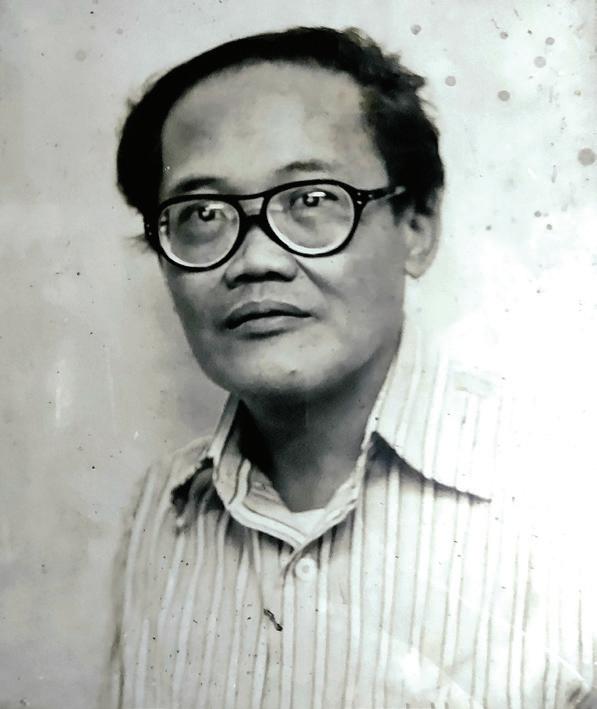

from all over the world, but then utterly unknown as a tourism destination.
My mother recalled being impressed by my father’s deep appreciation for culture and history. Perhaps that’s why he was assigned to Puerto Princesa to cover the then largely unknown subterranean river in the mid-’50s. It would later be inscribed as a Unesco World Heritage Site in 1999. Throughout our childhood, they would both reminisce about their nostalgic memories of Puerto Princesa, even though my father, then a chain-smoking political journalist and editor at the old Manila Chronicle, was always busy. I remember weeks of my mother’s absence, even during her pregnancies, as she had a job to do on the island.
Unfortunately, our parents never returned together to Puerto Princesa. My father died at the age of 47, at the height of the martial law regime in the country.
Of course, leprosy—or Hansen’s disease—is no longer a significant threat, now that it is curable. In 2006, the World Health Organization declared Culion leprosy-free.
Meanwhile, Culion has been transformed into a vibrant town showcasing to visiting tourists the old leprosarium which now houses the Culion Museum and Archives. Officially known as Culion Sanitarium and General Hospital, it was officially inscribed to the Unesco Memory of World RegisterAsia and the Pacific in 2018. Now, it’s more easily reached

A GLIMPSE of one of the many chaolong restaurants in the downtown area. JOEL C. PAREDES
via Busuanga, which offers daily flights to Coron—roughly a 1- to 2-hour boat ride from the famous resort town.
A city built on cultural diversity ALSO in the not-so-distant past, Puerto Princesa offered a temporary haven to Vietnamese refugees. Though they have since largely migrated to the United States, leaving only a vague trace of their community, their culinary legacy remains. The Vietnamese pho, a noodle soup, has been transformed by local palates into chaolong, a sweeter version, which, surprisingly, originated as a rice porridge. This fusion dish, now a local comfort food, is served in numerous chaolong restaurants that have sprung up throughout the city. Similarly, the banh mi sandwich has been adapted, offering chicken, pork, or beef stew fillings, often

without the traditional duck liver. Interestingly, Puerto Princesa has attracted a diverse population, including Eurasians and Americans. I encountered a tall American carrying a sack of local snacks,


from turon to sandwiches, generously sharing his homemade treats with city hall employees.
While Puerto Princesa once boasted a nostalgic charm and relative freedom from natural disasters, this is no longer the case. The city now experiences frequent heavy rains that cause flooding, and storm surges have displaced residents of informal settlements along the shores of Honda Bay.
Despite these challenges, Arnel Pedrosa, the city’s acting administrator, maintains that tourism remains the primary economic driver, with Puerto Princesa serving as the gateway to the worldrenowned El Nido.
Backpackers’ haven BACKPACKERS, drawn to the city’s affordable accommodations that have largely reopened after the Covid-19 pandemic, still continue to form a significant portion of the tourist base.
Notably, the city’s five-star hotels, despite their elegance, suffered closures, highlighting the reliance on budget-conscious travelers and families seeking accessible beach vacations.
This emphasis on backpackers and budget travelers contrasts with the national government’s tourism agenda, which often prioritizes large-scale developments like malls and casinos. While the Department of Tourism claims to have exceeded revenue targets, it has yet to adequately explain why it fell short of its overall tourist arrival goals.
In the final analysis, I really don’t mind if Puerto Princesa remains a backpackers’ destination, considering it’s the kind of place that makes a visit relevant and memorable—whether for lovers or those seeking a new life.
Puerto Princesa offers them a home. It’s not just a lovers’ paradise, but a place for dreams, a city surrounded by forests and mountains, deservedly earning its title as the country’s “last frontier.”
The DND noted that the island is “a strategic vantage point with a clear view of key sea lanes in the West Philippine Sea, including Bajo de Masinloc [Scarborough Shoal].”
During the American period, Grande Island was Fort Wint— outfitted with five gun-batteries to protect the US naval base and dry dock in Olongapo, prevent Japanese forces from using the Subic harbor as supply base, and provide early warning of enemy ships and aircraft en route to Bataan and Manila Bay.
After World War II, Grande Island and what remained of Fort Wint were incorporated into the US Naval Base Subic Bay (USNBSubic), and for many decades later served as an on-base resort for American military personnel and civilians stationed throughout the country.
Grande Island became a tourism attraction after the turnover of Subic to the Philippine government in 1992, and was soon leased out to investor groups starting in 2002 to further develop it as a topnotch tourism draw. A ferry service from the Subic main port brought visitors to Grande Island for quick tours.
However, the perils of allowing so-called “developers” to take over soon reared its ugly head.
Corporate control to Chinese firm IN April 2019, the Department of Trade and Industry (DTI) announced on its website the signing of a framework agreement between GFTG Property Holdings and Sanya CEDF Sino-Philippine Investment Corp. for a $298-mil-
lion project to develop Grande and Chiquita Island and generate from 500 to 1,000 jobs in the process.
The agreement was supposed to be one of the 19 business agreements worth $12.165 billion that were signed before then President Rodrigo Duterte at the sidelines of the 2nd Belt and Road Forum in China.
However, just four months later, in August that year, the SBMA announced that the proposal for 80 ultra-high-end housing units to be perched on water along the coastline of Grande and Chiquita was frozen following findings that the ownership of the leasing company was changed to give corporate control to the incoming Chineseowned firm without consent from the Subic agency.
The SBMA said that when GFTG, which initially committed P180 million to develop Grande, took in Sanya to increase capital, the agreement resulted in Sanya gaining 80 percent of the shares.
“The thrust of the new majority shareholders apparently changed the complexity of the Grande development project,” the SBMA noted then. It added that the agency was looking for suitable firms to take over the development of Grande Island.
Still, a list of business locators in the Subic Bay Freeport as of July 31 last year showed GFTG Property Holdings Corp. as the leaseholder of Grande Island.
Security concerns AS early as August 2019, the Philippine Navy had already warned of security risks in allowing Chinese investors to develop Grande and Chiquita, along with Fuga Island
in the Strait of Luzon, because of their strategic importance. It pointed out that the Philippine Navy has already developed in Subic a home port for its warships involved in operations at disputed waters in the South China Sea, and had “recently taken an interest in fending off Chinese investment in the defunct [Hanjin-Subic] shipyard.”
The security concerns voiced by the Navy would later gain more gravitas following the scramble for control of the former Hanjin shipyard, a 300-hectare facility that has military-industrial importance. Accordingly, two Chinese firms had proposed to take over the area after the South Korean shipyard firm opted out of Subic in February 2019 after defaulting on $1.3 billion in loans.
This was forestalled when USbased private equity firm Cerberus Capital Management acquired the shipyard in April 2022 and established what is now called the Agila Subic Multi-Use Facilities. Agila Subic is listed as a Dutch venture consisting of four affiliates of Cerberus.
The Philippine Navy formally opened its Naval Operating Base Subic (NOB-Subic) in March 2022 at the northern part of the Agila shipyard. It is now the primary homeport for the Navy’s larger warships, including its newest frigates and patrol vessels.
The following year, the Philippine Navy also announced plans to retool its NOB-Subic site to support submarine operations under the Armed Forces of the Philippines (AFP) Modernization Program.

By Simon Marks
FOR two years, Hisham Salih
Yagoub has fielded calls from frantic drivers across wartorn Sudan asking him to pay thousands of dollars to the genocidal paramilitary group that has torn the country apart— extortion to get his truckloads of gum arabic to the port.
After it’s sorted in warehouses in Port Sudan, Yagoub’s gum arabic is sent to clients in Europe and the US. Gum arabic, a sticky tree sap, is an essential ingredient in everything from Coca-Cola to Danone yogurt to M&Ms. Sudan produces 70 percent of the world’s supply – and Yagoub’s company, Afritec, is one of the biggest suppliers.
“You have to pay a lot of money to the janjaweed,” Yagoub said of the Rapid Support Forces militia, which the US in January accused of committing genocide in a civil war that’s displaced 12 million people and killed at least 150,000. He says he routinely pays them around $2,500 per truck.
Gum arabic acts as an organic emulsifier in consumer goods around the world—in candy, medicine, soda and cosmetics. It grows across Africa—from Senegal to Kenya—but the millions of acacia trees that grow in a sandy 200,000 square mile belt across southern Sudan that is largely controlled by the RSF is
the heart of production.
Now, two years into the war that’s sparked the globe’s biggest humanitarian crisis, the supply chain in Sudan is completely untraceable—with no way to tell whether household brand names contain products that are funding war criminals, according to trade data and interviews with more than a dozen traders, officials, executives and other experts.
“If gum arabic disappeared, Coca-Cola’s formula would no longer work. It would no longer be Coca-Cola,” said Maysara Elawad , a commercial advisor for the Albakry Factory for Packing & Preparing Gum Arabic, which exports around 4,000 tons of gum annually to companies in Europe and the US. “There’s no way to trace it at this point.”
Coca-Cola declined to comment. Nestle said it’s “committed to sourcing all our commodities in a responsible way, and in line with applicable regulatory requirements.” Mars, which makes M&Ms, said it
doesn’t tolerate bribery or corruption and is “actively engaging with our suppliers regarding the deeply concerning situation in Sudan and we remain prepared to take any appropriate action if we find any violation of our policies.” PepsiCo and Danone didn’t respond to detailed lists of questions.
Throughout the war, the gum arabic that stops the sugar in Coke from falling to the bottom of the can has continued to flow out of the Darfur and Kordofan regions that the RSF largely control, and where most of the acacia trees that produce it are grown by smallholder farmers or cooperatives.
“There is a real question mark now over the sourcing: How is it sourced? Did the sourcing of gum arabic involve violence and abuse of communities and abuse of farmers?” said Tedd George, a consultant at the Kleos Advisory, a consultancy specializing in commodities in African markets. “The answer is probably yes.”
A spokesman for the RSF denied that its fighters loot or extort gum arabic suppliers. “The owners of Sudanese gum arabic companies have political, social and economic interests with the army and the Islamist movement. It is natural for them to say this,” Nizar Ahmed said. “We are ready to provide all possible facilities for companies, businessmen and investors to enter production areas and purchase the product.”
The gum arabic that Afritec buys from farmers in Kordofan in bushels and sacks of pink crystallized sap goes mainly to France-based Nexira, which is responsible for 40 percent of the world’s total processed

gum. Nexira’s product winds up in yogurt manufactured by Danone in Egypt, bottles of Coke in India and Pepsi in Pakistan, according to a Bloomberg analysis of trade data compiled by Sayari, a risk management and supply chain analysis data provider. The company and peers including USbased Ingredion, Ireland’s Kerry Group and France-based Alland & Robert dominate the industry.
Nexira didn’t respond to a detailed list of questions, including specific queries about Yagoub’s extortion payments to the RSF. The company told Reuters earlier this month that it had cut imports from Sudan due to the war and taken measures to vary its sourcing to include 10 countries in order to reduce supply chain risks.
Kerry Group didn’t respond to a request for comment. Ingredion didn’t respond to a request for comment, but told Reuters earlier this month that it had also diversified its import base to include countries such as Cameroon.
All four companies, along with Coca-Cola, PepsiCo, Nivea, Danone and Mars express commitments to ethical supply chains on their websites, as well as expectations that their suppliers also adhere to those values.
The Association for International Promotion of Gums (AIPG), a trade lobby representing major processors, and its members “unequivocally condemn any form of smuggling of acacia gum,” according to a statement on its website updated on March 11.
“Despite the challenges of an unstable environment, traceability and the legitimacy of exports remain ensured, notably thanks to the relocation of activities to safe areas such as Port Sudan and the establishment of secure corridors,” the group said. “While the conflict in Sudan has led to increased production and exports from other countries in the Gum Belt, these nations have long been producers of acacia
gum and continue to supply the global market.”
The RSF has also burned fields, killed farmers and looted thousands of tons from warehouses in Sudan’s capital, Khartoum—including 3,000 metric tons from Afritec, according to Yagoub—before smuggling it across borders into Chad, Libya or Egypt, inevitably making its way into the global supply chain, according to executives at six gum arabic trading companies in Sudan. In May 2023, RSF fighters raided farms in Kordofan, burning plantations and looting 550 metric tons of gum arabic, according to a judicial complaint filed by Mohammed El Munzir, a gum producer, on March 5 in a court in Merowe.
More than 30,000 tons of gum arabic has been looted since the war started, according to Bashir al-Kinani, a member of the Sudan Chamber of Commerce and the Sudan Gum Arabic Association.
“European companies buy looted Sudanese gum smuggled outside of the country,” Albakry’s Elawad said.
Ahmat Mussa, a Chad-based trader and CEO of Al-Khikhwane Co Ltd, said Sudanese gum had flooded the Chadian market over the past year. He said there was no way of telling if it had been sourced from communities, traders or companies who had been extorted or had their rights abused by RSF soldiers.
“It’s mixed with Chadian gum when it enters the country,” he said, adding that some leaves the country via Cameroon.
Sudan’s army has also
See “Gum arabic,” A4
By Layan Odeh & Mathieu Dion
NITED STATES President
UDonald Trump’s back-andforth tariff threats are galvanizing an “invest in Canada” movement that’s prodding pensions to keep more of their cash at home.
The country’s biggest pensions, known as the Maple Eight, oversee roughly C$2.3 trillion ($1.6 trillion), about a quarter of which is invested in Canada, according to Bloomberg calculations. Many Canadian politicians and business people aim to make that portion grow much larger—putting further pressure on the country’s pension model.
For decades, Canada’s revolutionary pension model has won worldwide acclaim for its independent governance, in-house management and sophisticated staff that can spot investments that will pay off for workers in the long run. The well-heeled executives of its top pension managers have scoured the globe looking for these lucrative private bets and setting an example for other nations. Critics now contend the pensions haven’t put nearly enough money in the country, especially since Trump started threatening steep tariffs. While the president has eased a 25 percent levy imposed this month, Canadians are primed to back the country’s economy and especially loath to support US firms.
The “invest in Canada” movement had been gaining momentum before the tariffs, with a National Post op-ed contending last month that Canada should marshal its
pension resources to fund the military.
“This will strengthen Canada in the face of Trump and helps our military,” retired Canadian Forces Honorary Colonel Kevin Reed, who co-wrote the op-ed, said in an interview.
Key members of the Canadian government—which historically hasn’t interfered with pensions— said they want them to allot more of their capital to boost Canada as it struggles with sluggish growth, low productivity and a dearth of affordable housing. In December, the country’s finance department said it would remove a rule limiting pension funds’ investments in Canadian entities to no more than 30 percent.
“Canada needs to fight harder than ever for capital,” Chrystia Freeland, then-deputy prime minister and minister of finance, said at the time. That includes “facilitating and supporting the investment of Canadian capital here at home.”
The country’s economy is poised to be “more sluggish” than the US’ this year, according to Royal Bank of Canada analysts, who said Canada had “experienced a dramatic” productivity slowdown relative to its neighbor. But pension cash alone can’t boost Canada’s fortunes, some argue. Charles Emond, the chief executive officer of Quebec’s fund, pointed out that “it goes both ways” when it comes to putting Canadians’ retirement savings to work. Pension funds can always invest more in Canada, he said.
But “you need to be able to have projects to throw money at,” he said. The timing of the “invest in
Canada” push couldn’t be worse for pensions. They’re grappling with one of the toughest economic environments since the 2008 financial crisis, triggered by elevated interest rates that have strained liquidity and weighed on returns. Some of the Maple Eight are reviewing whether they’re too exposed to private markets, which comprise about 60 percent of their portfolios.
More than two years of subdued deal activity is making it harder for some of the pension plans to exit investments and free up capital. Even as some lack cash to put to work, pension funds encounter relentless calls to invest locally.
The province of Alberta, unhappy with the way its own manager invests and the pension’s rising costs, fired its entire board and CEO late last year—sending a clear message to the Maple Eight: The government is watching.
This story is based on interviews with more than a dozen people familiar with the industry, including pension plan
officials and fund managers. Some of them asked not to be identified discussing sensitive matters.
Maple model
ONTARIO Teachers’ Pension Plan pioneered today’s goldstandard methods, focused on independence and long-term bets, in the early 1990s after a funding crisis motivated the province to revamp its model. Similar overhauls ensued at the Canada Pension Plan Investment Board and other Canadian pensions. Investment-savvy executives now lead the Canadian pension boards, with a former life insurance CEO chairing CPPIB and ex-bankers from Goldman Sachs Group Inc. and RBC sitting on the Ontario Teachers’ board. Canada’s pensions “invest internally at scale and with force,” and they’ve built internal teams dedicated to risk-management, middle-office functions and finance, said Rashay Jethalal, CEO of investment data firm CEM Benchmarking.
Ontario Teachers’ Pension Plan pioneered today’s gold-standard methods, focused on independence and long-term bets, in the early 1990s after a funding crisis motivated the province to revamp its model. Similar overhauls ensued at the Canada Pension Plan Investment Board and other Canadian pensions.
Other funds globally— including those in Australia and the Middle East—have fortified their operations in a similar fashion, he said. In 2017, the World Bank said the Canadian pension model embodies “practical lessons for building world-class pension organizations.”
But the Maple Eight model is showing cracks. When Alberta’s government ousted its pension’s board and management in November, it blamed rising costs and “middling” returns. The move reverberated across the industry, particularly as Alberta Investment Management Corp.’s investment strategy, performance and costs lined up with its peers.
The government installed an ex-politician, former Conservative Prime Minister Stephen Harper, in charge of Aimco’s board and tapped long-time public servant Ray Gilmour as interim CEO. The pension is already cutting costs, potentially prodding others to do the same.
In the shadow of the Aimco takeover, some pensions are discussing internally whether they’re properly engaging with shareholders and maintaining their autonomy. Outside firms managing assets for at least one pension have been asking about political interference, putting the fund in the position of having to make repeated assurances that the government isn’t meddling with its investments.
“Canada has world-class public retirement systems, and to ensure the continued security of Canadians’ pensions, it is vitally important that investment managers like Aimco operate with independence,” Aimco said in a
statement.
The pension—which has about 40 percent of its portfolio invested in Canada—is continuing to “aggressively pursue global investment opportunities to increase the potential sources of diversification and to generate superior risk-adjusted net returns for our clients,” Aimco added. Open letter LAST year, about 100 Canadian business leaders, including Montreal-based asset management firm Letko, Brosseau & Associates, signed an open letter urging the finance minister to “amend the rules governing pension funds to encourage them to invest in Canada.” Eric Boyko, CEO of music and media company Stingray Group Inc., signed the letter. Pension funds should be obliged to invest a minimum level of their assets in Canada, he said, explaining that small, publicly traded firms like his struggle more and more to attract investors.
“We need to find a way to bring more money to the Canadian market,” he said. The federal government has so far resisted requiring pensions to invest domestically, though it strongly encourages them to do so—including through the recent loosening of restrictions around pensions’ ability to own controlling stakes in Canadian companies.
“We were disappointed and really not that impressed with what’s been put forward,” said Peter Letko, co-founder of Letko Brosseau, adding that he doubts the measures will
See “Canada,” A4
Sunday, March 23, 2025
Continued from A3
introduced loading costs, export duties, general taxes and forestry fees that amount to roughly $155 per 100kg of gum arabic being sent out of Port Sudan, according to documents shared by Elawad. That additional $1,550 per metric ton helps fund an army led by a man—
Gen. Abdel Fattah al-Burhan— who has also been sanctioned
by the US for his role in the indiscriminate bombing of civilian infrastructure, attacks on schools, markets and hospitals, and extrajudicial executions. An army spokesman didn’t respond to a request for comment on the levies. In January, the army said it “rejects and condemns the sanctions.”
That means that however gum arabic leaves Sudan, it’s likely to be enriching actors connected to war crimes.
“AIPG does not see any

evidence of links between acacia gum supply chain and the competing forces,” the gum trade group said. “In particular, there is no reason to assume that there might be any financial links between the AIPG members and the political forces, armies and militias involved in the current situation. This product category is of neglectable financial interest to the conflicting parties.”
Bedrock of the food industry
GUM arabic has been used for millennia: as an adhesive in Stone Age Africa, in paint by Neolithic Chinese scribes, to embalm the mummies of Egyptian Pharaohs and to harden the lipstick used by Queen Elizabeth I and Cleopatra. The Greeks used it to treat ulcers; the Old Masters—including Rembrandt—to bind their paints.
In recent decades, it’s become so important to global food companies that they successfully lobbied the Clinton administration to carve gum arabic out of a sweeping sanctions regime imposed on Sudan in 1997 for sponsoring terrorism and providing refuge to Osama bin Laden. Companies including Cargill have developed synthetic alternatives but they haven’t replaced natural gum arabic, which continues to flow out of Sudan amid the current atrocities—either from Port Sudan or smuggled through neighboring countries. Major gum arabic processors and buyers are members of Sedex, which is a platform and datadriven tool “that businesses use to help them assess and manage ethical and sustainability
Continued from A3
make a meaningful difference. Proposals from the federal government, such as allowing pension plans to own airports, are tantamount to giving the pensions a stake in “gold mines,” he said.
“They should invest a lot more,” Letko said. “Investing in our own community does encourage more economic activity.”
The funds’ domestic backings have fallen over the past two decades, he said, “starving Canada of much-needed investment and compromising our independence.” His firm’s research shows that most of the Canadian investments are in fixed-income such as government bonds, not equity in companies.
One pension could serve as a model for feeding the Canadian economy: Caisse de Depot et Placement du Quebec. That fund has a mandate to invest in Quebec and its businesses, which it has emphasized even more since Trump ramped up his tariff threats in February.
As of Dec. 31, C$93 billion of the C$473 billion in total assets were invested in Quebec, with the goal to reach C$100
risks within their supply chains,” according to a Sedex spokesperson. But suppliers in Sudan said buying gum arabic that meet ethical standards has become near impossible since the war began.
Roughly 70 percent of the 72,000 metric tons of gum arabic the European Union imported from around the world in 2024 came from Sudan. Although there was a slight 3 percent dip in Sudan’s exports to the EU over that period, it was filled by a nearly identical increase in exports from neighboring Egypt, a country that traditionally ships very little. Chad has also seen exports rise.
“We don’t even care if it’s been smuggled,” said Mussa, the Chadian trader. “The important thing is that it is properly weighed and you receive your money.”
On Nexira’s website, scientists dressed in white overalls study ways to bring consumers new sensory experiences by using locust bean gum texturizers in ice cream, plant-based drinks and spreadable cheeses at its headquarters in Rouen. The company imported at least 149 shipments totaling 3,679 metric tons of gum arabic from Sudan since the war broke out last April, according to a Bloomberg analysis of trade data compiled by Sayari.
More than 15 percent of those exports came from Afritec – the company that Yagoub runs and which has been paying extortion fees to the RSF. Afritec has exported at least 599 metric tons of gum arabic to Nexira since the war started, Sayari data show. On its website, Nexira says it’s
billion by next year without compromising its performance.
“Independently of tariffs or not, I think this is something we need to address right away,” said Emond, the Quebec pension’s CEO.
Some who signed the letter argue that the government shouldn’t force pensions to back domestic businesses. Canada must simply become “more investible,” said National Bank of Canada CEO Laurent Ferreira.
If the country encourages broad investment in industries including energy and natural resources, he said, the pensions will follow suit.
Reed, who co-wrote the National Post op-ed, suggested that some of the money that pensions hold in Canadian bonds be directed to fund military infrastructure.
“The pension plans should be encouraged to do it,” he said. “And it is the right investment decision.”
CPPIB and Ontario Teachers’ didn’t reply to requests for comment. The Ontario Municipal Employees Retirement System and the Public Sector Pension Investment Board said in separate statements they’re committed to collaborate with the government to create an environment that encourages and unlocks domestic

a member of Sedex and “must safeguard human rights in the communities that produce the basic material.”
The French company has sold at least 32 metric tons of gum arabic to Coca-Cola in Pakistan and India during the course of the war as well as 503 metric tons of the product to Pepsi in India and Pakistan. It also sold 39 metric tons to Danone in Egypt and Brazil.
Yagoub, the Afritec chairman, said the price of gum arabic had risen to around $4,000 a metric ton today due to higher transport costs and the RSF’s extortion, from $1,200 before the war.
“They stop the trucks and you have to pay for the trucks to move,” he said. “They either steal some of it or they make you pay.”
Since Sudan’s civil war began, Alland & Robert, another top French processor, has sold to Coca-Cola, Nestle and Farbest Brands, a US company that sells gum arabic to major American brands. The French company bought at least 1,161 metric tons of gum arabic from companies in Chad and 484 metric tons from companies in Sudan in 2024. Farbest didn’t respond to a request for comment.
“We condemn any form of smuggling, human rights violation, or illegal practice in the gum acacia industry,” Alland & Robert said in response to questions from Bloomberg, pointing to its membership in Sedex and other sustainable and ethical supply chain pledges including “We Use Wild” by the NGO Traffic, Ecovadis, the United Nations Global Compact and “Fair
investment.
Strategy shift
AS Canada’s pensions are pushed to shift investments home, they’re also re-examining a strategy that sets them apart from many other public entities that oversee retirement income.
The Maple Eight pensions manage a large chunk of their assets internally, investing part of those funds directly. They’ve built up their staff in order to lead the way on deals, rather than simply handing their capital to alternative asset managers, such as Brookfield Asset Management, KKR & Co. and Blackstone Inc.—though they do that, too.
Meanwhile, Canada’s pensions have opened offices and hired people across the globe, which has given them access to coveted deals. CDPQ invested $5 billion in some of Dubai’s most prized assets, including the Middle East’s biggest port, and owned a 19 percent stake in Eurostar Group as of 2023. Canadian pensions also own London City Airport, private credit firm Antares Capital and India’s ReNew Energy Global Plc.
But they also have run into some trouble. US bribery charges against Indian billionaire Gautam Adani have ensnared CDPQ after three of its former employees were charged with conspiracy to violate the US Foreign Corrupt Practices Act. Omers is the No. 2 holder of Azure Power Global—which was involved in Adani’s alleged bribery scheme, according to the US Securities and Exchange Commission.
Separately, a member of Ontario Teachers’ sued the pension plan in January, alleging the board didn’t conduct proper due diligence when investing $95 million in FTX, a crypto exchange that imploded in 2022.
Going forward, pensions are considering investing more in public markets amid
For Life,” meaning it adheres to international standards for fair trade and responsible supply chains.
In September 2023, Unity Arabic Gum Company CEO Mohammed Hussein Sorge said one of his drivers was en route to Port Sudan via Para village just north of the city of El-Obeid. At a checkpoint on the road running north, RSF soldiers arrested the driver at gunpoint.
“They took the truck and the gum arabic and I paid $10,000 to release him,” he said. “As for my company, it has been robbed many times since the beginning of the war in 2023.”
Sorge said he shuttered his company in December 2023 because of the high extortion costs and security risks for his drivers. “If you carry gum arabic or sesame or any good and you’re going to Port Sudan, the RSF may kill you or ask you to pay fees to them,” he said in an interview from Cairo, where he has lived since the outbreak of war.
Late last year, inside a warehouse in Port Sudan where women toiled in sweltering temperatures, Mustafa Abdulraman, a manager at Nat Crops for Import and Export, had recently delivered 220 metric tons of gum arabic to Ireland-based Kerry Group.
“The market is there,” he said, combing his hand through a pile of evenly sized pink chunks of dried gum. “But nobody is really asking any questions about how it leaves the country.” With assistance from Jeremy Diamond and Mohammed Alamin/Bloomberg
diminishing returns in private ventures.
“Does it really still make sense to invest huge amounts in the private markets if the additional compensation is definitely less than it used to be?” said Eduard van Gelderen, the former chief investment officer of the Public Sector Pension Investment Board. Moreover, he said, pensions will need to become more liquid as baby boomers retire. When they do invest in alternatives, some of the Maple Eight, such as CDPQ and Omers, are looking to lean more on external managers instead of owning direct stakes, particularly in private equity. Direct ownership can require hiring richly compensated executives, who expect to work in lavish offices where they can strike multibillion-dollar deals. These are the kinds of expenses that irked Alberta’s government. Its pension fund’s global expansion included renting an office in high-end tower One Vanderbilt in New York, opening an outpost in Singapore, creating new noninvestment executive roles and awarding expensive contracts to external consultants. Aimco has since shuttered its offices in both locations.
But some critics contend that Alberta overstepped its authority by ousting the entire leadership. The push to invest locally interferes with pensions’ primary objective to deliver returns and make pensioners whole, the critics say.
“If from one day to the next, the government can dismiss an entire board and start over, that’s not as independent as you wish it to be,” said Sebastien Betermier, an associate professor of finance at McGill University in Montreal. “That’s potentially affecting other funds, too—and it’s a topof-mind question because it affects your ability to be longterm focused.” With assistance from Christine Dobby/Bloomberg

By Bless Aubrey Ogerio
MANY people are now getting concerned about healthy living. They are becoming conscious, among others, of taking superfoods rich in antioxidants and anti-aging compounds to prevent illnesses to have long life. Thus, researches are being made, and products or foods are being identified toward this direction.
Among the current researches is in the line of local wines. What if the leftovers from making rice wine could help people live healthier, longer lives? Could they be used in nutraceuticals or cosmetics?

or

tapuy samples used for the experiment.
better, and showed improved reproductive health.
Filipino researchers suggest that “tapuy” (Philippine rice wine) lees, the solid residue from fermenting the wine, may have surprising health benefits. Lees are mostly made up of rice residues, yeast, and other microbial byproducts.
Their study “Effects of Starter Cultures on the Metabolite Profile, Antioxidant Activities, and Anti-aging Properties of Tapuy Lees” said improved lees contained high levels of antioxidants known to protect cells from damage.
Edward Kevin Bragais from Ateneo de Manila University and Paul Mark Medina from the University of the Philippines found that using a carefully chosen mix of microorganisms, called a starter culture, can make the tapuy byproduct a valuable source of natural compounds with potential medical and nutritional benefits.
“Tapuy lees made using an optimized starter culture mix were found to contain high levels of polyphenols—compounds known for their ability to fight oxidative stress, inflammation, and cell damage,” the researchers said in a statement.
In tests with animals, those who consumed extracts from the enhanced lees lived longer, moved
ILIGAN CITY—Researchers, scientists, innovators, entrepreneurs, and academic leaders gathered at the Department of Science and Technology (DOST) Zonal Conference held at Mindanao State University-Iligan Institute of Technology (MSU-IIT) on March 14.
The fourth in a series of five nationwide roadshows, the conference spotlighted three key DOST initiatives: Program Propel; Science, Technology, and Innovation (STI) for SDGs (STI4SDG); and the Pagtanaw 2050 STI Foresight Training Series—all designed to accelerate technology transfer, commercialization, and the growth of a robust S&T ecosystem for national development.
Science Secretary Dr. Renato U. Solidum Jr. emphasized in his speech the transformative potential of STI4SDG and Pagtanaw 2050 in addressing national challenges.
“Science and technology are indispensable in tackling the country’s most pressing concerns—from poverty alleviation and food security to clean energy and climate resilience,” he said.
He added that through Pagtanaw 2050, “we are equipping leaders, policymakers, researchers, and industry stakeholders with foresight tools to anticipate, navigate, and shape the future of STI.”
The Science chief likewise introduced Program Propel, a strategic shift that goes beyond research funding to actively connect innovations with end-users, markets, and global opportunities.
“Program Propel reimagines DOST’s role—not just as a funder
of R&D, but as a dynamic partner in transforming ideas into impact. By understanding customer, industry, and market needs, fostering collaboration, and strengthening the STI ecosystem, we ensure that Filipino innovations create real-world value,” Solidum said.
The event also featured key DOST and university officials, including Dr. Napoleon K. Juanillo Jr., DOST assistant secretary for Technology Transfer, Communications, and Commercialization; Dr. Romela N. Ratilla, regional

DAVAO CITY—Some Indigenous languages in Mindanao are getting endangered because of non-use.
To preserve the endangered languages, a research and development (R&D) laboratory was launched in the region in February.
The Department of Science and Technology (DOST) and the University of the Immaculate Conception (UIC) launched the new laboratory, named Mindanao Natural Language Processing Research and Development Laboratory (MinNa LProc).
The initiative aims to develop Natural Language Processing (NLP) tools and technologies, such as the Multilingual System and Conversation Agent, to support language preservation and technological innovation in the region.
Of the 175 indigenous languages that are currently used in the Philippines, roughly 55 are considered endangered according to the most recent Ethnologue assessment.
Children are no longer using the endangered languages as their first language, thus, causing the languages to go extinct.
In Mindanao, among the endangered languages are Kinamiging Manobo, Butuanon, Subanen, Bagobo-Klata, Kagan, and Kalagan.
The UIC, in partnership with the National Commission on Indigenous Peoples XI, will preserve three languages—Manobo, Kagan, and Mansaka.
Science Secretary Dr. Renato U. Solidum Jr. conveyed his support and eagerness for the project’s results.
”We are ecstatic that UIC is conserving our past while facilitating advancement with the newest technologies,” the DOST head said.
Solidum added: “Their work honors and preserves our cultural heritage through science while also advancing technological developments.”
For her part, Kristine Mae M. Adlaon, project leader of MinNa LProc and a professor

The extract also increased levels of an enzyme called superoxide dismutase, an enzyme which protects cells from age-related damage.
TAPUY, a traditional rice wine from the Cordillera region, is often used in celebrations and rituals. After fermentation, the leftover solid waste is discarded or used as animal feed.
The study highlights the lees’ potential to become a valuable ingredient in health products.
director of DOST X; and Atty. Alizedney M. Ditucalan, chancel
lor of MSU-IIT.
Juanillo discussed Program Propel’s integrated support system for innovators, covering technology triaging, business development and mentorship, technology validation, intellectual property management, legal guidance, and access to venture capital partners.
The conference also hosted expert discussions led by Glenn Quiro of the Apl.de.ap Foundation and Dr. John Anthony Jose of De La Salle University, tackling semiconductors, electric vehicles, integrated circuits, and artificial intelligence.
The sessions provided practical insights on industry trends, supply and value chain gaps and opportunities, and pathways for translating research into marketready innovations.
With over 150 participants from Regions IX and X, the event showcased the increasing momentum behind the Philippines’ STI agenda—driving economic progress and positioning Mindanao as a key player in the nation’s innovation ecosystem.
Following successful legs in Baguio, Batangas, and Cebu, the event marked the first Mindanao session, with a second leg tentatively scheduled in April.
at UIC, said: “Through our dedicated efforts, we aim to preserve and celebrate the linguistic heritage of Mindanao, that these languages continue to thrive and inspire future generations.”
NLP is a subfield of artificial intelligence (AI) and computer science focused on enabling computers to understand and generate human language.
Currently, MinNa LProc has developed six NLP tools, namely Project iWag, CNLTK, Project ANNA, RK Aligner, Pitik, and Madasigon, which can be found on their website.
The project received P5 million funding through the Institutional Development Program of the DOST-Philippine Council for Industry, Energy, and Emerging Technology Research and Development (DOST-PCIEERD).
According to DOST-PCIEERD Executive Director Dr. Enrico C. Paringit, “This strategic investment of the DOST-PCIEERD in the development of NLP technologies through the establishment of MinNa LProc ensures that the country is well-positioned to ride with the wave of [AI] and machine learning technologies. The program also aspires for language and cultural preservation.”
The researchers noted that traditional fermentation often relies on inconsistent starter cultures, which can affect the nutritional quality of the lees. By using a more controlled culture mix, they were able to maximize the health-boosting properties of the byproduct.
Further studies needed
WHILE the initial results are promising, Bragais and Medina emphasized the need for further research, and for clinical trials to see if the same beneficial effects would occur in humans.
“These results suggest that tapuy lees could be repurposed as
a health food to combat aging and oxidative stress-related diseases,” they said.
They further recommended identifying the exact compounds responsible for the anti-aging effects.
Additionally, they said that future studies could examine other markers of aging and the impact on age-related diseases.
“Ultimately, these efforts could pave the way for the development of tapuy lees-based functional foods, nutraceuticals, and cosmetic formulations that promote healthy aging, with an emphasis on skin health and overall vitality,” the study said.
PhilSA, NAMRIA advance satellite data use for environmental, natural resource mapping and monitoring

THE Philippine Space Agency (PhilSA) and the National Mapping and Resource Information Authority (NAMRIA) have partnered to advance research and development in satellite data for environment and natural resource mapping, and monitoring.
The collaboration was formalized through a ceremonial signing of the Memorandum of Agreement held at the PhilSA Office in Quezon City on February 10.
The partnership was particularly for leveraging satellite data for land cover, topographic, and bathymetric mapping; coastal resource and environmental monitoring; and natural resource management.
In addition to sharing expertise, data, and resources to develop methodologies for mapping using satellite imagery, PhilSA will provide training and technical support to enhance NAMRIA’s capabilities in satellite remote sensing, data processing, and analysis, including advanced image processing techniques.
“Our partnership combines knowledge of space technology and geospatial intelligence, thus, creating new possibilities for improving decision making and policy making in multiple domains,” NAMRIA Administrator and Undersecretary Peter N. Tiangco said.
The partnership will leverage both agencies’ capacity to better address climate change impacts, support biodiversity conservation,
and advance scientific research, fostering long-term environmental sustainability.
“We continue to heighten our efforts in bringing space technology closer to Filipinos. In this collaboration with NAMRIA, our teams are employing new and existing know-how to develop additional tools for addressing challenges in managing our natural resources and environment, which will be translated to practice and operationalized,” PhilSA Director General Joel Joseph S. Marciano, Jr. said.
Tiangco and Marciano signed the agreement, witnessed by PhilSA Deputy Director General Denis F. Villorente and NAMRIA OIC Deputy Administrator Ofelia T. Castro.
The signing of the agreement formalizes the partnership built on previous joint initiatives between the two agencies.
PhilSA is the central government agency of the Philippines that plans, develops, and promotes the national space program in line with the Philippine Space Policy. Created in August 2019 under Republic Act 1363, or the Philippine Space Act.
NAMRIA is an agency of the Department of Environment and Natural Resources mandated to provide the public with mapmaking services and to act as the central mapping agency, depository, and distribution facility for natural resources data in the form of maps, charts, texts, and statistics.
A6 Sunday, March 23, 2025

Editor: Lyn Resurreccion • www.businessmirror.com.ph
By Edwin P. Galvez
MANILA Archbishop Jose
F. Cardinal Advincula has endorsed the Second “Congress on Prayer” to be held at the Smart Araneta Coliseum in Cubao, Quezon City, on April 9.
The Secular Order of Discalced Carmelites (OCDS) of the Philippine Province of St. Teresa of Jesus organized the congress in observance of this year’s centenary celebration of canonization of St. Thérèse of the Child Jesus and of the Holy Face.
In his endorsement to the “pastors and communities” in the archdiocese on March 10, the cardinal exhorted church leaders and the faithful to “join our Carmelite brothers and sisters in celebrating the gift that Saint Thérèse is to the Church.”
“This Congress has a threefold purpose: to celebrate the centenary of the canonization of Saint Thérèse with the faithful; to share the Teresian Carmelite spirituality through the teachings of Saint Thérèse; and to promote the vocation to the
Order of Discalced Carmelites— friars, nuns, and seculars,” Cardinal Advincula wrote.
The cardinal also shared what Pope Francis wrote about St. Thérèse as part of the latter’s apostolic exhortation “C’est la confiance” (It is confidence) in 2023: “A century and a half after her birth, Thérèse is more alive than ever in the pilgrim Church, in the heart of God’s people.”
Three reflection talks focused on the theme, “Confidence in Love”—inspired by Saint Thérèse’s own words—are the main features of the day-long program that starts at 8 a.m.
Sister Mary Bernard Tescam of the Sacred Heart, OCD, prioress of Carmel of St. Thérèse of the Child Jesus-Gilmore Quezon City, and a councilor

of the Philippine Federation of Discalced Carmelite Nuns, will speak on “St. Thérèse: Wounded Child” at 9:10 a.m.
Imelda Ramos, OCDS, president of the Secular Order of Discalced Carmelites
Philippine Province and director of formation of St. Edith Stein Community Makati, will share about “St. Thérèse: Warrior Soul” at 10:10 a.m.
Rev. Fr. Mariano Agruda, III, OCD, superior of St. Joseph Community, Jaro, Iloilo, and provincial delegate to the OCDS, will talk on “St. Thérèse: Doctor of Love” at 2:00 p.m.
The Mass at 3 p.m. will be presided by Lingayen-Dagupan Archbishop Most Rev. Socrates B. Villegas.
Known as the “Little Flower” and widely revered as the patroness of missions, St. Thérèse was canonized by Pope Pius XI at St. Peter’s Basilica in Rome on May 17, 1925, before a crowd of half a million pilgrims at St. Peter’s Square.
The First Congress on Prayer was held at the Mall of Asia Arena on March 15, 2015, in celebration of the 500th birth anniversary of St. Teresa of Avila (also known as St. Teresa of Jesus), foundress of the Order of Discalced Carmelites, along with St. John of the Cross.
By Giovanna Dell’orto
ATICAN CITY—How’s
VPope Francis doing? Can you give him my get-well wishes? Can I speak with him directly?
The nuns who operate the Vatican’s switchboard are fielding a growing number of calls with questions like that as the pope remains hospitalized in Rome.
“They feel like children waiting to know about their father,” said Sister Anthony, who runs the operation in a spartan office steps away from St. Peter’s. Basilica. “We tell them to pray for him.”
The Holy See Press Office on Wednesday said: “Holy Father’s clinical condition is confirmed to be improving.
The Holy Father has suspended non-invasive mechanical ventilation and also has less need of high-flow oxygen therapy. Motor and respiratory physiotherapy is continuing to make progress.”
The Vatican’s central number is public—and the sisters of the Pious Disciples of the Divine
Master make sure all who call it get a real person, not the “press 1 for English, 2 for Latin” version of the automation that’s become the norm at major institutions and businesses worldwide.
“It’s the Vatican’s voice—a voice that despite the digitalization of communications, the Vatican wants to preserve as a human voice,” said Mother Micaela, the order’s mother superior.
The Pious Disciples sisters are part of the 100-year-old Pauline orders, which are focused on communications, including landmark Catholic publishing operations around the world.
In spring 1970, they were called to operate the Vatican switchboard and instructed by the then-mother superior to be “a voice that does good because through the phone wire it communicates Christ himself.”
Today, often with headsets over their veils, the sisters cover the phones for 12 hours a day, seven days a week, in front of large monitors that show the incoming call’s country

of origin. Gendarmes, the Vatican’s police, take the night shift.
About a dozen sisters hailing from Italy, the Philippines, Poland and elsewhere take calls from around the world, predominantly in Italian, English and Spanish.
Many callers just need to be directed to the right Vatican office or official, and the sisters oblige with the aid of massive yearbooks and directories, as well as a solid knowledge of protocols and a hefty dose of discretion, Sister Anthony said.
Those who call asking for financial help are put through to the Vatican almoner’s office, which has provided aid recently to victims of war in Ukraine, floods in Brazil, and homelessness in Naples in southern Italy.
On a recent afternoon, standing by her office chair decorated with a flowerembroidered pillow, Sister Gabriella took a call from a priest inquiring about jointly celebrating a Mass with other priests as part of his jubilee pilgrimage. Since 2025 is a Holy Year for the Catholic Church, with 32 million pilgrims projected to visit Rome, related calls make up a large part of the 50 to 70 queries the nuns answer daily.
But then there are callers with questions the sisters can’t just look up or patch through— those in distress or angry or hopeless.
“We never get a call that’s the same as the previous one,” said Sister Simona, who’s worked the switchboard for 15 years.
Counseling or comfort
FRANCIS has built a reputation for eschewing formalities— from his way of dressing to his personal outreach to the poor and marginalized before his hospitalization—that projects more parish priest than head of state and leader of a global religion with 1.4 billion
followers.
So some callers ask the nuns to just put him on the line.
“People of simple faith don’t understand that the pope cannot speak with everyone,” Sister Gabriella said.
Others need counseling or comfort. The sisters try to provide it within the boundaries of limited time and not being misconstrued as official Vatican spokespeople.
“But if I can give consolation or hope, I think that’s OK,” said Sister Anthony, who came to the Vatican a year ago from her native Philippines, where she was a provincial superior. “Some calls are very triggering.”
Among those calling with concerns about the pope recently was a woman who told Sister Anthony that she is Muslim but likes Francis, and wanted to inquire about his health.
“That’s very impressive for me,” the sister recalled, while adding that some callers are far less friendly. “Others are angry with the church, so we listen
respectfully.”
‘We feel very empowered’ ACROSS the spectrum of callers, the sisters say they’re particularly happy to provide a woman’s touch.
“Pope Francis often reminds that the church is a mother,” Mother Micaela said. “And to be this voice, this sensibility, this feminine approach gives a sense of reliability.”
About 1,100 women, religious and lay, work at the Vatican. Francis has recently named a few to top posts, even though the priesthood and deaconate—and thus the majority of the church hierarchy—remain exclusively male.
The switchboard sisters find pride in both their unseen service and the increasing visibility of women at the Vatican.
“For me it’s a blessing to be in one community with the pope and serving the universal church,” Sister Anthony said. “Knowing there are more responsibilities for women, we feel very empowered.” AP
Thousands of Muslims hold ‘iftar’ at Jakarta’s Istiqlal mosque
JAKARTA, Indonesia—A mass “iftar” at Jakarta’s Istiqlal Grand Mosque, the largest in Southeast Asia, draws thousands every year during the Muslim holy month of Ramadan.
For millions of Muslims, the ritual of fasting from dusk to dawn brings forth increased worship and religious reflection. Charity and good deeds remain high on the agenda of the faithful.
At Istiqlal, the mosque’s charity committee, locals and vendors come together to provide about 4,500 free meals daily throughout Ramadan for passersby, travelers, and those who can’t afford food, said Ahmad Mulyadi, one of the organizers.
“The number of people usually far exceeds the food available, but for now that is all we can provide,” Mulyadi said.
On Thursday, about 10,000 people attended a mass iftar at Istiqlal’s main courtyard. Many came with family and friends, bringing their own meals and sharing food with others, mainly to enjoy the atmosphere.
“It is very different from breaking our fast at home,” said Siti Hafnita Siregar Sukawati, a 77-year-old widow who prefers to break her fast at the mosque rather than doing it alone.
“Being part of this gathering feels so good,” she said, “it reinforces my faith.”
“Being able to break one’s fast at a mosque means a lot to those who are on the road and far from home,” said Mohammad Nur, a motorcycle taxi driver. He said his job often forces him to break his fast at local mosques.
Tenri Jeka, one of the mosque’s longtime vendors who supplies nearly 1,000 meals every day, said she doesn’t always turn a profit during Ramadan, but that doesn’t bother her as she only seeks “God’s blessings.”
“I just hope this will grant me and the people around me rewards from God,” she said. Niniek Karmini And Achmad Ibrahim/ Associated Press


Editor: Lyn Resurreccion

By Jonathan L. Mayuga
VARIOUS stakeholders
implemented a Giant Clam Restocking Project in Anilao to save the endangered species from extinction. The March 15 activity included representatives from the local government of Mabini, Batangas, scientists from the University of the Philippines Marine Science Institute (UP-MSI) Bolinao Marine Laboratory, local “bantay dagat” and volunteer scuba divers.
Locally called “taklobo,” giant clams are the world’s largest bivalve mollusks. They inhabit clear, unpolluted, and shallow coral reef waters.
Scientists say giant clams are ecologically important and can contribute to reefs as food, shelter, and reef builders and shapers. They contribute to water filtration and provide shelter for other species.
For scuba divers, giant clams are fascinating due to their impressive size, vibrant colors, and ecological importance, making them a highlight of reef ecosystems most sought after underwater.
Illegal wildlife trade
EIGHT of the 11 known giant clams are found in the Philippines. However, the illegal wildlife trade
is pushing giant clam species to the brink of extinction. In 2023, a report by Marianne Allison Lee and Ramacandra Wong, “A Rapid Assessment of Giant Clam ‘Tridacnainae’ Seizures Implicating Southeast Asia 2003-2022,” revealed that the Philippines contributed the most significant increase in the overall number of seizure incidents between 2019 and 2022, with 59 incidents, or 69 percent of the regional total. The report further revealed that the Philippines seized 121,071 tons, or 99.7 percent, of the volume of giant clams seized in trafficking incidents implicating Southeast Asia between 2003 and 2022.
The report further added that Palawan, the country’s so-called last ecological frontier, accounted
for 62 percent of the country’s seizures, resulting in the seizure of 677 tons of giant clams.
Giant clams in the Philippines GIANT clams differ in shapes and sizes. The known giant clams in the Philippines are the “Tridacna gigas,” or the true giant clam, the biggest clam in the world that could reach over 100 cm. in shell length. It is locally called “kima” or “buka.”
“Tridacna derasa,” or the smooth or southern giant clam, is the second largest species. It can reach up to 60 cm in shell length.
Called scaly, or fluted giant clam, “Tridacna squamosa” is locally called “hagdan-hagdan.” Its shell has large scutes and reaches about 40 cm. in length.
The “Tridacna maxima,” or the elongated giant clam, is popularly called “manlet,” or “manlot.” It is the most widely distributed giant clam in the country. Its shell’s length reaches about 35 cm.
“Tridacna crocea,” also known as the boring giant clam, reaches about 11 cm in shell length when fully matured.
The “Tridacna noae,” is called Noah’s giant clam, hippopus hippopus, or strawberry. It is locally called “kukong kabayo” and is found in seagrass beds. It reaches about 40 cm. in shell length.
“Hippopus porcellanus,” or the China or porcelain giant clam” also reaches about 40 cm shell length.
Giant clam restocking IN Anilao’s Twin Rocks Marine Sanctuary, giant clams are nearly extinct. Sponsored by the Mama Sita Foundation, the plan is to
ENTRIES from the Philippines
bagged the major prizes in the Southeast Asian Regional Center for Graduate Study and Research in Agriculture (Searca) Photo Contest 2024 that envisions a future where farming thrives in harmony with nature.
Launched in November 2024 with the theme “The Future of Farming: Pathways to Carbon-Neutral Agriculture,” the annual competition awarded Jayson Berto of the Philippines the top prize for his striking photograph of a university student tending a hydroponics tower garden—a resource-efficient urban farming system that maximizes space and conserves water.
“Crop growing is cooler with the hydroponics tower garden of the Central Luzon State University students!” says Berto, alluding to the need to make farming more appealing to the youth.
Major prizes: Capturing sustainability in action
A TOTAL of seven awards were given in the 18th edition of Searca’s photo contest
comprising three major prizes and four special recognitions.
The winners were chosen by experts in sustainable agriculture, ecology, photography, and the creative arts. An impressive 653 entries were submitted by 166 amateur and professional photographers across eight Southeast Asian countries.
The second prize went to Klienne Eco of the Philippines, whose striking image captured a long stretch of solar panels alongside a lush paddy field. Eco highlighted the significance of solar irrigation technology in advancing Philippine agriculture.
“The development of solar irrigation technology is bringing about a bright future for agriculture in the Philippines. By replacing costly diesel pumps, our objective is to alleviate the financial burden on farmers and promote a more sustainable farming ecosystem,” he says. Meanwhile, Mark Lienel Padecio of the Philippines bagged the third prize for his symmetrical composition of a container gardening system—an innovative urban gardening approach.
“This method empowers residents to grow their own food at home, ensuring access to fresh produce even amid food shortages,” Padecio explains.
He further emphasizes its environmental impact, noting that repurposing used containers such as plastic bottles, boxes, and old pots helps reduce plastic waste.
Special awards: Bridging tradition, modern farming
THE Searca Director’s Choice Award was given to Kyaw Zay Yar Lin of Myanmar whose photo showcased duck breeders and fishers using natural and traditional methods to sustain their livelihoods.
Another Myanmar national, Min Min Zaw, earned the Philippine Department of Education Secretary’s Special Choice Award for his mesmerizing night fishing scene.
“The seemingly bejeweled spectacle highlights the traditional fishing practice and the deep connection between fishermen, the lake, and the cosmos,” he muses.

restock the area with spawns of Tridacna squamosa and seeding with Tridacna gigas.
In a letter to Mayor Nilo M. Villanueva of the municipality of Mabini, Mark R. Lapus of the Mama Sita Foundation said the clams will be sourced from the UPMSI Bolinao Marine Laboratory.
The stocking followed established protocols for giant clams restocking.
Lapus also requested that the area’s Planet Dive Resort be designated as the steward of the restocked giant clams to ensure the long-term success of the initiative.
Planet Dive has been a longstanding advocate for marine conservation in the area and is well-positioned to oversee the protection and monitoring of the clams, in collaboration with the sanctuary management and the
The People’s Choice Award went to Aung Chan Thar of Myanmar whose photo features a vibrant flower farm in Vietnam.
“The intricate network of waterways and floating gardens provides a model for how we can cultivate crops while minimizing our impact on the environment,” he shares.
Meanwhile, Rahmad Himawan of Indonesia was recognized as the Best Youth Photographer for his breathtaking aerial shot of a vast green rice field.
His caption: “The atmosphere and natural beauty of the countryside in the morning, with mountains and rice fields in North Bengkulu Regency, Indonesia.”
“These winning entries collectively celebrate sustainable farming practices, technological innovations, and the rich agricultural heritage of Southeast Asia, inspiring a greener and more resilient future for farming,” says Searca Center Director Dr. Glenn Gregorio.
He adds that the yearly Searca Photo Contest is launched with a timely theme, which aims to raise greater awareness on the issues and concerns surrounding agriculture and development in the Southeast Asian region.
BUILDING solutions provider Holcim Philippines continues to champion circular economy practices through collaborations with local governments and private organizations to divert waste from landfills and transform it into alternative fuels and raw materials for cement manufacturing.
Holcim’s waste management efforts recently partnered with the local government of Carmen, Davao del Norte. Through its unit Geocycle, Holcim will co-process up to 350 tons of sorted residual waste from the municipality at its Davao plant, preventing it from going to landfills.
local community. Lapus also said the expertise and commitment of Planet Dive will help safeguard what he calls “investment in our marine ecosystem.”
Gomez Clam Garden
TO be called Dr. Edgardo and Ambassador Phoebe Gomez Clam Garden, the project is in honor of its former trustee, Ambassador Phoebe Gomez, who served as ambassador to the Union of Myanmar from 2000 to 2006 and as DFA assistant secretary for European affairs in 2007.
Gomez had a passion for strengthening international ties and contributed to the passage of the Philippine Foreign Service Act of 1991 that upholds the integrity of the Career Foreign Service Corps.
She was a trustee of the Mama Sita Foundation for many years until the time of her passing and was a very supportive wife to the late Dr. Edgardo Gomez, the founding director of the Marine Sciences Center, now called the UP MSI.
As a National Scientist, Dr. Gomez pioneered in coral research in the Philippines, the world’s first national-scale assessment of damage to coral reefs which led to widespread public awareness and conservation efforts around the world.
He was a prominent researcher, scientist, conservation advocate, and mentor who specialized in giant clam restoration, coral reef assessment, and marine conservation.
Near extinction
LAPUS said in a telephone interview on March 19 that as early as the 1970s giant clams in the Philippines have gone extinct or nearly extinct, citing an assessment done by scientists.
In 1974, with the establishment of the UP MSI, scientists started artificially breeding them, restocking several areas where they are known to naturally occur, including in Anilao, a known tourist area and famous among local and foreign scuba divers.
“In Twin Rocks, there’s still one [breeding area] but in other areas in Anilao, there are still some,” he told the BusinessMirror.
With the recent restocking, he expressed hope that the taklobos will continue to exist and provide ecosystem services in that part of Mabini.
WITH the increasing demands of tourism, ensuring a reliable and efficient water supply while maintaining environmental sustainability is a critical challenge for water operators in the Philippines.
On Boracay Island, Boracay Water, an operating unit of Manila Water Philippine Ventures and a concessionaire of the Tourism Infrastructure and Enterprise Zone Authority, has tackled these challenges through an integrated approach.
The comprehensive, multi-faceted program focuses on reducing non-revenue water (NRW), optimizing energy efficiency, and expanding sustainable wastewater management, while bolstering Boracay’s thriving economy and sustainability.
Reducing NRW is a top priority for Philippine water operators striving for operational efficiency and sustainability. Through targeted efforts in leak detection, pipe replacements, and real-time monitoring, Boracay Water has reduced NRW from 30 percent in 2022 to 19 percent in 2024.
This achievement translates to an additional 1.075 million liters of water recovered daily, benefiting additional 7,500 residents and businesses while alleviating pressure on the Nabaoy River, Boracay’s sole freshwater source.
This cutting-edge technology guarantees high-efficiency pollutant removal without the need for chemical disinfection, setting a national precedent for wastewater innovation. Additionally, it has expanded sewer coverage by 32 percent, now connecting 7,329 households and businesses to its system, further preventing contamination of the island’s waterways and ensuring long-term sanitation security for Boracay.
Boracay Water’s integrated operational strategy underscores the power of comprehensive solutions in securing a sustainable water supply, enhancing operational efficiency, and implementing forward-thinking wastewater management. These initiatives have brought the business unit several accolades, such as the Special Award in Energy Efficiency Excellence from the Department of Energy and an Anvil Award for outstanding environmental efforts. Furthermore, it has gained strong support from local government leaders, including the governor and mayor of Aklan.
The company recently joined SM Prime Holdings in launching the SM Waste Free Future campaign, which aims to reduce plastic waste in communities. Likewise, it partnered with HOPE to support the Aling Tindera program that incentivizes the collection of post-consumer plastics and promotes environmental education.
Sam Manlosa, Holcim Philippines senior vice president and head of Geocyle, pointed out the company’s dedication to fostering sustainability through
The initiative is part of Holcim’s commitment to providing sustainable waste management solutions to 65 local government units (LGUs) nationwide, including 20 in Mindanao. Beyond LGUs, Holcim is strengthening its collaborations with private organizations to advance circular economy goals.
partnerships.
“We are thrilled to work with more partners in advancing the country’s sustainable development goals. We look forward to strengthening collaborations across sectors to further build progress in the country,” Ramos said.
The company’s environmental leadership has been recognized by the Department of Environment and Natural Resources regional offices.
During Environment Month celebrations last year, Holcim’s Lugait plant in Misamis Oriental was commended for supporting Region 10 local governments in complying with the Extended Producers Responsibility Act and the Ecological Solid Waste Management Act, while its Norzagaray plant in Bulacan was recognized for its
excellence in environmental protection. Holcim’s co-processing technology, a globally recognized waste management solution, plays a crucial role in these initiatives. This process repurposes qualified waste materials as alternative low-carbon fuels and raw materials in cement production, enabling it to reduce its reliance on natural resources and lower carbon emissions while contributing to essential building materials.
By championing circular economy principles and expanding its waste management partnerships, Holcim Philippines is helping local communities and industries transition to more sustainable practices, contributing to the country’s progress toward a greener and more sustainable future.
In parallel with its NRW reduction initiatives, Boracay Water has improved its energy efficiency index from 0.54 to 0.42 kWh/cu.m.
This was accomplished through smart reservoir level adjustments, pump scheduling optimization, and fine-tuning of Variable Frequency Drives.
Over the past three years, these measures have resulted in energy savings of 1.68 million kWh, avoiding costs of $292,727.
This operational efficiency not only reduces greenhouse gas emissions but also ensures cost-effective service delivery—a critical concern for water utilities nationwide.
To ensure proper wastewater management and safeguard Boracay’s pristine waters, Boracay Water has upgraded its 5-MLD Manocmanoc Sewage Treatment Plant from Conventional Activated Sludge to a Membrane Bioreactor with Biological Nutrient Removal.
“Boracay’s economy relies heavily on tourism, welcoming 2.1 million visitors in 2024 and generating significant revenue for both the public and private sectors. By ensuring clean and reliable water supply, improving operational efficiency, and safeguarding the marine ecosystem, Boracay Water plays a crucial role in protecting both Boracay’s environment and its economic future,” said Bryan Magallanes, general manager of Boracay Water. Boracay Water’s success highlights that reducing NRW, improving energy efficiency, and investing in sustainable wastewater solutions are not only environmental imperatives but also key drivers of long-term operational success. The company also believes that the positive impact of Boracay Water’s initiatives reaches beyond the island resort, especially as Philippine water operators navigate increasing urbanization, water scarcity, and rising energy costs.

COSTA NAVARINO, Greece— After deadly fires devastated much of Los Angeles, organizers of the 2028 Olympics told the International Olympic Committee (IOC) how the city will rebuild with help from the Games. Count on Kendrick Lamar, too, to be part of “the greatest show on earth” in three years.
“The rebirth, the rebuild, maybe reimagining LA 2.0—and the Olympics as a catalyst for all those things—we think is really part of our ethos,” organizing committee chairman Casey Wasserman told The Associated Press.
“You can’t have a natural disaster at that scale in a city as big and as important as Los Angeles and not have it be part of your core philosophy going forward,” he said in an interview before giving sports leaders an update at the International Olympic Committee’s annual meeting. Lamar would be a globally popular part of the opening ceremony on July 14, 2028, after his stunning halftime show at the Super Bowl last month.
“Fortunately in my day job I represent Kendrick Lamar,” said Wasserman, who heads an international talent and promotions agency. “He is truly an LA icon so I think it would be a pretty fair bet that Kendrick will be involved in the Olympics in Los Angeles in some way.” The wildfires in January have reset the daily life and global perception of the city.
“Everyone loves a comeback story,” Wasserman told IOC members on Thursday.
Olympic venues and operational plans escaped serious damage.
“From purely an Olympics perspective we got very lucky. That’s not the most important thing,” Wasserman told the AP on Wednesday. “What’s important is helping people get back into their homes, get back settled, get back with their lives.”
Olympic athlete visas
ANOTHER expected challenge for LA organizers is ensuring athletes, officials and fans from every Olympic team feel welcome and safe going to the United
States in what shapes to be a turbulent future for the world.
“Irrespective of politics today, America will be open and accepting to all 209 countries for the Olympics,” Wasserman said.
“LA is the most diverse city in the history of humanity and we will welcome the people from around the world and give them all a great time.”
Updating IOC and sports leaders on Thursday, Wasserman said his team made “significant strides” with President Donald Trump’s administration, which has security obligations for the Olympics and subsequent Paralympics.
“I have met with President Trump and his team both prior to his inauguration and again last month,” the LA Olympics leader said.
“We have a regular cadence across all federal agencies with leadership from the president to make sure that these Games deliver for all our constituents.” AP

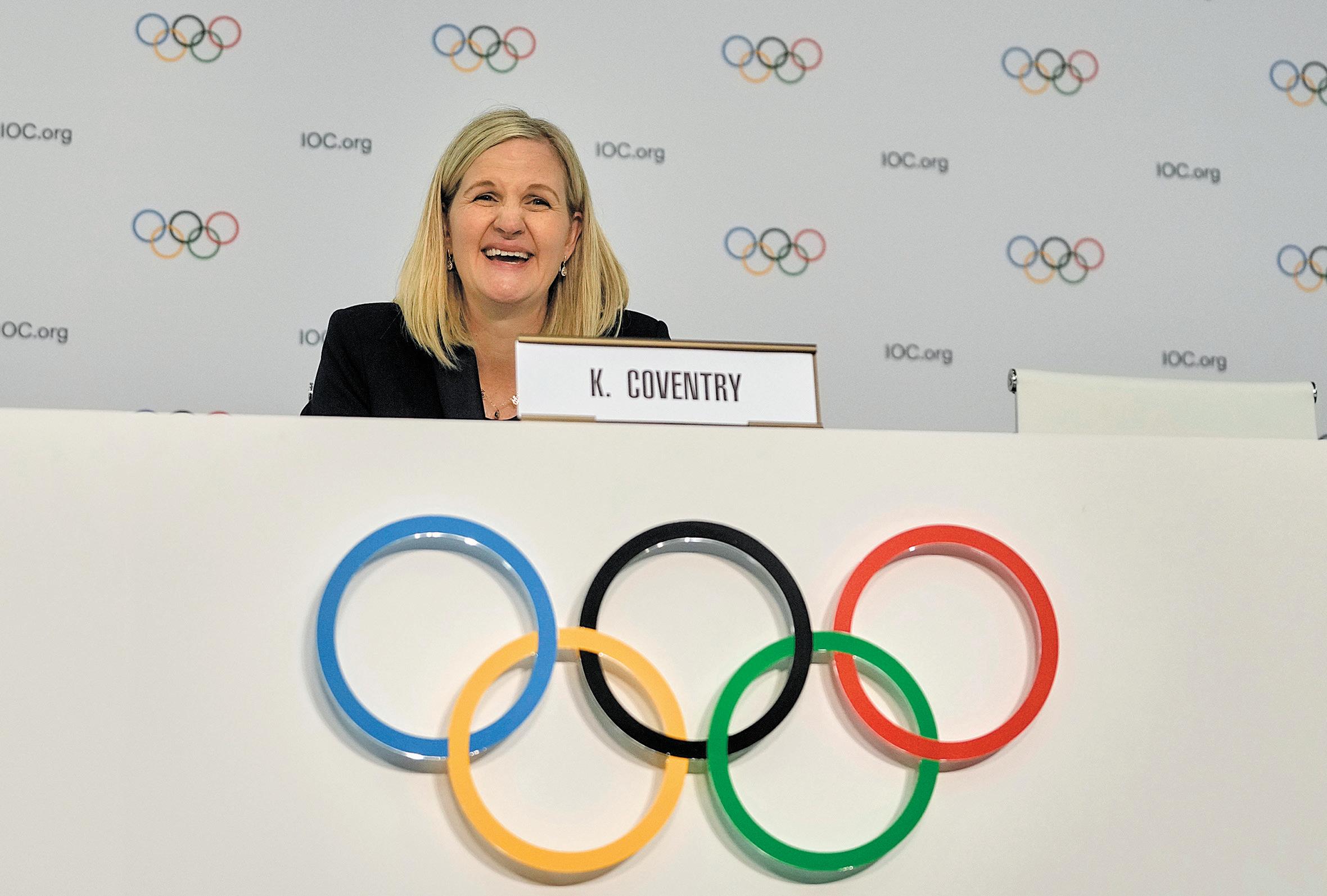

SAITAMA, Japan—Japan became the first team to qualify for the 2026 World Cup after beating Bahrain, 2-0, at Saitama Stadium last week.
Second-half goals from Daichi Kamada and Takefusa Kubo ensured the Samurai Blue secured a spot in Asia Group C’s top two automatic qualification places. At its eighth straight World Cup, Japan joins co-hosts the United States, Canada and Mexico in the expanded 48-team tournament.
“Thanks to the players for their efforts and the fans for their support,” Japan coach Hajime Moriyasu said.
“We knew that if we persevered that the goals would come. We will try and win our three remaining games and grow as a team.”
Earlier, second-place Australia took a big step toward a seventh appearance by defeating Indonesia 5-1 in Sydney in the visitors’ first game under new coach Patrick Kluivert.
Indonesia’s Kevin Diks missed a penalty in the eighth minute, and 10 minutes later Martin Boyle converted his spot kick to put the Socceroos ahead. Nishan Velupillay and Jackson Irvine scored before the break and Lewis Miller made it 4-0 on the hour. Ole Romeny scored for Indonesia before Irvine grabbed his second and the hosts’ fifth. The top two from each of the three six-team groups

By Gerald Imray The Associated Press
CAPE TOWN, South Africa—The next president of the International Olympic Committee (IOC) is a former Zimbabwe swimmer who is Africa’s most decorated Olympian and a minister in a government often accused of oppressing political opposition.
Kirsty Coventry, 41, was elected to one of the most powerful jobs in sports last Thursday, becoming the first woman and first African to lead the Olympic movement.
She will begin her eight-year term in charge of the IOC in June.
Coventry was the back-to-back Olympic champion in the 200 meters backstroke in 2004 and 2008. She retired from swimming after the Rio de Janeiro Olympics in 2016 with seven Olympic medals, more than anyone else from Africa.
By then she was already an IOC member, getting her place in 2013 almost one year after an initial result of an athlete election at the London Olympics was overturned in part because she filed a complaint against an opponent.
Coventry is also currently Zimbabwe’s minister of youth, sports, arts and recreation, drawing some scrutiny of her affiliation with a government that has long faced accusations of cracking down on democratic freedoms and
suppressing criticism in the southern African country.
Her country and the government she serves in has been targeted with sanctions by the United States and the European Union.
At the height of her swimming career, Coventry was praised and rewarded with a diplomatic passport and $100,000 by late Zimbabwean President Robert Mugabe, an autocratic leader who ruled his country for 37 years until he was removed in a military-backed coup in 2017.
Mugabe called her Zimbabwe’s “Golden Girl,” and she was widely praised across racial lines as a source of pride in her country at a time when it was reeling from Mugabe’s policy of violently seizing farmland from white people.
Coventry became the minister of sports a year after the coup that removed Mugabe in the new administration of current President Emmerson Mnangagwa, Mugabe›s vice president who rights groups say has continued many of Mugabe›s oppressive policies.
Coventry was just 34 when she was appointed a government minister in a move that was greeted with surprise because she was young and had little political experience, but also because she is white. She was reappointed sports minister after disputed elections in 2023.
She said in a victory news conference Thursday that she will likely resign as Zimbabwe’s sports minister
and move full-time to the IOC’s home city Lausanne, Switzerland. Coventry attended an all-girls convent school in the Zimbabwean capital, Harare. She went to college at Auburn University in Alabama and became one of its star swimmers. She made her Olympic debut in Sydney in 2000 while still in high school. She won three medals in the 2004 Athens Olympics and four medals at the 2008 Beijing Games.
From 2018 to 2021, Coventry was the athlete representative on the IOC executive board under Thomas Bach, the man she was elected to succeed. Coventry left some athlete groups frustrated that she followed the IOC and Bach policy line too closely.
Coventry’s effectiveness as a sports leader in her home country has been questioned by some. Zimbabwe has been banned from hosting international soccer games by the African confederation since 2020 because it doesn’t have a stadium that meets the required standard.
During Coventry’s first news conference as the next IOC president, the Zimbabwe men’s team was playing a “home” game in a 2026 World Cup qualifying group in Durban in neighboring South Africa because of its stadium problems. Zimbabwe was also temporarily suspended from international soccer by world body FIFA in 2022 because of government interference. Zimbabwe was allowed back into international soccer in 2023.
N
EW YORK—An investor group led by low-profile private equity honcho William Chisholm made headlines by agreeing to buy the Boston Celtics in a deal worth an estimated whopping $6.1 billion It will be the highest price ever for an American professional sports team if the deal is approved by the National Basketball Association’s (NBA) board of governors this summer. So who is leading the charge? Here’s what we know about Chisholm, 56. He grew
South Korea captain Son
Heung-min said. “A match like this can teach us a lesson. We have to take whatever positive we can from this.” South Korea has 15 points, three clear of both Jordan and Iraq. Iraq was held to a 2-2 draw by Kuwait, while Jordan beat the Palestinian national team 3-1. In Group A, Iran now has 19 points after a 2-0 win over the United Arab Emirates in Tehran to stay three clear of Uzbekistan, which beat Kyrgyzstan 1-0. The UAE and Qatar, which beat North Korea 5-1, both have 10 points. AP



Botswana targets rich young Americans with big, natural diamonds
MARCH 23, 2025 | soundstrip.businessmirror@ gmail.com



Publisher :
T. Anthony C. Cabangon
Lourdes M. Fernandez
Editor-In-Chief :
Concept :
Aldwin M. Tolosa
Y2Z Editor :
Jt Nisay
SoundStrip Editor :
Edwin P. Sallan
Eduardo A. Davad
Group Creative Director : Graphic Designers :
Contributing
Writers :
Niggel Figueroa
Anabelle O. Flores
Tony M. Maghirang
Rick Olivares
Jill Tan Radovan
Reine Juvierre S. Alberto
John Eiron R. Francisco
Pocholo Concepcion
Francine Y. Medina
Justine Xyrah Garcia
Bea Rollo
Trixzy Leigh Bonotan
Bless Aubrey Ogerio
IN 2023, ’80s pop star Rick Astley performed with indie rock band Blossoms at the Glastonbury Festival in England with a set list of 18 songs originally written and recorded by The Smiths. (https://www.dailymotion. com/video/x8ovcu2)
Photographers : Apparently, his note-for-note — in Pinoy speak, “plakado”— repertoire of Smiths covers had been a dream for Astley, who, earlier in the five-day arts
Bernard P. Testa Nonie Reyes
Y2Z & SOUNDSTRIP are published and distributed free every Sunday by the Philippine Business Daily Mirror Publishing Inc. as a project of the
The Philippine Business Mirror Publishing, Inc., with offices on the 3rd Floor of Dominga Building III 2113 Chino Roces Avenue corner Dela Rosa Street, Makati City, Philippines. Tel. Nos. (Editorial) 817-9467; 813-0725. Fax line: 813-7025
Advertising Sales: 893-2019; 817-1351,817-2807. Circulation: 893-1662; 814-0134 to 36. www.businessmirror.com.ph

fest, also sang AC/DC’s “Highway to Hell” while playing drums.
To music fans, it was an astounding experience. To Astley, who’s turning 60 next year, paying tribute to artists he admires was like ticking a few items off his bucket list.
It’s interesting to learn that there’s a whole industry of tribute acts worldwide. To call them impersonators is passe, since tribute acts no longer merely imitate like clones — but rather seriously enhance their interpretation of other artists’ original music that captures the audience’s attention.
“Any tribute artist who steps out on stage has this awareness where, even if you’ve got some familiar faces, you’re thinking, ‘these people are ready for me to fall on my face’. And so, you’re always having to prove that you’re not silly, and it can never be anything less than excellent every single time,” says Graham Sampson of The Smyths, a real band that plays the music of The Smiths in an article in Far Out Magazine (https://faroutmagazine. co.uk/the-rising-popularity-of-tribute-acts/).
Recalling how The Smyths started, Sampson says: “It was born out of passion. We rehearsed for nine months, and we expected we might get about 50 people, but it sold out and we realized we’ve created something here — and then because of the success of the first show, people started approaching us.”
One tribute act I am totally engrossed in is Leonid & Friends, composed of 11 professional musicians in Russia. The band plays the music of Chicago.
Chicago has never performed in Russia, “and none of us have attended their concerts until just recently in the United States,” says band leader and multi-instrumentalist Leonid Vorobyev in an article on the Leonid & Friends website (http://leonidandf.com/#gallery).


“We have only recordings and videos [to help us learn Chicago songs].”
Chicago songs, at least the ones from its early years, have complex rock-jazz arrangements, which Leonid & Friends interpret with amazing precision.
“I loved so much the brilliant mixture of rock guitars, drums, and jazz horns with bright vocal harmonies,” Vorobyev says.
In 2014, he gathered musician friends and recorded a video of his favorite Chicago tune, “Brand New Love Affair.” It went viral, prodding Leonid & Friends to record “Make Me Smile,” “25 or 6 to 4,” and “Saturday in the Park” on video.
These videos have logged in more than 50 million views.
Leonid & Friends — which has also recorded three albums, Chicagovich I, II, and III, in loving tribute to the American band — has been going on tour, too.
“The fans were so eager to see us that some traveled from as far as Hawaii and the Philippines … to attend our shows,” Vorobyev says.
In Los Angeles, the band met Chicago keyboardist Robert Lamm and drummer Danny Seraphine as well as Michelle Kath Sinclair, daughter of the late Chicago guitarist Terry Kath.
Lately, Leonid & Friends has extended its repertoire to include songs by Earth, Wind & Fire, Tower of Power, and Steely Dan, among others.
SPEAKING of Steely Dan, there’s one tribute band in the Philippines, Black Cows, which plays the music of the Dan’s legendary duo, Donald Fagen and Walter Becker.
Steely Dan’s songs are some of the most intricately arranged in contemporary music history, so Black Cows founder Wowee Posadas should take a bow.
Black Cows started playing at its home base, 19 East which Posadas owns, but has since been booked in other venues around Metro Manila. It recently celebrated its seventh year as a Steely Dan tribute act.
Also in the Philippines, two concert promoters, Renen De Guia of Ovation Productions and Jesse Cambosa of DMC Entertainment, are known for staging concerts of international tribute artists.
De Guia recently produced Hindley Street Country Club, billed as “the greatest cover band in the world.”
Cambosa, meanwhile, has been producing a slew of tribute acts, one of which, Javier Parisi, plays John Lennon so well, I thought he was the chief Beatle reincarnated.
By Ica Hontiveros-Cheng
IT was one of those Mondays where I was out early for two events: a screening in the morning and a press conference after lunch. Now, this is something I wouldn’t normally jump on doing as it requires a lot of energy, something that I don’t have much supply of recently. But how could I say no to a press conference to the Eraserheads’ documentary film. The band is, after all, considered as one of the most (if not, the most) influential and successful bands in the country.
The band first formed in 1989 and even now, in 2025, almost 40 years later, you can still hear their songs in advertisements and commercials.
During the press conference, producer and director Diane Ventura teased that the documentary would reclaim the band’s narrative, amidst all the whispers, and speculation. It would be a no-holds barred depiction of their story, with nothing kept hidden.
And after seeing the documentary during an early media preview I have to say that Ventura delivered on that promise. It was so much so that I was the one who felt embarrassed because it felt like I was prying into their very private and personal lives and thoughts.
Unlike other musical documentaries from artists which only focus and tell the story of the artist in one point of their career-(SB19 during their ‘Pagtatag!’ era, Taylor Swift’s ‘Miss Americana from 2018-2019, and Katy Pery’s 2012 ‘Part Of Me’ during her California Dream Tour) the Eraserheads’ ‘Combo On The Run’ tells their whole story, from the band’s roots in the University of the Philippines, to their meteoric rise to fame, to their much speculated falling out and break-up, and eventual reconciliation which saw a number of reunion shows, a U.S. tour, and now the release of their documentary film ‘Combo On The Run’.
“We belonged to a generation that would sweep things under the rug. We didn’t talk about our feelings or emotions.” Bassist Buddy Zabal said. And it was a common sentiment amongst the band members, not coming together to talk and be honest to each other led to a lot of hurt and resentment towards each other.
“There was no guidebook to do what we went through, we had to figure things out along the way.” guitarist Marcus Adoro said.
“We were never not friends, we just had a falling out.” Frontman Ely Buendia
said in the documentary, most likely an updated statement of his infamous “We were never friends.” bombshell in a podcast interview in 2021.
“I knew that we would be back together.” Buendia is heard saying in the film. “I never thought that we would ever say: ‘Let’s record a song’ and now it’s possible.” and that possibility spawned this ambitious documentary with impressive footage and never before seen interviews.
The documentary itself has a beautiful story to tell-how time, healing, and reconciliation can touch even the punkest of punks, to come together to do what they do best-play music.
In a post screening talk back session after seeing the film, Ventura and Buendia answered questions from the press. In the film Buendia talked about wanting to achieve redemption for the band, something which he says that is not definitive yet but that they have gotten much closer now. Ventura added: “Redemption and healing is not a final destination, it’s an ongoing process and I feel just like witnessing how they are right now. They are getting there, as with all relationships there will always be conflict but the difference now is the approach, before they would just sweep things under the rug and not discuss it. Now there is more openness and willingness to discuss things.”
The documentary ends with behind the scenes footage of the band’s U.S. tour where they are having fun, sharing meals and laughs with family and friends. A far cry from their bitter break-up years ago.
“It’s like making up for lost time. Plug in your guitar, play the songs. (Parang) it’s home.” Ely Buendia said. And fans are surely happy that this once-in-alifetime band, whose songs and music have transcended time and generations, were able to put their colorful history and differences aside to continue telling their story on their own terms.



By Antony Sguazzin, William Clowes & Mbongeni Mguni Bloomberg
BOTSWANA , the world’s largest diamond producer, is betting that selling big gems to rich young Americans will ease its economic woe and it is trying to catch their eye via Instagram and TikTok.
That gamble saw it dip a toe into the world of luxury advertising last week, wining and dining social media influencers at a Michelin star restaurant in New York’s Greenwich Village to pitch affluent 20- and 30-somethings on natural rocks over lab-grown rivals.
“One of our strategies is to really counter synthetics,” Bogolo Kenewendo, Botswana’s 37-year-old mines minister, said in an interview from New York ahead of the March 12 event.
The evening was organized with highend online jewellery seller The Clear Cut, which is a “voice for Gen Zs and is really helping us to tailor the narrative of natural diamonds in the US to a specific demographic,” she said.
Kenewendo is promoting her country’s
Gen Z Americans don’t have enough saved to cover a single month of spending
Younger Americans don’t have enough saved to cover a single month of spending, showcasing their vulnerability should the economy head into a downturn.
Members of the Gen Z generation— people born after 1995—were spending twice the amount they had in savings on average in February, according to Bank of America Institute analysis of internal account and card data released Friday. The ratio has increased in the past two years, and is much higher than for other generations.
In part that’s because Gen Z consumers, many of whom still hold entry-level positions and make less than their older peers, tend to spend a bigger share of their incomes on necessities including rent and utilities. But they’re also more likely to shell out on discretionary categories like travel and entertainment. Spending in non-essentials among that cohort is up more than 25 percent from a year ago— substantially above the overall rate.
gems against an onslaught from cheaper, lab-grown variants, which have crushed prices for cheaper stones at the expense of Botswana, which gets more than a third of its budget and most of its foreign exchange earnings from the gems.
Diamond sales from the Debswana joint venture between De Beers, the biggest diamond mining company, and Botswana fell 46 percent last year, according to the central bank.
Synthetic stones also profit from the blood-diamond narrative that the proceeds of gem mining, in the case of producers including Sierra Leone and Central African Republic, has financed civil wars.
In response, Botswana counters that it’s a flourishing democracy and revenue from diamonds, discovered in the southern African nation soon after independence in 1966, have been used to benefit the entire nation.
“Diamonds do good. That is our selling point,” Kenewendo said. “Almost everybody in Botswana who has been put through primary school all the way to university has been put through by government and through government revenues that are raised through the sale of diamonds.”
Kenewendo is part of a fresh-faced new cabinet, which includes a 26-yearold youth minister once crowned Miss Botswana, trying to breathe life into the struggling economy of the country of 2.5 million people.
Voter anger over the economy led to the shock October election result that
swept President Duma Boko’s Umbrella for Democratic Change to power, unseating the party that had ruled for 58 years.
With synthetic diamonds out-competing natural gems in the market for cut stones under $750, the country is aiming at the buyers of more expensive jewellery, while highlighting that its gems can be traced back to Botswana mines through blockchain technology, she said.
“We believe we have a very unique market above five carats that we can really tap into and position the Botswana marque as a premium diamond above all,” she said.
That’s where the alliance with retailers such as The Clear Cut come in.
“Our clients skew a little bit higher than the average American budget,” said Olivia Landau, the co-founder and chief executive officer of the company, adding that most are in their late 20s or early 30s. “Our average engagement ring is about $25,000 to $30,000, around the two-and-a-half to three-and-a-half carat center stone diamond.”
That demographic was the prime audience for the New York-based fashion influencers who attended the event, including Katee Bartlett, Serena Kerrigan and the 19 other guests that evening.
We want “to present a new narrative that most consumers in the US haven’t heard,” Landau said. For the influencers “it’s a great way for them to get educated and also share the story with their audiences.”

While the report noted that Gen Z workers are still garnering robust pay gains compared to older groups, it showcases a point of vulnerability as households’ views of the economy dim.
After years of stubborn inflation, higher borrowing costs and waning pandemic savings, views of their current financial situation have sharply declined this year. Among all US households, expectations for finances a year from now have dropped to an all-time low, according to a University of Michigan report out Friday.
Career concerns
ECONOMISTS and policymakers are
GENERATION Z faces stagnant living standards, sky-high housing costs and a flatlining economy in Britain today, and yet they’re less gloomy about their life prospects than the rest of the population. The most pessimistic generation, meanwhile, is the richest cohort: Baby Boomers who are now in their 60s and 70s.
The contrast is stark. A British Retail Consortium survey found a 44 percentage-point difference between the generations on how they viewed the state of the economy in February, and a 36-point gap on their own personal finances. GfK’s closely watched consumer confidence index reveals a similar pattern, with 16- to 29-year-olds having the highest net score at plus 6. For the over 65s, the figure is minus 41.
The findings are a boost for Chancellor of the Exchequer Rachel Reeves at a time when consumption is key to keeping the tepid UK economy motoring. It comes despite official figures showing that 25- to 34-year-olds have less than a quarter of the wealth of those aged 65 to 74, who have benefited from decades of rising house prices and equity values. The question is why are the young so defiantly optimistic?
Experts tracking consumer sentiment offer several reasons. With low levels of home ownership, young people are less directly exposed to the sharp rise in interest rates in recent years. They also have fewer financial commitments and family obligations, plus generations decades apart consume the news in different ways.
“The stakes are lower and then also there is a significant proportion of Gen Zs that still live at home,” said Richard Lim, chief executive of consultancy Retail Economics. “They’re just not exposed to the pressures that have been around home ownership and rising interest rates. It’s so much easier if your landlord puts up your rent by 10 percent, then perhaps you move out and find somewhere more affordable.”
paying close attention to how this growing pessimism will impact consumption—the main engine of the US economy. Americans took a breather on spending at the start of the year, and some retailers are already warning of weaker demand ahead.
The Bank of America report also pointed to a worsening labor market for younger Americans. The number of Gen Z households receiving unemployment benefits rose by nearly a third in the past year—the most of any generation. It also noted that, with underemployment on the rise, that could have long-term career effects for that cohort. Bloomberg

Gen Z may also find it easier to topup their incomes, such as from more working hours, than Baby Boomers given many older people are already retired. The BRC reckons they may also be less affected by the rife pessimism over the state of the economy, with many shunning traditional forms of press for social media.
“It seems their views on the economy are more influenced by their expectations for their personal financial situation–which is higher than perceptions of the economy for all age groups–than by the wider media narrative, which has recently been focused on the challenges facing the British economy,” said Kyle Rose, senior analyst at the BRC. Bloomberg