



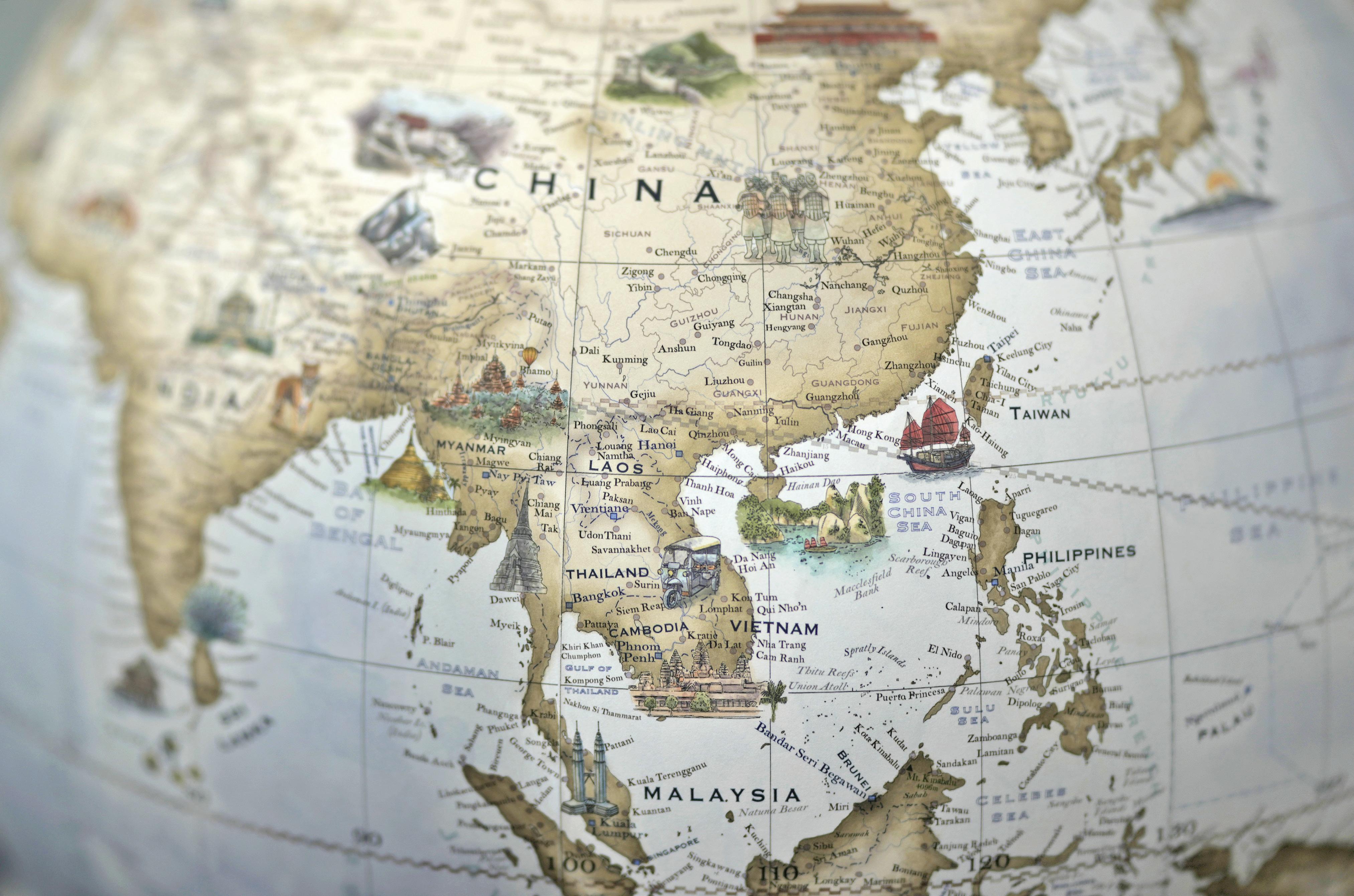
Any upheaval over Taiwan could trigger Southeast Asia’s biggest evacuation, according to a study, and Asean members are urged to avoid ‘Ostrich syndrome’
By Malou Talosig-Bartolome
THE war in the Middle East has once again laid bare the fragility of global crisis-response systems. From Israel to Gaza, governments scrambled to evacuate their nationals as rockets fell and air routes narrowed.
Thailand alone repatriated nearly 9,000 citizens from Israel after the October 2023 Hamas attacks, while the Philippines, Indonesia, and Malaysia mounted urgent flights to bring home workers caught in the crossfire.
These operations, though successful, leaned heavily on commercial airlines, uncontested airspace, and relatively cooperative host governments. They were difficult,
but they were possible. Now imagine a similar evacuation—but in Taiwan.
The International Institute for Strategic Studies (IISS) warns that Southeast Asia is dangerously unprepared for such a scenario.
Unlike the Middle East, a Taiwan contingency would unfold in a heavily militarized environment, where air routes could be severed, ports blockaded, and land trans-
port disrupted. Extracting nearly one million Southeast Asian citizens from Taiwan would require a noncombatant evacuation operation (NEO) of unprecedented scale and complexity.
“Strategic policymakers are generally aware of the dangerous consequences of such a conflict, but they stop short of making serious preparations for it,” the IISS study cautions.
Erwin M. Mascariñas
FOR centuries, long before modern cities across the Philippines began to take shape, a thriving kingdom known as Butuan was said to be a hub for trade and ethnocultural exchange not only for northeastern Mindanao but also across the archipelago and beyond its ocean borders, highlighted by the seafaring journeys of the large wooden sailing vessels, the Balangay boats. Now, that story sails again, not in history books, nor along the hallways of museums and historical sites; but on stage, through a play dubbed Bagani Hong Lawod Bagani Hong Lawod, Guardians of the Northern Seas, a local musical theatre play performed by the Balangay Repertory Theater Inc. and produced by the Kulture Revival Events Core Inc., dramatizes the Kingdom of Butuan at its peak, giving an artistic take on its historic past and echo -
ing its legendary voyages across Southeast Asia into a visual, musical cultural ambassador.
Through music, choreography, and storytelling, the production celebrates the city’s ancient heritage and positions Butuan as a center of contemporary arts.
The third staging on February 25, 2026, at the Father Saturnino Urios University followed the play’s debut in October 2025 for select audiences and was presented free to the public as part of Butuan’s hosting of the National Arts Month celebration for Mindanao.
The production, supported by the grant from the National Commission for Culture and the Arts (NCCA), gave its audience a glimpse into the range of what local talents are capable of.
The story centers on a group of early naval explorers from the precolonial Kingdom of Butuan who navigate the open ocean aboard a Balangay boat, with
A diaspora at risk BETWEEN 780,000 and one million citizens from Indonesia, Malaysia, the Philippines, Thailand, and Vietnam currently live, work, or study in Taiwan. Their safety would be the first humanitarian test of any US–China conflict.
“No single state could unilaterally conduct an NEO to extract most of its citizens from Taiwan,”
hopes and expectations, the challenges they face in the
seas, and the

measure of how a betrayal would test their courage, loyalty, and humanity throughout their voyage.
An artist’s voyage of discovery FOR Sai Collado, artistic director of Balangay Repertory Theatre Inc., the production fulfills a longstanding dream, an artist’s voyage of discovery amid trials and tribulations.
“It is the realization of a dream, that one day community theater artists and cultural workers here will be able to show their hearts, hear their voices, and see their souls on stage,” he said. Collado added that the musical has broader significance.
“Bagani Hong Lawod is not only for Butuan. Butuan belongs to the Philippines, it is for Filipinos. The value we carry in this story is not only the story of Butuan, it is the story of the Filipino people. Ultimately, we want to bring Butuan, and the Philippines, to the world,” Collado added.
Collado’s artistic journey took its roots as a member of the Sining Kambayoka Ensemble (SKE), a renowned, multi-awarded folk theater company based at Mindanao State University in Marawi City.
As an alumnus of one of the premier cultural groups in the Philippines that utilizes the Kambayoka theater form, Collado’s creative insights together with the entire team where some are also alumni of SKE, reverberated in a spectacular performance.
Collado recounted the long journey of the production.
“Decades ago, theater and dance were largely absent from Butuan. We introduced the concept at the Balangay Festival, and later brought it to other parts of Mindanao. At first, support was limited. But slowly, doors began to open. People saw our passion, they appreciated it, and now they understand our story,” Collado said.
Now on its third staging, Collado likens Bagani Hong Lawod to a Balangay itself.
“Once it was lost to time, forgotten, but now it has been rebuilt, and it is ready to sail again into the wide ocean,” he said.
Discovering arts through performance theater
The audience during the presentation of Bagani Hong Lawod was mesmerized by the impressive and captivating production that celebrated Butuan’s rich cultural heritage.
The actors delivered powerful and emotional performances, bringing the story of the brave voyagers to life on stage. Through their songs, movements, expressions,

and dialogue, the performers conveyed the intensity of the narrative and the struggles of the characters. The emotional death of the antagonist in the arms of his daughter became one of the most memorable moments of the play, leaving several members of the audience visibly moved, with some shedding tears. The production was further elevated by its visually stunning staging and dynamic choreography. Dramatic acting was skillfully combined with powerful movements that symbolize struggle, battle, courage, forgiveness, unity, and hope, creating a deeply immersive theatrical experience.
Several members of the audience, including students from Father Saturnino Urios University (FSUU), described the performance as an emotional and visually striking spectacle. Many also expressed that the play deserves to be showcased in more venues across the region and the country to further promote appreciation of local history and culture.
A tribute to a historic past AS generations moved on, the traditions and culture of the seafaring traders and explorers of Butuan, along with its rich maritime heritage, slowly eroded over time due

to colonization and sociopolitical change, and the once-proud culture gradually slipped into oblivion.
While the Kingdom of Butuan and its maritime culture were first documented by Italian chronicler Antonio Pigafetta in his accounts of Ferdinand Magellan’s voyage in the 1500s, little of this rich legacy remained visible for centuries.
It was only in 1976 that treasure hunters uncovered the ancient balangay boats, leading to the discovery of a total of 11 vessels dating from as early as 320 Common Era (CE) to 1250 CE.
Butuan City Mayor Lawrence Fortun said the play is a reminder
of the Butuans’ proud rich heritage and a tribute to Butuan’s historic past. Bagani Hong Lawod is a story that ought to be told over and over again, not only to our own people, but to the world, that Butuan was a thriving kingdom, that we were an advanced civilization even before our colonizers came, and we have to preserve that,” he said.
Fortun described the production as more than a performance.
“It is a memory. It is identity. It is a movement. It is an inspiration for the future,” he said.
“It reminds us that long before modern cities, long before digital platforms, there were stories carried by wind and water; stories of courage, journeys, and resilience. We are heirs to seafaring bravery. Through theater, we are reclaiming our narrative. Culture is not something displayed in museums alone. It lives on stage, it breathes through actors, it echoes in dialogue, and it moves in choreography.”
Fortun emphasized that Butuan’s arts revival is deliberate and intentional.
“We are building platforms for our storytellers, creating space for our creatives, and telling every artist in Butuan that their voice matters. When artists thrive, a city finds its soul,” he said.
Fortun also highlighted the timing of the musical, coinciding with the 50th anniversary of the discovery of the Balangay boats in 1976.
“This year marks our 50th year. We want to refocus the Balangay Festival to the sea, to the water, and to the true meaning of Balangay. There will be surprises as we celebrate this milestone,” he said.
Members of the Balangay Repertory Theatre Inc. hope that Bagani Hong Lawod will be showcased to more shows not only in Butuan City and in Caraga Region, but to other parts of the country and venues around the world.
Continued from A1
the authors warn. “Any regional crisis-response architecture building should begin at home.”
Past successes, future pitfalls FROM 2014 to 2025, Southeast Asian governments conducted 179 repatriation missions, bringing home more than 215,000 citizens from pandemics and conflicts abroad. But the IISS cautions that these successes may breed complacency.
“Logistically planning for an NEO over Taiwan is not that extremely difficult, given the geography and our experience, but the geopolitics of it is more challenging,” admitted one Manila official.
A senior Indonesian interlocutor added: “Perhaps it is important to publicly demonstrate our willingness to discuss Taiwan-related crisis options to hopefully deter to some small extent a future conflict, or at the very least force the US and China to take Southeast Asian states into account.”
The US equation
THE Philippines stands out as Washington’s closest partner in preparing for a Taiwan crisis. Manila is acutely aware it could be “pulled in,” with discussions centering on whether the United States might invoke the Mutual Defense Treaty if war breaks out with China.
Other Southeast Asian nations—Indonesia, Malaysia, Thailand, and Vietnam—have not engaged in joint contingency planning with Washington.
Yet their reliance on US military education, training, and arms means any Taiwan conflict would severely test America’s credibility as a counterbalance to China, while challenging these states’ ability to remain “neutral.”
During a diplomatic crisis simulation, several Southeast Asian teams sought US assistance to execute NEOs for their citizens.
But paradoxically, the more
American officials raise Taiwan in regional discussions, the less willing Southeast Asian policymakers are to publicly engage—fearing they will be portrayed as “doing Washington’s bidding.”
The IISS recommends discreet engagement with Washington to explore planning options, involve the US in capacity-building programs, and establish stronger crisis communications between regional governments and American counterparts.
Crisis literacy and the “Ostrich Syndrome” VIETNAM, Malaysia, and Thailand remain reluctant to discuss Taiwan scenarios, fearing Beijing’s ire or distracted by domestic crises.
By contrast, the Philippines and Indonesia—home to the largest expat populations in Taiwan— show greater awareness, though Jakarta avoids public statements to preserve neutrality.
Indonesian President Prabowo Subianto underscored this balancing act: “We need to maintain our relationship with China. We are clear that Taiwan is China’s province and what China wants to do about Taiwan is their domestic affair.”
Thailand’s then-chief of defense forces, General Songwit Noonpackdee, reflected on lessons learned: “After the incident between Hamas and Israel and we had to evacuate our workers, … we found out we have 200,000 workers in Korea. So we started sending our intelligence officers, our special operations officers, just to understand the scope and scale of the conflict when it happens, and we have to have more contingency plans.”
Asean’s limitations
THE instinct to lean on Asean offers little comfort. The bloc lacks early-warning systems and suffers from consensus-driven inertia. Its platforms, such as the East Asia Summit, legally exclude Taiwan.
“Under current conditions,
maritime Southeast Asian states would find it difficult to rely on Asean for an immediate collective response to a possible US–China conflict over Taiwan,” the study notes.
“Asean agency in shaping regional security dynamics is neither automatic nor can it be exercised independent of what the individual Asean Member States would allow. In other words, there is no Asean agency per se, only the agency of the AMS in leading the group.”
“Asean remains an important strategic option during a regional crisis. The challenge is to demonstrate to political leaders and strategic policymakers to what extent it can be valuable,” added a regional official.
Building blocks for readiness LAKSMANA and Michaels propose a layered approach.
Nations must strengthen domestic capacity, clarify chains of command and mobilize military assets alongside civilian agencies. Commercial fleets—Indonesia’s 3,000 ferries, Vietnam’s shipping lines, Malaysia’s maritime resources—could be commandeered for emergency sea lifts.
Second, the report urges “intra-Asean minilateralism.” Countries with the largest populations at risk—Indonesia, Malaysia, the Philippines, Thailand, and Vietnam—should quietly form a coalition to share plans and pool resources.
Preparation not provocation THE authors stress that preparation does not mean provocation.
As the report concludes: “No single state could unilaterally conduct an NEO to extract most of its citizens from Taiwan. The time to build the region’s crisis architecture is now, before the first shots are ever fired.”
Editor: Angel R. Calso
By Aniruddha Ghosal, Anton L. Delgado & Allan Olingo The Associated Press
HANOI, Vietnam—The war in Iran is exposing the world’s reliance on fragile fossil fuel routes, lending urgency to calls for hastening the shift to renewable energy.
Fighting has all but halted oil exports through the Strait of Hormuz, the narrow waterway that carries about a fifth of the world’s oil and liquefied natural gas, or LNG. The disruption has jolted energy markets, pushing up prices and straining import-dependent economies.
Asia, where most of the oil was headed, has been hit hardest, but the disruptions also are a strain for Europe, where policymakers are looking for ways to cut energy demand, and for Africa, which is bracing for rising fuel costs and inflation.
Unlike during previous oil shocks, renewable power is now competitive with fossil fuels in many places. More than 90% of new renewable power projects worldwide in 2024 were cheaper than fossilfuel alternatives, according to the International Renewable Energy Agency.
Oil is used in many industries beyond generating electricity, such as fertilizer and plastics production. So, most countries are feeling the impact, while those with more renewable power are more insulated since renewables rely on domestic resources like sun and wind, not imported fuels.
“These crises regularly occur,” said James Bowen of the Australia-based consultancy, ReMap Research. “They are a feature, not a bug, of a fossil fuel-based energy system.”
China and India built renewable buffers, but China’s is larger CHINA and India, the world’s two most populous countries, face the same challenge of generating enough electricity to power growth for over a billion people. Both have expanded renewable energy, but China did so on a far larger scale despite its continued reliance on coal-fired power.
Today China leads the world in renewables. About one in 10 cars in China are electric, found the International Energy Agency. It’s still the world’s largest importer of crude oil and the biggest buyer of Iranian oil. But electrifying parts of its economy with renewables has reduced its reliance on imports.
Without that shift, China would be “far more vulnerable to supply and price shocks,” said Lauri Myllyvirta of the Centre for Research on Energy and Clean Air. China also can rely on reserves built when prices were low and shift between using coal and oil as fuel in factories, he said.
India also has expanded its use of clean energy, especially solar power, but more slowly and with less government support for manufacturing renewable energy equipment and connecting solar to its power grid.
After Russia’s invasion of Ukraine in 2022, India prioritized energy security by buying discounted Russian oil and boosting coal production.
It also ramped up solar and wind, helping to cushion supply disruptions but not avoid them entirely, said Duttatreya Das of the think tank Ember.
“Everyone cannot be China,” Das said.
India is now facing a shortage of cooking gas. That’s driving a rush to buy induction cooktops and raising fears of restaurant shutdowns. Fertilizers and ceramics industries may also be hit.
Rich countries fallback on fossil fuels
THE energy shock is familiar to wealthy countries in Europe and East Asia.
In 2022, some European governments tried to cut dependence on fossil fuels. But many soon focused on finding new fossil fuel suppliers instead, said Pauline Heinrichs, who studies climate and energy at King’s College London.
Germany rushed to build LNG terminals to replace Russian gas with mostly American fuel while the energy transition, including efforts to cut demand, slowed, she said.
Europe’s excess spending on fossil fuels since the RussiaUkraine War amounted to about 40% of the investment needed to transition its power system to clean energy, according to a 2023 study.
“In Europe, we learned the wrong lesson,” Heinrichs said.
In import-dependent Japan, policy responses to past shocks have focused on diversifying fossil fuel imports rather than investing in domestic renewables, said Ayumi Fukakusa of Friends of the Earth Japan.
Solar and wind make up just 11% of Japan’s energy production, on a par with India but behind China’s 18%, according to Ember. Japan’s energy use is much lower

than both nations.
The Iran war led the agenda during Japanese Prime Minister Sanae Takaichi ‘s meeting this week with US President Donald Trump. Trump, who has long urged Japan to buy more American LNG, recently called on allied nations like Japan to “step up” in assisting secure The Strait of Hormuz.
South Korean President Lee Jae-myung said the crisis could be “a good opportunity” to shift faster to renewable energy.
Poor countries are the most exposed POORER nations in Asia and Africa are competing with wealthy European and Asian countries and big buyers like India and China for limited gas supplies, pushing up prices.
Import-dependent economies—such as Benin and Zambia in Africa and Bangladesh and Thailand in Asia—could face some of the biggest shocks. Costly fuel makes transport and food more expensive, and many countries have limited foreign-
By Jenny Leonard & Arne Delfs
IN the exhibition hall at Unitree Robotics in Hangzhou, Friedrich Merz smiled and applauded the martial arts display by a platoon of humanoid warriors. But when a robot boxer advanced toward him, punching the air with its red-gloved fists, the German chancellor flinched, a look of alarm crossing his face as he appeared to realize the danger posed by an autonomous fighting machine.
It was also a moment that crystallized for Merz the power of China’s technology, according to a person familiar with his thinking. He saw it, too, as a sign of how far behind Germany has fallen and how European Union regulation holds back their efforts to catch up, the person said, asking not to be named discussing the chancellor’s private views.
The trip, last month, has triggered a broader reckoning that is starting to settle in across Europe: maybe de-risking from China is just too big a task. Despite the threat of China’s companies, maybe Europe needs to reach a new settlement with Beijing.
At a time when President Donald Trump is hitting EU companies with US tariffs, questioning the security guarantees that have protected the continent for generations, and unleashing bedlam in energy markets, the idea of taking a hard line with China is becoming increasingly unpalatable for officials across the continent.
“European leaders are traveling to China with the hope of hedging political bets visa-vis the US,” said Agatha Kratz, a partner in Paris at Rhodium Group, an advisory firm.
A more reliable counterpart THEY just don’t have the stomach for two trade wars at once, according to people familiar with the thinking in key capitals, and Trump isn’t giving them much choice about the first one. So time and energy that might have been devoted to working out how to reduce their dependence on Beijing is instead being spent dealing with crises triggered by the US, the officials said, asking not to be named discussing private conversations.
“That’s misguided given persistent challenges in our relations with China,” said Kratz. After a year of antagonism from the White House, some European officials are starting to think that China may even represent a more reliable counterpart, despite the threat to their countries’ prosperity. Officials in the Trump administration acknowledge the EU’s shift to managing the risks posed by
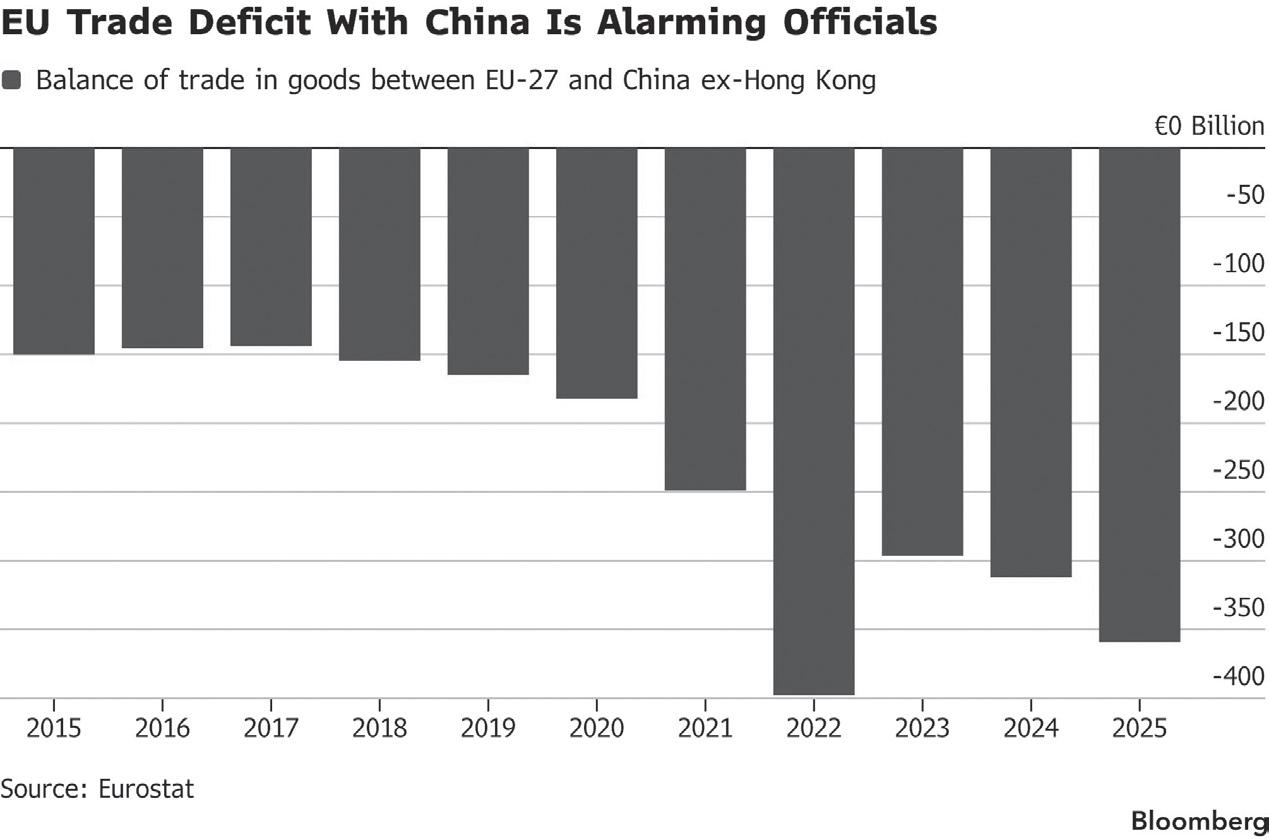
the White House, people familiar with the deliberations said, but largely they ridicule it. Trade between the Europe and China has surged in the first two months of the year but the EU’s overall trade deficit of €359 billion ($412 billion) last year has become a source of acute concern in European capitals.
Some officials in Brussels have been warning against any pivot toward Beijing and the threat to EU industries from what is seen by many as unfair competition. They argue that any shift is more about optics than real policy at this point and the European Commission, the EU’s executive arm which runs trade policy, has not altered its position.
“I don’t think the EU is pivoting because the harm to the EU economy is huge from China’s exports,” said Alicia Garcia Herrero, a senior fellow at the Bruegel think tank in Brussels.
But the change in sentiment in European capitals can be seen with the spate of
leaders who visited China just in the past six months. Government chiefs or heads of state from three of the euro region’s four major economies, and the UK too, have met senior counterparts in Beijing in that time, as have the premiers of Finland and Ireland.
Giorgia Meloni of Italy is the most notable EU leader who hasn’t shown up in Beijing. Since taking office in 2022, the Italian premier has been trying to distance herself from China after her predecessorbut-one had made Italy the only Group of Seven country to join China’s global infrastructure push, the Belt and Road Initiative. Nevertheless, Stellantis NV, the owner of Italian carmaker Fiat, is exploring deals with Chinese carmakers to support its struggling European operations, Bloomberg reported this month.
On the EU’s borders, other countries are already further down that path.
Tiny Montenegro awarded a €640 million highway contract to a consortium of Chinese companies last month, and Serbia recently bought supersonic missiles made by China Aerospace Science and Industry Corp, the first known purchase of such weapons by a European state. Serbia’s military also held its first joint exercise with the People’s Liberation Army in China last year.
But it was Merz’s visit that prompted a broader rethink.
In campaigning for last year’s election, the German chancellor had criticized China for abusing leverage over supply chains, threatening stability in the Taiwan Strait and supporting Russia’s war against Ukraine.
exchange reserves, restricting their ability to pay for imports if prices stay high.
Africa may be especially exposed because many countries rely on imported oil to run their transport and supply chains.
It makes strategic sense for African countries to build their longterm energy security by investing in cleaner energy, said Kennedy Mbeva, a research associate at the Centre for the Study of Existential Risk at the University of Cambridge.
But not all are opting for renewables: South Africa is considering building an LNG import terminal and new gas-fired power plants.
Others, like Ethiopia which banned gasoline and diesel fueled cars in 2024 to promote electric vehicles, are doubling down on renewables.
The real challenge is not just to withstand the next shock, but to ensure it doesn’t “derail the country’s development trajectory,” said Hanan Hassen, an analyst at Ethiopia’s governmentlinked think tank, the Institute of Foreign Affairs.
Renewables provide a cushion for some INCREASED use of renewable energy has helped shield some Asian countries from the energy shock. Pakistan’s solar boom has preempted more than $12 billion in fossil fuel imports since 2020 and could save another $6.3 billion in 2026 at current prices, according to think tanks Renewables First and the Centre for Research on Energy and Clean Air.
Vietnam’s current solar generation will help the country save hundreds of millions of dollars in potential coal and gas imports in the coming year, based on current high prices, according to the research group, Zero Carbon Analytics.
Other countries are stretching tight supplies.
Bangladesh has closed universities to save electricity. It has limited storage capacity to absorb supply shocks, so the government started rationing fuel after a flurry of panic buying at filling stations, said Khondaker Golam Moazzem, an economist with the Centre for Policy Dialogue in Dhaka. For now, governments must just manage shortages and control prices. Thailand has suspended petroleum exports, boosted its gas production and begun drawing on reserves.
If the conflict bleeds into April, Thailand’s finite reserves and limited budget for subsidies mean prices will shoot higher, warned Areeporn Asawinpongphan, a research fellow with the Thailand Development Research Institute.
“The time for promoting domestic renewables should have happened a long time ago,” Asawinpongphan said.
Delgado reported from Bangkok, Thailand, and Olingo reported from Nairobi, Kenya.
A look at who holds the reins of power in Iran since the country’s top leaders were killed
By Elena Becatoros The Associated Press
ATHENS, Greece—One after another, Israel has taken out Iran’s top leaders.
First it was Supreme Leader Ayatollah Ali Khamenei, killed in the opening shots of the war. Now Ali Larijani, the secretary of Iran’s Supreme National Security Council who was considered one of the most powerful figures in the country, has also been killed.
As have a raft of other top-ranking military and political leaders.
With so many top leadership figures taken out, who is now running Iran? Here is a look at the country’s power structure, what is known—and what is not.
Khamenei’s successor ULTIMATE authority in Iran rests with the country’s supreme leader, who has sat at the apex of power since the creation of the Islamic Republic in 1979 after the revolution that overthrew the shah.
After Khamenei was killed, his son, 56-year-old Mojtaba Khamenei, was quickly named to replace him as Iran’s new supreme leader. A secretive figure, the younger Khamenei has not been seen in public since the airstrike killed his 86-year-old father.
The cleric had long been considered a contender for the post, despite never having been elected or appointed to a government position. The younger Khamenei maintains
close ties to the country’s powerful paramilitary Revolutionary Guard. His views are believed to be even more hardline than those of his father. Officially, he is now in charge of Iran’s armed forces, and any decision regarding the country’s nuclear program rests with him. But is he truly running Iran?
Israel says Iran’s leadership is in disarray
“I’M not sure who’s running Iran right now,” Israeli Prime Minister Benjamin Netanyahu said during a news conference Thursday night. “Mojtaba, the replacement ayatollah, has not shown his face. Have you seen him? We haven’t, and we can’t vouch for what exactly is happening there.”
Mojtaba Khamenei’s wife, Zahra Haddad Adel, was also killed in the Israeli strike that killed his father. US and Israeli officials have suggested he was wounded in the same attack.
“Iran’s command and control structure is in utter chaos,” Netanyahu said. Burcu Ozcelik, senior research fellow for Middle East security at the Royal United Services Institute, a United Kingdom-based defense and security think tank, said the elimination of so many of Iran’s top leaders will alter its theocracy—but that the change could be a gradual one.
“Leadership matters, and the loss of key decision-makers spanning politics,
By Seth Borenstein AP Science Writer
WASHINGTON—The dangerous heat wave shattering March records all over the US Southwest is more than just another extreme weather blip. It’s the latest next-level weather wildness that is occurring ever more frequently as Earth’s warming builds.
Experts said unprecedented and deadly weather extremes that sometimes strike at abnormal times and in unusual places are putting more people in danger. For example, the Southwest is used to coping with deadly heat, but not months ahead of schedule, including a 110-degree Fahrenheit (43.3 Celsius) reading in the Arizona desert on Thursday that smashed the highest March temperature recorded in the US.
On Thursday, sites in Arizona and southern California had preliminary readings of 109 F (about 43 C), which would be the hottest March day on record for the United States.
“This is what climate change looks like in real time: extremes pushing beyond the bounds we once thought possible,” said University of Victoria climate scientist Andrew Weaver. “What used to be unprecedented events are now recurring features of a warming world.” March’s heat would have been virtually impossible without
human-caused climate change, according to a report Friday by World Weather Attribution, an international group of scientists who study the causes of extreme weather events.
More than a dozen scientists, meteorologists and disaster experts queried by The Associated Press put the March heat wave in a kind of ultra-extreme classification with such events as the 2021 Pacific Northwest heat wave, the 2022 Pakistan floods and killer hurricanes Helene, Harvey and Sandy.
The area of the US being hit by extreme weather in the past five years has doubled from 20 years ago, according to the National Oceanic and Atmospheric Administration’s Climate Extremes Index, which includes various types of wild weather, such as heat and cold waves, downpours and drought.
The United States is breaking 77% more hot weather records now than in the 1970s and 19% more than the 2010s, according to an
AP analysis of NOAA records. In the United States, the number and average cost of inflation-adjusted billion-dollar weather disasters in the last couple years is twice as high as just 10 years ago and nearly four times higher than 30 years ago, according to records kept by NOAA and Climate Central, a nonprofit group of scientists and communicators who research and report on climate change.
Trying to keep up with extremes and failing “IT’S really hard to even keep up with how extreme our extremes are becoming,” said Climate Central Chief Meteorologist Bernadette Woods Placky. “It’s changing our risk, it’s changed our relationship with weather, it’s putting more people in risky situations and at times we’re not used to. So yes, we are pushing extremes to new levels across all different types of weather.”
For government officials who have to deal with disaster it’s been a huge problem.
Craig Fugate, who directed the Federal Emergency Management Agency until 2017, said he saw extremes increasing.
“We were operating outside the historical playbook more and more. Flood maps, surge models, heat records—events kept showing up outside the envelope we built systems around. That’s just what we saw,” Fugate said via email.
He added: “We built communities on about 100 years of past weather and assumed that was a good guide going forward. That assumption is starting to break. And the clearest signal isn’t the science debate. It’s insurers walking away.”

‘Virtually impossible’ without climate change
CLIMATE scientists at World Weather Attribution did a flash analysis—which is not peer-reviewed yet—of whether climate change was a factor in this Southwest heat wave. They compared this week’s expected temperatures to what’s been observed in the area in March since 1900 and computer models of a world with climate change. They found that “events as warm as in March 2026 would have been virtually impossible without human-induced climate change.”
That warming, from the burning of coal, oil and natural gas, added between 4.7 degrees to 7.2 degrees F (2.6 to 4 degrees C) to the temperatures being felt, the report found.
“What we can very confidently say is that human-caused warming has increased the temperatures that we’re seeing as a result of this heat dome, and it’s going
to be pushing those temperatures from what would have been very uncomfortable into potentially dangerous,” said report co-author Clair Barnes, an Imperial College of London attribution scientist.
Examples abound of high heat and extreme weather
THE Southwest heat wave is solidly in the category of “giant events,” with temperatures up to 30 degrees Fahrenheit (16.7 degrees Celsius) above normal, said Stanford University climate scientist Chris Field.
He listed five others in the last six years: a 2020 Siberia heat wave, the 2021 Pacific Northwest heat wave that had British Columbia warmer than Death Valley, the summer of 2022 in North America, China and Europe, a 2023 western Mediterranean heat wave and a 2023 South Asian heat wave with high humidity.
And that doesn’t include the
East Antarctica heat wave of 2022 when temperatures were 81 degrees (45 degrees Celsius) warmer than normal. That’s the biggest anomaly recorded, said weather historian Chris Burt, author of the book “Extreme Weather.”
Worsening wild weather influenced by climate change isn’t just super-hot days, but includes deadly hurricanes, droughts and downpours, scientists told AP.
Devastating floods hit West Africa in 2022 and again in 2024. Iran is in the midst of a six-year drought. And the deadly Typhoon Haiyan hitting the Philippines in 2013 shocked the world.
Superstorm Sandy, which in 2012 flooded New York City and neighbors, had tropical stormforce winds that covered an area nearly one-fifth the area of the contiguous United States. It spawned 12-foot seas over 1.4 million square miles, about half the size of the US, with energy equivalent to five Hiroshima-sized atomic bombs, said Yale Climate Connections meteorologist Jeff Masters.
And don’t forget wildfires that are worsened by heat and drought, so recent extremes should include 2025’s Palisades and Eaton wildfires, which were the costliest weather disaster in the United States last year, said Climate Central meteorologist and economist Adam Smith.
“This is due to climate change, that we see more extreme events, and more intense ones and have so many records being broken,” said Friederike Otto, an Imperial College of London climate scientist who coordinates World Weather Attribution.
By Steven Grattan
The Associated Press
NUEVA LOJA, Ecuador—Standing beside a stream stained dark with oil in Ecuador’s northern Amazon, an Indigenous woman shook her head in disbelief as she stared at the oily sheen drifting across the water and broken pipes cutting through the forest. Nearby, gas flares burned above the treetops.
Julia Catalina Chumbi, a 76-year-old leader from the Shuar ethnic group in the southern Amazon province of Pastaza, had traveled hundreds of miles to see the damage for herself—the legacy of decades of oil and gas production in the northeastern province of Sucumbios.
“Everything is contaminated, even the air,” she said quietly.
Moments earlier, she had learned something that shocked her. In communities near the oil fields in Sucumbios, residents can no longer safely drink from local rivers and instead must buy water because of contamination and health fears.
“Seeing this makes me want to cry,” she said, adding that in her territory rivers are still drinkable.
Chumbi was among about 30 Indigenous women from across Ecuador’s Amazon who

traveled to the region on what activists call a toxitour, visiting oil fields, pipelines and gas flaring sites to see firsthand the environmental and health impacts of extraction. Organizers said the trip aimed to connect women from areas facing proposed oil projects with communities that have lived alongside the industry for decades. Because many oil blocks overlap Indigenous territories, communities are often among the first to experience contamination of rivers, forests and food sources.
The women—representing seven Indigenous communities—gathered for several days in the city of Nueva Loja for workshops to share experiences and discuss the growing threat of oil expansion in their territories.
Nueva Loja is widely known as Lago Agrio, a name workers from US oil company Texaco gave the settlement in the 1960s after the Texas oil town of Sour Lake. The city later became the center of Ecuador’s early Amazon oil boom.
A warning from the oil fields
THE women traveled by bus, passing seemingly endless oil pipelines that snake along the roadside. Their destination was the Libertador oil field, operated by Ecuador’s state oil company Petroecuador.


Once there, they made banners to carry during the walk, including one that read:
“Amazon free from oil and mining.” The Associated Press was present as they quietly entered parts of the oil-producing area to witness the impacts firsthand. Polluted streams ran near pipelines and well sites, vegetation appeared contaminated and wildlife was notably absent.
Standing nearby in front of a roaring gas flare, Salome Aranda, 43, from the Kichwa community of Morete Cocha in Ecuador’s central Amazon province of Pastaza, wore elaborate face paint across her cheeks and forehead.
Aranda said the visit allowed her to see impacts she is rarely able to observe near oil operations in her own territory.
“In our area we are not allowed to enter,” she said.
Seeing the contamination up close confirmed concerns she already had about oil activity near her community.
“The animals are disappearing and the crops no longer grow the same,” she said.
After the tour, the women returned to Nueva Loja, where they spent hours in workshops and group discussions reflecting on what they had seen and sharing experiences from their own territories. By the end of the meetings, they had

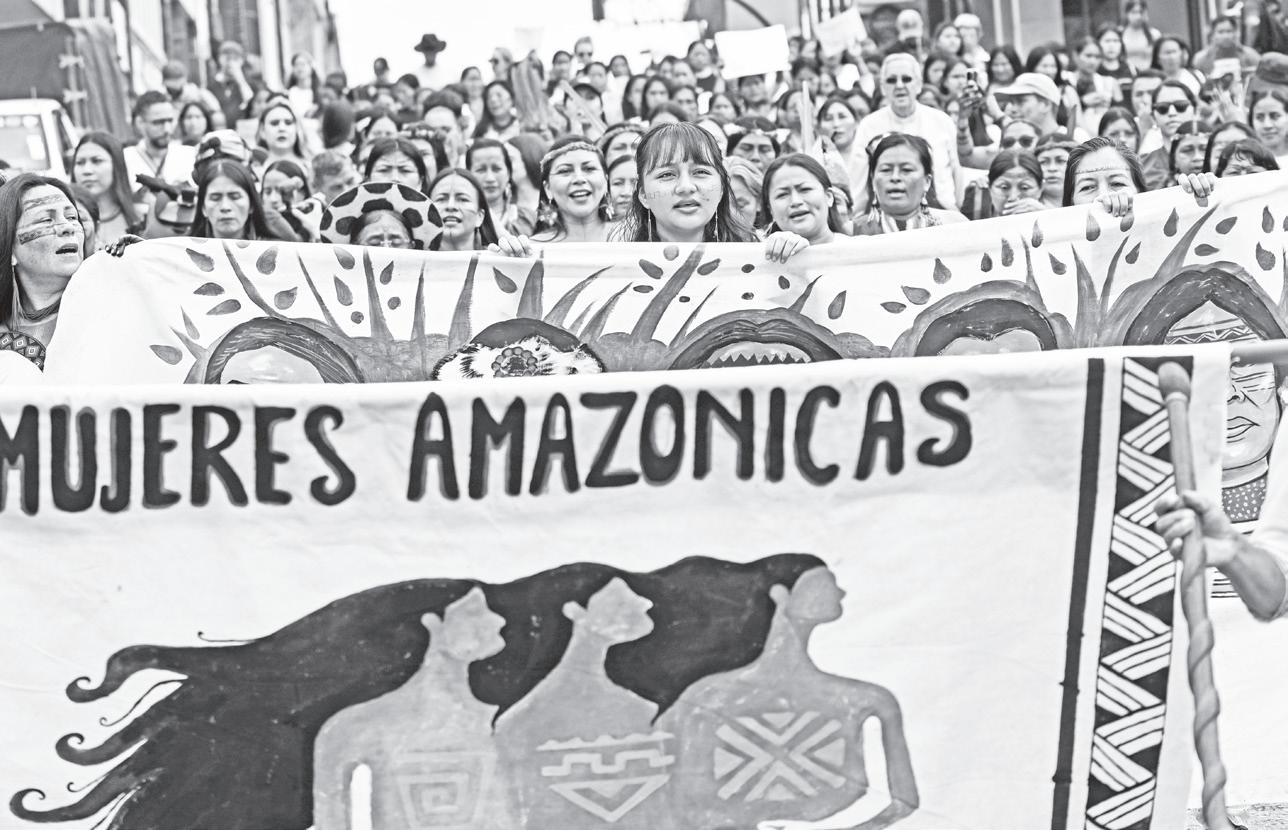
begun outlining strategies to strengthen resistance to potential new oil concessions in their regions.
A looming expansion
“WOMEN in the north have already lived through more than 50 years of oil exploitation,” Natalia Yepes, a legal adviser for Amazon Watch in Ecuador, told AP at the workshop. “The idea is that those experiences and lessons can be shared with


women from the center and south who are now facing these new threats.”
Last year, Ecuador’s government unveiled a sweeping “hydrocarbon road map” proposing a major expansion of the country’s oil and gas sector, worth about $47 billion and new licensing rounds for exploration blocks in the Amazon and other regions. Many of them are located in the provinces of Pastaza and Napo, where Indigenous communities live.
Officials say the plan is designed to modernize the industry, attract foreign investment and boost oil production.
But environmental groups and Indigenous leaders say the projects could open large areas of rainforest to drilling, pipelines and gas flaring. They also warn that many communities have not given the free, prior and informed consent required under Ecuador’s constitution and international human rights agreements.
Ecuador’s Ministry of Energy and Mines did not respond to a request for comment.
The debate over fossil fuel expansion in
the Amazon is also expected to feature at an international conference in Santa Marta, Colombia, in April. The meeting will bring together governments, Indigenous leaders and civil society groups to discuss pathways to transition away from oil, gas and coal following last year’s U.N. climate summit in Belem, Brazil.
Indigenous resistance FOR some women on the tour, the visit reinforced battles they are already fighting at home.
Dayuma Nango, 39, vice president of the Association of Waorani Women of Ecuador, said the contamination she saw strengthened her determination to keep oil companies out of Waorani territory.
“Our forest is our mother,” said Nango, who has received death threats for her advocacy. “That’s why we protect it.” The Waorani have already fought major oil developments in Ecuador’s Amazon. In 2019, Indigenous leaders won a landmark court ruling that blocked oil drilling
By Ignacio Olivera Doll & Ken Parks
WEDGED between South American heavyweights Argentina and Brazil, Paraguay has long been ignored by the international community. Small, landlocked and poor, it was often seen as just a fly-over country.
So it’s a little surprising—to both those in the capital and in the region—that the country of 6.1 million people is suddenly having a moment.
Lured by low taxes, entrepreneurs from across Latin America are plowing in money and taking up residence, with applications surging more than 60% in 2025. Sleek towers and luxury car dealerships now dot Asunción, a city where infrastructure is still struggling to catch up. And Wall Street investors are snapping up Paraguay’s bonds as its conservative president, Santiago Peña, aligns his government with the Trump administration.
Though roughly the size of California, Paraguay’s $47 billion economy is about 1% of the Golden State’s. But rapid growth and economic reforms in recent years helped the country win investment-grade credit status from Moody’s Ratings in 2024 and from S&P Global last year.
“We used to be like the ugliest girl at the ball,” said Selene Rojas, director of the upscale Shopping del Sol mall in the capital’s financial district. “Today, everyone’s asking us to dance.”
Peña, a 47-year-old economist turned politician, has traveled abroad more than 50 times since taking office in August 2023 to spread word that Paraguay is open for business. He’s openly backed Donald Trump’s push to strengthen Washington’s influence in the region. And this month, he was among the Latin American leaders the US president convened in
Miami to coordinate on security.
“Paraguay has been a very good friend of ours,” said Deputy Secretary of State Christopher Landau. The US diplomat, citing the country’s voting record at the United Nations and continued recognition of Taiwan, added: “They’re not dancing to China’s tune.”
In a region dependent on Chinese trade and investment, Paraguay is the only South American nation that still has diplomatic ties with Taiwan. As a result it can’t sell its beef and soy to China, while also missing out on the billions of dollars Beijing has poured into infrastructure. Paraguay recognized Taiwan in 1957 and has stood by its decision ever since.
Washington isn’t rushing in with investments of its own, and there are still no direct flights to the US from Asunción. But the week after the Miami summit, Paraguayan lawmakers approved a defense agreement allowing US troops into the country.
Peña calls his MAGA-like vision for Paraguay “the rebirth of a giant.” It harks back to a period of mid-19th-century prosperity, when it was a regional leader with technological marvels such as an ironworks and a railroad, until a bloody war with its neighbors left it in ruins.
Then last century, it was run as a dictatorship for 35 years— one of the longest in the region, whose fall in 1989 was followed by a tumultuous transition to democracy. But Paraguay’s embrace of sound fiscal and monetary policies after its 2003 financial crisis
is now paying off, with single-digit inflation and annual growth averaging around 4% over the past two decades.
“Paraguay will keep growing more than the other countries in South America,” Peña told Bloomberg Television in Washington last month. “Very soon it will have the highest per-capita income, above Uruguay and above Chile.”
Investors are also taking notice, pouring money into factories and real estate. Many of them are foreign, with migration authorities receiving nearly 50,000 residency applications last year. About half were Brazilians, though there were also large numbers of Argentines, Germans, Bolivians and Spaniards.
Felipe Bertolini, 24, from São Paulo, is one of them. He and his father, a port investor, spent three days in Asunción in late February applying to live in Paraguay. The tax regime at home, where the state takes about 40% of the revenue from his factoring and securitization company, led Bertolini to consider moving next door.
“Brazil is pushing people toward Paraguay because its taxes make entrepreneurship unviable,” he said. “Companies shut down in Brazil and come here.”
The Portuguese-speaking country is the largest player in Paraguay. Brazil’s share of foreign direct investment climbed to about 15% at the end of 2024 from less than 12% four years prior, according to central bank data.
Factories that enjoy tax breaks under Paraguay’s manufacturefor-export, or maquila, rules are a magnet for investors. Maquila exports by companies like Blue Design, headed by Argentine textile entrepreneur Jorge Bunchicoff, have more than quadrupled in the last decade to about $1.2 billion last year.
Bunchicoff ships about 1 million premium denim products, including jeans and jackets, annually from his state-of-the-art factory on the outskirts of Asunción to global markets including the US, UK and Japan. The company supplies high-end brands such as

Lacoste and Good American, while its own brand, Dala, can sell for more than $300.
“I could never have done this in Argentina” or Brazil because of high costs and toxic labor relations in both countries, said Bunchicoff, who has done business in Paraguay for 30 years. The secret to his success, he argued, is a compelling blend of low taxes, cheap energy and labor, and predictability.
New arrivals to Paraguay are also fueling consumption. About 120,000 people a week visit Shopping del Sol, up 30% over the past three years thanks in part to immigration, said Rojas, the mall director. “You can really see the arrival of foreigners,” she said. “Hotels are full. Restaurants are full. The car fleet has grown tremendously. Our airport can’t keep up.”
Still, Paraguay’s economic miracle faces headwinds that could curb growth and social mobility if left unattended. Only Venezuela outranks it as the most corrupt nation in South America, according to Transparency International’s latest index.
The Colorado Party retains a tight grip on power—it lost presidential elections only once since the end of Alfredo Stroessner’s rule—owing to entrenched client politics and a disorganized opposition. In 2024, the party used its congressional majorities to impeach a prominent opposition senator and pass a bill increasing government oversight of civil so -
ciety, which critics denounced as democratic backsliding. And this year the US removed one of Peña’s predecessors from a financial blacklist.
More than 60% of the workforce toils in the informal economy, according to government data. And while poverty has fallen sharply since the early 2000s, about a fifth of Paraguayans still live below the poverty line.
Nicolás Ozorio believes the economy’s strong performance isn’t reaching enough people. The 36-year-old builder wants the government to take a more active role in spreading the gains through social programs. “That progress doesn’t reach the entire population,” he said. “That’s where we are falling short. It cannot benefit just a few.”
Low taxes—a key selling point for investors—leave the government with little revenue for education, healthcare and infrastructure. Public works in Asunción are glaringly absent, with roads, sidewalks and drainage systems in disrepair even in wealthy neighborhoods.
For Dionisio Borda, the former finance minister widely credited with engineering Paraguay’s postdefault revival, the next government should consider raising more revenue. The state’s tax take as a share of the economy is too low to fund needed investment in people and infrastructure. “The regional average is 25%. Ours is 11.3% to -
day and we have to get to at least 15%,” he said.
The push to make Paraguay more fiscally responsible is nonetheless paying off.
Finance Minister Carlos Fernández said that during last month’s roadshow, investors were already so familiar with the country that they asked him to skip the opening presentation and go straight to questions. After pulling in about $500 million in 2024 as part of its first global bond denominated in the local guaraní currency, Paraguay issued a record $1 billion in guaraní debt last month.
It’s a big change from a decade ago, Fernández said, when Paraguay’s first $1 billion bond deal was in dollars. “That gives you a sense of how the credibility of the Paraguayan economy has evolved,” the finance minister added, describing the latest guaraní issuance as “a graduation diploma.” Paraguay’s dollar bonds have returned almost 10% in the last twelve months, compared to a 13% gain for Latin American sovereign debt, according to a Bloomberg index.
Despite that success, Fitch Ratings—the only major agency that still keeps Paraguay in speculative territory at BB+ with a positive outlook—isn’t in a rush to upgrade the country to investment grade. Fitch has pointed to the need for large projects to advance, including the multi-billion-dollar Paracel pulp mill. Paracel declined to comment. Paraguay addressed one of Fitch’s other concerns earlier this week by passing a pension reform for civil servants to help underpin growth and public finances. Even as the country becomes better known outside Latin America, business leaders say Paraguay still undersells itself.
“Having two ratings agencies grant investment grade puts Paraguay more in the shop window,” said Hugo Pastore, executive director of grain and oilseed export group Capeco. “We do a lot right, but we don’t market it enough. We have to tell the world more about how well we do things.” With assistance from Eric Martin/Bloomberg
By Joshua Goodman The Associated Press
MIAMI—The Cuban Communist Party has shown an astonishing resilience over six decades in power. Whether it’s the United States trade embargo to counter Fidel Castro’s 1959 revolution, or the widespread starvation of the “special period” that followed the breakup of its Cold War patron, the Soviet Union, both US hostilities and calamities of its own making have proven no match for the country’s leadership. But perhaps none of those crises pose as grave a threat as the one triggered by an all-but-declared naval siege by the Trump administration as it seeks to force regime change in the wake of its successful ousting of Cuba’s longtime ally Venezuelan President Nicolás Maduro.
Even as he fights a war with Iran,
President Donald Trump this week said he believes he’ll have “the honor of taking Cuba” soon. While it wasn’t clear exactly what he meant, the US is looking for President Miguel Díaz-Canel to leave power as part of ongoing talks with Havana that could avert some kind of US military intervention.
Without declaring a formal blockade, Trump and his administration have already crippled trade with the island.
In March, supplies of oil, food and other goods to the island collapsed, with no foreign-originating tankers arriving to Cuba, according to shipping data analyzed by Windward, a maritime intelligence firm. The volume of port calls, which includes tankers moving from one Cuban port to another, averaged around 50 per month in 2025 but fell to just 11 in March - all of them arriving from domestic ports. It was the lowest since 2017. Moreover, little relief is in sight: with no tankers and only three
container ships—originating in China, India and the Netherlands—listing Cuba as their intended harbor. On Thursday, The Associated Press reported that two vessels, one of them sanctioned by the US, could arrive in the coming days carrying Russian fuel.
The stranglehold is disrupting the lives of Cuba’s 11 million residents, who are enduring massive blackouts and a breakdown in medical care due to a lack of fuel to power ambulances and hospital generators. The country, one of the most heavily reliant in the world on oil to generate electricity, produces barely 40% of the oil needed to cover its energy needs.
Ian Ralby, head of I.R. Consilium, a US-based consultancy focused on maritime security, said the United States’ aggressiveness will not endear Trump to Cubans long eager for change.
“Every Cuban resident is suffering the acute inaccessibility to fuel and all the
knock-on consequences in terms of access to food, hospitals and free movement,” he said.
The sudden halt in trade has taken place without the White House reapplying restrictions on exports to Cuba that were last loosened during the Biden administration. Indeed, shipments of US-produced poultry, pork and other foodstuffs to Cuba—which account for the vast majority of US exports to the country—last year soared to $490 million, the most since 2009. Nonagricultural exports and humanitarian donations, much of it to Cuba’s emerging private sector, more than doubled.
But emboldened by the US capture of Maduro, Trump has gradually escalated his rhetoric on Cuba, first suggesting he would pursue “a friendly takeover” of the country and more recently telling conservative allies from Latin America that he would “take care” of Cuba once the war with Iran winds down.
While neither he nor the administration has articulated what exactly the pledge
means, the continued presence in the Caribbean of US warships used in the strike against Maduro has led companies and countries that do business with Cuba to self-police.
“Nobody wants to be on the radar of Trump’s Truth Social account,” said John
Kavulich, president of the New York-based US-Cuba Trade and Economic Council. In the run-up to the US military’s ousting of Maduro during a nighttime raid on Jan. 3, Trump declared that the US would block all
By Mogomotsi Magome & Alfonso Nqunjana The Associated Press
South Africa—The 22-year-old Lamkelo Mtyho had no known health issues when he joined his peers, wrapped in blankets and smeared in clay, for the most important ritual of his young life: the highly secretive process of traditional circumcision. His family in South Africa expected him to return triumphant, full of cultural knowledge and officially a man.
Three weeks later, they learned that he was dead.
He was one of at least 48 boys and young men who died during the latest round of initiation ceremonies in South Africa.
It is rare to hear the story of an initiate who died.
Because of participants’ silence around the ritual, families and authorities have struggled to understand and police a deeply traditional but often abused practice. At least a half-dozen former initiates would not speak to The Associated Press. Meanwhile, hundreds of illegal initiation schools attract people who can’t afford registered ones.
Police and government officials usually announce deaths only when a significant number occur. There are few court cases or autopsies. Traditional circumcisions can carry fatal risks including poorly trained practitioners and cutting tools that are unsanitary or used more than once. Dehydration and badly managed septic wounds are among the main causes of death, and the remote settings mean help is usually far away.
“Imagine this number: 476 young people died in a five-year period and yet they were well before going into initiation. These deaths are unacceptable and should never have happened,” former health minister Zwelini Mkhize told parliament last year.
But these are risks that hundreds of thousands of South Africans are ready to take.
The next season begins in June. They happen twice a year.
‘He started losing strength and collapsed’
MTYHO attended a registered initiation school outside Ngqeleni village in Eastern Cape province, with his parents’ blessing. Most schools take place in mud huts or shacks shared by dozens of young men, away from public glare.
His grandmother, Nozinzile, recounted what came next. A relative who worked as a guard at the school arrived with the news.
“They were walking to the river to go and bathe, and along the way he started losing strength and collapsed. That is what we were told,” she said. “It is said that it was an emergency situation, that the others ran to get water and tried to resuscitate him. When other people arrived there to help, it was too late.”
She spoke between long pauses. She sat outside the hut where Mtyho used to help with chores like carrying wood. She refused to blame anyone, and there was no attempt to verify the cause of death.
Initiation is not an easy thing, she said, but the thought of him dying had never crossed her mind. Mtyho was her eldest grandchild. He had planned to find a job in town so he could be “the man of the house.”
While announcing the latest initiation deaths in December, South Africa’s Traditional Affairs Minister Velenkosini Hlabisa said some of the unproven advice often given to participants is to avoid drinking water in order to heal faster.
Initiates are a source of community pride FOR families in South Africa, a successful initiation concludes with the participants’ return. They present themselves to the community with traditional hymns and the recital of their clan names. Villagers join in with songs, chanting and dance.
A boy or young man who completes an initiation enjoys the benefits of higher status for marriage and the right to participate in certain cultural activities, important considerations for many of South Africa’s ethnic groups.
They could have been medically circumcised at an early age, but cultural pressures mean that many prefer the traditional way.
“Initiation is a culture left behind to us by our elders. We grew up practicing it, as it teaches a young man to respect everyone, including those who are not initiates in society,” said traditional leader Morena Mpembe, who oversees a registered school in Phuthaditjhaba in Free State province.
The spread of illegal schools HIGH unemployment and economic inequality in South Africa mean that fees for governmentregulated initiation schools can be out of reach. That is where illegal schools come in.
Some boys slip away to illegal schools long before they are 16, the age that South African law now requires, in their eagerness to “become men.”
“It is very difficult for the government to monitor initiation schools which are not registered. They are not known until there is a tragedy of some sort,” said Mluleki Ngomane, an official with the Gauteng provincial body overseeing the schools there.
A 2022 visit by lawmakers to the Eastern Cape found more illegal schools than legal ones, 68 to 66, in the OR Tambo municipality alone.
Government and independent investigations over the years have found abuse of participants, violence between initiates, drug and alcohol abuse at illegal schools— even the kidnapping of boys for participation.
“We are seeing a rise in gangs because they want to grow their initiation schools, and we see that as a wrong way of practicing initiation,” said Motlalepule Mantsha, a leader at an initiation school in Phuthaditjhaba.
“This is damaging the initiation’s image.”
Dozens of arrests have occurred SOUTH African law since 2021 requires initiation schools to meet strict health and safety standards to be registered, and boys 16 and above are admitted with parental consent. Over 5,000 such schools exist.
Requirements for schools include being registered three months before each initiation season starts, having enough surgical tools so they are not used for more than one circumcision and training for traditional “surgeons” and “nurses” in hygiene, infection prevention, wound care and HIV awareness.
In January and February, at least 46 people were arrested for links to illegal schools. They included 16 traditional surgeons, 28 traditional nurses and two parents, who were accused of colluding with surgeons and nurses to falsify ages of younger boys.
Separately in February, after a rare conviction, a 26-year-old man was sentenced to two years in prison for unlawfully circumcising two boys, aged 17 and 18, last year.
An investigation by the Cultural, Religious and Linguistic Rights Commission, a public watchdog that reports to Parliament, said in 2017 that “due to the principles of sacredness and secrecy of this practice, also compounded by the inaccessibility of rural locations,” it is difficult to monitor the schools, and there was “clear confusion” about what role local authorities should have.
By the time a circumcision has complications, the report said, it is too late for medical treatment. It said other deaths are due to initiates’ preexisting illnesses, and suggested that boys and young men get medical exams first.
A mother of two initiates, Makhanya Vangile, said she regards initiations as an important part of the culture that should be safeguarded, but she is concerned about the reports of what happens at illegal schools.
“Here, we have guardsmen from our chief who go and check up on how the boys are being fed, their living conditions and safety,” she said. “They are able to stop things like boys bringing harmful stuff like alcohol, knives and guns instead of traditional sticks.”
Magome reported from Johannesburg.
By Megan Janetsky The Associated Press
UAJES DE AYALA, Mexico—Jesús
GDomínguez pushes through thick brush lining a rugged mountainside with an AK-47 slung over his shoulder and a grenade fastened to his leather belt.
He marches alongside a pack of camouflage-clad men patrolling the rural stretches of Mexico against one of the country’s most powerful drug cartels.
Armed with military-grade weapons smuggled from the US, the 50-man force is one of dozens of “autodefensa,” or “selfdefense,” groups that have emerged over the past decade in Mexico to fight increasingly sophisticated cartels in areas far out of the reach of security forces.
“The government doesn’t care about us, and it’s impossible for our arms to compete with (the cartel’s),” said Domínguez, 34, from a watch post overlooking the mountains of Guerrero state. “They come at you with a ton of force, so you need to respond with force… If you don’t, they’ll overwhelm you.”
The vigilantes in Guajes de Ayala join a volatile landscape of warring armed
groups—from cartels with tentacles across Latin America to local mafias—in regions like Guerrero ravaged by splintering cartels for decades. It’s a tangle Mexican President Claudia Sheinbaum will have to unravel under pressure from the Trump administration and fears of more violence following the killing of Mexico’s most powerful drug lord.
‘We don’t want to be slaves’ THE vigilante group was formed in 2020 when the cartel La Nueva Familia Michoacana tried to take control of seven communities buried deep in the mountains along a strategic throughway connecting cartels to the port city of Acapulco, where drugs and other illegal goods flow.
Residents said the cartel, designated a foreign terrorist organization last year by the Trump administration, started illegally logging in their lands and tried to force residents to join fights against rival gangs.
In the absence of Mexican military and police forces, locals armed themselves. Sporadic fire fights stretched on for nearly a year. Residents fled on foot, walking hours through far-off mountains with little more than the clothes on their backs. Communities
of 1,600 people dwindled to just 400.
After a pause in the conflict, the vigilantes rearmed in October when the Nueva Familia Michoacana began to again push into their territory, setting up fentanyl labs and monitoring them with drones, said the group’s leader, Javier Hernández.
Now, the men guard their towns from mountain watch posts and surveil 100 cartel gunmen camped out a few miles (kilometers) away using their own drones.
“We don’t want to be part of their ranks and we don’t want to leave our lands,” Hernández said. “We don’t want to be slaves to any cartel.”
‘They corner you’
CONFLICT is more entrenched in Guerrero than in most Mexican states, with a history of militancy dating back to guerrilla movements in the 1960s. The landscape has grown increasingly complex as cartels have fractured into rival factions creating a much different situation than in the past when one cartel held monolithic control over a region. According to a 2025 DEA report, five cartels operate here. So do various local gangs and vigilante groups, many of which are allied with the larger cartels.
He started out in office pushing for a tougher line. But over time he’s come to realize how difficult that would be for Germany, and last month he took his country’s biggest-ever trade delegation to Beijing where he was treated to a lush dinner by President Xi Jinping.
“We should strengthen our relations with China and I, for one, am determined to do so,” the chancellor said at the end of the visit. That diplomatic reversal was met with some confusion in both Berlin and Brussels.
One German official said that US policy under Trump has become so erratic that the chancellor can no longer follow the frameworks established for his country’s foreign policy, as he sought to justify the abrupt shift to Merz’s conservative colleagues.
In the Belgian capital, where some policymakers had pinned their hopes on the chancellor’s initially hawkish stance, EU officials are worried that efforts to reduce Europe’s dependencies on critical minerals or to prevent Chinese firms having access to sensitive telecoms infrastructure will unravel. Germany’s new approach will also
Venezuelan oil shipments to Cuba and even seized a few tankers to enforce what it called a “quarantine,” borrowing a term used by President John F. Kennedy during the 1962 Cuban missile crisis. Later in the month, Trump signed an executive order threatening tariffs on any country that supplies oil to Cuba. The warning alarmed officials in Mexico, who have long opposed US policy toward Cuba and where state-run oil company Pemex emerged as a valuable lifeline last year as Venezuelan oil exports declined.
Cuba has upped its rhetoric against what it calls a “fuel blockade” by the US.
But the Trump administration has disputed that characterization, no doubt aware that according to international law any naval operation seen as punishing civilians is considered an illegal act of aggression outside wartime.
“Cuba is a free, independent and sovereign state—nobody dictates what we do,” Díaz-Canel said in a social media post in January. “Cuba does not attack; we are the victims of US attacks for 66 years and we will prepare ourselves to defend the homeland with our last drop of blood.” Amid mounting criticism that US actions are starving Cuba, Secretary of State Marco Rubio has started to walk back some of
make it tougher to find common ground on the use of trade defense tools, like the AntiCoercion Instrument, the next time Europe confronts a dispute with Beijing, according to people familiar with the deliberations.
Leaders themselves are aware that visiting Beijing one-by-one plays into China’s longstanding strategy of picking off individual countries to maximize leverage, people familiar with the discussions say. But they see few alternatives to directly engaging with Beijing.
For its part, China appears willing to throw breadcrumbs to EU members as part of public signaling, but there’s still been a dearth of tangible benefits, according to one European diplomat in Beijing. The bloc’s ambassador there has been “frozen out” of meetings with ministries for some time, the South China Morning Post reported last month. Chinese Foreign Minister Wang Yi this month welcomed the improved ties with Europe but urged the EU to do more to abandon “the attic of protectionism” and engage with his country’s vast market.
“The urgency to derisk from China remains, and even increases by the day,” said Kratz from Rhodium. “Europe has two problems. It needs to deal with both.” With assistance from Colum Murphy, Jorge Valero and Yujing Liu / Bloomberg
the administration’s threats. In January, the State Department sent $3 million in food kits, water purification tablets and other humanitarian assistance items to the island. Then last month, the White House said it would allow US companies to send fuel—including Venezuelan oil—to private businesses in Cuba.
The goal, said Rubio, is to encourage the development of the nation’s small private sector.
“The reason why those industries have not flourished in Cuba is because the regime has not allowed them to flourish,” Rubio said when announcing the private sales. But it’s unclear if any companies have started fuel shipments and critics say the strategy is unrealistic as most Cuban companies lack capital and the Cuban government has a monopoly on gasoline distribution.
John Felder, owner of Premier Automotive Export, a Maryland-based business that has been selling electric cars and scooters to Cuba since 2012, said most Cubans, even in their current anguish, are fearful of what lies ahead. “US policies have created the most resilient people in the world and yet all they want to do is buy things in Miami like you and me,” said Felder, who just returned from a four-day business trip to Havana and says he’s never seen conditions worse. “They want change but they don’t want to be controlled by the United States.”
Bashar Assad, the Lebanese militant group Hezbollah, Yemen’s Houthi rebels and other armed groups in the region.
intelligence, internal security and (the) army will have transformative consequences,” Ozcelik said.
“The fixation on the terminology of ‘regime collapse’ is obscuring the fact that the regime is already changing” due to the strikes against the country and the killing of high-level leaders. But the full impact of the war on the country could take time to emerge, Ozcelik explained.
“You have a kaleidoscope of armed groups,” said Mónica Serrano, a professor at the Colegio de Mexico studying violence in Guerrero. “It’s one of the most vexing challenges facing the country and is at the root of the violence.”
Self-defense forces took off in Michoacan and Guerrero around 2013. Like the group in Guajes de Ayala, they were formed as a desperate attempt to avoid being caught in the crossfire of warring cartels.
But in places where criminal groups are more present than law enforcement, nearly every vigilante movement that has emerged in recent history has either been coopted by rival cartels or massacred. Mexico’s government has been split about whether it should talk to vigilantes or treat them as criminals.
In some cases, groups became cartel paramilitary forces themselves, flush with money and terrorizing the communities they claimed to protect. In others, cartels armed local citizens to help fight off rival gangs.
“They corner you and you can’t do anything,” Domínguez said. “That’s how what’s been created—which began as autonomy— is corrupted. People end up joining criminal groups just to survive.”
“We need to be prepared for change that may take years, not weeks or months.”
The Revolutionary Guard FOR many analysts, true power now rests with Iran’s feared paramilitary Islamic Revolutionary Guard.
“The Revolutionary Guard is the state now,” said Ali Vaez, Iran project director at the International Crisis Group. Before the war, the country’s civilian leadership was “subservient entirely” to the supreme leader, he explained, while the Guard was the secondmost powerful force in the country.
But now, with the elder Khamenei gone and his son not enjoying the same authority as his father, “it is really the Revolutionary Guards who are running the country.”
The Guard rose out of Iran’s 1979 Islamic Revolution as a force meant to protect the country’s Shiite cleric-overseen government. It later became enshrined in its constitution and operated parallel to Iran’s regular armed forces.
The Guard’s expeditionary Quds Force was key in creating what Iran describes as its “Axis of Resistance” against Israel and the United States. It backed Syria’s former President
An independent military EARLY on in the war, Iranian Foreign Minister Abbas Araghchi suggested the country’s military units were acting independently from central government control.
“Our...military units are now in fact independent and somehow isolated and they are acting based on instructions—you know, general instructions—given to them in advance,” Araghchi had said on Al Jazeera on March 1. Pressed about Tehran’s attacks on other Gulf nations—such as Oman, which had acted as an intermediary for Iran in recent nuclear talks with the US—he said: “What happened in Oman was not our choice. We have already told our...army, armed forces to be careful about the targets that they choose.”
“Multiple layers of leadership” THE possibility of an Israeli or a US attack on Iran had long been in the cards. It was something the Islamic Republic had factored into its planning, setting up multiple contingency plans, Vaez said.
“I think the mistake in the US and in Israel is that they ended up believing their own rhetoric that Iran is akin to a terrorist organization, that decapitating the regime or removing one or two layers of political elite would result in paralysis and collapse,”Vaez said.“Whereas this is a state,... it has multiple layers of leadership.”
Even if all top generals are eliminated, he said, others lower down the ranks can pick up where their superiors left off. “The expectation that this regime will...implode by removing a few dozen senior leaders, I think is nothing but an illusion.”

By John Eiron R. Francisco & Bless Aubrey Ogerio
SCIENCE officials urged stronger collaboration between government and industry to boost national development, warning that siloed operations may slow progress despite the Philippines’ pool of skilled personnel and active science and technology community.
Speaking at the 2026 Annual Scientific Conference and 93rd General Membership Assembly of the at the Department of Science and Technology-National Research Council of the Philippines (DOST-NRCP) Philippine International Convention Center on March 13, former Science secretary Fortunato T. de la Peña said governance capacity is in place, but alignment with strategic goals remains lacking.
“Even if we have financial resources and dedicated people in government, the science and technology community, and industry, if we work in silos, the energy from collective effort is lost,” de la Peña said in his keynote speech.
Weak coordination in public service delivery
HE recalled raising concerns about weak coordination in public service delivery, particularly in sectors, such as justice and labor, where processes tend to be slow and fragmented.
He noted that as early as 2016, he had proposed the use of artificial intelligence to help streamline procedures in government agencies, pointing to court cases that can take more than a decade to resolve.
“I think that something can be done with the use of technology,” he added.
The former Science secretary further observed that although national agencies have established systems, the way responsibilities
are divided often results in units operating independently.
While efforts toward interdisciplinary work are underway, he said there is still room to strengthen integration across sectors.
He pointed to the “water-energy-food nexus” as a prime example, explaining how the use of water in one sector affects supply in the others, with impacts on energy production and food security.
Similar gaps exist in health and nutrition, where groups focused on disease prevention operate separately from those developing treatments.
Even in infrastructure, agencies handling housing, public works, and transportation sometimes miss opportunities for coordinated planning.
Major challenges
ECHOING this, DOST-NRCP President Dr. Ma. Louise Antoinette De Las Peñas, said that major challenges—such as poverty, inequality, environmental degradation, public health crises, digital threats, and food security—are deeply interconnected.
She said these issues require coordinated efforts across fields, as no single profession can solve them alone.
“Transdisciplinary is not simply about collaboration. It is about transformation in how we think, how we frame problems, how we design solutions, and how we measure impact,” De Las Peñas said. De Las Peñas also called for
responsible research, saying that scientific work should remain anchored on public welfare and ethical standards.
“Research that is not grounded in ethics and a genuine commitment to the common good is not progress, it is failure,” she said.
The DOST-NRCP head added that the council would continue guiding the direction of research in the country, with efforts focused on ensuring that scientific inquiry contributes to improving conditions for Filipinos.
Moving beyond limits
MEANWHILE, Science Secretary Renato U. Solidum Jr. said that achieving meaningful progress requires moving beyond the limits of traditional and region-based disciplines, stressing that innovation cannot thrive if efforts remain confined within narrow boundaries.
“Transdisciplinary research encourages us to cross borders between disciplines, between institutions, and even between scientific expertise and lived experience in communities,” Solidum said.
According to Solidum, this approach helps combine perspectives, deepen understanding, and generate practical, grounded solutions.
“We must also remind ourselves of a larger purpose. Yes, development is a human right,” he noted. “Every nation, every community deserves the opportunity to grow and thrive. But development must never come at the cost of our rights, our dignity, and our integrity.”
The science chief also emphasized that the value of research lies not only in knowledge generation but in how it is applied, noting that outputs must lead to innovation and real-world use.
“It must move forward—toward application, innovation, and commercialization,” he added.
DE LA PEÑA also highlighted several recommendations from a set of evidence-based insights aimed at uniting knowledge, innovation, and action.

He said the first recommendation is to establish validation and impact centers to support technologies in the pre-commercialization phase and to implement bi-local policies that help reach defined value objectives.
The second focuses on data governance and access. He noted the need to strengthen data localization policies while improving data availability, democratization, and interoperable data management systems to support evidence-based policymaking, interagency coordination, innovation, and wider stakeholder participation.
The third recommendation centers on interoperable digital systems to reduce policy fragmentation and ensure greater coherence across government agencies and programs.
De la Peña further cited crosscutting observations from the advisory group, noting the importance of integrating technological solutions with social sciences, political economy, and cultural context.
He added that current success metrics are overly focused on inputs and outputs, such as spending and economic obligations, rather
than societal outcomes and equity impact.
“Poverty, inequality, and governance remain conditional constraints for science and technology innovations and must be explicitly addressed,” he said, emphasizing that long-term planning must also take political cycles, budget limitations, and institutional continuity into account.
Research requested by lawmakers, LGUs FOR his part, NRCP Executive Director Bernardo Sepeda said policy research tends to have stronger outcomes when requested by lawmakers and local government units (LGUs), rather than when studies are produced first and later presented to policymakers.
In a press briefing, Sepeda, said the council’s experience in the past five years showed that studies initiated by LGUs often lead to actionable outcomes.
“I’m not referring only to Congress or the Senate. We support them, but it’s more effective if the request comes from the LGUs,” he noted.
Sepeda cited several examples
of LGU-requested research that were translated into local policies.
In Iligan City, a study on the conservation of Mt. Agad-Agad, commissioned by the city mayor, led to the adoption of two local ordinances.
“By involving the community, they were able to conduct research specific to their area,” he said. From Isabela, the research the mayor requested focused on tourism markets. The study enabled the LGU to secure funding from the Department of Public Works and Highways for road improvements, which subsequently facilitated local tourism development.
”Research cannot be conducted alone. We always help each other. There is a partnership in research,” Sepeda said.
New members, researchers recognized THE assembly welcomed 178 new regular members and 252 associate members into the council. About 13 researchers were likewise recognized for their contributions to research excellence and national development.
AS space becomes more congested, understanding what is happening in orbit and sharing that knowledge is critical to avoiding collisions and protecting satellites and their space-based services that people rely on every day.
The Philippine Space Agency (PhilSA), in partnership with the United Nations Office for Outer Space Affairs (UNOOSA) and Thailand’s Geo-Informatics and Space Technology Development Agency (GISTDA), convened the Asean Space Situational Awareness (SSA) and Space Traffic Management (STM) Seminar-Workshop on March 12 and 13 in Manila.
“For Asean—a region whose economies, disaster response systems, aviation, shipping, and digital connectivity are deeply dependent on space-based services—the stakes are direct and concrete,” said Asean Secretary-General Dr. Kao Kim Hourn.
“What protects satellites, investments, and ultimately the services that space provides to our economies and our societies, is when that data is shared in what we call space traffic coordination,” UNOOSA Director Aarti
Holla-Maini.
Space traffic coordination, he added, allows data to be translated into action. When operators communicate with each other, they can maneuver safely out of each other’s way.
The two-day workshop brought together representatives from Asean member states, policymakers, technical experts, and commercial operators to advance a coordinated regional approach to space safety through data, transparency, and cooperation.
Discussions focused on: Space Situational Awareness: improving observation, tracking, and predicting trajectories of objects in orbit
Space Traffic Management: translating data into action through communication and operational coordination
Understanding space weather impacts on satellites and critical infrastructure
Strengthening policy frameworks to support SSA and coordination efforts
Building Asean regional capacity through collaboration, trust, and data-sharing Alongside the seminar-work-
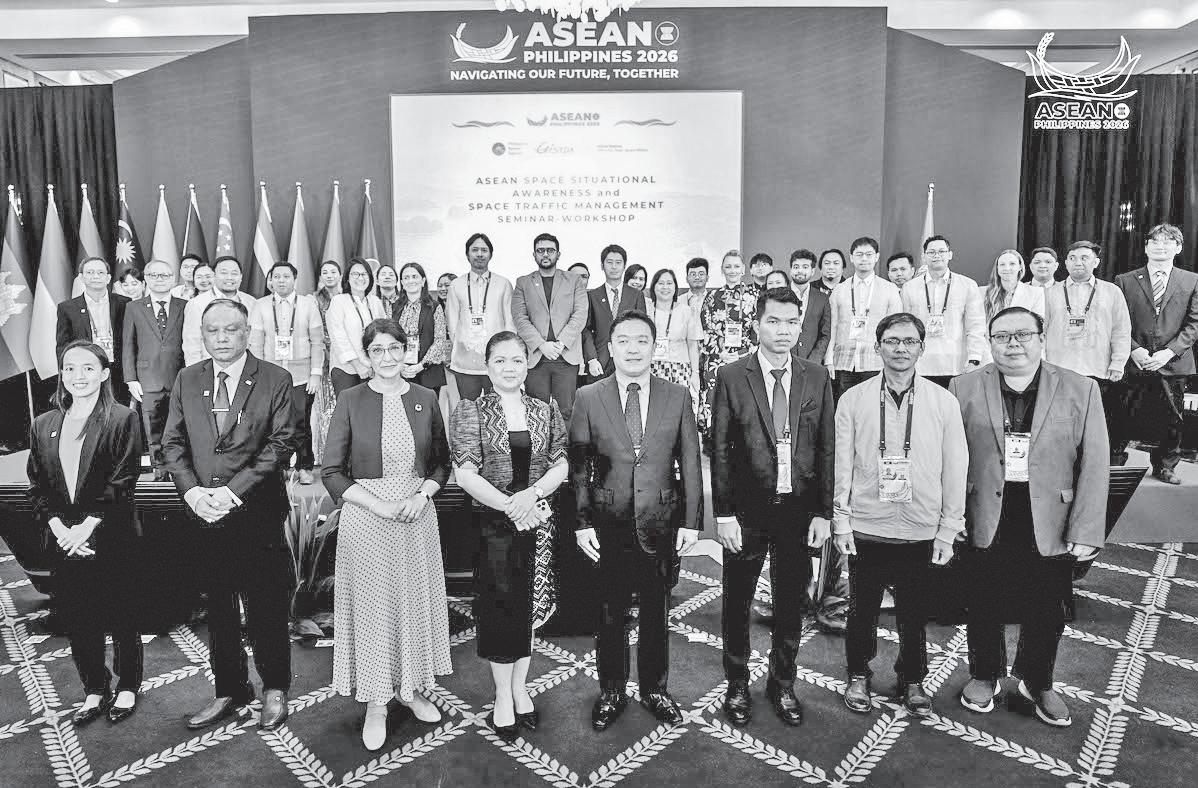
shop, PhilSA also mounted an exhibit showcasing the Philippine government’s ongoing efforts to monitor rocket launches and the debris that fall within Philippine territory.
“As global launch rates continue to accelerate, debris shed during staging events and the uncontrolled reentry of large rocket upper stages pose growing hazards—
not only to other spacecraft, but to civil aviation and to populations on the ground,” said PhilSA Deputy Director General Dr. Marc Caesar R. Talampas, who delivered the Philippine’s position during the opening session.
“The Philippines invites our Asean partners to consider broadening the scope of our regional SSA/STM framework to include
the complete arc of a space object’s life—from launch through reentry—and to explore how our region can develop coordinated protocols and capabilities that protect both our space assets and our people on the ground,” Talampas said.
Following the seminar-workshop, PhilSA and UNOOSA signed a memorandum of understanding to enhance collaboration across space law, the use of space-based information for disaster risk reduction and emergency response, capacity-building, public engagement, and more. Initiatives include a public lecture on space law, and the global release of PhilSA’s “Si Tala at ang Kanyang Lakbay Kalawakan!”, a children’s activity book on space law and international cooperation, which will now be adapted into all six official UN languages—Arabic, Chinese, English, French, Russian, and Spanish.
Strengthening Asean cooperation in space
THE Asean seminar-workshop forms part of the Philippines’ continuing efforts to advance regional dialogue and collaboration in space governance. “As the Philippines chairs the
Asean this year, we are also proposing an Asean Declaration on Space Cooperation. More than a formal statement, this declaration reflects a shared regional vision to strengthen collaboration in space science, technology, and innovation, including cooperation in SSA and STM,” said PhilSA Ad Interim Director General Dr. Gay Jane P. Perez.
“Through this, we hope to further advance ASEAN’s collective capacity to harness space technologies in support of disaster resilience, environmental sustainability, economic growth, and inclusive development across our region,” Perez added. Asean Secretary-General Dr. Kao Kim Hourn shares the same vision: “As Asean’s space capabilities mature, the ambition must be matched with stewardship. This is what makes the anticipated Asean Leaders’ Declaration on Space Cooperation the most consequential commitment in this domain this year. It will formalize our collective intent to pursue responsible, secure, and forward-looking space governance. I commend the Philippines, as Asean Chair, for driving this initiative forward.”
A8 Sunday, March 22, 2026

Editor: Lyn Resurreccion • www.businessmirror.com.ph
CHURCH leaders urged the faithful to acknowledge personal and social sins and seek conversion during a Lenten penitential rite known as “Confessio Peccati,” which drew nearly 1,000 participants.
The event, organized by the Conference of Major Superiors in the Philippines on March 13, highlighted repentance as a step toward renewing commitment to the poor, the environment and other vulnerable sectors.
Bishop Roberto Gaa of Novaliches said admitting shortcomings is essential to genuine transformation and building social structures that protect those on the margins.
“One thing is admitting that we have fallen short, but together with that admission is our desire to change,” Gaa said in an interview with Radyo Veritas.
The bishop pointed out the need
to safeguard systems that uphold the dignity of workers, the poor and other vulnerable groups.
“We must safeguard the social structures that protect the poor, the laborers, and the vulnerable sectors,” the bishop said.
Franciscan Fr. Angel Cortez, CMSP co-executive secretary, said acknowledging sin is necessary to receive God’s mercy.
“We cannot receive God’s forgiveness if we do not acknowledge and own the sins we have committed as Catholics and Christians,” Cortez said.
He added that praying the Way of the Cross reminds believers that
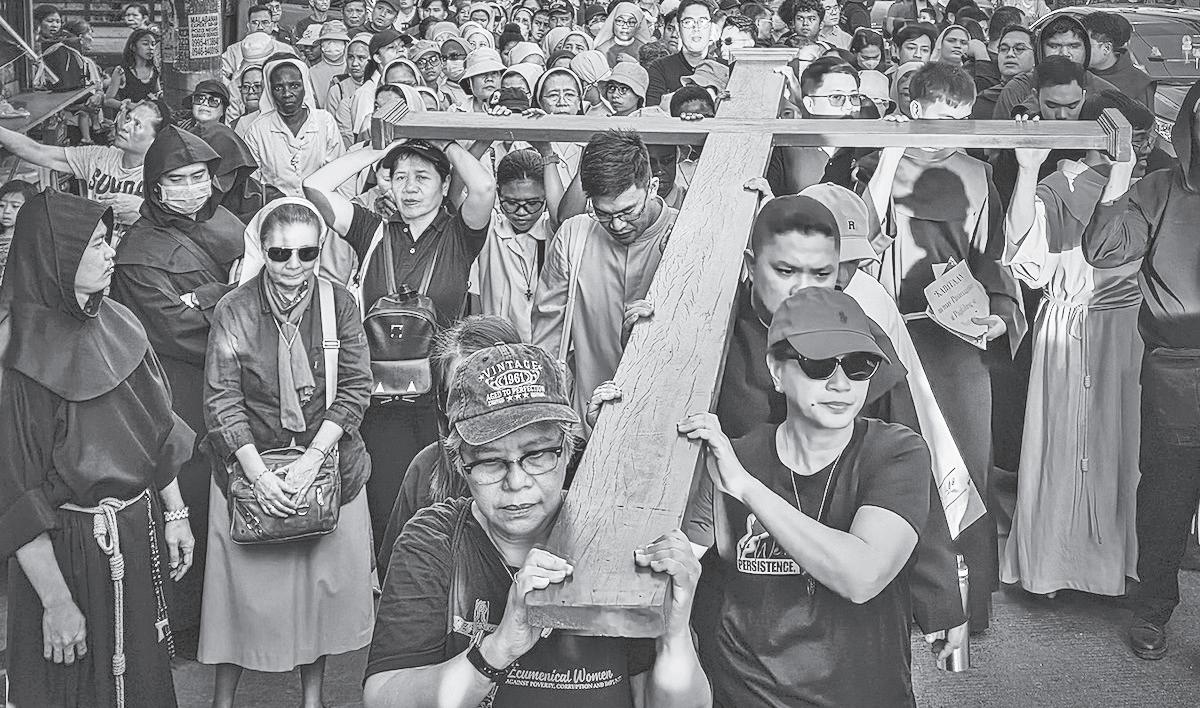
PARTICIPANTS carry a wooden cross during the Lenten
Peccati” in Quezon City on March 13.
hope persists despite the challenges facing society.
“In all the issues and crises we are facing, victory will come through the love and mercy of the Lord Jesus Christ,” Cortez said.
The penitential gathering, themed “Daan ng Krus, Lakbay ng Pag-asa at Pananampalataya [Way of the Cross, Walk for Hope and Faith],” began at San Jose, Ang Tagapagtanggol Parish and concluded
at the Cathedral Shrine and Parish of the Good Shepherd.
Participants prayed the Way of the Cross while reflecting on their shortcomings toward God, their neighbors and creation.
The activity was led by Franciscan priest Lino Gregorio Redoblado, CMSP co-chairperson, while Gaa presided over the closing rites of Confessio Peccati 2026. Norman Dequia/Radio Veritas via CBCP News
‘We must not live by lies’

ACATHOLIC bishop on Wednesday urged Philippine lawmakers to uphold honesty and integrity, warning that even small lies can erode public trust.
Speaking during Mass at the House of Representatives, Bishop Jose Colin Bagaforo of Kidapawan said legislators should reflect God’s faithfulness and truth in their daily work.
“Let us live in the truth because it’s a sin to tell a lie,” Bagaforo said in his homily.
He warned that repeated falsehoods fuel skepticism toward leaders, weaken families, and contribute to a broader crisis of credibility.
The bishop cited the fable of “The Boy Who Cried Wolf” to illustrate how habitual
lying prevents others from believing the truth when it matters most.
Bagaforo urged lawmakers to model honesty and accountability, saying public service demands words and actions that can be trusted without doubt.
“Even if telling the truth is difficult, even if it is embarrassing, even if it costs us something—it is always better than a lie,” Bagaforo said.
He reminded officials that, as children of God, they are called to live in truth and maintain integrity in both private and public life, adding that small lies can escalate into a “web” of deception that undermines character and public confidence. CBCP News
APHILIPPINE bishop has called on Catholic dioceses nationwide to step up support for overseas Filipino workers affected by the ongoing conflict in the Middle East, urging parishes to pray and provide pastoral care.
Bishop Socrates Mesiona, chairman of the Catholic Bishops’ Conference of the Philippines Episcopal Commission on Migrants and Itinerant Peoples, urged dioceses to monitor families of overseas workers and ensure they receive pastoral care and practical assistance.
Such support may include spiritual accompaniment, access to sacraments, counseling and coordination with Church charities and local government units, he said.
He also called on dioceses and parishes to organize special prayers for peace in the Middle East, including intentions during Sunday Masses and dedicated prayer gatherings.
“We firmly believe in the transformative power of prayer, as modeled by the Church’s unwavering intercession for peace amid violence,” Mesiona said in a letter to dioceses on Wednesday.
He emphasized the Church’s role in promoting peace and solidarity, especially during conflicts that affect vulnerable communities across borders.
“In these efforts, may we bishops lead by example, embodying the Church’s solicitude as a mother to all her children, especially the displaced and afflicted,” he said. Mesiona, apostolic vicar of Puerto Princesa, said the prolonged violence continues to inflict suffering on civilians, including more than two million Filipinos in the Middle East region. He said many overseas workers face uncertainty, displacement and separation from their families as tensions persist across several areas.
“It is the ordinary people—civilians, families, and vulnerable workers—who bear the heaviest burden in such tragedies,” Mesiona said.
He added that the Department of Migrant Workers has been monitoring the situation and providing assistance in coordination with other government agencies. Mesiona commended the agency’s efforts and welcomed its request for closer collaboration with the Church in addressing both spiritual and emotional needs of workers and families. CBCP News
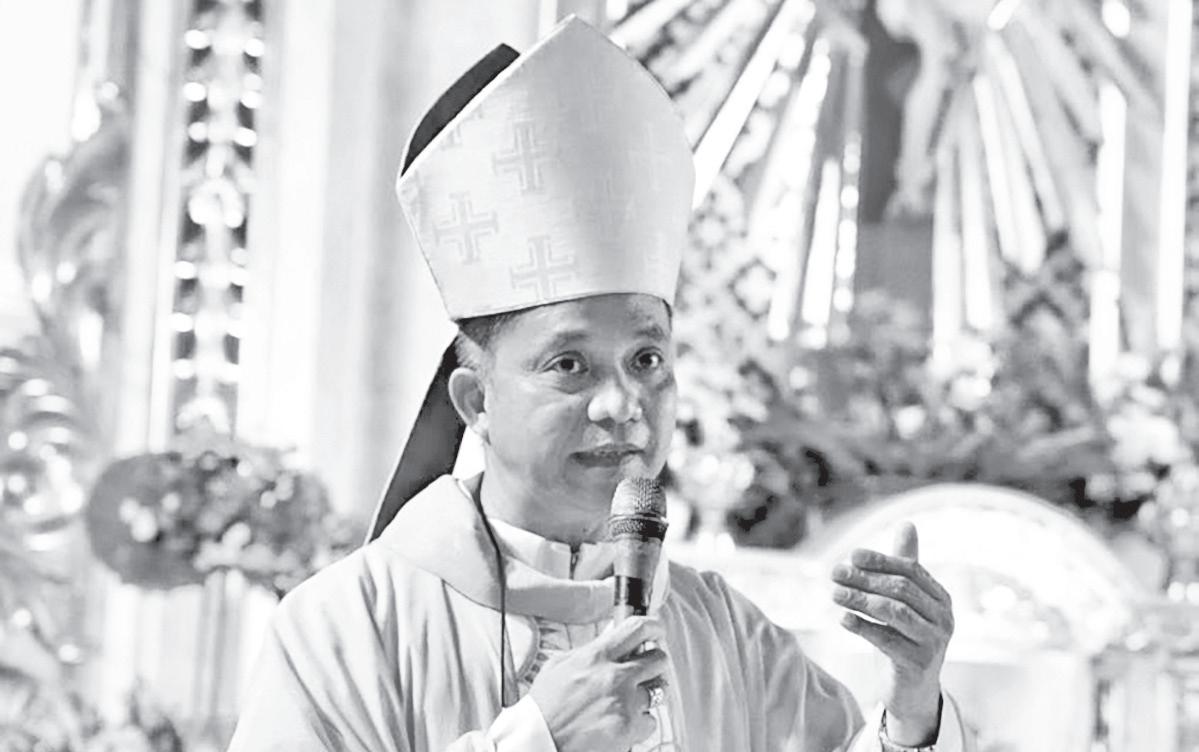
ARDINAL Jose Advincula of Manila
Csaid on Monday that a church in Antipolo that was declared as a National Shrine of St. Therese of the Child Jesus should become a refuge of hope for pilgrims seeking comfort and renewal.
The declaration elevates the parish dedicated to the French Carmelite nun, whose spiritually continues to inspire Catholics worldwide.
Advincula said the recognition is both an honor and responsibility, calling the shrine a spiritual home welcoming families, pilgrims and those seeking intercession and guidance.
“This is not only an honor and a title, but also a responsibility and a commitment,” he said in his homily.
The cardinal said the shrine should embody God’s promise of joy and peace, becoming a place where weary people may
find rest and spiritual consolation.
“This sanctuary, now elevated as a national shrine, is meant to be such a place: a place of joy where the weary, troubled or burdened by life’s trials can come to rest in Him who alone consoles,” Advincula said.
“A place where families come with gratitude and where the suffering comes with hope,” he added. “A place where pilgrims from every walk of life can experience the tender delight of God who rejoices in His people.”
Drawing from the prophet Isaiah, he said God desires communities where His presence brings light, comfort and renewed hope to those burdened by suffering.
Advincula also highlighted the spirituality of St. Therese, known as the “little way,” which emphasizes humble trust in God’s love rather than personal achievement.
At a time of conflict, Pope Leo sends bridge-builder to the United States
ARCHBISHOP Gabriele Caccia, the recently appointed apostolic nuncio to the United States, takes up his new role at a time of heightened tension between the Vatican and the White House over issues including immigration to the US and war in the Middle East.
Former collaborators say Caccia’s personal qualities and wide diplomatic experience—including in Lebanon and the Philippines—make him well suited for this crucial assignment.
The 68-year-old diplomat recently served as the permanent observer of the Holy See Mission to the United Nations in New York when Pope Francis appointed him there in 2019.
His new job is important as a liaison between the Vatican and the US, where recent federal policies have faced growing
resistance from Church leaders.
Pope Leo’s new man on a high-stakes mission A VETERAN diplomat, Caccia will serve as Pope Leo XIV’s chief representative to the Trump administration.
Like his predecessor, Cardinal Christophe Pierre, he assumes office amid ongoing tension between the administration and the Church, especially on immigration enforcement and foreign policy.
In a public statement in November 2025, US bishops strongly opposed the administration’s treatment of migrants during mass deportations.
Pope Leo expressed support for the statement and denounced the treatment of migrants as “extremely disrespectful, and with instances of violence.”
He said the saint taught believers to approach God with “empty hands,” trusting divine mercy rather than relying solely on
human effort or accomplishments.
According to the cardinal, such trust invites believers into a deeper awareness

The US bishops have also voiced concern over recent foreign policy moves, including interventions in the Middle East. In January of this year, three US cardinals—Blase Cupich, Joseph Tobin, and Robert McElroy—jointly condemned the administration’s foreign policy in a public statement.
In recent addresses, Pope Leo has also called for a ceasefire in the Middle East, deploring on March 15 a “widespread climate of hatred and fear.”
Monsignor Roger Landry, who served at the Holy See Mission from 2015 to 2022 and now heads the Pontifical Mission Societies, expressed confidence in the nuncio’s ability to communicate the Holy See’s concerns effectively to the US government while supporting the bishops.
“He will represent Pope Leo very well to the US government and the US Church, be a great listener and effective relayer of what’s happening in the United States to Pope Leo, and be a steady source of counsel and support to US bishops,” he told EWTN News.
Dálida Morales, who interned at the mission and now works at the Ministry of Industry and Commerce in the Dominican Republic, conveyed hope for the archbishop’s potential to build international dialogue.
“He is genuinely a bridge-builder for peace. At a time when dialogue, moral clarity, and principled leadership are urgently needed in the United States, his appointment there is both timely and hopeful,” she said.
A diplomat forged in complex geopolitics
HAVING worked in the diplomatic service of the Holy See since 1991, Caccia previously served in challenging posts before his appointment to the UN. He served as apostolic nuncio to Lebanon and the Philippines, two countries with sensitive political climates.
His service in Lebanon occurred during the outbreak of the Syrian Civil War in 2011. There, he helped coordinate the Church’s humanitarian response to support over 1.5
that God delights in His people despite human weakness and limitations.
He expressed hope the newly declared national shrine will welcome pilgrims from across the country seeking prayer, reconciliation and renewed faith.
“Through the intercession of Our Lady and of St. Therese of the Child Jesus, may all who go to this sacred place experience the Lord’s delight in us,” Advincula said.
“Let this place be where families are restored, friendships deepened, and the young and old alike are renewed in hope,” he added. “May the sound of weeping be met with the voice of consolation.”
The Catholic Bishops’ Conference of the Philippines approved on July 6, 2025, a petition from the Diocese of Antipolo to elevate the Diocesan Shrine and Parish of St. Therese of the Child Jesus to a national shrine.
million Syrian refugees in Lebanon.
His service also included helping maintain peace in a country constitutionally divided among Maronite Christians, Muslims, and Druze.
He served in the Philippines at the height of President Rodrigo Duterte’s highly aggressive and controversial anti-narcotics campaign, which resulted in thousands of extrajudicial killings.
As the nuncio, he helped to support the bishops, who were vocal critics against the government, while maintaining the country’s diplomatic relations with the Holy See.
During his time at the UN, he promoted the Vatican’s diplomatic stance. Father Mark Knestout, who served with Caccia as a former attaché for the Holy See Mission, noted the importance of his diplomatic experience in his new role.
“He was in Lebanon for eight years, which is a complex situation because you have multiple denominations of Catholics there, alongside the situation with Muslims,” he told
Among those present during the Mass were 10 bishops, including CBCP President Archbishop Gilbert Garcera of Lipa. Bishop Ruperto Santos of Antipolo said the church’s new status is not only a recognition but an affirmation of a vibrant faith and devotion that has flourished in the hearts of the faithful who come seeking the saint’s intercession.
“It is therefore fitting that this shrine, dedicated to her, becomes a place where pilgrims from all over our nation may encounter the tenderness of God’s love and be renewed in faith,” Santos said.
“May this newly declared National Shrine of St. Thérèse of the Child Jesus continue to be a home of prayer, a refuge of hope, and a wellspring of grace for pilgrims from every part of our country,” he said. CBCP News
EWTN News. “So I see him being personable and striving to get to know everyone in the United States as best he can.”
An inclusive leader and sports lover A FORMER staff of Caccia also shared with EWTN News some personal anecdotes from their time serving with him in New York. Vitória Volpato, a former intern at the mission who serves at the Prefecture of São Paulo in Brazil, noted with gratitude the archbishop’s insights on leadership.
“He said something that stayed with me: ‘I do not choose the people I work with, but I work with the people I have.’ That made me reflect on what a good leader must be, something the archbishop clearly is,” she said. Ashley Campbell, who interned at the mission and now works at the Religious Freedom Institute, reflected on his love of sports.
Ishmael Adibuah/EWTN News via CBCP News

Asean Champions of Biodiversity Media Category 2014
Editor: Lyn Resurreccion

By Jonathan L. Mayuga
MEET Philippine eagle chick 32
“Bayani” (Hero). He was bred in captivity at the National Bird Breeding Sanctuary (NBBS) in Barangay Eden, Davao City.
The Philippine Eagle Foundation’s (PEF) said the introduction of Bayani to the public coincided with the launching of the Philippine Eagle Species Action Plan (PESAP) 2026-2036 at the National Museum of Natural History in Manila on March 10. Bayani is three months old and is under the care of the PEF. The bird is the offspring of “Dakila” (meaning great or notable, a female) and “Sinag” (meaning ray, a male) through artificial insemination.
Improved artificial insemination protocol
BAYANI is an important milestone and contribution to the conservation of this critically endangered species under the Foundation’s Conservation Breeding Program.
The eaglet is a product of an improved artificial insemination protocol, which was developed closely with PEF’s Czech and European partners. The protocol included improved semen cryogenics (freezing) technology and improved hatching, chick rearing, and nutrition techniques.
Hence, Bayani, is the product of careful and thoughtful recalibration of techniques at the NBBS after the deaths of two chicks last year.
The BusinessMirror learned that two genomic studies on the Philippine eagle have shown that captive-bred individuals can have higher genetic diversity than those in the wild.
The reason is that breeding in captivity can be carefully managed to avoid pairing related individuals.
In the wild, genetic mixing is much difficult because eagle populations are spread out across fragmented forests, making individuals rarely meet and breed with unrelated partners. Conservation breeding removes this limitation. By managing pairings intentionally, partners can help maintain— or even improve—the genetic diversity of the species.
BAYANI , which is still young for DNA sexing, is now in the branching stage, an important phase in early development when the chick becomes more active and begins exploring beyond the nest.
At this stage, it has started using the modified perch introduced by the conservation breeding team, helping support the chick’s physical development

and increasing mobility. According to the PEF, the bird is showing encouraging progress in feeding. It has shown great interest in food and now eats on its own with less assistance. These milestones reflect healthy growth under managed care and highlight the careful, science-based support being provided by the PEF.
Adopted eagle
THE chick has been named “Bayani,” following its adoption by Nico Herth of Procon Grumbach, the developer of the modern incubator systems currently being used by PEF’s Conservation Breeding team at the NBBS. Procon Gumbach’s modern incubator system is providing critical technology that supports the careful incubation and early development of Philippine Eagle eggs.
“At Procon Grumbach, we believe technology can play a vital role in protecting endangered species. Knowing that our incubation systems support the Philippine Eagle Foundation’s conservation breeding efforts makes the birth of Bayani especially meaningful. We are proud to stand with the Foundation in giving this iconic bird a stronger future,” Herth said in a message during the launch of the action plan at the National Museum early this month.
THE CMA CGM Group, a global player in sea, land, air and logistics solutions, in partnership with social enterprise, The Plastic Flamingo Philippines (The Plaf), donated 500 school chairs made from 10,000 kg of recycled plastic waste to three public schools in Parañaque, marking Global Recycling Day.
The chairs were distributed to Marcelo Green High School, San Antonio National High School, and Masville Senior High School.
The donation ceremony was held on March 18 at Marcelo Green, where 300 students received chairs with integrated desks designed to improve daily learning conditions.
Prior to the donation, many students attended classes using damaged chairs without desks, often writing on their laps. The recycled chairs aimed to address this gap while demonstrating how plastic waste can be repurposed into durable school furniture.
Alongside the donation, students at Marcelo Green also participated in a learning session that raised awareness about how plastic pollution fuels climate change and empowering them as part of the solution.
By showing how discarded plastic can be transformed into classroom furniture,
the session aimed to make environmental responsibility more relatable to students.
A long-term partnership for environmental and social impact
THE chair donation is part of a continuing partnership between CMA CGM and The Plaf focused on plastic recovery and upcycling.
Since 2021, the partnership has supported the collection and upcycling of 720 metric tons of ocean-bound plastic.
In November 2025, the partnership was renewed for an additional three years, allowing the program to continue in the Philippines while expanding waste collection to Cambodia.
Under the renewed agreement, The Plaf will collect and recycle an additional 600 metric tons of plastic waste by 2028.
Since the renewal 73 metric tons of plastic waste have already been collected in the Philippines.
Comprehensive environmental and social commitments
UNDER the partnership, CMA CGM and The Plaf have committed to several key initiatives:
n Donation of 1,500 recycled school
THE PEF, in partnership with the Department of Environment and Natural ResourcesBiodiversity Management Bureau (DENRBMB) and Forest Foundation Philippines (FFP), launched the Philippine Eagle Species Action Plan (PESAP) 2024-2030, marking a major step forward in the country’s coordinated effort to secure the future of the critically endangered Philippine Eagle.
The launch of the PESAP 2024-2030 offers a ray of hope for the conservation of the world’s rarest bird of prey, a species declared critically endangered as early as 1990, which can only be found in the Philippines.
The event gathered conservation leaders, government officials, scientists, and partners to present the country’s updated national roadmap for Philippine eagle conservation.
It underscored the shared commitment of institutions and partners in working together to safeguard the Philippine eagle and its forest habitat. Leaders from key partner organizations reflected on the importance of collaboration, science-based conservation, and collective responsibility in ensuring the long-term survival of the country’s national bird.
A strategic framework
PESA P 2024-2030 is a strategic framework
chairs to public schools in Parañaque between 2025 and 2028 (500 chairs per year)
n Installation of four recycling bins at the Las Piñas–Parañaque Wetland Park
n Support for sustainable livelihoods for local waste collectors
n Stable employment for 50 workers at The Plaf’s upcycling facility in the Philippines
n The school chairs are locally produced by The Plaf using plastic waste collected through a network of over 300 collection points, including schools, communities, shops, offices, and junk shops.
This approach directly supports local communities while promoting environmental awareness and responsible waste management practices.
T. Sivakumar, general manager of CMA CGM Philippines said, “This initiative reflects a long-term commitment we have made with The Plaf to addressing plastic pollution in a practical way while responding to actual needs in public schools. By linking waste recovery to education infrastructure, we hope to create benefits that are both environmental and social.”
“This initiative embodies our vision of a circular economy where waste becomes a resource,” said François Lesage, founder of The Plaf.“Every chair tells a story of transformation, from plastic pollution to quality education infrastructure. We are proud to partner with CMA CGM to create lasting positive impact in Filipino communities.”

that outlines priority actions to address the key threats facing the species, including habitat loss, hunting, and human-wildlife conflict.
It provides a coordinated roadmap for government agencies, conservation organizations, local communities, and international partners working together to ensure the long-term survival of the Philippine Eagle.
More than a symbolic document, the action plan serves as a national recovery roadmap for the species.
It outlines coordinated actions across critical areas, including research and monitoring, rescue and rehabilitation, law enforcement, legislation, habitat protection and restoration, education and stewardship, community development, and sustainable conservation financing.
Through these strategies, PESAP aims to protect nesting territories, reconnect forest habitats, strengthen local communities, and reduce threats and mortality across Philippine eagle landscapes, ensuring a stronger and more resilient future for the country’s national bird.
Natural heritage
REFLECTING on the role of cultural and scientific institutions in safeguarding biodiversity, OIC Director II Maileen Rondal of the National Museum of Natural History emphasized the importance of protecting the country’s natural heritage.
“The National Museum embraces this duty through our mandate to protect, preserve, study, and passionately promote our irreplaceable natural heritage so that generations yet unborn may inherit a world still alive with wonder. When we protect one, we safeguard all—our health, our cultural roots, our futures, and the very soul of our nation,” Rondal said in a statement.
Needed: Collective action
EMPHASIZING the urgency of collective action to secure the future of the Philippine eagle, Felicia Atienza, chairperson of PEF’s Board of Trustees, underscored the importance of sustained collaboration across sectors.
“We need what conservation has always
demanded from us: unity, persistence, and accountability. We must work together, across agencies, across regions, across sectors, and we must not stop until the Philippine eagle is safe in the wild—until its nesting territories are secure, its forests are connected, and ensure that its young can survive to adulthood,” Atienza said.
Describing PESAP, she said the roadmap for the conservation of the eagle is not only a plan for habitats and threats, but also for demographic, ecological, and genetic resilience “so that the Philippine eagle remains not only alive, but viable, strong, and truly wild.”
Ecological and cultural significance
FOR his part, Atty. Jose Andres Canivel, executive director of Forest Foundation Philippines, emphasized that the broader ecological and cultural significance of protecting the Philippine eagle serves as a powerful indicator of healthy ecosystems and resilient communities.
“The Philippine eagle is more than an iconic species. It is a living indicator of forests that are still functioning as they should. Where eagles thrive, forests are mature, ecological processes are intact, watersheds remain healthy, and biodiversity is rich,” Canivel added. Their presence also reflects landscapes where Indigenous peoples and local communities continue to uphold strong traditions of stewardship over their lands and forests.
“In this time of the Anthropocene [a proposed geological epoch starting in 1950 that marks the period in Earth’s history when human activities began to significantly impact the planet’s ecosystems and climate] protecting the Philippine eagle demands a deeper commitment to conservation and to ensure that these birds continue to soar in forests where they can live and nest without disturbance,” he said.
Huge responsibility FOR her part, Mariglo Rosaida Laririt, assistant director of the DENR-Biodiversity Management Bureau, pointed out the responsibility of the current generation in protecting and conserving the country’s National bird.
In her speech, she noted that no more than 400 pairs of the iconic bird are in the wild, struggling against the numerous threats to their existence.
“Let us be honest about what is at stake. The extinction of the Philippine eagle would be more than an ecological tragedy. It would be a failure of governance. A failure of political will. A failure of the generation that had both the knowledge and the tools to act—and chose not to,” she said.
BORACAY Water, an operating unit of Manila Water Non-East Zone subsidiary Manila Water Philippine Ventures and a concessionaire of the Tourism Infrastructure and Enterprise Zone Authority (TIEZA), has achieved an Excellent performance rating in the Department of Health’s (DOH) 2025 Proficiency Testing Scheme for Water Microbiological Testing Laboratories.
The recognition affirms the accuracy, reliability, and technical competence of Boracay Water’s laboratory in conducting drinking water quality analyses.
The DOH-National Reference Laboratory conducts the annual proficiency testing to ensure that accredited drinking water laboratories nationwide consistently meet stringent standards in microbiological testing.
Boracay Water successfully passed all evaluated parameters, demonstrating its capability to deliver results that are fully comparable with those of the national reference facility.
During the proficiency testing, the laboratory obtained an Excellent rating in key microbiological parameters, including Total Coliform and Fecal Coliform determined through Multiple Tube Fermentation and Enzyme Substrate Coliform Test methods, as well as Heterotrophic Plate Count (HPC) using the Pour Plate Method.
In February, Boracay Water further strengthened its standing as DOH Region VI’s
Regulation, Licensing, and Enforcement Division conducted its surprise annual inspection.
The facility received zero findings and successfully maintained its Class C accreditation for its drinking water testing laboratories.
The inspection also covered physicochemical parameters, such as pH, Total Dissolved Solids, Turbidity, Residual Chlorine, and Nitrate, all of which require strict analytical procedures to ensure compliance with the Philippine National Standards for Drinking Water.
Boracay Water’s continued success in both proficiency testing and regulatory inspections underscores its commitment to safeguarding public health through rigorous water quality monitoring.
The Company’s water testing laboratory
plays a vital role in ensuring that the water supplied to residents, businesses, and visitors on Boracay Island meets national safety requirements.
“This Excellent rating from the Department of Health is a testament to the unwavering dedication of Boracay Water. Ensuring the safety and quality of the island’s water supply is at the heart of what we do every day, and this recognition reinforces our commitment to upholding the highest standards in water quality monitoring. We will continue to strengthen our systems, invest in our people and our facilities, and work closely with regulators to protect the health and wellbeing of both residents and visitors of Boracay,” said Joanna Intas, general manager of Boracay Water.

LEBRON JAMES


TBy Tim Reynolds The Associated Press
MIAMI—The King has tied The Chief. LeBron James started for the Los Angeles Lakers against the Miami Heat on Thursday night, making it the 1,611th regular-season game of his career and tying Robert Parish’s all-time National Basketball A ssociation (NBA) mark. Parish—dubbed “Chief” during much of his playing career—held the record for nearly 30 years, but it belongs now to James, someone who has had the “King” moniker for much of his basketball life and now has yet another record on what seems like an endless resume of accomplishment within the game.
“I think he understands the importance of his position,” Lakers coach JJ Redick said. “And he talks all the time about not cheating the game and recognizing that he is one of the all-time greats. With that comes a lot of responsibility, and he does everything he can to live up to that responsibility.”
The games played mark is the latest entry on a long list of NBA records for James, who has the league’s all-time top spot in a number of categories including points scored, minutes played, field goals made and field goals attempted
23 seasons played, 22 All-Star selections and 21 All-NBA team selections.
“You just have to absolutely respect his level of competitive spirit,” Heat coach Erik Spoelstra said. “He’s competing against not only the entire league, but he’s also competing against Father Time— and he’s giving Father Time hell.”
Hundreds of people lined up around the end of the court where James was shooting an hour before tip-off Thursday, many with their phones out, just to watch him warm up.
James, Luka Doncic and Austin Reaves—who combined for 84 points on Wednesday in the Lakers’ 124-116 win at Houston—were all on the injury report around midday Thursday for the Lakers.
But Redick said he found out by mid-afternoon that James was among the players who decided Wednesday night to play despite the later-thanusual arrival time in Miami.
“I think there’s just a high level of belief right now and they all want to play,” Redick said. James went 13 of 14 from the field in Wednesday’s win, tying the best shooting performance of his NBA career.
James hit his right elbow on the court in the final minutes of Wednesday’s win, remaining down briefly and grimacing in obvious pain.
hours before the game, went through his normal routine, fought through fatigue and decided to play in Miami—a city he called home for four seasons, during which he won the first two of his four NBA championships.
“He’s doing so many impressive things,” Spoelstra said.
James will remain atop the gamesplayed list for some time. He entered Thursday 310 games ahead of Russell Westbrook, who has the second-most among active players—and 310 games is nearly equal to four full seasons. Only 40 other players in the NBA right now have appeared in even half as many games as James has
HE Philippine Army Drone Racing Team with Jungle Fighter personnel from the Second Infantry Division booked a modest 11th-place finish in a field of 76 elite international participants in the Sixth Military International Drone Racing Tournament hosted by the Australian Army in Sydney early this month. From the jungles of Southern Tagalog to the global arena of military innovation, the Filipino soldiers displayed savvy and skills in the prestigious competition held as part of the Australian Army’s 125th founding anniversary. The event gathered elite military drone teams from allied and partner nations in series of high-speed First-Person View (FPV) drone events designed to test speed, precision and tactical maneuvering. “It’s a remarkable achievement that reflects the growing capability and competitiveness of the Philippine Army in the rapidly evolving field of unmanned aerial systems,” the military establishment said in a statement. Composed of an officer, two enlisted personnel and two reservists, the Philippine Army Drone Racing Team immediately conducted course familiarization and track reconnaissance upon arriving at Randwick Barracks on March 10.
on the international stage is a forward-looking vision to prepare the Philippine Army for the future of warfare,” the Army said.
Second Infantry Division Commander Major General Ramon Zagala was behind the initiative to recruit and develop expert drone pilots as the military recognizes unmanned aerial systems as rapidly becoming a critical capability in reconnaissance, surveillance and tactical support operations.
The Filipino drone aces competed in drone racing, bomb-drop challenges and air-to-air engagement events— competitions that demand exceptional piloting skill, quick decision-making and precise aerial control.
“Behind the team’s emergence
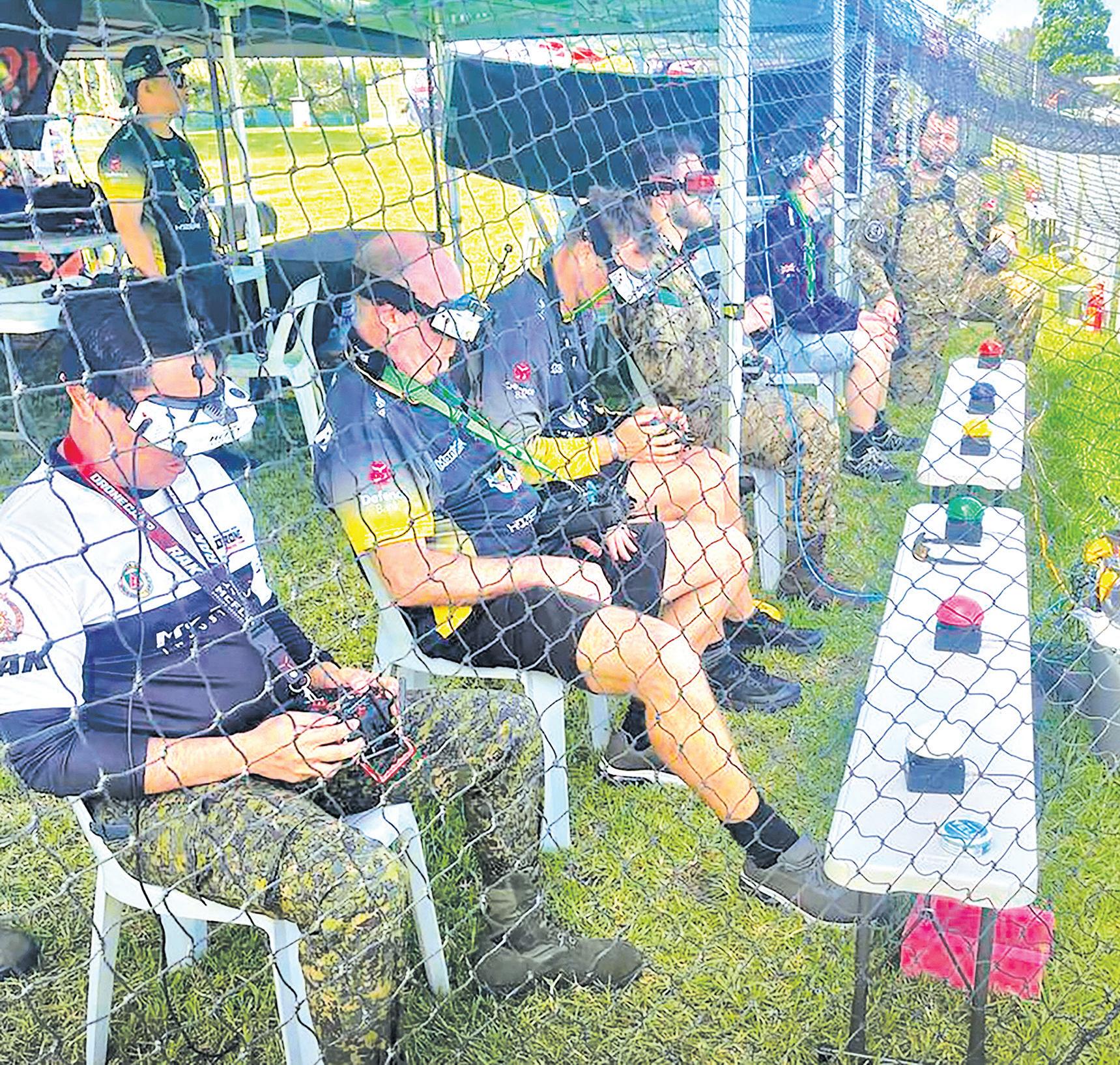
Zagala started the first training of FPV drone handling involving reservists and regular troops when he was Army Reserve Command.
The Army’s drone aces competed last year in the Military International Drone Racing Tournament in the United Kingdom at the Royal Military Academy Sandhurst.
The team paid a courtesy call to Zagala at Camp Capinpin in Tanay, Rizal, and shared their experiences and insights from the international competition. AP
Philippine Army Drone Racing Team in action in the Sixth Military International Drone Racing Tournament hosted by the Australian Army. PA PHOTO
ROME—Italy is coming off a record performance at the Winter Olympics
Kimi Antonelli just became the second youngest driver at 19 to win a Formula One race and is considered The Next Big Thing in auto racing.
The Azzurri rugby squad beat England for the first time in the Six Nations.
Jannik Sinner is back to winning ways on the tennis court.
Italy’s men and women are the world champions in volleyball.
Even the country’s unheralded baseball and cricket teams have broken barriers recently.
Yet there’s one big team from Italy that continues to struggle. The oncedominant men’s soccer team is at risk of

He’s also the NBA record holder with
The Lakers listed him originally as questionable for Thursday with left foot arthritis, but James arrived at the arena

failing to qualify for a third consecutive World Cup.
The four-time World Cup champion needs to beat Northern Ireland in the playoffs next Thursday in Bergamo and then either Wales or Bosnia and Herzegovina away to avoid going at least 16 years without even playing a match at soccer’s biggest event.
“Sports are about cycles but this one in soccer has gone on for too long,” Italy Sports Minister Andrea Abodi says.
An entire generation—basically anyone under 15—has no memory of the last time Italy played in the World Cup:
An elimination loss to Uruguay in 2014 in Brazil remembered for Luis Suarez’s bite of Giorgio Chiellini’s shoulder.
“For generations of Italians, the World Cup was the time when the country came together and waved our flag,” Abodi tells La Stampa. “Our national spirit now extends beyond soccer but it would still be nice to share those emotions with younger fans.”
Doomed qualifying campaign ITALY’S qualifying campaign was doomed in the opening match by a 3-0 loss at Erling Haaland’s Norway—
conservatively. Instead of hitting driver and being forced to play a fade to avoid the fairway bunker, he opted for 3 wood. He made the right choice though and hit a perfect drive, although a little short. He had an uphill approach from about 200 yards out. A flared 4 iron, a mediocre pitch and a bad putt later, Norman made bogey and lost by one to Jack.
1987 GREG NORMAN came close again in 1987 at The Masters. One year after he bogeyed the 72nd to miss by one, he improved his finish and was tied after 72 holes of regulation. He was now part of the playoff with Larry Mize and Seve Ballesteros. Norman must have liked his chances, being the young gun in the sudden death trio. Seve, uncharacteristically bogeyed the first playoff hole, Augusta’s 10th, from just off the green. A heavyhanded chip and a missed par putt took him out of the playoff. On the next hole, the 11th, it was a duel between Mize and Norman. Mize was shorter off the tee and had 170 yards in. He hit a terrible approach well right of the green, around 30 yards right and facing a treacherous downhill approach to the pin. Norman was 20 yards further up, with only 150 yards left. With a pond lurking left, Norman hit a good approach, keeping it on the right side of the green. But to everyone’s shock, Mize hit the most impossible pitch and holed his shot for birdie.
leading to coach Luciano Spalletti being replaced by Gennaro Gattuso The Azzurri then went on a sixmatch winning streak before losing again to Norway in November to finish second in their group and end up in the playoffs again—the stage where Italy was eliminated by Sweden before the 2018 World Cup and by North Macedonia in 2022.
Northern Ireland troubled Italy RANKED 13th, Italy will be a heavy favorite against No. 69 Northern Ireland. But the Azzurri should be reminded that their last meeting, a 0-0 draw in Belfast in 2021, plunged the recently crowned European champion into the playoffs for the 2022 World Cup. AP


MARCH 22, 2026 | soundstrip.businessmirror@gmail.com
Story by Bless Aubrey Ogerio
Interview by Edwin P. Sallan
WHEN one hears ‘Bloom in the Break,’ it’s easy to get the idea: growth can happen in the middle of chaos, and sometimes the best breakthroughs come when life forces you to pause.
That’s the vibe of Canadian singersongwriter Chloe Stroll’s debut album, a 12-track collection that’s all about taking risks, finding your own rhythm and staying optimistic even when things get messy.
Sure, her last name might ring a bell for sports fans—motorsports and snowboarding—but Chloe is making her own lane. Born and raised in Montreal, she wrote her first song at seven and even tried a Broadway boot camp as a teen before exploring business and fashion.
But music never left her, and eventually she came back full force. In an exclusive interview with SoundStrip, Chloe is blunt

Publisher :
T. Anthony C. Cabangon
Lourdes M. Fernandez
Editor-In-Chief :
Concept :
Aldwin M. Tolosa
Y2Z Editor :
SoundStrip Editor : Group Creative Director : Graphic Designers :
Jt Nisay
Edwin P. Sallan
Eduardo A. Davad
Niggel Figueroa
Chow Jarlego
Contributing Writers :
Tony M. Maghirang
Rick Olivares
Jingo Zapata
Reine Juvierre S. Alberto
John Eiron R. Francisco
Patrick Villanueva
Ana Zoe V. Davad
Justine Xyrah Garcia
Ginger Franz S. Ocampo
Trixzy Leigh Bonotan
Bless Aubrey Ogerio
Photographers :
Bernard P. Testa
Nonie Reyes
Y2Z & SOUNDSTRIP are published and distributed free every Sunday by the Philippine Business Daily Mirror Publishing Inc. as a project of the
The Philippine Business Mirror Publishing, Inc., with offices on the 3rd Floor of Dominga Building III 2113 Chino Roces Avenue corner
Dela Rosa Street, Makati City, Philippines. Tel. Nos. (Editorial) 817-9467; 813-0725. Fax line: 813-7025
Advertising Sales: 893-2019; 817-1351,817-2807. Circulation: 893-1662; 814-0134 to 36. www.businessmirror.com.ph
about inspiration: “I write all my songs based on personal experience.”
AMONG the tracks on Bloom in the Break, Chloe Stroll counts Love in the Dark, a 2:35-minute song, as one of her personal favorites.
“It's really just about feeling a bit lonely, a little heavy, through your journey with love," she explained to this newspaper. "Finding the paths you need to walk for yourself, in life and love—there’s so much to navigate."
She added that it’s easy to forget that love can be confusing and isolating, but it’s also a light at the end of the tunnel. Getting there, however, isn’t always simple.
Based on Spotify statistics as of March 16, I Stood My Ground emerged as the album’s breakout track.
Also, Chloe told other press outlets that it was also her favorite performance during her September launch, even though she initially expected it to be the most challenging to pull off.
Despite the album’s often melancholy undertones, Chloe is quick to clarify that she’s not always in a “sad girl” headspace.
“Not necessarily," she said when asked if heartbreak dominates her songwriting. She points to her single Home, also part of the album, as an example: it’s about love, family, and realizing that “home” isn’t a place, but the



people you surround yourself with.
Asked about her all-time favorites, Chloe mentions Home and Prisoner. “Prisoner was a song I was really proud of and that resonated with me at the time,” she said, referring to the track about feeling trapped in a draining on-and-off relationship.
Moreover, another deeply personal track is You’re OK, which Chloe describes as healing. “I lost my grandmother in 2015, and we were extremely close,” she recalled.
“It was the first real loss I'd ever experienced and it was really hard for me… there was so much that I wanted to say, but what I found through writing that song was actually the acceptance of knowing that she was in a better place is really what made me happy.”
The perspective of finding hope even in grief can resonate universally, she added, whether the loss is a loved one, a pet, or someone close. “You're OK helped me heal,“ the singer said.
The album’s closing track, A Lot to Give, is another she’s particularly proud of for its lyrical depth. Still, she noted that her tunes often depend on the day and the mood she’s in.
WITH a smile, her future music is “a little further than the horizon, but definitely new music is coming,” she said. “I’m very excited.”
Fans of the Bloom in the Break artist can

expect more tracks full of personal stories, little bursts of honesty, and moments that make you feel seen—basically everything Chloe does best.
Even as she looks ahead, Chloe says her songwriting always has a piece of her past in it.
“There’s always stuff I draw from my childhood in my songs. Definitely, if you know where to look, you’ll find it,” she explained.
Definitely, it’s that mix of nostalgia and selfreflection that makes her music feel personal, whether it’s a lyric that hits just right or a melody that sticks in your head.
As for collaborations, she hasn’t done any yet, but she’s keeping the door open. “Not yet, but I hope one day,” she answered. No duets for now, but we wouldn’t be surprised if that changes soon.
Also, Chloe admitted how her taste in music is all over the place, in the best way. “I really love Kelly Clarkson, Lewis Capaldi, Ed Sheeran, Adele, Billie Eilish. And then I also love some old stuff, like I love Queen.”
And lately, she’s been getting into K-pop, too. “Demon Hunters’ Golden, what a song. It’s unbelievable. They’re so cool.”
She’s even flirting with the idea of singing in another language. “I speak French fluently and we're constantly talking about trying to do some French songs, which will be really fun. So maybe that'll be a fun span in the mix.”
Story and photos by Trixzy Leigh Bonotan
Okay, let’s be honest for a second. When you walk into a fan concert, you expect a lot of things — great music, fun interactions, ooh-ing and ahhing at performances, maybe an ugly cry or two. What you don’t always expect is to walk out feeling like you just received a deeply personal letter you didn’t know you needed. But that’s exactly what Kim Sejeong’s “Tenth Letter” fan concert was — held last February 21, 2026, at the New Frontier Theater in Manila — and honestly? It delivered on every single count.
Had It Covered
ONE of the first things I remembered reliving the “Tenth Letter” show was that there’s no host. None. Zip. Nada. And you know what? It didn’t matter one bit, because Sejeong was her own host — and a pretty great one at that. She moved through the night with the ease of someone who has been doing this long enough to make it look effortless — cracking jokes, bantering with the crowd, navigating transitions like she had all the time in the world. The thing about Sejeong is that she’s naturally funny and naturally warm, which means the absence of another person on stage wasn’t a gap that needed filling. It was a choice that made the whole evening feel even more direct, more personal. Just her and her SESANGs, no middleman required.
If there was one segment that had the entire theater absolutely losing it, it was when Sejeong called fans onstage — each one dressed up as
a different chapter of her career. We’re talking the full journey: from her days as a contestant on Produce 101, all the way through her iconic K-drama roles that turned her into the actressslash-singer dual threat she is today.
Seeing fans walk out in outfits that represented different eras of Sejeong’s life was something else entirely. It wasn’t just a fun costume parade — it was a visual timeline of how far she has come, and a quiet acknowledgment of how many people have been there for every step of it. The SESANGs in the crowd who recognized each outfit? They screamed accordingly. Loudly. With their whole chests.
Sejeong, for her part, was delighted — laughing, reacting, making each fan feel seen on that stage, she even interviewed them (“Hi! What’s your name, and how old are you?”). I appreciated her doing this because you could see how she makes the person at ease, and she makes little banter with them — “Oh, you’re 35? You don’t look like it! Hello! (Big sister)”, “Hello, you’re 30? Hi, friend! (She said friend because she was also 30)”. It was the kind of moment that reminds you why fan concerts exist in the first place. Not just to hear the songs, but to celebrate


the whole story — hers and those who’ve seen her shine brightly.
MIDWAY through the night, Sejeong paused and — in that candid, no-filter way that is very much her brand — told us something that stopped the room. Before flying to Manila, she had been sick. Not the “oh, I just have a little cold” kind of sick. The kind that requires multiple injections and tons of vitamins just to get you up and running to attend your fanconcert.
She took the shots. Got on the plane. And showed up.
There was no melodrama to the way she said it — she wasn’t fishing for applause or sympathy. It was just the truth, said simply, the way you’d tell a close friend. And maybe that’s what made it hit harder than any power note she sang all evening. Because the concert title suddenly clicked into place in a whole new way. A letter isn’t written carelessly. You sit down, even when you’re tired, even when it would be so much easier not to — because the person reading it is worth every word. Kim Sejeong clearly thinks her fans are worth every word.
FILIPINO SESANGs, as always, did not come to play. Every lyric sung back without a single fumble, every fan chant landing exactly when it should, the light sticks turning the New Frontier Theater into something that looked less like a concert and more like a constellation. Sejeong noticed — she said it had been a while since she was last in Manila, and that she had missed it. The crowd received this information with the energy of people who had been waiting to hear exactly that. “I hope that when I visit again, your energy will be three times more. I can’t wait for that to come!”
The set itself was a generous one — weaving between the brightness of “Something New,” the emotional heft of “Irony,” and everything

in between. She is one of those rare performers who can hold a room not through spectacle, but through sheer sincerity. You believe her every time. Every single time.
The Letter Has Been Signed, Sealed, and Delivered
WALKING out of the New Frontier Theater, the night air felt different the way it always does after something genuinely moves you. “Tenth Letter” wasn’t just a fan concert. It was Kim Sejeong saying, in the clearest way possible: I see you, I appreciate you, and I will show up for you — even when it’s hard. She hosted her own night. She walked us through her whole career in one beautiful, fan-worn montage. She got on a plane after recuperating and performed as if she hadn’t gotten sick in the first place. And through all of it, she smiled like there was nowhere else she’d rather be.
The tenth letter has been sent. And every SESANG in that room felt it land.
By Samantha Kelly Bloomberg
BUMBLE Inc.
unveiled a new artificial intelligence-powered assistant designed to act as a personal matchmaker, the company’s latest effort to reinvigorate itself at a time when many users have shown dating-app fatigue.
The new opt-in tool, called Dates, starts with a private, in-depth conversation that explores broad topics like values, relationship goals, communication style, lifestyle and dating intentions. When it identifies two people who are aligned in these areas, both are notified with a summary explaining why they are a strong match.
Chats with the AI assistant are private and nothing will be shared on a user’s public profile, the company said on Wednesday. Members can also choose what topics of their conversation can be shared with a potential match.
Deeper, AI-powered swiping
DATES —which is powered by Bumble’s own AI model, called Bee—is meant to move beyond surface-level swiping to better understand users and their needs, founder and Chief Executive Officer

Whitney Wolfe Herd said in an interview.
The tool will not write messages on behalf of members or generate conversations. It will roll out first as part of a pilot program for a select group of users. Though it will be free to start, it could become a premium offering over time, the company said.
The new feature, which was announced during the company’s fourth-quarter earnings call, is part of a larger effort by Bumble to return its namesake dating app to growth. Wolfe Herd, who earlier co-founded Tinder, started Bumble in late 2014 with the novel idea that women should be the ones to start conversations on her dating app. While that pitch was unique at the time, revenue has since slowed, with Gen Z splitting from older generations in how they prefer to date.
Not a ‘gimmick,’ but an ‘infrastructure for better relationships
BUMBLE isn’t alone: Other dating companies, including Tinder parent Match Group and Grindr Inc., are also reinventing their
apps in the age of AI in a bid to reverse stubborn subscriber losses. Tinder is expected to unveil its next-generation AI features at an event in Los Angeles on Thursday. (See related story—Ed.)
The goal of Dates is to get people to meet up with compatible matches and to “remove some of the emotional friction that really sits between matching and meeting,” Wolfe Herd said, adding that she sees solving this challenge as a key opportunity for the company.
It builds on what she said reflects the Bumble community’s feedback, which is that users don’t just want to go on more dates but better ones.
“We don’t see AI as a gimmick layer on top of swiping,” she said. “It really needs to be an infrastructure for better relationships. It should not just be a chatbot layered on top of something.”
Wolfe Herd has previously said she wouldn’t have swiped on her husband’s dating profile if she had seen one, but now believes having an AI agent knowing how compatible they actually are could have brought them together otherwise.
The company said future iterations of the tool may include date suggestions and offer prompts requesting feedback, allowing it to learn how a date went so that it can better understand member’s needs.
WOLFE Herd believes the era of dating is shifting from randomized discovery—the current swipe model that she helped invent while at Tinder—to an era of search, giving users more control over their experience, rather than “feeling like the algorithm is defining who you see and why you see them.”
At the same time, she sees AI and the more conventional swiping design complimenting each other.
“It’s like online shopping—you could go to an online site and scroll for dresses and shoes and add something to your wish list but maybe it’s not in your size,” she said. “Or you could go for the personal shopper, and say ‘I have a wedding this weekend and want to wear a pastel dress in a certain size and it needs to be delivered to my house in time.’ You can be very precise, and the personal shopper will bring me back six to eight options that all fit the criteria.”
Bumble is already using artificial intelligence to enhance safety and verification processes, including automated detection of spam and fake profiles with tools like Deception Detector. It is also leaning on the technology to help purge bad-actor accounts and for features like Profile Guidance and its “Review Before You Send” prompt that nudges people to think twice before sending certain messages.
TINDER announced a handful of new app updates—including several AI-powered features—marking its latest attempt to reinvigorate the brand for the crucial Gen Z audience.
The changes, unveiled during an event in Los Angeles on Thursday, include a mix of new features, improvements to existing ones and some added safety measures.
“With more than half our users under 30, we’re building alongside a generation that wants dating to feel more authentic, lower-pressure and worth their time,” Spencer Rascoff, the chief executive officer at Tinder and its parent, Match Group Inc., said in a statement.
Many dating companies, including Match, Bumble Inc. and Grindr Inc., are reckoning with a generational shift in how young people prefer to meet other singles. And many users across different age demographics have indicated a feeling of burnout after using the apps continuously and not
meeting quality matches. A common theme across all of the major companies’ strategies is offering new features, many of which are powered by artificial intelligence. Bumble earlier this week announced an AI-powered assistant meant to act as a personal matchmaker.
New Tinder features include:
n A real-time video speed dating experience inside the app that will arrive later this spring. Users who have undergone photo verification can join scheduled virtual events for 3-minute video chats.
n A new “Events” feature that lets users discover local goings-on and see who else is interested in attending. Gatherings run the gamut, including group classes and trivia nights. The feature will debut first in Los Angeles as part of a pilot run.
n The app’s existing “Music Mode” has been redesigned to connect users by shared musical taste. The feature prioritizes pro -
files with similar interests and gives them more prominent placement.
n A new “Astrology Mode” lets users add their birth details to their profile and view deeper insights into how they might align with a potential match.
n Tinder’s Chemistry feature—which uses AI to analyze profile information, user responses to questions, and photo insights to facilitate more meaningful connections—will launch in the US and Canada. It is already available in Australia and New Zealand.
n The brand is also introducing a realtime recommendation system called Learning Mode that’s designed to better understand what people are looking for and make better match recommendations.
On the safety side, Tinder said improvements will be coming to its “Are You Sure?” feature, which alerts users to potentially harmful language before they hit send. It also plans to add an auto-blur feature to its

“Does This Bother You?” tool that detects potentially inappropriate messages.
Another enhancement is a new initiative called “Tinder Connect” that aims to bring more of a user’s real life into their profile based on the apps they’re already using. The tool works with partners, including Duolingo and Beli, to better highlight user interests, from language to food taste. The company said it has previously seen success with its Spotify integration on the platform.
While Match and other dating companies are investing heavily in AI as a way to reshape their signature apps, it is not clear that is what a majority of users want. Gen Z, which broadly dates less than older cohorts, reported higher discomfort than millennials with using AI to draft profile prompts and responses to messages, or to modify profile pictures, a survey published last year by Bloomberg Intelligence found. Bloomberg