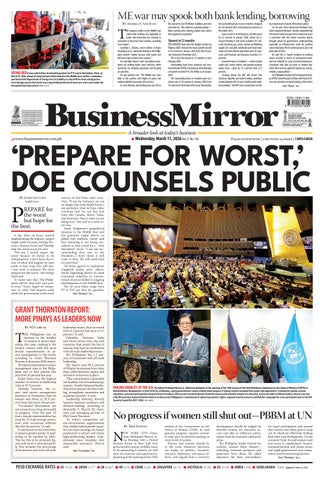
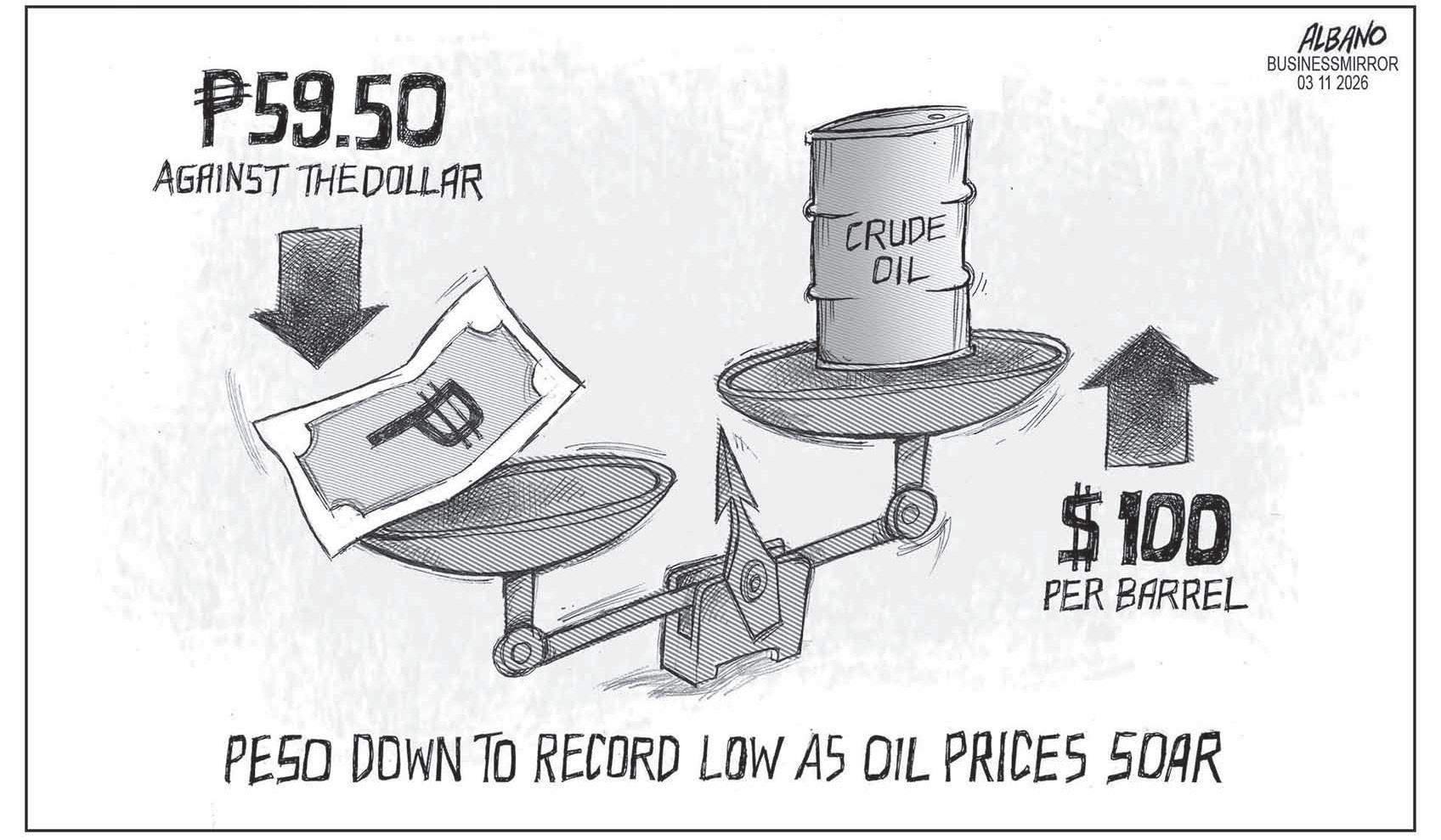
A day after oil firms started implementing the highest, largest single-week increase, Energy Secretary Sharon Garin said Tuesday that the worst is not yet over.
“For me, I would expect the worst because it’s better to be overprepared. I don’t have the vision of what will happen by next week or how long this will last. I just want to prepare. We must prepare for the worst,” the energy chief said.
To make sure that “the Philippines will be okay fuel- and power-wise,” Garin urged oil companies to order fuel imports early while the government seeks more
sources of fuel from other countries. “If say, for instance, we can no longer buy from South Korea I am optimistic that we have other countries that we can buy fuel from like Canada, Brazil, India, and Australia. That is what we are doing now,” she said in a radio interview.
Amid heightened geopolitical tensions in the Middle East and the potential ripple effects on global fuel markets, Garin said fuel rationing is not being considered as this would be a “very disruptive” move. “I am not recommending that now to the President...I don’t think it will come to that. We will work hard to avoid that.”
Oil firms agreed to implement staggered pump price adjustments beginning March 10 amid continued volatility in international oil prices linked to ongoing developments in the Middle East. The oil price hikes range from
to P13 per liter for gasoline,
TBy VG Cabuag
HE Philippines saw an increase in the number of women in senior leadership this year, making it the second country with the most female representation in senior management in the world, according to Grant Thornton Women in Business 2026 report. The report said women in senior management roles in the Philippines rose to 44.5 percent this year from 43 percent last year.
South Africa has the highest number of women in leadership roles at 47.3 percent.
Globally, however, the report said senior management positions in businesses held by women was down to 32.9 percent from last year’s 34 percent.
“Occasional fluctuations are not unusual on a long-term path to progress. Over the past 22 years, female representation has risen by 13.4 percentage points, even with occasional setbacks like this factored in,” it said.
It said based on the trend line, it expects gender parity in leadership to be reached by 2051.
“But for this to be achieved, figures will need to rebound quickly. This includes the percentage of businesses who have all-male
By Andrea E. San Juan
leadership teams, that increased from 4.1 percent last year to 5.7 percent,” it said.
Colombia, Vietnam, India and South Africa were the new countries that joined the list of nations that have no businesses with all-male leadership teams.
The Philippines has 1.1 percent of businesses with all-male leadership.
The report said 98.9 percent of Filipino businesses have what they called diversity, equity and inclusion initiatives in place.
“This commitment is grounded not in ideals, but in business pragmatism. Gender-balanced leadership drives sharper decision-making, strengthens innovation and accelerates growth,” it said.
Leadership diversity directly impacts business resilience and decision-making, according to Romualdo V. Murcia III, chairman and managing partner of P&A Grant Thornton.
“In today’s competitive talent environment, organizations that visibly embed gender equality into their strategy are better positioned to attract and retain high-performing leaders. Commitment must translate into measurable outcomes,” Murcia said.
aggressive expansion.”
Slowest in 23 months
PRELIMINARY data from the Bangko Sentral ng Pilipinas (BSP) showed that loan growth slowed to 9.3 percent in January 2026 from the 9.6 percent (revised) in December 2025. This is also the slowest in 23 months or since February 2024. Outstanding loans from universal and commercial banks (UKBs) to businesses and individual consumers reached P14.236 trillion as of January 2026. The outstanding loans to residents grew at a slower rate of 9.9 percent in January 2026 from 10.1 percent in December of last year. Meanwhile,
the outstanding loans to non-residents dropped by 10.4 percent after contracting by 8 percent in December 2025. Loans meant to fund business activities grew by 8.2 percent in January 2026, driven by increased lending in
By Troi Santos
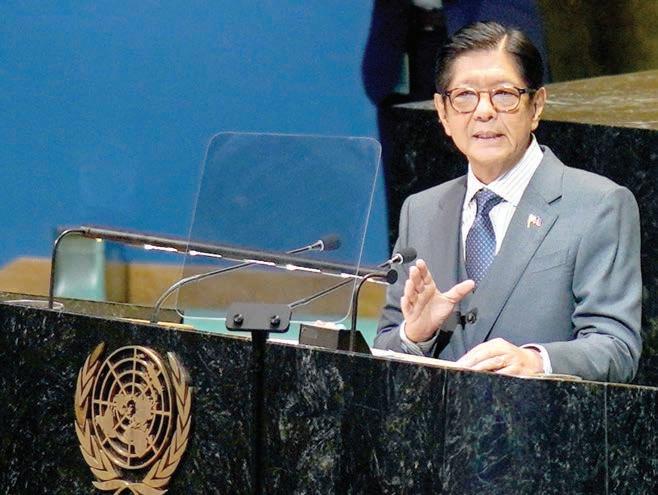
EW YORK CITY—President Ferdinand Marcos Jr. on Monday told a United Nations forum in New York that governments cannot credibly claim to be advancing if women are still shut out of power and opportunity. Speaking at the opening of the 70th
session of the Commission on the Status of Women (CSW), he said genuine progress requires women to take part in decision-making at every level of society. Marcos said women should be in the room whenever decisions are made, in politics, business, research, diplomacy and peace efforts, and argued that a country’s
development should be judged by whether women are educated, secure and able to influence policy, rather than by economic indicators alone.
The Philippine leader framed his remarks around three themes— schooling, economic prospects and protection from abuse. He called education the basic precondition for equal participation and warned that nations that allow girls to drop out of school are effectively holding back their own development. On the economic front, he said women need real access to employment, finance, entrepreneurship and senior posts, and urged governments and
P7
SEEING RED A man sells bottles of unleaded gasoline for P75 each in Montalban, Rizal, on March 10, 2026, ahead of steep fuel price hikes linked to the Middle East conflict. Lawmakers questioned the Department of Energy over its inability to stop oil firms from raising prices even though current fuel stocks were reportedly purchased at lower pre‑crisis costs under the deregulated pricing system. NONOY LACZA
VOICING EQUALITY AT THE U.N. President Ferdinand Marcos Jr. addresses
with UN
neral António Guterres to discuss the Philippines’s commitment to
Security Council for 2027–2028. TROI SANTOS
4.2 percent in the moderate scenario and 5.4 percent to 6.6 percent in the more severe scenario.
However, Balisacan acknowledged that suspending the excise tax would come with fiscal trade-offs.
“If you suspend excise taxes, that would mean less revenue collection for government that would impact on our projects and programs, that would mean less resources, fiscal resources for government or crowding out what otherwise would have been spent for other programs or projects which may be also equally important,” Balisacan explained.
Based on DepDev estimates, the government could lose about P43.3 billion in revenues under the moderate scenario and as much as P105.9 billion under the more severe case if fuel excise taxes are suspended.
These figures represent the combined losses from foregone excise tax collections and the corresponding value-added tax (VAT) imposed on excise taxes.
Under current law, fuel is taxed P10 per liter for gasoline, P6 per liter for diesel, P5 per liter for kerosene, and P3 per liter for liquefied petroleum gas (LPG).
In an ambush interview during the Juana Trabaho Launch, Balisacan said it remains too early to determine whether geopolitical tensions would result in flat economic growth for the Philippines in 2026, noting that global oil prices remain highly volatile.
“The government is mobilizing resources and efforts to mitigate the effects of inflation and oil price escalation,” Balisacan told reporters.
DHL Global Connectedness Report: PHL slips 2 rungs
By Lorenz S. Marasigan
HANOI,
Vietnam—The Philippines slipped two places to 59th out of 180 countries in the 2026 DHL Global Connectedness Report, held back by weak scores in trade, capital, and the actual volume of its international economic activity despite a broad geographic reach.
The report, produced by DHL and New York University’s Stern School of Business, tracked international flows of trade, capital, information, and people across 180 countries using more than 9 million data points.
The Philippines scored 51.9 overall, unchanged from 2019 in absolute terms.
Singapore ranked first globally. Other Southeast Asian nations trailed behind at 16th place for Malaysia, 27th for Thailand, 36th for Vietnam, 59th for the Philippines, 112th for Indonesia.
According to the report, the Philippines’s weakness is “depth,” which measures the size of flows relative to
domestic economic activity. It ranked 134th in that measure.
The Philippines, however, ranked 27th globally in terms of “breadth,” which means that its flows are distributed to a wide range of partner countries.
On trade, the country’s goods exports ranked 117th and imports ranked 105th as a share of GDP. On capital, it drew more foreign investment than it sent out, ranking 51st for inward greenfield foreign direct investments and 73rd for outward.
The United States accounts for 19 percent of the Philippines’s total international flows, making it the country’s top partner. China follows at 12
percent, Japan at 7 percent, and Singapore at 5 percent.
‘Global Tailwind’ countries
NONETHELESS, the Philippines is part of DHL’s “20 Global Tailwind” (GT20) Countries, which lists 20 nations that are classified as fast-growing with favorable factors or conditions.
NYU Stern Research Assistant Professor Steven Altman, who coauthored the report, said the Philippines consistently appears in trade growth forecasts but has yet to fully convert that potential.
“I think the Philippines really stands out as a country that has a lot of potential for trade growth,” he said.
Altman noted that improvements in the domestic business environment and international relations, as well as policy reforms, as factors that could help
“bring that potential to reality.”
“So my hope is that the forecasts that show that optimistic picture for the Philippines are going to come to fruition in the years to come, but we look at forecasts and then we measure what actually can happen,” he said.
Globally, the report found that the world’s level of globalization was at 25 percent.
“Globalization is holding its ground—and that alone speaks volumes about its value,” DHL Express CEO John Pearson said. “From poverty to climate change, the world’s biggest challenges can only be solved through global thinking.”
Down the line, global goods trade is projected to grow by an average of 2.6 percent annually until 2029 despite the expected “modest” slow trade in 2026 due to US tariffs and political tensions.
P17.50 to P24.25 per liter for diesel, and P32 to P38.50 per liter for kerosene. Staggered adjustments will be rolled out over several days to help cushion the impact on motorists. Garin reiterated her call for the public to remain mindful of fuel use and adopt practical fuel-saving measures.
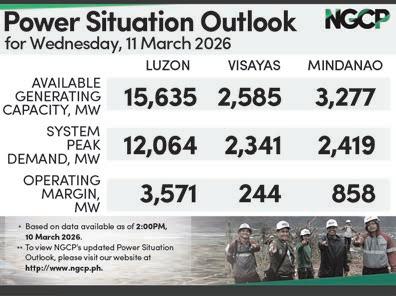
Meanwhile, the Manila Electric Company (Meralco) is proactively implementing measures to shield its customers from possible supply disruptions and upward pressure on electricity prices.
“We are closely coordinating with our power suppliers to keep generation charges at least - co st while prioritizing reliability across our system. We are optimizing our energy mix and fully leveraging cost-efficient sources, regardless of technology. In addition, we are carefully managing our exposure to the Wholesale Electricity Spot Market [WESM], where price volatility is high. We will also secure lower-cost replacement power whenever needed,” said Meralco Executive Vice President and Chief Operating Officer Ronnie Aperocho.
The report said it saw an indication that gender diversity has become a key marker of credibility and competitiveness in the Philippine market, shaping how businesses are evaluated by partners, clients and future talent.
“Attracting investment is vital to drive the growth of any business, and with 45.4 percent of firms reporting a shortage of finance as a constraint, businesses can increase their appeal to investors by highlighting their gender equality initiatives,” it said.
The report said Asean is the
Funds…
and accredited local or community organizations to implement climate change adaptation projects. The remaining calamity fund balance also in-
leading region with the highest percentage of senior female leaders in 2026, though the percentage of women holding senior management roles has dipped to 24.2 percent from 27.2 percent.
Meanwhile, the Asia-Pacific region continues to have the lowest overall percentage of female leaders at 31.8 percent.
High-performing countries in the region include the Philippines at 44.5 percent and Thailand at 44.1 percent, while lowest percentages include South Korea at 21.1 percent and Japan at 21.5 percent.
Japan’s total has increased by 3.1 percentage points, bringing its percentage level above 20 percent for the first time, the report said.
ter Risk Reduction and Management Program, P1 billion for the PSF and P15.330 billion under the Disaster Rehabilitation and Reconstruction Assistance Program for local government units. Last year, the government released P20.677 billion in calamity funds, out of the P21 billion allocated.
January from 10.5 percent in December 2025.
Claims on a sector represent that sector’s liabilities to depository corporations (e.g., banks and the central bank).
to loans extended by banks to households and firms, indicates that credit expansion may be stabilizing after a period of rapid growth.
“[This] may be due to more cautious borrowing by businesses and consumers, banks tightening risk assessments, or the lagged effects of earlier monetary tightening,” added Rivera.
M3 in January
PRELIMINARY BSP data showed that the amount of money circulating in the economy rose by 8.6 percent year-on-year to P19.7 trillion in January.
The BSP noted that the M3 growth of 8.6 percent has been the fastest since 9.5 percent in Feb 2021.
Growth of domestic liquidity, also known as M3, was faster in January than the 7.2-percent increase in December. After adjusting for seasonal fluctuations, M3 increased by 0.8 percent month-on-month in January.
Claims on the domestic sector, which includes private and government entities in the country, grew by 10 percent year-on-year in
Claims on the private sector alone grew by 10.6 percent in January from 10.7 percent in December 2025, driven by the continued expansion in bank lending to non-financial private corporations and households.
Further, net claims on the central government recorded an 8.9-percent increase in January from 10.8 percent in the previous month, driven mainly by its higher borrowings.
Net foreign assets (NFAs) in peso terms rose by 10.2 percent year-on-year in January from 5.9 percent in December. NFAs represent the difference between claims on nonresidents and liabilities to nonresidents of depository corporations.
The BSP’s NFAs saw a 9.2-percent growth. Similarly, NFAs of banks grew primarily on account of larger holdings of foreign currencydenominated debt securities.
“The BSP will continue to ensure that domestic liquidity conditions remain consistent with its price and financial stability objectives,” the central bank said in a statement. M3 is a broad measure of money supply that includes currency in circulation, bank deposits, and other financial assets that are easily convertible to cash.
According to Rivera, liquidity in the financial system is increasing, but credit demand or credit expansion is not accelerating at the same pace.
“M3’s faster growth may reflect higher government spending, stronger remittance inflows, or portfolio adjustments by banks and households,” he said.
“We are also amplifying our call for participation in the Interruptible Load Program [ILP], which remains a critical proactive measure to help preserve available supply should deloading from the grid become necessary,” added Aperocho. Meralco chairman Manuel V. Pangilinan earlier said the utility firm will undertake a comprehensive reassessment of its fuel position and sourcing strategy in order for the company to continue providing reliable power. For residential customers, Meralco is intensifying efforts to share simple, actionable tips so households can better manage their electricity consumption. The Lifeline Rate Subsidy Program is also being fully implemented. As mandated by government and to make the process more convenient, Meralco has automatically registered customers whose records match the Department of Social Welfare and Development’s (DSWD) 4Ps program. Meralco urged its other customers to apply so they can maximize the subsidy intended for low-income and marginalized households with monthly consumption of 100 kilowatt hour and below.
Ramp up RE deployment—ICSC
MEANWHILE , the Institute for Climate and Sustainable Cities (ICSC) called on the government to act decisively to accelerate renewable energy (RE) deployment and modernize its power infrastructure, in order to provide more affordable, reliable, and secure power for all Filipinos.
“When global price shocks or supply disruptions occur, we are reminded time and time again of the expensive costs that this heavy dependence on importation entails— and this story has been retold again now in the escalation of conflict in the Middle East,” ICSC said. Currently, the country relies heavily on imported fossil fuels, particularly crude oil sourced from the Middle East. Recent developments showed how quickly international events can affect energy markets, as global fossil fuel prices have surged following escalating tensions in the Middle East, with crude oil increasing by 19 percent, liquefied natural gas by 47 percent, and coal by 15 percent on March 5. These price movements reflect the interconnected nature of global energy markets and the Philippines’s continued exposure to international fuel price volatility.
ICSC said the impact can be even more pronounced in off-grid areas where electricity is largely generated using diesel.
“Reducing dependence on fossil fuels also strengthens economic resilience. It improves the trade balance, shields the economy from commodity and currency volatility, and helps stabilize power costs,” it said. “Translating policy priorities into action requires accelerating RE deployment—a no-regrets strategy for strengthening energy security,” ICSC added.
Lacson goes for Marcoleta’s jugular
By Butch Fernandez @butchfBM
IT was a short-lived “reconciliation by referral,” after all. A few weeks after Senate President Pro Tempore Panfilo M. Lacson and his predecessor in the Blue-Ribbon committee appeared to have reconciled after feuding over the handling of the floodcontrol inquiry, the two lawmakers’ word war in the media erupted on the floor of the plenary.
This time, with a scathing privilege speech by Lacson, accusing Sen. Rodante Marcoleta—who recently denounced him also in a speech—of “stalking him” via social media.
In his speech on Tuesday, Lacson defended the Blue-Ribbon committee’s institutional processes against what he termed Marcoleta’s “pagbibida-bida” (knowit-all actions) on the committee’s investigation into the flood control scandal.
Lacson refuted what he called Marcoleta’s “tirades and prevarications in and out of the Senate” targeting him.
“Like on many past occasions, I could have effortlessly dismissed Senator Marcoleta’s statements, as I refuse to dignify his ego-driven provocations. But when the attacks shift from professional to obsessively personal, I must shut the whole political circus down— firmly, completely, and without ambiguity,” he added.
Info leaked by captured spies not critical–spox
INFORMATION reportedly leaked by alleged members of the espionage ring “neutralized” by the National Security Council is not that vital to national security, a ranking military official said on Tuesday.
The Navy (PN) spokesperson for the West Philippine Sea (WPS), Rear Adm. Roy Vincent Trinidad, said in a media briefing at Camp General Emilio Aguinaldo, Quezon City, that the leaked data falls under the lowest level of the military’s information classification system.
“These are classified considering the positions of the concerned personnel at the lower level of the plantilla hierarchy. Their access to information is limited to those
Lacson said Marcoleta’s release of the so-called “minority report” and its contents was an affront to the Blue-Ribbon committee and to him as its chairman—including the “minority report” claiming that the Committee cannot compete with national prosecution services and the judiciary in disposing of the cases. “Out of line. Out of place. So is it any surprise that my reaction is that this report belongs to nowhere else but the trash bin?” he said, speaking in Filipino.
Recently, in a privileged speech, Marcoleta practically accused Lacson’s camp of splicing videos for his social media posts, to show that Marcoleta had advocated on the Senate floor abandoning the Philippines’s ownership of Kalayaan Island Group. Marcoleta said it was a hypothetical remark that Lacson had twisted.
Meanwhile, Lacson shut down Marcoleta’s complaint that he has yet to receive a copy of the draft
partial committee report. He pointed out his office furnished an advanced copy of the report to Blue-Ribbon committee members’ offices as early as February 11.
Lacson said his office followed up with the other senators if they wished to sign the report, even if they intended to dissent or interpellate. Yet, Marcoleta did not sign it as only Sen. Bam Aquino signed it, he noted.
“Why is he now looking for a Blue-Ribbon committee report that had been in his office for a month?” Lacson said.
As for Marcoleta’s dare to name 67 so-called “cong-tractors,” Lacson said he was informed about it by a congressman-friend and that he does not have such a list.
Obsession
LACSON said Marcoleta may have become obsessed with him—to the extent of stalking his interviews and social media updates and nitpicking every statement he uttered—and even tricking the Senate to cry foul “armed with nothing but his draining litany”—when Lacson inquired about Marcoleta’s “HILAW” interpretation of Senate Rules relative to his “Motion to Dismiss” in the impeachment case against Vice President Sara Duterte in August 2025.
“I don’t know, Mr. President. Since I shut down Marcoleta on the floor, he appeared to hold a grudge against me,” he said.
He said Marcoleta would nitpick his first privilege speech on the flood control scandal, where he said on his TV show that one cannot deliver a speech on a matter already being tackled by a major panel like the Blue-Ribbon Committee, which Marcoleta chaired
at the time—even if there was no such rule.
After the Senate leadership change and reorganization of Senate panels—including Lacson replacing Marcoleta as chairman of the Blue-Ribbon Committee— Marcoleta continued his criticisms against Lacson, “much of it characterized by a profound lack of respect for both this representation and the Blue-Ribbon Committee.”
These included disrupting the September 23 Blue-Ribbon hearing with a “prejudicial question” on Lacson’s impartiality as chairman, invoking the issue “at the top of his voice and out of order and decorum, continuously interrupting the chairman and everybody else while shamelessly appearing to act as counsel for the Discaya couple, without even disclosing before the committee members that one of his family members was an independent director of insurance companies that provided bonds for companies owned by the P207B floodcontrol contractors—Curlee and Sarah Discaya.”
Lacson also cited news reports showing a damning link between Marcoleta and the Discayas— including one where a relative of Marcoleta was said to hold a directorship at Stronghold Inc., and Milestone Guaranty, insurance companies that provided bonds for contractors owned by the Discayas—“raising conflictof-interest questions in a highprofile Senate probe.”
On September 25 last year, Marcoleta presented Orly Guteza as a “surprise witness” but lawyer Petchie Espera, whose name appeared on Guteza’s sworn statement, denied notarizing it.
Senate approves on third reading national autism care, support bill
THE Senate has passed on third and final reading Senate Bill 1822, or the proposed National Autism Care, Support, and Inclusion Act, which establishes a national plan to improve care, services, and inclusion for persons with Autism Spectrum Disorder (ASD).
The measure aims to strengthen services such as early detection and screening, access to healthcare and therapy, inclusive education, community support programs, and employment opportunities for persons with ASD. Sen. Anna Theresia “Risa” Hontiveros, sponsor of the bill, said, “Let this measure be our collective contribution to supporting people on the autism spectrum and their families. The message of this bill is clear: a just society enables the potential of every Filipino instead of creating hurdles.”
Hontiveros explained that the bill recognizes ASD as a neurodevelopmental condition and promotes a science-based and coordinated national response to support individuals with autism and their families.
The measure was authored by Majority Leader Juan Miguel F. Zubiri, who said the bill aims to give families and persons with ASD clearer government support, improved access to services, and a national plan that recognizes inclusion as a duty of the government.
“This is great news for Filipino families dealing with ASD. They’ve had it tough, and this law will really help lighten their burden,” he said.
Under the bill, the National Council on Disability Affairs (NCDA) shall serve as the lead agency in preparing and implement-
ing the National Plan of Action for ASD. The plan will coordinate the programs of key government agencies, including the Department of Health (DOH), Department of Education (DepEd), Department of Social Welfare and Development (DSWD), and Department of Labor and Employment (Dole).
The bill also includes an antidiscrimination provision making it unlawful for any person, institution, or government agency to deny or restrict the rights of persons with ASD, particularly in accessing healthcare, education, employment, and social protection programs.
Funding for the implementation of the Act shall be included in the annual General Appropriations Act (GAA) to ensure the sustained implementation of programs and services under the national plan. Butch Fernandez
House bloc assails Marcos for resisting return to ICC
By Jovee Marie N. dela Cruz @joveemarie
THE Makabayan bloc in the House of Representatives on Tuesday criticized President Marcos for resisting a potential return of the Philippines to the International Criminal Court (ICC).
The bloc, composed of Partylist Reps. Antonio Tinio of ACT Teachers, Sarah Jane Elago of Gabriela, and Renee Louise Co of Kabataan in a statement said reengagement with the ICC would not only reinforce the Philippines’ reputation as a rightsrespecting democracy but also restore international confidence in the country’s legal system.
It would, they added, strengthen partnerships rooted in justice, good governance, and the rule of law.
Parey-list Rep. Leila de Lima of Mamayang Liberal on Tuesday called on Marcos to reconsider his stance and rejoin the ICC, warning that the country’s continued absence from the tribunal sends the wrong signal both domestically and internationally.
In a statement, de Lima asked: Ano pa nga bang hinihintay ni Pangulong Marcos? Anong pumipigil sa kanya na bumalik ang Pilipinas bilang miyembro ng ICC?”
She urged the President to change his position, stressing that re-engagement with the ICC would ensure accountability for future tyrants and mass murderers if the domestic justice system proves unwilling or unable to prosecute such crimes.
De Lima emphasized that staying outside the ICC risks perpetuating doubts about the Philippines’ commitment to justice and undermines efforts to pursue perpetrators and masterminds of international crimes.
“His current and continued posture sends the wrong signal both to the Filipino people and the global community,” she said.
She also highlighted the broader implications of ICC membership, noting that it strengthens the country’s legal credibility on the global stage and reassures citizens that serious human rights violations will not go unpunished.
Also, Bayan Muna and Akbayan on Tuesday assailed the administration for its continued reluctance to restore the Philippines’ membership in the ICC, warning that such a stance undermines the country’s credibility in the international community.
Former Bayan Muna Rep. Neri Colmenares questioned the government’s rejection of the ICC’s principle of universal jurisdiction, noting that “it is not favorable in the eyes of the international community” to refuse international justice and accountability.
Akbayan Party President Rafaela David emphasized that rejoining the ICC would demonstrate the Philippines’ commitment to international law and accountability, particularly in addressing alleged abuses during the country’s previous war on drugs.
“On the ICC, Marcos is trying to appease both Duterte loyalists at home and the international community abroad. But this double game will fail. His attempt to please everyone comes at the expense of justice and will end up pleasing no one,” David said. She stressed that there is only one correct position: siding with justice. David added that the President cannot claim to respect justice while refusing to restore the Philippines’ membership in the very institution tasked with prosecuting crimes against humanity.
In a recent interview with reporters in New York, Presidential Communications Office Undersecretary Claire Castro confirmed that the President’s position has not changed.
“The President’s stance has not changed. We will still not rejoin the ICC,” Castro said.
Army units repel ‘invaders’ in Luzon live-fire exercises
THE Army (PA) on Tuesday said that it has successfully repelled a simulated “enemy attack” using its armor and artillery units during a littoral defense live fire exercise in Burgos, Pangasinan, conducted on March 9.
“The 701st Combined Arms Brigade utilized its armor and artillery assets which included remote control weapons systems mounted on armored infantry fighting vehicles and 105mm towed howitzers,” the Army spokesperson, Col. Louie Dema-ala, said in a statement.
In addition, reservists also deployed combat drones at targets strategically placed near the coastline of Burgos. The littoral defense drill is one of the key highlights of the
ongoing third iteration of Catex Katihan which tests the Army’s Land Defense Concept in support of external security operations. A total of 4,222 troops are currently participating in the unilateral exercise with drills being held at various training areas in Pangasinan and Ilocos Norte.
Dema-ala added that the Army commander, Lt. Gen. Antonio Nafarrete, personally witnessed the live fire drill and commended the participating troops.
He also stressed that Nafarette capped his visit by directing Army units to train hard “to meet the challenges of the fast-changing global and regional security landscape.” Rex Anthony Naval
Runaway oil prices won’t stop WPS patrols
DESPITE the spiraling fuel prices brought about by the ongoing conflict in the Middle East, all military activities related to protecting the West Philippine Sea (WPS) will continue, a ranking Navy (PN) official said on Tuesday.
“All activities of the AFP [Armed Forces] for this year that are operational in nature will continue. It’s our mandate that should be performed,” the PN spokesperson for the WPS, Rear Adm. Roy
Vincent Trinidad, said in a news briefing at Camp General Emilio Aguinaldo in Quezon City.
Trinidad assured that the Armed Forces will continue performing its mandate, especially when it comes to protecting the country’s sovereignty and territories.
Meanwhile, the AFP spokesperson, Col. Francel Margareth Padilla, assured the public that operational missions aimed at securing Philippine territory and
disaster response will continue even as their military administrative offices adjust to alternative work arrangements amid the looming oil crisis.
Padilla said the AFP is ready to implement the appropriate measures while ensuring that its primary mission, which is to protect the Filipino people and safeguard our national security, remains uninterrupted.
“ May mga enercon [energy conservation] measures po tayo [we
already have enercon] in support of the greater national effort. So, while administrative offices may eventually adjust our work arrangements, depending on the guidelines that is going to be set, ang mga [our] operational missions po natin [will] continue 24/7, whether it is territorial defense, disaster response, or internal security operations, patuloy po natin itong gagampanan [we will continue to fulfill them],” she added. PNA
www.businessmirror.com.ph
House panel approves Agricom bill
only classified. We have [levels of] classifications for our information [and these are] classified, confidential, secret and top secret. Their access level was [limited] to classified information,” he said.
Information leaked by these alleged spies mostly consisted of “operational data for the WPS” and “plans of the PN for modernization and strategic basing.”
Trinidad declined to comment when asked about updates on tracking or identifying the handlers of these alleged spies.
“Any subsequent operation arising out of this accomplishment that are still considered active cases, we will not divulge considering that they are still operational matters,” he said.
He said the espionage was uncovered through the government’s Insider Threat Program (ITP), which was launched in 2023 in the wake of the military’s pivot toward the Comprehensive Archipelagic Defense Concept, a strategic shift where the Armed Forces (AFP) is tasked to defend all Philippine territories, including its 200-nautical-mile exclusive economic zone.
“[The implementation of this] has uncovered and stopped espionage activities with the exposure of four of the persons who were involved. Three of them have been approached and they cooperated. They are now under the control of the Armed Forces. The fourth one, a Navy officer refused the offer given to him,” Trinidad said.
“I would like to highlight number one, the ITP, the Insider Threat Program, is working as manifested by these accomplishments,” he added.
Likewise, the PN official said that the program is continually being evaluated and enhanced. PNA
IBy Jovee Marie N. dela Cruz @joveemarie
N a bid to undertake a sweeping review of the farm sector, the House of Representatives Committee on Agriculture and Food has approved a measure seeking to establish the Congressional Commission on Agriculture (Agricom).
The committee approved on Monday House Bill 6689, or the proposed Congressional Commission on Agriculture (Agricom) Act, seeks to create a multisectoral congressional body that will conduct a comprehensive national assessment of the Philippines’ agricultural sector and recommend long-term reforms aimed at improving food security, boosting farm productivity, and strengthening rural livelihoods. The measure was introduced
by Leyte Rep. Ferdinand Martin Romualdez, along with Party-list Reps. Yedda Marie Romualdez, Andrew Julian Romualdez, and Jude Acidre of Tingog.
Under the proposal, Agricom will function as a legislative policy think tank of Congress tasked with reviewing and evaluating agricultural production systems, value chains, institutions, and regulatory frameworks governing the country’s agri-food systems.
The commission will also formulate a 10-year strategic roadmap for agricultural transformation that will outline priority investments, institutional reforms, workforce development, and innovation strategies for the sector.
The proposed body will be composed of members from both the Senate and the House of Representatives and will have the authority to determine its own research agenda, analytical methods, and consultation processes.
It will operate for three years from its organizational meeting, with the option for a two-year extension if Congress determines that further work is needed.
The bill also provides for the creation of a technical secretariat led by an executive director, as well as an advisory council composed of representatives from key stakeholder groups.
The proposal comes amid renewed government attention on agricultural reform.
During a recent meeting in Malacañang, President Marcos
directed the Department of Agriculture and the Department of Agrarian Reform to coordinate with Congress in establishing a congressional commission that will review the state of the agricultural sector and guide long-term policy reforms.
A counterpart measure in the Senate, Senate Bill 1624 sponsored by Sen. Francis Pangilinan, which seeks to create a Congressional Commission on Agriculture, Fisheries and Food Security, was approved on third reading on February 18, 2026.
During the committee deliberations, Acidre, who sponsored the bill, said the proposed commission will be guided by three key principles: comprehensiveness, honesty in assessment, and clarity of purpose.
“What this bill seeks is a comprehensive assessment of the entire agricultural industry so we can finally see, with clarity, where we truly stand,” Acidre said.
He noted that the proposal draws inspiration from the Second Congressional Commission
on Education (Edcom II), which conducted a nationwide assessment of the education sector to guide reforms.
“If we are serious about reforming agriculture, we must have the courage to confront its realities as they are. Without that honesty, any reform we attempt will rest on incomplete or distorted information,” he said.
He added that the proposed commission is intended not merely to study the sector, but to translate its findings into concrete policy directions that will guide long-term agricultural reform.
“The goal is not simply to study the sector, but to translate that assessment into a clear, long-term roadmap for reform,” Acidre said.
Following its approval, the committee also adopted HB 6689 as the lead reference bill for the drafting of a substitute measure consolidating several proposals seeking to create a Congressional Commission on Agriculture (Agricom).
DA to seek immediate release of ₧50-M subsidy for farm sector
TBy Ada Pelonia @adapelonia
HE Department of Agriculture (DA) will request the immediate release of the remaining P50 million earmarked for fuel assistance to the farm sector following the surge in pump prices amid the ongoing conflict in the Middle East.
This, after global oil prices breached the $80 per-barrel benchmark that will trigger the release of the remaining balance of the P150 million fuel subsidy program under the agency’s General Appropriations Act (GAA) allocation from the Department of Budget and Management (DBM).
The budget agency has previously released P100 million to the DA for farmers’ fuel assistance, with a caveat that the P50 million will only be issued when the latter has fully disbursed the initial allocation.
“The advisory given by the DBM is to use up the P100 million for farmers and fisherfolk’s fuel assistance first before we request the remaining P50 million,” Agriculture Assistant Secretary Arnel de Mesa told reporters on Monday.
The DA is yet to release the allocated P100 million budget for fuel subsidy to the farm sector, but de Mesa said the implementing agencies, such as the Bureau of Agricultural and Fisheries En -
gineering (Bafe) and Bureau of Fisheries and Aquatic Resources (Bfar), have held several meetings for the disbursement.
Should the agency receive the entire P150 million fuel assistance budget, around 14,563 farmers and 23,809 fisherfolk beneficiaries will receive P5,000 and P3,000 each, respectively.
Under the rules, they should be registered in the Registry System for Basic Sectors in Agriculture (RSBSA) and own or rent machinery to be considered eligible for the fuel assistance.
The beneficiaries will receive the fuel assistance in their Interventions Monitoring Card (IMC), which they can withdraw in certain fuel stations.
Possible profiteering of oil companies alarm legislators
LAWMAKERS on Tuesday raised alarm over possible profiteering by oil companies and the alleged continued dominance of an oil cartel as pump prices surged to historic levels.
During a hearing of the House Committee on Ways and Means, legislators questioned why oil companies quickly raised pump prices even while selling fuel inventories that were reportedly purchased earlier at lower costs. The concerns surfaced as oil companies implemented another round of price hikes this week, with adjustments reaching as much as P38.50 per liter for kerosene, P17.50 to P24.25 per liter for diesel, and P7 to P13 per liter for gasoline, marking the largest single-week fuel increase since the Downstream
Oil Industry Deregulation Act of 1998 took effect.
Marikina Rep. Romero Federico Quimbo, who chairs the Ways and Means committee, said the price movements exposed the vulnerabilities of the deregulated oil industry, where companies base their pricing on international benchmarks rather than the cost of their existing stocks.
“It’s an entirely deregulated industry,” Quimbo said, explaining that oil companies follow movements in the Mean of Platts Singapore (MOPS), a regional pricing benchmark used across Asia, allowing them to raise prices even if their current stocks were purchased at lower prices.
Because of this system, he said companies can raise pump prices immediately once global benchmarks increase—even if the fuel
currently being sold was bought earlier at a lower price.
No limits
“THERE are no limits. No one regulates their income because it’s a free market,” Quimbo lamented.
Lawmakers warned that applying higher prices to old inventories could allow oil companies to earn windfall profits.
Manila Rep. Rolando Valeriano, vice chairman of the committee, said the timing of the increases raised serious questions, particularly since government officials earlier confirmed that the country still has about a month’s worth of fuel supply.
“Oil companies should not have increased prices yet because those are still part of their existing stock. The diesel and gasoline they are selling at higher prices now were
purchased before the war in Iran,” Valeriano said.
He estimated that the sudden price adjustments could generate massive profits for oil companies.
“So if you look at it, for every depot that holds around five million liters, each depot could earn about P100 million per oil company that has a stock of five million liters,” he said.
“And if it reaches 10 million liters, they could already earn P200 million because of the current situation where there is a war,” Valeriano added.
Also, Quimbo said the hearings have also prompted lawmakers to consider reviewing the country’s oil deregulation policy.
House mulls omnibus bill to address spiralling oil prices
THE House of Representa -
tives is preparing an omnibus legislation modeled after the Bayanihan Acts to address soaring fuel prices and their economic repercussions, a leader of the lower chamber said on Tuesday. In an interview, the House Committee on Ways and Means chairman, Marikina Rep. Romero Federico Quimbo, said these bills aim to go beyond mere excise tax adjustments, encompassing state subsidies and potential reforms
to the Oil Deregulation Act to better shield Filipinos from the effects of global oil volatility.
“But essentially, we are tackling [suspension of] excise taxes [on petroleum] first,” Quimbo said. “I want to put on record that there is a potential upcoming omnibus legislation that will not only address taxes but also state subsidies, empower the Department of Energy, and possibly introduce reforms or a review of
the Oil Deregulation Act.”
Quimbo emphasized the “Bayanihan-like” approach of the bill, drawing parallels to the nationwide, communal effort of the Bayanihan 1 and 2 Acts during the Covid-19 pandemic. These laws were designed to provide emergency relief, including direct cash assistance, credit restructuring, and support for affected industries.
Quimbo explained that the omnibus bill would be carefully crafted to comply with the
constitutional provision that each bill must have only one subject matter. “We want to avoid mixing unrelated issues like taxes, subsidies, oil deregulation in one bill. By structuring it properly, we can address the crisis more effectively,” he said. The conflict in the Middle East—a region critical to oil supply—has intensified domestic concerns over surging fuel costs.
Meanwhile, the agriculture group Sinag urged the government to investigate gasoline stations allegedly refusing to sell diesel and gasoline to farmers who bring their own containers.
In a statement, the group reported receiving complaints from small farmers and fisherfolk across several provinces claiming that some gasoline stations have refused to sell them diesel and gasoline for the past four days.
“Will the farmers be able to bring their tractors, irrigation pumps, or their boats to the gas stations? Refusing to sell them fuel effectively cuts them off from production,” Sinag Chairman Rosendo So said.
“This is unacceptable. Farmers
and fisherfolk rely on diesel not only for transportation but for the very production of food. Denying them access to fuel effectively disrupts agricultural operations at the start of the planting season,” he added.
The group stressed that fuel serves as a critical input in the agricultural value chain, warning that if the situation is not addressed immediately, the impact will extend to the broader food supply chain.
“If farmers cannot prepare their fields and fisherfolk cannot go out to sea, food production will decline. This will inevitably translate to higher food prices and worsen inflation for Filipino consumers.”
LTFRB prepares assistance for PUV drivers, operators
By Carmel Loise Matus
CEBU CITY—The
Land
Transportation
Franchising and Regulatory Board in Central Visayas is preparing financial assistance for thousands of public utility vehicle (PUV) drivers and operators as fuel prices continue to rise amid tensions in the Middle East.
Abusamen Matuan, regional director of LTFRB Region 7, said the agency has already submitted a list of qualified beneficiaries for the government’s fuel subsidy program to the central office through the Department of Transportation.
“For Region 7, we have a total of 37,744 beneficiaries for the fuel subsidy,” Matuan said.
He explained that the subsidy is being prepared nationwide to help cushion the impact of rising fuel costs on transport workers and commuters.
However, the regional office has yet to receive
final instructions from the central office regarding the exact amount of subsidy each driver or operator will receive.
“There will be a fuel subsidy. We just don’t know yet how much,” Matuan said, noting that the assistance is expected to be released once.
The LTFRB is also mulling the possibility of a provisional fare increase if fuel prices continue to climb.
Matuan said discussions at the national level indicate that the agency may consider a provisional fare adjustment if the price of diesel reaches P60 per liter. For now, he clarified that no transport group in Central Visayas has filed a petition for a fare increase.
“Up to this moment, wala pang formal petition for fare increase in this regional office,” he said. Matuan also warned drivers and operators against collecting higher fares without authorization.
A6 Wednesday, March 11, 2026
Editor: Angel R. Calso
Iran escalates regional tensions with fresh attacks on Israel and Gulf states
By Jon Gambrell, David Rising & Samy Magdy The Associated Press
DUBAI, United Arab Emirates— Iran launched new attacks on Tuesday at Israel and Gulf Arab countries as it kept up pressure on the Middle East in a war that has impacted the region and beyond, sent oil prices surging and stunned global economies.
Sirens warned of incoming missiles in Dubai in the United Arab Emirates, and in Bahrain, while Saudi Arabia said it destroyed two drones over its oil-rich eastern region and Kuwait’s National Guard said it shot down six drones. Later in the morning, sirens also sounded in Jerusalem, and sounds of explosions could be heard in Tel Aviv as Israel’s defense systems worked to intercept incoming fire, not long after the
military said it detected an Iranian missile launch.
“We are definitely not looking for a ceasefire,” Iran’s parliament speaker, Mohammad Bagher Qalibaf, wrote defiantly on X. “We believe that the aggressor should be punched in the mouth so that he learns a lesson so that he will never think of attacking our beloved Iran again.”
Along with firing missiles and drones at Israel and at American
bases in the region, Iran has also been targeting energy infrastructure which, combined with its stranglehold on the Strait of Hormuz, sent oil prices soaring.
Brent crude, the international standard, spiked to nearly $120 on Monday before falling back but was still at around $90 a barrel on Tuesday, nearly 24% higher than
when the war started on Feb. 28.
US President Donald Trump, who has previously said that the war could last for a month or longer, sought to downplay growing fears that it could take even longer, saying it was “going to be a shortterm excursion.”
Still, Israeli Prime Minister Benjamin Netanyahu vowed the
strikes on Iran would continue.
“Our aim is to bring the Iranian people to cast off the yoke of tyranny, (but) ultimately it depends on them,” Netanyahu said during a meeting with Israel’s hospital and health system leaders. “There is no doubt that with the actions taken so far, we are breaking their bones.”
Trump sends contradictory messages, Tehran says it’s prepared for a long war
The war has choked off major supplies of oil and gas to world markets and sent fuel prices rising.
The fighting has also led foreigners to flee from business hubs and prompted millions to seek shelter as bombs hit military bases, government buildings, oil and water installations, hotels and at least one school.
Iran has effectively stopped tankers from using the Strait of Hormuz, the shipping lane between the Persian Gulf and the Gulf of Oman—the gateway to the Indian Ocean—through which 20% of the world’s oil is carried.
Attacks on merchant ships near
the strait have killed at least seven sailors, according to the International Maritime Organization. In a post on social media, Trump seemed not to acknowledge that, saying that “If Iran does anything that stops the flow of Oil within the Strait of Hormuz, they will be hit by the United States of America TWENTY TIMES HARDER than they have been hit thus far.”
Meanwhile, Amin Nasser, the president and CEO of Saudi Arabia’s oil giant Aramco, said tankers were being rerouted to avoid the Strait of Hormuz, and that its East-West pipeline would reach its full capacity of 7 million barrels a day being brought to the Red Sea port of the Yanbu this week.
“The situation at the Strait of Hormuz is blocking sizable volumes of oil from the whole region,” he said and also hinted at global oil markets being squeezed the longer the Iran war goes on and shipments from the Mideast remain affected.
PEOPLE gather at a rally to show support for Ayatollah Mojtaba Khamenei, the successor to his late father Ayatollah Ali Khamenei as supreme leader, in Tehran, Iran, Monday, March 9, 2026. AP/VAHID SALEMI
Iran. . .
Tighter supplies would likely push the price per barrel globally even higher, translating to higher costs for gasoline and jet fuel.
“If this takes a long time, that will have serious impact on the global economy,” Nasser said.
Iranian women’s soccer team gets asylum in Australia
FIVE members of the Iranian women’s soccer team who were in Australia for a tournament when the Iran war began were granted asylum, Home Affairs Minister Tony Burke told reporters in Brisbane.
The team drew widespread news coverage in Australia when players didn’t sing the Iranian anthem before their first match. The 26 players had arrived for the Women’s Asian Cup last month, before the war started. They were knocked out over the weekend, raising prospect of having to return home to a country under attack.
Burke, who posted photos on social media of the women smiling and clapping as he signed documents, said all players on the squad had been offered asylum.
It was not clear if or when the other 21 players would return to Iran.
Airstrike on Iran-linked militia in Iraq kills 5
AS the conflict spread across the region, Israel launched multiple attacks on the militant Hezbollah group in Lebanon, which responded by firing missiles into Israel.
Pro-Iran militias in Iraq have also launched attacks at US bases in the country since the beginning of the conflict.
Early Tuesday, one such militia—the 40th Brigade of the Popular Mobilization Forces in the city of Kirkuk—was hit with an airstrike that killed at least five militiamen and wounded four, according to officials who spoke on condition of anonymity because they were not authorized to talk to reporters.
It was not immediately clear who was behind the strikes.
Meanwhile, the Israeli military said Tuesday it completed a series of strikes targeting Hezbollah’s financial arm, al-Qard Al-Hasan. Israel had also targeted several of the group’s branches in southern and eastern Lebanon last week.
Israel’s military also reiterated a call for all residents of southern Lebanon to evacuate their homes, saying it planned to “operate forcefully” there against Hezbollah.
Since the war began, at least 1,230 people have been killed in Iran, at least 397 in Lebanon and 11 in Israel, according to officials.
A total of seven US service members have been killed.
Magdy reported from Cairo, and Rising reported from Bangkok. Associated Press writers Qassim Abdul-Zahra in Baghdad, John Pye in Gold Coast, Australia and Melanie Lidman in Tel Aviv, Israel, contributed to this story.
From fuel to food: How the conflict in Iran is driving a new global crisis
By Paul Wiseman AP Economics Writer
WASHINGTON—The
war with Iran is doing collateral damage to the world economy.
The conflict is driving up energy and fertilizer prices; threatening food shortages in poor countries; destabilizing fragile states such as Pakistan; and complicating options for the inflation fighters at central banks like the Federal Reserve.
Causing much of the pain: the Strait of Hormuz—through which a fifth of world’s oil passes—was effectively shut down after the US and Israel launched missile strikes Feb. 28 that killed Iranian leader Ayatollah Ali Khamenei.
“For a long time, the nightmare scenario that deterred the US from even thinking about an attack on Iran and which got them to urge restraint on Israel was that the Iranians would close the Strait of Hormuz,” said Maurice Obstfeld, a senior fellow at the Peterson Institute for International Economics and former chief economist at the International Monetary Fund. “Now we’re in the nightmare scenario.”
With a key shipping route cut off, oil prices have surged—from less than $70 a barrel on Feb. 27 to a peak of nearly $120 early Monday before settling closer to $90. They’ve taken gasoline prices with them.
According to AAA, the average price of US gasoline has shot up to $3.48 a gallon from just under $3 a week ago. Prices could be felt even more significantly in Asia and Europe, which are more dependent on Middle Eastern oil and gas than the United States.
20 million barrels of oil a day go missing EVERY 10% increase in oil prices— provided they persist for most of the year—will push up global inflation by 0.4 percentage points and reduce worldwide economic output by as much as 0.2%, said
China’s exports surge in Jan-Feb despite waning trade with US
By Chan Ho-Him AP Business Writer
HONG KONG—China’s exports jumped nearly 22% in the first two months of the year from a year earlier, powered by a surge in shipments of computer chips, autos and electronics. The export figures released by China’s customs agency on Tuesday were much better than economists had forecast. They far exceeded the 6.6% annual pace of growth recorded in December.
Shipments to the US fell 11% in January and February, narrowing from a 30% drop in December. Exports to the European Union increased almost 28% while those to Latin America climbed 16%.
Exports to the rest of Asia, including Japan and India, also were sharply higher.
China’s exports have been a bright spot for its economy despite tensions with the US. Chinese exports climbed
5.5% for 2025 as its trade surplus surged to a record of nearly $1.2 trillion. Higher shipments to other regions have helped offset weaker exports to the US after US President Donald Trump imposed a variety of higher tariffs on imports from many countries.
The boom in use of artificial intelligence is driving strong demand for computer chips of all kinds. China’s exports of semiconductors by value soared nearly 73% in the first two months of the year, partly also lifted by higher prices as the world faces a memory chip shortage. Its exports of autos rose 67% and mechanical and electrical items rose 27%.
Trump’s planned visit to Beijing at the end of March is being closely watched for a possible extension of a trade truce between the two countries reached in October last year, which could be positive news for Chinese exports to the US.
Kristalina Georgieva, managing director of the International Monetary Fund.
“The Strait of Hormuz has to be reopened,” said economist Simon Johnson of the Massachusetts Institute of Technology and recipient of the 2024 Nobel memorial prize in economics. “It’s 20 million barrels of oil a day going through there. There’s no excess capacity anywhere in the world that can fill that gap.”
The world economy has shown it can take a punch, absorbing blows from the Russian invasion of Ukraine four years ago and from President Donald Trump’s massive and unpredictable tariffs in 2025.
Many economists express hope that global commerce can stagger through the latest crisis.
“The world economy has shown itself capable of shaking off significant shocks like broad US tariffs, so there is room for optimism that it will prove resilient to the fallout of the war on Iran,” said Eswar Prasad, professor of trade policy at Cornell University.
Timing is everything ESPECIALLY if oil prices can fall back to the $70-to-$80-a-barrel range, wrote economist Neil Shearing of Capital Economics, “the world economy may absorb the shock with less disruption than many fear.”
But a lot of ifs remain.
“The question is how long is it going to go on?” said Johnson, also former IMF chief economist. “It’s hard to see Iran backing down now that it’s announced this new leader”—Mojtaba Khamanei. The son of the slain ayatollah is believed to be even more of hardliner than his father.
Also muddying the outlook for an end to the crisis is uncertainty about what the United States is trying to achieve. “This is all about President Trump,” Johnson said. “It’s not clear when he’s going to declare victory.”
Economic winners and losers FOR now, the war is likely to create economic winners and losers.
Energy importers—most of Europe, South Korea, Taiwan, Japan, India and China—will get clobbered by higher prices, Shearing wrote in a commentary for London’s Chatham House think tank. Pakistan finds itself in an especially bleak position. The South Asian country imports 40% of its energy and relies especially heavily on liquified natural gas from Qatar, supplies of which have been cut off by the conflict. Higher energy prices will squeeze Pakistani families and damage their economy.
Far from cutting interest rates to provide some relief, though, the country’s central bank will probably have to raise them instead, say economists Gareth Leather and Mark Williams of Capital Economics. That is partly because inflation remains uncomfortably high in Pakistan—and higher energy prices threaten make it worse.
But oil-producing countries outside the warzone—Norway, Russia, Canada—will benefit from high oil prices without the risk of missile and drone attacks.
Energy isn’t the only issue. Up to 30% of world fertilizer exports—including urea, ammonia, phosphates, and sulfur— pass through the Strait of Hormuz, according to Joseph Glauber of the International Food Policy Research Institute.
Disruption in the Strait has already cut off fertilizer shipments, raising costs for farmers – and is likely pushing food prices higher.
“Countries with significant agriculture sectors, including the United States, would be vulnerable,” Obstfeld said. “The effects are going to be most devastating in low-income countries where agricultural productivity may already
be challenged. Add this extra cost component and you get the prospect of significant food shortages.”
Where things stand in the US
THE United States, now a net exporter of energy, should gain slightly overall from higher oil and gas prices. But ordinary families will feel the pain at a time when Americans are already furious about high costs ahead of November’s midterm elections.
US households pay an $2,500 a year, or nearly $50 a week, to fill up their cars, said Mark Mathews, chief economist at the National Retail Federation. A 20% increase in gasoline prices means an extra $10 a week out their budgets, forcing them to cut back elsewhere. “If I have to pay more for an essential, then I would reduce a discretionary item,” Mathews said.
If oil prices remain around $100 a barrel, analysts at Evercore ISI calculated, the resulting higher gasoline prices will wipe out for most Americans the benefits of higher tax refunds this year arising from Trump’s 2025 tax cuts. Only the top 30% would still see a gain.
A quandary for central banks
THE Iran crisis also puts the world’s central banks in a bind.
Higher energy prices feed inflation. But they also hurt the economy. So, should central bankers raise rates to curb inflation—or cut them to give the economy a lift?
The Fed is already divided between policymakers who think a weak American job market needs help from lower rates and those still worried that inflation remains stuck above the central bank’s 2% target.
“Their minds will easily go to the 1970s,” Johnson said, when conflict in the Middle East and an Arab oil embargo sent oil prices rocketing. Central bankers are haunted by the memory that their predecessors “didn’t get it right in the 1970s. They thought it was a temporary shock. They thought they could accommodate with lower interest rates, and they ended up regretting that because inflation became much higher.” Johnson predicted that higher energy prices ignited by the war with Iran are “going to massively intensify the debate inside the Fed” and make US rate cuts less likely.
D’Innocenzio
AP Retail Writer Anne
in New York and AP Economics Writer Christopher Rugaber in Washington contributed to this report.
A8 Wednesday, March 11, 2026
How conflict with Iran is translating into pain at the pump for US drivers
By Hannah Fingerhut, Mike Householder, Michael Schneider, Michael Catalini & Bill Barrow The Associated Press
DE SOTO, Iowa—Standing alongside his son’s Ford pickup truck at a central Iowa gas station off Interstate 80, Francisco Castillo was not happy.
He had voted for President Donald Trump in the last election. He believed Trump had strengthened the economy in his first term, and he wanted more of that.
“I thought that he was going to bring some of those things back,” said Castillo, a 43-year-old factory worker. And now? “He said he was going to bring gas down, but the war in Iran is now making everything worse.”
It seems a country divided on so many fronts is finding common ground in pain at the pump, where the cost of the Iran war is hitting Americans squarely in the wallet and aggravating people across the political spectrum.
For Castillo and many others filling their tanks on Monday at gas stations in Michigan, Pennsylvania, Florida, North Carolina and Iowa, it was a reminder that politicians’ promises aren’t going to pay the bills.
“They do what benefits them,” Castillo said. “I have to go to work every day no matter what.”
Some are optimistic that the sticker shock will be short-lived. Others blame corporate interests rather than the president. Electric vehicle owners are especially grateful about their decision as they cruise past gas stations with escalating prices.
The national average gas price was $3.48 a gallon on Monday, up from $2.90 a month ago, before the war, according to tracking by AAA.
The higher prices are a reminder of how Trump has veered from his campaign promises. Not only were Americans embroiled in a new war overseas, they were paying for it every time they filled up
their tanks.
Trump insisted the conflict was worth it.
“ WE’RE putting an end to all of this threat once and for all, and the result will be lower oil prices, oil and gas prices for American families,” he said at a news conference Monday. The war, he said, is “just an excursion into something that had to be done.”
Robert Coon from Omaha, Nebraska, filled up on his way to Ames, Iowa. Though not a Trump voter, he believed the strikes in Iran needed to happen.
Even so, he fears US involvement is not going to go the way he wants, which is “in, out, over.”
A Quinnipiac poll conducted over the weekend found about half of registered voters oppose the US military action against Iran while about 4 in 10 support it. The vast majority of Democrats were against it (89%), the vast majority of Republicans for it (85%) and independents against it (60%).
Overall, three-quarters were concerned about the war raising gas and oil prices.
In Florida, a gas guzzler keeps rolling FOR now, surging prices aren’t keeping Ray Albrecht from hauling his 32-foot (11 meter) camper on his Silverado pickup truck around the country as he attended motorcycle festivals like Bike Week in Florida’s Daytona Beach.
However, he said he would stop traveling if the price reached $5 a gallon since he only gets 8 miles per gallon with his truck and camper. He stopped at a Speed -
way gas station off Interstate 4 in Winter Park, Florida, paying $3.59 per gallon for half a tank to keep him rolling toward his home in Wisconsin.
“I’ve been pretty grateful that the gas prices have been really reasonable” at least until the last week, said Albrecht, 67, who identified as an independent voter.
At the same gas station, Republican-leaning Tyler Nepple, 23, said the price of gas for his Toyota Tacoma may shape his vote in the midterm elections this fall but won’t change his driving habits.
“You’ve just got to fill it up and bite the bullet and hope that the prices go back down—that’s all I can really do,” said Nepple, who runs a startup in the Orlando, Florida, area. “I still have to get from point A to point B, and I need gas to do that.”
A retiree cuts back in Pennsylvania
KATHRYN PRICE ENGELHARD, 70, gassed up her Subaru Forester at a Wawa in Morrisville, Pennsylvania, in the Philadelphia suburbs. A retired nonprofit executive director and “strong Democrat,” she said she had to stop at over a half a tank because she’s on a fixed income. Last week, she paid only $30 to top herself off.
Similarly, she cut her order for home heating oil by half because that cost is up, too. “I look at the prices of oil in the past and the
stupid war, how did we—how did anybody—think that that was not going to impact oil?” she asked. “Of course, it’s impacting oil.”
In Fairless Hills, Pennsylvania, Vivian Knight, 53, is hoping her fill-up last week will last her a month. She is a former exterminator out on disability. “If I had to go to work or something like that, gas prices would be ridiculous,” she said.
Speaking of Trump, she said “he kind of starts some problems that really don’t need to be started,” and she puts the Iran war in that category.
The saga will have no effect on how Joey Perillo, 74, will vote in November.
“The gas price could have gone down to two cents a gallon and I’d vote against him,” said the volunteer firefighter, retired actor and political independent from Yardley, Pennsylvania.
In Michigan, gratitude for electric cars
IN the Detroit suburb of Livonia, Anthony Gooden, 57, sized up the plight of gas-powered vehicle owners while waiting for his Chevy Equinox EV to charge at a station. “Whoa, they’re going through it right now,” said Gooden, 57, from nearby Redford Township. “And it’s only getting worse.”
Gooden ditched his internal combustion engine vehicle over a year ago and said days like these
reinforce that decision. “You’re happier now,” he said. “No comparison.”
In Ann Arbor, Michigan, Elvana Hammoud, 55, a diversity strategist, drives a Mach-E electric SUV as well as a Ford Raptor truck that costs $100 to fill up when gas is over $3. It’s an easy choice which to use more now.
“I mostly drive the EV, especially to work because I have a long commute,” she said. The Raptor is for snowy days, short errands or when moving something big. “I used it more frequently just for fun when gas prices were lower.”
Trump has put up a number of roadblocks to rapid expansion of electric vehicles in favor of policies promoting gasoline-powered ones.
Among them, his tax and spending bill passed by Congress last year eliminated federal tax credits that saved buyers up to $7,500 off new and used EV purchases.
In North Carolina, worries about gouging
KEVIN KERTESZ, 65, filled his pickup at a Shell station in Graham, North Carolina, where unleaded started at $3.34 per gallon, up from $2.59 in the area last week.
The Republican retiree asserted that “everyone who is selling fuel for these elevated prices is price gouging, and there’s nothing we can do about it because we all have to have gasoline to keep driving.”
Ken Shuttlesworth, a 70-yearold IT manager from Graham who described himself as an independent Democrat, said he can absorb higher gas costs but worries about his children and grandchildren and others who live closer to the financial margins.
Trump, he said, should have consulted Congress and had a more public discussion before taking the country to war.
“We have somebody who doesn’t follow the policy,” he said. “He follows his instincts.”
Fingerhut reported from Iowa, Householder from Michigan, Schneider from Florida, Catalini from Pennsylvania and Barrow from Georgia. Associated Press writers Calvin Woodward and Linley Sanders contributed.
China. . .
A recent US Supreme Court ruling against Trump’s sweeping tariffs has already resulted in lower tariffs for countries including China.
“While the recent pace of gains is unlikely to be sustained, exports are likely to remain robust given the recent decline in US tariffs and strong demand for semiconductors,” Zichun Huang, a China economist at Capital Economics, wrote in a note.
China’s total imports in January and February rose almost 20%, up from December’s 5.7% year-on-year increase. However, its imports from the United States dropped nearly 27% from a year earlier.
China’s global trade surplus in January-February was $213.6 billion. Trade data is typically combined for January to February each year to help even out seasonal impacts from the Lunar New Year festival, the biggest holiday of the year.
A slowing domestic economy fueled by a yearslong property sector downturn has been weighing on the world’s second largest economy. Last week, Chinese leaders announced an economic growth target of 4.5% to 5% for 2026, the lowest since 1991.
The war in the Middle East has raised uncertainty over the outlook for trade and for China’s own energy security. An effective blockade of the Strait of Hormuz, a transit point for much of the world’s trade in oil and gas, may restrict China’s access to relatively cheap Iranian oil and also impede its broader commerce with the region. For China, export competitiveness is paramount, said Han Lin, China Country Director at consultancy The Asia Group. “Energy inflation is the last thing Beijing policymakers need,” he said. If the war drags on, a surge in oil prices fueling global inflation could also weaken consumption abroad, potentially hurting overseas demand for Chinese goods, said Daniel Russel, a distinguished fellow at the Asia Society Policy Institute.
Strikes on cities drive Iranians to seek refuge in countryside
BEIRUT—Terrified by explosions shaking their homes in Tehran and other cities, tens of thousands of Iranians have packed up and left, finding
refuge in small, remote towns to wait out massive bombardment by Israel and the United States.
Pouya Akhgari, 22, is holed up in a family house with aunts and
cousins in a village 200 kilometers (120 miles) from his home in the capital, Tehran. As snow falls in the mountainous countryside of Zanjan province, he mostly spends
his days watching movies and TV shows and sometimes ventures out to the nearest main town.
The village has been spared strikes, but Akhgari’s friends in Tehran tell him about the blasts all around them.
“It just feels so chaotic. I thought it’d be very short but it’s dragging on,” he told The Associated Press by a messaging app. “If it goes on like this, we’ll run out of money.”
The U.N. refugee agency said that in the first two days of the war, about 100,000 people fled Tehran, a city of around 9.7 million. It said that the scale of displacement is likely much higher, though it didn’t have figures for the days since, or on the flight from other cities.
A strawberry farm’s relative safety
A 39-YEAR-OLD lawyer endured a day of explosions that shook her home in the city of Ahvaz, 800 kilometers (500 miles) southeast of Tehran. The next day, on March 2, she packed up her things and hit
the road with her brother, sister and their families—and their dogs Coco and Maggie. They went to their family’s strawberry farm in a small town several hours away. She and others reached by the AP spoke on condition of anonymity to prevent reprisals, and she asked that the town not be identified.
The town doesn’t have any military bases, so it feels relatively safe. Still, southern Iran has been the target of some of the most intense bombardment. She said that the next town over—which is even smaller—saw an explosion when a strike hit an ammunition site belonging to the Revolutionary Guard, the nation’s most powerful armed force.
She worries that strikes could target a gym used by Guard members a few hundred meters down the road from their farm. Airstrikes have hit a number of sports facilities around Iran, apparently because the Guard often uses such sites as gathering places. The gym
By Sarah El Deeb, Amir-Hussein Radjy & Lee Keath
The Associated Press
Russia and Ukraine both claim front-line progress with US-brokered talks on hold
By Hanna Arhirova The Associated Press
KYIV, Ukraine—Russian and Ukrainian officials are making contradictory claims of battlefield successes in their 4-year-old war, with Ukraine saying it has pushed Moscow’s forces back in some places on the front line but the Kremlin insisting that Russia’s invasion of its neighbor is making progress.
At the same time, Russia’s almost daily aerial attacks on civilian areas of Ukraine continue, with overnight drone strikes on two cities injuring at least 14 people, including two children, emergency services said Tuesday.
Ukraine’s air force said that it shot down 122 out of 137 drones that Russia launched during the night.
US-brokered talks between Russia and Ukraine are on hold as Washington’s attention is gripped by the Iran war, which has drawn the international spotlight from Ukraine’s plight as it strives to hold back Russia’s bigger army. Despite being short of soldiers, Ukrainian forces have recently retaken nearly all the territory of the southeastern Dnipropetrovsk industrial region during a counteroffensive, driving Russian troops
out of more than 400 square kilometers (150 square miles), Maj. Gen. Oleksandr Komarenko said in an interview published Tuesday by local media outlet RBC-Ukraine.
He described the overall situation on the front line as difficult but under control, with the heaviest fighting continuing near Pokrovsk in eastern Ukraine and Oleksandrivka in the south, where
he said Russian forces have concentrated their main effort. There was no independent verification of his description of the military situation.
However, the Institute for the Study of War, a Washington-based think tank, said late Monday that recent Ukrainian counterattacks “are generating tactical, operational and strategic effects
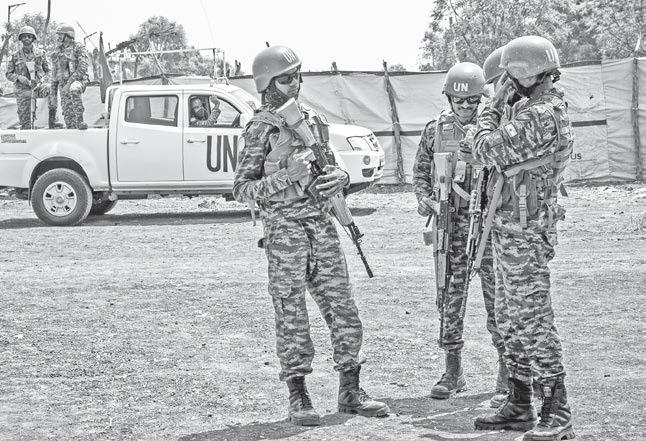
UN peacekeepers defy Sudan army’s order to leave opposition-held town
By Florence Miettaux & Deng Machol
The Associated Press
JUBA, South Sudan—The United Nations Mission in South Sudan said Monday that it would not comply with a government order to shut down its base in Akobo, an opposition stronghold near the Ethiopian border where tens of thousands of refugees have fled.
On Friday, the South Sudanese army ordered U.N. peacekeepers as well as NGOs and civilians to vacate the town ahead of a planned assault.
But the mission refused to leave and said it would provide “a protective presence for civilians” in the town, adding that the safety and security of its personnel “must be fully respected at all times.”
The U.N. Mission said it was engaging “intensively with national, state and local stakeholders” regarding this order. “Any military operations in and around Akobo gravely endanger the safety and security of civilians,” said mission chief Anita Kiki Gbeho.
The South Sudanese government has been fighting opposition forces since a 2018 peace deal broke down about a year ago.
A dramatic escalation took place in December 2025, when
Strike. . .
Continued from A8
is probably far enough away that it won’t affect them if it’s hit, she said, “but all the same, the danger exists.”
No one is going to work, and the kids are far from school. To pass the time and keep their minds off things, they walk the dogs, play board games and pick strawberries.
The peacefulness of the nature
opposition forces seized several government outposts in northern Jonglei. A government counteroffensive repelled their forces a month later and displaced over 280,000 people. Tens of thousands have sought refuge in Akobo, where a small contingent of U.N. peacekeepers is stationed.
Fearing the looming government assault on Akobo, humanitarian workers were evacuated over the weekend, and a mass exodus of the population has also begun.
Local officials contacted by the Associated Press said fleeing civilians faced danger and widespread shortages of essential supplies. Dual Diew, the Akobo County health director, who has fled to Ethiopia, said there were 84 wounded patients at the hospital. “We have most of them with us here now,” he said, adding that they lack medicine and basic nursing equipment.
Christophe Garnier, the leader of Doctors Without Borders in South Sudan said the organization had to evacuate its staff from Akobo on Saturday and learned of the subsequent looting of its hospital and the ransacking of its office.
“People in Akobo must now either flee without protection or remain
around them helps make the war feel distant—the clouds rolling across the green hills, the bleating of their neighbor’s goats at sunset. The brightest spot, the lawyer said, was when one of the two farm dogs, Maya, gave birth to a litter of puppies.
Still, uncertainty hangs over everything.
“FROM morning to night, we talk about what is happening, our wor -
at risk of being killed, while losing access to healthcare and other essential services,” he said.
The three Western governments that have played a major role in the peace process—the US, U.K., and Norway—sent a letter to
President Kiir on Monday urging that the army’s evacuation order be revoked and warning of “further deaths, displacement and suffering for the South Sudanese people” if the offensive on Akobo is implemented.
that may disrupt Russia’s springsummer 2026 offensive campaign plan.”
Meanwhile, a Kremlin aide said that Russian President Vladimir Putin told US President Donald Trump late Monday that Russian forces are “advancing rather successfully” in Ukraine.
That progress should “encourage” Kyiv to “move toward a negotiated settlement of the conflict,” Yuri Ushakov told reporters— even though Ukrainian President Volodymyr Zelenskyy has repeatedly demanded a lasting peace deal and European governments accuse Putin of feigning interest in talks while the Russian military keeps hammering Ukraine.
The Kremlin is hoping that the Iran war will bring it a financial windfall from rising oil prices, distract global attention from the Ukraine war, run down Western arsenals and force the US and its NATO allies to reduce military support for Kyiv. Zelenskyy, meanwhile, is hoping that by supplying its cuttingedge and battle-tested drone technology to the United States and its Gulf partners for the war in the Middle East, Ukraine will win more international diplomatic leverage against Moscow. He is also seeking a reciprocal supply of advanced Americanmade air defense missiles Ukraine needs to counter Russia’s attacks.
UNITED NATIONS peacekeepers stand near an airstrip in Akobo, South Sudan, Saturday, Feb. 21, 2026. AP/FLORENCE MIETTAUX
A10 Wednesday, March 11, 2026
US allies and rivals in Asia gauge fallout from war in Middle East
By Kim Tong-Hyung The Associated Press
SEOUL, South Korea—As war spreads across the Middle East, US rivals and allies in Asia are preparing for the consequences, which include possible economic shock and long-term security threats.
Here’s a look at how the fighting in the Middle East is impacting the Koreas, Japan and China.
North Korea
AT a major political conference last month, North Korean leader Kim Jong Un insisted the country’s decades-long pursuit of nuclear weapons was the “correct” choice, despite crippling isolation and scarce resources.
The US-Israeli attacks on Iran will only reinforce that belief.
North Korea’s leadership likely watched uneasily as the strikes killed Iran’s supreme leader. The attack followed a US operation in January that captured Venezuelan President Nicolás Maduro.
Pyongyang’s Foreign Ministry has condemned the attacks on Iran as illegal and a “most despicable” violation of sovereignty. Notably, it didn’t mention the death of Ayatollah Ali Khamenei.
Similar strikes to take out North Korea’s leadership would be far riskier and less likely to succeed, said Hong Min, an analyst at South Korea’s Institute for National Unification.
Unlike Iran, North Korea has followed through on its nuclear ambitions. Its expansive arsenal contains dozens of warheads, with a range of delivery systems threatening Asian US allies and intercontinental ballistic missiles potentially capable of reaching the US mainland. It would be difficult to eliminate North Korea’s capabilities in a single wave of preemptive strikes, and would leave open the possibility that surviving systems could be used to attack targets in South Korea, Japan or even America.
In his first public appearance since the war began, Kim last week inspected sea trials of his prized new warship and tests of what state media called nuclear-capable cruise missiles. Some analysts say
Strike. . .
Continued from A9 ries, how everything gets more expensive every day, about how far our money will stretch,” she said.
“If this situation continues, we will have problems meeting basic needs.”
Between bombardment and the Revolutionary Guard
THE US-Israeli campaign has struck heavy blows to Iran’s leadership, killing Supreme Leader Ayatollah Ali Khamenei and top military figures. It has also particularly targeted the paramilitary Revolutionary Guard and the all-volunteer Basij force, which are tasked with protecting the cleric-led Islamic Republic. The Basij force has led the crushing of waves of anti-government protests, including ones in January.
The leadership has kept its hold. Khamenei’s son, Ayatollah Mojtaba Khamenei, was named
the display may have been meant to showcase his military capabilities after the killing of Khamenei and the US sinking of Iranian naval assets—signaling that, unlike Iran, his ships could carry nuclear warheads.
Attacking North Korea would also be complicated by its geographic proximity to China and Russia— Washington’s most significant rivals—with whom Kim has been deepening ties as he seeks a more assertive presence in the region.
The US military actions on Iran and Venezuela both came despite active negotiations. Analysts have differing views on how that might affect North Korea’s desire for diplomacy with the United States, which derailed in 2019 following the collapse of a summit between Kim and US President Donald Trump.
At February’s ruling party congress, Kim left the door open to dialogue with the United States, reiterating Pyongyang’s earlier calls that Washington drop its demands for the North’s denuclearization as a precondition for reviving talks.
Hong said that while Kim is likely to maintain that position, the attack on Iran may have deepened his distrust of Washington and the leader could raise the bar for negotiations.
But Park Won Gon, a professor at Seoul’s Ewha Womans University, said Kim could feel greater urgency to seek a deal with Trump, viewing their unresolved diplomacy as a risk.
South Korean officials have suggested that Trump’s expected visit to China in late March or April may provide a possible opening with Pyongyang.
South Korea SOUTH KOREA , heavily dependent on trade and imported fuel, is alarmed by Iran’s attacks on energy infrastructure and attempts
the new supreme leader this week. The Guard and Basij have shown that their local networks are still in place so far.
The lawyer said that on the rare times she left the farm to go into town, she saw that members of the Basij were now more heavily armed in the streets.
“They are waiting for the slightest movement” showing dissent, she said.
She once campaigned against the mandatory hijab—in fact, she was briefly detained in the past— and stopped wearing it years ago. But since the war, she wears one when she leaves home for fear of provoking the Basij.
The town is traditionally considered pro-government, she said, and many residents have taken state positions or joined the Guard.
Religious and patronage loyalties run deep in rural areas in particular, since the Islamic Republic brought basic services to Iran’s countryside and small towns. Still, she has seen signs of
to close the Strait of Hormuz, through which roughly a fifth of global oil trade flows.
The war is also heightening unease in Seoul about its alliance with the United States. The Trump administration has shown a willingness to act militarily without broad coordination with allies.
The United States for decades has pledged full military—including nuclear—protection for its allies and stations about 28,000 troops in South Korea to deter North Korea. While a major reduction in that commitment is unlikely, Seoul must now consider the risk of being drawn into potential conflicts triggered by unilateral US action, including beyond the Korean Peninsula, Hong said.
“Whether it’s Taiwan, North Korea or the US-China competition, there have long been concerns in South Korea that the Trump administration could make overly aggressive decisions without fully considering the potentially serious consequences for its allies,” said Hong. “Those concerns are now significant.”
South Korea must “clearly define the actions it could take” under different scenarios, he said.
Japan
JAPAN , another key US ally in Asia, is also wary of Trump’s aggressive military actions and worried about any disruption to the Strait of Hormuz.
While Tokyo has backed US efforts to curb Iran’s nuclear development, the war has raised questions about its legitimacy and caused skepticism about Washington’s credibility as an ally, said Mitsuru Fukuda, a professor at Nihon University.
Prime Minister Sanae Takaichi and other senior officials have voiced strong support for US-Iran negotiations but stopped short of
endorsing the US-Israeli strikes. Tokyo has shown no interest in military involvement, but some experts believe the conflict could bolster Takaichi’s push for a stronger military and expanded weapons sales. US nuclear deterrence remains crucial to Japan’s security amid worry about an increasingly assertive China and North Korea. Although global turmoil, including Russia’s war in Ukraine, has revived debate over Japan acquiring nuclear weapons, domestic support remains low because of legal and political constraints.
China
CHINA could see the Iran war as an opportunity to carve out a more assertive role in the Middle East by styling itself as a more reliable power broker than the United States, said Seo Chang-bae, a professor at Busan’s Pukyung National University.
Beijing may view the US military actions in Venezuela and Iran—both major oil suppliers to China—as partly intended to counter China, experts say.
While steadily expanding trade and technology ties with Gulf states, China has sought to position itself as a regional counterweight, most notably by brokering a 2023 agreement between Iran and Saudi Arabia to normalize relations. It’s part of a broader push to strengthen its global influence and challenge dollar-based financial orders.
Although Beijing may pursue geopolitical “spillover gains,” a prolonged conflict would harm China’s trade interests, Seo said. China could also study US warfare capabilities and accelerate the integration of artificial intelligence into its military, he said.
AP writer Mari Yamaguchi contributed from Tokyo.
growing discontent even here.
Large crowds turned out in the town for January’s anti-government protests, she said, and observance of the state’s official mourning week for Khamenei has been muted, with few people wearing black as urged by authorities.
The Iran conflict: Three critical unknowns shaping the future, from leadership to oil
By Cara Anna & Sam Mednick The Associated Press
TEL AVIV, Israel—How long will the Iran war last? What do all sides want to achieve? And how high will oil prices go? Big questions remain as fighting enters week two.
Israel and the United States keep pounding Iran. And Iran keeps carrying out retaliatory attacks against Israel, US military assets in the Middle East and its Arab neighbors.
Here’s what we know about the war, and don’t.
How long will the war last?
THE US and Israel attacked Iran on Feb. 28, and there is no sign of the fighting ending soon. Iran’s president has said mediation was underway, although he didn’t give details.
Iran’s new supreme leader is the son of the previous one and seen as more hardline, with close ties to the Revolutionary Guard, the nation’s most powerful armed force.
Mojtaba Khamenei worked closely with his father, who was killed in the war’s opening strikes along with the younger Khamenei’s wife. He has not been seen or heard publicly in his new role, making it difficult to know whether he has interest in talks or in defiance.
Iran’s war strategy of causing regional chaos shows no change. Persian Gulf countries still report areas being attacked, including oil facilities and airports, that are well away from US military assets.
The war’s length depends in part on Iran’s stockpile of missiles and drones and countries’ capability to deflect them.
Israel’s military on Monday said Iran was firing barrages with dozens of missiles in the early days, but now there are less than 10 or 20 at a time.
Israeli army spokesperson Lt. Col. Nadav Shoshani said Iran still has “a significant amount” of missiles. Experts say Iran could be holding missiles in reserve, perhaps hoping that interceptors run low.
Iran has not provided information about military losses. Israel says it is focused on destroying long-range missiles while the US focuses on short-range ones threatening the Gulf. Israel estimates that 60% of both types of launchers have been destroyed.
Israel’s military is bulking up. It said about 50 cargo aircraft carrying over 1,000 tons of weaponry, military equipment and munitions have landed in the past 10 days, and cited the US and Germany as partners in an effort that is “expected to scale up.”
Ahead of the attacks, the US military built up its largest force of warships and aircraft in the Middle East in decades. The Central Command on Monday said “there is no shortage of American military will.”
The Trump administration and Israel have said the war will go as long as needed, but public frustration over oil prices and other economic pain could intensify pressure to wind down the conflict.
still screamed in his sleep. They decided it was time to leave.
As they drove through the capital, they saw cars on the roadside, their windows shattered from blasts. Leaving the city at the foothills of the Alborz Mountains north of Tehran, they saw columns of smoke rising from different parts of the city into the overcast sky.
“The scene made the city look frightening,” he said.
What do all sides want from the war?
IRAN has said it wants an end to the war, not a ceasefire.
An official with knowledge of the war’s operations said Israel is not in charge of the postwar plan, but the goal is to remove the regime and let Iranians “grasp their fate.” The official spoke on condition of anonymity because they were not authorized to speak to the media. Israel is also attacking Iranianbacked proxies like Hezbollah.
US President Donald Trump has made conflicting statements. The war has been about Iran’s nuclear program and concerns that it could take a short technical step to enrich uranium to weapons grade. But it also has been about eradicating the threat from the country’s ballistic missiles, which Secretary of State Marco Rubio says the US is “well on our way” to achieving.
Trump has also said he doesn’t seek regime change, but prioritized taking out several layers of Iran’s top leadership and has encouraged Iranians to “take over” their government.
There is no sign of that happening in Iran, with no strong organized opposition, evidence of high-level defections or street protests. Internet restrictions are complicating views of what’s happening.
Will other countries join the fight?
SAUDI ARABIA has issued a sharp statement saying Tehran would be the “biggest loser” if it continues to attack Arab states. Azerbaijan threatened “retaliatory measures” after it said Iranian drones hit its territory. There is big risk in joining the US and Israel’s attacks, and no country has announced taking that step. Already, they have been targeted by hundreds of Iranian missiles and drones.
Iran has exposed the fragility of the global economy by targeting key energy and other infrastructure. A drone strike on a desalination plant in Bahrain underscored the vulnerability of Gulf nations, which rely heavily on such facilities for drinking water.
Meanwhile, France is sending military vessels to the Middle East to help deter Iran’s attacks. Britain and Germany also have said they would help reduce Iran’s ability to launch them. And Ukraine is sending experts to help in countering drones.
How will it end?
THIS is especially complicated, as both Israel and the United States have threatened whoever Iran puts in charge. Trump called the younger Khamenei “unacceptable” even before his elevation to supreme leader. It is not clear who would be acceptable, and negotiating the war’s end seems out of reach for now.
Trust will be difficult, since this war and last year’s were launched during indirect talks between Iran and the United States.
Anna reported from Lowville, New York. Wyatte Grantham-Philips in New York and Melanie Lidman in Jerusalem contributed.
The ‘remarkable kindness’ of strangers
ONE man described how, before fleeing home in Tehran, explosions made his 6½-year-old son tremble in fear.
“You place him between you and your wife in bed, hoping he might feel safer,” he said, but he
On the highway west out of Tehran, heavy with traffic, explosions shook their car, terrifying his son, he said. Finally, they reached a family home in a small village on the other side of the mountains, northwest of the capital, overlooking the Caspian Sea. There they spend their days in the house, surrounded by rice paddies, with snow-capped mountains in the distance. Each day, he and his wife take their son out for walks.
He said he went to the neighborhood bakery to buy bread and found a long line. When the baker realized he wasn’t from the area, he called him to the front of the line, then tried to refuse payment for the bread.
“The others in line were very friendly, asking whether I had a place to stay and whether I needed anything,” he said. Leaving home isn’t an option for everyone.
One 53-year-old man in Tehran said that he can’t move his elderly parents and so is staying home. The strain is immense, he said.
“At night, I go down to the parking garage, sit inside my car and scream out loud,” he said. “I pray for calm and for quieter days.”
Radjy and Keath reported from Cairo.
“Boys have so much energy, and in a village, there is not much fun for him,” he said. In the evenings, his wife’s mother and father, who also fled Tehran, visit. Amid all the chaos, local residents show “remarkable kindness,” he said.
JAPANESE Prime Minister Sanae Takaichi gestures as US President Donald Trump delivers his speech during their visit to the aircraft carrier USS George Washington at the US Navy’s Yokosuka base in Yokosuka, south of Tokyo, on Oct. 28, 2025. AP/EUGENE HOSHIKO
Pinoy seafarer missing after Iranian missile strike in Strait of Hormuz
By Malou Talosig-Bartolome
AFILIPINO seafarer has gone missing after the UAEregistered salvage tugboat Mussafah 2 was struck by two Iranian missiles last Friday in the Strait of Hormuz.
The missing crewman was identified by his wife, Cristy, as George Francis Miranda, 46, a motorman from Daet, Camarines Norte. He was the only Filipino on board. Three Indonesian crew members, including the captain, are also unaccounted for.
Cristy said her last conversation with Miranda on March 5 revealed that the tug had been dispatched to assist the Malta-flagged container ship Safeen Prestige near Oman. Dun sa pangalawang missile strike po sapul na sapul ang tugboat, yan po ang sabi ng survivor na kapitan,” she recalled. According to a report from
Council for 2027 to 2028.
Marcos also portrayed violence against women and girls as a persistent obstacle to equality that strips people of their rights and undermines communities. He urged tougher implementation of existing laws, the scrapping of discriminatory rules and wider availability of affordable legal aid for survivors, in line with CSW70’s emphasis on justice and the dismantling of biased legal frameworks.
He cast the Philippines as committed to these objectives, pointing to official policies on gender equality and pledging that his government would work with other countries to strengthen the protection, empowerment and representation of women and girls. The Philippines performs relatively well in global gender-gap rankings compared with many of its neighbors, he noted, but added that closing the gap fully will require shifts in social attitudes as well as in law and policy.
CSW70, which runs from March 9 to 19 at UN Headquarters, focuses on expanding access to justice for women and girls, including by building fairer legal systems, scrapping discriminatory statutes and regulations, and tackling structural obstacles. The session gathers government officials, UN agencies and civil-society representatives to agree on conclusions that will inform national approaches to women’s rights.
Marcos is in New York for a two-day working visit that includes his CSW address and a meeting with UN Secretary-General António Guterres. Philippine officials say he plans to use the trip to underscore Manila’s stance on women’s rights, press for de-escalation and better protection of civilians in the Middle East conflict, and lobby for the country’s campaign for a non-permanent seat on the UN Security
Separately, Finance Secretary Frederick Go confirmed that the administration’s economic team is coordinating with Congress to secure authority for the President to implement the proposed measures, even if it means sacrificing part of the government’s revenue collections. (See: https://businessmirror.
“So in short, it’s really a very deregulated industry. That’s why pricing is very difficult to control. And that is part of our study,” he said.
exploitation
of the Makabayan bloc—Party-list Reps. Antonio
of ACT Teachers, Sarah
‘Bridge builder’ CITING the Philippines’ role as an international “bridge builder,” UN’s Guterres wants it to have a bigger role in international forums, according to Malacañang.
The UN executive made the statement in his bilateral talk with President Marcos at the UN Headquarters in New York.
During their meeting, Palace Press Officer Claire Castro said Guterres lauded how Marcos was promoting peace and democracy in the Philippines.
He also backs the country’s hosting of the Association of Southeast Asian Nations (Asean) Summit and related meetings this year and in its bid to become a nonpermanent member of the UN Security Council (UNSC).
“He [Guterres] also wished the President the best in campaigning for our candidature. The Philippines has been known in the UN as the bridge builder and he wants to see and hear the voice of the Philippines in the UN as loud as possible,” Palace Press Officer Claire Castro said in Filipino during a press conference in New York.
For his part, Marcos gave Guterres updates on the developments in the Bangsamoro Autonomous Region in Muslim Mindanao (BARMM).
He also thanked the UN agencies for providing support for initiatives in BARMM.
“The President is happy to report that the first elections in BARMM will be held in September this year. Although, there is still a bill pending in Congress regarding this,” Castro said.
The proposed piece of legislation, which will reset the first BARMM Parliamentary polls, is currently among the priority bills of the Marcos administration.
After his meeting with Guterres, Marcos held two consecutive business
Finance officials, however, cautioned lawmakers about the fiscal implications of suspending fuel taxes. Government data show that fuel-related taxes generate around P276 billion annually, including about P160 billion from excise taxes and P116 billion from value-added tax collections. (See: https://businessmirror. com.ph/2026/03/10/oil-deregulation-
Jane Elago of Gabriela, and Renee Louise Co Kabataan—condemned what they described as the “shameless exploitation” of the ongoing Middle East crisis to manipulate pump prices.
“The biggest price shock since the Oil Deregulation Law took effect in 1998 exposes the brutal reality that deregulation did not create competition; it consolidated corporate power and enabled coordinated price increases,” the bloc said in a statement.
the Migrant Workers Office (MWO) of the Philippine Embassy in Abu Dhabi, Mussafah 2 departed with seven crew members and several office passengers to tow Safeen Prestige, which had been immobilized by an earlier missile strike.
After the towing rope was secured, the tug was suddenly attacked.
n The first missile struck the rear section of the vessel.
n The second missile hit the bridge directly, where four crew members—including Miranda— were located. All four are missing and presumed dead.
Survivors were thrown overboard and later rescued by a local fishing boat, but the tug exploded
engagements, which aimed to attract more investments in the country on healthcare services and other fields.
Balance of power
REITERATING the country’s pending bid to become a non-permanent member of the UNSC from 2027 to 2028 is among the highlights of Marcos’ two-day working visit in the US this week.
Castro and the Department of Foreign Affairs (DFA) said being part of the UNSC will give the Philippines greater credibility and voice in global affairs to push not only for its own interests, but also concerns of other countries.
“The Philippines will not only raise its concerns, but for all. Because this [UNSC sea] is not just a privilege, it is a responsibility. Not just for the country, but for all countries, especially in Asia,” she said.
“And he said, we know what needs to be done and how we can contribute to the balance of power in the world. That’s what our President said,” she added.
The UNSC has five permanent members namely, the United States, Russia, China, France, and the United Kingdom, which have veto powers on resolutions. It also has 10 non-permanent members, who are elected to two-year terms.
The election, which will be done via secret ballot, for the UNSC will be held on 3 June 2026. A country needs to secure two-thirds majority to be elected as a non-permanent member.
Castro is hopeful the country will be able to secure a seat in the UNSC with the President’s participation in the UN General Assembly special session, where he delivered a speech.
“And that’s why the President is doing this so that members of the General Assembly can see that the Philippines deserves to have a non-permanent seat on the UN Security Council,” she said. With Samuel P. Medenilla in Manila
laws-limits-on-government-spursamendment-bid/)
Officials said suspending fuel excise taxes from May to December alone could lead to about P136 billion in foregone revenues, although some of the losses may be offset by higher VAT collections if global oil prices continue to rise.
“We certainly need to put temporary measures in place immediately to minimize the impact of fuel hikes,” Ferrer said.
They argued that the deregulation policy has left the government powerless to stop oil companies from passing on global price shocks to consumers while allowing firms to stagger increases and expand profit margins.
The bloc also called for more drastic measures, including scrapping the Oil Deregulation Law, removing excise taxes and value-added tax on petroleum products, and holding alleged profiteers accountable.
shortly after, preventing further search attempts.
The Omani military secured the survivors and transported them to a hospital, where they are being treated for severe burns. One survivor sustained injuries to 70% of the body.
The Embassy has spoken with Miranda’s wife and requested assistance with the UAE Ministry of Foreign Affairs on Miranda’s case.
International Maritime Organization (IMO) Secretary-General Arsenio Dominguez condemned the attack, warning that at least seven seafarers have died in recent strikes on merchant vessels in the region.
“I must express my grave concern regarding the recent attacks on merchant vessels in the region of the Strait of Hormuz, which
LTFRB.
have resulted in at least seven fatalities and several injured seafarers, some of them gravely,” Dominguez said, stressing that freedom of navigation must be respected without exception.
He cited the Mussafah 2 strike, which left at least four crew dead and others seriously injured, alongside fatalities from attacks on the Stena Imperative in Bahrain, the MKD Vyom, and the Skylight.
The incident underscores the escalating danger in the Strait of Hormuz, a vital shipping lane between Iran and Oman, as Tehran continues to target vessels in response to US-Israeli strikes on its nuclear and missile facilities.
BusinessMirror has sought comment from AD Ports Group but has yet to receive a response.
“Measures will also seek to strengthen the Department of Energy’s administrative capacity, giving it the authority to monitor fuel outlets and penalize overpricing,” Quimbo added. He said informal consultations have already taken place with stakeholders from transportation, lower-middle-class sectors, and vendors of essential commodities to ensure the bill’s provisions are responsive to those most affected.
“The acts are designed as temporary, nationwide, and communal efforts—much like the original Bayanihan Acts—to mitigate the economic impact of emergencies,” Quimbo said.
The Bayanihan 1 (Republic Act 11469) and Bayanihan 2 (RA 11494) Acts of 2020 were instrumental in providing P5,000 to P8,000 in aid to low-income families, expanding COVID-19 testing capacity, and granting 30-day grace periods for loans and rent, illustrating a template for swift government intervention in times of crisis.
He urged commuters to report any violations to the LTFRB while the agency awaits further directives from its central office regarding both the subsidy and potential fare adjustments.
Under LTFRB rules, drivers found overcharging may face penalties ranging from P5,000 for the first offense, P10,000 and suspension for the second, and P15,000 with possible cancellation of franchise for the third offense.
Quimbo said the omnibus legislation is expected to be finalized in the coming weeks, marking a critical step in the government’s response to the worsening oil crisis.
Jovee Marie N. dela
Cruz
House OKs BARMM parliamentary elections on final reading, sets vote for September 2026
By Jovee Marie N. Dela Cruz @joveemarie
VOTING 247 in favor, with none opposed and two abstentions, the House of Representatives on Tuesday approved on third and final reading a measure setting the date of the first regular parliamentary elections in the Bangsamoro Autonomous Region in Muslim Mindanao (BARMM) in September 2026, as lawmakers moved to close the legal gap created by court rulings and keep the region’s transition to a duly elected Parliament on track.
House Majority Leader and Ilocos Norte Rep. Ferdinand Alexander “Sandro” Marcos led the approval of House Bill (HB) 8220, the proposed measure providing for the date of the first regular parliamentary elections in BARMM.
Marcos said the bill seeks to keep the peace process anchored
on a clear democratic mandate while giving election authorities the legal basis to begin preparations early.
Lanao del Sur Rep. Zia Alonto Adiong, the main sponsor and author of the measure, said the bill is designed to ensure that the very first regular BARMM parliamentary elections can take place in the second Monday of September, with both chambers now positioned to align the final version once the Senate completes its own action.
“This bill protects the integrity of the transition by putting the first parliamentary elections on firm legal ground, so the people of Bangsamoro can finally choose their leaders through the ballot,” Adiong, House Committee on Suffrage and Electoral Reforms chairman, said.
“This bill allows that the first BARMM elections will take place in September this year, and with the Senate’s approval, we are
Cebu oil supply above required inventory; DOE Visayas Field Office steps up inspections
By Carmel Pedroza
CEBU CITY—The Department of Energy (DOE) Visayas Field Office assured the public that Cebu’s oil supply remains above the government’s required inventory, even as authorities intensify monitoring of gasoline stations through random inspections and a newly launched digital complaints platform.
Engineer Jose Rey Maleza of the DOE Visayas Field Office said inspection teams have been deployed across Cebu, including areas in Mandaue City going north and outside Cebu City, to check fuel prices and supply levels amid concerns linked to the recent global oil situation.
“When the current crisis started about two weekends ago, we already expected that it could have effects not only on prices but also on supply. So we started running monitoring activities,” Maleza said in a phone interview.
According to Maleza, the DOE began monitoring fuel prices and supply inventories last week, a process that continues as part of the agency’s regular enforcement and consumer protection efforts.
Random inspections underway
DOE inspectors are conducting random inspections of retail fuel outlets to ensure compliance with official price estimates and to verify that stations are not withholding supply to benefit from possible price increases.
“If our inspectors find unusual price movement — meaning prices higher than the estimated price issued by the DOE — we will issue a show cause order,” Maleza said. Gas stations that receive a show cause order must submit an explanation within 24 hours. Their response will then be evaluated by the DOE’s legal team.
“If the explanation is unjustifiable, there’s a chance we will issue a cease and desist order against that particular retail outlet,” Maleza explained.
He added that monitoring also includes checking actual storage tank measurements at gasoline stations to ensure reported inventories are accurate.
Guarding against hoarding PART of the inspection effort is aimed at preventing fuel hoarding or artificial shortages, Maleza said.
Some stations may claim to be out of stock even though fuel remains in storage, he noted.
“There are instances where they say they are out of stock, but in reality they still have supply and are just waiting for the next day’s price movement,” he said.
However, Maleza clarified that some stockouts may be legitimate due to sudden spikes in consumer demand.
Fuel price adjustments are usually announced in a staggered schedule, which sometimes leads motorists to purchase larger-thanusual volumes to take advantage of lower prices.
“Instead of buying three or five liters, some consumers go for a full tank. Because of that unusual demand, stocks can be depleted faster,” he said.
Replenishing supplies can also take time since fuel deliveries must come from depots.
Adequate supply in Cebu DESPITE these situations, the DOE assured that Cebu’s overall fuel supply remains stable.
“Our stocks are more than the required inventory, and we also have additional shipments arriving,” Maleza said.
He noted that supply figures vary daily depending on stock levels and deliveries in transit, but monitoring shows that Cebu maintains sufficient reserves.
Public complaints now on eGov
THE DOE is also encouraging the public to help monitor fuel retailers through a complaints portal on the government’s eGovPH platform.
Consumers who suspect overpricing or other irregularities may file complaints online, Maleza said.
“We are now receiving complaints through all communication modes. In fact, complaints can already be lodged through the eGov platform,” he said.
In addition to the digital portal, DOE accepts complaints via its official email channel.
Authorities urged consumers to report suspicious pricing or supply practices to help ensure fair fuel trading across the region.
ready for the bicam so we can deliver a clear and credible path to the people of the region,” Adiong said.
HB 8220 amends Section 13, Article XVI of Republic Act No. 11054, the Bangsamoro Organic Law, to set the first regular election for the Bangsamoro Government under the Organic Law on the second Monday of September 2026, and it also lays down the schedule for the succeeding polls to keep the transition aligned with the national election calendar.
For purposes of synchronization, the measure provides that the regular elections for the Bangsamoro Government shall be held on the second Monday of May 2031 and every three years thereafter, with officials in later cycles assuming office at noon of the 30th day of June following their election, a timeline meant
to stabilize governance and avoid repeated resets that weaken public confidence.
The bill directs the Commission on Elections, through the Bangsamoro Electoral Office, to promulgate the rules and regulations for the conduct of the elections, enforce them and administer the polls pursuant to national law, the Organic Law and the Bangsamoro Electoral Code, underscoring that the credibility of the first vote will rest as much on preparation as it will on the election day itself.
It also provides a holdover mechanism during the extension of the transition period, allowing the Bangsamoro Transition Authority to continue as interim government in BARMM until their successors have been elected and qualified, while clarifying that interim members may be replaced by the President or have their tenure
shortened by election to another office or by other causes.
To support operational readiness, the measure provides that the automated election system used in the May 12, 2025 national and local elections shall, likewise, be used for the first BARMM parliamentary election, including the machines, devices and equipment, as well as the suppliers and providers involved in their operation and maintenance, to ensure consistency, efficiency and integrity in the process.
At the same time, the bill gives Comelec flexibility to explore other modes of conducting the election, such as manual election, if the commission determines ahead of the BARMM parliamentary elections that automation is no longer practicable based on surrounding circumstances, an option meant to keep the elections doable even under shifting conditions.
Filipino seafarers granted right
to refuse high-risk Gulf waters as tensions escalate
By Samuel P. Medenilla @sam_medenilla
FILIPINO seafarers, who are onboard ships passing through the Strait of Hormuz and Gulf of Oman will now have the right to refuse to sail and get additional compensation after both bodies of water were declared “Warlike Operations Area [WOA],” according to the Department of Migrant Workers (DMW).
The International Transport Workers Federation (ITF) defines WOA as locations where there is a high level of exposure to safety and life risks due to war, military tension, hostilities and pirate activities.
In his Advisory No. 11, series
of 2026, DMW Secretary Hans J. Cacdac cited the decision of the International Bargaining Forum (IBF), which include members of the ITF and the Joint Negotiating Group, designated the Persian Gulf, Strait of Hormuz, and Gulf of Oman as WOA.
This, after the United States and Israel launched joint air strikes against Iran. Tehran retaliated by attacking its neighboring countries and threatening to blockade the Strait of Hormuz, where a fifth of the world’s oil supply is usually shipped.
“Because of this, the sailors have the “right to refuse sailing” before they set sail onboard ships bound for the said areas,” he said in Filipino in a social media post
about the said new issuance.
“Their shipowners must also implement increased security arrangements,” Cacdac said. In case a Filipino sailor will die or suffer disability, after agreeing to sail in the said WOA, they and their families will be entitled to double compensation.
As of last Sunday, Cacdac said they have monitored at least 6,300 Filipino seafarers in the Persian Gulf, Strait of Hormuz, and Gulf of Oman.
“They are marked safe and some of them are awaiting their flight home...We are closely watching at least three ships that are anchored in the Strait of Hormuz and Gulf of Oman area,” Cacdac said.
DepEd fine-tunes rules for lifelong learning law to credit work experience
By Claudeth Mocon-Ciriaco @claudethmc3
EDUCATION Secretary Juan Edgardo “Sonny” Angara is enhancing the implementation of the Lifelong Learning Development Framework (LLDF) Act (RA 12313) to ensure no Filipino is left behind. The initiative will formally credit skills learned through work or community service toward educational qualifications.
The law, Angara said, also provides opportunities for every Filipino to continue learning and
developing, regardless of age or background.
The Philippine Qualifications Framework-National Coordinating Council (PQF-NCC) recently conducted an online public consultation to fine-tune the draft Implementing Rules and Regulations (IRR) of the LLDF Act.
According to Angara, who is also the PQF-NCC Chair, the participation of various sectors is important to ensure that no Filipino is left behind in education and development.
“Our goal is to guarantee that no Filipino is left behind in our
rapidly changing world by making quality education a lifelong journey rather than a one-time event,” Angara said.
The consultation held on February 27 gathered a diverse group of stakeholders—from barangay leaders and local government officials to industry partners and civil society groups.
Signed by President Ferdinand R. Marcos Jr. last October, the LLDF Act serves as a strategic policy to institutionalize lifelong learning
See “DepEd,” A13
Zambales joins 4-day workweek bandwagon
By Henry Empeño
IBA , Zambales — Zambales prov-
ince has implemented a fourday workweek program following the release by Malacañang on Friday of Memorandum Circular 114 enjoining energy conservation measures among national and local government units in face of rising global oil prices due to the ongoing Middle East crisis. Through Executive Order No. 1, series of 2026, Governor Hermogenes Ebdane Jr. directed the implementation of energy conservation measures and adoption of flexible work arrangements to reduce electricity and fuel consumption and
promote efficient use of resources.
The order signed on Monday, March 9, covers all local government units and instrumentalities within the province.
Under EO 1, Ebdane set a fourday workweek from Monday to Thursday, with daily working hours from 8:00 a.m. to 5:00 p.m. Fridays, meanwhile, will be workfrom-home days to allow personnel to perform tasks remotely while maintaining productivity and operational continuity, the governor said.
Ebdane, however, directed the Provincial Engineering Office and the four hospital units in the province to maintain regular office work
DOJ to oppose Jinggoy’s request to travel abroad despite existing PHDO
TMonday to Friday, 8:00 a.m. to 5:00 p.m., to provide essential on-site services. He also ordered the provincial government’s Accounting, Treasury, General Services, and Disaster Management offices to maintain a skeleton workforce, with a duty officer on Fridays, to continue operations.
Aside from the flexible workweek schedule, Ebdane’s EO 1 directed government units to adopt virtual meetings as the default mode for conferences, consulttions, and coordination whenever feasible.
See “Zambales,” A13
By Joel R. San Juan @jrsanjuan1573
HE Department of Justice (DOJ) on Tuesday said it would oppose the request of Senator Jinggoy Estrada to be allowed to leave the country for a “personal trip” despite an existing precautionary hold departure order (PHDO) issued by the Regional Trial Court (RTC) of Manila City.
Estrada filed his motion seeking permission to travel before the Sandiganbayan Fifth Division where he is undergoing trial for 11 graft charges in connection with his alleged misuse of P231 million Priority Development Assistance Fund (PDAF).
The senator filed his motion last March 5 indicating his intention to travel to Hong Kong, Macau, and Japan from March 31 to April 5.
Estrada has no existing PHDO issued by the anti-graft court but the prosecution raised the PHDO issued by the Manila RTC in opposing his motion.
The PHDO was issued last month by the Manila RTC Branch 52 Presiding Judge Juan Rañola based on the ex-parte motion filed by DOJ prosecutors. Aside from Estrada, the PHDO covers former Department of Public Works and Highways (DPWH) Secretary Manuel Bonoan and three others.
The PHDO was sought by the DOJ to prevent them from leaving the country pending the result of the preliminary investigation being conducted by the DOJ on the plunder charges filed against them in connection with the flood control scandal. In issuing the PHDO, the trial court said there is probable cause “to believe that respondents will depart from the Philippines to evade arrest and prosecution of the crimes against them.”
Thus, it directed the Bureau of Immigration (BI) “to hold the departure from the Philippines” of the respondents “and to include their name in the Hold Departure List of the said office.” DOJ spokesman, lawyer Polo Martinez maintains that the senator is a “flight risk,” thus, must not be allowed to leave the country.
“The DOJ will oppose any motion to lift the PHDO as sufficient grounds exist that warrant its continued effectivity,” Martinez said.
He also explained that the PHDO is a court order, thus, it can only be revoked by order of the same court that issued it. It may be recalled that in 2024, the Sandiganbayan acquitted Estrada of plunder but was convicted of one count of direct bribery and two counts of indirect bribery in connection with his PDAF disbursements. He was sentenced to eight to nine years imprisonment for direct bribery and meted out a special temporary disqualification from holding public office and perpetual disqualification to vote. He was also ordered to pay a fine of P3 million. However, the anti-graft court eventually reversed its decision and cleared Estrada of direct and indirect bribery charges due to lack of evidence.
Estrada had sought the dismissal of the graft cases through a demurrer to evidence which the Sandiganbayan denied. A demurrer to evidence is a motion filed by an accused after the prosecution rests its case, asserting that the evidence presented is insufficient to warrant a conviction.
THE employee of the Migrant Workers Office (MWO) in Bahrain, who was recalled for alleged rudeness toward some overseas Filipino workers (OFW), as shown in a viral video, will be investigated upon his return, Malacañang said.
President Marcos issued the directive after learning of the video, which showed the said MWO employee, Anthony Allermo allegedly trying to turn away OFWs, who were converging and appeared to be waiting for cash aid.
“When the President saw the viral video showing Allermo mistreating OFWs, he immediately ordered DMW Secretary Hans Leo Cacdac to investigate and take action on the incident,” Palace Press Office Claire Castro said in Filipino in a press conference.
On Monday, Cacdac already announced he recalled Allermo, who is now facing an adminis -
trative investigation upon his return.
“A person who has no heart for service has no place in the administration of President Marcos,” she added.
Castro said Marcos reiterated his directive to Cacdac to ensure the safety of the over two million Filipinos in the Middle East, who are affected by the armed conflict in the region.
She said from March 3 to 9, DMW already repatriated 400 OFWs and their dependents.
DMW also reported 16 OFWs from Tel Aviv, Israel, as well as 20 OFWs and nine dependents from the United Arab Emirates will soon be brought home.
It also noted it will have chartered flight from Riyadh, Kingdom of Saudi Arabia on March 14 to repatriate more OFWs.
“The operation will be funded through the Emergency Repatriation Fund managed by Owwa [Overseas Workers Welfare Administration],” Castro said.
DILG urges LGUs to adopt measures for healthier communities
THE Department of the Interior and Local Government (DILG) is encouraging local government units (LGUs) to adopt measures that promote healthier communities.
Among other measures, the DILG said LGUs can organize community fitness activities, expand green public spaces, and adopt carfree Sundays.
The call supports the directive of President Ferdinand R. Marcos Jr. to prioritize the health and well-being of Filipinos amid the rising number of overweight adults in the country. Data from the 2023 National Nutrition Survey shows that four in every ten Filipino adults are now classified as overweight or obese.
Through a recently issued Memorandum Circular, the DILG recommended that LGUs organize accessible outdoor activities such as fun runs, Zumba sessions, and community sports events to encourage citizens to remain physically active.
The Department also urged local governments to develop and maintain green public spaces such as parks, plazas, and open areas where residents can safely exercise and spend time outdoors. These spaces should include accessible pathways and
ramps to ensure that senior citizens and persons with disabilities can fully participate in community activities.
To further promote safe and convenient spaces for physical activity, LGUs are also encouraged to implement car-free Sundays, where selected roads are temporarily closed to vehicles and opened for pedestrians, joggers, cyclists, and other recreational users. To minimize traffic disruption, the DILG recommended that LGUs implement proper rerouting plans for motorists.
Several cities, including Metro Manila, Baguio, Iloilo City, and Davao City, have already adopted car-free initiatives, providing residents with safer and more open spaces for exercise and community engagement.
The DILG is also encouraging LGUs to integrate health and wellness initiatives into their local development plans to ensure that programs promoting active lifestyles are sustained in the long term.
Regional directors have likewise been directed to support and monitor these initiatives as part of broader efforts to promote healthier communities and improve the quality of life of Filipinos across the country. Jonathan L. Mayuga
MMDA targets 2027 for ‘Sponge City’ project to solve Metro Manila floods
By Claudeth Mocon-Ciriaco @claudethmc3
METROPOLITAN
Manila
Development Authority (MMDA) Chairman Romando Artes announced on Tuesday that the agency plans to implement the “Sponge City” project by 2027 as a key solution to Metro Manila’s persistent flooding problem.
“Ang proyekto ay nakatuon sa paggamit ng Nature-Based Solutions at sa pagpapatupad ng “Sponge City” approach, kung saan pinagsasama ang tradisyonal na drainage infra -
structure at green-blue systems tulad ng parks, wetlands, at rivers upang sumalo, magpabagal, at mapadaloy nang maayos ang tubigulan ,” said Artes after he met with
officials of the Asian Infrastructure Investment Bank (AIIB) to start planning the Metro Manila Sponge City Project as part of the overall Metro Manila Flood Management Project (MMFMP).
Artes said that the World Bank is also supporting the project, aim at enhancing Metro Manila’s response system to address flooding and the coordination between national government agencies and local government units (LGUs).
At present, Artes said, they are still to identify areas or sites where it can be started immediately.
Inaasahang masusubukan at masusukat ang mga pilot interventions sa ikatlong quarter ng 2027,” he added.
Pioneered in China, the Sponge City was a concept of architect Kongjian Yu around 2000-2005.
Sandiganbayan denies bail petition of Zaldy Co’s nine co-accused in malversation case
entitled to,” the resolution read.
TThe goal is to create cities that act like “sponges” to soak up, clean, and store rainwater, thereby reducing flood risks and water scarcity. It has since been introduced in other urban areas around the world such as Copenhagen in Denmark, Rotterdam in the Netherlands, Berlin in Germany, Singapore, Wuhan, Xixian, Jinan and Xiamen in China, Bangkok, Thailand, Dhaka, Bangladesh, Portland Oregon in the United States, and Mexico City. Meanwhile, under the MMFMP, Artes said the government will continue the modernization of more than 70 major and minor pumping stations, reduction in solid waste, construction of rainwater impounding facilities, and enhance project management and coordination between the MMDA, other agencies and LGUs.
EO 1 also limited official travels, outof-town trainings and seminars to only those absolutely necessary, and enforced trip consolidation and optimized routes for government vehicles to reduce fuel consumption.
Ebdane said he expects all municipal government units to follow suit and implement their own energy conservation programs.
In the capital town of Iba, Mayor Irenea Maniquiz-Binan issued EO 33, which adjusted the daily work schedule for local government employees to 10 days, or from 7:00 a.m. to 6:00 p.m. Monday to Thursday, with Friday designated non-working day.
DepEd. . .
Continued from A12 opportunities across cities, municipalities, barangays and learning providers nationwide.
Frontline service offices, however, will remain operating Monday to Friday and implement a rotation schedule with skeleton force to keep essential services unimpeded, Binan said. A 10-hours workday is also implemented in Masinloc town under Mayor Hazel Lim’s EO No. 12, which similarly extend work hours from 7:00 a.m. to 6:00 p.m. without noon break.
Lim also said that offices and units providing essential, emergency, and 24/7 service shall not close on Fridays and weekends and maintain full operations with skeleton workforce through work shift distribution. The four-day workweek schedule is expected to reduce the LGU’s weekly fuel and electricity consumption by about 15 percent to 20 percent, Lim added.
The law aims to support various ambitions—from farmers adopting new technology, to stay at-home parents re-entering the workforce, or a senior citizen wanting to pick up a new craft—by providing institutional support directly within their communities.
During the consultation, PQFNCC Permanent Secretariat Strategic Advisor Dr. Rafaelita M. Aldaba emphasized that the national commitment must move beyond legisla-
By Joel R. San Juan @jrsanjuan1573
HE Sandiganbayan Sixth
Division on Tuesday junked the plea of nine co-accused of resigned Ako Bicol party-list Rep. Zaldy Co in the malversation case to post bail.
In a 41-page resolution, the Sixth Division held that the prosecution was able to prove the evidence of guilt against the accused is strong which warrants their continued detention pending the resolution of the case.
Rule 11, Section 7 of the Rules of Court provides that persons charged with an offense punishable by reclusion perpetua are not entitled to bail when the evidence of guilt is strong.
“There is nothing in the prosecution’s evidence to show an actual agreement among the accused to cause the release of public funds to Sunwest, Inc. exceeding the amount it was actually
“However, the prosecution’s evidence shows that the accused’s combined acts were done pursuant to the accomplishment of the same object – releasing the DPWH’s funds to Sunwest, Inc. despite its failure to accomplish the works in compliance with the required specifications. Without any of the said accused acts, the subject funds would not have been released to Sunwest, Inc.,” it added.
Denied were the bail petitions of accused Gerald Pacanan, DPWH Regional Director; Gene Ryan Altea, DPWH Assistant Regional Director; Ruben D.S. Santos, DPWH Assistant Regional Director; Dominic Serrano, DPWH Chief, Construction Division and Bids and Awards Committee (BAC) chairperson; Felisardo Casuno, DPWH Project Engineer 3; Lerma Cayco, DPWH Accountant IV ; Dennis Abagon, PWH OIC-Chief, Qual -
ity Assurance and Hydrology Division; Regular Member, BAC; Montrexis Tamayo, DPWH-Mimaropa Planning and Design Division officer-in-charge; and Juliet Calvo, DPWH Maintenance Division Chief. The malversation case filed against them by the Office of the Ombudsman stemmed from the P289.5 million anomalous project in Naujan, Mindoro undertaken by Sunwest Corporation, the construction firm being linked to the family of Co.
The project involves the construction of a road dike along MagAsawang Tubig River.
When the project was inspected, it was discovered that the materials used were substandard, there were also deficiencies in documentation supporting progress billings and that several payments were approved despite missing records and in some instances, identical photographs were reused to justify separate billings.
DAR cites ten ARBOs for excellence in rural development
THE Department of Agrarian Reform (DAR) recently cited 10 agrarian reform beneficiary organizations (ARBOs) in Nueva Vizcaya for demonstrating resilience, strong leadership and a commitment to excellence.
DAR Secretary Conrado Estrella III said the ARBOs, which have reached Level 5 Maturity have significantly improved their organizational performance, financial management, compliance with government policies, and long-term sustainability, making them among the farmers’ groups to watch in the province.
Leading the list are the Gait Tuding MultiPurpose Cooperative (GTMPC) of Dupax del Norte and the Greeners Multi-Purpose Cooperative of Bambang, which secured the top two spots among 87 ARBOs assessed over the past two years. They earned scores of 78.3 and 77.2, respectively, during the recent two-day IT (Information Technology) eASyFeedbacking held at DISADECO Hotel Resort.
With these scores, both cooperatives were elevated to Level 5 Maturity, the highest rating under the ARC Level of Development Assessment. This distinction reflects their readiness to meet developmental challenges and sustain growth.
tion into practical, coordinated, and responsive systems.
Stakeholders suggested aligning the new rules with existing programs like the Expanded Tertiary Education Equivalency and Accreditation Program (ETEEAP) and the Philippine Credit Transfer System (PCTS).
This means that skills learned
What stands out about these farmers’ organizations is their strong cohesion in operations, the unity that enabled them to face challenges head-on and build their social capital.
Also achieving Level 5 Maturity are:
Saint Joseph Parish Multi-Purpose Cooperative – Belance (Dupax del Norte) – 73.5
Saint Patrick Parish Multi-Purpose Cooperative (Kasibu) – 66.7 - Conwap Valley MultiPurpose Cooperative (Dupax del Norte) – 66.0
Saint Vincent Parish Multi-Purpose Cooperative (Dupax del Sur) – 65.9
Villaverde Development Cooperative (Villaverde) – 64.8
Alfonso Castañeda Multi-Purpose Cooperative (Alfonso Castañeda) – 63.9
Saint Joseph Parish–Kayapa Multi-Purpose Cooperative (Kayapa) – 63.8
Giayan Multi-Purpose Cooperative (Dupax del Norte) – 63.5
These ARBOs were recognized for their adaptability to modern farming practices and climate change initiatives, their ability to meet financial obligations for farm inputs and labor, and their improved understanding of market demands—particularly in meeting quality
through work experience or community training could be credited toward formal degrees or certifications.
and volume requirements to secure fair prices for their products.
Under the assessment system, organizations scoring 60.1 and above are classified as Level 5; 45.1–60 as Level 4; 30.1–45 as Level 3; 19.1–30 as Level 2; and 19 and below as Level 1.
Engr. David B. Villanueva Jr., Officer-inCharge of DAR–Nueva Vizcaya, encouraged the ARBOs to sustain their momentum and continue striving for excellence.
“Make the most of the support extended by DAR—from infrastructure projects and farm equipment assistance to livelihood training and access to the latest farming technologies,” Villanueva said.
ARBOs classified under Levels 5 and 4 are considered to have achieved high maturity, with strong operational cohesion, the capacity to manage various enterprises, and the ability to provide diverse services to their members.
Those under Level 3 are moderately mature and already managing social enterprises with varying levels of profitability. Meanwhile, organizations under Levels 2 and 1 are still working to strengthen their operations, often facing challenges such as inactive officers or members, internal conflicts, limited capital, or a lack of stable markets. Jonathan L. Mayuga
DENR flags El Nido race track project
By Jonathan L. Mayuga @jonlmayuga
THE Department of Environment and Natural Resources (DENR)–Mimaropa (Mindoro, Marinduque, Romblon and Palawan) Region has issued a Notice of Violation (NOV) to the proponent of the El Nido Motocross Race Track project in barangay Villa Libertad, El Nido, Palawan, for undertaking development activities without securing the required Environmental Compliance Certificate (ECC). Operating or conducting development activities without an ECC is a violation of Section 4 of Presidential Decree 1586 or the Philippine Environmental Impact Statement (EIS) System Law. Environmental Management Bureau (EMB)–Mimaropa said the project involves a total area of approximately 1.45 hectares, exceeding the threshold under EMB Memorandum Circular No. 2022-06, which requires an ECC for tourism and leisure projects with a total or gross floor area of at least 0.1 hectare.
The NOV directs the project proponent to submit a notarized position paper within fifteen days and orders the suspension of all activities and operations unless and until an ECC is secured. A technical conference has also been scheduled to ensure due process and clarify regulatory requirements.
The DENR reiterated that no project may proceed without full compliance with environmental laws and that all findings and subsequent actions will be based on verified evidence and established legal procedures. The Department said it remains committed in safeguarding Palawan’s ecological integrity and enforcing environmental regulations consistently and transparently.
“The implementation of RA 12313 rests heavily on the participation of stakeholders who have taken the time to contribute to this public consultation,” Atty. Binayan said.
Atty. Jhazen Binayan from the DepEd Legislative Liaison Office (LLO) presented the refined draft IRR, underscoring the need for inclusive language in the IRR and the recognition of varying capacities among local government units.
The discussions also touched on the importance of the family unit in the learning process, a concept already captured in the framework’s vision of a learning city, municipality, or barangay.
Director Maricor Anne DG. Cauton of the Union of Local Authorities of the Philippines (ULAP) stressed that technical assistance would be provided to help communities scale effective programs.
The cost of conflict: Why PHL must reduce food waste and imports
EVEN before hostilities broke out between the United States and Iran, the Food and Agriculture Organization of the United Nations reported last Friday that world food commodity prices were higher in February. FAO’s Food Price Index, the benchmark measure for world food commodity prices, averaged 125.3 points in February, up 0.9 percent from its revised January level. This ended the five-month downward trend and was largely due to more expensive wheat, most vegetable oils and meat products, according to FAO.
The cereal price index, which includes rice, went up by 1.1 percent from January driven primarily by higher world wheat prices. FAO said the price increases reflect reports of frosts in parts of Europe and the United States as well as ongoing logistical disruptions within the Russian Federation and the Black Sea region. The All Rice Price Index rose slightly at 0.4 percent in February due to the sustained demand for basmati and Japonica varieties.
Apart from these commodities, FAO said its vegetable oil price index went up by 3.3 percent in February and reached its highest level since June 2022—a few months after Russia attacked Ukraine. FAO attributed this to more expensive palm oil and soy oil. Sustained demand for palm oil and lower outputs in Southeast Asia and expectations of supportive biofuel policy measures in the US drove the price increases. Pig and poultry meats, which the Philippines imports in huge quantities, recorded marginal upticks in February, according to FAO. The slight increase in their average prices were due to the firm international demand for the two commodities. The FAO Meat Price Index was higher by 0.8 percent from its January level.
It has been nearly two weeks since the US and Israel launched their airstrikes against Iran, resulting in spikes in the prices of key commodities being imported by the Philippines. While the country has yet to feel the impact of the conflict in the Middle East on food prices, the local transport sector is already being battered by higher pump prices. If Iran and the US do not start negotiations soon, the Philippines will have to shell out more money for agricultural inputs like fertilizer and food items, such as rice.
Russia’s attack on Ukraine reminded the Philippines of the importance to make its agricultural production more efficient. Four years after the conflict in Eastern Europe started, the Philippines continues to waste food items, such as rice, as postharvest losses are pegged at 15 percent, which is equivalent to billions of pesos. The country plugs the gap created by these losses by importing rice.
Food is also wasted by Filipino households, and according to the United Nations Environment Program’s food waste index in 2024, each household threw away an estimated 26 kilograms of food. This means that all households wasted a total of 2.954 million tons of food. The Department of Science and Technology-Food and Nutrition Research Institute said in a report that rice, vegetables and fish were among the wasted food items.
As conflict in the Middle East rages on, the government should also call on the public to reduce food waste. Apart from making such an appeal, it should fast-track initiatives that will reduce the country’s reliance on imports. Policymakers must not wait for the next military conflict in other parts of the world before making the necessary changes in the country’s food production processes.
Relief for our weary commuters
EMark Villar
THE BUILDER
ASING the daily travel of our commuters, especially workers and students, is a major challenge for the government. Filipino commuters, particularly in the national capital region, form the backbone of our labor-intensive economy. They deserve every relief they can get when they travel to their workplaces or attend schooling.
Even the smallest relief can matter to our commuters. Working eight hours a day or studying at least for five hours daily is not an easy task. Adding to their daily chore is the travel time that may take longer, depending on the traffic situation.
President Ferdinand Marcos Jr. deserves credit for easing the plight of our commuters. Just last week, he personally experienced the newly-completed improvements at the Kamuning station in Quezon City, which connects the Edsa Busway to the MRT-3.
Mr. Marcos noted that the steep stairway leading to what commuters call “Mt. Kamuning” would be removed as part of efforts to ease daily travel.
The previous staircase design of Mt. Kamuning was impractical and uncomfortable for commuters. For one, the structure shakes when people pass through it.
The new infrastructure now in-
Ambassador Antonio L. Cabangon Chua
T. Anthony C. Cabangon Lourdes M. Fernandez
Jennifer A. Ng Vittorio V. Vitug
Lorenzo M. Lomibao Jr., Gerard S. Ramos
Lyn B. Resurreccion, Dennis D. Estopace
Angel R. Calso, Dionisio L. Pelayo
Ruben M. Cruz Jr.
Eduardo A. Davad Nonilon G. Reyes
D. Edgard A. Cabangon Benjamin V. Ramos Aldwin Maralit Tolosa
Rolando M. Manangan
BusinessMirror is published daily by the Philippine Business Daily Mirror Publishing, Inc., with offices on the 3rd floor of Dominga Building III 2113 Chino Roces Avenue corner De La Rosa Street, Makati City, Philippines. Tel. Nos. (Editorial) 817-9467; 813-0725. Fax line: 813-7025. (Advertising Sales) 893-2019; 817-1351, 817-2807. (Circulation) 893-1662; 814-0134 to 36. E-mail: news.businessmirror@gmail.com www.businessmirror.com.ph
cludes a lower stairway, elevators for passengers who cannot climb stairs, and a wheelchair lift for commuters with disabilities. Wheelchairs are also available to help passengers move through the station more easily.
Mr. Marcos said the upgrades were part of the administration’s push to improve the commuting experience of the roughly 750,000 passengers who use the rail line and bus system daily. The P55-million new footbridge has also become pedestrian-friendly.
Mr. Marcos encapsulates the travails of our commuters. “Commuting is already difficult, long and hot. So I said that we should at least improve the everyday condition our fellow citizens go through just to get to work and return home,” he says.
Rehabilitating and modernizing our current railway systems is another way of bringing relief to our commuters.
By Pablo S. Trillana III
RIZAL did not build his life on noise. He wrote letters. He kept notes. He argued with evidence. He traveled far enough to see that empires are not moved by slogans, but by interests, logistics, and the quiet discipline of people who refuse to be fooled.
That discipline is needed again.
War in the Middle East is no longer a distant headline. When hostilities expand around the Gulf, the world’s arteries tighten. Navigation through the Strait of Hormuz—through which roughly one-f ifth of global oil and liquefied natural gas shipments normally pass—has been severely disrupted, with immediate effects on energy prices, shipping delays, and broader inflation fears.
We can grieve the human suffering without turning our minds off. We can pray without surrendering to propaganda. The Republic needs citizens who can hold compassion in one hand and clarity in the other.
Here are three orienting paradigms—Rizalian in spirit, practical in intent—that help us see what is happening while events are still in motion.
1) The strait - a nd - street paradigm: Geography still governs the modern world
We talk as if the digital age abolished distance. Yet the global economy still depends on narrow corridors—straits, canals, ports— where geography dictates the price of everything from fuel to food. When a chokepoint becomes a battleground, the shock wave travels from the strait to the street: to the pump, to the market stall, to the household budget.
Recent reporting describes tankers stranded, delays multiplying, and alternative routes being explored— none of them cheap, none of them frictionless. The lesson is old, but we keep forgetting it: the world is not a cloud. It is still a map. Rizal understood maps. He saw how the colony was not only ruled by ideas, but by the movement of
Our commuters received another good news last week. The Department of Finance secured P8.2 billion in funding from the Japan International Cooperation Agency (JICA) to rehabilitate the Metro Rail Transit Line 3 and restore the system to its original high-performance condition.
The agreement represents the third tranche loan for a project that will repair and upgrade all critical components of the railway. The overhaul covers tracks, signaling systems, power supply, overhead lines, communications and maintenance equipment.
The rehab work focuses on improving the daily experience of commuters by reducing delays and shortening intervals between trains.
The upgraded MRT-3 will result in fewer delays, shorter waiting times and a more comfortable and predictable ride to work, schools, and back home to family.
One notable feature of the rehabilitation project is the transition to four-car train sets. The expansion seeks to increase capacity by 394 passengers per train, significantly cutting down waiting times during peak travel hours in the capital region.
Finance Secretary Frederick Go considers the MRT-3 upgrade as a strategic investment meant to boost national productivity. Per Mr. Go, a reliable transportation allows employees to arrive on time and provides commuters with more personal time for rest and family.
The MRT-3 railway consists of 13
ships, goods, and money. That is why he wrote not only poetry, but essays—observations—diagnoses.
Orienting implication: Treat this conflict not as spectacle, but as systemic risk. The question is not only “Who is right?” but “What corridors are threatened, and what costs will follow?”
2) The invisible -t ax paradigm: Fear becomes a price before shortage does In crisis, the first economic pain often comes before any physical scarcity. It comes from the price of uncertainty: risk premiums in insurance, rerouting costs in shipping, hoarding in markets, and volatility in currency and credit.
The IMF, in a rare plainspoken note, has already pointed to disruptions in trade and activity, surges in energy prices, and financial market volatility—while stressing that the ultimate damage depends on how wide and how long the conflict runs.
This is what citizens must grasp: even if supply is not fully cut, fear alone can behave like a tax—collected quietly from every nation
stations that span across Quezon City in the north to San Juan, Mandaluyong, Makati and Pasay City in the south.
A shorter travel time on the rail system improves the productivity of workers, allows business to grow and leads to the creation of more jobs.
Improving the transportation experience in other parts of the country is equally important. The Davao Public Transport Modernization Project (DPTMP) is an example of a road infrastructure that creates a more inclusive economy.
Department Transportation (DOTr) Secretary Giovanni Lopez has just ordered an accelerated construction schedule to ensure the “DavaoBus” system remains on track for its 2027 launch.
The DOTr chief stressed the importance of completing the DPTMP or “DavaoBus” as soon as possible, saying it would be the model for other provinces.
Once the entire 672-kilometer DPTMP is operational, the project is expected to serve 800,000 commuters daily. The DPTMP is also expected to operate with 386 electric buses, 531 regular buses and 188 mini-buses.
Upgraded railways, improved footbridges and pioneering roads in the countryside are parts and parcels of a modern economy. They also provide comfort to our weary Filipino commuters.
For feedback e-mail to senatormarkvillar@ gmail.com or visit our web site: https://markvillar. com.ph
that imports energy, and from every family that buys what energy moves. Rizal’s counsel here is method, not melodrama. He would tell us to track indicators, not incantations: the price of oil, the cost of freight, the direction of the peso, the speed and competence of policy response. Moral posturing does not lower diesel. Orienting implication: When discourse turns theatrical, return to measurable realities. The Republic survives on accounting as much as on ideals.
3) The diaspora-thread paradigm: War abroad becomes stress at home For the Philippines, the Middle East is not merely “foreign policy.” It is also where many Filipinos live and work. When the region destabilizes, uncertainty arrives in remittance corridors, in family anxieties, and in the risk calculus of employers and governments. At home, President Marcos has publicly assured the country of roughly 50–60 days of oil stockpiles across key products, while urging preparedness as the situation remains uncertain.
“Rizal,” A15
Taxation of royalties: Distinction between active and passive income
TPrimer: Key themes in China’s foreign policy from Wang Yi’s Two Sessions press conference
BFulvio D. Dawilan
TAX LAW FOR BUSINESS
HE taxation of royalties had not changed, even with the amendments introduced by the Capital Markets Efficiency Promotion Act (CMEPA). Yet to some, there is confusion. To provide clarity, let me revisit the rules affecting the taxation of royalties.
For income taxation purposes, royalties may either be treated as active income or passive income— and these are taxed differently. Royalties earned as active income are subject to the regular income taxes while royalties earned as passive income attract 20 percent (10 percent on books and other literary works) final withholding taxes. Because of this difference, a determination as to whether a royalty income is passive or active is necessary for the correct tax treatment to be applied. So, when should a royalty be treated as active income and when should it be treated as passive income? Even before the enactment of the CMEPA, the distinction was already clear—based on clarifications made by the tax bureau in a number of issuances (rulings) and in the explanations made in some Court decisions. While there was no specific definition of passive income in our tax law, through these pronouncements, we’ve learned that—if the income is generated in the active pursuit and performance of the taxpayer’s primary purposes, the same is not passive income. So, when is an income considered to have been earned in the active pursuit of the taxpayer’s business and when it is not? Typically, this can be determined from the purposes for which the taxpayer was organized and the business that it is actually pursuing. In one case, for example, the taxpayer’s financial statements indicated that royalty was the main source of income of the taxpayer. It was also in line with the taxpayer’s primary purposes, which includes owning, purchasing, licensing and/or acquiring trademarks. On these bases, the taxpayer’s royalty income was deemed to have been generated in the active pursuit and performance of its primary purposes. The Tax Court also noted that the act of licensing out taxpayer’s intellectual property rights cannot be said to be an incidental transaction considering that the financial statements clearly show that the main source of income is royalty. The determination of whether or not the royalty income is passive income is directly related to whether the income is generated in the active pursuit and performance of the taxpayer’s primary purpose. The enactment of CMEPA had not changed this rule. It only made it clearer. While CMEPA added subprovisions for individuals and corporations, specifically dealing with the taxation of royalties earned as passive income, that was only to separate it from other types of passive income and emphasize the taxation of royalties earned as such. And to be clear what constitutes passive income, for the first time, the Tax Code defined the term “passive income” as—referring to any income that is earned from sources that do not require a taxpayer’s active pursuit and performance of trade or business and is not subject to value-added tax. Nonetheless, this is not new as it simply mirrors the earlier pronouncements by our tax authority and by the Courts.
Interestingly, the recently issued Revenue Memorandum Circular No. 81-2025 also clarified that a passive income can become
active if the taxpayer repeatedly and systematically engages in activities that produce such income, transforming it into business venture. Likewise, income typically considered active may be treated as passive if it is earned occasionally or without any substantial or recurring effort. Based on the same circular, classification hinges on whether the income results from habitual, business-driven actions or from merely holding assets and earning returns without substantial participation. The degree, frequency and intent of participation in the income-producing activity are the main considerations in classifying income as passive or active. These parameters in determining the classification of royalty income or income payment are important to both the income payor and income earner—to the payor because the classification determines the withholding tax obligation and to the income earner because the classification determines whether it is liable to pay the regular income taxes or simply leaves the responsibility to the payor to remit the taxes through the final taxes withheld. Hence, there is a need for both parties to determine and agree on the proper classification. Not covered. These rules apply only to income derived from sources within the country. Royalty income derived from sources outside the Philippines, even if earned by residents and taxed in the country, do not require distinction for purposes of imposing the proper income tax.
Neither do they affect all types of taxpayers. The rule covers only the income derived by citizens, resident aliens, non-resident aliens engaged in trade or business in the Philippines, domestic corporations and resident foreign corporations. Royalty income earned by non-resident aliens not engaged in trade or business in the Philippines and nonresident foreign corporations are not governed by these rules. These types of taxpayers are subject to the 25 percent final withholding tax on their royalty income earned from Philippine sources. But if the income earner is a resident of a country of which the Philippines has an existing tax treaty, a lower tax rate as defined in the applicable tax treaty may apply. For these taxpayers, same rule applies without distinction as to whether the royalty income is considered active or passive.
As a last note, the new Tax Code definition of passive income includes the phrase “not subject to value-added tax.” With this specific qualification, I submit that once an income is classified as passive income, no VAT should attach—not even the rule on incidental transaction should apply.
The author is a managing partner of DuBaladad and Associates Law Offices (BDB Law) (www.bdblaw.com.ph).
The article is for general information only and is not intended, nor should be construed as a substitute for tax, legal, or financial advice on any specific matter. Applicability of this article to any actual or particular tax or legal issue should be supported, therefore, by a professional study or advice. If you have any comments or questions concerning the article, you may e-mail the author at fulvio.dawilan@bdblaw.com.ph o r call 8403-2001 loc 310.
By Wes Cabangon
EIJING—China’s vision for global diplomacy—from relations with major powers to tensions in the Middle East and maritime disputes in Asia—was outlined by Wang Yi during a wideranging press conference held on the sidelines of the annual Two Sessions meetings.
The remarks offered a snapshot of Beijing’s priorities as China navigates an increasingly complex international environment while preparing for its next development cycle.
Below are the major themes that emerged.
China-US relations remain central to global stability
A significant portion of the press conference focused on relations between China and the United States, which Wang described as one of the most consequential relationships in international affairs.
“Sliding into conflict or confrontation could bring disaster to the world,” Wang said, warning against escalating tensions between the world’s two largest economies.
He said both sides should pursue “mutual respect, peaceful coexistence and win-win cooperation,” adding that disengagement between the two countries could lead to miscalculation.
Wang also stressed that dialogue remains essential in managing competition between major powers.
Taiwan remains a core interest for Beijing
On cross-Strait relations, Wang reiterated China’s position that Taiwan is part of China and warned against attempts to change the status quo.
“Taiwan has been an integral part of China since ancient times. It never was, is not, and never will be a country,” he said.
The foreign minister described the Taiwan issue as being “at the core of
China’s core interests” and emphasized that it is a red line that must not be crossed.
Beijing has repeatedly opposed moves toward Taiwanese independence and what it sees as external interference in cross-Strait affairs.
China calls for de-escalation in the Middle East
Wang also addressed tensions involving Iran and broader instability in the Middle East.
“This is a war that should not have happened—a war that does no one any good,” he said, referring to the conflict involving Iran.
China called for an immediate halt to military action and stressed that sovereignty must be respected.
“The sovereignty, security and territorial integrity of Iran and all countries in the region should be respected,” Wang said.
He urged all parties to return to dialogue and avoid actions that could further destabilize the region.
Europe, a key partner in a multipolar world
Responding to questions from European media, Wang said China sees Europe as an important pillar of global stability.
“We consistently believe that Europe should naturally be a pole in a multipolar world,” he said.
Wang added that China and Europe share broad interests in maintaining international stability and promoting economic cooperation.
However, he emphasized that stable relations require what he de-
A significant portion of the press conference focused on relations between China and the United States, which Wang described as one of the most consequential relationships in international affairs.
scribed as a “correct perception of China.”
Rise of the Global South reshaping world order
Another major theme was the growing influence of developing countries in global affairs.
“The collective rise of the Global South is the distinct hallmark of the great transformation unfolding in the world,” Wang said.
He noted that emerging economies now account for a larger share of global economic growth and called for reforms in international institutions to better reflect these changes.
China has sought to position itself as a partner for developing nations through trade, infrastructure investment and development cooperation.
Economic diplomacy and “high-standard opening up”
Wang also highlighted the role of diplomacy in supporting China’s economic development.
China will continue promoting what it describes as “high-standard opening up,” expanding international partnerships and maintaining stable global supply chains.
He warned against protectionism, arguing that open trade remains essential for economic growth.
“Pursuing protectionism is akin to locking oneself in a dark room; it may keep out wind and rain, but it also shuts out light and air,” Wang said.
China, he added, will continue supporting economic globalization and international trade.
Charity using tobacco’s blood money is a disservice
Dr. Mary Assunta & Atty. Faith Laperal
Part one
THIS year’s International Women’s Day theme “Give to Gain” must put the spotlight on initiatives that genuinely empower women, not on corporate gestures that advance hidden and lethal agendas. When a corporation touts to “give,” the question is simple: who really gains?
Not all corporate giving is good. Some initiatives bring more harm than good, and some corporations are banned from engaging in socalled “charitable giving” because such activities function as marketing and political influence rather than philanthropy.
Southeast Asia is gripped by a growing tobacco epidemic. In 2023, about 474.7 billion cigarettes were sold in ASEAN with the highest consumption in Indonesia, the Philippines, Thailand, and Vietnam. About 129 million adults smoke in the region with over half—63.1 million—residing in Indonesia alone. Alarmingly, adolescent girls often smoke at rates higher than adult women, including 9.1 percent vs 5.8 percent in the Philippines, 5.2
Rizal. . .
continued from A14
That assurance is useful—but it is not a lullaby. Stockpiles are buffers, not solutions. They buy time for governance to do its job: protect overseas Filipinos, prevent profiteering, and cushion sectors that absorb the shock first.
BusinessMirror has already carried a blunt warning from economist Joey Salceda: act early—fuel subsidies, OFW contingency planning, and accelerated energy security—because the Philippines imports nearly all its crude and will feel price spikes quickly.
Rizal’s nationalism was never the small nationalism of chanting;
percent vs 1.7 percent in Thailand, and 2.4 percent vs 1.4 percent in Malaysia, a clear sign that the tobacco industry is recruiting young girls to be its future market.
Although women generally smoke at lower rates than men, the numbers cannot be dismissed with the figure adding up to millions of women in the region using tobacco. It shows the deliberate targeting of women and girls, as the industry sees this relatively low-prevalence as an opportunity to grow its market.
The use of corporate social responsibility (CSR) activities is a well-known tactic to detract attention away from the harm this industry causes. Globally at least 74 countries have banned such ac-
it was the larger nationalism of responsibility. The Filipino abroad is not an afterthought. He is part of the body of the nation. When one limb is threatened, the whole body must respond with sobriety. Orienting implication: A humane response is logistical. Compassion must be operational.
What a Rizalian response looks like in 2026
RIZAL would not ask us to “pick a side” as if geopolitics were a barangay basketball game. He would ask us to keep our heads, defend our people, and strengthen the Republic’s resilience.
Practically, that means four things: First, OFW readiness that is
Travel policies expanded to encourage exchanges
China has also introduced measures to boost tourism and international exchanges.
Wang said the country has expanded visa-free entry policies and strengthened reciprocal travel arrangements with multiple countries. The policies are aimed at encouraging tourism, business travel and cultural exchange.
South China Sea Code of Conduct negotiations On regional maritime issues, Wang addressed ongoing negotiations between China and the Association of Southeast Asian Nations (Asean) on a Code of Conduct (COC) in the South China Sea.
“Consultations on a Code of Conduct in the South China Sea have reached crunch time,” Wang said, adding that the parties involved hope to complete negotiations soon. He described the South China Sea as “one of the busiest, safest and freest shipping lanes in the world” and cited examples of maritime cooperation between China and neighboring countries.
The negotiations are closely watched in Southeast Asia as the Philippines prepares to assume the Asean chairmanship in 2026. A snapshot of China’s current foreign policy Taken together, Wang’s remarks presented a broad overview of Beijing’s diplomatic approach: managing competition with major powers, supporting economic globalization, strengthening ties with developing nations and maintaining regional stability.
The press conference was held on March 8 at the Media Center in Beijing as part of the annual Two Sessions meetings of China’s top legislative and advisory bodies.
to women
tivities. Under the treaty, the WHO Framework Convention on Tobacco Control, CSR activities are classified as a form of promotion and governments are called upon to ban them. The industry is using benign terms such as “social contributions” or “sustainability initiatives” to escape regulation. These tactics were carefully designed to sanitize an industry profiting from addiction, illness, and death.
The sums spent on CSR are miniscule in comparison to the economic and human toll of tobacco and nicotine. True giving for women’s gain cannot come from an industry whose products kill the very beneficiaries it claims to care about.
PHL should not let harmful charity exploit Women’s Month
MARCH is also National Women’s Month in the Philippines, with the subtheme this year, “Lead like the Babaylans, Filipinas!,” honoring precolonial women healers central to their communities’ wellbeing. Yet while we celebrate women as healers, public health policy increasingly allows harmful industries like tobacco to wield influence under the guise of
real—clear advisories, welfare resources, evacuation planning where needed, and coordination that works on the ground, not only on paper. Second, targeted and time-bound relief if fuel spikes—focused on public transport, agriculture, and fisheries—paired with visible enforcement against abuse. Broad giveaways are expensive; smart cushioning is merciful.
Third, energy discipline. Not performative “saving,” but institutional: conservation measures, efficiency standards, diversified supply arrangements, and faster movement toward alternatives that reduce exposure to chokepoints.
Fourth, civic hygiene. In a narrative war, misinformation is an accelerant. Verify before sharing.
tokenistic empowerment. According to the World Health Organization, there are 16.3 million tobacco users aged 15 and above in the Philippines in 2024, including 1.75 million women. Their addiction to nicotine contributes to the tobacco industry’s profits. Non-smoking women are exposed to secondhand smoke at home, in workplaces, and public spaces. Many also shoulder the caregiving burden for family members who develop tobacco-related illnesses.
Despite their harms, tobacco companies are still allowed to publicly flaunt their CSR to women farmers in tobacco-growing regions of the Philippines. These programs are often promoted as “empowerment initiatives,” yet they tie women to low-wage, risky work in tobacco agriculture, perpetuating dependence on an industry that profits from addiction and illness. Women in these farming communities face exposure to nicotine, unsafe labor conditions, and limited alternatives—while being used as part of a corporate imagebuilding strategy.
To be continued tomorrow
Refuse borrowed outrage. A citizen who cannot distinguish fact from slogan becomes someone else’s instrument.
Closing: The lamp, not the megaphone IN times like this, the loudest voices will claim moral ownership of the moment. Rizal would recognize the trick. He would remind us that wisdom is not volume. Wisdom is light. We should not add to the fire. We should add to the lamp. A Republic that sees clearly will grieve without hating, prepare without panicking, and act without performing. And when this storm passes—as storms do—the country that kept its discipline will be the country still standing.
A16
Wednesday, March 11, 2026
2nd Front Page
BusinessMirror
PESO STRENGTHENS TO P58.896 AS BRENT OIL FALLS BELOW $90
By Andrea E. San Juan
AFTER its eight-day losing streak against the greenback due to the ongoing conflict in the Middle East, the Philippine peso strengthened on Tuesday, closing at P58.896 against the dollar, mainly due to the price of Brent oil falling below $90 per barrel, according to an analyst. Data from the Bankers’ Association of the Philippines (BAP) showed the peso closed at P58.896 per $1 on Tuesday. This is 60 centavos stronger from its previous finish of P59.50 on Monday, March 9, 2026.
Jonathan L. Ravelas, senior adviser at Reyes Tacandong & Co. told the BusinessMirror on Tuesday: “The peso’s move back to the 58-level was largely due to [the fact that] Brent fell below $90 a barrel.” Ravelas said the local currency’s return to the 58-level could also be attributed to the rebound of US stocks “after US President Donald Trump told CBS the war with Iran is ‘very complete’ and that he is considering taking over the Strait of Hormuz this supported by profit-taking on long dollar positions, some easing in oil price pressures, and renewed dollar selling from exporters.”
Meanwhile, the analyst pointed out that the Bangko Sentral ng Pilipinas (BSP) may not have launched a full intervention in the foreign exchange market.
“But it was likely present to smooth volatility,” Ravelas said, adding that the central bank’s goal is to temper sharp swings, not
defend a specific exchange rate level.
Malacañang said on Tuesday it will support Bangko Sentral ng Pilipinas (BSP) interventions, including an interest hike, if the Philippine peso continues to weaken against the United States (US) dollar amid the ongoing Middle East crisis. Related story in B4 Banking.
It said other concerned government agencies are also closely monitoring the economic impact of the crisis to keep the prices of oil and basic commodities in check.
In its website, BSP said among the measures it uses to stabilize the foreign exchange market includes buying and selling foreign exchange to “temper destabilizing swings” in the exchange rate, using monetary policy measures such as interest rates, and implementing foreign exchange regulations.
Last Friday, BSP said it will consider raising the interest rates if the price of oil reaches US$100 per barrel.
The local currency strengthened just a day after it plunged to a new record low of P59.50 against the dollar after global crude oil prices surged past the $100 per barrel level amid the ongoing conflict in the Middle East.
The local currency weakened by 50 centavos from its previous finish of P59 on Friday, March 6, 2026. (See: https://businessmirror.com.ph/2026/03/10/pesodown-to-record-low-as-oil-prices-soar/)
The Philippine peso started the eightday losing streak on February 26,2026 when it closed at P57.608, weakening by 10 centavos from its previous finish of P57.51 on February 25.
Growth could slip below 5% on long Mideast war–‘Arsi’
By Justine Xyrah Garcia
THEcountry’s economic growth could slip below 5 percent if tensions in the Middle East persist and continue to drive up global oil prices, which are already feeding into higher domestic fuel costs, the Department of Economy, Planning, and Development (DepDev) said on Tuesday.
To cushion the impact on consumers, economic managers are considering the temporary suspension of fuel excise taxes—a move that could cost the government as much as P106 billion in foregone revenues.
DepDev Secretary Arsenio M. Balisacan said higher oil prices raise production costs and inflation, which in turn reduce the purchasing power of households.
DepDev estimates show inflation in March could rise to 4.5 percent to 5.1 percent under a moderate oil price
In loving memory of April 9, 1964 - March 8, 2026
WAKE & VIEWING
Starting Monday, March 9, 2026, 7:00 PM Chapel 6, The Heritage Park, Taguig City
HOLY MASS
There will be a Holy Mass on Monday, March 9, 6:00 PM.
Starting Tuesday, March 10, Holy Masses will be celebrated daily, in the afternoon and in the evening.
FINAL RITES & INTERMENT
Monday, March 16, 2026, 2:30 PM
Funeral Mass at San Felipe Neri Parish, Corner Boni Ave., 1550 Rt. Rev. G. Aglipay St., Mandaluyong City
To be officiated by His Eminence Jose F. Cardinal Advincula, D.D., Archbishop of Manila
Interment follows after the Mass at the San Felipe Neri Roman Catholic Cemetery, Mandaluyong City
Our family deeply appreciates your prayers, love, and support during this time of
scenario, which assumes global crude prices averaging around $100 per barrel as tensions persist but do not significantly disrupt supply.
Inflation could climb further to 6.3 percent to 7.5 percent under a more severe scenario, which assumes an escalation of the conflict that could push crude prices to as high as $140 per barrel.
For the full year, inflation could average 4 percent to 4.2 percent under the moderate scenario and 4.5 percent to 4.8 percent under the more
severe case.
Balisacan said the inflationary impact could weigh on economic activity, noting that household consumption accounts for nearly two-thirds of the Philippine economy.
“For this year, the [Development Budget Coordination Committee] is still targeting 5 to 6 percent. We’ll be assessing the situation when the new number comes in May but with this impact that we are seeing, that could push us back below 5,” Balisacan, who cochairs the DBCC, said during a House Committee on Energy hearing.
The slowdown could also be compounded by potential disruptions to remittances from overseas Filipino workers (OFWs) in the Middle East, where over 2 million Filipinos are deployed.
Balisacan warned that escalating tensions in the region could lead to repatriations or reduced deployments, which could dampen remittance inflows and further weaken household consumption.
DepDev estimates that under a moderate oil price scenario, gross domestic product (GDP) growth could be reduced by about 0.2 per-
centage point.
In a more severe escalation, growth could fall by as much as 0.3 percentage point, equivalent to roughly P85 billion in lost economic output.
To mitigate the impact of rising oil prices, Balisacan said the government is considering several measures to ensure that consumers do not fully absorb the shock, including the possible temporary suspension of excise taxes on petroleum products once global crude prices breach $80 per barrel.
DepDev estimates show that suspending the excise tax on fuel could significantly temper increases in domestic pump prices if global oil prices surge. Under the moderate scenario, the projected rise in diesel and gasoline prices in March could be pared down to about 13 percent and around 1 percent, respectively. Even in a more severe scenario, the tax suspension could trim the increase in fuel prices to roughly 51 percent for diesel and about 33 percent for gasoline. The measure could also help ease inflation, lowering the projected March rate to around 3.6 percent to
PCCI: Govt must move fast on fuel price crisis
By Bless Aubrey Ogerio
S oil prices surge following tensions in the Middle East, the Philippine Chamber of Commerce and Industry (PCCI) said swift government intervention may be needed to prevent rising transport costs from driving up the price of goods.
PCCI president Ferdinand Ferrer said the business community is open to measures that would allow the government to temporarily adjust taxes or tap other funding sources to ease the burden of rising fuel costs.
“We support whatever means— whether reducing excise tax, VAT, or tapping other funding sources—because we are in a crisis,” Ferrer said in an interview.
Earlier, President Ferdinand Marcos Jr. said the administration is considering seeking “special powers” from Congress to allow temporary adjustments to fuel excise taxes and to roll out targeted fuel subsidies as the government prepares for possible economic fallout from volatile oil markets.
For the private sector, Ferrer said surging fuel prices could ripple across the economy, particularly through higher logistics and transportation costs that eventually push up the prices of goods.
“If the market cannot absorb these pending price increases, the economy will not run,” he said.
The Department of Energy (DOE) earlier warned of a sharp spike in pump prices. Based on an initial ad-
visory issued Monday, diesel prices may rise by P17.50 to P24.25 per liter, while gasoline could increase by P8.75 to P13 per liter.
Kerosene prices may jump by P32 to P38.50 per liter, with adjustments taking effect starting on Tuesday, March 10.
“We are shocked when we hear P17-20 pesos or more increase in fuel transportation costs. When fuel increases, the cost of moving goods increases immediately, and so do the prices of transporting goods,” Ferrer explained.
Given the looming price surge, the chamber head said the business community is urging the government to absorb or mitigate part of the increase to prevent broader price instability.
“Hopefully, the President will be given the authority to exercise and use other means that will help cushion potential shocks this week or next week,” he said.
He also called on the government to coordinate with neighboring Asian suppliers such as Singapore, Malaysia and South Korea, where much of the country’s refined fuel imports originate, to ensure sufficient supply in the coming weeks.
Moreover, businesses have begun implementing cost-saving measures, including carpooling, workfrom-home arrangements, adjusting air-conditioning settings, bulk purchasing, and investing in renewable energy such as solar power.
By Reine Juvierre S.
Editor: Jennifer A. Ng
SBy VG Cabuag @villygc
AN Miguel Food and Beverage Inc. (SMFB) on Tuesday said it recorded a 13-percent increase in consolidated net income to P46.3 billion in 2025 from the P40.93 billion recorded in 2024.
Consolidated revenues reached
P419.1 billion, up 5 percent from the previous year’s P400.87 billion. The company attributed its 2025 results to the strong performance of its food business, continued growth in spirits and higher international beer sales.
“2025 was a strong year for SMFB, and that is a credit to our people across the organization,” company chairman Ramon S. Ang
said. “We will continue investing in our brands and operations so we can serve more Filipino families and deliver long-term value to our shareholders.”
The food business delivered record results, with revenues increasing 6 percent to P196.3 billion from the previous P185.01 billion. Operating income rose 30 percent to P17.3 billion from P13.3 billion in the previous year, while net income
grew 38 percent to P11.6 billion from P8.38 billion.
This growth was driven by improved performance in feeds and strong demand for poultry.
The branded businesses also posted solid results, led by Magnolia Dairy and coffee and Purefoods meats, supported by strong sales of products such as corned beef, luncheon meat, hams, bacon, longganisa and tocino.
The beer business, San Miguel Brewery Inc., recorded consolidated revenues of P155.4 billion, almost flat compared with the P153.36 billion posted in 2024.
International operations continued to contribute, with revenues rising 3 percent to $285 million on higher sales volumes.
Domestic beer revenues reached P139.1 billion, still up from last year’s P137.6 billion, despite continued pressure on consumer spending from succes -
ABy Lenie Lectura @llectura
LTERNERGY Holdings
Corp. (Alternergy) and ABC Energy Inc. have secured the green light from the Philippine Competition Commission (PCC) to jointly develop the 128- megawatt (MW) Tanay Wind Power Project and 64 MW Alabat Wind Power Project. The commission cleared the investment by ABC Energy Inc. (ABC Energy) of a 40-percent equity stake in Alternergy’s two wind units--Alternergy Tanay Wind Corp. (ATWC) and Alabat Wind Power Corp. (AWPC). Alternergy remains majority shareholder in the two companies at 60 percent each.
“The PCC clearance affirms the partnership between Alternergy
and ABC Energy as aboveboard, transparent and free of any unfair market manipulation or practices,” said Gerry P. Magbanua, president of Alternergy.
ABC Energy President Paul Juat said the approval by PCC seals the partnership with Alternergy. “This is our single largest investment to date and we are looking forward to this partnership as we accelerate ABC Group’s own green energy initiatives.”
Alternergy and ABC Energy signed the partnership in October 2025 subject to regulatory review and approval by the PCC. In December 2025, application to PCC was submitted.
AlphaPrimus Advisors and Astris Finance acted as joint financial advisors to Alternergy while Mabuhay
Capital acted as financial advisor to ABC Energy.
Meanwhile, Alternergy said it has installed the first 8-MW wind turbine generator (WTG) for its Alabat wind power project.
“This first WTG is truly a significant milestone. There were numerous challenges, from direct shipment using a specialized barge, to constructing a special jetty on an island, to handling oversized equipment, to securing hundreds of permits and multiple stakeholder engagements,” said Knud Hedeager, president of Alternergy Wind Holdings Corp. (AWHC).
The Alabat Wind Project will have eight WTGs atop the mountains of the island municipalities of Alabat and Quezon facing the Pacific Ocean
sive annual excise tax increases since 2020.
The operating income of the beer business reached P32.9 billion, down from the previous P33.42 billion, while net income amounted to P26.5 billion, a 3-percent increase from the previous year’s P25.62 billion.
The company said it achieved this through “disciplined cost management, portfolio optimization and targeted investments in consumer engagement.”
Meanwhile, the spirits business, Ginebra San Miguel Inc., sustained its strong momentum, with revenues increasing 8 percent to P67.4 billion from the previous P62.5 billion, driven mainly by effective pricing and stable volumes.
Operating income rose 21 percent to P10.4 billion from the previous P8.59 billion, while net income increased 20 percent to P8.7 billion from P7.25 billion.
SMFB 2025 profit expands on strong demand for food Wind projects secure PCC approval
with a total capacity of 64 MW. Once completed this year, the Alabat Wind Project will be one of the first wind projects to be completed under the Second Green Energy Auction.
The remaining seven WTGs will be installed in the coming soon.
The WTG, supplied by Envision Energy, has a 182-meter rotor diameter, 105-meter hub height and 90-meter blade length. Its technological innovation features a typhoonresistant wind turbine design and segmented tower installation, the first in the wind industry.
Alternergy is completing four new power projects this year with a combined capacity of 225 MW. The first of the four projects, the Balsik Solar Power Plant located in Hermosa, Bataan, started commercial operation this February.
No jet-fuel hedge makes AirAsia worst-performing airline stock
OW-COST carrier AirAsia X
LBhd is paying a steep price for its wrong-way bet on jet fuel. Management’s decision not to hedge when oil was cheap has backfired after the Iran war, and the company is now the worst-performing airline stock in the world.
The Kuala Lumpur-based carrier at one point lost almost half its market capitalization in the days since the US and Israel started firing missiles at Iran, according to shares tracked by the Bloomberg World Airlines Index. The stock rebounded around 13 percent on Tuesday after oil prices retreated from an earlier spike.
Chief Executive Officer Bo Lingam was scheduled to meet with media Monday to discuss the airline’s outlook for 2026. However, the event was postponed late Sunday night, with the company citing “unforeseen circumstances.”
The epicenter of the war is far away from AirAsia X, but the ripple effects on the industry are being felt globally. Other Asian carriers that don’t hedge are also feeling the pain. Shares of Shanghai-based China Eastern Airlines Corp. and Korean Air Lines Co. have both tumbled around 14 percent since the war began.
Jet fuel typically accounts for about one-third of an airline’s operating costs. Carriers in Southeast Asia are being pinpointed as the most
fragile amid discussions of grounding aircraft should elevated oil prices persist. The Singapore jet-fuel spot price soared to as much as
last week. European carriers typically hedge part of their consumption, but most US counterparts have no hedges, according to BloombergNEF. Maybank analyst Samuel Yin Shao Yang said in a March 5 note that el-
percent, but that would come at the expense of bookings, he said.
The budget carrier introduced fuel surcharges to help recoup the costs of jet fuel, though an executive said the airline “assures” that it’s temporary. The airline “continues to reaffirm its commitment to keeping fares affordable for travelers as a leading low-cost carrier, and states that it will review the surcharges as market conditions evolve,” according to a statement attributed to Deputy Group CEO Farouk Kamal.
AirAsia X now consists of all aviation businesses from parent Capital A Bhd, merging the carrier’s short- and
Seaweed exporter taps AUSI rooftop solar PV system
ADVENT Upgrade Solar Inc. (AUSI), the joint venture between Aboitiz Power Distributed Renewables Inc. (APx) and Upgrade Energy Philippines (UGEP), will install and operate 793.6 kilowatt-peak (kWP) rooftop solar photovoltaic (PV) system for industrial food manufacturer Marcel FoodSciences Inc.
The solar power facility will be installed in Sibonga, Cebu where the facility of Marcel FoodSciences is located.
The project, which uses more than 1,000 solar panels, is expected to generate nearly 1,401,450 kilowatt hours of renewable energy (RE) in its first year.
“This partnership with AUSI enables us to operate more efficiently while upholding ourcore values of honesty, integrity, fairness, respect, and compliance,” said Marcel FoodSciences Vice President for Operations Melvin Tan.
Marcel FoodSciences is a familyowned local firm with over 50 years of experience in producing and exporting seaweed, carrageenan, and carrageenan-based functional systems.
According to AdventEnergy Vice President for Retail Sales and Services CatherineDel-Villar Pasilaban, they have fostered trust and collabo-
ration with Marcel FoodSciences by serving as their retail electricity supply partner for six years.
“Deepening this relationship to include rooftop solar reflects our shared belief that local resources-from seaweed harvested in Philippine waters to the solar energy overhead-- hold the power to drive real economic growth, create lasting livelihoods, and move our industries toward a cleaner, more self-sufficient future.”
AdventEnergy is the retail electricity supply arm of Aboitiz Power Corp.
APx is a wholly-owned subsidiary of AboitizPower through Aboitiz Renewables Inc. It owns 50 percent of AUSI.
AboitizPower recently reported a 43-percent decline in net income last year to P19.5 billion from P33.9 billion in 2024, citing one-off losses, as well as the partial impairment of GNPower Mariveles Energy Center Ltd. Co. (GMEC).
Core net income was steady at P33.1 billion from P33.7 billion in 2024. Core profit would have been higher by 2 percent if the impact of the depreciation and interest expenses of GNPower Dinginin Ltd. Co., which the company only started recognizing in March 2024, was excluded. Lenie Lectura
TSMC sales grow 30% on sustained global demand for AI hardware in Jan-Feb
AIWAN Semiconductor
Tlong-haul operations. The company has 250 aircraft in its fleet and almost 400 planes on order.
The airline was close to finalizing an agreement for 150 more singleaisle regional jets, prior to the outbreak of the war.
AirAsia is among carriers that started to rethink the timing of large jet purchases, Bloomberg News reported earlier.
The war has exposed AirAsia in other ways. It announced in February a plan to start a Middle East hub in Bahrain—but the island nation has been pulled into the conflict and its airspace remains closed. Bloomberg News
Manufacturing Co.’s sales rose 30 percent in the first two months of the year, buoyed by the robust pace of AI infrastructure construction prior to the outbreak of conflict in the Middle East. Revenue in January and February together grew to NT$718.9 billion ($22.6 billion), the company said Tuesday. Analysts on average expect a 33-percent increase in the first quarter. February sales rose 22 percent, with growth affected by the Lunar New Year holidays, which fell in January in 2025. The go-to chipmaker for Nvidia Corp., Advanced Micro Devices Inc. and Broadcom Inc. serves as a barometer for the global AI industry, with attention now on how the US and Israel’s strike on Iran will affect
appetite to build data centers and other digital infrastructure. Alphabet Inc., Amazon.com Inc., Meta Platforms Inc. and Microsoft Corp. have earmarked more than $650 billion in spending this year, but warnings over overcapacity and uncertainty over how to monetize the technology linger.
The construction of AI data centers can cost tens of billions of dollars and require coordination with power generation and electrical grid operators, as well as suppliers and debt providers.
Oracle Corp. and OpenAI have scrapped plans to expand a flagship artificial intelligence data center in Texas after negotiations dragged over financing and OpenAI’s changing needs, Bloomberg News reported last week. Bloomberg News
Entrepreneur
BusinessMirror
21 exhibitors, one voice: DTI launches unified Philippine pavilion at PIFS 2026
Brewed, frappe or iced?
TEAM alignment is essential for sales success. When everyone is synced on goals, strategies, processes, and roles, deals move smoothly, communication flows, and opportunities are maximized. Misalignment, however, leads to delays, inconsistencies, and lost revenue. Unfortunately, while alignment is recognized as important, it is often oversimplified. Many sales leaders prioritize immediate sales generation over alignment, assuming “time will eventually allow the team to adjust.” Leaving alignment to chance slows growth, hampers sustainability, and undermines sales goals.
Consider a coffee shop: some people prefer brewed, others frappé, and others iced. Why? Because each of us has different preferences.
The same principle applies to personalities and behaviors within a team. When these differences are unrecognized, they become barriers to alignment and sales success. To effectively align your team, you must understand people styles.
Know Your Style
ARCH Styles, a personality and behavioral discovery tool, identifies four key people styles:
n Advocate: Persuasive, peoplefocused, motivated by rewarding endeavors
n Results-Oriented: Driven, decisive, relentless in pursuing goals
n Creative: Innovative problem-solvers, often preferring to work independently
n Hedge-Keeper: Detail-oriented, highly organized, focused on tasks and processes
Millions of style combinations exist, creating unique behavioral stacks across teams. The key is to discover your style and understand why you do what you do. Knowing your “why” provides purpose, clarity, and motivation, helping you act intentionally. This awareness makes you more effective not only in sales, but also in life and work, turning insight into action and results.
Understand Your Team’s Styles
WITH millions of possible combinations, workplaces are naturally complex. The likelihood of two
CEBU—The DTI Cebu Provincial Office marked a major milestone in agribusiness development with the ceremonial launching of the Shared Service Facility (SSF) on Integrated PostHarvest and Processing of Cacao Derived Products and Cacao Waste, a P1,894,000.00 initiative aimed at strengthening the local cacao industry on February 27, 2026, The facility, located in Barangay 02, Poblacion, Tuburan, is implemented in partnership with the First
people having the same ARCH Style is virtually zero. This means every team faces alignment challenges as members approach situations with different perceptions and tendencies.
As a sales leader, understanding your team’s ARCH Styles is essential. By identifying how each member operates and interacts, you can make genuine sense of workplace dynamics and place the right people in the right seats on the bus. When team members are aligned according to their strengths, everyone contributes meaningfully, ensuring no one is left out while advancing your sales goals.
Integrate the Styles KNOWING your team’s styles is more than seating people correctly—it’s about creating synergy. Sales leaders often talk about partnerships and collaboration, but the reality is that combining multiple ARCH Styles may cause conflict or division, as individuals compete for influence. Misalignment is often mistakenly attributed to leadership weakness.
Remember: there is no superior style. A sales leader’s role is to complete the team, thoughtfully grouping members whose strengths complement one another. Think of it like a gathering of musicians: competition may exist, but once the conductor takes the lead, chaos transforms into a harmonious symphony, producing powerful and beautiful results. As a sales leader, be the conductor. Integrate your team’s styles to unlock collaboration, maximize performance, and drive sustainable sales growth. Alignment is never achieved by accident—it is designed by genuine leaders.
Alexey “Coach Lex” Rola Cajilig is the President and CEO of ARCWAY Consultancy Inc., a recognized Sales Leadership Coach, Strategic Sales Operations Consultant, Christian Motivational Speaker, and Human Ecologist. As the author of The Effective Seller and Solving the Sales Puzzle, Coach Lex empowers leaders and sales professionals to turn knowledge into action, and action into measurable results. He is also the creator of ARCH Styles, a cutting-edge behavioral and personality discovery tool that helps individuals and teams unlock their true potential and perform at their peak. Connect and collaborate with Coach Lex at arcway.ph.
Consolidated Cooperative Along Tañon Seaboards (FCCT), one of the largest cooperatives operating across Cebu and Negros Islands. The SSF is equipped with specialized machinery for roasting, cracking, grinding, tempering, pressing, and milling cacao beans. It also includes equipment for converting cacao waste into charcoal briquettes, promoting sustainability and maximizing resource utilization through a zero-waste approach. “This initiative provides our
THE Department of Trade and Industry (DTI) marks a pivotal moment at the Philippine International Furniture Show (PIFS) 2026 as it unveils its first-ever unified national presence through the DTI–Bagong Pilipinas Pavilion.
This landmark debut features 21 outstanding Filipino exhibitors from Luzon, Visayas, and Mindanao, bringing forward a bold, cohesive statement of craftsmanship, cultural identity, and commercial potential.
More than a booth, the pavilion serves as a living map of Philippine creativity: from the highlands of Abra with Flores Furniture of Sallapadan, to the solid northern tradition of Ilocos craftsmanship represented by Faith Furniture of San Nicolas, Ilocos Norte, and R.U. Garcia Furniture Shop and Rowilda’s Loomweaving of Vigan City, Ilocos Sur. La Union adds its rising design footprint through Kultur Siak Enterprise of Bacnotan and Northway Handicrafts of San Juan.
Northern and Central Luzon strengthen the narrative with Modefino of Peñablanca, Cagayan; Blanco Furniture of Mabalacat, Pampanga; RLI Crafts & Furniture of Angeles City, Pampanga; and P&C Clay Products Manufacturing
of Calumpit, Bulacan.
From CALABARZON, Laguna proudly showcases Junk Not! Eco Creatives of Biñan, and Montealegre Furniture of Mabitac, while Rizal contributes Aggabao Palotchina Wood Craft and Furniture Center of Antipolo City.
The southern regions and island provinces bring further depth, with Culandanum Handicrafts and Palawentas Native Handicrafts of Puerto Princesa City, Palawan, highlighting indigenous artistry shaped by landscape and heritage. Bicol is represented by Natural Carpet Industries of Camalig, Albay, and RLM Native Products of Daraga, Albay, while Cebu’s creative strength emerges through Island RKOC Home Decors and Accessories of Cebu City. Eastern Visayas contributes Ma. Delza’s Native Product from Basey, Samar, a community renowned for its weaving traditions.
Angie’s Yakan and Handloom Weaving of Zamboanga City carry forward weaving legacies that anchor
Isabela MSMEs take center stage at FOODEX Japan ’26
TOKYO, Japan—Homegrown enterprises from Isabela are set to showcase the rich agricultural heritage of the Cagayan Valley at FOODEX Japan 2026, held from March 10-13, 2026, at Tokyo Big Sight. Represented under the unified FOODPhilippines banner, eight local micro, small, and medium enterprises (MSMEs) will present export-quality goods ranging from premium cacao and fruit wines to innovative processed foods.
The participating MSMEs include 3 Shers Food Products, JBM Food Products, Caviteño Isabelino Multipurpose Cooperative, Quelly’s Food Products, RLGV Fruit Wine Industry, SA Cacao Food Products, Agricom Best Foods Corporation, and Jones Producers Cooperative. This participation marks a significant milestone in bringing Isabela’s local flavors to one of Asia’s most influential global food exhibitions.
This international push is a strategic execution of the National MSME Development Plan (2023–2028) and the Tatak Pinoy Act. Under the leadership of Trade Secretary Cristina Roque, the initiative aims to empower domestic businesses to scale up and integrate into the global value chain. By providing access to high-value markets like Japan, the Department of Trade and Industry (DTI) continues to champion innovation and digitalization, ensuring Filipino enterprises are resilient and
farmers with an assured market and the capacity to move up the value chain,” said FCCT Chairman Mardonio L. Benting. “By integrating post-harvest processing and waste utilization, we are not only increasing income opportunities but also strengthening our commitment to sustainable agriculture.”
Ms. Clavel Aves, CEO of FCCT, emphasized that the SSF does more than provide machinery — it strengthens the entire supply chain.
“This Shared Service Facility
competitive on the world stage.
By bringing Isabela’s finest to Tokyo, the Philippines is proving it can produce world-class goods that meet international standards. This event allows local creators to meet with global distributors, helping to boost the economy back home. It is a proud moment for the “Made in the Philippines” label, demonstrating that traditional homegrown products have what it takes to succeed globally.
The DTI invites international buyers, distributors, and strategic partners to connect with Isabela’s finest and discover globally competitive Filipino flavors crafted for the world market. Meet Isabela on the international stage under FOODPhilippines at FOODEX Japan 2026.
strengthens our objective of upgrading the competitiveness of our cacao farmers,” Aves said. “By equipping cooperatives with processing capabilities and linking them to markets, we ensure that more value remains within the community and that our producers are prepared to meet international standards.”
Industry leader Ms. Raquel Choa of The Chocolate Chamber attended the launch and expressed support for the initiative, noting its strategic timing.
their communities’ cultural identity and livelihood. Completing the national lineup is from the National Capital Region, Natureline Enterprises of San Antonio, Parañaque City. Together, these 21 enterprises represent far more than the products displayed in the pavilion. They embody generations of skill, community pride, sustainable material heritage, and the entrepreneurial drive fueling the Philippine furniture and home décor sector. Their presence demonstrates how regional talent, when united under a national platform, can command global attention.
DTI’s participation in PIFS 2026 reinforces its commitment to ex-
panding market access for micro, small, and medium enterprises, strengthening regional creative economies, and positioning Filipino craftsmanship as globally competitive, culturally distinctive, and future-ready. This first appearance at PIFS marks a new era of ambition and visibility for Philippine furniture— one where the country is not merely participating, but asserting its place on the world stage through creativity, innovation, and craftsmanship. For updates on upcoming DTI trade fairs and programs, follow the official social media pages of DTIBMDPO or e-mail bmdpo@dti.gov. ph for inquiries.
DTI Laguna boosts financial capability and legal compliance of tyange MSMEs
CALAUAN, Laguna—In line with its commitment to strengthen Micro, Small, and Medium Enterprises (MSMEs), the Department of Trade and Industry (DTI) Laguna, through Negosyo Center Calauan, successfully conducted a Financial Literacy and Business Licensing Seminar for Tyange MSMEs held at Brgy. Silangan, Calauan, Laguna.
Dubbed “Negosyo Mo, Sigurado Mo: A Guide to Finances and Legal Compliance,” the seminar gathered 20 local business owners and aspiring entrepreneurs to strengthen their capabilities in budgeting, cash flow management, record-keeping, and sound financial decision-making.
The activity emphasized the importance of business formalization—not only to ensure lawful and sustainable operations, but also to enable MSMEs to access government programs, financial assistance, and market opportunities. Attendees were encouraged to register their business names to protect their brand identity and position their enterprises for long-term growth.
Through initiatives such as this, DTI Laguna continues to promote responsible entrepreneurship and foster a culture of compliance, accountability, and sound financial practice among local enterprises.
The seminar forms part of DTI’s broader efforts to drive grassroots economic development and build more resilient and competitive communities across Laguna. By equipping MSMEs with essential financial knowledge and guiding them toward proper business registration, DTI reaffirms its commitment to empowering local entrepreneurs and advancing inclusive, sustainable growth.
Negosyo Center Business Counselor Dianne M. Piamonte led the discussions, emphasizing the critical role of proper financial management in improving business sustainability, enhancing competitiveness, and increasing access to financing opportunities. Participants were also guided through the step-by-step process of business registration, securing permits and licenses, and complying with local and national regulatory requirements.
Editor: Vittorio V. Vitug
Govt poised to intervene on critical USD-PHP rates
By Samuel P. Medenilla @sam_medenilla
MALACAÑANG vowed to support the Bangko Sentral ng Pilipinas (BSP) interventions if the Philippine peso continues to weaken against the US dollar amid the ongoing war in the Middle East.
concerned government agencies are also closely monitoring the economic impact of the crisis to keep in check the prices of oil and basic commodities.
“If the [drop in the value of the peso] will continue, there really will be intervention. And that will be approved by the government,” said in Filipino in a news conference in New York, United States of America. On its website, the BSP said among the measures it uses to stabilize the foreign exchange market includes buying and selling foreign exchange to “temper destabilizing swings” in the exchange rate, using monetary policy measures such as interest rates, and implementing
By VG Cabuag @villygc
THE TransUnion Information Solutions Inc. announced having entered into an agreement with Mastercard Inc. to offer financial institutions “a broader and more timely view” of consumers’ financial behavior.
By combining TransUnion PHL comprehensive credit, identity and alternative data insights with Mastercard’s aggregated transaction intelligence, the collaboration supports stronger decision-making, customer engagement for lenders and sustainable growth across the Philippines’ lending ecosystem, read a joint statement issued by the companies.
The statement didn’t provide the value of the agreement.
TransUnion PHL, recognized as a special accessing entity by the stateowned Credit Information Corp., is helping institutions better under-
stand consumers likelihood and ability to pay their debts, including those who may not have held a credit product before.
Mastercard’s behavioral signals, which are based on aggregated indicators of spending activity, further complement and supplement these insights, enhancing lenders’ understanding of consumers’ financial capacity and risk.
“This collaboration builds on TransUnion’s existing strengths in alternative data and analytics,” Peter Faulhaber, president and CEO at TransUnion PHL, was quoted in the statement as saying.
“By enriching our existing insights with Mastercard’s behavioral data, we’re helping institutions make more confident decisions while ensuring more Filipinos, especially those with limited credit histories, can be offered fair and relevant access to the financial system,” Faul-
foreign exchange regulations.
Castro issued the statement as the value of the Philippine peso plunged to P59.50 against the greenback last Monday.
The Presidential Communications Office (PCO) undersecretary said last January that President Ferdinand R. Marcos Jr. already expressed a wish that the value of the peso against the US dollar, which was P59.455 that time, not to breach the P60 threshold.
Economists attributed the latest weakening of the local currency to the surge in oil prices after the United States and Israel launched a joint attack against Iran.
Aside from oil, they also said that the weaker peso can also make imports, such as oil, more expensive, which can lead to higher inflation.
The earlier announced expected rise in pump prices this week has resulted in panic buying from some
haber added.
For lenders, the collaboration will strengthen how institutions identify and engage credit-ready consumers. Those with no or minimal credit history can be difficult to assess using traditional information alone, as there may be insufficient data to support confident “decisioning,” read the statement.
The enriched insights generated will allow lenders to reduce friction in the application review process, and better tailor and align product offerings with consumers’ demonstrated financial patterns.
The combined view helps financial institutions distinguish between applicants with similar profiles, understand emerging opportunities within existing portfolios and engage customers appropriately based on wider financial activity.
For consumers, the outcome is a decision process that is more accu-
consumers.
Castro assured the public there is no need to resort to panic buying since the country has sufficient supplies of oil and other basic commodities.
Citing the report of the Department of Trade and Industry (DTI), she said there is no movement in the prices of basic commodities in the National Capital Region and other regions.
As for oil, Castro said the Department of Energy has announced there will be an increase in pump prices this week, but it will be implemented on a staggered basis.
“And if there is an abnormal price increase that is not appropriate right now, they can immediately report it and inform the DTI, as well as the DOE,” she said.
Castro also warned erring establishments can be charged with hoarding or profiteering.
rate, timely and reflective of their financial behavior.
The collaboration claimed this will contribute to greater financial inclusion, enabling Filipinos to access more economic opportunities.
In addition to the expanded data coverage, Mastercard also has collaborated with TransUnion to enhance data propositions for financial institutions, portfolio margin optimization and strengthened collections strategies.
“Our collaboration with TransUnion brings together complementary data assets that help financial institutions see a fuller picture of everyday economic participation. This combined intelligence enables lenders to design responsibly, grow sustainably and extend credit opportunities to people who have historically been underserved,” Jason Crasto, country manager of Mastercard in the Philippines, said.
TBy Ada Pelonia
HE Philippine Crop Insurance Corp. (PCIC) wants to increase its budget to insure more farmers and fishers in 2027.
PCIC President Jovy C. Bernabe noted that while budget preparations are ongoing, the agency is lobbying for a P1 billion increase in its coffers next year from the current P6.5 billion.
Should the government allocate P7.5 billion to the state insurance agency, Bernabe said this would expand the number of covered farmers and fishers by as much as 500,000.
“The rule of thumb is that if we add P1 billion, we’ll cover about 450,000 to 500,000 more farmers across all sectors,” Bernabe told reporters on the sidelines of an agreement signing event in Quezon City last Monday.
The additional number of farmers would constitute 60 percent from the rice sector, 20 percent from the corn sector, with the remaining from high-value crops (HVC) and aquaculture sectors.
For 2026, the government appropriated P6.5 billion to the PCIC, a 45 percent increase from last year’s P4.5 billion and the highest allocation it has ever received.
The agency said this will translate into higher insurance coverage for rice and corn and provide a wider
BITCOIN rose above $71,000 for the first time in four days as concerns over the war with Iran eased following comments from US President Donald Trump.
The original cryptocurrency rose as much as 3.1 percent to $71,088 on Tuesday, rallying alongside equities as oil prices slumped. Bitcoin later pared some of its gains and was trading around $70,878 in early morning in New York. The market reversal from Monday came after Trump said the conflict would resolve “very soon.”
Other cryptocurrencies also rose.
Ether, the second-largest digital asset, was up as much as 2.2 percent, while XRP and Solana gained as much as 2.8 percent and 1.9 percent, respectively.
The tokens pared gains along with Bitcoin later in the day.
reach for its free insurance program nationwide.
The higher budget allocation would also allow the PCIC to insure around 2.93 million farmers and fishermen in 2026, up by almost 25 percent from last year’s 2.35 million.
‘Perpetual’ MEANWHILE, Bernabe said the proposal to amend PCIC’s charter, which is set to expire by 2028, has received backing from legislators. Instead of 25 years, however, he said they are seeking to extend the state insurer’s charter to a perpetual term.
“The trend now is a perpetual term, even for private corporations. So, for the government—if Congress and the Senate allow it—should also become perpetual. This isn’t only for the PCIC but also for others who will renew their term,” he said. The state insurer’s charter extension under the proposed bills will also come with certain changes, including digitalization measures and forging partnerships with the private sector.
“There’s a need to digitalize our operations ...and mandate the PCIC to partner with private insurance companies to enter into agriculture insurance. Those are measures to further strengthen the country’s agriculture insurance industry,” Bernabe said.
By Reine Juvierre Alberto @reine_alberto
THE Bureau of Customs (BOC) announced last Tuesday it has remitted to the Bureau of the Treasury (BTr) about P102.468 million, which was raised after auctioning off the smuggled luxury vehicles owned by the Discaya couple.
The remittance, according to the BOC, came after the Bureau successfully sold nine of the 13 seized luxury vehicles through a series of public auctions.
The BOC confiscated the vehicles for violations of the Customs Modernization and Tariff Act. The vehicles were seized after Customs personnel searched the premises of Gerrard Construction General Contractor & Development Corp. in Pasig City, owned by contractors Cezarah Rowena C. Discaya and Pacifico F. Discaya II.
“The successful auction and turnover of these proceeds demonstrate the Bureau of Customs’ resolve to enforce the law while ensuring that recovered assets are returned to the Filipino people and utilized to support national development,” Customs Commissioner Ariel F. Nepomuceno said.
The BOC conducted four public auctions between November 2025 and February 2026 to dispose of the seized assets and recover their value for the government.
The first auction last December generated P38.21 million from the sale of three vehicles, including a
2022
Mercedes-Benz G63 AMG, Mercedes-Benz G500 Brabus and 2021 Lincoln Navigator L.
Another P9.48 million was raised from the auction of a 2022 Toyota Tundra and a 2023 Toyota Sequoia last December 5.
The third auction last February also yielded P29.03 million after the 2023 Rolls-Royce Cullinan was successfully disposed of. Meanwhile, the BOC amassed P25.75 million from the sale of a 2024 Lincoln Navigator, 2022 Cadillac Escalade ESV and 2022 Bentley Bentayga during the fourth auction last February.
There are still four vehicles remaining unsold and may be offered in future auctions, including a 2022 GMC Yukon Denali, 2021 Cadillac Escalade, 2022 Maserati Levante Modena and 2022 GMC Yukon XL Denali.
The BTr, represented by Complaints and Investigation Division Officer-in-Charge Jerekko A. Cadorna, said the disposition of forfeited assets is converted into public funds that will directly support the country’s priorities.
“Every peso remitted to the National Treasury strengthens the government’s capacity to fund vital projects, deliver essential social services, and maintain fiscal stability as we continue to grow the national economy,” Cadorna said.
The government seeks to collect P249.1 billion in non-tax revenues this year, as part of the P4.983-trillion full-year revenue target.
BBy Henry Empeño
DO Unibank Inc. clinched the Gold Anvil Award in the “Best Use of Influencer Marketing” category, besting more than 170 companies that vied for the honor in the recent 61st Anvil Awards.
The Anvil Awards, organized by the Public Relations Society of the Philippines to recognize outstanding Philippine PR campaigns, took cognizance of BDO’s use of credible brand ambassador and influencer, actor Piolo Pascual, to provide timely financial and security tips to Filipinos working overseas and their families back home.
Pascual is backstopped in this campaign that has run for more than two decades by comedian Small
Laude and content creators Christian Antolin and Justine Luzares.
The ad series—created to promote BDO products under Kabayan Connections—focused on building trust, and used light, relatable storytelling techniques to simplify banking concepts and make financial terms more understandable to clients.
The series shared the aspirations of overseas Filipinos by fostering meaningful engagement, strengthening and advancing financial awareness and inclusion, and reinforcing BDO’s “Alagang Kabayan” program that emphasizes “genuine care” for Filipinos here and abroad.
A member of the SM Group, BDO Unibank is the country’s largest lender in terms of total assets at about P5 trillion.
“Trump’s latest posts are being seen as potentially flagging an end to the Iranian conflict faster than the market was anticipating,” said Richard Galvin, cofounder of hedge fund DACM. “Risks are that the market is misreading Trump’s statements, or that either Israel, the USA or Iran takes action to further escalate hostilities and takes the option of deescalation off the table.”
Trump sought to ease market jitters about energy prices during a Monday news conference at his resort in Doral, Florida. The president said his administration was “looking to keep the oil prices down.” He also raised the possibility of waiving some oil-related sanctions and US Navy escorts of tankers through the Strait of Hormuz.
Equities jumped, with Europe’s Stoxx 600 set for its biggest daily jump since April and US stock futures advancing. Meanwhile, Brent crude fell more than 7 percent toward $91 a barrel, well off its $119.50 peak on Monday. Since the US and Israel initiated a bombing campaign on Iran on Feb. 28, Bitcoin has stood out as a relatively stable asset.
“The tape has been very strong for Bitcoin since the war started, with the $68,000 region being a very strong support,” said Pratik Kala, head of research at Apollo Crypto. “To the upside we are eyeing a strong push above $73,000 to take us to $87,000 as the next major resistance.”
So far this month, Bitcoin has even outperformed gold, a traditional inflation hedge. While Bitcoin initially fell when the bombing began—which happened while markets were closed—it has risen roughly 7 percent this month, while bullion has fallen about 2 percent. This week, however, Bitcoin’s volatility has been on the rise. The asset’s 30-day implied volatility index reached a two-week high. The lack of conviction in Bitcoin’s price rally has become a recurring theme in recent months, as the asset has struggled to see significant gains in brief rallies since a sharp selloff in October. It remains down more than 40 percent from its peak above $126,000 that month. Traders continued to seek downside protection in options markets, with Bitcoin puts traded on Deribit concentrated at the $60,000 level. Bloomberg
Citi braces for busy spell for
CITIGROUP Inc. is bulking up its investment banking franchise that looks after financial sponsors as deal activity increases and firms seek to deploy capital.
A resurgence in mergers and acquisitions, including deals led by private equity, has fueled a boom in Japan, while India is a solid
“Global financial sponsors are a key pillar of dealmaking,” said Ashu Khullar, Citi’s head of global asset managers.
“From
Palace Press Officer Claire Castro said other
WHAT DATING IS LIKE TODAY
TO celebrate the first anniversary of Viber Dating, its integrated online dating experience, Rakuten Viber has published the inaugural The State of Modern Dating report. The new report explores how users interact on Viber Dating, connecting the dots from the first “hey” to the “we” of lasting relationships. It provides benchmarks, actionable tips, and forward-looking predictions for navigating the evolving landscape of modern dating.
Key findings and themes from The State of Modern Dating report include:
n The power of authenticity: Users who create profiles that show their personality, interests, and a reflection of themselves are consistently the most noticed.
n When the thumb stops moving: While initial attraction is important, thoughtful communication and shared values are essential for deeper connections.
n Diverse connections: Showcasing stories from various regions, the report demonstrates the universal human desire for connection and how Viber Dating facilitates it for a broad audience.
n Actionable advice: The report offers practical tips such as being honest about intentions, prioritizing genuine connections over endless swiping, taking time before meeting in person, and the transformative power of a simple, heartfelt message. The findings are based on anonymized, aggregated user statistics and voluntary internal surveys among Viber Dating users conducted in 2025, including the Philippines. The report is chock-full of interesting points that can help guide people in making real connections online, including:
n People love pets and sports. The top interests for women are dogs and cats. Meanwhile, for men, basketball and soccer take the top spot.
n What do women want in dating? Better privacy. This is what a huge majority (65%) of women surveyed declared as their No. 1 request. Their favorite feature is the “hide profile from contacts,” which allows Viber Dating users to hide their profiles from select individuals or even all of their contacts to safeguard privacy and prevent awkward interactions with an ex or colleagues.
n Majority of daters are on the app to seek serious relationships. Women declared that they liked Viber Dating for the convenience of meeting people outside their usual social circles (33%) and being able to chat with a potential match before meeting them in person (31%). Clearly, once an authentic spark is made, people seek to deepen connections they’ve established outside of the dating app by taking it to private chats or even offline.
n Sunday and Monday evenings are the best times to swipe to maximize matches on Viber Dating.
n Fun facts for astrology fans: the most Liked signs are Leo, Capricorn and Aquarius. The most selective ones, meanwhile, are Sagittarius, Libra, and Virgo.
Launched on Valentine’s Day 2025 within the Viber app first here in the Philippines, Viber Dating is a space to find genuine connections with real people. Since its launch, Viber Dating has quickly evolved into becoming a key element of Rakuten Viber’s super app mission: to offer users valuable experiences across all aspects of their lives.
“It’s incredibly rewarding to see that since we launched Viber Dating, our users have embraced authenticity, from crafting personal bios to engaging in conversations, ultimately leading to real love stories and even engagements,” says Nadav Melnick, chief product officer at Rakuten Viber.
This report now offers insights to everyone who is looking to create meaningful relationships by intention, not by chance. Dating is not just about successful matches; it’s about the celebration of real human connection, backed by data.”
The The State of Modern Dating report is available at lp.viber.com/Modern_Dating.
Too many choices, too little energy
YOU wake up with good intentions. You plan to eat better, respond calmly, and finally start that task you have been avoiding. But by midday, you feel oddly drained, impatient and unfocused. Somehow, small choices suddenly feel heavy, and big choices seem impossible. This experience is not a personal failure. It is decision fatigue, and it affects almost everyone.
Decision fatigue happens when your mental energy gets worn down by making too many choices. Every decision, even small ones, uses a bit of attention and self-control. Choosing what to wear, what to eat, which message to answer first, and how to respond in a meeting all add up. By the time the day progresses, your brain looks for shortcuts. Then you start to procrastinate, snap at someone, or default to the easiest option instead of the best one.
You see this play out in ordinary life. You might feel patient and thoughtful in the morning, then irritated by minor inconveniences in the afternoon. You might promise yourself to cook dinner, then order takeout because deciding feels exhausting. This does not mean you lack discipline. It means your brain is trying to conserve energy.
One helpful change to stop feeling decision fatigue is to stop treating every choice as equally important. Not all decisions deserve the same amount of attention. When you give small choices too much weight, you drain energy meant for decisions that truly matter. You can reduce this drain by simplifying routine parts of your day. Wearing a small rotation of outfits, eating similar breakfasts, or setting fixed times for certain tasks removes repeated decisionmaking. You are not limiting freedom. You are protecting clarity.
Another powerful way to manage decision fatigue is choosing in advance. When you plan during a calm moment, you spare yourself from deciding under pressure. You might choose ahead how you will handle common situations, such as unexpected work requests or social invitations on busy days. When the moment arrives, you act on a plan instead of negotiating with yourself. This reduces mental friction and emotional fatigue.
Decision fatigue also thrives when everything feels urgent. When every request feels immediate, your brain stays in constant alert mode. You can counter this by creating pauses before responding. Giving yourself even a short moment to breathe and assess helps you respond intentionally rather than
reactively. Saying that you will get back to someone later is a valid choice, not a weakness. You also need to recognize how physical needs affect mental stamina. Lack of sleep, hunger, and dehydration magnify decision fatigue. When your body is depleted, your mind struggles to evaluate options clearly. Eating regularly, resting when possible, and stepping away from constant noise all support better decision-making. These basics are not luxuries. They are foundations.
Another overlooked source of fatigue is emotional decision-making. When you spend energy worrying about how others will react or whether you will disappoint someone, choices feel heavier. You can ease this by clarifying your values. When you know what matters most, many decisions become simpler. You are not choosing from endless options. You are choosing in alignment with what you already decided matters.
You can also limit the number of open decisions you carry. Unfinished choices linger in your mind and quietly drain energy because your brain keeps returning to them in the background. The more unresolved matters you hold, the heavier your thoughts begin to feel. Writing them down, assigning
a clear next step, scheduling a time to address them, or consciously deciding to let them wait can free up mental space. Even telling yourself that this decision will be reviewed on a specific date creates a sense of structure. Closure, even temporary closure, is energizing because it signals to your mind that it can rest.
Reducing decision fatigue does not mean avoiding responsibility or becoming rigid. It means being intentional with where you spend your mental energy. When you simplify the trivial, plan ahead for the predictable, and care for your basic needs, you preserve focus for what deserves your best thinking. When you feel less drained by choices, you show up more patient, more thoughtful, and more present at work and in your personal life. You have more emotional bandwidth to listen, respond calmly, and think clearly instead of reacting from exhaustion.
From there, you begin designing days that support clearer decisions through simpler routines, clearer boundaries, and better planning. The goal is not to make perfect choices or control every outcome. The goal is to make fewer unnecessary ones so your energy is saved for what truly matters, allowing you to move through life with more ease and confidence.
Challenging your brain helps keep it healthy. Here’s how to do it
WASHINGTON—“Exercise your brain,” experts advise people hoping to stave off dementia. But how?
Stretching your brain might be the better description.
Do a crossword puzzle a day and you may just get good at crosswords. Instead, research increasingly shows that a variety of habits and hobbies are like a cognitive workout, building knowledge and skills that may beef up parts of the brain as we get older.
One recent study linked a lower risk of Alzheimer’s disease and cognitive decline to lifelong learning, meaning intellectually stimulating experiences— reading and writing, learning another language, playing chess, solving puzzles, going to museums— from childhood into retirement.
“They kind of like stretch your brain and your thinking. You’re using your different cognitive systems,” explained neuropsychologist Andrea Zammit of Rush University Medical Center in Chicago, who led that study.
If you didn’t embrace what Zammit calls cognitively enriching activities early in life, it’s not too late to get started. Middle age offers an important window for protecting brain health and scientists are examining a wide range of possible ways to stay sharp, from taking up music to birdwatching and brain-training games.
“It’s not just one activity. It’s more about finding meaningful activities that you might be passionate about,” Zammit said—and sticking with them rather than dabbling.
Physical health is critical to brain health, too.
That’s why experts also recommend the work-upa-sweat kind of exercise as well as controlling blood pressure, good sleep, even later-in-life vaccination.
There’s no magic recipe to prevent either dementia or the normal cognitive decline of aging, cautioned
Dr. Ronald Petersen, an Alzheimer’s specialist at the Mayo Clinic. But lifestyle changes offer a chance to “slow down the arc of deterioration,” he said.
BUILDING COGNITIVE RESERVE MAY BUFFER AN AGING BRAIN
ZAMMIT’S study on lifelong learning study enrolled nearly 2,000 older adults, ranging from age 53 to 100, who started out dementia-free and were tracked for eight years. Researchers quizzed them about educational and other cognitively stimulating activities in their youth, middle and older ages, and administered a battery of neurologic tests.
Some eventually were diagnosed with Alzheimer’s disease—but it struck five years later in those with the highest amount of lifelong learning compared to those with the least amount, Zammit’s team reported in the journal Neurology. And staying more mentally active in middle age and beyond was linked to a slower rate of cognitive decline.
More interesting, Zammit said, were autopsy findings from 948 participants who died during the study: Even when their brains harbored Alzheimer’s hallmarks, the more cognitively “enriched” people had better memory and thinking skills and a slower decline before their death.
That’s what scientists call cognitive reserve. It means learning strengthened neural connections in various regions, helping the brain to be more resilient, able to work around damage from aging or disease at least for a while.
MORE CLUES THAT EXERCISING THE BRAIN MATTERS
THE Rush study can’t prove cause-and-effect—it shows an association between cognitive stimulation
and dementia risk. Other studies offer similar clues, such as those linking brain health to playing a musical instrument.
Another study hinted that brain “speed training”— using an online program that requires spotting images as a screen flashes increasing distractions— also may help. A study funded by the National Institutes of Health now is examining if there’s benefit to long-term computerized exercises that aim to improve attention and reaction time.
That brain processing speed affects how we multitask or drive, said Jessica Langbaum of the Banner Alzheimer’s Institute, who isn’t involved with the brain training research. For now, she advises choosing activities that help you think on your feet— maybe joining a book club to combine solo reading with discussion and social connection.
HERE ARE OTHER STEPS TO LOWER DEMENTIA RISK
LOTS of chronic health problems that strike in middle age can increase the risk of later-in-life Alzheimer’s or other forms of dementia. For example, high blood pressure damages blood vessels, which is bad for the heart and reduces blood flow to the brain. Poorly controlled diabetes can spur damaging inflammation in the brain.
That means key recommendations for heart health—get regular exercise, eat lots of fruits and vegetables, avoid obesity and control diabetes, high blood pressure and high cholesterol—also are good for brain health.
A bonus step: Get vaccinated against shingles. It not only prevents that incredibly painful rash but growing research shows the vaccinated have a lower risk of developing dementia. AP
Singlife Philippines grows customer base as more Filipinos choose accessible, affordable insurance
Singlife Philippines closed 2025 by strengthening its position as a trusted digital life insurer, as more Filipinos showed growing interest in insurance that is accessible, affordable, and easy to understand.
Last year, Singlife Philippines grew its total new business by 23 percent and expanded its customer base by 23 percent, keeping its momentum as one of the country’s fastest-growing digitalfirst insurance brands.
Growth was fueled by stronger adoption through the Singlife app, with policies purchased on the platform rising nearly three times against the previous year. The surge signals increasing interest among Filipinos for insurance that is easier to access, more affordable, and simpler to manage, especially through mobile-first experiences.
“Filipinos want insurance that feels simple, affordable, and dependable. The growth we’ve seen this year reflects that,” says Lester Cruz, CEO of Singlife Philippines. “Insurance is ultimately a trust business, and we’re proud that more customers are choosing Singlife as a brand they can rely on for protection
that’s designed around real needs.”
Singlife also introduced new in-app products designed around Filipino needs, including Protect From Funeral Cost, which provides cash support to help families manage funeral expenses; Singlife NextGen, a whole life plan designed to help families build long-term protection across generations.
Strategic partnerships also helped drive Singlife’s momentum last year. By working with top platforms like GCash, Maya, and AUB’s HelloMoney, and introducing a payment gateway via Xendit, Singlife made insurance more accessible across everyday digital channels.
Singlife’s achievements were further reinforced by recognition from major regional and global award-giving bodies, strengthening its reputation as one of the Philippines’ leading digital-first insurance brands. Over the past year, Singlife Philippines earned eleven awards across customer experience, mobile excellence, management and digital life insurance innovation.
Notable wins included recognitions at
the Asian Banking & Finance Awards for Customer Experience Solution, Mobile App, and New Fintech Product in the Philippines. Singlife also earned awards from the Global Business & Finance Magazine Awards 2025, including Best InsurTech Philippines, Best Customer Experience Solution Philippines, and Best Digital Life Insurance Philippines.
As Singlife Philippines moves into 2026, the company is focused on reaching more consumers through geographic expansion and new products designed for Filipino needs, from everyday protection to longerterm financial goals.
Singlife will also expand its efforts to promote healthier and more protected lifestyles through its sponsorship of the Philippine Marathon Majors, a nationwide race series that brings world-class marathon experiences to key cities while encouraging Filipinos to invest in both wellness and financial security.
Singlife remains focused on scaling protection for more Filipinos by continuing to make insurance frictionless, easier to access, easier to afford, and easier to trust.
FOR another year, Honda Foundation, Inc. (HFI) has renewed its partnership with Tamang Ride PH, a road safety advocacy movement organized under the initiative of A Child’s Trust is Ours to Nurture, Inc. (ACTION). The relationship started in January 2025 as HFI aimed to widen its reach to its beneficiaries. With ACTION’s advocacy of specifically catering to children and beginner road users, HFI has been able to reach out to younger audiences through campus events aimed at educating students on proper road safety practices.
As a follow up to the recently concluded Kids on Safety events earlier this month, HFI and Tamang Ride
PH joined forces once again to conduct Students on Safety last February 28, 2026 at the Paranaque National High School San Isidro Annex, Paranaque City. HFI and Tamang Ride PH representatives signed the Memorandum of Agreement (MOA) as part of the opening program. While the Kids on Safety event was geared towards children aged seven to 10 years old, Students on Safety was for teenagers aged 16 to 18 years old to learn about their responsibilities as future drivers and everyday commuters. It also served as their prelicensing preparation as they will soon be eligible to
apply for their own driver’s license. Tamang Ride PH curated these modules specifically for this target audience based on the foundations of Honda Safety Driving Center’s (HSDC) Teen Smart program. By the end of the event, 100 students were equipped with the proper mindset to follow traffic rules and correct riding practices. To make the experience feel more realistic, HSDC set up not only a Test Ride but also a Learn to Ride (LTR) activity to allow inexperienced and amateur riders to try out different Honda motorcycles onsite with the guidance of HSDC instructors.
Rie Miyake, President of HFI, said, “We are grateful to have found a partner like the Tamang Ride PH team. From their president and founder, Hajime Yokota, and even to the rest of the team, they truly embody the same passion we have for road safety, which you can see translates to our insightful and practical activities with them. We look forward to working with them once again. We hope we can inspire other Filipinos to be more involved in our advocacy since road safety should be a shared goal for all of us.”
With this extended partnership, Honda aims to strengthen its commitment to its 2050 global safety goal of achieving zero collision fatalities involving any Honda vehicle, and by 2030, the company aims to reduce the number of these fatalities by 50 percent.
Tamang Ride PH is a nationwide road safety movement dedicated towards creating safer roads for everyone, starting with children and new drivers. HFI joined Tamang Ride PH as a ‘Road Safety Ambassador’ in 2025, with HSDC participating in the development of educational materials. Members of HFI include Honda Cars Philippines, Inc. (HCPI), Honda Philippines, Inc. (HPI), Honda Parts Manufacturing, Corp. (HPMC), and Honda Trading Philippines Ecozone, Corp. (HTPE). To learn more about HFI, contact (02)-85816700 to 6799 and 0917-578-8723.
Novo Nordisk PH calls for a heart-centered approach to obesity
IN observance of Philippine Heart Month, Novo Nordisk Philippines is encouraging Filipinos and the medical community to take a more integrated view of obesity: one that recognizes its direct and long-term impact on cardiovascular health.
Cardiovascular disease remains the leading cause of death in the Philippines, with ischemic heart disease and stroke consistently topping mortality statistics, according to the Philippine Statistics Authority (PSA). At the same time, national nutrition surveys show that overweight and obesity among Filipino adults have more than doubled over the past three decades, increasing vulnerability to heart attack, stroke, and related complications (DOST-FNRI).
“The link between obesity and heart disease is undeniable. Excess weight is not just a physical burden; it is a metabolic one that leads to hypertension and chronic inflammation—all of which are precursors to heart failure,” said Dr. Christiana Vida Montefalcon, Interim Head, Clinical, Medical, Regulatory & Pharmacovigilance, Novo Nordisk Philippines.
“To protect the Filipino heart, we must address obesity with the same clinical urgency as we do high blood pressure or cholesterol.”
“Obesity affects far more than body weight. It places sustained stress on the heart and blood vessels,” said Dr. Danieson Lampano, Medical Manager for Novo Nordisk Philippines. “In the local setting, delayed diagnosis and limited access to preventive care often mean these risks are addressed only after serious cardiovascular damage has already occurred.” Despite its well-established medical consequences,
obesity is still frequently viewed as a matter of lifestyle choice rather than chronic disease requiring long-term management. Novo Nordisk Philippines noted that this perception can delay appropriate care and reduce opportunities to prevent heartrelated complications.
“We need to move past the misconception that obesity is simply a lack of willpower,” Dr. Montefalcon added. “As healthcare professionals, we recognize that obesity is a complex, multi-factorial disease. Our goal is to ensure that patients have access to evidence-based treatments that prioritize long-term cardiovascular protection.”
“When treatment focuses narrowly on weight reduction, the broader goal of protecting cardiovascular health can be overlooked,” Dr. Lampano added. “A more comprehensive approach is needed, one that prioritizes outcomes that matter most to patients.”
Recent developments in obesity research have expanded how treatment success is defined. Beyond supporting weight loss, some therapies have been shown to lower the risk of major cardiovascular events, signaling an important shift toward outcome-driven care.
Semaglutide is one such advancement that has demonstrated cardiovascular risk reduction in people living with overweight or obesity, explained Dr. Lampano. “This highlights the growing recognition that effective obesity management can also contribute to the prevention of serious heart-related events.”
In the Philippines, obesity often occurs alongside diabetes and hypertension, placing working-age adults at higher risk of long-term illness and disability. Late diagnosis remains
Enchanted Kingdom’s COO takes oath as president of Laguna Chamber of Commerce and Industry, Inc.
NOW in its 30th year, Enchanted Kingdom, the first and only world-class theme park in the Philippines, continues to be one of the lead advocates for local industry development, following the recent induction of its Chief Operating Officer, Cynthia R. Mamon, Ph.D., as the president of the PCCI-Laguna Chamber of Commerce and Industry, Inc. (LCCI).
The induction ceremony of newly elected LCCI officers was held on February 16, 2026, at Enchanted Kingdom in Santa Rosa, Laguna led by Area Vice President Hoover Picar and Regional Governor Mary Ann Katigbak.
In acceptance of this role, Dr. Mamon said, “We are committed to focus on Livelihood and labor concerns, Corporate sustainability, Community empowerment, and Innovation with integrity. These four principles support Philippine Chamber of Commerce and Industry (PCCI) South Luzon’s guiding principles as presented by AVP Hoover Picar, namely Volunteerism, Excellence, Service, and Integrity (VESI). Through these, we look forward to transforming the lives of the people working for our companies and the communities we serve.”
Celebrating its 50th anniversary, LCCI is a non-stock, non-profit, non-government organization, comprised of Laguna-based small, medium, and large enterprises, dedicated to foster a stronger, sustainable local economy, and promote growth, resilience and competitiveness of the business community in the province.
Present during the induction ceremony were Department of Labor and Employment – National Conciliation and Mediation Board IV-A Director Cynthia Foncardas, Laguna Economic Development and Investment Promotions Office (LEPIDO) Laguna Head Fatima Villaseñor, PCCI Los Baños President Grace Bondad Nicolas, PCCI Quezon City President Anne Marie Francisco, and PCCI Lipa City President Marites Jumarang. They were joined by past presidents of LCCI namely Atty. Rose Lynn Zara-Coloma, Marvin Adolfo, Virgilio Lorenzo, Richard Albert Osmond, and EK’s President and Chairman Cesar Mario O. Mamon.
An economic briefing by Prof. Ronilo Balbieran, economist at the University of Asia and the Pacific followed after the induction ceremony.
Even prior to this, EK has been a longstanding active member of LCCI, as Mr. Mamon also served as its president from 2006 to 2007.
Dr. Mamon was also reelected as the president of the Laguna Tourism Council (LTC), officially assuming the new term together with the other newly elected LTC officers during the oath taking ceremony administered by Governor Sol Aragones last January 22 in Santa Cruz, Laguna.
Enchanted Kingdom COO Mrs. Cynthia Mamon, PhD inducted as president of Laguna Chamber of Commerce and Industry.
LTC is a provincial multi-sectoral body composed of representatives from various government and private organizations, serving as one of the main drivers in developing Laguna into a premier tourism destination in the Philippines.
Under Dr. Mamon’s leadership ever since she stepped into the role in 2023, LTC has been working closely with the provincial government of Laguna, along with other local offices and non-government organizations across the country in promoting tourism, culture, heritage, and the arts to both domestic and foreign audiences. Aside from this, they also support Laguna-based micro, small, and medium enterprises (MSMEs) by providing platforms to showcase their world-class products and crafts through LTC’s various events and collaborations happening inside and outside the province. For more information and updates regarding these and EK’s initiatives towards industry growth, sustainability, and tourism, visit https://www. enchantedkingdom.ph and EK’s official social media accounts @enchantedkingdom.ph for Facebook and TikTok, and @ek_philippines for Instagram.
care
common, adding strain to families and the healthcare system.
Strategies that address both metabolic health and cardiovascular risk offer a more sustainable path forward, Dr. Lampano added. By focusing on prevention and long-term outcomes, these approaches can help reduce complications, hospitalizations, and premature deaths.
“When we treat obesity, we aren’t just changing a number on a scale; we are potentially saving a life from a future heart attack,” concluded Dr. Montefalcon. “We stand with partners in advocating for a heart-first approach to obesity care; while for patients, we urge them to study and ask their physicians about science-backed obesity treatments. Don’t self-medicate or follow trends. Take care of your heart by approaching weight and health with the same seriousness as any other medical condition.”
“In a country where heart disease remains a major public health concern, aligning obesity care with cardiovascular protection is essential,” Dr. Lampano continued.
Globally, obesity care continues to evolve, guided by scientific research and long-term outcomes data. Novo Nordisk Philippines supports this progress by promoting evidence-based discussions that position obesity as a serious medical condition with direct implications for heart health.
As Philippine Heart Month is marked across the country, the company urges Filipinos to move beyond stigma and adopt informed, compassionate approaches to obesity care. “Weight management is only one part of the picture,” Dr. Lampano said. “Protecting the heart is a shared responsibility and a goal worth pursuing together.”
TOYOTA Motor Philippines (TMP), a leading Philippine corporation and mobility company, reinforced its role as a premier engine of the economy, after being recognized as one of the Bureau of Customs’ (BOC) top revenue contributors during the agency’s 124th Founding Anniversary on February 12, 2026, at the GSIS Gymnasium in Pasay City.
The country’s automotive leader received the “Top 2 Importer” status for 2025, having remitted a record-breaking P52.517 billion in duties and taxes. This marks TMP’s highest annual contribution since it began operations and reflects a substantial increase from the P43.91 billion remitted in 2024.
TMP, an Authorized Economic Operator (AEO) Level 2 certification holder, not only made a significant fiscal contribution but also supported the BOC’s push for increased revenue collection. The agency reported a total collection of P934.4 billion in 2025, a 1.9 percent rise over the previous year.
TMP’s fiscal results mirror the steady performance of the Philippine automotive sector, where total industry sales reached 491,395 units in 2025. Based on Chamber of Automotive Manufacturers of the Philippines, Inc. or CAMPI’s year-end report, the Commercial Vehicle (CV) segment was the primary driver of unit sales, achieving a leading growth rate of seven percent. In parallel, TMP advanced the
country’s shift toward more sustainable mobility, posting a significant 39 percent growth in its electrified vehicle portfolio. This includes imported Hybrid Electric Vehicle (HEV) and Battery Electric Vehicle (BEV) models from both the Toyota and Lexus line-ups, helping expand consumer access to lower-emission mobility options while supporting the government’s sustainability goals. Beyond its national tax contributions, TMP is a key driver of regional growth in Laguna, home to its headquarters and manufacturing operations. According to the Philippine Statistics Authority (PSA), Laguna is the country’s top provincial economy and the only province to exceed the P1-trillion economic output, contributing 4.9% to the total Philippine Gross Domestic Product and ranking third overall after Quezon City and Makati City. TMP’s continued investments, employment generation, supply chain activity, and technology introduction contribute meaningfully to this regional strength, reinforcing its long-term commitment to nation-building. During the BOC anniversary program, Department of Finance Secretary Frederick Go and BOC Commissioner Ariel Nepomuceno underscored the vital role of key industry stakeholders in sustaining revenue growth, strengthening economic security, and advancing the nation’s broader developmental agenda.
In the photo are, from left, Department of Finance Secretary Frederick Go, Toyota Motor Philippines Corporation (TMP) Senior Vice President for Comptrollership and Treasury Dennis Ben-Hur Escuro, TMP First Vice President for Corporate Affairs Josephine Villanueva, and Bureau of Customs Commissioner Ariel Nepomuceno.
In the photo are, from left, HFI Executive Director Crecelle San Jose; HFI / HCPI President Rie Miyake; Tamang Ride PH President & Founder Hajime Yokota; Tamang Ride PH Executive Director Lani Llanes
Editor: Tet Andolong
Sondris: A sustainable sanctuary for the modern Makati professional
By Rizal Raoul S. Reyes @brownindio
IN the heart of the Philippines’s financial capital, Arthaland is redefining luxury living with its latest development, Sondris. Partnering with Japanese real estate giant Mitsui Fudosan, Arthaland is bringing a blend of Japanese spatial efficiency and sustainable Filipino craftsmanship to the “quieter side” of Makati.
Meanwhile, Colliers Philippines’ 2026 Outlook notes that premium business districts like Makati are entering a “recovery phase” with vacancy rates falling below 10%. It also says properties along Arnaiz Avenue often command high persquare-meter prices (averaging between P300,000 to P550,000 per sqm for luxury builds) because land here is finite. Its proximity to the head offices of Ayala Corporation and multi-national firms ensures a steady stream of high-income expatriates and local executives looking for rentals.
During the recent launch held in Makati City, Arthaland marketing and corporate communications unit head Pamela Ong shared insights into how Sondris is catering to a discerning market—ranging from high-flying professionals to families looking to downsize—by offering a “life built for tomorrow.”
Designed with meticulous intention and influenced by Japanese sensibilities, Sondris brings together refined architecture, wellness, and
environmental stewardship to establish a new standard for elevated urban living.
Sondris is the result of a landmark joint venture between Arthaland, through its subsidiary Zileya Land Development Corporation, and Mitsui Fudosan (Asia), a wholly owned subsidiary of Mitsui Fudosan Co., Ltd., one of Japan’s largest real estate companies and a publicly traded company in Japan.
The partnership is solid as both organizations have shared values centered on sustainability, green building excellence, and long-term value creation. Arthaland leads the project’s development and operations, while Mitsui Fudosan (Asia) contributes global expertise in design, property development, and value preservation.
“We are truly honored to partner with Arthaland on this exceptional project. We are highly selective about the developments we choose to invest in, and our participation reflects our firm belief in the strengths, vision, and high
standards of this project. It also underscores our confidence in the Philippine market and our longterm commitment to contributing meaningfully and responsibly to the country’s growth,” said Tan Yan Fen, Deputy General Manager of Mitsui Fudosan (Asia) said in a press statement.
The development integrates essential sustainability and wellness features that significantly reduce environmental impact while enhancing everyday comfort. It features an efficient building envelope with double-glazed windows and energyefficient air- conditioning and lighting systems designed to lower energy consumption by at least 40 percent.
Low-flow plumbing fixtures will enable residents to achieve at least 20 percent water savings.
Indoor air quality is prioritized through a comprehensive system that optimizes ventilation, filtration, and pollutant control. A Dedicated Outdoor Air System (DOAS)
CONNECT Cebu 2026: Strengthening the future of real estate in the Visayas
CEBU’S real estate community gathered for an afternoon of market discussions and industry collaboration at CONNECT Cebu 2026. Organized by Lamudi Philippines and Dot Property Group, the half-day event brought together over 200 brokers, developers, and real estate professionals to exchange insights and explore opportunities in the Visayas market. Held at the Fili Ballroom of NUSTAR Resort & Casino in Cebu City, the event served as a venue for data sharing, industry updates, and professional networking. CONNECT Cebu 2026 focused on practical discussions aimed at helping participants navigate current market conditions and identify areas for growth.
Speakers shared their perspectives on market trends, buyer behavior, and investment opportunities in Cebu. Ms. Kimberly Contere and Vincent Cana from RLC Residences, Ms. Jessa Mae D. Sisi from Alsons Development and Investment Corporation, and Ms. Aggravayne Antonette I. Bangay from Vista Land offered insights from the development side, while Ms. Yvonne Sabordo of Philswiss United Holdings Corp. discussed leadership and strategies to navigate a changing market. Market data also took center stage. Mr. Joey Bondoc, Director and Head of Research at Colliers Philippines, highlighted Cebu’s strong performance. He explained that the city’s expanding infrastructure, young workforce, and BPO competitiveness continue to strengthen its position as a key regional hub. These factors are driving sustained de -
mand for both residential and office developments, particularly in welllocated growth corridors. Lot-only properties, for example, have seen around 22,000 take-ups with a 94% absorption rate, showing that land ownership and flexible development remain in demand. The event also highlighted digital tools designed to support real estate professionals. Ms. Alanna Espinosa, Head of Business Development for Lamudi Pro, introduced Lamudi Pro and Lamudi Pro Premium. This platform helps agents manage listings, connect with serious buyers, and improve transactions. Features include an Exclusive Buyer Channel, which matches listings with the platform’s most active buyers via WhatsApp; Enriched Leads, which allow agents to identify and prioritize prospects ready to transact immediately; and an AI Listing Assistant, which auto-selects the best main photo, flags suboptimal images, and provides market price indicators to optimize engagement and clicks.
Participants also had time for networking and building connections that could last well beyond the event meeting with developer partners and fellow professionals.
In her closing remarks, Ms. Tanya Yu, Country Manager of Dot Property Group, emphasized the role of collaboration, technology, and ongoing industry support in helping brokers and developers succeed.
Looking ahead, Lamudi and Dot Property Philippines shared previews of upcoming initiatives, including future industry awards and recognition programs designed to celebrate professional excellence.
The CONNECT series will continue its momentum, with the next leg scheduled to take place in Manila this June, continuing to support collaboration and sharing of knowledge nationwide. Follow Lamudi Philippines on Facebook (@LamudiPhilippines), Instagram (@lamudi _ph), YouTube (@LamudiPHtv), and LinkedIn (@Lamudi-Philippines) to stay updated on upcoming events and initiatives.
CENTURY Properties Group’s first-home brand (PHirst) officially launched PHirst Park Homes Gen San on February 21, 2026—marking its maiden entry into Mindanao. This milestone strengthens PHirst’s position as a nationwide developer and reinforces its long-term growth strategy beyond Luzon.
Held under the theme “The Champ Life,” the grand unveiling celebrated PHirst’s vision of empowering individuals and families to live in a community designed for champions—perfectly fitting for General Santos City, a place proud to be called the “Home of the Champions.” With its reputation of excellence and resilience, the city embodies the spirit of champions, making it the ideal location for a community that fosters growth and success. The event gathered key executives from Century Properties Group and PHirst Park Homes, valued partners, and future homeowners eager to explore the newest addition to the PHirst portfolio.
“We are proud to reinforce the champ life in General Santos City through PHirst Park Homes Gen San. This development is a testament to our commitment to enriching the lives of more Filipinos with quality homes and community,” PPHI President, Ricky M. Celis said. “Our vision extends beyond homeownership; it is about fostering a sustainable, thriving community where every family can prosper and contribute to a champion-driven community.”
Investing to drive champion growth in Gen San VALUED at P5.3 billion, PHirst Park Homes Gen San will deliver more than 2,400 homes tailored to various lifestyle needs through its diverse range of house models. The budgeted capital expenditure of P3B for the project reflects PHirst’s strong confidence in General Santos City’s continued growth and its commitment to addressing the housing demand in the region.
Spanning 23.7 hectares in Baluan, General Santos City, PHirst Park Homes Gen San’s strategic location near commercial hubs and major transportation routes offers residents both everyday convenience and long-term value appreciation.
A first look at champion living A HIGHLIGHT of the event was the unveiling of the show village and model homes, giving guests an exclusive preview of life at PHirst Park Homes Gen San. The project will showcase two of PHirst’s well-loved house models. Amani is a thoughtfully designed townhouse offering a 36 sqm floor area on typical lot areas ranging from 44 to 60 sq m. Ideal for individuals, young couples, and starting families, Amani delivers practical and efficient living in a well-planned layout. Meanwhile, Dua offers a more spacious option, featuring a 48-sq m floor area on a typi -
cal 77 sq m lot area. With its enhanced layout flexibility and generous living spaces, Dua is well-suited for growing families who require additional sleeping areas, storage solutions, and greater privacy. All units will be delivered fully finished and move-in ready, complete with fitted kitchen cabinetry, tiled floors, pre-installed plumbing and electrical connections, and a secure perimeter fence. Designed for practical, secure, and sustainable living, these homes make quality homeownership accessible to homebuyers in the region.
Amenities designed for champions BEYOND delivering quality homes, PHirst Park Homes Gen San features thoughtfully curated amenities that support holistic living for residents of all ages. Core Amenities include a clubhouse, basketball court, and swimming pool—spaces that foster recreation, connection, and relaxation. Complementing these are concept-driven features such as the Paw Park for pets, a Linear Park for active lifestyles, an Outdoor Cinema for shared entertainment experiences, and a WiFi Node to support work-from-home and learning needs.
The PHirst Core CURRENTLY, PHirst operates 32 active projects across the country, with developments in key locations in Cavite, Laguna, Batangas, Quezon Province, Bulacan, Pampanga, Bataan, Nueva Ecija, Bacolod City (Negros Occidental), and South Cotabato. Carrying its brand pillars— Complete Homes, Conceptive Amenities, Connected Essentials, and Convenient Selling & Buying Experience—PHirst has built a solid reputation for creating thoughtfully designed homes that cater to the needs of the modern Filipino family. With every development, PHirst
THE Formal and Serene unit finish design scheme: Drawn to depth, richness, and a sophisticated atmosphere. By embracing darker tones and layered materials, this scheme creates
fortable environment. It is a private retreat to unwind, entertain selectively, and
AT Sondris, the 25-meter heated saltwater lap and leisure pool offers residents a spa like retreat in the heart of Makati.
PAMELA GO, Marketing Group Head of Arthaland unveiled the vision behind Sondris—sharing the intent, philosophy, and design ethos that shape the development’s distinctive presence in Makati.
By Josef T. Ramos
THE Metro Pacific Tollways Corporation (MPTC) Tour of Luzon renewed on Tuesday its official medical partnership with the Cardinal Santos Medical Center (CSMC) for the 2026 edition of the country’s No. 1 cycling race, set from April 29
the 14-stage race.
“Cycling at this level tests the limits of the human body. From fatigue and dehydration to the risks that come with high-speed competition, medical preparedness becomes a crucial part of the race,” Say said. That is why Cardinal Santos Medical
Sports
MPTC Tour of Luzon renews partnership with Cardinal Santos Medical Center
Center, together with
two teams of Emergency Medical Services (EMS) providers per ambulance to handle any medical emergencies involving athletes, officials, or staff, and a trauma doctor assigned to oversee critical care needs and ensure immediate medical intervention when required. Through our partnership with the MPTC Tour of Luzon, we are proud to contribute our expertise in emergency and trauma care to safeguard the athletes who inspire communities
Rejigged Converge tests mettle of Macau Bears
By Josef T. Ramos
ABEEFED-UP Converge squad battles guest team Macau Black Bears on Wednesday in the opener of the Philippine Basketball Association Season 50 Commissioner’s Cup at the Ninoy Aquino Stadium. The FiberXers to parade newly acquired Calvin Abueva and Mikey Williams, towering seven-foot import Kylor Kelley and other new additions James Kwekutuye, Jonnel Policarpio and Kurt Reyson in the 7:30 p.m. game. We just need to take care of the business first which is the Macau Black
Kosmas
returns to its Philippine
as the Kosmas Pickle
Cebu
Bears. With the new players we have like Mikey Williams and Calvin Abueva, I am confident we have a chance to compete,” Converge assistant coach Franco Atienza told the BusinessMirror on Tuesday. W ith Kelley, a former National Basketball Association (NBA) player with the Dallas Mavericks and the New Orleans Pelicans, the FiberXers expect to have a strong inside game especially with Justine Baltazar and Justin Arana helping out.
Juan Gomez de Liaño, Alec Stockton and Archie Concepcion man the backcourt as Converge hopes to surpass its quarterfinal finish in the Philippine Cup.
Coach Garret Richard Kelly will mentor the Black Bears, who will have
2026 fires
at
gathering
and Paddle
field of young standouts and seasoned competitors in a five-day event. Action begins with the Novice division before the tournament intensifies with matches in the Low Intermediate, High Intermediate and Open categories over the next three days. The event culminates with the centerpiece Rising Stars U19 Sectional Tournament on March 14 and 15, where the region’s most promising junior players will battle for a coveted ticket to the Asian stage.
W hile the Under-19 division takes the spotlight, the adult categories promise intense rivalries in men’s, women’s and mixed doubles—further proof of the sport’s rapidly expanding reach across all age groups.
More than just another stop on the expanding pickleball calendar, the Cebu leg holds special symbolic value. It was in Cebu where pickleball was first introduced to the Philippines during a clinic in 2016. After 10 years, the sport has flourished across the country, now counting more than 320 registered clubs and a fastgrowing grassroots community.
B acked by PCL Asia, the Rising Stars U19 tournament provides young athletes with a structured pathway toward international competition. Winners from the sectional qualifiers earn the opportunity to compete in the PCL Asia Grand Finals scheduled this April on Hainan Island, China.
Eala on a roll
6-foot-7 Tony Mitchell as his import.
There are reports that 7-foot-6 Sam Deguara has already left the team to play in Taiwan and Macau is looking for a replacement.
Terrafirma clashes with Titan Ultra in the 5:30 pm first game with 6-foot-8
Geo Chiu, top pick in the rookie draft, finally debuting in the big league along with 7-footer Mubashar Ali.
Everything looks good in our preseason, and every player wants to prove something in the PBA, so I expect we will have a great conference,”
Terrafirma coach Ronald Tubid said.
“We will be using our new recruits like Chiu, Ben Adamos, and Shawn Umali.”
T he Dyip will also rely on brothers Maverick and Jerrick Ahanmisi, JM Bravo and Joseph Eriobu.
The Giant Risers, with newly appointed head coach Rensy Bajar, will lean on import Michael Gilmore, new recruits Mark Omega, King Caralipio, Joshua Munzon and Cade Flores, among others.
SAdamson softbelles back on track with dominant win over La Salle
inning after conceding a run to the Lady Batters at the top o f the frame. Last year’s Rookie of the Year Jhaycel Roldan sparked the rally with her second hit of the game. A throwing error by Lady Batters shortstop Daniela Cabangon on a Mae Langga hit advanced Roldan into scoring position. A passed ball and a Jeelyn Pajotal hit later drove in three runs—Roldan, Langga, and Neomay Mahinay—giving Adamson a 3–1 lead that held as the final score.
A damson
her way to “lostlandia,” yielding eight double-faults alone in the third and final set to
“It’s a blessing and an opportunity for all of us since next year will be the start of the qualifiers for the Olympics so we will have ample time to train in a world-class facility. Not only that, I am very sure the NTC can inspire and attract more students of taekwondo,” added Mangin whose lean frame belies her athleticism and grit.
Grand Master Hong Sung-Chon and Philippine Taekwondo Association
Secretary-General Rocky Samson also noted that veteran and rising taekwondo
OUTHEAST Asian Games gold medalist Tachiana Mangin expressed delight with the soon-to-rise National Taekwondo Center, saying it is not just the realization of a cherished dream but will serve as a launch pad to the 2028 Los Angeles Olympics. So happy that we will have our own ‘house’ where we can train and compete against elite fighters from other countries,” said Mangin, who is fast emerging as the new face of Philippine taekwondo owing to her growing number of achievements in local and international competitions. M angin said that with the NTC expected to be completed before the year ends, the team would have enough time to train intensively for the Asian qualifiers of the LA Games.
seal Eala’s second round victory.
But I give Yamstremska more than a passing grade for sportsmanship. After her defeat, Yamstremska hurriedly crossed the net to congratulate Eala heartily to the applause of a predominantly Filipino crowd that has become a
yielding a 6-2 loss in the first set on Monday, March 9, (PH time) before calling it quits after trailing Eala, 2-0, in the second set due to a shoulder injury.
W ith Eala ahead 5-2 in the first set, Gauff called for a medical timeout. A physical therapist massively massaged her left arm and left shoulder.
But it was in vain.
A fter Eala’s first set win, 6-2, in which she broke Gauff four times as the fourth-seeded American never held a single serve, Eala needed just a few minutes to post a 2-0 lead before Gauff finally called it a day. Sorry, sorry,” said Gauff to Eala at center court,
complaining of pain on her left arm and left shoulder. E ala was in tears after telling the crowd
last weekend, where the North Team beat the South Team in a close match and the Rookies-Sophomores defeated the Juniors, also by the closest of margins. Congrats to the winning coaches—Leo Austria for the North and Dayong J. Mendoza for the RookiesSophomores. Mabuhay!
ALEXANDRA EALA faces a familiar foe in the Round of 16. AP
JHAYCEL ROLDAN provides the spark for the Lady Falcons.