

Cabinet ICC clears 4 public investment projects
railway transportation, skills training, renewable energy and disaster resilience.
A statement issued by the Department of Finance (DOF) on Monday read that the projects—the LRT 1 South Extension Common Station, the Boosting Employability in Strategic TVET Sectors (BEST) project, the Philippine Geothermal Resource Derisking Facility (PGRDF), and the Philippine Seismic Risk Reduction and

Resilience Project (PSRRRP) have been approved. These projects will soon be up for approval by President Ferdinand R. Marcos Jr., who chairs the Economy and Development (ED) Council, before implementation.
“The approval of these projects reflects the government’s continued commitment to investing in infrastructure and human capital that deliver tangible benefits and generate long-term economic growth,” the statement read.
Following the approval of the LRT 1 South Extension—Common Station, the Unified Grand Central Station (UGCS) will be
built along North Avenue, Quezon City, connecting LRT-1, MRT-3, the upcoming MRT-7 and the Metro Manila Subway under one roof.
The ICC also cleared the Technical Education and Skills Development Authority’s BEST project, which seeks to expand access to high-quality, industry-aligned technical and vocational education and training in sectors, including manufacturing, construction, information and communication technology, and agri-fishery.
Meanwhile, the PGRDF, a financing mechanism backed by a sovereign loan from the Asian Development Bank and to be imple -
mented through the Land Bank of the Philippines, was approved. The facility is designed to reduce financial risks of earlystage geothermal exploration, with the government hoping it will attract more private investment into geothermal resources and strengthen the country’s energy security.
Lastly, the ICC endorsed the PSRRRP, which targets the seismic retrofitting of public school buildings in Metro Manila while enhancing the capacity of the Department of Public Works and Highways in disaster response.



HIGHER
US interest rates could further weaken the Philippine peso, but tighter monetary policy at home and anticipated foreign capital inflows could help limit the currency’s



By Samuel P. Medenilla

By Reine Juvierre S. Alberto @reine_alberto
‘Peza H1 approvals signal sustained investor interest’
By Bless Aubrey Ogerio
THEPhilippine Economic Zone Authority’s (Peza) investment approvals in the first half of 2026 show that the country remains firmly on the radar of global investors despite intense regional competition for capital, according to Peza Director General Tereso Panga.
The statement came after the agency approved 157 new and expansion projects worth P140.688 billion from January to June, nearly double the P72.362 billion approved in the same period last year.
“Peza’s first-half approvals send a clear message: the Philippines remains firmly on the radar of global investors,” Panga said in a statement on Monday.
“As companies reconfigure supply chains and look for competitive locations in the region, Peza is ready to provide the enabling environment, investor support, and ecozone platform needed to turn these opportunities into real projects, jobs, and exports,” he added.
Peza said the approved projects are expected to generate 23,140 direct jobs and $3.367 billion in exports, with projected export value rising 167.46 percent year on year.
The agency attributed the strong approvals partly to the government’s accelerated rollout of the Strategic Investment Priority Plan (SIPP) 2025-2028, which seeks to attract high-value, innovationdriven and export-oriented investments.
Of the first-half approvals, 21 big-ticket projects accounted for P122.841 billion in investments.
The Netherlands emerged as the largest source of investment during the period, followed by South
Korea, Singapore, Indonesia, Germany, and Japan.
Electronics manufacturing led approved investments by sector, followed by ecozone development and information technology-business process management (IT-BPM).
For June alone, the Peza Board approved 22 new and expansion projects worth P15.851 billion, expected to generate $401.054 million in exports and create 3,218 direct jobs.
The projects include 12 export manufacturing ventures, five IT-BPM projects, three ecozone development projects, one logistics project and one domestic market enterprise.
They will be located across Metro Manila, Calabarzon, Central Luzon, Central Visayas, Davao Region and Caraga.
Peza also said three more projects worth P14.193 billion are in the pipeline for Sto. Tomas and Alitagtag in Batangas and Quezon City, covering IT-BPM operations and ecozone development.
The agency added that recent outbound investment missions and inbound delegations from Poland, China and the United States have generated interest in electronics manufacturing services, semiconductor manufacturing, advanced manufacturing, automotive, aviation, maritime services and IT-BPM operations.
“Peza will continue to translate in-

vestor confidence into concrete outcomes—more exports, more jobs, stronger industries, and more opportunities for Filipinos across the country,” Panga said.
“As global companies look for stable and competitive locations, the Philippines stands ready to be their long-term partner for growth,” he added.
7.2 percent and 6.8 percent last April and May, respectively.
Velasco attributed the slowdown to systemic issues in the economy, particularly in the agriculture sector.
In its latest data, the Philippine Statistics Authority (PSA) reported that agriculture, forestry, and fishing registered only a 0.2 percent growth in the first quarter of the year.
Local production of rice, the country’s staple food, also settled at 19.68 million metric tons (MMT) last year from its peak of 20.06 MMT in 2023.
“The economic slowdown and decline of GDP growth reflect structural weaknesses in agriculture and industry that the administration has yet to seriously confront. Food security also remains fragile despite the President’s early personal attention to the agriculture sector,” he told the BusinessMirror in an email.
Marcos served as head of the Department of Agriculture (DA) until he appointed Francisco P. Tiu Laurel, Jr., as secretary of the said agency in 2023.
Ateneo De Manila University instructor Hansley A. Juliano echoed Velasco’s position that the current administration still operates with a neoliberal framework.
repetitive, hazardous or highly precise tasks that allow workers to focus on higher-value responsibilities.
Nowhere is that more evident than in Robot Mall’s healthcare section.
Rather than replacing doctors, the exhibition demonstrates how robotics can assist surgeons during delicate procedures.
Systems developed for coronary interventions and orthopedic operations illustrate how robotic technology can improve precision, shorten operating time, and reduce the likelihood of human error during complex procedures.
The idea of robotics as a complement to human labor is one shared by international labor experts.
Andreas Klemmer, Director of Training at the International Training Centre of the International Labour Organization (ITCILO), earlier said humanoid robots have the potential to enhance workers’ cognitive capabilities and augment, rather than replace, their tasks.
“The future is now and we need to embrace inevitable change but do this in a responsible and informed manner,” Klemmer said following a visit to Shenzhen, one of China’s leading hubs for artificial intelligence and robotics development.
The question, then, may not simply be whether robots will replace people.
It is whether countries like the Philippines can prepare their workforce for a future where humans and intelligent machines increasingly work together.
“The regimes’ policies continue to reflect relying primarily on foreign aid, foreign investment, and overseas labor remittances to prop up the economy [continuously allowing the languishing of agriculture and manufacturing, as well as persisting in allowing rent-seeking behavior and the dominance of the service sector],” Juliano said.
He said these issues not only hampered the country’s economic growth but also affected the shrinking middle class, and inflation cycles that continue to cut back on people’s purchasing power.
Governance crisis
WHILE the Marcos administration’s efforts to cushion the socioeconomic impact of the Middle East crisis got international recognition, its handling of the flood control anomalies drew criticisms for being “incomplete.”
The Asian Development Bank (ADB) cited the government’s response for those affected by the Middle East conflict, which includes overseas Filipino workers, public utility drivers and operators, as well as farmers and fisherfolk, as being comprehensive.
Under its United Package for Livelihoods, Industry, Food, and Transport (UPLIFT) initiatives, the Marcos administration provided repatriation, fuel subsidy, service contracting, and cash aid to those affected.
With the effects of the Middle East crisis expected to persist in the coming months, the Department of Finance (DOF) said it is now considering availing a US$1.5 billion loan from the ADB to sustain its UPLIFT initiatives.
Some observers, however, noted that the President’s crusade against anomalous flood control projects, which started in his fourth State of the Nation Address (Sona), did not have a proper closure.
For her part, Nicole Villarojo, Chief Marketing Officer of PepsiCo Beverages said: “For Mountain Dew, Wanderlust Week is a natural fit because it brings together two things our brand has always stood for in the Philippines: adventure and friendship.”
Marjorie Chan, PepsiCo Snacks Category Marketing Lead, added: “Lay’s is proud to partner with TikTok and the [DOT] in celebrating travel milestones and wins with the ultimate snack you deserve.”
The DOT earlier disclosed that foreign visitor arrivals have reached some 3 million from January to June 16, up 6.2 percent, year on year. Topping the list were American visitors who reached 591,569, and accounted for 20 percent of the total arrivals during the period. It added most of the source markets for inbound tourists were up, except for South Korea. for about 9 to 10 percent of global output, behind only Indonesia.
In the first half of 2025, the country’s metallic mineral production value rose by about 22 percent from a year earlier, largely driven by higher gold prices.
However, in a recent report, the United Nations Conference on Trade and Development (Unctad) separately warned that developing economies such as the Philippines could miss higher-value opportunities if partnerships continue to focus mainly on mineral extraction rather than domestic processing, technology transfer and workforce development.
“Nevertheless, this does not mean actual competent delivery, since, as demonstrated by many reshuffles,” Juliano said. Among those who left or were replaced or designated to a new position were former executive secretaries Victor Rodriguez, Lucas P. Bersamin, former Environment Secretary Maria Antonia Yulo-Loyzaga, former Housing Secretary Jose Rizaluno L. Acuzar, former Trade Secretary Alfredo E. Pascual, and former Tourism Secretary Ma. Christina Codilla-Frasco. The President, Velasco, also diverged from his father, who was aligned with the US and became a dictator later in his term, when it comes to respecting the rule of law.
“Compared to his father, Marcos Jr. has governed within constitutional limits and pursued a more principled foreign policy,” he said. Despite the country’s territorial issues with China, the younger Marcos continues to engage with Beijing on other areas of cooperation, including trade, by maintaining the principle of “a friend to all, enemy to none” without compromising the country’s sovereignty.
“The Marcos Jr. administration’s most notable achievements include its assertive stance in the West Philippine Sea/South China Sea,” Velasco said. He also helped to make the country once again closer to Washington after the Duterte administration decided to be more aligned with Beijing. Juliano said the younger Marcos lacked the deviousness of his father when it came to violating the Constitution of their time, when he initiated Martial Law.
“Only by comparison, and only insofar as showing the relative strength of the 1987 Constitution, can Mr. Marcos Jr. no longer fatally undermine it the way Mr. Marcos Sr. undermined the 1935 Constitution. [It may also mean Mr. Marcos Jr. is unimaginative],” He said.
Duterte connection ANOTHER highlight of Marcos’s presidency is its deteriorating relations with the Duterte family. He won the 2022 presidential race by allying with President Duterte’s daughter, Vice President Sara Duterte, under the UniTeam electoral alliance. Juliano pointed out that Marcos’s presidency will forever be tainted with its association with the Duterte family.
“His fundamental identity as a Marcos who returned to power via exploiting the weaknesses of the democratic status quo back in 2022 will never be forgiven by stakeholders,” he said. Velasco said the return of the Marcoses to power was based on their continued reliance on dynastic patronage politics.
The ties between the country’s two highest officials soured after Marcos allowed the International Criminal Police Organization (Interpol) to arrest former President Duterte based on the arrest warrant issued by the International Criminal Court (ICC).
To help in gathering pieces of evidence related to the said cases, Marcos created the Independent Commission for Infrastructure (ICI) last September. The fact-finding panel tagged 416 flood control projects for being “ghost projects.”
The expose revealed rampant corruption in the government and drew concerns from many stakeholders, including business groups like the Makati Business Club, Employers’ Confederation of the Philippines, and the Federation of Filipino-Chinese Chambers of Commerce and Industry Inc.
Marcos said the ICI had already achieved its purpose and decided not to appoint replacements for two of its commissioners, who resigned. The Commission opted to end its operations last March with a one-thousand-page report that was submitted to the Office of the Ombudsman.
The Ombudsman already filed several cases against prominent people involved in the said anomalies, including Senator Jose “Jinggoy” Pimentel Ejercito Jr., former DPWH Secretary Manuel M. Bonoan, as well as the contractorcouple Pacifico “Curlee” Discaya and Cezarah Rowena “Sarah” Discaya.
On June 16, the constitutional body announced that it is still conducting fact-finding efforts for 209 complaints related to such public work irregularities.
As to the proposed reforms to prevent future public works anomalies, DPWH decided to ignore the proposal of the ICI to reduce by half the number of projects district engineers are allowed to handle.
“He [Marcos] will likely be remembered, however, as much for the governance crisis. This includes the flood control corruption scandal and the collapse of public trust,” Velasco said.
Something new, something old IN Juliano’s view, the President has succeeded in setting himself apart from his predecessors, including Duterte, and his father, President Ferdinand E. Marcos Sr.
He said, unlike Duterte, who appointed officials to serve primarily as mouthpieces, Marcos picked members of his Cabinet who had experience related to their position.
The elder Duterte is currently facing crimes against humanity charges before the ICC for the bloody war against illegal drugs of his administration, which killed at least 6,000 suspects. The decision has made the Vice President— who has a pending impeachment complaint at the Senate for her alleged misuse of government confidential funds, unexplained wealth, Statement of Assets, Liabilities and Net Worth (SALN) discrepancies, and grave threats against the President and his family—one of the most visible critics of the Marcos administration. Velasco lauded the decision of Marcos to allow the arrest of the elder Duterte since it showed his consistency when it comes to complying with the law.
“His decision to extradite Duterte to the ICC, though politically costly, also signals a degree of commitment to international accountability norms,” he said.
Legacy goals
THE earlier announced issues leave Marcos with several matters he needs to address in the last two remaining years of his administration.
Foremost among such issues, Velasco said, is to finally fix the structural weaknesses of the economy by prioritizing issues in the agriculture and industrial sectors, as well as job creation and food security.
“The economic slowdown and decline of GDP growth reflect structural weaknesses in agriculture and industry that the administration has yet to seriously confront. Food security also remains fragile despite the President’s early personal attention to the agriculture sector,” Velasco said. Juliano agreed with Velasco on the need to finally change the economic status quo that “continues to limit the growth potential of the Philippines and allows the persistence of rentseeking behavior that congests wealth in the upper echelons of the economy.”
Velasco also said the President has sufficient time to restore public trust in the government in the aftermath of the multi-billion-peso flood control project anomalies.
He said the Marcos administration should also strive to end dynastic patronage politics with the passage of the Anti-Political Dynasty bill, which is currently included in its priority pieces of legislation.
“The remaining two years are not enough to reverse all that has gone wrong, but they are enough to demonstrate that the administration can still govern with purpose,” Velasco said.
5 more private prosecutors in VP impeachment case
By Jovee Marie N. Dela Cruz @joveemarie
FIVE additional private pros -
ecutors have joined the House of Representatives prosecution panel in the Senate impeachment trial of Vice President Sara Z. Duterte, strengthening the team that will present evidence before the Impeachment Court.
Party-list Rep. Leila de Lima of Mamamayang Liberal, one of the House prosecutors, welcomed the inclusion of lawyers Theodore O. Te, Reynaldo B. Robles, Arnold H. Labay, Mae S. Divinagracia, and Benjamin “Jay” Tolosa Jr. as private prosecutors. Former Surigao del Norte Rep. Robert Ace Barbers will also join as an additional spokesperson and impeachment adviser.
“ It is our privilege to formally introduce the newest members of the private prosecution panel, as well as the panel’s additional spokesperson and impeachment adviser,” de Lima said in a news conference.
S he emphasized that the impeachment trial is not an ordinary legal proceeding but a constitutional process that demands preparation, discipline, and strict adherence to evidence.
“ We welcome these seasoned lawyers because their experience will help the prosecution present its case clearly, responsibly and with the seriousness that the Filipino people deserve,” de Lima said.
New members
THE new members join an existing team that includes lawyers Lorna Kapunan, Marforth Fua, James Alih, Erwin Matib, Justine Lamarca, Sonya Benemerito-Castillo, Deanna Lorenzo-Singian, Bettina Zamora, and Amando Ligutan Saligal.
Te, who served as Supreme Court chief public information officer from 2013 to 2018, brings extensive experience in litigation, human-rights law, legal education, and public communication. He has argued major constitutional cases before higher courts and has represented journalists in libel and cyberlibel cases.
R obles, founding partner of Chan Robles & Associates, has broad experience in criminal and civil litigation, corporate law, taxation, and legislative work. He also served as a Senate legislative consultant.
L abay, who is also a certified public accountant (CPA), has decades of experience in litigation and legal education, while Divinagracia specializes in commercial, civil, and criminal litigation, as well as arbitration and corporate disputes.
Tolosa, already serving as legal spokesperson, will now formally act as a private prosecutor. He has more than 17 years of litigation experience across various courts and regulatory bodies.
Meanwhile, Barbers brings extensive experience in public service and legislation, having served as
governor and a six-term congressman. He is known for his work on public policy, national security, and government reform.
T he prosecution panel said these additions aim to strengthen trial preparation, improve the presentation of evidence, and help the public better understand the impeachment process.
Reserve seat
THE House trial spokesperson, Party-list Rep. Renee Co of Kabataan, said the prosecution panel may request the Senate impeachment court to reserve a physical seat for Duterte during the trial.
Co explained that this would demonstrate to the public that Duterte has the opportunity to attend and personally defend herself if she chooses.
The public should see that there is a seat for the Vice President. If she wishes to appear, listen, and respond, there should be a place for her in the impeachment court,” Co said.
She noted that a similar arrangement was made during the House Committee on Justice hearings, where a seat was reserved for Duterte.
Co clarified that the move is not meant to pressure Duterte but to highlight that impeachment is a constitutional process where both sides are given a fair opportunity to be heard.
“ This is not about pressure or embarrassment. The message is simple: the process is open, both sides will be heard, and the impeachment court is ready to listen,” she said.
Co added that while Duterte may be represented by counsel, personal appearance carries symbolic importance in such proceedings.
Limit
ANOTHER House prosecutor, Partylist Rep. Jose Manuel Diokno of Akbayan, said that freedom of speech is not absolute as the prosecution prepares to address Duterte’s constitutional defenses in court.
“ We do not want to respond to the merits or defenses being raised by the Vice President,” Diokno said in a news briefing. He pointed out that established jurisprudence recognizes limits to free speech.
“ Freedom of speech is not absolute. There are limits to freedom of speech,” he said.
De Lima echoed this position, saying the Senate impeachment court should resolve Duterte’s claims, including her argument that certain alleged threats fall under freedom of expression.
She emphasized that the prosecution would present its arguments at the appropriate time during the trial.
D uterte invoked freedom of expression in response to allegations that include issuing threats, inciting to sedition, and other charges such as misuse of confidential funds and unexplained wealth.
PNP beefs up intelligence, security preparation for Sara impeach trial
By Rex Anthony Naval
THE National Police (PNP) on Monday said that it will beef up intelligence monitoring and security preparations to ensure that the Senate impeachment trial of Vice President Sara Duterte will be conducted in a peaceful and orderly manner. In a statement, the PNP Chief, Gen. Jose Melencio Nartatez Jr., said he has already tasked the force’s intelligence and operational units to monitor the security situation and conduct regular threat assessments well ahead of the July 6 start of the impeachment trial.
“At this time, the PNP has not monitored any specific or credible threat directly related to the impeachment proceedings. Nevertheless, we are maintaining heightened monitor -
‘Full trial, not outright dismissal in case vs Sara’
HOUSE of Representives
impeachment prosecutors on Monday asserted that the Constitution requires a full trial—not outright dismissal—in the impeachment case against Vice President Sara Z. Duterte.
Party-list Reps. Leila de Lima of Mamamayang Liberal and Jose Manuel Diokno of Akbayan said the Senate, sitting as an Impeachment Court, is constitutionally bound to hear evidence before making any judgement.
Our position has always been, and this dates back to last year, that the function and duty of the Senate is to conduct a trial, to hear the evidence and then come up with a decision,” Diokno said, stressing that this is the only course of action available once the Senate assumes its role as an Impeachment Court.
The prosecutors said dismissing the case without trial would violate both the letter and spirit of the Constitution, especially since the prosecution has yet to present its evidence.
It would go against the letter and the spirit of the Constitution if the cases were dismissed at this point, even before the trial itself, even before the presentation of evidence and evaluation of evidence,” de Lima said. They emphasized that once the Articles of Impeachment are transmitted, the process requires a full trial where evidence is presented, tested, and weighed by senatorjudges. For the prosecution, claims of insufficient evidence cannot be resolved before they are given the opportunity to present their case.
D e Lima also noted that the Senate’s own impeachment rules support this position, as they mandate the chamber to “try and decide” cases – not dispose of them prematurely.
M eanwhile, the prosecution panel expressed readiness to crossexamine Duterte should she choose to testify during the trial.
That’s entirely the call of her defense panel. But we are ready to cross-examine her if she comes out and testifies,” said Diokno. He added that the court would benefit from hearing Duterte personally explain statements that led to one of the impeachment charges, particularly allegations that she threatened President Marcos, First Lady Liza Araneta-Marcos, and former Speaker Martin Romualdez.
D iokno also pointed out that Duterte had been invited to attend previous House Committee on Justice hearings but did not appear, saying the trial presents an opportunity for her to explain her side.
Private prosecutor Benjamin Tolosa Jr. clarified that impeachment rules require the respondent to both file an answer and appear before the court. While Duterte has already submitted her answer, the court has yet to order her personal appearance.
The impeachment trial is set to begin on July 6.
BIR box
THE prosecution also highlighted the importance of a sealed Bureau
Cebu town bans cellular telephones in schools
By Carmel Pedroza
CEBU CITY—The Municipality of Dumanjug has begun enforcing a total ban on cellular telephones inside public school premises as part of a sweeping education reform agenda aimed at improving academic performance, discipline, and character development among students.
Starting Monday, students found bringing mobile telephones to school will have their devices confiscated and returned only at the end of the school year. The policy applies to all public schools in Dumanjug.
A ddressing school heads, Mayor Efren Guntrano Gica said the local government would strictly implement the measure without exemptions.
Telephones are not allowed in school. Starting Monday, if a student brings a phone, it will be confiscated and only returned at the end of the school year,” Gica said in a series of posts on his Facebook page, adding that parents who do not agree with the policy may opt to transfer their children to schools outside the town.
He said the cellphone ban is intended to restore students’ focus on learning, encourage reading, and promote faceto-face interaction among classmates.
“ We want our kids to read, study, and interact with their classmates,” he said, noting that students should spend recess, lunch breaks, and free periods reading books instead of using gadgets.
ing and close coordination with our intelligence and operational units to promptly address any emerging concern,” he added. The Senate earlier announced that Duterte’s impeachment trial would be open to the public and aired live.
In response to this, the PNP has begun reviewing security measures and contingency plans to maintain peace and order while safeguarding constitutional rights.
Nartatez said the PNP is ready to provide security assistance once formally requested by the Senate.
“ We have existing protocols for securing major government events and are prepared to coordinate closely with the Senate and other concerned agencies to ensure that the proceedings are conducted safely, peacefully, and without disruption,” he added.
G ica said the initiative seeks to revive a culture of reading by encouraging students to carry physical books to school and replace “screen
By Bless Aubrey Ogerio
DEATHS recorded under the mental and behavioral disorders category registered the l argest year-on-year increase among the Philippines’ 50 leading causes of death in 2025, preliminary data released by the Philippine Statistics Authority (PSA) indicate.
The PSA reported 1,125 deaths under the category in 2025, up 57.3 percent from 715 cases in 2024. It rose to 38th
time with story time.”
He also lamented what he described as the growing loss of personal interaction among young people.
It is painful to see children sitting together without talking because everyone is focused on their phones. We want them to converse, laugh together, and share ideas face-to-face,” he said.
The cellphone ban forms part of a wider education reform agenda that the municipal government is implementing following what Gica described as the “alarming” academic standing of Dumanjug’s learners.
“ I am doing this not for show, but because the current academic standing of our children is truly alarming. We are falling behind, and we need to catch up,” the mayor said as he appealed for the cooperation, participation, and concern of residents.
A mong the initiatives announced by the municipality are fully funded Saturday tutorial classes in Mathematics, English, and Science for Grades 1 to 12 beginning July. The local government earlier financed summer classes without using the Special Education Fund (SEF), according to Gica.
The local government also plans to strengthen values formation by integrating Bible reading into school activities while conducting parenting seminars to encourage greater family involvement in children’s education.
We truly believe that when Jesus is in their hearts, they will naturally strive for excellence in everything they do,” Gica said.
R egular capability-building seminars for public school teachers
among the country’s leading causes of death from 44th a year earlier. I n contrast, Covid-19 posted the steepest decline among the leading causes of death, with fatalities falling 82.2 percent to 314 in 2025 from 1,766 a year earlier.
The mental and behavioral disorders category covers conditions classified under the International Classification of Diseases (ICD) codes F01-F09 and F20-F99. Despite the increase, the category accounted for a relatively small share
will likewise continue as part of the municipality’s education program.
To support implementation of the cellphone ban, the local government has proposed an enhanced student inspection and safety protocol that includes separate inspection tents for male and female students, additional inspection tables to speed up inspections, and lockers for the safekeeping of students’ belongings.
A ddressing concerns about emergencies, Gica assured parents that students remain protected through the municipality’s emergency response network composed of the National Police, Bureau of Fire Protection, Municipal Disaster Risk Reduction and Management Office, barangay officials, and school personnel. Teachers will continue to be allowed to carry mobile telephones for official communication with parents and emergency responders.
The mayor also announced plans to acquire school buses to improve student transportation as part of the town’s long-term education program.
D umanjug’s initiatives come as Cebu provincial and local governments are strengthening school safety measures following a recent shooting incident involving students in Tacloban City.
Cebu Governor Pamela Baricuatro recently signed Executive Order 35 establishing the Cebu Safe Schools Program, a province-wide initiative that institutionalizes uniform policies on violence prevention, emergency preparedness, mental health support, and crisis response in schools.
of Internal Revenue (BIR) box believed to contain tax records relevant to the case.
Tolosa said the defense initially opposed opening and even marking the box during pre-trial but later shifted its position and expressed openness to having it opened, inventoried, and marked under certain conditions. The defense proposed that the process be conducted in an executive session and that the contents remain confidential, conditions the prosecution said it would leave for the court to decide.
Despite this, Tolosa welcomed the development as a positive step towards transparency, noting that it would finally allow both parties to examine the box’s contents.
De Lima, for her part, maintained that the box should be opened and its contents marked w ithout the need for an executive session. She stressed that marking the documents does not automatically determine their admissibility or evidentiary weight.
T he BIR box may reportedly contain income tax returns of Duterte and her husband, Manases Carpio, as well as records of companies linked to them.
Jovee Marie N. dela Cruz
FFW seeks backwages for reinstated worker
By Ada Pelonia
ALABOR group urged the Supreme Court to reconsider its ruling on an employee who was terminated for “unauthorized” absences, noting that reinstatement should include backwages.
T he Federation of Free Workers (FFW) made the pronouncement after the SC recently found Green Era Biotech Corp. and Great Value Management and Services Corporation guilty of illegally dismissing production utility worker Alvin G. Carpio. W hile the Court ordered Carpio’s reinstatement, it ruled against his entitlement to b ackwages due to his dismissal being made in good faith.
For the FFW, the SC’s finding of illegal dismissal should have been accompanied by a “clearer and more emphatic” application of the remedies mandated by law.
“ The law is clear. A finding of illegal dismissal necessarily carries with it the twin remedies of reinstatement without loss of seniority rights and full backwages.”
These are not discretionary remedies but mandatory consequences under Article 294 of the Labor Code, designed to restore the worker to the position he would have occupied had he not been unlawfully deprived o f his employment.”
The FFW noted that if the Court, upon reconsideration, affirms that illegal dismissal occurred, reinstatement and full backwages must follow.
“ The Constitution commands full protection to labor, not perfect paperwork f rom poor workers. A worker who cannot afford a doctor or dentist should not lose his livelihood simply because he cannot produce a medical or dental certificate,” FFW President Sonny Matula said.
of overall mortality, representing 0.18 percent of the country’s 622,219 registered deaths in 2025, up from 0.10 percent in 2024. The PSA did not provide an explanation for the increase in deaths recorded u nder the category.
O verall, registered deaths declined by 11.4 percent to 622,219 in 2025 from 701,884 in 2024, based on provisional figures as of April 30. Ischemic heart diseases remained the leading cause of death, accounting for 122,339 fatalities or 19.7 percent of the total. N eoplasms ranked second with 70,668 deaths, representing 11.4 percent of registered deaths, followed by cerebrovascular diseases with 60,947 deaths or 9.8 percent. The three conditions retained their positions as the country’s leading causes of death from the previous year. The PSA said the figures are provisional and
Inter-agency forum to address Subic port e-waste shipments
By Henry Empeño
SUBIC BAY FREE
PORT—
Government agencies and concerned environment groups are set to discuss issues on electronic waste in the Subic Bay Freeport on Monday, July 6, following claims by some environment advocates that the e-waste are illegally imported from the United States through Subic.
The Bureau of Customs (BOC) said on Saturday that it has called for a coordination meeting with the Office of the Solicitor General (OSG), Department of Environment and Natural Resources (DENR), Philippine Economic Zone Authority (Peza), Department of Foreign Affairs (DFA), Department of Justice (DOJ), and the Subic Bay Metropolitan Authority (SBMA) to discuss agency roles, ensure compliance with laws, and identify solutions. Environmental groups like the Basel Action Network, Sustainable Electronics Recycling International, and Ecowaste Coalition were also invited to the meeting, the BOC added. T he coordination meeting, the
By Henry J. Schumacher
ON 23 June was the World Whistleblowers Day L et’s make some noise! Why? Whistleblowers are Heroes. Can you name a whistleblower? Most whistleblowers never make the news.
A whistleblower is not only someone who reveals a huge corruption scandal or financial fraud. They can be a nurse, a factory worker, a
BOC clarified, is in connection with BOC efforts to pursue legal remedies regarding the alleged e-waste shipments, even as these remain the subject of ongoing judicial proceedings and are currently under appeal before the court through the OSG.
The alleged illegal importation of e-waste into Subic was condemned by the Environmental Task Force Against E-Waste Imports to the Philippines (End E-Waste Imports) in a press briefing in Quezon City on Thursday, when it presented photos of alleged e-waste outside some factories in Subic.
The Basel Action Network (BAN), which is among the 11 advocacy groups that formed the End E-Waste Imports task force, said it has traced e-waste from the United States to some factories in Subic.
The End E-Waste Imports maintained that importation of e-waste from the United States was illegal under the Basel Convention, which restricts movement of hazardous waste between nations, and prevents the transfer of dangerous toxic and electronic waste
from developed to developing countries.
BAN said it has flagged a total of 234 containers of suspected e-waste and one containing plastic waste since March 2025 and has sent alerts on said shipments to the BOC and the DENR, only to be told by the bureau that it is restricted by a court ruling from taking any action against the said shipments.
The BOC reiterated in its June 27 statement that it is constrained from discussing specific details, but added that it remains “fully engaged in the legal process in accordance with the law.”
While the case is still under judicial review, it is important that all concerned agencies and stakeholders speak together so that we can more clearly understand the issue, their respective roles, and the laws and regulations that must be followed,” Customs Commissioner Ariel Nepomuceno said.
“ The coordination meeting will help make sure that all actions are coordinated and carried out in compliance with the law,” he added.
Meanwhile, the SBMA cancelled a press briefing on the e-waste issue
Not all heroes make headlines
journalist or a civil servant. They report wrongdoing in the course of their work or dealings w ith an organization. Whatever the scale.
The whistleblowers next door WHISTLEBLOWERS are women and men, young and


old, people with disabilities, workers in formal and informal employment that report wrongdoing.
The damage extends beyond individual cases. When people see whistleblowers punished rather than protected, they become less likely to report wrongdoing themselves.
The chilling effect is real.
What needs to change?

NOT everyone is protected to begin with. Informal workers, contractors and those involved in crossborder cases often fall outside existing frameworks.
In many countries, private sector protections remain weaker than those covering public servants.
The challenge in 2026 is increasingly one of enforcement, not legislation. Governments must ensure that reporting mechanisms function in practice, that investigations are actually carried out and that those who come forward are not left to face the consequences alone.
T here is also a human cost. Legal proceedings can drag on for years. Whistleblowers
ay lose their jobs and professional networks, face social isolation and serious health issues. Those burdens fall hardest on people with fewer resources to challenge retaliation. What can we do?
FOR instance, a teacher in Rwanda and a police officer in Italy did not set out to be whistleblowers. They saw something wrong and said so. If we want to support people like them, here is where to start.
K now your rights. Find out what whistleblower protections exist in your country b efore you need them.
Sp read the word. Forward this newsletter to someone who may find it useful.
• Shi ft the culture. If you are in a position to influence how your workplace, school or institution responds to people who speak up, use it. Speaking up should be rewarded, not punished.
On 23 June, World Whistleblowers Day, help us make some noise. Follow us and help amplify


DOE sees mixed fuel pump price movements
By Lenie Lectura
that was scheduled on Monday to give way for the joint meeting with BOC and other agencies on July 6.
A senior official of the Subic agency, however, had disputed claims by the End E-Waste Imports task force that hazardous e-waste from the US are being dumped in Subic.
“ There is no dumping of toxic materials in Subic Bay. This can be easily proven,” stated SBMA Senior Deputy Administrator for Regulatory Group Amethya dela Llana on Saturday.
She pointed out that recycling companies in Subic are strictly required by the SBMA Ecology Center and other national agencies to undergo permitting and compliance reviews in accordance with international environmental standards. The recyclers play a vital role in promoting a circular economy that helps to protect the environment, she added.
The environmental groups should visit the Subic and see for themselves the processes that recyclers go through— from admission of raw materials to liquidation,” dela Llana said.
the voices of those who speak up. The louder we are together, the harder it is to silence them. W hen no one speaks up, we all pay the price.
n the Philippines, some years ago, we had a dialogue with the Chairman and the Commissioners of the Philippine Competition Commission (PCC) to discuss areas where cooperation with the private sector makes sense in achieving the ‘level playing field’, we all agreed that ‘level playing field’ involves besides ‘fair competition’ anti-corruption, a fair taxation regime, data privacy protection and cyber security. It became obvious that compliance officers / security managers will play an increasingly important role in business and government as we move forward. We also raised and discussed the need to encouragewhistleblowers to move forward and expose fraud, tax evasion, data breaches and other misdeeds. However, without whistleblower protection it is understandable that these potential heroes will not step forward. While we have encouraged Congress for many years to pass ‘whistleblower protection legislation’—I fear without success—the group agreed, however, that it is absolutely necessary that whistleblowers will be given protection from retaliation.
In conclusion, allow me to repeat Let’s make some noise. Whistleblowers are Heroes! ook forward to your responses; please contact me at hjschumacher59@gmail.com
LLawmaker asks DPWH to remove part of C-5 flyover
By Jovee Marie N. Dela Cruz @joveemarie
ALEGISLATOR has called on the Department of Public Works and Highways (DPWH) to immediately dismantle a portion of the C-5 Quirino Flyover, saying that it is a key obstacle to the completion of the long-delayed Light Rail Transit (LRT)-1 Cavite Extension Project. Deputy Majority Leader Mark Anthony Santos said removing the P300.39 m illion structure is the most practical way to fast-track the railway’s Phase 2, which covers a 3.2-kilometer segment that will serve the Las Piñas and Zapote stations. The project’s third and final phase will extend an additional 2.4 kilometers to Niog in Bacoor, Cavite. S antos, who represents Las Piñas, said unresolved right-of-way (ROW) issues continue to stall Phase 2, threatening the government’s target of completing the project before the end of President Marcos’s term in June 2028. He pointed to the 2019 dismantling of the Tandang Sora Flyover in Quezon City to give way to the MRT-7 project, saying a similar approach should be considered in Las Piñas.
By Ada Pelonia
OCAL sugar industry stakeholders have pledged to help the Sugar Regulatory Administration (SRA) curb the redstriped soft scale insects (RSSI) infestation in Negros, dubbed the country’s sugarbowl.
Planter’s group Asociacion de Agricoltures de la Carlota y Pontevedra Inc. (AALCPI), and the Universal Robina Corporation (URC) mills in the cities of Kabankalan and La Carlota committed to address the RSSI infestation in the region. Former SRA Administrator and AALCPI Manager Dave Alba said the group and its mill partners stand with the agency’s measures to eradicate the effects of pest infestation in their mill district. We are very happy with the results of SRA’s efforts and assistance with our farmer members in the district, and as a group, we have realized that SRA can only do so much unless the private sector helps government,” Alba said.
“ If we are assured that SRA is the lead agency, we in AALCPI, our farmers, our mill partners, and our MDDC will all help and contribute to the effort,” he added.
See “SRA,” A7
PHL, US naval, air units conduct MCA in WPS
FILIPINO and American naval and air units successfully conducted their fifth bilateral maritime cooperative activity this year from June 27 to 28 at the West Philippine Sea (WPS), the Armed Forces (AFP) announced on Monday.
T he MCA reaffirmed both nations’ commitment to strengthen m aritime cooperation and regional security, the AFP added.
The AFP deployed the missile frigate BRP A ntonio Luna (FFG15) and an AW-109 “Power” naval helicopter. The Coast Guard (PCG) on the other hand sent BRP Melchora Aquino (MRRV-9702) and BRP Capones (MRRV-4404).
Meanwhile, the Americans, through the United States Pacific Command (USPacom), sent the USCGC Charles
Moulthrope (WPC-1141) and USCGC Emlen Tunnell (WPC-1145), for the maritime drills. “ The two-day exercise conducted a series of interoperability activities including communication exercises, division tactics-officer of the watch maneuvers, photo exercise, search and rescue exercise and maritime domain awareness activity,” the AFP said.
A nd with the AFP and USPacom conducting their fifth MCA for the year, the activity underscores the enduring Philippines–United States alliance and the continued commitment of both nations to enhance maritime domain awareness, improving operational interoperability, and supporting a r ules-based international order in the Indo-Pacific Region, the AFP statement added. Rex Anthony Naval
Bonoan seen as state witness at Sandigan
THE Office of the Ombudsman will ask the Sandiganbayan to discharge former Public Works secretary Manuel Bonoan as an accused in the P573-million plunder and g raft case filed against him, Sen. Jose Pimentel Ejercito alias Jinggoy Estrada and several others in connection with the flood control scandal.
At a press briefing, Ombudsman Jesus Crispin Remulla said Bonoan’s testimoy as former head of the DPWH would greatly help in the prosecution of those involved in the multi-billion flood control scandal.
We already have a side agreement for the cooperation of former Secretary Manuel Bonoan to be a state witness, to be a cooperating witness. We will ask the Court to discharge him as a respondent so that he can testify for us as a state witness,” Remulla said in a news conference.
The knowledge that he has about the whole institution is something very important to us to be able to prove many cases. We will benefit from his testimonies with regard to many cases that we have filed,” Remulla added.
R emulla added that considering the current health condition of Bonoan, it would be necessary for the prosecution to immediately secure his testimony as soon as possible.
The Sandiganbayan Fifth Division, which is handling the plunder and graft case against Estrada and Bonoan, earlier allowed the former DPWH chief to be placed under hospital arrest at the National Police (PNP) General Hospital in C amp Rafael Crame, Quezon City.
T he arraignment of the plunder and case before the Fifth Division has been set on Tuesday (June 30).
R emulla said they have already filed a motion for Bonoan’s exclusion as respondent in the case.
O mbudsman had previously compelled those applying to become a state w itness in the flood control scandal to return stolen public funds from the flood control projects.
The plunder and graft cases stemmed from alleged illegal budgetary insertions and project allocations within the DPWH infrastructure portfolio for fiscal year 2025.
The Ombudsman said based on investigation, public funds were deliberately f unneled into designated infrastructure projects in exchange for pre-determined commission fees or kickbacks.
Continued from A4
Data from the Department of Transportation (DOTr) showed that the Tandang Sora Flyover was removed after it was found to occupy the exact location of the planned MRT7 station, prompting authorities to proceed with its demolition rather than alter the rail alignment, he said.
S antos said he has already raised the issue with Public Works Secretary Vivencio Dizon, noting that the C-5 Quirino Flyover has forced changes to the project’s approved 2022 alignment.
T he flyover, built during the tenure of then Public Works secretary and now Sen. Mark Villar, sits on land originally designated for the LRT-1 tracks, resulting in costly redesigns and additional ROW negotiations. Further delays have also been attributed to the lack of a formal Right-of-Way Usage
Ombudsman sets plunder raps vs Marcoleta, others
TP roceeds from the illegal scheme, Remulla said, would amount to over P573 m illion which were “systematically delivered” to Estrada.
The Sandiganbayan Second Division is also handling a separate graft case filed against Estrada and Bonoan. Meanwhile, the filing of a malversation and graft complaint against Sen. Joel V illanueva before the Sandiganbayan, also in relation to the flood control scandal, has been deferred to give way for the conduct of a full preliminary investigation by the Ombudsman.
It can be recalled that the Department of Justice (DOJ) has already submitted the result of its own preliminary investigation on the case of Villanueva and recommended the filing of malversation of public funds through falsification of public documents under Article 171 in relation to Article 217 against him.
R emulla, however, admitted that his office did not adopt the DOJ’s findings due to “inadequate case build-up.”
The complaints pertain to the alleged misuse of public funds for anomalous flood control projects undertaken by Topnotch Catalyst Builders Inc. in Bulacan.
We did not accept the findings of the DOJ because we found its case build-up deficient,” the Ombudsman said.
O n the other hand, the plunder case against Sen. Francis Escudero is still undergoing preliminary investigation.
The Ombudsman earlier tagged Escudero as one of the “master plunderers” in connection with the multi-billion flood control scandal.
E scudero was identified by former Public Works undersecretary Roberto Bernardo, now one of the state witnesses in the flood control mess, as o ne of the senators who benefitted from the illegal scheme.
B ernardo claimed during a Senate Blue-Ribbon committee hearing that most of his dealings with Escudero were made through businessman Mayrnard Ngu, his alleged “bagman.”
B ernardo claimed that he delivered a 20 percent share or P160 million cut from the P800 million worth of projects to Escudero’s friend and campaign contributor, Maynard Ngu. It was followed by another delivery of P120 million in 2025. Escudero has denied all these allegations. Joel R. San Juan
Agreement (Rowua) for the proposed Las Piñas Station, despite earlier commitments to provide the land free of charge, Santos added, citing the Light Rail Transit Authority (LRTA). Instead of pursuing further redesigns around the C-5 and Tramo Road intersection, Santos urged the government to remove the obstructing structure and proceed with the construction of the remaining stations.
H e warned that continued delays and design changes could significantly increase the project’s cost beyond its original P64.915 billion budget.
Estimates from infrastructure analysts and private contractors indicate that the remaining 5.5-kilometer stretch—from Las Piñas to Niog— could cost between P30 billion and P35 billion, depending on ROW acquisition, utility relocation, inflation, and construction setbacks.
It is far more practical to dismantle a P300.39-million flyover than to spend an estimated P35 billion more because of repeated redesigns and prolonged delays. The government must choose the solution that best serves the public interest,” Santos added.
By Joel R. San Juan | @jrsanjuan1573
HE Office of the Ombudsman on Monday said plunder charges are likely to be filed before the Sandiganbayan within the week against Sen. Rodante Marcoleta and several others in connection with the alleged questionable P75 million campaign donations he received for his senatorial bid in 2025.
A lso expected to be charged along with Marcoleta are former congressman Michael Defensor, and businessmen Joseph Espiritu and Aristotle Viray.
O mbudsman Jesus Crispin Remulla denied that the filing of nonb ailable charges against Marcoleta was intended to demolish the minority bloc in the Senate, who are expected to vote against the impeachment of V ice President Sara Duterte.
“No. It’s nothing. We did not even ask this to happen. All the evidence came from—you know where. We did not ask for this to happen but it happened because motu proprio. apparently the crime was committed in open knowledge of everybody,” Remulla said.
All of you are witnesses to the actuations of the respondent and
to what he has said in public. Of course, given the sworn statements that he has executed... will actually make a case for him being charged of plunder,” he added.
It may be recalled that Sen. Jose Pimentel Ejercito alias Jinggoy Estrada, a member of the minority bloc, has been charged and is now detained for plunder and graft for allegedly receiving kickbacks from flood control projects.
A nother minority senator, Ronald dela Rosa, has gone into hiding to prevent Philippine authorities from implementing an arrest w arrant issued by the International
Cebu ramps up efforts to bag MICE conference
By Carmel Pedroza
CEBU has advanced to the next stage of the bidding process to host the Philippine MICE Conference after emerging as one of three shortlisted destinations in the Visayas, with local tourism stakeholders now preparing a province-wide presentation ahead of the final selection in September.
Josef Chiongbian, head of the tourism committee for Cebu Business Month 2026, said Cebu’s bid represents the first unified effort by local governments (LGU) and the private sector, bringing together the province, the tri-cities, and the MICE Alliance under a single proposal.
This is the first time we’ve been able to gather all the mayors and even secure the support of the governor to come up with one bid,” Chiongbian said.
Previously, hotels and convention properties submitted separate bids whenever opportunities arose.
Chiongbian said the creation of the MICE Alliance has enabled Cebu to present a coordinated bid that strengthens its chances against competing destinations.
Cebu was shortlisted alongside Iloilo and Boracay after competing against bids from several major cities in Luzon and Mindanao.
The next phase of the selection process requires Cebu to submit a destination video presentation by August showcasing Cebu City, Mandaue City, Lapu-Lapu City and the rest of the province. The winning host is expected to be announced in September 2026.
I f Cebu secures the bid, Chiongbian said the province already has the venues and infrastructure needed to accommodate the event.
Under Cebu’s proposed program, delegates would hold activities at the SMX Convention Center in Cebu City, continue at the Mandani Bay Tent in Mandaue City, and conclude at the Mactan Expo Center in Lapu-Lapu City.
In terms of facilities, we already have them,” he said.
It is now a matter of showcasing what Cebu has,” he added.
C hiongbian said hosting the Philippine MICE Conference would allow both local stakeholders and international buyers to experience Cebu’s capabilities as a meetings, incentives, conferences and exhibitions (MICE) destination.
H e also hinted at major developments for Cebu’s sports tourism sector.
C hiongbian said sports tourism advocate Patrick Gregorio announced that the SEA and Beach Games will be held in Cebu, along w ith additional sporting events that could further strengthen the province’s tourism portfolio.
“ We have the facilities. We just really have to showcase them,” he said.
Despite slower tourism activity and ongoing global uncertainties, including tensions in the Middle East, Chiongbian said Cebu continues to prepare for future opportunities instead of slowing down.
We never paused,” he said.
We’re organizing summits and activities so we’ll be ready for bigger things ahead,” he emphasized.
He said Cebu has continued learning from industry leaders across Southeast Asia, resulting in initiatives such as the development of a MICE guidebook and the unified Philippine MICE Con bid.
Chiongbian also welcomed stronger government participation in tourism development, noting that while the private sector has driven many of Cebu’s tourism initiatives, local government support and tourism funding will be crucial in expanding the province’s efforts to attract more international meetings, conventions and events.
Criminal Court (ICC) for his role in the bloody anti-illegal drug campaign during the Duterte administration.
The Sandiganbayan had earlier issued a a precautionary hold departure order (PHDO) against Marcoleta and his co-respondents.
The case stemmed from the complaint filed by the Field Investigation B ureau (FIB), Office of the Deputy Ombudsman for Luzon indicting them for the crime of plunder, indirect bribery and violation of violation of Presidential Decree 46, which prohibits public officials from receiving, directly or indirectly, and for private persons to give, or offer to give, any gift, present or other valuable thing on any occasion, against the respondents.
B ased on the complaint affidavit filed by the FIB, Marcoleta filed before the Commission on Elections (Comelec) his Statement of Contributions and Expenditures (Soce) related to the 2025 senatorial elections and declared no cash or in-kind contribution.
D espite the zero declaration on his Soce, the FIB said Marcoleta admitted receipt of contributions from p rivate individuals. The FIB noted that in his verified position paper dated December 29,
2025 filed before the Comelec, Marcoleta admitted that Defensor, Espiritue a nd Viray donated P30 million, P25 million and P20 million, respectively, in various dates in January 2025. T he complaint further noted that Marcoleta did not indicate any cash-on-hand in his Statement of Assets, Liabilities and Networth (SALN) a s of June 30, 2025 In his SALN as of December 31, 2025, the P75 million is still not reflected and that only the amount of P16.7 million was declared for the period 1992 to December 21, 2025.
The amount of donations that Marcoleta allegedly received is beyond t he P50 million threshold for plunder.
The FIB accused Marcoleta of “unjust enrichment” when he accepted the money from Defensor, Espiritu and Viray, who were charged as “co-conspirators.” Marcoleta has denied committing the crime of plunder.
I n his counter-affidavit, Marcolea said the complaint “is legally insufficient” because it does not establish the e lements of the offenses charged. He pointed out that the donations were not stated in Soce he submitted to the poll body since these were made before the campaign period.
A6 Tuesday, June 30, 2026
Editor: Angel R. Calso
Iran launches new strikes on Bahrain and Kuwait, threatens to halt talks
By Jon Gambrell & Melanie Lidman The Associated Press
DUBAI, United Arab Emirates— Iran again launched drone and missile attacks targeting Bahrain and Kuwait on Sunday following new US airstrikes against the Islamic Republic, and threatened a “complete halt” in negotiations to end the war if Washington continues its attacks.
Efforts to reopen the Strait of Hormuz without Iran’s oversight has sparked days of crossfire.
A multinational maritime body overseen by the US Navy said Saturday it would expand a route near Oman for inbound and outbound traffic.
Iranian Foreign Minister Abbas Araghchi on Sunday reiterated the claim that Tehran must govern the strait to the Persian Gulf that once carried a fifth of the world’s oil and natural gas.
“Any attempt to establish new or separate arrangements from those currently being carried out by the Islamic Republic of Iran will
only lead to further complications, delay the reopening of the Strait of Hormuz and increase the level of tension,” Araghchi said. The strait has long been considered an international waterway despite its location in Iran and Oman’s territorial waters. In recent days, Iran has twice attacked vessels going through a route near the Omani side.
Pakistan, a key mediator, has said talks would resume Tuesday between the US and Iran on the terms of their interim deal. The Trump administration on Sunday said nothing has been canceled and technical talks are on track for the

coming days.
Talks include arrangements around the strait, the removal of a US blockade on Iranian ports and sanctions on Iran, and the future of Iran’s stockpile of highly enriched uranium. The two sides have 60 days from their signing of the memorandum of understanding earlier this month to work out details.
Continued conflict in Lebanon threatens the agreement, which says fighting must end on all fronts before certain issues can be discussed.
Strikes target Gulf states hosting US military IRAN’S paramilitary Revolutionary Guard claimed responsibility for the attacks in Bahrain and Kuwait.
Kuwait, which hosts a major US military base, said air defenses intercepted Iranian drones and two missiles just after the US strikes in Iran. There were no reports of injuries or damage.
Bahrain said the Iranian strikes damaged a residential building near the international airport and no one was killed. Bahrain is home to the U.S. Navy’s 5th Fleet. The damaged building was not near its headquarters.
Bahrain’s Foreign Ministry denounced what it called “a danger -
ous escalation that reveals that what Tehran is doing is not a passing act, nor an isolated incident, but rather a deliberate approach and a systematic pattern of repeated aggression.”
Later, on Sunday, Qatar said a civilian had been killed, and another person was hurt, by shrapnel related to “military operations in the area” after a vessel didn’t return at its scheduled time on Saturday. It did not give details.
Trump accuses Iran of violating ceasefire
THE US military said it struck Iranian military “surveillance infrastructure, communication systems, air defense sites, drone storage facilities and minelayer capabilities” following an attack on a ship on Saturday. The Panamanian-flagged tanker Kiku carried crude oil for the state-run energy company of Qatar, another key mediator.
US President Donald Trump on social media accused Iran of violating the deal and warned of a point where the US may “be forced to militarily complete the job.”
“If that happens, the Islamic Republic of Iran will no longer exist!” Trump wrote.
The exchanges of fire began when an Iranian drone struck a merchant vessel off Oman on

Thursday and the US military retaliated.
Ship traffic on the strait had increased over the past 72 hours, “despite the elevated threat environment,” the multinational maritime body overseen by the US Navy said Sunday, adding that “US-assisted commercial transits continued uninterrupted.”
It said 89 such transits had been made, below the historical average of 138 vessels a day.
Iran calls for new ‘conflict control unit’ in Lebanon
LAST week, Israel and Lebanon signed a framework agreement to end the latest fighting between Israel and the Iranian-backed Hezbollah militant group, which began two days after the Iran war started when Hezbollah fired at Israel. Israel has responded with an invasion of southern Lebanon and it has said it will not withdraw until Hezbollah is disarmed.
The agreement did not include Iran or Hezbollah, which has criticized it and rejected calls to disarm.
On Sunday, Iran’s foreign minister again said the US must force Israel to halt attacks and withdraw. Israel occupies around 600 square kilometers (231 square miles) in southern Lebanon, which it says it needs as a security buffer.
Sporadic clashes have continued, and Hezbollah’s leader said Saturday that the group would continue fighting until Israel withdraws from Lebanon.
Key Iranian negotiator and parliament Speaker Mohammad Bagher Qalibaf said Sunday that a meeting of a new “conflict control unit” formed among Iran, the United States and Lebanon should meet as soon as possible, Iran’s state broadcaster reported.
Two strikes hit southern Lebanon on Sunday morning—one in Taybeh town and the other in the Nabatiyeh area, according to Lebanon’s National News Agency. There was no immediate word on casualties.
Overnight, Hezbollah militants killed an Israeli soldier in Deir Siryan village in southern Lebanon, according to Israel’s military. Hezbollah did not comment.
Israel targets a village in Syria ISRAEL’S military targeted Abdin village in southern Syria’s Daraa province with artillery shelling Sunday evening, Syrian state media reported. There was no immediate report of casualties. The provincial government of Daraa said in a statement that residents of the village had thrown rocks at an Israeli convoy when it advanced on the village, and that the troops withdrew after U.N. peacekeepers intervened. It said the Israeli artillery shelling drove Abdin’s residents to flee the village.
Earlier on Sunday, Israel’s military said it had killed several armed men in southern Syria but gave no details. There was no statement from Syrian officials. Israel seized control of a U.N.patrolled buffer zone in southern Syria in December 2024 following the ouster of former Syrian President Bashar Assad in an insurgent offensive. Israeli officials initially called the move temporary, but more recently they have said they plan to occupy the zone indefinitely.
Lidman reported from Tel Aviv, Israel. Associated Press writers Sally Abou AlJoud and Abby Sewell in Beirut and Josh Boak in Washington contributed to this report.
Pakistani airstrikes in Afghanistan kill 36 civilians and wound 160, officials say
KABUL, Afghanistan—Overnight airstrikes by Pakistani forces have killed at least 36 civilians and injured more than 160 others, Afghan officials said Monday, as tensions between the neighbors further escalated.
Pakistani security forces carried out a ground operation along the Pakistan-Afghanistan border late Sunday, followed by strikes against militant hideouts and safe havens, killing 29 fighters, Pakistan’s Information Minister Attaullah Tarar said. They said the operations were launched in response to multiple militant attacks across Pakistan. Afghanistan condemned the strikes as a “cowardly act of aggression” and an “act of brutality.”
Hamdullah Fitrat, the deputy spokesman for Afghanistan’s Taliban government, said the Pakistani forces targeted a home in Chamkani district, in Paktia province, killing an elderly man and a child, while other family members were injured. When residents gathered to rescue people, the area was struck again, killing 28 villagers and wounding 158, he said.
Six people, mostly women and children, were killed in a village in Giyan district, Paktika province, when another home was struck, he said. A civilian home in Kunar province was also hit, causing no casualties but killing some 30 livestock.
Militant attacks targeting Pakistan’s police and security forces have surged in recent years. Authorities have blamed the Pakistani Taliban—known as Tehrik-e-Taliban
Pakistan, or TTP—and allied militant groups for most of the violence. The Pakistani Taliban are separate from but allied with the Afghan Taliban that returned to power in 2021. The Pakistani security operation followed a militant attack targeting the regional headquarters of the paramilitary Rangers in Karachi that killed three soldiers. Security forces killed three attackers and arrested another assailant, whom the military identified as an Afghan national in wounded condition.
Jamaat-ul-Ahrar, a breakaway faction of the Pakistani Taliban, claimed responsibility for the Karachi attack.
Sunday’s cross-border strikes and ground operation came less than three weeks after Pakistan’s military launched airstrikes on what it said were militant hideouts in Afghanistan. They ended about a month of relative calm following what Islamabad had described as an “open war” between the neighboring countries, despite international efforts to broker a lasting peace. The escalation follows months of tit-for-tat military action. Hundreds of people have been killed in cross-border fighting since February, when Afghanistan launched retaliatory strikes after Pakistan carried out airstrikes inside Afghan territory.
Multiple rounds of talks have failed to secure a lasting ceasefire. China also hosted the two sides in April and Beijing later said Pakistan and Afghanistan had agreed not to escalate their conflict and to explore a solution. AP
The ICC is chaired by Finance Secretary Frederick D. Go, with Development Planning Secretary Arsenio M. Balisacan as cochair.
As an interagency committee, the ICC is tasked to evaluate the fiscal implications of major national projects. It also recommends to the President the timetable for their implementation on a regular basis.
Reine Juvierre S. Alberto
China targets 40 Japanese entities in new dual-use export crackdown
By Simina Mistreanu The Associated Press
TAIPEI, Taiwan—China imposed new export controls
Monday on 40 Japanese entities it says are contributing to the country’s “remilitarization,” as tensions with Tokyo continue to rise.
depreciation pressures given elevated US rates,” Chan said.
However, further weakening of the peso could be shielded if the Bangko Sentral ng Pilipinas (BSP) hikes rates further—provided there is no new energy price shock, which could worsen inflation, Chan said.
Hong Kong and Shanghai Banking Corp. Ltd. (HSBC) likewise expects the BSP to maintain a restrictive monetary policy stance, with interest rate differentials remaining supportive of the peso.
In a separate commentary, HSBC Private Bank and Premier Wealth Chief Investment Officer Desmond Huang said the bank expects the BSP to raise the key policy rate to 5.5 percent in 2026. Interest rates could eventually be slashed to 5 percent by the end of 2027, Huang added.
“Higher oil prices and the uptick in rice prices have presented an inflation challenge for the Philippines and its Central Bank,” he said.
Although the recent drop in oil prices is viewed positively, inflation could still hit 6.2 percent in 2026, which is above the BSP’s 2 to 4 percent target band.
Higher local interest rates, coupled with the Philippines’ inclusion in the JPMorgan Emerging Markets Bond Index, could support foreign investor inflows and stabilize the peso, Huang said.
“These combined with lower non-oil imports due to softer fiscal spending, lead us to expect USD/ PHP to remain largely rangebound for the rest of 2026,” he added.
The peso closed at P61.17 against the US dollar on Monday, data from the Bankers Association of the Philippines (BAP) showed. The local currency moved back to P61 per dollar a week ago, as renewed global risk aversion amid geopolitical tensions fueled the demand for the greenback.
“The facts tell a larger story. Workers were transferred to a manpower agency, organized a union, sought regularization, and thereafter found themselves in an escalating employment dispute.
“Courts should not examine absenteeism in isolation while ignoring the broader employment environment. The law protects not only jobs but also the constitutional right of workers to organize free from retaliation.” FFW thus called on the Supreme Court to reconsider its ruling with “clarity and finality.”
“The Court must unequivocally affirm that Ariel Carpio was illegally dismissed and order his immediate reinstatement without loss of seniority rights, together with the payment of full backwages and all attendant benefits from the time of his dismissal until actual reinstatement.”
The FFW stressed that anything less would fall short of the mandate stipulated in Article 294 and the Constitution’s guarantee of full protection to labor.
Twenty Japanese entities, including multiple divisions of Mitsubishi Corporation, have been placed on a control list, which prohibits Chinese and foreign exporters from selling to them dual-use items made in China, the Commerce Ministry said in a statement. Dual-use items can be used for both civilian and military purposes.
Additionally, 20 other entities have been added to a watch list
for dual-use items, according to the ministry.
The watch list includes Mitsui E&S which makes engines and other equipment for ships, as well as divisions of Fujitsu and Komatsu corporations.
Chinese companies exporting to these firms will be required to apply for special licenses, submit risk assessment reports on the Japanese companies and written pledges that the dual-use items will not be used for military purposes.
“China’s measures are entirely justified, reasonable and lawful. They are aimed at firmly deterring Japan’s reckless pursuit of ‘new militarism,’” read the Chinese Commerce Ministry statement.
“We hope Japan will recognize its mistakes, reverse its wrongful
course, genuinely reflect on its past and return to the right track,” it added.
Relations between Beijing and Tokyo have been increasingly tense since Japanese Prime Minister Sanae Takaichi last year implied Japan could intervene if China used military force against Taiwan, an island democracy China claims as its own.
Takaichi’s government is also further reinforcing Japan with more offensive capabilities, including deploying longer-range missiles on remote islands and promoting lethal weapons exports now allowed under a new policy. Japan will revise its defense and security documents by December, which could further increase its defense budget.
On Monday, Japan’s Ground Self-Defense Force announced it deployed a Type-12 missile launcher on the country’s southernmost remote island of Minamitorishima, an apparent response to China’s growing activity expanding into the Pacific.
In February, China put 20 Japanese companies on an export control list and 20 others on a watch list.
The Commerce Ministry said that since then, “instead of reflecting on its past and correcting its course, Japan has continued down the wrong path” by accelerating remilitarization, deploying offensive weapons and launching missiles.
KYIV, Ukraine—Ukraine kept up its heavy drone assault on Russia, setting fire to a major oil refinery in the south, as President Vladimir Putin acknowledged for the first time on Sunday that the country was facing a “certain deficit” of fuel and vowed to strengthen protection of oil facilities and boost fuel output.
Ukraine has markedly stepped up its long-range attacks on Russian military industries and energy facilities in recent months, aiming to cut Moscow’s revenue for its invasion—now in its fifth year—and make Russians feel the consequences.
“Our ‘long-range sanctions’ reached two oil refineries in Russia,” Ukrainian President Volodymyr Zelenskyy wrote on the Telegram messaging app on Sunday. “Each (strike) means a reduction in the resources that fuel the Russian war machine, and another step toward peace.”
The campaign has choked Russian fuel supplies, causing widespread shortages and long lines at gas stations across the country and prompting authorities in many regions to introduce fuel rationing. According to Western analysts, it has also slowed Moscow’s efforts on the battlefield, heaping pressure on the Kremlin to come to the negotiating table.
Putin says Ukrainian attacks aim to split Russian society SPEAKING to a Russian state
TV reporter, Putin described the Ukrainian attacks on oil refineries as an attempt to “cause a split in Russian society and force Russia to halt, even if only briefly, the advance of our troops along the line of contact, and create conditions for launching a negotiation process on terms advantageous to our adversary.”
“We will not give them that chance,” Putin said, adding that “strikes on our infrastructure, wherever they are directed, have absolutely no effect on the situation at the front, on the line of contact.”
He said for the first time that Ukraine has proposed a halt on deep strikes, arguing that Kyiv made the offer because Russian strikes deep into Ukrainian territory are more powerful and devastating.
The Russian leader added that Kyiv also offered to limit the fighting to the four regions that Russia annexed but never fully captured—Donetsk, Luhansk, Kherson and Zaporizhzhia. He rejected the proposal, arguing it would allow Ukraine to relocate its forces that are fighting Russian troops in other areas to let them focus on fending off the Russian attacks in the four southeastern regions.
Ukrainian drones set major Russian refinery on fire MEANWHILE , debris from downed
Carney said the relationship is “strengthened by the deep ties between our citizens,” adding that he looks forward to hosting Marcos in Vancouver.
The President will also meet Canadian business leaders in sectors such as information technology, AI, critical infrastructure, and high - g rowth industries, and join First Lady Louise Araneta - M arcos in engagements with the Filipino community.
The visit follows the June trip of Philippine Defense Secretary Gilberto Teodoro to Ottawa, where both sides signed a Mutual Logistics Support Arrangement and a Statement of Intent on Strengthening Defense Cooperation.
It also builds on Carney and Marcos’s first in - p erson meeting at the Asean Summit in Kuala Lumpur in October 2025.
The Philippines last saw a presidential visit to Canada in 2015 under Benigno Aquino III, while former Canadian Prime Minister Justin
person (MDDC) Florencio Alonso called for an integrated approach together with other stakeholders.
After observing the effects of SRA’s interventions in controlling the spread of RSSI in their mill district last year, URC Southern Negros Development Corp.’s (Sonedco) Christy Azuro and La Carlota Mill District Development Chair -
“We remain confident that SRA is the right agency to continue to spearhead these efforts, but this time, we need to expand the scope and involve the farmers, the mill, and, more importantly, the local government units to make it work.”
Earlier this month, the Chinese Coast Guard conducted patrols east of the island in what state media described a “pointed warning” to Japan and the Philippines over an announcement that the countries would discuss their maritime boundaries in waters that Beijing views as its own. The United Kingdom, Germany and France in a rare joint statement last week condemned Chinese activities in the waters east of Taiwan, adding they opposed any change of the status quo between China and Taiwan.
Mari Yamaguchi in Tokyo contributed to this report.
China considers self-ruled Taiwan its own territory, to be retaken by force if necessary and has increased military pressure on the island.
Ukraine drone strike ignites Russian refinery; Putin admits fuel shortages
Ukrainian drones sparked a blaze at the refinery in Slavyansk-naKubani, a town in Russia’s Krasnodar region, east of occupied Crimea, according to regional Gov. Veniamin Kondratyev. The falling debris killed one person in Slavyansk and wounded another in a nearby village, local authorities said.
The facility is one of southern Russia’s major refineries, processing close to 4 million tons of crude per year, according to its operator’s website. It is also a key source of petroleum products intended for export through Russia’s Black Sea ports, including fuel oil, naphtha and marine fuel.
Zelenskyy also claimed that another Russian refinery, in the Yaroslavl region around 700 kilometers (435 miles) from the Ukrainian border, was hit during the nighttime strikes.
There were no immediate reports from Russian authorities about the strike on the Yaroslavl refinery. Local Gov. Mikhail Evraev reported on Sunday morning that some roads between Moscow and the region’s capital, Yaroslavl, were temporarily closed due to “an enemy attack by Ukrainian drones.”
Fuel shortages in Russia as Putin says plans will be ‘adjusted’ FOR months, Ukraine has been stepping up attacks on energy facilities deep inside Russia. Despite a raft of Western sanctions, Mos -
Trudeau visited Manila in 2017.
The two countries marked the 75th anniversary of diplomatic relations in 2024, highlighting shared values in peace, security, and people - t o - p eople ties.
Background: Canada–PHL relations
n Diplomatic ties established in 1949; both countries cooperate in Asean, Apec, the UN, WTO, and ICC.
n Canada has been an Asean Dialogue Partner since 1977 and a Strategic Partner since 2023.
URC also vowed to put in their time, money, and effort to help their farmers.
“We will work together instead of being divisive, and we in AALCPI are willing to help extend funding support to programs that will curb RSSI infestation,” Alba said. However, we would like to make it clear that we will only work with the existing task force led by Gov.
cow remains among the world’s top exporters of oil and natural gas.
More recently, Ukraine has attempted to choke off fuel deliveries to Crimea, the Black Sea peninsula illegally annexed by Moscow in early 2014. Last weekend, Kremlin-installed officials in Crimea suspended gasoline sales to civilians, after Kyiv’s targeting of supply routes triggered the worst energy crisis there since the annexation.
Speaking at a meeting with officials that focused on the fuel situation, Putin admitted that the country was “going through a difficult period,” but insisted that Moscow would “honor all its social obligations.”
Shortly after, he told state TV that the country’s arms industries will quickly ramp up production of air defense systems to fend off Ukrainian attacks.
Putin also said that Russia will import more fuel and speed up repair works at oil facilities to end the “temporary deficit.”
“All damaged facilities are being restored quite quickly, and the issues that arise are not critical,” he said.
Putin specifically pledged to quickly deal with fuel shortages in Crimea, saying that fuel deliveries to the Black Sea peninsula by land and sea will rise and voicing confidence that “this task will be accomplished.”
As fuel shortages spread across Russia, the governor of the Irkutsk
n Defense cooperation has expanded with a Status of Visiting Forces Agreement (2025) and a Defense Cooperation MOU (2024).
n The 7th Joint Commission on Bilateral Cooperation was held in Manila in February 2026, advancing collaboration in trade, security, and development.
n Nearly 1 million Canadians of Philippine origin strengthen people - to - p eople ties, while Canada eased visa requirements in 2023 to facilitate travel.
n Trade and investment:
Eugenio Lacson with SRA as the action officer and not any other task force being mulled by other groups,” he added.
Latest SRA report showed that 13,797.59 hectares of sugarcane areas in the Negros Island Region (NIR) were infested by the RSSI.
region in Siberia, thousands of kilometers (miles) from the Ukrainian border, Igor Kobzev announced that drivers will only be allowed to buy no more than 50 liters (13 gallons) of fuel per vehicle per day at state-run Rosneft gas stations in the province. Other gas stations may set lower limits.
Russia’s Deputy Prime Minister Alexander Novak said that Moscow was actively reviewing fuel export agreements to avoid compromising domestic needs.
Drones, bombs and missiles target more regions ALSO on Sunday, a Russian aerial bomb killed two people in Zaporizhzhia—a city in southern Ukraine—and injured 16 others, including two children, said regional administration head Ivan Fedorov. In Russia’s border region of Belgorod, Ukrainian drone strikes killed one person and injured another earlier on Sunday, according to acting local Gov. Alexander Shuvayev.
Russia’s Defense Ministry said its forces shot down 213 Ukrainian drones during the night, including over Russia, occupied Crimea and the Black and Azov seas.
Meanwhile, Russia attacked Ukraine with 142 long-range strike drones and eight missiles overnight, according to the Ukrainian air force. Of those, 125 drones and seven missiles were struck down, the air force said. AP
Merchandise trade totaled $3.4 billion in 2025; Canadian direct investment stock reached $1.7 billion. Priority sectors include energy, defence, agriculture, mining and critical minerals, ICT, clean technologies, and education.
n Development cooperation: Since 1986, Canada has provided over $1 billion in ODA to the Philippines, including $87.9 million in 2024–2025 for disaster resilience, energy transition, food security, and health services.
Actual infestation levels, however, could be higher as validation, monitoring, and coordination efforts continue.
To help manage the infestation, SRA said it continues its field validation, surveillance, and technical assistance in affected communities.
Validated figures came from field inspections conducted by its technical and field personnel, according to the agency.
40 Filipino seafarers safe after Iran attacks 2 ships in Strait of Hormuz
Kiku were also unharmed.
TBy Samuel P. Medenilla @sam_medenilla

HE 40 Filipino seafarers onboard the two ships, which were attacked by Iran while passing through the Strait of Hormuz during the weekend, remain safe and are headed to their destinations, according to Malacañang.
Batangas City school suspends classes over alleged shooting threat
Citing the report of the Department of Migrant Workers (DMW) to President Ferdinand Marcos, Palace Press Officer Claire Castro said 21 of the affected Filipino sailors were aboard the MV Ever Lovely, which remain seaworthy after the attack.
“The vessel remains sea worthy and continues its journey. M/V Ever Lovely is expected to reach Singapore on July 5,” she said.
The 19 other Filipino sailors aboard the Panama-flagged M/T
It said authorities are currently monitoring the status of the 3,800 Filipino sailors, who remain stranded in the Persian Gulf after Iran continues to restrict ships from accessing the Strait of Hormuz to reach the Gulf of Oman.
“Authorities are constantly monitoring the status of the said vessels and its passengers including its Filipino crew if they will need psychosocial assistance,” Castro said in Filipino in a press briefing last Monday.
The United States (US) Central Command (CENTCOM) said it launched airstrikes in response to the drone attacks of Iran against the two sea vessels, while both are engaged in peace talks.
The International Maritime Organization (IMO) decided to
suspend its evacuation efforts in the Gulf of Oman after the reported attack by Iran in the said waterway.
Castro said 2,100 Filipino sailors onboard 85 ships were already able to flee the Strait of Hormuz.
Another 3,800 Filipino seafarers are still in the Persian Gulf as access in the Strait of Hormuz, wherein 20 percent of the country’s oil passes through, remains restricted by Iran. according to Castro.
“So authorities continue to monitor their status,” Castro said.
Strict enforcement of age restriction, not blanket ban on video games, is key
By Butch Fernandez @butchfBM & Jovee Marie N. Dela Cruz @joveemarie
CITING studies showing no link between video games and school violence, Senator Bam Aquino has rejected Malacañang’s openness to restrict or ban violent video games following the June 22 school shooting in Tacloban City.
He warned that video games, as an art form and entertainment medium, do not cause violent behavior, and have become a convenient scapegoat whenever incidents of violence occur.
Malacañang earlier said that President Marcos is open to proposals restricting or banning violent online games amid concerns over their possible influence on minors.
“There are more studies showing no correlation between video games and school shooting,” said Aquino, chairperson of the Committees on Basic Education and Science and Technology.
He noted, partly in Filipino, that “50 years have passed since video games began, but it’s always a convenient scapegoat each time violent incidents occur,” he added. Instead of imposing a blanket ban on video games, Aquino called for stricter enforcement of age restrictions on mature-rated games, similar to existing rules for films and television programs.
“There are many games that are not for children. Maybe what we can clarify is, whether or not we have a stricter way of curbing access of children to mature video games,” Aquino said.
Shooting acted with discernment
SOCIAL workers have initially
TBy Claudeth Mocon-Ciriaco @claudethmc3
THE Batangas City Integrated High School (BCI -
HS) declared suspension of classes and on-site activities on Monday following an alleged shooting threat, a week after the tragic June 22 shooting inside a school in Tacloban City.
“This precautionary measure is being implemented to ensure the safety and security of all learners, teaching and non-teaching personnel, parents and other members of the school community,” the BCIHS said in an advisory posted on its official Facebook page shortly before midnight Sunday.
vs child violence Sen. Bam
determined that the 15-yearold child in conflict with the law (CICL) involved in the recent Tacloban City school shooting acted with discernment, Department of Social Welfare and Development (DSWD) Secretary Rex Gatchalian said on Monday.
Gatchalian explained that under Philippine law, minors aged 15 years old and above may be held criminally liable if they are found to have discernment—meaning they understood the nature and consequences of their actions.
“Under the law, if you are 15 years old plus one day up to 18 years old, you may incur criminal liability if you are found to have discernment. Discernment means you know what you are doing—you planned it, you tried to conceal it, and you understand the concept of right and wrong or the consequences of your actions. Once it is determined that you acted with discernment, you can be held criminally liable and a case may be filed against you,” Gatchalian said.
He, however, stressed that the assessment remains initial and still requires formal confirmation by the court.
The DSWD is still awaiting the results of the psychological evaluations conducted on the 15-yearold suspect and a 14-year-old companion, both currently under the custody of the DSWD’s Regional Rehabilitation Center for Youth (RRCY) in Tacloban City.
Gatchalian said social workers continue to conduct trust-building interventions to encourage the minors to share relevant information regarding the incident.
“The two minors are strictly monitored and are far from free as they are kept in separate rooms isolated from other CICL inside
the rehabilitation facility. They are also prohibited from receiving visits or having any connection with their parents at this time,” the DSWD chief said.
On proposed amendments to Republic Act 9344 or the Juvenile Justice and Welfare Act, particularly on lowering or revising the minimum age of criminal responsibility, Gatchalian said the DSWD remains open to dialogue.
“Our position is aligned with the President’s stance, and we are open to dialogues and discussions on possible revisions of this law. The DSWD is open to listening, participating, and considering the data and analyses that will emerge regarding this issue. The world has changed since the law was crafted—there is now social media and many other factors. But we remain open to listening and joining the dialogue,” the DSWD chief noted.
The DSWD chief also said any review should determine if the law requires amendments or if the issue lies in the implementation.
Assistant Secretary Irene Dumlao, DSWD spokesperson, echoed the agency’s position, saying the department is willing to present reports and participate in congressional discussions on possible amendments.
She also cautioned against assigning blame solely on parents in cases involving CICL, stressing the need to consider broader factors such as poverty, lack of access to services, and family dysfunction.
“We need to understand the root cause of a family’s situation so we can determine the proper intervention,” Dumlao said.
Dumlao further said the agency is open to studying proposals regarding regulation of minors’ access to violent online content,
including video games, but emphasized that such measures must be carefully evaluated to balance protection and learning opportunities for children.
Banning video games
AQUINO said video game stores and online stores, should be more strict in enforcing the rules when it comes to children and their access to mature video games. “But banning video games in general or as a whole, I don’t think that’s a good solution to our problems,” he added.
He also stressed that parents play a critical role in monitoring the games their children access and ensuring they are only exposed to age-appropriate content.
Game developers, he added, also have a responsibility to make online gaming platforms safer, particularly those intended for children, by strengthening safeguards against online predators, extremist groups, and other harmful individuals.
“Because that’s for children, the developers have a responsibility to monitor, check and ban the predators or those with evil intent,” he said.
Aquino is pushing for the passage of his proposed School Safety Act to ensure the safety of students, teachers, and other school personnel following the school shooting in Tacloban City that left three students dead and 20 people wounded.
Among his initial proposals are the installation of more CCTV cameras, the deployment of additional barangay tanods and security personnel, and regular Parent-Teacher Association (PTA) meetings to discuss school safety concerns and other preventive measures.
DENR: New cleanup vessel from Korea to boost effort to rehabilitate Manila Bay
By Jonathan L. Mayuga @jonlmayuga
THE effort to rehabilitate the waters of the Manila Bay received a much-needed boost with MV Nilad, a marine cleanup vessel donated by the Government of the Republic of Korea, the Department of Environment and Natural Resources (DENR) said. The effort to restore the waters of Manila Bay to its pristine state is a continuing mandate of the Supreme Court to 13 government agencies led by the DENR. Aside from high fecal coliform levels, Manila Bay’s coasts is also occasionally polluted with marine litter swept by tides. The DENR will inaugurate the MV Nilad
made possible through the Korea International Cooperation Agency (KOICA) on Tuesday, June 30.
The vessel strengthens the government’s capacity to collect floating waste, respond to pollution incidents, and protect coastal ecosystems that sustain millions of Filipinos.
In a statement, DENR Secretary Juan Miguel Cuna said the MV Nilad marks a major step in scaling up water cleanup operations.
“The MV Nilad strengthens even more our ability to address marine litter in Manila Bay, and more importantly, reflects how strong partnerships and shared responsibility can deliver real results for our environment and our people,” he said. The vessel was delivered under the
USD $8.2 million Enhancement of Marine Litter Management in Manila Bay (EMLM) Project, a five-year Philippines–Republic of Korea partnership that aims to strengthen environmental protection systems, improve solid waste management, and promote behavioral change to reduce marine pollution.
A 25 - meter, 101 - ton vessel, the MV Nilad is designed for continuous cleanup operations. It is equipped with a trash skimmer for collecting floating debris, a deck crane for handling and unloading waste, and an oil boom for rapid response to oil spill incidents.
The vessel will be jointly operated by the DENR, the Department of Transportation,
See “DENR,” A9
Classes and on-site activities in BCIHS will resume on Tuesday (June 30) after it was declared suspended on Monday due to the alleged shooting threat, the school administration announced.
BCIHS said that authorities have already undertaken the “necessary safety and security protocols,” ensuring protection of learners, teachers and non-teaching personnel.
“Following a thorough assessment and the implementation of appropriate precautionary measures, the school administration and the LGU assure the public that the school is safe,” School Principal Aida Gutierrez said in a statement posted on the school’s Facebook page.
“Regular classes will resume tomorrow, June 30, 2026. Students and personnel are advised to follow the usual class schedule unless otherwise announced through official school channels,” she said. Gutierrez also appealed to refrain from spreading “unverified” information that may cause unnecessary fear, confusion or panic.
TUCP links ₧200
wage hike to restoring public trust in Marcos administration
By Mary Jade Jadormio
THE Trade Union Congress of the Philippines (TUCP) on Monday urged the Marcos administration to back a legislated P200 daily minimum wage increase, arguing that raising workers’ pay is key to restoring public trust in the government.
The labor group issued the appeal a day before the House Committee on Labor and Employment is set to hear House Bill No. 88, which seeks to grant a P200 acrossthe-board daily wage increase for minimum wage earners.
The measure, authored by TUCP Party-list Rep. and House Deputy Speaker Raymond Democrito C. Mendoza, was refiled last year after a similar bill was approved on third and final reading by the House during the 19th Congress but failed to become law.
TUCP linked its renewed push to the latest Social Weather Stations survey, which showed the Marcos administration posting a net satisfaction rating of negative 13, its lowest since taking office in 2022.
The same survey gave the Senate a “moderate” net satisfaction rating of positive 11 and the House of Representatives positive 13.
According to Mendoza, restoring public confidence should begin by addressing the declining purchasing power of Filipino workers.
“Mr. President, if your Administration is serious about rebuilding public trust, then it must begin where public frustration is deepest: in the empty wallets of Filipino
THE Department of Agrarian Reform (DAR) condoned nearly P9.9 million in amortizations and distributed land titles and farm machinery, benefiting more than 2,000 agrarian reform beneficiaries (ARBs) in the Cordillera Administrative Region (CAR) during a simple ceremony recently.
The distribution of certificates of condonation gave the farmers freedom from decades of land-related debt and secured ownership of their farmlands, the DAR said. The activity was attended by DAR officials led by Undersecretary for the Foreign-Assisted Special Projects Office (FASPO) Jesry T. Palmares, Assistant Secretary for the Field Operations Office (FOO) Atty. Marjorie P. Ayson, and Regional Director Sheila B. Enciso, which was also graced by International Fund for Agricultural Development (IFAD) Country Director Umit Mansiz and
workers and their families,” he said. Mendoza criticized the country’s regional wage-setting mechanism, saying minimum wage adjustments released in small increments have failed to keep pace with workers’ needs. He also called on President Ferdinand Marcos Jr. to certify the measure as urgent and direct economic managers not to oppose the proposed legislated wage increase.
The TUCP official, likewise, urged Labor Secretary Francis Tolentino to engage with labor groups and ensure the measure would be implemented once approved by Congress. Mendoza argued there was no compelling reason to delay deliberations on the proposal, noting that both chambers of Congress had previously approved legislated wage hike measures during the last Congress. He cited Section 48 of the Rules of the House of Representatives, which allows priority measures approved on third reading in the previous Congress to be fast-tracked. The House Committee on Labor and Employment is scheduled to tackle House Bill No. 88 on June 30, a year after it was refiled. The proposed measure seeks to grant a P200 daily wage increase for minimum wage earners nationwide through legislation instead of the existing regional wage board system.
The TUCP maintained that legislating the wage increase would not only improve workers’ incomes but also demonstrate the government’s commitment to addressing one of the country’s most pressing economic concerns.
Court junks ₧1-billion case vs. QC lawmaker
AQUEZON City court has dismissed the P1 billion civil case filed against 5th District Rep. Pat rick Michael Vargas, a development the lawmaker said exposes the lack of basis for allegations linking him to supposed “ghost projects.”
The complaint, filed in December 2025 by former city councilor Atty. Antonio Enrile Inton Jr. for the United People’s Against Corruption (UPAC), was thrown out after the plaintiff failed to pay the required filing fees. The dismissal was ordered by Regional Trial Court Branch 81 Presiding Judge Madonna Echiverri.
He maintained that the accusations were fabricated and part of an effort to damage his reputation.
The lawmaker also criticized the filing of what he described as a nuisance case, saying it misused judicial processes and diverted attention from legitimate concerns.
Vargas also noted that the court deci sion affirms Mayor Joy Belmonte’s earlier declaration that the 5th District has no ghost projects.
Vargas also expressed concern over at tempts to link various groups to the case to amplify the allegations, warning against the spread of misinformation.
Despite the issue, he assured con stituents that district operations remain transparent and uninterrupted.
He said he is now consulting with his legal team on possible action against those responsible for spreading false claims.
Jovee Marie N. Dela Cruz
CAR ARB's. . .
Continued from A8
million worth of farm machinery and equipment to ARBs and Agrarian Reform beneficiary organizations (ARBOs). These tools are expected to boost efficiency, reduce costs, and increase yields, directly improving household incomes and community food security.
Undersecretary Palmares reminded beneficiaries of the enduring value of their land, “We urge you not to sell your land, as it is of great value, especially in light of the country’s growing population and the corresponding reduction in available agricultural land.” He emphasized that DAR’s mission extends beyond land distribution, “The next step following land ownership is the implementation of support services. This remains a top priority of Secretary Conrado M. Estrella III.”
For the ARBs, the simultaneous debt cancellation, land title distribution, and provision of farm machinery are more than a government program—they are a turning point. Farmers now hold secure titles to their land, are free from financial burdens, and have the tools to cultivate their farms more productively.
This milestone in Tabuk City embodies DAR’s vision, “Sariling Lupa Para sa Bagong Bukas na Masagana” ensuring that agrarian reform delivers not just land, but lasting dignity and prosperity for Filipino farmers.
Jonathan L. Mayuga
NFA unveils ₧184-million rice laboratory upgrade to cut harvest losses
Tlaws and disrupting public order on the island. Among those arrested were Israeli nationals Ben Yeshaya Menahem Mendel Rafael and Aharon Ida, both 22 years old, who were found overstaying and working without the appropriate visas and permits.
The two were reportedly employed at an Israeli restaurant and were also managing a Jewish center despite lacking the required immigration documents.
The BI said also failed to present their passports during the operation.
Another Israeli national, Abeve Tewabel, 23, was apprehended for working without the proper documentation and was also tagged as an undesirable alien following a previous arrest by local authorities.
By Ada Pelonia @adapelonia
HE Japanese government backed the National Food Authority’s (NFA) P184.2 million grain testing system upgrade, aimed at reducing postharvest losses and improving rice and corn quality.
Agriculture Secretary Francisco Tiu Laurel Jr. said better science and more accurate quality assessment are as important as increasing local output.
“Food security is not measured only by how much rice or corn we produce, but also by how well we preserve its quality from harvest
to market,” Tiu Laurel was quoted in the statement as saying.
“By modernizing the NFA’s laboratories and adopting science-based testing systems, we are equipping the agency with better tools to protect grain quality, support sound policymaking, and enhance the competitiveness of our agriculture sector.”
The three-year initiative is expected to modernize the NFA’s institutional capacity for postharvest grains processing through an enhanced Product Quality Evaluation System (PQuEST).
The NFA said it is set to be implemented from 2026 to 2028, pending Executive Committee approval.
The Japan International Cooperation Agency (JICA) will provide a grant worth P124.4 million, with the Philippine government shouldering P59.8 million in counterpart funding.
With this, Tiu Laurel expressed gratitude to the Government of Japan and JICA for their continued partnership in strengthening the country’s agriculture sector.
“This project goes beyond modern equipment. It strengthens our technical capability, promotes knowledge transfer, and helps build a more resilient and efficient grain management system that will benefit Filipino farmers and consumers,” he said.
DAR recognizes top partners as PAHP agricultural sales hit ₧3.72B
THE Department of Agrarian Reform (DAR) has recognized the country’s top-performing agrarian reform beneficiaries’ organizations (ARBOs), institutional partners, and program implementers during the 2026 Partnership Against Hunger and Poverty (PAHP) Awards and Recognition Ceremony at Sequoia Hotel Manila Bay in Parañaque City.
The recognition came as the DAR reported that the PAHP recorded P3.72 billion in agricultural sales in 2025 alone.
With the theme “Your Harvest, Our Mission: Partners in Feeding the Nation,” the event highlighted PAHP’s success in linking Agrarian Reform Beneficiaries (ARBs) directly with institutional buyers, creating stable markets for farmers while supporting food security and poverty reduction efforts.
In a statement, DAR Secretary Conrado M. Estrella III said the recognition reflects DAR’s continuing commitment under the administration of President Ferdinand R. Marcos Jr. to expand market opportunities for ARBs beyond land distribution. In 2025, PAHP generated P3,717,423,694.02 in agricultural sales, highlighting its growing impact on farmers’ incomes through stronger institutional partnerships.
“This Partnership Against Hunger and Poverty - this is how we are harmonizing it for our government and even for the private sector. This is an act of patriotism because you are buying the produce of our agrarian reform farmers, keeping our farmers alive,” he said.
Estrella said that without buyers, farmers will eventually stop farming.
This year’s ceremony recog -
Meanwhile, fellow Israeli Etay Harari, 51, was arrested after being found working as a disc jockey without the necessary work authorization.
Also arrested was Moroccan national Larbi Oirdi, 23, who is facing immigra tion charges as an undesirable alien in connection with his previous arrest for unjust vexation, direct assault, serious resistance and disobedience, among other offenses.
Australian national Lauren Elizabeth Fornazieri, 34, was likewise arrested after authorities found that she had overstayed in the Philippines for nine years while working at a hotel in Siargao without valid immigration status.
Nigerian national Bill James Augustine, 27, was apprehended for illegally working as a dog trainer, while Lithuanian national Edgar Drozdov, 39, was found managing a resort and working as a food delivery rider
nized 39 Outstanding ARBOs, the Top 5 Highest Sales among Institutional Partners, and DAR Regional and Provincial Offices that achieved the highest sales performance under the program. PAHP point persons nationwide were likewise honored for their vital contributions to PAHP implementation and market linkage efforts.
The Top 5 Highest Sales among Institutional Partners were Universal Robina Corporation-La Carlota, DSWD Field Office I, DepEd Zamboanga del Sur Division, LGU La Paz, Agusan del Sur, and National Food Authority Branch VI. Their partnerships created sustained market opportunities for ARBOs across Negros Island Region, Ilocos Region, Zamboanga Peninsula, Caraga, and Western Visayas, demonstrating PAHP’s expanding reach nationwide.
Plaques of recognition were also conferred on key institutional partners, including the Medical Mission Group (MMG) Federation, the Philippine Army, the Bureau of Jail Management and Penology (BJMP), and Universal Robina Corporation for their sustained support in opening institutional markets for ARBs.
Representing BJMP Chief Director Ruel S. Rivera, BJMP Deputy Chief for Administration JCSupt. Dennis U. Rocomora said PAHP has become more than a government program, demonstrating how stronger collaboration among agencies and sectors creates wider opportunities for both farmers and persons deprived of liberty (PDLs).
Meanwhile, Department of Education (DepEd) Bureau of Learner Support Services Director IV Miguel Angelo S. Mantaring underscored the importance
without the required permits.
The operations also led to the arrest of Chinese nationals Zhu Guifu, 36, and Chen Anqi, 31, who were found to be overstaying and had existing blacklist records arising from previous immigration violations.
BI Intelligence Division Chief Fortu nato S. Manahan, Jr. said the operations underscore the Bureau’s commitment to maintaining a strong intelligence presence in the country’s major tourist destinations, particularly areas experiencing a growing influx of foreign visitors.
“Our intelligence personnel continu ously monitor reports from local commu nities and work closely with partner law enforcement agencies to ensure that foreign nationals comply with Philippine laws while enjoying the country’s tourist destinations,” Manahan said.
He added that community coopera tion played a crucial role in the successful
Laboratory capabilities
UNDER the project, laboratory facilities at the NFA Central Office and regional laboratories in Cagayan Valley, Western Visayas, and Davao Region will be upgraded.
This will provide them with new testing instruments and overhaul existing grain quality assessment protocols, the NFA said.
It added that new testing standards and operating manuals for 22 units of laboratory equipment will also be created.
Furthermore, the grains agency said the project also emphasizes workforce development.
As such, technical personnel
in 2025
of the partnership in promoting nutrition and improving learning outcomes, noting that healthy learners are better equipped to succeed in school.
Among the awardees, Richard S. Hidalgo, Chairperson of Baclay Multi-Purpose Cooperative, credited PAHP for helping transform the cooperative into a reliable supplier for institutional feeding programs, with contracts reaching nearly P40 million annually.
Launched in 2016, PAHP is a convergence program that directly links ARBOs with institutional markets, providing reliable outlets for their produce while supporting government feeding, nutrition, and food security programs. Through sustained partnerships, the initiative continues to strengthen rural economies, increase farmers’ incomes, and promote inclusive agricultural development.
Also in attendance were DAR Undersecretary Josef Angelo S. Martires, CESO II, for the Support Services Office; Undersecretary Jesry T. Palmares for the Foreign Assisted and Special Projects Office; Undersecretary Rowena Niña O. Taduran, DPA, for the Special Concerns Office and the External Affairs and Communications Operations Office; Undersecretary Lani C. De Leon for the Policy, Planning and Research Office; and Undersecretary Atty. Kazel C. Celeste for the Field Operations Office, Assistant Secretaries, and other DAR officials and personnel. Through PAHP, DAR continues to expand institutional markets for ARBs by strengthening publicprivate partnerships that support food security, rural development, and poverty reduction.
Jonathan L. Mayuga
operations.
Manahan noted that residents and local stakeholders of Siargao were very active in reporting suspected immigra tion violations, allowing the BI to act swiftly and preserve the safety and integrity of one of the country’s premier tourist destinations.
Viado assured that the country remains a welcoming destination for legitimate tourists, investors, and foreign visitors despite the crackdown.
“But that hospitality should never be mistaken for tolerance of those who choose to violate our laws. Those who abuse the privilege of staying in our country must face the consequences,” he stressed.
The arrested foreign nationals will be detained at the bureau’s detention facility in Manila, where they will remain while undergoing immigration proceedings . Joel R. San Juan
will have local and overseas training, including specialized courses in Japan focused on rice quality assessment and in Thailand for corn testing technologies.
“While relatively modest in size, the initiative addresses a longstanding weak link in the agricultural value chain,” the NFA said.
“By improving how grain quality is measured and validated, the NFA aims to make postharvest management more efficient—an often overlooked but critical component of boosting food security, improving farmer returns, and ensuring better-quality grains reach Filipino households.”
Gatchalian prods Executive to boost responsible infra spending to fuel growth
SENATE President Win Gatchalian urged the Executive department to ramp up responsible spending for infrastructure in the second half of the year to pump prime the economy.
Gatchalian made the call after Department of Budget and Management data showed that government infrastructure spending fell 51.7% year on year in April, plummeting to P41.5 billion from P85.8 billion during the same period last year.
This marks the fourth straight month of contraction, extending a slump that has persisted since the flood c ontrol corruption scandal emerged in the second half of 2025.
The “biggest multiplier effect to grow the economy” is infra spending, he said. “If vital infrastructure projects are delayed, the opportunity to provide jobs and improve com munities is also delayed. We need to make up for this delay in order to grow our economy,” he added, partly in Filipino. The Senate President emphasized that while budget oversight and anti c orruption safeguards are important, they must not paralyze the country’s infrastructure develop ment program. Accelerating public works and capital outlays, he said, is especially urgent amid the economic slump in the first quarter of the year. Butch Fernandez
Transport groups ask SC to decide merit of case despite new DOTr order
TRANSPORT groups led by PISTON on Monday urged the Supreme Court to decide on the merit of their petition seeking to stop the government from implementing the full implementation of the Public Utility Vehicle Modernization Program (PUVMP).
PISTON made the plea in its nine page compliance with manifestation submitted to the SC in response to the latter’s resolution directing the parties to file an explanation whether the case should be considered moot due to the issuance of Department of Transportation (DOTr) Department Order (DO) No. 2023 022. DOTr DO No. 2023 022, which provides the guidelines for the implementa tions of PUVMP, superseded earlier issuances, particularly, DO No. 2017 011 or the “Omnibus Franchising Guidelines.”
It may be recalled that DO No. 2023 022 was issued on December 29, 2023 or nine days after the petitioners filed their original petition assailing the constitutionality of DO No. 2017 011.
DENR. . .
Continued from A8
and the Philippine Coast Guard through a Memorandum of Agreement to be signed during the inauguration—reflecting a whole‑of‑government approach to marine litter management. A crane equipped truck provided under the project will also sup port the transport and handling of waste collected from coastal and marine cleanup activities.
Cuna emphasized the importance of international cooperation in addressing en vironmental challenges that cross national boundaries. International cooperation remains central to tackling marine litter, which continues to affect coastal ecosys tems across the region.
Aligned with Sustainable Development Goal 14.1 on reducing marine pollution and supporting the Philippine Develop ment Plan’s goal of building resilient and sustainable communities, the deployment of MV Nilad will also contribute to the Phil
DO 2023 022 provides for the manda tory “formation, particularly of individual operators, into a recognized juridical entity, and the consolidation of CPC [certificate of public convenience] of concerned coordi nated fleets of PUVs [public utility vehicles] for systematized operations and improved quality of service.”
“In the present case, the question of the legality of the forced consolidation policy is a continuing substantial issue, yet it appears to evades review because the government periodically refuses to fully implement it. The susceptibility of recurrence compels the Court to definitively resolve the issue at hand,” the petitioners said. The petitioners also note that the government has relaxed the consolidation requirement at least 10 times, thus, allowing unconsolidated PUVs to continue to ply their route under certain parameters.
Joel R. San Juan
ippines’ intervention for ASEAN+3, which aims to strengthen regional integration and promote resilience, connectivity, and sustainable growth.
Recent scientific findings highlight both the urgency of the problem and the impact of ongoing interventions. Results of the Marine Litter Monitoring Survey conducted by De La Salle University‑Dasmariñas under the EMLM Project show that more than 6.5 million litter items remain scattered across the bay’s 190‑kilometer coastline, weighing over 203,000 kilograms. Plastics account for 91 percent of all collected waste, mostly from everyday consumption, such as single‑use packaging, sachets, plastic bags, beverage containers, and cigarette butts. At the same time, coordinated efforts are delivering measurable results. The 2024 survey recorded a 36 percent reduc tion in litter volume and a 42 percent decrease in total waste weight compared to 2023—demonstrating that sustained interventions and strong partnerships can significantly reduce marine pollution. Jonathan L. Mayuga
Siargao . .
Outlook downgrade: PHL banking faces its resilience test
THE Bangko Sentral ng Pilipinas finds itself in an increasingly familiar position: playing defense against external headwinds while trying to maintain confidence in a financial system that has, historically, weathered worse storms. Fitch Ratings’ decision to slash the Philippine banking sector’s 2026 outlook from “neutral” to “deteriorating” is a warning shot that demands both attention and measured response. (Read the BusinessMirror story: “BSP says ready to take ‘appropriate’ action on Fitch ‘deteriorating’ outlook on banks,” June 27, 2026).
Fitch’s rationale is sobering but hardly surprising. The confluence of a US-Iran conflict driving energy shocks, persistent inflation eroding household purchasing power, and a projected economic slowdown creates a perfect storm for credit quality. The rating agency’s particular focus on unsecured credit card receivables—now comprising 8 percent of total system lending—is the canary in the coal mine: unsecured consumer debt is often the first to sour when belts tighten, and Philippine banks have been aggressive in pushing plastic into wallets.
Yet the BSP’s response, while predictable in its reassurance, carries weight. The central bank is correct that Philippine banks enter this turbulence with genuine structural advantages: capital adequacy ratios well above regulatory minimums, liquidity buffers that would have been unimaginable two decades ago, and provisioning discipline forged by past crises. The Philippine banking system is no longer the fragile construct it was in 1997.
Where the rating agency finds concern, however, is not in the immediate stability metrics but in the trajectory. Fitch’s projection that credit deterioration will manifest through higher credit costs rather than visible impaired-loan ratios is particularly telling. When banks sweep bad debts under the rug, the official reports look fine on the surface—but the real problems are still there. Eventually, banks have to dip into their profits to cover those losses. It’s a necessary fix, but it leaves them with less money to loan out, which means they’ll struggle to help jumpstart the economy when things finally turn around.
The central bank is right to keep its options open, but short-term calm shouldn’t come at the cost of long-term health. Emergency loan relief is justified, but extending it indefinitely only prolongs the pain. Better to recognize losses now, restructure viable loans, and clear bad debt from the system than let dead loans fester on bank balance sheets.
There is also the matter of timing. This banking sector downgrade follows April’s sovereign outlook revision to “negative,” placing the Philippines in uncomfortable company alongside Thailand and Sri Lanka. While the economy’s medium-term fundamentals remain sound—Fitch itself acknowledges recovery prospects in 2027—these successive downgrades signal that the country is losing its reputation as a bastion of stability in a volatile region. Perception becomes reality in financial markets; the cost of capital will rise, and portfolio flows may thin precisely when the economy needs them most.
The path forward requires three things: vigilance without panic, honesty without alarm, and action without overreach. The BSP must monitor credit quality with granular precision, particularly in consumer lending where the risks are most acute. Banks must resist the temptation to sacrifice underwriting standards for market share in a slowing economy—a temptation that historically proves irresistible until it proves catastrophic.
Philippine banks are not in crisis. But they are entering a cycle that will test the quality of their loan books and the sophistication of their risk management. The “deteriorating” outlook is not a sentence—it is a forecast that can be proven wrong through prudent stewardship. The BSP has the tools. The question is whether it will use them with sufficient speed and conviction to keep a manageable headwind from becoming a destructive storm.
Opinion


YJohn Mangun
OUTSIDE THE BOX
OU do not care about the US Federal Reserve. That makes sense. The Bangko Sentral ng Pilipinas sets your cost of capital, not Washington. Whatever former Fed chair Jerome Powell said at his last press conference had roughly the same practical effect on your wealth as a weather report from London.
Kevin Warsh may change that calculation.
The Federal Open Market Committee held rates at 3.50 to 3.75 percent at its June meeting, which surprised nobody. What surprised people who read the actual statement was how brief it was—four short paragraphs, stripped of the ritualistic language that Fed watchers have spent two decades treating like restricted documents in the Archivum Apostolicum Vaticanum— the Vatican Secret Archives—where access was granted only to those who knew how to read the spaces between the words.
A few things vanished with it. The easing bias. The carefully hedged language about “the extent and timing of additional adjustments.” And Warsh’s own dot-plot entry as he declined to submit forecasts for the Summary of Economic Projections,
the same SEP that showed nine of the remaining 18 participants already expecting another rate hike before year-end.
The man running the most powerful central bank in the world refused to tell you what he thinks rates will be in six months. That is not an oversight. That is a new Fed chair.
The Bernanke-Yellen-Powell era was built on a single premise: that markets function better when they know what the Fed intends to do. Forward guidance became the primary instrument. The dot plot, the press conference, the minutes, the speeches—an entire infrastructure of signal management arose so that traders in New York and Singapore and Manila could front-run policy with confidence. It was comfortable, profitable, and paternalistic, as in “Daddy knows what is best.” Warsh ended it in one press conference.
His exact words: “I think financial markets perform best when they react to incoming data. I think the financial markets work less efficiently when they ask a question, how will the Federal Reserve react to that incoming information?”
This is a critical distinction. The Fed has spent 15 years training markets to watch the Fed rather than the economy. Warsh is telling them to watch the economy again.
He also announced five task forces—on communications, the balance sheet, data quality, productivity and employment, and inflation frameworks—each incorporating external experts. For the markets, this is a big deal. These are not decorative committees. A Fed chair who ends forward guidance and simultaneously opens the institution’s internal frameworks to outside review is not making cosmetic changes. He is signaling that the system he inherited is under examination.The curtain has been lifted, and the inflation context is now consequential in a way it has not been for years. Price levels have run above the two percent target for five years, a fact Warsh named directly at the press conference rather than softening with projections about glide paths. Among the 18 members who submitted forecasts—Warsh was not among them—the dot plot moved substantially: inflation projections up for 2026, core inflation up for 2027, the federal funds rate path revised higher through 2028, with
no clear return to neutral anywhere in the projection window. That the chair’s own position is absent from this hawkish tilt is not reassuring. It means the committee’s center of gravity is visible; Warsh’s is not.The Hormuz disruption remains unresolved, energy supply shocks are still embedded in the numbers, and the Fed has declined to tell you what it plans to do about any of it.For the Philippine investor, none of this is theoretical. A Fed that holds rates higher for longer on genuine inflation concerns rather than caution puts downside pressure on the peso, raises the BSP’s threshold for its own easing cycle, and keeps the sovereign’s external borrowing costs elevated longer than everyone assumed three months ago. OFW remittances continue to provide the underlying cushion, but remittance flows denominated in dollars sent home at P57 are a different proposition at P59 or P61. Warsh is not Powell with a different haircut. The institutional philosophy is different, the communication doctrine is different, and the straight talk to nonsense ratio of his press conferences is aggressively lower. Markets accustomed to reading Fed tea leaves are now staring at an empty cup. That is worth one morning of attention, even in Manila.
E-mail me at mangun@gmail.com. Follow me on Twitter @mangunonmarkets. PSE stock-market information and technical analysis provided by AAA Southeast Equities Inc.
Europe’s hunt for AI stocks leads to power suppliers and banks
By Michael Msika and Julien Ponthus
T. Anthony C. Cabangon
Lourdes M. Fernandez
Jennifer A. Ng Vittorio V. Vitug
Lorenzo M. Lomibao Jr., Gerard S. Ramos Lyn B. Resurreccion, Dennis D. Estopace Angel R. Calso, Dionisio L. Pelayo
Ruben M. Cruz Jr.
Eduardo A. Davad Nonilon G. Reyes
D. Edgard A. Cabangon Benjamin V. Ramos Aldwin Maralit Tolosa
Rolando M. Manangan
BusinessMirror is published daily by the Philippine Business Daily Mirror Publishing, Inc., with offices on the 3rd floor of Dominga Building III 2113 Chino Roces Avenue corner De La Rosa Street, Makati City, Philippines. Tel. Nos. (Editorial) 817-9467; 813-0725. Fax line: 813-7025. (Advertising Sales) 893-2019; 817-1351, 817-2807. (Circulation) 893-1662; 814-0134 to 36. E-mail: news.businessmirror@gmail.com www.businessmirror.com.ph
South Superhighway, Parañaque,


INVESTORS who want additional exposure to artificial intelligence in Europe are getting creative, searching out companies that enable the technology or stand to benefit from it as the usual suspects get more pricey.
While markets in the US and Asia are chock full of AI and memory chip stocks, there are only a handful in Europe. Relatively limited liquidity means those trades are crowded, and as valuations move higher, investors are looking for other ways to ride the world’s most important trade.
The hunt leads them to companies that are heavy users of AI, like banks, as well as firms that sell to hyperscalers, such as energy and infrastructure providers. That’s proved a good strategy in a week where skepticism about high AI valuations rattled the biggest US tech stocks.
“I’m taking the view that hyperscalers’ capex is someone else’s sales,” said Stephane Deo, senior portfolio manager at Eleva Capital, adding that in Europe, the opportunity is in “the classic pick and shovel trade.”
The trend is powered by the simple fact that Europe lacks a deep bench of large-cap technology names to play the AI theme. The weight of
the tech sector in the Stoxx 600 is just 9 percent versus 44 percent for the S&P 500. That drops to 6% when looking at the semiconductor industry, compared with 19 percent for the S&P 500.
Electrification and power supply are go-to trades. The European Union is offering over €800 billion ($912 billion) in grants for decarbonization and power supply improvements, while Germany has a €500 billion fiscal package of its own. France’s Schneider Electric SE has risen 28 percent in the past year, Italy’s Prysmian SpA has surged about 150 percent and Siemens Energy AG jumped about 66 percent.
ABB Ltd., a Swiss company whose power distribution is used in Microsoft Corp. data centers, is another beneficiary. The stock has gained 84% over the past year, and the firm is working with Nvidia Corp. on next-generation 800V direct current architecture for gigawatt-scale facilities.
“Nvidia gets the headlines, ABB gets the purchase orders,” Calibrate Management founder Michela Ferrulli said Wednesday at the Sohn Monaco conference. These stocks have another appeal: they’re cheap. The forward price-toearnings ratio for the MSCI Europe Semiconductor Index surged to 45 earlier this month, the highest level since the global financial crisis. By contrast, valuations for industrial stocks exposed to AI are around 30 times forward earnings, while adopters trade at a small discount to the broader market, at below 15. Investors are now turning to adopters, and trying to figure out which companies will get the biggest profit boost from productivity gains and smaller workforces. One sector in particular is emerging as a winner: banks. Morgan Stanley estimates that AI will boost productivity at banks by up to 50% over the next five to 10 years. Banco Santander SA has set a goal of generating more than €1 billion in business value from AI between 2026 and 2028 through additional revenue and cost reductions. HSBC Holdings Plc expects to enable over 200 new AI use cases over the next two years.
Lenders “appear more and more as being among the main beneficiaries of AI for cost reduction,” according to Gilles Guibout, head of equities at BNP Paribas Asset Management. There are some pure AI plays in Europe. Stocks that are involved in building massive computing capacities in data centers have attracted attention. Soitec in France has posted triple digit gains this year, but photonics remains a niche mid-cap segment with limited liquidity and high volatility.
Meanwhile, core semiconductor plays such as ASML Holding NV and BE Semiconductor Industries NV remain must-have stocks when it comes to AI but that space is overcrowded, said Jean-Marc Delfieux, head of equities at Tikehau Capital. “They’ve become expensive, actually very expensive, so we have started to trim our positions,” he said. Going beyond the obvious winners paid off last week, when market volatility surged and investors sold core AI stocks as doubts emerged over excessive crowding and lofty long-term expectations. On the other hand, a UBS Group AG basket of European AI adopters rose nearly 2 percent. With assistance from Sagarika Jaisinghani /Bloomberg
Antonio L. Cabangon
Opinion
No one talks about this: Transfer pricing risk in PEZA and incentivized entities

MANY PEZA-REGISTERED and other incentivized entities assume they are largely insulated from transfer pricing risks. Because they enjoy income tax holidays or preferential tax rates, many believe that low taxes translate to low audit risk. Moreover, disputes involving incentivized entities often revolve around VAT issues such as zero-rating and cross-border transactions rather than transfer pricing, causing many businesses to place transfer pricing concerns on the back burner.
In reality, however, the opposite may sometimes be true.
Incentivized entities are often subject to closer scrutiny because incentives naturally raise questions about profit allocation and potential profit shifting. The requirement for incentivized entities to disclose related-party transactions through BIR Form 1709 reflects this heightened attention. Tax incentives may reduce taxes, but they also increase attention on where profits are earned.
While incentives are intended to attract investments and stimulate economic activity, they may also create opportunities for profits to shift toward preferential tax environments. As a result, PEZA and other incentivized entities often face transfer pricing risks that many businesses underestimate.
Why incentivized entities face unique transfer pricing risks.
PEZA and BOI entities enjoy preferential tax treatment because they contribute to national economic objectives such as attracting foreign investment, generating employment, and developing local industries and technical capabilities.
While ordinary corporations are generally subject to the regular 25 percent corporate income tax regime together with customs duties and local taxes, incentivized entities may enjoy income tax holidays, preferential tax rates, or historically, taxation based on gross income rather than net profits.
These incentives naturally place incentivized entities under closer scrutiny, particularly in related-party arrangements where transfer pricing directly affects where profits are ultimately reported and taxed. Although profit shifting is commonly associated with cross-border transactions, similar concerns may arise domestically when profits are concentrated in entities enjoying preferential tax treatment.
In this sense, PEZA entities can sometimes resemble a form of “domestic tax haven”—not because the incentives themselves are improper, but because they create strong incentives to examine whether profits remain aligned with economic substance. Where incentives exist, questions about profit allocation inevitably follow.
Another reason PEZA entities attract transfer pricing attention is that many operate within highly integrated
multinational structures and depend heavily on related-party transactions.
This is particularly common among captive service providers, toll manufacturers, shared service centers, regional support hubs, and other entities characterized as “limited-risk.”
Pricing policies, margins, and profit targets are often determined centrally by headquarters or regional management rather than through local market negotiations. The Philippine entity may therefore have little control over pricing decisions, the risks it assumes, or the returns it ultimately earns.
From a business perspective, this arrangement is perfectly rational. From a transfer pricing perspective, however, it raises an important question: Does the profit earned by the Philippine entity accurately reflect the value it creates within the group?
The greater the dependence on related parties, the more important it becomes to demonstrate that profits remain consistent with the functions performed, assets employed, and risks assumed by the local entity.
When ‘routine’ stops being routine.
Perhaps the greatest transfer pricing risk for incentivized entities lies in overreliance on labels.
Many PEZA entities characterize themselves as “routine service providers,” “contract manufacturers,” “limited-risk entities,” or simply “cost centers.” On paper, these entities perform routine functions and earn stable but modest returns.
Business reality, however, often evolves faster than transfer pricing documentation.
A shared service center established to perform routine back-office support may gradually assume regional responsibilities, contribute to operational strategy, or participate in process improvements. Local employees accumulate technical expertise, institutional knowledge, and decision-making authority that may no longer be reflected in intercompany agreements or historical functional analyses.
Over time, a gap emerges between what the transfer pricing report says the entity does and what it actually does in practice.
This distinction matters because transfer pricing ultimately evaluates substance over form.
In transfer pricing, labels mat-
ter less than actual conduct.
A routine entity that performs non-routine functions may not remain routine forever.
The business changed. The TP policy didn’t.
In practice, transfer pricing risk in PEZA entities often arises not from aggressive tax planning but from ordinary business evolution and outdated assumptions.
Many incentivized entities continue to rely heavily on transfer pricing documentation prepared by regional headquarters or global tax teams. While these reports may satisfy group requirements, they do not necessarily meet Philippine transfer pricing documentation requirements or accurately reflect the local entity’s economic circumstances.
Even when local documentation exists, businesses often update only the financial data and benchmarking studies while leaving the underlying functional analysis unchanged despite material business developments. Intercompany agreements become outdated, responsibilities evolve, and transfer pricing policies remain static.
As a result, a PEZA entity may technically remain within an arm’s-length benchmark range and still attract scrutiny if margins fluctuate, functions evolve, or profits appear disconnected from the activities performed locally.
Importantly, transfer pricing risk is not always the result of aggressive tax planning or intentional profit shifting. More often, it develops quietly through outdated assumptions, static pricing policies, and documentation that no longer reflects business reality.
Transfer pricing exposure in PEZA entities rarely appears overnight. It develops gradually as business operations evolve while transfer pricing policies remain unchanged.
Final thoughts
PEZA and incentivized entities often focus heavily on securing and maintaining tax incentives, while transfer pricing risks quietly develop in the background as business functions evolve and documentation becomes outdated.
In practice, the issue is rarely the existence of incentives themselves, but whether the profits reported by the incentivized entity remain consistent with the economic reality of its operations.
As transfer pricing scrutiny continues to grow, defensibility depends not only on benchmarking results but also on whether the company’s narrative, documentation, and actual conduct continue to align over time.
For PEZA and incentivized entities, the challenge is no longer simply preserving incentives—it is demonstrating that the profits being reported remain aligned with the economic value being created locally.
The author is a Senior Manager of the International Tax & Transfer Pricing Unit of Du-Baladad and Associates (BDB Law) (www.bdblaw.com.ph).
The article is for general information only and is not intended, nor should be construed as a substitute for tax, legal, or financial advice on any specific matter. Applicability of this article to any actual or particular tax or legal issue should be supported, therefore, by a professional study or advice. If you have any comments or questions concerning the article, you may e-mail the author at joannelesley.padilla@bdblaw.com.ph or call 8403-2001 local 310.
From computerization to digitalization: The BIR meets the digital taxpayer

TJoel L. Tan-Torres
DEBIT CREDIT
HE first stage of the Bureau of Internal Revenue (BIR) modernization was computerization. The present stage is now referred to as digitalization. The next stage, which will come in a matter of time, will be intelligent, integrated, and Artificial Intelligence (AI)-enabled tax administration.
These terms are sometimes used interchangeably, but they are not the same. Computerization helped the BIR convert manual processes into system-supported operations. Digitalization goes further. It changes the way taxpayers interact with government. It moves services from counters to portals, from paper submissions to electronic files, from physical queues to online transactions, and from delayed reporting to faster data capture.
The BIR digitalization landscape has expanded considerably. The current roadmap refers to internal systems such as the Internal Revenue Integrated System, including taxpayer registration, taxpayer compliance, and returns filing and processing. It also identifies taxpayerfacing systems such as the Online Registration and Update System, Electronic Accreditation and Registration System, New Business Registration Portal, Electronic Filing and Payment System, eBIRForms, Electronic Audited Financial Statement, and Sales Reporting System, and hopefully soon to comply with the long-debated universal implementation of the mandate of law, the E-invoicing system.
This is a far cry from the days when taxpayers had to physically visit revenue district offices, line up at banks, manually fill out forms, and keep duplicate copies of documents for possible future audit. Today, the taxpayer increasingly expects the BIR to operate with the convenience of a bank, the responsiveness of an e-commerce and regulatory compliance platform, and the reliability of a professional service provider.
That expectation is not unreasonable. Citizens now buy goods, transfer funds, book rides, consult doctors, attend classes, and even manage investments using digital platforms. It is therefore natural for them to ask: Why should tax compliance remain difficult, repetitive, and paper-heavy?
This is where taxpayer-centricity becomes central to digital transformation. A tax system cannot be called modern merely because it has online forms. It becomes truly modern when it reduces friction, simplifies compliance, shortens waiting time, improves certainty, and gives taxpayers confidence that their submissions are properly received, processed, and secured.
The BIR has made important progress. Electronic filing and payment have become part of the compliance routine for many taxpayers. eBIRForms helped taxpayers prepare
and submit returns electronically. eFPS became a major platform for filing and paying taxes. eAFS allowed the electronic submission of audited financial statements and attachments. Digital payment channels expanded the options available to taxpayers. Online registration systems made business registration and updating more convenient.
The BIR roadmap also distinguishes between electronic and manual modes of filing and payment, showing that both still exist. This is a practical recognition of Philippine realities. Not all taxpayers have equal digital access. Not all areas have reliable connectivity. Not all micro and small enterprises have the same digital readiness as large corporations. Therefore, digital transformation must be ambitious but inclusive.
This is where the policy challenge becomes more complex. The BIR must serve large taxpayers that expect sophisticated digital services, professionals who demand accurate and stable systems, small businesses that need simple compliance tools, and ordinary citizens who may still be intimidated by tax rules. The digital BIR must be advanced enough for modern commerce but simple enough for the small taxpayer.
Republic Act 11976, commonly known as the Ease of Paying Taxes (EOPT) Act, seeks to address the diverse capacities and requirements of the varied taxpayers. The BIR issued Revenue Regulations No. 8-2024 and Revenue Memorandum Order No. 37-2024, which officially group business taxpayers into four distinct categories based on their annual gross sales.
tration, filing, payment, refund, audit, protest, resolution, and closure. Yet digitalization also brings new responsibilities. When transactions move online, the BIR must ensure cybersecurity, data privacy, system uptime, user support, and clear accountability. A taxpayer who submits electronically must not be left wondering whether the system accepted the return. A taxpayer who pays online must receive proper confirmation. A taxpayer who encounters a system error must have a clear remedy and response.
In my journey as a former BIR official, tax practitioner, consultant, academic, and taxpayer myself, I have seen the initial phases of computerization and subsequently, digitalization from both sides. From the government side, digitalization promises better data, faster processing, wider reach, and stronger enforcement. From the taxpayer side, digitalization can either be a relief or a burden, depending on how well it is designed and implemented. This dual perspective is important. The government may celebrate the launch of a system, but taxpayers judge transformation by daily experience. Does the system work near the deadline? Is the instruction clear? Is the portal stable? Is the process shorter than before? Is the digital version better than the manual version?
The BIR’s continuing digitalization must therefore move beyond the mere conversion of tax forms into electronic formats. It must redesign the taxpayer journey. It must make compliance more natural, less adversarial, and more predictable. The BIR roadmap’s discussion of Tax Administration 3.0 is especially significant. It recognizes that taxpayer behavior is changing, digital economies are redefining tax bases, and tax administration must move beyond simply digitizing existing processes toward digitizing trust and compliance. That phrase—digitizing trust and compliance—captures the next frontier.
The digital taxpayer does not merely ask for technology. The digital taxpayer asks for fairness, simplicity, certainty, responsiveness, and respect.
The four Taxpayer Classification Thresholds are as follows:
This administrative restructure allows the BIR to scale down bureaucratic requirements and concessions for smaller operations. For instance, Micro and Small groups enjoy special concessions such as simplified twopage income tax returns and reduced interest and penalty rates under RR No. 6-2024 to encourage voluntary compliance.
The EOPT reform agenda reinforces this direction. EOPT should not be interpreted narrowly as merely reducing the number of steps in filing. It should mean improving the entire taxpayer experience—regis-
The challenge for the BIR is to build systems that do not merely collect taxes, but also build confidence from all its stakeholders. That is the real measure of digital transformation.
Joel L. Tan-Torres was the former Dean of the University of the Philippines Virata
Hawkish Fed throws down challenge for emerging-market bond rally
By Marcus Wong and Malavika Kaur Makol
JUST when it looked like emerging-market bonds would catch a break from falling energy prices, along came Federal Reserve
Chairman Kevin Warsh
to spoil the party.
“The path for US interest rates has been repriced much higher,”
bank, instead of the oil market, say top Wall Street banks including Citigroup Inc. and Goldman Sachs Group Inc. That’s reinforced by a rising correlation between Treasury yields and emergingmarket ones.
would affect countries relying more heavily on foreign capital inflows, such as Turkey and Colombia, Fielding said. Warsh’s comments at his first policy
meeting as Fed chair that the central bank won’t tolerate high inflation sent Treasury yields and the dollar higher. The greenback is now on track for its best monthly performance in a year, while the US five-year yield remains more than 60 basis points above where it stood before the Iran conflict began.
“Close on the heels of the signing of a US-Iran agreement to end the war, EM local rates are now fighting a new adversary—a hawkish Fed,” writes Goldman Sachs strategists including Kamakshya Trivedi and Danny Suwanapruti in a note on June 18.
The US-Iran peace agreement this month removed one of the biggest headwinds for developing economies by pushing crude prices lower, easing inflation pressures and giving emerging-market central banks more flexibility over mon-
etary policy. That’s generally positive for developing-nation bonds, as slower inflation raises the prospect of future rate cuts, boosting the prices of existing debt while improving the outlook for many oil-importing economies.
But the stronger dollar is making emerging-market central banks more cautious about signaling policy easing, limiting the scope for local-currency bonds to extend their gains.
“The baton of risk factors will only get passed from oil to Fed and El Nino,” Citigroup strategists including Luis Costa wrote in a note published June 18. “Central banks are likely to remain cautious in signaling all clear which could keep risk premia elevated in EM local currency.”
The rolling 30-day correlation between US five-year yields and similar-
maturity Latin America bonds climbed to 0.49 last week from 0.10 at the end of February, while that for emerging Europe, the Middle East and Africa rose to 0.43 from 0.03. In emerging Asia, the correlation climbed to 0.09 from 0.04.
The relationship is even stronger in some higher-yielding markets. The 30day correlation between US and Mexican five-year yields rose above 0.8 in June.
‘More hawkish’ NOT everyone expects higher US rates to derail the asset class. The extent of the risk on EM local currency bonds “depends on why the Fed becomes more hawkish,” said Ward Brown, fixed income portfolio manager at MFS. “If tighter policy reflects stronger
growth, the implications for EM local currency debt would likely remain constructive overall, with country-specific fundamentals and reform stories continuing to drive performance,” he said. For now, investors say the durability of the US-Iran peace agreement remains another key variable. A lasting reduction in geopolitical tensions would help keep oil prices contained and preserve room for central banks to ease monetary policy, while any renewed conflict may quickly
Tuesday, June 30, 2026
2nd Front Page
BusinessMirror
DOE DEMANDS ANSWERS FROM GENCOS FOR POWER OUTAGES
By Lenie Lectura
THE Department of Energy (DOE) has stepped in to compel power generation companies (gencos) to explain the reasons for the power plant outages and derated capacities that led to power supply disruptions for the period March 2025 to March 2 026.
On Monday, DOE secretary Sharon Garin announced 164 gencos in on-grid areas and 11 others in off-grid areas were issued show cause orders (SCOs). These orders stem from violations of prolonged forced power plant outages, power plant deratings, and failure to deliver the power plants’ contracted capacities. In all, 175 SCOs were issued to 175 gencos. The alleged violations occurred from March 2025 to March 2026.
“There is a department circular that checks on the performance of each and every generation company, and if there is any violation of our rules, ERC [Energy Regulatory Commission] rules, or their contentment not only to the electric cooperatives, distribution utilities, but as mandated by the Public Service Act, we take note of that. We ask them for an explanation, give them a chance, and if it’s not being responded to, then we issue show-cause orders.
“As of this week, we will be issuing 164 SCOs to gencos all over the Philippines on on-grid areas and 11 to off-grid areas,” Garin said during a news briefing. DOE legal officer for renewable en -
ergy management bureau (REMB) Atty. Gabriel Corpuz said up to 80 gencos operate in Luzon. The sanctions may include stiff fines, cease-and-desist orders (CDO), and a prohibition from joining DOE auctions, among others.
Garin said the sanctions will depend on the violation. “They are given the chance to explain to us why, in our records, they’ve been violating some rules.
So if you cannot explain it properly, and it is shown in the records of DOE, ERC, or any of other entities in the energy family then the ultimate penalty, excluding civil cases, is it’s more of the cancellation of your permit to operate as a generation company,” said Garin. However, the agency said this will be carefully evaluated as the consequence for revoking such permits mean supply will be reduced.
“So, that’s what we’re avoiding: lack of supply. Now, if we do decide to cancel any permit, it will not be done hastily. Consumer protection will be our forefront priority. We must make sure that consumers have electricity day in and day out.
“In case they are not able to comply then the DOE, together with NEA, NPC, Transco, we will plan out what to do with each genco. This serves as a reminder to the generation companies that they are public utilities and public services.
As a public service, you have an obligation to deliver to the people on demand, in accordance with your contract w ith your distribution utility,” said Garin.
Geopolitics boosts PHL’s critical minerals bid–PTIC
By Bless Aubrey Ogerio
THEglobal scramble for secure critical mineral supplies is creating a rare opportunity for the Philippines to attract investors seeking reliable partners rather than simply the lowest-cost source of raw materials, a trade official said.
Philippine Trade and Investment Center (PTIC)-Singapore Commercial Counselor Carla Grepo said buyers and investors are increasingly prioritizing secure and reliable sources of minerals over the lowest-cost suppliers.
“Buyers and investors are not only looking for another source of ore. They want a reliable partner, clearer rules, traceability, and confidence that projects can move,” Grepo said during a panel discussion on strategic mining investments at the Mining Asia Conference in Singapore on June 23 and 24.
“That is where the Philippines has to compete,” she added.
She said demand for critical minerals continues to accelerate as governments, financiers and manufacturers diversify supply chains away from single-source dependence.
“Demand for critical minerals is surging, and buyers, financiers, and governments are all actively trying to diversify away from single-source dependence,” Grepo said.
“The Philippines sits right in the middle of that conversation—a toptier endowment, barely touched, just as the world goes looking for new partners,” she added.
Grepo highlighted the country’s position among the world’s top five in critical mineral resources, noting that
Robot Mall shifts tech-robs-jobs notion

By Justine Xyrah Garcia
Nand
During a visit on
the BusinessMirror found
50 robotics brands on display, ranging from humanoid and industrial robots to medical, bionic and service-oriented machines. It can be said that the facility reflects China’s broader push to position itself as a global leader in robotics and advanced manufacturing. In 2025, the country’s National Development and Reform Commission announced plans to establish a government-backed venture capital fund expected to mobilize nearly 1 trillion RMB over two decades to support robotics, AI, and other frontier technologies. The timing also appears to coincide with growing confidence that China’s humanoid robotics industry is moving beyond research and pilot projects.
Morgan Stanley recently doubled its 2026 shipment forecast to 50,000 humanoid robots, saying commercialization is advancing faster than previously expected.
The US-based investment bank also projects China’s humanoid robotics market will expand from $2 billion this year to $15 billion by 2030, with annual shipments reaching 446,000 units.
What’s inside Robot Mall BEFORE visitors encounter the robots themselves, they are greeted by a giant mechanical hand suspended from the ceiling. Each finger bends independently. Every joint flexes with movements strikingly similar to those of a human hand, offering an early glimpse of how far robotic dexterity has advanced. Nearby stand some of China’s best-known humanoid robots, including Tiangong, N2, and Xingzhe 2, which gained attention through the 2026 Yizhuang Humanoid Robot Half Marathon
and the Robot Warrior Challenge. Together, they demonstrate advances in mobility, balance, and system stability—qualities once considered among the biggest obstacles in humanoid robotics.
Beyond the humanoids, the exhibition expands into everyday life.
One section showcases companion robots designed to interact with children and older adults, AI-powered pets, and even household robots capable of performing routine chores. Visitors can also watch retail assistants fold clothes, robotic baristas prepare drinks, and industrial robots perform sorting, packaging, and assembly tasks with remarkable consistency.
For the Philippines, where discussions on artificial intelligence often revolve around job displacement, Robot Mall offers a different perspective.
Many of the robots on display are designed not to eliminate work altogether, but to perform
much of its resource base remains untapped.
She also pointed to the reopening of the mining sector after nearly a decade of limited investment and the implementation this year of updated fiscal rules intended to provide greater policy certainty.
Further, the PTIC official cited several large-scale copper and gold projects moving toward development, including the Silangan project in Surigao del Norte, which is expected to begin commercial operations in early 2026.
She also cited the King-king project in Davao de Oro, which has advanced to the definitive feasibility stage following an updated study last year, and the Tampakan project in South Cotabato, one of the world’s largest undeveloped copper-gold deposits.
During a separate discussion, PTIC said the country’s biggest opportunity extends beyond exporting raw ore to developing domestic mineral processing and attracting long-term investments, advanced technology and strategic supply chain partners.
Asked which foreign investors the Philippines hopes to attract, Grepo said the government is pursuing an “open, merit-based approach.”
“The best partners are not only fi-
nancial investors. We are looking for companies that can bring technology, processing capability, market access, and long-term discipline around environmental and community obligations,” she said.
The government has identified green metals, including critical minerals, as a national priority sector. Under its investment strategy, authorities aim to develop the entire minerals value chain—from extraction to processing—through what the Board of Investments describes as the “4Ps”: policy, permitting, partnership and projects. Qualified critical minerals projects may avail themselves of fiscal incentives, including income tax holidays, enhanced deductions, and exemptions from duties and value-added tax on imported capital equipment. Moreover, strategic projects worth at least P50 billion or generating at least 10,000 direct jobs may qualify for income tax-based incentives for up to 40 years.
The Philippines remains among the world’s most mineral-rich countries, ranking in the global top five for nickel, copper and cobalt reserves. It was the world’s second-largest producer of mined nickel in 2024, accounting
TikTok, DOT launch ‘Wanderlust Week’
By Ma. Stella F. Arnaldo Special to the BusinessMirror
POPULAR social media platform TikTok has launched a travel series showcasing Philippine destinations through creator-led storytelling and digital content.
Called Wanderlust Week, the project, “[brings] together creators, tourism stakeholders, and brand partners to showcase Philippine destinations through authentic storytelling and help audiences discover the unique culture, communities, and experiences across the country,” said Yves Gonzalez, Head of Public Policy for the Philippines at TikTok in a press briefing on Monday.
“At TikTok, we see how content can inspire curiosity, influence decisions, and connect people with places and experiences they may not have discovered otherwise,” he added.
The project is a partnership with the Department of Tourism (DOT), which is in line with the agency’s thrust to use more digital content and social media to better promote the country and reach a wider audience.
“You know, my generation plans trips very differently,” said Acting Tourism Secretary Ma. Bernadita Angara-Mathay at the briefing. “We used guidebooks, asked friends for advice, picked up brochures, but most of the time, we would call a tour operator or, in true Pinoy fashion, we would call that very organized relative or friend who suddenly becomes the official planner for the whole group.”
‘Click and go’ TODAY, however, people just open Tiktok, she said.
“It’s now part of how people discover things in everyday life, for example, travel. One short video, and suddenly someone is saying, ‘Let’s go there this weekend.’ And before you even ask where, they already know the route, where to eat, and where to stay. That’s really the shift that we are all
seeing,” she added. “Discovery now starts earlier than planning. And sometimes, just a moment of curiosity is enough to set everything in motion,” she noted.
The project was introduced on the heels of the DOT’s recent launch of its new domestic travel campaign, “Discover More to Love,” meant to lift tourism bookings during the lean months from July to November this year. (See, “DOT mounts ‘Discover More to Love’ drive at no extra cost,” in the BusinessMirror, June 29, 2026.) With 18.2 million followers and 63,400 likes as of Monday afternoon, Tiktok’s @wanderlustweek features creators from Malaysia, Thailand, and the Philippines, who will be bringing together diverse perspectives to showcase authentic travel experiences across the country. The content creators include Renée Dominique (@heyimreneedominique), Léah Good Vibes (@ heyoleahpinay), Mark Odea (@markodea8), and Mike Yu (@immikeyu) who will share their experiences via a mix of episodic storytelling, behindthe-scenes content, and short-form videos on TikTok, as they dive into the Philippines’s local attractions, culture, cuisine, and communities. Episodes of Wanderlust Week will premiere on TikTok beginning June 30, with creator-led journeys across Cebu, Siargao, and Manila. Fly and snack, but put on that sunscreen WANDERLUST Week is supported by TikTok’s partners such as Philippine Airlines (PAL), PepsiCo Philippines, and Hikari Suncreen. “[PAL] has long played a role in connecting people to destinations across the country, and we recognize the value of initiatives that encourage more Filipinos and visitors to explore the diverse experiences our islands offer,” said Alvin Miranda, company Vice President and Head of Marketing.

Editor: Jennifer A. Ng
GCash parent Mynt files for ₧92.3-B maiden share sale

By VG Cabuag @villygc
MYNT Inc., the parent company of the group behind the GCash app, said it has filed its registration statement with the Securities and Exchange Commission (SEC) for its planned initial public offering (IPO) from which it hopes to raise as much as P92.3 billion.
Sources from the SEC, however, said Mynt has not yet “officially filed” its documents with the agency as it still has to comply with some documentary requirements.
Mynt’s proposed offering is expected to consist of up to 8.02 billion common shares with an overallotment option of up to 1.2 billion in secondary common shares at P10 per share.
The firm shares are expected to comprise of up to 1.6 billion unissued common shares to be offered and issued by Mynt by way of primary offer and up to 6.42 billion issued common shares owned by existing shareholders to be offered by way of a secondary offer. Upon completion of the offer, a total of 66.89 billion common shares is expected to be issued and outstanding. The firm shares will represent approximately 12 percent of Mynt’s issued and outstanding capital stock. Assuming full exercise of the over-allotment option, the offer shares will rep -
resent approximately 13.8 percent of Mynt.
“GCash has become an indispensable part of everyday life for millions of Filipinos. From 90 million registered users, today about 40 million now actively use the platform every month, representing nearly half of the country’s adult population,”
Martha Sazon, president and CEO of Mynt, said.
She said roughly 78 percent of GCash users reside outside Metro Manila, and 92 percent belong to lower-income groups.
“This reflects our belief that there is good business in doing good, and that our growth is most meaningful when it creates lasting impact for more people. As we embark on the next chapter of Mynt, our mission remains steadfast: to reach and serve millions more Filipinos, drive continuous innovation, and ensure that everyone is safely, securely, and meaningfully included in the digital economy,” she said.
Last year, GCash served 39.1 million monthly active users, processing P17 trillion in payment so -
lutions gross transaction value and recorded 56.7 million daily average transactions.
Mynt recorded revenues of P79.8 billion and net income of P17.2 billion last year, reflecting the scale and financial sustainability of its platform. Morgan Stanley and Co. International PLC, J.P. Morgan Securities plc and UBS AG Singapore Branch act as the joint global coordinators; Jefferies Singapore Limited acts as the international joint bookrunner; BPI Capital Corp. and BDO Capital and Investment Corp. were picked as the domestic lead underwriters; and collectively, as the joint bookrunners of the deal.
GCash has grown from a simple SMS, or text message, based payment solution to a national-scale everyday finance platform, becoming the representative of the country’s fintech platform.
It has expanded access to payments, savings, credit, investments, insurance and merchant solutions for millions of Filipinos, while demonstrating that broadening financial access can also create a highly scalable and sustainable technology business.
MFPC gets govt nod for solar project
By Lenie Lectura @llectura

MANOLO
Fortich Power
Corp. (MFPC), a subsidiary of A Brown Co. Inc. (ABCI), has secured a one-year certificate of authority (COA) from the Department of Energy (DOE) for the 202.38-hectare Manolo Fortich Solar Power Project in Bukidnon.
Effective June 25, the COA authorizes exclusive pre-development activities, including site assessments
and permitting, to transition the project into a formal solar energy operating contract.
“The COA gives MFPC the exclusive authority to procure the necessary permits and clearances for the exploration and assessment of the solar power project from government agencies, local government units, entities or instrumentalities having jurisdiction over any aspect of solar energy development, including the conduct of reconnaissance and other activities needed
for feasibility studies within the project area.”
The Manolo Fortich Solar Power Project is part of ABCI’s broader renewable energy development strategy through ABCEI.
The Securities and Exchange Commission (SEC) recently gave its green light to the debt securities program of A Brown, which seeks to raise up to P5 billion in the initial offering.
In its en banc meeting, the SEC also approved the registration statement of A Brown covering the shelf
registration of up to P12 billion in fixed-rate bonds.
A Brown’s initial offer consists of up to P3 billion in fixed-rate bonds with an oversubscription option of up to P2 billion.
The bonds consist of three-year series A bonds due in 2029, and five-year series B bonds due in 2031, which will be offered at face value.
A Brown expects to net around P4.92 billion in the initial offer, assuming the oversubscription option is fully exercised.
Firmus to build Indonesia data center with Nvidia
FIRMUS Technologies Pty Ltd.
will build its first data center project in Indonesia as part of a partnership with US chip giant Nvidia Corp., which the Australian artificial intelligence (AI) infrastructure firm said is expected to win it as much as $30 billion in committed offtake agreements in its first six years.
Firmus and Singapore-based DayOne will develop a 360 megawatt Nvidia DSX AI Factory campus in Batam, Indonesia, an island just off the coast of Singapore, as part of an eight-year partnership with Nvidia, the company said.
While its Australian projects are focused on hyperscaler customers— a term used to describe the largest cloud computing companies—the Batan project will be a multi-tenant project for AI native customers, Firmus Co-Chief Executive Officer Tim Rosenfield told Bloomberg News in an interview.
The facility is under construction by DayOne and is set to go live in the first quarter of 2027, he said.
Firmus will be able to access Nvidia infrastructure for customers through a revenue-sharing and credit-support agreement, which covers as many as 170,000 Nvidia AI accelerator chips through 2027 and 2028, the company said.
Firmus expects to get $25 billion to



By Lorenz S. Marasigan @lorenzmarasigan
GLOBE Telecom Inc. said on Monday it has become the first telecommunications operator in the Philippines to receive regulatory approval to commercially offer satellite-to-mobile connectivity.
The National Telecommunications Commission (NTC) has granted Globe a permit to operate Starlink’s direct-to-device service nationwide, allowing Globe to provide voice, video, and messaging over apps and SMS through Starlink’s low-Earth orbit satellite constellation.
Globe President and CEO Carl Cruz said the service is designed to address the connectivity gaps inherent to the Philippines’s archipelagic geography of more than 7,000 islands, where building continuous terrestrial networks remains difficult.
Natural disasters—including typhoons and earthquakes — frequently knock out ground-based infrastructure, leaving communities without communications for extended periods.
The satellite-to-mobile technology works by routing signals through Starlink’s satellite constellation, effectively functioning as a cell tower in space. It provides coverage wherever a compatible device has a clear view of the sky, including in remote communities beyond the reach of traditional cell towers.
Globe first deployed the service in South Cotabato, Sultan Kudarat, and Sarangani, after a 7.8 magnitude earthquake struck parts of Mindanao this month. According to Cruz, the service reached more than 150,000 customers.
“This new satellite-to-mobile technology enhances digital inclusion and accessibility,” he said. “Given the NTC’s approval for commercial launch, Globe can now extend its
TOYOTA Motor Corp.’s posted another drop in global sales, hit by Middle East disruptions and tough competition in China that pushed the world’s top-selling automaker into a fourth straight month of declines.
reach beyond traditional towers, ensuring that even in the most remote or disaster-stricken areas, Filipinos remain connected.”
The service is available to Globe Prepaid and TM subscribers at a starting price of P99, while Globe Postpaid subscribers on Plan P1,499 and above and Globe Platinum subscribers can access it at no additional charge.
It requires an active Globe SIM, a compatible LTE device, and enrollment in a Globe Starlink promo. iOS devices are not yet supported, and on dual-SIM phones, the Globe SIM must be set as the default for data and texts. Some devices may also need mobile data roaming enabled, though no additional roaming fees apply when used within the Philippines.
Last month, Globe said it continue with its network expansion program this year even as the ongoing Middle East crisis drives up fuel and energy costs, with the company committing to “stay within” its full-year capital expenditure (capex) guidance while prioritizing high-impact investments.
Carl Raymond R. Cruz, the company’s president, said Globe would continue building its network in line with its 2026 plans, with spending directed at sustaining what he described as “very strong” subscriber demand for data services.
Globe posted a 9 percent yearon-year increase in core net income to P4.9 billion in the first quarter, thanks to sustained demand for mobile data and fiber broadband.
Reported net income after tax, however, fell 20 percent to P5.6 billion from P7 billion in the first quarter of 2025. Globe attributed the drop primarily to one-time gains recorded in the year-earlier period from tower sale transactions, higher net interest expenses, and from the dilution of its stake in Mynt.
gigawatts across Australia by 2028, powered by Nvidia chips. Firmus has said previously that the Southgate project developed under that partnership has attracted an unnamed global hyperscaler customer. Rosenfield declined to name the firm. Bloomberg News
Global sales in May, including those of subsidiary Daihatsu Motor Co., fell 7.4 percent from a year earlier to 885,207 units, the Japanese auto manufacturer said Monday. Production declined 5.8 percent to 857,765 units. Despite the US and Iran deal to end the conflict, the Strait of Hormuz is only gradually reopening with attacks on vessels still flaring, underscoring how Toyota and other global automakers remain dependent on the region’s logistics corridors and energy-dependent supply chains. For Toyota, which has dominated global volumes, the disruptions, along with aggressive local EV competition in China, threaten to erode the record profits it posted over the past fiscal year. At Toyota’s earnings announcement in May, accounting chief Takanori Azuma said the manufacturer exports roughly 500,000 to 600,000 vehicles annually to the Middle East, and that it was assuming slightly less than half of that volume would be affected. Toyota’s sales in the Middle East remained sluggish, with sales down 38.6 percent in May. They fell 31.7 percent in China from a year earlier. Bloomberg News
A STARLINK satellite-based broadband system donated by Elon Musk, in Izyum, Kharkiv region, Ukraine. PHOTOGRAPHER: YASUYOSHI CHIBA/AFP/GETTY IMAGES/BLOOMBERG
Banking&Finance
WB approves biggest loan for PHL energy, water
By Bless Aubrey Ogerio
THE World Bank (WB) has approved its largest financing package for the Philippines to date, committing $1.02 billion to help lower electricity costs, accelerate the country’s clean energy transition, and strengthen water security for millions of Filipinos.
The financing, approved this week under the “Second Energy Transition and Climate Resilience Development Policy Loan,” consists of a $1-billion International Bank for Reconstruction and Development loan and a $20-million performancebased grant from the “Livable Planet Fund.” According to documents from
‘Finance institutions must have rules to manage AI’
THE Bangko Sentral ng Pilipinas (BSP) has called on all supervised financial institutions to craft their own internal Artificial Intelligence (AI) Governance Frameworks, building on the governance principles it set forth, to ensure the technology is deployed responsibly.
In a guidance paper titled “Governance Principles for Artificial Intelligence (AI) in Financial Services,” the BSP set parameters for institutions adopting AI, as its use becomes more widespread across financial services.
“It is recommended that financial institutions formally develop their own AI Governance Framework, proportionate to the nature, extent, scale, complexity, and materiality of their AI systems, as well as the institution’s overall operational complexity and risk profile,” read the BSP document.
As such, institutions should make AI systems transparent by informing users whenever AI-generated outputs are used in products or decision-making processes. All relevant caveats must likewise be disclosed if there is a risk of misinterpretation or misuse.
Still, the BSP said humans are ultimately accountable for decisions made as AI systems could only provide recommendations. Financial institutions should also establish governance structures that assign responsibilities among boards of directors, senior management, developers and oversight functions.
The head of the team responsible for the development and deployment of AI
should also have enough experience and competence in the field of AI, data science and finance, the BSP added.
On responsibility, the BSP said AI systems should be designed to avoid unfair practices or potential harm to its users, institutions or the broader financial ecosystem.
Meanwhile, financial institutions must strengthen cybersecurity defenses against AI-specific threats such as adversarial attacks and data poisoning, while regularly monitoring data quality and models for inaccuracies, hallucinations and bias.
Although the principles are nonbinding and compliance is voluntary in nature, the BSP said the absence of an AI governance framework introduces multiple layers of risk.
“Without clear guidelines and safeguards, AI systems may perpetuate biases, leading to unfair practices and the exclusion of individuals from access to financial products and services,” it said.
“By ensuring that these principles are intact, AI can be harnessed efficiently and safely for the benefit of various stakeholders and relevant users,” it added. “Institutions can enhance public trust and confidence in financial products and services through the responsible and ethical use of AI.”
As developments in AI evolve, the BSP said it will issue appropriate regulations or policies, whenever necessary, to promote innovation and maintain the stability and competitiveness of the financial system.
Reine Juvierre S. Alberto
Thrift banks see upside of AI, digitalization push
FRESH from posting double-digit growth in key financial metrics last year, Philippine thrift banks are turning their attention to digital transformation to sustain growth.
The Chamber of Thrift Banks (CTB), the umbrella organization of the country’s thrift banks, said in a statement on Monday that digitalization is “no longer operational,” but “imperative.”
Digitalization and artificial intelligence could unlock opportunities in credit underwriting, fraud detection, cybersecurity, data governance, operational efficiency and personalized financial services, CTB said.
CTB President Jaime Valentin L. Araneta was quoted in the statement as saying that the chamber will continue assisting member-banks navigate an increasingly digital and competitive banking landscape by promoting practical technology adoption.
“Our role is not only to encourage technology adoption, but also to help thrift banks implement practical, rightsized solutions that enhance efficiency, strengthen risk management, and improve customer experience,” he said.
CTB also said it would continue working with regulators, legislators and other industry stakeholders to ensure policies remain responsive to the needs of thrift banks as they modernize their operations.
the World Bank, the financing is designed to address the high and volatile electricity prices in the country by reducing dependence on imported fossil fuels and expanding the use of domestically-generated renewable energy.
“The Philippines has everything it needs to power itself at lower cost—wind along its coasts, sunlight year-round, and geothermal energy beneath its soil,” WB Division Director for the Philippines Zafer Mustafaoğlu was quoted in a statement as saying.
Mustafaoğlu added the World Bank expects the initiative would help convert the country’s energy resources into more reliable and affordable electricity for households and businesses.
“At a time when global energy markets are deeply volatile,” he said
the lender expects the loan would help the Philippines “take control of its own energy future, support growth, and create jobs.”
The financing supports a package of reforms aimed at expanding the country’s domestic energy capacity while attracting private investment.
The measures include the full operationalization of the “Renewable Energy Market” and the integration of electric vehicle charging into utility planning. Also included is the launch of the Philippines’s first offshore wind auction, targeting 3.3 gigawatts of capacity by 2030, enough to supply electricity to millions of households.
According to the Washington, D.C.-based international lender, the offshore wind initiative is expected to mobilize around $7 billion in pri-
vate investment while creating additional employment opportunities in the renewable energy sector.
By next year, the share of installed renewable energy capacity is targeted to increase to 42 percent from the current 30 percent, helping diversify the country’s power mix and reduce its exposure to global fuel price fluctuations.
The loan is anchored on the “Philippine Development Plan 20232028” and the government’s “AmBisyon Natin 2040” long-term development agenda, read the statement issued by the development finance institution.
The industry’s digital push comes after another year of strong financial performance.
Core lending grew by 26 percent year-on-year to P977.32 billion in 2025, driven by sustained financing for micro, small and medium enterprises, housing and consumer borrowers.
Public confidence in thrift banks also remained strong, as deposit liabilities rose by 26 percent to P1.03 trillion.
Assets held by local thrift banks totaled P1.38 trillion as of end-2025, up by 25 percent from the previous year.
“These are not merely incremental gains. They are structural signals of strength that demonstrate the sector’s stability, resilience, and capacity for sustainable growth,” Araneta said. The sector’s capital adequacy ratio stood at 17.17 percent, above the 10-percent minimum requirement, while the industry-wide non-performing loan ratio is at 6 percent.
Araneta attributed the sector’s strong performance to thrift banks’ ability to combine relationship banking with digital innovation.
“Our hybrid business model—combining physical branches with digital platforms—allows us to remain relevant to customers while responding to rapid changes in technology, competition, and consumer behavior,” he said. Reine Juvierre S. Alberto
These measures aim to increase the number of local water service providers operating under sustainable business plans from 10 to 100 by 2027, read the statement.
According to the WB, the financing package “builds on reforms” introduced under the first development policy loan, which established the legal framework for offshore wind development, launched the reserve electricity market, expanded retail electricity competition and laid the groundwork for more sustainable local water service delivery.
Beyond energy, the financing is also expected to improve water security by addressing long-standing institutional and financing gaps among the country’s more than 1,600 local government units responsible for water services. The reforms include the adoption of cost-recovery tariff frameworks, a unified financing system prioritizing poor and climate-vulnerable communities, and regulations on bulk water pricing.
High govt debt papers’ yields mirror cautious market
By Reine Juvierre Alberto @reine_alberto

YIELDS on short-term government securities edged higher on Monday as investors sought greater compensation amid expectations that local and global interest rates will remain elevated.
“The higher yields simply reflect market caution,” Jonathan A. Ravelas, senior adviser at Reyes Tacandong & Co., said. “Even with strong demand, the market is pricing in ‘higher-for-longer’ interest rates.”
Michael L. Ricafort, chief economist at Rizal Commercial Banking Corp., said yields increased as investors took the cue of the Bangko
Sentral ng Pilipinas (BSP) and the US Federal Reserve (Fed) of further rate hikes.
After the Monetary Board raised the key policy rate, BSP Governor Eli M. Remolona Jr. said there is “a lot” of room for further monetary tightening as uncertainty still surrounds the Middle East conflict.
Meanwhile, Fed Fund Futures have priced in a 25-basis-point hike as early as October, which could, in turn, push global interest rates higher.
The 35-day tenor cash management bills (CMBs) fetched an average yield of 4.797 percent, up by 5.9 basis points from 4.738 percent in the previous auction last week.
Average yield on the 63-day CMBs, meanwhile, rose by 5.081 percent by 2.9 basis points from last week’s 5.052 percent.
The Treasury raised P30 billion for the auction of the ultra-shortterm debt papers, which was 1.9 times oversubscribed. Total tenders reached P56.28 billion.
On the other hand, demand for Treasury bills (T-bills) totaled P122.608 billion, or twice the P60billion offering. The Treasury fully awarded bids for T-bills, generating P20 billion from each tenor.
The average yield on the 91-day note increased by 2.8 basis points to 5.245 percent from 5.217 percent a week ago.
How emotions shape our spending
YOU reminded yourself to not shop online this week; but then a flash sale popped up on your mobile phone. Or maybe you went to the mall just to window-shop and somehow left with a bag in hand.
Many of us know the feeling of spending more than planned. On paper, the numbers should work. Yet in reality, overspending happens again and again.
If we know that spending too much hurts our goals, why do we still do it?
Money and emotions
THE truth is that spending is rarely just about numbers. More often, it is about emotions. We spend to celebrate, to relieve stress, to show love, or to feel like we belong. Payday meals with friends, pasalubong for family, or treating children after a long week are not simply transactions. They are emotional expressions of care, joy, or comfort.
Filipinos in particular often connect money with relationships. Saying yes to a celebration or pitching in for a reunion is tied to pakikisama and community values. Declining can feel like rejecting the people we care about. These pressures make it harder to control spending even when the budget says otherwise.
Behavioral traps
BEHAVIORAL economics explains why overspending is so common. Unlike traditional economics, which assumes people act rationally, behavioral economics shows that our decisions are influenced by biases and mental shortcuts.
One of the strongest is present bias. We naturally value immediate pleasure more than future security. This is why online shopping feels more rewarding than adding to savings. The future seems far away, but the thrill of a delivery arriving tomorrow feels real.
Another trap is the “I deserve this” effect. After a stressful week, buying something becomes a reward, even if it sets back financial goals. Spending feels like self-care in the moment, even if it creates stress later.
Sales and discounts also take advantage of anchoring and framing. A 50 percent discount convinces us that we are saving, even when we are spending on something unnecessary. The original price becomes the anchor, making the new price look like a bargain.
There is also social proof. We buy what friends recommend, what we see in in-

fluencers’ posts, or what everyone else is lining up for. The purchase becomes less about need and more about belonging. Finally, there is mental accounting. We treat money differently depending on where it comes from. Regular salary may be carefully budgeted, but bonuses, allowances, or “extra” income are often spent more freely. The source of money should not matter, but our minds make it feel different.
Filipino context
IN the Philippines, spending decisions are shaped not only by personal desires but also by cultural expectations. Familyfirst values mean that birthdays, holidays, and even unexpected gatherings often come with financial contributions. Generosity is a source of pride, but it can also stretch finances thin.
For many, it is harder to say no to family than to delay personal goals. Overspending, therefore, is not simply about a lack of discipline. It is also about love, duty, and cultural identity. A strict budget cannot capture these realities.
Outsmarting biases
THE good news is that once we understand the psychology behind our spending, we can create systems to help us stay on track.
One useful approach is to pause before buying. Adopting a 24-hour or even a 7-day rule before big purchases gives emotions time to cool. Many “wants” fade after the initial excitement passes. It also helps to make the future visible. Connecting today’s spending with tomorrow’s goals changes perspective.
For example, realizing that a new pair of shoes equals one week less of savings toward a dream house can shift
the decision.
Another strategy is to automate good behavior. Transferring money to savings right after payday ensures it is set aside before the temptation to spend arises. When savings happen automatically, discipline becomes less of a struggle. We can also reframe rewards. Instead of equating treats with spending, find low-cost or no-cost ways to celebrate and de-stress—a walk, a good conversation, or a hobby.
Finally, it is important to set boundaries with kindness. Helping family and joining social gatherings are part of our culture, but giving beyond our means only creates more stress later. Contributing in ways that are affordable and sustainable allows us to show care without harming our own security.
Financial wellness
OVERSPENDING is not a sign of weakness. It is a sign of being human. Our choices are influenced by stress, culture, and the biases built into the way we think. Financial wellness does not mean removing emotions from money. It means understanding them. When we see the psychology behind our spending, we can design habits and systems that protect us from our own impulses.
When we learn to spend with awareness instead of emotion, we gain more than money. We gain control, confidence, and peace of mind.
Janice Sabitsana is a Registered Financial Planner of RFP Philippines. The views and opinions she expressed herein do not necessarily represent the BusinessMirror. To learn more about personal financial planning, attend the 117th RFP program this August. Email info@rfp.ph or visit rfp.ph to learn more about the program.
Yield on the 181-day averaged at 5.764 percent, 0.1 basis points higher than last week’s 5.754 percent. Meanwhile, the 364-day yield declined by 6.6 basis points to 5.968 percent from 6.034 percent previously.
The Treasury will auction 3-year Treasury bonds on Tuesday to raise P30 billion for the government. The government plans to borrow P2.682 trillion this year, of which 77 percent will be raised domestically and 23 percent from foreign lenders. As of end-May, the government’s gross borrowings reached P1.241 trillion, down by 6.48 percent from the P1.327 trillion in the same period of 2025.
BPI waives fees for EFT services use
THE Bank of the Philippine Islands (BPI) announced last Monday it will permanently waive fees for fund transfers through InstaPay and PESONet starting July 1. According to the Ayala-led lender, customers of BanKo (BPI Direct BanKo Inc.) and those using the BPI mobile app, online banking platform, “VYBE” e-wallet application, and the digital banking and cash flow management platform “BizKo” will no longer be charged for sending money to other banks and e-wallets via the two electronic fund transfer (EFT) services. Transactions via InstaPay and PESONet previously cost P10 and P50, respectively, through the BPI app. Fund transfers for verified “VYBE” users were free. According to the bank, it has nore than 9.5 million users enrolled on the BPI mobile app.
According to the country’s secondlargest traditional bank, waiving the transfer fees is aligned with a recent circular issued by the Bangko Sentral ng Pilipinas (BSP) ordering financial institutions to adopt a “reasonable and fair market-based” pricing for personto-person EFTs. The BSP has recently lifted the moratorium on increases in fees for InstaPay and PesoNet transactions to create a more responsive and sustainable pricing environment.
“The service fees for electronic payments are expected to be lower than the fees collected from transactions made manually or over-the-counter (OTC) as electronic payments are considered to provide more efficient and cost-effective means of delivering service,” the BSP said.
Combined transactions in InstaPay and PesoNet increased by 41 percent to P2.792 trillion in May 2026 from P1.980 trillion in the same period last year.
“Making interbank transfers free is a meaningful step toward enabling our customers to move their money more freely, while strengthening adoption of secure and convenient digital banking,” BPI President and CEO Jose Teodoro K. Limcaoco was quoted as saying in the statement. Reine Juvierre S. Alberto
Art BusinessMirror
Sansó: From canvas to catwalk

THE rich visual legacy of Presidential Medal of Merit awardee Juvenal Sansó transitioned seamlessly from canvas to catwalk in a creative collaboration with acclaimed designer Happy Andrada.
Fundacion Sansó, the not-for-profit institution “created with the intent of protecting, preserving, and promoting the artistic legacy” of the late, multiawarded artist, recently presented Sansó X Happy Andrada: Art Inspires Fashion at Discovery Primea in Makati City. The fashion show/art exhibition featured a 30-piece capsule collection that reimagines Sansó’s expansive oeuvre through Andrada’s wearable art.
“For Sansó, creativity was not limited by discipline, as it was the way of seeing and experiencing the world,” Fundacion Sansó director Ricky Francisco said on the idea behind the collaboration, reflecting how the master painter constantly sought new ways of bringing beauty into everyday life, designing textiles, theater sets and costumes, and experimented with different media. “Like Sansó, Happy is an artist whose work is deeply rooted in Filipino culture while remaining contemporary and internationally relevant. More importantly, this collaboration reflects a value that Mr. Sansó believed in: supporting the next generation of artists.”
“My process was very intuitive; I chose the works that resonated with me on an emotional level,” Andrada said. “I was drawn to pieces I could translate into fabric through texture, movement and detail. From there, I explored how those emotions could take shape in silhouettes and materials, allowing the garments to reflect the same mood and depth as the paintings.”
The collection comes alive as a dynamic dialogue between fashion and fine art, combining Andrada’s signature artisanal craftsmanship and Sansó’s celebrated imagery, from his iconic Black Bouquets and florals to his hand-painted photo slides, abstracts, and Moderno Series.
Though widely recognized for his evocative Brittany landscapes and floral paintings, Sansó also maintained a connection to the world of fashion. As a young student in Paris, he supported himself by creating textile designs for European fashion houses, including Bianchini-Ferrier and Synergie.

His breakthrough came after selling a portfolio of designs to the House of Balenciaga, enabling him to devote himself fully to painting. Meanwhile, Andrada was a recipient of the Ani ng Dangal Award from the National Commission for Culture and the Arts (NCCA) and Artist of the Year at the International Fashion Art Biennale in Seoul.
The Sansó x Happy Andrada collection highlights imaginative “barong bibs” designed as genderneutral pieces with a universal fit, embodying both inclusivity and craftsmanship. Andrada reinterpreted Sansó’s celebrated motifs and incorporated an array of indigenous Philippine materials, including handwoven textiles and upcycled eco-conscious accents.
Each piece combines modern and traditional dressmaking techniques, from hand-painting to airbrushing, laser-cutting, crochet, beadwork, felting, pleating, smocking, punch-needle work, embroidery, and more. Andrada sourced woven fabrics from weaving communities across the country, such as Ilocos, Baguio, Cavite, Sulu, Basilan, Lake Sebu, and Aklan. The designer also collaborated with artisanal groups, including Hiblang Cavite, Narda’s Weaves, and Harvest Collective, further strengthening the connection between contemporary fashion and local
craftsmanship.
Moreover, a portion of the collection’s proceeds will help fund Fundacion Sansó’s scholarship and arts programs. The move aligns with Andrada’s commitment to supporting the arts, and in honoring Sansó’s vision of nurturing young artists and creatives.
“One of the many missions of Fundacion Sansó is to give back to the community through scholarship grants,” said Fundacion Sansó assistant director Tennie Santos. Since 2019, the organization has helped 39 graduates from Bulacan State University and allocated around P18 million to the Filipino art community through art grants and committee development programs.
“[For this collaboration], we challenged our team to immerse ourselves in fashion with Happy Andrada,” she added. “These are what we do, not just to promote and build the legacy of Mr. Sansó, but to also extend his generosity to the Filipino people through his philanthropic support.”
The capsule collection is available for purchase at Fundacion Sansó in San Juan City. Message @fundacionSansómuseumshop on Instagram and Facebook, or visit their online shop www. fundacionsansó.shop for more details.
Animation festival to host free workshop for aspiring animators
THE annual Benilde Animation Festival (BAF) will feature a series of workshops in 2D effects, life drawing, comics making, and stop motion for content creation for budding artists who wish to learn new skills.
Organized by the Animation Program of the De La Salle-College of Saint Benilde (DLS-CSB), the event will host activities such as art markets, exhibitions, industry talks, and screenings centered on the theme Expectations vs. Reality, plus the capstone projects of graduating students.

VIRGO
Put your intelligence and talents to the test. ★★★★★
LIBRA (Sept. 23-Oct. 22): Put emotions aside and dedicate more time to finding out the truth and making whatever adjustments are necessary to clear a path forward. You’ll devise unique ideas, and once you display your options, you’ll get a better sense of what’s possible. Trust and believe in yourself, and a window of opportunity will present itself. Romance is favored. ★★★★
SCORPIO (Oct. 23-Nov. 21): Take the high road, speak up for those who can’t and make a difference. Protect your reputation and your physical well-being from careless individuals or those contesting your beliefs. Having an open mind, doing your research and initiating conversations will ensure progress. A personal matter will hit a brick wall if you don’t handle it with compassion and understanding. ★★★★
SAGITTARIUS (Nov. 22-Dec. 21): A change will do you good. Whether it’s visiting a place you’ve never been or reaching out to someone who can shed some light on an event, activity or subject you want to incorporate into your life, the process and what you encounter will help build the momentum you require to make things happen. ★★★
Quick portrait exercises are conducted to build the confidence of learners in sketching and allow them to focus on shapes, proportions and expressions.
Their capacity to observe will also be tested in the fast-paced life drawing workshop.
Young talents may acquire knowledge on visual storytelling, sequential art, and the composition of a wordless comic.
“One of the goals of the program for BAF is to continue the connection among our stakeholders, especially our alumni,” chairperson Patrick Astilla elaborated.
“Another objective is to continue to showcase our students’ work to the public
Participants are set to discover various creative techniques and workflow hacks to create 2D effects and gain tips on how professionals animate special effects. Through a group discussion and an incorporated animation competition, they will learn the process of crafting industrystandard effects.

and possibly attract future employers for them.”
The industry talk headlines Mervin Malonzo, the artist and author behind National Book Award-winning comic Tabi Po, and Manny Angeles, who co-produced the animated film Hayop Ka! The Nimfa Dimaano Story and directed the educational children’s show Art Angel.
A panel of Benilde Animation Program alums, composed of Rory Esguerra, Gaegan Perpetua, Klark Marquez, Vaughn Tan and Aljon Perdon, are set to share their insights on the current landscape, emerging trends, realities and challenges in the roundtable discussion.
An exhibition, titled Across Time, is set to spotlight concept designs, original artworks,
illustrations, production materials, and other personal works of pioneering animation professionals and contemporary industry artists.
Students may also promote and vend their own original works in the art market, open to partners who wish to conduct an interactive booth for the attendees and showcase their products and services. The festival is likewise open to all visitors. It will run from Monday to Friday, June 29 to July 3.
The collaborative learning sessions are scheduled on July 3 from 11:30 am to 1:30 pm at the Design + Arts (D+A) Campus. The classes are open to the public.
More information can be found at www. facebook.com/benildeanimation.
CAPRICORN (Dec. 22-Jan. 19): Sort matters through before you address issues involving other people. Choosing the right words will make a difference to the outcome. Focus on incentives and unity, and you’ll gain respect and the help you require to make a difference in how you live, work and associate with others. Use discipline in negotiations, and say no when necessary.
AQUARIUS (Jan. 20-Feb. 18): Set the tone for what’s

Show BusinessMirror
Gian Bernardino, Ghion Espinosa spread their wings
GMA REGIONAL TV LAUNCHES ‘RATSADA BALITA’
GMA Regional TV (RTV) ushers in a faster, stronger, and more community-focused era of local news in Panay and Negros Occidental with the launch of Ratsada Balita this June 29.
Formerly known as One Western Visayas, RTV’s unified Hiligaynon newscast takes on a new name and a refreshed identity, bringing a more dynamic approach to news delivery while reinforcing its commitment to providing timely, relevant, and impactful journalism that keeps communities informed and connected.
Ratsada Balita will be anchored by Gerthrode Charlotte Tan. Reporting from various areas across Western Visayas and Negros Occidental are Adrian Prietos, Kim Salinas, Zen QuilantangSasa, John Sala, and Aileen Pedreso.
Building on the trusted foundation established by One Western Visayas, Ratsada Balita introduces several new segments designed to provide more comprehensive, engaging, and community-driven content.
Leading the lineup is “Tatak Ratsada [Ratsada Balita Special Report]”, a mini-documentary segment that offers in-depth coverage of significant issues, human-interest stories, and emerging concerns affecting communities across the region. Viewers can also look forward to “Ratsada Exclusive,” which features exclusive reports, special investigations, and firsthand accounts that provide unique perspectives and deeper insights into important developments.
Further strengthening the program’s public service commitment is “Ipa-Ratsada Mo!,” a segment dedicated to addressing complaints and concerns from residents, barangays, and communities to ensure action and resolution.
The newscast also expands its coverage of livelihood and sports through “Money-Obra [May Trabaho Ka],” which showcases local and overseas job opportunities while providing updates on foreign exchange rates, and “Isports Lang,” a dedicated segment covering local and regional sports stories.
Ratsada Balita airs weekdays at 5:10 pm on GMA TV 6 Iloilo, GMA TV 6 Guimaras, GMA TV 5 Roxas, GMA TV 2 Kalibo, GMA TV 7 Tablas, GMA TV 13 Bacolod, GMA TV 30 Kanlandog, and GMA TV 10 Sipalay.
More information can be found at www. gmaregionaltv.com.

By Jake Coyle The Associated Press
NEW YORK—In a setback for Warner Bros.’ revamped DC movie operations, Supergirl was absolutely no match for Toy Story 5 at the box office, opening a distant second to the Pixar blockbuster. After a near-record debut for an animated movie, Toy Story 5 remained No. 1 at the box office with $70 million in domestic ticket sales and another $89.1 million overseas, according to studio estimates on Sunday. The Walt Disney Co. release has in two weeks quickly amassed $585 million globally, making it one of the biggest hits of the year. Supergirl, however, failed to lift off. It opened with $38 million in US and Canadian theaters. It added $30 million in overseas markets.
Craig Gillespie’s superhero spinoff is the second big-screen release from James Gunn and Peter Safran, who were tapped to lead DC Studios in late 2022. Their first release, 2025’s Superman, grossed $618 million worldwide, a strong-enough start for Gunn and Safran. But Supergirl flopped with both critics and moviegoers. Reportedly trimmed significantly after test screenings, Gillespie’s film landed poor reviews (56 percent fresh on Rotten Tomatoes) and a “B-”

THE frontman of the phenomenal band Cup of Joe announced recently that he is set to become an actor. After propelling the band he formed with his schoolmates in Baguio to unimagined success over a course of nearly eight years, Gian Bernardino has tapped the Viva Artist Agency to chart his career as an actor.
“I can say that acting is my first love, something I wished to do when I was very young, to be on the big screen or in television, acting and sharing the scenes with popular celebrities.”
He added, “But life oftentimes opens up other pathways, and we are allowed to make detours, and music was also something I have yearnings and a deep passion for. So when we formed Cup of Joe, we simply wanted to perform for our schoolmates in Baguio when the university had events. Life took us to where the band has become, which is still unbelievable.”
Gian believes that there is a right time for everything. “Perhaps this is a good time to spread my wings and explore possibilities in acting. Acting and singing are both under the category of the performing arts, although both require different disciplines, but these two are not too far out different from each other. I hope that by pursuing acting at the same time and still actively performing with the band will allow me to expand my artistry and achieve different forms of satisfaction that will allow me to experience more joys in life.”
He also shared that his bandmates in Cup of Joe are giving Gian their all out support in his pursuit of this additional endeavor. “I’m simply grateful that all of them are happy for me when I told them about wanting to explore acting. We all feel that it’s just a matter of time management and proper scheduling for me to be able to give these two avenues my equal best.”
WAITING IN THE WINGS
LIKE Gian, Ghion Espinosa secretly wished to become a movie star during his growing up years.
“When I was in grade school, I would often visualize my older self on the cinema and television screens, but I was never vocal about it. It’s more like a secret wish. And as I went through my schooling, that wish never left me. I knew I had to look good in

order to be worthy of being an actor someday, that’s why I engaged in sports—specifically basketball—to build my confidence and I did train hard physically and mentally.” Ghion added, “When I was in my teens, I was also convinced to join pageants, both on and off school, and I just simply went with the flow, aware that every chance to experience success and be discovered is worth my time and my effort.”
Ghion went on to win the Ginoong Santa Rosa title in Laguna, the same pageant won by now A-list GMA and Sparkle celebrity Alden Richards. Although unlike Alden, Ghion didn’t go on to compete in the bigger Ginoong Laguna pageant that year because he said he was a bit too young and there were other factors that prevented him from doing so.
True enough, his being a pageant winner and a promising athlete opened the door for him to be scouted and brought to the Viva office, where he was immediately offered a contract.
But since the sexy trend was drawing in a lot of online subscriptions for the Del Rosario-owned entertainment conglomerate at that time, Ghion found himself accepting projects for the VMX brand of Viva. “Well, I didn’t have much of a choice, but it also wan’t a difficult decision. Acting is acting, whatever genre you are thrown into. There have been amazing actors, reliable scriptwriters and good directors who have also contributed to the VMX library of films, so I just told myself to make the most out of every project that was assigned to me.”
Ghion admitted that he learned a lot with every

CinemaScore from audiences. The poor opening weekend for Supergirl puts it behind the disappointing debuts of DC busts like The Flash ($55 million in 2023) and The Green Lantern ($53 million in 2011), and only barely ahead of Joker: Folie à Deux ($37.7 million in 2024). David A. Gross, who runs the movie consulting firm FranchiseRe, noted superhero movies no longer drive the box office like they did pre-pandemic. There are fewer yearly releases, and the box office in the genre is down approximately $3.5 billion annually from its highs in 2017-2019. After huge successes like Wonder Woman ($822 million in 2017) and Captain Marvel ($1.13 billion in 2019), female-fronted superhero movies have also taken a downturn.
“You’ll hear general explanations like ‘the audience lost interest.’ Yes, they did,” said Gross. “But no one has been able to explain why it happened so suddenly and so completely. Why female superheroes in particular, after their sensational starts? We don’t understand it either.”
The stumble for Supergirl, which cost $170 million to make, comes as Warner Bros. Discovery, the film studio’s parent company, is preparing to be acquired by Paramount Skydance. David Ellison, Paramount chief executive, recently met with Gunn and Safran. The next DC release is Clayface, a body horror take on the DC character, to be released in October. Gunn’s Superman follow-up, Man of Tomorrow, is currently in production. It’s dated for July 2027. Gunn, who serves as a producer on Supergirl,
new project. “For me to be a happy and fulfilled new actor, I have to learn to absorb every new learning and enjoy the experience at the same time. I have to observe my co-actors, I have to learn to listen to the inputs of my directors, I have to know the disciplines required so the production people would learn to like me. And those were what I did and take seriously to heart.”
With patience and perseverance, this charming and well-built moreno looker recently finished his university studies with the professional fees he received as an actor. “Finishing a degree is always a good thing, not just as a fallback but a constant reminder that you can achieve something if you remain focused, and if ever I do succeed in show business as an actor, then I will be doubly blessed.”
At the moment, he takes it one project at a time.
Ghion is cast in the Topel Lee flick Hibla, 2, a retelling of a 2002 Yam Laranas movie with the same title that starred Maui Taylor, Rica Paralejo, Antonio Aquitania and the late great thespian Ricky Davao.
Ghion sees himself shifting to more serious roles in more non all-out sexually themed movies in a few years. “That’s my dream, to transition into becoming a serious actor that can give justice to different roles in different genres. And my ultimate dream is longevity in the business.”
Gian Bernardino and Ghion Espinosa are both spreading their wings and are ready to take flight and soar to newer heights. We wish both of them well and may they fly high to reach their respective dreams.
handed directing duties to Gillespie, the filmmaker of I, Tonya and Cruella. Milly Alcock, who briefly appeared in Superman, stars as Supergirl, or Lara Zor-El, a younger cousin to Superman who’s more of a party girl than a world saver.
Paramount Pictures’ Jackass: Best and Last was the weekend’s other new wide release. The latest stunt compilation from Johnny Knoxville and company opened with a modest $8.4 million from 2,855 North American theaters. While that’s a good result for a movie that cost just $10 million to make, the 2022 installment, Jackass Forever, debuted with $23 million before ultimately grossing $80 million worldwide.
Olivia Wilde’s dinner party comedy The Invite notched one of the best per-screen averages of the year. Opening on seven screens in New York and Los Angeles, it debuted with $379,104, good for a perscreen average of $54,158.
Wilde’s third film as director stars herself, Seth Rogen, Penélope Cruz and Edward Norton as a pair of San Francisco couples who meet for an impromptu night together. A24 acquired the film after its buzzy Sundance Film Festival premiere. The indie distributor is hoping The Invite, which will expand next week and go nationwide on July 10, can revive the largely dormant summer comedy.
The micro-budget horror phenomenon Obsession continued to hold unusually strong. It took third place on the weekend with $9.8 million in its seventh weekend of release. Curry Barker’s film, made for less than $1 million, has now collected $233.9 million domestically for Focus Features, plus $108.9 million internationally.
Such legs, however, haven’t materialized for Steven Spielberg’s sci-fi thriller Disclosure Day In the Universal Pictures’ third weekend of release, it slipped to fifth place with $8.1 million in domestic theaters. Spielberg’s UFO tale has grossed $193.7 million globally in three weeks.
GHION ESPINOSA (left) and Gian Bernardino



BEST SPECIALIZED HOSPITALS ASIA PACIFIC 2026 RANKS MAKATI MEDICAL CENTER AMONG LEADING PHL HOSPITALS
NEWSWEEK in partnership with Statista presented its Best Specialized Hospitals Asia Pacific 2026 with Makati Medical
Center (MakatiMed) ranking among the top of the list for the Philippines. The Best Specialized Hospitals Asia Pacific

AS Savoy Hotel Manila marks its 8th year of serving travelers, families, and communities, the hotel chooses to celebrate its milestone not by looking at itself, but by expressing gratitude to the people who have made its journey possible—its loyal guests, dedicated associates, partners, and supporters.
Over the past eight years, Savoy Hotel Manila has welcomed millions of memorable moments—from first vacations and family reunions to business trips, celebrations, and meaningful journeys. Through changing travel trends and economic challenges, one thing has remained constant: the trust and patronage of its Guests. This unwavering support has inspired the hotel to continuously raise the bar in hospitality, earning recognition both locally and internationally. This year, Savoy Hotel Manila is once again nominated as the Philippines’ Leading Airport Hotel at the World Travel Awards, seeking to secure the prestigious title for the sixth consecutive year.
Adding to the celebration, the hotel was recently honored with the TripAdvisor Travellers’ Choice Award 2026 and the Booking.com Traveller Review Award, recognitions that are based directly on Guest reviews and experiences. Savoy Café was likewise recognized as the Philippines’ Best Café and Restaurant by the International Restaurant Awards, further affirming the property’s commitment to excellence in dining and hospitality. Yet for the team behind Savoy Hotel Manila, the true reward goes beyond trophies and accolades.
Every positive review, every return stay, and every recommendation from a Guest serves as a reminder that hospitality is ultimately about people.
“On behalf of the entire Savoy Hotel Manila family, would like to express our heartfelt gratitude to all our Guests who have made us part of their journeys over the past eight years,” shared Den Navarro, General Manager of Savoy Hotel Manila.
“Every recognition we receive belongs not only to our hotel but also to our guests who continue to place their trust in us and to our associates whose passion and dedication bring our brand of hospitality to life each day. We are deeply thankful for the opportunity to serve and create meaningful experiences. As we celebrate this milestone, our commitment remains the same—to provide warm, heartfelt Filipino hospitality and create memorable stays that make every Guest feel valued, welcomed, and cared for.”
As travelers become increasingly mindful of how they spend and travel, Savoy Hotel Manila remains committed to offering value-for-money accommodations that combine comfort, convenience, and meaningful experiences. Whether visiting for business, leisure, or a combination of both, Guests can enjoy thoughtfully curated stays just minutes from the airport while remaining connected to the vibrant attractions, dining destinations, and entertainment options within Newport World Resorts and nearby communities.
Beyond accommodations, the hotel continues to champion mindful travel through the MEGreen sustainability program of Megaworld Hotels &
2026 highlights leading institutions in the region that are expanding their expertise and setting new standards for care across 10 specialties including cardiology, cardiac surgery, endocrinology, gastroenterology, neurology, neurosurgery, oncology, orthopedics, pediatrics and pulmonology.
MakatiMed ranks first in the country for endocrinology and gastroenterology, while placing within the top three for cardiac surgery, cardiology and pediatrics.
According to Dr. Saturnino P. Javier, Makati Medical Center Interim Co-President and CEO and Medical Director, the recognition is a testament to the hospital’s continued commitment of strengthening its multidisciplinary expertise and delivery of excellent, specialized, and compassionate patient care.
Makati Medical Center is also one of the only two hospitals in the country to be included in the global list of the World’s Best Hospitals for 2026, earning a place in the top 250. The ranking covers 32 countries, and this year marks the addition of the Philippines for the first time.
For more information, please contact MakatiMed On-Call at +632.88888 999, email mmc@ makatimed.net.ph, or visit www.makatimed.net. ph. Follow @IamMakatiMed on Facebook and Twitter.
Resorts. Through energy and water conservation initiatives, food waste management programs, urban gardening projects, community partnerships, and environmental stewardship activities, Savoy Hotel Manila encourages Guests to make intentional choices that positively impact both people and the planet. This commitment to sustainability extends beyond the hotel’s walls. This year, the property strengthened its advocacy to preserve and propagate the Sampaguita, the Philippines’ national flower, through partnerships with heritage schools and local communities in Pasay City. More than a symbol incorporated into the hotel’s sensory brand experience, the Sampaguita has become a meaningful platform for promoting Filipino culture, heritage preservation, and environmental awareness.
Maps AS Savoy Hotel Manila enters its ninth year, the focus remains firmly on what matters most: creating memorable experiences, supporting communities, protecting the environment, and continuously finding ways to give back to the Guests who have made the journey worthwhile.
After eight remarkable years, Savoy Hotel Manila’s greatest achievement is not found in the awards it has won, but in the countless Guests who continue to return, celebrate milestones, and create memories within its walls.
And for that, the hotel remains truly grateful.

1st National Convention of Philippine Eagles
YAKAP Inc. marks a new era of leadership, identity
THE Fraternal Order of Eagles (Philippine Eagles)

SM Hotels’ flagship property in the north advances inclusive hospitality with F&B training for PDLs
REINFORCING its commitment to inclusive growth and community development, SM Hotels & Conventions Corporation (SMHCC)managed property, Park Inn by Radisson North EDSA, recently kicked-off the Basic Food and Beverage Operations Training Program in partnership with the Quezon City Jail Male Dormitory. The initiative equips Persons Deprived of Liberty (PDLs) with practical hospitality skills to help prepare them for meaningful employment and successful reintegration into society.
Held at the Quezon City Jail Male Dormitory, the launch brought together representatives from the Bureau of Jail Management and Penology (BJMP), the Quezon City local government, SM Hotels & Conventions Corporation, and Radisson Hotel Group, reflecting a shared commitment to creating opportunities through skills development and collaboration.
The event commenced with the introduction of the Basic Food and Beverage Operations Training, followed by welcome remarks from Reycie Gutierrez, General Manager of Park Inn by Radisson North EDSA, and an inspirational message from Quezon City Mayor Ma. Josefina G. Belmonte, who emphasized the importance
of providing second chances through education and livelihood initiatives.
The ceremonial ribbon cutting was led by Belmonte, Gutierrez, SMHCC Senior Vice President for Operations Cathy Nepomuceno; Jail Warden of the Quezon City Jail Male Dormitory Maria Lourdes Pacion; and Regional Director of the Bureau of Jail Management and Penology JCSUPT Baby Noel Montalvo.
“At SM Hotels & Conventions Corporation, we believe that hospitality has the power to uplift lives beyond the walls of our hotels,” said SMHCC Executive Vice President Peggy Angeles. “Through initiatives like this, we are investing in people by providing them with valuable skills, renewed confidence, and opportunities for a fresh start. This reflects our commitment to creating meaningful and lasting impact in the communities we serve.”
“The Basic Food and Beverage Operations Training Program underscores Park Inn by Radisson North EDSA’s broader vision of responsible hospitality, which not only delivers exceptional guest experiences but also empowers individuals, strengthens the social sector, and creates opportunities for a more inclusive future,” Gutierrez added.

MASIGASIG Distribution and Logistics Inc.
(MDLI) recently launched Masigasig Herbal Juice, a premium, all-natural wellness drink crafted through two years of careful research, formulation, and development. Manufactured under strict quality standards by Aim High Tolling Solutions Inc., this product brings together the best of nature’s offerings to support overall health and vitality.
While specially formulated to address the specific wellness needs of men as it promotes overall vitality and physical performance, Masigasig Herbal Juice is also beneficial for women seeking natural support for energy and overall health. It is designed for easy daily use: simply dissolve one sachet in 200 to 250 ml of water and drink once a day as part of your regular wellness routine.
In his keynote address, the National President Kuya Ariel Donceras emphasized that the convention symbolizes “a renewed commitment to the Eagle’s core values of service, aand its role in uplifting communities through volunteerism and civic action.
“Our First National Convention is not just a gathering—it is a declaration of who we are and what we stand for,” he said. “YAKAP Inc. will continue to build
YAKAP Inc. successfully concluded its First National Convention, gathering its national leaders, regional governors, and chapter representatives from across the country for a historic assembly centered on unity, nation - building, and strengthened civic engagement. Held recently at the historic Club Filipino, the landmark convention brought together hundreds of delegates to formalize the organization’s national direction, adopt new governance frameworks, and reaffirm its commitment to humanitarian service. The event marks a major milestone for YAKAP Inc., one of the fastest - growing socio - civic E agle organizations in the Philippines.

bridges, empower communities, and serve with integrity and transparence.”
The convention also addressed the importance of organizational identity amid the growing number of civic groups using the “Philippine Eagles” name. YAKAP Inc. reaffirmed its commitment to lawful, transparent, and service - oriented operations as a SEC-registered socio - civic organization.
Delegates expressed unified support for strengthening the organization’s national structure, ensuring that all chapters uphold the Eagle’s guiding principles and ethical standards.
With its first national convention successfully concluded, YAKAP Inc. is set to roll out its 2026–2027 national agenda, including:
n Expansion of club, districts and region
n Standardized community service programs
n National training for Eagle leaders
n Strengthened partnerships with local government units, nongovernment organizations, and civic institutions
The organization affirmed that this milestone marks the beginning of a more cohesive, mission - driv en movement dedicated to serving the Filipino people.
From concept to final formulation, the development process spanned from 2024 to 2026. The team invested extensive time in selecting, testing, and blending ingredients to create a formula that is both effective and safe. Produced using the dry blending method, a process that preserves the natural potency and nutritional value of each component, Masigasig Herbal Juice ensures that every serving delivers consistent quality.
Masigasig Herbal Juice combines a carefully selected blend of natural components:
n Watermelon, known for hydration and essential nutrients, rich in antioxidants.
n Maca is traditionally used to support energy and stamina. Supports Libido sexual health.
n Ashwagandha, a well-regarded adaptogen for stress management, supports stamina & endurance.
n Saw Palmetto, often associated with prostate and reproductive health
n Ginseng, recognized for boosting energy and stamina, enhances physical performance.
n Horny Goat Weed, a natural ingredient linked to vitality support
n Stevia is a natural, zero-calorie sweetener for a pleasant taste without added sugar
Masigasig Herbal Juice is 100 percent all-natural, safe, and proudly approved by the Food and Drug Administration (FDA). This certification reflects our commitment to delivering products that meet strict national standards for safety, quality, and labeling. “For two years, from 2024 to 2026, our team worked tirelessly to source only the finest natural ingredients and perfect a formula that truly works. We partnered with Aim High Tolling Solutions Inc. because they share our vision of quality and safety”, said Masigasig CEO Edgar Resurreccion. Masigasig Herbal Juice is more than just a product; we promise to provide accessible, natural wellness that supports both men and women in their daily lives. Having earned FDA approval gives us great confidence that we are offering something safe, effective, and worthy of the trust of every Filipino. We are excited to share this gift from nature with everyone.” “Our theme, ‘Unleash the Beast Naturally’, embodies the spirit of energy, endurance, focus, and wellness that inspired the creation of this product. We proudly highlight the natural goodness in every sachet, intended to be enjoyed as part of a balanced, healthy lifestyle. We are thrilled to share this natural offering with everyone,” echoed Masigasig President Relyn Gabon. Masigasig Herbal Juice is now available in all Landers outlets nationwide.
THE ribbon cutting was led by, from left, Jail Warden Maria Lourdes Pacion, Cathy Nepomuceno, Mayor Joy Belmonte, Reycie Gutierrez and Baby Noel Montalvo.
Savoy Hotel Manila celebrates its 8th anniversary with one heartfelt thank you
THE dynamic team of Savoy Hotel Manila
Masigasig Herbal Juice: A powerful all-natural wellness drink now available
Finland’s National Defense Course makes worst-case thinking a leadership credential
By Kirsi Heikel
THEY all knew Finland wasn’t really under attack but the room was tense as Sara Mella scanned the Finance Ministry’s fictitious budget to determine how much money could be redirected toward weapons, military equipment and contingency measures. Border positions needed bolstering, and the public was growing restive as rumors of an invasion spread. Just when her team thought it had a solution, the crisis deepened.
Today, Mella is one of Nordea Bank Abp’s most senior executives, overseeing a €4.5 billion personal banking business across the Nordic region. In 2011, at the time of the war-game, she was Nordea’s deputy head of Finnish retail banking.
“It was decision-making under pressure, with limited information and a huge responsibility to make the right choices,” she said. “At that stage of my career, I wasn’t carrying responsibility on that scale.”
T hat was the point: Finland’s National Defense Course is designed to get leaders, and future leaders, thinking about how to plan for, and respond to, worst-case scenarios so that they can help keep the country functioning during a national emergency. Politicians, academics, museum directors and military commanders are among those who also take part, creating tight networks across a broad slice of society. “If there’s something you need to ask,” said Kari Jordan, a prominent Finnish banking and industry executive, “there is always someone you can call.”
Participants attend classified briefings and visit strategic facilities as well as government sites normally closed to the public over a period of three to four weeks. They sleep in barracks, wear fatigues and eat rations. And, they take part in army drills, sometimes flying in military aircraft escorted by fighter jets.
Graduates are not allowed to discuss their training in any great detail, but if they join the alumni association, they can buy a silver lapel pin to show they completed it. Intended to help members of different cohorts recognize each other, the badge has become a status symbol. It features a laurel wreath, a curved Eastern sword and a straight Western sword, representing readiness, courage, fighting capability, and leadership by example.
Set up during the Cold War as Finland was adjusting to life next to the Soviet Union after a long history of Russian aggression, the program is now seen as more relevant than ever. “The war in Ukraine has shown exactly why a course like this is needed,” said Arto Räty, a retired general who led it between 2003 and 2004. “A modern aggressor does not attack only at the front. It attacks the entire society—heat, electricity, water, logistics. If you cannot defend those, the front line will not hold either. Responsibility cannot be concentrated in a single sector.”
That’s particularly true for countries with limited ability to shape global events, according to Yale history professor Odd Arne Westad,

author of the 2026 book, The Coming Storm, which examines prospects for another great war between major powers. “One of the most important questions today is how decisionmaking continues when a catastrophe occurs,” he said in an interview.
“How do you ensure that political authorities remain capable of acting during a crisis?”
Westad added, “I am, naturally, a strong believer in preparing for the things it’s possible to prepare for. If you do that, you are in a much better position when a crisis arrives.”
Over its 65 years, Finland’s program has largely tracked its evolving foreign-policy doctrine. Initially, organizers prepared for a confrontation between the US and the USSR that could spill over. The country’s non-alignment was reflected in the training, which referred only to a “green East” and a “yellow West,” said Laura Kolbe, professor emerita of European history at the University of Helsinki, a graduate of the course and author of its official account, Yhteistä turvallisuutta rakentamassa, which translates as Building Collective Security.
After the collapse of the USSR in 1991, paving the way for Finland to join the European Union four years later, briefings began referring to nations by name, and covered a broader range of threats, she said. They now focus on everything from conventional military assaults to hybrid warfare including statesponsored cyberattacks and undersea cable sabotage.
While similar programs exist elsewhere in the Nordic and Baltic regions, Finland’s course is unusual in both its longevity and breadth of participation, and more governments are looking to copy it.
Britain’s 2025 Strategic Defense Review highlighted a need for comparable training, saying that would be “central to the success of defense in the new threat environment.” Officials from Poland have sought advice on creating a similar course, while German President Frank-Walter Steinmeier requested a briefing for that purpose during a visit to Finland in May.
“We actually get a lot of countries coming in to learn from our system,” said Finnish President Alexander Stubb in early June. “We’re very pragmatic and we realize that, if I may use the term, ‘when the s--- hits the fan,’ we got to be prepared, and I feel we’re very prepared.”
The highly coveted invitations are sent to Finland’s most influential chief executives four times year. They arrive in the post on luxurious creamcolored paper, bearing the signature
of the commander of the Finnish Defense Forces. Candidates are proposed by a range of organizations and approved through a multi-stage selection process. No one can apply or sign up themselves, in fact, there is an understanding that the fastest way to miss an invitation is to openly seek one.
“I knew I was in the queue,” said Katja Keitaanniemi, executive vice president of OP Pohjola’s corporate banking business. “When you are the CEO of a bank that plays a critical role in Finland’s emergency preparedness system, and the course selects people in nationally important positions, you understand that at some point you may be invited.”
The centerpiece of the course is the large-scale crisis simulation like the one that Mella described. Participants are assigned roles loosely aligned to their ability and split into groups representing key institutions—including the prime minister’s office, foreign affairs, defense, finance and supply security—to negotiate wartime trade-offs.
Marja Nykänen, deputy governor of the Bank of Finland, said she drew on “the crisis-planning mindset” during the early days of the Coronavirus pandemic, when the government declared its first peacetime national emergency. The central bank took action to stabilize funding to companies, keeping short-term financing available as private funding markets froze, a swift
response praised by organizations including the OECD. Nykänen had graduated from the defense course in 2017, after becoming member of the board of the Bank of Finland and a year before becoming its deputy. “They give you tools for thinking through how to organize operations in extreme situations,” she said.
Before Russia’s annexation of Crimea in 2014, many graduates said the role play could feel exaggerated or unrealistic, but events have since unfolded in strikingly similar ways, citing foremost the full-scale Russian invasion of Ukraine. The line between reality and simulation can now be so blurred that the two sometimes overlap.
Antti Lindtman, leader of the Social Democratic Party, the biggest opposition group, was playing the role of prime minister in a wargame earlier this year when he received a real-life invitation to travel to Brussels for discussions with European Council President António Costa about US President Donald Trump’s pursuit of Greenland, the strategic, mineral-rich Danish territory between the Artic and Atlantic oceans.
Leaving the course normally means failing. Räty said he once refused to grant a member of parliament several days’ leave to meet Fidel Castro in Cuba before it was “too late.” But in this case, the trip was easily incorporated into the training itself. “The scenarios and reality came together,” said Lindtman. They may

continue to do so. With his party leading polls for the past two years, Lindtman is in a strong position to become Finland’s actual premier after the April 2027 elections.
Adding Trump to the equation ON a windy day on Santahamina, a 400-hectare island and military area in eastern Helsinki, six soldiers in combat gear descended by rope from a helicopter, as around 100 observers stood back to avoid sand whipped into the air by its propellers.
In the day, the soldiers carried out an urban combat-demonstration inside a warehouse-like training building, to show how the capital would be defended if it were ever to come under attack.
This was a two-day refresher course. Five years earlier, the cohort completed the main program, and in another five years, there will be one more. According to its organizers, the program provides training “that never ends.”
Participants also attended lectures and briefings. Some of them focused on uncertainty over the Trump administration’s commitment to Europe; rising tensions over the Arctic as melting ice opens up new trade routes and exposes mineral, oil and gas deposits; as well as Russian anger over Finland’s 2023 accession to NATO, accelerated by Russia’s full-scale invasion of Ukraine. One talk, aboard a mine warfare vessel, explored developments in Finland’s naval defenses—including its use of mines capable of distinguishing between friendly and enemy ships. “Incredible,” said Mervi Airaksinen, Microsoft Corp’s publicsector director for Northern Europe, as she left the harbor.
More than 10,000 people have completed the course since the first was held just weeks before the Berlin Wall went up in August 1961. Participation has become much broader since then. Women now account for around 40% of each cohort. Business executives make up roughly one-third, far more than when its Jordan, the banker and industrialist, graduated in 1990.
“That reflects how much the Defense Forces and the state increasingly rely on companies to maintain critical societal functions,” he said.
Organizers have also begun inviting social-media influencers, a shift that Jaakko Iloniemi, a veteran diplomat and graduate of one of earliest courses, supports. “Young people no longer read newspapers,” he said. “They get their information from screens. The course should invite people with 100,000 followers.”
T he training changed how former Nokia Oyj CEO Pekka Lundmark approached new executive roles; each time he stepped into a new one, he would review a company’s crisis plan. It also changed his perceptions about how the country works. “As someone who had spent his entire career in the private sector, I was initially somewhat skeptical about how the Finnish state bureaucracy functioned,” he said. “But I was deeply impressed by the analytical capability and broad strategic thinking of Finland’s senior civil servants.”
Mika Ihamuotila, a financesector executive and design company Marimekko Oyj board chairman, recalled that future generals were interested in learning from executives. “When we discussed leadership, the military officers were keen on hearing how we as executives lead organizations,” he said.
Ihamuotila’s grandfather, Veikko, who transformed the country’s agricultural landscape, partly through powerful union leadership, helped set up the course, and did the
training himself. As did his father Risto, the former chancellor of the University of Helsinki. His uncle Jaakko, the former chief executive of oil refining and fuel company Neste Oyj, also completed the program, along with his cousin Timo, now chairman of Nokia’s board.
“We did not talk much about the course itself,” he said, “but we talked a great deal about national defense and the role of companies in it.”
The 3.5 weeks are intense and immersive—though weekends are free so that participants can catch up on work—and at the end of it graduates who spoke to Bloomberg said they felt almost like a family. “People don’t start hugging each other after a few days,” Räty said. “It takes more time.”
Bonds between some 50 members of each graduating class are reinforced through regular reunions and events. The wider alumni structure is maintained through the National Defense Course Association. The association hosts high-level security-policy discussions and conferences, including with NATO officials, senior European and American military commanders and foreign-policy experts. In June 2012, former Russian Chief of the General Staff Nikolai Makarov used one such event to warn Finland against moving closer to NATO.
T he most dramatic, tragic event in the course’s history took place during an alumni event on Oct. 3, 1978. A group of graduates left Helsinki on a transport aircraft for a gathering in Kuopio, in the lake district, but 11 of the 38 people onboard, including a member of parliament, were killed in a crash on the return journey. One young lawyer, Tarja Halonen, had canceled the trip at the last minute on her doctor’s advice because she was heavily pregnant. From 2000- 2012, she served as Finland’s first, and so far only, female president. Critics have argued there is too much emphasis on traditional security threats and too little on i ssues such as climate change. Others question the inherent elitism. Some would like the average age of participants to be lowered well below 49, but Jordan, who is also the association’s honorary chair, noted that it is intended for people already holding significant leadership responsibilities. “A young graduate may be highly capable,” he said, “but often lacks the experience and responsibility that the course is designed for.”
Disapproval is limited among the population of 5.6 million, which is broadly trusting of the military and supports the idea of national preparedness. Around 80% of Finns had strong confidence in defense policy management in 2025, according to the annual survey by the state-run Advisory Board for Defense Information.
Prime Minister Petteri Orpo, who attended course number 193 in 2020, proudly wears the lapel pin at patriotic events and occasions related to security and national defense. It serves, he said in an interview, “as a reminder of how developments in foreign and security policy challenge us as decision-makers every day.”
As for Mella, Nordea’s senior executive, she does not remember exactly how much money her team decided to release that day in 2011, but that was not the point. The lesson, she said, was not about numbers, it was about making tough decisions with incomplete information as events evolved. She added, “It demonstrated that every decision has consequences.”
A TACTICAL helicopter crew demonstrates how Finnish special forces were deployed onto a suspected Russian shadow-fleet vessel in the Baltic Sea in December 2024. CARL BERGMAN/BLOOMBERG
TPossible Alex-Serena clash in Wimbledon
to
27 Elise Mertens in the first round of the WTA 500 Bad Homburg Open in Germany.
E ala looks to bounce back as she also tries to improve on the firstround exit last year when she debuted on the Wimbledon main draw as direct acceptance based on ranking and fell to defending champion Barbora Krejcikova.
Now Eala enters as a seeded player at No. 29, keeping her away from the big guns in the early stages.
World No. 3 Iga Swiatek of Poland is the defending champion, who faces Taylor Townsend of the US in the Round of 128.
N ow unranked after years out of professional tennis, Williams plays

as a wild card in her comeback tournament. The 44-year-old Williams takes on Maya Joint, 20, who took down Eala in the Eastbourne Open final last year.
Serena in great spirits, having fun WHEN Serena Williams played her first professional tennis match in nearly four years recently, another elite female athlete in her 40s was on hand for the occasion.
Skier Lindsey Vonn has a special understanding of what Williams is going through as she prepares to play both singles and doubles at Wimbledon at age 44.
After making her own comeback, Vonn was the top World Cup downhiller last season at age 41 until her horrific crash at the Milan Cortina Olympics in February left her with a severely fractured left leg.
“There is an increasing shift in what women can accomplish at later stages in their careers or life,” Vonn told The Associated Press. “I feel like we are in the same boat, where we don’t need to prove anything to anyone but we still have the ability to compete at an elite level. She [Williams] also told me that I played a role in inspiring
Men’s football team gets green light for Asiad
THE men’s football team gained qualification for the AichiNagoya 20th Asian Games giving the Philippines complete participation in the sport after the women’s squad was among the early birds which made the grade to the September 19 to October 4 competitions.
Philippine Olympic Committee (POC) president Abraham “Bambol” Tolentino made the announcement on Monday as the country is bound to send its biggest delegation yet in eight editions of the quadrennial games with 443 athletes.
T he Philippines had a record
524 athletes in the 1994 Hiroshima games and 391 athletes at the Hangzhou edition in 2023. The minimum goal is to do better at these games,” said Tolentino, referring to breaking the four gold, two silver and 12 bronze medals in Hangzhou. The entire delegation—coaches and officials included—could reach 700 with gymnastics still confirming the qualification of five athletes in artistic events. Filipino athletes are competing in 38 out of the 47 sports programmed by the Aichi-Nagoya organizers, who set quotas mostly in individual and combat sports because of the hosts’ limited ca-
pacity to accommodate big delegations. The men’s football team qualified after India withdrew. We’re next in line so we got the slot,” Tolentino said. Football in AichiNagoya will feature 16 squads in the men’s division and 12 in the women’s side with the teams allowed to field 18 to 22 players— under-23 tournament but with a maximum of only three older players each.
DOLE: Tab Baldwin has no work permit
By Mary Jade Jadormio
FORMER Ateneo men’s basketball coach Thomas Anthony “Tab” Baldwin may face administrative sanctions, Acting Labor Secretary Francis Tolentino said on Monday after the Department of Labor and Employment (DOLE) opened a motu proprio inquiry into his work status. Th is includes deportation if he is found to have worked in the Philippines without the required employment aut horization. The clarificatory conference sought to determine Baldwin’s authority to work and coach in the country, an
inquiry the labor department stressed is separate from investigations by other government agencies into possible criminal or other legal violations.
D uring the proceedings, Baldwin acknowledged that he does not c urrently hold an Alien Employment Permit or AEP.
DOLE records also showed that Baldwin neither completed an application for an AEP nor sought a certificate of exemption or exclusion under existing department issuances. Based on BLE [Bureau of Local Employment] records, your name is not listed among foreign nationals granted with an AEP,” Tolentino told Baldwin
America meets football culture
during the hearing.
B aldwin also confirmed that he does not possess a Certificate of Exemption.
“ I do not have nor do I believe I have ever had a card like that,” Baldwin said.
He recalled receiving a partially completed AEP application form by email in 2015 but could not remember submitting the required documents.
B aldwin’s lawyers argued that he is not required to obtain an AEP because he holds permanent resident status in the Philippines, although they submitted their response before the panel without conceding its jurisdiction.
at Queen’s Club in London, having watched the match from one of the VIP balconies.
“She was in great spirits. She’s having fun which I

seeing, even more than her tennis,” Vonn said in a written response. “If it’s bringing her joy to play, I say play as long as you want!”

Vonn has undergone eight surgeries following her Olympic crash— which nearly led to a leg amputation— and needs at least one more to repair a torn ACL in that same knee. But she’s back in the gym and has resumed physical training, while still assessing whether she’ll compete again.
A fter nearly six years away from skiing, Vonn returned in December 2024 with a partial titanium replacement in her right knee. She had two victories and seven podium results last season. So what does Vonn expect from Williams at Wimbledon?
“It’s her first major singles tournament since retiring so I would expect for her to play well but not show all her cards yet,” Vonn said. “I’m sure she can still win, but I wouldn’t put any expectations on her. She’s the GOAT [greatest of all time] no matter what happens.” With AP
Bisera, Constantino aim high in local tour’s Pinewoods leg
THE Ladies Philippine Golf Tour (LPGT) braces for a chaotic collision as the circuit’s


Services Inc. (ICTSI) Pinewoods Challenge in Baguio City. Yvon Bisera and Harmie Constantino are aiming to become the season’s first two-time winners, but standing in their way are Princess Superal, Sarah Ababa, Chanelle Avaricio, Mafy Singson, Tiffany Lee and Daniella Uy.
A ll are determined to break into the winner’s circle in this early stretch of the 10-stage circuit organized by Pilipinas Golf Tournaments Inc.
B isera outlasted Ababa and Lois Kaye Go in a dramatic sudden-death playoff to capture the season opener at Lakewood in Cabanatuan City last March.
She—along with Uy, Avaricio and Singson—then took her sharp game to the China Ladies Professional Golfers Association Tour with the Davaoeña ace nearly snatching a second overseas crown, falling just one stroke short at the Singapore Ladies Masters recently.
The course is very challenging, but I think it will be fun because no one has an advantage, so it’s anybody’s game,” Bisera said. “I just need to focus on my short game since distance won’t be much of an advantage here.”
Th at razor-sharp momentum makes her a marked player in the P1 million championship.
Constantino dominated the tour with four victories en route to the Order of Merit (OOM) title in 2024, only to suffer a frustrating, winless downswing last season that tested both her swing and her psyche.
Following a fourth-place finish at Lakewood, Constantino shattered her title drought in style at Caliraya. It has been a lot different since I changed a lot with how I play and I think mentally,” Constantino said.

ERNEST JOHN “EJ” OBIENA started to get into his elements to finally win a gold medal this outdoor season at the Czeslaw Cybulski Memorial in Poznan, Poland, on Monday. A nd it didn’t matter if the big guns—led by pole vault superman Armand Duplantis—didn’t do Poland and were some 1,500 kilometers away posting big numbers in the Paris leg of the Wanda Diamond League Sunday. Obiena crushed a nightmarish 5.42-meter performance at the Wanda Diamond League in Doha 10 days ago by clearing 5.72 meters in Poznan, more than enough for him not only to win but also boost his morale that took a skid in the first half of the year. H is closest pursuers at the Golecin Stadium couldn’t do any better than 5.60 meters with Great Britain’s Owen Heard claiming the silver medal via countback over another newcomer, Mateo Oliveri of Italy. The rest of the field—hometown bet Piotr Lisek and Norway’s Simon Guttormsen—finished fourth and fifth, respectively, also with 5.60s. “ I’m getting there but still a long way to go, still more work for me,” Obiena told BusinessMirror through chat minutes after the competition.
“I’m hoping to regain my usual jump.” Th at 5.72m was two centimeters higher than Obiena’s gold medalclinching jump in last December’s Bangkok Southeast Asian Games and in the Torun, also in Poland, world championships last March. He leapt over 5.90m in winning the title at the Hangzhou 19th Asian Games in 2023 and made the elite 6.0 meters club at 6.0m for the silver medal at the 2023 Budapest world championships. Obiena, no thanks to his dull numbers in Doha, didn’t get an invite for Paris where Olympic and world champion and record holder, Swede Duplantis, set a meet record at 6.13m. F rances got silver with 5.93m and Obiena’s new training partner in Athens, Paris Olympics silver winner Emmanouil Karalis
and becomes an attraction for tourists, broadcasters, and local communities.
American sports have seen flashes of similar supporter culture.
Major League Soccer clubs such as Seattle Sounders FC, Portland Timbers and Atlanta United FC have cultivated supporter groups that embrace chants, tifos, marches and community traditions. College football likewise generates passionate fan bases whose loyalty rivals anything found internationally.
OBIENA
CENTRAL VISAYAS: BRIDGING NATURAL WONDERS, HERITAGE, AND GROWTH
The heart of the archipelago continues to be a land of sweet opportunities for visitors, businesses, and communities.
By Francine M. Marquez
SITUATED at the heart of the archipelago, Central Visayas stands out as one of the Philippines’ most dynamic regions, where natural attractions flourish, and heritage is preserved alongside thriving modern cities.
A nchored by Cebu, the “Queen City of the South,” and surrounding provinces Bohol (the “Jewel of the Philippines”), Negros Oriental (“City of Gentle People”), and Siquijor (“The Island of Fire”), the region serves as a major gateway for trade, tourism, education, and industries in the Visayas.
A beautiful confluence between progress and heritage, Central Vi-
sayas has remained a top tourism destination among local and foreign visitors for the past 24 years.
In February, the Central Visayas office of the Department of Tourism released a report stating that from 2000 to 2024, Region VII welcomed a staggering 31.5 million foreign visitors, surpassing the National Capital Region’s (NCR) 19.6 million arrivals.”
The DOT office cited a recent comprehensive tourism sectoral review conducted by the Philippine Institute for Development Studies (PIDS) using data from the Department of Tourism (DOT) and the Philippine Statistics Authority (PSA).

Continued on C4

GATEWAY TO THE WORLD. In March, the Mactan-Cebu International Airport finished a P39 million upgrade, which includes the renovation of the General Aviation terminal, the opening of the OFW Lounge and Facilitation Center, and a second runway. Photo from the Cebu-Mactan International Airport. PHOTO COURTESY OF MCIA
CENTRAL VISAYAS
C2 Regions
Tuesday, June 30, 2026
Cebu’s balancing act: Building a global destination while protecting what makes it unique
Major investments in airports, roads, bridges, and ports are improving connectivity while reducing travel time between urban centers and emerging tourism destinations.
By Carmel Pedroza
CEBU CITY—From worldclass resorts and heritage towns to bustling business districts and expanding infrastructure networks, Cebu continues to solidify its position as one of the Philippines’ most dynamic growth centers.
W hat sets the province apart is not only its tourism appeal but also its diversified economy, which has allowed it to thrive amid national and global economic headwinds.
Today, Cebu stands as the economic gateway of the Visayas, powered by tourism, manufacturing, logistics, trade, and business process outsourcing (BPO).
Yet as development accelerates, the province faces an equally important challenge: preserving the natural landscapes, cultural heritage, and communities that make Cebu unique.
A ccording to the Department of Economy, Planning, and Development (DEPDev)-7 Regional Director Jennifer Bretaña, Cebu’s progress is being driven by an integrated strategy that combines tourism resilience, business expansion, and infrastructure development.
“At the core of Cebu’s socioeconomic growth as a logistics, innovation, and technology hub is sustainable development,” Bretaña said.
T he province’s economic resilience is evident in its diversified structure.
During a recent economic briefing, economist and University of Asia and the Pacific President Winston Padojinog noted that Cebu remains one of the country’s few regional economies with a strong industrial and services base.
Unlike many areas experiencing a decline in industrial activity, Cebu continues to benefit from a healthy balance between manufacturing and services.
C ebu City derives nearly 90 percent of its economic output from services such as trade, finance, professional services, and real estate, while neighboring cities provide the industrial backbone that supports regional growth.
Industry accounts for 36.5 percent of Mandaue City’s economy and 48.2 percent of LapuLapu City’s output, largely driven by manufacturing activities.
Together, these urban centers function as an integrated economic ecosystem. Cebu City serves as the services and commercial hub, while Mandaue and Lapu-Lapu strengthen the region’s manufacturing, export, and industrial capabilities.
T his economic foundation has helped transform Cebu into one of the country’s most attractive destinations for both tourists and investors.
Global destination
The Department of Tourism in Region 7 (DOT-7) attributes



much of Cebu’s tourism success to its strong private sector, strategic connectivity, and diverse tourism offerings. “ The strength of Cebu’s private sector has long been central to Cebu’s rise as a global destination,” said DOT7 Officer-in-Charge Regional Director Gelena Asis-Dimpas.
T he expansion of the Mactan-Cebu International Airport, additional international flight connections, and improved inter-island accessibility have strengthened Cebu’s role as the primary gateway to the Visayas.
M ajor investments in airports, roads, bridges, and ports are improving connectivity while reducing travel time between urban centers and emerging tourism destinations. However, growth has not been evenly distributed.
Creating new growth centers
Much of the province’s investments and employment opportunities remain concentrated in Cebu City, Mandaue City, and Lapu-Lapu City.
To address these disparities, Central Visayas is pursuing a decentralized concentration strategy to create new growth centers outside Metro Cebu, while improving links between urban and rural communities.





These investments have also opened more destinations across the province to both domestic and foreign visitors. Tourism in Cebu extends far beyond beaches and island resorts.
T he province has developed a diverse portfolio that includes dive tourism in Moalboal and Malapascua, marine and adventure tourism in Oslob and Badian, heritage and culinary tourism in Carcar and Argao, and faith tourism centered around Cebu City’s historic landmarks.
New niche products such as meetings, incentives, conferences, and exhibitions (MICE), maritime heritage tourism, Filipino martial arts tourism, and English-language education tourism have further diversified visitor markets.
T he sector’s economic impact reaches well beyond hotels and resorts. Tourism supports employment in transport, food services, retail, creative industries, and communitybased enterprises. It has also encouraged investments in
convention centers, tourism estates, accommodations, and supporting infrastructure.
A t the same time, Cebu’s openness to trade and global markets has reinforced its role as a logistics and distribution center.
G oods entering through Cebu’s ports move across the Visayas and parts of Mindanao, supporting a thriving logistics, transport, and warehousing sector.
B retaña noted that infrastructure remains central to Cebu’s continued expansion.
T he approach seeks to ensure that island municipalities, agricultural communities, and smaller enterprises share in the province’s economic gains.
B retaña cautioned that sectors such as agriculture, fisheries, and rural communities with limited connectivity remain vulnerable. Small businesses also face challenges from rising operational costs, while inflation continues to pressure household purchasing power.
A s Cebu grows, sustainability has become a critical concern.
Progress meets preservation
The Department of Environment and Natural Resources (DENR)-7 is advocating naturebased solutions that allow development and environmental protection to advance together.
As Cebu continues to experience a massive boom in tourism, business, and infrastructure development, our role at DENR-7 is to ensure that nature isn’t pushed out by concrete,” the agency said in a statement sent to the BusinessMirror.
T hrough its Urban Biodiversity Program, DENR works with local governments to identify and protect urban green spaces while promoting green infrastructure such as roof gardens, vertical gardens, permeable walkways, bioswales, and rain gardens. These measures help reduce flooding, cool urban areas, and create habitats for wildlife.
Environmental safeguards are reinforced through the strict implementation of the Environmental Impact Statement System, requiring major projects to secure environmental clearances and comply with sustainability standards.
T he urgency is clear. Rapid urbanization has increased pressure on water resources, coastal ecosystems, watersheds, and biodiversity. Challenges such as congestion, flooding, water scarcity, and rising energy demand continue to test Cebu’s resilience.
For Cebu’s leaders, the future depends on finding the right balance between growth and preservation.
“Cebu thrives because we protect what makes us unique, our heritage, our creativity, and our natural beauty, while embracing innovation and responsible growth,” AsisDimpas said.
A s tourism expands, industries diversify, and infrastructure reshapes the province, Cebu is proving that economic competitiveness and sustainability need not be opposing goals.
Cebu Island’s continuing challenge—and opportunity—is to ensure that progress benefits communities across the
while safeguarding the
and environmental assets that have made
PEDROZA.
Timor Leste Prime Minister Xanana Gusmão together with Cebu City officials pose for
PHOTO
PEDROZA
PEDROZA.

C4 Regions
Tuesday, June 30, 2026
BEYOND THE BROCHURES: HOW BOHOL IS BUILDING A SUSTAINABLE TOURISM AND INVESTMENT FUTURE
For Bohol, the goal is no longer simply attracting more tourists but about building a future-ready province.
By Carmel Pedroza
CEBU CITY—Famous for its Chocolate Hills, white-sand beaches, and marine sanctuaries, Bohol is increasingly positioning itself as more than a tourism destination. The province is building a development model that balances economic expansion, environmental protection, cultural preservation, and investment readiness.
At the heart of this vision is a commitment often emphasized by Governor Erico Aristotle Aumentado: growth must never come at the expense of the natural and cultural assets that make Bohol unique.
Th at strategy was evident during the Second Municipal Tourism Officers’ Forum 2026, where local tourism officials and stakeholders gathered to strengthen development programs, biodiversity conservation efforts, and preparations for the revalidation of the Bohol Island UNESCO Global Geopark.
A key initiative discussed was the proposed Countryside Tour Circuits for Bohol’s Second District. The plan seeks to connect all 14 municipalities through three tourism circuits designed to encourage visitors to explore destinations beyond the province’s traditional tourism hubs, spreading opportunities to more communities.
Tourism remains one of Bohol’s primary economic drivers, but its long-term success depends on collaboration among local governments and communities,” said Ava Cagampang of the Bohol Provincial Tourism Office.
The province has been aggressively expanding its tourism reach.
According to the Central Visayas Economic Situationer for 2025, Bohol participated in international travel fairs and tourism missions while working to improve flight connectivity. The province also recorded 1,034 registered accommo-
dation establishments in 2025, representing a 25-percent increase and reflecting continued confidence in Bohol’s tourism sector.
A major milestone was the enactment of the Bohol Sustainable Tourism Code of 2025, which established a province-wide framework for tourism governance, development, regulation, and promotion anchored on sustainability principles.
Under the law, 50 percent of tourism revenues are allocated to a tourism development fund for site improvements and sustainability programs, while 20 percent is earmarked for island barangays to support water systems, livelihoods, health services, and other basic needs.
Th is code also institutionalizes a “Boholano First” policy that prioritizes local residents in tourism employment, tour operations, guiding services, and local sourcing.
The province’s tourism strategy is producing broader economic gains.
Data presented during the Provincial Product Account Dissemination Forum showed Bohol’s economy expanded by 8.8 percent in 2024, making it the fastest-growing economy in Central Visayas and the sixth fastest-growing province among all provinces and highly urbanized cities nationwide.
Growth has been driven by tourism, trade, financial services, and construction.
Approved building permits surged by 61.3 percent, from P1.9
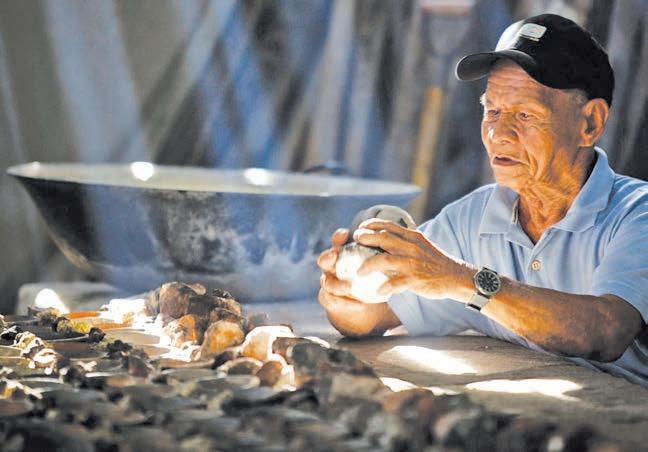

billion in the second quarter of 2024 to P3.1 billion in the same period of 2025, fueled largely by tourism developments in Panglao and the expansion of business process outsourcing facilities in Tagbilaran City.
The data confirms that our policies and priorities are working.
The Provincial Product Accounts show that Bohol still holds the magic to grow further,” Aumentado said in a statement.
The governor has also been promoting the province abroad.
During a recent visit to New York, he met with Trade Commissioner Alma Argayoso at the Philippine Trade and Investment Center to strengthen trade and investment ties and attract international investors.
The discussions highlighted opportunities in tourism, agriculture, local products, and emerging industries, while showcasing
Bohol’s improving infrastructure, skilled workforce, and development agenda.
Provincial officials said attracting more investments is expected to create jobs, stimulate local businesses, and generate additional income opportunities for Boholanos.
W hile growth prospects remain strong, Bohol is also preparing for global uncertainties.
In June, Aboitiz Infracapital Bohol Airport Corporation, operator of Bohol-Panglao International Airport, convened tourism, aviation, and hospitality leaders for a Strategic Tourism Dialogue aimed at strengthening the industry’s resilience amid geopolitical tensions in the Middle East and their potential impact on global travel.
Stakeholders discussed volatile fuel supply conditions, rising operational costs, shifting travel demand, and their implications for airfares and destination competitiveness.

“As an island destination, tourism is the lifeblood of Bohol’s economy. Global events may be beyond our control, but how we respond is entirely within our hands,” said Aldwin Uy, general manager of BoholPanglao International Airport.
The dialogue explored ways to strengthen destination marketing, improve connectivity, and attract new tourism markets, including Japan.
Participants also discussed the proposed revival of the whale shark experience, with sustainability remaining a key consideration.
Through collaboration, we can ensure that Bohol remains accessible, competitive, and ready to welcome visitors from around the world,” said Joanne Pinat of the Provincial Tourism Office.
Sustainability remains central to the province’s long-term vision.
Preparations are underway for the UNESCO revalidation of the Bohol Island Global Geopark.
Geopark representative Mary Lou Regis has urged local governments to strengthen geo-education programs, climate resilience initiatives, sustainable tourism practices, and cultural preservation efforts.
The same message was reinforced by biodiversity expert Dr. Reizl P. Jose, who emphasized that conservation protects not only ecosystems but also tourism and local livelihoods.
She encouraged tourism stakeholders to embrace biodiversity-cen-
tered tourism products and researchbased storytelling initiatives.
The province is likewise safeguarding its cultural identity amid rapid development.
Tourism officials from the Third District recently presented the Casino-Free Bohol Manifesto of Support, advocating tourism growth that protects community welfare and local values. Challenges remain.
Inflation in Bohol accelerated to 7.4 percent in May 2026, driven largely by rising food, transportation, and accommodation costs.
According to Jessamyn Anne Alcazaren, chief statistical specialist of the Philippine Statistical Office in Bohol, inflation among the bottom 30 percent of households reached 8.6 percent, highlighting the need for economic gains to translate into broader benefits.
For Bohol, however, the goal is no longer simply attracting more tourists. It is about building a future-ready province where investments, tourism, environmental stewardship, and cultural preservation move forward together.
By expanding tourism opportunities, strengthening global connections, attracting investments, and institutionalizing sustainability through policy, Bohol is proving that its greatest asset may not be what appears on postcards and travel brochures—but its determination to grow while preserving what makes it special.
CENTRAL VISAYAS: BRIDGING NATURAL WONDERS, HERITAGE, AND GROWTH
Attracting travelers for both its natural attractions and vestiges of its Spanish colonial past, Central Visayas is home to Cebu’s historic landmarks and coastal sites; the country’s first United Nations Educational, Scientific and Cultural Organization (UNESCO) Global Geopark in Bohol, which is also favored for its rich marine biodiversity; the majestic colonial homes and rich heritage cuisine of Negros Oriental (which was formally separated into the region in June 2024); and the Island of Fire, Siquijor, which is known for its pristine beaches and folk healing.
Economic driver
Due to its strategic location, Central Visayas continues to thrive. Besides its tourism industry, it also has a growing business process outsourcing sector, infrastructure projects, and upgraded ports and airports.
A n April 2023 report released by the Philippine Statistics Authority (PSA) and presented by Director II Wilma Perante revealed that
the economy of Central Visayas grew year-on-year by 3.7 percent in 2025 at constant 2018 prices, slower compared with the 7.4 percent growth recorded in 2024.
The region’s gross domestic product (GDP) was estimated at PhP1.32 trillion in 2025, up from PhP 1.28 trillion in 2024 (Figure 1). According to the PSA report, the main contributors to the 2025 included the following: “Wholesale and retail trade; repair of motor vehicles and motorcycles, which contributed 1.2 percentage points and posted a 5.6 percent growth; Financial and insurance activities, contributing 0.6 percentage point with a 6.4 percent growth; and Real estate and ownership of dwellings, contributing 0.4 percentage point and recorded 4.8 percent growth.”
The report further noted that “Of the 4.4 percent growth in the country’s economic performance, Central Visayas contributed 0.2 percentage point to the national economy and remained the fourth largest regional economy, accounting for 5.7 percent of the total Philippine Gross Domestic Product (GDP) in 2025.”
In 2025, however, the PSA reported a slight decrease in the Labor Force Participation Rate (LFPR) in Central Visayas, estimated at 63.9 percent, which is slightly lower than the 64.7 percent recorded in 2024.
At the same time, the PSA also recorded the provinces in Highly Urbanized Cities (HUCs). It mentioned Mandaue as having the highest employment rate at 97.2 percent in 2025, while the City of Lapu-Lapu had the lowest employment rate of 94.7 percent.
In the same year, three provinces/HUCs posted employment rates higher than the regional average of 96.2 percent in 2025, namely: Bohol (96.4%), Cebu (excluding HUCs, 96.4%), and the City of Mandaue (97.2%).
Building a strong region
In February in Cebu, at the Visayas leg of the “Usapang Budget Natin” (UBN) Town Hall Meeting, national government officials from the Office of the Executive Secretary, the Department of Budget and Management (DBM), the Presidential Communications Of -
fice (PCO), and the Philippine Information Agency (PIA), presented priority initiatives under the 2026 National Budget and how it will address regional needs and support development in the region.
A mong the priority projects is the P28.78-billion Cebu Bus Rapid Transit (BRT) system, which is expected to reduce travel time within Cebu City and neighboring areas. Package 1 of the project was launched in March and serves the route from Il Corso (South Road Properties) to Cebu IT Park. Active terminals include Fuente, Cebu Normal University (CNU), and the Cebu South Bus Terminal (CSBT). It serves up to 34.000 passengers daily.
Promoting sustainable mobility, a total of 189 kilometers of bike lanes and 19 end-of-trip facilities have been completed across Metro Cebu, with nearly P500 million allocated for active transport infrastructure.
Harnessing its advantage as a gateway to the Brunei Darussalam–Indonesia–Malaysia–Philippines East ASEAN Growth Area (BIMPEAGA), Central Visayas is also for-
tifying its aviation infrastructure.
In March, the Mactan-Cebu International Airport just finished a P39 million upgrade, which includes the renovation of the General Aviation terminal in time for the arrival of delegates at the ASEAN Summit in Cebu on May 6 to 8. An Overseas Filipino Worker (OFW) Lounge and Facilitation Center was opened on June 26.
A 2,560-meter parallel runway was also activated, making Cebu the first in the Philippines to operate a parallel runway system aimed to reduce flight delays and accommodate scheduled maintenance.
Other upgrades include Terminal 1 and Terminal 2, which underwent structural rehabilitations and an “Airport Village”-themed layout with a resort-style atmosphere. The Mactan–Cebu International Airport remains under a Public-Private Partnership (PPP) agreement until 2039, with P17.52 billion allotted for stepping up facilities.
Likewise, under a PPP arrangement through 2054 is the operations and maintenance of the Bohol–Panglao International Airport.
At the same “Usapang Budget Natin” (UBN) Town Hall Meeting, major plans for maritime development were also laid out.
To ease congestion at Cebu Baseport and increase capacity, the New Cebu International Container Port is under construction for P16.93 billion. Meanwhile, a P335 million budget has been allocated to the development of the San Fernando Port. It includes a 100-meter roll-on and roll-off ramp that can accommodate up to five vessels at a time. With Central Visayas’ expanding infrastructure and investment opportunities--particularly in Information Technology and Business Process Management (IT-BPM), eco-tourism, real estate, manufacturing, and renewable energy--The region continues to be a land of sweet opportunities for visitors, businesses, and communities. Rooted in its rich history and heritage, the future of Central Visayas looks bright as it continues to focus on sustainable growth, economic expansion, ecological preservation, and regional resilience.
CENTRAL VISAYAS

How Close Are You to Owning a Home?
The answer depends less on luck and more on preparation and discipline.
By John Eiron R. Francisco
FOR many Filipinos, owning a home is not just a long-term goal, it is a form of stability that sits at the center of financial planning. But between imagining it and actually getting there, there is a process that requires structure, discipline, and timing.
Even with steady work, the math does not always cooperate. Household expenses, rising prices, and competing priorities often leave little room for large-scale saving. Many manage the present well enough, but building for the future requires a more deliberate approach.
For those hoping to own a home one day, here are some fundamental financial and personal considerations to guide the journey.
STEP 1: DEFINE WHAT
“HOME” MEANS TO YOU
The first step is understanding what kind of home you want.
Do you see yourself living in a house and lot, a condominium, or a townhouse? Where would you like it to be located? How much are you realistically willing and
able to spend?
The more specific your goal is, the easier it becomes to create a practical roadmap.
Options typically fall into three broad categories: House and lot , offering space and permanence but requiring a higher budget
Condominium unit, more compact and often located near business districts and key establishments
Townhouse, balancing cost and space between the two.
L ocation is equally critical. Accessibility to work, schools, hospitals, and daily necessities often defines not just convenience, but long-term livability. Once you have a clear picture of your ideal home, it becomes easier to estimate costs and
determine the financial steps needed to achieve it.
STEP 2: BUILD THE HABIT OF SAVING EARLY
Buying a home does not begin with a loan application. It starts with saving.
Even if you plan to finance the property through a housing loan, you’ll still need funds for the down payment, processing fees, and other related expenses.
Some people find it helpful to open a separate savings account dedicated solely to their home fund. Doing so can make progress easier to track and reduce the temptation to spend money intended for a long-term goal.
Additional income, such as bonuses, overtime pay, incentives, or 13th-month pay, can also accelerate the timeline if consistently directed toward longterm goals rather than short-term consumption.
STEP 3: DISCIPLINE IN EVERYDAY SPENDING
Saving for a home is not only about earning more, it is also about spending smarter. Review your monthly expenses and identify areas where adjustments can be made. Unused subscriptions, frequent impulse

purchases, and unnecessary spending can slowly eat away at funds that could otherwise go toward a future home.
The goal is not to deprive yourself, but to create habits that support your priorities.
STEP 4: STRENGTHEN YOUR FINANCIAL PROFILE
Before approving a housing loan, lenders will assess your financial standing.
Th is usually includes reviewing your income, credit history, and existing financial obligations.
L enders want to see that you
have a stable source of income and can comfortably handle monthly repayments.
A strong financial profile improves your chances of loan approval and may even give you better financing terms.
STEP 5: UNDERSTANDING YOUR FINANCING OPTIONS
Once financially prepared, it’s time to explore available financing options.
In the Philippines, institutions such as banks and government programs such as PAG-IBIG offer housing loans that make homeownership more accessible by spreading payments over long periods—typically 10 to 30 years. Instead of paying the full cost upfront, these schemes allow buyers to

STARTING
Return of ‘live near work’ living as commute pressures mount
Major developers are increasingly pursuing township developments, allowing residents to access daily necessities within the same community.

By John Eiron R. Francisco
HILIPPINE real estate is see-
Ping renewed demand for the “live near work” setup as hybrid office arrangements prompt employees to prioritize homes closer to their workplaces.
In a sideline interview with the BusinessMirror during the 2026 special report “Beyond the Metro: The Decentralization Playbook” on May 12, PRIME Philippines Vice President for Visayas-Mindanao Ruth Coyoca said the transportation crisis prompted companies to reassess the long-term sustainability of remote work arrangements.
Coyoca noted that many firms eventually realized that a purely work-from-home setup was not sustainable for their operations, as employees still needed to report to the office in person.
This led companies, she said, to adopt hybrid work arrangements, which they found to be a more sustainable model.
From the employees’ perspective, Coyoca noted many workers also had to adjust to remain employed while managing rising transportation costs.
As a result, more employees began looking for homes closer to their workplaces to reduce daily commuting expenses and travel time. “ That’s also one of the reactions that we noticed when the transportation crisis happened,” she said.
She added that while some companies provided allowances and support for employees under hybrid arrangements, workers themselves also made lifestyle adjustments, including relocating closer to business districts and office hubs.
According to Coyoca, this shift is also influencing housing demand by Metro Manila buyers, who have a growing preference for smaller residential units as workers look to cut transportation expenses. Instead of commuting from nearby provinces or distant areas within the metro, many are opting to rent apartments or condominium units closer to work.
She said shared living arrangements and condo sharing are still practical options.
For unit owners who have, say, two-bedroom or one-bedroom units, one way to lease them out immediately is to subdivide or offer them for condo sharing,” she said,

noting that this setup helps reduce costs for tenants while maximizing occupancy for property owners.
Coyoca also pointed to accessibility as a key consideration in property development, particularly access to retail and essential services.
She said major developers are increasingly pursuing township developments, where residential, commercial, and office components are integrated, allowing residents to access daily necessities within the same community.
“Customers are highly considering: if I buy a condo there and if I live there, where can I buy my necessities?” she said.
For smaller or boutique developers, Coyoca said the focus is often on properties located within or near established communities so that even without integrated retail, essential services remain within walking distance.
Coyoca also noted growing demand in the mid- to high-end segment for wellness-oriented features, with buyers increasingly looking for green spaces, open areas, jogging paths, and wellequipped fitness facilities.
More cautious real estate sector
a more challenging macroeconomic environment that continues to shape both demand and investment activity in the
Florencio pointed to slowing economic growth and persistent external pressures, noting that Philippine GDP growth eased to 4.4 percent in 2025, marking the slowest post-pandemic expansion and falling below the government’s 5.5 to 6.5 percent target for a second straight year.
He added that inflationary pressures remain elevated, driven largely by rising fuel costs, with diesel inflation jumping from 4.1 percent in March to 7.2 percent in April 2026. The surge in fuel costs has increased transportation, construction, and operational costs across the real estate value chain.
Florencio also emphasized the country’s heavy reliance on external markets, noting that over 90 percent of crude oil imports come from the Middle East, making the economy highly exposed to geopolitical tensions.
He said this is particularly significant as about 18 percent of OFW remittances also come from the region, directly affecting household consumption and housing demand.
He added that employment conditions remain fragile, with about 2.9 million Filipinos unemployed in early 2026, while underemployment remains at around 11.8 percent, reflecting weaker job quality and growing informal work participation.
Florencio further noted that foreign direct investment inflows declined to P7.7 billion in 2025, down from P9 billion in 2024, signaling increased investor caution amid economic and political uncertainty.
He also pointed out that purchasing power in the Philippines has declined by about 25 percent since 2018, underscoring long-term pressure on consumer affordability.
A lot of investors we see have a wait-and-see approach in terms of their plans, their real estate plans, whether to hold their projects, whether to continue, or to shift their attention or their plans into other sectors of development,” Florencio noted.
He added that, based on firstquarter observations, “a lot of companies have continued with their development,” adding that some developers have opted to pause projects and adopt a more cautious stance amid uncertainties.
If the war persists, then they’ll continue to hold on to their assets and let it pass,” he said, noting that geopolitical risks are reinforcing a defensive strategy among some market players.
Florencio also stressed that rising construction costs have significantly affected transactions in recent months, prompting developers to reassess pricing and rental assumptions.
As we all know, construction costs have greatly affected transactions for the past few months,” he said.
In response, he noted that developers are recalibrating strategies and reinvesting idle properties into more productive assets.
As an example, Florencio said some developers are converting idle residential land into industrial developments, which are expected to generate stronger long-term returns through higher tenant demand and more stable rental income.
Choosing the Right Property
Meanwhile, when asked what Filipinos should consider before investing in residential property, Coyoca said buyers should first determine whether they are investors or end users. Each involves different priorities and considerations and falls under categories such as residential lots, house-and-lot developments, townhouses, and condominiums.
Coyoca said investors, particularly those buying condominium units, should evaluate the property’s potential rental market, including the presence of nearby offices, schools, and established communities that could generate tenant demand.
She also emphasized the importance of reviewing a developer’s credibility and track record, especially amid economic uncertainties that affect projects.
Coyoca noted that while many Filipinos aspire to own a home, some developments have experienced delays or halted construction due to unforeseen crises, affecting both boutique and large-scale developers.
“Still, research about the developer background, credibility is a must for pure investors,” she said, noting to avoid risks tied to unfinished projects.
For end users, meanwhile, Coyoca said considerations are more lifestyle-oriented, such as whether the property offers convenience through proximity to workplaces or provides a more relaxed living environment.
She added that location, pricing, and development features remain among the key factors influencing residential buying decisions.
“ The best time to buy really depends on the readiness of the buyer… even in a crisis, other people can find opportunities,” she said.
She noted that market downturns can create rare opportunities, as some owners are obliged to sell properties that are not typically offered in the market.
When the opportunity opens, they can grab it,” she added, emphasizing that readiness allows buyers to take advantage of such situations.
Coyoca said the key takeaway is that property investment is cyclical and opportunities arise in different market conditions.
So I think the lesson there is for us to be ready always to grab opportunities. So whatever season we are in, it’s a good time for us to buy,” she said.
Within reach | What and how a 15-minute city works
By Vincent Peter Rivera
Today, the 15-minute city is no longer a foreign experiment. As global challenges mount, more and more local governments and developers are implementing this exact blueprint right here in the Philippines. suburban landscapes,” the model was first introduced in Portland, Oregon, in 2008. Portland aimed to slash emissions by 30% by 2030 by ensuring all key destinations were reachable
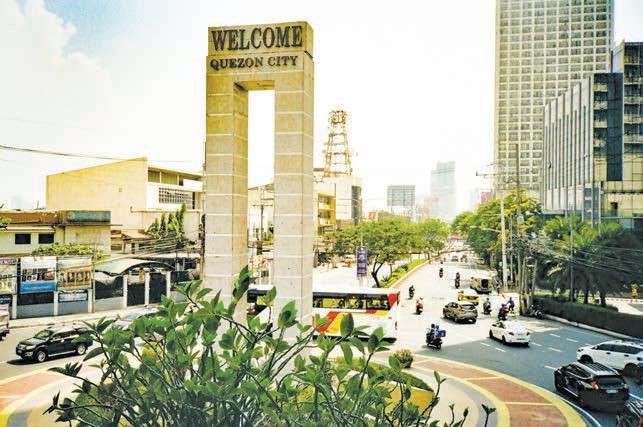

Similarly, in 2017, Melbourne, Australia, launched its “Plan Melbourne
initiative, with an
model for
Today, the 15-minute city is no longer a foreign experiment. As global challenges mount, more and more local governments and developers are implementing this exact blueprint right here in the Philippines.
Built for crises
The true value of the 15-minute city is most beneficial over time. Urban researchers noted that the concept gained massive global momentum during the COVID-19 pandemic, when severe disruptions to public transport and lockdowns forced cities to rethink local living. By integrating density, proximity, diversity, and digitalization, the framework offered a resilient blueprint for urban survival.
In 2026, the concept is peaking once again in the Philippines amid a volatile global fuel crisis.
Because the country imports up to 95 percent of its crude oil, soaring pump prices hit commuters hard.
An article by InsiderPH highlighted how 15-minute cities offer a vital economic cushion by reducing reliance on “fuelintensive transport.” By clustering workplaces, homes, retail, and medical services within short distances, residents can bypass the gas pump entirely.
The
“20-minute city” cradles in the PHL
As the momentum grows, several pockets of the Philippines are already giving commuters a glimpse of this urban future.
Property giant Ayala Land has been actively translating this global concept into local realities, aiming to address “chronic urban issues such as traffic, pollution, and inefficient infrastructure.”
Currently, its master plan is evident in areas like the Makati Central Business District, Bonifacio Global City (BGC), Arca South in Taguig, Nuvali in Laguna, Vermosa in Cavite, and Vertis North in Quezon City. In Nuvali, for instance, this principle was brought to life with the vision of being a “green city” in mind. Residential villages, schools, offices, retail spaces, a hospital, and recreational hubs were all interconnected through pedestrian-friendly pathways and dedicated bike lanes.
Meanwhile, the ongoing Arca South is poised to be a major transit-oriented hub through the upcoming Metro Manila Subway, the Taguig Intra-City Bus Transit, and an intermodal transport facility. This ensures residents can navigate their immediate community with ease while maintaining a more convenient and accessible connection to the rest of the metro. Ultimately, Ayala Land’s most established estates, the Makati CBD and Bonifacio Global City (BGC), are prime examples of what a 15-minute city concept has to offer. Office spaces, residential condominiums, retail strips,
However, according to PRIME Philippines Executive Vice President Cholo Florencio, the growing shift in residential preferences is unfolding amid
property sector.
Mervyn Valenquela, VP for Office Tenant Representation; Joy Rosario, VP for
Tenant Representation; and Ruth Coyoca, VP for Visayas-Mindanao. Photo by John Eiron Francisco/BusinessMirror.

Fueled by the crisis, property groups focus on access and sustainability
The prolonged rise in fuel and energy costs is accelerating demand for sustainable and energy-efficient
By Justine Xyrah Garcia
AFTER weathering the disruptions brought by the COVID-19 pandemic, the Philippine real estate sector is once again leaning on hard-earned lessons to navigate fresh uncertainties caused by the prolonged Middle East conflict.
This comes as inflation accelerated to a three-year high of 7.2 percent in April, while economic growth slowed to 2.8 percent in the first quarter—the weakest pace since the pandemic-era contraction in 2021.
Property consultants said the latest global tensions are beginning to influence office demand, residential decisions, and project timelines as fuel and transportation costs continue to rise.
According to Leechiu Property Consultants (LPC), the adjustments are becoming most visible in the office market, where companies are recalibrating workplace strategies without fully abandoning physical offices.
LPC Research Director Roy Golez said firms are becoming more open to hybrid work arrangements to help reduce commuting and operational costs, while some occupiers are slowing expansion plans amid heightened uncertainty.
Accessibility is also becoming a stronger consideration among tenants.
“Properties that are easier for employees to reach tend to support retention and overall productivity,” Golez told the BusinessMirror.
The shift is reinforcing interest in decentralized office locations outside traditional business districts.
For LPC CEO David Leechiu, rising fuel prices are accelerating trends that first emerged during the pandemic, including ridesharing, carpooling, delayed office hours, and hybrid work arrangements.
Companies are also exploring office locations closer to where employees live instead of concentrating operations within Metro Manila’s major business hubs.
“It also merits having a component of businesses to locate in the north (Quezon City and further) and in the south (Alabang and further) besides having the headquarters in [Bonifacio Global City] and Makati,” Leechiu said.
Data from LPC showed net absorption in the Philippine office market rose 77 percent year-on-year to 133,000 square meters in the first quarter. On the other hand, gross demand declined 22 percent from the previous quarter due to seasonal factors.
Pressure spills into housing.
The same cost pressures are beginning to influence residential decisions, particularly among middle-income households facing higher transportation expenses.
Leechiu noted that falling prices in the mid- to lower-end condominium market are making it more practical for some Filipinos to rent closer to workplaces and schools rather than endure long daily commutes.
Meanwhile, Colliers Philippines
Research Director Joey Roi Bondoc said developers are closely monitoring the Middle East crisis because weaker remittances from overseas Filipino workers in the region could dampen demand for affordable and midincome housing.
Bondoc added that rising inflation and possible interest rate hikes could further delay property purchases as households prioritize essential spending.
Such a softer demand environment is expected to add to existing supply pressures in the condominium market.
Data from Colliers Philippines showed Metro Manila condominium vacancy could reach 25.6 percent by the end of 2026, up from 24.7 percent in the first quarter.
T he Bay Area is expected to post the highest vacancy level, nearing 60 percent,

due to the sizable turnover of new supply scheduled for completion by the fourth quarter. C olliers said nearly 13,000 condominium units are expected for
NORTHERN GROWTH PUSH | Are surrounding regions easing NCR’s urban strain?
The push toward Central Luzon has accelerated in recent years alongside broader efforts to develop what is now called the Luzon Economic Corridor.
By Bless Aubrey Ogerio
METRO Manila, for decades, has absorbed the country’s economic growth at the cost of worsening congestion, longer commutes, and rising pressure on housing and infrastructure.
N ow, government planners and private developers are betting that surrounding regions can absorb some of that strain as investments increasingly move north.
At the center of this transition in the north is New Clark City, the government’s flagship planned metropolis in Central Luzon, which is positioned as a future hub for logistics, manufacturing, artificial intelligence, aviation, and advanced industries.
B ut while growth is spreading outward, can these areas expand fast and sustainably enough to prevent the same urban pressures from being replicated elsewhere?
Expansion of a regional growth belt
THE push toward Central Luzon has accelerated in recent years alongside broader efforts to develop what is now called the Luzon Economic Corridor, a network linking Subic, Clark, Manila, and Batangas into a single investment and logistics belt.
L aunched in 2024, the corridor is a joint initiative involving the Philippines, the United States, and Japan, designed to improve transport links, digital infrastructure, and manufacturing capacity across key economic zones. I t has since widened to include several other partner countries, reflecting growing interest in the region’s industrial potential. Within this framework, the Bases Conversion and Development Authority (BCDA) has advanced plans to allocate roughly 4,000 acres in New Clark City for an industrial zone linked to advanced technologies.
T his includes artificial intelligence systems, semiconductor-related industries, and critical mineral processing.
M oreover, the idea is to build a more tightly connected industrial base that can host manufacturing locators, research activities, and data-driven enterprises in a single integrated environment.
A t the same time, Clark is being reinforced as a transport and logistics hub. Expansion plans for Clark International Airport include proposals for a second runway to support rising passenger and cargo demand.
Connectivity projects are also being implemented through rail infrastructure, including ongoing construction on extensions of the North-South Commuter Railway that will eventually link Clark to Metro Manila.

T he aim is to reduce travel time and improve the movement of both people and goods between the capital and northern growth areas.
G overnment agencies are also aligning investment promotion strategies. The Philippine Economic Zone Authority and BCDA recently presented New Clark City as a consolidated investment destination, with emphasis on streamlined processes for manufacturing, logistics, and technology investors.
Strains exposed
DESPITE the scale of development, gaps in execution remain visible.
Transport integration across Central Luzon is still uneven, with limited public mobility options outside major corridors. In many areas, private vehicles remain the only practical mode of travel.
A similar pattern has been seen in earlier decentralization efforts. During the Duterte administration, several government agencies, including the BCDA and the Department of Transportation, were relocated to Clark as part of a broader effort to reduce pressure on the capital.
H owever, many employees continued to live in Metro Manila, highlighting the difficulty of shifting work patterns without parallel housing and transport systems.
T hese challenges are not unique to the Philippines. Across Asia, attempts to build secondary growth centers have often struggled when infrastructure, housing, and job creation do not scale together.
In donesia’s efforts to ease pressure on Jakarta through satellite urban zones have faced uneven infrastructure delivery and continued commuter reliance on the capital.
In In dia, the Delhi-Mumbai Industrial Corridor has similarly progressed in phases, slowed by land acquisition issues and uneven development of supporting urban systems.
In t he Philippine case, the scale of planned industrial and digital infrastructure in New Clark City also raises longer-term questions on resource capacity. Large-scale industrial estates
and data-driven facilities require stable electricity, water supply, and digital connectivity.
T hese requirements come at a time when energy security is already a recurring concern. The Department of Energy has repeatedly warned of tighter supply conditions during peak demand periods in Luzon, particularly as electricity consumption rises and new generation projects face delays.
G lobal energy volatility has added another layer of pressure, with geopolitical tensions in key oil-producing regions contributing to fluctuations in fuel prices and supply expectations. The broader challenge: System-building THE real test now is not whether firms and offices move out of Metro Manila, but whether entire systems—jobs, housing, transport, utilities, and services—can grow together in new locations.
T he Department of Economy, Planning, and Development has long emphasized this in its Philippine Development Plan, which calls for more balanced regional growth and stronger interconnectivity among regional centers to ease Metro Manila’s concentration of economic activity.
In ternational institutions have echoed similar views. In its country report on the Philippines, the World Bank has noted that improved inter-regional connectivity can reduce logistics costs, improve labor mobility, and widen access to economic opportunities beyond the capital.
Still, the outcome will depend on execution rather than planning frameworks. Without synchronized development, new growth corridors risk becoming fragmented extensions of congestion rather than genuine alternatives.
The emerging northern expansion, therefore, sits at a critical point where it could either reshape how urban growth is distributed in the country or extend the capital’s pressures across a wider geographic footprint.
F or now, the investment is moving outwards, but can the system keep up with it?

Upscaling of DMCI Homes’ Acacia Estates starts with Town Center Redevelopment
ESIDENTS of Acacia
REstates in Taguig City will soon see the start of major enhancements as the township begins the first phase of a comprehensive upscaling project aimed at revitalizing the Town Center and improving everyday convenience within the community.
L ong known for its distinctly suburban character defined by tree-lined roads, expansive open spaces, and accessible daily essentials, Acacia Estates is now entering a new stage of growth with the introduction of additional commercial, recreational, and community spaces. These planned enhancements form part of DMCI Homes’ continuing efforts to strengthen the township’s functionality while supporting its long-term value.
A t the center of this initiative is the upscaling of



the Town Center at Acacia Estates, which will introduce new destinations for shopping, recreation, and community gatherings. The project, which includes the construction of a new supermarket, is designed to create more spaces where residents can connect while making daily routines more convenient.
The upscaling works will be carried out in three phases, with development slated to be in full swing by 2028. The new supermarket is currently projected within a 2030 timeframe, subject to planning and regulatory approvals.
Here’s what residents can look forward to from the Town Center Redevelopment.
The first phase of the Town Center Redevelopment will focus
on preparing the site for new developments. This includes the dismantling of The Tent and the existing Commercial Promenade to make way for the construction of a new supermarket and modernized commercial spaces that will anchor the revitalized Town Center.
More Commercial Spaces
Beyond the new supermarket, residents will enjoy added convenience at the upgraded commercial strip—a curated row of shops and services tailored to everyday needs. From quick errands to casual meetups, this refreshed retail zone brings essential destinations within easy reach.
Al-Fresco Dining Spaces
Open-air dining areas surrounded by landscaped greenery will add energy
and vibrancy to the Town Center. These spaces create opportunities for casual meals, family celebrations, or simply unwinding after a long day in a relaxed outdoor setting.
Central Plaza and Activity Park
At the center of the development, the planned Central Plaza will serve as a dynamic gathering space for community events, seasonal celebrations, and everyday interactions. Designed to become a natural meeting point, it will encourage stronger connections and shared experiences among residents.
Nearby, the Activity Park will provide dedicated spaces for recreation and organized programs, supporting active lifestyles and meaningful engagement across all age groups.
A Township That Grows With Its Residents
Since its establishment in 2007, Acacia Estates has grown into a thriving 130-hectare community home to around 25,000 residents.
W ith over 63 hectares of undeveloped land—more than 30 hectares being considered for future projects and the remaining area envisioned for shared community spaces—the township is well-positioned for sustained, carefully planned growth.
Notably, approximately 60 percent of the estate is dedicated to open and green spaces, preserving the signature suburban character that residents value.
The Acacia Estates upscaling project demonstrates a longterm commitment to enhancing everyday living—bringing together upgraded amenities, accessible outdoor spaces, and thoughtfully planned residential developments.
Th rough these enhancements, Acacia Estates continues to evolve into a township where convenience, wellness, and community come together, creating a living environment that truly grows with its residents.
DMCI Homes is the country’s first Quadruple A real estate developer, with projects in Mega Manila, Baguio City, Tuba in Benguet, San Juan in Batangas, Boracay, Cebu City, and Davao City. Each of its properties is built with world-standard craftsmanship borne from D.M. Consunji Inc.’s over 70 years of expertise in the construction and development industry. To learn more about DMCI Homes’ pre-selling and ready for occupancy projects, units for lease, and special promos, call (632) 53248888. You can also visit leasing. dmcihomes.com to know more about opportunities in leasing and rent-to-own programs of DMCI Homes. News and other updates are also posted on the company’s official website and social media accounts on Facebook, X, Instagram, and YouTube.

Artist’s illustration of the planned commercial strip at the Town Center at Acacia Estates
The commercial strip will feature cafés and dining spots designed for relaxed meals and easy neighborhood meetups. (Artist’s Illustration)
The
THE LAST LINE OF DEFENSE
FORESTS IN THE FIGHT AGAINST CLIMATE CHANGE
As temperatures rise and extreme weather intensifies, forest restoration emerges as a critical solution to protect ecosystems and communities.
Text and Photos
By John Eiron R. Francisco
IT may be tempting to view the rising temperatures as nothing more than another harsh summer, but the intensifying heat we experience today could already be a warning of the future we are heading toward.
According to the United Nations, the years from 2015 to 2025 have been the 11 hottest years ever recorded. The oceans, which absorb much of the excess heat generated by greenhouse gas emissions, have set new heat records every year over the past nine years.
By 2050, scientists project that glaciers could disappear from onethird of the sites where they currently exist, while droughts may affect more than three-quarters of the world’s population. Meanwhile, the World Health Organization estimates that between 2030 and 2050, climate change could contribute to approximately 250,000 additional deaths

SAMAL ISLAND RECHARGED
AboitizPower’s Davao Light energizes long-awaited power lifeline for Samal’s tourism industry
WITH its white sands and crystal waters, the Island Garden City of Samal in the Davao Gulf fits the bill of a relaxing beach escape, if not for the lackluster power situation that has held back its appeal in recent years.
The hospitality and leisure industry promises experience, comfort, and entertainment for people taking a break from the hustle and bustle of the city. But without stable power, the lights, air conditioning units, internet connections, hot showers, and other amenities cannot work.
A n inconvenience of that scale is enough to deter any tourist.
A lot of our services rely very much on power. In the past five or eight years, power started to become really bad, then it became worse,” observed Julian Rodriguez, owner of Paradise Island Park and Beach Resort in Samal.
With the need to power 82 rooms at full capacity set against intermittent service becoming so frequent, Rodriguez said the resort had to put up three diesel-powered generator sets and supply its expensive fuel at their own cost. “We had a gen set, then we needed a backup, and then another backup for the backup.” Similarly, to the north of Samal, Villa Amparo Beach Resort also had to rely on generator sets— two of them to be exact—just to continue with its operations and serve its guests.
Without backup power, both beach resorts faced long and unpredictable power interruptions and risked damage to their equipment and appliances. Much worse, they risked losing their customers to other places where power availability and reliability are not an issue.
Sometimes we have guests who are working online and then [we’re suddenly hit with a blackout],” said Villa Amparo’s Marketing Manager Aliene Pearl Condez. “It’s a really big inconvenience.”
Th ings have started to change.
With Republic Act No. 12144, which became law last April 2025, the franchise area of Davao Light and Power Company (Davao Light), a distribution utility company under Aboitiz Power Corporation (AboitizPower), expanded to serve


the Island Garden City of Samal, Tagum City, and 15 towns in Davao del Norte and Davao de Oro.
Its legality was affirmed by the Supreme Court in January 2026, which was followed by subsequent Writs of Possession issued by the local courts of Panabo and Tagum City. The Energy Regulatory Commission also granted the Provisional Authority for Davao Light’s Certificate of Public Convenience and Necessity.
A s a result, Davao Light—already the third largest privatelyowned distribution utility in the Philippines—will undertake the full range of electric distribution services, including system operations and maintenance, customer service, billing, and collection in the expansion areas.

Since Davao Light’s entry into Samal and amid an ongoing transition of stewardship, Condez noticed fewer and shorter power outages. She hopes that the arrival of reliable power would finally divert their operational costs for diesel to resort upgrades or staff incentives.
I am happy and thankful to Davao Light for coming in,” Rodriguez added. “With the Samal Island-Davao City Connector Bridge nearing completion in 2027, we expect business to pick up.”
The potential of Mindanao
When Jonathan Michael Bartlett assumed his current role as General Manager of Discovery Samal last January 2026, he was thrilled, citing the resort’s unique position to “showcase the unparalleled beauty
ONE LAND, ONE SHARED FUTURE
JUNE is National Environmental Month, encouraging Filipinos to take a more active participation in protecting the environment and the country’s natural resources, and in mitigating climate change. But as schools, civic groups, local governments, and businesses mark the month with cleanup drives, forums, and other activities that advocate sustainable development, the work is ongoing. The conscious decision to conserve energy and support efforts that bolster ecological resilience is made every day.
I n this special feature section, we examine some of the most pressing environmental issues and solutions shaping the country’s ecological landscape— from green transportation and reforestation efforts to coastal rehabilitation and the growing adoption of solar power. Taking stock of how far the country has progressed in its environmental initiatives and what challenges remain, we hope that our research-driven reports will provoke reflection and inspire action to contribute to a sustainable future. We share one land, one shared future. Let’s protect our environment together.
—Francine M. Marquez
every year from heat stress, malnutrition, malaria, and diarrheal diseases.
Behind those numbers are communities facing crop failures, families struggling through prolonged droughts, and vulnerable populations exposed to increasingly dangerous temperatures.
and potential of Mindanao.”
“I am thrilled to join Discovery Samal at such a pivotal moment,” he said then. “My mission is to build upon the outstanding foundation already established, elevating our service to create unforgettable experiences that blend world-class luxury with the authentic, heartfelt charm of Filipino hospitality.”
But, like his predecessor, he was immediately faced with the stark reality of the power situation in the island. “We’ve had to make some decisions about operations— things that we may have to do just to make sure that we can maintain a certain level of profit.”
A s the first and only luxury convention resort in Mindanao, Discovery Samal needed assurance that its 150+ luxury suites and vil-
The climate crisis is the result of decades of human activity, from energy use and industrial expansion to land conversion and resource extraction. No single country or sector is responsible alone; the changes we are seeing today are the accumulated consequences of choices made over generations. Addressing it, of course, requires a collective effort from governments, businesses, organizations, and individuals—not necessarily to undo the damage overnight, but to slow its progression, limit further loss, and restore what can still be recovered.
Th is has pushed countries and institutions to strengthen environmental commitments and align policies with global sustainability frameworks such as the Sustainable
Continued on E2

las, as well as its ballroom (the largest in the region) and other facilities, can be powered by electricity whenever it needed it.
W hen Discovery Samal opened in 2023, it coincided with a State of Calamity placed over the island due to its localized power crisis.
For years, Samal has faced power distribution issues due to aging infrastructure and network maintenance concerns, with frequent outages straining households, disrupting businesses, and weakening its potential as a tourism hub.
W hile Discovery Samal has “always operated in optimal power”, Bartlett attributed it to six dieselpowered generator sets that they also had to finance out of pocket.
Amidst a national energy emergency due to the crisis in the Middle East, fuel costs only loomed larger in their balance sheet.
Th ings have started to change.
A s Davao Light begins its stewardship of Samal’s electric distribution assets and service, Bartlett expects reliable power, an uptick in tourism, and perhaps even the stabilization of operational costs.
A long-awaited lifeline
Earlier this year, AboitizPower and Davao Light undertook an important step for energy, tourism, and economic development in Samal via the energization of a submarine cable that finally connects and integrates the resort island into the mainland power grid in Davao City.
A fter a rigorous cable-laying activity in the Pakiputan Strait—
the first in the Company’s history— the 1,015 meter 69-kilovolt line will bring much-needed power network stability and support the growing load requirements of Samal. At a 50-megawatt capacity, the submarine cable is more than enough to meet the island’s current 12-megawatt peak demand and provide for even more—in anticipation of more commerce, activities, and opportunities.
According to the Philippine Statistics Authority, the Island Garden City of Samal has a population of 119,701 as of the 2024 census.
Samal is home to over 25,500 households and approximately 555 tourism-related businesses, including beach resorts and private getaways, ranging from rustic, budgetfriendly sites to luxury destinations,” said Davao Light President and COO Enriczar Tia. “Davao Light is ready to serve and undertake the distribution network expansion and upgrades for the progress of businesses and communities on the island.”
For those in Samal, Davao Light’s submarine cable will not only serve as a bridgeway for electricity between two places, but it will also be a path to a new phase of development and a better future for their island.
Moreover, with the arrival of reliable power, Samal can finally claim to be a relaxing beach escape that invites—and not deters— tourists. Resort owners and managers can breathe a sigh of relief. Th ings have started to change indeed.
MINDANAO'S LUXURY CONVENTION RESORT. As the first and only luxury convention resort in Mindanao, Discovery Samal needs available and reliable power to welcome guests and operate its 150+ villas and suites, dining outlets, ballroom, function rooms, and resort facilities.
PARADISE ISLAND PARK AND BEACH RESORT. “A lot of our services rely very much on power,” said resort owner Julian Rodriguez, having in mind Paradise’s iconic beachfront restaurant (pictured) and in-house aviary.
SUBMARINE CABLE LAYING IN THE PAKIPUTAN STRAIT. A team of technical experts and divers, led by AboitizPower's Davao Light, initiate the long-awaited DavaoSamal power interconnection project-a first step to Samal's much needed integration into the mainland power grid.
VILLA AMPARO BEACH RESORT. Prior to Davao Light’s entry in Samal, Villa Amparo had to rely on generator sets to hedge against the long and unpredictable power interruptions and continue its operations.
A farmer and SMKPI member plants trees in Sitio Kilingan, Barangay San Jose.
Environmental Month
E2
Tuesday, June 30, 2026
THE LAST LINE OF DEFENSE
A BusinessMirror Special Feature
FORESTS IN THE FIGHT AGAINST CLIMATE CHANGE
Development Goals.
A mong the most critical natural buffers against climate change are forests. UNESCO notes that forests occupy about 30 percent of the Earth’s land surface and provide habitat for nearly 80 percent of terrestrial species. Beyond supporting biodiversity, forests help filter water, regulate rainfall cycles, and prevent soil erosion, while sustaining the livelihoods and well-being of almost one-fourth of the global population.
Rebuilding the Country’s Forest Cover
In the Philippines, the Department of Environment and Natural Resources (DENR) has continued to expand forest restoration efforts through programs such as the National Greening Program (NGP), the Enhanced National Greening Program (ENGP), and its latest initiative, Forests for Life, which targets the planting of five million trees by 2028. From 2011 to 2016, the NGP reported covering around 1.66 million hectares of land, exceeding its 1.49-million-hectare target. The program also recorded the planting of more than 1.36 billion seedlings, generating over four million jobs and providing livelihood opportunities to more than

558,000 individuals. The effort was sustained through the Enhanced National Greening Program, implemented from 2017 to 2024. During this period, the DENR restored around 594,472 hectares, surpassing its target of 572,387 hectares, while planting more than 507 million
seedlings and creating approximately 2.48 million jobs. The DENR’s Forests for Life Program, launched in 2025, now serves as the agency’s latest push for large-scale forest recovery. The initiative has identified priority reforestation areas in Ilocos Norte, Rizal, Leyte, Bataan,
What Really Happens to Plastic After We Throw It Away?

Tpation, and strong partnerships on the ground.”


and help reduce the risks of flooding in surrounding communities.
— and why recovery systems matter just as much as segregation.
A Shared Responsibility: Beyond the Bin and Towards Solutions Mondelēz International in the Philippines understands that addressing plastic waste requires a multifaceted approach. Beyond reducing its plastic footprint and encouraging proper segregation, the company is deeply committed to fostering greater awareness and building robust recovery systems.
As Aleli Arcilla, Managing Director, explains: “Plastic waste management is a shared responsibility that goes beyond simply throwing waste away. Recovery only becomes possible when consumers, communities, companies, waste workers, and government
To help strengthen plastic recovery efforts at the community level, Mondelēz International supports initiatives such as Trash Right, its environmental education and plastic collection program with Save Philippine Seas. The program has engaged public elementary schools in Parañaque City to help educate students and teachers about waste segregation, recovery, and environmental responsibility. The Company also supports the YouTube series Miming and Friends, which has videos tackling sustainability issues in a simple and understandable way, to engage children and their families into being part of the solution for waste management problems. More importantly, the company also supports collection of plastics through the Aling Tindera program, which provides homeowners in Parañaque City an accessible way to ensure the plastic they segregate at home gets properly diverted and reused. In 2025 through its two sponsored community collection sites, the company was able to help divert 24,000 kgs of plastic waste away from nature and repurposed for other uses. This was accomplished in partnership with the organization HOPE.
Last January 2026, the company was also recognized by the Department of Environment and Natural Resources for complying with and supporting the EPR Law. Internally, the Company has also implemented its zero waste to landfill commitment in its Parañaque manufacturing plant since 2022 and has proper waste segregation in its commercial office.
since 2023 to help recover and divert the equivalent amount of its annual post-consumer plastic packaging introduced into the Philippine market. This includes flexible packaging, which is diverted from nature and given new purpose through the work of local waste diverters in the country. The company’s efforts have been recognized through the Plastic Cleanup Partner badge, a recognition given to organizations supporting sustained and verified plastic recovery and diversion initiatives. However, the company emphasizes that plastic recovery cannot be solved by certifications or compliance alone. “What we have learned is that collection is often the hardest part of the equation,” Arcilla added. “Even the best intentions cannot succeed without accessible systems, community partici-
Globally, Mondelēz International continues to work toward reducing virgin plastic use and designing more of its packaging for recyclability as part of its broader Sustainable Snacking strategy. As of the end of 2025 globally, some 96% of the company’s product packaging is designed to be recyclable.
For Mondelēz International, the bigger goal is not simply compliance but helping contribute to practical and scalable systems that prevent plastic waste from leaking into the environment.
“The future of plastic recovery will depend on whether we can build systems that people
Based on DENR data, Ilocos Norte has 52 sites covering 5,578.50 hectares; Bataan has nine sites covering 111.03 hectares; Rizal has 10 sites covering 2,558.80 hectares; Leyte has 213 sites covering 6,475.94 hectares; Lanao del Norte has 47 sites covering 5,809.23 hectares; and Bukidnon has 21 sites covering 5,736.50 hectares.
Private PartnershipSector–Community for Reforestation
Among the groups supporting the initiative is Singapore-based renewable energy company Vena Energy, through its subsidiary Sembrano Wind Power Corp. (SWPC), which recently partnered with local farmers’ organization Samahan ng Magsasaka sa Kilingan-Panusugin Inc. (SMKPI).
Formalized on June 3, the agreement brings together the 245-member farmers’ group and Vena Energy in supporting the DENR’s Forests for Life Program.
Backed by the Provincial Environment and Natural Resources Office (PENRO) Rizal, the partnership allocates 50 hectares of the 430-hectare area entrusted by the DENR to SMKPI in Sitio Kilingan, Barangay San Jose, for forest plantation activities, including the planting of 28,000 indigenous and fruit-bearing tree seedlings.
SMKPI president Lito Abanto told the BusinessMirror that parts of the protected area under their management have experienced a decline in tree cover, including lawaan known in international markets as “Philippine mahogany”—and other fruit-bearing species.
Abanto said the partnership aims to reinforce existing conservation efforts, expand forest cover,
The site, located within the Upper Marikina River Basin Protected Landscape (UMRBPL), serves as an important watershed area, with its waterways flowing toward Montalban, the Pasig River, and eventually Manila Bay.
Kami po ay nagpapasalamat sa Vena Energy Company dahil sa pagkakataong ito ay nabigyan kami ng oportunidad na matulungan upang mas maprotektahan at mapayabong pa ang 430 hectares,” Abanto said. He added that the group will conduct regular monitoring and maintenance of seedlings from June to September, with replacement planting for those that fail to survive.
We conduct monthly foot patrols, and our people’s organization members who are planted in the area are the ones monitoring the seedlings to ensure their protection,” he said.
A side from forest restoration, SMKPI members also benefit from agroforestry activities, producing fruits such as guyabano and rambutan that are sold in markets in Marikina and Quezon City. The farmers are organized under a cooperative to manage and market their produce collectively.
Protecting the Forests That Protect Us
While forests have long served as one of the planet’s natural defenses against climate change, they continue to face growing pressure from human activities. Illegal logging, land conversion, infrastructure development, and resource extraction continue to threaten forests and the ecosystems and communities that depend on them. Despite ongoing reforestation efforts, the loss of forest cover remains a challenge that requires stronger protection and sustained action.
According to UNESCO, global
investment in forests needs to increase significantly—from $84 billion in 2023 to $300 billion by 2030, and eventually reach $498 billion by 2050—to meet global targets on climate action, biodiversity protection, and land restoration.
Experts emphasize that reversing forest loss will require a combination of stronger policies, responsible practices, and longterm investments.
Protecting forests begins with stronger political leadership and commitments that extend beyond election cycles. Policies must remain consistent, transparent, and accountable to ensure long-term conservation efforts.
Businesses and consumers also play a role by supporting deforestation-free supply chains and ensuring that products do not contribute to forest destruction.
Preventing forest fires through early warning systems, sustainable farming practices, and community awareness is another key step in protecting vulnerable areas. At the same time, stronger enforcement and technology-based monitoring are needed to address illegal logging, mining, and land grabbing.
Financing remains another critical factor. Long-term investments from both the public and private sectors are needed to support forest protection, especially in tropical forest countries.
Equally important is empowering Indigenous Peoples and local communities, who manage a significant portion of the world’s forests. Providing them with secure land rights, training, and sustainable livelihood opportunities can strengthen conservation while improving local economies.
U ltimately, restoring forests is not only about planting trees—it is about protecting natural systems that support life, reduce climate risks, and help communities adapt to a changing planet.
Bukidnon, and Lanao del Norte, focusing on protecting forests, restoring biodiversity, addressing climate impacts, and involving local communities.
Local farmers’ organization, SMKPI, and renewable energy company, Vena Energy support the DENR’s Forests for Life Program. The partnership allocates 50 hectares of land entrusted by the DENR to SMKPI in Sitio Kilingan, Barangay San Jose, for forest plantation activities.
From left: Gerardo Fernandez, PO member; Mia Jarumayan, Vena Group Head of Business Development – Project Development; Lito Abanto, SMKPI president; and Bryan Ulic-Ulic, CBFM Provincial Coordinator of PENRO Rizal, during the signing of a memorandum of agreement (MOA) for a forest conservation and reforestation partnership in Antipolo City.

GREEN TRANSPORTATION IN THE PHILIPPINES:
MORE THAN JUST AN EV SHIFT
The Philippine transportation landscape is shifting gears as global energy volatility drives a domestic push for electric mobility.
By Vincent Peter Rivera
WHEN the Middle East
conflict and tensions in-
volving Iran erupted, the oil prices in the Philippines skyrocketed to unprecedented levels.
With more than 90% of the country’s oil being imported from the Middle East, the crisis pushed the nation over the edge of a State of National Energy Emergency, as announced by President Ferdinand “Bongbong” Marcos Jr. on March 24, 2026.
Th is declaration, as cited in Executive Order No. 110, explicitly ordered national government agencies to formulate strategies to “decrease consumption of petroleum products... including accelerating the transition to renewable energy through the use of electric vehicles in mass transport.”
A nd so, the nationwide imple-

mentation of green transportation began. But given the country’s current state, are Filipinos truly ready for a shift in transportation method?
The green transportation
According to the United Nations Development Programme (UNDP) Climate Promise, green transportation or sustainable transportation refers to eco-friendly mobility systems that use electric road transport and clean fuels.
It aims to mitigate greenhouse gas emissions and environmental impacts, such as air pollution, and reduce reliance on non-renewable fossil fuels, all while ensuring safe, affordable, and equitable access to mobility for all.
UNDP added: “Sustainable transport is not a single solution, but a systems approach, integrating technology, infrastructure, planning, policy, and behavior change to reduce emissions while enhancing connectivity.”
Rise of e-mobility
The Philippine transportation landscape is shifting gears as global energy volatility drives a domestic push for electric mobility.
Fueled by a 25% surge in global EV and plug-in hybrid sales in 2024, according to a report by Reuters, local adoption is poised for a massive leap.
In support of this trend, leading provider BYD Philippines projects that this upward trajectory could drive the local market to 2.45 million units by 2028, fueled largely by a younger generation of Filipino drivers drawn to lower fuel costs, minimal maintenance, and reduced carbon footprints.
E-mobility innovations
However, this transition extends far beyond private cars. Backed by the Department of Science and Technology (DOST) through the Philippine Council for Industry, Energy, and Emerging Technology Research and Development (PCIEERD), local engineers are rolling out home-grown e-mobility innovations tailored specifically for public commuter routes.
On the waterways, the University of the Philippines Diliman developed the M/B Dalaray, the country’s first locally built, solar-powered battery-electric passenger ferry. It currently runs pilot operations along Metro Manila’s urban waterway, the Pasig River, offering a quiet, zeroemission alternative to traditional diesel commuter boats.
On the roads, highly efficient local conversions—such as the C-Trike, which consumes just 4.5 kWh for a 56.4 km run—and standard E-Trikes are already actively deployed in everyday transport networks across Tuguegarao, Cauayan City, Batanes, Iloilo, and Metro Manila.
Larger-scale innovations are also targeting public utility overhauls, including 23-seater EJeepneys designed to replace aging, smoky public fleets, alongside a 20-meter Hybrid Electric Train (HET) developed in partnership with the Philippine National Railways (PNR) to reduce diesel dependence on local tracks.
Supporting this expanding fleet is the UP Diliman researchers’ engineered CharM (Charging Continued on E6


Environmental Month
Tuesday, June 30, 2026
A BusinessMirror
GREEN TRANSPORTATION IN THE PHILIPPINES:
MORE THAN JUST AN EV SHIFT

in Minutes), a fast-charging system that powers up e-trikes and community transport units in roughly 30 minutes. These fast chargers are already expanding across the archipelago. Within Metro Manila, public units are accessible at the Quezon City Hall Compound, the UP Diliman Campus, and major Megaworld lifestyle malls—including Eastwood, Uptown BGC, and Lucky China-
town in Binondo. Beyond the capital region, CharM installations are supporting green transit routes in cities like Antipolo, Cavite, Tuguegarao, and Dapitan City.
Between the lines of transitioning to EVs While shifting away from fossil fuels could accelerate grid modernization and clean up Metro Manila’s polluted air, viewing this transition as an instant, standalone solution
is not enough.
In an editorial article published by the BusinessMirror, analysts emphasized that the country’s green transition requires a comprehensive series of road reforms and power grid upgrades. Infrastructure, for instance, remained a critical bottleneck.
A s of April 2026, the Department of Energy (DOE) tallied approximately 1,600 accredited EV charging stations nationwide.


While this number may initially seem generous, it revealed a severe disparity when measured against projected vehicle sales.
Th is gap represents a practical barrier for EV owners, highlighting the urgent need for nationwide charging network development to keep pace with the growing number of EVs on the road and avoid the fear of running out of battery while on the road.
Furthermore, according to the editorial, the Philippines still relies heavily on coal and suffers from some of the highest electricity rates in Asia.
It noted: “Charging EVs with expensive, coal-dependent power merely swaps one fossil fuel addiction for another. Locally generated
renewable energy is not a complement to the EV transition—it is a prerequisite.”
Beyond energy and infrastructure, the editorial piece also raised another concern about the challenge of urban planning in transitioning to green transportation.
Cheaper vehicle running costs might inadvertently tempt more individuals to purchase private cars, ultimately worsening urban gridlock rather than fixing it. Therefore, EVs cannot replace the urgent need for robust, low-carbon public transit.
To achieve true sustainability, electric vehicles must complement existing mass transit options—like modernized jeepney fleets, efficient train systems, and protected bike
AI is an energy and water hog, here’s what you can do to counter that
The advice from experts is simple: Just use AI less often.
By Seth Borenstein
Ap Science Writer
WASHINGTON (AP) —
As the world tries to curb human-caused climate change and not run dry of water, every online query is increasing our environmental footprint and exacerbating the problem.
A rtificial intelligence and the data centers they require use growing amounts of energy and are water hogs—and AI companies aren’t transparent about how much of those resources they use, experts said. So each time you turn to the internet and seek an AI-fueled response, it’s gobbling up precious resources.
AI is going in the opposite direction to decarbonization efforts,” said cognitive computer scientist Sasha Luccioni, co-founder and chief scientific officer of the Sustainable AI Group. “We should be thinking about where we are going towards. If you’re recycling and a vegan but then you’re using ChatGPT to do your multiplication for you, well that’s kind of against the trend.”
It’s like one other thing among many to think about when you’re like developing these daily habits,” Luccioni said. “It is not too late. You are not obliged to use AI for everything. You can opt out, you can have a say and you can kind of just like think about how you engage with this technology.”
But she also said Big Tech companies are making it hard by “integrating generative AI into everything. ... There’s like this bait-and-switch going on. I feel
that nowadays you use the same tools that you used to use, but now they’re generative AI.”
There are a few ways climate conscious individuals aren’t completely powerless, said several experts in water use, artificial intelligence, data center placement and environmental sustainability. Use AI less
The advice from experts is simple: Just use AI less often.
“ The cleanest form of AI use is no use,” Kaveh Madani, a water scientist and director of the United Nations University Institute for Water, Environment and Health in Canada. “So when you could avoid using AI, don’t use it.”
Don’t use it for simple things. Don’t use it for calculations, directions, store hours, recipes or shopping lists, which are all searches people used to do without AI, but now do it with AI and waste power and water, Luccioni said. Yeah, it’s great. You can generate a chocolate chip cookie recipe with Claude, or you can open a damn book. Like, those still exist. You really don’t need Claude,” Luccioni said. “You really don’t need all of these generative AI technologies to do day-to-day tasks. I do agree there are some productivity gains to be had but I think that it’s a pretty small percentage of what people are currently using.”
A nd when you make a query, make it concise because more information translates into more computing and more energy and water used. No need to be polite. Don’t give unnecessary background in-

formation, Madani and others said.
Every query means more energy use, experts said.
The power and water cost of a query
Last year, global data centers used 448 trillion watt-hours of electricity, more than all but 10 countries of the world, and it is expected to more than double in the next four years, according to a new report from the United Nations University. By then, it will have moved up in rankings to just behind five countries for power use. By 2030, just the electricity that data centers use — not including the massive amounts of water needed to cool them — would require nearly 2.5 trillion gallons of water (9.3 trillion liters), which is enough drinking water for the entire world for 1.7 years, said Madani, the study’s co-author.
Getting an AI text response is the equivalent to using an efficient light bulb for two and a half minutes, but that’s being done 2.5 billion times a day with ChatGPT alone, according to the report and Madani. Using AI to generate a complex video is the equivalent of 42 hours of that light bulb burning and using a gallon of water (4 liters), he said.
Lack of transparency is a problem
Except for a mention in a blogpost and scant information, private AI companies aren’t transparent about the energy and water costs of queries, said Luccioni and other experts who have tried to calculate those costs. That reality forces them to just make estimates based on less common open source AI. “ We have no way of knowing
and getting a sense of the amount of energy,” said University of Michigan computer science professor Mosharaf Chowdhury, who tracks energy consumption of open source models.
“If there’s no transparency, we have no choice. We’re really not choosing. We are being given whatever is being given to us,” said Ana Pinheiro Privette, a former top sustainability official for Amazon Web Services, who also used to direct the University of Illinois’ water security center and was a data scientist at NASA and the National Oceanic and Atmospheric Administration.
That’s the power. The power is to say ‘I actually want to understand what I’m consuming’.”
Forced into AI use but you can opt out When you go online, many search engines, including Google, answer
lanes—rather than delay their implementation.
U ltimately, achieving truly sustainable mobility takes far more than just a superficial shift from traditional internal combustion engines to electric vehicles. It demands comprehensive nationwide road planning, smart technological integration, and an equal commitment to upgrading public transportation into efficient, electrified mass transit systems. W hile the rise of private EVs serves as a promising start, the critical infrastructure, policy reforms, and energy upgrades needed to support them cannot be treated as an afterthought—they must be developed in lockstep with the vehicles themselves.
via AI and promote it, without users asking for machine learning to kick in. You have to opt out of AI, when you should have to opt in, Luccioni said.
End users, you and me, we have absolutely no control other than saying ‘OK we don’t want to use any of it’ and even then the companies force it onto us,” Chowdhury said. You can opt out of AI in Google searches by putting “-ai” at the end of your search, Luccioni said. Or you can click on “Web” in search options.
There are search engines that reduce their carbon footprints by planting trees and use less energy in their AI, such as Ecosia, Luccioni said. And search engines DuckDuckGo and Startpage have no-AI options.
Consumers and neighbors have some power
“The big power I think the consumer has is the market message because I’ve seen that when I worked at Amazon,” Privette said. “They listen. They listen if everybody suddenly starts caring about not having a footprint.”
Years ago, when data centers wanted to build in an area, it was no problem. Now that they are multiplying in high population centers and people are speaking up and against them, said Privette. For example, data centers in two Virginia counties near Washington used 2.1 billion gallons (8 billion liters) of water in 2023.
Balaji Tammabattula, chief operating officer of BaRupOn which makes energy-ready data center campuses, said, “the moment you say that you’re building a data center, there’s a backlash. The data center is the new boogeyman.” So he said companies like his have to listen and when they do, they use less water and energy. AI is not going anywhere,” Tammabattula said. “It has to be done. But it has to be with the help of the community, where we’re understanding the concerns of the community.”
Amazon Web Services data center is visible on Aug. 22, 2024, in Boardman, Ore. PHOTO BY JENNY KANE/AP
Environmental Month

COASTAL UPLIFT
SARANGANI EARTHQUAKE GIVES BIRTH TO 200 HECTARES OF NEW LAND—SHATTERS MARINE SANCTUARY, HABITATS
Coastal uplift has been happening for millions of years and has happened in the Philippines, wherein coastal territory expands, and in some cases, new islands and islets are born.
By Jonathan L. Mayuga
THE coastal uplift following the magnitude 7.8 offshore earthquake off Maasim, Sarangani Province, last June 8, caused previously submerged ocean floor in coastal barangays in the towns of Glan, Sarangani, and Jose Abad Santos, Davao Occidental.
So far, various government agencies have identified coastal uplifts in five coastal barangays on the side of the Municipality of Glan, Sarangani Province, namely: Pangyan, Burias, Batulaki, Small Margus, and parts of Big Margus, and San Jose.
The earthquake and coastal uplift, a natural geological phenomenon, created 200 hectares of newly accreted land in Barangay Pangayan alone, exposing multiple species of hard and soft corals in above-seawater conditions. In Jose Abad Santos, Davao Occidental, the coastal uplifts were observed in Barangays Balangonan and Kitayo.
A natural tectonic phenomenon
DENR Undersecretary Carlos Primo David, a geology and environmental science professor at the University of the Philippines, explained that coastal uplift is a natural geologic phenomenon wherein the Earth’s crust permanently rises relative to sea level, often expanding land areas and exposing previously submerged marine habitats.
“It could be driven by powerful earthquakes, tectonic subduction, volcanic activity, and the gradual rebound of land after the melting of glaciers,” says David, a licensed geologist and expert in environmental science.
“Coastal uplift is a natural geologic phenomenon that is common in the Philippines, being a very active tectonic location,” he said.
Legal and economic realities of new public lands
Coastal uplift, he said, has been happening for millions of years and has happened in the Philippines, wherein coastal territory expands, and in some cases, new islands and islets are born.
Such a phenomenon took place in 2013 in two coastal towns in Bohol, an island province known to have been previously submerged under sea water and was raised by massive tectonic movements millions of years ago, creating natural wealth called land, an economically important resource, and capital.
New public land
In the case of coastal uplift triggered by the tectonic movements in Sarangani, the newly accreted lands legally belong to the state, the DENR official said.
“From our coastline—the highest high tide—to 20 m inland or salvage zone is all public land that cannot be privately titled. Beyond the 20 meters, it can be subject to tilting,” he said.
Newly accredited land, which is essentially now part of the socalled dry land, would eventually be covered with sand, if not vegetation, and become part of the beach, which makes it an asset or land capital of enormous value.
Beachfront properties in Sarangani Province, for instance, typically range from P1,000 to P7,000 per square meter, with localized raw land or large estate prices dropping as low as P150 to P950 per square meter.
Ecological devastation:
What was lost?
Despite the economic value, the coastal uplift in Barangay Pangyan caused extensive damage to the coastal ecosystem—the Pangyan Marine Sanctuary and a portion of the Sarangani Bay Protected Seascape (SBPS).
The sanctuary was a vibrant, highly diverse coastal habitat teeming with over 60 species of hard and soft corals, extensive seagrass beds, and over 400 species of reef fish. It served as a critical breeding and feeding ground for local marine life and an important part of the Philippines’ marine biodiversity.
Th is coastal and marine habitat is a breeding ground, feeding ground, and sanctuary not only for fish, but also for other marine species that feed on coral reefs and seagrass beds. Meanwhile, the uplifted parts, approximately 200 hectares, are a big loss not only to the network of marine ecosystems, but also as a food source for many fishermen.
“Eventually, the artisanal fishers will be worst affected by this event,” he said.
Erasing ecosystemvitalservices
Important ecosystem services were lost during the coastal uplift.
Coastal and marine ecosystems provide vital benefits to human life and the economy, generally categorized into four main areas: provisioning, regulating, cultural, and supporting services.
Speaking mostly in Filipino, John Erick Avelino, OIC of the Coastal and Marine Division of the DENR’s Biodiversity Management Bureau (BMB), said corals are also essential in preventing storm surges and tidal waves, essentially protecting communities against life-threatening natural disasters.
Coral reefs and seagrass beds provide important regulating services—acting as the natural mechanisms that keep the coastal and marine environment stable and livable. Habitats, like mangroves, coral reefs, and salt marshes, act as natural buffers, attenuating storm
surges, mitigating wave energy, and reducing coastal erosion.
More importantly, Avelino stressed the importance of climate regulation as coastal wetlands are often referred to as the blue carbon ecosystems, sequestering and storing massive amounts of carbon dioxide, thus contributing to global climate regulation.
Still a protected area
Avelino said teams from the DENRBMB, led by the Coastal and Marine Division, the BFAR of the Department of Agriculture, Municipal Agriculture Office of Glan, and Provincial Agriculture Office of Saranggani may have to conduct a study to determine what remains submerged to effectively protect and conserve the area.
“It is important to protect what is left in the coastal and marine ecosystem, because they may yet help coral reefs in the area to flourish if they are properly conserved and protected,” says Avelino.
According to Avelino, while the uplifted portions remain technically part of the local and national marine protected area, curious onlookers may be lured to visit and eventually bring home souvenirs like the dead corals.
An active danger zone
According to Avelino, the DENR’s PENRO-Sarangani was quick to prohibit curious individuals from going near the uplifted portions because the uplifted portions are unsafe. “These rocks and corals are brittle, and it is still settling,” he said, noting that Southern Mindanao continues to experience aftershocks that may still cause some areas to rise or submerge.
That’s why we are advising the public to stay away from these uplifted areas, and report to the DENR any change in their coastal environment,” he reiterated.
Coastal uplift vs land reclamation
Because of the enormous economic benefit of creating new land, both for the government and the private sector, many local government units (LGUs) have been desperately seeking to expand land areas
through land reclamation—the process of creating new, usable land from bodies of water like oceans, rivers, or lakes.
In Metro Manila, in the historic Manila Bay, 22 land reclamation projects will expand territories through dump-and- fill activities by at least 5 million hectares, for development projects that would involve the development of residential, commercial, and industrial complexes that promise to create wealth through new land capital, increase revenues, and create more jobs.
Environmental and economic impacts
Avelino said that in both cases, coastal uplift and land reclamation are environmentally destructive and have considerable socio-economic impacts.
Immediately, the corals and seagrass beds in the uplifted area will die within days,” Avelino, a Development Communication and Marine Protected Area specialist, told the BusinessMirror in an interview via Zoom.
In Barangay Pangyan alone, he said some 200 hectares of the Pangyan Marine Sanctuary within the larger Sarangani Bay Protected Seascape (SBPS) were devastated. Corals, seagrass, he said, need saltwater and live on plankton that exist only underwater.
But it will take many years for it to become suitable for any human development and become economically beneficial in the near future, except maybe if it’s declared a Natural Geological Monument, such as the coastal uplift in Bohol, which is now a tourist spot in the province.
However, in an earlier interview, David said there are no plans yet on what to do with the newly accreted land in Sarangani and Davao Oriental.
Ongoing damage assessment
“We are still conducting an assessment of the extent of the damage, and we are appealing to the public to report to us if they observe any change in the coastal environment near them,” he said. Food, livelihood, way of life.
According to Avelino, the devastation brought about by coastal uplift will have a significant negative impact on fisheries production and adversely affect the livelihood and way of life of coastal communities in the affected areas.
He said fish catch will go down as months and years pass because of the destruction of the coastal and marine ecosystem in Pangyan and Sarangani Bay, citing that, like fish factories, healthy coral reefs produce more fish, thereby replenishing the fish stock of nearby fishing grounds.
According to studies, a single square meter of healthy, well-managed coral reef can sustainably produce about 1 to 5 grams of living coral mass daily and yield between 10 and 40 grams of fish and invertebrates annually. In 1988, McAllister used the following four categories of coral reef health to estimate the annual output of fish that may be sustainably harvested per square kilometer of coral reefs:
nExcellent condition, 18 tons nGood condition, 13 tons nFair condition, 8 tons and nPoor condition, 3 tons
Meanwhile, citing Tamayo, Anticamara and Acosta-Michlik (2018), the ecosystem services of Philippine reefs amount to US$ billion/year or US140,000/Km2/year.
“ We need to work with the Bureau of Fisheries and Aquatic Resources (BFAR) to determine its impact on the fish production and the income of artisanal fishers in Sarangani,” he said, adding that it is important to know the volume of daily fish catch of fishers before and after the coastal uplift event.
“ We also need to know how many fishermen are in the area,” to come up with a more accurate estimate of the economic impact of the coastal uplift in the town of Glan. Avelino said without a doubt, while the destruction caused by the massive offshore earthquake that happened within hours or a few days, recovery will take decades, if not a century or more, before everything goes back to the way it was.
DEAD corals, seagrass, giant clams, and reef fishes are some of the casualties in the coastal uplift that pushed shoreline and devastated the Pangyan Marine Sanctuary and the Saranani Bay Protected Seascape, following the magnitude 7.8 offshore earthquake off Maasim, Sarangani province on June 8. BusinessMirror file photo.