
FROM DRAMA TO DEEP TECH
By Malou Talosig-Bartolome
SEOUL—When the Korean drama Start-up aired in 2020, it captured imaginations with its tale of young founders chasing unicorn dreams. Six years later, South Korea is living out its own real-world sequel—a governmentbacked campaign to turn startups into engines of growth alongside the country’s corporate giants.
The Ministry of SMEs and Startups (MSS), elevated to full ministry status in 2017, has become the architect of this transformation. Its programs are reshaping an economy long dominated by conglomerates, embedding risk tolerance into entrepreneurial culture, and producing measurable results. Seoul ranked eighth globally in the 2025 Startup Genome Report as one of the best cities to build a startup.
“If you are looking at the Korean economy, over 99 percent of company number is all from SMEs,” said Moonsu Kim, Foreign Media Spokesperson for the MSS. “But if you’re looking at the capital size, then about 55 percent are coming from large companies. Only 45 percent are coming from SMEs, so this is a very unique economic landscape.”
Unicorn ambitions and deep tech FOR Filipinos, the term “unicorn”— a startup valued at over US$1 billion—may still sound novel. In Korea, however, unicorns are multiplying. The country counted 27 last year, and the government has set a target of 50 by 2030.
What makes this significant is the kind of companies now reaching that milestone.
Korea is deliberately steering its startup ecosystem toward deep tech—advanced technologies that





On the heels of its successful bid to officially push Korean culture and transform its K-drama and pop celebrities into a multibillion-dollar industry, Korea’s push for its startups is gaining global momentum.
take years to develop but promise transformative impact once commercialized. These are not quick consumer apps, but ventures in semiconductors, aerospace, and artificial intelligence.
Two AI chipmakers, Rebellions and FuriosaAI, are preparing for IPOs, while Galaxy Corporation is experimenting with robotics and AI to manage intellectual property for K-pop stars such as G-Dragon. To ensure a steady pipeline of ideas, the MSS launched the Startup for All program in March 2026. Structured like a nationwide audition, it offered KRW50 billion in funding and drew more than 62,000 applicants pitching concepts for subsidized commercialization.
Hybrid funding, private partnerships
KOREA’S funding model blends state support with private capital. The Tech Incubator Program for Startups (TIPS) requires a private investor to lead before government funds match the investment.
Gong Seong-in, Secretary General of the Early Stage Accelerator Association, warned of the risks of a purely state-led system.
“If things go wrong, then of course we can make investments in the wrong area, only investing for example in the infrastructure or the ecosystem without having this virtuous cycle play out,” he said.
To counter this, the govern-
ment has accredited more than 500 private accelerators. Conglomerates are also stepping in. SK Telecom, which has partnered with the CCEI since 2013, has supported about 520 startups, generating an estimated KRW17 trillion in value.
Ha-ryeong Oh, General Secretary of the Center for Creative Economy and Innovation Start Up Lab Team at SK Telecom Co., recalled how the initiative began.
“At first, to be honest, it was more from the perspective of CSR [corporate social responsibility] because that was largely recommended and advised by the government,” Oh said. “But now coming to 2026, it’s no longer just an obligation. We are trying to nurture this into a genuine partnership.”
Decentralizing innovation
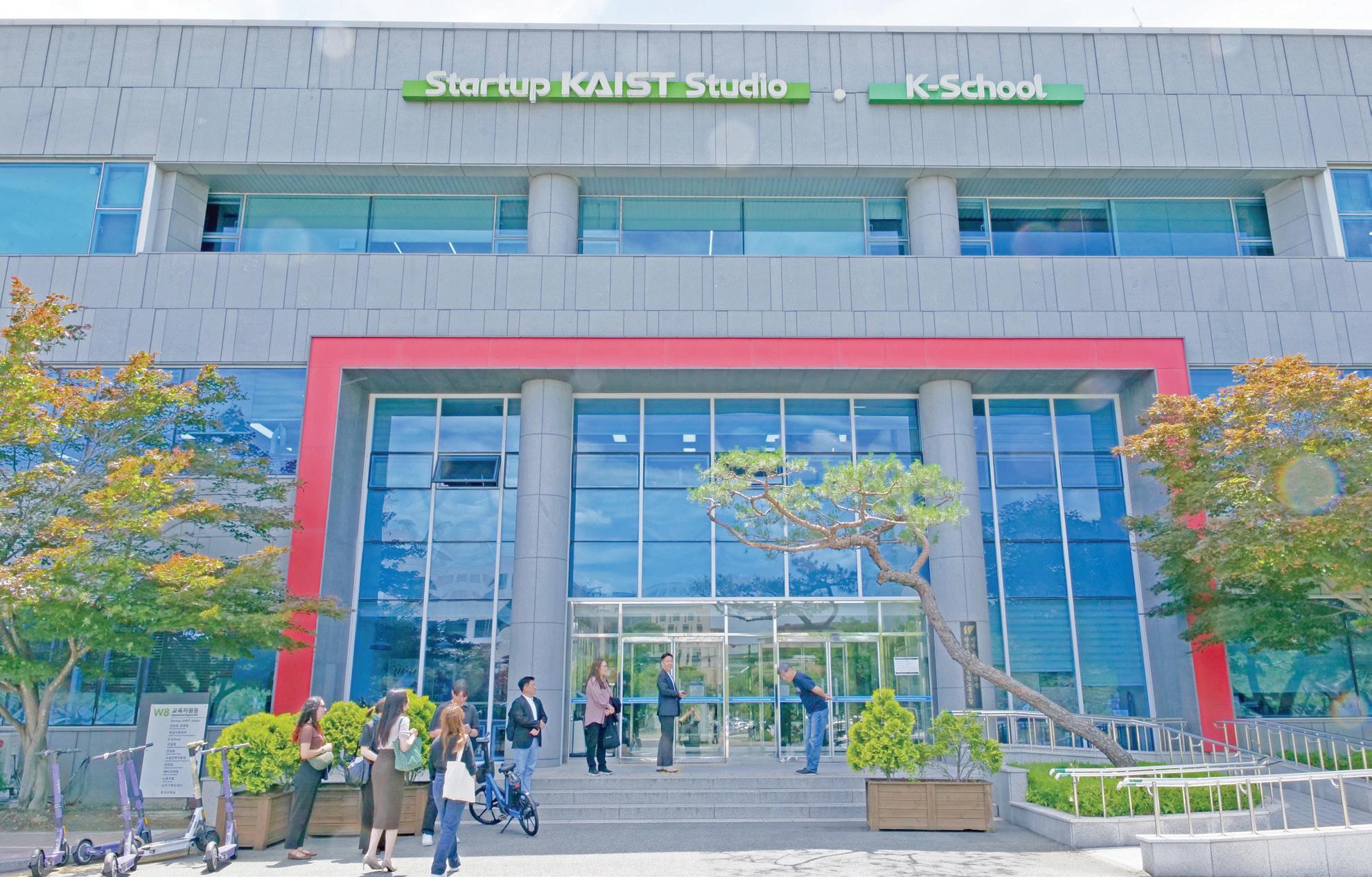
WHILE Seoul remains the main hub, the government has deliberately spread startup infrastructure to cities such as Daejeon. Home to Korea Advanced Institute of Science & Technology (KAIST)— Korea’s version of the Massachusetts Institute of Technology— and 85 percent of the nation’s government research institutes, Daejeon focuses heavily on science and deep tech. The city recently surged to 297th in the 2026 StartupBlink global rankings.
The Daejeon Startup Park uses a “distributed campus” model, with a headquarters and nine satellite buildings integrated into a walkable neighborhood.
“People are walking down the streets, they meet each other and very naturally engage in discussions about their business,” Yoonsung Hwang, executive director of the Startup Ecosystem Division of Daejeon Center for Creative Economy and Innovation, said.
LOCATED south of Seoul, the Daejeon Startup Park Headquarters is home to the Daejeon Center for Creative Economy & Innovation (DCCEI) and 44 growing companies. Surrounded by 10 satellite buildings, it forms a dynamic ecosystem where entrepreneurs, investors, and researchers collaborate.
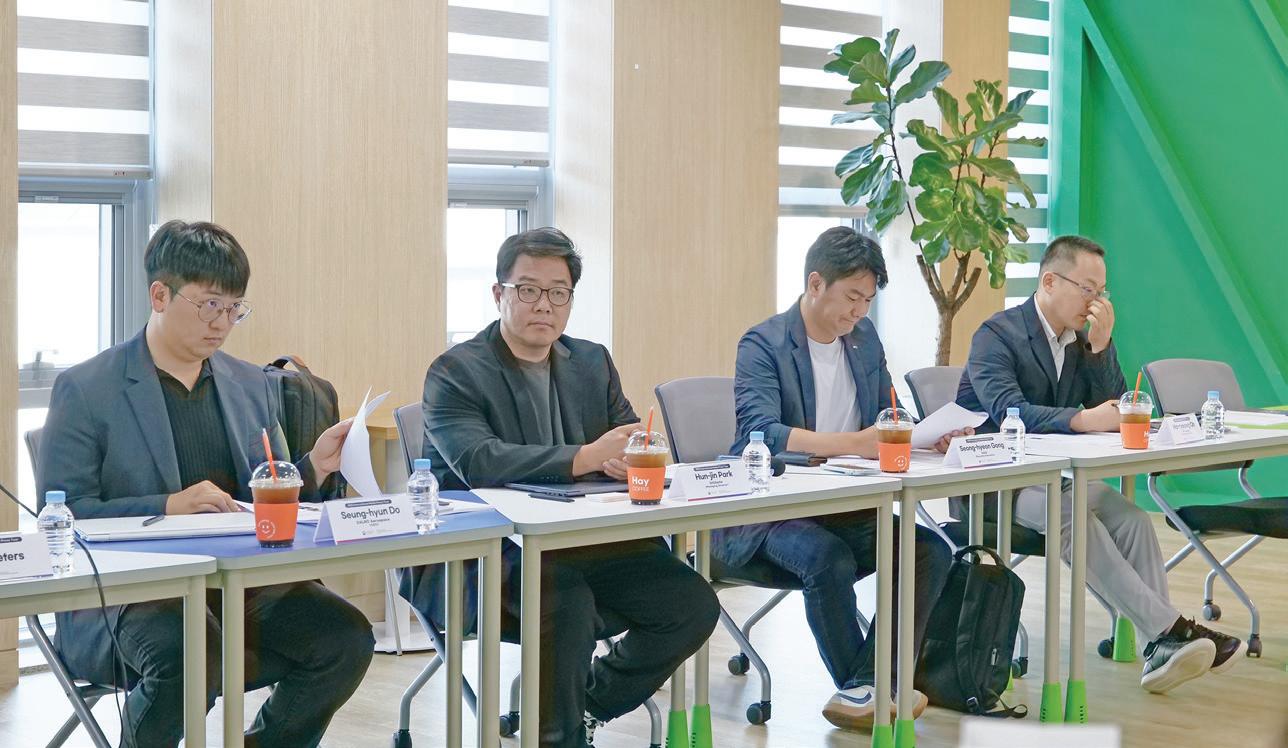
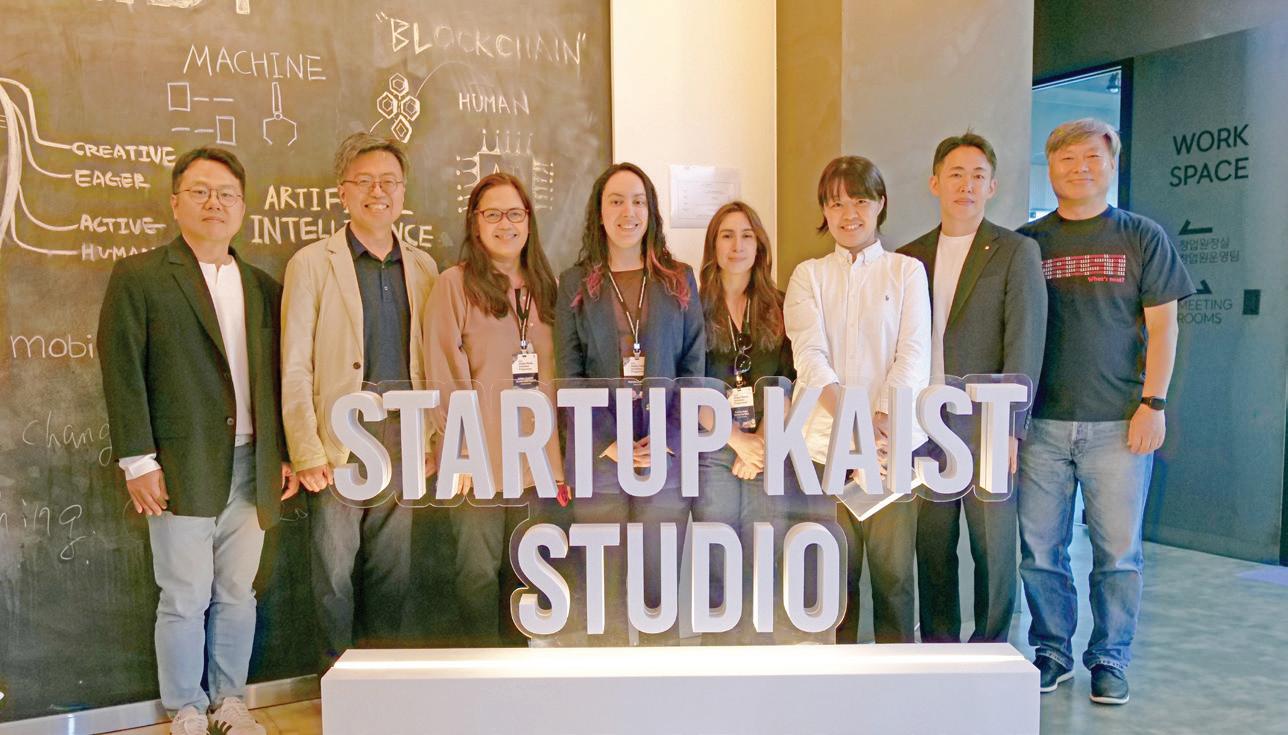
STARTUP executives and partners of the Daejeon CCEI brief visiting international journalists from emerging economies on how the city has supported over 220 startups and generated local employment. Pictured (from left to right): Seung-hyeon Do, CEO of DALRO; Hun-jin Park, Managing Director of GIGAette; Seong-hyen Gong, Executive Secretary of KAIA; and Ha-ryeong Oh, General Secretary of SK Telecom.
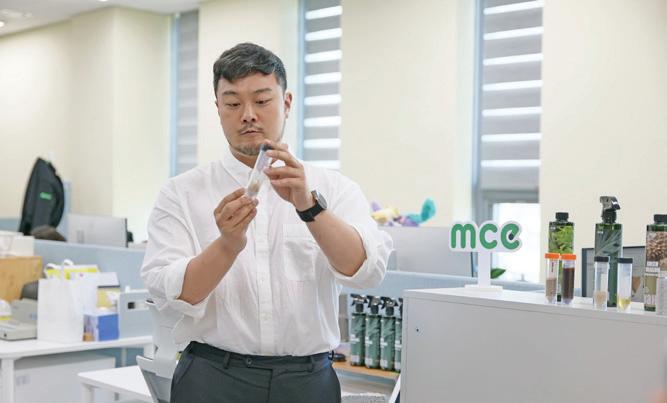
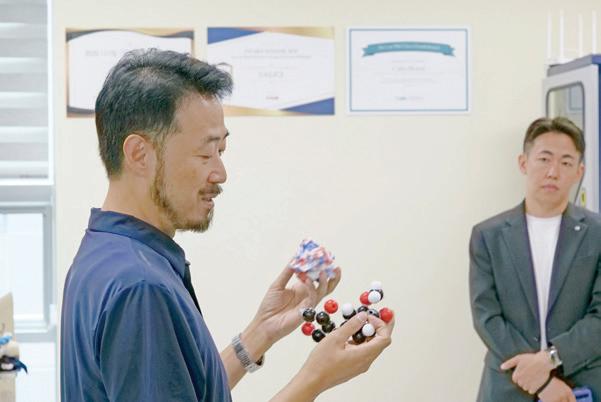
STARTUP CEOs brief visiting journalists on how the Daejeon CCEI supported the launch of their ventures. Jong-uk Park (left photo), CEO of MCE, recounts transforming a student pitch for mealworm waste fertilizer into a company now valued at KRW 1.05 billion (PHP 42 million). Jae-mun Choi (right photo), CEO of Calici,
EU to diversify away from China without launching new trade war
By Alexander Weber, Rebecca Choong Wilkins & Jana Randow | Bloomberg
THE Group of Seven industrial nations this week pledged an ambitious target to diversify away from China, adding momentum to the European Union’s own push to counter a growing trade imbalance with the world’s biggest export engine.
The 27 EU capitals unanimously agree on the economic threat posed by China’s trade policy if left unchecked. At a meeting Thursday in Brussels, the bloc’s leaders are expected to discuss how to handle upcoming trade talks with Beijing and explore possible responses — including new trade tools.
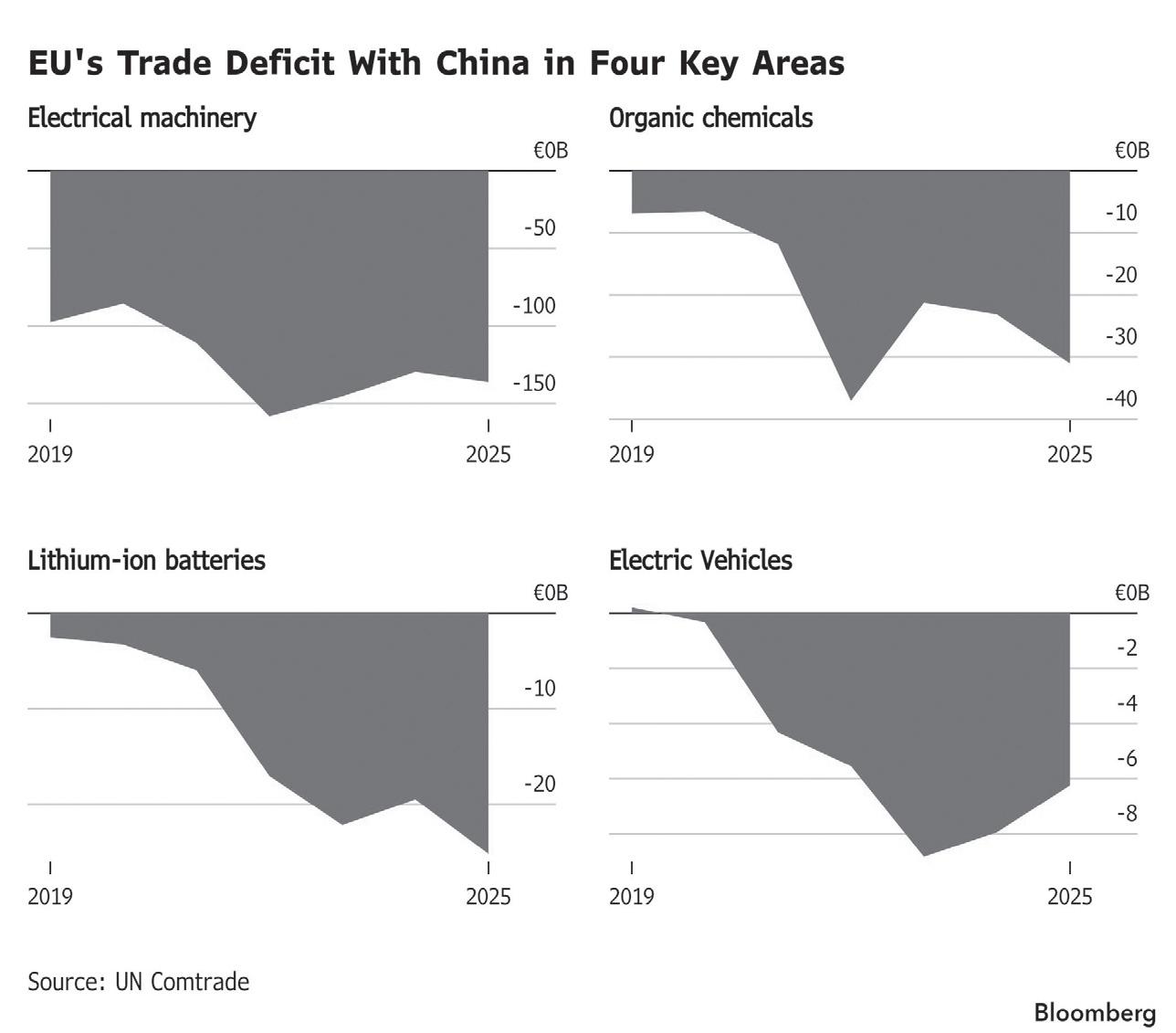
The EU is worried on multiple fronts: from a trade deficit with China that now exceeds €1 billion ($1.2 billion) a day fueled partly by state-subsidized products, to Beijing’s stranglehold on critical minerals and chips. Fears are growing that domestic European industries can’t withstand the onslaught much longer.
The EU’s chief trade negotiator, Maros Sefcovic, said this month that Europe’s trade relationship
with China was “simply not sustainable” and that “diversification requires a dedicated instrument.”
French President Emmanuel Macron warned that the EU may take “strong measures,” including potential tariffs, if Beijing fails to address the trade imbalance.
Member states also agree on the need to diversify their supply chains away from China in critical areas, but several capitals have privately noted that that process will take years and the bloc needs to be realistic in its approach, people familiar with the deliberations said.
Bloomberg reported earlier that the EU was seeking to temporarily lift sanctions on a Chinese chipmaker after the auto industry warned it would otherwise face shortages. Spain is also deepening
its position as a European hub for Chinese automotive imports and production, making confrontation with Beijing potentially damaging.
Still, the discussions in Brussels illustrate how far the EU has come since it started taking a harder line with China in 2019 by labeling it both an economic competitor and systemic rival. That shift was partly driven by frustration over unequal market access and increasingly unbalanced commerce.
But business largely continued as usual in the coming years as
European industry heavyweights, particularly in Germany, opposed restrictions on the free flow of goods as long as China remained a lucrative export market. In 2024, then-Chancellor Olaf Scholz heavily resisted tariffs on electric vehicles from the country over concerns of retaliation.
The position of German carmakers has worsened significantly in recent years. Shipments to the Asian nation fell by a third in 2025, leaving them more than 50% below their 2022 peak of about €30 billion, according to an analysis by the German Economic Institute. BMW’s woes EARLIER this week, BMW AG slashed its profitability forecast, citing weak demand and more intense competition in China.
Other industries, including machinery producers and the pharmaceutical sector, are also under increasing pressure. The EU’s combined trade deficit with China widened for a second year in 2025 to €360 billion, and it continued to swell in the first quarter.
Those dynamics are feeding concerns that higher US tariffs are sending more Chinese goods to European shores. There’s also a sharpened focus on the generous subsidies handed out by Beijing in its decades-long effort to upgrade its economy.
China has given as much as eight times more government support to domestic companies than firms in the OECD received between 2005 and 2024, driving market share in sectors including solar, shipbuilding, steel and aluminum, telecom equipment, wind turbines, aerospace and defense and cars.
Nearly 60% of global market share gains for Chinese companies is due to subsidies, according to an OECD report this month.
China’s newest five-year economic plan issued in March also leaves little doubt that Beijing will continue to foster its manufacturing sector. Officials aim to modernize traditional industries while cultivating emerging and frontier technologies like robotics, biomedicine and nuclear fusion energy.
Working in the EU’s favor is the fact that China’s economy is highly dependent on exports given that its domestic demand remains weak.
The bloc was China’s secondlargest export market last year, according to the country’s foreign ministry, and remains an important buffer against a quickly cooling economy. And with the US drawing up more trade barriers, the EU’s wealthy market with its 450 million inhabitants is crucial, making access to it a valuable piece of leverage.
Still, China’s stranglehold over rare-earth processing gives it enormous leverage in any trade war — effectively already taking the sting out of US ambitions to impose hefty tariffs against the world’s
second-biggest economy. Bloomberg Economics estimates that a year-long cutoff of access to rare earths and permanent magnets from China could put about $4.4 trillion in global GDP at risk.
China showed the damage it could do with this control in 2025, when it imposed export controls on its rare-earth elements, causing global panics about shortages and manufacturing shutdowns.
Among the steps the EU is considering are making existing defensive trade tools more agile, bolstering the staff of the European Commission’s trade department as well as adopting entirely new instruments.
A key problem for Europe is that companies hooked on Chinese raw materials and other inputs have been slow to tackle the issue. BME, an association of German supply-chain managers, said last week that a vast majority had moved less than 10% of purchasing volumes out of the country over the past three years, with plans pointing to little change through next year.
In a display of how vulnerable they are to supply disruptions, European carmakers this year lobbied the European Commission, the EU’s executive arm, to temporarily suspend sanctions on Yangzhou Yangjie Electronic Technology Co., a major Chinese semiconductor supplier, Bloomberg reported earlier. Without an exemption, the companies warned that they’d run out of stock in a matter of weeks.
With China already cautioning that it’ll fight any EU moves to protect its industries and expand its policy toolkit, European officials realize they face a catch-22. But there’s also a growing consensus that taking action now will be less costly over the long run than extending the status quo, and that the bloc can’t be paralyzed by possible retaliation, officials said. The commission agrees that the European public needs to be made aware of the likelihood of greater trade frictions with China.
Germany’s position is especially in the spotlight. With its industry long benefiting from closer China ties, Berlin has traditionally aimed to keep trade flowing as freely as possible. That’s now seemingly starting to change after years of scant economic growth and as the competition hits more sectors.
Chancellor Friedrich Merz told lawmakers last week the EU can’t just stand idly by when others skirt shared rules, and that “we are protecting our interests and our economy against distortions of competition caused by the trade practices of other states.”
Such comments align him more closely with countries seeking a much stricter posture. Belgian Prime Minister Bart De Wever warned this month that European firms compete against Chinese rivals “that are backed by state support on a scale that no market economy can match or replicate.”
Across EU capitals, doubts remain about how far Berlin is willing to go in practice, according to people familiar with the matter. When Economy Minister and Merz ally Katherina Reiche traveled to China in May, she highlighted that any policy must ensure “that our companies can continue to export.”
“On the one hand, Germany has acknowledged the systemic rivalry and now views the relationship more critically,” said Cora Jungbluth, a senior expert at Bertelsmann Stiftung. “On the other hand, there are significant interdependencies. This means that, particularly from Germany’s perspective, it’s a delicate balancing act.”
(With assistance from Jorge Valero, Jenny Leonard and Alberto Nardelli / Bloomberg)
From drama to deep tech
For capital-intensive founders, this ecosystem is critical. “It is very difficult for deeptech startups to survive…without having to collaborate with these large companies,” Aerospace startup CEO Do Seung-hyun said. His firm tapped MSS packages and local R&D support, alongside partnerships with senior aerospace startups.
Global reach, second chances KOREAN policy increasingly treats global expansion as a necessity. In May 2026, the MSS opened Startup Venture Campus (SVC) Seoul, co-locating 43 startups with corporate partners such as Microsoft. This complements SVC Silicon Valley, launched earlier in 2026. Startups are scaling abroad in diverse sectors. AFINIT, an AInative fintech firm operating in India, has brokered over USD1.3 billion in micro-credit. Korea is also attracting foreign talent through the K-Startup Grand Challenge, offering visas, funding, and office space to global founders. The government also provides “re-challenge” financing for founders whose ventures collapse. Creative Factory, a game sound production studio that closed in 2020, used recovery funds to restart. Today, it handles audio for global clients like Epic Games and TikTok across 24 languages.
“We don’t see it as a failure, it is a part of their lifetime experiences,” Kim of MSS said. “Once they get these experiences, then they can be motivated to do more challenges.”
Lessons for the Philippines FOR Manila, Korea’s experience offers structural lessons in building a sustainable startup ecosystem.
According to Philippine commercial attaché in Seoul, Charmaine Mignon Yalong, Filipino entrepreneurs are increasingly expressing interest in Korean accelerator programs, though publicly available records do not yet document specific founders in flagship initiatives such as KSGC.
Still, bilateral engagement is gaining traction.
In January 2025, South Korea’s National Agency for Administrative City Construction launched “Team Korea to the Philippines,” a consortium of 23 public institutions and private firms designed to support Korean companies entering the Clark development zone. A Korea–Philippines Startup Meetup in Bonifacio Global City also brought together Korean startups, delegates from the Korea SMEs and Startups Agency (KOSME), and Philippine startup community representatives.
Yalong pointed these key lessons Manila could adapt:
• Public-private capital matching through co-investment mechanisms similar to TIPS.
• Geographic decentralization to spread activity beyond Metro Manila into Cebu, Davao, and Clark.
• Startup visa and talent attraction by simplifying and promoting Manila’s own framework under the Innovative Startup Act.
“Beyond attracting foreign startups, Korea actively supports Korean founders going global through Born2Global and related programs. The Philippines could develop reciprocal mechanisms— supporting Filipino founders in applying to Korean programs and vice versa—to deepen the bilateral startup relationship,” Yalong told BusinessMirror
South Korea’s startup story shows how state policy, private capital, and cultural acceptance of risk can converge to produce a dynamic ecosystem. For the Philippines, the challenge is to adapt these lessons—decentralizing innovation, strengthening funding models, and backing founders through both successes and failures—to script its own chapter in the region’s startup race.
Celebrating Fatherhood


A father’s fight to give his son more time
For Alexander Amora Juni, who battled
against his son’s rare disease, he believed that being a father meant continuing to show up, no matter how difficult the circumstances became.
By John Eiron R. Francisco
FOR parents, no sacrifice is too great when it comes to their children, even when the road ahead is marked by heartbreak they know all too well.
In 2009, Alexander Amora Juni, a 52-year-old father from Sucat, Parañaque, stepped away from a 14-year career as a medical equipment specialist in various countries to care for his eldest son, Axl, who had been diagnosed with Duchenne muscular dystrophy (DMD).
DMD is a rare genetic disorder that causes muscles throughout the body to gradually weaken and deteriorate. The condition, often diagnosed during childhood, progressively affects a person’s ability to walk, move, breathe, and eventually impacts the heart, requiring lifelong care and medical support.
With Axl’s condition requiring constant care, Juni stayed by his side. As treatment costs mounted, he sought a way to support his family without leaving his child. It was during this difficult period that photography, once only a hobby he developed while work-
ing in the medical field, became his new livelihood.
An ex-seminarian, Juni, told the BusinessMirror how a priest encouraged him to pursue photography as a career. He started by taking photos at church events, slowly building a reputation within religious circles.
Over time, his work opened doors to assignments involving members of the clergy, diplomats, and even papal representatives visiting the country.
“Hindi ako nahihiya. Kahit na photographer lang po, alam kong may mga taong mababa ang tingin sa photographer. Pero marangal po ang trabaho ko dahil ginagawa ko ito para sa pamilya ko,” said Juni. [I am not ashamed. Even if I am only a photographer, I know that some people look down on photographers. But my work is honorable because I do this for my family.]
As a freelance photographer,
Juni accepts assignments for any fee clients can offer. He ignores gossip and works honestly for his family.
But just as the years tested his resilience, another wave of hardship came. In 2019, Axl passed away due to complications from DMD. Only a few months later, the family was faced with another painful blow: his youngest son, Angel, was diagnosed with the same illness that had taken his brother’s life.
“Sobrang hirap [It was extremely difficult], Juni said simply, describing the weight of the loss and the challenges that followed.
His role as a father, however, extended beyond caring for his children. Alexander also supported his parents, who lived with him while his mother battled cervical cancer.
“I am also grateful to my family because they have been very supportive, especially in helping my mother continue to fight,” he noted, partly in Filipino.
In many ways, he said, being a Filipino father meant continuing to show up, no matter how difficult the circumstances became.
“Akala ng ibang tao, madali lang ang pagiging ama. Pero kapag dumating ang problema, doon mo makikita kung sino ang handang lumaban para sa pamilya,” explained Juni.
[Some people think that being a father is easy. But when problems come, that is when you see who is truly willing to fight for their family]
He believes that a father’s responsibility goes beyond himself. It is about making sacrifices today while keeping in mind the future of the people who depend on him.
Kapag lumaban po kayo sa buhay, may magandang kapalit ang lahat. Kaya lumaban po tayo nang maayos at marangal ,” he emphasized.
[When you continue to fight in life, there will always be something good that comes from it. So let us keep fighting in a good and honorable way]
‘Learning to rest’
Still, he admitted there were moments when exhaustion caught up with him. The pressure of constantly working and carrying responsibilities sometimes made him feel like giving up.
Pero para sa akin, walang salitang pagod pagdating sa pamilya [But for me, there is no such thing as being tired when it comes to my family],” he said.
But recently, he shared that the constant strain has caught up with him. His body began to break down from exhaustion and anxiety, and he found himself unable to
CHEERS TO DADS!
eat properly as work and responsibilities piled up. It was a moment of realization that what he once thought was an unending ability to endure for his family also came with limits. He learned that rest, too, is part of responsibility.
“Akala ko walang salitang pagod para sa pamilya. Mayroon pa palang salitang magpahinga para sa pamilya. Importante pala ang balanse,” he said. [I thought there was no such thing as being tired when it came to my family. But I realized that there is also a need to rest for the sake of my family. Balance is important]
‘The Quiet Strength Within’ Through all of it, and through the stories he has witnessed behind his camera, Juni said he held on to one guiding belief: faith must not be abandoned.
“Huwag kang bibitaw kay Lord. Siya po yung pinaghuhugutan ko ng lakas. Kahit anong mangyari, kapag hindi mo na alam ang gagawin mo, sa Kanya ka lumapit. Huwag kang magdalawang-isip,” he said.
[Never let go of your faith in the Lord. He is where I draw my strength from. No matter what happens, when you no longer know what to do, turn to Him. Do not hesitate]
He shared that everyone experiences their own “sorrowful mysteries,” but there are also “joyful and glorious moments” waiting ahead.
“Those moments will come. We just have to wait for the right time that God gives us,” he said.
‘For their future’
According to Juni, his dream is no longer about achieving something big for himself, but simply ensuring that his children finish their education. At his age, he said he is no longer in a position to provide properties or material wealth, but continues to trust in what may still come.
Priority ko talaga na makapag-
tapos sila ng pag-aaral kasi sa murang edad po, iniwan ako ng
Kumayod ako
pos ako sa aming magkakapatid,” he shared. He added that he does not want his children to go through the same hardships he experienced growing up. This, he said, is what continues to drive him to work and persevere for their future.
That dream became even more meaningful when his daughter, Aneza, recently graduated with a Bachelor of Science in Biochemistry from the University of Santo Tomas. According to Juni, his daughter chose the field not only because of her passion for science, but also because of her hope to help find answers for her younger brother, who is living with DMD.
At present, there is still no cure for the condition, Juni said, and the only available care is supportive treatment such as vitamins and certain medications, including steroids, to help slow its progression and prolong his son’s life. He shared that his daughter once told him, “Papa, if I cannot develop a treatment in time for my brother, I hope it can at least help other patients.” Meanwhile, Angel is currently a Grade 9 student at UST Angelicum College in Quezon City. Juni said the school is the only institution they found that offers a program suited to students with his condition.
Despite his son’s condition, which requires around P3,300 worth of medicines every week, Juni said he never considered depriving Angel of an education. He stressed that, regardless of a child’s illness, parents still have a responsibility to support their children’s learning and aspirations.
“Everyone has their own battles in life. God will not give us something we cannot handle,” he said, encouraging fathers to stay strong and continue fighting for their families.
Rhythm of life: Musician Niño Regalado on the surprises of being a dad
The Neocoulours drummer listens to a different beat as a father, realizing that being present for his kids could both be meaningful and fun.
By Von Zyron Alimorong
NEAR the garden at Robinsons Magnolia, where children freely stroll while their parents watch over them from the sidelights, the accomplished musician Niño Regalado and his wife Johanna sat down at a table inside a coffee shop. While the kids played outside, Niño spoke of the time he was one, too.
Born on Christmas Eve of 1970, Niño spent his childhood in two places, Manila and Laguna. He is the eldest of four. His father, Jun, a professional drummer, often hailed as “the most recorded drummer in the Philippines,” owned a drum set where the young Niño, then a 14-year-old, slowly discovered his interest in music. Music is in their blood. Nino’s grandfathers, Nemesio Regalado and Tony Galleros, were saxophone players for a jazz band and a marching band, respectively.
But it was here—behind the cymbals, and the toms and snare—where the two would bond, and eventually, foster Niño’s love for the drums.
Most important stage
The young Niño would eventually be good at playing the drums. Ever since he began around 1985, he has played drums for some of the biggest Filipino artists, such as Regine Velasquez, Martin Nievera, Jaya, and Yeng Constantino. The sound of his vibrant rhythms has also echoed at some of the biggest stages in the country and abroad. But he is well known as the drummer of his home band, Neocolours. Back in the 80s, Filipino singer and actress Celeste Legazpi was forming a singing group. Later on, they decided to add a band to the group, where Niño would audition. The singing group was eventually dissolved, leaving only six members—five instrumentalists and a singer. And thus, Neocolours—the band behind the timeless hit “Tuloy Pa Rin”—was formed. Over the years, the band’s following would grow, taking them to places beyond their wildest dreams. But perhaps the most impactful stage for Niño was at school, where he eventually met his future wife, Johanna. Johanna’s mother initially protested the two meeting each other and even called Niño to stop seeing her daughter. After a few years, they met again, and Jo-
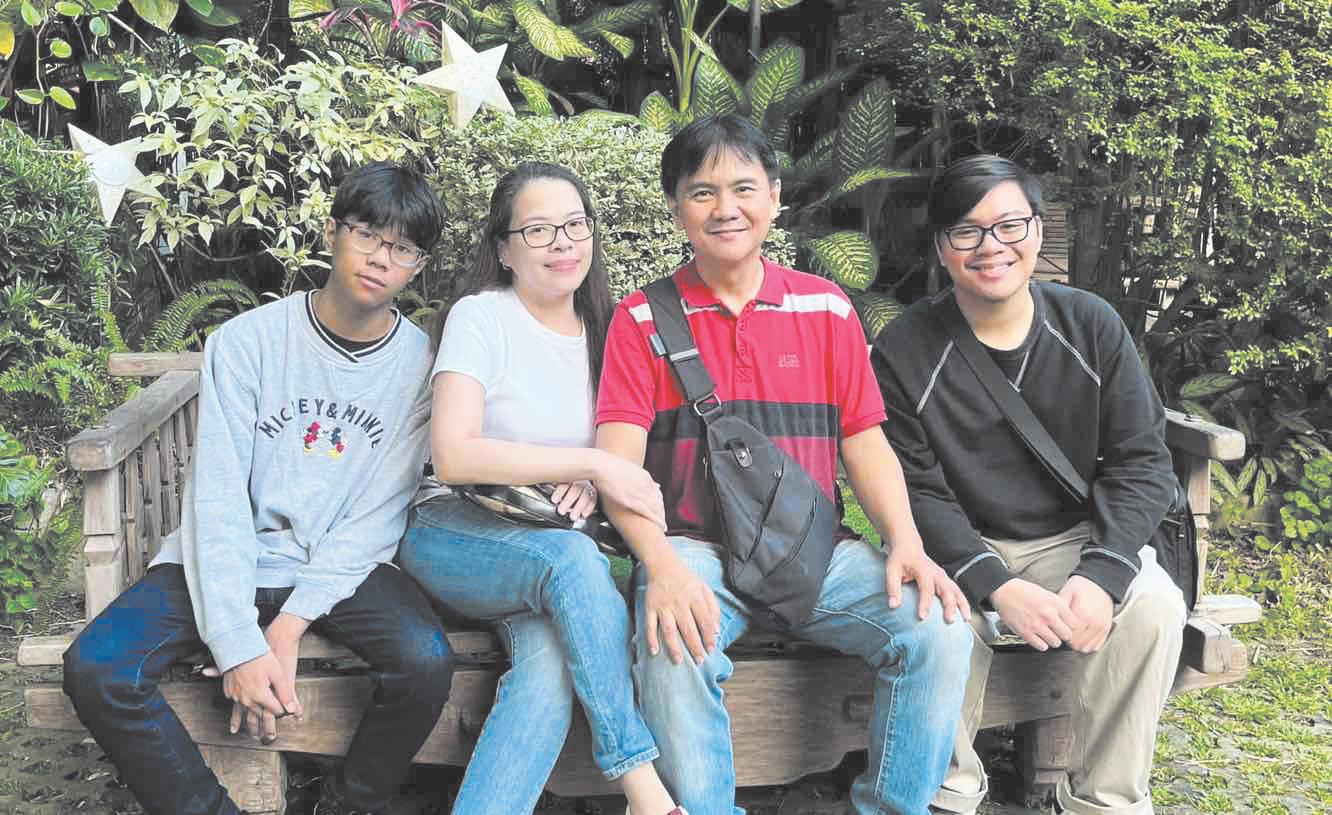
hanna’s mother eventually relented. In December 2000, the two tied the knot and said their vows. From this love, two boys were born—Johann and Andrew.
Reality check
as busy as the high-profile artists he worked with, as he still finds opportunities to plot his schedule and divide his time between work, home, and family.
Family tradition Niño credited his parenting to how his father raised him, who raised him with the attitude that “spending time with [the] kids is not just important but also fun.” What his father thought of him “as a son, as a friend, and as a playmate,” he passed it down to his own kids.
“Malaki ang influence ng father ko sa akin,” Niño said. “Siya ang nag-influence sa akin kung ano ako ngayon.” (“My father’s influence on me is huge. He influenced me to become the person I am today.”)
niya… ituloy niyo itong tradition na ‘to. Every year, magkita-kita kayo, reminding us that we are one big family.”
“Gusto kong -relay yung message sa mga kids ko: importante ang family. Yung ginagawa nating tradition, huwag ninyong puputulin ‘yon… ‘Di lang ’wag niyo putulin, i-pass down niyo na rin sa next
One of the things Niño realized early on as a father was that he was not prepared. The sleeplessness was overwhelming. His work as a musician meant working at odd hours, oftentimes at night. He would arrive home exhausted and assume his turn to take care of the baby. It was then that he grasped completely the hardship his parents went through when he himself was a newborn.
When asked what he wishes for his sons to adapt when they become fathers themselves, the one thing he stressed is that “being a father was a surprise” and that his sons will learn some things that Niño himself hasn’t taught them before.
“Biglang tumaas ‘yung respect ko for parents, kasi naranasan ko firsthand kung gaano pala kahirap.” (“My respect for parents suddenly grew because I experienced firsthand how hard it is.”) Nino counts himself lucky that he was not
Most of the important events in their family occur in December, when hardly a week passes by without a celebration. This has become a tradition in their family, one which Niño wishes his children would continue.
Noong last few years ng lolo ko, sinabi
Frelance photographer Alexander Amora Juni with his family: daughter Aneza; Angel, the youngest sibling living with Duchenne Mascular Dystrophy (DMD); Andre, the third of four siblings; and Alexander’s wife, Janice Rose Juni. PHOTOS COURTESY OF ALEXANDAR AMORA JUNI.
Alexandar Amora Juni, shown here with his family, honors the memory of his son Axl Jan Rose, his eldest son who passed away with a DMD diagnosis. PHOTOS COURTESY OF ALEXANDAR AMORA JUNI.
magulang ko.
mag-isa. Kaya nagta-
Sunday, June 21, 2026
Editor: Angel R. Calso
US tells ASML it’s concerned China may have top chip tool
By Mackenzie Hawkins & Jenny Leonard
DUTCH chip-equipment
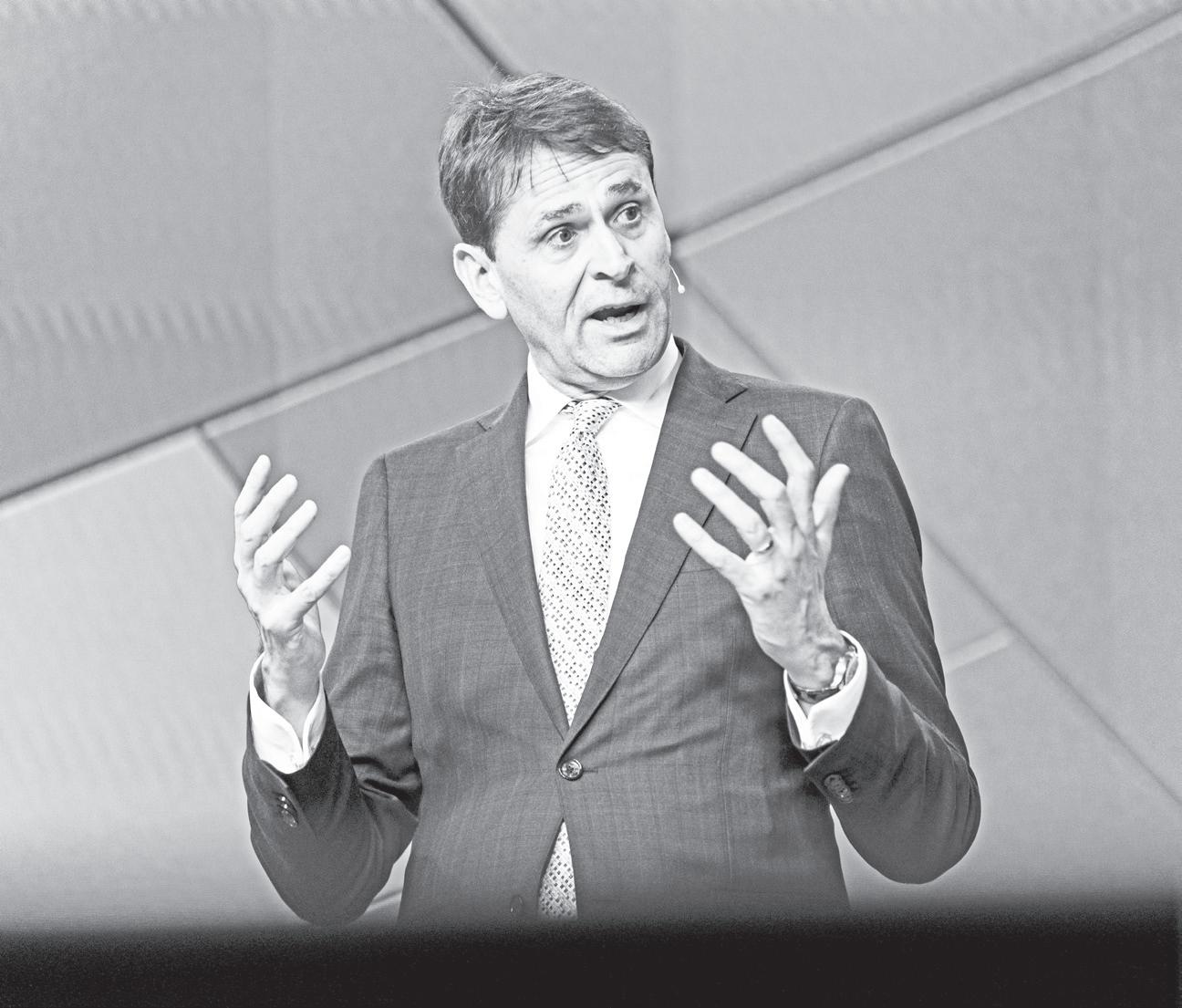
giant ASML Holding NV is contending with its biggest challenge yet under the Trump administration: In a series of recent meetings, Commerce Secretary Howard Lutnick outlined concerns to ASML’s senior leaders that one of its top-of-the-line machines may have made its way into China, in violation of US-led export restrictions.
In the meetings, Lutnick expressed concern to ASML executives over the company’s extreme ultraviolet lithography, or EUV, machines, according to people familiar with the talks. EUV systems are used by firms such as Taiwan Semiconductor Manufacturing Co. to manufacture processors for the likes of Nvidia Corp. and Apple Inc., and ASML has never been allowed to ship them to China because of curbs imposed during the first Trump administration. ASML has pushed back on Lutnick’s suggestion, explaining that none of these tools—which are the size of a school bus, are manufactured in limited quantities, and require constant upkeep from ASML employees— are in China, said the people, who
spoke on condition of anonymity to describe private conversations. A company spokesperson, asked about the meetings, said that ASML talks with all governments and that it’s never shipped an EUV machine to China. It’s unclear what exactly the Trump administration seeks from ASML, which is now trying to prove a negative, nor what type of information from the equipment maker could put the China EUV issue to bed. The Commerce Department didn’t respond to multiple queries on the matter, including whether the agency has any evidence indicating that there’s an EUV machine in China.
Multiple senior administration officials, speaking on condition of anonymity to describe a

sensitive matter, said they have evidence indicating ASML is not acting in good faith—such as exports to China of gear specifically related to EUV tools, which ASML denied to Bloomberg. These US officials, who didn’t comment on Lutnick’s meetings with ASML, declined multiple requests from Bloomberg for proof of the shipments, citing the sensitivity of the information and sources. They also declined to say whether they have seen evidence of an actual EUV system in the Asian country.
Persistent concerns from senior levels of the Trump administration—including a Cabinet official—add to pressure on Europe’s most valuable company, which has previously fielded allegations by American officials that its business activities undermine US national security and tech policies. Should ASML remain unable to allay Washington’s concerns, the situation could also add strain to already rocky relations between the US and the European Union.
“ASML regularly engages in transparent and open dialogue with government leaders globally,” a company spokesperson said. “We recognize the national security considerations behind export control regulations in the US and the Netherlands, and we’re fully committed to complying with all applicable regulations.”
They added that ASML has previously “refuted several unfounded rumors regarding non-compliance with export controls concerning China which were inaccurate and damaging to our reputation.”
A representative of the Dutch foreign ministry said that the Netherlands takes seriously the responsibility that comes with its “unique role in the semiconductor industry.” The country also enforces restrictions on EUV tools and other relevant exports “very strictly” and “always intervenes where necessary,” the representative said.
It’s unclear what specifically prompted Lutnick’s EUV questions, which he surfaced at a meeting that covered a range of other topics, including ASML’s commitments to invest in the US.
Both Lutnick and ASML Chief Executive Officer Christophe Fouquet have described that overall conversation in positive terms, without mentioning the EUV issue in their posts on LinkedIn.
In private, though, ASML has gone into crisis mode, some of the people with knowledge of the talks said. After the meeting with Lutnick in April, the Dutch firm created and began circulating in Washington a document titled “No indication of any ASML EUV System in China.”
There are 314 EUV machines in operation around the world, 26 that have been decommissioned—and none in China, according to the document, which was reviewed by Bloomberg. The presentation added that ASML can automatically detect “any

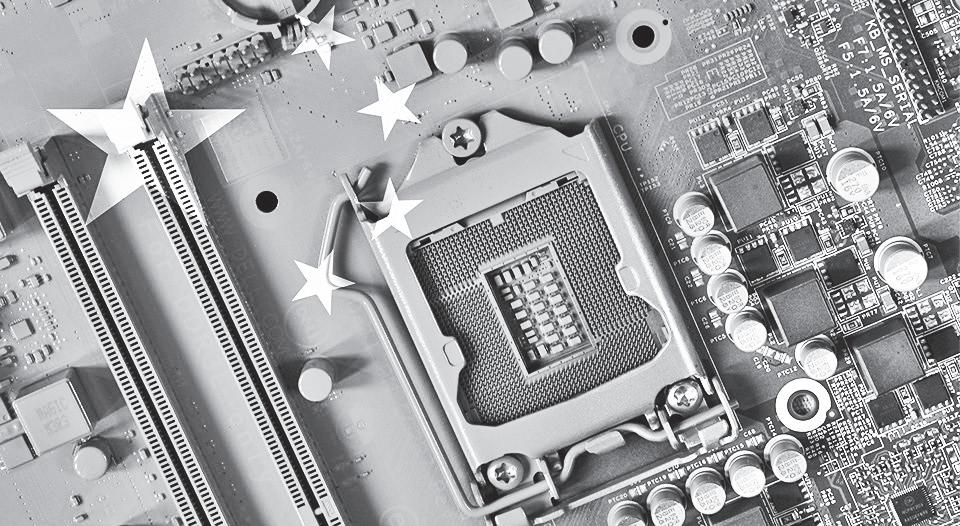
interruption, abnormal behavior, or loss of connectivity,” in its EUV portfolio, and that customers “cannot remove, transport and relocate EUV systems without ASML involvement due to specialized handling procedures.”
The senior administration officials said that they have evidence of ASML shipping to China specialty equipment used to transport EUV machines, as well as other components that could be used in EUV systems. The proof of those exports is too sensitive to disclose, they said, in response to multiple requests.
A company spokesperson denied these allegations, saying, “ASML has never shipped an EUV machine to China nor have we shipped to China any component, module or equipment specially designed to be used in an EUV machine.”
China’s lack of access to EUV tools is perhaps the single toughest constraint faced by AI chip champion Huawei Technologies Co., the Asian country’s top rival to Nvidia. Huawei’s semiconductor chief recently touted the company’s innovations in making chips without ASML’s EUV machines in a rare English-language public appearance.
If an EUV system did make it to China, that would be among the biggest known violations of US-led curbs designed to limit Beijing’s access to AI that could benefit its military.
Bloomberg asked the senior Trump administration officials why, if they have evidence to suggest that this is the case, the US government hasn’t pursued tougher policies or punitive action on that basis. They declined to comment.
ASML has for years faced increasing limits on its business in China, as the US has pushed the Netherlands and Japan to stem flows of chip production equipment to a geopolitical rival. The three countries are home to the leading makers of these tools, and Chinese rivals are making progress but haven’t caught up— particularly in lithography, where ASML is the world leader.
The Netherlands has already restricted ASML from selling EUV machines and some types of the next-most-advanced immersion deep ultraviolet, or


DUV, lithography equipment to China. But there was deep frustration under the Biden administration after ASML accelerated shipments of soonto-be-banned gear before certain DUV controls were officially in place.
The senior Trump administration officials, who spoke about alleged shipments of EUV components to China, also brought up these earlier, legal DUV shipments—and said they have overall concerns that ASML is prioritizing short-term profits over national security.
“Any claim that ASML would or did consciously and willingly break any agreement with the Dutch, the US or any other government is not only factually incorrect but significantly misleading,” a company spokesperson said. “ASML has consistently adjusted its business operations to any development in export controls to comply to any new rules.”
The Hague and Tokyo have generally lagged behind Washington in the timing of their controls, and resisted implementing certain measures—such as banning their engineers from maintaining and repairing certain restricted gear that’s already in China, which US persons and companies can’t do. US chip tool-makers Lam Research Corp., KLA Corp. and Applied Materials Inc., have said that this discrepancy leaves them at a competitive disadvantage.
There are also differences in the restrictions US and foreign companies face for sales to specific Chinese customers on Washington’s so-called entity list, which imposes tougher controls on individual companies than exist across China writ large.
The US has effectively cut off all technology flows to Huawei, for example, and used extraterritorial authorities to extend those measures to companies including ASML. But the US rules still allow certain types of overseas business with other Chinese firms on the entity list—such as Huawei’s partner SwaySure Technology Co., which was added to the list in 2024.
The senior Trump officials, who expressed concerns about ASML’s overall business activities, said that ASML has been providing technological support to SwaySure to help build the company’s resilience to US rules. They declined to provide further details.
SwaySure didn’t respond to requests for comment.
To be sure, Washington has the tools to compel ASML to stop working with SwaySure entirely—and President Donald Trump’s team hasn’t used them.
The US administration has generally struggled to formulate
a coherent strategy around semiconductor manufacturing equipment export controls. Trump officials opened their term with a threat to fully cut ASML off from China, according to people familiar with the talks, who requested anonymity because the discussions are private. They then proposed much narrower measures in negotiations with the Netherlands and Japan, focused primarily on the question of gear maintenance—something the Biden administration also tried and failed to fully tackle. The talks under Trump have yet to produce a substantive outcome. “US concerns about Chinese chipmakers using advanced tools made by ASML might have little impact on its sales. Bloomberg News reports that in recent meetings, Commerce Secretary Howard Lutnick expressed the concerns to ASML’s leaders, saying one of its top machines might have made its way into China, violating US-led restrictions. But ASML says it has never shipped extreme ultraviolet lithography systems to China and has complied with tightening restrictions on deep ultraviolet tools. Also, using ASML machines to make advanced chips would probably require sophisticated tools from other foreign firms that also face restrictions. China is increasingly able to make moreadvanced chips with legacy tools, so the US concerns may reflect Chinese engineering progress rather than any lapse in ASML’s compliance with export controls,” said Masahiro Wakasugi, Bloomberg analyst. That diplomatic stalemate prompted Congress to step in earlier this year, with a bipartisan bill that broadly seeks to toughen curbs on companies including ASML and Japan’s Tokyo Electron Ltd. so that they are subject to the same level of restrictions in China as US firms. It also calls for an effective ban on shipments of all types of immersion DUV tools from ASML, which would dramatically limit the Dutch company’s access to a market from which it expects to derive about 20% of 2026 revenue. The Trump administration hasn’t taken a formal position on the legislation, which cleared a key congressional committee— with some amendments—in April. US Ambassador to the Netherlands Joe Popolo recently suggested that a favorable trade deal between the US and European Union would “take some pressure off” the bill, which is opposed by multiple foreign governments including the Hague. With assistance from Patrick Van Oosterom, Sarah Jacob and Dong
Lyu/ Bloomberg
ASML CEO Christophe Fouquet BLOOMBERG
BLOOMBERG

A LOOK AT URANIUM ENRICHMENT
Iran’s nuclear program faces scrutiny
WHEN the US and Israel launched the war against Iran on February 28, President Donald Trump said one of the main objectives was to prevent Iran from building a nuclear weapon.
That has put a focus on Iran’s stockpile of uranium and its program to convert this naturally occurring element into material that can sustain a nuclear reaction—a process called enrichment. Several key nuclear sites in Iran were attacked by the US and Israel last summer, and again during the latest war.
Iran’s leaders insist the country’s nuclear program is only for peaceful purposes. Before the war began, it had a stockpile of enriched uranium that was a short, technical step from weapons-grade material, according to the International Atomic Energy Agency (IAEA).
Iran had an organized nuclear weapons program up until 2003, the UN agency and Western nations say.
Here’s a deeper look at uranium enrichment and Iran’s nuclear program.
What is uranium enrichment?
URANIUM , like other elements, is found in slightly different configurations. One, called U-235, is best at powering nuclear reactions. It is less stable than the more common form, which means it’s easier to split to release the energy needed for producing electricity or a weapon. But U-235 makes up less than 1 percent of the uranium found in nature.
To isolate the more desirable U-235, scientists strip away its more stable cousin, U-238, through a process known as enrichment.
How is uranium enriched?
THE most common way to enrich uranium is by spinning uranium gas in a centrifuge, where lighter U-235 separates from the heavier U-238. This is done in stages, using multiple centrifuges that enrich the uranium bit by bit.
The early stages are especially labor-intensive because there is so much more U-238 to strip away, said nuclear security specialist

Sébastien Philippe at the University of Wisconsin-Madison. Over time, the enrichment process gets easier.
The process can take anywhere from days to months to years, depending on the size of the enrichment plant, the technology being used and how far the uranium is being enriched.
Different uranium enrichment levels are required for different purposes
For a nuclear reactor that makes electricity, uranium is typically enriched up to 5 percent. Nuclear reactors used for science experiments run on uranium enriched up to 20 percent.
Anything enriched to 20 percent and above is considered “highly enriched” uranium, and above 90 percent is considered weaponsgrade, though some very highly enriched uranium can be used for research and medical purposes, according to the Center for Arms Control and Non-Proliferation.
How much enriched uranium does Iran have?
IRAN is thought to have 972 pounds (441 kilograms) of uranium that is enriched up to 60 percent purity, according to the IAEA.
A crude nuclear weapon could be made with uranium at that enrich -
ment level, Philippe said, and it’s relatively easy to enrich it to the 90 percent level needed to make a bomb light enough to be carried by a missile.
Iran’s stockpile could allow it to build as many as 10 nuclear bombs, should it decide to weaponize its program, IAEA Director General Rafael Grossi told the AP last year. He added that it doesn’t mean that Iran has such a weapon.
What happens after uranium is enriched?
ONCE enriched, uranium gas undergoes some final processing and then is converted back into a solid, pressed into pellets and stacked into a sealed metal fuel rod that goes into a nuclear reactor. It can also be converted to form the core of a nuclear weapon. The process of weaponization is highly complex and involves several engineering challenges, among them miniaturizing the nuclear warhead to make it small and light enough to be carried by a missile.
How is uranium regulated?
OVER 100 countries, including the US and Iran, have signed the Treaty on the Non-Proliferation of Nuclear Weapons, which originally went into effect in 1970 and has been periodically updated.
As part of the agreement, countries without nuclear weapons agree to use nuclear material for peaceful purposes and countries that have nuclear weapons agree to a process of disarmament.
The treaty involves regular onsite inspections by the IAEA to confirm that countries are complying with the treaty’s terms. Iran was found to be out of compliance in the early 2000s due to a secret nuclear weapons program. It was in noncompliance again in June 2025 due to its failure to provide “technically credible” explanations to the IAEA about the origin of uranium particles found by inspectors at several undeclared locations in Iran.
What is the current status of Iran’s enrichment program?
TEHRAN has not allowed the IAEA access to its nuclear facilities bombed by Israel and the United States during a 12-day war in June 2025, according to a confidential IAEA report circulated to member states and seen by AP in February.
The report stressed that it “cannot verify whether Iran has suspended all enrichment-related activities,” or the “size of Iran’s uranium stockpile at the affected nuclear facilities.”
Adithi Ramakrishnan, Ap Science Writer
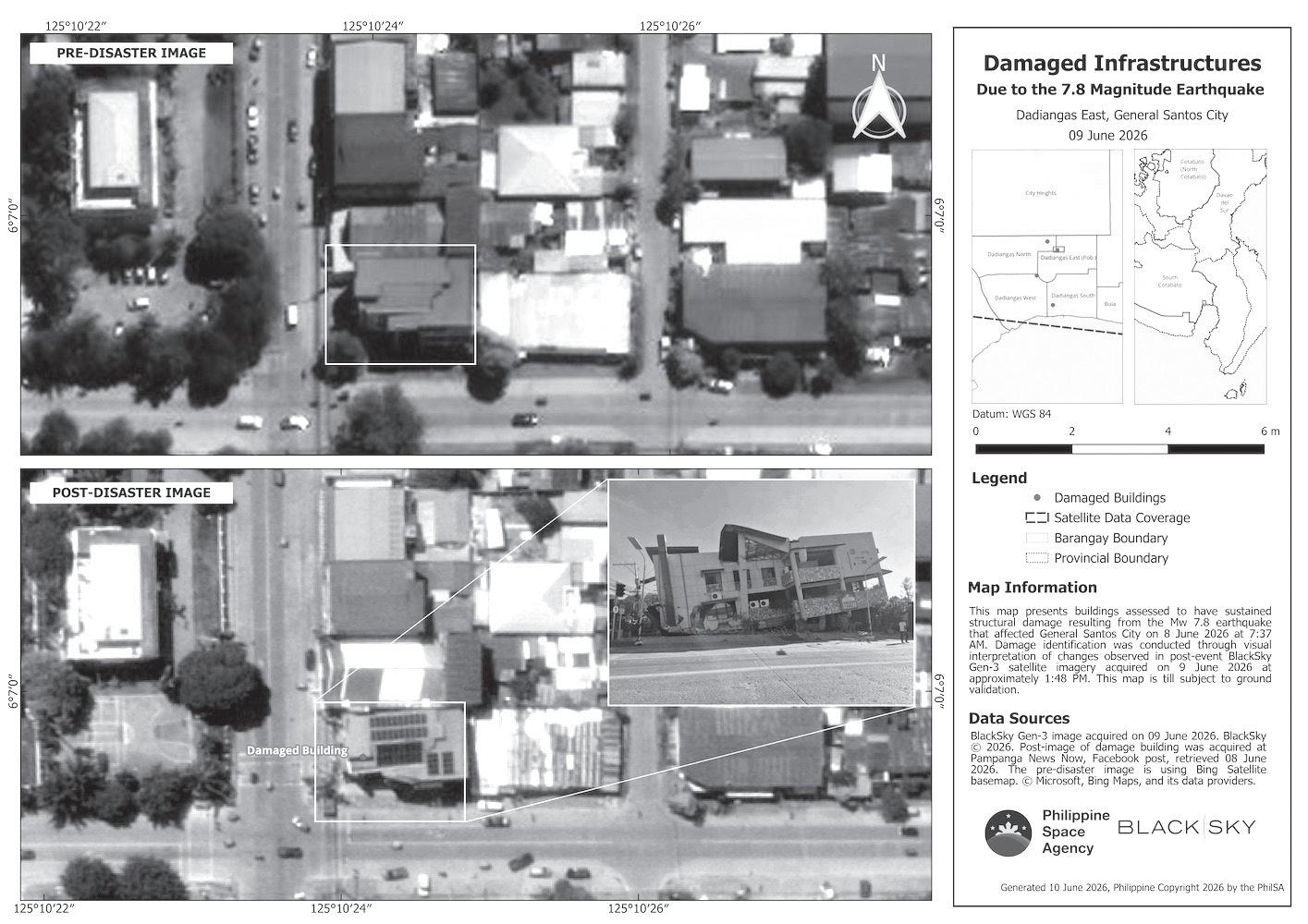
signals power loss, infrastructure damage, or population displacement/evacuation. PhilSA has been monitoring nighttime lights after the earthquake, observing a return of nighttime lights, which may be used as a proxy to monitor reconstruction and recovery.
Phabcon showcases how human-animal bond deepens understanding of care, well-being
AT a time when loneliness and isolation seem as widespread as ever, the bonds between humans and animals offer a powerful reminder that healing often begins with connection.
As interest in these relationships grows, so too does the need to better understand them through research.
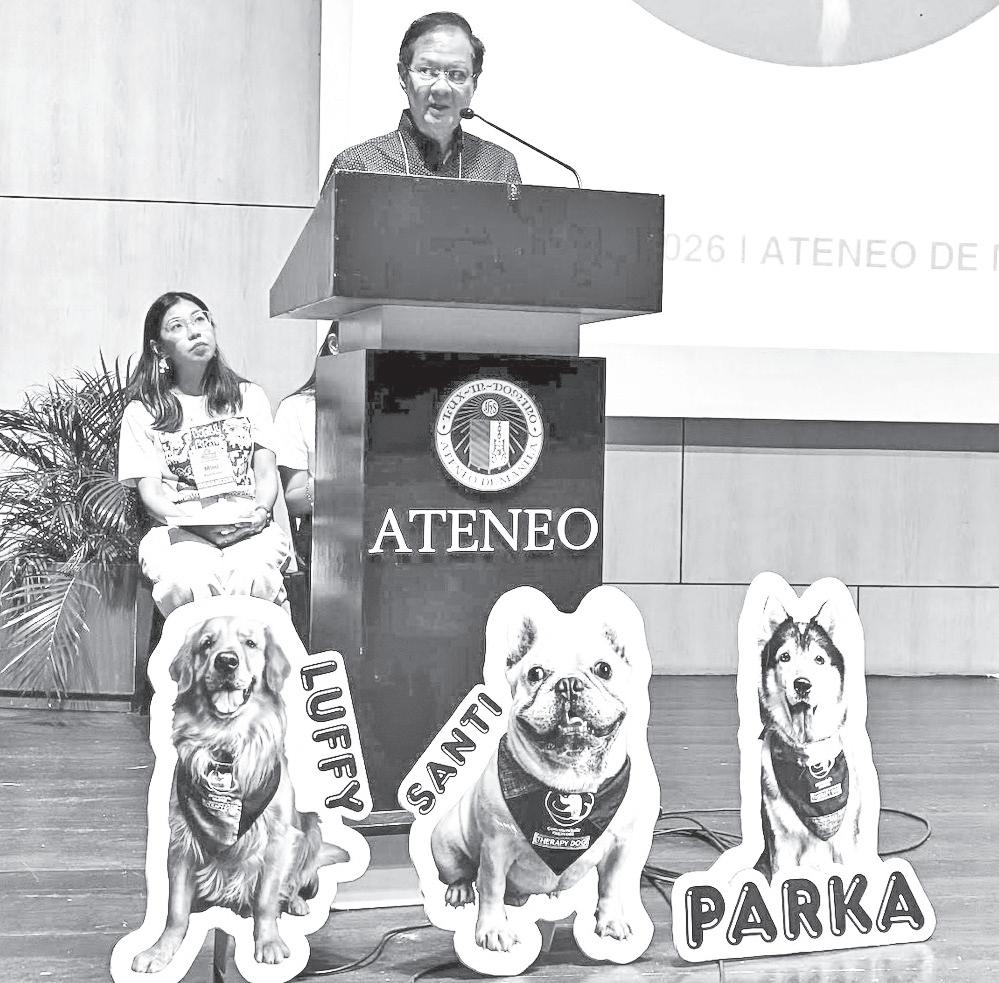
With the theme “Healing Connections Between Humans and Animals,” the Second Philippine Human-Animal Bond Conference (Phabcon) gathered more than 200 healthcare professionals, researchers, students, veterinarians, and advocates in person for the first time at Ateneo de Manila University’s (AdMU) Leong Hall last May 30. The event was a celebration of the university’s long-standing support for animal-assisted services and evidence-based approaches to mental health and well-being.
The conference was especially meaningful as it marked the 10th anniversary of Communitails as well as the birthday of its late founder, Dr. Carla Azucena. Since its founding in 2016, Communitails has grown into a vibrant community dedicated to advancing ethical and professional animal-assisted services in the Philippines through research, training, and community engagement.
Research as service to humanity and animals
DR . Filomeno V. Aguilar, AdMU Assistant Vice President for Research, Creative Work, and Innovation, in his opening remarks underscored the need for research that serves people, animals, and communities.
“Phabcon carries this work forward by inviting us to imagine how research can better serve humanity, animal welfare, and the wider world we share. After all, research, at its best, is an act of service,” Aguilar said.
He noted that research on the human-animal bond deepens our understanding of care and well-being. He also acknowledged and praised Communitails’ pioneering efforts in advancing animal-assisted services in the Philippines, and thanked the organization for helping the Ateneo create safe, inclusive, and evidence-informed spaces for healing.
In her keynote address, Raj Mariwala, director of the Mariwala Health Initiative in India and founder of Citizen K9 India, spoke about the importance of trust, communication, consent, and respect in nurturing healthy relationships between humans and animals.
Sharing stories and lessons from work in canine behavior, mental health, and disability justice, Mariwala inspired participants to create communities of care that honor the well-being of both.
“I love working with dogs and cats because it continuously reminds me that well-being is relational: it doesn’t happen in isolation. Dogs don’t become confident alone; humans don’t heal alone,” she said in her speech titled “Across Species, Across Care: Rethinking Healing Together.”
Researching the future of human-animal relationships
THE conference also showcased emerging research on the many ways people and animals enrich each other’s lives.
Presenters shared studies on animal-assisted interventions in educational and healthcare settings, the experiences of foster pet owners and animal rescuers, the role of companion animals on well-being, and innovative approaches to animal welfare, elder care, and community engagement.
Each presentation added a new layer to our understanding of how these bonds contribute to health, resilience, and connection.
As Communitails celebrates 10 years, Phabcon 2026 brought together researchers, practitioners, and institutions with a renewed sense of purpose and partnership.
The conference united participants with a collective belief in the healing power of the human-animal bond and the promise of research to create, as Aguilar framed it: “A world made gentler, wiser, and more whole through research and care.”
CHANGES in nighttime light provide a means to rapidly assess damage, disruption, and recovery after disasters. When lights go out, it often
PhilSA’s support through the analysis of satellite data provides wide-area coverage that assists the National Disaster Risk Reduction and Management Council in monitoring the situation and prioritizing areas for response. By making space data accessible to stakeholders, PhilSA enables informed decision-making and strengthens disaster response.
THE Atomic Energy Organization of Iran technicians work at the Arak heavy water reactor’s secondary circuit as officials and media visit the site near Arak, Iran,
A6 Sunday, June 21, 2026
Faith Sunday
Editor: Lyn Resurreccion • www.businessmirror.com.ph
Bishop: Family altars, rosary prayer vanishing
ALEADING figure in the exorcism ministry on Wednesday lamented the disappearance of family altars and what he described as a decline in communal rosary prayer inside Catholic homes.
Speaking during a Mass for the Western Visayas Exorcists and Lay Collaborators Regional Gathering on the Ministry of Exorcism in Bacolod City, Bishop Marvyn Maceda urged Catholics to strengthen their homes as centers of prayer and faith amid what he called increasing spiritual threats.
He said many households have gradually set aside traditional signs of devotion, including home altars that once served as focal points for prayer and were replaced by entertainment and digital distractions.
“Put it [the altar] back to signify that Jesus is the King of the house,” Maceda said. “A
Discalced
Rbig television set is now at the center of the living room, while the images of faith have been relegated to the sidelines.”
He also raised concern about whether families still gather regularly to pray the rosary together, noting that in many homes the practice has been reduced to older generations.
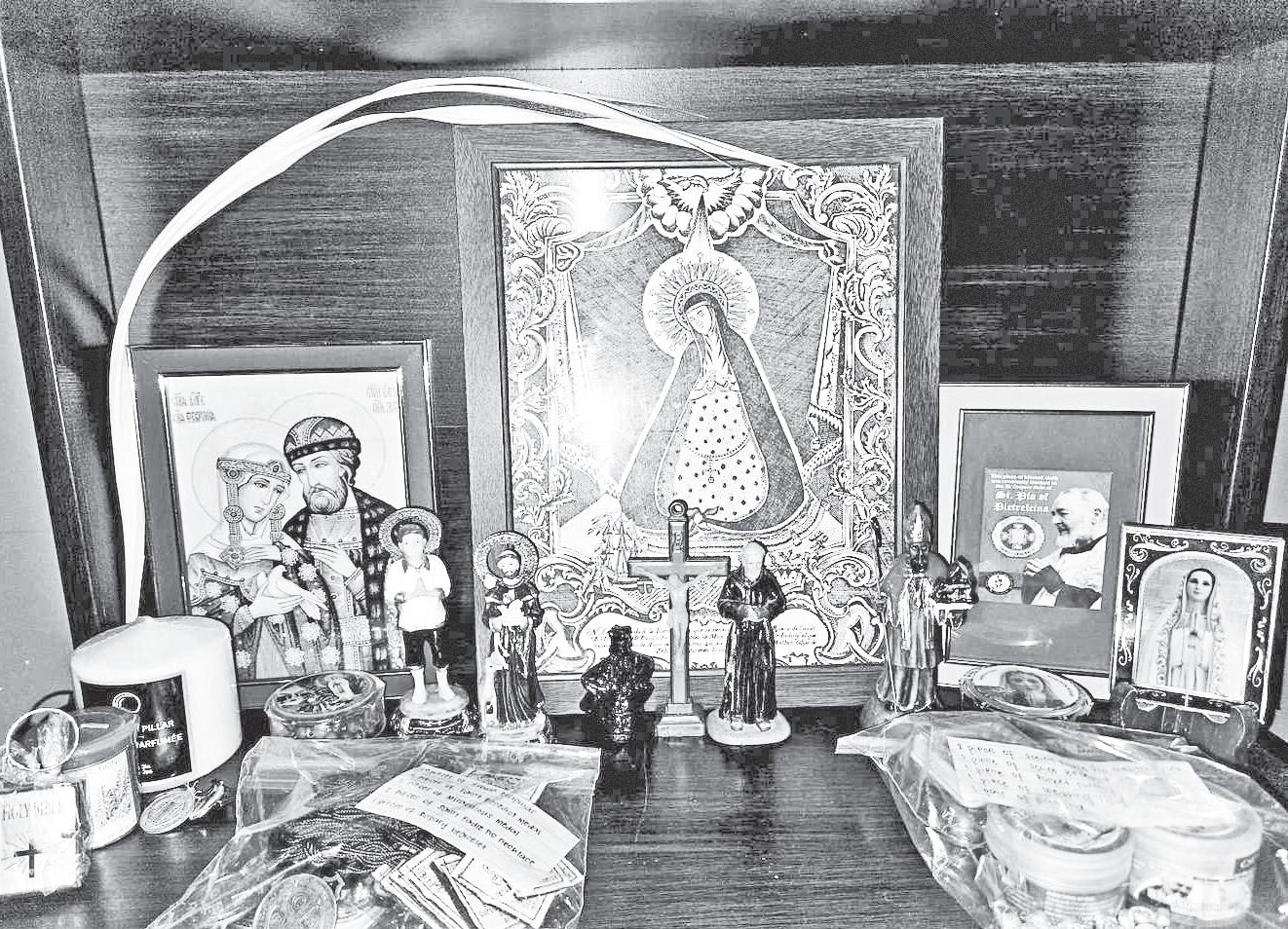
“Lolo and lola are the only ones praying the rosary now,” he said. “The children and grandchildren are no longer there.” Maceda stressed that his appeal was not rooted in sentimentality about religious objects but in what he described as a need for a more intentional practice of Christian life in the home.
“This is not emotionality. This is a call to live,” he said.
The bishop of San Jose de Antique said Christian families are confronting mounting challenges that require stronger spiritual foundations, including prayer, moral discipline and closer adherence to Church teaching.
“Parents, protect your families,” Maceda said. “They are being attacked now, our Christian families.”
He urged Catholics to return to basic devotional practices and to deepen their relationship with Jesus, saying holiness remains the central goal of Christian life even amid modern pressures and distractions. CBCP News
Carmelite nuns will leave Ronda, Spain, permanently in Feb 2027
ONDA, Spain—The Discalced Carmelite Nuns will permanently leave the monastery of La Merced in the city of Ronda in Andalucia, Spain, in February 2027, church sources have confirmed to Spanish Diario Ronda newspaper.
The nuns will transfer to another monastery of the same Order, still to be determined, where the nuns will continue their contemplative and cloistered life, said the news which was printed by Thurston Deb on Carmelites Unite! Facebook page.
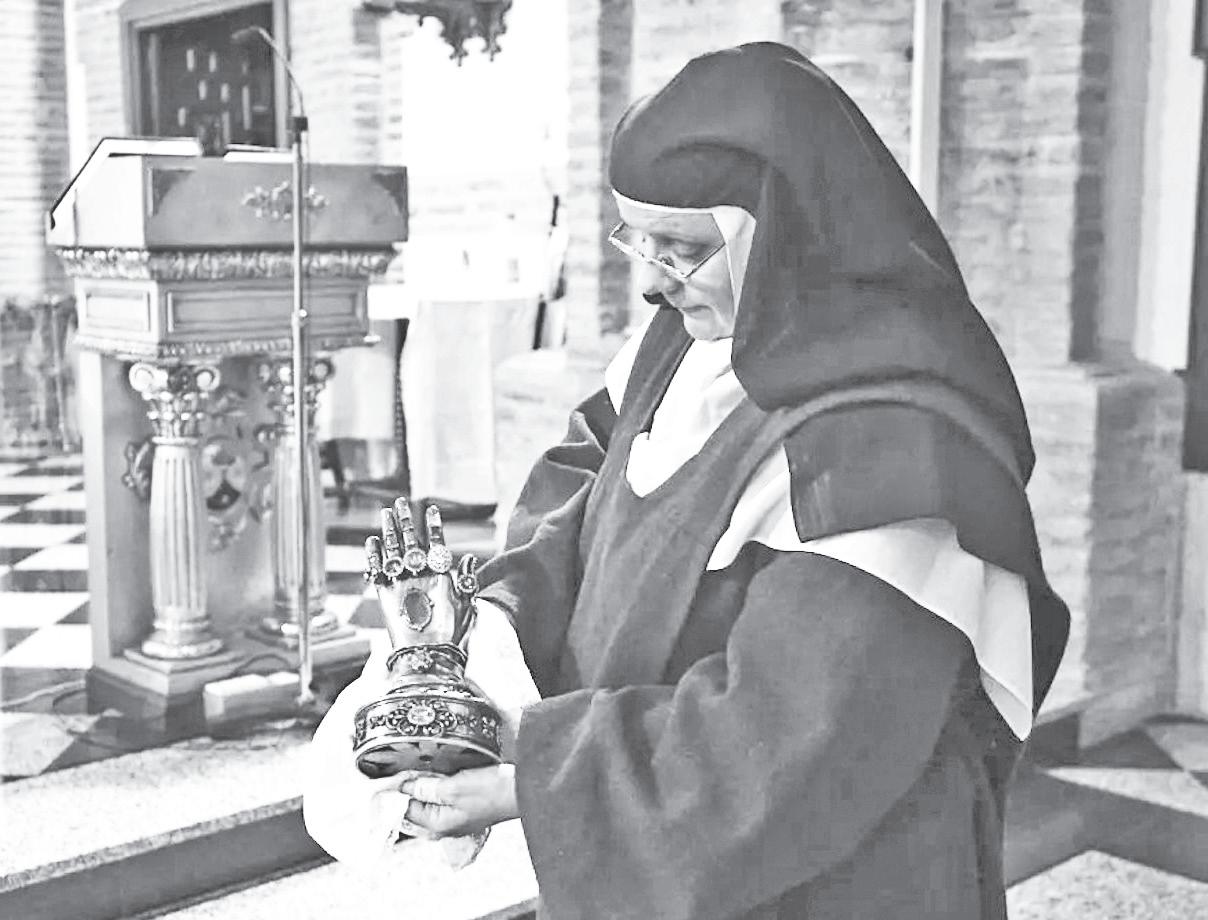
This development will almost certainly mean that the incorrupt hand of Saint Teresa of Jesus, which is kept by the cloistered nuns in the centrally located church of La Merced, will also leave Ronda.
Its destination is not yet known, although everything points to its possible transfer to Alba de Tormes, in Salamanca, Spain, where the greater part of the saint’s body is preserved, together with other relics.
The Discalced Carmelite nuns of Ronda intend to maintain their activity until the conclusion of the novena of Our Lady of Peace, patroness and honorary perpetual mayor of the city, which will culminate on
January 24, a local feast day. From that point on, the nuns will begin packing their belongings for the move to their new monastery. For the moment, the future of the
monastery buildings and the church is also unknown, since it is not clear whether the church will remain open and continue to have regular liturgies.
It should be remembered that La Mer -
ced is home to the confraternity of María Santísima en la Soledad, the image of Our Lady in her solitude, as well as to the recently created religious association of El Despojado, whose image of Christ stripped of his garments is housed in the church.
Only four nuns FOR years, the monastery of the Discalced Carmelite Nuns has had only four religious. Two of them, because of their age and state of health, require constant care, which means that the other two, in addition to caring for their sisters, must also carry out all the daily tasks.
This situation, together with the absence of new vocations to the monastery, has led the Order to this decision.
The city of Ronda had made various gestures to show its desire to preserve the Carmelite presence in the municipality, but they have not changed the outcome.
Among them was the Medal of the City, awarded by the City Council on November 11, 2024, in recognition of the nuns’ “social, recollected, and liturgical work” in Ronda through much of the 20th century and the 21st so far.
Pope defends journalism vs the drug of ‘fake news’
VATICAN—Pope Leo XIV defended the importance of rigorous journalism against “the drug of fake news” and “artificial polarizations” in a message to the Italian newspaper L’Adige on the occasion of its 80th anniversary, celebrated Tuesday.
In his message to the newspaper, the pope urged journalists to “safeguard voices and faces, cultivate seriousness in every report and every analysis, preserve the beauty of cultures and territories.”
He also called on them to “strengthen communities in the truth that unites us all, govern technology without surrender -
ing to the rhetoric of uniform thought, respect differing opinions, never yield to the temptation to make greater profits by resorting to the drug of fake news and artificial polarizations.”
“In the time of great changes that we are experiencing, I wish your newspaper always to be an instrument of truth, a guardian of history and memory, a source of knowledge and a leaven of humanity,” the pope wrote, calling on the newspaper to meet the challenge of information with “quality.”
In his letter, Leo also recalled the origins of the newspaper and the figure of its founder, Flaminio Piccoli, who chose for the publication
the name of a river, the Adige, which runs through Trento, the city where the newspaper is published.
“Flowing water,” the pope said, “is indeed a symbol of continuous regeneration, possible only if one drinks from a pure spring. What more beautiful metaphor for good journalism? To be water that deeply satisfies the thirst for knowledge of people of different generations; to nourish consciences with news and not gossip; to offer a correct and transparent interpretation of reality; to unite, in good fortune and bad, the community in which one is rooted, protecting its history and memory.”
The pope also highlighted the contribution of Christian thought to the development of journalism and the defense of freedom of expression.
“Its roots testify to the richness of Christian thought as a leaven of journalism, not only Catholic journalism, a bulwark of the freedom to express one’s thoughts,” he wrote.
Leo also recalled Alcide De Gasperi, who, he said, before becoming a leading political figure in Italy’s democratic reconstruction after fascism, “was an editor and then director of La Voce Cattolica of Trento, and later founder of the daily Il Trentino.” Victoria Cardiel/EWTN News via CBCP News
Guadalupe image starts PHL pilgrimage
ANATIONWIDE peregrination of the pilgrim image of Our Lady of Guadalupe began Saturday in Manila, with Catholic leaders calling on the faithful to deepen service to the poor and strengthen spiritual unity across nations.
The opening Mass at the Manila Cathedral drew a packed congregation of devotees, diplomats and government officials, including President Ferdinand Marcos Jr., who led the prayer of consecration of the nation to Our Lady of Guadalupe at the close of the liturgy.
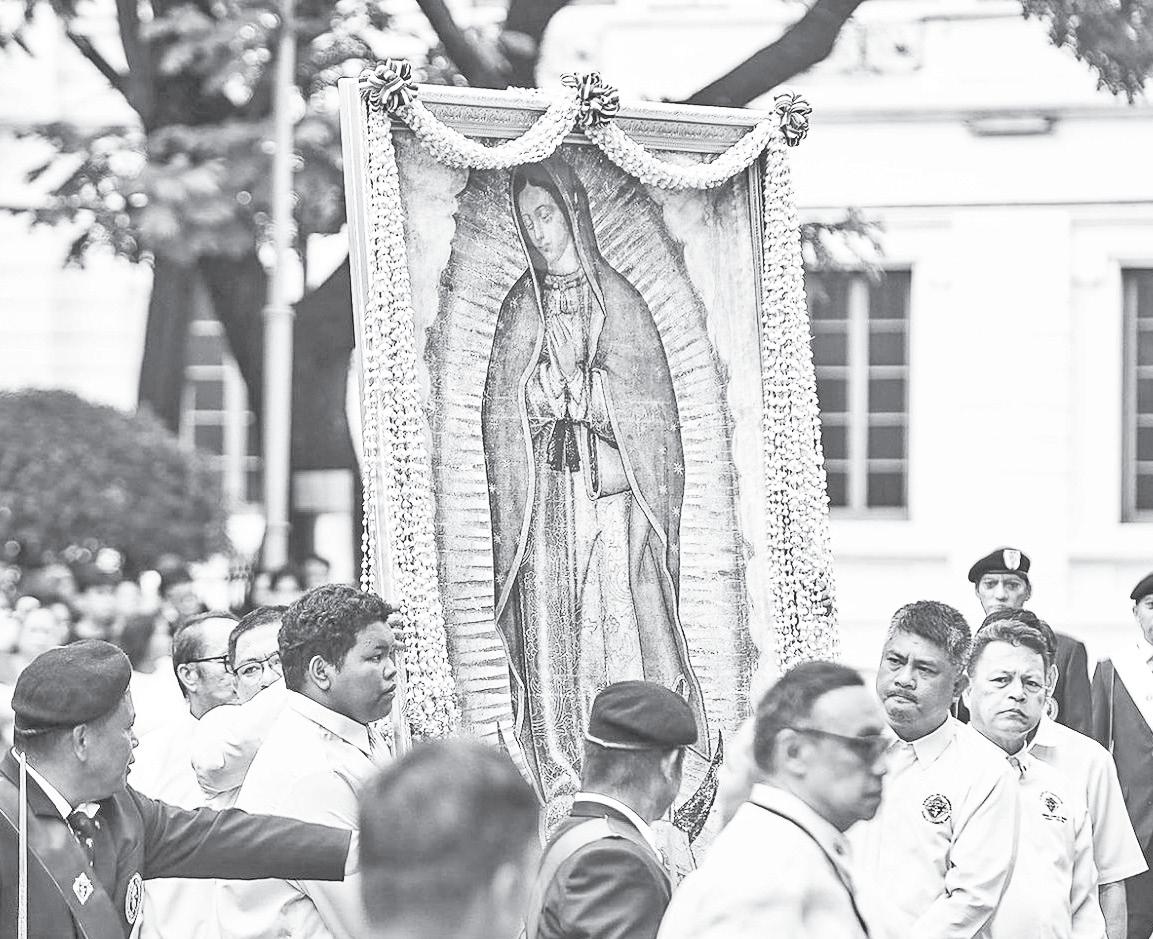
The image is a cloth replica of the tilma associated with St. Juan Diego and has been brought into contact with the original image enshrined at the Basilica of Our Lady of Guadalupe in Mexico.
In his homily, Cardinal Jose Advincula said Our Lady of Guadalupe reflects God’s closeness to the poor, the forgotten and those living on society’s margins.
He said Mary’s appearance to St. Juan Diego in 1531 in simple form shows that divine love reaches ordinary people in their own language and lived reality.
“The apparition of Our Lady in Guadalupe is not only a historical event, it is a call to imitate Mary’s compassion for the poor,” Advincula said. “This deep compassion of hers was not abstract. It was attentive to the real needs of the people.”
He said Mary remains a model for believers amid modern distractions, ambitions and anxieties, noting that today’s world continues to be marked by multiple forms of poverty and suffering.
“Mary challenges us to see Christ in the suffering, the lonely and the forgotten, and to respond with mercy, solidarity and concrete acts of service,” Advincula said.
The Manila archbishop also urged the faithful to embrace interior conversion as the pilgrim image travels nationwide, saying devotion must be matched by deeper spiritual renewal.
“Let us ask not only for her protection, but also for a share in her heart,” he said.
A message from Cardinal Carlos Aguiar Retes of Mexico City was read during the Mass, conveying greetings to Philippine bishops and describing the Philippines and Mexico as “sister nations” long united in faith.
Aguiar said Marian devotion has served as a symbol of love, tenderness and unity that transcends cultures, languages and time, calling Mary a bond among Christian communities.
He said Our Lady of Guadalupe emerged in a period of cultural encounter and conflict in 16th-century Mexico, becoming a bridge of reconciliation between indigenous and Spanish worlds.
“God communicates through the cultural categories of the people whom he loves,” he said, noting that Guadalupe’s message reached the indigenous through their language and experience.
He added that the pilgrim image sent to the Philippines is intended to renew hope and strengthen devotion ahead of the 500th anniversary of the apparitions.
The image remained at the Manila Cathedral until June 18 before it traveled to churches across Luzon, Visayas and Mindanao. CBCP News
US Catholic bishops consecrate nation to the Sacred Heart
ORLANDO—The nation’s Catholic bishops gathered Thursday afternoon in Orlando for a liturgy consecrating the United States to the Sacred Heart of Jesus, drawing on a centuries-old devotion to mark the country’s 250th anniversary. Organ, brass and choral singing thundered inside a modern Orlando shrine during the service, a
the core of Christ’s suffering love. Since then, the devotion has spread worldwide, with many Catholic schools and churches bearing the Sacred Heart name and many homes and businesses displaying images of it. The service celebrated the nation’s history, alluding to the Declaration of Independence’s proclamation
FILIPINO Catholic home altar.
THE pilgrim image of Our Lady of Guadalupe arrives at the Manila Cathedral on June 13, for the opening Mass of its nationwide pilgrimage. PHOTO COURTESY OF PATRICK DOMINICK ROMERO
CARMELITE Sister Jennifer with the relic of the incorrupt Hand of Saint Teresa of Avila in the Convent of La Merced in Ronda, Spain. DIARIO RONDA

Editor: Lyn Resurreccion

Biodiversity Sunday
On Mindanao coastal uplift: Don’t rush to reshape a landscape that nature has altered so dramatically
By Jonathan L. Mayuga
ON that fateful morning of June 8, scared townspeople witnessed the crushing down of buildings and destruction of other structures brought by the magnitude 7.8 offshore earthquake off the municipality of Maasim, in Sarangani province in Mindanao.
However, besides the already horrific sights in the streets, a quiet geological phenomenon but equally devastating occurred.
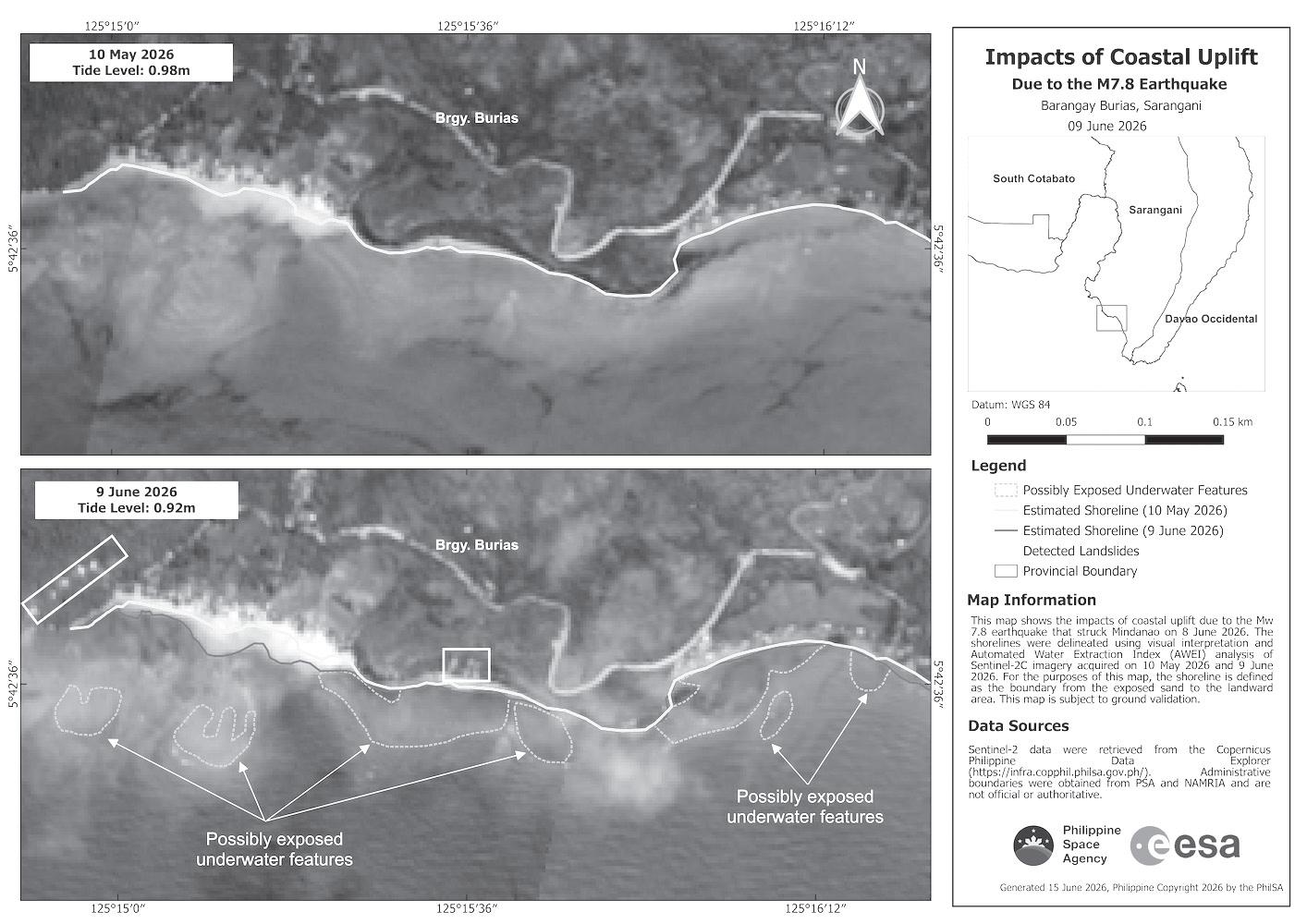
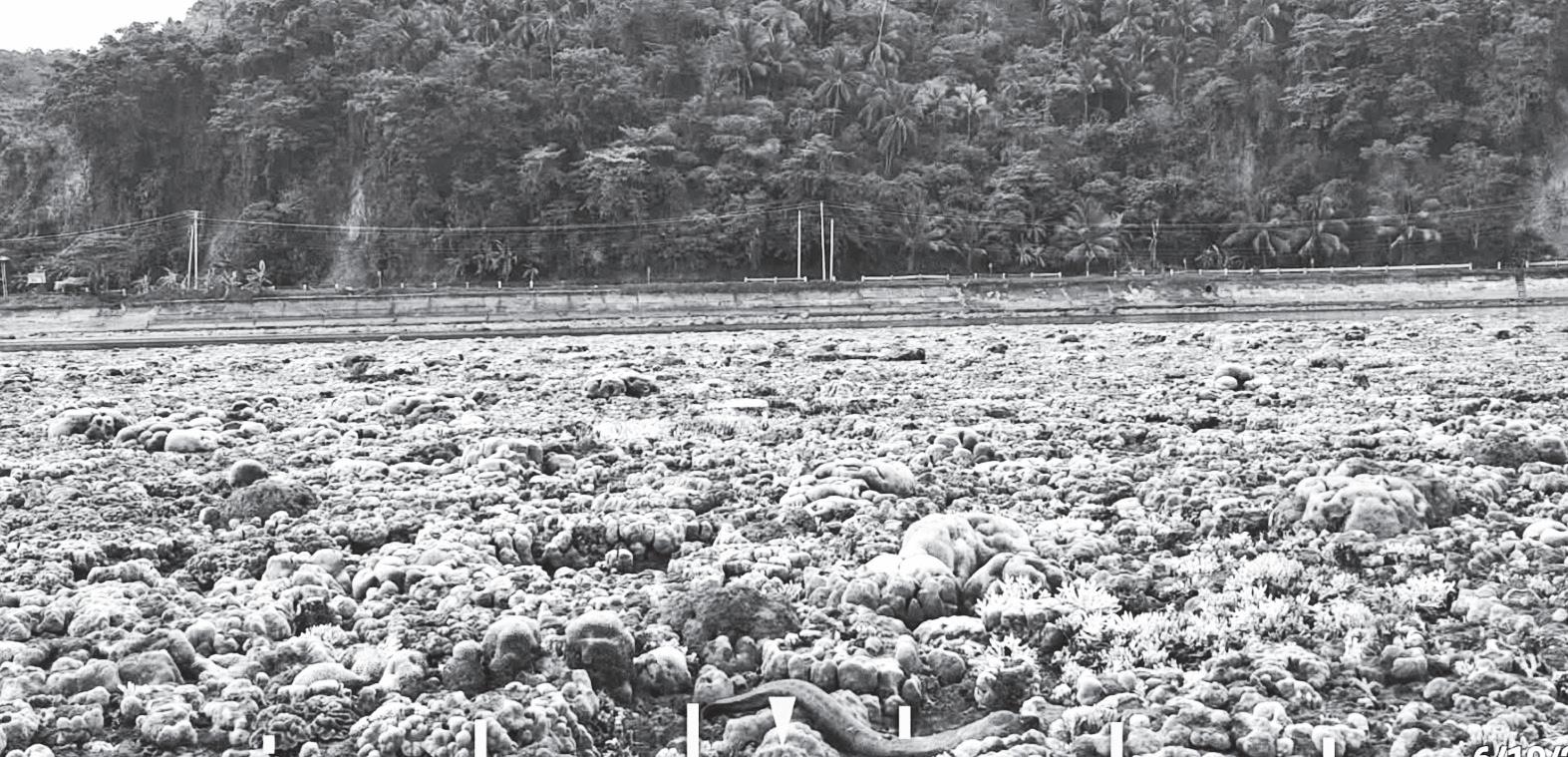
Barangay Pangyan in Sarangani and Barangay Burias in Jose Abad Santos, Davao Occidental, experienced coastal uplift of 2 meters to 2.5 meters above sea level, and pushed the shorelines by some 200 meters to 250 meters toward the sea.
A natural phenomenon that occurs during strong earthquakes, coastal uplift is a geological process in which the Earth’s surface permanently rises relative to sea level.
Scientists are now investigating the event, which devastated the coastal and marine environment in the adjoining barangays, as it previously submerged corals and seagrass above water.
Severely damaged protected area
IN Barangay Pangyan, where the coastal uplift was most dramatic, the Pangyan Marine Sanctuary (PMS), a locally managed marine protected area within the larger Sarangani Bay Protected Seascape (SBPS), was severely damaged, said Maria Isabel Abigania, a senior science research specialist and senior researcher at the Philippine Institute of Volcanology and Seismology (Phivolcs).
In Barangay Pangyan alone, the coastal uplift, or seismic uplift, created some 2 hectares of new land but effectively shrank coral and seagrass areas, she told the BusinessMirror in a telephone interview on June 14.
Altered coastal landscape
ACCORDING to Abigania, Phivolcs coastal uplift specialist, the event permanently altered the coastal landscape—killing in the process a variety of corals and seagrass as they are exposed to sunlight and no longer submerged under water.
As aftershocks continue to rock Southern Mindanao, she said the area that was raised above sea level will slowly settle down— but the new landscape, as a result of the earthquake, is permanent.
“As the ground settles, there will be subsidence, but it will be minimal. It becomes a permanent feature,” he said in Filipino.
Bohol coastal uplift
THE phenomenal rise of sea floors along the coastline was observed in 2013 after a magnitude 7.2 earthquake, recalled Abigania, who conducted a scientific study on the geological event in the towns of Loon and Maribojoc in Bohol province.
Scientists observed the massive damage to coastal ecosystems—including the drying of intertidal habitats, mangrove forests, seagrass beds, and other organisms that survive and thrive in sandflats and rocky shores.
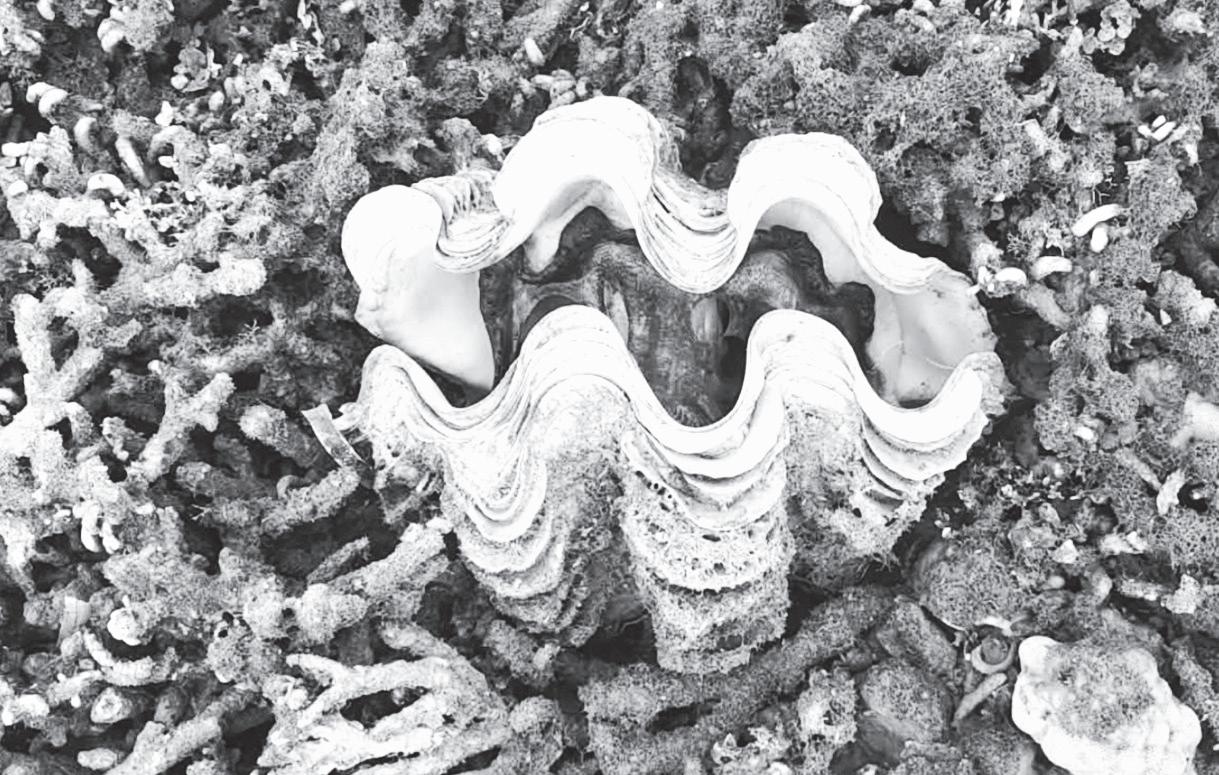
Resident organisms, such as reef fish, crabs, clams, and sea urchins, were trapped in evaporating tide pools and eventually died.
Once colorful corals that started to experience bleaching died in a matter of days.
A decade after the Bohol coastal uplift, the once-sandy and salty seabed slowly transformed into dry land, where new plants and grass grew over what was once a network of corals and seagrass beds.
The area is now known as LoonMaribojoc Geological Monument, one of the province’s well-known tourist destinations.
Habitat destruction
MARIANNE SANIANO, senior conservation impact manager at Wildlife Conservation Society, said coastal uplifts dramatically alter the physical and ecological structure of nearshore habitats.
Coral reefs and seagrass beds that were previously submerged become exposed to the above-water environment, leading to immediate death from desiccation, heat stress, and exposure to sun.
“These habitats are not just ecosystems; they are natural infrastructure that provides coastal protection, food security, and biodiversity. Their sudden loss weakens the entire coastal system,” Saniano, a marine biologist and environmental scientist, told the BusinessMirror via Messenger on June 18.
Severe impact
ACCORDING to Saniano, “In the short term, it causes mass mortality of corals and seagrasses, displaces marine life, reduces fish catch, and disrupts livelihoods.”
“Habitats may remain degraded and less biodiverse through the years, leaving only those species that are more tolerant to stress. In the long run, coastlines and habitats may be permanently altered, affecting fisheries and other coastal activities,” she pointed out.
For coastal communities, especially small-scale fisherfolk, the impacts are both immediate and deeply personal. Their fishing grounds are further diminished because reefs that supported the fish population may no longer be viable.
“They will need to travel farther to seek other fishing areas that may increase fishing pressure elsewhere. It may also have cultural impacts because many coastal practices and identities are tied to reef and seagrass ecosystems. This event underscores how environmental shocks translate directly into human vulnerability, especially
to communities that are already facing economic constraints,” Saniano explained.
Highly vulnerable
SANIANO pointed out that during coastal uplifts, species with limited mobility or narrow habitat requirements, such as reefbuilding corals, seagrass species, reef fishes (damselfishes and gobies), invertebrates (urchins, clams, sea cucumbers), juvenile fishes and other species that rely on seagrass and shallow reefs as their nurseries, cannot quickly adapt to the sudden change and are the ones that are hit the hardest.
Nature has capacity to recover
SANIANO said despite coastal uplifts causing irreversible damage to the coastal and marine environment, there are practical, science-based interventions that can be done to reduce further damage and support the recovery of nearby ecosystems.
“It is crucial that we protect remaining healthy habitats. They may serve as critical sources of larvae for recovery. Supporting affected communities and ecosystems requires a combination of immediate assistance and long-term planning.” she said.
While it will take time to for damaged ecosystems to recover, Saniano said nature has the capacity to recover.
“Communities may face a decade or more of reduced ecosystem services, unless proactive conservation and management measures are put in place,” she pointed out.
Rich marine biodiversity
BEFORE the coastal uplifts, both the PMS
and the SBPS are teeming with coastal and marine species.
The SBPS is one of the country’s premier marine sanctuaries. It boasts of a highly diverse biological footprint within the Coral Triangle. It is known to host over 60 hard and soft coral species. Sarangani Bay accommodates at least 27 mangrove species. Multiple seagrass species were also recorded within the marine sanctuary. More than 400 species of reef fish were also recorded in the area, thriving in the bay’s protected coral networks.
A multidisciplinary team of experts is now studying the impact of the coastal uplifts in Sarangani and Davao Occidental.
The compelling question is: Can the dying corals be saved? Can it still be rehabilitated?
Beyond rehabilitation
ACCORDING to international biodiversity expert Dr. Theresa Mundita S. Lim, while the recent coastal uplift in Mindanao is understandably viewed as an ecological emergency, it is also fundamentally a geological phenomenon.
“Our response must therefore go beyond conventional post-disaster rehabilitation, wildlife rescue, and ecosystem restoration.
The immediate impulse to rescue exposed corals and other marine organisms and return them to the sea is understandable,” she said.
“However, we cannot assume that simply transferring these organisms into nearby waters will ensure their survival,” Lim, a former director of the DENR’s Biodiversity Management Bureau, and executive director
of the Asean Centre for Biodiversity, told the B usiness M irror via Messenger on June 14.
Landscape-altering event
ACCORDING to Lim, the earthquake may have altered not only the coastline but also the depth, structure, substrate, water movement, and ecological conditions of the surrounding seafloor.
“Suitable habitats may have been displaced, damaged, buried, or exposed. Rescue and relocation efforts should therefore be carefully assessed and guided by marine scientists, rather than undertaken as an automatic or stand-alone response,” she explained.
Lim recalled that following the magnitude 7.2 Bohol earthquake in 2013, the Department of Environment and Natural Resources organized an initial multidisciplinary assessment of the Maribojoc coastal uplift.
The team, composed of representatives from the DENR–Biodiversity Management Bureau and experts from the University of the Philippines, brought together expertise in geology, biodiversity conservation, marine science, and fisheries, she recalled.
Science-based, multidisciplinary approach
“A SIMILAR science-based and multidisciplinary approach is needed in Mindanao. One important lesson from Bohol is that we should not rush to reshape a landscape that nature has altered so dramatically,” she said.
“We must first understand what has changed, determine the scale and ecological implications of these changes, protect what remains, and assist coastal communities whose livelihoods have been affected,” she added.
At this stage, Lim said efforts and resources may be better focused on protecting the uplifted coastline from occupation and further modification, monitoring the natural adjustment of the shoreline and its ecosystems, and providing immediate and longer-term support to affected fishing and coastal communities.
“Investments should also be made in sustained scientific studies and long-term monitoring. These are necessary to determine whether the affected ecosystems can recover naturally, develop into new ecological communities, or require carefully designed restoration,” said Lim, currently the executive director of the Environmental Studies Institute of Miriam College.
Green sea turtle hatchlings reach Panglao Sea, boosting conservation efforts
By Carmel Pedroza
EBU CITY—Seventy-nine green sea turtle hatchlings were released in Panglao Sea, marking another positive step in the conservation of one of the world’s endangered marine species, and highlighting the importance of protecting vital nesting habitats. The hatchlings emerged on the evening of June 15, a day ahead of the global observance of World Sea Turtle Day, and safely made their way to the sea after nearly two months of incubation.
According to the Department of Environment and Natural Resources Region 7 (DENR-7), the event is considered an encouraging sign for the continued protection and recovery of green sea turtles (Chelonia mydas), which are safeguarded under Philippine environmental laws. The nest was first recorded on April 25 in front of Henann Resort and is part of an active nesting area that stretches toward the coastal waters of Libaong beach on Panglao Island in Bohol province. Personnel from the Department of Environment and Natural Resources (DENR) Region
7, through the Panglao Island Protected Seascape (PIPS) and the Panglao Island Restoration and Rehabilitation Program (PIRRP), together with resort staff, closely monitored the site until the hatchlings emerged. To help ensure the young turtles reached the sea safely, responders implemented protective measures, including reducing artificial lighting and keeping the area free from disturbances. These actions supported the hatchlings’ natural instinct to move toward the sea. Wilson Henson, Bohol Provincial Environment and Natural Resources Officer,
praised the collective efforts behind the successful emergence of the hatchlings, emphasizing the importance of cooperation among government agencies, conservation groups, private stakeholders, and local communities.
He said the outcome demonstrated how effective coordination, prompt action, and strict adherence to wildlife protection protocols can significantly improve the chances of survival for vulnerable marine species. Henson also expressed gratitude to partners who continue to support biodiversity conservation initiatives in the province.
Laudemir Salac, DENR Region 7 OIC regional executive director, called on residents and visitors to play an active role in protecting marine habitats.
He noted that the hatchlings’ emergence serves as a reminder of Bohol’s rich natural heritage and the shared responsibility of ensuring the survival of species that depend on healthy oceans and coastlines. Salac encouraged the public to help safeguard marine ecosystems by keeping beaches clean, reducing pollution, and supporting conservation efforts that protect nesting sites and other critical habitats.
Authorities will continue monitoring the nesting area in the coming days to collect post-emergence data and assess the condition of the nest. Meanwhile, Bohol Gov. Erico Aristotle Aumentado thanked
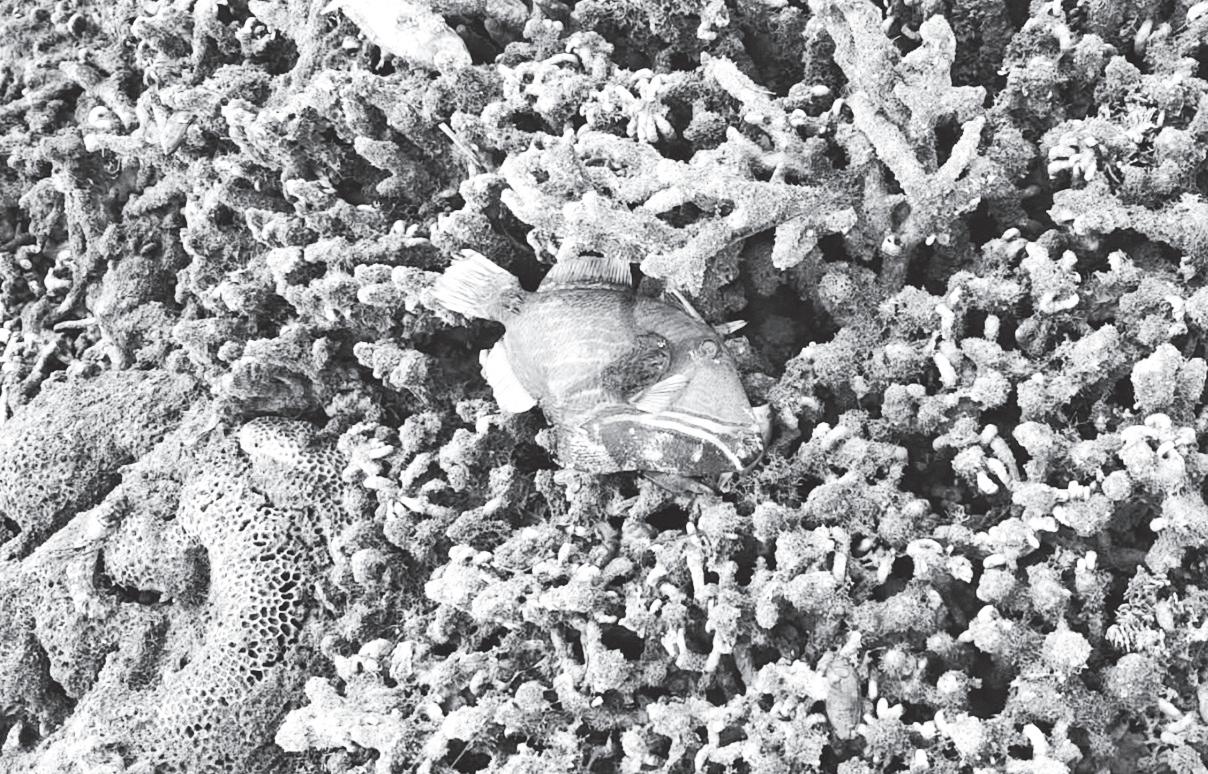
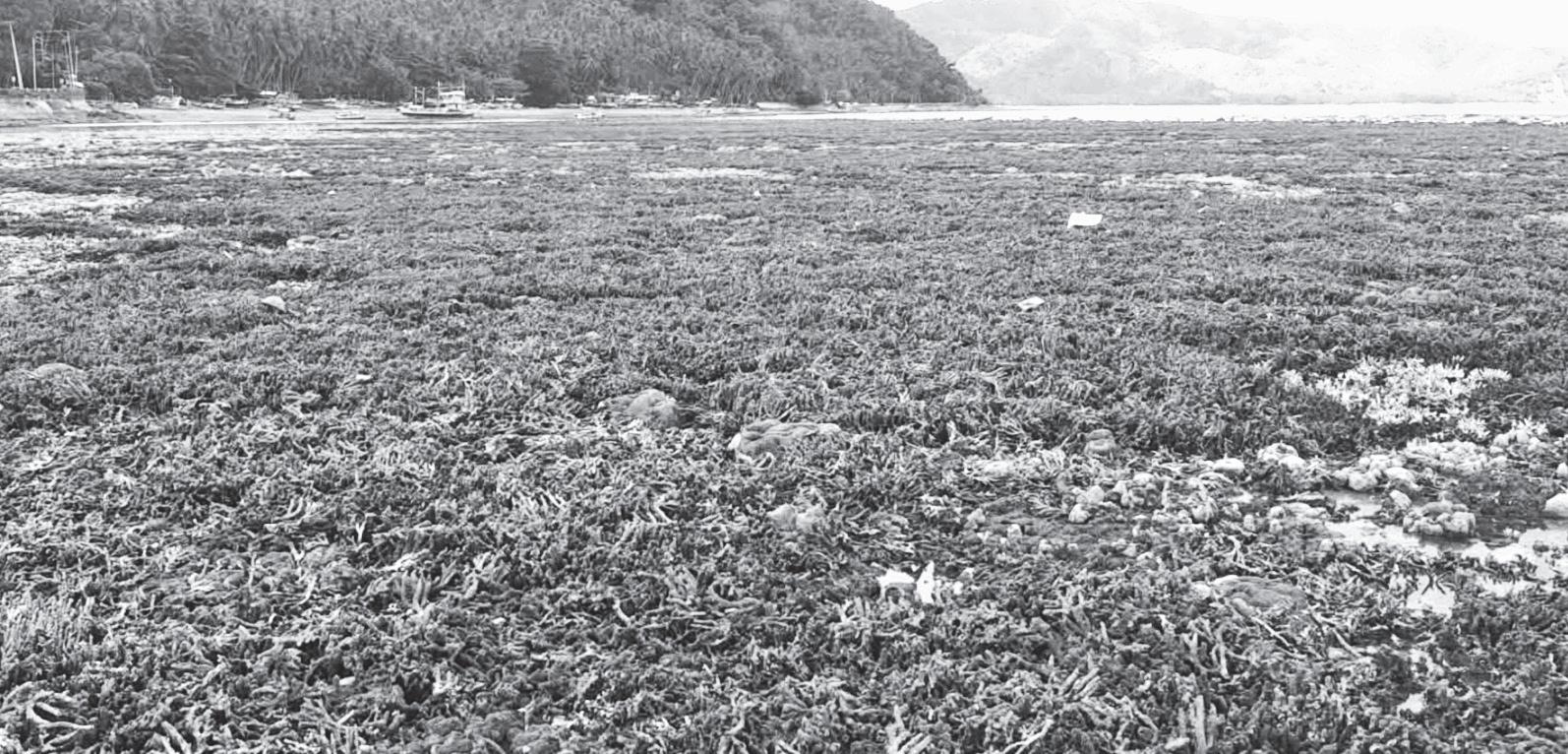
DEAD corals, seagrass, giant clams, and reef fishes are some of the casualties in the coastal uplift and pushed shoreline that devastated the Pangyan Marine Sanctuary and the Sarangani Bay Protected Seascape following the magnitude 7.8 offshore earthquake off Maasim, Sarangani province, on June 8. PHOTOS FROM
AN image of coastal uplift—where land along a coastline is permanently pushed upward relative to sea level. Barangay Pangyan in Sarangani and Barangay Burias in Jose Abad Santos, Davao Occidental, experienced coastal uplift of 2 meters to 2.5 meters above sea level killing a variety of corals and seagrass as they are exposed to sunlight. Notice the “sea” of dead corals.
A SHORELINE was pushed by some 200 meters to 250 meters toward the sea in the affected area. Notice the body of water at the background. The image shows a “carpet” of dead seagrass and corals.
Booming parade for New York Knicks

NBrunson held up the golden National Basketball Association (NBA) championship trophy for a forest of outstretched hands to touch as fans celebrated the New York Knicks’ first title in 53 years with a booming parade through Manhattan’s skyscraper-flanked “Canyon of Heroes.”
“Damn, New York, we really did it,” Brunson, the finals MVP, said at a celebration at City Hall. “Somehow, someway, I knew we were going to find a way to get this done.” Moments later, Mayor Zohran Mamdani presented keys to the city to the Knicks’ players, coaches, owners and staff. Wearing a team jersey under his suit jacket, Mamdani said he and other fans “waited because we knew deep down in our sick, suffering hearts” the Knicks would someday win. Blue and orange confetti swirled through the air during the parade. Massive cheers of “Let’s go, Knicks!” and “Knicks in five!” kept erupting.
And OG Anunoby, who scored the go-ahead basket in Game 4 of the finals on a tip-in with 1.2 seconds left, left his parade float to interact with fans, holding the NBA Cup in-season championship trophy in one hand and a bottle of Patron tequila in the other. Director Spike Lee, perhaps the team’s most iconic fan, was on a float with Brunson, savoring the moment. “I’ve never been to a parade—ever— and I’m glad it’s this one,” Lee said.
The MVP’s mom, Sandra Brunson, wore a shirt with photos of Jalen and husband Rick, who played for the Knicks and is an assistant on coach Mike Brown’s staff. She echoed her son’s words, saying, “It was all worth it.”

Several blocks from the parade route, fans stood shoulder to shoulder—sometimes on each other’s shoulders—or climbed traffic lights and sanitation trucks. Far away on the Brooklyn Bridge, people gathered just to hear the loudspeakers.
Karl-Anthony Towns hoisted the Eastern Conference championship trophy and a cigar on top of a parade bus while Mamdani danced. Later, Towns approached a group of kids with the NBA trophy to let them get their hands on it, bringing joyful screams. Knicks fans turn out in force SEVERAL blocks from the parade route, fans stood shoulder to shoulder—sometimes on each other’s shoulders—or climbed traffic lights and sanitation trucks.
Far away on the Brooklyn Bridge, people gathered just to hear the loudspeakers.
“I had to be here today,” said Shareefa Wallace, 34, who got up at 3 a.m. to make her way from suburban Long Island. She grew up in the city going to Knicks games, and she sported the souvenir jersey of a legend from that era, Patrick Ewing.
Owner James Dolan thanked fans for waiting more than a half-century. Brown encouraged fans to keep their energy going “because this championship is about you guys.”
‘The New York vibe’ at its best NEARBY bars and delis filled with fans, some wishing they’d arrived at dawn. But many seemed at peace with only experiencing the parade from a distance.
“We just want to be with the New York energy and the New York vibe,” said Jean Strong, who came to the parade from Harlem with his nephew and sister.
Terrell Emerson, a chef who grew up in Queens, said he drove from Maryland with his daughter Madison— named in honor of the Knicks’ home arena, Madison Square Garden.
Beaming, Madison held a handwritten sign announcing she’d skipped her fifth-grade graduation to be there.
Serena, Venus going at it again at Wimbledon
EVEN at a combined age of 90, opponents should still be wary of facing the Williams sisters at Wimbledon.
Serena and Venus Williams won a combined 21 titles on the storied grass of the All England Club in their singles and doubles careers and now they’re going for one more. A doubles wild card invitation for the sisters was announced on Tuesday by organizers of Wimbledon, which starts in less than two weeks. The move comes after 44-yearold Serena recently returned to competition after nearly four years away from professional tennis. Venus, who has still been competing sporadically, turns 46 on Wednesday.
“I think it’s going to be fun. My daughter, Olympia, told me I should play with Venus. She’s always right,” Serena said after losing a doubles match with another partner, Karolina Muchova, in Berlin on Tuesday. “So I said, “OK Olympia, we’ll see if we can do it.” The sisters have won 14 Grand Slam titles together in doubles, including six at Wimbledon—the first of them in 2000 and the last in 2016. Their first two doubles titles at Wimbledon, in 2000 and 2002, came as wild cards. AP
US Open gets under way

Stars and Knicks legends
NEW YORK Knicks great Walt “Clyde” Frazier—a member of the ’70s champion teams—led the parade in a stylish convertible, wearing his NBA title rings. Frazier had late teammates and coaches on his mind.
“They would be amazed at what has happened to the Knicks and how they’ve really captivated the city this year,” Frazier said. “This has exceeded any expectations I ever thought that we’d have.”
Timothée Chalamet, Ben Stiller, Jon Stewart, Mariska Hargitay, Tracy Morgan and other celebrities joined the party, while Knicks play-by-play announcer Mike Breen emceed the City Hall ceremony. Alicia Keys, the singer who collaborated with Jay-Z on the 2009 hit “Empire State of Mind,” performed a medley that mixed her song with the classic “New York, New York.”
A parade decades in the making THE mere fact that the parade is happening is historic in itself. Although the Knicks won the championship twice in the 1970s, the city didn’t host a parade for them either time. Then-Mayor John Lindsay had cut down on tickertape extravaganzas for financial and other reasons. Instead, he held a 1970 reception at the mayoral mansion and a jam-packed ceremony in 1973 outside City Hall. AP
of the World Cup’s most charming viral stars.
For his owner, Jorge Rangel, the attention is less about internet fame than the companionship he shares with the dog who accompanies him almost everywhere. For the past two years, Osito has joined Rangel on his daily rounds delivering household products across Mexico City.
“More than a dog, he’s my daily companion,” Rangel, 50, said.
They travel together on a specially adapted cargo bicycle, where Osito sits calmly in a back compartment, greeting passersby and drawing smiles from strangers.
The arrangement began by chance.
One day, Rangel placed the dog in a delivery box attached to his bicycle and took him for a short ride. Osito

seemed to enjoy it. Over time, Rangel added cushions, adjusted the setup and gradually brought him along on longer trips through the city. Before long, the pair became a familiar sight. Now, children rush over to greet Osito, strangers stop to take photographs and some initially mistake him for a stuffed animal because he sits so still, often dressed in one of his many outfits.
“He has a very gentle temperament. Everybody wants to meet him,” Rangel said. When the World Cup arrived, Rangel saw an opportunity to introduce Osito— whose name means “little bear”—to an even larger audience. A devoted soccer fan, he spent weeks preparing for the tournament, gathering accessories and adapting a pair of sunglasses to fit the dog. He dressed Osito in a national team jersey and decorated the bicycle, hoping to stand out among the crowds heading to the stadium.
“It exceeded all my expectations,” Rangel said of the response. What appears to resonate most with fans is not the costume or the viral fame, but the relationship between the man and the dog. Rangel adopted Osito years ago, during a difficult period in his life, and describes him as an emotional lifeline.
“I didn’t know what it meant to love an animal until Osito came into my life,” Rangel said. Today, the two spend nearly every day together. If Rangel leaves without him, Osito protests with something he rarely does: bark. Their bond is evident to the strangers who encounter them on the streets. Rangel recalls people approaching him to say that seeing Osito had brightened an otherwise stressful day. Some have thanked the pair simply for making them smile. Now, as World Cup celebrations continue, videos of Osito keep circulating and requests for photographs remain constant. Yet each morning, Rangel and Osito climb aboard their bicycle and head back into the streets of Mexico City, where they continue working, greeting strangers and spreading moments of joy. For Rangel, that remains the most meaningful part of the story. The television appearances and viral fame are gratifying, he said. But what matters most is that people see the affection between a man and his dog—a bond that has unexpectedly become one of the World Cup’s most endearing images. AP
driving distance blowing straight up or downwind. Imagine the impact it can have when blowing from the side. And that’s just from a driving perspective. On the approach shots, the wind dries up the greens, making difficult approaches and putts impossible.
To remedy this, the USGA kept green speeds manageable by watering the greens midday, lest it gets out of hand for the afternoon players. Shinnecock was infamous for diabolical green speeds in the past and the USGA was wary of that and wanted a difficult but fair test for all. The downside however was that with the wind gone and the
SERENA WILLIAMS (left) and sister Venus hold their trophies after winning the Wimbledon women’s doubles title against Yaroslava Shvedova of Kazahkstan and Timea Babos of Hungary in London on July 9, 2016. AP
JALEN BRUNSON holds proudly the golden championship trophy before a forest of outstretched hands as Jordan Clarkson poses for a selfie with a fan during the Knicks’ NBA championship parade in New York. AP
EW YORK—Jalen

What we misunderstand about absent fathers
JUNE 21, 2026 | soundstrip.businessmirror@gmail.com
15 MINUTES WITH THE DAWN
Band members recall when they first thought of becoming musicians
Story by Jingo Zapata
The Dawn had weathered the most difficult challenges to its existence — the loss of the band’s founder and guitarist Teddy Diaz, who died in 1988 just after the release of its second album; a hiatus in 1995 that extended to four years; other members leaving; and the need to stay relevant 40 years since forming in ’86.
As the band gears up for “Kwarenta,” its anniversary concert on June 27 at The Theater at Solaire, lead singer Jett Pangan, drummer JB Leonor, guitarists Francis Reyes, and bassist Bim Yance sat back and granted 15-minute interviews with about a dozen media outlets. Here’s their chat with SoundStrip.
Can you recall a particular moment or series of incidents when you said to yourself that you wanted to be a musician?
Jett: I grew up hearing music in the house. My uncle Vic Jose was an executive at Blackgold Records in the 1970s. He opened a record bar, managed by my

Publisher :
T. Anthony C. Cabangon
Editor-In-Chief :
Lourdes M. Fernandez
Aldwin M. Tolosa
Concept :
Y2Z Editor :
SoundStrip Editor : Group Creative Director : Graphic Designers :
Jt Nisay
Edwin P. Sallan
Eduardo A. Davad
Chow Jarlego
Niggel Figueroa
Contributing Writers :
Tony M. Maghirang
Rick Olivares
Jingo Zapata
Reine Juvierre S. Alberto
John Eiron R. Francisco
Patrick Villanueva
Ana Zoe V. Davad
Justine Xyrah Garcia
Ginger Franz S. Ocampo
Trixzy Leigh Bonotan
Bless Aubrey Ogerio
Photographers :
Bernard P. Testa
Nonie Reyes
Y2Z & SOUNDSTRIP are published and distributed free every Sunday by the Philippine Business Daily Mirror Publishing Inc. as a project of the
The Philippine Business Mirror Publishing, Inc., with offices on the 3rd Floor of Dominga Building III 2113 Chino Roces Avenue corner
Dela Rosa Street, Makati City, Philippines. Tel. Nos. (Editorial) 817-9467; 813-0725. Fax line: 813-7025
Advertising Sales: 893-2019; 817-1351,817-2807.
Circulation: 893-1662; 814-0134 to 36. www.businessmirror.com.ph
mom. So music was part of my daily diet. We had a lot of vinyl test records from the record bar that were brought home.
My mom loved to sing and joined “Tawag ng Tanghalan,” and my dad loved to play the guitar. So the love for music was there.
And then in high school nauso yung punk. I was in college nung sumikat ang Duran Duran and other bands, mga New Romantics, so the fantasy built up — what if I joined a band? One fateful day, the brother of Clay Luna, the original bassist of The Dawn, approached me and asked if I could join the band.
JB: In high school we wanted to be cool, to be accepted.
And when I heard people talking about musicians, it was with reverence. I wanted to be seen like that. In fourth year at La Salle Green Hills, we had music class and the teacher said we could join either the choir or the band.
I told her I could play the piano, so I’ll be in the band. The teacher thought I could sight-read [notes] but I lied. As a kid I took classical piano lessons, [but I wasn’t that good].
Yung mga barkada ko, sila yung drummer. There was another guy who played the piano and that’s how I learned to play ouido [by ear]. We would listen to Mahavishnu Orchestra, Chick Corea. Jean Luc Ponty, Jeff Beck, Ravi Sankar.
Then I met Teddy Diaz. That was the turning point. On the day of our jam session, he gave me sheet music to “Envelope Ideas” and “Dreams,” which had a different title then. You could see the structure. We did that the whole afternoon.
Sancho: We were then living in Olongapo, and as kids we had to take a nap in the afternoon. I was awakened by the sound of loud music from the neighbor’s house, so I went to check it out. About five houses away, I peeped through the gate to see who was playing and saw Mike Hanopol and his band. It
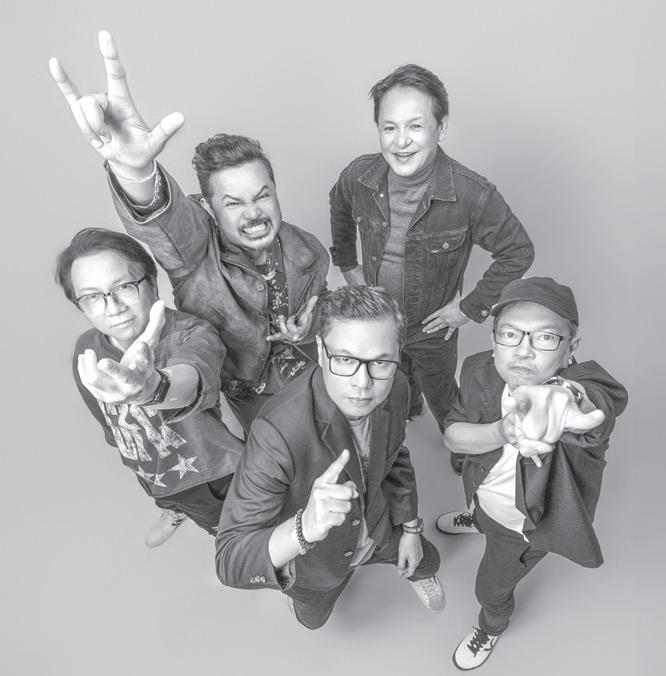
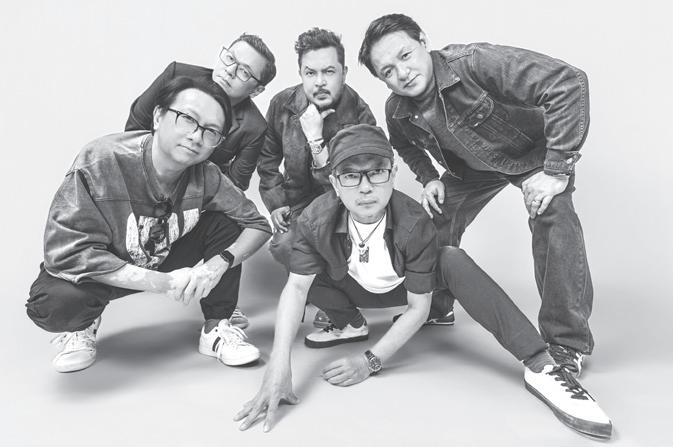
was so loud.
Soon I was playing air guitar with a walis tambo while listening to Hanopol’s “Awiting Pilipino” album.
And then in fourth year high school or first year college, I saw The Dawn’s “Oktoberstorm” concert, watching Teddy Diaz doing solos on his guitar, and thinking, this is what I want to do.
Francis: Growing up, the family was into pop and disco. We had Bee Gees albums, Barry Manilow. But I started liking rock music. The first band that I fell in love with was Queen. But I could not imagine myself as a musician. I just enjoyed the music.
But what I remember distinctly, I was in second year high school, it was summer, I was listening to the radio on RJ AM which was playing “Speed King” Deep Purple. In the intro, [Ritchie] Blackmore sounded like he was abusing the guitar. I mean, the effect was visceral. Ramdam mo yung gigil. And when you’re 14 years old, you’re starting to be aggressive with certain parts of your body.
That was also the time I heard [Filipino punk bands] Chaos and Betrayed. It was all connected. When I heard Blackmore, I said I want to play guitar. I want to be a musician. That’s what I want to do.
Bim: My dad had lots of records. Ann Murray, Ray Conniff, Chipmunks, Barry Manilow, James Last, Jackson 5. And there was Perez Prado and the song “El Bimbo.” Bimbo. That’s why my dad named me Bimbo when I was born in 1975.
We also had an organ in the house. My dad played the organ. I was five years old when I also started playing the organ on my own and then my parents took me to Yamaha, but I lasted only a week kasi pinapalo ako ng teacher, sinumbong ko.
I think I was 11 or 12 when I saw The Dawn on TV playing at Concert at the Park. That was a light bulb moment for me. I wanted to be in a band. I went on to join True Faith.
The Dawn’s second album, “I Stand with You,” had just been released when Teddy died. And there was a coming concert at the Folk Arts Theater. Did the remaining members talk to Martin [Galan, the band’s manager] that if things didn't work out, The Dawn would disband?
JB: Yes, when Teddy died, we thought it was over. What we did was, we agreed to delay the decision. Una, libing muna ni Teddy, tapos yung Folk Arts concert.
Jett: The Folk Arts concert had already been booked. That’s why we had to push through. That was part of the decision, okay, tuloy muna natin ’to. Let’s get guest guitarists [Noel Mendez, David Lava, and Francis Reyes].
JB: The concert turned out very good. So, I guess that helped us decide to push through.
Francis, what motivated you to join The Dawn fulltime?
I was already a fan. I bought the first album. And I became part of their road crew. I was with After Image
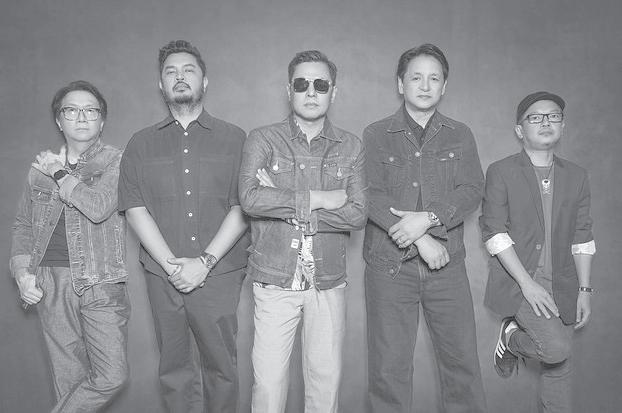
at the time. We had the same management. Martin saw that I was interested in the technical side of things. Not just guitar, but, you know, how does this and that work? So, when he finally said, “Why don’t we talk? You’re the next guitar player. How do you feel about that?”
I said, “Okay.” And that was it.
Why the need for two guitarists?
Jett: There had been a precedent during the FrancisAtsushi [Matsuura] era…
Sancho: I took over when Francis and Kenneth [Ilagan] left, and when Francis returned, we gelled well.
Francis: Because with only one guitar player, it’s hard in terms of sculpting with effects. It’s fun, yes, but when you solo, may butas e.
There’s always that feeling of something’s missing and then you end up overcompensating. And then after the solo, you have to go back and play rhythm again. So, it’s a little stressful. But when there’s two, I don’t have to worry. You can be confident that the band’s sound will always be whole.
You guys have remained relevant, recording singles like “Earth” in 2023, “Sa’n Ka Pupunta and “Delikado” (2025). Do you think artists don’t really retire?
Sancho: Kung umabot sa point na the band [ends its run], I’ll still play guitar. I’ll still make music kahit ako lang ang makakarinig, or kahit i-post ko lang sa IG.
JB: There has to be music in you. Hindi mawawala yun.
Francis: I think it’s almost a compulsion. May itch sa kamay?
Bim: Oo!
THE DAWN
NEW VOICES, NEW STORIES
MYMP’s young blood leads the band’s next album this year
Story and photos by John Eiron R. Francisco
The late 1990s and early 2000s produced some of the most memorable chapters of Original Pilipino Music (OPM), with songs that continue to find their way back into playlists years later.
Among the bands that defined that era is MYMP (Make Your Mama Proud), whose distinct sound became known for heartfelt interpretations and soulful performances of songs such as “Only Reminds Me of You,” “Tell Me Where It Hurts,” and “Nothing’s Gonna Stop Us Now.”
Beyond the covers that introduced them to a wider audience, the group also built its own identity through original songs such as “Get Me,” “Now,” and “Sa Kanya,” which remain familiar to generations of listeners. Twenty-five years after the band was formed—and after changes and reformation along the way—MYMP is moving into a new phase.
Led by its founder and lead guitarist Chinn Alcantara, the group, together with its young blood of lead vocalists Juliet Bahala and Ethyl Bahala, is set to release a series of new songs this year as part of their upcoming album, featuring an
people around her.
“It’s not just love stories or heartbreak,” she said, adding that one song was written for a friend who had passed away.
She also shared that the album will include a Bisaya song, along with other tracks that listeners can look forward to.
“We are trying to do one song per month,” Alcantara added.
He noted that while the goal is to finish the album within the year, the full release may come next year.
“Hopefully matapos po namin this year. Pero kung hindi, next year na yung full album. But definitely, we’ll be releasing songs this year,” he said.
For Alcantara, continuing to create music comes from a mix of passion, new energy within the band, and the listeners who continue to support their work.
“Bukod siguro sa…that’s the only thing I know to do well,” he said. “Siguro yung pagpasok ng mga young blood namin.

Yung energy nila, tapos may bagong kanta silang dala. Siguro that keeps
He added that seeing people continue to listen to their music remains one of the reasons they stay
“Yung mga nanonood pa rin, nakikinig pa rin sa mga kanta namin, lalo na sa mga album—yun definitely ang nagpapatuloy sa


What we misunderstand about absent fathers
By Matthew Alemu
The Conversation
‘
WHAT do dads do on Tuesdays?”
This wasn’t a rhetorical question when I posed it to my wife as our daughter’s birth approached. Before my daughter was born, I had seen my father just once in the past 27 years. That’s over 1,400 Tuesdays. In fact, as a kid I hardly saw fathering any day of the week, save for on TV sitcoms; absent dads were prevalent within my family and among my peers.
My daughter was born on a Saturday. My first Tuesday as a father came and went in a blur of exhaustion. I’d always loved playing and working with kids. I felt generally competent in what to do with my newborn daughter. Yet as I held her, insecurity from my father’s absence kept me questioning: Will I be better than my absent father?
Absence assumes different forms
YEARS before my daughter’s birth, I was a first-year Ph.D. student intending to study Black men and how their memories of childhood affected them as adults.
My pivot toward focusing on fatherhood began while I was conducting interviews for a larger study on men of all races and unemployment. After completing these interviews, I was surprised to see that 85 percent of my respondents grew up with absent fathers. The nature of the absences–how they occurred and how they felt–struck me as a more compelling area of study.
Historically, scholars and policymakers looked at whether fathers lived with their kids as the sole criterion when designating them as “present” or “absent.” Yet, my respondents’ stories revealed distinctions that “nonresident” alone did not capture. Specifically, my analysis identified four unique patterns of absence: “consistent,” “inconsistent,” “extended” and “absolute.”
Consistent absence includes regular interactions, like every Tuesday after school or every weekend. Inconsistent absence involves irregular and unpredictable interactions–a dad who promises to show up on Tuesday but doesn’t appear until Friday, or disappears for weeks at a time. Extended absence occurs when years pass between interactions: meeting your father for the first time at 9 years old, and then having no interaction with him until he shows up at your high school graduation, for instance. Finally, absolute absence means interactions never occurred or they can no longer occur, such as a father who died or disappeared, with his whereabouts unknown.
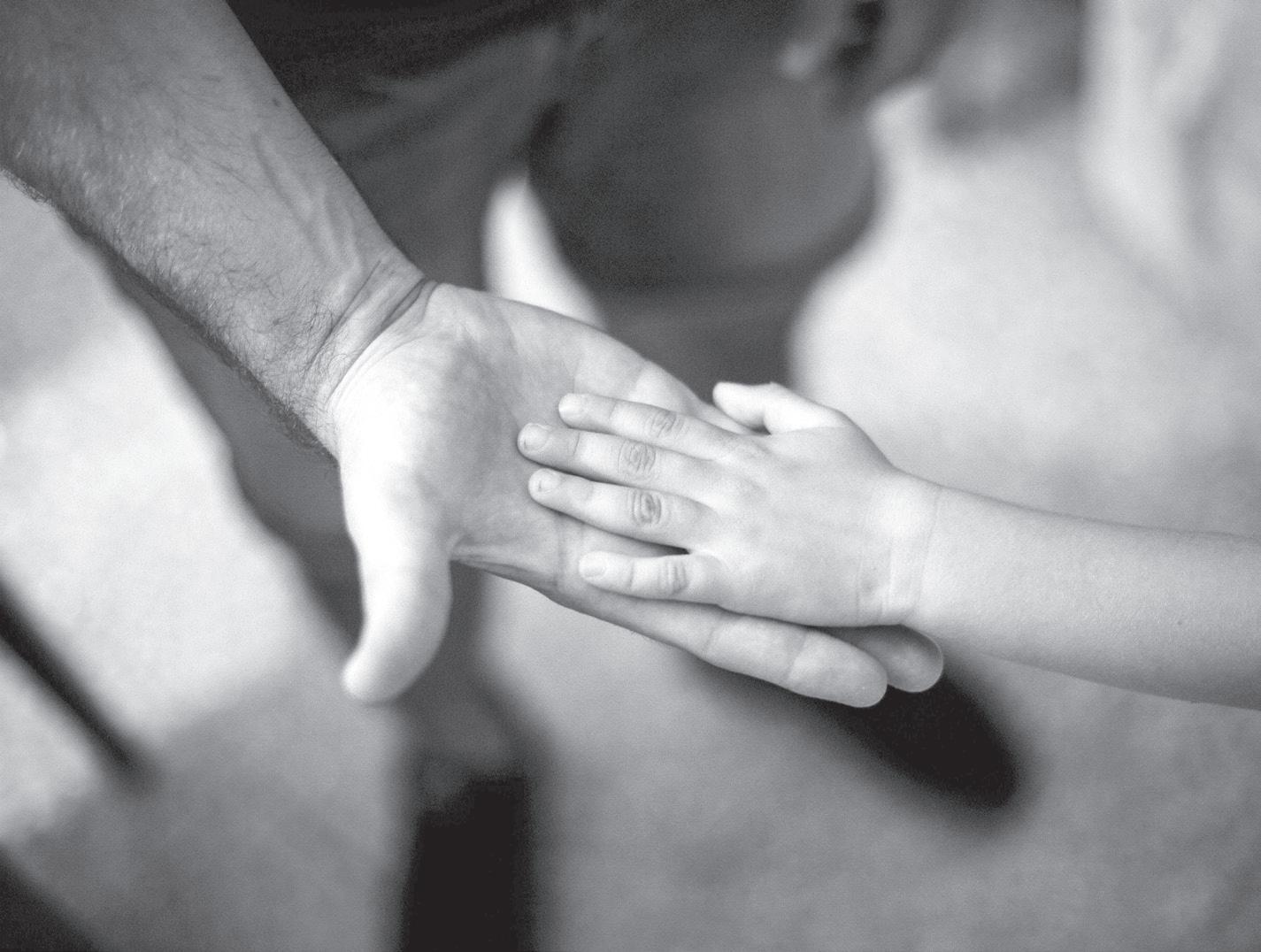
“HISTORICALLY,
scholars and policymakers looked at whether fathers lived with their kids as the sole criterion when designating them as ‘present’ or ‘absent.’” “Yet”—as the author studied Black men who mostly grew up with absent fathers, and how their memories of childhood affected them as adults—his respondents’ stories “revealed distinctions that ‘nonresident’ alone did not capture.”
Some people in this category didn’t even know their fathers’ names.
These categories complicate what can otherwise be oversimplified.
For example, the fathers of Presidents Bill Clinton and Barack Obama were both absent, but in distinctly different ways. Clinton’s biological father died in a car accident before he was born—an absolute absence. Obama’s father left the family when Barack was 2 years old and reappeared only once, years later—a relationship characterized by extended absence.
In contrast, other famous people saw their absent fathers more regularly.
The parents of the rapper Ye, formerly known as Kanye West, divorced when he was 3 years old, but he grew up spending summers with his father, putting the absence in the “consistent” category. Similarly, Maroon 5 singer Adam Levine regularly saw his dad on weekends after his parents divorced, which I also classify as a consistent form of absence.
Better than my father, or better than his absence?
IRONICALLY, I became a father as I began my dissertation research on absent fathers. Using the four categories of paternal absence I developed, my dissertation examined how men’s experiences with absence shaped their own aspirations for fatherhood and romantic relationships.
I wanted to showcase the complexity and range of experiences of growing up with an absent father, while also exposing the disparity in how people remembered their absent fathers. Specifically, some people knew their fathers, while others knew only that their father was absent. This
memory gap makes it harder for some new dads to envision what it means to be better than their own fathers.
Like me, the men I interviewed for my research relayed anxieties about navigating fatherhood. Like me, they wanted to be better than their fathers.
But we all differed in how prepared we felt for the task. Some had vivid memories to guide them: One respondent, who expe -
also distinctly shaped how I remember my father. My memories mainly come from 6 years old and earlier. Many are unfavorable, like his smoking in the car, knowing I had asthma. Some fond ones exist, like the two of us walking on the beach or feeding ducks at a local pond.
Still, what I recall most is my fear of my father. The origins of this fear escape me. I’ve been told he abused my mother, but I don’t remember witnessing it.
These scant memories presented a paradox as I entered fatherhood: I didn’t want to be feared like my father, but I didn’t know exactly what made me afraid of my father. This uncertainty loomed throughout my early years of parenting: When my daughter cried in my arms or preferred my wife over me, was it simply a sign of normal fussiness? Or had I unknowingly become a scary figure, like my father?
From abandoned son to present father
I LAST met my father 20 years ago. I was full of hate when that meeting began, but this hatred soon dissipated. First, I realized I wasn’t angry at my father, because I barely knew my father. I was angry at his absence. Second, I learned that his father was absent, too.
They say “hurt people hurt people.” Before my dad was an absent father, he was missing his dad, too. This doesn’t excuse his absence or his treatment of my mother. But it did make it harder to hate someone who
‘I used to assume that the pattern of absence I experienced with my own dad reflected a standard.’
rienced inconsistent absence, hated that his father never showed curiosity in getting to know him. So when he became a parent, he made sure to ask his daughter questions so she would know he cared about her life.
Yet those with little to no memories of their father may aspire to be, as another respondent put it, “a father like my mother.”
Doing this work, I’ve been able to reimagine my own experience with absence.
I used to assume that the pattern of absence I experienced with my own dad reflected a standard. My parents divorced when I was 3 years old. I saw my father regularly until moving away at 6–a form of consistent absence. But the rest of my childhood passed without seeing my father, shifting me to extended absence. I used to wrongly dismiss less extreme patterns of absence, such as seeing one’s father weekly or monthly, as “not absence.”
My unique experience of absence has

was probably hurting like me.
As I continue to explore the impact of absent fathers as an academic, I continue to reconcile my transition from abandoned son to a present father. Lacking inspiration or guidance from my own father, I’m practicing fatherhood on my terms.
For me, that’s meant building traditions. From the outset, we’ve created routines around music, dancing, bath time, reading and talking about “big emotions.” Our most meaningful tradition has been our weekly daddy-daughter breakfast, which I started when she was 18 months old. She’s now 8. Sometimes we go on Tuesdays. But any day of the week is fair game.
n The author is a Special Advisor for Poverty Solutions at University of Michigan and Northeastern University.
n Cover photo by Federico Enni on Unsplash
PHOTO BY JUAN PABLO SERRANO ON PEXELS.COM