






By Ma. Stella F. Arnaldo

foreword.
“There is, too, the ongoing threat of climate change and biodiversity loss.



THE fertility rate among women may be declining, but thousands of classrooms must still be built annually to make room for new learners and replace aging educational facilities until 2040, according to the government’s think tank.
In a discussion paper published by the Philippine Institute and Development Studies (PIDS), a team of researchers led by Fellow Michael R.M. Abrigo estimated that 6,000 to 8,000 new classrooms need to be built over the next 15 years to address classroom deficits by 2040. They estimated that at P3 million per classroom, this would amount to an investment of P18 billion to P24 billion in new classrooms per year. The PIDS said this, however, within the ballpark of the government’s recent allocations for classroom construction.
“We document that a future with continuous low fertility presents an important tailwind to ease classroom congestion across the country, but headwinds from building obsolescence would require continuous infrastructure investments to address classroom supply deficits in the public school system,” PIDS explained.
Given the resources needed, PIDS recommended crafting of a long-term School Building Construction Masterplan to identify locations where classrooms are needed.
This needs assessment will consider supply and demand projections as well as building specifications that fit the terrain and climatic conditions of the areas where the buildings will be constructed.
The PIDS said this can be complemented by activities such as funding prioritization, precon-
struction activities, and building maintenance to facilitate planning.
“Ultimately, such interventions would not only require greater coordination and cooperation among concerned agencies, particularly DepEd [Department of Education], DPWH [Department of Public Works and Highways], and Neda [National Economic and Development Authority, now the Department of Economy, Planning and Development], but also the availability of skilled personnel to implement them,” PIDS said. However, the PIDS researchers also said there are other options to building more class-
THE Philippines’ outstanding external debt posted a double-digit growth in the first quarter of 2025 on the back of increased government borrowings, according to the Bangko Sentral ng Pilipinas (BSP).
Based on the data, the country’s external debt reached $146.74 billion at end-March 2025, a 14-percent increase from the $128.69 billion posted in the same period last year. Compared to the previous quarter, the country’s external debt was 6.6 percent higher than the $137.63 billion in the period ending in December 2024.
“The increase in external debt in the first quarter was primarily at-
Continued from A1
In 2023, global tourism accounted for around 6.5 percent of the world’s greenhouse gas emissions, underscoring the critical need for continued sustainable innovation as travel and tourism expands. Coastal and marine destinations are the most vulnerable,” she added.
The WTTC sees tourism’s contribution to the Philippine economy at 21 percent, adding some
tributed to the national government’s fund-raising activity meant to support infrastructure projects and other budgetary requirements,” the BSP said.
The BSP noted that the national government raised $5.06 billion from the issuance of global bonds and loans extended by foreign development institutions.
The central bank also said local banks accessed offshore markets in the same period for short-term financing to support trading operations and address liquidity needs.
“On year-on-year terms, the increase in the external debt was also driven primarily by bond issuances by the national government, which
US$102.6 billion (P5.6 trillion/US$1:P57.5) to the gross domestic product (GDP) this year. This represents an 11.8-percent change from $91.8 billion GDP contribution in 2024, although a slower growth from the 27.6-percent yoy change in 2024/2023. This year’s estimated tourism contribution is 13.5 percent higher than the prepandemic $90.4 billion recorded.
11.7-M PHL jobs in 2025
IN terms of jobs, the WTTC forecast a 4-percent increase (yoy) in tourism jobs to 11.7 million in the country, equivalent to 23.8 percent to total
totaled $7.83 billion, and borrowings by local banks amounting to $6.14 billion,” the BSP said.
Meanwhile, BSP data showed the latest external debt figure was equivalent to 31.5 percent of the country’s gross domestic product.
This was higher than the 29.8 percent in the previous quarter but still reflects the country’s ability to repay its external obligations.
As of end-March 2025, the data showed the country’s short-term (ST) external debt based on the remaining maturity concept stood at $32.67 billion.
This level remains well-covered by the country’s gross international reserves (GIR), which amounted to $106.67 bil-
jobs estimated this year. This year’s growth is a slight slowdown from the 5.7-percent change in 2024/2023. But this year’s jobs number is 7.4-percent higher than the 10.9 million jobs recorded in 2019.
International visitor spending will finally exceed the prepandemic level this year, rising by 2.1 percent to $12.4 billion (P709.2 billion) from $12.1 billion (P694.9 billion) in 2019. The estimated spending by foreign visitors is 10 percent more than $11.3 billion (P644.8 billion) in 2024.
Domestic travelers are forecast to spend $70.8 billion (P4.1 trillion) this year, 11.7 percent higher

lion, providing 3.27 times cover for short-term obligations.
The country’s GIR level continues to provide a robust external liquidity buffer, despite the downward trend of the short-term external debt cover in recent years.
Meanwhile, the debt service ratio, another indicator of capacity to service debt that compares the country’s loan payments with its income from exports and other inflows, declined to 8.4 percent from 9 percent a year earlier. This reflected lower principal and interest payments by resident borrowers in the first quarter of 2025. Cai U. Ordinario
than $63.4 billion (P6.3 trillion) in 2024. This year’s domestic spending is 9.3 percent higher than the $64.8 billion (P3.7 trillion) in 2019.
The WTTC had no projection on foreign visitor arrivals in the Philippines, and domestic trips taken. Under its National Tourism Development Plan 2023-2028, the Department of Tourism forecast a baseline scenario of 8.4 million international travelers this year. The agency missed its 7.7-million target last year, with the arrival of just 5.95 million foreign tourists.
‘Standout example’ STILL, the Philippines ranked 12th last year in the travel and tourism’s direct contribution to GDP, at $55 billion. This was higher than the world average of $18.4 billion and the Southeast Asia average of $17.9 billion as per the WTTC.
In a news statement, Simpson said: “The Philippines is a standout example of how travel and tourism, when supported by a clear, long-term vision, can deliver real economic impact and long-term opportunity.”
She added, “This success speaks to the country’s extraordinary appeal, its policy focus on tourism as a growth engine, and the energy of its people and private sector.”
Looking toward 2035, the global tourism body projects travel and tourism’s contribution to the economy to reach $161.2 billion (P9.2 trillion/$1:P57.7) by 2035, representing 19.8 percent of the economy.
Transforming the economy
OVER the next decade, 2.5 million new jobs are expected to be created, bringing total sector employment to 14.1 million. This is equivalent to 26.8 percent of the Philippines’ total jobs by 2035.
“As the country continues to strengthen air connectivity, invest in infrastructure, and prioritize destination resilience, travel and tourism are positioned not just to grow, but to transform the national economy,” said the WTTC.
The global tourism body calls on policymakers to “continue fostering this trajectory with clear regulation, long-term investment in workforce development, and sustained global promotion of the Philippines as a world-class destination.”
The data showed the country’s BOP deficit reached $3 billion in the first quarter of 2025, a turnaround from the $238-million surplus recorded during the same period last year.
“This was primarily driven by a wider deficit in the current account component, which covers goods, services, as well as income from overseas Filipino [OF] workers and other sources,” the BSP said.
The BSP said the current account deficit in the first quarter of 2025 was twice the previous year’s figure at $4.2 billion from $2.1 billion in the first quarter of 2024.
As a share of GDP, the BSP said the latest deficit increased to 3.7 percent in the January to March period this year from 1.9 percent in the same period last year.
“This development reflected the widening merchandise trade gap, as import spending grew faster than export earnings,” the BSP said.
“The increase in the current-account deficit also resulted from the contraction of net revenues from trade in services due to lower transport services receipts and increased outbound travel spending. However, this was partially moderated by higher remittances from OFs,” it added.
However, the BSP said the deficit was partly offset by inflows in the financial account. The financial account is composed of direct investments, which are usually long-term in nature; portfolio investments, such as placements in stocks and bonds; and other forms of investment.
The BSP said the financial account posted net inflows of $6.7 billion in the first quarter of 2025, up by 43.2 percent from $4.6 billion in the same period last year.
“This stemmed mainly from the notable increase in net inflows in the direct and other investment accounts, alongside sustained inflows in the portfolio investment account,” the BSP said.
Meanwhile, data showed the capital
account recorded a surplus of $23 million in the first quarter of 2025, up by 35.9 percent from $17 million in the same period in 2024.
BSP said the surplus was driven by gross disposals of non-produced nonfinancial assets that amounted to $4 million. This was higher than the $1 million recorded gross acquisitions in the first quarter of 2024. The data also showed that with this, the country’s gross international reserves (GIR) amounted to $106.7 billion as of end-March 2025, higher than the $104.1 billion level registered as of end-March 2024.
The GIR, the BSP said, are foreign assets held by the BSP and are mostly in foreign-issued securities, gold, and foreign exchange.
Meanwhile, the peso averaged P57.97 to the US dollar, appreciating by 0.3 percent relative to an average of P58.15 to the greenback in the fourth quarter of 2024.
However, on a year-on-year basis, the peso depreciated by 3.5 percent from an average of P55.96 to the greenback in the first quarter of 2024.
“The peso gained external price competitiveness against the baskets of currencies of major trading partners and trading partners in advanced and developing countries on a year-on-year basis as indicated by the decreases in real effective exchange rate indices,” the BSP said.
Earlier, ANZ Research said the peso is overvalued and that it has hurt the performance of the Philippine economy, particularly the manufacturing sector and the competitiveness of exports. (See: https://businessmirror. com.ph/2025/06/10/overvaluedphl-peso-is-hurting-economy/). ANZ Research pointed out that the overvalued peso has been “a persistent concern” that has weighed down the country’s competitiveness for years, as this has also occurred in the 1980s and 1990s. The analysis stated that based on traditional currency fair value models such as the real effective exchange rate (REER), the most cited gauge of a currency’s value, the peso has been overvalued since 2019.
“Between 2022 and 2040, however, we expect total public high school enrollment to somewhat plateau with the expected increased enrollment in some areas, e.g. Quezon City and Basilan, offset by declining enrollment in others,” the researchers said.
relative to the benefits [they could] provide. Such analyses should include not only actual direct financial costs and benefits to government and households, but also the opportunity costs of alternatives to society at large,” PIDS said.
The researchers estimated that if the number of existing classrooms in 2021 stays constant until 2040, remaining classroom deficits are expected to range between 58,000 and 81,000, depending on the fertility scenario.
However, if the building wear and tear in factored in because of infrastructure ageing, the numbers are significantly higher at around 100,000 at low fertility scenarios to 122,000 at high fertility scenarios.
The researchers pegged their assumptions on national level Total Fertility Rate (TFR) of 1.7 percent for the low-fertility scenario; 1.9 percent for the medium scenario; and 2.1 percent for the high scenario. The country’s current TFR stands at 1.9 births per woman.
By 2040, the researchers expect about 2.2 million public Senior High School (SHS) enrollees; and for public junior high school (JHS), between 5.5 and 5.8 million, depending on the fertility scenario. These are below the 2022 baseline public JHS and SHS enrollment at 7.3 million and 2.8 million students, respectively.
In terms of total national public school enrollment in the elementary level, including kindergarten, the low fertility scenario would lead to a public enrollment of 10.5 million; while a high fertility scenario will lead to 12.8 million students enrolling. This, the researchers said, is founded on a baseline enrollment scenario of 14 million in 2022. “We expect total public elementary school enrollment to decline further by 2060 across fertility scenarios, although some locations are projected to have public school enrollment higher by as much as half of baseline values in the high fertility scenario.” Given this, the researchers said public school enrollments by level are expected to lead to a declining trend in total public school enrollment across regions until 2040.
It is estimated that the public school enrollment will be between 18.1 million at low-fertility scenarios and 21.1 million at high-fertility scenarios for the whole country by “endline,” from 24.1 million in 2022.
This trend, the researchers said, will likely continue until 2060 even in the high-fertility scenario. However, the situation in the BARMM may be different as there is a projected increase in public school enrollment by around a third of baseline public school enrollment figures. Cai U. Ordinario
Without the ability to implement green practices, the study noted that MSMEs risk falling behind as supply and value chains grow “increasingly stringent” in response to rising climate change concerns.
The Asean report said financial support mechanisms such as subsidies, tax reliefs and access to low-interest loans and soft financing could facilitate the adoption of Circular Economy practices among MSMEs. Regulation barriers represent another constraint identified by the Asean report.
“Regulation barriers that hinder the participation of MSMEs in Circular Economy practices
are access to land, access to or goods movement of virgin and secondary materials [e.g. involving tax and standard compliance for cross-border movement of secondary goods or waste] and access to financial options [e.g. unbanked, collateral] needed,” the report said.
The Asean study also noted that the supply chain “complexity” that the Circular Economy presents also poses a challenge to MSMEs’ business processes.
“This approach requires consideration of factors such as traceability and the use of local or recycled materials, which can significantly complicate operations,” the Asean report noted.
“MSMEs aim to source materials and produce products as efficiently as possible, but the additional requirements to ensure sustainability can add complexity to their operations,” the study added.
Small merchants “frequently” face challenges with data management, which leads to difficulties in adopting Circular Economy principles, said the study. It noted that many MSMEs can only handle “conventional transaction data” and may lack the infrastructure or expertise to manage the comprehensive data sets required by CE practices.
“This includes data related to the sustainability attributes of materials used [e.g. reusable and recyclable practices], the lifecycle impacts of products and detailed supply chain information,” the study said.
“Without the capability to effectively manage this type of data, it becomes challenging for MSMEs to maintain accurate records that are crucial for validating their sustainability practices and making evidence-based decisions that align with CE principles,” it added.
By Rizal Raoul Reyes @brownindio

HE Climate Conflict Ac -
Ttion (CCA) on Sunday urged President Marcos to veto the passage of the bill amending Republic Act 10591 or the Comprehensive Firearms and Ammunition Regulation Act.
The nongovernment group argued the move is to allow the review and removal of three proposed amendments in House Bill 11539 and Senate Bill 2895 that “pose serious threats to public safety and peace,” especially in fragile and conflict-affected areas such as the Bangsamoro.”
SB 2895 provides a one-year amnesty for unregistered or loose firearms to be registered without penalty starting from the effec -
tiveness of the proposed law. It likewise allows the National Police chief to authorize the director of the Firearms and Explosives Office to issue permits to carry firearms outside residence or Ptcfor.
House Bill 11539 focuses on amending the existing firearms and ammunition regulations.
The CCA said the most significant concern is that the bill shortens the election gun ban period from 90 days before election day to just 45 days and from 30 days after election day to just five days. The decision and duty to amend the gun ban period is a Constitutional mandate given to the Commission on Elections, and is not within the scope of any other law or agency.”
“It is illogical, if not outright dangerous and risky, to shorten the gun ban when the first-ever
Parliamentary elections in the Bangsamoro is expected in October 2025,” said the CCA.
In fact, a stricter implementation of the gun ban is even more necessary as the region approaches its most decisive, significant, and game-changing elections since the signing of the peace agreement,” the CCA added.
The CCA said it would exacerbate the situation as shortening the gun ban contradicts the lived realities of many Filipinos who just endured one of the most violent election cycles in recent memory.
In the Bangsamoro region alone, CCAA data recorded 759 violent incidents between October 2024 and the days following the May 2025 midterm elections. These attacks began far earlier than usual—five to eight months before election
day—and continue to threaten communities even after the winners have been declared. May saw 171 violent incidents, which is more than triple of the 53 violent incidents in April.
Second, the proposed amendments on increasing ammunition purchase limits and extending the validity of permits to carry firearms should be complemented with strict requirements and regular monitoring. “More ammunition opens up more spillage into illegal markets. Stringent regulatory measures must be in place first if they will allow an increase in ammunition purchase and longer periods for the permit to carry firearms,” said the CCA.
CCA stressed that it must be ensured that these revisions are not feeding the interests of those
IClaudeth S. Mocon-Ciriaco @claudethmc3
T’S “all systems go” as some 27 million students start school year 2025-26 on Monday an official of the Department of Education (DepEd) said on Sunday.
Dennis E. Legaspi, Media Relations Chief of the Office of the Secretary of Education, said, “all systems go po ang lahat sa pagbubukas ng ating klase bukas, June 16.”
However, Legaspi admitted that some problems remain like damaged school buildings and shortage of classrooms, desks, tables and chairs.
He cited as an example San Francisco High School in Quezon City who se building that is used by Grades 9 and 10 students was that was damaged by fire on Sunday morning.
Legaspi said that there were eight classrooms razed by the fire, “so for the meantime, they will use the Pagcor Building which is being used by the Senior High School. The SHS which is already on one shift will temporarily shift to two shifts to accommodate the displaced sections,” he said.
He added that class opening will proceed as usual and the
students will be oriented on the new schedule and arrangement during flag raising ceremony.
“The [fire-damaged] area has already been cordoned off and security guards are in place to ensure that it will not be accessible to students and personnel and to ensure the safety of everyone,” he said.
Legaspi added that Quezon City Mayor Josefina Belmonte Alimurung has already sent the personnel from the city’s Department of Sanitation to help with the clean up.
Alimurung also said she would send Department of Engineering personnel to assess the damage and fast track the rehabilitation of the building.
“Likewise, we are also eyeing another building in school which can also be used by the learners,” Legaspi added.
Estimated cost of damage is P3 million.
Shortages
THE Teachers’ Dignity Coalition (TDC), meanwhile, reaffirmed the readiness and commitment of teachers while calling on the government to fulfill its responsibilities in ensuring a better learning environment.
“Teachers are always ready and

and Angelito Javier, chairman of Punong Barangay Poblacion 1.
Inc., NBC (Philippines) Car Technology Corp., Nippon Micrometal Corp. Philippines, Hitachi Astemo Philippines Corp., and Chiyoda Integre (Philipines) Corp. They also helped DepEd and city officials in checking the school premises to make sure it is not only conducive to learning but safe as well.
enthusiastic to perform their duties despite the recurring challenges we face every year. But it is also the government’s duty to make sure we are not left to carry this burden alone,” said Benjo Basas, the group’s national chairperson.
Basas pointed out that, again, the school opening will be marred by persistent shortages in basic resources such as classrooms, armchairs, water and sanitation facilities and learning materials especially books aligned with the newly revised curriculum.
While the DepEd has acknowledged these problems, Basas lamented that the agency’s response, particularly in pushing for adequate budget allocations in Congress, has been insufficient.
“The DepEd acknowledges the shortages in our schools, but the question is whether their actions are enough to address them. We don’t see a strong push from the department in demanding adequate funding from Congress,” Basas said.
He also raised the lack of support for the implementation of the Strengthened Senior High School (SHS) curriculum, which will begin its pilot rollout in select schools on Monday.
“Reports from the field show
that some schools participating in the SHS pilot are not adequately supported to deliver the new curriculum effectively,” he said.
The group has emphasized the ongoing crisis in teacher welfare. “The teacher shortage remains unaddressed, resulting in overcrowded classes and heavier workloads. This situation affects both teachers and learners and undermines the quality of education,” he explained.
Basas further criticized the government’s failure to improve teachers’ compensation.
“Filipino teachers continue to lag behind their Asean [Association of Southeast Asian Nations] counterparts in terms of salaries and benefits. Locally, we remain among the lowest paid professionals in government service,” he said.
He pointed to the long-neglected provisions of the Magna Carta for Public School Teachers, a law enacted in 1966, which mandates benefits such as overtime pay, paid study leave, free medical examination and treatment, higher salaries and special hardship allowances.
“Unfortunately, many of these benefits remain under-implemented if not totally unenforced,” Basas said.
PERSONNEL of the Department of Social Welfare and Development’s (DSWD) Crisis Intervention Unit held a home visit in the City of San Jose Del Monte (SJDM) in Bulacan on Saturday to assess the condition of the person with autism disorder who was physically abused in a public utility bus.
A social worker from the City Social Welfare and Development Office of SJDM assisted the victim who underwent a medical checkup, according to a news release Sunday.
Upon Secretary Rex Gatchalian’s instruction, the DSWD coordinated with the local government (LGU) of SJDM for other possible interventions.
“We are looking into the possibility of referring the victim’s family for psychosocial support under the Wireless Mental Health and Psychosocial Support or WiSupport program and the provision of financial assistance,” DSWD Assistant Secretary and spokesperson Irene Dumlao said.
The WiSupport program provides holistic services to clients in crisis, who may also be under extreme stress and experiencing anxiety, depression or other mental health issues.
Dumlao said the DSWD will prioritize the victim’s therapy, which was discontinued due to financial difficulties.
“During the home visitation, we also found out that the main source of his family’s livelihood is selling corn. This is not enough to support the victim’s therapy. We are now facilitating referral services to medical institutions or partner service providers to help the victim to continue his sessions,” Dumlao said.
The Department will likewise explore how to provide assistance to the family relative to the filing of a criminal case.
The DSWD and the local government will continue to provide other forms of interventions to the victim and his family based on further assessment to ensure that they completely recover from the unfortunate incident. PNA
who want to use their weapons whenever they need to.
Finally, CCA called on Marcos to focus firearms policy direction towards strengthening the national campaign against illegal firearms, which number over 3.2 million as of 2018. The group did not explain how it got its figure.
CCA recommend the following urgent measures to be incorporated in the law:
n Establish a dedicated implementing unit: Creation of a dedicated PNP unit or a Joint Task Force to combat illicit firearms trafficking and possession;
n Strengthen firearms registration in the Bangsamoro: Start dismantling ceasefire mechanisms that pose barriers against regulation of MILF firearms and create municipal level one-stop shops for the registration of weapons excluded decommissioning process; n Implement immediate destruction of confiscated illegal firearms:
n Consolidate all confiscated illegal firearms from law enforcement agencies and allocate a portion of licensing revenues for immediate destruction and smelting to prevent recirculation of illegal firearms; and Impose stiffer penalties: Increase penalties for perpetrators of gun-related violence, firearms law, and those involved in the sale, transfer, and transport of illegal firearms. These proposed amendments aim to create concrete mechanisms that will curtail the proliferation of illegal firearms and promote public safety especially in conflict-affected areas.
DMW assures assistance for Pinoy workers in Israel, Iran
By Justine Xyrah Garcia
AMID the ongoing conflict between Israel and Iran, the Department of Migrant Workers (DMW) assured on Saturday that its communication lines remain open for overseas Filipinos in need of assistance.
In a statement, the DMW said all overseas Filipino workers (OFWs) in affected areas are being closely monitored, and support services are in place for those requiring help.
“The Department urges all OFWs in Israel and Iran to remain indoors, stay alert, and maintain regular contact with the Philippine Embassy or Migrant Workers Offices [MWOs] in their respective host countries,” the DMW said.
The department also advised Filipinos to refrain from spreading unverified information that could cause unnecessary panic.
“In coordination with the Department of Foreign Affairs [DFA] and the Department of National Defense (DND), the DMW continues to closely monitor the situation,” it added.
The DMW said its help desks in the Middle East, along with its hotlines, remain accessible to Filipinos abroad and their families in the Philippines.
“OFWs and their families in Lebanon, which is under Alert Level 3, and in Jordan, which recently closed its airspace, may also access the DMW-OWWA Help Desk via the 1348 Hotline,” the department added.
Emergency hotlines
FOR assistance, OFWs and their families may contact the following:
DMW-OWWA Hotline: 1348 (for those in the Philippines) +63 2 1348 (for those abroad)
Israel
Philippine Embassy in Tel Aviv:
+972 54 466 1188
Migrant Workers Office: +972 50 762 2590
Overseas Welfare Office: +972 50 715 6937
Lebanon Philippine Embassy in Beirut: +961 70 858 086
Migrant Workers Office in Beirut: +961 79 110 729
Jordan
Philippine Embassy in Amman: +962 7 7907 7775 +962 7 7721 9000
Migrant Workers Office in Amman:
+962 7 8149 1183
+962 7 8519 1891
Same protection
FILIPINOS and other foreign nationals in Israel will receive the same protection as Israeli nationals amid Iran’s relentless air barrage, Ambassador Ilan Fluss assured on Saturday night.
The envoy reported that three people were killed in the aftermath of Tehran’s retaliatory strikes that began Friday night following Israel’s military attack, which killed Iranian top generals and nuclear scientists and targeted nuclear sites.
“Israel is defending itself, and we have a lot of air defense systems that are operational. Unfortunately, of course, we do have missiles that did hit the targets in Israel,” he said.
“We have a lot of foreigners in Israel, including Filipinos, and we are giving the same safety [measures] that we give to Israelis to foreigners and Filipinos,” he added.
The Department of Foreign Affairs earlier said no Filipino has been reported hurt in the trade of air strikes.
Based on the latest DFA data, there are 30,742 Filipinos in Israel and at least 1,180 in Iran, most of whom are married to Iranian nationals.
Defending their Friday strike, Fluss said the military action was necessary given the “existential threat” Iran poses to Israel— its accelerated nuclear program and ballistic missile capabilities.
The envoy said Iran now has enough enriched uranium for nine nuclear bombs and had also increased its missile program, with a goal to produce thousands of ballistic missiles.
The escalation of attacks between Iran and Israel sparked widespread concern and fears over a possible wider regional conflict. Israel’s airspace was immediately shut down, with no definitive timeline for reopening. Israelis across the world were likewise told to be vigilant and avoid displaying Jewish or Israeli symbols in public.
Fluss, meanwhile, noted that operations at the Israeli Embassy in Manila continue as it assesses the situation on the ground.
“It’s not that the Israeli Embassy is closed. We’ll do an assessment, and we’ll see how we continue to operate in the coming days,” he said. With PNA
By Jovee Marie N. dela Cruz @joveemarie
AN economist-lawmaker on Sunday called for stronger economic preparedness measures as tensions between Israel and Iran continue to pose global economic risks, warning that the conflict could severely affect oil prices, exchange rates, labor markets, and import costs—key elements of the Philippine economy.
their Tier 1 and Tier 2 proposals under the 2026 budget call,” added Salceda.
The veteran lawmaker warned that any disruption in the Strait of Hormuz—which carries over 20 percent of global oil supplies— could significantly inflate the Philippines’ oil import bill. With the country consuming roughly 471,400 barrels of oil per day, a $10 increase in Brent crude prices would cost the country an additional $4.7 million daily, or P94.9 billion annually at an exchange rate of P55 to the dollar.
$105.5 billion, enough to cover 7.3 months of imports.
“This is a strong position,” Salceda said, “but external volatility can change conditions rapidly.”
Risk
WITH over 2.16 million overseas Filipino workers (OFWs), one-third of whom are based in the Middle East, Salceda said a sharp escalation could threaten labor security and remittances.
“The Department of Agriculture, the Bureau of Plant Industry, and the National Food Authority must include logistics contingencies and buffer stock provisions in their 2026 budget,” he said.
According to Salceda, the Department of Agriculture must diversify fertilizer sourcing and invest in logistics resilience.
He said the DMW and DFA should propose standby funds of at least P600 million for repatriation and crisis response.
“For the Philippines, the issue is not foreign alignment but economic preparedness,” Salceda said.
“The conflict affects us through oil prices, exchange rate movements, labor market disruptions, and import costs. These risks must be considered as agencies finalize
Rep. Jose Clemente “Joey” Sarte Salceda, House of Representatives Committee on Ways and Means chairman, noted that while the military actions in April 2025 were more direct than in previous years, both nations have historically avoided sustained escalation. Nonetheless, he said the Philippines must be “fiscally prepared” to manage the potential spillover effects.
“These figures must be reflected in the budgetary assumptions of agencies responsible for fuel subsidies, transportation, agriculture, and power,” he stressed.
Salceda also highlighted recent movements in the foreign exchange market. From April 16 to April 25, the peso slightly appreciated from P56.60 to P56.28 per US dollar. As of May 31, the Bangko Sentral (BSP) reported gross international reserves at
He cited the Department of Labor and Employment’s P600-million repatriation and welfare fund during a 2020 crisis as a practical benchmark for 2026 proposals by the Department of Migrant Workers (DMW) and the Department of Foreign Affairs (DFA).
In addition, Salceda warned of looming agricultural risks, saying around 66 percent of fertilizer imports are nitrogen-based, primarily urea sourced from countries like Qatar. Any disruption in Gulf shipping routes would raise domestic fertilizer prices and affect food security.
ASENIOR lawmaker has pointed out that there must be a change in the approach of Commission on Audit (COA) personnel assigned to local governments (LGUs)—from simply issuing audit observations and notices of disallowance to becoming proactive partners in helping local officials improve systems for transparency and accountability.
He also called on the agency to fasttrack its digitalization efforts to streamline processes and reduce bureaucratic red tape.
Camarines Sur Rep. Luis Raymund Villafuerte said this paradigm shift was confirmed by newly appointed Audit Commissioner Douglas Michael Mallillin during a recent Commission on Appointments (CA) panel hearing on his ad interim appointment by President Marcos.
The lawmaker, who also serves as CA Majority Leader, recalled that during his previous three-term stint as Camarines Sur governor, COA auditors assigned to local govenments (LGU) were more concerned with flagging even minor infractions,
resulting in notices of disallowance against local officials.
For his part, Mallillin acknowledged this past practice, explaining that under previous standards, auditors were evaluated based on the number of audit observations they issued. However, this has changed under the leadership of present COA
Chairman Gamaliel Cordoba.
“The role of an auditor is no longer just to find faults,” said Mallillin. “COA must still safeguard public funds, but it must also assist in ensuring that government programs and mandates are successfully implemented.”
Enhance transparency
MALLILLIN further explained that auditors are now expected to help LGUs improve compliance with internal controls, enhance transparency, and strengthen accounting systems. In fact, he cited that COA recently awarded an auditor not for issuing numerous observations but for helping a local government correct discrepancies and improve collections without issuing
ELECTRIC power has been restored in the island-province of Siquijor, the National Electrification Administration (NEA) reported on Sunday, saying that it met the deadline set by the President.
A statement released by the Presidential Communications Office (PCO) said the NEA expedited repairs on power generator sets of the Villar-owned Siquijor Island Power Corp. (Sipcor), and facilitated the transport and installation of a generator set from the Palawan Electric Cooperative (Paleco).
Additional rental generator sets from Sipcor helped secure supply, bringing the dependable capacity to 11 megawatts (MW), above the province’s peak demand of 9 MW, with 1.65 MW in reserve for contingencies.
“NEA remains committed in monitoring the power situation in Siquijor to ensure that families, businesses, and schools continue to enjoy reliable electricity in the days and weeks ahead,” the statement said.
The NEA is tasked to promote sustainable
an Audit Observation Memorandum (AOM).
Meanwhile, Villafuerte shared that when he once questioned the large volume of COA observations during his term as governor, an auditor admitted that such output was used as a performance metric.
“That mentality needs to change,” he said. “Auditors should be assessed on how they help improve local governance—not just on how many faults they find.”
He added that some LGUs are top performers, yet their good practices often go unrecognized by COA. He cited Camarines Sur as an example, being ranked by COA as the third wealthiest province in 2023 with P39.71 billion in assets and by the Bureau of Local Government Finance (BLGF) as the second top-performing LGU in terms of revenue collection.
Villafuerte was referring to a COA report in 2023 citing Camarines Sur as the third wealthiest province in the country with P39.71 billion and a BLGF report in the same year putting the province at second on the top-10 list of the best LGU performers in terms of revenue collection.
rural electrification, and empower electric cooperatives to bring electricity to the countryside, including missionary and economically unviable areas.
Earlier this month, the provincial government of Siquijor, through its Sangguniang Panlalawigan, declared a state of calamity owing to the worsening power crisis as residents have been facing rotational brownouts since May 13, 2025.
Marcos earlier instructed NEA administrator Antonio Mariano Almeda to restore stable power supply to the province by June 15, 2025, and imposed a six-month deadline for short-term solutions to address the power crisis in the area.
The President inspected the Sipcor power plant in the province last week, as he directed an investigation on Villar company’s operations amid the ongoing power issues, adding that he is open to the possibility of having another power provider in the province.

He also raised concerns about the rise in marine insurance premiums if Gulf routes are designated war risk zones by global insurers, saying this could increase freight rates for oil and food cargo, even for Philippine shipments not directly passing through the Gulf.
SALCEDA outlined six specific budget-related actions that the government must prioritize in anticipation of prolonged regional instability.
He said agencies like the Department of Transportation should propose at least P5 billion for programs like Pantawid Pasada, based on 2022 data.
He added that the Department of Energy should assist private importers in securing long-term contracts to hedge against price spikes.
VILLAFUERTE also urged COA to speed up its digitalization efforts, noting that many audit observations are triggered by simple lapses in document submission, such as Journal Entry Vouchers (JEVs). “About 80 percent of the AOMs we received were due to incomplete JEVs,” he pointed out.
The lawmaker said COA must move toward fully digital systems to eliminate unnecessary paperwork and cut costs.
Mallillin responded that COA has started reviewing outdated systems, including the 2009 Government Accounting Manual. He acknowledged the inefficiencies and redundancies in current accounting processes, which have led some agencies to maintain separate systems just to comply.
Mallillin added that COA is in talks with the Department of the Interior and Local Government (DILG) to streamline documentation and reduce the number of required signatories, easing the administrative burden on local chief executives. Jovee Marie N. de la Cruz
On Father’s Day, group warns dads vs sexual enhancers, energy products
AS the nation celebrated Father’s Day, the environmental and health advocacy group EcoWaste Coalition warned dads against using sexual enhancement and energy products that can pose serious health risks.
The group said these sexual enhancement and energy products are sold by sidewalk vendors, Chinese drug stores, and online sellers, without clearance from concerned authorities.
Citing information from the health authorities in Canada, the US, and the Philippines, the group warned that many of these products lack authorization to be legally sold and may contain potent ingredients not permitted in such products, which can cause serious side effects.
For the safety of consumers, especially men, the EcoWaste Coalition echoed the following information from the US Food and Drug Administration (FDA):
“Many products that claim to help with sexual enhancement or treat sexual dysfunction—such as male enhancement supplements, erectile dysfunction treatments, male energy pills and stamina pills—are likely to be contaminated with dangerous hidden ingredients.”
“These contaminated products are a type of medication health fraud.”
“These products are sometimes falsely advertised as dietary supplements, food and/ or all-natural treatments. They often have multiple positive reviews and/or are being shared through social media. They are sold online and in stores.”
“These products pose serious health risks and are not guaranteed to work. They can lead to severe health issues and hospitalization.”
Among the ingredients of concern found on such products are classified as prescription drugs, which should only be consumed under the supervision of a qualified healthcare provider.
According to the recalls and safety alerts issued by Health Canada (which is equivalent to the country’s Department of Health), some of these products may contain ingredients not listed on the label such as prescription drugs sildenafil and/or tadalafil “possibly at doses exceeding maximum recommended amounts.”
Tests conducted by the FDA Philippines have confirmed the presence of sildenafil and tadalafil in some dietary supplements for men that are sold locally.
As explained by the FDA, sildenafil citrate is a prescription drug used to treat erectile dysfunction in males and is prohibited in food supplements owing to potential health risks, particularly for persons who have had a stroke, those with cardiovascular diseases, kidney problems, and low blood pressure.
“Possible side effects of consuming sexual enhancement or energy products with sildenafil citrate include changes in vision or sudden vision loss, diarrhea, dizziness, headache, indigestion, nasal congestion, urinary tract infection, and priapism [or prolonged erection of the penis],” the FDA said.
Like sildenafil citrate, tadalafil is a prescription drug used to treat male sexual problems and is also prohibited in food supplements owing to possible side effects, especially for those who have had a stroke and those experiencing blood, heart, kidney, and stomach ulcer problems.
“The consumption of sexual enhancement or energy products containing tadalafil may lead to back and muscle pain, flushing, headache, indigestion, nausea, and a stuffy or runny nose,” the FDA said.
EcoWaste Coalition reminded concerned individuals to be cautious, refrain from buying unregistered products, and consult a healthcare professional before purchasing and consuming a product for their health.
Jonathan L. Mayuga
He added that the Maritime Industry Authority and Department of Trade and Industry should track global shipping insurance trends and evaluate the need for government support.
The Development Budget Coordination Committee must integrate oil price scenarios into macroeconomic planning and social protection funding, the lawmaker added. Salceda emphasized that while the Philippines cannot control global conflicts, it can “control its fiscal posture.”
“The 2026 budget should be designed to absorb external shocks, preserve domestic stability, and maintain purchasing power for Filipino households,” he said.
By Justine Xyrah Garcia
EXECUTUVES from global enterprise software company Infor are urging Philippine industries to embrace artificial intelligence (AI) and ride the wave of digital transformation, saying the country is well-positioned to benefit—if businesses move decisively.
In an interview with the BusinessMirror, Infor Executive Vice President Wolfgang Kobek pointed to the growing demand for business efficiency and modernization across Philippine industries as a signal that the country is ready for large-scale AI adoption.
“The future will be a much higher growth than in average other countries. So my view here is really about how you support the business and the growth, how you’re focusing on the right industries, and not over-regulating the implementation of new technologies,” Kobek, who is also Infor general manager-international, said.
He emphasized that the pace and scale of transformation will depend on sustained vision and leadership from both the public and private sectors.
“If you continue to drive this transformation, if you continue to set up the right vision for the businesses, I think that will boost the industries that we’re serving big time,” he added.
Infor Asia Pacific and Japan Senior Vice President Terry Smagh said the country has the right fundamentals to scale digital tools, but emphasized that organizations must first shed the notion that automation is a threat to labor.
He said AI is not a threat as long as employers, and especially their workers, who often fear such technologies, learn to adapt.
“If you don’t have an agile business model, right, and you don’t pivot for tomorrow for change, you’re going to be left behind,” Smagh warned. Their assessment is backed by Infor’s latest study covering 14 countries— including the Philippines—and seven industries.
The findings show 75 percent of surveyed organizations expect at least a 20-percent improvement in operational efficiency through new technologies within the next three years.
About 78 percent also plan to grow their tech investments by at least 20 percent over the same period, with machine learning and generative AI as key drivers.
Upskilling a must DESPITE these growth expectations, the global labor market remains at risk of disruption.
The International Monetary Fund (IMF) earlier warned that 40 percent of jobs worldwide, including high-skilled positions, face some level of exposure to AI.
The business process outsourcing (BPO) sector in the Philippines is seen as particularly vulnerable due to its reliance on routine and transactional tasks now being automated by chatbots and virtual agents.
This supports the recent World Economic Forum report which projected that automation could displace up to 85 million jobs worldwide by 2030. For Infor’s executives, this disruption is avoidable—provided that AI adoption goes hand-in-hand with workforce development. Kobek said employers need to understand that AI should be used to make jobs more efficient and to “repurpose” employees into more productive roles.
“If you know how to use it, you will benefit from that, you will add value to the business and I guess that’s the way we need to look into this,” Kobek cautioned. Smagh, for his part, said business transformation will stall if companies remain hesitant to embrace new technology.
“I think people need to think that AI is not going to replace their jobs. But those who don’t embrace AI, those are the ones that are going to get replaced, right? Because you’ve got to scale,” he said.
Bridging the digital gap
GLOBALLY, the International Labour Organization (ILO) has flagged a widening “AI divide,” where the bulk of benefits accrue to high-income economies, while low- and middle-income countries are at risk of being left behind.
To support emerging markets like the Philippines, Infor has recently introduced its Velocity Suite—a bundled solution integrating process mining, automation, and generative AI.
Priced between US$50,000 and US$250,000 depending on scale, the solution aims to lower entry barriers for businesses seeking to transform digitally.
Kobek said the suite is “pre-built” and “pre-configured,” allowing companies to deploy industry-specific AI use cases without the burden of costly custom development.
“What we’re doing for our customers is providing industry-specific AI use cases, even role-specific AI use cases in the product, so highly integrated in the product. So you don’t need to start with a blank sheet of paper,” he said.
Infor said it is working to ensure that even small- and medium-sized enterprises can access digital tools and adapt them to local industry needs.
Meanwhile, Smagh said that companies must also invest in culture change—not just systems—to ensure long-term returns.
“We bring this together and we help organizations move forward in a single platform in the industries that they are in. So that’s really important. So it’s really about skilling the workforce for a better tomorrow,” Smagh said.
He added that adoption will increasingly depend on leadership’s willingness to innovate and engage their own teams in shaping the digital agenda.
“You need to think about how you’re going to innovate in that market… I think as leaders, we need to be very transformative. You know, have an agile mindset. And most importantly, we’ve got to constantly also look at our people for ideas,” he said.
the 1990s.
TBy Ada Pelonia @adapelonia
HE loss of prime lands, low productivity and the surge in consumption are exacerbating the country’s widening rice deficit, according to a study.
The paper titled “Philippines is a Rice Deficit Country: The Challenges, Policy Innovations, and Strategic Interventions,” discussed the “interwoven factors” responsible for the growing supply deficit of the country’s staple grain. The study was authored by former UP Los Baños Professor Teodoro Mendoza, former Labor Undersecretary Rene Ofreneo, Federation of Free Farmers (FFF) Chairman Leonardo Montemayor, and Integrated Rural Development Foundation (IRDF) Executive Di -
rector Arze Glipo. It noted that the Philippines is losing its prime rice lands at “an alarming rate.” The authors said around 520,000 hectares (ha) of prime, irrigated rice lands, which can yield 5.2 million metric tons (MMT) of palay annually, have been sacrificed to urban and commercial development. They added that the unchecked land reclassification, facilitated by Section 20 of the Local Government Code of 1991 and the 37-year dormancy of the National Land Use Act, is now “unequivocally
INCREASING the carcass conversion rate of hogs would minimize recovery loss and help prop up pork supply, according to industry groups.
The industry groups issued the statement after the Philippine Statistics Authority (PSA) Board approved last month the adoption of the revised definitions and conversion rates of carcass and offal of selected poultry and livestock animals, including hogs.
The carcass conversion rate of hogs has been adjusted upwards to 83 percent from 70 percent, the state statistics agency said.
For the National Federation of Hog Farmers Inc. (NatFed), this would mean a 17-percent recovery loss from the previous 30 percent.
“If it’s 83 percent now, then only a little [of the hog] is lost. So, it means the carcass weight being obtained in the market is larger and this will add to the pork supply in the market,” NatFed Vice Chairman Alfred Ng told the BusinessMirror.
Ng noted that the usual recovery loss among farms ranges from 13 to 18 percent, which meant that the revised rate would “reflect the figures on the ground.”
“We are happy, we are satisfied with the figure. We think that’s correct if the losses only stand at 17 percent.”
Currently, the state statistics agency defines carcass as the body of any slaughtered animal after the
removal of the offal, and offal as the by-products and other edible parts, such as head, tail, organ glands, and other tissues meat of the animals.
With the amended definition, however, hog carcass would now be its weight including head and feet but excluding offal and blood, according to PSA.
According to the Meat Importers and Traders Association (Mita), the Philippines has been using the head-on carcass or “sabit-ulo.”
“The slaughter weight plays a big role as the head on a light hog would be a bigger percentage of the carcass compared to a heavy hog,” Mita President Emeritus Jesus Cham told this newspaper.
“Obviously, increasing the conversion rate would ‘increase’ the pork supply and thus increase the call to restrict imports.”
Industry sources and agriculture officials noted that pork prices remain elevated due to tight supply, with the lingering effects of African swine fever (ASF) taking a toll on the market after crimping hog inventory to 8 million heads from nearly 14 million before the disease struck local farms.
The government has been ramping up its repopulation efforts, while also banking on the upcoming commercial sale of ASF vaccines to prop up hog supply and ease quotations of the protein source which are still at record highs. Ada Pelonia
identified as the primary threat to our food security, eclipsing even the impacts of climate change.”
Furthermore, the authors noted that the country’s average rice yield of 4.2 metric tons (MT) per ha lags behind that of leading regional producers like Vietnam’s 6.16 MT per ha and China’s 7.2 MT per ha.
“This shortfall stems from systemic issues: inadequate government support, restricted access to high-quality hybrid seeds, insufficient fertilizer application, and a severe lack of mechanization and modern irrigation infrastructure.”
Under the Rice Tariffication Law’s (RTL) Rice Competitiveness Enhancement Fund (RCEF), a portion of duties levied on rice has been earmarked for the distribution of inbred seeds.
Moreover, the authors also said the country’s demand for the staple grain “continue its relentless ascent,” with the per capita rice consumption skyrocketing to 119 kilos in the 2020s from 90 kilos in
“This surge is fueled by evolving food preferences, rapid urbanization limiting access to alternative staples, rice’s relative affordability, and an overestimation of national rice requirements based on outdated Supply and Utilization Accounts [SUA] parameters.”
Meanwhile, the authors pointed out the “unseen risks” of Golden Rice to production despite its aim to address the country’s Vitamin A deficiency problems.
“Research suggests that betacarotene biosynthesis in Golden Rice diverts vital glucose from starch production, potentially reducing overall grain productivity [10-15 grams of glucose needed for 1 gram of beta-carotene].”
Citing studies, they noted its “negative agronomic effects” like lower chlorophyll content, stunted growth, increased susceptibility to pests, and the critical risk of genetic contamination of traditional and heirloom rice varieties.
“These factors directly conflict
THE country’s paddy rice production could post a double-digit growth due to an improvement in yield, based on the results of the Philippine Statistics Authority’s (PSA) standing crops survey.
The state statistics agency said palay harvest may rise by 13.4 percent to 4.36 million metric tons (MMT) in April to June from 3.85 MMT last year, when the country was struck by El Niño.
“Based on standing crop for the period April to June 2025, the yield per hectare of palay may improve to 4.48 metric tons or by 3.7 percent from the previous year’s same period yield per hectare of 4.32 metric tons.”
The latest production forecast
with the Philippines’ core food security objective of achieving highyield, resilient rice production.”
THE authors said addressing these challenges confronting the country’s rice sector requires strategic interventions and policy reforms.
They called for a palay floor price of P25 per kilo, which they said is a “nonnegotiable” since this would ensure farmers’ profitability amid the claims of a slump in the farmgate prices of unmilled rice.
“A guaranteed, profitable price will be the game-changer, providing our farmers with a net income of at least P50,000 per hectare per crop,” they said.
“This will be the powerful incentive needed to halt land sales, inspire continuous rice cultivation, and drive our national yield from the current 4 MT per ha to 5 MT per ha and beyond, making us self-sufficient in rice.”
Agriculture officials had said they are considering the implementation of a floor price for pa -
lay and that they are now looking for legal remedies that will enable them to implement the scheme.
Meanwhile, the authors also asked the National Food Authority to increase its buying capacity to at least 2.4 MMT during wet season harvest and purchase crops at P25 per kilo. They also called for the passage of the Rice Industry Sustainable Development Act which would enhance local production while promoting sustainable, climateresilient farm practices and the enforcement of the National Land Use Act.
“This dormant bill must be legislated immediately and strictly enforced to prevent further unregulated conversion of prime agricultural lands.”
The Philippines has been importing rice mainly from Southeast Asian countries like Vietnam and Thailand to plug its supply shortfall. Last year, its purchases reached a record 4.8 MMT, making the Philippines the world’s top rice importer in 2024.
expanding by double digits
is also 0.6 percent higher than the agency’s initial estimate of 4.34 MMT.
PSA said total palay harvest area in the first quarter may expand by 9.2 percent to 972,730 hectares (ha) from the 890,600 has recorded in the same period last year.
As of May 1, PSA said about 612,650 hectares or 63 percent of the 972,730 hectares updated area of standing crop have been harvested. This translates to a palay output of 2.82 MMT.
“Of the total area of 552,380 hectares of standing palay as of 01 May 2025, 34.5 percent were at the vegetative stage, 19.6 percent were at the reproductive stage, and 45.9 percent were at the maturing stage.”
Industry sources and agriculture officials said palay output will recover this year due to improved weather conditions. The Department of Agriculture is aiming to harvest 20.46 MMT of rice this year.
The country’s paddy rice output stood at 19.09 MMT last year, 4.85 percent lower than the record harvest of 20.06 MMT in 2023.
Corn outlook
MEANWHILE , the state statistics agency expects corn output in the second quarter to jump by 26.7 percent to 1.487 MMT from the actual production of 1.174 MMT in the previous year.
The latest forecast is 0.1 percent lower than the PSA’s April estimate of 1.489 MMT.
The harvest area during the period was expected to recover by 16.1 percent to 402,690 ha from the 346,880 has recorded last year, while yield per hectare may grow by 9.2 percent to 3.69 MT from 3.38 MT.
“As of 01 May 2025, about 221,690 hectares or 55.1 percent of the 402,690 hectares updated harvest area of standing corn have been harvested, translating to 915,860 metric tons of corn output,” the PSA said.
“Of the total area of 315,980 hectares of standing corn as of 01 May 2025, 39.4 percent were at the vegetative stage, 23.9 percent were at the reproductive stage, and 36.7 percent were at the maturing stage.” Ada Pelonia
MEAT import arrivals jumped by nearly a fifth in April due to bigger pork and chicken purchases from abroad, based on the latest government data.
Figures from the Bureau of Animal Industry (BAI) showed that meat imports expanded by 19.44 percent to 473,461 metric tons (MT) in April from 396,385 MT in the same period last year. Pork shipments had the biggest growth in the reference period, leaping by almost 30 percent to 250,970 MT from 193,146 MT in 2024. The bulk of the imports consisted of pork cuts and offal, at 95,481 MT and 88,744 MT, respectively.
The surge in the favorite protein source of the Philippines was attributed to African swine fever (ASF), which continues to crimp domestic pork production.

Meanwhile, chicken shipments rose by almost 15 percent to 154,540 MT in April from 134,465 MT in the previous year. A chunk of the imports were mechanically deboned meat (MDM) at 91,072 MT, followed by chicken leg quarters at 32,909 MT.
Beef shipments expanded by 9.32 percent to 56,331 MT in the reference period from 51,527 MT a year ago. Most of these consisted of beef cuts at 35,915 MT, based on BAI data. While imports of the favorite meat products of Filipinos posted increases, other
products like turkey registered declines in April, BAI data showed. In particular, buffalo meat imports shrank by 31.62 percent to 11,312 MT during
THE Trump administration is proposing oil refiners blend more biofuels into gasoline and diesel next year, while seeking to discourage the use of imported supplies. The plan unveiled by the Environmental Protection Agency on Friday would require refiners to mix a record 24.02 billion gallons of biofuels into conventional diesel and gasoline — nearly 8 percent higher than the 2025 target. The proposal comes as President Donald Trump seeks to revamp aspects of the Renewable Fuel Standard program created by Congress two decades ago to bolster domestic demand and support rural communities. Beyond merely laying out annual quotas, the agency’s blueprint advances changes meant to deter
imports and spur more US biofuel production instead.
“We are creating a new system that benefits American farmers,” EPA Administrator Lee Zeldin said in a release. “We can no longer afford to continue with the same system where Americans pay for foreign competitors.”
It’s the first major milestone for renewable fuel policy under Trump this year, helping shed light on how the president will approach an issue that proved especially controversial during his first term in office, when he struggled to balance demands from then oft-warring oil refiners and ethanol producers.
The proposed quotas boosted ethanol and soybean interests. Ethanol producer Green Plains Inc. jumped 20 percent, the most on a
closing basis in five years, while Archer-Daniels-Midland Co. gained 4.7 percent and Bunge Global SA climbed 5.7 percent.
The proposal also lifted soybean oil futures in Chicago, which climbed as much as 6.2 percent.
Renewable identification numbers, or RINs, tracking compliance with biomass-based diesel targets, gained 20 percent to $1.16, the biggest increase since last July. Credits tracking conventional ethanol climbed 18 percent.
The administration is so far dodging one of the thorniest issues—whether to grant some small refineries’ bids to be exempted from past years’ quotas and how to account for any waived volumes. The EPA said it was still determining how to address the matter but expected
to make that clear before 2026 and 2027 quotas are finalized. For biomass-based diesel typically made from soybeans and used cooking oil, the EPA is proposing a 2026 credit-based target it says would amount to 5.61 billion gallons, representing a 67-percent jump from the 3.35 billion gallons required this year. That’s broadly in line with what had been sought by a coalition of some large oil and biofuel interests, including the American Petroleum Institute and Clean Fuels Alliance America.
Those groups had also pushed for a higher overall biofuel-blending quota of 25 billion gallons in 2026. The proposed target falls under that level the next two years, with the EPA proposing an overall 2027 quota of 24.46 billion gallons.
The EPA plan was lauded by ethanol and biodiesel producers as well as lawmakers from soybean- and corn-heavy states, with Senator Joni Ernst, a Republican from Iowa, calling it a sign the “administration is committed to championing rural America.”
Integrated oil companies have increasingly linked arms with biofuel interests to champion the mandate, as more of them convert refineries to produce renewable diesel and generate the RINS used to show quotas have been fulfilled. Yet the proposed quotas were decried by refiners that lack enough blending capacity to independently generate sufficient RINs and are uniquely exposed to higher credit costs. They had lobbied the agency for far more modest targets, warning aggressive quotas could outpace production, hiking the cost of compliance credits and putting domestic refining capacity in peril. The Fueling American Jobs Coalition that represents independent refiners and union workers called it “a gut punch.” “These unrealistic mandates do not just threaten the future of independent refining; they endanger our existence today,” the group said by email. “EPA’s proposal would threaten many of America’s last remaining refineries, deepening our nation’s reliance on foreign fuel imports and sending consumer energy costs soaring.
Monday, June 16, 2025
By Jon Gambrell, Melanie Lidman & Julia Frankel The Associated Press
UBAI, United Arab Emir -
Dates—Israel launched an expanded assault on Iran on Sunday, targeting its energy industry and Defense Ministry headquarters, while Tehran unleashed a fresh barrage of deadly strikes.
The simultaneous attacks represented the latest burst of violence since a surprise offensive by Israel two days earlier aimed at decimating Tehran’s rapidly advancing nuclear program.
New explosions boomed across Tehran as Iranian missiles entered Israel’s skies in attacks that Israeli emergency officials said caused deaths around the country, including four in an apartment building in the Galilee region. A strike in central Israel killed an 80-year-old woman, a 69-year-old woman and a 10-year-old boy, officials said.
Casualty figures weren’t immediately available in Iran, where Israel targeted its Defense Ministry headquarters in Tehran as well as sites that it alleged were associated with the country’s nuclear program.
Iran’s paramilitary Revolutionary Guard claimed that Iranian missiles targeted fuel production facilities for Israeli fighter jets, something not acknowledged by Israel.
Amid the continued conflict, planned negotiations between Iran and the United States over Tehran’s nuclear program were cancelled, throwing into question when and how an end to the fighting could come.
“Tehran is burning,” Israeli Defense Minister Israel Katz said on social media.
Both Israel’s military and Iran state television announced the latest round of Iranian missiles as explosions were heard near midnight, while the Israeli security cabinet met. Israel’s ongoing strikes across Iran have left the country’s surviving leadership with the difficult decision of whether to plunge deeper into conflict with Israel’s more powerful forces or seek a diplomatic route.
Urgent calls to deescalate WORLD leaders made urgent calls to deescalate and avoid all-out war. The attack on nuclear sites set a “dangerous precedent,” China’s foreign minister said. The region is already on edge as Israel makes a new push to eliminate the Iranian-backed militant group Hamas in Gaza after 20 months of fighting.
Israel—widely believed to be the

only nuclear-armed state in the Middle East—said its hundreds of strikes on Iran over the past two days have killed a number of top generals, nine senior scientists and experts involved in Iran’s nuclear program. Iran’s UN ambassador has said 78 people were killed and more than 320 wounded.
US intelligence agencies and the International Atomic Energy Agency have repeatedly said Iran was not pursuing a nuclear weapon before Israel unleashed its campaign of airstrikes targeting Iran beginning Friday. But Iran’s uranium enrichment has reached near weapons-grade levels, and on Thursday the UN’s atomic watchdog censured Iran for not complying with obligations meant to prevent it from developing a nuclear weapon.
Prime Minister Benjamin Netanyahu, who has made the destruction of Iran’s nuclear program his top priority, said Israel’s strikes so far are “nothing compared to what they will feel under the sway of our forces in the coming days.”
In what could be another escalation if confirmed, semiofficial Iranian news agencies reported an Israeli drone struck and caused a “strong explosion” at an Iranian natural-gas processing plant. It would be the first Israeli attack on Iran’s oil and natural gas industry. Israel’s military did not immediately comment. The extent of damage at the South Pars natural gas field was not immediately clear. Such sites have air defense systems around them, which Israel has been targeting.
Iran calls nuclear talks ‘unjustifiable’
THE sixth round of US-Iran indirect talks on Sunday over Iran ‘s nuclear program will not take place, mediator Oman said. “We remain committed to talks and hope the Iranians will
come to the table soon,” said a senior US official, speaking on condition of anonymity to discuss diplomacy.
Iran’s top diplomat said Saturday the nuclear talks were “unjustifiable” after Israel’s strikes. Abbas Araghchi’s comments came during a call with Kaja Kallas, the European Union’s top diplomat.
The Israeli airstrikes were the “result of the direct support by Washington,” Araghchi said in a statement carried by the state-run IRNA news agency. The US has said it isn’t part of the strikes.
On Friday, US President Donald Trump urged Iran to reach a deal with the US on its nuclear program, adding that “Iran must make a deal, before there is nothing left.”
US helps to shoot down
Iranian missiles
IRAN launched its first waves of missiles at Israel late Friday and early Saturday. The attacks killed at least three people and wounded 174, two of them seriously, Israel said. The military said seven soldiers were lightly wounded when a missile hit central Israel, without specifying where.
US ground-based air defense systems in the region were helping to shoot down Iranian missiles, said a US official who spoke on condition of anonymity to discuss the measures.
Israel’s main international airport said it will remain closed until further notice. First responders were looking for survivors and clearing the remnants of a missile that fell on a neighborhood outside of Tel Aviv early Sunday morning.
An Associated Press reporter saw streets lined with damaged and destroyed buildings, bombed out cars and shards of glass.
Responders used a drone at points to look for survivors in some of the ar -
By Aamer Madhani The Associated Press
eas that were too hard to access. Some people were fleeing the area with their belongings in suitcases.
‘More than a few weeks’ to repair nuclear facilities
ISRAEL attacked Iran’s main nuclear enrichment facility in Natanz. Satellite photos analyzed by AP show extensive damage there. The images shot Saturday by Planet Labs PBC show multiple buildings damaged or destroyed. The structures hit include buildings identified by experts as supplying power to the facility.
UN nuclear chief Rafael Grossi told the Security Council that the aboveground section of the Natanz facility was destroyed. The main centrifuge facility underground did not appear to have been hit, but the loss of power could have damaged infrastructure there, he said.
Israel said it also struck a nuclear research facility in Isfahan, including “infrastructure for enriched uranium conversion,” and said it destroyed dozens of radar installations and surface-to-air missile launchers in western Iran. Iran confirmed the strike at Isfahan.
The International Atomic Energy Agency said four “critical buildings” at the Isfahan site were damaged, including its uranium conversion facility. “As in Natanz, no increase in off-site radiation expected,” it added.
An Israeli military official, speaking on condition of anonymity in line with official procedures, said that according to the army’s initial assessment “it will take much more than a few weeks” for Iran to repair the damage to the Natanz and Isfahan nuclear sites. The official said the army had “concrete intelligence that production in Isfahan was for military purposes.”
Israel denied it had struck the nuclear enrichment facility in Fordo, about 100 kilometers (60 miles) southeast of Tehran.
Among those killed were three of Iran’s top military leaders: one who oversaw the entire armed forces, Gen. Mohammad Bagheri; one who led the paramilitary Revolutionary Guard, Gen. Hossein Salami; and the head of the Guard’s aerospace division, which oversees its arsenal of ballistic missile program, Gen. Amir Ali Hajizadeh. On Saturday, Khamenei named a new leader for the Revolutionary Guard’s aerospace division: Gen. Majid Mousavi.
Lidman and Frankel reported from Jerusalem. Associated Press writers Natalie Melzer in Nahariya, Israel, and Nasser Karimi in Tehran, Iran, contributed to this report.
By Wafaa Shurafa & Samy Magdy
The Associated Press
DEIR AL-BALAH, Gaza Strip— At least 20 Palestinians were killed in Israeli strikes on the Gaza Strip overnight and into Saturday, according to local health officials. The 20-month war with Hamas has raged on even as Israel has opened a new front with heavy strikes on Iran that sparked retaliatory drone and missile attacks.
Another 11 Palestinians were killed overnight near food distribution points run by an Israeli- and US-supported humanitarian group in the latest of almost daily shootings near the sites since they opened last month. Palestinian witnesses say Israeli forces have fired on the crowds, while the military says it has only fired warning shots near people it describes as suspects who approached its forces.
The sites are located in military zones that are off limits to independent media. Israel’s military said it fired warning shots overnight to distance a group of people near troops
operating in the Netzarim corridor, and an aircraft struck a person who kept advancing.
The Gaza Humanitarian Foundation, a private contractor that operates the sites, said they were closed Saturday. But witnesses said thousands had gathered near the sites anyway, desperate for food as Israel’s blockade and military campaign have driven the territory to the brink of famine.
Al-Awda Hospital said it received eight bodies and at least 125 wounded people from a shooting near a GHF site in central Gaza.
Mohamed Abu Hussein, a resident of the built-up Bureij refugee camp nearby, said Israeli forces opened fire toward the crowd about a kilometer (half-mile) from the food distribution point. He said he saw several people fall to the ground as thousands ran away.
In the southern city of Khan Younis, Nasser Hospital said it received 16 dead, including five women, from multiple Israeli strikes late Friday and early Saturday. It said another three men were killed near two GHF aid sites in the southernmost city of Rafah, now a mostly uninhabited mili -
tary zone. Israel’s military said it was unaware of any gunfire there during that time overnight.
An Israeli strike in Deir al-Balah, central Gaza, killed four people, AlAqsa Hospital said.
Meanwhile, Israel’s military said two projectiles came from Gaza and fell in open areas, with no injuries. US, Israel push their own distribution to sideline UN ISRAEL and the United States say the new aid system is intended to replace a UN-run network that has distributed aid across Gaza through 20 months of war. They accuse Hamas of siphoning off the aid and reselling it to fund its militant activities.
UN officials deny Hamas has diverted significant amounts of aid and say the new system is unable to meet mounting needs. They say the new system has militarized aid by allowing Israel to decide who has access and by forcing Palestinians to travel long distances or relocate again after waves of displacement.
They say the UN has struggled to deliver aid even after Israel eased its blockade last month because of
military restrictions and rising lawlessness.
Hamas, which is allied with Iran, sparked the war when its fighters led a rampage into southrn Israel on October 7, 2023, killing some 1,200 people, mostly civilians, and abducting 251. They still hold 53 hostages, less than half of them believed to be alive, after most of the rest were released in ceasefire agreements or other deals.
Israel’s retaliatory campaign has killed over 55,000 Palestinians, according to Gaza’s Health Ministry, which has said women and children make up more than half of the dead but does not distinguish between civilians and combatants in count.
The offensive has destroyed vast areas of Gaza and displaced 90% of the population of some 2 million Palestinians, leaving them almost entirely reliant on international aid.
The war has drawn in Iran and its other allies across the region, igniting a chain of events that led to Israel’s major strikes on Iran’s nuclear and military facilities on Friday.
Magdy reported from Cairo.
WASHINGTON—President
Donald Trump on Friday urged Iran to quickly reach an agreement on curbing its nuclear program as Israel vowed to continue its bombardment of the country.
Trump framed the volatile moment in the Middle East as a possible “second chance” for Iran’s leadership to avoid further destruction “before there is nothing left and save what was once known as the Iranian Empire.”
The Republican president pressed on Iran as he met his national security team in the Situation Room to discuss the tricky path forward following Israel’s devastating strikes, which Prime Minister Benjamin Netanyahu pledged to keep up for “as many days as it takes” to decapitate Iran’s nuclear program.
The White House said it had no involvement in the strikes, but Trump highlighted that Israel used its deep arsenal of weaponry provided by the US to target Iran’s main enrichment facility in Natanz and the country’s ballistic missile program, as well as top nuclear scientists and officials.
Trump said on his Truth Social platform that he had warned Iran’s leaders that “it would be much worse than anything they know, anticipated, or were told, that the United States makes the best and most lethal military equipment anywhere in the World, BY FAR, and that Israel has a lot of it, with much more to come - And they know how to use it.”
Just hours before Israel launched its strikes on Iran early Friday, Trump was still holding onto tattered threads of hope that the long-simmering dispute could be resolved without military action. Now, he’ll be tested anew on his ability to make good on a campaign promise to disentangle the US from foreign conflicts.
In the aftermath of the Israeli strikes, the US is shifting its military resources, including ships, in the Middle East as it looks to guard against possible retaliatory attacks by Tehran, according to two US officials who spoke on the condition of anonymity to discuss sensitive matters.
The Navy has directed the destroyer USS Thomas Hudner to begin sailing toward the Eastern Mediterranean and has directed a second destroyer to begin moving forward, so it can be available if requested by the White House.
As Israel stepped up planning for strikes in recent weeks, Iran had signaled the United States would be held responsible in the event of an Israeli attack. The warning was issued by Iranian Foreign Minister Abbas Araghchi even as he engaged in talks with Trump special envoy Steve Witkoff over Tehran’s rapidly advancing nuclear program.
Friday’s strikes came as Trump planned to dispatch Witkoff to Oman on Sunday for the next round of talks with the Iranian foreign minister.
Witkoff still plans to go to Oman this weekend for talks on Tehran’s nuclear program, but it’s unclear if the Iranians will participate, according to US officials who spoke on the condition of anonymity to describe private diplomatic discussions.
The president made a series of phone calls Friday to US television news anchors to renew his calls on Iran to curb its nuclear program.
CNN’s Dana Bash said Trump told her the Iranians “should now come to the table” and get a deal done. And Trump told NBC News that Iranian officials are “calling me to speak” but didn’t provide further detail.
Trump also spoke Friday with British Prime Keir Starmer and French President Emmanuel Macron about the evolving situation, as well as Netanyahu.
Meanwhile, oil prices leapt and stocks fell on worries that the escalating violence could impact the flow of crude around the world, along with the global economy.
Sen. Tim Kaine, D-Va., offered rare words of Democratic praise for the Trump administration after the attack “for prioritizing diplomacy”

and “refraining from participating” in the military strikes. But he also expressed deep concern about what the Israeli strikes could mean for US personnel in the region.
Pennsylvania Gov. Josh Shapiro, who’s on Democrats’ shortlist for top 2028 White House contenders, said if Israel can set back Iran’s nuclear program with the strikes “it’s probably a good day for the world.”
“But make no mistake: We do not want an all-out war in the Middle East,” Shapiro said. “That’s not only bad for the Middle East, it’s destabilizing for the globe, and it’s something that I hope will not occur.” Israel launched blistering attacks on the heart of Iran’s nuclear and military structure Friday, deploying warplanes and drones previously smuggled into the country to assault key facilities and kill top generals and scientists—a barrage it said was necessary before its adversary got any closer to building an atomic weapon. Iran retaliated by unleashing scores of ballistic missiles on Israel, where explosions flared in the skies over Jerusalem and Tel Aviv and shook the buildings below. The US military assisted Israel intercept the missiles fired by Iran in the retaliatory attack. Trump, in the hours before the Israeli attack on Iran, still appeared hopeful in public comments that there would be more time for diplomacy.
But it was clear to the administration that Israel was edging toward taking military action against Iran. The State Department and US military on Wednesday directed a voluntary evacuation of nonessential personnel and their loved ones from some US diplomatic outposts in the Middle East. Before Israel launched the strikes, some of Trump’s strongest supporters were raising concerns about what another expansive conflict in the Mideast could mean for the Republican president, who ran on a promise to quickly end the brutal wars in Gaza and Ukraine.
Trump has struggled to find an endgame to either of those conflicts and to make good on two of his biggest foreign policy campaign promises. And after criticizing President Joe Biden during last year’s campaign for preventing Israel from carrying out strikes on Iranian nuclear sites, Trump found himself making the case to the Israelis to give diplomacy a chance. The push by the Trump administration to persuade Tehran to give up its nuclear program came after the US and other world powers in 2015 reached a long-term, comprehensive nuclear agreement that limited Tehran’s enrichment of uranium in exchange for the lifting of economic sanctions.
But Trump unilaterally withdrew the US from the Obama administration-brokered agreement in 2018, calling it the “worst deal ever.” The way forward is even more clouded now.
“No issue currently divides the right as much as foreign policy,” Charlie Kirk, the founder of Turning Point USA and an ally of the Trump White House, posted on X on Thursday. “I’m very concerned based on (everything) I’ve seen in the grassroots the last few months that this will cause a massive schism in MAGA and potentially disrupt our momentum and our insanely successful Presidency.”
AP
Tara Copp,
By Marc Levy, Claudia Lauer & Jim Vertuno The Associated Press
PHILADELPHIA—Masses of demonstrators packed into streets, parks and plazas across the US on Saturday to protest President Donald Trump, marching through downtowns and small towns, blaring anti-authoritarian chants mixed with support for protecting democracy and immigrant rights.
Organizers of the “No Kings” demonstrations said millions had marched in hundreds of events. Governors across the US had urged calm and vowed no tolerance for violence, while some mobilized the National Guard ahead of marchers gathering.
Confrontations were isolated. But police in Los Angeles, where protests over federal immigration enforcement raids erupted a week earlier and sparked demonstrations across the country, used tear gas and crowd-control munitions to clear out protesters after the formal event ended. Officers in Portland also fired tear gas and projectiles to disperse a crowd that protested in front of a US Immigration and Customs Enforcement building well into the evening.
And in Salt Lake City, Utah, police were investigating a shooting during a march downtown that left one person critically injured. Three people were taken into custody, including a man believed to be the shooter, who also suffered a gunshot wound, according to Police Chief Brian Redd. Redd said it was too early to tell if the shooting was politically motivated and whether those involved knew each other. The shooter appeared to be walking alongside the group of thousands who were marching, he added. Video feeds showed demonstrators running for safety as gunshots rang out.
Huge, boisterous crowds marched, danced, drummed, and chanted shoulder-to-shoulder in New York, Denver, Chicago, Austin and Los Angeles, some behind “no kings” banners. Atlanta’s 5,000-capacity event quickly reached its limit, with thousands more gathered outside barriers to hear speakers in front of the state Capitol. Officials in Seattle estimated that more than 70,000 people attended the city’s largest rally downtown, the Seattle Times reported.
Trump was in Washington for a military parade marking the Army’s 250th anniversary that coincides with the president’s birthday. About 200 protesters assembled in northwest Washington’s Logan Circle and chanted “Trump must go now” before erupting in cheers. A larger-than-life puppet of Trump—a caricature of the president wearing a crown and sitting on a golden toilet—was wheeled through the crowd.
In some places, organizers handed out little American flags while others flew their flags upside down, a sign of distress. Mexican flags, which have become a fixture of the Los Angeles protests against immigration raids, also made an appearance at some demonstrations Saturday.
In Culpepper, Virginia, police said one person was struck by an SUV when a 21-year-old driver intentionally accelerated his SUV into the crowd as protesters were leaving a rally. The driver was charged with reckless driving.
The demonstrations come on the heels of the protests over the federal immigration enforcement raids that began last week and Trump ordering the National Guard and Marines to Los Angeles, where protesters blocked a freeway and set cars on fire.
“Today, across red states and blue, rural towns and major cities, Americans stood in peaceful unity and made it clear: we don’t do kings,” the No Kings Coalition said in a statement Saturday afternoon after many events had ended.
Philadelphia THOUSANDS gathered downtown, where organizers handed out small American flags and people carried protest signs saying “fight oligarchy” and “deport the mini-Mussolinis.”
Karen Van Trieste, a 61-year-old nurse who drove up from Maryland,

said she grew up in Philadelphia and wanted to be with a large group of people showing her support.
“I just feel like we need to defend our democracy,” she said. She is concerned about the Trump administration’s layoffs of staff at the US Centers for Disease Control and Prevention, the fate of immigrant communities and Trump trying to rule by executive order, she said.
A woman wearing a foam Statue of Liberty crown brought a speaker system and led an anti-Trump sing-along, changing the words “young man” in the song “Y.M.C.A.” to “con man.”
“I am what the successful American dream looks like,” said C.C. Téllez, an immigrant from Bolivia who attended the protest. “I’ve enjoyed great success here in the United States, and I’ve also contributed heavily to my community. And if there was space for me, I think there’s a way for everybody else to belong here as well.”
Los Angeles
THOUSANDS gathered in front of City Hall, waving signs and listening to a Native American drum circle before marching through the streets.
As protesters passed National Guard troops or US Marines stationed at various buildings, most interactions were friendly, with demonstrators giving fist bumps or posing for selfies. But others chanted “shame” or “go home” at the troops.
Amid signs reading “They fear us don’t back down California” and “We carry dreams not danger, “ one demonstrator carried a 2-foot-tall (60-centimeter) Trump pinata on a stick, with a crown on his head and sombrero hanging off his back. Another hoisted a huge helium-filled orange baby balloon with blond hair styled like Trump’s.
A few blocks from City Hall, pro -
testers gathered in front of the downtown federal detention center being guarded by a line of Marines and other law enforcement. It was the first time that the Marines, in combat gear and holding rifles, have appeared at a demonstration since they were deployed to city on Friday with the stated mission of defending federal property.
Peter Varadi, 54, said he voted for Trump last November for “economic reasons.” Now, for the first time in his life, he is protesting, waving a Mexican and US combined flag.
“I voted for Donald Trump, and now I regret that, because he’s taken this fascism to a new level,” Varadi said. “It’s Latinos now. Who’s next? It’s gays. Blacks after that. They’re coming for everybody.”
Even after the formal event ended, the downtown streets were packed with a jubilant crowd as people danced to salsa music and snacked on hot dogs and ice cream bought from vendors, many of whom are Latino immigrants. But the previously calm demonstration turned confrontational as police on horseback moved into the crowd and struck some people with wood rods and batons as they cleared the street in front of the federal building.
New York City
MARCHERS in the crowd that stretched for blocks along Fifth Avenue had diverse reasons for coming, including anger over Trump’s immigration policies, support for the Palestinian people and outrage over what they said was an erosion of free speech rights.
But there were patriotic symbols, too. Leah Griswold, 32, and Amber Laree, 59, who marched in suffragette white dresses, brought 250 American flags to hand out to people in the crowd.
“Our mothers who came out, fought
for our rights, and now we’re fighting for future generations as well,” Griswold said.
Some protesters held signs denouncing Trump while others banged drums.
“We’re here because we’re worried about the existential crisis of this country and the planet and our species,” said Sean Kryston, 28.
Minnesota
GOV. Tim Walz and law enforcement encouraged people not to attend rallies “out of an abundance of caution” following the shootings of the Democratic state lawmakers.
Dozens of events were canceled, but tens of thousands still turned out for demonstrations in Duluth, Rochester and St. Paul, which included a march to the state Capitol. Walz canceled his scheduled appearance at the St. Paul event.
Authorities said the suspect had “No Kings” flyers in his car and writings mentioning the names of the victims as well as other lawmakers and officials, though they could not say if he had any other specific targets.
Seda Heng, 29, of Rochester, said she was heartbroken by the shootings, but still wanted to join the rally there.
“These people are trying to do what they can for their communities, for the state, for the nation,” Heng told the Minnesota Star-Tribune.
North Carolina CROWDS cheered anti-Trump speakers in Charlotte’s First Ward Park before marching, chanting “No kings. No crowns. We will not bow down.”
Marchers stretched for blocks, led by a group of people holding a giant Mexican flag and bystanders cheering and clapping along the way.
Jocelyn Abarca, a 21-year-old college student, said the protest was a chance to “speak for what’s right” after mass deportations and Trump’s deployment of the National Guard in Los Angeles.
“If we don’t stop it now, it’s just going to keep getting worse,” she said. Naomi Mena said she traveled an hour to demonstrate in Charlotte to represent her “friends and family who sadly can’t have a voice out in public now” to stay safe.
Texas
A RALLY at the Texas Capitol in Austin went off as planned despite state police briefly shutting down the building and the surrounding grounds after authorities said they received a “credible threat” to Democratic state
lawmakers who were to attend.
Dozens of state troopers swarmed through the grounds about four hours before the event, but the area was later opened and the rally started on time. The building remained closed.
The Department of Public Safety later said one person was taken into custody “in connection with the threats made against state lawmakers” after a traffic stop in La Grange, Texas, about 65 miles (105 kilometers) east of Austin. State police did not detail the threat or immediately identify the person, but said there was no additional active threat.
Mississippi
A DEMONSTRATION of hundreds of people opened to “War Pigs” by Black Sabbath playing over a sound system on the state Capitol lawn in Jackson.
“A lot of stuff that’s going on now is targeting people of color, and to see so many folks out here that aren’t black or brown fighting for the same causes that I’m here for, it makes me very emotional,” said Tony Cropper, who traveled from Tennessee to attend the protest.
Some people wore tinfoil crowns atop their heads. Others held signs inviting motorists to “Honk if you never text war plans.”
Melissa Johnson said she drove an hour-and-a-half to Jackson to protest because “we are losing the thread of democracy in our country.”
Portland EARLIER in the day, thousands of protesters lined the streets in downtown Portland for several blocks, waving signs as passing cars honked in support. They marched around the city draped in American flags to the beat of drums and music.
By late afternoon, a small group of demonstrators amassed across the river to protest in front of an ICE office where three people were arrested Wednesday night after starting a small fire against the building, police said.
Federal immigration officers fired tear gas, flash bangs and rubber bullets in an effort to clear out the remaining protesters in the evening. Some protesters threw water bottles back and tended to each other’s wounds. The police department wrote on X that the event was declared a riot. At least two people were detained and taken inside the federal immigration building.
Associated Press journalists across the country contributed to this report.
turmoil and
By Rob Gillies & Jill Lawless The Associated Press
BANFF, Alberta—Leaders of some of the world’s biggest economic powers will arrive in the Canadian Rockies on Sunday for a Group of Seven summit overshadowed by a widening war across the Middle East and US President Donald Trump’s unresolved trade war with allies and rivals alike.
Israel’s strikes on Iran and Tehran’s retaliation, which appeared to catch many world leaders unawares, is the latest sign of a more volatile world as Trump seeks to withdraw the US from its role as world policeman.
Speaking on a flight to Canada to attend the summit, British Prime Minister Keir Starmer said he had discussed efforts to de-escalate the situation with Trump and Israeli Prime Minister Benjamin Netanyahu, as well as other world leaders.
Britain is sending Royal Air Force jets and other military reinforcements to the Middle East.
“We do have longstanding concerns about the nuclear program Iran has. We do
recognize Israel’s right to self-defense, but I’m absolutely clear that this needs to deescalate. There is a huge risk of escalation for the region and more widely,” Starmer said, adding he expected “intense discussions” would continue at the summit.
Trump is summit’s wild card AS summit host, Canadian Prime Minister Mark Carney has decided to abandon the annual practice of issuing a joint statement, or communique, at the end of the meeting. With other leaders wanting to talk to Trump in an effort to talk him out of imposing tariffs, the summit risks being a series of bilateral conversations rather than a show of unity.
Trump is the summit wild card. Looming over the meeting are Trump’s inflammatory threats to make Canada the 51st state and take over Greenland. French President Emmanuel Macron is making a highly symbolic stop in Greenland on his way to Canada, meeting the Arctic territory’s leader and Denmark’s prime minister aboard a Danish helicopter carrier.
Macron, who is one of the very few leaders to have known Trump during his first term,

PRIME
was the first European leader to visit the White House after Trump took office, emerging unscathed from the Oval Office encounter. But despite the two leaders’ sporadic bromance, Macron’s approach to Trump has failed to bear major results, with France caught up in the president’s planned tariffs on the European Union.
Nor did it bring any US security guarantees for Ukraine despite Macron’s efforts, together with Starmer, to build a coalition of nations that could deploy forces after any ceasefire with Russia, with the hope it would convince
the Trump administration to provide backup. Trump is scheduled to arrive late Sunday in Kananaskis, Alberta. Bilateral meetings between other leaders are possible Sunday, but the summit program does not get underway until Monday.
Peter Boehm, Canada’s sherpa of the 2018 G7 summit in Quebec and veteran of six G7 summits, expects the heads of state to pivot discussion to devote more time to the war.
“Leaders can accommodate a discussion, perhaps even a statement,” Boehm said. “The foreign policy agenda has become much larger with this.”
‘He tends to be a bully’ LEADERS who are not part of the G7 but have been invited to the summit by Carney include the heads of state of India, Ukraine, Brazil, South Africa, South Korea, Australia, Mexico and the UAE. Avoiding tariffs will continue to be top of mind.
“Leaders, and there are some new ones coming, will want to meet Donald Trump,” Boehm said. “Trump doesn’t like the big round table as much he likes the one-on-one.”
Bilateral meetings with the American
president can be fraught as Trump has used them to try to intimidate the leaders of Ukraine and South Africa.
Former Canadian Prime Minister Jean Chrétien told a panel this week that if Trump does act out, leaders should ignore him and remain calm like Carney did in his recent Oval Office meeting. “He tends to be a bully,” Chrétien said. “If Trump has decided to make a show to be in the news, he will do something crazy. Let him do it and keep talking normally.”
Starmer had a warm Oval Office meeting with the president in February, wooing Trump with an invitation for a state visit from King Charles III. Trump has praised the British prime minister, despite their political differences. Zelenskyy expected to meet Trump LAST month Britain and the US announced they had struck a trade deal that will slash American tariffs on UK autos, steel and aluminum. It has yet to take effect, however, though British officials say they are not concerned the Trump administration might go back on its word.
Starmer’s attempts to woo Trump have left him in an awkward position with Canada, the UK’s former colony, close ally and fellow Commonwealth member. Starmer has also drawn criticism—especially from Canadians—for failing to address Trump’s stated desire to make Canada the 51st state.
Asked if he has told Trump to stop the 51st state threats, Starmer told The Associated Press: “I’m not going to get into the precise conversations I’ve had, but let me be absolutely clear: Canada is an independent, sovereign country and a much-valued member of the Commonwealth.” The war in Ukraine will be on the agenda. President Volodymyr Zelenskyy is due to attend the summit and is expected to meet with Trump, a reunion coming just months after their bruising Oval Office encounter which laid bare the risks of having a meeting with the US president.
Starmer met with Carney in Ottawa before the summit for talks focused on security and trade, in the first visit to Canada by a British prime minister for eight years. German officials were keen to counter the suggestion that the summit would be a “six against one” event, noting that the G7 countries have plenty of differences of emphasis among themselves on various issues. “The only the problem you cannot forecast is what the president of the United States will do depending on the mood, the need to be in the news,” said Chrétien.
Lawless contributed to this report from Ottawa,
THE recent decision by the European Commission to remove the Philippines from its list of “highrisk jurisdictions” concerning anti-money laundering and countering the financing of terrorism (AML/CFT) marks a significant milestone for the country. This development not only enhances the Philippines’ global financial standing but also reflects its commitment to improving regulatory frameworks in line with international standards. (Read the BusinessMirror story: “PHL no longer ‘dirty money’ hub says European Commission,” June 12, 2025).
The European Commission’s assessment underscores the country’s efforts to address the technical deficiencies identified by the Financial Action Task Force. With the completion of its action plan and the successful exit from the FATF “grey list” in February 2025, the Philippines has demonstrated a robust commitment to strengthening its AML/CFT regime. The removal from the “dirty money” list aligns with a broader trend of countries, including Barbados, Jamaica, Senegal, and Uganda, that have also made significant strides in this area.
This recognition is not merely symbolic; it has tangible economic implications. Being categorized as a high-risk jurisdiction often leads to increased scrutiny from international financial institutions, higher transaction costs, and potential barriers to foreign investment. By shedding this label, the Philippines can potentially attract more investment, foster economic growth, and enhance its global trade relations.
Moreover, the positive assessment from the European Commission serves as a vote of confidence for both domestic and international stakeholders. As Bangko Sentral ng Pilipinas (BSP) Governor Eli M. Remolona Jr. stated, this decision reflects the effectiveness of the country’s reforms and its dedication to maintaining a secure financial environment.
However, while this progress is commendable, it is essential to approach this development with a sense of caution. The European Parliament’s confirmation of the Commission’s decision is still pending, and the Philippines must remain vigilant. Continuous improvement of its AML/CFT systems is crucial, especially in a global landscape where financial crimes are increasingly sophisticated.
The presence of other Southeast Asian nations like Laos, Myanmar, and Vietnam still on the high-risk list serves as a reminder that the fight against money laundering and terrorism financing is an ongoing battle. The Philippines must leverage this positive momentum to reinforce its integrity in financial transactions and ensure compliance with international standards.
The European Commission’s decision to remove the Philippines from its list of high-risk jurisdictions is a testament to the country’s strong commitment to preventing financial crime and promoting a secure financial environment. This will create new opportunities for economic growth and investment, highlighting the significance of regulatory compliance in maintaining a secure financial environment. Moving forward, the country must continue to uphold these standards, ensuring that progress is not only achieved but sustained in the long run.

Fixing our burnout epidemic through simplicity and joy

THOMPSON is a 34-year-old marketing director in Austin who recently canceled her $200/month gym membership in favor of evenings tending a small vegetable garden and doing pull-ups on the monkey bars at her local clubhouse.
There are many people all over the world like Sarah. As we hit mid2025, two seemingly contradictory trends slow living and primal fitness—are merging into a radical new approach to wellness. It’s not just a rebellion against hustle culture; it’s a full-blown reevaluation of what “health” even means.
An April 2025 WHO report revealed that “72 percent of adults globally” now experience regular burnout symptoms, up from 58 percent pre-pandemic. But here’s the twist: while burnout rates climb, apps like Calm and Headspace saw “23 percent slower growth” in 2024 as users began rejecting digital mindfulness in favor of analog alternatives.
“People are tired of solving techinduced stress with more tech,” explains Dr. Lila Chen, lead researcher at Stanford’s Digital Wellness Lab. Her team’s 2024 study found that participants who replaced 30 minutes of app-based meditation with activities like journaling or nature walks reported “41 percent higher stress reduction.”
Critics argue that this “slow movement” might make us less productive. But the data says otherwise: A 2024 University of Tokyo study found workers practicing slow living principles completed tasks “17 percent faster” with 40 percent fewer errors. Then, German manufacturer Bosch reported “22 percent lower absentee-
A tale of two telcos: The

ICabangon Benjamin V. Ramos Aldwin Maralit Tolosa
Rolando M. Manangan
893-1662; 814-0134 to 36. E-mail: news.businessmirror@gmail.com www.businessmirror.com.ph


ism” after replacing sit-stand desks with “movement stations” featuring climbing walls and squat racks.
A groundbreaking 2024 research from the American College of Sports Medicine involving 1,200 adults found that “functional fitness routines” (think: carrying groceries, climbing stairs) improved mobility and mental health “2.3x more effectively” than traditional weightlifting. Even more compelling? Participants reported “89 percent higher adherence rates” compared to gymbased workouts.
The data exposes a harsh truth: Our $100 billion fitness industry sold us complexity when simplicity works better. As TikTok’s #PrimalMovement hashtag (2.4 billion views) proves, people crave workouts that feel like play, not punishment.
Both the slow living and primal fitness movements reject excessive digital dependency. Slow living ditches productivity apps for paper planners; primal fitness swaps smartwatches for barefoot trail runs.
Dr. Emily Zhou’s Harvard study (March 2025) revealed that activities combining physical movement + sensory engagement (e.g., gardening, woodworking) trigger 3x more
dopamine release than isolated workouts or meditation apps. Translation: Pulling weeds while listening to birds beats SoulCycle for mood boosts. And, unlike expensive wellness retreats or overpriced memberships, these trends are democratizing health—anyone can do it for free, anytime.
So as we continue to navigate 2025’s chaos—climate disasters, AI job shifts, geopolitical tensions— this slow/primal movement offers more than personal wellness. It’s a blueprint for resilient living. Ultimately, what we’re witnessing is a quiet but powerful shift in how we care for ourselves—a return to the basics that nourished generations before us. By embracing the simplicity of slow living and the instinctive joy of primal movement, we are proving that true wellness isn’t about chasing metrics or keeping up with the latest digital trends. It’s about reconnecting with our bodies, our environments, and our own sense of purpose. In a world that often feels out of control, these grounded habits offer not just relief from burnout, but a way to reclaim agency, build resilience, and rediscover the everyday pleasures that make life worth living.
nications space.
N the name of progress, the Konektadong Pinoy Act promises to bridge the digital divide. But buried within the fine print of this newly ratified legislation is a structural imbalance that threatens to widen it instead. The Philippine Chamber of Telecommunications Operators (PCTO) has sounded the alarm on what it calls a two-tier regulatory framework—a system that favors new players by exempting them from the very guardrails that have long governed the operations of incumbent telcos.
“We support providing broader connectivity to all Filipinos. However, the bill lowers the bar for accountability and opens the country to risks tied to unregulated infrastructure and potential foreign control,” said Atty. Froilan Castelo, PCTO President and Globe General Counsel who sounded the alarm on the two-tier policy of the proposed law that favors new entrants to the detriment of the incumbent players. Under the measure, new data transmission players are no longer required to secure a legislative franchise or Certificate of Public Convenience and Necessity (CPCN) —a move that removes key filters historically used to evaluate legal,
financial, technical, and cybersecurity readiness. “This creates a twotier system. Existing players remain subject to full regulation, while new entrants operate with fewer checks. That’s a national security concern and a fairness issue,” Castelo said. For Castelo, the removal of the requirement for new data transmission providers to secure a legislative franchise means losing the vetting mechanism that had governed the incumbent telcos. These tools once served as critical checkpoints—mechanisms for evaluating the financial soundness, technical capacity, and cybersecurity readiness of entities seeking to enter the telecommu -
Stripped of these filters, the new regime now opens the doors wide to unvetted entrants, regardless of their readiness or intent. But perhaps more worrying than the uneven playing field is the freedom given to new players to cherry-pick their service areas, with no obligation to serve geographically isolated and disadvantaged areas (GIDAs).
Unlike incumbent telcos, which were mandated to extend infrastructure and service beyond the profitable urban core, new entrants are now free to concentrate their investments in lucrative high-density markets. This isn’t just a gap in policy; it’s a gaping hole in equity. And it effectively “disenfranchises” the incumbent telcos who absorbed financial losses in servicing the rural areas.
What results is a telecom landscape defined not by inclusion, but by fragmentation. While city centers may enjoy overlapping connectivity, rural communities—already on the margins of economic opportunity— risk being left further behind. The digital divide, long the bane of national development efforts, could grow starker under a policy that claims to close it.
The bill’s inconsistencies don’t stop there. It removes registration requirements for satellite direct access services, violating the very principle of technology neutrality
that the measure enshrines. One cannot, in good faith, claim equal treatment across technologies while handing satellite operators a regulatory blank check.
Worse, the Konektadong Pinoy Act allows new entrants a two-year grace period to meet cybersecurity standards—even as digital threats grow more sophisticated by the day. At a time when cybersecurity should be non-negotiable, the state appears willing to trade vigilance for velocity. The bill may have been crafted with the best of intentions, but intentions alone do not safeguard national interests. The experience with the POGO law—rushed, under-vetted, and now mired in controversy— serves as a cautionary tale. We cannot afford another policy that sounds good on paper but falls apart in practice. There is still time for course correction. The Executive must scrutinize the measure before affixing the presidential signature. Should the law take effect, its Implementing Rules and Regulations (IRR) must be designed to reinstate fairness, uphold transparency, and protect the public interest. A law that undermines regulatory parity, privileges cherrypicking, and invites cybersecurity gaps does not pave the road to digital inclusion. It builds a forked path—one for the urban connected, and another for the rural forgotten. We must ask:
See “Gagni,”


Joel L. Tan-Torres
Part two
HE latest feedback from my query to the Professional Regulatory Board of Accountancy Chairman Noe Quinanola was that the BOA has favorably endorsed to the Professional Regulatory Commission the endorsement of the Philippine Institute of CPAs (PICPA) for the adoption of the 2024 edition of the International Code of Ethics for Professional Accountants (Code). Several changes are proposed in the Code, including audit-related issues and groundbreaking developments on principled tax planning. If all falls into schedule, these revisions will take effect by July 1, 2025, which is the global effectivity date prescribed by the International Federation of Accountants (IFAC).
I have long been advocating for this IFAC initiative and previously have written several articles on the principled tax planning formulated by IFAC, with detailed Guidelines available in https://www.ethicsboard. org/publications/final-pronouncement-revisions-code-addressing-taxplanning-and-related-services
Just about a year ago, in June and July of 2024, I discussed the background and issues on these Guidelines for principled tax planning. I realized then the important impact of these Guidelines on the accounting and tax communities
The links to the four parts of the series on “Principles-based Tax Planning” published in the BusinessMirror are: https://businessmirror.com.
ph/2024/06/16/principles-basedtax-planning/ https://businessmirror.com.
ph/2024/06/24/principles-basedtax-planning-2/ https://businessmirror.com.
ph/2024/07/01/principles-based-taxplanning-3/?fbclid=IwZXh0bgNhZW 0CMTEAAR0wxIUFPSYg3uMpbm8
https://businessmirror.com.
ph/2024/07/15/principles-basedtax-planning-4/
In my articles, I discussed, among others, the background and rationale for the IFAC’s principled tax planning initiatives, which began in September 2019, the important implementation features of the Guidelines, the practices in several countries, issues on disclosure, data privacy, and privileged client-professional tax consultant relationship and communication. It can be observed that several countries and multi-lateral international institutions have long adopted these principled tax planning and tax transparency measures. With the adoption of most of the over 135 IFAC member countries of these Guidelines, this principled tax planning mindset will be the norm in the global tax community.
The Bureau of Internal Revenue (BIR) should not be left behind in these groundbreaking developments. The BOA, PICPA, and accountants have started the ball rolling with their forthcoming adoption and implementation of the Guidelines for principled tax planning. Under the leadership of Com-
. . Continued from A10
Are we connecting Filipinos—or dividing them anew under the guise of connectivity?
In crafting a future wired by connectivity, the state must not unwire the very foundations that built our telecommunications backbone. The Konektadong Pinoy Act, as it now stands, extends a red carpet to new entrants while keeping incumbent telcos shackled to the full weight of legacy obligations. It grants the privilege of choice to the newcomers—choice of markets, choice of standards, choice of when and where to comply—while offering no reprieve to those who bore the burden of building networks in places
missioner Romeo Lumagui, Jr., the BIR has been fast in implementing innovations in tax administration and taxpayer engagements. Commissioner Lumagui has been adopting both the “hard” and “soft” approaches in his tax administration. His “hard” measures include the Run After Fake Transactions, aggressive filing of tax evasion cases in the Department of Justice, conducting regular raids on warehouses and establishments containing excisable products which taxes have not been paid, and other enforcement actions. While his “soft” approach includes personally interacting with college students to introduce them early to learning about taxation, the formation of a multi-sectoral group consisting of private sector stakeholders and business groups that discusses regularly priority concerns and issues, introduction of new look BIR logo, expansion of e-services that facilitates the compliance of taxpayers, and the continued implementation of a customer satisfaction survey from taxpayers engaging with the BIR. As a result, the BIR exceeded its tax collection target for May 2025. The BIR collected P1.111 trillion (net of refunds), surpassing the target by P7.045 billion. This collection represents a 14.50 percent increase compared to April 2025. An outstanding performance for BIR and Commissioner Lumagui with his “hard” and “soft” approach in tax administration. The BIR can support the BoA’s and PICPA’s initiative in adopting measures to promote principled tax practice. By collaborating, this can result in improved tax compliance by taxpayers and increased tax collections by the BIR.
(To be continued)
Joel L. Tan-Torres was a former Commissioner of the Bureau of Internal Revenue. He has also held various positions, including Dean of the University of the Philippines Virata School of Business, Chairman of the Professional Regulatory Board of Accountancy, Tax partner of Reyes Tacandong & Co., and the SyCip Gorres and Velayo & Co., and director of various corporate boards. He is a Certified Public Accountant who garnered No. 1 in the CPA Board Examination of May 1979. He has his own tax and consultancy practice in JL2T Consulting and can be contacted at joeltantorres@yahoo.com.
where profit never came but public service demanded presence. This is not innovation; it is institutional favoritism dressed in digital drapery. Let us not pretend this is a rising tide that lifts all boats. It is a current that sweeps some vessels forward while leaving others to take on water. If the rules of the game change midplay, favoring those just stepping onto the field while penalizing those who built the stadium, then what we have is not reform, but regression. If fairness is to mean anything in this republic’s digital future, the law must not reward the untested at the expense of the proven. Otherwise, what we’re witnessing is not a bridge to inclusion—but a fast lane for the privileged few, bypassing the hard roads that incumbents have long been required to travel.
Siegfred Bueno Mison, Esq.
Episode two of a three-part series
CLEAR lines have been drawn. Some points and counterpoints from both Houses of Congress were very obvious in terms of their political affiliations. Lawyer-members of both chambers kept insisting on their positions with obvious preference to favor one political family. I admire the explanations of former members/delegates of the 1986 Constitutional Commission, Christian Monsod in particular. Other legal luminaries have expressed their respective and varying positions as regards the impeachment proceedings against VP Sara Duterte.
O ne anecdote put it in this light—“when you put 10 lawyers in one room, you will end up with 11 different opinions.” As I have been teaching civil law in my more than 20 years of instruction in law school, I admit that I am far from being a constitutionalist. Yet I rather focus on the fundamental principle in statutory construction—substance before form. When reading a law, one should not be fixated at certain words in isolation, such as “forthwith” and “initiate”. Whenever words or phrases can be interpreted in oh so many ways, the best source to resolve such conflicting opinions is to look at legislative intent.
Looking at the legislative history of this impeachment provision, the Constitutional Commission evidently wanted to “relax the rules” on impeachment, at least both from the eyes of Mr. Davide and Mr. Romulo, and understood that “impeachment proceedings take a lot of time.” Hence, there was the need to simplify the rules to remove a public official with dispatch, but at the same time, protect them from the “highest category of harassment.”
The exact words matter less when the intent and the rationale for the impeachment provision in the Constitution are clearly explained. Remanding the case back to the lower House has legal basis as the Supreme Court recently decided in 2018 that
since the Senate is not a continuing body, “all pending matters and proceedings, such as unpassed bills and even legislative investigations, of the Senate are considered terminated upon the expiration of that Congress.” While it says “all”, this case of Balag v. Senate, (G.R. No. 234608) did not specifically include impeachment. Another school of thought says that the Senate can continue with trial beyond the 19th Congress because the Senate is a “continuing body” pursuant to older decisions of the Supreme Court, according to the case of Arnault v. Nazareno, (GR L-3820).
I rather not conclude which one is the better position to take given that I am neither a legislator nor a court whose positions can be crucial at this point in our history. But if I were to recall the underlying spirit of impeachment in the Constitution, the process has to be swift yet deliberate as if taking a virus out to prevent further contamination. The virus, as in the impeachable offenses of culpable violation of the Constitution, treason, bribery, and graft and corruption, constitutes a grave violation of public trust. Hence, persons charged with impeachment have trust issues that need to be resolved by the representatives of the people —legislators from both Senate and the House. The challenge in this current process is that some legislators
from both chambers have likewise committed breaches of trust when they undermined the process, some due to specific technicality, others due to some twisted interpretations of pertinent constitutional provisions. A few legislators have missed and will continue to miss the forest for the trees in doing so. Impeachment should be carried out most expeditiously all because of love for country, and never for any loyalty to certain persons or political parties.
A similar thing happened in biblical history, when the scribes and Pharisees were fixated on some rules instead of looking at the big picture of faith-based and grace-filled salvation. John 8:3-11 narrates the story of a woman caught in adultery. The scribes and Pharisees presented her to Jesus, and asked what he could say since the law of Moses imposes a punishment of stoning her (v. 4-5 ). They were attempting to discredit him by putting on a trap: if Jesus says they should stone her (per the law of Moses), then all his teachings about showing mercy were to be nullified. And if Jesus says not to stone her but to demonstrate mercy, then he would be violating the law. But Jesus stooped down and wrote in the dust with his finger (v.6), and instead of giving a direct legal answer, He uses a rhetorical question: “All right, but let the one who has never sinned throw the first stone!” (v. 7 ). To understand the big picture of grace as compared to the many “technicalities” that the scribes and Pharisees subscribed to, Jesus modeled how to live with that kind of “no condemnation” orientation. Jesus was encouraging them to look beyond the letter of the law (punishment for sin). Hence, he challenged them to reflect on their own imperfections. Then he tells the woman that neither he condemns her, and to “Go and sin no more” (v.11). We notice how Jesus himself exemplifies grace, a life-changing experience of no-condemnation that leads to repentance. Grace comes first (“Go”) before repentance (“sin no more”).
Believers might be misled with other commands in the Bible and look at the literal meaning of the words instead of the divine intent, similar to how some legislators and
By Henry Go
REFORMS like 99-year land leases to foreigners and streamlined right-of-way (ROW) processes are welcome steps. They signal openness and unlock delayed infrastructure projects (Philippine News Agency, 2024; Neda, 2023). But these are only surface solutions. The deeper structural issue—weak governance—remains largely unaddressed.
I) The root problem: Systemic governance failures
Despite a steady stream of policy efforts, chronic governance failures remain the single biggest barrier to sustainable growth and equity in the Philippines. These are not isolated sectoral breakdowns—they are symptoms of deeper, institutional dysfunction:
n Healthcare crisis: Only 1.3 hospital beds per 1,000 people (World Bank, 2023); over 19,000 nurses left in 2023 seeking better jobs abroad. Patients still shoulder 60% of health costs, while P89.9 billion in unspent PhilHealth funds were returned to the National Treasury (Daily Tribune, 2024).
n Child malnutrition: 23.6 percent of children under five suffer from stunting (FNRI-DOST, 2023) —a condition with long-term consequences for health, learning, and productivity.
n Education mismatch: Only 19 percent of graduates meet labor market needs (ILO, 2022). Public education spending is just 3.6 percent of gross domestic product—well below global benchmarks (UNESCO, World Bank, 2023).
n Security and stability: Rising crime and insurgencies—especially in Mindanao—fuel a climate of uncertainty that deters investment, restricts access, and stifles opportunity in vulnerable regions. Persis-
tent lawlessness and armed conflict not only threaten public safety but also undermine long-term inclusive growth and investor confidence.
n High utility costs: Internet and electricity remain among the most expensive in Asia (Speedtest, 2024).
n Climate vulnerability: The country ranks 17th globally in climate risk (Germanwatch, 2023).
n Overdependence on OFWs: Remittances (9 percent of GDP, BSP 2023) mask weak domestic job creation (IBON Foundation, 2023).
II) Strong institutions turn policies into progress Institutions, not just policies, drive lasting change. Yet Philippine institutions remain weakened by patronage, corruption, and inefficiency. The country ranks 115th globally on the Corruption Perceptions Index (Transparency International, 2023), and enforcing a contract still takes 425 days—more than double Singapore’s 164 (World Bank, 2022). Strengthening institutions means prioritizing merit over connections, digitalizing services for transparency, and rebuilding public trust from the ground up.
III) Why investors still hold back: Red tape and regulatory risk
Despite liberalized investment rules, FDI inflows remain tepid compared to Asean peers. Investors weigh more than incentives—they seek
opinion writers are looking at the impeachment provisions—word for word, in isolation, skewed towards their respective biases. Believers are expected to repent, lead a sin-free life, show mercy to others—but all such commendable values fall under one simple truth—to see grace as a person (Jesus), as fortified in John 1:17, which states “the law was given through Moses, but grace and truth came through Jesus Christ,” testifying that grace is not just a principle but a personal presence. He is the embodiment of unmerited favor— “we are forgiven, hence we should sin no more”, compared to what some churches (the academicians, idealists, etc.) teach us, that we should first not commit a sin and only then will we be forgiven/receive grace. The latter is anathema to the very reason why Jesus came in the first place! The big picture or the forest behind the principle of grace is to accept Jesus as our personal Lord and Savior. I am not suggesting that we disregard all other verses nor commands in the Bible. They are important just as the trees are important in any forest. But when some issues arise, believers only need to look at how Jesus IS The Grace, and is God’s gift to us, and need not resort to any other rule made by men. For now, I surrender to the plans of our Almighty God for this country under the leadership of warring political families, played out by legislators in this impeachment trial. The substance of the impeachment provision is to take out a public official unworthy of public trust due to some issues, which can be best addressed with greater regard for the legislative intent and purpose rather than for a bunch of technicalities.
A former infantry and intelligence officer in the Army, Siegfred Mison showcased his servant leadership philosophy in organizations such as the Integrated Bar of the Philippines, Malcolm Law Offices, Infogix Inc., University of the East, Bureau of Immigration, and Philippine Airlines. He is a graduate of West Point in New York, Ateneo Law School, and University of Southern California. A corporate lawyer by profession, he is an inspirational teacher and a Spirit-filled writer with a mission. For questions and comments, please e-mail me at sbmison@gmail.com.
an enabling environment defined by predictable rules, streamlined permitting, reliable infrastructure, peace and order, and a job-ready workforce.
Instead, they encounter persistent bureaucratic hurdles. According to the World Bank B - R eady 2024 report, the country scored just 50.80/100 on public service delivery and 57.95/100 on operational efficiency—well below competitive standards. In key sectors like renewable energy, launching a single project can require over 340 regulatory steps, many of them overlapping or redundant (BusinessMirror , 2024).
By contrast, countries like Vietnam and Indonesia have accelerated ahead by cutting red tape and strengthening institutional governance. If the Philippines is to compete, it must fix the deeper issue: a regulatory system that too often obstructs rather than enables investment.
IV) Resilience demands governance, not just legislation
The Philippines loses P177 billion every year because of climate-related disasters, showing that our infrastructure is not strong enough. To help solve this, Congress is working on important laws like the Konektadong Pinoy Act (SB 2699), which has passed both houses and is waiting for the President’s signature; the Open Access in Data Transmission Act (SB 1876), which is still being discussed in the Senate; and the International Maritime Trade Competitiveness Act (HB 4933), which is still in a House committee. Together, these three measures, if legislated, support quicker response, better communication, and smoother recovery when disasters strike. However, without governance
structures that ensure accountability and execution, even the best-drafted laws may fall flat.
V) Reforming political culture Political dynasties thrive in weak institutions, undermining accountability and often resisting reforms that threaten their power. With greater autonomy under the Mandanas ruling, LGUs need capable, accountable leadership more than ever. The Anti-Political Dynasty Bill (SB 2730) is not a threat to democracy—it is essential to restoring it.
VI ) Elections are just the start
The May 2025 mid-term election is not the finish line—they are the starting gate. Electing new leaders is not enough. The challenge lies in transforming campaign rhetoric into courageous governance. Yes, recent reforms show that tough issues can be tackled. But to make change last, citizens must push leaders to go deeper and follow through.
VII ) A stronger call to action Filipinos deserve more than bandaid reforms and recycled promises. We must rebuild institutions that Filipinos can trust—straightforward, equitable, and actually working for the common good. Leadership today is not about photo ops or slogans. It is about ensuring each Filipino has access to quality healthcare, good education, safe streets, and secure employment. True change is about putting people ahead and producing results that actually make a difference in everyday life. This is our moment. Bold, system-wide reform must come not just from the top—but from a public unwilling to settle for less. Let’s stop managing dysfunction. Let’s start building a government—and a future—that works for everyone.
Monday, June 16, 2025
By Andrea E. San Juan
chain complexity, high cost of transition, consumer preference, lack of awareness, and regulation barriers are the “significant challenges” that micro, small and medium enterprises (MSMEs) in Southeast Asia are grappling with as they adopt the Circular Economy, according to Asean’s Study on MSME Participation in the Circular Economy.
The study conducted by the Association of Southeast Asian Nations said MSMEs in the region have identified five “significant” constraints amid the shift from traditional linear business models to a more sustainable and circular economy.
Topping the list of challenges is the lack of awareness and support.
with limited resources to explore and implement CE concepts independently,” added the study.
With this, the report underscored the need for more specialized and hands-on training which is critical to enhance the effectiveness of Circular Economy adoption among MSMEs.
The report added: “By providing in-depth technical knowledge and practical guidance, such training can bridge the gap between theoretical understanding and practical application, allowing MSMEs to adopt CE practices more effectively and innovatively.”
quantities rather than in bulk.
“Common in local markets and sari-sari stores and among street vendors, this practice caters to consumers who may not have the purchasing power to buy products in more significant amounts,” the report said.
The Asean study noted, however, that while tingi provides accessibility and convenience, it also generates more waste due to the packaging of small portions.
REVIEW ON BIODIESEL BLEND HIKE STILL ON DESPITE HALT
THE Department of Energy (DOE) said over the weekend that there will be a “periodic review” of the biofuel increases, following the National Biofuels Board (NBB) decision to suspend the mandated increase in coco-methyl ester (CME) blend in diesel fuel.
“But there will be a periodic review and that the intent to increase the blend is still is there,” said DOE Undersecretary Alessandro Sales.
the suspension the price increase of the feedstock, which is coconut oil, for the CME blend, and its availability.
“At the beginning of 2024, the price of coconut oil in the international market was about $1,100 per metric ton. At the time of the decision of NBB, the price was over $3,000 per metric ton. The price last week has now subsided a bit, just below $3,000 per metric ton.
“But still, it is a significant increase and the increase actually translates to higher cost of diesel at the pump because of the mandate, and increasing the mandate now to B4 would add to this price pressure,” said Sales.
It added that most capacitybuilding efforts have focused on basic knowledge of Circular Economy (CE) principles, with “insufficient” emphasis on detailed technical assistance and practical implementation strategies.
“This lack of technical focus is particularly significant for MSMEs
“The need for targeted assistance was underscored by 48 percent of survey respondents who identified the lack of support as a significant barrier, potentially leading to resistance to change towards the CE [circular economy],” the Asean study noted. The study said that while Asean has committed to raising general awareness about the Circular Economy (CE), the training provided is “lacking in depth.”

Another constraint faced by small merchants within Asean is the low consumer preference towards green products as they perceive this type of product to be “more expensive.”
In the survey, the study noted that 28 percent of respondents identified consumer behavior as another significant challenge. The study said consumer behavior issues include a preference for disposable and single-use products, price sensitivity and a lack of awareness about the benefits of green and recycled products.
The study cited the tingi culture in the Philippines which involves selling goods in small, affordable
According to the study, the interviews revealed that younger generations and “highly educated” consumers show a strong preference for green products.
Cost of transitioning MEANWHILE , 14 percent of respondents identified the cost of transitioning to Circular Economy practices as a “significant” barrier for MSMEs.
“Transitioning and greening business operations always come with high technology and upfront expenditure costs,” the Asean study said. The report further explained: “MSMEs often face disadvantages due to the lack of economies of scale and limited fiscal resources for innovation.”
See “Transition,” A2
The NBB is composed of the DOE secretary as chairman and the secretaries of the Department of Trade and Industry, Department of Science and Technology, Department of Agriculture, Department of Finance, Department of Labor and Employment, and the administrators of the Philippine Coconut Authority (PCA) and Sugar Regulatory Administration, as members.
The Board was created through the Biofuels Act of 2006, which mandates that liquid fuels be blended with biofuels.
The increase was supposed to be implemented in phases, beginning with a 3-percent CME blend (B3) in all diesel fuel sold nationwide that took effect on October 1, 2024. This blend was supposed to increase to 4 percent (B4) by October 1, 2025, and further to 5 (B5) percent by October 1, 2026.
Last Friday, DOE Secretary Raphael Lotilla said the NBB resolution suspending B4 is already being circulated for signature. “So since this has already undergone consultations among the members of the board, this is practically already ended,” Lotilla said.
The DOE officials cited as reasons for
Lotilla is optimistic that the supply will increase in the next five to seven years. Meanwhile, Chemrez Technologies Inc., currently the country’s largest biodiesel manufacturer, said the industry awaits a more definite date for the resumption of the B4 mandate. However, it would need at least five months to prepare for implementation.
“Coconut is our feedstock for Biodiesel, and the El Niño of 2024 adversely affected supplies
gression towards B5 remains a sound and sustainable solution for the Philippines to attain its economic, environmental and health goals,” said Lao. Lenie Lectura
By Francine Y. Medina
As the tourism industry continues to recover and grow after the pandemic, the challenges among the various sales and marketing teams of hotels, resorts, and other stakeholders include attracting visitors and living up to new expectations from the market, as well as developing talent and addressing gaps in skills.
The Hotel Sales and Marketing Association, (HSMA), a well-respected organization in the travel and tourism industry, continues to address its evolving concerns through its yearly Sales and Marketing Summit that has become a much-awaited forum for exchanging knowledge and engaging with colleagues in the business. In the latest episode of BusinessMirror’s digital show, “Freshly Brewed,” HSMA Director for Membership and the General Manager of The Linden Suites, Ma. Celeste Romualdo sits down with BusinessMirror Wine and Dine, and Health and Fitness editor Anne Ruth Dela Cruz to talk about some updates in the hospitality industry, what to look forward to in their upcoming gathering, and the relevance of an industry collective such as HSMA. Romualdo is a respected and seasoned professional in her field, having worked at the Best Western La Corona Manila as General Manager and Head of Sales. During her stint in the property, Romualdo was elected as Director for Membership, a post that she continues to passionately fulfill.

Today, HSMA has 140 member properties across the country and is expected to have more affiliates this year. “The aim is to increase membership by 10 percent but our main goal is to provide our new members with the best practices of the industry, prepare them and equip them for the new landscapes of the hotel and ultimately, to promote tourism in the Philippines,” Romualdo said in the interview. Part of the ongoing sharing of knowledge is in the form of the 3rd HSMA Sales and Marketing Summit on June 19, 2025. With the theme, “Leading the Shift: Redefining Sales and Marketing for the Next Generation,” the one-day gathering will be held at the City of Dreams Grand Ballroom from 8 a.m. to 6 p.m. . “Our HSMA Sales and Marketing Summit is a premier event where we gather the leaders not only in the hospitality industry but from other relevant industries who can share their expertise in the field and be able to share innovative ideas to prepare our new sales and marketing professionals as they venture into the landscape.”


As a collective, members are not only able to network but are also able to advance their advocacies and promote professional development especially in addressing the new challenges of the industry. “There have been rapid changes in the industry, which includes digital adaptation, AI, and new technology that we have to embrace. There are also new consumer preferences and other challenges such as how to equip and retain our sales and marketing professionals,” she explained.
In addition, Romualdo also told Dela Cruz that there is an ongoing need to bring in revenues and optimize sales to further increase their respective properties’ profitability. To address this, HSMA sees the importance of educating and training members, especially the new marketing leaders. with new skills to prepare them for the demands of the business.
“The landscape is very different from just a few years ago not only in the hospitality industry but also generally.
Fresh start
“More than being a conference, this year’s summit is a reset and also a networking opportunity,” noted Romualdo. The first HSMA summit tackled issues on recovery after the pandemic while the second meeting was on developing leadership in the hospitality industry. This year, the organization gathers experts from different fields to help members explore new strategies and discover new technology to hone the next-generation leaders in the industry.
Guest speakers include Dr. Enrico Basilio, Associate Professor and Director of CPED at the University of the Philippines, and industry pillars and government leaders such as Maria Margarita Montemayor Nograles, COO, Tourism Promotions Board Philippines; Honorable Jonvic Remulla, Secretary of the Interior and Local Government; Cleofe Albiso, Managing Director, Megaworld Hotels & Resort; Jose C. Clemente III, President, Rajah Tours Philippines; Patrick Torres, VP—Sourcing, MEAPAC, HBX Group; Jerome Dela Cruz, Director of Business Development, APAC, HyperGuest;
Raissa Roque, Market Team Manager, Booking. com PH; Steve Nguyen, Market Director, Vietnam & Philippines, ABG Trip.com; and Mich Briones, Business Development Head for Hotels, Klook Philippines. Romualdo will likewise be a moderator and will be joined by speakers and panelists like Loleth So, HSMA President & Group Director of Sales and Marketing, Megaworld Hotels & Resorts; Agnes Pacis, HSMA Director for Education and VP of Sales and Marketing, Discovery Hospitality Corporation; Jenny Gabon-Santillan, HSMA Director for Programs and Director of Sales and Marketing and Contact Services, City of Dreams Manila; and Margarita Munsayac, HSMA Chair and Vice President of Sales and Marketing, Bluewater Resorts “We invited industry experts from sales and marketing, tour operators, and have representatives from the government, too, to ensure that all perspectives are mentioned on the table and to come up with actionable perspectives that will really help the participants. The topics are timely and relevant to the challenges that our sales and marketing professionals are facing
Romualdo.
and the
of
landscape, and to engage with colleagues in the
industry,” she concluded.
is
and
Editor: Jennifer A. Ng
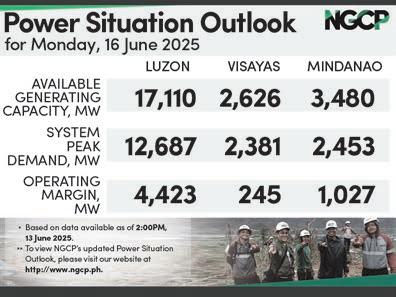

By Lorenz S. Marasigan @lorenzmarasigan
PLDT Inc. Chairman Manuel V. Pangilinan is upbeat about Maya Innovations Holdings Inc.’s growth trajectory, as the fintech arm of the group sustained its profitability through May.
In fact, he said, Maya’s profits outpaced its strong first-quarter performance.
“In April and May, I’m happy to report that we’ve extended that profit run for the two months of April and May. We’re, in fact, ahead of the first-quarter numbers. So, they’re looking positive,” Pangilinan told reporters after a board meeting where Maya’s latest financials were presented. Maya reported P311 million in net income in the first quarter of 2025. While Pangilinan did not disclose the exact figures for April and May, he said all of Maya’s key revenue streams—the digital wallet, merchant acquiring, and digital banking operations—are generat -
ing both positive earnings before interests, taxes, depreciation, and amortization (Ebitda).
“So, taken as a whole, taken in the round, their profitability has extended all the way to May,” he said. “And from a cash standpoint, their Ebitda is positive. And the positive cash flows for the first five months.”
Maya is expected to close 2025 with P1 billion in profits by yearend.
As of end-March, Maya had 6.8 million customers—a growth of 88 percent year-on-year—making it the most adopted digital banking platform in the country. Deposits reached P44 billion, up 49 percent from the same period last year, while lending activities continued to gain pace with P28 billion in loans disbursed during the first quarter alone.
Maya has so far issued P120 billion in total loans since incep -
TBy Lenie Lectura @llectura
HE Department of Energy
(DOE) could not yet give its green light to three competitive biddings involving 1,250 megawatts (MW) of power supply requirements of the Manila Electric Co. (Meralco) unless these are cleared by the Philippine Competitive Commission (PCC) and the Energy Regulatory Commission (ERC).
According to DOE Assistant Secretary Mario Marasigan, Meralco has voluntary offered for review to the PCC the competitive selection process (CSP) of 200-MW renewable energy (RE) baseload, 600-MW baseload, and 450MW mid-merit power requirements.
“They informed us that they submitted to PCC and then we confirmed it with PCC. The PCC said they are still reviewing them. We don’t want to issue COCs [certificate of conformity] and then PCC might challenge it,” said Marasigan.
Normally, he said, clearance from the DOE and the ERC are needed before the CSP can commence.
“If there is no PCC, then only the
DOE and the ERC are involved. Our response to Meralco is clear. Meralco has voluntarily submitted their CSP to the PCC. And, at the same time, we are requesting an update from the ERC. We told Meralco that we are waiting for the comments of the PCC as well as the ERC. Our certificate of conformity will be aligned to the findings of the PCC and ERC. We want to make sure that the ERC, PCC and DOE are aligned.”
According to the DOE’s CSP policy, a COC should be issued by the DOE before a CSP can commence. Meralco has yet to receive the COC for the 200-MW RE baseload, for supply starting January 26, 2026; and 600MW baseload, for supply starting February 26, 2028. “There are three actually. The 450MW is the latest. It’s mid-merit,” added Marasigan.
A check with Meralco confirmed that the utility firm is awaiting clearance from the PCC. “Yes, PCC requires it for all CSP of Meralco. Need to ask for their comments before filing it with DOE,” said Meralco Senior Vice President and Regulatory Affairs head Jose Ronald Valles. He added that the 450-MW CSP is
being planned for the third quarter.
“Yes, we also have the 450MW midmerit upcoming maybe third quarter this year, if DOE approves the TOR [terms of reference].”
Once the COCs are issued Meralco can proceed to publish the bid invites.
“We’re waiting for the COC from the DOE that the CSP is aligned with the PSPP [power supply procurement plan] that we submitted,” said Meralco utility economics head Lawrence Fernandez.
Meralco said the CSP is meant to secure long-term power supply agreements, aiming to find the lowest-cost power sources to meet its customers’ needs. It is designed to ensure transparency and fairness in the selection of power suppliers.
Under its updated PSPP, Meralco also plans to conduct competitive auctions for 900-MW baseload, 300-MW baseload, and 500-MW RE mid-merit. The deliveries are scheduled to commence as early as 2026. The power supply agreements carry a term of 5, 10, 15, and 20 years.
The publication dates for most of the CSPs are expected to happen this year.
tion, with 1.8 million active borrowers—double last year’s figure. The company also holds the largest market share in card acquiring, processing over P1 trillion in payments in 2024.
Asked about PLDT’s plans to increase its stake in the fast-growing fintech firm, Pangilinan declined to give a firm timeline.
“Well, there’s nothing definitive to report at this time. So, I think it’s good that management is focused on continuing to operate the three revenue streams well.”
In the first quarter, PLDT posted P53.4 billion in gross service revenues, up 2 percent, and P8.8 billion in telco core income, down 6 percent year-on-year.
Reported income for the period stood at P9 billion, down by 8 percent mainly due to foreign exchange losses.
THE Securities and Exchange Commission (SEC) has approved the debt securities p rogram of Aboitiz Power Corp. (AboitizPower), which seeks to raise some P100 billion in three years.
The company will initially raise P30 billion for its first offering.
In its en banc meeting, the SEC approved the registration statement of AboitizPower covering the shelf registration of up to P100 billion in fixed-rate bonds.
For the first tranche, AboitizPower will offer up to P20 billion in fixedrate bonds, with an oversubscription option of up to P10 billion.
Assuming the oversubscription option is fully exercised, AboitizPower is expected to net up to P29.64 billion from the offer. Proceeds will be used for the refinancing and early redemption of the company’s existing debt.
T he offer will run from June 23 to 27, with the bonds to be listed on the Philippine Dealing and Exchange Corp. on July 7, according to the latest timeline submitted by the company.
The company has tapped BDO Capital and Investment Corp., First Metro Investment Corp., Union Bank of
Last March,
policy meeting. “More than the interest rate decision, investors are expected to watch out for clues on the BSP’s policy direction. Hints of more policy easing in the latter part of this year from the BSP may give sentiment a boost.” Broker 2TradeAsia said markets have already begun repricing after the US trade deficit plunged in April, a sign that companies are pulling back from frontloading imports in anticipation of policy volatility.
“This shift to less proactive inventory build, and more to reactive procurement raises the sensitivity of third quarter growth to even small disruptions.”
Chartwise, the local market is still trading sideways while facing two resistance lines, the 6,400-level followed by the 200-day exponential moving average. Meanwhile, the 50-day exponential moving average is acting as a dynamic support, Tantiangco said.
STOCK PICKS
BROKER Regina Capital Development Corp. advised to trade the range on the stock of Bank of the Philippine Islands (BPI) after its price moved slightly upward after a relatively quiet stretch.
“The RSI at 51.65 indicates neutral momentum, showing that the stock is neither overbought nor oversold. Bearish sentiment still has a slight edge. The ADX at 9.1 points to a very weak trend, suggesting that the current price action lacks strong direction,” the broker said.
“Overall, BPI seems to be consolidating, and traders may prefer to wait for a clearer breakout or shift in momentum before entering a position.”
BPI shares were last traded at 138.70 apiece.
Meanwhile, the broker advised to buy on pullbacks on the stock of DigiPlus Interactive Corp. after the stock’s performance reflected a solid bullish momentum.
“While the trend is strong, the overbought RSI calls for caution—momentum remains favorable, but a brief correction wouldn’t be surprising. Traders, therefore, might wait for a better entry point,” the broker said, giving a weekly target on the stock at P67 per share.
DigiPlus shares closed last week at P62.80 apiece. VG Cabuag
4,600 MW by
The company said it will continue to make huge bets on RE. Last year it set aside 72 percent of its capex budget of P73 billion for clean energy projects. These include the 159-MWp Laoag solar project in Pangasinan, the 17-MW Tiwi binary geothermal plant in Albay, the 45-MWp Armenia solar project in Tarlac, and the 173-MWp Calatrava solar project in Negros Occidental. VG Cabuag

By Craig Stirling Bloomberg
MULTIPLE central banks are set to keep interest rates frozen in the coming week while continuing to gauge the impact of trade disruptions instigated by US President Donald Trump.
From Washington to London, wary officials in countries that account for two fifths of the global economy may display a collective sense of paralysis as they assess risks to inflation and growth from tariffs and stop-start commerce flows. Renewed tensions in the Middle East will only add to their conundrum. Their challenge was articulated on June 3 by the Paris-based OECD, which cut forecasts for global economic expansion while warning that protectionism is adding to consumer-price pressures. The toll that trade tensions are taking on world prosperity is likely to feature when Group of Seven leaders meet in Canada from Sunday.
Investors will focus most on the Federal Reserve decision on Wednesday, the eve of Trump’s 150th day in power. Observers reckon officials there are still months away from being able to make a settled judgment on the implications of White House policy on the economy.
The Bank of Japan, meanwhile, may hold off on a rate move while adjusting bond purchases, and counterparts in the UK and Norway are seen following suit with unchanged borrowing costs.
In all, central banks responsible for six of the 10 most-traded currencies in the world are set for decisions. Among them, only those in Sweden and Switzerland are anticipated by economists to tweak rates, with small cuts predicted for each.
Peers in Brazil, Chile, Indonesia and Turkey may also deliver no change as policymakers digest domestic developments and international events.
Elsewhere, a flurry of Chinese economic data, UK inflation, and several speeches by European Central Bank officials might draw attention in one of the more packed weeks of the year so far. US and Canada
US economic data in the holidayshortened week include the latest readout of consumer demand. Economists project a decline in May retail sales, primarily due to fewer motor vehicle purchases. Excluding autos and gasoline, however, Tuesday’s report is likely to show sales firmed after a soft start to the second quarter.
Concerns have been building that flagging consumer sentiment will translate into a sustained pullback in household demand.
Also on tap are reports on May housing starts and industrial production. The Fed’s production report on Tuesday is seen showing a second month of declining manufacturing output, as factories contend with uncertainty stemming from trade policy. Economists forecast figures on Wednesday will show little change in new residential construction, consistent with a sluggish housing market that’s battling various headwinds, including high borrowing costs.
In Canada, Prime Minister Mark Carney aims to meet with every world leader gathered in Kananaskis, Alberta, for the G-7 summit that starts in earnest on Monday. UK Prime Minister Keir Starmer said Saturday that Britain will seek to restart trade negotiations with Canada.
The Bank of Canada’s summary of deliberations will offer new insight into how policymakers are thinking about the future rate path, after they held borrowing costs steady while telegraphing that a cut may be needed if the economy weakens and inflation is contained. Governor Tiff Macklem will also deliver a speech.
Population estimates for the first quarter will reveal how the government’s efforts to crack down on temporary migration are shaping up, while retail data for April and a
flash estimate for May will shed further light on consumers’ response to the trade war.
Asia IT’S a big week for central banks in Asia, with most seen holding rates unchanged during a period of uncertainty for trade policy and Middle East tensions. China and Japan will also release a range of economic data.
On Monday, Pakistan’s central bank is expected to keep rates steady, followed by the BOJ on Tuesday. It’s expected to hold after Governor Kazuo Ueda signaled inflation still isn’t at target. Investors will focus on what policymakers do about their bond-purchase program, with about two-thirds of respondents in a Bloomberg survey anticipating a slowdown in cutbacks.
Bank Indonesia is seen keeping rates unchanged on Wednesday, as is Taiwan on Thursday as its economy endures currency volatility that sent the Taiwanese dollar to the strongest in three years. China is forecast to hold its 1-year and 5-year loan prime rates steady on Friday.
The Philippines is the only central bank in the region seen cutting—by 25 basis points—as price pressures ease.
China on Monday releases a slew of figures on its economy, including home prices, retail sales, industrial production, foreign direct investment, and the jobless rate. Economists expect that retail sales slowed in May from the prior month, industrial activity held up as companies frontloaded manufacturing, and property investment contracted once again.
Japan starts releasing a number of important insights on Wednesday, including exports that likely contracted in May—the same for machine orders, as US tariff policy weighed on demand. National consumer prices likely strengthened in the month on a core basis in data due on Friday.
May trade figures are also due from India, while Singapore shows electronics exports and Malaysia and Taiwan their overall exports.
The data will underscore what’s been a tumultuous few months in global commerce as companies attempt to balance tariffs with anticipated customer demand.
Elsewhere, Australia likely added fewer people to payrolls in May. New Zealand reports first quarter gross domestic product, seen contracting from the prior year for the fourth quarter in a row, and Sri Lanka also reports GDP. We’ll get a look at inflation trends in South Korea with the export prices index and producer prices, both for May.
Europe, Middle East, Africa
THE BOE announces its rate decision at noon London time on Thursday, the day after UK inflation figures are released. A vote to hold policy at 4.25 percent is widely expected, despite signs that UK tax increases and US tariffs are weighing on growth and causing job cuts.
The concern is elevated headline inflation. Economists expect consumer-price growth to be essentially unchanged at 3.4 percent on Wednesday—well above the 2 percent target. Fresh Middle East turmoil after Israel struck Iran’s nuclear program poses a fresh risk, with oil prices having spiked following the attack.
The Monetary Policy Committee is anticipated by forecasters to vote 7-2 to hold, with two likely dissenters seeking a quarter-point cut. Most expect the BOE to stick with guidance for reductions to be “gradual and careful,” signaling a quarter-point move every three months. Bloomberg’s survey sees three more such steps—in August, November and February—to 3.5 percent. In Israel on Sunday, data may show inflation eased slightly, to 3.5 percent in May from 3.6 percent a month earlier. The central bank has kept its rate at 4.5 percent for more than a year amid escalating regional tensions.

By Cai U. Ordinario @caiordinario
SUBSIDIES extended by the national government to stateowned corporations and financial institutions posted double-digit contractions in April 2025, according to data released by the Bureau of the Treasury (BTr).
Data from the BTr showed subsidies in April 2025 contracted 47.53 percent to P14.544 billion from the P27.72 billion posted in April 2024, the highest recorded for the whole of 2024.
In the January to April period, the total subsidies reached P37.133 billion in 2025, which represented
a contraction of 21.51 percent from the P47.307 billion posted in 2024.
Based on the data, the bulk of the subsidies were extended to Other Government Corporations (OGCs) amounting to P9.408 billion in April 2025 and P18.682 billion in the first four months of the year.
Among the OGCs, the Power
Sector Assets and Liabilities Management (Psalm) Corp. received the highest subsidy in April at P8 billion, the only subsidy it received for 2025.
Meanwhile, among major nonfinancial government corporations (NFGC), the subsidies extended to them reached P4.816 billion in April and a total of P17.942 billion in the January to April period this year.
Among the NFGCs, the National Irrigation Administration (NIA) received the largest subsidy for April at P3.762 billion in April 2025. This brought up its total for the year to P11.796 billion. It can also be noted that NIA received the highest subsidies among all OGCs, NFGCs, and Government Financial Institutions (GFIs) in January to April 2025.
Meanwhile, GFIs namely the LandBank of the Philippines (LBP) and the Small Business Corp. (SBC),
total of P502 million in 2025. The LBP received P7 million subsidies in April, the only amount it received this year.
Last year, subsidies to staterun corporations were reduced to P138.763 billion, the lowest in six years, or the P136.652 billion recorded
THE Credit Information Corp. (CIC) has suspended the access of several online lending platforms (OLPs) operators to the Credit Information System (CIS) after their licenses and registrations were revoked by the Securities and Exchange Commission (SEC).
In a statement, the governmentowned CIC said it blocked the access into CIS of Cash Mart Asia Lending Inc., Digido Finance Corp. (the operator of UnaCash and UnaPay) and Hi-Fin Lending Inc. (operator of Peso Wallet and Credit Cash).
The CIC also said the access of Hupan Lending Technology, the operator of Magic Peso, Cashme, Sukiloan, Pesopoly and Loan Tayo, was also suspended.
“The CIC stands with the SEC in protecting the rights and interests of Filipino consumers. These revocations send a strong message that financial system regulators will not tolerate noncompliance and abusive lending practices,” CIC President and CEO Ben Joshua A. Baltazar said.
TBy VG Cabuag @villygc
HE Yuchengco-led Rizal Commercial Banking Corp.
is advising its clients to lockin returns through short-term, low-risk instruments in times of economic uncertainty.
These instruments include government securities, especially while yields remain near cycle highs, RCBC Chief Economist Michael L. Ricafort said. The current economic environment offers opportunities for both retail and corporate clients, Ricafort added.
“Slower inflation improves consumer spending power and allows more room for the central bank to potentially cut interest rates,” he further said.
Investing in government securities, according to Ricafort, is “a smart and safe way to maximize returns while preserving capital.”
For investors and business clients, Maricel Elena M. Peralejo, RCBC’s head of institutional and retail distribution from the treasury group, said that it would be good to look into fixed income securities and lock in interest rates given the geo-political issues and the possibility of 75 basis point rate cut by year-end by the Bangko Sentral ng Pilipinas.
This is confirmed by most institutional investors, Peralejo said.
The CIC cited SEC Memorandum Circular 03 series of 2022 as the basis of the revocation. The memorandum sets limits on interest rates and other fees charged by lending and financing companies and their OLPs. These firms include the following: Air Fish Lending Corp.; Cashbee Lending Services Inc.; Cash Mart Asia Lending Inc.; Kayamo Atlas Lending Corp.; Lucky Shell Fintech Lending Inc.; QCash Finance Corp.; and, Whale Tail Lending Services Inc. “We continue to strongly encourage financing and lending companies to use the CIS for data-driven credit decisioning,” Baltazar said. “This helps them fairly assess borrowers’ creditworthiness and set appropriate interest rates which facilitates accurate risk management.”
New partnership
MEANWHILE, the Korea Credit Bureau (KCB) and CIC’s special accessing entity (SAE), Advance.CBP, has partnered to help improve Overseas Filipino Workers (OFWs) access to
credit through accurate credit information.
This was enshrined in a Memorandum of Understanding (MOU) to establish a secure, real-time credit data exchange using an application programming interface (API). This system ensures that access to credit reports is permission-based and protected.
Through this partnership, the CIC said, OFWs in South Korea are offered secure, cross-border access to their credit information.
This will help even newly-arrived OFWs in establishing their financial credibility and facilitating quicker access to essential financial services abroad, according to the CIC.
“We applaud KCB and Advance. CBP for launching this cross-border initiative, which expands financial access for over 70,000 OFWs in South Korea and South Koreans residing in the Philippines,” Baltazar said.
“By allowing member credit institutions of KCB and Advance.CBP in both countries to securely access
credit reports of individuals, we help lenders make informed data-driven credit decisioning, improve identity verification, and manage credit risk more effectively,” he added. To date, CIC has green-lit five cross-border partnerships through its SAEs in key regions such as the United States, United Arab Emirates, Canada, Hong Kong, and another major credit bureau in South Korea. Baltazar shared that cross-border partnerships through its SAEs, highlight the global relevance, reliability, and usefulness of the Philippines’ centralized credit database.
SAEs are accredited private corporations authorized to access CIC’s consolidated credit data. They are engaged primarily in the business of providing credit reports, ratings, and other similar credit information products and services.
KCB is one of South Korea’s leading private credit bureaus licensed by the Financial Services Commission. Cai U. Ordinario
Trump earned $57.7M from crypto venture, disclosure shows
The behavior, for most individual investors, would be continued investment in shortterm investments, such as time deposits and treasury bills, to remain liquid and flexible. Beyond investments, RCBC has strengthened its lineup of foreign exchange and hedging solutions, the lender asserted.
Businesses navigating import costs, currency fluctuations, or global market exposure can access products like interest rate swaps and FX forward contracts, which help manage risk and protect margins.
“Risk management remains a key pillar of our advisory approach,” said Pamela Macapagal, the bank’s head of corporate and commercial distribution in treasury sales and digital service delivery segment.
According to Macapagal, the bank works closely with clients to ensure they’re equipped with the right tools to face volatility.
RCBC is one of the first local banks to launch online foreign exchange trading for retail clients, and is now expanding digital treasury capabilities for corporate clients.
These platforms allow seamless access to foreign exchange and investment services, improving efficiency and decision-making in real time, the bank said.
By Bill Allison | Bloomberg
RESIDENT
PDonald Trump earned $57.7 million from token sales by the crypto firm he and his sons helped launch last year, according to his required federal financial disclosure forms.
The financial disclosure, released Friday by the Office of Government Ethics, provided details on his sprawling empire, including hundreds of millions of dollars in income from his hotels, golf resorts and cryptocurrency ventures.
The $57.7 million came from sales by World Liberty Financial, the crypto firm launched last year before the election. Trump and his three sons, Donald Trump Jr., Eric Trump and Barron Trump, are among the company’s founders, according to its website. That haul wasn’t the largest source of the president’s income from private holdings. Trump Endeavor 12 LLC, a Miami-based company that owns golf courses and a resort, produced $110 million. His Mar-a-Lago Club generated more than $50 million in resortrelated revenue.
Trump, who’s worth an estimated $4.8 billion according to the Bloomberg Billionaires Index, valued 22 assets at more than $50 million, including Mara-Lago, his Turnberry, Scotland, golf resort and his stakes in World Liberty Financial and Trump Media & Technology Group Corp., which owns his Truth Social platform. Officials disclose the
values of their holdings in broad ranges with “over $50 million” the highest, which means that they can’t be used to calculate an individual’s net worth. Trump Media, for example, is currently worth $2.2 billion.
Fight Fight Fight LLC, which sells Trump’s meme coin, was launched in January and wasn’t included in the disclosure, which covers 2024. The company hosted a dinner that Trump attended for the 220 largest holders of the $TRUMP coin in May. The event, when announced in April, caused the coin’s price to shoot up 56 percent.
CIC Digital LLC, the entity that earns money through licensing Trump’s image on nonfungible tokens, produced income of $1.1 million in 2024. It also holds a wallet holding Etherium worth at least $1 million. The 234-page disclosure also lists hundreds of trademarks Trump owns across the world, including in China, Taiwan, South Korea, Venezuela and other countries, and details his personal investments that aren’t part of his business empire, as well as first lady Melania Trump’s holdings.
Trump listed 11 outstanding debts on the form, including two judgments against him won by author E. Jean Carroll involving allegations of sexual assault and defamation and one owed from the criminal fraud case for which he was convicted of 34 felonies. Those debts were stayed pending the outcome of appeals Trump has filed.

By Emma Burrows & Stephanie Liechtenstein The Associated Press
ISRAEL’S sweeping attack across Iran struck at the heart of Tehran’s nuclear program, delivering a blow to the country’s ability to enrich uranium and potentially setting its nuclear ambitions back by months or years.
As well as killing key military figures and nuclear scientists, the Israeli strikes destroyed part of a plant that was enriching uranium to levels far beyond the requirements for nuclear-fueled power stations. The attacks also destroyed backup power for the underground section of the plant, potentially damaging more sensitive equipment.
Iran’s nuclear program has progressed rapidly since 2018, when the U.S. withdrew from a deal to limit Tehran’s capacity to enrich uranium, which is necessary to build a nuclear weapon. Iran maintains that its program is peaceful, but the head of the International Atomic Energy Agency has repeatedly warnedthat the country has enough enriched uranium to make several nuclear bombs if it chose to do so. Nuclear regulators said the as -
sault was unlikely to lead to increased levels of radiation, even at the site where part of the fuelenrichment plant was destroyed. Here’s a closer look at the attack and its likely effects on Iran’s nuclear efforts.
What impact will the attacks have on Iran’s nuclear program?
THERE is “no question” Israel’s attacks did substantial damage, said Fabian Hinz, an expert on Iran’s nuclear program at the International Institute of Strategic Studies in London. David Albright, a nuclear weapons expert, speculated that the initial wave of attacks could set back any Iranian attempt to develop a nuclear weapon by about a year.
A key question, Hinz said, is whether Israel also targeted suppliers of specialist components
such as centrifuges and subcontractors.
Israel’s strategy appears to be to “destroy the brains” behind the program and “as much equipment as possible,” said Albright, who agreed that Israel has potentially done a “tremendous amount of damage” to the program.
Israel is widely believed to be behind a series of attacks in recent years that targeted Iranian nuclear scientists and sabotaged nuclear facilities.
What damage was done to Iran’s nuclear facilities?
HINZ suggested a key Israeli goal was to undermine Iran’s ability to make centrifuges, which are critical for enriching uranium. Uranium enrichment is a key component of building a nuclear weapon, but Iran would still need to develop a detonator. Delivering it using a missile would require solving further technical challenges.
Iran has two uranium-enrichment sites, and the country said Wednesday that it has built and will activate a third enrichment facility.
Early Friday, Israel struck Iran’s main and oldest facility in Natanz, 220 kilometers (135 miles) southeast of Tehran, which was protected by anti-aircraft batteries, fencing and Iran’s paramilitary Revolutionary Guard.
The IAEA’s chief, Rafael Grossi, told an emergency meeting of the U.N. Security Council on Friday
that the above-ground part of the plant where uranium was enriched up to 60 percent was destroyed, along with electrical infrastructure, including a substation, the main electric power supply building, the emergency power supply and backup generators.
Grossi said there were no changes to radiation levels following the attack or any indication of damage to the underground section of the plant. That part of the facility is buried to protect it from airstrikes and contains the bulk of Natanz’s enrichment facilities, with 10,000 centrifuges that enrich uranium up to 5 percent, Albright said. However, Grossi said, the loss of power may have damaged centrifuges.
There is a good chance the strikes still caused “massive damage,” Hinz said because many of the centrifuges were probably operating at the time of the strike.
Centrifuges, Albright said, “don’t like vibration,” and the shock waves or loss of power could break delicate parts when they are rotating at high speed.
What about the Fordo nuclear site?
MOST of Iran’s centrifuges are in Natanz, the experts said, because a lot of them are required to enrich uranium to 5 percent—which is the maximum level normally used for nuclear-fueled power stations.
But, buried under a huge mountain at Fordo, around 100 kilometers (60 miles) southwest of
Tehran, is another nuclear facility where Iran is also enriching uranium to 60 percent, which is only a short step away from weaponsgrade levels of 90 percent. According to the IAEA, Tehran has the largest number of its most powerful centrifuges at Fordo.
An Iranian news outlet close to the government reported Friday that two explosions were heard near the Fordo site. But, while Israel could potentially hit the entrance to Fordo and temporarily block access, it is not believed to have the type of earth-penetrating bombs required to blow up the mountain and crack open the nuclear facility inside, Hinz said.
That capacity lies with the US, which has developed a massive bomb that can be dropped only from large aircraft that Israel does not have in service, he said.
The potential for more strikes loomed large. Israeli Prime Minister Benjamin Netanyahu has said the attacks will continue “for as many days at it takes to remove this threat.”
Hinz said the attacks showed Israeli intelligence had “absolutely exceptional” knowledge of Iran’s nuclear program and the ability to strike at key targets “with precision.” That could mean Israel could sabotage the plant, rather than trying to blast the mountain open. Albright suggested Israel could try to cut off electricity to Fordo, which could lead to centrifuges breaking.
Is there risk from radiation?
ALTHOUGH Grossi said part of the enrichment facility at Natanz was destroyed, he noted that radiation levels had not spiked.
Even if radiation did leak, experts said, the amount would be unlikely to pose a risk to people in the region or even those near the facilities that got hit.
“Very little uranium will be released in these kind of attacks,” Albright said.
Uranium itself is not especially toxic, he said, and is common in parts of the environment. A person standing near an enrichment facility with a leak would probably be exposed to no more radiation than someone who took several transatlantic flights, which receive slightly higher radiation because radiation doses are larger at high altitudes, he said. In order to become sick, someone would have to ingest large quantities of uranium, Albright said, pointing out that the element can be found naturally in seawater and the earth’s crust.
Rather than radiation, the greater risk might be from fluorine, which is used to enrich uranium and could have been deadly to those nearby if released during an attack. Fluorine is mixed with the uranium during enrichment to turn it into a gas called uranium hexafluoride. It is extremely volatile, will quickly corrode and can burn the skin. It is especially deadly if inhaled.

TIKTOK Shop Philippines’ top skincare brand Dermorepubliq (www.dermorepubliq.com) brought its summer sun care campaign to Boracay with a two-day beachside activation showcasing its DermoSun Mattifying Sunscreen, a summer essential formulated for Filipino skin. Alongside the activation, the brand also brought its team to the island for a company retreat, reflecting its commitment to both sun care education and employee well-being.
Held in front of Epic Boracay at Station 2, the activation offered beachgoers the chance to try DermoSun through a “Glow Bar” and take home full-size products for free. Photo zones and hands-on trials gave visitors a close look at the sunscreen’s matte, lightweight finish, developed to absorb quickly without a greasy after-feel.
“We developed DermoSun in direct response to what our community asked for—a sunscreen that’s lightweight, effective, and fits into real Filipino routines,” said Keith Sta. Barbara, founder and president of Dermorepubliq. “Bringing it to Boracay, where the sun is both beautiful and intense, gave us a fitting setting to demonstrate how sun care can be simple, effective, and part of everyday life.”
The activation tie into the brand’s Dermo 2-Finger Challenge, a TikTok campaign promoting the dermatologistrecommended two-finger method for sunscreen application.
DermoSun Mattifying Sunscreen is formulated with Centella Asiatica, Jeju Aloe and Niacinamide, offering SPF 30 broad-spectrum protection that blends smoothly into oily and combination skin types. The product is available on TikTok Shop, Shopee, Lazada, www.dermorepubliq.com, and at Dermorepubliq kiosks in SM City Fairview, SM City Masinag, SM City Tanza, SM Sta. Mesa, and Riverbanks Center.

SONG HYE KYO featuring the FENDI Summer Capsule 2025.
AS the brand celebrates its centenary year, FENDI looks forward reflecting on milestones and memories from across the decades. Landing back in 1977, the FENDI Summer 2025 collection is a fresh wink at Karl Lagerfeld’s first-ever expression of FENDI Ready-to-Wear for Spring/Summer 1978 collection, immortalized not in a fashion show but through the mythical tale of Histoire d’Eau. Drawing upon the sun-drenched palette of a Roman summer and the exuberant sophistication of the Italian seaside, the FENDI Summer 2025 collection elevates breezy fabrics and casual ensembles with cocooning shapes and nature-inspired embroideries. Inspired by archival motifs that appear in Histoire d’Eau, the sculptural forms of red coral are a leitmotif throughout, adorning necklines and jewellery as embroidered details, appearing alone or intertwined with ornate bandana florals and giant underwater blooms in the season’s playful prints for men and women. From coral red and sandy terracotta to seafoam, buttermilk, iced lemon and ocean blue, the color card reveals irreverent expressions of FENDI by the sea. The rich savoir faire and design rigor of the FENDI ateliers can be felt in myriad treatments, finishes and embellishments across the collection, as patterns come to life in swathes of patchwork devoré lace, delicate lambskin leather appliqué, and touches of coral on beaded collars or sculpted jewellery. Inflected with sportif touches, outerwear designs marry the dry, luxuriant textures of laser cut floral chambray denim and patchwork FF silk jacquards, with contoured stitched outlines defining stretch cotton shapes from flared figurehugging tank dresses and a twisted pencil skirt. Strings of golden shells abound as hardware and decoration, embellishing athletic coral swimwear styles and beach tunics. An exercise in masculine summer style reprises Coral bandana prints, embroideries and postcard-inspired graphics across stand collar mid-sleeve shirts and matching silk shorts, while coral and sand striped knitwear is infused with a sense of athletic nostalgia.
The FENDI Summer 2025 collection is available in FENDI boutiques worldwide.

CONSERVATION is not just a policy but a national priority. That resounding message was heard—and worn—loud and clear and stylishly at the launch of the “Save from Extinction” campaign by SM Supermalls and the Department of Environment and Natural Resources (DENR), held at the Mall of Asia in May.
This initiative, a cornerstone of SM’s partnership with DENR, is designed to raise awareness and generate much-needed funds to protect the Big Six species vulnerable to extinction: the Philippine eagle, the Philippine cockatoo, the pawikan (marine turtles), the dugong, the tamaraw, and the pangolin.
These species face critical threats to their survival due to habitat loss, poaching, and climate change. To amplify its commitment to the conservation efforts, SM unveiled a line of merchandise paying tribute to the endangered animals rendered as plushy toys from Toy Kingdom, shirt designs from Kultura, and a children’s apparel line from SM Fashion.
The adorable designs are available in select Kultura and Toy Kingdom branches at SM Podium, SM Mall of Asia, SM Aura, SM North Edsa, and SM Makati. Proceeds from the sale will directly support the conservation programs of the DENR and its partner NGOs.
Besides SM (under Hans Sy and Teresita SyCoson), the DENR has also partnered with wildlife conservation groups to safeguard these animals such as the Forest Foundation Philippines, Katala Foundation, Philippine Eagle Foundation, World Wide Fund for Nature-Philippines, D’Aboville Foundation, and the Zoological Society of London.
At the time of the launch the Honorable Maria Antonia Yulo-Loyzaga was still the tireless secretary of the DENR, and she eloquently made the public understand where they are in terms of their conservation work.
“This [Save from Extinction] campaign speaks not only to our mission as the DENR, but also to our shared responsibility as Filipinos to protect the natural heritage of our country. Today, we shine a spotlight on the Philippines’ Big Six, even if some of them may actually not be so big in size. These are not just wildlife icons, they are keystone species,” said Yulo-Loyzaga.
These are species that play essential roles in maintaining the health and balance of our ecosystems, so that others, including human beings, may actually thrive. But as we well know, they are all facing a very real threat of extinction.
“Biodiversity loss is no longer a future risk. It is a current crisis. We are losing forests, wetlands, coral reefs, and other critical habitats faster than we can restore them and faster than they can regenerate on their own. Our species are being pushed to the brink by illegal hunting, wildlife trafficking, pollution, and the growing impacts of climate change,” warned YuloLoyzaga.
While there has been some progress in some areas, it is clear that much more needs to be done as the risks

BELLE MARIANO’S first collection for global fashion giant SHEIN was girly and preppy, as befitting her girl-nextdoor image. It is 2025 and the young actress, in her own words, is braver when it comes to fashion. For her second SHEIN collection—consisting of 80 outfits, 30 bags, and 40 shoes—one of the key pieces is a long red dress with a statement back that Belle wore at the launch in Market! Market!
“Now I’m not afraid to explore colors anymore because color analysis is such a trend these days. I’m more confident

conservation needs to embrace a new and more inclusive approach, one that makes it possible for everyone to see these threats with their own eyes and hopefully from their own hearts,” Yulo-Loyzaga said. “From the eyes of a child, as an adult, and as a corporate giant, we present you with options to take part in meaningful action. This is the heart of Save from Extinction. It is not your traditional donation drive.”
This campaign introduces innovative and practical solutions to support on-the-ground conservation programs for these species. In 2024, with the support of enlightened legislatures, the DENR was granted species-specific resources to protect and conserve five species, and it added to that the sixth, the pangolin, that the DENR deems most threatened and most able to galvanize support for our unique natural environment.
“That’s why we are strong-willed to say we can match the P100 million that we hope you will all contribute. That funding is already there, and we have actually worked with our conservation partners to cross our efforts in order for us to achieve greater value,” Yulo-Loyzaga said. “Through SM and BDO, we are bringing in new tools and platforms that will make it easier for people to do their share
now. I want to give people more options,” she said. Belle’s love for fashion can be traced to her childhood.
“I loved dressing-up and styling. I even had paper dolls and Barbies that I used to dress up,” she said.
The newest SHEIN x Belle Mariano collection offers something for “every side of you.” Luxe Glam is all about statement-making partywear while Power Dressing consists of sophisticated pieces. Playful Chic is all about soft, feminine and effortless looks.
The red long dress with the pearl detailing at the back that Belle wore to the launch is one of her favorites from the entire collection.
“There’s this term tiis ganda, but what I really go for is what makes me feel confident,” said Belle.
The pieces in the collection were designed to be mixed and matched to suit the wearer’s mood or any occasion.
“My sense of fashion really depends on my mood, and this is me now. I think that’s what makes it different this time around—and it’s nice because I get to express myself through this collection,” said Belle.
The second SHEIN x Belle Mariano collection embraces the energy of summer. Belle said summer is the perfect
“We all want a future where our children and grandchildren can see wild eagles soar throughout this country, Philippine cockatoos in different provinces, and not just in Palawan. A robust population of tamaraw in Mindoro, which used to number 10,000, but are now only estimated to be around 600. The gentle dugongs, which can flourish, and they can find food and swim freely, and the turtles can nest safely. The quiet pangolin, secure from poaching,” implored Yulo-Loyzaga. “We must save them from extinction because by doing so, we truly save ourselves.”
Join the fight to save wildlife by purchasing your own “Save from Extinction” merchandise. The exclusive “Save from Extinction” merchandise is available at select SM malls. Turn compassion into action and join the fight to save endangered wildlife.
■ For more information, visit www.smsupermalls.com/ save-from-extinction
time to explore color, texture and variety. She added that her fashion sense reflects a brighter, more expressive side of herself. “When we hear the word ‘summer,’ the first thing we think of is colors, vibrant ones. So I think this is the best season for us to explore different hues, different shades, different textures,” she said. “This collection also reminds me of flowers. It’s so light, colorful and vibrant, and I think that’s my state of mind now.”
Being the Filipina ambassador for SHEIN for several years now is something that is special to the young actress. “I’m a user of the shopping platform, and it’s so nice that I get to collaborate with them again,” said Belle.

Wilcon Depot continues to lead the home improvement and construction supply industry in the Philippines as it received two major distinctions at the 2025 Retail Asia Awards-Domestic Retailer of the Year and Hardware Retailer of the Year, held on June 4, 2025 at the Marina Bay Sands Expo and Convention Centre in Singapore.
The program lauded companies that successfully adapt to challenges such as shifting customer expectations and the rise of e-commerce, all while delivering strong value and sustaining growth. This recognition underscores Wilcon’s strong market presence in the Philippines and its ongoing commitment to elevate the retail experience for Filipino homeowners and builders.
This is not Wilcon’s first recognition at the Retail Asia Awards. The company has a proven track record of excellence, including its Domestic Retailer back in 2022, and 2023 win for Digital Initiatives of the Year.
This year’s double win reaffirms Wilcon’s continued focus on meeting the real needs of its customers.
Wilcon grew steadily amid peaks and valleys because it always chose to listen, to care, and to be there for every Filipino dreaming of a better home and a better life. With 103 stores nationwide, Wilcon Depot offers a comprehensive range of products to meet every home improvement need. Its one-

stop-shop format is designed for ease and accessibility, complemented by attentive instore service, robust digital platforms, and helpful marketing tools that guide shoppers in making confident choices for their homes and businesses.
Wilcon remains focused on broadening access to quality home and construction products across the country. It is also exploring new ways to support Filipino households and industries through innovative store concepts, customerfocused services, and sustainable practices that align with the evolving needs of modern shoppers.
Its product line has always been anchored to innovation and sustainability.
Wilcon’s exclusive and in-house products include Pozzi for trusted bathroom solutions; Hamden Kitchen Appliances, an ideal partner for your kitchen needs; Alphalux, an energy-efficient lighting

Services Manager; Ellaiza Lu, CARMA Philippines Client Services Executive; John Andrei Sanchez, SAFC Public Relations Supervisor; and Kevin John Cabanban, SAFC President and CEO.
solutions brand; Kaze, an appliance brand that will help you live in a healthy space; Hills, a trusted brand for construction and electrical power tools; P.Tech, your partner for reliable building materials; Rocersa, Emigres, STN Ceramica, Stylish Spanish Tiles with a contemporary interpretation of a classic style; Arte Ceramiche, Verona Tiles, and Saigres, Asian tiles for a more sophisticated home; Energie Ker, Gardenia Orchide, and Novabell, Sophisticated Italian Tiles; Grohe and Kohler for bathroom and plumbing solutions; Franke, convenient kitchen solutions; and Rubi a partner when it comes to tile cutting necessities; and among many other brands.
For more information about Wilcon, visit www.wilcon.com.ph or follow their social media accounts on Facebook, Instagram, and TikTok. You can also subscribe to and connect with them on Viber Community, LinkedIn, and YouTube.
teams explored advanced applications of media insights. The discussions centered on utilizing CARMA’s platform to monitor news and social media mentions of SAFC and its competitors, thereby providing real-time data to inform risk assessments and strategic decisions. By leveraging these insights, SAFC aims to anticipate potential crises, adjust messaging promptly, and maintain stakeholder trust.
“This ongoing collaboration with CARMA Philippines reinforces our commitment to proactive compliance, risk management, and transparent communication,” said SAFC President and CEO Kevin John Cabanban. “In today’s rapidly evolving regulatory environment, staying ahead through data-driven insights is critical to protecting our stakeholders and strengthening our resilience.”
This initiative aligns with the Securities and Exchange Commission’s (SEC) emphasis on robust risk management practices among SEC-regulated entities. While the recent Bangko Sentral ng Pilipinas (BSP) directive on Negative Media Report (NMR) screening pertains to BSP-supervised institutions, SAFC’s proactive approach underscores its commitment to adhering to best practices in risk mitigation and crisis management. By adopting these measures, SAFC not only enhances its operational resilience but also sets a benchmark for non-bank financial institutions in the Philippines.
“CARMA is proud to support SAFC in leveraging media intelligence to enhance their risk and communications strategies,” said Joanna Christina Toledo Tinio, CARMA Philippines Business Development Director. “Our platform equips them with timely, actionable insights that help navigate complex media landscapes and emerging risks.”
SAFC reinforces its position as a leader in the nonbank financial sector by championing transparency, accountability, and strategic foresight in its communications and media strategy.
PLDT Global Corporation (PLDT Global), the international unit of the largest fully integrated telco network PLDT Inc., is proud to welcome entertainment icon Vic Sotto as the first-ever brand ambassador of Tindahan ni Bossing (TinBo). With a career spanning over five decades, Sotto is a household name and a trusted figure among generations of Filipinos, both home and overseas. His long-standing connection with Filipino audiences makes him a natural fit for TinBo, PLDT Global’s innovative marketplace that empowers overseas Filipinos to provide essential goods and services for their families in the Philippines.
“Vic Sotto represents the values that TinBo stands for—trust, happiness, and genuine care,” said Albert V. Villa-real, President and CEO of PLDT Global. “He embodies the spirit of the Filipino provider, and we’re excited to have him onboard as we continue to serve Filipinos around the world.”
As part of the partnership, Sotto will be featured in a new video campaign titled
“Alagang Bossing”, scheduled to be launched on June 15, 2025. The campaign highlights how TinBo makes it easier for overseas Filipinos to send next-level care to their families through digital services such as load, bills payment, e-vouchers, and more.
“It’s my honor and pleasure to be part of Tindahan ni Bossing,” said Sotto. “Alam naman natin na [We all know] this would be a lot of help lalo na para sa ating mga kababayang nagtatrabaho [especially for our countrymen who work] abroad for their families, their children. Ika nga eh, sila ang mga bagong bayani natin kaya dapat alagaan natin [As we way, they are our new heroes so we should take care of them.].”
TinBo and MQuest Ventures staged the HK Fest 2025, a three-day celebration of Philippine Independence in Hong Kong from June 13 to 15. There was a Makabayan Film Fest on June 13 and 14, showcasing award-winning Filipino films Song of the Fireflies, GomBurZa, and The Kingdom at the Emperor Cinemas iSQUARE. Some cast members are also expected to go to

Hteams, and stakeholders. Under this partnership agreement signed, Hotel101 Madrid with MATCH Hospitality, the official hospitality provider for the Spanish Grand Prix, will deliver world-class accommodation experiences for attendees of the 2026 Formula 1 event and beyond. MATCH Hospitality, renowned for its expertise in managing hospitality programs for global sporting events such as the FIFA World Cups and the Formula 1 British Grand Prix, will work closely with Hotel101 Madrid to ensure seamless integration of premium lodging services with the event’s VIP and hospitality offerings. ‘We are honored to partner with MATCH Hospitality to serve as the official
MANG Tomas All Purpose Sauce, Jufran Banana Sauce and UFC Banana Sauce have been removed from US FDA Import Alert 99-45 ensuring a more stable supply of these pantry favorites in the coming days.
The US Food and Drug Administration (US FDA) has officially approved Nutriasia’s petition to remove Mang Tomas All Purpose Sauce, Jufran Banana Sauce, and UFC Banana Sauce (both Regular and Hot variants) from Import Alert 99-45. Effective immediately, these reformulated products will no longer be subject to detention without physical examination (DPWE), ensuring a more stable supply of these beloved Nutriasia favorites for the US Market.
In their May 16, 2025 letter, the regulatory agency confirmed that Nutriasia has successfully met the criteria for the removal of the products from the import alert. The agency has since sent out the same notification to its field agents across the US.
Angie Flaminiano, President and Chief Operations Officer of Nutriasia expressed the company’s sentiment on this important development. “We are very happy with the approval of our petition. I am sure that our Kababayans and the American consumers who have felt the absence of their beloved Nutriasia products are very happy as well.”

select screenings during the event.
On June 15, the Raffy Tulfo Action Center participated in the HK Fest 2025 with a special public service booth to cater to selected pre-registered overseas Filipinos, followed by the highlight of the HK Fest 2025 – the Saludo Concert, a star-studded, free musical show for Filipinos on Chater Road. Sotto will headlined the concert, along with some of his co-hosts from Eat Bulaga, and other MediaQuest artists.
TinBo gave away free e-tickets to these HK Fest 2025 events for registered TinBo users in Hong Kong, including both new signups and existing app users.
Launched by PLDT Global, TinBo is a one-stop digital marketplace that empowers Filipinos abroad to support their families in the Philippines through load, bills payment, e-gifts, and more. TinBo can be downloaded for free on Google Playstore and App Store.
These recent initiatives continue to reinforce PLDT Global’s mission: to deliver meaningful, borderless care to all Filipinos worldwide.


LISTENING to what customers say and meeting them where they are— these are some of the most important things a brand can do to gain their customers’ trust, increase their value, and ultimately ensure long-term success.
While these may seem like common sense, not all brands are able to do this well, or at all. But for the country’s top brands, these are second nature.
Take fast food chain Mang Inasal, for example. Some of its innovations and improvements, whether in food or service, came straight from their customers, through comments and suggestions posted on the Mang Inasal Nation Facebook community.
“We listen closely to what our customers say. We learn so many things from them through our Mang Inasal Nation community: from how they like their sawsawan (dip) to what kind of dessert they want,” Mang Inasal President Mike Castro said during the launch of London-based brand valuation consultancy Brand Finance’s Philippines’ Top 50 Brands of 2025 last month.
He revealed that Mang Inasal’s limited-run four-cheese halo-halo came from customer suggestions. This ended up being such a hit, especially with the Gen Z crowd, that stores quickly ran out of the cold dessert.
Listening to its customers has paid off in spades for the fast food chain. Mang Inasal ranked 25th among the country’s 50 most valuable brands this year.
Going outside the comfort zone WHILE Mang Inasal has largely been successful throughout its almost 22-year run, it also had its share of struggles. Like almost all businesses, operations ground to a halt when lockdowns were de -

n THE LEADERS WE CALL DAD: STORIES FROM THE HEART OF MANG INASAL
MANILA, PHILIPPINES—At Mang
Inasal, leadership goes beyond business results. It’s about showing up with purpose, leading with empathy, and staying grounded in values that uplift both teams and communities.
This Father’s Day, Mang Inasal honors some of its own leaders who live out this kind of leadership every day, fathers who guide not only their families but also the brand forward.
Purpose-driven marketing through a father’s lens
For Allan Tan, being Mang Inasal’s Head of Marketing is more than just a title. It is a personal calling.
“I want to build brands, products, and campaigns that my children can be proud of,” he said.
Guided by this purpose, Allan has led impactful campaigns like “Kaing Mang Inasal” and “Love the Flavors,
clared during the pandemic. With people confined to their homes, food delivery became a lifeline, also keeping afloat the restaurants that were able to respond to the demand.
But Mang Inasal had no food delivery then. Due to how its main fare, the chicken inasal, was cooked, the fast food chain was strictly dine-in. Its unique value proposition, the unlimited rice, was also impossible to execute beyond the dine-in setting.
However, driven by the need to keep up and evolve with consumer needs, the fast food chain figured out a way to maintain the quality of its grilled chicken even when eaten outside the restaurant: mostly by using packaging that kept the food as warm as possible throughout its journey from the restaurant to the consumer.
Coupled with this, the brand ran various delivery campaigns to get people used to the idea of having Mang Inasal food outside of the stores.
Evolving with the times ANOTHER brick-and-mortar brand that had to make major pivots was SM Supermalls. While shopping malls were allowed to reopen two months after the initial declaration of community quarantines, it took several years to get back to prepandemic traffic levels.
Habits developed during the pandemic, including online shopping, were hard to shake, affecting traffic volumes and consumers’ mall activity. While SM Supermalls could have just fully embraced the e-commerce bandwagon, it had to get people back to the malls again—because malls were all about the experience.
SM Supermalls Executive Vice President for Marketing Joaquin San Agustin said the brand had to establish a strong digital presence, including developing an app and being even more active on social media.
“Consumer needs are evolving. We need to embrace new consumer behaviors. While we strengthened our online presence, our primary goal was to bring people back to the malls. We leveraged on our digital channels to do that,” he said during the same event.
While the SM Malls Online app enabled online shopping and food delivery, it also carried appexclusive promos that could only
Love the Philippines,” which celebrate Filipino pride, family meals, and shared experiences. His approach to marketing goes beyond strategy and speaks to something deeply human.
Even as a relatively new father, Allan already sees how parenthood has reshaped the way he leads.
“At Mang Inasal, we embody values like mahusay, masayahin, mapagmalasakit, at buo ang loob. That’s what Tatak Mang Inasal is all about. These are the same values I want my kids to grow up with.”
For Allan, the line between home and work is not a boundary but a bridge. And through both, he hopes to build a legacy that truly matters.
Financial leadership with the future in mind
AS Senior Finance Manager, Clifford Kaquilala is tasked with managing complex budgets and financial strategy, but he does so with an eye toward people, not just performance. Though based in Manila and away from his wife and daughter in Cebu, Clifford is committed to staying emotionally present.
“Fatherhood has made me more responsible and future-focused,” he said. “It also made me more empathetic. I think about the long-term
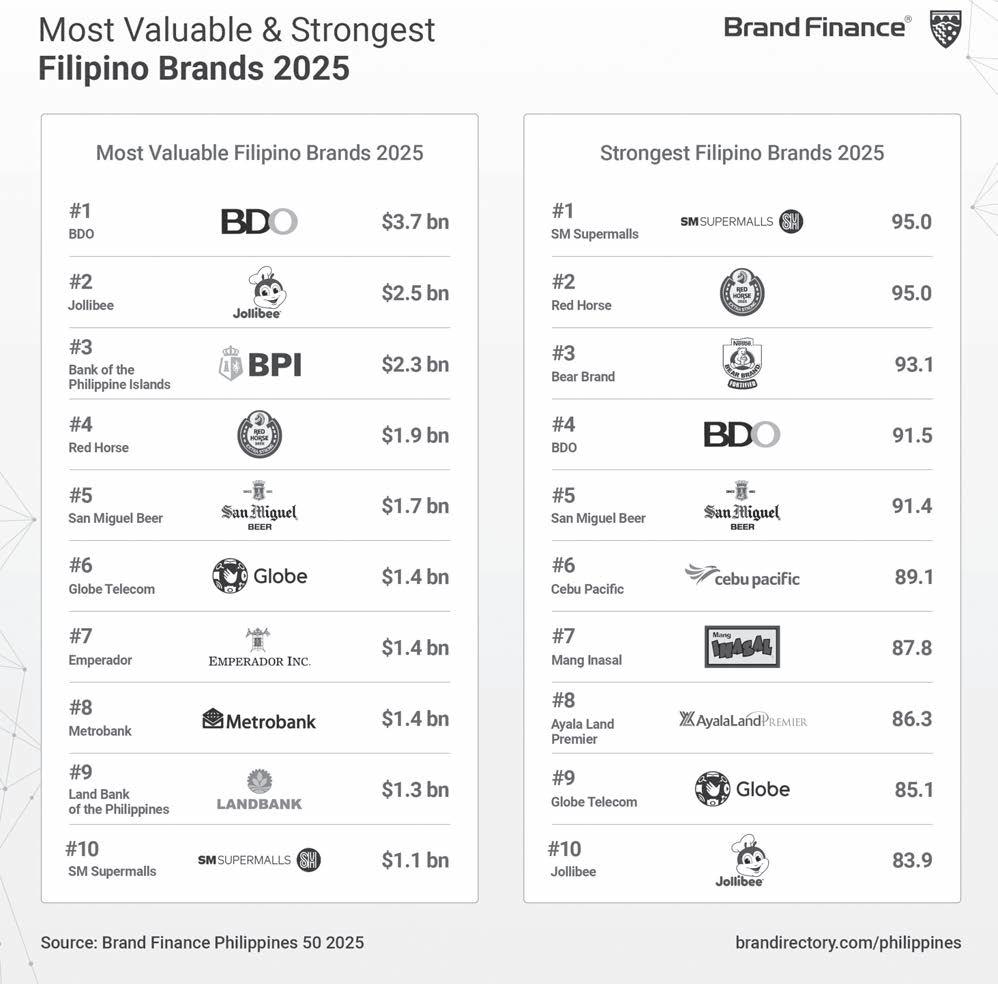
be redeemed and experienced in the actual malls. Its ability to adapt and evolve catapulted it to becoming Brand Finance’s strongest Philippine brand in 2025, with a Brand Strength Index score of 95/100 and a brand strength rating of AAA+. At the same time, it ranked 10th in the most valuable brands list, with a brand value of $1.1 billion.
Going where the customers are THIS year’s most valuable Philippine brand, BDO Unibank, achieved this feat by listening to its customers, improving services accordingly, and making sure that they were present wherever their customers were.
BDO Unibank Group Head for Branch Banking Cora Mallillin said the bank continued to capitalize on its wide network of branches and automated teller machines to ensure that its clients always had ways to access their services.
effects of every decision, not just financially, but emotionally. I think not just about numbers, but about the lives behind them.”
Clifford leads with calm, kindness, and intention. His approach to both finance and fatherhood is rooted in integrity and foresight.
“I want to be a role model; someone my daughter sees as hardworking and kind. I want her to be inspired to follow her passions and care for others.”
Whether celebrating small wins at work or sharing laughter over a weekend call, Clifford brings warmth and meaning into every role he plays.
Operations with compassion at the center
IN North Mindanao, Area Manager Jonrey Solicito starts his day before sunrise, managing operations across multiple Mang Inasal stores. His routine includes checking reports, resolving store concerns, and coaching team members, but his weekends are reserved for moments with his family.
“It’s tiring, but fulfilling,” he reflected, recalling weekends spent fixing bikes, enjoying balut, or simply watching the sunset with his children.
For Jonrey, both fatherhood and
leadership are anchored in compassion.
“Patience is the biggest lesson I’ve learned from being a father. I try to lead with empathy, knowing that every team member has their own story and struggles,” he said. “I’m proud because both roles are about service and responsibility. At Mang Inasal, I serve our customers and team. At home, I serve my family.”
His quiet strength and steady presence have made a meaningful difference in the lives of those he works with and loves.
Celebrating fathers, celebrating leaders
THIS Father’s Day, Mang Inasal honors leaders like Allan, Clifford, and Jonrey who embody the true essence of Tatak Mang Inasal, leading with integrity, uplifting others, and always putting heart into everything they do.
Their stories show that leadership isn’t just found in titles or targets. It lives in the values we pass on, the people we guide, and the love we bring to every role we play. Whether at home or at work, these fathers show that the most powerful kind of leadership begins with care, grows through purpose, and lasts through generations.
“We have branches in malls. We also have those that are open beyond the usual banking hours and even on weekends,” she said.
BDO branches and ATMs, while already numerous and ubiquitous, were complemented by digital channels: the BDO Online general banking app and the BDO Pay ewallet app.
“Brand Finance notes the brand’s growth is driven by a combination of enhanced brand strength and solid financial performance, including growth in customer loans and notable improvements in customer satisfaction,” Brand Finance said.
BDO’s brand value went up 48 percent to $3.7 billion in 2025, retaining its status as the country’s most valuable brand for the second year running. It also obtained an AAA+ brand strength rating.
Knowing what our customers need and providing these accordingly would do wonders for cus -
n CEBU PACIFIC ROLLS OUT KALAYAAN SEAT SALE, FARES AS LOW AS P12
MANILA, PHILIPPINES—Cebu Pacific, the Philippines’ leading carrier, celebrates Independence Day giving every Juan the freedom to discover the Philippines and beyond through its signature Super Seat Fest.
From June 11 to 15, travelers may book flights to select domestic and international destinations for as low as P12 one-way base fare exclusive of fees and surcharges. The travel period runs from December 1, 2025 to May 31, 2026, perfect for holiday trips and summer getaways.
Travelers flying home for Christmas or New Year can make the most of CEB’s widest domestic network.
With hubs in Manila, Clark, Cebu, Iloilo, and Davao, CEB offers more options to enable passengers to get home in time for year-end festivities.
Travelers planning to spend their holidays overseas can enjoy CEB’s enhanced international connectivity from key cities in the Philippines. They can explore theme parks in Hong Kong and Singapore or experience snow and a variety of winter activities in Sapporo.
tomer satisfaction, which could eventually lead to delight. Such delightful experiences pave the way for greater brand affinity, which would positively affect not only brand reputation but also the bottom line.
PR Matters is a roundtable column by members of the local chapter of the United Kingdom-based International Public Relations Association (Ipra), the world’s premier organization for PR professionals around the world. Abigail L. Ho-Torres is the Chief Marketing Officer of Ikigai Philippines and an independent consultant and trainer, with more than two decades of experience in media, public relations, marketing, and customer experience.
We are devoting a special column each month to answer our readers’ questions about public relations. Please send your questions or comments to askipraphil@gmail.com.
For solo travelers looking to recharge during the long weekends, Siquijor’s calming waters are just a short journey from Dumaguete— easily accessible via Cebu or Iloilo. For those considering trips abroad, Tokyo and Osaka offer a blend of city attractions and natural spots that are easy to explore alone.
If you’re looking to spend the summer with your friends next year, Siargao is just a flight away from Clark, offering world-class waves and island-hopping activities. Your group can also look forward to Ho Chi Minh City, known for its rich culture and culinary scene everyone can enjoy.
CEB’s strategically located hubs make it convenient for every Juan to travel across the Philippines and beyond. Add to this seat sale offer, travelers now have more freedom to visit dream destinations.
CEB operates in 37 domestic and 26 international destinations spread across Asia, Australia, and the Middle East.
CEB offers various payment options, including credit or debit cards and e-wallets, to book flights and buy add-ons.
Book your flights now at www. cebupacificair.com.

By Josef Ramos
a decision that favored the 42-year-old who now has won titles in the flyweight, super flyweight, bantam, super bantamweight and featherweight ranks, Donaire was ahead, 88-83, 87-84, 8784, in all cards when the fight was stopped.
“I just wanted to keep fighting but I knew from the very start until the ninth round I was leading and controlling the fight because all my punches, my jabs and my body shots, were hitting their mark,” Donaire said.
Donaire hasn’t fought since July 2023 when he lost to Mexican Alexandro Santiago via unanimous decision in Las Vegas, a year after losing via second round technical knockout to undisputed bantamweight champion Naoya Inoue of Japan in their rematch in Tokyo.
The first clash of heads happened in the sixth round and both fighters were
AHISTORIC Baguio City to Tagaytay road classic, formal inauguration of the country’s first indoor velodrome and signing of pledges by Olympic Solidarity scholars mark the combined celebration of the Olympic Day and World Bicycle Day on Monday (June 23) in Tagaytay City. This is a historic first not only for the Olympic Movement but also for Philippine cycling,” said Abraham
warned, but Donaire—now with a 43-8 win-loss record with 28 knockouts— stayed in full control with his counter right punches on the 28-year-old Campos. There was one minute left in the ninth round when the fight was stopped. Campos dropped to a 17-3-1 winloss-draw card with six knockouts.
Donaire thanked the WBA for giving him the opportunity for a world title shot and become its oldest champion in the 118-lb division.
“I’m very thankful to God and the WBA for this opportunity and to my team, my wife Rachel, and my kids for their all-out support,” he said.

NONITO DONAIRE JR.’S in control in the judges scorecard when the fight is stopped in the ninth round by the ring physician. PHOTO BOXEO DE PRIMERA/IG
“Bambol” Tolentino, president of both the Philippine Olympic Committee (POC) and PhilCycling and mayor of Tagaytay City, which is also celebrating on June 21 its 87th charter day.
First, according to Tolentino, is the breakthrough classic—one-day road race—from Camp John Hay in Baguio City to the finish line in front of the brand-new Tagaytay City Velodrome

ATEAM composed of talented and dedicated players, a patient and resilient coach who carved the team from down up and a federation that brewed a program whose result won’t come overnight but already made significant progress in a three-year span.
We’re happy for second place, we’re on the way…it’s a process,” said Brazilian head coach Jorge Souza de Brito minutes after Vietnam—a team ranked 31 rungs higher than the Philippines at No. 25 in the world—booked a clinical 25-15, 25-17, 25-14 victory in the gold medal match of the Asian Volleyball Confederation (AVC) Women’s Volleyball Nations Cup on Saturday night in Hanoi.
With the full support of the federation, there are really good players that you have to develop and the group will become stronger and stronger year after year,” de Brito said. “I’m sure of it. It’s a process you have to go through.”
A silver that glittered like gold, the near-Cinderella finish continued to mark the country’s rise on the Asian and global volleyball stage.
“This silver medal is amazing, it means everything,” said Jia de Guzman, named Best Setter of the tournament for the second consecutive year. “It’s hard to see the growth of the sport [in the country]




without this result achieved by the team.”
Since the Philippine National Volleyball Federation (PNVF) took over in post-pandemic 2021, both the Alas Pilipinas men and women squads have progressed significantly under a program ably supported by the world volleyball federation called FIVB.
“The entire team, from the players to the coaches, they have progressed immensely,” said PNVF president Ramon “Tats” Suzara, who, only last August, was elected president of the AVC and was also named FIVB executive vice
along Crisanto de los Reyes Avenue.
S econd, the new track facility— an International Cycling Union (UCI)-standard 250-meter indoor and wooden velodrome—will be formally inaugurated and opened, and third, Olympic Solidarity scholars in various sports will sign their contracts under the guidance of the POC all in one day.

president. “But the entire program is a team and federation effort that couldn’t be achieved without the stakeholders.”
Senators Alan Peter and Pia Cayetano have been staunched supporters of the program and so is the private sector support from sport patron and business tycoon Manuel V. Pangilinan, Rebisco, Meralco, Mwell, PLDT Akari and Asics.
We had to give it our best because after getting the bronze last year and the silver this time, we’re inspired to go back to training and keep working together as a team and to keep going for this long
term program,” said De Guzman, who was joined in the roster of individual awardees by Angel Canino who got Best Outside Spiker and Dell Palomata the Best Middle Blocker trophy.
Slowly but surely, we’re progressing as a country in volleyball and I’m really proud of the team, de Guzman added.
Vietnam was a class act the entire gold medal match but the Filipinas showed grit all the way—winning four and losing two matches in the entire tournament—a value de Brito said would bear more fruits in the future.
“I hope you can keep all of them because they trust the process, they are really strong and they all keep the focus even if they are not performing good, they are always trying,” he said. “And this part is important because it’s not only volleyball, you play for the flag and you show your character inside.”
“It’s something you have to grow and build for the team,” said de Brito, whose tour of duty as head coach of national women’s team under the FIVB’s Empowerment Program for its 222 member countries end with the 33rd Southeast Asian Games in Thailand in December.
When and the PNVF took over in 2021, the national women’s team was No. 156 then rose 90 rungs up in 2023 to No. 66 and last year, the country jumped to No. 58.
The Baguio-Tagaytay classic of the PhilCycling will cover a total of 288 kms and will pass through the major expressways—TPLEX, SCTEX, NLEX, Slyway, SLEX and CALLAX—feauturing the top 30 finishers in the MPTC Tour of Luzon last summer.
“It’s all about speed and endurance,” said Tolentino, as he thanked the collaboration of sports patrons and
“It’s a celebration and perhaps, it’s the most unique in the world,” Tolentino said.
business tycoons Manuel V. Pangilinan and Ramon S. Ang and the MPTC, San Miguel Corp. Infrastructure, Camp John Hay and Duckworld PH for the milestone classic.
The Tagaytay City Velodrome, according to Tolentino, will mark the resurgence of Philippine track cycling—a cycling disciplie that offers the most number of gold medals at 10 events for men and women.