


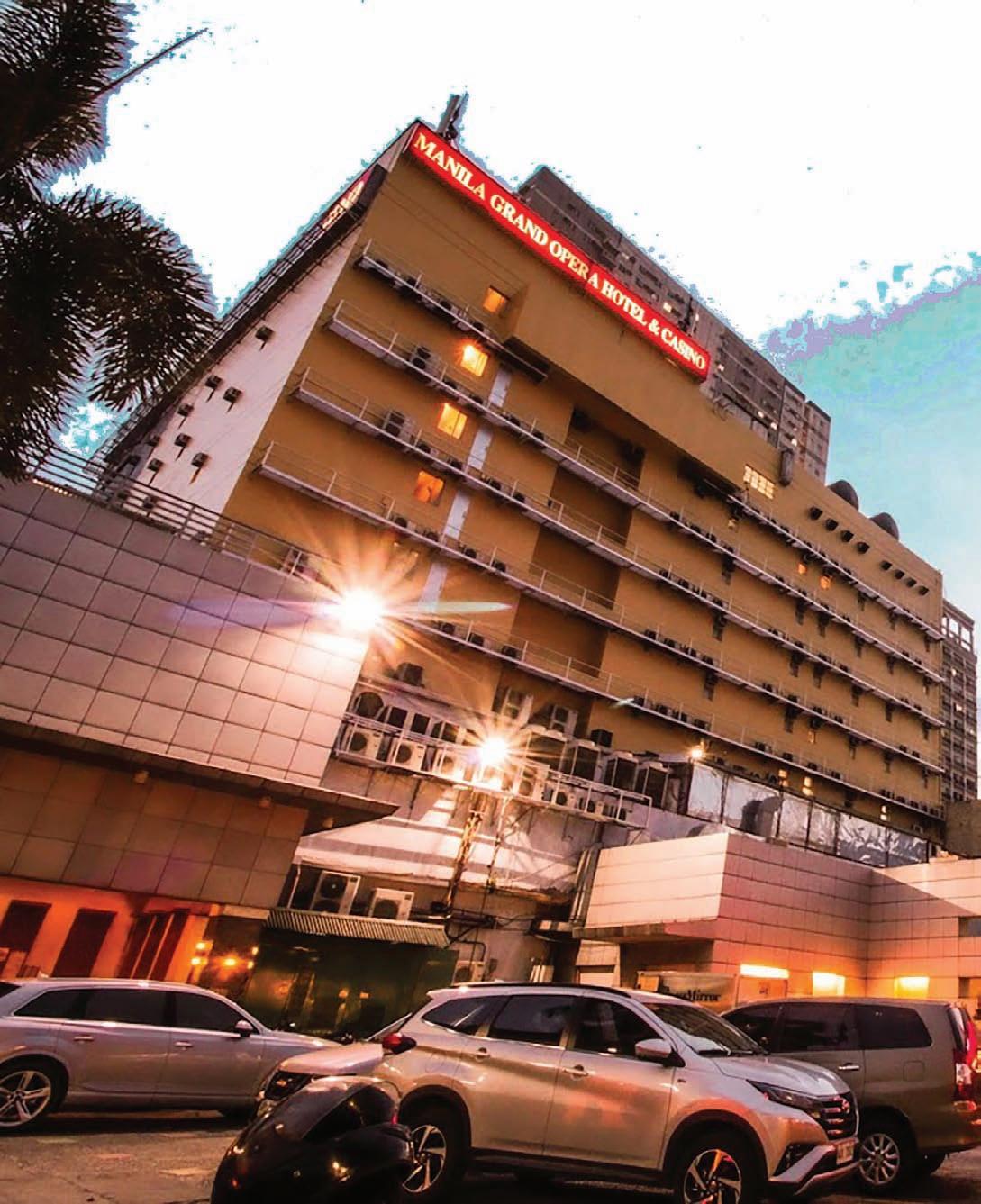

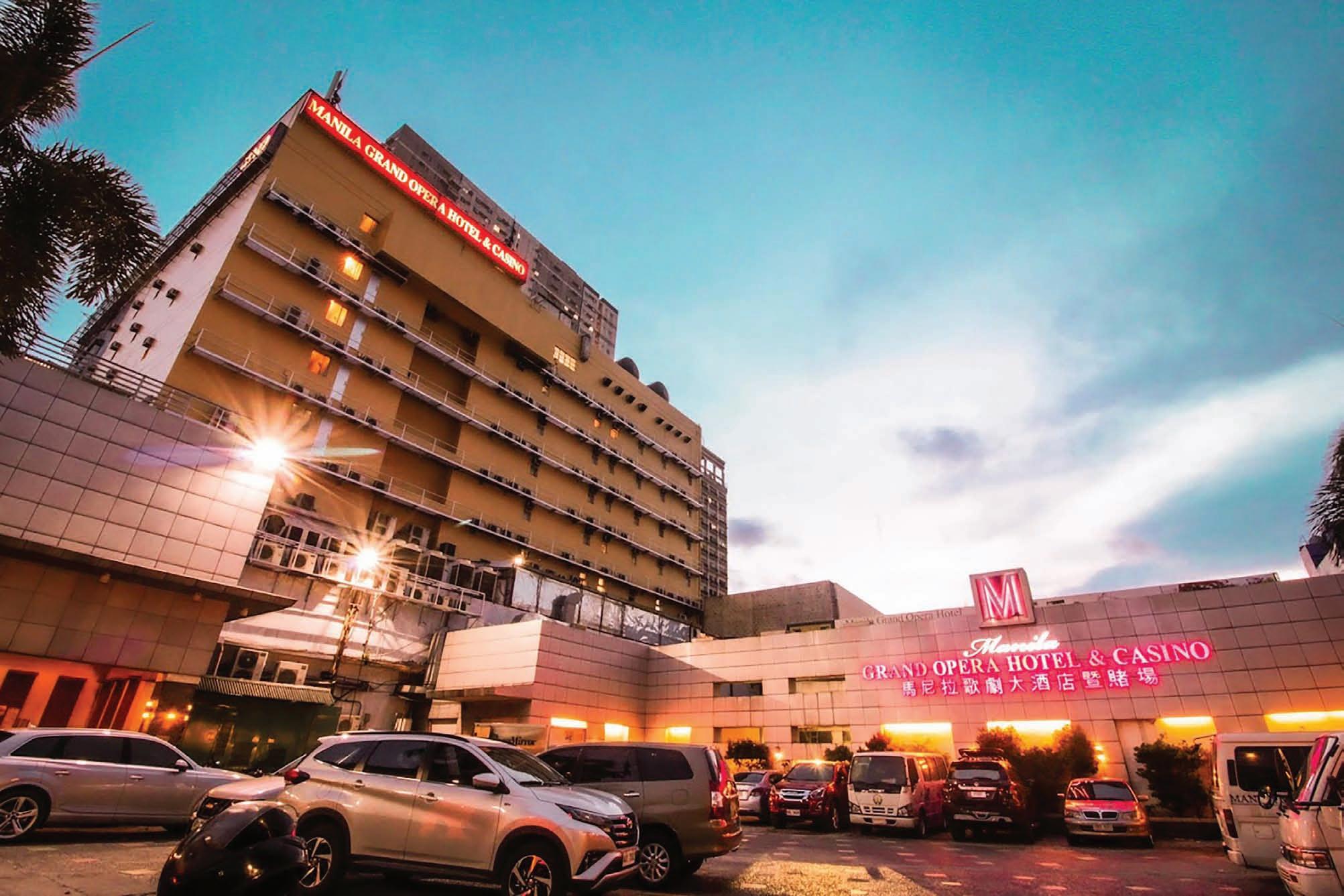

Manila Grand Opera House (MGOH), pulling in renowned Italian tenors and the magnificent Jovita Fuentes, a place that staged boxing matches, gave roots to bodabil—our vaudeville—and where the country first tasted “American democracy” when the inauguration of the Philippine Assembly was opened by a US Secretary of War and where, just three decades later, the Partido Komunista ng Pilipinas


(PKP) merged with the Socialist Party of the Philippines.[2] From its bicycle velodrome origins in 1892, ownership moved in 1942 to Toribio Teodoro, the magnate of a shoe business named Ang Tibay—literally, The Durable—and indeed it was, at least for the place. The following year the establishment burned down mere months after it was inundated by a flood only to rise again; the footwear enterprise folded in two decades but
the theater lives on as the New Manila Grand Opera House with a new tagline—“the theater with a history.”[3]
On its stage sang the Sylvia la Torre and Pilita Corrales, with Rodolfo Vera Quizon (Dolphy) and Adelaida Fernando-Villegas (Dely Atay-Atayan) seeding the country’s clouds of laughter. This is where the duo Conrado Piring and Perfecto Piñon—Pugak and Tugak—gave boisterous joy to so many. There bodabil lifted to fame Mariano Contreras and Arturo Vergara Medina—Pugo and Bentot—and long before he became the vice mayor of Makati, the country’s financial center today, Augusto Valdes Pangan was performing in the MGOH during the Japanese Occupation when he was only 13: First as Mr. Boogie-Woogie and later as Chiquito, the comedian.[4] Maybe showbiz with politics is the original Philippine cocktail?
But the rise of cinema spelled the decline of theater and soon the Manila Grand Opera House fell slowly into disrepair, the decay accelerating as the advent of television spelled the decline of moviehouses.[5] By the 1970s, the “theater with a history” was showing soft porn, which killed bodabil Eventually it became a restobar named Chicks O’Clock, and in 2008, it was reborn as the Manila Grand Opera Hotel, a place of calm and refinement compared to the squalor of many of its decaying concrete neighbors. (Editor’s note: The Manila Grand Opera Hotel, as it has been known since 2008, was founded by the late businessman-philanthropist, Ambassador Antonio L. Cabangon Chua, who had supported causes of local Filipino artists and media institutions and practitioners). A s for USA-style democracy, a few facts of history will suffice. Two cast-iron memorials by the “Philippine Historical Committee” are all that remains of the Manila Grand
Continued from A1 joined festivities in a house in Cavite. There, Sakay and his companions were disarmed and arrested, victims of US duplicity. On 13 September 1907, Sakay—the main symbol of national resistence— was hanged in what is now called the Manila City Jail.[8] The Philippine Assembly Taft opened was established a month later.
Opera House ruin; one dated 1940 is standing at the main entrance. It gives interesting details of the first Philippine Assembly: that it was held on 16 October 1907, “inaugurated … by … William Howard Taft” (later the first governor general of US-Occupied Philippines and, two years after, the US President). The plaque states, “Of the 80 duly elected delegates, 79 were present.” What it doesn’t say is that the only Filipinos allowed to vote were citizens at least 21 years old, who had held office under the Spaniards, owned real property, and who “could read, write, or speak Spanish or English.”[7] Only 1.41 percent managed to vote— which meant the elite voted for, of course, their own. American democracy indeed.
Sakay and US duplicity
THE memorial makes no mention of another key fact: loved by the masses, and vilified by the Occupiers, Gen. Macario Sakay, a Katipunan original who fought alongside Andres Bonifacio, had decided to lay down his arms in July 1906. American authorities had told Sakay he was the only impediment to the establishment of a Philippine Assembly that could secure the nation’s autonomy. When Sakay went down from the mountains of Tanay he was celebrated by the people of Manila and invited to receptions and banquets. But Sakay did not get to negotiate the country’s future. On the invitation of an American officer, Sakay
W hat about the other castiron memorial? It is dated 1948 and tells the reader, after the edifice burned to the ground on 16 November 1947, “a new building was erected … [in] 1947.” The plaque can be found in the shade of a shrub by the entrance of a parking lot. It might make you think of the place’s cycling origins and mobility, which might make visible a little seen angle of our current “democracy”: Did you know at least 88 percent of Metro Manila’s families do not own their own cars? [9] This just means for decades we have been building infrastructure to serve the needs of a tiny minority, and one has to wonder if the situation is worse in Cebu, Davao, and other urbans centers and provinces. If you wish to fight climate change, fight for democracy; move people, not cars.
Return to cycling track origins
A RETURN to the cycling racetrack origins of Manila Grand Opera Hotel is timely, but not for fitness or climate-change reasons alone. The place is a compelling call for integrative pedagogy and, certainly, it should generate interest in anyone following the divorce debate in today’s Congress.

The ciclo nacional velodrome was the project of Nadjib Tannus Hashim, who with his brother, Amin, came to the Philippines in 1892.[10] He was so astute as a businessman the American Chamber of Commerce called him “the real pioneer of the American commer-
cial establishments in the Philippines.”[11] Unlike “The first American businesses in the Philippines ... [which] were established … to supply… [the needs of] the American military government,” Hashim was active in the entertainment field [cycling races, concerts, the opera house] and sold jewelry, which began with “an original trading stock of American watches.” Later the Hashim brothers became a “supplier of uniforms” to the US Army. [12] Walter Robb, editor of the Journal of the American Chamber of Commerce, wrote in 1923 that Amin Hashim, Nadjib’s brother, “was an intimate friend of Rizal” who had even offered the hero means to escape from Dapitan.[13]
L ook him up. When you type “N.T. Hashim” search engines will bring you to what may be the origin story of alimony and divorce in Philippine jurisprudence.[14] Just as interesting is a rabbit-hole-ofa-story so intricate it deserves its own book.
N.T. Hashim’s businesses eventually covered ownership of vast pieces of real estate. Here’s one instance: Case record L-30098 in the Philippine Supreme Court shows “the expropriation of a parcel of land belonging to N. T. Hashim, with an area of 14,934 square meters, needed to construct a public road, now known as Epifanio de los Santos Avenue.”[15] And somehow there’s always more to discover.
Different sources provide conflicting claims: Nadjib is either the brother, the husband, or the brother in-law of Wadi’ah Hashim. What seems undisputed is how the woman, who changed her name to fit in shortly after her arrival in the Philippines, later came to own much of what is still called New Manila today. She first married a Lebanese, who gave birth to Ysmael Steel. And when she married again, her new name became Magdalena Hemady.[16]
As John Berger once counseled, instead of using history as a hammer to bludgeon your adversary, treat history as a companion that can make life far more interesting.
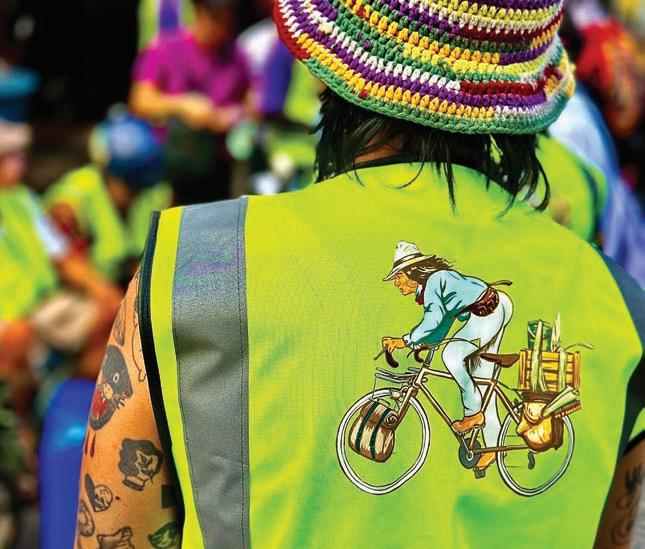
[1] For the second leg on 15 June 2024 of #SintangLakbay, a bicycle tour meant to promote mobility and awareness of climate change and encourage “active interaction with urban landscapes, restoring workingclass memory” in the nation’s history while “mobilizing public contributions to remembering through art and research.” #SintangLakbay is a joint project of PUP, 350 Pilipinas, and the Constantino Foundation to mark the 120th founding anniversary of the university.
[2] See: https://www.pkp-1930.com/ some-notes-in-history
[3] Landmarks of Manila, 15711930, Visitacion R. de la Torre (Filipinas Foundation, Inc., 1981) p. 92-93. De la Torre writes with a sharp wit. For instance, here’s her caption of Noli I. Yamsuan’s photo of the MGOH billboard emblazoned with the words “Where you meet your stars in person” in 1981: “The billboard is deceiving – at the Opera House today, the ‘star you meet in person’ are dead. Gone are the days when it made stars of vaudeville actors.”
[4] “Chiquito” by Malu Maniquis, from the CCP Encyclopedia of Philippine Art Digital Edition, Malu Maniquis and Lena S. Pareja, updated by Johann Vladimir J. Espiritu and Elmer L. Gatchalian, 18 November 2020. See https://epa.culturalcenter. gov.ph/4/26/4333/
[5] There are several recollections of the MGOH, but film maker Malu Maniquis wrote what to the author seems to be the most interesting essay. See Manila Grand Opera House, Malu Maniquis, from the CCP Encyclopedia of Philippine Art Digital Edition, Malu Maniquis, updated 18 November 2020. See: https://epa. culturalcenter.gov.ph/7/60/3076/
[6] To be fair, it also became a concert venue that as late as 2006 still attracted the likes of the great FrancisM, also known as the rapper Francis Magalona. A clip of one of his concerts in Chicks O’Clock is here: https://www.youtube.com/ watch?v=m0Zzrrq1Deo
[7] From History from the Point of View of the Filipino People, in Issues without Tears, Vol. 1, ed. Letizia R. Constantino (Karrel, Inc., Quezon City, 1984)
[8] A Past Revisited, Renato Constantino, p. 266-267 (Tala Publishing Services, Quezon City, 1975)
[9] "Mobility, a feature of democracy? But 88% of Metro Manila is at the losing end," Maria Golda Hilario, Philstar.com
15 September 2020. See: https://www.philstar.com/ other-sections/news-feature/2020/09/15/2042650/mobility-feature-democracy-88-metromanila-losing-end
[10] "Middle Eastern Migrants in the Philippines: Entrepreneurs and Cultural Brokers," William Gervase Clarence-Smith, Asian Journal of Social Science , 2004, Vol. 32, No. 3.
[11] The American Chamber of Commerce Journal, Vol. 3 No. 8, August 1923. See: https:// quod.lib.umich.edu/p/philamer/ AAJ0523.1923.001/248
[12] Among the needs listed were “beer and liquor, specialty food items and souvenirs, stevedoring, printing, transportation and building construction." From American Business and Philippine Economic Development, Lewis Gleeck, Jr (Carmelo & Bauermann, Inc., Manila, 1975)
[13] Ibid. 5. See also The History of the Jewish Community in Manila, Lewis Gleeck, Jr.. —— (n.d. and publisher listed)
[14] On alimony and divorce, see the Supreme Court’s Second Division ruling, “Afife Abdo Cheyban Gorayeb vs Nadjib Tannus Hashim” with case record G.R. No. 25577, March 3, 1927, in https://chanrobles. com/cralaw/1927marchdecisions. php?id=20
[15] N.T. Hashim was involved in a lot of litigation, as any quick search on the internet will demonstrate. On the subject of owning a large piece of EDSA, see: https://lawphil. net/judjuris/juri1970/feb1970/ gr_30098_1970.html.
[16] There is an “H.T. Hashim” though it seems more to be a misspelling. There are several takes on this, and all are interesting. Most lovely is the essay by a descendant of Magdalena Hemady, in Doña Hemady—my great grand ‘lola’, not the street," Rosary Ysmael, The Diarist.ph, 19 December 2020. See: https://www.thediarist.ph/dona-hemady-my-great-lola-not-the-street/ “Faride” is from “Quezon City: Stories of Old Homes in New Manila,” John Paul ‘Lakan’ Olivares, 26 February 2019. See: https://lakansining. wordpress.com/2019/02/26/quezoncity-stories-of-old-homes-in-newmanila/comment-page-1/. Links to the Lebanese elite and the Ysmaels is from "Everything You Need To Know About Manila's First 'It' Girl," Paolo Chua, EsquireMag.ph, 29 October 2017. See: https://www.esquiremag.ph/ the-good-life/what-she-wants/ chona-kasten-la-divina-a0020820171029-lfrm3. The real estate group OneBalete.com even says Magdalena “married first into a Lebanese emigrate named Hashim … who owned the Manila Grand Opera house” in “Generations of Prestige: Unraveling the Heritage of New Manila.” See: https://onebalete.com. ph/blog/generations-of-prestigeunraveling-the-heritage-of-newmanila. In another Supreme Court case, Nadjib is listed as “Nageeb T. Hashim” similar to the way his name is spelled in the U.S. patent he owned for inventing a stone block sawing machine. See: https://patents.google. com/patent/US1565444A/en?inve ntor=Nageeb+Hashim&oq=Nageeb+ Hashim

WASHINGTON—The USbuilt pier to bring food to Gaza is facing one of its most serious challenges yet—its humanitarian partner is deciding if it’s safe to keep delivering supplies arriving by sea to starving Palestinians.
The United Nations, the player with the widest reach delivering aid within Gaza, has paused its work with the pier after a June 8 operation by Israeli security forces that rescued four Israeli hostages and killed more than 270 Palestinians.
Rushing out a mortally wounded Israeli commando after the raid, Israeli rescuers opted against returning the way they came, across a land border, Rear Admiral Daniel Hagari, an Israeli military spokesman, told reporters. Instead, they sped toward the beach and the site of the US aid hub on Gaza’s coast, he said. An Israeli helicopter touched down near the USbuilt pier and helped whisk away hostages, according to the US and Israeli militaries.
For the UN and independent humanitarian groups, the event made real one of their main doubts about the US sea route: Whether aid workers could cooperate with the US military-backed, Israeli military-secured project without violating core humanitarian principles of neutrality and independence and without risking aid workers becoming seen as US and Israeli allies—and in turn, targets in their own right.
Israel and the US deny that any aspect of the month-old US pier was used in the Israeli raid.
The UN World Food Program, which works with the US to transfer aid from the $230 million pier to warehouses and local aid teams for distribution within Gaza, suspended cooperation as it conducts a security review. Aid has been piling up on the beach since.
“You can be damn sure we are going to be very careful about what we assess and what we conclude,” UN humanitarian chief Martin Griffiths said.
Griffiths told reporters at an aid conference in Jordan this week that determining whether the Israeli raid improperly used either the beach or roads around the pier “would put at risk any future humanitarian engagement in that operation.”
The UN has to look at the facts as well as what the Palestinian public and militants believe about any US pier or aid worker involvement in the raid, spokesman Farhan Haq told reporters in New York.
“Humanitarian aid must not be used and must not be perceived as taking any side in a conflict,” Haq said. “The safety of our humanitarian workers depends on all sides and the communities on the ground trusting their impartiality.” Rumors have swirled on social media, deepening the danger to aid workers, humanitarian groups say.
“Whether or not we’ve seen the pier used for military purposes is almost irrelevant. Because the perception of people in Gaza, civilians and armed
groups, is that humanitarian aid has been instrumentalized” by parties in the conflict, said Suze van Meegen, head of operations in Gaza for the Norwegian Refugee Council.
Oxfam International and some other aid organizations said they are waiting for answers from the US government because it’s responsible for the agreements with the UN and other humanitarian groups on how the pier and aid deliveries would function.
Questions include whether the Israeli helicopters and security forces used what the US had promised aid groups would be a no-go area for the Israeli military around the pier, said Scott Paul, an associate director at Oxfam.
The suspension of deliveries is only one of the problems that have hindered the pier, which President Joe Biden announced in March as an additional way to get aid to Palestinians. The US has said the project was never a solution and has urged Israel to lift restrictions on aid shipments through land crossings as famine looms.
The first aid from the sea route rolled onto shore May 17, and work has been up and down since:
n May 18: Crowds overwhelmed aid trucks coming from the pier, stripping some of the trucks of their cargo. The WFP suspended deliveries from the pier for at least two days while it worked out alternate routes with the US and Israel.
n May 24: A bit more than 1,000 metric tons of aid had been delivered to Gaza from the pier, and

the US Agency for International Development later said all of it was distributed within Gaza.
n May 25: High winds and heavy seas damaged the pier and four US Army vessels ran aground, injuring three service members, one critically. Crews towed away part of the floating dock in what became a two-week pause in operations.
n June 8: The US military announced that deliveries resumed off the repaired and reinstalled project. The Israeli military operation unfolded the same day.
n Sunday: World Food Program chief Cindy McCain announced a “pause” in cooperation with the US pier, citing the previous day’s “incident” and the rocketing of two WFP warehouses that injured a staffer.
“The WFP, of course, is taking the security measures that they need to do, and the reviews that they need to do, in order to feel safe and secure and to operate within Gaza,” Pentagon spokeswoman Sabrina Singh said this week.
The pier has brought to Gaza more than 2,500 metric tons (about 5.6 million pounds) of aid, Singh said. About 1,000 metric
The United Nations, the player with the widest reach delivering aid within Gaza, has paused its work with the pier after a June 8 operation by Israeli security forces that rescued four Israeli hostages and killed more than 270 Palestinians.

tons of that was brought by ship Tuesday and Wednesday—after the WFP pause—and is being stored on the beach awaiting
distribution.
Now, the question is whether the UN will rejoin the effort. For aid workers who generally
work without weapons or armed guards, and for those they serve, “the best guarantee of our security is the acceptance of communities” that aid workers are neutral, said Paul, the Oxfam official.
Palestinians already harbored deep doubts about the pier given the lead role of the US, which sends weapons and other support to its ally Israel, said Yousef Munayyer, a senior fellow at Washington’s Arab Center, an independent organization researching Israeli-Arab issues.
Distrustful Palestinians suffering in the Israel-Hamas war are being asked to take America at its word, and that’s a hard sell, said Munayyer, an American of Palestinian heritage.
“So you know, perception matters a lot,” he said. “And for the people who are literally putting their lives on the line to get humanitarian aid moving around a war zone, perception gets you in danger.”
Lederer reported from the United Nations. AP writer
contributed from Washington.

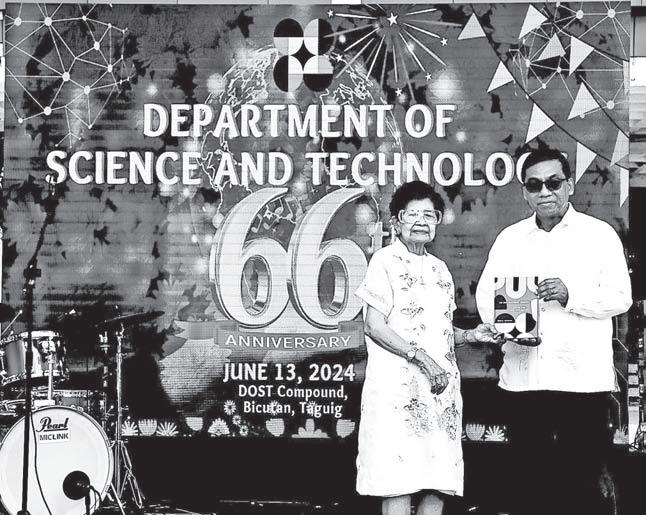
BOOK TELLS DOST’S 40 YEARS JOURNEY The Department of Science and Technology marked its 66th anniversary celebration on June 13. Part of the event was the launching of the book.”An Institutional Journey: From the NSDB to the DOST, 1958-1998,” authored by former DOST Asssistant Secretary Engr. Lydia G. Tansinsin. In the photo are Engineer Tansinsin (left) and Science Secretary Renato U. Solidum Jr. PHOTO BY HENRY DE LEON/DOST-STII
ONE of the United Nations’ Sustainable Development Goals is to “end hunger, achieve food security and improved nutrition, and promote sustainable agriculture.”
Aquaculture, the practice of farming aquatic animals and plants, such as fish and seaweed, plays a critical role in achieving food security.
The Philippines and the entire Indo-Pacific region are home to various fish species with significant aquaculture potential and increased seafood consumption, therefore, requiring genetic monitoring to ensure their populations’ long-term stability.
Recognizing the need to develop sustainable management approaches for the country’s emerging aquaculture species, biologists from the University of the Philippines Diliman-College of Science continued fish monitoring and conservation efforts by generating microsatellite markers, said Eunice Jean Patron of UPDCS Science Communications in a news release.
Shenna Kate Torres, Verinna Charisse Mangonon, and Maria Theresa Tengco of the UPD-CS Institute of Biology (IB), and Project Leader Dr. Brian Santos of both IB and the Natural Sciences Research Institute (NSRI), developed microsatellite markers for the fish popularly known as “maliputo” (Caranx ignobilis), or “talakitok” in some parts of the country.
The biologists chose maliputo for the study due to its high value as seafood, Patron added. According to researchers from the Department of AgricultureNational Fisheries Research and Development Institute (DANFRDI), the species’ relatively large body size and excellent meat quality have high market value, contributing significantly to the Philippines’ economic growth.
With its high-value, maliputo has been cultured in captivity through the initiatives of the DA-NFRDI Freshwater Fisheries Research and Development Center.
“As it became a target fish, studying its biology is important to prevent overexploitation and to ensure sustainable aquaculture practices,” Torres explained.
A microsatellite marker is a short segment of DNA that repeats
multiple times in a row at a specific genomic location, as defined by the National Human Genome Research Institute.
“Molecular markers, like microsatellites, act as tools to identify which populations are adapting well to their environment and to determine how different groups are related to each other,” Torres pointed out.
The research results can enhance the aquaculture production of maliputo in the country.
“If we want to expand aquaculture practices for this species, genetic diversity studies can pinpoint seed stock populations or breeders with high genetic variation, or what we can call fit breeders,” Torres explained.
“By selecting these diverse and fit breeders, we can enhance the resilience and growth rates of the farmed fish populations,” she added.
Maintaining a healthy fish population can also reduce environmental impact and lead to cost savings.
Besides enhancing the aquaculture production of maliputo, the microsatellite markers can be used to analyze the population structure of the fish species, which can help infer whether distinct populations of the fish exist in the Philippines.
Knowing the population structure provides a basis for management strategies to conserve and sustainably manage the fish population, she said.
The team of biologists aims to utilize microsatellites and other genetic markers to analyze wild and hatchery-grown populations of maliputo across the Philippines.
Torres is also examining the genetic differences between marine and freshwater populations of maliputo. By understanding the genetics of maliputo populations and their environmental adaptations, Filipinos can develop better strategies for sustainable production and genetic marker-assisted breeding, Patron said.
Their paper, “Development and Characterization of 12 Microsatellite Markers for an Economically Important Fish, Caranx ignobilis, in the Philippines,” was published in Genaqua, a journal featuring research in the genetics and molecular biology on aquatic organisms.


IF you’ve been sick with Covid-19, you may have some protection against certain versions of the common cold.
A new study suggests previous Covid-19 infections lower the risk of getting colds caused by milder coronavirus cousins, which could provide a key to broader Covid-19 vaccines.
“We think there’s going to be a future outbreak of a coronavirus,” said Dr. Manish Sagar, senior author of the study published on Wednesday in the journal Science Translational Medicine.
“Vaccines potentially could be improved if we could replicate some of the immune responses that are provided by natural infection,” Sagar said.
The study looked at Covid-19 polymerase chain reaction (PCR) tests from more than 4,900 people who sought medical care between November 2020 and October 2021.
After controlling for things like age, gender and preexisting

conditions, Sagar said he and his colleagues found people previously infected with Covid-19 had about a 50 percent lower chance of having a symptomatic coronavirus-caused common cold compared with people who were, at the time, fully vaccinated and hadn’t yet gotten Covid-19. Several viruses cause colds;

HIDDEN beneath the rich soils of Cagayan Valley and Northern Luzon is an industry that is ripe for the picking.
Peanuts have become integral to the culture and economy of the Philippines. It’s a taste that many Filipinos crave as snacks or a versatile ingredient for sandwich spread and Filipino dishes like kare-kare.
With big demand in the market, opportunities for peanut farmers and businesses are promising. Luckily, the industry is supported by innovative minds that aim to bring solutions toward the economic advancement of the local peanut industry.
As part of the celebration of the Peanut Farms and Industry Encounters through the Science and Technology Agenda (Fiesta) supported by the Philippine Council for Agriculture, Aquatic and Natural Resources Research and Development of the Department of Science and Technology (DOST-PCAARRD), innovators from various universities and colleges in Cagayan Valley and Northern Luzon showcased technologies that aim to improve peanut production and processing.
These innovators generated technologies that will help address challenges faced by the industry, such as labor costs, lack of manpower, high wastage, low-quality outputs, and more.
AIMING to provide more Filipinos full range of quality health services to more Filipinos, the Department of Science and Technology-Philippine Council for Health Research and Development (DOSTPCHRD) and the Philippine Health Insurance Corporation (PhilHealth), showcased three studies during the recent Talakayang HeaRT Beat press conference in Quezon City. “In advancing health science initiatives, we invest in building stronger and healthier Filipino communities. We at the DOST remain dedicated in supporting the research needs of PhilHealth to sustain the implementation of healthcare policies that are inclusive and attuned to the needs of our people.” said Science Secretary Renato U. Solidum Jr. The study from the University of the Philippines (UP) Manila led by Dr. Corazon
coronaviruses are thought to be responsible for about one in five colds.
Researchers linked the protection against coronavirus-caused colds to virus-killing cell responses for two specific viral proteins.
These proteins aren’t used in most vaccines now, but researchers propose adding them in the future.
“Our studies would suggest that these may be novel strategies for better vaccines that not only tackle the current coronaviruses, but any potential future one that may emerge,” said Sagar of Boston Medical Center.
Dr. Wesley Long, a pathologist at Houston Methodist in Texas who was not involved in the study, said the findings shouldn’t be seen as a knock against current vaccines, which target the “spike” protein studding the surface of the SARS-CoV-2 virus that causes Covid-19.
These vaccines, he said, are “still your best defense against severe Covid-19 infection, hospitalization and death.” But he added: “If we can find targets that cross-protect among multiple viruses, we can either add those to specific vaccines or start to use those as vaccine targets that would give us broader-based immunity from a single vaccination. And that would be really cool.” Laura Ungar/Ap Science Writer
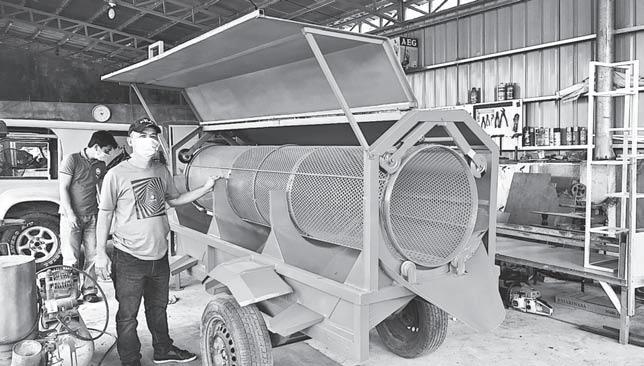
Peanut thresher
THE peanut thresher is among the technologies developed by Cagayan State University (CSU) led by Dr. Jose D. Guzman.
The machine separates peanut pods from the plant after harvesting. Using rotating drums or rollers, the machine can detach the pods from its vines, facilitating the collection of clean and ready-to-use peanuts.
It also features a function that sorts peanuts into small, medium, and large sizes.
According to Dr. Guzman, the CSU Peanut Thresher will reduce the threshing costs of peanuts per kilogram (kg) from P5 to P1.83 compared to manual threshing.
The machine showcases better threshing efficiency, recovery and lower production loss due to damages.
During the dry season, the stripping capacity can increase to 116 kg/hour, with a stripping efficiency of 93 percent.
Peanut sheller
THE peanut sheller is another innovation developed by CSU under Guzman. It addresses peanut processors’ constraints, such as low output, post-harvest losses, contamination, and high labor costs.
The peanut sheller removes the edible kernels inside the shells. It operates by
Ngelangel, titled “Protecting Against Financial Catastrophe: Evaluation of the Z Benefits in Providing Financial Risk Protection and Improving Clinical Outcomes,” recommended the expansion of the “Z Benefit Package” to cover more diseases and improve coverage during critical periods of the illness, include quality of life measures in monitoring surveys of patients, and intensify information dissemination to patients and healthcare providers. To streamline reimbursement for inpatient care by setting fixed payment rates, PhilHealth introduced the All Case Rates (ACR), a policy initiated in 2013 as a product of the project entitled “All Case Rates Review and Assessment,” led by Dr. Fernando Garcia of UP Manila. Findings of the study revealed that the
applying pressure to crack open the shells.
After which, broken shells and peanut kernels are subjected to vibration to allow ease of separation.
Similar to the thresher, the sheller also sorts the kernels according to size.
Compared to manual shelling, the CSU Peanut Sheller will reduce the total shelling cost per kilogram from P5 to P1. Depending on the variety, the machine can shell up to 90 kg/hr to 100 kg/hr.
Aerated peanut bulk storage
ALSO designed by CSU under Guzman, the aerated peanut bulk storage addresses the challenges in controlling humidity, infestation, and temperature that may affect the quality of the crop.
This storage equipment has an intelligent system for preserving peanuts that features sensors to detect the inside and outside humidity and temperature.
It also sends information about storage conditions to the user’s mobile for smart monitoring.
The aerated peanut bulk storage can store 1 ton of peanut pods, with a monthly operating cost of P1.47.
Peanut rotary sorting machine
TO provide quality products and services,
number of PhilHealth beneficiaries among the indigent members declined and claims from the informal economy and sponsored beneficiaries continued to rise, hence the implementation of ACR. The project team cited that the decline in membership enrollment, among the indigent population, poses a significant obstacle to achieving universal coverage objectives. Furthermore, issues with verifying membership statuses raise additional concerns about the integrity of the system.
a sorting machine developed by the team of Engr. Joel M. Alcaraz from Isabela State University (ISU) offers peanut processors a faster and more efficient sorting machine for peanut kernels.
According to Alcaraz, the advantages of the rotary sorting machine include its high mobility, less damage to kernels, and lesser vibration compared to other sorting machines.
Mobile peanut sheller
DEVELOPED by ISU, the mobile peanut sheller offers a different take on shelling. Its mobile feature allows easy machine transfer, which is best for farming cooperatives that may need to share equipment. Depending on the model, the machine can shell peanuts up to 150 kg/ hr to 380 kg/hr. The price of the machine ranges from P50,00 to P120,000. With the advent of better and more affordable machines, science innovators continue to open gateways of opportunities for more farmers and business owners in the peanut industry.
Just as the celebration of the Peanut Fiesta says, definitely, “May Money sa Mani [There is money in peanut]!” Karl Vincent S. Mende/S&T Media Services
A6 Sunday, June 16, 2024

ROME—Pope Francis has once again appealed to Catholic priests to keep their homilies short, this time warning that homilies should be no longer than eight minutes or “people will fall asleep.”

Speaking in St. Peter’s Square for his catechesis on June 12, the pope explained that the goal of a homily is to “help move the Word of God from the book to life.”
“But the homily for this must be short: an image, a thought, a feeling. The homily should not go beyond eight minutes because after that time you lose attention and people fall asleep,” he said.
It is not the first time that Francis has stressed the importance of short homilies. In 2018, he urged
priests to “be brief” and ensure that their homilies are “no more than 10 minutes.” The pope’s words echo the recommendations made by Archbishop Nikola Eterovic in his 2010 book on the 2008 Synod on the Word of God, which advised prelates to keep their homilies to 8 minutes or shorter and to avoid “improvisations” from the pulpit. Pope Francis, however, often exceeds this time limit in his own homilies. On Holy Thursday, the
pope’s homily for the chrism Mass was more than 20 minutes long.
The pope made the comments on homily length off the cuff during a reflection on how the Bible is “inspired by God and authoritative.”
Francis added that “the Holy Spirit, who inspired the Scriptures…also makes them perennially living and active.”
“It can happen that in a certain passage of the Scripture, that we have read many times without particular emotion, one day we read it in an atmosphere of faith and prayer, and then that text is unexpectedly illuminated, it speaks to us, it sheds light on a problem we are living, it makes God’s will for us clear in a certain situation,” the pope said.
“The words of the Scripture, under the action of the Spirit, become luminous; and in those cases, we touch with our own hands how true is the statement in the Letter to the Hebrews: ‘The word of God is living and active, sharper than any two-edged sword’ [Heb 4:12].”
Pope Francis urged Catholics to take time every day to read and reflect on a passage from Scripture, recommending that Christians carry “a pocket Gospel” with them to read during spare moments throughout the day.
“But the quintessential spiritual reading of the Scripture is the community reading in the liturgy in the Mass,” he said. “There, we see how an event or a teaching, given by the Old Testament, finds its full expression in the Gospel of Christ.”
“Among the many words of
God that we listen to every day in Mass or in the Liturgy of the Hours, there is always one that is meant specially for us. Something that touches the heart. Welcomed into the heart, it can illuminate our day and inspire our prayer. It is a question of not letting it fall on deaf ears,” Pope Francis said.
“‘The whole Bible,’ observes St. Augustine, ‘does nothing but tell of God’s love,’” he added.
At the end of the general audience, Pope Francis asked people to continue to pray for peace in Ukraine, Palestine, Israel, Myanmar, and the many countries that are at war today.
The pope extended greetings to pilgrim groups visiting from China, India, Indonesia, France, Poland, the United Kingdom, the Philippines, and the United States.
Also in St. Peter’s Square were bagpipers from the the Royal Irish Regiment and 38 Irish Brigade who performed in commemoration of 80th anniversary of the liberation of Rome and Irish brigade’s historic meeting with Pope Pius XII at the Vatican on June 12, 1944.
Pope Francis also encouraged devotion to St. Anthony of Padua on his feast day on June 13.
“Tomorrow we will celebrate the liturgical memory of St. Anthony of Padua, priest and doctor of the Church,” he said. “May the example of this distinguished preacher, protector of the poor and the suffering, arouse in everyone the desire to pursue the path of faith and imitate his life, thus becoming credible witnesses of the Gospel.”
Courtney Mares/Catholic News Agency
POPE Francis has granted the canonical coronation of the image of Our Lady of Charity enshrined in her minor basilica in Agoo, La Union. In a June 5 circular, Bishop Daniel Presto of San Fernando de La Union said that their petition for pontifical crowning had been approved by the Dicastery for Divine Worship and the Discipline of the Sacraments.
He said the approval was made through a decree dated April 20.. “We thank the God Almighty for this grace and this important occasion in our diocese,” Presto said.

Could Edith Stein be declared the next doctor of the Church?
EDITH STEIN could be declared a doctor of the Church with the title “doctor verita
tis,” or “doctor of truth,” following a petition from the Discalced Carmelites.
Pope Francis received an official request from the superior general of the Discalced Carmelites, Father Miguel Márquez Calle, on April 18 in a private audience at the Vatican to recognize the theological legacy of the saint who was martyred in Auschwitz.
If accepted, Stein, also known by her religious name St. Teresa Benedicta of the Cross, could become the fifth woman to be declared a doctor of the Church, a title that recognizes a substantial contribution to the Church’s theology and moral life. With the petition, the Vatican Dicastery for the Causes of Saints can officially begin the required
process to grant Stein the title. The Carmelites first launched an international commission to gather the necessary documentation required by the Vatican in 2022, a year that marked both the 100th anniversary of Stein’s baptism and the 80th anniversary of her martyrdom. A title that was proposed for her at the time was “doctor veritatis” because of her relentless intellectual pursuit of truth, which after her conversion she recognized in the person of Jesus Christ.
A Jewish-turned-atheistturned-Catholic, then saint STEIN was born in 1891 into a Jewish family in what is now Wrocław, southwestern Poland. The city was then known as Breslau and located in the German Empire.
After declaring herself to be
an atheist at the age of 20, she went on to earn a doctorate in philosophy.
She decided to convert to Catholicism after spending a night reading the autobiography of the 16th-century Carmelite nun St. Teresa of Avila while staying at a friend’s house in 1921.
“When I had finished the book,” she later recalled, “I said to myself: This is the truth.”
Stein was baptized Catholic on January 1, 1922, at the age of 30. She took the name Teresa Benedicta of the Cross when she became a novice Carmelite nun 12 years later.
Ten years after Stein entered the Carmelite convent, she was arrested along with her sister Rosa, who had also become a Catholic, and the members of her religious community.
She had just finished writing a

What’s the Hajj, and why is it significant for Muslims?
ONCE a year, Muslim pilgrims flowing into Saudi Arabia unite in a series of religious rituals and acts of worship as they perform the Hajj, one of the pillars of Islam.
As they fulfill a religious obligation, the Muslims immerse themselves in what can be a spiritual experience of a lifetime for them and a chance to seek God’s forgiveness and the erasure of past sins.
Here’s a look at the pilgrimage and its significance to Muslims.
What is Hajj?
HAJJ is the annual Islamic pilgrimage to Mecca in Saudi Arabia that is required once in a lifetime of every Muslim who can afford it and is physically able to make it. Some Muslims make the journey more than once.
Hajj is one of the Five Pillars of Islam, in addition to the profession of faith, prayer, almsgiving and fasting.
When is Hajj?
T HE Hajj occurs once a year during the Islamic lunar month of DhulHijja, the 12th and final month of the Islamic calendar year. This year, Hajj takes place this month.
What’s the significance of Hajj to Muslims?
FOR pilgrims, performing Hajj fulfills a religious obligation, but it’s also a deeply spiritual experience of a lifetime for many.
It’s seen as a chance to seek God’s forgiveness for past sins, to grow closer to God and to walk in the footsteps of prophets.
Communally, Hajj unites Muslims of diverse races, ethnicities, languages and economic classes from around the world in performing religious rituals and acts of worshipping God at the same time and place.
That leaves many feeling a sense of unity, connection, humility and equality. Pilgrims also show up with their own personal appeals, wishes and experiences.
Many pilgrims bring with them prayer requests from family and friends that they would like to be said on their behalf.
Some spend years hoping and praying to one day perform Hajj, or saving up money and waiting for a permit to embark on the trip.
The diocese has yet to announce the date of the canonical coronation of Nuestra Señora de Caridad de Agoo.
A pontifical coronation is a favor granted by the pope to a particular Marian image in any part of the world that has contributed to the growth of Christian piety and devotion.
The Dicastery for Divine Worship and the Discipline of the Sacraments, on the authority of the pope, mandates that a Marian image be decorated with a crown and diadems as a recognition of the role of the image in fostering Christian devotion. CBCP News

study of St. John of the Cross titled “The Science of the Cross” that was published into a book.
St. Teresa Benedicta of the Cross died in the Auschwitz concentration camp on August 9, 1942. Pope John Paul II canonized her in 1998 and proclaimed her a co-patroness of Europe the following year.
“God is truth,” Stein wrote after her conversion. “Anyone who seeks truth seeks God, whether or not he is aware of it.” Courtney Mares/ Catholic News Agency
In 2019, nearly 2.5 million Muslims performed Hajj before the coronavirus pandemic disrupted religious and other gatherings the world over and took its toll on the Islamic pilgrimage.
Last year’s Hajj was the first to be held without Covid-19 restrictions since the start of the pandemic in 2020.
Ahead of the journey, preparations may include packing various essentials for the physically demanding trip, seeking tips from those who’ve performed the pilgrimage before, attending lectures or consuming other educational material on how to properly perform a series of Hajj rituals as well as spiritually readying oneself.
At times, pilgrims brave intense heat or other challenging conditions during the pilgrimage.
PILGRIMS make the intention to perform Hajj and they enter a state of “ihram.” Being in ihram includes abiding by certain rules and prohibitions.
For instance, men are not to wear regular sewn or stitched clothes that encircle the body, such as shirts, during ihram; there are simple ihram cloth garments for men instead.
Scholars say the intention is to discard luxuries and vanity, shed worldly status symbols and immerse the pilgrim in humility and devotion to God.
A spiritual highlight of Hajj for many is the standing on the plain of Arafat, where pilgrims praise God, plead for forgiveness and make supplications.
Other rituals include performing “tawaf,” circumambulating, or circling the Kaaba in Mecca counterclockwise seven times.
Muslims do not worship the Kaaba, a cube-shaped structure that they consider the metaphorical house of God; it’s the focal point toward which devout Muslims face during their daily prayers from anywhere in the world.
Pilgrims also trace the path of Hagar, or Hajar, the wife of Prophet Ibrahim, Abraham to Jews and Christians, who Muslims believe ran between two hills seven times searching for water for her son.
Among other rituals, pilgrims throw pebbles in a symbolic stoning of the devil.
What is Eid Al-Adha?
EID AL-ADHA , or the “Feast of Sacrifice,” is the Islamic holiday that begins on the 10th day of the Islamic lunar month of Dhul-Hijja, during Hajj.
Celebrated by Muslims around the world, Eid al-Adha marks Prophet Ibrahim’s test of faith and his willingness to sacrifice his son as an act of submission to God.
During the festive holiday, Muslims slaughter sheep or cattle and distribute some meat to the poor. Mariam Fam/Associated Press
 Editor: Lyn Resurreccion

THE Asean region is home to a third of the world’s coastal and marine habitats, providing vital ecosystem services, including breeding, nursing and feeding grounds for fisheries, underscoring the need to protect and conserve its coastal and marine resources.
According to the Asean Centre for Biodiversity (ACB), the rich ecosystems are under threat from unsustainable resource extraction, infrastructure development, pollution, policy gaps, and population pressures. Moreover, overfishing and other destructive fishing practices have been identified as the most widespread threats to marine resources in Southeast Asia.
According to ACB’s third Asean Biodiversity Outlook, if these unsustainable practices continue, there might be no viable fish stocks left by as early as 2048.
ACB, UNDP launch
Asean Enmaps
ON June 6, ahead of the World Ocean Day celebration on June 8, the ACB and United Nations Development Programme (UNDP), launched a five-year project that aims to develop and improve the management of networks of marine protected areas and marine corridors within selected large marine ecosystems (LMEs) in the Asean region for the conservation of globally significant biodiversity and support for sustainable fisheries and other ecosystem goods and services.
Dubbed “Effectively Managing Protected Areas in Large Marine Ecosystems in the Asean Region [Asean Enmaps].” it hopes for transformative changes in the collaborative management of marine protected areas (MPAs) and other coastal and marine resources in the LMEs of Indonesia, the Philippines and Thailand.
It aims to build upon national initiatives to develop and manage MPAs, establish MPA networks and associated marine corridors, and mainstreaming integrated approaches, including in coastal management, marine spatial planning, and the ecosystembased management of fisheries.
The multilateral Global Environment Facility (GEF)-funded project was organized to coincide with the first Project Steering Committee Meeting on June 7 that discussed the project implementation and work plan.
At the inaugural meeting, the representatives of the beneficiary countries expressed their full support to the project, recognizing the importance of the ecological connectivity of the Asean seas, and accordingly, the science-based approaches of the project.
The Project Steering Committee is composed of five members: the ACB governing board, UNDP, and one representative each from beneficiaries Indonesia, the Philippines and Thailand.
The Asean Enmaps is implemented for five years from 2024 to 2029 by UNDP with ACB as the executing agency, in collaboration with the governments of the beneficiary countries.
Global problem: Overfishing EVERY year on June 8, the world celebrates Ocean Day to call for collective actions to stop overfishing and to protect the ocean.
Overfishing and other destructive fishing practices have been identified as the biggest threats in the region, including the Philippines.
Periodically, fishing moratoriums are declared in major fishing grounds to allow fish to repopulate and replenish the country’s fish stock.
Commercially viable fish, such as sardines, however, are not the only fish species threatened with extinction.
Tuna, sharks and rays, and other marine life, including whale sharks, dugong dugong, dolphins, and marine turtles, are also threatened with extinction.
With the theme “Catalyzing Action for Our Ocean and Climate,” the
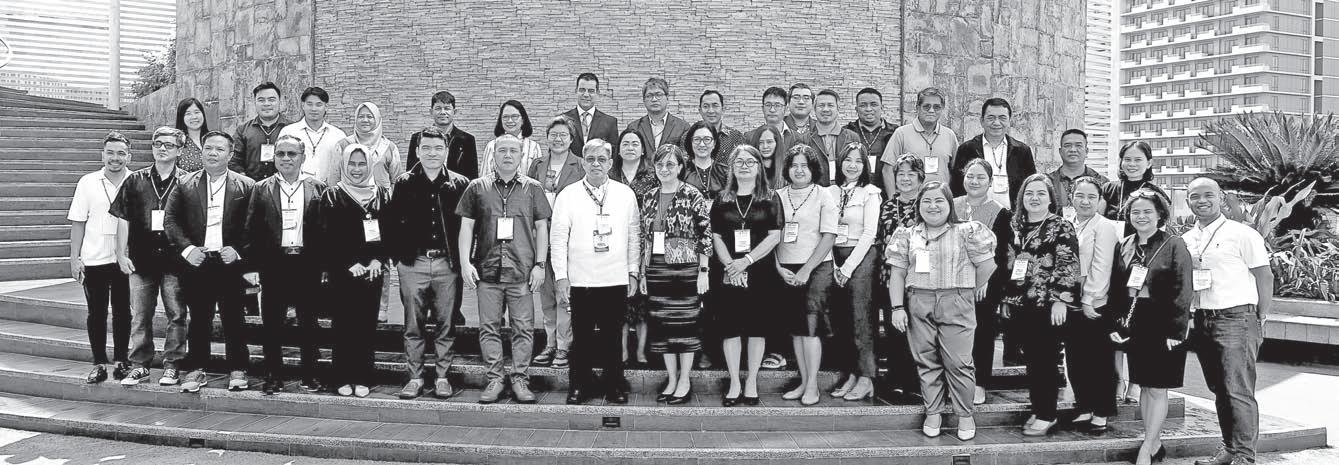

recent World Ocean Day celebration highlighted the importance of restoring coastal and ocean ecosystems by creating strongly protected areas and developing science-based solutions at the local, national, and international levels, in line with the goals of Asean Enmaps, the ACB said.
“We need a sea change in how we care for the oceans. Working with nature is one of our best options for ocean action. With only about 8 percent of the ocean under some level of protection, countries must think expansively and cooperatively to conserve, manage, and restore the ocean that sustains us,” said Gerd Trogemann, manager of the Regional Programme and Global Policy Network of the UNDP Bangkok Regional Hub for Asia and the Pacific.
Developing and improving the management of networks of MPAs and marine corridors is a force multiplier for conservation—amplifying individual MPA and allowing whole ecosystems to benefit from network effects, Trogemann said.
“As we mark World Oceans Day 2024…I am thrilled to launch the GEF-funded [Asean Enmaps] project. This initiative underscores our commitment and advances the blue economy in Southeast Asia in line with the UNDP Ocean Promise,” he added.
“By enhancing marine conservation and sustainable management practices, we’re safeguarding biodiversity and supporting local livelihoods, aligning with SDG 14 on Life Below Water, SDG 13 on Climate Action, and others,” he pointed out.
The Kunming-Montreal Global Biodiversity Framework or Biodiversity Plan, agreed at the 15th meeting of the Conference of Parties to the UN Convention on Biological Diversity, not only aims to protect at least 30 percent of coastal and marine areas by 2030, but also that these areas are effectively conserved and managed through ecologically representative, well-connected, and equitably governed systems of protected areas.
Multilateral marine conservation project
THE Asean Enmaps was designed to respond to the Biodiversity Plan and to address challenges by facilitating transformative changes in the collaborative management of ecological networks of MPAs, marine corridors, and other coastal and marine resources in LMEs in Indonesia, the Philippines, and Thailand.
According to ACB, the geographic focus of Asean Enmaps is in four LMEs—the Bay of Bengal, the South China Sea, the Sulu-Celebes Sea, and the Indonesian Seas.
The project has 11 pilot sites in the three countries—two in Indonesia, five in the Philippines, and four in Thailand.
It has a strong upscaling focus, including engagement with Asean working groups and LME cooperative governance mechanisms, as well as leveraging complementary investments across the Asean region.
“The connectivity of the Asean seas presents an opportunity for enhancing marine and coastal conservation through the MPA networks and through programs that address various threats to coastal and marine ecosystems,” said ACB Executive Director Theresa Mundita Lim.
Addressing these threats requires the participation of key stakeholders to better implement and operationalize environmental policies, regulation, and enforcement, Lim said.
“This should be augmented with apt institutional and technical support and robust cooperation. Moreover, decisionmaking for conservation and management will be more effective if decisionmakers are given accurate, reliable, and timely scientific information. The Asean Enmaps aims to achieve these in the next five years,” she pointed out.
Food security is essential IN her speech, Lim said the rich marine biodiversity in Asean is essential to the food security of its more than 660 million people, and contributes to climate change mitigation and increased disaster resilience.
“Southeast Asia has 35 percent of the world’s coral reefs with more than 600 species of hard corals, 23 out of 50 seagrass species in the world, and over 1,300 reef-associated fish species. By 2050, it is estimated that close to 500 million people will live in coastal and marine areas in our region, all of whom will rely on the rich marine biodiversity that is their source of livelihood, protection, and even culture and identity,” Lim said. Considering the threats to the region’s coastal and marine ecosystems that are common and interconnected, Lim underscored the need for a regionwide, multisectoral approach to address the multiple challenges the Asean faces in keeping its coastal and marine biodiversity healthy and properly functioning. Nevertheless, Lim said the connectivity of the Asean seas presents an opportunity for enhancing marine and coastal conservation through the MPA networks and through programs that address various threats to coastal and marine ecosystems.
“Addressing these threats requires the participation of key stakeholders to better implement and operationalize environmental policies, regulation, and enforcement. This should be augmented with apt institutional and technical support and robust cooperation. Moreover, decision-making for conservation and management will be more effective if decision-makers are given accurate, reliable, and timely scientific information,” Lim explained.
LAUSANNE, Switzerland—Tetra Pak recently unveiled its “Factory Sustainable Solutions” offering, a new factory-wide approach to energy, water, and cleaning-inplace (CIP) optimization.
The new Tetra Pak sustainability portfolio offers food and beverage (F&B) producers a tailored blend of state-of-the-art technologies and leading plant integration capabilities. It seeks to support F&B producers in optimizing energy and resource consumption, an important step in helping customers meet their sustainability targets and reduce operational costs. Traditionally reliant on fossil fuels and energy-intensive processes, F&B producers are under increasing pressure to optimize resources and increase energy generation from renewable sources.
This comes amid rising operational expenses, with high cost of raw materials, new CO2 taxes, and fees for wasted water. Complementing its resource-efficient equipment and services portfolio, Tetra Pak’s Factory Sustainable Solutions embodies a systematic, factory-wide approach.
The team will support customers by finding the right technologies and integration solutions for their needs, advising them on the best practice set-up for their line or facility. The ‘Factory Sustainable Solutions’ offering boasts of state-of-theart technologies, such as: Nanofiltration, developed by Tetra Pak, reclaims caustic cleaning liquid used for CIP. This technology allows for the recovery of clean chemicals and water for future reuse, enabling up to 90 percent recovery of
the total spent liquid. Reverse Osmosis, developed by Tetra Pak, uses proprietary membrane filtration technology to improve resource efficiency across multiple applications, including milk separation and water reuse.
Tetra Pak is also collaborating with innovative technology partners to offer additional solutions, including: HighLift heat pump technology, in collaboration with Olvondo Technology A/S, can be integrated into operations to facilitate the reuse of waste heat to produce steam across plant equipment, including the Tetra Pak Direct UHT unit, at pressures up to 10 bar.
High-temperature heat pumps, in collaboration with Johnson Controls, which up-cycles processed waste heat to use elsewhere in the factory.
Solar thermal collectors, in collaboration with Absolicon, utilize the sun as an unlimited source of clean and renewable energy to power hot water and steam delivery – at temperatures above 150°C—making it suitable for UHT applications.
Stefano Vittor, CEO at Olvondo Technology A/S, says, “By incorporating our HighLift heat pump technology into its Factory Sustainable Solutions business, Tetra Pak is offering an impactful solution to reduce carbon emissions across the food and beverage industry.”
For his part, Fredrik Norrbom, director of Sweden at Johnson Controls System and Service AB, added, “Approximately two-thirds of industrial energy use is driven by heat demand, derived largely from fossil fuels. Heat pumps are vital for increasing energy efficiency and delivering net
zero heating when combined with renewable electricity. We are proud to collaborate with Tetra Pak on smart building solutions to help customers achieve sustainability targets while helping the industry make critical progress on emissions reduction.”
Nicole Uvenbeck, director of Factory Sustainable Solutions and OEM Components at Tetra Pak, says, “This launch is an incredibly exciting and significant milestone for us at Tetra Pak, especially our team who have been working hard to push the boundaries of the impact and value such an approach can bring for our customers.”
To date, Tetra Pak has been mainly focused on machine and line optimization, and has realized the overwhelming benefit of replicating this at a factory level, providing a more holistic optimization approach.
“Factory Sustainable Solutions is an evolution of our expertise, spanning water, energy, and CIP recovery. This will redefine how we support our customers in achieving their sustainability ambitions while reducing operational costs,” Uvenbeck said. Fiona Liebehenz, vice president of Key Components, Plant Solutions and Channel Management at Tetra Pak, says, “Our customers are under more pressure than ever to operate as efficiently as possible regarding resource usage. This is, for many, an existential challenge to secure the future of their operations.”
Land thinking that we just go there. I want people to see us and see the direction of where I’m trying to take the sport.”
Th at’s because he knows how far basketball has brought him.
B orn in Wau, Sudan, Deng was 3 years old when his father, Aldo, moved with his family to Egypt in the throes of the second Sudanese civil war. It was in Egypt that Deng’s family met Bol, who introduced basketball to them. They were granted asylum in England, where Deng lived before moving to the United States in 1999 at age 14 after being recruited by New Jersey’s Blair Academy. Joe Mantegna had just been hired as Blair’s coach. His first two recruits were Royal Ivey, an 18-year-old from New York looking to play a post-graduate year, and Deng, who UConn had steered to Blair hoping he’d eventually follow in his brother Ajou Deng’s footsteps



DA s NBA Commissioner,
“Lu came in, in his church sho es, he didn’t have any basketball sneak-
All-Star and played for five teams over 16 seasons. Then in 2021 Mantegna got a call from Deng with a request. Deng, who was involved with several philanthropic endeavors in South Sudan, wanted to start a basketball program there.
He asked Mantegna if he’d coach.
“He just called me and said, ‘You want to jump on?’” Mantegna said.
“I didn’t hesitate. I just said to my wife, ‘I guess I’m going to be spending some time in Africa the next few summers.’”
Mantegna turned down
Deng’s offer to be head coach but signed on as an assistant and made a suggestion for the top spot on the bench: Deng’s old teammate, Royal Ivey.
D eng used millions of
his own dollars to fund the team in the first two years while the trio slowly built out South Sudan’s roster. They tapped into a stable of players with ties to the country who were playing around the world, including former NBA G-League MVP Carlik Jones and others with NBA experience including Wenyen Gabriel, Nuni Omot and Blair alum Marial Shayok.
They all bought into a vision for the future that Omot acknowledged was hard to see initially. The first time the team assembled in Sudan they showed up to find a single outdoor dirt court with one rim higher than the other, and no official 10-foot regulation goals. A lot of guys are refugees. And we grew up, we moved, so we’ve had the luxuries of having indoor courts and such things,” Omot said. “To go back home and start kind of at the beginning, obviously, we all had a vision of what it could be.
swimming events still set at Seine despite rains and play for the Huskies. The day Deng arrived in New Jersey, Mantegna and Ivey were sitting in the stands following a workout.





In theIr own words: what young people wish they’d known about social media
The Pinoy Rock legend’s final recording sees the light of day
Pinoy Rock pioneer and Juan dela Cruz Band founding member Wally Gonzalez’s last song, ‘Home,’ recorded with Jay Ortega, Louie Talan and Vic Mercado, will be launched online on July 13, along with an auction of two of his guitars, including his 1969 Fender
WALLY GONZALEZ (right) with Jay Ortega. “Wally and I were tripping out while Vic (Mercado) was setting up his studio,” Ortega recounts. “Wally was playing around with a riff, I asked him to please continue doing so in a virtual loop, and then I started writing verses over that riff.”
BANDWAGON at 19 East (clockwise from left): Wally Gonzalez, Vic Mercado, Louie Talan, and Jay Ortega.

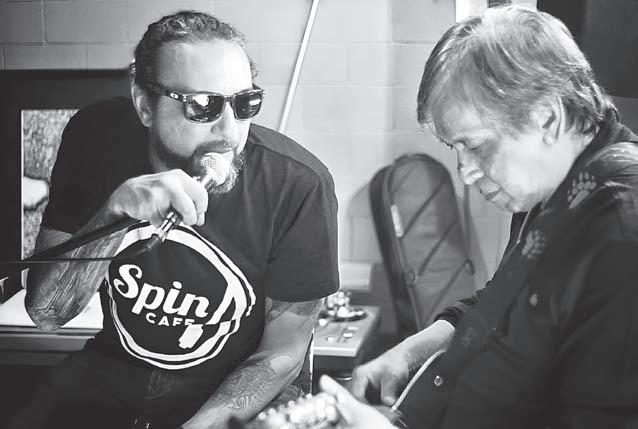

THE story goes that in 2020, a year before Pinoy Rock pioneer and Juan dela Cruz Band founding member Wally Gonzalez died at age 71, he and his Bandwagon bandmate Jay Ortega co-wrote a song called “Home.”
Publisher :
Editor-In-Chief : Concept :
Y2Z Editor :
T. Anthony C. Cabangon
Lourdes M. Fernandez
Aldwin M. Tolosa
Jt Nisay
SoundStrip Editor : Group Creative Director : Graphic Designers :
Edwin P. Sallan
Eduardo A. Davad
Niggel Figueroa
Anabelle O. Flores
Contributing Writers :
Tony M. Maghirang
Rick Olivares
Jill Tan Radovan
Reine Juvierre S. Alberto
John Eiron R. Francisco
Pocholo Concepcion
Francine Y. Medina
Rory Visco
Bea Rollo
Trixzy Leigh Bonotan
Photographers :
Bernard P. Testa
Nonie Reyes
Y2Z & SOUNDSTRIP are published and distributed free every Sunday by the Philippine Business Daily Mirror Publishing Inc. as a project of the
The Philippine Business Mirror Publishing, Inc., with offices on the 3rd Floor of Dominga Building III 2113 Chino Roces Avenue corner Dela Rosa Street, Makati City, Philippines. Tel. Nos. (Editorial) 817-9467; 813-0725. Fax line: 813-7025
Advertising Sales: 893-2019; 817-1351,817-2807.
Circulation: 893-1662; 814-0134 to 36. www.businessmirror.com.ph
O rtega recalls the track was spontaneously recorded in the home studio of Bandwagon drummer Vic Mercado, while waiting for bassist Louie Talan.
“ Wally and I were tripping out while Vic was setting up his studio,” Ortega recounts. “Wally was playing around with a riff, I asked him to please continue doing so in a virtual loop, and then I started writing verses over that riff.”
“ Then he started playing a heavier, faster riff, and again I asked if he could please keep repeating it. Then I wrote a chorus part, a melody for the bridge, and in 45 minutes we had a song.”
Upon Talan’s arrival, his three bandmates taught him the basic chords, the group did one run-through, and the song was recorded in one take.
But the track lay idle for a few years in an mp3 file, until Ortega managed to work on it with help from a former bandmate, Marco de Leon. They fixed the rough edges and mixed the music, Ortega re-recorded his vocal parts, and now the song is ready for release.
“ Home” will be launched on July 13 at Midcentury Manila in Biñan, Laguna via NFT (non-fungible token) on the Tatak Juan label, available for purchase online.
Two of Gonzalez’s guitars, including his ’69 Fender, will be auctioned. Proceeds will go to Gonzalez’s wife, 1971 Miss Philippines World Onelia Jose, who is undergoing medical treatment.

and
& Los
will perform live—with Los Lokos ending its set with “Home.”
O rtega and I engaged in an email Q&A.
When did you meet Wally and how did you get to perform with him?
I met him briefly sometime in the early 2000s. We were introduced by Pyaps (Pepe Smith) at a gig. Wally was nice and we had a chat about music and his love for Led Zeppelin.
A round 2010, I chanced upon him at the old Mandarin Hotel with his band Manila Blues Experience—Kat Agarrado on vocals, Wowee Posadas on keys, Wendell Garcia on drums, and Louie Talan on bass. Towards the end of the last set, Wally motioned for me to join them onstage, and we ended up jamming on “Whole Lotta Love.”
A fter the show, Wally said he might be calling me for a gig sometime soon. A couple of months later, he asked me to perform with him at an SMB Octoberfest gig. I couldn’t believe it.
I asked what songs will be on the set list, and he said, “Puro JDLC (Juan dela Cruz) lang at Led Zep. Bagay sa iyo eh.” When I asked if we would rehearse, he replied, “Hindi na, magkita na lang tayo sa gig.” With a slight chuckle after.
I w as like, “Oh, damn!” But I must come prepared. When I got to the gig, the band’s
lineup with Wally was Dondi Ledesma on bass and Chris Messer on drums. I was intimidated, to say the least. I hadn’t performed since I called it quits with my last band DRT (pronounced Dirt). I h ad no clue which songs we would perform. I brought out my lyric book, asked which song we would play first, lo and behold, the band just started playing JDLC’s “Palengke”—a song I knew by heart, thank God! But it was like that all night, as if Wally was testing me. He and Dondi would do long-ass, amazing solos in the middle of songs, and I’d just have to feel it out, and sing when I thought it was the right time. My heart was pounding, not because I was nervous, but because Wally, on this serendipitous night, had brought my musical soul back to life. We developed a deep friendship and connected on all levels.
What was your impression of him as a musician from an older generation?
Wally knew everything there was to know about being in a band, about his guitar, and getting the best out of it. But one thing that stuck with me after all those years of gigging with him, was how down to earth he was. That no matter the amount of legendary status he had gained over the years, he was a true and humble friend, someone who treated his bandmates with respect. H e would share with us the exact same amount he would get for himself, even if we were just the supporting cast. He was a real gentleman. I’ve known artists who would easily get more if it’s their name on the marquee and give their band mates “session fees.” Maybe that’s the biggest difference from their generation
Joey Ayala at Ang Bagong Lumad, Jay Ortega Lokos,‘B
COMPARED to previous BTS exhibitions, the main highlight of B Verse: BTS, Singing the Stars is the virtual reality (VR) performance fans will get to experience right at the start. It’s a surprisingly hygienic setup since face or eye masks that cover the sides of one’s face are provided for added cleanliness. I nitially, I didn’t expect much because I’ve used VR for gaming and videos before, but I was completely blown away by this exhibition, now happening at Gateway 2 of Araneta City.
T he over 10-minute VR segment featured performances from the 2021 and 2022 Fact Music Awards which also produced this exhibition. Included are never-before-seen clips with unique angles that differed significantly from what was shown on television.
It truly felt like watching a live show, as myself and many other attendees will attest. I loved how they made it seem like I was part of the audience through various perspectives. There were even moments where BTS member Jungkook looked directly at the camera and made me feel as if I was really there. As someone who has always dreamed of attending a live BTS concert, this experience felt incredibly close to reality. It’s moments like these make you grateful for technologies that provide such immersive experiences.
W ith their euphoric screams, the presence of fellow ARMYs further enhanced the experience that is akin to an actual live concert. The atmosphere was comfortable and inviting, allowing us to fangirl and enjoy ourselves freely.
A fter the VR segment, we moved on to the individual rooms dedicated to each BTS member. Showcasing different aspects of their personalities and styles, these rooms are designed
to represent their own “planets.” For instance, Namjoon’s room captured a nature theme, while J-Hope’s room had a touch of hip-hop. Each room featured high-quality photos of the members from their performances at The Fact Music Awards. V’s room had a unique setup with a projector displaying his photos that gave the impression of being in a movie, fitting for his “V’s Film Planet” theme. Photography and videos were not allowed in this area, which encouraged us to fully appreciate the photos and room designs.
Up next was the Army Way, which featured group photos and lyrics from BTS’ songs. After that, we entered the area featuring a timeline of past winners of The Fact Music Awards from 2021 to 2022, including groups like ENHYPEN, TOMORROW X TOGETHER, SEVENTEEN, and many more.
T he exhibition concluded with a meteor shower event, where fans experience being transported to another

compared to mine or today’s artists. It was never about the ego; it was about the music which we shared and created on stage.
What made you want to record that loose jam which you turned into a song—was it purely a spontaneous moment and felt something good was coming out of Wally’s guitar doodling?
To be honest, Wally and I were bored at the time. I picked him up from his place in Dongalo, Parañaque and drove all the way to Vic’s place in Antipolo. It was a nice, chatty drive, as it usually was when we
were together. But we were both itching to either rehearse or make music. He started doodling with riffs. It instantly caught my attention. From there I jumped in with some lyrics, melodies, and a song was born. Spontaneous combustion. Actually, there were two songs. I just didn’t get to finish the lyrics of the other one.
Were you in touch with Wally when he started getting sick?
W e were constantly in touch via Messenger. Last we spoke was a little less than a month before he passed. He had told me he was getting better, and that he was planning to record one last album, and


maybe do another Up in Arms (JDLC’s 1971 debut album) gig at 19 East. He was upbeat and made me feel like I would certainly see him again, I still have our Messenger convo. I don’t think I’d ever delete it.
What’s Wally’s greatest legacy to contemporary Filipino music?
H e had a lot of qualms about how artists were being treated by the industry, by promoters, and by record labels. He wanted to make changes in favor of the artists. And had plans of championing that cause. Of course, it’s easy enough to say that his legacy would be his music, and how he inspired our generation, and the
universe with BTS. It showcased their performances with various effects, making it feel like fans are entering a whole new world or as organizers would put it, the group’s own B Verse .
A ll told, the B Verse: BTS, Singing the Stars experience is a must-try not only for ARMYs who have not yet seen BTS live but also those who have already seen them but have been missing their presence as a result of their military service.
T he exhibition is very nostalgic as it primarily showcases their old photos and success at The Fact Music Awards. It’s a golden opportunity for longtime ARMYs to reminisce and recall fond memories with the boys even as it gives new ARMYs a chance to get to know them better. I highly recommend visiting this exhibit, as it’s something every ARMY should experience. B Verse: BTS, Singing the Stars is open until August 15, so there’s still plenty of time to come and enjoy the B VERSE!

generations that followed. But I think his greatest gift was how he was a real friend through and through, his humility as a human being. We had a lot of plans. I still have songs we were working on that’s on my external drive. I’m just happy I was able to pull one off the proverbial rabbit’s hat, and I’m ecstatic to know this song will finally see the light of day.
I w rote the lyrics as a metaphor for being at peace with oneself, some might even say it’s about finding light at the end of the tunnel, one last heave in trying to get to heaven. The song has changed its meaning for me after Wally’s death. It’s now about him getting home. He is now where he belongs.
IT’s dangerous. It’s addictive. Get off your phone.
Kids constantly hear about the downsides of social media from the adults in their lives, often in the form of dire warnings and commands. But these adults did not grow up with social media themselves.
They didn’t get a phone handed to them as toddlers, just to keep them quiet in a restaurant. They didn’t join TikTok’s predecessor Musica.ly and do silly dances before they even learned to read. They didn’t have their schools shut down in a global pandemic, their connections to friends and peers relegated to phone and computer screens.
Kids coming of age with social media are forging ahead in a whole new world. And now that they are getting older, they have some advice for their younger peers.
Here’s what they wish they knew when they first got online.
“You don’t have to share everything”
“I T ’ s so easy to look at your friends’ stories and feel this feeling of FOMO, of missing out and comparing yourself, like: ‘Oh, my friend just got a new car.’ It’s like this overwhelming sense of comparison. But the things that people post on social media, it’s just the highlight reel, like the 1 percent of their life that they want to showcase to other people.”
Bao Le, 18, a freshman at Vanderbilt University
“Don’t take it too seriously”
“My main point of advice would be not to take it too seriously. Be yourself. I feel like what I was exposed to as a 12-year-old was much more limited than what is accessible to 12–year-olds nowadays. younger kids want to be who they idolize. And when the TikTok stars or the social media stars are 20, 18, 16, they’re going to want to be like them. you’re getting younger kids that are now obsessing over products and brands, and it’s just getting really hard to be young. And it shouldn’t be really hard to be young. you should be enjoying childhood. And we shouldn’t be rushing to grow up. It’s OK to be 12. It’s OK to be young. It’s OK to enjoy childhood.”
D oreen Malat, 22, a senior at the University of Maryland
“How addictive it is”
“I T seems like it would be really easy
Le

to just put your phone down and stop scrolling. But it is not. If there was advice that I could give to my younger self, it would be to tell my parents to set up time limits for me—even though I would have never said that when I was starting social media. Also, I personally would not let my kid have TikTok. I would try to resist it as long as I could. It’s so addictive.”
Sienna Keene, 17, a high school senior in Orinda, California
“Take a social media detox”
“W H e n you first get these apps, it hits you—like, BOOM, there is so much content. st yles, fashion models. It really impacts you heavily when you first get it, this feeling of:
‘How do they do it? How do they look like this? How do they get clothes like that?’ When you’re new to social media, these trends can overtake you. I started to use screentime [monitoring] on my phone and limit the amount of time I am on social media. I’ve been taking phone detoxes. On weekends, I’ll take a social media detox for 10 hours or the majority of the day. I’ll hang out with my family, ride my bike. I only have notifications for my messages and workspaces. I don’t have any notifications on for social media apps.”
Ava Havidic, 18, a high school senior in Broward County, Florida
“You are the one in control”
“OF T en, I hear the term ‘social media


user,’ but I felt like I was being used by social media. I had this routine of scrolling mindlessly through TikTok, just scrolling and scrolling and comparing myself to other people. It ultimately really affected my body image, my perception of what was considered beautiful or accepted into society. But the only thing I was getting out of social media was feeling fatigued, or I would feel sad. you can use social media to amplify your passions, but in order to do that you need to do a lot of work outside of social media, to discover who you are as a person, what matters to you and what contributions you can make to the world.”
Lea Nepomuceno, 18, a freshman at George Washington University
“It’s a waste of time”
“I WOuld say just don’t use it. It’s kind of a waste of time. you’re just having conversations about pointless things, random pop culture stuff. It just sucks your time. you’re not really getting anything out of it, just short-term satisfaction. It’s kind of meaningless. I know this is kind of outlandish, but I feel like there should be some sort of age limit because I don’t think children should be on the internet.”
Mikael Makonnen, 18, a freshman at American University
“A lot of it is not real”
“A lOT of people make their life artificial so that they’re perceived in a certain way. And I think going into so-

cial media, I wish I knew it is a tool to learn from. There’s so much information, and you’re able to learn so much about different things. ...I wish people had that outlook rather than the whole idea of other people viewing you and having to be seen a certain way.”
Nour Mahmoud, 21, a junior at Virginia Commonwealth University
“It’s OK to put up boundaries and block someone” “ yOu can’t scroll on TikTok or look through Instagram without seeing supermodels who have edited their photos and are promoting unrealistic beauty standards. I don’t want to see these girls who pretend to be fitness influencers but are just promoting an eating disorder like ‘body checking’ on my feed. That is one thing I wish I knew when I started: that it is OK to not want to look at that or want to consume it. It’s OK to protect yourself and your own body image. Another thing I wish I knew is that not everyone on social media is your friend. When you are young and impressionable and people are reaching out to you, just know that not everyone is as friendly as you think they are.”
Madeleine Maestre, 18, a freshman at Santa Clara University
n Interviews by Almaz Abedje, Jocelyn Gecker and Barbara Ortutay
n Cover photo by cottonbro studio on Pexels.com