
‘China shock 2.0’ could impact PHL–Nomura
By Bless Aubrey Ogerio @blessogerio
AS China’s export machine expands across sectors, the Philippines is among the economies most exposed to the ripple effects, according to a new analysis by Nomura Holdings Inc.
The Japanese financial group said the country, along with Indonesia and Thailand, faces elevated exposure due to its reliance on lower-value manufacturing, while Malaysia, India, and Vietnam are better positioned due to stronger integration into higher-value

By Andrea E. San Juan @andreasanjuan
FOREIGN
direct investments (FDI) net inflows plunged in Q1 2026 due to “still-cautious” investor sentiment amid high inflation and a slow growth environment.
By Jonathan L. Mayuga
AS the government mobilizes personnel and multiple assets to provide search, rescue and relief operations, the number of casualties and affected communities continues to increase.
As of 12 noon, the death toll in the magnitude 7.8 offshore earthquake near Maasim, Sarangani Province, has reached 45, with 630 injured, reported the Office of Civil Defense (OCD), which acts as Secretariat of the National Disaster Risk Reduction and Management Council (NDRRMC).
OCD Assistant Secretary Bernardo Rafaelito R. Alejandro IV said government personnel from various National Government Agencies and NDRRMC-member institutions as well as multiple assets have been deployed to respond to the situation. The earthquake triggered by movements in the Cotabato Trench is the strongest that has hit Southern Mindanao since the 1976 Moro Gulf Earthquake and Tsunami that killed between 5,000 and 8,000 people, the Philippine Institute of Volcanology and Seismology (Phivolcs) said.

global supply chains. This was following the China’s global export share, which rose by 1.5 percentage points from 2019 to 2024, with gains spanning both high-tech industries and traditional manufacturing sectors.
Nomura warned of a possible “China shock 2.0,” driven by the expansion of high-tech exports, which could have deeper and more sustained effects than the earlier disruption seen in the early 2000s.
The rapid rise of China’s strategic export industries was highlighted, with combined shipments of electric vehicles, lithium-ion batteries, and solar panels in-
creasing by 349 percent between 2020 and 2025. Their share of total exports nearly tripled from 1.5 percent to 4.6 percent over the same period. Growth was even sharper in volume terms, with electric vehicle exports up 907 percent, batteries rising 674 percent, and solar panel exports increasing 586 percent. Beyond clean energy goods, China has also strengthened its position in heavy industries. Exports of construction machinery nearly tripled over the same period, while excavators now account for half of total sales, up from 17.4 percent previously.
Nomura said that even advanced economies are facing increased pressure, particularly in industries where China is rapidly gaining technological capability, including shipbuilding and construction machinery. It also pointed to a rise in trade defense measures worldwide, with countries such as India and South Korea increasingly resorting to anti-dumping actions as Chinese exports expand.
The group identified several Chinese firms as key beneficiaries of this export surge, particularly in batteries, solar manufacturing,



By Malou Talosig‑Bartolome
(Second of two‑parts series)
SEOUL—The historic stock market rally in South Korea was not an accidental byproduct of global tech enthusiasm. It was the result of deliberate reforms, aggressive dismantling of bureaucratic barriers, and pow erful industrial fundamentals.
For decades, household savings were locked into property, creating structural imbalances.
“In Korea, most of the retail wealth has been allocated to the property market. Very high portion has been going to the property market. But the property market is not productive actu ally,” said Yeon‑Ju Park, Head of the Research Center at Mirae Asset Securities.
She stressed that this reliance led to “very uneven and unhealthy wealth distribution compared to developed markets like the US. In the US, when the stock market grows, ev erybody benefits. In Korea, most of the wealth
goes to the property market, so only a few can enjoy the property market boom.”
Government intervention, policy shifts TO change this trajectory, the government stepped in.
Sung Hwan Byun, KRX Director General of Public Relations Management Strategy, said there is a deliberate intention “to move money from real estate to financial markets,” pointing to aggressive policy shifts such as the Corporate Value Program and robust growth in artificial intelligence (AI) and semiconductors.
“As many of you know, 2025 was a re cord‑breaking year for the Korean stock mar ket,” Byun said. “The growth rate surged by 36 percent, ranking first among G20 countries. But the rally did not stop there. This year, we have seen an additional 100 percent growth.”
He noted that since the launch of the pro gram in May 2024, the KOSPI climbed from around 2,700 to 8,000 in rapid succession.
Historically, it took nearly two decades for the index to move from 1,000 to 2,000, and another 13 years to reach 3,000. “I think the corporate value program was a great starting point,” Byun added.
Dissolving the ‘Korea Discount’ THESE reforms helped dissolve the infamous “Korea Discount”—a chronic undervaluation of Seoul‑listed equities due to governance anxieties, low shareholder payouts, and geopolitical risk.
Legislative overhauls
construction machinery, and shipbuilding.
In a separate assessment, Moody’s Ratings earlier said the Philippines remains relatively insulated compared with some regional peers, although certain manufacturing segments remain exposed to competitive pressure from Chinese exports. (See: https://businessmirror.com.ph/2026/06/10/ phl-factories-less-exposed-to-china-export-pressures/)
Uneven readiness on AI
NOMURA also flagged uneven readiness across Asia for artificial intelligence adoption.
It noted that the Philippines, Indonesia and Thailand face similar challenges in infrastructure, skills and enterprise capacity needed to translate new technologies into productivity gains.
It said production-led economies such as China, South Korea, and Malaysia are capturing near-term benefits from hardware exports, while adoption-led economies like Singapore and Japan face higher adjustment costs before efficiency gains are realized.
Countries including the Philippines, India, Thailand and Indonesia were grouped as facing the risk of losing competitiveness if domestic capabilities fail to keep pace with rapid technological shifts.
A recent report from the World Trade Organization showed that sustained investment in artificial intelligence-related goods could add around 0.5 percentage points to global trade growth.
Fitch revises PHL banking outlook to ‘deteriorating’
By Andrea E. San Juan
FITCH Ratings has revised downwards its outlook for the Philippines’s banking sector from “neutral” to “deteriorating” as it sees weaker loan growth and higher credit costs amid the elevated inflation environment in the country.
In a commentary, Fitch Ratings underscored that banks within the Asia Pacific region face a “split” in credit conditions in mid-2026 as higher energy prices and weaker growth “exert pressure” on some banking systems more than others.
“APAC’s high dependence on oil and gas imports from the Gulf Cooperation Council [GCC] renders the region vulnerable to higher inflation and weaker growth in the wake of the US-Iran conflict,” the credit rating agency said. As such, this prompted Fitch Ratings to revise downwards its outlook
Continued from A12
Aguda explained that PAIMM “ensures that the Philippines is prepared not only to adopt AI, but to
for banks in the Philippines and Sri Lanka, while “resilient” growth across China and Hong Kong, alongside “easing deflationary pressure” in China, has supported revisions to “Neutral.”
In the region’s more vulnerable markets, Fitch Ratings said weaker domestic demand and tighter policy settings are likely to drive “credit deterioration.”
In the Philippines, the credit rating agency pointed out: “Significantly higher inflation is hurting a consumption-led economy.”
As a result, Fitch Ratings said it expects “weaker loan growth, higher credit costs and lower operating profitability” in the Philippines, even if higher rates provide some support to margins.
Jonathan Cornish, Head of Asia Pacific (APAC) Banks at Fitch Ratings, explained that most bank ratings in the region remain stable. However, he noted: “Where we have negative rat-
become a regional leader in powering it.” The masterplan builds on existing programs including the National Digital Connectivity Plan, the National AI Strategy Roadmap 2.0, the National Cybersecurity Plan, and the Philippine Energy Plan. It also supports the administra-

ing outlooks, they largely reflect the Sovereign outlook, such as Indonesia, Thailand, and the Philippines.”
“Around half of the region’s bank Issuer Default Ratings are driven by their standalone or intrinsic credit profile [ie Viability Rating] with the other half driven by support expectations—mostly sovereign,” Cornish said.
That said, government support is more “prevalent” in bank ratings in emerging markets than developed markets, he added.
Nevertheless, Cornish said banking systems’ short-term performance prospects appear mixed with “pressure skewed to the downside,” particularly for Thailand and the Philippines where the credit rating agency’s sector outlooks are “deteriorating.”
Of the 16 economies in Asia-
tion’s PAX Silica Initiative, which aims to position the Philippines as a trusted digital and innovation hub.
Once approved, the PAIIM will
Pacific, only the banking systems of the Philippines, Sri Lanka and Thailand have “deteriorating” outlook for mid-2026. All three countries fall under the Emerging Markets category in the region.
At this juncture, Cornish said:
“We see little ratings impact in 2026, but the longer the conflict or impact drags on the greater the potential to weaken bank credit profiles, subject to policymakers’ intervention or support.”
“In that regard, governments in APAC have a track record of direct or indirect support for the economy, borrowers, and the banking system. The pandemic was the most recent example. Such support can mitigate or limit negative action being taken on bank ratings unless the sovereign rating itself faces negative action,” added Cornish.
be institutionalized through an executive order designating it a national priority program and establishing the governance mechanisms for its implementation.
She pointed to semiconductors as the clearest example.
Junhyun Park, KRX Senior PR Manager, described the global liquidity environment as “kind of like a war” among exchanges. “We are being very proactive and actively trying to go out to seek and attract a lot of these new foreign investors,” he said.
To win this battle, Korea introduced the Omnibus Account system, eliminating re strictive registration processes for foreigners.
The exchange is also extending trading hours and aligning operations with global standards to better accommodate investors from neighboring Asian markets, including the Philippines.
Toward a productive future BY dismantling red tape and channeling capi tal into high‑growth industries, South Korea has reshaped its economic trajectory.
“Nowadays, especially under this govern ment, more and more people are looking into the stock market. They are investing heav ily,” Yeon‑Ju Park of Mirae Asset Securities said. “In the long term, this is a positive trend because the money is being allocated to pro ductive companies, allowing Korean firms to expand and grow.”
“The sector is on a strong boom because of AI. These companies are earning around US$200 billion annually, and they can rein vest that money into new factories, research, and other extensions,” Park explained.
This reinvestment cycle, she added, is cre ating a more resilient economy. “Companies can build a better foundation for the future.
More and more firms can invest, innovate, and strengthen the broader economy.”
Philippine contrast
WHILE Seoul rewrote records, the Philippine Stock Exchange index (PSEi) remained mut ed, weighed down by inflation, high interest rates, and the absence of a dominant technol ogy sector to capture global AI enthusiasm.
Daily turnover often fell below US$150 million, far behind Seoul’s tens of billions.
For Manila, Korea’s experience offers a clear lesson: retail participation, institutional support, financial literacy, and investor‑friendly reforms can reshape market dynamics.
By empowering both everyday investors and pension funds, South Korea has turned equities into a national growth engine. For emerging markets like the Philippines, the model is a masterclass in how to evolve from muted trading to a vibrant, globally competi tive capital market.
tions, and to accommodate passengers displaced by the disruption at General Santos.
Vessels from 2 ports rerouted MEANWHILE , the Department of Transportation (DOTr) and the Philippine Ports Authority (PPA) said they have ordered the rerouting of vessels from Makar Wharf in General Santos City to Malalag Port in Davao del Sur to ensure uninterrupted passenger and cargo service following the earthquake.
Transportation Secretary Giovanni Lopez said an alternative port was needed to immediately handle roll-on/roll-off (RoRo) and general cargo opera-
“Our people’s travel should be uninterrupted, including the cargo, so as not to disrupt the economy. So we are looking for alternative ports to service travelers and products from GenSan,” Lopez said, partly in Filipino.
PPA General Manager Jay Santiago said he had directed the Port Management Office (PMO) in General Santos to coordinate with its Davao del Sur counterpart to carry out the rerouting from Makar Wharf.
He also ordered the immediate rehabilitation of damaged structures at Makar Wharf following a structural integrity assessment of port facilities, including the passenger terminal building and underwater structures, to ensure the safety of passengers, port employees, and personnel.
million in March 2026, up 26.1 percent from the $485 million in the same month a year ago. The $611-million FDI net inflows in March were, however, 4.23 percent lower than the $638 million bagged in the previous month or in February 2026.
Analysts’ take RUBEN CARLO ASUNCION, chief economist at Union Bank of the Philippines (UBP), said the latest data suggest that while FDI inflows showed some improvement on a year-on-year basis in March, the overall decline in first-quarter inflows reflects “still-cautious” investor sentiment amid global uncertainty. Asuncion said the “divergence” between the monthly rebound and the weaker quarterly trend indicates that inflows remain “volatile and sensitive to external developments.”
This was echoed by Jonathan L. Ravelas, senior adviser at Reyes Tacandong & Co., who explained that the first-quarter decline indicates that investors are cautious and holding back amid global uncertainty, elevated inflation and geopolitical tensions. However, Ravelas said the pickup in March is a “good sign” that interest in the Philippines remains “intact, just more selective.”
Offsetting factors of FDI decline WHILE drawing in foreign investments is seen to remain “uneven” in the near term, analysts underscored how FDI can help cushion the impact of current economic challenges.
Asuncion said: “Structural drivers such as manufacturing expansion, infrastructure investment, and supply chain diversification should support a gradual recovery as global conditions stabilize.”
Ravelas said FDI can “definitely help the economy” by bringing in capital, jobs, and productivity gains, which are crucial in mitigating the impact of inflation, especially with external shocks like the Middle East conflict.
As such, Michael L. Ricafort, chief economist at the Rizal Commercial Banking Corporation (RCBC), cited the Pax Silica and Luzon Economic Corridor as “offsetting positive factors.” Explaining the impact of these investment hubs on the economy, Ricafort said: “These could help attract more high tech investments into the Philippines not just from the US but from other like-minded developed countries around the world, especially on AI, rare earths, electric vehicles/ hybrid vehicles that would create clustering effects for competing high tech investments and also for their respective suppliers.”
Ricafort said with these new investments, there would be construction activities, new capital equipment to be brought in, more financing/loans/credit for these, thereby entailing more jobs and other economic opportunities for local citizens and businesses near and along the path of LEC.
“New growth areas nearby would also emerge in terms of residential, commercial, industrial, tourism areas; all generating new business, economic, and investment opportunities,” Ricafort said, adding, this would also require better infrastructure projects that also create more investments to further improve the movement of exports and imports through seaports, airports, toll roads. In its statement, the BSP said foreign equity and reinvested earnings remained “broadly steady,” in the January to March 2026 period.
“Equity capital placements were sourced primarily from Japan, the United States, and Singapore, and were channeled largely into the manufacturing, financial and insurance, and real estate industries,” the central bank also noted.
Taken together, Ravelas said the latest FDI numbers point to a “recalibration rather than a retreat.”

The total cost of damage to Makar Wharf has yet to be determined pending the completion of the engineering assessment.
“It’s important to remember—FDI is a long-term growth driver, not a quick fix for near-term price pressures,” added Ravelas.
“Looking ahead, I expect FDI to remain soft but resilient. In a high-inflation, slower-growth environment, investors tend to be more disciplined. The opportunity for the Philippines is clear: if we can deliver policy consistency, ease of doing business, and stable macro conditions, we can turn this period of caution into a platform for stronger, more sustained inflows,” added Ravelas.
BusinessMirror Economy
Creative economy growth hinges on stronger industry conditions
By Bless Aubrey Ogerio
THE Philippines’ push toward its 2030 creative economy targets will depend not only on building skills but also on improving the conditions that allow those skills to translate into income-generating work, a national diagnostics report said.
The report, produced under the Creative Economy Data Model Pilot Project between the Philippines and the World Intellectual Property Organization (Wipo), said the sector’s growth will hinge on stronger firm
Sari-sari stores boost sales by reading demand better
SARI-SARI store owners who were able to better anticipate buying patterns during rainy days, weekends, and other peak demand periods posted stronger sales growth, according to a report released by Filipino tech startup Packworks.
T he study found that stores using data-driven inventory insights recorded a 47-percent increase in median gross merchandise value (GMV) sales of seasonal products, suggesting that retailers were better equipped to stock items likely to be in demand at specific times.
T he findings were based on more than one million monthly transactions across Packworks’ network of 300,000 microretailers nationwide.
A ccording to the report, stores that used the company’s artificial intelligence (AI)-powered Store Insighting Project (SIP) saw measurable revenue gains within two months of adopting the platform.
S ales of the stores’ top 50 products rose significantly, with median GMV increasing by 79 percent from P187,229 to P335,818 per store.
Store owners also appeared to improve inventory management for slower-moving items. Median GMV sales of these products climbed by 96 percent, from P7,361.60 to P14,429.
Th is was as retailers adjusted their stocking strategies and promoted products identified by the system as underperforming.
O verall, stores utilizing SIP data recorded a 29-percent increase in median total sales and a 20-percent rise in the median number of transactions.
A ccording to Packworks chief data officer Andoy Montiel, access to data can help small retailers make more informed business decisions. “When data is democratized, we give grassroots entrepreneurs the power to chart their own growth,” Montiel said. By equipping sari-sari store owners with the insights to stock smarter and operate efficiently, we are not only boosting individual store sales but expanding access to technology to build a more resilient grassroots economy,” he added.
F or his part, Packworks cofounder Ibrahim Bernardo said the findings highlight the continued importance of sari-sari stores in local communities.
Sari-sari stores remain the economic lifeblood of our communities, and women serve as the backbone of this ecosystem,” Bernardo said. Bless Aubrey Ogerio
capacity, more developed demand for creative products, and the emergence of businesses capable of producing and commercializing higher-value outputs.
I t stressed that improving coordination between research and development and the needs of creative industries is crucial, alongside stronger links between research, production, and market access.
“ Greater alignment of R&D [research and development] investment with the needs of the creative industries, together with stronger linkages between research, production, and markets, will be critical,” the report said. Access to financing was also flagged as a key constraint, with the report
pointing to the need for mechanisms that allow intellectual property to be treated as a financial asset.
Th is, it said, could help creative firms take on more risk and shift from service-based work toward original content creation and monetization.
R ecent reforms such as the Creative Industries Development Act and the rollout of the Creative Economy Satellite Account were cited as important steps in strengthening coordination across agencies and improving the quality of data used for policymaking.
Further, data from the Philippine Statistics Authority (PSA) showed the creative economy expanded by 6.9 percent in 2024 to P2.12 trillion,
CLARK FIELD, Pampanga—
from P1.98 trillion the previous year. The sector accounted for about 7.6 percent of gross domestic product and 17.8 percent of total employment.
D espite this expansion, the report noted continuing gaps in intellectual property systems, including collective management organization governance, online enforcement, dispute resolution, and awareness.
T hese issues, it said, contribute to a disconnect between high levels of digital consumption and limited monetization.
It added that addressing these gaps within a broader and more coordinated creative economy framework will be necessary to translate digital activity into sustained economic returns.
House to prioritize measures that push economic growth
By Jovee Marie N. Dela Cruz @joveemarie
THE leadership of the House of Representatives on Wednesday vowed to prioritize bills that will drive economic growth, expand business opportunities, and improve the lives of Filipino families.
Speaking on behalf of Speaker Faustino G. Dy III at the opening of the 20th Manila Foods and Beverages Expo (Mafbex) at the World Trade Center, Camarines Sur Rep. Tsuyoshi Anthony G. Horibata emphasized that the chamber will continue prioritizing measures that support businesses, generate jobs, and expand opportunities—building on its accomplishments during the First Regular Session of the 20th Congress. “ The House has chosen to concentrate on legislation that can
make a real difference in people’s lives and help move the economy forward. Much of that work happens quietly and away from the spotlight,” said Horibata.
Horibata said the House approved 229 measures during the First Regular Session that are now awaiting Senate action, including 66 national bills and 163 local measures.
These measures cover key sectors such as infrastructure, education, healthcare, food security, and economic development, all aimed at improving public services and expanding opportunities nationwide.
These are not merely numbers on a legislative report. They represent better benefits for our students, more paved roads, improved government services, and expanded economic opportunities,” he said.
A ddressing entrepreneurs and
industry stakeholders at Mafbex, Horibata underscored the shared goal between lawmakers and the private sector of creating opportunities that uplift Filipino families.
He stressed that real progress should be measured by tangible outcomes, such as business growth, job creation, and improved living conditions.
A mong the major measures approved by the House are the proposed National Land Use Act, amendments to the Pantawid Pamilyang Pilipino Program (4Ps), the eBayad Act promoting digital government payments, and the Philippine Waste-to-Energy Act.
The chamber also advanced bills on child online safety, a National Nutrition Program, enhanced powers for the Bases Conversion and Development Authority to attract
investments, extension of Professional Regulation Commission license validity, and a proposed Right to Information law to boost transparency.
“ Together, they represent concrete efforts to make it easier for businesses to grow, for investments to flow, and for Filipino families to enjoy a better quality of life,” explained Horibata.
He likened lawmaking to entrepreneurship, noting that both require patience, discipline, and sustained work behind the scenes.
“ In many respects, legislation is much like entrepreneurship. The public often sees only the finished product, but success is built on preparation, coordination, and execution,” he said.
That is exactly how Speaker Bojie Dy has approached the work of the House: less focus on politics, more focus on results,” he said.
Economic headwinds have little effect on Cebu growth
By Carmel Pedroza
CEBU CITY—Cebu continues to maintain a robust economy, anchored by its strong manufacturing base, thriving services sector, resilient business process outsourcing (BPO) industry, and strategic role as the economic gateway of the Visayas, according to an economist.
In an economic briefing, Winston Padojinog, president of the University of Asia and the Pacific (UA&P), said Cebu remains one of the country’s most diversified regional economies despite mounting inflationary pressures, slowing national growth, and global economic uncertainties.
“Unlike the Philippines, which is experiencing a hollowing out of its industrial sector, Cebu continues to maintain a very robust industry and services sector, especially industry,” Padojinog said.
Data presented during the forum showed that Cebu City’s economy is heavily driven by services, which account for 89.5 percent of total economic output. Key contributors include wholesale and retail trade, financial services, professional and business services, and real estate.
M eanwhile, neighboring cities provide the industrial backbone that supports the region’s growth.
Mandaue City derives 36.5 percent of its economy from industry, while Lapu-Lapu City records an even higher 48.2 percent share, largely driven by manufacturing activities.
The presentation highlighted how Cebu’s urban centers function as an integrated economic ecosystem, with Cebu City serving as the services hub while Mandaue and Lapu-Lapu provide value-added manufacturing and industrial production.
“Cebu City provides the critical services to the rest of the region’s economic activities,” Padojinog said, noting that goods imported through Cebu’s ports
are distributed across the Visayas and parts of Mindanao.
Open economy
PADOJINOG described Cebu as “one of the country’s most open regional economies,” with trade activity equivalent to a significant portion of Philippines’s total output.
W hile openness exposes Cebu to imported inflation and external economic shocks, it also strengthens its position as a logistics, transportation, and trading center.
“Anything related to goods movement, transport, logistics, warehousing and distribution continues to perform very well,” he said.
S tudies conducted by UA&P indicate that the logistics sector in the Visayas continues to expand, supported by increasing inter-island trade and growing consumer demand.
Despite Cebu’s economic strengths, Padojinog warned that inflation remains a major challenge.
He explained that the Philippines is currently experiencing what economists call “cost-push inflation,” where rising production costs, transport expenses, utilities, and imported inputs drive prices higher.
This inflation is not demanddriven. It is largely cost-pushed,” he said.
B ecause Cebu relies heavily on imported raw materials and goods, the region is particularly vulnerable to global price increases and fluctuations in the value of the peso.
R ecent natural disasters and supply chain disruptions have also contributed to inflation rates in Central Visayas exceeding the national average in some periods.
Higher inflation, he added, threatens household purchasing power and could reverse gains made in reducing poverty incidence.
Services, remittances
PADOJINOG noted that Cebu benefits
from multiple sources of income that help cushion economic shocks.
T he region has a large base of salaried workers employed in the BPO sector, finance, tourism, and professional services.
O verseas Filipino Worker (OFW) remittances also remain a significant source of household income, particularly in parts of Cebu province and Lapu-Lapu City.
W ith the peso weakening against the US dollar, households receiving remittances stand to gain higher peso earnings.
A weaker peso also improves the competitiveness of the country’s exports, BPO services, and tourism sector.
A peso devaluation makes ITBPO, exports and foreign tourism more competitive, while OFWdependent households earn higher incomes,” he said.
N ationally, Padojinog said economic growth slowed to 2.8 percent during the first quarter of 2026, largely due to weaker government spending and slower private sector investment.
H e emphasized the interconnected nature of the economy, explaining that declines in government expenditure often trigger slower business activity and reduced household consumption.
“ The economy is highly dependent on consumption, which accounts for nearly 80 percent of total economic activity,” he said.
A lthough employment data has remained relatively strong, he cautioned that authorities must closely monitor labor market conditions as the broader economy slows.
A nother challenge facing the Philippines is its relatively low level of foreign direct investments (FDIs) compared to neighboring Southeast Asian economies.
Padojinog pointed out that countries such as Vietnam and Thailand
continue to attract significantly larger investment inflows, supporting infrastructure development and industrial expansion.
We need to attract more foreign capital into the Philippines,” he said.
He stressed that stronger investments are necessary to support infrastructure projects, generate jobs, and sustain long-term growth.
Opportunities
DESPITE current economic challenges, Padojinog identified several opportunities for Cebu and the wider Central Visayas region.
A mong these are expanding agribusiness and food processing industries; increasing investments in renewable energy and digitalization; strengthening logistics and transport networks; developing infrastructure connectivity; supporting tourism recovery; enhancing upstream and downstream value-chain integration; and encouraging innovation and ecommerce adoption.
He also urged businesses to capitalize on digital platforms, delivery services, and technology-driven solutions that bring products closer to consumers.
Padojinog concluded that Cebu’s diversified economic structure remains its greatest strength.
The combination of agriculture, manufacturing, services, tourism, BPO operations, entrepreneurship, and overseas remittances has created a resilient economic foundation capable of weathering external shocks.
“Cebu is highly diversified. It has a strong agro-industrial base and a resilient IT-BPO economy,” he said.
W hile inflation and global uncertainties continue to pose risks, Cebu’s integrated economy, strategic location, and broad income sources position the province and its highly urbanized cities to remain among the country’s strongest regional growth centers in the years ahead.
Moving swiftly to realize its vision of becoming the country’s premier aviation hub, the Clark International Airport Corporation (CIAC) has officially signed a 25-year lease agreement with Heatcon Asia Inc., a leading global provider of composite repair solutions and a key supplier to aerospace giant Boeing.
T he agreement formalizes the establishment of Heatcon’s manufacturing, material distribution, and in-shop composite repair facility within the Clark Civil Aviation Complex.
T he contract was signed by Ciac President and Chief Executive Officer Jojit Alcazar and Heatcon Asia Inc. president Howard Victor Banasky, in a ceremony witnessed by key officials from both organizations.
A lcazar emphasized that the partnership is a major win for the country’s aerospace sector, directly aligning with the mandates of the Bases Conversion and Development Authority (BCDA) to drive highvalue industrial growth.
“ This investment represents a significant milestone in Clark’s continued emergence as a leading aviation and aerospace hub,” Alcazar said.
“ Heatcon’s facilities support major aviation players in the region, including Boeing, and are expected to further strengthen Clark’s position as an attractive destination for aircraft Maintenance, Repair, and Overhaul [MRO] services,” he added.
A lcazar also noted that by establishing its presence here, Heatcon is directly contributing to Ciac’s vision of transforming the region into a premier aerospace center in Southeast Asia. He added that as global aircraft fleets expand and require strict safety and efficiency standards, Clark is positioning itself to capture the rising demand for world-class MRO services.
Today’s signing formalizes a partnership rooted in innovation and global excellence. It highlights Clark’s readiness to support the growing demands of the global aerospace industry while advancing our vision of developing Clark Aviation Capital,” Alcazar said.
Established in 1978, Heatcon is a globally recognized manufacturer that supplies hot bonders, heat blankets, and process materials to both commercial and military aviation sectors.
A ccording to Heatcon management, the new Clark facility will serve as a strategic hub to support its rapidly growing customer base across the AsiaPacific region, marking a pivotal step in the company’s global expansion.
E xpressing his gratitude for the collaboration, Alcazar stated:
“We thank Heatcon for its trust and investment in Ciac. Their growth is our growth, and we are committed to supporting the long-term success of their operations here. We hope this partnership serves as the launchpad for decades of shared success, innovation, and growth.”
U nder the Marcos administration, Ciac is aggressively executing its thrust to transform the Clark Civil Aviation Complex into the Clark Aviation Capital, a dynamic, aviation-driven business, manufacturing, and logistics hub. A s the premier land and aviation development arm of the BCDA, Ciac is mandated to prime the Clark Aviation Capital for global enterprises specializing in industrial, commercial, warehousing, and hightech manufacturing operations, solidifying the Philippines’ footprint in the global logistics chain.
The Nation
BusinessMirror
‘Lack of credible defense prompts Sara lawyers to push for dismissal of impeachment complaint’
ABy Jovee Marie N. Dela Cruz | @joveemarie
HOUSE of Representatives
impeachment trial spokesperson on Wednesday said the defense team of Vice President Sara Z. Duterte is pushing for the outright dismissal of the impeachment case because it lacks counterevidence to refute the allegations in the Articles of Impeachment.
L anao del Sur Rep. Zia Alonto Adiong, a House trial spokesperson, said that while Duterte’s official answer was lengthy, it largely focused on stopping the proceedings instead of directly addressing the charges.
Although their response is quite voluminous and even comes with an executive summary, the core of it is really to halt the process rather than confront the allegations,” Adiong said.
H e explained that the House prosecution panel opted to file a manifestation instead of a point-by-point reply, arguing that there was nothing substantial to respond to.
“ But our position on that is exactly why the House prosecution team simply submitted a manifestation— because how can you respond to something that, in truth, does not require any answer,” Adiong explained.
must not undermine constitutional accountability as the impeachment trial for Duterte moves forward.
He said public officials have a duty to uphold the Constitution regardless of political consequences, even as he acknowledged facing backlash for supporting the impeachment process.
He admitted that his position has drawn criticism, particularly in Mindanao, where Duterte remains politically popular.
“ The backlash has really affected me, but as I’ve been saying, this is the time when you have to stand firm in what you believe is right,” Adiong said.
to the Senate, which is now convened as an impeachment court.
A diong said lawmakers who supported the complaint did so after reviewing evidence and hearing testimonies during congressional proceedings.
“ We saw the evidence and heard the testimonies of the witnesses. We have no choice but to stand on the Constitution,” he said.
He also warned that intimidation tactics and false accusations could create a chilling effect on efforts to hold powerful officials accountable.
H e explained that the pre-trial will determine the overall flow of the proceedings, including how the court will handle witness disclosures, documentary evidence, and objections.
The issue surrounding “Piatos” is linked to the confidential funds controversy, where lawmakers previously questioned certain names and acknowledgement receipts used in liquidation documents.
A“If they truly have someone named Mary Grace Piatos to present, it would be better for them so that there will be clarity,” Adiong said.
The Constitution does not give the Senate Impeachment Court the option to dismiss the case outright. Its role is to conduct a full trial and then decide whether to acquit or convict,” he said.
He added that the procedural and constitutional objections raised by the defense are not new and had already been brought up during House proceedings last year by Fortun Narvasa Salazar, Adiong said, referring to the defense law firm.
He said the Constitution gives the Senate Impeachment Court the role of trying and deciding the case, not dismissing it outright before the presentation of evidence.
Constitutional accountability ADIONG said political pressure, disinformation, and personal attacks
According to Adiong, the defense’s main objective is to have the case dismissed even before trial begins—a move he stressed is not provided for under the Constitution.
“ You have to stand by the Constitution because the Constitution is just a document—it’s on paper; it has words. If we do not live by it, then the Constitution will have no effect,” he added.
T he Senate Impeachment Court prepares for its June 18 pre-trial conference, where both prosecution and defense panels are expected to present their evidence, witnesses, and key legal issues.
A ccording to Adiong, the impeachment proceedings serve as a test of whether public officials are willing to enforce accountability despite political pressure.
“ The Constitution will only be alive if we act on it. If there are impeachable officers who have committed violations such as culpable violation of the Constitution or betrayal of public trust, it is our duty to uphold this,” he said.
T he House of Representatives earlier impeached Duterte and transmitted the Articles of Impeachment
Adiong said he and other members of the House prosecution panel face allegations from a group of former bodyguards of former Party-list Rep. Zaldy Co of Ako Bicol, who claimed they delivered cash-filled luggage to lawmakers. He has repeatedly denied the accusations.
“ If I give in to the backlash and to the spread of false information meant to damage my reputation, it would be as if I were supporting a culture of impunity,” he said.
Disclose ‘Mary Grace Piatos’ ADIONG also said the defense panel must disclose early if it intends to present “Mary Grace Piatos” as a witness in the impeachment trial.
Sp eaking ahead of the pre-trial conference, Adiong said both camps are expected to submit their evidence and list of witnesses, subject to possible objections.
The House prosecution team is ready to submit its evidence and potential witnesses. We also expect objections from the other side,” he said.
“ There is no judgement here. The goal is to establish probable cause and give the defense the opportunity to respond,” he said.
However, Adiong noted that if a witness claiming to be Piatos is presented, the defense must reconcile the signature with those appearing in the confidential fund documents.
The Mary Grace Piatos who will appear should have a signature that matches exactly the one in the acknowledgement receipts,” he said.
He also cited the case of “Kokoy Villamin,” whose signatures in separate receipts reportedly differ, raising the possibility of forensic examination during the trial.
It will be difficult to simply present a witness claiming to be Kokoy Villamin, because experts may be called to forensically examine the signature specimens,” Adiong said.
T he House prosecution panel, he added, is now preparing its evidence and witnesses for the upcoming pre-trial conference.
Nine out of 10 Pinoys want PHL to work with allies in defending WPS—survey
NEARLY nine in 10 Filipinos want the Philippines to work with like-minded nations, specifically the United States, Japan, Australia, Canada and South Korea, in defending the West Philippine Sea, according to a recent Pulse Asia survey. Results of the survey, commissioned by Stratbase Institute, were made public on Wednesday, ahead the Philippine Independence Day and the 10th anniversary of the landmark 2016 Arbitral Ruling on the South China Sea that invalidated Beijing’s sweeping claims over the vital sea lane. The survey asked 1,500 respondents from May 3-7, 2026, whether they agreed or disagreed that the Philippines should defend the West Philippine Sea with like-minded countries in accordance with the 2016 decision.


Nationwide, 86 percent said they agreed, with Mindanao leading the regions with the highest positive sentiment (91 percent, with 63 percent saying they strongly agreed) followed by the National Capital Region with 90 percent (and 64 percent saying they strongly agreed).
O nly 3 percent said they disagreed while 11 percent said they could not say whether they agree or disagree.
I n another question, the respondents were asked to pick at least five countries or organizations that the Philippines should work with in defending the West Philippine Sea.
The survey showed that 84 percent of Filipinos nationwide want the government to work with the United States, followed by Japan (67 percent), Australia (57 percent), Canada (51 percent) and South Korea (44 percent).
The National Capital Region registered the highest desire to work with the US at 86 percent, followed by Balance Luzon and Mindanao at 85 percent. Support for the US is also highest among Class E respondents at 86 percent.
Higher figures
FIGURES for the United States and Japan were 2 and 3 percentage points
higher, respectively, than their ratings in a similar Stratbase-commissioned survey in December 12-15, 2025 where they got 82 percent and 64 percent, respectively.
Meanwhile, support for China appears to have been pulled upward by Mindanao where 23 percent of respondents said they wanted the government to work with Beijing to defend the West Philippine Sea.
The West Philippine Sea covers the Philippines’ maritime zones spanning from the western coastlines of the archipelago, including the Luzon Sea and the territorial seas of Bajo de Masinloc and the maritime features of the Kalayaan Island Group (KIG). A chunk of this area is being claimed by China under its so-called 10-dash line.
I n a statement, Stratbase Institute president and Chief Executive Officer Victor Andres Manhit said the poll findings reflect that Filipinos see “that upholding the 2016 arbitral award and strengthening cooperation with like-minded nations are essential components of preserving our independence in the 21st century.”
As we mark a decade of our victory at The Hague, we must do our p art in defending our hard-won
triumph so that future generations inherit a nation that is free, secure and respected in the international community,” he said.
PN, PCG ships at Rimpac
THE PNavy (PN) on Wednesday said guided missile frigate BRP Miguel Malvar (FFG-6), with Naval Task Group (NTG)-84 on board, took part in a Group Sail and a series of maritime exercises with ships of other Rim of the Pacific (Rimpac) participants from June 6 to 8.
I n a statement, NTG-84 said the drills took place as the ships were en route to Hawaii.
“ Representing the Philippines were the PN’s BRP Miguel Malvar [FFG-6] and the [Coast Guard] PCG’s BRP Gabriela Silang [OPV-8301]. Both ships were accompanied by RSS Steadfast [RSS-70] of the Republic of Singapore Navy and ITS Giovanni delle Bande Nere of the Italian Navy,” it added.
T he four ships carried out various maritime exercises to enhance o perational readiness, strengthen interoperability, and promote cooperation among partners.
NGELES CITY—The Bureau of Fire Protection Central Luzon and other responding agencies formally concluded the search, rescue and retrieval operations on Wednesday, after 18 days of continuous deployment at the site of the collapsed building in barangay Balibago here. The conclusion of operations followed a Unified Command meeting convened by the Angeles City government during which authorities formally announced the end of operational activities and start of demobilization procedures. A c lose-out meeting was later conducted by the BFP to recognize participating agencies, review operational accomplishments and observations, and formally conclude the deployment. T he operation was launched after the collapse of a nine-story building under construction on May 24. Authorities have so far recovered 30 fatalities from the rubble. T he fact-finding task force continues to investigate the cause of the collapse. Ashley J. Manabat
Comelec seeks P191 million for Dasmariñas
THE Commission on Elections (Comelec) has asked the national government for financial assistance to fund the special elections in Dasmariñas City, Cavite, which could cost as much as P191 million.
T he special elections will be held on August 29, owing to the expulsion of former Rep. Francisco Barzaga from the House of Representatives.
Comelec Chairman George Erwin Garcia said the poll body has already written to President Marcos to seek funding support, noting that the agency has no dedicated budget for the exercise.
The special elections will fill the vacancy in the city’s lone congressional district and is expected to involve around 450,000 registered voters. Garcia said the estimated cost is significantly higher than previous special elections because of the large number of voters in the district. We have formally informed the President that the special election may cost around P191 million. We are hoping the government can assist us, possibly through the contingency fund,” he said.
While awaiting a response, Comelec has begun looking for possible savings and budget items that can be realigned to support the conduct of the polls.

More libel, other charges piling up vs lawyer, 18 bodyguards
By Joel R. San Juan @jrsanjuan1573
DEPUTY Speaker Janet Garin on Wednesday filed cyberlibel and perjury charges before the Department of Justice (DOJ) against 18 former bodyguards of the disgraced congressman who named her as one of the lawmakers who received luggages of cash as kickbacks from government flood control and infrastructure projects.
I n an ambush interview at the DOJ, Garin, who represents Iloilo, said she also included in the
INDEPENDENT scientists and public health experts have raised concerns that overly restrictive guidance on nicotine pouches could shape policies across Asia-Pacific in ways that deny adult smokers access to lower-risk alternatives to cigarettes. For people who smoke or use other nicotine products and don’t want to stop using nicotine, switching completely from the more harmful product and moving down the risk continuum with nicotine pouches is likely good for public health,” said Cristine Delnevo, lead researcher of a recent study by the Rutgers Institute for Nicotine and Tobacco Studies, published in Jama Network Open. The study also found that many adult nicotine pouch users in the United States had recently quit smoking or vaping, suggesting the products may support harm reduction efforts.
Concerns followed the release of the World Health Organization’s lat -
complaint the legal representative of the former bodyguards-porters, lawyer Levito Baligod. Garin maintained that she did not receive even a single luggage or envelope containing money allegedly from resigned Party-list Rep. Rizaldy Co of Ako Bicol, who is now considered as a fugitive from justice after being charged and ordered arrested for allegedly playing a major role in the multi-billion peso corruption scandal.
I decided to file this first and foremost because conscience is clear. Not a single bag, envelope, or suitcase was ever given by Zaldy to me, to any member of my family, or to anyone in my office,” Garin stressed.
S he added that she opted to file a case so that she would be able to confront the former bodyguards and ask them to substantiate their allegations.
I also chose to file a case so that I can ask them directly, face to face— who allegedly carried the suitcase, when it was carried, and where it was carried—because I am certain that no such suitcase existed,” Garin added.
“ Such blatant lies should not be ignored, especially when they harm a person’s integrity,” Garin added.
A side from Garin, former senator and current Party-list Representative Leila de Lima of Mamamayang Liberal (ML) and Fr.
Flaviano Villanueva, Corrections Director General Gregorio Catapang, former National Security Advisor (NSA) Eduardo Año, former senator Antonio Trillanes IV and Iloilo City Rep. Julienne Baronda have previously filed similar complaints against the 18 former soldiers before the DOJ after they were tagged as among those who received kickbacks from Co. Sen. Erwin Tulfo on the other hand filed defamation charges against the confessed “bagmen.”
T he DOJ is still conducting a preliminary investigation into the complaints to determine whether there is a probable cause to file charges against the former soldiers
before the trial court.
The 18 claimed that they previously worked as personal assistants or security consultants of Co.
T hey added that part of their duties were to escort Co’s executive assistants in delivering numerous luggage, paper bags, envelopes full of cash to several political figures, including President Marcos and former Speaker Martin Romualdez.
I n their joint complaint affidavit filed before the Office of the Ombudsman, the former Co bodyguards claimed that the lawmakers were among those who benefitted from Co’s illegal cash distribution scheme.
Experts question WHO’s nicotine pouch stance
est report on nicotine pouches, which examined the growing global use of the products.
Several researchers said the report should be interpreted alongside emerging evidence on tobacco harm reduction a nd the potential role of smoke-free nicotine products in helping smokers transition away from cigarettes.
J amie Hartmann-Boyce, assistant professor of Health Policy and M anagement at the University of Massachusetts Amherst, said nicotine delivery products that do not i nvolve combustion could help reduce smoking-related harms.
“ There is a large, robust body of evidence showing that giving people who smoke nicotine in another form can help them quit smoking. This is important, because nicotine is not the ingredient
Gatchalian-led majority recognized by relevant authorities—Lacson
SENATE employees should no longer have any doubt as to whom they should follow as the Gatchalian-led majority bloc has been duly recognized by the Civil Service Commission and other relevant government authorities, Sen. Panfilo Lacson said.
I n a radio interview, Lacson said the recognition enjoyed by the majority led by Senate President Pro Tempore and acting Senate President Sherwin Gatchalian only underscores that “orders” from the minority led by former Senate president Alan Peter Cayetano are meant to sow confusion.
Maliwanag naman sa atin kung sinong kinikilala ng Malacañang, ng House of Representatives, ng Civil Service Commission, ng IBP [Integrated Bar of the Philippines], at kung ano - ano pang mga grupo, kung sino ang kinikilala talaga na liderato sa Senate [It is clear whose leadership Malacañang, House of Representatives, Civil Service Commission and Integrated Bar of the Philippines and other groups recognize],” he said.
“So maliwanag na panggulo ang ginagawa ni Senator Alan, with all due respect, na nakakaconfuse, nakakagulo [It is clear that what Cayetano is doing, will all due respect, is meant to sow confusion],” he added.
L acson also noted that Gatchalian has been meeting with department heads and committee secretaries, and reminding them to follow only lawful and official orders, with assurances that the Senate leadership will protect them.
The Senate has been embroiled in a leadership dispute after Gatchalian was elected Senate President Pro Tempore and acting Senate president following days of turmoil that led to the cancellation of sessions.
C ayetano has rejected the
leadership change, refusing to recognize the authority of the new majority bloc.
Threats
GATCHALIAN meanwhile said authorities are validating intelligence reports linking a reported security threat against the Senate to a group of alleged former bodyguards who recently surfaced in the chamber amid the ongoing flood control controversy.
D uring a virtual press briefing, Gatchalian said the National Bureau of Investigation (NBI) relayed information that prompted Senate officials to tighten security protocols and place employees under a temporary work-from-home arrangement, while intelligence reports are being cross-checked with other agencies.
“According to the NBI, it might be connected to them. That’s why, out of abundance of caution, we took these steps, iyong work from home and heightened security measures para lang masigurado natin [including workfrom-home and heightened security measures, to ensure safety],” he said when asked if the reported threat was linked to the group.
Gatchalian said Senate Sergeantat-Arms personnel have been directed to coordinate with the NBI, National Intelligence Coordinating Agency, National Police (PNP), and military intelligence units to validate the information and determine appropriate security measures.
He said the reported threat first surfaced during the June 8 Blue-Ribbon committee consultative meeting when NBI officials warned of a possible disruption involving individuals who could be armed. This prompted the Senate officials to increase security deployment inside and around the Senate complex.
Gatchalian said the Senate would continue validating the reports before making further disclosures. PNA
in cigarettes that causes cancer, so moving people off of cigarettes onto another form of nicotine can reduce health risks,” Hartmann-Boyce said.
C aitlin Notley, professor of Addiction Sciences at the University of E ast Anglia’s Norwich Medical School, said the WHO report is “not quite accurate, as there is emergent evidence of the potential role of nicotine pouches for smoking cessation, d espite them not being licensed as an approved cessation aid.”
Notley cited qualitative research conducted by her team analyzing more than 20,000 publicly available comments on YouTube discussions related to nicotine pouches.
“A major finding was that people with lived experience discussed how they had found nicotine pouches help -
ful to transition away from tobacco smoking, and also potentially nicotine vaping,” she said.
A dditional consumer research in Spain also pointed to the growing use of nicotine pouches as an alternative to cigarettes. A survey conducted by international consultancy Dynata for the report “Regulation of Nicotine Pouches” found that two-thirds of Spanish nicotine pouch users said they turned to the products to quit smoking.
The Coalition of Asia Pacific Tobacco Harm Reduction Advocates (Caphra) separately warned that overly restrictive guidance could influence governments in the region to adopt policies t hat limit adult access to lower-risk alternatives to smoking.
C aphra Executive Coordinator Nancy Loucas said nicotine pouches
PUP seeks bigger budget
By Reine Juvierre S. Alberto
HE Polytechnic University of
Tthe Philippines (PUP) is seeking a higher budget allocation for next year, after receiving less than one-third of its request for 2026, as it grapples with persistent classroom shortages and rising operating costs.
O n the sidelines of the PUP Open University Building site inspection on Wednesday, PUP President Manuel M. Muhi told reporters that the state university proposed an even larger budget to take into account higher operating costs due to inflationary pressures and a growing student population.
PUP has asked for a total of P15.7 billion for 2027, higher than the P12.7 billion it requested for 2026. However, only about P3.5 billion was allotted under this year’s General Appropriations Act (GAA).
M uhi said the higher budget proposal reflects higher electricity costs, inflation and the need to hire more faculty members as enrollment and campuses continue to expand.
“We are hoping that the [proposed budget] will be given to us so that we
Survey…
Continued from A4
A mong the highlights were the replenishment at sea approach of BRP Miguel Malvar and ITS Giovanni which acted as the supply ship, and the collaboration between the PN and the PCG, which reflected the shared commitment of both maritime services to the principle of “One Country, One Strong Maritime Security Partnership.”
As participating nations transit toward Hawaii for Rimpac 2026, the world’s largest international maritime exercise, engagements such as Group Sail contribute to building trust, en-
could at least meet our targets and implement our projects,” Muhi said in Filipino.
W hile acknowledging the government’s limited fiscal space, Muhi said the university already rationalized its spending priorities, with classroom construction and faculty compensation remaining among its most urgent needs.
C urrently, there are nearly 107,000 students across PUP’s 27 campuses spread across the country, Muhi noted, but the university only charges P12 per unit, and most of the students are covered by the government’s Free Higher Education Program.
The persistent funding gap has hampered infrastructure development, particularly at the university’s main campus in Sta. Mesa, Manila, where the student population is approaching 50,000.
Muhi cited the delayed completion of the North Wing, which is part of the new nine-storey building, owing to the piecemeal release of funding. The project is being implemented by the Department of Public Works and Highways (DPWH).
P ublic Works Secretary Vince B. Dizon committed P1.5 billion to
hancing interoperability, and reinforcing cooperation among like-minded m aritime nations committed to a safe, secure, and rules-based maritime environment,” it added.
R impac, which will run from June 24 to July 31, will bring 31 nations and will feature a multinational force of approximately 40 surface ships, five submarines, 140 aircraft, and more than 25,000 personnel.
The exercise will cover a wide range of capabilities, including amphibious operations, gunnery and missile proficiency, anti-submarine warfare, air defense exercises, military medicine, humanitarian assistance and disaster response, counter-piracy, mine clearance, explosive ordnance disposal, and d iving and salvage operations.
Army deploys rescue units to earthquakebattered areas
By Rex Anthony Naval
AS part of its disaster response missions, the Army (PA) on Wednesday announced that it has deployed an urban search-andrescue (USAR) team composed of 18 personnel to General Santos City as government agencies step-up search and rescue efforts in areas hard hit by the magnitude 7.8 earthquake that the area on June 8. A side from this, the Army 10th Infantry “Agila” Division (10ID) deployed some 200 personnel in General Santos City which bore the brunt of the infrastructure damage, the Army spokesperson, Col. Louie Dema-ala, said in a statement.
do not involve combustion, which remains the main cause of smokingrelated diseases.
The most dangerous nicotine product is still the cigarette,” she said. “If regulators respond to marketing abuses by making lower-risk products harder to access for adults, they risk protecting smoking rather than reducing harm.”
Harry Tattan-Birch, senior research fellow at University College London’s Department of Behavioural Science and Health, also cautioned against outright prohibitions. Governments need to regulate these products with relative harms in mind. Nicotine pouches do not produce smoke or require inhalation into the lungs, meaning they are likely to be substantially less harmful to health than cigarettes,” he said.
complete the ongoing infrastructure projects in PUP campuses nationwide, Muhi added.
O wing to the lack of classrooms, Muhi said the university adopts hybrid learning arrangements for some courses, with general education and non-laboratory subjects conducted partly online. Meanwhile, laboratory and board examination-related courses continue to hold face-to-face classes.
“ How can we survive if we don’t have classrooms?” Muhi said, noting that high-rise buildings are needed to accommodate the growing student population.
D epartment of Budget and Management, DPWH and PUP meanwhile inspected on Wednesday the newly completed P185-million four-story building catering to about 5,000 students under the PUP Open University Program.
T he building will house undergraduate and graduate students, as well as faculty members, including the academic and nonteaching staff.
As educational landscapes continue to evolve, we must provide facilities that are more modern, conducive, technologically advanced, and responsive to the demands of open and distance education,” Muhi said.
Cooperation
THE Armed Forces (AFP) on Wednesday, meanwhile, said it continues to a dvance maritime security efforts through sustained patrol and surveillance operations, as well as maritime c ooperative activities with partner navies in support of operational readiness, maritime domain awareness and r egional stability.
“ From May 1 to June 9, 2026, Northern Luzon Command [NolCom], through its naval component Northern Luzon Naval Command [NLNC], c onducted a total of 42 maritime patrol and maritime air surveillance missions within its area of responsibility. These included 35 maritime p atrols and seven air surveillance missions that maintained continuous
He added that these humanitarian assistance and disaster relief (HADR) teams include one platoon from the 10th Emergency Response Company (10ERC), three platoons from Task Force (TF) Gensan, one platoon from the 1002nd Infantry Brigade, and one company from the 28 Infantry Battalion. M oreover, the Sixth Infantry “Kampilan” Division (6ID) deployed 53 personnel from 12 HADR teams from its 105th Infantry Battalion and 37th Infantry Battalion in General Santos City; Maitum, Kiamba and Maasim in Sarangani; and Lebak, Sultan Kudarat. Deployed vehicles include eight KM250s, five KM450s, two mobile patrol vehicles, and three motorcycles in quake-hit areas. Around 530 personnel from 53 HADR teams from 10ID and 77 personnel from nine HADR teams from 6ID are currently on standby alert. Moreover, 56 military trucks and one patrol car from 6ID and 10ID are on standby,” Dema-ala added.
H e added that the PA is closely working with national government agencies and local government units for the swift and coordinated response to the destructive quake and the subsequent aftershocks in the region.
H owever, Garcia said the commission’s finances remain stretched as it is simultaneously preparing for the Bangsamoro Parliamentary Elections and the Barangay and Sangguniang Kabataan Elections. Most of our activities and procurements are still ongoing, so it is difficult at t his point to determine whether there are available savings,” he said.
D espite the funding challenge, preparations for the special election are already u nderway.
Comelec is expected to release the election calendar in the coming days, including the schedule for the filing of certificates of candidacy, campaign period, election period and gun ban.
T he poll body will also coordinate with local government officials, security forces, the Department of Education and other concerned agencies ahead of the polls. Garcia said the election will be conducted manually, with voters writing the name of their preferred candidate on the ballot. Mary Jade Jadormio
monitoring of key maritime areas and enhanced maritime domain awareness in Northern Luzon. These operations supported efforts to prevent unlawful activities at sea while s afeguarding the country’s sovereign rights and maritime jurisdiction,” the AFP spokesperson for the West Philippine Sea, Rear Adm. Roy Vincent Trinidad, said in a statement. He also said the PN conducted six maritime cooperative activities within Philippine waters, consisting of three bilateral and three multilateral with partner navies to enhance interoperability, strengthen coordination mechanisms, and improve the capacity of participating forces to address shared maritime security challenges. Rex Anthony Naval with PNA
From housing to employment: Govt rolls out multi-agency aid for 7.8-magnitude quake victims
By Justine Xyrah Garcia
THE government has mobilized multiple agencies to assist families affected by the magnitude 7.8 earthquake that struck parts of Mindanao.
In a statement on Wednesday, the Department of Human Settlements and Urban Development (DHSUD) said it has directed its key shelter agencies to implement a moratorium on housing loan amortization payments for qualified beneficiaries affected by the disaster.
“The respective guidelines of each of the KSAs on the implementation of the moratorium and its coverage will be announced soon,” the agency said.
The DHSUD said the Pag-IBIG Fund and National Housing Authority (NHA) have already deployed response teams to support affected communities.
Two Pag-IBIG on Wheels mobile branches were sent to General Santos City and Dipolog City to provide frontline services to members, while NHA personnel were dispatched to conduct ground assessments needed for the processing of emergency shelter assistance.
The Department also activated its disaster response mechanisms, including close coordi -
nation with local government units, the Office of Civil Defense (OCD), the National Disaster Risk Reduction and Management Council (NDRRMC), and other concerned agencies to assess housing damage and identify families requiring immediate shelter support.
Housing Secretary Jose Ramon Aliling, likewise, ordered the DHSUD Regional Office XII to undertake rapid assessments in affected communities, particularly in areas placed under a state of calamity.
He said the department continues to work closely with local governments and partner agencies to ensure that the housing needs of affected families are addressed as quickly as possible.
Assistance to workers MEANWHILE , the Department of Labor and Employment (Dole) said it is expediting the delivery of assistance to workers displaced or adversely affected by the earthquake.
In a separate statement, the agency said it is coordinating with the Employees’ Compensation Commission (ECC) to profile affected workers and facilitate the immediate release of available benefits and assistance. Under existing ECC rules, qualified affected
workers may receive up to P15,000 in financial assistance, while the families of workers who died as a result of the disaster may be entitled to an additional P30,000 funeral benefit.
Dole said workers who temporarily lost their livelihoods due to the earthquake may also qualify for assistance under the Tulong Panghanapbuhay sa Ating Disadvantaged/ Displaced Workers (Tupad) program, which provides emergency employment and corresponding wage support to beneficiaries.
The agency added that profiling activities are ongoing as it secures equipment and mobilizes resources in affected regional offices, particularly in the Soccsksargen region, to support relief and recovery operations.
Ensure the safety of learners and teachers
TO assess the ongoing recovery efforts and ensure the safety of learners and teachers, President Ferdinand R. Marcos Jr. and Education Secretary Juan Edgardo “Sonny” Angara on Wednesday inspected two affected public schools in General Santos City.
The visit highlights the administration’s commitment to moving quickly from assessment to action, ensuring that damaged
Earthquake prompts Comelec inspection of schools ahead of BSKE, BARMM polls
By Mary Jade Jadormio
ARECENT earthquake in Mindanao
has prompted election officials to inspect schools that will serve as polling centers for the upcoming Bangsamoro Parliamentary Elections and Barangay and Sangguniang Kabataan Elections (BSKE).
While no major damage has been reported so far, the Commission on Elections (Comelec) said it is verifying whether affected school buildings remain safe for use during the elections.
“Our initial reports show that none of our personnel were injured, whether they were at home or in the office,” Comelec Chairman George Erwin M. Garcia said.
The inspection covers not only schools that will host the Sept. 14 Bangsamoro Parliamentary Elections but also polling centers for the BSKE scheduled on Nov. 2. According to Garcia, election offices also sustained only minor damage, with only a few pieces of furniture and equipment reportedly displaced by the tremor.
The poll body is now coordinating with field personnel to assess whether any classrooms suffered structural damage that could affect election operations.
“We are determining how many schools were affected and whether they can still be safely used for the upcoming elections,” Garcia said.
Rather than transferring polling centers to entirely different locations, Comelec is
considering temporary voting facilities within affected school grounds if necessary.
“We do not want voters to travel farther than usual just to cast their ballots. If needed, we can establish makeshift voting centers within the same area,” he said.
Garcia noted that similar arrangements had been adopted in previous elections when schools were damaged by fires and other disasters.
Even as inspections continue, preparations for the Bangsamoro polls remain on schedule.
The commission recently approved the final list of candidates and party nominees, allowing election officials to finalize ballot layouts before printing approximately 2.3 million ballots later this month.
PrimeWater vows systems upgrades amid Subic ‘water emergency’
By Henry Empeño
SUBIC , Zambales—A month after the local government unit of Subic, Zambales declared a water emergency in the municipality, local water utility operator PrimeWater Infrastructure Corp. committed to undertake infrastructure upgrades to solve long-standing water supply problems here.
schools are repaired, learning disruptions are minimized, and affected communities receive the support they need to recover and rebuild.
As of June 10, the Department of Education (DepEd) has recorded damage in 1,022 public schools across five regions. South Cotabato registered the highest number of affected schools at 194, followed by North Cotabato with 172 and Sultan Kudarat with 157. Validation and consolidation of reports remain ongoing.
A joint infrastructure safety assessment mission remains underway in General Santos City and other earthquake-affected areas.
The ongoing joint DepEd-DPWH Infrastructure Safety Assessment extends beyond General Santos City. Engineering teams have been deployed across Sarangani Province under a three-day validation schedule covering schools in Alabel, Malapatan, Kiamba, Malungon, and Glan.
The assessment teams are conducting onsite inspections of priority schools, including Alabel National High School, Alabel CISC, Amado Quirit National High School, Malapatan National High School, Kinam National High School, Lun Padidu National High School, Nian Integrated School, Kiamba National High
School, New Canaan Integrated School, Glan Padidu National High School, Glan School of Arts and Trades (GSAT), Tanao Bantilan National High School, Pangyan National High School, and Lumigo Integrated School.
Marcos and Angara, along with Public Works Secretary Vince Dizon, visited Romana C. Acharon Central Elementary School and General Santos City National High School, where they received updates on infrastructure assessments and the status of rehabilitation efforts being undertaken by the government. Habang nagpapatuloy ang assessment at validation, kumikilos na tayo. Kasabay ng pagtitiyaksakaligtasanngatingmgapaaralan ayangpaghahandaparasakanilangmabilis napagkukumpuniatpagbabalik-operasyon.
As the President says, Mindanao will not be left behind,” Angara said.
Earlier, engineers from the DepEd Central Office, DepEd Region XII, and local field offices conducted rapid assessments of affected schools in General Santos City to determine the structural integrity of buildings and identify immediate repair requirements.
DepEd and the Department of Public Works and Highways (DPWH) have begun validating 12 schools in the city, with assessments of 13
Nartatez lauds conviction of Canadian drug dealer linked to ₧9.5-B haul
PHILIPPINE National Police (PNP) chief Gen. Jose Melencio Nartatez Jr. on welcomed the conviction of Canadian national Thomas Gordon O’Quinn by a Tagaytay City court for drug possession charges tied to a P9.5-billion shabu haul in Batangas as it is a “strong win” in the country’s ongoing antiillegal drugs campaign.
In a statement, Nartatez said the ruling underscores the value of a rules-based enforcement effort that leads not only to arrests but also to convictions in court.
“This case highlights that our anti-illegal drugs campaign is not only measured by arrests and seizures but also by successful convictions. The suspect was arrested without loss of life, evidence was preserved, and the judicial process ultimately resulted in a conviction, reflecting the effectiveness of a rules-based approach to law enforcement,” he said.
arrest on May 16, 2024 inside a wellness resort in Tagaytay City after intelligence monitoring linked him to the April 15, 2024 interdiction in Alitagtag, Batangas, where authorities seized around 1.4 tons of suspected shabu worth about P9.5 billion.
According to the ruling, the driver of the van, Ajalon Michael Zarate, identified several alleged associates, including a man known as “James Toby Martin.” Subsequent investigation revealed that “James Toby Martin” was allegedly a false identity used by O’Quinn.
Police also verified through the Philippine Center for Transnational Crime that an Interpol Red Notice had been issued against O’Quinn for drug-related offenses in the United States.
Investigators later learned that O’Quinn regularly visited the Tagaytay wellness resort for detox therapy.
additional schools scheduled in the coming days. The results will guide decisions on the safe use of facilities, repair priorities, and the release of response and recovery assistance.
General Santos City is among the areas affected by the powerful earthquake that originated near Maasim, Sarangani on June 8, coinciding with the opening of classes in public schools. Across Region XII and neighboring regions, schools sustained varying levels of damage, including affected classrooms and water, sanitation, and hygiene (WASH) facilities.
To support immediate recovery efforts, DepEd has identified an estimated P245.8 million in funding requirements for cleanup, clearing operations, and minor repairs of affected schools. Initial response funds are also being processed to enable schools to undertake urgent interventions and restore safe learning environments.
Angara reaffirmed DepEd’s commitment to restoring safe learning spaces as quickly as possible, in line with Marcos’ directive to prioritize the welfare of affected communities and ensure that education services continue despite the disruption caused by the earthquake.
DAR wipes clean ₧423M in far debt, awards 6,393 land titles in CARAGA
By Jonathan L. Mayuga @jonlmayuga

THE Department of Agrarian Reform has recently distributed Certificates of Condonation with Release of Mortgage (COCROMs) and land titles to around 6,000 agrarian reform beneficiaries in the CARAGA Region.
The COCROMs wipes clean the farmers’ P423 million in agrarian debt or unpaid amortization, finally allowing the farmers to secure full ownership of their governmentawarded lands under the Comprehensive Agrarian Reform Program (CARP). Carried out under the New Agrarian Emancipation Act (RA 11953), the distribution of the COCROMs formally cleared amortizations, interests, and surcharges that burden the farmers.
In a media conference on Tuesday, June 9, PrimeWater president Jose Paulino L. Santamarina acknowledged issues on water service, but assured local officials that a management team will undertake measures to upgrade the system and deliver better service.
“We recognize the difficulties these challenges have caused for households, businesses and the community. We understand that there have been lapses in the past, and we are committed to rectifying the situation at the soonest possible time,” said Santamarina.

Santamarina, a key executive in the corporate network of Puregold retail tycoon Lucio Co, took over the lead role at PrimeWater following the 100-percent acquisition of the company by Co’s investment vehicle Crystal Bridges Holdings Corp. from the Villar family’s Private Asset Ventures, Inc. in December last year.
Under Santamarina, the new PrimeWater management said it will develop three additional deep-well stations to improve water supply, replace aging pipelines to reduce leaks and improve distribution efficiency, and procure standby pumps and motors for faster response during equipment failures.
See “PrimeWater,” A8
In a 19-page decision dated May 29, 2026, the Tagaytay City Regional Trial Court Branch 135 found O’Quinn guilty of two counts of illegal possession of dangerous drugs under Republic Act 9165 or The Comprehensive Dangerous Drugs Act of 2002.
The court sentenced him to life imprisonment and fined him P500,000 for possessing 45 grams of shabu.
It also imposed another life sentence and a P10-million fine for possessing 81.65 grams of cocaine.
“The court finds that the chain of custody over the seized dangerous drugs remained unbroken, and the integrity and evidentiary value of the corpus delicti have been properly preserved,”Presiding Judge Andy S. De Vera said. The conviction stemmed from O’Quinn’s
Acting on information from an informant, police surveillance teams monitored the resort on May 16, 2024 and coordinated with the Bureau of Immigration’s Fugitive Search Unit.
Immigration officers entered O’Quinn’s villa that night under a mission order and arrested him after he allegedly failed to present valid identification documents.
A subsequent search by police recovered two vacuum-sealed sachets containing suspected shabu, a sachet containing suspected cocaine, tablets suspected to be illegal drugs, and 14 identification cards bearing O’Quinn’s photograph but carrying different names, according to the decision.
Among the aliases listed in the ruling were James Toby Martin, Robert Wagner, Steve Wilson, Ryan Brooke, Steve McDonald, and Jay Mcallan.
The ruling noted that O’Quinn was the sole occupant of the villa where authorities found the drugs and that he failed to show any legal authority to possess them.
“Having been caught in flagrante delicto, there is prima facie evidence that he had animus possidendi,” or intent to possess the drugs, the court added.
Nartatez directed all concerned units to maintain operational momentum and strengthen coordination with partner agencies, including the Bureau of Immigration and international counterparts.
He also commended all police units involved in the operation, citing the successful arrest without casualties and the preservation of evidence that led to the conviction.
“The successful prosecution of a suspect linked to one of the country’s largest drug seizures sends a strong message that drug syndicates will be held accountable under the rule of law. We will continue working with our local and international partners to ensure that those involved in the illegal drug trade are brought before the courts and held accountable,” Nartatez said. Rex Anthony Naval
Alongside debt condonation, DAR also turned over P1.5 million worth of farm machinery and equipment (FME) to boost rice production and reduce harvesting costs. Among these was a rice combine harvester awarded to the Tagasaka Agrarian Reform Beneficiaries Cooperative under the Climate Resilient Farm Productivity Support (CRFPS) program, expected to lower costs and improve efficiency for cooperative members.
Under the World Bank- supported Support to Parcelization of Lands for Individual Titling (SPLIT) Project, 4,342 farmers received 6,081 electronic land titles covering 10,130 hectares, strengthening tenure security and encouraging productivity. Meanwhile, 373 ARBs were awarded 261 certificates of landownership award (CLOAs) through DAR’s regular Land Acquisition and Distribution program, and 52 ARBs received 101 hectares under Executive Order No. 75, which turns over idle government lands suitable for farming.
On behalf of Agrarian Reform Secretary Conrado M. Estrella III, Field Operations Undersecretary Kazel Celeste, Undersecretary Josef Angelo Martires, and DAR - C ARAGA Regional Director Merlita Capinpuyan led the distribution of land titles, COCROMs, and farm equipment.
Celeste lauded the milestone as a victory for farmers’ decades - long struggle. “This is a victory for the hard work and sacrifices of our farmers. The land titles, COCROMs, and machinery we are awarding today are proof that DAR stands with its beneficiaries,” she said. By simultaneously condoning debt, awarding titles, and providing farm tools, DAR demonstrates that agrarian reform is not only about land—it is about freeing farmers from financial burdens and equipping them for sustainable productivity.
Editor: Angel R. Calso
Thursday, June 11, 2026 A7
New US strikes after helicopter crash spark fresh Iranian vows of retaliation
By Jon Gambrell The Associated Press
UBAI, United Arab
DEmirates—The United States launched airstrikes early Wednesday against Iran after blaming Tehran for the crash of an American attack helicopter, prompting new attacks from Iran and further widening the retaliatory strikes that threaten to derail talks to end to the war.
Iran launched attacks on sites in Bahrain, Kuwait, which both sounded alerts and fired air defenses in response. Jordan also reported shooting down five missiles that Iran shot at an air base hosting US forces.
Since the US and Israel started the war with attacks on Iran on Feb. 28, the conflict has shaken the global economy, driven up energy prices around the world and made many basics, including food, more expensive.
Officials have been unable to turn the April ceasefire into a deal to permanently end the conflict, particularly as Israel intensifies and expands its military campaign in Lebanon against the Iranian-backed militia Hezbollah.
The downing of the Apache attack helicopter and the strikes by the US military further strained the ceasefire a day after Iran and Israel exchanged fire for the first time since the fragile truce took effect. Iranian state television said Tuesday that the Israeli attacks killed at least two members of the country’s airdefense units.
Strikes by US and Iran shake the Mideast FIGHTER jets from the US Air Force and Navy conducted the strikes in Iran, the US military’s Central Command said, targeting “air defense, ground control stations, and surveillance radar sites.” Iran acknowledged strikes around Bandar Abbas and Qeshm Island, but gave no details on the damage.
“The operation was a
proportional response to recent attacks on US forces and international commercial ships transiting regional waters,” Central Command said.
Iran’s top diplomat said foreign military forces near its territory “are at constant risk” and later vowed that there would be a response to the new US strikes.
Iranian forces “will leave no attack or threat unanswered,” Iranian Foreign Minister Abbas Araghchi said on X. “Leave our region if you want to be safe.”
Jordan said Wednesday it shot down five incoming missiles launched by Iran, which Iran said targeted the Muwaffaq Salti Air Base. That air base has hosted American F-35 fighter jets and other aircraft.
Jordan’s state-run Petra news agency carried the statement from its military, which added that there were no injuries in the attack and that explosives experts had examined the debris from the interceptions.
US helicopter collided with Iranian drone, official says
A US Army AH-64 Apache attack helicopter went down near the Strait of Hormuz after colliding with an Iranian drone, according to a US official, who spoke on condition of anonymity to discuss an ongoing investigation. It wasn’t clear whether the collision was intentional, and official statements only said the crash is under investigation. CNN, CBS News and other outlets earlier reported the collision.
In the first known operation of its kind by the American military, a drone boat rescued both of the helicopter’s aviators at 3:30 a.m. local time Tuesday, about two hours after their aircraft went down during a patrol off the coast of Oman, US Central Command said.
Trump said both crews were “safe and uninjured.”
The US service members were spotted and picked up by a drone boat that took them to another
location on the water, where they were picked up by a helicopter, said Capt. Tim Hawkins, a spokesman for US Central Command.
AH-64 Apache helicopters have been a key asset for the American military as it enforces a blockade on Iranian crude oil shipments and tankers, seeking to pressure Tehran into a deal. The helicopters have also been used by the United Arab Emirates to shoot down Iranian drones.
Trump has insisted an Iran deal is coming BEFORE he accused Iran of downing the US helicopter, Trump expressed renewed optimism over negotiations with Iran, but didn’t say why there was reason for optimism.
Mediators, led predominantly by Pakistan, have been trying for weeks to get a deal across the line. However, both Iran and the US have taken hardline positions.
The US wants to see Iran give up its stockpile of highly enriched uranium, which is believed to have been buried by American airstrikes during the 12-day war in 2025. But Iran is refusing that and demanding relief from sanctions. It also wants the release of frozen assets even before a final agreement is in place, something rejected by Trump.
Israel’s military said on Wednesday it had launched multiple strikes in southern Lebanon over the past day, targeting Hezbollah infrastructure.
The continued fighting between Israel and Hezbollah is still a top Iranian priority, while Lebanon’s government has been taking an increasingly hard line against Hezbollah but remains unable to disarm the powerful militia.
The Associated Press writers David Rising in Bangkok; Michelle L. Price in New York; Will Weissert in Washington; Bassem Mroue in Beirut; Munir Ahmed in Islamabad; and Russ Bynum in Savannah, Georgia, contributed to this report.
Bill Gates to testify in congressional panel’s Jeffrey Epstein investigation
By Hannah Schoenbaum & Joey Cappelletti
The Associated Press
WASHINGTON—Bill Gates will appear Wednesday before a congressional panel investigating the Jeffrey Epstein files, becoming the latest powerful figure linked to the disgraced financier to testify.
Members of the House Oversight Committee are slated to interview the billionaire Microsoft co-founder behind closed doors, as they have done with other witnesses in the investigation. Transcripts are often released later.
Republican US Rep. James Comer, the committee chairman, formally requested that Gates testify after he appeared multiple times in a trove of documents released by the Justice Department as part of its Epstein probe. The files read like a who’s who of powerful men across tech, finance, politics and other industries. All have denied involvement in Epstein’s crimes, but some maintained or formed friendships with him even after his history of sexual abuse came to light.
Included in the files are calendar entries for meetings between Gates and Epstein, email correspondence between the two about philanthropic
projects and photos of Gates at events that Epstein also attended. Their professional relationship began in 2011, three years after Epstein pleaded guilty to soliciting prostitution from a minor, and lasted until at least late 2014, according to the documents.
Epstein was federally indicted in July 2019 on charges of sex trafficking of minors and conspiracy to commit sex trafficking of minors. The Justice Department alleged that Epstein formed a vast network of underage girls, some as young as 14, for him to sexually abuse between 2002 and 2005. He died by suicide in 2019 while awaiting trial.
Gates, who chairs the Gates Foundation, has not been accused of wrongdoing in connection with Epstein and has denied any knowledge of Epstein’s abuse of girls. He has said they met only to discuss philanthropy and has called his association with Epstein “a huge mistake.” Both Gates and his ex-wife, Melinda French Gates, have said his association with Epstein created tension in their marriage.
The foundation acknowledged in February that a small number of employees had met with Epstein based on his “claims that he could mobilize significant philanthropic resources
for global health.” They never created a charitable fund together, and the foundation made no payments to Epstein.
Foundation CEO Mark Suzman commissioned an external review in March to examine its past engagement with Epstein.
At another closed-door deposition in February, former President Bill Clinton faced more than six hours of questioning from lawmakers about his association with Epstein more than two decades ago. Epstein had visited the White House several times during Clinton’s presidency, and Clinton flew occasionally on Epstein’s private jet.
The former Democratic president said he had seen no signs of Epstein’s sexual abuse and stopped associating with him long before Epstein’s 2008 guilty plea. Clinton has not been accused of any wrongdoing in connection with Epstein.
Democrats on the House committee have pushed for testimony from President Donald Trump, a Republican who had his own relationship with Epstein. Republicans have said they have not come across any evidence that Trump did anything wrong during his welldocumented friendship with Epstein.
Schoenbaum reported from Salt Lake City.

‘Meat importers pare orders due to weak peso’
ABy Ada Pelonia @adapelonia
RRIVALS of meat imports could shrink in the coming months as tepid demand and the depreciation of the peso have prompted traders to implement volume cuts, according to an industry leader.
Meat Importers and Traders Association (Mita) President Emeritus Jesus Cham made the pronouncement after the latest government data showed a surge in inbound shipments in January to April despite the weakening of the peso in recent months.
“Shipments were booked several months ago, and they continue to arrive,” Cham told the BusinessMirror . “We expect the effects to be seen and felt a few months later as fewer orders are being placed now.”
Cham had said in a previous interview that the combination of a weak peso and lackluster consumption could result in lower meat imports.
Industry sources have attributed the waning demand for meat products to war-driven inflation pressures that slashed consumer spending.
Data from the Bangko
Sentral ng Pilipinas showed that the US dollar to peso exchange averaged P59.4069 in March and P60.2913 in April, higher than last year’s P57.4246 and P56.8529, respectively.
Despite this, the country’s imported meat shipments rose by 22 percent to 577,689 metric tons (MT) in January to April, from the previous year’s 473,461 MT, according to the Bureau of Animal Industry (BAI).
Pork was the top meat product imported by the Philippines during the period, with purchases up by 17.83 percent to 295,718 MT, from the previous year’s 250,970 MT.
The imports will plug the supply shortfall caused by African swine fever, a disease that continues to crimp local hog production. The

government raised the volume of foreign pork that may enter the Philippines at a lower tariff to tame inflation.
Chicken imports soared by over a quarter or 27.8 percent to 197,454 MT during the period, from 154,540 MT a year ago, while shipments of beef went up by 15.67 percent to 65,157 MT from 56,331 MT.
Duck imports recorded the highest growth rate as
purchases skyrocketed to 749 MT in January to April from last year’s 18 MT.
Of all the meat shipments, only imports of turkey fell on an annual basis, plummeting by 98 percent to 1 MT in the reference period from 54 MT last year.
Brazil continued to dominate the country’s meat supplies, particularly for pork (151,263 MT, chicken (118,924 MT), and beef (26,490 MT).
PHL sends fresh mangoes to potential buyers in Europe
THE Philippines has exported fresh mangoes to Europe and Hong Kong as part of government efforts to penetrate “premium” overseas markets and raise the income of Filipino farmers.
The Department of Agriculture (DA) noted that some 200 kilos of fresh mangoes from Kokomojo Mango Farm in Sibunag, Guimaras were shipped abroad last June 9.
Broken down, 50 kilos were bound for the Netherlands, another 50 kilos for Belgium, and 100 kilos for Hong Kong.
“While modest in value, the shipment carries strategic significance,” the DA said.
The Belgium and Netherlands consignments
aim to introduce Guimaras mangoes to prospective buyers and industry stakeholders in Europe, given its increasing demand for premium tropical fruits. Brussels would serve as the European port of entry.
The DA also said the Hong Kong shipment would be distributed to diplomats and distinguished guests during celebrations marking the 127th Philippine Independence Day.
The Bureau of Plant Industry (BPI) provided technical, laboratory, and regulatory services to ensure compliance with international food safety and plant health requirements.
With the mangoes sourced from a PhilGAP-certified farm, the agency highlighted
the importance of farmlevel certification in securing access to high-value export destinations.
Agriculture Secretary Francisco Tiu Laurel Jr. said the government is “intensifying efforts” to open new markets for domestic farm products, noting that expanding exports is critical to raising farmer incomes and generating jobs throughout the value chain.
“Every new export market we open creates opportunities not only for our farmers but also for workers involved in processing, logistics, packaging, and distribution,” he said i a statement.
“Expanding market access
allows our producers to secure better prices, increase incomes, and invest in improving productivity, helping drive inclusive growth in rural communities.”
Meanwhile, the DA noted that the shipment also reflects the push to diversify Philippine agricultural exports beyond traditional markets.
“By leveraging sciencebased regulation, quality assurance, and traceability systems, the government is seeking to position Philippine fruits more competitively in premium international segments where consumers are willing to pay higher prices for quality and food safety.” Ada Pelonia
Global meat supply quadrupled over six decades–FAO
THE global supply of terrestrial animal source food (TASF), driven mainly by egg, poultry and pig meat, has experienced a significant increase over the past six decades. This expansion has made livestock one of the fastest-growing components of the agricultural sector, according to a new study by the Food and Agriculture Organization of the United Nations (FAO).
The report titled “Drivers of supply and demand of terrestrial animal source food-An evidence and policy overview on the state of knowledge and gaps,” is the second part of a comprehensive, science-based global assessment of the livestock sector’s contribution to food security, sustainable agrifood systems, nutrition and healthy diets, and identifies key knowledge gaps. It covers production systems of all scales, ranging from integrated crop–livestock
systems to specialized livestock operations, grazing systems and pastoralism, as well as wildlife farming and hunting.
The study examined global supply and demand for TASF, which includes products derived from mammals, birds and insects.
It found that the global supply of TASF has risen rapidly between 1961 and 2022. Poultry meat showed the most pronounced growth, approximately fivefold, followed by eggs and pig meat, both of which nearly doubled, while bovine meat remained stable or declined in many regions. By 2022, global production of TASF reached:
n 361 million tons of meat, up from around 71 million tons in 1961;
n 930 million tons of milk, up from approximately 342 million tons; and
n 94 million tons of eggs, up from about 15 million tons.
Data on insect consumption remain limited, with most evidence coming from Africa, Asia and Latin America. Available estimates suggest that around 1,900 species are consumed as food.
Regional disparities
ASIA is now the largest producer of terrestrial animal source foods, followed by Europe. However, the study noted that production trends do not always translate into availability.
Per capita supply remains highest in Northern America, while Asia, despite being the leading producer, has relatively low availability per person. In sub-Saharan Africa, per capita supply has remained largely stagnant, with only limited gains in certain countries, such as milk in Kenya and poultry in
Lawmaker: Imported onions still entering PHL despite supply glut
By Butch Fernandez @butchfBM
THE comebacking chief of the Senate agriculture panel on Wednesday raised serious questions over an onion shipment worth P86 million, which inspection found to be starting to deteriorate at the ports, even as local farmgate prices are plunging due to a supply glut.
Senator Francis N. Pangilinan renewed calls for stronger safeguards for local farmers as he joined officials of the Department of Agriculture (DA), Bureau of Customs (BOC), and the Bureau of Plant Industry (BPI) in inspecting 26 twenty-foot containers loaded with imported red onions at the Manila International Container Port (MICP).
“While the onions of our farmers are rotting from the oversupply, these imported onions are also rotting after being abandoned at the ports with no claimants. If this is how things are unfolding, we must ask why such a big volume of imported onions is still coming in despite adequate local supply,” Pangilinan said in Filipino. As local onions spoil in storage and farmers struggle to sell their harvests, the seizure underscores a persistent concern raised by growers in Nueva Ecija: imported onions continue to enter the market despite ample local supply, said Pangilinan. He reclaimed the chairmanship of the Agriculture committee when the former minority “Solid Bloc 11” was joined by Sen. Chiz Escudero last June 1, and became the new majority under Acting Senate President Sherwin Gatchalian.
“If this shipment is legitimate, why was it simply abandoned and unclaimed. Why were the appropriate taxes and other fees not paid? These must be answered so that those behind it can be held accountable and our farmers protected,” Pangilinan added, speaking partly in Filipino.
The senator said the seizure validates the concerns raised by farmers during the public hearing he convened in Nueva Ecija last March 26 under Senate Resolution No. 344, which investigated the collapse of onion farm-gate prices and the continued entry of imported onions despite local oversupply.
“Why should we import if our supply is more than enough? This is the question repeatedly raised in public hearings. The entry of imported onions in a time of oversupply further depresses the prices and heightens our farmers’ misery.”
The shipments arrived between December 13, 2025 and January 23, 2026. The containers were declared abandoned under the Customs Modernization and Tariff Act after importers failed to claim the goods and pay the required duties and taxes within the prescribed period. Subsequent inspection by authorities revealed P86 million worth of smuggled red onions from China.
Pangilinan vowed to push for greater protection for local farmers. “Our farmers’ onions should not be left to rot, and imported goods entering our shores should likewise not go to waste. We need an efficient management of supply balance, stricter enforcement of laws, and a policy that outs our farmer’s welfare first.”
El Niño emerges in Pacific, raising heat and crop risks
EL NIÑO has formed across the equatorial Pacific, setting the stage for months of droughts, floods and temperature fluctuations that will threaten communities worldwide along with agriculture and energy.
The climate phenomenon, identified by the Japan Meteorological Agency (JMA), is the first since 2023—and could be one of the strongest on record. The El Niño event is expected to intensify in the coming months, and become very strong later in the year, persisting into at least December, according to the JMA.
El Niño is characterized by a warming of the Pacific Ocean that alters global weather patterns, which can damage crops and strain power grids. Even before the declaration, its impact has been felt across various regions, from a delayed start to the Indian monsoon to a temporary halt to Peru’s fishing season.
A powerful El Niño in 1997 killed at least 30,000 people and caused around $100 billion in damages worldwide.
South Africa.
Food loss and waste further exacerbate these disparities and present a growing sustainability challenge. An estimated one-third of all food produced globally is lost or wasted, including roughly 14 percent of TASF.
Losses are often linked to the perishable nature of these products, inadequate cold chain infrastructure and poor temperature control. These challenges are particularly acute in low- and middle-income countries, where consumption of animal source food remains comparatively low.
FAO said international trade continues to play a relatively limited role in global TASF supply, especially for developing economies. Although trade volumes have increased, they still account for only about 10 percent of global consumption.
A 2023 study by Dartmouth College estimated the lingering fallout from El Niños can cost the global economy trillions of dollars.
The strength of an El Niño is determined by how much warmer the equatorial Pacific is compared to normal; an anomaly of 2C and above is considered to be a very strong event—or what’s informally known as a “Super El Niño.” Strong events have historically reduced yields for palm oil, coffee, cocoa, cotton and grains including wheat and rice, according to Marex. Other impacts on weather around the world will likely spread and become more intense as El Niño reaches its peak in December or January. These may include a cooler, wetter winter across the southern United States, and droughts and wildfires across parts of Australia.
The Atlantic hurricane season could also be impacted. Atmospheric changes associated with El Niño typically increase wind shear across the basin, making it harder for tropical storms and hurricanes to develop.
That doesn’t guarantee hurricanes and tropical storms won’t strike the US, Mexico, Central America and the Caribbean. Early forecasts from academic institutions, commercial forecasters and government agencies generally called for about 14 named storms this year, roughly in line with the
long-term average. What concerns many industry and weather observers is that this year’s El Niño may grow into a “super” event. For the US, El Niño is identified by monitoring the temperature levels in the Pacific Ocean, most commonly in a region known as Niño 3.4. The threshold for El Niño used by the US National Oceanic and Atmospheric Administration, is when the sea surface temperature exceeds the long-term average by at least 0.5C (0.9F) for five consecutive overlapping three-month periods.
Malaysia’s palm oil reserves PALM oil stockpiles in Malaysia climbed at the fastest pace in five months as a sharp drop in exports overshadowed weaker production in the world’s second-largest grower.
Inventories in May
CUTS of imported Tyson Fresh Meats Inc. beef sit inside a box at the Suzhou Huadong Foods Ltd.
cold storage facility in Suzhou, China, on Saturday, July 7, 2018. QILAI
SHEN/BLOOMBERG
A grain of truth: Why the country must confront its rice dependency
THE International Rice Research Institute’s warning is not exaggerated rhetoric—it’s a blueprint for disaster that has been brushed aside.
When IRRI scientist Dr. Jauhar Ali warns, “There may come a time when nobody can share a single bowl of rice,” he’s not indulging in alarmism. He’s laying out a basic calculation. And for the Philippines—home to 114 million people and one where rice makes up nearly 35 percent of the national diet—that message should be met with the urgency of a five-alarm fire. (Read the BusinessMirror story—“The 2025 Food Crunch: Why the Philippines must break free from the global rice trap,” June 5, 2026).
The global rice trade is a house of cards. According to IRRI data, while the world produces 563 million tons of rice annually, only 60 million tons ever reach the open market. The rest stays in its country of origin. Even more precarious: India alone controls 25 million tons of that traded supply—nearly 42 percent. Meanwhile, global buffer stocks of 220 million tons are effectively locked inside China and India. As Dr. Ali bluntly warned, “They are not going to open their gates when a severe crisis comes.”
For the Philippines, which projects rice imports of up to four million tons this year while nursing a fragile self-sufficiency ratio of just 71.3 percent, this is not an abstract risk. It is a ticking clock.
Yet the real scandal is not the country’s dependence on foreign rice —it is the broken domestic system that perpetuates it. Farm-gate prices languish at P23.18 per kilogram while consumers pay P58. Wholesalers pocket the difference. Small farmers, tilling less than a hectare each, bear the brunt. This is not a production problem alone; it is a market structure that actively discourages investment and innovation.
The solution, as Dr. Ali and Tao Corporation’s Julio Sy Jr. argue, lies in hybrid rice technology. Modern hybrids deliver 25 to 30 percent higher yields than traditional inbred varieties. Green Super Rice, developed with Chinese partners, can withstand drought, heat, and catastrophic flooding simultaneously. These are not laboratory fantasies—they are proven tools. But technology alone will not save the Filipino farmer. The country currently imports 90 percent of its hybrid rice seeds. That is not self-sufficiency; that is swapping one dependency for another.
Tao Corporation’s “Rise to Rice” program offers a credible path forward: domestic hybrid seed production, integrated rice milling, and corporate oversight that guarantees quality control. It transforms rice farming from a subsistence struggle into a viable business. But one corporate initiative is not enough. The entire agricultural sector—government, private enterprise, and farmers’ cooperatives—must treat this as a national security imperative.
The geopolitical vulnerabilities are already established. The critical issue now is whether the Philippines will proactively modernize its rice sector or remain reactive until a global crisis necessitates such action. History favors the prepared. And a nation that cannot secure its own staple food has no claim to genuine sovereignty.
BusinessMirror
Antonio L. Cabangon Chua
T. Anthony C. Cabangon
Lourdes M.

It’s
a trap. It’s a weapon

DEduardo A. Davad Nonilon G. Reyes
D. Edgard A. Cabangon Benjamin V. Ramos Aldwin Maralit Tolosa
Rolando M. Manangan
BusinessMirror is published daily by the Philippine Business Daily Mirror Publishing, Inc., with offices on the 3rd floor of Dominga Building III 2113 Chino Roces Avenue corner De La Rosa Street, Makati City, Philippines. Tel. Nos. (Editorial) 817-9467; 813-0725. Fax line: 813-7025. (Advertising Sales) 893-2019; 817-1351, 817-2807. (Circulation) 893-1662; 814-0134 to 36. E-mail: news.businessmirror@gmail.com www.businessmirror.com.ph


John Mangun
OUTSIDE THE BOX
IOCLETIAN did not destroy the Roman republic. He formalized what the administrative class had already quietly assembled: a compliance state so procedurally dense that genuine freedom of movement, of commerce, of daily life became a matter of official permission. The empire held together for another century under the architecture he built. What he could not manage was who came next, and what they did with what he left them.
Britain is currently running about 30 arrests a day for electronic communications deemed “grossly offensive”—texts, emails, social media posts, even phone calls. The arresting machinery was built by one government, inherited by the next, and is now operating at considerably higher intensity than its architects publicly intended. The ideology changed. The infrastructure did not. That distinction is the only part worth paying attention to.
Philippine investors watching this as a British problem should stop watching it that way.
The BSP has been constructing regulatory frameworks around digital finance, crypto asset service providers, and open banking standards since 2022. Each framework arrived with coherent justification. Each one, in isolation, makes sense. The question nobody is asking is
what that cumulative architecture looks like when a different administration gets the keys. Regulators with elastic mandates do not shrink between governments. They expand into whatever space the next occupant decides needs filling. This is not speculation. It is the only thing history consistently demonstrates about regulatory bodies.
The British situation is a learning experience precisely because it is so undramatic. The state did not seize anything. It issued fines. A maximum £30,000 penalty for a rental property that fails an energy efficiency rating. A fine of up to £5,000 for keeping even one unregistered chicken.
Each measure arrived with documentation and an explanation. Together they describe a government that has reclassified private property as a policy instrument it administers on the owner’s behalf, on a schedule
the owner had no vote on. The rules simply accumulated until the weight of them changed the relationship between citizen and state without anyone being asked to approve the change.
Property developers operating under the Department of Human Settlements and Urban Development’s expanding socialized housing quotas recognize this dynamic without needing it explained. The mandate arrives with paperwork. The paperwork arrives with justification, and the justification is always reasonable. It is the direction of the system, not the individual rule, that is the problem.
Britain’s proposed national digital ID scheme ties employment eligibility, tax records, health data, and right to rent into a single government database. Nearly three million people have signed a petition against it. Here at home, PhilSys is already operational, linking records across Philippine agencies. The conversation about who accesses that data under a future administration, under emergency conditions, under a judiciary that has shown growing deference to executive necessity— that conversation happened briefly and then stopped. It usually does. The system gets built first. The governance questions get answered later, if at all, by whoever is in power when the problems become impossible to ignore.
Institutional capture does not require a foreign actor or a constitutional crisis. It requires a governing class that has decided managing
public behavior is its primary function and that the preferences of ordinary citizens are an engineering problem to be solved by people with the right credentials and the right paperwork. Britain’s courts, civil service, and media were not stormed. They were reorganized methodically, from within, by people with a perfect understanding of how benevolent authoritarianism should work.
The SEC, the BSP, and even the PSE have each expanded their supervisory footprint considerably over the past decade. Each expansion followed a genuine market failure. The reason was real every single time. But no regulatory body anywhere, having expanded its power, has pulled back. The machinery accumulates, the reasons change, and the weight on everyone underneath the footprint of the system gets heavier.
Diocletian was not building a trap. He was solving the problems directly in front of him, with the tools available, as competently as anyone could have managed. The trap was structural, not deliberate. It did not require malice, only well-intentioned stupidity, and a successor with fewer reservations about using the power that had been handed to them.
By the time you realize you built something dangerous, it is already someone else’s weapon.
E-mail me at mangun@gmail.com. Follow me on Twitter @mangunonmarkets. PSE stock-market information and technical analysis provided by AAA Southeast Equities Inc.
Wage gains at Japan’s smaller firms at risk as Iran war drags on
By Erica Yokoyama & Keiko Ujikane
JAPAN’S small firms, which employ the bulk of the nation’s company employees, may have trouble sustaining wage growth as the Middle East conflict drives up input costs and squeezes profit margins, putting a key pillar of growth at risk.
More than 80 percent of unions affiliated with the Japanese Federation of Energy and Chemistry Workers’ Unions said the impact of the Iran war will likely affect future wage talks, according to a survey conducted by the group last week. Some 84 percent reported already feeling the effects, most commonly through higher energy and raw materials costs.
The survey results add to concerns over the durability of the nascent virtuous cycle of wage growth supporting consumption and prices. Japan’s corporate goods prices rose 0.9 percent in May from a month earlier, one of the strongest paces in recent years. That followed April data which climbed at the fastest clip in 12 years.
The federation represents roughly 130,000 workers across industries directly exposed to the impact of
the conflict, including the oil and chemical sectors.
Mid-size companies across Japan’s domestic supply chain have struggled for years to protect profit margins as the weak yen inflated costs of imported materials even as large exporters benefited from it. With the yen still trading near the weakest levels in decades, the Middle East conflict and its impact driving energy prices has added another hurdle.
The pressure is falling particularly heavily on smaller firms. Unions representing companies with fewer than 300 employees were more likely than their larger counterparts to say the Middle East turmoil would hinder their ability to continue raising wages, the survey showed.
Many SMEs lack the pricing power to fully pass rising costs on
to customers because of intense competition and entrenched business practices.
“There is increasing polarization among SMEs when it comes to cost pass through,” said Keiji Kanda, senior economist at Daiwa Institute of Research. He suggested that firms with stronger products or services can continue raising prices, while others risk seeing margins squeezed.
“Some may eventually find it difficult to stay in business,” Kanda added.
The pharmaceutical industry is among the sectors facing the greatest strain, according to JEC President Shunji Horitani. He said repeated government reductions in official drug prices have already compressed profit margins, while the cost of packaging materials and procurement has risen as tensions in the Middle East have escalated.
Nearly 70 percent of unions in the pharmaceuticals and cosmetics sector said they were unable to pass higher costs on to customers, the survey showed.
Wage developments have been closely watched by the Bank of Japan, which has repeatedly cited
wage growth as a prerequisite for policy normalization. Outcomes or preliminary targets in annual wage negotiations were among the triggers for each of the BOJ’s last three rate increases. If wage growth slows it could derail the central bank from hiking rates over the long term. The trend for smaller firms is especially important as they employ more than 70 percent of Japan’s corporate employees. Despite mounting pressure, 206 labor unions within the JEC federation still secured average wage increases of 5.39 percent this year, including 4.89 percent among firms with fewer than 300 employees. Yet those gains may not be sustainable. In many cases, companies have raised pay not because earnings improved, but rather because they were desperate to recruit staff. Companies face relentless pressure to boost wages due to a shrinking labor force that forces them to compete to retain or attract personnel.
A survey by the Japan Chamber of Commerce and Industry released Monday showed that about twothirds of SMEs increased wages See “Wage,” A11
Thailand
pushes EU
free trade deal to reduce US reliance
By Randy Thanthong-Knight
THAILAND is racing to secure a free-trade agreement with the European Union as uncertainty over US tariffs pushes countries to forge new economic partnerships, according to a top trade official.
“The reason why we’re accelerating the EU FTA so much is because we want to diversify as quickly as possible,” Thai Trade Representative Werapong Prapha said in an interview in Bangkok. “Less reliance on Chinese supply chains and US supply chains.”
His comments offer one of the clearest indications yet that Thailand views an EU agreement as part of a broader strategy to navigate an increasingly fragmented global trading system shaped by geopolitical tensions and levy disputes.
Thailand is currently negotiating with President Donald Trump’s administration over tariff measures and is hoping to secure treatment comparable to other Southeast Asian economies. But Werapong said the broader lesson from recent trade tensions is the need to build alternative partnerships.
“The largest exporter has weaponized exports and the largest importer has weaponized imports,” he said, referring to escalating trade tensions among major economies. “The rest of the world has to be very adaptive.”
For Thailand, that means moving quickly to secure access to large, stable regions such as the EU, home to more than 450 million consumers versus about 340 million in the US, Thailand’s largest export market.
The EU is Thailand’s fourth-largest trading partner.
Thai Prime Minister Anutin Charnvirakul’s government is aiming to reach a conclusion on the agreement by the end of the year. Negotiators are set to meet in Brussels later this month for a ninth
round of talks. So far, Thailand and the EU have completed negotiations on 11 of 24 chapters.
“We’ve done the base camp,” Werapong said. “The final peak will be four or five issues that are going to be very challenging.”
The toughest things left to negotiate include government procurement, intellectual property, agricultural market access, manufacturing and energy, he said. Pharmaceutical patent protections and agricultural tariffs remain particularly sensitive, and Thailand will seek transition periods and support measures for sectors that could face increased competition.
“We have six more months. Full steam ahead,” he said, while stressing that speed cannot come at the expense of national interests.
The push also reflects concerns that Thailand risks falling behind regional peers that already enjoy preferential access to Europe. Vietnam and Singapore already have trade agreements with the EU, while Indonesia reached a political agreement with the bloc last year. Malaysia and the Philippines are also moving toward completion.
Years of political instability have slowed Thailand’s trade agenda. Negotiations made little progress during recent periods of domestic political uncertainty, Werapong said, adding the government is now trying to regain momentum.
“When I say Thailand is back, we are back to engage at the political level,” he said. “We don’t want to be someone who sits back and says the world changed but Thailand did nothing. We want to be at the table.” Bloomberg
Solar surpasses coal in historic shift for US electricity mix
By Emily Forgash
SOLAR overtook coal in US power generation in May, the first time the renewable source bested the fossil fuel in a calendar month.
Solar supplied 12.8 percent of US electricity last month while coal accounted for 12.2 percent, according to a report Wednesday from the clean energy think tank Ember, which analyzed monthly and hourly data from the US Energy Information Administration.
The use of solar is surging just as the US scrambles to add new electricity sources to meet the insatiable power needs of AI data centers. The solar industry has managed to grow even as the Trump administration has taken steps to thwart its rise. It favors traditional electric sources, including coal and nuclear, which can produce power around the clock, unlike solar and wind.
“This is a structural change in the US power system,” Nicolas Fulghum, a senior data analyst at Ember, said in an interview. Companies are seeking more power, quickly, and are “looking towards solar to be a cheap, affordable and quickto-deploy source.”
Solar generation in May surged 17
despite seeing no improvement in earnings. They cited inflation and labor shortages as key factors driving higher wages.
By Prima Wirayani, Grace Sihombing & Claire Jiao
THE surprise hike in Indonesia’s interest rates on Tuesday helped the rupiah rebound from a record low, but analysts say it likely won’t restore long-term investor confidence in President Prabowo Subianto’s management of the economy.
Investors want clarity around Prabowo’s fiscal plans and measures to make Indonesia’s markets attractive, according to Citigroup Inc. and Australia & New Zealand Banking Group Ltd. The lack of confidence means even Bank Indonesia’s backto-back rate increases of 75 basis points in recent weeks don’t go far enough to make its bonds rewarding to foreign investors, Robeco Group said.
“For sentiment to improve sustainably, greater policy clarity and reassurance for investors will be needed,” said Krystal Tan, an economist at ANZ in Singapore. The rupiah’s recent weakness “reflects both heightened global volatility and ongoing investor concerns around policy consistency, fiscal sustainability and governance,” she said.
Indonesia’s policymakers have stepped up efforts to reassure investors over the past week as its currency fell to a series of record lows. Global funds have been selling the nation’s bonds and stocks on concerns over how Prabowo plans to take greater control of the country’s resources and revenues and spend that on massive public programs. The nation’s 10-year bond yields may need to rise as high as 8 percent to lure back global funds, according to Citigroup and Robeco.
Indonesian finance minister Purbaya Yudhi Sadewa reassured
Prabowo needs more than rate hikes to fix market, analysts say Taiwan eyes curbs on AI chip sales to China to align with US
Tpercent from a year earlier, while coal power shrank 11 percent. Still, the US remains heavily dependent on fossil fuels. Natural gas is the dominant electric source, with 37 percent of the electric mix in May, according to Ember. However, solar continues to gain share, in part due to wider deployment of batteries that can store energy from panels to be used when the sun isn’t shining, including during peak demand hours at night. Solar and storage together made up 91 percent of new US capacity installed in the first quarter, according to a separate report released Wednesday from the Solar Energy Industries Association and Wood Mackenzie.
That’s likely to continue, with utilities and data center developers increasingly viewing solar paired with batteries as a key energy source.
“We are going to continue to see record battery deployment year after year,” Fulghum said. Bloomberg
lawmakers Tuesday that he will uphold the statutory budget deficit cap of 3% of gross domestic product and tap more income from natural resources. Central bank governor Perry Warjiyo led a call with US and European investors late Tuesday to take questions on the rate increase and plans another Wednesday morning in Asia.
But the widening fiscal deficit, policy uncertainty around commodities exports, the risk of a sovereign rating downgrade and MSCI Inc.’s possible reclassification of the nation’s stock market to frontier have all pressured assets.
“We have not seen much announced in terms of structural policies that addresses the perceived deterioration of the investment climate,” Citigroup economist Helmi Arman wrote in a note Tuesday after the rate hike.
Bank Indonesia raised rates by 25 basis points in an off-cycle meeting on Tuesday, after making a 50-basis-point increase last month. Economists expect it to act again at a scheduled board meeting next week.
The rupiah strengthened for a second day Wednesday but it has still weakened about 7 percent versus the dollar this year, the worst performer in Asia. The 10-year bond yield has surged about 130 basis points since the start of 2026 and reached as high
By Mackenzie Hawkins & Debby Wu
AIWAN authorities are considering much stricter export controls on AI chip sales to China to further align with US measures, according to people familiar with the matter, an effort to address semiconductor smuggling that risks drawing a rebuke from Beijing.
The idea is to give authorities more legal tools to address diversion of advanced hardware, like AI servers with Nvidia Corp. chips, from Taiwan to China. Such sales are already banned under US regulations unless companies get Washington’s permission, per curbs the US first imposed in 2022 to prevent Beijing from using advanced Nvidia processors to gain a military edge.
Taiwan, however, doesn’t consider unauthorized AI chip exports to China to be a crime. While Taiwan authorities do warn the potential sellers that they may be breaking US rules should they proceed, the only legal recourse through the island’s courts is to charge suspected smugglers with violations of other, existing local laws.
This can be a harder bar to meet, narrowing the scope of cases Taiwan can currently pursue. Taiwan authorities made their first known detentions of alleged chip smugglers last month, on charges of falsifying documents.
But now, as part of ongoing trade talks with the US, Taipei officials are considering imposing much stronger AI chip controls that would restrict sales to all customers in China, not just specific companies on an export blacklist that includes the likes of Huawei Technologies Co., said the people, who requested anonymity to discuss a sensitive matter. That would enable Taiwan to prosecute AI chip smuggling to China as a criminal violation for the first time.
ered server assembly firms like Gigabyte Technology Co. and Asustek Computer Inc. to tighten oversight of their business. Gigabyte shares fell as much as 3.2 percent in early trading in Taipei and Asustek 4.4 percent Wednesday, outpacing the boarder market.
There remains a lot to be ironed out. Taiwan has agreed to directionally follow the US approach and is likely to curb China sales of AI chips with processing power above a certain threshold—much like Washington does, one of the people said. But Taipei has not entirely decided on how far it will go to adopt American policies, according to the person, who added that there are still details to finalize before senior officials on both sides can review and sign off on the potential deal.
Representatives for the American Institute in Taiwan—the de facto US embassy—didn’t respond to requests for comment. Nvidia didn’t respond to a request for comment outside normal working hours. Taiwan’s Ministry of Economic Affairs said it will continue to strengthen oversight of “strategic high-tech goods” to better align with international export controls.
“At present, the Taiwan and US are continuing consultations regarding issues such as the inclusion of advanced chips under regulatory control,” the ministry said in a statement to Bloomberg News.
as 7.51 percent on Tuesday. The nation’s benchmark stock index has tumbled more than 30 percent.
Demand for sovereign bonds at an auction on Tuesday fell to one-year low, according to data compiled by Bloomberg. The finance ministry’s debt management office sold only 26.35 trillion rupiah ($1.5 billion) of bonds and bills, compared with an indicative target of 36 trillion rupiah.
Subsidy pressure THERE are some issues that are out of Prabowo’s control. The war in Iran has pushed up oil prices globally, straining Jakarta’s budget for fuel subsidies.
That risks further widening the country’s current account and fiscal deficits, especially if the president continues to pursue an expansionary growth agenda, while revenues remain weak and debt costs are rising, said Faisal Rachman, an economist at PT Bank Permata in Jakarta.
In addition, investors expect the Federal Reserve to raise rates to contain the inflationary impact of the Iran war. That will pressure emerging markets everywhere, which will need to follow suit to maintain interest rates differential.
If the rate hikes succeed in bringing back some investors, the inflows are expected to concentrate at the short-end of the curve “as policy uncertainties are likely to continue to weigh on the longer-end,” said Wee Khoon Chong, Asia Pacific market strategist at BNY in Hong Kong.
Wider spreads DURING previous periods of rupiah weakness in 2022 and 2025, inflows
There remains a lot to be ironed out. Taiwan has agreed to directionally follow the US approach and is likely to curb China sales of AI chips with processing power above a certain threshold— much like Washington does, one of the people said. But Taipei has not entirely decided on how far it will go to adopt American policies, according to the person, who added that there are still details to finalize before senior officials on both sides can review and sign off on the potential deal.
US will only hurt and ruin Taiwan’s interests,” referring to Lai’s ruling Democratic Progressive Party.
New restrictions against China also may impact industry officials in Taiwan, which is home to the vast majority of the world’s AI chip manufacturing—and many of the companies that assemble Nvidia processors into servers, which are installed by the thousands in data centers to train and run AI models.
Taiwan authorities haven’t accused any companies of wrongdoing.
It’s a delicate balance—and leaders in Taipei have already expressed discomfort restricting an industry that’s made Taiwan the world’s fifthlargest stock market.
returned when the extra yield on Indonesian bonds over Treasuries was at around 250-to-315 basis points for the five-year note, and 250-to350 basis points for the 10-year, Citigroup strategists Rohit Garg and Gordon Goh wrote in a separate note Tuesday.
“We see 6.8 percent to 7.5 percent and 7.1 percent to 8 percent as broad ranges worth watching for the fiveyear and 10-year, respectively, where yields may start to look more attractive to foreign investors,” they said. The 10-year yield climbed 13 basis points to 7.41 percent on Tuesday, putting the spread over similarmaturity Treasuries at about 290 basis points.
“I would imagine if we get toward 8 percent it will become very tempting for investors to re-enter the market” with moderate inflation allowing a jump in real yields, said Philip McNicholas, Asia sovereign strategist at Robeco in Singapore. Yields at those levels may draw in enough investors to halt the rupiah’s plunge, but they would also raise long-term borrowing costs, which can set off alarm bells when a country’s spending path is already raising concerns.
“The issue currently being debated by the market is whether the policies taken are capable of maintaining investor confidence and turning that potential into growth that can truly be enjoyed by capital holders,” said Liza Camelia Suryanata, head of research at PT Kiwoom Sekuritas Indonesia. “The market is still waiting for proof of whether the medicine given is truly capable of curing the disease.” With assistance from Bernadette Toh and Marcus Wong/Bloomberg
cerns on export controls. Under his administration, Taiwanese authorities have adopted an increasingly hawkish position on protecting the island’s tech sector.
In April, a Taiwan court sentenced a Tokyo Electron Ltd. engineer to a decade in jail for stealing proprietary data from Taiwan Semiconductor Manufacturing Co., the chipmaker to Nvidia and beating heart of the Taiwanese economy. In November, prosecutors raided the residences of a former TSMC executive suspected of leaking trade secrets to Intel Corp. And last June, after years of Washington telling Taipei that Chinese chip champion Huawei is aiding the mainland People’s Liberation Army, the Lai administration came to that determination itself. It blacklisted both Huawei and its production partner SMIC, barring Taiwanese firms from doing business with the Chinese entities without government permission.
If Taiwan moves forward on making AI chip smuggling a criminal offense, it would stand apart in a region that’s long been under US pressure to prevent China from accessing banned technology—but where governments also have to manage their own relations with the world’s second-largest economy. Take Malaysia, which the US has long worried is a waypoint for Nvidia chips to get to China. The Southeast Asian nation last year agreed to fully match US curbs on AI processors as part of a broader so-called reciprocal trade agreement, a significant step after months of talks.
of the past few years have been quite painful,” Horitani said. “If they are asked to deliver the same scale of wage hikes next year, some may simply conclude that they can’t do it anymore,” he said.
“For companies without much financial strength, the wage increases
To preserve wage growth momentum, Horitani said smaller firms will need stronger productivity growth and competitiveness. Bloomberg Wage. . . continued from A10
If implemented, the controls would be among the most far-reaching measures so far from President Lai Ching-te’s administration to safeguard Taiwan’s technological and national security interests, as Taipei tests its own comfort levels with more assertive policies—and manages pressure from American officials on multiple fronts.
Taiwan’s potential move would ramp up pressure on Nvidia-pow-
Any move to curb AI chip sales is likely to trigger a response from President Xi Jinping’s government in China, which views Taiwan as its own territory—a characterization the self-ruled island democracy strongly rejects.
Last year, when Taiwan blacklisted Huawei and Semiconductor Manufacturing International Corp., China’s top chipmaker, a Chinese Foreign Ministry spokesperson said that “the DPP authorities’ kneeling and ingratiating themselves with the
Last year, Taiwan curbed AI chip exports to South Africa during a spat about the location of the island’s de facto embassy there—only to reverse course two days later. Foreign Minister Lin Chia-lung said shortly afterward that Taiwan doesn’t want to weaponize semiconductors, while noting that “if our counterparts harms our interests, we will need to respond.” Beijing criticized Taiwan’s actions at the time.
Last month, when Taiwan arrested suspected chip smugglers on document falsification charges, the press release mentioned neither the alleged pass-through location—Japan—nor authorities’ suspicion that the defendants had already successfully sent at least one batch of servers there before ultimately shipping them to Hong Kong.
At the same time, Lai pledged last year to address unspecified US con-
But it’s unclear whether Malaysia has taken any steps toward implementing that policy—particularly after comments by the nation’s trade minister called into question the status of the overall accord. The Ministry of Investment, Trade and Industry in Kuala Lumpur declined to comment.
Singapore, meanwhile, hasn’t indicated an interest in imposing AI chip controls, instead choosing to address semiconductor diversion via existing local laws—albeit while reminding businesses that they need to follow US semiconductor curbs. With assistance from Yian Lee and Ram Anand/Bloomberg
Thursday, June 11, 2026
2nd Front Page
BusinessMirror
DA TO PUSH EXTENSION OF P50 PRICE CAP ON IMPORTED RICE
By Ada Pelonia
THE Department of Agri-
culture (DA) will recommend extending the P50per-kilo price cap on imported rice for another 30 days to temper retail prices following war-driven inflation pressures.
Agriculture Assistant Secretary Willie Ann Angsiy disclosed that the DA will recommend the price ceiling’s extension to the National Price Coordinating Council (NPCC), as the measure is set to lapse on June 13.
“It will still be up to the NPCC if they will recommend the extension to President [Ferdinand Marcos Jr.],” Angsiy told reporters on a market monitoring in Makati City on Wednesday, noting that the Council will hold a meeting on June 11.
For his part, Agriculture Assistant Secretary Arnel de Mesa explained that the bid to extend the price cap’s implementation comes following the spike in rice inflation to double-digits in April and May.
He added that international prices of rice also remain low, which should be taken advantage of amid the potential supply pressures from top rice suppliers Vietnam, Thailand, and India due to El Niño.
“The continuous imposition of a price cap on imported rice will help tame retail prices, because that’s where we’ll draw from. We
can’t force a reduction in local rice prices too much,” De Mesa said.
“The timing is very important. Though we know that it’s more effective if it’s implemented on a short term, maybe another month will not hurt.”
President Ferdinand Marcos Jr. issued Executive Order (EO) 118, which imposed a P50-perkilo ceiling on 5 percent broken imported rice for 30 days to curb “unjustified retail prices” that reached a high of P60 per kilo.
Under EO 118, the NPCC will conduct a periodic review of the price cap every 15 days to determine whether it should be continued, adjusted, or lifted.
Despite a compliance rate of more than 80 percent by retailers with the P50-price cap in Metro Manila, the DA officials lamented the struggle in gathering reports on retail compliance rate nationwide.
They noted that some regions have recorded a low compliance rate, while others have kept up with the rate in Metro Manila.
Retail prices of imported regular and well-milled rice in Metro Manila markets average P42.5 and P47.94 per kilo, respectively, based on latest government price monitoring reports.
The prevailing retail price of local regular and well-milled rice stood at P44.77 and P49.66 per kilo, respectively.
Visayas grid placed on red alert, Mindanao on yellow
By Lenie Lectura
THENational Grid Corporation of the Philippines (NGCP) placed the Visayas grid on red alert and the Mindanao grid on yellow alert on Wednesday, citing limited power generation primarily by forced outages of power plants.
A red alert status is declared when power supply is insufficient to meet consumer demand and the transmission grid’s regulating requirement. It took effect in the Visayas from 1 p.m. to 7 p.m., followed by a yellow alert from 7 p.m. to 9 p.m.
A yellow alert is issued when the operating margin is insufficient to meet the transmission grid’s contingency requirement.
Visayas recorded a capacity of 2,429 megawatts (MW) against a peak demand of 2,421MW.
According to the NGCP, eight plants are on forced outage this month, another eight since May

2026, one plant since March 2026, three plants since 2025, two plants since 2024, two plants since 2023, and one plant since 2021, while 12 plants are running on derated capacities, for a total of 890.4MW unavailable to the grid.
The NGCP also cited the decrease in High Voltage Direct Current (HVDC) power imports from Mindanao as another cause of the red alert.
In Mindanao, the yellow alert takes effect from 12 noon to 3 p. m. The grid’s available capacity stood at 2,731MW while peak demand at 2,611MW.
Fobap:
The NGCP said there are 12 plants on forced outage this month, three plants are on forced outage since May 2026, one plant since September 2025, and two plants since 2024, while 33 plants are running on derated capacities, for a total of 1,259.9MW unavailable to the grid.
The factors that contributed to the declaration of yellow alert— the first in Mindanao—include the tripping of GNPK unit 4; forced outage of SEC 1, SEC 2, SMC 1 and SMC 2 still due to the recent high magnitude earthquake; unavailability of FDC 3 due to boiler tube leak; and high demand forecast.
Energy Secretary Sharon Garin said on the sidelines of the MAP Energy Committee forum on Sustaining Energy Security held in Taguig City that full normal grid operations in Mindanao is expected to happen in the next few days.
“We actually expected that because about 800 megawatts in Mindanao were affected because of the earthquake.
“So now it’s being fixed little by little, only about 400 or 500 megawatts are missing. Little by little, we’ll normalize Mindanao. Hopefully, within the week, we’ll get ev-
Stronger orders to lift ’26 garment exports
By Bless Aubrey Ogerio
ASLOW but steady shift in global sourcing patterns is giving Philippine garment exports a small lift this year, even as long-standing structural weaknesses continue to cap growth, according to the Foreign Buyers Association of the Philippines (Fobap).
Fobap President Robert Young told the BusinessMirror that outbound shipments from the sector could grow by around 10 percent to about $1.2 billion in 2026, higher than his December projection of 2 to 5 percent and above the industry’s estimated $1 billion recorded in 2025. (See: https:// businessmirror.com.ph/2025/12/15/ garments-exporters-see-2-5-growth-if/)
“We believe this was a little bit more,” Young said in a phone interview, noting that actual export activity last year may be higher when informal shipments are taken into account.
He estimated that unrecorded exports, often moving through suitcase trade and balikbayan boxes, could range from $200 million to $300 million annually.
These, he said, are largely driven by small-scale boutique operators sourcing garments from producers in areas such as Taytay, where tiangge-based manufacturing remains active.
“It has been going on for the past 10 years,” he said, adding that informal channels have expanded as large-scale garment manufacturing in the country has declined.
He added that global buyers are also increasingly looking beyond established manufacturing bases such as Vietnam, Bangladesh and India, creating opportunities for Philippine suppliers capable of handling smaller and more flexible production runs.
“These buyers come to the Philippines and place orders here,” he said. However, he acknowledged that the industry has significantly weakened from its peak, when the country was among the world’s leading garment exporters years ago, to now, when the country ranks around 15th or lower globally.
The decline, Young explained, has been driven by the loss of the domestic textile base, with many mills shutting down over time, leaving manufacturers dependent on imported fabrics.
“We have no more textile backup industry. So we have to import now all the textiles, all the cloth that we need, the fabric,” the Fobap head said, pointing to rising costs in electricity, labor, and imported inputs. Industry groups have long raised simi -
lar concerns. In 2025, the Confederation of Wearables Exporters of the Philippines (Conwep) said the sector lost about 50,000 jobs from 2022 to 2024, citing wage pressures and new tariff measures in key export markets. (See: https:// businessmirror.com.ph/2025/09/05/ garments-sector-pay-hike-tariffsspell-perfect-storm/)
For its part, the Philippine Textile Research Institute (PTRI) has also noted that the industry remains largely in a cutmake-trim setup, where local firms focus on assembly rather than higher-value textile production. (https://businessmirror.com.ph/2025/11/26/ptri-in-achanging-market-local-textiles-struggle-to-keep-up/)
“You are just stitching and putting things together. You are not part of the value chain,” PTRI executive director Julius Leaño said.
Tariff pressures, market risks SHIFTING trade policies and geopolitical tensions, particularly in major markets such as the United States, remain a continuing risk for exporters, Fobap cautioned.
This follows a recent move by the United States Trade Representative (USTR) to propose additional tariffs of 10 to 12.5 percent on imports from around 60 economies, including the Philippines, citing concerns over forced labor in supply chains. Such policy volatility could weigh on demand, even as global buyers continue to rely on Philippine suppliers for smaller production orders, he said.
“I can say that this is the final nail in the apparel industry in the Philippines because we are presently actually struggling already to survive,” Young said in a previous interview with this newspaper, citing challenges in doing business conditions and external pressures.
Despite these headwinds, Fobap expects exports to grow, partly supported by ongoing and potential free trade agreements (FTAs) that may improve market access.
Government negotiations are ongoing with partners including the European Union, Canada, and Chile, while the Philippines maintains agreements with about 16 countries.
Separately, PTRI and industry stakeholders have pushed initiatives to rebuild domestic textile capacity, including proposals for a Philippine Textile Revitalization Act, as well as measures promoting local weaving industries and partnerships with academic institutions to develop textile-related training programs.
erything fixed and the yellow alert in Mindanao will be gone,” Garin said.
For the Visayas power grid, Garin reiterated that the power situation remains “problematic” as the region needs more baseload facilities or those that operate 24/7.
“The immediate plans are to bring in more power....We’re scouting around Visayas and we’re looking for power plants within Visayas to augment supply. We’re looking for about 150 to 200 megawatts additional,” said Garin.
She added that power plants that are on prolonged outage continue to be evaluated to determine if the power plant operators should be penalized.
“Right now, they don’t have a penalty yet because I have to issue the order. Right now, we are in a state that we will evaluate because if you close down, there are consequences, so we need to prepare before we penalize if there is any. Let’s say we cancel the license, we have to make sure that we have replacement power also,” Garin pointed out.
“If we do not do anything, Visayas will still have this red, yellow alert,” said the DOE chief.
Govt sees $30B in investments thru digital, AI roadmap
By Lorenz S. Marasigan
THE government is targeting up to $30 billion in investments through the Philippines AI+ Infrastructure Masterplan (PAIIM) 2033, a long-term roadmap for building out the country’s artificial intelligence (AI) and digital infrastructure ecosystem. Department of Information and Communications Technology (DICT) Secretary Henry Aguda said the investment target covers the full range of digital infrastructure, including hyper scalers, data centers, AI large language models, and related facilities.
“[We expect] investments to reach $30 billion for the whole Philippines,” Aguda said at the sidelines of the agency’s 10th anniversary celebration in Quezon City. The master plan is now awaiting final approval. The Infrastructure Committee (Infracom) of the Economy and Development (ED) Council endorsed the PAIIM during a June 3 meeting, clearing it for deliberation by the ED Council, which is chaired by President Ferdinand Marcos Jr. Aguda said approval is expected by “July.”
The PAIIM 2033 sets out to develop AI-ready infrastructure, expand digital connectivity, build high-performance computing capacity, and attract investment into digital industries.
Among its targets are up to 1.5 gigawatts of AI-ready data center capacity by 2033 and the creation of more than 500,000 AI-related jobs. The masterplan also projects a 10 to 12 percent potential uplift to national gross domestic product (GDP) through productivity gains and digital transformation.
The Philippines ranks fourth in Asean in the Oxford Insights Government AI Readiness Index 2025, placing third in policy capacity and fifth in public sector AI adoption. Despite this, the country lags regional peers in compute capacity, data center development, and connectivity—gaps the PAIIM seeks to close.
See “Roadmap,” A2
Editor: Jennifer A. Ng
PLDT in talks with KKR to resolve Maya IPO issues

By Lorenz S. Marasigan @lorenzmarasigan
PLDT Inc. is throwing its weight behind a public listing of fintech unit Maya, with chairman Manuel V. Pangilinan saying the telco giant is open to increasing its stake in the digital finance platform whether through an initial public offering (IPO) or a direct trade sale.
Pangilinan noted that it will all depend on how ongoing negotiations with co-investor KKR & Co. play out.
ing that a listing scenario opens a specific opportunity for the telco to grow its position in Maya. “An IPO gives us the chance to increase our stake.”
PLDT and parent group First Pacific together hold approximately 40 percent of Maya Innovations Holdings Pte. Ltd., the Singaporeregistered holding company that controls Maya Bank Inc. and the Maya Philippines Inc. e-wallet and payments platform.
and other unspecified issues still being worked through.
Asked whether any potential transaction ultimately comes down to valuation, he was direct: “It has to be discussed.”
He also declined to commit to a specific acquisition size.
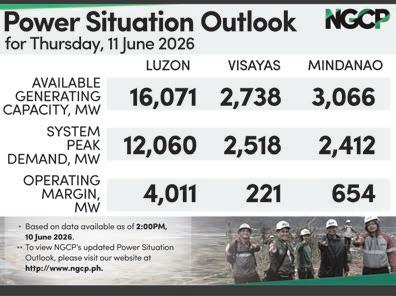
Average spot power price higher in May

By Lenie Lectura @llectura
KKR holds around 30 percent, with Chinese tech giant Tencent Holdings Ltd. and the International Finance Corporation (IFC), the private-sector arm of the World Bank, rounding out the other shareholders.
“It depends on how much, it depends on what percentage,” he said when asked whether PLDT would buy. Maya posted its first full-year profit in 2025, booking P1.7 billion in net income as its digital banking business expanded sharply.
ELECTRICITY prices in the Wholesale Electricity Spot Market (WESM) jumped by 38.5 percent to an average of P7.79 per kilowatt hour (kWh) last month as supply margins thinned due to increasing demand and persistent power plant outages.
Pangilinan said either outcome works for PLDT.
“Either way, a trade sale or an IPO, we will support,” he said, add -
“We are endorsing, we are supporting the IPO,” Pangilinan told reporters in a chance interview. “But there are certain issues that we have to overcome with them. It’s not us, it’s them. And until they see through a solution then, they push through with the IPO based on our suggestion or they revert to a trade sale. Then we’ll buy.”
Reportedly, KKR has been exploring an exit from Maya since 2025, as it seeks to cash out on its investments made in 2022.
Pangilinan said discussions with KKR are continuing but remain unresolved, with “timing”
Its customer base doubled to 10.7 million, deposits grew to P68 billion, and the bank disbursed P256 billion in loans to three million borrowers. PLDT recognized a P716-million share of Maya’s profit in its own books, reversing a P1billion loss the prior year.
The company has been targeting a dual listing on a United States exchange and the Philippine Stock Exchange.
Gatewalk mall to open by yearend
ABy VG Cabuag @villygc

YALA Land Inc. said it will open by the end of the year
its Ayala Malls Gatewalk, a 56,000-square-meter mall and lifestyle destination located within the company’s master-planned Gatewalk estate in Mandaue City, Cebu. The development will be anchored by IKEA, marking the Swedish home furnishings retailer’s first store in Cebu and the wider Visayas.
Spanning around 4,000 square meters, IKEA will offer its full range of well-designed, functional and af-
Digiplus unit inks deal for LaVie
DIGIPLUS Interactive Corp.
said its wholly owned subsidiary Total Gamezone Xtreme Inc. and New Coast Leisure Inc. have signed a cooperation agreement to operate LaVie Resort and Casino Manila.
The deal involves the integration, aggregation, provision, technical support, and operation of approved online games and related gaming content through or in connection with the online gaming platform and operations of the casino. The collaboration is on a nonexclusive basis.
The said move is set to build the digital gambling of LaVie, which is owned by International Entertainment Corp. (IEC), a company that is being acquired by DigiPlus.
According to an online article published by IMARC Group, the Philippine gambling industry is projected to experience substantial expansion through 2030, supported by technological convergence, favorable demographics and the country s strategic position in the global gaming landscape. VG Cabuag
fordable home solutions to one of the country’s most dynamic regional markets. Ayala Malls Gatewalk will be a four-level, air-conditioned complex connected to an office tower and a public transport hub.
The mall will also feature a strong line-up of global and local brands, including new dining formats, a Shopwise supermarket and two regular cinemas. Its design will include a central outdoor courtyard with a playful large-scale feature, and an interactive digital art hallway from the main entrance.
“Ayala Malls Gatewalk represents a new frontier in retail for us,
aligned with our vision to create spaces that are not just commercial centers but truly experiential and deeply connected to the communities they serve,” Paul Birkett, Ayala Malls COO, said.
“Cebu continues to be a cornerstone of economic growth in the Philippines, and our investment here, especially with the introduction of IKEA, is a testament to our enduring belief in its potential. Ayala Malls Gatewalk is engineered to be a vibrant hub for the youth, families, and businesses, reinforcing Ayala Land’s commitment to building sustainable, dynamic ecosystems.”
“This is a significant milestone for Ayala Land,” Mariana Zobel de Ayala, Ayala Land senior vice president and Head of Leasing and Hospitality, said.
“The unveiling of Ayala Malls Gatewalk, together with the arrival of IKEA in Cebu, reflects our longterm commitment to this fast-growing region. Our mission has always been to build with purpose, creating dynamic, future-ready destinations within our integrated estates that inspire and uplift communities. Ayala Malls Gatewalk brings that spirit to life by giving Cebuanos a place built for discovery, connection, and everyday enjoyment.”
Shopee cuts hundreds of developer jobs
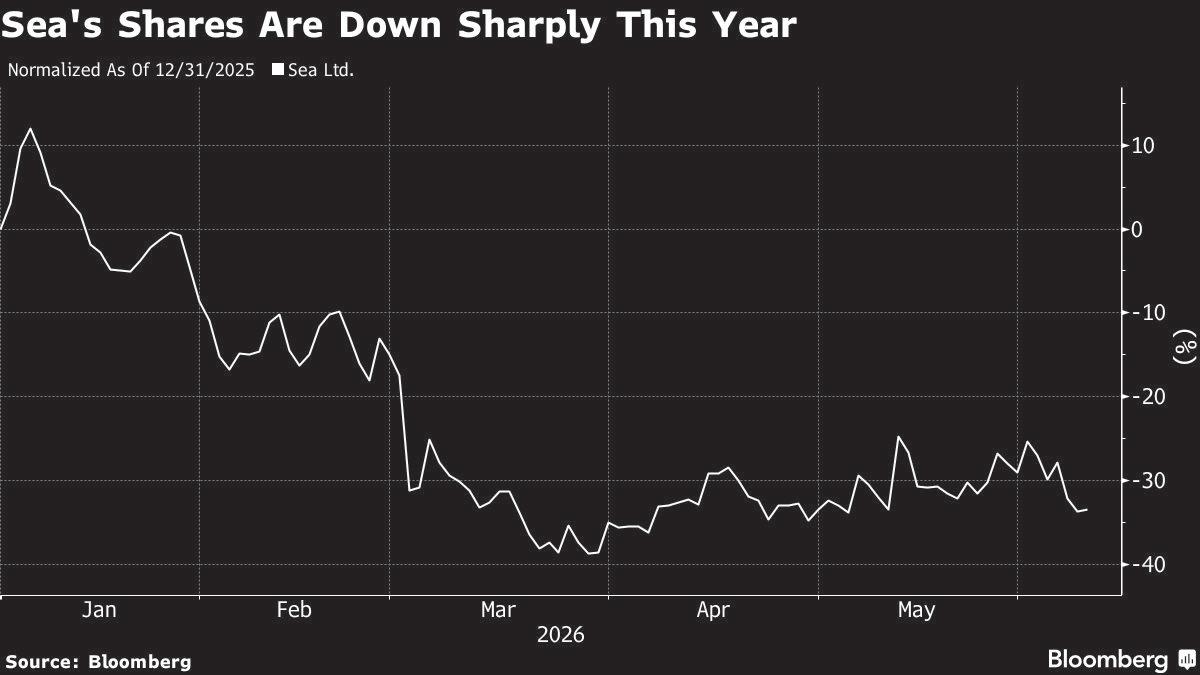
SEA Ltd.’s Shopee is cutting hundreds of developer jobs globally, joining rivals across the world in slashing staff while they adopt AI in the workplace and develop new services based on the technology.
The reductions, which started this week, amount to about 8% of Shopee’s developer workforce, according to people familiar with the matter. They affect roles such as quality assurance and more cuts might follow, the people added, asking not to be identified discussing private information.
It’s unclear if the move is directly tied to Sea’s forays into artificial intelligence. But they coincide with a growing debate about the impact of
the technology on jobs across the world, as well as discussions around potential “AI-washing” in the wake of major layoffs at Jack Dorsey’s Block Inc. as well as Oracle Corp.
Many tech companies hired aggressively during the pandemic, when online and digital activity boomed and firms struggled to keep pace. At the same time, concerns are growing that AI will reduce a reliance on traditional software tools, eroding the lucrative business of enterprise IT services. While AI hasn’t yet translated into clear productivity gains, many companies are seeking ways to do more with less.
Sea, the operator of online retailer
Shopee and the Garena gaming platform, is making structural shifts after Chief Executive Officer Forrest Li declared that a trillion-dollar market capitalization was possible if his company doubled down on AI. It joins a growing number of companies like rival Alibaba Group Holding Ltd. that are investing in AI to catalyze growth while competition in their core business intensifies.
A Sea spokesperson said the company regularly reviews and adjusts its staffing needs. “These decisions are always made after careful consideration. For colleagues affected by any changes, we are committed to providing support during this period of transition.” Bloomberg News
Independent Electricity Market Operator of the Philippines (IEMOP), the operator of WESM, said the systemwide average supply rose to 21,374 megawatts (MW), up 2.7 percent from April. Average demand also went up to 15,755 MW or by 9.4 percent from April. This supply and demand levels resulted in a lower system supply margin, leading to the systemwide average price to rise to P7.79/kWh from P5.63/kWh.
“The April prices were determined under the modified administered price [MAP] mechanism following the ERC [Energy Regulatory Commission]-imposed market suspension,” Rica Cagnayo of IEMOP Trading OperationsMarket Simulation and Analysis said during a press briefing on Wednesday.
The ERC declared a market suspension in response to the declaration of a State of National Energy Emergency. During this period, the MAP
IEMOP Vice President for Trading
tions Isidro E. Cacho Jr. said WESM average price could hit P9 per kWh if the yellow alert persists.
“Yes, it’s possible in the next few weeks but as the rainy season starts we will see that our demand will decrease. However, the other contributing factor is the supply. As long as the big impact of forced outages is there, we might be seeing the same situation.”

PCC, IEMOP aim to bolster competition in power sector
By Bless Aubrey Ogerio @blessogerio
THE Philippine Competition Commission (PCC) and the Independent Electricity Market Operator of the Philippines Inc. (IEMOP) are setting up a framework for cooperation, data sharing and capacity-building that will support a more competitive power market.
Under the arrangement outlined in deal signed last Tuesday, both institutions will work within their respective mandates to identify and address potential anti-competitive practices, including agreements and conduct prohibited under the Philippine Competition Act. It also formalizes a system for market monitoring and compliance, along with structured information exchange between the two agencies.


IEMOP will regularly submit relevant market reports and data to the PCC, subject to strict confidentiality safeguards, while the PCC will provide technical guidance to help identify possible competition issues in the electricity market.
They will also hold regular consultations and joint training activities, including workshops and specialized capacity-building programs for personnel involved in the Wholesale Electricity Spot Market (WESM).
“Through regular exchange of market data and aligning our technical capabilities with IEMOP’s operational insights, we can better perform our oversight functions, address potential competition concerns, and support a stable market environment,” PCC Executive Director Kenneth Tanate said.
The collaboration links the PCC’s mandate of promoting fair market competition with IEMOP’s operational role in managing the WESM under the Electric Power Industry Reform Act of 2001. Government think tank Philippine Institute for Development Studies noted that Epira is considered one of the landmark pro-market reforms that were implemented in Philippine history.
The reform, which was passed into law through Republic Act 9136, restructured the country’s power sector from a vertically integrated state monopoly to a sector that allows competition for some subsectors while recognizing the importance of regulated subsectors (transmission and distribution) in ensuring a stable supply of electricity for the entire country.





Banking&Finance
Public comment sought anew on online lending

By VG Cabuag @villygc
THE Securities and Exchange Commission (SEC) has re-
leased for a second round of public comments the draft guidelines that seek to lift the moratorium on the registration of online lending platforms and raise the capital requirements of financing and lending companies in a bid to improve regulatory oversight over the sector and boost consumer protection policies.
The proposed guidelines is expected to provide stronger safeguards against abusive and unfair debt collection practices.
Under the draft rules, the SEC is set to impose a uniform minimum paid-up capital for a new company. Existing online lenders would be required an amount of paid-up capital based on the number of platforms they operate.
The proposed minimum paid-up capital for new financing and lending companies is P15 million and P5 million, respectively.
The SEC is also imposing a cap on the number of platform or company may own and operate to just up to five to ensure effective supervision, adequate governance and manageable consumer risk exposure.
The proposed minimum paid-up capital for financing companies with one platform is P20 million, P60 million for three platforms and P100 million for five platforms Meanwhile, lending companies
are proposed to have a P10 million minimum paid-up capital for one platform, P30 million for three and P50 million for five.
The proposed guidelines also adopt a Single Certificate of Authority policy, wherein each firm will only be issued one certificate covering its principal office, all branch offices and platforms.
Among others, the proposed guidelines prohibit lending firms from disbursing loan proceeds, whether automated or system-initiated, without a borrower’s explicit and informed confirmation of the final loan terms.
In payment collection, the firms should ensure that collection communications, whether made directly or through any third-party service provider, shall clearly and reasonably identify the registered name of the company, the specific platform or other information as deemed necessary by the SEC.
Under the proposed rule, lending and financing companies that violate MC 18 will be directed to pay P50,000 and P100,000 for the first offense, respectively. For the third and succeeding offenses, the SEC may impose a fine of up to P1 million, suspend the activities of the lending firm, or revoke their certificate of authority.
The public may submit comments and recommendations on the proposed guidelines on or before June 15.
ADB, DOE eye funding for energy-efficient buildings
By Justine Xyrah Garcia
TOP officials of the Asian Development Bank (ADB) and the Department of Energy (DOE) are discussing a new financing package to improve energy efficiency in public buildings in the Philippines.
“In partnership with ADB, the DOE is going to be in discussion to promote public building energy efficiency and I hope this project or financing will be soon materialized,” ADB Energy Director Keiju Misuhashi said in a news briefing last Wednesday.
Misuhashi said the project may serve as a “building block” for scaling up energy-efficiency measures nationwide.
During the forum, the multilateral lender revealed its “Pan-Asia Grid Initiative,” or “Pagi,” a regional platform aimed at expanding energy connectivity across Asia and the Pacific through investments in transmission networks, renewable energy development, and grid modernization.
According to the ADB, the Pagi aims to mobilize up to $50 billion in investments over the next decade, unlock 20 gigawatts of renewable energy capacity, build 22,000 circuit kilometers of transmission infrastructure, and improve electricity access for some 200 million people across the region.
The initiative is also expected to reduce power-sector emissions by 15 percent and generate about 840,000 jobs.
In the near term, the ADB hopes to mobilize up to $20 billion in financing, facilitate the integration of 7 gigawatts of cross-border energy capacity, and support the de -
THE Government Service Insurance System (GSIS) has allotted P15.1 billion to provide emergency loans and assistance for its members and pensioners impacted by the magnitude
Digital procurement scheme bags billions in govt savings
By Reine Juvierre Alberto @reine_alberto
SOME public servants’ bid to sustain government funding through the use of technology is paying off as the Procurement Service of the Department of Budget and Management (PS-DBM) recorded total savings of P2.869 billion as of June 8.
Data from PS-DBM showed that savings reached P2.712 billion through the Philippine Government Electronic Procurement System (PhilGEPS) Virtual Store, while the eMarketplace generated an additional P157.636 million in savings. Savings from the Virtual Store are computed as the difference between PS-DBM’s selling price and the highest prevailing market price.
THE Bureau of Customs (BOC) directed ports all over the country to expedite the disposal of long-overstaying seized and abandoned goods, as well as strictly report confiscated assets, to prevent foregone revenues for the government.
velopment of 10,000 circuit kilometers of transmission lines.
According to Mitsuhashi, the Pagi goes beyond cross-border power interconnections and includes efforts to strengthen domestic power systems, increase renewable energy integration, and improve grid resilience.
For the Philippines, he said domestic connectivity remains an important part of the broader vision.
While the country has already linked the Luzon, Visayas, and Mindanao grids, Mitsuhashi noted that many islands remain outside the interconnected system, underscoring the need for continued investments in transmission infrastructure.
He said future ADB support could take different forms depending on the project’s structure, including potential financing opportunities with the National Grid Corporation of the Philippines for privately-driven transmission projects or public-sector financing if the government determines that strategic interventions are needed.
Apart from energy efficiency, Mitsuhashi said the ADB is also working with the DOE on efforts to accelerate geothermal development by helping reduce risks associated with early-stage exploration activities.
He noted that geothermal expansion in the Philippines has remained limited in recent years despite the country’s significant resource potential.
“For geothermal power, there’s been a bit of a lull for a long time. There’s no geothermal power expansion in the country since the privatization,” Mitsuhashi said.
In Memo 68-2026, the BOC ordered ports to dispose of overstaying goods within their jurisdictions after the Commission on Audit (COA) found that delays in the disposal of abandoned, seized and forfeited goods could result in revenue losses.
The state auditor noted the lack of specific timelines for the disposition of abandoned, seized and forfeited goods, resulting in delays ranging from one month to as long as 302 months or more than 25 years.
According to the COA, the prolonged storage of goods may lead to spoilage and deterioration, and reduce proceeds from public auctions
GOVERNMENTS are borrowing from syndicated bond markets at a record clip as public spending surges.
Sovereign issuers have sold $504 billion of debt so far this year, according to data compiled by Bloomberg. That’s more than in the first half of 2020, when nations were paying to support their economies during Covid-19 lockdowns.
Budget deficits have been climbing since the global financial crisis. They spiked during the pandemic, when interest rates were slashed to record lows, and are widening again as governments boost defense spending and try to protect households from price shocks driven by the Iran war. Aging populations and rising interest rates are adding to the pressure.
“The main driver of the supply is basically increased public spending, and thus bigger funding needs,” said Jens Peter Sorensen, chief analyst at Danske Bank AS, pointing to greater outlays on the military, infrastructure and transition to cleaner energy.
Germany and other nations are setting aside hundreds of billions of euros for weapons and ammunition, and the
The amount already exceeded the P1.507 billion in savings logged for full-year 2025, when 115 items were sold through the platform.
“The growing savings achieved through the eMarketplace underscore the value of digital procurement in promoting the effective use of government resources, enabling agencies to maximize public funds and better serve the needs of the
by limiting the collection of duties, taxes and other charges that could otherwise accrue to the government.
“[The] COA recommended that the ports promptly dispose of goods/ articles subject to disposition in order to prevent losses, spoilage, and deterioration, which otherwise would result in foregone government revenues,” the memorandum read.
Customs Commissioner Ariel F. Nepomuceno also issued Memo 692026, instructing ports to conduct an appraisal for the updated fair value of confiscated goods.
Complete reports on the list of abandoned, seized or forfeited goods within three working days after each month must also be submitted, the BOC ordered.
This comes after COA found recurring cases of incomplete or nonsubmission of reports by Auction and Cargo Disposal Divisions.
Deficiencies in reporting resulted
European Union has relaxed its rules to allow extra spending on defense and energy initiatives that curb consumption of fossil fuels.
The sums raised from syndications are dwarfed by debt sold at regular government auctions, not least because the US Treasury only uses the latter to issue bonds. But hiring banks to sell offerings to investors is popular elsewhere, particularly in Europe. It can be a less risky option when markets are volatile, and give debt managers greater control over the timing of the sale.
Italy leads again FOR eight of the last 10 years, Italy has been the biggest borrower in the market for sovereign syndications. It is leading again in 2026, having already raised nearly €70 billion ($81 billion) in the first six months, according to data compiled by Bloomberg. Germany, which rewrote its fiscal rules to splurge on defense and infrastructure, has raised €14 billion from three syndications so far this year, while the UK, Belgium and Serbia sold their biggest-ever deals. Australia and Mexico are among this year’s top 10 issuers.
Filipino people,” PS-DBM Executive Director Genmaries EntredichoCaong said.
The Virtual Store, an online facility of PS-DBM’s PhilGEPS, enables government agencies to procure CSE used in day-to-day operations. Agencies can pay via e-wallets for easier transactions, with deliveries within Metro Manila made within three days.
Meanwhile, the eMarketplace allows agencies to purchase vehicles, airline tickets and software and licenses through an “add to cart” system. The platform was launched by the PS-DBM in December 2024.
As of June 8, agencies procured 1,103 motor vehicles worth P2.108 billion through the eMarketplace.
The move generated savings of P42.721 million based on comparisons between market prices and eMarketplace rates.
7, 2026.
Borrowers with existing emergen-
cy loans may avail themselves of up to P40,000, provided the net proceeds do not exceed P20,000. Those without outstanding emergency loans may borrow up to P20,000.
The loans carry an annual interest rate of 6 percent and can be paid for over a period of 36 months. Applications may be submitted
through the GSIS Touch mobile application, while approved loan proceeds will be credited directly to the borrower’s ATM account, GSIS said.
Aside from loans, GSIS also said government agencies, local government units and policyholders with GSIS-insured properties
Savings from the procurement of airline tickets also reached P47.957 million, with total sales amounting to P467.867 million. the highest procurement volume was posted by the Department of Education-Main, followed by the Office of the President and the Office of the Presidential Adviser on Peace. The government also generated P66.957 million in savings from the procurement of software and licenses as total sales reached P552.093 million.
Agencies with the most procured software and licenses were led by the DSWD, the Department of Information and Communications Technology and the Department of Foreign Affairs-Main. According to Entredicho-Caong, prices in the government’s procurement platforms are 32 percent to 40 percent cheaper than market prices.
Among the agencies with the highest number of delivered vehicles were the Pag-IBIG Fund Corporate Headquarters in Makati, the Department of Social Welfare and Development (DSWD), and the Department of Justice-Main.
in the understatement of confiscated assets in the BOC’s financial statements, COA said.
The incomplete reporting led to inaccurate valuation and recording of seized assets, affecting the reliability of the bureau’s financial statements and the information used for management decision-making, it added.
The BOC inspects shipment of P86.7-million abandoned fresh red onions
Last Wednesday, BOC officials and Senator Francis P. Pangilinan examined 26 containers of abandoned fresh red onions from China worth an estimated P86.68 million at the Manila International Container Port.
The shipment consisted of 72,215 bags of fresh red onions with a manifested gross weight of 650,000 kilograms, the BOC said.
The cargo was also assessed for duties and taxes amounting to P9.648 million, of which P9.074 million remains unpaid.
According to the Bureau of Plant Industry (BPI), permits were issued for the subject shipment. However, the failure of the consignee to process and release the shipment led to the deterioration of the integrity and quality of the goods. Since the onions are not fit for human consumption, BPI recommended not releasing the shipments to the local market.
The release of the subject shipments will also coincide with the peak harvest season of the local onion farmers, which will greatly affect their livelihood.
“We will continue to act on all reports involving suspicious, unclaimed, or abandoned shipments, particularly for agricultural products, which could affect our farmers, consumers and legitimate traders,” Nepomuceno said.
Reine Juvierre S. Alberto
Demand remains strong, particularly for shorter maturities, and governments are seizing the chance to work through a busy refinancing schedule and fund higher spending despite an uncertain path for interest rates, said Johnathan Owen, a portfolio manager at TwentyFour Asset Management.
“They’re using this window while markets are healthy and willing,” he added.
As the inflationary shock of war in the Persian Gulf has driven up yields, the outlook for the global economy has deteriorated, scrambling predictions for rates. The European Central Bank is set to deliver its first hike since 2023 this week and the US Federal Reserve is expected to tighten monetary policy later this year, although what happens thereafter is less clear.
US Treasury auctions suffered from elevated rate market volatility in March, immediately after the start of the conflict. There have been few signs since that investors are losing their appetite for debt, but they are asking for more in return. A 30-year US bond auction in May was the first since 2007 to draw a yield higher than 5 percent. Meanwhile,
affected by the earthquake may immediately file claims for faster processing. GSIS President and General Manager Jose Arnulfo A. Veloso was quoted as saying in the statement the
the UKs £15 billion ($20.2 billion) offering in April drew record orders from buyers attracted by the highest yield on 10-year debt since 2008.
Pandemic refinancing FUELING the increase in issuance are higher than normal redemptions, as Covid era bonds begin to mature. Analysis by Natixis SA shows that refinancing deals by euro-area sovereigns have jumped by 26 percent in 2026, outpacing the 11 percent year-on-year increase in total syndicated issuance.
“This gap suggests the record firsthalf is primarily redemption-driven rather than opportunistic front-running ahead of potential rate hikes,” said Theophile Legrand, a rates strategist at Natixis, in comments made at the start of this month. Still, there are signs that some European borrowers may be looking to lock in costs before they rise, based on recent trends.
In May, “redemptions actually declined year-on year, yet syndicated volumes jumped from €32 billion to €45 billion, suggesting at least some degree of opportunistic front-loading,” Legrand added. Bloomberg
The
Health&Fitness
Gaps in enforcement of youth vape restrictions revealed in study
By Claudeth Mocon-Ciriaco
N observance of World No Tobac -
Ico Day and No Smoking Month, the Health Promotion Program (HPP) of the University of the Philippines Manila-National Institutes of Health (UP-NIH) highlighted a troubling reality: despite existing laws and regulations, many Filipino students still find cigarettes and vape products easy to access.
The Philippines has a comprehensive legal framework for tobacco and vape control, including Republic Act No. 11900, or the Vape Law of 2022, which restricts youth access to and the marketing of vape products. Several cities have also implemented local ordinances, school-based programs, and enforcement initiatives aimed at reducing nicotine use among young people.
However, policies on paper matter only if they reach the people they are designed to protect.
Perception of existing policies
TO assess how well these measures are working, researchers examined how students in cities with active tobacco control programs perceive existing policies and how easily they can access cigarettes and vape products.
The cost of care: Examining the gaps in Universal Health Care
By Rizal Raoul S. Reyes | Contributor
FOR many Filipinos, economics remains a major factor in addressing health challenges.
The findings revealed a significant disconnect between policy and practice.
While more than half of the students were aware that tobacco control policies exist, only 16.5 percent believed these policies were effective. Meanwhile, 42.7 percent were unsure of their effectiveness, while 25.8 percent believed they were ineffective. Access to nicotine products also remains alarmingly easy.
High access to dual users AMONG current users, 45.2 percent described vape products as “somewhat easy” or “very easy” to obtain. Access was even higher among dual users of cigarettes and vapes, with 48.4 percent reporting that these products were readily available.
Students identified sari-sari stores and online platforms as the most common sources of access, suggesting that minors are still able to purchase nicotine products despite age restrictions. In their own words, some students observed that “there is a law, but [people] still do it,” while others noted that vendors near schools continue to sell tobacco and vape products to minors.
Value of regulation
AT the same time, many students expressed support for stricter rules and stronger enforcement. While they recognize the value of regula -
A self-administered survey was conducted among 4,340 students in Grades 7 to 10 across Baguio, Pasig, Iloilo, and Davao from November to December 2025. All four cities have ongoing tobacco and vape control initiatives. Students were asked about their awareness of existing policies, perceptions of their effectiveness, and ease of access to tobacco and vape products.
tion, they also see that existing policies are not effectively reaching their communities.
According to the researchers, the fact that students in cities with active tobacco control programs still describe cigarettes and vape products as easy to obtain points to a structural enforcement problem.
The study suggested that if current measures cannot close this enforcement gap, policymakers should seriously consider stronger restrictions on nicotine products.
Where a complete ban is not feasible, researchers recommended amendments to Republic Act No. 11900, including tighter restrictions on access, a prohibition on online vape sales, and stronger inter-agency coordination.
Push for stronger national measures
AMID growing concerns over youth nicotine use, public health and child rights advocates in the House of Representatives have filed House Bill 9603, or the Smoke-Free and Vape-Free Environment Bill.
The proposed measure seeks to protect the public from exposure to cigarette smoke and vape aerosol in public spaces and workplaces, particularly in areas frequently visited by children. The measure is championed by Rep. Krisel Lagman of Albay’s 1st District.
The bill proposes a national framework based on successful local government initiatives through the R.E.L.A.T.E. model: Removal of indoor designated smoking and vaping
‘Minimalist care’ helps sensitive skin in summer heat, parents told
IBy Bless Aubrey Ogerio
N the Philippines, where summer heat often comes with relentless humidity and prolonged sun exposure, skincare concerns tend to escalate alongside rising temperatures.
For many families, especially those with young children, managing sensitive skin becomes less about elaborate routines and more about understanding what the skin actually needs under harsh conditions.
During the “Skin Sanctuary: A Summer Edition for Mom & Child” event held at The Peninsula Manila by DMark Beauty and ISISPHARMA Dermatologie, the conversation leaned on how to protect and repair the skin barrier while avoiding unnecessary irritation.
Pediatric dermatologist Dr. Wilsie Salas-Walinsundin said sensitive skin is often linked to a weakened skin barrier, which makes it more reactive to everyday environmental stressors like heat, sweat, and friction.
“When we say someone has sensitive skin, it usually means the skin barrier is already compromised,” Dr. Walinsundin said.
“Once heat and sweat [enter the picture], the skin releases inflammatory chemicals that trigger itching. Then the scratching begins, and the cycle continues.”
In a country where humidity remains high for most of the year, she added that the situation becomes more challenging for children who already have underlying skin conditions.
“If a child already has eczema or atopic dermatitis, those conditions can really worsen,” she said. And for parents, this often means navigating between ordinary dryness and early signs of a more serious skin condition—something that can be difficult to distinguish without guidance.
Spotting signs
ONE of the most common challenges for parents is identifying whether a child’s skin condition is simply dryness or an early sign of something more persistent.
Dr. Walinsundin said observation plays a key role, especially during early stages when symptoms may appear mild.
“If the itching improves after mois -

turizing, then it may just be dryness,” she explained. “But if the condition worsens despite repeated moisturization, or if there’s already pain, bumps, or fluid coming out, then it’s time to consult a dermatologist.”
She added that signs such as persistent scratching, visible inflammation, oozing lesions, or worsening discomfort may indicate eczema flare-ups or possible secondary infections that require medical attention.
As both a dermatologist and a parent, Dr. Walinsundin said she often observes behavior patterns closely before deciding whether home care is sufficient or professional consultation is needed.
Minimal approach FORMULATIONS designed with fewer ingredients to reduce the risk of irritation were emphasized by ISISPHARMA Dermatologie.
“One of our ranges has almost half the ingredients compared to many competitors,” said Sophie Buffavand, the company’s International Senior Training Project Manager. “That makes it more suitable for sensitive skin, especially for families and children.”
The idea behind minimalist formulations is straightforward: the fewer the ingredients, the lower the chance of triggering unwanted reactions, especially in skin that is already compromised.
One of the products discussed, Secalia ATO Balm, is designed for dry
and atopy-prone skin and contains around 16 ingredients. It focuses on emollients such as shea butter and glycerin, which help restore moisture and support the skin barrier.
Buffavand said the formulation was developed not only for effectiveness, but also for comfort in daily use—an important consideration in humid climates like the Philippines, where thick or heavy textures can feel uncomfortable on the skin.
Products under the Ruboril line were also introduced, designed for redness-prone and rosacea-sensitive skin. One formulation features 15 percent azelaic acid, an ingredient commonly used in dermatological care for inflammation and pigmentation concerns.
“There is no sticky finish, and many of the products can be used day and night,” Buffavand said. “That’s important, especially in warmer countries where people do not want heavy textues on the skin.”
She added that the approach centers on targeted care rather than broad or one-size-fits-all solutions, allowing users to address specific skin concerns such as redness, irritation, visible blood vessels, or inflammatory flare-ups.
Now, to navigate the demands of Philippine weather, the overall takeaway was practical rather than prescriptive: understand the skin barrier, watch for warning signs, and resist the urge to over-treat what may sometimes be managed with simpler, steadier care.
areas; Expansion of smoke-free and vape-free zones in public spaces and workplaces; Local health budget allocation for tobacco and vape control and cessation programs; Awards for local government units that effectively implement the law; Task force creation for enforcement; and Enhanced penalties for violators.
“The proposed law will ensure strong information campaigns, local adaptation, and capacity-building. The goal is to change behavior, promote public health, and protect our most vulnerable—the children,” said Philippine Smoke-Free Movement National Coordinator and youth leader Rizza Duro.
Supporters of the measure argue that stronger national legislation is needed to reinforce local efforts.
“More than 40 percent of our youth are exposed to second-hand cigarette smoke in enclosed public spaces, according to the Global Youth Tobacco Survey. We enjoin all our legislators to support this bill in fulfillment of our shared responsibility to protect children’s health,” said Au Quilala, Executive Director of the Philippine Legislators’ Committee on Population and Development and Convener of the Child Rights Network.
Victoria Raquiza, Co-Convener of Social Watch Philippines, emphasized the need for sustained funding.
“Without the necessary funding, the country risks rolling back decades of progress in addressing the health costs of tobacco and nicotine addiction,” she said.
CSMC launches modern, affordable robotics medicine
CARDINAL Santos Medical Center (CSMC) reshapes the Philippine operating room (OR) landscape with its acquisition of a new state-of-the-art multi-port robotics that bears affordability.
Consistent with its thrust to close the gap between innovative medicine and patient accessibility, the hospital’s new Robotics Surgical System targets a wider segment of specialized surgical requirements.
“Advanced healthcare should not just exist for those who can easily afford it; it must be reachable,” CSMC President and CEO Raul C. Pagdanganan said during the inauguration, taking aim at the prohibitive nature of specialized medical treatment across the country.
A key component of the initiative are the 40 pioneering robotics-certified multispecialty doctors who have undergone extensive training to handle and operate the new technology. They have been primed to handle cases from simple to complex surgical requirements in the fields of Urology, Hepatic and Pancreatic, Thoracic, Gynecology and Gastroenterology.
According to Pagdanganan, the investment in robotic systems is being positioned not as a premium luxury, but as an aggressive long-term strategy to drive down overall healthcare costs.
“By utilizing robotic precision to drastically shorten hospital stays, minimize surgical trauma, and reduce post-operative complications, we aim to create a more affordable, sustainable value chain healthcare for ordinary Filipino families over time,” he said.
During the same occasion, hospital officials underscored that Innovation only becomes truly impactful when placed in the hands of passionate and highly skilled healthcare professionals. They stressed that technology enhances care, but compassion, judgment, and the trust between doctor and patient will always define healing.
The new robotics technology is expected to be enhance OR coordination, integrate various equipment and technology, and simplify procedures that require multiple instruments, thereby optimizing workflow and minimizing delays. It is expected to elevate the standard of care while bringing down the patients’ burden in accessing high-quality treatment and care.
For CSMC, the new robotics surgery system is a pivotal opportunity
“How much will it cost?” is often the first question asked when illness strikes.
During the latest Ateneo Breakthroughs lecture, Veincent Christian F. Pepito, a public health researcher and assistant professor at the Ateneo School of Medicine and Public Health’s Center for Research and Innovation, centered the discussion on this very question, shedding light on the roadblocks to achieving universal healthcare in the country.
When the Universal Health Care (UHC) Act lapsed into law in 2019, it carried an ambitious promise: that no Filipino would be left behind by the nation’s health system.
Yet years later, that promise still feels distant for many. In hospital corridors, barangay health centers, and the quiet corners of countless homes, families continue to count the cost before seeing a doctor. Many settle for incomplete treatments, endure long waits, or forgo care altogether.
Not a political priority
IN his research and interviews, Pepito encountered a striking observation from one respondent: healthcare is rarely a political priority. Roads, infrastructure projects, and flood control programs provide politicians with tangible and highly visible accomplishments that resonate with voters and contribute to electoral success.
“Healthcare, however, doesn’t offer the same visibility; its impact is often unseen and fails to capture immediate popular attention in the way that politicians need to sway votes,” he said. Through conversations with health workers, government officials, and
By Candy P. Dalizon | Contributor
DEMONSTRATING community solidarity and public service, the Philippine National Police Civil Security Group (PNP-CSG) donated 15 portable generators to the Philippine General Hospital (PGH) Department of Pediatrics. The donation aims to provide a critical lifeline for chronically ill pediatric patients who rely on home ventilators or BiPAP machines for survival.
The initiative directly supports KWAGO, otherwise known as “Kalidad at Wagas na Aruga on the Go” (QuaGO: Quality of Life on the Go), a specialized palliative care program dedicated to ensuring vulnerable children can rest safely and comfortably in their own homes.
For families caring for a technology-dependent child at home, a power outage is not just an inconvenience; it is a life-threatening emergency.
Vital backup power
THE 15 portable generators provided by the CSG will serve as vital backup power sources during unforeseen power interruptions and natural disasters. By securing an uninterrupted power supply for home ventilators, the donation ensures that young patients can continue breathing safely without interruption.
PBGEN Aden T. Lagradante, Officer-inCharge of the CSG, emphasized that public service goes beyond maintaining peace and security and includes responding to the needs of communities through sympathy, solidarity, and meaningful assistance.
The turnover ceremony was led by PBGEN Lagradante alongside PBGEN Joyce Patrick B. Sangalang, Deputy Director, CSG, and other CSG personnel. The donations were formally received by key representatives from PGH and the Child Foundation Inc., including Dr. Edilberto B. Garcia Jr., Chairperson, PGH Department of Pediatrics; Dr. Lorna R. Abad, Executive Director, Child Foundation Inc.; Dr. Marianne Joy Naria-Maritana, KWAGO InCharge, and Dr. Joannah Kaye Borallo, Chief Resident for In-Services, PGH Department of Pediatrics.
The outreach activity reflects the PNPCSG’s ongoing commitment to building strong community partnerships and promoting social responsibility. The recipient institutions expressed their
patients across the country, Pepito’s research paints a picture of a healthcare system stretched thin. Families and healthcare professionals alike feel the effects of a system caught between national directives and local realities. Budgets struggle to keep pace with rising costs. Health workers are unevenly distributed and frequently overburdened. Meanwhile, digital systems intended to improve patient care often fall short of expectations.
Struggles in practice
THE result, Pepito said, is a system that works on paper but struggles in practice. He also stressed that universal healthcare is not merely a matter of legislation or policy. Its success is measured in the critical moments when people need care and whether the system is ready and able to respond.
“A health system must be built, coordinated, financed, staffed, trusted, and made intelligible to the people it is meant to serve,” said Dr. Filomeno Aguilar, Assistant Vice President for Research, Creative Work, and Innovation, in his opening remarks. He emphasized that good intentions alone cannot deliver equitable healthcare. Still, there are signs of progress. The lecture highlighted practical efforts to improve primary care, strengthen local health leadership, and build systems that allow patient records to move seamlessly with patients. But as long as illness forces Filipinos to calculate costs, postpone treatment, or compromise on care, universal healthcare will remain a promise in progress.
Pepito underscored one central reality: for millions of Filipinos, healthcare is not an abstract system. It is a daily risk, a financial burden, and, far too often, an unanswered question.
deepest gratitude, noting that the generators will offer invaluable peace of mind to families managing critical care at the community level.
The KWAGO Program ESTABLISHED in May 2023, KWAGO is a project of the UP-PGH Department of Pediatrics. Developed in coordination with healthcare professionals and local communities, the program operates under a singular, profound vision: Each Filipino pediatric patient and their family achieve the quality of life they deserve. The team behind KWAGO, led by Dr. Maritana, explained that owls (or kwago) are nocturnal creatures, active during the darkest hours. In much the same way, the KWAGO team aims to be a guiding light duri ng the darkest times of their patients’ lives. At the heart of the program is a threefold core mission centered on holistic care, collaboration, and long-term wellness. KWAGO is dedicated to rendering compassionate, empathetic medical and emotional care to pediatric patients and their families. To achieve this, the program actively learns from and collaborates with stakeholders and healthcare professionals both within the hospital and across local communities. Furthermore, KWAGO promotes self-care among healthcare providers, patients, and families alike to actively prevent burnout and foster emotional resilience during incredibly challenging medical journeys.
Essential medical support BY bridging the gap between intensive hospital care and home comfort, KWAGO brings essential medical support directly into the community. The program’s comprehensive workflow begins with meticulous pre-discharge preparation, where the team works up and stabilizes the patient before transitioning them to home care.
Once ready, the team personally escorts the families as they transport the patient back to their residence. To build a reliable localized safety net, KWAGO coordinates closely with local Barangay Health Units, maintaining continuity through regular physical home visits and telehealth monitoring via Viber and phone calls.
Finally, the team stands by families navigating the most difficult moments, providing vital emotional and spiritual support during palliative and end-of-life situations.
Editor: Anne Ruth Dela Cruz
ON display are products of DMark Beauty and ISISPHARMA Dermatologie.



SoKOR strengthens support for BARMM’s peace & development
COTABATO CITY—The Republic of Korea (ROK, or South Korea) has reaffirmed its support for the Mindanao Peace Process and inclusive development in the region.
On June 1, Ambassador Lee Sanghwa of ROK met with Chief Minister Abdulraof A. Macacua of the Bangsamoro Autonomous Region in Muslim Mindanao. It marked the envoy’s first official trip to Cotabato City, which serves as the seat of the BARMM government. Their meeting provided an opportunity to discuss opportunities in supporting peacebuilding efforts, while boosting health governance and the delivery of essential health services for communities across the region.
Lee underscored the importance the Korean government places on the Mindanao Peace Process, noting that it has been recognized in highlevel discussions between Korea and the Philippines.
He also underlined ROK’s continued development and humanitarian assistance to the region. In 2025, it provided approximately 2,000 metric tons of rice assistance to the Philippines, of which 384 metric tons were allocated to BARMM. The East Asian country also continues to support regional initiatives on climate resilience and sustainable development via the BIMP-EAGA, or the Brunei Darussalam–Indonesia–Malaysia–Philippines East Asean Growth Area.
Enhanced institutional capacity AS part of his itinerary, the ambassador visited project sites supported by the Korea International Cooperation Agency (KOICA) and implemented in partnership with the International Organization for Migration (IOM) and UNICEF. These initiatives focus on strengthening health systems and improving access to health, education, nutrition, child protection, and other basic services, while enhancing the institutional capacity of BARMM ministries and local government units. Among these initiatives is the “Building Resilience through Inclusive Governance and Healthcare Transformation in BARMM” or “BRIGHT-BARMM” project. This $13-million program, implemented by KOICA and IOM from 2025 to 2030, is expected to directly benefit more than 400,000 people and approximately 5.6 million others through strengthened health systems, improved maternal and teen health services, and enhanced preparedness for public health emergencies.
Lee also highlighted the “Supporting Peace Building through Strengthening Essential Services for Vulnerable Children and Adolescents

in BARMM” project. This $5.95-million initiative, implemented jointly by KOICA and UNICEF from 2023 to 2027, aims to increase community resilience and expand access to health, nutrition, education, child protection, and youth engagement services.
The particular program specifically targets vulnerable children, adolescents, and women in conflict-affected and geographically isolated and disadvantaged areas or GIDAs across Maguindanao and Cotabato City.
Decommissioning and development
LEE noted that the BRIGHT-BARMM and SPB-BARMM projects show the value of linking humanitarian aid, development cooperation, and peacebuilding efforts.
The envoy emphasized that by improving the delivery of essential services and strengthening local institutions, these programs can contribute to peace and development in the region. He also appreciated the cooperation of the BARMM government and conveyed his hope for the projects’ continued successful conduct.
Lee reaffirmed Korea’s support for the smooth and steady progress of the Mindanao Peace Process, including ongoing efforts in both decommissioning and socioeconomic development. He also expressed his hope that the region’s forthcoming parliamentary elections in September would be conducted in a free, fair, peaceful, and orderly manner, further strengthening democratic governance and sustaining the gains of the peace process.
Australian support delivers new health clinic in Davao
THE Australian government has supported a new sexual and reproductive health clinic in Davao City operated by the Family Planning Organization of the Philippines (FPOP).
The initiative is part of Australia’s annual development assistance to the Philippines, valued at more than P4 billion, or AU$104 million. Deputy Head of Mission Nicholas Kay of the Australian Embassy officially launched the facility at the WH Vertex Building along Elpidio Quirino Avenue in Poblacion District.
Australia supported the clinic’s refurbishment and transfer to meet the accreditation needs of the Department of Health and the Philippine Health Insurance Corp. or PhilHealth to help ensure sustainable delivery of Mindanao’s sexual and reproductive health services.

In the Philippines, RESPOND will provide P232 million (AU$5.28 million) over four years. Since August 2024, the program has delivered over 1 million sexual and reproductive health services, screened more than 17,000 people for HIV, provided comprehensive sexuality education to nearly 60,000 people, and supported over 40,000 survivors of sexual and gender - based violence. Around 80 percent of those reached were considered vulnerable or underserved.

AMBASSADOR Catherine McIntosh of New Zealand and representatives from UN Women Philippines explored areas of cooperation with Vice Chairperson and Executive Director Robert E.A. Borje of the Climate Change Commission (CCC) to support inclusive and gender-responsive climate action.
The parties highlighted the importance of partnerships in advancing climate resilience efforts that recognize the disproportionate impacts of climate change on vulnerable and marginalized communities such as women and other at-risk groups.
The Embassy of New Zealand, through McIntosh, reaffirmed its commitment to programs that support national resilience and inclusive development.
“Climate action must be inclusive, responsive, and people-centered,” Borje said. “Strengthening genderresponsive approaches in climate policies and programs is essential to ensuring that no one is left behind in building resilient communities.”
For her part, Commissioner Rachel Herrera of the CCC emphasized the importance of aligning the projects with the National Adaptation Plan (NAP) localization and gender action plan. She said that “if the tools are developed in an inclusive manner, it will really reflect a response to the issues on the ground.”
The talks highlighted the importance of strengthening women’s participation and leadership in climate governance, disaster risk reduction, and adaptation planning, while ensuring that climate policies and programs respond to vulnerable communities’ needs.
Among the initiatives discussed were current efforts to mainstream gender in climate adaptation programs, support for the localization of NAP developed under the leadership of President Ferdinand Marcos Jr., and collaboration on knowledgesharing and capacity-building activities for local government units and partner institutions. Meanwhile, UN Women shared its ongoing support for initiatives that promote women’s leadership and participation in climate and disaster risk reduction efforts.
For the CCC, collaborative efforts and sustained engagement with development partners remain vital to enhancing institutional capacities, strengthening policy support, and promoting climate action that is equitable and responsive to community needs. The commission said that the engagement reflected its continuing commitment to fostering partnerships that advance climate resilience, inclusive governance, and sustainable development in the country.
Spain celebrates ties that bind: Art, diversity and language
TThe clinic was delivered under “Responding with Essential Sexual and Reproductive Health and Rights (RESPOND)”—an Australian program expanding access to quality,
“Access to quality sexual and reproductive health services saves lives, reduces maternal and newborn mortality, prevents the spread of HIV and supports the health and well-being of women and young people,” Kay said. “This initiative is part of our long-standing commitment to and partnership with the Philippines.”
rights-based sexual and reproductive health services for women, girls, and marginalized communities across the Indo-Pacific. Australia works with FPOP to support locally led efforts that advance gender equality, health equity, and the empowerment of women and girls, in line with Philippine government priorities.
Kay’s visit is part of a series of activities marking the 80th anniversary of diplomatic relations between Australia and the Philippines: engagements with local government officials, police and military leaders, business representatives, and Australia Awards Philippines alumni contributing to sustainable development in Mindanao. Its embassy said Australia remains committed to working closely with the Philippines to advance health security, inclusive growth and strong people-to-people connections.
HE Embassy of Spain in the Philippines— through Instituto Cervantes and its Cultural and Education Offices—welcomes June with a vibrant calendar of cultural activities, celebrating the enduring friendship between the two countries through history, culture, art, language, and shared values of diversity and inclusion. At the heart of the month’s program is the commemoration of the 24th PhilippineSpanish Friendship Day on June 30 in Baler, Aurora—a historic occasion that honors the humanity and reconciliation shown by Filipinos toward the last Spanish soldiers in Baler, who were treated not as prisoners of war, but as friends.
As part of the celebration, a zero-level Spanish language class, taught by Instituto Cervantes’ native teachers, will be offered to students of a local high school in the municipality, further
strengthening cultural ties between both nations through language and education. This spirit of friendship and mutual respect continues in contemporary forms through cultural exchange and shared advocacies. On June 26, the Instituto Cervantes de Manila in Intramuros will celebrate Pride, underscoring Spain and the Philippines’ continuing commitment to diversity, inclusion, and the recognition of the LGBTQIA+ community. The public may join a discussion on education and rights, participate in an open mic session, or enjoy music from guest DJs. Art and spirituality reinforce the deep historical and cultural links of the two nations. Spanish artist Cristina Mejias is holding her solo exhibition “Embracing the Wind, Cradling the Water” until September at the Vargas Museum in University of the Philippines (UP)-Diliman. The exhibition explores themes of memory, materiality, and imagination.
AMBASSADOR Lee Sang-hwa (left) and Chief Minister Abdulraof A. Macacua
DEPUTY Head of Mission Nicholas Kay
AMBASSADOR Catherine McIntosh (third from right) with officials of the Climate Change Commission and UN Women CCC/PIA
DBP, rural bank ink P100-M loan deal for agri-fishery sector
State-owned Development Bank of the Philippines (DBP) has approved a P100million credit assistance to a Quezon-based rural bank for relending to its sub-borrowers in the agri-fishery sector for productivity enhancement and capacity-building, a top official said.
DBP President and Chief Executive Officer Michael O. de Jesus said the loan assistance to Bayanihan Bank, Inc. under DBP’s Agriculture, Fisheries, and Rural Development (AFRD) Credit Facility will provide financial support for smallscale farmers and fisherfolks looking to expand their operations to cater to a broadening market.
“We view this partnership with Bayanihan Bank as a strategic move to ramp up the DBP’s support to the agriculture and fishery sector, in recognition of the critical role that it plays in promoting inclusive economic growth particularly among the marginalized communities,” de Jesus said.
DBP is the ninth largest bank in the country with total assets of P1.041 trillion and provides credit support to four priority

sectors of the economy – infrastructure and logistics; micro, small and medium enterprises; the environment; and social services and community development.
Bayanihan Bank, Inc. is a rural bank established in 1960 that provides accessible financial services to rural communities and empowers micro and small business owners, particularly in Quezon province, Laguna, the National Capital Region, and Pangasinan.
De Jesus said the loan would enable Bayanihan Bank to finance its borrowers’ critical requirements, including working capital, acquisition and upgrading of

Tequipment, and improvement of related facilities, and allow them to enhance their productivity and boost their income.
He said that as of end-April, DBP has approved a total of P578.7 million in loans for 32 borrowers under the AFRD program, that have benefitted more than 1,500 farmers and fisherfolks across the country.
“We look forward to forging more partnerships with cooperatives, rural banks, and microfinance institutions so DBP can better fulfill its developmental mandate by extending financing assistance to sectors that need it the most,” de Jesus said.
Conrad Manila celebrates ‘A Decade of Love’ with Inspired Beginnings 2026

CONRAD Manila proudly unveils the 2026 edition of
“Inspired Beginnings,” its highly anticipated signature bridal fair and one of the most anticipated highlights of its tenth anniversary celebration this month.
Held in collaboration with “Getting Married Wedding Coordinators and Event Planners” by Kutchie Zaldarriaga, the three-day event invites guests and soon-to-weds to an exclusive gathering of the country’s most sought-after tastemakers from June 26 to 28, 2026.
Featuring ten distinguished fashion visionaries, eight acclaimed styling experts, and leading event industry partners, the showcase promises thoughtfully curated experiences where every celebration is transformed into an unforgettable moment.
“For the past ten years, Conrad Manila has had the privilege of being part of life’s most cherished milestones, particularly the beginning of lifelong journeys,” said Rupert Hallam, general manager of Conrad Manila. “Inspired Beginnings was created to honor precisely that; the beauty, emotion, and significance of every love story entrusted to us. This year’s edition serves as a tribute to this legacy, celebrating the countless weddings, partnerships, and memories we have had the honor of hosting over the past decade.”
Highlights of the 2026 Inspired Beginnings include:
Harvest: A Stellar Opening Fashion Show by Furne One Amato WORLD-RENOWNED designer Furne Amato takes center stage with his avant-garde bridal couture collection
“Harvest.” Opening “Inspired Beginnings 2026” on June 26, the collection reflects rustic elegance and modern romance through refined hues, impeccable craftsmanship, and masterful design. Directed by acclaimed director Robby Carmona, the show will commence at 7 PM in the hotel’s
sophisticated Forbes Ballroom.
A Grand Finale Fashion Show
THE celebration continues on the second day with a multidesigner Finale Fashion Show, showcasing the creations of some of the industry’s most celebrated names.
Ryan Ablaza Uson will present designs ideal for prenuptial shoots and red-carpet-inspired moments. Vee Tan and Michael Chiu Rosero will debut whimsical and elegant pieces for entourage children and bridal afterparties. Designers Joe San Antonio and Manny Halasan will highlight the classic charm of Chinese wedding traditions through their ”Ting Hun” collection.
Ehrran Montoya and Jazel Sy will offer their creative interpretations of principal sponsors’ attire, while Andrea Tetangco and Pablo Mendez will present sophisticated designs for bridesmaids and groomsmen. Collectively, these designers offer a compelling showcase suited to a wide array of celebratory occasions. Also directed by Robby Carmona, the fashion show will take place on June 27 at 7 pm in the Forbes Ballroom.
Styling Showcase:
Tablescapes Inspired by Eras ELEVATING wedding aesthetics to new heights, renowned event stylists will present exquisite tablescapes inspired by iconic historical eras, transforming each setting into a timeless masterpiece.
FJ Sionson interprets the romance and tradition of the Victorian era, while Kathy Sy King channels the refined elegance of the Edwardian period. Dave Sandoval brings to life the bold glamour of Art Deco, complemented by Drew Menor’s take on the drama and sophistication of Old Hollywood. Jacqs Floral highlights the simplicity of Mid-Century design, while Il Fiore embraces the free-spirited charm of Bohemian aesthetics. Randy Lazaro reimagines Renaissance grandeur, and Tiger Lim captures the whimsical opulence of Rococo.
These installations will be on display at the Taft Ballroom from June 26 to 28, from 10 am to 7 pm.
Wedding Expo and Exhibitor Consultations
FROM 10 am to 6 pm daily at the Foyer, guests may engage with leading industry experts including wedding coordinators, jewelers, makeup artists, and audiovisual specialists. Attendees may explore bespoke offerings and enjoy personalized on-site engagements, highlighted by a
complimentary consultation by Nova Aesthetics, held in one of the hotel’s elegant suite rooms. Partners and exhibitors include:
HOTELS: Conrad Manila, Taal Vista Hotel
EVENT PLANNERS: Getting Married Wedding Coordinators & Event Planners
DESIGNERS: Furne Amato, Ehrran Montoya, Manny Halasan, Andrea Tetangco, Pablo Mendez, Ryan Ablaza Uson, Vee Tan, Jazel Sy, Joe San Antonio, Michael Chiu Rosero
STYLISTS: Il Fiore, Dave Sandoval, Drew Menor, Jacqs Floral, Tiger Lim, Fj Sionson, Kathy Sy-King, Randy Lazaro
AIRLINE: Philippine Airlines
BRIDAL CARS: A Perfect Day Wedcar Luxury Bridal Cars Manila, Don Robert Bridal Car
SHOES: Doreen Odvina Bridal Shoes (Official Fashion Show Bridal Shoes Partner)
VISUAL EFFECT: Always in Motion
PHOTO AND VIDEO: Marco Constantino, Metrophoto, Nice Print Photography, Amady, NQ Video
HAIR & MAKE-UP: Ella Tamayo, Kleng Totanes Beauty, Toni Aviles, Yvonne Ragasa Makeup Artistry
ENTERTAINMENT: Bernie Pasamba
LIGHTS & SOUNDS & LED WALL & STAGING: Metrotech, Forsc Inc, 4th Wall
INVITATION: E-Memoir, Print Divas, Amis Prints
JEWELRY: Christopher Munar (Official Fashion Show Jewelry Partner), Jewelmer
HOSTS: Kevin Lapena, Atom Ungson, Ralph Paguio
GIFTS/ SOUVENIR: Lumi Candles, Paparazzzzzi, Amenity Studio
CAKES: Cakes By Mannix, Lucilles, Ross Paris Cakes
OTHERS: Nova Aesthetics, Manila Craft, Common Suits
The three-day bridal fair will formally open with a ribboncutting ceremony at 11 am on June 26 at the Level 3 Atrium. The ceremony will be led by Kutchie Zaldarriaga, CEO of Getting Married Wedding Coordinators and Event Planners; Rupert Hallam, General Manager of Conrad Manila; Joanne Gomez, Commercial Director of Conrad Manila; alongside esteemed partners.
Couples are also invited to visit Conrad Manila’s booth during the fair to discover exclusive wedding packages and bespoke offers.
As the hotel marks its tenth anniversary milestone, Conrad Manila once again raises the bar, presenting an “Inspired Beginnings” experience that is more immersive, more refined, and more inspiring than ever before.
Masarap, Masaya at the Tatak Pinoy Expo 2026: Nutriasia champions local industry excellence
NUTRIASIA, makers of the country’s best condiments and sauces, proudly showcased its commitment to Filipino industrial excellence and the Tatak Pinoy Strategy (TPS) at the “Tatak Pinoy: Proudly Filipino Expo 2026,” held from May 25 to 27, 2026 at the SMX Convention Center Manila. The three-day flagship event, organized by the Department of Trade and Industry (DTI), served as the ultimate stage for the TPS. Institutionalized under Republic Act No. 11981 (The Tatak Pinoy Act), the national policy aims to drive local industries up the global value chain by fostering high-quality, innovative, and sophisticated Filipino-made products. As a powerhouse in the Food and AgroProcessing sector, one of the government’s nine
priority industrial pillars, NutriAsia’s participation underscores its active role in boosting domestic manufacturing and elevating the global footprint of Filipino flavors. Speaking on the second day of the expo, NutriAsia Corporate Affairs Manager Wally Panganiban shared his insights on how the company’s portfolio aligns with the national strategy to promote local products on a grander scale.
“NutriAsia is incredibly proud to have been invited to participate in the Tatak Pinoy Expo, and we are equally proud to be the powerhouse behind Datu Puti, Silver Swan, UFC, Mang Tomas, Jufran, Mafran, and Locally,” Panganiban stated. “These brands are not just household names; they are icons of the Philippines’ rich culinary tradition that bring
the flavor of home to Filipinos across 100 countries. Our alignment with the Tatak Pinoy Strategy reinforces our commitment to bringing world-class, Filipino-made excellence to the global stage.”
The unveiling of the official “Tatak Pinoy” seal by Trade Secretary Cristina Roque during the expo opening marks a milestone that NutriAsia eagerly supports. The company looks forward to incorporating the seal as a badge of superior quality, innovation, and authentic Filipino ingenuity that can confidently compete in international markets.
By championing the Tatak Pinoy movement, NutriAsia reinforces its mission to help create Masarap, Masaya moments for consumers worldwide, proving that local heritage and global competitiveness can go hand in hand.
HE Social Housing Finance Corporation (SHFC), in partnership with the Department of Human Settlements and Urban Development (DHSUD), officially turned over housing units to beneficiary families of Mapalad Ka Homeowners’ Association, Inc. in Caloocan City on June 4, 2026, under the Expanded Pambansang Pabahay para sa Pilipino (4PH) Program of President Ferdinand Marcos, Jr. The turnover of the initial 36 units for the three-story housing development was led by DHSUD Secretary Jose Ramon Aliling and SHFC President and CEO Federico Laxa. It marks another milestone in the government’s continuing efforts to provide safe, decent, and affordable housing to informal settler families (ISFs) through SHFC’s Vertical Enhanced Community Mortgage Program. The beneficiary families previously lived along the waterways of Sta. Monica in Quezon City and Maria Luisa Subdivision in Camarin. The housing project forms part of the Expanded 4PH Program, which aims to accelerate the delivery of sustainable and inclusive shelter solutions for low-income Filipino families through various housing modalities.
In his message, Laxa underscored the fulfillment of the community’s long-held dream after nearly two decades of waiting. “Matapos ang 19 years na paglalakbay mula ‘nung umpisahan ito at planuhin ang proyektong ito, mapalad na kayo ngayon. Matagal nang mapalad ang HOA ninyo pero ngayon maisasakatuparan na ang pangarap ninyong magkaroon ng sariling bahay at lupa [Since this journey started 19 years ago, you have been blessed. Your HOA has been blessed for a long time but now your dream of owning your own house and land can be realized],” he said.
Aliling and Laxa also inspected the units awarded, ensuring that they are ready for occupancy and meet the standards of quality, safety, and livability. They likewise consulted with the beneficiaries to identify areas where
further government assistance is needed.
During the event, Mapalad KA HOA members also signed the Kasulatan ng Restriksyon (KasuRes), a document that outlines the rights, responsibilities, and community rules that residents are expected to uphold to promote order, safety, and harmonious living within the housing development. Meanwhile, HOA President Princess Benilan expressed gratitude to the national government for helping turn their long-awaited dream into reality, allowing members of the community to finally own homes they can call their own.
“Masayang-masaya po ang mga miyembro ng Mapalad Ka HOA. Mapalad na mapalad po kami kasi po dinala ‘yung simpleng pangarap namin ng Social Housing. Marami pong pinagdaanan ang pangarap na ito, maraming hirap, maraming pagod. Maraming salamat po sa DHSUD, kay Pangulong Bongbong Marcos, at sa Social Housing Finance Corporation [The members of Mapalad Ka HOA are very happy. We are very lucky because our simple dream of social housing was brought to life. This dream has been through a lot of challenges. Many thanks to DHSUD, President Bongbong Marcos, and the Social Housing Finance Corporation],” she said. Also present during the ceremony were DHSUD Senior Undersecretary Eduardo Robles, Jr., SHFC Executive Vice President Atty. Junefe Payot, and Mega Manila Group Vice President Engr. Elsa Juliana Calimlim. The turnover underscores the continued commitment of DHSUD and SHFC to provide secure tenure and improved living conditions for Filipino families, while fostering organized and resilient communities through responsible homeownership and community stewardship
For more information on SHFC projects and application procedures, the public may visit www.shfc. gov.ph or call (02) 5322-7300.
Aboitiz, Okada Foundations boost digital learning at Agusan floating school
ABOITIZ Foundation, in partnership with Okada Foundation Inc., has brought reliable solar power and internet connectivity to a remote floating school community in the marshlands of Agusan del Sur, advancing efforts to expand educational access in one of the Philippines’ most underserved areas.
Through AuroraPH, its flagship education initiative, Aboitiz Foundation recently installed a 5.49-kWp hybrid solar power system and satellite internet connectivity at Dinagat Elementary School, providing stable electricity and digital learning access in a community where classrooms rise with floodwaters during the rainy season.
Located in Sitio Dinagat, Barangay San Marcos in Bunawan, Dinagat Elementary School can only be reached through an hourlong pump boat ride across the Agusan marshlands, where rivers serve as primary transport routes.
For the students and teachers of Dinagat Elementary School, the arrival of electricity and connectivity represents more than an infrastructure upgrade; it provides access to learning tools, information, and opportunities that remain difficult to reach in many geographically isolated communities.
“At Aboitiz Foundation, we believe that where a child is born should never determine the quality of education they receive,” said Aboitiz Foundation President Ginggay Hontiveros-Malvar. “Every learner, whether in a city classroom or in a floating school, deserves the opportunity to learn, connect, and build a better future.”
AuroraPH combines renewable energy systems, satellite internet connectivity, and digital learning tools to support schools in areas where conventional infrastructure remains limited. With stable power and connectivity, schools can also serve as shared community hubs where residents gain better access to digital services, information, and opportunities often unavailable in geographically isolated communities.
Aurora PH is scaling its reach, with 84 schools currently in the pipeline and a long-

The turnover of solar and internet connectivity systems through AuroraPH marks a milestone in expanding access to digital learning for students of Dinagat Elementary School in Bunawan, Agusan Del Sur.
term goal of connecting 300 last-mile schools nationwide to electricity and internet. In the CARAGA region alone, eight schools have been energized through the initiative, several of them serving remote and indigenous communities.
Encouraged by AuroraPH’s growing reach and lasting impact, Okada Foundation expanded its partnership with Aboitiz Foundation through an additional P10-million grant to help bring reliable power and internet connectivity to more last-mile schools across the country.
“At Okada Foundation, we believe education is one of the most powerful ways to create longterm opportunities for young Filipinos, while sustainability helps secure a better future for the next generation,” said Okada Foundation President James Lorenzana.
“More than solar panels and internet connectivity, AuroraPH is about creating better opportunities for learning, supporting teachers, and helping communities gain access to possibilities that were previously out of reach,” he added.
The initiative also supports Okada Manila’s broader sustainability and community development commitments under its ESG platform, Okada Green Heart.
City Savings Bank, the thrift banking arm of Union Bank of the Philippines, also donated a flat-screen television and water storage tanks to Dinagat Elementary School to support classroom instruction and improve access to clean water within the community.
Photo shows DBP President and Chief Executive Officer Michael O. de Jesus and Bayanihan Bank, Inc.
President/Director Jose Paolo M. Palileo (second and third from right, respectively) during the loan signing ceremony between DBP and Bayanihan Bank, Inc. at the DBP Head Office in Makati City. Also present in the ceremony are DBP Senior Vice President Soraya F. Adiong (second from left), DBP Vice President Maricris D. Santiago (rightmost), and Bayanihan Bank, Inc. Independent Director Atty. Albert T. Concha Jr. (leftmost).
How to stay safe while traveling during extreme heat
AS travelers prepare to set off on summer trips, scorching temperatures lie in wait. Above-average temperatures could be on the books this summer, according to forecasters, and a developing El Niño event could spell out warmer weather later in the year or next summer. Sizzling temperatures are more than an inconvenience: They can cause heat exhaustion and life-threatening heat stroke.
Travelers can take precautions to have fun with heat preparedness in mind. “The same way that we prepare for more extreme travel in the cold, we should start to consider those tips to keep us safe in the summer months,” said Dr. Alexander Azan with NYU Langone Health, who co-directs the Project HEATWAVE initiative.
CHECK THE FORECAST AND SURVEY YOUR TRAVEL COMPANIONS
BEFORE taking off, check the air temperatures for both day and night as well as the heat index, which takes humidity into account, Azan said.
If temperatures look scorching, stay flexible. Relocate to cooler regions along the coast or at higher elevations. Plan more strenuous outdoor activities like hiking or long walks during early morning or late evening hours, outside of peak heat windows. A midday movie, museum visit or coffee shop break may be more suitable. Check whether your lodging will have reliable conditioning and whether the region has had recent power blackouts or brownouts. You can also search for public facilities like cooling centers, and note key phone numbers to report medical emergencies.
In addition to what you’re bringing, think about who you’re bringing. People with certain medical conditions or medications may be more vulnerable to heat while traveling.
“A lot of the prescription drugs that we take for common conditions like high blood pressure, anxiety, depression, they actually interrupt our body’s ability to thermoregulate,” said Ashley Ward, director of the Heat Policy Innovation Hub at Duke University. Older adults, those who may be pregnant, young children and infants are also especially susceptible—so adjust plans accordingly. Carrying a baby against your body can transfer additional heat, for example.
Pack a reusable water bottle and bring light-colored, breathable clothing that will keep you cool. Don’t forget sunscreen, sunglasses, a wide-brimmed hat and a cooling towel. A portable fan can be useful too, but avoid using it during particularly high temperatures since it’ll just blow hot air back at you.
KEEP CAR SAFETY IN MIND DURING ROAD TRIPS
IF you’re planning a road trip, get your vehicle inspected a few weeks before to make sure everything is in good condition, especially the engine cooling system and the car battery. If you’ll be driving abroad, ask whether the rental car will have air conditioning. Pack water and snacks to keep passengers and pets energized during the drive and take breaks to hydrate and stretch—but don’t leave young children, pets or older adults alone in the car even for a few minutes.
Keep the car as cool as possible by parking in shaded areas and using a windshield protector. When entering a steamy car, turn on the air conditioning but turn off recirculation to keep stale air from cycling. Roll down the windows a bit, then close them and turn recirculation on once the car starts to chill.
To avoid getting stuck in the heat, don’t drive on less than a quarter tank of gas, said AAA senior automotive manager David Bennett. If you do get stuck and the engine is still running, you can cycle it on and off every few minutes so AC can still cool the car. Don’t walk along the side of the road in searing temperatures to search for help: instead, stay in the car or nearby shade and put reflectors or cones in front of the vehicle. Bring an extra charger that plugs into the car so you can call for help if needed.
STAY FLEXIBLE AND RECOGNIZE SIGNS OF HEAT ILLNESS TRAVELERS should be mindful of how their behavior changes on vacation. Spending long hours outdoors, participating in intense activities or consuming more alcohol than usual can increase heat-related risks.
People often get into trouble when they ignore both environmental conditions and the warning signals their bodies are giving them. “They think they can push through. That is a mistake,” Ward said.
During the day’s exploring, employ the buddy system and look out for signs of heat illness like feeling dizzy, experiencing nausea or muscle cramps and sweating with cool and clammy skin. If you or a travel partner start to feel sick, get to a shaded area and take sips of water while loosening tight clothing. If symptoms worsen to slurred speech, falling unconscious, extreme confusion or feeling hot to the touch, seek help immediately. That could indicate something more serious, like heat stroke.
If extreme heat makes a trip untenable, there are ways to recoup costs. Adding a cancel-for-any-reason benefit to your travel insurance can offer partial reimbursement if things get too hot. There are also services like Sensible Weather and WeatherPromise which reimburse travel and lodging costs for every day a trip is dashed by rain, heavy snowfall or high heat. Customers can add a weather guarantee to their cart at extra cost when booking with these organizations’ registered travel and hotel partners. As temperatures continue to climb, experts say the most important thing vacationers can do is listen to their bodies and remain flexible. By staying aware, taking steps to cool down and adjusting plans where necessary, travelers can help ensure their trip remains both safe and enjoyable. AP
Parentlife
Healthy parents, stronger families: Why knowing your numbers matters

AS parents, we spend so much of our time monitoring everyone else’s health. But amid caring for everyone else, many parents quietly neglect their own health.
The truth is, our children need more than our love. They need healthy parents who can be present, active, and strong enough to enjoy life’s precious moments with them. This is why initiatives that make preventive healthcare more accessible matter not only to individuals but to entire families.
According to the Philippine Society of Hypertension, hypertension or high blood pressure affects about one in three Filipino adults, an estimated 16.8 million people. Yet many remain unaware they have the condition because hypertension often develops without obvious symptoms. It is often called the “silent killer” because significant damage may already be occurring long before warning signs appear.
For busy moms and dads juggling work, parenting, household responsibilities, and financial concerns, routine health checks often fall to the bottom of the priority list. We tell ourselves that we’ll schedule a check-up next month—after the school event, after the work deadline, or after the family vacation.
The World Health Organization (WHO) identifies hypertension as one of the leading risk factors for heart disease, stroke, kidney disease, and premature death worldwide. The good news is that early detection and proper management can significantly reduce these risks.
Parents should also understand that stress itself can contribute to elevated blood pressure and other health concerns. The American Psychological Association consistently reports that parents often experience higher stress levels than non-parents due to financial pressures, caregiving demands, worklife balance challenges, and concerns about their children’s future.
Closer to home, many Filipino parents face additional stressors, including long commutes, rising living costs, academic expectations for children, and caring for both young children and aging parents simultaneously.
When chronic stress goes unmanaged, it can affect sleep, eating habits, physical activity, and cardiovascular health. Over time, these factors may contribute to hypertension, diabetes, and other lifestyle-related conditions. This is why I always remind fellow parents: self-care is not selfish. It is family care.
One simple health check today could mean more years of creating memories with the people we love most. Recognizing the importance of early detection, Boehringer Ingelheim Philippines, in partnership with Mercury Drug Corp. and the Philippine Society of Hypertension (PSH), has launched Suki Healthwatch, a community-based initiative that expands access to free blood pressure and blood sugar

screening for Filipinos.
The program runs from May to July 2026 in participating Mercury Drug branches nationwide, beginning with initial screening activities held in May.
“Many Filipinos remain unaware that they are living with hypertension until complications arise,” said Dr. Bin Wang, general manager and head of Human Pharma of Boehringer Ingelheim Philippines. The initiative coincides with Hypertension Awareness Month and the global May Measure Month campaign, both of which aim to encourage regular blood pressure monitoring and improve awareness of cardiovascular health.
Through Suki Healthwatch, Filipinos can access free blood pressure screening, blood sugar testing, and on-site doctor consultations in participating Mercury Drug branches. Healthcare professionals will help patients understand their results, identify potential risks, and provide guidance on appropriate next steps for care.
For many families, this may be the first opportunity to discover early warning signs of hypertension or elevated blood sugar levels before more serious complications develop.
Corazon Lim, vice president for merchandising of Mercury Drug Corp., emphasized the importance of taking proactive steps toward better health.
“As cases of high blood pressure continue to rise, Hypertension Awareness Month is a timely reminder for Filipinos to understand and manage their health. We encourage our Suki customers to visit participating Mercury Drug stores, know their numbers, and take charge of their health because early detection can make a meaningful difference.”
Participating branches include locations in Bulacan, Taguig, Parañaque, San Juan, Quezon City,
8 ways to shift to intentional living
OPERATING on autopilot–moving about your day driven by conditioned habits, regular routines, and automatic reactions–may lead to reduced self-awareness, increased burnout, and less enjoyment in life. This could include consumption of an entire meal while you finish a series or film–only to realize that you have not tasted the food. It may even be unconsciously doomscrolling through social media for several hours.
By becoming more intentional in your day-to-day behavior, you can design a life around your core beliefs–one driven by goals and filled with clarity and personal happiness. Ultimately, intentional living not only enhances mindfulness and presence, and increases feelings of control. It also encourages healthy habits, supports better decision-making, and strengthens relationships.
Margarita Tartakovsky, MS, the author of the mental health journal Vibe Check: Be Your Best You, advises, “Take action and make decisions that are important to you.”
“The key is to identify what that personally means for you–and make small but significant shifts and conscious choices to build it,” she added.
The expert clarified making some changes can be difficult, especially if your current intentions do not line up
with what you’ve learned in your early life.
“Remind yourself that it is totally natural to feel a range of emotions while on an intentional living path,” she advised.
“After all, you’re a human being doing the best you can.”
For guidance, the experts from the Benilde Well-Being Center (BWC) of the De La Salle-College of Saint Benilde (DLS-CSB) shared Tartakovsky’s tips. This includes insights from Shelley Meche’tte, certified life purpose and confidence coach; Genevieve Piturro, coach and speaker; and Jackie Tassielo and Lisa Olivera, who are both therapists.
The article was first published on Psych Central, a Healthline-owned website which provides evidence-based mental health information. It was medically reviewed by Joslyn Jelinek, a licensed social worker who specializes in perinatal mental health and chronic pain. Here are some key points:
1. TUNE OUT THE NOISE. Pause. Identify the biggest distractions in your life. Limit or let them go altogether. Do not allow social media, other people, or anything else dictate your goals.
2. IDENTIFY YOUR VALUES. Ask yourself: What does an ideal day look like? What inspires you? What activities bring meaning and contentment?
Pasig, San Pedro, Cavite, and Makati.
Beyond screening, however, parents can begin supporting their cardiovascular health through simple daily habits:
n Prioritize seven to eight hours of sleep whenever possible.
n Take a 20- to 30-minute walk with your family several times a week.
n Reduce excessive sodium intake from highly processed foods.
n Stay hydrated throughout the day.
n Schedule regular health screenings even when you feel well.
n Practice gratitude and mindfulness to manage daily stress.
n Set aside dedicated family time that allows everyone to disconnect from work and gadgets.
One of my favorite reminders for overwhelmed parents is this: you do not have to do everything perfectly. Parenting is not about perfection—it is about presence.
Sometimes reducing stress starts with simplifying. Simplify the schedule. Simplify expectations. Simplify the pressure we place on ourselves.
A healthy family begins with healthy habits, and healthy habits often begin with one small step.
In this case, that step may be as simple as visiting a participating Mercury Drug branch, getting a free blood pressure and blood sugar check, and taking a few minutes to learn what your numbers are telling you. Because when parents take care of their health, they are not only investing in themselves. They are investing in more years of hugs, laughter, milestones, and memories with the people who matter most.
And that may be one of the greatest gifts a parent can ever give a family.
3. SET A MORNING INTENTION. It can be a few words, a sentence, a meditation practice, or giving thanks. This will remind you of the choices you make.
4. REFOCUS. Infuse intentionality into your activities. When cooking, use your five senses to notice the sensations. During chores, identify its purpose, whether it is to create a more peaceful home or to care for yourself.
5. CREATE SMALL SHIFTS. When you know what is important to you, you can make the best choices for yourself. Start a slow morning ritual to reconnect with yourself. Avoid social media at night if it keeps you up past bedtime. Have a weekly call with a friend to grow relationships.
6.
TOP photo, from left: Jaime Espiritu of Mercury Drug Corp.; August Golpeo of Mercury Drug Corp.; Corazon Lim, vice president for merchandising of Mercury Drug Corp.; Sharon Guillergan, head of sales for Boehringer Ingelheim Philippines; Dr. Bin Wang, general manager and head of Human Pharma of Boehringer
Benjie
Dr. Benjie Balmores, MM26
president of
Society of Hypertension,
Dr. Greta Cortez, head of medicine of Boehringer Ingelheim Philippines; bottom foto, left: ceremonial blood pressure check during Suki Healthwatch launch; bottom foto, right: Dr. Benjie Balmores, MM26 country lead and vice lresident of the Philippine Society of
New billiards body taps Bata, Django as head coaches
POOL legends Efren “Bata” Reyes and Francisco “Django” Bustamante and carom ace Francisco de la Cruz banner the coaching staff of the newly-formed national sports association National League for Billiard Sports of the Philippines (NLBSPh).
The NLBSPh replaced the Billiards Sports Congress of the Philippines (BSCP), which the Asian Confederation of Billiard Sports suspended for its failure to hold regular elections and conflicts of interest.
The Philippine Olympic Committee (POC) took over as “caretaker” of the NSA until the BSCP eventually failed to comply to instructions from its continental confederation, leading to its dissolution as a duly-recognized federation of the POC.
“ We are very serious in bringing back the luster of Filipino billiards,” said NLBSPh president Atty. Wharton Chan, also secretary-general of the POC, during the NLBSPh’s general assembly at the Solaire Theater in Pasay City on Wednesday.
We are optimistic the programs we are laying down will put the Philippines back where it is supposed to be in world billiards,” Chan added.
Gracing the general assembly are the stars of Philippine pool Carlo Biado (pocket), AJ Manas (pocket), Alfredo Ferrer, Basil Hassan Alshajjar (snooker), Reyna Maria Legaspi (snooker), Carmille Buhat (snooker), Rubilen Amit (pocket), Michael Angelo Mengorio (snooker), Sofhia Yvanca Rosales (pocket), Rhaki Roj Constantino (pocket), Charles Ladiana (pocket) and Johann Chua (pocket).
Joining Chan in the NLBSPh executive board are secretary-general Kevin Wong, treasurer Dr. Paulo Pagteilan Jr. executive director Roselyn Hung and executive director for external affairs Alfredo Ferrer.
POC president Abraham “Bambol” Tolentino personally graced the historic NLBSPh’s first general assembly, fully backing the group as they lock their sights on upcoming international battles like the Asian Indoor and Martial Arts Games this year and the Southeast Asian Plus Youth Games next year. Tolentino said that with Chan at the helm, the NLBSPh will have huge support from other countries with the newly-installed national federation president having deep relationships with the Asian and world pool circuits.
THE legends and stars of Philippine pool and their support are in attendance for the general assembly—(standing, from left) Francis Irang (team staff), Carlo Biado, Richard (trainer), AJ Manas, Alfredo Ferrer (executive director), Francisco de la Cruz, Basil Hassan Alshajjar, Reyna Maria Legaspi, Carmille Buhat, Rubilen Amit, Michael Angelo Mengorio, Sofhia Yvanca Rosales, Rhaki Roj Constantino, Charles Ladiana, Johann Chua—and with them are (seated, from left) Dr. Paulo Pagteilan Jr., Atty. Wharton Chan, Kevin Wong, G.O.A.T. Efren “Bata” Reyes and POC president Abraham “Bambol” Tolentino. NLBSPH PHOTO
Safety in sports a must–PSC
THE Philippine Sports Commission (PSC) on Wednesday led a multiagency effort that aims to further guarantee safety in the practice of sports in all its phases—during training and out- and in-competition.
P SC chairman Patrick Gregorio said that safety in sports ranks as high as achieving victories in the competition arena and that the drowning to death of Ateneo de Manila Blue Eagles Rene Baterbonia of Agusan del Sur and Divine Adili of Nigeria should never happen again.
W hile Gregorio was presiding over a fact-finding panel meeting among representatives from the Department of Education (DepEd), Commission on Higher Education (CHED) Samahang Basketbol ng Pilipinas (SBP), National Youth Commission (NYC) and University Athletic Association of the Philippines (UAAP), Baterbonia’s mother Rovelyn faced a press conference also on Wednesday stressing on the Blue Eagles coaching staff’s failure in “communicating” with her in earnest on the death of her
son, a promising basketball player who once lorded over the Palarong Pambansa playing out of Ateneo de Davao.
The Department of Justice, meanwhile, directed the National Bureau of Investigation to conduct a parallel probe into the drowning incident in Dipaculao, Aurora, during the Ateneo Blue Eagles’ team building
activity, which the Aurora Police Office abruptly declared as an “accident.” I n a statement, DOJ spokesmanlawyer Polo Martinez said the NBI has been instructed to create a task force that would thoroughly investigate the incident and determine possible liabilities of individuals or entities. Gregorio said that the panel is tasked
to standardize preventive measures— rather than sanctions—and stressed that the their future actions would also rely on conclusions reaped from further police investigations on the tragedy.
G regorio was joined by DepEd Undersecretary Malcolm Garma, NYC chairman Jeff Ortega, Anna Yango, PSC commissioner Fritz Gaston, Rita

Steep odds, high stakes for Alas
By Aldrin Quinto
ITY OF CANDON—Facing
Csteep odds, Alas Pilipinas fights on as the Asian Volleyball Confederation (AVC) Women’s Volleyball Cup returns to action on Thursday at the Candon City Arena.
The Philippines battles Chinese Taipei on Thursday, needing both a huge victory and some help to keep its semifinal hopes alive.
Korea and Chinese Taipei lead Pool A with nine points each from three matches.
The Philippines has seven points from two wins and two losses, with only the Taipei match left on its schedule in the preliminaries.
Australia is a close fourth with five points and two matches left.
O nly two squads from each pool advance, and mathematically, Alas Pilipinas still has a shot.
The first step in the best-case scenario for the Philippines is to earn the maximum three points against Chinese Taipei to raise its total to 10 points. World No. 49 Alas Pilipinas

two assignments against world No. 72 Australia and Chinese Taipei.
The top two teams from each pool advance to the semifinals, while the remaining teams move on to the classification round.
But even teams that fall short of the medal rounds still have plenty to play for.
E very match in the 12-nation tournament presented by the Philippine Sports Commission and the City of Candon headed by Mayor Eric D. Singson counts toward the FIVB World Rankings, making each result crucial for qualification and seedings in future international tournaments.
Skipper Alyssa Valdez says Alas Pilipinas will hold nothing back.
“ We’re really going to give everything we have. We’re learned so much and worked hard to prepare so we’ll face Thursday’s match with all our heart,” Valdez said.
There’s realy nothing like playing for your country. We’re honored, truly honored.”
Coach Shaq de los Santos said the focus is on the match at hand, and not on the team standings—he also credited the squad’s veterans for helping keep morale high and ensuring the team learns from every setback.


Games in the hood
OVER the weekend something electric happened at the Patricia Paraiso Sports Complex in Barangay Paraiso, Tondo. Huge waves of streetball players representing teams from various cities and towns in the Philippines descended on the community court where thousands of neighborhood hoopers and famous basketball stars like Paul Lee played pick-up and competitive basketball in their youth.
The occasion: The Filipino streetball tournament called Dayo 23 that brings together the best men’s and women’s teams from across the country to battle for hometown pride. The event celebrates Pinoy basketball’s “dayo” culture where hoopers from other hoods visit another homecourt to play pick-up ball or engage in intense showdowns with the locals for bragging rights and homecourt pride.
Ten men’s teams and eight women’s squads competed for pride and glory in Tondo. Big names from the varsity leagues and the pros (MPBL) provided star power to this year’s Dayo23 tournament. Carl Tamayo, Titing Manalili, Kiefer Ravena, Harold Alarcon, Macmac Tallo, Janti Miller, Kean Baclaan, Kymani Ladi, Dom Escobar, Allen Liwag, the Marcelino Twins
FOR the first time ever, the FIFA World Cup will kick off with three separate opening ceremonies in each of the host countries—Mexico, Canada and the United States.
I nstead of a single traditional show, each nation will get its own moment in the spotlight, connected by a shared theme that celebrates the World Cup trophy through each country’s unique culture.
T hai rapper and singer Lisa of the widely popular Blackpink, Shakira,
(Jaycee and Jayvee), Malick Diouf and MPBL rivals Neil Tolentino and Genmar Bragais, among others, captured the imagination of the crowd who braved the rains on the first day and withstood the simmering heat on the second day to be part of the rough and tumble action.
Women basketball stars included Kent Pastrana, Eka Soriano, Ali Lim, Angel Surada, Christine Cayabyab, Trina Guytinco and Monique del Carmen and more.
The three-year old tournament from Jordan brand that aims to grow and celebrate the it’s-you-or-me spirit of dayo basketball began in 2024. Jordan refurbished an old basketball court built right under the Mabini (Nagtahan) Bridge in Barangay 830 in Sampaloc and made it the birthplace of Dayo23. For two years, street basketball flourished in that part of town as fun-but-fierce hoops attracted more and more teams from the city and other parts of the country to flex their smarts and skills in an environment that doesn’t just hoop. It also rocks with music from cool DJs and celebrates street art that matches the life and color of the street.
Last year, teams from Cebu, Laguna, Rizal and Davao joined teams from Manila and environs in Dayo23 2025. A Cebu team—Chase Tower Runs—won the men’s championship on the trademark last second trey by former UP Fighting Maroon JD Cagulangan, who was then on vacation from the Korean
Alanis Morissette, Tyla and pop diva Katy Perry headline an array of global stars that will entertain the expected full-packed stadiums for a ceremony to remember.
I n what could be an explosion of music and fun, the festivities begin in Mexico at Mexico City Stadium on Friday (June 12), right before the tournament’s opening match between Mexico and South Africa.
For avid Filipino football fans, Aleph, the media rights distributor of the FIFA World Cup in the country,
has partnered with Tap DMV to broadcast the historic opening ceremonies and all 104 matches live.
BlastTV, Tap DMV’s premier streaming platform, will host the entire tournament through a dedicated PayPer-View (PPV) experience from June 12 (Manila time).
T he service will deliver highdefinition, live, and on-demand coverage directly to smartphones, tablets, and smart TVs, catering perfectly to today’s digital-first sports audience. AP

League.
oth teams
and UAAP executive director Rebo Saguisag. The tragedy should lead to stronger safeguards for athletes with the PSC pushing for better sports governance, stronger safety standards, risk management protocols, and emergency response measures across all levels of sport,” the panel later stated in a statement. Gregorio said
safety education, certification and readiness programs for sports individuals. The PSC, Gregorio said, will also support the families of the late Baterbonia and Adili with a P250,000 financial assistance each. Josef Ramos and Joel San Juan
Zaragosa grabs spot on South team for Finals
Zaragosa’s commanding performance at the par-70 Marapara layout this week propelled her to the top of the leaderboard. She finished with 42 points, tying Cebuana standout Balangauan, who had already secured the first finals berth. Z aragosa closed out her dominant Negros run with a final-round 74 for a 13-over-par 223 total over 54 holes. I n the boys’ final, Cebuano Sebastian Sajuela turned what had appeared to be a down-to-the-wire battle into a cruising victory.
Facing off against Del Monte’s Clement Ordeneza in hot and humid conditions, Sajuela clinched a two-stroke win, finishing with a 75 for a 224 total despite a double-bogey mishap on No. 18.
A pple Gotiong pulled to within two strokes off Zaragosa after an impressive frontside 36, putting pressure on the two-day leader. After storming to a six-shot lead after 36 holes, Zaragosa faltered early, wavering with four bogeys in the first eight holes.
Gotiong also finished with a four-over card for a 229 and despite her setback, the Cebuana successfully propelled her into the finals via the backdoor, raising her total to 36 points on the strength of three second-place finishes across the Vis-Min series.
Basketball
Team Hustle with Allana Lim, Janine Pontejos, Raiza Palmera Dy, Afril Bernardo and varsity player Tacky Tacatac ran away with the trophy in the women’s division.
ALYSSA VALDEZ, Kyle Negrito and the rest of Alas Pilipinas face a tall order against Chinese Taipei. NONIE REYES
Sescar and Atty. Ruel Capanzana of the CHED
PERRY MORISSETTE
SHAKIRA LISA
PHILIPPINE Sports Commission (PSC) chairman Patrick Gregorio leads a fact-finding panel composed of (from left) PSC commissioner Fritz Gaston, University Athletic Association of the Philippines executive director Atty. Rebo Saguisag, National Youth Commission chairman Joseph Francisco Ortega, Commission on Higher Education’s (CHED) Atty. Ruel Capanzana, Department of Education Undersecretary Dr. Malcolm Garma and CHED’s Anna Yango. PSC PHOTO


Editor: Francine Marquez | Project Manager: Rodel A Suarez
STRONG TURNOUT MARKS THE 10TH PHILIPPINE INTERNATIONAL MOTOR SHOW
Forward in Every Drive: PIMS highlights diverse mobility showcase
By Eric Montelibano
ASTRONG attendance marked the 10th Philippine International Motor Show (PIMS) at the World Trade Center Metro Manila from June 4 to 7, 2026.
Organized by the Chamber of Automotive Manufacturers of the Philippines Inc. (CAMPI), this event carried the theme “Forward in Every Drive,” highlighting a diverse mobility showcase and how the automotive industry continues to evolve through a broader range of mobility solutions that are more efficient, connected, and future-ready for Filipino consumers.
D uring his keynote speech, Guest of Honor Director Patrick Aquino, CESO III of the Department of Energy’s Energy Utilization
and Management Bureau, underscored the importance of sustained collaboration between government and industry through platforms such as PIMS. He also highlighted the event’s role in bringing together key stakeholders, saying, “Over the past decade, the PIMS has served as an important platform for showcasing innovation, fostering industry engagement, and highlighting the continuing evolution of the Philippine automotive sector.
Continued on C3


VINFAST, a pure-play electric vehicle manufacturer and a subsidiary of Vingroup JSC, one of Vietnam’s largest conglomerates, recently introduced the RENTAPASADA Program, as part of their showcase at the 10th Philippine International Motor Show (PIMS) last June 4-7 at the World Trade Center in Pasay City. The RENTAPASADA Program enables participants to access VinFast electric vehicles through flexible rental arrangements and start earning on the Green GSM platform with a low upfront deposit, long-term contracts, and competitive fixed daily rates starting from just Php1,000. By reducing upfront costs and ownership barriers, the program expands access to electric mobility while creating income-generating opportunities for Filipino drivers.
R ENTAPASADA reflects VinFast’s broader vision of making EVs relevant not only as a transportation solution but also as an economic opportunity. Together
with Green GSM and V-Green, the program forms part of a connected ecosystem designed to address key barriers to EV adoption.
L eading the launch was Mr. Rhomel Franco, CEO of VinFast Philippines. He said, “VinFast is here to provide a livelihood with better take-home pay and a better boundary system,” referring to the program. A longside RENTAPASADA, VinFast presented one of the most comprehensive EV lineups at the 10th PIMS, led by the VF MPV 7, a spacious electric MPV designed to meet the evolving needs of modern Filipino families. To mark its debut in PIMS, VinFast is offering a
cial

VINFAST LAUNCHES



Guest of Honor Director Patrick Aquino, CESO III of the Department of Energy’s Energy Utilization and Management Bureau (5th from left) and Honorable Luigi Calixto Rubiano, Councilor of the City Government of Pasay (4th from right), together with representatives of participating brands for the 10th PIMS.
‘We’re
thPhilippine International
rewriting the rules of the industry’: VinFast CEO Toti Zara on its EVs and unique battery plan
According to the Vietnamese automotive manufacturer’s

Eis
the automotive landscape with brands like Vinfast taking the lead. With competitive pricing and advanced technology, the Vietnamese automotive manufacturer founded in 2017, is paving the way to make EVs even more accessible to the market. At the recently concluded 10th Philippine International Motoring Show, held from June 4 to 7, at the World Trade Center, BusinessMirror ’s MotoRead writer, Eric Montelibano, caught up with Toti Zara, the dynamic CEO of Vinfast Southeast Asia, to have a conversation about updates on the brand, its growing presence in the Philippines, and why EVs are the future of
mobility and logistics.
BM MotoRead: When did you enter and how has it been since you entered the Philippine market? VinFast entered the Philippines last year and ended 2025 with 30 dealers. We’re on track to build 50-60 dealers by the end of 2026. We are slightly exceeding targets in terms of dealer network and growing as planned in terms of vehicle sales. We are proud to share that we are the No. 1 battery electric vehicle brand in the Philippines, and we’re looking to maintain this position and having an organic growth.
BM MotoRead: How’s your growth relative to Asia Pacific (neighboring countries)?
As a percentage of battery electric vehicles, we’re doing very well. The problem is that in the Philippines, the battery electric vehicle segment is still very low relative to other countries.
In 2025, battery electric vehicles was at only 1.5% of total industry. In comparison,
Indonesia was 11%, Thailand was 22%, Vietnam was more than 30%, Singapore was 50%, and China at 60%.
We saw the growth rates and since all these cars are coming from these countries, and growth towards battery electric is inevitable. We need to grow year on year and we’re confident it will continue to grow at a fast pace.
BM MotoRead: You’ve introduced new strategies that are different from your competitors. How do you think it would play in your Philippine growth playbook? We’re rewriting the rules in the industry. We are not a car company alone, we’re building an entire ecosystem.
We have GSM who wants to be the biggest mobility provider in the Philippines, We have VGreen who wants to be the biggest EV charging infrastructure provider in the Philippines. We have VinEnervo who wants to be the biggest renewable energy provider in the Philippines. This ecosystem really allows
us to provide ways of addressing all the myths surrounding EV ownership.
We’ve come out with the residual value guarantee program to address this myth— what’s the residual value of an EV. Don’t worry, we have a guarantee for that. And the other worry was about batteries. Don’t worry. You can buy the car without the battery and just pay for the lease. I’m happy to share that today, 80 % of our sales are going to the battery subscription program. It works because you’re assured that your battery will be brand new forever. Our sales teams always ask—what are you buying? 10 years from now, when you buy a 10-year old diesel car that you know the engine has wear and tear, or will you buy a VinFast that you know will have a new battery for life. What has better residual value? This battery subscription is transferable and addresses that anxiety about battery life. The program works and we’re happy with the take up. The difference is that this is enabled by our ecosystem. VinEnergo can use all the used EV batteries for their renewable energy, for
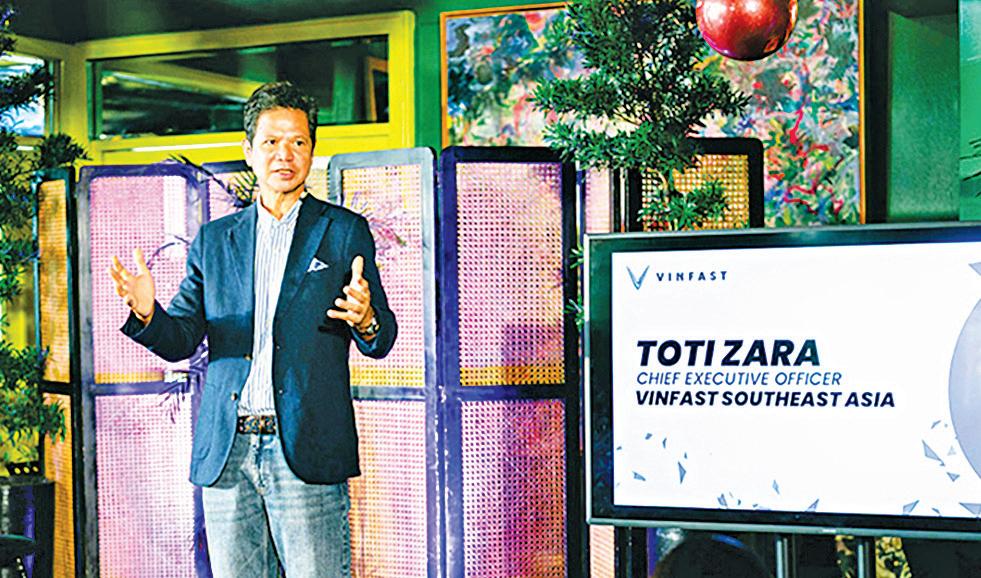

Toyota PH Previews Three New Models ahead of PIMS 2026
Toyota Motor Philippines is set to debuts three much anticipated new models at PIMS 2026
TOYOTA Motor Philippines (TMP) has given a preview of the three new models that were on display at the 10th Philippine International Motor Show (PIMS). From June 4 to 7, attendees witnessed the all-new Land Cruiser FJ, Hilux BEV, and the Land Cruiser 300 HEV in the metal.
The Legend Continues
The Land Cruiser line has a fresh new addition to its withstanding legacy with the Land Cruiser FJ. The LC FJ, which stands for Land Cruiser Freedom & Joy, highlights the nameplate’s adventurous and versatile nature. Bringing together the Land Cruiser’s 4x4 heritage in a more accessible and compact package, the LC FJ gives customers a new way to enjoy the Land Cruiser legacy in both the city and the trail.
The LC FJ features an Internal Combustion Engine (ICE) perfect for maximizing its 4x4 nature. It also features a Differential Lock, Auto Limited Slip Differential, Second Start Mode, and a Panoramic View Monitor, giving it a rugged yet urban-ready approach.
Invincible Spirit, Electrified With its “invincible spirit” of durability and performance, the all-new Hilux is ready to make its debut in the country as a Battery Electric Vehicle (BEV). The arrival of a 4x4 BEV is a new step toward the future for the Hilux nameplate, and one that caters to customers who look to take charge toward an electrified future. Guided by the Tough and Agile design philosophy, customers can expect the Hilux BEV to have a much more dynamic and sophisticated fascia in the form of a “Cyber-Sumo” aesthetic. A ligned with Toyota’s efforts in improving their cars, the diesel variants of the Hilux have also adopted this design language, alongside the high-grade version of a 2.8-liter, turbo-diesel engine-reiterating Toyota’s mission of constantly improving their cars to better cater to the needs of their customers.
Toyota’s Heritage: Driving Towards the Future
Thoughtfully crafted innovation meets heritage in the LC300 HEV. The all-new LC300 HEV is set to redefine its legendary status with the combination of the Land Cruiser 300’s proven durability, unmatched power
and performance, and Toyota’s practical hybrid system added to its 3.5 V6 engine. Additionally, the LC300 HEV now includes electronic power steering, giving customers a much smoother driving experience.
The body kit of the LC300 has also gone through improvements with it now being an Aero body kit with Jet Black Garnish.
The LC300 HEV’s new powertrain offers Land Cruiser heritage with improved driving
experience using practical HEV technology. With the addition of an HEV variant to the LC300 line, Toyota looks to further solidify its efforts in contributing to reducing carbon emissions through electrified vehicles.
All-New Cars
Backed by Legacy
With the confirmation of these three new models, Toyota once again fully commits itself to empowering customers by giving them multiple mobility

options to choose from. Backed by a legacy of proven quality, durability, and reliability, Toyota aims to continue providing customers with their perfect ride home that answers the different needs of each customer.
Starting June 4, customers can already reserve the Land Cruiser FJ through www. toyota.com.ph/reserveLCFJ
While customers can reserve for the Hilux BEV & ICE through https://www.toyota.com. ph/reserveHilux . LC300 HEV
reservation on the other hand, can be directly done through any authorized Toyota dealer nationwide, to view the list of Toyota dealerships, visit https:// www.toyota.com.ph/dealer To know more about these new models making their debut at PIMS 2026, follow Toyota Motor Philippines on Facebook Instagram and X and join the ToyotaPH community on Viber to get the latest updates on products, services, and promos.

Interview by Eric Montelibano
International Motor Show
STRONG TURNOUT MARKS THE 10TH PHILIPPINE INTERNATIONAL MOTOR SHOW



Continued from C1
This year’s theme, ‘Forward in Every Drive,’ appropriately captures the direction in which the mobility sector is moving: toward innovation, greater efficiency, and smarter approaches to meeting the country’s growing transportation needs.”
Echoing this vision of innovation and collective progress, CAMPI President Jing Atienza emphasized the automotive industry’s commitment to shaping a more inclusive and responsive future during his opening remarks.
Through collaboration and shared progress, the 10th PIMS showcases how the industry continues to push boundaries while shaping a future that is inclusive and responsive to the needs of Filipinos,” he said.
Seventeen automotive brands participated in this year’s show: Suzuki, Isuzu, Nissan, MG, Toyota, Mitsubishi Motors, Jetour, BAIC, Chery, Kia, Omoda and Jaecoo, Foton, Geely, Honda, Subaru, VinFast, and Tesla. Of these participants, five brands made their PIMS debut: BAIC, Omoda & Jaecoo, Subaru, Tesla, and VinFast.
A mong the highlights of the show were the introduction of new models and programs: Suzuki launched the AllNew Suzuki e-VITARA. Isuzu Featured the New 2026 D-MAX,

mu-X, and TRAVIZ. Nissan launched the All-New X-Trail e-POWER. MG launched the RX9 PHEV, MG4 Urban, and HS PHEV. Toyota premiered the All-New Land Cruiser FJ, All-New Hilux, and New Land Cruiser HEV. Mitsubishi unveiled the All-New Outlander PHEV and launched the New XFORCE GLX. Jetour previewed the T1, T2, and X70. BAIC featured the B60e Beaumont rEV, B40e Pro Trailmaster rEV, and B30e Dune Hybrid. Chery highlighted its 7-seater plug-in HEV Tiggo rEV and gave a sneak preview of the all-new Chery QEV Smart EV Cruiser. Kia had a preview teaser of the Kia Sportage Turbo Hybrid, EV3, and PV5. Omoda & Jaecoo showcased the J5 SHS Hybrid, J5 EV, J7 PHEV, J8 PHEV, and EJ6 EV. FOTON showcased its diverse lineup of fully electric vehicles: Traveller Sierra EV, TransVan i7 EV, Harabas TM300 MPV EV, EST 6x4 Tractor Head EV, and the Coach EV, a fully electric bus. Geely revealed the selling price of the Geely EX2 ahead of its launch. Honda launched its new logo and previewed its e:HEV lineup, Honda City, and electrified motorcycles. Subaru launched the Crosstrek e-BOXER Hybrid and showcased the Forester e-BOXER Hybrid Adventure Pack.
VinFast displayed the Limo Green, Hero Green, and VF 3, and launched the RENTAPASADA program. And Tesla announced
its Grok AI, transforming the vehicle into an intelligent companion.
The 10th PIMS showcased how the industry is adapting to changing consumer needs, evolving technologies, and the growing demand for environmentally responsible transportation. It underscores the automotive sector’s role as a vital contributor to economic growth and national mobility.
W hile there was a strong presence of electrified vehicles, the show also featured the latest in ICE (internal combustion engine) vehicles and offered test drives and third-party suppliers.
The significance of the 10th PIMS comes at a time when consumers are increasingly seeking fuel-efficient and sustainable transportation options amid changing economic and energy conditions.
It presented a variety of mobility solutions rather than promoting a single technology, acknowledging the diverse needs of motorists and the evolving nature of transportation in the country.
From traditional internal combustion vehicles to cuttingedge electric mobility solutions, the event demonstrated that the future of transportation is not defined by a single technology alone,
by
industry’s


but
the
collective commitment to providing smarter, safer, and more sustainable choices.
Chamber Automotive Manufacturers of the Philippines Inc. (CAMPI) President Jing Atienza delivers the Opening Remarks of this year’s Philippine International Motor Show.
Omoda Jaecoo Philippines Vice President Weijia Luo (3rd from left) together with other representatives from Omoda & Jaecoo Philippines.
From Left to Right: Hokada Matsuda, Isuzu Philippines Corporation(IPC) Vice President for After Sales; Yasuhiko Oyama, IPC Executive Vice President; Mikio Tsukui, IPC President; Shunsuke Yasui, IPC Vice President for Sales; Robert Carlos, IPC Division Head for Sales during the Philippine International Motor Show 2026.
Norihide Takei, Director and General Manager for the Automobile Division of Suzuki. Hidekazu Arai, President of Honda Cars Philippines .
ENHANCING THE PIMS EXPERIENCE: MODELS DON’T JUST POSE, THEY ACT AS BRAND AMBASSADORS
Beyond the traditional display, models have become conduits for brands to communicate identity, values, and vision for mobility.
By Eric Montelibano
AT the recent 10th Philippine International Motor Show (PIMS), visitors were drawn to a display of the latest vehicles and mobility technologies.
But beyond the bright lights and impressive automobile booth displays was the significant element that humanized the success of this major automotive event—the professional models who served as brand ambassadors for car brands and aftermarket automotive companies.
Models played a strategic role in shaping how brands connect with consumers. They are communicators, representatives, and storytellers who help transform vehicle displays into engaging brand experiences.
The Evolution of the Motor Show Ambassador
The role of models in automotive exhibitions has evolved over the years. Beyond vehicle displays and automotive products, models have become conduits for brands to communicate identity, values, and vision for mobility. They have expanded beyond the traditional display.
Brand ambassadors help establish meaningful connections between automotive companies and event attendees, contribute to creating a welcoming environment, and reinforce the personality and positioning of the brands they represent.
From luxury sedans, electrified SUVs, and fully-electric
commercial vehicles to third-party products and mobility solutions, models humanize the customer experience.
Brand Experience and Customer Engagement
Professional models help convey brand values while communicating key messages in a pleasant and engaging manner. This enhances the brand experience and provides a subtle but personal communication platform for customers.
The alignment between product and presentation strengthens brand recall and enhances the overall effectiveness of marketing efforts during the event.
With a diverse audience composed of automotive enthusiasts, prospective buyers, business leaders, families, media representatives, and industry stakeholders, these brand ambassadors serve as the first point of contact for many visitors. They assist guests by providing information about exhibit activities, directing them to product specialists, facilitating interactive experiences, and helping ensure a smooth visitor journey within each booth, contributing to a positive customer experience, which is important in today’s competitive market.
Effective engagement can leave a lasting impression that extends well beyond the exhibition floor.
Elevating the ProfessionalismModeling
Motor show brand ambassadors require much more than confidence and poise. They undergo product briefings and event orientation sessions to familiarize themselves with brand campaigns, exhibit schedules, and customer engagement protocols.
Strong communication skills, adaptability, professionalism, and a customer-focused mindset are essential attributes for success in this role. They work long hours, maintaining energy, enthusiasm, and composure in a fast-paced environment that demands consistent excellence.
Th is collaboration reflects the science and effort behind successful automotive presentations.
Celebrating the People Behind the Experience
The Philippine International Motor Show represents a collective effort involving engineers, designers, marketers, sales professionals, event organizers, and numerous support teams working together to deliver a world-class automotive showcase.
Models serving as brand ambassadors are an integral part of this ecosystem. While the vehicles remain the centerpiece of PIMS, the individuals who bring brand stories to life contribute significantly to the event’s success. Because behind every great automotive brand is a team of ambassadors committed to driving its story forward.







With a 58-year legacy, the company continues to anchor its operations on providing efficient, reliable, and safety-oriented auto parts solutions.

By Vincent Peter Rivera
T is no secret that the Philippine International Motor Show (PIMS) excels at bringing the latest vehicle models closer to local automotive enthusiasts. Yet, beyond the latest car innovations, PIMS also prides itself on highlighting an equally vital sector of the mobility ecosystem: the aftermarket industry.
A mong the prominent aftermarket players present at the 10th edition of PIMS was BSB Junrose Corporation. With a 58-year legacy, the company continues to anchor its operations on providing efficient, reliable, and safety-oriented auto parts solutions. W
Junrose showcased its latest array of innovations on the PIMS 2026 floor.
Efficiency unprecedentedamidstsituationss
With ongoing geopolitical tensions in the Middle East and fluctuating national fuel prices, practical maintenance has become the local motorist’s first line of defense.
To address this cost-conscious shift, BSB Junrose highlights its Liqui Moly lineup. The brand’s low-friction motor oils, oil additives, and system cleaners maximize fuel economy and improve throttle response by maintaining a pristine internal engine environment.
“ Through the Liqui Moly line, more efficient journeys can be achieved through a cleaner system, reliable engine protection, and increased combustion performance,” Bangayan noted, emphasizing that everyday care is the most accessible path to better fuel utilization and extended vehicle life.
Safety in every mobility
Recognizing that road safety allows zero room for compromise, the company showcased its premium braking segment headlined by Italian giant Brembo.
S ince joining the BSB Junrose portfolio in 2023, Brembo’s engineered brake pads and discs have been distributed as a matched system to deliver quick, smooth, and dependable stopping power.
C rucially, these high-tier braking systems are built to cater not just to traditional internal combustion engines, but also to the unique weight and kinetic demands of hybrid and electric vehicle (EV) platforms.
Reliability challengingunder road conditions
To combat the challenging road conditions found across both rural provinces and urban centers, BSB Junrose relies on the robust engineering of Sankei 555 steering and suspension parts.
As the local distributor of this premier “Made in Japan” brand, the company supplied PIMS attendees with a closer look at its critical replacement components—including Rack & Pinion steering systems, front suspension setups, and steering linkages. These components are designed to quietly maintain vehicle stability and passenger safety behind the scenes.
Power readiness for everyday mobility
Heavy city congestion and hot tropical climates represent a worst-case scenario for automotive batteries, leading to rapid water loss and accelerated internal chemical degradation.
B SB Junrose answers this challenge with the 75-year heritage of Furukawa Battery (FB Battery).
S pecially engineered to withstand localized driving habits, Furukawa’s advanced auxiliary batteries are uniquely optimized to handle the high electrical load of modern vehicles. They ensure that sensitive onboard electronics—such as infotainment, security features, and start-stop systems—remain fully powered without suffering voltage drops when the engine cycles.
S upporting the asset through quality aftermarket solutions
While major exhibitions like PIMS 2026 naturally draw crowds for the latest vehicle rollouts, BSB Junrose views its presence as a vital reminder that long-term ownership extends far past the showroom floor.
“ Our key sort of role is to remind people that owning a vehicle doesn’t stop at the purchase point,” Bangayan emphasized. “You have to find a way to support it throughout its life. You own this piece of asset already; you might as well take

Connecting with consumers. Professional models help convey brand values while communicating key messages in a pleasant and engaging manner. PHOTOS BY ERIC MONTELIBANO/BUSINESSMIRROR.
The BSB Junerose booth at PIMS 2026 presents its latest high-quality auto supplies and parts.