

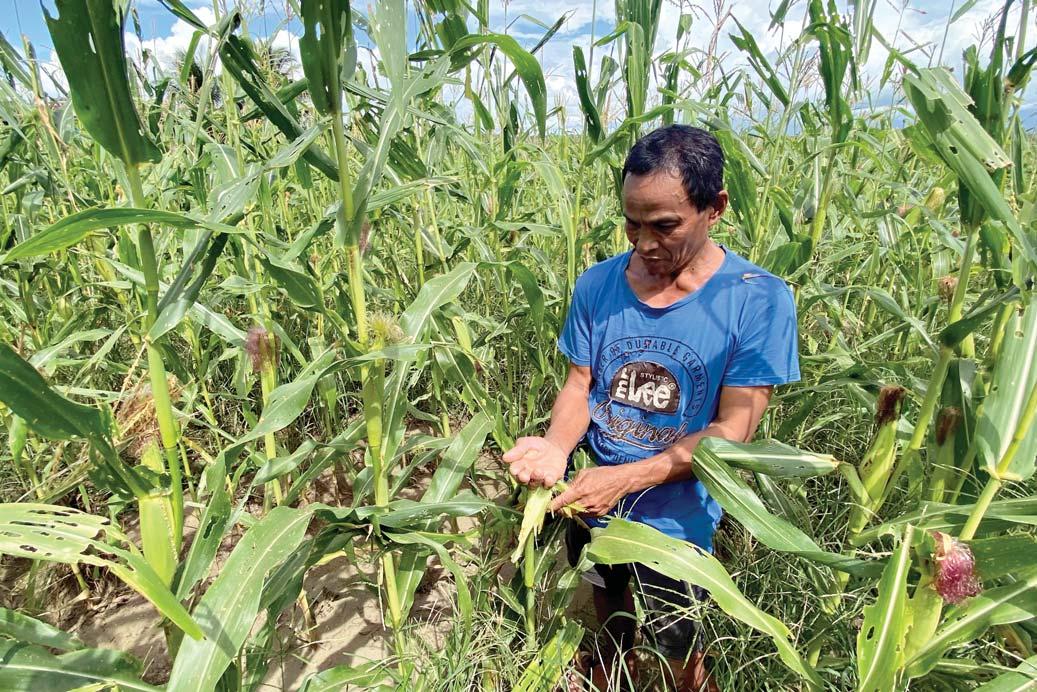




BUTUAN CITY—While still recovering after the massive damage to their agriculture area from the flood waters that submerged their farmland in February this year, Mario Cabahug, 66, fears that the worst is yet to come as the intense heat combined with the emergence of an invasive worm species sinks further their hopes of recovery.
Barangay Nato, in the town of Esperanza, Agusan del Sur province.
“I’ve never experienced anything like this in my entire life, I’ve hoped that after the massive flood that swept this land, I could recover from whatever I’ve lost; but just as the flood waters receded from the constant heavy rains, al-
most immediately the intense heat killed what little portion of vegetables I’ve planted, and the only hope I had was on the corn, but now they are also dying,” said Cabahug.
Based on the May 27 damage assessment report from the Agusan del Sur Provincial Agriculture and Veterinary Office, the towns of Bunawan, Esperanza, Loreto, Trento, Lapaz, Santa Josefa, Talacogon, San Luis and Bayugan City reported that planted corn mostly



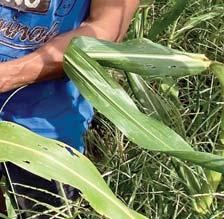



hectares affecting 12 barangays with a value of 24,330,350.70. Climate-linked infestation
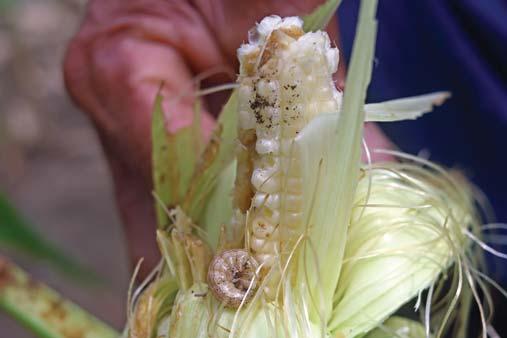
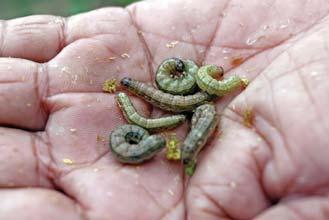
in the vegetative stage had been infested by the Fall armyworm (Spodoptera frugiperda), a voracious invasive species from eastern and central North and South America that first appeared in the province of Cagayan in 2019. With a voracious appetite, the Fall armyworm, better known as FAW, is the larval stage of a Grey-brown moth, an adult moth that is usually 1-1⁄4 to 1-1⁄2 inches from wing tip to wing tip, with
a brown or gray forewing, and a white hindwing.
“The reports from the field started coming in March. We then dispatched our teams to verify the situation as…initially only the towns of Esperanza and Loreto were affected. By April the FAW had already spread to more towns affecting several barangays. Most of the affected corn are in their vegetative stage,” said Armando G. Valiente, provincial
agriculturist of Agusan del Sur. Valiente said this is the first time the province experienced such kind of pest infestation of corn crops, affecting around 2,427 farmers with a total land area of 3,963 hectares—with a total value of the damage at P56,451,692, a sum that is feared to rise as the area affected is still growing.
The town of La Paz reported the largest area damaged among all the municipalities with 1,435.10
CABAHUG said he had experienced the drought that affected their farm in 1983 for several months, but even if this year’s heat from the El Niño phenomenon had only been two months, the battle is so much different.
“Unlike the dry hot months in the drought of 1983, this year we have to worry about the worms that have infested our corn crops before it might be hot, and it might hinder productivity, but at least there are still crops that will survive. Now you have two problems, the intense heat and then the worms that will eat away the money we have borrowed to plant this season,” said Cabahug.
“We are fighting two fronts, two enemies, it’s a losing battle,” Cabahug added. “The damage is massive: usually in a hectare we will harvest 120 sacks of corn but now I doubt that…even 50 percent can be harvested. Our corn is still growing, yet amid all our efforts like spraying pesticides, and even using different brands just to find something that will be effective, the worms continue to wreak havoc on our crops.”
While field validation is still being done, preliminary data from the Regional Crop Protection Center (RCPC) of the Department of Agriculture Caraga Region showed a total of 770 farmers were affected by the FAW infestation that damaged around 1,378.65 hectares of agricultural land area in Agusan del Sur, Agusan del Norte, Butuan City and a small area in the municipality of Cagdianao in the Dinagat Island province.
Ana Marie Plaza, Officer-inCharge, RCPC of DA Caraga, said they monitored the FAW in the region in 2020. Still, this cropContinued from A1
love for avocados in the United States seems to know no bounds. From 2001 through 2020, consumption of this fruit laden with healthy fats tripled nationwide, rising to over 8 pounds per person yearly.
On average, 90% of those avocados are grown in the southwest Mexican state of Michoacán. As with other foods that have become trendy, such as acai berries, or widely used, such as palm oil, intensive avocado production is causing significant environmental damage.
My research on 20th-century Latin American environmental history examines how the transnational movement of people, foods and agricultural technologies has changed rural landscapes in Latin America. Currently, I’m writing a book on the development of a global avocado industry centered in Michoacán, the world’s largest avocado-growing region.
My research shows that raising avocados is economically beneficial in the short term for farmers, which in Latin America typically means medium-sized operators and agribusinesses. It also helps growers—people in rural areas who grow subsistence crops. Over time, though, every serving of avocado toast takes a toll on Michoacán’s land, forests and water supply. Rural growers, who lack the resources of large-scale farmers,
feel those impacts most keenly.
The environmental effects of monoculture
MICHOACÁN is the only place on earth that grows avocados yearround, thanks to its temperate climate, abundant rainfall and deep, porous volcanic soils that are rich in potassium, a vital plant nutrient. Even under favorable conditions, however, monocultures are never environmentally sustainable.
Introducing homogeneous, high-yielding plant varieties leads growers to abandon native crops. This makes the local ecosystem more vulnerable to threats such as pest infestations and reduces food options. It also erodes fertile soils and increases use of agrochemicals.
Monoculture also can drive deforestation. Mexican officials estimate that avocado production spurred the clearance of 2,900 to 24,700 acres of forests per year from 2010 through 2020. And it’s resource intensive: Avocado trees consume four to five times more water than Michoacán’s native pines, jeopardizing water resources for human consumption.
AVOCADOS have been a part of the Mexican diet since ancient Mesoamerica, but the Hass—the most popular variety worldwide today— was bred in modern California.
In the late 19th century, scientists from the US Department of Agriculture embarked on a mission to collect and send home samples of food plants from around the world. The goal was to adapt and grow these plants in the United States, reducing the need for food imports.
Collecting plant genetic material from Latin America and imposing quarantines on avocados from Mexico starting in 1914 provided vital support for the development of a US avocado industry. Farmers in California and Florida bred multiple strains from the material that USDA explorers collected. But US consumers in the early 1900s weren’t familiar with this new food and hesitated to buy avocados of various textures, sizes and colors.
In response, farmers began selecting plants that grew avocados with small seeds, abundant flesh, hard skin, a creamy texture—and, most importantly, high yields. According to industry lore, Rudolph Hass, a postman and amateur horticulturalist in Southern California, stumbled on a new variety in the late 1920s while trying to propagate a variety called Rideout.
Within several decades, the Hass became the dominant avocado grown in California. By the 1950s, Mexican farmers who had connections with US brokers had introduced the Hass south of the border.
How the Hass changed Michoacán IN the early 1960s, Michoacano cantaloupe farmers acquired lands to expand their production by growing avocados. Soon they focused on exclusively producing the Hass. Many local Indigenous Purhépecha people, along with non-Indigenous campesinos, or country farmers, rented or sold land to the emerging avocado farmer class. In the 1980s, campesinos began to grow the fruit too. This was an expensive, long-term undertaking: It took four years for the trees to produce marketable avocados, but growers had to buy the trees, clear land for them and provide water, fertilizer and pesticides to help them grow.
Cantaloupe farmers could afford to invest capital for four years with no cash return. Campesinos had to rely on loans or remittances from family members abroad to develop avocado orchards.
As production expanded, agrochemical distributors, tree nurseries and packing houses sprouted on Purhépecha lands, clearing native pine trees and eroding the fertile soils. Mexico passed a law in 2003 that prohibited clearing forests for commercial agriculture, but by this time campesinos in Michoacán were already growing Hass avocados on a large scale.
The guacamole wars AFTER the adoption of the North American Free Trade Agreement in 1994, California avocado farmers lobbied to maintain a quarantine that the USDA had imposed on Mexican avocado trees in 1914 because of an alleged plague. After three years of drought in Cali-
fornia and testing of Michoacán orchards for pests, Mexico began shipping Hass avocados to the US in 1997.
However, the only region the USDA certified to send avocados to the United States was Michoacán. Mexico had to allow the USDA to station agents in Michoacán to verify that certified orchards fulfilled agreed conditions to minimize the risks of plant diseases.
Companies such as Calavo, a California-based produce distributor, began to buy, pack and ship avocados grown in Michoacán to US customers. In the process, they became major competitors for California avocado farmers.
Beyond monoculture TODAY, avocados are one of the most-regulated exports from Mexico. However, these rules do little to address the industry’s environmental impacts.
Farmers in Michoacán continue to clear woodlands, spray agrochemicals, exhaust aquifers and buy Purhépecha communal property, converting it to smaller, privately owned lots. Rising profits have spurred violence and corruption as some local authorities collude with organized crime groups to expand the market. Visiting Michoacán on February26, 2024, US Ambassador to Mexico Ken Salazar pledged that the US would modify its protocol to block imports of avocados grown in illegal orchards. However, this won’t restore local ecosystems.
As I see it, expecting smallscale growers to protect the environment, after the ecology and economy of Michoacán has been
radically altered in the name of free markets and development, puts responsibility in the wrong place. And boycotting Mexican avocados likely would simply lead growers to look for other markets.
Diversifying agriculture in the region and reforesting Michoacán could help to restore the Sierra Purhepecha’s ecology and protect the rural economy. One Indigenous community there is successfully growing peaches and lemons for the domestic market and avocados for the international market, while also planting native pines on their communal lands. This is a potential model for other farmers, although it would be hard to replicate without state support.
In my view, importing avocados from different areas of Mexico and the world to reduce the Hass market share may be the most effective environmental protection strategy. In 2022, the USDA approved imports of avocados grown in the Mexican state of Jalisco. This is a start, but Jalisco will follow Michoacán’s trajectory unless the US finds more sources and promotes more avocado types. As US eaters’ tastes become more adventurous, sampling avocados of different sizes, shapes, textures, tastes and origins could become a decision that’s both epicurean and environmentally conscious.
This article is republished from The Conversation under a Creative Commons license. Read the original article here: https://theconversation. com/avocados-are-a-green-goldexport-for-mexico-but-growingthem-is-harming-forests-and-waters-226458.
Continued from A1
ping season’s infestation is unprecedented compared to previous years.
“In 2020, during the height of the pandemic, we started monitoring the presence of FAW in our corn crops in Caraga. From 2021 until 2023, the number of infected corn plants has been very minimal that it did not even show that much dent on our farmers’ yield. But we’re surprised it spiked beyond our expectations in this year’s cropping,” said Plaza.
In Plaza’s view, the sudden rise in FAW infestation in Agusan del Sur might have something to do with the abrupt change in the weather pattern with the onset of warmer temperatures which increased from March to May.
“We’ve noticed that most of the infected farms and the towns affected by the FAW this year are those same areas that were flooding back in February, so from the straight two months of rain and flood, after it ended, by midMarch we had the rise in temperature and the intense heat resulting in a dry spell by March. These are favorable conditions for the worm to multiply and infect more farms,” said Plaza.
Plaza said the pupae of the FAW might have stayed under the soil affected by the flooding, and emerged after the waters receded. The hot summer weather favored their faster development.
Several published scientific studies on the FAW—the most recent in March 2023 entitled, “Climate Change Can Trigger Fall Armyworm Outbreaks: A Developmental Response Experiment With Two Mexican Maize Landraces,” pointed to the faster development of Spodoptera frugiperda when the weather is warm.
In a February 2022 study from China, “The Effect of Temperatures and Hosts on the Life Cycle of Spodoptera frugiperda (Lepidoptera: Noctuidae),” the research team reported that when temperatures rose, the developmental period of FAW at each stage shortened significantly, with instar larvae developing rapidly on maize at 25°C and 30°C, while feeding on maize at
30°C resulted in a lower mortality rate, a shorter developmental time and longevity, and a higher ability to produce an abundance of offspring compared to lower temperatures.
Resistant to commercial pesticides
THE assessment report made by the Agusan del Sur Provincial Agriculture and Veterinarian Office indicated that most farmers sprayed insecticide more than five times, but the FAW infestation persisted.
Farmer Robin Nowhere, 61, from Purok 5, Barangay San Nicolas in the town of Talacogon, expressed his disbelief amid the efforts they’ve made in spraying pesticides; the worms doubled in numbers.
“Although I only have a small land where I planted corn, our expense from plowing and preparing the land, the seedlings, planting, and fertilizers has increased because of how much we have paid for in spraying of pesticides. We’ve already used different types just to make it work, but they just keep on producing more and it has devastated the middle part of the farm,” said Nowhere.
Nowhere added that, “This is the first time in our entire life that we’ve seen this kind of infestation on our crops. Last February, I lost more than P10,000 after the flood waters swept through our farm. We hoped that this cropping season we could recover from that loss and also pay some of our debts, but I never expected this kind of problem. This time I estimate our loss to be nearly P20,000 because of the expensive pesticides.”
Plaza warns farmers against experimenting and mixing different cocktails of pesticides as this causes more problems without eliminating the worms and further enhancing their survivability.
“We’ve received reports that out of desperation, some farmers are mixing different types of pesticides and increasing the amount sprayed into the infested crops. The problem with this is that it will not be effective and it will have an opposite result as it will only enhance their immunity against the pesticides,” said Plaza.
To make the pesticides work, Plaza said, the farmers should individually open the portion where the worms are located in each plant and direct the nozzle of the sprayer on the affected stalk.
Natural solutions
PLAZA revealed that while farmers are trying to experiment with what type of pesticides should they spray, their team is working on using an environmentally friendly, all-natural safer solution to the pest problem.
The RSPC conducted a series of information campaigns to help educate farmers on how to better fight the infestation using biological control agents (BCA).
Plaza enumerated the BCAs they are advising farmers to use: “Our farmers can use the Fall armyworm lure; this is a pheromonebased solution, this will attract the male moths and catch them, we usually hang 40 lure traps per hectare.”
“We also have Trichogramma evanescens, a small parasitic wasp, an egg parasitoid which means it needs a host to survive; in this case, it will use the moth’s eggs to live by consuming it from within. We recommend 100 Tricho per hectare,” she said.
Another alternative pesticide suggested by RSPC is by using Metarhizium anisopliae, a pathogenic fungus that infects the insect larvae, attaching itself and infecting the FAW.
Then there is the Nuclear Polyhedrosis Virus (NPV), a viral disease that attacks the FAW after the larvae have eaten the NPV particles infecting the gut cell, and spreading to the blood within 24 hours killing the host larvae.
Plaza explained that while BCA solutions are available, the massive infestation has caught them off guard, resulting in a limited supply that not everyone can access immediately.
While the onset of the rainy season has already started, Caraga Region still experiences warm temperatures, and authorities are concerned that the FAW infestation will continue to spread and infect more areas throughout the region. Meanwhile, despair is rising, and hunger looms.
June 9, 2024 A3
EARLY in May, King Philippe of Belgium was on the edge of the Namib desert to inaugurate a project that aims to help decarbonize European industry, and which might just enable one of Africa’s smallest economies to hit the clean-energy big time.
It was a humble start for such grand designs, as Namibian President Nangolo Mbumba hosted the king at an unfinished site near the port of Walvis Bay on the southern Atlantic Ocean, the baking rustcolored dunescape silent except for an occasional truck passing on the new roadway.
But Philippe was just the latest in a string of European dignitaries to buy into Namibia’s grandiose plans to become a hub for what’s known as green hydrogen. It’s a technology whose critics say is a commercial illusion, but whose political and corporate backers believe may be the answer to cleaner shipping and heavy industry.
“We are really very committed in this hydrogen and green hydrogen journey,” Belgian Energy Minister Tinne Van der Straeten said in an interview at the site of the project, known as Cleanergy Solutions.
From modest beginnings, Namibia is banking on a whole new supply chain taking shape—from the production of hydrogen that’s turned into ammonia for transportation, to associated “green” products—that would place it at the forefront of a developing clean technology, and finally put it on the map. Europe, for its part, sees a means of furthering its green transition and bolstering energy security after it lost natural gas from Russia. The European Investment Bank has pledged a €500 million ($544 million) loan toward developing green hydrogen in Namibia, with the Netherlands’ Invest International contributing to a planned $1 billion Namibian hydrogen fund. Cleanergy, a venture between
Antwerp-based shipping company Compagnie Maritime Belge SA (CMB) and local firm Ohlthaver & List Group, will be Namibia’s first commercial green hydrogen plant. Built at a cost of $30 million partly funded by a $10 million loan from the German government, it’s just the start: CMB intends to raise $3.5 billion to build an ammonia plant that would connect to a new storage and export facility planned by the Port of Antwerp-Bruges.
“Our customers are asking us to clean up our act to make sure that we don’t emit CO2 anymore, so we need to find an alternative for diesel,” said Alexander Saverys, CMB’s chief executive officer, explaining the nearly 130-year-old company’s decision to get into green hydrogen.
Five years ago, CMB reached out to producers about green hydrogen and ammonia. “They all laughed and they all said ‘no, it doesn’t exist,’” Saverys recalled. So CMB developed its own production and is now scaling up: CMB, which runs 200 ships worldwide, has ordered 45 ammonia-fueled vessels from China. That requires investing “in a country where there’s an abundance of cheap renewable energy, and Namibia is that country,” he said.
It’s a prospect that could transform the nation of 2.8 million with a gross domestic product of some $13 billion, or around one third that of Vermont, the smallest economy of any US state.
If at all, Namibia is known for its desolation—home to one of the world’s most arid deserts, the Namib, it’s among the least densely populated countries on Earth. It’s that ready availability of land, allied to lots of sun and wind, that
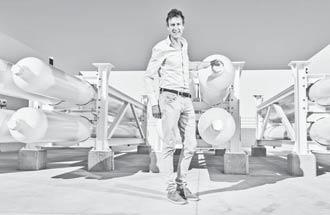
offers such possibilities even in the face of competition from the likes of Chile, Saudi Arabia and Namibia’s neighbor, South Africa.
The southwest African nation has the world’s best solar potential, according to a World Bank study, and its abundant land is largely owned by the government, which backs the industry’s development. The South West Africa People’s Organization has ruled the country since it won independence from South Africa in 1990, giving investors the reassurance of political stability.
The plan is to tap solar power from the Namib by erecting a vast array of panels channeling the energy to electrolyzers that split water into its constituent molecules, hydrogen and oxygen, without climate-warming emissions. The product will then be turned into green ammonia, loaded onto tankers at new harbors planned by the companies that run the ports of Rotterdam and Antwerp—Europe’s No. 1 and No. 2 ports respectively— and transported north to Europe.
While a sparse landscape is a bonus for clean-energy production, it’s historically proved a challenge to turn a profit from the moon-like emptiness of Namibia, a nation largely reliant on metals, diamonds, tourism and fishing.
The government’s gamble is that costs of producing hydrogen will fall at the same time as the European Union imposes stricter rules on the use of fossil fuels that power industries such as the chemical cluster around Antwerp and the Ruhr area of Germany.
The government in Windhoek does have other opportunities,
notably a number of offshore crude finds that may be developed by TotalEnergies SE and Shell Plc with other oil majors keen to participate as the fields are assessed. Early estimates have reached billions of barrels and any projects will race to beat declining demand for fossil fuels. That still compels Namibia to find a new impetus for growth in the face of the country’s limited skills base and a worrying vulnerability to climate change.
“Either we sit back and we let you guys try to decarbonize your factories, or we also use the natural resources at our disposal, our great wind or great sun or minerals, to proactively contribute to reducing this existential threat to our people,” said James Mnyupe, Namibia’s Green Hydrogen Commissioner, who is on first-name terms with EU energy ministers courtesy of a whirlwind of visits to drum up funds.
The government estimates that the size of the economy could double as a result. What’s more, “excess electrons” can be exported, alleviating regional energy insecurity, Energy Minister Tom Alweendo told the World Hydrogen Summit in Rotterdam.
The planned location of CMB’s main facility some 50 miles northeast of Walvis Bay speaks to the race for Africa’s resources by the world’s economic powers.
Situated on the desert plains that make up much of the central Namib, the site is close to Arandis, a near derelict settlement whose name means “the place where people cry” in the ancient Khoekhoe language. Arandis lies between Husab and Rossing, the
world’s No. 2 and No. 6 uranium mines, both of which are owned by Chinese companies. Chinese investors have also snapped up Namibian gold assets.
Europe’s bid to benefit from Namibian resources is not without sensitivity given its colonial past: Former colonizer Germany has acknowledged that it carried out a genocide of the Herero and Nama peoples in the early 20th century, and questions of redress are still under discussion.
That’s not standing in the way of a development that could radically change Namibia’s outlook—the $10 billion Hyphen project in which Germany’s Enertrag SE is invested.
German Foreign Minister Annalena Baerbock hailed it as giving “further impetus to our cooperation on hydrogen, the fuel of the future.” In March, the government said it plans to award Hyphen strategically significant status, paving the way for more state support.
In its first phase, the Hyphen facility will be powered by 3.5 gigawatts of wind and solar projects—equal to more than half the capacity of large renewable plants built across South Africa, the continent’s most industrialized nation.
An entire vertically integrated industry is set to rise in Lüderitz, a remote coastal outpost south of Walvis Bay at the end of a decommissioned rail line, where businesses until recently included the processing of seal skins, while a nearby ghost town is testament to the rise and fall of the diamond trade.
It’s here that Hyphen expects to employ 15,000 workers for at least four years to build a plant that yields enough hydrogen to make one million tons of ammonia a year—then doubling it in a second phase. That would represent a significant chunk of the up to 15 million tons of “green ammonia” the International Energy Agency forecasts will be produced globally by 2030.
The Port of Rotterdam is providing support to Hyphen and state-owned Namport to determine the infrastructure needed in Lüderitz that will allow the import of massive wind turbine blades and other equipment. It’s also pledged to assist in finding the needed financing.
Namibia is taking a 24 percent equity stake, and has still grander plans. With help from McKinsey & Co., it’s developed a strategy that envisions three hydrogen production zones along the coast in a blueprint that spans mineral refining and the manufacturing of renewable energy hardware along with pilot programs for hydrogenpowered trains and utilities.
Hyphen, says CEO Marco Raffinetti, will be “the catalyst of the first hydrogen valley.”
But none of this will leave the drawing board without secure funding, which means lining up customers who agree with binding contracts to buy the green hydrogen produced. A high level of concessional financing could play a role, according to Raffinetti, who said that the Belgians, Dutch, Japanese and South Koreans have all shown interest.
“It’s not a full fantasy, there is some merit to what Namibia is doing,” said Martin Tengler, a BloombergNEF analyst. “What is going to matter most to them is to find an offtaker for the hydrogen that they will produce.”
Germany is pushing hard to bring a hydrogen market to the world, paying €3 billion in direct subsidies to help green its steelmakers and launching a massive funding program to spur demand in Europe’s biggest economy. On May 29, the cabinet passed a draft law under the aegis of Economy Minister Robert Habeck—another visitor to Namibia—to accelerate hydrogen projects, including making it easier to set up infrastructure for import and storage.
Even as the technology is still being developed, there may be few other choices for European industry facing stringent climate regulations.
“You cannot electrify those industries,” said Port of AntwerpBruges CEO Jacques Vandermeiren. “You’ll have to bring in the green molecules.”
If Namibia’s green hydrogen gambit does pay off, it could foster decades of development. And Namibia needs development wherever it can get it, according to Trevino Forbes, the mayor of Walvis Bay. The goal has to be “to capitalize on this resource of ours,” he said. With assistance from Petra Sorge and Kaula Nhongo/Bloomberg
US and allies intensify efforts to curb ship attacks by Houthi militants, jeopardizing Yemen peace dealTBy Sam Dagher & Mohammed Hatem
HE US and its allies are raising the stakes in their struggle to curb ship attacks by Houthi militants in the Red Sea by increasingly blocking their revenue sources, a move that could jeopardize a peace deal intended to end an almost decade-long war in Yemen.
Washington has told parties including Saudi Arabia that key elements of a United Nations-led plan committed to in December can’t go ahead unless the Iran-backed group ends its near seven-month hostile maritime campaign, said several people who met recently with US officials. That would have included the disbursal of at least $1.5 billion in civil-servant salaries by Riyadh to Houthicontrolled territories, according to a person involved in negotiating the deal.
A US State Department official, who asked not to be identified due to the sensitivity of the matter, said President Joe Biden’s administration supports peace in Yemen to address longstanding economic and humanitarian crises in the country. But he emphasized that agreements tied to the so-called UN road map can only proceed if the Houthis stop the Red Sea attacks, which began in November ostensibly to put pressure
on Israel to end its war in Gaza.
The move demonstrates how US and UK airstrikes against the Houthis since early January have done little to deter the group, whose missile attacks and hijackings have upended shipping through one of the main arteries for global trade. Yet the shelving of the peace deal could undo a fragile twoyear truce and reignite land fighting among Yemen’s warring factions, potentially drawing in Saudi Arabia and other Gulf states like the United Arab Emirates.
The resurgence of another Middle East conflict alongside the Israel-Hamas war would further highlight the Biden administration’s struggles to bring calm to the region — just months before November’s presidential election. Washington has been striving to broker a cease-fire deal in Gaza for several months with limited success.
The US military said its Red Sea defense coalition destroyed eight drones and two unmanned surface vessels launched by the Houthis in the past 24 hours, which posed an “imminent threat” to armed forces and merchant ships. The previous day, Abdul Malik Al-Houthi, who heads the Houthis’ Ansarullah Movement, said his group was starting what he called the “fourth of phase of escalation” and that it would entail joint operations with
Iran-backed militias in Iraq.
Houthi banks IN tandem with the US decision on the UN peace plan, the Central Bank of Yemen, which is part of the internationally recognized and Saudi-backed Yemeni government based in Aden, has taken a series of measures against banks located in Houthi-controlled areas in Yemen’s north, including the capital Sanaa, that would undermine Houthi authority and cut their access to foreign currency.
When the Houthis overthrew the government in 2014 and captured Sanaa, they seized all institutions including the then-national central bank, setting their own exchange rate for the Yemeni riyal and rules for all financial transactions connected to trade, humanitarian aid and remittances.
In March they minted currency.
Ahmed Ghalib, the central bank governor, suspended operations of six banks in Sanaa last week for noncompliance with an order for all financial institutions to relocate their headquarters to Aden, while issuing a new directive instructing Yemenis to exchange old bank notes circulating in Houthi-controlled areas for new ones.
That was to protect Yemen’s financial system, he said, especially after the Houthis
were re-designated a global terrorist group in January. It’s effectively an attempt to end the dual banking and currency system that has emerged in Yemen since the Houthis took power.
The central bank move is being supported by the US and Western allies and has most likely received tacit approval from the Saudis, who bankroll the Aden government and central bank there, said four people with direct knowledge of the situation. The US State Department official declined to comment on that aspect of the plan, while officials with Saudi Arabia’s ministries of defense and foreign affairs who are responsible for the Yemen dossier did not respond to messages requesting comment.
Economic war
THE Houthis accused the US and Saudi Arabia of orchestrating and waging a new economic war against them in response to their stance in the Gaza conflict. Prominent members of the movement have threatened to launch missile attacks on Saudi Arabian airbases as well as key projects associated with Crown Prince Mohammed bin Salman’s plan to diversify the economy.
“We also have means to pressure our enemies and in the end we’ll do what must
be done,” the group’s leader, Al-Houthi, said in a speech Thursday addressing the new banking measures.
MBS, as the Saudi de facto ruler is known, has long been striving to end the Yemen war, green-lighting direct negotiations with the Houthis after he failed to oust them from power during a seven-year military intervention that killed 377,000 people, provoked widespread humanitarian suffering and exposed Saudi Arabia to hundreds of missile and drone attacks including against its vital oil facilities.
In an effort to diffuse the current standoff, the office of the UN Special Envoy for Yemen has invited top leaders from the Houthis and the Aden-based government to meet to discuss possible solutions over the currency and banks but they have yet to respond, said a person informed about this move, who did not wish to be named due to the delicate nature of the ongoing efforts.
The envoy, Hans Grundberg, declined to comment on the invitation but said the UN is determined to implement the peace road map.
Turning Point If carried out fully, theYemeni government’s moves will drain liquidity in Houthi areas and impact all financial dealings there, said Maged Al-Madhaji, chairperson and co-founder of the
Sanaa Center for Strategic Studies.
“We’re at one of the major turning points in the Yemen war because if the current truce unravels it will be very hard to reinstate it,” he said.
Anti-Houthi factions, who say they have been excluded from Saudi Arabia’s deal with the Houthis and were compelled to rubberstamp it in December, now want to leverage the international pressure on the group to extract their own concessions, namely by ending a Houthi embargo on oil exports from the south, Al-Madhaji said.
Amr Al-Bidh, a senior official with the Southern Transitional Council, one of the main factions in the Aden-based government, said it will take more than financial pressure to tackle the long-term threats posed by the Houthis, who have been armed, funded and trained by Iran for years.
Fathi Al-Fahem, a Yemeni trader and businessman operating mainly in Sanaa, said the banking measures if implemented would impact his ability to import basic staples such as wheat from Australia. That would compound the hardship suffered by Yemenis in what is already one of the poorest countries in the world.
“As it is, the situation is dire,” he said. With assistance from Fiona MacDonald and Thomas Hall/Bloomberg
Bulkeley’s pledge to stay off social media in high school worked at first. She watched the benefits pile up: She was getting excellent grades. She read lots of books. The family had lively conversations around the dinner table and gathered for movie nights on weekends.
Then, as sophomore year got underway, the unexpected problems surfaced. She missed a student government meeting arranged on Snapchat. Her Model U.N. team communicates on social media, too, causing her scheduling problems. Even the Bible Study club at her Connecticut high school uses Instagram to communicate with members.
Gabriela Durham, a high school senior in Brooklyn, says navigating high school without social media has made her who she is today.
She is a focused, organized, straight-A student with a string of college acceptances—and an accomplished dancer who recently made her Broadway debut. Not having social media has made her an “outsider,” in some ways. That used to hurt; now, she says, it feels like a badge of honor.
With the damaging consequences of social media increasingly well documented, some parents are trying to raise their children with restrictions or blanket bans. Teenagers themselves are aware that too much social media is bad for them, and some are initiating social media “cleanses” because of the toll it takes on mental health and grades.
But it is hard to be a teenager today without social media. For those trying to stay off social platforms while most of their peers are immersed, the path can be challenging, isolating and at times liberating. It can also be life changing.
This is a tale of two families, social media and the everpresent challenge of navigating high school. It’s about what kids do when they can’t extend their Snapstreaks or shut their bedroom doors and scroll through TikTok past midnight. It’s about what families discuss when they’re not having screentime battles. It’s also about persistent social ramifications.
The journeys of both families show the rewards and pitfalls of trying to avoid social media in a world that is saturated by it.
A fundamental change CONCERNS about children and phone use are not new. But there is a growing realization among experts that the Covid-19 pandemic fundamentally changed adolescence. As youth coped with isolation and spent excessive time online, the pandemic effectively carved out a much larger space for social media in the lives of American kids.
No longer just a distraction
or a way to connect with friends, social media has matured into a physical space and a community that almost all US teenagers belong to. Up to 95 percent of teenagers say they use social media, with more than one-third saying they are on it “almost constantly,” according to the Pew Research Center.
More than ever, teenagers live in a seamless digital and non-digital world in ways that most adults don’t recognize or understand, says Michael Rich, a pediatrics professor at Harvard Medical School and head of the nonprofit Digital Wellness Lab at Boston Children’s Hospital.
“Social media is now the air kids breathe,” says Rich, who runs the hospital’s Clinic for Interactive Media and Internet Disorders.
For better or worse, social media has become a home base for socializing. It’s where many kids turn to forge their emerging identities, to seek advice, to unwind and relieve stress. It impacts how kids dress and talk.
In this era of parental control apps and location tracking, social media is where this generation is finding freedom.
It is also increasingly clear that the more time youth spend online, the higher the risk of mental health problems.
Kids who use social media for more than three hours a day face double the risk of depression and anxiety, according to studies cited by US Surgeon General Vivek Murthy, who issued an extraordinary public warning last spring about the risks of social media to young people.
Those were the concerns of the Bulkeleys and Gabriela’s mother, Elena Romero. Both set strict rules starting when their kids were young and still in elementary school. They delayed giving phones until middle school and made social media off limits until 18. They educated the girls, and their younger siblings, on the impact of social media on young brains, on online privacy concerns, on the dangers of posting photos or comments that can come back to haunt you.
In the absence of social media, at least in these two homes, there is a noticeable absence of screen time battles.
But the kids and parents agree: It’s not always easy.
When it’s everywhere, it’s hard to avoid
AT school, on the subway and at dance classes around New York City, Gabriela is surrounded by reminders that social media is everywhere—except on her
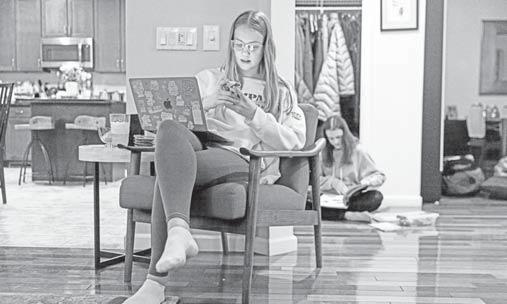
phone.
Growing up without it has meant missing out on things.
Everyone but you gets the same jokes, practices the same TikTok dances, is up on the latest viral trends. When Gabriela was younger, that felt isolating; at times, it still does. But now, she sees not having social media as freeing.
“From my perspective, as an outsider,” she says, “it seems like a lot of kids use social media to promote a facade. And it’s really sad. Because social media is telling them how they should be and how they should look. It’s gotten to a point where everyone wants to look the same instead of being themselves.”
There is also friend drama on social media and a lack of honesty, humility and kindness that she feels lucky to be removed from.
Gabriela is a dance major at the Brooklyn High School of the Arts and dances outside of school seven days a week. Senior year got especially intense, with college and scholarship applications capped by an unexpected highlight of getting to perform at Broadway’s Shubert Theatre in March as part of a city showcase of high school musicals.
After a recent Saturday afternoon dance class in a Bronx church basement, the diverging paths between Gabriela and her peers is on full display. The other dancers, aged 11 to 16, sit cross-legged on the linoleum floor talking about social media.
“I am addicted,” says 15-yearold Arielle Williams, who stays up late scrolling through TikTok.
“When I feel like I’m getting tired I say, ‘One more video.’ And then I keep saying, ‘One more video.’ And I stay up sometimes until 5 a.m.”
The other dancers gasp. One suggests they all check their phones’ weekly screen time.
“OH. MY,” says Arielle, staring at her screen. “My total was 68 hours last week.” That included 21 hours on TikTok.
Gabriela sits on the sidelines of the conversation, listening silently. But on the No. 2 subway home to Brooklyn, she shares her thoughts. “Those screentime hours, it’s insane.”
As the train rumbles from the elevated tracks in the Bronx into the underground subway tunnels in Manhattan, Gabriela is on her phone. She texts with friends, listens to music and consults a subway app to count
down the stops to her station in Brooklyn. The phone for her is a distraction limited to idle time, which has been strategically limited by Romero.
“My kids’ schedules will make your head spin,” Romero says as the family reconvenes Saturday night in their three-bedroom walkup in Bushwick. On school days, they’re up at 5:30 a.m. and out the door by 7. Romero drives the girls to their three schools scattered around Brooklyn, then takes the subway into Manhattan, where she teaches mass communications at the Fashion Institute of Technology. Grace, 11, is a sixth grade cheerleader active in Girl Scouts, along with Gionna, 13, who sings, does debate team and has daily rehearsals for her middle school theater production.
“I’m so booked my free time is to sleep,” says Gabriela, who tries to be in bed by 10:30 p.m.
In New York City, it’s common for kids to get phones early in elementary school, but Romero waited until each daughter reached middle school and started taking public transportation home alone. Years ago, she sat them down to watch “The Social Dilemma,” a documentary that Gabriela says made her realize how tech companies manipulate their users.
Her mom’s rules are simple: No social media on phones until 18. The girls are allowed to use YouTube on their computers but not post videos. Romero doesn’t set screen-time limits or restrict phone use in bedrooms.
“It’s a struggle, don’t get me wrong,” Romero says. Last year, the two younger girls “slipped.” They secretly downloaded TikTok for a few weeks before getting caught and sternly lectured.
Romero is considering whether to bend her rule for Gionna, an avid reader interested in becoming a Young Adult “Bookstagrammer”—a book reviewer on Instagram. Gionna wants to be a writer when she grows up and loves the idea that reviewers get books for free.
Her mother is torn. Romero’s main concern was social media during middle school, a critical age where kids are forming their identity. She supports the idea of using social media responsibly as a tool to pursue passions.
“When you’re a little older,” she tells her girls, “you’ll realize Mom was not as crazy as you
thought.”
Struggling not to miss out
IN the upscale suburb of Westport, Connecticut, the Bulkeleys have faced similar questions about bending their rules. But not for the reason they had anticipated.
Kate was perfectly content to not have social media. Her parents had figured at some point she might resist their ban because of peer pressure or fear of missing out. But the 15-yearold sees it as a waste of time. She describes herself as academic, introverted and focused on building up extracurricular activities.
That’s why she needed Instagram.
“I needed it to be copresident of my Bible Study Club,” Kate explains, seated with her family in the living room of their two-story home.
As Kate’s sophomore year started, she told her parents that she was excited to be leading a variety of clubs but needed social media to do her job. They agreed to let her have Instagram for her afterschool activities, which they found ironic and frustrating. “It was the school that really drove the fact that we had to reconsider our rule about no social media,” says Steph Bulkeley, Kate’s mother.
Schools talk the talk about limiting screen time and the dangers of social media, says Kate’s dad, Russ Bulkeley. But technology is rapidly becoming part of the school day. Kate’s high school and their 13-yearold daughter Sutton’s middle school have cell phone bans that aren’t enforced. Teachers will ask students to take out their phones to photograph material during class time.
The Bulkeleys aren’t on board with that, but feel powerless to change it. When their girls were still in elementary school, the Bulkeleys were inspired by the “Wait Until 8th” pledge, which encourages parents to wait to give children smartphones, and access to social media, until at least 8th grade or about age 13. Some experts say waiting until 16 is better. Others feel banning social media isn’t the answer, and that kids need to learn to live with the technology because it’s not going anywhere.
Ultimately they gave in to Kate’s plea because they trust her, and because she’s too busy to devote much time to social media.
Both Kate and Sutton wrap up afterschool activities that include theater and dance classes at 8:30 p.m. most weeknights. They get home, finish homework and try to be in bed by 11.
Kate spends an average of two hours a week on her phone. That is significantly less than most, according to a 2023 Gallup poll that found over half of US teens spend an average of five hours each day on social media. She uses her phone mainly to make calls, text friends, check grades and take photos. She doesn’t post or share pictures, one of her parents’ rules. Others: No phones allowed in bedrooms. All devices stay on a ledge between the kitchen and living room. TV isn’t allowed on school nights.
Kate has rejected her parents’ offer to pay her for waiting to use social media. But she is embarking slowly on the apps. She has set a six-minute daily time limit as a reminder not to dawdle on Instagram.
Having the app came in handy earlier this year at a Model UN conference where students from around the world exchanged contact details: “Nobody asked for phone numbers. You gave your Instagram,” Kate says. She is resisting Snapchat, for fear she will find it addictive. She has asked a friend on student government to text her any important student government messages sent on Snapchat.
Sutton feels the weight of not having social media more than her older sister. The eighth grader describes herself as social but not popular.
“There’s a lot of popular girls that do a bunch of TikTok dances. That’s really what determines your popularity: TikTok,” Sutton says.
Kids in her grade are “obsessed with TikTok” and posting videos of themselves that look to her like carbon copies. The girls look the same in short crop tops and jeans and sound the same, speaking with a TikTok dialect that includes a lot of “Hey, guys!” and uptalk, their voices rising in tone at the end of a thought.
She feels left out at times but doesn’t feel the need to have social media, since one of her friends sends her the latest viral videos. She has seen firsthand the problems social media can cause in friend groups. “Two of my friends were having a fight. One thought the other one blocked her on Snapchat.”
There’s a long way to go before these larger questions are resolved, with these two families and across the nation. Schools are trying. Some are banning phones entirely to hold students’ focus and ensure that socializing happens face-to-face. It might, educators say, also help cut back on teen depression and anxiety. That’s something Sutton can understand at age 13 as she works to navigate the years ahead. From what she has seen, social media has changed in the past few years. It used to be a way for people to connect, to message and to get to know each other.
“It’s kind of just about bragging now,” she says. “People post pictures of their trips to amazing places. Or looking beautiful. And it makes other people feel bad about themself.”

EDUKSINE Production Corp., a Filipino startup in the creative industries sector, has been selected as one of the finalists for the World Intellectual Property Organization (WIPO) Global Awards 2024.
EdukSine, assisted by the Department of Science and Technology, is one of the 25 small and medium enterprises and startups across the globe, chosen from 667 applications that WIPO received from 107 countries, said Karen Lou Mabago of the DOST’s International Technology Cooperation Unit
The finalists represent 19 countries from seven geographical regions, reflecting the global reach and diversity of the WIPO Global Awards.
Mabago said that besides the Philippines, the finalists are from, Argentina, Botswana, Burkina Faso, Germany, Italy, Japan, Kenya, Kuwait, Mexico, Portugal, Republic Korea, Singapore, Switzerland, United Kingdom, India, Thailand, Türkiye, and China.
They represent various sectors, including creative industries, food, environment, health, and more.
The WIPO Global Awards celebrates and recognizes exceptional enterprises that make smart use of intellectual property (IP) to commercialize their products and services while positively contributing to society through innovation and creativity.
WIPO launched its awards program to invite small businesses and startups from various industries worldwide.
The winners will receive tailored mentoring on strategies for the commercialization of IP assets, international promotion and visibility. They will also have sponsored
travel expenses to attend the prestigious awards ceremony and networking events in Geneva, and access to WIPO network and resources for IP management advisory, Mabago added.
EdukSine is an online streaming platform that showcases educational and socially-relevant Filipino independent films through hybrid (online and face-to-face) block screenings.
Supported also through the Women-Helping-Women: Innovating Social Enterprises (WHWise) program of the DOST, it is a pioneering social enterprise dedicated to empowering independent Filipino filmmakers and producers by connecting them with audiences both locally and internationally, Mabago said.
Its mission is to bridge the gap between creators and viewers, especially in remote communities that lack access to cinemas and making the films affordable especially to the masses, through innovative block screenings and pay-per-view options.
It showcases films that tackle crucial topics—such as education, social issues, culture, women empowerment, the environment, LGBTQ+ rights, and anti-violence against women and their children initiatives.
As the first platform to integrate Filipino Sign Language into select films, it is committed to inclusivity and accessibility, ensuring the deaf community can also enjoy and benefit from its content.
The winners, who will be selected by an international jury, will be notified in June, and the public announcement will take place at the awards ceremony on July 12 during the WIPO General Assembly of member states, Mabago said.
THE Philippines has had a long history of agricultural biotechnology use and research, being the first Asean country to initiate its regulatory practices in 1990.
Its most prominent success is Bacillus thuringiensis (Bt) corn which is a variety of choice among most Filipino farmers planting yellow corn for feed.
More recently, while local scientists were preparing to release new varieties of rice and other food crops into the market which were genetically modified (GM),the Court of Appeals upheld a Writ of Kalikasan, putting a temporary halt to commercial propagation of new GM crops, particularly the Golden Rice and Bt talong..
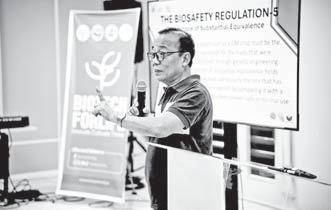
Biotech scientists gathered in the Science City of Munoz in Ecija last week for a forum titled “Upholding Food Security and Sufficiency Through Biotechnology.”
They pointed that genetically modified crops are necessary for the country to attain food security since it overcome new environmental hazards brought about by climate change.
They insisted that all GM crops were evaluated for safety as food for human consumption, animal feed, and environmental impact. Are GMOs harmful?
GOVERNMENT scientists Dr. Reynante Ordonio and Dr. Vivencio Mamaril noted how biotechnology is applied in agriculture, and how it is produced and regulated.
Put simply, a genetically modified crop is a traditionally farmed plant that has had specific genes inserted into it from other similar organisms to give it new beneficial traits, they said.
These can range from resistance to pests and disease, higher yield, higher nutrition, and even better aesthetics.
Resistance to pests and diseases showed that farmers do not have to spend as much money on pesticides, thereby lowering production costs, and lessening the toxins absorbed by people and animals.
Higher yield and nutrition, on the other hand, mean being able to feed more people and keep them healthy by staving off malnutrition prevalent in impoverished areas.
Each GM crop is made to tackle a specific problem while minimizing any risk or harm it may do.
With population growth and climate change, farmers face increasing challenges



ANEW technology, known as Wehlo, a 23/7 localized weather information and impact monitoring system, is now available for local communities to help them in weather forecasting, including in the coming La Niña that brings increased rainfall.
Launched on May 31, Wehlo, or Localized Weather, Environment, and Hydromet Monitoring System, was crafted by Mapúa University School of Civil, Environmental and Geological Engineering, led by Dr. Francis Aldrine Uy.
It was supported by the Department of Science and Technology-Philippine Council for Industry, Energy, and Emerging Technology Research and Development (DOST-PCIEERD) to help augment the disaster risk-reduction and management (DRRM) operations as the country braces for La Niña, the DOST said Besides DRR and localized weather monitoring, Wehlo also monitors and provides data on watersheds, which can be useful for dam operators and agriculture for farm management.
Users can access data through the web portal and mobile application with an alert warning feature.
Last year, Project Wehlo and Mapua University inked a memorandum of agreement for weather data-sharing with the DOST-Philippine Atmospheric, Geophysical and Astronomical Services Administration (DOSTPagasa).
It also developed an improved version of the Automated RealTime Monitoring System sensor with the DOST-Pagasa.
The Philippines experiences an average of 20 typhoons every year. According to DOST-Pagasa, La Niña may occur during the second semester of this year as El Niño weakens.
In 2023, Project Wehlo already deployed and established partnerships with the local government units (LGUs) of Infanta-General Nakar, Quezon, and Pantabangan-Angat, Bulacan.
The technology helps municipalities gather reliable and accurate real-time data with continuous transmission in times of disaster when bad weather
conditions, signal interruptions, and power outages occur.
Unlike other existing weather monitoring systems in the country, Wehlo ensures that its system, adheres to the international standard set by the World Meteorological Organization.
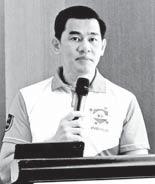
“One of the advantages of this technology is that we can modify the system based on the users’ needs which means,: said Uy, who is also the CEO of Usher Technology Inc., the only Filipino-made earthquake and structural health—such as bridges and buildings—monitoring system that is competing with international brands
He said in his speech that Wehlo’s modular weather station design is capable of monitoring nine essential weather parameters—such as rainfall, temperature, humidity, pressure, soil moisture, wind speed, wind direction, flow velocity, and water level.
“The robust, locally manufactured hardware is wellmaintained and rigorously calibrated. The platform also offers SMS blasting, email alerts, and weather warning notifications, making it an indispensable tool for LGUs and government agencies, “ Uy said.
“The importance of Wehlo lies
in the form of supply and demand and having the production capacity to meet it.
With the increasing demand for food supply that comes with population growth, farmers are choosing to use varieties of crops known to have higher yield.
With climate change, farmers are facing extreme weather conditions, drought and new varianeties of pests and diseases.
For over 20 years, scientists in the Philippines have been developing GM crops that directly address these challenges, from pest resistant Bt corn, as well as ongoing development of crops with increased
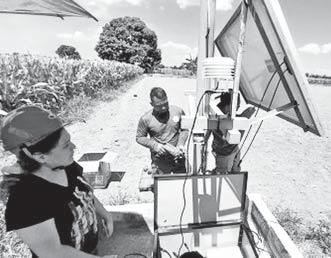

in the fundamental idea that we cannot manage what we cannot measure. For us to measure, we need tools or systems like Wehlo.” he added. “Wehlo represents a critical step forward in our ability to accurately monitor and respond to environmental conditions.”
The Wehlo web portal allows for the remote viewing of realtime weather data, efficient management of collected data, and customize messages for LGUS’ SMS blasting and alert dissemination, he explained. It enables LGUs to monitor weather conditions “both locally and nationally” through a network of interconnected Wehlo weather stations that “shall be able to help bring clarity and precision to Pagasa’s forecasts in every community,” Uy pointed out.
In his message, Science Secretary Renato U. Solidum Jr. said: “We believe that scientific advancements are not just about
immediate responses to natural hazards and consequent disasters; they are about creating long-term solutions that reduce risks and promote sustainable development. As we face increasing disaster risks, we must move beyond traditional approaches and embrace innovations that provide solutions and open opportunities for a better tomorrow.”
For his part, DOST-PCIEERD
Executive Director Enrico Paringit said: “Innovative DRRM technologies like Wehlo play a crucial role in our disaster preparedness. As La Niña approaches, precise weather information really empowers municipalities and enhances disaster management.”
Wehlo is among the funded technologies of the DOSTPCIEERD under the Funding Assistance for Spin-off and Translation of Research in Advancing Commercialization Program. The program funds projects up to P15 million. L. Resurreccion
nutritional value to address the prevalent malnutrition issue in poverty-stricken areas of the country.
Experts who talked during the forum agree that development and production of GM crops is key to attaining food security and sufficiency in the country, as relying on importation leaves the country vulnerable to fluctuations in the global market. Ensuring GM products are safe MERLE
GM, and most livestock is fed with GM corn. To date, there are no report of government approving GM crops having any harmful effect on people or the environment as compared to their traditional counterparts.
In the Philippines, there are five government agencies that oversee the approval of any GM product before it goes to market—the Departments of Science and Technology, Environment and Natural
Resources, Agriculture; Health; and Interior and Local Government—which form the National Committee on Biosafety of the Philippines (NCBP).
Scientists rigorously examine every aspect of a GM product and submit their findings to the NCBP for approval. And should it turn out that a GM product is harmful, decisions can be reversed, as necessary. GM crops are not only safe for humans and the environment but are also needed to achieve food security and sufficiency. They offer a myriad of benefits, all suited to meet a specific challenge.

A6 Sunday, June 9, 2024
WHEN faced with infertility, Amanda and Jeff Walker had a baby through in vitro fertilization but were left with extra embryos—and questions. Tori and Sam Earle “adopted” an embryo frozen 20 years earlier by another couple. Matthew Eppinette and his wife chose to forgo IVF out of ethical concerns and have no children of their own.
All are guided by a strong Christian faith and believe life begins at or around conception.
All have wrestled with the same weighty questions: How do you build a family in a way that conforms with your beliefs? Is IVF an ethical option, especially if it creates more embryos than a couple can use?
“We live in a world that tries to be black and white on the subject,” Tori Earle said. “It’s not a blackand-white issue.”
The dilemma reflects the ageold friction between faith and science at the heart of the recent IVF controversy in Alabama, where the state Supreme Court ruled that frozen embryos have the legal status of children.
The ruling—which decided a lawsuit about embryos that were accidentally destroyed—caused large clinics to pause IVF services, sparking a backlash.
State leaders devised a temporary solution that shielded clinics from liability. Concerns about IVF’s future prompted US senators from both parties to propose bills aiming to protect IVF nationwide.
Laurie Zoloth, a professor of religion and ethics at the University of Chicago, said arguments about this modern medical procedure touch on two ideas fundamental to American democracy: freedom of religion and who counts as a full person.
“People have different ideas of what counts as a human being,” said Zoloth, who is Jewish. “And it’s not a political question. It’s really a religious question.”
For many evangelicals, IVF can be problematic. The process is “inherently unnatural,” and there are concerns relating to “the dignity of human embryos,” said Jason Thacker, an ethicist who directs a research institute at the Southern Baptist Convention.
“I’m both pro-family and prolife,” he said. “But just because we can do something, it doesn’t mean
ROME—Pope Francis has appointed two cardinals and an archbishop as new members of the Dicastery for the Doctrine of the Faith.
The new appointments come as the Vatican office continues to grapple with the ecumenical fallout from “Fiducia Supplicans,” the dicastery’s declaration permitting nonliturgical same-sex blessings for same-sex couples.
Cardinal Víctor Manuel Fernández, who has led the dicastery since September 2023, recently traveled to Egypt in an attempt to ease tensions after the Coptic Orthodox Church suspended its dialogue with the Catholic Church amid concerns over the blessings declaration.
Here is a look at the new members of the dicastery, which oversees matters of doctrinal orthodoxy throughout the global Catholic Church as well as the investigation and processing of sex abuse allegations against clergy.
Cardinal José Tolentino de Mendonça CARDINAL José Tolentino de Mendonça is the head of the Vatican Dicastery for Culture and Education. The 58-year-old cardinal, originally from the Portuguese island of Madeira, is an expert in the relationship between literature and theology, according

we should.”
Kelly and Alex Pelsor of Indianapolis turned to a fertility specialist after trying to have children naturally for two years. Doctors recommended IVF, which accounts for around 2 percent of births in the US.
“I was honestly very scared,” said Pelsor, who believes life begins right after conception. “I didn’t know which way to go.”
Pelsor and her husband prayed. She began attending a Christian infertility support group, and decided to move forward with IVF. Her daughter was born in March 2022.
“I truly believe she’s a miracle from God,” said Pelsor, 37. “She would not be here without IVF.”
Pelsor later miscarried a remaining embryo after it was transferred. So she never had to personally face the quandary of what to do with extras.
Amanda Walker of Albuquerque, New Mexico, did.
She and her husband turned to IVF after five years of trying and a miscarriage.
She wound up with 10 embryos. She miscarried five. Three became her children: an 8-year-old daughter and twins who will be 3 in July. That left her with two more, which she agonized and prayed about.
“We didn’t want to destroy them,” said Walker, 42. “We believe that they are children.”
Matthew Eppinette, a bioethicist, says he hears many similar
stories.
Couples tell him, “‘We got way into the process, and we had these frozen embryos, and we just never realized that we were going to have to make decisions about this,’” said Eppinette, executive director of the Center for Bioethics and Human Dignity at Trinity International University, an evangelical school based in Illinois.
He said the church and the medical community should do more to educate people about IVF.
Dr. John Storment, a reproductive endocrinologist in Lafayette, Louisiana, said there are ways to minimize the risk of extra embryos.
For example, doctors can give less ovary-stimulating medication, or they can fertilize only two or three eggs.
These adjustments can add about $5,000 on top of the usual $15,000 to $25,000 for a round of IVF.
Religious scholars say the IVF issue is largely under-explored among evangelical Protestants, who lack the clear position against the procedure taken by the Catholic Church.
Still, Eppinette said most evangelical leaders would advise couples to create only as many embryos as they’re going to use.
In his own life, Eppinette said he and his wife weren’t willing to try IVF when they faced infertility.
Some couples find an answer in embryo adoption.
to the Vatican.
He has published poetry as well as academic theological articles. He was the archivist and librarian of the Holy Roman Church from 2018 to 2022.
Before coming to Rome, Mendonça was a professor in Portugal and Brazil and spent one year at the Straus Institute for the Advanced Study of Law and Justice at New York University.
Mendonça also served as the rector of the Capela do Rato, a private chapel in Lisbon known prior to the cardinal’s arrival for its ministry with people with same-sex attractions.
When asked about this ministry in an interview in 2015, he replied: “I don’t choose the people with whom I have to walk. Since don’t choose, I don’t judge. The attitude of the Church has to be one of welcome, of a normal accompaniment of what people live and are.”
Mendonça wrote a preface to a book on feminist theology by Sister Maria Teresa Forcades i Vila, a Benedictine sister who has advocated for a theological case for abortion rights that is “compatible with the Gospel,” which praised the sister for “courageously pointing out contradictions and looking for alternatives of interpretation that support a break in meaning and civilization.”
The Benedictine sister also spoke at Mendonça’s book launch in 2016, the

same year that the sister published her book “We Are All Diverse! In Favor of a Queer Theology.”
Pope Francis chose Mendonça to preach the Lenten spiritual exercises for the Roman Curia in 2018 and made him a cardinal in 2019. He has been a member of the Third Order of St. Dominic since 2020.
“Whether remarried Christians, those wounded by the experience of marital breakdown, or the reality of new [irregular] families, or homosexual people, the Church must find a space for listening,” Mendonça said in 2016.
Cardinal Marcello Semeraro
CARDINAL Marc ello Semeraro is the prefect of the Vatican Dicastery for the Causes of Saints. The 76-year-old cardinal from southern Italy previously served as bishop of Albano, a suburbicarian diocese located about 10 miles from Rome.
He holds a doctorate in theology from the Pontifical Lateran University.
Prior to being made a cardinal in 2020, Semeraro acted as the secretary for Pope Francis’ council of cardinal advisers for seven years.
Semeraro wrote the preface to Father Aristide Fumagalli’s book “Possible Love: Homosexual Persons and Christian Morality” in 2020.


Snowflakes, a division of Nightlight Christian Adoptions, has offered this service to more than 9,000 families since 1997, with more than 1,170 births.
Executive Director Elizabeth Button said they got an influx of inquiries after the Alabama ruling.
For the Walkers, Snowflakes offered a perfect solution. They chose an open adoption that allowed them to get to know the family adopting their embryos.
The adoptive mom miscarried one but gave birth to a daughter with the other. The two families touch base weekly and plan to vacation together.
Couples on the other side of the adoption arrangement say it’s been a good solution for them, too.
Before finding Snowflakes, the Earles of Lakeland, Florida, had struggled with infertility for years and were considering traditional adoption. IVF wasn’t an option because of leftover embryo concerns.
“We asked the Lord to just kind of guide us,” said Tori, 30, who belongs to a Baptist church.
They adopted 13 embryos that had been frozen for 20 years. One became their daughter Novalie, born last April. They hope to have another three or four children with the remaining embryos, knowing that not all will grow into a baby.
“God can use everything to His glory,” said Sam Earle, 30. “There’s certainly an aspect that you consider with IVF: the ethics of freezing more embryos than you need…But for families who struggle with infertility, it’s a beautiful opportunity.”
Amanda and Ryan Visser of Sterling, Colorado, feel the same. When they faced infertility after having a child naturally 14 years ago, they were uncomfortable about IVF. “At some point,” Ryan said, “you feel like you’re playing God too much.”
They fostered and adopted two children, and later heard about Snowflakes. They adopted three embryos. Two became their twin boys, born in October. They plan to use or donate the one they have left.
“God creates families in so many ways,” said Amanda, 42. Laura Ungar And Tiffany Stanley/Associated Press
In an interview with Corriere della Sera in 2016, Semeraro said that he had “no objection” to the legal recognition of civil same-sex unions as long as they “were not equated with the reality of marriage.”
The cardinal has also spoken publicly about his views on divorce and remarriage, telling the Quotidiano di Puglia in 2018: “I say that if divorced people want to remarry this is even a good thing: It means that they have not lost faith in marriage. And today the Church is very attentive to the subjective aspect of the issues, so it must be evaluated on a case-by-case basis. Times change.... The parent who always punishes is as ineffective as the parent who never punishes.”
Archbishop Bruno Forte
ARCHBISHOP Bruno Forte is a theologian who has served as the archbishop of ChietiVasto on Italy’s eastern coast since 2004. The 74-year-old archbishop is the author of numerous publications on theology, philosophy, and spirituality.
John Paul II asked him to preach the spiritual exercises at the Roman Curia’s Lenten retreat in 2004 after Forte helped to oversee the preparation of the Vatican document “Memory and Reconciliation: The Church and the Faults of the Past,” which preceded Pope John Paul II’s apology for historical sins by the Church in 2000. Courtney Mares/Catholic News Agency via CBCP News
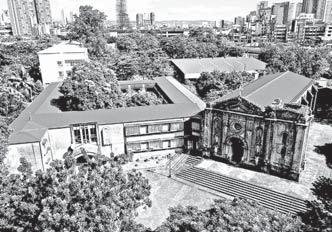
Augustinians to turn over Makati parish to Manila archdiocese
AFTER over 50 years, the Augustinians will transfer the administration of the Parish of Nuestra Señora de Gracia in Makati City to the Archdiocese of Manila.
The archdiocese will continue the pastoral care of the parish in Barangay Guadalupe Viejo once it is officially turned over to them on June 16.
The change of parish administration will be highlighted with a Mass presided over by Cardinal Jose Advincula of Manila and a symbolic turnover ceremony.
Fr. Aimark Asor, OSA, the current and last Augustinian parish priest of Nuestra Señora de Gracia Parish, will hand over administration to Fr. Joselito Martin, the incoming parish priest, with Fr. Jose Francisco Syquia as parochial vicar.
The Augustinians will also transfer the Monasterio de Guadalupe Community, a religious
house and seminary built beside the church, to the archdiocese.
Fr. Alejandro Moral Antón, OSA prior general, approved the community’s dissolution effective on the same day.
“The turnover marks a significant change in the structure and operations of the Monasterio de Guadalupe Community and the Nuestra Señora de Gracia Parish,” the OSA-Province of Sto. Niño de Cebu said in a statement.
There will be a transition period until August 1, as mandated by Cardinal Advincula.
The Augustians established the Baroque-style church and monastery in 1601. They eventually left the monastery and the church in ruins in 1899 during the Philippine-American War.
Upon their return, they rebuilt the church as a parish and the monastery after nearly 75 years since they left.
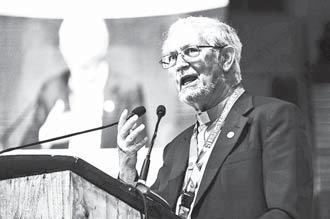
CBCP to confer its highest award on Silsilah founder
THE Catholic Bishops’ Conference of the Philippines (CBCP) will confer its highest award, the Bishop Jorge Barlin Golden Cross, on a leading figure in interreligious dialogue.
CBCP Secretary General Msgr. Bernardo Pantin said the bishops agreed to give the distinction to Fr. Sebastian D’Ambra, founder of the Silsilah Dialogue Movement.
He said the award is in recognition of the Italian priest’s “outstanding and generous service” to the Church, “exemplifying the ideals” of the first Filipino bishop.
D’Ambra was the first executive secretary of the CBCP Episcopal Commission on Interreligious Dialogue when it was formed in 1990, and he served the post for many years.
The 82-year old priest from the Pontifical Institute for Foreign Missions (PIME) has been in Mindanao for over 40 years now.
His Silsilah project led to the creation of the Emmaus Dialogue Community (EDC), a Catholic
movement to promote interreligious dialogue that began also in 1987.
In 2020, he also founded the Emmaus College of Theology (ECT) to support the vocations of young Catholics in a spirit of dialogue with people of different cultures and religions.
Pantin said the EDC and ECT “has fostered a profound and enduring dialogue for peace between Muslims and Christians”.
The Silsilah movement has won national and international peace awards, such as the Goi Peace Award in 2013 from the Goi Peace Foundation, a Japanese foundation engaged in the promotion of peace.
In 2014, it received the prestigious World Interfaith Harmony Week Award, sponsored and supported by King Abdullah II of Jordan.
D’Ambra will formally receive the CBCP award during the bishops’ 128th plenary assembly in July. CBCP News
 Editor: Lyn Resurreccion


AS climate change makes disasters, such as cyclones, floods and droughts more intense, more frequent and striking more places, fewer people are dying from catastrophes globally because of better warning, planning and resilience, a top United Nations official said.
The world hasn’t really noticed how the type of storms that once killed tens or hundreds of thousands of people now only claim handfuls of lives, new United Nations Assistant SecretaryGeneral Kamal Kishore, who heads the UN’s office for disaster risk reduction told The Associated Press.
But he said much more needs to be done to keep these disasters from pushing people into abject poverty.
“Fewer people are dying of disasters and if you look at that as a proportion of total population, it’s even fewer,” Kishore said in his first interview since taking office in mid-May.
“We often take for granted the progress that we’ve made,” he added.
“Twenty years ago there was no tsunami early warning system except for one small part of the world. Now the whole world is covered by a tsunami warning system” after the 2004
tsunami that killed about 230,000 people in Indonesia, Sri Lanka, India and Thailand, Kishore said.
People are getting better warnings about tropical cyclones—also called hurricanes and typhoons—so now the chances of dying in a tropical cyclone in a place like the Philippines are about one-third of what they were 20 years ago, Kishore said.
As the former disaster chief for India, Kishore points to how his country has cut deaths thanks to better warnings and community preparedness, such as hospitals being ready for a surge in births during a cyclone.
In 1999, a supercyclone hit eastern India, killing almost 10,000 people.
Then a nearly similar sized storm hit in 2013, but killed only a few dozen people.
Last year, on Kishore’s watch, Cyclone Biparjoy killed fewer than 10 people.
THE Asean Center of Biodiversity topped the list of 18 regional and subregional support centers across the globe in the implementation of the Biodiversity Plan, the ACB said.
The Secretariat of the Convention of Biological Diversity (SCBD) made the announcement at the recently concluded Fourth Meeting of the Subsidiary Body on Implementation that was held in Nairobi, Kenya.
In topping the list, the ACB, garnered 89 points out of the maximum score of 100.
The ACB—together with the International Union for Conservation of Nature (IUCN) Asia Regional Office; IUCN Regional Office for West Asia; Nanjing Institute of Environmental Sciences; and the Regional Environmental Centre for Central Asia—will serve as the official support centers in Asia.
“This milestone will put the ACB in a better position to advance the interests and priorities of the Asean member states related to the conservation and sustainable use of the region’s natural resources,” said Dr. Theresa Mundita Lim, executive director of the ACB.
“It will also provide the region with more opportunities to leverage support from the [SCBD] and their networks to mobilize conservation projects and programs,” Lim added.
The ACB is the sole Asean center hosted by the Philippines. It is an intergovernmental organisation that is mandated to facilitate cooperation among the Asean member states and other like-minded organizations in the mainstreaming and sustainable management of biodiversity in the region.
The selected 18 regional and
subregional centers are expected to boost the implementation of the CBD Biodiversity Plan through science, technology, and innovation are the following:
Africa: The Central African Forest Commission; the Ecological Monitoring Center, the Regional Centre for Mapping of Resources for Development; the Sahara and Sahel Observatory; and the South African National Biodiversity Institute.
Americas: The Alexander von Humboldt Biological Resources Research Institute; the Secretariat of the Caribbean Community; and the Central American Commission on Environment and Development.
Asia: The ACB; the IUCN Asia Regional Office; IUCN Regional Office for West Asia; Nanjing Institute of Environmental Sciences; Regional Environmental Centre for Central Asia.
Europe: European Commission-Joint Research Centre of the European Commission; IUCN Centre for Mediterranean Cooperation; IUCN Regional Office for Eastern Europe and Central Asia; Royal Belgian Institute for Natural Sciences. Oceania: The Secretariat of the Pacific Regional Environment Programme.
The regional and subregional support centers will take the lead in the realization of the global biodiversity goals and targets in their respective regions.
They will also serve as onestop shops for scientific and technical support in biodiversity data, resources, expertise, technologies, and capacity development opportunities; complement existing initiatives; and build on and amplify existing cooperation, the ACB said.
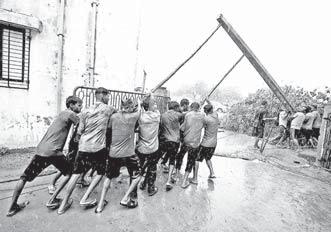
about 31, her data indicates.
The same goes for flood deaths, Kishore said.
The data backs up Kishore, said disaster epidemiologist Debarati Guha-Sapir of the Catholic University of Louvain in Brussels, who created a global disaster database.
Her database—which she acknowledges has missing pieces—shows that global deaths per storm event has dropped from about a ten-year average of 24 in 2008 to 10-year average of about eight in 2021.
Flood deaths per event have gone from 10-year averages of nearly 72 to
DESPITE the environmental laws prohibiting the improper disposal of rice straws, such as the Solid Waste Management Act of 2000 (Republic Act 9003) and the Clean Air Act of 1999 (Republic Act 8749), 70 percent of rice farmers burn rice straws, a Philippine Rice Research Institute report in 2016 states.
To resolve this dilemma, Straw Innovations Ltd. has partnered with the Southeast Asian Regional Center for Graduate Study and Research in Agriculture (Searca), Koolmill Systems and Aston University in a groundbreaking collaborative project, “Rice Straw Biogas Hub.”
This project aims to significantly reduce greenhouse gas (GHG) emission by transforming agricultural rice production residue, of the rice straw, into a clean energy resource—such as biogas—through cutting-edge technologies.
Beyond introducing advanced technological development, the project also emphasizes in understanding the farmers’ viewpoints, and involving them as crucial partners in the global fight against climate change.
Biogas is an odorless and colorless gas consisting of methane and carbon. Its renewability and cost-effectiveness offer a sustainable alternative to liquefied petroleum gas and other fossil-based energy sources commonly used for cooking in households.
From waste to wealth SEARCA, thr ough its Emerging Innovation for Growth Department (EIGD), conducted a “Training on Biogas Production from Agricultural Wastes” on February 15 and 16.
The training focused on the technical know-how in converting and utilizing rice straw and other agricultural waste as clean energy, replacing fossil fuels.
The lectures took place at Searca in Laguna, while the practical, hands-on session on biogas production was held at the Pacwood Site’s biogas facility, managed by the Environmental Sanitation Center (ESC) in Tunasan, Muntinlupa City.
Nineteen agricultural officers and lead farmers from public and private agricultural institutions in Laguna and Nueva Ecija participated in the training.

While there are fewer deaths globally from disasters, there are still pockets in the poorest of countries, especially in Africa, where deaths are worsening or at least staying the same, Guha-Sapir said.
It’s much like public health’s efforts to eradicate measles, success in most places, but areas that can least cope are not improving, she said.
India and Bangladesh are poster nations for better dealing with disasters and preventing deaths, especially in cyclones, Guha-Sapir said.
In 1970, a cyclone killed more


than 300,000 people in Bangladesh in one of the 20th century’s greatest natural disasters and now “Bangladesh has done fantastic work in disaster risk reduction for years and years and years,” she said.
Pointing out wins is important, Guha-Sapir said: “Gloom and doom will never get us anywhere.”
While countries, such as India and Bangladesh, have created warning systems, strengthened buildings, such as hospitals, and know what to do to prepare for and then react to disasters, a lot of it is also just because these countries are getting richer and better educated and so they can handle disasters better and protect themselves, Guha-Sapir said.
Poorer countries and people can’t.
“Fewer people are dying, but that’s not because climate change is not happening,’’ Kishore said.
”That is despite the climate change. And that is because we have invested in resilience, invested in early warning systems,” he said.
Kishore said climate change is making his job tougher, yet he said doesn’t feel like Sisyphus, the mythical man pushing a giant boulder up a hill.
“You are getting more intense hazards, more frequently and [in] new geographies,” Kishore said, saying places, like Brazil that used to not worry too much about floods now are getting devastated.
The same goes for extreme heat, which he said used to be an issue for only certain countries, but now has gone global, pointing to nearly 60,000 heat wave deaths in Europe in 2022.
India, where temperatures have been flirting with 122 degrees (50 degrees Celsius), has reduced heat deaths with specific regional plans, Kishore said.
“However with the new extreme temperatures we are seeing, every country needs to double its efforts to save lives,” he said.
And that means looking at the built environment of cities, he added.
Cutting deaths is only part of the battle to reduce risk, Kishore said.
“We are doing a better job of saving lives but not of livelihoods,” Kishore said.
While fewer people are dying “you look at people who are losing their houses, people who are losing their businesses, a small farmer that is running a poultry farm,” Kishore said.
When they get flooded or hit by a storm, they may survive but they’ve got nothing, no seeds, no fishing boats.
“On that we’re not doing as well as we should,” Kishore said. “We cannot accept that losses will occur. Of course they will occur, but they could be minimized by an order of magnitude.”
Rice straw to biogas: Transforming residues to revenues–and
Dr. Nur Azura Binti Adam, Searca’s deputy director for programs, highlighted in her message the economic uses of “dayami” (rice straw), which provide environmental opportunities to mitigate climate change. Nur pointed out that “burningdayamiis burning money.”
Atty. Eric Reynoso, Searca’s EIGD program head, gave an overview of the Rice Straw Biogas Hub (RSBH) initiative, explaining Searca’s role in analyzing the GHG emissions of the rice value chain from preplanting to marketing and creating an enabling environment that will improve rice straw management.
From wasteful to useful DR. Victor Luis Jr., a biogas energy expert, discussed the conversion of rice straw into renewable energy resources anaerobically, or without oxygen.
Luis likened the process to an “assembly line” with two types of workers: acidforming and methane-forming microbes. Every step and worker must coordinate and balance to achieve an ideal environment for anaerobic digestion.
The interactive discussion informed the delegates on how different anaerobic digesters work.
Although any organic material could be a potential substrate, Luis said that dry leaves, such as rice straws, can produce burnable biogas.
From formidable to affordable DR. Ngo Thí Thanh Truc, deputy head of the Faculty of Environment and Resource Economics in the School of Economics at Can Tho University in Vietnam, presented the farmer-friendly digester utilizing rice straw and water hyacinth.
She said the high-density polyethylene digester. known as “Subprom,” can potentially replace the commercially available digesters made with concrete and plastic.
Besides requiring less maintenance, Subprom has been proven to be more sustainable and cost-effective, amounting to less than $400 with a lifespan of up to 15 years.
Unlike common digesters that need animal manure (from cow or swine), Subprom can run up to two months with hyacinth and
rice straw as sole feedstocks—an impressive innovation, especially for households that own less than three swine. or even none.
Truc shared that Subprom digesters are now being adopted by Vietnam’s Ministry of Agriculture and Development.
Luis and Lichelle Dara Carlos, EIGD program specialist, expressed enthusiasm for the technology. They suggested to have a collaboration with Truc’s team to potentially bring Subprom digesters to the Philippines.
From linear to circular
THE RSBH team and the participants learned more about the biogas conversion process through the waste management initiative of the ESC in Tunasan, Muntinlupa City.
Engr. Vincent Alon, ESC’s Solid Waste Management Division head, introduced the city’s waste segregation and management initiatives—shifting from a linear to a circular economy.
Muntinlupa City’s circular economy includes using kitchen, market and sometimes industrial and agricultural wastes for the consumption of animals, and as feedstock to the portable digester.
The resulting biogas can be used by consumers for cooking, while the digestate can be turned into compost or fertilizers for vegetable or horticultural gardening.
The highlight of the ESC initiative is the pilot testing of the one-cubic meter biogas digester that the Department of Science and Technology’s Industrial Technology Development Institute (DOST-ITDI) designed for ESC’s use.
The technology is part of DOST-ITDI’s environmental solution to the increasing problem of waste mismanagement, especially on animal manure and household waste.
Engr. David Herrera, senior engineer in the Environmental and Biotechnology Division of the DOST-ITDI, presented the design and capacity of the agency’s fabricated digester.
With its ability to convert into biogas the manures and agricultural wastes from public markets and households, it can process 210 kilograms of the substrate into methane, thereby, providing fuel for half
Seth Borenstein/Ap Science Writer
an hour of cooking.
The ESC staff demonstrated the biodigestion process, from feeding the one-cubic meter digester with manure and their “secret” ingredients of fish gut and gills emulsion.
The mixture takes initially 30 days to mature. With its successful pilot demonstration, the municipality plans to expand operations using pig manure from its future slaughterhouse.
During the demonstrations, Alon and Herrera pointed out that biogas requires a specialized stove with a low-pressure nozzle larger than the standard LPG.
It alsocannotbe used for direct heating, such as in barbecue cooking.
The participants also toured the facility, including its urban mini farm with ostriches, pigs and sorting area for reject fruits, and vegetables collected from the markets and households within the municipality.
From small step to big sweep FROM their insights, the participants emphasized that the youth can participate in initiatives for climate-change mitigation.
A participant from Laguna agreed that the training was essential in reducing global warming, and recognized that it is necessary for farmers.
But it would only be worthwhile if farmers would stop rice-straw burning.
Thus, he said the LGUs should strengthen their measures ins prohibiting GHG emission activities, saying, “Change starts with LGUs.”
John Marion De Gracia, a participant from the Science City of Muñoz, Nueva Ecija, expressed his willingness to adopt the technology so “we could become a model for the country.”
Luis noted the public’s role as stewards of the environment.
“We must take care of our present for the next generation,” he said.
Most of the participants expressed a desire to adopt the biodigester.
For them, technology would help prevent poor rice straw handling and reduce greenhouse gas emissions. Also, they emphasized the importance of influencing mindsets through farmer-level training.
Shielo Pasahol, Angeli Platino, Aina Buan and Lichelle Carlos

AFTER a disappointing finish in the Women’s World Cup last summer, the US will embark on its first major tournament under new coach Emma Hayes. Hayes, the former coach at Chelsea, only has four tuneup matches in charge of the US before the team’s Olympic opener against Zambia in Nice on July 25. Hayes will be tasked with managing a talented group of young forwards, including Sophia Smith and Mallory Swanson. Spain is coming off a World Cup victory while also healing from a series of scandals. Could Spain be the first team to pull off a historic double by following a World Cup win with Olympic gold?
Spanish federation president Luis Rubiales resigned in disgrace in the fallout after forcibly kissing Jenni Hermoso during the World Cup victory celebration. Spain also fired controversial World Cupwinning coach Jorge Vilda, who was replaced by former national team player Montserrat Tomé.
Defending champion Canada is something of a wild card. After winning the gold medal in Tokyo on a penalty shootout after a 1-1 draw with Sweden, Canada was eliminated from the Women’s World Cup after the group stage.
Christine Sinclair, the longtime captain of the team, retired at the end of last year, leaving the game as the top career international scorer. Still, the team has plenty of talent, with Jessie Fleming, Kadeisha Buchanan and Ashley Lawrence.
Key Dates
WOMEN’S football at the Olympics consists of a round-robin group stage, followed by a knockout round.
The women alternate days with the men’s soccer competition at cities across France. The group stage opens on July 25. There are three groups of four teams. Group A includes France, Canada, Colombia and New Zealand.
Group B includes the United States, Zambia, Germany and Australia.
Group C includes Spain, Japan, Nigeria and Brazil. The quarterfinals are scheduled for August 3 and the semifinals on August 6. The bronze medal match will be played in Lyon on August 9, and the gold medal match is August 10 in Paris.
Reigning ChampionCanada won the gold medal in Tokyo after winning bronze in both London and Rio.
Athletes to Watch
SOPHIA SMITH, United States: The former US Soccer Player of the Year and NWSL MVP is heading into the Olympics in peak form.
The 23-year-old forward had a league-leading seven goals in the first seven games for the Portland Thorns in the National Women’s Soccer League.



LONDON—This might be the year, mate. The London Mets are the defending champs, but they’re looking beatable.


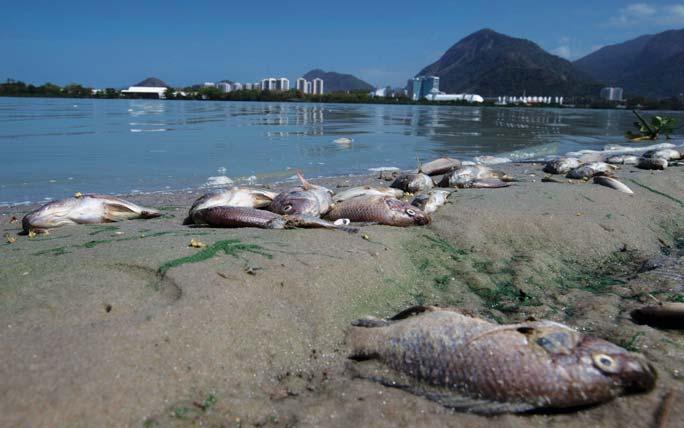 By Diarlei Rodrigues And Gabriela Sá Pessoa The Associated Press
RIO DE JANEIRO—When Rio de Janeiro hosted the Olympics in 2016, videos of the extensive lagoon complex surrounding the Olympic Park were everywhere.
Long polluted by sewage and garbage, many hoped the surge of investments tied to the international sports event would restore its waterways. That didn’t happen.
Eight years later, a private concessionaire is working to recover the aquatic ecosystem in Rio’s western zone. The project aims to remove enough silt and filth from the Barra and Jacarepagua lagoons to fill
920 Olympic-size swimming pools.
Dredging started in late April and is expected to take three years, according to Igua, the company that recently assumed control of water and sewage in the city’s western neighborhoods.
The London Capitals have been close, and they’ve got ace pitcher Masa Hashiguchi.
Talk about a subway series.


Real estate development in western Rio has exploded over the last half century. Areas of mangroves and coastal forests were filled in and paved over to make way for gated communities and up-market apartment complexes. They were required by law to treat their sewage, but many shut off their systems at night to save money, according to Márcio Santa Rosa, who was in charge of the 2016 Olympic bid’s environmental management and sustainability plan. Local watersheds also received untreated waste from informal working-class neighborhoods.
Ahead of the 2016 games, Santa Rosa’s office committed to restoring the lagoon complex and the state government carried out extensive studies. But it got bogged down in bureaucracy, he said.
“There was a dispute between [state and federal] public prosecutors, and the project didn’t move forward,” Santa Rosa, who now coordinates sustainable
 By josef t. Ramos
POWERLIFTING champion Carol Lafferty continues to provide assistance to new mothers in Dubai even as she prepares for another elite competition.
sea economy and bay management at Rio’s environmental secretariat, told The Associated Press by phone. “Incredibly, we lost the opportunity to do this cleanup work during the Olympics.”
In 2021, Rio’s state government split water distribution and sewage collection off from its utility, Cedae, and auctioned four, 35-year concession areas. Winning bidders can lose their concessions for failing to meet their contractually stipulated goal of boosting sewage collection and treatment to 90 percent by 2033, and have specific environmental requirements. Igua has to clean up the lagoon complex.
Expectations before the concession were “the worst possible,” said Mario Moscatelli, a biologist and expert in coastal ecosystems, and longtime critic of the state’s incapacity to stem the flow of sewage into waterways.
“We had the Pan-American Games, the Olympic Games, the World Cup, thousands of Olympic promises and environmental legacies that ended up

not happening,” he said. But Moscatelli says he has witnessed lagoon conditions improve while working for Igua as a consultant. He compared it to a patient that, once terminally ill, is now back on its feet and walking.
Igua must invest 2.7 billion Brazilian reais ($510 million) in its concession area, including 250 million reais to clean the lagoon complex. Besides the dredging, Igua is restoring the channels between the lagoons and the Atlantic Ocean, installing collectors to prevent the discharge of untreated sewage, and recovering native mangrove forests.
Reversing decades of degradation and an absence of watershed manag ement will still take time.
“It’s a medium- to long-term path. We still can’t evaluate or verify any gains, because all these actions need to be implemented,” said Lucas Arrosti, Igua’s operational director. “Only after they’re completed will we start to see significant changes in water quality.”
both moms and their babies. It’s hence important we set a glowing example of embracing good habits of wellness,” Lafferty said.
When she resided in the Philippines from 2013 to 2018, she competed and medaled in multiple national championships hosted by the Powerlifting Association of the Philippines.
The wife of James Michael “Jim” Lafferty, longtime coach and adviser of World No. 2 pole vaulter and Olympian Ernest John “EJ” Obiena, said she’s happy to compete in sports at the same time take charge of the wellness company, now endorsed by doctors of the Medical Wellness Association.
She noted Marestella Torres-Sunang, former Southeast Asia long jump queen and three-time Olympian who trained under Jim Lafferty, is also a great example of juggling motherhood and elite sport.
These two National Baseball League teams meet for the first time this season later this month.
And they might meet at the pub afterward.
Baseball at the highest club level in Britain is competitive, but it’s a league in which babysitters are just as important as balls and strikes.
Teams are a mélange of locals and expats—some with college and minor league experience. Only one guy throws 90 mph. Just about everyone works or goes to school.
Sometimes just getting to midweek practice is a task.
“A Zoom call—I might have my baseball pants on and still a dress shirt on the top, getting ready to run out the door as soon as I can,” Capitals manager Cole Ryan said. The destination is Finsbury Park, home to both the Mets and Capitals. They’re part of the same club—headlined by the Mets. The London Mets Baseball & Softball Club is the largest in the UK and the Mets have won the NBL title for seven years running.
The Capitals were dominating a lower division, so they moved up, and they’ve been giving the Mets a good run. Good enough to get to the finals, anyway, where they’ve lost to the Mets the past five years.
“It’s more like a big brother, little brother situation in a sense,” Mets coach Derrick Cook explained at a recent game in Enfield, just north of London. “It’s like, ‘Hey, the big brother is good at everything and the little brother is always trying to beat the big brother.”
It’s as if the Mets are the New York Yankees, and the Capitals are, well, the Mets.
The New York version of the Mets are in town this weekend for a two-game series against the Philadelphia Phillies.
Football is the dominant sport here, with the current focus on England’s chances in the upcoming European Championship. There are also eyeballs on the cricket T20 World Cup.
Indeed, the Finsbury Park baseball diamond had been used for cricket until being abandoned because it was too easily waterlogged. Players unwind and install the outfield fence—a flimsy plastic piece anchored by stakes— before each game, and the leftover cricket pavilion has become handy as a baseball clubhouse with moss on the roof and Mets’ trophies inside.
The club rents the facilities from the city. It’s a short walk from the Manor House tube station to the gap in the wooden fence that separates the field from a busy street. They still use equipment the Yankees donated in 2019 during MLB’s debut in Europe—baseballs are in sparse supply in the UK, so the Mets keep their gameday stockpile under lock and key. Cook, a Chicago native and IT network engineer, played college baseball and—this comes up a lot—did a Google search when he moved to London in 2009 and found the Mets. AP
Gearing up for the Dubai International Challenge raw powerlifting competition in July, Lafferty says staying in shape is important as people reach the more challenging years.
periodic powerlifting meets?”
“The data supporting the importance of preserving muscle mass as we age, as a key component of longevity, places more emphasis on the important role of resistance training,” Lafferty, who is turning 44 later this month, said.
“What better way to do it, and add some fun, than competing in
Lafferty, winner of the Raw Powerlifting Asian Championships in January in Dubai, is also Chief Executive Officer and founder of KARE Homecare Services in Dubai, which provides inhome nurses, midwives, and caregiver services to new mothers.
“We are in essence a wellness company, caring for the well-being of V
Jim Lafferty praised his wife for building a world-class company while performing as a champion powerlifter.
“One has to wonder, is Carol the strongest female CEO due to the com pany she has built? Or, because of her success in a purely strength sport like powerlifting? Is she the world’s stron gest female CEO? A ‘yes’ answer can be defended either way,” Jim said.
bring the house down,” Astrolabio’s promoter international matchmaker Sean Gibbons, also the president of Manny Pacquiao’s MP Promotions, told BusinessMirror on Friday.
“He is a late bloomer, a sleeper but once he lands that punch, it’s going to change everything.”
Despite the disadvantage in height and reach, the 27-year-old Astrolabio is confident he can knock out the the 26-year-old Japanese southpaw who sent home former Mexican world champion Alexandro Santiago last February without his belt. The 5-foot-7 undefeated Nakatani has a two-inch edge in height and has an advantage in reach at 67 inches against 65’, making it
Santos City said. Astrolabio (19-4 with 14 knockouts) lot to Australia’s Jason Moloney via majority decision in the bout for the the vacant World Boxing Organization (WBO) bantamweight crown. But last May, Moloney was outboxed by Japanese Yoshiki





ISOLATED PHONICS LESSONS AREN’T WORKING: Here’s a better way to teach young children to read and write
Pinoy Rock legends now knocking on heaven’s door
Remembering Pepe Smith, Wally Gonzalez, Noli Aurillo, Jun Lopito, Rene Tengasantos, and Rolly Maligad—who died one after the other a few years apart





Publisher : Editor-In-Chief : Concept : Y2Z Editor : SoundStrip Editor : Group Creative Director : Graphic Designers :
T. Anthony C. Cabangon
Lourdes M. Fernandez
Aldwin M. Tolosa
Jt Nisay
Edwin P. Sallan
Eduardo A. Davad
Niggel Figueroa
Anabelle O. Flores
Contributing Writers :
Tony M. Maghirang
Rick Olivares
Jill Tan Radovan
Reine Juvierre S. Alberto
John Eiron R. Francisco
Pocholo Concepcion
Francine Y. Medina
Rory Visco
Bea Rollo
Trixzy Leigh Bonotan
Photographers :
Bernard P. Testa
Nonie Reyes
Y2Z & SOUNDSTRIP are published and distributed free every Sunday by the Philippine Business Daily Mirror Publishing Inc. as a project of the
The Philippine Business Mirror Publishing, Inc., with offices on the 3rd Floor of Dominga Building III 2113 Chino Roces Avenue corner Dela Rosa Street, Makati City, Philippines. Tel. Nos. (Editorial) 817-9467; 813-0725. Fax line: 813-7025
Advertising Sales: 893-2019; 817-1351,817-2807.
Circulation: 893-1662; 814-0134 to 36. www.businessmirror.com.ph
LAST night I had a dream that six of the greatest Pinoy rock musicians, all dead, came back to life. The dream unfolded like one long documentary—which meant that all the scenes really happened.
July 4, Fil-Am Friendship Day, 1987. A gig in the backyard of Loloy Fuentebella’s Le Bistrot Hippopotamus in Malate is in progress. Onstage is Pepe Smith, backed by guitarists Jun Lopito and Noli Aurillo, bassist Rico Velez, and drummer Flor Mendoza.
It’s my first time to see Pepe and the rest in person, performing live, and I’m transfixed as they go through every song, mostly by the Rolling Stones, with aplomb. For the last tune, Pepe calls Sampaguita to jam, and the band decides to play the Sonny and Cher hit, “I Got You Babe,” as Pepe cracks a joke: “This was the song we sang before you basted me.”
Sometime in 1988, a weekend. A full-house audience don’t mind the heat and cramped space at Mayric’s in España, Manila, all they care about is soaking up the positive vibrations of reggae from the band Cocojam, whose frontman Rolly Maligad bears a resemblance to Bob Marley.
But Rolly is not a Marley clone. As the night wears on, Cocojam plays “Batang Maynila,” “Pagbabago,” and “Lakambini,” all written by Rolly. Many in the crowd bob their heads and get happily drunk.
At the time, Doray Castillo was Cocojam’s bassist, but would soon move

to vocals when Noli joined the band as lead guitarist. Noli is a wiz, spinning magic in his peculiar finger-plucking style without using a guitar pick.
In the next few months, or is it a year or two later, Rene Tengasantos also joins Cocojam as its new drummer, and he adds more rhythmic punch to the band’s sound. I have no idea why Rene is soon called Chong by everyone—but one night, at Larry’s Bar in Malate, he is shivering, looking very sick and asking for a joint. When the show starts, he plays like nothing happened.
Fast-forward to 1994, Club Dredd Edsa. Pepe plays for the first time after being freed from a 17-month stay at the Quezon City Jail. By his side on guitar is Jun again, with Johnny Besa on bass and Harley Alarcon on drums. It’s also the first time I understand why Jun and Pepe are like the Glimmer Twins—Jun is Keith Richards to Pepe’s Mick Jagger persona, though they also show the cheering crowd that comparisons end when the band tears through some Doors and other blues classics and ends with Juan dela Cruz originals.
Some 300 people pay P100 each to catch Pepe’s comeback gig, so he and the band go home with


P30,000—but not before having a hearty breakfast at Chowking on Aurora Boulevard in Cubao.
Jump to 2013, Martinis, a bar at Mandarin Oriental, Makati. Wally is playing with his band called Manila Blues Experience. As its name implies, the group (with members Kat Agarrado, Norman Ferrer, Vic Mercado, Wowee Posadas) performs a repertoire that includes songs by B.B. King, Tracy Chapman, Steve Miller, Stevie Ray Vaughan, and Eric Clapton. And then somebody from the crowd joins the band and sings “Hotel California” out of tune, and in hardcore punk style. Wally winks and chuckles.
More scenes play out in my dream, swinging from joy to sadness. Pepe undergoes cataract treatment by top eye doctor Noel Lacsamana in Pampanga. A month later, Pepe dies of a heart attack and the first visitor at his wake is Wally.
Not long after, Wally passes away in his sleep. Noli soon catches Covid and does not survive. Jun succumbs to complications from hepatitis. Chong, who had a hard time breathing when I last saw him play with Joey Ayala only a few months ago at ’70s Bistro, also dies in his sleep. Rolly, who tells me he has COPD when we bump into each other recently in Iloilo, slips into a coma and does not wake up. Now I’m thinking Pepe, Wally, Noli, Jun, Chong and Rolly are all in high spirits playing in an endless gig in the sky—with Edmund Fortuno saying, “Welcome home!”




CEBUBASED pop-rock quintet The Qings (pronounced “Kings’) reimagines its core band members’ memorable stint with Bethany, one of Queen City’s most renowned indie rock acts. Their debut album’s title “Parallels” reveals as much such that even on first listen, The Qings have admirably expanded on Bethany’s legacy judging by the unmistakable riches in melodies, styles and guitar playing in such tracks as the explosive “Money Can’t Buy Love,” the thundering “Illusion” and the head over heels lover’s woe in “Waiting.” It’s an inspiring testament to the fact that guitar-based rock lives on.

THE latest release by polymath rockers Shellac was unleashed only ten days after its frontman and uber record producer Steve Albini passed away. It is prescient and unpredictable at the same time. Its prophetic in that the final track “‘I Don’t Fear Hell’ has Albini singing “If there’s a heaven, I hope they’re having fun, cos if there’s a hell I’m gonna know everyone!” It’s also unpredictable because the new album hardly settles for the usual band sound harking back 2014’s “Dude Incredible” album. Here, Shellac takes their volatile bass heavy hard rock to upbeat, punk-leaning sonics that are surprisingly head-nodders and toe tappers as well. It’s a fine tribute to the band’s vision and a fitting farewell for Steve Albini.
THE word séance refers to communicating with the dead and DJ/producer Crwn aka King Puentespina must be in a playful mood in titling his debut album thus because it is chockfull of odes to dance music, stirring soul-RnB crossover and sexual innuendoes—stuffs of being alive. Its’ a good bet that even the dead will get up and move to the crackling drive of “Rooftops In Paris (feat. Curtismith),” “Another Day (feat. Jolianne)” and “Wish It Never Ends (feat. Olympia). In “Past Due,” featured diva Jess Connelly promises to ‘keep her door wide open’ while “Honey” finds August Wahh declaring “Sweet drippin’ on me, honey/I can tell that you’re onto me.” Crwn’s “Séance” is actually connecting with the pleasure zones of the living.

GRAMMY and Oscar Award winner Billie Eilish has a way of delivering personal turmoil in a mix of bittersweet ballads and discofied club music. This time, she subtly tackles her coming out as a queer and her sad experience with her family. Naturally, the lesbo angle is on the spotlight best represented by the strutting skaish “Lunch” where she relates the meal with romancing a woman. That’s the luscious center of the record and there’s other equally satisfying listens in the guitardriven singer songwriter-ly “Wildflower” the Caribbean lilt of “Birds of a Feather” and the urban contemporary throwback in “Sunny.” There’s much to love in the hard and soft sell of Eilish’s fascinating new record.


FORMED in early 2021 by 14-year old Kaz and 11-year old Yeumi, this Pinay hardcore/punk band pumps fresh blood into the legacy of Twisted Red Cross label whose early acts fashioned high volume rock as an assault weapon—the music fast and loud, the delivery aggressive. In their latest EP, the girls of Youth Alternation do the same damage with three tracks in 3 minutes. Who knew teenage girls would carry Pinoy punk forward to its fifth decade?

THE former vocalist of ‘90s shoegaze frontrunners Portishead, Beth Gibbons took two years to produce her latest album. Right at the folkish opening track, “Tell Me Who You Are Today,” the record evinces the layered sound and meticulous lyricism to be expected from a progressive musician. The sonic layering isn’t meant to just buttress the instrumentation but also to lend a sensurrounding ambience to the proceedings like the spy film symphonic sweep in “Reaching Out,” the children’s choir in “Fleeting In A Moment,” the spiraling violins in “Lost Changes” and the unrelenting beat in “Rewind.” They make for sympathetic soundtracks to intelligent words that conjure the warmth of life and the bleakness of death. This album and Shellac’s “To All Trains” should be welcome companions in anyone’s occasional soulsearching expeditions.
SINCE 2010, fiveand six-yearold children in England have been taught to read using a particular variant of “systematic phonics.”
“Phonics” describes methods of teaching reading that emphasise teaching how phonemes—the smallest sounds in the words of oral language— are represented by letters. In England, the type of phonics teaching is best described as “narrow synthetic phonics.”
This is because England’s curriculum policies and guidance have restricted phonics lessons to an overwhelming emphasis on phonemes and letters at the expense of other aspects of reading, and writing, that are not to be covered in phonics lessons. Phonics is taught using special “decodable books,” rather than real books.
Aspects such as comprehension, engaging with real books, and writing activities, are all to be taught in
different lessons. Yet my research and other studies have found that a more effective way of teaching reading would see phonics and decoding taught with these other main elements, in lessons that should focus on reading and writing at the same time.
One consequence of England’s synthetic phonics is that children are likely to be less motivated to read, because synthetic phonics lessons are not focused on motivation and real purposes for reading.
THE way reading is taught in England stems from the interpretation of an influential theory known as “The Simple View of Reading.” This proposed that reading comprises two elements: decoding and comprehension. In England, this has led to the separation of the teaching of decoding from other parts of the curriculum subject of English.
In spite of some positive aspects, the main limitation of the Simple View of Reading—and some other, similar models for learning to read—is that the original evidence base was research done with children who struggle with reading, rather than research done with more typical readers.
What’s more, the models do not in-
clude various elements that are important for effective teaching because they are more focused on a limited range of elements of children’s learning. For example, the different languages and dialects that children may speak are not accounted for.
My new research with colleague Charlotte Hacking proposes a new model of reading, which we call the “Double Helix.”
The starting points for teaching inspired by our Double Helix model are children, their languages, their experiences in homes and communities, and the texts that they have encountered. Lessons focus first and foremost on motivating children through use of real books—standard books written for children rather than texts specially produced for phonics schemes.
The lessons integrate the teaching of reading and writing. All lessons are driven by the need to motivate children and to ensure that the purposes of reading and writing, to comprehend and compose texts, are first and foremost.
Phonemes and letters are taught, but this teaching is integrated with other vital components of reading. For example, lessons should always use whole texts—books with stories rather than decodable books—to stimulate
children’s interest. A focus on a particular phoneme to be taught is done by selecting a word and sentence in the text then identifying how the letters in the word represent the phoneme. A range of other discussions and activities are also part of this phonics teaching.
During a lesson using this approach, children would be asked to comment on all kinds of questions about the pictures and the story, not just questions about phonemes and letters. They would do writing in the lesson. Phonics teaching would be part of the new approach to teaching, but balanced with all the other elements, so that reading and writing made sense.
There is an international trend towards an increasing use of synthetic phonics, seen in Australia, provinces of Canada and the USA. In some countries this trend has been influenced by the narrow approach to synthetic phonics in England that intensified from 2010 onwards.
But as an expert in reading education, I think that this trend is not backed up by a balanced and rigorous appraisal of the evidence of what works in the teaching of reading and writing. There are other, better ways than England’s focus on synthetic phonics. The Conversation
‘IWANTED to go home!” Jenine Catudio chuckled when asked about her first day of work abroad.
The young teacher had just turned 26 when she relocated to the Bay Area of California a few years ago to accept a special education teaching position. The allure of greener pastures is a familiar tale for many professional educators in the Philippines. Statistics from the Philippine Overseas Employment Administration (POEA) reveal that an annual average of 1,500 teachers sought employment abroad between 2013 and 2017.
But uprooting is never easy, even more so settling in a new environment. To this day, Jenine remembers vividly her first day in class in the US.
“One student, who was four years old and nonverbal, left the classroom,” she said. “Then, a couple of students were crying, and at least three students were climbing up some furniture.”
Jenine felt her frustration mounting over losing control of the situation. She did, however, manage not to cry. But the moment she came home and closed her apartment door, she burst into tears.

Today, after adjusting to her new reality in a foreign land, Jenine has flourished as a fully credentialed special education teacher in California.
She received the “Certificated Employee of the Year” from her school district in Richmond, California, a recognition bestowed upon individuals who embody the district’s core values of student success, quality instruction, collective ownership, high expectations, and leadership.
The following year, Jenine further distinguished herself with the prestigious “You Make a Difference” award from the Community Advisory Committee, an organization dedicated to recognizing exceptional dedication to students in special education. Additionally, Jenine's exemplary work during the first year of distance learning earned her recognition from GO Public Schools California, a statewide non-profit organization.

Adjusting to a new life can be challenging. Overseas Filipino Workers (OFW) like Jenine often deal with homesickness, identity struggles, and financial pressures, among other issues. In the face of it all, Jenine has found light in connecting with a Filipino community within her district.
“Besides receiving practical teaching tips, these seasoned Filipino teachers offered me assurance that things would improve,” Jenine said.
Indeed, they did, as Jenine managed to clear her mind and focus on the most crucial tasks. She also learned the importance of addressing mental health issues given its crucial role in making decisions, big or small.
“I understood I couldn’t grasp everything at once, so I made a comprehensive list,” Jenine said. “Recognizing the importance of classroom safety, I prioritized that. The following day, I assigned a one-on-one paraprofessional to assist the young student who kept leaving the classroom. Then, I addressed behaviors that posed risks, such as self-injury or disruption. I methodically addressed each item on the list.”
“Eventually,” Jenine added, “my class settled, and my students thrived.”