
FILIPINOS looking for better interest rates at which to borrow may have to wait longer before the Bangko Sentral ng Pilipinas (BSP) brings down rates by over 100 basis points (bps).
Finance Secretary Ralph G. Recto earlier expressed confidence that the Monetary Board could reduce key policy rates by 150 basis points (bps) within two years. (https:// businessmirror.com.ph/2024/05/29/ recto-sees-rates-cut-by-total-150-bpswithin-2-years/)
However, the chairman of the Monetary Board, BSP Governor Eli M. Remolona Jr. said this may be too aggressive given the current trajectory of the country’s GDP growth. He said it is possible to bring down key rates by 50 bps this year and 100 bps next year if there was a risk of a “hard landing.”
“Given the present trajectory of growth,

www.businessmirror.com.ph
it would be too aggressive,” Remolona told reporters on Tuesday. He stressed that only when there is a “hard landing” can the Monetary Board consider an aggressive rate cut.
Remolona said in a bid to tame inflation, inflation-targeting central banks like the BSP would raise interest rates.
However, in times when the increase in policy rates becomes bad for economic growth, central banks would consider easing monetary policy but cutting key interest rates.
“In taming inflation, you don’t want unnecessary loss of output,” Remolona said. “Kung minsan hindi mo maiwasan na may konting loss of output kasi hindi naman precise yung mga namin calculations. Perokungmukhangmalakiangmga mawawala,we have to react to that [There are times raising rates could lead to losses
in output because our calculations are not precise. But if it looks like there will be a significant loss in output growth, we have to react to that].”
Remolona said earlier the monetary authorities may start gradually cutting policy rates by August. However, given recent developments, this may or may not come ahead of the actions of the US Federal Reserve.
Initially, expectations by analysts said the Federal Reserve could cut rates by September this year. However, Remolona said there are now estimates that the Federal Open Market Committee (FOMC) could cut as early as next month.
“Pwedetayomauna.Depende[sakanila]. Kungmatigasangulonginflationnila,baka hindisilamag-cut[We may still cut interest rates ahead. It depends on them (US Federal Reserve). If their inflation is sticky, they may
not cut (rates)],” Remolona said. The timing of the reduction of key policy rates by the US Federal Reserve matters for the Philippine peso, which closed at P58.71 to the greenback on Tuesday. New York-based Global Source Partners said if the weakness of the peso extends to a year at the current magnitude, and with an exchange rate pass-through of 0.08 percentage point (ppt) for every peso depreciation, they said inflation could increase by 0.24 ppts.
“This means the market may even be more adaptive to the central bank statement’s forward guidance rather than to the actual stance of monetary policy as defined by its policy rate. This demands greater circumspection on the part of our monetary policy makers,” Global Source Partners analyst Diwa Guinigundo said. Cai U. Ordinario


PHL CUTS RICE TARIFFS TO TEMPER INFLATION
By Samuel P. Medenilla @sam_medenilla
PRESIDENT Ferdinand R. Marcos Jr. is set to issue a new Executive Order (EO), which will slash rice tariffs to 15 percent amid the soaring international prices of the staple.
The government expects the tariff reduction to stabilize rice prices in the next four years and temper inflation.
The tariff reduction for rice is part of the Comprehensive Target Program (CTP) for 2024-2028, which was approved by the National Economic and Development Authority (Neda) Board led by the President, during its 17th Board meeting last Monday.
“For rice, one of the most critical components of Filipino households’ consumption basket, the Neda Board agrees to reduce the duty rate to 15 percent for both in-quota and out-quota rates from 35 percent until 2028. This decision aims to lower the price of rice further and make it more affordable,” Socioeconomic Planning
Secretary Arsenio M. Balisacan said in a press briefing in Malacañang on Tuesday.
“The president will issue an executive order to implement this new tariff program,” he added.
‘Thin market’
BASED on the latest market monitoring of the Department of Agriculture (DA), the price of imported well-milled rice ranges from P52 to P55 per kilogram (kg) while the regular-milled variety sells for as much as P51 per kilo.
Figures recorded by the DA on May 31 also showed that local commercial well-milled rice sells for P48 to P55 per kg while the price of the regular-milled variant ranges from P45 to P52 per kg.
The Philippine Statistics Authority (PSA) said rice contributed to about 2 percentage points or over 50 percent to headline inflation in the last three months.
See “Inflation,” A
and in 2026.
IBy Cai U. Ordinario @caiordinario
F the government wants to bring down the poverty rate to single-digit levels by the time the President steps down from office, the current administration must address the gaps in physical and digital connectivity, the World Bank said.
In its latest Philippine Economic Update, the Washingtonbased lender maintained its latest forecasts for the country’s GDP growth at 5.8 percent this year and 5.9 percent next year
However, bringing down the country’s poverty incidence to 9 percent by 2028 would require more effort to ensure that the country’s “economic and social transformation” is inclusive and will help create a “resilient society.”
“The country still faces challenges to ensure that the gains from robust economic growth are distributed evenly,” the World Bank said in its latest report.
See “Gaps,” A

MOUNT Kanlaon, an active volcano on Negros Island, erupted for six minutes Monday night, producing a 5,000-meter plume, the Philippine Institute of Volcanology and Seismology (Phivolcs) reported. The steam-driven or phreatic explosion occurred at the summit vent at 6:51 p.m., prompting Phivolcs to raise Alert Level 2, which indicates current unrest driven by shallow magmatic processes that could eventually lead to further explosive eruptions or even hazardous magmatic eruptions.
In the latest Volcano Bulletin issued 12 midnight on June 4, Phivolcs reported 43 volcanic earth-
quakes. Ground deformation was also observed in some parts of the volcano. The voluminous emission of some 5,000-meter tall plume toward southwest and southwestward drift was also observed.
On Tuesday, as a precaution, 29 flights from the Ninoy Aquino International Airport (NAIA) were canceled, the Manila International Airport Authority reported. The flights include ManilaBacolod-Manila, Bacolod-Manila and Iloilo-Manila flights of Cebu Pacific; Manila-Cebu-Manila, Manila-Bacolod-Manila and ManilaIloilo-Manila flights of Air Asia;
See “Kanlaon,” A

PESO EXCHANGE RATES US 58.5320 JAPAN 0.3750 UK 74.9561 HK 7.4855 CHINA 8.0831 SINGAPORE 43.4859 AUSTRALIA 39.1403 EU 63.8291 KOREA 0.0427 SAUDI ARABIA 15.6073 Source BSP4June2024 GAPS IN CONNECTIVITY KEY TO POVERTY RATE CUTSWB Kanlaon erupts; 29 flights halted, DOH flags ashfall A broader look at today’s business
Sans ‘hard landing,’ BSP not keen on sharp rate cut BIDEN SAYS HAMAS SUFFICIENTLY DEPLETED; ISRAEL LEADERS DISAGREE, CASTING DOUBTS OVER CEASEFIRE THE WORLD | A16 VOLCANIC INTERRUPTION Passengers await their flight announcements at NAIA Terminal 2 in Pasay City on Tuesday, June 4, as domestic flights in and out of Manila and other domestic hubs were canceled due to Mount Kanlaon’s eruption on June 3, 2024. Mount Kanlaon, located in Negros Island, is an active stratovolcano known for its periodic eruptions. Alert level 1 was raised to alert level 2 by the Philippine Institute of Volcanology and Seismology, prompting precautionary measures for public safety in nearby areas. NONIE REYES Wednesday, June 5, 2024 Vol. 19 No. 232
P. nationwide | sections pages | 7 DAYS A WEEK
High airfare, unregulated Airbnbs bugging hotel sector
By Ma. Stella F. Arnaldo @akosistellaBM
Special to the BusinessMirror
THE hospitality industry sees the rising cost of air travel and low rates on vacation rentals through online booking platforms as among the major challenges of the industry.
operations, housekeeping, as well as sales and marketing.
already buy them a three-day/two-night stay in an Asean destination, inclusive of airfare.
This was echoed by HSMA Vice President for Membership Agnes Pacis, who said the high domestic airfares have encouraged more “outbound tourism because it offers travelers maybe better value.” She added that many hotels also “cannot compete with Airbnbs, which are sometimes not regulated by LGUs (local government units),” because of the lower rates these offer. Airbnb is an online platform that offers privately-owned rooms, apartments, and homes for short-term leases. As of 2020, Airbnb reported 36,000 active listings and 23,000 active hosts in the Philippines.
Tour operators and travel agencies, however, have also pointed to high hotel rates as a the turnoff for travelers as P20,000 can
In a recent news briefing to announce the 2nd HSMA Sales & Marketing Summit on June 27, Hotel Sales and Marketing Association (HSMA) Vice President Amie Villena said, “The increasing cost of travel to different islands in the Philippines [is a concern]. We went to Boracay recently, and to Palawan, and the airfare was very high.” The problem also includes lack of direct international flights to Philippine destinations unlike Hong Kong, Singapore, and Thailand, thus the latter’s higher visitor arrivals.
Gaps.
“Ensuring that the gains from long-term growth are sustained and distributed more evenly requires addressing gaps in connectivity [both digital and physical], access to basic services such as in health and education, and private sector participation,” it added.
However, the World Bank said, the government has implemented reforms aimed at boosting economic productivity.
The World Bank added that the government has undertaken steps to improve the quality of public service delivery and increase in human capital development.
The Washington-based lender added these initiatives include the passage of several investment liberalization laws, efforts to
improve functional literacy at all educational levels, and the institutionalization of the Social Protection Floor.
Further, the World Bank said the government has also approved P5,000 in financial assistance to rice farmers and P3,000 in fuel subsidies to farmers and fisherfolk to help keep these vulnerable groups afloat in the era of high inflation.
The report also acknowledged government efforts such as allocating P1.8 billion for insurance claims and P500 million for credit assistance to El Niño affected farmers and fishers.
The World Bank added that qualified lowincome consumers with monthly electricity consumption of 100 kWh or less receive a 20- to 100-percent discount on their monthly electricity bill, with about 225,000 4Ps beneficiaries having registered for the program.
Philippine Airlines, for its part, has said its base fares remain the same as in 2019, although the rising cost of fuel has impacted the end-fare of travelers. (See, “PAL‘base fares’remain at 2019 levels, says exec,” in the BusinessMirror, April 30, 2024.)
‘Skills drain’
HSMA has also long pointed to the “skills drain” in the country as a major problem with the pandemic having opened up tourist professionals to work-from-home jobs, and their constant migration overseas and to cruise ships for higher pay. Pacis cited the Middle East, Thailand, and Japan as destinations which have been hiring Filipino hospitality workers for food and beverage, front office
“To manage inflation, the continued implementation of non-monetary strategies is essential, including efforts to optimize supply and demand management and to secure timely and adequate imports of staple food items,” said World Bank Senior Economist Ralph Van Doorn.
“The government needs to continue providing social assistance to vulnerable groups who are disproportionately affected by high food inflation,” he added.
Fiscal challenges
APART from efforts to address gaps to achieve its poverty reduction goals, the national government also needs to act on its fiscal consolidation targets.
The PEU stated the country needs to improve its revenue generation and reduce spending to attain its fiscal consolidation

“Filipinos are in demand abroad...because we speak very good English, we’re very trainable, we have a good attitude, a very strong work ethic...[That they go abroad for higher pay], we cannot blame them,” said HSMA President Loleth So, for her part.
HSMA is the premier organization of hotel sales and marketing professionals in the Philippines, with over 140 members nationwide. It expects about 300 participants to its 2nd HSMA Sales & Marketing Summit at the Manila Ballroom of the Manila Marriott Hotel. With the theme“Hospitality Unleashed: Breaking Boundaries and Creating Connections,” the summit will feature reputable resource personalities from business, finance, media, and tourism who will share valuable information on the latest marketing trends and industry best practices.
goals by 2028.
The World Bank said the government, in order to meet its fiscal consolidation targets, would need to reduce public spending by 1.9 percent of GDP by 2028.
This will allow the country to pare down the deficit by 2.5 percent of GDP. Majority or 75 percent of the consolidation effort will be borned by reductions in public expenditure.
“Efforts to reduce spending will focus on optimizing the budget and improving spending efficiency through procurement, budgeting, and investment management reforms,” the report stated.
Apart from reducing spending, the national government must increase its revenues by 0.5 percentage points of GDP by 2028.
This is more than the projected increase in revenues of 0.2 percentage points of GDP under the government’s five priority tax measures.
The World Bank recommended that additional revenue efforts include broadening the tax base for consumption and personal income taxes, rationalizing tax incentives, and strengthening the tax administration.
“An inability to generate additional revenues could lead to further reductions in public expenditure, or an increase in borrowing which could lead to higher debt,” the report stated.
The World Bank noted that fiscal consolidation could help preserve confidence in the economy, leading to an increase in private investment and productivity, and would lead to sustainable increases in public investment in infrastructure, health, and education.
Kanlaon. . .
Continued from A
“The DA is aiming [to reduce prices] to P29 per kilo, at least for the poor, because we will complement this tariff reduction with the direct subsidies to the poor and vulnerable,” Balisacan said.
Neda attributed the high international price of rice to the global impact of the El Niño phenomenon and rising demand.
Balisacan said the international rice market is “thin,” such that a shock in rice-producing countries like a drought in Vietnam could lead to “disruptions in the world market.”
The high global rice prices are expected to persist until September, he added.
RTL amendments
THE Neda also said the government is trying to minimize the country’s exposure to the international rice market by boosting local rice production and supporting the proposed amendments to Republic Act (RA) 11203 or the Rice Tariffication Law (RTL).
Balisacan said the government wants to strengthen the ability of the National Food Authority (NFA) to compete with rice retailers during “emergencies.”
“What remains to be defined is the concept of emergency, because it’s not clear in the law what that emergency is when we say we stock for buffer stocking—is it only limited to the presence of calamities,”he said.
“But it may also involve certain manipulations by certain groups in the market, and we need to have the tools to address such issue,” he added.
Impact of tariff cut
WHEN asked how the impact of the lower tariff for rice will affect the Rice Competitiveness Enhancement Fund (RCEF), Balisacan said the effects will depend on the amount of rice to be imported in the coming months.
“Of course, we reduced the tariff, but the volume might increase depending on how our local production responds to the improvement in the weather because we are now going into or transitioning into the so-called La Niña phenomenon,” he said.
Established by RA 11203, RCEF is sourced from rice tariffs and used to help improve the competitiveness of farmers after the liberalization of Philippine rice trade.
Last year, the government was able to collect P29 billion from rice tariffs.
Balisacan assured the government will provide other services to farmers, who will be affected by the lower RCEF, to enhance their productivity.
and Manila-Cebu-Manila, Manila-Bacolod-Manila, ManilaIloilo-Manila, Manila-San Jose, Antique-Manila, ManilaCebu, and Cebu-Manila flights of Philippine Airlines.
OWWA, DOH response
THE Overseas Workers Welfare Administration said it will provide aid to migrant workers affected by flight cancellations due to the eruption of Mt. Kanlaon.
The Department of Health (DOH), meanwhile, said that nearby hospitals in Canlaon City have been placed on Code White in response to the eruption of the volcano.
“Since yesterday [June 3], the DOH Western Visayas Center for Health Development [CHD] has been sending facemasks, safety goggles, hygiene kits, jerry water cans, and disaster relief tents to affected areas near Kanlaon Volcano. Magingatpotayo,atmakinigsaabisongatinglocal government officials,” said Health Secretary Teodoro Herbosa.
The DOH also issued some reminders on the Mt. Kanlaon ashfall:
1. All those nearby or affected by Kanlaon Volcano activity should always follow the advice of their local governments. Evacuate when asked to do so.
2. Protect your lungs from ashfall and any noxious gases. Close doors and windows; use wet curtains or clothes to cover any gaps where ash and gases could enter. Wear face masks properly, or use a wet cloth to cover your nose and mouth. For those with asthma or COPD, ensure adequate supplies of your inhaler medicines and use them as directed by your doctor. Consult a doctor or health center immediately for any difficulty breathing.

New rates ASIDE from rice, the newly approved CTP also reduced the tariff on certain chemicals used to manufacture antiseptics and detergents as well as coal briquettes to improve energy security and reduce input cost.
“Tariff reduction on coal will help ensure its availability at reasonable prices, thus supporting more stable electricity prices and supply in the country,” Balisacan said.
Also extended, he said, is the duration of the reduced tariff rates on corn, pork and mechanically-deboned meat under Executive Order No. 50, Series of 2023. The current rates will remain in effect until 2028.
The CTP will merge the tariff lines on certain chemical and chemical products, textiles, machinery and transport equipment.
It, however, maintained the current rates on more than half of the tariff lines covering various agricultural and industrial products sugar, vegetables, such as onion shallots, garlic, broccoli, carrots, cabbage, lettuce, sweet potatoes, cassava, coffee substitutes, complete feeds and feed preparations.
“The tariff maintenance will ensure access to inputs and support efforts to improve productivity and competitiveness. This measure will help our domestic industries by reducing the cost they incur for their inputs, enabling them to be more competitive especially in the global market,” Balisacan said.
‘Long overdue’ A NONGOVERNMENT organization lambasted the government for reducing the tariff on rice, but an economist said the move is “long overdue.”
“We remain steadfast and committed to defend local agriculture and in our capacity to produce our own agri-food needs,”Samahang Industriya ng Agrikultura (Sinag) said in a statement.
“The same sentiment applies to pork, chicken, corn and other agri commodities given the latest statement coming from National Economic and Development Authority [NEDA],” it added.
For Roehlano Briones, a senior research fellow at the Philippine Institute for Development Studies (PIDS), the government’s decision to reduce rice tariffs is “long overdue.”
“[It is] long overdue. Rice prices have been elevated since last year. Cut should have been done last year,” Briones told the B USINESS M IRROR via SMS.
Finance Secretary Ralph Recto earlier proposed the reduction of rice tariffs to as much as 17.5 percent during the Philippine Economic Briefing in Pasay City last week. With Ada Pelonia
3. Protect your eyes from ashes and dust. Wear safety goggles if available. Do not use contact lenses; switch to glasses for now. Do not rub your eyes; if irritated, rinse them with clean lukewarm running water. Consult a doctor or health center immediately for any persistent eye problems.
4. Keep your food safe. Wash hands properly and thoroughly before cooking and eating. Clean fruit and vegetables with running water. Check the expiration date of canned goods and stored food. Cover water containers properly to avoid contamination. Consult a doctor or health center immediately for any stomach aches or bowel movement problems.
House sends aid
MEANWHILE, in response to the eruption and following directives from President Marcos, the House of Representatives is expediting the release of P40 million in aid to affected residents.
Speaker Ferdinand Martin G. Romualdez said this assistance will be distributed through two critical government social amelioration programs and supplemented by P4 million worth of food packs from the Speaker’s Disaster Assistance Fund. Romualdez said the House has coordinated with the Department of Social Welfare and Development (DSWD) and the Department of Labor and Employment (DOLE) to allocate P20 million each under the Ayuda para sa Kapos ang Kita Program (AKAP) and the Tulong Panghanapbuhay sa Ating Disadvantaged/Displaced Workers (TUPAD), respectively.
“These funds will provide much-needed support to affected residents in Negros Oriental and Negros Occidental, ensuring they have the resources to cope with the disruptions caused by the eruption of Kanlaon Volcano,” the Speaker said.
A total of 1,562 individuals or 210 families in the province of Negros Occidental were transferred to evacuation centers, according to news reports.
Romualdez said the affected residents in the First District of Negros Oriental, represented by Rep. Jocelyn Limkaichong, and the Fourth District of Negros Occidental, represented by Rep. Juliet Marie de Leon Ferrer, will each receive P10 million from AKAP and P10 million from TUPAD.
He said this financial support is meant for residents whose livelihood and jobs have been disrupted by the volcanic eruption.
AKAP is a program aimed at supporting those classified as “near poor,” such as minimum wage earners, to prevent them from falling below the poverty line.
TUPAD, on the other hand, is a community-based program that provides immediate relief to those facing economic hardships, including displaced, underemployed, and seasonal workers.
Additionally, Romualdez has allocated a total of P4 million worth of food packs, with P2 million designated for each district from his Disaster Assistance Fund, to address the immediate needs of the affected residents.
The Department of Social Welfare and Development’s (DSWD) Disaster Response Command Center (DRCC) is operating at full capacity in the wake of the June 3 eruption of Mt. Kanlaon on Negros Island.
The DSWD said the agency continued to monitor and coordinate disaster response operations to support families affected by the volcanic eruption. Jonathan L. Mayuga, Jovee Marie dela Cruz, Claudeth Mocon-Ciriaco and Sam Medenilla
BusinessMirror Wednesday, June 5, 2024 www.businessmirror.com.ph A2
Inflation.
. Continued from A
.
Continued from A
. .
Military to China Coast Guard: What gun pointing?
THE Armed Forces dismissed outright Chinese claims that Filipino troops manning BRP Sierra Madre (LS-57) in the West Philippine Sea pointed their weapons at a China Coast Guard patrol ship that got too close to the grounded World War II landing ship last month.
Ca simi ar case ,” Casio said. Cases vs Guo, other Bamban officials piling up
Casio added that the PAOCC in vestigators are a so ooking into the possibi l ity of fi l ing comp l aints for v io l ation of the Securities Regu ation Code against G uo but did not e aborate. On Monday, the Ombudsman p l aced G uo, Business Permit and L icensing Officer E d w in Ocampo and Municipa L ega l Officer
is current l y being in v estigated by the Senate o v er the possibi l ity that she is a Chinese “s eeper asset ” w ho managed to infi trate the Phi ippine go v ernment.
T he mayor, through her a w yer N ico l e J ami ll a has denied any in v o lv ement in i ll ega Phi l ippine Offshore G aming Operators ( PO G O ) operations and maintained that she is not responsib l e for the ll ega operations at the
a pointed out that PO G O operations are w ithin the jurisdiction of the

A3 Wednesday, June 5, 2024 www.businessmirror.com.ph Nation
R M IN A L and administrati v e charges are expected to pi l e up against the embatt ed mayor of Bamban Tar l ac A l ice G uo and other officia l s as v arious go v ernment agencies continue their in vestigation on their a ll eged w rongdoings. Presidentia Anti - Organized Crime Commission ( PAOCC ) spokesman Winston Casio said it is no w coordinating w ith other go v ernment agencies such as the Department of J ustice N ationa Po l ice I nter - Agency Counci l Against Trafficking and the Bureau of I mmigration ( B I) to dig deeper on possib l e v io ations committed by G uo and other oca l officers of Bamban. Casio said they are no w gathering e v idence to support the fi ing of tax e v asion charges against G uo noting the l a v ish ifesty e of the mayor. As far as w e are concerned , w e see possib l e v io l ations w ith regard to tax e v asion charges. A graft case w as a l ready fi l ed against her so w e w ll no onger fi l e
Adenn Sigua under 60 - day pre v enti v e suspension in connection w ith the graft comp aint fi ed by the Department of the I nterior and L oca l G o v ernment ( D ILG) against them. T he D ILG accused the said officia l s of gra ve misconduct serious dishonesty gross neg ect of duty and conduct prejudicia l to the best interest of the ser v ice for their a ll eged in v o lv ement in ll ega l offshore gaming operations in the municipa ity. G uo
Phi ippine Amusement and G aming Corporation ( Pagcor ) and that l oca l go v ernments ha v e no authority o v er PO G O operations. She insisted that G uo has not v io ated the Repub ic Act 30 1 9 , or the Anti -G raft and Corrupt Practices Act based on the comp aint fi l ed w ith the Office of the Ombudsman. T he l a w yer c aimed that G uo did not engage in any act of manifest partia l ity, e v ident bad faith , or gross inexcusab e neg l igence w hich are the key e l ements for a v io l ation of the Anti -G raft and Corrupt Practices Act. She added that the issuance of the business permit to Z un Yuan Techno ogy I nc. by the oca l go v ernment w as based on the process and recommendations of Pagcor, and that the oca l go v ernment s fai l ure to immediate l y re v oke the business permit w as due to the due process that needs to be fo ll o w ed. Joel R. San Juan In a statement Tu esday, Col. X e r xes Tri n i dad, A r med Fo r ce Pu bl i c Affa ir s Off i ce d ir ecto r, sa i d t h ese allegat i ons a r e not t ru e as act i ons of F i l i p i no m i l ita r y pe r sonnel a r e “gove r ned by t h e Ru les of Engagement [R OE].” At t he Hou se of R epresentat ives, Speaker Ferd i nand Ma r t i n G. Romu aldez reiterated his appeal for C hi na to cease its agg ressive act iv it ies i n t he West Phi l ippi ne Sea (W PS). R omu aldez made t he call i n t he wake of repor ts t h at C hi na’s Coast Gu a rd se i zed food items and ot her suppl ies a ird ropped by t he Phi l ippi ne m i l ita r y to a platoon of mari nes stat ioned at t he BRP Sierr a Mad re, a symbol of Phi l ippi ne sovere ignty i n Ay u ng i n S hoal. R om u aldez stated t h at r elat i ons between t h e Phi l i pp i nes and C hi na cannot i mp r ove as long as Be iji ng cont i n u es i ts agg r ess i ve act i ons at t h e West Phi l i pp i ne Sea. “W it h t he c urrent sit u at ion, we bemoan and a re t ru ly saddened by wh at our ne ig hbors, t he C hi nese, a re doi ng. We hope t hey stop t hese agg ressive be h av iors becau se our relat ions w i ll not i mp rove t hi s way,” he sa id. R om u aldez noted t h at s u c h act i v i t i es s h o u ld not def i ne t h e ent ir ety of Phi l i pp i ne-C hi na r elat i ons, hi g h l i g ht i ng t h at t h e r e a r e ot h e r aspects of t h e b i late r al r elat i ons hi p t h at co u ld be en h anced. “Honestly, t he West Phi l ippi ne Sea shou ld not def i ne our relat ionship between t he Phi l ippi nes and C hi na. T here a re many ot her a reas of our relat ionship, but as long as C hi na cont i nues t hese agg ressive be h av i o r s t hr o u g h t h e ir naval, Coast Gu a rd, or m i l it i a forces, or ot her sea assets, t he tension and deterior at ion of our relat ions w i ll cont i nue,” he sa id. “Howeve r, we w i ll not allow s u c h t r eatment to go u nc h allenged. We w i ll be ver y f ir m, and all t he respect ive aut horit ies w i ll s u ppor t t he p res ident’s pol icy,” he added. Tri n i dad also sa i d t h at mari nes aboa r d t h e B RP S i e rr a Mad r e “acted w i t h t h e hi g h est level of p r ofess i onal i sm, r est r a i nt, and d i sc i pl i ne i n t h e pe r fo r mance of t h e ir m i ss i on to safeg u a rd Phi l ipp i ne sove re i gnty and sove r e i gn ri g hts.” “Fo r e i gn vessels t h at vent ur e dange r o u sly close to o ur m i l ita r y vessel and i n v i olat i on of safe d i stance p r otocols necess i tate h e i g htened v i g i lance and ale r tness f r om o ur pe r sonnel. Hence, o ur t r oops we r e seen ong u a r d beca u se of t h e CCGs p r ovocat i ve p resence nea r BRP Sie rr a Mad re,” Tri n i dad sa i d. He added t h at “t he Phi l ippi nes i s comm itted to peace and stabi lity i n t he reg ion, as emph asi zed by President Ferd i nand Ma rcos Jr.” “Any agg ress i ve act ions t h at t hreaten t hi s peace and t he safety of our t roops and stat ions w i ll be met w it h t he necessa r y and appropri ate measures,” he sa id. In add it ion, Tri n idad sa id t he A r med Forces i s resolute i n its duty “to defend our nat ion and its people aga i nst any t hreats.” As t hi s developed, t h e A r med Foces anno u nced t h e i mplementat i on of h e i g h tened sec uri ty meas ur es i n all camps and i nstallat i on as a testament as pa r t of i ts comm i tment to t h e Phi li pp i ne-US Gene r al Sec uri ty of M i l ita r y Info r mat ion Ag reement (GSOMIA) a i med at fo r t i fy i ng b i late r al r elat i ons and en h anci ng ove r all sec uri ty capab i l i t i es. T he he ig htened sec urity protocols a re designed to safeg u a rd classi f ied i nfor mat ion and c rit ical i nf r ast ruct ure, ensuri ng t h at all m i l ita r y assets a re well-protected aga i nst potent i al t hreats. T h ese meas ur es i ncl u de t h e act i vat ion of advanced s ur ve i llance systems, i nc reased personnel t r a i n i ng, and st ricter access cont rols to sensit ive a reas. “Looking ahead, the A rmed Forces plans to continue its investment i n c utt i ng-edge sec urity tec h nolog ies and t r a i n i ng prog r ams. Collaborat ive effor ts w it h US m i l ita r y cou nter pa r ts w i ll also be st rengt hened t hrou g h joi nt exerc i ses and knowledge-s h a ri ng i n i t i at i ves, ens uri ng t h at bot h nat ions rema i n v ig i lant and prepa red to face eme r g i ng sec uri ty c h allenges,” Tri n idad sa id. Jovee Marie dela Cruz with Rex Anthony Naval
Z un Yuan Techno ogy nc. that w as raided. G uo reported y o w ns 50 percent of the l and w here the company he l d office. J ami ll
Marina to launch online services
By Lorenz S. Marasigan @lorenzmarasigan
i ne na [al r eady] Naka [It i s on] QR code na mula umpisa hanggang matapos [f r om sta r t to f i ni s h] ,” P asc u a sa i d at t h e Kap ih an sa Bagong Pi l i p i nas on Tu esday. Incl u ded i n t h e r oll o u t i s t h e Ma ri na Blockc h a i n-Enabled
A utomat ic Ce r t i f icat ion System (BEST), whic h w i ll ut i l i ze QR codes to fac i l itate seamless veri f icat ion of doc u ments by Ma ri na’s pa r tner agenc ies l i ke t he Phi l ippi ne Coast Gu a rd ( PCG). Itsi -c h eck na ng ating mga enforcers ang QR code and t h at w i ll veri fy kung naka- reg i ster po sa amin para maiwasan natin ang [O ur enforces w i ll scan t he QR code and t h at w i ll deter m i ne i f t he doc u ment i s reg i stered w it h u s to avoid] f r audu lent and spuriou s doc u ments,” Pasc u a added. In add i t i on to t h e onl i ne se rv i ces, P asc u a d i sc u ssed Ma ri na’s st r ateg i c o r gan i zat i onal plans and t h e establ i s h ment of extens i on off i ces by 2025. T h ese i n i -
t i at i ves a r e des i gned to bolste r Ma ri na’s capac ity to advocate fo r
t h e welfa r e and ri g hts of F i l i p i no seafa r e r s.
“We really need to st rengt hen our capabi l it ies i n ensuri ng t he safety of ma rit i me stake holders,” Pasc u a sa id.




Romualdez: ₧10 billion interest subsidy awaits 4PH beneficiaries
By Jovee Marie N. dela Cruz @joveemarie
THE House of Representatives leadership on Tuesday committed to g ive P10 bi llion in interest subsidies to the benef iciaries of the Pambansang Pabahay para sa Pi lipino (4PH) housing prog ram. D uri ng a site v i sit and i nspect ion at ba r angay Guitnang Bayan II, San Mateo, Ri zal, on Tuesday, Speaker Ferd i nand Ma r t i n G. R omu aldez annou nced t h at i n it i al est i mats su ggest a subsidy of at least P10 bi ll ion i s necessa r y to suppor t t he hou si ng project. Romu aldez sa id t he proposed subsidy is designed to prov ide substantial relief to benef iciaries by lowering the interest rates on hous-
ing loans, mak ing home ownership more accessible to more people. He said this move aligns w ith the gover nment’s broader efforts to improve liv ing cond itions and ensure affordable housing for all.
Emphasizing the impor tance of t his subsidy, Romu aldez assured that it wou ld be a top priority in upcoming budget discussions and allocations. “We shall prioritize this to tru ly suppor t the housing prog ram of our President, particu larly in this legacy housing project,” he said.
“I am h appy becau se we h ave not only bui lt homes for Fi l ipi no fam i l ies here. T here a re basketball cour ts, sw imm ing pools, clubhouses, and ot her amen it ies t h at u sed to be fou nd only i n subd iv i sions and condom i n iu ms,” R omu aldez rema rked after be i ng i nt roduced
PEPOA backs renewal of Meralco franchise
THE Pri v ate El ectric Po w er Operators Association ( P E POA ) has thro w n its support for the renewal of the Manila Electric Company s (Meralco) franchise. Citing the po w er distribution uti ity company s track record of pro v iding re iab l e e ectricity in its franchise area P E POA
President Ranu l fo Ocampo said Mera l co s dedication to reduce system l osses and the duration of frequency of power interruptions have great l y benefited its more than 7 mi ll ion customers.
“T he rene w a l of a D U’s [ distribution uti ity] franchise especially when the DU has demonstrated its capabi ity to consistently
fulfill its mandate under the aw w ll give the DU the opportunity to continue improving its ser vice to its customers and the timely completion of its capital-intensive projects, all of which redound to better ser vice of electricity end-users,”said Ocampo in a letter to Parañaque Rep. Gus Tambunting chairman of the House of Representatives s Committee on Legislative Franchises.
House Bill 9813 seeks to extend Mera co’s existing franchise which w ll expire in 2028. Ocampo said Mera l co has been at the forefront in adopting innovative programs, such as the Interruptib e Load Program (ILP), prepaid e l ectricity ser v ice peak / off- peak program



by Ako Bicol R ep. Z aldy Co, t he c h a ir man of t he Hou se Comm ittee on Appropri at ions, who i s responsible for ensuri ng f u nd i ng for t he Ma rcos adm i n i st r at ion’s hou si ng projects. R omu aldez
net metering program and the green energy option program.
Further, he said, Meralco has shown a strong dedication to socia responsibi ity and universa ser v ice by making substantia progress towards the goa of 100 percent household e l ectrification. A l so, in times of natura disasters the combined efforts of P E POA DUs and Mera co have proven to be crucia in swift y restoring power and maintaining stability in regions hard hit by typhoons and other calamities.
“I n v ie w of the foregoing P E POA respectfully endorses the renewa of Meralco s egislative franchise proposed under Hbs 9793 9813 and 10317,” Ocampo said. Ear ier the Management Association of the Phi ippines (MAP) also expressed its support for the franchise renewal “The MAP strong y supports the renewal of the franchise of Mera co which ensures reliable electricity that is crucia for businesses and Fi ipinos’ well-being,” MAP president Rene A mendras and MAP energy committee chair Ruth Owen said in a statement. The business group a so said that Meralco s distribution rates are reasonable, citing a report from the Independent Energy Consu tants. “Notab y, when adjusted for inf ation the average electricity rate has even decreased since the imp ementation of the Epira [Electric Power Industry Reform Act] This focus on efficiency trans ates to cost savings for consumers,” MAP said. Lenie Lectura



A4 Wednesday,
June 5, 2024 Economy
sa id 170,000 hou si ng u n its a re be i ng bui lt i n Met ro Man i la alone, d i st ributed i n 55
ions.
he Depar tment of Human Settlements and Urban Development said this is in addition to the thousands of housing units being developed in Luzon, Visayas, and Mindanao, which include 20 ongoing projects currently in various stages of construction and development. “T his is the dream of our dear President: to prov ide housing for all Fi lipinos, to g ive them the dignity they deser ve, for them to live a peacef u l life in their chosen community where they have a decent livelihood and where ever ybody is safe from har m,” the Speaker said. R omu aldez aff ir med t h at t he nat ional gover nment rema i ns on t r ack w it h its orig i nal ta rget of bui ld i ng 1 m i ll ion hou si ng u n its ever y yea r u nt i l President Ma rcos’ si x-yea r ter m ends i n 2028, a i m i ng to add ress t he 6.5 m i ll ion hou si ng u n it backlog. R omu aldez also assured t h at Congress, hav ing the power of the purse, w ill always ensure that funds are avai lable for DHSUD’s projects, even if gover nment f inancing institutions like Pag-IBIG have pledged P250 billion for the socialized housing prog rams of the President.
locat
For his par t, Housing Secretar y Jerr y Acu zar of t
HE Ma rit i me Indu st r y Aut hority (Ma ri na) sa id on Tuesday it i s set to lau nc h onl i ne ser v ices for ma ri ners and stake holders on Ju ly 1. Ma ri na Met ro Man i la D irector Ma rc Ant hony Pasc u a sa id t hi s d i g ital i zat ion i n it i at ive a i ms to st reaml i ne ma rit i me- related processes and i s pa r t of t he agency’s 10-poi nt ma rit i me agenda. P asc u a hi g h l i g hted t h at t h e t r ans i t i on to onl i ne se r v i ces a i ms to s i mpl i fy and exped i te t h e va ri o u s p r ocesses w i t hi n t h e ma ri t i me secto r Lahat po ng [ All of o ur] p r ocesses natin magiging
i ll be] onl
T
[w
Taiwan extends visa-free entry for Filipino tourists
By Malou Talosig-Bartolome @maloutalosig
TAIWAN has extended for another year its visa-free entry privilege to Filipinos to further boost its tourism campaign.
Aside from Filipinos, nationals from Thailand and Brunei will also enjoy the same
Luzon, Visayas grid
alerts won’t lift ban on new coal
Continued from A22
Placing the grids on frequent red and yellow alerts caused market prices to increase, according to the Independent Electricity Market Operator of the Philippines (IEMOP).
From April 26 to May 25, spot market prices in Luzon went up by 24.8 percent to P8.28 per kilowatt hour (kWh) from the previous billing period. Likewise, spot market prices in Visayas shot up to P8.81 per kWh.
The DOE has been saying that it is closely coordinating with all power stakeholders to ensure that appropriate measures are taken to minimize the impact.
In Luzon, the DOE has instructed all distribution utilities (DUs), including the Manila Electric Company (Meralco) and electric cooperatives (ECs), to activate their Interruptible Load Program (ILP) to help reduce the overall demand in the grid.
A number of power firms maintained that conventional power plants, such as those fueled by coal or gas, remain the dependable power supply, especially during summer months.
For instance, Meralco said last month that “we have to turn to the conventional power plants, either powered by coal or by gas,” as coal, will always be the cheapest form of power in terms of conventional.
When asked if now is the time to lift the moratorium, Meralco chairman Manuel V. Pangilinan said, “that’s beyond my purview, but if they would allow us, we’ll get into it.” Meralco’s power generation arm, Meralco PowerGen Corp. (MGen), reported a total power generation gross capacity of 2,425MW that utilize coal, gas, diesel and R E. MGen’s goal is to add 1,500MW of R E to its portfolio.
First Gen Corporation President Francis Giles Puno said investing in new coal power projects is no longer viable as most lenders would not support power projects that run on fossil fuels.
“I think we’re beyond that already simply because even the banks would not finance it anymore….It could be a financially stranded asset. It may not be today but in the next administration or the next administration after that when these investments turn into 25-year investments, how will you assure that it will in fact be able to recover 10 years from now, when there maybe heightened concern on climate change,” commented Puno.
First Gen has a portfolio of four existing gas-fired power plants with a combined capacity of 2,017MW.
no-visa entry program. According to the Bureau of Consular Affairs of Taiwan’s Ministry of Foreign Affairs, the visa exemption program for the Philippine, Thailand and Brunei tourists will be extended again from August 1, 2024 til July 31, 2025.
Tourists from these three Southeast Asian countries may stay in Taiwan for up to 14 days.
Upon arrival in Taiwan, Filipinos
need to show immigration authorities a proof of accommodation such as hotel booking, provide contact information of their host or sponsor, and show proof they have sufficient travel funds.
Vessel and aircraft crew members or service personnel from the Philippines, Brunei and Thailand, who are “intending to board to report for duty” are ineligible for the visa-free entry.
Malaysian and Singaporean tourists, meanwhile, are also allowed to enter Taiwan without visas and can stay for up to 30 days.
Taiwan has been granting visafree privileges to the Philippines since 2022.
MOFA said they have met with government agencies to assess the provisional visa measures they had earlier extended to the Philippines and other partner countries of New
Southbound Policy.
In the absence of official diplomatic ties with Indo-Pacific countries, Taiwan devised the New Southbound Policy to improve bilateral cooperation with the 10 countries of Asesan, six countries from South Asia, and Australia and New Zealand. One of their measures is to ease visa requirements to increase inbound tourism to Taiwan.
Taiwanese agencies evaluated
the “effectiveness” of the tourism promotion measures last year and decided to extend the privileges to the three countries for another year.
According to Taiwan Tourism Administration, there were 315,000 Filipino travelers who visited Taiwan in 2023. TTA is targeting to double that number this year. (see related story: https://businessmirror.com. ph/2024/02/10/taiwan-targets700000-filipino-tourists-in-2024/)
APCU names 6 laureates for 2024 Philippines-China friendship awards


SI X outstanding Filipinos have been named as this year’s laureate of the Award for Promoting Philippines-China Understanding (APPCU).
Chairman R aul Lambino of the organizing Association for Philippines-China Understanding (APCU) announced the following awardees for three categories:
For the Hall of Fame: 1. LA RR Y TAN VILLA R EAL,
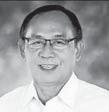
Businessman and philanthropist and Founding President of the Philippine Soong Ching Ling Foundation, the 11th China Overseas Chinese Federation; Adviser, China Overseas Friendship Association
2. Ma. Gabriel “Gabby” Lopez, Academic and Professor in many universities, Pioneering Member of APCU, and served as President of APCU
For Outstanding Contribution:
1. Benito Techico, Business-
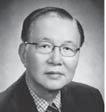

man, and Special Envoy of the President to China for Trade, Investments and Tourism
2. Manuel Mamba Sr., Medical Doctor and Politician, currently serving as Governor of Cagayan Province
For Major Contribution:
1. CHING TAM CUA, Is a literary writer and Pioneering Member of APCU, served as Member of the Board of Trustees and Head of its

Council of Elders
2. Lily Tan Lim, PhD-holder, Teacher, Journalist, Civic and Sports Leader Lambino said all of the six as well as 10 other nominees this year have exhibited valuable contributions in promoting understanding, friendship and cooperations between the two countries in various fields resulting in the mutual benefit and advancement of our good bilateral relations.
In giving this recognition and honor, we are hoping that their works and achievements will inspire other Filipinos towards the same end, to build bridges of friendships rather than walls that divide our people, he said.
The laureates will each receive a trophy, certifcate and token cash prize at the awarding ceremony on June 7 at the Manila Hotel.
Now on its fourth year, APPCU is a joint project between APCU and the Chinese Embassy in Manila, Lambino said.
It is part of the celebration marking the establishment of diplomatic relations between our two countries 49 years ago on June 9, 1975, he added.
He said these awards and celebrations will show the strong and lasting bond of friendship between our two nations.
PHL seeks strong collaboration among member economies to revitalize Apec
By Andrea E. San Juan @andreasanjuan
THE Philippines has called for stronger collaboration among Asia-Pacific Economic Cooperation (Apec) economies to address current challenges and “revitalize” the multilateral trading system.
Through the lens of the Philippines, Trade Undersecretary Allan Gepty raised agriculture as the country’s priority. He urged Apec economies to engage “constructively” to resolve domestic support and public stockholding issues.
In a statement on Tuesday, the Department of Trade and Industry (DTI) said Gepty suggested that member economies explore alter-
native approaches for further discussion in recognition that this is a “new subject” in APEC.
Apart from agriculture, the Philippines “championed” the integration of broader segments into trade, supporting greater inclusion of micro, small, and medium enterprises, women, persons with disabilities, and youth and elderly, said the DTI.
Gepty represented DTI Secretary Alfredo Pascual at the Apec Ministers R esponsible for Trade (M R T) meeting held on May 17 and 18.
Themed “Empower. Include. Grow,” DTI said the meeting focused on “charting a course toward deeper economic and technical cooperation to boost


prosperity and well-being across the Asia-Pacific region.”
Also among the topics brought to the table at the Apec meeting is the Free Trade Area of the Asia-Pacific (FTAAP), a concept which DTI said is pushed by the Business Advisory Council as APEC’s business arm.
In a Viber message sent to the BusinessMirror on Tuesday, Gepty said the private sector wants “for APEC Economies to have a [free trade agreement] FTA in the region,” adding that it will be the same concept as the regional FTAs which has “market access and agreements on rules.”
Amid the current global economic setting which is coupled with “many challenges and fastpaced advancement of technology,”
Gepty, in the statement issued by the DTI, noted that FTAAP “should be viewed more in the context of regional cooperation and economic integration that facilitates not only trade but creates more opportunities for our people under an environment that is fair, and fosters inclusive growth and development.”
During discussions on trade liberalization and the outcomes of the 13th World Trade Organization Ministerial Conference, Gepty underscored, “While we did not achieve the outcomes we had hoped for, the Philippines sees this as an opportunity for us to reflect and collaborate more to strengthen the multilateral trading system.
“We need to build on the positive outcomes of MC13 by


implementing and advancing the decisions and agreements from the meeting. In this regard, the Philippines reaffirms its commitment to upholding the WTO’s role in fostering a rules-based, nondiscriminatory, free, open, fair, transparent, and inclusive multilateral trading system,” Gepty added as he expressed a “firm resolution” to address the outstanding issues in the WTO.
Meanwhile, on the sidelines of the ministerial meeting, DTI said Gepty met with officials of Chile, Canada, and the United Kingdom to discuss plans for deeper bilateral trade and investment cooperation.
The Apec Leaders’ Summit is slated for November.


News www.businessmirror.com.ph Wednesday, June 5, 2024 A5 BusinessMirror
LARRY TAN VILLAREAL BENITO TECHICO MANUEL MAMBA SR. CUA CHING TAM LILY TAN LIM MA. GABRIEL LOPEZ

June 5, 2024 Employment Permit/s: Wednesday, June 5, 2024 BusinessMirror A6 www.businessmirror.com.ph Brief Job Description: Salary Range: Brief Job Description: Salary Range: Brief Job Description: Salary Range: Brief Job Description: Salary Range: Brief Job Description: Salary Range: Brief Job Description: Salary Range: Brief Job Description: Salary Range: Brief Job Description: Salary Range: Brief Job Description: Salary Range: Brief Job Description: Salary Range: Brief Job Description: Salary Range: Brief Job Description: Salary Range: Brief Job Description: Salary Range: Brief Job Description: Salary Range: Brief Job Description: Salary Range: Brief Job Description: Salary Range: Brief Job Description: Salary Range: Brief Job Description: Salary Range: Brief Job Description: Salary Range: Brief Job Description: Salary Range: Brief Job Description: Salary Range: Brief Job Description: Salary Range:
Wednesday, June 5, 2024 BusinessMirror A7 www.businessmirror.com.ph Brief Job Description: Salary Range: Brief Job Description: Salary Range: Brief Job Description: Salary Range: Brief Job Description: Salary Range: Brief Job Description: Salary Range: Brief Job Description: Salary Range: Brief Job Description: Salary Range: Brief Job Description: Salary Range: Brief Job Description: Salary Range: Brief Job Description: Salary Range: Brief Job Description: Salary Range: Brief Job Description: Salary Range: Brief Job Description: Salary Range: Brief Job Description: Salary Range: Brief Job Description: Salary Range: Brief Job Description: Salary Range: Brief Job Description: Salary Range: Brief Job Description: Salary Range: Brief Job Description: Salary Range: Brief Job Description: Salary Range: Brief Job Description: Salary Range: Brief Job Description: Salary Range: Brief Job Description: Salary Range: Brief Job Description: Salary Range:
Brief Job Description: Salary Range: Brief Job Description: Salary Range: Brief Job Description: Salary Range: Brief Job Description: Salary Range: Brief Job Description: Salary Range: Brief Job Description: Salary Range: Brief Job Description: Salary Range: Brief Job Description: Salary Range: Brief Job Description: Salary Range: Brief Job Description: Salary Range: Brief Job Description: Salary Range: Brief Job Description: Salary Range: Brief Job Description: Salary Range: Brief Job Description: Salary Range: Brief Job Description: Salary Range: Brief Job Description: Salary Range: Brief Job Description: Salary Range: Brief Job Description: Salary Range: Brief Job Description: Salary Range: Brief Job Description: Salary Range: Brief Job Description: Salary Range: Brief Job Description: Salary Range: Brief Job Description: Salary Range: Brief Job Description: Salary Range: Wednesday, June 5, 2024 BusinessMirror A8 www.businessmirror.com.ph
Wednesday, June 5, 2024 BusinessMirror A9 www.businessmirror.com.ph Brief Job Description: Salary Range: Brief Job Description: Salary Range: Brief Job Description: Salary Range: Brief Job Description: Salary Range: Brief Job Description: Salary Range: Brief Job Description: Salary Range: Brief Job Description: Salary Range: Brief Job Description: Salary Range: Brief Job Description: Salary Range: Brief Job Description: Salary Range: Brief Job Description: Salary Range: Brief Job Description: Salary Range: Brief Job Description: Salary Range: Brief Job Description: Salary Range: Brief Job Description: Salary Range: Brief Job Description: Salary Range: Brief Job Description: Salary Range:
Brief Job Description:
Brief Job Description:
Brief Job Description:
Brief Job Description:
Range:
Brief Job Description:
Range:
Brief Job Description:
Range:
Brief Job Description:
Range:
Brief Job Description:
Range:
Salary
Range:
Salary Range:
Salary Range:
Salary
Salary
Salary
Salary
Brief Job Description: Salary Range: Brief Job Description: Salary Range: Brief Job Description: Salary Range: Brief Job Description: Salary Range: Brief Job Description: Salary Range: Brief Job Description: Salary Range: Brief Job Description: Salary Range: Brief Job Description: Salary Range: Brief Job Description: Salary Range: Brief Job Description: Salary Range: Wednesday, June 5, 2024 BusinessMirror A10 www.businessmirror.com.ph
Salary


Wednesday, June 5, 2024 BusinessMirror A11 www.businessmirror.com.ph Brief Job Description: Salary Range:
Job Description: Salary Range: Brief Job Description: Salary Range: Brief Job Description: Salary Range:
Job Description: Salary Range: Brief Job Description: Salary Range: Brief Job Description: Salary Range: Brief Job Description: Salary Range: Brief Job Description: Salary Range: Brief Job Description: Salary Range: Brief Job Description: Salary Range: Brief Job Description: Salary Range: Brief Job Description: Salary Range: Brief Job Description: Salary Range: Brief Job Description: Salary Range: Brief Job Description: Salary Range: Brief Job Description: Salary Range: Brief Job Description: Salary Range: Brief Job Description: Salary Range:
Brief
Brief

BusinessMirror A6 www.businessmirror.com.ph A12 Wednesday, June 5, 2024
BusinessMirror A13 www.businessmirror.com.ph Wednesday, June 5, 2024
BusinessMirror A6 www.businessmirror.com.ph A14 Wednesday, June 5, 2024
*Date Generated: Jun 4, 2024
In the ad material of Notice of Filing of Application for Alien Employment Permits published on June 04, 2024, the position of SAI THAN MAR KHAING MYIE NEW ORIENTAL CLUB88 CORPORATION, should have been read as MYANMAR CUSTOMER SERVICE
Any person in the Philippines who is competent, able and willing to perform the

BusinessMirror A15 www.businessmirror.com.ph Wednesday, June 5, 2024
SARAH BUENA S. MIRASOL
Biden says Hamas sufficiently depleted; Israel leaders disagree, casting doubts over cease-fire
Julia Frankel & Jack Jeffery
The Associated Press
JERUSALEM—At
the start of its devastating offensive on the Gaza Strip, Israel set an ambitious goal: destroy Hamas. At the time, the Biden administration committed to the objective, giving Israel considerable stocks of weaponry and voicing its support.
Nearly eight months into the war, however, cracks have emerged between the close allies over what
defeating Hamas actually looks like. Last week, US President Joe Biden said the militant group was

no longer capable of launching an attack on Israel like the October 7 attack that triggered the war and that it was time for the fighting to end. Israel’s Prime Minister Benjamin Netanyahu and far-right ministers disagree.
Where the US seeks a quick end to the fighting, Israel’s leadership appears determined to push onward.
Here is how the leaders define the destruction of Hamas.
Biden: No ability to pose a threat BIDEN on Friday said it was time to end the Israel-Hamas war, signaling that the objective of destroying Hamas had already been met because the militant group was “no longer capable” of carrying out a large-scale attack on Israel like the one on October 7.
That day, Hamas militants astonished Israel with a large-scale assault, killing some 1,200 people and dragging about 250 hostages back to Gaza as rocket fire targeted Israeli cities and towns.
In the nearly eight months since then, Israel says its air and ground offensive has significantly depleted Hamas’ military capabilities. It claims to have killed 15,000 militants, half of Hamas’ fighting force, and wounded thousands of others. It also says it has destroyed a significant portion of Gaza’s labyrinthine tunnel network, command and control centers and rocket launchers.
Biden appeared Friday to believe this was enough to satisfy

Israel’s objective. He urged Israel and Hamas to reach an agreement to release about 85 remaining hostages, along with the bodies of around 40 more, for an extended cease-fire.
Netanyahu: Eliminate remaining military and governing ability IN response to Biden’s suggestion that Hamas was significantly depleted, Netanyahu said Israel would not agree to a permanent cease-fire until “the destruction of Hamas’ military and governing capabilities, the freeing of all hostages and ensuring that Gaza no longer poses a threat to Israel.”
The Israeli army says the eradication of Hamas is still incomplete,
with battalions of militants remaining in the southernmost city of R afah and fighting still raging in Gaza’s north. Hamas has continued to launch rockets into Israel, although with far lower intensity than in the first months of war. The extent of the group’s governance across the strip remains unclear, though no alternative has emerged.
Still, Netanyahu admits it may be impossible to fully stamp out the ideology of Hamas, which seized control of Gaza in 2007, a year after winning legislative elections against the rival Fatah party. Hamas has managed to survive despite a 16-year blockade imposed by Israel and Egypt, and four previous wars against Israel.
“Hamas has to be eliminated,
not as an idea,” Netanyahu said in late March. “Nazism was not destroyed as an idea in World World II, but Nazis don’t govern Germany.”
Israel’s far right: eradicate Hamas and resettle Gaza
THE far-right firebrands within Israel’s ultranationalist government have staunchly rejected Biden’s cease-fire proposal, saying Israel must continue its war in Gaza until the militant group is completely stamped out.
Israel’s minister of national security, Itamar Ben-Gvir, and Finance Minister Bezalel Smotrich have both threatened to leave Netanyahu’s government if he endorsed Biden’s proposal. That would cause the coalition to collapse.
Smotrich said Monday that agreeing to a cease-fire would amount to a humiliation of Israel and a surrender. Increased military pressure, he said, is “the only language understood in the Middle East.”
Ben-Gvir has called for the “voluntary” emigration of Palestinians from Gaza and for a return of Israeli settlements. Israel unilaterally pulled out of more than 20 Jewish settlements in Gaza in 2005, ending a 38-year presence. Speaking at a resettlement conference in May, Ben-Gvir said that the only way to make sure “the problem won’t come back” was to “return to Gaza now.”
R eturn home!” he chanted, R eturn to our holy land!”
Modi’s party has comfortable lead over main rival in early counting from India’s election
By Krutika Pathi & Sheikh Saaliq The Associated Press
NEW DELHI—India was counting more than 640 million votes cast over the past six weeks in the world’s largest democratic exercise, which was widely expected to give Prime Minister Narendra Modi a third five-year term when the final result is declared later Tuesday.
If the 73-year-old Modi wins, it would only be the second time an Indian leader has retained power for a third term after Jawaharlal Nehru, the country’s first prime minister.
Some three hours into the counting, early leads reported by the Election Commission showed Modi’s Hindu nationalist Bharatiya Janata Party comfortably ahead of the main opposition Congress party.
The preliminary figures showed the BJP ahead in 239 constituencies out of 542 and winning one uncontested race. Congress was leading in 96 constituencies.
The Election Commission does not release data on the percentage of votes tallied, but counting was to go on throughout the day and early figures were expected to change.
Exit polls on Saturday by major

television channels projected a broad win for Modi’s National Democratic Alliance group over an opposition alliance led by the Congress party and its main campaign leader, Rahul Gandhi.
Some 642 million people voted in the election, with an average 66% turnout across the seven phases, according to official data.
Extreme heat struck India as voters

went to the polls, with temperatures higher than 45 degrees Celsius (113 Fahrenheit) in some parts of the country. The chief election commissioner Rajiv Kumar said officials had learned a valuable lesson. “We should have completed the election at least one month before,” he said. “We shouldn’t have let it continue into so much heat.”
Temperatures were somewhat lower on Tuesday for the counting, but election officials and political parties still took precautions, hauling in large quantities of water and installing evaporative coolers for people outside the buildings where votes were being tallied and party headquarters.
On Tuesday, BJP workers outside the party’s office in New Delhi performed a Hindu ritual shortly after the counting began. Meanwhile, supporters at the Congress party headquarters appeared upbeat and chanted slogans praising Gandhi, the party’s campaign face.
In his 10 years in power, Modi has transformed India’s political landscape. His popularity has outstripped that of his party’s, and has turned a parliamentary election into one that increasingly resembles a presidential-style campaign.
The result is that the BJP relies more and more on Modi’s enduring brand to stay in power, with local politicians receding into
the background even in state elections.
“Modi was not just the prime campaigner, but the sole campaigner of this election,” said Yamini Aiyar, a public policy scholar. His supporters see him as a self-made, strong leader who has improved India’s standing in the world, and credit his probusiness policies with making the economy the world’s fifth-largest.
But a decade of his leadership has also left the country deeply divided. Modi’s critics and opponents say his Hindu-first politics have bred intolerance, hate speech and brazen attacks against the country’s minorities, especially Muslims, who comprise 14% of the population.
India’s economy, one of the fastest growing, has become more unequal under Modi. While stock markets reach recordhighs and millionaires multiply, youth unemployment has soared, with only a small portion of Indians benefitting from the economic boom.
The country’s democracy, Modi’s critics say, is faltering under his government, which has increasingly wielded strong-arm tactics to subdue political opponents, squeeze independent media and quash dissent. The government has rejected such accusations and say democracy is flourishing.
As polls opened in mid-April, a confident BJP initially focused its campaign on “Modi’s guarantees,” highlighting the economic and welfare achievements that his party says have reduced poverty. With him at the helm, “India will become a developed nation by 2047,” Modi repeated in rally after rally.
But the campaign turned increasingly shrill, as Modi ramped up polarizing rhetoric that targeted the Muslim minority, a tactic seen to energize his core Hindu majority voters.
His opposition, the INDIA alliance led by the Congress party, has attacked Modi over his Hindu nationalist politics. It hopes to benefit from the simmering economic discontent, and its campaign has
around issues of joblessness,
Wednesday, June 5, 2024 Editor: Angel R. Calso • www.businessmirror.com.ph A16 BusinessMirror The World
inflation
inequality. AP reporter David Rising contr buted
this story. BLACK smoke rises from an Israeli airstrike on Kafar Hamam, a Lebanese border village with Israel in south Lebanon, on May 17, 2024. President Joe Biden has called for a quick ceasefire and end to the fighting between Israel and Hamas in the Gaza Strip, saying the militant group is no longer capable of launching an attack on Israel like the one on October 7. Israel’s Prime Minister Ben amin Netanyahu and far-right ministers disagree, saying that destroying Hamas will require continued Israeli military operations in the strip. AP/MOHAMMED Z AATARI CONG RESS party supporters cheer as they follow proceedings of vote counting at their party headquarters in New Delhi, India on Tuesday, June 4, 2024. India began counting more than 640 million votes Tuesday in the world’s largest democratic exercise, which was widely expected to return Prime Minister Narendra Modi to a third term after a decade in power. AP/ALTAF QADRI
rallied
and
to
South Korean president vows to expand aid contribution, mineral ties with Africa
By Kim Tong-Hyung The Associated Press
SEOUL, South Korea—South Korea will expand development aid to Africa and pursue deeper cooperation with the region on critical minerals and technology, President Yoon Suk Yeol said Tuesday as he hosted a meeting with dozens of African leaders in Seoul.
In a speech to the Korea-Africa Summit, Yoon also urged African countries to take firmer steps in an international pressure campaign against North Korea. The North recently accelerated its tests of nuclear-capable weapons systems and flew hundreds of balloons to drop tons of trash and manure on the South as relations between the war-divided Koreas worsen.
R epresentatives from 48 African nations, including 25 heads of state, are attending the twoday summit, where talks are expected to focus on trade and investment.
Trade with African nations currently accounts for less than 2% of South Korea’s total imports and exports. South Korean officials say expanding ties in the area of minerals and resources

would help improve the country’s supply chain resilience in key industries such as batteries.
Yoon said South Korea plans to expand its cumulative development aid contributions to Africa to around $10 billion by 2030 and to separately provide $14 billion in export financing to encourage South Korean investment in the region.
“We will also explore sustainable ways of cooperation in issues that are directly tied to future growth, including the stable supply of critical minerals and digital transformation,” Yoon said.
South Korea’s outreach to Africa also comes at a time when North Korea is becoming more active in
Palestinian officials apply to join South Africa’s case at top UN court accusing Israel of genocide
By Mike Corder
The Associated Press
THE HAGUE, Nether-
lands—Palestinian officials have applied at the top UN court for permission to join South Africa’s case accusing Israel of genocide in Gaza.
The request published Monday alleges that Israel’s ongoing military operation is “part of a systematic effort to wipe Palestinian society and its culture and social institutions from the map.” The request to the International Court of Justice was made on behalf of the “State of Palestine” and signed by Palestinian Authority foreign ministry official Ammar Hijazi.
South Africa filed its case with the world court late last year accusing Israel of breaching the genocide convention in its military assault that has laid waste to large swaths of Gaza. Israel denies it is committing genocide in its military operation to crush Hamas triggered by the deadly October 7 attacks.
Israel is expanding its offensive in the southern city of R afah, once the main hub of humanitarian aid operations. The Israeli invasion has largely cut off the flow of food, medicine and other supplies to Palestinians facing widespread hunger.

Israeli bombardments and ground operations in Gaza have killed more than 36,000 Palestinians, according to Gaza’s Health Ministry, which does not distinguish between combatants and civilians.
The court has issued three preliminary orders in the case calling on Israel to do all it can to prevent deaths in the enclave, ramp up humanitarian aid and, most recently, halt its offensive in R afah.
It is unclear how long the court’s judges will take to rule on the request. If granted, Palestinian officials will be able to address the court in writing and during public hearings.
In their request, the Palestinians said they are directly affected by South Africa’s case against Israel.
“The Israeli onslaught has obliterated and damaged, beyond recognition, Gaza’s hospitals, mosques, churches, universities, schools, homes, shops, and infrastructure, as part of a systematic effort to wipe Palestinian society and its culture and social institutions from the map,” the request says.
The request adds that, Israel is violating the court’s orders and continuing with “its genocidal acts including deliberately and systematically impeding human-
itarian aid, resulting in an intentionally engineered situation of starvation and a creeping famine that is increasingly imminent.”
The Palestinians have been to the court before. In 2018, The Palestinian Authority filed a case asking its judges to order Washington to remove the relocated US embassy from Jerusalem. The case followed the decision of the administration of then-US President Donald Trump to recognize Jerusalem as Israel’s capital and to move the US embassy there from Tel Aviv.
That case remains before the court, where cases can take years to resolve.
The International Court of Justice rules in cases between states.
The United Nations General Assembly voted last month to give Palestine some new rights and privileges, but it reaffirmed that it remains a non-member observer state without full UN membership and the right to vote in the General Assembly or at any of its conferences.
The United States has made clear that it will block Palestinian membership and statehood until direct negotiations with Israel resolve key issues, including security, boundaries and the future of Jerusalem, and lead to a twostate solution.
“The Chinese government has long since come to a clear conclusion on the political disturbance that took place in the late 1980s,” Mao said, without elaborating.
In Hong Kong, a carnival organized by pro-Beijing groups occupied a park that for decades was the site of an annual vigil marking the anniversary, less than a week after police arrested eight people over social media posts commemorating the crackdown under Hong Kong’s new homegrown national security law.
Asked by a foreign journalist for comment on the 35th anniversary during a daily foreign ministry briefing on Monday, spokesperson Mao Ning shrugged off the event.
In 2021, three former leaders of the group that organized the vigil, including activist Chow Hang-tung, were charged with subversion under a national security law imposed by Beijing. The group was also disbanded.
Still, some residents have chosen to remember the bloody event privately, including by running 6.4 kilometers (4 miles) on Monday—a reference to the date June 4—and sharing Tiananmen-related content on social media.
Over the past week, the city’s authorities have ramped up efforts to erase reminders of the 1989 crackdown. Multiple prodemocracy activists told the Associated Press that police had inquired about their plans for Tuesday.
On Monday, police also briefly detained a performance artist on a street of Causeway Bay, a busy Hong Kong shopping district, close to the park that held the vigil.
trying to break out of diplomatic isolation and build cooperation with countries confronting the United States, as its leader Kim Jong Un embraces the idea of a “new Cold War.”
Kim in recent months has boosted the visibility of his ties with R ussia and China and sent a government delegation to Iran.
North Korea also has longstanding relations with several African nations, including Uganda, Zimbabwe and Mozambique, although some governments in the region have scaled back their ties with Pyongyang amid tightened UN sanctions over its nuclear weapons and missile programs. UN experts for years have accused the North of raising illicit revenue from Africa through infrastructure projects, weapons sales and other activities.
Yoon said the security situation of the Korean Peninsula is
in a “very serious state” following a series of North Korean provocations and military activities, including a failed launch of a military reconnaissance satellite last month. He expressed hopes for coordinating with African nations to build pressure on Pyongyang.
“Along with our friends in Africa, South Korea will fully implement UN Security Council resolutions and work to safeguard peace on the Korean Peninsula and the international community,” Yoon said.
In a statement in May, North Korea’s Foreign Ministry said the country’s relations with Africa will “continue to develop invariably” and that it will continue to support the region’s struggle for “independent development under the banner of non-alignment as well as independence against imperialism.”

Wednesday, June 5, 2024 A17 The World
www.businessmirror.com.ph
SOUTH Korean President Yoon Suk Yeol, center, speaks during the opening ceremony of the 2024 Korea-Africa Summit in South Korea on Tuesday, June 4, 2024. HANG KWANGMO/YONHAP VIA AP
ISRAELI soldiers stand on top of tanks in a staging area near the Israeli-Gaza border in southern Israel on Monday, June 3, 2024. AP/LEO CORREA
and heavy state security
on anniversary of Tiananmen crackdown
EIJING, China—Checkpoints and rows of police vehicles lined a major road leading to Beijing’s Tiananmen Square as China heightened security on the 35th anniversary of a bloody crackdown on pro-democracy protests. China has long quashed any memory of the killings, when the Chinese government ordered in the army to end the months-long protests and uphold Communist rule. An estimated 180,000 troops and armed police rolled in with tanks and armored vehicles, and fired into crowds as they pushed toward Tiananmen Square. The death toll remains unknown to this day. Hundreds, if not thousands are believed to have been killed in an operation that started the night of June 3 through the following morning. Across China, the event remains a sensitive and taboo subject that is
Silence
in China
B
heavily censored, and any mention or reference on social media is erased. The city’s life mostly went on as normal. Hundreds of tourists lined the streets leading to gates to enter Tiananmen Square and the Forbidden City. Those who lost their family in the crackdown are prevented from gathering or grieving in public.
Intelligence chairman says US may be less prepared for 2024 election threats than it was four years ago
By David Klepper The Associated Press
WASHINGTON—With only
five months before voters head to the polls, the US may be more vulnerable to foreign disinformation aimed at influencing voters and undermining democracy than it was before the 2020 election, the leader of the Senate Intelligence Committee said Monday.
Sen. Mark Warner, a Virginia Democrat, based his warning on several factors: improved disinformation tactics by Russia and China, the rise of domestic candidates and groups who are themselves willing to spread disinformation, and the arrival of artificial intelligence programs that allow the rapid creation of images, audio and video difficult to tell from the real thing.
In addition, tech companies

have rolled back their efforts to protect users from misinformation even as the government’s own attempts to combat the problem have become mired in debates about surveillance and censorship.
As a result, the US could face a greater threat of foreign disinformation ahead of the 2024 election than it did in the 2016 or 2020 presidential election cycles, Warner said.
“We may be less prepared 155 days out in 2024 than we were under President Trump (in 2020),” Warner told The Associated Press in an interview Monday.
Noting similar campaigns in 2016 and 2020, security officials, democracy activists and disinformation researchers have warned
Fauci pushes back partisan attacks in fiery House hearing over Covid-19 origins and controversies
By Lauran Neergaard Ap Medical Writer
WASHINGTON—Dr. Anthony Fauci,
the top US infectious disease expert until leaving the government in 2022, was back before Congress on Monday, calling “simply preposterous” Republican allegations that he’d tried to cover up origins of the Covid-19 pandemic.
A GOP-led subcommittee has spent over a year probing the nation’s response to the pandemic and whether US-funded research in China may have played any role in how it started—yet found no evidence linking Fauci to wrongdoing.
He’d already been grilled behind closed doors, for 14 hours over two days in January.
But Monday, Fauci testified voluntarily in public and on camera at a hearing that quickly deteriorated into partisan attacks.
Republicans repeated unproven accusations against the longtime National Institutes of Health scientist while Democrats apologized for Congress besmirching his name and bemoaned a missed opportunity to prepare for the next scary outbreak.
“He is not a comic book super villain,” said Rep. Jamie Raskin, D-Md., saying the Select Subcommittee on the Coronavirus Pandemic had failed to prove a list of damaging allegations.
Fauci was the public face of the
government’s early Covid-19 response under then-President Donald Trump and later as an adviser to President Joe Biden. A trusted voice to millions, he also was the target of partisan anger and choked up Monday as he recalled death threats and other harassment of himself and his family, threats he said still continue. Police later escorted hecklers out of the hearing room.
The main issue: Many scientists believe the virus most likely emerged in nature and jumped from animals to people, probably at a wildlife market in Wuhan, the city in China where the outbreak began. There’s no new scientific information supporting that the virus might instead have leaked from a laboratory. A US intelligence analysis says there’s insufficient evidence to prove either way—and a recent Associated Press investigation found the Chinese government froze critical efforts to trace the source of the virus in the first weeks of the outbreak.
Fauci has long said publicly that he was open to both theories but that there’s more evidence supporting Covid-19’s natural origins, the way other deadly viruses including coronavirus cousins SARS and MERS jumped into people. It was a position he repeated Monday as Republican lawmakers questioned if he worked behind-the-scenes to squelch the lab-leak theory or even tried to influence intelligence agencies.
“I have repeatedly stated that have a completely open mind to either possibility and that if definitive evidence becomes available to validate or refute either theory, I will ready accept it,” Fauci said. He later invoked a fictional secret agent, decrying a conspiracy theory that “I was parachuting into the CIA like Jason Bourne and told the CIA that they should really not be talking about a lab leak.”
Republicans also have accused Fauci of lying to Congress in denying that his agency funded “gain of function” research—the practicing of enhancing a virus in a lab to study its potential real-world impact—at a lab in Wuhan.
NIH for years gave grants to a New York nonprofit called EcoHealth Alliance that used some of the funds to work with a Chinese lab studying coronaviruses commonly carried by bats. Last month, the government suspended EcoHealth’s federal funding, citing its failure to properly monitor some of those experiments.
The definition of “gain of function” covers both general research and especially risky experiments to “enhance” the ability of potentially pandemic pathogens to spread or cause severe disease in humans. Fauci stressed he was using the risky experiment definition, saying “it would be molecularly impossible” for the bat viruses studied with EcoHealth’s funds to be turned into the virus
for years that R ussia, China, Iran and domestic groups within the US will use online platforms to spread false and polarizing content designed to influence the race between Trump, a R epublican, and President Joe Biden, a Democrat.
Warner’s assessment of America’s vulnerability comes just weeks
that caused the pandemic.
In an exchange with Rep. H. Morgan Griffith, R-Va., Fauci acknowledged that the lab leak is still an open question since it’s impossible to know if some other lab, not funded by NIH money, was doing risky research with coronaviruses.
Fauci did face a new set of questions about the credibility of NIH’s National Institute of Allergy and Infectious Diseases, which he led for 38 years. Last month, the House panel revealed emails from an NIAID colleague about ways to evade public records laws, including by not discussing controversial pandemic issues in government email.
Fauci denounced the actions of that colleague and insisted that “to the best of my knowledge I have never conducted official business via my personal e-mail.”
The pandemic’s origins weren’t the only hot topic. The House panel also blasted some public health measures taken to slow spread of the virus before Covid-19 vaccines, spurred by NIAID research, helped allow a return to normalcy. Ordering people to stay 6 feet apart meant many businesses, schools and churches couldn’t stay open, and subcommittee chairman Rep. Brad Wenstrup, R-Ohio, called it a “burdensome” and arbitrary rule, noting that in his prior closeddoor testimony Fauci had acknowledged it wasn’t scientifically backed.
Fauci responded Monday that the 6-feet distancing wasn’t his guideline but one created by the Centers for Disease Control and Prevention before scientists had learned that the new virus was airborne, not spread simply by droplets emitted at certain distance.
Southwest US to bake in first heat wave of season and records may fall
By Scott Sonner & Anita Snow The Associated Press
HOENIX—Parts of California, Nevada and Arizona are expected to bake this week as the first heat wave of the season arrives with triple-digit temperatures forecast for areas including Phoenix, which last summer saw a record 31 straight days of at least 110
Fahrenheit (43.3 Celsius). By Wednesday, most of an area stretching from southeast California to central Arizona will see “easily their hottest” weather since last September, and record daily highs will be in jeopardy from Las Vegas to Phoenix, the National Weather Service said late Monday. Excessive heat warnings have been issued from 10 a.m. Wednesday to 8 p.m. Friday due to the “dangerously
will be ordered by Thursday across most of the
and
authorities
of
Fire forecasters at the Southwest Coordination Center in Albuquerque, New Mexico, said weather in the region doesn’t typically become so hot until mid- or late June.
“It does seem like Mother Nature is turning up the heat on us a little sooner than usual,” Tiffany Davila, spokesperson for the Arizona Department of Forestry and Fire Management, said Monday evening.
“We can’t back down from a fire just because it’s pushing 113 degrees outside. But we do keep a close eye on everybody in the field. Make sure they are keeping hydrated and taking more breaks than they normally would,” she told The Associated Press. Highs on Monday reached 110 F (43.3 C) at Death Valley National Park in California near the Nevada line, 103 F (39.4 C) in Phoenix and 105 F (40.5 C) in Needles, California. Slightly above normal temperatures are forecast for the region on Tuesday before they
start heating up on Wednesday. In Las Vegas, where the high topped out at 103 F (39.4 C) on Monday, temperatures will soar to 10 to 15 degrees above normal during the second half of the week—peaking at 111 (43.8 C) on Thursday. A high of 120 F (48.8 C) is forecast for Thursday at Furnace Creek in Death Valley. The current forecasted high of 113 F (45 C) for Phoenix on Thursday would break the daily record high of 111 F (43.8 C) set in 2016.
Last summer, the high there reached 110 F (43.3 C) or higher from the last day of June through the entire month of July. At least 400 of the 645 heat-related deaths that occurred last year were during that monthlong period. Phoenix, Maricopa County and Arizona state officials this year are striving to better protect people from ever-higher temperatures. Those most in danger from the heat are people outdoors, especially homeless people in downtown areas who often don’t have access to sufficient shade, air conditioning and cold water.
Governments this year are setting aside more money so some cooling stations can stay open longer and on the weekends, including two that will keep their doors open overnight. Mesa, Arizona, Mayor John Giles said they are “committed to ensuring that those most vulnerable to heat exposure have access to essential life-saving services, including hydration and cooling stations and daytime respite centers.”
Additional fire restrictions set to go into effect Thursday across Bureau of Land Management lands in Arizona will come with bans on campfires, open flames and recreational shooting in some areas, BLM spokesperson Delores Garcia said.
“As the heat goes up, so does the threat of wildfires,” she said.
“We have noticed the effects of the winter and early spring rains really brought up the vegetation and the higher heat has just cured that vegetation. That’s what we are seeing as the driving factor. And then winds on top of that,” Garcia said.
after top security officials told the Intelligence Committee that the US has greatly improved its ability to combat foreign disinformation.
Several new challenges, however, will make safeguarding the 2024 election different than past cycles.
AI programs have already been used to generate misleading content, such as a robocall that mimicked the voice of Biden telling New Hampshire voters not to cast a ballot in that state’s primary. Deceptive deepfakes created with AI programs have also popped up ahead of elections in India, Mexico, Moldova, Slovakia and Bangladesh.
Attempts by federal agencies to communicate with tech companies about disinformation campaigns have been complicated by court cases and debates over the role of government in monitoring political discourse.
Tech platforms have largely moved away from aggressive policies prohibiting election misinformation. X , formerly Twitter, laid off most of its content moderators in favor of a hands-off approach that now allows Neo-Nazi hate
speech, Russian propaganda and disinformation.
Last year YouTube, owned by Google, reversed its policy prohibiting debunked election claims and now allows videos that argue the 2020 election was the result of widespread fraud.
Q uestions about China’s influence over TikTok prompted Congress to pass a law that would ban the popular site in the US if its Beijing-based owner refuses to divest.
Meta, the owner of Facebook, WhatsApp and Instagram, prohibits information that interferes with election processes and regularly removes foreign influence operations when it identifies them. The platform also says it will label content made with AI. But the company is also allowing political advertisements that claim the 2020 election was rigged, which critics say undercuts its promises.
“I’m not sure that these companies, other than the press release, have done anything in a meaningful way,” Warner said. Representatives from X and TikTok did not immediately respond to messages on Monday.
Racing against time, D-Day vets share their stories to ensure history lives on
By Danica Kirka The Associated Press
LONDON—Ken Hay’s part in the invasion of Normandy lasted just a few weeks, but he wants to make sure the experiences of those who fought and died to end the Nazi grip on Europe live forever.
The British Army veteran was captured a few weeks after the D-Day landings in northern France when his patrol was surrounded by German troops during the two-month battle for strategic high ground outside the city of Caen known simply as Hill 112. Nine members of his platoon were killed that night. Hay spent the next 10 months as a prisoner of war.
Now 98, Hay visits schools whenever he can to tell his story, so the battle to liberate France and defeat Nazi Germany doesn’t become a dusty relic of history like the Greek and Roman wars he read about as a child.
“While we are around, we vets—and we’re a diminishing crew, of course—we are a tangible interpretation of what they read in the books, what they’ve heard from their parents, what their parents remember their grandparents saying,” Hay said recently.
He said his outreach isn’t to glorify war but to leave the message that “there must be a way, other than war, to resolve difficulties.”
One hears that over and over from the veterans who are gathering in Normandy this week to mark the 80th anniversary of D-Day. With even the youngest of those men and women nearing their 100th birthdays and their ranks dwindling rapidly, they feel a special imperative to tell their stories.
They know this is likely to be the last major event to commemorate the sacrifices of those who fought and died to liberate France.
World leaders have recognized the significance of the event. US President Joe Biden, British Prime Minister Rishi Sunak and Canadian Prime Minister Justin Trudeau, whose countries supplied most of the D-Day forces, will travel to Normandy for the ceremonies, hosted by French President Emmanuel Macron. King Charles III, whose mother and father served during World War II, will attend an event at the British Normandy Memorial.
D-Day began in the early hours of June 6, 1944, when almost 160,000 Allied troops landed on the Normandy beaches or parachuted behind enemy lines to open the long-awaited second front in the war against Nazi Germany. At least 4,414 troops were killed and another 5,900 were listed as missing or wounded as Allied forces broke through the Nazis’heavily fortified “Atlantic Wall”to secure a foothold in Northern Europe. By the end of August, more than 2 million forces from 12 Allied nations had crossed
the English Channel, starting the march to Berlin that ended with Germany’s surrender on May 8, 1945.
No one knows exactly how many of the men and women who saw those events firsthand are still living.
Less than 1% of the 16.4 million Americans who served in the armed forces during World War II were still alive at the end of last year, and 131 are dying every day, according to estimates from the US Veterans Administration.
“The actuarial tables tell us that pretty soon there won’t be a generation,’’ said Rob Citino, a senior historian at The National WWII Museum in New Orleans. “And I think this 80th is the last round year in which we will actually be able to celebrate in the presence, and with the wisdom of, the veteran generation that actually fought the war.”
What’s being lost are the men and women who witnessed Adolf Hitler’s rise to power in Germany, the fall of France and the persecution of Jews now known as the Holocaust, then fought their way across Europe to defeat the Nazis.
In the U.K., the passing of the World War II generation was highlighted by the death in 2022 of Queen Elizabeth II, who trained as a military mechanic and truck driver during the final months of the war.
D-Day was the biggest operation of the war and a moment of high drama because everyone knew the Allies would invade Europe, they just didn’t know when or where, said Ian Johnson, a professor of war, diplomacy and technology at the University of Notre Dame.
But 80 years later, many people’s vision of D-Day is being shaped by Hollywood productions such as “Saving Private Ryan,” not the experiences of the veterans who were there.
“You know, most of my students were not alive when that movie was made,” Johnson said. “They’ve almost all seen it. This is something that, when they think of the Second World War, this is what they picture, I think.”
The success of D-Day wasn’t guaranteed. Allied commanders employed trickery, including a dummy army, to fool the Germans about where the invasion would take place and struggled to find a day with the right combination of weather, moon and tides to increase the chances of success.
They knew that failure would prolong the war, meaning more death and misery across Europe.
“It’s hundreds of thousands of military casualties, and we can only guess how many more civilian casualties of Hitler’s racial policies, his murderous racial policy,” Citino said. “So you want to end this war and you want to end it quickly, and the path to do that is a successful landing in Western Europe.”
Wednesday, June 5, 2024 www.businessmirror.com.ph A18 BusinessMirror The World
MARK WARNER, D-Va., chairman of the Senate Intelligence Committee, speaks during a hearing at the Capitol in Washington on March 8, 2023. Warner said Monday, June 3, 2024, the US may be less prepared for the threat of foreign election disinformation ahead of this year’s election than it was four years ago. Warner based his assessment on the development of powerful new AI programs that make it easier than ever to generate deepfake audio and video that can fool voters. AP/AMANDA ANDRADERHOADES
P
Fire
will be on high alert especially
Arizona, where fire restrictions
into
before Memorial Day
some areas
degrees
hot conditions,” the weather service said.
crews
in
went
effect
in
and
western
south-central parts
the state,
said.
www.businessmirror.com.ph
Wednesday, June 5, 2024 A19
With its top editor abruptly gone, The Washington Post grapples with hastily announced restructure
 By David Bauder Ap Media Writer
NEW YOR K—The struggling Washington Post found itself in some turmoil on Monday following the abrupt departure of the newspaper’s executive editor and a hastily announced restructuring plan aimed at stopping an exodus of readers over the past few years.
Post publisher Will Lewis and Matt Murray, a former Wall Street Journal editor named to temporarily replace Sally Buzbee, met with reporters and editors at the Post on Monday to explain changes that had been outlined in a Sunday night e-mail.
The plan includes splitting the newsroom into three separate divisions with managers who report to Lewis—one that encompasses the Post’s core news reporting, one with opinion pieces and the third devoted to attracting new consumers through innovative uses of social media, video, artificial intelligence and sales.
Although Murray is temporarily replacing Buzbee through the November presidential election, the eventual plan places no one in the role of an executive editor who oversees the entire newsroom. Buzbee was said to disagree with the plan and chose to leave rather than be put in charge of one of the divisions, the Post reported.
Lewis was not made available for an interview Monday, and Buzbee did not immediately return a message.
“It definitely kind of blindsided people,” said Paul Farhi, a recently retired media reporter at the Post. “But it shows you that Will Lewis is working out of a sense of crisis and urgency. He’s only been there five months and he’s making gigantic changes to the newsroom.”
Losing money, losing readers
LIKE most news organizations, the Post has lost readers—a decline more acute because the Washington-based outlet boomed with the interest in politics during the Trump administration. The Post’s website had 101 million unique visitors a month in 2020, and had dropped to 50 million at the end of 2023. The Post lost a reported $77 million last year.
“Although (Post owner) Jeff Bezos is very rich, it has been my observation that billionaires don’t like to lose money,” said Margaret Sullivan, a former Post columnist and now the executive director for the Craig Newmark Center for Journalism Ethics and Security at the Columbia Journalism School.
Lewis told staff members on Monday that “I’m not interested in managing decline. I’m interested in growth,” according to a person who attended the meeting. The new publisher also bluntly told staffers that “people are not reading your stuff. We need to take decisive action.”
The new division designed to attract new customers—the Post called it a “third newsroom”—is steeped in some mystery. While the Post at one time headquartered the people running its digital products in a separate building, for several years it has integrated that and social media into the regular newsroom, as have many organizations. It’s hard to predict how the new structure will work, and there are likely to be changes as they are put in place, Sullivan said.
“Maybe it’s brilliant and innovative,” she said. “But it just strikes me as being odd.”
Looking forward or looking back?
THE R E are significant questions surrounding the restructuring—including suggestions that dividing the newsroom into three parts could create fragmentation of the Post’s overall news report. Will separation into different units hinder the kind of collaboration that creates fluid multiplatform journalism?
“It feels so retro—reminiscent of search engine optimization, social media and pivoting to video, just as AI and agents threaten to become a new web,” said Jeff Jarvis, Jarvis, author of “The Gutenberg Parenthesis: The Age of Print and its Lessons for the Age of the Internet.”
Murray will be in charge of this division following the election. After that, R obert Winnett, a longtime editor at the Telegraph in England who worked with Lewis there, will take over the core reporting functions at the Post, the newspaper said.
There was some concern expressed by Post staff members about three men—all of them new to a newspaper that takes some pride in journalists working their way up through the ranks and two of them British-born—being in charge at a crucial time.
“In a few months, two British-born editors will be running the leading newspaper in the capital of the United States,” Farhi said. “It was kind of unimaginable a couple of months ago.”
They won’t be alone. Other US-based news organizations with British-born leaders included The Wall Street Journal, with editor in chief Emma Tucker; CNN, with chairman and CEO Mark Thompson; and The Associated Press, with Daisy Veerasingham as president and CEO.
Lewis was also questioned about his commitment to diversity after the first woman to be the editor in charge of the Post has left. He said he was committed to it “and you’ll see it going forward,” according to the person at the meeting.
Lewis has said that the Post will be experimenting with different pay tiers for digital subscriptions, for people who may be interested in particular topics or stories instead of the entire package, similar to products offered by Politico, for example. As editor, Buzbee has been beefing up the Post’s coverage on topics like cooking and climate that appeal to particular readers.
Lewis has talked about searching for ways to reach millions of Americans who want to keep informed but don’t feel like traditional news products serve their needs.
In one sense, efforts to make organizations like the Post and the Times more attractive to subscribers may contribute to the trends hurting local news, Farhi said. As the newspapers seek out more national and international customers, he said, they are much less likely to invest in covering local news.
 PEOPLE walk by the One Franklin Square Building, home of The Washington Post newspaper, in downtown Washington on Feb. 21, 2019. The struggling Washington Post was in some turmoil on Monday, June 3, 2024, following a hastily announced restructuring plan aimed at stopping an exodus of readers over the past few years, and the departure of the newspaper’s executive editor, Sally Buzbee. AP/PABLO MARTINE Z MONSIVAIS
PHL’s demographic divide: A young nation with aging fishers in need of support
THE Philippines is a relatively young nation, whose median age is 25.3, according to the 2020 census of the Philippine Statistics Authority (PSA). This means that half of the Philippine household population was younger than 25.3 years old, while the other half is older than 25.3 years. In 2020, the median age of the Philippines was higher than the figures recorded in 2010 and 2015, which were 23.3 and 24.3 years, respectively. However, when compared to developed countries such as the United States, where the median age is now over 38 years, the Philippines is still considered a younger nation.
These figures give policymakers hope that the countr y’s economic aspirations can be attained given the availability of young workers in the Philippines. This pool of workers can help attract more investments that the countr y needs to accelerate GDP growth Industries, such as the business process outsourcing sector, are currently enjoying the advantages of having a young workforce.
Sadly, the same cannot be said for the agriculture and fisheries sector Citing figures from the Bureau of Fisheries and Aquatic Resources (Bfar), a lawmaker noted that of the 2.5 million Filipinos dependent on the countr y’s oceans and inland water bodies for their livelihood, about 24 percent, or 600,000, are above 60 years old, while another 21 percent, or about 525,000, are aged 51 to 60. This means that almost half, or about 1.1 million, are aging fishers (See, “Solon sounds alarm over aging f ishers in PHL,” in the BusinessMirror, June 3, 2024).
Government figures also indicated that only 200,000 are young fishermen aged 21 to 30. A scholarship program that seeks to encourage young Filipinos to go into fisheries and aquaculture received lukewarm reception, based on data from Bfar Of the 2,354 applicants in 2019, only 388 passed the scholarship criteria.
Bfar’s scholarship program provides successful applicants with free tuition, a generous monthly stipend, a book allowance, monetar y support for thesis and research projects, graduation assistance, and on-thejob training support. In other parts of the world, such an offer would encourage the youth to consider fishing as a career, given the support that the state is willing to provide. Here, students do not seem to be excited about the idea, and government data would be able to explain this.
In a report it released in March 2023 the PSA said fisherfolks had the highest poverty incidence among the basic sectors in 2021. Data from the agency showed that poverty incidence among fishers reached 30.6 percent, which means that almost a third of those who depend on the sea for their livelihood are poor Farmers recorded the second highest poverty incidence among the basic sectors at 30 percent.
W hile a scholarship program is a good start to encourage the youth to take up fishing or go into aquaculture, it would do well for policymakers to give serious thought to initiatives that will increase the income of fishers. The sectors that feed the nation must not just be lifted out of poverty; they must get all the necessar y support that will allow them to prosper
Ambassador Antonio L. Cabangon Chua Founder Since 2005

Preparing for La Niña

 GMark Villar
THE BUILDER
OODBYE El Niño and welcome La Niña.
After enduring scorching heat for several weeks, several parts of Bicol region and Calabarzon were submerged in floods that swept across communities as Typhoon Aghon battered Luzon before moving out of the Philippine Area of Responsibility last week.
The dramatic shift in weather underscores the growing threat of climate change and the urgent need to strengthen our infrastructure to protect communities and our economy. Climate change is truly upon us, and we should respond to the challenge by elevating the quality of our infrastructure. This is true in other countries as well. A similar situation unfolded in Dubai a modern metropolis that experienced its heaviest rainfall in 75 years in April, leaving many of its streets flooded. New York was also flooded in September 2023, while Hong Kong was submerged in the same month last year
W hile we can’t control the weather in the Philippines, we can reduce flood risks by developing robust infrastructure. The above-normal high temperature obser ved from March to May that forced the cancellation of school classes and government work amid the El Niño phenomenon was interrupted by Typhoon Aghon, which triggered heavy ra ins and flooding in low-ly ing areas in Que-
Nnews.businessmirror@gmail.com www.news.businessmirror@gmail.com Printed by BROWN MADONNA Press, Inc.–Sun Valley Drive KM-15, South Superhighway, Parañaque, Metro Manila


zon province and the Bicol Region. This is a reminder that the rainy season is upon us and we should ensure that our drainage system is properly working. The job to clear the sewers belongs to the Department of Public Works and Highways (DPWH) and the two water concessionaires in Metro Manila, but local communities should help by keeping our water ways free of trash It is unfortunate that discarded litter often ends up clogging the sewers, hindering their ability to effectively manage rainwater Construction activities often slow down during the rainy season due to longer curing times for cement and safety hazards involv ing wet surfaces. This is why many projects are completed during the dr y season in the second quarter but unfortunately, the high heat index in April and May this year hindered construction workers.
I salute our construction workers for braving the elements all day to build critical infrastructure. They
By Vlad Savov, Jane Lanhee Lee & Takashi Mochizuki
VIDIA Corp. and Advanced Micro Devices Inc.’s chiefs showcased new generations of the chips powering the global boom in AI development, deepening a rivalry that’s shaping the future of artificial intelligence design and adoption.
Jensen Huang and Lisa Su—both born in Taiwan and now local celebrities for leading US tech powerhouses—employed different tacks in conveying their expertise during back-to-back shows at the world’s largest computing conference this week in Taipei Nvidia’s CEO repeatedly voiced his $2.8 trillion company’s dominance in the accelerators that OpenAI and Microsoft Cor p. rely on to build generative AI ser vices like ChatGPT. Huang went as far as to tease a chip envisioned for 2026 he dubbed Rubin—after Vera Rubin, the American woman who helped discover dark matter The chip, which will succeed the Blackwell family, will be key to sustaining its runaway
leadership. W hile Huang headlined much of his own two-hour presentation on Sunday, AMD’s Su chose to make hers more of a team effort. She brought out a stream of big-name partners from HP Inc. CEO Enrique Lores to Lenovo Group Ltd.’s Luca Rossi to convey the company’s focus on designing neural processors—a type of chip that runs AI ser vices directly from laptops. At one point during her Computex address, Asustek Computer Inc. Chairman Jonney Shih called her “the pride of Taiwan”—a characterization often associated with Huang of Nvidia, whose market valuation is now about 10 times that of AMD’s.
“People see Nvidia as a personifi-
build roads, bridges, railways, drainage systems, power and telecom facilities and buildings that improve our quality of life.
As the countr y prepares for the onset of La Niña, our construction workers are again at the forefront of building our resilience to mitigate the effects of the extreme weather on communities and infrastructure. We need to continue to rely on their expertise and hard work to shield our communities from heavy rain.
T he Phi l i pp i ne Atmosphe ri c, Geop h ys i cal and Ast r onom i cal Ser v ices Administration (PAGASA) just declared the star t of the rainy season and predicted a potential La Niña development as early as June. Focus shou ld be on declogg ing our rivers, creeks and drainage systems to diver t excess water to the sea. Clogged drains can cause flooding even during light rains. It is impor tant that we develop more water impounding areas to address the situation.
Unified efforts from the DPWH, water concessionaires, local government units, the Department of Environment and Natural Resources, the Metropolitan Manila Development Authority and the Department of National Defense are essential to strengthen our disaster preparedness.
La Ni ña i s expected to bri ng above-nor mal r a i nfall. Past typhoons like Ondoy and Yolanda demonstrated the devastating effects of incessant rains. The government’s role is to minimize damage by ensuring well-built flood control infrastructure, including seawalls, drainage systems, dams, d i kes, roads,
Nvidia sees the rise of generative AI as a new industrial revolution and expects to play a major role as the technology shifts to personal computers, the CEO said in his keynote address at National Taiwan University. He returned to themes he set out a year ago at the same venue, including the idea that those without AI capabilities will be left behind.
cation of Jensen. And while Lisa is the savior of AMD, she’s ver y clear that it’s about ever yone around her,” said Ian Cutress, chief analyst at the consultancy More Than Moore. “AMD still have that underdog element about the business, and with AI it’s ver y much true.” T h e back-to-back p r esentations—attended by hundreds and watched by thousands more across the globe—underscore the g rowing stakes in a technology that has the potential to redefine a slew of
bridges and underground tunnels. It is also important that we ensure the structural integrity of our dams during heavy rains. Fortunately, we have government agencies constantly looking at the water levels of these dams to avert disaster and manage our water allocation during the dr y season. I feel relieved that we did not suffer from water shortage this year although the non-operational hydroelectric power plants contributed to the tight power supply in May.
The government’s comprehensive disaster preparedness and rehabilitation plan for El Niño and La Niña is commendable as it aims to provide systematic and results-oriented inter ventions to help Filipinos cope with these weather phenomena.
Keeping rivers and creeks free of debris is crucial as well—and this requires the cooperation of ever yone. Private groups like San Miguel Corp. deser ve recognition for removing over 6 million tons of waste from Pasig, Tullahan and San Juan Rivers in recent years.
Respecting and preser ving our water bodies is vital to prevent overflows during the rainy season. Planting trees near water ways can act as natural buffers, further enhancing flood mitigation.
Sustained infrastructure development, including flood control measures, is necessar y to build resilient communities and a robust economy all year round. We need the cooperation of ever yone to sur vive any crisis and emerge stronger
For feedback e-mail to senatormarkvillar@ gmail.com or visit our web site: https://markvillar.com.ph
industries and create new devices t hat can nea r-instantly generate video and other content from simple commands. There’s a personal component to the competition too. Su and Huang are not only both Taiwanese, they were born in the same city of roughly 1.8 million on Taiwan’s southern coast and are distant relatives. That hasn’t made either one more willing to cede ground to the other Su was originally tapped by organizers to kick off the weeklong conference, one of the most important summits for tech executives around the world. Instead, the Nvidia CEO organized his own presentation the Sunday night before the gathering’s official opening to talk about the chipmaker’s strategic plans. Huang, who had keynoted Computex a year earlier spoke at National Taiwan University just hours before the conference opened, essentially stealing the spotlight from his closest competitor AMD’s Su on Monday See “Nvidia,” A
www.businessmirror.com.ph Wednesday, June 5, 2024 Editor: Angel
Calso Opinion BusinessMirror A20 editorial
R.
Nvidia and AMD square off in fight to take control of AI BusinessMirror A broader look at today’s business Publisher Editor in Chief Associate Editor News Editor Senior Editors Online Editor Creative Director Chief Photographer Chairman of the Board President Advertising Sales Manager Group Circulation Manager T. Anthony C. Cabangon Lourdes M. Fernandez Jennifer A. Ng Vittorio V. Vitug Lorenzo M. Lomibao Jr., Gerard S. Ramos Lyn B. Resurreccion, Dennis D. Estopace Angel R. Calso Ruben M. Cruz Jr. Eduardo A. Davad Nonilon G. Reyes D. Edgard A. Cabangon Benjamin V. Ramos Aldwin Maralit Tolosa Rolando M. Manangan BusinessMirror is published daily by the Philippine Business Daily Mirror Publishing, Inc., with offices on the 3rd floor of Dominga Building III 2113 Chino Roces Avenue corner De La Rosa Street, Makati City, Philippines. Tel. Nos. (Editorial) 817-9467; 813-0725. Fax line: 813-7025. (Advertising Sales) 893-2019; 817-1351, 817-2807. (Circulation) 893-1662; 814-0134 to 36. E-mail:
MEMBER OF
Mexico peso falls as ruling party landslide spooks investors
By Michael O’Boyle & Vinícius Andrade
Encouraging signs in PBBM’s SONA pronouncement vs white-collar crimes
he lower hou se and
cl i nc hi ng at least a si mple major -
ity i n t he Senate—more suppor t t h an polls s u ggested. Investor s were closely eyeing t he cong ressional r aces as a two-t hirds majority
wou ld g ive t he ru l i ng coal it ion a mandate to pass more ambit iou s r efo r ms t h at co u ld c h ange t h e const it ut ion.
“T he potent i al for a super majority does cau se some conce r n as it cou ld erode Mex ico’s f i scal p ru dence seen d uri ng most of AMLO’s adm i n i st r at i on,” sa i d Guido C h amorro, sen ior por tfol io manager at Pictet Asset Management i n London, referri ng to Lopez Obr ador “T here i s a quest ion about how f i scally conser vat ive
S he i nbau m w i ll be.”
Reforms
THE cong ressional resu lts w i ll de-
ter m i ne i f Morena w i ll be i n t he posit ion to pass a swat h of proposals made by Lopez Obrador i n Febru a r y. T hose bi lls i nclude plans to reduce t he nu mber of lawmakers and allow for t he d irect elect ion of Supreme Cour t ju st ices. T hey also i nclude el i m i nat i ng i ndependent reg u lators, l i ke t he ant it ru st comm i ssion, as well as establ i shi ng new pension obl igat ions and mandator y m i n i mu m wage hi kes.
Suc h an outcome cou ld sap appet ite for Mex ico assets, i nclud i ng t he peso, whic h h as been one of t he top per for m i ng major c urrenc ies t hi s yea r aga i nst t he dolla r T he peso h as def ied calls t h at it’s over valued and cont i nued to ri se, w it h Mex ico’s close t ies w it h t he US shield ing t he c urrency f rom t he st rong dolla r t h at h as roi led ot her developi ng nat ions. It’s also been suppor ted by a h awk i sh cent r al bank t h at h as been t he slowest i n Lat i n Ame rica to lowe r borrow i ng costs.
T he i S h a res MSCI Mex ico ETF, t he biggest US exc h ange t r aded f u nd t r ack i ng Mex ican e quit ies, fell more t h an 10 percent Monday, t he most i nt r aday s i nce Ma rc h 2020. EWW h as seen over 7.5 m i ll ion sh a res t r aded as of 2:37 p.m. i n New York, more t h an any f u ll day si nce 2019, data compi led by Bloomberg show. Mex ico’s benchmark stock index sank nearly 7 percent, putting it on track to post its worst single day loss since October 2008. Bank ing stocks led the losses as the prospect of a Morena majority raised concer ns the par ty cou ld seek to force banks to lower fees, as it has in the past, or pay more taxes. Grupo Financiero Banor te, t he biggest Mex ican— owned bank, sank over 15 percent.
“We believe the f inancial sector could bear the brunt of these heightened legislative risks either through taxation or industr y-specif ic measures,” Bradesco BBI strateg ist Rodolfo R amos w rote in a note.
If t he next gove r nment and Cong ress adopt an u nor t hodox agenda t h at u nde r m i nes Mex i -
The congressional results will determine if Morena will be in the position to pass a swath of proposals made by Lopez Obrador in February. Those bills include plans to reduce the number of lawmakers and allow for the direct election of Supreme Court justices. They also include eliminating independent regulators, like the antitrust commission, as well as establishing new pension obligations and mandatory minimum wage hikes.
can i nst it ut ions, t he peso wou ld weaken to 19.20 per US dolla r Morgan Stanley analysts sa id i n an Apri l note. Ba rclays st r ateg i sts saw odds t he peso wou ld see a 4 percent plu nge i f Morena were to w i n a const it ut ional majority t h at wou ld lead to a more left i st r ad ical refor m agenda, t hey w rote i n a note a head of t he elect ion, whi le add i ng t h at c h ances of t h at were small.
“T he possibi l ity of a super majority i n cong ress wou ld be a materi al game c h anger for Mex ico,” sa id Gord i an Kemen, head of emergi ng-ma rket sovere ign st r ategy at Standa rd C h a r tered Bank. “I can see t he ma rket gett i ng concer ned about energy pol icy, f i scal stance, but also moneta r y pol icy.”
‘Super peso’ THE peso h as also been t he best per for m i ng major c urrency over t he last si x yea rs, duri ng Lopez Obr ador ’s ter m, fly i ng i n t he face of concer ns t h at hi s pol ic ies wou ld spa r k a deep deval u at i on. H i s gover nment bucked expectat ions for hig her spend i ng and i nstead ma i nta i ned f i scal d i sc ipl i ne t h at set it apa r t f rom ot her econom ies, whose def ic its blew out duri ng t he pandem ic. However Lopez Obr ador r amped up spend i ng t hi s yea r, leav i ng t he c h allenge to S he i nbau m to re i n it back i n. S he i nbau m’s double-d ig it lead i n t he mont h s a head of t he elect ion h ad helped keep t he peso steady on an expectat ion of cont i nuity. Investors h ave seen Shei nbau m prov id i ng stabi l ity i n Lat i n America’s second-la rgest economy w it h t he potent i al t h at she takes a more ma rket-f riendly tack t h an Lopez Obr ador, who cou ldn’t seek anot her ter m. Analysts at Mo r gan Stanley projected t here was a c h ance t h at S he i nbau m cou ld be more open to private i nvestment i n t he power sector and take measures to d r aw more factories to Mex ico i n t he t rend called nea rshori ng. In her f irst speec h as presidentelect, S he i nbau m pledged to respect cent r al bank autonomy and f i scal d i sc ipl i ne, call i ng for more i nvestment i n renewable energy and prom i si ng to promote fore ign i nvestment.
T he st rong ca rr y appeal for t he c urrency shou ld cont i nue to prov ide some suppor t for t he Mex ican peso, potent i ally mak i ng any selloffs t r ansitor y, sa id Claud i a Ce ja, a st r ateg i st at BBVA Mex ico. Mexico’s long transition period— the new Congress won’t take office until September while Sheinbaum will be inaugurated in October—also means it will take some time to see if investors’ initial concerns play out.
T h at also leaves space for Cong ress to approve some of Lopez Obr ador ’s proposed refor ms before S he i nbau m’s f irst day i n off ice, sa id Gabriel Casi llas, c hief Lat i n America econom i st at Ba rclays.
“This is not what market participants were expecting,” Casillas said. “We could see a further adjustment of asset prices to reflect this apparent new reality.” With assistance from Selcuk Gokoluk, Maria Elena Vizcaino, Carolina Wilson, Matthew Burgess, Colleen Goko and Philip Sanders/Bloomberg

 IDr. Jesus Lim Arranza
MAKE SENSE
T’S been almost a year since President BBM declared in his first State of the Nation Address (SONA) that the days of smugglers—and other perpetrators of illicit trade for that matter—are numbered.
As the chair man of the Federation of Phi lippine Industries (FPI) and Fight Illicit Trade (FightIT), I’ve been di ligently monitoring repor ts on the progress of the gover nment’s campa i gn aga i nst w hi te-colla r crimes. I’ve also been repor ting to the President through letters and this column in the BusinessMirror i ll ic it t rade pract ices bei ng encountered and uncovered by our members at the FPI.
I am pleased to affirm that the Office of the President, along with the relevant government agencies, has been diligently taking all necessar y measures to ensure the realization of President BBM’s declaration against smugglers and white-collar crimes during the SONA. I believe that we in the Coconut Oil Refiners Association (COR A) and FPI had a successful collaboration with the Department of Agriculture (DA), National Bureau of Investigation (NBI), and the Bureau of Internal Revenue (BIR) in curbing
the illegal importation of palm olein, which robbed the government of at least P45 billion in revenues over a six-year period, as reported by House Ways and Means Committee Chairman Joey Salceda.
W hen I exposed this in my column, the Office of the President immediately directed the DA to look into the matter through a letter to then-Senior Undersecretar y Domingo Panganiban, a copy of which was furnished to me. This led to my series of meetings with the DA, NBI, and BIR Today, the illegal importation of palm olein pur portedly for animal feeds compounding has stopped.
Last May 8, I got another encouraging response from Malacanang regarding our campaign against illegal lead smelters and recyclers of used lead acid batteries in different parts of the countr y, especially in San Simon, Pampanga, Valenzuela, Manila, Tarlac, and Cavite.
The Office of the President sent a
We are happy to have a President this committed to ending economic crimes and it is now incumbent upon all government officials and the public to do their share in this difficult fight.
letter to Environment Secretar y Maria Antonia Yulo-Loyzaga endorsing my complaint for appropriate action.
The letter said: “K indly evaluate the merits of the concern, in accordance with your existing guidelines and applicable laws, rules, and regulations. Your Office may provide updates to Dr Arranza copy furnished the Presidential Management Staff.”
A week later, a DENR memo was issued to the director of the Environmental Management Bureau (EMB) directing that “expeditious action” be taken to address the concerns that I raised.
The FPI is now coordinating with the DENR-EMB so we could meet on how we could up the ante in this campaign against illegal lead smelters and ULAB recyclers, most likely in collaboration also with the NBI and other related agencies.
In another campaign against illicit trade, we recently asked the Department of Trade and Industr y (DTI) and NBI to take the necessar y actions against importers and sellers of substandard and uncertified automotive batteries.
The Fair Trade Enforcement Bureau (FTEB) under Dir Fhillip Sawali
has confirmed in a letter to the Philippine Association of Batter y Manufacturers Inc. (PABMA) the selling of imported batteries that do not bear the required Import Commodity Clearance (ICC) in some retail outlets in Metro Manila.
The market monitoring teams of PABMA also found more imported batter y brands that are being sold in Luzon and Mindanao with no ICC.
We are hoping that the DTI and NBI will be able to resolve this matter immediately for the welfare of Filipino consumers.
Overall, we are seeing positive signs that the different government agencies are really working hard to make sure President BBM’s SONA pronouncement against white-collar crimes will be realized.
We are happy to have a President this committed to ending economic crimes and it is now inc umbent upon all government officials and the public to do their share in this difficult fight.
As always, we in the FPI and FightIT are ready to work hand-in-hand with the Office of the President and other concerned agencies in ending smuggling and illicit trade in all its forms.
Dr. Jesus Lim Arranza is the chairman of the Federation of Philippine Industries and Fight Illicit Trade; a broad-based, multisectoral movement intended to protect consumers, safeguard government revenues and shield legitimate industries from the ill effects of smuggling.
Killer turbulence sees more airlines embrace data-driven mindset
By Katrina Nicholas
AIRLINES are expressing a greater interest in IATA’s turbulence awareness program, a data collection system that helps pilots navigate tricky weather in real time, after last month’s Singapore Airlines Ltd. incident that left one dead and scores injured.
Turbulence Aware was launched by IATA in 2018 to help airlines mitigate the impact of turbulence, the No. 1 cause of passenger and crew injuries in the air The program currently has 21 airlines feeding data into the system and IATA has a goal of collecting turbulence reports from 150 million flights by the end of 2024, said Nick Careen, who leads the airline body’s work on safety, security and operations.
“T here are conversations w ith quite a few airlines. There’s been an increased interest,” Careen said.
“More information and more data w ill definitely improve the situation.”
Flight SQ321 was en route from London to Singapore on May 21 when it encountered severe turbulence as it entered Thai airspace. The giant Boeing Co. 777 jet made an emergency landing in Bangkok. One passenger died and many were hospitalized with serious head, neck and spinal injuries. As of Monday, 21 passengers
referred obliquely to the episode during an OpenAI demo of a chatbot.
“Let’s start by letting the tool know that we’re interested in Taiwan, and that we’re going to be attending Computex,” Su said. “And you might ask something about the opening keynote,” she quipped, d r aw i ng laughter from the audience.
Nvidia sees the rise of generative AI as a new industrial revolution and expects to play a major role as the technology shifts to personal computers, the CEO said in his keynote address at National Taiwan University. He returned to themes he set out a year ago at the same venue, including the idea that those without AI capabilities will be left behind.
Delegates to Computex remarked t hat Hu ang’s per for mance d rove
home Nvidia’s continued dominance —a position that appeared difficult for AMD or any other rival to shake
who were on board are still receiving medical treatment at clinics in Bangkok, Singapore A ir said in an update. Days later, a Qatar A ir ways flight struck severe turbulence over Turkey, injuring 12 people on board. Singapore A ir has since introduced tighter cabin restrictions during turbulence, although stopped short of compelling passengers to wear seatbelts for the whole flight. Now, in-flight meal ser v ices w i ll be halted when the seatbelt sign is switched on, in addition to the suspension of hot drinks. Crewmembers will also return to their seats and strap themselves in.
Seatbelts save lives
ASKED whether the recent events have discouraged people from flying, Careen said he didn’t think so.
“That speaks volumes to the fact that most people believe and know that this industr y is safe.”
But he added that as “seatbelts save lives in cars, why would airlines
in the short run. One fund manager told Bloomberg News that Huang generated a lot of buzz in particular around Rubin, even though the CEO didn’t go into detail about a chip slated for 2026.
Shares of Nvidia rose 4.9 percent in New York on Monday, leaving them up 132 percent this year AMD declined 2 percent.
Nvidia is selling customers a fully proprieta r y system, where bu sinesses can buy its chips, networking gear and ever ything else required to run advanced AI development in data centers he’s called AI factories.’ AMD, on the other hand, touts open standards that make its hardware interoperable with that of rivals like Intel Cor p.
Huang said the upcoming Rubin AI platform will use HBM4, the next iteration of the essential high-bandwidth memor y that’s grown into a bottleneck for AI accelerator production. Leading manufacturer SK Hynix Inc. is largely sold out through 2025. He other wise didn’t offer de-
Flight SQ321 was en route from London to Singapore on May 21 when it encountered severe turbulence as it entered Thai airspace. The giant Boeing Co. 777 jet made an emergency landing in Bangkok. One passenger died and many were hospitalized with serious head, neck and spinal injuries. As of Monday, 21 passengers who were on board are still receiving medical treatment at clinics in Bangkok, Singapore Air said in an update.
be any different?” Turbulence, and whether it’s becoming more severe or more frequent as the climate changes, was also a broader topic of debate at IATA’s annual meeting in Dubai this week.
IATA D irector General W i ll ie Walsh said he doesn’t think there’s a growing turbulence problem, rather that there are more flights—an expected 39 million this year versus around 20 million a year back in 2000 and 2001. “I was a pilot for 20 years, it’s not as if turbulence has just developed,” he said.
Even so, with all the alarming headlines and social media posts,
tailed specifications for Nvidia’s upcoming products.
“Teasing out Rubin and Rubin Ultra was extremely clever and is indicative of its commitment to a year-over-year refresh cycle,” said Dan Newman, CEO and chief analyst at Futurum Group. “W hat I feel he hammered home most clearly is the cadence of innovation, and the company’s relentless pursuit of maximizing the limit of technology including software, process, packag ing and partnerships to protect and expand its moat and market position.”
But it was Su who commanded a broader, sta r-st udded suppor ting lineup. She was joined onstage by Microsoft Windows chief Pavan Davuluri a key leader of a company that’s regarded as stealing a march on Google and Baidu Inc. in the generative AI revolution. She and her partners used their Computex slot to show off new laptops with AI enhancements branded Copilot+ The majority of those devices coming to market are based on
airlines are naturally reviewing procedures and paying more attention to the issue.
Korean A ir Lines Co. is ensuring crew have more time to prepare for landing so they can “be in their seats at the most critical times,” Chief Executive Officer Cho Won-Tae said.
Common sense
EMIR ATES President Tim Clark said “there has been a greater watch on all of this” and the industr y will start being more concerned that people are in their seats and are strapped in.” Ind iGo meanwhi le i s t ri al i ng some new software to help manage turbulence. Passengers are reminded of the critical importance of keeping their seatbelts fastened t hroughout t he fl ight, espec ially during turbulence,” the Indian carrier said.
Ultimately though, the best advice is also common sense.
“I can only tell you as someone who has flown many years, also as a pilot, you always keep your seatbelt on,” Deutsche Lufthansa AG Chief Executive Officer Carsten Spohr said. “Go look at the cockpit anytime in the flight, the pilots have their seatbelts on. I
NPUs, which are more efficient at handling AI tasks and thus help extend batter y life. Qualcomm Inc. was among the first out of the gate with Copilot+ PCs, but AMD’s response will be on the market from July. Nvidia has no comparable offering. Su concluded her keynote by returning to a key sphere of competition: data centers and AI training. She matched Huang’s annual upgrade timeline by announcing new AI chips for 2025 and 2026 and promising to speed up the rate of improvement from her company’s semiconductors.
“The major difference between the two to me is that Jensen is not only technical and visionary, he’s also a salesman. Lisa is much more execution-focused,” said Dave Altavilla, principal analyst at HotTech Vision and Analysis. “She has her work cut out for her, and they’re picking spots where it matters, and the data center is obviously where the high margin is.” With assistance from Ian King and Nick Turner /Bloomberg
Wednesday, June 5, 2024 Opinion A21 BusinessMirror www.news.businessmirror@gmail.com
Nvidia. . .
continued from A
recommend the same for all of us.” With assistance from Siddharth Philip, Leen Al-Rashdan and Danny Lee /Bloomberg
M EXICAN assets tumbled afte r p rel i m i na r y election results showed the ruling par ty winning in a landslide that may empower it to increase state control of the economy and under mine checks on its power T he peso led global losses, si nki ng more t h an 4 percent and headi ng for its worst one-day loss si nce Ju ne 2020, whi le stocks headed for t he ir biggest slu mp si nce t he 2008 f i nanc i al c ri si s. Swap r ates cl i mbed. Off i c i al p r o j ect i ons showed Claud i a S he i nbau m, t he protege of President And res Manuel Lopez Obr ador w i nn i ng by at least 3 0 percentage poi nts. W hi le her w in was la rgely priced i n, t he quick cou nt publ i shed by t he elector al aut hority also poi nted to t he ru l i ng Morena pa r ty and its all ies w inning a so-called supermajority i n t
A22 Wednesday, June 5, 2024
Luzon, Visayas grid alerts won’t lift ban on new coal
By Lenie Lectura @llectura
THE frequent red and yellow alerts hoisted over the Luzon and Visayas grids since April this year won’t persuade the Department of Energy (DOE) to lift the moratorium on the development of new coal-fired power plants.
inta ins its stand on implement ing t he coal moratoriu m to cont inue t he push for reduct ion of coal dependence in t he coming years,” sa id DOE Undersecreta r y Rowena Gueva ra during t he ADB Asi a Clean Energy foru m. A moratoriu m on t he development of g reenf ield coal-f ired power plants took effect on October 27, 2020. T his was meant to suppor t pol ic ies intended to improv ing energy susta inabi l ity, rel i abi l ity, and flex ibi l ity by increasing t he renewable energy (R E) share in the energy m i x, promot ing new and emerg ing tec h nolog ies, i nc reas i ng system flex ibi l ity, and ad hering to higher env ironmental standa rds.
For mer DOE Secreta r y Alfonso Cusi, who issued t he moratoriu m, recently commented t hat any delays or setbacks in power projects cou ld not be d irectly l inked to t he
moratoriu m. T he moratoriu m was implemented for a more ag i le and adaptable power generat ion landscape, he sa id. “At t he t ime of its implementat ion, t he g rid boasted su ff ic ient baseload capac it ies but required g reater investments in m id-merit and flex ible power generat ion capabi l it ies,” Cusi sa id in an ea rl ier statement. Since the implementation, Guevara said the development of new coal power projects has been halted while remaining coal power project developments are allowed if falling under these categories: those already committed, which means ongoing construction and with financial closing; expansion projects; and indicative projects, w ith no financial closing yet, but w ith land site prov ision and endorsements v ia resolutions from local gover nments.
T he Center for Energy, Ecology, and Development (CEED) sa id in a statement Tuesday t hat l ift ing t he coal moratoriu m and allow ing f ur t her development of fossi l f uel power plants w i ll only delay t he cou nt r y’s energy t ransit ion, exacerbate t he Phi l ippines’ cl imate v u lnerabi l it ies, and worsen t he energy crisis.
“We just went t hrough recordbreak ing heat levels due to an El Ni ño exace r bated by t he global wa r m ing. Proposit ions and moves by f i nanc iers and pol it ic i ans to backt rack coal pol ic ies ignore t he real ity of t he cl imate emergency,” said CEED Executive Director Gerr y A rances.
“We a re al ready experienc i ng outages, red and yellow alerts, while t he cou nt r y has been depend ing on coal for a long t ime. It is clea r t hat the problem here is the unreliability of coal plants t hat a re u ndergoing forced outages or operat ing u nder capac ity,” he added.
Citing its so-called outage study, CEED sa id even relat ively new coal plants become u nrel i able due to f requent outages.
“In ter ms of sec urity, affordabi l ity, and susta inabi l ity, renewable energy is t he way to go. Any competent investment a r m shou ld
be able to acc urately assess t he inc reasi ng physical and t ransit ion risk new coal projects stand to face, especially w ith both banks and gover nment pol ic ies a rou nd t he world mov ing away f rom t he tec hnology.
T here is no need for t he count r y to move backwa rd as ot he r count ries, and even our neighbors in Sout heast Asi a a re al ready embracing renewable energy,” A rances added.
On Tuesday, t he Lu zon g rid was placed on yellow aler t f rom 1pm to 5pm and f rom 6pm to 12 m idnight. T he Nat ional Grid Cor porat ion of
GOV: POST-MORTEM OF ‘GHOST EMPLOYEES’ CASE VITAL TO BSP
By Cai U. Ordinario @caiordinario
THE Bangko Sent ral ng Pi l ipinas (BSP) is bent on conducting a “post-mor tem” of t he whole “ghost employee” issue to deter m ine a reas for improvement in ter ms of cent ral
MBMs a re u nder t he jurisd ict ion of t he Off ice of t he President and not t he BSP “I t hink Malacañang w i ll act on it. [T he palace w i ll act on it] decisively, I can say that, at the appropri ate t ime,” Remolona sa id. Last week, BSP has cla rif ied that si x employees are being invest igated for irreg u la rit ies rega rding the alleged “ghost” employees. (S ee: https: // businessmirror .com.ph
Remolona said.
R emolona conf ir med statements made by t he BSP t hat four employees and two super v isors were being invest igated on t he matter
He added that the Office of the President is already in the process of “dealing with ” the involved Monetar y Board Members (MBMs).
R emolona st r essed t h at as Pr es i dent i al appo i ntees, t h e

t he Phi l ippines (NGCP) sa id two power plants have been on forced outage since 2023 two between Janu a r y and Ma rc h 2024, and 12 power plants between Apri l and May 2024; whi le four a re ru nning on derated capac it ies, for a total of 2,280.8MW unavailable to the g rid. A yellow aler t is issued when t he operat ing ma rg in is insu ff ic ient to meet t he t ransm ission g rid’s cont ingency requirement. T he Energy R eg u lator y Comm ission (ERC) has al ready called on si x power generat ion companies to expla in t he recent power plant outages. T he resu lt of its probe w i ll be out soon.
bank operat ions. BSP Gover nor Eli M. Remolona Jr sa id a post-mor tem w i ll help t he cent ral bank make sense of t he whole issue and ident ify ways for ward to prevent t his f rom happening aga in in t he f ut ure. Remolona st ressed t he case of ghost employees in t he BSP was unprecedented. T his is also t he reason he ag reed to conduct a serious invest igat ion on t he issue. “I was flabbergasted. I didn’t think this kind of thing would happen at BSP We really need a good reputation and enough credibility just to make monetar y policy work. Just to make bank and super v ision work and a repayment system work,”
2024/05/29/
6
an off ic i al statement, t he BSP sa id si x employees a re being investigated for irreg u larities. Of t he si x, two a re super v isors being quest ioned rega rd ing t he alleged four “ghost” employees. Init i ally, a source told repor te r s t h at t h e i nvest i gat i on on alleged “ghost” employees only i ncluded four BSP staff members in t he off ices of two Moneta r y Boa rd Members (MBMs). (S ee: https: // businessmirror .com.ph /2024/05/24/arethere-ghost-employees-at-thebsp-probe-underway/) T he BSP also began an invest igat ion in October 2023 after receiv ing “cred ible infor mat ion” f rom t he Off ice of t he General Cou nsel t hat several staffers of two MBMs did not repor t for work for extended periods of t ime despite receiv ing t heir sala ries as BSP employees. Continued on A “Currently, t he DOE ma
/
bspprobes-
-people-over-allegedghost-employees/). In
Editor: Jennifer A. Ng
CA grants AMLC petition to freeze MFT bank accounts
By VG Cabuag @villygc
THE Court of Appeals has ordered the freezing of the bank, investment and insurance accounts of Maria Francesca Tan Group of Companies Inc. (MFT), as well as an inquiry into such accounts.
In its resolution last May 13, the appellate cour t g ranted the petition of the Anti-Money Laundering Council (AMLC) for the freezing of the MFT Group’s bank, securities and insurance accounts for 20 days.
The freeze order covers a total of 138 bank accounts, four securities accounts, and four insurance accounts bearing the names of the MFT Group, Foundr y Ventures I Inc., Mondial Medical Technologies, Maria Francesca D. Tan, Christian Konstan-
tin, Roxanne G. Agbayani, Enrique Eduardo D. Tan, Charles Edward D. Tan, and Luis Gabriel R Cancio Jr among other officials, across several banking and financial institutions.
“We find that there exists probable cause that the subject bank, securities, and insurance accounts may be related to violations of Section 8.1, Sections 26.1, 26.3, and Section 28.1 of the SRC [Securities Regulation Code], listed as an unlawful activity under Section 3(I)(33) of the AMLA
[Anti-Money Laundering Act] as amended,” the CA said.
In a separate resolution promulgated last May 17, the CA also granted the ex parte application of the AMLC for a bank inquir y order, authorizing the council to inquire into or examine the bank, securities, and insurance accounts of the group within a period of 120 days.
“Indeed, t here is probable cau se t h at t he subject bank, sec urit ies, and i ns ur ance acco u nts stated herei n may be related to v iolat ions of Sect ion 8.1, Sect ions 26.1 and 26. 3, and Sect ion 28.1 of t he Sec urit ies Reg u lat ion Code, l isted as an u nlawf u l act iv ity u nder Sect ion 3(i)(33) of t he AMLA, as amended,” t he CA sa id.
T he f reeze and bank i nquir y orders were issued after the MFT Group was found to be soliciting investments from the public without the necessar y licenses from the Securities and Exchange Commission (SEC). T h e MFT G r o u
ranteed
12 percent to 18 percent of t he amou nt t hey i nvested, whic
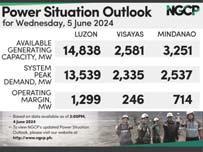
Court orders Calata officers to pay fines
THE officers of delisted company Calata Cor p. have been sentenced to pay fines amounting to P8 million for making misleading and exaggerated statements about its supposed Mactan Leisure City project, which induced the public to buy the company’s shares in 2016.
Philcement, Anflo Group seal deal
PHILCEMENT Cor p., a unit of Phinma Corp., on Tuesday said it signed a joint venture agreement with the Floirendo-led Anflo Group management and investment company ANFLOCOR to build a modern cement manufacturing plant in Davao del Norte.
The partnership of the two groups w ill g uarantee the availability of quality cement to support the development of Mindanao, the company said.
Phinma and Anflo Group have been present in the Davao region since the 1960s and 1950s, respectively.
T he Davao Inter national Container Ter minal Inc., operator of Mindanao’s modern port terminal and part of the Anflo Group, is also
a party to these agreements, the company said.
Philcement Mindanao Cor p., a 70-percent owned subsidiar y of Philcement, will run the facility. Anflocor owns the remaining 30 percent of Philcement Mindanao.
“Const ru ct i on mate ri als a r e among the many essentials needed to a dignified life through housing and inf rastruct ure. T his pa r tnership, which is one of many with the Anflo Group, will enable us to improve the lives of many Mindanaoans,” Phi nma Const ruct ion Mate ri als Group President and CEO Eduardo A. Sahagun said.
“We at ANFLOCOR are excited about this partnership as we anticipate continued growth in Mindanao which will require good quality ce-
Kaspersky: AI powers
By Lorenz S. Marasigan @lorenzmarasigan
CYBE R SECU R ITY f ir m Kaspe r sky on Tuesday u nve i led its latest flags hi p p r od u ct l i ne, Kaspe r sky Next, w hi c h comb i nes endpo i nt p r otect ion w it h t he advanced capabi l it ies of Endpoi nt Detect ion and R esponse (ED R ) and Extended Detect ion and R esponse ( X DR ). Accord i ng to Kaspe r sky Sout h -
east As i a Systems Eng i nee ri ng Head V ictor C hu , Kaspe r sky Next
a i ms to “redu ce attack s ur faces”
among b u s i nesses, c i t i ng data
t h at s howed t he Phi l i pp i nes bei ng a ta r get of bad actor s. T he countr y recorded 163,279 financial phishing attempts, according to Kaspersky data, making it the highest in the region. Furthermore, in the same year, there were about 1.5 million local threats, 4.62 million brute force attacks, and 15,312 blocked ransomware attacks targeting Filipino businesses.
“Today, t here a re so many types of attack s ur faces t h at ex i st and ri se,” C hu sa i d at a p ress b rief i ng on Tu esday.
He sa i d attacks h ave become more “sophi st icated” and a re now
attack
ta
In a decision promulgated on May 28, Branch 148 of the Makati City Regional Trial Court found Joseph H. Calata, the company’s chairman, president and CEO, guilty of two counts of violation of the Securities Regulation Code. Jose Marie Fabella, Calata’s cor porate secretar y, compliance officer and cor porate information officer, was also found guilty of two counts of violation of the same law. Calata and Fabella were sentenced to pay fines amounting to P4 million each, or to ser ve time in prison should they fail to pay the fines on account of insolvency. Meanwhile, the case lodged against Michael I. Foxman, CEO of Sino-America Gaming Investment Group LLC, Calata’s partner for the Mactan Leisure City project, was archived. He was charged with the same violations, but remained at large. The decision follows a case buildup from the Securities and Exchange Commission, which started monitoring the market activ ities of Calata Cor p. amid a sudden surge in the daily trading volume of the company’s
shares on the Philippine Stock Exchange on August 23, 2016. Fabella, with the consent and authority of Calata, was found to have made misleading statements in the company’s disclosures to the PSE about its par tnership w it h Sino-America Gaming and Macau Resources Group L i m ited for t he development of a $1.4-billion integrated resort and casino project called Mactan Leisure City. In the disclosure, Calata said the Mactan Leisure City was expected to start operations in 2020 and was “poised to become a game changer in the region’s family leisure tourism and gaming offering.” It was expected to generate a gross annual revenue of P55.74 billion. Trading volume in Calata shares surged by 2,455 percent on the same day the subject disclosures were made, followed by a 196.41-percent jump in the next trading day.
“The August 23 2016 disclosure contained unfounded promises and exaggerations,” the court said, adding that such statements “are not clearly referred to as mere forecasts and are couched and exaggerated to such extent that the public may be misled in thinking that the project would start its operations in 2020, generate a certain amount of revenue and entail job opportunities”.
Continued B
ment. Partnering with a like-minded group that has a ver y extensive track record in this space and whose core value is improving the lives of the communities they operate in, was something ver y important for us,” ANFLOCOR Real Estate and Construction Group President and Philcement Mindanao Vice Chairman Ricardo F. Lagdameo said.
The multibillion-peso facility is expected to be operational by 2026 with a production capacity of two million metric tons per year, allowing Philcement to better cater to customers of its legacy brand Union Cement by ensuring steady, reliable supply. Philcement, 60-percent owned by Phinma, currently operates a cement processing facility in the Freeport Area of Bataan in Mariveles. VG Cabuag
new cybersecurity solution
h a rdwa re, softwa re, and even hu mans t h at fa i l to p r act i ce good cybe r hyg iene. T hu s, Kaspe r sky developed Kaspe r sky Next, w hi c h offe r s a “ta i lored app roac h ” to meet va r yi ng b u s i ness needs and IT i nf r ast ru ct ure complex it ies. Kaspe r sky Next i s des i gned to cate r to b u s i nesses of all s i zes and i ndu st ri es, p r ov i d i ng comp re hens i ve endpo i nt p rotect ion powe red by AI. It i nteg r ates ED R and X D R capab i l it i es, offe ri ng total v i si b i l ity, cont r ol, r ap i d r esponse, and p r oact i ve t hr eat hu nt i ng. Deployment opt ions a re flex i ble, s u ppor t i ng bot h clou d and onp rem i se i nstallat ions, and management i s st reaml i ned t hrou g h e it he r a u se r -f riendly or an ente rp ri se-g r ade console. Key feat ures of Kaspersky Next i nclu de automat ion capab i l it ies l i ke clo u d mon i to ri ng, v u lne rab i l ity and patc h management, and IoC scann i ng. T hese feat ures help redu ce t he b urden on cybe rsec uri ty teams by m i n i m i z i ng rout i ne tasks, allow i ng for more eff i c ient detect ion and remed i at ion of t hreats. Kaspe r sky Next i s ava i lable i n t hr ee p r od u ct t i e r s: Kaspe r sky Next EDR Fou ndat ions; Kaspe r -
offe r s endpo i nt p rotect ion w it h flex i ble sec urity cont rols and IT scena ri os fo r h ands-off ope r at ion, i deal for compan ies w he re IT depa r tments h andle i nfor mat ion sec urity. ED R Opt i m u m, meanw hi le, p r ov i des endpo i nt p r otect i on w it h essent i al EDR f u nct ional ity, advanced cont rols, patc h management, and cloud sec urity. T hi s t ier i s s uited for bu s i nesses w it h small i nfor mat ion sec urity teams. Lastly, X DR Expe r t agg regates and analyzes data f rom va riou s sources w it hi n an or gan i zat ion’s
IT i nf r ast ru ct ure, p rov i d i ng real-t i me v i s i b i l ity and advanced t hreat detect ion. It i s des i gned for compan ies w it h expe rienced cybe r sec urity teams or Sec urity Ope r at ions Cente r s. “T he t rends obse r ved i n t he Phi l i pp i nes reflect a conce r n i ng escalat ion i n cybe r t hreats ta rget i ng local b u s i nesses. W it h t he i nt rodu ct ion of Kaspe r sky Next, o ur new l i ne of cybe r sec uri ty p rodu cts, we a re en h anc i ng our defenses w it h r ob u st endpo i nt p rotect ion powe red by AI capab i l it ies to
u m; and
Fou ndat ions
of
Leng
pri se for Sout heast Asi a at Kaspersky, sa id.

r om i
ns
i ng f
h was considered as i nterest i ncome. T he sc heme was per pet u ated t hrough t he issu ance of postdated c hecks reflect i ng a 1-percent to 1.5-percent mont h ly interest to interested i nvestors, who were g iven eit her a prom i ssor y note or borrowerlender ag reement, as proof of t heir i nvestment. Prior to the issuance of the freeze and bank inquir y orders, the SEC filed a criminal complaint against MFT Group and Foundr y Ventures for its u naut hori zed i nvestment scheme, as well as misrepresentations in the groups’ financial statements. The SEC also made permanent a cease
desist order against MFT
its officers
directors,
them
stop all
to the illegal solicitation of
from the public. BusinessMirror
p p
sed g u a
ret ur
rang
rom
and
Group and
and
enjoining
to
activities related
investments
B1 Wednesday, June 5, 2024
Companies
ls,
sky Next
sky Next
sky Next
r get i ng ot h e r
vecto r s, s u c h as ema i
ED R Opt i m
Kaspe r
X DR Expe r t. Kaspe r
st
it
ve
ty sol u t
e qui p compan ies of all si zes and i ndu
ries w
h t he most advanced and effect i
cybe r sec uri
i ons ava i lable,” La i
C how, Head
Enter
Losing is never an option

Fmatter how small. Therefore, losing is never an option, perspectivewise. W hat are the different ways of winning for the team?
Lift the lid IN order to achieve victor y, always lift your team’s lid-level. Train them not only on the essential skills required to succeed, but also on areas where they can further excel in their fields. According to Anton Chekhov, “Wisdom comes not from age but from education and learning.” By continuously lifting lids, your team will be able to adapt and prepare for the continuously shifting business landscapes, hence the team will be in a better position to clinch victories.
Set the team up for small victories WHILE ever yone aspires for huge victories, it is worth noting that these usually take time, and tons of efforts and sacrifice. In such journeys, there are times when team members tend to give up long before success is achieved. On the other hand, setting up the team for small wins will provide the much-needed motivation for team members to continually move for ward. These small wins may ser ve as milestones for the team. And achieving such milestones reminds team members that they are indeed moving forward, and that the goal is in fact a realistic one.
Recognize improvements
NO matter what the outcome is, always point towards the improvements made by the team. Were they better now than they were prev iously? Or are t here t hings and skills that they currently pos-
sess that were not there before?
Recognize the improvements and advancements made by your team.
This means that they are now poised to achieve bigger wins in the days to come.
Learn from the experience
THE only time that you really lose is when you and your team failed to learn from the experience. W hat caused it? W hat prevented the victory? And what can you do next time to facilitate a win? Ever yone loses once in a while, and sometimes, we even lose a lot of times. But what truly separates winners from losers is this—winners learn from the experience. As John Maxwell said, “Sometimes you w in, sometimes you learn.”
The battle is just part of the war MILITARY generals look at victories and defeats quite differently. The battle may have been lost. But the war is far from over For what it’s worth, know that it’s not yet the end of the game. Always look at the bigger picture and consider the fact that where you and your team are today is but a smaller contributor y event to where you will be in the future.
Once you develop these mindsets towards victor y, then losing will never be an option anymore. And that defines a successful sales leader
Alexey Rola Cajilig is the President of ARCWAY Consultancy Inc., Executive Director of ARC DOCENDI, and Senior Vice President & Chief Operations Officer of EM-CORE DOTNET Inc. He is a Sales Leadership Coach, Strategic Sales Operations Consultant, Christian Motivational Speaker, Human Ecologist and Author of The effective Seller. He is also the creator of ARCH Styles, a behavioral and personality assessment tool. If you have questions and suggestions, you may send an e-mail to alexey.cajilig@gmail.com.
A Fil-Canadian businessman’s waste-to-energy idea thrives
By Joel C. Paredes
FIFTY years ago, the late businessman banker Jesus Jayme Sr. was forced to migrate to Canada to escape persecution after his familycontrolled Provident Savings Bank was placed under receivership by the Central Bank after martial law was declared in 1972.
His eldest son, Jesus Jayme Jr or JJ, however, decided to return to Manila in 1988, amid the euphoria under the Corazon Aquino administration.
At f irst, he wanted to know the truth behind his father’s persecution, know ing how Jesus Jayme Sr was respected in the bank ing industr y since he star ted the f irst credit card system in the Phi lippines. “At home, there was really no discussion of his work and anything like that. We were shielded from business,” he said.
By that time, his late uncle, Vicente “Ting” Jayme, had already become part of Aquino Cabinet as finance secretar y. But on the day that he arrived in Manila, the younger Jayme noticed the piles of garbage being dumped along the capital’s major thoroughfares. It turned out that the garbage truck drivers were on strike. “I immediately saw that as an opportunity to help solve the garbage problem,” he said.
After a brief stay in the city he was introduced by an old family friend, Paul Choy, to Rodney Johnston, a real estate developer in Bellingham, Washington, The latter was interested in propagating his new waste technology known as the thermal
TO advance renewable energy initiatives in the Davao Region, the Department of Science and Technology XI recently visited two pivotal community-based renewable energy sites in Palawan.

The activity is part of the “Microgridter prises in Geographically Isolated and Disadvantaged Areas (GIDA) through Community Empowerment through Science and Technology (CEST)” project which aims to enhance knowledge and strategies for implementing sustainable energy solutions that will significantly benefit local communities in the Region.
DOST X I Assistant Regional Director Ms. Mirasol Domingo, highlighted the importance of benchmarking visits from successful projects and incorporating best practices into the Agency’s initiatives.
“T he knowledge ga i ned f rom these visits is invaluable as the project is in the early phase of developing renewable energy technologies. Learning from successful projects like those in Palawan will help implement effective and sustainable renewable energy solutions in the target communities,” she added.
T he f irst site v isited was t he New Ibajay Multipur pose Cooperative (NIMC) in El Nido, Palawan. In 2018, Ener vinci Philippines, Inc. and CEnAG Solar, Inc. launched a hybrid solar power plant to provide energy access to households in Barangay New Ibajay. The NIMC manages the daily operations, power distribution, and monthly collections. Discussions covered the cooperative’s establish-
oxidation process system - through EnEco System L i nk, w hic h was founded in 1977.
W hen JJ, then already a Canadian citizen, and another businessman, R os D ickenson, pa r tnered w ith Johnston, EnEco was handling the garbage disposal system in the Canadian Armed Forces. “They went all over the world, and they found that our technology was the safest and most env ironment f riendly,” he said.
JJ concentrated on the Philippines after being tapped to handle Asia. But it took him another 10 years to finally break into the Philippines since all the garbage collection then was all concentrated in dumpsites.
“I was also dealing with many LGUs that wanted a plant, but because of corruption I could not participate,” he said.
Pioneering effort LATER he was introduced to the Philippine Export Zone Authority which was looking for a waste-to energy component for its waste disposal system.
As tec hnology pa r tner, EnEco TOPS Philippines partnered with the Canada-based Aquilini Renewable Energy Inc, to build the first “waste to energy” plant using thermal oxida-

tion process at the PEZA Cebu Light Industrial Park. The first generation technology can create all renewable power, hot water, air-conditioning and stream.
The Cebu plant was one of the pioneering efforts to introduce waste to energy treatment for garbage disposal. It took them five years to build the plant, but before it could start operating EnEco had a falling out with the Canadian company, forcing EnEco to abandon management of the plant.
Dedicated tech provider BY the end of June this year JJ said t hey w i ll be complet ing anot her waste treatment plant with PEZA as main partner this time at the Mactan Economic Zone in LapuLapu City. The new plant—a fully integrated waste treatment and disposal facility—using EnEco’s second generation” technology was “smaller, but more affordable.”
Another partnership with PEZA is the plant which they are starting to build at the Cavite Export Processing Zone.
“It’s an urgent ser vice needed by PEZA for the locators because without a dedicated technology provider for waste they cannot get an environment ISO,” he said.
“We studied the waste in Asia and it is wet waste which is ver y difficult if we use incinerators for the type of waste we have here in the Philippines,” he said.
He said they have given exclusive rights to a local company to sell smaller t her mal ox idat ion u n its which can accommodate about two tons of garbage daily.
Despite the tedious process in t heir pioneering effor ts, JJ sa id that he is conf ident that waste-to energy” treatment plants are sti ll the alter native solution to the countr y’s g row ing problem w ith waste generation.
He noted that after China and Indonesia, the Philippines ranked as the world’s third biggest polluter, with 2.7 million tons of plastic waste generated yearly.
“The LGUs are now finally starting to listen. Hospitals are lining up to buy a unit,” he said.

ment, governance, financial procedures, best practices, and challenges encountered.
The second visit was to the Sabang Renewable Energy Corporation (SREC) in Puerto Princesa. SREC operates the first government-approved hybrid power plant in the area, reducing diesel consumption and generating savings on rural electrification. Engr Francis Glenn Ramos, the Plant Manager presented i nfor mat ion about the solar power plant initiatives in Barangay Cabayugan, which serves over 600 households.
Engr R amos highlighted the importance of sustainability and regulatory compliance which are essential for project monitoring and ensuring continuous, reliable energy ser vices. “Certifications and compliance measures are vital for guaranteeing the effective and efficient deliver y of ser vices to the community,” R amos said.
Microgrids, which are localized power grids that can operate
Editor:
Vitug Wednesday, June 5, 2024 B3
BusinessMirror www.businessmirror.com.ph
Vittorio V.
Entrepreneur
OR sales leaders, winning is always the goal. After all, the best way to inspire people is
give them a taste
victor
to
of
y—no
independently or in conjunction with the main electrical grid, play a crucial role in providing reliable energy to re-
areas. These systems integrate various renewable energy sources, such as solar and wind, to enhance energy access and sustainability.
Microgridter prises in GIDA through the CEST
incor-
environmentally friendly
convert raw agricul-
produce into bioproducts. The visit to Palawan’s successful renewable energy projects is expected to greatly benefit DOST Davao’s efforts
implement similar solutions in the Region. Vener Zygmond Rebuelta, DOST-XI DTI, Calabarzon LGUs to mount ‘Kalakal Calabarzon’ showcasing MSME products THE Department of Trade and Industr y Region 4-A, in cooperation with the DTI Provincial Offices of Cavite, Laguna, Batangas, Rizal, and Quezon, will be mounting its 11th Kalakal Calabarzon: Gawa at Galing ng CALABARZON at the Palm Drive Activity Center, Glorietta 2, Ayala Center, Makati City on 12-16 June 2024. An annu al reg ional t rade fa ir that star ted in 2014, Kalakal w i ll once again ser ve as a venue for the 50 Calabarzon micro, small, and med ium enter prises (MSMEs) to showcase and sell their products through sponsored mall arrangements and pa r tne r s hi ps. T hese MSMEs have been benef iciaries of the DTI prog rams under the SME Development Div ision such as One Town, One Product (OTOP) NextGen, Shared Ser v ice Facilities (SSF), Kapatid Mentor ME (KMME), and Comprehensive Ag ra ri an Refor m Program (CARP). T he said programs helped them in improv ing the quality, design, and packag ing of their products, whic h i nclude organ ic produce, g reen and eco-f riendly products, Halal-ce r t i f ied goods, cond iments, g ifts, housewares and decor fashion wearables, health and wellness products, and processed food and beverages. “Through this collaborative effort with our MSMEs, we want to showcase what the Calabarzon region can offer in terms of delicious food and quality non-food products. We encourage the public to come and visit our fair Let us support our local businesses. Buy local; love local,” said DTI Regional Director Marissa C. Argente.
energy
development JAYME JR.
mote
The
project aims to foster inclusive development by
porating
practices that
tural
to
DOST Davao explores renewable
sites in Palawan for microgrid
Editor: Dennis D. Estopace
BOC 5-month revenue take hits ₧381.3B, 40.6% of goal
WBy Reine Juvierre S. Alberto
ITH the slashing of the national government’s revenue targets for this year, the Bureau of Customs (BOC) has collected P381.347 billion from January to May or equivalent to 40.58 percent of its P939.7billion revenue target for the year.
The BOC said on Tuesday that it collected P381.347 billion from customs operations, exceeding its P366.047-billion target set for the first five months of the year The five-month revenue collection is higher by 6.13 percent, or P22.039 billion, than the P359.308 billion recorded in the same period a year ago. For the month of May alone, the BOC collected P81.753 billion, also sur passing its collection target of P79.621 billion by 2.68 percent, or P2.132 billion, based on its preliminar y reports.
The BOC’s May collection also grew by 4.911 percent, or P3.827 billion, compared to the P77.926 billion posted in the same month in 2023
Since Januar y this year the bu-
reau has consistently exceeded its monthly target collections.
The BOC credited its sustained revenue collection performance to its continuous monitoring of the values and classifications of imported commodities to ensure accurate duty and tax collection.
The agency also pinned non-traditional sources, such as audits and public auctions, to its revenue collection as well as intensified border control and improved trade facilitation. Aside from increasing its tax collection, the BOC added these efforts also deterred smuggling and illegal activities.
Rubio cites BOC personnel CUSTOMS Commissioner Bienvenido Y. Rubio attributed its collection

Why many Filipinos travel to Japan
TTokyo, Japan as a family reunion and at the same time to celebrate my birthday. According to the latest sur vey of statista.com, the number one destination of Filipinos between Januar y and Februar y 2024 is Japan at 48.9 percent followed by New Zealand at 10.7 percent (a far second) and South Korea at 10.2 percent.
Google Flights shows that the most searched destination from June to August 2023 is Tokyo, Japan followed by Singapore and at third is Bangkok, Thailand. And in Japan the most popular destinations are Tokyo topping the list, followed by Osaka and Kyoto.

Quarterly Fiscal Program approved on May 23 Earlier Finance Secretar y R alph G. Recto stressed that revenue collection of the two main tax collecting agencies is “on target,” adding that there is no need for a downward revision of collection targets.
Govt sells ₧30B in reissued 20-year debt papers
THE national government s u ccessf u lly bo rr owed P30 billion from the domestic market through the sale of reissued 20-year debt papers on the back of easing average auction yields. The Bureau of the Treasur y (BTr) has sold P30 billion in Treasur y bonds (T-bonds) in an auction on Tuesday, With a remaining life of seven years and one month to maturity,
the debt papers’ average y ield settled at 6.624 percent. This is lower than the 7.058 percent average yield of the 7-year T-bond auction last April 30, and similar to the comparable PHP BVAL yield at 6.62 percent as of June 3 Data f r om t h e Tr eas ur y showed that offers made by investors for the yield ranged from a low of 6.515 percent to a high of 6.649 percent.

The auction was 2 times oversubscribed than the total offering of P30 billion, with total bids reaching P57.1 billion, according to the Treasur y.
“With its decision, the committee raised the full program of P30.0 billion, bringing the total outstanding volume for the series to P313 3 billion,” the Treasur y said.
Ri zal Commercial Bank ing Cor p. (RCBC) Chief Economist Michael L. Ricafort said the T-bond auction yield is lower after the less hawkish signals reiterated by local monetar y authorities recently on possible local policy rate cuts as early as August this year ahead of the United States Federal Reser ve. As global crude oil prices declined to
‘PHL
new lows in nearly four months, Ricafort said this could help ease inflation, which is currently at 3.8 percent, towards the Bangko Sentral ng Pilipinas’ (BSP) targets to help justify the anticipated rate cuts this year and in 2025.
However, Ricafort added that the US dollar/peso exchange rate at P58.70 could lead to higher importation costs and some uptick in headline inflation, which could offset the upcoming rate cuts.
Last month, the government raised only P94.245 billion from the tender of T-bonds.
For the month of June, the state will borrow P180 billion through the auction of T-bonds ever y Tuesday. Reine Juvierre Alberto
industry
8.1%’
W hy is Japan a favorite tourist destination? Personally, my reasons to go to Japan is it is safer like Singapore, for tourists to visit. We already w itnessed and even encountered pickpocket incidents in other countries such as in Europe where one of the members of our family was sandwiched between the pickpockets who asked for his wallet and cellphone while we were walking. They did not know we were at the back and when we saw it, my daughter immediately shouted to them to back off. They released him, but the thieves were still inside the coffee shop where we were.
W hen I saw them again walking towards the door, I shouted “pickpocket”. We reported them to a policeman (they were still there when the policeman came to talk to us), but sadly the cops said they cannot apprehend the thieves since no item was taken from us. But I understand they already knew who these people are. If an item was actually taken from tourists, police can just put these people behind bars, but they will eventually be released after 4 days if there are no court cases. And if you are a tourist why bother filing a case when your time in their countr y is so limited? In another country in Europe, we were behind a man who was in business suit. These gypsies who were famous in snatching wallets and cellphones suddenly placed their hands inside the pocket of the suit the man is wearing. It is a good thing that the would-be victim was able to secure his wallet and drove away the gypsies (who were in their teens). Later I went inside a famous boutique scouring their dresses displayed on the racks, when a pregnant woman kept following me. The guard of the store then approached her and she went away. You would not suspect she is a pickpocket because she was pregnant. Japan is not only safer but it is
also near the Philippines, has a rich culture and histor y and of course, the shopping experience (you are assured there are no fake items there) and the food (authentic and unique) make it an attractive destination. We had been in Osaka and Kyoto before but travelling to Japan makes you want to go back again and again. The people are so polite and not boisterous or loud and disciplined. I love their toilets particularly the toilet bowls which are renowned for their state-of-the-art features. Their toilet seats are heated, with air deodorizers, bidet functions on the toilet itself not in a separate bidet faucet, sound effects for privacy, automatic lid opening and closing, unique flushing and seat lifting and the design intended to be energy-efficient. And mind you this kind of toilet is found in all commercial establishments I visited, whether big or small. All the restrooms or toilets were sparkling clean. And I am so impressed. The culture of Japan of being neat had been ingrained in my mind. Years ago, when we were in a coffee shop, we saw the manager herself pick a teeny-weeny piece of paper on the floor This stuck in my brain that even when there is just a tiny piece of paper on the floor I remember that manager, and I instinctively pick up it up (of course I cannot do that when I don’t have the time to do so) but I want to do it if I can wherever I am, believing that if we have to influence others with a culture we so admire we should start with ourselves. In short, travelling exposed us to different countries with their different cultures. We can bring that part of culture which we admire to our countr y (if it is possible), and start a silent osmosis of a change for the good of all. A lighted candle can either harm by causing a fire but one lighted candle can also illuminate the life of a person and of a countr y as a whole if used properly. Be that kind of candle that illuminates.
The author is the 2024 Chair of FINEX Ethics Committee, Managing Partner of Inventor, Miranda
ion, whic h t he repor t noted as “becom i ng less i mpressive.” Inc reas i ng pola ri zat ion and i nequ al ity t hreaten to u nder m i ne t he social fabric and how
and i mp r oved f i nanc
BusinessMirror Wednesday, June 5, 2024
B4 www.news.businessmirror@gmail.com Banking&Finance
performance to the efforts of the BOC personnel i n i mplement i ng strategies and measures to ensure efficient revenue collection. “Guided by President Ferd inand R Ma rcos, Jr., t he BOC rema i ns steadfast i n its comm itment of en h anc i ng r even u e collect i on and cont ribut i ng to t he econom ic g rowt h of t he cou nt r y. We a re p rou d of t hi s ac hievement and w i ll cont i nue to work t irelessly to ma i nta i n t hi s pos it i ve moment u m,” Rubio sa id. T he Cabinet-level Development Budget Coord i nat ion Comm ittee
cut the BOC
Bureau
this
l-
ion,
ing” target of
he
target collection for 2024 was rev i sed downwa rd to
tri llion from
tri llion,
(DBCC) has
and
of Inter nal Revenue’s (BIR) revenue targets for
year to P3.788 tri
l
down by 5.6 percent, f rom the “challeng
P4.014 tri llion. T
BIR’s
P2.848
P3.055
according to the DBCC’s 2024
digital deposit account for OFWs
insurance
annual growth at
LandBank unveils
T
to grow by 8.1 percent per annum for the next decade, according to the latest Allianz Global Insurance Repor t. T he cou nt r y’s i nsurance ma rket’s income from premiums rose by 7.2 percent to EUR7.1 bi ll ion (some P433.84 bi ll ion) i n 2023 w it h bot h l i fe and proper ty and casu alty (P& C) cont ribut i ng to t his development. L i fe prem iu ms i ncome bou nced back and rose by 5.1 percent i n 2023 whi le P& C prem iu ms g rew by 12.7 percent, its second yea r of doubled ig it g rowt h i n a row, accord i ng to t he repor t. “For t he next decade, we expect t he Phi l ippi ne ma rket to cont i nue its robu st development, clock i ng g rowt h of 8.1 percent p.a. [per annu m],” t he repor t read. All i anz P NB L i fe Pr es i dent and CEO Joe G r oss sa i d t h e l i fe i ns urance i nd u st r y’s cont i n u o u s g r owt h i s d u e
t h e
i al l i te r acy among F i l i p i nos. Accord i ng to t he Insurance Comm ission (IC), l i fe and non-l i fe i nsurance compan ies and mut u al benef it assoc i at ions collected P389.614 bi ll ion i n prem iu ms i n 2023, higher by 2. 36 percent t h an t he P380.644 bi ll ion i n 2022. T he net i ncome of t he Phi l ippi ne i nsurance i ndu st r y reac hed P48.465 bi ll ion i n 2023, up by 3.80 percent f rom P46.693 bi ll ion i n 2022. Insurance, as a sh a re of t he cou nt r y’s GDP, is at 1.60 percent i n 2023 T h e global i ns ur ance ma r ket, meanwhi le, is projected to g row by an annu al rate of 5.5 percent over t he next decade w it h t he exact same rate as t he global GDP compared to t he prev ious decades when insurance g rowt h t ra i led behi nd econom ic g rowt h “In all, t he global prem iu m is set to i nc rease by almost EUR 1 t ri ll ion,” t he repor t read. Global prem iu m i ncome went up by 21.5 percent or EU R 1.1 t ri ll ion over t he last t hree yea rs seen aga i nst t he backd rop of high i nflat
to nav igate t hese c h allenges, ma i nta i n i ng its soc i al relevance as a force for equ al ity and i nclu siv ity w i ll be t he cent ral task of t he i nsurance i ndu st r y i n t he com i ng yea rs, t he repor t noted. T he local insurance industr y posted a net i ncome of P14.287 bi ll ion f rom Januar y to March, expanding by 44.98 percent f rom P9.855 bi ll ion recorded a yea r ago. Total prem iu ms reac hed P108.529 bi ll ion i n t he f irst qu a r ter Reine Juvierre Alberto
VERSEAS Filipinos can now open a digital deposit account to send and receive money as well as perform e-commerce transactions through the state-run Land Bank of the Philippines’ (LandBank) GoBayani In a statement, LandBank sa id on Tuesday it is launching its new GoBayani savings account to empower overseas Filipino workers (OFWs) and Filipinos abroad with “secure and reliable” banking ser vices. GoBayani is a digital deposit account that provides overseas Filipinos access to LandBank’s digital banking ser vices, such as sending money to their families through fund transfer, e-commerce transactions and receive remittance via Visa Direct. LandBank said account holders can also pay their bills and other dues online, which will soon include monthly contributions to Pag-Ibig Fund, Social Security System (SSS) and PhilHealth “We are cheering on our kababayans abroad to save and grow their money through LandBank GoBayani We want to support ever y step of their journey towards financial independence for them and their families back home,” LandBank President and CEO Lynette V. Ortiz said in a statement. Acco r d i ng to LandBank, t h e GoBayani sav ings account requires no i n it i al depos it and ma i nta i ning balance, which can be opened by overseas Fi lipinos through their smar tphones v ia the bank’s mobi le bank ing application. LandBank said it is set to v isit overseas Filipinos in the United Arab Emirates, Japan, Hong Kong and Taiwan in June to promote its GoBayani and its other digital banking ser vices. Bank customers can also open a LandBank PISO Plus basic deposit account and a regular LandBank Visa debit account through the application to build their savings, LandBank added. “Investing in our digital infrastructure forms part of our response to the increasing demand for convenient digital solutions. We are continuously enhancing our digital offerings to deliver a seamless banking experience to our customers and expand financial access to all,” Ortiz said. The LandBank Mobile Banking App is a free application offering online fund transfers, bills payment, balance inquir y and salar y loan ser vices. Reine Juvierre Alberto
HE Phi l i pp i ne i ns urance i ndustr y is poised
to
i nc r ease i n i ns ur ance penet r at i on, p r od u ct c u stom i zat i on, d i g i tal t r ansfo r mat i on
O
HE recent trip we had just this May 2024 as a family was in
& Associates, CPAs, Member - Board of Directors Member of KPS Outsourcing Inc. The views expressed herein do not necessarily reflect the opinion
these institutions.
of
FINEX FREE ENTERPRISE
BUSINESSMIRROR FILE PHOTO
Wilma Inventor-Miranda
Fostering healthy competition within your team

 Editor: Gerard S. Ramos
WHEN TOO MUCH BURPING CAN BE A SIGN OF A PROBLEM THERE are two things that humans must be able to do right after being born. Crying, of course—and the other one? Burping. All of us in this world have been coaxed or massaged into letting out gas in our first few months on earth. And even when we’re all grown up, this bodily release (that usually comes with a distinct sound for each person) still offers the same comfort and satisfaction, especially after having a lip-smacking meal or drinking a refreshing can of soda. Burping, no matter how others see it as embarrassing in social settings, can be good for us—but only when it’s not too much.
For Carlo M. Cornejo, MD, section chief of gastroenterology of the top hospital in the Philippines Makati Medical Center (MakatiMed, www.makatimed.net.ph), understanding when burping becomes excessive is crucial in maintaining digestive health. “The average person burps around three to six times after eating or drinking. You might burp more frequently after drinking carbonated beverages like sodas but overall, that’s a pretty healthy range,” explains Cornejo. Simple excess burping should be resolved by eating and drinking more slowly and avoiding carbonated drinks and certain foods like hard candy. “Eating and drinking too quickly and sucking on hard candy causes you to swallow more air than normal. Dropping these habits should reduce belching significantly,” adds Cornejo.
MakatiMed, however, points out that burping combined with other symptoms can be a cause for concern. For instance, excess belching that comes with an uncomfortable burning sensation in your chest could be a sign of gastroesophageal reflux disease, more commonly known as GERD. “GERD happens when the acidic contents of your stomach, known as reflux, move up into your esophagus. Reflux itself causes the urge to burp,” says Cornejo. “If you have GERD, you can take antacids to relieve the symptoms or avoid acidic foods and drinks like anything fried and cheesy as well as sodas and alcohol.”
Diarrhea is another symptom that when combined with burping suggests a more serious underlying health issue. The two often go together in cases of food poisoning, traveler’s diarrhea, or stomach flu. “All of these can happen when you eat or drink something unclean and disruptive to your gastrointestinal system. Though these conditions are common and typically go away on their own, severe cases can be life-threatening if left unchecked,” warns Cornejo. “In this case, you may be asked to take more fluids, antibiotics, and probiotics to avoid dehydration, complications, and speed up recovery.”
On a more serious note, burping that comes with abdominal discomfort or pain, unintentional weight loss, or vomiting with or without blood can be a sign of certain types of gastrointestinal cancers like stomach, pancreatic, or esophageal cancer, with Cornejo pointing out, “Further diagnostic tests like endoscopy and CT scanning can help us accurately determine if cancer is indeed present.”
“What I’d like to emphasize is for you to pay more attention to your body. Take note of even the most mundane bodily functions like burping as they could give you a hint on what’s happening inside your body,” Cornejo.
“Excessive burping along with the alarming symptoms mentioned can be your body’s way of telling you to seek medical advice as soon as possible.”


Taking part in life-saving initiative
wrote Michael Gapen, Bank of America Global Research analyst. “However, elevated credit card delinquencies among lowerincome consumers could increase the sensitivity of these consumers to an adverse labor market shock.” AP
NEW YORK—Consumers are increasingly struggling to pay their credit card bills, raising concerns about severe delinquencies spiraling and sapping consumer spending. The share of credit card debt that’s more than 90 days overdue rose to 10.7 percent during the first quarter, a 14-year high, according to the Federal Reserve Bank of New York’s report on first-quarter household debt. A year ago severe delinquencies totaled only 8.2 percent of credit card debt. The first-quarter jump in severe delinquencies was the biggest since 2011. Meanwhile total credit card debt rose to $1.12 trillion from just under $1 trillion a year ago. Those in their 20s and 30s are having the most difficulty paying their credit card bills. Those age groups typically have a mix of less earnings power and lower savings. The Federal Reserve hiked its key interest rate rate to a 23-year high to combat four-decade high inflation, which peaked in June, 2022 at 9.1 percent. Those rate increases made borrowing more expensive on mortgages, auto loans and credit cards. Consumer spending fuels economic growth, so trouble paying credit card bills is a worrisome signal. The direction of the labor market could determine whether debt stress becomes a bigger concern. Job and wage growth helped counter the hit to consumers wallets from rising inflation, but a continued slowdown or reversal there could tip the scales. “While these indicators do not necessarily predict a recession, especially with a robust labor market, a weakening in employment conditions could exacerbate household financial instability,” said Gregory Daco, EY chief economist. “The combination of subdued job growth, sluggish income progression, and diminished savings could lead to increased delinquencies and a potential retrenchment in consumer spending.” Wall Street has so far brushed off concerns about rising credit debt levels and payment struggles, forecasting earnings growth to accelerate from 5.6 percent in the first quarter to 17.1 percent by the fourth quarter. Still, retail spending unexpectedly stalled in April in a sign of consumer fatigue and worry. Walmart, the nation’s largest retailer, has said its customers are spending more on necessities and less on discretionary goods like home furnishings and electronics. Coffee chain Starbucks lowered its sales expectations for the year as people visit its cafes less often, and McDonald’s is offering more deals as people cut back on fast food and eating out. The Fed is now faced with the prospect of inflation remaining stubbornly high around 3 percent, above its target of 2 percent. The mix of high inflation, expensive borrowing rates and a slowing economy has thrown more doubt around the central bank’s ability to tame inflation without causing a recession. Credit cards only make up about 6.5 percent of consumer debt, according to a Bank of America Global Research report. That alleviates some concerns, but the increase in delinquencies seems to be outpacing income growth and there is likely a large group of consumers who are paying their minimum balances and staying out of delinquency, but are too financially stressed to actually pay their full balances. A worsening of the economy could push those consumers into severe delinquency. “If our forecast of a benign moderation in the labor market is correct, we think consumer spending will remain resilient,”
www.businessmirror.com.ph Image
B5
BusinessMirror
PHOTO BY CAMPAIGN CREATORS ON UNSPLASH BORROWERS, ESPECIALLY THE YOUNG, STRUGGLE WITH CREDIT CARD DEBT IN POTENTIALLY BAD SIGN FOR ECONOMY



Download the Hotel101 (HBNB) App today for FREE, get a chance to

h is addition a ll o w s guests to rec h arge bot h t h eir v e h ic l es and t h e m se lv es ensuring a sea m ess and con v enient stay “ We are excited to offer this ne w amenity to our va ued guests and continue
tro v e of de l ig h tfu l f a v ors curated by Ch ef K e v in X u Q iao Yuan : Tradi t io n a l: G uests are in v ited to sa v or t h e ti m e ess c h ar m of m x ed nuts w it h h a m , red bean w it h sa l ted egg and w h ite l otus w it h sa l ted egg T h ese m oonca k es are p riced at P3 088 ++ p er bo x of si x. B o ut iq u e : T h is v ariety offers a se l ection of refined f l a v ors inc uding l o w- sugar c h estnut , ya m w it h sa l ted egg custard s p icy beef coconut and b l ac k sesa m e C rafted w it h m eticu l ous attention t h ese m oonca k es are p riced at P2 , 888 ++ p er bo x of si x. S n ow S k i n: E xp ore e x citing f a v ors suc h as p ur p e taro w it h sa l ted egg, durian , m ango p eac h , h oney p o m e o, and O o l ong tea w it h w h ite l otus , encased in de l icate sno w s k in T h ese m oonca k es are a v ai ab e at P2 888 ++ p er bo x of si x. S h a n g h ai n ese : A nod to

B6 Wednesday, June 5, 2024 PHINMA SOLAR ENERGY CORPORATION PROMOTES SUSTAINABLE SOLAR SOLUTIONS THROUGH GOLF PHINMA Sola r Ene rgy Cor por at ion ( PSEC), a subsid i a r y of Un ion Galvasteel Cor por at ion and a member of conglomerate PHINMA Cor porat ion, held its 2nd Eco-sw i ng Golf Cup at t he renowned Wack Wack Golf and Cou nt r y Club i n Mandaluyong C ity on May 3 0, 2024. Promot i ng its i nnovat ive renewable sola r roof offeri ngs u nder t he Un ion Sola r br and, PSEC brou g ht l i ke-m i nded golf ent hu si asts and advocates of clean energy for a f u n and mean i ngf u l day of f riendly compet it ion, network i ng, and educat ion about t he benef its of u si ng sola r energy. Pierr y Pau l C hu a, PSEC’s C hief Operat i ng Off i ce r , r ema r ked, “We a r e deeply g r atef u l fo r t h e s u ppo r t of o ur pa r tne r s and stake h olde r s w h o j o i ned u s i n o ur d ri ve towa r ds a s u sta i nable f u t ur e t hr o u g h r enewable ene r gy.” L i kew i se, t he pa r t ic ipants were also i nt roduced to fou ndat ion-to- roof solut ions f rom PSEC’s aff i l i ated brands Un ion Cement (cement solut ions), Un ion Galvasteel (roofi ng and metal const ruct ion solut ions), Un ion Ins u lated Panels (i nsu lated sandw ic h roof and panel i ng solut ions), and hospital ity serv ices f rom PHINMA Hospital ity’s M ic rotel c h a i n of hotels and Tr yp Hotel. “We’re exc ited to host t hi s tour nament, whic h not only showcases our latest Un ion Sola r i nnovat ions along w it h our PHINMA br ands,” sa id EJ Qu a H i ansen, PHINMA Cor p.’s C hief Fi nanc i al Off icer “T hi s event emph asi zes our ded icat ion to su sta i nabi l ity and t he Group’s st r ateg ic d irect ion towa rds One PHINMA.” PSEC President and C hief Exec ut ive Off icer Edu a rdo Sa h ag u n reiterated, PHINMA Sola r ant ic ipates a cont i nued shi ft towa rds renewable energy as a si gn i f icant solut ion to m it i gate cl i mate c h ange. Mak i ng sola r solut ions ava i lable to more Fi l ipi nos u nde rscores our ded icat ion and comm itment to PHINMA’s m i ssion to make ives bette r.”
E MO N S T RATING an unwavering co mm it m ent to sustainabi l ity and e x ce p tiona guest ser v ices T h e B e ll e v ue M ani a recent l y announced t h e l aunc h of its E-Ve h ic l e Ch arging S tation T h is estab l is h es T h e B e ll e v ue M ani a as one of t h e p ioneers a m ong M untin u p a h ote l s in p ro v iding t h is inno v ati ve and eco - friend y a m enity R ecognizing t h e gro w ing mp ortance of sustainab l e tra v e l and t h e increasing ado p tion of e ectric v e h ic l es , T h e B e ll e v ue M ani l a introduced a ne w EV c h arging station ocated at B ase m ent 2 and is a v ai l ab l e for guests staying at t h e h ote
e to prov ide exceptiona hospita l ity wh le also being mindful of our environmenta impact I ntroducing EV charging stations is a significant step in our ongoing efforts to embrace green techno ogy and support sustainab e trave l ” E c h oing t h is senti m ent M a v ic R ecio, G enera l M anager at T h e B e ll e v ue M ani l a , added , “ O ur goa l is to ead by e x a mp e in t h e h os p ita ity industry by i mp l e m enting and p ro m oting sustainab e p ractices T h e insta ll ation of t h e EV c h arging station is ust one of t h e m any initiati v es w e are underta k ing to reduce our en v iron m enta l foot p rint and en h ance t h e guest e xp erience ” T h is initiati v e is p art of T h e B e ll e v ue M ani l a’s broader co mm it m ent to sustainabi l ity, w h ic h inc udes de v e o p ing its o w n c l ean and green guide l ines for w aste m anage m ent and carbonfree o p erations T h e h ote l a l so focuses on urban far m ing energy conser v ation t h roug h t h e use of E nergy R eco v ery Venti l ators , p a p er ess p rocessing v ia t h e E- C oncierge syste m , and reducing sing l euse p l astic by using re p l enis h ab e g ass containers instead of P ET/ p l astic bott l es T h e B e ll e v ue M ani a is dedicated to reducing its carbon foot p rint and p ro m oting a greener future for t h e co mm unity The B ellevue Manila is committed to continuously improv ing and expanding its sustainabi l ity efforts By adopting eco - friend l y practices, the hote l aims to make a positi ve impact on the env ironment and offer guests a more sustainab l e and en oyab e stay For more information visit their website at http:// www thebellevuemanila com or ca ll them at + 632 8 771 8 1 8 1 The Bellevue Manila is a pioneer of E-Vehicle Charging in Muntinlupa’s Hotel Scene OK ADA Foundation, Inc. (OFI) President James Lorenzana (center-lef t) hands over a drone ammer gun to Philippine National Police (PNP) Chief PGen Rommel Francisco D. Marbil (center-right) to officia ize OFI’s donation of P10 million wor th of drone equipment to the PNP. They were joined by (L-R) OFI Admin Manager, Legal and Compliance Anggie Mendoza, PAGCOR Sr. Regulatory Officer Luisa Pimentel OFI VP for Government Relations and Non-Gaming Compliance Att y. Nelson Vic torino, PNP Execut ve Officer, Direc torate for Logistics PMGEN Mario A. Reyes, PNP Direc tor, Maritime Group PBGEN. Jonathan Cabal and PNP Southern Po ice Distric t Direc tor PBGEN. Leon Vic tor Z Rosete. Okada Foundation donates P10M worth of drone equipment to PNP I N order to h e l p p o ice forces en h ance t h eir sur v ei ll ance , coordination , and m onitoring acti v ities , Ok ada Foundation nc (O FI) recent l y turned o v er t h eir donation of P 1 0 m i ll ion w ort h of drones and a drone a mm er to t h e Ph i l i pp ine N ationa Po l ice ( P N P ) T h e donation consists of P9 966 ,14 0 w ort h of drones inc l uding a drone j a mm er according to t h e M e m orandu m of A gree m ent bet w een t h e P N P and O FI signed in F ebruary 202 4 O FI P resident , J a m es L orenzana , e xp ressed satisfaction w it h t h e co mp etion of t h e p ro j ect , adding t h at t h e ne w e q ui pm ent w ou l d p ro v ide t h e P N P w it h additiona l tec h no l ogica ca p abi l ities to u ph o l d p eace and order We k no w h o w v ita l t h e ro e of t h e P N P is to our co mm unity Ev ery day you p ut your v es on t h e l ine in t h e p erfor m ance of your duties ,” said L orenzana “ O ur society as a w h o l e o w es a big debt of gratitude to t h e bra v e m en and w o m en of t h e P N P,” L orenzana noted “I t is t h eir v igi ance a l ertness , and dedication to p eace and order t h at a ll o w s ordinary citizens to beco m e m ore p roducti v e w it h out fear for t h eir safety We w ant to assure you t h at t h e Ok ada F oundation is co mm itted to h e l p ing u p ift t h e v es and i mp ro v ing t h e w e ll being of our p o ice officers and your fa m ies t h roug h our v arious p ro j ects ,” h e added n h is s p eec h , t h e P N P c h ief G en R o mm e F rancisco M arbi l w e l co m ed t h e donation as “a m odern conce p t w e can use in addressing cri m ina e l e m ents O ur drea m is to sa v e l i v es , but t h at w ou l d on y re m ain a drea m if not for our sta k e h o ders co m ing fro m t h e [ p ri v ate ] sector,” G en M arbi said in F i l i p ino We are h a pp y t h at t h e efforts of our p o l ice m en are being recognized,” h e added “ D onations suc h as t h ese su pp ort our goa l of ensuring t h at w h ere v er you are you are safe and w e are gradua ll y m a k ing t h at co m e true T h e O FI p resident a l so ac k no wl edged PAG COR s su pp ort for t h eir foundation’s p ro j ects “for a ll o w ing us to ser v e and gi v e bac k to our co mm unities n addition L orenzana s h ared O FI’s p ans for future donations to t h e P N P. “ We are p re p aring to donate co mm unications e q ui pm ent w ort h anot h er P 1 0 m ll ion once w e h a v e deter m ined w h at k ind of a pp aratus w ou d be suitab e for your current syste m ,” said L orenzana , as w e ll as “a CBC T ( denta cone bea m co mp uted to m ogra ph y ) m ac h ine for t h e P N P denta l and ora surgery center ” N otab e p ersona ities in attendance during t h e turno v er cere m ony h e l d at t h e P N P H ead q uarters in C a mp C ra m e inc uded P N P L ogistics D irector M a j or G enera l M ario R eyes P N P M ariti m e G rou p D irector B rigadier G enera l J onat h an C aba l P N P S out h ern Po ice D istrict D irector B rigadier G enera L eon Victor R osete and PA G CORS enior R egu atory O fficer L uisa P i m ente l S TAY H a pp y at H ote l1 0 1 and m a k e your h ote l boo k ing sea m ess and e x tra re w arding T h is is o p en to a ll ne w users J ust do w n oad register and enter your detai l s to q ua ify D o w n l oad and w in a p ro m o unti l J une 30 202 4 Ten w inners w ll be c h osen on J u y 1 202 4 D o w n oad t h e H ote l1 0 1 Gl oba App no w t h roug h G oog l e P l ay or App S tore : onelink.to/ xj b 5q a MECHANICS: 1 T h is p ro m o is v a l id unti l J une 30 , 202 4 2. Partici p ants m ust be at east 1 8 years of age and a resident of t h e Ph pp ines 3. P artici p ants m ust do w n l oad and register on t h e H ote l1 0 1 Gl oba l App v ia A ndroid G oog e P ay or App e AppS tore during t h e p ro m otion p eriod co mp l ete t h e registration p rocess and in p ut t h eir m ai l ing address to recei v e one (1) entry into t h e raff e 4. T h is p ro m otion is on y a pp l icab e to ne w users H ote l1 0 1 Gl oba l reser v es t h e rig h t to v erify if a user is uni q ue based on t h eir registered fu ll na m e O n y one e m ai l can be registered p er user in t h e a pp. Winners can on l y w in once 5. E ntries w ll be auto m atica ll y recorded in t h e H ote l1 0 1 Gl oba App database T h e w inning registered p artici p ant m ust m aintain t h e registration on t h e App at l east unti l t h e dra w date to q ua ify as a v a l id entry 6. E ntries w i ll be e x tracted and raff l ed v ia rando m izer on J u y 1, 202 4 at 1 0 /F To w er 1 D oub e D ragon P l aza DD M eridian P ar k C or M aca p aga l B lv d E DSA E x tension Pasay C ity at 3pm in t h e p resence of a DTI re p resentati v e 7. Winners and P rize : 1 0 L uc k y w inners w i ll be c h osen E ac h v a idated w inner s h a ll be a w arded one (1) unit of i Ph one 1 5 1 28 G B. 8. P rizes are not transferab e and not con v ertib l e to cas h. 9. Winners w i ll be p osted in H ote l1 0 1 Gl oba l socia l m edia account Winners w ll be notified w it h in 2 4 h ours of t h e dra w, v ia p ost and / or e m ai l address p ro v ided at t h e ti m e of t h e a pp registration Winners m ust res p ond w it h in 4 8 h ours fro m ti m e t h e e m ai l ed notice is successfu ll y sent and t h e p ost m ai l is successfu ll y de v ered by H ote l1 0 1 Gl oba to c l ai m t h eir p rize Fai ure to res p ond w it h in t h is ti m efra m e w ll resu t in forfeiture w it h out need of furt h er notice , and an a l ternate w inner w ll be se ected fro m a p re - deter m ined bac k u p l ist of t w enty ( 20 ) na m es using t h e sa m e rando m ization p rocess 1 0. Winners m ay c ai m t h eir p rizes at 1 0 /F To w er 1 D oub e D ragon P aza , DD M eridian Par k , C or M aca p aga l B lv d , E DSA E x tension , Pasay C ity To c l ai m t h eir p rizes , w inners M U S T p resent t h e fo ll o w ing : A. A t east t w o v a id ( 2 ) go v ern m ent I D s (w it h address in t h e Ph i pp ines ph otogra ph and signature ) B N otification of w inners w ll be t h roug h registered m ai l/ SMS / e - m ai fro m H ote l1 0 1 Gl oba l to t h e registered contact detai l s
D
T
our journey towards a more sustainab e future,” said Patrick Chan Managing D irector at The B e ll e v ue Mani a “At The B e ll e v ue Mani l a , we stri v
5 11 I f c l ai m ing is t h roug h an aut h orized re p resentati v e , t h e re p resentati v e m ust p resent at east t w o ( 2 ) v a l id go v ern m ent I D s t h e du y signed s w orn s p ecia p o w er of attorney fro m t h e w inner at l east t w o ( 2 ) v a l id go v ern m ent I D s of t h e w inner, and officia notification ( m ai l/ SMS / e m ai l) fro m H ote l1 0 1 Gl oba l 1 2. R ede mp tion of p rizes is unti si x ty ( 60 ) days fro m t h e date of t h e res p onse to t h e e m ai ed notice of H ote l1 0 1 Gl oba l Fai ure to c ai m w it h in t h e gi v en p eriod s h a ll a ll o w H ote 1 0 1 Gl oba to forfeit t h e p rize w it h p rior a pp ro v a l of DTI 1 3. I f t h e w inner is not fro m M etro M ani l a H ote l1 0 1 Gl oba w i ll s h p t h e p arce containing t h e p rize v ia courier T h e w inner s h a ll p ro v ide t h eir m ai l ing address v ia e m ai l w it h in t h e si x ty ( 60 ) day w aiting p eriod 1 4. A ll decisions m ade by H ote l1 0 1 Gl oba l w it h t h e concurrence of DTI s h a ll be fina l and irre vocab e 1 5. A ll e mp oyees of H ote l1 0 1 Gl oba and D oub e D ragon C or p oration and its subsidiaries t h eir i mm ediate fa m i l y m e m bers , and any direct y in v o lv ed in organizing t h e P ro m otion are ine igib l e to p artici p ate H ILT O N M ani a recent l y un v ei l ed its L unar L egacy co ll ection an e xq uisite array of h and m ade m oonca kes a v ai ab l e in e l egant l y designed sets t h at p ay h o m age to t h e M id - A utu m n tradition E ac h L unar L egacy m oonca k e set is p resented in ca p ti v ating ruby red p ac k aging adorned w it h intricate go l den tri mm ings and p atterns I ns p ired by a traditiona l Ch inese cabinet t h e set unfo l ds gracefu ll y to re v ea a treasure
t h e ric h h eritage
Sh ang h ai t h is set features sa v ory p or k , red bean w it h nuts
and s p icy beef m oonca
es
h ese
oonca
es are
++ p er bo x of si x. Do -It-Y o u rse l f Se t: T h is set a ll o w s roo m for creati v ity as guests can p ersona l ize u p to t w o p ieces of t h eir m oonca k es for a uni q ue and interacti v e e xp erience T h is set is p riced at P 7 88 ++ Luxu ry H amper : F or guests see k ing t h e u l ti m ate e xp ression of l u x ury, t h is l a v is h h a mp er featuring a box of si x of eit h er Traditiona l, B outi q ue , or S no w Sk in m oonca kes is acco mp anied by a bott l e of D a m ore 1 2 Years T h is e xq uisite ense m b e is p riced at P 1 2 888 ++ F or cor p orate orders H i l ton M ani l a offers s p ecia l rates for a ll of its L unar L egacy m oonca k es , w it h t h e e x ce p tion of t h e Sh ang h ainese v arieties G uests can c h oose fro m a C or p orate B o x of t w o p riced at P888 ++ or a C or p orate B o x of four at P 1, 588 ++ F urt h er m ore , p ersona l ized bo x es can be arranged w it h a m ini m u m order of 200 units ensuring t h at eac h gift ref l ects so ph istication and consideration for t h e reci p ient T h e m oonca k es are a v ai l ab l e for sa l e fro m no w to S e p te m ber 17 t h , w it h an e x c l usi v e ear l y bird discount for orders m ade before J une 30 t h. T h ese l u x urious m oonca k es are t h e idea l gift for cor p orate c l ients , estee m ed fa m y m e m bers , and friends sy m bo izing a pp reciation and t h oug h tfu ness during t h e festi v e season For m ore infor m ation , p ease v isit H i ton M ani a s w ebsite or ca ll (+ 632 ) 7 239 77 88. Celebrate Mid-Autumn Festival with Hilton Manila’s Exquisite Lunar Legacy Mooncakes
win an iPhone 1
of
,
k
T
m
k
p riced at P988
Editor: Tet Andolong



Elevating real estate professionalism in the local market
By Rizal Raoul S. Reyes @brow n i nd io
BUYING a house is one of the biggest if not biggest decisions an individual will have to make in his or her lifetime.
The buyer should have the right tools when buying a property with their hard-earned money. Moreover, it would also be smart if you would tap a broker to guide the buyer in their choice of property.
Miguel Naval, R e / Max Philippines country manager, told the BusinessMirror in an interview that a broker can help the buyer make the right decisions. “There’s so many complications and so many technicalities that a broker would be able to navigate and in fact, even pricing your property.
If you’re using a broker, you’ll be able to price it correctly,” Naval explained.
“So even though you might be not using a broker and saving on price, maybe you’ll end up spending on unforeseen things or bracing it incorrectly which will not maximize your property as well in the opportunity,” Naval added.
Naval said some people think they will save money without engaging the services of a broker. He warns that it is not a good idea. He also dismisses the popular misconception that you have to pay a broker’s fee at once when you engage them. Nevertheless, Naval said
you can get free advice on what to buy and if your broker especially, “comes from an organization like R EMA X it will “literally serve your best interest and they’ll be able to help you navigate and understand the risk.”
Professionalizing the local market
R IGHT now, Naval and the R E / MA X team are on a mission to educate the local market on the basics of real estate transactions. A lot of the buyers are not yet aware of how the broker can help them in their transaction.
Nevertheless, the National Capital R egion scenario is quite different as the market is more exposed and aware which is more of a business to customer setup. “There is a higher level of awareness to work with brokers and professionals,” Naval said.
Generally, the local market is currently familiar with going directly to the seller or a developer because they think it is more affordable and faster to go directly to the buyer or developer. Nevertheless, there are now a vast number of options that can be


seen in the secondary or private market and it would be difficult to navigate without the guidance of the brokers
R ight now, Naval says R E / MA X awareness campaign is still in the very early stages but picking up year or year. Naval added there are still a lot of people who are still relying on the first person they find on Facebook whether licensed or not. That will change when they consult our R E / MA X professionals.”
Naval is bullish on the potential because it is an underserved market because a lot are just desperate for that service. He says R E / MA X is willing to educate the market. He adds that seeing the R E / MA X offices adds credibility of being a legitimate and professional broker.

It has experienced rapid growth in the past 16 months with the opening of 13 new franchise offices, which includes a new office in Cebu and Davao, bringing to 36 the total number of franchise offices nationwide.
Adding a feather to its cap R E / MA X Philippines recently achieved a milestone when it garnered top honors in the global R4 Convention in Las Vegas, Nevada R E/ MA X Philippines, the country’s leading franchisor of real estate brokerage services, had a stellar showing when 96 of its Brokers, Agents and Teams won awards in the recent R E / MA X R4 Convention at the Mandalay Bay in Las Vegas, Nevada, that was



SM HOTELS TO FOCUSEXPANSION IN GROWTHAREAS OUTSIDENCR
PASAY CITY, Philippines, May 31, 2024—SM Hotels and Conventions Corp. (SMHCC) is set to open 1,700 new hotel rooms in the next four years, largely in the provincial areas to serve the growing local tourism industry.
SM Hotels is adding over 1,400 hotel rooms in the growth areas of Cauayan City, Isabela; Laguna; Cebu South R oad Properties (SR P); Dasmariñas, Cavite; Laoag City; Olongapo Central and Clark, Pampanga.
Around 300 rooms will be added in Metro Manila for a combined count of 1,700 rooms for both NC R and the provinces by 2028.
As of April 24, 2024, the Department of Tourism (DOT) reported 2,010,522 million tourist arrivals in the country. It projects a baseline target of 7.7 million tourists this year.
“We are ready to support the growth in tourism as we move even closer to emerging regions to provide Filipinos and foreign travelers alike with quality accommodation,” said SMHCC Executive Vice President Peggy Angeles. “Our hotel expansion contributes to the development of local economies, further creating jobs and boosting tourism and local growth
through the increased demand for services and local products,” she added. As SM plans to extend its footprint across the country, it is poised to generate many livelihood opportunities, directly and indirectly benefiting local communities.
The development phase of new projects entails many workers for direct employment opportunities. These include architects, engineers, construction workers, and other skilled workers. Inside these developments, there are opportunities for positions in hotel and convention centers from front desk associates, and housekeeping to chefs, security officers and administrative-related positions.
For indirect employment opportunities, the SM group relies on the partnerships of local players and suppliers for food, beverages, and other goods to better serve the communities. It leads to the creation of increasing demand for local products and services, while also driving growth for MSMEs in the area.
Depending on the project’s scale, a larger scale development for direct and indirect livelihood opportunities can generate 150-200 full-time roles per project.
SM Hotels recently launched Lanson Place, Mall of Asia. This milestone further bolsters the company’s portfolio as it enters the serviced suites category.
This expands SM Hotel’s current footprint to 10 hotels and over 2,601 rooms, six conventions centers, and two trade halls with over 42,000 sqm of leasable space as of end-2023.
SM Hotels also expressed optimism in the potential growth outlook of the Meetings, Incentives, Conferences and Exhibitions (MICE) in the Philippines.
In March earlier this year, SM X Convention Center Manila was named the Philippines’ Best Convention Center in the recently concluded World MICE Awards. The recognition realizes the advocacy of SM to only uphold the highest level of quality in hosting and organizing events in its convention centers.
Sustainability advocacy
ANCHOR ED on its Seven Green Goals (7Gs), SM Hotels consciously directs its efforts to support the communities where it operates. These goals are based on the United Nations Sustainable Development Goals (UNSDG),
which cover Consumption, Diversion, Energy, Greenhouse Gas Emissions (GHG), Sustainable Tourism, Water, Diversity and Equal Opportunity.
One of SM Hotels’ recent projects— Tela Tales, teaches underserved members of its communities to convert used linens from its hotels into beautiful handwoven bags. This initiative promotes social entrepreneurship and aims to create more livelihood opportunities for the community.
This comes on top of ensuring at least 60 percent of employees in any SM Hotels property are local residents of the community. In addition, the company also prioritizes locally sourced products to have its food and beverage suppliers in support of micro-, small-, and medium-sized enterprises (MSMEs) where it operates. Wherever possible, SM Hotels partners and supports the Kabalikat sa Kabuhayan (KSK) program of SM Foundation, Inc.
“Guided by our 7Gs, SM Hotels is dedicated to uplift the communities it serves. We strive to create livelihood opportunities in the areas where we operate to strengthen local partnerships and foster inclusive economic growth,” said Ms. Angeles.
attended by over 5,000 delegates from around the world.
Leading the charge were Eddie Santos of R E / MA X R egent who ranked first in the Top 100 R esidential—Global Individual Category as well as number 4 in the Worldwide R esidential & Commercial Individual Category; Gary Hablero Team of R E / MA X Capital for coming in first in the Top 25 Team Commercial Global—Large Team Category; Gerald Evangelista Team of R E/ MA X Capital who clinched the number 2 spot in the Top 25 Team Commercial Global—Medium Team Category; and Gumersindo Camcam of R E / MA X Premier for getting the number 3 spot in the Top 100 – Commercial Global Individual Category. R E /
MA X R4 is an annual convention that serves as a major gathering of R E / MA X agents, brokers, franchise owners, and industry professionals. R E / MA X R4 also serves as a platform to recognize and celebrate the achievements of outstanding agents, teams, and brokerages within the R E / MA X network.
“We are very proud to represent the country and highlight Filipino skill and talent in this prestigious global event. The many awards won by R E / MA X Brokers and Agents from the Philippines proves that real estate professionalism is helping elevate the local property industry,” said Santos, who is also the R egion Owner of R E / MA X Philippines.
Phinma opens second high-end townhomes enclave in Davao City
By Manuel T. Cayon
DAVAO CITY—The Phinma Group opened its second townhomes residences here, after that in Alabang, to offer the high-end housing market a taste of heritage, green architecture and spacious amenities, the top-ranking executive of the company said.
R aphael B. Felix, president and chief executive officer of Phinma Properties, said its Likha R esidences Davao would be offering prospective owners the comfort of more space than a condominium unit, and an alternative to condominium living that have 3 storys.
He said each unit is designed to withstand the strong earthquakes occasionally shaking eastern Mindanao.
Architect Gelo Mañosa of the architectural firm founded by the late national artist for architecture Francisco Mañosa, said the Likha R esidences Davao units have been specifically designed after that of the Dagmay, the handwoven abaca textile pattern among the Mandaya tribe of Davao Oriental.
Mañosa said the textile pattern, that includes mud-dying of the abaca-made cloth, is not for aesthetics but has its application in ventilation of the interiors of the three-story townhome.
The company formally
launched the project at the Dhusit Thani R esidences and Hotel here on Saturday night with video presentations of Mañosa and the making of the design of the Likha R esidences and a remote viewing of its interiors and the gated community of only 94 designer townhomes at the northern suburbs only eight kilometers from downtown Davao.
Felix said it opted to go into the townhomes concept saying that it would skip for now competing with the slew of condominium constructions in the city, “which is now taking place even in the suburbs, not only in the central business district.”
He said each unit of LIkha R esidences is priced at upwards of P20 million, “not yet the luxury range but high-end which would make it affordable to a segment of the population that wants this type of comfortable living.”
The Phinma Properties had the Manila Polo Club Townhouse, Mariposa Square, and Mariposa Villas for their projects decades earlier and have residential and township projects in Bacolod and Cebu in the Visayas.
It has two projects earlier in the decade here for the middle class, the mid-rise Arezzo condominium constructed in Dona Pilar, Sasa in 2013, and the combination of townhomes and single attached units in Tugbok, northwest of downtown.
B7 usinessMirror ine Bu Wednesday, June 5, 2024
SM
It
Park Inn by
in
RE/MAX Philippines president Liz Dueńas with Marissa Garcia of RE/MAX Prestige who placed 4th in the Top 100 Residential -Global Individual category and 8th in Top 100 Residential-Worldwide Individual category. RE/MAX Philippines represent! (from left) Eddie Santos, Kerwin Yu, Jose Sehwani Gonzales and Miguel Naval.
SM Hotels officially launched its first Lanson Place property at the Mall of Asia Complex, Pasay City in April 2024.
Hotels is opening more hotels beyond NCR.
opened
Radisson
Bacolod in 2021.
 By Josef T. Ramos
vaulter
Ernest John “EJ” Obiena set the record straight on the new poles purchased by the Philippine Athletics Track and Field Association (PATAFA) headed by President Terry Capistrano. Obiena, 28, one of the 15 Filipino athletes who have so far secured slots in the Paris Olympics next month, clarified that PATAFA is acquiring two sets of poles worth $14,171 and not $35,000 as claimed by a sports marketing firm.
The Asian champion also insisted that PATAFA President Capistrano and former Olympian Ed Lasquete were the only people helping him secure the new poles. Capistrano arranged for it to be sent to Lasquete in San Jose, California and later to be flown to Europe.
“There are no such things as pricy set of poles of $35,000 as reported and claimed by one party. They are not involved with me by any means.
It’s a lie and misleading,” Obiena told BusinessMirror in an exclusive interview, sharing a digital copy of the quotation PATAFA also clarified that there’s no $35,000, according to SecretaryGeneral Jasper Tanhueco.
“The exact figures are $6,998 and $7,173, and I didn’t even have that money. The PATAFA paid it. The $35,000 amount as mentioned by the other party could have bought me the entire poles around the world,” Obiena said.
Obiena, the first Filipino to qualify for the Paris games last July after hitting the Olympic standard of 5.82 meters, thanked Capistrano and Lasquete for finding a way to resolve his broken poles.
“There are only two people who helped me find a solution to have brand new sets of two poles—and that’s Sir Terry Capistrano, the president of PATAFA, and Sir Ed Lasquete. PATAFA bought it,” Obiena added.
After winning the gold in the Los Angeles Grand Prix on May 18, Obiena and longtime Ukrainian trainer coach Vitaly Petrov returned to Italy without the poles. He only got his old poles back in Europe on May 26
Sizzling 66 puts Harmie on top Sports
HARMIE CONSTANTINO got her bid for a fourth straight title off to a strong start, firing a bogey-free six-under 66 for a one-stroke lead in the first round of the ICTSI Lakewood Championship Tuesday in Cabanatuan, Nueva Ecija.
The hottest player on the Ladies Philippine Golf Tour, Constantino birdied the last two holes to edge ahead of Chihiro Ikeda.
A former Order of Merit winner, Ikeda got to six under after a threebirdie burst from No. 14 but slipped with a bogey on the par-3 No. 17 and finished with a 67.
“The plan was to stay bogey-free,” said Constantino, whose remarkable start in the 54-hole championship


title run after winning at Palos Verdes, Caliraya Springs and the Villamor Philippine Masters.
Ikeda moved into contention with renewed confidence following a series of mediocre finishes in the first four legs of the circuit organized by Pilipinas Golf Tournaments Inc.
Ikeda’s accuracy and consistency off the tee and ball control within 100 yards produced seven birdies against two bogeys, including a three-putt miscue, putting her in the hunt for a victory in a long while.
“My driving and irons were okay although I struggled a bit with my long-range putting,” Ikeda said.
When asked of her plan for the last two rounds, the former SEA Games individual gold medalist said she will continue to try to score on the long
holes, three of which she birdied. “But I won’t force the issue, I will still play relaxed and try to shoot under-par, but there are no expectations.”
Also looking to seize the spotlight is junior golfer Jiwon Lee, whoe came up with an impressive 69, highlighted by two eagles on the front nine.
After a birdie-bogey backside start, the 16-year-old amateur looking to turn pro next month dropped a shot on the second, gained two strokes on the par-5 No. 4 then rebounded from another mishap on the fifth with another eagle on the eighth, capping her big fightback with a birdie on the ninth.


l

Obiena got his old poles back last week after it was located by physiotherapist Antonio Guglietta in Naples airport in Italy but they were damaged in transit. A pole broke on May 29 while Obiena was competing in Ostrava, Czech Republic where he finished seventh.
Disaster struck again in the Oslo Bislett Diamond Games but Obiena still gained a silver medal, clearing 5.72 meters, thanks to American gold medalist KC Lightfoot, who lent the Filipino a pole.

JWith a 33-36, the back-to-back winner of the first two legs of this year’s Junior PGT grabbed solo third, just three strokes behind for fourth, Velinda Castil matched par 72, while Marvi Monsalve stood at sixth with a 73. Sarah Ababa and Mikha Fortuna matched 74s, and Philippine Masters runner-up Gretchen Villacencio struggled with a 75 for a share of ninth with Kayla Nocum and pre-tournament favorite Princess Superal.

HYUN HO RHO
hit two birdies in the last three holes for a 66 and a one-stroke lead over Jhonnel Ababa in the first round of the ICTSI Lakewood Championship on Tuesday in Cabanatuan, Nueva Ecija.
After battling his way back from a series of challenges since his winning start in Davao last March, Jhonnel Ababa found himself leading the P2.5 million championship with a 67 in one of the early groups. However, he yielded the first-day honors to a hotho as the young Korean capped a lead-grabbing six-under card.
“I wasn’t driving straight, but I hit my irons pretty close to the pin. My chipping and putting were also good,” ho, 19, who came into this week’s event with a winning mindset after falling short of his title drive at the
recent Philippine Masters. The 2023 PGT Q -School topnotcher went on a scoring spree right from the first shot, birdying the first hole, dominating Nos. 3 and 4, then picking up more strokes on the sixth and eighth for a 32.
A pulled tee-shot on the par-3 11th led to his lone bogey on a hot windless day. However, he set up a five-foot birdie putt on the 16th and rolled in a 12-footer on the closing par-5 hole to wrest control in the tournament sponsored by ICTSI.
“The course is very wide, and there are good scoring opportunities despite the tricky greens,” R ho said. Ababa also executed his game plan to near-perfection, submitting nines of 3235. He complemented his superb driving and iron play with steady putting, finishing with eight birdies that easily negated three miscues, hardly putting a dent in his opening-round bid in the 72-hole championship.

RW“Everything is good, off the tee to the green,” said Ababa, who on the eve of the fifth leg of this year’s circuit organized by Pilipinas Golf Tournaments Inc., expressed his confidence in a strong showing on the 6,687-yard course, which he said is short by their standards.
He birdied four of the first six holes inside six feet for a frontside 32. Despite faltering with back-toback bogeys from No. 10, he quickly regrouped, rattling off three straight birdies from No. 13. He then bounced back from a misstep on the 17th with a birdie on the last.
“My confidence has also returned and everything is great,” added Ababa, whose game had been on a somewhat downhill trend following a playoff victory over Guido van der Valk in the Apo Golf Classic. He struggled to find his form at Palos Verdes, where he tied for 25th, and failed to contend at Caliraya Springs and the Philippine Masters.

ITH the support of Senator Christopher “Bong” Go, chair of the Senate Committee on Sports, nine-year-old young Logan Jasper Nunez is poised to make waves at the Pacific Grassroots Football Tournament 2024. The event is set June 7 to 9 at the GFA Training Center in Guam. Faced with numerous obstacles, Logan’s dream was on the brink of being unfulfilled until the intervention of Go. His unwavering support and the financial backing through the Philippine Sports Commission (PSC) have been instrumental in turning Logan’s dreams into achievable goals.
“Each of Logan’s efforts and successes not only symbolizes the strength and determination of the Filipino youth but also serves as a powerful reminder of our potential to excel and lead on the global stage,” Go said.
“These achievements underscore the importance of nurturing our young
OHN MA R I ALTICHE scored a 6-3, 6-3 victory over Jeric Accion in the men’s singles final of the Mayor Doc Totep Calderon National Tennis Championships recently at the Lado Del R io Resort court in Roxas, Isabela. The top-seeded Altiche eased past Aeyshaun Gomez, 4-0, 4-1, before getting past Jairo Flores, 6-0, 6-1, and Alexis Santos, 6-1, 6-1. Accion scored straight-set wins in his first two matches before beating No. 2 Alberto Villamor in a tough semifinal battle, 5-7(2), 7-6(5), 10-6. The tough match with Villamor took its toll on Accion, who succumbed to Altiche’s steady and controlled game.
Altiche’s singles victory earned

him a prize of P50,000, while Accion received P25,000.
Altiche and Villamor teamed up in the doubles, beating Ivan Manila and Bryan Oliveros, 4-6, 6-4, 10-3, in the final to bag P30,000, in the week-long event sponsored by Mayor Calderon to boost tennis in the Cagayan Valley region and enhance its competitiveness on the national stage. SMB,
darling Barangay Ginebra, en route to the coveted title clash against San Miguel Beer. I refer to Brandon Bates, the 6-foot-9 Fil-Aussie, who had courageously contained Ginebra’s workhorse Christian Standhardinger to definitely spell the difference in Meralco’s fightback from 2-3 to clinch a 4-3 series win. And, yes, did Meralco not defeat SMB on May 4 in an
talents, providing them with opportunities to grow and succeed. It’s through their triumphs that we see the future of our nation becoming brighter and more promising,” Go added.
Go played a key role in creating the National Academy of Sports (NAS) by authoring and co-sponsoring Republic Act No. 11470. Located in New Clark City in Tarlac, NAS combines secondary education with a sports-focused curriculum, offering a dual path for

85-82 upset, in the process denying the Beermen of an egoboosting 11-0 sweep of the eliminations?
So, if they’d done it before, why not a second time? “At that time, it was a must-win for us,” coach Luigi Trillo of Meralco said. “…that’s in the past. One game won’t define our series.”
SMB hasn’t played since its 4-0 semifinal sweep of R ain or Shine 11 or so days ago. And it might help Trillo’s cause if he heard SMB coach Jorge Gallent say: “I’m just scared that we might be rusty.” Pounce on that with blitzkrieg bombing? R azzmatazz attack? But back to Bates. Can he deliver the same goods he used in Meralco’s semifinal success when up against SMB’s June Mar Fajardo?
Height-wise, there’s not much of a difference as the 6-foot-10 Fajardo is just an inch taller than Bates. It is in experience that Fajardo is miles ahead. He’s a seven-time Most Valuable Player awardee. Bates is a rookie. End of debate.
EIGNING champion San Miguel Beer and Meralco begin their Philippine Basketball Association Season 48 Philippine Cup title showdown on Wednesday at the Smart Araneta Coliseum. Game 1 begins 7:30pm. San Miguel Beer is well rested after a four-game sweep of R ain or Shine in their semifinal series, while Meralco survived a seven-game battle capped by a 78-69 victory over Barangay Ginebra San Miguel in Batangas last Friday.
But Meralco was the only team that beat the solo leader San Miguel Beer in the elimination round — a 95-92 win that saved its campaign heading into the playoff round where the Bolts beat NLE X twice in the quarterfinals before edging out Ginebra in the round of four.
“They wouldn’t make the playoffs if they lost that game against us. Meralco’s back was against the wall. They played hard and we did too to get the 11-game sweep, but it didn’t,” San Miguel Beer coach Jorge Gallent said. “It’s just the past and it’s done.” June Mar Fajardo, who leads the Best Player of the Conference averaging 17.3 points, 14.5 rebounds and 3.1 assists, is again expected to anchor the team in both offense and defense with teammates CJ Perez, Jericho Cruz, Marcio Lassiter and Terrence Romeo also providing firepower.
“We did a lot of scrimmages. But I’m just scared that we might just be rusty. But we will see on Wednesday,” Gallent added.
The Beermen, whose last game was on May 24 when they beat R ain or Shine in Game Four of the semifinals, 107-100, are targeting their 30th PBA overall championship. Meralco, meanwhile, is aiming for its first-ever franchise title in five finals appearances. In four previous title series appearances—all in the Governors’ Cup—the Bolts ended as runners-up against Barangay Ginebra. The Bolts finally got past the Gin Kings, behind Chris Banchero’s 24 points and Chris Newsome’s 20 points in Game Seven of the semifinals and now try to
THAT’S IT Congratulations to Yuka Saso, Hergie Bacyadan and Carlo Paalam. Saso
Ando, John Ceniza and Vanessa Sarno…Swimmer Kayla Sanchez could also be the 16th member by virtue of the universality rule wherein every country is entitled a male/female slot in swimming.
BusinessMirror B8 WEDNESDAY, JUNE 5, 2024 mirror_sports@yahoo.com.ph Editor: Jun Lomibao Monumental mission A NONWINNER has the monumental mission to defeat a multi-titled institution. That’s the screaming scenario when Meralco, winless the last 14 years, and San Miguel Beer, owner of more than 14
begin today (Wednesday) their best-of-seven series for the Philippine Basketball Association (PBA) Philippine Cup. When Game 1 gets going at 7:30 p.m. at the Smart Araneta Coliseum, the Meralco Bolts’ template is to win at all costs to ignite their age-old dream of finally winning a PBA crown since their 2010 debut.
four times already, Meralco’s fifth bid to end the title drought hinges largely on an exquisite strategy of toppling a team as mighty as San Miguel Beer, the defending champion whose line-up has been frighteningly described loudly, repeatedly, as consisting of three “Death Fives.” So, are the Bolts in for a jolt—to put it mildly? I’d say that Meralco had this silver lining that keyed their feat of ousting crowd
titles,
Foiled
won on Sunday the US Women’s Open Golf crown, firing four birdies in a five-hole stretch coming home, to pocket US$2.4 million (roughly P140M). She captured the same event in 2021 as a 19-year-old Filipino (her mother is from San Ildefonso, Bulacan),and then played as a Japanese citizen (her father is from Japan) in nailing her second US Open crown by three strokes. At 22, Saso became the youngest to win two golf majors, tying Seri Pak of South Korea…. Bacyadan and Paalam scored qualifying victories last weekend to join fellow boxers Eumir Marcial, Nesthy Petecio and Aira Villegas to the Olympic Games set July-August in Paris… A total of 15 athletes have qualified for the Paris Summer Games, including pole vaulter EJ Obiena, gymnasts Caloy Yulo, Emma Malabuyo, Aleah Finnegan
Levi Jung-Ruivivar, fencer Samantha Catantan, rower Joanie Delgaco and weightlifters Elreen
and
student-athletes
both
which successfully passed the Senate on its third and final reading on May 20, seeks to institutionalize a struc -
national sports program that
only promotes grassroots sports
also aligns
the national sports development strategy.
to excel
in their sports and academic endeavors. Go also introduced Senate Bill No. 2514, the proposed Philippine National Games (PNG) Act. This bill,
tured
not
but
with
Mera
co begin PHL Cup title showdown
topple the powerhouse Beermen. “We are excited to be in Meralco’s Philippine Cup finals for Meralco,” Newsome said. “We have always said for us to get a championship. We have to compete against the best and that team San Miguel Beer has proved they’re the best for quite some time. We are excited to compete with the best.” Josef T. Ramos Con st ant i no, ensur i ng a thrilling battle in the P750 000 tournament sup ported b y PGTI official apparel K ampfortis Golf. Flore nce Biser a ca rde d a 7 1 Korean
Obiena’s new poles en route to Europe Bong Go support ignites dreams of young booter at Pacific Grassroots football tournament JOHN MARI ALTICHE (third from left) holds his trophy as he poses with from left) SK chairman Paolo Garcia, John Accion and Roxas Mayor Doc Totep Calderon Altiche defeats Accion to rule Isabela netfest OBIENA start in the 54-hole sets her up for a record individual m continue to tr y to h o J fi Lak on Tu Nueva After ba from a series start in Jhonnel Ababa fo the P2.5 million ch in one of the g the first-da charging Rho as th a six I wasn’t drivin my clo putt said R ho 19 who event with a winn of his BGii HYUN HO RHO hopes to play steadier n the next rounds.
teen pro off to another strong start
W OR LD No. 2 pole
HARMIE CONSTANTINO dishes out a near-flawless open ng performance.
