



Stuck
 By Helen Wieffering & Joshua Goodman



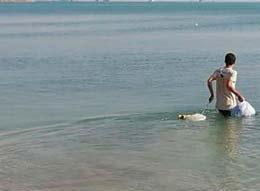
ABDUL NASSER SALEH says he rarely got a good night’s sleep during the near-decade he spent working without pay on a cargo ship abandoned by its owner at ports along the Red Sea.
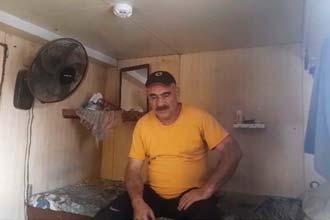
By night, he tossed and turned in his bunk on the aging Al-Maha, he said, thinking of the unpaid wages he feared he’d never get if he left the ship. By day he paced the deck, stuck for the last two years in the seaport of Jeddah, unable to set foot on land because of Saudi Arabia’s strict immigration laws. Leaving at last felt like returning to his “center of gravity,” he said. Saleh’s plight is part of a global problem that shows no signs of abating. The United Nations has logged an increasing number of crew members abandoned by shipowners, leaving sailors aboard months and sometimes years without pay. More than 2,000 seafarers on some 150 ships were abandoned last year.
The number of cases is at its highest since the UN’s labor and maritime organizations began tracking abandonments 20 years ago, spiking during the global pandemic and continuing to rise as inflation and logistical bottlenecks increased costs for shipowners. Cases have touched all parts of the globe, with workers abandoned on a fish factory ship in Angola, stranded on an icebreaker in the Netherlands and left without food or fuel in Istanbul.
Yet the nations that register these ships and are required by treaty to assist abandoned seafarers sometimes fail to get involved in the cases at all. Tanzania, which registered the ship where Saleh was abandoned, never acted on his case or even responded to emails, said Mohamed Arrachedi, a union organizer who worked on Saleh’s case.
Shipowners often abandon crew members when they are hit by rising fuel costs, debt or unexpected repairs they can’t afford. Some owners vow to pay when their finances turn around. But those promises can mean little to the men on board, who often resort to handouts for food and basic supplies. Many are also supporting families back home and risk losing everything if they step off their ships.
Crew members or the countries where the ships are registered or docked can pursue the shipowners in court. But recovering past wages can be a yearslong battle that often fails.
Returning to Egypt in April was joyous, Saleh, 62, told The Associated Press, but also brought sad news. His wife and son were badly in need of medical care, he said. They had struggled during his

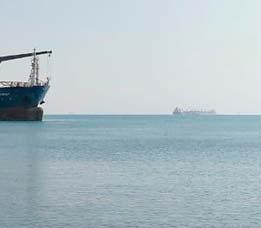

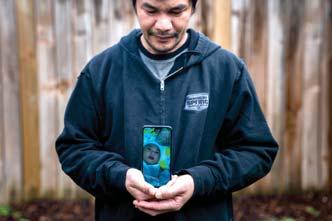
decade without an income.
Saleh, who was originally from Syria, said he had once been proud of his work as an engineer on the AlMaha, which made its money ferrying livestock for Ramadan festivities between Sudanese and Saudi Arabian ports.
From tip to tail, the Al-Maha spans the length of a football field, covered in dust and dirt and rusted green paint. While stuck in Saudi Arabia, Saleh and a small group of crewmates, also from war-torn Syria, placed a prayer mat in the pilothouse overlooking the port. A stray cat they named Apricot took up residence on the ship and followed Saleh around.
Saleh ran laps along the deck at sunrise and sunset. Every day he clocked 1,500 meters, while around him mammoth container ships arrived and departed from the busy port as his situation stayed the same. His debts accumulated from years of borrowing money to help his family pay rent.
The days blurred into a painful monotony.
“I can’t tell day from night anymore,” he said in a video recording he shared with the AP in January while still aboard the ship, filmed as the day’s light faded and a pinkish glow cast over the harbor.
A surge in cases OWNERS abandon ships and crews for a myriad of reasons.
Cases first jumped in the early days of the pandemic, at a time when canceled shipments, port delays and quarantine restrictions pushed shipping traffic into disarray. At the same time, demand for goods by homebound consumers led to a rush of new orders for ships. But global trade soon shrank, and combined with spikes in fuel and labor costs, many of those new vessels are now at risk of being idled.
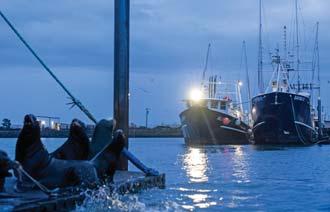
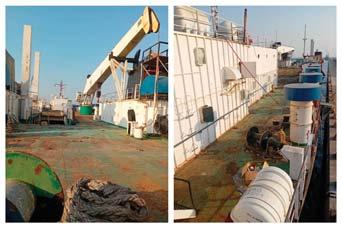
The increase in the number of cases logged in recent years is also due to better reporting efforts by the International Maritime Organi-
zation and the International Labor Organization—the two UN agencies responsible for tracking abandonments. With seafarer advocates,


they’ve worked to identify cases and assist abandoned crews.
Cases last year were “alarmingly surpassing the previous year’s record,” the ILO and IMO said in a report this winter.
Many ships that are abandoned are barely seaworthy and servicing less profitable routes unattractive to the world’s major container lines. They represent a fleet of smaller companies sometimes operating on the edge of legality, for which a minor financial hit can lead to a cascade of unforeseen problems.
Owners might decide it’s cheaper to abandon a ship than try to save it.
The US, which has some of the stiffest maritime regulations in the world, isn’t immune to the global phenomenon.
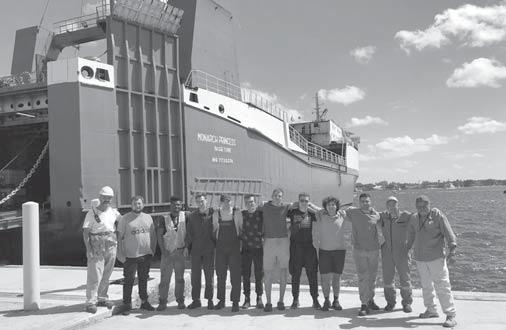
In 2022, Teeters Agency & Stevedoring, a family-run company registered in Florida, dumped two 1970s-era cargo vessels—the Monarch Princess and Monarch Countess that for years operated as a bridge for sending beat-up cars, cheap electronics and other goods to Haiti. The two ships were flagged to registries run by small island nations—Vanuatu, located east of Australia, and St. Kitts and Nevis in the Caribbean— criticized by watchdog groups for lax oversight and financial secrecy.
After the owners became insolvent and stopped paying dockage fees, the Port of Palm Beach and a private marina sued and a federal judge ordered the two vessels sold at auction. One fetched just $5,000. Abandoned ships are sometimes so old and worn that “even the scrap guys lose money stripping it of anything of value,” said Eric White, a ship inspector for the International Transport Workers’ Federation, or ITF, a seafarers’ union.
Left hanging by Teeters were the ships’ crews of mostly Ukrainian seafarers, who suddenly had no way of sending money to families back home in what was now a war zone after Rus-
Sunday, June 2,
Continued from A1
sia’s invasion. In total, the 22 men were owed $130,000 covering more than three months, White said. If not for $22,000 in donations from local seafarers’ charities, none of them would have made it off the ship and back home, according to White.
The ship’s captain, Ievgen Slautin, said although he was still owed around $15,000, he thanked God he was abandoned in the United States.
“If it was in some other country, I could have been left there to simply die,” he said.
Neither Teeters nor a lawyer who once represented the company returned emails or phone calls seeking comment.
Even workers who win promises from shipowners to pay their wages sometimes are left waiting for money after they leave their ships.
Court cases to seize or auction derelict ships can take years to resolve. Other times, offers aren’t made in good faith. Some workers have departed for the airport only to find they were given fake plane tickets, union inspectors said.
One seafarer, Mohammad Aisha, drew international attention in 2021 when reports surfaced that he was living alone on a darkened and abandoned cargo ship in Egyptian waters, forced to swim to shore for food and water.
Though Aisha left the ship three years ago, the case is still working its way through the courts. He has not yet been paid, the ITF said.
Unscrupulous behavior taints the entire shipping industry, said Helio Vicente, a director at the International Chamber of Shipping,
a London-based trade group for shipowners. That makes it more difficult for reputable liners to recruit.
The industry, which employs about 2 million seafarers, is expected to confront a severe shortage of 96,000 workers by 2026, according to ICS.
“We don’t want a small number of bad apples giving everybody a bad name,” said Vicente.
Lax oversight
UNDER the Maritime Labor Convention, a widely ratified international agreement considered a bill of rights for seafarers, workers at sea are deemed abandoned when shipowners withhold two months of wages, stop supplying adequate food supplies, or fail to pay to send them home.
The convention requires flag states to step in when shipowners abandon crews. They’re responsible for ensuring the seafarers’ welfare, repatriation, and verifying that shipowners have insurance to cover up to four months of wages.
The regulations are aimed at encouraging countries to thoroughly vet shipowners—and spot risks— before ships are registered under their flag.
But the rules aren’t uniformly followed, and beyond naming and shaming there are few ways to enforce the standards. Last year, nearly half of abandoned ships had no insurance, according to the IMO. In dozens of cases, flag states that are signatories to the international treaty never even responded when told by the IMO that crews on board their ships were stranded without pay. AP’s review found that countries notified the IMO of their efforts to resolve cases less
than a quarter of the time.
The flag states with the most abandoned ships tend to have large ship registries by dint of offering lower fees. Panama has registered 20 percent of all ships abandoned since 2019, according to AP’s analysis of the UN data, followed by Tanzania, Palau and Togo, which each were responsible for about 5 percent. The four countries are all considered by the ITF to be “flags of convenience” with minimal oversight.
Of the four flag states, only Togo responded to questions from the AP. A spokesperson for the country’s international ship registry said it is difficult to vet shipowners’ financial stability, and Togo is “deeply concerned about the complex phenomenon of abandonment.”
The uneven regulations also influence the ports where ships are abandoned most often. More than a quarter of recent cases have taken place in Saudi Arabia, Iran and the United Arab Emirates, which haven’t agreed to the abandonment language in the maritime convention.
In the eyes of Arrachedi, the ITF organizer who worked as Saleh’s case manager, such countries are an ideal haven for shipowners who want to shirk their responsibilities.
“They know that this is happening in their port,” he said.
None of the countries responded to AP’s questions about abandonment.
Saleh’s troubles began in 2015, when the Saudi owners of the ship, then called the Jeddah Palace I and subsequently renamed the Al-Fahad 1, first abandoned him and the rest of the crew along the coast of Sudan. He’d been working on the ship for three
years at that point, aiding in the transport of sheep, cows and camels.
In all, he said, he was marooned in Sudan for seven years awaiting his wages. Though he had no income, he said, Sudanese officials let him come and go by day, and he returned to sleep on the ship.
When the ship sailed to Jeddah for repairs in June of 2022, Saleh expected his situation to finally turn around. He and the shipowner signed a settlement, reviewed by the AP, acknowledging that the company would pay him $140,000 to cover his overdue wages. He said he was told the ship would soon resume its normal trade routes.
But nearly two years passed after that agreement with no sign of new business—or Saleh’s money. He continued waiting, stuck on board but just steps from shore.
The ship’s flag state, Tanzania, which ratified the seafarer convention in 2019, didn’t respond to requests for assistance after being notified more than a year ago, Arrachedi said.
“This shouldn’t be normalized,” said Arrachedi, who worked for months to stir action from authorities on Saleh’s case. “You have a ship, this ship is in a port. There are maritime authorities there, and there is a flag there.”
Officials in Saudi Arabia gave little indication that they would resolve Saleh’s case quickly, Arrachedi said, despite the rusting vessel standing out like an eyesore in the country’s most important port.
The Al-Maha’s owner, Mishal Fahad Abalkhail, said he inherited the ship in 2019 from his father when he was 21 years old. He said the business was already deeply in debt. He said he disagreed with the terms of the failed settlement that he signed and noted that he is in a legal dispute with the shipping agent in Jeddah, which provided port services and ship supplies.
AP’s attempts to contact the shipping agent were unsuccessful. Neither Tanzania’s maritime agency nor the Saudi Arabian Ports Authority responded to AP’s questions.
Fishing boats not immune
OF the scores of ships reported abandoned last year, just 12 were fishing boats. Despite being highly vulnerable to abuse and exploitation, fishing crews have historically made up a tiny fraction of cases—likely because they are less empowered to complain.
Thousands of miles from Saleh, on the west coast of the United States, Reyner Dagalea spent three months in Westport, Washington, scrubbing the fish hold of a tuna ship, washing the deck, and playing solitaire—anything, he said, to keep his mind off the money his family in the Philippines was waiting on.
He wasn’t alone: Nearly two dozen other crew members, all Filipino, were confined to fishing vessels belonging to their American employer, McAdam’s Fish, a supplier of sushi-grade Albacore tuna with whom Dagalea was locked in a bitter wage dispute. Without visas, US immigration laws would not permit the fishermen on land. Dagalea, 49, urged his family
to be patient. “I cannot support you right now because I am stuck here,” he said he told them.
Though Dagalea said he worked 17-hour days for months catching tuna in the North Pacific, pay stubs shared by the fishermen and their employer show his pay arrived in small, halting sums—$200 one month; nothing the next. By Christmas, documents show that he and five other crew members who spoke with the AP were paid less than half of the wages they should have received. Their pay amounted to around $8 a day.
The fleet of four ships the men worked on are the first US flagged vessels listed as abandoned by the UN in 15 years. Their ongoing wage dispute reflects the precarious position of fishermen in an industry with few regulations guiding how and when workers are paid.
Unionization in the seafood industry is minimal, giving fishing crews few protections if they complain. They also have fewer rights than merchant mariners because they’re excluded from the Maritime Labor Convention. Instead, fishing labor standards are set by the weaker Work in Fishing Convention, which requires regular wages but has no formal definition of abandonment, and which only a handful of countries—not including the US—have ratified.
McAdam’s Fish acknowledged the payment delays but blamed Pescadores International, a recruitment agency based in the Philippines, for being slow to disburse the six months of wages that McAdam’s said it had paid the agency in advance.
“Regrettably, it appears from a review of the manning agency’s report, that its payments were untimely,” Eric Sternberger, an attorney for McAdam’s, said in an emailed statement. The company asserted that it never heard complaints from the fishermen, and that in its decade-plus track record, no crewman had been underpaid at the end of a contract.
Pescadores’ owner offered no explanation for the payments delay when asked by AP but said that in previous years the fishermen earned far in excess of the minimum wage. He and Sternberger also sent the AP affidavits from fellow crew members alleging that the complaints were a scheme to obtain US work visas — an accusation that Dagalea and the others denied.
“Those six have not contacted our office since they jumped ship,” Ricardo De Joya, Pescadores’ owner, said in an email.
Rob McAdam, the owner of McAdam’s, said much of his crew had worked for him for years because of the opportunity to earn good money.
But last season’s catch was the worst on record, making it impossible to pay the same catch bonuses as in the past.
“Over the years, we’ve literally changed lives,” said McAdam, adding that some of the most loyal fishermen have made upwards of $100,000 a year. “It’s one of the few upsides of this business.”
Shortly after Christmas, officials with Homeland Security Investigations boarded the ships and union advocates with ITF began a campaign for Dagalea and the others
to recoup the wages.
Six weeks after authorities intervened, and one week after AP interviewed the six complaining fishermen, Pescadores paid them each about $4,000—amounting to much of the backpay.
Federal authorities have since granted the fishermen temporary immigration status to the US, and they’ve moved to a rental house in Seattle with the help of Filipino community members.
During those three months in Westport, before they complained, Dagalea’s crewmates faced similar strains, the fishermen and their families said. Richard Zambales wasn’t sure he would be able to pay for his wife’s heart medication. Albert Docuyan’s wife moved from the Philippines to Malaysia to find work that could pay the fees for their children’s school. Norberto Cabrela missed the birth of his son, then scrambled to find the money to pay the hospital bills.
Dagalea said the only thing he could do at the time was to keep working on the ship and stay busy. It helped quiet his thoughts.
“But at nighttime,” he told the AP, “you’re still going to think, because it’s already dark and you’re alone.”
Better than nothing BACK in Jeddah, Saleh kept praying for things to change—for the shipowner to relent and agree to pay him; for some way by which he could finally leave. He said he had trouble eating, concerned that his family wasn’t getting enough food. He barely slept.
“My whole life is anxiety and fear,” Saleh wrote to AP in February.
That same month, AP contacted Saudi Arabia’s media ministry, their US embassy staff and the port authority in Jeddah with questions about his case. None responded. Within two weeks of the AP contacting Saudi Arabian authorities, Saleh received an offer from the shipping agent to pay him. Over weeks of back and forth, they reached an amount Saleh agreed to take. The shipping agent visited the Al-Maha and told Saleh to be ready to leave in three hours for the airport, Arrachedi said.
“By God, I am happy to have reached this settlement,” Saleh told AP from Egypt. “I did not receive the full amount, but this is better than nothing and better than these problems, sitting on the ship, being abroad, and being far from family and homeland.”
For now, he’s focused on ensuring his family is healthy and safe. Someday soon, he wants to buy a house.
“It’s one of the worst cases I have seen in my 23 years as an ITF inspector,” Arrachedi said.
He said Saleh’s abandonment shows the harm flag states and port authorities cause by letting abusive situations go unchecked.
“Because to keep someone on board for 12 years and need two years to fix it is absolutely a failure.”
But in the meantime, there were new cases for him to handle. An urgent abandonment in Libya. A crew marooned in Sudan without pay for 16 months. An Egyptian sailor who was afraid and wanted to go home. And the list stretched on.
‘We have nothing’: A million Palestinians are living in tents, searching for food, as Israel attacks RafahBy Wafaa Shurafa, Samy Magdy & Lee Keath The Associated Press
DEIR AL-BALAH, Gaza Strip—
The tent camps stretch for more than 16 kilometers
(10 miles) along Gaza’s coast, filling the beach and sprawling into empty lots, fields and town streets. Families dig trenches to use as toilets. Fathers search for food and water, while children look through garbage and wrecked buildings for scraps of wood or cardboard for their mothers to burn for cooking.
Over the past three weeks, Israel’s offensive in Rafah has sent nearly a million Palestinians fleeing the southern Gaza city and scattering across a wide area. Most have already been displaced multiple times during Israel’s nearly 8-month-old war in Gaza, which is aimed at destroying Hamas but has devastated the territory and caused what the United Nations says is a near-famine.
The situation has been worsened by a dramatic plunge in the amount of food, fuel and other supplies reaching the UN and other aid groups to distribute to the population. Palestinians have largely been on their own to resettle their families and find the basics for survival.
“The situation is tragic. You have 20 people in the tent, with no clean water, no electricity. We have nothing,” said Mohammad Abu Radwan, a schoolteacher in a tent with his wife, six children, and other extended family.
“I can’t explain what it feels like living through constant displacement, losing your loved ones,” he said. “All of this destroys us mentally.”
Abu Radwan fled Rafah soon after the Israeli assault on the city began on May 6 as bombardment neared the house where he was sheltering. He and three other families paid $1,000 for donkey carts to take them to the outskirts of Khan Younis, about 6 kilometers (3.6 miles) away, where it took a day living outside before they could assemble the materials for a makeshift tent. Next to the tent, they dug a toilet trench, hanging blankets and old clothes around it for privacy.
Families usually have to buy the wood and tarps for their tents, which can run up to $500, not counting ropes, nails and the cost of transporting the material, the humanitarian group Mercy Corps said.
Israeli authorities controlling all entry points into Gaza have been letting greater numbers of private commercial trucks into the territory, the UN and aid worker say. More fruits
and vegetables are found in markets now, and prices on some have fallen, Palestinians say.
Still, most homeless Palestinians can’t afford them. Many in Gaza have not received salaries for months and their savings are depleting. Even those who have money in the bank often can’t withdraw it because there is so little physical cash in the territory.
Many turn to black market exchanges that charge up to 20 percent to give cash for transfers from bank accounts.
Meanwhile, humanitarian convoys with supplies for the UN and other aid groups to distribute for free have fallen to nearly their lowest levels in the war, the UN says.
Previously, the UN was receiving several hundred trucks a day. That rate has dropped to an average of 53 trucks a day since May 6, according to the latest figures from the UN humanitarian office OCHA on Friday. Some 600 trucks a day are needed to stave off starvation, according to USAID.
In the past three weeks, most of the incoming aid has entered through two crossings from Israel in northern Gaza and via a US-built floating pier taking deliveries by sea. The two main crossings in the south, Rafah from Egypt and Kerem Shalom from Israel, are either not operating or are largely inaccessible for the UN be-
cause of fighting nearby. Israel says it has been letting hundreds of trucks through Kerem Shalom, but the UN has only been able to collect about 170 of them on the Gaza side over the past three weeks because it can’t reach the crossing.
Entry of fuel has fallen to about a third of what it was before the Rafah offensive, according to OCHA. That reduced amount has to be stretched between keeping hospitals, bakeries, water pumps and aid trucks working.
The American humanitarian group Anera “is having difficulty distributing what we are able to bring in to the people who need it because there’s so little fuel for trucks,” its spokesperson Steve Fake said.
Most of those fleeing Rafah have poured into a humanitarian zone declared by Israel that is centered on Muwasi, a largely barren strip of coastal land. The zone was expanded north and east to reach the edges of Khan Younis and the central town of Deir al-Balah, both of which have also filled with people.
“As we can see, there is nothing ‘humanitarian’ about these areas,” said Suze van Meegen, head of operations in Gaza for the Norwegian Refugee Council, which has staff operating in Muwasi.
Much of the humanitarian zone has no charity kitchens or food market, no hospitals operating, only a few field hospitals and even smaller medical tents that can’t handle emergencies, only pass out painkillers and antibiotics if they have them, according to testimony from Mercy Corps. “It’s just a matter of time before people begin to suffer greatly from food insecurity,” the group said.
The Muwasi area is mostly coastal dunes with no water resources or sewage systems. With human waste deposited near the tents and garbage piling up, many people suffer from gastrointestinal diseases such as hepatitis and diarrhea, as well as skin allergies and lice, Mercy Corps said.
One aid worker who fled Rafah said he was lucky and could afford to rent a house in Deir al-Balah. “You can’t walk” in the town from all the tents that have arisen, he said, speaking on condition of anonymity because his agency had not authorized him to speak.
Many people he sees in the street are yellow with jaundice or hepatitis, and “the stench is disgusting” from the sewage and piles of garbage.
Israel says its offensive in Rafah is vital to its war aim of destroying Hamas in Gaza after the group’s October 7 attack, in which militants killed some 1,200 people and abducted
around 250 others from southern Israel. Israel’s campaign in Gaza triggered by the attack has killed some 36,000 people, according to Gaza’s Health Ministry.
Aid groups have warned for months that an attack on Rafah will worsen Gaza’s humanitarian disaster. So far, Israel’s operations have been short of its planned all-out invasion, though fighting has expanded over the past three weeks from the eastern parts of Rafah to central districts of the city. A strike Sunday hit a tent camp in a western part of Rafah, causing a large fire and killing at least 45 people, according to health officials. Prime Minister Benjamin Netanyahu acknowledged a “tragic mistake” had occurred.
From the exodus the assault has caused, satellite photos taken last week show dense new tent camps running the length of the coast from just north of Rafah to outside Deir al-Balah. The ramshackle tents and shelters are densely packed in mazes of corrugated metal and plastic sheets, blankets and bedsheets draped over wooden sticks for privacy.
Magdy and Keath reported from Cairo. Associated Press correspondents Sarah El Deeb in Beirut, Fatma Khaled in Cairo and Mohammed Jahjouh in Muwasi, Gaza Strip, contributed to this report.

AS Saudi Arabia ratchets up efforts to reshape itself, the government’s looked to the Public Investment Fund to lead the way. But an increased focus on domestic projects like the $1.5 trillion Neom has global asset managers fretting that it will have less cash to spend abroad.
While the fund plans to ramp up annual spending to as much as $70 billion, executives at three alternative investment firms have privately expressed concerns that the PIF will channel more money into local mega-projects.
That could lead to a pivot away from passive investments in global private equity, infrastructure and hedge funds, people familiar with the matter said. It’s a stark shift from recent years, when wealth funds from the Middle East were eager to deploy billions of dollars with some of the world’s largest investors.
The $925 billion PIF has been an especially prolific backer to the likes of BlackRock Inc. and Brookfield Asset Management. Officials in the kingdom had looked to draw foreign investment to help pay for at least a portion of Crown Prince Mohammed bin Salman’s Vision 2030 agenda, but that money hasn’t rolled in as expected. That’s led to additional pressure on the PIF, which is the main entity tasked with driving
the multi-trillion-dollar economic diversification plan. Representatives for the PIF declined to comment. “For some time, it seemed like everyone wanted a piece of the Saudi pie that the PIF was serving. Plenty of people simply saw the fund as a bottomless war chest,” said Robert Mogielnicki, senior resident scholar at the Arab Gulf States Institute in Washington.
“The reality is that the PIF operates under various constraints, and the rapidly expanding scale and scope of investments have significantly increased its obligations.” The need to boost spending so aggressively at a time when the government budget is expected to be in deficit until at least 2026 has created a sense of pressure to find new ways to raise money. The PIF had $15 billion in cash and equivalents as of September.
The fund has publicly said its allocation to international investments as a proportion of the total outlay could drop by as much a third. But as it increases total annual deployment, the absolute dol-

lar figure earmarked for deals outside the kingdom should also rise.
The PIF is expected to continue to do direct investments globally and one potential outcome could be a focus solely on deploying money to top-tier names, according to executives at two private equity firms. The fund could also prioritize entities with a significant local presence, given the government’s focus on building up the domestic asset management industry.
While few financial firms have so far established regional headquarters in the Saudi capital, there has been growing pressure to do so. Late last year, the head of the fund’s Middle East and North Africa unit Yazeed Al Humied urged firms to set up “not just their reception desks but their kitchens” in Saudi Arabia if they want to continue raising money from the PIF.
Changing dynamics
AL Humied and his team have
grown in stature from the PIF’s local pivot, people familiar with the matter said. More deals are being routed through his group, giving the executive greater sway at one of the world’s largest sovereign investors.
For instance, two of the fund’s biggest deals in recent months—a mobile towers deal and a $5 billion commitment to BlackRock for Gulf investments—were both regionally focused and orchestrated by the MENA unit. “T here is a focus on domestic investment and the PIF will continue to do so, but it also needs external investments to grow to fund its operations,” said Karen Young, a senior research scholar at Columbia University’s Center on Global Energy Policy. “So there will be a balance between capital raising at home and investing externally for returns.”
Al Humied’s team is also taking on a greater role in the fund’s activities outside the Middle East,
the people said. They led the way on some international deals that were considered a key part of the PIF’s strategy to bring foreign companies and technologies into the kingdom to help with its diversification strategy.
Case in point: the $4.9 billion acquisition of US-based video game publisher Scopely by the PIF’s gaming unit was led by the MENA team because it was seen as a key step to kickstarting the local gaming industry. Plans to invest in the ATP Tour as part of a plan to expand in professional tennis, are also being done through the fund’s sports unit and led by Al Humied’s team, according to the people familiar with the matter.
Hired in 2015 as an adviser to the PIF’s Governor Yasir Al Rumayyan, Al Humied became deputy governor for MENA investments in 2021. He was promoted alongside Turqi Al Nowaiser, who is responsible for international investments and also serves as deputy governor. Al Humied has been close to Al Rumayyan for years, and the two have previously worked together at the Saudi markets regulator.
In another sign of the pivot, the PIF—once among the most prolific investors in US stocks— recently cut its holdings there to about $18 billion from $35 billion.
It no longer holds stakes in Amazon.com Inc., Microsoft Corp. and Salesforce Inc., replacing direct holdings with call options on fewer shares—a move that allows it to maintain some exposure to the companies with less capital at risk.
Funding gaps
CURRENTLY, about 27 percent of
the PIF’s assets are outside Saudi Arabia, according to data provider Global SWF. “We expect this percentage to stay relatively stable,” as the fund’s local investments ramp up faster than growth in international deals, said Diego Lopez, who’s head of the research consultancy.
The fund will continue to do deals outside the kingdom through the international investments team, people familiar with the matter said, though these are expected to be opportunistic, or will be more focused on sectors that help boost the local economy.
For instance, the government is keen on growing the Saudi mining industry and will look to deploy capital internationally within that sector, the people said. It’s also in talks with Andreessen Horowitz for investments into artificial intelligence—those discussions are still at an early stage but could see the Saudi fund pour $40 billion into AI technologies, although the timeframe for that is unclear.
But those aspirations will have to be weighed against the PIF’s hundreds of billions of dollars of local commitments for everything from building new manufacturing industries to entirely new cities.
“The domestic dimension of the PIF’s role has become ever more important in past years,” according to the Arab Gulf States Institute’s Mogielnicki.
“Even many of the fund’s international investments appear to be viewed through the lens of domestic dividends,” he said. “International investor interest in the PIF isn’t disappearing soon, but there is likely to be more selectiveness on all sides.” With assistance from Abeer Abu Omar/Bloomberg
ONG
HChan Po-ying is permitted only 15-minute daily visits to see her husband, Leung Kwok-hung, separated by a plexiglass barrier in a highly guarded Hong Kong jail.
Leung, 68, is one of 47 activists who were prosecuted in the largest national security law case to date in the former British colony. Most of them have been separated from their loved ones for years, uncertain when they might reunite. On Thursday, 16 activists who pleaded not guilty—including Leung— will begin hearing their verdict.
The government had warned there might be legal consequences, but Chan didn’t stop former pro-democracy legislator Leung from participating in an unofficial 2020 primary election that would lead to his prosecution under a national security law that Beijing imposed on the semiautonomous city.
“Maybe we were too naive,” Chan, 68, said with a laugh.
Charged with conspiracy to commit subversion, Leung and other defendants are accused of attempting to paralyze Hong Kong’s government and topple the city’s leader by securing the legislative majority necessary to veto budgets. The charge carries a maximum sentence of life imprisonment. Those who pleaded guilty have a better chance at shorter prison terms and will be sentenced at a later date.
“I guess almost none can be acquitted,” said Chan, who chairs the League of Social Democrats, one of the city’s few remaining pro-democracy parties. “I am not optimistic. But I also hope someone can get away from it.”
Activism in Hong Kong
CHAN was part of a wave of youth activism spreading through Hong Kong when she met Leung in a Marxist group around 1975, when the city was still under British rule.
At first, Chan viewed Leung as a “troublesome guy,” being adamant about winning every debate. Despite this, they fell in love, and their bond transcended mere romance, Chan said; they are “comrades-in-arms.”
A 2005 protest solidified their bond. The two were some of the only Hong Kongers who stayed steadfast with the overseas demonstrators, even after police deployed tear gas and threatened arrest.
“Among those who stood with us in our youth, only the two of us stayed at the site,” she said.
Activism in Hong Kong reached a peak in 2014 with the so-called Umbrella Movement, in which demonstrators used umbrellas to fend off police pepper spray in a nearly 80-day face-off. When Beijing didn’t budge, some young activists began advocating for Hong Kong’s independence.
Suppression was swift. Several pro-independence activists were blocked from joining elections, and in 2018, Hong Kong authorities banned a small proindependence party.
Ventus Lau was among those caught in the crackdown. He was barred from running in an election in 2018, even though he renounced his pro-independence stance. But that didn’t deter him from becoming more politically active, helping organize protests in 2019 that saw generations of Hong Kongers rallying against a now-withdrawn bill that would have allowed people in the city to be extradited to mainland China.

The largest protest drew an estimated 2 million people— more than a quarter of the city’s population.
Lau, now 30, is one of the defendants who decided to plead guilty in the subversion case related to the 2020 primary. Emilia Wong, a 29-year-old feminist influencer and longtime girlfriend of Lau, supported his activism.
In those years after the Umbrella Movement was stifled, Wong remembered feeling hopeful for a more democratic Hong Kong, despite the somber mood in the city. “2019 represented a peak of such hopes,” she said. But the high hopes were short-lived.
The primary vote and the clampdown AS protests waned due to mass arrests and Covid-19 restrictions, Beijing intensified its control. On June 30, 2020, the sweeping national security law was imposed.
Both the Chinese and Hong Kong governments deemed it necessary to restore the city’s stability. Several political groups dissolved on the same day.
Just a week later, a city official
warned that the pro-democracy primaries might violate the security law. They held the vote anyway, resulting in an unexpectedly high turnout of 610,000.
The poll, organized within the pro-democracy camp, was meant to shortlist candidates who would then run in the official election for the legislature, typically dominated by the pro-Beijing camp. They hoped that, with a legislative majority, the government would listen to their demands.
But things didn’t go as planned.
After the primary, Beijing said the vote challenged the security law that critics argue has been broadly applied to anything the government claims could threaten stability.
When police officers arrived at Wong’s home in January 2021 to arrest Lau for participating in the election, she recalled, “It felt so absurd that I had to laugh.”
That month, over 50 former lawmakers and democracy proponents were arrested under the national security law. Authorities accused them of planning to get enough people into office to indiscriminately veto budgets, grind-
ing governmental functions to a halt, and to force the city leader to step down.
Of those arrested, 47 were charged and brought to court for days of bail hearings, during which time some were hospitalized due to fatigue and others weren’t able to shower for days. Most of the defendants were denied bail.
Lives upended
AFTER Lau was taken into custody, Wong devoted her time to arranging food and book deliveries for him, handling media interviews about the case, organizing visits from his friends, and assisting him with his application to restart university studies while detained.
Each day left Wong feeling utterly drained as she also grappled with the shock of Lau’s prosecution. One day, upon receiving clothes worn by Lau during his detention that still carried his scent, she burst into tears.
“It was a blow to me, specifically to my personal vision of Hong Kong,” she said.
Even for veteran activists like Chan, the situation was painful. To her, 2021 was suffocating. After Leung was denied bail, Chan would find herself crying without any particular reason during her commutes.
Months after the 47 activists were prosecuted, arrests of top management at Apple Daily and Stand News—prominent media outlets known for their critical reports on the government—forced them to shut down. Dozens of civil society groups disbanded. Some of Chan’s League of Social Democrats members were also jailed.
That year, Chan wondered daily what would happen next. “I felt lonely, but I had to handle so many things,” she said.
Life in detention
TO maintain their relationship between the limited visits, Lau has been writing Wong a letter every day since 2021, sometimes penning Canto-pop song lyrics to express his love. In return, Wong dedicated a love song to Lau on the radio for his birthday.
To Wong, staying with Lau is a natural choice. Lau signed an agreement granting her control over his affairs—a document she described as more powerful than a marriage certificate. She said she would do her best to support him.
Even behind bars, Wong said, Lau drives her to become a better person—when he picked up his reading pace, Wong followed suit. In turn, Wong offered critiques of Lau’s lyrics. Lau pursued his translation degree and Wong became a regular at the gym.
“I’m not just standing still waiting; I’ve been running all along, and so has he,” she said.
Chan said life in detention has left Leung visibly thinner and downhearted. Despite their fiery temperaments, Leung sometimes avoids arguments during their brief visits.
“He cherishes our 15 minutes together,” Chan said. “But I also feel very upset because this isn’t the real him.”
In the most optimistic scenario, it might take three to four more years to see Leung free again, Chan said. In the meantime, she continues to organize small-scale street demonstrations, despite the threat of the new national security law that critics fear will further constrict civil liberties.
Chan knows her actions might not make a significant impact, but she says persistence in their respective roles is still meaningful.
“It’s not like nothing has been achieved,” she said.



THE ongoing dispute over the West Philippine Sea (WPS) between China and the Philippines hinders Filipino scientists from conducting scientific work in the Philippine territory, but something can still be done.
The University of the Philippines Diliman-College of Science (UPD-CS) held a public forum titled “Science X WPS: Opportunities and Challenges for Scientists in the West Philippine Sea” on May 13, said Eunice Jean Patron of UPD-CS.
UP professors discussed the current geopolitical and ecological situation in WPS, as well as strategies that scientists and researchers can use to protect and preserve the sea’s marine resources.
“The issue of the [WPS] is not a single-topic issue. It is also not a single-agency activity.” UPD-CS Dean Giovanni Tapang said, inviting a collaboration with other agencies as part of the university’s mandate to serve the nation.
“The [UPD]-College of Science would want to work with everyone to address not only the scientific issues surrounding the West Philippine Sea but other issues as well,” Tapang added.
Threats, opportunities
THE WPS faces a lot of risks because of climate change, said Dr. Laura David, director of UPD-CS Marine Science Institute (MSI).
David said changes in the environment have a huge impact on coastal habitats, such as coral reefs, seagrass and mangroves.
She said overfishing is a major challenge that Filipino fisherfolk experience in WPS.
“People think that our neighbors are interested in [WPS[ because of natural gas. That’s true, but they’re also interested in the fish because they have to feed their population,” David explained.
She also pointed out that, unlike the Philippines, neighboring countries subsidize the catch of their fisherfolks with additional compensation for every tub of fish they catch besides the cost of the fish.
Oil spills and land use are other threats that the WPS deals with.
David cited the oil spill in the Verde Island Passage in 2023 as proof that the Philippines is still not prepared for such occurrences.
Mangroves have also degraded all over the South China Sea (other name of WPS) area because of converting mangrove areas for other land use, contributing to a huge percentage of mangrove loss.
Plastic waste are also a huge threat to the area, with the waste materials floating in places far from populated islands.
“In certain areas, including West Palawan, you have mostly fishing gears. But as you come closer to the population, [you see] trash associated with shampoos, sachets, snack [wrappers], and so on. If you look at the labels, they are not just in English. They’re in different languages. That means they come from all over the South China Sea,” David added. The reclamation of islands has jarring effects on the WPS with the number of live coral reefs declining as occupations increase.
“Somebody has to be held liable for all that damages because the damage is not just local,” David explained.
Everything that happens across the whole WPS region ends up having an impact on all countries in the area.
However, David said that the Philippines experiences the highest impact—with the number of fish families around the WPS declining from 34 to 22 in just 20 years.
Dr. Fernando Siringan, Academician of the National Academy of Science and Technology and professor at MSI, said that one threat the WPS should also consider is tsunami that occurs because of earthquakes.
“I hope we hold simulations and see the effects of tsunamis to the islands, and become part of our consideration in developing the islands in WPS,” Siringan said partly in Filipino.
He mentioned that monitoring the occurrences of natural hazards—such as tsunamis, storm surges and floods—will help researchers determine what kind of structures can be developed in the WPS area.

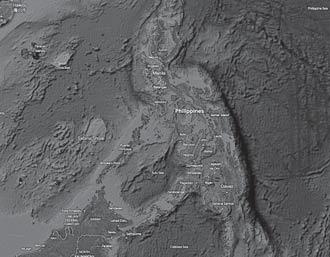
David underscored the importance of long-term monitoring as a tool for creating strategic plans for protecting and preserving marine resources.
“We need to increase our research efforts, and we need to involve a lot of other disciplines. We need to talk to the fishers, and we need more policy-makers so that we can make better-informed policies for the [WPS],” she explained.
Like David, Siringan also encouraged conducting long-term monitoring of marine and terrestrial biodiversity in the WPS region.
He said samples should be taken from those that were not yet sampled, and many might be discovered.
He pointed out that describing where the specimens were gathered and their condition could help in understanding the area’s biology and diversity.
The Academician underscored that the studies can help in designing a marine protected area
THE science and technology (S&T) experts from the Philippines and Japan recently held a workshop to look into their respective water security challenges.
The Department of Science and Technology (DOST) and the Japan Science and Technology (JST) recently convened in Alabang, Muntinlupa City, to address water
security challenges experienced by both countries, the DOST said.
The workshop brought together experts from both countries to exchange insights and experiences on advancing water security through research and S&T initiatives.
The workshop enabled experts from both countries to engage in collaborative research ideas and
in the WPS.
Siringan also calls on the government to fund the research projects, noting that studying the ocean is expensive and can be perilous.
He said that besides the marine Pagasa Island Research Station, additional six marine stations all over the country will soon be established.
He recommended that marine researchers collaborate with them at the marine stations.
“This is a facility for everyone, I would highly encourage that we work together,” he added.
Current geopolitical situation in WPS
PROF. Herman Joseph Kraft, of the UPD College of Social Sciences and Philosophy-Department of Political Science, said that geopolitics, when applied to the WPS issue, is more than the Philippines versus China.
“On one hand, you’re talking about questions of control over space. But, on the other hand,
share their respective research themes and interests, and develop new research directions, the DOST added.
It also facilitated the formation of research teams to apply for joint calls for proposals.
The workshop featured plenary and breakout sessions participated in by six speakers each from the Filipino and Japanese teams.

Science Secretary Renato U. Solidum Jr. expressed his support for the project, which he mentioned during the Asean-Japan High-level Roundtable Event held in Paris on April 22, highlighting it as a top priority for the Philippines.
Solidum further underscored the significance of the partnership between DOST and JST in addressing water security challenges.
The collaboration between DOST and Japan is further bolstered by the new fund from Japan in Asean, known as “Networked Exchange, United Strengths for Stronger Partnerships between Japan and Asean [Nexus].”
Solidum expressed confidence that collaborative projects initiated through this workshop would bear fruit with the full support of DOST and funding from Nexus. He said the Philippines anticipates that such initiatives will pave the way for broader Asean collaborations in the future.
“This gathering represents a pivotal step in our collaborative efforts to safeguard the precious resource of water, which is essential for the prosperity
a situation where it has to make diplomatic and political choices regarding the situation it faces now in the West Philippine Sea,” he added.
Looking beyond WPS resources
“WE cannot separate the [WPS] from the rest of the country.” said Dr. Jonathan Anticamara of the Institute of Biology, emphasizing the importance of the Philippines’ marine resources, including those in the WPS.
that control involves the relationship between the great powers— particularly, the competition between China and the United States,” he said.
According to Kraft, countries located in South China Sea adjusted their claims based on the United Nations Convention on the Law of the Sea (Unclos). The only country that has not made any changes and whose claim is not based on Unclos is China with its nine-dash line.
The Unclos provides that maritime domains emanate from land territory.
“What China has here is excessive [claim] because it goes farther away or quite far from the territory of China itself,” Kraft said.
China has been claiming a wide area of the South China Sea and islands from other neighboring countries.
These include controlling maritime and air traffic, accessing marine resources, and pursuing petroleum interests.
China has built artificial islands for its vessels to resupply, allowing for longer lingering times.
The solution, Kraft pointed out, is multilateral cooperation with other countries.
“The geopolitical situation requires the Philippines to work with various partners to try to maintain the situation in the region,” he added.
However, he admitted that this isn’t an easy solution, as this means being involved in the competition between two powerful forces.
“On one hand, the Philippines seeks to be able to assert its claims and sovereign rights vis-à-vis China. But in doing so, its inability to do anything on the waters requires us to work with the United States, which puts us in a situation where we seem to choose the US over China,” Kraft said.
“The Philippines is caught in
“Our marine resources are our treasures, but we don’t have a lot of information on what’s going on. We don’t have a systematic database to analyze what’s going on over time. These are our resources, we are small islands in the middle of the Pacific and we shouldn’t forget that,” he pointed out.
Anticamara explained how the Philippines greatly expanded its fishing power and efforts—in the number of boats and fishers— that led to the increase in the country’s contribution to global fisheries.
“As Asia’s and the Philippines’ fishing power increase, the production decreases. Fisheries production in the Philippines has declined by more than 60 percent or 80 percent. Government agencies give thousands of boats and ships, yet these are just lying [around],” he added.
Lower fisheries production and overfishing resulted in extreme poverty in fishing communities in the Philippines.
Anticamara pointed out that there should be changes in taking care of fish and other marine resources.
“Filipinos have to think about strategies. How can we make money while not destroying these resources? We need to feed ourselves, but there has to be balance at the end,” he said.
Highlighting science’s critical role in protecting the Philippines’ marine resources, Anticamara emphasized the need for longterm monitoring to better grasp the state of the country’s marine resources, and how to better preserve it.
“Good quality of life can be built by ensuring that nature is doing well and that people are not harming and destroying nature,” Anticamara said.
“Even without China, if the Filipinos don’t have the intention to take care of these resources, then we’ll walk into the future where all of these resources are dead and Filipinos are very, very poor with nothing to eat,” he pointed out.

and sustainability of our shared future,” Solidum during the welcome dinner for the workshop.
“By forging partnerships for R&D with countries like Japan, we strengthen our commitment to invest in innovation for our country...This partnership encourages progressive initiatives in securing one of our critical infrastructure systems, efficiently managing our local resources, and addressing concerns on water security.” said DOST Undersecretary for
Research and Development Leah J. Buendia.
The workshop participants also has a tour of three facilities at DOST headquarters in Bicutan, Taguig City.
The DOST-JST Workshop on Water Security marks a step toward strengthening research collaboration between the Philippines and Japan, aiming to address critical challenges in water security through innovative solutions and partnerships.

A6 Sunday, June 2, 2024
AN important piece of early Christian history, the Crosby-Schøyen Codex, is up for auction at Christie’s in London. This codex is a mid-fourth century book from Egypt containing a combination of biblical and other early Christian texts.
The Crosby-Schøyen Codex was discovered alongside more than 20 other codices near Dishna, Egypt, in 1952. These manuscripts are collectively known as “the Dishna Papers” or “the Bodmer Papyri,” after the Swiss collector Martin Bodmer.
Though often overshadowed by other 20th century discoveries, this trove of ancient manuscripts represents one of the most significant finds for understanding the history of early Christianity.
As an expert on early Christian reading practices, I consider the Dishna Papers an invaluable witness to the formation of the Christian Bible.
This ancient library shows how, before the consolidation of the Bible, early Christians read canonical and non-canonical scriptures—as well as pagan classics—side by side.
An overshadowed discovery
THE middle decades of the 20th century were exciting years for scholars of early Christianity.
In 1945, a collection of 13 ancient codices was discovered near Nag Hammadi, Egypt. These contained dozens of otherwise unknown works, mostly associated with minority and marginalized forms of early Christianity.
With titles like “The Gospel of Thomas” and “The Secret Revelation of John,” this cache of noncanonical scriptures captured the public’s imagination and inspired a bestseller.
The very next year, Bedouin shepherds discovered ancient Hebrew scrolls hidden in a cave at Qumran on the northwestern shore of the Dead Sea.
The “Dead Sea Scrolls” found in this and a dozen subsequently discovered caves constituted a massive library of Jewish texts, including biblical works and hitherto unknown texts with remarkable parallels to the writings of the New Testament.
This find was celebrated in news stories, documentaries and other publications as among the greatest discoveries
VATICAN CITY—Pope Francis’ recent apology for using a vulgar term to refer to gay men was the latest comment to make headlines about the Catholic Church’s teachings on homosexuality. Francis has made a hallmark of reaching out to LGBTQ+ Catholics, but his 11-year pontificate has also seen plenty of problems arise over his informal way of speaking and his outreach, evidence of how fraught the issue is for the church.
Officially, the Catholic Church teaches that homosexual people must be treated with dignity and respect, but that homosexual activity is “intrinsically disordered.”
It also says that men who “practice homosexuality, present deepseated homosexual tendencies or

of the 20th century.
At the very same time, the Dishna Papers were discovered, smuggled out of Egypt and sold to European collectors with considerably less fanfare. No headline hailed the discovery of the Dishna Papers. Instead, pieces of this collection were sold to the highest bidders, scattering the ancient library across the globe.
The Dishna Papers
THOUGH less exotic than Nag Hammadi, or Qumran, the contents of the Crosby-Schøyen Codex and the 20-some additional codices discovered near Dishna have proved every bit as important for our understanding of early Christianity.
Two manuscripts of the canonical gospels, Luke and John, belonging to this ancient library predate almost every other surviving copy of these gospels.
Scholars used these new manuscripts to revise the text of the New Testament.
For instance, the vast majority of manuscripts of the Gospel of John describe Jesus as “the only-begotten Son” (1:18).
But the early manuscripts discovered at Dishna read “the only-begotten God.” Here and elsewhere, English translations
support the so-called gay culture” cannot be ordained. Here is a look at some of Francis’ most noteworthy comments.
July 30, 2013. During his first press conference, says “Who am I to judge?” when asked about a purportedly gay priest, signalling a more welcoming approach to LGBTQ+ Catholics.”
May 21, 2018: Tells a gay man “God made you like this and he loves you.”
August 28, 2018: Vatican deletes from the official, online transcript of an in-flight press conference Francis’ reference that young gay children might seek “psychiatric help.”
November 2, 2020: Vatican clarifies pope’s endorsement of legal protections for same-sex couples.

of the Bible were changed to reflect the contents of the Dishna Papers.
But the library discovered near Dishna did not consist entirely of texts that ended up in the Christian Bible. Scriptures that were not included in the Christian canon, like Paul’s “Third Letter to the Corinthians” and “The Shepherd of Hermas,” were also found among the Dishna Papers.
One codex from Dishna contains the “Acts of Paul,” an extraBiblical account of Paul’s travels and martyrdom.
Another contains the “Infancy Gospel of James,” a non-canonical story about the life of Mary, Jesus’ mother.
The discoveries at Dishna provide evidence that these writings, though unfamiliar to modern readers of the Bible, spent centuries on the periphery of Christian scripture.
The Dishna Papers included a few additional literary texts.
One codex in this mostly Christian library contains several comedies by the Hellenistic playwright Menander.
Another codex binds together a chapter of Thucydides’ “History of the Peloponnesian War” with a Greek version of the biblical Book of Daniel.
Evidently, the owner of this
January 24, 2023: Declares in an Associated Press interview that “ Being homosexual is not a crime.”
January 28, 2023: Clarifies his comments to AP which implied that while homosexual activity was not a crime it is a sin in the eyes of the church. “When I said it is a sin, I was simply referring to Catholic moral teaching, which says that every sexual act outside of marriage is a sin.”
August 24, 2023: During World Youth Day in Lisbon, Portugal, leads a crowd of a half-million young people chanting “todos, todos, todos” (everyone, everyone, everyone) to emphasize that all are welcome in the Catholic Church.
October 21, 2023: Signs doctrine document allowing


Christian library had no aversion to the arts and sciences of pre-Christian Hellenism. In this library, pagan classics and Christian scripture stood side by side.
But whose library was this?
THE Crosby-Schøyen Codex, which is now up for sale, actually supplies several important clues to the origin of the Dishna Papers with which it was found.
Thanks to recent radiocarbon dating of this codex and the contents of a closely related manuscript, the Crosby-Schøyen Codex can be dated with some measure of confidence to the middle of the fourth centuryı—roughly 325 to 350 C.E.
The Crosby-Schøyen Codex itself contains five texts in Sahidic Coptic, a dialect of the ancient Egyptian language.
Three texts are Biblical: Jonah, Second Maccabees 5:277:41, and 1 Peter. The rest of the codex contains part of a wellknown Easter homily and a brief otherwise unknown exhortation.
These texts, argue scholars Albert Pietersma and Susan Comstock, may have been collected into a single codex for use as an Easter lectionary.
A lectionary is a collection of readings used in Christian worship services. Such lectionaries were used in Pachomian monasteries, like the one located only a few miles west of Dishna.
This monastery was established in the mid-330s by Pachomius, the reputed founder of communal monasticism.
His Pachomian Rule, by which the monks would have ordered their communal life, makes frequent reference to the public and private use of books. Pachomius’ monasteries even taught illiterate monks to read.
It seems likely that this eclectic library of canonical and noncanonical scriptures, early Christian writings and pagan classics belonged to these book-loving monks in central Egypt.
One of the Pachomian rules allowed monks to borrow books from the monastic library for up to one week.
Today, for a few million dollars, one such book can be yours forever. On June 11, the Crosby-Schøyen Codex will go to the highest bidder. Ian N. Mills, Hamilton College/The Conversation (CC) via AP
transgender people to be baptized and serve as godparents.
December 19, 2023: Approves blessings for same-sex couples provided they don’t resemble marriage, sparking fierce opposition from conservative bishops in Africa, Asia and elsewhere.
March 25, 2024: Approves doctrinal document declaring gender-affirming surgery as a grave violation of human dignity, on par with abortion and euthanasia as practice that rejects God’s plan for life.
May 20, 2024: Francis reportedly says “ there is already an air of faggotness” in seminaries, in closed-door comments to Italian bishops in reaffirming the church’s ban on gay priests. He later apologized for causing offense. The Associated Press
Editor: Lyn Resurreccion • www.businessmirror.com.ph
WASHINGTON, DC—The US Commission on International Religious Freedom (USCIRF) released anew reportrecently highlighting the countries with the worst religious persecution in the world.
From this report, which is released annually, USCIRF makes recommendations to the State Department on how to best advocate for religious freedom.
The suggestions typically translate into sanctions from the US against violating countries to pressure them to improve their religious tolerance.
This year, the countries topping USCIRF’s list of the world’s most egregious religious freedom violators were Afghanistan, Azerbaijan, Burma, China, Cuba, Eritrea, India, Iran, Nicaragua, Nigeria, North Korea, Pakistan, Russia, Saudi Arabia, Tajikistan, Turkmenistan and Vietnam. USCIRF recommends these nations be designated as “countries of particular concern,” or “CPCs,” a label that has been called America’s “most powerful tool” to advocate for religious freedom.
Here are some of the countries with the most concerning religious freedom trends in the last year:
Afghanistan
RELIGIOUS freedom and free expression have continued to deteriorate in Afghanistan under Taliban rule, according to the report.
The country is violently enforcing an apostasy law that bans conversions from Islam. The report also said that in the last year, the Taliban implemented a series of measures to seriously restrict women’s dress, movement, access to education, and employment.
Despite USCIRF’s recommendation, Afghanistan is not currently a CPC, although the Taliban is designated as an “entity of particular concern” (EPC).
Azerbaijan
A MAJORITY Muslim country, Azerbaijan was included in USCIRF’s CPC list this year for the first time.
The country has been increasingly encroaching on the religious rights of both Azerbaijani Muslims as well as of ethnic minorities, such as the Armenian Christians.
According to the report, Azerbaijani citizens are “routinely” harassed, fined, and imprisoned based on their religious activities.
The report said that 183 “peaceful believers” were unjustly imprisoned in Azerbaijan in 2023 because of their religious beliefs or activities.
After a violent Azerbaijani takeover of the Nagorno-Karabakh region and a subsequent mass exodus of Armenian Christians, USCIRF reported that several historic Christian sites have been damaged and there remain serious concerns about further threats to the region’s ancient religious sites.
Azerbaijan also evicted Armenian Apostolic priests from the historic Dadivank Monastery in the Kalbajar region along the Armenian border.
China
THE most populous country in the world, China is a mainstay of USCIRF’s CPC list because of its continued “sinicization” program, which subjects all its citizens and all religions in the country to the ideology of the Chinese Communist Party (CCP).
Under China’s communist government, all religions are strictly controlled by the state and any unauthorized religious activity is dealt with severely.
In 2023, the report said, Chinese authorities continued to “forcibly disappear” and convict underground Catholic priests, including two bishops.
The government also continues to subject the Muslim Uyghurs to forced labor and indoctrination camps and to persecute and imprison thousands of members of the Falun Gong religious movement.
THE second-most populous country in the world, India is increasingly emerging as a leader on the world stage. Despite this, India, run by Prime Minister Narendra Modi’s Hindu Nationalist government, has witnessed deteriorating religious freedom conditions.
Though the country’s constitution protects the right to practice one’s faith, much of the country enforces anti-conversion laws.
According to the report, thousands of Christians and Muslims were subjected to attacks and intimidation in 2023 while hundreds of churches and mosques were destroyed.
Iran
CITIZENS in the Islamic Republic of Iran continue to suffer “extremely poor” religious freedom conditions, according to the report.
In 2023, protesters against the government’s mandatory hijab laws and other restrictions on religion were systematically harassed, arrested, raped, tortured, and, in some cases, executed.
Religious minorities, including Sunni Muslims, were severely punished, sometimes executed, whenever caught violating the country’s strict Islamic law.
Nicaragua
NICARAGUAN dictators Daniel Ortega and Rosario Murillo intensified their persecution of the Catholic Church and other religious groups in 2023.
In the last year, the dictatorship seized the assets and properties of Catholic churches, monasteries, and schools and arbitrarily imprisoned and exiled hundreds of Catholics and political dissidents.
Bishop Rolando Alvarez, a longtime critic of the Ortega-Murillo regime, was sentenced to 26 years in prison, where he spent all of 2023 with little to no contact with the outside world.
This January he was exiled from Nicaragua to the Vatican.
Nigeria
MORE than 8,000 Christians were killed across Nigeria last year, according to the report.
On Christmas weekend alone, a series of attacks resulted in the deaths of 190 Christians in Nigeria’s Plateau state.
Nigerian Christians, who make up 46 percent of the population, were the victims of widespread attacks, kidnappings, torture, and acts of intimidation by criminal elements that were largely ignored by the Nigerian government.
Despite continued persecution and consistent recommendations from USCIRF to designate Nigeria a CPC, the State Department under the Biden administration has excluded this country from the list since 2021.
Pakistan
TERRORIST a ttacks against religious minorities and places of worship increased significantly in Pakistan in 2023, according to the report.
The government moved to further strengthen prohibitions against “blasphemy,” which observers say is a method of targeting religious minorities.
In August a mob attacked a Christian community in Jaranwala over an accusation of blasphemy. The mob destroyed and looted many homes in the community and damaged at least 24 churches.
Other concerning trends:
Transnational persecution on the rise
USCIRF reported that in addition to carrying out persecutions within their borders, several governments “engaged in transnational repression to silence religious minorities.”
Chief among these were the governments of China and India, both of whom increased their international efforts to target religious minorities who had fled their borders. Kazakhstan, Tajikistan, Turkmenistan, and Uzbekistan also engaged in transnational repression as well. Peter Pinedo via CBCP Newsw
THE image shows Papyrus 66 of the Bodmer Papyri, also known the Dishna Papers. WIKIPEDIA US PUBLIC DOMAIN Editor: Lyn Resurreccion
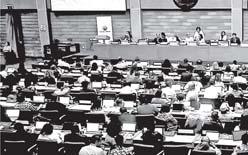

NAIROBI, Kenya—Experts and officials have advanced a wide-ranging topics of recommendations for protecting marine species’habitat, a global action plan on biodiversity and health, managing modern biotechnology, and implementing and monitoring progress against the 23 targets for 2030 in the UN’s historic Kunming-Montreal Global Biodiversity Framework, known as ‘The Biodiversity Plan.”
The UN Convention on Biological Diversity’s (CBD) Subsidiary Body on Scientific, Technical and Technological Advice ended its six-day, 26th session (SBSTTA-26) with diverse advice for consideration at CBD’s upcoming 16th Conference of Parties (COP 16) in Cali, Colombia, from October 21 to 1 November 1, the Convention said.
Among the recommendations are the following, the CBC announced in a news release.
Marine and coastal biodiversity
THE Nairobi meeting set the stage for a potential COP 16 agreement on how the world defines, and consequently protects, ecologically or biologically significant marine areas (EBSAs).
At a time when EBSAs are most needed, this would be key for work under the new world agreement on Biodiversity Beyond National Jurisdiction.
Global action plan on biodiversity, health
THE goal of the proposal is to unite the knowledge of international biodiversity and health experts to inform a universal approach to avoiding future pandemics and other benefits.
Biosafety and biotechnology
NEW voluntary guidance on assessing gene drive engineering was advanced to strengthen scientific rigor and risk assessment transparency.
An expert group was created to inform risk assessments of living modified fish, concerns were flagged regarding insects engineered for limited population growth, and the need for vigilance in detecting and identifying all living modified organisms was also underlined.
Synthetic biology
SYNTHETIC biology scientists alter the genetic material of various organisms to introduce beneficial traits, such as incorporating spider DNA into silkworms to produce exceptionally strong, lightweight silk.
Among many points on which parties agreed were the strong need for capacity-building, technology transfer, and knowledge-sharing to address inequity in developing countries’ participation.
Monitoring the Kunming-Montreal Global Biodiversity Framework
THE parties advanced a basis for robust, consistent tracking of national, regional and global progress against The Biodiversity Plan’s 23 historic targets for 2030, adopted at COP 15 in 2022.
Senka Barudanovic of Bosnia and Herzegovina, chairman of the SBSTTA Bureau, said: “The work we completed here sets the stage for significant COP 16 decisions on EBSAs, risk assessment, and the monitoring framework for The Biodiversity Plan. The proposed Global Plan of Action on Health will also highlight the environmental dimensions of human, animal and plant health.”
She added: “I sincerely congratulate delegates for their hard work in the spirit of compromise that allowed us to provide COP 16 with a key opportunity to strengthen the scientific and technical base to fully implement The Biodiversity Plan and monitor its progress.”
“This meeting showed the willingness of Parties to the CBD to reach consensus on the important scientific foundations of our work to achieve The Biodiversity Plan.” said David Cooper, acting executive secretary of the CBD.
“The discussions have wide-reaching implications on biosafety, biotechnology, biodiversity in our oceans, and new global work on health of people, plants and animals.”
The meetings resumed lasted until May 29 for the CBD’s Subsidiary Body on Implementation. The issues considered were:
Digital sequence information
DIGITAL versions of DNA allow scientists to easily share, study, and modify genetic information. Fair and equitable sharing of benefits from the use of DSI is a complex policy and technical issue with ramifications for entire societies and economies, and implications for developing countries and Indigenous Peoples worldwide Finance
LEVELS and operationalization of biodiversity-related funding through multilateral mechanisms have produced intense international concern.
Indigenous peoples, local communities
THIS ia a proposed new program of work and/or institutional arrangements, including a suggested new CBD subsidiary body.
Opened for signature in 1992 at the Earth Summit in Rio de Janeiro, and entering into force in December 1993, the CBD is an international treaty for the conservation of biodiversity, the sustainable use of the components of biodiversity and the equitable sharing of the benefits derived from the use of genetic resources.




 By Jonathan L. Mayuga
PRESIDENT Ferdinand Marcos Jr. signed into law on May 22 a bill seeking to measure the Philippines’ natural resources.
On the same day, as part of the country’s celebration of the International Day of Biodiversity, the Department of Environment and Natural Resources (DENR) launched the “Sukat ng Kalikasan [SnK]” framework and toolkit.
Republic Act (RA) 11995, or the Philippine Ecosystem and Natural Capital Accounting System (Pencas) Act, establishes a comprehensive information system and accounting framework that will consider the role of our natural capital and its impact on the economy.
It tasks the Philippine Statistic Authority (PSA) along with the Department of Agriculture (DA), Department of Environment and Natural Resources (DENR), and Department of Science and Technology (DOST) “to collect, generate, and analyze data on the country’s natural capital”
The Pencas Act is the Philippines’ first law establishing a system to measure the country’s natural resources and stop unchecked development and resource exploitation.
Ecosystem and natural capital accounting RESOURCES —such as plants, animals, air, water, soils, ores, and minerals, and ecosystem services, like air and water filtration, flood protection, and carbon sequestration—are natural capital that is not measured and often taken for granted in the economic equation, as there is no existing system of accounting for natural resources.
With the enactment of the Pencas law, concerned government agencies will be tasked to put in place an accounting system that will put value to, and finally account for, the country’s ecosystem and natural capital, the way goods and services are also accounted for in the GDP.
Measuring nature
THE “Sukat ng Kalikasan,” or “Measurement of Nature” framework and toolkit, that was developed and created by the United States Agency for International Development (USAID) and national government agencies—including the DENR, PSA, the Bureau of Fisheries and Aquatic Resources, National Economic and Development Authority, National Commission on Indigenous Peoples and National Commission for Culture and the Arts—aims to measure the country’s ecological, socioeconomic and cultural values and baselines.



Jr. who represented Secretary Maria Antonia Yulo-Loyzaga, said its approach will improve the accuracy of determining conservation targets and measuring ecosystem services.
Yulo-Loyzaga noted that SnK will strengthen Pencas’s implementation because the former will allow “more effective natural resource management to reduce biodiversity loss, increase private sector engagement and investment, and make more resilient communities and a more resilient economy.”
Rich biodiversity
ONE of 18 mega-biodiverse countries with two-thirds of the earth’s biodiversity and70 percent to 80 percent of the world’s plant and animal species, the Philippines ranks fifth in the number of plant species and maintains 5 percent of the world’s flora.
The Philippines, an island archipelago with 30 million hectares of land, 15 million hectares of classified forests, over 7 million hectares of Protected Areas, 36,000 kilometers of coastline, and 2.2 million square kilometers of territorial seas, is also one of the world’s biodiversity hotspots because of the rapid rate of biodiversity loss.
The DENR chief believes the Pencas law will serve as a tool for determining the contributions of ecosystems to economic development and, therefore, contribute to a science-based approach to the management of natural resources and improving climate and disaster resilience.
The SnK seeks to strengthen the law’s implementation by allowing for “more effective natural resource management to reduce biodiversity loss, increase private sector engagement and investment, and make more resilient communities and a more resilient economy.
A welcome development
EXECUTIVE Director Gerry Arances, of Manila-based think-tank Center for Energy, Ecology, and Development, when asked to comment, said the signingof Pencas into law “was a welcome development.”
He told the BusinessMirror in an email on May 29 that the devastating El Niño followed by Typhoon Aghon clearly showed how important it is for the country to be protecting the country’s ecosystems, especially in view of strengthening its climate resilience.
“We hope that this law would be implemented in a manner genuinely reflective of its ambitions, including ensuring the meaningful participation of communities and citizens in policy- and decision-making,” Arances said.
At the same time, Arances urged the government to correct the business-asusual policy directions, which he said undermined the preservation of the country’s ecosystems and natural resources.
“Ending continued fossil fuel dependence and other detrimental activities, and shifting to sustainable options, such as renewables, should be the order of the day. In this way, we, as a country, can pave the way for resilience building, thriving ecosystems, and empowered citizens,” he said.
Accounting costs of devastation, destruction
ANTIMINING group Alyansa Tigil Mina, meanwhile, underscored the importance of having an information system and a way of accounting for our natural resources or natural capital, not only in terms of knowing their contribution to the economy but also the costs when these are devastated or destroyed.
Jaybee Garganera, told the BusinessMirror via Viber on May 29 that regarding mining industry, he hopes the accounting system that will be set up will help determine the social and ecological costs of mining in specific areas.
“These are needed in the cost-benefit analyses of past, present and future mining projects, and in evaluating whether certain projects are even worth pursuing,” he said.
Revise policies, guidelines
HE also urged the DENR to immediately revise its policies and guidelines to align its current systems and processes for mining permits to reflect these indicators and standards of Pencas.
“We also strongly recommend that all DENR monitoring, assessment, and audit processes and systems align their tools and methodologies along Pencas,” he said.
In the same vein, he said local governments should consciously strive to do resource valuation in their land, use planning and decision-making in allowing or not mining projects in their localities.
Finally, he said the Supreme Court should be asked to update its rules on environmental procedures for the Writ of Kalikasan and the issuance of Temporary Environmental Protection Orders (Tepo), considering the added value of the Pencas law.
A milestone legislation
FOR its part, the Asean Centre for Biodiversity (ACB) commended the Philippines for the “milestone legislation.”
ACB Executive Director Theresa Mundita S. Lim, said via Messenger that the Pencas Act is the first of its kind in the Asean, and
Of butterflies, bees, bugs: Insect-counting
BERLIN—In a strip of greenery between Berlin’s Natural History Museum and a busy street, bumble bees move swiftly between flowers while a ladybug makes its way along a leaf full of aphids and bugs crawl about. Gardens, balconies, verges, fields, woods and patches of wilderness across Germany will be the scene of this year’s “insect summer,” now in its seventh year, organized by the country’s Nature And Biodiversity Conservation Union (NABU). The environmental group has invited people to spend an hour counting the insects
they see in a 10-meter radius.
“We have seen that a few insects that normally occur only in the south might be spreading further north,” including the violet carpenter bee, says Laura Breitkreuz, an expert on biodiversity and entomology at NABU, describing that as a sign of advancingclimate changeand warmer temperatures.
Over time, people appear to recognize more insects—a key goal of the citizen science project, which doesn’t aim to deliver precise scientific monitoring but can give researchers information on trends and
unexpected insights.
Insectsare an essential building block of ecosystems, crucial to pollination, food chains and to keeping the soil productive. But from bees to butterflies, insect populations have been in decline in recent decades—a drop often blamed on human causes, such as the use of damaging chemicals, destruction of natural habitats and climate change.
it puts the country ahead in achieving the goals of the UN Global Biodiversity Plan, by meeting Target 14, on integrating biodiversity into socio-economic strategies. It states in particular “the full integration of biodiversity and its multiple values into policies, regulations, planning and development processes, poverty eradication strategies, strategic environmental assessments, environmental impact assessments and, as appropriate, national accounting, within and across all levels of government and across all sectors.”
Lim recalled that in 2021, the ACB, together with the Asean member states, organized a webinar series on the Economics of Biodiversity, Prof. Sir Partha Dasgupta, a renowned economist, and the lead of the Dasgupta Review, an independent global report on the economics of biodiversity, was its speaker.
“He directed his talk to the Asean member states, and as he shared the important findings of the Dasgupta Review, he observed how the Asean region may be undervaluing their natural resources as these are not considered in the GDP as a metric for healthy and robust economies,” said Lim, a former director of DENRBiodiversity Management Bureau.
A milestone, beneficial law
AS a mega biodiverse country, the Philippines will stand to gain much with RA11995, Lim, an international biodiversity expert said.
“The country has struggled for decades to translate the benefits we derive from our rich biodiversity into tangible and measurable contributions to economic growth,” she said.
This insufficient awareness and understanding have led to overexploitation and development projects that disregard impacts on ecosystems and biodiversity, she added.
“The direct and indirect effects of this could be what we are already experiencing today—climate change, new and emerging diseases, food and water crises, etc—all of which, in one way or another, can be linked to biodiversity loss and ecosystem degradation,” Lim explained.
She pointed out that with the Pencas, “efforts in protecting biodiversity is expected to become a whole-of-society, a whole-of-government approach as it provides the mechanism to demonstrate that a healthy biodiversity is beneficial to everyone.”
“We look forward to the effective implementation of the Pencas [law]. The ACB stands ready to support the Philippines in moving this pioneering piece of legislation forward,” she said.
Breitkreuz points to people’s lack of knowledge of “what is crawling around outside their door” as one contributing factor.
“It’s very important for us to show people how important, great and interesting insects are,” she says.
Organizers have prepared a form and a mobile app to help people identify and report their firebug and lacewing sightings during this year’s two insectcounting events.
Those are set from May 31 to June 9 and August 2 to 11, giving insect-counters a chance to see what’s flying and crawling in different seasons. No equipment is needed to join in. The Associated Press
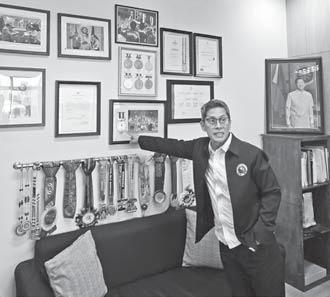


 By Josef Ramos
LONG before Samantha Kyle Catantan—and Maxine Esteban, too—were to qualify for Olympic fencing, there was Walter Francis “Wawit” Torres.
Because fencing has always been a sport connected to nobility, the sport doesn’t pierce the realm of the ordinary Filipino sports fan who’s enthusiasm is focused on team sports—volleyball and basketball.
“It was the biggest competition I joined,” Torres told B USINESS M IRROR in an interview in his office at the Philippine Sports Commission where he’s one of the four commissioners. “That was really a dream.”
Torres was one of 24 Filipino athletes who competed at the 1992 Barcelona Olympics, a good 32 years separation from Catantan and Esteban’s—who switched citizenship to Ivory Coast—qualification for the Paris Olympics in July.
The 56-year-old who taught at Ateneo de Manila before his appointment at the PSC, competed in men’s foil—but with Europe’s powerhouse fencers dominating the sport and fencing relativelt way below the order of priority in the country, Torres could only compete in the first round.
Looking back, Torres said the sport wasn’t much of a focus by then.
“I felt I could have performed better,” he said. “Because my training in Germany for three and a half months weren’t that productive, unlike fencers today that they have more opportunities.”
Today’s Filipino fencers indeed are better off in terms of government and private sector support as the sport has managed its way to the mainstream— the University Athletic Association of the Philippines, for one, has fencing as one of its 15 medal sports. Flash back to Torres’s journey to Barcelona and his qualification was hinged on the fact that he was then Southeast Asia’s best in men’s foil.
“A tripartite commission made it possible for my being an Olympian, ” Torres said. It started at the 1987 SEA Games in Indonesia where fencing was adopted as a medal sport and four years later in 1991 when Manila hosted the biennial games, Torres won a gold medal, a feat he validated by topping the event at the South East Asian Fencing Federation Championships in early 1992.
Those dominant results in the event was his ticket to Barcelona.
“In my case, it was the standards of my ‘proven ability’ were my gold medals in the SEA Games and South East Asia championships proved that I was the best in the region,” said Torres, who went on to become a dentist from the University of the Philippines after his competitive days.
The tripartite group composed of fencing’s international federation and the International Olympic Committee and Philippine Olympic Committee allowed Torres a wild card entry to the Summer Games, an opportunity that has etched his name in the annals of Philippine sports.
With his Olympic experience, Torres believes Catantan has a bright future with countless opportunities presenting themselves before the former University of the East standout and many-time UAAP champion.
“They have more competitions and exposure now because of the support of the PSC,” said Torres, who was coach at Ateneo and the national team from 1996 to 2020.
“And for Sam herself, she’s very brave, she qualified outright.”
“Her journey is different than mine,” he added. “I salute her courage and heart.”
Catantan directly qualified for Paris after she won the women’s foil gold medal at the Asia-Oceania Zonal Olympic Qualifier in Fujairah, the United Arab Emirates, last April.
The 22-year-old Pennsylvania State University scholar beat a taller and with a longer reach opponent, Kazakhstan’s Sofiya Aktayeva in the final despite a hurting left knee.
“For now, she must recover or attend to her injury,” said Torres, who’s a sports man for life—his wife Johanna Ruiz Torres was a former national shooter with two of their kids—Iñigo a football goalie, Iñaki an active fencer and Nicole a recreational sports buff—doing what they did best before.
“Enjoy the moment,” Torres said of Catantan. “She deserves it, but come competition day, she should repeat what she did in the UAE and I’m pretty sure the possibility of success will be there.”
THERE are sports and there is the big game hunting sport.
Truth is, very few Filipinos can claim this sport as theirs, for one, it’s certainly not for the faint-hearted and animal lover, it’s also a sport for those who can afford.
Former Sur Governor Luis “Chavit” Crisologo Singson, a bigger than life political figure, perfectly fits into the role of a big game hunter—he’s been in the sport since the early 1980s and still looks forward to future hunting expeditions.
Singson, for more than three decades now, has travelled a lot to hunt to complete his bucket list of big game animals and has his impressive collection of trophies that on display in Baluarte, his 80-hectare wild






PARIS—One player said a French Open spectator spat chewed gum toward him. Another, No. 1-ranked Iga Swiatek, chastised the crowd at the main stadium for making too much noise during points.
So the folks in charge of the Grand Slam event at Roland Garros decided enough was enough: Tournament director Amélie Mauresmo said Thursday that—Sacré bleu!—fans now are banned from having alcohol while attending matches. Which, not all that surprisingly, was not necessarily a huge hit with some of those paying for tickets.
“They should let us drink,” said Ana Malevukovic, a 37-year-old plastic surgeon from Serbia, standing near a bar selling a “garden spritz” outside Court Philippe Chatrier.
“It’s allowed everywhere else. Why shouldn’t it be allowed at a tennis match?”
In another part of her effort to rein in the rowdiness at what is supposedly a genteel sport, Mauresmo—who won two Grand Slam titles as a player more than a decade ago—said security would be tightened around the site of the major tournament held annually in southwest Paris.
“Until now, alcohol was allowed in the stands. Not in every stand; not in the [VIP section of Chatrier], for example,” she said. “But now it’s
animal sanctuary in Ilocos Sur.
Singson, in an interview with BusinessMirror in his Corinthian Gardens residence, said his interest in hunting animals—at first wild deer and small game—began in the Ilocos Sur wilderness.
Then friends interested him to go for the big game and he did promptly and flew to Australia and New Zealand where the deer are bigger and more agile and his next stop was Zimbabwe where the opportunities included the biggest of the “Big Four,” elephants.
While in Africa, Singson got to hunt lions, tigers, impalas and leopards.
“The leopard is one of the most challenging,” he said. “We hunted at night and it took us three nights to finally get one, with my guide keeping on reminding me that the leopard
over. Everywhere.”
This is not unprecedented in sports. Just one, more extreme, example: Drinking alcohol while in view of the field was banned from all soccer matches in Britain nearly 40 years ago following years of fan violence. Go to a game there nowadays, and the stadium concourses are packed with people guzzling beers.
Guilherme Kagaya, attending the French Open for the first time, sipped beer from a plastic commemorative cup on a walkway not far from Court Suzanne Lenglen, where he had been following along as Alexander Zverev beat David Goffin in the second round.
Kagaya, a 40-year-old from Brazil who works in advertising, took a glass-half-full view of the matter.
“For me, it’s not a problem, because at least I can still drink outside the stadium,” he said. “It’s actually more normal to have a beer outside.”
The ban follows concerns about the behavior of those watching the competition.
It was Goffin, a Belgian, who complained after his first-round

is very intelligent and we must outsmart him.”
“On that third night, we saw a leopard atop a tree, put a bait, waited for the perfect moment
and I took it,” he said.
Singson’s amazement with the animal enthused him to adopt a rare black leopard he named Blackjack.
victory Tuesday against a French foe on Court 14—capacity: 2,158—that he was “insulted for thee-and-a-half hours” by the partisan supporters.
The worst part? The piece of gum sent in his direction during the match.
“It’s a total lack of respect. I think it’s just too much. It’s becoming soccer. Soon there’ll be smoke bombs, hooligans and fights in the stands. I think it’s getting ridiculous. Some people are there more to cause trouble than to enjoy the atmosphere,” Goffin said, noting that he thought things are worse at the French Open than the US Open, Wimbledon or Australian Open.
“Here, it’s really an unhealthy atmosphere, I think,” said Goffin, who has reached the quarterfinals at three of the four Grand Slam tournaments. “You can feel that people are talking to you and trying to throw you off balance with really harsh words. I’m not going to repeat what I heard.”
Mauresmo said she thought spectators at sports events have pushed the boundaries since coming out of the Covid-19 pandemic.
“People went back to the stadiums and were eager to relive that kind of emotion.
And then we noticed, like with [Goffin] the other day, that there were some people who actually crossed the line,” she said. “So what I’d like to say is, yes, we’re happy that there’s an atmosphere, that there’s emotion, that there’s a crowd. On the other hand, we’re going
Game hunting is fulfilling.
“But the biggest fulfillment of a big game hunter is hitting the game while it is in motion,” he said. “A moving target is the challenge and that is where the fulfillment lies.”
He added: “I’ve experience it dozens of times but the challenge remains the same.”
Singson counts big cats as among his precious trophies— three lions, two tigers and that one leopard—but his collection also includes a hippopotamus, buffalos, stags, black and brown bears and even a polar bear in his sortie in the North Pole.
He said reaching hunting destinations are also challenging.
“I once jumped from a moving chopper in the mountains because there was no place to land,” he said.
to be adamant about respecting the players and the game.”
Swiatek, seeking her fourth trophy in five years at Roland Garros, dispensed with the usual “Thank you for cheering for me!” type of postmatch speech, and instead told the fans they were too disruptive during points when she was getting past former No. 1 Naomi Osaka in a thrilling three-set contest Wednesday.
“When you scream something during the rally or right before the return, it’s really, really hard to be focused,” Swiatek said.
“The stakes are big and there is a lot of money here to win. So losing a few points may change a lot,” she said. “So please, guys, if you can support us between the rallies—but not during—that would be really, really amazing.”
Osaka, for one, did not have an issue with what was going on, saying it was nothing compared to the sort of stuff one sees and hears during the US Open, where she won two of her four Grand Slam titles.
“I thought the crowd was really cool. For me, I feel like those are the moments I live for. Also, it just makes me feel like the crowd is having fun, and I think at the end of the day that’s what I want the most. I want people to—like, no matter if I won or lost—[say], ‘Oh, I watched the match and I had a great time,’” Osaka said.
“For me, I didn’t have a problem with the crowd at all,” she added. “But I’m also used to the New York crowd.” AP
Hunting for trophies is on one side of the coin, on the other side is his love for animals which is very evident at his sprawling Baluarte.
Singson narrated that he once bought yearling giraffes, all above six feet, but the available cargo plane refused to load them because they were simply too few.
Tired of waiting after almost two years, he decided to rent a Boeing 777 and loaded 27 giraffes to bring them home to Ilocos Sur.
Now, all his animal pets are for the public to be awed at and treat as if they’re pets.
“I wanted Ilocos Sur to have a different attraction that’s why I opened this wildlife sanctuary in Baluarte,” he said.
Different attraction indeed as guests at Baluarte’s Safari Hotel get that unique experience to be up close and personal with animals which normally roam in the wild.
So what’s left in Chavet’s list of game he wants to hunt?
“A werewolf, or maybe Dracula,” he said.
BARCELONA Olympian Walter Francis Torres points to one of his precious gold medals in his Philippine Sports Commission office and says Samanta Kyle Catantan will perform strongly in Paris. TENNIS fans queue to buy beer at Roland Garros. LUIS “CHAVIT” CRISOLOGO SINGSON introduces Blackjack to the author and commissioner Fritz Gaston of the Philippine Sports Commission.

Caren Tevanny still rocking; Adjeng ‘still kilig’
Tevanny, ex-General Luna guitarist, has a new single, while Adjeng, who has written songs for other artists, releases her own album


Publisher :
T. Anthony C. Cabangon
Lourdes M. Fernandez
Editor-In-Chief : Concept : Y2Z Editor : SoundStrip Editor : Group Creative Director : Graphic Designers :
Aldwin M. Tolosa
Jt Nisay
Edwin P. Sallan
Eduardo A. Davad
Niggel Figueroa
Anabelle O. Flores
Contributing Writers :
Tony M. Maghirang
Rick Olivares
Jill Tan Radovan
Reine Juvierre S. Alberto
John Eiron R. Francisco
Pocholo Concepcion
Francine Y. Medina
Rory Visco
Bea Rollo
Trixzy Leigh Bonotan
Photographers :
Bernard P. Testa
Nonie Reyes
Y2Z & SOUNDSTRIP are published and distributed free every Sunday by the Philippine Business Daily Mirror Publishing Inc. as a project of the
The Philippine Business Mirror Publishing, Inc., with offices on the 3rd Floor of Dominga Building III 2113 Chino Roces Avenue corner Dela Rosa Street, Makati City, Philippines. Tel. Nos. (Editorial) 817-9467; 813-0725.
Fax line: 813-7025
Advertising Sales: 893-2019; 817-1351,817-2807. Circulation: 893-1662; 814-0134 to 36. www.businessmirror.com.ph


IHAVE vague memories of General Luna, the all-women Pinoy rock band that Warner Music Philippines launched in 2010. Was it at SaGuijo that I watched the group play live?
In any case, what mattered was, it was quite a sight—Nicole Laurel Asensio on vocals, Caren Mangaran (lead guitar), Audry Dionisio (rhythm guitar), Alex Montemayor (bass), and Bea Lao (drums)—and the band sounded loud and proud.
General Luna disbanded after only three years. Asensio has since gone solo in various incarnations (mostly with a jazz band). Dionisio is currently a member of Ely Buendia’s band. No idea what Montemayor and Lao have been up to.
Which brings us to Caren, who has dropped her last name and is now using her middle name, Tevanny. In the past few years, she has released a few singles on Spotify, and my impression is that these songs mirror the problems of a complicated relationship (“Hiram) and depression (“Anti-Hero—Sick Viral Version”).
On her new single, “Pano,” launched recently with a live performance at Supersam BGC, Tevanny goes full on as a rock guitar goddess, channeling classic heavy metal and grunge, with lyrics about, again, the woes of a strained love life: “Pa’no pa ba ibalik kung lilisan kang paulit-ulit/ Bakit papalayain kung ’di na sa ’kin/Pa’no pa ba mahalin kung hindi na para sa ’kin…”
It doesn’t have to be personal, or even about romance, Tevanny says about “Pano.”

I think what she means is that a song sounds better if it’s sad or conflicted. Here’s Tevanny obliging me with an online chat.
You sounded intense at the launch of “Pano.” How long has it been since you last performed before a live audience? It’s not that long since I’ve been busy with various productions while getting ready for this new track. But my last major performance in front of a large audience was with General Luna
Is that your regular band you played with at the event? Tell us about it. Fortunately, all of them were present at the event. I’ve been collaborating with these musicians for quite a while. Initially they did sessions for me. However, as time passed, we developed a close friendship. They are not only cool and patient, but also contribute ideas and do things with the band’s best interests in mind.
What have you been doing in the last few years, musically or otherwise?
I’ve been focusing on enhancing my songwriting and singing skills. While I consider myself a proficient guitar player, I now realize the importance of developing my abilities in other aspects. I enjoy playing the guitar and exploring new techniques, but I also want to strike a balance between musicality and singing and songwriting.
Are there more new songs we can look forward to hearing soon?
Absolutely! I’m planning to release new tracks and an album this year. I’m feeling nervous and excited, but I’m prepared for whatever comes my way.

What’s on your playlist these days?
I’ve been listening to Caroline Polacheck, Bring Me the Horizon, Taylor Swift, Bjork, Halsey, Polyphia, Narvent, and Architects.
Unraveling Adjeng
Meanwhile, another woman artist, Adjeng, has released Unravel, an eighttrack, all original album also available on Spotify.
Born Adrienne Antoinette Buenaventura, Adjeng has been around the scene, writing songs for other artists and performing with them.
At her album launch at Red Rhino, Adjeng sang classic pop-rock covers and tried her best to please the crowd despite being under the weather.
What’s notable about Unravel is that it puts me in a good mood with the songs’ light, breezy melodies and head-swaying rhythms which would sound great on a road trip.
Adjeng sings about life from her viewpoint, such its heady thrills (“Rollercoaster”), as well as romantic musings (“More Than a Little”), virtues (“Be Kind”), encouragement (“Kaya Mo Yan”), and the scary feeling of drowning in a helpless situation (“Quicksand”).
Her vocal phrasing in “It Must Be Love” saves it from being just another trite tune.
In “Still Kilig,” Adjeng describes what it’s like to be married for 18 years, laying down a creative recipe for a successful union: “Sa 1 teaspoon ng selos, 10 tablespoons ng lambing, dagdagan ng date nights, 10 cups more understanding, haluan ng 1 kilong halik, unlimited yakap na kay higpit…”
Not every couple can follow it, but if they do, what a fu**in’ wonderful world it would be.






“Heavy Rain”
JUST in time for the start of rainy days, “Heavy Rain” from Cebu’s folk rockers Hollywood Frank Hogan effortlessly weave elements of folk, shoegaze, and indie rock into a captivating sonic piece. A brainchild of the band’s guitarist/vocalist Ricky Coyoca, the debut track depicts a person struggling both physically and mentally out in the desert, suffering from the intense heat and calling out for heavy rain.
“It was inspired by the pandemic,” the band shares. “Although it was written after the pandemic, it reflects on how freedom feels after experiencing such confinement, that seemingly unending feeling of being trapped.” Ricky added he wrote the song in ten minutes drawing on the thought of how it feels to be trapped, waiting for some form of salvation. It reflects the kind of creative impulse that shows a band’s uncanny ability to channel raw emotion into their music.

JAMES REID
“Hurt Me Too”
A STRIPPEDDOWN ballad that packs an emotional punch, “Hurt Me Too” finds film and music star James Reid grappling with the realities of a heartbreak. The Tim Marquez-produced track shows James at his most vulnerable, looking back at the ghost of his past with equal moments of fondness and pain.
“I wrote the song three years ago together with Seth Reger, an artist from LA,” the talented multi-hyphenate shares. “He really helped me tap into these emotions that I didn’t even know I was feeling at that moment.” His latest single also marks a significant shift in his sonic and lyrical direction—a crucial decision that Reid admits, would define the next phase of his future music direction.





IN this powerful new track “Subok Lang,” influential hip-hop artist Gloc-9 touches on the challenges and struggles he faced while pursuing a career in music. The song encourages listeners to embrace their passion, remain steadfast and resilient and push their limits. His signature storytelling and impactful lyrics shine through as he shares his personal journey in overcoming obstacles and defying expectations. With its impeccable delivery, sharp rhymes, and infectious beats, “Subok Lang” showcases Gloc-9’s unwavering dedication to creating words and music that matter.

“Solid Kagabi”

A FIERY and unapologetic anthem, Hero’s latest track, “Asa Ka,” blends catchy beats and brutally honest lyrics that will resonate with anyone who has dealt with deception and manipulation. It reminds us not to let anyone take advantage of our kindness. So turn up the volume, gather your inner strength, and join Hero in declaring, “Hindi mo na ko maloloko, asa ka!” (You can’t fool me anymore, stop hoping). Let’s stand up to deception and show our true selves.

BLENDING elements of alternative rock with a hint of rap, this track offers a unique sonic experience that resonates with those who long for simpler times. Its sense of nostalgia transports listeners back to carefree nights spent with friends filled with laughter, camaraderie, and the bliss of youth.
With its smooth groove and laid-back vibe, “Solid Kagabi” paints a vivid picture of carefree times when present responsibilities fade into the background and the only thing that matters is the bonding shared with good company. The track becomes a heartfelt ode to bonds that withstand the test of time, and a testament to the enduring power of friendship.
AHEAD of releasing her debut EP this year, The Ransom Collective’s violinist/singer-songwriter Muri drops its first single, “Afternoon” which was inspired by her personal experiences as a young woman navigating career and life in a country far away from home
Currently based in London and Paris, Muri shared, “I’ve been working on this song for quite a while. I find it freeing to open up about being vulnerable and share a piece of myself through songwriting. Sometimes, expressing what you really feel helps you gain a deeper understanding of yourself as a person and as an artist.
IN 2023 alone, the board game industry topped $16.8 billion and is projected to reach $40.1 billion by 2032.
Classics like “Scrabble” are being refreshed and transformed, while newer inventions such as “Pandemic” and “Wingspan” have garnered millions of devotees.
This growing cardboard empire was on my mind when I visited the American Antiquarian Society in August 2023 to research its collection of early games. As I sat in that archive, which houses such treasures as the 1640 Bay Psalm Book, the first book printed in British America, I beheld another first in American printing: a board game called “The Travellers’ Tour Through the United States.”
This forgotten game, printed the year after Missouri became a state, has a lot to say about America’s nascent board game industry, as well as how a young country saw itself.
An archival find PRODUCED by the New York cartography firm of F. & R. Lockwood, “The Travellers’ Tour Through the United States” first appeared in 1822, making it the earliest known board game printed in the US. It was an imitation of earlier European geography games, a genre of edu-

cational game. Geography games generally used a map for a board, and the rules involved players reciting geographic facts as they race toward the finish.
By the year the game first released, the American market for board games was already becoming established, and middle- and upper-class parents would buy games for their families to enjoy around the parlor table.
At that time, New Year’s—not Christmas—was the holiday for gift giving.
Many booksellers, who earned money from the sale of books, playing cards and other paper goods throughout the year, would sell special wares to give as presents. These items included holiday-themed books, puzzles—then called “dissected maps”—and paper dolls, as well as games imported from England such as “The New Game of Human Life” and “The Royal And Entertaining Game of Goose.”
Since “The Travellers’ Tour” was the first
board game to employ a map of the US, it might have been an especially interesting gift to American consumers. It’s difficult, however, to gauge just how popular “The Travellers’ Tour” was in its time. No sales records are known to exist, and since so few copies remain, it likely wasn’t a big seller.
A global database of library holdings shows only five copies of “The Travellers’ Tour” in institutions around the US. And while a handful of additional copies are housed in museums and private archives, the game is certainly a rarity.
An idealized portrait of a young country
THOUGH not necessary to play “The Travellers’ Tour,” the descriptions provided for each location tell historians a lot about America’s national aspirations. These accounts coalesce into a flattering portrait of the nation’s agricultural, commercial, historical and cultural character.
Promoting the value of education, the game highlights institutions of learning. For example, Philadelphia’s “literary and benevolent institutions are numerous and respectable.” Providence boasts “Brown University, a respectable literary institution.” And Boston’s “citizens…are enterprising and liberal in the support of religious and literary institutions.”
As the game pieces meander toward New Orleans, players learn about Richmond’s “fertile backcountry” and about the “polished manners and unaffected hospitality” of the citizens of Charleston. Savannah “contains many splendid edifices” and Columbia’s “South Carolina College bids fair to be a valuable institution.”
Absent from any corresponding descriptions, however, is any mention of what John C. Calhoun called America’s “peculiar institution” of slavery and its role in the fabric of the nation. And while four entries briefly reference American Indians, no mention is made of the ongoing dispossession and genocide of millions of Indigenous people.
Though it promotes an American identity based on a sanitized version of the nation’s economic might and intellectual rigor, “The Travellers’ Tour” nonetheless represents an important step toward what has become a burgeoning American board game industry.
Two centuries later, board game culture has matured to the point that new titles such as “Freedom: The Underground Railroad” and “Votes for Women” push the genre to new heights, using the joy of play to teach the history of the era that spawned America’s first board game. The Conversation
FROM flyers on the street, billboards hanging, and TV commercials passing through the screen, traditional marketing tactics don’t seem to cut it anymore in an era dominated by smartphones and social media.
Defined by their digital immersion from birth, Gen Z (born 1997-2012) and Gen Alpha (born 2013 onwards) are the ultimate digital natives. They like to get their information fast and in engaging ways. They prefer streaming and social media sites over traditional television and radio. This shift in behavior highlights the need for brands to level up their strategies to connect with them.
This necessary shift in strategy has found a surprising ally in gaming. Once
dismissed as merely distracting and timeconsuming, gaming has now evolved as not only a popular form of entertainment but as a transformative medium uniquely suited to connect with and engage these young, dynamic audiences.
The gaming industry has emerged as a central figure in this narrative. In the Philippines, there are approximately 43 million gamers, predominantly from the younger generations. In 2023, a report revealed that 56 percent of Filipino Gen Z turn to gaming for stress relief. Additionally, more than half of Gen Alphas and 48 percent of Gen Z respondents feel that gaming enhances their connections with friends and family.
The potential of gaming has also been recognized by the academe. Previously viewed as a mere distraction, educators are now noting the positive impacts that gaming can deliver. In a statement, former
Department of Education (DepEd) Makati Schools Division Superintendent Dr. Carleen S. Sedilla emphasized the ability of gaming to engage youth passions, channeling them into productive pursuits within computers, programming, and the broader STEM field.
“Games are a means of capturing the passions of the youth and translating them into meaningful endeavors in computers, programming, and the STEM field,” she noted, highlighting how gaming bridges entertainment with educational and social contributions.
All these underscore the integral role of gaming in the lives of young Filipinos and highlight its potential as a platform for meaningful connection, dialogue, and community building.
Anchored by creativity and a deep understanding of the demographic, a plethora

of strategies await those who are ready to join in the fun and set on hitting the “start” button. However, while fun can be a tool for engagement, truly resonating with Gen Z and Gen Alpha requires brands to go deeper than mere entertainment. Today’s youth go beyond passive consumption and look for brands that reflect their values, advocate for social causes, and contribute positively to their communities.
Indeed, gaming has become an immersive canvas for storytelling, brand interaction, and community building, forging connections with Gen Z and Gen Alpha that transcend the traditional boundaries of marketing.
With a dash of creativity, a clear strategy, and forward-thinking goals, there is no “game over” when it comes to leveraging the interactive world of gaming for effective and lasting engagement with the youth.