By Justine Xyrah Garcia
IT has been more than a decade since Mohamed Nasheed, the former president of the Maldives, became the face of climate vulnerability on the global stage.
Once imprisoned for his activism, Nasheed would later cross oceans—figuratively and quite literally—to demand that world leaders recognize what climate change meant for countries like his.
Because for many island nations, it is not just an environmental crisis. It is an existential one.
Now serving as SecretaryGeneral of the Climate Vulnerable Forum (CVF), a bloc of 74 countries disproportionately affected by climate change, Nasheed is once again at the forefront of the fight.
“We are suffering more and more,” Nasheed told BusinessMirror in an exclusive interview on a quick visit to Manila. “One storm can wipe away 20 percent of your GDP. In the Caribbean, 40 percent overnight. This is the scale.”
Before taking the helm of the CVF, Nasheed was best known for ushering in democratic reforms in the Maldives.
His presidency dismantled 30 years of dictatorship, restored civil liberties, and introduced democracy to millions of Maldivians who never thought such a word could exist.
Even as president, however, the most pressing threat he faced came not from politics—but from the sea.
Rising sea levels threatened to engulf entire islands. Ocean acidication weakened marine ecosystems. Coral bleaching wiped out large sections of the reefs that had long sustained the country’s fisheries and tourism, the backbone of the Maldives’ economy.
“It’s depressing to see that [environmental degradation].... We are trying to convince others and everyone that there is a better way of doing things…done more responsibly,” Nasheed said. What has changed, what has not?
IN his decades-long campaign, Nasheed acknowledged that while it’s undeniably slow, he has still seen some progress.
Media outlets are more willing to connect natural disasters to human-induced climate change. Lawmakers are starting to lead discussions on how to transition to a greener economy.
Even the private sector has started moving, albeit cautiously.
“When in the ’90s, for instance, people just didn’t believe. They said, ‘Ah, this is just the weather.’ But now people have come to realize that there is something going on,” he said.
Even the business sector has begun to move. In Southeast Asia alone, green investments rose by 20 percentage points—from $5.2 billion in 2022 to $6.3 billion in 2023, according to a joint report by Bain & Company, GenZero, and Temasek.
But while public awareness and private capital have increased, sup-

to
The
In
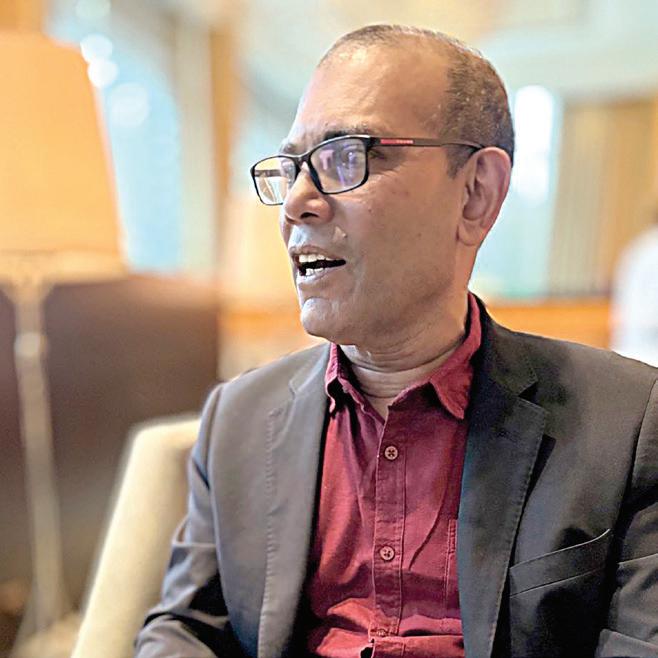
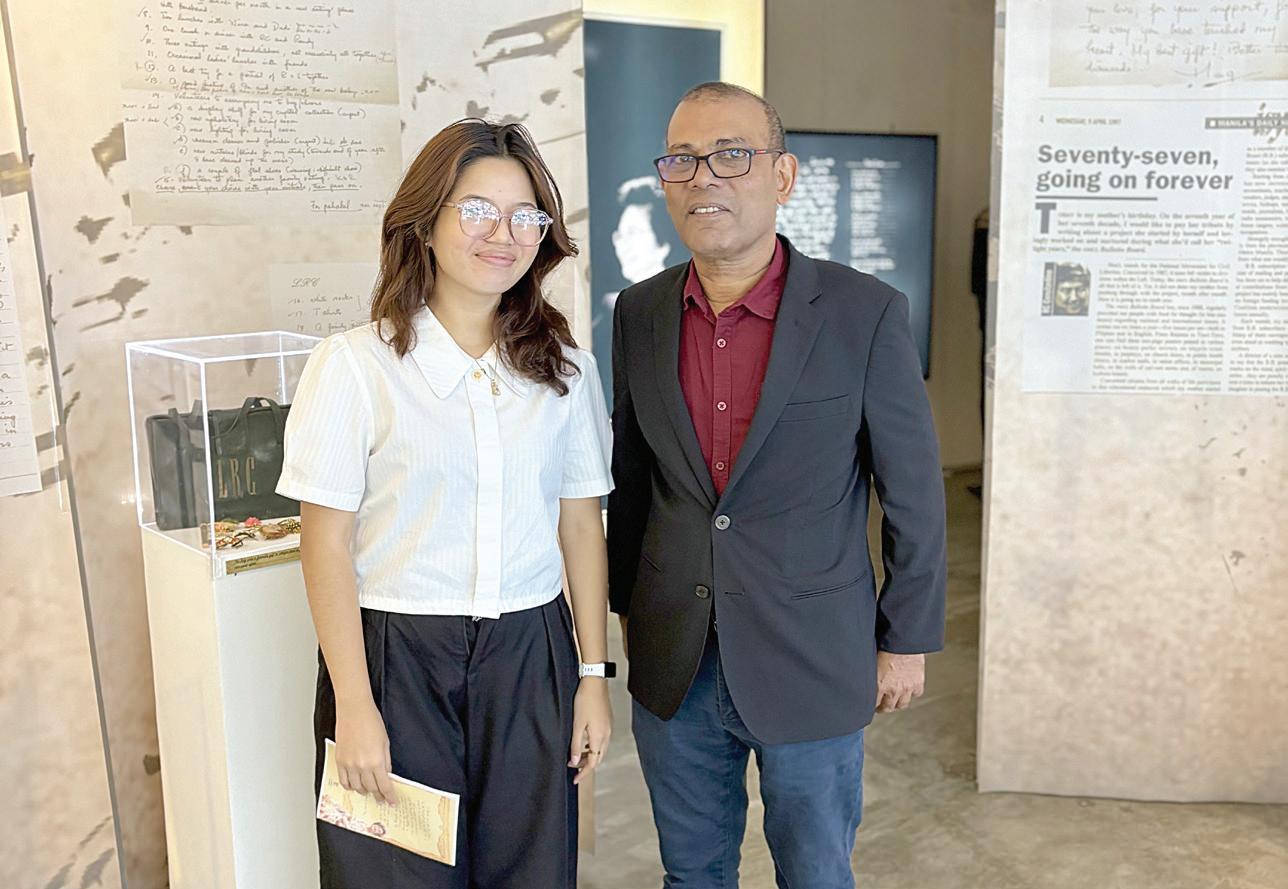
Former Maldives president Mohamed Nasheed, now SecretaryGeneral of the Climate Vulnerable Forum, is rallying island nations to demand urgent climate action—not just to survive, but to stay rooted where they are. In an interview during his Manila visit, Nasheed warns that vulnerable economies can lose up to 40 percent of their GDP overnight due to climate disasters, insisting, “You can relocate people. But you can’t relocate the essence of a place.”
PHOTO BY RED CONSTANTINO

sonally during the Copenhagen climate summit.
“It was promised to me.... They pledged, but the money doesn’t come,” he said. “And even the Loss and Damage Fund, so far it only has $700 million.... But the real value of what was given to developing countries…I don’t think it would reach even $200 million to $300 million.”
Nasheed believes the reason lies in the Global North’s continuing unwillingness to acknowledge responsibility.
“One is Western countries’ unwillingness to recognize.... They have not accepted that they have damaged the planet so much that it is their fault and because of their wrongs that we are suffering,” he said.
“We are not suffering from what we did. We suffer from what they have done,” the CVF chief added.
Instead of financing climate action, Nasheed observed that many developed countries have diverted funds to rearmament and military spending—especially in the wake of geopolitical tensions in Europe and the Middle East.
“In the 1970s, there was a UN resolution to spend 0.7 percent of GDP on development aid. But no one is sticking to that. And now, even while it is so low, they are reducing the amounts,” Nasheed said.
Bearing the brunt
NOWHERE is climate injustice more visible than in nations like the Maldives and the Philippines—countries that have not contributed much to the global emissions but face the worst of its consequences.
Stronger and more frequent storms threaten to wipe out entire atolls in the Maldives, while saltwater intrusion and coral bleaching undermine its tourism and fishing sectors.
In the Philippines, successive recent typhoons like Crising, Dante, and Emong have displaced thousands of people and damaged thousands of homes.
Despite these risks, the use of fossil fuel is still staggering.
Independent energy think tank Ember earlier found that 59 percent of the global energy mix was still provided by fossil fuels in 2024.
Nasheed said the urgency for transition is clear, but unfortunately, implementation for most countries remains sluggish.
In the Philippines alone, Ember reported that solar and wind contribute just 3.8 percent as it heavily relied on fossil fuels (79 percent) in 2024—despite the country’s vast solar potential and favorable wind corridors.
“The thing about renewables is it’s cheaper than fossil fuels. I mean, renewables today can be around four to five US cents a unit .... even [the] cheapest fossil fuel, you can’t get it below 10 cents, US cents,” Nasheed explained. Nasheed also dispelled the notion that shifting to green energy would displace thousands of workers.
In fact, he argued that a green transition could generate more employment if planned with a “just transition” framework, allowing fossil fuel workers to shift into renewable sectors.
This complements the earlier finding of the International Labour Organization (ILO) that the shift to a green economy could create up to 24 million jobs worldwide by 2030.
“Any transition would have leading problems, but I think it will
By Marky Ramone Go
THE Island Garden City of Samal has long been known as an ecotourism destination, famed for its beaches and resorts like the Pearl Farm. Yet, amid its tourism offerings centering on the gifts of Mother Nature, the island still relies heavily on a diesel power plant, a reality many locals find deeply ironic.
For years, Samal drew electricity through a submarine cable linked to the mainland. Then, nearly ten years ago, a ship’s anchor cut the line, plunging the island into a prolonged energy crisis that forced it to rely on costly diesel generators. Promises by the Northern Davao Electric Cooperative (Nordeco) to replace the underwater cable came and went, but delays persisted.
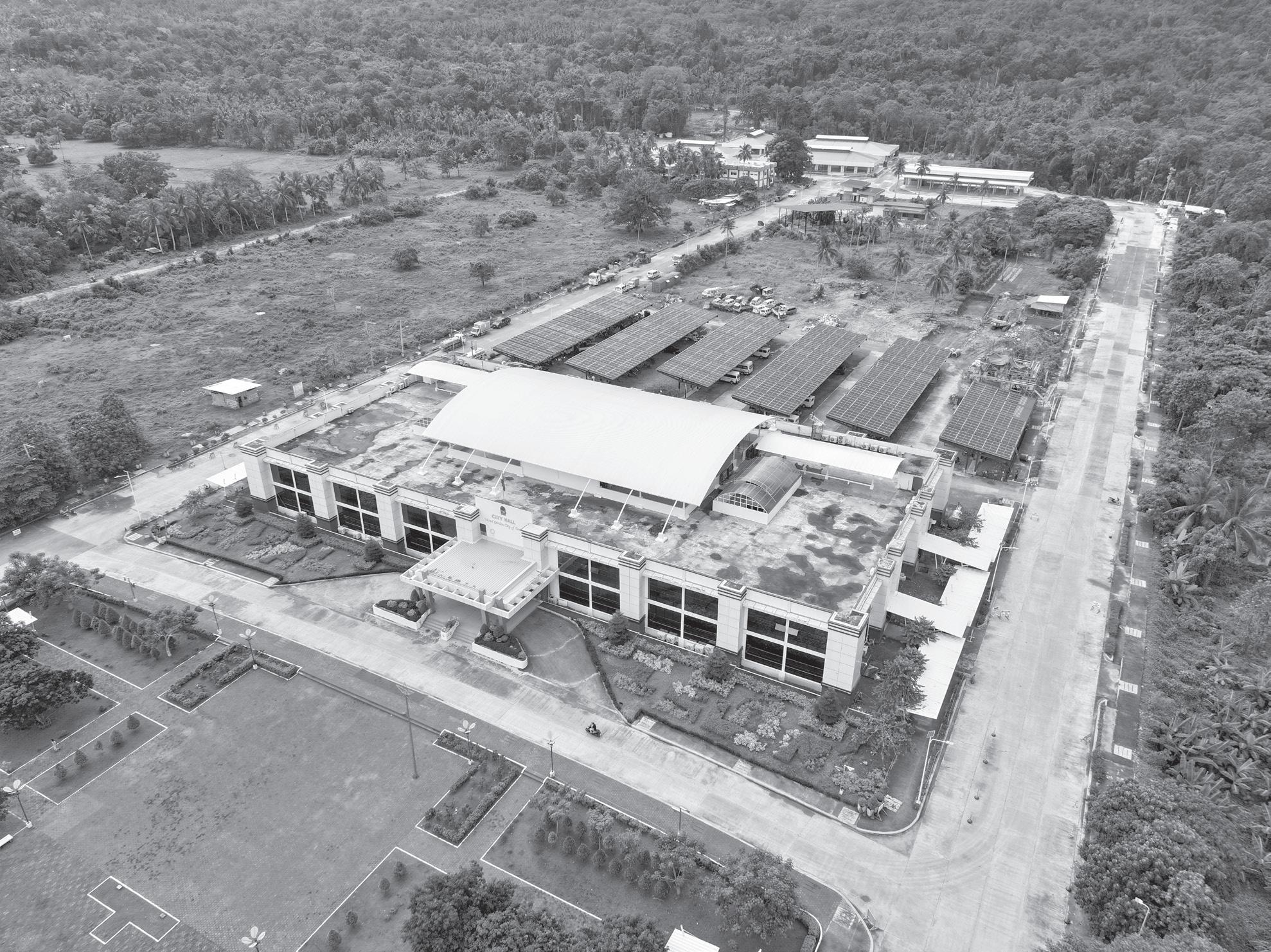
Determined not to remain hostage to an unreliable grid, the city government turned to the island’s most abundant resource: sunlight. Thus emerged the Samal Renewable Energy Project, an initiative that placed more than a thousand solar modules atop the municipal hall’s sprawling 2,690-square-meter parking structure. The design not only expanded parking for 190 vehicles but trans-
formed idle rooftop space into a power plant capable of producing between 380 and 450 kilowatts on a typical day—well beyond the city hall’s average daily consumption of 250 kilowatts.
“We plan to use the excess to power our public market and other facilities,” said City Engineer Matthew Arig. The project, which amounted to P50 million, and was financed through a LandBank loan, is expected to pay for itself within seven to ten years, ultimately saving millions of pesos in electricity costs while freeing up funds for other community needs.
But beyond savings, the solar facility signals a shift in mindset, a move towards energy self-sufficiency and climate responsibility in a region where power outages remain routine.
Samal’s push toward solar has spread beyond city hall. At the island’s Department of Education office, a hybrid solar setup now powers its data center, protecting vital computer systems from the voltage fluctuations that once corrupted
operating systems and disrupted school operations.
Grid-tied systems like those used in Samal remain a practical option, allowing buildings to draw electricity from their own panels while remaining connected to the
main power grid when needed. Excess power feeds back into the grid, offsetting costs and supporting the broader community’s energy needs.
Such local projects reflect a growing movement across Mindanao to harness renewable energy.
Regional advocacy groups, such as Mindanao Goes Solar, continue to champion this cause by hosting expos, fostering knowledge exchanges, and connecting communities with legitimate solar providers. Their vision is clear: to accelerate Mindanao’s transition to clean, affordable, and abundant solar power.
“The theory of change is that Mindanao Goes Solar becomes the primary communicator and knowledge-sharing innovator for solarrelated information in Mindanao,” said Project Head Philline Donggay.
“In doing so, we aim to enrich the local solar ecosystem, foster partnerships, and help the industry achieve solar adoption at scale.” For decades, Mindanao has lagged behind Luzon and the Visayas in power generation, burdened by high electricity costs and frequent outages. But as more municipalities and private-sector partners embrace solar, the island inches closer to a sustainable energy future, one that not only powers homes and schools but also aligns with global climate commitments and sustainable development goals.
In Samal, the shift to solar energy is more than an infrastructure upgrade. It is a statement of intent: a resolve to transform the island into a model of clean energy adoption, showing that even small local governments can light the path towards a greener, more resilient Philippines.
Continued from A1
only get better,” Nasheed added. Adaptation over relocation WITH sea levels rising, some nations have explored “diaspora strategies” in case relocation becomes inevitable. But Nasheed is adamant that adaptation—not relocation—must be the priority.
“We want to stay where we are,” he said.
He recalled a turning point during a visit to a Maldivian island, when an elderly woman approached him and asked: “President, where are you going to take the sounds, the flowers, the butterflies, the colors?”
“You can relocate people. But you can’t relocate the essence of a place,” the former Maldivian president explained.
The science supports his fears. According to the Intergovernmental Panel on Climate Change (IPCC), even if global warming is limited to 1.5°C, many small island states will still experience “high multiple interrelated risks” which could lead to irreversible loss of habitable coastal land.
But rather than flee, Nasheed believes countries should fight for survival by investing in coastal barriers, marine restoration, and early warning systems—like how The Netherlands has begun embracing the concept of “sponge city,” which integrates urban floodplains and drainage areas
to manage stormwater instead of blocking it.
For countries like the Philippines, Nasheed also recommended recreating natural lakes and wetlands to help absorb floods—rather than relying solely on costly hard infrastructure.
“It’s about working with nature, not against it. We need biological solutions, not just engineering ones,” he said.
Rethinking climate finance NONE of this would be possible, however, without adequate funding.
Nasheed argues that instead of relying solely on broken promises from the Global North, countries should innovate in climate financing.
He advocates using public funds—including the Loss and Damage Fund—to de-risk and leverage private-sector investments.
“There are trillions of dollars in private capital seeking good investments,” Nasheed said. “But they won’t come unless there’s project preparation—and once you do that, there will still be a funding gap.”
To bridge that gap, he proposes expanding carbon markets under Article 6 of the Paris Agreement, particularly through mandatory carbon offsets.

He also supports “debt-forclimate” swaps, where developing countries are relieved of sovereign debt burdens in exchange for investing in conservation and adaptation.
“The point is, yes, we need the public money. But we must also use it smartly to unlock more,” Nasheed added.
Wanted: More young people in science FOR the former island president, the stakes of inaction extend far beyond GDP losses or sea-level rise.
“This is not like the wars our parents lived through,” he said. “This is doomsday. If Gen Z gives up, then we have lost this planet.” He acknowledged the weight of the burden on today’s youth— an inheritance they didn’t ask for, but one they must carry.
“Everyone is inheriting things they didn’t do. That’s why it’s called inheritance,” Nasheed said. “But we cannot allow this generation to inherit a dead planet.”
With time running out, he urged young people to take up space in climate leadership and science.
“I think nations should invest more in research, in science. We need more young people studying it...because this isn’t going to be fixed by one generation alone,” he said.
Countries that exceed their Nationally Determined Contributions (NDCs) on emissions, he said, should be required to pay into carbon exchanges that fund conservation efforts elsewhere.
Globally, the race is on to reduce carbon emissions by 45 percent in 2030 and reach net-zero by 2050.
“Some days, it’s bad. You know, you think no one is listening. You think . . . it’s not happening [the way you expected]. But don’t give up.... [We] really have to [keep] having these conversations with the younger generations. And they must never stop doing the good work that they need to do,” Nasheed said.
The climate clock is ticking. And for a long-time climate justice advocate like Nasheed, the message is clear: there’s neither a fallback nor Planet B. What happens next will hugely depend on the choices we make today.
Editor: Angel R. Calso

By Todd Woody
THE leader of one of the most aggressive seabed mining startups spent years invoking global warming to spark interest in extracting avocado-sized rocks rich in electric-vehicle battery metals from the bottom of the ocean.
“We want to help the world transition away from fossil fuels with the smallest possible climate change and environmental impact,” Gerard Barron, the Australian chief executive officer of a company then known as DeepGreen, told a 2019 meeting of the United Nations-affiliated International Seabed Authority, which for a decade has been debating regulations to allow the mining of untouched, biodiverse deep-sea ecosystems in global waters.
That’s not Barron’s pitch anymore. Climate was out and critical minerals were in during an
appearance earlier this year before a congressional committee in Washington, DC. His firm, renamed as The Metals Company (TMC), would help “ensure the nation’s energy security and industrial competitiveness for generations,” Barron said. “China is close behind.” Barron’s new tack is working. In April, President Donald Trump issued an executive order expediting US licensing of seabed mining, departing from international law to unleash what the administration called a “gold rush” to “counter China’s growing influence.”
The country is set to conduct ISAsanctioned tests of two seabed mining machines in the Pacific over the next year.
China already dominates the critical minerals supply chain on land, and TMC had successfully tapped into the US president’s pursuit of China-free metals, expressed as a desire for dominion over Canada and Greenland. The global seabed, TMC repeatedly emphasized as it lobbied politicians and the White House, holds the planet’s largest estimated reserves of minerals like cobalt and nickel in the form of black rocks called polymetallic nodules. These cover the Pacific Ocean floor by the billions.
In an instant, Trump cleared the way for a race to the abyss to extract nodules, even though seabed mining technology remains under development and commercially unproven. At the ISA’s annual meeting in Kingston, Jamaica, delegates on Monday decried Trump’s move, with China’s representative denouncing the US for “unilateralist hegemonic acts” and attempting to “replace the global standards with US standards.”

Within days of Trump’s order, Canadian-registered TMC’s US subsidiary filed the world’s first application to mine the seabed in international waters, including an area it licenses from the ISA.
An $85 million investment from a leading Korean metals processor soon followed. Nasdaq-listed TMC’s shares, which have periodically languished below a dollar, hit a 52-week high of $8.19
on Thursday.
A Silicon Valley startup called Impossible Metals, meanwhile, has applied for a license to explore and possibly mine nodules in US waters off American Samoa, with an aim to raise $1 billion. Then on July 14, a top executive at US defense giant Lockheed Martin told the Financial Times the company is in talks to give seabed miners access to international areas of the Pacific it licenses from the US. A Lockheed Martin spokesperson declined to confirm the report but said, “We appreciate the Trump administration’s focus on ensuring reliable sources of critical minerals, including the ocean.”
On Monday, delegates in Kingston ordered a report on ISAlicensed seabed miners at risk of violating their contracts with the body, a thinly veiled reference to TMC and other companies that might also seek to apply for US licenses to mine in international waters.
The Trump-triggered seabed mining boom faces significant hurdles, though. While TMC has told investors it expects to begin mining within a year of receiving
a license, the technology to extract minerals from the seabed at depths of four kilometers (2.5 miles) could be years away from being deployed at scale. Its competitiveness with terrestrial mining is unknown, as is the economic viability of processing and refining seabed minerals amid seesawing metal prices and the growing market share of battery technologies not reliant on nodule metals. The US lacks such metallurgical capacity, and it could take years to bring online in the few countries outside of China with the potential to refine nodule minerals.
“Given the rapid evolution of batteries and other relevant technologies, there is great uncertainty about the future demand for critical minerals,” researchers at RAND wrote in a recent report. “A seabed mining industry, as a whole, faces considerable opposition from nations and organizations concerned about the potential negative environmental impacts.”
The White House did not respond to a request for comment.
See “Mining,” A4

By Ram Anand
WHEN Anwar Ibrahim came to power in late 2022, it was with the promise of reform: cleaner government, a leaner budget and a break from the patronage politics that had defined his predecessors.
Nearly three years later, not much of that has happened. His plans for targeted subsidies and reduced public spending have largely given way to quick fixes and political compromises.
The Malaysian prime minister on Wednesday unveiled a one-time stimulus package worth about 2.8 billion ringgit ($664 million) with cash handouts and lower fuel prices. He called it an “appreciation package,” but the timing is hard to ignore.
The announcement came just days ahead of a major protest on Saturday, where the opposition— rallying under “Turun Anwar” (Resign Anwar)—is calling for him to step down. They expect a turnout of over 100,000 people, though police estimate a smaller 10,000 to 15,000. It follows another protest earlier this month by hundreds of legal practitioners over alleged interference in the judiciary.
The protests and the government’s sudden turn toward populist spending point to a deeper tension in Anwar’s leadership: his effort to balance fiscal restraint with maintaining political support. Since taking office, Anwar has repeatedly said Malaysia needs to cut its $12 billion subsidy bill and bring down its fiscal deficit. Yet his latest actions are pulling in the opposite direction.
“There is a real risk that the government will announce policies that seem reactionary,” said Asrul Hadi Abdullah Sani, a partner at ADA Southeast Asia, a public affairs consultancy. “Such actions could undermine the administration’s fiscal credibility and derail its economic blueprint.”
Anwar holds a firm grip on power, with a strong parliamentary majority and a term that runs until the end of 2027. But analysts say rising public frustration is shaping up to be the toughest political challenge he’s faced since taking office.
“While Anwar’s position is secure, ongoing public backlash could threaten his chances for a second term,” Asrul Hadi said.
The Prime Minister’s Office didn’t immediately respond to a request for a comment on Friday.
Anwar, at least publicly, has shrugged off the protests, telling Finance Ministry staff there is “no impact” and daring the opposition to bring a no-confidence vote—something they’ve yet to do.
His government has chalked up some achievements, including a record 378.5 billion ringgit in approved investments last year and a new special economic zone with Singapore designed to support future growth.
Higher deficit
THE latest stimulus package is set to raise Malaysia’s fiscal deficit to 4.1% this year, above the government’s target of 3.8%, according to Kenanga Research. It may also derail a longer-term goal of cutting the deficit to 3.5% by 2027.
Anwar’s government has moved to tighten spending by cutting diesel subsidies and expanding the sales and service tax. But petrol subsidies remain politically sensitive. Despite earlier plans to limit fuel subsidies to lower-income groups, the price of RON95, the most popular grade, was recently lowered from 2.05 to 1.99 ringgit for all Malaysians.
“Net savings from the rationalization is expected to be limited,” Kenanga said. The government had estimated that reducing petrol subsidies would save it 8 billion ringgit a year.
Economists at CIMB Securities say the higher tax revenues and savings from diesel subsidy cuts previously announced could still be enough to offset the latest round of spending. Others warn that the bigger risk is whether

the government will cave in and abandon its deficit goals entirely.
“The risk to the fiscal target is if the government later resets the target under political pressure from public backlash,” said Azizul Amiludin, a senior fellow at the Malaysian Institute of Economic Research.
Overspending could rattle investor confidence and push up debt costs, putting Malaysia’s top credit rating among emerging Southeast Asian economies at risk and with it, the country’s ambition to become a high-income, developed nation. For Anwar, it threatens not just his credibility but also exposes him to growing opposition attacks and adds strain to a fragile coalition held together by nearly 20 parties.
That pressure is building. Malaysia is navigating a difficult post-pandemic economy, while also negotiating to lower US tariffs on key exports. The latest cash aid may give domestic consumption a temporary boost, but with Anwar at the halfway point of his term, the room to make difficult decisions—such as on fuel subsidies—is quickly shrinking.
“From his national address it is clear that the government is already on campaign mode,” said Adib Zalkapli, founder of the geopolitical consultancy Viewfinder Global Affairs.
The protest scheduled to take place in Kuala Lumpur on Saturday is the first mass rally that directly challenges Anwar. Organized by the opposition party Parti Islam Se-Malaysia, it accuses Anwar of unfulfilled campaign promises, mishandling the economy and showing authoritarian tendencies, including his controversial attempt to seek legal immunity from a sexual assault allegation.
Authorities say they won’t block the rally. Roads will stay open, but the government’s tone has hardened. The Attorney General’s Chambers on Wednesday issued a warning to civil servants not to take part—echoing the tactics of past administrations Anwar once fought against.
Civil rights groups quickly condemned the warning. “The Attorney General should respect and uphold the provisions of the Federal Constitution. It’s not the job of the AG to issue press statements defending the interests of the ruling political coalition, against whom the rally is targeted,” said Lawyers for Liberty, a group founded by activists who once marched alongside Anwar on the streets.
Anwar, for his part, defended the recent cash handouts, insisting they were part of a broader effort to ease economic strain. His political secretary denied the aid was a pre-election “goodie,” pointing instead to a rise in Anwar’s approval ratings reported by an independent pollster.
Still, the opposition said the government’s cash handouts are a sign of pressure. Wan Ahmad Fayhsal Wan Ahmad Kamal, an opposition lawmaker, called the package a “reactionary” move that shows the administration is aware of the mounting public frustration.
He noted that Anwar, who spent more than two decades as Malaysia’s opposition figure and led multiple street protests for reforms, knows how demonstrations can sway public sentiment and challenge a government’s authority.
“We have given the government a chance of almost three years to do something, to deliver his promises, but he failed,” Wan Fayhsal said. “That’s why we want to hold him accountable.” Bloomberg News
The countries that TMC relies on for seabed mining and processing technology are among the ISA’s 169 member nations (plus the European Union) that oppose unilateral mining in international waters. Amid such backlash, a Japanese corporation, Pacific Metals Company, that planned to process TMC’s nodules has now told investors that it would only “launch operations once the international rules are finalized.”
“All those parties have a legal obligation to ensure that deep sea mining only takes place through the ISA,” says Samantha Robb, an Amsterdam-based attorney who specializes in ocean litigation.
At the ISA, delegates convened behind closed doors on Friday to debate how to respond to TMC’s plans. Barron, who once sat with the delegation of a tiny Pacific island nation that sponsors one of TMC’s ISA contracts, has been absent this year but he’s weighing in from afar. “Amid some noisy grandstanding coming out of Jamaica this month, this is a good reminder … the US has every right to pursue seafloor resources in international waters,” he wrote Wednesday on X. In a statement to Bloomberg Green, TMC says it’s “on firm legal and regulatory footing,” citing the sizable investments it’s recently attracted. The company, however, cautioned investors in a May securities filing that a US mining license wouldn’t be recognized internationally, which could affect “logistics, processing, and market access” for the seabed minerals TMC mines.
‘It’s going to take some time’ MORE than a thousand miles southwest of Mexico on a September morning in 2022, a yellow, 80-metric-ton machine slowly rumbled across the seabed on tank-like treads, a plume of sediment billowing behind. During a two-month test for TMC, the 38-foot-long prototype vacuumed up 3,000 metric tons of nodules, sending them through a tube to a specialized surface vessel called the Hidden Gem.
TMC hailed the trial as a success. Yet any commercial operations are a ways off, even if the US grants TMC a mining license this year, given technological and legal obstacles that must be overcome.
Allseas, a Dutch-owned, Swissregistered offshore engineering and construction company, developed the technology, the world’s only working prototype of a nodule mining system. The company supplies the apparatus to TMC and is its second-largest shareholder. To
meet TMC’s production targets, it must now build a much bigger version capable of harvesting nodules nearly around the clock under crushing pressure far from shore. A US seabed mining license, however, would require TMC to deploy American-built and owned vessels. How the companies would comply with that mandate is unclear. Allseas said in a statement that it would take about two years to engineer the technical systems to support full-scale mining but it won’t begin that work “until we are confident that all relevant regulatory conditions are met.” Allseas, which itself owns an ISA-licensed seabed mining company, has come under pressure from Dutch politicians and activists not to provide technology for unilateral mining.
TMC says it can’t comment while its US mining license application is under review. But in a May 14 securities filing the company said it’s “evaluating US-based vessel” options. However, the US hasn’t built a specialized seabed mining ship like the Hidden Gem, and only eight US ocean-going bulk cargo carriers—large ships that can hold tens of thousands of pounds of nodules and transport them to shore—are in service. Seven of them are at or near the end of their lifespan, according to a 2024 US Maritime Administration report.
Impossible Metals uses a nodule collector, called Eureka, that’s designed to hover above the ocean floor, its robotic claws selecting individual nodules that its artificial intelligence program determines aren’t inhabited by marine organisms. (Scientists estimate that at least 30% to 40% of deep ocean life in the seabed targeted for mining live on nodules.)
The company has delayed a planned trial of the Eureka in an ISA-licensed area of the Pacific until at least 2027 because the technology needs further refinement. And any mining wouldn’t happen until at least the early 2030s. Impossible Metals’ mining license application is for US waters, not areas controlled by ISA. “That’s far less controversial,” said CEO Oliver Gunasekara. “But obviously it’s going to take some time.”
What it takes to process a nodule IN a small lab in Pasadena, California, scientists at an Impossible Metals spinoff called Viridian Biometals are trying to crack a problem about as challenging as pulling nodules out of the abyss: getting the metals out of the nodules. Nodule minerals precipitate out of seawater, forming layers around a piece of whale bone, a shark tooth or another small object at the rate of a few millimeters every million
See “Mining,” A6
By Wafaa Shurafa, Sarah El Deeb & Lee Keath
The Associated Press
DEIR AL-BALAH, Gaza
Strip—Five starving chil -
dren at a Gaza City hospital were wasting away, and nothing the doctors tried was working. The basic treatments
for malnourishment that could save them had run out under Israel’s blockade. The alternatives were ineffective. One after another, the babies and toddlers died over four days.
In greater numbers than ever, children hollowed up by hunger are overwhelming the Patient’s Friends Hospital, the main emergency center for malnourished kids in northern Gaza.
The deaths last weekend also marked a change: the first seen by the center in children who had no preexisting conditions. Symptoms are getting worse, with children too weak to cry or move, said Dr. Rana Soboh, a nutritionist. In past months, most improved, despite supply shortages, but now patients stay longer and don’t get better, she said.
“There are no words in the face of the disaster we are in. Kids are dying before the world ... There is no uglier and more horrible phase
than this,” said Soboh, who works with the US-based aid organization Medglobal, which supports the hospital.
This month, the hunger that has been building among Gaza’s more than 2 million Palestinians passed a tipping point into accelerating death, aid workers
and health staff say. Not only children—usually the most vulnerable—are falling victim under Israel’s blockade since March, but also adults.
In the past three weeks, at least 48 people died of causes related to malnutrition, including 28 adults and 20 children, the Gaza Health

Ministry said Thursday. That’s up from 10 children who died in the five previous months of 2025, according to the ministry. The UN reports similar numbers. The World Health Organization said Wednesday it has documented 21 children under 5 who died of causes related to malnutrition in 2025. The UN humanitarian office, OCHA, said Thursday at least 13 children’s deaths were reported in July, with the number growing daily.
“Humans are well developed to live with caloric deficits, but only so far,” said Dr. John Kahler, Medglobal’s co-founder and a pediatrician who volunteered twice in Gaza during the war. “It appears that we have crossed the line where a segment of the population has reached their limits”
“This is the beginning of a population death spiral,” he said.




By Kareem Chehayeb & Abdulrahman Shaheen The Associated Press
DAMASCUS, Syria—Before the eruption of sectarian violence in southern Syria, Saber Abou Ras taught medical sciences at a university in the city of Sweida and was somewhat hopeful of a better future for his country as it emerged from nearly 14 years of civil war.
Now, like many others in the Druze-majority city in southern Syria, he carries arms and refuses to give them up to the government. He sees little hope for the united Syria he recently thought was in reach.
“We are for national unity, but not the unity of terrorist gangs,” Abou Ras, a Druze, told The Associated Press in a phone call from the battered city.
Clashes broke out last week that were sparked by tit-for-tat kidnappings between armed Bed -
ouin clans and fighters with the Druze religious minority. The violence killed hundreds of people and threatened to unravel Syria’s fragile postwar transition. Syrian government forces intervened to end the fighting, but effectively sided with the clans. Disturbing videos and reports soon surfaced of Druze civilians being humiliated and executed, sometimes accompanied by sectarian slurs. One showed gunmen in military uniform asking an unarmed man about his identity. When he
replies that he is Syrian, the gunmen demand, “What do you mean Syrian? Are you Sunni or Druze?” When the man says he is Druze, the men open fire, killing him.
Hossam Saraya, a Syrian-American Druze from Oklahoma, was shown in another video, kneeling with his brother, father, and at least three other relatives, before a group of men in military garb sprayed them with automatic fire and celebrated.
A religious sect with roots in Islam
THE Druze religious sect is an offshoot of Ismailism, a branch of Shiite Islam. Outsiders are not allowed to convert, and most religious practices are shrouded in secrecy.
There are roughly a million Druze worldwide and more than half of them live in Syria. The others live in Lebanon and Israel, including in the Golan Heights— which Israel captured from Syria during the 1967 Mideast War and annexed in 1981.
Though a small community within Syria’s population of more than 20 million, Sweida’s Druze take pride in their involvement in
BBy Simone Iglesias
RAZIL’S president, Luiz Inacio Lula da Silva, had just returned to his office from a meeting with Indonesia’s prime minister when the reports began blaring on TV.
Donald Trump was threatening to impose 50% tariffs on Brazil if its Supreme Court didn’t immediately dismiss coup attempt charges against his ally, Jair Bolsonaro. Lula, as the veteran Brazilian leader is known, thought it was fake news.
Famously averse to social media—he doesn’t use a mobile phone—Lula hadn’t seen Trump’s post announcing the levies. When aides told him there’d been no official message from Washington, he initially assumed the reports had gotten something wrong, officials familiar with the situation recounted.
But as the shock abated, the 79-year-old leftist quickly settled on his response. Rather than cower in the face of US menacing, he would fight: Brazil, his govern -
ment would say in an official letter to the White House, wouldn’t tolerate incursions on its sovereignty from anyone.
It’s a decision that not only set the tone for relations between the US and Brazil. It has also rejuvenated Lula, who after three years of struggles suddenly seems to have recaptured the political magic that defined his previous two terms as the nation’s leader.
He’s done so by quickly refashioning himself into Brazil’s chief defender from foreign incursion, a nationalistic message that has allowed Lula to seize the sort of patriotic mantle that the left had largely ceded to former president Bolsonaro and the Brazilian right.
At public events and in social media campaigns, Lula has criticized Trump for trying to position himself as an “emperor of the world” who can force countries like Brazil to bend to his every demand.
“President Trump, our sovereignty is built by these Brazilian people, who work and produce,” he
said at an event Thursday. “This country belongs to the Brazilian people.”
And he’s made little secret of who he thinks is really to blame: Bolsonaro, who’s set to face trial later this year and whose son, Eduardo, has spent months in the US lobbying Trump to come to his father’s rescue.
“The guy who tried to do a coup against my government ran away like a rat. Now he sent his son to Washington to ask Trump to intervene in Brazil,” Lula said at the same event. “It’s a disgrace.”
Green and yellow
IT’S a message that has put Lula on the front foot for the first time since he returned to office in 2023, more than a decade after he left the job with approval ratings north of 80%.
For much of his term, Lula has failed to replicate those earlier successes, reliant on an old playbook and a dated communications strategy that have
See “Fake,” A7

liberating the country from Ottoman and later French colonial rule, and establishing the present-day Syrian state.
During the uprising-turnedcivil war that started in 2011, Druze leaders reached a fragile agreement with former President Bashar Assad that gave Sweida semi-autonomy, leaving the minority group to protect its own territory instead of serving in the Syrian military.
Most Druze celebrated Assad’s fall
THE Druze largely welcomed the fall of Assad in December in a rebel offensive that ended decades of autocratic rule by the Assad dynasty.
The Druze were largely skeptical of the Islamist background of Syria’s interim president Ahmad al-Sharaa, especially as he once led the al-Qaida-linked Nusra Front. But many, including influential clerics, supported diplomatically engaging with the new leadership.
Among those more hostile towards al-Sharaa is spiritual leader Sheikh Hikmat al-Hijri and a faction of Druze militias called the Sweida Military Council. There were intense divisions between
them and others in the Druze community for months.
Previous clashes between Druze armed groups and government forces were resolved before the violence could escalate. A security agreement was reached between the Druze and Damascus in May that was intended to bring about long-term calm.
But the recent clashes and sectarian attacks in Sweida have upset that balance, and many Druze appear to have lost hope in reaching a fair settlement diplomatically.
Sectarian violence after the fall of Assad
MANY Druze see the government’s attacks as an extension of a wave of sectarian violence that broke out months ago on Syria’s coast. Clashes between the new government’s forces and Assad loyalists spiraled into revenge killings targeting members of the Alawite minority to which Assad belongs.
A government investigation into the coastal violence found that more than 1,400 people were killed, mostly civilians, and that members of the security forces were implicated in the attacks.
The difference in Sweida, as
years. Unlike terrestrial minerals, where a couple of different metals might be found together in a deposit, nodules contain nickel, cobalt and copper particles scattered throughout every rock, mostly embedded in a matrix of manganese oxide.
“The treatment of materials that contain all four of these elements is not something that is commercially done today,” said Lyle Trytten, a veteran of the metals processing industry and president of Canada-based Trytten Consulting Services.
Viridian scientists are tinkering with rock-breathing microbes that oxidize nodules to extract the most valuable metals. On a June afternoon, senior scientist Kenny Bolster opens up what looks like a freezer to reveal stainless steel bioreactors. As microbes inside oxide the manganese bits, they release nickel, cobalt and copper ions into a solution.
“All this happens at ambient temperature and pressure, which saves an enormous amount of energy and doesn’t produce any toxic waste,” says Viridian CEO Eric Macris.
It’ll take a few years to assess whether the technology is likely to be commercially feasible. “We love what Viridian is doing but we’re just not sure if it will be mature enough when we need it,” says Impossible Metals’ Gunasekara.
If TMC, Impossible Metals and other companies mine the ocean floor under a US license, then federal law requires the minerals to be processed and refined in America. Aside from Viridian’s early efforts, the US has no such capacity.
A single facility in the US capable of processing and refining nodules would cost several billion dollars, and could take up to a decade to reach full production, in part due to the complexities of handling an entirely new feedstock, according to Niels Verbaan, director of metallurgy technical services for Swiss testing and certification company SGS.
The US tax and spending bill enacted on July 4 allocates $5.5 billion to the Department of De -
fense for investments in critical minerals supply chains. But the US has suffered a precipitous decline in metallurgical expertise since the 1980s when universities began to eliminate related degree programs. “We are decades behind now, and it’s going to be very hard to catch up,” says Corby Anderson, a professor of metallurgical and materials engineering at the Colorado School of Mines. New immigration restrictions will also make it harder to recruit engineering talent from overseas.
China has invested heavily in the industry and is now in a position to retrofit existing facilities to process nodules or build dedicated new plants. The country processes 74% of the world’s cobalt ore, according to a 2024 report from the Wilson Center, a nonpartisan think tank, while 97% of global nickel ore processing capacity lies outside of North America. China also maintains more than 80% of the capacity for refining those metals into advanced EV battery materials.
There’s few existing facilities outside of China capable of handling nodules, even if a US seabed miner receives permission to use them and the owners are willing to revamp operations, according to industry executives. “These processing plants are not just sitting there idle begging for feed, they’re all in use today,” says Trytten.
The ‘blue whale’ in the room TMC has found one overseas metals processor willing to make the switch. Last year, Pacific Metals Company of Japan fed a 2,000-ton pile of nodules collected by TMC in 2022 into an electric-arc furnace to produce 500 tons of a material.
In February, it was smelted into a nickel-cobalt-copper alloy.
“These process plants are very expensive to build, they’re very complicated, they’re very risky,” says Jeffrey Donald, TMC’s head of onshore development. “So by using an existing asset, existing operators, you’re really taking that capital off the front end and you’re really de-risking the technology and operations aspect.”
In April, Pacific Metals announced it would transition from processing nickel ore to smelting nodules. But it doesn’t expect full
Abou Ras, the Druze medical sciences professor, sees it, is that the Druze had their own armed factions that were able to fight back.
“They talked about respecting minorities and the different components of Syria,” he said. “But what happened at the coast was a hard lesson for Syrians, and we learned from it.”
The interim president denies that Druze are being targeted
After the violence in Sweida, Al-Sharaa vowed to hold perpetrators to account, and restated his promises since taking power that he will not exclude Syria’s minority groups.
He and other officials have insisted that they are not targeting the Druze, but armed factions that are challenging state authority, namely those led by al-Hijri. Al-Sharaa also accused Israel of trying to exacerbate divisions in the country by launching airstrikes on government forces in the province, which Israel said was in defense of the Druze. The tensions have already created new challenges to forging national unity.
See “Syria,” A7
production to begin until 2029 at the earliest.
TMC has also struck a deal with metals giant Korea Zinc, which is assessing the feasibility of refining nodules into battery materials, a process TMC has so far tested only in the lab.
Whether nations would be enabling deep-sea mining through commercial relationships with US-licensed seabed mining companies was the subject of whispered conversations among ISA delegates this month as they continued drafting mining regulations.
Trump’s move to mine in international waters and TMC’s defiance of the ISA was, as French ambassador Olivier Guyonvarch alluded, “the blue whale” in the room. The UN Convention on the Law of the Sea prohibits unilateral mining by any country or corporation. It also requires the ISA to administer the global seabed for the benefit of humanity, with any royalties from mining divided among member states. The US never ratified the treaty, though it had generally adhered to its provisions and still participates in ISA proceedings as an observer.
Pressure is growing on member states to not supply technology to seabed mining companies the US licenses, process their nodules or buy metals from them, as the treaty mandates ISA countries treat unilateral mining as illegitimate. Thirty-seven ISA countries support a moratorium on seabed mining until its environmental impacts are better understood.
“The risks of bypassing the ISA’s oversight are not only legal, they are also economic,” ISA SecretaryGeneral Leticia Carvalho said in a statement to Bloomberg Green. “Product lines derived from ventures that violate international law will carry reputational and legal concerns that increase the risk of the investment and can undermine its return.” Pacific Metals appears to have gotten the message. In a recent investor briefing, the company, which did not respond to requests for comment, emphasized that when it comes to nodule processing, it considers “international credibility to be a material issue.” Bloomberg News
Syria. . .
Continued from A6
Other minority groups—particularly the Kurdish forces controlling Syria’s northeast, who have been in negotiations with Damascus to merge with the new national army—are reconsidering surrendering their weapons after seeing the violence in Sweida.
A Syrian Druze who lived abroad for over 20 years was in Syria when Assad fell and celebrated with friends and family on the streets of Sweida. He quit his job to move back and be involved with the community. He joined in with people who waved Syria’s new flag that symbolized the uprising, danced, and stepped on torn portraits of Assad.
He said he wanted al-Sharaa to be successful, but now he doesn’t see a peaceful future for Syria’s different ethnic and religious groups with him at the helm.
“In every household (in Sweida), someone has died,” he told the AP. The Associated Press could not confirm that independently as there was no official death toll. However, it was a sentiment frequently shared by Syrians from Sweida. He asked to have his name and other identifying details withheld out of fear for his and his family’s safety.
“I think after the massacres that happened, there is not a single person in Sweida that wants anything to do with this government, unfortunately,” he said. “This government butchered people, and butchered any possibility to (bring) reconciliation and harmonize the south.”
Chehayeb reported from Beirut.
Continued from A4
The UN’s World Food Program says nearly 100,000 women and children urgently need treatment for malnutrition.
Medical workers say they have run out of many key treatments and medicines.
Israel, which began letting in only a trickle of supplies the past two months, has blamed Hamas for disrupting food distribution. The UN counters that Israel, which has restricted aid since the war began, simply has to allow it to enter freely.
Hundreds of malnourished kids brought daily
THE Patient’s Friends Hospital overflows with parents bringing in scrawny children—200 to 300 cases a day, said Soboh.
On Wednesday, staff laid toddlers on a desk to measure the circumference of their upper arms— the quickest way to determine malnutrition. In the summer heat, mothers huddled around specialists, asking for supplements. Babies with emaciated limbs screamed in agony. Others lay totally silent.
The worst cases are kept for up to two weeks at the center’s 10-bed ward, which this month has had up to 19 children at a time. It usually treats only children under 5, but began taking some as old as 11 or 12 because of worsening starvation among older children.
Hunger gnaws at staff as well. Soboh said two nurses put themselves on IV drips to keep themselves going. “We are exhausted. We are dead in the shape of the living,” she said.
The five children died in succession last Thursday, Saturday and Sunday.
Four of them, aged 4 months to 2 years, had suffered gastric arrest: Their stomachs shut down. The hospital no longer had the right nutrition supplies for them.
The fifth—4 1/2-year-old Siwar—had alarmingly low
BBy Sam Mcneil The Associated Press
RUSSELS—France’s highest court is ruling Friday on whether it can strip the head of state immunity of Bashar Assad, the former leader of Syria now in exile in Russia, because of the brutality of the evidence in accusations against him collected by Syrian activists and European prosecutors.
If the judges at the Cour de Cassation lift Assad’s immunity, it could pave the way for his trial in absentia over the use of chemical weapons in Ghouta in 2013 and Douma in 2018, and set a precedent to allow the prosecution of other government leaders linked to atrocities, human rights activists and lawyers say. Assad has retained no lawyers for these charges and has denied he was behind the chemical attacks.
Ruling could open door for prosecutions in other countries
A ruling against Assad would be “a huge victory for the victims,” said Mazen Darwish, president of the Syrian Center for Media which collected evidence of war crimes.
“It’s not only about Syrians, this will open the door for the victims from any country and this will be the first time that a domestic investigative judge has the right to issue an arrest warrant for a president during his rule.”
He said the ruling could enable his group to legally go after regime members, like launching a money
potassium levels, a growing problem. She was so weak she could barely move her body. Medicine for potassium deficiency has largely run out across Gaza, Soboh said. The center had only a low-concentration potassium drip.
The little girl didn’t respond. After three days in the ICU, she died Saturday.
“If we don’t have potassium (supplies), we will see more deaths,” she said.
A 2-year-old is wasting away IN the Shati Refugee Camp in Gaza city, 2-year-old Yazan Abu Ful’s mother, Naima, pulled off his clothes to show his emaciated body. His vertebrae, ribs and shoulder-blades jutted out. His buttocks were shriveled. His face was expressionless. His father Mahmoud, who was also skinny, said they took him to the hospital several times. Doctors just say they should feed him. “I tell the doctors, ‘You see for yourself, there is no food,’” he said, Naima, who is pregnant, prepared a meal: Two eggplants they bought for $9 cut up and boiled in water. They will stretch out the pot of eggplant-water—not even a real soup—to last them a few days, they said. Several of Yazan’s four older siblings also looked thin and drained.
Holding him in his lap, Mahmoud Abu Ful lifted Yazan’s limp arms. The boy lies on the floor most of the day, too weak to play with his brothers. “If we leave him, he might just slip away from between our fingers, and we can’t do anything.”
Adults, too, are dying STARVATION takes the vulnerable first, experts say: children and adults with health conditions.
On Thursday, the bodies of an adult man and woman with signs of starvation were brought to Gaza City’s Shifa Hospital, hospital director Mohammed Abu Selmia said. One suffered from diabetes, the other from a heart condition, but they showed severe deficien -
laundering case against former Syrian Central Bank governor and Minister of Economy Adib Mayaleh, whose lawyers have argued he had immunity under international law.
For over 50 years, Syria was ruled by Hafez Assad and then his son Bashar. During the Arab Spring, rebellion broke out against their tyrannical rule in 2011 across the country of 23 million, igniting a brutal 13-year civil war that killed more than half a million people, according to the Syrian Observatory of Human Rights. Millions more fled to Lebanon, Jordan, Turkey and Europe. The Assad dynasty manipulated sectarian tensions to stay in power, a legacy driving renewed violence in Syria against minority groups despite promises that the country’s new leaders will carve out a political future for Syria that includes and represents all its communities.
The ruling stripping Assad’s immunity could set a “significant precedent” that “could really set the stage for potentially for other cases in national jurisdictions that strike down immunities,” said Mariana Pena, a human rights lawyer at the Open Society Justice Initiative, which helped bring the case to court.
As the International Criminal Court has issued arrests warrants for leaders accused of atrocities— like Vladimir Putin in Ukraine, Benjamin Netanyahu in Gaza, and Rodrigo Duterte in the Philippines—the French judges’ ruling could empower the legal framework
cies of nutrients, gastric arrest and anemia from malnutrition.
Many of the adults who have died had some sort of preexisting condition, like diabetes or heart or kidney trouble, worsened by malnutrition, Abu Selmia said. “These diseases don’t kill if they have food and medicine,” he said.
Deaths come after months of Israeli siege
ISRAEL cut off entry of food, medicine, fuel and other supplies completely to Gaza for 2 ½ months starting in March, saying it aimed to pressure Hamas to release hostages. During that time, food largely ran out for aid groups and in marketplaces, and experts warned Gaza was headed for an outright famine.
In late May, Israel slightly eased the blockade. Since then, it has allowed in around 4,500 trucks for the UN and other aid groups to distribute, including 2,500 tons of baby food and highcalorie special food for children, the Israeli Foreign Ministry said Wednesday.
That is an average of 69 trucks a day, far below the 500-600 trucks a day the UN says are needed. The UN has been unable to distribute much of the aid because hungry crowds and gangs take most of it from its trucks. Separately, Israel has also backed the Gaza Humanitarian Foundation, which opened four centers distributing boxes of food supplies. Hundreds of Palestinians have been killed trying to reach the sites.
On Tuesday, David Mencer, spokesman for the Israeli Prime Minister’s office, denied there is a “famine created by Israel” in Gaza and blamed Hamas for creating “man-made shortages” by looting aid trucks.
The UN denies Hamas siphons off significant quantities of aid. Humanitarian workers say Israel just needs to allow aid to flow in freely, saying looting stops whenever aid enters in large quantities.
El Deeb reported from Beirut, Keath from Cairo.
to prosecute not just deposed and exiled leaders but those currently in power.
Assad allegedly bombed, tortured and gassed civilians
THE Syrian government denied in 2013 that it was behind the Ghouta attack, an accusation the opposition rejected as Assad’s forces were the only side in the brutal civil war to possess sarin. The United States subsequently threatened military retaliation, but Washington settled for a deal with Moscow for Assad to give up his chemical weapons’ stockpile.
Assad survived more than a decade longer, aided militarily by Russia and Iranian-backed proxies. Activists and human rights group accuse him of using barrel bombs, torture, and massacres to crush opponents. But then in late 2024, a surprise assault by rebels swept into Aleppo and then Damascus, driving the dictator to flee for his ally Russia on Dec. 8, 2024. While Darwish and others plan to press Interpol and Russia to extradite him, they know it is unlikely. But an arrest warrant issued by France could lay the groundwork for the former dictator’s trial in absentia or potential arrest if he travels outside Russia. Any trial of Assad, whether in absentia or if he leaves Russia, would mean this evidence could then “be brought to light,” Pena said, including an enormous trove of classified and secret evidence amassed by the judges during their investigations.
largely fallen short of Brazilians’ modern reality.
While Bolsonaro is barred from running again, Lula has insisted on seeking reelection in 2026 and for months his marketing team had been working on a communications strategy for the race. The initial idea, as described by three officials familiar with the plan, was essentially an evolution of the poor-versus-rich rhetoric that he’d successfully employed in the past. This time, the target would be more specific: banks, billionaires and sports gambling companies—a group Lula believes should pay more taxes to finance an expansion of Brazil’s welfare state.
The strategy was being tested on social media with relative success, according to the officials, all of whom spoke on condition of anonymity. But now it’s Trump who is suddenly pushing Brazilians over to Lula’s side.
More than 60% see the US decision to target Brazil as unjustified, according to LatAm Pulse, a survey conducted by AtlasIntel for Bloomberg News. A similar share said they approved of Lula’s foreign policy as the tariff fight raged, while his approval rose to the highest levels of 2025. Trump’s image has plummeted, with 63% of Brazilians saying they see him negatively.
“There appears to be a ‘rally around the flag effect’ in Brazil,” said Jimena Zuniga, Latin America geoeconomics analyst for Bloomberg Economics. “That effect appears to have helped liberal incumbents whose countries have been targeted by Trump earlier this year, notably in Mexico and Canada. Brazil could join that club.”
That such an effect is bene -
Syrians often took great personal risk to gather evidence of war crimes. Darwish said that in the aftermath of a chlorine gas attack in Douma, for example, teams collected eyewitness testimonies, images of devastation, and soil samples.
Others then tracked down and interviewed defectors to build a “chain of command” for the regime’s chemical weapons production and use.
“We link it directly to the president himself, Bashar al-Assad,” he said.
Head of state immunity is ‘almost taboo’ ASSAD was relatively safe under international law. Heads of state could not be prosecuted for actions taken during their rule, a rule designed long ago to ease dialogue when leaders needed to travel the world to meet, said Jeanne Sulzer, a French lawyer who co-led the case against Assad for the 2013 chemical attack.
She said that kind of immunity is “almost a taboo” regardless of the weight of the charges. “You have to wait until the person is not a sitting in office to be able to prosecute,” she said.
But that protection has been whittled away over the years by court’s ruling that the brutality of Augusto Pinochet in Chile, Charles Taylor in Liberia, and Slobodan Milošević in Yugoslavia, to name just a few, merited a restructuring of the world’s legal foundations, said James Goldston, executive di-
fiting a leftist is something of a shock in Brazil, where the right has so thoroughly dominated patriotic messaging over the last decade that the country’s most iconic totem—its famous yellow soccer shirt—became symbols of Bolsonaro support.
Now Lula is wrapping himself in the Brazilian flag. He has painted himself as the last line of defense for some of Brazil’s most vital industries and recognizable companies—including coffee producers and Embraer SA, the world’s third-largest plane maker.
He’s adopted the hallmarks of Trumpism: At events, Lula has donned a blue ballcap emblazoned with the slogan “Brazil belongs to Brazilians.”
And he’s begun to make inroads into another dominion of the nationalistic right, waging a war of memes on social media where the left—in Brazil and beyond—has never managed to match the strength of their opponents.
“Lula wants to tax the superrich,” one popular meme shared by prominent leftist lawmakers read. “Bolsonaro wants to tax Brazil.”
The government’s official social media accounts are now filled with viral Gen Z-coded videos that explain tariff effects and jab at Trump. A TikTok video that uses kittens to explain national sovereignty has garnered more than a halfmillion views. Others highlight Brazilian-made goods.
Brazilians haven’t yet staged the sort of commercial revolts against American goods that Canadians have. But some have tried—whether earnestly or in jest.
One fashion influencer has suggested her followers swap out US-made products for versions made by Brazil’s Natura Cosmeticos SA, or New Balance sneakers for local brand Olympikus. Cafe owners have
rector of the Open Society Justice Initiative.
Ending impunity in Syria SYRIA today remains beholden to many awful legacies of the Assad dynasty. Poverty, sectarianism, destruction, and violence still haunt the Syrian Arab Republic.
Damascus’ new rulers are investigating nearly 300 people for crimes during several days of fighting on Syria’s coast earlier this year. The interim authorities in Damascus have pledged to work with the United Nations on investigating further war crimes of the Assad regime and the civil war. The global chemical weapons watchdog has called on the new government of interim president Ahmad al-Sharaa to protect and dismantle Assad’s stockpiles. Darwish is working on 29 cases against Assad and other regime figures who have fled to Russia, the Gulf, Lebanon and Europe. He said many Syrians hope Assad sits for a fair trial in Syria.
“It should be done in Damascus, but we need also a lot of guarantees that we will have a fair trial even for this suspect,” he said. His organization has already received requests to bring to court war crimes accusations against those involved in recent bloodshed in southern Syria.
“So anyone, whatever his name, or the regime, or their authority, we will keep fighting this type of crime,” Darwish said.
posted receipts online in which they jokingly impose a 50% surcharge on American tourists. And at times, Lula himself has become the meme. After he mocked Eduardo Bolsonaro for begging Trump for help— “for the love of God, Trump, defend my father,” he said in a derisive tone at one event—a user remixed it into a song that has gone viral online.
Economic risk FOR all the momentum that appears behind Lula now, the tariffs still pose significant risk to Brazil’s economy—and to his presidency.
Bloomberg Economics estimates that full implementation could wipe 1% off gross domestic product, the sort of dent no leader wants to see with an election approaching. The government has pushed for negotiations with Trump, but has so far found little success even in establishing basic channels of communication, Finance Minister Fernando Haddad said this week.
That has left Lula’s administration bracing for impact, focusing on contingency plans to protect businesses and the government and potential retaliatory measures if the tariffs take effect.
Any significant damage would add to the concerns that were already plaguing both Lula’s approval and Brazil’s economy mere weeks ago, including mounting fiscal worries, stubbornly high inflation and deteriorating relations with Congress that had made fixing those problems even harder.
Lula, though, can now point the finger at Trump—and Bolsonaro. The question is whether he can convince Brazilians to do the same when they go to the polls 15 months from now. With assistance from Augusta Saraiva/ Bloomberg

BACK in 2008, The Atlantic magazine sparked a controversy with a provocative cover story: Is Google Making Us Stupid?
In that 4,000-word essay, later expanded into a book, author Nicholas Carr suggested the answer was “yes,” arguing that technology such as search engines were worsening Americans’ ability to think deeply and retain knowledge.
At the core of Carr’s concern was the idea that people no longer needed to remember or learn facts when they could instantly look them up online.
While there might be some truth to this, search engines still require users to use critical thinking to interpret and contextualize the results.
Fast-forward to today, and an even more profound technological shift is taking place.
With the rise of generative artificial intelligence (AI) tools such as ChatGPT, internet users aren’t just outsourcing memory—they may be outsourcing thinking itself.
Generative AI tools don’t just retrieve information; they can create, analyze and summarize it. This represents a fundamental shift: Arguably, generative AI is the first technology that could replace human thinking and creativity.
That raises a critical question: Is ChatGPT making us stupid?
As a professor of information systems who’s been working with AI for more than two decades, I’ve watched this transformation firsthand.
And as many people increasingly delegate cognitive tasks to AI, I think it’s worth considering what exactly we’re gaining and what we are at risk of losing.
AI and the Dunning-Kruger effect
GENERATIVE AI is changing how people access and process information. For many, it’s
replacing the need to sift through sources, compare viewpoints and wrestle with ambiguity.
Instead, AI delivers clear, polished answers within seconds. While those results may or may not be accurate, they are undeniably efficient. This has already led to big changes in how we work and think.
But this convenience may come at a cost.
When people rely on AI to complete tasks and think for them, they may be weakening their ability to think critically, solve complex problems and engage deeply with information.
Although research on this point is limited, passively consuming AI-generated content may discourage intellectual curiosity, reduce attention spans and create a dependency that limits long-term cognitive development.
To better understand this risk, consider the DunningKruger effect. This is the phenomenon in which people who are the least knowledgeable and competent tend to be the most confident in their abilities, because they don’t know what they don’t know.
In contrast, more competent people tend to be less confident. This is often because they can recognize the complexities they have yet to master.
This framework can be applied to generative AI use. Some users may rely heavily on tools such as ChatGPT to replace their cognitive effort, while others use it to enhance their capabilities.
In the former case, they may mistakenly believe they understand a topic because they can repeat AI-generated content. In this way, AI can artificially inflate one’s perceived

intelligence while actually reducing cognitive effort.
This creates a divide in how people use AI. Some remain stuck on the “peak of Mount Stupid,” using AI as a substitute for creativity and thinking. Others use it to enhance their existing cognitive capabilities.
In other words, what matters isn’t whether a person uses generative AI, but how.
If used uncritically, ChatGPT can lead to intellectual complacency. Users may accept its output without questioning assumptions, seeking alternative viewpoints or conducting deeper analysis.
But when used as an aid, it can become a powerful tool for stimulating curiosity, generating ideas, clarifying complex topics and provoking intellectual dialogue.
The difference between ChatGPT making us stupid or enhancing our capabilities rests in how we use it.
Generative AI should be used to augment human intelligence, not replace it.
That means using ChatGPT to support inquiry, not to shortcut it. It means treating AI responses as the beginning of thought, not the end.
AI, thinking and the future of work
THE mass adoption of generative
AI, led by the explosive rise of ChatGPT—it reached 100 million users within two months of its release—has, in my view, left internet users at a crossroads.
One path leads to intellectual decline: a world where we let AI do the thinking for us. The other offers an opportunity: to expand our brainpower by working in tandem with AI, leveraging its power to enhance our own.
It’s often said that AI won’t take your job, but someone using AI will.
But it seems clear to me that people who use AI to replace their own cognitive abilities will be stuck at the peak of Mount Stupid. These AI users will be the easiest to replace.
It’s those who take the augmented approach to AI use who will reach the path of enlightenment, working together with AI to produce results that neither is capable of producing alone. This is where the future of work will eventually go.
This essay started with the question of whether ChatGPT will make us stupid, but I’d like to end with a different question: How will we use ChatGPT to make us smarter?
The answers to both questions depend not on the tool but on users. Aaron French, Kennesaw State University/The Conversation (CC) via AP
HIGH-IMPACT research and development (R&D) programs were featured at the eighth National Research and Development Conference (NRDC) on July 23 and 24.
Themed “R&D: Building Better Lives,” the event showcased the locally developed and supported R&D outputs and products aimed at giving science-based solutions to the country’s pressing concerns.
The Department of Science and Technology (DOST)-led event highlighted high-impact R&D programs, including the Disaster Risk Reduction Management in Health (DRRM-H) Program of the University of the Philippines Manila, funded under the DOST Niche Centers in the Regions.
The DRRM-H established a facility offering state-of-the-art disaster simulation trainings to strengthen preparedness and mitigation planning, and disaster-response execution.
The health technologies showcased the Schist-On-Site and Lept-On-Site are rapid on-site test kits that utilize biosensors to identify pathogenic strains of Schistosoma japonicum and Leptospira spp. in environmental and floodwater.
ILIPINO inventors and innovators can now avail themselves of a zero-percent interest rate financial support for the commercialization of their patented inventions, with the improved Innovation and Technology (i-TECH) lending program.
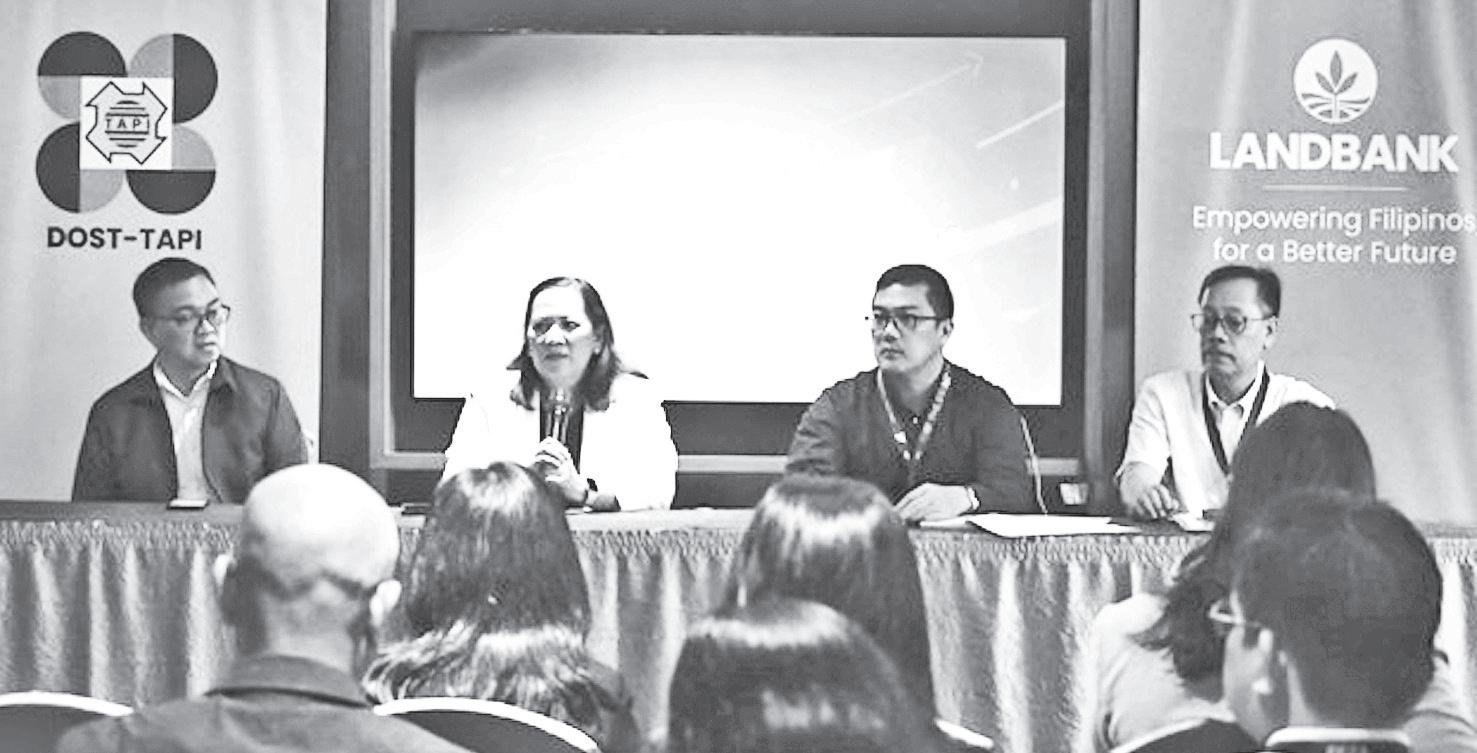
The Department of Science and Technology-Technology Application and Promotion Institute (DOST-TAPI), in partnership with the Land Bank of the Philippines (LandBank), launched a more accessible financing opportunities for Filipino inventors through the i-TECH 2.0, with the goal to reach more inventors and to continue assisting them with the commercialization of their technology products.
DOST-TAPI, LandBank, and the Philippine Economic Zone Authority (PEZA) signed a renewed partnership on July 15, in a side event of the Philippines’ International Exposition of Technologies or PhilippiNEXT 2025, to empower and support more local inventors in the country.
With the enhanced lending program, LandBank President Ma. Lynette V. Ortiz said they have removed the loan ceiling previously capped at P12.5 million so that eligible borrowers may access funding based on project requirements up to 85 percent of the total project cost.
“We’ve also waived interest charges making the loans interestfree. Through these enhancements, we hope to see more Filipino innovators take the lead, transforming bold ideas into tangible solutions that uplift lives and move our country forward,” Ortiz said.
In September 2017, DOST-TAPI and LandBank launched the i-TECH lending program aimed to address the limited financing opportunities for Filipino innovators funded by TAPI-Invention Guarantee Fund (TAPI-IGF) under the Republic Act 7459 and LandBank.
The first version of the i-TECH program offers low-interest funding with 5-percent interest rate per year, subject to annual review of the LandBank and has a zero-interest option for projects funded through the TAPI-IGF.
The former program has a loan-sharing agreement where the funding was structured as follows: 40 percent of the loan was provided by TAPI-IGF with zero interest, 45 percent from LandBank at an interest rate of 5 percent, and the remaining 15 percent was the borrower’s equity.
Care for the elderly was the concern of Healthy Aging Program for Pinoy (Happy) and the Development and Pilot Scale Production of Innovative Food Products for Older Male and Female Filipinos. They are aimed at developing food products that meet the nutritional needs of Filipino senior citizens, particularly in addressing muscular and cognitive decline. This initiative underscores the relevance of providing accessible and nutritious options to support the health and well-being of the elderly population.
On wealth creation is the Aerocomp, a lightweight and ergonomically designed body armor made from natural and synthetic materials developed by researchers from the University of the Philippines Diliman. It is among the 16 spinoffs established through the Funding Assistance for Spin-off and Translation of Research in Advancing Commercialization of the DOST-Philippine Council
On nutrition, featured was the Hunger and Malnutrition Heatmap to visualize the hunger and malnutrition landscape across the country. The digital innovation is designed to identify areas with the greatest need to enable policy-makers in allocating resources more efficiently and planning targeted interventions in reducing food insecurity and improving nutrition outcomes nationwide.
for Industry, Energy, and Emerging Technology Research and Development, which aims to bridge the gap between R&D and commercialization.
For sustainability, the DOST featured the Enhancement and Market Validation of Lungsod: A Link-Up of Geomatics and Social Science Research for the Development of Smart Cities.
Developed by the University of the Philippines-Diliman, Lungsod is a Smart City solution catered for city administrators to address the manual flow of operations and longer processing times in local government offices.
It provides modular, scalable, and customizable solutions using City Command and City Connect.
DOST Secretary Renato U. Solidum Jr. recognized the crucial role of private sector partners not only in R&D, but more importantly, in technology transfer and commercialization.
“When all these are further strengthened and put together, we envision an innovation ecosystem that will bring a new wave of development strongly built on reliable and effective science,” Solidum explained.
For her part, DOST Undersecretary for Research and Development Dr. Leah J. Buendia believes that in a rapidly changing global
landscape, it is through innovation that we can address our country’s most pressing challenges—from natural disasters and food security to healthcare, education, and economic resilience.
“By investing in R&D, supporting our scientists and innovators, and fostering a strong culture of collaboration, we can create solutions that are not only relevant to our local context but are also globally competitive. Innovation is not just a tool for progress—it is the engine that will power the Philippines toward a more prosperous and resilient future,” Buendia said.
With the support of the national government, Solidum said the DOST is laying the groundwork for a thriving innovation ecosystem and is collaborating with various stakeholders to foster an environment where innovation can grow.
“Many of these projects have resulted in new technologies and products that are now benefiting people and industries in various sectors in the Philippines and abroad. Some of these projects have also helped build national capacities in scientific fields critical to national development, and even led to the creation of key national institutions,” the Science chief said.
Another highlight of the revised Implementing Rules and Regulation is the streamlined process where the Screening Committee for RA 7459 evaluation, technical evaluation of DOST-TAPI, and financial evaluation of LandBank will be done simultaneously, which will make it easier for applicants to accomplish the agencies’ requirements.
According to Romeo M. Javate, chief of DOST-TAPI Investment and Business Operation Division, processing of applications starts with the evaluation by Science agency before proceeding to the financial evaluation of LandBank.
Meanwhile, PEZA vowed to support the seamless transfer and commercialization of DOST-funded and developed technologies supported with the financial and technical support needed to enhance their viability, competitiveness, and market impact.
“Through this partnership, we are committing to a framework that will unlock new opportunities for our PEZA-registered enterprises while empowering Filipino inventors to actively participate in the ecozone value chain,” Deputy Director for Policy and Planning Anidelle Joy Alguso said.
During the signing of the memorandum of understanding, DOST-TAPI Director Atty. Marion Ivy D. Decena invited Filipino inventors to avail themselves of the program and leverage the opportunity where they can reach a wider market for their inventions.
Registered Filipino-owned corporations or partnerships with active intellectual property rights for patent, utility model, or industrial design are eligible to avail themselves of the financial program.
A Filipino inventor must be a major stockholder of the corporation or the managing partner of the partnership, regardless of the type of partnership.
As of this year, DOST-TAPI and LandBank has assisted six Filipino inventors, according to Javate.
The i-TECH lending program is one of the many initiatives of the DOST aimed at providing science-based, innovative, and inclusive solutions across four strategic pillars of human well-being, wealth creation, wealth protection, and sustainability that embody the mantra OneDOST4U: Solutions, Opportunities for All. Claire Bernadette A. Mondares/S&T Media Service

Editor: Lyn Resurreccion

By Jonathan L. Mayuga
KNOWN for its “sachet economy,” the Philippines is among the biggest contributors to ocean plastic pollution that has been choking coastal and marine ecosystems, aggravating the problems confronting the fisheries sector.
The Department of Environment and Natural Resources (DENR), through its Environmental Management Bureau (EMB), which acts as secretariat of the National Solid Waste Management Commission, implements Republic Act 9003, or the Ecological Solid Waste Management Act, to promote proper waste segregation and coastal cleanup.
Extended producer responsibility
HOWEVER , despite more than 20 years of information, education, and communication campaigns, the implementation of RA 9003 failed, compelling Congress to amend the law with the Republic Act 11898, or the Extended Producer Responsibility (EPR) Act. EPR Act focuses on plastic packaging wastes that big companies generated by developing and implementing programs to manage their packaging waste— through reduction, recovery, and recycling.
This targets 20 percent of plastic footprint by the end of 2023, and 80 percent by 2028.
Overproduction, poor waste management
ACCORDING to the latest Solid Waste Management Status Report (2008-2018), the Philippines was estimated to generate 18.05 million tons in 2020. The total solid waste generation of the Philippines is expected to reach 23.61metric tons this year.
The DENR-EMB, meanwhile, estimated that around 24 percent of the garbage the country produces is plastic.
Meanwhile, citing a 2019 Waste Assessment Brand Audit conducted by the Global Alliance for Incinerator Alternatives, the international ocean conservation advocacy group Oceana Philippines said plastic is choking and drowning the country’s cities.
Plastic sachet FILIPINOS have been buying products in plastic sachets through the “tingi,” or retail, to fit their low-budget.
“Filipinos use almost 165 million sachets and 48 million plastic bags daily. Many of these
SAN JUAN, Puerto Rico—
For nearly two decades, no one had spotted the world’s smallest-known snake.
Some scientists worried that maybe the Barbados threadsnake had become extinct, but one sunny morning, Connor Blades lifted a rock in a tiny forest in the eastern Caribbean island and held his breath.
“After a year of searching, you begin to get a little pessimistic,” said Blades, project officer with the Ministry of Environment in Barbados.
The snake can fit comfortably on a coin, so it was able to elude scientists for almost 20 years.
Too tiny to identify with the naked eye, Blades placed it in a small glass jar and added soil, substrate and leaf litter.
Several hours later, in front of a microscope at the University of the West Indies, Blades looked at the specimen. It wriggled in the petri
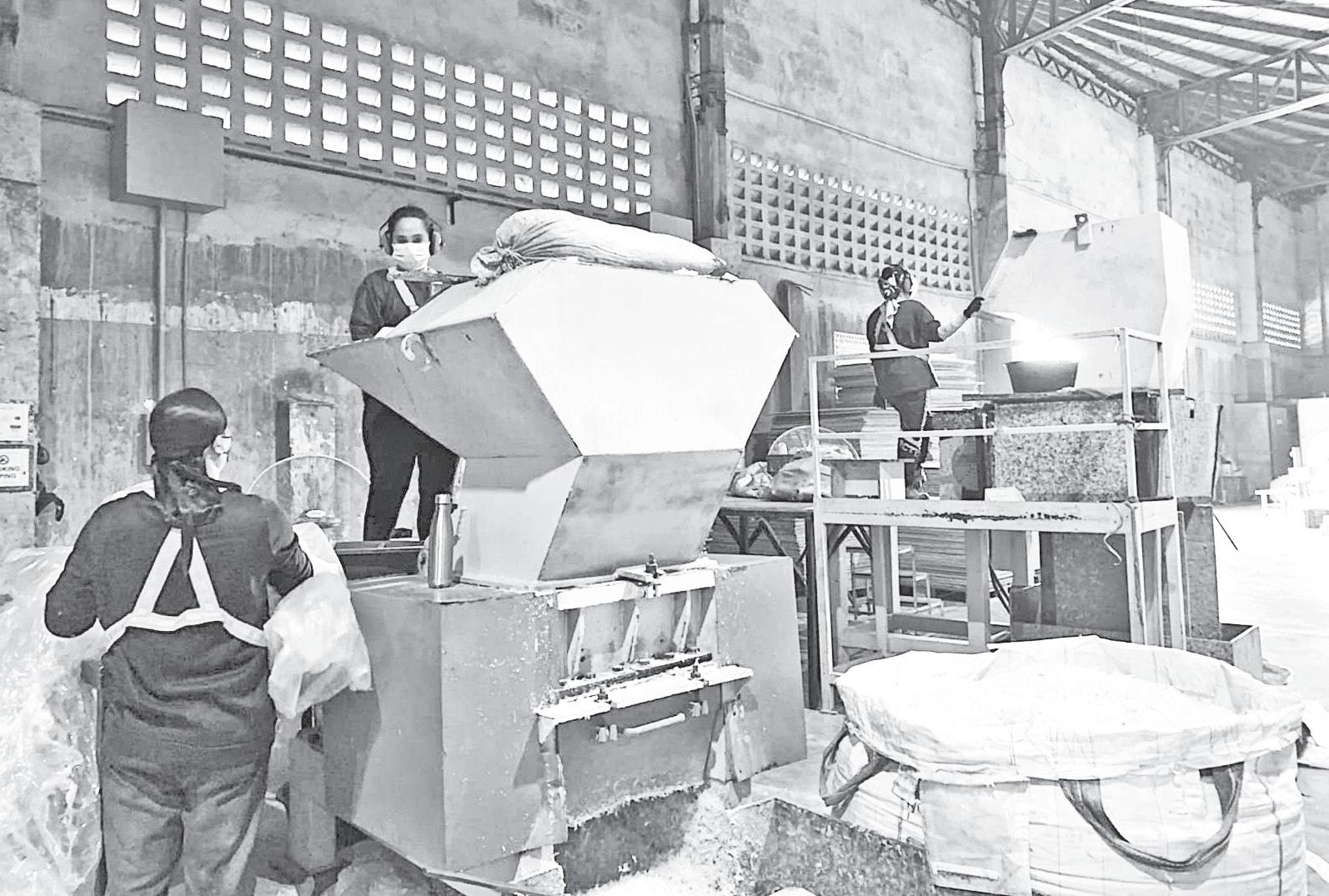
single-use plastics are neither recyclable nor reusable, contrary to claims of some of manufacturers who use them. Worse, they end up polluting our water bodies,” environmental lawyer Rose Liza Eisma Osorio, vice president of Oceana Philippines, told the BusinessMirror in a telephone interview on July 22. Osorio said only less than 10 percent of the wastes polluting the ocean is recovered, leaving behind 90 percent, killing coastal and marine ecosystems, the habitat of marine wildlife, including fish, a primary source of food and protein.
Only about 80 percent of the waste the country produces is collected, hauled, and disposed of in sanitary landfills. The rest end up as garbage heaps, or worse, clogging creeks, canals and other waterways, including the ocean.
CSR to the rescue PRIVATE companies implementing corporate social responsibility have integrated environmental protection and conservation in their various sustainability programs, while some have designed their business to provide the much-needed environmental solutions.
There is CMA CGM, short for Compagnie maritime d’affrètement- Compagnie générale maritime, a leading French shipping and logistics company, and the Plastic Flamingo (The PLAF), a plastic recycler based in Muntinlupa City, whose mission is to reduce plastic pollution with maximum social impact.
Marking Plastic Free July on July 3, CMA CGM and The PLAF celebrated a major environmental milestone of diverting 600 metric tons of ocean-bound plastic waste between 2022 and 2025.
dish, making it nearly impossible to identify.
“It was a struggle,” Blades recalled, adding that he shot a video of the snake and finally identified it thanks to a still image. It had pale yellow dorsal lines running through its body, and its eyes were located on the side of its head.
“I tried to keep a level head,” Blades recalled, knowing that the Barbados threadsnake looks very much like a Brahminy blind snake, best known as the flower pot snake, which is a bit longer and has no dorsal lines.
On Wednesday, the Re:wild conservation group, which is collaborating with the local environment ministry, announced the rediscovery of the Barbados threadsnake.
“Rediscovering one of our endemics on many levels is significant,” said Justin Springer, Caribbean program officer for Re:wild
The ceremony, held at the Las Pinas-Parañaque Wetland Park, highlighted the efforts in tackling plastic pollution and explored how different sectors can work together on solutions.
From plastic to purpose
SINCE 2021, the CMA CGM Group has partnered with The PLAF to combat plastic pollution in the Philippines.
From 2021 to 2022, 120 metric tons of plastic were collected from Metro Manila’s streets and upcycled at The PLAF’s facility in Muntinlupa into eco-boards for use as construction materials for shelters and furniture.
In 2022, CMA CGM sponsored a new recycling line to process hardto-recycle plastic sachets.
In September of the same year, a three-year commitment began to collect and upcycle 600 metric tons of plastic by 2025, adding resources to collect and upcycle plastic waste along coastlines and waterways.
Plastic wastes were recovered through PLAF’s network of over 300 collection points in schools, shops, villages, offices, and junk shops, including 930 kilograms from CMA CGM and CEVA Logistics sites, contributed by over 180 employees.
PLAF’s eco-boards were purchased and used by CEVA Logistics to furnish one of its satellite offices, demonstrating a working circular economy model.
Creating livelihood, employment
“WE’RE not just recognising the milestone of 600 metric tons of plastic waste kept out of the ocean.
We’re celebrating the real impact behind that number, made possible through our partnership with The PLAF and the contributions of over 180 CMA CGM and CEVA
who helped rediscover the snake along with Blades. “It reminds us that we still have something important left that plays an important role in our ecosystem.”
The Barbados threadsnake has only been seen a handful of times since 1889. It was on a list of 4,800 plant, animal and fungi species that Re:wild described as “lost to science.”
The snake is blind, burrows in the ground, eats termites and ants and lays one single, slender egg. Fully grown, it measures up to four inches (10 centimeters).
“They’re very cryptic,” Blades said. “You can do a survey for a number of hours, and even if they are there, you may actually not see them.”
But on March 20 at around 10:30 a.m., Blades and Springer surrounded a jack-in-the-box tree in central Barbados and started looking under rocks while the rest
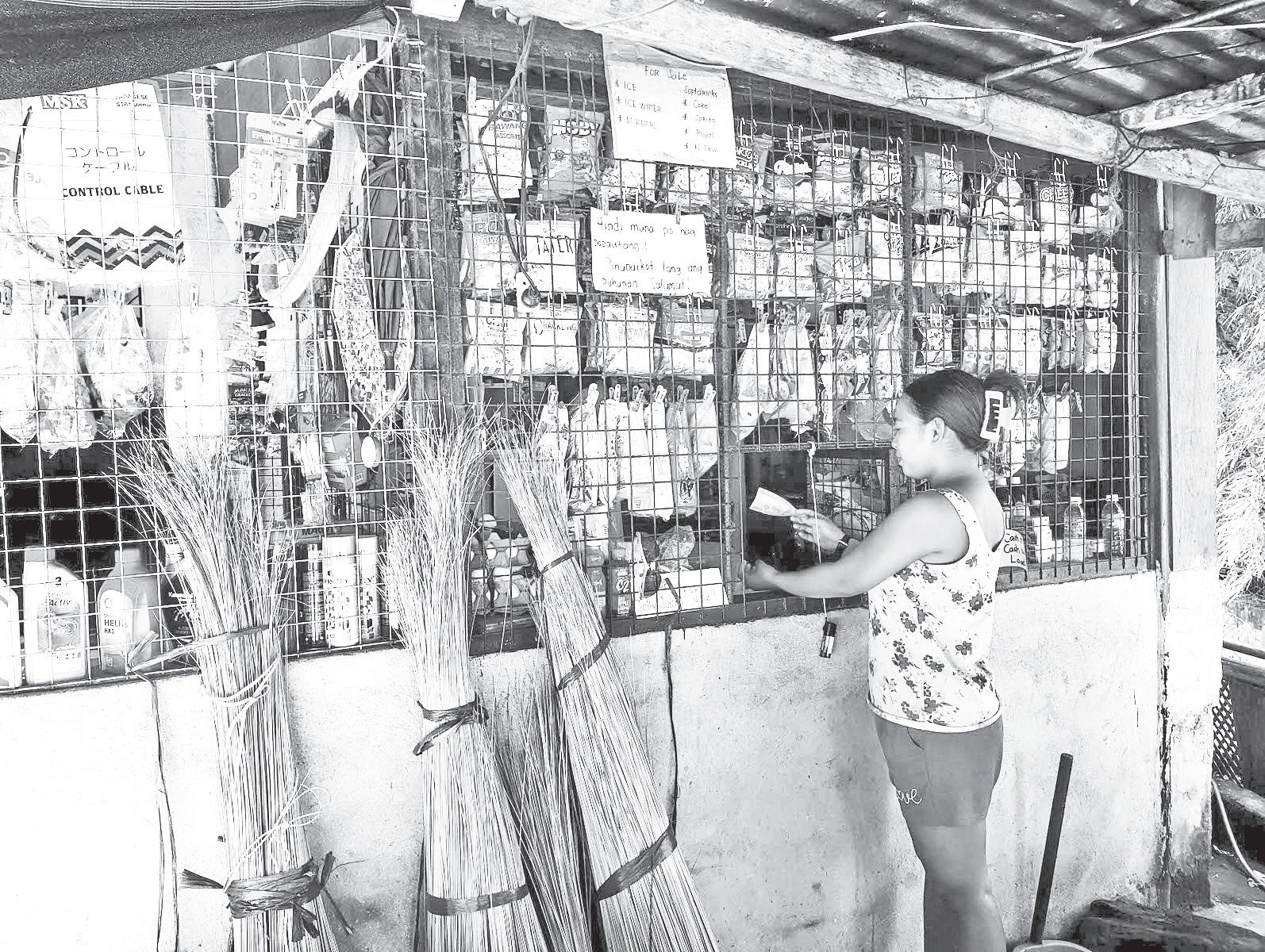
Logistics staff who supported plastic waste collection from our offices and warehouses,” Sivakumar Thigambaranath, managing director of CMA CGM Philippines, said in a statement.
This achievement, Thigambaranath said, means cleaner coastlines, less plastic flowing through the Pasig River, 43 local jobs created at The PLAF’s facility, and a system that gives value to waste once seen as worthless.
“It shows how the circular economy can work in real life, and that a greater impact is possible when we work together,” he said.
François Lesage, founder and CEO of The PLAF, said since 2021, CMA CGM and The PLAF have collected and recycled 720 metric tons of plastic waste in the Philippines—diverting over 6,000 jumbo sacks of plastics from the oceans and transforming them into eco-boards and other sustainable products.
“This collaboration not only prevents plastic pollution, but also creates jobs for Filipinos and advances a circular economy. Together, we are proving that shared commitment and innovation can drive real, lasting change for our planet,” Lesage said.
‘Band-aid’ solution
COLEEN SALAMAT, Asia Pacific Waste Trade Project coordinator at Break Free From Plastic, meanwhile, cautioned that while plastic recovery may be good, recycling or upcycling is not a sustainable.
Salamat told the BusinessMirror in a telephone interview on July 21 that it is just a band-aid solution and may be doing more harm than good to the environment.
“When you recycle, you burn plastic, and it produces dioxins, that is very harmful to the envi -

of the team began measuring the tree, whose distribution is very limited in Barbados.
“That’s why the story is so exciting,” Springer said. “It all happened
“The plastic lifecycle’s greenhouse gas emissions, estimated at 2.24 billion metric tons of carbon dioxide equivalents, is also driving climate change that’s warming ocean temperatures and causing ocean acidification, which destroys entire marine habitats,” she lamented.
She added that the impacts on terrestrial ecosystems and water sources inland are just as devastating.
Needed: Systematic solution
LEDESMA pointed out: “The plastic pollution crisis calls for systemic solutions, because plastic pollution does not start and end with waste. There are negative impacts at every stage of plastic’s life.”
ronment. Shredding alone means breaking down plastic into tiny pieces. In the process, you create microplastics,” she added.
Salamat said waste recycling gives companies more reasons to continue producing plastics, believing that they have found the ultimate solution to the problem through waste recovery and recycling.
Worse, she said some companies may even use plastic recycling as an opportunity to import hazardous waste, through recycling waste in our backyard.
“We don’t know unless we are sure that the plastics they are recovering are from the Philippines or our shores and not being brought here for recycling,” she said.
Importing wastes for recycling, such as plastics, she said, is still allowed by the DENR and needs to stop.
Saving marine life
MARIAN FRANCES T. LEDESMA , Zero Waste campaigner at Greenpeace Southeast Asia-Philippines, said ocean plastic pollution affects life in the ocean, the severity of which can be measured by the volume of waste that has found its way into the ocean.
“There are now 170 trillion plastic particles floating in our oceans, and plastic waste has found its way to even the deepest ocean trenches and highest mountain peaks. The growth and development of coral reefs, marine wildlife, and even terrestrial ecosystems are affected by plastic pollution, which disrupts natural processes or directly harms wildlife,” Ledesma told the BusinessMirror via email on July 21.
According to Ledesma, the worst part is that the plastic crisis contributes to climate change and biodiversity loss.
around the same time.”
S. Blair Hedges, a professor at Temple University and director of its center for biology, was the first to identify the Barbados threadsnake. Previously, it was mistakenly lumped in with another species.
In 2008, Hedges’ discovery was published in a scientific journal, with the snake baptized Tetracheilostoma carlae, in honor of his wife.
“I spent days searching for them,” Hedges recalled. “Based on my observations and the hundreds of rocks, objects that I turned over looking for this thing without success, I do think it is a rare species.”
That was June 2006, and there were only three other such specimens known at the time: two at a London museum and a third at a museum collection in California that was wrongly identified as being from Antigua instead of Barbados, Hedges said.
She explained that the overproduction of plastic and the companies’ dependence on singleuse plastics affect all communities and ecosystems throughout the plastic lifecycle—harming people’s health, food security, human rights, livelihoods and the climate—all of which exacerbates the burden of communities like those ones in the Philippines already struggling with climate change, social inequities and other environmental issues. According to Ledesma, consumer goods companies and other businesses are responsible for the costs and consequences of their entire supply chain and packaging. Cleanups and waste collection schemes are not enough.
“They must implement measures to reduce their production and consumption of single-use plastic packaging, especially sachets. They should start the transition to reuse and refill systems, which provide consumers with goods that aren’t in single-use formats or disposable packaging,” she said.
Turn-off the tap SALAMAT said the solution to ocean plastic pollution is through preventing plastic waste from reaching the ocean. The only way this can be done is through stopping the production of plastic by developing alternative materials that are not harmful to the environment through research and development.
Osorio agreed. She said: “The only way to stop plastic from polluting our ocean is by stopping it at the source. If it keeps on flowing, you must turn off the top. Stop producing plastics,” said Osorio. We can go back to the way it was before. We refill bottles, we use paper, we use biodegradable materials.”
Hedges said that he didn’t realize he had collected a new species until he did a genetic analysis.
“The aha moment was in the laboratory,” he said, noting that the discovery established the Barbados threadsnake as the world’s smallest-known snake.
Hedges then became inundated for years with letters, photographs and emails from people thinking they had found more Barbados threadsnakes. Some of the pictures were of earthworms, he recalled.
“It was literally years of distraction,” he said.
Scientists hope the rediscovery means that the Barbados threadsnake could become a champion for the protection of wildlife habitat.
A lot of endemic species on the tiny island have gone extinct, including the Barbados racer, the Barbados skink and a particular species of cave shrimp. Dánica Coto/Associated Press
A10 Sunday, July 27, 2025

By Justine Xyrah Garcia
CARITAS Philippines is ap -
pealing for donations to aid communities affected by Severe Tropical Storms Crising and Dante which have displaced thousands and caused widespread damage across several regions.
The social action arm of the Catholic Bishops’ Conference of the Philippines (CBCP) said the fundraising drive will be coursed through its Alay Kapwa Solidarity Fund to respond to the immediate needs identified by local Churchbased social action centers.
Among the identified necessities include food, thermal blankets, hygiene and dignity kits, and cash assistance in areas where markets are still functional.
Caritas Philippines said thousands of families are now facing the harsh impact of monsoon rains—“displaced, distressed and in need of urgent support.”
“Now is the time to share what we can,” it said.
Caritas said it is coordinating with international partners to align humanitarian efforts and
mobilize additional resources.
It added that contributions from partner dioceses and the public will be directed to the most affected areas to address urgent needs.
“Let’s respond with compassion, generosity, and action,” it added.
As of July 23, nearly 2 million people—or more than half a million families—have been affected by the southwest monsoon and tropical cyclones “Crising,” “Emong” and “Dante,” according to the National Disaster Risk Reduction and Management Council.
The agency reported that 27,682 families are currently staying in evacuation centers, while another 11,881 are receiving aid outside of them.
Central Luzon was the hardest hit, with 288,185 affected families, followed by the Ilocos Region with 43,127 and Western Visayas with 39,263.
Caritas Philippines said among the most affected areas include Ilocos Sur, Bulacan, Batangas, Cavite, Negros Occidental, and parts of the National Capital Region.
34 Filipinos to participate in jubilee for ‘online missionaries’ in Rome
AT least 34 Filipinos will participate in a Vaticanorganized Jubilee event in Rome for “digital missionaries” and Catholic influencers from around the world.
Organized by the Dicastery for Communication, the “Jubilee of Digital Missionaries and Catholic Influencers” will be held at Auditorium Conciliazione on July 28 and 29, ahead of the Jubilee of Youth.
Msgr. Lucio Adrian Ruiz, secretary of the dicastery, or department, said the event will focus on evangelization through social media and aims to foster a sense of community and mission within the Church.
He described it as a moment of “encounter, formation, and shared mission” for representatives from various countries, united in their commitment to the life of the Church and its evangelizing mission.
“We hope that through this gathering, participants will be enriched both spiritually and pastorally, and that the exchange of ideas and experiences will strengthen their roles within their respective local churches,” Ruiz said.
The event will also serve as a reunion for many who first met at the “Catholic Influencers Festival” during World Youth Day in Lisbon, Portugal, in 2023.
The Philippine delegation includes priests, journalists, and those involved in church media ministries from various dioceses and church organizations.
Expected to welcome the delegates are Cardinal Pietro Parolin, the Vatican’s secretary of state; Archbishop Rino Fisichella, pro-prefect of the Dicastery for Evangelization’s section for new evangelization; and Dr. Paolo Ruffini, prefect of the Dicastery for Communication.
Scheduled speakers include the Fr. David McCallum, SJ, executive director of Discerning Leadership and a facilitator at the recent Synod on Synodality; and the Fr. Antonio Spadaro, an Italian Jesuit priest, journalist, and current undersecretary of the Dicastery for Culture and Education.
Cardinal Luis Antonio Tagle, pro-prefect of the Dicastery for Evangelization’s section for first evangelization and new particular churches, will preside over a Mass for the delegates on the evening of July 28.
Participants will also be able to take part in major activities of the Jubilee of Youth, including a prayer vigil with Pope Leo XIV on August 2 and the closing Mass on August 3 at Tor Vergata, on the southeastern outskirts of Rome. CBCP News

Many of these areas were impacted not only by the storm itself, but also by intensified rains brought by the southwest monsoon.
The group said its emergency operations center has also been activated and is coordinating with diocesan social action centers to conduct rapid needs assessments
and distribute food packs and other relief items.
“Caritas Philippines remains committed to providing real-time updates through its official social media platforms and Situation Reports. The organization encourages the public to stay informed and contribute to the relief efforts,” it said.
“Crising,” which developed into a tropical cyclone last week, left a trail of flooding, landslides, and infrastructure damage in several parts of the country. The estimated cost of damage to agriculture stands at P182 million, while infrastructure damage has reached P3.7 billion, authorities said.
Churches stay open for evacuees BEYOND the distribution of essential goods, several dioceses across the country have also opened their churches to those in need of shelter.
Among the churches that served as evacuation centers are San Isidro Labrador Parish, Holy Family Parish, San Agustin Center of Studies, and Ina ng Lupang Pangako Parish in Quezon City; Santa Lucia Parish in Novaliches; Sanctuario del Sto. Cristo in San Juan; and Our Lady of Miraculous Medal Chapel in Batangas.
Several churches under the Diocese of Malolos have also been opened to assist affected residents, including those in Marilao, Guiguinto, Meycauayan, Bocaue, Calumpit, Santa Maria, Hagonoy,
and Malolos.
Fr. Wilmer Samillano, who heads the Holy Family Parish, assured the public that all evacuees are welcome in church spaces, regardless of their religion.
“To those affected, always remember that the church is always open. It does not choose a religion, it does not choose a race, it is for everyone. Differences don’t matter, especially in times of disaster,” Samillano said in an interview with Radyo Veritas.
He also reminded the public to remain cautious despite improving weather conditions.
“Let’s continue to be careful. Always be prepared. Keep your essentials packed in a bag, one that you can carry right away in case floodwaters rise, especially your important belongings,” Samillano added.
Other religious communities have also opened their doors to evacuees, including The Church of Jesus Christ of the Latter Day Saints, United Presbyterian Church, United Methodist Church, and the Philippine Independent Church.
Cardinal Ambo urges ‘corruption control,’ not just flood control

ACATHOLIC cardinal on Thursday blamed government corruption in infrastructure projects for the severe flooding that has inundated parts
of Metro Manila, particularly in his diocese.
Cardinal Pablo Virgilio David of Kalookan lamented that despite billions of pesos spent
Paraguayans in feathered costumes pay homage to a 16th century saint
EMBOSCADA, Paraguay—
on flood control projects, areas such as Malabon and Navotas continue to suffer from widespread flooding.
“[There is] not an iota of improvement despite billions of pesos spent by the national government on flood control projects,” David said in a social media post.
“Check out the COA [Commission on Audit] reports on these projects, and you’ll get the shock of your life,” he said. His message included images of floodwaters submerging several areas, including churches in Malabon and Navotas.
“Climate change is bad enough; corruption makes it even worse,” he said, adding that substandard flood control projects are “a total waste of money.”
The cardinal stressed that long-
term solutions to flooding will remain out of reach unless the government confronts systemic corruption.
“Obviously, flood control in our country has to be preceded by corruption control,” he said. Heavy monsoon rains have caused flooding in several parts of the country, including the capital region, prompting school closures and the suspension of government work.
The national disaster agency said thousands of families remain in evacuation centers as continuous rains, intensified by tropical cyclones, continue to affect the country.
Several cities and towns, including Manila, have declared a state of calamity to access emergency funds for rehabilitation and recovery. CBCP News
KABUL, Afghanistan—For six hours every day after school, Nahideh works in a cemetery, collecting water from a nearby shrine to sell to mourners visiting loved ones’ graves. She dreams of becoming a doctor—but knows it is a futile dream.
When the next school year starts, she will be enrolling in a madrassa, a religious school, to learn about the Quran and Islam—and little else.
“I prefer to go to school, but I can’t, so I will go to a madrassa,” she said, dark brown eyes peering out from beneath her tightly wrapped black headscarf. “If I could go to school then I could learn and become a doctor. But I can’t.” At the age of 13, Nahideh is in the last grade of primary school, the limit of education allowed for girls in Afghanistan.
The country’s Taliban government banned girls from secondary school and university three years ago—the only country in the world to do so.
The ban is part of myriad restrictions on women and girls, dictating everything from what they can wear to where they can go and who they can go with.
With no option for higher education, many girls and women are turning to madrassas instead.
The only learning allowed
“SINCE the schools are closed to girls, they see this as an opportunity,” said Zahid-ur-Rehman Sahibi, director of the Tasnim Nasrat Islamic Sciences Educational Center in Kabul.
“So, they come here to stay engaged in learning and studying religious sciences.”
The center’s roughly 400 students range in ages from about 3 to 60, and 90 percent are female. They study the Quran, Islamic jurisprudence, the sayings of the Prophet Muhammad, and Arabic, the language of the Quran.
Most Afghans, Sahibi noted, are religious. “Even before the schools were
Hundreds of Catholic parishioners in Paraguay don bird-like costumes and parade through the streets in the municipality of Emboscada, some 25 miles (45 kilometers) northeast of the capital of Asuncion, to honor St. Francis Solano who is said to possess miraculous powers.
It is said that the feathers symbolize the Guaicurú Indigenous group who would attack smaller tribes and Spanish colonizers to prevent them from stealing their food and weapons.
Jorge Saenz/Associated Press
closed, many used to attend madrassas,” he said.
“But after the closure of schools, the interest has increased significantly, because the doors of the madrassas remain open to them.”
No recent official figures are available on the number of girls enrolled in madrassas, but officials say the popularity of religious schools overall has been growing.
Last September, Deputy Minister of Education Karamatullah Akhundzada said at least 1 million students had enrolled in madrassas over the past year alone, bringing the total to over 3 million.
Studying the Quran
SHELTERED from the heat of an early summer’s day in a basement room at the Tasnim Nasrat center, Sahibi’s students knelt at small plastic tables on the carpeted floor, their pencils tracing lines of Arabic
script in their Qurans.
All 10 young women wore black niqabs, the all-encompassing garment that includes a veil, leaving only the eyes visible.
“It is very good for girls and women to study at a madrassa, because...the Quran is the word of Allah, and we are Muslims,” said 25-year-old Faiza, who had enrolled at the center five months earlier.
“Therefore, it is our duty to know what is in the book that Allah has revealed to us, to understand its interpretation and translation.”
Given a choice, she would have studied medicine. While she knows that is now impossible, she still harbors hope that if she shows she is a pious student dedicated to her religion, she will be eventually allowed to.
The medical profession is one of the very few still open to women in Afghanistan.
“When my family sees that I am

A PARISHIONER dressed in a feather costume poses for a photo after attending a Mass celebrating Saint Francisco Solano, in Emboscada, Paraguay, on July 24. AP/JORGE SAENZ
learning Quranic sciences and that I am practicing all the teachings of the Quran in my life, and they are assured of this, they will definitely allow me to continue my studies,” she said.
Her teacher said he’d prefer if women were not strictly limited to religious studies.
“In my opinion, it is very important for a sister or a woman to learn both religious sciences and other subjects, because modern knowledge is also an important part of society,” Sahibi said.
“Islam also recommends that modern sciences should be learned because they are necessary, and religious sciences are important alongside them. Both should be learned simultaneously.”
A controversial ban
THE female secondary and higher education ban has been controversial in Afghanistan, even within the ranks of the Taliban itself.
In a rare sign of open dissent, Deputy Foreign Minister Sher Abbas Stanikzai said in a public speech in January that there was no justification for denying education to girls and women. His remarks were reportedly not well tolerated by the Taliban leadership; Stanikzai is now officially on leave and is believed to have left the country. But they were a clear indication that many in Afghanistan recognize the longterm impact of denying education to girls.
“If this ban persists until 2030, over 4 million girls will have been deprived of their right to education beyond primary school,” UNICEF Executive Director Catherine Russell said in a statement at the start of Afghanistan’s new school year in March.
“The consequences for these girls— and for Afghanistan—are catastrophic. The ban negatively impacts the health system, the economy, and the future of the nation.” Elena Becatoros/Associated Press
Editor: Jun Lomibao

SINGAPORE—Australia has a relatively small population.
But Australia is a giant when it comes to competitive swimming.
Whether it’s the Olympics, or as it is this time with the swimming world championships opening in the pool in Singapore on Sunday, Aussie swimmers grace the podium.
“We have swimming in our DNA as a country,” Rohan Taylor, Australia’s head coach, told The Associated Press.
“We have to be particular and purposeful in finding the talent,” he added. “And then it’s the coaching. We can’t get it wrong. We get one crack at the talented athlete.”
Consider the numbers
AUSTRALIA won seven gold medals and 18 overall at last year’s Paris Olympics, second in both categories to the United States. The United States has 340 million people, almost 13 times Australia’s population of 27 million. The Americans won eight gold and 28 overall.
China, No. 3 with 12 overall, won only two gold medals from a population of 1.4 billion—52 times Australia’s. Australia’s women are swimming powers, led by Kaylee McKeown and Mollie O›Callaghan—add in Moesha Johnson, who has already won the 10and 5-kilometer open-water races in Singapore and expects to race the 800 and 1,500 in the pool.
McKeown won the 100 and 200 backstroke in Paris and in Tokyo in 2021. She also won both races two years ago at the worlds in Fukuoka, Japan. O’Callaghan is the defending 200 freestyle winner for Paris.

men like Kyle Chalmers, who won the 100 free at the Olympics in Rio de Janeiro in 2016 and has piled up nine Olympics medals and 12 in world championships.
“They have done so well on the international stage—multiple times,” Taylor said. “So it’s another opportunity for them to add to their CVs.” Marchand and McIntosh FOR French star Léon Marchand , the world championships mean easing off. He won four individual Olympic gold medals a year ago in Paris. The Los Angeles Olympics in 2028 are still far off. Time to swim a lighter schedule. None of that for Canadian Summer McIntosh. She won three individual gold medals in Paris, but will go for five in Singapore, a test run for her program in Los Angeles.
These worlds, a year after the Olympics, feature swimmers in their prime, older swimmers who want to see if they can make it to LA, and young swimmers making their debut.
Another worlds is set for 2027 in Budapest, Hungary—the final proving ground before the 2028 Olympics.
Marchand is expected to race only the 200 and 400 individual medley races in Singapore, dropping the 200 breaststroke and 200 butterfly. He won gold in all four in Paris, but wants to be fresh from the two IM races and worldrecord shots.
In Singapore, McIntosh will go in the two IMs, the 200 fly and the 400 and 800 freestyle. She did not swim the 800 free in Paris. This time she will, which sets up a showdown with American superstar Katie Ledecky— maybe the most anticipated race of the worlds. AP
By Howard Fendrich The Associated Press


LOS ANGELES—The former chairman of Walt Disney Television and head of 21st Century Fox has been hired to oversee the opening and closing ceremonies for the 2028 Los Angeles Olympics and Paralympics.
LA28 organizers said that Peter Rice will serve as head of ceremonies and content and be responsible for the creative vision and physical production of the LA28 Games, which run July 14 to 30, and the Paralympics, which run August 15 to 27.
“Peter is one of the rare individuals whose expertise seamlessly combines creativity, operational insight and production
excellence to deliver Ceremonies that will captivate audiences around the world,” said LA28 president and chairperson Casey Wasserman, who will supervise Rice.
“He’s been a leading figure in shaping the modern television and film landscape and is the perfect asset to reimagining the delivery of the Opening and Closing Ceremonies for the digital age, leaving a legacy well beyond the Games,” Wasserman added.
The opening ceremony be held July 14 at 8 p.m. ET, with events at the Los Angeles Memorial Coliseum and SoFi Stadium in Inglewood. The closing ceremony will be July 30 at 9 p.m. ET at the Coliseum.
“There are no limits for excellence. It’s all about what’s in your head and how much you’re able to put into it. If you put in the work mentally, physically, and emotionally, then you can have the result,” said Williams, who, however, lost, 6-2, 6-2, to 24th-ranked Magdalena Frech, 27, Thursday.
“It doesn’t matter how many times you fall down,” Williams said. “Doesn’t matter how many times you get sick or get hurt or whatever it is. If you continue to believe and put in the work, there is an opportunity, there is space, for
Stearns, 6-3, 6-4 at the DC Open what message others might take away from that performance and that result, Williams was quick to provide an answer.





THE pandemic tested the media industry, forcing newsrooms around the world to overhaul the way they do their job while following strict health protocols in order to survive a deadly infection.
The BusinessMirror, the country’s premier national business daily, was tested like everyone else, and survived, even continuing to live up to its promise to provide a broader look at today’s business.
In November 2021, the business broadsheet was recognized as the “Business News Source of the Year” for 2020 by the Economic Journalists Association of the Philippines (Ejap), the country’s premier organization of business reporters, editors and wire agencies. It was a 4-peat for BM, having gotten the same honors for the years 2017, 2018 and 2019.
And, as in the past Ejap awards, it also swept half of the individual categories, with its seasoned reporters adjudged as best in their respective coverages.
Earlier in 2021, the BusinessMirror was given the Pro Patria Award by the Rotary Club of Manila, for “its commitment of valuable resources for the protection of free expression and its resilience in disseminating fair and truthful information resulting in an informed and enlightened citizenry.”
It was just the latest recognition from the prestigious Rotary Club, which named it “Business Newspaper of the Year” for 2018-2019, and again in 2020. In all, it has received six top



Rotary journalism awards in its short 16-year existence.
The BusinessMirror has also consistently reaped top awards in the Brightleaf Journalism Awards for Agriculture and the Philippine Agricultural Journalists-San Miguel Corp. (PAJ-SMC) Binhi Awards, also for the best in agriculture journalism.
The BusinessMirror was also repeatedly adjudged the leading daily in biotechnology journalism, a recognition bestowed by the Jose G. Burgos Jr. Biotechnology Journalism Awards.
The “broader look” mantra also drew recognition from the Philippine Statistics Authority (PSA) which named the BusinessMirror, at its first awards rites in 2018, as the inaugural “Data Champion.”


In the first “Bantog Science for the People” awards for media from the Department of Science and Technology, the BusinessMirror got the top award for the Institution category for Print; and the grand prize in the individual category for science journalist Stephanie Tumampos.
In 2018, Environment Reporter Jonathan Mayuga received the Luntiang Aligato award from the Climate Reality Project, a nonprofit organization founded by Nobel Laureate and former US Vice President Al Gore.
The Broader Look at biodiversity was also recognized. It was named among the Asean Champions of

Biodiversity, for the Media Category, by the Asean Centre for Biodiversity. The Broader Look also extended to the paper’s corporate social responsibility. It organized and staged the first-ever recognition rites for the best of the Philippines’s friends in the world, with the “MISSION PHILIPPINES: The BusinessMirror Envoys & Expats Awards.” The initiative won a Gold Anvil in 2019. Distinguished institutions in government have also repeatedly recognized the BusinessMirror’s role in spreading the word about the work they do—information that shines a light on good governance and committed public service to uplift people’s hopes. Most notably, these are the Social Security System and Pag-IBIG Fund.
Sixteen years, two of them in a pandemic, have tested the promise of a Broader Look. But they are also a measure of the unstinting support of friends—advertisers and news sources alike—and readers who continue to believe in that promise.
THANK YOU, EVERYONE.
YOUR LOVE AND SUPPORT IS OUR MOST IMPORTANT TROPHY.




The consequential twin of Franklin Richards in ‘The Fantastic Four: First Steps’
JULY 27, 2025 | soundstrip.businessmirror@gmail.com
Story by Zoe Davad
With over a million monthly listeners, a widely beloved debut single, and a team that honors his creative autonomy, OPM singer-songwriter MATÉO seems well on his way to achieving his goal of preserving the core of the music he loves making. And in doing so, he proves that even the softest songs can make the loudest impact.
On a balmy Wednesday afternoon in Makati City, MATÉO stepped onto the stage not just to perform, but to introduce his listeners to a new chapter of his career. This July 16 performance at Shrimp Bucket in the Three Central Mall was his first live gig. It also served to launch “Bato sa Buhangin”, his fourth single and first official release under South Korean entertainment label ABYSS Company.
He opened the set with “Tungo”, his third single tinged with a slow, introspective clarity as if it were a conversation with a friend in the form of a song. Next came “Hanggang Kailan - Umuwi Ka Na Baby”, a cover

Publisher :
T. Anthony C. Cabangon
Lourdes M. Fernandez
Editor-In-Chief :
Concept :
Aldwin M. Tolosa
Y2Z Editor :
SoundStrip Editor : Group Creative Director : Graphic Designers :
Jt Nisay
Edwin P. Sallan
Eduardo A. Davad
Niggel Figueroa
Chow Jarlego
Contributing Writers :
Tony M. Maghirang
Rick Olivares
Jill Tan Radovan
Reine Juvierre S. Alberto
John Eiron R. Francisco
Pocholo Concepcion
Francine Y. Medina
Justine Xyrah Garcia
Bea Rollo
Trixzy Leigh Bonotan
Bless Aubrey Ogerio
Photographers :
Bernard P. Testa Nonie Reyes
Y2Z & SOUNDSTRIP are published and distributed free every Sunday by the Philippine Business Daily Mirror Publishing Inc. as a project of the
The Philippine Business Mirror Publishing, Inc., with offices on the 3rd Floor of Dominga Building III 2113 Chino Roces Avenue corner Dela Rosa Street, Makati City, Philippines. Tel. Nos. (Editorial) 817-9467; 813-0725.
Fax line: 813-7025
Advertising Sales: 893-2019; 817-1351,817-2807. Circulation: 893-1662; 814-0134 to 36. www.businessmirror.com.ph

MATÉO announces his very first live gig and media launch. |
of the original 2000s song by Orange & Lemons. Then, he performed “Lalim”, the song that began as a private passion project but brought him into the spotlight. The whole show was a love letter to the past and future of OPM in both form and feeling.
Though MATÉO is now often associated with the “modern kundiman”, he admits that the label came from others first. Kundiman, thought to have originated from the Filipino phrase “kung hindi man”, is a genre of traditional, sentimental love songs. “At first I didn’t really think [my work] was modern kundiman,” he explained during a Q&A session. “Kundiman has a certain structure and instrumentation. I just wanted to write love songs that are intimate. That’s how it began.”
Still, the genre has clearly influenced his body of work. MATÉO carries with him the emotional storytelling and melodic sensitivity those traditions are known for. Indeed, his musical journey began in earnest when he joined Kundirana – the name originating from a portmanteau of the traditional music genres kundiman at harana – a high school music ministry from La Salle Greenhills with illustrious alumni including Gary Valenciano and Ogie Alcasid.
Now, listeners are calling his work “modern kundiman” – a label he finds flattering, though he approaches it with caution. “It takes a lot of skill and talent to do justice to certain songs, especially classic music. That’s why I’m careful about it.”
Recalling how Abyss Company first reached out, MATÉO notes that he was interested in how things were done in Korea — not just as an artist, but also as a music industry professional in A&R


(Artists & Repertoire).
It’s a partnership grounded in respect. This creative freedom, matched with newfound resources, has allowed him to scale his artistry without compromising it. “Abyss Company aligns with what I already do,” he commented. “Mas may means to produce music without being held back by being indie. Same vibe ng songs ko—just on a bigger scale, which I appreciate.”
MATÉO further shared that it was Abyss that first got in touch with him through social media.
Aldrin Cerrado, Country Head for the Philippines, concurred, noting that, “Mateo’s TikTok got into my algorithm. I liked his modern folk-type songs. We don’t try to change the artist, [...] we support what they’re already doing.”
Abyss Company, a label with a roster including globally known artists like Sandara Park, MeloMance, and SUNMI, also launched their plans to further expand into Asia with the Philippines as a starting point. COO Timothy Kim
stated that the company is taking its expansion into the international market slow and steady, and the Philippines is an ideal market for that new chapter. “We understand that music is a very big part of the culture,” he added.
MATÉO’s debut under the label is a remake of “Bato Sa Buhangin”, a 1976 classic originally by Cinderella. He first encountered the song while in Kundirana. “It’s my all-time favorite OPM song,” he shared in a press release. “I never tried to play around with it. It already has the soul in it. It’s such an iconic song that it carries you, and you never try to carry it.”
That reverence came through in his performance, where the familiar melody took on new dimensions through MATÉO’s quiet delivery and restrained instrumentation. Rather than rework the song entirely, he let it breathe, reminding the audience that love, like music, doesn’t always need to be loud to linger.
“There will always be a place for soft love songs, especially in the Philippines.”
Story by Ica Hontiveros-Cheng
It was a particularly busy week. I was juggling my analyst day job, and being a freelance writer and content creator. I found myself doing a zoom interview before a tech event, it wasn’t an ideal setup and I didn’t count on the internet connection going on the fitz (third world problems). But somehow I managed to finish the interview, and even if I dreaded listening to the recording just because I knew the setting wasn’t ideal, but it actually wasn’t that bad, and as Singaporean Dru Chen (whom I was interviewing) said: we could be having a bad day, but I will always relate to you at your best.
I wasn’t expecting it but he taught me something important during that quick chat.
Aside from being a singer-songwriter, and producer, Chen who is 35 years old, is also an educator, and this jumped at me when I was reading about him, and I had to ask him about it.
“I am a lecturer. I teach in the fields of audio production, music, music theory, all that stuff. That’s a big part of my job, everyday, it’s very inspirational for me. Sometimes when students come into my class, maybe they had a bad day. Maybe they are struggling with their own confidence level. For me, it’s very important that I let them know that the way that I relate to them is always at their best. It doesn’t matter if they had a bad day, or maybe a bad performance on certain assignment, I’ll always remind them of how great they were and can be and I think that’s the most meaningful part of my job as an educator,” Dru shared.
Dru recently released his latest album ‘Mirror Walk 2’ with the song ‘Not Bad Is Good Enough’ as a single. More excerpts on my recent interview with him.
You have an impressive vocal range and style and could easily hit the high notes, who do you consider as musical influences?
I love, male vocalists who are able to get a sensitive tone, high voice and a low voice. I’ve got some influences like Jeff Buckley, 90’s alternative rock guy, Prince, Freddie Mercury from Queen is incredible. I learned a lot following the speech level singing, there’s a method, taught by Seth Riggs. He was Michael Jackson’s teacher. So I just try to learn and improve everyday.
How did you start getting into singing, music? What is something that you encountered as a child and just stuck with it?
Definitely, my mom loved to sing and harmonize. So, they were always playing music at home. My dad as well. It’s very musical in the family. My sister sings as well. It’s kind of a way of life. It’s very therapeutic to sing together (laughs).
The track “Not bad is good enough” utilizes sound effects, so you can hear knocking and the rain. What is the story that you are trying to tell in the song?
The song is about a darker side of relationships and people sometimes. It’s about being stuck in a toxic situation that is not good for you. And I think that it’s important for your own sanity and your own mental well-being and your life, to get out (of that) situation. But sometimes, it can be too hard. I wanted to explore the light and the dark in my music. Because it’s important to talk about everything.
What advice can you give to people who are currently in a toxic relationship?

I can only speak from personal experience, or experiences of friends and people who are close to me. I think it’s important to spend time by yourself and heal those internal difficulties, wounds and
insecurities. I mean, it’s a lifelong process obviously. But once you get down to what causes you to act in a certain way. Then you can make a decision for yourself, whether you are choosing to stay with this person, or situation. Because of your own lack of self-esteem or belief in yourself. Don’t shy yourself from that because there is beauty in the healing.
With your background in music and your Bachelor in Music Technology degree from Griffith University in Queensland, Australia) tell us more about your songwriting process.

I am very moved by chords on the piano, or the guitar, somehow when I put certain chords together, it makes me feel certain emotions. And when I find a combination I really like. That will usually tie in with a story that I want to tell and off we go! (Laughs) So we put the chords down, and we find a comfortable rhythm that captures the same feeling of the chords and we find a good lyric and melody, and everything ties together with how the chords make me feel.
I understand that one of your childhood friend is a Filipino.
Some of my closest friends are Filipino. One of my best friends from my childhood is Filipino, he would invite me over and we would eat all the wonderful food like pork adobo.
So are we going to see you perform in the Philippines very soon?
God willing one day. When the opportunity arises.
By Jt Nisay Y2Z Editor
WHEN Marvel Studios president Kevin Feige announced the title The Fantastic Four: First Steps at San Diego Comic-Con 2024, fans knew instantly that the story would involve the birth of Franklin Richards.
When the highly anticipated film finally came out this week, it turned out that the movie, which kicks off Phase 6 of the Marvel Cinematic Universe (MCU), involves nativity in more ways than one.
A lot was riding on the fourth Fantastic Four film to hit the big screen (not counting the unreleased 1994 version marred by legal concerns and other issues). For one, all previous versions flamed out both critically and commercially, save for director Tim Story’s 2005 edition, which barely broke even. Then, in perhaps the tallest order in the entertainment industry in recent memory, this movie was expected to “revive” the MCU, the highest-grossing film franchise of all time.
Social media trolls declare that the MCU “died with Endgame,” the 2019 epic that scored a staggering worldwide box office gross of $2.8 billion. While straightforward, the claims aren’t necessarily unfounded. Succeeding Avengers: Endgame and the “Infinity Saga” was the “Multiverse Saga,” which opened with the underwhelming Phases 4 and 5 that many derided for inconsistent quality, content overload, and the general lack of clear direction.
The Fantastic Four: First Steps was expected to right the ship. Fortunately for Feige and the MCU, “Marvel’s first family” knows a thing or four about righting ships. When Fantastic Four hit newsstands in 1961, they turned around the fortunes of the struggling Marvel Comics.
“That was really the start of everything,” said Marvel legend Stan Lee, who co-created the beloved characters alongside Jack Kirby.
Whether the same can be said of this new movie remains to be seen. What’s clear is that in this gripping, visually and phonetically fantastic film directed by Matt Shakman and scored by Michael Giacchino, Vanessa Kirby’s Sue Storm/ Invisible Woman wasn’t the only one in labor and Franklin Richards wasn’t the only newborn delivered. By extent, The Fantastic Four: First Steps may just have rebirthed the MCU.


‘As a family’
(Spoiler warning: Movie recap ahead)
THE movie tells a linear story of The Fantastic Four in the alternate universe Earth 828, a stunning, highly fleshedout, 1960s-inspired, retrofuturistic world. (The number designation serves a clever homage by Shakman to the character’s co-creator, Jack Kirby, born on August 28).
In First Steps, we are saved from an elaborate origin story and thrown right into the thick of the action. Our favorite foursome has been astronauts-turnedsuperheroes for four years, leading an almost-utopian society. The movie opens with Kerby’s Sue Storm and Pedro Pascal’s Reed Richards/ Mister Fantastic finding out that they’re pregnant after years of trying. Over dinner, the big news reaches (gets extracted) by Ben Grimm/The Thing, played by Ebon Moss-Bachrach, with the onlooking Johnny Storm/Human Torch, played by Joseph Quinn.
Months pass, and after baby-proofing the Baxter Building and the city in general with the help of Reed’s trusted robot assistant, H.E.R.B.I.E. (Humanoid Experimental Robot B-Type Integrated Electronics), the quartet receive their biggest threat yet. Fireballs shoot from the night sky as the metallic and enigmatic Silver Surfer (Julia Garner) appears, flies to Times Square, and heralds the fearsome Galactus (Ralph Ineson), the devourer of worlds.
The Fantastic Four then does what they did best before acquiring superpowers: Riding a spaceship. They boarded the Excelsior and sought Galactus for answers. They eventually come face-to-face with the ravenous space god, and what follows is one of the most visually stunning sequences in all of the MCU. They rejected Galactus’ offer of their child for the Earth’s salvation, raced back to their ship, tried to shake off a pursuing Silver Surfer in a wormhole, eluded a blackhole by sling-shotting off orbital force—all


while Sue was giving birth to Franklin.
When the family returned home, danger only loomed larger with Galactus dead-set on fulfilling his promise. He inched closer and closer the solar system with planets used as markers over newscasts. Meanwhile, Reed was scrambling for answers, trying to science their way out of their celestial problem.
When their initial plan failed, one of Marvel’s smartest characters devised a backup, inspired by Sue’s inspirational speech. Galactus reached Earth, and after battling him head-on, complete with nearand actual-yet-temporary deaths of every Fantastic Four member, they succeeded. Galactus was gone. Earth was safe.
Bookending the movie was The Fan -
Matt Shakman in the movie’s production notes. “They’re superheroes only when they have to be, and that’s what I love about them. They are messy. They’re like us. They struggle with problems the way that we do. I think that’s why so many people have responded to them since the beginning.”
Shakman—whose works include WandaVision, Fargo and Game of Thrones— is able to reflect the statement on screen, as the characters and their relationship with each other felt as thorough as the world they inhabit. They clobber bad guys but as a family, they fight and bicker and laugh and cry together. This is where the movie, and the best MCU films in general, truly shine: the heart.
Where that light dims, however, is the pacing. Save for the anticipation of Franklin’s birth, the first act offered very little at stake. The real action only picks up when the Silver Surfer appears, and to the film’s credit, it does a good job of sustaining the entertainment value throughout the rest of the film. Galactus felt imposing. Reed felt boxed. How are they going to wiggle their way out of this?
The climax, too, almost felt like the scene in Avengers: Endgame where they were fighting for control over the Infinity Gauntlet. At least during the movie’s Philippine premier at SM Megamall, the audience felt highly engaged as to what happens next, cheering and gasping over which character dies, or if they would stay dead.
Then again, the movie could still have been so much more. There were very few references to the MCU, which has always been a luxury for the fran -
‘The Fantastic Four: First Steps may just have rebirthed the Marvel
tastic Four’s guesting on The Ted Gilbert Show, the host of which is based on reallife television host Ed Sullivan. This time, however, when the curtains were pulled to reveal our heroes, they were nowhere to be found. They rushed to answer a distress call, heading out backstage to the car, and encountering the all-too-relatable problem of securing the child seat. After addressing the common issue, with seatbelts fastened, they hovered off to their next mission.
Living up to the title
THE Fantastic Four: First Steps, like any good Fantastic Four material, is a family story. It explores the balance between being a family and being superheroes.
“One of the most exciting things about the Fantastic Four is that they are people first—and inventors, leaders, astronauts and explorers second,” says director

chise to throw and a treat for its audience to catch. A counterargument would be that it was a conscious decision, perhaps to allow The Fantastic Four to stand on its feet before joining the rest of the field. That said, what was the teaser in the Thunderbolts* post-credit scene all about? And speaking of post-credit scenes, First Steps didn’t offer much. It’s safe to say that the fans 100%-expected a Dr. Doom cameo as a lead-up to next year’s Avengers: Doomsday, but what was given felt bare minimum. An actual first look at Robert Downey Jr. as the main villain would have been nice.
In any case, The Fantastic Four: First Steps, now showing in cinemas nationwide, lives up to the title. It’s the MCU re-learning how to walk after stumbling post- Endgame. The steps may be slow, and may lack giant leaps, but at least they’re all taken towards the right direction.
By Bless Aubrey Ogerio
MALAY, AKLAN—IT’S easy to expect the usual in Boracay with the beachfront restaurants serving up standard silogs, token fruit shakes and seafood platters doused in butter and Cajun.
But tucked within the calmer side of the island, Belmont Café offers a Filipino dining experience that feels familiar and refreshingly unfussy.
OBy Candy P. Dalizon Contributor
mersive dining.
Set inside Belmont Hotel in the serene Newcoast area, it is airy, modern and dressed in soft tropical tones of yellow, blue and white. Large windows open up to lush gardens and a coastal view, a reminder that you’re on the sunrise-facing side of the island.
It’s also a family-friendly and wheelchair-accessible space that welcomes diners from breakfast to late evening, whether for à la carte plates or buffet mornings.
N the heels of the successful launch of Future Menus 2025 in Thailand, Unilever Food Solutions (UFS) commenced a rollout of the 2025 edition of Future Menus in the Philippines via a dazzling launch event held last June 17, 2025 at the Avire Tower in Quezon City. At Future Menus 2025: The Taste Kitchen, this year’s report came to life as UFS chefs engaged food entrepreneurs from across the country, sharing diverse strategies to futureproof their businesses for the challenging, yet exciting, times ahead. The event, designed to stimulate all senses, also featured live cooking demonstrations where UFS chefs brought the report’s insights to life.
UFS Country Executive Chef Kenneth Cacho and Senior Sous Chefs Carlos Aluning, J. Brando Santos, and Paulo Sia were joined by award-winning chef Josh Boutwood in a series of industry talks discussing the four trends identified in Future Menus 2025 report.
“[Belmont Cafe is] fresh, sustainable and sourceful,” said executive sous chef Paul Aligaen in an exclusive interview with Wine and Dine. “[The menu is] a thoughtful mix of curated, local and modernized Filipino food.”
The smoky, the creamy, the playful
UFS is the dedicated foodservice arm of Unilever, one of the world’s largest consumer goods companies. Essentially, they are a business built “by chefs, for chefs,” providing professional ingredients, services, and support to the culinary industry. Future Menus, an annual initiative by UFS, is a leading trend-forecasting report and event dedicated to the future of food and culinary innovation. It curates top global foodservice trends, leveraging extensive data and chef perspectives to provide professionals with essential insights for developing profitable, efficient, and on-trend menus.
TAKE the Grilled Beef Estofado, which is an adaptation of the traditional pork dish, but made halal-friendly for Muslim guests. Belmont’s kitchen grills the beef first, adding a gentle smokiness before simmering it in sweet-savory sauce. The topping, a golden slice of pineapple, adds a bright, fruity lift.
Personally, it feels more suited to be eaten solo than with rice due to its rich, tender bite that’s hard to put down.
Then there’s the Cashew KareKare, where the usual peanuts are swapped for cashews. The result?
“In our 3rd year, Future Menus keeps growing. Because we get it: Keeping your menu trendy and inspiring is challenging when diner habits change so quickly. Chefs are constantly balancing the now and the next in the kitchen. With 250 chefs globally, Unilever Food Solutions knows what it takes to run a kitchen and stay ahead,” said Sheala Ang, Operator Experience Manager, UFS Philippines.
“By turning trends into real, sellable recipes, we help chefs create dishes—and guest experiences—that are fit for tomorrow,” she added.
Demonstrating the Diner Designed trend, Chef Sia prepared Bistek Burger with Truffle Bistek Sauce.
A creamier, smoother sauce that leans buttery rather than nutty. The meat is generous and satisfying, with crisp skin and tender fat. Served with fresh sitaw and talong, it’s a hearty meal that feels comforting without being overwhelming.
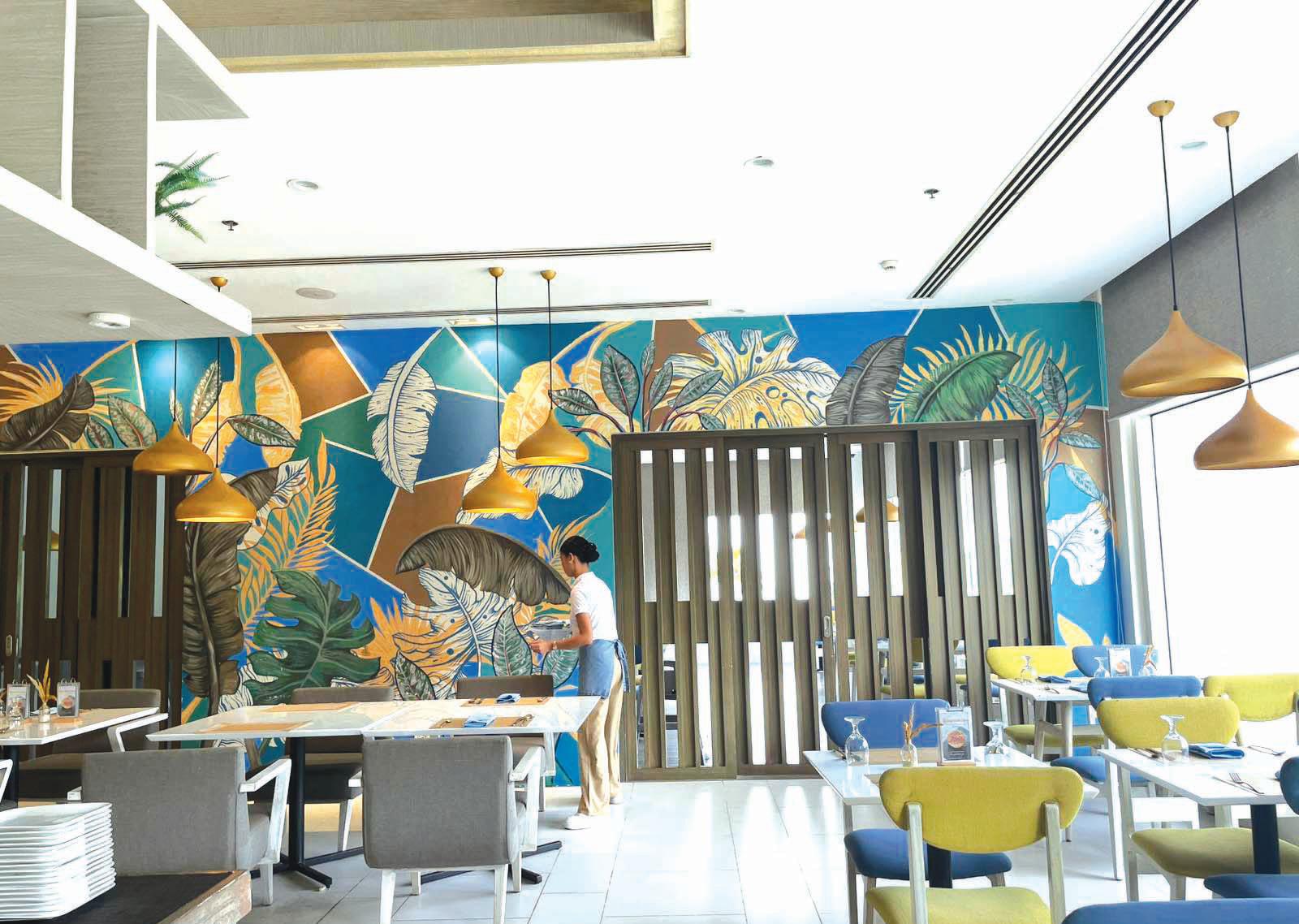
CIf peanut-based kare-kare is too punchy for you, this milder, mellow version might just be your match.
“I wanted to offer a diner-designed experience by localizing the classic, American burger with the Filipino dish Bistek. This creation features various fillings, letting diners enjoy a beloved burger with a distinctly Filipino twist,” said Chef Sia.
Borderless Cuisine
BORDERLESS Cuisine celebrates the exciting fusion of global food traditions, driven by globalization, culinary tourism, and migration. This trend brings new flavors and ingredients to the table while honoring authentic techniques and cultural roots.
This results in creations that combine the old with the new, featuring standout ingredients like miso, kimchi, shiso, pomegranate, and calamansi to craft fresh, respectful, and truly unique culinary experiences.
The Bangus Cigarillos, meanwhile, are Belmont’s playful take on tinapa. Rolled like fat cigars and wrapped in a shell that’s more breadcrumb than lumpia wrapper, they pack a smoky punch with each bite. Served with both suka and sweet dipping sauces, they’re ideal in small doses—satisfying, not cloying.
Even when they cool, they don’t toughen up. The fish remains fresh, and never funky.
Chef Santos transformed this concept into culinary reality with his exceptional creation, Beef Pares Tacos with Garlic Spring Onion Crema.
“Marrying comfort foods from Mexico and the Philippines, I created Beef Pares Tacos. These tacos feature tender beef cooked pares style on soft tortillas, garnished with ensaladang talong, garlic-spring onion crema, calamansi, and cilantro,” said Chef Santos.
Culinary Roots
CULINARY Roots marks a significant return to indigenous ingredients and hyperlocal cuisines.
The Seafood Laing, meanwhile, is made with dried taro leaves, giving it a longer shelf life while maintaining that classic creamy texture prized in Bicolano kitchens. The coconut milk is lush but not greasy, and the mix of seafood, including mussels, squid, prawns and salmon—sourced from nearby island vendors—is juicy and clean-tasting.
This trend sees chefs delving into forgotten recipes and traditional techniques to honor the regions they cook in, celebrating and reviving lesser-known regional dishes.
It’s not spicy, which makes it more approachable for international palates, but locals who want heat can ask for extra sili.
Sweet endings FOR dessert, the Sampaguita Mantecado brings together banana bread, polvoron and dried sam -
The Culinary Roots trend emphasizes preserving the past while moving forward, ensuring authenticity remains at the heart of each dish. While this trend often originates regionally and may gain wider recognition, its success hinges on retaining its true cultural essence and connection to heritage.
Innovating a dish rooted in heritage, Chef Cacho prepared Halang-Halang na Manok (Spicy Chicken Stew in Coconut) to illustrate this trend.
RAVING Japanese food while out and about in the midst of SM Mall of Asia, but struggling with which delicacies to choose? You’re in luck because you can have it all at once! Kiwami, the newest Japanese food destination,
of preparing this one iconic dish, meticulously selecting only the finest meats from trusted partners to

Kiwami: Japanese Master Kitchens is home to six of Japan’s master kitchens, each embodying the core of Kiwami’s multi-kitchen concept by offering distinctly spe cialized dishes and upholding a culinary philosophy of single-dish mastery, deeply rooted in Japanese culture and tradition.

ly translates to “ultimate,” Kiwami ensures that quality meets delicacy. Each of its dedicated kitchen spaces is equipped with specialized equipment and staffed by Japan-trained chefs, whose sole focus is exclusively on mastering one iconic dish.
paguita buds with a bold undercurrent of caramel. It’s unapologetically sweet—almost too sweet, depending on your threshold—but softened by the floral delicacy of the sampaguita. Best enjoyed in small spoonfuls, it’s a dessert meant to linger over.
During its official launch at SM MOA on June 23, 2025 the food place opened its doors to its largest location to date, measuring over 700 square meters with a 250-seat capacity.
The dish is part of Megaworld Hotels and Resorts’ Sampaguita Project and is also available in Belmont’s Manila and Mactan branches.

with a flavorful trimming of fat; and Menchi, a mix of ground beef and pork cutlet with Yabu’s special spices and stuffed with cheese.

For something richer, there’s the Queso Seco Bun, which is Belmont’s in-house take on ensaymada. this version is denser, more indulgent, and made with a blend of goat cheese, hard cheddar, and cream cheese, tucked generously into soft, compact dough.

and adding spice to your preference.
enough to count as a meal.
preparation, embodies their dedication to authentic Japanese culinary traditions and craftsmanship.
Upon entering Kiwami, a captivating “moment area” instantly sets the tone. Dominated by a large circular light casting a glow on a tree with vibrant yellow-orange leaves, this space’s purpose is to transition your mindset. Its sleek, ambient interiors embody modern Japanese minimalism, allowing you to reset from the bustling mall environment before indulging in the offerings from the six master kitchens.
Ippudo FOR sine, ramen is an absolute essential you simply can’t miss, and Kiwami has it ready for you through Ippudo. Since 1985, Ippudo has been celebrated for its world-famous Tonkotsu Ramen, which translates to “pork bone” and is known for its creamy and milky-white broth. With the expertise of Ramen King Shigemi Kawahara, a three-time Ramen Master Chef Hall of Famer, Ippudo pioneered Hakata-style ramen, distinguishing itself with an imported 15-hour Tonkotsu broth, freshly made noodles, and Chashu that’s slow-cooked for 30 hours before being expertly torched.
Sold by piece, it’s not meant for the lactose-sensitive, but for those who love dairy, it’s nextlevel comfort.
“When we first launched the Sampaguita project, I didn’t even know you could eat Sampaguita,” the chef explained. “Actually, the first tries were bad... but it challenged us to be creative.”
Each piping hot bowl is served in custom “aritayaki” porcelain, crafted from pottery stone mined in Mount Izumi, Japan. These bowls reflect the brand’s deep commitment to tradition and unwavering quality.
To drink, there’s a ginger-lemon cooler that surprises with its balance, refreshing without bitterness. Even the halo-halo, reimagined as a thick ube shake topped with standard sweets (minus the leche flan), is satisfying and heavy
More than a mere trend guide, the UFS Future Menus 2025 report is a comprehensive roadmap for culinary success in a rapidly evolving landscape. It features four global trends, supported by research, chef insights, and actionable tips, empowering operators to meet evolving diner expectations for creativity and innovation.
By Kenneth M. del Rosario Contributor
Street Food Couture
THE word sabai in Thai loosely translates to “comfortable” or “relaxed,” which makes sense once you step into the newest restaurant tucked next to Uma Nota at Shangri-La The Fort in BGC. But don’t let the soft-sounding name fool you; the flavors coming out of this kitchen are bold, direct, and unapologetically Thai.
TRADITIONAL street foods are transforming into gourmet offerings across all foodservice channels, including fine dining, thanks to chef expertise. This trend is largely driven by Gen Z, with 65 percent prioritizing value in their dining experiences. Leveraging humble ingredients and techniques like charcoal grilling, steaming, and wok hei, chefs are elevating beloved favorites such as crepes, tacos, skewers, burritos, spring rolls, dumplings, bao buns, and Korean corn dogs. During the Taste Kitchen, Chef Aluning cooked Stuffed Chicken Wings with Minced Meat which he described as “an innovation on Japanese Kushikatsu.”
“An innovative take on Tinola making it creamier and more flavorful with lemongrass and coconut milk. This Visayan dish literally translated as ‘spicy-spicy’ is enhanced with coconut milk, lemongrass, chilies, and optional basil leaves or dahon ng sili,” said Chef Cacho.
Comfort first, always THERE are two things Belmont Café is clear about when it comes to its food philosophy: skip the gimmicks and serve with sincerity. Their dishes are designed with balikbayan families in mind, as well as Filipino travelers and tourists genuinely curious about what Filipino food tastes like when it’s made for the table, not just for the ‘gram.
Koyo Handroll bar ANOTHER staple in Japanese cuisine is sushi and Kiwami made sure to include it in its home through Koyo, a dedicated station for crafting exceptional sushi handrolls.
New York-based Filipino Chef Mark Manaloto is in charge of the reimagination and contemporary twist of Koyo’s sushi. By meticulously sourcing the finest ingredients, Koyo achieves a perfect balance of refinement and innovation, crafting bold and inventive handroll flavor combinations.
“Sometimes we just want to relax the food, not to overdo it, because we want it to be family style, casual, that’s what we want,” Belmont Cafe food and beverage manager Penn Juliano told Wine and Dine in vernacular.
sistency. These dishes are part of the café’s regular à la carte menu and not just seasonal stunts or fleeting curated sets. Most are also good for two to three people, but generous enough for solo diners with a healthy appetite.
Even as a hotel restaurant, Belmont’s culinary team doesn’t feel boxed in. If anything, being part of a hospitality brand challenges them to lean into identity.
One of Ippudo’s contemporary dishes, Akamaru, is a modern take on Hakata-style ramen featuring their signature 15-hour pork bone broth, paired with spicy miso paste and garlic oil, and generously topped with 30-hour slow-cooked Chashu slices.
A new restaurant from the Uma Nota team goes all-in on regional Thai cuisine—no shortcuts, no Pad Thai
Assavadathkamjorn, or Chef Tob, a native of Southern Thailand who’s worked at heavy-hitting restaurants like Le Normandie, Sühring, and Pru. He now leads a six-person Thai kitchen team, all of whom have relocated to Manila, bringing with them not just skills, but a strong culinary perspective.
The tender chicken is cooked with Knorr Chicken Broth Base, adding a rich and savory flavor. Enhanced with Knorr Liquid Seasoning and Knorr Chicken Powder, it brings an elevated taste and aroma that makes this dish more special. Seasonings, broth bases, or mayonnaise were incorporated into all other dishes prepared during the event, enriching their taste and aroma.
“There are dishes we’ve grown to love that were passed down to us by our ancestors. Now, when you create something, you have to have a strong foundation where you create that innovation,” said Chef Cacho.
Yabu YABU, a popular mainstay in the country’s food scene, is celebrated for its signature Tonkatsu. Founded in 2011, the restaurant’s success is rooted in its partnership with Michelin Bib Gourmand Chef Kazuya Takeda who perfected the art
tered and sizzling with garlic, chili, and salt—it doesn’t sound complicated, but the flavors run deep. “It’s my favorite dish,” Needham told me. “It’s not something you’ll find in other Thai restaurants here, and the flavor reminds me of something between adobo and rendang.”
Hannosuke RENOWNED Japanese restaurant chain Kaneko Hannosuke is a restaurant chain that specializes in
Each premium nori-wrapped roll is carefully prepared and packaged to ensure ultimate freshness and crispness, guaranteeing an exceptional experience with every bite.
That intention is backed by con -
Some of the crowd favorite sushi handrolls are California Crunch, Tuna Edamame, Unagi Tamago, and Ebi Katsu.
Yakitori Hachibei

CHAR-GRILLED over Binchotan charcoal and ideal centerpieces for any meal, Kiwami’s Hibachi Shared Plates are a collaboration with Sydney-based chefs Max Smith and
A must-try in this master kitchen is the Hanger Steak grilled in Binchotan, drizzled with black garlic miso sauce, leeks in ginger vinaigrette, and wasabi. Hokkaido Soft Cream TO complete the dine-in experience, Kiwami features Hokkaido Soft Cream, a master kitchen dedicated to desserts. This venture operates under the helm of John Concepcion—CEO of The Standard Hospitality Group (Kiwami’s owner) and former Managing Director and CEO of Selecta ice cream. The Maple Honeycomb Sundae is one of its specialties, renowned for its rich, milky, and creamy texture derived from Japan’s high-quality Hokkaido dairy. It is topped with honeycomb sweets and is paired with a cylindrical wafer stick.
“We always go back to what our guests look for,” Aligaen said. “It has to be something that [brings them back to their roots].” Belmont Café is open daily from 6 am to 10 pm, starting with a breakfast buffet until 10 am, followed by à la carte dining from 11 am through the evening.

Sabai is the latest concept from Alex Offe and Michael Needham, the same team behind Uma Nota Manila. But this time, they’ve shifted their culinary compass west of Vietnam, digging deep into the regional diversity of Thailand—beyond just Bangkok street food and the familiar tropes of sweetened curries and tourist-friendly spice levels. In fact, they don’t even serve Pad Thai.
“These stuffed chicken wings are filled with seasoned minced meat, skewered, battered, and deep-fried. A light barbecue glaze balances sour, sweet, and savory flavors, offering a delightful combination of textures and tastes,” said Chef Aluning.
Diner Designed DINER Designed champions personalize interactive, and multisensory culinary experiences. Driven by emerging technologies like AI (artificial intelligence) and AR (augmented reality), this trend puts diners in control through table-side cooking, 3D printing, build-your-own dishes, and blowtorching. With 47 percent of consumers now prioritizing experiences over material goods, UFS supports businesses with training, menu engineering, and seamless trend integration to meet the growing demand for custom flavors and im-
“We spoke to our head chef and he insisted we don’t do Pad Thai,” Needham told the BusinessMirror . “He said that Pad Thai is more of a Chinese-influenced dish that foreigners associate with Thailand, but you won’t find it in a lot of the local regions.” The chef, in this case, is Puwadol
“Innovation is actually making food taste better, making food taste interesting,” he added.
Chef Cacho explained that sometimes, a traditional heritage dish might lack the robust flavor modern palates expect, perhaps just a simple broth from boiled bones.
Driving force AUTHENTICITY, or maybe better put, honesty, is Sabai’s driving force. That includes ingredients. “We actually couldn’t find some of the herbs here—galangal, kaffir lime, holy basil. So we went to Bangkok, bought the seeds, and partnered with suppliers here to grow them,” said Needham. “Even our ingredients had to be Thai.”
“But innovating that taste by adding a few key ingredients to make it more vibrant and flavorful isn’t wrong; it’s simply an enhanced way of making food taste better,” he pointed out. To cap off the culinary experience, guests enjoyed unique and surprising ice cream flavors like Salted Egg Pili, Potato Ice Cream, Tokwat Baboy, and Choc-nut Tablea, along with magically conjured chocolate creations from CMV Txokolat.
And yes, the food tastes like it. Take the Kanom Krok na Hoi Shell, for instance—seared scallops resting on warm Thai coconut pudding. It’s creamy, briny, and comforting, with a slightly crisp edge. Then there’s the Pla Kung Pae, a starter of prawns with grilled chili paste and Thai herbs, packing heat and herbaceous zing in every bite.
But it’s the Pad Prik Kluea that stole the show. Stir-fried beef, blis-
The next and final Metro Manila leg of The Taste Kitchen will go live in Pasay on July 15, before UFS samples Future Menus for key cities across the country, including Bacolod, Baguio, and Davao. The Future Menus 2025 Trend Report is now available for download.
I’d have to agree. It’s a sleeper hit—nothing flashy, just straightup delicious. A must-order.
Sour, savory notes
OTHER mains included the Nhaem Sam Chun Tod, a crispy fermented pork dish that punches through with sour, savory notes, and the Kang Panang Nuea Nong Lai, a stewed beef silver shank in rich, nutty Panang curry that warms you up from the inside out.
For dessert, the Mango Sticky offers a refreshing take—mango sorbet served along fresh slices, which was a surprise, paired with chewy sticky rice and drizzled with coconut sauce. On the drinks side, the Sabai Blue Bliss stood out—a layered highball that’s floral, citrusy, and subtly boozy, made with vodka, lychee, butterfly pea syrup, and umeshu (a Japanese liqueur). It’s photogenic, sure, but also genuinely good.
FBy Rory Visco Contributor
OR FOUR decades ago, Destileria Limtuaco & Co. Inc. (DLCI) brought innovation to the cocktail red wine market with the introduction of Maria Clara Sangria, which served as a tribute to the timeless beauty and enduring spirit of the Filipina named Maria Clara, the iconic literary symbol of grace and strength.
The interiors—designed by Hong Kong-based LC Studio—strike a balance between tradition and polish. There are two main dining areas and three private rooms named Bangkok, Phuket, and Chiang Mai. The two bigger ones come with karaoke setups, triple soundproofed to keep your Mariah Carey renditions contained. “We thought, what brings Thai and Filipino cultures together? Karaoke. It was a no-brainer,” said Needham. Fresh, contemporary SABAI sits in what used to be a furniture store, but you wouldn’t know it now. The restaurant manages to feel fresh and contemporary while integrating subtle Thai details—patterned ceilings, radial motifs, and natural textures that feel intentional but not over-designed. The vibe hits that elusive premium casual mark: elevated, but not intimidating.
“We’re not trying to be fancy for the sake of it,” Needham said. “We just want to be honest with the food and experience. We want people to feel like they’ve really been to Thailand.”
And after the meal I had, I’d say: mission accomplished. Sabai is

Kiwami stands as the perfect destination for all Japanese food lovers, offering the best of diverse culinary worlds under one roof. Whether dining solo or with a group, you can truly enjoy curating your own table from the distinct offerings of its master kitchens.
Sparkle and slay the way you want it with Maria Clara






Sunday, July 27, 2025 |
Edited by Jose F. Lacaba

by Pablo A. Tariman

TWO years ago, young FilipinoAmerican clarinetist Jason Marquez surprised local music afficionados with a rarely played program for clarinet, so varied and wide-ranging it left an audience asking for more.
Marquez, a Dare to Dream full scholar from Andrews University in Michigan, had graduated Magna Cum Laude, with a Bachelor’s Degree in Music Performance. His highly revealing opener was Bela Kovacs’ Sholem-Alekhem, rov Feidman, a Philippine premiere of Kenji Bunch’s Cookbook (2004), and with cellist Job Polvoriza doing a sensitive part in Robert Muczynski’s Fantasy Trio, Op. 26 (1969). By the time Marquez reached Copland’s Concerto and George
Gershwin’s I Got Rhythm), the audience was convinced he was the new exciting clarinetist to watch. Jason belongs to a houseful of musicians, among them Jeanne Marquez who won the top prizes in a New York young artists’ competition.
REFINED ARTISTRY
JEANNE , now into her senior year at the Juilliard School in New York, has quite a lot to be thankful for. In 2019 (at age 15), she part -
nered with Filipino-Finnish conductor Tarmo Peltokoski (then age 19!) in a marvelous reading of the Sibelius concerto with the Manila Symphony Orchestra In 2023, she breezed through the Mendelssohn concerto again with the MSO and toured the concerto in Manila Pianos, UPV Iloilo and Science City of Munoz to rousing standing ovations. In 2024, she hurdled the fiendishly difficult Brahms concerto again with the MSO leaving no
doubt that she stands out in her generation of violinists. MSO executive director Jeffrey Solares described Marquez’s musical transformation thus: “Jeanne (Marquez) has matured as a musician, not just a violinist but more towards a more complete artistry rather than just virtuosity. The youthful fire and passion are still there but now more under control and refined.” Continued on
Clarinetists Jason Marquez and Andrew Constantino, violinists Jeanne Marquez and Adrian Nicolas Ong, pianist Aida Ezra Baracol, classical guitarists Samuel “Sting” Asistores and Adrik Cristobal, and sopranos Angeli Benipayo, Nerissa de Juan and Elle Tuazon
Continued from page 1
TRAINING TO WIN
THE last two years are turning out as a very good time for Filipino classical guitarists.
Samuel “Sting” Asistores now studying at the École Supérieure Musique et Danse Hauts de France in Lille, France took the silver medal in the 2023 Groningen Guitar Festival Competition in The Netherlands.
While the gold eluded him, Asistores was vindicated when he also won the Audience (Public Prize) Prize. The Groningen Guitar Competition which attracted 36 participants from different countries. The Filipino classical guitarist played three movements from Roberto Serra’s Sonata for Guitar and Nocturnal after John Dowland by Benjamin Britten.
In Lille, France, Asistores is now under French classical guitarist Judicael Peroy who has performed in the Philippines many years back. He moved to France after his studies at the San Francisco Conservatory of Music. Asistores said his latest competition outing taught him “that the results are never in your control. In this setting, success of course is winning first place. But there are other things to enjoy like performing for an audience.”
It is also a winning streak for classical guitarist Adrik Cristobal who copped the top prize in the Thailand International Guitar Competition two years ago.
Also, a second prize winner in the Spanish Music Competition in Albi, France and third prize winner in the J.C. Arriaga Competition in Bilbao, Spain in previous years, Cristobal pointed out competitions actually give additional pressure that concerts don’t always give. “I join competitions for what it offers. It is a good training for musicians and a good exposure
to the music world. I treat winning only as a bonus.”
LAST May 29, clarinetist Andrew Constantino was elevated to star status in a gala concert billed as the SSO All Star Concerto Gala as soloist in Debussy’s Première Rhapsodie for Clarinet with the Sitchuan Symphony Orchestra (SSO) under the baton of Darrell Ang.
He shared the all-star gala with flutist Dani Kim who played the Nielsen Flute Concerto and cellist Sheng Yue who interpreted the Elgar Cello Concerto.
Andrew describes his gala program not as a concerto but more of a musical poem. “I performed Claude Debussy’s Première Rhapsodie for Clarinet and Orchestra in my college years. But for this SSO performance, I made significant changes in my interpretation. I allotted up to three hours of practice daily, focusing not just on the technical aspects, but more importantly on the musical expression.”
What he enjoyed most about the Concerto Gala was the opportunity to share music on a deeper level, not just with the audience, but also with my fellow musicians on stage.
“There’s something incredibly special about performing in a setting where everyone is fully invested in creating something meaningful together. The energy, focus, and passion during that evening made it a truly memorable experience. It was also a joy to feel the connection with the audience, to see their reactions, to feel their presence, and to know that the music we were making was reaching people emotionally. That sense of communication and shared experience is one of the most rewarding parts of being a musician, and the Concerto Gala really reminded me of that.”










WITH its sleek, contemporary glass façade, the classic and elegant Luxent Hotel along Timog Avenue in Quezon City is this year’s venue for the much-awaited Nick Joaquin Literary Awards (NJLA).
In a memorandum of agreement signed between the Philippines Graphic and Luxent Hotel, the NJLA 2025 will be held on the 5th floor of the hotel’s Meridian Ballroom on Aug. 28, Thursday, from 5-9 p.m. National Artists for Literature Ricky Lee and Gemino Abad will lead about 100 short fictionists and poets, as well as luminaries from the cinema, media, academe, and local governments who will grace the affair. The NJLA is the only Awards for Literature in the Philippines that publishes and posts for posterity outstanding short stories and poetry, making them easily available to readers everywhere for generations to come.
These literary works are published in the Philippines Graphic Reader, the companion literary magazine of the Philippines Graphic and posted on the Graphic’s website (https://philippinesgraphic.com. ph) and Facebook page. Some 75 short fictionists and poets, whose works qualified for publication in the Graphic Reader, will be honored as Graphic Salute Awardees for 2025. From this rich harvest of literary gems will be selected the top three winners in the short story category and the Poet of the Year. NJLA 2025 is made possible with the generous support of Luxent Hotels, BingoPlus, and San Miguel Corporation (SMC).