


By Andrea E. San Juan
WITH only a week left before the implementation of the 19-percent tariff on Philippine goods entering the US, the Philippine team is still hoping to secure a lower rate while talks are still ongoing with Washington.
“For now, since it was already announced by President Trump, then it’s final. But of course, we’re really hoping we can [still] bring it down,” Trade and Industry Secretary Cristina A. Roque told reporters on the sidelines of the Department of Trade and Industry (DTI) National Trade Fair on Friday.
“The ball is not in our court,” the Philippines’ Trade chief said as she explained that Washington set the tariff rate “not actually based on the trade deficit but on what America wanted to give us.”
Nonetheless, the Philippine trade chief is still banking on the good outcome of the ongoing negotiations, given that there is still a week left before the August 1 implementation of the reciprocal tariffs for the US’ trading partners.
“President Trump already announced the 19 percent in his tweet so we’re looking at that [19 percent], but of course they’re still talking until ano… of course everybody wants to bring it down,” Roque said.
She confirmed to reporters that in securing the 19-percent country tariff, the Philippine side was asked by Washington to offer all products to the US, meaning to allow entry of US-made goods to Philippine borders at zero tariffs.
Roque said, however, that the Philippines did not agree to grant the US full access as this might hurt local producers, particularly the agriculture sector.
“For us, we did not give the agriculture because it might hurt the farmers. It might hurt that industry,” she pointed out.
Roque said, however, that the Philippine team has already laid down all concessions on the negotiating table.
“That’s the best we can give,” she said. But the trade chief asserted: “We definitely negotiated. But then, in the end, it’s really up to them.”
Among the sectors excluded

“That’s the best we can give. We definitely negotiated. But then, in the end, it’s really up to them.”— Trade and Industry Secretary Cristina Roque, on the Philippines’ final tariff offer to the US, ahead of the planned 19% tariff set to take effect August 1.
from the list of concessions were agricultural products such as sugar, corn, rice, poultry, pork, and seafoods, which are locally produced in significant volumes.
Special Assistant to the President for Investment and Economic Affairs (SAPIEA) Frederick Go said they opted to remove the tariff for soy, wheat, medicines, and automobiles as part of their concessions to the US so it would lower its 20-percent tariff on Philippine goods by one percentage point, since those goods are not produced locally.
The zero-tariff regime, he said, will be beneficial for consumers, since they will have access to cheaper medicine, bread, and animal feeds.
Meanwhile, Roque said DTI is preparing measures for the industries that might be affected with the upcoming implementation of the additional tariffs on Philippine goods entering the US.
“Yes, of course. This is what I always say: Never put our eggs in one basket. I mean the US is one market but we have the whole world as the entire market,” she emphasized.
“We cannot just rely on one. [What’s important is that] the world should be our market, we should be supplying to the world so

that if anything happens to one, we still have so many fallbacks,” the Trade chief added.
PCCI: ‘Not a game changer’ MEANWHILE , in a separate statement on Friday, the Philippine Chamber of Commerce and Industry (PCCI), the largest business organization in the country, said the government should shift its attention to “more significant obstacles” hounding the domestic business and trade environment than the 1-percentage point cut in the tariff, which it said is “not a game-changer.”
“Every percentage point counts,” PCCI President Enunina Mangio said this in a statement on Friday, pointing out that while a 1-percentage point is “modest,” she said this translates directly to lower costs of Philippine products in the US market compared to those of other countries that are facing steeper tariffs.
Mangio said this reduction in the tariff that would be slapped on Philippine goods “provides exporters a bit more flexibility in pricing negotiations; and, particularly for micro, small, and medium enterprises (MSMEs), can translate to
meaningful cost savings, stronger profit margins, and improved price competitiveness.”
“Realistically speaking, a 1 [percentage point] reduction is unlikely to trigger a massive surge in exports. The impact will be most felt by specific industries already exporting the affected goods,” Mangio said.
PCCI emphasized that “broader factors” like overall economic demand, global competition, logistics costs, production challenges (infrastructure, input costs, bureaucratic efficiency), and non-tariff barriers (NTBs) often have a far greater impact on export volumes than a single percentage point tariff change.
PCCI called on the government “to continue efforts to negotiate deeper and more comprehensive tariff relief across a wider range of product lines, as well as to address NTBs and to aggressively implement domestic reforms to improve doing business and trade, lower logistics and energy costs, promote digital infrastructure and provide international trade incentives to strengthen competitiveness, improve productivity and build a resilient and inclusive economy.”



By Jovee Marie N. Dela Cruz, Cai U. Ordinario, and Reine Juvierre S. Alberto
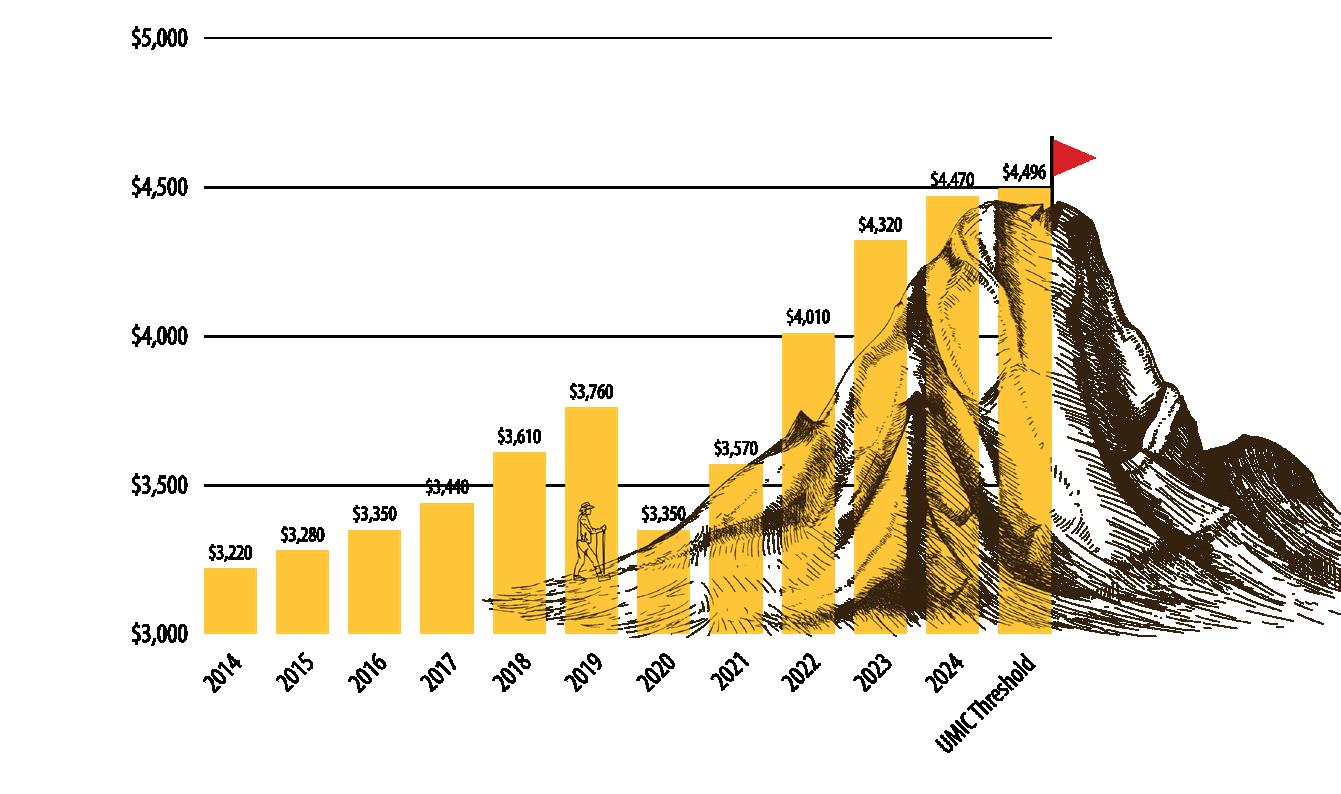
THE Philippines is now just $26 away from joining the ranks of upper middle-income countries (UMIC). The realization of this dream has eluded the Philippines for the past 38 years. Despite the long wait, the Philippines soldiers on, as becoming a UMIC promises higher national wealth and better lives for more Filipinos.
According to the World Bank’s latest classification, the Philippines’ gross national income (GNI) per capita stands at $4,470—just $26 short of the UMIC threshold of $4,496.
With this comes the reality that UMICs have limited access to concessional financing from multilateral, regional, and bilateral organizations. Former Socioeconomic Planning Secretary Dante B. Canlas told BusinessMirror that preparing to become a UMIC starts with the government becoming more judicious about their spending.
While the UMIC status was merely a “statistical construct” and some observers do not agree with the categorization, it still considers a country’s fiscal health and macroeconomic stability, according to Canlas.
“As the Philippine income status rises, tapping global financial markets in borrowing involves paying near market interest rates. But it should be manageable if the Philippine capacity for debt servicing also gets stronger,” Canlas said. “[The government should] prioritize tax and non-tax revenue measures, and cut wasteful government spending.”
Unfortunately, economist and former Albay Representative Joey Sarte Salceda said traditional tax reforms may prove politically difficult in the current climate.
With this, Salceda emphasized that the legislative focus must now shift to the expenditure side—ensuring every peso delivers measurable impact.
“There’s low public appetite for new taxes,” he explained. “That means we must improve the quality and speed of government spending. Fix procurement, enhance agency absorptive capacity, and accelerate big-ticket and PPP [Public Private Partnership] pipeline projects.”
To cushion the impact of reduced concessional lending and build long-term financial resilience as the Philippines approaches upper middle-income status, Speaker Martin Romualdez laid out a comprehensive portfolio of economic and social reforms.
At the forefront is the Budget Modernization Act, which seeks to create a more transparent and results-oriented budgeting process. The measure prioritizes efficiency, accountability, and the timely delivery of public services—crucial for maximizing limited fiscal space.
The measure proposes a shift to a cash-based budgeting system, real-time tracking of public expenditures, and a digital financial management framework.
“Every centavo in the national budget comes from the people. It must be used quickly, honestly, and with clear results,” Romualdez said.


Joey Sarte Salceda, Economist and former Albay Representative, on governance reforms over tax hikes: “There’s low public appetite for new taxes.... That means we must improve the quality and speed of government spending. Fix procurement, enhance agency absorptive capacity, and accelerate big-ticket and PPP [Public Private Partnership] pipeline projects.”
Continued from A1
Budget Secretary Amenah F. Pangandaman told BusinessMirror that this can be done through the bill’s institutionalization of the best practices on Public Financial Management (PFM) by strengthening cash management through the institutionalization of the Treasury Single Account.
Martin Romualdez, Speaker of the House, on the path to sustained growth: “These measures don’t just bring us closer to UMIC status. They prepare us for life after it—when the world sees us not as an emerging economy, but as a stable, credible partner for trade, investment, and cooperation.”
The proposed bill also aims to expedite the digitalization of PFM systems through the adoption of an Integrated Financial Management Information System. Salceda agreed and said the Budget Modernization Act can maximize the efficiency of government expenditures, particularly in infrastructure and human capital investment.
Amenah F. Pangandaman, Budget Secretary, on the importance of the Right to Information (RTI) Bill and open governance: “Since April 2025, the PH-OGP, in partnership with the PCO, has conducted a series of stakeholder consultations to identify lessons learned, revisit strategies, and chart the next steps for the RTI Bill to be a legislative priority.”
But, Pangandaman said, she is also hoping that another piece of legislation that would help make the budget more efficient, the Right to Information Act, will also be passed by Congress.
“Since April 2025, the PHOGP, in partnership with the PCO, has conducted a series of stakeholder consultations to identify lessons learned, revisit strategies,

Leonardo Lanzona Jr., Ateneo de Manila University economist, warning against complacency post-UMIC: “Hence, it is not enough to simply reach the UMIC threshold. The country has to show that it is institutionally and fundamentally robust to withstand any form of crisis both financially and structurally like the Covid.”
and chart the next steps for the RTI Bill to be a legislative priority,” Pangandaman said.
“We have already consulted with representatives from government, civil society, academe, and the private sector. We note that President Ferdinand R. Marcos Jr. supports this,” she added. Besides transparency, Salceda thinks legislation that ensures fiscal discipline, greater infrastructure execution, and more effective public procurement must be prioritized.
“We don’t finance our budget through ODA like we used to. We use market-based bond offerings now, and UMIC status will likely improve those rates,” Salceda explained. “But we need to get more out of what we already spend.”
Ateneo de Manila University economist Leonardo Lanzona Jr. told BusinessMirror that the budget is the priority in terms of not only attaining UMIC but also keeping the UMIC status.
Lanzona said it’s not enough to reach UMIC status as the more important part is not to backslide into lower middle income country (LMIC) status.
He noted that while there remains a $26 gap in the country’s per capita GNI to reach UMIC status in 2024, in 2019, this gap was $146 and in 2020, this gap ballooned to $696.
“Hence, it is not enough to simply reach the UMIC threshold. The country has to show that it is institutionally and fundamentally robust to withstand any form of crisis both financially and structurally like the Covid,” Lanzona told this newspaper.
Romualdez said some of the bills that address these concerns include those on food security and protecting local farmers such as the Rice Industry and Consumer Empowerment (RICE) Act, or House Bill No. 1.
This measure introduces stricter market regulations, anti-hoarding provisions, and a floor price for rice to stabilize prices, strengthen domestic production, and reduce dependency on imports.
Bernardo Villegas, Senior economist at the University of Asia and the Pacific (UA&P), citing global risks: “What caused these economies to be caught in what was known as the middle-income trap? In Latin America, it was clearly their inability to establish macroeconomic stability.”
In the education sector, the Private Basic Education Vouchers Assistance Act (HB 4) aims to replace the outdated E-GASTPE law.
It proposes a tiered voucher system for students from low- and middle-income families, helping ease overcrowding in public schools while supporting private education and teacher development.
Health resilience is also a top priority, with Romualdez pushing for the creation of the Philippine Centers for Disease Prevention and Control (HB 3)—a national body to improve pandemic preparedness, enhance interagency coordination, and institutionalize science-based responses during public health emergencies.
To improve competitiveness in global markets, Romualdez introduced the National Quality Infrastructure Act (HB 19), which will consolidate and streamline standards, certification, and accreditation processes. This will reduce transaction costs, boost industrial efficiency, and support export growth in a rules-based global economy.
He also filed a PhilHealth Protection Bill that prohibits the transfer of PhilHealth reserve funds to the national treasury, ensuring that the agency’s financial resources remain focused on expanding benefits and improving healthcare access.
“These measures don’t just bring us closer to UMIC status,” Romualdez said. “They prepare us for life after it—when the world sees us not as an emerging economy, but as a stable, credible partner for trade, investment, and cooperation.”
Lanzona recognized that these efforts are crucial, but financing these bills remains a priority. Effective public investment that is supported and made sustainable by other programs will be needed.
“In effect, an integrated, sustainable and well-coordinated program that is adequately financed by public investment should be the main objective. Not piecemeal programs,” Lanzona said.
Apart from the budget, constitutionalist and University of Asia

and the Pacific economist Bernardo Villegas noted that macroeconomic stability matters in reaching and staying UMIC—and graduating to higher income status.
In a recent midyear economic briefing, Villegas said the experience of Latin American countries should serve as a cautionary tale for the Philippines.
When these countries reached middle-income status 10 to 15 years ago, they failed to graduate to high income country status. In short, they were caught in the middle-income trap.
“What caused these economies to be caught in what was known as the middle-income trap? In Latin America, it was clearly their inability to establish macroeconomic stability. I’m sure those of you who follow economics worldwide know that Latin American countries were notorious for inflation rates of 1,000 percent, 2,000 percent annually,” Villegas said.
University of the Philippines Professor Emeritus Epictetus Patalinghug stressed that it’s not enough for Congress to pass new laws. It should also repeal and amend laws that have failed to achieve their purpose. He said laws such as the Public Service Law, Foreign Investments Act, Retail Trade Liberalization Law, Cabotage Law, Customs Modernization Law, and Big Taxpayers Law are among those that have not had any effect on attracting foreign investments.
Patalinghug also said the government should strengthen Congress oversight on past reform legislations, not only political investigations. He also said Congress must also improve the implementation of existing laws.
“Bottom line: ‘It’s the implementation, stupid’. Focus on implementing and monitoring of existing laws—oversight. Example: improve tax enforcement and administration, instead of passing new tax laws,” Patalinghug told BusinessMirror
With Sona, what now?
AS the President’s State of the Nation Address (Sona) and the opening of the 20th Congress draws near, the weight of all these considerations shifts to the House of Representatives and the Senate of the Philippines. Nonetheless, Romualdez said the House is ready to get to work— regardless of the political calendar. He said as the country prepares for its next developmental leap, the real question is no longer whether the Philippines can reach UMIC status—but whether it can make that status truly matter.
“UMIC is not just a number,” Romualdez said. “It’s a challenge to do better, govern smarter, and lift more Filipinos into a future they can believe in.”

By Bless Aubrey Ogerio
TARIFF concessions on imported wheat and soy from the United States (US) are not expected to harm local agriculture and may lower feed input costs, according to the Philippine Chamber of Agriculture and Food, Inc. (Pcafi).
The two commodities were among the country’s top agricultural imports and were included in the Philippine side’s concessions during bilateral trade negotiations with the US.
“These two products [wheat and soy] are not produced locally,” Pcafi, a coalition of 48 agriculture groups, said in a statement on Friday. “[It] may even yield positive results in the form of cheaper animal feed products.”
The Philippines secured a slight reduction in US tariffs on some of its exports, from 20 percent to 19 percent. However, it is still higher than the 17-percent reciprocal rate agreed in April.
Among Southeast Asian countries, the country holds the second-lowest US tariff rate, next to Singapore’s 10 percent.
“[This gives] us a tariff advantage against neighboring countries that produce and export almost the same agricultural products as ours,” the agribusiness group explained.
In 2024, the Philippines posted
a $3.98-billion trade surplus with the US. Yet, the Department of Agriculture (DA) noted that agricultural trade narrowed slightly to $1.95 billion from $2.36 billion in 2023.
Top agricultural imports from the US included animal feeds ($1.36 billion), cereals and cereal products ($838.1 million) and other food and live animals ($384.1 million).
On one hand, Pcafi welcomed the decision to keep “vital” agriculture products, such as rice, corn, sugar, pork, chicken and seafood, excluded from tariff cuts. These commodities remain protected under current trade policies, per the group.
Earlier, Frederick Go, Special Assistant to the President for Investment and Economic Affairs, said the Philippines made limited concessions compared to countries like Vietnam and Indonesia.
The US tariff on Vietnam was lowered from 46 percent to 20 percent, while Indonesian exports now matches the Philippines, reduced from 32 percent.
“We hope that the government will continue to protect the interests of our farmers and fisherfolk who remain as the lifeblood of our country’s food security,” Pcafi said. “We will remain vigilant in the ongoing bilateral negotiations since the final trade deal has yet to be finalized.”
PhilHealth rolls out ‘Yakap’ for improved primary care
STATE-RUN Philippine Health Insurance Corporation (PhilHealth) rolled out the “Yaman ng Kalusugan Program [Yakap] Para Malay sa Sakit” on Friday to revamp its primary care benefit package.
President Ferdinand R. Marcos Jr. led the launch of the program at the Gateway Mall in Quezon City, together with PhilHealth President and Chief Executive Officer Edwin Mercado, Special Assistant to the President for Investment and Economic Affairs Frederick Go and Health Secretary Teodoro J. Herbosa. Yakap is an upgraded program by PhilHealth that builds on the Konsultasyong Sulit at Tama (Konsulta) program. This streamlines various primary and outpatient care services into one comprehensive package. Marcos Jr. said that many Filipinos delay going to hospitals because of the distance, transportation costs and work responsibilities. To solve this, he said that PhilHealth will bring health services closer to communities through Yakap. Yakap offers an expanded package of accessible health services, including medicines, check-ups and basic laboratory tests. Particularly, members may now avail themselves of 13 laboratory tests; six cancer screening tests such as mammogram, liver ultrasound, low-dose CT scan and colonoscopy; and 75 medicines from the previous 54 available medicines under the program.
By Reine Juvierre S. Alberto
GOVERNMENT securities may now be directly purchased through the e-wallet app GCash, as GBonds officially rolled out to allow ordinary Filipinos to invest.
In a social media post on Thursday night, the Bureau of the Treasury (BTr) announced that GBonds is now available on GCash.
GBonds is a new investment platform in GCash, enabling Filipinos to conveniently invest in government securities through their mobile devices, even without a bank account.
“GBonds is about bridging the gap between the government securities market and the millions of Filipinos,” National Treasurer Sharon P. Almanza said. “By making these investment options available through mobile applications and
S“We’re bringing the healthcare system closer to the people so that, first of all, they can immediately seek medical attention when they feel unwell. And beyond that, we can help them— if they need treatment, we support them by making medicines more affordable, having PhilHealth cover the cost of medicines, as well as various tests and other services,” Marcos Jr. said in Filipino.
“All of this is part of our goal to truly improve the healthcare system in the Philippines,” the President added.
Meanwhile, Mercado said free cancer screening tests, including for lung, prostate and ovarian cancers, will soon be available for members at select hospitals.
Members will also be able to access 54 additional medicines under PhilHealth Guaranteed Accessible Medications for Outpatient Treatment (Gamot).
These benefits, components of Yakap, will be activated in the next few weeks, according to PhilHealth.
Mercado added that PhilHealth is also studying the possibility of covering the early detection of chronic diseases, such as heart, lung and kidney diseases.
“Our government wants to embrace you and protect you from illness. Because we all know that at some point, we or our loved ones may get sick. But if we focus on prevention and ensuring that illnesses do not worsen, then—economically speaking—that will also be better for our country,” Mercado said in Filipino. Reine Juvierre S. Alberto
electronic wallets, we are showing our commitment to empowering more Filipinos by providing easier access and more inclusive ways to invest.”
The government will offer Treasury bills (T-bills) and Treasury bonds (T-bonds) with varied interest rates per bond.
“These investments are backed by the Philippine government, making them low-risk options for both new and experienced investors,” GCash said.
T-Bills are short-term securities with maturities ranging from three months to one year. These
firms post 99%
TATE agencies posted a 99-percent utilization rate of their cash allocations in the first half of the year, as the government increased its releases to support the implementation of key programs and projects.
Latest data from the Department of Budget and Management (DBM) showed notices of cash allocation (NCAs) released to state agencies reached P2.489 trillion in the first semester, up by 10.32 percent from last year’s P2.256 trillion.
This sent the total utilization rate of line departments, staterun corporations and local government units (LGUs) to 99 percent—the same rate it recorded in the same period a year ago.
A total of P2.463 trillion was
can be purchased for a minimum of P500 with returns from the difference between the buying price and the full amount paid at maturity.
Meanwhile, T-Bonds are longterm debt papers with maturities from over a year to 20 years or more, providing coupon payments throughout their term and returning the full amount paid upon maturity.
T-Bonds are also available in both primary and secondary markets, allowing investors to purchase before the issue date or buy and sell after the issue date.
The Treasury auctions off Tbills and T-bonds every Monday and Tuesday, respectively, to raise funds for the national government.
Retail Treasury Bonds (RTBs) will also be offered on the platform soon, for a minimum of P5,000 during their preliminary offering, in time for the next RTB issuance, according to the Treasury.
For the third quarter, the
government will borrow P690 billion from the domestic debt market. This July, the government has generated P190.2 billion from T-bills and T-bonds. The government issues bonds as part of its borrowing program to raise funds for public spending and to plug its budget deficit, which widened to P765.5 billion in the first half of the year.
(See: https://businessmirror.com.ph/2025/07/25/ fiscal-gap-breaches-limit-at%e2%82%b1765-5-billion-inh1/)
“GBonds is a powerful instrument that gives Filipinos a safe way to grow their hard-earned money while also helping build the country’s future by supporting key government programs like infrastructure and education,” Finance Secretary Ralph G. Recto said. The Philippine Digital Asset Exchange will provide the technology for the bond registry, while its subsidiary, Bond.PH, will act as the licensed broker-dealer.
utilized, leaving P26.363 billion unused as of the first six months of the year.
NCAs are disbursement authorities issued by the DBM to cover the cash requirements of the operations, programs and projects of government agencies. A higher NCA utilization rate reflects the capacity of line agencies to timely disburse their allocated funds and implement their programs and projects.
The bulk, or P1.850 trillion, of the NCAs released were allotted to line departments. Of the amount, P1.825 trillion was utilized, registering a 99-percent utilization rate.
The Office of the Vice President, Departments of Education (DepEd), Foreign Affairs, Labor
and Employment, Migrant Workers, Social Welfare and Development and Tourism; the Judiciary, Civil Service Commission, Commission on Audit, Commission on Elections and Office of the Ombudsman posted a 100-percent NCA utilization rate.
Meanwhile, the Department of Information and Communications Technology (DICT) still recorded the lowest utilization rate at 76 percent, spending P3.482 billion of its P4.606-billion allocation.
Following DICT is the Department of Energy, with a utilization rate of 77 percent at P939.112 million out of its P1.216 billion in NCA releases.
As for the highest NCAs received, the Department of Public
Works and Highways topped the list with P508.749 billion, trailed by DepEd with P363.716 billion. Furthermore, LGUs exhausted P574.785 billion of their P576.049 allocation in the first semester, sending the utilization rate to 100 percent.
Government-owned and -controlled corporations also posted a 100-percent utilization rate for using up P63.003 billion of their P63.217 billion in budgetary support.
According to DBM, 92.1 percent or P5.825 trillion of this year’s record P6.326-trillion national budget was released as of end-June. The P6.793-trillion national budget for 2026 has been approved and is set to be submitted to Congress in August. Reine Juvierre S. Alberto
DOH chief visits wake of bgay health worker who died in flood
HEALTH Secretary Teodoro
Herbosa on Friday personally visited the wake of a Barangay Health Worker (BHW) in Meycauayan, Bulacan who died from electrocution as she waded through floodwaters to check on the barangay health station.
Herbosa paid his respects to Cristina Padora, who died on July 22 while performing her duty.
“The entire Department of Health salutes the dedication of Mrs. Padora for her 12 years of service to her barangay,” the DOH chief said.
Herbosa promised to support Kyla, the daughter of Padora, to be able to work at the DOH after she finishes her college education.
The DOH chief also had a chance
to ask some of the BHWs who were present during the wake about their situation.
He instructed the DOH Central Luzon Center for Health Development to provide the BHWs the rain boots and other things that they need as they perform their duties.
Herbosa also expressed his support to the Magna Carta for BHWs, pushing for their regular allowance, benefits, and protection for over 250,000 BHWs in the country.
The Public Services Labor Independent Confederation (PSLINK), meanwhile, expressed their deepest condolences and solidarity with the family, colleagues, and community of Padora.
PSLINK, a national umbrella organization of government

workers and unions, said Padora passed by a tent exposed to a live wire—a fatal risk she should never have been exposed to.
“This heartbreaking incident is a grim reminder of the hazards that BHWs—who are predominantly women—face every day. From enduring typhoons and floods to braving pandemics and other emergencies, barangay health workers continue to deliver vital primary health services in some of the most difficult and dangerous conditions. They are the first line of care in communities, especially for women, children, PWDs, the elderly, and the most vulnerable,” the group said in a statement.
Despite their indispensable
role in the public health system, PSLINK said, BHWs like Padora “are not recognized as government workers under current laws.”
“They are considered mere “volunteers”—unpaid, unprotected, and unrecognized, with no access to social protection, hazard pay, or the benefits and security that all public health workers deserve. How many more lives must be lost before the government acts?”
PSLINK reiterated their urgent call to Congress and the Marcos administration to immediately pass legislation that recognizes BHWs as public health workers— with rights to decent work, fair compensation, safe working conditions, and full social protection. Claudeth Mocon-Ciriaco
By Joel R. San Juan
THE Supreme Court (SC)
has unanimously declared as unconstitutional the fourth Articles of Impeachment filed by the House of Representatives before the Senate against Vice President Sara Duterte for violating of the one-year-bar rule under the Constitution and her right to due process.
The ruling was announced by SC spokeswoman Camille Sue Mae Ting following the Court special en banc session held on Friday and attended by the majority of the justices.
Ting said the decision, which was written by Associate Justice Marvic Leonen, was unanimous with 13 justices voting to declare the impeachment complaint as null and void for being unconstitutional. Associate Justice Benjamin Caguioa recused from participating in the deliberation of the case while Associate Justice Filomena Singh is on leave.
“The SC has ruled that the House impeachment complaint versus VP Duterte is barred by the one-year-rule and that due process or fairness applies in all stages of the impeachment process,” Ting said at a press briefing.
“We cannot concede the sobriety of fairness inherent in due process of law to the passions of a political moment. Our fundamental law is clear. The end does not justify the means,” Ting said, quoting the decision.
Right way
“THERE is a right way to do the
right things at the right time. This is what the rule of law means, even for impeachment,” she added.
In a statement, Duterte’s defense team welcomed the Court’s decision, which affirmed their position that the fourth impeachment “is constitutionally infirm.”
“This unanimous decision has once again upheld the rule of law and reinforced the constitutional limits against abuse of the impeachment process,” lawyer Michael Wesly Poa said. “We remain prepared to address the allegations at the proper time and before the appropriate forum,” he added.
Ting said the Court’s ruling is immediately executory although the respondents House of Representatives and the Senate are not prohibited from filing a motion for reconsideration. The SC noted that under Article XI, Section 3 (5) of the Constitution, no impeachment proceedings should be initiated against the same official more than once within a period of one year.
Based on the decision, the oneyear-bar rule is reckoned from the time an impeachment complaint is “dismissed or no longer viable.”
The Court explained that the three impeachment complaints were archived, thus, deemed dismissed on February 5, 2025 when the House filed the fourth impeachment complaint. It added that the first three complaints were filed under Article 11 Section 3, paragraph two of the Constitution, which allows any citizen to file a verified complaint with an
‘No pageantry during Sona’
ACTING on the request of reelected Leyte Rep. Ferdinand Martin G. Romualdez, the House of Representatives has scaled down red-carpet preparations for this year’s State of the Nation Address (Sona), dropping the traditional fashion coverage and ceremonial walk-ins in light of the massive flooding affecting many communities.
Lawyer Princess Abante, spokesperson for the House of Representatives, said the changes were outlined in a memorandum issued by House Secretary-General Reginald S. Velasco to all members of the Chamber.
The adjustments, she explained, are meant to demonstrate solidarity with disaster-hit areas and to preserve the solemnity of the national event.
“In view of the recent calamities affecting several regions of the country, the following adjustments will be implemented for the Opening of the 20th Congress and the State of the Nation Address on July 28, 2025,” the July 25 memorandum signed by Velasco said.
Abante clarified that “the red carpet will still be laid out for official protocol, but it will no longer be a platform for ceremonial arrivals or media spectacle.”
“There will be no staged ceremonies, no fashion coverage, and no photo setups in the red carpet area,” she said.
Only brief doorstop interviews will be allowed, and all media interactions will follow standard security and accreditation procedures.
endorsement by any House member. Fourth complaint
THE fourth complaint was through Article 11, Section 3, paragraph four of the Constitution, through a verified complaint or resolution filed by at least one third of the House of members.
“Therefore, no new impeachment complaint, if any, may be commenced earlier than February 6, 2026,” the SC declared.
Ting, however, stressed that the ruling should not be construed as exoneration of Duterte from any of the accusations against her and that another impeachment complaint may be filed against her starting February 6, 2026.
The Court also reminded the House that Article XI, Section 3(2) of the Constitution “clearly requires that a verified impeachment complaint be immediately put in the Order of Business within 10 session days from its endorsement.”
“The Constitution does not grant either the Secretary General or the Speaker of the House “any discretion to determine when this period commences.” Consequently, the House of Representatives is not granted any discretion “except to refer these matters to the proper committee within three session days.
Likewise, the Court declared that due process applies to the impeachment process and laid down seven due process requirements with regard to impeachment proceedings.
These include: (1) the attachment of evidence in the impeach -
Formal attire remains required, Abante emphasized, but members are “respectfully urged to avoid ostentatious displays” and to exercise discretion in their wardrobe choices. Barong Tagalog and Filipiniana remain encouraged to reflect the event’s dignity and solemnity.
Based on the memorandum, media access will be limited to accredited personnel and confined to designated areas such as the North and South Wing lobbies and press booths. All activities must strictly comply with House security protocols.
“These adjustments reflect our solidarity with affected communities and our commitment to uphold the dignity of this national gathering,” Velasco wrote.
The move follows an earlier appeal by Rep. Romualdez, who served as Speaker of the 19th Congress, for colleagues and guests to tone down the pageantry in light of the storm damage and prolonged flooding in Luzon and other regions. He stressed that the House aligns itself with President Ferdinand R. Marcos Jr.’s vision of a “Bagong Pilipinas”—a government that puts service, empathy, and accountability above spectacle.
In addition to the protocol changes, the House has also shifted its focus toward disaster response. Under the Ayuda Para sa Kapos ang Kita (Akap) Program, some P420 million in financial aid has been facilitated for flood victims in 42 districts all over the country, in line with the President’s directive for immediate assistance.
Jovee Marie N. dela Cruz
ment complaint when shared with House members; (2) the evidence should be sufficient to prove the charges in the impeachment complaint; (3) the evidence should be available to all members of the House of Representatives, not only those who are being considered to endorse; (4) the respondent in the impeachment complaint should be given a chance to be heard prior to its transmittal to the Senate, despite the number of endorsements from House members; (5) the members of the House must be given a reasonable time to reach their independent decision of whether they will endorse an impeachment complaint although the Court has the power to review whether this period is sufficient; (6) charges in the impeachment complaint must be impeachable acts or omission committed in relation to their office and during the current term of the impeachable officer. For the President and Vice President, these acts must be sufficiently grave amounting to the crimes described in Article XI, Section 2 or a betrayal of public trust given by the majority of the electorate; and (7) the House is required to provide a copy of the impeachment complaint and its evidence to the respondent to give the latter an opportunity to respond within a reasonable period to be determined by the House rules and to make the complaint and the evidence available to all members of the House.
THE Court ruling also addressed
insinuations of judicial overreach in dismissing the impeachment, stressing that it is the duty of the judiciary “to ensure that politics are framed within the Rule of Just Law.”
“The Supreme Court decision, ruled that all legal issues involving impeachment proceedings are subject to judicial review, considering the nature of the offices and the institutions that are subject to impeachment, its effect on the independence of constitutional departments and organs, and its nature as a constitutional process,” Ting pointed out.
The SC’s decision stemmed from two petitions assailing the constitutionality of the impeachment complaint.
Duterte filed the first petition before the SC seeking to nullify the fourth impeachment complaint for being unconstitutional.
Duterte argued that it violated the “One-Year Bar” rule.
The Vice President also sought the issuance of a temporary restraining order (TRO) and/or a writ of preliminary injunction to immediately enjoin the Senate from conducting impeachment proceedings against her which she branded as “politically-motivated.”
She said a TRO is necessary due to violation of her constitutional right under Section 3, Article XI of the 1987 Constitution.
A similar petition was filed by a group of Mindanaoan lawyers led by Israelito Torreon seeking to stop the Senate from conducting impeachment proceedings based on the “defective” Articles of Impeachment.
By Butch Fernandez & Jovee Marie N. dela Cruz
EMPHASIZING that it is not an act of defiance but an expression of “constitutional fidelity,” the House of Representatives on Friday said the Supreme Court’s ruling dismissing the impeachment complaint against Vice President Sara Duterte will not prevent them from fulfilling their constitutional mandate to uphold truth and accountability.
In a statement, House Spokesperson Princess Abante said the chamber will review the decision “with the utmost respect” once officially furnished a copy but emphasized that the Supreme Court’s ruling does not override Congress’ exclusive constitutional power to initiate impeachment proceedings.
“We respect the Supreme Court. But our constitutional duty to uphold truth and accountability does not end here,” she said.
“The decision of the Supreme Court will be respected—but it will never be a reason for us to stop fulfilling our duty,” she added.
The House of Representatives has yet to officially receive a copy of the decision.
She stressed that impeachment is not merely a legal process but a critical democratic safeguard enshrined in Article XI, Section 3 of the 1987 Constitution—giving the House sole authority to initiate such proceedings.
Citing the landmark Francisco v House of Representatives decision in 2003, Abante underscored that this principle has long been considered settled doctrine. “To allow judicial interference in the initiation of this process risks undermining the very principle of checks and balances,” she warned.
Impeachment a political act
“IMPEACHMENT is a political act rooted in the people’s will—no legal technicality should silence it,” she said. “This is not about one person. This is not just a fight against
one official. This is a fight for the people’s right to demand accountability from the government.”
She assured the public that the House will exhaust all available remedies to safeguard its independence and preserve its constitutional role. “This is not defiance. This is constitutional fidelity,” she said.
Meanwhile, Party-list Rep. Perci Cendaña of Akbayan minced no words in expressing dismay over the High Tribunal’s action.
“The Supreme Court has reduced itself to being the Supreme Coddler of Vice President Sara Duterte,” Cendaña said in a separate statement.
He warned that the dismissal of the impeachment complaint sets a dangerous precedent: “Any corrupt politician can hide behind the Supreme Court to evade accountability to the people.”
Trial must go on DESPITE the SC decision to junk the impeachment complaint against VP Duterte, Sen. Bam Aquino said he still believes the impeachment trial must go on. In a statement, he said, “Bilang coequal branch, malinaw ang mandato ng Konstitusyon at kapangyarihan ng Senado, kaya nararapat na irespesto ang proseso ng impeachment.
He urged fellow senators to “immediately call a caucus” to tackle the decision that he said effectively sets aside the Senate’s constitutional duty to convene as an impeachment court and try the case.
Sen. Anna Theresia “Risa” Hontiveros expressed dismay over the SC ruling, and raised two pointed questions before the High Court.
“With all due respect, nakakadismaya itong biglaang pagpigil ng Korte Suprema sa pagdaraos ng impeachment trial laban kay [we find dismaying this sudden SC move to halt the impeachment trial of] VP Sara Duterte.
“The SC made it clear they are
They accused the House of railroading the impeachment complaint as the entire process was rushed on the adjournment day of Congress 3rd regular session.
“We have learned that the clash of political interests in the past, often disguised by noble intentions, has obscured the need to address the real problems of corruption, inequality, poverty, and disempowerment faced by our people,” the SC said in granting the petitions.
Treat process with seriousness
“IMPACHMENBT is not a chance to settle political scores. Both the House of Representatives and the Senate have a responsibility to treat the impeachment process with seriousness, not as a chance to go after personalities or political opponents, but a constitutional tool to address specific acts of misconduct,” the SC said in a 97page ruling written by Leonen, an appointee of former President Benigno Aquino III.
“Allegations like corruption demand careful, evidence-based scrutiny. This process was never meant to be a stage for political theater or personal attacks. It is about determining whether a public official has committed actions that truly rise to the level of impeachable offenses, as defined by the Constitution. When the focus shifts to the person rather than the alleged wrongdoing, the process loses integrity, and impeachment risks becoming a blunt political weapon instead of a safeguard for public accountability,” it added.
not declaring VP Duterte innocent, and the complaint may be filed again next year,” she noted, partly in Filipino.
Disturbing questions
BUT we have many disturbing questions about the short-term and long-term consequences of this ruling.
“We are puzzled as to how the “one year bar rule” was violated, when only one case was elevated to the Senate,” a principle she referenced against the SC’s decision in Gutierrez v House of Representatives (G.R. No. 193459).
As the Supreme Court explained in that decision, the clear consideration behind the one year bar rule “refers to the element of time, and not the number of complaints,” Hontiveros stressed.
She recalled the SC saying: “The measure of protection afforded by the Constitution is that if the impeachable officer is made to undergo such ride, he or she should be made to traverse it just once.”
She was also bothered by the many requirements imposed by the SC before the impeachment process can start. “I can only hope that this new ruling will not adversely affect future efforts to hold our highest public officers accountable.”
Palace’s call for sobriety MALACAÑANG has called on the public to respect the SC decision declaring unconstitutional the articles of impeachment against VP Duterte.
Palace Press Officer Claire Castro said they have yet to review the said ruling, but she urged the public to trust government institutions.
“The impeachment process is a matter handled by the legislative and judicial branches, and we recognize their independence in carrying out their constitutional mandates,” Castro said. With Samuel P. Medenilla
By Bless Aubrey Ogerio
TWO key shelter agencies have released the scope of their respective housing relief programs following the damage caused by Tropical Cyclones Crising, Dante and Emong, as well as the intensified habagat (southwest monsoon) rains.
The Social Housing Finance Corporation (SHFC) reported that more than 148,000 families in more than 2,100 communities will benefit from the moratorium on monthly amortization payments.
These households are located in areas declared under state of calamity, in line with the Department of Human Settlements and Urban Development’s directive to suspend collections.
Data collected by the two agencies indicate that Metro Manila has the largest number of member-beneficiaries with approximately 70,000 families, followed by Quezon province with nearly 12,000 and Cavite with around 11,000.
Other severely affected areas include Bulacan, Pampanga, Rizal, Laguna, Occidental and Oriental Mindoro, Batangas, Sorsogon, Iloilo, and Palawan.
On one hand, the National Housing Authority (NHA) also announced that it is suspending the collection of amortization and lease payments from August 1 to 31. During the moratorium period, no delinquency interest or penalties will be charged, while collections and applicable interest charges are scheduled to resume on September 1. The NHA clarified that any payments made during the suspension will be applied based on the existing hierarchy of payments. Both agencies have mobilized regional offices to monitor the situation on the ground and coordinate with local governments on implementation.
Earlier, the DHSUD said the moratorium covers housing loan payments to SHFC, NHA, and the National Home Mortgage Finance Corporation (NHMFC), while the Home Development Mutual (Pag-Ibig) Fund has activated its Calamity Loan Program for qualified members in affected areas.
www.businessmirror.com.ph
BACOLOD CITY—The city government here has allocated P50 million for the construction of the Bagong Urgent Care and Ambulatory Service (BUCAS) Plus center that will cater to minor admissions in partnership with the Corazon Locsin Montelibano Memorial Regional Hospital (CLMMRH).
Mayor Greg Gasataya said in a press briefing on Monday that the healthcare facility will rise on the city’s property in Barangay 14, where a multi-purpose center will also be constructed simultaneously.
Specialized services for senior citizens, such as geriatric care, ear, nose, throat, orthopedic, and surgical procedures, will also be available.
“The funds are already there, coming from the city. We’re awaiting the authority from the City Council to enter into a memorandum of agreement with the Department of Health (DOH), then we can proceed with the construction,” he added.
The CLMMRH is the apex hospital of the DOH in Negros Island Region.
Gasataya said the funding requirement for the construction of BUCAS Plus center will come
from the bank loan of the city government.
Lone District Rep. Alfredo Abelardo Benitez, who pushed for the implementation of BUCAS Plus before he stepped down as mayor last month, said that through the program, the city government will bring quality primary healthcare services to the community.
“We will also decongest the hospitals so they can give attention to critical medical cases,” he added.
BUCAS centers serve as a vital intermediary healthcare hub designed to bridge the gap between village health centers and higher-level hospitals.
Apart from specialized services for senior citizens, the services that will be offered include laboratory tests, tuberculosis screening and management, vaccinations, cancer screening, surgical operations for breast, tumor, and cataracts, consultations for high blood pressure and diabetes, obstetrics and gynecology consultation and services, mental health support, first aid and referral for vehicular crash injuries, nutrition support, dental care, animal bite treatment, and access to medicine through an in-house pharmacy. PNA
By Ruth Abbey Gita-Carlos
PRESIDENT Ferdinand R. Marcos Jr. is committed to pushing for more programs that will benefit the elderly, Malacañang said on Friday.
“As far as we know, there are also many programs for senior citizens,”
Palace Press Officer Claire Castro said in a press conference, when asked to react to public criticisms on the supposed failure of the government to provide for the needs of the elderly.
Castro said senior citizens are given priority when there is a distribution of government assistance.
She also cited the recent launch of a 50-percent fare discount for senior citizens in Metro Manila’s train systems.
“Hindi po naman titigil ang Pangulo na tulungan. Mas dagdagan pa ang mga ayuda para sa mga elderlies natin. So, huwag po muna sigurong maging negatibo, tingnan muna nila kung ano na ba ang nagawa ng administrasyon na ito para sa mga seniors. [The President will not stop helping. He will even
increase the aid for our elderly. So, let’s not be negative. Let’s first see what this administration has done for the elders],” she said.
Pressed further if the Palace supports measures penalizing negligent children who abandon elderly parents, Castro said the provisions of the bill must be studied first, stressing that “it depends on the situation.”
This, as Castro acknowledged that some are incapable of providing financial support to their aging parents.
Mayroon na po kasing probisyon sa Family Code, Article 194 kung saan isinasaad na iyong magulang at mga anak, they should mutually support each other. Provided na po iyan. Ang kaibahan na lamang po siguro dito ay maaaring gawin itong isang krimen, dahil ipe -penalize. [There is already a provision in the Family Code, Article
What today’s family dynasties can learn from the Medicis of Renaissance Florence
AT the onset, let me declare that I am personally not in favor of family political dynasties. I hate to see immense wealth and power put into the hands of a few families. I also deplore that political families have been able to game our democratic system that enabled them to carve and dominate political fiefdoms.
It is so frustrating to realize after the last mid-term elections that powerful families have been able to place more relatives in office, giving them an unfair advantage in our political system. The objective is to entrench themselves in power.
I’m afraid that our so-called beloved popular democracy is really nothing more than a “dynastic democracy.”
To be realistic and pragmatic about it, family dynasties, in politics as well as in business and industry, have been here as long as I remember and will be here for a long time.
Perhaps, it’s in our cultural DNA to be ruled by family dynasties. Powerful clans have long played a major role in our politics for centuries.
Even in pre-Hispanic times, we had our Datu family lines, our Lakans, our noble class Datus were the heads of large communities or barangays and had social classes below them. The position of Datu was often hereditary, passed down through lineage. The eldest son of a Datu was typically the heir apparent. It was equivalent to titles like duke, marquess or baron in Europe.
By embracing American style democracy, we were supposed to have gotten rid of this traditional
feudalistic political system. But we are now in year 2025 and powerful clans still hold sway in local politics.
Our predisposition to prefer scions of longtime political families suggests that the Datu set up is still deeply
becoming enlightened rulers.
If they want to know the lasting beneficial impact of enlightened and benevolent governance to a city and even to human history, let them visit Florence, Italy. There they can find out for themselves the good that political family dynasties can do for society with their wealth and power.
In short, I encourage them to become the Medicis of our time.
Who were the Medicis?
The Medicis were an Italian bourgeois family that ruled Florence and, later, Tuscany during most of the period from 1434 to 1737, except for two brief intervals. The family’s history is a story of power, money and ambition that is so familiar to us. They played a significant role in

rooted in us.
A bill to end political dynasties has been constantly popping up in Congress after Congress. A new antidynasty bill is being touted to be introduced by a newly elected senator in the incoming Congress but who will bet it will see the light of day? Will it even be tabled for debate?
If political family dynasties are here to stay, why not make the best of the situation? Why not make lemonade out of lemons?
I’ve observed that the new members of political family dynasties are younger, educated in prestigious schools here and abroad. Hopefully they are more idealistic and open minded than their parents and forebears who were more traditionbound.
Why not appeal to the better angels of their nature? Maybe they can make a difference. If only they can cease draining their energies on taking and grabbing and maintaining power, they might just consider
Florentine politics, with several family members holding key positions of power. The family’s banking business, founded by Giovanni di Bicci de’ Medici in the early 15th century, became a cornerstone of their wealth and influence. Three successive generations of the Medici— Cosimo, Piero, and Lorenzo— ruled over Florence through the greater part of the 15th century. They clearly dominated Florentine representative government without abolishing it altogether.
marketers of art in modern history. They believed that common folk should be able to view and appreciate art, even if they couldn’t afford to own it. For them paying for art, then giving it away to the church and city was their “Stairway to Heaven.”
To enable the ordinary folks to view art, the Medicis supported some of the most talented artists, writers, and thinkers of their time. The range of artists they supported was wide, which included Michelangelo, Botticelli, and Leonardo da Vinci. They also patronized writers and thinkers. Galileo’s early work, was supported by the Medici Family, who later helped him secure a position at the University of Pisa.
Thanks to the Medici family’s money and superb taste in art, we now have the sculptures of David and Moses both by Michelangelo. We can now ogle Botticelli’s The Birth of Venus.
The Medici vision and investment in art, architecture and science were instrumental in transforming Florence into the cradle of the Renaissance—a beacon of innovation that resonates to this day.

Yes, greed for money and power and ambition was their driving force, as with all other dynastic political families, but their saving grace was that they enabled the Renaissance, as we know it, to flourish and bloom. They were considered the first
So I say to the political “nepos” who belong to the new generation of old dynastic political families, visit Florence. Whether you’re strolling through the streets of Florence, admiring the masterpieces in the Uffizi Gallery, or marveling at the architecture of the Duomo, you are experiencing the Medici family’s enduring legacy. See for yourself how investing in culture and arts and even science enabled a political family dynasty gain the lasting gratitude of society and history, in spite of its mad excesses, in spite of the greed for wealth and power that underpinned its prominence for so long.
Using your family’s wealth and hold on power, can you be a Medici of our time?

194, which states that parents and children should mutually support each other. That is already provided. The only difference here is that it can be made a crime, because it will be penalized],” she said.
“ Now, kapag ginawang krimen, ulitin natin, kailangan nating makita iyong probisyon. Dahil baka naman may kakayanan talaga ng anak na sumuporta at in need ang magulang, tingnan po natin kung dapat ngang gawin itong krimen. Dahil hindi naman po magiging krimen kung iyong mga anak din
naman ay in need. [Now, if it is made a crime, let’s repeat, we need to see that provision. Because maybe the child really has the ability to support the parent and is in need, let’s see if it should be made a crime. Because it wouldn’t be a crime if the children were also in need].”
Senator Panfilo Lacson has refiled his proposed Parents Welfare Act of 2025, seeking to penalize children who fail to provide support to their “aging, sick, and incapacitated parents.” PNA
ABy Jalen Senal
FTER decades of grinding, goal-setting, and chasing the elusive dream of success, everything…suddenly stops. Not because you’ve lost your spark—but because you’ve finally earned the right to rest. You did it. You’ve arrived at the long-anticipated milestone of retirement. Your kids are all grown. You can now travel, sip coffee slowly in the morning, and meet up with your college batchmates—who, like you, are entering a new chapter. Retirement should feel like a reward. But why, for many, does it feel challenging?
We spend our entire lives working toward this very moment. So why do some retirees struggle with this stage?
First, we’ve worked hard—often too hard. From early commutes to late-night e-mails, we sacrificed rest in the name of hustle. For some, retirement becomes difficult because their identity is tied to productivity. Many retirees experience a psychological slump due to the sudden lack of structure and purpose (Zikic, 2016). The body may beg for rest, but the mind still craves motion. But here’s the truth: Retirement doesn’t mean doing nothing. It means doing things on your terms—slowly, soulfully. Let your coffee grow cold. Nap in the middle of the afternoon. Walk without a deadline.
Second, not everyone can afford to retire. According to the Bangko Sentral ng Pilipinas (2022), only about 20 percent of Filipinos aged 60 and above are financially prepared for retirement. Because of this, many continue working—not by choice, but by necessity. For others, the pressure to maintain a certain lifestyle post-retirement adds stress. The key? Start early, invest wisely, and know that comfort isn’t found in luxury, but in peace. Third, you don’t know where to settle. After years of city living— the smog, the noise, the cramped spaces—you crave for peace, but you don’t know where to find it.
This is where location matters. A vacation home, or even a permanent move, can redefine your retirement years. Places like Sandari Calatagan, with its proximity to the sea, or Sandari Batulao, nestled between lush mountains, offer peace, privacy, and panoramic views—ideal for those seeking quiet without isolation. Studies show that access to nature improves mental health and reduces stress levels in retirees (Soga et al., 2017). The serenity of the sea or the calm of the mountains isn’t just aesthetic—it’s therapeutic. Fourth, your body may be slowing down, but your spirit still wants to move. An active retirement is a healthier one. Environments that promote walking, light activities, and community engagement are crucial. Wellness-centered developments like Sandari Wellness Residences in Batangas encourage movement through open spaces, fresh air, and green design—all tailored for your health in mind. According to the World Health Organization (2022), physical activity reduces the risk of cardiovascular disease, diabetes, and depression among older adults. You don’t need a gym—you need a lifestyle that welcomes motion. Fifth, you still want your money to work for you. Retirement doesn’t mean the end of financial strategy. You’ve saved, yes. But now is the time to make your money grow. Real estate in Batangas continues to rise in value, especially in wellness and coastal communities. Investing in property here isn’t just a lifestyle move—it’s a strategic financial decision. Lamudi (2022) identified Batangas as one of the top emerging locations for real estate due to accessibility and development growth. Retirement is a challenge, yes— but it’s also a reward. This chapter is yours to write—slowly, intentionally, beautifully. You’ve worked hard. Now it’s time to live well.














Philips UltraEfficient LED was designed to consume significantly less energy while still delivering high-quality illumination and enabling long-term savings and reduced environmental impact. This lighting is for commercial and residential spaces. The Interact System includes intelligent lighting controls for both office and outdoor settings. In the workspace, this system enables data-driven energy management, enhances productivity, and provides actionable insights for space optimization. For outdoor environments, Interact Outdoor Multi Sensor delivers reliable “dusk till dawn” operation and motion-based “light on demand,” streamlining energy use and maintenance. By the way, Interact cloudbased wireless lighting system has been awarded the DEKRA IEC 62443-3-3 security certification. This is a mark of confidence that the Interact system and services are private and secure.
During the Light & Beyond event, Signify launched 3D-printed lighting fittings made from bio-circular materials. These can be reprinted, refurbished, reused and recycled, creating a product lifecycle that drastically reduces waste and carbon footprint. By integrating advanced 3D printing technology with environmentally conscious practices, Signify

SIGNIFY, formerly known as Philips Lighting, recently launched five key solutions highlighting the brand’s commitment to design innovation that will result in illuminating public spaces better and bringing light to where it is actually needed.
Signify is a company that relies heavily on research and development to produce digital solutions and products with advanced applications.
The Light & Beyond program, which was held at Ascott Hotel Makati, focused on around five transformative solutions, each one emphasizing how Signify is helping to redefine lighting through sustainability, digital connectivity, and humancentric design. “We design solutions that not only light spaces beautifully but also respect our planet. And when we talk about the future, there’s no ignoring the power of connected lighting and ultra-efficiency, transforming how we manage energy, environments and experiences. This is a journey we take together with our specifiers. They are not just partners; they are co-creators of the future,” said Raghuraman Chandrasekhar, country leader for professional business, Signify Philippines.
is redefining the way lighting solutions are created, manufactured and distributed.
NatureConnect—Human-Centric Circadian Lighting aims to integrate the rhythm of natural light into indoor environments, targeting professional spaces, healthcare, and hospitality sectors. NatureConnect is designed to recreate natural light’s positive effects indoors, ensuring well-being and boosting productivity. The system utilizes energyefficient LEDs and light control to mimic daylight variations, enhancing mood, focus and sleep quality.
Signify’s Solar Lighting Solutions – Zero Energy, Maximum Impact brings light where it’s needed most. For example, solar-powered streetlights are installed in areas where there is no steady supply of power to make the streets safer for people after dark.
For more information on Signify products and technologies, visit www.signify.com/en-ph.
CAN YOU EVER EXPECT PRIVACY IN PUBLIC? COLDPLAY KISS CAMERA SAGA TELLS US A LOT ABOUT THE ANSWER
NEW YORK—When the “KissCam” at a Coldplay concert landed on a couple who tried (but failed) to duck out of the spotlight, the internet immediately got to work. In hours, the clip was just about everywhere. Endless memes, parody videos and photos of the pair’s shocked faces filled social media feeds. Online sleuths rushed to identify who was on camera. Artificial intelligence and software company Astronomer eventually confirmed that its CEO and chief people officer were in fact the couple in the video—and announced the CEO’s resignation over the weekend.
The incident’s fallout has, of course, generated conversations about business ethics, corporate accountability and the repercussions that conflicts of interest among leadership can cause.
But there are also broader implications at play in our increasingly online world—about the state of potentially being visible everywhere you go or tracked through “social media surveillance.” Experts say it’s more and more common for moments that may have been intended to be private, or at least reserved to a single physical venue, to make their way online and even go global today.
So in the era of lightning-fast social sharing and when cameras are practically inescapable, does being in public hold any expectation of privacy anymore? Is every experience simply fodder for the world to see?
■ CAMERAS ARE EVERYWHERE: It’s no secret that cameras are filming much of our lives these days. From CCTV security systems to Ring doorbells, businesses, schools and neighborhoods use ample video surveillance around the clock. Sporting and concert venues have also filmed fans for years, often projecting playful bits of audience participation to the rest of the crowd. In short, the on-scene viewer becomes part of the product—and the center of attention.
And of course, consumers can record just about anything if they have a smartphone in their pocket—and, if it’s enticing to other social media users, that footage can quickly spread through cyberspace.
Ellis Cashmore, author of the book Celebrity Culture, proposes that the rapid fame of last week’s KissCam moment probably answers a question many have been asking for years: “Is the private life still what it was? And the answer is, of course, there’s no such thing as the private life anymore,”
he notes. “Certainly not in the traditional sense of the term.”
“I’m not sure that we can assume privacy at a concert with hundreds of other people,” adds Mary Angela Bock, an associate professor in the University of Texas at Austin’s School of Journalism and Media. “We can’t assume privacy on the street anymore.”
Some version of the KissCam has long been a staple at big events—from timeouts during sports games to romantic songs played by artists at their concerts.
It’s easy to miss, but most venues have signs to inform the audience that they could be filmed during the event. What’s been different in more recent years, experts note, is how quickly those moments can travel beyond the physical space where they actually unfold. That isn’t only limited to what shows up on a jumbotron. Sometimes it only takes one person in the crowd to capture any interaction on their phone and post the video online—where it can zip around the world.
“It’s not just the camera,” Bock says. “It’s the distribution system that is wild and new.”
ACADEMICIANS STRESS THE IMPORTANCE OF PUTTING GUARDRAILS ON THE USE OF AI
BY RIZAL RAOUL REYES
SOCIETY needs to put guardrails to ensure that the use of artificial intelligence (AI) will be in the right direction, according to a leading proponent of the technology in the country. “Without governance, AI exposes people to very real harm — discrimination, misinformation, exclusion. Trust can collapse,” said Dr. Erika Fille Legara, managing director, and chief AI and data officer at the Center for AI Research, (eCAIR) during a recent symposium organized by the Philippine APEC Study Center Network of the Philippine Institute for Development Studies and the University of the Philippines System.
As AI systems continue to expand rapidly across Southeast Asia, Legara called for clearer safeguards and enforceable AI regulations to ensure public interest is protected while supporting innovation. She also emphasized that adopting ethical principles alone is not enough. Legara underscored that effective governance must be embedded across the AI lifecycle—from design and testing to deployment and eventual decommissioning.
“Governance begins where principles leave off. It is about setting clear policies, assigning responsibility, and enforcing what you say you believe in. Otherwise, it is all academic and just theory,” she explained.
She cited eCAIR’s three-tiered governance model: 1) daily compliance checks handled by developers and data scientists; 2) a second layer of review by risk and documentation teams; and 3) strategic oversight from an AI Governance Council, particularly for high-risk projects.
“Our model is built around four key objectives: enabling responsible innovation that serves the public, ensuring both technical and ethical rigor, establishing internal accountability systems, and maintaining trust with stakeholders,” Legara explained.
PHL IN APEC’S AI ROADMAP
MARCOS ANGELO PUNSALANG, director-general of the APEC Philippines National Secretariat, pointed out that the Philippines is actively engaging in regional AI cooperation efforts through policy dialogues and capacity-building. He noted that the country is preparing for key multilateral events, such as the August 2025 Digital and AI Ministerial Meeting and a Public-Private Dialogue on AI Cooperation, which are expected to solidify regional standards and best practices.
“These efforts demonstrate a growing commitment in the Asia-Pacific region to attain a coherent, aligned and comprehensive approach toward AI adoption and integration,” Punsalang said.
GROUNDED INNOVATION: AI WITH COMMUNITY RELEVANCE DR. PERCIVAL ALMORO, assistant vice president for academic affairs (Research) of the UP System, revealed to the participants that the country has been able to develop homegrown AI-enabled tools that are advancing research and community applications.
His team developed a modified digital single-lens reflex camera capable of capturing ultraviolet, visible, and infrared wavelengths, which has applications in dentistry, agriculture, and even skincare diagnostics.
“[Through this technique,] the composite [becomes visible] using an ultraviolet [UV] camera. So, now the dentist can see it in UV. Otherwise, they are just feeling around—like they are blind,” he said.
Furthermore, Almoro mentioned that the innovation has helped monitor crop health and test sunscreen efficacy. He stressed that research must lead to real-world impact, not just academic output. “It must have an impact [on] the community. And to do that, you need to have interdisciplinary and transdisciplinary [collaboration],” he noted.
BALANCING INNOVATION AND SAFEGUARDS AS APEC economies race to integrate AI, the Philippines’ call for ethics-based governance serves as a critical counterbalance to unchecked innovation.
“Governance is calibrating controls proportionate to risk, while never stalling the value we are supposed to create. It is at the heart of what we do,” Legara concluded.





















Editor: Gerard S. Ramos


THERE’S no better time to start your fitness journey than now—and Xiaomi is literally running with that idea. The tech brand is bringing back its annual Xiaomi Pop Run, happening on August 30, 2025, at Filinvest City, Alabang.
In partnership with RunRio, the event includes a 5K Fun Run, a 10K Pro Race, and for the first time ever—a 21K Half-Marathon. Even better? Registration is free with the purchase of the new Xiaomi Smart Band 10. That’s right—gear up, show up, and hit the pavement while sporting Xiaomi’s latest smart band. For those looking to build healthier habits— whether it’s counting steps, improving sleep, or simply staying motivated—the right wearable makes a difference. And Xiaomi’s current lineup offers several options to match your lifestyle and goals: there’s the Xiaomi Smart Band 10, the more featurerich Xiaomi Watch S4, and the GPS-capable Xiaomi Smart Band 9 Pro.
But which wearable should you get?
XIAOMI SMART BAND 10: THE FIRST STEPS EVERY fitness journey starts best with something simple, smart and stylish—and that’s exactly what the Xiaomi Smart Band 10 delivers. It’s more than just a step counter. With a larger more vibrant screen, support for over 150 workout modes, and a 21-day guided sleep improvement program, this band helps you stay consistent and informed every step of the way. And because wellness should never clash with your wardrobe, Xiaomi offers all sorts of different straps —including a pearl-chain pendant. The first thing I noticed after setting it up was the noticeably upgraded display—it now has a 1.72-inch AMOLED screen with a 326 PPI resolution, 60Hz refresh rate and 1500 nits peak brightness. It’s sharper, brighter and smoother than ever, making every swipe feel more responsive. Whether you’re out for a run under the midday sun or reviewing your sleep data indoors, the screen stays crisp and easy to read. Beyond the screen, the Xiaomi Smart Band 10 also elevates your wearing experience through a lineup of thoughtfully designed strap options. For those who prefer a luxurious, breathable material, the Xiaomi Silk Knitted Strap blends natural silk with 3D-knit technology and genuine leather backing for a premium, skin-friendly feel. On the opposite end, the Magnetic Strap, made from cloud-soft vegan leather, uses flexible magnetic clasps for a snug, seamless fit. Then there’s the Smart Band Pearl-chain Pendant for users who like to turn heads. This statement accessory transforms the band into a silvery-blue necklace. It can be styled in four ways and is perfect for fashion-forward users, though health tracking features like heart rate and blood oxygen monitoring are limited in necklace mode.
From a health and fitness standpoint, the Band 10 supports over 150 workout modes, including six auto-detection options for common activities like walking, running and cycling. It also includes onwrist running courses, which guide users through variable-paced training routines. Advanced athletes will appreciate metrics like VO₂ Max, Training Load, and Recovery Time, providing insight into aerobic capacity and post-workout recovery.
For swimmers, the Band 10 delivers strong aquatic performance thanks to its 5ATM water resistance and 9-axis motion sensor, which delivers 96 percent lap count accuracy. Meanwhile, gym-goers can benefit from heart rate broadcasting via Bluetooth, enabling integration with compatible machines or third-party apps.
Sleep tracking has also been upgraded. Xiaomi has partnered with the World Sleep Society, Asian Society of Sleep Medicine, and Chinese Sleep Research Society to launch a 21-day sleep improvement program. It offers detailed analysis of sleep efficiency, sleep stage distribution, and provides actionable guidance to help users establish better rest habits over time.
Its most impressive feature? Up to 21 days of battery life that charges magnetically in about an hour, ensuring minimal downtime.
XIAOMI WATCH S4: PREMIUM DISPLAY, FULL SMARTWATCH EXPERIENCE
IF the Xiaomi Smart Band 10 is the stylish starter for new fitness journeys, then the Xiaomi Watch S4 is the full-course upgrade for those ready to take their health and productivity to the next level. It’s not just a step up—it’s a leap into smartwatch territory, offering serious functionality wrapped in a sleek, premium shell.
The Xiaomi Watch S4 is the most advanced wearable in Xiaomi’s current lineup, designed to deliver flagship-level smartwatch features without the flagship price tag. Built for serious users who want style and performance in equal measure, it offers a sharp, vibrant interface, robust fitness and health tracking, and seamless integration with the wider Xiaomi ecosystem.
At the heart of the Watch S4 is a 1.43-inch AMOLED display with a crisp 466×466 resolution and a 326 PPI density, making every stat and notification pop. The screen’s 2200 nits of peak brightness ensures perfect legibility in all conditions. The addition of a rotating crown alongside the touchscreen enhances navigation, allowing for faster, more tactile control of menus, watch faces, and apps.
The aluminum alloy case feels lightweight yet premium, and Xiaomi goes the extra mile in personalization by offering interchangeable bezels and straps in styles like Pine Green leather, Midnight Carbon, and Liquid Silver.
These finishes reflect a maturing design language for Xiaomi’s wearable division. With over 200 dynamic watch faces, users can shift from sporty to elegant with a few taps.
The Xiaomi Watch S4 is also built for performance supporting over 150 sports modes, including specialized ones like skiing, rowing, and HIIT, alongside traditional modes like walking, running and cycling. For runners and outdoor athletes, the dual-frequency GNSS (L1+L5) offers precision location tracking, maintaining accuracy even in signal-challenged environments like urban jungles or
wooded trails.
Health tracking is where the Watch S4 punches well above its class. It’s fitted with sensors that monitor heart rate, SpO₂ (blood oxygen), stress levels, sleep quality, and even menstrual cycles. Xiaomi claims its 98 percent heart rate accuracy rivals that of medical-grade devices. Sleep tracking now goes beyond light and deep sleep—it includes REM cycle data, sleep efficiency, and sleep distribution, providing a detailed snapshot of your overnight recovery. With a simple tap, users can access a comprehensive health summary, enabling quick check-ins during a busy day.
Smart features elevate the watch from fitness tracker to productivity tool. The Watch S4 allows Bluetooth calling, meaning you can answer calls directly on your wrist. It also includes gesture controls: flick your wrist to dismiss an alarm, silence a call, or skip a track. The watch acts as a remote for Xiaomi’s Smart Hub when paired with a compatible device running HyperOS 2, allowing you to control smart appliances, earbuds, and other ecosystem gadgets. Calendar syncing and message previews are available, and while it doesn’t have third-party app support on the level of Wear OS, the core integrations cover what most users need day to day.
Battery life is a major win here. You get up to 15 days of use on a single charge, and if you’re ever in a hurry, fast charging gives you nearly 2 days of battery in just 5 minutes. The watch is also rated for 5ATM water resistance, meaning you can wear it in the rain, shower, or pool without worry.
XIAOMI SMART BAND 9 PRO: BUILT-IN GPS MEETS EVERYDAY FITNESS
IF you want serious tracking without the weight—or cost—of a smartwatch, there’s the Xiaomi Smart Band 9 Pro. One of the few fitness bands in its price range with built-in dual-frequency GNSS, it supports GPS, Galileo, GLONASS, BeiDou, and QZSS, giving runners, cyclists and hikers accurate route and distance data without needing to bring a phone.
Its 1.74-inch AMOLED display is crisp and bright (336×480 resolution, 1200 nits), with slim 2.2mm bezels. You get over 100 watch faces, a slim aluminum frame, and strap options in TPU or calfskin for a clean, sporty style. Health tracking includes heart rate, SpO₂, stress, and sleep (with REM). It supports 150+ workout modes, with auto-detection for common activities. It skips smart home controls and pendant accessories like the Band 10 but focuses on the essentials.
The Smart Band 9 Pro handles notifications, weather, music control, and alarms via Bluetooth 5.3 and the Mi Fitness app (Android/iOS). No call answering, but the basics are all there—and reliable. Its 350mAh cell offers up to 21 days of use, charges fast via magnetic cable, and with 5ATM water resistance, it’s also swim-ready.
FINAL WORD: Go for the Xiaomi Smart Band 10 if you want a dependable, entry-level tracker that’s lightweight, stylish, and built for everyday health monitoring. Choose the Smart Band 9 Pro if you need precise GPS tracking and longer battery life for serious outdoor workouts—without upgrading to a full smartwatch. But for advanced users who demand the most from their wearable, the Xiaomi Watch S4 is the top choice, offering all the monitoring tools plus several extras like Bluetooth calling, advanced health insights, and seamless smart home integration.

Identity security investments get higher returns, fewer security issues— Sailpoint reports
BY PATRICK VILLANUEVA
IN its third annual Horizons of Identity Security report, Sailpoint Inc., a leader in unified identity security for enterprises, found that companies who invested in identity security investments not only had fewer identity-related security issues, but also had higher return of investments. The report revealed that 83 percent of organizations who took measures in securing their identity found lesser issues and risks on their security than before. These organizations experienced fewer breaches and minimal internal disruptions.
For example, Sailpoint services help prevent malicious actors from compromising the entity’s security by protecting and governing sensitive data that a company may have. This means quickly removing access to unauthorized individuals, or scanning systems for potential threats.
Beyond enhanced security, investing in identity security providers like Sailpoint also boosts productivity. By granting and removing access to sensitive data or internal systems to employees, companies streamline their workflow with a faster onboarding or offboarding.
This translates to significant cost savings. For example, according to Sailpoint, the process of deprovisioning workers’ accounts that typically takes 30+ days to finish can almost be done instantly, potentially saving $800,000. It also mentioned that employees can also handle access requests and password resets independently, thereby saving hundreds of thousands to over a million dollars.
Still, Sailpoint pointed out that roughly “41 percent remain at the very beginning of their identity security journey with only 10 percent progressing to the more advanced stages.” It reveals the huge gap in organizations, not yet fully realizing the significance of securing identity online.
Sailpoint’s report also stated that in the next three to five years, an increase of about 30 percent is expected on machine identities, further emphasizing the need to invest in identity security.
More information about Sailpoint can be found at www. sailpoint.com.


■ ONCE SOMETHING’S VIRAL, DOXING OFTEN FOLLOWS: Then there’s the second ring of exposure—what happens after the video or photos spread. Experts point to growing instances of social media users rushing to publicly identify, or dox, the people captured on camera—much like how quickly the internet committed to finding those involved in the Coldplay moment, for example The LinkedIn pages belonging both to Astronomer’s now-former CEO and chief people officer remained disabled on Monday, and The Associated Press could not reach either for comment.
But it isn’t limited to company executives. Beyond someone simply spotting a familiar face and spreading the word, technological advances—including AI—have made it easier and faster overall to find just about anyone in an online post. This can happen with videos and photos shared on social media each day, even if it doesn’t go viral, experts warn. “It’s a little bit unsettling how easily we can be identified with biometrics, how our faces are online, how social media can track us—and how the internet has gone from being a place of interaction, to a gigantic surveillance system,” Bock says. “When you think about it, we are being surveilled by our social media. They’re tracking us in exchange for entertaining us.” AP
Editor: Mike Policarpio
BATANGAS STATE UNIVERSITY (BatStateU) recently advanced to 111th place in the 2025 World University Rankings for Innovation (WURI), positioning itself among the top 400 innovative universities globally.
Up from 128th last year, this new ranking highlights the ongoing commitment to innovation, academic excellence, and societal impact of the “National Engineering University,” further solidifying its status as a global leader in higher education.
Out of 1,253 universities from 87 countries that participated, BatStateU said its achievement underscores its prominence on the world stage.
leadership in crisis management.
Environmental, Social and Governance (ESG) Trend (21st place out of 47): BatStateU has led initiatives like the Batangas Actions towards Revitalization and Acceleration of Kapeng BarakO Industry project or “BARAKO,” and the Understanding PhysioLogical Vulnerability of UlvA spp. project or “ULVA” which focuses on sustainable practices, revitalizing local industries, and addressing environmental vulnerabilities.
Designated as the Philippines’ “National Engineering University” via Republic Act 11694, BatStateU is widely recognized for its excellence in engineering education. A Level-IV state university, it has produced more than 180 engineering board topnotchers, solidifying its reputation as the country’s largest engineering university.

ISAMIS ORIENTAL—In
M“This achievement reflects BatStateU’s dedication to innovative solutions that create meaningful impact on our society,” said university president Dr. Tirso A. Ronquillo. “It affirms our commitment to developing cutting-edge programs that address both global and local challenges.”
In addition to its overall ranking, BatStateU excelled in three specific categories within the WURI 2025:
Crisis Management (15th place out of 73): BatStateU’s disaster preparedness initiatives such as the BSU Command Center and community-driven programs such as the Safe Spartan App and CommunityBased Monitoring and Mapping System (CBMMS), demonstrate its
The WURI evaluates universities based on their practical contributions to society and industry, focusing on innovation in education, research, and community engagement. BatStateU’s rise reflects its strong emphasis on providing real-world solutions in key areas such as crisis management, environmental sustainability, and technological infrastructure.
SINCE its introduction to the Philippine educational structure, the K-12 system has had its fair share of supporters and doubters.
Some argue the additional years for senior high school (SHS) may incur financial burdens, while others believe the extended education leads to better employability.
The first few batches of college students under the K-12 Program have graduated. While they have begun their careers in their respective fields, it may still be too early to fully understand the long-term effects of the educational project.
Recently, the latest summa cum laude graduates from the De La SalleCollege of Saint Benilde have provided their personal opinions on K-12 and SHS as necessary before entering college. Here are their thoughts:

Christian Nazarene D. Magcawas (BS-Hotel, Restaurant, and Institution Management):
The K-12 program is a crucial foundation for many, as many still cannot afford college even with state universities and colleges. It offers a platform for them to learn generaleducation subjects and teaches 21stCentury skills to solve 21st-Century
problems. These topics, once taught only in college, will prepare them for employment.
As some of us wish to move overseas, K-12 will help us be globally competitive, as our education conforms with the number of years taken for schooling globally. It is really more about making you life-proof against whatever circumstance life may give you, both domestically and globally.

Kaila Arianna S. Edillon (BSInternational Hospitality Management): Personally, I found the implementation of strands helpful, as it gave me the choice to study subjects that I was actually interested in. But because I chose a strand outside Science, Technology, Engineering and Mathematics or STEM, I knew that I would have to put in double the effort to study for college entrance examinations because the standard for tests would still be STEM-focused topics. The K-12 system has helped some students have a better understanding of what path they wish to pursue in the future.
However, many changes are still warranted in the education system, and the transition between secondary to tertiary education.
Infrastructure/Technologies (24th place out of 100): Projects like BIOtechnology INnovations Shaping Progress in Industry, Research, and Environment or “BIO-INSPIRE:” a biotechnology innovation initiative, and Beyond Paywall, which seeks to make integrated circuit design more accessible, highlight BatStateU’s leadership in technological advancements.
The rankings boost BatStateU’s pledge to advance innovation and sustainable development aligned with the United Nations’ Sustainable Development Goals. Through its focus on technology, research, and sustainability, the university continues to drive meaningful change not only in education but also in real-world applications.

Liezl Anne S. Nierves (BSInternational Hospitality Management): When the program was launched in the country, it had good intentions—yet, there are still bottlenecks in the system. Although it is continuously improving, I question the need to make it mandatory in the educational sector.
Instead, I would suggest making improvements to the current curriculum that would enhance not only our technical knowledge, but also basic everyday life skills.

Keith Nathan R. Orseo (BS-International Hospitality Management): As much as the Philippines’ education crisis is adding pressure on the K-12 system’s purpose, abolishing it should not even be an option, but
BatStateU is also a pioneer in quality assurance for engineering education. It is the first state university in the Philippines to have engineering programs accredited by the Philippine Technological Council through its Accreditation and Certification Board for Engineering and Technology. Moreover, it remains the first—and to date, the only—state university in the country with engineering and computing programs accredited by the US-based Accreditation Board for Engineering and Technology, through both its Engineering Accreditation Commission and Computing Accreditation Commission.
With BatStateU’s recent achievement in the 2025 Times Higher Education or THE Impact Rankings, where it ranked between 401-600 globally, further cementing its global recognition for sustainability commitment, ranking as the 304th Most Sustainable University in the 2024 UI GreenMetric World University Rankings.
to reform it instead. Education in the country is already underfunded as it is, but eliminating the SHS system may further weaken the global education performance of the Philippines. Abolishing it may seem like a quick solution, yet it is merely a disguise with anti-poor implications that may put the country in an even worse state. Ultimately, this crisis remains a battle of accessibility, where education should be a basic right—not a privilege.

Justine Emery B. de Mesa (BSInternational Hospitality Management): Whether or not K-12—or two extra years of secondary school— is needed, shouldn’t be the question. What should be asked is if the system imposed or planned has been, is, or will be effective—consistent in standards, adaptive to different personalities and learning styles, and guided by clear success indicators.
Education should produce functional, socially responsible citizens, with the right to such achieved without hindrance. Have K–12 graduates been employed, or accepted into scholarships? Has the system closed the gap of the past system, or has it just restructured it? I hope we improve through an a posteriori perspective—dynamic, closely monitored, and without the need to compromise consistency.
a meaningful step toward rehabilitation through education, Initao District Jail held its Alternative Learning System (ALS) Graduation and Moving-Up Ceremonies on July 15 inside the facility’s multi-purpose area.
Twelve persons deprived of liberty were honored for their educational achievements. Among them, three male PDLs completed the elementary level, while seven successfully graduated from junior high school. Notably, two released PDLs were also recognized for having completed their ALS education during their time in custody.
Acting jail warden JSInsp. Glen Robert C. Madarieta and assistant jail warden SJO4 Aldrin S. Baaclo of Initao District Jail attended the ceremony.
Also present were Dr. Pio R. Bagares (Initao North District public school district supervisor), Department of Education’s ALS Program representatives headed
The officials were cited as “vital partners [who provided] accessible education to PDLs as part of their rehabilitation and reintegration efforts.” In his message, Madarieta lauded the graduates for their perseverance and determination, as he emphasized that education is a powerful tool for change, and a gateway to a better future.
The official also expressed his gratitude to the DepEd ALS facilitators for their continued commitment to uplifting the PDLs’ lives through learning.
Initao District Jail’s ALS program continues to be a cornerstone of the Bureau of Jail Management and Penology’s mission of reforming and reintegrating PDLs into society, proving that it is never too late to learn, grow, and transform.

GLOBAL digital business services firm TP joined the Department of Education’s (DepEd) 2025 Brigada Eskwela —an annual program rallying stakeholders to help prepare public schools for the incoming school year.
Said program is an annual initiative of the DepEd which mobilizes various sectors, organizations and individuals to ensure that public schools are safe, resilient and well-equipped for the upcoming school year. With literacy as its key priority, this year’s theme “Brigada Eskwela: Sama-sama Para sa Bayang Bumabasa” spotlights the department’s nationwide campaign advancing literacy development.
Late in June, 216 volunteers from nine TP sites headed over to their adopted schools and rolled up their sleeves to participate in TP Dreambuilder: the company’s support to the 2025 Brigada Eskwela. Volunteers expressed their love language through their services in nine schools: Brookspoint Elementary School in Baguio City, Benguet; Leoncia Village Integrated School in Angeles City, Pampanga; Bambang Elementary School in Pasig City, Metro Manila; Molino
Elementary School in
Cavite; Sum-Ag Elementary
in
Iba Elementary School in Talisay City, Cebu; Pagalungan National High School in Cagayan de Oro City, Misamis Oriental; Bunawan Aplaya Elementary School in Davao City, Davao del Sur; and Jose Divinagracia Sr. Elementary School in General Santos City, South Cotabato. The volunteers upheld the spirit of bayanihan or mutual assistance and displayed remarkable dedication by demonstrating the value of presence and showing up to refurbish school facilities. Such efforts included clean-up and repainting activities, minor to medium repairs, and maintenance work in classrooms and on school grounds, which resulted in 1,080 hours of volunteer work. Through its corporate social responsibility arm Citizen of the World, TP in the Philippines has consistently supported Brigada Eskwela, reflecting its continued commitment to the improvement of school
The training, held from June 2 to 6, introduced several initiatives—including a karaoke-inspired tool for struggling Grade
OW in its third year, the Mentoring Future Leaders for Nation-Building program by Security Bank Foundation Inc. (SBFI) and Ateneo de Manila University continues to train public elementary teachers from Visayas and Mindanao to lead literacy efforts in their communities.
1 students, a Bible-based reading program to reinforce values and comprehension, and a Facebook Messenger strategy to involve parents in daily reading practices.
“This program has inspired us to see literacy as more than just
a classroom goal; it’s a shared mission that extends into homes and communities,” said Christine Filomeno who is a participant from Kalibo Pilot Elementary School. The program—part of SBFI’s
Tourism Editor: Edwin P. Sallan

FAMOUS for its bustling tech industry, Bangalore is often called “The Silicon Valley of Asia.” It’s home to major global IT players such as Wipro and Infosys, as well as the R&D centers of tech giants such as Facebook and Google.
But even as Bangalore’s vibrant tech industry is just one of the many elements that give energy and flair, it’s actually one of the oldest settlements in India, tracing as far back as the year 890 even though what we now know as Bangalore (now known as Bengaluru) was founded in 1537 under the Vijayanagara Empire. The city has evolved over layers and layers of history, rich in culture, arresting architecture, green spaces and nightlife.
Here’s a peek a why Bangalore is India’s “IT” City:
B–Bibliophile haven. Bangalore boasts of a strong reading culture and a history of supporting a diverse genre of literature, both local and international. Even with tough competition from online stores and e-books, some of the longest operating book shops in this part of the world continue to draw thousands of bookworms to browse and buy hard copies—from brandnew, just-released titles, to first editions, and even pre-loved books.
Many of these book shops are located along bustling Church Street and M.G. Road, the more popular ones include Blossom Book House, Higginbothams, and The Bookworm.
A–Art of Living ashram. I was invited by world-renowned Indian guru and spiritual leader Sri Sri Ravi Shankar, to visit the main ashram (known as the International Center) of the Art of Living Foundation, located in southwest Bangalore. I was privileged to have met the Gurudev when he was in Manila in March 2024. Having stayed in an ashram in Rishikesh, it is always a good idea to spend some time to disconnect and enjoy your own company in silence, reflection and meditation. You can come to the ashram for prayers, take short courses, or go for a retreat.
N–Nandi Hills. A popular day trip from Bangalore, Nandi Hills is a historical and religious site situated about 1,400 meters above sea level with lush forests and scenic vistas.
But the best surprise of all? This area is one of the largest producers of wine grapes in India, and some of the vineyards offer a tour and tasting sessions. Grover Zampa, a pioneer in viticulture and winemaking in India, is arguably the most popular of these, making an array of award-winning wines for three generations.
G–Gastronony scene. Bangalore has a diverse food scene—from obscure coffee shops, to family-owned restaurant chains, to plant-based cafes. While there’s only so much you can eat in a day, some of these places did not disappoint: Indian Coffee House is not exclusive to Bangalore, with over 300 other shops across


India. Founded in 1936, the coffee chain is owned by worker cooperative societies and has been a silent witness to intellectual discussions and debates over the years. Servers still make the coffee from the original recipe and serve in traditional garb.
Mavalli Tiffin Rooms or MTR, is one of the OG and most popular restaurants in Bangalore. Founded in 1924 and run by the same family for over three generations, MTR is famous for their dosa (rice batter and lentil pancakes), idli (semolina cakes) and kesari bhath (porridge with ghee, cashews, raisins and saffron).
JustBe Café is India’s first whole food, plant-based restaurant. Hard-core carnivores might be skeptical, but the food is so good, you forget that there is no meat and it’s all-natural. The entire café boasts of
What happens when you skip the beach
by John Eiron R. Francisco
WHEN people talk about Batangas, the conversation often turns to the familiar: steaming bowls of lomi, the thick noodle soup that warms you from the inside out; or kapeng barako, strong and unapologetic, brewed the way locals like it. Others think of beaches—days spent under the sun in Laiya or Anilao, road trips that end by the sea.
It’s a comforting picture, and for many of us, it’s how we’ve come to know this Southern Luzon province.
But what happens when you skip the beach in Batangas?
You begin to see a side of it that feels quieter, deeper, and more rooted.
Beyond the usual brochures and beach stops, Batangas reveals something else—if you’re willing to take the roads less driven. Here, the pace slows. The air changes. The views stretch farther. It’s in the hills that cradle quiet stories, in the heritage towns that keep memory alive, and in the locals who carry on traditions not for tourists, but because it’s simply how they live.
Staying at Sotogrande
FOR this trip, checked in at Sotogrande Hotel and Convention Center in Bauan. It’s clean, comfortable, and well-located for those planning to explore both coastal and inland attractions.
This increasingly popular accommodation option has raised the bar for Filipino hospitality in Batangas and has been highly-rated in most online travel platforms like Agoda, Klook and Trip.com. Being a convention center, it has also emerged as a preferred destination for MICE.
What’s further worth noting is that the hotel is developing curated tour packages, ideal for travelers who want to go beyond the beach and experience a more immersive side of Batangas. Having a place like this as a base made the whole itinerary much more relaxed and doable.
The hills are alive INSTEAD of diving into the sea, I headed for the hills, specifically Mt. Gulugod Baboy in Mabini. Though the province boasts at least 59 hiking trails, ranging from waterfall treks to scenic ridgelines—including favorites like Mt. Batulao and Mt. Talamitam—I chose the aptly named Gulugod Baboy for this trip. And I already know I’ll be back for the others. Its name, which means “pig’s spine,” refers to the rolling ridges that define the trail. Despite the unusual name, the hike is as friendly as it gets, perfect for beginners, casual hikers, or anyone craving a quick nature fix. There are two ways up: a longer hike starting from Barangay Anilao (around two hours), or a shorter route where you can drive up most of the way and walk the final stretch. I went for the latter. Clad in jeans and sneakers, and with absolutely no hiking prep whatsoever, I braced myself for the worst. But to my relief, getting to the hill’s peak wasn’t the grueling climb I had imagined. The path, though noticeably steep, was thankfully paved, and it only took a few minutes to reach the top. Still, the wind howled with surprising force, urging me to tread carefully. It wasn’t the kind of trek that demanded gear or endurance, but a little caution definitely went a long way. At the summit, a 360-degree view opens up—Batangas Bay, Balayan Bay, Sombrero and Maricaban Islands, and even Taal Vol -


a relaxing ambience—perfect even for a romantic date.
A–Alcohol. The night scene in Bangalore is arguably one of the best in the region, with hundreds of quirky bars, heritage pubs, live music joints and microbreweries that serve unique bar chow and exotic drinks such as mango-infused IPA brews and coconut-curry Martinis. Walk along Church Street, Brigade Road and MG Road and enjoy the eclectic mix of bars and welcoming atmosphere.
L–Local hero. In this part of India, Tipu Sultan, the 18th century rule of the Kingdom of Mysore, is revered by locals for resisting British colonizers. His Summer Palace is an architectural gem—a well-pre -


cano in the distance. It’s a rewarding sight, especially on a clear day. The place was quiet when I arrived, with a few campers setting up tents and other visitors just taking in the breeze. No crowds. No rush. Locals shared a quiet piece of history:

during World War II, a plane reportedly crashed nearby. The surviving crew made it to the summit and raised a flag—thus, the name Pinagbanderahan. There’s no monument, just stories. And somehow, that makes it feel even more sacred.


served example of Indo-Islamic architecture with open spaces and ornate arches.
O–Oasis in the city. As busy as Bangalore is, it has a massive green lung right in the heart of the city called the Lalbagh Garden. Boasting of over 1800 species of flora, the 200-year old garden is a showcase of the city’s historical and botanical heritage.
R–Religious sites. Bangalore is home to temples with distinct designs and legends. Nandi Temple, also known as a Bull Temple, houses one of the biggest statues of the sacred bull Nandi, which means joy in Sanskrit. Built in 1537, the temple attracts devotees from all over the world.
Kalumala Heights: Street food and skyline ON the way back, we made a detour to Kalumala Heights in Bauan, a roadside viewpoint that could easily be missed if you weren’t looking. It isn’t a formal destination—no signs, no fancy lookout deck. Just a bend in the road where the view opens up to the town below and the mountains beyond.
Here, locals pull over not for selfies but for snacks and stories. Street vendors line the roadside, offering balut, penoy, and freshly grilled eggplant on small charcoal grills.
The wind is cool, the mood unhurried, and the setting delightfully unfiltered. It’s the kind of place you stumble upon by chance and if we had more time, we definitely would’ve stayed longer.
Heritage lives here
THE next day, we drove deeper inland to Taal—often called the “Heritage Town of the Philippines.” And rightfully so. Here, the roads narrow, the houses age with grace, and history clings to the walls like the scent of old wood and woven fabric.
Taal is home to some of the best-preserved Spanish colonial architecture in the country. Many ancestral homes are still in use, while others have been turned into museums and galleries. It’s a town that doesn’t just preserve history, it lives it.
One of our first stops in Taal was the Taal Basilica, officially the Minor Basilica of Saint Martin of Tours. As the largest Catholic church in Asia, its grand facade and cavernous interiors are nothing short of awe-inspiring. Built in the 1800s and still active today, the basilica stands as a symbol of the town’s deep-rooted faith and close-knit community.
Just a short walk away, we explored the “Museo nina Marcela Mariño at Felipe Agoncillo,” housed in a preserved stone-and-wood ancestral home. Marcela is remembered for sewing the first Philippine flag, while Felipe
E–Explore on foot. Bangalore is a merry mix of old buildings, temples and modern shops. Shop for sarees and Indian fabrics along Commercial Street; or explore Central Bangalore with historical edifices practically next to each other such as the Vidhan Soudha, or the state legislature building. Along Church Street, you can find the area where Ed Sheeran was busted by police for a street performance last February.
Four days is barely enough to really take in what Bangalore and surrounding areas has to offer. There’s much more to see such as ancient cities, heritage sites and wildlife sanctuaries that are just a few hours by land from the city. If I start a list of places to revisit, Bangalore would be a priority.
served as the country’s first diplomat. Inside, antique furniture, family heirlooms, and historical documents offer a more personal glimpse into the lives behind key moments in our national history. A few blocks further, we dropped by the “Museo nina Leon at Galicano Apacible,” another heritage house turned museum. This one focuses on the local figures who played vital roles in the Filipino revolutionary movement. These museums may not have interactive screens or dramatic lighting. But they leave a lasting impact, not because they overwhelm, but because they quietly remind us who we are. Taal has more like them, restored homes, hidden courtyards, and stories etched in wood and stone. They’re also incredibly photogenic, if that’s your thing. But more importantly, they offer the kind of cultural immersion you won’t get with a beach chair and a cocktail. Of course, Batangas and the beach go hand in hand. And honestly, there’s nothing wrong with that. A dip in saltwater, a nap under the sun, a fresh plate of seafood by the shore—those moments are part of why we keep coming back. But stepping away from the shoreline, even just for a while, showed me a different side of this province. It’s quieter, but no less alive. It doesn’t try to impress, yet it leaves a mark all the same. In the hills, in the heritage homes, in the wind that whips through a roadside stop where locals sell grilled eggplant and balut—that’s where I felt Batangas speaking in a different voice. It felt less like a postcard and more like a journal. Less like an escape and more like an encounter. So no, I didn’t miss the beach. What I found instead stayed with me longer: stories, stillness, and a sense of place that’s easy to overlook but hard to forget. And maybe next time, I’ll do both. Because there’s always more to see when you let a place surprise you.
By Claudeth Mocon-Ciriaco
TROPICAL Storm Emong has weakend and is approaching Batanes late Friday afternoon, the Tropical Cyclone Bulletin posted by the state weather bureau said.
Tropical Storm Emong’s center was estimated over the coastal waters of Sabtang, Batanes, packing maximum sustained winds of 85 kilometers per hour near the center, gustiness of up to 115 kmh and moving north northeastward at the speed of 40 kmh.
As of 5:00 p.m. Friday, Tropical Cyclone Wind Signal 2 was hoisted over Batanes and Babuyan Islands while TCWS 1 was raised over Ilocos Norte, Apayao and mainland Cagayan.
PAF reservists on relief nission
CALUMPIT, Bulacan—In response to the massive flooding that submerged parts of Bulacan, the Second Air Force Wing Reserve (2nd AFWR), under the command of Lt. Col. Mikee Romero, launched a major humanitarian relief mission to assist thousands of displaced families in the hardest-hit communities.
Over 7,500 individuals—including some 1,500 families from Calumpit and 300 families from Hagonoy—were evacuated to safety using military trucks. Many of them are now sheltered at Calumpit National High School and other designated evacuation centers. In Hagonoy, entire communities, especially those in Ba -
rangays San Juan and San Isidro, were heavily inundated, prompting full-scale rescue and relocation efforts.
The relief operations were coordinated and overseen by the Second Air Force Reserve Center (Arcen) based in Clark Air Base, Pampanga, under the command of Col. Mark Yambing. The on-the-ground efforts in Calumpit and Hagonoy were carried out by the 2nd AFWR in partnership with its Bulacan Air Force Command Post (ACP), headed by Major Rolando Rodolfo. These operations were conducted in close coordination with local governments, particularly the Municipality of Calumpit led by Mayor Glorime “Lyn” Faustino and the Municipality of Hagonoy, whose leadership ensured efficient evacuation, logistics, and community mobilization.
Key national agencies, including the Department of Education (DepEd) and the Department of Social Welfare and Development (DSWD), also played vital roles in the inter-agency disaster response, providing logistical support, shelter assistance, and welfare services.
As part of the relief mission, food and basic necessities were distributed to all evacuees. Each


relief pack contained 3 kilos of rice, canned sardines, instant noodles, and coffee. The 2nd AFWR reservists, along with local volunteers and local government personnel, worked hand-in-hand to ensure that every displaced family received adequate provisions.
THE Department of Education (DepEd) on Friday said that the estimated cost of repair of the damaged schools has reached over P1.8 billion.
Despite the damaged classrooms, DepEd said that instruction continues in evacuation centers as alternative learning was provided to displaced students.
As of 5:00 p.m. on July 24, a total of 24,649 schools around the country have suspended in-person classes iowing to heavy rains and flooding, with 442 schools currently being used as evacuation centers in ten regions— National Capital Region, Regions I, II, III, IV-A, IV-B, VI, IX, Cordillera Autonomous Region, and Negros Island Region.
In several of these areas, Schools Division Offices (SDOs) have begun implementing Structured Alternative Learning Delivery Modes such as modular instruction and guided group learning, allowing education to continue for displaced learners in temporary shelters.
DepEd’s Disaster Risk Reduction and Management Service (DRRMS) reported that 2,492 classrooms have sustained minor damage, 726 classrooms have major damage, 732 are totally destroyed, and 327 WASH (Water, Sanitation, and Hygiene) facilities have been affected.
In response, DepEd has initiated the release of over P17 million to support affected schools—P6.98 million for immediate cleaning and clearing, and P10.04 million
for minor classroom repairs.
Education Secretary Juan Edgardo Angara, who visited floodhit schools in Malabon and Navotas this week, stressed the importance of being ready with alternatives when schools are affected. Angara emphasized that while the safety of children is paramount, providing structured learning in evacuation centers gives them a sense of normalcy and helps in their recovery.
Field offices have also been directed to activate contingency plans, secure vital school equipment and records, and coordinate closely with local disaster response units.
MWC acts
MANILA Water, meanwhile, has intensified its relief and clearing operations in response to the continuous rains.
As of July 25, Manila Water, through Manila Water Foundation (MWF) and its East Zone Service areas, continues to support 173 verified evacuation centers, serving 10,406 families or 39,253 individuals.
This marks a significant decrease in evacuees compared to the previous days, as many families begin returning to their homes.
As of July 25, Manila Water has distributed 3,875 units of 5-gallon potable water in typhoon-affected areas in the East Zone of Metro Manila and Rizal province.
As part of its commitment to efficient disaster response, Manila Water also carried out flushing operations using reused water in key public facilities affected by Tropical Storm Dante and the recent Habagat rains. These operations were conducted at San Jose High School in Rodriguez, Rizal; Malanday Covered Court in Patiis, San Mateo; and Parang Elementary School in Marikina.


AZIPPER lane or counterflow on Commonwealth Avenue in Quezon City will be opened to give way to vehicles of government officials and guests going to the Batasang Pambansa for President Marcos’ fourth State of the Nation Address (Sona) on Monday, the Metropolitan Manila Development Authority (MMDA).
MMDA Chairman Romando Artes said a total of 1,329 personnel from various units will be deployed to man and manage both vehicular and pedestrian traffic, respond to emergencies, clear roads, and assist in crowd control.
A “no-day-off, no-absent” policy will be strictly implemented for MMDA field traffic personnel.
Motorists are advised to take alternate routes to avoid the anticipated heavy traffic on Commonwealth Avenue and IBP Road. The alternative routes:
NORTHBOUND (Quezon Memorial Circle to Fairview), vehicles from Elliptical Road should take North Avenue, turn right at Mindanao
Information Office. “[Widespread incidents of intense flooding and landslides are expected in high-risk areas. Everyone is reminded to be cautious during heavy rains and to use appropriate gear when wading in floodwaters].”
If evacuation is necessary, the city government urged its residents to go to the nearest evacuation centers for their safety.
On Friday, the members of the Philippine Coast Guard-Dagupan Substation conducted a forced evacuation in Sitio Caricaan, Barangay Pogo Chico, due to the threat of a storm surge.
The Barangay Disaster Risk Reduction and Management Council (BDRRMC) and City Disaster Risk Reduction and Management Office CDRRMO led by Chief Ronald De Guzman, also helped relocate the residents to West Central Evacuation Center.
The city government also warned motorists that the following roads remain not passable to vehicles like low-body SUV/truck, motorcycle,
Calmay - Carael Road
Tapuac - Lucao
Also, the city government noted that the Sinocalan River reached 7.40 meter above sea level or above critical level, also accounting for the floods in the area.
Both Emong and the southwest monsoon will bring heavy rains over Isabela, Nueva Vizcaya, Nueva Ecija, Batanes, Cagayan, Apayao, Mountain Province, Ifugao, Kalinga, Zambales, Ilocos Sur, Ilocos Norte, La Union, Pangasinan, Abra, Benguet, Metro Manila, Bulacan, Rizal, Quezon, Aurora, Quirino, Oriental Mindoro, Palawan, Marinduque, Romblon, Camarines Norte, Camarines Sur, Albay, Antique, Bataan, Pampanga, Cavite, Batangas, Tarlac, Laguna, and Occidental Mindoro. Claudeth Mocon-Ciriaco


By Patpicha Tanakasempipat & Suttinee Yuvejwattana
THAILAND’S acting leader warned that the armed military conflict with neighboring Cambodia could “potentially develop into a war” as troops used rockets and artillery to shell targets along their contested border for a second day.
Acting Prime Minister Phumtham Wechayachai told reporters on Friday that the severity of the clashes was escalating, endangering civilian lives, and Thailand was committed to defending its territory and sovereignty.
“This situation could potentially develop into a war. At present, it is still considered an armed clash involving heavy weaponry,” Phumtham said.
rately reported 40 workers are trapped at Preah Vihear temple, one of the points of conflict.
The flareup in clashes on Thursday, which included Thai airstrikes on Cambodian military bases using F-16 fighter jets and Phnom Penh’s attack on civilian areas in Thailand, followed a months-long border standoff that also pushed Thailand’s ruling coalition to the brink of collapse.
The baht fell 0.2% to 32.34 per dollar, in line with regional peers, while the benchmark stock index was little changed after dropping as much as 0.6%.
of French Indochina.
A prolonged military conflict would add to multiple economic challenges for both nations, including the US threat to impose stiff tariffs. Unlike neighboring Indonesia, the Philippines, and Vietnam—which have secured trade agreements with the Trump administration—export-reliant Thailand has yet to reach a deal.
half a million workers in Thailand, according to official estimates, though Maybank said undocumented migrants could push that number closer to 1.2 million people. Officials in Thailand’s Chanthaburi and Trat provinces said some 2,000 Cambodian migrant workers have gathered at a checkpoint to return home.
demnation from world leaders, with the US saying it is gravely concerned.
“The United States urges an immediate cessation of hostilities, protection of civilians, and a peaceful resolution of the conflict,” State Department deputy spokesman Tommy Pigott told reporters in Washington on Thursday.
Thailand’s government has put the latest death toll from the deadliest clashes in more than a decade at 14, including a soldier, with more than three dozen people injured. One Cambodian civilian was killed and five others injured in the clashes, Agence FrancePresse reported, citing a provincial administration official.
The Thai army said Cambodian forces “conducted sustained bombardment” using heavy weapons, field artillery and rockets through Friday morning, and that it responded appropriately and advised civilians to avoid the conflict zones. Cambodia’s defense ministry confirmed shelling overnight and claimed to control the site of two disputed temples and another area, according to the Khmer Times. It sepa -
The neighbors share a long history of border tensions, though relations have remained largely stable since a deadly 2011 conflict that left dozens dead. The last major flare-up centered on the Preah Vihear temple, a longstanding flashpoint dating back to the French colonial era.
Prolonged conflict
MUCH of the current dispute stems from maps drawn on differing interpretations of early 20thcentury Franco-Siamese treaties, which defined the border between Thailand and Cambodia, then part
Given the risks to Thailand’s local economy and tourism, a vital contributor to the economy, Bangkok may have more reasons to end the conflict as soon as possible, said Trinh Nguyen, Natixis senior economist for emerging Asia.
“We expect de-escalation to take place after aggressive actions,” Trinh said. “External risks are rising and Thailand cannot afford to derail already weak tourism and soft growth.”
Cambodia’s economic growth was already expected to slow, according to a July 17 report by Maybank Securities Pte., which noted the country’s dependence on the US is the highest in the Association of Southeast Asian Nations, at 38% of nominal exports or 21% of GDP.
The country also has more than
LBy Jill Lawless The Associated Press
ONDON—The prime min -
isters of Britain and India sealed a hard-wrought trade agreement on Thursday that will slash tariffs on products including Scotch whisky and English gin shipped to India and Indian food and spices sent to the UK.
Keir Starmer and Narendra Modi met at Chequers, the British leader’s official country residence outside London, where the UK and Indian trade ministers, Jonathan Reynolds and Piyush Goyal, formally signed the agreement.
Starmer said it was “the biggest and most economically significant trade deal” Britain has made since leaving the European Union in 2020.
Modi said it was “a historic day in our bilateral relations.”
Alongside the agreement, the two countries announced almost 6 billion pounds ($8 billion) in trade and investment deals in areas including AI, aerospace and dairy products, and pledged to work more closely together in areas such as defense, migration, climate and health.
The trade agreement between

India and Britain, the world’s fifth- and sixth-largest economies, was announced in May, more than three years after negotiations started, and stalled, under Britain’s previous Conservative government.
It still must be ratified by Britain’s Parliament.
The UK government said the deal will reduce India’s average tariff on British goods from 15% to 3%. Import taxes on whisky and gin will be halved from 150% to 75% before falling to 40% by
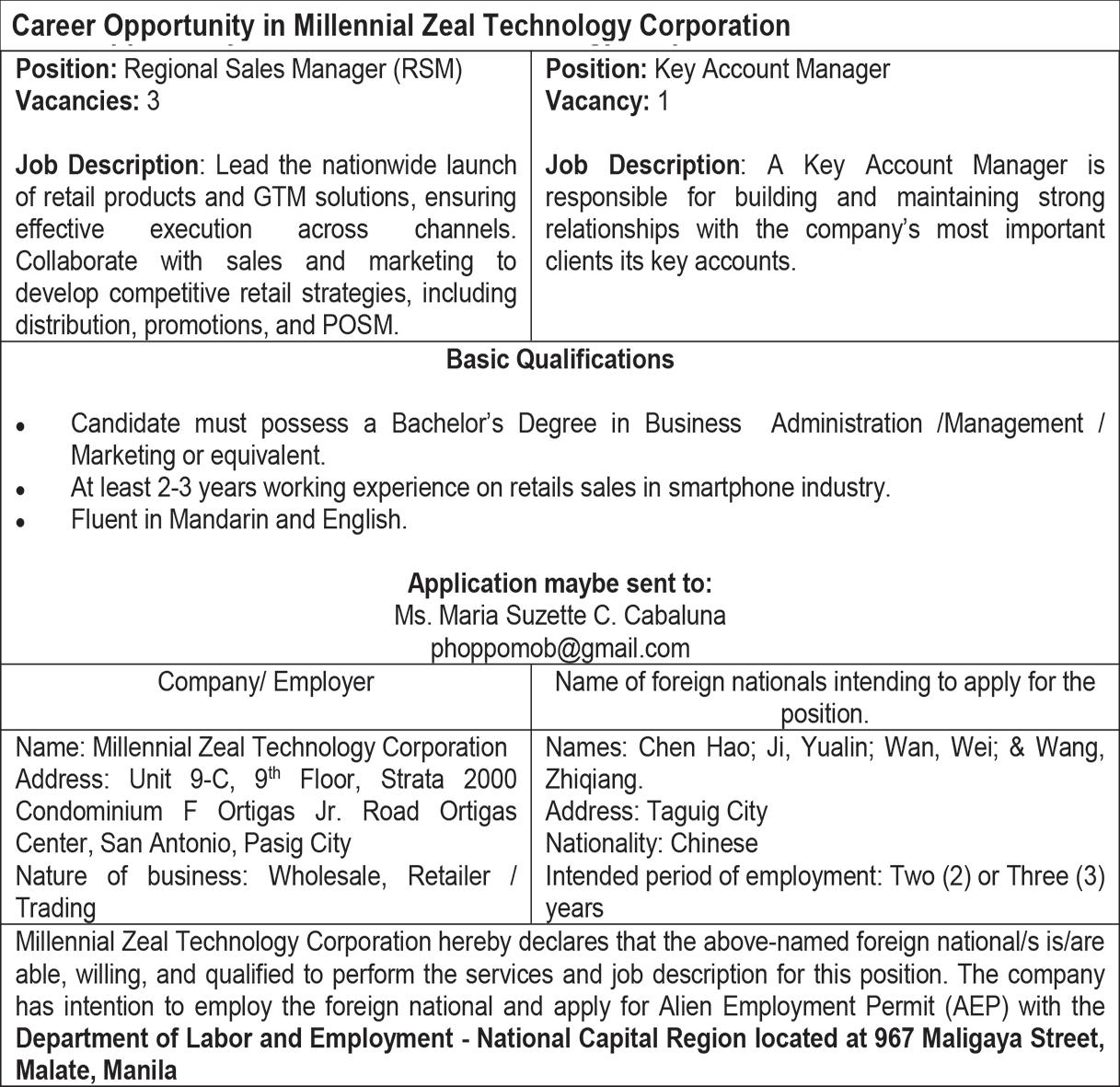
year 10 of the deal. Automotive tariffs will fall from over 100% to 10% under a quota.
Britain said the deal is expected to increase bilateral trade by 25.5 billion pounds ($35 billion) annually from 2040 and add almost 5 billion pounds ($6.8 billion) a year to the British economy.
India’s Trade Ministry said in May that 99% of Indian exports will face no import duty under the deal, which applies to products including clothes, shoes and food. Formal talks began in 2022 on
a free trade agreement that thenPrime Minister Boris Johnson hailed as a key goal after Britain left the EU. Johnson famously promised to have a deal done by the Diwali holiday in October of that year.
The two countries held 13 rounds of negotiations without a breakthrough before talks were suspended while both nations held general elections in 2024.
Modi was re-elected and Britain replaced the Conservative government with one led by Starmer’s center-left Labour Party.
Almost 2 million people in the U.K. have roots in India, where Britain was the colonial power until independence in 1947.
Starmer said Britain and India “have unique bonds of history, of family and of culture, and we want to strengthen our relationship further, so that it is even more ambitious, modern and focused on the long term.”
Speaking as England and India face off in a cricket test series, Modi sad the sport was “a great metaphor for our partnership.”
“There may be a swing and a miss at times but we always play with a straight bat,” he said. “We are committed to building a highscoring, solid partnership.”

Economic impact
THAI exports to Cambodia totaled $5.1 billion in the first half of 2025, including jewelry, oil and sugar, with $732 million of imports, mostly fruit and vegetables, according to the Thai Commerce Ministry.
The clashes have adversely affected economic confidence and disrupted trade and investment between the two countries, the Thai Chamber of Commerce said in a statement on Thursday.
Thailand said it has evacuated more than 130,000 civilians from conflict zones. Cambodia has closed 260 schools in the province of Oddar Meanchey, the center of the conflict, the Khmer Times reported.
The fighting has drawn con -
While Thailand has ruled out bilateral talks and signaled no immediate plan to cease the military actions, a drawn-out conflict poses fresh challenges to leader Paetongtarn Shinawatra, who had already been suspended as prime minister for her handling of the border dispute. Her Pheu Thai-led coalition has been on the brink after the defection of a key party last month left it with a slender majority.
Thai nationalist groups, who had initially planned an antigovernment rally for Sunday, have pushed it back to Aug. 2. Posts supporting the Thai army and air force are trending on X and Facebook in Thailand. With assistance from Katia Dmitrieva, Claire Jiao and Pathom Sangwongwanich/Bloomberg
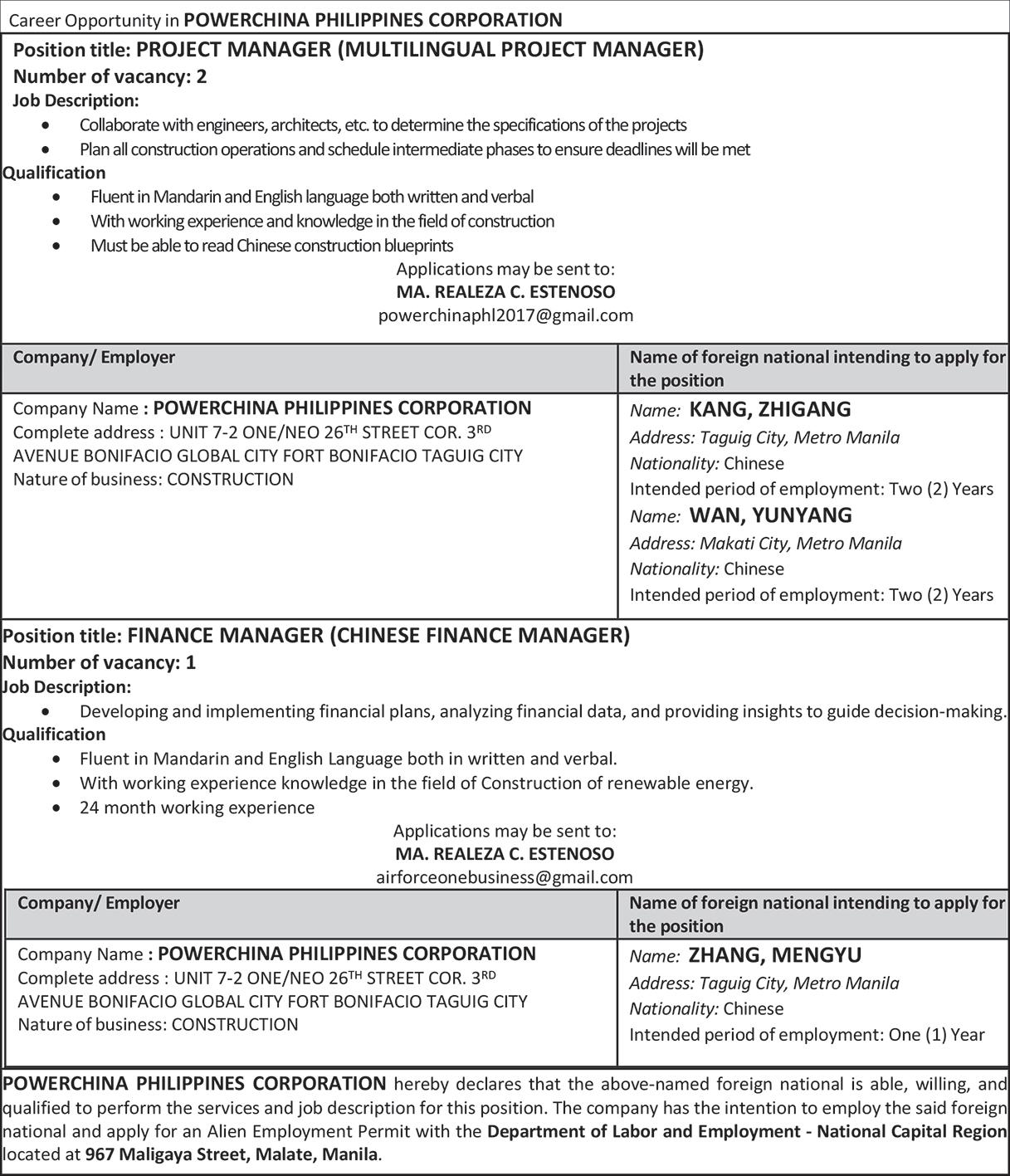

By Michelle L. Price & Joseph Krauss The Associated Press
WASHINGTON—The United States is cutting short Gaza ceasefire talks and bringing its negotiating team home from Qatar to discuss next steps after Hamas’ latest response “shows a lack of desire” to reach a truce, President Donald Trump’s special envoy Steve Witkoff said Thursday.
“While the mediators have made a great effort, Hamas does not appear to be coordinated or acting in good faith,” Witkoff said in a statement. “We will now consider alternative options to bring the hostages home and try to create a more stable environment for the people of Gaza.”
State Department spokesperson Tommy Pigott would not offer details on what “alternative options” the US is considering to free hostages held by the militant group.
Hamas said in a statement that it was surprised by Witkoff’s “negative remarks” and said it has shown responsibility and flexibility in the negotiating track. It added that it was “keen to reach an agreement that ends the aggression and the suffering of our people in Gaza.”
A breakthrough on a ceasefire deal between Israel and Hamas following 21 months of war has eluded the Trump administration as humanitarian conditions worsen in Gaza. Thursday’s move is the latest setback as Trump has tried to position himself as peacemaker
and vowed to broker agreements in conflicts from Ukraine to Gaza.
Talks for a Gaza ceasefire have dragged on WHEN pressed on whether and how the US would proceed on seeking a truce in Gaza, Pigott did not offer clarity and told reporters that “this is a very dynamic situation.”
He said there’s never been a question of the US commitment to reaching a ceasefire and faulted Hamas.
The sides have held weeks of talks in Qatar, reporting small signs of progress but no major breakthroughs. Officials have said a main sticking point is the redeployment of Israeli troops after any ceasefire takes place. Witkoff said the US is “resolute” in seeking an end to the conflict in Gaza and it was “a shame that Hamas has acted in this selfish way.”
The White House had no comment.
HAMAS , in the statement it released early Friday, said it had
offered its final answer following wide consultations with Palestinian factions, mediators and countries in the region. It said it has dealt positively with all remarks it received reflecting a “true commitment” to making the efforts of the mediators successful and to “deal constructively” with the presented initiatives.
Hamas said it reaffirmed its “keenness to continue the negotiations and to engage in a way that would ease obstacles and ensure reaching a permanent ceasefire.”
Israel also calls back its negotiators EARLIER Thursday, Israeli Prime Minister Benjamin Netanyahu’s office recalled his negotiating team in light of Hamas’ response. In a brief statement, Netanyahu’s office expressed appreciation for the efforts of Witkoff and other mediators Qatar and Egypt but gave no further details.
The deal under discussion was expected to include an initial 60day ceasefire in which Hamas would release 10 living hostages and the remains of 18 others in phases in exchange for Palestinians imprisoned by Israel. Aid supplies would be ramped up, and the two sides would hold negotiations on a lasting ceasefire.
The talks have been bogged down over competing demands for ending the war. Hamas says it will only release all hostages in exchange for a full Israeli withdrawal and end to the war. Israel says it will not agree to end the conflict until Hamas gives up power and disarms. The militant group says it is prepared to leave power but not surrender its weapons.
Hamas is believed to be holding the hostages in different locations, including tunnels, and says it has ordered its guards to kill them if

Israeli forces approach. Trump has been pushing for peace TRUMP has made little secret of the fact he wants to receive a Nobel Peace Prize. For instance, he has promised to quickly negotiate an end to Russia’s war in Ukraine, but little progress has been made.
On the war in Gaza, Trump met with Netanyahu at the White House this month, putting his weight behind a push to reach a deal.
But despite a partnership further solidified by their countries’ joint strikes on Iran, the Israeli leader left Washington without any breakthrough.
The State Department had said earlier in the week that Witkoff would be traveling to the Middle East for talks, but US officials later said that Witkoff would instead travel to Europe. It was unclear if he held meetings there Thursday.
The apparent derailing of the talks comes as Israel’s blockade and military offensive have driven Gaza to the brink of famine, according to aid groups. The UN
food agency says nearly 100,000 women and children are suffering from severe, acute malnutrition, and the Gaza Health Ministry has reported a rise in hunger-related deaths.
Israel is criticized for its role in Gaza
BRITISH Prime Minister Keir Starmer said he would hold an emergency call Friday with officials from Germany and France to discuss how to urgently get food to people in need and launch steps to build a lasting peace.
“The suffering and starvation unfolding in Gaza is unspeakable and indefensible,” he said in a statement. The three European countries “all agree on the pressing need for Israel to change course and allow the aid that is desperately needed to enter Gaza without delay.”
French President Emmanuel Macron announced Thursday that France would recognize Palestine as a state, saying, “The urgent thing today is that the war in Gaza
stops and the civilian population is saved.”
Canadian Prime Minister Mark Carney said in a social media post late Thursday, “Canada condemns the Israeli government’s failure to prevent the rapidly deteriorating humanitarian disaster in Gaza.” He called for “a two-state solution which guarantees peace and security for Israelis and Palestinians.” Israel has come under mounting pressure, with 28 Western-aligned countries calling for an end to the war and harshly criticizing Israel’s blockade and a new aid delivery model it has rolled out. More than 100 charity and human rights groups released a similar letter, saying even their own staff are struggling to get enough food.
The US and Israel rejected the allegations and blamed Hamas for prolonging the war by not accepting their terms for a ceasefire.
Israel says it is allowing in enough aid and blames U.N. agencies for not distributing it. But those agencies say it is nearly impossible to safely deliver it because of Israeli restrictions and a breakdown of law and order, with crowds of thousands unloading food trucks as soon as they move into Gaza.
A separate Israeli- and USbacked system run by an American contractor has also been marred by chaos.
“Of course, we want to see the end of devastation that is taking place in Gaza,” Pigott said. “That is why we have supported the Gaza Humanitarian Foundation. That is why we’ve seen those 90 million meals being distributed.”
Krauss reported from in
report.
By Illia Novikov & Hanna Arhirova The Associated Press








KYIV, Ukraine—President Volodymyr Zelenskyy on Thursday submitted a new bill that would restore the independence of Ukraine’s anticorruption agencies in an effort to defuse tensions following his approval earlier this week of a controversial law that weakened their autonomy.
The previous bill was seen as undermining the agencies’ independence and sparked a public outcry and protests, the first major demonstrations since the war began, as well as sharp criticism from the European Union.
Zelenskyy said parliament would review the new bill, which “guarantees real strengthening of Ukraine’s law enforcement system, the independence of anti-corruption bodies, and reliable protection of the legal system from any Russian interference.”
First reactions
UKRAINE’S two main anti-graft agencies—the National AntiCorruption Bureau of Ukraine and the Specialized Anti-Corruption Prosecutor’s Office—quickly welcomed Zelenskyy’s new proposal, saying it restores all their procedural powers and guarantees their independence.
The agencies said they helped draft the new bill, and urged law -
makers to adopt it “as soon as possible” to prevent threats to ongoing criminal cases.
The bill would replace the contentious law passed by lawmakers and approved by Zelenskyy earlier this week. Critics said it stripped Ukraine’s anti-corruption agencies of their independence by granting the government more oversight of their work.
A controversial law
ZELENSKYY initially argued the law was needed to speed up investigations, ensure more convictions and remove Russian meddling.
After Thursday’s U-turn, Zelenskyy said the new bill reverses the earlier changes and also introduced additional measures aimed at “combating Russian influence,” including mandatory polygraph tests for law enforcement officers.
“The text is balanced,” Zelenskyy said. “The most important thing is real tools, no Russian ties and the independence” of the antigraft agencies.
The new draft underlines that the prosecutor general and his deputies cannot give orders to anti-graft agencies or interfere in their work.
Bowing to pressure and protests
The controversy surrounding the initial bill has threatened to undermine public trust in Ukraine’s leadership after more than three years of fighting Russia’s full-scale invasion. The protests haven’t called for Zelenskyy’s
ouster, but they are the first major anti-government demonstrations since the war started in February 2022.
“It is important that we maintain unity,” Zelenskyy said in his post.
It was not immediately clear when the new bill will be voted on in the parliament, and the protests are likely to continue until the law is passed. At the protests on Thursday evening, the crowd was smaller than on previous days.
The unrest has come at a difficult time in the all-out war. Russia’s bigger army is accelerating its efforts to pierce Ukraine’s frontline defenses and is escalating its bombardment of Ukrainian cities.
The bigger picture
UKRAINE is also facing a question mark over whether the United States will provide more military aid and whether European commitments can take up the slack, with no end in sight to the war.
Delegations from Russia and Ukraine met in Istanbul for a third round of talks in as many months Wednesday. But once again, the talks were brief and delivered no major breakthrough.
Fighting entrenched corruption is crucial for Ukraine’s aspirations to join the EU and maintain access to billions of dollars in Western aid in the war. It is also an effort that enjoys broad public support.
EU Enlargement Commissioner Marta Kos expressed concern Wednesday over the law approved
earlier this week, calling it “a serious step back.”
The Ukrainian branch of Transparency International criticized parliament’s decision, saying it undermines one of the most significant reforms since what Ukraine calls its Revolution of Dignity in 2014 and damages trust with international partners.
Deadly fighting grinds on ON Thursday, two women, aged 48 and 59, were killed and 14 other people were injured when Russian forces dropped four powerful glide bombs on Kostiantynivka, an industrial city in eastern Ukraine, and shelled it with artillery, Donetsk regional Gov. Vadym Filashkin said.
Russian planes also dropped two glide bombs on the center of Kharkiv, Ukraine’s second-largest city, on Thursday morning, regional Gov. Oleh Syniehubov said. At least 42 people were wounded, including two babies, a 10-yearold girl and two 17-year-olds, authorities said.
The southern city of Odesa, and Cherkasy in central Ukraine, were also hit overnight, authorities said. The drone and missile strikes on the cities wounded 11 people, including a 9-year-old, and damaged historic landmarks and residential buildings, officials said. Ukraine has sought to step up its own long-range drone attacks on Russia, using domestic technology and manufacturing.
By Bloomberg News
The hum of solar panel factories in this steamy island city doesn’t sound like much. But to American trade officials, it’s the muffled noise of rules being bent — or broken.
In recent months, Batam, a duty-free Indonesian enclave a short ferry ride from Singapore, has become a key waypoint in a convoluted global shuffle. Chinese solar manufacturers, facing stiff US tariffs, are quietly assembling their equipment in Indonesia and slipping their products into the American market, tariff-free. It’s an elegant workaround. But it may not last long. According to Bloomberg News analysis of trade and corporate records, Indonesia’s 10 biggest exporters of solar cells and panels sold $608 million worth of products to the US during the first half of 2025. Of those, Bloomberg News identified six firms in Batam where company records indicate they are ultimately owned by executives at Chinese solar companies. Those firms accounted for almost 70% of the exports to the US. Earlier in July, a coalition of US solar manufacturers, including First Solar Inc. and Mission Solar Energy, filed trade petitions against Indonesia, India and Laos. They claimed Chinese companies were gaming the system, flooding the US market with unfairly cheap goods made in the three Asian countries. This prompted the US International Trade Commission to begin an investigation into the anti-dumping and countervailing allegations. “Under President Trump, America is no longer a dumping ground for cheap imports that undermine our industries and workers,” White House spokesman Kush Desai said. “While the Department of Commerce conducts an anti-dumping investigation into solar panels, the administration is closely monitoring transshipment and other methods of undermining our tariffs policies.”
The Trump administration hasn’t released any detailed definition of what exactly constitutes
a transshipment. It’s also unclear whether any of these Chineseowned Batam-based solar companies are rerouting products through Indonesia to avoid the steep US solar tariffs — which has effectively barred Chinese firms’ direct access to the lucrative American market — or if the firms are genuinely producing the products in Batam to count as Indonesian origin. BP Batam, the Indonesian authority managing the island economy, said it hasn’t as yet received any confirmation about the start of an anti-dumping investigation. It’s working closely with the central and local government to support fair and transparent international trade, BP Batam said in response to a Bloomberg News query.
“So far, partner countries have acknowledged and appreciated the role of the Indonesian government, BP Batam, and the Batam City government in navigating global trade dynamics responsibly,” it said.
Indonesia’s trade ministry and China’s commerce ministry didn’t respond to a request for comment on the allegations from the US solar industry.
This would not be China’s first dance around trade barriers. When Western nations slapped tariffs on Chinese solar goods over a decade ago, the country’s manufacturers simply moved production — first to Vietnam, Malaysia, and Thailand. The strategy worked. Southeast Asian exports, often Chinese in disguise, flowed into the US tariff-free for years.
By 2024, the region had become the largest solar exporter to the US. Then Washington moved to shut the loophole.
First, the US Department of Commerce, under former President Joe Biden, launched an antidumping and countervailing probe against Cambodia, Vietnam, Malaysia, and Thailand. The year-long
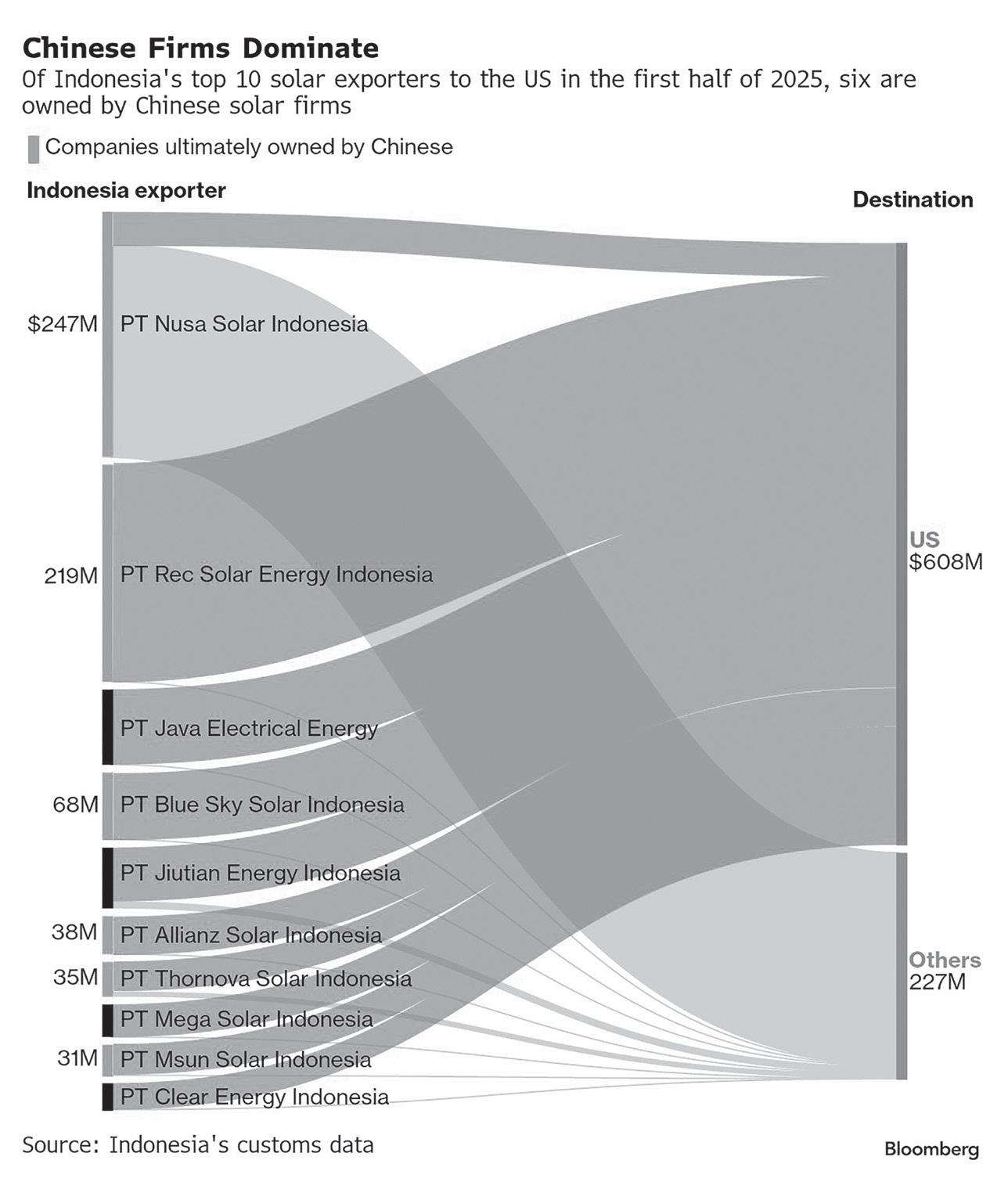
investigation found manufacturers were dumping cheap exports into the American market at prices lower than the cost of production. Then in April, under President Donald Trump, the four Southeast Asian nations were hit with tariffs as high as 3,521%.
“Chinese-headquartered solar companies have been cheating the system, undercutting US companies and costing American workers their livelihoods,” Tim Brightbill, co-chair of law firm Wiley’s international trade practice, said in April. Brightbill is lead counsel for the Alliance for American Solar Manufacturing and Trade, the coalition of solar companies that successfully pressured the Commerce Department into launching the investigation.
The April tariffs forced US buyers to reshuffle where they shop. Indonesia, not covered by the ruling, emerged as one of the biggest winners. Batam, a popular spot for cheap golf trips and long a weekend escape for Singaporeans, turned into the destination for something else: Chinese capital and solar ambitions.
“As other jurisdictions in Southeast Asia have come under increasing scrutiny, factories have continued to relocate in a cat-andmouse fashion,” said Niclas D. Weimar, head of technology at Sinovoltaics, a Dutch-German compliance and quality assurance firm for the solar industry.
Some of the biggest Chinese solar companies have landed there in the last two years, churning out solar panels straight for the US market. Indonesia exported a total $733 million in solar products to the US between January and May this year, a 350% increase from last year, according to US customs data.
One example: PT Rec Solar Energy Indonesia, now the country’s largest solar exporter to the US. The company sent $219 million worth of panels across the Pacific in the first half of 2025 — virtually all of its output. It began exporting from Batam in 2023, based on information from its parent NE Solar, a Cambodian company founded in 2022, according to their website.
Dig a little deeper, and Cambodian companies registry shows NE Solar’s previous direc-
Supreme Court rulings ignite tensions between Trump and lower courts as ‘shadow docket’ sparks confusion
By Zoe Tillman | Bloomberg
President Donald Trump has cast successes at the US Supreme Court as broad endorsements of his authority to fire agency heads, shrink the government workforce and halt billions of dollars in federal spending.
Some lower court judges see it differently. Supreme Court rulings are supposed to be the final word on disagreements over the law. But the growing number of decisions being issued with little explanation on an emergency basis — often referred to as the “shadow docket” — is creating even more legal wrangling. Now, tensions are building not only between the executive branch and the courts, but also within the judiciary.
“This is not helpful at all for lower court judges,” said Dickinson College President John Jones, a former federal district judge in Pennsylvania confirmed during the George W. Bush administration. “You’re reading an abbreviated opinion from the Supreme Court like it’s a Rosetta Stone.” The Justice Department has been arguing that the emergency track wins should translate into victories in other lawsuits against Trump’s agenda. Federal judges are pushing back, saying the high court isn’t giving them enough to work with.
This week, the Supreme Court stepped in to settle one such dispute that one of its earlier orders created. A Maryland federal judge had blocked Trump’s removal of Democratic members of the
Consumer Product Safety Commission, saying it was different in key ways from a firing fight the justices resolved in the president’s favor on May 22. In a two-paragraph order on Wednesday, the conservative majority said the district judge got it wrong, and the officials couldn’t keep their jobs while they pressed the merits of their lawsuit.
The problem, some judges say, is that more cases are reaching the justices on an emergency basis — often in the early stages, without oral arguments and with minimal or no explanation. These orders are frequently just a few paragraphs issued in weeks or even days, in stark contrast with argued cases that unfold over months and result in lengthy opinions offering more robust guidance.
‘Tea leaves’
IN yet another in the growing stack of firing cases, a Washington federal judge last week refused to let Trump oust Democrats from the Federal Trade Commission.
US District Judge Loren AliKhan said she wouldn’t read the “tea leaves” in the justices’ May 22 decision, a four-paragraph order that let Trump fire top officials at two other agencies. That ruling “weighs against” the dismissed officials, she said, but doesn’t settle questions over a 90-year-old precedent limiting a president’s firing power at federal agencies.
“It would be an act of judicial hubris” to base a decision on what the justices might do later, AliKhan wrote in her order reinstating one of the commissioners. She was “unsure of what to make of” the justices’ order, absent more details about
what they intended or how they reached their outcome. An appeals court has temporarily paused her ruling.
A Justice Department spokesperson declined to comment.
A senior White House official who requested anonymity to discuss pending litigation said lower court judges aren’t respecting the spirit of the Supreme Court’s orders as well as the rulings themselves, and seemed to be taking extraordinary steps to avoid applying them to other cases. The official accused judges of defying the Supreme Court because of policy disagreements.
The conflicts are growing as the Trump administration has taken lower court losses to the justices on an emergency basis 21 times so far this year. Unlike cases the court hears on the merits, emergency cases usually don’t involve inperson arguments, robust written briefs or lengthy opinions that explain how the majority reached a decision. They don’t offer a rubric for lower courts to apply new precedents going forward.
For the Supreme Court’s 2023-24 term, the average length of a majority opinion was 5,010 words, according to Empirical SCOTUS, a blog that tracks data on the high court. The majority’s July 14 emergency order that allowed the administration to go ahead with Education Department layoffs — praised by Trump on social media as “a Major Victory” — was only 104 words.
There are rare exceptions, such as the fight over Trump’s birthright citizenship plan, in which the justices heard arguments and wrote a lengthy
opinion. Still, the majority’s June decision — which Trump called a “GIANT WIN” on social media — left key issues unresolved for lower courts to sort through. The justices curbed judges’ authority to expansively halt government actions but didn’t completely rule out nationwide blocks. They didn’t touch the core question of whether Trump’s executive order is constitutional.
In an emergency order, the Supreme Court considers which side is ultimately likely to succeed on the underlying legal questions, but the justices also focus on the harm each side might suffer in the interim. Shadow docket TENSION on the Supreme Court over the escalating shadow docket activity predates Trump’s latest term in office. Justice Elena Kagan wrote in 2021 that the conservative majority’s use of the process resulted in decisions that were becoming “more unreasoned, inconsistent, and impossible to defend.” Justice Samuel Alito accused critics of portraying the process as something “sinister” in order to “intimidate the court or damage it as an independent institution.”
In remarks to a federal judges’ conference on Thursday, Kagan underscored her concerns about the challenges that emergency orders create for lower courts. The justices “don’t usually meet about shadow docket matters and discuss them in the way we do with merits cases,” she said. There is “a real responsibility that I think we didn’t recognize when we first started down this road to explain things better.”
tor was Huang Yunfei, who is also the owner of a Chinese manufacturer called Huzhou Zhongdian Solar. US and Canadian trademark data show Huzhou Zhongdian Solar owns the “NE Solar” trademark, while the Cambodian NE Solar owns the trademark in that country. NE Solar’s current director is Cheng Shen, whose office address in a Cambodian registry shows is just 4 kilometers away from Huzhou Zhongdian Solar. The ties don’t end there. In the first half of 2025, PT Rec imported 91% of its production materials, or $92 million worth, from Huzhou Paluo Yunpeng New Materials, a company owned by the same owners as Huzhou Zhongdian, according to Chinese business records. In other words: the factory might be in Indonesia, but the supply chain — and control — appears to be firmly Chinese. Calls to PT Rec’s office in Batam went unanswered. Calls to a personal phone number listed for Cheng Shen on Cambodia’s registration record went unanswered, while Bloomberg News couldn’t find contact details for Huang Yunfei. Calls to Huzhou Zhongdian also went unanswered. E-mail inquiries sent to NE Solar and Huzhou Zhongdian were also unanswered.
Companies registries in Indonesia and China also list Chinese solar firms’ directors or subsidiaries as the beneficial owners of five other Batam-based companies – PT Nusa Solar Indonesia, PT Blue Sky Solar Indonesia, PT Allianz Solar Indonesia, PT Thornova Solar Indonesia and PT Msun Solar Indonesia. PT Nusa and PT Blue Sky didn’t respond to requests for comment when contacted by phone, and a PT Nusa employee declined to immediately comment when reached on LinkedIn. Bloomberg News couldn’t find phone numbers for the rest of the companies in public records or online. E-mails sent to all five firms’ listed addresses weren’t responded to, while messages sent to company employees at four of the firms on LinkedIn went unanswered. Bloomberg News reporters haven’t visited these factories.
Together, the six Chineseowned companies sold $419 million worth of solar cells and panels directly to America in the first half of this year, up 148% from a
year ago. The surge of solar exports to the US isn’t limited to Indonesia. In Laos, which was also spared the April tariff ruling, solar exports have skyrocketed from virtually nothing in early 2024 to $717 million in the first five months of this year, US trade data showed. India went from $10 million in 2022 to $345 million this year. If the US International Trade Commission’s investigation against Indonesia, Laos and India concludes there were unfair trade practices, another round of duties could soon hit. Which raises the question: where do the Chinese solar giants go next? The answer depends on how painful the new tariffs turn out to be. Indonesia has negotiated Trump down from a retaliatory tariff rate initially set at 32% in April to 19% earlier this month, making it more attractive than its neighbors, according to BNEF analyst Felix Kosasih. Still, many Chinese firms aren’t waiting to find out. In April, JA Solar told Bloomberg News it was accelerating its overseas expansion while closely tracking US tariff developments. Among its bets: a new plant in Oman expected to open by the end of 2025, with a capacity of six gigawatts for cells and three gigawatts for modules. JinkoSolar Holding Co., another heavyweight, is going bigger. It’s building a 10-gigawatt cell and module factory in Saudi Arabia, in partnership with the kingdom’s sovereign wealth fund and Vision Industries. Neither company has indicated plans to sell to the US market.
Still, there’s no denying that Chinese solar companies will need to tread more cautiously with Trump at the helm, says Cosimo Ries, a Shanghai-based analyst at researcher Trivium China.
“If you’re trying to make a long-term decision to invest, everywhere has become so unstable,” Ries said. “Solar especially, because it’s one of the most attacked industries of all.”
But at least for now, the faint hums of Batam’s solar factories are continuing.
(Andy Lin and Ocean Hou. With assistance from Skylar Woodhouse, Eko Listiyorini, Shadab Nazmi, Chandra Asmara, Tassia Sipahutar and Ben Otto / Bloomberg)
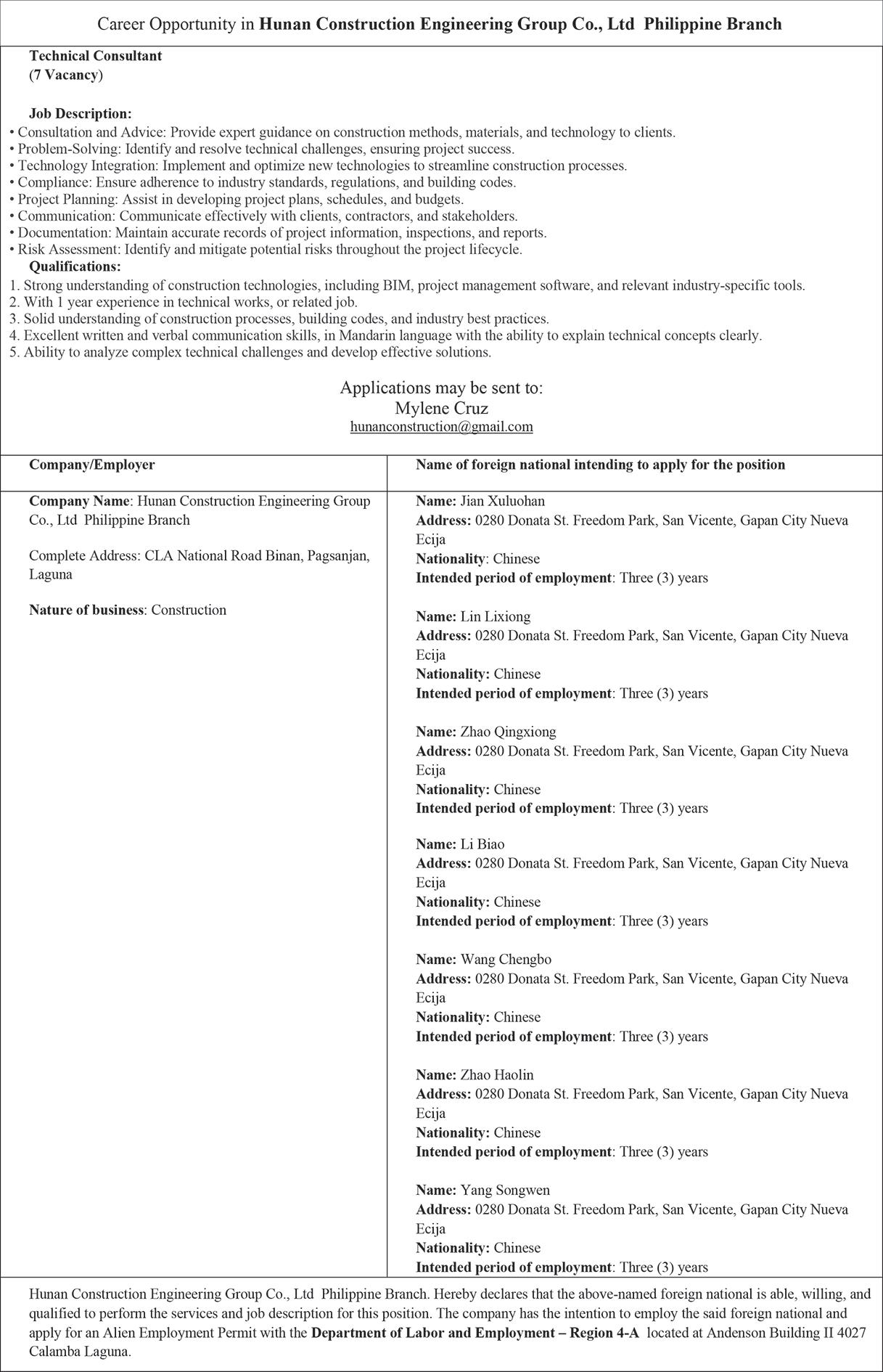
THE 2025 FIVB Volleyball Men’s World Championship will be more than just a celebration of the sport on the court.
Going way beyond the taraflex will be a world-class display of musical prowess, festive dance and electrifying showmanship with K-pop boy group
BOYNEXTDOOR set to take over the centerstage of the world championship’s opening ceremony on September 12 at the Mall of Asia Arena.
BOYNEXTDOOR rose as the Philippines’ top choice to open the world joust as one of the up-andcoming international acts today, mirroring the country’s ascend in the world volleyball scene with its historic hosting according to the Philippine National Volleyball Federation.
“Never in the history of the world championships, men or women, will there be an opening ceremony that will be a concert in atmosphere and featuring BOYNEXTDOOR,” reiterated Philippine National Volleyball Federation and Asian Volleyball Confederation (AVC) president Ramon “Tats” Suzara. Tickets for the BOYNEXTDOOR’s opening performance before Alas Pilipinas’ debut against Tunisia at 6 p.m. are already up for grabs on the men’s world championship’s official website here: https://www. philippineswch2025.com/
Tickets are billed at P14,000 for Patron (Center) and P12,500 for Patron (Back), P12,500 for Lower Box Center, P8,500 for Lower Back Sides, P7,500 for Lower Back Back, P5,500 for Upper Box Center, P4,500 for Upper Back Sides, P2,500 for Upper Box Back and P1,500 for General Admission.
Not only will the Philippines serve as home of the men’s volleyball world championship for the first time in history but it will also serve as the mecca of the event’s biggest delegation in history with 32 teams from September 12 to 28 at the SM MOA Arena and Smart-Araneta Coliseum.
And at the center court to welcome
all the squads—along with their legions of fans and the ever-hospital Filipinos at home turf—is BOYNEXTDOOR with a bevy of achievements to boast on top of its world-class talent.
A six-member boy band made up of Sungho, Riwoo, Jaehyun, Taesan, Leehan and Woonhak, BOYNEXTDOOR brings over to the Philippines the success its fifth album (extended play) “No Genre” that was just released last May and broke multiple charts worldwide.
BOYNEXTDOOR just debuted in 2023 but is now making waves as the world’s top boy groups with almost 3 million monthly listeners on Spotify and almost 2 million subscribers on YouTube.
The group, under the KOZ entertainment which is a subsidiary of world renowned HYBE that also handles BTS, has 3.6M followers on Instagram, 774.K followers on X (Twitter) and 187K followers on Facebook as well.
Recently, the hexad’s new EP “No Genre” became the world’s second-best selling album in the Billboard United World Chart while topping the Circle Album Chart in South Korea and the Oricon Album chart in Japan with millions of units sold.
It also reached No. 62 on the Billboard 200 charts, one of the world renowned charts. And even before the men’s world championship, BOYNEXTDOOR already serenaded the Filipino crowd with two events in the past two years.
BOYNEXTDOOR was part of the star-studded line-up of the 2023 Asian Artist Awards at the Philippine Arena in Bocaue, Bulacan and had Manila as one of its stops for the “Knock On Vol.1” international tour this March at the Smart-Araneta Coliseum in Quezon City.
Before the men’s world championship, the group will also have another Manila leg of its “The Boy Next World: The Eternal Luv Fan Meeting” in August to tease the Filipino crowd of what’s in store for them.

THE K-pop boy group
BOYNEXTDOOR is set to take over center stage of the world championship’s opening ceremony on September 12 at the
CLEARWATER, Florida—Hulk Hogan, the mustachioed, headscarf-wearing, bicepbusting icon of professional wrestling who turned the sport into a massive business and stretched his influence into TV, pop culture and conservative politics during a long and scandalplagued second act, died Thursday in Florida at age 71. Hogan was pronounced dead at a hospital less than 90 minutes after medics in Clearwater arrived at his home to answer a morning call about a cardiac arrest, police said.
“There were no signs of foul play or suspicious activity,” Maj. Nate Burnside told reporters.
Hogan, whose real name was Terry Bollea, was perhaps the biggest star in WWE’s long history. He was the main draw for the first WrestleMania in 1985 and was a fixture for years, facing everyone from Andre The Giant and Randy Savage to The Rock and even WWE co-founder Vince McMahon. But outside the the ring, Hogan also found trouble.
WWE in 2015 cut ties with him for three years, even removing him from its Hall of Fame, after it was reported that he was recorded using racial slurs about Blacks.
He apologized and said his words were “unacceptable.”
Hogan won at least six WWE championships and was inducted into the Hall of Fame in 2005 and reinstated there in 2018.
WWE matches are now held in professional sports stadiums and millions of fans have watched the company’s weekly live television program, “Raw,” which debuted in January on Netflix.
“He was a trailblazer, the first performer who transitioned from being a wrestling star into a global phenomenon,” McMahon said of Hogan.

COURCHEVEL, France—Ben O’Connor won Thursday’s monster Alpine stage to the ski resort of Courchevel as three-time Tour de France champion Tadej Pogačar responded to attacks from archrival Jonas Vingegaard and dropped him to cement his grip on the yellow jersey. With just three stages left before the race ends in Paris, Pogačar looks poised to retain his title, with a comfortable lead of more than four minutes over Vingegaard, a two-time champion.
Stage 18 featured three extremely difficult ascents, including the 26.4-kilometer daunting climb of the Col de La Loze up to the finish.
At 2,304 meters of altitude, La Loze is the highest summit in this year’s Tour.
Two years ago, Vingegaard dropped Pogačar on that mountain on his way to his second Tour title but could not deal a decisive blow this time. Riding behind
Hogan’s own brand of passion
“HULKMANIA,” as the energy he created was called, started running wild in the mid-1980s and pushed professional wrestling into the mainstream. He was a flag-waving American hero with the horseshoe mustache, red and yellow gear and massive arms he called his “24-inch pythons.”
Crowds were hysterical when he ripped off his T-shirt in the ring—a trademark move—revealing a tan, sculpted body.
Hogan was also a celebrity outside the wrestling world, appearing in numerous movies and television shows, including a reality show about his life on VH1, “Hogan Knows Best.”
In recent years, Hogan added his celebrity to politics. At the 2024 Republican National Convention he merged classic WWE maneuvers with then-candidate Donald Trump’s rhetoric to passionately endorse him for president.
O’Connor, Vingegaard and Pogačar closely watched each other in the final climb, surrounded by buoyant fans braving the cold temperature and the fog. Vingegaard attacked his Slovenian rival but Pogačar responded with ease.
Vingegaard and his Visma-Lease a Bike teammates had also tried to hurt the defending champion earlier in the day in the Col de La Madeleine, but their efforts left Pogačar unfazed.
The reigning world champion, who rides for UAE Team EmiratesXRG, never panicked and accelerated near the end to drop Vingegaard in the last 500 meters and increase his overall lead.
Pogačar crossed the finish line one minute and 45 seconds behind O’Connor and Vingegaard completed the stage podium, 1:54 off the pace.

is perhaps the biggest star in WWE’s long history. AP
“Let Trumpamania run wild brother! Let Trumpamania rule again! Let Trumpamania make America great again!” Hogan shouted into the raucous crowd.
He ripped off a T-shirt emblazoned with a picture of himself on a motorcycle to reveal a bright red Trump-Vance campaign shirt underneath. Trump stood to applaud the move.
“We lost a great friend today, the “Hulkster,”” Trump said Thursday on Truth Social. “Hulk Hogan was MAGA all the way—Strong, tough, smart, but with the biggest heart.” Hogan lately began to invest in alternatives to theatrical, professional wrestling, announcing plans in April
to serve as the first commissioner for the Real American Freestyle organization, which describes itself as the “first unscripted pro wrestling” league in the world. The first event is August 30 at Cleveland State University.
“The idea was so exciting that I get a chance to be involved with all these young people and help guide them in any way, especially to make them huge stars and create a future for them,” Hogan said. “People might be surprised, but wrestling is wrestling, brother.” AP
“I was a bit scared of this stage, but it turned out to be a beautiful day,” Pogačar said. “This side of the Col de La Loze is easier than the one we did in 2023—that was much worse.
Whenever we climb that side again, I’ll definitely go for the win.” Ahead of Friday’s
Wfinal mountain stage to La Plagne, Vingegaard lags 4:26 behind Pogačar, with Florian Lipowitz in third place, 11:01 back.
It was O’Connor’s second stage win at the Tour, four years after his victory in Tignes. The team Jayco AlUla leader dropped his last breakaway companion, Einer Rubio, with 16 kilometers to go and then held off the return of the main contenders.
“It’s special to do it again here in the Tour de France,” O’Connor said.
“The last time in Tignes was a complete shock but this time I got to enjoy much more. I had a super day today, I was finally back to being me after struggling for the past 17 days. My knee is absolutely screwed now, it’s really painful. It’s lingering there and it’s not going to stop until the end of the race.”
Doping allegation links in Tour INEOS-GRENADIERS soigneur David Rozman has left the Tour de France in the wake of media reports linking him to disgraced German doctor Mark Schmidt, the convicted head of an international blood doping ring.
Rozman “has stepped back from race duties and has left the Tour,” IneosGrenadiers said in a statement provided to The Associated Press on Thursday, noting that Rozman had received a request from the International Testing
Wimbledon. He’s reached six Grand Slam finals in his career—all on hard courts.
“Usually, this is the most important part of the season for me,” Medvedev said in an interview in Washington, where he was scheduled to play Corentin Moutet in the quarterfinals on Friday. “And this year, it’s really important for me, because I didn’t have the best year. I had a lot of time after Wimbledon, so I’m feeling ready and I feel in good shape.”

After dropping his opening set at the DC Open this week against bigserving Reilly Opelka, Medvedev took the next four sets he played at an event where he was the runner-up in 2019. What works so well for the 29-year-old Russian on hard courts?
“A lot of different things. My ball goes through the air the most. My serve goes faster. And this year, the courts seem pretty fast. On the ATP [Association of Tennis Professionals] lately, the courts seem to only get slower and slower. But here it’s super fast. I like the way it plays,” said Medvedev, who has been ranked No. 1 and is No. 14 this week, his lowest spot in more than six years. “It’s one thing to like the way it plays and it’s another thing to win. But I do feel like I can do big things.”
He certainly has in the past.
Any list would have to start with his championship at the 2021 US Open , where his victory in the final prevented Novak Djokovic from completing the first calendar-year Grand Slam by a
Agency (ITA) to attend an interview. It comes following reports alleging Rozman exchanged incriminating text messages with Schmidt going back to June 2012.
Ineos-Grenadiers was racing as Team Sky at the time, when Rozman worked with 2012 Tour de France winner Bradley Wiggins, and Chris Froome, who won four Tour titles with the British team. There was no suggestion any of them engaged in illegal activity.
Soigneurs are part of the support team staff, with a focus on the riders’ welfare.
Schmidt was convicted of treating cyclists and winter-sports athletes with blood doping for years at the culmination of the Operation Aderlass criminal investigation in 2021. Schmidt, who previously worked for the Gerolsteiner cycling team, was accused of violating drug and doping laws in nearly 150 cases from his medical practice in Erfurt, Germany. German broadcaster ARD linked Rozman—without specifically naming him—to Schmidt in a documentary aired last month , when it alleged that a man working for Ineos-Grenadiers had in 2012 exchanged incriminating messages with Schmidt according to chat logs from the Operation Aderlass trial in Munich.
Journalist Paul Kimmage, a former rider, subsequently named Rozman in a piece he wrote for the Irish Independent newspaper, and other outlets followed suit.
Ineos-Grenadiers said Thursday it was aware of the allegations but had not received any evidence nor had it been asked to take part in any inquiry. It said Rozman was informally contacted by an ITA staff member in April 2025 “about alleged historical communications” and Rozman immediately notified the team. AP
man since Rod Laver in 1969. Medvedev was the runner-up to Rafael Nadal in New York in 2019 who could forget the back-and-forths with spectators that year?—and then to Djokovic in 2023.
Medvedev also participated in three finals at the Australian Open, losing to Djokovic in 2021, to Nadal in 2022 and to current No. 1 Jannik Sinner in 2024. He’s twice been a semifinalist on Wimbledon’s grass, and even made it to the quarterfinals at the French Open on red clay, his least favorite surface. This time around, Medvedev bowed out in