

Fresh Mideast tensions spur higher pump prices
By Lenie Lectura @llectura
subsequent US retaliatory strikes.

By Andrea E. San Juan @andreasanjuan
BOOSTING
the adoption of digital payments in the country will help Filipinos “evolve” and fulfill their “unmet needs” such as access to responsible credit, insurance, savings, and investments, according to the Bangko Sentral ng Pilipinas’ (BSP) head of Payments and Currency Management Sector.
By Mary Jade Jadormio
FILIPINO Gen Z workers are entering the workforce with a strong demand for meaningful work and flexibility, but they are also reporting the highest levels of stress and the lowest workplace happiness among generations, a new study from Jobstreet by SEEK said. The study Workplace Happiness Index: Philippines 2025 showed that Gen Z workers aged 18 to 29 posted the lowest workplace happiness score at 76 percent, trailing millennials at 77 percent and Gen X workers at 78 percent.
Nearly four in 10 Gen Z respondents said they often dread going to work, reflecting the higher levels of stress and emotional exhaustion experienced by the country’s youngest workforce.
The report found that purpose remains the strongest factor influencing Gen Z workers’ workplace satisfaction, with 76 percent saying they are satisfied with the meaning they find in their jobs.
Work-from-home arrangements ranked second at 73 percent, while satisfaction with company success followed at 72

DOE Secretary Sharon Garin said the government is actively taking all legal measures to protect consumers from rising global oil prices caused by heightened tensions and renewed bombing in the Middle East. While global supply chain disruptions cannot be controlled, domestic measures are actively working to ease the impact on consumers. “The DOE is on top of the situation...we can’t change the direction of the global market but we can act on how it reaches our people and there are measures already working to ease impact,” Garin said during Monday’s news conference.
These include fuel subsidies for qualified jeepney and UV Express drivers, as well as other eligible beneficiaries. As of July 20, 2026, a total of 2,734 gasoline stations nationwide are participating in the government’s fuel subsidy program. Of
these, 503 are located in the National Capital Region, 502 in North Luzon, 673 in Southern Luzon, 484 in Visayas, and 550 in Mindanao.
“This program offers a discount of P10 per liter on fuel purchased weekly for each jeepney. They have an allowance of 1,500 liters; so, if they consume that full amount within the week, the allocation resets the following week, and the P10-per-liter discount applies again,” Garin explained.
Crucially, the country’s fuel supply and




TBy Lenie Lectura
@llectura
HE country’s June nationwide average electricity rate reached P12.43 per kilowatt hour (kWh), making it the highest in Southeast Asia for that month, according to the Department of Energy (DOE).
“In Asean, we had the highest electricity rate for the month of June. We were even higher than Singapore,” said DOE undersecretary Rowena Guevara during an online news briefing Monday.
Singapore’s average rate was P0.093 per kWh lower.
The DOE official attributed this to the rising electricity rate in the Visayas region which suffered the highest rates due to a severe supply shortage, caused by 21 power plants going on forced outage.
“The main reason, particularly in the Visayas, is that electricity there is the most expensive because of a supply shortage. We had 21 power plants on forced outage, making the region dependent on imported power from Luzon and Mindanao. The Visayas has also been under yellow alert since May 13, and that has driven prices higher,” said Guevara. Related story in B8 News.
A total of 60 yellow alerts were hoisted over the Visayas power grid from the start of the year up to July 17.
For the rest of the country, demand was also high during the summer months. As a result, more expensive power plants were dispatched to avoid blackouts.
For July, Guevara could not yet say if the country will still be charging the highest power rates. “The July data will remain unknown until July 26,” she said. By accelerating the integration of new renewable energy (RE) supplies, the DOE’s Task Force 200 mitigates rate spikes and reduces the country’s reliance on imported fossil fuels. “Of course, we always say electricity is expensive because we still lack supply. But Task Force 200 can help because many renewable energy projects have already entered the grid, as reported earlier,” she added. Last month, the agency reported the completion of 400 energy projects
Task Force 200 is a three-year initiative mandated by President Ferdinand R. Marcos Jr. to fast-track 200 power projects by resolving regulatory bottlenecks and coordinating with private developers.
This initiative aligns with the Philippine Energy Plan, which targets increasing the country’s share of RE to 35 percent by 2040 and 50 percent by 2050.
Ahead of the State of the Nation Address (SONA) scheduled on July 27, various groups launched the AGOS platform to highlight the impact of high fuel costs and environmental degradation on small-scale fishers while demanding policies for local food systems. Also, energy consumer groups will hold a “People’s State of the Nation” on Tuesday to protest the government’s alleged failure to address high costs of electricity and its lack of preparedness amid ongoing national energy emergency.
Guevara said that the latest fuel price hike may result in higher electricity rates. “Depending on the price increase of fuel in the next few weeks, we might see an increase in the price of electricity,” she said. Meanwhile, DOE data showed that Southern Leyte Cooperative Inc. (SOLECO) recorded the highest power rate in June at P16.57 per kilowatt hour (kWh).
₧85 wage order to do more harm than good, says FEF
By Justine Xyrah Garcia
THEFoundation for Economic Freedom (FEF) has called for the suspension of the P85 daily minimum pay increase in Metro Manila, saying the wage order could do more harm than good.
The group said the increase—which will raise the National Capital Region’s daily minimum wage to P780 for nonagriculture workers and P743 for agriculture, retail, and service workers— could fuel inflation and place additional strain on businesses already contending with weak consumer demand and rising operating costs.
“An abrupt daily wage increase of this magnitude will trigger severe unintended consequences that dispro-
Filipinos moving forward. In an interview with reporters on
portionately harm the country’s most vulnerable populations,” FEF said in a statement on Monday.
According to the think tank, businesses faced with higher labor costs are likely to pass these on to consumers through higher prices, raising the cost of basic goods, and eroding the purchasing power of households.
It added that firms unable to absorb the additional expense may instead slow hiring, reduce work hours, or post-
Monday, Tangonan bared the timeline of BSP’s adoption of cheaper digital payments by tracing back to 2015—the year the central bank established a “single network of interoperable transactions” where one institution can transact with

pone expansion, making it harder for unemployed Filipinos to find work.
FEF said the burden would also fall most heavily on MSMEs, which make up the majority of businesses in the country but typically operate on thin margins.
Unlike larger companies, it said, many small firms have limited financial buffers to absorb a sudden increase in labor costs, particularly as they also grapple with elevated fuel prices that have pushed up transport and logistics expenses.
“Faced with higher wages, rising costs driven by uncertainty surrounding the Middle East oil crisis, and higher interest rates, businesses will likely incur losses or raise prices, fueling another round of the wageprice spiral,” FEF emphasized.
The group also warned that higher labor costs, coupled with uncertainty over global oil prices and
another, to 2026—when it directed banks to lower digital transaction fees.
“So we now consider it as one network, one system. Now, if you apply different rules for some segment and you apply different rules to another, you will be introducing inefficient bottlenecks in the system. You will create congestion,” Tangonan emphasized.
As such, the BSP deputy governor said: “Everyone benefits when there’s a free flow of transactions in the payment network.”
“And so everyone has to evolve. My point is, we all have to evolve. Otherwise, we will just be like this forever if we don’t evolve. And there is still a huge unmet need of the people to save, to access responsible credit, to protect themselves from shocks, insurance, and to be able to invest even the little savings that they have in higher-yielding products,” Tangonan continued.
The BSP, together with the industry, has been working for more than a decade to “set up the infrastructure needed for seamless and affordable digital payments,” he pointed out.
In 2015, the BSP issued the National Retail Payment System (NRPS)—which Tangonan dubbed “the architecture that brought about the interoperability for the everyday innovations we are now enjoying.”
From 2017 to 2019, the BSP led the creation of PESONet and InstaPay and QR Ph.
In 2021, Tangonan said the central bank updated PhilPass to global standards so it could better serve as the “settlement high-
elevated borrowing costs, could discourage investments in laborintensive sectors such as manufacturing and agribusiness.
Apart from its economic concerns, FEF questioned the process that led to the issuance of Wage Order No. 27, saying it was approved despite the opposition of employer representatives.
While Republic Act 6727 does not require unanimous approval, the group said the country’s tripartite wage-setting system is meant to ensure that labor, employers, and government all have meaningful input in setting wage policies.
FEF urged the government to suspend the implementation of the wage order until a broader consensus is reached among the three sectors, adding that wage adjustments should be anchored on productivity growth and prevailing economic conditions.
way for all payment systems.”
In 2022, the BSP started the campaign to onboard public markets, jeepney and tricycle drivers to QR system. As of April 2026, there are now over 1,400 local government units (LGUs) adopting this system.
“These saw digital payments jump to 57 percent of all retail payments by 2024,” Tangonan said.
Last year, he said the BSP helped pilot automated fare collection on MRT-3.
Also last year, he said, “We started discussing the plan for lowering fees.”
“We believe that lower transaction fees are the key to a ‘pay anyone, anywhere, anytime system.’”
As more people join the network, Tangonan explained it “becomes more useful” because users can pay more merchants and transfer money to more people, adding that this attracts even more users.
“At the same time, the larger number of transactions helps reduce the average cost of running the system, making it easier for providers to keep fees low,” the BSP deputy governor pointed out.
Tangonan emphasized that interoperability, helped by lower transaction fees, is good for people and businesses and the economy and will bring more Filipinos into the financial system.
“Now that transfer fees are mostly zero, the BSP is looking forward to more innovation from banks and e-wallets in financial products and services,” Tangonan said.
This, he pointed out, may generate more revenue for them and more benefits for consumers.
credibility will depend on transparent implementation, objective targeting, and whether it remains a temporary measure.
Agonia likewise said the subsidy rollout may be warranted to protect the country’s most vulnerable households and sectors, although he noted it could be politically unpopular among tax-paying middle-income families who ultimately shoulder the cost of funding social protection programs.
Official data showed headline inflation eased to 6.4 percent in June, while inflation for the bottom 30 percent of households remained higher at 8.4 percent. Both figures remain above the Bangko Sentral ng Pilipinas’s 2 to 4 percent target range. Meanwhile, the purchasing power of the peso stood at P0.74 in June, meaning every peso in 2018 was worth only 74 centavos last month.
Tiongco, however, said it is still too early to determine whether previous rounds of cash assistance have effectively protected households because no public impact evaluation has yet been released beyond data on beneficiaries and funds disbursed.
Chikiamco also argued that cash assistance alone cannot restore the purchasing power lost to inflation.
“No amount of social protection measures will help households recover the lost purchasing power due to inflation,” Chikiamco said. He added that the government’s cash assistance could be undermined by inflationary pressures, noting that the historic P85 minimum wage increase in Metro Manila may fuel further price increases and ultimately erode the purchasing power of the very households the program seeks to protect.
Structural reforms
TIONGCO also emphasized that cash assistance should not be viewed as the government’s primary response to inflation because “it does not reduce the underlying causes of inflation.”
She said temporary cash aid should be accompanied by reforms that tackle supply-side pressures. These include boosting support for key sectors, improving food production and distribution, strengthening fuel and food security, and accelerating investments in energy diversification to reduce reliance on imported oil.
“In other words, cash assistance should serve as a bridge—not the entire strategy,” Tiongco added. Agonia shared a similar view, saying previous rounds of targeted subsidies provided some relief to transport workers but were not enough to offset persistent inflation and weak economic activity, which continue to weigh on vulnerable households.
“Subsidies should be emergency measures to alleviate short-term hardship, until structural solutions can be worked out in the form of energy and food security, economic confidence, and growth driver diversification,” he also said.
Earlier this year, the Department of Economy, Planning, and Development (DepDev) already warned that the government may need as much as P429 billion to finance support and relief measures should the conflict in the Middle East persist through the end of the year.
percent, showing that younger workers place greater importance on flexibility, autonomy, and alignment between their jobs and personal values.
Jobstreet by SEEK said the results indicate that workplace expectations are changing, with younger employees seeking careers that provide not only financial opportunities but also a stronger sense of fulfillment.
“Our findings show that workplace happiness means different things to different generations, but every employee wants to feel that their work has meaning and purpose,” Jobstreet by SEEK Philippines Managing Director Dannah Majarocon said. However, the report noted that
workload demands and stress management remain major challenges for Gen Z employees, contributing to lower workplace happiness despite their positive outlook toward purpose-driven work.
Majarocon said employers must recognize that employee expectations vary across generations and adjust workplace strategies to address different needs.
“At Jobstreet by SEEK, we believe that there is no one-sizefits-all approach to workplace happiness; that’s why we encourage employers to build workplace strategies that reflect the diverse needs of employees,” she said.
Meanwhile, millennials aged 30 to 44 identified workplace relationships, company culture, and shared values as key drivers of satisfaction, with 78 percent expressing satisfaction with their sense of purpose at work.
Around 70 percent of millennials reported positive sentiments toward their teams and colleagues, reflecting the importance of supportive workplace environments for employees balancing career growth with personal responsibilities.
For Gen X workers aged 45 to 59, work-life balance and career progression emerged as the strongest contributors to workplace happiness, with 73 percent expressing satisfaction with their ability to balance work and personal life. Despite generational differences, the study showed that workplace stress and burnout remain concerns across age groups, even as 77 percent of Filipino workers said they are somewhat or extremely happy at work. The survey, conducted from October to November 2025, covered Filipino workers aged 18 to 64 nationwide and examined workplace sentiment across sectors, career stages, and generational groups.
Asean foreign ministers meet in Manila; no class suspensions
By Malou Talosig-Bartolome @maloutalosig
MORE than 1,000 delegates from 62 countries from AsiaPacific, Europe, Africa, and the Americas are converging in Manila this week for one of the year’s biggest diplomatic gatherings.
Despite the scale, authorities say there will be no suspension of classes and no special lanes on city roads.
A ssociation of Southeast Asian Nations foreign ministers—except Myanmar’s—opened their meeting in Manila Monday, their third inperson session this year and seventh overall if virtual and informal
meetings are included. A longside the 10 Asean ministers, top diplomats from dialogue partners such as the United States, Russia, China, the European Union, Japan, South Korea, India, Canada, Australia, New Zealand, and the United Kingdom are expected in the coming days.
Hellen Barbers de la Vega, direc-
torgeneral of the Asean National Organizing Council, said preparations remain manageable: “As of this writing, we have no indication, re: suspension of classes.”
I n Cebu last May, classes were suspended when Asean leaders met for the 48th Summit.
De la Vega added there is no need yet for designated Asean lanes on city roads, though special lanes are in place inside the airport for arriving delegates.
T he Manila meetings include Asean Plus One sessions with dialogue partners and Asean Plus Three sessions with China, Japan, and South Korea. There will also be conferences on East Asian cooperation for Palestinian development and on MekongJapan initiatives.
Foreign Secretary Ma. Theresa Lazaro and Asean SecretaryGeneral Kao Kim Hourn will hold trilateral meetings each with Türkiye, Norway, Switzerland, and Brazil foreign ministers.
On Thursday, Asean ministers will meet separately with China, Japan, and South Korea, then convene with the Asean Regional Forum (ARF) to tackle regional and global security issues.
L ater that day, the 19 members of the East Asia Summit—comprising 11 Asean states plus Australia, China, India, Japan, New Zealand, South Korea, Russia, and the United States—will hold their own foreign ministers’ meeting.
T he highlight is Friday’s commemoration of the 50th anniversary of the Asean Treaty of Amity and Cooperation (TAC), the bloc’s peace blueprint. In addition to the 58 current signatories, five or six new countries—including Sweden, Poland, Romania, Cyprus, and Lithuania—are expected to accede.
D FA Spokesperson Dominic Xavier Imperial said the weeklong meetings provide “a very good opportunity, a venue for dialogue
partners in Asean to engage and discuss whatever is impacting not only regionally but also globally.”
B eyond the South China Sea disputes, Asean will address the Myanmar crisis, LaosThailand border tensions, and global conflicts including the IranUS war, RussiaUkraine war, and the Korean Peninsula.
Eight Middle East states—Bahrain, Egypt, Iran, Kuwait, Oman, Qatar, Saudi Arabia, and the UAE—are already TAC parties, along with Russia, Ukraine, South Korea, and North Korea.
I mperial emphasized Asean’s resilience: “Despite the challenges, it remains united, it remains towards the path of maintaining Asean centrality…adhering to the principles of the Asean Charter.”
D ecisions reached by the foreign ministers will be elevated to Asean leaders and dialogue partners, who are expected to meet again in Manila this November.
Impeachment Court allows subpoena of Sara’s, husband’s financial records
By Jovee Marie N. Dela Cruz @joveemarie
THE Senate sitting as the Impeachment Court on Monday allowed the prosecution to secure subpoenas for selected bank documents, as well as records from the Anti-Money Laundering Council (AMLC) and the Bureau of Internal Revenue (BIR), of Vice President Sara Z. Duterte, her husband, lawyer Manases Carpio, Carpio Lawyers; and 19 entities identified by the prosecution. In a ruling, Impeachment Court Presiding Officer Francis Escudero overruled the defense’s objections and allowed the production of financial documents covering the period from 2007 to 2021, s aying these would help establish a financial baseline relevant to the allegations under Article II, which involves claims of unexplained wealth. After reviewing the requests, Escudero said the court found the documents sufficiently defined, identifiable, and materially relevant to the case. H e noted that similar financial records had been examined in past impeachment proceedings, including that of former Chief Justice Renato Corona, and cited the law recognizing impeachment cases as exceptions
Lazaro, Wang to meet in Manila
FOREIGN Affairs Secretary Ma. Theresa Lazaro and Chinese Foreign Minister Wang Yi will meet on the sidelines of the ongoing Asean Foreign Ministers’ Meetings in Manila this week, DFA spokesman for Asean affairs Dominic Xavier Imperial confirmed Monday.
I mperial declined to say whether Lazaro would raise the issue of the AIgenerated “stupid monkey” cartoon published by China Daily last week, which Manila formally protested.
“ I don’t want to preempt what they will discuss,” Imperial said, stressing that the engagement is important not only for bilateral relations but also for regional stability.
B ut Imperial stressed the importance of the Lazaro–Wang Yi engagement.
“ We believe that this engagement is very important because not only will it cover the bilateral relations between the Philippines and China, but it will also have something to do with regional—the impact of what’s happening globally to the region, to Asean. So we’re looking forward to that,” he said.
The controversial video, released on July 10, depicted a monkey in Barong Tagalog manipulated by the United States and Japan, with subtitles calling the figure “ ” (ch n hóuzi), or “stupid monkey.” Philippine officials
By Samuel P. Medenilla
@sam_medenilla
THE Department of Environment and Natural Resources (DENR) is now conducting an environmental impact assessment of the Pax Silica project amid emerging concerns on its possible negative effects in the communities to be covered by the United States (US)-led initiative, according to Malacañang.
T he Pax Silica aims to challenge China’s dominance in semiconductors and artificial intelligence (AI) by establishing new supply chains by building data centers and rare earth processing facilities in partner countries of the US.
T he Philippines is among the 23 countries, which signed the Pax
condemned the imagery as racist and pejorative, portraying Filipinos as lackeys or traitors.
O n July 16, Foreign Affairs
Undersecretary Leo HerreraLim raised the matter directly with Chinese Ambassador Jing Quan, demanding that the materials be taken down. As of July 20, the video remains on China Daily ’s YouTube and Facebook pages.
T he Philippine Embassy in Beijing echoed the protest in an open letter, calling the depiction “deeply offensive, distressing, and unacceptable.” It warned that such imagery “widens distrust between the Philippines and China.”
I n its statement, the DFA stressed that China Daily is staterun, implying official sanction from Beijing’s Propaganda Department. China’s Foreign Ministry, however, distanced itself. Spokesman Lin Jian said: “About the video you mentioned, this is not an act of the government. I have no comment on that.”
T he video ridiculed the Philippines for being a lackey of the US and Japan—mocking plans by Manila and Tokyo to establish a maritime border in the East China Sea near Taiwan—and derided the 2016 Arbitral Award that invalidated China’s sweeping South China Sea claims. Malou Talosig-Bartolome
t o bank secrecy protections.
The court approved requests involving 19 corporations and Carpio Lawyers, finding preliminary evidence linking Duterte to these entities through official filings and her declared assets. It ruled that the subpoenas were not exploratory in nature and limited them to peso-denominated accounts relevant to Article II. However, foreign currency accounts were excluded without written consent from depositors. Requests involving JTC Group of Companies and Pikimong Pikimong Philippines Corporation were denied due to insufficient initial linkage.
Deadline
THE Senate Impeachment Court ordered banks to submit the requested records by July 30, 2026, with the documents initially to be reviewed incamera by the presiding officer to prevent the disclosure of sensitive information. Only pesodenominated accounts will be covered, while foreign currency deposits are excluded without the consent of the depositors.
Subpoenas were also issued to the AMLC for records involving Carpio, whether individually or jointly with Duterte, as well as accounts tied to their law firm and several corporate entities. However,
the court denied requests for records linked to certain companies, citing the prosecution’s failure to establish their relevance to the case.
Escudero emphasized that the records from 2007 to 2021 would be used solely to establish a comparative financial baseline and not to prove separate impeachable offenses outside the current charges. He added that the admissibility of the documents would still depend on the prosecution’s ability to link them to alleged unexplained wealth during Duterte’s term.
See “Impeachment,” A8
Court hands off senator-judges’ woes
By Butch Fernandez @butchfBM
HE Impeachment Court
Ttrying Vice President Sara Duterte on Monday decided to refer to the Senate, as a legislative body, the issues against senatorjudges that were raised in manifestations of certain senators, including questions of integrity.
P residing Officer Francis Escudero noted that the Senate as a legislative body is due to convene soon (July 27) anyway, and the manifestations that certain senator-judges raised— and which are unrelated to the charges against Duterte—will be referred to it. The manifestations, however, will not be expunged from the records of the Impeachment Court.
Escudero made the ruling after Sen. Robinhood Padilla decried, at the start of the trial on Monday, what he called the rush to judge him on the matter of his having snubbed the Ombudsman in the obstruction of justice case pending against him related to the May 14, 2026 escape of Sen. Ronald dela Rosa from the Senate’s protective custody. He explained that he had used registered mail in
replying to the Ombudsman, and he cannot be said to heve “snubbed” the Ombudsman if the agency had not yet received it.
S en. Erwin Tulfo protested Padilla’s manifestation and urged the presiding officer and his fellow senator-judges not to waste the time of the court with matters unrelated to the accusations against Duterte. He recalled how so many hours of the Impeachment Court were “wasted” last week because certain senator-judges raised issues about the cases pending or lodged against them, but which do not relate in any way to the articles of impeachment against the Vice President.
S en. Alan Peter Cayetano, who last week had raised non-impeachment-related issues on the floor, backed Padilla’s manifestation and argued against Tulfo. He said these issues raised pertain to the integrity of senator-judges and thus, on the court itself.
W hat is at stake is the integrity of senator-judges, thus, the integrity of the court, he said.
He cited as examples the detention of two senator-judges, Rodante Marcoleta and Jose Pimenel Ejercito alias Jinggoy Estrada, claiming that
the flood-control controversy had been “weaponized” against them. Both are facing plunder charges for separate cases. Cayetano and Padilla are being investigated for their roles in allowing dela Rosa, a fugitive from the International Criminal Court (ICC), escape government custody after being sheltered in the Senate.
However, Sen. Vicente Sotto III and later, Sen. Francis Pangilinan, insisted that matters unrelated to the impeachment charges should not be taken up in the court, but by the Senate sitting as a legislative body. They recalled an instance in the impeachment trial of then President Joseph Estrada when a manifestation by Sen. Rene Cayetano was not expunged from the records of the Impeachment Court but, being unrelated to the charges at hand, was referred to the Senate as a legislative body.
Taking a dig at Alan Peter’s reminder about the difficulty of “arguing with non-lawyers,” Sotto said, “I don’t have four years of law school, but I have 29 years of lawmaking and I move that the manifestations of Senator Tulfo, be referred to the Senate [not the impeachment court].”
DENR assesses Pax Silica’s environmental impact
Silica Declaration, while Taiwan is a non-signatory participant of the said agreement.
Local scientific experts have warned of the potential destructive effects to the environment of the project. In the US, there is growing opposition against data centers used to train AI, which consume large amounts of power and water.
I n a press briefing last Monday, Palace Press Officer Claire Castro said is now looking at the possible negative effects to the environment of the Pax Silica project and how to mitigate it upon the directive of President Ferdinand Marcos.
“ They will ensure the existence of
TBy Bless Aubrey Ogerio
HE Department of Trade and Industry (DTI) expects to issue by August a long-awaited order that would make compliance with updated seismic-grade steel standards mandatory, following months of industry calls to tighten construction safety rules. The updated standards, released by the Bureau of Philippine Standards (BPS) in May, remain voluntary pending the issuance of the memorandum, which will require compliance in the industry.
“It should be soon. By August. It should arrive soon,” Trade Secretary Ma. Cristina Roque told reporters when asked about the timeline for the memorandum circular.
R oque said the government is treating the matter with urgency given the country’s vulnerability to earthquakes. “We’re really focused on that, especially because of the earthquake. So that’s a very sensitive issue,” she said.
S he added that several government agencies are working together as the government reviews the measure before its implementation.
That’s the usual process. But we have an investigation and there’s a lot of government departments that are working closely together to enforce whatever we will decide on this one,” Roque said, referring to the ongoing public consultation and interagency discussions.
L ast month, Southeast Asia Iron and Steel Institute (Seaisi) Chairman and Asean Iron and Steel Council (AISC) President Ronald Magsajo said the revised s tandards are intended to eliminate the future use of non-seismic-grade reinforcing bars in construction. He said some induction furnace (IF) facilities continue to manufacture nonseismic-grade reinforcing steel, while newer steelmaking technologies are capable of removing more impurities and producing higher-quality materials.
M agsajo estimated that about 30 percent of the domestic reinforcing bar market is supplied by such, with most products going to hardware stores and smaller construction projects.
Seaisi noted that China banned the use of IF technology for construction steel and shut down IF steel facilities, citing quality and environmental concerns.
Similar restrictions have since been adopted across Southeast Asia, with Indonesia and Thailand prohibiting IFproduced steel in public infrastructure projects, while Singapore and Malaysia impose tighter controls on its use.
I n the Philippines, the towns of San Simon in Pampanga and Sta. Maria in Bulacan have also prohibited IF operations over environmental concerns.
By Rizal Raoul Reyes
an environmental impact statement and an environmental management plan [for Pax Silica]; regulations will be enforced through the Environmental Management Bureau, and Multipartite Monitoring Teams will conduct regular monitoring [for the project],” she said in Filipino.
The announcement comes after the Bases and Conversion and Development Authority (BCDA) announced the framework deal for the 4,000-acre AI hub to be built in the New Clark City in Tarlac under Pax Silica is set to be finalized by November.
C iting the position of the National Water Resources Board (NWRB),
Castro said there is sufficient water supply for the said project.
The project is being planned and developed with the clear commitment that water needs of surrounding communities will remain the foremost priority and will not be compromised at any stage of implementation or operation,” she said.
S he also assured the government will provide support to farmers, who might lose their livelihood due to the construction of the AI-hub in Tarlac.
We know that the President’s heart lies with the farmers. They are his priority— primarily for the sake of food security. Should any farmers face displacement, the
government will ensure they do not lose their livelihood,” Castro said.
The President ensures that all actions taken are in accordance with the law and will not harm the environment or displace our fellow citizens without providing just compensation or alternatives,” she added.
C astro also maintained that the government will continue to have control in the AI-hub.
The President previously stated that we will not surrender even a square inch of our territory to any foreign power. So, this applies to everyone—not just one country, but everyone,” she said.
Subic named as preferred port for Pax Silica maritime logistics
SUBIC BAY
By Henry Empeño
FREEPORT—An
agreement between the Bases Conversion and Development Authority (BCDA) and the Subic Bay Metropolitan Authority (SBMA) on Monday, July 20, has designated the Port of Subic as the preferred maritime gateway for Pax Silica operations within the Luzon Economic Corridor.
B CDA President and Chief Executive Officer Joshua M. Bingcang and SBMA Chairman and Administrator Eduardo Jose L. Aliño signed the agreement in preparation for the establishment of an “AINative Industrial Acceleration Hub” in New Clark City, Tarlac, under the Pax Silica project.
U nder the BCDA-SBMA memorandum of understanding (MOU), the two agencies established a cooperation framework to support, study, and promote the use of Subic Bay as the preferred port for Pax Silica’s maritime logistics, cargo handling, import and export, data integration, and related supply chain activities.
T he collaboration primarily
involvesthejointevaluationofcurrent maritime logistics infrastructure in Subic to determine handling capacity for specialized cargo requirements of the Pax Silica initiative; studying the feasibility of establishing “green lanes” or expedited import and export processing protocols in Subic for accredited Pax Silica locators; and exploring the interoperability of their digital logistics and port management platforms for a secure exchange of manifest data, supply chain tracking, and terminal operations metrics.
The parties also agreed to jointly map and optimize the multimodal logistics corridor connecting the Port of Subic to the BCDA-administered economic zones in Pampanga and
Tarlac to ensure a seamless end-toend supply chain.
I n his message during the MOU signing, Aliño said the designation of Subic as the preferred maritime gateway is “a crowning recognition of the invaluable role that the Port of Subic can possibly play in support of the initiatives of the national government [for the] Pax Silica [project].”
“ With the Luzon Economic corridor as a trilateral, strategic, and high-impact logistics and industrial hub that would connect key economic gateways across western Luzon, we at the SBMA are putting the Port of Subic and its facilities at the disposal of the Pax Silica initiative to maximize international trade and supply chain resilience,” Aliño added.
T he Subic chief also gave the assurance that Subic’s deep-water port and shipyard facilities can quickly transport raw materials and processed tech goods between Subic and the proposed AI hub in New Clark City.
He added that Subic also has parcels of land available for strategic development to align with the demands of the Pax Silica initiative.
L ikewise, Subic locators and stakeholders are willing to provide their expertise and services to the Pax Silica project, Aliño said.
Pax Silica is an international coalition led by the United States to secure global supply chains for artificial
intelligence (AI), semiconductors, and critical minerals.
The Philippines joined the USled Pax Silica coalition as its 13th member last April and has agreed with the U.S. to develop a 4,000acre economic security zone at the New Clark City to process locally extracted critical minerals and build next-generation AI infrastructure and computer chips.
The New Clark City AI hub is expected to anchor the Philippines’ roles in the Pax Silica Initiative and place the country inside a trusted global technology network, the BCDA said.
Environmental impact assessment
THE Department of Environment and Natural Resources (DENR) is now conducting an environmental impact assessment of the Pax Silica project amid emerging concerns on its possible negative effects in the communities to be covered by the United States (US)-led initiative, Malacañang said.
Pax Silica aims to challenge China’s dominance in semiconductors and artificial intelligence (AI) by establishing new supply chains by building data centers and rare earth processing facilities in partner countries of the US.
See “Subic,” A8
Is Sustainable Business on your radar screen?
By Henry J. Schumacher
SOME organizations have made fundamental shifts to redesign their operations behind sustainable principles. These are sustainability leaders. For most organizations, however, efforts have tended to stall out after the easy work of reducing energy and waste.
But there is much more to sustainability.
Eventually, designing operations and products with sustainability principles in mind must become the norm in every organization. The most sustainable organizations are not ones that try to make marginal improvements on the way business is conducted, but make the sustainable way the normal course of business.
Let’s look at a few encouraging trends:
n In novation : new technologies and processes improve sustainability and efficiency;
n C ollaboration : governments, businesses and communities achieve better outcomes when they work together;
n Economic value: sustainable practices often reduce costs, increase resilience
a nd create new business opportunities;
n L ong-term thinking : investing in environmental protection today leads to lasting social and financial benefits.
A dditionally, society expects more from business than financial sustainability; it expects that companies u ndertake work to ensure the social and environmental sustainability of
their operations and products.
Do products meet real needs without creating new problems?
CONSCIOUS companies understand the full impacts of the products or services they introduce into society. Taking a systems thinking approach to the design and delivery of products or services may allow for the discovery of other unintended impacts — both good and bad. Adding benefits beyond the core value can enhance customer perceived value, expand markets and make positive contributions to the world.
O n the other end, products sometimes can meet one customer need w hile at the same time inadvertently create another problem in the process. Operational efficiency and waste minimization are not a new business concern.
S urprisingly, despite the effectiveness of this movement, sustainability has revealed even more sources of waste and operational risk.
Some of this takes the form of materials that, while cheap to purchase, create additional, hidden costs related to health and environmental impacts. Toxic materials require protective gear as well as s pecial handling and disposal can result in lost productivity from illness or injury.
Do products help customers be sustainable?
F OR many products or services, the biggest impact is downstream; how consumers use them or behave in the process of using them. Companies have


an enormous opportunity to encourage sustainable customer behavior by the way they design or shape their offerings. As customers’ behaviors change, their demand for sustainable products and services increases. This “virtuous cycle” moves the society in a more sustainable direction and builds market opportunities at the same time
W hat costs make us vulnerable to future risks?
CURRENT regulatory policies and standard business practices allow business in all industries to externalize some of the costs of their operations. By “legalizing” pollution, for example, they have passed on the cost of harmful effects of emissions and effluent to the public. Similarly, businesses are seldom held responsible for the “end of life” expenses related to the products they put on the market. What would happen to the bottom line if public sentiment changed and organizations suddenly were expected to bear these burdens?
The question to ask here is: How would you operate if you had to incorporate these expenses into your ledgers? What would that imply you to do differently to stay profitable? As with many sustainability considerations, the opportunity is in getting ahead of these risks!
What is fair distribution of our revenues?
IF the business model hollows out the middle class or causes customers to go into deep debt to buy its products or prevents suppliers from earning a living wage or investors from earning a fair return, the organization undermines the f oundation of its success. Enterprises should consider what portion of sales ideally should go to each stakeholder group (shareholders, employees, key partners and the community, for example) to maintain the long-term viability of the entire system upon which t heir business model is built.
I t’s good to see that the Securities and Exchange Commission is forcing publicly listed companies in the P hilippines to invest into inclusive growth and improve the lives of the poor and unemployed.
How is trust established and maintained with stakeholders?
INGTANGIBLES such as brand image and goodwill are often the most important and valuable assets for most organizations. The value of customer loyalty and advocacy never has been more important than in this age of digital transformation—a highly connected world enabled by social media. Trust is built on competence and character.
C haracter is demonstrated through openness, honesty, consistency and follow-through. Figure out what might be important to customers in their decisionmaking process and make it easy for them to access credible, timely and accurate information. It can take years to develop trust, and just one misstep to lose it.
Feedback is more than welcome; email me at hjschumacher59@gmail.com

Agriculture concerns hold back key FTAs
By Bless Aubrey Ogerio
AGRICULTURE remains the main obstacle preventing the Philippines from concluding free trade a greement (FTA) negotiations with the European Union (EU) and Chile, prompting both sides to continue discussions despite missing earlier targets to wrap up the talks by midyear.
Trade Secretary Ma. Cristina Roque said negotiators have resolved most outstanding issues in the proposed Philippines-EU FTA, leaving only one or two matters that are still under discussion, largely involving agriculture.
There’s still that needs to be ironed out, but we’ve already come up with a compromise on what to do. We can’t still say it because it’s confidential, but it’s in agriculture,” Roque told reporters.
She said both the Philippines and the EU remain committed to completing the negotiations because the agreement would benefit both parties.
We keep on talking, even on my level, because both the EU and the Philippines want to conclude this,” she said.
The Philippines had initially hoped to conclude the negotiations by June or July this year, but Roque acknowledged that discussions have reached “a bit of a deadlock” on the remaining issues.
The trade chief said that her agency is coordinating closely with the Department of Agriculture as negotiations continue.
“There are only [one or two] issues left to talk about. The other issues have already reached an agreement,” she said.
Further, Roque said there is no new timetable for concluding the negotiations, although the government continues to target completion within the year and signing of the agreement in 2027.
We definitely want to finish the talks this year. The goal is still to conclude this year and sign it next year,” she said.
T he EU was the Philippines’
fourth-largest trading partner in 2025, with bilateral goods trade reaching €17.6 billion (or $20.13 billion), a ccording to EU data.
I f concluded, the EU FTA would become the Philippines’ largest and most comprehensive trade deal, providing permanent access to the EU’s nearly 450 million consumers and one of the world’s largest trading markets. A part from agriculture, Roque said negotiators are also working on provisions covering government procurement, which she described as a new feature for the Philippines in an FTA. It is our first time to have any FTA that had government procurement,” she said.
R oque added that both sides have agreed to implement the commitments in phases, while the technical details are being finalized by negotiators led by Trade Undersecretary Allan Gepty. S he said agriculture is likewise among the remaining issues in the proposed Philippines-Chile FTA. “We still have some areas that have some [issues]...but we also discussed them on my level,” she said.
R oque said both governments are pushing to conclude the negotiations because the agreement would e xpand Philippine access to South American markets while opening opportunities for Chile. That will open the South American market for us. We want that. They also want that,” she said.
B ased on the 2023 World Bank data, Chile’s 2023 product exports to the Philippines were dominated by minerals, at $204 million, with much smaller shipments in animal products and food products.
A sked which of the Philippines’ ongoing FTA negotiations could be completed first, Roque declined to identify a f rontrunner. “I don’t know....One after the other,” she said
No commodity price hikes sought despite fuel price increases–DTI
HE Department of Trade and Industry
T(DTI) said it has yet to receive requests for widespread price increases on basic necessities and prime commodities, with only canned sardines and candles granted adjustments so far.
Trade Secretary Ma. Cristina Roque said the approved increase covers sardine manufacturers and was based on rising operating costs for fishing vessels.
Actually, we granted them,” Roque told reporters on the sidelines of a DTI-led event in Pasay City when asked about earlier requests for price adjustments.
T he DTI Suggested Retail Price (SRP) Bulletin as of May 11 shows that canned sardines g enerally range from about P18 to P24.75 per 155-gram can, depending on the product specification. Meanwhile, candles range from P48.50 to P117.75 per pack. Meanwhile, processed meat products also remain under the agency’s price watch, with meat loaf priced at P18 to P25.75, corned beef at P23
to P41.75, and beef loaf at P18.15 to P25, with no new adjustments announced for these items. R oque said the department has not convened new meetings on possible price adjustments, noting that market conditions have remained generally stable. “ For now, none. We’re [stabilizing],” she said when asked whether renewed tensions in the Middle East could trigger another round of price increases. The DTI would resume discussions only if manufacturers formally express an intention to seek further adjustments, she said. Renewed US-Iran tensions are expected to drive another round of fuel price increases next week, with diesel prices projected to climb by 9.50 to P10.50 per liter and gasoline by P3.50 to P4.50, according to Jetti Petroleum. ( See: https://businessmirror.com. ph/2026/07/17/gas-price-hike-of-%e2%82% b13-50-%e2%82%b14-50-a-liter-next-weekdiesel-up-by-%e2%82%b19-50-%e 2%82%b110-50/ )
Twin agri reform bills touted to attain food security, reduce prices
By Butch Fernandez @butchfBM
SEN. Francis Pangilinan is pushing anew for the passage of his twin agricultural reform measures—the renationalization of agricultural extension services and the reestablishment of the Bureau of Agriculture Cooperatives— to achieve lasting food security and make food affordable for every Filipino family. Pangilinan said that Senate Bill 1991, or the Agriculture and Fisheries Extension Act, and Senate Bill 1990, or the Agricultural Cooperatives Act, will not only empower farmers and fishermen but also improve farm productivity and ensure a more efficient food supply chain. The twin bills have been passed by the Senate on second reading. If we want affordable, fresh, and
nutritious food on our tables, we must empower our farmers and fishermen. From their ranks will come the better and more robust production of food that can in turn lower the prices of goods,” he said. Under Pangilinan’s proposed Agricultural Extension Services Act, farmers, fisherfolk, and agricultural stakeholders will gain improved access to sciencebased farming technologies, climate-resilient production techniques, research, t raining, and technical assistance. The measure also seeks to strengthen coordination among national government agencies, state universities and colleges, local government units, and the private sector to ensure that modern agricultural innovations and financial and technical assistance reach farming communities.
See “Twin,” A7
Pass-through charges must be reviewed before reaching consumer bills–Risa
By Butch Fernandez @butchfBM

AMID another round of electricity rate increases, Senator Risa Hontiveros is seeking a review of the Energy Regulatory Commission’s (ERC) automatic pass-through mechanism as recent power rate increases no longer pass scrutiny by the regulator.
“Review first, collect later.
Kailangang patunayan at ipaliwanag muna ang bawat sentimong sisingilin bago ito ipasa sa konsyumer. Dapat ganyan ang polisiya natin. Bakit nga ba hindi puwedeng suriin ng ERC ang mga pass through charges bago ipasa sa konsyumer ? Baligtad kasi ang sistema natin: pinagbabayad muna ang taumbayan bago lubusang masuri kung tama at makatwiran ang singil ,” Hontiveros said.
Under the Electric Power Industry Reform Act (EPIRA), generation, transmission, distribution, and other eligible expenses are recoverable costs regulated by the ERC. However, under existing ERC rules, adjustments in passthrough charges, such as generation costs driven by fluctuations in fuel prices, are automatically collected from consumers by distribution utilities and remitted to power suppliers.
Hontiveros noted that generation, transmission, and systemloss charges account for roughly 77% of the residential rate.
Although Section 23 of EPIRA requires distribution utilities to supply electricity to their captive customers at the least possible cost, Hontiveros warned that automatic pass-through could weaken their incentive to secure cheaper power because higher costs may ultimately be recovered from consumers.
“Ito ang resulta ng automatic pass-through: walang insentibo ang mga kumpanyang humanap ng pinakamurang pagkukunan ng kuryente. When power companies know that consumers will ultimately shoulder every increase, they have less incentive to negotiate harder and secure electricity at the lowest possible cost,” she said.
Her call comes after the National Grid Corporation of the Philippines (NGCP) announced a P0.77-perkWh transmission rate increase, following an earlier P0.34-per-kWh increase in Meralco’s generation charge. Together, the two adjustments would add approximately P222 to the monthly bill of a household consuming 200 kWh.
The additional expense would wipe out nearly four days’ worth of the P60 daily wage increase that National Capital Region (NRC) minimum-wage earners are set to receive beginning July 25.
Bago pa maramdaman ng manggagawa ang dagdag-sahod, kinakain na agad ito ng dagdagsingil sa kuryente. Ang P222 ay katumbas na rin ng apat hanggang limang kilong bigas. Imbes na mapunta sa pagkain, pamasahe, o gamot ang dagdag-kita, mauubos lamang ito sa mas mataas na electric bill,” she said.
Hontiveros earlier filed Proposed Senate Resolution No. 509, seeking an inquiry into the ERC’s policies on disputed electricity bills and rate increases, with the aim of amending EPIRA and related regulations to strengthen consumer protection. “Ang hinihingi natin ay simpleng proteksyon: suriin muna bago singilin. Hindi dapat mauna ang dagdag-singil at mapilitang magbayad ang konsyumer at maghintay na lamang kung magkakaroon man ng adjustment o refund,” Hontiveros concluded.
DSWD launches ₧55-B UPLIFT program to aid 7.5M families amid energy crisis
By Jovee Marie N. Dela Cruz @joveemarie
THE Department of Social Welfare and Development (DSWD) on Monday rolled out the government’s P55-billion Unified Package for Livelihood, Industry, Food, and Transportation (UPLIFT) Assistance program, aimed at preventing up to 1.2 million Filipino families from slipping into poverty amid the ongoing energy crisis.
DSWD Secretary Rex Gatchalian said the program is designed not only to cushion the impact of rising energy costs but also to
prevent low-income and near-poor households from slipping back into poverty.
Citing government data,
Gatchalian warned that an estimated 1.2 million families risk falling into poverty within a short period if no intervention is made.
“We have invested heavily in lifting these families over the past few years. It would be unfortunate if, within just six months, they fall back into poverty. This assistance will help protect them during that period,” he said.
The UPLIFT program is expected to benefit a total of 7.5 million households, covering not only the poorest sectors but also low-wage earners and those living just above the poverty line.
“This is a broad safety net. It includes the poor, the nearpoor, and those who are just one crisis—such as illness, death, or disaster—away from falling back into poverty,” Gatchalian explained.
Beneficiaries are grouped into
DICT, Landbank partner to unlock AI-powered
By Lorenz S. Marasigan @lorenzmarasigan
MALL and medium enter -
Sprises may soon find it easier to secure bank Aligence (AI) tools, after the Department of Information and Communications Technology (DICT) partnered with the Land Bank of the Philippines (Landbank) to develop digital solutions aimed at making small businesses investment-ready.
The two agencies signed a memorandum of understanding (MOU) on Monday to co-develop AI-enabled solutions that would strengthen the creditworthiness of micro, small, and medium enterprises (MSMEs), boost their productivity, and expand their businesses.
“Artificial intelligence must create real opportunities for our people, especially our MSMEs
financing for MSMEs
that serve as the backbone of the economy. This partnership with Landbank reflects our commitment to harness emerging tech and improve access to financing,” said Secretary Henry Aguda. Under the agreement, the DICT and Landbank will identify priority financing use cases, run pilot implementations, and gather operational feedback to refine the department’s MSME AI Tech Stack—a mobile-first suite of AI assistants built to walk entrepreneurs through common pain points.
These include drafting bankable business plans, complying with government requirements, setting profitable prices, understanding contracts, producing marketing content, and finding financing and state support programs. The platform is designed to be accessible in Filipino, English, and other major
Philippine languages.
The partnership falls under the Asean Priority Economic Deliverable (PED) on AI-Powered MSME Growth, which the Philippines is pushing as chair of the ASEAN Summit this year. The deliverable seeks to widen access to affordable AI tools for small businesses across the region.
“Our Asean PED is about making AI useful for ordinary businesses. This MOU is another step which turns that vision into practical tools that will help MSMEs become more productive, financingready, and competitive,”said DICT Undersecretary Faye Condez-de Sagon said.
She noted that the collaboration will also explore AI applications that can help MSMEs organize documentary requirements, support credit assessment, and improve business decision-making.
‘Review of juvenile justice system must focus on improving school safety and accountability’
ENATOR Francis “Chiz”
SEscudero on Sunday urged Congress to reassess the country’s juvenile justice laws in the wake of the recent school shooting in Tacloban, saying no humanmade statute is “perfect or untouchable” and must be revised when no longer responsive to current realities. Escudero, who coauthored Republic Act No. 9344 in 2006 and its amendatory law Republic Act No. 10630 in 2013, said his long involvement in crafting the juvenile justice framework obliges him to support a fresh, evidencebased review amid fresh debates on juvenile accountability, school safety gaps, and gun access.
Matagal na akong mambabatas at palagi kong sinasabi [na] iisang batas lamang ang inukit sa bato at galing sa Diyos, at ‘yon ang hindi natin pwedeng baguhin. Lahat ng iba pang batas, sinulat lang sa papel galing ‘yon sa tao. Walang
perpektong mambabatas na alam ang lahat para makagawa ng batas na hindi na pwedeng baguhin habang buhay,” Escudero said at the conclusion of a two part edition of his Chiz Wiz podcast tackling the Juvenile Justice and Welfare Act.
The senator noted that even the framers of the 1987 Constitution included mechanisms for amendment, recognizing that no law can anticipate all future problems. “ Kinikilala nila na hindi nila angkin ang lahat ng talino para sagutin ang mga problemang noong sinulat nila ‘yon .”
According to Escudero, revisiting the law should not be seen as an admission of error but as a necessary response to changing circumstances.
“ Dapat bukas kaming lahat na mambabatas sa anumang pagbabago at tingnan ang pagkakataon para pagandahin, ayusin, iwasto, pabilisin, at
tiyakin na mas maayos ‘yung mga batas na ating ipapasa alangalang sa interes ng ating bansa, mga kababayan, at siyempre ang mga kabataang Pilipino,” he said.
Responding to questions from his podcast guests, he clarified that RA 9344 and RA 10630 already contain accountability, intervention, and rehabilitation mechanisms for children in conflict with the law, contrary to claims that minors “cannot be punished.”
Escudero said he supports a “fullcycle review” of the juvenile justice system to address gaps in implementation and strengthen measures that protect public safety while upholding the principles of juvenile justice.
“Ang batas ay para sa tao. Kung hindi na tumutugon sa pangangailangan ng panahon, tungkulin naming ayusin at iakma ito,” he concluded. Butch Fernandez
three categories. The first group includes 3.5 million households under the Pantawid Pamilyang Pilipino Program (4Ps) and the Walang Gutom Program (WGP), who will receive a one-time grant of P2,000.
The second group, composed of 2.5 million poor and near-poor households identified through the Philippine Statistics Authority’s Community-Based Monitoring System (CBMS), began receiving manual payouts on Monday. They will receive P2,000 monthly until December.
The third group covers 1.5 million low-wage earners identified by the Social Security System (SSS), who will receive P2,000 monthly through their bank accounts until year-end.
The initiative follows the directive of President Ferdinand R. Marcos Jr. to extend financial assistance to Filipinos affected by
the energy crisis. The program was also informed by recommendations from the Philippine Institute for Development Studies (PIDS), which warned of a potential surge in poverty without timely government intervention.
For the initial rollout, the DSWD is conducting manual payouts for Group 2 beneficiaries while collecting their e-wallet details to facilitate faster and more efficient distribution in the coming months.
At the launch event held at Teatro Marikina in Marikina City, 78 beneficiaries from Group 2 received their first tranche of assistance.
The government has earmarked P55 billion to fund the UPLIFT program through the end of the year, aiming to stimulate the economy while safeguarding millions of families from deeper financial hardship.
Major overhaul: DPWH targets ‘27 completion for EDSA Phase 2
THE Department of Public Works and Highways (DPWH) expects to finish the second and final phase of the Edsa Rehabilitation Project by next year, completing the overhaul of Metro Manila’s busiest thoroughfare all the way to Monumento in Caloocan City. Public Works Secretary Vince Dizon said crews are now simultaneously working on both ends of the Phase 2 corridor, which covers the stretch from Orense Street in Makati City to Monumento—the remaining portion of the highway left untouched by the first phase.
“Next year we will complete this because this is long, and we’re doing it lane by lane so that disruption to our countrymen is minimal,” Dizon said, speaking partly in Filipino.
The lane-by-lane approach is meant to keep the highway passable throughout the rehabilitation, with the department committing to reopen work zones to traffic every morning.
“We want to make sure that the work moves quickly and that disruption to motorists is minimized. We have to complete our promise that by 5 a.m. motorists can use the road. That’s the assurance of the team,” he said.
Dizon added that the department is enlarging Edsa’s drainage inlets—the openings that channel rainwater into the drainage system—to as much as triple their current size, addressing a chokepoint that has caused flooding along lowlying sections of the highway during prolonged rains.
“In flood-prone areas, the problem is that the inlets are too small when flooding occurs, especially during prolonged rains. So we will double or triple their size so that the water subsides faster,” he said. The second phase began along the northbound Ortigas bus lane in Mandaluyong City. The government formally launched Phase 2 this month.
The rehabilitation of Edsa started in December 2025 under a restructured program that reduced the cost to P6 billion from the original two-year, P17-billion plan by limiting reblocking to selected areas and adopting Stone Mastic Asphalt, a newer pavement technology that promises greater durability.
The DPWH completed Phase 1, covering Roxas Boulevard to Orense Street, in April, more than two months ahead of its May 31 deadline. Lorenz S. Marasigan
PFDA breaks ground on 60-MT ice plant at Bulan fish port complex
THE Philippine Fisheries Development Authority (PFDA) is constructing a P96.7-million ice plant in its fish port in Bulan, Sorsogon to preserve seafood quality, reduce waste, and raise incomes across fishing communities in the region.
Agriculture Secretary Francisco Tiu Laurel Jr. and PFDA Acting General Manager Glen Pangapalan inspected the facilities of the Bulan fish port complex, including the 60-metric ton (MT) ice plant and ice storage.
Tiu Laurel said the modern post-harvest facilities were as critical as boosting fish output and extending market reach.
Ice would be sold at P130 per 50-kilo block, which is available in whole blocks or crushed ice. Every kilo of ice can preserve a kilo of fish for seven days.
The PFDA assured stakeholders that water from deep wells and the local water system undergoes treatment before entering the ice-making process to ensure a clean supply for fish preservation. Meanwhile, the PFDA said it is also implementing the Phase expansion of Bulan fish port complex, which will feature a new trading hall, ice stalls, and a Materials Recovery Facility.
The project would address the growing demand for fish port services by expanding post-harvest facilities and providing additional space for fish trading, handling, and packing activities, it added.
“The expansion of the Bulan complex will reinforce the government’s drive for a more resilient fisheries sector and stronger national food security,” Tiu Laurel said. Ada Pelonia
“Food security is not only about catching more fish. It is about making sure every kilogram that reaches our ports is preserved, marketed efficiently and delivered to Filipino families in the best possible condition,” he said. “Investments like the Bulan ice plant help reduce post-harvest losses, strengthen the fisheries value chain and improve the incomes of our fisherfolk.” The PFDA explained that the new ice plant can produce around 1,200 blocks weighing 50 kilos each for every 24-hour production cycle. With a storage capacity for 120 MT or about 2,400 ice blocks, this ensures a stable supply during the peak sardine fishing season when landings surge. Given the increased capacity, the PFDA said the facility would boost the ice supply in the municipality of Bulan and provide fisherfolk, fish brokers, and traders with a reliable and affordable source of ice. This would help preserve fish quality, minimize post-harvest losses, and maintain the freshness of seafood throughout the supply chain, it added.
DILG underscores LGU’s role in implementing Safe Spaces Act
THE Department of the Interior and Local Government (DILG) underscored the critical role of local government units (LGUs) in protecting victims of sexual harassment through the effective implementation of the Safe Spaces Act.
Local Anti-Sexual Harassment (ASH) Desks serve as frontline mechanisms for accessible, timely, and victim-centered assistance.
Speaking during a recent DILG KAPihan, Assistant Secretary Atty. Brian Mey R. Tomas said LGUs are mandated under the law to establish ASH Desks, designate Anti-Sexual Harassment Enforcers, and put in place reporting mechanisms that ensure victims can safely seek assistance.
“Maraming obligasyon ang mga LGU sa ilalim ng batas na ito bilang mga primary enforcers,” Tomas said.
According to the DILG, 1,175 cities and municipalities and 27,264 barangays nationwide have established ASH Desks, while 25,887 Anti-Sexual Harassment Enforcers have been designated to support local implementation of the law. Tomas emphasized that the Safe Spaces Act protects all individuals from genderbased sexual harassment, including members of the LGBTQIA+ community, regardless of their sexual orientation, gender identity, gender expression, or sex characteristics (SOGIESC).
Kung makaranas sila ng harassment dahilsakanilang sexual orientation or gender expression, pasokitosa Safe Spaces Act, kaya puwedesilangmagsumbongsailalimngbatas na ito,” he said.
He added that acts of harassment motivated by a person’s SOGIESC are covered by the law and may be reported through ASH Desks and other established reporting mechanisms. He likewise noted that local anti-discrimination ordinances enacted by several LGUs further strengthen protection by providing additional legal remedies against discrimination.
According to Tomas, ASH Desks are intended to provide safe, accessible, and responsive avenues for victims to report cases of genderbased sexual harassment and seek appropriate assistance.
The Assistant Secretary said the DILG continues to monitor LGU compliance with the Safe Spaces Act while supporting local governments through capacity-building initiatives and information campaigns to ensure the law is properly implemented.
He also observed that despite the enactment of the Safe Spaces Act in 2019, some local officials and frontline implementers still need a better understanding of what constitutes sexual harassment and their responsibilities under the law.
“Medyo marami pa tayong kailangang ipaintindi tungkol sa nature ng anti-bastos law. Kasiitoaycomparatively bagongregulation. Pero importante na maintindihan nila hindilangkunganoyungdapatnilanggawin, kundikungbakitmayganitongbatas in the first place,” Tomas said.
The DILG likewise encouraged individuals who experience gender-based sexual harassment to report incidents through their respective LGU ASH Desks and other appropriate reporting channels. Jonathan L. Mayuga

Consumers optimistic on future, but fears on rapid rising inflation persist
By VG Cabuag @Villygc
FILIPINO consumers remain broadly optimistic about their financial future, but rising living costs are increasingly reshaping how households spend, save and borrow, according to a study of TransUnion Information Solutions Inc.
In its Consumer Pulse Study for second quarter, it said that although there were expectations of finances will continue to improve by next year, this is tempered by the current higher consumer prices and ongoing uncertainty surrounding the broader economic environment.
“Households responded by reducing discretionary spending, postponing large purchases and becoming more selective about recurring expenses. At the same time, a growing proportion expected
Comelec places 21 Lanao
By Mary Jade Jadormio
LANAO del Sur has the highest number of election areas placed under the Commission on Elections’ (Comelec) highest security classification ahead of the Bangsamoro parliamentary elections, with 21 localities tagged under the red category.
The latest Election Areas of Concern (EAC) classification showed that 27 areas across the Bangsamoro Autonomous Region in Muslim Mindanao (BARMM) were placed under the red category, 21 of which are in Lanao del Sur.
Garbage. . .
Continued from B8
“The build-up of water inside our sanitary landfill contributed to the trash slide incident,” Ang said, adding that the release of large amounts of leachate after the collapse supported the agency’s findings.
Pressed by Hontiveros on whether internal operational issues also contributed to the disaster, Ang said investigators were still assessing other possible factors, including waste composition, although continuous rainfall remained the principal focus of the ongoing evaluation.
The senator noted that earthquakes and typhoons were recurring events in Cebu and argued
Cebu. . .
Continued from B8
Earlier in the program, CCCI President Regan Rex King emphasized that every successful organization begins with deliberate and responsible design.
“Design is not an afterthought. It is a strategic discipline.”
King said design influences business performance, operational efficiency, sustainability and long-term competitiveness.
He also encouraged industry leaders to adopt circular economy principles by making responsible decisions at the earliest stages of planning instead of addressing environmental concerns only after projects are completed.
He likewise underscored the importance of investing in Cebu’s design professionals, saying architects, engineers and creatives should be equipped not only with technical expertise but also with
higher bills and loan obligations, suggesting affordability pressures remain elevated despite resilient income expectations and improving confidence in job security,” the study said.
Concerns about a recession and rising interest rates also increased to 44 percent from 40 percent last year, while concern over job availability and security eased to 54 percent from 59 percent, suggesting employment conditions remain relatively stable despite broader economic uncertainty.
Demand for credit remained strong, it said, mainly for personal loans and credit cards.
Mortgage demand, meanwhile, has softened amid affordability challenges.
“However, barriers to financial inclusion persist, with many consumers abandoning credit applications due to high borrowing costs, perceived eligibility
concerns and lengthy approval processes,” it said.
TransUnion said these findings highlight ongoing opportunities for lenders to expand access through more inclusive underwriting, streamlined application experience, greater use of alternative data and more tailored product offerings. It said 48 percent of consumers indicated they plan to apply for new or refinance existing credit, down from 51 percent last year.
Personal loans remained the most sought-after product, with application intent rising to 52 percent from 45 percent, while demand for credit cards increased to 35 percent from 31 percent. In contrast, planned applications for mortgages declined to 12 percent from 17 percent, reflecting continued affordability pressures and higher borrowing costs.
Sur areas under red category
Under the EAC classification, red areas are those with serious threats arising from armed groups, intense political rivalry or a history of election-related violence that warrant the highest level of security attention.
Meanwhile, orange areas have the presence of armed threats, yellow areas have a history of election-related incidents, while green areas are generally considered peaceful and free from significant election security concerns.
Apart from the red areas, Lanao del Sur also recorded 14 yellow and five orange areas, giving
that investigators should also determine whether internal deficiencies, such as poor waste segregation or overcapacity, made the landfill more vulnerable.
Cebu City Mayor Nestor Archival, who attended the hearing, said the Binaliw tragedy underscored the need to reduce dependence on landfills by investing in composting, recycling, and other waste processing facilities.
He said Cebu City generates about 600 to 700 tons of waste daily, around 60 percent of which is biodegradable, while only 10 percent to 15 percent consists of residual waste that ultimately requires landfill disposal.
Archival said strict enforcement of waste segregation alone would not solve the country’s
entrepreneurial and management skills that will allow them to build sustainable enterprises.
“Every successful structure begins with a sound plan. Every successful enterprise begins with a clear purpose. And every lasting city is shaped by people who design with responsibility, courage, and vision,” King added.
Held at The Studio in Oakridge Business Park, the Good Design, Good Business Summit gathered architects, engineers, planners, developers, entrepreneurs, educators, business executives, creative professionals and students.
With the theme, “Nation Building. Design Leadership: Empowering the Service Industry into Entrepreneurship,”” the summit highlighted how design leadership can strengthen businesses, encourage innovation and support more sustainable communities.
CBM 2026 Overall Chairman Bryan Yap described design as the element that gives direction
the province the highest number of election areas requiring heightened security monitoring in the region.
Maguindanao del Sur recorded the second-highest number of red areas with three, along with 14 orange and seven yellow areas.
Basilan and Maguindanao del Norte each had one red area, while Basilan also listed five yellow, two orange and four green areas.
Maguindanao del Norte recorded nine yellow and three orange areas.
The Special Geographic Areas (SGA) posted one red, three orange
garbage problem without sufficient infrastructure to process segregated waste.
“If there is no adequate composting, recycling, and upcycling facilities, the segregated waste will still end up in the landfill,” he said.
He added that the collapse of the Binaliw landfill has forced Cebu City to haul its garbage to another disposal site roughly 80 kilometers away, significantly increasing hauling costs.
Archival urged lawmakers to allocate funding for composting facilities, saying these could reduce landfill dependence, lower greenhouse gas emissions from decomposing waste, and produce compost that could benefit farmers. Carmel Pedroza
to Cebu’s continuing efforts in investment, innovation, entrepreneurship and tourism.
“Investment can build business. Innovation can transform business. Tourism can connect businesses. But design gives business direction,” Yap said.
He encouraged stronger collaboration among the business sector, design professionals, manufacturers, developers, government and educational institutions to ensure Cebu’s growth is intentional, sustainable and globally competitive.
CBM 2026 Creativity and Innovation Chairman Arch. Buck Richnold Sia said the summit was created to connect the design profession with the business community, expanding discussions beyond architecture to include entrepreneurship, organizational management, sustainability, talent development and the longterm growth of service-oriented enterprises. Carmel Pedroza
and four yellow areas.
Tawi-Tawi, meanwhile, remained the only BARMM province with no areas under the yellow, orange or red categories, with all 11 municipalities classified under the green category.
Overall, the latest EAC list placed 15 areas under the green category, 39 under yellow, 27 under orange and 27 under red. The EAC classification serves as a guide for election security preparations, with areas under the higher categories receiving closer monitoring and additional security measures during the election period.
“Modernizing the Poro Point Seaport will strengthen Northern Luzon’s logistics network while supporting the country’s long-term economic growth,” Bingcang said.
The proposed project seeks to convert the existing bulk and break-bulk terminal into a containerized international seaport equipped with upgraded cargohandling systems, terminal automation and modern logistics infrastructure.
BCDA said the modernization is expected to improve cargo-handling efficiency, shorten vessel turnaround times and enhance terminal operations.
The agency said the project’s total cost will only be finalized after the completion of the project preparation phase, when the scope, technical requirements and commercial structure have been established.
Construction is targeted to begin in the second quarter of 2027, with project completion expected by 2029.
BCDA also said the seaport project forms part of the broader Luzon Economic Corridor initiative, which aims to improve connectivity among Subic Bay, Clark, Metro Manila and Batangas through coordinated investments in transport, logistics, energy and digital infrastructure.
Once upgraded, BCDA said that the Poro Point is expected to serve as an additional international gateway for Northern Luzon, complementing other logistics hubs and supporting cargo movement and trade across the corridor.
Editor: Angel R. Calso
US launches more airstrikes against Iran after announcing another death of service member
By Jon Gambrell, Sam Metz & Ben Finley The Associated Press
DUBAI, United Arab Emirates—The United States conducted a new round of airstrikes early Monday targeting Iran after announcing the death of another American service member, and Iran fired missiles toward Jordan that risked widening the conflict into neighboring Israel.
Step by step, the US and Iran have inched closer to all-out war as last month’s interim deal meant to permanently end the fighting has crumbled and shipping traffic in the Strait of Hormuz has largely stalled. Both sides have targeted civilian infrastructure relied on by millions of people, while benchmark Brent crude rose Monday above $90 a barrel, further fueling a global energy crisis sparked by the conflict.
The US military said the service member was killed in Iraq on Saturday during the “controlled detonation” of a downed Iranian drone.
“We hit them very hard again tonight,” US President Donald Trump said. “And we did that in honor of the” soldiers killed, he said.
US launches ninth night of Iran strikes
EARLIER , the military said its strikes targeted Iran’s paramilitary Revolutionary Guard to retaliate for Friday’s killing of troops in Jordan. One service member was missing after that attack, and the military’s new statement said “unidentified remains” were found Sunday and were being examined. Since the war began, 17 US service members have been killed.
The renewed exchanges of fire, now in their second week, have seen the US target bridges and electrical facilities in Iran.
The US military’s Central Command announced a new round of strikes early Monday, now into their ninth straight night. Central Command said it targeted “Iranian military command centers, air defense and coastal surveillance sites, maritime capabilities, missile and drone launch sites and communications networks.”
There was no immediate word from Iran on any casualties or damage from the attacks. Iranian state media reported explosions being heard in southern and northwestern Iran.
As the strikes began, a ship caught fire early Monday in the Strait of Hormuz near the coastline of Oman, the British military said. It was unclear what sparked the blaze off Oman, which has been a route the US military has encouraged ships to travel to avoid Iran’s control. The Guard later claimed it was targeting tankers in the strait. Tehran has retaliated by hitting US-allied countries throughout the Middle East.
Bahrain, Jordan and Kuwait again activated air defenses for incoming Iranian drones and missiles. Early Monday, the US Embassy in Bahrain issued a warning saying “Iran may seek to target unspecified locations in central Manama,” the capital, without elaborating.
Continued from A4
Access to extension services will improve yields, reduce production costs, adapt to climate change, and produce more food sustainably.
Complementing this initiative is the proposed measure to strengthen agricultural cooperatives, which will enhance farmers’ and fisherfolk’s access to financing, post-harvest facilities, processing equipment, storage, transportation, and markets. He noted that organized and well-supported cooperatives give farmers greater bargaining power, reduce dependence on middlemen, and enable members to benefit from economies of scale.
Iran’s power stations and bridges to try to compel Tehran to loosen its hold on the Strait of Hormuz, which saw one-fifth of global oil supplies transit before the war. Recent attacks suggest the US military is carrying out that plan.
The US in the past week reimposed a naval blockade on Iranian ports to halt its shipments of crude oil. The military on Saturday said it had redirected six ships and disabled one since then.
Iran says a nuclear site under construction was hit FOOTAGE released Sunday by the US military appeared to show strikes carried out by fighter jets and by Tomahawk cruise missiles launched from the sea. One target site appeared to be in a valley of a mountainous region. The Guard often has missile bases and other military equipment tucked into mountain ranges.
Iran’s atomic energy agency said US strikes targeted the construction site of a planned nuclear power plant in the southwest, state television reported. Satellite images from Planet Labs PBC of the Darkhovin nuclear plant site showed earth clearing but little construction as of July 9. Iran did not previously announce it as being targeted.
The International Atomic Energy Agency said the site, in the “very early stages of construction,” contained no nuclear material when the U.N. watchdog last visited.
Jordan and nearly every Gulf Arab state have been targeted JORDAN’S military said it shot down several Iranian missiles. The country hosts major US bases and relies on US air-defense systems. The missiles did not cause casualties or damage, according to Jordan’s military.
Israel’s military said Iranian missiles launched toward the Jordanian port city of Aqaba just across the border could spill over, warning Israelis to expect the first air-raid sirens in weeks. Eilat, the Israeli city that neighbors Aqaba, cited security officials as saying two interceptors were launched from its outskirts to prevent the fall of debris.
During the latest fighting, Iran has focused attacks on US-allied Arab states rather than Israel, which launched the war with the US on Feb. 28.
Kuwait said one of its power and water desalination plants was attacked for the second time in two days, causing fires. Its Ministry of Electricity, Water and Renewable Energy said the power grid remains stable. In Kuwait, about 90% of drinking water comes from desalination.
International humanitarian law generally protects civilian infrastructure such as bridges and power plants from attack, but such sites can lose protections if used for military purposes. In such cases, attacks must be proportionate and minimize civilian harm.
The Strait of Hormuz remains key to the conflict TRUMP has threatened to target
Angsolusyonsamataasnapresyongbilihinay nakaangklasasuportangibinibigaynatinsaating mga magsasaka at mangingisda. Hindi puwede na patuloy tayong umasa sa mga imported na produkto,” Pangilinan said.
“It is in our best interest that we build a productive, competitive, and resilient food system. Passing these twin measures—the agricultural extension services and the reestablishment of the Bureau of Agricultural Cooperatives—is an investment in our country’s food security,” he added.
The senator, who has been working closely with the Department of Agriculture, hopefuls that President Marcos will endorse the twin bills as priority measures of the Legislative-Executive Development Advisory Council (Ledac).
The halfway point has passed in the 60 days the deal set out to negotiate the permanent end of the war and other issues, including Iran’s nuclear program.
US Secretary of State Marco Rubio told reporters that the US is still open to negotiating with Iran but that “it has to be real.”
Iranian authorities on Sunday said at least 50 people have been killed and 517 wounded in the latest rounds of US strikes.
Metz reported from Ramallah, West Bank, and Finley from Washington. Associated Press writers Michelle L. Price in Washington and Toqa Ezzidin in Cairo contributed.
“We’re going to continue to respond. If the door opens to diplomacy—if the guys that want to do something productive for Iran win and take control of that system, or take control of the negotiations — that’ll be a very positive development,” Rubio said. “That’s not where we are tonight, unfortunately.”
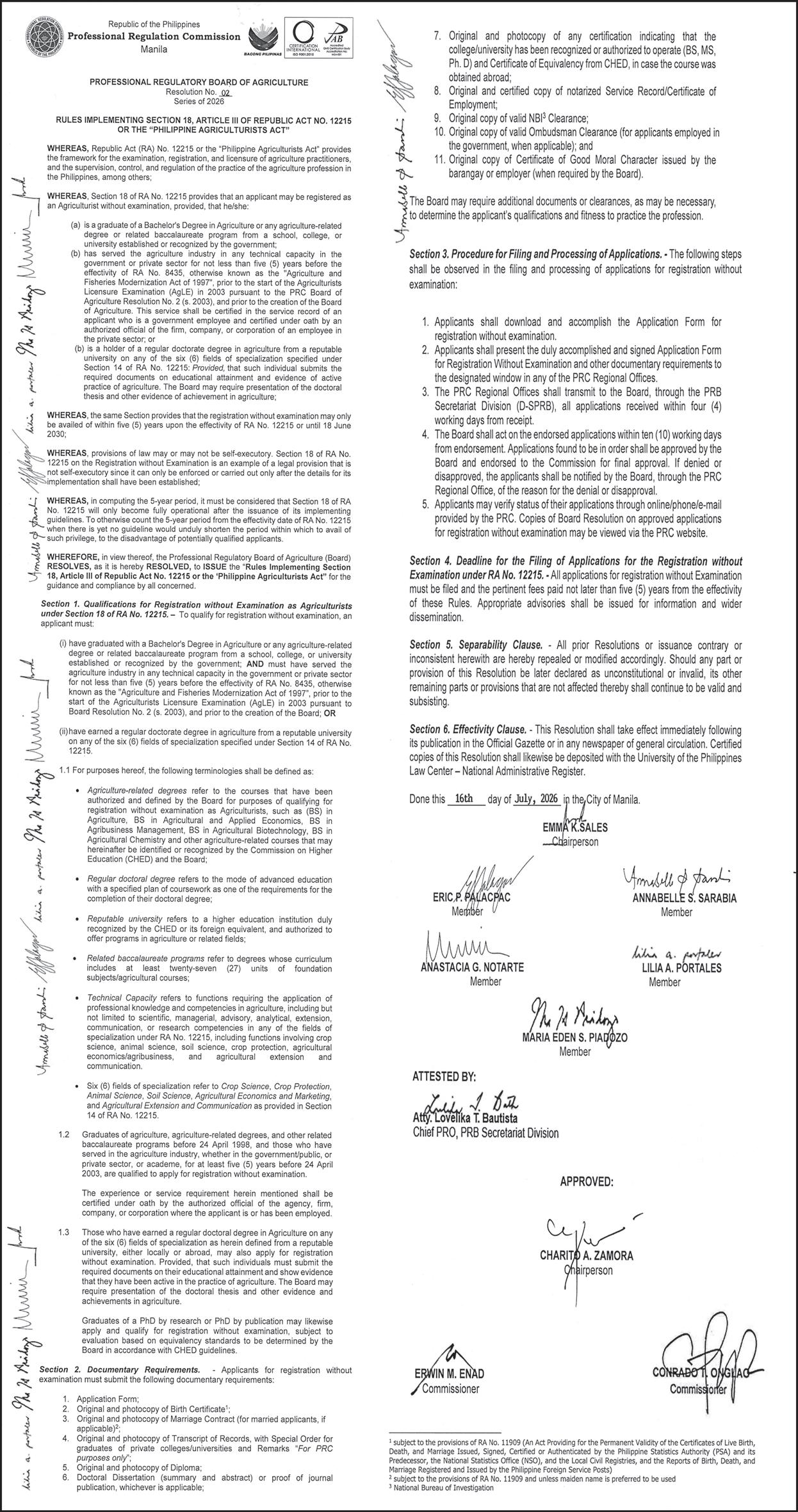
A8 Tuesday, July 21, 2026
Andy Burnham becomes seventh British prime minister in a decade
LONDON—Andy Burnham, the former mayor of Greater Manchester and new leader of the Labour Party, is taking the final steps on Monday to succeed Keir Starmer and become Britain’s seventh prime minister in a decade.
The affable Burnham returned to Parliament in June by winning a risky special election and was sworn in as a member on July 12, hours after the unpopular Starmer announced his resignation to end a tenure
Impeachment.
Continued from A3
The ruling also clarified that privacy and tax confidentiality laws do not automatically bar the issuance of subpoenas, noting that such measures are part of the court’s constitutional mandate to determine public accountability.
However, compliance with tax record requests remains subject to existing legal limitations, including the need for proper authorization under the National Internal Revenue Code.
The court stressed that issuing subpoenas does not guarantee that the documents will be admitted as evidence, as both parties may still challenge their relevance, authenticity, and admissibility during the proceedings.
House prosecutor Party-list Rep. Jose Manuel Diokno of Akbayan called the subpoena win a “success for all,” saying it brings the impeachment trial closer to revealing the “whole picture and the whole truth.”
Diokno said the prosecution is steadily building its case, with every step aimed at completing the trial and presenting the evidence against Duterte.
‘Entire financial picture’
DURING the oral argument, Diokno told the court that Supreme Court jurisprudence requires authorities to examine the “entire financial picture” of a public official when determining the existence of unexplained wealth.
Diokno said this is precisely why the prosecution is seeking access to Duterte’s bank, tax, and AMLC records.
of just two years in office. Starmer will travel the mile from Downing Street to Buckingham Palace to formally tell King Charles III that he is resigning. Soon after, the 56-year-old Burnham
Responding to questions from SenatorJudge Joel Villanueva during oral arguments on the prosecution’s subpoena requests, Diokno stressed that the move is grounded in established jurisprudence—not speculation.
“The subpoenas we are requesting are directly related to Article II, which involves charges of unexplained wealth. Jurisprudence is very clear that the Supreme Court itself requires a full view of a public official’s finances—not only the SALNs [Statement of Assets, Liabilities and Net Worth] filed, but all sources of income,” Diokno said. He explained that a SALN provides only a limited snapshot of an official’s financial standing.
“A SALN is just a snapshot. An income tax return is like a short video. We can only see the complete picture if bank records are produced, because they show the day-to-day inflow and outflow of funds,” he added.
To support the prosecution’s position, Diokno cited the Supreme Court ruling in DOFRevenue Integrity Protection Service v Merencilla, which faulted investigators for failing to examine the respondent’s complete financial circumstances.
Quoting from the decision, he said: “The failure of the complainant to take into consideration the respondent’s net worth from the time he entered government service, as well as all possible sources of income in relation to his real and personal properties, does not support a conclusion of unexplained wealth, since the true net worth was not determined.”
Same standard
DIOKNO said the prosecution is relying on
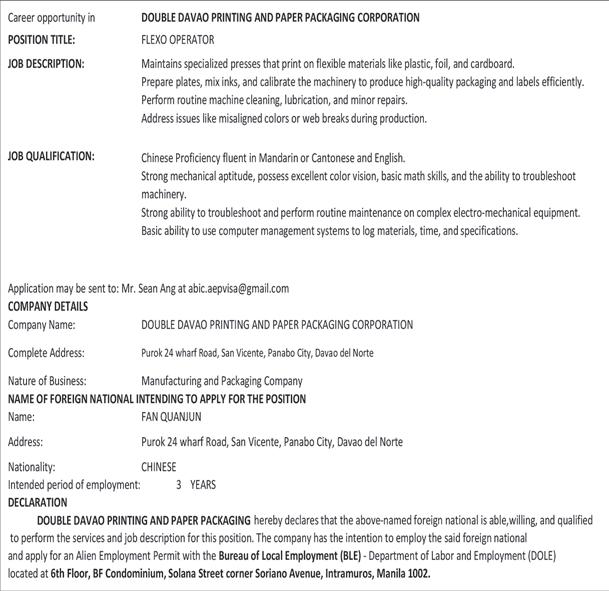

will go to the palace and Charles will ask him to form a government. That is when he will officially become prime minister, a moment known as “kissing hands.”
Here is the latest:
How Britain got to this point BRITAIN got its most recent prime minister just two years ago, when Keir Starmer led the Labour Party to a landslide election victory.
Starmer’s honeymoon was short-lived. A series of missteps and policy U-turns saw public support drain away. After dire local election results in May, the Labour Party took the nuclear option and forced him to resign.
Britain’s parliamentary democracy allows governing parties to change leaders
the same legal standard in seeking the subpoenaed records.
“In that case, the Supreme Court essentially said the Ombudsman failed to do its job. We do not want to repeat that mistake here. We want to see the entire picture,” he said.
He added that this is why the prosecution is asking the impeachment court to compel the production of records from the Bureau of Internal Revenue (BIR), banks, and the AMLC.
“We are requesting BIR, bank, and AMLC records so we can establish the full story— covering assets, liabilities, net worth, and whether the respondent’s income was lawfully or unlawfully acquired,” Diokno said.
Diokno emphasized that a subpoena is the only legal mechanism available for the impeachment court to obtain the documents, noting that issues of admissibility can be resolved at a later stage.
“A subpoena is the only way for this court to secure the necessary data, information, and documents. Questions on admissibility will come later, and the defense will have full opportunity to object,” he said.
Diokno told the Senate Impeachment Court that Duterte’s SALNs alone are not enough to determine whether she accumulated unexplained wealth.
Diokno said Duterte’s bank records, along with relevant documents from the BIR and the AMLC, are necessary to present the “whole picture” under the second article of impeachment, which accuses the vice president of amassing unexplained wealth.
“We are requesting BIR records, bank records, and even AMLC documents so we can see the complete story—covering assets, liabilities, net worth, and both lawful and potentially unlawful income acquired by the respondent,” Diokno said.
Diokno also rejected the defense’s claim that the subpoena request amounted to a “fishing expedition.”
“We can only see the full picture once we obtain the bank records, because these show the day-to-day inflows and outflows in an account,” he added.
“The Supreme Court has clearly stated that we must look at the entire picture –not just the SALNs filed by a public official but all income, both lawful and, if any, illegitimate,” he said.
He added that the High Court has ruled that unexplained wealth cannot be established without first determining a public official’s true net worth and considering all possible income sources.
Villanueva also asked why subpoenas were the least intrusive and most appropriate means of obtaining records protected by bank secrecy, tax confidentiality, and anti-money laundering laws.
Diokno replied that compulsory process is the only way for the Impeachment Court to
midterm, with the winner becoming prime minister without the need for a general election.
The next national election does not have to be held until 2029, five years from the last election in 2024, though Burnham can call one sooner if he wants.
Get ready to meet the chief mouser
BEFORE the day is over, Andy Burnham is likely to encounter Larry the cat, the most famous permanent resident of No. 10 Downing Street.
The gray and white tabby has lived at the prime minister’s residence since 2011, surviving six of Burnham’s predecessors.
A one-time stray adopted to help combat a rodent problem, Larry now regally patrols
secure the documents needed to resolve the allegations.
“A subpoena is the only means for this court to obtain the data, information, and documents we need,” he said.
He clarified that producing the documents does not automatically make them admissible as evidence.
“What is required at this stage is for the documents to be produced before the court. Questions on admissibility will be addressed later, and the defense will have ample opportunity to object,” Diokno said.
He reiterated that the requested bank, BIR, and AMLC records would enable the impeachment court to examine Duterte’s finances throughout her public service, rather than relying solely on her annual SALN declarations and tax filings.
Diokno also disputed the defense’s argument that AMLC records were barred under the “fruit of the poisonous tree” doctrine.
He said Section 8(a) of the Anti-Money Laundering Act was intended to prevent unauthorized disclosures by AMLC officials, not to bar compliance with court-issued subpoenas.
“Section 8(a) of the Anti-Money Laundering Law is really intended to prohibit or prevent leaks by officials of the Anti-Money Laundering Council, but it was never intended to prevent subpoenas coming from courts, including the impeachment court,” Diokno said.
Due process
SENATOR-JUDGE Pia Cayetano raised questions on due process, emphasizing the requirement that every pleading must allege ultimate facts and must not merely contain conclusions of law.
Cayetano asked whether the defense still maintains that the prosecution failed to allege ultimate facts in its motions to subpoena the tax and bank records of Vice President Sara Duterte and whether the prosecution could point out specific allegations constituting ultimate facts.
Counsel for the respondent, Michael Poa, argued that there had been a lack of ultimate facts from the start of the House Committee on Justice hearings. He said that while there was an allegation of unexplained wealth, it was not supported by a sufficient basis or documents.
Poa added that the defense views the prosecution’s move as a “fishing expedition,” noting that evidence was only sought after the respondent had already filed her answer.
“In our view, given the sheer volume of documents being requested, it is like casting a very large net into the sea and hoping that somehow we might catch even a single piece of evidence,” said Poa.
He reiterated his criticism of the Articles of Impeachment for allegedly lacking ultimate facts.
“It is like casting a very large net into the sea and hoping that somehow we might catch even just one piece of evidence,” Poa said.
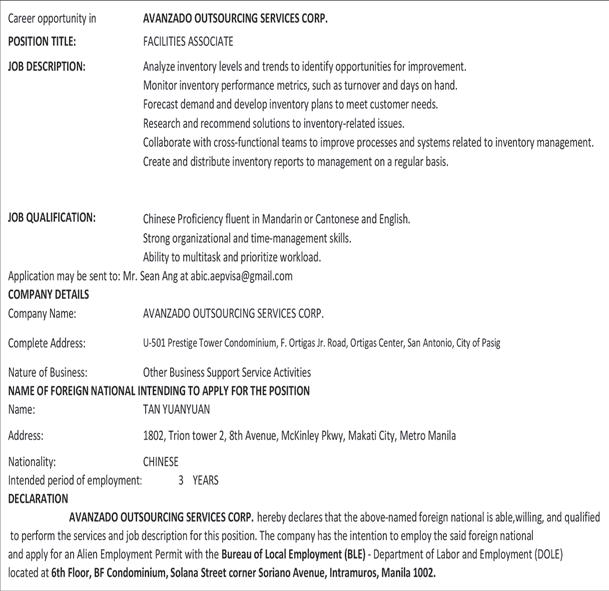
Downing Street, often appearing just as visiting dignitaries arrive.
He already has been seen Monday morning, the center of attention in front of the polished black door. Larry is the most stable thing in British politics, said photographer Justin Ng, one of the cat’s most frequent chroniclers.
“(He’s) like the night watchman of Downing Street,’’ Ng said. “He’s looking out, looking out for people. People are reassured (by) his presence that things will carry on.
These days Larry has his own profile on the government website and more than 900,000 followers on X. NATO Secretary-General Mark Rutte recently stopped to say hello, but all leaders hope to be seen by his side.
Now he just has to win over Burnham’s dog, Axel. No problem, right?
Subic.
Continued from A4
The Philippines is among the 23 countries, which signed the Pax Silica Declaration, while Taiwan is a non-signatory participant of the said agreement.
Local scientific experts have warned of the potential destructive effects to the environment of the project. In the US, there is growing opposition against data centers used to train AI, which consume large amounts of power and water.
Palace Press Officer Claire Castro said the DENR is now looking at the possible negative effects to the environment of the Pax Silica project and how to mitigate it upon the directive of President Marcos.
“They will ensure the existence of an environmental impact statement and an environmental management plan [for Pax Silica]; regulations will be enforced through the Environmental Management Bureau, and Multipartite Monitoring Teams will conduct regular monitoring [for the project],” she said in Filipino.
Citing the position of the National Water Resources Board (NWRB), Castro said there is
Tobacco.
Continued from A3
“As lawmakers, we often hear reports about successful seizures. We see photographs of confiscated products. We read about warehouses being discovered. Those are important victories,” said Valeriano, chairman of the House Committee on Public Order and Safety.
“But after the press conference, after the inventory, after the seizure, an important question remains: What happened to the case? Was somebody prosecuted? Was somebody convicted?” he added.
Valeriano said the objective should be to make illicit trade “risky, costly, and ultimately unsustainable.”
“If no one is convicted, no one is afraid and illicit trade will never stop,” he said.
His remarks came amid continuing concerns over the scale of the illicit tobacco market in the Philippines.
Valeriano said Congress could further strengthen the country’s anti-illicit trade framework and “ensure our laws remain responsive to evolving threats.”
One such possibility is a long-proposed Anti-Illicit Trade (AIT) measure that would improve prosecution mechanisms, enhance inter-agency coordination, and introduce technologies such as track-and-trace systems to monitor tobacco supply chains.
Government agencies have intensified enforcement operations against tobacco smuggling in recent months. On June 22, the Bureau of Internal Revenue and the National Bureau of
It’s moving day at Downing Street
IT’S a day of action at Downing Street, the British prime minister’s official residence.
Departing leader Keir Starmer will give a short farewell speech before going to Buckingham Palace to tender his resignation to King Charles III. The king will then invite new Labour Party leader Andy Burnham to the palace and ask him to form a government.
Burnham will then address the nation for the first time as prime minister in front of the famous black door of 10 Downing St. Labour is hoping Burnham’s arrival will signal an end to the rapid turnover of U.K. leaders. He will be the country’s seventh prime minister since 2016. AP
sufficient water supply for the project.
“The project is being planned and developed with the clear commitment that water needs of surrounding communities will remain the foremost priority and will not be compromised at any stage of implementation or operation,” she said. Likewise, she also assured the government will provide support to farmers, who might lose their livelihood owing to the construction of the AI-hub in Tarlac.
“We know that the President’s heart lies with the farmers. They are his priority—primarily for the sake of food security. Should any farmers face displacement, the government will ensure they do not lose their livelihood,” Castro said.
“ The President ensures that all actions taken are in accordance with the law and will not harm the environment or displace our fellow citizens without providing just compensation or alternatives,” she added.
Castro also maintained that the government will continue to have control in the AI-hub.
The President previously stated that we will not surrender even a square inch of our territory to any foreign power. So, this applies to everyone—not just one country, but everyone,” she said. With Samuel Medenilla
Investigation seized 22 container vans loaded with illicit cigarettes at Manila’s North Harbor.
The National Police (PNP) also reported conducting nearly 9,000 anti-smuggling and anti-illicit trade operations during the first half of 2026, while the Bureau of Customs has confiscated billions of pesos worth of illicit tobacco and vape products. Despite these operations, authorities acknowledged that securing convictions remains a challenge.
To date, Fadullon said the National Prosecution Service has filed 45 criminal complaints involving 164 individual respondents.
“Out of these cases, 10 have already progressed to indictments with charges already being filed with the Court of Tax Appeals, which now exercises exclusive jurisdiction over these offenses. However, more than 75 percent of the complaints were referred to concerned law enforcement agencies for further case buildup, having been found to contain insufficient evidence for preliminary investigation at the time of filing,” he lamented.
Valeriano said there is a need for consistent and sustained coordination among law enforcement agencies, prosecutors, regulators, and lawmakers would be necessary to ensure that anti-smuggling operations result not only in seizures but also in successful prosecutions.
Interior Secretary Juanito Victor Remulla likewise said the Department of the Interior and Local Government and the PNP were working with industry stakeholders to strengthen intelligence gathering and ensure that no public officials provide protection to illicit trade operators.

2nd Front Page
BusinessMirror
PALACE: NO CELEBRITY, POMP AT JULY 27 SONA–PALACE
MALACAÑANG said the fifth State of the Nation Address
(SONA) of President Ferdinand Marcos Jr. will still be “dignified” despite lacking the pomp of previous editions of the event with less celebrities involved in its conduct.
In a press briefing on Monday, Palace Press Officer Claire Castro said no celebrity director will be tapped to handle the Sona on 27 July 2026 at the Batasang Pambansa Complex in Quezon City. There will also be no “A-listers” who will perform.
“So, the conduct of a national event like the Sona will be simple yet dignified,” Castro said.
The first Sona of Marcos was directed by filmmaker Paul Soriano. Last year, The Voice USA Season 26 champion Sofronio Vasquez, sang the national anthem in the fourth Sona of the President. Castro said the chief executive has someone in mind to lead in the singing of the national anthem, and she will identify this singer once she gets Marcos’s permission to do so.
Last month, the House of Representatives said next week’s Sona will be “simple” since there will be no red carpet or long gowns. It also encouraged guests to wear simple but dignified clothing.
Government accomplishments
ASKED about the criticism by BAYAN
President Renato Reyes Jr. on the apparent rush of the Marcos administration to come out with accomplishments to
report in his Sona as well as its selective justice, Castro slammed the critics for choosing to be “blind” to government’s achievements.
The Presidential Communications Office (PCO) undersecretary has implemented measures to address the plight of Filipinos affected by earthquakes and typhoons, which affected parts of the country as well as the Middle East crisis.
However, she said Bayan appears to choose to wear “blinders” when they deliberately disregard the efforts of the Marcos administration.
“So, let us not resort to that; instead, we should broaden our perspective, open our eyes, and open our ears [to]—what exactly the President has accomplished,” Castro said in Filipino. She cited the reduction in crime incidents, by 17 percent from 9,506 from January to April to 7,883 from April 6 to July 4. Despite such decline, Castro said Marcos recognizes the need to continue the campaign against crime, including the killing of the noted American marine biologist Kent Carpenter in Negros Occidental and pro-Marcos political vlogger Alicia Lipata, also known as “Mima Alicia,” in Caloocan City.
“The government does not condone the occurrence of such crimes. That is why the PNP [Philippine National Police] is intensifying its efforts to fulfill its mandate of ensuring safer communities and enabling faster responses to such incidents,” Castro said. Samuel P. Medenilla
Experts: New ‘ayuda’ round justified, but hard to sustain
By Justine Xyrah Garcia
THEgovernment’s latest cash assistance program may provide immediate relief to vulnerable households reeling from rising prices, but economists said that sustaining similar support could prove challenging should elevated oil prices extend into next year.
President Ferdinand Marcos Jr. last week announced another round of “ayuda” that will run from July to December to help Filipinos cope with the expected impact of renewed conflict in the Middle East on domestic fuel prices and the cost of basic goods.
Under the expanded United Package for Livelihoods, Industry, Food, and Transport (UPLIFT) program, more than 7.5 million households will receive one-time and monthly cash assistance.
While this may indeed help cushion households from ris -
ing prices, De La Salle University (DLSU) economist Marites M. Tiongco warned that if the conflict persists and warrants another round of assistance next year, the program could become increasingly difficult to sustain.
Malacañang said eligible beneficiaries under the Department of Social Welfare and Development (DSWD) will receive a one-time P2,000 grant, while qualified Social Security System (SSS) members and poor and near-poor households identified under the 2024 Community-Based Monitoring System will

‘AsPac
firms not ready for US import rules’
By Ada Pelonia @adapelonia
ASIA-PACIFIC firms, including Philippine businesses, are beset with a readiness gap as the United States tightens import rules that could impact international trade, according to logistics giant Federal Express Corporation (FedEx).
FedEx said 64 percent of firms surveyed across the region are not yet ready for the mandatory US Consumer Product Safety Commission (CPSC) e-filing requirements on July 8, and while 36 percent report some readiness, only 15 percent are fully operational. The new requirement mandates all import-
ers of CPSC-regulated products to e-file the data elements needed for clearance at the time of entry into the US to improve safety oversight and compliance transparency.
US importers of CPSC-regulated products must include the full CPSC PGA message set for each product imported.
“Businesses that have yet to address product safety data requirements, electronic documentation standards, and certificate referencing risk clearance delays, penalties, or refusal of entry at US borders. Registration for businesses in the CPSC Product Registry for a reduced message set can take up to six months,” FedEx said.
The survey showed that identifying products within the CPSC scope and digital tools for pre-
validating data emerged as leading needs for firms across the region at 32 percent and 23 percent, respectively.
FedEx said it would help businesses navigate the transition through integrated digital solutions, regulatory guidance, and operational expertise.
The logistics company has integrated CPSC e-filing capabilities directly into its shipping platforms to simplify compliance.
With registration in CPSC’s Product Registry taking up to six months and the July deadline approaching, FedEx said it has launched a proactive customer support program.
This includes direct outreach and step-bystep guides on identifying CPSC-regulated products; access to its trade compliance and
customs clearance specialists; and up-to-date guidance on customs policies and required documentation.
“Changes of this scale can introduce complexity for businesses operating across borders,” FedEx Asia Pacific President Salil Chari said.
“Our focus is on making compliance straightforward for customers, so they can continue to move goods seamlessly while meeting new standards with confidence.”
The logistics giant gathered insights from over 5,000 businesses across 12 Asia Pacific markets, including the Philippines, through customer webinars conducted in April and May. More than 500 survey responses were collected from firms of various sizes and industries.
receive P2,000 a month until December.
The DSWD said it had earmarked P55 billion for the expanded UPLIFT program in the second half of the year.
Tiongco estimated that extending similar monthly transfers throughout 2027 could cost nearly P100 billion, excluding administrative expenses and other energy-related support programs.
“For the remainder of 2026, the program appears fiscally manageable as an emergency intervention, but it should not be viewed as indefinitely sustainable,” Tiongco told the BusinessMirror
She said prolonged assistance could also squeeze the government’s fiscal space as it would have to contend with higher subsidy requirements, slower revenue growth, rising debt servicing costs, and competing spending needs for health, education, infrastructure, and disaster response.
University of Asia and the Pacific (UA&P) economist Marco Antonio C. Agonia also said the government may eventually have to choose between expanding subsidies and accelerating infrastructure spending.
“The [National Government] will
NTF-WPS
likely have to compromise on the scale of subsidies and the pace of [infrastructure] rollouts to keep its fiscal sustainability picture intact, especially with downward revised growth targets in the latest [Development Budget Coordination Committee] assumptions review,” Agonia told the BusinessMirror Foundation for Economic Freedom (FEF) President Calixto V. Chikiamco, meanwhile, said a growing share of the national budget could eventually be devoted to social assistance at the expense of investments that support long-term economic growth.
“This will crowd out government programs that will raise the productivity of the economy, such as investments in education and infrastructure,” he told this newspaper.
Temporary relief DESPITE concerns over fiscal sustainability, both Tiongco and Agonia said the latest round of cash assistance is justified as a temporary response to rising prices.
Tiongco said the program is warranted because inflation disproportionately hurts lower-income households, but stressed that its
slams China assault vs. PHL servicemen at Ayungin
By Rex Anthony Naval
THE National Task Force for the West Philippine Sea (NTFWPS) on Monday strongly condemned the violent and unlawful actions of China Coast Guard (CCG) personnel against Philippine servicemen lawfully stationed aboard BRP Sierra Madre (LS-57) at Ayungin Shoal, West Philippine Sea (WPS)
“At approximately 9:15 a.m. today, China Coast Guard Vessel [CCGV] 21560 deployed a rigid-hull inflatable boat [RHIB] that deliberately approached BRP Sierra Madre at close range. Despite repeated instructions from Philippine personnel to leave the area, the Chinese RHIB refused to withdraw and instead escalated the situation. During the incident, a Chinese crew member struck a Philippine serviceman on the head with a wooden baton, causing an injury that required immediate medical attention,” it added.
The NTF-WPS said the safety and welfare of every Filipino serviceman remain paramount. It added that this latest act of aggression against personnel performing their lawful duties is unacceptable and serves only to heighten tensions and increase the risk of dangerous miscalculation at sea.
“Our personnel in the WPS will continue to exercise professionalism, restraint, and fidelity to international law. The Philippines remains firmly committed to the peaceful resolution of disputes, even as it steadfastly protects its sovereign rights and jurisdiction and ensures the safety of those serving on the frontlines of our maritime domain,” NTF-WPS said.
The body also called CCG to immediately cease dangerous and unlawful actions that threaten lives and undermine peace and stability.
“We likewise urge China to uphold its obligations under international law, including the United Nations Convention on the Law of the Sea [Unclos], and to demonstrate through its actions a genuine commitment to a rules-based maritime order in the WPS and the broader South China Sea,” it added. Department of National Defense
(DND) Assistant Secretary Arsenio Andolong condemned the latest act of violence and harassment on Philippine Navy (PN) personnel posted at the country’s de facto sentinel at Ayungin Shoal, the BRP Sierra Madre. Such a clear pattern of provocative and hostile behavior contributes to the People’s Republic of China’s deficit of trust and credibility, he added.
“Against the backdrop of the PRC’s circumvention of international law, particularly the Unclos, and disregard of the final and binding 2016 Arbitral Tribunal Ruling on the South China Sea, their actions further justify the Department’s position of disengagement—we simply cannot trust this belligerent neighbor,” Andolong said. He said the professionalism and resolve shown by Philippine military personnel compel them to strengthen the country’s resolve, build up its deterrence, shore up its alliances, and bolster its national commitment to safeguard what rightfully belongs to the Philippines.
“As we continue to monitor and prepare measures to meet this aggression, the DND salutes the defenders of BRP Sierra Madre and our western frontier. We will not back down,” Andolong said. Earlier, the Armed Forces of the Philippines (AFP) said the incident took place this July 20 and involved a CCG rigid hull inflatable boat (RHIB) with eight personnel from vessel CCGV 21560 that unlawfully approached within close range of the Sierra Madre.
DFA: Act of violence ‘unacceptable’ THE Department of Foreign Affairs (DFA) condemned as “unacceptable” the maritime incident.
DFA spokesman for maritime affairs Rogelio Villanueva Jr. said the agency is coordinating with the Armed Forces of the Philippines.
“Any act of violence against Filipino personnel is unacceptable and will merit the appropriate diplomatic action,” Villanueva said. The clash occurred on the opening day of the Asean Foreign Ministers’ Meeting in Manila, which Chinese Foreign Minister Wang Yi is expected to attend in the next few days.
See “‘Ayuda’,” A2
The unwavering lifeline: OFW remittances and the Philippine economy editorial
IN a world of geopolitical turmoil and economic uncertainty, new data from the Bangko Sentral ng Pilipinas shows that the Filipino spirit abroad remains strong. Though growth appears to slow, the $14.11 billion they sent home in the first five months of 2026 reflects the deep resilience and sacrifice of our OFWs. (Read the BusinessMirror story: “OFW remittances keep flowing amid war woes,” July 15, 2026).
Despite inflation and global instability, OFWs have kept their families afloat. The 2.5 percent rise in remittances—the highest ever for this period—means millions of households can breathe easier, children can stay in school, and local economies can keep moving. It is true that the 2-percent growth rate in May was the slowest in four years, but economists point to a confluence of factors—higher living costs abroad, a sluggish global economy, and the persistent shadow of the Middle East conflict. However, to focus solely on this “softer” pace is to miss the forest for the trees. As Jonathan L. Ravelas, senior adviser at Reyes Tacandong & Co., aptly noted, the purchasing power of the dollar has improved against the peso. This means OFWs can send fewer dollars while delivering the same, or even higher, peso value to their families. The system is adapting, and the families back home continue to receive the support they need. This is the “bigger picture” we must appreciate. Despite the conflict in the Middle East—a region historically crucial to our OFW population—remittances have not collapsed; they have grown. This speaks to the diversification of our OFW workforce across different regions and the unshakeable cultural imperative to provide for family, come hell or high water.
The contributions of our OFWs extend far beyond household consumption. As PIDS senior research fellow John Paolo R. Rivera points out, these cash inflows serve as an “important buffer” for the country’s external position. At a time when the global economy is fragile, the steady flow of dollars helps stabilize the peso, shores up our gross international reserves, and, most importantly, fuels consumer spending—which accounts for at least 70 percent of the economy.
Yet, we cannot afford complacency. The slowdown is a warning signal. The rise of geopolitical tensions, specifically the possibility of a US-Iran escalation, presents a clear and present danger. As UBP’s chief economist Ruben Carlo Asuncion warns, the risk to OFW employment and deployment in the Middle East could become more visible in the months ahead. We must brace for the possibility that current resilience may be tested.
It would do well for the government to double down on efforts to diversify the deployment of our OFWs, ensuring they are not overly exposed to a single volatile region. It must also provide better financial literacy programs to help families make the most of their remittances, turning consumption into investment.
The message is clear: remittances are no longer growing as rapidly as before, but they remain remarkably resilient and dependable. That resilience is a privilege we should never take for granted. To the 10 million OFWs who keep our nation afloat, we salute your courage and thank you for your sacrifice.
Opinion

Prosecutor, judge, and executioner

AJohn Mangun
OUTSIDE THE BOX
35-PAGE memo, dated March 31, sat inside Ottawa, Canada’s Department of Industry until a recent Access-to-Information request pried it loose. Most of the pages were redacted with black ink. What survived was the plan itself: a proposal to sue Canadian citizens over social media posts the department itself judged “false and misleading.”
The department’s full name is Innovation, Science and Economic Development Canada, ISED for short, run by Minister Melanie Joly. Innovation and science do not seem to appear anywhere in the memo. What appears instead is a proposal to monitor citizen speech for “recurring inaccuracies” and hold lawsuits in reserve, “proportionate and subject to senior level approval,” bureaucratic for a manager deciding the fine without an impartial judge in the process.
Henry VII created the Star Chamber in 1487 to handle cases regular courts avoided: disputes involving powerful people and offenses against the Crown’s authority. Within a century it had become something else entirely, a body where the same officials who brought a complaint also decided whether the criticism was accurate and set the punishment. No unbiased jury or outside review was allowed. The Crown defined
Burnham
T. Anthony C. Cabangon
Lourdes M. Fernandez Jennifer A. Ng Vittorio V. Vitug
Lorenzo M. Lomibao Jr., Gerard S. Ramos Lyn B. Resurreccion, Dennis D. Estopace Angel R. Calso, Dionisio L. Pelayo Ruben M. Cruz Jr.
Eduardo A. Davad Nonilon G. Reyes
D. Edgard A. Cabangon Benjamin V. Ramos Aldwin Maralit Tolosa Rolando M. Manangan
BusinessMirror is published daily by the Philippine Business Daily Mirror Publishing, Inc., with offices on the 3rd floor of Dominga Building III 2113 Chino Roces Avenue corner De La Rosa Street, Makati City, Philippines.
Nos. (Editorial) 817-9467; 813-0725. Fax line: 813-7025. (Advertising Sales) 893-2019; 817-1351, 817-2807. (Circulation) 893-1662; 814-0134 to 36. E-mail: news.businessmirror@gmail.com www.businessmirror.com.ph


Athe offense and enforced it in the same room, and its sentences went beyond fines.
The pamphleteer William Prynne had his ears cropped on the Star Chamber’s order for writings judged offensive to the queen. Parliament finally abolished the Star Chamber a century and a half later, but the name survived as shorthand for a tribunal that is prosecutor, judge, and executioner all at once.
How examining and punishing people for their Facebook posts is furthering Canadian “Innovation, Science and Economic Development” is missing from the memo.
ISED is building the same room the Star Chamber occupied. The department decides whether a citizen’s social media post is “factually incorrect, misleading or out of context,” then sets the penalty. The people grading the speech are the people offended by it, an arrangement that
ran a century and a half before England shut it down. England has not fully learned its own lesson. British police now make more than 30 arrests a day for offensive online posts with ordinary statute law applied using the same evil instincts.
Manila has walked partway down this corridor before and, to its credit, mostly turned back. The objection raised every time was the correct one: who guards the guards, and what happens when they decide they do not want to answer to anyone. That question killed every bill filed since 2017 before it reached a floor vote.
Not this time. Last month the House of Representatives passed the Digital Media Anti-False Information Act on third and final reading, carrying prison terms up to 12 years and fines running into millions for deliberate disinformation. Human Rights Watch called the language vague enough for officials to abuse. The bill now sits with the Senate, one chamber closer to law than anything Ottawa has managed with an internal memo and a black felt pen.
Manila already runs a working version of solving this “factually incorrect, misleading or out of context” problem, and it does not require a ministry with a vendetta. The Securities and Exchange Commission and the Philippine Stock Exchange police disclosure, not opinion. A listed company that misstates earnings answers to auditors, to filed documents, and eventually to a court that had no hand in writing the original
complaint. But nobody at the PSE decides a stockbroker’s research note is wrong and fines the analyst who wrote it. Nobody at the PSE decides whether your nasty X post about the exchange or a listed company crosses a legal line. The separation is the entire design of how markets function, and it works because the party with the grievance is never the party with the gavel.
The Digital Media Anti-False Information Act does not borrow that design. It borrows ISED’s instead, treating the offended party and the judge as one entity, on the theory that a prison term will teach Filipinos to choose their words the way a Star Chamber clerk once chose his.
The chilling effect needs no courtroom to work. A citizen who knows a wrong word online carries a six-year sentence thinks twice before typing, and that hesitation is the function of the law, not a side effect of it. Neither government explains where the threshold sits. Human Rights Watch says the Philippine bill leaves that judgment to prosecutors. A citizen sure of his facts still cannot know, in advance, where the line is, because the state has not told him. A government confident in its own credibility answers bad speech with more speech. Both of these governments answered it with a penalty. E-mail me at mangun@gmail.com. Follow me on Twitter @mangunonmarkets. PSE stock-market information and technical analysis provided by AAA Southeast Equities Inc.
vows unity after lightning ascent to UK premiership
By Alex Morales
NDY BURNHAM is set to become the UK’s seventh prime minister in just over a decade on Monday with a number of outstanding questions about who will be in his cabinet and the policy direction he will pursue.
In an address from Downing Street, the incoming premier will pledge to deliver tangible improvements in people’s lives, while stressing that his rise to high office is a moment for “reflection and resolution,” according to advance remarks sent by his office. He will set out his domestic priorities, and conclude on a “message of optimism” saying Britain can look to the future with “hope and unity.”
Despite securing the backing of the vast majority of his party’s Members of Parliament last week, Burnham has already irked a swath of his party by refusing to give certainty on who he’ll appoint to key cabinet positions including Chancellor of the Exchequer, and what policies he’ll pursue to mark his administration out as significantly different from that of the man he is replacing, Keir Starmer.
The incoming leader will inherit a prime ministerial inbox bursting with tricky issues, including how to keep lowering immigration levels that helped spur the rise of Nigel Farage’s Reform UK party, containing the nation’s ever-increasing welfare bill, reinvigorating Britain’s stagnant productivity and overhauling social care to cater for an ageing population. On the global front, he’ll have to contend with an unpredictable US president in Donald Trump, while seeking to maintain British leadership in defense of Ukraine. A key challenge will be ramping up core defense spending to get to a pledged level of 3.5 percent of national output by 2035.
Burnham’s arrival at 10 Downing Street will complete a dizzying ascent for a Labour veteran and twicedefeated leadership contender who,
less than 10 weeks ago, was serving as the mayor of Greater Manchester outside Parliament and with no obvious route to national power.
But Josh Simons’ resignation as the MP for Makerfield gave Burnham a House of Commons seat to contest, and when he resoundingly defeated Nigel Farage’s Reform in the resulting by-election on June 18, the momentum behind him became unstoppable. Seeing the writing on the wall, Starmer announced his resignation days later. Monday’s events are expected to begin with a mid-morning address in Downing Street by Starmer. He’ll then head to Buckingham Palace to hand his resignation to King Charles III. Burnham himself will then be driven to the palace for a ceremony called kissing of hands—in modern times, no kissing is involved—at which he’ll be asked to form a government. He’ll then head to Downing Street to address the public around lunchtime and following that, is expected to begin appointing his cabinet.
The frontrunner to be named chancellor is Home Secretary Sha-
bana Mahmood, a move that will be seen as a snub to Energy Secretary Ed Miliband, the former party leader who was the early favorite for the role and was instrumental in Burnham’s ascent to power. Burnham may install Miliband in the Foreign Office—another major role—in order to pacify him.
Close Burnham allies Louise Haigh, Anneliese Midgley and Deputy Labour leader Lucy Powell are all likely to be given significant roles. The fates of Chancellor of the Exchequer Rachel Reeves, Deputy Prime Minister David Lammy, Foreign Secretary Yvette Cooper, former Health Secretary Wes Streeting and former Deputy Prime Minister Angela Rayner will all be closely watched as Burnham seeks to avoid having powerful rivals on Labour’s back benches. Starmer, who remains an MP, is not expected to want or be given a cabinet role. On Sunday, Powell—who could be deputy prime minister by the end of Monday—sought to defend the opacity around Burnham’s cabinet plans, saying: “You don’t start appointing See “Burnham,” A11
Ambassador Antonio L. Cabangon
Trump silent so far on Iran plans as US death toll hits 17
By Josh Wingrove
IF President Donald Trump knows where he wants to take the war in Iran, he’s giving little sign of it publicly.
The conflict continued to spiral over the weekend, with both sides trading attacks in the aftermath of an Iranian strike that killed two US service-members in Jordan and injured others. Both Iran and the US have largely abandoned the tentative peace deal the president had touted.
The week of escalating missile and drone strikes underscored the risk that the conflict will reignite in full again even as the man who started it stayed largely silent on what if anything he’ll do next. US Central Command announced Sunday that a third service member died the day before during a controlled detonation of an unexploded Iranian drone in northern Iraq. And the US said unidentified remains of another victim in Friday’s Jordan strike were being examined.
As the conflict turns deadly again for the US military, where Trump will take the fight now is not clear.
Trump did acknowledge the fallen soldiers while speaking to reporters Sunday evening after the World Cup finale.
“Those great patriots were out there fighting so that Iran cannot have a nuclear weapon,” he said when he arrived back in Washington from New Jersey.
“Iran is just very, very badly damaged. They’ve lost everything almost militarily,” he said. “So we’ll see what happens, but we hit it very hard again tonight, and we did that in honor” of the servicemembers.
He has so far stopped short of ordering a substantial escalation, and called earlier on Sunday for Congress to roll new Iran penalties into a Russian sanctions bill. He invoked the wishes of the late Senator Lindsey Graham, although Jeanne Shaheen, a Democrat, said Graham didn’t want the two combined.
Trump kept a low profile on Saturday and spent much of Sunday celebrating the World Cup finale in New Jersey. Meanwhile, his administration signaled it would simply maintain the status quo in the Middle East: striking Iran while attempting to continue to ferry tankers through the Strait of Hormuz, but the weekend’s exchanges showed the risk the fighting could spiral.
“I think in the short term, unfortunately, we’re in an escalatory cycle,” said Mona Yacoubian, director of the Middle East Program at the Center for Strategic and International Studies, a Washington-based think tank.
The US response after Friday’s fatal strike indicated an attempt at restraint, but the broken trust on both sides makes deescalation difficult, she said. “This is a more dangerous moment than we’ve had in the past.”
With the on-and-off conflict now in its 21st week, the endgame for either side is as unclear as ever— a warning sign both for the global economy and for Trump, who said one reason he agreed to a ceasefire is that he did not want to become the next Herbert Hoover, the US president during the 1929 stock market crash that triggered the Great Depression.
The administration sent a mix of messages over the weekend, as the US death toll hit 17 since the war began on February 28. Central Command announced the deaths and retaliatory strikes, while Defense Secretary Pete Hegseth said the soldiers’ deaths will only strengthen US resolve.
Trump aide Dan Scavino posted a cryptic video of a B-2 bomber in flight, set to the tune of the Nessun dorma aria, while the US is reportedly moving more refueling planes to the region, teasing a potential escalation. The White House declined to address the report.
The president spent the weekend occupied by other matters—he didn’t make any public appearances Saturday at his New Jersey golf club before attending the World Cup Final in per-
A fresh start for micro-entrepreneurs: Understanding BIR Revenue Regulations No. 04-2026

son on Sunday. He made no mention of Iran during a pregame interview on the Fox broadcast, and a flurry of social media posts focused more on a recent economic announcement and renovation projects in Washington, DC.
Instead, it was Energy Secretary Chris Wright who took to the airwaves Sunday morning on the administration’s behalf, attempting to calm concerns and pledge that the Strait of Hormuz had not yet ground again to a de facto halt.
“It’s tragic to lose American lives, but this is a mission that will save countless lives going forward,” Wright said on ABC’s This Week. “His focus is on degrading the Iranian ability to terrorize the world, to hold world commerce hostage as they are doing right now, and to prevent Iran from getting nuclear weapons — that is unchanged.”
Wright held open the door to a detente: “The president is always looking for the diplomatic off-ramp. President Trump wants to end it with a peaceful agreement with Iran, but it takes two parties to do that.”
Total shipments out of the Gulf, both through the Strait of Hormuz and pipelines used to avoid it, are at about two-thirds of pre-conflict levels, Wright said. Michael O’Hanlon, director of research in the Foreign Policy program at the Brookings Institution, said he worried Trump may be repeating mistakes of Vietnam and other past American conflicts.
“If you try to create just the right amount of psychological and strategic pressure—not too hot and not too cold—history suggests it’s very hard to do that,” he said, adding that Iran appears to be betting on Trump’s desire to reach a deal to buoy his midterm election prospects.
“Right now they think that he’s desperate for a deal and they’re tougher than he is,” O’Hanlon said. “He may have to, just as a matter of legacy, accept that he very well may lose those chambers, start acknowledging that and say ‘if that means I have to keep pressure on Iran for six more months, I’ll do it.’”
Representative Michael McCaul, a Texas Republican and former chair of the Foreign Affairs Committee, said he expected Trump to simply resume the military campaign that was paused with the ceasefire.
“Now we’re going to move forward with plan A again,” McCaul said on Fox News Sunday. “The military is going to move in, take out their launch pads, take out their ability to send Shahed drones, to hit tankers.” Degrading Iran’s ability to control the strait “has to be the fundamental objective, key objective right now,” he added.
The spiraling conflict underscores the quagmire risk of foreign interventions—the type of which Trump and Vice President JD Vance have long criticized. Trump has mused previously about ramping up American efforts, including potentially attempting to seize Kharg Island, the crucial oil export hub. And each passing week puts further strain on US military supplies and crews of ships that continue to stretch their time away from port.
For Trump, “there are no good options right now. There are only bad and less-bad options,” Yacoubian said. “We are in something that is potentially a phase change in this conflict and unfortunately there may need to be more pain inflicted before both sides once again relent.” Bloomberg
THE Philippine government has taken another step toward boosting the country’s economic core by throwing a lifeline to micro-entrepreneurs. On June 22, 2026, the Bureau of Internal Revenue (BIR) officially released Revenue Regulations (RR) No. 04-2026 prescribing the guidelines and procedures for a one-time tax abatement program designed specifically for micro taxpayers. This was issued pursuant to the power of the Commissioner to abate or cancel tax liabilities under Section 204(B) of the National Internal Revenue Code of 1997, as amended. By offering an affordable mechanism to clear unresolved liabilities, the program aims to ease regulatory friction, clean up the national taxpayer database, and seamlessly reintegrate small businesses into the formal economy.
For years, many small businesses and self-employed professionals in the Philippines have found themselves trapped because of bureaucratic complications. Legacies of unfiled tax returns, known colloquially as stop-filer cases, alongside ballooning penalties and disputed assessments, often discouraged micro-entrepreneurs from updating their status. Recognizing that heavy financial penalties frequently push struggling enterprises into the informal sector, the BIR introduced this framework as a complementary component to broader easeof-doing-business reforms.
To determine eligibility, the regulation relies on the statutory
definition of a micro taxpayer. Businesses or individual professionals whose annual gross sales is less than P3,000,000 qualify for the program. For mixed income earners, the said gross sales threshold shall only cover business income, excluding compensation income earned under employer-employee relationship. Crucially, the relief also extends to former business owners who have already ceased operations but remain burdened by inactive registrations and unresolved tax obligations. By resolving these legacy accounts, the government is making it significantly simpler for entrepreneurs to formally close out past ventures
and eventually embark on new economic activities without the shadow of tax debt.
The scope of RR No. 04-2026 is comprehensive but tightly bound by specific financial thresholds. The one-time abatement covers delinquent tax accounts, outstanding tax assessments (regardless of whether they are preliminary or final, disputed or undisputed) and open stop-filer cases, among others, that existed as of December 31, 2025. However, to prevent abuse and ensure the program serves its intended demographic, the regulation establishes a strict threshold that the total basic tax liability or penalties sought to be abated must not exceed P80,000 per taxable year. Taxpayers who exceed this threshold are ineligible for the tax abatement program.
For qualified taxpayers who meet these criteria, the path to compliance is remarkably straightforward and affordable. Instead of paying years of accumulated surcharges, compounding interest, and compromise penalties, applicants are only required to pay a flat, one-time abatement fee of P5,000 per approved application. The application must be filed manually with the Revenue District Office (RDO) that holds jurisdiction over the taxpayer. It must be submitted per taxable year, and the applicant is required to clearly specify the covered tax types and basic amounts due using BIR Form No. 0605.
Once an application is filed, the taxpayer has five working days to settle the P5,000 fee, either electronically or manually, and submit proof of payment to the RDO. Failure to submit the proof of payment within five working days voids the application, but without prejudice to
South Korea’s AI-heavy market now sets the
tone for global stocks
By Winnie Hsu, Momoka Yokoyama & Masaki Kondo
FOR fund managers in London, New York and Tokyo, a new ritual has emerged before trading gets underway: checking South Korean stocks.
Once a peripheral market for many global investors, Korea’s $4 trillion equity market is offering an early read on risk appetite as AI-driven swings in Samsung Electronics Co. and SK Hynix Inc. ripple through global chip stocks.
The shift is reshaping investment routines. JPMorgan Asset Management’s chief Asia market strategist gave a presentation on Korea to the firm’s global team for the first time in his 14 years on the job. Japanese traders are adding the Kospi Index to their watch lists. “We are all Korean investors now,” said Hani Redha, a London-based portfolio manager at PineBridge Investments.
But the market’s growing influence comes with a catch. The Kospi has become one of the world’s most volatile major benchmarks, with leveraged trading amplifying swings. SK Hynix’s recent US listing has extended Korea’s influence into Wall
Burnham.
. . Continued from A10
a government and a cabinet until you’re actually prime minister.” She declined to speculate on her own prospects, saying, “I will wait to see all of that tomorrow.”
Policy-wise, Burnham has said he will stick to the manifesto with which Labour fought the 2024 general election—a move that hinders his ability to raise the Treasury’s three main revenue earners—income tax, national insurance and value added tax. It also commits him to the triple lock guaranteeing annual rises in the state pension until after the next election. Burnham has also said he’ll stick to Reeves’ budgetary rules.
Street. The result is the country’s sentiment-driven trading increasingly setting the tone for global AI stocks around the clock.
Korea may see another turbulent session when markets reopen following a long weekend. Global chip peers were sold off on Friday as a surprise breakthrough from a Chinese AI startup renewed doubts over massive capex investment.
Redha starts each day by checking Seoul for a read on the AI trade. Once the Korean market closes, his focus shifts to SK Hynix’s American depositary receipts and Koreafocused exchange-traded funds in New York. “It’s like almost 24-hour tracking,” he said.
That dynamic was on full display last week. A local selloff on Monday driven by fresh skepticism about future demand for AI triggered a near 9 percent drop in the Kospi, before the weakness spilled into Wall Street. SK
In his only major policy speech of a leadership campaign that never gathered speed due to a lack of rivals, Burnham majored on plans to ramp up devolution, including establishing an outpost of No. 10 in Manchester, overseeing the biggest house-building program since the postwar period and giving more control over taxation as well as services such as water, energy and transport to the regions.
Over the weekend, Burnham’s team outlined plans to scrap proposals for a national digital ID, vowing instead to plow the cash that would have been spent on the program— £1.8 billion ($2.4 billion) over three years according to the Office for Budget Responsibility—into priorities such as measures to alleviate the
re-filing the same within the availment period.
The BIR, on the other hand, has committed to a swift turnaround, stating that the respective RDO will issue an official Certificate of Availment within five working days from verifying the payment. This certificate serves as definitive proof that the covered tax case is closed. Business owners must act quickly, as the window of opportunity is narrow. The program is currently set to run only until December 31, 2026, unless a formal extension is recommended by the BIR Commissioner and authorized by the Secretary of Finance. From a broader economic perspective, RR No. 04-2026 represents a practical shift in tax administration. Rather than spending valuable state resources auditing micro-enterprises with minimal revenue potential, the BIR is clearing its backlog of dormant files to focus its enforcement energy on high-risk, large-scale compliance. For the entrepreneur, it offers total peace of mind. Business owners can now wipe away years of tax anxieties for a nominal fee, clean their credit records, and position themselves for growth in an increasingly transparent and digital financial environment.
The author is a Senior Associate II of DuBaladad and Associates (BDB Law) (www.bdblaw. com.ph).
The article is for general information only and is not intended, nor should be construed as a substitute for tax, legal, or financial advice on any specific matter. Applicability of this article to any actual or particular tax or legal issue should be supported, therefore, by a professional study or advice. If you have any comments or questions concerning the article, you may e-mail the author at ernesto.dayao@ bdblaw.com.ph or call 8403-2001 local 340.
Hynix’s US-listed shares dropped 9.3 percent, dragging down other major chip stocks.
The tighter linkage is increasingly visible in the data. The 60-day correlation between the Kospi and the Nasdaq 100 has climbed to 0.46, near the highest level in two years and almost triple its five-year average of 0.16, according to data compiled by Bloomberg.
“Korea has effectively become part of the same volatility ecosystem as the Nasdaq and SOX, with SK Hynix, Samsung and the Kospi now functioning as a pre -m arket read-t hrough on US AI and semiconductor risk,” said Ivan Feinseth, New York-based chief investment officer at Tigress Financial Partners. He added that the Asian country is no longer “a distant emerging-market side show.”
Korean stocks’ influence appears even more pronounced when they suffer a downturn. The Nasdaq 100 Index’s sensitivity to the Kospi during periods of Korean market weakness climbed to the highest since 1990 on July 7, according to Bloomberg-compiled data. A similar measure for the MSCI World Index
cost of living for ordinary Britons.
In his early days in power, Burnham is also preparing to announce new drilling for oil and gas in the North Sea as well as taking public control of Thames Water, Bloomberg reported last week.
The North Sea move may ease relations with Trump, who’s no ideological bedfellow, but has regularly criticized Starmer and Miliband for curtailing development in the North Sea. Responding to the news, Trump on Sunday posted that people in Aberdeen, the UK’s oil capital, “are dancing in the streets.”
Powell told the BBC on Sunday that while Burnham stands by manifesto promises that include a pledge for no new exploration licenses in the North Sea, he would bring about
has also risen to a four-year high earlier this month.
Correlation between the Kospi and Japan’s Nikkei 225 has also surged. That’s prompted Ortus Advisors’ head of Japan equity strategy Andrew Jackson to add a chart of the Kospi for close monitoring earlier this year, a first for him in more than two decades.
Herald van der Linde, head of equity strategy for Asia Pacific at HSBC Holdings Plc, said Korea is discussed in “all meetings” nowadays. Over at JPMorgan Asset Management, its chief market strategist for Asia Pacific Tai Hui said “I think I’ve not presented to my global team on Korea until this year.”
Korea’s influence, however, may shrink as the market rout continues. The Kospi Index has tumbled 25 percent since its June peak, resulting in a $1 trillion wipeout that threatens to weaken its global clout. Its chipmaker duo have both lost at least 30 percent of their value. The country’s decision to temporarily halt new listings of single-stock leveraged exchange traded products may also help curb speculation and volatility. With assistance from Beth Thomas / Bloomberg
a “change of emphasis.” That may leave wiggle room for two stalled projects that had licenses, Rosebank and Jackdaw.
“What Andy is talking about is taking a more pragmatic approach and working with the industry to make sure that it can contribute,” she said.
On Thames Water, Powell told Sky that privatization of the water industry “hasn’t worked,” and added that “the government has powers to bring a distressed water company under special measures.”
On Friday, when he became Labour leader, Burnham promised his government would start to “confidently” lay out a path for the future starting Monday. “I am ready,” he said. “I have a plan.” Bloomberg
SPAIN, NOT MESSI, WORLD CUP CHAMP

EBy Tim Reynolds The Associated Press
AST RUTHERFORD, New Jersey—This is how good Spain was at the World Cup: Not even Lionel Messi had any answers.
A nd when it was over, Spain walked off with the trophy. Messi simply walked off in tears. Spain is back atop the soccer world for a second time, after Ferran Torres’s first goal of this year’s World Cup—unquestionably the goal of his life—gave his country a 1-0 win over now-dethroned champion Argentina in the final on Sunday.
It was a goal scored by 47 million people,” Torres said, referring to Spain’s population.
M aybe not by them—but certainly for them.
T he goal came with Argentina down to 10 men after Enzo Fernandez was sent off late in regulation following a reckless tackle. Tempers flared then, and flared again after the final whistle with Argentina coach Lionel Scaloni and players from both sides engaging in what appeared to be some pushing and shoving.
Taekwondo body stages nationals at Ninoy stadium
HE
Ttaekwondo jins continues as the Philippine Taekwondo Association (PTA) stages the 2026 Smart/MVPSF National Championships this Saturday and Sunday at the Ninoy Aquino Stadium. The association, under the able leadership of Grandmaster Sung-Chon Hong, is expecting a record number of
I n the end, Spain denied Messi a second straight title in what he has indicated was his final World Cup match. Torres, a second-half substitute, pounced on a bouncing ball in the box and used his left foot to bury a shot just under the crossbar in the 106th minute.
T




F rom there, the airtight defense that dominated opponents throughout the tournament came through one final time. Spain—which also won the title in 2010—allowed only one goal in eight matches in this World Cup run, setting a record for fewest goals allowed by a champion.
I feel pride, to be honest,” said Spain coach Luis de la Fuente, who at 65 is now the oldest man to lead a team to a World Cup title. “Accompanying them on this journey is an honor.”


Australia II defies history
SOME victories are remembered because they produce champions. Others are remembered because they transform an entire sport.

Australia II’s triumph in the 1983 America’s Cup accomplished both. For 132 years, the America’s Cup had never left the United States. Since the New York Yacht Club first won the trophy in 1851, every challenger had failed. The Cup had become less a sporting contest than a symbol of American dominance in yacht racing. That changed when Australia II crossed the finish line ahead of Liberty in the decisive seventh race off Newport, Rhode Island.
The achievement remains one of the greatest upsets in sporting history.
Australia entered the series as the underdog, but it possessed two critical advantages: a willingness to innovate and a crew that believed it could succeed where generations of challengers had fallen short.
Skipper John Bertrand fostered a culture of confidence and preparation, while designer Ben Lexcen introduced the revolutionary winged keel, a concept
Spain gets a World Cup first THIS title, combined with the Women’s World Cup won by Spain in 2023, makes the European nation the first to hold both the men’s and women’s titles simultaneously.
A nd in the streets of Madrid— probably many other places in Spain as well—countless people spilled into the streets, celebrating Sunday’s victory long into the wee hours of Monday morning. The score indicates this match was close, but only one team was in command.
Spain took the game’s first 20 shots on goal before Argentina—desperate for an equalizer—got its first attempt off in the second half of extra time.
Spain took nine of the game’s first 10 corner kicks, and only a World Cup finalrecord 12 saves by Argentina goalkeeper Emiliano Martinez gave the 2022 champions a shot at going back-to-back.
Dibu was nothing short of exceptional,” de la Fuente said, referring to Argentina’s keeper by his nickname.
S pain is now unbeaten in its last 38 matches—29 wins, nine draws— and is the outright holder of the longest such streak by any European men’s team ever. Italy went 37 matches (28 wins, nine draws) from October 2018 through September 2021, before Spain ended that streak.
A nd for the last two-plus years, nobody has beaten Spain. Not even Messi. An Argentina team that was the kings of the late-game rally in this tournament had no answer this time.
“ We lost the game, and we accept that,” Scaloni said. “That doesn’t mean that we will forget everything we’ve done so far, so I’d like to thank my people, my players and the country. I can tell them that we played our hearts out.”
A classic final unlike any other THE spectacle was not limited to simply soccer.
M adonna, Justin Bieber, BTS and Shakira were all part of a halftime show that also featured Burna Boy, Jason Sudeikis in character as “Ted Lasso” and even some of the Muppets. Jennifer Hudson, Post Malone and Tom Cruise had roles in the closing ceremony, which actually preceded the match.
A slew of actors, athletes and other celebrities were there: Spain’s Javier Bardem left happy, Luciana Barroso Damon—the wife of actor Matt Damon— probably did not, considering she was wearing the colors of her native Argentina.
one goal the entire tournament, the fewest by a World Cup champion, and scored 14 while compiling a 145-45 advantage in shots. Goalkeeper Unai Simon totaled 10 saves over eight games—Argentina’s Emiliano Martínez had 11 in the final alone. AP




that promised greater speed and maneuverability. Although the design attracted scrutiny throughout the campaign, it ultimately proved to be one of the defining technological breakthroughs in sailing. Technology alone, however, does not win championships.
A fter falling behind three races to one, Australia II faced elimination. History suggested the contest was effectively over. Instead, the crew responded with remarkable composure, winning three consecutive races against an experienced American team. Their ability to recover under immense pressure demonstrated not only technical excellence but also exceptional mental resilience.
The final race encapsulated everything that makes elite sailing unique. Tactical decisions, boat handling, changing wind conditions, and crew coordination became as important as outright speed. Australia II overcame a significant deficit during the race, gradually reducing Liberty’s advantage before taking the lead late in the contest. It was a victory earned through patience, precision, and confidence rather than desperation.
The significance of the result extended well beyond the waters of Newport.
I n Australia, the victory became a defining national sporting moment, celebrated alongside the country’s greatest achievements in cricket,

rugby, and Olympic competition. It reinforced the belief that Australian athletes and innovators could compete successfully against the world’s most established sporting powers. The win also united Australians in a way few sporting events had done before, creating memories that remain vivid more than four decades later.
For the America’s Cup itself, the impact was equally profound. Australia II ended one of the longest championship reigns in world sport and ushered in a new era of international competition. Yacht design, sports science, and technological innovation became increasingly central to success, raising the standard of the event for future generations.
L ooking back, Australia II’s victory was never simply about sailing faster than another yacht. It was about challenging convention, embracing innovation, and refusing to accept that history could not be changed. The crew demonstrated that preparation, courage, and belief could overcome even the most daunting legacy in international sport.
The 1983 America’s Cup remains more than an iconic Australian sporting achievement. It stands as one of the defining moments in global sport, proving that no record no matter how enduring is beyond the reach of those willing to challenge it.
LIONEL MESSI, at 39, could not will Argentina to become the first repeat champion in more than a half-century. AP
Editor: Jennifer A. Ng

A Brown unit completes investment deal with Alternergy
ABy Lenie Lectura @llectura

BC Energy Inc., an energy subsidiary of A Brown Company Inc., has completed its acquisition of a 40-percent stake in Alternergy Tanay Wind Corp. (ATWC) and Alabat Wind Power Corp. (AWPC) for P2.3 billion. ATWC and AWPC are subsidiaries of Alternergy Holdings Corp., which will retain a 60-percent majority interest in the two firms.
The deal was closed on Monday after A Brown decided to complete the purchase ahead of the commercial operations of both projects.
The deal, which was cleared by the Philippine Competition Commission last March, was executed through a combination of subscription and purchase of shares in ATWC and AWPC.
The 128-megawatt (MW) Tanay wind power project in Rizal is now 89 percent complete and is in the
final stages of commissioning, with commercial operations expected to begin in October. Meanwhile, the 64-MW Alabat wind power project in Quezon has reached 83 percent completion and continues to progress toward commercial operations.
The Tanay and Alabat projects are the first among those awarded under the Department of Energy’s Green Energy Auction Program II (GEAP II) to reach advanced stages of development. Once operational, both projects are expected to con-
Rtribute significantly to the country’s renewable energy targets and energy security agenda.
AlphaPrimus Advisers and Astris Finance were named joint financial advisors to Alternergy, Mabuhay Capital as financial advisor to ABC Energy.
“We are delighted to complete this landmark transaction and welcome A Brown as a strategic partner,” said Gerry Magbanua, president of Alternergy Holdings Corp. “Their decision to
complete the investment ahead of commercial operations of both projects underscores their confidence in Alternergy’s renewable energy platform and long term growth strategy.”
Alternergy said the P2.3-billion investment demonstrates its ability to attract strategic partners and supports the company’s capital recycling strategy as it accelerates the expansion of its renewable energy portfolio across the Philippines, including wind, solar, run-of-river hydro, and battery energy storage systems.
Last March, Alternergy announced that its board approved the filing of a 5-year shelf registration of up to P5 billion for the future public offering of its green perpetual preferred shares. Magbanua said a shelf registration will provide flexibility in future capital raising. In a nutshell, a shelf registration allows a company to sell securities over a future period, without separate registration for each offering, when market conditions are favorable.

By VG Cabuag @villygc
ETAIL stock broker COL Financial Inc. said the benchmark Philippine Stock Exchange index (PSEi) may still end the year at 7,500 points, higher than the level it reached prior to the start of the Middle East war.
April Lynn Tan, the company’s chief equity strategist, said Monday that at that level, the valuations of the market are still “very cheap,” assuming a 12 times priceto-earnings (PE) ratio.
“Because one of the things that the analysts do, for example, when we usually come out with a target, we look at the historical average PE, and then multiply it by the EPS [earnings per share],” she said.
“At that level, at that multiple, we’re at 7,500, which is the 2024 level. So, I feel like it’s still a bit average. So, even fundamentally, that is the target, if we were to
just target the minus 1 standard deviation.”
The initial public offering of GCash parent Mynt Inc. has made COL more optimistic about the prospects for the market this year.
While oil prices are rising again, Tan noted that these are “very close” to pre-war levels, with the Means of Platts higher than the pre-war levels by 44 percent two Fridays ago.
“Compared to the increase of 160 percent as one point in time, it is significantly below the peak.”
Juanis Barredo, the company’s chief technical analyst, said the main index is “just some points away” from 6,600, the level of the PSEi when the war broke out.
The PSEi closed Monday at 6,415.72 points.
“It’s the second one that might be more difficult, the one that’s closer to 7,500. Can that work itself? Like I said, that’s possible. But I gave it about a 20 percent to 25 percent chance we’ll go back there.”

By Lorenz S. Marasigan @lorenzmarasigan
GERMAN logistics firm Rhenus has expanded its warehousing operations in the Philippines, opening a new warehouse facility in Parañaque and a new head office in Pasay as it deepens its push into the country’s growing logistics market.
The expansion comes as the logistics group ramps up services for multinational clients in the country, including technology and engineering firm Bosch Philippines, which it supports with storage, handling, fulfillment and value-added warehousing services.
“Rhenus is committed to continually investing in the Philippines as we strengthen our local logistics capabilities. This marks another step in supporting the market’s evolving needs through reliable operations, modern facilities, and solutions tailored to customers in the country,” said Deepak Sharma, managing director of Rhenus Warehousing Solutions Philippines.
The company said its local warehousing operations run on a fully electric material handling equip -
ment (MHE) fleet and follow processes designed to minimize waste, part of its pitch as a sustainable logistics provider in a market shaped by rising consumer demand.
Rhenus holds a “preferred supplier” status from the Bosch Group for overland services, a recognition the German conglomerate grants to providers that have consistently delivered strong performance over an extended period.
“Our longstanding business relationship with Bosch reflects our shared focus on operational excellence and reliable logistics support. As supply chains continue to evolve globally, and as markets such as the Philippines become increasingly important in regional growth, we remain focused on delivering reliable and efficient logistics solutions tailored to local business needs,” said Ricardo Almeida, global strategic account manager at Rhenus.
The Rhenus Group posts annual turnover of EUR 8.2 billion and employs 39,000 people across 1,300 business sites in more than 70 countries, offering transport, warehousing, customs clearance and value-added services along the supply chain.

By Ada Pelonia @adapelonia
MOST Philippine employers are more focused on retention and retooling initiatives as they are not interested in expanding their current workforce, according to a survey by global advisory and broking firm WTW.
In its latest report, WTW said that beyond salary budgets, domestic firms have trained their sights on workforce stability as they navigate an uncertain business environment.
The report showed that 71.9 percent of businesses surveyed intend to maintain their current headcount levels over the next 12 months, while 17.5 percent expect to increase headcount and 10.5 percent anticipate workforce reductions.
WTW also said compensation planning continues to be shaped by factors, such as inflation, business performance and labor market dynamics.
As such, companies are looking beyond broad-based salary increases and are leveraging a wider mix of reward strategies to attract and
retain talent while managing costs effectively.
“In the Philippines, employers are taking a more deliberate approach to compensation planning as they manage rising business costs while staying competitive for critical talent,” WTW Philippines Rewards Data Intelligence Practice Leader Chantal Querubin said.
“While salary increases have moderated slightly, the market remains resilient, and organizations are increasingly using data-led reward strategies to target pay investments where they will have the greatest impact on retention, skills and performance.”
The WTW said domestic companies project a moderate salary increase of 5.1 percent in 2027, slightly
higher than the actual increase of 5 percent in 2026. This reflects a balance between the need to remain competitive for talent and ongoing cost management considerations, it added.
Meanwhile, WTW said the more targeted approach to talent and rewards is also reflected in salary administration.
Citing its 2025 WTW Total Compensation Survey report on General Industry, the firm said median annual base salaries by employee category and years of service show that pay does not always rise in line with tenure. In some employee groups, those with one to two years of service have similar, and in some cases higher, median pay than employees with six to eight years of service.
Clearer pay differences tend to appear only among employees with nine or more years of tenure, particularly in sales roles, it added.
“With compensation budgets remaining constrained, organizations have limited ability to differentiate broadly across the workforce,” WTW Philippines Work & Rewards Senior Director Patrick Marquina said.
“As a result, pay investments are increasingly being concentrated on critical roles and key talent segments, while compensation decisions for the wider employee population become more standardized.”
“We’re well positioned and working very closely with our customers.” The company is also working to preserve its presence in Europe as the continent funds and expands efforts to develop sovereign defense capabilities it once leaned hard on the United States for. Bloomberg News
Banking&Finance
Tepid economy muted banknote withdrawals
By Andrea E. San Juan
THE annual growth in banknote withdrawals from the Bangko Sentral ng Pilipinas (BSP) may have slowed due to a lethargic economy coming into the end of 2025.
Why it seems difficult to save for retirement

RETIREMENT feels like a distant milestone. For many, it is something to think about “later,” when the income is higher, when the children are grown, or when life finally becomes less demanding. But later often turns into never. Most people understand the principle. Start early, let money grow, and the future will be more secure. Yet despite knowing this, many delay or avoid taking action. The gap between knowing and doing is wide, and it explains why saving for retirement is one of the hardest financial habits to sustain.
Knowing, doing gap
FINANCIAL literacy tells us that early saving makes the journey easier. A small amount set aside consistently over decades can grow into a large nest egg. We see the charts, we hear the advice, and we nod in agreement. But when payday arrives, reality looks different. Bills need to be paid, tuition is due, groceries must be bought, and emergencies always seem to pop up. What should go into retirement savings often ends up going elsewhere. Retirement planning becomes a good intention pushed to the sidelines. This struggle is not just about money. It is also about human behavior.
Behavioral reasons
BEHAVIORAL economics helps explain why people often fail to save for something they know is important.
One major factor is hyperbolic discounting. This means we place more value on immediate rewards than on future benefits. For example, a family outing today feels more rewarding than adding to a retirement fund that we will not touch for decades. There is also optimism bias. We believe that things will be better later, that future income will be higher, expenses will be lighter, and there will be more time to save. Unfortunately, life rarely follows that script, and by the time “later” arrives, the window of opportunity has narrowed. Present bias also plays a role. Urgent needs feel heavier than distant goals. Bills due tomorrow will always overshadow a retirement that feels decades away. Finally, status quo bias keeps many people from taking the first step. It is easier to postpone change than to face the discomfort of making adjustments today.
Philippine context IN the Philippines, cultural expectations also shape retirement planning. Many parents believe their children will care for them when they are older. This tradition is rooted in love and gratitude, but it also creates risk. Relying on children can put financial strain on the next generation and continue the cycle of stress. Another challenge is competing priorities. For many households, the focus is on immediate needs such as tuition, rent, or medical expenses.
Meanwhile, the report noted that volume grew “strongly” at 12.9 percent, growing to 3.46 billion pieces from the 3.07 billion pieces in 2024.
According to the BSP, the momentum came from “higher-thanexpected” withdrawals of 100-peso and 50-peso denominations, which rose by 25.3 percent and 44.3 percent, respectively.
The BSP credited itself as having “demonstrated operational agility by realigning in-house production in Q4 [fourth quarter] 2025 toward lower denominations.” By doing so, the central bank saw that it ensured a “timely supply” to fulfill banks’
higher demand and supported the day-to-day liquidity requirements of the public.
Explaining the reason why banknote withdrawals slowed in 2025, BSP Deputy Governor for Payments and Currency Management Sector Mamerto E. Tangonan said the slower growth in gross domestic product (GDP) in the latter part of 2025 could have weighed on cash withdrawals.
“There could be several reasons [because the withdrawals are] demand-driven,” Tangonan told reporters last Monday. “If the consumers are not withdrawing, siyempre [of
course] the banks will not withdraw from us [BSP].”
“So you could think about several reasons, could it be the slower GDP? May mga ganung factors,” he added.
As for coin withdrawal, its value declined by 14.4 percent to P8.4 billion in 2025 from the P9.8 billion in 2024. The BSP said this was largely due to a 21.1-percent drop in demand for the highest coin denomination, the 20-piso coin. Meanwhile, the volume of coin withdrawal grew 1.4 percent to 1.798 billion pieces in 2025 from the 1.77 billion recorded in the previous year.
The BSP attributed the increase in the volume of coin withdrawal last year to higher demand for 25-sentimo and 5-sentimo coins. Meanwhile, total banknote deposits with the central bank in 2025 increased by 16.2 percent in value and 12.1 percent in volume. As for coin deposits, the central bank said it grew significantly, rising by 23.2 percent in value despite a slight decrease in volume. According to the BSP, currency in circulation in 2025 reached P2.9 trillion, reflecting an annual growth rate of 6.4 percent, slower than the 11.3 percent growth rate in 2024.
Heavy demand marks govt sale of short-term
Family obligations often come before personal savings, and retirement is viewed as something to consider only when finances are “more stable.” Unfortunately, stability is elusive, and retirement planning is pushed further down the road.
Consequences of delay
THE cost of delay is greater than most people realize. The later you start, the larger the amount you need to set aside each month to catch up. A person who begins saving in their 20s can build a retirement fund with smaller, consistent contributions. Someone who waits until their 40s or 50s must save far more in a shorter period. Delay also means missing out on the power of compounding. Money grows not only from contributions but also from the returns generated over time. Each year of postponement reduces the potential for growth. Ultimately, postponing retirement savings often results in dependence. Without sufficient funds, many retirees are forced to rely on their children, extended family, or even continue working well into old age. What feels like a personal choice today can become a burden on loved ones tomorrow.
Practical ways
THE good news is that retirement saving does not need to be overwhelming. With small, consistent steps, the habit can become more manageable. Automate savings. Treat retirement contributions like a bill. Schedule automatic transfers right after payday so you do not have to rely on willpower alone.
Start small. Even P500 or P5,000 a month builds momentum. The key is consistency, not perfection. Visualize your future. Imagine the lifestyle you want at 60 or 70. Do you see yourself working out of necessity or enjoying freedom with loved ones? Making the future feel real increases motivation.
Link goals to values. Saving for retirement is not just about yourself. It is also about ensuring that your children or family will not carry the financial burden later.
Use milestones. Break big goals into smaller targets. Celebrate progress along the way to stay motivated.
Financial wellness means balancing today’s needs with tomorrow’s security. It is about protecting yourself from dependence, easing the burden on your loved ones, and securing the freedom to live with dignity in your later years. Retirement planning is not just about surviving old age, it is about creating a future where you can truly enjoy the life you worked so hard to build.
Janice Sabitsana is a Registered Financial Planner of RFP Philippines. The views and opinions she expressed herein do not necessarily represent the BusinessMirror. To learn more about personal financial planning, attend the 117th RFP program this August 2026. Email info@rfp.ph or visit rfp.ph to learn more about the program.
By Reine Juvierre Alberto @reine_alberto

HEAVY demand enabled the Bureau of the Treasury to fully award its short-term securities on Monday, including a renewed offering of cash management bills (CMBs).
The Treasury raised a total of P80 billion, comprising of P50 billion from Treasury bills (T-bills) and P30 billion from ultra-short CMBs.
Combined tenders for both debt instruments reached P210.025 billion, making the auction 2.6 times oversubscribed. Of the amount, P138.41 billion was for T-bills, while P71.615 billion was for CMBs.
After two weeks of absence from the Treasury’s lineup of government securities, the CMBs returned to the debt market. The Treasury began offering CMBs
TBy Justine Xyrah Garcia
HE Asian Development Bank (ADB) has partnered with the Philippine Disaster Resilience Foundation (PDRF) “to strengthen disaster preparedness, climate adaptation and institutional resilience” across the archipelago.
The partnership, formalized through a memorandum of understanding, establishes a framework for cooperation on information exchange, hazard monitoring, capacity development and coordination between the two organizations.
The ADB didn’t disclose the value of the agreement.
A statement by the Manila-based multilateral lender read that the collaboration with the private sector group is intended to improve “institutional readiness” ahead of the typhoon season while strengthening long-term response capabilities for future emergencies.
ADB Vice President for Administration and Corporate Management HK Yu expects the partnership would reinforce the bank’s business continuity and organizational resilience while deepening cooperation with the private sector.
“Our partnership is an important step in strengthening ADB’s business continuity and organizational resilience. It also reflects ADB’s commitment to working closely with the private sector to advance preparedness, coordination, and long-term resilience amid growing risks,” Yu said.
The agreement comes as the Philippines remains among the world’s most disasterprone countries, facing frequent typhoons, floods, earthquakes, and other natural hazards that disrupt economic activity and affect communities across the country.
FBy Rizal Raoul S. Reyes @brownindio
USE Financing Inc. announced having released in the first quarter of the year more than P406 billion in loans; a figure the wholly-owned financial technology and lending subsidiary of Globe Fintech Innovations Inc. (DBA Mynt) said reflects the rapid growth of digital lending. According to Fuse Financing President and CEO Anthony Isidro, the company provided
again last June 15, after its last issuance during the Covid-19 pandemic, “to manage excess liquidity.”
“[The return of CMBs] could indicate the need for the national government to borrow cheaper at the short-end of the curve amid higher long-end tenor yields recently indicating the need for the government to borrow,” said Michael L. Ricafort, chief economist at the Rizal Commercial Banking Corp. Yields on both T-bills and CMBs were mixed, as easing inflation sent rates lower while lingering inflation risks kept shorter-term rates elevated.
With June inflation easing to 6.4 percent from 6.8 percent in May and 7.2 percent in April, Ricafort said this could somewhat reduce the urgency for aggressive monetary policy tightening by the Bangko Sentral ng Pilipinas (BSP).
group ink
Just last week, the Office of Civil Defense (OCD) attributed the combined effects of the southwest monsoon and Typhoon Inday (international name Bavi) to the death of 26 persons from six regions, up from 22 on July 14.
The ADB has continued to expand its support for the country’s disaster resilience efforts through financing and policy reforms. In 2025, the multilateral lender approved a $500-million policy-based loan that provides the Philippines with quick access to financing following disasters triggered by natural hazards or healthrelated emergencies.
The financing also supports reforms aimed at strengthening disaster resilience and enabling faster response and recovery efforts to minimize the impact of disasters on the economy as well as on the lives and livelihoods of Filipinos.
For its part, PDRF said the partnership brings together a multilateral development institution and a private sector disaster resilience organization to strengthen preparedness and response efforts through institutional cooperation.
“We are going to achieve great things together and blaze a new trial for others to follow,” PDRF President Rene S. Meily was quoted as saying in a statement.
According to ADB and the 17-year-old PDRF, the partnership seeks to strengthen institutional and operational linkages that support disaster resilience, improve climate adaptation, and promote private sector participation in preparedness efforts.
The collaboration is expected to contribute to broader resilience initiatives across the Asean region by leveraging the organizations’ respective networks and expertise, the statement read.
Although oil prices have already declined recently, renewed clashes between the United States and Iran pushed the Brent crude to around $90 a barrel. Iran said its ceasefire with the US has effectively collapsed, Bloomberg reported, raising prospects of deeper choking the flow of global crude oil and liquefied natural gas (LNG) at the Strait of Hormuz, a commentary by experts at The Brookings Institution wrote in March.
Instruments yields
THE 35-day bills yielded an average of 4.816 percent, higher by 1.9 basis points than the previous average of 4.797 percent when it was auctioned last June 29. However, the 63-day CMBs fetched a lower average yield at 4.967 percent, down by 11.4 basis points from 5.018 percent previously. Meanwhile, the average yield on the 91-day T-bills slightly went up by 0.7 basis points to 5.104 percent from 5.097 percent recorded in last week’s
THE Department of Budget and Management (DBM) announced it has released P6.108 trillion of this year’s record national budget in the first half of the year.
Based on its “Status of Fiscal Year 2026 Budget” report, the DBM has made available 89.9 percent of the P6.793-trillion budget allocation as of end-June. About P835.014 billion remains for release this year.
The amount released was higher than the P5.825 trillion in the same period last year, although the release rate was lower than the 92.1 percent recorded a year earlier.
Broken down, line departments, including agencies in the Executive branch, Congress, the Judiciary and other constitutional offices, received a total of P3.344 trillion.
Releases from special purpose funds (SPFs), which are budgetary allocations for specific socio-economic purposes, reached P719.397 billion.
SPFs include the Contingent Fund, Miscellaneous Personnel Benefits Fund, National Disaster Risk Reduction and Management Fund, Pension and Gratuity Fund, as well as budgetary support to state-run corporations and allocation to local government units. Meanwhile, releases for automatic appropriations, or appropriations programmed annually, amounted to P2.152 trillion.
Of the amount, the full P1.190 trillion in national tax allotment had been provided, along with the
goals,
grow small businesses and overcome unexpected financial setbacks. He attributes the evolution as partly caused by Fuse’s flagship cash loan product that provides users with quick access to credit through the GCash app.
“Whether it’s covering unexpected medical expenses, expanding a neighborhood
entire P93.982-billion block grant, P480-million pensions for former presidents and their widows and P36.466-billion special account in the general fund.
Some P261.325 million in additional payments for retirement and life insurance premiums was also released in June, bringing total releases for the category to P82.660 billion.
In addition, the DBM allocated P21.525 billion for net lending, P712.5 billion for interest payments and P14.5 billion for tax expenditures fund.
As for other releases, the DBM provided P13.179 billion for line departments and P9.584 billion in SPFs under continuing appropriations of last year’s budget.
Unprogrammed appropriations (UAs) also totaled P85.653 billion after the DBM allocated an additional P4.288 billion to the Department of Social Welfare and Development in June as support to foreign-assisted projects.
UAs are standby appropriations that authorize additional agency expenditures for priority programs and projects when revenue collections exceed the resource targets or when additional grants or foreign funds become available.
Moreover, allotments for other automatic appropriations worth P26.425 billion have also been released. These include grants, special accounts in the general fund and the Armed Forces of the Philippines’ Modernization Program. Reine Juvierre S. Alberto


KCC exhibit spotlights hanbok ‘beyond K-pop, K-dramas’

FEW nations have embraced the Korean Wave quite like the Philippines.
Data across social media engagement, streaming metrics, and market behavior reveal that the country ranks among the most passionate and critical K-pop markets globally. So much so that, due to the enduring popularity of historical K-dramas, for instance, Korea’s hanbok may just be next most recognizable traditional garment for Filipinos, next only to our own barong and Filipiniana.
To showcase this important thread of Korean culture, the Korean Cultural Center in the Philippines (KCC) recently opened Hanbok, Reborn as Art. The
contemporary art exhibition celebrates the beauty and importance of Korea’s traditional clothing, featuring the works of 18 contemporary Korean artists who reinterpret the hanbok in different media.
Organized under Korea’s Ministry of Culture, Sports and Tourism, and presented in partnership with the Savina Museum of Contemporary Art, the exhibition is open to the public, free of charge, until September 26 at the KCC in Taguig City.
“We hope that, through this exhibition, Filipino visitors will discover in hanbok—beyond K-pop and K-dramas—the deep roots of Korean culture, the creative capacity of Korean contemporary art, and its future possibilities,” said Myungohk Lee, director of the Savina Museum of Contemporary Art.
“Hanbok is not a fixed heritage frozen in the past, but a living cultural asset that is constantly being reinterpreted and expanded through its encounters with contemporary art and modern culture.”
The hanbok’s origins date back thousands of years to accommodate a nomadic, horse-riding lifestyle, evolving through the centuries and reflecting the spirit of its time. The classic aesthetic recognizable today, including those seen in historical K-dramas— defined by its vibrant colors, clean lines, and a fluid, structured silhouette that gives the wearer a graceful
appearance—comes primarily from the Joseon Dynasty (1392–1910).
In the exhibition, the hanbok’s patterns, colors and silhouettes are reimagined as original works in paintings, sculptures, installations, and videos. The exhibition has already traveled to China, Kazakhstan, and Nigeria, demonstrating the global appeal of Korean traditional culture reinterpreted through a contemporary lens, and is next set to travel to Malaysia this year.
According to KCC Director Myeongjin Kim, the exhibition serves as “a venue that introduces both the beauty of Korean traditional culture and the creativity of contemporary art through hanbok.”
He added, “We hope Filipino visitors will experience Korean culture in a more multidimensional way through this exhibition, and that cultural and artistic exchange between the two countries will continue to expand.”
Aside from viewing the exhibit, visitors can also look forward to an interactive kit, where they can create and bring home their own mini-hanbok. There’s also a hanbok experience corner, where they may try on a traditional hanbok every Friday starting July 24. Groups interested in a free guided tour of the exhibition may inquire through info@koreanculture.ph.
Asia Art Archive presents concluding chapter of 25th anniversary exhibition
AS the concluding chapter of its 25th anniversary program series Archive for All: Growing with Communities, Asia Art Archive (AAA) presents Part II of the exhibition At 25: Artists’ Early Worlds. Building on the guiding question “What were you doing at 25?,” this exhibition features artists Salima Hashmi (b. 1942), Holly Lee (1953–2024), Bahc Yiso (1957–2004), and Raqs Media Collective (formed in 1992). The exhibition presents their early life trajectories and art practices through rare archival materials and two newly commissioned artworks. The exhibition opens at AAA’s library
on July 24, 2026 and runs until October 31. The opening reception and curator-led tour will be held on July 24 at 6 pm. At 25: Artists’ Early Worlds showcases Asia Art Archive’s distinctive collections, research methodologies, and the evolving network of artists and institutions it has built since 2000, spanning across Asia and beyond.
The exhibition brings together rare archival materials, organized and gathered from the artists, their families, and various institutions, alongside early works, to recreate the artists’ intimate worlds at the age of


25. As such, Part II also highlights how artistic practices often extend beyond artmaking into areas such as education, writing, and advocacy.
The exhibition shapes a multilayered vision of art history that includes broader sociocultural contexts, as well as emotional personal recollections, and stories of the departed told by loved ones.
The display is complemented by two new commissions born from the interplay between historical reflection and artistic inquiry: While Salima Hashmi reflects on the fragility of memory, Raqs Media Collective
revisits an unrealised project.
An opening reception and curatorled tour will be held on July 24, 2026, 6 pm, at AAA’s library.
Jeebesh Bagchi of Raqs Media Collective will be in attendance. Bagchi will lead a guided tour, original film footage showcase, and a conversation on July 25 at 2 pm. Both events are free and open to the public with registration.
Archive for All: Growing with Communities is supported by the Hong Kong Arts Development Council, as well as Mimi Brown & Alp Erçil and Wendy Lee & Stephen Li.
and deal with any institutions swiftly to avoid raising a red flag that can influence your home, health or financial investments. 4 stars VIRGO (Aug. 23-Sept. 22): Take the time to hear what others have to say. What you learn about yourself will help you use your attributes more effectively. A heated discussion will change how you feel about someone. Consider redistributing your time and energy into something that has meaning for you. Aligning yourself with like-minded people will encourage you to make a difference. 3 stars LIBRA (Sept. 23-Oct. 22): You can learn the easy way or the hard way. It’s up to you how you handle situations at work and at home. Do your part, and you’ll avoid criticism. Don’t limit your chances by neglecting what’s expected of you. The more you do, the more you’ll get back. Step back from personal relationships that confuse you. 3 stars
SCORPIO (Oct. 23-Nov. 21): Problems you encounter will result from overreacting due to emotional pressures and concerns. Take a deep breath and use your rationale to decide how to proceed. A positive attitude with a little Scorpio charm will help counter any negativity that comes your way. Focus more on expanding your mind and doing your best to make a difference. 3 stars
SAGITTARIUS (Nov. 22-Dec. 21): Back up your plans with a little cash and plenty of energy to see matters through to the end. The effort you put in will help you gain points with those in a position to help you get ahead. Domestic improvements need a strict budget in place in order for you to avoid overspending or agreeing to unnecessary addons. 3 stars
CAPRICORN (Dec. 22-Jan. 19): You are in a better position than you realize. Don’t let an outsider lead you to believe you are at a disadvantage. It’s up to you to create opportunities and to push your preferences, skills and experience to ensure you get an equal opportunity in competitive situations. Keep in


realities shaping the Filipino experience, the 2026 Cinemalaya justice, love, resilience, and the complexities of contemporary life. For the past two decades and more, the highly anticipated fete discovers, encourages and supports the cinematic works of both upcoming and veteran Filipino filmmakers who boldly articulate and freely interpret the Filipino experience with fresh insight and artistic integrity.
Dubbed Cinemalaya 22: Reel Reflections, this year’s edition features a lineup of meticulously selected works which embody the ever-evolving landscape of Philippine cinema. Through stories rooted in authenticity and artistic visions, it reaffirms the transformative power of independent films to deepen our understanding of ourselves and of one another. Out of 199 submissions of full-length scripts, nine emerged as finalists—three of which were created by talents from the De La Salle-College of Saint Benilde School of New Media Arts.
In Status: Rejected, Benilde Film alumnus Vahn Leinard Pascual introduces Biring, a 69-year-old widow whose longing for love and the promise of a better life sweeps her into an online romance. In her rediscovery of connection and visibility, the margin between dream and delusion blurs, challenging her sense of worth, family and how far she will go to belong.
In A.ni.mál, filmmaker, playwright, and Benilde Film educator Dustin Celestino transports viewers into a provincial Philippine town, where Lily, the mayor’s naïve daughter, comes home with a compromising video of the governor abusing his dog. As the mayor scrambles to protect his longtime ally and shields him from the scandal, tensions rise within his own household.
Benilde Multimedia Arts alum Iar Arondaing, likewise, rendered his skill in co-writing the screenplay, together with director David Corpuz, in Tayo Lang Ang Nakakaalam (Only We Know). It shares the story of Neil and Bong, long-time partners who share a close bond with Bong’s mother, Gloria. Their lives are upended when Bong suddenly falls ill, and his estranged father, Benjie, comes home to reconnect with the family. The short film category received a total of 278 submissions. Among the 10 finalists was The River Flows in Different Places, directed by cultural worker, film advocate, and Benilde Film faculty Lot-lot Hermosura. It recounts the harrowing repatriation journey of two Filipino-Palestinian mothers, Net and Maha. After being forced to flee Gaza, they attempt to recreate the concept of home in the Philippines—a land both foreign and familiar. Cinemalaya 2026 will run from Thursday, August 6 to Tuesday, August 18, 2026 at the Red Carpet Cinemas of Shangri-La Plaza in Mandaluyong. It will likewise be on view at Gateway Cineplex and selected Ayala Malls. More information can be found at www.facebook.com/ CinemalayaOfficial.
Flexing their many gifts, and reaching for more

WE are always happy to see artists who continue to work hard, remain undaunted and not afraid to spread their wings so they can explore more avenues and discover more about themselves and what they can offer.
We’ve known both Mark Dionisio and Nico Locco for some time now and we are witness to how they have evolved through the years.
Mark was starting to make a name for himself as an actor but fate took a different turn and he had to pack his bags and fly to Bermuda for greener pastures. He was even in some of the movie projects of Brillante Mendoza before the filmmaker shot to fame by becoming the only Filipino director to have won the prestigious Cannes’ Prix de la mise en scène in 2009.
“I guess life sometimes allows us to take a detour and we just have to heed the call where it takes us. I’ve always been a go-with-the-flow type of a guy and I trust how the universe unfolds for me. Life was not a bed of roses when I was overseas, but I just worked and focused on how to be productive and happy,” he shared.
It was in Bermuda where Mark strengthened his relationship with his wife Claire, who is a finance and accounting specialist. When the opportunity to fly back to Manila beckoned, the couple left Bermuda with happy memories. And Mark reconnected with the people and the industry he loved so much.
“I was determined to become an actor again and I was fortunate to connect with people who opened the doors for me, even if I was away for many, many years,” he shared. Mark was not afraid to start over again and he didn’t mind small roles.
His persistence paid off and production people saw the natural actor in him and his many other gifts, like being a team player, humility and professionalism so they gave him bigger roles because he was a reliable actor and always came to the set prepared.
In recent years, show,s like Batang Quiapo, The Fake Life, Makiling, and Beauty Empire were among the TV shows where he was included in the cast. He is now working on GMA’s Whispers From Heaven, sharing scenes with Bea Alonzo, Sid Lucero, Jake Macapagal and Maricar Reyes. This series will be aired next year, per Mark. He is one of our braver actors, too, and wasn’t difficult to convince appearing on sex-themed projects for VMX. Among his favorite roles were the ones he did for Foursome, Private Tutor and Kikirot-Kirot. He even signed a contract with Viva and we heard that

the big bosses adore him and like his work ethics. Recently, Mark has also tried his hands in line production. “I want to learn about film production, that’s why I ventured into this. So far, I am enjoying the adventure and I love learning about the creative, production and finance aspects of producing a movie.” Mark is playing an important role in the ensemble VMX movie Creampie, which starts streaming by the end of the month.
MAN OF MANY GIFTS
THERE is no doubt that Nico Locco is a gorgeous man of many gifts and talents—actor, host, endorser, model, influencer, and more. We have been following his colorful career since he started in the industry almost 10 years ago. He had a good life in Canada but he wanted to become more independent and do things on his own, so he flew to the Philippines and tried his luck in Manila. “I didn’t know a lot of people back then but the modeling industry opened a lot of doors when I was starting, and one thing just led to another, and I found myself competing for jobs and getting them. Of course there were also a lot of rejections but I didn’t mind, and just kept on trying,” he recalled. Then show business beckoned and Nico quickly learned the ins and outs of being an actor for movies
and television. “I had to make sure that I learned to speak Filipino fast because I knew I wouldn’t be getting as much work as I wanted if I were not fluent.”
So he spoke with everyone in Filipino even if he had a twang. “That’s how I learned and I was starting to get roles that had Taglish lines and, eventually, I was reading straight Filipino scripts. I also didn’t mind showing some skin.”
Nico is also a sought-after host for corporate events and beauty pageants. “I love conversing with people. I can be madaldal and makwento also, and sometimes I have to remind myself to not be so talkative, but I guess that’s just how I am.”
For now, he is busy promoting the Pongs Leonardo-directed movie Booking, where Nico plays a bad-ass character with a heart. He is also about to wrap up work for a Netflix project currently being shot on location in some beautiful spots in Luzon. “As long as I like the character I play and I’m given a good, efficient team of passionate and creative people to work with, count me in.” In the future, Nico sees himself getting to work on all types of movies, and hopefully be involved in international projects, too. “If you can dream, why not dream big and work hard to see these dreams come true,” he told us.
Nolan’s ‘The Odyssey’ storms the box office with a $264.1 million global debut

By Jake Coyle The Associated Press
NEW YORK—Christopher Nolan’s The Odyssey launched with an estimated $124.5 million in domestic ticket sales and another $139.6 million from overseas, notching an even better debut than Oppenheimer and marking the filmmaker’s best opening since 2012’s The Dark Knight Rises Nolan flexed his singular box-office might with a global debut unlike any other. Few filmmakers alive could pull off a starry, big-budget adaptation of Homer’s epic poem.
But in a Hollywood where intellectual property rights rule most hits, Nolan turned one of the world’s oldest works of literature into an unlikely summer blockbuster.
The Universal production was no small gamble on Nolan, coming off the 2023 best picture-winning Oppenheimer With a production budget of $250 million, it’s among the most expensive R-rated movies ever made. Universal is spending some $125 million to
market it. But no behind-the-camera name turns out audiences more than Nolan’s. So great was the hype on The Odyssey that IMAX put tickets on sale for some 70 mm showtimes a full year in advance. To satisfy the extraordinary demand for Nolan’s preferred format, IMAX 70 mm, some theaters added midnight and 3 am screenings—and sold them out.
“It’s incredibly rewarding to see the palpable excitement in theaters this weekend,” said Jim Orr, head of domestic distribution for Universal. “Nolan has crafted an epic adventure. It’s on a scale that audiences have responded to extraordinarily well.”
IMAX DRIVES TICKET SALES
BILLED as Nolan’s first feature shot entirely with IMAX cameras, the format drove a huge slice of ticket sales. That included $29.6 million domestically on IMAX and $51.8 million globally, leading to the company’s best weekend ever. IMAX is dedicating its screens entirely to The Odyssey for three weeks.
Though only 41 IMAX screens can screen The Odyssey in 70 mm, they accounted for $6.3 million in ticket sales.
“The IMAX of it all helped turn it from not only a blockbuster, but a global cultural event,” said Rich Gelfond, chief executive of IMAX. “We have tickets on sale for week five in some theaters and some of them have already sold out.”
Since the pandemic, Nolan has been at the forefront of reviving cinemas. His Tenet was one of the first big releases to wade back into theaters in 2020. Three years later, Oppenheimer and Greta Gerwig’s Barbie combined to create arguably the
movies’ signature moment of the decade. Oppenheimer ultimately grossed $975 million worldwide.
The Odyssey arrived in theaters during Hollywood’s best summer since 2019. Ticket sales are running 10.4 percent ahead of last year, according to Rentrak. The industry is expecting the first $10 billion year at the domestic box office since the pandemic.
UNIVERSAL SEES ‘THE ODYSSEY’ PLAYING
INTO THE FALL
THE only question for The Odyssey will be how frontloaded it is, given that many moviegoers have had this weekend circled for months. The film faced no newrelease competition over the weekend, and it won’t next weekend, either.
Gelfond said that presales for the movie’s second weekend would rank among their 10 best presales, proof that many moviegoers are waiting to see the film in their preferred format. IMAX 70mm screenings, he said, are largely sold out for the next month, except for some front row seats.
“Christopher Nolan and Tom Cruise may be the two most high-profile ambassadors for the bigscreen experience,” said Paul Dergarabedian, head of marketplace trends for Rentrak. “Nolan is a director who’s a star as much as any movie star in front of the camera.”
The audience for The Odyssey was notably male, accounting for 59 percent of tickets sold. But Orr said moviegoers were otherwise “ridiculously broad,” playing across demographics and geography.
“It’s delivering for a 17-year-old dude and it’s delivering for a female that’s 55 and up,” said Orr. “It points to what I’m convinced will be a very long, very
successful run throughout not only the rest of the summer but into the fall, too.”
The next movie to pose any competition, ironically, also stars Tom Holland and Zendaya: Sony’s SpiderMan: Brand New Day on July 31.
CASTING CONTROVERSY HAS NO APPARENT EFFECT
THE Odyssey stars Matt Damon as Odysseus and features Holland as his son, Telemachus; Anne Hathaway as Penelope; Zendaya as Athena; Robert Pattinson as the suitor Antinous and Charlize Theron as the sea nymph Calypso.
Nolan’s casting of The Odyssey, including Lupita Nyong’o as Helen and Elliot Page as a soldier, was controversial to some conservative commentators. Elon Musk called Nolan a “coward” over Nyong’o’s casting.
But that criticism had little to no effect on The Odyssey becoming one of the big-screen cultural events of the year. Reviews (95 percent fresh on Rotten Tomatoes) are among the best of Nolan’s career.
Audiences gave it an “A” CinemaScore.
PG-rated films followed in the wake of The Odyssey. The Walt Disney Co.’s Moana landed in a distant second place with $19 million in its third weekend. Following its disappointing $43 million launch, the live-action remake slid 56 percent on its second weekend. In two weeks it collected $178 million worldwide, a poor result for a film that cost $250 million to make.
Moana was trailed by Universal’s Minions & Monsters and Disney’s Toy Story 5, both of which grossed about $15 million.
Editor: Gerard S. Ramos
Mark Dionisio (left) and Nico Locco
PBCOM President and CEO Patricia May T. Siy is Asia’s Golden Icon awardee
Philippine Bank of Communications (PBCOM) proudly celebrates the remarkable achievement of its President and Chief Executive Officer, Patricia May T. Siy, who was honored with the Asia’s Icon for Transformational Impact in the Philippine Banking Industry award at the Asia’s Golden Icon Awards 2026.
The recognition highlights Siy’s exceptional leadership, unwavering commitment to excellence, and significant contributions to transforming the Philippine banking industry. Under her guidance, the Bank has continued to strengthen its position as a trusted financial institution while driving innovation, sustainable growth, and customerfocused banking solutions. This prestigious award reflects the positive impact of Siy’s vision and leadership in steering the Bank toward greater heights.
Siy expressed her gratitude towards PBCOM and its stakeholders, “This

award belongs as much to our Board, my colleagues and the entire PBCOM family, whose trust, dedication, and courage have made every milestone possible. The Bank’s united commitment to serving our clients and communities inspires me every single day. I am also grateful to my family and friends, whose unwavering support has given me strength through both challenges and victories. As we look to the future, I accept this award not as the culmination of a journey, but as a reminder that there is still much that I can and need to do.
Banking continues to evolve, and our
responsibility is to ensure that innovation goes hand in hand with trust, inclusion, and compassion.”
The entire PBCOM family extends its heartfelt congratulations to Siy on this well-deserved recognition. Her dedication, integrity, and passion continue to inspire employees and reinforce the Bank’s commitment to serving its customers and stakeholders with excellence.
PBCOM also expresses its sincere appreciation to the Asia’s Golden Icon Awards for recognizing Siy’s outstanding contributions to the banking industry.
Mang Inasal ranks among PHL’s strongest brands

2026 Brand Finance
HE
TReport cited Mang Inasal as the strongest Quick Service Restaurant Brand, recognizing the 28% increase in Mang Inasal’s brand value Mang Inasal garnered a Brand Strength Index score of 95.2/100 and an upgrade in its brand strength rating from AAA to AAA+. The significant jump makes Mang Inasal one of the biggest movers in this year›s report, sustaining its business performance amid inflationary pressures and evolving consumer habits.
Overall, Mang Inasal placed second among the nation’s strongest brands where retail, restaurant, and food brands have taken the lead, according to Brand Finance. Mang Inasal President Mike V. Castro attributed the brand’s momentum to its ability to remain relevant to what Filipinos value most:
great-tasting food, strong value for money, and a dining experience that feels familiar and joyful. “Even amid economic pressures, Filipinos continue to look for brands that deliver both satisfaction and sulit value. That has remained one of Mang Inasal’s strongest differentiators,” Castro said.
Known as the country’s Grill Expert, Mang Inasal has strengthened its position through its signature offerings, including Chicken Inasal, Pork BBQ, and Extra Creamy Halo-Halo, alongside its well-loved Unli-Saya dining experience.
Beyond its menu, the brand has successfully built cultural relevance through digital engagement and community-driven campaigns. From creator collaborations and live streams to social media content driven by real customer experiences, Mang Inasal has continued to connect with consumers where conversations happen.
“Our goal is not just to go viral but to remain culturally relevant and meaningfully connected to Filipinos across platforms and generations,” Castro added.
The company has also invested in strengthening its digital ecosystem, including the recently revamped Mang Inasal App, to support growing demand for delivery, takeout, drive-thru, and digital ordering services.
Looking ahead, Mang Inasal sees opportunities to expand its presence across more everyday eating occasions while increasing customer frequency and household penetration. The brand is also exploring growth opportunities in underrepresented dayparts such as breakfast and merienda.
Supporting these ambitions is a strong focus on people and culture. Mang Inasal continues to invest in training, operational excellence, and franchise development to ensure a consistent customer experience across its network.
“Beyond serving food, our teams understand that they help create joyful everyday moments for customers,” Castro said.
The strong Brand Finance showing highlights Mang Inasal’s success in combining value, innovation, and authentic Filipino hospitality. With continued investments in digital engagement, customer convenience, and operational excellence, the brand is wellpositioned to sustain its momentum and strengthen its leadership in the years ahead.
Want more Mang Inasal exclusives NOW? Visit https://manginasal. ph for the latest news, https:// manginasaldelivery.com.ph for delivery deals, and follow Mang Inasal on social media for more Ihaw-Sarap and UnliSaya updates!
Build harmony across Pinoy families with Philips Karaoke Speakers
FAMILY bonding has always been at the heart of Filipino culture. Whether it’s a salu-salo where everyone insists you’ve “barely eaten,” a catch-up that lasts until midnight, or a singing session that turns into a full-blown karaoke showdown, Filipinos know how to make every gathering one to remember. It’s no surprise, then, that karaoke has, in many ways, stood the test of time. Think about it: we’ve gone from cassette tapes to digital playlists, from cable television to streaming platforms, and from family computers to smartphones that rarely leave our hands. The way we enjoy entertainment has changed, but karaoke has remained a familiar part of Filipino homes, becoming the soundtrack to every chapter of family life, through celebrations, setbacks, milestones, and the everyday moments in between.
That enduring place in Filipino homes is what Philips has embraced over the years. As family bonding remains a constant in Filipino life, the brand has remained equally committed to developing karaoke speakers that fit naturally into these traditions, serving as the centerpiece that ties generations of families together. Whether it’s an impromptu sing-along after dinner or a weekend gathering with close relatives, the Philips Karaoke Speaker TAS2519 is designed to fit right into everyday family life. Its compact, portable design makes it easy to move wherever the fun happens, while its theatre-grade sound effects create an immersive audio experience that makes every performance feel special. When the occasion calls for something bigger like fiestas, reunions, or holiday celebrations,
Pole line manufacturer Jocelyn Forge taps COREnergy for cost efficient power supply
POLE line hardware manufacturer Jocelyn Forge, Inc. (JFI) has selected COREnergy as its retail electricity supplier for four operating companies under its group: Jocelyn Forge, Inc., Jocelyn Casting, Formosa Forge Phils., Inc., and Galvanizing Specialist Manufacturing, Inc. The partnership covers facilities located in Bulacan with a combined contracted capacity of 2.83MW to be provisioned through 2028.
Under the partnership, the retail electricity subsidiary of Vivant Energy will supply power under the Department of Energy’s Retail Aggregation Program (RAP), securing the company cost-efficient rates and protection from the ever-volatile market rates of power.
JFI manufactures standard and customized pole line hard wares commonly used by electric distribution utilities and telephone companies, such as steel crossarm, electric/telecommunication pole accessories, bolts and brackets essential for infrastructure. These operations depend on advanced equipment, precision tooling machines, and electricity-intensive processes that require stable power to meet production standards and customer demand.
“Working with COREnergy has been a consistently pleasant and straightforward experience for our team,” said Jayson Ang, President and Head of Operations of Jocelyn Forge. “Their commitment to transparency and customer support has reinforced our trust in the partnership, enabling us to scale our operations with confidence while maintaining a dependable power supply for our manufacturing facilities,” he added.
Edralin Bayona, Commercial Excellence Head at COREnergy, noted that the continued expansion of these accounts reflects a shared operational vision. “Jocelyn Forge’s commitment to supplying the critical components of the Philippines’ energy and telecom infrastructure perfectly aligns with COREnergy and Vivant’s broader goals for a more developed nation,” Bayona said. “As an integrated gentailer, our objective is to provide industrial partners with the tools for true empowerment, delivering

the continuous energy solutions they need to support the growth of their business.”
COREnergy brings the Power of Choice closer to businesses that are ready to take a more active role in managing electricity. Its support covers customer switching, transparent billing, straightforward contract terms, and consumption monitoring through the MyPower Platform.
The partnership is supported by the recent regulatory development that broadens access to competitive electricity sourcing. Effective June 26, 2026, the Energy Regulatory Commission (ERC) officially lowered the threshold for both Retail Competition and Open Access (RCOA) framework and RAP to an average monthly peak demand of 100kWh.
In manufacturing, power directly affects production and commitments. This partnership reflects how industrial businesses of today are beginning to manage electricity as part of operational strategy, not just as a utility expense.
PLDT Global recognized at Asia Pacific Stevie®
Awards for purpose driven innovation

In the photo are PLDT Global’s Senior Manager for Global POP Facilities Management Jonathan Tanguilig and Junior Manager for Global Business Revenue Management Carolyn who received the Stevies for the company in Hong Kong. to communications, authentication, and financial services. TinBo serves over half a million Filipinos in the Middle East, North America, Europe, and Asia, growing 430 percent Compound Annual Growth Rate (CAGR) in commerce and payment transactions over the past three years, and showing demand for a more intentional cross-border model.
ecosystem, shaping how the company builds platforms, convenes partners, and delivers services that connect people, businesses, and communities across borders. This purpose driven approach was recognized at the Asia Pacific Stevie® Awards, where PLDT Global, PLDT’s international unit, earned multiple honors for initiatives that combine innovation, engagement, and leadership. The company’s top recognition was a Gold Stevie® Award for TinBo (Tindahan ni Bossing), a one stop digital marketplace powered by PLDT Global and developed for overseas Filipinos. The platform enables Filipinos abroad to access digital goods and services for their families in the Philippines, responding to practical, everyday needs while helping them remain closely connected to home. Beyond commerce, TinBo enables digital identity through the Smart Virtual Number (SVN), a cloud-based Philippine mobile number that serves as a digital passport for access
the Philips Karaoke Speaker TAS5819 is built to match the moment. Equipped with a 30 mm private soft ball top treble and a three-inch bass classic configuration, it delivers balanced highs, mids, and lows, ensuring every duet, power ballad that uncles and aunties love to belt out, and family-favorite medley is heard with rich, clear sound. At its core, what matters most in Filipino homes is not just the music itself, but the moments built around it. These shared experiences strengthen relationships and become part of the emotional fabric of family life, building connection and resilience along the way.
And in those everyday moments, Philips remains part of the tradition—present wherever families come together, connect, and turn time spent into time remembered.
PLDT Global’s ACC 2025 was recognized for Bronze for fostering dialogue and collaboration among global telecommunications, technology, and enterprise leaders, positioning the event as a platform for partnerships that extend beyond traditional connectivity. The company also bagged Bronze Stevie® Awards for initiatives focused on strengthening engagement with overseas Filipino communities and industry partners. Its Hong Kong Fest 2025 -- a weeklong Philippine Independence Day event -- was cited for its role in bringing Filipinos abroad together through culture driven community engagement, while creating opportunities for connection beyond digital platforms.
Another Bronze Stevie® Award was given to Albert V. Villa Real, President and CEO of PLDT Global, for Thought Leadership. The citation highlights his work in advancing partnerships and platforms that support digital inclusion initiatives for overseas Filipinos and partner communities across markets, reflecting a leadership approach focused on long term collaboration and ecosystem building. Villa Real said the recognition reflects a shared commitment to translating technology into tangible impact. “These recognitions reflect our shared commitment to using technology to create real impact—from empowering global Filipinos through TinBo, to advancing digital inclusion, education, and cybersecurity across communities,” he said.
He added that the awards reinforce PLDT Global’s mission of “powering a hyperconnected future, one that creates opportunities, uplifts lives, and bridges digital divides,” while emphasizing that the achievements were the result of collective efforts across teams and partners. “To our teams, partners, and the communities we serve— this recognition is yours,” Villa Real said. The Asia Pacific Stevie® Awards recognition underscores PLDT Global’s continued focus on purpose driven innovation and engagement, highlighting how advocacy led initiatives can align social impact with business relevance in an increasingly interconnected global economy.

In the photo are, from left, COREnergy Sales Sr. Manager, Teodorico Cortinas, Jocelyn Forge Inc. President Jayson Ang, COREnergy Commercial Excellence Head Edralin Bayona, and COREnergy Sales Associate Krishna Garcia
Philips Karaoke Speaker TAS2519
Former prime minister who led Israel out of Lebanon fears mistakes are being repeated
By Melanie Lidman The Associated Press
JERUSALEM—It was just before sunrise when the last columns of Israeli tanks crossed from Lebanon back into Israel and then-Prime Minister Ehud Barak, who ordered the withdrawal, said the homecoming of Israeli troops sent “shivers down his spine.”
That was May 24, 2000, the day Israel ended its 18-year occupation of southern Lebanon.
By then, many Israelis had grown to view the invasion—initially aimed at ousting Palestinian militants—as a strategic failure, akin to the US military quagmire in Vietnam.
Now, 26 years later, Israel is again occupying much of southern Lebanon, and while polling shows that a majority of Israelis currently support an extended military presence in Lebanon, some, including Barak, who remember t he pitfalls of the last occupation, are afraid that Israel is falling into the same trap.
“Our very presence will become the only goal,” Barak said in a recent interview, recounting what he said he thought of the occupation in 1985, when he was a general in the Israeli military, and Israel was shifting from active fighting to long-term deployment in Lebanon.
“We will protect our fortresses, we will protect our convoys of supply, the logistics, the patrols, everything,” he warned. “But we were not serving Israeli security, we were not serving the state. There was no logic to this in 1985, and there was no logic in 2000, when we pulled out.”
An open-ended occupation
ISRAEL again invaded Lebanon in March and now controls more than 600 square kilometers (230 square miles) of territory. It began the operation after Hezbollah, the Iranian-backed Lebanese militant group, launched a wave of drone and missile attacks in retaliation for the US-Israeli war on Iran.
Last month, Israel signed a framework agreement with the Lebanese government to use at least two areas in southern Lebanon as “pilot zones” for removing Hezbollah weapons and infrastructure and handing over security to Lebanon’s army. Israel would then redeploy or withdraw its forces from those areas. Hezbollah was not part of the agreement and has vowed to oppose it.
In the meantime, Israeli officials have vowed to keep troops inside a broader “security zone” in Lebanon as long as Hezbollah retains its weapons. After the Oct. 7, 2023, attack by Hamas that sparked the war in Gaza, Israel has maintained smaller “security zones” in Gaza and Syria, which it says are needed to prevent future attacks by militants.
“We didn’t ask anyone’s permission to enter Lebanon, and we don’t need anyone’s permission to stay in Lebanon,” Defense Minister Israel Katz said recently, calling it Israel’s “right and our duty” to protect residents in northern border towns.
A former prime minister warns of similar pitfalls BARAK , who served as Israel’s military chief before coming prime minister, still considers the pullout one of his proudest achievements.
As a general, he recalls visiting soldiers stationed in Lebanon in the early 1980s. He said they told him, “We are fighting to remove the threat from Hezbollah so that our children will be safe and won’t have to serve here.”
But when Barak ordered the withdrawal nearly two decades later, he said some of the children of those same soldiers were serving in Lebanon.
Israel’s self-declared security zone inside Lebanon did not deliver for Israelis during the previous occupation, and it is unlikely the new zone will either, Barak said. Even in the 1990s, rudimentary Katyusha rockets launched by Hezbollah could easily bypass it and hit northern Israel.
“In order to destroy, totally destroy Hezbollah, you’d have to conquer the whole of Lebanon,” Barak said, something most Israelis consider to be impractical.
But even Israel’s presence in the south, and the widespread destruction of villages there, runs the risk of rallying Lebanese support for Hezbollah, he said. Israel says the group embeds fighters and weapons in these border towns, but Israeli operations since March had displaced around 1 million Lebanese.
About 40% of them have since returned home, according to the Lebanese government. More than 4,300 people have been killed since hostilities began on March 2. Nearly 40 Israeli soldiers have also died, as well as a defense contractor and two civilians in northern Israel.
Same place, different war
HEZBOLLAH was founded in 1982, as a response to the Israeli occupation, and fought a deadly guerrilla war that included high-profile suicide bombings and assassinations, roadside bombs and ambushes.
Israel carried out bombing campaigns and airstrikes against the militant groups. It also helped establish a local proxy force, a mostly-Christian militia known as the South Lebanon Army that carried out patrols and provided a buffer between Israeli troops and Hezbollah. Thousands of SLA fighters and their families fled to Israel following the withdrawal.
But the type of warfare between the two sides has also changed.
Israel is now operating without a local proxy, instead relying on monitoring and strikes either by air or from vantage points on ridges and hilltops. And Hezbollah, which once relied on insurgent tactics, now uses high-precision missiles and drones, including fiber-optic drones that are hard to defend against and have caused Israeli casualties.
Unique diplomatic opportunity could shift balance
ONE key difference from 2000 is the possibility of a diplomatic solution with Lebanon, said Orna Mizrahi, former deputy director of Israel’s National Security Council.
Israel has an opportunity in Lebanese President Joseph Aoun, Mizrahi said. Since he was elected last year, he has publicly condemned Hezbollah and expressed readiness to negotiate a permanent ceasefire with Israel.
“The military operation needs to complement a diplomatic process,” said Mizrahi, now a senior researcher at the Institute for National Security Studies, an Israeli think tank. Although Hezbollah is unlikely to agree to disarm, it has been severely weakened by wars with Israel, she said, adding that its main sponsor, Iran, is also busy weathering US strikes and battling for control of the Strait of Hormuz.
Mizrahi said this has created an opportunity for a new balance of power inside Lebanon, by strengthening the Lebanese government and military. Israel will never destroy Hezbollah completely, she said. But while the group is scrambling to reorganize, Israel can work with international powers to empower Lebanon to confront it, she added.
4 mothers against the war BY the time Israel withdrew from Lebanon in 2000, the occupation had become deeply unpopular, in large part because of the more than 1,200 Israeli soldiers killed in operations.
In 1997, four mothers of soldiers serving in Lebanon founded a grassroots movement advocating for withdrawal.
Brurya Sharon, now 84, one of the founding members, recalls sending both of her sons off to fight in Lebanon. At the time, she said she felt like Israel’s government and military were maintaining the occupation out of inertia, without stopping to consider if it was effective.
The “Four Mothers” movement has been widely cited as a major factor in Israel’s withdrawal in 2000. They tried to steer clear of politics, instead focusing on the soldiers’ lives, a bipartisan issue, Sharon said.
But now, the country is so divided, especially after the Oct. 7 attack, that Sharon says she sees no option for a broad-based public movement to pressure Israel to withdraw.
Israelis, still traumatized from the Hamas attack, are also concerned about leaving the country’s borders vulnerable. Currently, more than seven in 10 Israelis support a permanent security presence in southern Lebanon, according to a recent poll by the think tank Israel Democracy Institute.
“I don’t see a sunbeam of hope, I don’t even see a speck of light,” Sharon said.
Iceland’s ‘first billionaire’ joins non-dom exits with tax lament
By Evelina Youcefi, Ragnhildur Sigurdardottir & Benjamin Stupples
FOR years, Thor Björgólfsson’s life in the UK bore all the trappings of the international elite long attracted to the country’s charms.
There was the Mayfair investment firm, a discreet estate tucked away deep in the home counties, kids at an elite boarding school and conservation efforts including the restoration of a Jacobean mansion in Hampshire.
But more recently the Icelandic investor, once touted as that nation’s first billionaire, has faced uncomfortable choices about his future after the UK ended a special tax regime for its non-domiciled residents.
With the prospect of higher taxes on his overseas wealth, Björgólfsson has joined numerous other entrepreneurs and wealthy individuals exiting the country, in the past year shifting his tax residency to Italy and moving his investment firm Novator to Zurich, leading to about 20 job losses in London.
His experiences, relayed in an interview with Bloomberg, give a rare personal snapshot into the disruption playing out across the country after the decision to end a tax break in place since colonial times. In particular, his actions add to arguments that ending the nondom regime just over a year ago may have greater economic consequences than the government envisaged.
The ruling Labour Party is betting its changes to the centuries-old regime that allowed international investors and entrepreneurs to avoid levies on earnings from outside the UK will bring about £33 billion ($44 billion) in extra taxes in coming years. A wave of UK think tanks are contesting those figures, however, warning of the threat to jobs and economic growth.
Much of the debate has hinged on a key point: If more than one in four of the typical non-dom population exits, the policy will start to backfire. While reliable numbers on exact departures are still hard to come by, and the UK has said it only expects to be able to give firm data next year, Björgólfsson is unequivocal.
For him, the UK should have considered replacing the non-dom regime with a flat-rate tax system, which caps the amounts due, in a similar way to some other countries, such as Italy, since the country is competing internationally to attract high net-worth investors and others. Had it done so, he argues, wealthy individuals could have paid three years or so-worth of taxes in advance, delivering billions of pounds upfront for the UK government.
“What worries me is that the government kind of made a mistake and realized they’d make a mistake,” he said, referring to a meeting he had with an advisor to Keir Starmer, the now-outgoing UK prime minister. Present to discuss the changes were also other wealthy expats in the UK who, Björgólfsson says, shared a similar profile to himself.
The UK has now introduced a less advantageous system which exempts new arrivals from paying tax on foreign income and gains for four years. In a bid to revive its global attractiveness, the country is also weighing a new visa to give three years of residency to wealthy individuals investing at least £5 million ($6.7 million), according to documents seen by Bloomberg. “If you make your home in Britain, then
you should pay your taxes here too. That is why we abolished the nondom tax status,’’ a representative for the UK Treasury said in emailed comments. “The UK is a highly attractive place to live and invest. Our main capital gains tax rate is lower than any other G7 European country and the new residence-based regime is simpler than the previous one, whilst also addressing tax system unfairness.’’
“It is an exodus, it’s not been hype.”
Björgólfsson, whose rollercoaster career has taken him from postSoviet St Petersburg to the lows of his native country’s banking crisis, is particularly critical of the nondom reforms’ inheritance tax hikes, arguing they fail to account for the challenges of valuing illiquid private-company holdings whose paper worth can fluctuate sharply before ultimately being sold.
The recent political turmoil to hit Britain’s Labour Party is also likely to sow further anxiety among the nation’s wealthy elite. Andy Burnham, set to succeed Keir Starmer as Prime Minister in coming days, has made it clear in the past he thinks wealth in the UK should be taxed more. Candidates to replace Rachel Reeves as Chancellor of the Exchequer have also suggested hiking those capital gains taxes to bring them in line with those for income that reach as high as 45%, or almost double the current levels.
Britain’s changes for nondoms—ranging from City of London executives to wealthy business owners like Björgólfsson—took effect last year with Starmer’s administration widening reforms first proposed in early 2024 under the then-ruling Conservative Party by exposing rich foreigners’ overseas assets to UK inheritance tax. Reeves sought to limit the damage imposed by that measure at her second budget in November with a £5 million limit per decade on how much Britain’s former non-doms would face.
“It’s a little too late when people have bought places abroad,” said Björgólfsson, who’s set up in Milan, a move to Italy that’s also said to have attracted CVC Capital Partners Plc co-founder Rolly van Rappard and Goldman Sachs Group Inc. veteran Richard Gnodde. Other big name departures from the UK include Egyptian billionaire Nassef Sawiris and Checkout.com founder Guillaume Pousaz.
For Björgólfsson the move to Italy—and shuttling back and forth to keep on the right side of tax residency restrictions—are the latest iteration of a career that took him out of his native Iceland to New York and Russia, where he built a bottling and brewing business he later sold to Heineken. His success abroad eventually drew him back into Iceland. Investments in pharmaceuticals and banking elevated his public profile in a country where his father had long been a well-known figure.
“My father always said, don’t be a big fish in a little pond,” he said.
“Be a little fish in a big pond.”
The years that followed tested that philosophy. Björgólfsson was the biggest owner of Landsbankinn, one of Iceland’s three commercial banks. When the banking system collapsed in 2008, it placed him

at the center of one of the nation’s worst financial crises. Icesave, the lender’s online savings arm, had amassed deposits in the UK and the Netherlands equivalent to a huge chunk of Iceland’s gross domestic product, sparking a dispute over compensation for depositors that led to a prolonged legal battle between Iceland and the UK.
The meltdown also fueled public anger with Iceland’s business elite, with Björgólfsson one focus of the backlash. His home in Reykjavik was paint-bombed and death threats scrawled on the walls. He later issued a public apology in a newspaper for his role in the “asset and debt bubble that led to the collapse of the Icelandic banking system” and settled all of his debts in 2014.
He wasn’t the first of his family to fall on hard times. His greatgrandfather, Thor Jensen, was a Danish immigrant who overcame an early bankruptcy to build what became Iceland’s largest fishing company and one of the country’s greatest fortunes. Björgólfsson’s father, former West Ham soccer team owner Bjorgolfur Gudmundsson, saw shipping company Hafskip collapse in the 1980s. He later faced criminal charges and received a oneyear probation sentence. Björgólfsson described it as the moment he felt he “had to grow up overnight” to help restore the family’s reputation.
His latest major setback came much further from home. Through Novator, Björgólfsson spent years building WOM, a Chilean telecommunications company that later expanded into Colombia. The company ultimately filed for Chapter 11 bankruptcy protection in 2024 after failing to refinance $348 million in debt. The collapse, he says, reflected a combination of a costly 5G rollout, pandemic-related disruptions and political changes in the two countries.
“At the end of the day, it’s all to do with financing,” he said. “It dried up completely in the middle
of those projects.” The bankruptcy, which came after WOM amassed about $1.8 billion in liabilities, marked the most significant setback of his investment career since the Icelandic banking collapse. He’s now largely exited telecoms and says he no longer believes in the sector’s economics, while “all the cash flows are going to Silicon Valley.’’
“It is an exodus, it’s not been hype.”
Today, Novator’s portfolio spans companies including cybersecurity firm Nord Security, digital therapeutics company Sidekick Health, visual-effects studio DNEG and Touchlight, a UK-based biotechnology company developing synthetic DNA. Forbes listed Björgólfsson among the world’s richest people in 2005, describing him as Iceland’s first billionaire, with current estimates for his net worth still at about $1 billion. These days, he’s increasingly turned his attention to India, where he says he favors listed businesses and pre-IPO opportunities over building companies from scratch. And his appetite for risk is also perhaps a bit lower now than it used to be. Earlier this year, he instructed his team to stop making new investments, convinced that today’s enthusiasm surrounding artificial intelligence has pushed valuations in the markets too high, giving it echoes of the dot-com bubble before the millennium.
“We’re not touching anything new until there is some kind of correction in this market,” he said. Björgólfsson also isn’t planning a formal succession. He said he won’t pressure his children to join the family business and wants them to first build careers elsewhere. The advice from his own father still rings in his ears: that young people should preferably make their early business mistakes while working for someone else. With assistance from Philip Aldrick/Bloomberg
BJÖRGÓLFSSON believes the UK should have considered replacing the non-dom regime with a flat-rate tax system. HEIDA HELGADOTTIR/BLOOMBERG
Tuesday, July 21, 2026
Sara impeach case prosecutor cites need for multiple financial records
By Jovee Marie N. dela Cruz @joveemarie wzw
THE unexplained wealth case will require senator-judges to determine whether Vice President Sara Duterte’s sworn asset declarations, tax returns, corporate records, and financial transactions identified by investigators present a consistent and credible financial narrative.
Manila Rep. Joel Chua, one of the House of Representatives prosecutors, emphasized that these documents cannot be evaluated in isolation, as each one contributes a crucial piece to the overall financial picture that the prosecution aims to establish before the Senate Impeachment Court.
Records from the Anti-Money Laundering Council (AMLC) highlight covered and suspicious transactions, while Statements of Assets, Liabilities, and Net Worth (SALNs) reflect assets and liabilities declared under oath. Meanwhile, income tax returns (ITRs) are expected to show legitimate sources of income.
Under Article II, the prosecution alleges that Duterte’s declared net worth increased despite relatively lower lawful income, citing over P6.7 billion in transactions linked to her and her husband, lawyer Manases Carpio.
To further examine the couple’s financial standing, the prosecution is also seeking corporate filings from the Securities and Exchange Commission (SEC), which
may reveal income streams, ownership interests, and business activities that can be compared with their sworn declarations.
Chua stressed that income tax returns are critical to the case, as they establish the couple’s legitimate earnings—an essential benchmark in determining whether there is a mismatch between declared wealth and actual financial activity.
Without these records, he noted, it would be impossible to properly assess or challenge the allegations of unexplained wealth.
According to the prosecution’s legal spokesperson Benjamin Tolosa Jr., the request is merely for the production of documents so both sides can examine them. He emphasized that producing these records does not automatically authenticate them or prove the allegations.
Tolosa clarified that the P6.7 billion refers to total financial transactions, not a bank balance. He stressed that the impeachment case hinges on the alleged disparity between declared and actual wealth.
Also, Chua confirmed that the prosecution will begin presenting its case on confidential funds through documentary custodians and bank officials. These witnesses will establish the paper trail before testimonies are presented regarding the alleged recipients and handling of the funds.
The first witnesses will include the House Legislative Archives chief, followed by two branch managers from the Land Bank of the Philippines. This documentary phase aims to identify records from congressional investigations and trace bank transactions related to the release and liquidation of confidential funds.
“And as to the identity of the first witnesses that we will be presenting in connection with the confidential funds, we’ve already informed the court about this,” Chua said.
Separately, a prosecution witness is expected to explain discrepancies in the reported use of P125 million in confidential funds. While official records suggest the funds were spent over 11 days, Madriaga previously claimed they were disbursed within 24 hours. His testimony is expected to clarify this issue under crossexamination.
Article I alleges that Duterte misused and improperly liquidated P612.5 million in confidential funds from the Office of the Vice President (OVP) and the Department of Education (DepEd), including P125 million released in December 2022.
The prosecution plans to establish the documentary chain before presenting additional witnesses, including Ramil Madriaga, who is expected to testify on the movement and use of funds.
Around 13 to 15 witnesses remain, although prosecutors said not all may be presented if key facts are already established.
Benefits
THE House prosecution panel, meanwhile, maintained that obtaining and examining Duterte’s financial records would benefit both the prosecution and the defense.
Adiong said these documents are crucial for senator-judges to arrive at a fair and informed decision. He added that public demand for transparency is growing, as citizens seek the truth behind allegations of unexplained wealth.
He emphasized that access to these records is not about proving guilt but about ensuring that the court and the public have a complete understanding of the facts.
Tolosa echoed this view, saying the process is part of evidence presentation, not judgement. He added that reviewing the documents would allow both sides to clearly explain Duterte’s financial standing.
The prosecution also pointed out that AMLC records indicate transactions amounting to P6.7 billion, while Duterte’s SALN declared a net worth of only P80 million.
Tolosa said the defense should welcome the scrutiny if it supports their claim of innocence, noting that opening the records could definitively settle questions about the actual contents of Duterte’s bank accounts.
He said that transparency would ultimately benefit all parties and help ensure a fair and impartial verdict in the impeachment trial.
Five garbage dumps in critical condition–DENR
FVisayas consumers reel under highest power rates
By Carmel Pedroza
CEBU CITY—Prolonged yellow alerts in the Visayas have pushed electricity prices in the region to the highest in the country, prompting the Department of Energy (DOE) to renew its appeal for consumers to conserve electricity as the grid continues to grapple with tight power supply.
Energy Undersecretary Rowena Guevara said the Visayas has been under yellow alert almost continuously since May 13 owing to a shortage in available generation capacity, forcing the region to rely on more expensive power sources.
“We have a shortage of supply there [the Visayas]. We have 21 power plants on forced outage, and therefore the Visayas is dependent on imported power from Luzon and Mindanao,” Guevara said during the DOE press briefing on Monday.
“Naka-yellow alert sila palagi since May 13, and that is what is driving the price high for the Visayas,” she added. The DOE reported that whole -
sale electricity prices in the Visayas hovered at around P14 per kilowatt-hour (kWh) during the first two weeks of July before easing to P7.17/kWh in the third week. After market adjustments, the region posted a June loadweighted average WESM price of P13.27/kWh, the highest among the country’s three major grids. Guevara explained that aside from plant outages, elevated electricity demand during the summer months also compelled system operators to dispatch more expensive generating units to prevent power interruptions.
“As the Secretary [Sharon Garin] mentioned, demand is much higher during the summer months. Instead of experiencing blackouts, we operate the more expensive power plants,” she said.
Guevarra urged consumers to help ease pressure on the grid by managing their electricity use.
“We should first use the cheaper fuel before using the more expensive fuel. We also encourage the public to conserve energy so that we don’t have to dispatch the higher-priced power plants,” Guevara said.
Talent retention focus of Cebu biz summit
CEBU CITY—Retaining Ce -
bu’s architects, engineers, designers and other creative professionals has become one of the biggest priorities for companies seeking to remain competitive, according to experts who gathered at the Cebu Chamber of Commerce and Industry’s (CCCI) Good Design, Good Business Summit.
“Offhand, there were five that were identified being under imminent danger,” Cuna said, noting that some sites were also found to face possible fire hazards. He said the DENR would submit a complete report to the committee.
The disclosure came as senators questioned whether previous warnings issued by government agencies had been acted upon before the deadly landfill failures.
IVE sanitary landfills in the country have been identified as being in critical condition by the Department of Environment and Natural Resources (DENR), officials disclosed during a Senate hearing Monday, as lawmakers examined proposed measures to overhaul the country’s solid waste management system in the wake of recent landfill collapses. During the joint hearing of the Senate Committee on Environment, Natural Resources and Climate Change, lawyer Michael Drake Matias, current director of the Environmental Management Bureau (EMB), said the five landfills are in Navotas City; Montalban, Rizal; Cebu City; Davao City and Urdaneta, Pangasinan. Environment Secretary Juan Miguel Cuna told the panel that the sites were flagged following a nationwide assessment ordered through a January memorandum directing all EMB regional offices to inspect operational sanitary landfills.
Sen. Anna Theresia “Risa” Hontiveros pointed to a 2023 Commission on Audit (COA) performance audit that had warned the Cebu sanitary landfill was at risk of reaching capacity because of increasing waste disposal and the lack of adequate waste diversion facilities.
She questioned why authorities failed to prevent the disaster despite earlier warnings.
“What is the use of inspections, compliance reports, and assessments if landfill operations continue despite warnings until they completely collapse?” Hontiveros said during the hearing.
She also asked the DENR to submit records showing how many landfill operators nationwide had
previously received warnings from either the DENR, COA, or other government agencies and whether corrective actions had been undertaken.
Cuna acknowledged that the information remained with regional offices and committed to consolidate and submit the data to the Senate.
EMB Region 7 Director John Edward Ang said the agency’s initial investigation found that the collapse in the Cebu landfill was primarily triggered by frequent earthquake activity and heavy rainfall brought by Typhoon Tino, which caused water to accumulate inside the landfill.
Apeco courts major power suppliers for locator push
By Bless Aubrey Ogerio
THE Aurora Pacific Economic Zone and Freeport Author -
ity (Apeco) is in exploratory discussions with one of the country’s largest power distribution companies and a major Malaysian energy firm as it seeks to secure the electricity supply needed to attract more manufacturing and data center investments.
In a media luncheon with reporters last week, Apeco President and Chief Executive Officer Gil Taway IV said the authority recently held a second meeting with executives of the Philippine power company.
The discussions are focused on a possible distribution utility agreement similar to arrangements implemented in other economic zones, although Taway said negotiations remain at an exploratory stage and no agreement has been finalized.
On the other hand, he added that Apeco is also in talks with one of Malaysia’s largest energy companies, which has interests in both conventional energy and renewable power.
Taway said strengthening the ecozone’s power supply is essential to attract industrial locators, particularly manufacturers and data center operators with large
electricity requirements.
He said some prospective investments could require hundreds of megawatts of power, making reliable electricity a key consideration for investors.
“With one of the country’s largest power distributors, we believe they can provide the demand that Apeco would require because it will come from a blended power supply through the WESM [Wholesale Electricity Spot Market],” Taway said.
He added that planned additions to the national grid would also help improve power availability for future locators.
Apeco is targeting at least five
new manufacturing locators by next year.
Taway said interest from investors has been encouraging but acknowledged that adequate power supply remains one of the main factors influencing investment decisions.
“We have to face it. Investors will not come if they see that energy or power supply is insufficient,” he said.
The authority has been positioning the Aurora economic zone as a future industrial and logistics hub, with ongoing efforts to strengthen infrastructure and utilities as it seeks to attract export-oriented investments.
Addressing business owners and design practitioners during the summit, which is part of the Cebu Business Month (CBM) 2026 activities, Maricel Amores, president and chief executive officer of Fontis-Ican Corp., urged companies to rethink how they attract, develop and retain talent in an increasingly competitive global market.
In her presentation, “Losing to Keep: The Paradox of Filipino Talent Retention,” Amores said many design- and serviceoriented companies continue to lose highly skilled professionals because of persistent compensation gaps, international recruitment, employee burnout, limited career advancement and short
employment tenures. She stressed that competitive pay alone is no longer enough to keep employees. Instead, organizations must create workplaces where professionals can build long-term careers by providing continuous learning opportunities, licensure support, mentoring, leadership development, recognition and meaningful participation in business decisions. Amores encouraged business leaders to redesign their organizations so employees understand how the business operates, see opportunities for growth and eventually become future leaders and partners within their firms. She said talent is more likely to stay when people feel valued, empowered and connected to a company’s long-term vision.
The focus on people and organizational development complemented the summit’s broader message that good design extends beyond physical spaces and products—it also applies to building resilient businesses.
BCDA signs ₧68 million deal to prepare Poro Point upgrade
By Bless Aubrey Ogerio
THE modernization of the Poro Point Seaport entered its project preparation phase after the state-run Bases Conversion and Development Authority signed a P68.08-million consultancy contract for technical, financial and transaction advisory services.
The contract is financed through the Public-Private Partnership (PPP) Center’s Project Development and Monitoring Facility (PDMF) using an Asian Development Bank (ADB) loan. It covers the preparatory work needed before the project can be offered to private investors under the PPP program.
BCDA President and Chief Executive Officer Joshua Bingcang signed the agreement on July 17
with the PPP Center and the joint venture of Isla Lipana & Co. and Cabrera & Co., which will serve as the project’s consultants. The joint venture is expected to complete the project preparation phase by around the second quarter of 2028, during which the joint venture will undertake market studies, prepare feasibility and financial analyses, develop the project’s commercial structure, assist in securing government approvals, provide transaction advisory services during the bidding process and extend support after contract signing.
BCDA said the advisory work is intended to prepare the proposed port modernization for implementation through the PPP framework.