

BOURSE BOOSTS RETAIL TRADING WITH REFORMS
WHERE FILIPINOS PUT THEIR MONEY

By Neil Jerome Morales Bloomberg



THE sole stock exchange in the Philippines is preparing a slew of measures including new exchange-traded funds to attract retail investors away from online gambling and cryptocurrency trading.
The Philippine Stock Exchange will start using a new trading engine later this year that lowers the minimum number of shares that can be traded in a single transaction and introduce new types of exchange-traded funds, President and CEO Ramon Monzon said in an interview at his office in the Taguig City business district. The bourse seeks to fast track the accreditation of stockbrokers, allow margin trading and offer derivatives catering to big investors, he said.
The measures come at a time when participation of small investors in equity trading is lagging behind peers like Vietnam and India. It also comes as Philippine equities enjoy a nascent resurgence, with the Philippine Stock Exchange Index rising 11 percent from a low in May.

ing to PSE data. While most of the 3.64 million stock market accounts in 2025 belonged to individuals, it pales in comparison to 10 million online gambling accounts, PSE data showed. In the Philippines, “there is no retail play, period,” Monzon said. The exchange is encouraging broadly known companies to list in an effort to attract their customers to become stockholders, he said. “We need new companies, new listings.”
The stock market, which at one point was the world’s worst performing last year, has seen retail participation limited at 20 percent of overall trading versus 80 percent in Vietnam, accord - See “Bourse,” A2
TBy Troi Santos
HE United States stepped into the United Nations with a message that reads less like traditional diplomacy and more like a capital markets thesis: trade, not aid, should be the primary engine of global development.
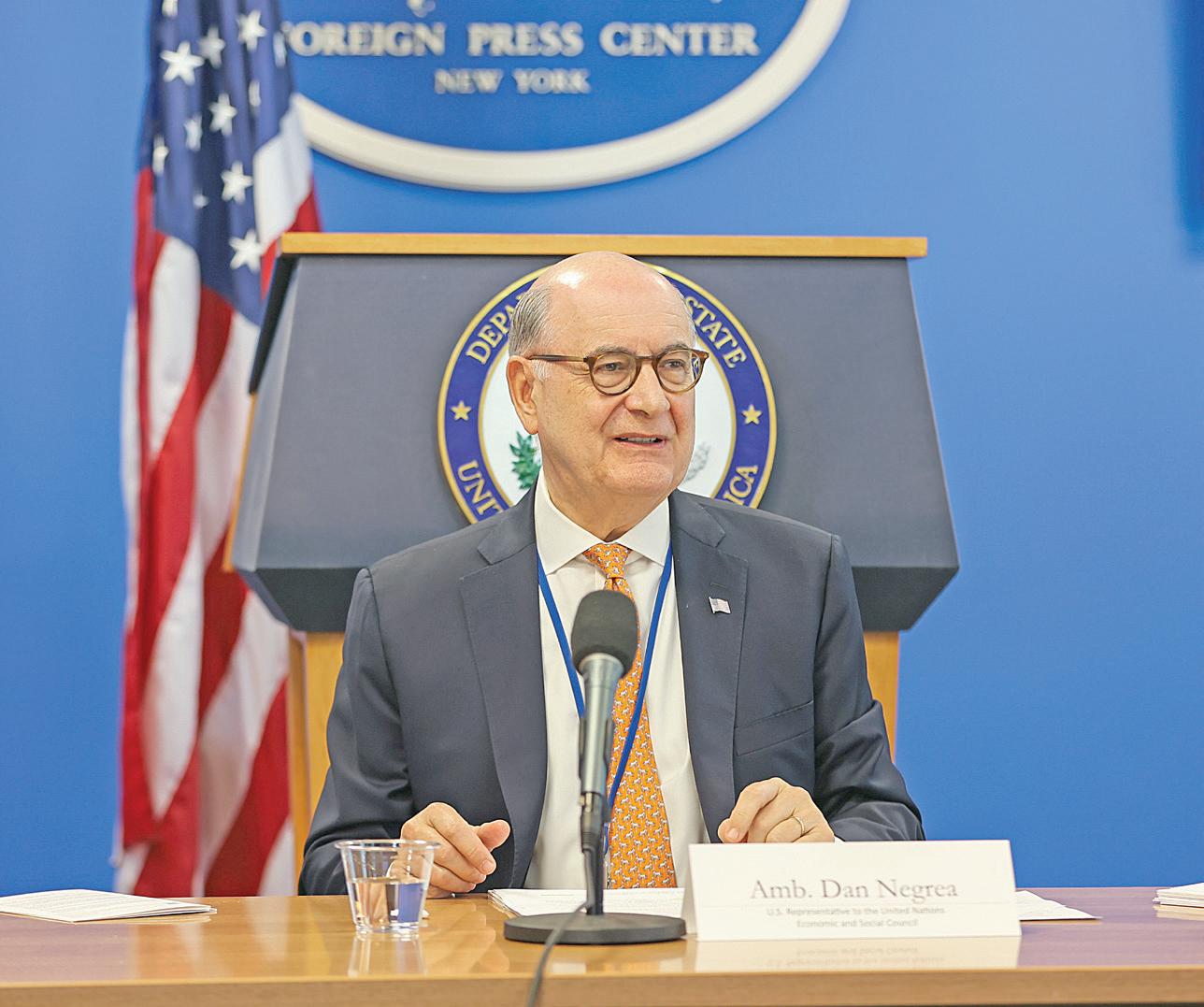
Ambassador Dan Negrea— the US Representative to the UN Economic and Social Council and Alternate Representative to the Sessions of the General Assembly—positioned the Trade Over Aid Initiative as a structural shift in how the US government approaches economic development abroad.
The briefing followed a daylong forum at the Marriott Marquis in Times Square that convened more than 40 countries alongside multinational corporations, financial institutions, and international organizations, signaling that the initiative is designed to operate at the intersection of policy and private capital rather than within the traditional aid architecture.
The premise is straightforward but consequential: decades of government-to -government aid have


Affluent Gen Z tourists redefining luxury travel — Marriott study


By Lenie Lectura

Hormuz and US naval blockades reducing product availability. Furthermore, diesel prices are surging due to seasonally high demand and restricted Russian exports, while instability in the region pressures gasoline costs.
“Diesel and middle distillate prices rose sharply due to tightening fundamentals, driven by seasonal increase demand while near-term supply continues to tighten, along with renewed Middle East hostilities.
“Further supporting prices is the decline in diesel exports from Russia, which have been significantly curtailed due to energy infrastructure damage caused by intensifying Ukrainian drone attacks,” he said.
For gasoline, the key upside driver to prices is the escalation of tensions in the Middle East, which rose following renewed US-Iran confrontation and threats around the Strait of Hormuz, he said.
delivered the scale or durability of growth that policymakers had hoped for, and in some cases have fostered dependency, inefficiency, and corruption. In its place, the US
government is advancing a model built on foreign direct investment, private -sector partnerships, and policy reforms intended to make developing economies more attrac-
DFA PROTESTS ‘STUPID MONKEY’ AI VIDEO The Department of Foreign Affairs (DFA) has filed a formal diplomatic protest against China after Chinese staterun newspaper China Daily published an AIgenerated video depicting the Philippines as a monkey manipulated by the United States and Japan. The July 10 video labels the character "蠢猴子 " (chun
officials have demanded the video’s removal, while the Philippine Embassy in Beijing also lodged a formal protest, calling the imagery a violation of editorial standards and responsible journalism. Story on A4 News.
tive to global capital. As Negrea framed it, development is most likely to succeed when countries create conditions in which businesses—domestic and international—can invest, operate, and expand with confidence.
Codified in a five - point Declaration of Principles, the initiative reflects a distinctly market- oriented worldview. It begins with national sovereignty: each country, the document asserts, must take ownership of its economic trajectory by mobilizing its own resources and shaping a pro - growth environment. From there, it advances a familiar policy playbook for investors—limited regulation, competitive taxation, secure property rights, enforceable contracts, and a reliable judiciary. Trade, in this framework, is broadly defined to include not only the exchange of goods and services but also investment flows, joint ventures, and the transfer of technology and expertise. The underlying argument is that these forms of engagement generate sustainable growth in ways that grant-based aid often does not.
See “Trade,” A2
By Ma. Stella F. Arnaldo
Special to the BusinessMirror
EALTHY Generation Z travelers are creating their own luxury travel options and bringing their families along to enjoy these.
A new study from the Luxury Group by Marriott International in Asia Pacific excluding China (Apec) also indicated that affluent Gen Z (those born in 1997-2012) travelers believe that every aspect of their trip should be frictionless and seamlessly connected.
The report showed that affluent Gen Z travelers have four distinct mindsets on what constitutes luxury travel. They are going for trips involving cultural immersions, taking care of their personal wellbeing, disconnecting from the digital world, and connecting with their own heritage and distinct identities.
“Luxury today is no longer defined by a singular standard. It is deeply personal,” said Oriol Montal, Regional Vice President of Luxury, Marriott International Apec, in a news statement attached to the report.
“Our research reveals that affluent Gen Z travelers are not just participating in luxury travel. They are reshaping it, driven by a desire for meaning, wellbeing, and authentic connection. As the definition of luxury continues to fragment and evolve, understanding these emerging perspectives will be critical for shaping the next generation of travel experiences.”
The insights were drawn from a survey conducted from April 24 to May 19, 2026, of 2,800 affluent travelers across Apec, including 1,200 Gen Z respondents aged 18 to 29. The report showed a shift in luxury travel which is increasingly defined by “intention, identity, and personal meaning,” instead of demographics.
15 turtle hatchlings first released at Bohol’s Alona Beach nesting site

CEBU CITY—Conservation workers released an initial group of 15 Green Sea Turtle (Chelonia mydas) hatchlings at another nesting area still in Alona Beach on July 16 to assess whether the shoreline provided safe conditions for their journey to the sea before allowing the rest of the brood to emerge. The cautious approach was necessary because the nesting site, located in Barangay Tawala, featured a narrow stretch of sand bordered by a seawall—conditions that could hinder the hatchlings’ crawl and increase the risk of disorientation.
Responders observed the first batch’s movement, orientation, and ability to reach the water before deciding on the next course of action.
With the assessment completed, the remaining 147 hatchlings were temporarily secured and scheduled for release under conditions more favorable to their survival, including lower human activity and reduced
artificial lighting.
Nearby resort management assisted by dimming outdoor lights, while authorities urged visitors to avoid using camera flashes that could confuse the hatchlings as they made their way to the sea. The emergence of the hatchlings marked another milestone in marine turtle conservation in Panglao.
In total, 162 hatchlings emerged from a protected nest containing 192 eggs that was reported to the Department of Environment and Natural Resources (DENR) Community Environment and Natural Resources Office in Tagbilaran City on May 28, 2026.
Since the nest was discovered, it had been continuously monitored under the DENR's Panglao Island Restoration and Rehabilitation Program (PIRRP). For 49 days, the site remained protected through coordinated conservation efforts that ensured the eggs developed without disturbance until hatching.
In the Philippines, “there is no retail play, period.”—PSE President and CEO Ramon Monzon
PHOTO COURTESY OF DENR-7
TRADE OVER AID: Inside Washington’s new development doctrine
The forum itself offered a glimpse of how the US government intends to operationalize that vision. High-level participants included Ambassador Mike Waltz, UNDP Administrator Alexander De Croo, Microsoft vice president Chris Sharrock, Argentina’s Ambassador Francisco Tropepi, and Charity Wallace, the U.S. Department of State’s Special Envoy for Best Future Generations, alongside Negrea, who has emerged as the initiative’s chief evangelist within the US Mission.
Breakout sessions organized by region—Africa, East Asia and the Pacific, Europe, the Middle East, South and Central Asia, and the Western Hemisphere—focused on identifying concrete opportunities for collaboration between governments, businesses, and development institutions. The presence of major private -sector actors alongside public officials underscored a central premise of the initiative: that economic development is most effective when it is commercially viable.
For countries like the Philippines, which is among those participating or engaging with the initiative, the model presents both opportunity and strategic alignment. With a fast-growing economy, a young workforce, and deepening economic ties with the United States, the Philippines is positioned to benefit from increased foreign direct investment, particularly in sectors such as infrastructure, digital services, energy, and manufacturing. The Trade Over Aid framework reinforces Manila’s ongoing efforts to liberalize key industries, attract foreign capital, and strengthen its role
in regional supply chains—while also offering access to a network of capacity-building programs and private -sector partnerships that could accelerate those reforms.
One of the initiative’s most tangible outputs is the Trade Over Aid Digital Library, a platform designed to aggregate capacity-building offers from governments, companies, and international organizations. At launch, the library included 63 offers from 46 contributors, with a significant share coming from the private sector. These offerings range from technical advisory services and training programs to support for regulatory reform and infrastructure planning. Access is limited to countries that formally endorse the Declaration of Principles, creating both an incentive structure for participation and a network effect among member states and contributors. For economies like the Philippines, this structure offers a pathway to tap into specialized expertise—from digital infrastructure to agricultural modernization—while also positioning themselves as potential contributors of their own best practices, particularly in areas such as services exports and inclusive finance.
During the briefing, Negrea emphasized that joining the initiative is a voluntary, principle -based decision. Countries become participants by formally signaling their support for the Declaration, after which they gain access to the library and the broader ecosystem of partnerships it enables. “We’re not replacing aid,” he has said in other discussions. “We’re trying to move countries from dependence to self -reliant growth by putting trade, investment, and free -market reforms at the center of development.” For partner gov-
ernments, that framing is meant to reassure long-time recipients of US assistance that humanitarian and emergency support will continue even as the balance tilts toward market-based engagement.
The question-and-answer session, facilitated by Tenbrink, provided a more granular look at how the initiative is being received— and challenged—by the international press corps.
Asked whether countries such as Cuba, North Korea, and Iran could participate, Negrea was unequivocal. These are not economies operating within the framework of open markets and rule of law, he argued, and therefore fall outside the initiative’s scope. Pointing to the stark divergence between North and South Korea, he framed the contrast as evidence of how governance and economic systems directly shape development outcomes.
Security concerns also emerged as a key theme. Responding to questions about Pakistan and the broader issue of terrorism, Negrea underscored that investment depends fundamentally on stability. Private capital, he noted, does not flow into conflict zones or environments characterized by persistent insecurity. Countries that pursue policies creating domestic upheaval or conflict with neighbors, he said, will struggle to attract investment—reinforcing the idea that Trade Over Aid is as much about governance and security as it is about economics.
Journalists from Africa raised practical questions about participation and access, particularly given the relatively small number of African countries currently involved. Negrea acknowledged the gap and

indicated that expanding engagement on the continent is a priority, including through outreach to the African Union. He also addressed concerns about visa restrictions, noting that while mobility is an important component of trade, the initiative encompasses a broader spectrum of economic interaction, including digital collaboration, investment flows, and knowledge transfer. The US mission to the UN, he stressed, is not responsible for visa policy, but it can help create an enabling environment for economic partnerships that may, over time, strengthen the case for easing barriers.
Corruption, a recurring concern in development discourse, featured prominently in the discussion. A Nigerian journalist pointed to the persistent problem of illicit capital flows and governance failures in emerging markets, describing how money siphoned from governments often ends up in overseas real estate. Negrea agreed that corruption is a critical barrier to investment, framing it as fundamentally incompatible with the rule of law. The initiative’s response, he said, lies in capacity building— helping countries strengthen institutions, improve transparency, and adopt best practices drawn from other reform experiences. Drawing on his own background in post- communist Romania, he argued that while corruption can be deeply entrenched, it is not insurmountable when countries commit to systemic reform and integration into global economic systems.
The initiative’s relationship with the United Nations’ Sustainable Development Goals introduced a more explicitly political dimension. Negrea confirmed that the US government does not support the SDGs under the current administration, describing them as inconsistent with the principle of national sovereignty and, in practice, ineffective at meeting their own benchmarks. Citing UN data showing limited progress toward the goals, he argued that the agenda has not delivered the outcomes it promised. Instead, the US is positioning Trade Over Aid as an alternative pathway—one that prioritizes market dynamics, bilateral partnerships, and country-driven strategies over multilateral targets.
Yet even as the briefing pro -
jected confidence, it also highlighted the challenges inherent in translating theory into practice. Questions about measurement and accountability remain open.
Pressed on how success will be evaluated, Negrea outlined a multilayered approach: advancing the initiative’s core ideas in the “contest of ideas,” expanding participation, and growing the capacity-building library. He pointed to examples from South Korea, Singapore, and other Asian “tiger” economies to argue that free -market development can deliver extraordinary gains when the enabling environment is right. For countries like the Philippines, however, the more tangible test will be whether the initiative translates into increased investment, job creation, and sustained economic growth.
For the US government, the strategic logic of Trade Over Aid is clear. It aligns development policy with broader economic and geopolitical priorities, leveraging private capital to extend influence while reducing reliance on traditional aid. It also offers partner countries an alternative framework for growth—one that emphasizes integration into global markets over dependence on external assistance. Whether that vision succeeds will depend on execution. Free -market reforms can be politically complex, and attracting investment requires more than policy declarations—it demands consistent implementation, institutional credibility, and long-term stability.
For participating countries, including the Philippines, the opportunity lies in aligning domestic reforms with the initiative’s principles while ensuring that growth remains inclusive and resilient. The Trade Over Aid forum and the briefing made one thing clear: the US government is not simply tweaking its development toolkit, it is attempting to rewrite the rules of engagement between donors, investors, and developing economies. The shift from aid to trade is both an economic proposition and a strategic one. The question now is whether it can deliver results at scale—and whether countries ready to embrace it, from Southeast Asia to Africa and beyond, can turn that proposition into measurable progress on the ground.
Turtle hatchlings…
“This accomplishment goes beyond the number of hatchlings that reached the beach,” said Bohol Provincial Environment and Natural Resources Officer Wilson Henson.
“It reflects weeks of dedication and cooperation among our partners who safeguarded the nest from the time the eggs were laid until the hatchlings emerged,” he added.
Once the hatchlings were reported, the DENR quickly deployed personnel alongside the Philippine Coast Guard, the local government of Panglao, Barangay Tawala officials, Alona by JPark Island Resort, Bantay Dagat volunteers, and the Panglao Municipal Tourism Office to secure the nesting area and manage beach activities.
The successful hatching highlights the effectiveness of conservation measures implemented through the Panglao Island Restoration and Rehabilitation Program, the Coastal and Marine Ecosystems Management Program, and the management of the Panglao Island Protected Seascape.

Gen Z…
Continued from A1
Self-funding shared experiences THESE findings should nudge the travel and tourism industry to broaden their strategies and cater to many luxury markets “understanding many, and delivering experiences that feel deeply personal, emotionally resonant, and unmistakably relevant,” said the report.
Overall, the report showed that wealthy Gen Z travelers strategically build their trips, with more than 50 percent of respondents saying they fund their own travels, and nearly half plan every facet of their journey. “Immediate family remains their preferred travel companions (51 percent), while small-group travel has grown by 17 percent, signaling a shift toward more intimate, shared experiences,” said the report.
Affluent Gen Z travelers are also a sophisticated lot. Eighty-seven percent of the respondents said they chose their destinations based on how they were able to immerse themselves in the local culture and engage with the local residents. Some 86 percent chose based on local cuisine exploration and dining spots. Another 86 percent preferred destinations that made them feel surrounded by nature, while 85 percent prioritized wellness destinations. “At the same time, Gen Z travelers expect luxury to be seamless. Time inefficiencies and communication gaps are among their biggest frustrations, underscoring a growing demand for intuitive, frictionless service,” said the report. “[Technology] is playing an increasingly important role in trip planning, with 23 percent already using AI (artificial intelligence) tools for travel inspiration and planning,” it added. Less trips but longer THE report defines four Gen Z types, who define luxury travel quite differently:
• The Connoisseur Traditionalist (34 percent) has an affinity for iconic hotels, exceptional service, loyalty rewards, prestige dining, and meticulously planned itineraries.
• The Future Proofer (30 percent) indulges in preventive health, restoration and holistic wellbeing.
• The Quiet Luxurist (20 percent) chooses to disconnect, disappear, and reclaim stillness, limiting the use of technology as she travels.
• The Cultural Reclaimer (16 percent) plans and likely funds her family trips, as she explores her family heritage, and seeks immersive experiences that bond all familial generations. Meanwhile, for the broader spectrum of affluent travelers, the report said most of them are becoming choosy, taking fewer premium trips, but extending their length of stay at destinations.
These initiatives include routine nesting beach patrols, habitat conservation, biodiversity protection, public participation, and close collaboration among government agencies and partner organizations.
Henson underscored that marine turtle conservation depends on sustained cooperation among various sectors.
“Every hatchling that successfully emerges is the product of countless hours of monitoring, protection, coordination, and community participation,” he said.
“Protecting our marine biodiversity is a shared responsibility among government agencies, local governments, private establishments, volunteers, people’s organizations, and coastal communities,” he added.
DENR Regional Executive Director Laudemir Salac also acknowledged the contributions of the Philippine Coast Guard, LGU Panglao, Barangay Tawala, Alona by JPark Island Resort, Bantay Dagat volunteers, the Panglao Municipal Tourism Office, and the personnel of the Panglao Island Restoration and Rehabilitation Program for helping safeguard the nesting site.
Monitoring of the nest will continue until all remaining eggs have been accounted for.
The DENR will also conduct a post-emergence nest assessment following established marine turtle conservation protocols to evaluate the nest’s overall hatching success and identify measures that could further improve protection efforts in future nesting seasons. Carmel Pedroza
“Average international leisure trips are expected to increase in duration from seven to nine nights, reflecting a shift from frequency to depth. As travelers concentrate their time and spending, expectations around personalization, seamless service, and meaningful engagement continue to rise,” said the report.
As of June 11, Marriott International’s Luxury Group has more than 560 landmark hotels, resorts, and yachts in over 70 countries and territories. Brands include The Ritz-Carlton, Ritz-Carlton Reserve, The Ritz-Carlton Yacht Collection, Bvlgari Hotels & Resorts, St. Regis Hotels & Resorts, Edition, The Luxury Collection, JW Marriott, and W Hotels.
www.businessmirror.com.ph
Ombudsman probers ‘very close’ to filing plunder raps vs Martin
By Joel R. San Juan
FACT-FINDING
investigators of
the Office of the Ombudsman
are “very close” to filing plunder charges against former House Speaker Martin Romualdez for his involvement in the multibillion-peso anomalous flood control projects of the government and other line items in the 2024 and 2025 national budgets.
for preliminary investigation,” Remulla added.
Romualdez along with Senator Francis “Chiz” Escudero have been labeled by the Ombudsman as “master plunderers” for using sophisticated methods to commit the crime of plunder in the flood control scam.
Asked if the case against Romualdez would still stand if the Ombudsman’s bid to discharge former Public Works and Highways Secretary Manuel Bonoan is denied by the Sandiganbayan, Remulla admitted that it would not be easy but expressed optimism that they would eventually manage to “thread the needle.”
against Romualdez, who is being investigated for plunder, direct bribery, violations of Section 3 ( a ) and 3 (b) of the Anti-Graft and Corrupt Practices Act, indirect bribery, and money laundering.
The Court of Appeals (CA) has also ordered the freezing of Romualdez’s assets, including 25 bank accounts and insurance policies, based on a petition filed by the Anti-Money Laundering Council (AMLC).

AI personalization is Apac retailers’ top strategy–DHL
By Bless Aubrey Ogerio
ARTIFICIAL intelligence (AI) is increasingly being used by AsiaPacific businesses not just to automate customer service, but to personalize the online shopping experience, with customized recommendations emerging as the region’s leading commercial application of the technology, according to logistics company DHL.
Findings from the DHL eCommerce Trends Report 2026 showed that 80 percent of businesses surveyed across Australia, China, India, Malaysia and Thailand are already using AI in their e-commerce operations.
Among those adopting the technology, the two most common applications are providing personalized product recommendations to online shoppers and conducting product reviews or image comparisons.
Prime Energy completes maintenance turnaround on Malampaya project
PRIME Energy, operator of Service Contract No. 38, has completed the maintenance turnaround of the Malampaya Deep Water Gas-to-Power Project, restoring indigenous gas production and paving the way for the startup of new wells under the Malampaya Phase 4 (MP4) project.
Gas delivery resumed at 0001H on July 15 as planned after the successful monthlong turnaround which enabled routine maintenance works and completion of key upgrades across Malampaya’s offshore and onshore facilities.
The turnaround covered works at the Shallow Water Platform (SWP) in northwest Palawan and the Onshore Gas Plant (OGP) in Tabangao, Batangas City. In addition to ensuring the reliability and integrity of key production facilities, it also advanced preparations for the integration of the Malampaya East-1 and Camago-3 wells, which are expected to deliver first gas in the fourth quarter of 2026.
The new wells represent one of Malampaya’s most significant infrastructure upgrades in recent years and will strengthen domestic natural gas supply while extending the field’s productive life by up to six years.
“Completing this turnaround safely is essential to maintaining the reliability of Malampaya’s operations and supporting the country’s energy needs,” said Donnabel Kuizon Cruz, President and CEO of Prime Energy. “This activity was also critical to preparing our facilities for the next phase of indigenous gas production so that homes, businesses and industries continue to benefit from a reliable domestic energy source.”
Hundreds of engineers, technicians, offshore specialists, marine crews, and contractors carried out highly complex maintenance, inspection, and engineering activities across offshore facilities, subsea infrastructure and onshore systems. The campaign was completed safely and gas supply was resumed on time despite weather-related challenges.
Throughout the maintenance period, Prime Energy worked closely with the Department of Energy, the National Grid Corporation of the Philippines, and its power generation customers to coordinate the planned outage and implement alternative fuel arrangements.
That close coordination proved particularly important during Super Typhoon Inday (international name: Bavi), when Malampaya provided emergency gas supply to Prime CoreGen power plants after severe weather temporarily disrupted LNG terminal operations, ensuring a seamless fuel transition and preventing a power plant shutdown.
“We’re very close to filing the plunder charges. But we still have to cross the Ts and dot some Is and probably put periods in sentences. That’s how close it is. So, I can’t deliberately talk about that.” Remulla said.
“The cases are just about ready
At a press briefing, Remulla clarified that the result of the fact-finding investigation will still have to go through a preliminary investigation by the Office of the Ombudsman which may take not less than 60 days. He said the preliminary investigation may reach beyond 60 days if there will be motions from parties involved that would have to be acted upon.
“We are up against people who have the best lawyers money can buy,” Remulla said.
“You’re talking about layers and layers of lawyers. People who will defend and go to any extent to defend their client,” he added.
Last April 23, the Sandiganbayan’s Seventh Division issued a preliminary hold departure order
It may be recalled that the Ombudsman had asked the Sandiganbayan to discharge Bonoan as an accused in the P573-million plunder and graft case filed against him, Senator Jinggoy Estrada and several others in connection with the flood control scandal.
Remulla said Bonoan’s testimony will be used to further strengthen the case being prepared against Romualdez.
The Sandiganbayan has yet to decide on the Ombudsman’s motion to discharge Bonoan as a state witness.
BARMM workers get ₧50 daily pay hike
By Manuel T. Cayon
DAVAO CITY—Workers in the private sector across the Bangsamoro Autonomous Region in Muslim Mindanao (BARMM) are set to receive a wage increase in two installments, the Bangsamoro Tripartite Wage and Productivity Board said, after it approved and issued the new Minimum Wage Order No. BARMM-05 on Wednesday.
The increase will be implemented in two phases it said, with P25 to be given in August and an additional P25 in December. It said the wage adjustment aims to help workers cope with the rising cost of living and inflation.
The Ministry of Labor and Employment (MOLE) said the new wage order covers workers in both the nonagricultural and agricultural sectors throughout BARMM.
Under the new wage rate, nonagricultural workers in Cotabato City, Marawi City and Lamitan City will receive P436 per day from the previous P411, while agricultural workers will receive P411 from P386.
In the provinces of Maguindanao del Norte, Maguindanao del Sur, Lanao del
TBy Jonathan L. Mayuga
HE Annual Million Trees Challenge (AMTC) has evolved into one of the country’s largest and most enduring environmental partnerships, bringing together government agencies, private corporations, civil society organizations, media institutions, and thousands of volunteers to restore the nation’s forests and safeguard its water future.
The shared commitment was once again demonstrated during the 2026 AMTC Recognition and Pledging Session held at Estancia de Lorenzo, in San Mateo, Rizal, where partners pledged to plant 1,524,640 additional trees, reinforcing confidence that the program will achieve—and possibly exceed—its long-term target of 15 million trees by 2030.
Jointly spearheaded by the Metropolitan Waterworks and Sewerage System (MWSS) and the Million Trees Foundation Inc. (MTFI), the program has grown from 1.51 million trees planted in 2017 to more than 13.1 million trees thriving across seven major watersheds that sustain Metro Manila and neighboring provinces. Those watersheds—including Angat, Ipo, La Mesa, Upper Marikina, Kaliwa, Umiray,
Sur and Marawi City, Basilan and Lamitan City, and Tawi-Tawi, the daily minimum wage for non-agricultural workers will increase from P386 to P411, while agricultural workers will receive P401 from P376.
Workers in the Special Geographic Areas (SGA) will also benefit from wage adjustment, with non-agricultural wages increasing from P391 to P416, and agricultural wages rising from P366 to P391 up. The SGA refers to the 63 scattered barangays from six municipalities of North Cotabato that opted to belong to the BARMM.
The wage order does not cover household or domestic workers under Republic Act 10361, or the Batas Kasambahay; employees of registered Barangay Micro Business Enterprises (BMBEs) with a valid Certificate of Authority under Republic Act No. 9178; and others authorized by law the tripartite board said.
The wage order also provides that any person, corporation, trust, firm, partnership, association, or entity which refuses or fails to pay the prescribed increase shall be dealt with pursuant to the provision of Section 12 of RA 6727, as amended by RA 8188.
The order will take effect 15 days after
and Laguna de Bay— are indispensable to the country’s water security, biodiversity conservation, flood mitigation, and climate resilience.
Celebrating partnership
WITH the theme “The Legacy We Grow: Celebrating Partnerships, Sustaining Futures,” this year’s gathering underscored the idea that environmental restoration succeeds only when institutions work together.
Awards crafted from reclaimed wood by the CP3 Carpentry Shop inside the Million Trees Nursery and Eco-Learning Center were presented to organizations and individuals whose contributions have sustained the movement through the years. The prestigious Kampeon ng Tubig Kanlungan Award recognized institutions that have demonstrated exemplary leadership in watershed protection while planting at least 10,000 trees. Honorees included Department of Environment Region IV-A Office, DENR Region III, Maynilad Water Services, Inc., MWSS Corporate Office, Laguna Lake Development Authority, Sta. Clara International Corporation, Manila Water Company, Inc., DENR-NCR,
its publication in the Bangsamoro Gazette or in a newspaper of regional circulation within BARMM.
MOLE Minister Muslimin Sema said the wage adjustment reflects the region’s improving economy and the Bangsamoro Government’s commitment to ensuring that economic gains are shared with workers.
“This shows that our economy is improving greatly. Necessarily, our workers especially the minimum wage earners, must benefit from BARMM’s increased economic growth, by increasing their minimum wage,” Sema stated.
He noted that since 2022, the Bangsamoro government has approved a cumulative P136 increase in the regional minimum wage.
“The Bangsamoro Tripartite Wage and Productivity Board believes that workers and laborers must be taken care of and should never be left behind because they are the engines of our economy,” Sema said.
The wage order was crafted following wage studies and a series of public consultations involving workers’ representatives, micro, small, and medium enterprises (MSMEs), employers, and government stakeholders.
MWSS Regulatory Office, Luzon Clean Water Development Corporation, and the World Wildlife Fund.
Environment champions
THE Kampeon ng Kalikasan Award recognized organizations that have advanced climate action, ecological restoration, and community-based sustainability beyond tree planting. Environmental Leadership Awards were conferred on leaders including Ramon S. Ang of San Miguel Corporation, Ramoncito S. Fernandez of Maynilad, MWSS Administrator Leonor C. Cleofas, Jowell P. Dellosa of the DENR Tarlac office, Nicandro Linao of Sta. Clara International Corporation, Arthur Araña of QBE Group Shared Services Centre, Josephine dela Cerna of Grundfos IS Support & Operations Centre Philippines, and Green Media Events Company Inc.
The event also recognized partners through the Kasangga ng Kalikasan, Kaagapay ng MTFI, and the newly launched Tinig ng Kalikasan Award, honoring media organizations and journalists who have consistently championed environmental awareness.
The survey also found that digitally connected consumers and mature digital commerce ecosystems are helping position Asia-Pacific as an early adopter of AI-driven online retail.
“As digital lifestyles continue to evolve across Asia Pacific, innovation in ecommerce will accelerate in ways we cannot fully predict today,” DHL eCommerce chief executive officer Pablo Ciano said.
In addition, he said that shopper expectations will continue to rise, and a seamless, intuitive and personalized experience remains fundamental to engaging customers.
Meanwhile, another 37 percent said they expect to use such tools in the future. Furthermore, the report also pointed to growing demand for subscription-based shopping.
Most respondents said they already maintain at least one product subscription, while 35 percent reported having three or more. Discounted pricing and loyalty rewards were identified as the strongest incentives for subscribing.
Logistics-related subscriptions are likewise becoming more common. DHL found that 61 percent of Australian respondents subscribe to at least one delivery or returns program, followed by 52 percent in India, 47 percent in Malaysia, 42 percent in Thailand and 32 percent in China.
For payment preferences, DHL said that consumers continue to rely on credit and debit cards and digital wallets, although the use of Buy Now, Pay Later services, cryptocurrency and biometric authentication is increasing, particularly in China, India, Malaysia and Thailand, where mobile-first commerce continues to expand.
Businesses have responded by offering a wider range of digital payment options aimed at reducing checkout friction and improving conversion rates.
Trust remains a hurdle EVEN with rising adoption, the survey found consumers remain cautious about allowing AI to make purchasing decisions independently.
“But the real opportunity lies in bridging any gaps, particularly around trust, convenience and choice for long-term loyalty,” he added. In terms of consumer adoption, around 40 percent of shoppers surveyed said they have already used AI-powered tools, such as chatbots and virtual assistants, during their online shopping journey, mainly for customer support or product recommendations.
5 suspects charged in Carpenter
DUMAGUETE CITY—Five suspects have been charged with robbery with homicide in connection with the killing of American marine biologist Dr. Kent Carpenter in Sibulan, Negros Oriental.
Four of the suspects were presented before the Provincial Prosecutor’s Office on Friday for inquest and regular filing of charges.
Police identified the suspects only by their aliases: M.O., the alleged gunman; J.F.; C.D.; E.L.; and John Doe, who remains at large.
Capt. Stephen Polinar, spokesperson of the Negros Oriental Police Provincial Office, said M.O. and J.F. were brought before prosecutors during the morning inquest after their arrest by the Philippine National Police and members of the Special Investigation Task Group Carpenter.
“The three other respondents—C.D., E.L. and John Doe—were included in the same complaint through regular filing after the 36-hour reglementary period
slay
had elapsed,” Polinar said. E.L., a resident of Barangay Ajong, Sibulan, surrendered to the village chief shortly before midnight on Thursday. Meanwhile, authorities have launched a manhunt for John Doe, the lone remaining fugitive.
The suspects are accused in the fatal shooting of Carpenter, 73, who was killed inside his residence in Barangay Ajong on July 12. He sustained two gunshot wounds to the head. Carpenter’s 34-year-old Filipino live-in partner survived. She alleged that she was sexually assaulted during the attack.
She identified the suspects and appeared before the Provincial Prosecutor’s Office as the lone eyewitness to the killing.
Carpenter was internationally recognized for his pioneering work in marine biodiversity conservation. His family is expected to arrive in Negros Oriental to make arrangements for the disposition of his remains. PNA

Saturday, July 18, 2026
China Daily slammed over ‘stupid monkey’ video depicting Filipinos
By Malou Talosig-Bartolome
THE Department of Foreign Affairs has filed a formal diplomatic protest against China, strongly condemning the Chinese state-run media China Daily for its AI-generated video showing the Philippines as a monkey being manipulated by the United States and Japan.
Lawmakers also denounced the video and said it reflected China’s total lack of respect for its Asian neighbor.
The DFA called the July 10 post “demeaning and dehumanizing and racist” depictions of Filipinos.
Disagreements over the West Philippine Sea are normal, the DFA said, but they shouldn’t turn into caricatures that strip Filipinos of their dignity.
to pursue maritime talks on its own terms.
An offscreen voice cuts it off: “Wrong song! Stupid monkey! We gave you the other lyrics!” The monkey is then shown clutching a torn document labeled “South China Sea Arbitration Award.”
Told this wasn’t in the script, the American and Japanese hands hurl it off the stage.
Mid-fall, a passing ship—white, striped red and blue—blasts the monkey with a water cannon. It plunges into the sea alongside the arbitration papers. A whale surfaces, looks the pair over, and calls them “more litter,” before signing off with, “Let’s all do our part to keep the ocean clean.”
The DFA formally protested the video with Foreign Affairs Undersecretary Leo Herrera-Lim summoning Chinese Ambassador Jing Quan on July 16. Herrera-Lim demanded that the video material be taken down.
The Philippine Embassy in Beijing also wrote a formal letter to the editor-in-chief of China Daily.
“Such imagery and misinformation breach editorial norms and principles,” Philippine Ambassador Jaime FlorCruz said. FlorCruz spent decades as a journalist in China, including as bureau chief of US network CNN.
“As a Chinese state-run media outlet, China Daily’s conduct goes beyond legitimate political debate,” FlorCruz added.
Relatives of missing sabungeros deny receiving bribe money
SBy Joel R. San Juan
EVERAL relatives of the missing sabungeros or cockfighting enthusiasts on Friday filed their counter-affidavits before the Department of Justice (DOJ) denying the obstruction of justice complaint filed against them for allegedly accepting bribe money to stop pursuing their cases against fugitive businessman Charlie “Atong” Ang.
Among those who filed a counter-affidavit was Eloisa Bohol, mother of missing sabungero Kiel Bohol.
demand any amount in exchange for dropping the case. They added that there were other relatives of the missing sabungeros during the meeting held last March, including Bohol and Ma. Theresa Japag, who is one of the complainants in the obstruction of justice complaint.
Meanwhile, in her counter affidavit, Cruz denied bribing relatives of the missing sabungeros in exchange of dropping their cases. Cruz claimed she was wrongfully charged and that the allegations against her lacked legal basis.
Ang’s lawyer claimed she was a victim of “malicious and false accusations made by the complainants based on lies and twisted narration of facts.”
“We draw a firm line at the depiction of Filipinos as monkeys in the 10 July 2026 video, which is deeply offensive, distressing and unacceptable,” the DFA said in a statement.
Watermarked as AI-generated, the video opens with a monkey— dressed in a barong Tagalog and a salakot—shoved onto a rickety karaoke stage in the middle of the ocean by a pair of oversized hands sleeved in American and Japanese flags. “Start singing!” they order. The monkey launches into a song about sidestepping China
The video echoes China’s persistent protest to the 2016 arbitral ruling that struck down China’s expansive claims in the South China Sea, and the Philippines’ tightening security ties with Washington and Tokyo, including a defense arrangement now taking shape with Japan.
China Daily, an English-language newspaper in China, is owned and run by the Chinese Communist Party’s propaganda department.
Legislators slam ‘racist’ China video
LAWMAKERS on Friday denounced as “racist” and “injurious and unacceptable” the video by a Chinese state-controlled media outlet showing Filipinos as monkeys controlled by the United States and Japan, saying it shows the continuing arrogance
Ombudsman to revisit SEA Games charges
THE Office of the Ombudsman will review its 2021 decision dismissing the criminal and administrative charges filed against former Bases Conversion and Development Authority (BCDA) president and now Public Works and Highways Secretary Vince Dizon and several others in connection with the construction of sports facilities for the holding of the 2019 Southeast Asian Games.
At a press briefing, Ombudsman Jesus Crispin Remulla said he has asked his team to retrieve the whole file from 2021 in connection with the case “to see and to look at the possible violations of law.”
“We are opening it up again. Bubuksan namin yan ,” Remulla said.
Assistant Ombudsman Jose Dominic Clavano IV earlier announced that that case has been dismissed for insufficiency of evidence in a resolution issued in December 2021.
Remulla said the case would not fall under the principle of double jeopardy since none of the respondents were charged before the court.
Double jeopardy is a legal principle that an accused cannot be tried twice for the same offense based on the same conduct. Its purpose is to protect the accused
from harassment, oppression, and abuse of power by the state.
Asked if the Ombudsman will summon Senator Alan Peter Cayetano to send light on the matter since was then the chair of the 2019 Philippine Southeast Asian Games Organizing Committee (PHISGOC), Remulla said:
“There is a time for everything. We first need to study how our office came out with the resolution in 2021.”
Meanwhile, National Bureau of Investigation Director Melvin Matibag said his office would subpoena Phisgoc officials in relation to its investigation into anomalies in the disbursement of
funds for the construction of a sports complex in New Clark City for the 2019 SEA Games.
Among those to be subpoenaed are Phisgoc chair Ramon “Tats” Suzara, Phisgoc Chief Financial Officer Dexter Estacio and its Corporate Secretary John Lester Buenconsejo.
Matibag said the subpoenas will be issued on Monday for them to appear before the bureau on July 24.
The NBI’s investigation, according to Matibag, was prompted by “new information and documents” it received pertaining to multibillion allocations for projects undertaken by Phisgoc. Joel R. San Juan
She denied being paid to abandon their pursuit for justice, noting that the cases for kidnapping with homicide and kidnapping and serious illegal detention filed before the Regional Trial Court in Sta. Cruz, Laguna against businessman Ang and several others have yet to commence.
Bohol assured that they are determined to pursue the case.
“That’s true, we were not paid. We are not withdrawing from the case. There is still no hearing yet because our case in Sta. Cruz was transferred to Quezon City. We will continue to fight for our case,” Bohol said.
Ryan Bautista, brother of missing sabungero Michael Bautista, also denied the allegation.
“We are here for the preliminary investigation of the obstruction of justice case to deny that we received bribe money,” Bautista said.
In their counter-affidavits, Cristy Ladao and Jocelyn dela Cruz also denied that they were bribed by the camp of Ang in exchange for dropping their case against him.
Dela Cruz’s son, Johnver Francisco, is one of the missing sabungeros and was the live-in partner of Ladao.
Both Ladao and dela Cruz confirmed meeting with Ang’s lawyer Caroline Cruz, who is also a respondent in the obstruction of justice complaint, in March and April this year.
Ladao and dela Cruz said they sought the meeting to discuss their predicament and not to
“Attorney Carlo’s meetings with relatives of the victims happened because they asked for them. It is an undeniable fact,” Cruz’s lawyer Isabella Sabio said.
“To say that a payoff ensued on those encounters is not only preposterous but also a product of a sinful imagination, which must be legally proven by the complainants,” she added. Sabio added Cruz merely accommodated the relatives of the victims who initiated the meetings last March and April when the group went to her office in Mandaluyong.
“My client does not deny giving financial aid to the victims’ families during those meetings, for their fare and food, as they all came a long way. She only obliged out of the goodness of her heart,” she added.
Sabio pointed out that there were no documents, no agreements signed nor demands made by Cruz when she gave the financial aid to the victims’ families.
Ang has been in hiding following the issuance of arrest warrants against him by trial courts in Sta Cruz in Laguna, Lipa City in Batangas and San Pablo in Laguna for several counts of kidnapping with homicide and kidnapping and serious illegal detention charges in connection with the missing sabungeros.
Candaba marks 60th anniversary of Mayor Gallardo assassination
By Ashley J. Manabat
CANDABA, the town in Pampanga that earned notoriety as the hotbed of the communist-led Hukbong Mapagpalaya ng Bayan rebellion in the late 1940s to the 60s, will commemorate on Saturday, July 18, the 60th anniversary of the assassination of former Mayor Anastacio Limjoco Gallardo, whose death remains one of Pampanga’s most consequential postwar political killings and a defining epi -
sode in the campaign against the Huk insurgency.
The account of Gallardo’s life and death draws from Candaba municipal records, “Candaba: Balayan ning Leguan” by Romeo Cabusao a copy of which is stored at the Center for Kapampangan Studies at Holy Angel University and a declassified 1967 US Department of State intelligence memorandum.
According to the Candaba municipal government, Gallardo served as mayor from 1946 to

1949, from 1952 to 1956, and again from 1961 until his death in 1966.
Cabusao writes that Gallardo’s relationship with the Huk movement reflected the shifting political landscape of postwar Pampanga.
According to the book, Gallardo’s name appeared on a Hukbong Mapagpalaya ng Bayan (HMB) roster in 1946 which Cabusao interprets as evidence of an early understanding between the organization and the newly elected mayor. He later allied himself with then-Governor Sotero Baluyut’s Kawal ning Kapayapan (Soldiers of Peace), despite Baluyut’s long-standing political rivalry with Don Pedro Abad Santos, whose former secretary was Huk supremo Luis Taruc.
Cabusao writes that Gallardo’s political alignment with Baluyut eventually placed him in conflict with the HMB. Although Gallardo was no longer in public office during the Candaba Massacre on March 22, 1951, the book states that he had already become a target of the Huk movement, then associated with Tomas Calma, also known as Commander Sol.
Residents of Candaba say that the Huks raided the town on Maundy Thursday, while the


Last Supper Mass was being celebrated to catch Gallardo in church. Fortunately, Gallardo was delayed in coming home and was not able to attend mass, and thus, survived.
On June 26, 1966, President Ferdinand Marcos convened governors, mayors and other Central Luzon officials at Camp Julian Olivas in San Fernando, Pampanga, to discuss the government’s campaign against the insurgency.
According to Cabusao and other published historical accounts, Gallardo was the first mayor to volunteer to organize what became the Anti-Huk Mayors’ League of Pampanga, an organization created to coordinate
local government support for anti-insurgency efforts.
Less than a month later, on the morning of July 18, 1966, Gallardo left Candaba for Camp Olivas, where he was scheduled to meet provincial officials before proceeding to Malacañang for an audience with Marcos and his oath taking in the Nacionalista Party, then the ruling party.
He never made it.
On his way to San Fernando, Gallardo and companions, who were riding a World War II-vintage jeep, had to pass through the unpaved road at the then-Barrio Calinan, now part of Barangay Santa Lucia in Santa Ana, the town next to Candaba. Deep ruts slowed the jeep driven by Cpl. Diego Maglanque of the Candaba Police as it traveled beneath rows of mango trees lining both sides of the dusty road.
Cabusao’s book said that armed men wearing what looked like Army uniforms lay in wait.
As the jeep approached a parked 6x6 truck, gunfire erupted from concealed positions on both sides of the road.
Gallardo was killed along with Philippine Constabulary Sgt. Manuel Dacrosin, Patrolman Cirilo Balagtas, Barrio Captain Nicanor Turla, Maglanque and Isaac
Manio, whom Cabusao identifies as a witness in the kidnapping of Mapanique Barrio Captain Jose Manimbo weeks earlier.
According to the book, the ambush unfolded so quickly that Gallardo’s escorts were unable to return fire.
A declassified US Department of State intelligence memorandum dated April 1967 identified Gallardo as chairman of the Anti-Huk Mayors’ League of Pampanga and described his assassination as “the most flagrant act of terror”” during a resurgence of Huk violence in Central Luzon.
The memorandum said Gallardo was killed while traveling to meet Marcos and noted that the Anti-Huk Mayors’ League became dormant after the attack as local officials feared similar reprisals. It also documented an increase in Huk assassinations and kidnappings as the Marcos administration intensified security operations and rural development programs aimed at suppressing the insurgency.
Six decades later, Gallardo’s assassination continues to be commemorated in Candaba as a pivotal moment in the town’s history and in Pampanga’s long struggle against the Huk movement.
See “China Daily,” A11
BusinessMirror
Natural ways for older adults to boost nitric oxide to reduce inflammation and slow aging
By Jona C. Redondo
NITRIC oxide (NO) is a vital signaling molecule produced naturally in the body, primarily by the endothelium (the lining of blood vessels). It relaxes and widens blood vessels, improving blood flow, oxygen delivery, and nutrient transport while reducing blood pressure and inflammation. As we age, NO production declines significantly—often starting in middle age and accelerating in seniors—due to reduced enzyme activity, oxidative stress, and lifestyle factors. This decline contributes to endothelial dysfunction, chronic low-grade inflammation (“inflammaging”), stiff arteries, reduced stamina, cognitive fog, slower wound healing, and higher risks of cardiovascular disease, which are hallmarks of accelerated aging.
Boosting nitric oxide naturally offers a promising, low-risk strategy for elderly individuals to support vascular health, combat inflammation, enhance energy and mobility, and promote healthier aging. Research highlights dietary nitrates, exercise, lifestyle habits, and specific foods as effective approaches. Always consult a healthcare provider before major changes, especially with medications or conditions like low blood pressure.
The science: Why nitric oxide matters for seniors
NITRIC oxide acts as a vasodilator, anti-inflammatory agent, and antioxidant supporter. It inhibits platelet aggregation, reduces oxidative stress, supports mitochondrial function, and aids tissue repair. In older adults, low NO links to hypertension, atherosclerosis, fatigue, poor exercise tolerance, and cognitive decline. Studies show that enhancing NO bioavailability can improve exercise capacity, vascular function, and overall vitality in seniors.
Expert Dr. Nathan Bryan, a leading nitric oxide researcher, emphasizes that NO deficiency is a root cause of many age-related issues, including tiredness and impaired healing. In interviews, he explains how restoring NO levels supports longevity by improving circulation and reducing inflammation.
Dr. William Li, physician and author focused on food as medicine, highlights NO’s role in vascular resilience. In his talks, he notes that healthy blood vessels are key to fighting aging, as declining NO accelerates vessel stiffness and inflammation.
Natural ways to boost nitric oxide
1. Consume nitrate-rich vegetables: Leafy greens and beets are top natural sources of dietary nitrates, which the body converts to NO via the nitrate-nitrite-NO pathway (especially important as the arginine pathway weakens with age).
n Beets and beet juice: High in nitrates; studies show benefits for blood pressure and endothelial function in postmenopausal women and older adults.
n Leafy greens: Arugula, spinach, kale, Swiss chard, lettuce—consume raw or lightly cooked for maximum nitrates. Aim for 1–2 servings daily.
Dr. Li’s practical tip: Start the day with a beet-spinach smoothie or roasted beets in salads. Dr. Li recommends beets as a primary food for boosting NO and energy.
2. Incorporate antioxidant and polyphenol-rich foods: Antioxidants protect NO from degradation by free radicals. Polyphenols enhance production.
n Berries (blueberries, strawberries): Rich in antioxidants and compounds supporting NO.
n Citrus fruits, garlic, nuts/ seeds, dark chocolate (70 percent + cacao): Garlic provides allicin; cocoa flavanols boost NO; moderate dark chocolate (2–3 squares) supports circulation.
n Other helpers: Green tea, ap -
ples, coffee, pomegranate.
Dr. Li points to blueberries, dark chocolate, beets, and apples as practical daily options for NO support and inflammation reduction.
TimeOur PHL urges legally binding UN protection for senior citizens
By Wilnard Bacelonia
3. Regular, moderate exercise:
Physical activity is one of the most potent stimulators of endothelial NO production. Even in seniors, consistent movement enhances blood flow and NO synthase activity.
n Aerobic: Brisk walking, swimming, cycling (30 minutes most days).
n Resistance: Light weights or bodyweight exercises (squats, resistance bands).
n Gentle options: Yoga, tai chi— combine with breathing for added benefits.
Studies indicate benefits visible in 10 weeks with 30 minutes, 3+ times weekly. Seniors should start slowly and build up.
4. Prioritize nasal breathing and oral health:
Mouth breathing and antibacterial mouthwash reduce NO. Nasal breathing and humming increase it.
n Breathe through the nose during rest and light activity.
n Humming during exhalation boosts sinus NO.
n Maintain oral hygiene without overusing mouthwash; good bacteria on the tongue convert nitrates.
Dr. Bryan frequently discusses nasal breathing and humming as simple, powerful tools, noting their importance for older adults whose enzyme function may be impaired.
5. Sunlight, stress management, and lifestyle habits:
n Moderate sunlight: Supports skin NO production and vitamin D.
n Stress reduction: Chronic stress harms endothelium; try meditation or nature walks.
n Sleep and hydration: Essential for vascular repair.
n Avoid: Excessive processed foods, sugars, smoking, and (if possible) overuse of mouthwash.
Supplements (with caution for elderly):
L-citrulline or L-arginine may help, but food-first is safer. Beetroot powder or nitrate supplements show promise; consult a doctor for interactions.
Sample daily routine for seniors: n Morning: Beet-spinach smoothie + nasal breathing/humming.
n Midday: Walk outdoors + handful of berries/nuts.
n Evening: Leafy green salad with garlic, moderate dark chocolate, light yoga.
n Throughout: Stay hydrated, prioritize nose breathing.
Consistency yields cumulative benefits: better energy, reduced inflammation markers, improved mobility, and slower vascular aging.
Expert videos to watch:
n Dr. Nathan Bryan on The Diary of a CEO: Comprehensive discussion on NO deficiency, fatigue, aging, and practical boosts (nasal breathing, foods, lifestyle). Highly recommended for depth.
n Dr. William Li on boosting NO with foods: Explains foods like beets, berries, and dark chocolate for inflammation reduction and reverse aging effects.
n Dr. Bryan interviews (e.g., with Max Lugavere or Dhru Purohit): Dive into longevity, inflammation, and natural restoration methods.
Boosting nitric oxide naturally empowers elderly individuals to take control of inflammation and aging through accessible habits. A nitraterich diet, regular movement, smart breathing, and protective foods can restore vascular health, enhance quality of life, and support graceful aging. Results vary, but many report more energy and better well-being within weeks. Pair these with regular check-ups for personalized, safe implementation. The science is clear: supporting this “miracle molecule” is a foundational strategy for healthy longevity.
THE Philippines has stepped up its campaign for stronger international protection of senior citizens by backing negotiations for a legally binding United Nations treaty that would recognize older persons as rights holders, not merely beneficiaries of social services.
National Commission of Senior Citizens (NCSC) Chairperson and Chief Executive Officer Ma. Merceditas Gutierrez represented the country during the inaugural session of the UN Intergovernmental Working Group (IGWG) on Older Persons in Geneva, Switzerland, where she urged the crafting of a comprehensive global framework to safeguard the rights and dignity of older persons, according to a news release Tuesday.
“The Philippines envisions an instrument that unequivocally rec-

ognizes older persons as rights holders, not merely recipients of care or charity from the state and society. Its objective should be to empower older persons everywhere so they can live in autonomy, dignity, and full participation in society,” Gutierrez said.
The Philippine delegation also called for stronger provisions on affordable long-term and palliative care, protection of caregivers, particularly migrant caregivers and an inclusive negotiation process involving civil society and national human rights institutions while preserving
The Tao of driving
AS a teenager, my neighbor named Junior taught me how to drive an old battered jeep (one of those left behind by the American army after liberation).
It was my tentative initiation to manual driving using two pedals for clutch and gas. I stalled out the first time I tried to get the vehicle started. Then the second time. And then a third time. Junior kept yelling at me: “Timplahin mo yung tapak mo sa gas at pedal!” Finally, on the fourth attempt, I got the old jeep going. When Junior saw that I could stop and start the car consistently and shift gears without grinding the clutch, he left me to it.
I really didn’t get the hang of it since it was only for one day, actually just a few hours. I didn’t get the chance to improve my driving skills further because our family didn’t own a car.
I did not drive my own car till I was 25. It was my first car, a second-hand Volkswagen Beetle made in Brazil. I enrolled in a nearby driving school. In two weeks, I re-learned the skills from my initial driving lesson with Junior as a teenager. More than five decades have passed and stick shift driving is still the only way I know when I’m behind the wheel. The sequence of primera, segunda, tercera, quatra is now embedded in my mind. Quinta came later. Just my ever-curious mind asking: why the Spanish terms? Did Filipino drivers learn to drive the automobile during Spanish colonial times? Most people these days never learn how to drive manual. It takes real timing and coordination to get the clutch and gas right. This is why new models are now automatic, featuring one speed driving.
There are at least 11 songs about the glories of stick shift driving. From the Beach Boys to Bruce Springsteen.
But I’m not one to sing “Fun Fun Fun” with the Beach Boys. To be fully honest, I’ve never been inclined to drive. I only drive because I have to. Unlike some of people, I don’t find pleasure in driving.
Driving can be taxing and tiring for me, especially as I’m in my mid70s. I prefer to sit and let someone else do the driving. That way, I can look at the passing scene with more concentration. This is why when I’m alone, I like to park our car somewhere and then go by commuting by train or ride sharing. When I have to take a taxi, I like drivers to be reticent to allow me to think better or
the intergovernmental nature of
talks.
The IGWG, established by the UN Human Rights Council, began its first session on July 13 and is tasked with negotiating a legally binding international instrument promoting and protecting the human rights of older persons.
The Philippines is among the countries supporting the initiative, alongside Brazil, Slovenia and Gam-
classmates. She is afflicted with severe arthritis on both knees. She uses two canes and a portable wheelchair, which my eldest, a daughter who is still single by choice, is only too glad to push. When I’m behind the wheel, I try to apply Lao Tzu’s Tao Te Ching, which dates back to 2,500 years ago.
Tao is translated as “the way.” I keep in mind one of the encompassing insights of Lao Tzu: Be like water.
I look at the road like a river. On a boat, I go with the flow.
I become one with the car. Without being conscious about it, each movement of the gear stick—first gear, second gear, third gear, fourth gear—is like my inner energy flowing. The balancing of one foot on the clutch and another on the gas pedal happens instinctively. Driving is done at an unconscious level, as the hand shifts gears and feet pedal in and out in one graceful movement like in a dance.
bia, as global discussions intensify amid projections that people aged 65 and older will outnumber children under 18 worldwide by the late 2070s.
Guided by Republic Act 11350, the NCSC said it will continue working with member states and stakeholders toward a global framework that strengthens the rights, dignity and welfare of older persons in the Philippines and around the world. PNA
jewelry to pay for an overdue water or electric bill or to get home to feed their families. I imagine how tired they must be when they get to their respective destinations.
Mindfulness is another virtue. I am always mindful of motorcycle drivers who tend to overtake on the right side so I give space for them to pass through. I don’t tail gate, always allowing some space between our

car and the car ahead.
As someone says: “It is Tao in a car. It is balance and beauty, restraint and movement, human and machine.”

It’s all about perception, responsiveness, and flow. Because I go with the flow, I don’t drive too fast nor too slow.
Driving can be a spiritual exercise. You get to flex your spiritual virtues of patience, compassion and mindfulness.
Patience is one of them. I heed road signs and I obey traffic lights.
If there is traffic, I don’t complain or whine. It will move eventually.
If only all drivers would learn to embrace the “tao” on the road, we would probably never have road rage incidents or minimize accidents. Yet looking ahead, driving will become an extinct skill in the future entirely. Geared transmissions will be a thing of the past. The wave of self-driving EVs in the market is a significant indicator that driving in less than three decades in the future will go obsolete. Even car wheels will become obsolete. Vehicles that will get you from here to there will move by levitation, the way we saw it in the movie Star Wars.
But some people I know say that driving a 5-speed car is more fun.
to look out the window without being distracted by idle chatter. I use the time in between destinations for mental jogging—to daydream, compose my jangled thoughts, conjure concepts. This is the reason I seldom drive nowadays. However, I do get on the driver’s seat for a few reasons: to bring my wife to her doctor, or the mall or to one of the wakes of one of her deceased friends or former
If there is a vehicle that wants to move ahead of me (honking or flashing its lights) I slow down and give way. I don’t let my pride or temper get the better of me by trying to impede him or compete with it. When there are obstructions, like a stalled vehicle or a slow moving 6-wheeler, I patiently and cautiously go around it or overtake it.
Then there is the virtue of compassion. I slow down whenever I see lines on a designated pedestrian lane, as I respect people who have to walk to get to places. Some of them are hurrying to get to their place of work, or to visit a beloved in a hospital, or to buy medicines, to pawn a
Cars as we know them will just become museum pieces in tomorrow’s world. Children of future generations will be ogling at relics of the SUVs we are driving at the moment and will be laughing at their strange driving mechanics the way we now laugh at the first automotive vehicles like the model T Ford.The technology of mobility may change. But there will always be roads. Lao Tzu’s 2,500-year-old teachings will never become extinct. Whether on the road or in your life, you’ll never get lost as long as you are on the path of the Tao Te Ching. As one book says: as long as we go with
Angel R. Calso
NCSC Chairperson and CEO Ma. Merceditas Gutierrez (right, left photo) delivers inputs to the first meeting of inaugural session of Intergovernmental Working Group on Older Persons in Geneva, Switzerland on July 13, 2026. Gutierrez said the Philippines envisions an instrument that unequivocally recognizes older persons as rights holders, not merely recipients of care or charity from the state and society. PHOTO COURTESY OF NCSC
the













BusinessMirror

businessmirror.lifestyle@gmail.com
SMBs don’t need huge investments to pursue digitalization, says Telavi
BY RIZAL RAOUL REYES
SMALL-AND-MEDIUM enterprises (SMEs) no longer need to make hefty investments in technology to begin their digital transformation, according to Telavi, a cloud communications platform that aims to level the playing field between small businesses and large corporations.
Erwin Co, president and CEO of Gur Lavi Group and founder of Telavi, told BUSINESSMIRRO� in an e-mail interview that many SMEs delay digitalization because they believe it requires significant capital spending on hardware, software and dedicated IT personnel.
Converge expands campaign to include students in Visayas and Mindanao

END-TO-END fiber internet service provider
Converge officially launched the second season of its FiberX Student League Ambassadors campaign during the “Limitless X” event at Oakridge Pavilion Cebu. The first season piloted in Metro Manila and the second season is expanding its search to include students in the Visayas and Mindanao.
It’s been a source of debates and discussions, it being Metro Manila versus the rest of the country when it comes to many things. The truth is, the Philippines is not lacking in talent. What is lacking are more opportunities for more Filipinos.
“We brought Season 2 to a regional scale, moving across Visayas and Mindanao, because we want to champion the brilliant minds here. We believe that many youth in these regions have found their passion, their ‘X,’ and so our goal is to make sure their potential becomes truly limitless,” said Orange Ramirez,VP and Brand & Marketing Head of Converge.
Season 1’s “X Starts With You” campaign encouraged the youth to discover their unique strengths and passions. Season 2 is all about “X Without Limits.” Converge believes that geography or access should not stand in the way of pursuing growth and excellence. More than 100 students from 13 schools in Cebu took part in the launch, which was a celebration of creativity, technology and innovation. The launch also served to reinforce Cebu’s growing reputation as one of the country’s emerging esports hubs, with collegiate competitions such as CESAFI Esports continuing to cultivate the region’s next generation of competitive players.
During the event, Converge showcased its FiberX GameChanger EZ and Elite plans, which were created for aspiring gamers and competitive eSports teams seeking low-latency, high-performance connectivity.
“The Student League is designed to give students
Meta pulls new AI tool amid backlash
BY PATRICK VILLANUEVA
META, just days after the launch of its latest tool, pulled Muse AI from Instagram after backlash from users that said this latest tool violated privacy by having their photos become the source for its generated images.
On July 7, 2026, Meta announced through a blog the rollout of Muse AI, an artificial intelligence model from Meta Superintelligence Labs that aimed to become a creative tool for creators and advertisers to use through “simple prompts and high quality outputs.” Its capabilities included AI-
powered effects for Instagram Stories and image generation. In their blog post, it was also announced there were plans for Muse Video. However, one feature of this AI tool is referencing public Instagram profiles, with these accounts becoming the source material for its image generations. This became a massive issue for the community, stating how they do not want their or their friends’ photos to become the reference for this AI tool, and how it is nonconsensual with the platform.
On Reddit, a post on the subreddit r/technology talked about the push back from users. “Meta looked at feeds

experiences they wouldn’t normally find inside the classroom,” said JP Aguilar, SVP & Consumer Business Group Head of Converge. “Whether they’re passionate about gaming, content creation, or community leadership, we want to give them the platform, mentorship, and confidence to take that next step and discover what they’re truly capable of.”
Sandra Tubale-Dingal, AVP and head of consumer segment marketing of Converge, said Season 1 showed them what happens when students are given the right platform, they step up, bring fresh ideas to life, and inspire others through what they can do.
“It also made clear that many more young people are still waiting for that same chance.”
Converge said in the months ahead, students across the Visayas and Mindanao can look forward to a series of initiatives under the FiberX Student League Ambassadors Program, including the 100X, ChosenX Next Gen Workshops, Battlestation Raid, Campus Roadshows, and Master Classes designed to equip the next generation with real-world skills, industry exposure, and opportunities to grow.
Follow the official Converge Facebook page for updates on the Converge FiberX Student League Ambassadors Program Season 2.
already drowning in recycled posts, engagement bait, fake giveaways, stolen photos and AI slop, then decided the missing ingredient was letting people generate more of it with their friends’ public pictures,” one user noted.
“The tool itself is not the surprising part. The surprising part is still pretending that ‘you can turn it off in settings’ is meaningful consent for normal users,” the user added. Still, other users pointed out that this was expected from the company, stating how users have been allowing the platform to use and “own” their photos for over a decade.
Nevertheless, the amount of backlash from the users worked as Meta announced on July 10 that they will be pulling Muse AI from their platform.
“Earlier this week, we announced that one way for people to generate images in Meta AI is by mentioning public Instagram accounts that they want to reference. Our intent was to provide a useful creative tool and to give people control over whether their public content could be referenced in his way,” its latest statement reads.
“We’ve heard the feedback that this feature missed the mark, so it’s no longer available,” its update continued.
Globe, Disney treat student leaders to ‘Toy Story 5’ simultaneous nationwide screenings
STUDENT leaders from all over the Philippines gathered on June 20 as Globe and Disney staged Toy Story 5 simultaneous screenings in Clark, Bonifacio Global City, Dasmariñas, and Cebu City. The special treat brought together young changemakers, campus organization leaders, and fans for a shared experience on connection, collaboration and community.
The exclusive block screenings, attended by students invited through their schools and organizations, turned cinemas into hubs of engagement where participants exchanged ideas, expanded their networks, and connected with peers
from different campuses. The multi-city activation highlighted the value of community at a time when students are navigating increasingly complex academic, social and economic realities.
The event builds on Globe and Disney’s longstanding partnership, which uses storytelling to spotlight courage, resilience and progress.
Through stories of characters who face challenges with determination and purpose, the collaboration encourages students to define success on their own
“Small businesses don’t need a big budget to go digital. That’s the whole point of how we built Telavi,” Co said.
He explained that Telavi operates entirely on the cloud, eliminating the need for businesses to purchase expensive equipment or maintain their own IT infrastructure. Instead, customers pay a monthly subscription based on the number of users, allowing them to scale services as their business grows.
“We’re cloud-based, so there’s no equipment to buy and no IT team needed to run it. You just sign up, pay per user each month in pesos, and you’re up and running in hours, not months,” he said.
The subscription-based model enables even small clinics, retail stores and startups to access enterprisegrade communications technology without large upfront costs.
Beyond affordability, Co said cybersecurity remains one of the biggest concerns among SMEs as more business operations move online.
He said Telavi addresses this by embedding security into its platform instead of treating it as an optional feature.
“Security isn’t something we sell as an add-on. It’s built in, in layers, for every customer we have,” Co said.
The company is certified under ISO 27001:2022, the international standard for information security management, and complies with the Philippines’ Data Privacy Act. Since Telavi manages its services through the cloud, software updates, monitoring and security maintenance are handled by the company, allowing SMEs to benefit from enterprise-level protection without hiring dedicated cybersecurity teams.
Co said the platform serves a broad range of industries, including retail, healthcare, education, banking, logistics, construction and government agencies.
One example involved a retail client that discovered missed customer calls were costing the business about ₱800,000 in potential monthly sales.
According to Co, as many as 30 percent of calls to Philippine businesses go unanswered, while 85 percent of customers who fail to reach a business never call back.
“That’s the kind of problem we solve,” he said.
As e-commerce continues to reshape the business landscape, Co said SMEs must be able to respond quickly to customers across multiple digital channels.
To address this, Telavi offers solutions such as OneChatAI, which enables businesses to manage customer inquiries from platforms including WhatsApp, Telegram and Messenger through a single interface. The AI-powered system can respond in English, Taglish and other languages before seamlessly transferring conversations to human agents when necessary.
Another solution, Tap2Call, allows website visitors to connect directly with businesses through a single click, reducing friction and minimizing missed sales opportunities.
“Together, they mean faster replies and fewer missed customers, without needing extra staff just to keep up,” Co said.
Furthermore, Co said Telavi plans to deepen its presence in the Philippines while exploring opportunities in international markets. The company also intends to expand its investments in artificial intelligence to help businesses improve productivity without significantly increasing manpower.
“Our mission is to give Filipino businesses, especially small and medium ones, the same level of technology and reliability that used to be reserved for big companies, so they’re not left behind as the country goes digital,” he said.
• businessmirror.lifestyle@gmail.com

PETS SAFE AND NOURISHED
FOR most Filipino households, pets are (rightfully) considered full-fledged family members. Owners aren’t just owners anymore; they’re fur-parents now, they call pets their “fur-babies,” celebrate their birthdays, and worry about them constantly when we are away—just like real parents do and should.
But as the world moves faster and we find ourselves balancing office days, social lives and daily errands, maintaining a flawless pet care routine can feel like a precarious tightrope walk. Are they eating on time? Are they drinking enough water? Is the house smelling a little too much like a pet sanctuary?
Fortunately for many Filipino fur-parents, raising a healthy, happy pet doesn’t have to conflict with a busy modern lifestyle. For those who need help keeping pets loved and well-maintained at home, global tech giant Xiaomi has got solutions that can completely transform your daily pet care routine, offering you peace of mind and your pet a healthier, more comfortable life.
1. Mealtime, always on time. One of the biggest anxieties of leaving the house is missing mealtime, and the Xiaomi Smart Pet Food Feeder 2 takes the guesswork and worry out of the equation.
This smart feeder allows you to schedule precise portions at specific times through your phone. Whether you are stuck in traffic or working late on a project, your pet’s feeding schedule remains completely uninterrupted. Plus, with its sealed design, every bowl of kibble stays as fresh and crunchy as the moment you opened the bag.
2. Encouraging healthy hydration. Just like humans, pets need constant access to clean water to prevent urinary tract issues—a common concern for both cat and dog owners alike.
The Xiaomi Smart Pet Fountain 2 solves this by mimicking the flowing natural streams that animals instinctively love. With its multi-stage filtration system, it ensures your pet always has access to fresh, oxygen-rich running water. It operates quietly in the background, making sure your pet stays hydrated throughout the day without interrupting your focus.
3. A breath of fresh air for everyone. Living with pets often means living with pet hair, dander, and those unmistakable “pet odors.” While most furparents have gotten used to the different kind of air at home, that doesn’t mean it’s always healthy.
To keep your indoor air clean and healthy for both you and your fur-baby, the Xiaomi Smart Pet Care Air Purifier is a household game-changer. Specially optimized for pet-owning homes, it quickly captures floating pet hair and neutralizes common pet odors, ensuring your living space always smells fresh, clean, and welcoming.
4. Keeping a loving eye from afar. Even when all their physical needs are met, you’ll still miss your pets when you’re out—that’s just the ruff reality of being a fur-parent.
For clingy parents and babies, the Xiaomi Smart Camera C701 Pro helps you stay connected. With its advanced pet detection feature, the camera can intelligently recognize when your pet is active or moving around the room. Instead of constantly monitoring a live stream, you will receive a handy notification whenever your pet does something cute, letting you check in, say a quick hello, and smile during a busy workday.
More information about the Xiaomi Smart Pet Care lineup can be found at Xiaomi offline stores or via Shopee, Lazada, and the Xiaomi Online Store.
CONTINUED FROM A6
terms and take meaningful action toward their goals.
Students enjoyed raffle activities featuring exclusive merchandise and learned how to maximize Globe Rewards through student-focused offers available on the GlobeOne app. These included perks such as beep card load, food and beverage rewards, coffee credits, and free Timezone load, helping students make the most of their everyday experiences.
Beyond the screenings, Globe showcased the Globe






The black rectangle problem: Turning giant screens into works of art

FOR someone who grew up believing a 25-inch CRT television was already massive, owning a 75-inch screen had always been my dream.
So when we finally moved into our new home, getting a large television was one of my priorities.
I wasn’t disappointed.
Mounted on the living room wall, the OLED display immediately became the centerpiece of the house. Movies looked cinematic, sports felt larger than life, and even ordinary YouTube videos somehow became more immersive on a screen that size. Then I switched it off.
Instead of admiring the room, my eyes went straight to the TV. What had been an incredible display moments earlier had become an equally large black rectangle hanging on the wall. It suddenly made sense why so many homeowners have embraced fluted panels, textured accent walls, custom cabinetry, and carefully arranged gallery walls. They aren’t necessarily trying to decorate the television. They’re trying to make it disappear. That’s when I realized television manufacturers have quietly started solving a problem I never really thought about.
For decades, companies competed over bigger screens, brighter panels, higher resolutions, and smarter operating systems. Those things still matter, but another question has started creeping into television design: What should a television look like when nobody is watching it?
That’s the thinking behind the TCL A400 Series.
Student Program, which gives student organizations the opportunity to pitch initiatives that address real needs within their campuses and communities. Through the program, students can turn ideas into projects and gain access to opportunities that help scale their impact. “The most powerful ideas often start within communities. Through the Globe Student Program, we want to give student leaders opportunities to collaborate, pursue initiatives they care about, and create impact that extends beyond their campuses,” said Roche Vandenberghe, Globe consumer chief marketing officer.
More information can be found at glbe.com.ph/ GlobeStudentProgramPR.
Rather than treating an idle television as a blank screen, TCL treats it as part of the room itself. Through Art Gallery Mode, the display can showcase curated artwork, personal photographs, or ambient visuals, giving homeowners an alternative to the large black rectangle that usually dominates the wall once the movie ends. The idea isn’t to replace paintings or convince people to leave their televisions running all day. It’s simply to make the largest object in the living room feel more intentional.
TCL recently unveiled two models built around the same philosophy. The TCL A400M retains the familiar appearance of a premium television with its ultra-slim unibody design and flush wall profile, making it blend more naturally into contemporary interiors. The TCL A400 Pro pushes the concept further with a frame-inspired design, an antireflection matte display, and an elegant wooden frame that makes it resemble framed artwork rather than another glossy television mounted on the wall. It’s a subtle difference, but one aimed at homeowners who care as much about how their television looks when it’s off as when it’s on. Fortunately, the lifestyle approach doesn’t come at the expense of performance. Both the TCL A400M and TCL A400 Pro feature QD-Mini LED display technology capable of reproducing more than a billion shades, while the TSR AiPQ processor continuously analyzes every scene to optimize color, contrast, clarity, and motion. Dolby Vision support enhances movies and streaming content, the built-in ONKYO Hi-Fi sound system provides fuller audio without immediately requiring a separate soundbar, and gaming support of up to 144Hz in 4K, or as high as 288Hz using TCL’s Game Accelerator, means the televisions remain just as capable for entertainment as they are for displaying artwork.
TCL recently demonstrated that philosophy during its “Heritage in Every Frame” showcase in Intramuros. Instead of filling the screens with the usual colorful demo reels, the company used the TCL A400M and TCL A400 Pro to display digitally animated works by National Artist Fernando Amorsolo, reimagined by digital animator Mark Cañega while carefully preserving the warmth, light, and brushwork that defined the painter’s work. It was one of the few television demonstrations I’ve attended where the display itself almost faded into the background, allowing the artwork to become the real attraction. Peter Chen, CEO of TCL Philippines, summed up the idea best when he described the A400 Series as “not simply a device for viewing content, but a centerpiece that enhances the living space even when not in use.” That line stayed with me because it perfectly described what I had been staring at in my own living room.
I still love my 75-inch television. I probably always will. But after living with it for a while, I’ve come to realize that most televisions spend far more time
switched off than they do playing movies or games. Maybe that’s why lifestyle TVs are becoming more relevant. They’re not trying to change how we watch television. They’re changing how we live with it. And now that I’m staring at that giant black rectangle on my wall again, I’m wondering if it’s finally time to do something about it.
A BIGGER CANVAS NEEDS BETTER PAINT
MY realization about the “big black rectangle” isn’t unique. As televisions continue getting larger, more homeowners are discovering that the biggest screen in the house also becomes the biggest object in the room. TCL seems well aware of that trend—and the numbers suggest it’s happening worldwide.
According to market research firm Omdia, TCL ranked first globally in shipments of televisions measuring 75 inches and above in 2025. The company also led worldwide Mini LED TV shipments during the same year and has remained the global leader in Google TV shipments from 2021 to 2025.
Building bigger televisions, however, also means raising expectations for picture quality. A 98-inch screen can expose flaws that might go unnoticed on a much smaller display. That’s the thinking behind TCL’s newly announced Super-QD MiniLED (SQDMiniLED) platform, which combines advances in Mini LED backlighting, Quantum Dot color, and light control into a new display architecture. TCL describes it as more than a new name, calling it “a meaningful step forward in display innovation.”
At the heart of SQD-MiniLED are three technologies. Precise Dimming improves how thousands of Mini LED backlights are controlled, helping reduce the halo effect that sometimes appears around bright objects against dark backgrounds while improving contrast and shadow detail.
Second, Super QLED takes color performance further with 33 percent wider color gamut, 17 percent higher color purity, and 45 percent blue light energy optimization. This delivers richer colors, purer expression, and a more comfortable viewing experience.
Completing the trio is the Ultra Color Filter, developed over five years using particles smaller than five nanometers. Its role is straightforward: reduce color impurities so subtle variations in tone are preserved more accurately on screen. TCL says the technology will debut in future premium televisions, including the flagship TCL X11L, which recently received the Innovative Display Technology Gold Award at the GTB Awards during CES 2026. For years, television makers competed almost exclusively on what happened on the screen. After spending time with the TCL A400M and TCL
DepEd supports digital safety, online protection bills; Lower House moves to back anti-bullying measure
THE Department of Education (DepEd) expressed support for legislative measures that would strengthen digital literacy, Internet safety and online child protection in schools.
DepEd said learners must be equipped not only with access to technology but also with the values and judgment to use it responsibly.
During a Senate Committee on Basic Education hearing, Education Undersecretary for Governance and Operations
Malcolm Garma said digital competence has become an essential life skill as learners increasingly navigate online spaces, social media, artificial intelligence (AI) tools and other digital platforms.
“Beyond providing access to technology, our schools must equip learners with the values, knowledge, and critical thinking necessary to navigate the digital environment responsibly,” Garma told the committee.
The undersecretary said DepEd supports measures that would institutionalize digital citizenship education, strengthen online child protection, promote responsible use of AI, and provide safeguards against cyberbullying and other online harms.
He said technology should remain a tool that enhances, not replaces, human learning and judgment.
The hearing covered several measures, including bills seeking to regulate gadget use during class hours, promote responsible social media use, establish Internet safety education, and require digital literacy in elementary and high school curricula.
Consistent efforts
SENATE President Sherwin Gatchalian, author of Senate Bill 627, said his proposal to prohibit mobile devices and other electronic gadgets during class hours from kindergarten to senior high school is consistent with efforts to protect learners.
Gatchalian expressed in Filipino that technology, cellphones, gadgets, laptops and tablets bring benefits, but they also have many negative effects on the youth.
The Senate leader said gadgets, when not properly monitored, could expose children to social media, online games and interactions with strangers.
He shared that recent discussions in the Senate Committee on Women, Children, Family Relations and Gender Equality showed that some online games have become more violent, creative and realistic, allowing children to play and communicate with people in other countries.
According to him, when children talk to others while playing online games, they do not know whether they are speaking to someone their age or someone older.
The solon said the proposed gadget ban is not only about restricting mobile devices but also about giving learners more time to socialize, study, read and develop holistically. He pointed out that the measure is not just banning gadgets, but also about giving children more time to make friends, socialize, use their time for studying, reading, and other activities so their development becomes more holistic.
Responsive to new risks
FOR Senator Bam Aquino, the basic education panel chairperson, the proposed “School Safety Act” should also respond to new risks facing learners, including online harms, bullying, school violence, and other threats to student welfare.
Aquino believes the country must ensure that “schools should be places of learning, not fear.”
The senator said recent incidents in Tacloban City, Negros Occidental, Ateneo de Manila University and other schools show the need to update existing laws and policies to better protect learners.
In Filipino, he cited that when his proposal was first pushed, it focused on strengthening the education sector’s response against bullying which, according to the report of The Second Congressional Commission on Education (Edcom 2), is one of the top concerns of schools. As the challenges facing our schools change, they saw the need to expand the coverage of the law.
Garma said DepEd has already adopted reforms under Department Order 6, series of 2026, to strengthen campus security,

improve crisis preparedness and protection mechanisms, regulate responsible use of mobile devices, and promote a safe and motivating learning environment.
He said these reforms complement the implementation of the Anti-Bullying Act, expanded mental health initiatives under Republic Act (RA) 12080, digital citizenship education, and safeguarding measures for school sports and other learner activities.
According to the DepEd official, the agency remains committed to working with Congress in crafting responsive, evidence-based and child-centered legislation that will strengthen the basic education system and uphold every learner’s right to quality, safe and inclusive education.
HB seeks stronger law
MEANWHILE, a party-list lawmaker has filed a bill seeking to strengthen the country’s anti-bullying law and ensure safer learning environments across all levels of education.
Rep. Chel Diokno of Akbayan Partylist filed House Bill (HB) 10038, or the “Expanded Anti-Bullying Act,” following findings from the 2019 Program for International Student Assessment (PISA), which showed that 65 percent of Filipino students experienced some form of bullying at least a few times a month.
“More than a decade after the enactment of [RA] 10627, otherwise known as the ‘Anti-Bullying Act of 2013,’ bullying remains a pervasive and alarming problem in Philippine educational institutions,”
Diokno said in a statement, where he noted that many schools still face challenges in preventing, identifying, and responding to bullying despite the law.
The 2022 PISA also found that 43 percent of girls and 53 percent of boys in the Philippines experienced bullying several times a month—more than double the Organization for Economic Co-operation and Development averages of 20 percent and 21 percent, respectively.
Citing data from Edcom 2, Diokno said about 10,018 public schools have yet to fully comply with anti-bullying policy requirements.
HB 10038 seeks to expand the AntiBullying Act of 2013 coverage to include higher education institutions and technical-vocational schools. It covers acts committed also by teaching and nonteaching personnel outside the scope of their official duties.
The bill also broadens the definition of bullying by explicitly prohibiting acts that humiliate, exclude, or target a person based on actual or perceived characteristics, including age, religion, culture, ethnicity, political beliefs, social class, sex characteristics, disability, sexual orientation, and gender identity or expression.
To strengthen prevention and intervention, schools would be required to establish mechanisms for the early identification of students showing signs of emotional distress, social isolation, or violent behavior, with timely referrals to mental health professionals when necessary.
The measure also requires educational institutions to create Student Support
Future leaders are already learning what it takes to change businesses
SKILLS that define future leaders are changing, as the workplace is entering a new era where success is no longer defined only by expertise in one field. With technology reshaping industries, businesses are searching for professionals who can adapt, communicate, solve complex problems, and lead through uncertainty. According to the World Economic Forum’s Future of Jobs Report 2025, nearly 40 percent of workers’ existing skills are expected to change or become outdated by 2030, highlighting the need for continuous learning and adaptability.
As industries become increasingly influenced by emerging technologies, skills in artificial intelligence and big data, cybersecurity, and technology literacy are among those expected to grow in importance.
The report emphasizes that humancentered skills—including analytical thinking—remain the most sought-after core skill among employers, with seven out of 10 companies considering it as essential. This is followed by creative thinking, curiosity, resilience, and lifelong learning, which will remain key in helping professionals navigate an evolving workplace. The shift is also reflected in how companies view talent development. LinkedIn’s 2025 Workplace Learning Report revealed that 49 percent of learning and talent development professionals believe their organizations are facing a skills crisis, pointing out the growing need for workers who can seamlessly learn and build new capabilities. Organizations have the say as well, as a

growing gap between education and workplace expectations was seen. Deloitte’s 2025
Global Human Capital Trends Report found that 66 percent of managers and executives believe recent hires are not fully prepared, with lack of experience identified as one of the biggest challenges.
Developing leaders FOR the next generation of professionals, this means leadership skills must be honed before their workforce entry. This was the type of environment created at the American Chamber of Commerce (AmCham) Business Leadership Program (BLP) 2026.
Through business case competitions and interactions with industry professionals, student delegates experienced realities of decision-making and entrepreneurship. The program allowed students to move beyond theory and practice the skills needed in real business settings.
Among the participants who demonstrated these capabilities were students from Enderun Colleges, who earned recognition for their ability to transform ideas into practical business solutions.
As “Best Female Presenter/Speaker” of the edition, Enderun student Chevy Tan showed the value of communication and
storytelling in leadership. She exemplified that, when professionals articulate ideas clearly, they engage audiences and create alignment among stakeholders. Such facets better influence decisions and drive meaningful outcomes.
The Business Plan Competition also showcased the importance of strategic thinking, collaboration, and problem-solving in addressing real-world business challenges. Marielle Domingo and her team’s second-place finish, along with Tan and her team’s third-place achievement, demonstrated the school’s academic excellence in shaping future leaders with creativity, analysis, and execution to develop solutions and identify opportunities in a rapidly changing business landscape.
Beyond awards
MORE than academic knowledge, futureready professionals need the ability to work with different perspectives, communicate with confidence, adapt to change, and make decisions in environments where problems do not always have simple answers.
Through opportunities like the AmCham BLP, students start developing leadership skills before they officially enter their careers. They learn that leadership is not simply about having ideas, but about turning ideas into action and creating meaningful impact.
As the workplace continues to transform, the ability to communicate, adapt, and solve complex problems will be what sets the next generation of leaders apart.
Teams composed of administrators, guidance counselors, and teachers to assess and respond to serious or repeated bullying incidents.
Under the proposal, anonymous reports would trigger a preliminary safety evaluation, while schools would be required to conduct periodic climate and safety assessments to monitor the prevalence of bullying and rate their policies’ effectiveness.
The DepEd, Commission on Higher Education, as well as Technical Education and Skills Development Authority, in consultation with stakeholders, would establish standardized complaint mechanisms with mandatory timelines, confidentiality safeguards, and clear appeal procedures.
The bill also mandates annual training for school personnel on bullying prevention, conflict de-escalation, mental health awareness, child protection, and trauma-informed responses. It further prescribes administrative sanctions against school administrators and personnel who fail to comply with the law, without prejudice to any criminal or civil liability.
The proposal builds on the Revised Implementing Rules and Regulations of the Anti-Bullying Act of 2013 and Department of Education Order 6, s. 2026, by establishing reforms, including the recognition of social bullying and gender-based bullying. Diokno filed HB 10038 with Reps. Percival Cendaña and Dadah Kiram Ismula, and Dinagat Islands Rep. Kaka Bag-ao of Akbayan Party-list. Wilnard Bacelonia and Zaldy De Layola/PNA
Thai students send messages of support to Fil. children after Mindanao earthquake

THE Philippine Embassy received a collection of moving letters from Grade 8 students of Roong Aroon School in Bangkok expressing solidarity, hope, and encouragement for Filipino children and communities affected by the recent earthquake in Mindanao.
Deeply touched by the images they saw in the media, the students prepared handwritten letters under the guidance of their teacher Brynne Beriel Uri. Their heartfelt messages conveyed compassion, friendship, and support to Filipino children facing difficult circumstances following the earthquake.
Expressing deep appreciation to the teacher and his students, the Philippine Embassy forwarded the letters to the Department of Education’s (DepEd) Disaster Risk Reduction and Management Service for distribution to children in evacuation centers and child-friendly spaces. This gesture from the Thai school reflects the empathy, kindness, and shared humanity that continue to strengthen the people-to-people ties between the Philippines and Thailand, even among the younger generation.
In conveying the letters, the Philippine Embassy likewise commended the DepEd for its continuing efforts to support disasteraffected learners and communities, and expressed the hope that the Thai students’ messages would provide support, comfort, and encouragement to the affected communities in southern Philippines.
Editor: Mike Policarpio
Tourism Editor: Edwin P. Sallan
MORE THAN SCENERY
Inside Misamis Occidental’s tourism push
Story & photos by Kelly Austria
THE Philippines has no shortage of pristine beaches, majestic waterfalls, breathtaking mountains, and centuries-old churches. Yet many destinations remain overlooked, not because they lack attractions, but because they lack the infrastructure, tourism products, and partnerships needed to turn potential into visitor experiences.
That’s what makes Misamis Occidental worth paying attention to.
For years, the province quietly existed in the shadow of its more famous Northern Mindanao neighbors. While travelers flocked to Camiguin and Bukidnon, Misamis Occidental remained largely unexplored despite having many of the same ingredients that attract visitors.
Rather than waiting to be discovered, the provincial government has taken a more deliberate approach.
One of its recent initiatives was hosting the Philippine Tour Operators Association (PHILTOA) for a three-day familiarization tour, bringing together some of the country’s leading tour operators to experience the province firsthand and explore opportunities for future travel packages.
I joined that tour to see firsthand how Misamis Occidental is building its tourism industry.
Our journey began at Asenso Global Gardens (AGG) in Tangub City. Perched about 1,000 feet above sea level, the 191-hectare mountain sanctuary has transformed a scenic highland into one of the province’s flagship destinations through themed gardens, panoramic viewpoints, and spectacular seas of clouds.
The province’s Asenso Turismo campaign has invested in tourism infrastructure, developed new attractions, and improved visitor facilities.






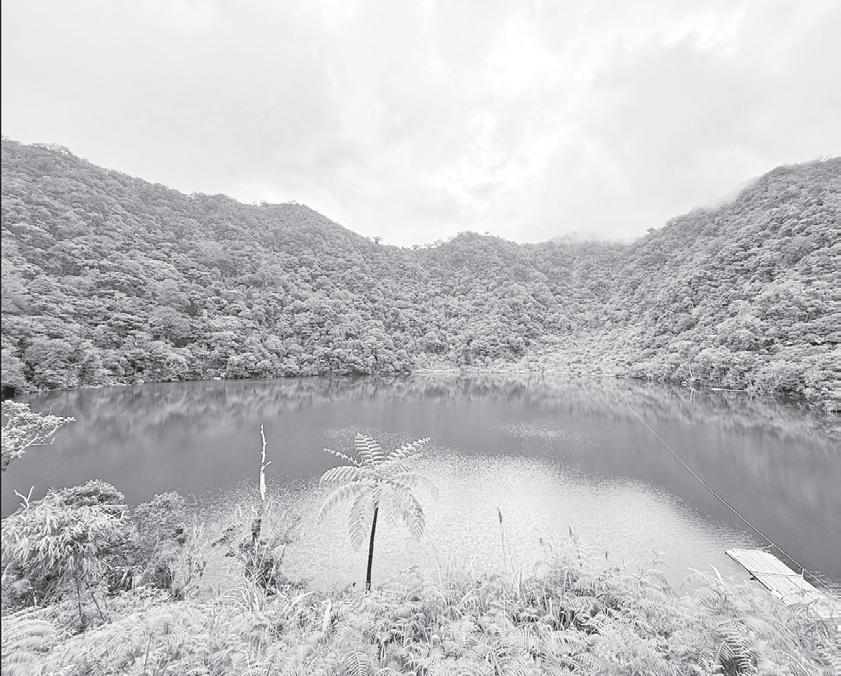


treasures long protected by the Subanen people. Well-maintained roads have made the area more accessible, and travelers arriving by 4x4 need only a short trek to reach one of the country’s most pristine and culturally significant crater lakes. From the mountains, we descended to Sapang Dalaga, where we enjoyed lunch beside Sapang Dalaga Falls before stopping at the nearby seafood market and port, where fishermen sold the day’s fresh catch. Before leaving, we caught a glimpse of Caluya Shrine, home to Kublai Millan’s towering Christ the Redeemer sculpture overlooking Casul Bay. It was enough to convince me that I’ll have to return and make the climb to the shrine.
On our third day, we explored the waters of Sinacaban on an island-hopping tour to Sperm Island and Dolphin Island. Sperm Island is known for its powdery white sand and distinctive shape, while Dolphin Island is gradually being developed with additional visitor amenities, including a restaurant, further expanding the province’s coastal tourism offerings.
Later that day, we headed to Kenjelo Farm
One of its most ambitious projects is the Asenso Misamis Occidental Resort and Aquamarine Park (AMORAP) in Sinacaban, where we stayed during the tour. Often dubbed the “Maldives of Mindanao,” the sprawling 49-hectare eco-luxury destination features inland and floating cottages, swimming pools, a restaurant, and access to island-hopping tours. Future developments, including a hotel, golf course, additional restaurants, and more recreational facilities, reflect the province’s long-term vision of transforming AMORAP into a premier coastal tourism hub in Northern Mindanao.
The tour also highlighted the province’s rich historical and religious heritage.
Standing along Panguil Bay is Cotta Fort, officially known as Fuerte de la Concepción y del Triunfo. Built in 1756 to
defend the settlement from pirate raids, the Spanish fortress today serves as both a National Historical Landmark and an important pilgrimage site. Just a few minutes away stands the Immaculate Conception Metropolitan Cathedral, the seat of the Archdiocese of Ozamiz and the city’s most important religious landmark.
Another highlight was the Saint John the Baptist Parish Church in Jimenez, one of the finest preserved Spanish colonial churches in Mindanao and a designated
MAKING A SPLASH Spotlight on Mindanao’s waterfalls
THE Philippines has plenty of beaches, some of which gained international recognition because of their powderlike sand, azure waters, limestone formations, and any other adjective related to beautiful. At the top of my mind are any beach in El Nido or Coron, Boracay, Bohol, and the list goes on. However, after traveling to many provinces in the country, I’ve noticed several waterfalls that are noteworthy additions to a traveler’s bucket list. Some of these you can visit in Mindanao.
Awao Falls
IT took a flight to Davao City from Metro Manila, hours-long van ride, scenic views through the countryside, and pushing a tricycle across a stream to reach Awao Falls in Davao de Oro, formerly known as the province of Compostela Valley. The veil-like cascade made for a picturesque backdrop. The refreshing cool waters were just what I needed after a long day. Your jump-off point is Monkayo. Go to the tricycle terminal and hire a driver to take you to the waterfalls.
Bega Falls BEGA Falls is another noteworthy waterfall in Mindanao you should add to your list.
Located in Agusan del Sur, this multi-tiered waterfall is a sight to behold. It has multiple pools where you can swim in. It’ll require a bit of a walk up and down, but it’s not too taxing. There was a slight drizzle during my
visit but it didn’t ruin my visit. There are concrete cottages, stairs, and benches that make Bega Falls accessible to tourists.
Tugonan Falls
TUGONAN Falls is also located in Agusan del Sur and is often paired with Bega Falls when chasing waterfalls in the province. It’s not as huge and as spectacular as Bega, but it has its own charm. It is also multitiered with a couple of pools where visitors can swim in.
Tinago Falls
IF you ever visit Iligan City, make sure to add Tinago Falls to your itinerary. I was fortunate enough to visit when there weren’t a lot of visitors other than a few local kids. It took hundreds of steps before reaching the waterfalls. Despite being a popular local spot, it still feels “hidden” which lives up to its name “Tinago”. Ride the raft until you reach the waterfall to experience its powerful cascade. It’s not too far from the city which makes it a viable day trip. Some visitors would combine a trip to Tinago with the famous Maria Cristina Falls.
Tinuy-an Falls
SITUATED in Bislig, Surigao del Sur, Tinuyan Falls is a natural wonder you shouldn’t miss while exploring Mindanao’s Caraga region. Much like most of the waterfalls on this list, Tinuy-an takes a lot of patience and a bit of adventure to reach. However, the moment you lay your eyes on the waterfall, you’ll know it was all worth it. Tinuy-an is around 95m wide and 55m high
with multiple tiers. Go swimming or rafting during your visit.
Merloquet Falls
YOU might have already finished sampling Zamboanga City’s delicious food, exploring the city’s attractions, and walking along the shores of Sta. Cruz Island’s pink beach and held a stingless jellyfish in your hand, consider adding Merloquet Falls to your list. This multi-tier waterfall is just a couple of hours away from the city. You don’t need to hike to see it too; you’ll walk down a flight of concrete stairs to reach it. The waterfall has a stair-like appearance upon first glance.
Katibawasan Falls
LOCATED in Camiguin, Katibawasan Falls is a must-visit while exploring the province. Fun fact: Katibawasan Falls is one of the highest single-drop waterfalls in the Philippines. It’s accessible because all you need to do is walk down (then back up) a flight of concrete steps. The time it takes to do it depends on your fitness level, but it’s not something too strenuous even for the casual visitor. Dip/ swim into the cool waters of Katibawasan’s pool before moving on to Camiguin’s other attractions. While the Philippines is world-renowned for its pristine beaches, Mindanao’s majestic waterfalls prove there is so much more to explore. From the hidden beauty of Tinago to the wide cascades of Tinuy-an, these natural wonders offer refreshing adventures that definitely deserve a spot on any traveler’s bucket list.
National Cultural Treasure. Its coral stone façade, beautifully painted ceiling, and rare working pipe organ continue to draw heritage enthusiasts from around the country. It is one of the most beautiful churches I have visited, not only in the Philippines but anywhere in the world.
We also visited Tudela Highland Resort and Eco-Park, where cool mountain air, landscaped gardens, and recreational facilities offer visitors another reason to extend their stay in the province.
For me, however, Misamis Occidental’s greatest strength lies in its natural landscapes.
On the second day, we climbed into the cool highlands of Don Victoriano Chiongbian, the province’s summer capital and gateway to the Mt. Malindang Range Natural Park, an ASEAN Heritage Park recognized for its exceptional biodiversity.
Here we visited the curtain-like cascades of Piduan Falls and the sacred waters of Lake Duminagat, both ecological and cultural

to present their products directly to the people who design and sell travel experiences across the country. It was a fitting conclusion to the journey. The attractions showcased Misamis Occidental’s potential, but the conversations during the B2B session demonstrated how that potential can be transformed into sustainable tourism through collaboration between government, local communities, and the private sector. If the discussions during the session are any indication, travelers can expect to see more Misamis Occidental tour packages in the near future.






Story & photos by Joshua Berida
AWAO Falls has a veil-like appearance that draws tourists.
ASENSO Global Gardens
SUBANEN Dance
THE Cotta Fort (officially Fuerte de la Concepcion y del Triunfo)
TUDELA Highland Resort & Eco Park
INSIDE Saint John the Baptist Parish Church SPERM Island
PIDUAN Falls
CALUYA Shrine THE sacred Lake Duminagat
TINUY-AN Falls
SWIM or take a “shower” under Tinago Falls powerful cascade.
TUGONAN Falls is not as huge as Bega Falls, but it is charming in its own way.
GO on a half-day trip to Merloquet Falls from Zamboanga City.
STAND in awe of Bega Falls
KATIBAWASAN Falls is one of the attractions you can visit while in Camiguin.
July 18, 2026
Editor: Angel R. Calso
Fighting escalates, diplomacy sputters on: US, Iran keep talks alive amid Hormuz war
By Ben Finley, Farnoush Amiri, Samy Magdy & Munir Ahmed The Associated Press
WASHINGTON—Fighting between the US and Iran has intensified over control of the Strait of Hormuz, but hopes for a possible diplomatic solution have shown stubborn signs of life.
Pakistan’s Foreign Ministry on Thursday rejected suggestions that Islamabad had abandoned efforts to bring Washington and Tehran back to the negotiating table after brokering an initial ceasefire agreement last month that has now collapsed.
“Let me dispel the impression that Pakistan has done hands up, and this is not the case,” ministry spokesperson Tahir Andrabi said at a news conference, adding that the parties eventually “will have to come to the negotiating table to settle all outstanding issues.”
Even the top negotiators for Iran and the US signaled they have not walked away from talks. In a podcast interview with Joe Rogan that aired Wednesday, Vice President JD Vance said the Trump administration is “not going to bomb and bomb and bomb” and noted that “you’ve got to actually be willing to talk and to try to figure out the problem.”
“We’re going try to use our military force as one of the many tools that we have to solve the problem,” Vance said, adding that “diplomacy is another tool.”
Mediators from countries that
include Pakistan, Qatar and Egypt have been working to resume talks, according to regional officials who spoke on condition of anonymity to discuss the sensitive diplomacy. They noted that neither side has notified Pakistan that it was officially withdrawing or terminating the initial ceasefire agreement.
The backchannel efforts have been overshadowed by the escalating attacks, with the US military on Thursday conducting strikes deeper into Iran and firing on a ship that the US accused of trying to break its naval blockade of Iranian ports. Iran has retaliated by launching missiles and drones at US allies in the region and warned that its attacks could grow to target “all the infrastructure in the region.”
The US and Iran are in a delicate and potentially pivotal moment that “leaves open the possibility of moving up the escalation ladder,” said Naysan Rafati, senior Iran analyst at the Washingtonbased International Crisis Group.
The push is on for renewing negotiations ANDRABI , the spokesman for Pakistan’s foreign ministry,
acknowledged that mediation between Iran and the US had become increasingly difficult. But he said peace efforts remained alive.
“It can be put on the backburner, but it stays,” Andrabi said, adding that “whenever the parties exhaust the logic of escalation, the formula for peace is there.”
The regional officials involved in mediation attempts said efforts to salvage the deal to end the war were continuing this week. They acknowledged that the 60-day negotiating process spelled out in the interim deal has halted. But they said mediators have been working to persuade both sides to return to the negotiating table.
Officials say the key point of dispute is management of the Strait of Hormuz, the crucial energy shipping route that is Tehran’s greatest source of leverage. The language in the interim deal is vague. Iran claims it has the authority to arrange shipping transit through the strait, while the US says the waterway is meant to be open to free passage and has tried to arrange an alternate shipping route along Oman’s coast.
In his interview with Rogan, Vance acknowledged that diplomacy might ultimately be the only way forward.
“I’m very frustrated by the Americans and frankly by people in other countries who are like, ‘You cannot negotiate with the Iranians,’” the vice president said. “Well, then what is your proposal to get people to stop shooting at ships in the Strait of Hormuz?”
Trump increases the threats and says Iran ‘better behave’
THE fighting resumed over Iran’s

unwillingness to allow oil tankers and other commercial vessels to navigate freely through the Strait of Hormuz, a vital Persian Gulf shipping route through which 20% of the world’s oil normally flows. Iran effectively choked off the usual stream of commerce by attacking commercial vessels that ignored its rules, disrupting world energy markets and driving up prices that could pose problems for Republicans in November’s midterm elections.
Asked by reporters in recent days if he is still open to negotiations, Trump has repeated his previous threats that Iran returning to the table is the only thing that can avoid US attacks on civilian infrastructure like bridges and power plants. But the Republican president said he would not put a timeline on it.
“I don’t like giving deadlines, but they pretty much know, they know the story,” Trump said in Pennsylvania on Wednesday. “They better behave.”
Moments before, Iran’s parliament speaker and lead negotiator said the country is not declaring last month’s interim deal void.
But Mohammad Bagher Qalibaf said Iran’s commitment depends on continued implementation by the United States. If Washington fails to honor its obligations, Iran would have no reason to remain bound by it, he argued.
The initial June 17 agreement called for a permanent end to hostilities and a reopening of the strait and started a 60-day negotiating clock to reach a final deal on the future of Iran’s nuclear program and other issues.
Qalibaf also suggested that Iran is not seeking to keep the Strait of Hormuz closed indefinitely.
He said Tehran’s objective is to preserve what he called “Iranian arrangements” governing navigation through the waterway, while allowing the maximum safe passage of commercial shipping under those rules.
US is trying a naval blockade and more strikes to reopen the Strait of Hormuz—again TO stop Iran’s attacks on ships, Trump has stepped up military attacks and reinstituted an earlier Navy blockade of Iranian ports to inflict economic pain. But it would be unrealistic to expect the US to eliminate Iran’s ability to launch missiles and drones into the strait anytime soon, said Bradley Bowman, a former Army helicopter pilot and now a scholar at the Foundation for Defense of Democracies, a hawkish Washington think tank.
“Unfortunately, Iran only needs to hit a ship every now and then to create serious problems and dilemmas for insurers and ship captains and reduce the flow of traffic in the strait,” he said. “That reduced flow exerts significant economic and political pressure on Washington, especially as midterm elections approach. Iran understands the leverage it now has—and so does Trump.” At the same time, Bowman and other experts are not convinced that more strikes and economic pressure will get Iran to negotiate.
“We’re doing things that have not affected Iranian behavior in the past,” said Mark Cancian, a retired Marine colonel and a senior defense adviser with the Center for Strategic and International Studies. “So why would it affect Iranian behavior now?”
Amiri reported from New York, Magdy from Cairo and Ahmed from Islamabad. Associated Press writer Josef Federman in Jerusalem contributed to this report.
Brazil calls Trump’s 25% tariff unjust and vows to impose reciprocal tariffs
By Mauricio Savarese & Eléonore Hughes The Associated Press
RIO DE JANEIRO—Brazil has described the latest US tariffs on certain Brazilian imports as unjust and politically motivated, threatening Thursday to impose reciprocal measures on US products. The country’s top diplomat criticized US Secretary of State Marco Rubio for the move.
Brazil’s government said the decision hits about 3,000 items, but is yet to decide whether and how it could retaliate with a law its Congress passed in 2025 in response to President Donald Trump’s tariffs. Brazil’s industry minister, Márcio Elias Rosa, said Thursday the US move hits about 18% of the country’s exports—or an estimated $7.4 billion worth of products, based on 2024 data.
President Luiz Inácio Lula da Silva’s office on Wednesday denied US allegations of unfair trade practices. It said 76% of imports from the US entered Brazil duty-free in 2025, and that the average tariff effectively applied to US products was only 3.1%.
The statement also said it has taken
The United States said Wednesday it would impose a new 25% tariff on certain imports from Brazil, citing unfair trade practices by the world’s 10th-largest economy. The tariffs, first proposed last month, will take effect next Wednesday. The order exempts some goods that are not produced in the US or that officials worry would disrupt supply chains—including coffee, beef, oranges and orange juice and aircraft components.
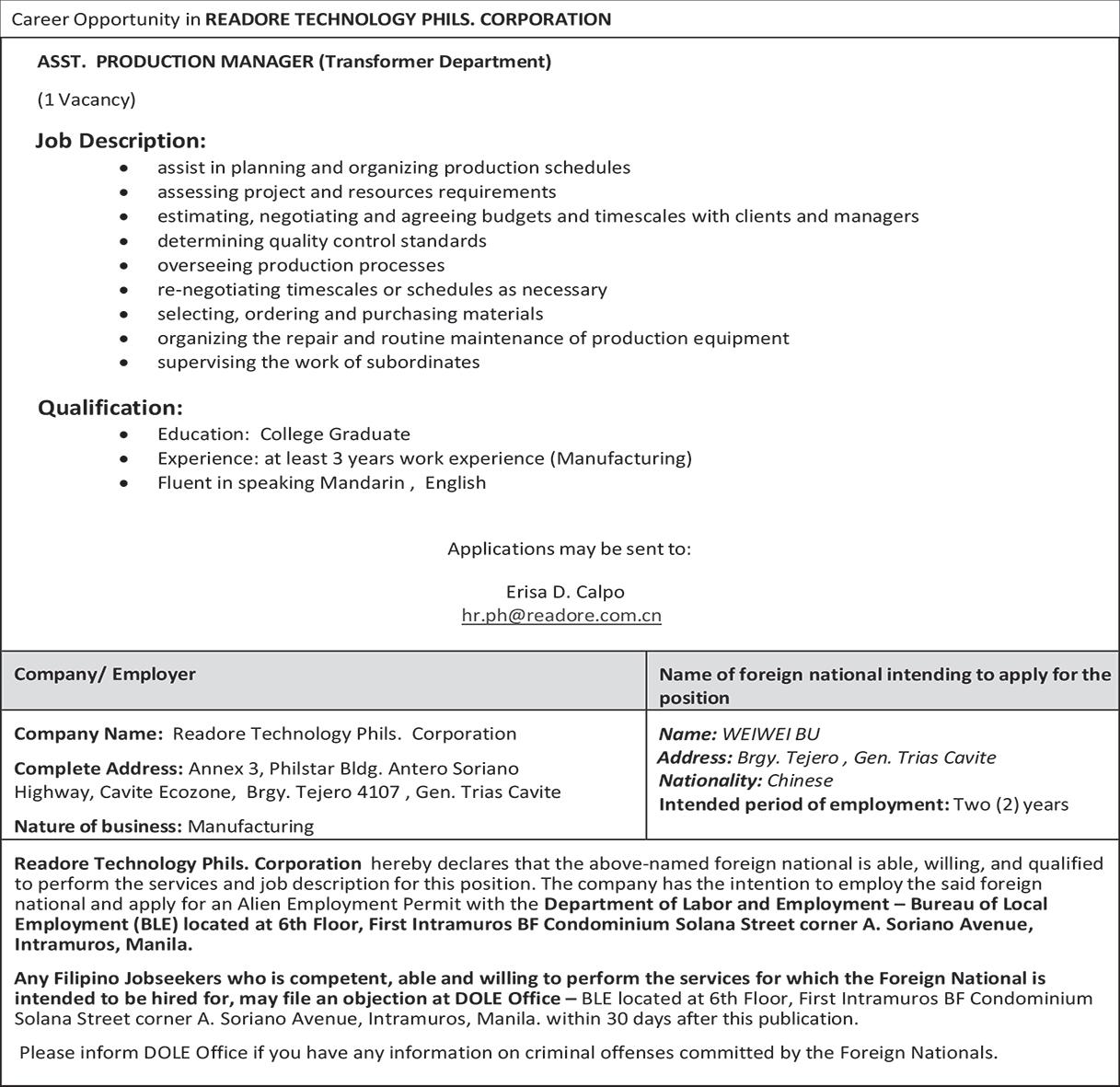
steps to impose reciprocal tariffs, along with other trade-related countermeasures, through its own law and through the World Trade Organization’s dispute settlement mechanism.
Brazil’s Foreign Minister Mauro Vieira accused the Trump administration of pressuring the South American nation to give American companies exclusive access to some sectors of its economy. He said Brazil has never left the negotiating table.
Vieira said Rubio made statements that are “unacceptable, offensive to the Brazilian people and the Brazilian government” after the new tariffs were announced. Rubio said in a post on X that the tariffs were the result of Lula putting “his own ego ahead of making a deal” and not negotiating with the US in good faith.
“Rubio launches a crude and arrogant
attack on the Head of State of a friendly nation, who has personally sought to open channels for dialogue on several occasions,” Vieira told a news conference in the capital, Brasilia.
“What Secretary Rubio dismisses as ‘ego’ is, in fact, President Lula’s steadfast resolve to defend Brazil’s sovereignty and the interests of our businesses and workers,” Vieira said.
US has a robust trade surplus with Brazil
THE US has for years run a massive trade deficit with the rest of the world, and Trump has cited the lopsided trade numbers to justify his aggressive use of tariffs.
But Brazilian imports make an unusual target: The US has persistently piled up trade surpluses with Brazil. Last year, in

fact, US exports to Brazil exceeded imports by nearly $42 billion; only US trade surpluses with the Netherlands and the United Kingdom were higher.
The new tariff puts pressure on national exports and increases insecurity for companies in both countries, Brazil’s National Confederation of Industry said in a statement Thursday.
The Trump administration first imposed a 50% tariff on Brazilian imports last July.
Trump cited what he called a “witch hunt” against former President Jair Bolsonaro, a Trump’s ally on trial at the time for attempting a coup despite his 2022 electoral defeat to Lula. Bolsonaro was later convicted and some of those US tariffs were later rescinded.
Trump at the time also accused Brazil of unfair trade practices and said he had directed US Trade Representative Jamieson Greer to initiate an investigation under Section 301 of the Trade Act of 1974.
That led the office to charge Brazil with lax anti-corruption enforcement and unfair tariffs, among other things, in June. One of the targets of the investigation is Brazil’s popular PIX payment system, which is run by the country’s central bank and is overwhelmingly free of charge.
Scott Lincicome, a trade analyst at the libertarian Cato Institute, said the US administration might have had a legitimate Section 301 case if it narrowly targeted Brazil’s restrictions on trade in digital services. Instead, it threw in a bunch of other allegations.
“It’s a pretty clear case of the administration simply finding an excuse and finding a law that allows them to impose the tariffs they want to impose,’’ Lincicome said.
Welber Barral, a trade lawyer and former Brazilian foreign trade secretary, said the move comes as his country’s exports to the U.S. are now less than 10% of its total for the first time in two centuries.
“Brazil is diversifying to other destinations,” Barral said. “Brazil is negotiating with Canada through the Mercosur. Other deals will also come out as the American market closes.”
Brazil elections may be impacted
BRAZILIAN officials have blamed the Bolsonaro family—Lula’s main political opponents—for the latest round of tariffs. Sen. Flávio Bolsonaro, a presidential hopeful in October’s elections and son of the former president, visited Trump, Rubio and other U.S. officials in Washington in May. The senator reposted Rubio’s statement, adding that “Lula is no longer fit to be the president of Brazil. We are on a plane without a pilot.” He also described Lula as “the Brazilian Biden” and said he “is grumpy, reckless, and has become a danger to our nation.” Flávio Bolsonaro is expected to be confirmed as Lula’s main election rival on July 25 at his Liberal Party’s convention in São Paulo, though his bid has struggled to overcome the findings of a police investigation, which showed he received millions of dollars from a disgraced banker to finance a movie about his father. He has denied any wrongdoing. Thomas Traumann, an independent political consultant and former Brazilian minister, said he thinks the tariffs could ultimately hurt Lula’s opponent, describing two issues he sees as working against Flávio Bolsonaro.
“The first was the revelation of his involvement with the disgraced banker,” Traumann said. “And now he has US tariffs with Bolsonaro fingerprints. Now Brazil’s business understands he will be submissive to Trump.”
Savarese reported from São Paulo. Paul Wiseman contributed to this report from Washington D.C.
Privacy concerns were cited by 62 percent of respondents, while half expressed concerns over the accuracy of AI-generated recommendations. Businesses reported similar reservations.
Still, DHL said companies expect AI use to continue expanding over the next five years, particularly in forecasting demand, enabling virtual product try-ons and detecting fraud. Interest in logistics subscriptions is also
China Daily. . .
Continued from A4
Continued from A3 by Manila’s neighbor notwithstanding its claim that it is “a reliable, constant partner.”
“The racist depiction by China Daily, a Chinese state-controlled media outlet, of Filipinos as monkeys at the mercy of the United States and Japan simply shows that China’s arrogance knows no bounds. It further reveals how little they think of us and how highly they think of themselves. This is another act that reflects the mindset of an entitled bully,” Party-list Rep. Leila de Lima of Mamamayang Liberal said in a statement.
Similar concern was aired by Sen. Francis Pangilinan over the video.
De Lima said the video “also shows China’s continued insecurity and frustration because our country refuses to yield in upholding our sovereign rights over the West Philippine Sea. “Unlike during the previous administration, we do not kowtow to their caprices.”
The release of the AI-generated video followed a global commemoration of the 10th anniversary of the Arbitral Ruling against China’s excessive claims in the South China Sea, for which the Philippines had filed a case in The Hague-based International Arbitral Court. At least 14 nations issued separate statements hailing the significance of the ruling to mark the anniversary, and praising Manila’s initiative to go to a global court to enforce the United
Continued from A3
Among those cited were the BusinessMirror and B usiness M irror environment reporter Jonathan L. Mayuga.
The other awardees are the Daily Tribune, Manila Standard, A2Z-Light TV, Bilyonaryo, Star FM, Fred Gabot, Bettina Fernandez, Ben Cal, Jordeene B. Lagare, Brilliant Jerk Productions, and Media Touchstone Ventures Inc. Environmental Stewardship Keynote speaker Manila Vice Mayor Angela “Chi” Atienza highlighted Manila City’s initiative to plant 100,000 bamboo trees along riverbanks and Roxas Boulevard, describing bamboo as a practical solution for flood control, cleaner air, and climate adaptation.
expected to grow. One in two consumers surveyed said they would consider subscribing to delivery and returns services within the next five years.
In response, 71 percent of Asia-Pacific businesses said they already offer subscription-based delivery and returns programs, while another 21 percent plan to introduce them over the same period.
The DHL eCommerce Trends Report 2026 surveyed 29,000 consumers and 5,800 businesses across Europe, North America, Asia-Pacific, Latin America, the Middle East and Sub-Saharan Africa.
Convention on the Law of the Sea (Unclos).
“They can spread propaganda, create AI-generated videos, disseminate lies, and invent imaginary lines all they want, but they cannot erase the fact that the WPS is ours under our Constitution and international law,” said de Lima, a former Justice secretary and senator.
Pangilinan’s beef
IN his statement, Pangilinan called the video unsuitable to any media organization, much less a “state-run media outlet that represents a country.”
The senator added, “It is saddening to think that this comes from China. An emerging global power in economy and technology,” whose citizens have themselves also endured “discrimination and racism in other parts of the globe.”
Instead of promoting understanding and respect, it has chosen to “resort to a kind of propaganda that not only insults Filipinos, but also shatters China’s avowed intent to be a responsible and respectable leader in the international community,” Pangilinan added.
He urged the People’s Republic of China “to immediately order China Daily to take down the video, issue a clear public apology, and hold responsible those who created and uploaded this video. Being a true leader in the international community is based on dignity, respect for others, and accountability—not ln spreading racist stereotypes that are billed as “information or commentary.” With Butch Fernandez
She expressed hope that more cities would adopt similar nature-based initiatives that combine environmental protection with urban resilience.
Trees as public servant
QUEZON City Councilor Alfred Vargas echoed the same message, describing every tree as “a public servant” because it quietly provides oxygen, absorbs carbon dioxide, minimizes flooding, and teaches younger generations the values of patience, responsibility, and stewardship. “When we plant trees,” Vargas said, “we invest in our children and in the future of our communities.” Expanding the Movement During the ceremony, MTFI President and Executive Director Melandrew T. Velasco formally welcomed Rotary International District 3780, headed by District Governor

Israel’s parliament dissolves ahead of Oct. 27 elections
TEL AVIV, Israel—Israel’s parliament dissolved early Friday after passing a marathon of bills in the last moments of Prime Minister Benjamin Netanyahu’s governing coalition.
The Knesset, which was scheduled to break for its summer recess on Friday, will not reconvene before the elections scheduled on Oct. 27.
The expected dissolution comes as Netanyahu is struggling to hold onto power ahead of the next elections as Israel grinds toward the third anniversary of
the Oct. 7 attack that sparked nearly three years of war. Israeli polls are showing a groundswell of support for opposition parties, led by former Prime Minister Naftali Bennett and a popular centrist former military chief.
Over the past week, the Knesset passed several controversial laws in marathon sessions as Netanyahu attempted to ram through several of his pet projects.
Earlier this week, the Knesset passed two bills that effectively halt the enlistment of ultra-Orthodox men in the military in an attempt to ensure ultra-Ortho -
dox parties join Netanyahu’s coalition in the next government.
The Knesset also recently passed several bills connected with Netanyahu’s attempts to overhaul the judiciary, including increasing government control over broadcast media and weakening the role of the attorney general. Attorney General Gali Baharav-Miara has opposed the overhaul, and been a frequent target of Netanyahu and the Israeli right.
“We are completing a four-year term, we passed nine budgets and hundreds of bills, I thank you for the trust you placed in me, through which together we succeeded in maintaining a four-year term,” Knesset Speaker Amir Ohana said as he announced the dissolution.
Completing a full, four-year term is a rare occurrence throughout Israeli history.
The last time Israel’s government fulfilled a full term without breaking for early elections was in 1988. Israel has no term limits, and Netanyahu has served more terms than any other prime minister in Israel’s history, but it is rare even for him to finish a full, four-year term.
ISRAELI lawmakers attend a parliamentary session in Jerusalem for a vote on a bill that would change the authority and responsibilities of the attorney general Wednesday, July 15, 2026, in Jerusalem.

Rhyan G. Virrey, as one of the foundation’s newest strategic partners. He noted that Rotary’s decision to include Protecting the Environment among its Seven Areas of Focus demonstrates the growing global recognition that environmental sustainability is inseparable from public health, peacebuilding, education, and economic development. Velasco likewise welcomed the EDL Group of Companies and the EDL Foundation, describing every new partner as another pillar strengthening the country’s environmental movement.
Closing the program, AMTC founder and MTFI Chairman Emeritus Gen. Reynaldo V. Velasco (Ret.) looked beyond current accomplishments toward even more ambitious goals. “Our target of 15 million trees by 2030 is on track,” he said.
Continued from A3
For more than two decades, Malampaya has supplied indigenous natural gas to power plants in Batangas, helping support the country’s energy requirements and reducing dependence on imported fuels.
Malampaya is a National Government project under the Department of Energy. Prime Energy and its joint venture partners (UC38 LLC, PNOC Exploration Corporation, Prime Oil and Gas, Inc.) operate the Malampaya Project under Service Contract No. 38 with the Government.
Prime Energy is the natural gas exploration and development company of Prime Infra, the infrastructure arm of Filipino businessman Enrique K. Razon Jr.

Between 2019 and 2022, Israelis went to the polls five times. Israel holds elections on average every 2.4 years, making it second-lowest ranked country in the OECD for periods between elections, a marker of political instability, according to the Israel Democracy Institute. AP


AP/OHAD ZWIGENBERG
A12
Saturday, July 18, 2026
Quintanilla wins SG Am Open via five extra holes


RACE PAULINE QUINTANILLA
Gblew a six-shot overnight lead in regulation and needed five extra holes to turn back Hong Kong-China’s Xizihan Wang to win the women’s individual title in the prestigious 78th playing of the Singapore Amateur Open championship at the Bukit course on Friday.
The 19-year-old Filipino birdied her sixth trip to the par-five 18th coming from a disadvantageous position playing her third shot, draining a 15-foot putt to finally seal the win which came the hard way after she closed out regulation with a two-over-par 73 that allowed the Chinese to tie at 281.
Wang shot a 67--tying Quintanilla’s first round effort for the low round of the week--and clearly had momentum going into sudden death, only for the Filipino to patiently bid her time and strike when she found the opening.
“She overshot her approach (on the fifth playoff hole),” Quintanilla said of Wang. “I knew then that I had to somewhat get it (my approach shot) close, even though I was coming off the rough.” Quintanilla will return to action on Philippine soil in one of two upcoming National Golf Association of the Philippines events later this month, either in the PH Stroke Play Championship at Pradera Verde or the Match Play event at age-old Luisita.
“One of those events,” she said when asked of her next tournament. “And then it will be back to the US for me for school.”
Rolando Bregente and Jet Hernandez settled for a fourth place tie in the men’s division after closing 69s gave them 272 totals, five shots off champion Jonty Lunzon of Australia, who fired a 67 to beat countryman Harrison Gomez by a shot. Gomez, who started the day in seventh spot, smoked the back nine with six of his seven birdies. He went on to fire a flawless 64 for 268.
Bregente, who held the solo lead after the opening round by shooting a 64 on Tuesday, and Hernandez, finished a shot out of the podium as Hong Kong-China’s Markus Zachary Lam shot a 70 to finish third just a stroke ahead of the duo from the Philippines.



mirror_sports@yahoo.com.ph | Editor: Jun Lomibao
ZVEREV RAISES AWARENESS
Blessed are the cyclists

By Josef Ramos
THERE’S no other way but up for Ernest John “EJ” Obiena as the Asian champion cleared 5.85 meters for the first time on Friday since the the Paris 2024 Olympics.
the silver medal via countback over Portugal’sPedro Buaro with Germany’s Bo Kanda Lita Baehre winning goldwith his personal best of 5.90 meters. Only a week ago, the two-time Olympian Obiena, 30, cleared 5.81 meters at the Fly Athens in Greece and although he didn’t make the podium in his new training camp, he was able to recover from a dismal fourth place at the Panathenaic Stadium last July 5.
“All serious work since I arrived in my new training facility,” said Obiena, ranked No. 14 in the world. “No time for recreation as I train every day.”
He added: “I’m thankful to coach Marcin and of course to Vitaly (Petrov).”
Obiena now trains under Marcin Szczepanski
By KEN MAGUIRE The Associated Press

LONDON—Alexander Zverev was dealing with more than just defending champion Jannik Sinner on Sunday in the Wimbledon final. The 29-year-old German also has Type 1 diabetes, which requires him to monitor his glucose levels and, if needed, inject insulin during matches.
Zverev, who won the French Open and is seeking back-to-back Grand Slam titles, uses an insulin pen when needed to jab the top of his thigh during changeovers on court.


Athletics Grand Prix in Budapest last Tuesday but finished sixth in the competition topped by Olympic and world record holder Armand Duplantis (6.07m), Kurtis Marshall (6.0m) and Emmanouil Karalis (5.90m).
Obiena has won two gold and two silver medals in eight outdoor tournaments this season—he ruled the Czeslaw Cybulski Memorial in Poznan, Poland, last June 30 and Raiffeisen Austrian Open last July 2 in Eisenstadt, Austria. He’ll be back in Athens in a day to prepare for the HalberstadterHohenflug Internationales Stabhochsprung Meet in Halberstadtthis weekend.

Bam with Alyssa
Pham Quoc Du soars high as he tries to score over Myanmar’s Aung Htoo Bhone Myat and Phyo
Rampazzo: Right path for Vietnam
By Aldrin Quinto
CITY of Candon—A moraleboosting win and a deflating but encouraging loss have convinced new coach Federico Rampazzo that the Vietnamese team is heading in the right direction.
Vietnam marched on to the semifinals of the SEA V Cup, breezing past unheralded Myanmar, 25-18, 25-23, 2519, on Friday at the Candon City Arena.
It was a huge bounce-back win sealed in an hour and 20 minutes, after an exhausting two-hour four-set loss to Thailand, a team four spots below in the world rankings.
Rampazzo noted both results were crucial in the development of the Vietnamese squad, lauding the team led by Nguyen Ngoc Thuan and Pham Quoc Du for their smart decision-making in tough stretches.
“A lot of situations they never see, because the match against Thailand was our first official -match. I’m really proud of what they’re trying to do,” Rampazzo said.
Playing in its first official FIVB-sanctioned tournament since last season’s zonal meet and first with Rampazzo in charge, Vietnam showed encouraging signs as it adapts to the Italian tactician’s system.
“Thailand is very solid and we tried to learn during the match itself. We focused more on trying to improve our technique, strategy. They played very good in my opinion, very satisfactory,” Rampazzo said.
Vietnam is one of several nations that have tapped Italian volleyball specialists.
Alas Pilipinas brought in Angiolino Frigoni two years ago, just before the Philippines hosted the FIVB Volleyball Men’s World Cup, where nine other nations were led by Italian coaches.
Rampazzo stressed that progress cannot be rushed and it applies to all young developing teams, pointing to Myanmar’s improvement from one match to the next as proof that teams are built through experience.
“It’s a process, we need to be patient,” Rampazzo said. “Like Myanmar, you saw it from yesterday and today, they have fewer errors.”
“And all the young teams, for everybody it’s like this.”
Rampazzo appealed to his team’s supporters for patience as they mature.
“I’m very proud, they’re really eager to learn. They keep learning and I believe we are on the right path.”
“I hope that everybody seeing these matches, give time for the players to grow, and they will give great satisfaction to the nation.”
SEA V Cup crucial meet to climb world rankings JUST like the Philippines, Vietnam is looking to stamp its mark in the Asian Games in Nagoya later this year and the SEA V Cup is one of the crucial stages for the teams in the region.
The zonal meet, presented by the Philippine Sports Commission, Philippine Olympic Committee and the City of Candon headed by Mayor Eric D. Singson, offers all-important
4 local teams vs Vietnamese, Aussies
FOUR of the country’s best local squads brace for a much tougher competition as teams from Vietnam and Australia spice up the 2026 Shakey’s Collegiate National Invitationals unveiling on Sunday at the Ninoy Aquino Stadium.
Zverev already Type 1 diabetic as a boy ALEXANDER ZVEREV disclosed in 2022 that he has Type 1 diabetes, having been diagnosed at age 4, according to his diabetes foundation. He had previously kept it quiet. If he needed an insulin jab during a match, he’d do it privately during bathroom breaks. The announcement coincided with him launching his foundation, to help children in particular.
“If we as a foundation, and me just as a tennis player and somebody who has diabetes, can help even just a single kid or a single parent, I’ll be the happiest person in the world,” Zverev said after an early-round victory at Wimbledon. “There’s a lot of great athletes, there’s a lot of actors, musicians, who have diabetes. It shows that with diabetes there shouldn’t be any limits.”
Glucose sensor problem at tournament AT a Wimbledon warmup event in Halle, Germany, Alexander Zverev said his glucose sensor gave him an incorrect reading at his semifinal match against Taylor Fritz. Because it showed falsely high levels, he accidentally injected too much insulin. When he figured out the problem, Zverev consumed 350 grams of sugar through glucose gels in the first hour of the match to normalize his blood sugar levels. He reported feeling
“awful” and lost the match in three sets.
“The company’s investigating it, looking into it,” he said at a pre-Wimbledon press conference, referring to the firm that makes the sensor. “I’ve been using it for 10-plus years. This is the first time ever it happened.”
The sensors are life changing, he noted.
“Those things are still very, very useful for a diabetic, make the life of a diabetic much easier than without them,” he added. “It was very unfortunate for me that it happened, but I think as a product, it still is very helpful for millions of diabetes patients.”
Zverev has permission from Grand Slam tournaments, the All England Club confirmed, to use his phone during matches to check his glucose levels. His sensor relays readings to the phone so that Zverev doesn’t need to do fingerprick blood tests. Otherwise, phones are not allowed on court.
High-profile athletes with Type 1 diabetes NATIONAL Hocley League (NHL) Hall of Famer Bobby Clarke played his whole career with Type 1 diabetes, and current NHL player Max Domi also has the chronic disease. Baltimore Ravens tight end Mark Andrews, diagnosed in childhood, frequently checks his blood sugar levels during games.
Former National Football League quarterback Jay Cutler was diagnosed with Type 1 diabetes in his mid-20s, as was Olympic champion swimmer Gary Hall Jr. Advocates say visibility is important, and not just in sports.
A year ago, Mattel introduced its first Barbie representing a person with Type 1 diabetes. She wears a continuous glucose monitor—to track blood sugar levels—on her arm while holding a phone displaying an accompanying app.
QUINTANILLA
OBIENA