THE “sweeping tariffs” of United States President Donald Trump has gone on to rattle markets and on Wednesday sent the peso depreciating back to P57 to the greenback.
Data from the Bankers Association of the Philippines (BAP) showed the peso closed at P57.085 against the US dollar. This is the weakest the peso traded since June 24 when it closed at P57.16 to the US dollar.
The data also showed this is the first time the peso breached the P57 mark this month. Since June 25, the peso has been trading at the P56 level.
“Trump’s sweeping tariffs have created uncertainty in global markets,
By Cai U. Ordinario @caiordinario
THE Bangko Sentral ng Pilipinas (BSP) should adopt a more accommodative stance and reduce policy rates by another 50 basis points (bps) to boost domestic demand, according to Nomura.
triggering capital flight from emerging market currencies like the peso towards safer assets,” Ateneo de Manila University economist Leonardo Lanzona Jr. told BusinessMirror
“As Trump’s policies can cause disruptions in not only the US itself, the flow of remittances could slow down the flow of remittances to the Philippines as the levies can affect how much overseas Filipino workers can earn. This reduction can weaken the peso’s support,” he also said.
Lanzona said a weaker peso could lead to higher import costs for basic needs such as oil and even food prices. This will lead to faster inflation for transportation and energy and commodities like rice.
He added that with this, the Bangko Sentral ng Pilipinas (BSP) may limit its ability to reduce interest rates more aggressively.
Again, given the recent policies of the Trump administration, the country may also expect lower remittance by Philippine shipping, caregiving, and service firms that are based in the United States, Lanzona pointed out.
Unfortunately, the combination of a weaker peso, lower remittances, lower export earnings, higher prices, and a possible slowdown in consumer spending, could slow down GDP growth.
“There seems to be no silver lining here as the Philippines has
never been competitive enough to take advantage of the depreciation,” Lanzona said. Unionbank Chief Economist Ruben Carlo O. Asuncion told this newspaper that the weakening of the peso against the dollar reflects external pressures. Apart from trade policies, the depreciation reflects the sentiment around US developments such as the latest US inflation report, which has pushed expectations of a delay in the Federal Reserve interest rate cut.
Asuncion said this delay in US monetary easing leads to a stronger dollar and will weigh on
ACHIEVING the country’s growth potential of at least 6 percent remains a challenge, as external uncertainties continue to weigh down economic performance, according to the Department of Finance (DOF).
At the Chamber of Thrift Banks’ national convention on Tuesday, DOF Chief Economist Domini SD. Velasquez said the Philippine economy is currently growing at an average of around 5.5 percent.
“We do think that the potential of the Philippines is at a minimum 6-percent growth. But of course, it’s quite difficult, especially with
some of the challenges that we’re seeing,” Velasquez said. The Cabinet-level Development Budget Coordination Committee (DBCC) had to reduce the country’s growth target to 5.5 to 6.5 percent, from 6 to 8 percent, this year due to heightened global uncertainties.
The country’s gross domestic product (GDP) grew by 5.4 percent in the first quarter, lower than the government’s target of 6 to 8 percent at that time. Even Finance Secretary Ralph G. Recto pointed to uncertainties, specifically with trade policies,
By Reine Juvierre S. Alberto @reine_alberto
THE Department of Finance (DOF) has shrugged off concerns over the 1-percent excise tax on remittances from the United States, saying its impact on the Philippine economy next year will be minimal.
Speaking to reporters on the sidelines of the Chamber of Thrift Banks’ national convention on Tuesday, DOF Chief Economist Domini SD. Velasquez said the remittance tax will affect 0.009 percent of the country’s gross domestic product in 2026.
“At the end of the day, the 1 percent [tax rate] is small. They
might be sending the same also to compensate for that,” Velasquez said.
Based on DOF’s estimates, $1.9 billion of remittances flowing out of the United States to the Philippines will be impacted by the tax measure.
This only takes up 5.2 percent of the BSP’s overseas remittance projection of $36.5 billion for 2026.
Velasquez said 12.8 percent of those surveyed by the DOF said they are receiving remittances from North and South America.
The figure is smaller than the 40 percent of remittances coming from the United States, based on the data from the Bangko Sen -
tral ng Pilipinas (BSP). The BSP tracks remittances wired through banks, wherein some remittances from other countries routed to US banks show up in the BSP data. The imposition of tax on remittances, however, could drive Filipinos abroad to tap informal money senders or go to the “black market” just to send money to their families in the Philippines. (See: https://businessmirror. com.ph/2025/05/19/expertssee-backlash-from-us-remittance-tax/).
BSP data showed cash remittances grew 2.9 percent to $2.66 billion in May 2025 from $2.58 billion recorded in May 2024. (See: https://businessmirror.
This brought total remittances in the first five months of the year to $13.766 billion in 2025, a 3 percent growth from 13.365 billion in 2024.
The United States remained the top source of remittances to the Philippines, accounting for 40.2 percent of the inflows during the January-May 2025 period. The remittance tax, part of the Trump administration’s legislative package called the “One Big Beautiful Bill,” will take effect after December 31, 2025. This will be applied to all remittance senders, including US citizens.
Continued from A1
hindering the country’s economy from performing better.
United States President Donald J. Trump, in a letter addressed to President Ferdinand R. Marcos Jr., said the Philippines will be charged a higher tariff of 20 percent, from the initial 17 percent, on any and all Philippine products sent into the United States.
Recto told reporters on Wednesday that the country’s economy could grow faster in the second quarter.
“Hopefully significantly better than the first quarter,” Recto said, adding that it will be driven by government and household consumption.
The Finance chief is optimistic that the economy will grow within the government’s target, hitting 5.7 to 5.8 percent for the full year.
“It’s really a slower international trade due to tariffs. Slower global economy being dragged down,” Velasquez said.
Although tariffs on semiconductors—the Philippines’s biggest exports—are exempted, and the Philippines has a lower tariff rate among Asian peers, Velasquez said there are still a lot of things the country must work on.
“It’s not as easy as, you know, just a competition that you lower the tariff or the Philippines has a lower tariff, manufacturing companies will move to the Philippines,” Velasquez said.
“It’s not just the tariff per se, but it’s really the uncertainty that is creating all these,” Velasquez added.
The government is still “quite bullish” on economic growth on the back of high domestic demand and a robust labor force market, Velasquez said.
Reine Juvierre
S. Alberto
Producing a kilo of rice has risen further to ₧14.52–PSA
By Ada Pelonia @adapelonia
THEaverage cost of producing a kilo of palay grew by around 7 percent in 2024, according to the Philippine Statistics Authority (PSA).
Data from the state statistics agency showed that the average production cost reached P14.52 per kilo last year, from P13.54 per kilo in 2023. The highest production cost was recorded in Central Visayas at P19.73 per kilo, while Eastern Visayas registered the lowest production cost at P12.59 per kilo, based on PSA data.
On a per-hectare basis, the average cost of palay production was P59,695 per hectare in 2024, 5.67 percent higher than the P56,491 per hectare in the previous year.
Cagayan Valley recorded the highest average production cost at P78,245 per hectare, while the lowest production cost was observed in
Amid ERC transition, DOE…
Continued from A14
the advanced pre-development phase. These ports will serve as vital logistical hubs throughout the lifecycle of OSW projects.
“Our discussions with the PPA are ongoing. There are also private port
developers that are willing to invest in port development that will cater to the possible 3.3 gigawatts of offshore wind,” added Capongcol.
The DOE said earlier 16 OSW “frontrunner” projects, with total potential
Eastern Visayas at P45,557 per hectare.
PSA data indicated that labor and seed costs drove farmers’ spending last year, with labor costs reaching around P29,000 per hectare.
Filipino farmers also spent more on seeds at P4,316 per hectare last year from P3,678 in 2023, based on PSA data.
The Rice Tariffication Law (RTL) aims to reduce the country’s production cost by P2 to P3 per kilo through the Rice Competitiveness Enhancement Fund (RCEF), which earmarks rice tariff collections to programs that will boost the sector.
Despite this, PSA data indicated that Filipino farmers earned
capacity of 16GW or 16,000 MW, are expected to start construction at the latest by 2027 and to inject the first kWh by 2028.
In the list provided by the DOE, the potential capacity of 16 OSW projects will reach 16,652 MW. The largest project is the 3,100MW Bulalacao OSW wind farm of Domhain Earth Corp. in offshore Oriental Mindoro and Antique.
Domhain’s other OSW projects are 1,830MW Calatagan, 1,600MW Claveria, and 1,500MW Mariveles.
BuhaWind Energy Northern Luzon Corp. will put up the 2,000MW Northern Luzon wind farm in Ilocos Norte.
ACX3 Capital Holdings, Inc. committed to put up the 500mW San Miguel Bay, 475MW Lucena wind, and 275MW Tayabas Bay OSW projects.
Vind Energy Corp.’s 994MW Cavite and 728MW GS2 OSW
P0.61 for every peso they spent to produce palay last year.
The latest figure showed a nearly 30-percent increase from the P0.47 net profit-cost ratio in 2023, based on figures from the state statistics agency.
Meanwhile, the average gross return reached P95,906 per hectare, 15.67 percent higher than the P82,914 per hectare in 2023. With this, PSA data showed that farmers got P36,211 per hectare for net returns, 37 percent more than the P26,423 they received two years ago.
The average farmgate price of palay in 2024 grew by 18 percent year-on-year to P23.48 per kilo from P19.88 per kilo, based on PSA data.
projects are also on the list.
CI NMF Corp. will put up the following OSW projects- 350MW Dagupan, 650MW Samar Norte, and 1,000MW San Miguel Bay. The remaining projects on the list are the 600MW Guimaras Strait of Triconti Southwind, 600MW Guimaras Strait II of Jet Stream Windkraft Corp., and the 450MW Frontera Bay of Ivisan Windkraft Corp. Early this year, DOE Undersecretary Rowena Guevara said the target auction for GEA5 is within the third quarter of this year.
“We are targeting July, third quarter of this year, for the auction 5 for offshore wind. In fact, we had already announced this last December because some of the front-runner offshore wind projects needed to assure their investors that the green energy auction 5 is going to happen,” Guevara had said.
Peso slips again, breaches…
Continued from A1
emerging market currencies like the Philippine peso.
He also noted that a weak peso will increase the value of Overseas Filipino remittances which can boost consumption. But it can also raise the cost of imports like food and fuel, which carry significant weights in the country’s Consumer Price Index (CPI).
“These dynamics could dampen real household spending and widen the trade deficit, with mixed implications for GDP depending on how domestic demand and export resilience play out,” Asuncion told BusinessMirror
Meanwhile, Jonathan Ravelas, senior adviser at professional services firm Reyes Tacandong & Co., said faster inflation in the US and the delay in Fed rate cuts is a major culprit in the depreciation of the peso against the dollar.
Given this, Ravelas also told BusinessMirror that he expects the peso to end the year even weaker at P58.90 to the greenback. “Sec-
ondary inflation and currency volatility will push it there.”
‘Overvalued peso’
IN June, ANZ Research said the “overvalued” peso has been hurting the performance of the Philippine economy, particularly the manufacturing sector and the competitiveness of exports.
In its latest analysis, ANZ Research pointed out that the overvalued peso has been “a persistent concern” that has weighed down the country’s competitiveness for years as this has also occurred in the 1980s and 1990s.
The analysis stated that based on traditional currency fair value models such as the real effective exchange rate (REER), the most cited gauge of a currency’s value, the peso has been overvalued since 2019.
become cautious amid surging global trade uncertainty. The output gap has turned negative, by our estimates, and we expect still-subdued investment spending and slowing export growth due to the impact of US tariffs, including via indirect effects,” Nomura said. Nomura noted that inflation is expected to remain below the BSP’s 2-4 percent target, at 1.8 percent in 2025. The consensus is at 2.2 percent. It added that inflation is expected to average at 1.4 percent in the third quarter before reaching 2.1 percent in the last quarter. The increase in inflation will be fueled by base effects.
“We continue to believe BSP has scope to steadily shift to an accommodative stance, as inflation expectations remain well-anchored and domestic demand is still subdued,” Nomura said.
“We reiterate our call for BSP to deliver an additional 50 bp of rate cuts this year, taking the policy rate to a below-neutral 4.75 percent,” it added.
It said it maintained its GDP growth forecast for the Philippines at 5.3 percent for 2025, which is below the consensus of 5.6 percent and the 5.5 to 6.5 percent projection made by the government.
For 2026, Nomura said they expect a “moderate pickup” in GDP growth at 5.6 percent. This is also below the 5.7-percent consensus.
“Escalating global trade and geopolitical tensions are the main downside risks to growth. A faster rollout of infrastructure projects and lower oil prices are upside risks,” Nomura, however, said.
Meanwhile, weak domestic demand will also be a challenge for the government’s medium-term fiscal framework (MTFF) targets. Nomura noted that the Development Budget Coordination Committee (DBCC) recently revised its fiscal deficit target to 5.5 percent of GDP in 2025.
It added that by 2028, the end of the current government’s term, Nomura said the fiscal deficit is targeted to fall to 4.3 percent of GDP. It noted that this is higher than the initial 3.7 percent as well as the prepandemic average of 2.4 percent of GDP.
“This matches our forecast and supports our long-held view that DBCC’s targets are challenging due to the government’s prioritization of large infrastructure spending, while revenues will likely underperform, in part because fiscal reforms are now more difficult to enact following the midterm elections,” Nomura said.
“The government is materially slowing the pace of fiscal consolidation, likely in response to a weakening growth outlook due to external headwinds,” it added.
Earlier, BSP said the impending end of the 90-day pause on the reciprocal tariffs of the United States has made local business less optimistic in the second quarter. (See: https://businessmirror.com. ph/2025/06/30/bsp-tariffs-denting-business-confidence/).
The data showed the current-quarter confidence index (CI) fell to 28.8 percent in the second quarter survey round from 31.2 percent in the first quarter. It was also lower than the 32.1 percent posted in the same period last year.
The BSP noted that business confidence for the next quarter and the next 12 months slowed with CIs at 39.3 percent and 51 percent, respectively. It also noted that both figures were lower from their quarter-ago and year-ago levels
The decline in optimism also reflected concerns regarding the slowdown in manufacturing. The BSP cited the latest Purchasing Managers’ Index (PMI) which indicated the manufacturing sector was “broadly stagnating.” (See: https://businessmirror. com.ph/2025/06/02/may-factoryactivity-indicates-stagnation/).
Senate to SC: Only House can provide information on VP impeachment case
HE Senate has told the Supreme Court (SC) that it is only the House of Representatives that can provide the information that the Court needed in resolving the pending petitions assailing the constitutionality of the impeachment proceedings against Vice President Sara Duterte.
In a “Manifestation Ad Cautelam” dated July 15, 2025, the Senate through its counsel, lawyer Maria Valentina SantanCruz, said the information being required by the SC in its July 8, 2025 resolution from the Senate and the House as respondents in the petitions are the same information that it asked the latter to provide the Senate sitting as an impeachment court.
“Respondents believe that it is only respondents House of Representatives and/or the Secretary General of the House of Representatives who have knowledge and information on the said matters and will be in a position to provide the required information,” the manifestation read.
It can be recalled that in its July 8 resolution, the SC required both the Senate and the House to provide information on 11 specific items under oath within 10 days.
The Court said the submission of the information accompanied by relevant documents would assist the court in resolving the various petitions assailing the impeachment complaints against Duterte.
Among the information sought by the SC from the Senate and the House were (a) the status of the first three complaints filed by private citizens; (b) the exact date(s) on which the complaints filed by the private citizens were endorsed by a member or members of Congress;
c. as to the complaints filed by private citizens, whether the secretary general possesses discretion on when to transmit to the speaker of the House of Representatives any impeachment complaints properly endorsed by a member or members of Congress;
ci. (d) as to the complaints filed by private citizens, the basis and authority of the secretary general to refuse the transmittal of the complaints for impeachment to the speaker of the House of Representatives for inclusion in the Order of Business within 10 session days from the time it was properly endorsed by a member of the House of Representatives; ( e ) as to the complaints filed by the private citizens and regardless of the legal position of the respondents, the number of session days
Diokno: More scientific, independent approach to probes of crimes needed
ALAWMAKER has called for a more scientific and independent approach in investigating serious crimes, particularly the mysterious disappearance of 34 cockfighting aficionados—or sabungeros—as new developments surface involving the possible discovery of human remains in Taal Lake.
Party-list Rep. Manuel Diokno of Akbayan emphasized the need for the government to consult with forensic experts and establish an independent forensic science laboratory—outside the command structure of the National Police
See “Diokno,” A5
that lapsed from the time the complaints were properly endorsed by a member of the House of Representatives to its transmittal to the speaker of the House Representatives and its inclusion in the Order of Business;
cii. ( f ) as to the Articles of Impeachment transmitted to the Senate, which office or committee prepared the draft of the Articles of Impeachment and when it was completed; (g) as to the Articles of Impeachment to the Senate, when it was circulated to the members of the House of Representatives and whether it was circulated to all the members of the House of Representatives;
ciii. (h) as to the Articles of Impeachment to the Senate, when it was circulated to the members of the House of Representatives, whether it was accompanied by the evidence for each Article charged or if there was a committee report for the information of the members to decide on whether to endorse or not;
civ. (i) as to the Articles of Impeachment transmitted to the Senate and as to the evidence supporting each and every Article, whether Vice President Sara Duterte was given the opportunity to be heard on the evidence shared with the members of the House of Representatives; cv. (j) as to the Articles of Impeachment transmitted to the Senate, whether each of the members of the House of Representatives had time to peruse the charges and the evidence before affixing their consent; and (k) as to the Articles of Impeachment transmitted to the Senate, when it was included in the Order of Business of the House of Representatives for consideration by the entire plenary.
Duterte filed the first petition
before the SC seeking to nullify the fourth impeachment complaint against her for being unconstitutional.
Duterte argued that the fourth impeachment complaint violated the “One-Year Bar” under Article XI, Section 3(5) of the Constitution which states that no impeachment proceedings shall be initiated against the same official more than once within a period of one year.
The Vice President also sought the issuance of a temporary restraining order (TRO) and/or a writ of preliminary injunction to immediately enjoin the Senate from conducting impeachment proceedings against her which she branded as “politically-motivated.”
She said a TRO is necessary, owing to violation of her constitutional right under Section 3, Article XI of the 1987 Constitution.
A similar petition was filed by a group of Mindanaoan lawyers led by Israelito Torreon seeking to stop the Senate from conducting impeachment proceedings based on the “defective” Articles of Impeachment.
They accused the House of railroading the impeachment complaint as the entire process was rushed on the adjournment day of Congress 3rd Regular Session.
The petitioners pointed out that the complaint failed to meet constitutional requirements on verification and proper initiation of impeachment proceedings and for failure to accord due process to Duterte prior to its filing with the Senate.
They added that the fourth impeachment complaint signed by 215 members of the House against the Vice President did not contain verification as mandated under Section 3, Rule II of the House Rules on Impeachment.
No doubt about Teodoro’s loyalty–Brawner
THERE is nothing to doubt about the loyalty to the country of Secretary ot National Defense (SND) Secretary Gilberto Teodoro Jr., the Armed Forces (AFP) chief of staff, Gen. Romeo Brawner Jr., said on Tuesday night.
“There is absolutely no doubt about his [Teodoro’s] loyalty. He has always stood for the country above all. His record, service, and unwavering commitment speak for themselves,” Brawner stressed.
Brawner also called on all Armed Forces personnel to stay mission-driven despite controversy over Teodoro’s previously held Maltese passport.
The AFP chief also called on all military personnel to remain focused and undistracted, reassuring them that the matter had already been resolved.
It was reported that the DND chief possessed a Maltese passport—a travel document that,
if retained, could disqualify him from holding high public office under the law.
Teodoro reportedly acquired the passport in 2016 through Malta’s now-defunct investment citizenship program, but has already surrendered and renounced it before filing his certificate of candidacy for the 2022 senatorial elections.
The renunciation was disclosed to the Commission on Elections, Bureau of Immigration, and the Commission on Appointments prior to Teodoro’s confirmation as DND chief.
Meanwhile, legal experts also supported that once renounced, the passport no longer posed any legal threat to his public service.
“In times like these, we must anchor ourselves in truth and trust. Let us channel our energy toward fulfilling our sworn duty, for that is the greatest service we can give the Filipino people,” Brawner said.
Rex Anthony Naval
AN incoming House prosecutor on Wednesday urged the Senate to fulfill its constitutional duty and commence the impeachment trial of Vice President Sara Duterte, citing both legal mandate and overwhelming public support.
Party-list Rep. Jose Manuel Diokno of Akbayan made the appeal following the release of a Social Weather Stations (SWS) survey showing that 66 percent of Filipinos support putting Duterte on trial through the impeachment process, while only 19 percent opposed it and 15 percent remained undecided.
“The Filipino people have long been waiting to see the prosecution present its evidence in the impeachment case,”
“That is exactly what the Constitution requires—once a verified complaint with the signature of at least one-third of House members is transmitted, it becomes the articles of impeachment, and a trial must immediately follow.”
He emphasized that the Constitution provides no room for delay once the Senate is formally in possession of the articles.
“When we say ‘trial,’ we mean the actual presentation of evidence, the appearance of witnesses—so the public can truly understand the nature of the charges,” he explained.
In impeachment proceedings, Diokno said, accountability extends beyond the senators acting as judges.
THE Manila International Airport Authority on Wednesday asked airlines and security agencies to discipline their personnel who handled a jewelry box inadvertently left by a Singapore-bound passenger and not only failed to turn it over to the Lost&Found Section but even pocketed its contents.
The agency raised the call to the employers of the erring ersonnel despite the decision of the owner, Kimberly Nakamura, not to press charges.
Investigation revealed that the passenger left the jewelry box that contained her wedding ring, a diamond necklace, and earrings near gate 104 of Ninoy Aquino International Airport Terminal 3 on June 28. Nakamura alerted airport authorities
upon discovery that her jewelry box was missing upon her arrival in Singapore. The Airport Police Department (APD) swiftly coordinated with the Screening and Surveillance Division and a review of the closed-circuit television footage in the terminal revealed that the jewelry box had been left unattended at Gate 104 and was subsequently handled by more than 10 airline and security personnel, none of whom turned over the item to the Lost and Found Section.
Nakamura took to social media to express her gratitude to the NAIA Terminal 3 Airport Police and Screening and Surveillance Division for their quick action in recovering her valuable jewelry, which included her wedding rings, a diamond necklace, and
See “Miaa,” A5
SC sacks sheriff for bribery
THE Supreme Court (SC) has ordered the dismissal of a court sheriff after being found guilty of gross misconduct for accepting bribe money in exchange for settling a drug case.
In a per curiam decision released on July 9, the SC en banc also revoked all the retirement benefits and permanently banned respondent Dwight Aldwin Geronimo, Sheriff IV of Branch 121, Regional Trial Court in Imus City, Cavite from holding any post in the government.
The case stemmed from a complaint filed by Antolyn Dones Gonzales who accused Geronimo of demanding P200,000 from her in exchange for expediting the proceedings of the drug case of her friend identified as Monib Saadoning Amatonding.
Geronimo, according to the complainant, also promised that her friend would be allowed to post bail as the judge handling the case was his aunt.
Gonzales initially paid Geronimo P115,000 with the remaining amount to be paid after Monib’s case was settled.
The complainant said they kept in touch about the case through Facebook messenger where the sheriff assured the release of Amatonding. However, when the petition for bail of Amatonding was denied, Geronimo blocked Gonzales on Facebook and changed his phone number.
For his defense, the Court noted that Geronimo offered different versions about the issue.
The Judicial Integrity Board (JIB) found Geronimo guilty of gross misconduct and recommended his dismissal.
The SC affirmed JIB’s findings and recommendations, noting that under Section 1, Canon I of the Code of Conduct for Court Personnel (Code), court personnel are prohibited from using their position for personal gain. Section 2 of the same Canon also forbids them from accepting gifts that could influence their official actions.
The SC stressed that court employees should never take money from litigants for any reason.
“Such actions are considered gross misconduct, defined as unlawful behavior or gross negligence by a public officer coupled with elements of corruption, or willful intent to violate the law or disregard established rules,” the SC said.
“Corruption, as an element of gross misconduct, involves an official unlawfully or wrongly using their position to obtain personal benefits,” it added.
Although Geronimo claimed that the money he received from Gonzales was a personal loan, the SC held that this still violated Section 2 of the Code because accepting money from someone with a pending case is prohibited, making his explanation irrelevant.
The SC also noted that the Facebook Messenger messages by Geronimo to the complainant support the claim that the money he received was related to a pending case. Joel R. San Juan
The SC said Geronimo first maintained that the money was just a personal loan but later said he was pretending to go along with Gonzales to expose alleged corruption in the court.
www.businessmirror.com.ph
Marcos gives 50% discount on Metro Manila train fare to seniors, PWDs
OME 20 million senior citi -
Szens and persons with disabilities (PWD) will benefit from the 50 percent fare discount in trains in Metro Manila, President Marcos said.
The Chief Executive made the announcement during the program to mark the observance of the 47th National Disability Week from July 17 to 23, at the Metro Rail Transit Line 3 (MRT3) Santolan-Annapolis Station in Quezon City.
“Those who will benefit from this program are probably about thirteen million senior citizens and seven million PWDs,” he said in Filipino.
The said beneficiaries can avail of the program for MRT,
PERSONS with disability (PWDs) will get free rides from July 17 to 23 at the Metro Rail Transit Line 3 (MRT-3).
In a statement on Wednesday, the MRT-3 said the week-long free rides are in celebration of the National Disability Rights Week.
Magsisimulaang Libreng Sakay mula 7 a.m. hanggang 9 a.m., at mula 5 p.m. hanggang 7 p.m. sanasabingmgapetsa
[The free rides will be offered from 7 a.m. to 9 a.m. and from 5 p.m. until 7 p.m. during the said dates],” it said.
The free ride program is in line with President Marcos’ order to ease the cost of transportation for passengers and to celebrate important events in the country.
To avail of the free rides, passengers may present their PWD ID to station personnel at every service gate.
Earlier, Leyte Rep. Ferdinand Martin Romualdez pushed a measure that will apply the 20-percent discount and exemption from the 12-percent value added tax (VAT) enjoyed by senior citizens and persons with disability (PWD) on top of any promotional offer or discount given by business establishments.
Romualdez said House Bill 16 or “An Act enhancing the discount on the purchase of goods and services of senior citizens and persons with disabilities” aims to preserve the preferential treatment accorded to senior citizens and persons with disability.” The 20 percent discount and VAT
Every Filipino a judge “IN truth, it’s not just the senators who render judgment. Every Filipino becomes a judge because, as the Constitution reminds us, public office is a public trust—and that trust must not be abused.”
Diokno pointed to the high level of public engagement during the House proceedings as proof that Filipinos are closely watching the process.
“Even during the House hearings, we saw that ordinary Filipinos were paying
as well as the Light Rail Transit (LRT) Line 1 and LRT Line 2, the Department of Transportation (DOTr) said.
The program was an expansion of the fare discount for students, which was implemented by the DOTr last month.
Like the fare discount for students, the discounts for senior citizens and PWDs will also last until 2028.
Marcos said his administration opted to provide the discount to the said sectors to help reduce their expenses.
“So we know that…. Those groups: students, PWD, senior citizens really need our help because their income is very limited,” he said. Samuel P. Medenilla
China-made MRT cars finally usable
By Samuel P. Medenilla @sam_medenilla
SOME of the 48 China-made MRT cars bought during the the time of former President Benigno Aquino III are finally operational.
President Marcos witnessed the rollout of the first of the nine previously mothballed cars on Wednesday.
The cars were not used because it was discovered upon delivery that they were not compatible with the MRT 3 system.
The 48 train cars were purchased by the Department of
exemption on goods and services are provided under Section 4 of Republic Act (RA) 7432 (Senior Citizens Act), as amended, and Section 32 of RA No. 7277 (Magna Carta for Disabled Persons with Disability), as amended. Under the proposed law, “the discount granted to senior citizens and persons with disabilities… shall be in addition to any prevailing promotional offers or discounts extended by business establishments, if any, has been provided, but in no way that it will require presentation of booklets in the procurement of goods.”
“In no case shall a promotion or discount offered by a business establishment to the general public be considered in compliance with Section 4 of RA No. 7432, as amended, and Section 32 of RA No. 7277, as amended,” HB 16 states.
Romualdez said the proposed measure is aimed at putting an end or to quell the usual quarrels between business establishments, and senior citizens and PWDs, as to the correct interpretation of the law. To balance the interest between the two parties, he said the proposed measure provides that the input tax attributable to the VAT-exempt sale to senior citizens and persons with disabilities, and the special discount on necessities and prime commodities, shall be treated as part of deductible expense pursuant to Section 34 of the National Internal Revenue Code of 1997, as amended. PNA
attention. Families knew who testified and what evidence was presented—they were following every development,” he said. Diokno said this growing awareness of the impeachment process underscores the importance of transparency and holding leaders accountable.
He acknowledged that while public opinion should not dictate legal proceedings, it cannot be ignored—especially by elected officials.
“I believe everyone in government is sensitive to public opinion—whether they admit it or not. But beyond that, what must prevail is the command of the Constitution. And to me, that’s clear: the Senate must
earrings. Nakamura realized her jewelry box was missing upon her arrival in Singapore on June 28, 2025, after a flight from Manila, and promptly alerted airport authorities.
(PNP)—to ensure impartial and credible investigations.
“That issue requires the government to consult with forensic experts,” Diokno said, responding to questions on whether the bones recovered in Taal could be connected to the missing sabungeros. “It’s about time we take a more scientific approach in investigating cases.”
Following President Ferdinand R. Marcos Jr.’s directive for immediate assistance to those in need, the Airport Police Department (APD) swiftly coordinated with the Screening and Surveillance Division. CCTV footage revealed the jewelry box had been left unattended at Gate 104 and was subsequently handled by over 10 airline
The veteran human-rights lawyer underscored that scientific evidence should form the backbone of criminal investigations, especially in cases riddled with inconsistencies and conflicting testimonies.
“What cannot be altered are scientific facts based on proper investigations,” Diokno said. “One of the things I’ve been advocating for, even before, is the establishment of an independent forensics laboratory that is outside the chain of command of the PNP and ideally includes
Tranportation and Communication headed by Secretary Joseph Emilio Aguinaldo Abaya from the CCRC Dalian Co. of China in 2014.
In a speech at the rollout of the train cars at the Metro Rail Transit Line 3 (MRT-3) SantolanAnnapolis Station in Quezon City, Marcos said, “this will be the first day the Dalian [trains and cars]
can be ridden since these were purchased. So I am glad our funds were not wasted.”
The initiative is part of the DOTr efforts to improve the experience of commuters of the MRT-3.
The Dalian cars were put in storage since they were not compatible with the MRT train tracks, when delivered to the government by its manufacturer in 2016.
CCRC Dalian Co. agreed to make adjustments in the said cars so these will be compatible with the MRT line at no cost to the Philippine government.
The modified nine Dalian cars underwent technical evaluation and audit from the German firm TUV Rheinland, that supplied the engines.
In addition, the Dalian trains went through safety checks and compliance procedures carried out by Japan’s Sumitomo Corporation, the MRT3 maintenance contractor, before they were deployed. Marcos said DOTr is working for the modification of the other remaining Dalian cars in storage so they can also be used.
“We will continue to look at it and find ways to use these because they have been parked for ten years, unused,” he said. The deployment of the 48 Dalian cars is expected to significantly expand the passenger capacity and reduce the train intervals of the MRT-3, which can currently accommodate 380,000 commuters daily.
Partial operation of Metro subway seen by 2028
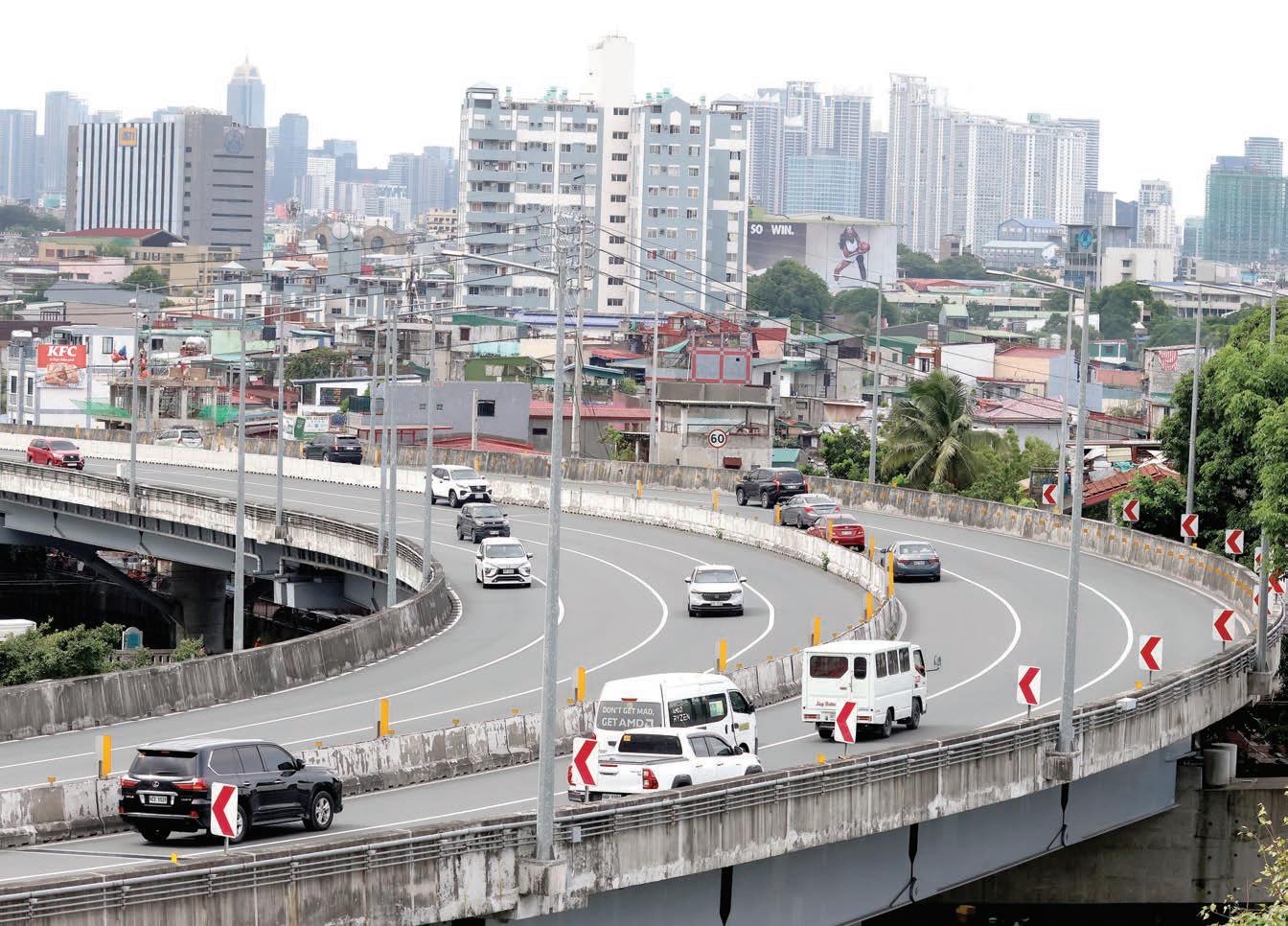
PRESIDENT Marcos eyes the operation of the Ortigas to Valenzuela portion of the P488-billion Metro Manila Subway (MMS) by 2028 so it can be opened to commuters before the end of his term.
“Hopefully, we can finish it all the way to Valenzuela, maybe we can finish it in ’28. Maybe it can be inaugurated in 2028. Let’s just see,” Marcos told reporters in Filipino after he inspected the Camp Aguinaldo Station of the Metro Manila Subway Project on Wednesday
In March, the Department of Transportation said that the MMS is projected to start partial operations by 2032.
DOTr said the MMS is unlikely to be completed by 2028 after its construction was marred by delays caused by several factors including the pandemic and right of way issues.
The construction of the 33-kilometer railway line, which extends from Valenzuela to Pasay City, started in 2019.
It is funded by the Japan International Cooperation Agency
(Jica) through an official development assistance (ODA).
Marcos, however, is still pushing to fast-track the construction of the subway so it can have a partial opening in the next three years.
The President is optimistic in the prompt construction of the MMS due to the involvement of Japanese companies in the said project.
“It is recognized that the Japanese are one of the top—when it comes to heavy engineering and construction projects such as this,” Marcos said.
“So I think we have picked the right partner and I am very happy to see the progress that’s being made,” he added. Samuel P. Medenilla
“Everyone agrees that we need to speed up and do our best because our commuters want their commute to be more comfortable,” he said in Filipino. Once completed, he said the MMS will reduce the travel time from Valenzuela to the Ninoy Aquino International Airport (Naia) from two hours to just 40 minutes.
Legislator seeks investigation into women’s gambling habit
APARTY-LIST lawmaker has called on the House of Representatives to investigate what he called “the alarming rise” in cases of online gambling involving women—particularly housewives—whose livelihoods are being depleted due to gambling addiction.
Party-list Rep. Nathaniel M. Oducado of 1-Tahanan expressed concern over data indicating that women who stay at home are among the most vulnerable to online gambling.
In a statement, Oducado said 32 percent of women reportedly spend at least P1,000 per week on online
conduct the trial now.”
Diokno welcomed Senator Joel Villanueva’s recent announcement that the Senate will reconvene as an impeachment court on August 4, calling it a “positive step” toward upholding constitutional duty.
“The Constitution clearly states that once the Senate convenes as an impeachment court, the trial must proceed without delay. That is what our senators must prioritize,” he said.
Diokno added that the latest survey results should serve as a wake-up call to all public officials.
“This is an eye-opener. The message is clear—the Filipino people are waiting for
and security personnel. Disturbingly, none of these individuals reported the item to the Lost & Found Section.
Follow up efforts of the Terminal 3 APD and Surveillance Team resulted in the recovery of all the missing items.
Airport Police Officers Casey San Juan and Frelyn Leda, along with CCTV analysts,
members from academe.”
The call comes amid ongoing investigations led by the Coast Guard (PCG), which has retrieved sacks of suspected human bones from Taal Lake—an area pointed to by whistleblower Julie “Totoy” Patidongan as the supposed dumping site of the missing cockfighting enthusiasts’ remains.
Patidongan, who is both a whistleblower and an accused in the case, earlier linked e-sabong operator and gaming tycoon Charlie “Atong” Ang to the alleged
gambling, with the majority of them being stay-at-home individuals.
“We found that those who stay at home are the ones investing the most in online gambling. Alarmingly, 32 percent of women are spending a minimum of P1,000 weekly on these platforms,” he said.
Oducado filed House Resolution 42, which seeks a congressional inquiry into the growing issue of online gambling.
The first-term lawmaker reiterated the importance of the investigation, especially its focus on the severe effects of online gambling addiction—not just among adults but
the trial to begin. We are all waiting for the trial to begin. I think you can come to that conclusion from the results of the survey,” Diokno added.
Public trust
IN a surprising turn of political events, the House of Representatives emerged from one of its most politically charged chapters— the impeachment of Vice President Sara Duterte—with its highest public trust ratings in recent memory.
Lanao del Sur Rep. Zia Alonto Adiong, a leading voice of the House Young Guns bloc, described the development as “politically rare,” saying the rise in public trust defied
diligently pursued every lead, interviewed all involved parties, and remained committed until the missing items were fully retrieved after interviewing all involved parties.
“We commend our Terminal 3 Police and Surveillance teams for their dedication in resolving this case,” said Miaa General Manager Eric Ines. “Even though the
abductions, claiming the victims were killed after being caught cheating in online cockfighting games. Ang has since denied the accusations and has filed extortion charges against Patidongan, alleging he was being asked for P300 million in exchange for not implicating him in the case. Despite his disclosures, Prosecutor General Richard Anthony Fadullon said Patidongan remains a respondent in the ongoing criminal cases, as he has yet to submit a formal sworn affidavit.
also among the youth and minors.
Oducado added that 60 percent of individuals involved in online gambling are low-income earners, with monthly incomes of P15,000 or less. He noted that even tricycle drivers are falling into the trap, choosing gambling over work.
“We discovered that 60 percent of people engaged in online gambling are low-income earners— those making P15,000 or less.
In daily life, we even see tricycle drivers who, instead of working, spend their money on gambling,” he added.
When asked whether some of
historical trends and conventional political expectations.
“Usually, when a Congress nears the end of its term—especially during controversies like impeachment—trust goes down. But this time, it went up. That says something very important: the people saw the work, not the noise,” Adiong said.
Despite the divisive nature of the impeachment case, Adiong said the House maintained institutional discipline and stayed focused on its legislative agenda.
“The politics didn’t derail our work. There were no theatrics, no plenary fights. We kept working—passing laws,
victim did not pursue legal action, we are coordinating with the concerned airlines and security agencies to ensure that those involved are held accountable. This behavior has no place in our airport.”
The personnel who contributed to the successful recovery are set to receive formal commendation at the upcoming flag-raising
Earlier, the National Police Commission (Napolcom) confirmed that Patidongan has filed a complaint against 18 active and former police officers whom he identified as allegedly involved in the abduction. Napolcom Vice Chairman Rafael Vicente Calinisan said the accused policemen have been issued summons to explain their side.
The mysterious disappearance of the sabungeros—which includes an incident near the Manila Arena where six individuals were reportedly kidnapped in January 2022—has since drawn national attention,
those addicted to online gambling might be government aid recipients, Oducado said they have not yet gathered data on that matter. However, he did not discount the possibility.
“It’s possible that some ayuda recipients are also involved in online gambling. While we don’t have data yet, it’s something the House should definitely look into,” Oducado said.
Several lawmakers have already filed bills seeking to review and repeal all existing laws and legal authorities that permit any form or level of online gambling in the country. Jovee Marie N. dela Cruz
conducting oversight. That kind of discipline is rare when the political temperature is high,” he said.
Adiong pointed to the passage of 61 out of 64 priority bills identified by the Legislative-Executive Development Advisory Council (Ledac) throughout the 19th Congress—including 27 out of 28 bills targeted during the 3rd Regular Session— as evidence of the chamber’s productivity. Adiong dismissed the notion that the impeachment process eroded public confidence, saying the numbers tell a different story. He added that the rise in trust was driven not by publicity but by performance.
ceremony, as recommended by the MIAA Praise Committee. Ines underscored the critical importance of integrity among airport personnel, reiterating that all found items must be immediately reported to the Lost and Found section to guarantee their return to the rightful owners.
prompting calls for deeper legislative inquiry and criminal accountability. When asked if he would participate in a proposed Quad Committee (Quad Comm) to handle both the sabungeros case and broader online gambling issues, Diokno responded cautiously.
“You know, it’s too early at this point to say what committees will be formed. But of course, any committee that will push for accountability, would be most willing to participate in it,” he said. Jovee Marie N. dela Cruz
DFA vows action as more Filipinos fall victim to online scam operations in Southeast Asia
THE Department of Foreign Affairs (DFA) has received disturbing reports of more Filipinos still being forced to work in illegal call centers operated by cross-border scamming syndicates
across mainland Southeast Asia. In a statement Tuesday, the DFA said these syndicates—active in Thailand, Myanmar, Lao PDR, and Cambodia—are exploiting victims of human trafficking by coercing
them into online fraud schemes, often through threats or deceit.
To address the growing concern, the DFA reaffirmed its commitment to assist Filipinos in distress and work closely with host governments to dismantle trafficking networks and repatriate victims. Efforts are coordinated through its Foreign Service Posts, with continuous appeals for cooperation from local authorities.
“The DFA remains relentless in its mission to safeguard the welfare of our kababayans,” the department said, while urging Filipino communities and families to help prevent exploitative recruitment practices that push nationals into forced criminality.
Just three months ago, 206 Filipino human trafficking victims from scam hubs in Myawaddy, Myanmar were repatriated by the DFA. (See related story: https://businessmirror.com. ph/2025/03/18/187-filipinosfreed-from-myanmar-scamhubs-2/)
The DFA called on relatives of Filipinos who wish to provide verified information about loved ones believed to be trapped near scam hubs in the Myanmar-Thai border region. Concerned families may contact the Philippine Embassies in:
n Yangon, Myanmar through the Assistance-to-Nationals (ATN) hotline: +95 998 521 0991, Email: yangonpe.atn@dfa.gov.ph , or via the Philippine Embassy in Myanmar’s Facebook Messenger; n Bangkok, Thailand through the ATN hotline: +66 81989 7116, or Email: bangkok.pe@dfa.gov.ph
The Philippine government also reiterated its advisory for overseas-bound workers to follow deployment procedures set by the Department of Migrant Workers (DMW) and other relevant agencies, warning that irregular travel routes significantly increase the risk of trafficking and exploitation. Malou Talosig-Bartolome
Cayetano clarifies house ‘arrest’ proposal: Duterte won’t be brought to Davao or PHL
SENATOR Alan Peter Cayetano on Tuesday clarified that his resolution calling for the interim release of former President Rodrigo Duterte does not mean bringing him home to Davao City or anywhere else in the Philippines. Instead, he is proposing a restrictive form of house arrest—still within the jurisdiction of the International Criminal Court (ICC) in The Hague, Netherlands—that balances legal accountability with compassion for Duterte’s age and health condition.
Cayetano said this in an interview with veteran host Boy Abunda, posted online on July 15, 2025.
“Let’s just be clear. Some people have reacted, ‘What’s this, going back to Davao? Going back to the Philippines?” Abunda asked.
“No,” the senator responded.
“Because there is already [a call for] interim release. And under the rules of the ICC, the ICC member state must agree. So my answer is: What if he is under house arrest in The Hague itself? They rent a house or whatever.”
Editor: Angel R. Calso
Thursday, July 17, 2025 A7
UN finds rising child malnutrition in Gaza; Israeli strikes kill 93 Palestinians–officials
By Wafaa Shurafa The Associated Press
DEIR AL-BALAH, Gaza Strip—
Malnutrition rates among children in the Gaza Strip have doubled since Israel sharply restricted the entry of food in March, the UN said Tuesday. New Israeli strikes killed more than 90 Palestinians, including dozens of women and children, according to health officials.
Hunger has been rising among Gaza’s more than 2 million Palestinians since Israel broke a ceasefire in March to resume the war and banned all food and other supplies from entering Gaza, saying it aimed to pressure Hamas to release hostages. It slightly eased the blockade in late May, allowing in a trickle of aid.
UNRWA, the main UN agency caring for Palestinians in Gaza, said it had screened nearly 16,000 children under age 5 at its clinics in June and found 10.2% of them were acutely malnourished. By comparison, in March, 5.5% of the nearly 15,000 children it screened were malnourished.
New airstrikes kill several families
ONE strike in the northern Shati refugee camp killed a 68-year-old Hamas member of the Palestinian legislature, as well as a man and a woman and their six children who were sheltering in the same building, according to officials from the heavily damaged Shifa Hospital, where the casualties were taken.
One of the deadliest strikes hit a house in Gaza City’s Tel al-Hawa district on Monday evening and killed 19 members of the family living inside, according to Shifa Hospital. The dead included eight women and six children. A strike on a tent housing displaced people in the same district killed a man and a woman and their two children.
The Israeli military did not comment on the strikes.
Gaza’s Health Ministry said in a daily report Tuesday afternoon that the bodies of 93 people killed by Israeli strikes had been brought to hospitals in Gaza over the past 24 hours, along with 278 wounded. It did not specify the total number of women and children among the dead.
The Hamas politician killed in a strike early Tuesday, Mohammed Faraj al-Ghoul, was a member of the bloc of representatives from the group that won seats in the Palestinian Legislative Council in the last national elections, held in 2006.
The Israeli military says it only targets militants and tries to avoid harming civilians. It blames civilian deaths on Hamas because the militants operate in densely populated areas. But daily, it hits homes and shelters where people are living without warning or explanation of the target.
Malnutrition grows UNICEF, which screens children separately from UNRWA, also reported a marked increase in malnutrition cases. It said this week its clinics had documented 5,870 cases of malnutrition among children in June, the fourth straight month of increases and more than double the around 2,000 cases it documented in February.
Experts have warned of famine since Israel tightened its lengthy blockade in March.
Israel has allowed an average of 69 trucks a day carrying supplies, including food, since it eased the blockade in May, according to the latest figures from COGAT, the Israeli military agency in charge of coordinating aid. That is far below the hundreds of trucks a day the UN says are needed to sustain Gaza’s population.
On Tuesday, COGAT blamed the UN for failing to distribute aid, saying in a post on X that thousands of pallets of supplies were inside Gaza waiting to be picked up by UN trucks. The UN says it has struggled to pick up and distribute aid because of Israeli military restrictions on its movements and the breakdown in law and order.
Israel has also let in food for distribution by an American contractor, the Gaza Humanitarian Foundation. GHF says it has distributed food boxes with the equivalent of more than 70 million meals since late May at the four centers it runs in the Rafah area of southern Gaza and in central Gaza.
More than 840 Palestinians have been killed and more than 5,600 others wounded in shootings as they walk for hours trying to reach the GHF centers, according to the Health Ministry. Witnesses say Israeli forces open fire with barrages of live ammunition to control crowds on the roads to the GHF centers, which are located in militarycontrolled zones.
The military says it has fired warning shots at people it says have approached its forces in a suspicious manner. GHF says no shootings have taken place in or immediately around its distribution sites.
No breakthrough in ceasefire efforts THE latest attacks came after US President Donald Trump and Israeli Prime Minister Benjamin Netanyahu held two days of talks last week that ended with no breakthrough in negotiations over a ceasefire and hostage release.
Israel has killed more than 58,400 Palestinians and wounded more than 139,000 others in its retaliation campaign since Hamas’ October 7, 2023, attack, according to Gaza’s Health Ministry. Just over half the dead are women and children, according to the ministry, which does not distinguish between civilians and militants in its tally.
Israel has vowed to destroy Hamas after its attack 21 month ago, in which militants stormed into southern Israel and killed some 1,200 people, mostly civilians. They abducted 251 others, and the militants are still holding 50 hostages, less than half of them believed to be alive.
US calls for probe into killing of Palestinian-American
IN a separate development, US Ambassador Mike Huckabee called on Israel to investigate the killing of a 20-yearold Palestinian-American whose family said was beaten to death by Jewish settlers over the weekend in the Israelioccupied West Bank.
“There must be accountability for this criminal and terrorist act,” Huckabee wrote on X.
Seifeddin Musalat, born in Florida, and a local friend were killed Friday. Musalat was beaten to death by Israeli settlers on his family’s land, his cousin Diana Halum told reporters. The family had called on the US State Department to investigate his death and hold the settlers accountable.
The Israeli military said a confrontation erupted after Palestinians hurled stones at Israelis in the area earlier in the day, lightly wounding two people.
Huckabee, like many in the Trump administration, is a strong supporter of Israeli settlements, which are considered illegal by most of the international community and seen by the Palestinians as a major obstacle to peace.
Israel strikes Lebanon’s Bekaa Valley ALSO on Tuesday, Israel launched a series of strikes in Lebanon’s eastern Bekaa Valley, targeting what the military said were compounds of the Hezbollah militant group.
Lebanon’s state-run National News Agency said that one of the strikes hit a Syrian refugee camp, killing seven Syrians. Altogether, the strikes killed 12 people and wounded eight, it said. Hezbollah said one of the strikes hit a rig used to drill water wells.
Israel has continued to carry out near-daily strikes in Lebanon since a US-brokered ceasefire agreement nominally brought an end to the latest Israel-Hezbollah war in November.
Some 4,000 people were killed in Lebanon during the war and more than 250 since the ceasefire.
The Associated Press writer Abby Sewell in Beirut contributed to this report.
A8
Trump’s tariffs drive inflation to highest level since February
By Christopher Rugaber & Josh Boak AP Writers
WASHINGTON—Inflation
rose last month to its highest level since February as President Donald Trump’s sweeping tariffs push up the cost of everything from groceries and clothes to furniture and appliances.
Consumer prices rose 2.7% in June from a year earlier, the Labor Department said Tuesday, up from an annual increase of 2.4% in May. On a monthly basis, prices climbed 0.3% from May to June, after rising just 0.1% the previous month.
Worsening inflation poses a political challenge for Trump, who as a candidate promised to immediately lower costs, but instead has engaged in a whipsawed frenzy of tariffs that have jolted businesses and consumers. Trump insists that the US effectively has no inflation as he has attempted to pressure Federal Reserve Chair Jerome Powell into cutting shortterm interest rates.
Yet the new inflation numbers make it more likely that the central bank will leave rates where they are. Powell has said that he wants to gauge the economic impact of Trump’s tariffs before reducing borrowing costs.
Excluding volatile food and energy, core inflation increased 2.9% in June from a year earlier, up from 2.8% in May. On a monthly basis, it picked up 0.2% from May to June. Economists closely watch core prices because they typically provide a better sense of where inflation is headed.
The uptick in inflation was driven by a range of higher prices. The cost of gasoline rose 1% just from May to June, while grocery prices increased 0.3%. Appliance prices jumped for the third straight month. Toys, clothes, audio equipment, shoes, and sporting goods all got more expensive, and are all heavily imported.
“You are starting to see scattered bits of the tariff inflation regime filter in,” said Eric Winograd, chief economist at asset management firm AllianceBernstein, who added that the cost of long-lasting goods rose last month, compared
with a year ago, for the first time in about three years.
Winograd also noted that housing costs, a big inflation driver since the pandemic, have continued to cool, actually holding down broader inflation. The cost of rent rose 3.8% in June compared with a year ago, the smallest yearly increase since late 2021.
“Were it not for the tariff uncertainty, the Fed would already be cutting rates,” Winograd said. “The question is whether there is more to come, and the Fed clearly thinks there is,” along with most economists.
Some items got cheaper last month, including new and used cars, hotel rooms, and airfares. Travel prices have generally declined in recent months as fewer international tourists visit the US.
A broader political battle over Trump’s tariffs is emerging, a fight that will ultimately be determined by how the US public feels about their cost of living and whether the president is making good on his 2024 promise to help the middle class.
The White House pushed back on claims that the report showed a negative impact from tariffs, since the cost of new cars fell despite the 25% tariffs on autos and 50% tariffs on steel and aluminum. The administration also noted that despite the June bump in apparel prices, clothing prices are still cheaper than three months ago.
“Consumer Prices LOW,” Trump posted on Truth Social. “Bring down the Fed Rate, NOW!!!” For Democratic lawmakers, the
inflation report confirmed their warnings over the past several months that Trump’s tariffs could reignite inflation. They said Tuesday that it will only become more painful given the size of the tariff rates in the letters that Trump posted over the past week.
“For those saying we have not seen the impact of Trump’s tariff wars, look at today’s data. Americans continue to struggle with the costs of groceries and rent—and now prices of food and appliances are rising,” said Sen. Elizabeth Warren, D-Mass.
Many businesses built up a stockpile of goods this spring and were able to delay price hikes, while others likely waited to see if the duties would become permanent.
More businesses now appear to be throwing in the towel and passing on costs to consumers,
duties of 10% on all imports plus 30% on goods from China. Last week the president threatened to hit the European Union with a new 30% tariff starting August 1. He has also threatened to slap 50% duties on Brazil, which would push up the cost of orange juice and coffee. Orange prices leaped 3.5% just from May to June, and are 3.4% higher than a year ago, the government said Tuesday. Overall, grocery prices rose 0.3% last month and are up 2.4% from a year earlier. While that is a much smaller increase than after the pandemic, when inflation surged, it is slightly bigger than the pre-pandemic pace. The Trump administration has also placed a 17% duty on Mexican tomatoes.
including Walmart, the world’s largest retailer, which has said it raised prices in June. Automaker Mitsubishi said last month that it was lifting prices by an average of 2.1% in response to the duties, and Nike has said it would implement “surgical” price hikes.
Powell said last month that companies up and down the supply chain would seek to avoid paying tariffs, but that ultimately some combination of businesses and consumers would bear the cost.
“There’s the manufacturer, the exporter, the importer, the retailer, and the consumer, and each one of those is going to be trying not to be the one to pay for the tariff,” the Fed chair said. “But together, they will all pay for it together—or maybe one party will pay it all. But that process is very hard to predict, and we haven’t been through a situation like this.”
Trump has imposed sweeping
Families have cut spending on food as prices rise. Cassidy Grom, 29, her husband, and his mother are eating out less and try to stretch grocery store rotisserie chickens as far as possible, using them in salads and the bones for soup.
“It feels like a miracle if I’m able to leave the grocery store without spending $100,” the Edison, New Jersey resident said. “We’re trying to save for a house, we’re trying to save for a family, so prices are really on our mind.”
Accelerated inflation could provide a respite for Powell, who has come under withering fire from the White House over interest rates. The Fed chair has said that the duties could both push up prices and slow the economy, a tricky combination for the central bank since higher costs would typically lead the Fed to hike rates while a weaker economy often spurs it to reduce them.
A PERSON pays with cash at a Halal food truck, July 13, 2022, in New York. AP/JULIA NIKHINSON
FL Liza Marcos to skip President’s US visit amid fake news controversy
FIRST Lady Louise “Liza” A. Marcos will not accompany President Ferdinand Marcos to the United States (US) this month, according to Malacañang.
In a radio interview last Wednesday, Palace Press Officer Claire Castro announced that the First Lady is not part of the official entourage of the Chief Executive during his visit to the US on July 20 to 22. It will be Marcos’ fifth visit to the US since he became President in 2022.
The First Lady accompanies the President in some of his overseas trips such his trip to Osaka, Japan in June and in Rome, Italy and the Vatican City last April.
Among those who will accompany Marcos in his upcoming US
trip, Castro said, is Department of Trade and Industry (DTI) Secretary Ma. Cristina A. Roque. Roque will accompany Special Assistant to the President for Investment and Economic Affairs Frederick D. Go to Washington this week to push for the lowering of the 20 percent US tariff on Philippine goods, which will take effect next month.
Castro said the other details about the President’s US trip will come from the Department of Foreign Affairs (DFA).
“It might be better for us to ask the DFA about the trip,” she said in Filipino. She made the remark after certain social media posts, picked
See “Liza,” A10
PhilHealth considers raising income ceiling for contributions as national income grows
By Andrea San Juan @andreasanjuan
STATE-RUN health insurer Philippine Health Insurance
Corp. (PhilHealth) said it is studying whether it should raise the P100,000 income ceiling for contributors as the income per capita in the Philippines is increasing.
“What is possible is the progressive rate. Those who can afford it, maybe they can add more. So that is what we are studying,” PhilHealth Acting President and CEO Edwin M. Mercado told reporters on the sidelines of MAP’s General Membership Meeting on Wednesday held in Taguig City.
“Because now, we have a cap of P100,000 maximum basic compensation. So our economy is increasing and the per capita income of Filipinos is increasing. That is what we are studying. It is not to increase the percentage, but to adjust the cap,” added Mercado.
The premium rate is currently at 5 percent of the basic monthly salary, with an income floor of P10,000 and an income ceiling of P100,000.
Mercado said, meanwhile, that PhilHealth is appealing to obtain budgetary support from the national government for 2026 given that the state-run health insurer did not receive any budget this year.
“Yes, actually I think that our beloved President said last week, that we have already discussed with the Department of Health and PhilHealth. And based on the benefit payments that we expect for the next year, we are really asking for additional funds,” the Acting PhilHealth chief said.
“We don’t have a figure yet because we are still looking at the amount. And we are also looking at the benefit package that we have in line,” added Mercado.
If the benefit package is approved, he said: “It will have an impact on the additional budget. But as I said, a large portion of the benefit payment that we will spend next year is for our collection efficiency.”
Mercado said for now, because the PhilHealth has accumulated “a lot” of retained earnings or surplus funds, “we are still able to cover it,” he noted as he described the impact of the government’s decision to cut the subsidy of PhilHealth to zero, on the operations of the state-run health insurer.
Last month, Finance Secretary Ralph G. Recto reiterated the stance of the Department of Finance (DOF) to retain the current premium rates of the Philippine Health Insurance Corp. (PhilHealth) as two measures in Congress seek lowering premium contributions to the state health insurer.
“I would rather increase [the] benefit packages to reduce outof-pocket expenses. PhilHealth is on track to doing so,” Recto told the BusinessMirror.
Recto’s reaction to the BusinessMirror’s query comes as nongovernment organization Action for Economic Reforms (AER) flagged the proposed PhilHealth premium reductions adding such move raises serious concerns about the state-run health insurer’s financial capacity.
The group pointed to House Bill (HB) 11357 and Senate Bill (SB) 2620. Both bills seek to amend the Universal Health Care (UHC) Law by reducing PhilHealth premiums to 3.5 percent in 2026 from 5 percent. According to the AER, if the proposed amendments were to be passed, it would have “catastrophic consequences” as the state-run health insurer would require increased and sustainable financing as it expands and improves members’ benefits. (See: https://businessmirror.com.ph/2025/06/02/ recto-reiterates-better-philhealth-package-bias/)
Social media drives daily news access for Pinoys, PAHAYAG survey finds
TBy Butch Fernandez @butchfBM
HE top sources of political news and current affairs remain unchanged, according to the latest PAHAYAG 2025 Second Quarter Survey (PQ2-2025).
Internet search (7 out of 10), Facebook (6 out of 10), and television (6 out of 10) continue to dominate as the most-used platforms among Filipino registered voters.
Daily news access is now largely driven by social media, with 1 in 2 voters citing it as their primary source. Meanwhile, television and streaming platforms remain a consistent part of daily life for 1 in 3 Filipino registered voters.
Q2 2025 is a relatively strong quarter for traditional TV news outlets. Most networks held steady, while GMA7 (46% from 42%) and ABS-CBN (41% from 34%) post significant rebounds in high and very high trust ratings, particularly driven by improvements in North-Central Luzon.
Government and alternative channels like PTV4 (27% to 21%) and UNTV (23% to 18%) recorded notable gains in moderate trust, effectively reducing their low to no trust ratings. They are joined by SMNI 32% to 28%), Insider PH (22% to 18%), and PRTV Prime Media (22% to 18%), which also show increased moderate trust
levels. Meanwhile, Bilyonaryo News Channel (10% to 14%) made significant gains in high and very high trust, especially among respondents in the Visayas and Mindanao regions, as awareness of the channel continues to rise.
High trust for BusinessMirror, Times MOST print and digital news outlets held their trust levels, with Manila Times (27% to 31%) and the BusinessMirror (14% to 17%) gaining high trust. Several also grow in moderate trust, including Philippine Star, Business Mirror, Rappler, Summit Express, Sunstar Philippines, Abante, Politiko Online, and FYT Media. Ra -
dio remains stable, with DWPM (DZMM) (25% from 21%) recovering from a Q1 2025 dip. The second-quarter survey is an independent, non-commissioned nationwide purposive sampling survey conducted from June 27 to 30, 2025, comprising 1,500 respondents who are registered Filipino voters, randomly selected from the market research panel of PureSpectrum, a US-based panel marketplace with global operations and a regional office in Singapore.
PAHAYAG is a CSR of PUBLiCUS Asia Inc., which has tracked key metrics since 2017, while Vox Opinion Research is its commissioned research arm since 2013.
Go files bill proposing more inclusive late civil registration mechanisms
SENATOR Christopher “Bong”
Go has moved to address the persistent gap in civil registration in the country by filing a bill at the start of the Twentieth Congress that seeks to strengthen the system of filing delayed registration of births.
Through this proposed measure, Go underscored the importance of securing the legal identity of all Filipinos, especially the most vulnerable and marginalized who remain unregistered.
In the explanatory note, Go emphasized the constitutional mandate to respect and protect the inherent dignity and rights of every Filipino, pointing out the crucial role civil registration plays as the foundation of this protection.
“The 1987 Philippine Constitution upholds the inherent dignity and rights of every Filipino, mandating the State to respect human rights and provide special protection and assistance to children, including ensuring access to basic services. These principles highlight the critical role of civil registration as a fundamental mechanism for recognizing and safeguarding the identity and rights of individuals,” Go explained.
He noted that Act No. 3753, or the Law on Registry of Civil Status, has guided the Philippines’ civil registration system for nearly a century, supplemented by additional laws over time. However, despite this framework, he lamented the significant number of Filipinos who still lack a legal birth record.
“The 1987 Philippine Constitution guarantees every Filipino
Cayetano stressed that the proposed arrangement is actually “more restrictive,” describing it as “like having your own jail cell, but sa labas.”
He said there are many modern tools being used now to monitor detained individuals.
“There’s a monitor on the foot. If you go too far, even just to the door, it will sound,” he said.
“There could be a jammer, so there’s no internet. They could still monitor on CCTV who can visit,” he added.
The senator filed the resolution on July 10, urging the Philippine government to engage the ICC in discussions for a possible interim release under strict conditions.
One option, he said, is to place Duterte in a rented house in The Netherlands or within the premises of the Philippine Embassy, which is considered sovereign Philippine territory. Butch Fernandez
the right to recognition and protection under the law. However, without a birth certificate, individuals are deprived of their legal identity, hindering their ability to fully access basic rights and essential public services,” Go stressed.
“The passage of this Act ensures that every Filipino, especially those who remain unregis -
tered, will have the opportunity to obtain legal identity and, in turn, gain access to governmentfunded programs and services designed to support their welfare and development,” he added. Go cited alarming statistics from the Philippine Statistics Authority (PSA), noting that “approximately 3.7 million Filipinos remain unregistered at birth. This alarming figure underscores a persistent systemic gap that disproportionately affects the most vulnerable sectors of society such as Indigenous Peoples, Muslim communities, and children in geographically isolated and disadvantaged areas ultimately depriving them of their fundamental rights to education, healthcare, and social protection.”
DOJ taps Japanese government assistance in conducting forensic examination on bones recovered from Taal Lake
JBy Joel R. San Juan @jrsanjuan1573
USTICE Secretary Jesus Crispin Remulla Wednesday said they are eying the assistance of the Japanese government in conducting forensic examinations on the bones that have been recovered at the Taal Lake where the ongoing search and recovery operations for the remains of the more than 30 missing cockfighting enthusiasts or “sabungeros” are being conducted.
up by some mainstream media reports, tried to establish a link between the First Lady and the death of business executive Paolo Tantoco in the US last March.
The Presidential Communication Office (PCO) undersecretary tagged the said reports as “fake” and stressed that Tantoco was not part of the entourage of the First Lady at the time of his death.
Castro said it will be up to the First Lady if she decides to file charges against the people behind the said reports.
“So if charges are filed against them, that will depend on the First Lady and the people involved and this will be studied,” she said.
Samuel P. Medenilla
In an interview, Remulla confirmed that representatives of the Japanese embassy in the country visited his office to discuss possible assistance that they can extend to the Philippine government in connection with the efforts to find the remains of the missing sabungeros.
“This morning some people from the Japanese embassy, Interpol people were here and we just repeated our request for equipment and of course for assistance with the DNA.
The latest test were taken from February 18 to June 3, 2025. (See, “Fecal matter still bane of El Nido, Coron water,” in the BusinessMirror, July 14, 2025.)
Newly appointed Environment Secretary Raphael Lotilla has not yet responded to repeated requests for comment on the new water sample tests in El Nido and Coron—major tourism destinations in the country.
Continued from A14
a significant step forward with the introduction of Fisheries Administrative Order (FAO)
Although we have a very competent crime lab, police crime lab and an NBI (National Bureau of Investigation) crime lab capable of looking at DNA, we’re looking at the best possible persons that can help us also.
“This is not an easy task, we need all the help we can get,” Remulla added.
Divers from the Philippine Coast Guard (PCG) have so far recovered several sacks at the Taal Lake believed to be containing human and animal bones since the search and retrieval
For its part, the Municipal Government of El Nido, in a news statement on July 3, gave assurances that addressing environment, public health, and water security concerns are a “top priority” of the LGU. It claimed to have implemented “significant efforts” to address these challenges, in partnership with the national and provincial governments, along with local communities. “These include waste management initiatives, marine protection efforts, and improvements
266, which mandates the implementation of vessel monitoring technology for commercial fishing operations.
The nationwide implementation of this order has encountered delays due to ongoing legal disputes
Continued from A14
operations started last week.
Remulla earlier said that forensic pathologist expert Dr. Raquel Fortun would likely be tapped to help in the examination of the bones recovered from the “Taal Lake.
Julie “Totoy” Patidongan, the whistleblower in the case of missing sabungeros, led authorities to so-called “ground zero” in Taal Lake where the bodies of missing sabungeros were buried.
Remulla also said investigators are also expanding
in our wastewater treatment capacity.”
A shared obligation IT added: “Environmental rehabilitation is a continuing process, and we acknowledge that some of the interventions we have undertaken still fall short in fully resolving complex, long-standing concerns….We appeal to our communities, business owners, tourism stakeholders, and guests for continued cooperation, patience, and collective responsibility. The protection of El Nido’s
and compliance issues. Local enforcement agencies often lack the necessary tools to effectively deter violations related to illegal fishing. This situation underscores the pressing necessity for not only more stringent enforcement measures
Economic blueprint BESIDES the approval of the NSCR, the ED Council also discussed the midterm update
the search for the remains of the missing sabungeros to other sites in Batangas.
In fact, Remulla disclosed that three unclaimed bodies were being exhumed in Batangas to determine whether their deaths were related to e-sabong or the anti-illegal drug war during the previous administration.
The DOJ secretary earlier said authorities are not discounting the possibility that those behind the disappearance of cockfighting aficionados were also involved in the killings related to drug war. “There were some victims found in 2022 that were just buried by the police because nobody claimed them in funerary. We’re exhuming them now as we speak because we have to find out who these people are,” he said.
environment, water resources, and public health is not the duty of government alone. It is a shared obligation that requires unity, discipline, and compassion.”
Despite the presence of a sewerage treatment plant on El Nido, only 3 percent of its households are connected to it. Many cases of diarrhea among tourists have been reported online, despite the latter’s consumption and use of only bottled water for drinking and brushing their teeth. This isn’t the first time that the
but also thorough systemic reforms.
“These reforms should include improving transparency in the fishing industry, enhancing local governance to ensure better management of marine resources, and fully protecting
of the Philippine Development Plan (PDP) 2023-2028.
“We have learned a lot of lessons from our past experiences and many of these have been reflected in our recent efforts. We will continue to stay on our course to sustain our momentum for the second half of this administration,” Balisacan said.
The midterm update of the PDP 2023-2028 refines and recalibrates the country’s key policies, strategies, programs, and legislative priorities to ensure alignment with evolving economic conditions and development goals.
“We’re setting up the DNA bank that we need to set up precisely because of those people who are missing. We need to resolve these disappearances,” he added.
DOT has had issues with the El Nido LGU. As early as 2018, then Tourism Secretary Bernadette Romulo-Puyat had threatened to close down the municipality if it failed to address its trash and water quality issues. The LGU was then supposed to have collaborated with the DOT and Tieza on a Sustainable Tourism Development Project to be funded by the Asian Development Bank, which would have covered Solid Waste Management, Drainage and Urban Design, and Small-Scale Tourism Support Infrastructure.
municipal waters. Such changes are essential for the preservation and sustainability of marine ecosystems, ultimately safeguarding these vital resources for future generations,” Osorio concluded. With a report by Ada Pelonia
The DepDev spearheads the updating of the Plan at the midpoint of each administration to assess progress and make adjustments to targets and interventions. The agency said it will continue receiving comments from various agencies to finalize the updated Plan, for release to the public by the end of July 2025. Earlier, DepDev said the administration’s focus in the last three years of the President’s term will be health, education, food security and mass transportation.
Balisacan recently told reporters that the focus on these areas will be outlined in the midterm update of the PDP. (See: https://businessmirror. com.ph/2025/07/10/last-3-yearsfocus-education-health-foodtransportation/) Cai U. Ordinario
A11 Thursday, July 17, 2025
‘Pet food makers use more upcycled materials’
PBy Ada Pelonia @adapelonia
ET food makers from the United States, one of the Philippines’ top suppliers, are increasingly using upcycled ingredients in their products as part of efforts to reduce food waste and pollution.
According to the Pet Food Institute (PFI), US pet food manufacturers included over 3 million metric tons (MMT) of upcycled ingredients into dog food and over 1 MMT into cat food in 2024.
Citing its 2025 Pet Food Production and Ingredient Analysis report, PFI said 44 percent of the ingredients are upcycled, showcasing the industry’s commitment to minimizing environmental impact while providing cost-effective, sustainable nutrition solutions for pets.
“Investments in sustainable sourcing also benefit rural farming communities, creating long-term economic stability while ensuring a steady supply of quality ingredients for pet food production.”
Diversity
“Pet food makers are committed to continuously working to improve sustainability efforts, including using upcycled ingredients,” PFI said in a statement.
The organization noted that pet food makers increased their use of byproducts from the human food supply chain, including fruit and vegetable pulp, spent grains, and surplus proteins, “to reduce waste, reduce agriculture’s environmental footprint, and create high-quality pet food.”
Report: Emerging economies will drive growth in animal-source consumption
PRODUCTION and calorie intake of animal-source products are expected to increase as incomes rise in middleincome countries, but further increases in food production through improvements in agricultural productivity will be necessary to reduce under-nourishment and agricultural greenhouse gas (GHG) emissions at a global level, according to a report released last Tuesday by the Food and Agriculture Organization of the United Nations (FAO) and the Organisation for Economic Co-operation and Development (OECD).
The OECD-FAO Agricultural Outlook 20252034 serves as a key global reference on medium-term prospects for agricultural and fish markets at national, regional and global levels. The 21st edition of the joint analysis projects that global per capita calorie intake of livestock and fish products will increase by 6 percent over the next decade, driven largely by a rapid rise in lower-middle-income countries, where growth is anticipated to reach 24 percent, nearly four times faster than the global average.
While this rise in intake of nutrient-rich food in lower-middle-income countries will bring average per capita intake to 364 kcals daily, persistent inequalities within and across countries will remain challenging. In low-income countries, average daily per capita intake of animal-source foods is projected at 143 kcal, well below the 300-kcal benchmark used by FAO to analyse the cost and affordability of a healthy diet.
“We have the tools to end hunger and boost global food security,” OECD Secretary-General Mathias Cormann said. “Well-coordinated policies are needed to keep global food markets open, while fostering long-term productivity improvements and sustainability in the agriculture sector. The OECD and FAO can support policymakers around the world in these efforts with our data, analysis and evidence-based recommendations.”
“These projections point to better nutrition for many people in developing countries, a welcome outcome that needs to be scaled up to reach those in the lowest-income countries,” FAO Director-General Qu Dongyu said. “Lower carbon intensity of agrifood systems is also welcome, but we can do better, and FAO and OECD stand ready to help drive it down even more.”
Productivity trends
GLOBAL production of agricultural and fish commodities is projected to expand by about 14 percent through to 2034, mainly enabled by productivity gains in middle-income countries. But this growth entails expanded animal herds and cropland areas. While the output of meat, dairy products and eggs is set to increase by 17 percent, total global inventories of cattle, sheep, pigs and poultry will expand by 7 percent. These developments will lead to a 6 percent increase in direct agricultural GHG emissions over the next decade, reflecting a declining carbon intensity of global direct emissions associated with on-farm production.
Projected productivity improvements are expected to put downward pressure on real agricultural commodity prices. This could pose significant challenges for smallholder farmers who are vulnerable to market volatility and have limited capacity to adopt the innovative technologies needed to increase productivity.
In addition to supporting efforts to improve productivity growth, governments must also ensure that farmers have better access to markets and locally tailored support programs.
Increased efforts to improve agricultural productivity are needed to tackle the dual challenges of reducing undernourishment and agricultural GHG emissions, according to the Outlook. A scenario analysis suggests that global undernourishment could be eradicated and direct agricultural GHG emissions reduced by 7 percent from current levels if combined investments are made in emissions-reduction technologies and in increased food production through a 15 percent productivity improvement. Widespread adoption of currently available emissions-reducing technologies, including precision farming, livestock feed enhancements, improved nutrient and water management, and scalable low-cost practices such as crop rotations and intercropping, will be required to achieve these objectives.
In the face of potential supply chain disruptions, multilateral cooperation and a rule-based agricultural trade system are also key, as the Outlook projects that 22 percent of all calories will cross international borders before final consumption. Facilitating agricultural trade flows will benefit balancing food deficits and surpluses, stabilising prices and enhancing food security and sustainability.
MEANWHILE, the organization said the pet food sector produced 9.8 MMT of pet food, resulting in $51.7 billion in sales last year.
It added that pet food manufacturers purchased $13.2 billion in farm products that are used as “safe, nutritious ingredients” in
dog and cat food.
By ingredient volume, PFI said farm or mill-based products accounted for 44.5 percent
of tonnage, followed by meat and poultry products at 26.5 percent. Animal protein meals and fats are 16.9 percent, while
marine products make up 5.4 percent of tonnage.
“By sourcing pet food ingredients from local farmers, ranchers and fisheries across the US, the pet food industry supports thousands of jobs in agriculture, manufacturing and logistics, which strengthens rural economies nationwide.”
“This demand also helps to sustain family-owned farms and agricultural businesses,” it added.
Figures from the PFI showed that the Philippines imported 167,995 MT of dog and cat food products in 2023. Of this, Thailand accounted for 73,818 MT, while China trailed at 35,624 MT. The Philippines also purchased pet food products from Italy (16,725 MT), Australia (11,918 MT), and the US (11,386 MT), based on PFI data.
Govt set to write off ₧1.13-B debt of Visayas planters
By Jonathan L. Mayuga @jonlmayuga
THE Department of Agrarian Reform (DAR) is set to grant some 30,000 agrarian reform beneficiaries (ARBs) in Panay and Guimaras their Certificates of Condonation with Release of Mortgage (COCROMs) that will wipe out their total debt amounting to P1.135 billion. The COCROM distribution will be held during a simple rite in Passi City.
The amount represents the farmers’ unpaid land amortization that accumulated over the years of failing to pay their monthly obligation for their land awarded by the government through the Comprehensive Agrarian Reform Program (CARP).
DAR Undersecretary for Foreign-Assisted and Special Projects (FASPO) Jesry T. Palmares will lead the event, which will also include the distribution of thousands of land titles and vital farm support services. DAR said this initiative highlights its “continued commitment to empowering farmers in Panay and Guimaras Islands.”
“These simultaneous distributions of debt condonation, land titles, and crucial support services represent DAR’s comprehensive approach to truly empower our farmers,” said Palmares.
“We believe that by easing their financial burdens and providing them with direct ownership and modern tools, we are laying a strong foundation for
their sustainable progress and the nation’s food security.”
A total of 39,443 COCROMs will be awarded to 29,948 ARBs, relieving them of their substantial financial burden.
Also on July 17, DAR will distribute 275 Certificates of Landownership Award (CLOAs), covering 283.80 hectares, to 183 ARBs across Panay and Guimaras Islands.
Furthermore, 621 electronic land titles (e-titles), covering 702.32 hectares, will be awarded to 361 ARBs under the Support to Parcelization of Lands for Individual Titling (SPLIT) Project. This project is a key initiative of the DAR that speeds up the process of giving individual land titles to ARBs for easier and
clearer land ownership. DAR will also turn over P75 million worth of support services to 26 Agrarian Reform Beneficiaries’ Organizations (ARBOs) in the provinces of Iloilo and Guimaras. These include 96 units of farm machineries and equipment (FMEs) such as harvesters, tractors, rice threshers, irrigation pumps, cultivators, and hauling trucks, along with sacks of organic fertilizers.
“These efforts show DAR’s strong dedication to improving the lives of farmers, not just through secure land ownership, but also by giving them the tools they need to succeed. These activities are also expected to boost farming, food security, and rural development in the region.
Experts: Law regulating agri profession may discourage innovation
ANATIONAL law that seeks to regulate the practice of the agriculture profession in the Philippines could “harm” the farm sector, according to economists.
President Ferdinand Marcos Jr. signed last May Republic Act (RA) 12215 or the Philippine Agriculturist Act (PAA), which mandates that agriculture practitioners should secure a license.
Under RA 12215, applicants who want to be registered as an agriculturist should take a written professional licensure exam, which will be conducted once a year.
The law mandates that a person is considered in the practice of agriculture if the nature and character of the work or employment requires professional knowledge in agriculture.
According to Roehlano Briones, a senior research fellow at the Philippine Institute for Development
Studies (PIDS), the PAA’s implication is “deleterious” for the agriculture sector.
He noted that the law requires everyone rendering services to agriculture to get a license and join the professional society. This includes teachers and researchers of agricultural economics and agribusiness.
“Most won’t [get a license], so either they leave agriculture, or practice illegally, with risk of criminal penalties,” Briones told the BusinessMirror.
Under RA 12215, any violation of the law would merit a penalty of a fine ranging from P100,000 to P500,000, or imprisonment of six months to six years, or both, at the discretion of the court.
The law, however, stipulates that applicants could register without examination if they meet certain requirements.
An applicant may be registered as an agriculturist without ex -
amination if it is proven to the satisfaction of the Professional Regulatory Board of Agriculture that he or she is a graduate of a bachelor’s degree in agriculture or any agriculture-related degree or related baccalaureate program from a school, college or university established or recognized by the government.
Applicants may also be exempted from the exams if they have served the agriculture industry in any technical capacity for not less than 5 years before the effectivity of RA 8435, prior to the start of the Agriculturists Licensure Examination in 2003 and prior to the creation of the Board of Agriculture.
Holders of a regular doctorate degree in agriculture from a reputable university of any of six fields of specialization specified in the law may also be exempted from exams. These fields are crop science, animal science, soil science, crop
protection; agricultural economics, agribusiness, agri-enterpreneurship; and agricultural extension and communication. For Briones, however, “the requirements for exemption from the examination are very stringent.”
Meanwhile, the University of Asia and Pacific Center for Food and Agribusiness (CFA) executive director Marie Annette GalvezDacul said the PAA could affect the industry.
“[The law] could create barriers by requiring licensure, potentially excluding skilled practitioners and limiting flexibility in both the academe and private sector,” Dacul told this newspaper.
“By placing too much emphasis on licensure and registration over experience, it may discourage innovation and limit the contributions of experienced professionals in real-world agricultural development.”
Ada Pelonia
Indonesia looking at coal export levy to boost state coffers
INDONESIA , the world’s biggest coal exporter, is considering imposing an export levy on the fossil fuel to boost state revenues, a senior government official said. The tariff would be collected from miners only when coal prices are high, with authorities potentially including it in the 2026 budget plan, Energy and Mineral Resources Deputy Minister Yuliot Tanjung told reporters in Jakarta on Tuesday. President Prabowo Subianto’s administration has been rolling out an array of revenue-boosting measures to fund big-ticket spending plans, which include free meals for school children, and public housing. The mining industry, which is critical to Indonesia’s economy, has faced particular pressure. The sprawling archipelago is the world’s biggest thermal coal exporter, and firms there have been hit by higher royalties and an obligation to keep earnings in local banks for a year. An export levy would add to the pressure on the sector, which is already dealing with a recent plunge in prices. Energy and Mineral Resources Minister Bahlil Lahadalia confirmed on Monday that regulators were moving forward with the levy, which started as a proposal from parliament. A similar charge on gold exports was being considered.
he was quoted as saying by multiple news outlets. “But if prices aren’t economic, then we shouldn’t burden businesses.”
“If prices are good, then they should share some of those earnings with the state,”
The government needs to study the plan further, and consider the sustainability of business and national energy security, along with the potential revenue increase, said Gita Mahyarani, acting executive director of the Indonesian Coal Mining Association. The association is seeking further clarity on the proposed levy, she said. Shares of some Indonesian coal miners fell on Tuesday as the Jakarta Composite Index rose. PT Indika Energy and PT Bukit Asam both closed down 0.8 percent. The plan creates uncertainty for local
miners, and could add to refinancing risks for high-yield companies with limited liquidity and diversification, Mary Ellen Olson, a Bloomberg Intelligence analyst, said in a note. Indika Energy, PT Medco Energi Internasional, PT Mineral Industri Indonesia and PT Freeport Indonesia are potentially most at risk, she said.
Brazil’s orange juice ORANGE juice futures rose to a four-month high in New York on mounting worries that
BLOOMBERG
Beyond hunger: Unveiling food insecurity and inequality in PHL
IN a country where almost one in three households faces food insecurity, the recent seminar organized by the Food and Nutrition Research Institute (DOST-FNRI) highlights a pivotal moment in the battle against hunger in the Philippines. The theme, “Food Security for a Well-Nourished Country,” is more than just a slogan; it’s a powerful call to unite for action. This gathering of experts, researchers, and government officials is a testament to the increasing recognition that science and data-driven approaches are essential in crafting effective solutions to our food and nutrition challenges. (Read the BusinessMirror story: “Science must feed the nation—FNRI,” July 13, 2025).
The results of the 2023 National Nutrition Survey reveal a troubling reality. With 31.4 percent of Filipino households experiencing moderate to severe food insecurity, it’s evident that hunger affects not only rural communities but also urban areas. The myth that city living guarantees better food access has been debunked. Low-income neighborhoods often find themselves trapped in a cycle of poor nutrition due to the high cost and limited availability of healthy food options.
DOST Secretary Renato Solidum Jr.’s appeal for collaboration among different sectors is especially significant. Addressing food insecurity requires a multi-faceted approach that includes government, private institutions, academia, and local communities. Each stakeholder brings unique insights and resources that can drive meaningful change.
The seminar highlighted the complex landscape of food insecurity, revealing that it is not merely about hunger but is intricately linked to social and geographic inequalities. Mildred Guirindola’s insights on the disparities faced by the poorest regions remind us that poverty is a significant barrier to food access. Furthermore, the connection between food waste and hunger, as discussed by Rachel Marie Luna, illustrates another layer of the problem. By redistributing surplus food, organizations like Scholars of Sustenance Philippines are not only tackling malnutrition but also promoting sustainability.
The data presented at the seminar shed light on the root causes of poor nutrition. Factors such as maternal education, income, and employment status directly influence a family’s nutritional health. The alarming statistics regarding stunting among children under five—particularly in low-income households—demonstrate the urgent need for targeted interventions.
The economic implications of poor nutrition cannot be overstated. The DOST-FNRI study linking unhealthy diets to diminished national productivity is a critical reminder that hunger is not just a humanitarian issue; it is an economic one. Investing in nutrition is investing in the country’s future.
The seminar also served as a platform to showcase groundbreaking innovations aimed at improving dietary intake. The introduction of a coconut-based ready-to-eat cereal for children and fortified juices is a promising development in the quest for better nutrition. These innovations highlight the potential for science to create practical solutions that meet the nutritional needs of various age groups, especially the most vulnerable.
Reflecting on the insights from the DOST-FNRI seminar, it’s clear that addressing hunger in the country requires collaboration, innovation, and a dedication to evidence-based solutions. The urgency of the situation demands that we not only listen to the data but act upon it. A well-nourished country is not just a dream; it can be a reality if we harness the power of science, innovation, and collective effort.
BusinessMirror
T. Anthony
REE: The West talks, China acts
CJohn Mangun
OUTSIDE THE BOX
HINA has a chokehold on Rare Earth Elements. That is not hyperbole—it is reality. Beijing controls nearly 90 percent of global REE refinement and more than 90 percent of permanent magnet production. This is not market dominance; it is geopolitical muscle wrapped in neodymium and praseodymium.
And Neodymium powers EV motors, wind turbines, smartphones, and missile systems. Praseodymium runs in aircraft engines, lasers, and welding goggles. Together, Nd and Pr are absolutely essential for modern tech.
Beijing’s latest move—export restrictions on seven heavy rare earths and bans on magnet-making tech— surprised no one that was paying attention. A familiar playbook. In 2010, China cut off REE exports to Japan during a diplomatic spat sending prices through the roof. This time, rolled out in April 2025, the restrictions are not a warning shot. They are a reminder: rare earths are now weapons in the trade arsenal.
The auto industry is already sweating bullets. A 75 percent drop in Chinese magnet exports has jammed vehicle production lines and sent manufacturers scrambling for alternatives. Welcome to the new world order where “rare earth” refers not just to scarcity in the ground but to scarcity in supply chains.
Washington and Brussels are try-
ing to catch up. The United States, which in 1990 relied entirely on imports for just nine minerals, now depends on imports for 15. For nearly half the minerals tracked, over 50 percent of demand is filled from overseas. What was once an economic concern has become a national security nightmare.
Morgan Stanley recently named a few potential winners outside China. MP Materials, Lynas, and Iluka are seen as leading lights to build an independent REE supply chain. MP’s Mountain Pass mine in California is the largest bastnasite deposit outside China—a chemical buffet of REEs and the starting point for magnets. But that is step one. Without downstream magnet-making capability, even these players still send the raw mineral material for processing often back to China.
Europe is in no better shape. The EU has lined up 60 projects to cut reliance on China. These include African extraction and European recycling. A start, but the numbers tell the story. European REE feed-
Beijing’s latest move—export restrictions on seven heavy rare earths and bans on magnet-making tech—surprised no one that was paying attention. A familiar playbook. In 2010, China cut off REE exports to Japan during a diplomatic spat sending prices through the roof. This time, rolled out in April 2025, the restrictions are not a warning shot. They are a reminder: rare earths are now weapons in the trade arsenal.
stock is scarce, with limited refining capacity.
The Philippines sits on untapped rare earth potential, with deposits of lanthanum, cerium, and neodymium in Palawan, Zambales, and Mindoro. These are not huge by any means. But long overlooked, global demand and China’s controls put these resources back in focus.
Environmental risks, weak mining infrastructure, and regulatory hurdles have stalled any development. But with proper investment and safeguards, the country could emerge as an REE supplier in the Indo-Pacific rare earth race.
Nobody compares to the Middle Kingdom Magnet Master. In 2024, it produced about 270 kilotonnes of NdFeB magnets. The US? Three new plants coming online by 2026 will have a combined capacity of just 4 to 5 kilotonnes—less than 2 percent of China’s output. Western plants aim for 1–2 kilotonnes; China’s giants churn out 20–40. That gap cannot be closed with slogans or subsidies
alone. It takes time, technology, and capital. Even recycling efforts—like harvesting magnets from end-of-life vehicles—depend on Chinese expertise to separate and process these critical elements. Alternatives are being explored. “Iron Nitride” and “Manganese-Bismuth” sound fancy, but none of the mineral options are ready to scale up and take China out of the driver’s seat. So where does this leave the rest of the world? Stuck between a rock and a bigger rock. The US and EU are throwing billions at mining, refining, and magnet-making projects. But most are years from first production. Even after board approval, construction alone will take two years if everything goes right. Meanwhile, Beijing is tightening quotas, tracking exports, and banning magnet technology transfers. This is not panic; it is calculated pressure. China knows it controls the valves and is not afraid to twist them. But every quota cut and export restriction only pushes the West to build faster and smarter. Governments are tossing subsidies like confetti. China’s dominance will not disappear overnight. But neither will Western resolve. The race is no longer about whether to decouple—it is about how fast and how much pain it will cost to do it. Whoever controls the magnets controls the machines. It sounds like The Terminator, but both sides know it is true.
E-mail me at mangun@gmail.com. Follow me on Twitter @mangunonmarkets. PSE stock-market information and technical analysis provided by AAA Southeast Equities Inc.
Australia evades US tensions to seek closer China trade ties
By James Mayger & Swati Pandey
THE prime minister of Australia, a longtime US security partner in Asia, sought to focus his trip to China this week on business and trade opportunities, sidestepping thornier issues around US-China competition such as Taiwan or Beijing’s military expansion.
Since taking office just over three years ago, Anthony Albanese has repaired his country’s relationship with China, Australia’s No. 1 export market, after suffering Beijing’s punitive tariffs and other restrictions during the pandemic.
Now, however, President Donald Trump’s renewed trade war between the US and China risks again destabilizing those ties, as they do for Japan, South Korea, the Philippines and others in the region who look to Washington for security but to China for trade.
Premier Li Qiang noted as much in his opening remarks to Albanese during the Australia-China annual leaders’ meeting in Beijing late Tues-
day. Li said the world economy is experiencing “growing instability and uncertainty” and that “all countries are faced with new challenges,” without specifically mentioning Trump, the US or tariffs.
In a joint statement, China and Australia said they agreed to enhance exchanges and cooperation, uphold their respective national interests and navigate differences wisely.
Speaking to reporters after he met with President Xi Jinping earlier Tuesday, Albanese stressed the economic significance of the relationship between the two countries.
“Given that China is overwhelmingly, by far, the largest trading partner that Australia has, it is very
much in the interests of Australian jobs and the Australian economy to have a positive and constructive relationship,” he said.
Xi was equally enthusiastic: “The China-Australia relationship has risen from the setbacks and turned around, bringing tangible benefits to the Chinese and Australian peoples,” he said, obliquely referring to the tensions before 2022.
The leaders seemingly both avoided any tricky security-related issues, including the potential forced sale of the port of Darwin by its Chinese owner, given its proximity to where US Marines exercise. Albanese said the issue didn’t come up in his talks with Xi.
Neither, he said, did complaints about Australia’s foreign investment regime, which has blocked a number of proposed purchases by Chinese firms, nor reports that the US has pressured Canberra about its role in any potential war over Taiwan.
On Taiwan, Albanese said he reaffirmed his nation’s commitment to the “status quo”—support for the
island’s de facto autonomy without endorsing formal independence and maintaining recognition of the One China policy. His remarks highlight Australia’s opposition to any unilateral move, especially by force, to alter the cross-strait balance. In a separate statement, Premier Li told a China-Australia CEO Roundtable that he hoped Australia would treat Chinese enterprises fairly and address issues in market access and investment reviews.
Positive momentum
CHINESE state media has been positive about the trip, with an editorial Monday in the China Daily, the main Communist Party mouthpiece in English, saying that it highlights “Australia’s commitment to deepening ties and fostering stability amid the uncertain global landscape.” “Against the backdrop of rising tensions between the United States and many countries because of the US administration’s recent threat to See “Australia” A13
RESIDENT Donald Trump said he reached a deal with Indonesia that will tariff its goods at 19 percent, adding that the Southeast Asian nation agreed to erase all duties on US imports and buy more than $19 billion of American products including 50 Boeing Co. jets.
“We are going to have full access to Indonesia,” Trump told reporters Tuesday at the White House. “They are paying 19 percent and we are not paying anything.”
Trump said later on social media that Indonesia agreed to purchase $15 billion in US energy and $4.5 billion worth of agricultural products, adding that “many” of the Boeing planes would be 777s.
No timing or details of the purchases were disclosed, and Jakarta hasn’t confirmed the tariff rate. Indonesia’s benchmark stock index rose 0.6 percent at the open on Wednesday.
A pact with Indonesia, which was earlier threatened with a 32 percent tariff, would be the first struck with a country targeted by Trump’s tariff letters sent over the last week, aimed at increasing pressure on negotiators ahead of an August 1 deadline for higher duties to take effect.
The breakthrough will provide some relief for Indonesia, which counts the US as its second-largest export market for goods ranging from apparel to palm oil—two sectors that are also responsible for millions of jobs in the country. The government had cut its growth forecast this year to 5 percent from 5.2 percent to account for the trade war fallout.
The rupiah strengthened as much as 0.2 percent against the dollar in offshore trading after the deal was announced, before reversing all gains. It was little changed on Wednesday morning at 16,281, ahead of an interest rate decision by the country’s central bank later in the day. Still, the latest 19 percent tariff rate—while much lower than most peers in Asia—would be a sharp increase from the 5 percent average US tariff on Indonesian goods in 2024, according to Bloomberg Economics’ Adam Farrar and Rana Sajedi.
“Our preliminary estimates suggest Indonesia could still lose 25 percent of its exports to the US in the medium term, putting 0.3 percent of its GDP at risk,” they said in a note.
The figures Trump posted would effectively erase Indonesia’s $18 billion trade surplus last year with the US, one of the key metrics he’s used in his tariff targets.
He also threatened higher tariffs on goods transshipped through the country, a similar demand he’s made on regional neighbors aimed at stopping Chinese goods from dodging US barriers.
Trump initially announced the accord on social media, without providing specifics, and said he dealt directly with Indonesian President Prabowo Subianto to finalize the deal. Coordinating Ministry for Economic Affairs Secretary Susiwijono Moegiarso said in a text message late Tuesday that the country is preparing a joint statement with the US, which will detail additional information, including non-tariff measures and commercial agreements.
“The President will provide further details upon returning from his overseas visit,” Hasan Nasbi, head of Indonesia’s Presidential Communications Office, said in a text message on Wednesday.
Prabowo is returning to Jakarta after trips to Brazil to attend the BRICS Summit and then Belgium
Australia . . . continued from A12
After 35 years, killer quake teaches us: Politics has no place in disaster work
‘Dto meet with the European Union.
Based on the details posted by Trump, the provisions of the latest tariff deal hew closely to what Indonesia had offered earlier this month.
Southeast Asia’s largest economy had proposed near-zero tariffs on about 70 percent of US imports, as well as increased purchases of US energy products, wheat and aircraft. It also offered greater cooperation in critical minerals and defense.
Indonesia’s top negotiator, Minister Airlangga Hartarto, last week met with US officials, including Trade Representative Jamieson Greer, Commerce Secretary Howard Lutnick and Treasury Secretary Scott Bessent.
An agreement with Indonesia would be the fourth trade framework Trump has announced since pausing his country-specific tariffs, after Vietnam and the UK. The US and China also reached a tariff truce that includes the planned resumption of critical minerals and technology trade between the world’s two largest economies.
The pacts have so far fallen short of full-fledged trade deals, with many details left to be negotiated later and questions lingering about how solid the agreements are.
For instance, Trump provided no details to back up his claims of a deal with Vietnam, and the country’s leadership was caught off guard when he declared that Hanoi agreed to a 20 percent tariff. The Vietnamese government is still seeking to lower the rate, according to people familiar with the matter.
Garuda questions
IT’S also unclear if some of the bigticket deals he’s touted are realistic. For instance, Indonesia’s stateowned airline Garuda is short on cash and hasn’t taken delivery of dozens of Boeing planes it already ordered.
PT Garuda Indonesia, as it’s officially known, ordered 50 of the firm’s 737 Max jets from a deal that it made last decade, according to Boeing’s website. The airline took delivery of one of the narrowbody jets before halting the rest after a 2018 crash, the first of two fatal accidents that sparked a global grounding of the model.
Trump has kept foreign governments and investors on edge about his tariff agenda, with partners rushing to avoid higher import taxes and markets facing yet another dose of uncertainty. The US president indicated Monday he preferred to stick with the levies in his letters, saying, “I really don’t want deals. I just want the paper to get sent.”
The president also said he was willing to continue talks with major economies, including the EU.
The slew of tariff threats from Trump have prompted economies to broaden trade ties beyond the US, including Indonesia, which reached a tentative economic agreement with the EU over the weekend.
“There is quite a level of frustration with these deals and more talk about exploring those other options, to include Europe,” said Erin Murphy, senior fellow on emerging Asia economics at the Center for Strategic and International Studies. With assistance from Grace Sihombing, Prima Wirayani, Harry Suhartono, Danny Lee and Norman Harsono/Bloomberg
son, the editorial said.
“The progress made in their economic and trade cooperation in the past two years has benefited the people of both countries, and provided a counterweight amid the rampancy of unilateralism and protectionism,” it said. Albanese took pains to argue that
By Richard J. Gordon
ID a good thing. You’re a humanitarian. God knows what you did.”
Still, I went home feeling heavy—that politics had again gotten in the way. And it wouldn’t be the last time.
At the beginning of the earthquake, both Naguilian and Kennon Roads were closed. The day before, we had already sent Red Cross volunteers and relief supplies via US Navy helicopters from Subic. The Hyatt Terraces Baguio Hotel and Nevada Hotel had collapsed, and other buildings were damaged.
I decided to go to Baguio and borrowed a US Navy helicopter—but had to fly to Manila first to pick up a Red Cross operations officer and collect more supplies. As we flew out of Manila, the pilot said:
“Sir, we have been ordered to go back to Clark to change helicopters because the US Ambassador will be using this one.”
They flew me back to Subic. I knew then that something was amiss. Adm. Roger Rich met me at the Subic helipad, put his hands around my shoulders, and said: “Dick, I’m sorry. I’ve been told all helicopter requests must now go through the Office of the President.”
Once again, I was crestfallen— not knowing whether to feel bad for my country or for not making it to Baguio.
We offloaded the supplies and
These experiences taught me that, despite everything, there remains a deep well of volunteerism and kindness in the Filipino heart and in the hearts of most people, irrespective of nationality. That’s what I learned from my parents and neighbors —and what I continue to teach my children and fellow Red Cross volunteers. It must be remembered though, when we save lives, politics must be completely set aside.
sent the Red Cross officer by land. Meanwhile, parents from Olongapo whose children studied in Baguio came to me for help. I called Cleto de los Santos, President of the Jeepney Association, and asked him to send as many blue jeepneys as possible to the Cork Room in Baguio, which we used as a meeting point for Olongapo students. Hundreds of students from Olongapo rode back to get out of Baguio through our jeepneys. There were still hundreds of strong aftershocks in Baguio.
As the jeepneys began descending, they were stopped by the Philippine Constabulary—but they pleaded and they were eventually allowed through.
On the way down from Baguio, my mother Amelia—an experienced Red Cross volunteer—was waiting in Naguilian, La Union, with hot meals and Victory Liner buses. The kids rode the Victory Liner buses back home, some disembarking in Pangasinan, Tarlac, and Pampanga. In Olongapo, parents waited at my home to receive them.
Those jeepneys went back and forth several more times. Our response in the earthquake eventually became the template for us to help other cities and provinces during succeeding disasters. We extended help
Trump team’s handling of Epstein files deepens Republican divide
By Catherine Lucey and Myles Miller
THE rift within the Republican Party over the release of documents related to disgraced financier Jeffrey Epstein continued to widen, with top congressional allies of President Donald Trump—including House Speaker Mike Johnson—calling for his administration to exercise greater transparency.
The growing controversy has threatened to fracture Trump’s political base, tarnishing his image as a fearless, no-holds-barred reformer in the eyes of his fervent supporters while offering Democrats a wedge to exploit.
Even as the president has sought to tamp down the growing uproar regarding the deceased sex offender, indications on Capitol Hill Tuesday were that the dispute was far from over. Representative Thomas Massie, an arch-conservative Kentucky Republican who has frequently broken with Trump, said he would offer a discharge petition that could force a vote on releasing files related to the case.
Ralph Norman, a South Carolina Republican, joined Democrats who attempted to amend cryptocurrency legislation to force the release of all Epstein-related documents. Tim Burchett, a Tennessee Republican, said he wants to hear from Ghislaine Maxwell, who was convicted in 2021 of participating in Epstein’s sex crimes.
And Johnson, in one of the highest-profile instances of the Trump loyalist disagreeing with the White House, told right-wing podcaster Benny Johnson that Attorney General Pam Bondi should “come forward and explain” her comments on Epstein’s purported client list.
Many Trump supporters reacted in fury after the Justice Department declared there was no additional information to release, pointing out that Bondi said earlier this year, in
his government wasn’t looking to China to make up for the changes to US trade policy under Trump.
“Trade with the US is important, but is less than 5 percent” of what the country sells, he said. “What Australia is doing is engaging not just with China, but we engage as well with our partners around the
a Fox News interview, that an Epstein client list was sitting on her desk for review.
“I like Pam, I think she’s done a good job but we need the DOJ focusing on the major priorities,” Johnson said. “I’m anxious to put this behind us.”
Notably, the Louisiana Republican added that he believed “transparency” was the best approach to the controversy.
Trump has enjoyed fervent support from his base since his first term in office and has delivered on a number of campaign promises this year, including an immigration crackdown and passing a tax bill. Yet the handling of the Epstein case—long a focus of his supporters and the source of many conspiracy theories—has become a serious point of tension. Since last weekend, the president has been trying to tamp it down.
“I don’t understand why the Jeffrey Epstein case would be of interest to anybody. It’s pretty boring stuff,” Trump said Tuesday. “It’s sorted, but it’s boring, And I don’t understand why it keeps going, I think, well, really only pretty bad people, including fake news, want to keep something like that going.”
Earlier Tuesday, Trump voiced support for Bondi, saying that she had handled the situation “very well” even though his daughter-in-law, Fox News anchor Lara Trump, told Benny Johnson that there should be “more transparency” in the investigation.
Trump indicated Bondi had provided him a “very quick” briefing on
world and we increasingly want to see a diversification of our trade.” Albanese heads next to Chengdu on his six-day trip, which comes on the heels of visits by a number of Australian officials. Reserve Bank Deputy Governor Andrew Hauser traveled there in April, followed by Governor Michele Bullock in May.
the Justice Department and Federal Bureau of Investigation review of the Epstein case, before pivoting to suggesting, without evidence, that the files had been “made up” by former FBI Director James Comey, former President Barack Obama and the Biden administration.
At a cabinet meeting earlier this month, Bondi attempted to explain the apparent discrepancy between the announcement that the Justice Department didn’t have an Epstein client list to distribute and her earlier statement that it was on her desk.
“I was asked a question about the client list, and my response was it’s sitting on my desk to be reviewed, meaning the file, along with the JFK, MLK files as well—that’s what I meant by that,” she said.
Trump spent much of the weekend defending Bondi and attempting to temper the tumult, including in a post on his Truth Social media platform. He placed calls to attendees at Turning Point USA’s Student Action Summit in Florida, urging them to drop the issue, according to a person familiar.
Bondi on Tuesday said she had no intention of resigning, promising to be in the role as long as Trump wishes, but declined to answer questions about whether more will be released on the Epstein case. She said the Epstein saga hasn’t disrupted Justice Department operations, and she’s working closely with FBI Director Kash Patel on law enforcement priorities.
However, she declined to describe her relationship with FBI Deputy Director Dan Bongino, who previously raised questions about the handling of the Epstein case as a podcaster.
Trump told reporters on Sunday that he believed Bongino, a former Secret Service agent, planned to stay in the administration.
“Oh, I think so,” he said. “I spoke
The two nations are set to start a review of their Free Trade Agreement, which was signed a decade ago, Albanese also said Tuesday. China’s Ambassador Xiao Qian in an editorial last week called for a review “with a more open attitude and higher standard.” While China bought almost $62
to Cebu, Silay, Bohol, Quezon—even Cagayan during disasters. To this day, people still come up to me and say, “You restored power in Silay.” I’m proud of that.
These experiences taught me that, despite everything, there remains a deep well of volunteerism and kindness in the Filipino heart and in the hearts of most people, irrespective of nationality. That’s what I learned from my parents and neighbors—and what I continue to teach my children and fellow Red Cross volunteers. It must be remembered though, when we save lives, politics must be completely set aside.
Richard J. Gordon is the Chairman and Chief Executive Officer of the Philippine Red Cross
to him today. Dan Bongino, very good guy. I’ve known him a long time, I’ve done his show many times. And he sounded terrific, actually. No, I think he’s in good shape.” A CNN poll conducted by SSRS and released Tuesday underscored the political vulnerability that Trump and his allies face over the case, with just 3 percent of Americans saying they are satisfied with the amount of information that the government has released regarding Epstein. Four out of every 10 Republicans say they’re actively dissatisfied with the information shared by the administration, while 52 percent of independent voters say the same.
Epstein pleaded guilty in 2008 to Florida charges, including procurement of minors to engage in prostitution. He died in a Manhattan jail in 2019 as he was awaiting trial on federal sex trafficking charges involving underage girls. Both a medical examiner and an investigation by the FBI determined that Epstein died by suicide.
Conservative lawmakers have for months been struggling to straddle the line between the president’s legislative agenda and promises they’ve made to voters who demanded steep deficit cuts and have long called for greater transparency on Epstein. House Democrats on Tuesday tried to force Republicans into a vote on the issue. A day earlier, House Minority Leader Hakeem Jeffries said Congress should force the release of the files if the administration doesn’t release them on its own.
“The American people deserve to know the truth,” the New York Democrat told reporters at the Capitol. “What, if anything, is the Trump administration and the Department of Justice hiding? With assistance from Erik Wasson/Bloomberg
billion (A$95 billion) of Australian goods in the first half of this year, managing the relationship is complicated by Beijing’s increased assertiveness in the Asia-Pacific. In February, it conducted live-fire naval drills in the Tasman Sea, near Australia and New Zealand. With assistance from Josh Xiao, Olivia Tam and Bingyan Wang/Bloomberg
THE author overseeing Red Cross rescue operations in Baguio City following the deadly earthquake in 1990.
BusinessMirror
Amid ERC transition, DOE hopes to keep GEA5 sked
By Lenie Lectura @llectura
THEDepartment of Energy (DOE) remains hopeful that the fifth round of the green energy auction (GEA5) will take place within the year despite the possibility of a delay in the issuance of the maximum bid prices by the Energy Regulatory Commission (ERC).
“Still hoping and we’re pushing actually. We already conducted public consultations on the terms of reference. We’re working on the potential GEAR [green energy auction reserve] price to guide the potential bidders.
“We hope that the appointment of the new ERC commissioners including the chairperson will be done soonest. But, of course, the Office of the President has to evaluate and look for the appropriate people,” said DOE Assistant Director Mylene Capongcol.
The ERC-issued GEAR price
serves as the maximum price in pesos per kilowatt hour (kWh) that will be used as the basis for bid offers during the auction. The auction will only proceed once the GEAR price has been set. However, two ERC commissioners have reached the end of their seven-year terms while the chairperson has submitted her irrevocable resignation. With this, there are only two commissioners left at the ERC.
“But there are directors and other commissioners who are familiar with the GEAR pricing, except that
the final decision has to wait for the Commission’s completion,” added Capongcol.
Under GEA 5, the DOE is poised to offer 3,300 megawatts (MW) of offshore wind (OSW) in a bid to deliver the first kW before the end of the term of President Ferdinand Marcos Jr.
OSW developers , however, raised concerns on the lack of transmission line assets and modernization of port infrastructure, which they deem critical in determining their final investment decision.
Capongcol said the DOE is closely coordinating with the Philippine Ports Authority and the National Grid Corporation of the Philippines (NGCP).
“In the terms of reference, we have a commitment on the side of the government that it will be a force majeure if the transmission line is not available, if the port is not available. So, they are excused from delivering the offshore wind projects if those are not present. These are our de-risking tools,” explained the DOE official.
The PPA has formally expressed full support to the DOE in initiating the detailed engineering
designs and taking immediate steps to repurpose three priority ports to ensure that they are fully equipped to handle the installation, commissioning, and operational requirements of OSW projects.
These are the Port of Currimao in Ilocos Norte, Port of Batangas in Sta. Clara, Batangas City, and Port of Jose Panganiban in Camarines Norte.
The DOE has identified these three ports as critical to OSW development, given their proximity to high-potential offshore wind energy service contracts (OWESCs).
Positioned near 13 OWESCs, the Port of Currimao supports a potential total capacity of 9,489 MW, with three service contracts already in the advanced predevelopment stage while the Port of Batangas is located close to 29 OWESCs with a combined potential capacity of 24,300 MW. Six of these projects are in the advanced stages of predevelopment, including permitting, licensing, and data gathering.
The Port of Jose Panganiban, on the other hand, is situated near 14 OWESCs with a potential capacity of 8,150 MW, with two projects in
E.D. COUNCIL APPROVES O&M PROJECT OF NORTH-SOUTH RAIL
THE Economy and Development Council (ED) Council chaired by the President has approved the North-South Commuter Railway (NSCR) Operations & Maintenance (O&M) Project in its recent meeting.
The approval of the P229.32-billion Operations & Maintenance (O&M) Project for the railway brings Filipinos closer to benefiting from this infrastructure flagship project.
DepDev said the pre-operations for the project will begin in March 2026 until July 2027, while full operations are expected to begin in January 2032.
“The North-South Commuter Railway Project is a major step toward faster, greener, and more connected transportation for Filipinos as the system will also be integrated with the Metro Manila Subway,” Department of Economy, Planning, and Development (DepDev) Secretary and ED Council Vice Chairperson Arsenio M. Balisacan said in a statement.
The approval covers the O&M of NSCR’s rail assets and interoperations with the Metro Manila Subway Project, particularly the FTI to Bicutan.
The DepDev also said the commercial development in the NSCR as well as the establishment of green spaces in viable areas are also included in the project.
“At the same time, it will promote green and commercial development along its corridors,” Balisacan added.
The NSCR is a 147-kilometer elevated railway line that will ease travel across three regions: Central Luzon, Metro Manila, and Calabarzon.
The construction of the NSCR is in ad-
vanced stages along the alignment and is expected to benefit 800,000 passengers daily in its opening year, eventually serving up to one million commuters. The railway will feature 35 stations, including 31 elevated, three at-grade, and one underground. Depots will be located in Clark, Valenzuela, and Calamba to support maintenance and operations. The concession period for the partial operations of Phase 1 or the Clark International Airport (CIA) to Valenzuela,
By Jonathan L. Mayuga
AN international ocean conservation advocacy group warned on Wednesday that the Philippines is now facing a growing crisis in its fisheries sector, as production of commonly consumed fish continues to decline sharply. If not averted, the situation may dent the country’s food security.
Oceana’s July 2025 newsletter pointed out that data from the Philippine Statistics Authority (PSA) reveal significant drops in the catches of staple species such as Bali sardinella (tamban), frigate tuna (tulingan), yellowfin tuna (tambakol/bariles), and round scad (galunggong)—a trend attributed to persistent overfishing, destructive practices, and the unchecked rise of illegal, unreported, and unregulated (IUU) fishing activities. According to Oceana, municipal fisheries production, which it describes as “the lifeblood of millions of Filipino families,” fell to its lowest since 2002, dropping 8.8 percent from 879,960 metric tons in 2023 to 802,770 metric tons in 2024.
“Overall fisheries output shrank by 5 percentin 2024, continuing a long-term downward trajectory,” the report stated.
The report also noted that key species have suffered dramatic declines from their peak years.
For instance, Bali sardinella, locally known as tamban, continues to go down, from over 334,000 metric tons in 2010 to around 253,000 in 2024.
Frigate tuna or tulingan, also declined by 62 percent from its 2004 peak.
Meanwhile, yellowfin tuna, locally called tambakol or bariles, also dropped 46 percent since its 2008 high. Even the country’s once-favorite fish, the round scad or galunggong, fell by a whopping 46 percent since 2007.
The report said the catch per municipal fisher has decreased from 5 kilograms in 2010 to just 4 kilo -
grams in 2023.
Oceana said this production crisis spells trouble for national food security, as a growing population compounds the strain on already dwindling wild fish stocks, Oceana said.
“The relentless decline in our fisheries production is a red flag for every Filipino. Our fishing communities, already among the country’s poorest, now face emptier seas and shrinking livelihoods due to rampant illegal commercial fishing. Unless we act decisively to safeguard municipal waters and uphold the law, our dream of food-fish sufficiency will remain out of reach,” said Oceana Acting Vice President Atty. Rose-Liza Eisma-Osorio. According to Oceana, compounding the situation is an alarming uptick in IUU fishing, particularly the incursion of commercial fishing vessels into the 15-kilometer municipal waters reserved for small-scale fishers. According to Karagatan Patrol, a satellite-enabled monitoring platform operated by Oceana and local governments:
Detections of suspected commercial fishing intrusions in municipal waters increased by 9 percent from 26,295 in 2022 to 28,822 in 2023, and then further surged by 10.5 percent to 31,843 in 2024.
Recent weeks saw detections spike nearly 19 percent week-onweek in early March 2025 alone.
Hotspots such as Zamboanga City, Cuyo (Palawan), San Pascual (Masbate), Tongkil (Sulu), Languyan (Tawi-Tawi), Pagbilao (Quezon), and Carles (Iloilo) consistently rank as the hardest hit locations.
IUU fishing is widely recognized as a key driver behind ecosystem collapse, stock depletion, and worsening poverty among municipal fisherfolk, who suffer the brunt of increased competition and reduced catches. Meanwhile, Oceana noted that efforts to address illegal fishing practices have encountered considerable obstacles. The Bureau of Fisheries and Aquatic Resources (BFAR) took
El Nido LGU holding
By Ma. Stella F. Arnaldo Special to the BusinessMirror
THE local government of El Nido appears to be the one holding up the efforts to clean up the municipality’s waters, which have been found to be severely contaminated with fecal coliform.
Czarina Zara Loyola, spokesperson of the Department of Tourism (DOT), told the BusinessMirror: “Since 2023, the DOT has diligently pursued all available avenues and engaged relevant agencies to address water and waste management concerns in El Nido, Palawan. A signifi-
cant meeting was held [among] the Secretaries of the DILG [Department of Interior and Local Government], DENR [Department of Environment and Natural Resources], and DOT, along with [El Nido] Mayor Edna Lim in January and April 2024 to discuss these important issues, and where [Tourism] Secretary Christina Frasco offered the assistance of Tieza [Tourism Infrastructure and Enterprise Zone Authority] for tourism infrastructure intervention pertaining to water treatment. Discussions on this matter have ensued since, with the local government unit [LGU] yet to provide complete documents for Tieza to proceed with procurement.”
Loyola added that Frasco, in January, “reiterated” her instructions to Tieza to follow up on the matter with the LGU. “While the DOT does not possess enforcement powers, we rely on the collaboration of concerned agencies to implement the necessary measures to ensure that our tourist destinations have access to clean water and water quality standards are monitored and upheld,” she said.
“In light of recent health concerns, it is essential that we prioritize the safety and well-being of both tourists and local communities. Clean water is not only a fundamental necessity; it is vital for a
healthy travel experience. We are dedicated to working collaboratively with all stakeholders to uphold El Nido’s reputation as a premier destination where visitors can enjoy their stay with
of mind,” said Loyola.
‘Significant efforts’ made THE latest water sample tests made by the Department of
and
Editor: Jennifer A. Ng
B1 Thursday, July 17, 2025
First Gen, Prime Infra ink ₧50-B gas deal
By Lenie Lectura @llectura
LOPEZ-LED First Gen Corp. (First Gen) and Razon-led Prime Infrastructure Capital, Inc. (Prime Infra) sealed their P50-billion gas deal the other day, according to their filing with the stock exchange.
“Further to our disclosure dated
30, 2025 on the execution by First Gen and Prime Infra of a Term
please be advised that the par-
ties today signed a Share Purchase Agreement for the purchase by Prime Infra of a 60-percent equity stake in First Gen subsidiaries relating to its
gas business,” First Gen said.
The parties, however, must first secure approval from the Philippine Competition Commission to clear the deal from any anti-competitive issues.
The transaction, if approved, will pave the way for Prime Infra’s entry into FGen’s gas assets, with the former owning 60 percent of the issued and outstanding capital stock of the 1,000-megawatt (MW) Santa Rita power plant, 500-MW San Lorenzo power plant, 450-MW San Gabriel power plant, 97-MW Avion power plant, the proposed 1,200-MW Santa Maria power plant, as well as the
interim offshore liquefied natural gas (LNG) terminal.
These gas assets are all supplied by the Malampaya gas field operated by another Razon-led firm Prime Energy Resources Development B.V.
The remaining 40 percent will be retained by First Gen.
First Gen said it will focus on expanding its renewable energy (RE) portfolio.
“As we build out more geothermal, hydro, solar, wind—of course, we still feel gas is important because it’s also a good balance to renewable energy buildout—but the focus will be renewable energy,” First Gen President and Chief Operating Officer Francis
SAMC plant gets green lane status
By Andrea E. San Juan @andreasanjuan
THE P30-billion heavy sec-
tions mill and scrap recycling mini-mill project of Candelaria Steel Inc., a subsidiary of SteelAsia Manufacturing Corp. (SAMC), has been endorsed for green lane services, according to the Board of Investments (BOI).
The investment promotion agency attached to the Department of Trade and Industry (DTI) said the facility in Quezon is scheduled to begin commercial operations by July 2027.
“It is expected to generate approximately 655 in-plant jobs and 3,000 indirect jobs, boosting local economic activity and enhancing the domestic steel supply chain,” the BOI said. The project involves the con -
struction of a state-of-the-art facility that will employ the electric arc furnace technology, prioritizing sustainability by using locally sourced recycled scrap metal instead of imported raw materials, the BOI also noted.
According to SAMC, this recycling process reduces carbon dioxide emissions by a minimum of 70 percent compared to traditional blast furnace methods, offering a more environmentally responsible approach to steel production. Once operational, the plant will produce up to one million metric tons of heavy steel sections annually, including angles, channels, H-beams, I-beams, sheet piles, and universal mill plates.
“The project is strategically designed to address the country’s heavy reliance on steel imports, which currently adds 3 to 4 months to local
production timelines,” BOI noted. SAMC also noted that the Philippines is the second-largest user of sheet piles next to China, further underscoring the project’s relevance to national infrastructure development.
According to the BOI, the Candelaria steel mill will complement SAMC’s pioneering medium section mill in Lemery, Batangas, which was also endorsed for green lane certification by BOI OSAC-SI in 2023.
The Lemery facility, currently under construction, will produce medium sections and merchant bars--products that are currently 100 percent imported.
Both SAMC plants intend to supply the Bataan-Cavite Interlink Bridge Project and help close critical gaps in domestic steel production, support fabrication shops, and boost the country’s industrial competitive-
ness across Southeast Asia, the BOI underscored.
The green lane certificate was formally presented by Trade Undersecretary and BOI Managing Head Ceferino Rodolfo to SAMC President Andre Sy.
The SteelAsia executive was joined by Chief Operating Officer Rafael Hidalgo and Vice President for Industry Development Roberto Batungbacal during the ceremony.
The BOI said the steel industry remains a “cornerstone” of Philippine industrialization, supporting sectors such as infrastructure, automotive, shipbuilding, electronics, and packaging.
“Through transformative projects like Candelaria, Steel, BOI reaffirms its role as a key enabler of innovation-driven, sustainable, and resilient industrial growth in the Philippines.”
SM aims to further reduce plastic use
CBy VG Cabuag @villygc
ONGLOMERATE SM Investments Corp. (SMIC) on Wednesday said it created a working group committee that conducts regular dialogues with the different business groups of the company to incorporate plastic reduction into their respective sustainability roadmaps.
This is in support of the Extended Producer Responsibility (EPR) Act of 2022, which requires companies to take responsibility for the recovery of their plastic packaging products and to pursue waste management programs.
“We understand the importance of waste recovery and recycling not only as part of our sustainable business vision but also as a social and legal obligation,” Timothy Daniels, the company’s head of investor relations and sustainability, said.
SM Markets, the umbrella brand for SM Supermarket, SM Hypermarket and Savemore, has encouraged the use of eco-bags over single-use plastics since 2007. In 2024 alone, SM Markets sold 19 million bags, equivalent to around 42 million plastic bags avoided.
Meanwhile, its affiliate Watsons Philippines has transitioned 81 percent of its stores to using paper bags instead of single-use plastics. In addition, over 2,140 retail stock-keeping units fall under Watsons’ sustainable choices category, which includes products classified as clean beauty, better ingredients, better packaging and refills. These products reflect its com -
mitment to offering more environmentally responsible options to consumers.
Goldilocks Bakeshop Inc., one of SM’s portfolio investments, reduced the size of ribbons used in each of their packaging leading to a reduction of 7,000 kilograms of plastics annually.
2GO Group Inc., the logistics business of the SM Group, has also taken steps to reduce plastic use by transitioning to environmentally friendly packaging. Their shipping operations now utilize 100 percent recyclable, reusable and biodegradable packaging materials.
Shopping mall operator SM Prime Holdings Inc. commits to foster the much-needed infrastructure that will help support and maintain plastic waste management strategies across its businesses.
SM Prime has equipped its properties with materials recovery facilities and standardized waste segregation systems across all malls and developments. There are 15 designated drop-off points for plastic wastes, which diverted 63,874 kgs of plastics from landfills.
Its trash-to-cash program, where customers can exchange recyclables, has facilitated the exchange of over 1 million kilo -
grams of recyclables each month, totaling approximately 12 million kilograms. This is equivalent to saving 204,000 trees if all the recyclables were paper or reducing 18,000 tons of carbon emissions if all were plastic.
SM Hotels and Conventions Corp. has also phased out single-
use plastics in its hotels as early as 2018, replacing amenities with refillable or eco-friendly options.
The United Nations Environment Programme identified plastic pollution as a global problem with 19 to 23 million tons of plastic waste going into the ecosystem, polluting lakes, rivers and seas.
Giles Puno said last May.
The company has 3,668 MW of installed capacity in its portfolio, which approximately accounts for 18 percent of the country’s gross generation.
“The partnership between First Gen and Prime Infra will enable the partners to further nurture, enhance and expand their natural gas platforms to serve as a key solution provider to the country’s program to address energy security,” First Gen earlier said. “In line with this, the partnership will work closely with the government to help secure our country’s energy independence.”
Upon closing of the transaction, Prime Infra will pay First Gen P50 billion. First Gen is also entitled to receive additional earnout amounts, subject to the fulfillment of certain conditions.
Experts said the Razon-Lopez alliance will spur competition among gas players, which is a welcome development as this will encourage additional investments in the energy sector and help secure the country’s energy independence.
President Marcos Jr.’s decision to renew Malampaya also signals renewed investor confidence in the Philippines’s upstream energy sector.
Banking&Finance
THE Bank Marketing Association of the Philippines (BMAP) attended the recent “Mindgame Conference” of Paulo M. Tibig at the Asian Institute of Management. Paulo, a motivational speaker and author, is known for his “learnjoyment” approach to training and his expertise in sales, culture building, leadership, and management. For his Mindgame conference, he emphasized the overall key phrase: “Nasa isip lang yan!,” or “It’s all in the mind!” The conference focused on strategic thinking, personal growth, and mindset transformation. It centered on a powerful message: that change starts in the mind. He says that if we cultivate a positive and confident mindset, we can truly unblock our full potential and achieve our goals. Allow me to share some key takeaways from the conference.
He warns us of “Mindtraps,” marked by:
1. A lack of clarity or vague direction, or growth that’s accidental and not intentional
2. Self-doubt. “Can I do this?” Undermining confidence makes you believe you are becoming.
3. Fear of failure or judgment, which paralyzes decision making.
4. Safe zones, or staying comfortably stuck
5. Pleasing others, or the pressure to conform to societal expectations
6. Toxic environments, composed of the “negatrons” and “negastars” in your midst. He adds the principle of micro-reframe to change the way of thinking. Thought traps should be addressed by a change of thought. For example, “I failed” should be changed to “I can do it better next time.” Or “I’m overwhelmed” with “Will take it in stride.” And “I can’t” to “I’m begin-
Over 4M Pinoy adults still financially excluded—WB
By Cai U. Ordinario @caiordinario
Aning to learn.”
To evolve, we should look into the following:
1. Self-awareness: recognizing one’s thoughts and behavior.
2. Identify mental blocks: What’s holding you? Transcending selfdoubt, experiences, people and situations that form boundaries and limitations.
3. Transform thought patterns: pivotal change of thoughts and bring in the new narrative to focus on success, growth, and possibilities.
4. Adoption of new routines: align your desired growth mindset reinforced by ritualization and repetition; accept challenges, master your craft, and build confidence.
5. Validate: How to sustain this new behavior? Have insights into the people who matter to you. Mindset is everything: “Breakthroughs don’t happen; it’s in our hearts and minds.” We have the power to change — change that leads to our desired results.
We are not prisoners of our circumstances—we are prisoners of our own minds. That’s why, if you want to change your life, the change must begin in your mind. Paulo emphasized the value of “practice over talent” and “brains over brawn,” underscoring the idea that mindset drives performance. He concluded by reminding everyone that “everything starts in our mind.”
Eric Montelibano is a consultant of Integrated Marketing and Communications at CSBank (Citystate Savings Bank) and the president of the Bank Marketing Association of the Philippines. He can be reached at erichmontelibano@gmail.com. The writer’s views and his written piece do not necessarily reflect those of the BusinessMirror the BMAP and the CSBank. For more information, visit www. bmap.org.ph or https://facebook.com/BankMarketingAssociationPH.
BDO Foundation Inc. is encouraging teachers across the country to integrate financial literacy in their lessons by utilizing free and ready to use teaching resources developed through its collaboration with the Bangko Sentral ng Pilipinas (BSP) and the Department of Education (DepEd).
“More than 300 lesson exemplars and ten financial education videos are readily available on the DepEd’s learning portal,” read a statement issued by the corporate social responsibility arm of BDO Unibank Inc.
“Aligned with the K-12 curriculum, these tools can be used in classroom and co-curricular activities, empowering teachers to make financial concepts relatable and actionable for Filipino learners,” it added.
According to BDO Foundation, the learning materials cover essential topics such as saving, budgeting, financial planning, and avoiding financial scams. This initiative supports BSP’s “National Strategy for Financial Inclusion” and the DepEd’s broader goal to promote financial education as a key life skill among students.
“Teachers are our strongest allies in building a financially responsible generation. We created these tools to make it easier for them to teach money skills in the classroom without the need to develop materials from scratch,” BDO Foundation President Mario A. Deriquito was quoted in the statement as saying.
DECADE after the government rolled out a National Strategy for Financial Inclusion (NSFI), more than four million adult Filipinos do not have any bank, mobile, or digital financial accounts, latest data from the World Bank revealed.
The World Bank Group’s “Global Findex 2025” report showed that while there are 82 million adult Filipinos, only 77.9 million of them have either bank, mobile, or digital accounts. This leaves some 4.1 million or 5 percent who do not have accounts.
The World Bank report defines adult Filipinos as those aged 15 years old and above. The 50.2 percent share of those with accounts in 2024 was lower than the 51.4 percent recorded by the Findex in 2021. Still, this was higher than the 26.6 percent recorded in 2011.
“Not having enough money is the most frequently cited barrier to bank or similar account ownership in East Asia and Pacific, the Middle East and North Africa, and South Asia, as well as in both Ethiopia and Nigeria in Sub-Saharan Africa. Across regions, most adults who cited a lack of money as an obstacle listed it in addition to other reasons,” the report read.
Cited reasons
THE report stated that most adults without accounts live in low-income and middle-income economies. More than half of them or 53 percent representing 650 million adults live in just eight economies: Bangladesh, China, the Arab Republic of Egypt, India, Indonesia, Mexico, Nigeria and Pakistan.
“Adults who believe they lack the money for an account may not be able to maintain minimum balances required to avoid service fees or may have so little money that they think an account is not worthwhile. Adults who cited a lack of money as an obstacle might also perceive themselves as too poor to visit a branch and use bank services,” the report stated.
The report noted that apart from
the lack of money, other reasons cited by respondents were: high fees for financial services; they already had a family member with an account; and, that financial institutions were too far away.
Other reasons, based on the report, included the absence of trust in financial institutions and they lacked the necessary documentation in order to open a financial account.
Account ownership
IN terms of owning a mobile money account, apart from not having enough money, the respondents also said they lacked the necessary documentation to open these accounts.
They also said mobile money agents are too far away, that the available mobile money products are expensive and that they worry about the safety of accounts.
The report also found that beyond these reasons, governments must pay attention to continued use of accounts as some adults without bank accounts admitted that they previously owned accounts.
“(This reflects) perceived tradeoffs between the benefits of having an account and the associated costs, such as fees, bad service, or poorly designed or inappropriate products that do not meet customer needs,” the report stated.
“The findings suggest that policies to increase account ownership should focus not only on reducing barriers, but also on improving the customer experience and product design to support continued account use and customer retention,” it added.
Based on the 2024 data, some 33.5 percent of Filipino adults have accounts in a bank or similar financial institution; 28.8 percent said they had mobile money accounts; and
By Butch Fernandez @butchfBM
THE country cannot tolerate any more mangling of the national budget, much less unabated mangling, Sennator Panfilo “Ping” M. Lacson said Wednesday as he aired support for the move of the Department of Budget and Management (DBM) to prevent insertions in the proposed P6.793-trillion budget for 2026.
“The country cannot anymore tolerate unabated mangling of the ‘National Expenditure Program’ (NEP), which presumably has undergone months of preparation and consultations with the local government units and concerned agencies before being transmitted to Congress, (and if mangled) may not be responsive to the short and medium term development goals of the national government,” said Lacson, an eagle-eyed watchdog of the national budget.
Last Tuesday, Pangandaman called on government agencies to stick to the agreed budget—she described as “very tight—and not to ask for more from lawmakers once they start deliberations on the budget bill.
This was after Marcos endorsed the 2026 NEP, and assured the people it would be a budget that will give priority to sustaining economic growth and
improving people’s quality of life.
Pangandaman was quoted in reports as saying that she had been sitting down with department secretaries to check that they agree with their budget levels and priorities.
Lacson emphasized there should be no more repeat of the mangling of the 2025 General Appropriations Act (GAA) that, he said, was “mangled beyond recognition.”
Earlier, the senator bared inequitable and distorted flood control allocations in the 2025 budget, where a small barangay in a small town received an appropriation of P1.9 billion and one small town got an appropriation of P10 billion.
One of Lacson’s priority bills is ensuring transparency in the preparation of the budget by allowing the participation of civil society organizations in the process, including in the bicameral conference committee.
“Whimsical and arbitrary insertions and realignments, usually contractor and supplier-driven amendments introduced by some self-aggrandizing senators and congressmen more often than not, not only contribute to more unused and misused appropriations in the implementation of the GAA, but worse, become tools of massive corruption,” he stressed.
32.7 percent said they have digitally enabled accounts, which are any accounts used with a card or phone.
If income lost
THE 2024 data also showed that of those who have accounts, more than half or 57.1 percent are women and 34.4 percent are adults who belong to the poorest 40 percent of households.
The report also noted that 41.3 percent of the adults who own accounts are out of the labor force and 46.5 percent live in rural areas.
The World Bank said some 40.3 percent of Filipino adults made digital payments in the past year using 2024 data. This is lower than the 43.5 percent recorded in 2021.
In terms of savings, the data showed 53.6 percent of adults saved formally and informally in 2024.
Only 23.9 percent of them saved formally using an account while 6.3 percent saved informally using a savings club or person outside their family.
The report also showed that 26.7 percent of all adults were considered financially resilient which meant they did not have difficulty accessing extra money in 30 days.
The data showed that percent of women were financially resilient, 15 percent were adults in the poorest 40 percent of households and 38.2 percent said they could cover more than two months of their expenses if their income was lost.
Bottom 40%
FOR mobile connectivity, the World Bank said 78 percent of adults have mobile phones. Of this number, some 81.2 percent were women and 68.5 percent belong to the bottom 40 percent of households.
The data also showed that 69 percent of adults had personal smartphones. Of this number, 71.6 percent were women and 57.1 percent belonged to the 40 percent poorest households.
However, the World Bank data showed only 61.9 percent had a password on their mobile phone.
“For the first time, the report includes data on personal mobilephone ownership and internet use. Globally, 86 percent of adults owned a mobile phone, including 68 percent of adults with a smartphone, according to the Global Findex Digital Connectivity Tracker 2025 shows,” the World Bank said in a statement.
“The rising use of mobile phones for digital transactions, however,
THE East West Banking Corp. (EastWest) announced it has been named as the country’s “Mid-Sized Retail Bank of the Year” by Singapore-based Carlton Media Group Pte. Ltd. during its “Asian Banking and Finance Retail Banking Awards 2025,” in recognition of its “performance and customer-focused growth across its retail banking operations.”
Last year, EastWest achieved a record net income of P7.6 billion, the highest in its 30-year history.
The branch banking group, the cornerstone of the lender’s consumer business, played a pivotal role in delivering this milestone through expanded customer reach, improved cost-efficiency, and enhanced service delivery.
“Our success is built on making banking easier and more relevant for everyday Filipinos,” Jacqueline S. Fernandez, the bank’s president, was quoted in a statement as saying.
“This award speaks to the strength of our retail model and our team’s focus on putting the customer first, whether through digital tools or services tailored to each community.”
The lender’s current and savings account deposits rose higher in 2024
comes with new risks. Of the 4 billion adults in low-income and middleincome economies who own a mobile phone, only around half use a password to protect their phone,” it added.
Modernizing systems
THE World Bank said globally, mobile phone technology played a key role in the surge, with 10 percent of adults in developing economies using a mobile-money account to save—a 5-percentage point increase from 2021.
“Financial inclusion has the potential to improve lives and transform entire economies,” said World Bank Group President Ajay Banga. “Digital finance can convert this potential into reality, but several ingredients need to be in place. At the World Bank Group, we’re working on all of them.”
The World Bank also said in 2024, 40 percent of adults in developing economies saved in a financial account in 2024—a 16-percentage-point increase since 2021 and the fastest rise in more than a decade.
Higher personal saving—through banks or other formal institutions— fuels national financial systems, making more funds available for investment, innovation, and economic growth.
In Sub-Saharan Africa, formal savings also increased by 12-percentage points to 35 percent of adults.
“We’re helping countries get their people access to new or improved digital IDs. We’re constructing social protection programs with digital cash-transfer systems that deliver resources directly to those in need,” Banga said.
“We’re modernizing payment systems and helping to remove regulatory roadblocks—so that people and businesses have the financing they need to innovate and create jobs,” he added.
The Global Findex is the definitive source of data on global access to financial services—from payments to saving and borrowing.
Launched in 2015, the NSFI aimed “to optimize collective efforts toward financial inclusion in the Philippines.”
“Financial inclusion is important for every household and business as access to basic financial services such as savings, payments, credit and investments makes a substantially positive difference in people’s lives,” the 2015 document read.
than the industry average of 3.9 percent. The bank remained among the top three in low-cost funding for six consecutive quarters.
With a Casa-to-term deposit ratio of 80 percent and cost of funds better than the industry average of 1.96 percent, the bank continued to support growth through sustainable, efficient funding sources.
“We set out to deepen relationships not just grow transactions,” Ivy Uy, head of the branch banking group, said. “Through disciplined execution and strong local insight, we expanded our portfolio while staying relevant to communities we serve.” Meanwhile, EastWest’s fully digital banking service “Komo,” rolled out innovations including account linking with the EastWest Rural Bank Inc. and a digital loan application system for public school teachers. By year-end, Komo had a 76-percent monthly active user rate. “As EastWest continues to invest in its people, digital platforms, and retail presence,” the bank said it will “remain focused on its core mission of making banking easy, accessible and empowering for all Filipinos.” VG
THIS photo courtesy of the Department of Education shows Education Secretary Juan Edgardo “Sonny” M. Angara (left) and BDO Foundation Inc. President Mario A. Deriquito shaking hands to reaffirm their shared commitment to financial education. CREDIT: DEPARTMENT OF EDUCATION
Health&Fitness
Thursday, July 17, 2025
New study highlights need for HPV vaccine to cover more common genotypes
By Candy P. Dalizon Contributor
ARECENT DOST-funded study on human papillomavirus (HPV) prevalence and genotype distribution in the Philippines has identified HPV 52 as a more common genotype than HPV 16 and 18. This highlights the importance of choosing HPV vaccines that offer wider protection to safeguard against the most common cervical HPV infections and related cancers.
HPV has over 200 identified genotypes. These genotypes are categorized as high-risk and low-risk. High-risk types, like HPV 16 and 18, are strongly linked to cervical cancer and other anogenital cancers. Lowrisk types, such as HPV 6 and 11, are more commonly associated with genital warts.
On Monday, July 14, 2025, Dr. Ourlad Tantengco shared key findings from the Defeat HPV Study during a media forum held in Manila. This extensive community-based research, involving over 1,100 women from Tondo, Manila (urban) and Naic, Cavite (rural), aimed to update the Philippines’ HPV infection data, which hasn’t been comprehensively collected since 1998.
“We can’t fix a virus, this particular virus, with old public health data in the Philippines. And this is why we need to do research and we need to update data here in our country to support our current efforts to eliminate cervical cancer,” said Dr. Tantengco.
Dr. Tantengco is an assistant professor at the Department of Obstetrics and Gynecology at the University of Texas Medical Branch in the US. He also serves as an adjunct faculty at the University of the Philippines Manila and was awarded the 2020 Outstanding Young Scientist in Molecular Medicine by the National Academy of Science and Technology.
“Based on the 1998 data, the most common genotypes are 16 and 18. But based on our most recent data, it’s actually HPV 52 that is now the most common,” said Dr. Tantengco.
“In summary, in Tondo, Manila, we saw 15.1 percent prevalence. The most common is HPV 52. In Naic, Cavite, the prevalence is 12.8 percent. And the most common is also HPV 52 for high-risk HPV infection. We also saw that there were many women with persistent HPV16. HPV 16 and 18 are the most aggressive genotypes.
But there were even more women with persistent HPV 52 infection,” he pointed out.
Dr. Tantengco explained that HPV 52 is also a high-risk HPV genotype and can cause cervical cancer. While less aggressive than HPV 16 and HPV 18, it still poses a significant threat. The research underscores the need to protect women against HPV-52 and other high-risk genotypes to prevent cervical cancer in those not infected by HPV-16 or HPV-18.
Types of HPV vaccines HPV vaccination is designed to prevent future HPV infections. Dr. Tantengco shared that currently, three types of HPV vaccines are available: the bivalent vaccine, which protects against HPV types 16 and 18; the quadrivalent vaccine, offering protection against HPV types 6, 11, 16, and 18, and also guarding against genital warts; and the nonavalent vaccine, which provides the broadest coverage against nine HPV types (6, 11, 16, 18, 31, 33, 45, 52, and 58).
“All of them can prevent cervical cancer. But of course, the nonavalent will capture more genotypes. So, the protection will be higher. But all of them are safe, effective, and all of them can prevent cervical cancer,” said Dr. Tantengco.
1 in every 7 women
THE study involved women 21 years old and above.
“So in our study, we performed tests to detect if there’s cervical abnormalities. And we also performed HPV genotyping. So we checked if they have HPV infection and what genotypes they have. We tested them for different HPV and other sexually transmitted infections during the first meeting, after six months and then after 12 months. We partnered with Likhaan Center for Women’s Health,” said Dr. Tantengco. As mentioned, in Tondo, Manila, 90 women or 15.1 percent of the cohort tested positive for HPV infection.
“Meaning, around one in every seven women are infected with HPV. So, that’s how common it is. If we’re going to use this data from Tondo, one in every seven women will test positive for HPV,” said Dr. Tantengco.
He likewise shared that they detected 25 HPV genotypes, 15 high risk and six low risk. The study revealed a concerning statistic: 23 percent of women with HPV infection carry multiple HPV genotypes, not just one.
WHILE the Department of Education (DepEd) and the Department of Health (DOH) have committed to transform schools into healthpromoting environments through their Healthy Learning Institutions (HLI) program, a health advocacy group reminded both agencies not to forget the strict enforcement of smoke-free and vape-free schools to protect students from the harmful effects of tobacco and nicotine products.
“The implementation of smokefree and vape-free environment programs should also be prioritized by both agencies since school year 2025-2026 officially started on June 16,” said the Parents Against Vape (PAV).
PAV said that DepEd’s comprehensive tobacco control policy that prohibits smoking near schools and among learners should be applied at all times to protect students from the harms of tobacco, vapes, heated tobacco products, and other novel tobacco products.
“If we strictly enforce smoke-free and vape-free policies we are not only eliminating the exposure to secondhand smoke but are also preventing students from starting to smoke and use vape,” PAV added.
Dr. Tantengco explained that this is alarming because an increased number of genotypes raises the risk of developing cervical cancer. Essentially, about one in four women surveyed are dealing with multiple infections.
“We have a patient with six genotypes, six types of viruses infected her. For sure, she has a higher risk of getting cervical cancer later, compared to others with just a single infection, or with just two or three infections with HPV,” he added.
The highest HPV infection rate is observed in women aged 30 to 40 years, typically their sexual and reproductive prime, followed by those under 30.
The data from Naic, Cavite, mirrors the trend: 26 percent of HPV-infected individuals carry multiple genotypes. This means over one-fourth of these women are infected with two to five HPV types. For high-risk HPV infections, the highest prevalence is seen among 40 to 50-year-old women, with an 11.6 percent infection rate. HPV infection, if persistent, can lead to cervical cancer. Dr. Tantengco also mentioned that their study revealed an alarming persistence rate: nearly 80 percent (78.95 percent) of patients with HPV at baseline were still infected after 12 months.
This means four out of five women infected with HPV remain so after a year, significantly increasing their risk of developing cervical cancer. Among these persistent infections, HPV-52 remains highly prevalent, underscoring its potential to lead to cancer in 5 to 10 years. This finding reinforces the need for HPV vaccines that cover a broader range of genotypes.
Low cervical screening rates
REGARDING health behaviors, the study revealed concerningly low cervical cancer screening rates among patients. While 61 percent of HPVpositive women had previously undergone a Pap smear, this figure dropped significantly to only 30 percent among HPV-negative women. This indicates a general low uptake of cervical cancer screening, meaning many women are not being screened for potential cervical cancer.
Interestingly, despite the low screening rates, almost 100 percent of these women expressed a willingness to be tested. This suggests that underlying factors, such as cost or accessibility, may be preventing them from getting tested. Further -
Tangible improvements
EARLIER , the DepEd and DOH said that they are seeing “tangible” improvements through a multi-agency initiative aimed at transforming schools into health-promoting environments, aligned with President Ferdinand R. Marcos Jr.’s directive to ensure safer, healthier spaces for learners.
DepEd noted that the HLI program, a nationwide strategy implemented in partnership with the DOH, local government units, and school communities, focuses on physical health and mental well-being of students and school personnel.
The DepEd–HLI initiative, which began in 2022, follows a Joint Administrative Order (JAO No. 2022-0001) signed by DepEd, DOH, Commission on Higher Education, Department of the Interior and Local Government, Department of Social Welfare and Development, Technical Education and Skills Development Authority, and Legal Education Board.
Pursuant to Section 30 of Republic Act 11223 or the Universal Health Care Act, the JAO operationalizes the designation of schools as healthy settings, based on standards set by the DOH and DepEd. “Schools that maintained or implemented smoke-free and vape-free policies are beneficial for the whole health of students – both physical and mental,” PAV concluded.
more, HPV vaccination rates were extremely low, with only one to two percent of these women having received the vaccine.
“In terms of knowledge, do they have knowledge about HPV vaccination? Their awareness is low. Only 28 to 34 percent are aware about the HPV vaccine and that it can prevent infection and cancer at the same time,” said Dr. Tantengco.
Other factors associated with HPV infection risk
THE study identified several key factors linked to HPV infection risk. Regarding age at first intercourse, for every year a person delays their first vaginal intercourse, their risk of acquiring HPV infection decreases by five percent; this indicates that earlier sexual activity is associated with a higher risk of HPV infection, while delaying it lowers the risk.
Concerning the number of lifetime sexual partners, for each additional lifetime sex partner, the odds of acquiring HPV infection increase by almost 11 percent, a risk that accumulates with every new partner. Similarly, for each additional lifetime oral sex partner, the odds of getting an HPV infection also increase by almost 11 percent, highlighting that the risk isn’t limited to vaginal intercourse.
Lastly, for perceived risk, individuals who worried they might have HPV had 21 percent higher odds of actually being infected, suggesting that awareness of one’s own sexual behaviors and lifestyle choices, such as having multiple partners or early sexual debut, may contribute to this elevated concern and actual risk.
Next steps
DR. Tantengco said that their next steps involve expanding their research to the Visayas and Mindanao regions, and to include cervical cancer patients. This will allow them to determine if the HPV prevalence and genotype distribution observed in the community are also representative of those found in cervical cancer cases.
Additionally, they will conduct testing for head and neck cancers, particularly oropharyngeal (throat) cancers, to assess for HPV infection. This is crucial, as HPV is a common cause of throat cancers in other countries. Their goal is to provide comprehensive local evidence of HPV’s role in various cancers, beyond just cervical cancer, including those of the throat.
Joint Commission International Reaccredits St. Luke’s–Global City
ST. Luke’s Medical Center (SLMC)— Global City has again earned a Gold
Seal of Approval from the Joint Commission International (JCI) following a rigorous reaccreditation survey under its 8th Edition Standards, thus cementing the hospital’s position as one of the region’s leading healthcare institutions and as a trusted benchmark for quality and patientcentered care in the country.
JCI accreditation is globally recognized as the “gold standard” for healthcare quality and patient safety. From a healthcare perspective, JCI accreditation drives home St. Luke’s renowned culture of continuous improvement, accountability, and the consistent delivery of safe, effective, and patient-centered care. On the business side, it enhances SLMC’s reputation as a trusted healthcare destination, positioning the hospital as a premier choice for medical travel, corporate health partnerships, and international collaborations. It also opens up opportunities for global insurance recognition, while reinforcing investor and stakeholder trust in the institution’s operational integrity and clinical excellence.
“This is more than just a seal. To us all, it is a symbol of St. Luke’s unwavering commitment to deliver care on par with the highest international standards,” said Dr. Dennis P. Serrano, SLMC President and CEO. “To be reaccredited by JCI under some of the most demanding standards in the industry is a reflection of the extraordinary talent and rigor that define our team. It also reaffirms the fact that Filipino healthcare institutions
Experts call for unified care vs silent epidemics in the PHL
By Rory Visco Contributor
I
N a significant push to address one of the Philippines’ most pressing but underrecognized public health issues, the GermanPhilippine Chamber of Commerce and Industry (GPCCI), the German Embassy Manila and pharmaceutical company Boehringer Ingelheim Philippines, conducted recently a multi-sectoral roundtable discussion to confront the growing burden of cardio-renal-metabolic (CRM) conditions.
These interconnected conditions—encompassing heart disease, kidney disease, and metabolic disorders like diabetes—have become increasingly common in the country. Yet despite their prevalence and the serious health consequences they pose, many Filipinos continue to fall victims to these conditions.
Voices from across the health ecosystem, such as clinicians, patient advocates, academics, pharmaceutical experts, and representatives from government agencies were convened in order to develop more integrated, patient-centered strategies that will manage and prevent CRM conditions, often called “silent epidemics,” in the Philippines.
A health crisis that demands integration
“ADDRESSING CRM conditions is not only about clinical treatment. It is about equity, education, and empathy,” explains Dr. Cherry SevillaArenas from the Philippine Heart Center in her keynote. She highlighted how healthcare fragmentation and unequal access leave many patients behind, especially those in low-resource communities. “If we want meaningful health outcomes, we must align our efforts across government, industry, and communities.”
The message was clear: CRM conditions don’t exist in isolation, and neither should their care. This “syndemic,” where diseases interact and worsen one another, is responsible for a significant portion of preventable deaths and hospitalizations in the country. Yet many patients all over the country still receive piecemeal care from specialists.
Lived realities, systemic gaps
FOR Ralph Degollacion, who represents the Healthy Philippines Alliance, a national coalition of civil society organizations that are committed to advancing the health and well-being of all Filipinos, depicted the real-world impact of CRM conditions. He described how chronic illness, financial stress, and the persistent stigma that surrounds non-communicable diseases, can take an emotional toll on families. “People living with CRM conditions often face exclusion, not just medically, but socially and economi -
can lead not just locally, but on the global stage as well.”
Hospitals are assessed against measurable elements across 17 core standards, including, but not limited to: International Patient Safety Goals (IPSG), Access to Care and Continuity of Care (ACC), Assessment of Patients (AOP), Anesthesia and Surgical Care (ASC), and Care of Patients (COP), among others.
The 8th edition of the JCI Hospital Standards, made effective July 2024, introduces key updates that reflect global healthcare priorities. These include requirements to track and reduce diagnostic errors, promote equitable care for vulnerable populations, strengthen data-driven performance and decision-making, and enhance the security and integrity of electronic health records.
The JCI accreditation is valid for three years, with continuous monitoring and improvement expected throughout that period.
St. Luke’s – Global City first received JCI accreditation in 2012, just two years after its inauguration, an achievement few hospitals worldwide can match. This fourth reaccreditation, now under the latest JCI framework, reinforces St. Luke’s role as a pioneer in advanced, compassionate, and safe care not only in the Philippines, but throughout the Southeast Asian region.
cally, largely because of poor access to timely diagnosis and treatment,” he said. Patients from low-income backgrounds often defer or skip care due to costs or lack of nearby facilities, he added. This delay can mean the difference between a manageable condition and a life-threatening one.
Systemic reform needed
HEALTHCARE leaders likewise called for the institutionalization of interdisciplinary care to close the gaps. Dr. Rodney Jimenez of the Philippine Heart Association advocated for a more collaborative approach where healthcare providers are trained through CRM-specific rotations, certifications and developing shared care plans that follow the patient across specialties. He and other experts also emphasized the need for national disease registries to guide policy and funding decisions, and for full implementation of the Universal Health Care (UHC) law to expand access to diagnostic and treatment services.
For her part, Dr. Greta Cortez of Boehringer Ingelheim Philippines provided insights from the pharmaceutical industry, stressing the evolution from treating individual diseases toward addressing the CRM continuum. She said public awareness campaigns like It “Starts with U: Get CheCKD,” which offers free health screenings for chronic kidney disease (CKD) and related conditions, are needed for early intervention and prevention.
The open forum also saw participants discuss key solutions to bridge the gap: unified electronic health records, better workplace wellness programs, and expanded community health efforts, while the importance of culturally relevant education, early screening, and affordable medication access were also explored.
“Strengthening the health system is vital— not just for today’s challenges, but for future resilience,” a public health sector representative noted. Free consultations, essential medicines, and public education campaigns were deemed essential services to address hypertension, diabetes, and hyperlipidemia—the leading risk factors for CRM complications.
GPCCI President Marie Antoniette Mariano lauded the event, calling it “a launching point for more unified action.” She emphasized the importance of building bridges between patients, providers, the business sector, and policymakers to drive sustainable change.
Echoing Mariano’s sentiment, Dr. David Klebs, Economic Counsellor at the German Embassy Manila, reaffirmed Germany’s commitment to strengthening CRM awareness and cross-sector partnerships. “Only through long-term collaboration can we advance public health education, policy reform, and holistic care,” he concluded.
Institutions looking into diagnosis-related groups to enhance health financing
By Rizal Raoul Reyes Contributor
THE Philippines achieved significant gains in Universal Health Care by engaging in regional initiatives aimed at enhancing health financing in Asia.
Representatives from the Philippine Institute for Development Studies’ Health Economics and Finance Program (PIDS-HEFP) and PhilHealth recently joined their international counterparts across Asia at the World Bankled regional workshop on Diagnosis-Related Groups (DRGs) and healthcare provider payment reforms.
DRGs are a patient classification method that groups patients with similar clinical conditions and expected treatment needs into categories with predetermined payment rates. The new provider compensation offers a more predictable, transparent, and potentially more efficient framework for financing inpatient care.
Measurable benefits
DRG implementation in various countries has consistently led to measurable benefits, notably a significant reduction in average length of hospital stays. Further, DRGs have been shown to improve hospital accommodation and overall efficiency. Mongolia, for example, was able to establish its Health Insurance General Agency as the main purchaser wherein DRG payments comprise 70 percent of its Health Insurance Fund. Its provider income doubled from 2020 to 2024, which was accompanied by increased utilization, improvement of service quality, and enhanced financial protection.
For Filipino patients and providers, DRGs represent one of several reforms intended to make health services more predictable, equi -
table, and aligned with quality standards. By encouraging hospitals to manage resources efficiently while maintaining care standards, DRGs help support the long-term goals of UHC which are improving access, managing costs, and reducing financial hardship related to illness.
Although the country’s DRG is still in the early stages of implementation as part of its UHC reform agenda, the Philippines’ participation in the workshop gained invaluable practical insights and examples from other countries like Thailand, Indonesia, and Australia which already applying or developing their own DRG-based systems.
Claims review
PRESENTATIONS and discussions covered topics such as data systems, claims review, regional cost adjustments, and stakeholder coordination—areas that remain challenging for many health systems worldwide.
The Philippine delegation also contributed updates on ongoing initiatives, including costing studies, early engagement with hospitals, and preparations for pilot testing. Informal consultations with the international complement of experts and delegates helped validate current approaches and opened opportunities for continued technical exchange. A follow-up study visit to Thailand is planned for August 2025, aimed at further deepening institutional learning for Philippine delegates. PIDS-HEFP, as a lead technical partner in the Philippines’ nationwide development of provider payment mechanisms, plays a key role in supporting evidence-based health financing reform across the country. Its participation in this international capacity-building activity aligns local implementation with global standards and lessons, while ensuring that reforms remain responsive to the Philippine context.
Editor: Anne Ruth Dela Cruz
CRUZADO/DOLEILATF
Filipino, EU experts engineer collaboration to strengthen key infrastructure resilience
PHILIPPINE and the European Union (EU) experts discussed the protection of critical infrastructure essential for global communications and economic security, including potential responses on maritime and cyber infrastructure.
The July 4 seminar built on the momentum of EU’s High Representative/ Vice-President Kaja Kallas’ visit in Manila two days prior. There, she and former Foreign Affairs secretary Enrique Manalo announced the establishment of a Security and Defense Dialogue.
The EU project Enhancing the EU’s Security Cooperation in and with Asia and the Indo-Pacific (ESIWA+) facilitated the Department of Foreign Affairs-hosted seminar. It explored solutions to better protect and respond to challenges to key infrastructure, particularly cyber and maritime domains that include sea cables.
Participants also contributed insights on the Philippines and the EU strengthening their cooperation in safeguarding critical infrastructure in the broader context of hybrid threats.
In her keynote, Foreign Affairs Assistant Secretary for European Affairs Deena Joy Amatong emphasized: “The responsibility to protect vital infrastructure extends across local, national and international
levels, requiring coordinated efforts to ensure the safety, stability and resilience of societies—both today and for future generations.”
Also, Ambassador Massimo Santoro of the EU Delegation to the Philippines underscored that the bloc is a “reliable security partner in the region,” sharing its expertise and comprehensive strategies to boost key infrastructure’s physical resilience.
Santoro shared that “EU policies and initiatives on critical infrastructure protection include, among others, the Directive on the Resilience of Critical Entities, EU Maritime Security Strategy, the Network and Information Systems Directive, the EU Action Plan on the Security of Submarine Cables and the Critical Seabed Infrastructure Protection project.”
He added that “these robust EU frameworks can serve as reference points for developing joint strategies to bolster the resilience of critical infrastructure, facilitating knowledge exchange and capacity-building initiatives, and establishing collab -
orative mechanisms for incident response and information sharing.”
Philippine participants from various national agencies at the forefront of critical infrastructure protection and security articulated the country’s strong commitment and keen interest in the topic.
On the other hand, speakers from Croatia, Czech Republic, France, Italy, Lithuania and Romania represented Team Europe.
According to the EU Delegation’s embassy, ESIWA+ enhances cooperation in four thematic areas: counterterrorism and preventing violent extremism, crisis management and addressing hybrid threats, cyber security, as well as maritime security. The project is jointly funded by the European Commission’s Service for Foreign Policy Instruments, the German Federal Foreign Office, and
the French Ministry for Europe and Foreign Affairs. ESIWA+ is co-implemented by the German Corporation for International Cooperation (GIZ) and by Expertise France.
In November 2024, the Philippines and the EU, in cooperation with the Bureau of Jail Management and Penology under the supervision of the Department of the Interior and Local Government organized a regional practitioner workshop on the deradicalization of inmates associated with terrorism cases. The two-day operational activity brought together EU and the Indo-Pacific frontline practitioners working directly with extremists in detention settings such as specialized prison officers, deradicalization counselors and counterterrorism police officers from Germany, the Philippines, Indonesia, Malaysia and Thailand.
Envoy leads Indonesia’s reassignment event in transfer to WHO West. Pacific
AMBASSADOR Agus Widjojo led a flag-raising ceremony at the World Health Organization’s (WHO) Western Pacific Regional Office headquarters in Manila, following the Republic of Indonesia’s reassignment to the WPRO.
Widjojo was welcomed by WHO WPRO Executive Officer Laura Davidson, and was met by WHO Regional Director for the Western Pacific Dr. Saia Ma’u Piukala before the ceremony.
In his speech, the ambassador believes that the reassignment will enable Indonesia to make a greater impact on health priorities in the region and beyond. He also reaffirmed his country’s unwavering support for WHO’s mission and values, then added that the Indonesian Embassy in Manila stands ready to work closely with the WPRO Secretariat to ensure the Indonesian government’s smooth transition and stronger support in
sibilities under the regional office.
move as “a powerful statement to its commitment to global soli -
and regional cooperation,
at a time where unity and multilateral issues are more vital than ever for health and sustainable development.”
Given its geographical position sharing land and maritime borders with other countries in the region, he also cited Indonesia’s wealth of experience, especially in its response to the pandemic, innovation and opportunities. These, he said, make the archipelagic nation a key partner in regional surveillance and outbreak response.
WHO member-countries formally approved Indonesia’s reassignment from the South-East Asia Region or SEARO to the WPRO at the 78th World Health Assembly on May 23 in Geneva, Switzerland, citing its strategic alignment of public-health priorities by strengthening regional cooperation and cross-border collaboration with its closest neighbors in the Western Pacific.
IN the often public and sometimes bruising world of diplomacy, Ma. Theresa Lazaro has quietly built a reputation not through sound bites or headline-grabbing statements, but through tangible results.
At 66, the career diplomat from Bulacan known simply as “Tess” among colleagues is no stranger to tough negotiations, long silences, and the steady grind of building relationships one conversation at a time. When news broke that she would take the helm of the Department of Foreign Affairs (DFA), some within diplomatic circles welcomed the appointment of Lazaro, who was seen as “one of their own.”
As the Philippines’ 29th foreign affairs secretary and only the second woman to hold the post, Lazaro succeeds her boss of three years Enrique A. Manalo, who has returned to New York to resume his role as the country’s Permanent Representative to the United Nations. In many ways, her appointment signals a return to the fundamentals: experience, professionalism, and quiet strength.
Her record is solid: She has served in Switzerland, France, Monaco, Australia, Spain, Thailand, and the United States, steadily rising through the ranks. But insiders know her best from her time at “Aspac:” the DFA’s Office of Asian and Pacific Affairs. It was there, during the tense Scarborough Shoal standoff in 2012 (during the tenure of former president Benigno S. Aquino and then-DFA chief Albert del Rosario), that she played a supporting role in the Philippines’ legal strategy that would eventually result in a landmark international arbitration case.
In early 2021, she briefly served as Assistant Secretary of Consular Affairs—the office responsible for issuing passports and visas. In June of that year, then-Foreign Affairs chief Teodoro L. Locsin Jr. appointed her as Undersecretary for Bilateral Relations and Asean Affairs.
That acumen seemed to have augured well for the country’s current diplomatic front as most recently, it was Lazaro who brokered the interim agreement with China to reduce incidents in the West Philippine Sea—a deal that, while confidential in its details, has coincided with a de-escalation of reported harassment during Philippine resupply missions to Ayungin Shoal.
Under Marcos Jr., the Philippine government pivoted to a “transparency” initiative which has prevented further incidents in Ayungin Shoal. Lazaro led talks with the Chinese foreign ministry’s deputy minister, as sides agreed to an interim arrangement allowing rotation and reprovisioning missions (RORE) to the shoal.
Sources said Malacañang took notice of Lazaro’s breakthrough. While the details remain confidential—per agreement with the Chinese side—RORE missions
resumed without reports of ramming or water cannoning.
“She gets things done,” a senior diplomatic official intimated. “No fuss, no grandstanding—just steady, focused work.”
That seems to be her style. Lazaro rarely grants on-record interviews. When she does speak, it’s usually in ambush interviews at the sidelines of summits or press briefings—yet her responses tend to be carefully measured, aligned with the administration’s policy of exposing gray-zone tactics in the South China Sea while avoiding unnecessary provocation. Her appointment comes at a pivotal time. The midterm elections may not have delivered the political momentum the administration hoped for, but her selection appears to have restored some sense of direction within the DFA. As one career officer put it, “She’s one of us. That counts for a lot.”
Another official commented that “she represents stability and continuity in the DFA—a return to professionalism in diplomacy…”
In just her second week as Secretary for Foreign Affairs, Lazaro pulled off another surprise, as she was able to secure Marcos Jr. a schedule on the White House calendar. US State Secretary Marco Rubio made the announcement after meeting with her and Japanese Foreign Minister Takeshi Iwaya in Kuala Lumpur. Lazaro refused to take credit for arranging Marcos Jr.’s Oval Office visit and stay at the Blair House. She simply noted that, during their trilateral meeting, she was tasked with discussing the Luzon Economic Corridor—an initiative by the US and Japan to spur infrastructure development and boost the economies of Manila, Clark, Subic, and Batangas.
Securing the President’s White House visit ticks off several boxes on Lazaro’s diplomatic to-do list. But two critical goals loom large in her agenda: finalizing a long-delayed Code of Conduct in the South China Sea between Asean and China, and securing the Philippines’ return to the United Nations Security Council next year. Neither will be easy. But if anyone is suited to chip away at difficult diplomatic goals while keeping national interest at front and center, it’s Tess Lazaro.
SFA Ma. Theresa Lazaro: Country’s new top envoy is a quiet force behind Phil. diplomacy
Piukala welcomed Indonesia’s
darity
AMBASSADOR Massimo Santoro: “The EU is a reliable security partner in the region.”
WHO Regional Director Dr. Saia Ma’u Piukala (left) and Ambassador Agus Widjojo
TESS LAZARO is
Alas Oplas & Co., CPAs Opens 16th Branch in Taytay, Rizal
In its unwavering pursuit of nationwide presence and service excellence, Alas Oplas & Co., CPAs formally opened its 16th branch in Rizal Province. The new office is strategically located at Unit 5A, The Gate, Baltao Compound, Ortigas Avenue Extension, Taytay, Rizal, and is designed to extend the firm’s services to businesses and communities across the province and nearby areas.
The celebration began with a ceremonial ribbon-cutting led by the Partners, followed by an office blessing—a meaningful tradition symbolizing new beginnings and opportunities. The ceremony was officiated by Bro. Edward Gamboa, Head Sacristan and Lay Minister of St. Arnold Janssen Shrine Parish in Suburban Drive, Cainta, Rizal. He led a heartfelt prayer and bestowed blessings for the success and prosperity of the new office.
This momentous event was led by Danniboy P. Cero, the newly appointed Partner in Charge of the Rizal Province Branch, whose leadership will guide the branch’s direction. He was joined by Founding Partner and Chairman Donnies T. Alas, Partner for Outsource Accounting Services
Noel A. Geraldo, and Managing Directors Racquel O. Villarante and Mary Ann A. Duguran. The ceremony was attended by Cero’s family, clients, employee and friends, underscoring the unity and shared growth that the firm proudly upholds. In his remarks, Cero shared his vision:
“Now, I truly believe in second chances! It all started with a short chat and a brief meeting—and the Rizal Province Branch was born. A stroke of genius in the practice, led by a humble and amiable practitioner.
Dream for it, pray for it, be passionate about it—and to borrow a famous tagline, JUST DO IT! God bless the Alas Oplas Rizal Province Branch.”
The Rizal Province branch marks a key milestone in the firm’s growth, reinforcing its commitment to accessible, personalized services and a stronger local presence. With this important step forward, the firm reaffirms its guiding principles of Credibility and Honor, Defined which continue to shape its legacy in the accounting profession.
Experience soft serve like never before with DQ’s latest Belgian Chocolate
and it features DQ’s soft serve base made with real Belgian Chocolate from top to tip, available in eight different creations.
First is the Belgian Chocolate Caramel S’mores Blizzard (starts at P129), a new take on a campfire favorite made with DQ’s Belgian chocolate soft serve mixed with rich caramel fudge, graham crackers, and mallows, and then topped with more grahams, more mallows, and a DQ sandwich wafer.
There’s also the Belgian Chocolate Tiramisu Cheesecake Blizzard (starts at P129), an Italian classic reimagined with DQ’s Belgian chocolate soft serve mixed with bold coffee concentrate, cake crunch, and cheesecake chunks, and then topped with extra cake crunch, more cheesecake, and a DQ sandwich wafer.
The
Obsession
For a weirdly wonderful treat that also packs a mean crunch, there’s the Belgian Chocolate Potato Chip Blizzard (starts at P129), made with DQ’s Belgian chocolate soft serve mixed with crunchy Ruffles potato chips, and then topped with Belgian chocolatedipped potato chips and a DQ sandwich wafer!
Strawberry lovers are in for a berry-good time with the Belgian Chocolate Berry & Nuts Parfait (P219), made DQ’s Belgian chocolate soft serve layered with strawberry purée, crunchy peanuts, almonds, and cashews, and then topped with whipped cream and drizzled with even more strawberry purée.
For the perfect drink to chill with, there’s the Belgian Chocolate Crunch Milkshake (starts at P219) made with DQ’s Belgian chocolate soft serve blended with creamy milk and cake crunch and then topped with whipped cream and even more cake crunch!
And if you’re looking for a rich and creamy perk-me-up, there’s the Belgian Chocolate Caramel S’mores Frappe (starts at P219), made with DQ’s Belgian chocolate soft serve blended with bold coffee concentrate, rich caramel fudge, and marshmallows, and then topped with whipped cream, more mallows, and a drizzle of caramel fudge. Craving ice cream cake just for yourself? You’ll never go wrong with the Belgian Chocolate Potato Chip Tin Cake (P499), a 100-percent ice cream cake made with a mix of DQ’s Belgian chocolate soft serve, crispy Ruffle potato chips, and rich chocolate cone coating, all contained in a reusable tin can!
Finally, there’s the Belgian Chocolate Caramel S’mores Blizzard Cake (starts at P949), a 100-percent ice cream cake made with DQ’s Belgian chocolate soft serve mixed with rich caramel fudge, graham, marshmallows, with a layer of cake crunch and chocolate fudge, perfect for sharing!
DQ’s Belgian Chocolate Obsession collection will be available for a limited time only. Enjoy these together with your other favorites from DQ by visiting your nearest store for dine-in and take out orders. You can also order for delivery via the 8911-1111 hotline, www.dairyqueen.com, or DQ’s official delivery partners GrabFood, foodpanda, and Pickaroo (prices may vary).
Don’t forget to follow and give DQ a like on Facebook, Instagram, and X (formerly Twitter) so you won’t miss out on the latest updates, offers, and deals!
Whisky Library turns two with an exclusive Dalmore flight
Dalmore, a legendary Scottish distillery renowned for luxury, sophistication, and innovative maturation methods offers a fitting tribute to the library’s dedication to extraordinary spirits.
The Dalmore Decadence flight is an exceptional selection featuring three rare single malts personally selected for its exclusivity and elegance. Savor the following distinguished expressions: The Dalmore King Alexander III, a whisky matured uniquely in six distinctive cask varieties, boasting exquisite notes of citrus zest, crème caramel, vanilla pod, and crushed almonds.
The Dalmore 25 Year Old is carefully matured in American white oak ex-bourbon barrels, Palomino Fino sherry butts, and tawny Port pipes, delivering rich layers of Madagascar vanilla pods, thick treacle coffee, chocolate truffles, and dried figs. And The Dalmore Quintessence, an unparalleled expression finished in five meticulously selected California red-wine casks—Zinfandel, Pinot Noir, Cabernet Sauvignon, Syrah, and Merlot—imparting vibrant flavors of tropical fruits, ginger, and sun-dried raisins.
The anniversary flight is available at P2,400+ for a 15ml pour of each whisky, only until each bottle has been fully savored.
For more information on Newport World Resorts, visit www. newportworldresorts.com and follow @newportworldresorts on Facebook, Instagram, and TikTok. Join Newport World Resorts Viber Community at https://newportwr.com/ nwrvibercommunity for exclusive updates. Every visit is made more rewarding with an Epic Rewards membership, download the Epic Rewards Mobile App for free at the Apple App Store and Google Play Store.
LCF opens CSR Week with 2025 Conference, Expo highlighting DEI, LIFE program
THE League of Corporate Foundations (LCF) gathered business and industry leaders at the 2025 Corporate Social Responsibility (CSR) Conference and Expo on July 1, 2025 at Dusit Thani Manila, to promote inclusive growth as a key driver of sustainable development.
Held during National CSR Week, the event highlighted how diversity, equity, and inclusion (DEI) are reshaping business strategies—reflecting the shift in CSR from traditional philanthropy to strategic, systemic efforts that contribute to society and support nation-building.
With the theme “Diversity, Equity, and Inclusivity for Shared Prosperity,” the conference highlights DEI as a core strategy for companies seeking to promote development and economic resilience as the country recovers from recent economic setbacks and global uncertainties.
According to Shem Jose Garcia, Chairperson of LCF and Executive Director of Vivant Foundation, Inc., inclusion requires recognizing how identities like gender, ability, ethnicity, and income overlap and affect people’s experiences.
“As CSR practitioners, most of our projects seek to uplift those left behind in poverty, finding solutions that would benefit the greatest number of people. However, when creating and implementing projects that aim to benefit the many, there remains a challenge that this can often leave behind those with special needs or limited capability to benefit from these programs,” he said. “It is important not just to identify these groups as a category on their own, but to understand the importance of intersectionality - that a person may be disadvantaged not just because of one category to which they belong but how those categories overlap.”
In her keynote session titled “Shared Prosperity, Shared Responsibility: The DEI Mandate in NationBuilding,” Senator Risa Hontiveros, Chairperson of the Senate Committee on Women, Children, Family Relations and Gender Equality, underscored the need to embed DEI into nation-building efforts across all sectors. She discussed that working towards equity and social justice
is not only right but also good for business. For example, women in leadership foster inclusive work environments that value diversity and equality—principles essential for sustainability and growth.
Opening day sessions featured discussions on inclusive corporate supply chains, enterprise development for underserved groups, and the shift toward measuring CSR performance based on community-level outcomes.
Speakers emphasized that inclusive practices are not simply acts of goodwill—they are strategic approaches that strengthen business resilience, drive innovation, and contribute to long-term national development. This call for systemic inclusion carried over into the first plenary session, “The Intersection of Financial Inclusion & Resilience: Protecting the Vulnerable and the Marginalized Sectors in the Philippines,” where its featured Bangko Sentral ng Pilipinas Deputy Director Mynard Bryan Mojica, Philippine Insurers and Reinsurers Association Deputy Executive Director Michael “Mitch” Rellosa, and Insurance Commission Deputy Commissioner Atty. Reynaldo Averilla Regalado.
The discussion highlighted how access to credit, savings, and insurance can help marginalized communities reduce long-term risk and build resilience to disasters— reinforcing the broader message that inclusive systems are not just equitable, but essential to national development.
Alongside the conference kick-off, LCF opened the CSR Expo 2025 at the Glorietta Activity Center in Makati, where member organizations and partners showcased high-impact programs across education, health, livelihood, environment, and disaster resilience. Designed as an interactive and educational space, the Expo engaged the public with grassroots initiatives—from youth skills training and education access to coastal conservation and social enterprise development—demonstrating how responsible business practices respond to social and environmental needs.
OKADA Manila, the six-time Forbes five-star integrated resort, recently welcomed top event coordinators and organizers at “Bountiful Beginnings: The Art of Chinese Banquets,” an exclusive luncheon held at the Chairman’s Lounge.
Hosted by the Event Sales team under Social Events, the gathering showcased Okada Manila’s curated Chinese event packages and banquet offerings to a distinguished group that included “Ting Hun” Masters, Chinese wedding coordinators, event hosts, stylists, and content creators. The afternoon served as a platform to highlight how tradition, refinement, and meaningful celebrations come together seamlessly at the resort.
Guests were welcomed with a full preview of Chinese milestone event experiences, from lauriat menu tastings to ceremonial setups and hospitality offerings.
In her opening remarks, Cielo Reboredo, Vice President for Sales and Marketing, expressed the brand’s intent to nurture strong partnerships within the FilipinoChinese events community. “Bountiful Beginnings was created to give our partners a taste of what we do best—delivering exceptional, culturally meaningful experiences from planning to execution,” she said.
Executive Chinese Chef Dicky Suen introduced a selection of banquet specialties that embody a balance of tradition and creativity. Attendees were served dishes such as Honeycomb Taro stuffed with Conpoy, Braised Sea Cucumber, Abalone, Mushroom, Seasonal Vegetables, XO
Sauce Wok-Fried King Prawns, and classic desserts including Passion Fruit Sorbet and Sesame Balls.
The event’s vibrant ambiance was elevated by spring-inspired styling and a refined yet festive program. The luncheon was brought to life by celebrated event designer Tiger Lim, whose signature flair continues to shape some of the most memorable celebrations within the Filipino-Chinese community. Jun Mercado, Assistant Director of Events, closed the program with a message of gratitude and optimism for continued collaboration.
The Chinese Wedding package includes a multi-course Lauriat, floral centerpieces for every table, a three-layer fondant cake, complimentary accommodations in a Junior Suite and Deluxe Room, bridal car service, live entertainment, and various wellness and dining gift certificates. Meanwhile, the “Ting Hun” package offers a culturally appropriate ceremonial set-up, a lauriat menu for guests, floral arrangements, personalized menus, and a two-night complimentary Deluxe room for the couple. Both offerings are complemented by Okada Manila’s well-appointed function venues, service by a professional banquet team, and award-winning culinary talents— making them ideal for modern FilipinoChinese couples and families seeking
Business and foundation leaders, and CSR advocates gathered at the Dusit Thani Manila for the 2025 CSR Conference. Photo from League of Corporate Foundations.
Home and Time: Raising anchored kids in an anxious world
ANXIETY is a genuine and complex emotional experience recognized by mental health professionals worldwide. It often arises unexpectedly, without a clear invitation, and can manifest as persistent worry, restlessness, or physical symptoms such as increased heart rate and muscle tension (American Psychological Association, 2023). Importantly, anxiety does not only affect the individual; it frequently extends its impact to family members, creating what researchers describe as “family anxiety” or shared emotional distress (National Institute of Mental Health, 2022). Whether triggered by significant life changes, ongoing uncertainty, or lack of clear information, anxiety can influence family dynamics, communication, and overall well-being. Instead of fearing or dismissing these feelings, mental health experts advocate for approaching anxiety with openness and constructive dialogue, fostering resilience and emotional support within families (Mayo Clinic, 2024). Embracing anxiety with transparency and positivity can transform it from a source of isolation into an opportunity for connection and growth. In my own journey, I have learned that two powerful things help me center myself—and, in turn, help me guide my family: Our Home and Our Trust in Time.
“Home” is more than four walls. It is built from the people, the values, and the memories that shape us. It is the stories we retell, the laughter around the dinner table, and the prayers whispered before big days.
Home is revisitable—it is what I return to when the world spins too fast, or when things go eerily quiet. It may sound odd, but a recent Korean drama I watched reminded me of this truth. Welcome to Samdalri tells the story of a couple who were each other’s anchor since childhood. It showed how they supported each other at their trying times. Even after years of forced separation, circumstances brought them back together in their hometown of Samdal-ri, and eventually propelled them both to pursue what is valuable to both of them. The concluding line has stayed with me: “Having a place to return to is an incredible relief.”
Similarly, the film we recently watched with my husband and daughter titled F1 with Brad Pitt and also starring one of my most favorite actors, Javier Bardem, really moved me. It is about a seasoned F1 driver who returns to racing not because he has to but because there is unfinished business in his heart. That “homecoming” for one’s self was powerful.
For me, “home”, among many precious times, is when I visit the grave of my dearest Manang Eyang in San Quntin annually with my family. It is when I get to share with my children the work I do and the great people I work with, like when they were toddlers. It
THE rainy season is here. As the wet days call for heartwarming treats, bar expert Kentt Yap elevates the classic cup of tsokolate and the exciting Biscoff into comforting beverage experiences.
Tablea S’mores is a nod to champorado—a chocolateflavored rice pudding and a Filipino household staple.
is when I am able to learn from peers and be part of something purposefully great.
A few weeks ago, my daughter faced her own personal challenges. She had worked so hard for something for many years, and circumstances changed beyond her control. She attended an event knowing she will not be chosen, and came home with a revelation. “You know, Mom,” she said, “time has many times been on my side. I have reached so many dreams in life because of it. Today, it is their time. And I am genuinely happy for them.”
Her grace and maturity floored me. But what moved me more was her unwavering trust in life’s timing. That trust didn’t come from nothing — it came from a lifetime of love and from experiences that reassured her that life is on her side.
Here are five mindsets and practices I have found helpful, both in my life and in raising my children:
1. Create safe spaces at home. Not just physically but emotionally. Let your child know that home is a judgment-free zone; that it is not about only being proud of the wins, but being even prouder for seeing each other bounce back from a fall.
2. Celebrate slow growth. Progress is not always fast.
coffee aside from chocolate or caramel. Biscoff has a slight coconut taste which makes it unique from your usual graham biscuit,” he explained.
Encourage your child to reflect on small wins.
3. Name the emotion. When your child feels “off,” don’t rush to fix it. Help them name it—“Are you feeling nervous? Disappointed?” This builds emotional clarity.
4. Model hopefulness. When adults face setbacks, children observe how we respond. Show them that uncertainty does not mean disaster.
5. Revisit family stories. Tell them about your childhood fears, your failures, your comebacks. These stories become their inner compass.
We are all navigating through something. At times, we are strong and centered. At other times, we are the ones needing an anchor. But if we teach our children to build their home—with values, with people they can trust, and with memories that make them feel enough—then they will always have somewhere to go when the world gets loud.
And if we help them see time as a gift, then they will walk through life not racing but fully experiencing. Let us raise children who are not afraid of anxious moments but know how to find light within them. Because in doing so, we build families that are not just homes of love but of strength and resiliency as well. n
solutions for all your keepsakes and knickknacks to transform how you live and move around your home—with comfort and ease, and a touch of personal flair. The cool part is you can enjoy exclusive ThursDeals! offers, where you get P200 off when you shop for a minimum of P2,500 from the home section. You can also join the Home Makeover Raffle Promo, where you get the chance to win a shopping spree of up to P100,000 or win an appliance bundle. You instantly earn one raffle entry for every P3,500 purchase of home items.
If you have a credit card, you can enjoy Robinsons Department Store’s Shop Now Pay Later promo. Get 0% interest on 3-month and 6-month installment payments using any major credit cards. For Metrobank credit cardholders, you can get up to P500 cashback when you shop for a minimum of P3,000 for straight transactions using your card. Visit the nearest Robinsons Department Store or check out the online catalogue to see the collections available that you can snag for your home. For more updates and information, follow Robinsons Department Store on Facebook and Instagram.
It features a blend of the earthy flavors from balls of pure, ground-up roasted cacao beans from Davao. This is combined with the sweetness and rich texture of condensed milk.
The highlight of this concoction: The smoky, buttery, and nutty tang of toasted marshmallows.
For this original creation, Yap, the De La SalleCollege of Saint Benilde (DLS-CSB) School of Hotel, Restaurant, and Institution Management (SHRIM) educator, took inspiration from the fond memories of his childhood.
“During summer—just right before the rainy season—my lola would usually make hot champorado from the bitter tablea, sweetened by condensed milk,” Yap recalls. “Tablea S’mores is a modern take on this favorite.”
“You can also use peanut butter or Nutella as an alternative,” he suggested.
Beyond the classrooms and laboratories of Benilde SHRIM, wherein he teaches food and beverage courses to hospitality students, Yap is likewise the co-founder of Atmos Coffee Co. in Quezon City. His shared philosophy with the brand: A cup above the rest.
visor of Park Hotel Group Grand Park Orchard. He also extended his knowledge and skills in Marina Bay Sands Singapore, Bazin Bistro & Bar, Mogambo Bars Singapore, as well as TGIFriday’s Heeren & Katong Singapore.
For those who have a sweet tooth but wish to indulge in stronger drink, Yap recommends a toothsome dessert: Biscoff Latte—a caffeine fix with a delightful serving of the caramelized cookie spread.
According to Yap, liquid instant coffee will do the trick, but a shot of espresso will surely add an extra kick.
“There are a lot of ingredients that go well with
In the professional scene, Yap served as the group head bar- tender of EPH518 Cocktail Bar Singapore and the bar executive and super-
His dedication and expertise have earned him the Diamond Service Ambassador recognition from the Park Hotel Group, and the EXSA Star Awardee title, bestowed by the Singapore Hotel Association.
Tablea S’mores
Ingredients:
10g pure unsweetened Davao tablea
20ml hot water
30ml condensed milk
150ml milk
1pc burnt marshmallow
Procedure: Melt the tablea with hot water in a cup and dirty wall for decoration. Mix thoroughly with condensed milk, then add milk. Garnish with burnt marshmallow.
Biscoff Latte
Ingredients: 30gms Biscoff Spread
30ml syrup
200ml milk
Shot of espresso or instant coffee (Optional)
Procedure: Dirty wall the Biscoff Spread around the side of the cup. Add in syrup, ice and milk, then mix well. Add in a shot of espresso or liquid instant coffee and garnish with a piece of Biscoff biscuit
Pacquiao sweats it out with Olympian Marcial
By Josef Ramos
LAS VEGAS—Manny Pacquiao was back on the track jogging and running a day after arriving here from Los Angeles on Tuesday morning and was at the Knuckleheads gym in the afternoon sweating it out with Olympic bronze medalist Eumir Felix Marcial.
T he joint workout was part of Pacquiao’s tapering for his fight this Saturday (Sunday in Manila) against World Boxing Council welterweight champion Mario Barrios at the MGM Grand where Marcial is part of the undercard.
“I gave all the pieces of advice that I can give to them and if Eumir fights for a world title, I will train him…and he likes it,” Pacquiao told reporters.
“B ut I will ask him to condition his body first for three months before we start training so his body can adapt to my way of training.”
Sports
B8 | Thursday, July 17, 2025
mirror_sports@yahoo.com.ph
Editor: Jun Lomibao
Fortune: Mario Barrios isn’t difficult to figure out
LAS VEGAS—Manny Pacquiao’s long-time strength and conditioning coach Justin Fortune sees a victory this Saturday by the 46-year-old active Hall of Famer over the younger American champion Mario Barrios.
“Father Time,” according to Fortune, won’t be a factor in the fight where Pacquiao will be after the 30-yearold Barrios’s World Boxing Council welterweight belt to become the first and only boxer to win titles in nine different divisions this Saturday (Sunday in Manila) at the MGM Grand.
“Mario Barrios is not difficult to figure out. We can find a hundred Mario
Barrioses, but very hard to find one Manny Pacquiao,” Fortune told BusinessMirror on Tuesday morning after supervising Pacquiao’s workout at the University of Nevada Las Vegas track.
“That power, those hurting bombs, it changes everything,” he said. Fortune downplayed the discrepancies in height, reach and age that are a disadvantage for hi ward— Pacquiao is seven inches shorter to the 6-foot Barrios and has a reach that’s also five inches shorter.
He’s confident that Barrios won’t match Pacquiao’s relentless speed and combos.
“Every shot hurts when Manny sets the pace. There is the four-to-six punch combinations,” said Fortune, adding that
Pacquiao, who’s coming out of a fouryear retirement, is going to decimate Barrios’s 29-2-1 win-loss-record (with 18 knockouts).
“Barrios is a slow starter. He is not a big puncher and Pacquiao’s just ridiculously strong,” Fortune said. “He is a blessing, he is a gift.”
Mexican legends Juan Manuel Marquez and Oscar Dela Hoya also pick Pacquiao (68-8-2 with 39 knockouts) over Barrios.
“Pacquiao will hit Barrios. That’s why Marquez and all these guys, De la Hoya, were saying that Manny will come out victorious,” Fortune said.
“Because they—all great Hall of Famers, champions—know how hard Manny Pacquiao hits.” Josef Ramos
Oldest marathoner at 114 dies
LONDON—Fauja Singh, an Indian-born runner nicknamed the Turbaned Torpedo who was believed to be the world’s oldest marathon runner, has died after being hit by a car. He was 114. Local media in India reported that Singh sustained severe head injuries in a hit-and-run accident on Monday while he was crossing the road at his native village near Jalandhar in Punjab. He was taken to the hospital where he later died and his London-based running club and charity, Sikhs In The City, confirmed his death.
India’s Prime minister Narendra Modi paid tribute to Singh, saying he was “extraordinary because of his unique persona and the manner in which he inspired the youth of India on a very important topic of fitness.” Singh became the oldest man to
UNIVERSITY
It’s the
Fernandez, Marcial’s trainer Jhack Tepora, as well as Filipino boxers Carl Martin Jammes, Jonas Sultan, Jerwin Ancajas and Vincent Astrolabio and MP Promotions president Sean Gibbons.
The University of Nevada Las Vegas track was equally packed with Pacquiao fans and entourage as the Hall of Famer shook off exhaustion from the sevenhour land travel from Los Angeles where he trained for six weeks at Freddie Roach’s Wildcard Gym. Pacquiao, 46 and an eight-division world champion, showed Marcial, 29, and Tepora how he throws punches, counters and how he gets fights done— and more importantly, discipline.
difficult,” he said. “For Sir Manny, it is natural. I think that will be his key when he takes on Mario Barrios.” Pacquiao is fighting for the first time since losing to Cuban Yordenis Ugas in 2021 also here in Las Vegas. A lways impressed about Pacquiao was Gibbons.
The joint workout was packed with about 40 people—including Pacquiao’s bosom buddy and trainer Buboy
Marcial, who will face American Bernard Joseph in a non-title middleweight eight-rounder Saturday, was thrilled working out with Pacquiao. At 46, Pacquiao shows us that he fights like a 26-year-old. It’s great,” said the 2021 Tokyo Olympics bronze medalist who’s after his sixth straight win as a pro. “I pursued boxing because of Sir Manny, and almost all Filipino boxers have the same reason.”
“I tr ied to match his speed and power even at the mitts during the course of our training, but it’s so
run a full marathon in 2011 at the age of 100 in Toronto. His accomplishment was not recognized by Guinness World Records because he did not have a birth certificate to prove his age. Singh had a British passport that showed his date of birth as April 1, 1911, while a letter from Indian government officials stated that birth records were not kept in 1911.
A torchbearer for the 2012 London Olympics, Singh took up running at the age of 89 as a way to get over depression after his wife and son died in quick succession in India. The death in 1994 of his son took a particularly hard toll on him because of its grisly nature. Singh and his son, Kuldip, both farmers, were checking on their fields in the middle of a storm when a piece of corrugated metal blown by the wind decapitated Kuldip in front of his father’s eyes. AP
Filoil EcoOil Preseason Cup labeled it “the new-age rivalry.”
Others called it a “feud.” Podcasters diagnosed it as “bad blood.”
But how did these grudge games develop?
I ’d have to take you on a trip through time. To an era when the Fighting Maroons presented no harm to almost any team in the UAAP’s eight-team set-up. Called the Dark Ages in Diliman, UP then was a gritty and fighting squad that was nevertheless innocuous as far as Final Four, much more Finals, competition goes. Then the Maroons changed their game, literally, when an alumni group called nowheretogobutUP backed them up and Bo Perasol took over the helm. Zero-fourteen seasons were replaced by wins that increased each year.
UP f irst surprised La Salle in 2017—the second year that Ben Mbala ruled the UAAP—with a 98-87 win in the first round behind the inspired play of Paolo Romero, Paul Desiderio, Jun Manzo, Javi Gomez de Liaño, Janjan Jaboneta, Diego Dario and Rob Ricafort.
The Aldin Ayo-coached Green Archers rode on mayhem in the second round and put the Maroons in their place with an 85-62 romp. But that was to be the last win for quite a while.
In S eason 81 (2018) the Fighting Maroons swept the Green Archers in the eliminations and entered the Final Four for the first time. In their second-round encounter, Juan Gomez de Liaño led the Maroons with 27 points and won the
“M anny Pacquiao doesn’t have to do this, he is already 46 years old,” Gibbons said. “But you can see that his speed is still there, the power is there and you see his passion to also help these fighters as well.” All I can see is a guy that is ready to win Saturday night,” said Gibbons, who owns Knuckleheads which he established two years ago along Bermuda Road and where he houses and trains Filipino fighters like Martin, Mindoro, Marcial and former champions Jerwin Ancajas, Marlon Tapales and Michael Dasmariñas. Pacquiao’s workout has been toned down to improving his foot work, keeping his stamina and core strength and highlighting techniques.
Navotas Rep. Tobi Tiangco and promoters Johnny and Liza Elorde and their son Miguel Elorde were among the spectators at the gym.
Cousins AJ, Merry Rose Wacan dominate Junior PGT Davao leg
vengeance, outclassing Del Monte leg winner Zero Plete by seven shots with a 237 total, despite a closing 83 in scorching conditions.
Apo
Philippine Golf Tour Championships on Wednesday in Davao City. Wacan, 16, shot a final-round 71 to edge Bisera by one in a duel of homegrown talents with a one-over 217 total over
The slim margin didn’t reflect the control Wacan exerted throughout the final round where he carried a three-stroke lead heading into the par-five 18th and looked all set for a comfortable cruise to the title.
Then came the twist.
Bisera, facing a stiff headwind, unleashed a towering 4-iron from 230 yards after a solid 3-wood off the tee with the ball landing some two pin-lengths short, bounced thrice and dropped straight into the cup.
Albatross!
One of the rarest feats in golf—far less common than a hole-in-one— Bisera’s double eagle sent a jolt through the gallery and gave him a closing 74 for a 218 total.
Still, it wasn’t enough to catch Wacan, who two-putted for par on the 18th to clinch the victory.
Three-leg winner Alexis Nailga struggled with an 80 to place a distant third at 231, while David Teves shot a 75 for fourth with a 232.
A J Wacan’s cousin, Merry Rose Wacan, made it a family celebration with a breakthrough victory in the girls’ 15-18 category.
After narrowly losing to Del Monte’s Crista Miñoza at South Pacific, she came back with a
Starting the day five shots ahead of Miñoza, Merry Rose Wacan, 15, pulled away as her rival bowed out after a frontside 45, citing dizziness. Plete stepped up as the challenger but could only manage a 79 for second at 244, while Mikela Guillermo carded an 82 to finish third at 264. Merry Rose Wacan also expressed pride in her breakthrough performance.
“I’m really happy to get my first win here at Apo,” she said. “This experience showed me how important it is to stay focused on the task at hand, no matter what’s happening around me. That mindset really helped me stay steady throughout the round.”
The Wacans thus joined fellow Davao standout Soleil Molde on the winners’ podium at the close of the four-leg Mindanao swing of the sevenstage Visayas-Mindanao Series.
Two strokes down after 36 holes, AJ Wacan pulled ahead with backto-back birdies from No. 8, fueling a decisive surge that flipped the script in his favor.
With a lean frame that belies a fearless approach to pressure, he showcased that golf is more than just brute strength – it’s a delicate blend of power, precision and poise.
H e birdied the par-three No. 7 from eight feet, then followed it up with another from four feet on the next hole, while Bisera faltered with a bogey.
Another miscue from Bisera on No. 9 resulted in a frontside 40, while AJ Wacan’s steady 35 catapulted him to a three-shot lead at the turn.
game against the erstwhile pedigreed team, 97-81.
T hat year UP got the biggest surprise by barging into their first finals since 1986.
Season 82 (2019) was just as surprising. UP again swept La Salle that season, and worse, eliminated the Archers from Final Four contention for the second straight year, 71-68.
In the first round, Juan GDL was again the thorn in La Salle’s side as he intercepted Aljun Melecio’s crosscourt pass with 7.8 seconds left and scored the game-winning triple, 72-71.
In Season 84 (there was no Season 83), UP, now coached by Goldwin Monteverde and beefed up by Bullpups led by Carl Tamayo, Gerry Abadiano and Terrence Fortea, again swept La Salle in the elims of this pandemic-restricted year.
B ut the Green Archers, spunkier and tougher with Mike Philips, Schonny Wilson, Evan Nelle and Justin Baltazar on the roster, got into the Final Four and guess what, played UP for a finals slot.
UP was twice to beat. La Salle took Game 1 and would have taken Game 2 as well because it was leading for more than three quarters had it not been for the late game heroics of Carl Tamayo and Ricci Rivero. It was a heartbreaker for the Archers. And those who watched that game felt their pain.
In Season 85 (still 2022), La Salle finally exacted revenge on UP by snapping the former’s no-loss record with an 82-80 win in the second round. They again missed the boat to the Final Four,
but come Season 86, La Salle would be amazing and the stuff of legend with