Department of Economy, Planning, and Development (DEPDev)
Undersecretary Rosemarie G. Edillon told reporters on Wednesday that the country is still awaiting the final word on the exact tariffs that will be imposed on local goods shipped to the United States.
Under the reciprocal tariffs, the implementation of which has been paused by the Trump administration, Philippine goods will be slapped with a 17-percent tariff. Currently, the US imposes a 10-percent tariff on Philippine exports.
“I think that’s not uncertain, [but] we’re still waiting for that letter. Actually, it’s now a different situation than before. Because in April 2 we knew [how much would be imposed for everybody], what’s the tariff schedule. But right now, it’s coming in trickles,” Edillon said.
This week, in an Executive Order, the White House announced that it is extending the modification of the reciprocal tariff rates until 12:01 a.m. Eastern
By Andrea E. San Juan @andreasanjuan
THE United Nations Economic and Social Commission for Asia and the Pacific (Escap) is urging governments to fast-track efforts to make trade systems more “inclusive and sustainable,” as there is “limited” support for vulnerable groups such as small and medium-sized enterprises, women traders and the agricultural sector despite “steady progress” in broader trade facilitation.
In a statement on Wednesday, Armida Salsiah Alisjahbana, United Nations Under-Secretary-General and Executive Secretary of the
Economic and Social Commission for Asia and the Pacific (ESCAP) underscored that with the “unprecedented” challenges that the global trading environment has recently been facing, there is an urgent need to enhance “efficiency, transparency and resilience” of international trade systems.
“Extensive tariff measures have introduced uncertainty and increased trade costs, while broader disruptions have exposed vulnerabilities in global supply chains,” Alisjahbana said, adding that these trends underscore the “urgent need” to enhance the efficiency, transparency and resilience of international trade systems.
According to the sixth United
Nations Global Survey on Digital and Sustainable Trade Facilitation, progress has been observed in more efficient trade facilitation with the global implementation rate improving by five percentage points over the last two years.
The global average implementation rate currently stands at 70 percent, Unescap noted.
“Developed economies performed strongly [86 percent] followed by countries in South-East and East Asia [81 percent]. Pacific countries have the lowest implementation rate at 45 percent,” added Unescap.
In the Asia-Pacific region, overall trade facilitation implementation increased by 5 percentage
points between 2023 and 2025, with the highest rates observed in Australia and New Zealand, as well as East and North-East Asia.
“Implementation of measures under the WTO Trade Facilitation Agreement remains robust, while cross-border paperless trade facilitation has shown the greatest improvement. Improvements in legal frameworks for electronic transactions and digital authentication also signal growing commitment to modernizing trade,” Unescap noted.
Meanwhile, regional and subregional initiatives such as the Framework Agreement on Facilitation of Cross-border Paperless
By Reine Juvierre S. Alberto @reine_alberto
THE Department of Finance (DOF) has pushed for a reform of the international financial architecture (IFA) to better represent middle-income countries and enhance access to development finance. DOF International Finance Group Undersecretary Joven Balbosa expressed the Phil-
ippines’s commitment to address the specific challenges of middle-income countries in the “Compromiso de Sevilla.”
“We join calls to urgently reform the international financial architecture through enhanced representation of developing countries, review of policies on surcharges and SDRs [special drawing rights], and increases of quota shares, among others,” Balbosa said.
Troi Santos
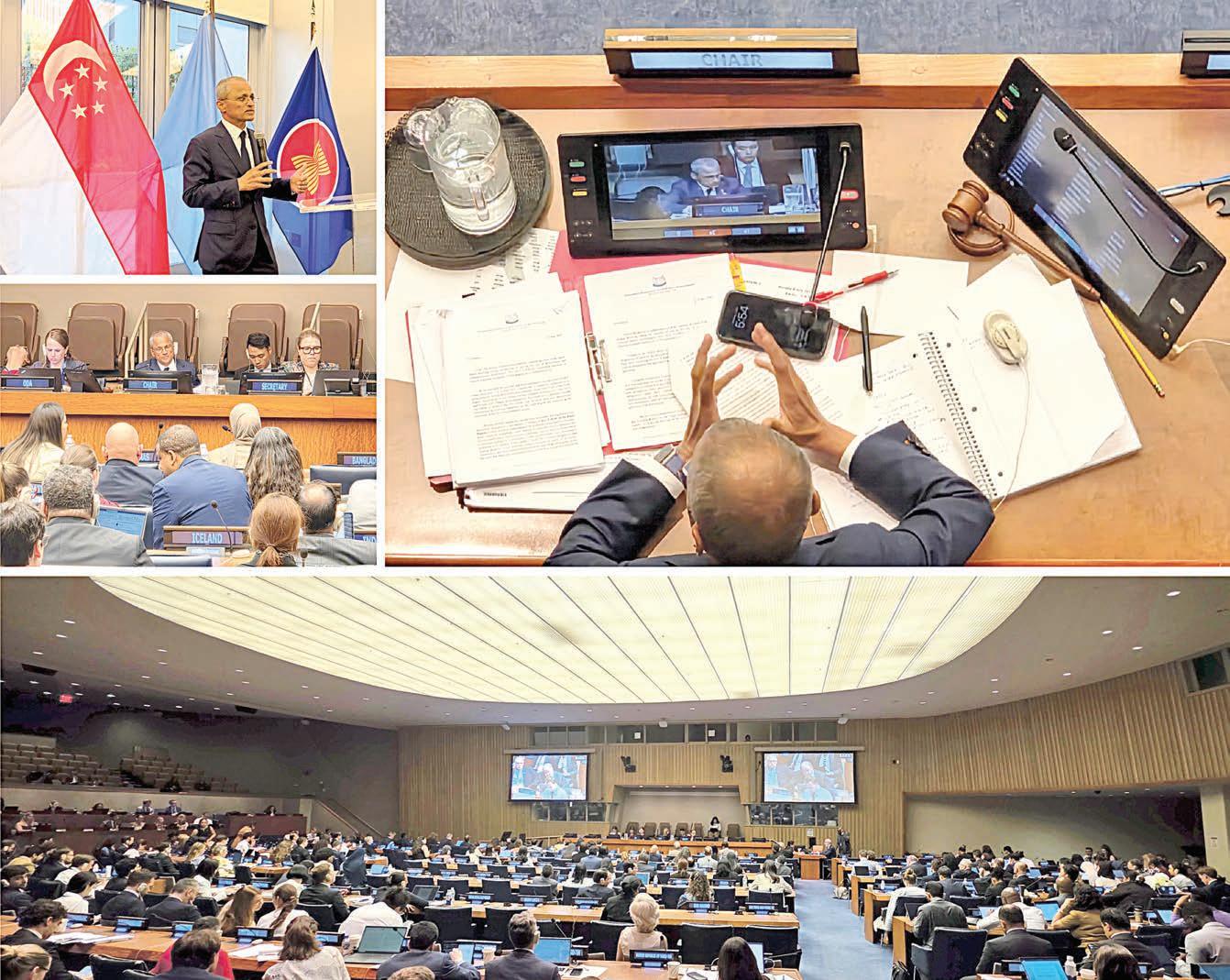
and foreign interference through disinformation were recently tackled in a session on cyber security at the United Nations. Ambassador Burhan Gafoor of Singapore presided over the opening of the 11th and final substantive session of the Open-Ended
Working Group (OEWG) on the security of and in the use of Information and Communications Technologies (ICTs) under the auspices of the United Nations.
The session at the UN Headquarters in New York brought together delegates from around the world to address growing cybersecurity threats and chart a path toward a more stable and secure digital future.
During the reception hosted at the Singapore Mission to the UN following the session’s opening, Ambassador Gafoor emphasized
the urgency and ambition of this final phase. He expressed his expectation that the Working Group will reach consensus on a permanent, action-oriented framework that ensures the peaceful and responsible use of ICTs by all Member States.
“We are nearing the finish line of a five-year process,” he told delegates earlier in the day, calling for sustained momentum despite rising geopolitical tensions.
UN Under-Secretary-General and High Representative for Disarmament Affairs Izumi Nakamitsu
echoed this call for unity, warning that the rapid pace of technological advances is outstripping the capacity of global governance. She described the OEWG as a “unique opportunity” to establish a single-track, permanent mechanism within the UN system to deal with cyber threats and digital peacebuilding.
Earlier transcripts from the 10th session—held in February 2025— laid the groundwork for this moment. Delegates from the African Group, the European Union, China,
Trade in Asia and the Pacific, have been instrumental in driving global progress.
Unescap said these initiatives can “further” support countries in transitioning from paper-based to paperless and eventually cross-border paperless trade by offering a dedicated, inclusive and capacity-building intergovernmental platform.
This year’s Survey has also introduced new and forward-looking measures on cross-border e-commerce and green trade facilitation.
“As climate challenges intensify, aligning trade with environmental goals becomes increasingly urgent. More research and efforts on the greening of trade will be necessary,” Unescap said.
Marcos wants LGUs ready for disasters, digitalization
By Samuel P. Medenilla @sam_medenilla
THEMarcos administration is set to prioritize strengthening its support to local government units (LGU) in boosting their disaster preparedness, peace and order and digitalization.
In a press briefing on Wednesday morning, Palace Press Officer Claire Castro said the chief executive will make the commitment once he meets
with first-time local officials in a special “Meet and Greet” event.
“President Marcos Jr. will emphasize the need to further strengthen ties to ensure that development is extended to every corner of the country so that the dream of a Bagong Pilipinas [New Philippines] can be achieved more quickly,” she said in Filipino. The event, she said, aims to strengthen the link between the national and local government.
She said the national government will back the implementation of LGUs’ programs, includ-
ing their “disaster preparedness, peace and order, and digitalization.”
Under his administration, Marcos said he also wants to improve the healthcare accessibility in LGUs through the ambulance distribution program of the Philippine Charity Sweepstakes Office (PCSO).
“The President also wants to guide local government officials to bring services closer to the people and promote a culture of transparency and performancebased governance,” Castro said.
2 Pinoy sailors dead, 5 rescued after Houthi attacks in Red Sea
By Samuel P. Medenilla
be strategically timed with the harvest season of the country’s top suppliers to cushion its impact on local and global markets, according to the DA Secretary.
EO 62, which slashed tariffs levied on rice to 15 percent from 35 percent until 2028, took effect in July 2024. The tariff scheme is subject to a periodic review every four months from effectivity.
FIVE Filipino sailors of the ill-fated cargo ship, MV Eternity C, which sank Wednesday after it was reported to have been attacked by Houthi rebels, have been rescued, according to the Department of Migrant Workers (DMW).
However, according to Foreign Affairs Undersecretary Ed de Vega, two Filipinos had died in the attack in the Red Sea.
In an online press conference on Wednesday
evening, DMW Secretary Hans J. Cacdac said the shipowner told them of the successful rescue of the five MV Eternity C crew members after their ship sank at around 1 pm local time.
“So they are now of course safe and sound now as far as we know. I just cannot disclose exactly where [they are] and who they are for security reasons,” he said.
DMW has informed the families of the rescued sailors about their status. He assured them DMW will provide the necessary aid to the seafarers.
He said they hope to talk soon with the rescued Filipino sailors as to how the MV Eternity C sank and to verify international media reports that there were already three to four casualties among the crew of the vessel.
“We will still have to confirm and the best source at this stage will be the seafarers themselves,” he said.
Earlier the US State Department said in a post on X that there were three deaths and two injured after Houthis attacked two com-
This comes after the International Conference on Financing for Development (FFD4) adopted the “Compromiso de Sevilla” or the Sevilla Commitment on June 30.
The Philippines represented the Group of 77 (G77) and China, through its Permanent Mission to the United Nations in New York, as well as the Like-Minded Group for Middle-Income Countries (LMG-MICs) in the negotiations on the outcome document.
The Sevilla Commitment establishes a renewed global financing framework directly impacting developing countries, according to the DOF.
The commitment stated the critical role of multilateral development banks (MDBs) and called for increased international development cooperation, technical support and mobilization of private capital, as well as strengthened debt sustainability and comprehensive governance reforms.
Balbosa said support to middleincome countries must go beyond gross domestic product (GDP) for a more inclusive approach to international cooperation and access to development finance, as they face various challenges.
“To address the middle-income trap, we need tailored support for MICs that addresses their specific challenges beyond the simplistic income categorization,” Balbosa said in his statement on behalf of the LMG-MICs.
mercial cargo ships in the Red Sea. It did not state the nationalities.
The Liberian-flagged cargo ship stopped moving after its engines were damaged by persistent Houthi attacks, while it was at the Red Sea near the coast of Yemen last Monday.
Cacdac said they are hoping more of the MV Eternity C crew will be rescued. He said they are in constant communication with the shipowner for possible new updates on the result of the ongoing search.
Moreover, the DOF appealed to MDBs to raise their financing capacity and maximize the impact of the country projects they support, while providing better concessional lending terms, as well as grants and technical assistance.
Climate finance must also be readily available as an added support and should not come at the cost of ODA, the DOF emphasized.
Capacity-building and technical assistance for developing countries to realize the outcomes of financing for development were also called for by the DOF.
“[T]he Philippines looks forward to the implementation of the Compromiso de Sevilla. Let us work to deliver on the promise of leaving no one behind, as sustainable development is the key to greater peace, stability and prosperity for all,” Balbosa said.
The FFD4, held in Seville, Spain from June 30 to July 3, convened heads of state, ministers and senior officials from international organizations, civil society, the business sector and local authorities to discuss reform financing at all levels.
The conference also tackled solutions to address financing challenges preventing the achievement of the Sustainable Development Goals (SDGs).
The Philippine Delegation to the FFD4 was composed of officials from the DOF, Department of Foreign Affairs, Board of Investments of the Department of Trade and Industry and the Securities and Exchange Commission.
Time on August 1, 2025. Edillon said, however, countries like Japan, Korea, and Vietnam have already received letters regarding the tariff schedules. Manila is still waiting for Washington’s decision. Nonetheless, Edillon said the Philippines could still have “a small net gain” because compared to its Asean peers, the United States imposed the lowest tariff on Philippine exports.
“So right now it’s 10 percent, a flat (rate) for all. If that would be retained, it would still be a good scenario for us. But if we can go back to the previous one where we were enjoying like 5 to 6 percent, then of course that would be best,” Edillon said.
Priority legislation FOR the upcoming State of the Nation Address [Sona], the DepDev said it will push the passage of bills such as the decades-old proposal to pass a National Land Use Act (Nalua). Edillon said the DepDev will take a look at the Nalua and see which provisions can be reviewed in order to give the bill a higher chance of being passed by Congress.
“We can probably fragment the issues and then work on the super binding constraints,” Edillon said. “We still need to tear it up in pieces and then, yeah, really prioritize.” It can be noted that the bill has been languishing in Congress for over three decades. The annual appeal of former President Rodrigo Roa Duterte in all of his SonaAs did not work to turn the bill into reality.
President Marcos Jr. also included the Nalua in his previous Sonas but his appeals to Congress still did not work.
The National Economic and Development Authority (Neda), now the DepDev, explained that there are currently many misunderstood portions of the proposed Nalua. The Neda said some quarters are saying that land use will be the responsibility of one centralized agency in government.
Neda also said this was not true and that local government units (LGUs) still had jurisdiction over land use. However, land conversion of land from agriculture to other use has to be decided by a more centralized agency.
The bill currently proposes that this centralized agency be the Department of Human Settlements and Urban Development (DHSUD) instead of the Department of Agrarian Reform (DAR).
Land use is very important for an archipelago like the Philippines, and Neda said the entire country only has 300,000 square kilometers of land. This size is not bound to increase even if the country’s population continues to multiply.
and Uruguay, among others, issued statements highlighting the vulnerabilities of healthcare systems to ransomware, the risks posed by emerging technologies like generative AI and quantum computing, and the need for robust public-private partnerships. Concerns were also raised about cyber-militarization, foreign interference through disinformation, and the politicization of digital norms.
As the week progresses, the OEWG will deliberate on its final report, which could include
recommendations on responsible state behavior, capacity-building support for developing nations, and pathways to international cooperation in digital incident response and attribution. Gafoor is optimistic the session would culminate in a consensusbased document, reflecting both the diversity of views and the collective resolve of the global community. The OEWG’s mandate is scheduled to conclude at the end of this session on Friday. What emerges from these negotiations could shape how cyberspace is governed for years to come, as nations strive to balance innovation with responsibility, security with sovereignty, and openness with trust.
has signed a trade deal with Vietnam, which lowers the US-imposed tariff from 40 percent to 20 percent. In a press briefing on Tuesday, Palace Press Officer Claire Castro said Special Assistant to the President for Investment and Economic Affairs Frederick D. Go has yet to receive any official communication from his counterparts in the US for any changes in its current 10-percent tariff on Philippine goods entering its borders.
Data from the Philippine Statistics Authority (PSA) showed that Philippine exports to the US grew by 9.1 percent to $5.38 billion in the January to May 2025 period from the $4.93 billion in the five-month period in 2024. With this, the US remains as the top export market of the Philippines, accounting for 15.7 percent of the Philippines’s $34.20-billion outbound shipments in the five-month period this year.
Congressmen refile bills vs EJKs, illegal land ownership by aliens
EADERS of the House Quad Committee
Lhave refiled two landmark measures aimed at addressing systemic abuses linked to extra-judicial killings (EJKs) and illegal land ownership by foreigners in the Philippines.
Reintroduced in the 20th Congress, House Bills 1628 and 1629 seek to classify EJKs as heinous crimes and enforce the civil forfeiture of real estate properties unlawfully acquired by foreigners. Both proposals stem from the Quad Comm’s investigations in the previous Congress into state-linked violence and illicit land transactions tied to offshore criminal syndicates and Philippine Offshore Gaming Operators (Pogos).
House Bill 1628, or the proposed Civil Forfeiture Act, mandates the forfeiture of lands illegally acquired by foreign nationals through fraudulent means such as fake birth certificates or proxy ownership. The bill enforces a prima facie presumption that real estate titled under a foreign national is unlawfully obtained unless proven otherwise—shifting the burden of proof to the buyer.
The measure empowers the Office of the Solicitor General to initiate forfeiture proceedings and allows taxpayers to file complaints. Land titles recorded under a foreigner’s name or a front will not shield the property from forfeiture.
To deter dummy arrangements, the bill aligns with the Anti-Dummy Law and requires local government units to monitor land use. It also grants immunity to whistleblowers who testify on illegal acquisitions.
Agricultural lands forfeited under the law will be redistributed by the Department of Agrarian Reform (DAR), while nonagricultural land may be used for public purposes such as schools, hospitals, or socialized housing—or disposed of through the Privatization and Management Office if no longer viable for public use.
Heinous crime
HOUSE Bill 1629, or the proposed Anti-
Extrajudicial Killing Act, classifies EJKs as heinous crimes punishable by life imprisonment, particularly when committed by public officials, state agents, or individuals acting under state authority. It explicitly defines EJK as the taking of life outside lawful judicial processes and responds directly to the Duterte administration’s “war on drugs,” during which the Commission on Human Rights (CHR) investigated 846 killings—577 allegedly involving law enforcement and 269 committed by unidentified assailants.
The measure holds commanding officers equally liable if they order or tolerate EJKs and establishes an Extrajudicial Killings Claims Board under the CHR to process compensation claims ranging from P250,000 to P500,000. It also mandates agencies like the Departments of Health and of Social Welfare and Development to provide psychosocial and educational support to victims’ families.
Public officials in jurisdictions with rising EJK incidents may face administrative liability or preventive suspension if they fail to curb such violations despite receiving intelligence or peace and order funds.
In its explanatory note, the bill states, “When perpetrators are not held accountable, impunity thrives and the most basic human rights are rendered hollow. This measure affirms the country’s commitment to international human rights obligations under the ICCPR.”
The bills were filed by Reps. David Suarez (Quezon, 2nd District), Bienvenido Abante Jr. (Manila, 6th District), Romeo Acop (Antipolo, 2nd District), Zia Alonto Adiong (Lanao del Sur, 1st District), Paolo Ortega V (La Union, 1st District), Ernesto Dionisio Jr. (Manila, 1st District), Rodge Gutierrez (1-RIDER Party-list), Lordan Suan (Cagayan de Oro City, 1st District), Jay Khonghun (Zambales, 1st District), Gerville Luistro (Batangas, 2nd District), and Jonathan Keith Flores (Bukidnon, 2nd District).
Jovee Marie N. dela Cruz
Lacson bill ensures continuous
government leadership in case...
By Butch Fernandez @butchfBM
ABILL filed by Sen. Panfilo M. Lacson seeks to ensure the government will keep running even in case of a disaster or “exceptional circumstances” where the President and his or her constitutional successors are killed or disabled.
Lacson’s proposed “Presidential Succession Act” extends the list of succession beyond the Vice President, Senate President and Speaker, the current line of presidential succession under the 1987 Constitution.
“This bill...seeks to provide an exhaustive line and order of succession in the event of death, permanent disability, removal from office, or resignation of the Acting President to ensure that the office of the President is never vacated even in exceptional circumstances,” Lacson said in his bill.
He also noted the Constitution mandates Congress to enact a law identifying who shall serve as President in case of death, permanent disability, or resignation of the Acting President until the election and qualification of a new President or Vice-President.
Under Lacson’s bill—which was filed in the 18th Congress as the “Designated Survivor” bill—the following elected and
appointed officers who are not under any disability to discharge the powers and duties of the Office of the President shall act as President in the following order, in case of the death or permanent disability of those specified in the Constitution:
n The most senior Senator based on the length of service in the Senate
n The most senior Representative based on the length of service in the House of Representatives
n The member of the Cabinet designated by the President.
The bill also provides that before any public or private function to be attended by the President, Vice President and other ranking officials, the President shall designate a member of the Cabinet to be sequestered in a secret and secure location. The “designated survivor” is to be guarded by members of the Presidential Security Command, and shall act as President “in the event of an extraordinary circumstance resulting in the death or permanent disability of the President and other officials.”
Official actions of the Acting President pertaining to the day-to-day operation of the government shall remain effective unless revoked by the elected President within 90 days from his or her assumption of office.
House WPS bloc seeks review of local govt deals with China
By Jovee Marie N. dela Cruz @joveemarie
THE newly-formed West Philippine Sea (WPS) Bloc in the House of Representatives was officially launched on Tuesday and filed its first set of legislative measures aimed at protecting Philippine sovereignty, bolstering public awareness, and countering Chinese influence through local agreements.
The launch was joined by fisherfolk from Zambales and Bataan— communities on the frontlines of China’s maritime aggression.
The bloc filed its three key legislative proposals: a resolution calling for a review of local government deals with China, a bill declaring July 12 as National West Philippine Sea Victory Day, and another mandating the teaching of WPS-related history and geography in schools.
Akbayan Rep. Chel Diokno emphasized the importance of institutionalizing WPS education in schools to ensure that future generations understand and defend the country’s maritime rights.
“Teaching current and future generations about the West Philippine Sea, our sovereign rights over our Exclusive Economic Zone, and the significance of the Permanent Court of Arbitration’s Award in favor of our country empowers them to understand the importance of
protecting our territory and upholding international law,” he said.
“By educating our youth, we help ensure that the next generation will safeguard what is rightfully ours as a nation,” he added.
The group pushed for the passage of House Bill 1625, requiring the mandatory teaching of WPS history and geography across all levels of the country’s education system to counter pro-China disinformation and instill national pride in maritime rights.
The WPS Bloc also filed House Resolution 39, urging the Department of the Interior and Local Government (DILG) to review and investigate sister-city and sister-province agreements between Philippine local governments and China amid concerns over national security and undue foreign influence.
It also filed House Bill 1626, declaring July 12 as National West Philippine Sea Victory Day,
commemorating the Philippines’ landmark legal victory at The Hague in 2016, when the Permanent Court of Arbitration invalidated China’s sweeping claims in the South China Sea.
Akbayan Rep. Perci Cendaña, co-author of the measures, warned of the “national security risks” posed by existing sistercity agreements between China and Philippine local governments, arguing that such arrangements are symbolic at best and dangerous at worst.
Cendaña urged the DILG to review existing sister city agreements between the Philippines and China, citing the huge national security risks involved in these partnerships.
“These agreements are not even worth the paper they’re printed on. China’s actions in the West Philippine Sea are devoid of the respect that is expected of such agreements. Their government has repeatedly shown contempt for our frontliners and fisherfolk,” Cendaña said.
He cited the case of three detained Palaweños—former scholars under the Palawan-Hainan sister province pact—as an example of the dangers behind these partnerships.
“Sister cities? Will our own ‘sibling’ put us in danger? Those so-called ‘sister city agreements’ didn’t even stop the Chinese government from taking three of our fellow Palawan citizens hostage.”
Cendaña further advised the DILG, “It’s time to cut off our toxic friends. If these agreements bring no benefits and only harm our national interest, the government must cancel them immediately.”
The WPS bloc is composed of Akbayan Reps. Diokno, Cendaña and Dadah Ismula; Dinagat Islands Rep. Kaka Bag-ao, Mamamayang Liberal Rep. Leila de Lima, and Albay Rep. Krisel Lagman-Luistro. Members of the bloc said that they are open to welcome other legislators who are willing to defend Philippine sovereignty and territory.
For her part, De Lima lauded the WPS Bloc’s formation, stating that the bills represent a necessary response to ongoing threats to national sovereignty.
“We fought for our rights, sovereign rights, in the Permanent Court of Arbitration, and we won. To pretend otherwise is not only a disservice to our nation but a betrayal of history. These bills and a resolution are our collective response: reminding everyone, here and abroad, that the West Philippine Sea is undeniably, irrevocably, ours,” she said.
“We won at The Hague, then Duterte sold that victory to China. That’s not foreign policy—it’s abandonment, if not outright betrayal,” she added.
De Lima underscored the importance of institutionalizing the July 12 commemoration, adding, “July 12 is not just a date. Commemorating it as National WPS Victory Day is a reminder that international law is on our side. It’s time we celebrate it—not just in courtrooms, but in the hearts of every Filipino.”
She argued that the mandatory education bill is a necessary antidote to disinformation: “If they can flood the internet with lies, we will fill our classrooms with facts. Our youth deserve the truth, not historical fiction.”
‘Lack of bodies will not deter filing of charges vs suspects’
TBy Joel R. San Juan @jrsanjuan1573
HE Department of Justice (DOJ) said yesterday the filing of criminal cases against those who orchestrated the disappearance of more than 30 cockfighting enthusiasts four years ago will likely proceed even if the victims’ bodies have not been found.
Justice Assistant Secretary and Spokesman Jose Dominic Clavano IV made the statement as members of a composite team composed of the department, the Navy (PN), the Coast Guard (PCG) and Department of Environment and Natural Resources-Mines and Geosciences Bureau (DENR-MGB) are preparing to conduct an exploratory dive at the Taal Lake where the bodies of some of missing sabungeros or cockfighting aficionados, were dumped as claimed by whistleblower Julie “Totoy” Patidongan.
Clavano explained that under the Philippine criminal law,” it is not absolutely necessary to find the body of the victim to prove the crime of murder.”
The legal principle, he said, is consistent with the doctrine of “corpus
delicti,” which refers not to the body of the deceased, but to the fact that a crime has been committed.
“Corpus delicti in murder means proving that a person died and that the death was the result of a criminal act,” Clavano pointed out.
In fact, according to Clavano, securing a conviction is still possible as long as the fact of death is established in court during trial proceedings
“Obviously, presenting the body or remains will be damning evidence of this. Yet, even without presenting the same, there are many other ways to prove the fact of death,” Clavano explained.
Among the evidence that may be presented to prove the fact of death are photos and videos of the killing.
Justice Secretary Jesus Crispin Remulla earlier said among the charges being eyed against those responsible for the disappearance of the cockfighting enthusiasts are kidnapping, violation of Republic Act 9851 or An Act Defining and Penalizing Crimes Against International Humanitarian Law, Genocide and other Crimes Against Humanity, murder and other criminal offenses.
Remulla expressed hopes that the exploratory dive at the lake would be done within the week.
Bid for Ombudsman post
RETIRED judge and now Philippine Charity Sweepstakes Office (PCSO) chairperson Felix Reyes on Wednesday expressed suspicion that his bid for the position of Ombudsman could be the reason why he is being linked to issues surrounding gaming tycoon Charlie “Atong” Ang.
In a statement, Reyes noted that the accusations against him by Patidongan, the whistleblower in the case of missing sabungeros or cockfighting enthusiasts, came out only after he filed his application for the Ombudsman post which will be vacated by Ombudsman Samuel Martires upon the expiration of his term on July 27.
Reyes is one of the 17 applicants for Ombudsman post that include Remulla, who is leading the investigation into the case of missing sabungeros.
“I find it perhaps, a rare coincidence that these wild accusations of Mr. Patidongan came out a day after I filed my application for the position of Ombudsman,” Reyes said.
By Rex Anthony Naval
Remulla earlier disclosed that Chief Justice Alexander Gesmundo has ordered an investigation into Patidongan’s claim that a former judge and now a ranking official of PCSO serves as Ang’s “fixer” for his cases in court.
In a statement issued on Tuesday, the SC confirmed the ongoing investigation on the information shared by the DOJ that an individual allegedly involved in the missing sabungeros case may be exerting influence over judges and justices. Meanwhile, Reyes denied Patidongan’s claim that he serves as Ang’s fixer for his legal cases and that he often travels abroad with prosecutors and judges where he would conduct the alleged case fixing.
“I categorically deny such wild accusations of Mr. Patidongan. I dare him to identify any specific case of Mr. Atong Ang or anything related to the sabungero case, which I understand is still pending in court, that I fixed or settled to the advantage of Mr. Ang,” Reyes said.
“If Patidongan cannot substantiate his accusation of case-fixing, I ask him to shut up,” he added.
Thursday, July 10,
House vows sufficient funding for Dole, Tesda
AS the number of unemployed Filipinos dropped, the House of Representatives on Wednesday vowed for a comprehensive review of the proposed 2026 National Expenditure Program (NEP) to ensure sufficient funding for the Department of Labor and Employment (Dole) and the Technical Education and Skills Development Authority (Tesda), which play a vital role in delivering job-readiness programs
and livelihood support.
Leyte Rep. Ferdinand Martin G. Romualdez, Speaker of the 19th Congress, made a statement after the Philippine Statistics Authority (PSA) reported the number of unemployed Filipinos dropped to 2.03 million in May 2025 from 2.06 million in April, lowering the unemployment rate from 4.1 percent to 3.9 percent.
Employment figures also climbed to 52.32 million in May,
up from 50.74 million in April and 50.97 million during the same period last year.
Romualdez committed to intensify efforts to advance the administration’s economic agenda by attracting more investments and generating quality jobs— stressing that a strong and empowered labor force is key to sustain the country’s economic momentum.
“The Marcos administration
is determined to uplift the lives of Filipinos by helping them find quality employment or build their own businesses,” said Romualdez, who also serves as president of the Lakas-Christian Muslim Democrats (CMD). “We will intensify efforts to create more jobs by working with foreign investors and the private sector.”
He emphasized that the improvement in employment numbers is proof that President
BOI grants green lane certificates to RE firm
By Andrea San Juan @andreasanjuan
HE Board of Investments
T(BOI) said it has granted green lane certificcates to Cleantech Global Renewables, Inc. (CTGRI) for its five onshore wind energy projects located in Central Luzon and Calabarzon (Cavite, Laguna, Batangas, Rizal and Quezon) regions with a project cost of P108 billion.
In a statement on Tuesday, the agency said the estimated project costs of the five projects are:
P18.29 billion for the 144-megawatt (MW) Tayabas North Wind Power Project; P22.9 billion for the
Tayabas South Wind Power Project, P24.10 billion for the 187.2MW Bulacan 1 Wind Power Project; P28.79 billion for the 237.6-MW Bulacan 2 Wind Power Project; and P13.95 billion for the 86.4-MW Maragondon Wind Power Project.
The investment promotion agency attached to the Department of Trade and Industry (DTI) said the wind power projects are expected to generate more than 3,000 jobs.
CTGRI is one of the “fastestgrowing” 100 percent Filipinoowned “independent” power producers and renewable energy developers in the Philippines, the BOI said in its statement.
Since its establishment in 2014, the company has focused on developing a portfolio of clean energy projects primarily in solar and wind technologies in the Philippines.
To date, CTGRI has an “aggregate capacity” of 650 MW of solar plants either in operation or under construction.
In addition, BOI pointed out that CTGRI has over 5,000 MW worth of renewable energy projects at various stages of development, as it aims to be one of the country’s top renewable energy operators.
The Green Lane certification is part of the government’s initiative to streamline and fast-track
strategic investments in the renewable energy sector, in line with the country’s commitment to sustainable development and energy security.
Moreover, the Green Lane aims to expedite and simplify permitting and licensing processes for strategic investments in the Philippines.
As of June 30, 2025, 222 projects with a total project cost of P5.748 trillion have been granted green lane certification.
Of these, 176 are in the renewable energy sector, 31 in food security, nine in digital infrastructure and public-private partnerships (PPP) and six in manufacturing.
Senator cites tax relief under Ginhawa bill
SBy Butch Fernandez @butchfBM
EN. Sherwin Gatchalian on Wednesday said young professionals, minimum wage earners and those earning above minimum wage alike, stand to gain from the Ginhawa bill, which raises the income tax exemption from P250,000 to P400,000, in effect putting more money back
Continued from A3
to strengthen defense cooperation, in line with the thrust of the Marcos Administration to further bolster the country’s international partnerships,” the DND said in its statement on Tuesday night.
Continued from A3
Documents issued under this ordinance will bear the same validity as those processed with fees and do not expire. The privilege is non-transferable and may only be granted to qualified individuals.
in their pockets. “Kapag naging batas ang Ginhawa [bill], para kang may dagdag isang buwang sahod kung kumikita ka ng P400,000 pababa taun-taon,” said Gatchalian.
As the “taxpayers’ voice,” Gatchalian said that under current tax rules, individuals with a net taxable income of P400,000 a year pay P22,500 in income tax. The Ginhawa
In addition to enhancing collaboration on humanitarian assistance and disaster relief, Teodoro noted the potential involvement of the NZDF in activities under the quadrilateral cooperation among the Philippines, United States, Australia, and Japan once the Sovfa enters into force.
This could include participation in future
To deter abuse, the ordinance imposes the following penalties for misrepresentation or violations:
n P1,000 for the first offense
n P2,000 for the second offense
n P3,000 for the third offense
This initiative reinforces the city government’s dedication to providing responsive, compassionate, and practical assistance to Malabueños, especially during times of crisis and recovery, Sandoval said.
bill removes this burden, freeing up P22,500 for essentials like food, education, and healthcare.
For call center employes earning P25,000 monthly or P325,000 annually, including 13th month pay, Ginhawa means zero income tax, translating to an additional income of P314 per month or P3,765 per year.
A private nurse earning
iterations of both bilateral and multilateral military exercises.
Krushka reaffirmed New Zealand’s support for the Philippines and expressed interest in identifying areas where the NZDF could best assist with the country’s security priorities, including logistics support, training and capacity building between the two nations’ armed forces, and the provision
Continued from A3
Ang, who owns Pitmasters that operates e-sabong, is being accused by Patidongan of orchestrating the abduction and killing of the missing sabungeros four years ago after they were allegedly caught cheating.
Reyes said he is authorizing the Bureau of Immigration (BI) to disclose his travel records from the time he retired from the judiciary on October 1, 2021 up to present
P33,000 monthly or P429,000 annually with 13th month pay is currently taxed at P1,424 monthly or P17,085 a year. Under Ginhawa bill, this entire amount becomes savings.
Teachers III earning P34,421 monthly or P447,473 yearly pay P1,414 per month or P16,973 annually in taxes. If Ginhawa were enacted into law , they would pay nothing.
of educational opportunities.
Both parties expressed commitment to deepening defense relations and advancing future initiatives through the re-convening of bilateral defense mechanisms, such as the Bilateral Defense Talks and the Mutual Assistance Programme Talks between the Armed Forces of the Philippines and the NZDF.
to disprove Patidongan’s claim of travels abroad with prosecutors and judges.
He also expressed his readiness to cooperate in any investigation by any government body.
“Finally, I wish to state that I am ready and willing to cooperate in any investigation by any government agency that will shed light on these baseless allegations by Mr. Patidongan and spare the judiciary and the prosecution service from the undeserved tarnishing of these institutions,” Reyes said.
Marcos’ economic programs are working.
Romualdez said the 20th Congress’ legislative priorities will include strengthening connections between workers and employers, supporting reskilling for aspiring entrepreneurs, and aligning labor programs with future industry demands.
Romualdez said the 19th Congress has spearheaded the Bagong Pilipinas Serbisyo Fair, which
brought hundreds of government services—including job fairs, livelihood assistance, and microenterprise support—directly to communities across the country.
“Strong economic growth is only possible if no Filipino is left behind. We must make every opportunity—from skills training to dignified employment—within reach of every hard working citizen,” Romualdez said.
Marie
Marcos orders Lwua to improve service in PrimeWater JVA areas
By Samuel P. Medenilla @sam_medenilla
PRESIDENT Marcos has approved the recommendation of the Local Water Utilities Administration (Lwua) to address the complaints of the areas served by the Villar-owned PrimeWater Infrastructure Corp.
In a press briefing in Malacañang on Wednesday, Palace Press Officer Claire Castro said the Chief Executive has reviewed Lwua’s findings on alleged poor service of the water concessionaire.
“The President has already studied the report from the Lwua. He approved of the [Lwua’s] recommendation,” she said in Filipino.
Castro however, declined to give any details on Lwua’s proposal until it is already implemented by concerned government agencies.
Last week, Lwua announced it already submitted to the Office of the President its findings on the said complaints.
On July 4, Lwua said it initiated actions to provide reliable water service on the affected districts.
Castro earlier said the government is still deciding if it will file charges against PrimeWater related to issues on its services or cancel its service contract with concerned water districts. It was learned that most of the PrimeWater joint venture agreements, that allowed it to assume management of water distribution in many areas, were forged during the previous administration.
“We will share the recommendations with you later. We need to take action first. Now is not the right time to reveal what the government should do for those who are victims of the lack of water supply,” Castro said. Lwua launched an investigation on PrimeWater last May after at least 20 of the water districts it served raised concern on its alleged unreliable water service, poor water quality and exorbitant fees.
Pinoys relive solidarity spirit at Sandiwa Filitalia in Milan
THOUSANDS of Filipinos
flocked to the iconic Arco
Della Pace in Milan’s Piazze Sempione on July 6 for the Sandiwa Filitalia, a grand cultural highlight of Kalayaan 2025 celebration and celebration for the 78 years of Philippines-Italy diplomatic ties.
Consul General Elmer Cato and the Kalayaan 2025 Organizing Committee of the Bayanihan Council of Northern Italy led the culminating event of the month-long 127th Philippine Independence Day celebration that brought together a vibrant blend of traditional heritage and modern Filipino identity through a series of programs and activities.
In his opening remark at Sandiwa Filitalia, Cato underscored the theme of this year’s monthlong 127th Independence Day celebration, which focused on unity and solidarity.
“Our event was not just meant to showcase Filipino pride and culture. It was also intended to show our gratitude to Italy and the Italian people for their warm hospitality and kind generosity that allowed our people here and their families back home to have a better life,” he said.
Aside from vibrant performances from folk dances and kundiman renditions to dynamic modern dances, the Filipinos enjoyed food stalls offering the famous “halo-halo”, “kakanin” (Filipino native food), and regional favorites.
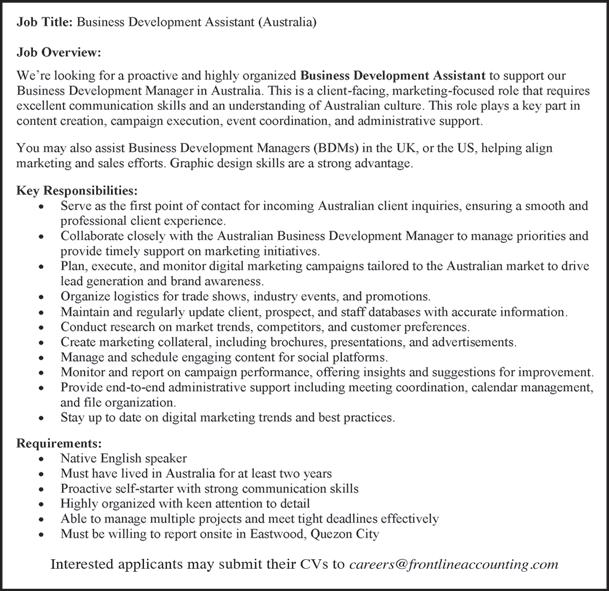
As part of the month-long Kalayaan 2025 celebration, the Consulate hosted “Mekeni, Mangan Tamu: A Taste of Pampanga,” turning the Kalayaan Hall into a culinary showcase on June 12.
Two of Pampanga’s finest chefs, Manuela Cherry Tan and Leonard Vincent Garcia, delighted guests with iconic Kapampangan dishes such as sisig, arobu, kare-kare, and nasing marangle. It was a tribute not only to Pampanga’s rich food culture but also to Angeles City’s nomination as Asia’s Best Culinary City Destination at the 2025 World Culinary Awards.
Elegance took center stage at the Hiyas ng Kalayaan as guests were treated to a cultural fashion show featuring both traditional and modern Filipino attire, each ensemble steeped in heritage and artistry.
In his social media post Monday, Cato thanked all the people who contributed to the success of Sandiwa FilItalia, especially the Comune of Milan.
As he ended his tour of duty in Milan, Cato also thanked Foreign Affairs Secretary Ma. Theresa Lazaro for allowing him to stay a few days longer to witness and to join the Filipino community in the Sandiwa Filitalia.
“As we prepare to return home, we are filled with deep gratitude for every moment shared, every partnership forged, and every Filipino story we had the privilege to witness and support in this vibrant part of the world,” he said.
“We entrust the legacy of this Consulate to those who will come after us, hoping they continue to nurture the bonds we’ve built and expand them even further. Milan will always hold a special place in our hearts, not just as a diplomatic posting, but as a home where we witnessed the beauty of the Filipino spirit thrive on foreign soil.” PNA
Jovee
N. dela Cruz
Malabon. . .
Sabong. . .
Church urges govt to regulate online gambling, warns of growing ‘public crisis’
By Justine Xyrah Garcia
THE Catholic Bishops’ Conference of the Philippines (CBCP) is urging the government to impose stricter controls on online gambling platforms, warning that the growing accessibility of digital betting poses a serious threat to Filipinos.
In a recent statement, CBCP President and Kalookan Bishop Pablo Virgilio David described the rise of online gambling as a new “public crisis” affecting millions.
“As your bishops, we appeal to the government to place appropriate controls
Private developers commit 250K socialized homes
MORE than 250,000 housing units have been pledged by private developers to support the government’s flagship housing program, the Pambansang Pabahay para sa Pilipino (4PH), according to a joint letter submitted to the Department of Human Settlements and Urban Development (DHSUD).
The commitment was formalized in a letter dated July 7, signed by four major industry groups—the Chamber of Real Estate and Builders’ Associations, Inc. (CREBA), National Real Estate Association (NREA), Organization of Socialized and Economic Housing Developers of the Philippines (OSHDP) and the Subdivision and Housing Developers Association, Inc. (SHDA).
“We are pleased to submit the initial list of private developers who have expressed commitment to participate in the production of socialized housing under the program. To date, these commitment[s] total 251,846 units,” the letter stated.
At least 42 private developers have pledged to deliver housing units, the groups said. They described the move not merely as a numerical target, but as a reflection of the private sector’s trust in DHSUD’s direction under the leadership of housing czar Jose Ramon Aliling.
To help speed up the rollout of housing units, the developer groups proposed the creation of a dedicated Housing One-Stop Processing Center (HOPC) that would exclusively manage 4PH-related permits and transactions.
For them, this would streamline coordination between national agencies, local government units and private firms, helping reduce processing times and facilitate faster housing construction.
Last year, DHSUD revised its targets from 6.5 million to 3.2 million housing units, estimating a cost of around P4 trillion for implementation. Bless Aubrey Ogerio
Nationwide voter registration to open in August–Comelec
THE Commission on Elections (Comelec) announced on Wednesday that nationwide voter registration will open from August 1 to 10.
Comelec Chairman George Erwin M. Garcia confirmed that the 10-day registration period will accommodate first-time voters, as well as those seeking to transfer, reactivate, or correct their voter records.
“The Comelec en banc has approved the resumption of voter registration for the barangay and Sangguniang Kabataan elections. This is separate from the Bangsamoro parliamentary elections. We’re doing this to ensure we have registered voters, especially for the SK, who are aged 15 to 17,” Garcia said in an ambush interview.
The registration period for BSKE was originally postponed following the 19th Congress’ ratification of the bicameral conference committee report on the proposed measure extending the term of barangay and SK officials from three to four years.
See “Comelec,” A8
on online payment systems so that access to these gambling sites will not be so easy. We hope our young people can be protected from these gambling games embedded in such platforms,” David said.
H e explained that online gambling is highly accessible and designed to lure people—particularly the youth and ordinary citizens—into addiction.
“This is deliberately made attractive,” he said. “In gambling, the conscience slowly becomes numb. We’re taught to think it’s just ‘normal,’‘entertaining,’ or ‘harmless.’ But the Catechism of the Catholic Church is clear:
gambling becomes morally wrong when it leads to addiction or depletes resources meant for family needs.”
David clarified that the Church is not against enjoyment.
H owever, he said it becomes problematic when people are enslaved by gambling, with their money lost to it, falling into debt, and eventually destroying their lives.
“Let us return to the true freedom of the Gospel—not the freedom to do whatever we want, but the freedom to break free from slavery,” he added. “Beloved people of God,
may we not remain silent about this growing harm to our society, especially to our youth and families.”
Several lawmakers have included a total ban on online gambling among their legislative priorities for the 20th Congress. These include CIBAC Partylist Representative Eddie Villanueva and Manila 2nd District Representative Rolando Valeriano.
Akbayan Party-list has also filed a separate bill seeking tighter regulation of online gambling, including limiting access to users aged 21 and above.
DMW: Rescue team sent for MV Eternity C crew after Houthi rebel attack in Red Sea
ARESCUE team was deployed last Wednesday morning to secure the crew of the Greek-operated MV Eternity C, which includes 21 Filipinos, after it was attacked by Houthi rebels, according to the Department of Migrant Workers (DMW).
In a radio interview, DMW Secretary Hans J. Cacdac said the cargo ship had stopped moving after its engines were damaged by the persistent Houthi attacks, while it was at the Red Sea.
“But as of this morning, there is a rescue underway and there are reports in the media about certain casualties, but we have not confirmed this yet,” he said.
A r eport from the Associated Press said
that three of the cargo ship’s crew have died, while two others were wounded.
The Liberian-flagged ship has 22 crew members.
A separ ate online report from Reuters said Eternity C already sunk as of 9 July 2025 afternoon and that rescue operations for its crew were still underway.
DM W said it was still verifying the news reports on the status of the MV Eternity C crew. The agency initially had contact with the crew and captain of the said ship.
“L et’s wait for confirmation from them because we lost communication with them.
This is the situation now and we await further developments, especially regarding their
rescue,” Cacdac said.
T his was the second ship attack blamed on Houthi rebels in the Red Sea. The first happened last Sunday and involved the bulk carrier, MV Magic Seas. DMW reported the 17 Filipino crew of MV Magic Seas were rescued and were sent to Djibouti.
DM W was supposed to hold a press briefing on Wednesday afternoon following its meeting with the shipowner of the Eternity C to give updates on the status of the Filipino crew of the ship.
However, the DMW opted to cancel the briefing at the last minute. It did not disclose any more details and updates regarding the rescue as of press time. Samuel P. Medenilla
Renewable energy, construction among key sectors for PHL’s new green jobs plan
RENEWABLE energy and construction are among the sectors expected to drive job creation under the government’s newly launched National Green Jobs Human Resource Development Plan, the Department of Labor and Employment (DOLE) said. Green jobs, as defined by DOLE, are decent employment opportunities that contributes to environmental preservation or restoration, whether in traditional sectors or emerging industries.
During the plan’s launch on Tuesday, DOLE
Undersecretary Carmela I. Torres said the green transition is “creating new demand for jobs and transforming existing ones,” with renewable energy and construction offering significant potential for expansion.
The renewable energy sector, in particular, is projected to generate hundreds of new jobs across its five value chains.
These include roles for solar and wind engineers, project managers, technicians, and human energy analysts.
In construction, demand is growing for
green-certified professionals such as LEED (Leadership in Energy and Environmental Design) coordinators, as well as for skilled trade workers, architects, and project developers.
Torres added that other industries— namely transportation, agriculture, manufacturing, and tourism—also show promise for green job generation.
Globally the International Labour Organization (ILO) estimates that the shift
Boosting farms, ending hunger, corruption keynote second batch of Pangilinan bills
BOOSTING the farm sector, ending hunger and corruption top bill the list of new proposed measures of Senator Francis Pangilinan in the 20th Congress. With the 20th Congress now in full swing, he filed this week seven priority bills and three resolutions.
He said: “We are filing today an AntiPolitical Dynasty Bill. It is a long time coming. We’re also pushing for the end to single-use plastics, as well as improvements in our public transportation system.”
Pangilinan added: “We have also filed resolutions: we want to push for the full implementation of the Sagip Saka Act and look into the Rice Tariffication Act and how it affects our agricultural workers,” he said.
“We bring the promise of hope that our kababayans have given me through their votes. That is where my mandate comes from—from the hopes and dreams they pinned on me as they cast their votes and believed in our advocacies and our platform,” the senator added.
SENATOR Risa Hontiveros on Wednesday filed cyber libel cases before the Office of the State Prosecutor at the Department of Justice (DOJ) against her former witness in the Senate Michael Maurillo and a group of online ‘content creators‘ in connection with the production, release and dissemination of the former’s video claiming that he was paid by her to testify against Kingdom of Jesus Christ (KOJ) found Pastor Apollo Quiboloy and the Dutertes.
Hontiveros personally went to the DOJ to file a separate complaint for libel under Article
355 of the Revised Penal Code, in relation to Section 4 (c) (4) of Republic Act No. 1075 or the Cybercrime Prevention Act against Maurillo and other group of respondents identified as lawyer Ferdinand Topacio, Byron Cristobal (alias Banat By), Jeffrey “Ka Eric” Celiz, Krizette “Kiffy” Chu, Jose Jay Sonza and Alex Distor (alias Tio Moreno).
Earlier, Hontiveros also filed a cyberlibel complaint before the National Bureau of Investigation (NBI) against Maurillo and Pagtanggol Valiente, the Facebook page and YouTube channel that uploaded the videos. The senator also asked the NBI to
Recalling that during the campaign for the 2025 senatorial polls, the senator held multi-sectoral discussions to understand the plight of agricultural workers, the commuting public, and educators and learners.
Pangilinan recalls “that these discussions...guided the priority measures he plans to tackle in the current Congress, underscoring also the need to protect the environment, fight against corrupt practices, and address the problems that commuters face every day.” Butch Fernandez
Hontiveros files cyber libel cases vs former Senate witness and online ‘content creators’
investigate several “vloggers” for possible criminal liabilities over the dissemination of the videos which she claimed contain false information.
In his first video which came out on June 24, 2025 on YouTube channel of “Pagtanggol Valiente” accused Hontiveros of paying him P1 million to allegedly fabricate testimony against Quiboloy, former President Rodrigo Duterte, and Vice President Sara Duterte. He claimed that his original affidavit was altered by the senator’s staff to insert lies
See “Hontiveros,” A8 See “Energy,” A8
Bong Go reminds DPWH and other agencies on implementation of Ligtas Pinoy Centers Act
OLLOWING a visit to several firehit communities on Monday, July 7, Senator Christopher “Bong” Go renewed his call for the full implementation of the law mandating the construction of permanent evacuation centers in all municipalities and cities.
H e referred to Republic Act No. 12076, or the Ligtas Pinoy Centers Act—which he principally authored and co-sponsored. Speaking to victims of a recent fire incident in Manila, Go urged the Department of
Public Works and Highways (DPWH) to fulfill its obligation to implement the law.
“Dapat po merong komportableng maayos na mga evacuation center. Kesa naman gamitin ng DPWH ang kanilang budget sa walang kuwentang proyekto, unahin n’yo po itong evacuation center. Batasnamanpoito.Mandatopoitongbatas na maglalagay ng mga evacuation center para naman po komportable ang ating mgakababayantuwingsunog,”Go argued.
He underscored its significance in
ensuring the safety and dignity of disasteraffected communities while expediting their recovery efforts.
Tying his legislative push to the fire incidents he personally visited, the senator cited the suffering of disaster victims as a moral imperative to accelerate institutional reform. He stressed the health risks posed by poor evacuation conditions, especially for children.
A6 Thursday, July 10, 2025
Editor: Angel R. Calso
Trump caught off guard by Pentagon’s abrupt move to pause Ukraine weapons deliveries, AP sources say
By Aamer Madhani, Seung Min Kim & Tara Copp
The Associated Press
ASHINGTON—Presi -
Wdent Donald Trump’s decision to send more defensive weapons to Ukraine came after he privately expressed frustration with Pentagon officials for announcing a pause in some deliveries last week—a move that he felt wasn’t properly coordinated with the White House, according to three people familiar with the matter.
The Pentagon, which announced last week that it would hold back some air defense missiles, precision-guided artillery and other weapons pledged to Ukraine because of what US officials said were concerns that American stockpiles were in short supply. Trump said Monday that the US will have to send more weapons to Ukraine, effectively reversing the move.
Two of the people, who spoke on the condition of anonymity about the sensitive internal discussions, said there was some internal opposition among Pentagon brass to the pause—coordinated by Pentagon policy chief Elbridge Colby—
Trump
before it was announced.
One of the people described Trump as being caught “flat footed” by the announcement. The White House did not respond to queries about whether Trump was surprised by the Pentagon pause.
Pentagon press secretary Kingsley Wilson denied that Defense Secretary Pete Hegseth had acted without consulting the president.
“It is the job of the Secretary of Defense to make military recommendations to the commander-inchief. Secretary Hegseth provided a framework for the President to evaluate military aid shipments and assess existing stockpiles. This effort was coordinated across government. The Department will continue to give the President robust options regarding military aid to Ukraine, consistent with his goal of bringing this tragic war to an end and putting America first,” Wilson said in a statement to The Associated Press.
The pause in critical weapons deliveries had come at a difficult moment for Ukraine, which has faced increasing—and more complex—air barrages from Russia during the more than threeyear-old war. Trump acknowledged that in announcing the reversal on Monday night, saying, “They have
‘not happy’
By Will Weissert
The Associated Press
WASHINGTON—Presi -
dent Donald Trump said
Tuesday that he’s “not happy” with his Russian counterpart, Vladimir Putin, saying Moscow’s ongoing war in Ukraine is “killing a lot of people” on both sides.
to be able to defend themselves. They’re getting hit very hard now.”
Asked by a reporter Tuesday who approved the pause, Trump bristled at the question while he was gathered with his Cabinet. “I don’t know. Why don’t you tell me?”
Trump’s change in tone on Putin THE president also laid into Russian President Vladimir Putin, suggesting he was unnecessarily prolonging the war that Trump has said he’s determined to quickly conclude. Trump has struggled to find a resolution, with talks between the sides stalled.
The Republican leader has sounded increasingly exasperated with Putin in recent days. The two spoke by phone last week.
“We get a lot of bull---- thrown at us by Putin, if you want to know the truth,” Trump said during Tuesday’s Cabinet meeting. “He’s very nice all the time, but it turns out to be meaningless.”
He has threatened, but held off, on imposing new sanctions against Russia’s oil industry to try to prod Putin into peace talks.
Sen. Lindsey Graham, R-S.C., said last week that Trump has given him the go-ahead to push forward with a bill he’s co-sponsoring
that calls, in part, for a 500% tariff on goods imported from countries that continue to buy Russian oil. The move would have huge ramifications for China and India, two economic behemoths that buy Russian oil.
Trump said Tuesday that he’s “looking at it very strongly.”
Pentagon says it’s going to resume shipments to Ukraine
THE weapons pause announced last week impacted shipments of Patriot missiles, precision-guided GMLRS, Hellfire missiles and Howitzer rounds and more, taking not only Ukrainian officials and other allies by surprise but also US lawmakers and other parts of the Trump administration, including the State Department.
The Pentagon said late Monday that at Trump’s direction, it would resume weapons shipments to Ukraine “to ensure the Ukrainians can defend themselves while we work to secure a lasting peace and ensure the killing stops.” Still, spokesman Sean Parnell added that its review for Trump to evaluate military shipments worldwide continues as part of “America First” defense priorities.
It’s also unclear which weaponry would now be sent, though
Trump said that the US will primarily be assisting Ukraine with defensive weapons.
Counting the weapons
ON Tuesday, each of the services and the combatant commands— the multiservice organizations that spearhead US military operations around the world—were still sending up information on their stockpiles of specific munitions to Pentagon leadership, a US official said.
“They are literally still doing the math,” the official said.
The information was being presented on a stoplight chart— where munitions were either in a red, yellow or green status, similar to slides that had been created the week before, the official said. That earlier study had concluded that some munitions were OK to keep sending to Ukraine—but others were reaching concerning levels.
Getting a full visibility on the numbers of actual munitions on hand takes time, the official said, because while Patriot missiles, for example, initially belong to the Army, once they are requested and sent to a combatant command, such as US Central Command, the service loses visibility on those numbers in inventory.
The vast majority of the munitions
and weapons the US has shipped to Ukraine have been pulled from the Army, which has monitored levels closely in recent years, particularly for high-demand items like 155mm artillery shells and Patriot missiles for air defenses.
It’s been harder for the Army to ramp up production on those items than had been planned: It was trying to hit a goal of producing 100,000 155mm shells a month by the end of 2025 but won’t meet that goal now until 2026, Army spokesman Steve Warren said. Ramping up Patriot missile production also has been challenging, Warren said.
Sen. Mitch McConnell, R-Ky., said in a statement Tuesday that he was glad Trump was resuming deliveries to Ukraine.
“This time, the President will need to reject calls from the isolationists and restrainers within his Administration to limit these deliveries to defensive weapons,” McConnell said. “And he should disregard those at DoD who invoke munitions shortages to block aid while refusing to invest seriously in expanding munitions production.”
The Associated Press writers Lisa Mascaro and Matthew Lee contributed to this report.
with Putin and blames him for ‘killing a lot of people’ in Ukraine
“I’m not happy with him, I can tell you that much right now. This is killing a lot of people,” Trump said of Putin during a meeting with his Cabinet.
The president also acknowledged that his previous suggestions that he might be able to cajole Russia’s president into bringing the fighting to a close and quick-
ly ending the war in Ukraine has “turned out to be tougher.”
It was notable for a president who has all but aligned himself with Putin at moments in the past and has praised the Russian leader effusively at times—though less so in recent months.
The Cabinet meeting comments came a day after Trump said the
United States will now send more weapons to Ukraine—dramatically reversing a previous announcement of a pause in critical, previously approved firepower deliveries to Kyiv in the midst of concerns that America’s own military stockpiles have declined too much.
“We wanted (to) put defensive weapons (in). Putin is not, he’s
not treating human beings right,” Trump said during the Cabinet meeting, explaining the pause’s reversal. “It’s killing too many people. So we’re sending some defensive weapons to Ukraine and I’ve approved that.”
Trump’s decision to remove the pause follows his privately having expressed frustration with Pentagon officials for announcing a halt in some deliveries last week—an action he felt wasn’t properly coordinated with the White House, according to three people familiar with the matter. But the president refused to See “Trump,” A7
Trump. . .
Continued from A6
provide more details on that matter Tuesday.
“I don’t know,” he said sarcastically to a reporter who pressed him on the weapons pause’s original approval. “Why don’t you tell me?”
Still, his expressing open displeasure with Putin—especially after approving a resumption of US weapons to Ukraine—underscores how much Trump’s thinking on Russia and Ukraine policy has shifted since he returned to the White House in January. It also lays bare how tricky navigating the ongoing conflict has proved to be.
Trump suggested during last year’s campaign that he could quickly end the Russia-Ukraine war. But by April, he was using his Truth Social account to exhort Putin to end military strikes on the Ukrainian capital.
“Vladimir, STOP!” he wrote. But large-scale Russian attacks on Ukraine have continued since then and Trump’s public pronouncements on Putin have continued to sour.
Trump said after a call last week with Putin that he was unhappy with Russia’s president and “I don’t think he’s looking to stop” the war. Then, speaking at the start of a dinner he hosted for Israeli Prime Minister Benjamin Netanyahu at the White House on Monday night, Trump said, “I’m not happy with President Putin at all.”
Asked during Tuesday’s Cabinet meeting what his growing displeasure with Putin might mean for US foreign policy, Trump declined to discuss specifics.
“I will say, the Ukrainians were brave. But we gave them the best equipment ever made,” Trump said. He also said that without US weapons and military support, Russia’s invasion of Ukraine in February 2022 might have otherwise sparked what “probably would have been a very quick war.”
Ex-South Korean president faces arrest warrant hearing over martial law charges
By Kim Tong-Hyung The Associated Press
SEOUL, South Korea—Disgraced former South Korean President Yoon Suk Yeol arrived in court Wednesday for a hearing to review a special prosecutor’s request for his arrest on charges related to his brief imposition of martial law in December.
Yoon, who was ousted in April after the Constitutional Court upheld his impeachment, was released from prison in March after the Seoul Central District Court
overturned his January arrest, allowing him to stand trial for rebellion without being detained. Arriving in a black van with his lawyers, Yoon did not respond
to questions before entering the court in Seoul.
His criminal case is being handled by a team of investigators under a special prosecutor, Cho Eunsuk, who are pursuing additional charges over Yoon’s authoritarian push, including abuse of power, falsifying official documents and obstructing official duties.
Cho’s team said they view Yoon as a potential threat to destroy evidence. They questioned him twice before submitting a request for his arrest warrant to the court on Sunday.
Yoon’s lawyers issued a statement denouncing the request for his arrest as excessive and lacking evidence. The court is expected to decide on the arrest warrant by Wednesday evening or early
Thursday. The former conservative leader described his martial law imposition on Dec. 3 as a necessary step to quash his “anti-state” liberal opponents, accusing them of using their legislative majority to obstruct his agenda. But Yoon’s decree lasted only hours, after a quorum of lawmakers broke through a blockade of heavily armed soldiers at the National Assembly and voted to lift the measure.
Yoon was impeached by lawmakers December 14 and indicted Jan. 26 by public prosecutors who accused him of masterminding an attempted rebellion, describing his power grab as an illegal attempt to seize the legislature and election offices and detain political opponents. The charges
are punishable by the death penalty or life imprisonment.
Yoon also faces accusations of enforcing martial law without following required legal procedure, such as deliberation by a formal Cabinet meeting, and of unlawfully deploying the presidential security forces like a private army to block an initial attempt by law enforcement to detain him at his residence in early January.
Yoon’s liberal rival, Lee Jae Myung, who won the June snap election to replace him, last month approved legislation to launch sweeping special investigations into Yoon’s martial law debacle and other criminal allegations involving his wife and administration.
Tensions escalate: China imposes export controls on 8 Taiwan firms tied to military
By Simina Mistreanu The Associated Press
TAIPEI, Taiwan—China imposed export controls Wednesday on eight enterprises tied to Taiwan’s military as the self-ruled island started annual military exercises.
China’s Commerce Ministry added eight Taiwan-based organizations including aerospace and shipbuilding companies to an export control list, citing national and regional security concerns.
The banned companies include defense supplier Aerospace Industrial Development Corporation (AIDC), drone maker Jingwei Aerospace Technology Co., and CSBC Corporation, Taiwan’s largest shipbuilding company.
The new rules, effective immediately, prohibit the export to the listed enterprises of “dual-use items,” which can be used for both
civilian and military purposes.
The ban comes as Taiwan begins its annual Han Kuang military drills, which will simulate defenses against a possible invasion by China. The drills are set to be the largest and longest so far, lasting about 10 days, twice as long as last year’s exercises.
China regards self-ruled Tai -
wan as its own territory, to be annexed by force if necessary. Beijing has branded Taiwanese President Lai Ching-te as a separatist and refuses to speak to him.
A spokesperson for Beijing’s Taiwan Affairs Office said the export controls were necessary to defend China’s sovereignty and territorial integrity.
“It is also a solemn warning to the ‘Taiwan independence’ separatist forces,” said spokesperson Chen Binhua. “’Taiwan independence’ is an evil path. Enterprises, organizations and individuals who are willing to be the henchmen of the ‘Taiwan independence’ separatist forces participate in splitting the country, and incite splitting the country will be severely punished according to law.” The United States, like most countries, doesn’t recognize Taiwan as a country, but is bound by its own laws to provide it with the means to defend itself.
A8
July 10, 2025
www.businessmirror.com.ph
State Department warns embassies of AI-generated Marco Rubio scam
By Matthew Lee AP Diplomatic Writer
WASHINGTON—The State Department is warning US diplomats of attempts to impersonate Secretary of State Marco Rubio and possibly other officials using technology driven by artificial intelligence, according to two senior officials and a cable sent last week to all embassies and consulates.
The warning came after the department discovered that an impostor posing as Rubio had attempted to reach out to at least three foreign ministers, a US senator and a governor, according to the July 3 cable, which was first reported by The Washington Post.
The recipients of the scam messages, which were sent by text, Signal and voice mail, were not identified in the cable, a copy of which was shared with The Associated Press.
“The State Department is aware of this incident and is currently
monitoring and addressing the matter,” department spokeswoman Tammy Bruce told reporters. “The department takes seriously its responsibility to safeguard its information and continuously take steps to improve the department’s cybersecurity posture to prevent future incidents.”
She declined to comment further due to “security reasons” and the ongoing investigation.
It’s the latest instance of a highlevel Trump administration figure targeted by an impersonator, with a similar incident revealed in May involving President Donald Trump’s chief of staff, Susie Wiles. The misuse of AI to deceive people is likely to grow as the technology improves and becomes more widely available, and the FBI warned this past spring about “malicious actors” impersonating senior US government officials in a text and voice messaging campaign.
The hoaxes involving Rubio had been unsuccessful and “not very
sophisticated,” one of the officials said. Nonetheless, the second official said the department deemed it “prudent” to advise all employees and foreign governments, particularly as efforts by foreign actors to compromise information security increase.
The officials were not authorized to discuss the matter publicly and spoke on condition of anonymity.
“There is no direct cyber threat to the department from this campaign, but information shared with a third party could be exposed if targeted individuals are compromised,” the cable said.
The FBI has warned in a public service announcement about a “malicious” campaign relying on text messages and AI-generated voice messages that purport to come from a senior US official and that aim to dupe other government officials as well as the victim’s associates and contacts.
This is not the first time that Rubio has been impersonated in a
deepfake. This spring, someone created a bogus video of him saying he wanted to cut off Ukraine’s access to Elon Musk’s Starlink Internet service. Ukraine’s government later rebutted the false claim.
Several potential solutions have been put forward in recent years to the growing misuse of AI for deception, including criminal penalties and improved media literacy. Concerns about deepfakes have also led to a flood of new apps and AI systems designed to spot phonies that could easily fool a human.
The tech companies working on these systems are now in competition against those who would use AI to deceive, according to Siwei Lyu, a professor and computer scientist at the University at Buffalo. He said he’s seen an increase in the number of deepfakes portraying celebrities, politicians and business leaders as the technology improves.
Just a few years ago, fakes contained easy-to-spot flaws — inhuman voices or mistakes like extra
fingers — but now the AI is so good, it’s much harder for a human to spot, giving deepfake makers an advantage.
“The level of realism and quality is increasing,” Lyu said. “It’s an arms race, and right now the generators are getting the upper hand.”
The Rubio hoax comes after text messages and phone calls went to elected officials, business executives and other prominent figures from someone who seemed to have gained access to the contacts in Wiles’ personal cellphone, The Wall Street Journal reported in May.
Some of those who received calls heard a voice that sounded like Wiles, which may have been generated by AI, according to the newspaper. The messages and calls were not coming from Wiles’ number, the report said. The government was investigating.
AP writers David Klepper and Eric Tucker contributed to this report.
More than 160 people are still missing after deadly Texas floods, governor says
By Nadia Lathan & John Seewer
The Associated Press
HUNT, Texas—More than 160 people are still believed to be missing in Texas days after flash floods killed over 100 people during the July Fourth weekend, the state’s governor said Tuesday.
The huge jump in the number unaccounted for—roughly three times higher than previously said—came after authorities set up a hotline for families to call.
Those reported missing are in Kerr County, where most of the victims have been recovered so far, Gov. Greg Abbott said. Many were likely visiting or staying in the state’s Hill Country during the holiday but did not register at a camp or hotel, he said during a news conference.
The county’s lowlands along the Guadalupe River are filled with youth camps and
campgrounds, including Camp Mystic, the century-old all-girls Christian summer camp where at least 27 campers and counselors died. Officials said Tuesday that five campers and one counselor have still not been found. Search-and-rescue teams are using heavy equipment to untangle and peel away layers of trees, unearth large rocks in riverbanks and move massive piles of debris that stretch for miles in the search for the missing people. Crews in airboats, helicopters and on horseback along with hundreds of volunteers are part of one of the largest search operations in Texas history.
The flash flood is the deadliest from inland flooding in the US since Colorado’s Big Thompson Canyon flood on July 31, 1976, killed 144 people, said Bob Henson, a meteorologist with Yale Climate Connections. That flood surged through a narrow canyon packed with people on a holiday weekend, Colorado’s centennial celebration.
Public officials in charge of locating the victims are facing intensifying questions about who was in charge of monitoring the weather and warning that floodwaters were barreling toward camps and homes.
The Republican governor, who took a helicopter tour of the disaster zone, dismissed a question about who was to blame for the deaths, saying, “That’s the word choice of losers.”
“Every football team makes mistakes,” he said. “The losing teams are the ones that try to point out who’s to blame. The championship teams are the ones who say, ‘Don’t worry about it, man, we got this. We’re going to make sure that we go score again and we’re going to win this game.’ The way winners talk is not to point fingers.”
Abbott promised that the search for victims will not stop until everyone is found. He also said President Donald Trump has pledged to provide whatever relief Texas needs to recover. Trump plans to visit the state Friday.
Scenes of devastation at Camp Mystic
OUTSIDE the cabins at Camp Mystic where the girls had slept, mud-splattered blankets and pillows were scattered on a grassy hill that slopes toward the river. Also in the debris were pink, purple and blue luggage decorated with stickers.
Among those who died at the camp were a second grader who loved pink sparkles and bows, a 19-year-old counselor who enjoyed mentoring young girls and the camp’s 75-yearold director.
The flash floods erupted before daybreak Friday after massive rains sent water speeding down hills into the Guadalupe River, causing it to rise 26 feet (8 meters) in less than an hour.
The wall of water overwhelmed people in cabins, tents and trailers along the river’s edge. Some survivors were found clinging to trees.
Some campers had to swim out of cabin windows to safety while others held onto a
rope as they made their way to higher ground. Time-lapse videos showed how floodwaters covered roads in a matter of minutes.
Although it’s difficult to attribute a single weather event to climate change, experts say a warming atmosphere and oceans make catastrophic storms more likely.
Where were the warnings?
QUESTIONS mounted about what, if any, actions local officials took to warn campers and residents who were spending the July Fourth weekend in the scenic area long known to locals as “flash flood alley.”
Leaders in Kerr county, where searchers have found about 90 bodies, said their first priority is recovering victims, not reviewing what happened in the hours before the flash floods.
“Right now, this team up here is focused on bringing people home,” Lt. Col. Ben Baker of the Texas Game Wardens, said during a sometimes tense news conference.
vocational training.
Kerr County Judge Rob Kelly, the county’s chief elected official, said in the hours after the devastation that the county does not have a warning system.
Generations of families in the Hill Country have known the dangers. A 1987 flood forced the evacuation of a youth camp in the town of Comfort and swamped buses and vans. Ten teenagers were killed. Local leaders have talked for years about the need for a warning system. Kerr County sought a nearly $1 million grant eight years ago for such a system, but the request was turned down by the Federal Emergency Management Agency. Local residents balked at footing the bill themselves, Kelly said.
Seewer reported from Toledo, Ohio. Associated Press writers Joshua A. Bickel in Kerrville, Texas; Jim Vertuno in Austin, Texas; and John Hanna in Topeka, Kansas, contributed to this report.
T he Philippines has yet to set a clear target for how many green jobs it aims to create in the coming years, but Torres remains confident that a lot of industries have the potential to drive significant employment growth if the country invests in the right skills and systems.
Go. . .
Continued from A5 to a green economy could create up to 24 million jobs by 2030.
Torres also acknowledged that the pace of job creation will still depend on the country’s ability to close existing skills gaps and align education systems with industry demand.
He added, “Gamitin n’yo po ang pera nggobyernosatama.‘Yanpoangpakiusap kosakanilang Secretary, pinunong DPWH. Patuloy ko pong tututukan ‘yan bilang senador.Nadapatpomaayosnaevacuation centermeronpongmasasandalanangating mga kababayan tuwing merong sakuna. Dahil pera ng tao‘yan,” stressed Go.
“During our consultations, a key challenge was the skills gap and the fast-changing demands of industry as a barrier for workers and employers,” the undersecretary said. “To address this, the first strategic goal centers on building human capital through enhanced education, training, and professionalization of green careers.”
The development plan outlines four strategic
In a separate media interview, Senator Go emphasized the urgent need for a more coherent and institutionalized disaster management system, anchored on proactive coordination and supported by legally mandated infrastructure.
“Ito pong Department of Disaster Resilience, meron tayong magiging
actions: integrating environmental and labor policies, maintaining sustained social dialogue, prioritizing green skills development, and ensuring minimum social protection standards for transitioning workers.
Torres emphasized the integration of green competencies across all levels of education—from basic and senior high school to higher education and technical-
departamento—kungsakalingmaisabatas po ito—na nakatutok po sa disaster,” the lawmaker said, explaining the purpose of his proposed measure.
Go continues to push for stronger disaster resilience and housing programs to better protect and support Filipino communities. At the start of the 20th Congress, he filed Senate
DOLE is coordinating with the Department of Education (DepEd), Commission on Higher Education (CHED), and Technical Education and Skills Development Authority (TESDA) to embed green skills into curricula and training programs.
Torres also clarified that green jobs will not be limited to college graduates.
“You don’t really need to be a college graduate, depending on the occupation. Technicians, for example, usually come from technical-vocational education. What’s important is going through TESDA’s training regulations,” she said. As of press time, DOLE has yet to release the full text of the National Green Jobs Human Resource Development Plan. Justine Xyrah Garcia
Bill No. 173, or the proposed “Department of Disaster Resilience Act of 2025,” which seeks to establish a cabinet-level department to unify and streamline all disaster-related responsibilities under a single chain of command.
Continued from A5 “Kawawa naman po, magkakasakit po ‘yung mga bata kung wala silang maayos na comfort room at maayos na higaan po,” Go warned.
“Ibig sabihin, sa mga bagyo, isang maayos na koordinasyon ang kailangan.
Continued from A5
about sexual abuse and violence and that he was offered additional money to implicate Senators Bong Go and Bato dela Rosa.
In his second video, Maurillo denied Hontiveros’ claimed that he was kidnapped by Quiboloy’s camp and being coerced to withdraw his testimony given before the Senate.
Dapat po bago dumating ‘yung bagyo, meron na pong makikipag-coordinate, preposition of goods, pagalispongbagyo, restoration of normalcy agad.” The move reaffirms his long-standing call to create a dedicated agency focused on disaster preparedness, mitigation, and response.
He stressed that he was willing to present evidence to prove his claims against the senator.
If signed into law, the measure would move the BSKE to November 2026. Garcia said that until now, Comelec remains uncertain whether the December 2025 elections will push through.
“It ’s very difficult because if the elections push through on December 1, we won’t have any voters aged 15 to 17. We need to register them,” he said.
“This is not just about fake news—it’s a systematic and deliberate attack on the witnesses who bravely came forward to reveal what they really know despite their fears,” Hontiveros said during a press briefing. The senator stressed that the complaints would address both Maurillo’s false statements and the role of media personalities in spreading disinformation.
Hontiveros maintained that Maurillo voluntarily testified before the Senate against Quiboloy. Joel R. San Juan
He added that even if the elections are reset to 2026, there would be no problem. “ What matters is that they’re registered early,” Garcia said. Comelec earlier said it would require at least P3 billion in additional funding if the BSKE is postponed to next year.
T he current P11 billion budget, the commission warned, would not be sufficient to cover the expected increase in registered voters and the expanded number of electoral board members. Justine Xyrah Garcia Hontiveros.
Sugar imports to prevent price spikes–SRA
TBy Ada Pelonia @adapelonia
HE Philippines is importing 424,000 metric tons of (MT) of refined sugar to prop up domestic supply and buffer stock to prevent price spikes following the end of the milling season.
The Sugar Regulatory Administration (SRA) issued Sugar Order (SO) 8 which authorized the purchase of imported refined sugar.
sufficient actual supply of sugar for domestic consumption and for buffer stock.”
The board said it took into consideration historical data on supply and withdrawal of the sweetener in determining the import volume.
Under SO 8, the volume of sugar imports would be allocated to eligible parties who participated in the agency’s previous voluntary purchase and export program.
The SRA Board linked the import order to its previous programs that sought to prop up sugar prices as well as the income of cane farmers.
“The SRA deems it necessary to implement a timely government intervention by way of importation of sugar,” the SO 8 read.
“The intention of this sugar import program is to ensure that the country will continue to have
SO 8 signed by the SRA Board indicated that the end of the milling season and “finite” supply of sugar prompted the launch of the import program which aims to guarantee stable supply and prices.
A tomato fight with Mexico is set to boost US prices nearly 10%
CONSUMERS may soon be paying more for fresh tomatoes as a decades-long deal with Mexico expires in less than a week, absent a last-minute deal or extension.
US tomato importer NatureSweet Ltd. told its customers last week that it would have to raise prices nearly 10 percent if the agreement ends, Chief Executive Officer Rodolfo Spielmann said in an interview Tuesday.
“There’s no scenario where I can absorb those tariffs,” Spielmann said. “The margins are not high enough.”
That could drive up costs across the country, given NatureSweet’s position as the largest distributor of tomatoes in the US. Its bestsellers, including Cherubs grape tomatoes, can be found at stores including Walmart Inc., Kroger Co. and Albertsons Cos.
“Regardless of the external environment, we remain committed to keeping fresh produce accessible at everyday low prices,” Lauren Willis, a spokeswoman for Walmart, said in a statement.
The US Commerce Department announced in April it was terminating a long-running agreement with the country’s southern neighbor over tomato prices on July 14, which will unleash a 17-percent levy on the fruits imported from Mexico. With less than a week left before the mid-July deadline, a deal is unlikely to come together, although several groups are pressing for an extension to buy more time for negotiations, according to public documents.
The Commerce Department didn’t respond to a request for comment. Kroger and Albertsons declined to comment.
The end of the agreement would deal a blow to US companies that grow tomatoes in Mexico and import them into the US, where they dominate the market. Around 72 percent of US fresh tomatoes were imported in 2024, and about 90 percent of those came from Mexico, according to the US Agriculture Department.
Welcomed move
SOME US tomato growers have cheered the ending of the accord, though many agricultural economists don’t expect them to be able to make up for an expected slowdown in tomatoes coming from Mexico.
The US Agriculture Department estimated in June that Mexico’s tomato exports would decrease 5% this year in response to the new levies.
“It’s possible that the price of tomatoes goes up for the short term,” US Agriculture Secretary Brooke Rollins told reporters last week. In the longer term, “ensuring that our international partners are being fair and following the rules and ensuring that they’re meeting their obligations is paramount,” she said.
Tomato growers in Florida and some other states have urged the administration to end the agreement with Mexico, arguing
imports from the US’s southern neighbor are priced unfairly low. The original agreement, signed in 1996 and periodically renegotiated, suspended an investigation into Mexico’s prices and struck a deal: Mexican growers agreed to set a minimum price for their tomatoes and undergo additional inspections.
“It hasn’t worked,” said Robert Guenther, executive vice president of the Florida Tomato Exchange, which represents many growers in Florida and a handful of other states. Over the last 30 years, “what you’ve seen is a consistent reduction in the market share of US tomatoes,” he said.
US growers supplied around 80 percent of the US market when the agreement was first signed and have since seen that dwindle to roughly 30 percent, Guenther said.
Growing sweet spot
BUT agricultural economists said Mexico has captured a bigger share of the US market because its temperate climate and network of greenhouses are well situated to growing tomatoes, particularly the cherry, grape and heirloom varieties that have become increasingly popular. Low labor costs also help keep prices down.
“It’s not due to a concerted effort by Mexican growers to take the market share and push Florida out. They’re simply providing better products to the marketplace,” said Matt Mandel, vice president of Arizona’s SunFed Produce, which imports 95 percent of its products from Mexico.
Mandel said SunFed will also have to adjust prices on its tomatoes if the agreement ends this month.
“It’s going to raise prices, period, full stop,” he said. “We’re working on very, very small margins and there’s absolutely no way we can absorb 17%.”
Guenther said he doesn’t expect a dramatic reduction in imports or a surge in prices. US growers in Florida and elsewhere have room to expand their production, he said.
Lost jobs
REDUCING tomato imports is likely to have additional repercussions by eliminating jobs tied to that pipeline of produce, said Andrew Muhammad, an agricultural policy professor at the University of Tennessee’s Institute of Agriculture.
“You’re going to get some lost economic activity in addition to the lost imports,” he said. “The services associated with importing also pays Americans.”
Importing and marketing fresh tomatoes from Mexico supports roughly 47,000 full and part-time jobs in the US, according to an April analysis from Texas A&M University.
Elected officials from Arizona and Texas, including Texas Governor Greg Abbott, have urged the administration to leave the agreement in place, while lawmakers from Florida have applauded efforts to end it. Bloomberg News
Eligible participants are those who purchased raw sugar from local farmers at a premium price and those who exported raw sugar to the United States that filled part of the allocation under the tariff rate quota (TRQ) scheme
of Washington.
SRA said all sugar imported should arrive in the country starting July 15 and not later
than November 30. Sugar imported under SO 8 will be classified as “C” or reserve sugar, which means that it would
not be circulated in the domestic market unless it is reclassified by the SRA.
For this import program, the agency would collect P33 per 50kilo bag of imported refined sugar as a clearance fee.
The latest data from the SRA showed that the country’s raw sugar output climbed to 2.063 million metric tons (MMT) as of June 22. This is higher than the 1.92 MMT produced in the previous crop year.
The latest figure also exceeded the agency’s initial and revised forecast of 1.7 MMT and 1.84 MMT, respectively, for the current crop year, which will end on August 31.
Historical data from the PSA showed that the latest raw sugar output is the highest since the 2.14 MMT recorded in crop year 2020-2021.
Imported corn prices seen falling as stockpiles expand
THE average international price of corn is expected to decline this year mainly due to the projected bumper harvest in the United States, according to an international research firm.
BMI, a unit of Fitch solutions, has adjusted its forecast for average corn quotation in 2025 to $4.40 per bushel from $4.60 per bushel.
The research firm noted that “robust” global output, particularly in the US which swelled stockpiles, resulted in the easing of the prices of the grain.
This bodes well for the Philippines, which imports part of its corn requirement. Last year, the country imported 1.93 million metric tons (MMT) of corn, based on data from the Philippine Statistics Authority (PSA).
“With the approaching 2025/26 US harvest and expectations of a bumper crop, the near-term outlook remains bearish,” BMI said in its latest report.
The research firm projects global corn production for the 2025/26 season to hit a record 1.3 billion metric tons (MT), with US output being critical as it is expected to account for around 30 percent.
It has raised its outlook on domestic US corn yields in the reference period to 400 MMT, exceeding the previous record in 2023/24.
Meanwhile, BMI estimates global corn consumption in the 2025/26 season to reach 1.27 billion MT.
“While robust consumption growth persists, we expect the global production balance deficit
to narrow substantially—from 24 million tons in 2024/25 to just 3.8 million tons in 2025/26.”
However, the research firm raised a caveat that a host of factors pose an upside risk to corn quotations.
Despite an expected record global output, BMI noted that global corn balance is expected to remain in deficit for 2025/26, albeit a narrower one.
“[This] suggests that while the imminent US harvest may weigh on prices, periods of tighter market conditions later in the year and into early 2026 are possible.”
In particular, BMI said emerging supply concerns in other regions, such as Europe, started to place pressure on corn prices.
“Tight stocks among major exporters will keep traders at -
tentive to harvest progress, and the heavily short positioning in the market increases the risk of price volatility should production challenges arise.”
The research firm said ongoing US-China trade discussions could also present a source of upside risk, “as any agreement to purchase US agricultural products could provide additional support to prices.”
“While current fundamentals point toward easing prices in the near term, persistent tightness among key exporters leaves the market susceptible to abrupt, short-term rallies should sentiment shift,” BMI said.
“Our baseline view remains one of continued price pressure, but risks to the upside cannot be discounted.” Ada Pelonia
Cordillera farmers bank on drones to further lift rice output
By Hanna C. Lacsamana Contributor
BAGUIO City—Planters in the Cordillera Administrative Region (CAR) are pinning their hopes on drones to produce more paddy rice after they recorded improvements in their harvest using the unmanned aerial vehicles (UAVs).
Farmers in the major rice-producing provinces of Kalinga and Apayao started availing of drone services during the dry planting season in December 2024 under the Drone for Rice Project of the Department of Agriculture (DA)National Rice Program.
Initially introduced to the farmers from the two provinces tilling a total 160 hectares, farmers noted that the use of drones led to precision in direct seeding or seed application compared to transplanting seedlings manually.
Edwin Joseph Franco, coordinator of the DA Cordillera Regional Rice program, said this has led to a “remarkable increase” in yield.
Of the 160 hectares covered by the program, the best cluster setup is composed of 27.9 hectares cultivated by 11 farmers who were able to more than double their harvest to more than 9 metric tons (MT) using drones in direct seeding, from an average of 3.9 MT to 4.5 MT.
The use of UAVs, according to farmers, also enabled farmers to significantly reduce their production cost to a range of P2,000 to P2,500 per hectare, from the P10,000 to P12,000
per hectare using traditional means.
“Mechanization through drone in palay production is indeed a big help in increasing yield through precise planting of seeds, reducing cost of production, getting higher income, and making life easier for the farmers who no longer have to spend half a day planting seeds or applying fertilizers or pesticides on one hectare of rice farm,” Franco said.
While there was no observed difference between the use of drones and manual labor for fertilizer and pesticide application, Franco said the UAVs ensured uniformity and precision, which has a positive impact on palay growth and yield.
Initially, many of the farmers approached by the DA were incredulous about the drones and were hesitant to use it. However, the results encouraged other skeptics to give the drones a try.
From the initial 160 hectares, Franco reported a total of 850 hectares of palay farms are now covered by the drone program, with the addition of farmers from Abra province now willing to avail of the government’s assistance.
He said the government is hoping that farmers will be able to produce the same volume of paddy rice during the wet season.
“It may not be as high as 9.8 tons per hectare, but maybe it would be better than the usual practice and farmers could continue increasing their yield and at the same time reduce the cost of production.”
DA has allotted P15.4 million for Cordillera rice farmers
willing to avail of services under the drone assistance program. Drone services—direct seeding and fertilizer and pesticide application—may be availed of by farmers individually, but they have to cluster as a group with a minimum of 25 hectares of rice farms, as it is costly to use drones in small areas.
Each farmer is entitled to receive P8,000 worth of services per hectare, aside from P11,900 worth of palay seeds and fertilizers that DA also provides for free.
“There is no way we can lower the cost of production if we remain farming in the traditional way. We need to introduce innovations,” Franco said.
When the department introduced the use of drones to the Kalinga and Apayao rice farmers, they showcased all aspects of the intervention so they can see its benefits to rice production.
“We needed to convince a wide mass base of farmers that would appreciate the technology. Using the outcome based on our best cluster, we were able to show the actual harvest and how big the improvement is, which is higher than the usual yield.
Based on the Philippine Statistics Authority’s palay production survey in 2022, Kalinga is the top contributor to the Cordillera region’s paddy rice output at 34 percent or 114,805 MT, followed by Abra with 23 percent (76,921 MT), and Apayao with 22 percent share (74,380 MT). Available DA data showed there are 22,553 registered rice farmers in Kalinga and 18,131 registered rice farmers in Apayao.
Gabriel Balian, president of the Pangol Rang-ay Farmers Organization Rizal, Kalinga, is one of those who was convinced to use the drone technology. As a program beneficiary, he said he is thankful because the state’s assistance not only improved their farming practices but also boosted their income.
Franco added technological innovations such as the use of drones will entice the youth to take up rice planting because the technology has proven its ability to make farming less onerous.
“With all of this, it is a hope for the rice industry. If we can reduce the cost and at the same time increase production because of the precision the drone technology provides, even if the palay buying price is low at the moment and farmers still do not get the right full value of their sacrifices, at least they can enjoy lower production cost and less manual labor by harnessing the technology for them to continue planting rice,” he said.
Masaya ang mga farmers dahil nakita nila ’yung potential ng technology. N akakalungkot lang na tumapat ‘yung season na mababa ang buying price ng palay, but still, dumoble ang ani kaya may income pa rin sila [The farmers were happy because they saw the technology’s potential. It was just unfortunate that during that time the buying price of palay was low, but still their production doubled and they still had profit],” the DA official said.
VARIOUS sugar products are on display at a local supermarket in this BusinessMirror file photo.
Connecting the nation: The NFB’s crucial role in our digital future
IN today’s rapidly evolving digital landscape, reliable Internet access is no longer a luxury, but a fundamental necessity. President Marcos’s recent announcement on expanding the National Fiber Backbone (NFB) project is a crucial step towards bridging the digital divide and ensuring that millions of Filipinos can exercise their right to seamless connectivity. (Read the BusinessMirror story: “First phase of national Internet backbone benefits 17 million, 600 government offices,” July 7, 2025).
With 17 million individuals and 600 government offices already benefiting from the first phase of the NFB, the momentum is undeniable. The project aims to extend its reach further, covering an additional 1,781 kilometers through its second and third phases, ultimately connecting nearly 70 million people by its anticipated completion in 2027. This ambitious initiative reflects a commendable recognition of the importance of digital infrastructure in a country that has long grappled with geographical and economic disparities.
The concept of “digital bayanihan”—the collaborative effort between government and private sectors—is particularly noteworthy. It emphasizes that enhancing digital accessibility is not solely the responsibility of the government but requires a concerted effort from all stakeholders. By allowing private telecommunications companies to access the NFB, the initiative promises to drive down Internet costs, making connectivity more affordable for the average Filipino household. This is crucial, especially in a nation where economic barriers often hinder access to essential services.
The emphasis on connecting geographically isolated and disadvantaged areas (Gida) is another pivotal aspect of the NFB. For too long, these regions have been left behind in the digital revolution. By prioritizing their connectivity, the government is taking concrete steps to ensure that no Filipino is excluded from the benefits of a connected world. As Speaker Ferdinand Martin Romualdez aptly stated, “No family should be left behind.” This sentiment resonates deeply in a country where disparities in access can exacerbate existing inequalities.
However, the success of the NFB will depend not only on its rollout but also on sustained investment and commitment from both the government and the private sector. Romualdez’s call for adequate funding in the proposed 2026 national budget is vital. Digital infrastructure projects like the Middle Mile Network and the Free Public Internet Access Program must be prioritized to ensure comprehensive coverage and reliability.
Moreover, the vision articulated by President Marcos—that technology should be accessible to every Filipino—must translate into practical policies that prioritize inclusivity. Connectivity should not be a privilege reserved for urban centers or wealthier households; it should be a universal standard.
As we look toward the future, the expansion of the NFB represents more than just fiber optic cables and Internet speeds; it symbolizes a commitment to bridging the digital divide and fostering a more equitable society. Let us hope that this initiative is the catalyst for a truly connected Philippines, where every citizen has the opportunity to thrive in a digital age.
BusinessMirror
Markets hate excuses, not risk
LOUTSIDE THE BOX
ET’S talk about the Philippine Stock Exchange—or as it has become known in recent months, the “Where Did My Portfolio Go?” exchange.
Every week, analysts parade like contestants in a beauty pageant, each trying to outdo the last one in explaining why the PSE continues to perform like a tired horse hitched to a kalesa in Intramuros. Their go-to excuse? Uncertainty.
Uncertainty this or that. Markets hate uncertainty, they say, as if it were some Marvel villain lurking in the shadows. It is the perfect buzzword for anyone who wants to sound intelligent without giving much analysis. Uncertainty obviously can be a market killer. But is it now being used as a “cover-up” excuse?
Let us pause and look at the numbers. Because while the talking heads are busy wringing their hands over phantom threats, the real world has moved on.
Current global market “uncertainty,” contrary to popular belief, is far from terrifying. Business sentiment, according to Oxford Economics and the Federal Reserve Bank of Minneapolis, is cautious but not panicked. The range of expected
outcomes for growth has narrowed, meaning companies are pessimistic but not confused.
Market volatility? The VIX index—the fear gauge—is practically yawning. Even the probability of a major equity crash has dropped below 10 percent. If fear of the unknown were really choking the market, we would see fire-sale pricing and capital fleeing for the exits. Instead, there is more of a dull whisper than a scream.
So why is the PSE still struggling?
Perhaps because the real problems are not mysterious. They are just inconvenient like corporate earnings that fail to justify optimistic valuations. Or policy decisions that shift with the breeze, leaving investors unsure whether today’s rules will be forgotten tomorrow.
“In Manila, policies are like weather reports — if you do not like today’s forecast, wait an hour.” True or false? It does not matter. If that idea enters investor perception, it is lethal. The Philippines has long put at
least some reliance on foreign capital to prop up its markets. It is not the silly idea of daily net foreign buying or selling but if both foreign and domestic money is willing to buy at a higher price. Next to regional peers like India and Indonesia, the PSE looks less and less attractive. Lower liquidity. Weaker earnings visibility. Heavy exposure to China’s slowdown. These are structural problems—not some vague, cosmic uncertainty.
Of course, uncertainty exists. Elections always play a role. Trade tensions simmer. And yes, the South China Sea remains a flashpoint. But those concerns apply across Southeast Asia.
Add to that the PSE’s own flaws. It remains one of the least liquid exchanges in Southeast Asia. Low trading volumes and limited participation from institutional investors make it prone to exaggerated swings, especially when global investors get nervous about emerging markets. This is not market fear. It is a structural flaw.
As one Asian Development Bank note put it bluntly: “Unpredictability [not uncertainty] is the single greatest barrier to foreign capital inflows.”
China’s ongoing economic malaise has not helped either. The Philippines’ exposure through trade and tourism makes it vulnerable to Beijing’s every misstep. Foreign funds have grown wary—not just of Manila but of Asean markets as a whole. Meanwhile, PSE-listed compa-
nies have posted mixed earnings in early 2025. Sectors like property, banking, and consumer staples all missed analyst estimates. Property giant Megaworld reported a 14 percent drop in Q1 net income. BDO and Metrobank also underperformed, missing Bloomberg consensus forecasts by nearly P2.3 billion combined. The government has made progress on infrastructure and tax reform, but progress is not predictability. Investors reward clarity and punish chaos. Right now, the PSE is not getting the benefit of the doubt nor should it. When a prominent stock analyst recommends a “Buy on dips, sell on strength” strategy, what they are really saying is the PSE has no upside momentum and will not offer opportunities for longer term growth. Until there is an honest conversation about what is dragging the market down, “uncertainty” will continue to serve as a scapegoat— a convenient fog machine to mask a stage without a band. Markets do not love ambiguity, but they absolutely despise excuses. And in 2025, that is exactly what many are offering. As such, the PSE will remain less a marketplace and more a waiting room for capital that never arrives, a ghost town for global money and a monument to missed opportunities.
E-mail me at mangun@gmail.com. Follow me on Twitter @mangunonmarkets. PSE stock-market information and technical analysis provided by AAA Southeast Equities Inc.
Asia trade chiefs travel 800 hours to secure elusive US deals
By Katia Dmitrieva, Erica Yokoyama & Shruti Srivastava
TRADE negotiators from around the world have been racking up miles flying to Washington to strike a deal with President Donald Trump—especially Asian delegations who have the farthest to go. With final agreements still out of reach for most, the travel isn’t slowing down anytime soon.
Since Trump unveiled his “reciprocal” tariffs on April 2, delegates from Asian countries including Japan, India and Indonesia have made at least 20 trips to Washington. That’s over 770 hours in the air, equivalent to a full month of flying, covering more than 350,000 miles — or 14 times around the globe.
The tally is based on the most direct commercial flight routes from each Asian capital to Washington, and publicly available information on official trade meetings. It doesn’t include extra travel time (like packing or on-the-road commutes) nor does it account for remote calls or unofficial talks on the sidelines of events like the Group-of-Seven meeting in Canada or APEC in South Korea earlier this year. The travel won’t stop here, either.
With Trump now delaying the higher duties until August 1, more trips are likely in the next few weeks. Indonesia’s top trade negotiator, facing a 32 percent levy, is set to arrive in DC this week. For some economies, such as India and Taiwan, the lack of direct flights makes the journey even more grueling.
Here’s the total time and distance Asian officials, who have yet to secure a trade deal, have logged in the air traveling to Washington.
Japan: 175 hours, 94,780 miles Japanese officials have been among the most active in trade talks with the US, with chief negotiator Ryosei Akazawa making seven trips to Washington. Tokyo has been firm about securing the right deal, not
rushing into one that could hurt its auto or agricultural sectors. Altogether, the distance they’ve traveled adds up to more than a third of the way to the moon.
India: 120 hours, 45,120 miles
India’s chief trade negotiator Rajesh Aggarwal and his team have traveled three times to the US for talks. Trump says a deal is close, hinting that the South Asian nation could join the short list of countries—with Vietnam and the UK—that have secured trade agreements.
South Korea: 108 hours, 55,520 miles
Officials have made four visits to the US capital—two under the previous administration and two more since President Lee Jae Myung and new trade negotiator Yeo Han-koo took over. Like others, the government is steering clear of a rushed deal, but said this week it would review regulations flagged by the US.
Taiwan: 108 hours, 47,106 miles
Taiwan’s delegation, led by trade negotiator Yang Jen-ni, has made three trips to Washington, and was in the US this week. The archipelago hasn’t received a tariff letter from Trump and remains hopeful about reaching a trade deal that could involve more imports of US energy, agricultural and military goods.
Malaysia: 92 hours, 38,216 miles The Malaysian delegation has made two trips to Washington. Facing a 25 percent tariff, the Ministry of Investment, Trade and Industry said the country is committed to continuing engagement with the US toward a “balanced, mutually beneficial, and comprehensive trade agreement.” Officials had earlier been quite optimistic about the talks and reaching a potential deal.
Indonesia: 90 hours, 40,656 miles Officials signaled
John Mangun
US copper prices surge to record as Trump calls for 50% tariff
By Doug Alexander & James Attwood
COPPER futures in New York surged after US President Donald Trump said he planned to implement a 50 percent tariff on imports, a move that’s likely to spark massive supplychain ripples through global metal markets.
Contracts on the Comex climbed as much as 17 percent on Tuesday, a record one-day spike, before falling more than 4 percent in early trading on Wednesday. The New York price commanded a massive 24 percent premium to equivalent futures in London, the market that sets global benchmark prices.
The New York price traded at $5.5085 a pound at 8:23 a.m. in Shanghai on Wednesday, while copper on the London Metal Exchange was 1.7 percent lower at $9,627 a ton. If tariffs take hold, the measures are expected to inflict higher costs across a broad section of the US economy due to the myriad of industries and applications that rely on copper. The metal is used in everything from consumer electronics and automobiles to home construction and data centers.
In the meantime, there are likely to be dislocations in the market given the significant US premiums. Traders have been shipping record volumes of copper into the US in recent months to front-run any possible implementation of tariffs, and the fresh spike in Comex prices will create an added incentive to move any final shipments of metal there quickly before the levies are introduced.
“In the short term, the price is going to rise significantly because the market was” expecting a lower tariff rate, said Juan Carlos Guajardo, founder of consultancy Plusmining. “So, there will be a lot of buying before the tariff goes into effect.”
Trump’s directive comes as the US and the rest of the world expect a dramatic surge over the coming decade in demand for the industrial metal, with data centers, automakers, power companies and others scouring the globe for feedstock to increase electric-vehicle output and electric grid capacity. Retooling power and transportation systems to run on renewable energy will require far more copper than the companies that produce it are currently committed to deliver.
The global copper industry has been bracing for the levies since February, when Trump ordered the Commerce Department to lay out the case for imposing them on national security grounds as part of a review under Section 232 of the Trade Expansion Act. The plans have been met with resistance from manufacturers, who are heavily reliant on imports.
Trump’s latest comments came on Tuesday during a meeting with reporters.
“I believe the tariff on copper, we’re going to make it 50 percent,” Trump said in response to a reporter’s question during a Cabinet meeting.
Asia . . . continued from A10
near, after the Trump administration said in June it had what it needed to make a trade decision. Coordinating Minister for Economic Affairs Airlangga Hartarto, who has been leading the talks, is due in Washington on Tuesday to meet with US representatives —the second meeting between the two countries on trade.
Commerce Secretary Howard Lutnick, speaking to CNBC shortly after the Cabinet meeting, said his department’s investigation into copper had concluded and he expected the levy “likely to be put in place end of July—maybe August 1.”
“Copper is finished. We’re done with our study,” Lutnick said. “We’ve handed the study over to the president. The president knows that he has the ability, since we’ve studied the market for copper, to set the market tariff for copper.”
Lutnick’s comments will shift attention to what the copper industry will look like once those tariffs come into effect.
Morgan Stanley analysts said Trump’s latest move will support higher Comex copper prices, since they will reflect the cost of bringing metal into the US, though a buildup in domestic inventories should soften the impact in the short term.
There are still a lot of outstanding questions for the market, including t he exact timeline for the potential tariffs. The industry is also awaiting further details on the types of copper shipments that would be impacted and whether there will be any exemptions.
Mining officials in Chile, by far the biggest shipper of copper into the US, are among those waiting for details.
Chile—and particularly stateowned Codelco—would be the most affected producer given the country accounts for about 500,000 metric tons of the total of 700,000 tons of refined metal that the US imports a year. Of that, Codelco alone ships about 350,000 tons.
Asked about the 50 percent remarks, Chile’s Foreign Ministry pointed out that there’s still no executive order regarding a Commerce Department investigation into copper tariffs, and that Chile has yet to receive notification of any decision. Similarly, Codelco Chairman Maximo Pacheco said it’s too soon to draw conclusions.
Still, Comex prices are likely to cool after the US tariffs kick in and the frenzy to ship the metal to American shores subsides.
The US consumed about 1.6 million tons of refined copper in 2024, according to the US Geological Survey. While the US has significant mines, producing some 850,000 tons of primary copper last year, it still relies on imports from key trade allies to fill the need. Chile is the largest import source, accounting for 38 percent of total import volumes, followed by Canada at 28 percent and Mexico, with 8 percent share. Net copper imports account for 36 percent of demand, according to Morgan Stanley research. With assistance from Joe Deaux/Bloomberg
Russian copycats of McDonald’s and Starbucks are preparing to defend their turf
By Eleanor Thornber
THE image of two beef patties on a sesame-seed bun with lettuce and cheese looks oddly familiar, and so does the stylized golden M on the carton of French fries. But this isn’t a McDonald’s, it’s an outlet of Vkusno i Tochka.
The Russian copycat filled the void after McDonald’s Corp. sold its restaurants to a local franchisee.
The move was part of an exodus of hundreds of global brands—from Adidas to Zara—after sanctions were imposed following the Kremlin’s invasion of Ukraine in February 2022.
Vkusno i Tochka, which means “Tasty, and that’s it” in Russian, got the restaurant network but not the brand rights, and it makes little effort to disguise its imitation.
The logo vaguely evokes McDonald’s famous Golden Arches—even if it’s altered to depict a mini burger and two fries. Its version of the Big Mac is called the Big Hit, a Happy Meal is a Kidz Combo, and a Quarter Pounder is a Big Special.
Alongside the mimicry, subtle differences have crept onto the menu, with home-grown delicacies such as walnut-shaped cookies called Oreshki and slices of honey cake known as Medovik. Both treats are reminiscent of the Soviet era, when Moscow’s power reverberated around the world.
The combination of western classics and local expertise is a sign of how Russian knock-offs have been digging in. Similar strategies at some other copycats are designed to preempt the original brands from trying to reclaim their standing among Russia’s 140 million consumers, which have remained relatively resilient. With no end to the war in sight, the conditions for big consumer companies to return are still too risky. That gives more time for Russian rivals to prepare.
The success of Russian consumer companies came along with record
income growth. The war-driven economy boosted production in military-linked sectors, creating labor shortages. Resulting wage increases outpaced inflation, freeing up money to spend on clothes and food. After initial uncertainty, consumer sentiment rebounded to above pre-war levels as daily life continued largely unchanged despite sanctions.
With 2 million customers a day and over 50 new restaurants a year, Vkusno i Tochka has thrived after local management bought McDonald’s Russian business for a token sum in June 2022. Revenue for parent company Sistema PBO has since more than doubled and profit has surged eightfold. It’s not about to give that up.
“We do not believe that after the lifting of sanctions, it will be the same as before,” Oleg Paroev, chief executive officer of Vkusno i Tochka, who was head of McDonald’s Russia when the war started, said in June during an economic forum in St. Petersburg. Stars Coffee, which replaced Starbucks Corp. in the international backlash against Russia’s aggression, has followed a similar strategy of offering locals the feeling that they’re not missing out.
Much like Vkusno i Tochka, the company makes no secret about being a clone. On social media, it boasts that “Bucks left, the stars remain.” Its logo uses similar colors and styling as Starbucks’ but the figure wears a Kokoshnik—a traditional Russian headdress—instead of a crown.
Stars Coffee has opened 82 stores, deliberately moving beyond Moscow and St. Petersburg, with new locations in smaller cities including
Grozny, Rostov-on-Don and Perm.
Further expansion is targeted for Veliky Novgorod, Khanty-Mansiysk and Novosibirsk.
“Starbucks never actually opened in my hometown, but Stars Coffee did,” said Anna Vakhova, a travel influencer whose content often features life in sanctioned Russia. “Time plays a big role. The longer these brands stay on the market, the more recognition and trust they can build.”
Starbucks and McDonald’s declined to comment.
In the clothing sector, there has been a more nuanced picture. United Arab Emirates-based Daher Group bought the former Russian business of Inditex SA, including fashion chain Zara which was rebranded MAAG, but the operations have since posted two straight years of losses with deficits deepening last year. It’s been even worse for Uniqlo-replacement Just Clothes, which closed or changed names of all 13 stores earlier this year.
The struggles of retailers are related to the fact that originals are still accessible via online shops after the Kremlin in 2022 allowed so-called parallel imports of western brands. That indicates that their lure remains powerful despite local alternatives.
Some domestic labels like LIMÉ, though, have become winners. Founded in 2008, the apparel company has thrived since the war with pricing and style similar to the likes of Mango and Banana Republic. Since 2021, revenue has surged more than fivefold to 39 billion rubles ($495 million) last year and its workforce roughly quadrupled, paving the way for its first store in Dubai at the end of 2023.
Similarly, Snezhnaya Koroleva— which means Snow Queen—is now Russia’s largest chain of multibrand clothing stores, with more than a hundred outlets and record
profit last year. Small, independent Russian designers such as Mulier, 2mood and studio29 have also been boosted.
“Lots of Russian brands became successful due to the closure of western brands, which we still miss,” said Mary Mateeva, a Russian fashion influencer and personal stylist in Moscow.
As Russia’s attacks on Ukraine continue for a fourth year, the staying power of copycats is still a long way from being tested, and any reentry by foreign brands will also have to contend with official hurdles, which have yet to be specified. International companies would only be granted a return if they don’t hinder “the further consolidation of the Russian manufacturer,” First Deputy Prime Minister Denis Manturov said in interview to Ria Novosti in June.
President Vladimir Putin has been even frostier. McDonald’s “ran away, and now, if they want to come back, are we supposed to roll out the red carpet for them? Of course not,” he said during the meeting with the business community in the Kremlin at the end of May.
Thawing relations could change the dynamic and create echoes of the end of the Cold War, when western goods were embraced. In the winter of 1990, tens of thousands of people lined up for hours to visit Russia’s first McDonald’s on Pushkin Square in Moscow.
But a revival of that kind of nostalgia doesn’t look to be part of the Kremlin’s plan.
“For Vladimir Putin, import substitution is an important part of his broader strategy—of defying the West and making it clear that Russia can survive on its own,” said Ben Noble, associate professor of Russian politics at University College London. With assistance from Yuliya Fedorinova/Bloomberg
Vietnam prepares for impact of 20% tariff as investors back deal
By Nguyen Dieu Tu Uyen, Nguyen Kieu Giang & Nguyen Xuan Quynh
VIETNAM aims to sign more free trade agreements to diversify its export markets as it grapples with global uncertainty posed by the US tariff offensive.
“The global economy is being impacted by geopolitical competition, climate change, digital transformation, and especially tariff policies from major markets such as the United States,” deputy trade minister Phan Thi Thang said at an investment summit in Hanoi Wednesday. “However, Vietnam still has many opportunities to break through.”
Vietnam, an export powerhouse that last year had the world’s thirdbiggest trade surplus with the US, is trying to navigate Washington’s demands while keeping good relations with Beijing, its biggest trading partner. The US has said
Kremlin’s
$50
a tentative deal has been reached, setting a 20 pecent levy on Vietnamese goods and 40 percent on transshipments, which is mainly aimed at China.
“Electronic components, automobiles and textiles are facing tariffs from the US,” Thang said. “But this is an opportunity to increase added value and to shift to hightech products.”
Vietnam’s negotiators are still working to finalize the details of the trade deal announced by US President Donald Trump last week. The 20 percent tariff was a significant reduction from the previously threatened 46 percent rate and puts
it ahead of regional rivals such as Thailand, Malaysia and Indonesia, who were sent letters Monday setting out tariffs from 25 percent upwards.
While Vietnam currently holds first-mover advantage in Asia, it’s possible that neighbors will end up with lower levies. And it’s unclear how the terms of the 40 percent transshipment tariff will be enacted and enforced.
Still, investors in the nation’s stock market see the 20 percent tariff as “good news,” according to Thu Nguyen, deputy CEO of VinaCapital Fund Management, who expects to see more technology companies listing in Vietnam. Vietnam’s stocks have rallied to a three-year high as trade tensions shifted to other Asian nations facing higher tariffs.
Vietnam saw growth accelerate in the second quarter as foreign
buyers raced to get ahead of higher Trump levies, but the uncertainty in global markets has put the central bank on standby to take steps to curb inflation and support growth. The nation is keeping its target of at least 8 percent GDP growth this year, and will continue to strive for economic expansion of 10% or above in 2026-2030, Deputy Prime Minister Ho Duc Phoc said at the same investment summit Wednesday.
One of the biggest sticking points throughout negotiations was Vietnam’s trade relationship with China. The US demanded more action from Hanoi to prevent Chinese goods being rerouted and repackaged through Vietnam to skirt higher tariffs. Beijing said it was examining the trade deal and would retaliate if its interests were hurt. With assistance from Linh Vu Nguyen and Cecilia Yap/Bloomberg
billion asset grab deepens Russian economic woes
ASSET seizures are surging in Russia, further clouding the outlook for the country’s slowing economy even as they help shore up increasingly depleted state coffers.
Thailand: 42 hours total, 17,690 miles
Thailand’s trade team led by Finance Minister Pichai Chunhavajira has made just one official trip to the US for talks, after earlier attempts, including during the IMF-World Bank meetings in April, fell through. The country remains optimistic about securing a lower tariff rate than the 36 percent levy, Pichai said on Tuesday. With assistance from Shadab Nazmi, Jing Li, Yian Lee, Heesu Lee, Soo-Hyang Choi, Claire Jiao, Ben Otto, Thomas Kutty Abraham and Manolo Serapio Jr./Bloomberg
China: 42 hours, 20,445 miles Chinese officials are one of the only groups who haven’t traveled to Washington for trade talks. Instead, Vice Premier He Lifeng has gone to Geneva and London for this purpose. Negotiations between the two sides are still going on, with US tariffs currently at around 55 percent for China, a number that appears to include levies introduced during Trump’s first presidency.
The total value of confiscated property since 2022 has reached 3.9 trillion rubles ($49.5 billion), according to estimates from lawyers at the firm Nektorov, Saveliev & Partners in Moscow, which specializes in corporate law and has closely followed these cases. Over the past 12 months, the total value of seized assets has tripled.
While 1.5 trillion rubles worth of the targeted holdings belonged to strategically important enterprises over which the Kremlin seeks to tighten its grip, the rest comes from a wide range of industries and is often sold off to new owners with the
state reaping the revenue. In total, the firm’s lawyers have tallied 102 such cases.
The trend of increasing asset seizures may help reinforce government finances while also cementing the state’s control. But it’s weakening the economy’s resilience and hollowing out the private sector, which helped Russia withstand sanctions and wartime shocks following the 2022 invasion of Ukraine.
Authorities have invoked an array of justifications for the appropriations ranging from issues with how businesses were earlier privatized and claims of corruption to alleged extremism and defense of the public interest, according to the firm’s lawyers.
“The Kremlin is solving two problems at once,” said Andrei Yakovlev, an economist and associate at Har-
vard University’s Davis Center. Confiscating property that’s later re-sold creates a new revenue stream for the budget and “reshapes the business elite so their fate is tied to the regime’s survival.” The federal budget received 132 billion rubles from property sales last year, far surpassing the 1 billion ruble target. Much of that came from assets seized by the Prosecutor General’s Office, including the Rolf car dealership and firms in the chemical and agriculture sectors.
Finance Minister Anton Siluanov said in March that he wants to maintain that pace in 2025.
However, replacing private-sector owners who possess decades of experience “with those who owe their success to the state will inevitably reduce overall economic efficiency,” Yakovlev said.
Business leaders have been sounding the alarm, including by raising concerns about what they see as a wave of nationalizations in multiple meetings with Russian President Vladimir Putin. A lobby group for the country’s most prominent firms and executives drafted its own amendments to legislation aimed at protecting the rights of business owners from nationalization, the RBC newspaper reported in January.
Some politicians have weighed in too. Andrey Makarov, a member of the State Duma, warned at a gathering last month of prominent businessmen and government officials that without protection for property rights sustainable growth isn’t possible except through ample state spending and budget coffers won’t last forever. Bloomberg
ILO: PHL needs 350K more workers for RE jobs by 2030
By Justine Xyrah Garcia
ASthe Philippines positions itself as a regional hub for renewable energy, the International Labour Organization (ILO) projects the sector will require an additional 350,000 workers by 2030 to meet growing demand.
In a side interview during a green jobs forum in Makati, ILO Country Director Khalid Hassan said the country currently has the largest renewable energy development pipeline in Southeast Asia.
However, he warned that the existing workforce is not enough to support this momentum, with only around 120,000 Filipinos currently employed in the sector.
“There is the [United Arab Emirates] investment coming up, another solar panels investment is coming in, there are a number of other investors around the country,” Hassan said. “The issue now is that we don’t have the labor workforce, or the skilled labor workforce that will
be needed for energy transition. That needs special curriculum and special training for those people.”
Major investments in the country’s clean energy transition are already taking shape.
Hassan said among them is a USD15-billion agreement with Madar, a state-owned firm from the UAE, which will bring in 10 gigawatts of solar, wind, and storage capacity by 2040.
Complementing this is Terra Solar’s ongoing construction of what is set to become the world’s largest solar power facility, located in Central Luzon, with a planned capacity of 3,500 megawatts powered by five million solar panels by 2026.
TBy Lenie Lectura @llectura
WO commissioners of the Energy Regulatory Commission (ERC) ended their seven-year term, but the agency’s chairperson assured stakeholders that the remaining commissioners can still render decisions for the collegial body.
Commissioners Catherine P. Maceda and Alexis M. Lumbatan’s last working day was July 9, ERC Chief Monalisa Dimalanta said on Wednesday. Aside from Dimalanta, the two other remaining commissioners are Floresinda BaldoDigal and Marko Romeo Fuentes.
“We still constitute a quorum. So there’s no excuse for us to stop or delay operations of the commission. Plus, aside from that, it’s our duty to still make sure that the commission functions with just three commissioners.
“And who knows, maybe if Malacanang issues an appointment sooner, then that will be a shortlived commission of three. But even with just three, we need to have a special commission meeting apart from the open commission meeting,” said Dimalanta.
Lumbatan described his work as “tough” and “rough” but “with the help of the different services of the Commission and with my fellow Commissioners and the Chair, it made it a little easier.” He added: “And it has been a recurring challenge for the ERC to address the backlog. And I think one of the solutions that may be done would be adding more manpower or warm bodies to the ERC. But I’m very thankful to my fellow commissioners and the chair for all the support. After seven years, I will have more time with family.” Maceda, for her part, said the ERC job “provides a true test to one’s character as a public servant.”
“This is a sector that is imbued with public interest. It’s also imbued with private sector interest. So, when you are confronted with
cases being filed for the commission, you need to be able to strike a very well-balanced approach and mindset to the point that you don’t compromise one interest over the other.
I say it’s a true test of character because there are so many temptations that come your way. And it’s for you to actually stand firm in upholding the values and virtues expected of you as a member of the public service. Ultimately, your character will be reflected in the decisions you make. And whether that decision will be good or not in the promotion of public interest, only time will tell,” she explained.
As of press time, there was no official announcement of new appointees.
Department of Energy (DOE)Officer-in-Charge Sharon Garin, whose name was once cited as a possible ERC commissioner, said on Wednesday she is not interested in the position. “No, I am not since the get-go.”
A CPA lawyer, Garin said economists and engineers are probably more suitable to assume the ERC post. “I think there are more qualified and able people because ERC is not just about management or administering an agency. It’s very technical. You have to understand the industry very well, the technicality of it, the engineering side, the economic side.”
The ERC earlier reported that it has ramped up the approval of permits in the first half of the year. It has more than doubled its issuance of certificates of compliance (COCs) from 1,064 in the first quarter to 2,137 by the end of June.
The number of Provisional Authorities to Operate (PAOs) granted also jumped from 86 as of March to 157 by the end of June.
“With the Commission’s faster approvals and strengthened enforcement, the ERC is actively boosting the country’s power infrastructure and reinforcing regulatory efficiency in the energy sector,” Dimalanta said.
In May, the Department of Energy (DOE) also awarded 92 service contracts for renewable energy projects, many of which involve offshore wind.
These ventures are expected to generate more than 65 gigawatts of power once operational.
The projects span key locations across the north of Luzon, the western seaboard of Metro Manila, Mindoro, Panay, and the Guimaras Strait.
The DOE aims to increase the share of renewables in the national energy mix to at least 35 percent by 2030.
To close the gap between energy development and labor supply, Hassan said training programs must evolve to meet current and future needs.
He said this is the reason the ILO has launched a national alliance focused on improving the quality and reach of apprenticeships in renewable energy.
“For energy, we are creating an alliance. Basically, we are upgrading the apprenticeship programs, which can meet the requirement of the present,” he said.
The alliance will allow companies to access job-ready workers trained
to meet specific industry requirements and give them a say in how training is designed, certified, and delivered.
Beyond that, the platform is intended to help shape broader policy discussions on skills financing, labor mobility, and regulatory incentives, while also boosting brand visibility for companies contributing to national development.
Hassan said the alliance is targeting to train 10,000 workers by 2029, with at least half of them women.
It also aims to certify 2,400 apprentices, with 80 percent of them expected to secure jobs within six months.
To support this, the ILO aims to also roll out 25 pilot training programs across five energy sources—solar, wind, hydro, biomass, and geothermal—and establish 18 business-to-business training partnerships.
Instructors and industry supervisors will also be part of the capacitybuilding effort, with 240 supervisors and 180 vocational teachers set to be certified under the program.
“And...then we keep on moving and replicating it. Our aim is to reach as much as we can,” Hassan added.
IBy Ada Pelonia @adapelonia
N a bid to achieve food security, the government is studying the possibility of bringing back the National Food Authority’s (NFA) power to sell cheap rice to the public, according to the Department of Economy, Planning and Development (DepDev).
DepDev Undersecretary Rose -
marie Edillon told reporters on Wednesday this is one of the measures that the NFA Council is considering as it reviews the provisions of Executive Order (EO) 62.
The DepDev, a member of the NFA Council, said the agency prefers to keep the low tariffs and instead offer a “win-win” solution for both farmers and ordinary consumers.
“The issue is you want to maintain low and stable inflation, especially rice prices, but at the same time, you also want to safeguard the farmers. So, we are looking for that win-win solution,” Edillon said.
Edillon noted that the agency is open to NFA’s return to retail trade due to the change in context of the grains agency following the implementation of the Rice Tariffication Law (RTL), which reduced its mandate to
buffer stocking. She explained that prior to RTL, NFA was “in so much debt” and held the monopoly of imports that did not arrive at the right time.
“What we need to consider now is how the market has adjusted to the new regime, and then we’ll see if there are certain changes that could be returned [...] probably its intervening powers,” Edillon said.
Meanwhile, she noted that DepDev is also studying the possibility of placing a threshold on rice tariffs that would prevent the slump in farmgate prices of unmilled rice.
“One of the considerations [in the rice tariffs] would be that we don’t want farmgate prices to fall below [a certain amount]. It will be very tricky, though, operationalizing it and even estimating,” Edillon said.
Any potential changes to the EO 62 through the tariff review would be submitted to the President by November, according to Edillon.
The Department of Agriculture (DA) earlier called for the gradual increase of rice tariffs in the fourth quarter to prevent the spike in retail prices of the staple grain.
Such an increase should also
By Andrea E. San Juan @andreasanjuan
AFREE trade agreement (FTA) between the Philippines and the United States can “finally happen” within the administration of President Ferdinand R. Marcos Jr. given that ties between the two nations have been strengthened under this regime, according to an official of the A merican Chamber of Commerce of the Philippines (AmCham Philippines).
“Absolutely believe it will finally happen,” AmCham Executive Di-
rector Ebb Hinchliffe told the BusinessMirror in a Viber message on Wednesday.
“The Trump Administration prefers bilateral and the relationship between our two countries has strengthened under the Marcos administration,” Hinchliffe also told this paper.
Hinchliffe said this after he explained that Philippine exporters remain “relatively well-positioned” in the US market despite Washington’s tariff policy.
“I am cautiously optimistic that the 10 percent tariff—still significantly lower than the 20–40
percent faced by neighboring countries—will be extended,” the AmCham official told this paper.
“Overall, Philippine exporters remain relatively well-positioned in the US market, though the full impact continues to vary across sectors,” he also noted.
Asked which sectors could be mostly affected by the tariff policy, Hinchliffe said, “I don’t think any would have a heavy impact. It will be neutral or positive impact.”
However, he pointed out that the Philippine agriculture and garment sectors need support.
On Monday, the White House
announced the extension until August 1 for countries to negotiate deals to reduce
Editor: Jennifer A. Ng
SEC flags investment deals of PU Prime, Fortune Wave
By VG Cabuag @villygc
THE Securities and Exchange Commission (SEC) has ordered the Fortune Wave group and the PU Prime group to immediately cease and desist from offering or selling unregistered securities.
The cease-and-desist order also covers individuals named Martin David Adorable, Jerico Matela, Janelle Crystal Gayle M. Alipio, Janna Deloeste, Tiffany Deloeste, and April Anne Castillo a.k.a. April Castillo for PU Prime.
For Fortune Wave, the order covers Guiller King Ortile, Jasmine Nicole Bautista and Rafaella Marie Castillo.
AirAsia PHL set to expand fleet
and investing in CFD.
It promises guaranteed monthly returns of 10 percent of the invested amount and a 100-percent deposit bonus on first deposits, a strategy commonly used to attract investors in high-risk trading schemes.
PU Prime agents also have no licenses to act as associated persons, salesman or certified investment solicitor of a broker-dealer in securities investment, investment house, underwriter of securities, investment company adviser and/ or mutual fund distributor.
For Fortune Wave, the EIPD found the group to be offering and selling investment contracts on Facebook, peddling daily plans ranging from P1,000 to P500,000. Under the scheme, the investor is promised yields ranging from 3 percent to 330 percent, with promises of a 100-percent money-back guarantee.
However, records with the SEC show that the Fortune Wave group has no secondary license to operate as a broker/dealer of securities.
The SEC’s Enforcement and Investor Protection Department (EIPD) found PU Prime to be offering and selling unregistered and leveraged trading services without registration as a corporation or as a partnership with the agency. These trading services are securities in the form of futures, CFDs (contract for difference) on commodities, shares, bonds and other debt securities, options and warrants, foreign exchange and margin contracts.
Under its scheme, the SEC noted that PU Prime requires prospective investors to make investments ranging from $50 to $10,000. The amount is placed in a bank specified by the company and will be used in trading foreign currency
“(T)his Commission finds that the issuance of the CDO against PU Prime and its agents is warranted to protect the investing public from investing in unregistered securities which have not complied with the minimum regulatory requirements prescribed by law, rules and regulations,” the order read.
“This, to our mind, exposes the investing public to the risk of sustaining loss, damage, irreparable injury or prejudice, which this Commission is mandated to prevent at the onset.”
Likewise, it is not a registered issuer of any securities or mutual funds, including exchange traded funds, proprietary/non-proprietary shares, or membership certificates and timeshares.
“On account thereof, this Commission finds that the issuance of the CDO against Fortune Wave and its agents is warranted to protect the investing public from investing in unregistered securities which have not complied with the minimum regulatory requirements prescribed by law, rules and regulations,” the SEC said in its order.
Xurpas lays out turnaround plan
XURPAS Inc. on Wednesday unveiled its strategy, including asset disposal and private placement, to stabilize its financial position and regain positive equity.
The company had stockholders’ equity of negative 101.72 million and a deficit of P3.48 billion.
With the deficit, its shares may be involuntary delisted from the Philippine Stock Exchange.
The company said it will reissue treasury shares to raise equity capital and improve financial position.
There will also be fresh capital to be injected through private placement.
“Discussions with prospective investors are ongoing; the company
SM Group distributes school kits
THE SM group on Wednesday said its advocacy program dubbed Shop and Share will give away 15,400 school kits to more than 70 public schools in the country.
Tapping into the nationwide reach of the business of the group, the program will use the 77 SM’s department store branches across the country.
To date, the program was also able to provide a brand-new pair of shoes to 31,000 students, 11,000 brand new learning toys, 1,200 agricultural tools and 5,000 hygiene kits to various communities across the country.
“Since its inception, SM Store’s Shop and Share program has enabled customers to take part in purposeful giving. It brings to life SM’s commitment to being a catalyst for positive change, rooted in the Filipino spirit of bayanihan, where compassion and community move hand in hand.
As part of the larger SM Group, we serve as a bridge that connects our customers’ generosity with the needs of our communities,” SM Retail Inc. president Jonathan H. Ng said. VG Cabuag
aims to finalize terms and execution within the second half of 2025,” Xurpas said in its disclosure. The company is discussing a potential divestment of its investment in PT Sembilan Digital Investama.
“Preliminary discussions with a prospective buyer have commenced, and the company aims to finalize definitive agreements on or before September 2025. Proceeds from the sale will support the company’s liquidity. The funds will be used to support the company’s operations, with the goal of improving financial performance and, in the long term, contribute to equity recovery.”
The company said it will implement operational cost-saving initia-
tives, including workforce rightsizing, strategic resource allocation, streamlining of administrative functions and prioritization of highmargin service offerings.
Xurpas said it is also strengthening its revenue base by expanding enterprise services such as IT staff augmentation and AI consulting, developing digital solutions targeted at SMEs.
This will diversify its customer base and enhancing brand positioning through targeted marketing and international expansion.
“The increased profitability will contribute to addressing the negative equity.”
Its subsidiary Xurpas Enterprise
launched Xurpas AI Lab or XAIL last October 2023. The company said XAIL aims to empower businesses to maximize the potential of AI in solving real problems and unlocking untapped opportunities.
Xurpas said XAIL adopts a “practical approach” to AI, ensuring their solutions are purpose-built and deliver tangible business results.
“Regardless of the industry or a company’s readiness level, XAIL offers consultative, end-to-end expertise. They guide organizations in evaluating, implementing, and adopting AI tailored to their unique needs, providing valuable insights and fostering growth where it truly matters.”
VG Cabuag
PCCI urges govt to develop digital roadmap
THE Philippine Chamber of Commerce and Industry (PCCI), the country’s largest business organization, is putting digital transformation front and center of at this year’s biggest gathering of business leaders—the 51st Philippine Business Conference and Expo (PBC&E), happening on October 20-21 at the SMX Convention Center Manila.
PCCI President Enunina V. Mangio said this year’s theme, “The Future is Now: Unleash the Power of Digital Transformation,” highlights the urgent need to embrace digital tools to stay competitive, enhance efficiency, and drive sustainable growth in a rapidly evolving digital landscape.
“It’s time to act boldly and strategically to harness the full potential of digital technology and innovation. If we want to compete for investments and capital, our local enterprises need to remain competitive on the global stage, and for our workers and youth to thrive in an evolving technological landscape, we must embrace digital transformation,” Mangio said.
Heading the conference is Converge ICT Solutions Inc. CEO and Co-Founder Dennis Anthony H.
Uy, who also chairs PCCI’s IT and Telco committee. Uy envisions a Philippines where every household, business, and community is connected and empowered by technology.
“Digital transformation is the key to unlocking our nation’s full potential and ensuring no one is left behind in this rapidly evolving digital world,” Uy said.
Mangio said there is a need for a clear, unified digital roadmap to accelerate progress, urging stronger collaboration between the government and the private sector to align efforts and fasttrack the rollout of digital infrastructure.
In the lead-up to the conference, PCCI and Converge, in partnership with the Department of
By Lorenz S. Marasigan @lorenzmarasigan
LOW-COST carrier AirAsia is planning to purchase another 150 new aircraft, with its Philippine subsidiary set to receive at least 20 jets over the next five years.
Chester Shee Soon Voo, AirAsia’s Deputy Group CEO for Airline Operations, confirmed during a press briefing that the airline is finalizing the order, with an official announcement expected within two to three weeks.
Notably, this is on top of the recent $12.25-billion order from Airbus announced just last week.
Voo declined to name the aircraft manufacturer but noted that the decision will hinge on cost-efficiency and operational performance.
“The strategy of the group is this: to have aircraft that can fly at the best cost. So newer generation aircraft will save about 30 percent of operational costs, including fuel burn,” he said on Wednesday. “So…newer aircraft with better maintenance plans… makes perfect sense.”
For AirAsia Philippines, the expansion will begin with an increase from the current 15 aircraft to 21 jets by 2025. Starting 2026, the airline expects to add two to four aircraft annually, translating to a fleet growth of 20 additional planes by 2030.
“So, over five years, you’re looking at 20 aircraft growth—if we build the right capacity with everyone’s support. That includes the govern-
Trade and Industry (DTI), have launched a nationwide series of hackathons in North Luzon, Visayas, Mindanao, and NCR. The goal: develop practical tech solutions to help MSMEs tackle realworld business challenges.
More than 2,000 delegates are expected to join this year’s conference and explore “the future” through a tech expo featuring cutting-edge solutions--from AI-driven automation to smart infrastructure--designed to help businesses work smarter and grow faster.
Uy said local and international tech companies will be on hand to showcase emerging technologies and highlight how digital transformation can drive growth across all sectors.
“This conference is more than just a discussion—it’s a launchpad for ideas, partnerships, and innovations that can bring every Filipino business into the digital age.”
Now in its 51st year, the Philippine Business Conference & Expo continues to serve as PCCI’s flagship event, bringing together policymakers, industry experts, business leaders, and entrepreneurs for meaningful dialogue, collaboration, and networking opportunities.
ment, the airport authorities, civil aviation authority. It’s a partnership,” Voo said.
AirAsia’s new order, once confirmed, follows the airline’s recent $12.25-billion agreement with Airbus for 50 A321XLRs—a long-range variant aimed at expanding into new markets such as the Pacific Islands and the US West Coast from the Philippines.
Voo said the 150 aircraft would complement the group’s long-term strategy of using new-generation jets to maintain its low-cost advantage and boost competitiveness across Southeast Asia.
AirAsia said it is targeting to put up new domestic hubs outside Metro Manila as part of its expansion strategy to capture rising travel demand and optimize operations amid growing passenger volumes.
Suresh Bangah, the company’s new president and general manager, said the airline is conducting route studies and cost analyses to determine the viability of establishing new operational bases in key provincial gateways.
“In terms of growth, we are looking at probably having bases out of Manila. We are currently doing the route study, the impact, and we should have within this next month or so our plan for extension of routes out of Manila to other bases,” Bangah said.
Among those that are being studied are “Bohol, Clark, Cebu, Tacloban.”
PHOTO FROM WWW.AIRASIA.COM
Why
THE Bank Marketing Association of the Philippines (BMAP) was an organization sponsor of the recent economic briefing titled “Rapidly Growing the Economy with Strategic Policies.”
Citibank N.A. Philippines Country Officer and Banking Head for Citi Philippines Paul A. Favila was one of the resource speakers. Allow me to share some points I picked up from his talk: Why sell the peso? It was a rhetorical question to challenge long set norms in the country where the knee-jerk reaction is to buy the US dollar against the Philippine peso. So why sell the peso when in fact:
1. After India and Vietnam, the Philippines is the third-fastest growing country in the region. The Philippines seems to be largely insulated from the trade dislocations that have evolved from the “America First” policy. The strengthened relations with the United States have given the Philippines a lot of space to leverage the global reorganization and move ahead. If you take a look at potential impact to growth from US tariffs, the Philippines will likely be one of the least impacted.
2. Asia, which houses 60 percent of the world’s population, is still seen as the region that will continue to deliver growth relative to the rest of the world. That means opportunity given where we are situated geographically.
3. There is much focus on headline debt that the Philippines has. There is no point comparing nominal debt levels to levels decades ago. Those are not apples-to-apples comparisons given foreign exchange changes and inflation. We should look at debt relative to gross domestic product. Debt in itself is not bad as long as it goes to productive means and supports a larger economy. Instead, why not focus on what is exciting about the country?
1. Despite the unpredictable situation with global trade and tariffs, there are still many opportunities for the Philippines to attract American investment into the country. The President has already identified the need for investment in our food security. This is a strong selling point for agricultural entities to consider opportunities for investments in agriculture as this space is not crowded and shows a significant upside. We have huge demand for food in this country that given the young and
growing population will ensure good business potential well into the future.
2. Now is the time to focus on manufacturing. We always hear about power being the main hurdle to attract manufacturing into the country. But that issue has already been partially addressed in the economic zones managed by the Philippine Economic Zone Authority (Peza) that, by design, was created to facilitate manufacturing competitiveness. The cost of power in the Peza zones is actually much lower than what is available outside which is what everyone talks about. A lot of these industrial zones are also strategically built closer to power generation plants to reduce the cost of transmission.
3. We also need to look at the more salient details of the Create More Act, the new law that was passed late last year. It now allows a significant reduction of expenses including power for anybody who’s looking to invest in the country.
These are a few points discussed and, Favila adds, that Filipinos must forward to push back on the issue of the Philippines not being competitive.
He believes the appropriate policies are already in place and are sound, it’s all about execution and making sure that we focus on what’s important. He said the Philippines is strategically placed for this dynamic environment and that we should take this opportunity to work towards elevating the country.
Favila said: “It is up to us to view the glass as being half-empty or half-full.” And that strengthening the Philippines’s position amid great shifts in the global environment will help the country; and its people, grow and prosper.
“I firmly believe that if we join forces and work together, both the public and private sector, we can grow rapidly, and not only will we catch up with our competitors, but we have the opportunity to take the lead in this part of the world,” Favila said.
For more information, visit www.bmap.org. ph or https://facebook.com/BankMarketingAssociationPH.
Eric Montelibano is a consultant of Integrated Marketing and Communications at CSBank (Citystate Savings Bank) and the president of the Bank Marketing Association of the Philippines. He can be reached at erichmontelibano@gmail.com. The writer’s views and his written piece do not necessarily reflect those of the BusinessMirror the BMAP and the CSBank.
FM Jr. eyes cutting Philhealth dues when economy is ‘fixed’
By Samuel P. Medenilla @sam_medenilla
PRESIDENT Ferdinand R. Marcos Jr. is eyeing to remove outof-pocket expenses for members paying dues to the Philippine Health Insurance Corp. (PhilHealth).
“When we fix the economy well and we can afford it, maybe we won’t have patients contribute anymore. Let’s just give them...maybe like other places I have visited. Just administrative costs. This is not much. It’s only about a hundred pesos. That’s enough. That’s the aspiration,” Marcos said in Filipino last Wednesday. However, the chief executive admitted that current PhilHealth funds are insufficient for his aspiration.
By Malou Talosig-Bartolome
OVERSEAS Filipinos sending money home now have a zero-cost option: the Overseas Filipino Bank Inc. (OFBank). The digital-only bank owned by the Land Bank of the Philippines says it charges no transaction fees for remittances to the Philippines—addressing what’s long been a sore point for many migrant workers.
“The only cost to our kababayans abroad is the foreign exchange from their bank to OFBank,” said OFBank President and CEO Elcid C. Pangilinan during an interview at government-owned TV IBC13.
Most money transfer services still charge hefty fees.
Traditional banks take around
NTo note, the state-controlled health insurer posted in 2023 an accumulated net income of P467.27 billion, while its average claims expenses was only at P140 billion. According to the PhilHealth, is currently ramping up improvements of benefits and services. That statement came after the state insurer drew flak after remitting P60 billion of its fund to the national treasury--funds that critics said should have been instead used for
10 percent, and remittance centers average 6.5 percent. OFBank says it’s going further than even the UN’s target of 3 percent—offering remittances at zero percent.
“Part of our mandate is to lower the cost of sending money,” Pangilinan added. “It will not cost you anything.”
Not just free It’s also digital
THE OFBank is the country’s first fully digital bank, designed with overseas Filipinos in mind. No branches, no initial deposit, no maintaining balance—just a streamlined account opening process available anytime, anywhere.
“We’re being challenged to serve our kababayans abroad—and we accept it,” said Pangilinan. “We want
PhilHealth members. During his speech at the distribution of ambulances to local government units (LGU) in Luzon on July 9, Marcos said the government is currently working to fast track the “enhanced” insurance coverage and services of PhilHealth by maximizing its existing budget.
“We are lowering the payment [from Philhealth members] because the patient still needs to pay a contribution when they go for a check-up or treatment,” he said.
To provide better health service to the public, Marcos reiterated their goal of distributing ambulances— called by bureaucrats as “patient transport vehicles,” or PTVs—to all cities and municipalities by the end of the year.
At Wednesday’s event, the President said that about 387 PTVs funded by the Philippine Charity Sweepstakes Office (PCSO) have already been distributed to selected cities and
them to send money to loved ones securely, efficiently, and at no cost.”
Going beyond banking: Financial education
THE OFBank is teaming up with the Commission on Filipinos Overseas to strengthen financial literacy, aiming to protect migrant workers from scams and financial pitfalls.
The “Peso Sense” campaign, spearheaded by the CFO, offers practical tools for smarter money management and long-term planning.
“Financial education and access are essential pillars of long-term reintegration and resilience,” CFO Secretary Dante Francis “Klink” M. Ang II said.
Ang emphasized that partnerships like this one help overseas
municipalities in Luzon. According to Marcos, the PCSO will be distributing 123 PTVs in Eastern Visayas and 105 PTVs in Mindanao. “So when we finish all this. by the end of the year all cities and municipalities will have been provided with patient transport,” Marcos said. The President’s promise came a day after lawmakers flagged persistent delays in government reimbursements to public and private hospitals. Bagong Henerasyon Party-list Rep. Roberto Gerard L. Nazal Jr. called on the House Committees on Health, on Good Government and Public Accountability, and on Appropriations to jointly investigate the extent and impact of payment backlogs involving the PhilHealth, the Department of Health and other related agencies. (See https://businessmirror.com.ph/2025/07/08/ probe-delayed-payment-to-hospitals/)
Filipinos navigate the financial system and contribute more meaningfully to the country’s development.
What about other services? GLOBALLY, the remittance space is slowly evolving. Digital platforms like Wise (formerly TransferWise), Revolut and Remitly also offer discounted or zero fees—but only under certain conditions.
Traditional banks like HSBC and Citibank waive fees between accounts, while fintech players such as GCash and Payoneer sometimes offer free inbound transfers. But with many platforms profiting off exchange rates, what looks free isn’t always cheap.
By Cai U. Ordinario @caiordinario
EW partnerships and product launches in the second half of the year will allow CIMB Bank Philippines Inc. to track its goal of having 10.5 million customers by the end of the year.
CIMB Bank CEO Vijay Manoharan recently told reporters the digital-only commercial bank is on track to add to its current 10 million customers another 500,000 in the second half of the year.
Manoharan said the driver of this
growth will include new products and efforts to refresh their application in order to make it more modern, “sexy” and with more features.
“Our business continues to grow. We’re excited. We’ll be launching many new things in a few months’ time. Starting with this partnership, we’re launching new segments,” the executive said. “I think the things that we said before, we’ll be launching a business segment. Those are coming very soon. So I think new things will be coming up.”
Apart from the total number of their customers, Manoharan said the
Solons seek overhaul of Bank Secrecy law
CIMB Bank expects to grow their loan portfolio in double-digits. Currently, they have 4.5 million loan customers. Usually these loans average anywhere from P4,000 to P60,000. However, Manoharan said customers can obtain six-figure loans, depending on their credit worthiness as individuals. He added that, nonetheless, their non-performing loans (NPL) ratio remains better than the industry average of around 9 percent to 10 percent. Meanwhile, Manoharan said they support the plan of the Bangko Sentral ng Pilipinas (BSP) to eventually phase-out one-time-pins (OTPs) and
briefs
replace the method with other security measures.
The CIMB executive said one security measure that is worth exploring is to use biometrics in transaction signing. Only account owners can authorize transactions using their biometric information.
“Biometrics is a better way than getting OTP. You have less potential of intervention for OTP. [The] OTP I can send to you; biometrics you cannot. [In] Biometrics, you’re the only one that can authorize the transaction; it’s much more robust,” Manoharan said.
By Jovee Marie N. dela Cruz @joveemarie
AWMAKERS have re -
Lfiled a measure seeking to overhaul the Philippines’s decades-old Bank Secrecy Law, aiming to arm regulators with stronger tools to detect and prevent corruption, money laundering, and other financial crimes.
House Bill 7 seeks to amend Republic Act 140. to allow the Bangko Sentral ng Pilipinas (BSP) to examine bank deposits—including foreign currency accounts—under limited and legally defined circumstances where there is reasonable suspicion of unlawful financial activity.
“We want to send a clear message: the Philippines should no longer be a safe haven for dirty money,” Rep. Ferdinand Martin G. Romualdez (Leyte 1st District) said. “If we want honest governance and a stronger financial
system, we must update our laws and give our regulators the tools they need to protect the people’s money.”
The proposed amendment addresses long-standing criticisms that the current Bank Secrecy law—one of the most restrictive in the world—has been misused to hide illicit activities, including tax evasion, corruption, and financial fraud.
While originally intended to encourage savings and foster confidence in the banking sector, Romualdez said the law has, over time, become a barrier to effective investigation and enforcement.
Under the bill, the BSP may initiate bank examinations only upon a resolution of its Monetary Board citing reasonable grounds to suspect fraud or serious financial misconduct involving bank directors, officers, employees, stockholders, or related parties. The authority will also extend to
investigating closed banks and will include scrutiny of foreign currency deposits, with certain exceptions such as those held in member-based thrift associations.
To ensure due process and prevent abuse, the bill limits access to information to specified regulatory and legal bodies, including the Securities and Exchange Commission (SEC), Philippine Deposit Insurance Corporation (PDIC), Anti-Money Laundering Council (AMLC), Department of Justice (DOJ), and the courts—strictly on a need-to-know basis and subject to applicable laws.
The bill defines what qualifies as a “deposit” and provides legal safeguards for banks and financial institutions acting in good faith in compliance with BSP orders. Meanwhile, it imposes stringent penalties—ranging from two to ten years of impris-
onment and fines from P50,000 to P2 million—against anyone found guilty of unauthorized disclosure of confidential bank data.
“This is about accountability, not overreach,” Romualdez said.
“We are making sure that while we strengthen transparency, we also protect the privacy of ordinary citizens.”
By aligning the Philippines with international transparency standards, the measure seeks to boost investor confidence and enhance the integrity of the country’s financial system.
“In a time when Filipinos are demanding more honest leadership and cleaner governance, this bill is a concrete step forward,” Romualdez said. “We cannot fight corruption with blindfolds on.” Romualdez, speaker of the 19th Congress, is joined by Tingog Party-list Reps. Jude A. Acidre and Andrew Julian K. Romualdez as co-authors of the bill.
➔ BDO eyes P5B from bond issue
BDO Unibank Inc. aims to raise another P5 billion from its peso-denominated fixed-rate sustainability bonds. This is the bank’s fourth peso-denominated sustainability bond, read the lender’s disclosure to the Philippine Stock Exchange. These issuances include a P55.7-billion bond last July 2024; a P63.3-billion issue in January 2024; and, a P52.7-billion issue in January 2022. “The net proceeds of the proposed issuance will be used to finance and/or refinance eligible assets as defined in the bank’s Sustainable Finance Framework, support the bank’s lending activities, and diversify the bank’s funding sources,” BDO said. The lender said the Securities and Exchange Commission (SEC) has confirmed that the issuance complies with the requirements under the Asean Sustainability Bond Standards and the SEC Asean Sustainability Bond Circular. The proposed issuance will have a tenor of 1.5 years and a coupon rate of 5.875 percent per annum. Cai U. Ordinario
➔ Asialink Finance bares loan product targeting women-led biz THE Asialink Finance Corp. (AFC) announced it recently launched a new loan product it calls “WAIS,” or “Women’s Access to Inclusive Support.” According to AFC President and CEO Samuel Cariño, “WAIS” embodies the firm’s vision “to lead the financing industry in the Philippines and Asia.” Cariño said the product addresses a significant yet often overlooked challenge: although women own 66 percent of MSMEs, only 4 percent of these businesses have secured formal financing. This gap is largely due to lack of collateral, rigid lending criteria and deep-rooted gender biases, he added. According to him, the “WAIS” is designed to overcome these obstacles by offering capital that is both accessible and grounded in trust and support. The term “wais” in Filipino means “smart,” aptly describing the many women who persevere, innovate and lead despite structural constraints, Cariño said. “Women-led businesses are the quiet engines of our economy. We’ve witnessed their resilience and potential firsthand,” he said. “[The] ‘WAIS’ is more than just a loan. It’s our way of giving women the recognition, support, and financial access they have long deserved — enabling them to lead not only in business but also in building stronger communities.” According
Health&Fitness
Editor: Anne Ruth Dela Cruz
AC Health marks 10th year with renewed vision, milestone campaign SamPulso
AC Health marks its 10th year with a bold new vision “transforming health for every Filipino,” signaling the company’s evolution from healthcare delivery to holistic health transformation.
The announcement was made during the launch of SamPulso, a milestone campaign that unites AC Health’s five core businesses— Healthway Medical Network, Generika Drugstore, St. Joseph Drug, IE Medica, and MedEthix—under an integrated healthcare platform.
“Every step we’ve taken over the last 10 years has brought us closer to our vision of Transform Health for Every Filipino,” said AC Health President and CEO Paolo Borromeo. “Now, with the launch of Sampulso, let us remind ourselves that no matter where we are in the company every single one of us is moving in rhythm, with a shared pulse, a shared purpose, and a shared commitment to care.”
Accessible health
By Kenneth M. del Rosario Contributor
MORE than 1.4 million Pangasinenses have received free medical consultations and medicines through expanded public health programs, part of a sweeping initiative that is reshaping Pangasinan’s approach to universal care.
During his second-term inauguration, Governor Ramon V. Guico III laid out a bold health agenda centered on building new hospitals, deploying grassroots outreach, and making sure that no community is left behind.
Since its founding, AC Health’s ecosystem has grown to include: n Over 880 retail pharmacy branches across Generika Drugstore and St. Joseph Drug n 236 multispecialty and corporate clinics and 6 hospitals under the Healthway Medical Network n 1,178 product registrations through IE Medica and MedEthix
“Over the last 10 years, we’ve grown fast. From one business to five. From a few hundred employees to thousands. From a small office in Makati to a nationwide presence,” said RJ Recio, AC Health’s Chief Strategy and Investment Officer. “And now, as we celebrate this milestone, it’s time we bring our different business together—and start moving as one.”
ESTABLISHED in 2015, Ayala Healthcare Holdings, Inc. (AC Health) is a wholly owned subsidiary of Ayala Corporation that aims to provide every Filipino accessible, affordable, and quality healthcare. Through its pillars of pharma, hospitals, and clinics, AC Health creates a seamless and integrated healthcare ecosystem for the Filipino patient.
Refreshed vision, mission AT the heart of the milestone is the company’s refreshed vision and mission, developed through extensive collaboration across its leadership and frontline teams. The company also refreshed its values—Malasakit, Integrity, Quality, and Synergy.
“Our new vision—‘Transforming health for every Filipino’—reflects a shift from treating illness to keeping people well,” shared Dr. Beverly Ho, Chief Health Officer of AC Health. “It means raising the bar for the entire healthcare sector, from preventive services and outcomes transparency to breakthrough technologies and systemic reforms. We want to show what’s possible when care is truly integrated and patient-centered.”
DOH raises awareness on allergies
By Claudeth Mocon-Ciriaco
JULY 8 is National Allergy Day, an annual event that aims to raise awareness about allergies and their impact on an individual’s health and quality of life.
The Department of Health (DOH) said that this day also emphasizes the importance of understanding common allergens, recognizing allergy symptoms, and seeking appropriate medical advice and treatment.
“ Marami sa atin ang may allergy sa pagkain, gamot, alikabok, at iba pa pero hindi lahat ay may sapat na kaalaman kung paano ito iwasan o tugunan [Many of us have allergies to food, medicine, dust, and others, but not everyone is knowledgeable enough on how to avoid or address them.],” the DOH said.
Allergies can affect anyone, regardless of age, gender, race, or socioeconomic status but generally, allergies are more common in children.
Chronic health condition
ACCORDING to Johns Hopkins Medicine, however, a first-time occurrence can happen at any age or recur after many years of remission.
“Allergic disease is one of the most common chronic health conditions in the world. People with a family history of allergies have an increased risk of developing allergic disease. Hay fever (allergic rhinitis), eczema, hives, asthma, and food allergy are some types of allergic diseases,” read the published article of Johns Hopkins Medicine.
Allergic reaction, it added, begins in a person’s immune system when a harmless substance such as dust, mold, or pollen is encountered by a person who is allergic to that substance. The immune system may overreact by producing antibodies that “attack” the allergen. It can cause wheezing, itching, runny nose, watery or itchy eyes, and other symptoms.
Hormones, stress, smoke, perfume, or environmental irritants may also be a culprit in the development or severity of allergies.
Anaphylactic shock
THE DOH warned that an allergy can lead to anaphylactic shock, also known as anaphylaxis, a severe, life-threatening reaction to certain allergens.
Ang allergy ay maaaring mauwi sa anaphylactic shock— isang seryosong kondisyon na posibleng ikapahamak ng buhay [Allergy can lead to anaphylactic shock—a serious condition that can be life-threatening.],” the DOH said.
Anaphylactic shock can be caused by an allergic reaction to a drug, food, serum, insect venom, allergen extract, or chemical.
“Anaphylaxis is a serious allergic reaction that is usually rapid in onset and may cause death,” the DOH added.
WITH a footprint reaching more than 5.1 million Filipinos nationwide, AC Health sets its sights on becoming a $2-billion enterprise by 2035, its 20th year.
In the next three years, the company will continue to deepen and expand its presence in key cities through both organic growth and strategic acquisitions across its hospital and clinic network.
It will also scale its retail pharmaceutical footprint nationwide by leveraging a multi-brand retail approach. Key milestones include growing its ecosystem to 1,150 retail pharmacies, 300 clinics, and 10 hospitals.
The Johns Hopkins Medicine, meanwhile, said that anaphylactic shock is also characterized by a sudden drop in blood pressure.
The following, it added, are the most common symptoms of anaphylactic shock (however, each person may experience symptoms differently):
n Itching and hives over most of the body
n Feeling warm
n Swelling of the throat and tongue
o n r tightness in throat
Difficulty breathing or shortness of breath
n Dizziness
n Headache
n Pain or cramps
n Nausea, vomiting, or diarrhea
n Shock
n Loss of consciousness
n Feeling light-headed
n Anxiety
n Abnormal heart rate (too fast or too slow)
The DOH advised the public to immediately consult a physician if they experience symptoms.
BYD Cars PHL, Healthway partner to drive hope with the Pink Seagull
By Candy P. Dalizon Contributor
BYD Cars Philippines, a subsidiary of ACMobility, recently unveiled the limitededition Seashell Pink Seagull. This vibrant new addition to their bestselling model isn’t just about style; it embodies BYD’s commitment to sustainability, accessibility, and making a tangible difference. During the launch of the limitededition Pink Seagull on July 4, 2025, at SM North EDSA, BYD executives stated that with the addition of the new color to the lineup, they are giving the Seagull a powerful new expression.
“Pink has always been so much more than that. It’s a shade that speaks to those who are bold, empowered, expressive, and vibrant. So it’s a color that’s often associated with fun-loving and confident personalities. And one that resonates deeply with our younger, style-forward, and individually-driven customers,” said Jill S. Peña, Brand Marketing Director of BYD Cars Philippines.
Symbol of strength AT the same time, pink has become a modern symbol of strength and empowerment. Representing selflove, awareness, and the courage to stand out. All values that align with the kind of drivers who are ready to go electric and go beyond expectations,” she added. An exclusive number of Seashell Pink eagull units are available in the Philippines, making it one of BYD’s most exclusive releases to date. More importantly, for every Seashell Pink Seagull sold, BYD Cars Philippines will make a donation to Healthway Cancer Care Hospital (HCCH) to support their vital cancer programs. HCCH, the country’s first cancer specialty hospital, is under the Healthway Medical Network, which is a part of the AC Health ecosystem.
Eco-friendly vehicle
JIMMY YSMAEL, President and CEO of Healthway Medical Network, said HCCH’s partnership with BYD Cars Philippines goes beyond delivering an eco-friendly vehicle. “The BYD Seashell Pink Seagull
represents a commitment to driving change for Filipino cancer patients. Each purchase of this special edition will directly support the Healthway Foundation’s Cancer Care Hero Fund, helping us make a meaningful difference in the lives of those who need It most,” said Ysmael.
BYD’s donation from each Pink Seagull sale will offer crucial support to cancer patients, directly addressing the immense financial burden of treatment on top of their fight against illness. Beyond the diagnosis, many Filipinos face the profound challenge of securing and maintaining the cancer care they desperately need.
“This is why we established the Healthway Foundation: to deliver care beyond cure, offering hope and support to patients who might otherwise have nowhere to turn,” Ysmael added.
Catastrophic spending
NEARLY 40 percent of Filipino cancer patients currently face catastrophic health spending, forcing families into heartbreaking choices between essential treatment and ba -
sic survival. Through this initiative, HCCH aims to support at least 1,000 patients, helping them access and complete treatment, and for those with advanced illness, ensuring they can live with dignity and hope.
“To strengthen this campaign, we are also offering discounted packages for women’s health screenings, vaccinations, and executive checkups at Healthway Cancer Care Hospital. Additionally, we are proud to share co-branded pink umbrellas and car stickers-small yet powerful symbols of solidarity, representing every owner’s commitment to stand with cancer patients,” said Ysmael. BYD executives shared that since its launch, the BYD Seagull has redefined everyday electric driving, being a vehicle that is compact, practical, and packed with value. With its 300-kilometer range, intelligent tech features, and incredible price point, it is no surprise that it is now the fastest-selling pure EV hatchback in the world, crossing 1 million units sold globally in just 27 months. It was also recently hailed as the 2025 World Urban Car of the Year.
Speaking to reporters in a post-inauguration interview, Guico said, “Pag may sakit ang lipunan —physically, morally, spiritually— wala rin. [When society is sick—physically, morally, spiritually— there is nothing.] Infrastructure is important, but health is paramount.” The statement underlines the governor’s intention to push forward with long-term, people-first health investments across the province.
These efforts are already gaining recognition. Pangasinan was named a 2024 national awardee of the Healthy Communities Award (KKK) by the Department of Health, one of just a few provinces selected from 82 across the country. The province also earned the prestigious Department of the Interior and Local Government Seal of Good Local Governance.
PhilHealth beneficiaries THE numbers back it up. Over 1.4 million Pangasinenses—about a third of the province’s population—have benefited from PhilHealth’s e-Konsulta and the province’s own GuiConsulta program, offering free consultations and medicines under the Universal Health Care Law (RA 11223). Still, Guico said there’s more to be done: “ Hindi pa natin na -touch yung mga minors. So magtutulungan din tayo sa Department of Education a t kapulisan para ma -cover natin sila sa e-Konsulta. [We haven’t touched on the minors yet. So we will also work with the Department
of Education and the police so that we can cover them in e-Konsulta.” Healthcare infrastructure is also getting a major upgrade. New hospitals, including the Umingan Super Community Hospital, are now operational. More are coming to Alcala and other municipalities. The provincial government is also upgrading its 14 existing hospitals and building a training hospital in San Carlos City to upskill local doctors. Guico is also moving forward with specialty centers—a Heart Center, Lung Center, Kidney Center, and Cancer Institute are all in the pipeline. These will be equipped with modern diagnostic tools like MRI and CT scan machines, X-rays, and mammograms. “We’ll also be hiring more specialists, nurses, med techs, and other healthcare professionals,” he said.
Visionary move
ONE of the governor’s more visionary moves is partnering with Stanford University Hospital to introduce a holistic, integrated, and science-driven healthcare model tailored to local communities. The province is also taking healthcare services to the grassroots through the “Ipagpatuloy ang Galing” Community Outreach Program. Already launched in Calasiao, the program visits barangays with a multi-agency team delivering free consultations, lab services (ECG, X-ray), health kits, vitamins, and meals via the GuiCosina (Meals on Wheels) initiative. Residents also receive food packs, seedlings for planting, and access to services like solar electrification and road rehabilitation.
Guico acknowledged the challenges of scaling this up but remains committed. Still, the outreach remains critical in identifying more e-Konsulta beneficiaries and responding to hyperlocal health needs. Reflecting on the future, Guico said: “We’re not just building hospitals. We’re building a province that acts like a vault— safe, equipped, and solid.”
“Public health in Pangasinan isn’t a side program—it’s the system being built from the ground up.”
Capitol Medical Center swings into its 55th anniversary
CAPITOL Medical Center’s month-long celebration of its 55th anniversary reached new heights with the swinging success of its recent Fellowship and Golf tournament held among its medical staff and partners in t he health and wellness industry. The event was held on June 5, 2025, at Wack Wack Golf and Country Club in Mandaluyong City.
The tournament was not only a day of fun and camaraderie but also a celebration of charity and goodwill, marking another fruitful year.
Proceeds from the event will fund the upcoming medical mission that aims to serve hundreds of underprivileged individuals who have limited access to healthcare services. This event would not have been possible without the generosity of our sponsors. A heartfelt thank you to our altruistic sponsors: Cadden Construction, UNILAB, Ritemed, Anantara Vacation Club, and RCBC. Special thanks to our Hole-in-One sponsor, Divine Grace Medical Center, as well as K&G, 1013 Konstrak, J Ten Sports, Inc., and 3 Strokes.
We also extend our gratitude to our generous donors: Alcon Construction, BSI, CLLR Green Technology Solutions, DBP, E. Mendez Medical Supply, Gatchalian Medical Center, GraceMed, HIRO, Landbank, Lorma Medical Center, ManilaMed, Medical Center Parañaque, Meiyi,
Footprint
AC Health President and CEO Paolo Borromeo at the AC Health 10th anniversary kickoff.
Israel inaugurates ISHA Women’s Health Center
GOVERNMENTS of Israel and the Philippines have launched a pioneering project that establishes a “one-stop shop Women’s Health and Wellness Center.”
The ISHA Women’s Health Initiative at Rizal Medical Center (RMC) in Pasig City demonstrates the two governments’ close and friendly relations while promoting women’s health, according to the Embassy of Israel. Inspired by the Hebrew word “isha” which means “woman,” the ISHA Project was brought to life through the linkage of the embassy, Israel’s Agency for International Development Cooperation or MASHAV, the Department of Health (DOH) and RMC, with the support of the Makati Medical Center Foundation (MMCF).
“This initiative is not just about health care—it’s about dignity, access and opportunity for every Filipina,” said Ambassador Ilan Fluss, who hailed the project as a milestone in Israel–Philippines relations.
The center will provide comprehensive, life-stage health care for women: from preconception and reproductive health to postnatal care, mental wellness and menopause management. It will also include a
dedicated unit for the care of women and children affected by gender-based violence, as it will offer medical, psychological and forensic support in a safe and compassionate environment. The partnership was formalized through the signing of a joint communique among the four parties led by Fluss, Deputy Head of MASHAV Ambassador Irit Savion, Health Secretary Dr. Teodoro Herbosa and RMC Chief Dr. Ma. Rica Lumague. The Lis Maternity Hospital at Tel Aviv Sourasky Medical Center/ Ichilov’s Dr. Ronit Almog who heads Ichilov Aid and ultrasound specialist Dr. Ran Nagar are leading the project. As visiting Israeli senior obstetricsgynecology specialists, they will share their expertise and knowledge of Israel’s leading women’s hospital. Deputy Ambassador Ester Buzgan, as well as Makati Medical Center Foundation’s president Dr. Victor Gisbert and executive director Marge Macasaet-Barro, also graced the event.
“This is a deeply meaningful collaboration,” affirmed Savion. “The ISHA Project is a landmark in the longstanding partnership between Israel and the Philippines. MASHAV was established the same year as Israel’s first embassy in Manila, and this initiative reflects our deep commitment to supporting the Filipino people. We hope to see this center standing on its feet very soon.”
The enduring partnership was reflected in Dr. Lumague’s vision: “This project embraces a comprehensive, compassionate and life-course approach to women’s health care, ensur-
Swiss Emb. leads private, public sector efforts vs. breast cancer
BREAST cancer—and cancer in general—should no longer be a death sentence.
This was the clear message from health leaders, patient advocates and policymakers during a luncheon meeting on “Strengthening the Implementation of the Global Breast Cancer Strategy in the Philippines,” held last June 4 and co-organized by the Swiss Chamber of Commerce of the Philippines and the Embassy of Switzerland.
Deputy Head of Mission of the Embassy of Switzerland Céline Fürst highlighted the urgent findings from the recent Economist Impact Report that breast cancer is now the most common among Filipino women, with mortality projected to rise by more than 40 percent by 2030.
“These numbers are more than statistics; they reflect the lives of mothers, sisters, daughters and women who have health and future as threatened by systemic gaps in detection, treatment and access,” Furst shared.
“What is more troubling is that so many women are being diagnosed late, and too many are unable to finish their treatment due to high outof-pocket costs,” the embassy official added. “For a country where over 54 percent of health-care spending is borne by patients, it is no surprise that
70 percent of breast-cancer patients face catastrophic health expenditure. In terms of drug reimbursement and access to advanced diagnostics and therapies for cancer patients, the Philippines is below average of Asia Pacific.”
She urged the Philippines to learn from Switzerland: “[Our] own experience shows that progress is possible. We have learned that prevention and early detection save lives. Organized screening, strong public-private partnership, and patient-centered care models work, and they can work here in the Philippines, too.”
ICanServe Foundation founding president Kara Magsanoc-Alikpala cited the difficulty in accessing medicines that are not part of the Philippine National Formulary. The PNF serves as the official list of essential medicines in the Philippines, and guides government procurement as well as reimbursements under the Philippine Health Insurance or PhilHealth.
“A lot of the medicines now are no longer even in the standard of care, and not aligned with what is advanced, and…have adverse effects. We really need to include the newer and innovative medicines in that list,”
Magsanoc-Alikpala said.
“It is so hard to get non-PNF
medicines. [Despite hearing that they are easy to obtain, they are actually difficult to find],” she added. “From the ground, what I hear and what I know is that it is usually accessible to people who have friends in government, who have connections with politicians. That is the only way to survive, but it is not equitable, which we must break.”
José R. Reyes Memorial Medical Center medical oncologist Dr. Solidad Balete pointed out that access to innovative, standard-of-care treatments should be expanded for all cancer patients.
For her part, PhilHealth’s Benefits Development and Research Department senior manager Dr. Melanie Coronel Santillan noted that measures to improve coverage for breast-cancer services are already in place.
“We are collaborating, consulting the experts for standards, costing, and policy formulation. In terms of data sharing, we hope we can get prices of drugs, prices of services like procedures, labs, diagnostics, professional fees, and the registry or digital tools,” Dr. Santillan remarked. “[Capacity building and other important matters such as communications are] very critical.”
In Congress, Tingog Party-list Representative Jude Acidre assured
ing that every woman—regardless of age or circumstance—has access to the services and dignity she deserves.”
Dr. Herbosa thanked Israel for its forward-looking contribution: “This center represents a convergence of innovation, compassion and Israeli best practices. We are deeply grateful to the Israeli government for bringing this vision to life.”
As the first dedicated center of its kind in RMC’s 84-year history, the ISHA Project marks a milestone in public health, international cooperation, and gender equality, according to the embassy.
continued legislative support, including the push for the proposed Pharmaceutical Innovations Bill aimed at strengthening local research and access to life-saving drugs.
President of the Philippine Cancer Society Dr. Corazon Ngelangel said early screening remains one of the most powerful tools in the fight against cancer.
The meeting reaffirmed the Philippines’ commitment to the World Health Organization’s Global Breast Cancer Initiative, which seeks to reduce breast-cancer mortality by 2.5 percent annually until 2040. Achieving this goal will require unified efforts across sectors, according to the Embassy of Switzerland.
Organizers called for urgent, sustained collaboration to ensure that every Filipino has access to timely, effective, and compassionate breastcancer care regardless of location or income.
Diplomats, public take part in Asean-Malaysia fun run
From policy to partnership: What Britain’s industrial, trade strategies mean for UK-Philippine relations
By Amb. Laure Beaufils
AS I prepare to conclude my posting as British ambassador to the Philippines, I find myself reflecting on the remarkable evolution of our trade and investment partnership.
What began as a promising collaboration has grown into a robust and thriving economic relationship. Today, UK-Philippine bilateral trade stands at an alltime high of £3 billion.
The UK was the largest-single investor in the Philippines last year. Meanwhile, Filipino exporters and entrepreneurs are increasingly tapping into the UK market, aided by the UK’s Developing Countries Trading Scheme.
These achievements were not built overnight: They are the result of decades of mutual trust, respect, and shared ambition— principles that continue to underpin our engagement today.
Last week, the UK government launched a new Modern Industrial Strategy alongside a new Trade Strategy—complementary frameworks that together set the stage for a bold, forward-looking approach to sustainable, inclusive, and innovation-led growth which will further boost our trade with trusted international partners such as the Philippines. This represents a decisive pivot from aspiration to action. It is designed to make the UK the most attractive place to start, scale, and invest in a business—creating the conditions for long-term growth and resilience in a rapidly evolving global landscape. The strategy focuses on sectors where the UK has world-leading capabilities and where global demand is accelerating: advanced manufacturing, clean energy, creative industries, defense, digital and related technologies, financial services, life sciences, as well as professional and business services.
Alongside, the trade strategy lays out our global economic engagement anchored on three pillars: innovative trade that drives prosperity, sustainable trade that delivers a greener future, and secure trade that strengthens resilience in an increasingly complex world.
Delivery is what sets these new strategies apart. The UK is moving decisively by allocating real funding to decarbonization, scaling clean energy industries, and advancing cutting-edge sectors such as artificial intelligence, biotechnology and cybersecurity.
Our new industrial and trade strategies strongly reflect the importance of the UK-Philippines relationship. Particularly, we are advancing both countries’ financing framework, which has the potential to unlock up to £5 billion in UK export financing just for the Philippines—opening the door for transformative projects in infrastructure, renewable energy, and green innovation. The strategy also commits to explore a clean energy partnership between the two that will accelerate the deployment of green technologies, attract private investment, and support the transition to a more sustainable, secure energy future. Indeed, the Philippines is a natural partner in this journey. Earlier this year, we convened our first-ever UK-Philippines Joint Economic and Trade Committee or JETCO: a landmark step toward deeper cooperation. We warmly welcome the Philippines’ intention to join the Comprehensive and Progressive Agreement for Trans- Pacific Partnership or CPTPP, which further signals its commitment to open, rules-based trade.
The measures will help to ensure that our trade and invest-
ment relationship continues to grow and deliver for both our countries. We will continue to work closely with the Philippines to realize our joint ambitions in key sectors including infrastructure, renewable energy, and technology. We will double down on our efforts to bring world-class UK expertise and unlock opportunities for both British and Filipino businesses.
These innovation-driven partnerships speak to the alignment of our priorities. The UK’s Industrial and Trade Strategies focus on enabling ecosystems—from regulation and finance to research and development, as well as skills that empower the next generation of startups and solutions. They mirror the Philippines’ own ambitions for its emerging innovation economy.
In healthcare, British pharmaceutical companies are exploring partnerships with Philippine research institutions, building on collaborations that proved vital during the pandemic.
In education, we have seen a near 40-percent increase in Filipino students choosing UK universities during my tenure, alongside strong institutional partnerships in transnational education. In infrastructure, the UK’s experience in climate-resilient, digitally enabled, inclusive and sustainable building practices aligns closely with the Philippines’ Build Better More agenda. British companies such as Arup, Cundall, and MACE, among others, are already supporting digital transformation in construction and smart infrastructure development in the Philippines.
In digital services, the opportunities are immense: UK fintech leaders such as Revolut and Wise are already operating in the Philippines, providing inclusive digital financial solutions.
In cybersecurity, UK companies such as NCC Group, BT, and BAE Systems are working to build digital resilience and security. These are not isolated success stories—they are markers of a broader and growing values-based partnership with the Philippines, rooted in shared goals: prosperity, sustainability, and innovation. The groundwork we have laid together is strong. Our shared future will be powered not just by trade figures or investment flows, but by joint solutions to global challenges, jointly created by the UK and the Philippines. My successor will arrive at a time of fresh opportunities under these new UK strategies. But what will remain unchanged is our enduring commitment: to be an innovative, reliable, impactful, and forward-looking partner to the Philippines; a partner that listens, shares, invests, and delivers.
It has been the honor of a lifetime to serve as the British Ambassador to the Philippines. As I prepare to bid farewell, I do so with profound confidence in the next chapter of our economic partnership: One that is ever greener, smarter, fairer, and truly transformative.
DEPUTY Head of Mission Céline Fürst
RMC Director Dr. Maria Rica Lumague (from left), Health Secretary Dr. Teodoro Herbosa, Ambassador Ilan Fluss and MASHAV Ambassador Irit Savion.
BEAUFILS
US Embassy Officials visit PCPPI Iloilo plant to strengthen regional ties
Representatives from the U.S. Embassy in the Philippines visited PepsiCola Products Philippines, Inc. (PCPPI)’s bottling plant in San Miguel, Iloilo, as part of the Embassy’s Provincial Engagement Program, which aims to deepen partnerships beyond Metro Manila.
The Embassy delegation included Vice Consul Sami Ith, Established Opinion Leaders Exchanges and Alumni Coordinator Daniel Chua, and Senior Protocol Specialist May Obusan. They were welcomed by PCPPI executives led by Senior Principal Commercial Operations Richard Christopher Abella, Iloilo Plant Senior Manufacturing Operations Manager Ronald Vidal, Chief ESG Officer Atty. Carina Bayon, and Senior HR Operations Manager Melode Cequiña along with other key members of the management committee.
During the visit, the delegation toured the facility and engaged with PCPPI leaders to better understand PepsiCo’s local operations and its role in driving economic growth in the region. The U.S. Embassy representatives expressed their appreciation for the opportunity to gain
Representatives from the U.S. Embassy in the Philippines, together with key leaders of Pepsi-Cola Products Philippines, Inc. (PCPPI), gather outside the Iloilo bottling plant in San Miguel. The visit was part of the Embassy’s Provincial Engagement Program, aimed at strengthening partnerships beyond Metro Manila. Welcoming the delegation were PCPPI executives including Iloilo Plant Senior Manufacturing Operations Manager Ronald Vidal, Senior HR Operations Manager Melode Cequiña, Senior Warehousing and Logistics Operations Manager Errol Francisco, and Krista Peñafuerte, Senior Public Relations Manager.
firsthand insight into the business environment for U.S.-affiliated companies in Iloilo.
“This visit reaffirms the importance of collaboration between the private sector and international partners like the U.S. Embassy. We are proud to showcase how our Iloilo plant supports local communities through
job opportunities and sustainable practices,” said Atty. Carina Bayon, PCPPI’s Chief ESG Officer.
The visit highlighted the U.S. government’s commitment to supporting multinational companies like PepsiCo that play a vital role in regional advancement and community engagement across the Philippines.
GoGo Xpress Puts the Spotlight on BOSSes ng Bayan Merchants
AS the digital economy continues to reshape the Filipino business landscape, GoGo Xpress is recognizing the very entrepreneurs driving this transformation. Through its newly launched “BOSSes ng Bayan” campaign, the logistics platform honored most standout online sellers in an inspiring event that celebrated the grit, creativity, and passion fueling the growth of local e-commerce.
Held at Lola Café Mabini in San Juan, the “BOSSes ng Bayan Brunch” brought together top-performing GoGo Xpress sellers, media, and merchant ambassadors for a heartfelt gathering that went beyond business. It was a tribute to the individuals turning side hustles into sustainable ventures, homegrown brands into household names, and dreams into delivery-ready realities.
“This is more than an event, it’s our commitment to championing the real movers behind Filipino e-commerce,” said Raffy Vicente, President and Chief Operating Officer of QuadX Inc. “Each seller we celebrate today represents thousands more across the country who are building livelihoods online. ‘BOSSes ng Bayan’ is our way of saying: We see you. We believe in you. And we’re here to help you grow.”
“We’re also introducing an exciting new service called GoNow, which promises 20-minute delivery for every transaction. The pilot launch is set for July,” Raffy added.
Since 2019, GoGo Xpress has enabled more than 329,000 merchants to complete transactions. In 2025 alone, more than 22,000 merchants have already transacted through the platform, nearly 3,500 of whom only joined this year. These figures represent not just business growth but a cultural shift: Filipinos are choosing entrepreneurship, powered by logistics that meet them where they are.
The campaign is rooted in the belief that behind every package is a deeper story of sacrifice, reinvention, and the everyday hustle of Filipino entrepreneurs.
GoGo Xpress powers a wide range of sellers across the country, from beauty brands and fashion finds to health essentials and handmade creations. Those spotlighted during the brunch weren’t chosen for sales numbers, but for their creativity, consistency, and community impact. A reflection of the many Filipinos turning online passion into sustainable business.
GoGo Xpress also introduced some of its merchant ambassadors and digital entrepreneurs who embody the platform’s mission to make e-commerce more accessible, authentic, and empowering for all. Among them was Jam Tan Velez of V&M Naturals, whose wellness-centered skincare brand is empowering customers to embrace self-care through natural products. “With GoGo Xpress, we can focus on self-love and service while they handle the shipping,” she shared.
Rachel Lynn Ang of The Sun People is changing how Filipinos experience sun care, promoting SPF not just as skincare, but as a lifestyle. “Every parcel we send is a step toward a more mindful, sun-protected generation,” she said.
Meanwhile, heritage retailer Southstar Drug, continues to make health and wellness accessible to all. “GoGo Xpress helps us deliver essential healthcare items to more communities quickly and efficiently,” said Vien Jaimee Leonoras, Head of Business Development at Southstar Drug, citing the brand’s growing reach beyond Luzon.
Finally, tech retail pioneer Kim Lato of Kimstore shared how their long-standing partnership with GoGo Xpress powers nationwide delivery. “From day one, GoGo Xpress has been key in helping us deliver on our promise of value and speed,” she said.
In addition to the ambassador stories, GoGo Xpress honored select merchants with the first-ever BOSSes ng Bayan Awards. These awards recognized sellers not only for sales or reach, but for consistency, creativity, and customer connection.
Maria Angel Del Mundo received the GoGo Xpress - BOSS Walang Mintis Award for her flawless fulfillment record. Spades Clothing received the Shopify - BOSS Mintis of the Year Award for order precision and outstanding customer care.
Southstar Drug, Inc. took home the GoGo Xpress - BOSS Sipag Award for relentless dedication to service excellence. The Shopify - BOSS Sipag Award went to Kimstore, a pioneer in tech e-commerce whose relentless drive continues to set the standard.
The GoGo Xpress - BOSS Tiwala Award went to Momnors, a brand known for building strong buyer trust. ZEUS earned the Shopify - BOSS Tiwala Award, recognized for consistently delivering trust and satisfaction with every purchase.
Richelle Quezon was named GoGo Xpress - BOSS of the Year, standing out for her growth and influence. Undrafted 1600 was named Shopify - BOSS of the Year for building a bold and dynamic brand that resonates with its community.
To learn more or to join the movement, follow @gogoxpress on social media.
DigiPlus strengthens responsible gaming frameworks first introduced in 2024
DIGIPLUS Interactive Corp., the brand behind Filipino favorite gaming brands BingoPlus, ArenaPlus, and GameZone, recently announced updates in its comprehensive responsible gaming framework, an industry-leading effort it first established in 2024 with in-app self-exclusion tools, advanced player safeguards, and community ambassador programs now reaching millions nationwide. Since 2024, DigiPlus has been setting the pace for player protection, having launched the Philippines’ first fully integrated in-app self-exclusion features across its platforms. These pioneering tools allow players to set daily time limits, create gaming schedules, or apply loss caps directly through a few taps in the app. DigiPlus combines these tools with the industry’s tightest player restrictions: enhanced electronic Know Your Customer (e-KYC) processes with facial recognition, strict age and eligibility screening, and cross-checks against PAGCOR’s National Database of Restricted Persons.
DigiPlus also built a Responsible Gaming Ambassadors Program that taps authentic voices to foster healthy gaming habits.
Household name Vice Ganda and other personalities like sports icon Kiefer Ravena, along with his family, also lend their voices as trusted ambassadors, amplifying the message that responsible gaming is not just a corporate promise but a cultural movement shared by influencers and real players alike.
GameZone, one of DigiPlus’ gaming platforms, also recently
unveiled its newest Responsible Gaming Ambassadors, chosen directly from its community of players. The 2024 GameZone Tablegame Champions Cup winners now stand as peer role models, proving that the best advocates for mindful gaming often come from within the player base itself.
Through its flagship “Tamang Laro, Tamang Panalo” financial coaching series, players learn from licensed psychologists and financial coaches how to enjoy gaming responsibly and budget for entertainment. The “Pusta de Peligro” short film series, aired nationwide, has sparked new conversations about when a bet crosses into risk — reaching millions and helping drive change in gaming culture.
Internally, every DigiPlus gaming employee complete mandatory Responsible Gaming training, from spotting early warning signs to guiding players to seek support. Regular refresher sessions and scenario-based drills keep the commitment sharp on the ground.
“As the market leader, we don’t just talk about player protection — we build it, train for it, and champion it alongside our players,” said DigiPlus Chairman Eusebio Tanco. “Since 2024, we have invested in pioneering in-app safeguards, strict compliance, and credible community voices to ensure that gaming remains safe, entertaining, and socially sustainable.”
With these evolving tools, stricter safeguards, and peer-led advocacy programs, DigiPlus continues to contribute to an industry that puts player welfare and social responsibility at its core.
“What began as vision to bridge a
for Meralco’s customers specifically the need for reliable support on the load side or internal electrical systems has grown into something much bigger. MSERV has ascended into a company known for its expertise in electromechanical solutions, energy efficiency, smart technologies, and loadside services that deliver value across industries,” said MSERV’s Torres.
As one of the largest mechanical, electrical, plumbing and fire protection contractors and energy service companies in the country, MSERV continues to lead the industry with its innovative, reliable, and client-driven solutions.
“The road calls for bolder innovation, deeper collaboration, and an even stronger commitment to nation-building. Let’s continue lighting the way forward—with the same trust, excellence, and shared purpose that brought us here,” Meralco’s Aperocho concluded.
contributing to progress throughout multiple sectors.
Casio Announces XG as Global Ambassador for G-SHOCK Brand
CASIO Computer Co., Ltd. announced that it has appointed the internationally acclaimed sevenmember hip hop / R&B girl group XG as the global ambassador for the G-SHOCK brand of shock-resistant watches.
XG, consisting of members JURIN, CHISA, HINATA, HARVEY, JURIA, MAYA, and COCONA, is a hip hop / R&B girl group known for its bold music and powerful performances. The name stands for “Xtraordinary Girls,” reflecting their commitment to empowering people from all walks of life around the world through a genredefying style that breaks conventions. With a strong global following, especially among younger people, XG is rising as a new force in international music and culture.
XG has pioneered a new music genre called “X-Pop,” breaking away from the conventions of J-Pop and K-Pop to create a style all their own. This spirit of originality and strength closely aligns with G-SHOCK, a unique brand known for its toughness, shock resistance, and distinctive design, making XG a natural choice as the brand’s global ambassador. They achieved numerous global milestones, including becoming the first Japanese artist to top the U.S. Billboard “Hot Trending Songs Powered by Twitter” chart in the weekly ranking, and the first Japanese girl group to grace the cover of the U.S. Billboard magazine. They are also the only Japanese act to perform at the Coachella Valley Music and Arts Festival and received high praise from both domestic and international media.
“G-SHOCK watches always remind us of how we never gave up on chasing our dreams, even when things got tough. It gives us the courage to keep going and keep challenging ourselves. XG-SHOCK, let’s go!” the girls shared.
To celebrate the partnership, a special website will showcase a promotional video featuring XG. Centered around the slogan “No Destination,” the video portrays
The emotional toll of climate change is broad-ranging, especially for young people
NEW YORK—Anxiety, grief, anger, fear, helplessness. The emotional toll of climate change is broad-ranging, especially for young people.
Many worry about what the future holds, and a daily grind of climate anxiety and distress can lead to sleeplessness, an inability to focus and worse. Some young people wonder whether it’s moral to bring children into the world. Many people grieve for the natural world.
Activists, climate psychologists and others in the fight against climate change have a range of ways to build resilience and help manage emotions. Some ideas:
GET ACTIVE IN YOUR COMMUNITY
FEELING isolated? Find ways to connect with like-minded people and help nature, said climate psychologist Laura Robinson in Ann Arbor, Michigan. There are many ways to get involved. Work locally to convince more residents to give up grass lawns and increase biodiversity with native plants, for instance. Help establish new green spaces, join projects to protect water, develop wildlife corridors, or decrease pesticide use to save frogs, insects and birds. Work to get the word out on turning down nighttime lighting to help birds and lightning bugs.
MAKE A POSITIVITY SANDWICH
CLIMATE news and the onslaught of disaster and mayhem in general has become heavy and overwhelming for many with the rise of social media and mobile phone use. Try scheduling breaks from notifications on your phone or stepping back from the news cycle in other ways. Consider the idea of a “positivity sandwich,” where you begin with a good piece of news, followed by a harder tidbit, then finish with a second feel-good story.
MODEL BEHAVIORS FOR YOUR KIDS
PHOEBE YU, 39, gave up a cushy job in health technology to work on an MBA with a focus on sustainability. She started a business selling sponges made from the luffa gourd. And she does it all while raising her 6-year-old son with her husband in Fremont, California.
“I am generally a very happy person and I’m very optimistic. And I’m still that, but sometimes it becomes very difficult to manage. Like, what will happen and thinking about the long term,” she said. “At points, I’ve regretted bringing a child into this world, knowing how things could get much, much worse.” Part of managing her own emotions is trying to model sustainable behaviors for her son while educating him on the importance of helping the environment. The family drives an electric vehicle. They don’t eat meat and have encouraged extended family to do the same. They recycle, compost and limit travel by air.
REMEMBER: WE’RE ALL CONNECTED
BRITNEE REID teaches middle school science for Gaston Virtual Academy, a K-12 virtual public school based in Gastonia, North Carolina.
Reid participated in a pilot project for a free teacher tool kit on climate put together by the National Environmental Education Foundation and the Climate Mental Health Network, a collective of community advocates working on the emotional impacts of climate change.
The kit is full of ways to help teachers support students’ mental health and manage their own climate-related emotions. One of the exercises involves students documenting their interactions with the natural world in an environmental timeline. Laying it all out often stirs action, Reid said.
FIND THE WORDS TO EXPRESS YOUR FEELINGS
PSYCHOTHERAPIST Patricia Hasbach, just outside of Eugene, Oregon, has written several books on ecopsychology and eco-therapy and has taught graduate students on those topics.
“We incorporate nature into the healing process,” she said. “And we address a person’s relationship with the natural world. Certainly with climate change, eco-therapy has a huge role to play.” One of her most important missions is helping people find their words to talk about climate change in pursuit of resilience.
YOU’RE NOT ONE. YOU’RE MANY
CLIMATE scientist Kate Marvel, a physicist and author of the new book Human Nature: Nine Ways to Feel About our Changing Planet, urges people to think differently about their place in preserving the environment. “A lot of times, the anxiety and the hopelessness comes from a feeling of powerlessness. And I don’t think any of us is powerless,” she said.
“I think collectively, we’re incredibly powerful,” Marvel said. “The atmosphere cares about what all of us together are doing, and I think you can have much more impact if you think of yourself as part of the collective.” AP
Parentlife BusinessMirror
Love your liver: Why every family member, young and old, should start paying attention now
IN every Filipino household, we talk about heart health, lung health, blood sugar, even gut health.
But how often do we talk about liver health— especially with our kids?
This Global Fatty Liver Day (June 13), Essentiale, touted as the Philippines’ No. 1 liver care brand from Opella, is sounding the alarm on a silent epidemic affecting nearly 20 million Filipinos: Metabolic Dysfunction-Associated Fatty Liver Disease (MAFLD). What’s alarming isn’t just how fast it’s spreading, it’s how quietly it develops.
Often confused with alcohol-related liver disease, MAFLD has nothing to do with drinking. Instead, it’s driven by everyday habits: poor diet, lack of exercise, stress, and unmanaged conditions like obesity, diabetes, or high blood pressure. Today, 9 out of 10 obese Filipinos and 7 out of 10 diabetics are at risk. Even more shocking? The average age of people showing liver damage signs has dropped to just 38. That could be me. That could be you. And, yes, that could be our kids.
As parents, we often put ourselves last—especially when it comes to health. But this wake-up call isn’t just about adult bodies. Our children’s lifestyles today—filled with fast food, sweetened drinks, and screen time—are quietly shaping their future health.
Studies now show that kids with high intake of sugary drinks and ultra processed snacks are already showing signs of fatty liver. Yes, as early as childhood. And it starts even before birth. Research shows that a mom’s diet during pregnancy can influence her child’s liver health. A high-fat or sugary maternal diet can change a child’s metabolism and gut health, increasing their risk of liver problems later in life. I felt that truth deeply when I learned that even gut bacteria in children—something we can’t even see— can be disrupted by too much sugar and processed food, triggering inflammation and liver strain. But here is the good news: 8 out of 10 cases are reversible—if we catch them early. Our liver may be silent, but it’s incredibly resilient. When given proper care, it can recover. Essentiale is now working with pharmacists and health experts nationwide to help Filipinos understand this condition better. They’ve even launched an online liver health check in English and Tagalog, so anyone—especially parents like us— can assess our risks and act early.
Why does this matter so much to me? Because as a parent, I want to raise children who aren’t just smart or strong; I want them healthy from the inside out. And that includes organs they may not even know they have. We think giving fruit juice or letting kids snack on crackers or chicken nuggets is harmless. But when those become daily habits, their little bodies— especially their liver—begin to carry a load they’re not ready for. Add to those long hours sitting with gadgets, and we’ve got a recipe for future health issues. MAFLD in kids can lead to more serious diseases in adulthood if not addressed. The time to change that path is now. Let us stop thinking liver health is just an adult issue. Let us start looking at our kitchens, our grocery
too. Here is what I have started doing in my home: We drink more water than juice. We save sweets for weekends, not weekdays. We encourage movement in sports and in our daily lives. My daughter is being proactive in meal preps. She is explaining the importance of protein-carbohydrates-fats balance to us, as well as to read the nutritional labels for sugar content in the food we buy. These changes are small but powerful. Because when the liver is strong, the body follows. When the liver is protected, energy, immunity, and even moods improve. And when the whole family supports each other’s health goals, something beautiful happens: eating healthy as a family becomes a habit.
So, today, I invite every family—moms, dads, lolos, lolas, and kids—to give our livers a voice. It doesn’t shout for help, but it needs us to listen.
Because it’s the only one we’ve got.
Here are five Mommy No Limits tips for wholefamily liver health:
1. Water is the new cool: Replace sugary drinks with water infused with fruit like lemon or cucumber. Make hydration fun and refreshing.
2. Make meals together: Involve kids in chopping, mixing, and planning. When they prepare meals, they value what’s on their plate.
3. Color your meals: Add more vegetables and fruits to every meal. The more natural colors, the more nutrients—and liver protection—they provide.
4. Move daily, together: Go for walks, do a 15-minute family dance, or stretch before bed. It’s not about workouts, it’s about movement.
5. Model mindful eating: Show your kids that food is fuel, not just fun. Avoid late-night snacking and celebrate meals without screens.
Because the best way to protect our family’s future
Watsons, Diabetes Philippines collaborate for diabetes care, awareness
DIABETES is a global health concern, with about 830 million people worldwide live with the disease, oftentimes called a “silent killer.” According to data from the World Health Organization, an estimated 7.5 percent of the Filipino adult population, which means millions of Filipinos, had diabetes in 2024.
More than half of people living with diabetes are not receiving treatment. Both the number of people with diabetes and the number of people with untreated diabetes have been steadily increasing over the past decades.
Watsons and Diabetes Philippines Inc. (DPI) recently announced a partnership aimed at boosting prevention, improving medication adherence, and achieving better treatment by giving the public more access to information about diabetes and how to help treat it through consultative care. The agreement was signed in time for National Diabetes Awareness Month.
“We’re committed to uplifting the lives of our customers and the community we serve, and this partnership with DPI has been very strategic to make this a reality for us. We invest in diabetes care, in education, in early prevention, and for those who are already contracted. It’s a lifelong relationship with them,” said Joweeh Liao, finance, property development and health business unit director of Watsons Philippines. Under the agreement, the expertise of Watsons pharmacists in diabetes management will be enhanced through expanded training that includes comprehensive chronic disease management.
Watsons Pharmacists will undergo specialized training led by Diabetes Philippines. This training will expand the roles of Watsons Pharmacists from conventional pharmacy
practice to consultative, proactive care in managing diabetes and its complications. Diabetes complications can include blindness, kidney failure, heart attacks, stroke and lower limb amputation.
“Through this partnership, we are optimistic that we can extend assistance to even more people and the wider community,” said Dr. Fatima Tiu, Diabetes Philippines Inc. president. She said diabetes is a treatable condition. The disease’s complications can be avoided or delayed through proper diet, regular physical activity, medication, and consistent screening. Diabetes occurs either when the pancreas does not produce enough insulin or when the body cannot effectively use the insulin it produces. This initiative supports Watsons Philippines’ broader mission to be the go-to destination for health and wellness
by providing expert pharmacist advice, ensuring sufficient and readily available stocks, and promoting sustainable health practices. It is also part of Watsons’ “Look Good, Do Good, Feel Great” brand promise, now brought to life through meaningful tie-ups.
“Our goal has always been to give back to the community. Through this initiative, we’re helping our pharmacy teams gain a deeper sense of purpose. They’re not just dispensing medicine, they’re helping people live longer, healthier lives through confident, consultative care,” said Ma. Corina Marte, Watsons Philippines’ people and organization development director.
This collaboration was officially launched during a memorandum of agreement signing ceremony held at Lanson
Editor: Gerard S. Ramos
PHOTO
WATSONS Philippines and Diabetes Philippines Inc. executives pose for a photo following the ceremonial signing of the partnership agreement aimed at advancing diabetes awareness and health access across the country. From left: Watsons Philippines director for sales operation Maria Adelfa De Ramos; Watsons Philippines director for health business unit, finance, and property development Joweeh Liao, Watsons Philippines director for people and organization development Ma. Corina Marte; Diabetes Philippines Inc. president
Fatma I. Tiu, and
Philippines Inc. treasurer Dr. Reynaldo Rosales.
Pogačar bags 100th career stage victory, 18th in Tour
B8 Thursday, July 10, 2025
mirror_sports@yahoo.com.ph
Editor: Jun Lomibao
By Josef Ramos
once he arrives from the US. If he’s not eligible, we cannot do anything about it,” Dy told reporters during the Philippine Sports Commission-organized General Assembly among national sports associations and Philippine Olympic Committee on Tuesday afternoon at the Ninoy Aquino Stadium. C one named Barangay Ginebra San Miguel’s RJ Abarrientos and Troy Rosario and Rhenz Abando to his extensive list which consists of effective role players who’re on call anytime the national team needs them.
Cone started training camp for Gilas Pilipinas on Monday night at the Upper Deck Sports Center at the Ortigas Center in Pasig City in preparation for the Fiba Asia Cup from August 5 to 17 in Jeddah, Saudi Arabia.
Sports bonanza
IT’S July. And officially, we’re just a few days short of six months before the “new” year ends. Looks like the universe backloaded a flurry of sports events in the back end of the year. Just to prepare you for what’s ahead in the sports calendar, I made a list of what we can expect for each remaining month of 2025. Guess what. Something’s gonna happen each month in rapid-fire fashion.
We start off with the PHINMA Junior International Tennis Tournament at the Manila Polo Club from July 13 to 27. This International Tennis Federation (ITF) featuring the best Filipino and international junior netters is an ITFsanctioned event and will be a J30 tournament that will give players international experience and valuable
S
DEFENDING champion Tadej Pogačar secured the 100th professional victory of his stellar career in typically flamboyant style, beating Mathieu Van der Poel in a dash to the line to win the hilly fourth stage of the Tour de France on Tuesday.
Van der Poel was the better sprinter of the two at the end of Sunday’s second stage and looked set to clinch a second win in this year’s race when he attacked about 200 meters from out and led.
But the defending Tour champion somehow found another gear to surge past him at the line, then pumped his fists in celebration.
The 26-year-old Slovenian star wore a cap with 100 written on it when he spoke after the stage. His long list of wins includes 18 stage wins at the Tour de France, the world road race, a multitude of one-day
classics and other stage wins at races like the Giro d’Italia, the Paris-Nice and Critérium du Dauphiné.
“It was an amazing finale, a classic stage, the end was even more explosive than we thought,” he said. “I’m very happy to have won the 100th victory [overall] of my career, here on the Tour de France wearing the world champion’s jersey.”
Pogačar and Van der Poel have exactly the same overall time of 16 hours and 46 minutes after four stages, and count one stage win each, but Van der Poel kept the yellow jersey because of better finishing positions in the other two stages.
“I would liked to have won but Tadej was the strongest today. I am glad to keep the yellow jersey, but tomorrow will be hard,” Van der Poel said. “I tried to launch my sprint but I just didn’t have the legs.”
The 174-kilometer stage suited allrounders, starting from Amiens and ending with five consecutive small climbs to the Normandy city of Rouen.
The first of the climbs—Côte Jacques Anquetil—bore the name of a five-time Tour champion. The Frenchman dominated cycling in the 1960s, when he also won the Giro d’Italia twice and the Spanish Vuelta. AP
eSports provides bright prospect to economy-DOST
By Bless Aubrey Ogerio
THE Department of Science and Technology (DOST) is looking to boost the local economy by supporting the fastgrowing eSports industry and game development sector in the country.
DOST National Capital Region chief science research specialist Warren Gomez said eSports and game innovation fall under the agency’s creative industries priority, as outlined in the Harmonized National Research and Development Agenda.
We see a huge opportunity for economic activity through eSports,” Gomez told a media forum on Monday. “This is an emerging industry, not just in the Philippines, but across Southeast Asia.”
Go mez noted that part of the agency’s goal is to help local eSports talent become globally competitive. He added that the agency is working with the eSports World Federation to strengthen skills development, with hopes that top players and developers will eventually spin off into tech-based start-ups.
This industry has already proven to be a billion-dollar sector in many developed countries,” he explained. “We believe that, with the right support, the Philippines can follow suit.”
Data from eSports earnings showed that the Philippines ranks high in eSports enthusiasm, with over 43 million active gamers as of 2021. In addition, the country currently places 18th worldwide in eSports earnings, with nearly 1,800 Filipino players having won over $20 million in tournament prize money from more than 1,300 competitions.
Beyond gameplay, Gomez emphasized that eSports offers broader economic potential—from job creation in tournaments and events to careers in game design, software development and production.
CBy Aldrin Quinto
ITY of Candon—Alas Pilipinas’ young guns proved they’re no mere backups.
attacks, as the Philippines completed the win in an hour and 13 minutes.
Buddin came up with 16 points, 12 from attacks and four on blocks, while Disquitado scored nine.
Universities in the country have also begun offering courses in eSports and game development, reflecting a growing interest in professionalizing the field.
at the Filoil EcoOil Arena as we speak. In August, high-flying Nike athlete and Memphis Grizzly Ja Morant will be in town on August 2 to engage young Pinoy ballers and get a full sampling of Filipino culture—from basketball to music to food.
Hi ghlight of his visit will be an exhibition game named “Make Them Watch.” Ja will get to meet athletes and fans at Nike stores and experience the Pinoy passion for the game first-hand.
S till in August, Gilas Pilipinas will compete against 15 other Asian national teams in the FIBA Asia Cup 2025 in Jeddah from August 5 to 17.
T he Philippines is bracketed with Chinese Taipei, New Zealand and Iraq in Group D. The other countries are Qatar, Australia, Korea, Lebanon (Group A), Guam, Japan, Syria, Iran (Group B) and China, Jordan, India, Saudi Arabia (Group C). The teams that qualify will advance to the 2027 FIBA World Cup Asian qualifiers in Qatar.
Come September, the much-awaited University Athletic Association of the Philippines Season 88 begins with University of Santo Tomas (UST) as host school.
Filled with personnel changes all around—UST’s Zain Mahmood now playing for University of the East, Mike Reyes replacing Denok Miranda at Far Eastern University; Mason Amos, Kean Baclaan, Jacob Cortez and Luis Pablo as the new
Echo Adajar adjusted well to last-minute gameplan changes, while Leo Ordiales, Buds Buddin and Jade Disquitado also stepped up as the shorthanded Philippine team came up with a big win, making short work of Vietnam,25-17, 25-23, 25-19, on Wednesday in the Southeast Asian Volleyball League 2025 at the Candon City Arena.
Marck Espejo is out of the lineup as he recovers from an ankle sprain sustained during the Asian Volleyball Confederation Nations Cup in Bahrain, Louie Ramirez skipped the opener as he attended his graduation ceremony at University of Perpetual Help and top setter Owa Retamar fell ill just hours before the opening match.
T he rest proved they were up to the task.
The 23-year-old Adajar showed he can run the system quite well, giving his hitters great looks above the net to the delight of the crowd here.
Ordiales had 20 points, all from
T hailand seized victory in the opening match of the five-day meet, beating Indonesia, 22-25, 25-21-2220, on Wednesday in the tournament backed by Philippine National Volleyball Federation official partners PLDT, Mwell, Meralco, Rebisco, Akari and Nuvali, PNVF official suppliers Asics, Senoh and Mikasa, official television partner Cignal, and supported by the Philippine Sports Commission, Philippine Olympic Committee and the City of Candon led by Mayor Eric Singson.
C haiwat Thungkham led the Thais with 22 points, Amornthep Khonhan added 19 and Anurak Phanram chipped in with 14.
Indonesia got 13 points from Boy Arnez Arabi, while Farhan Halim scored 12.
Singson said he is pleased to contribute to Alas Pilipinas’s preparations for the FIVB Volleyball Men’s World Championship and promote the City of Candon as a top destination for sports events in the north.
of
showing
Rota, Alden Cainglet and Grayson Rogers; and UST flashing Bullpup Collins Akowe, Koji Buenaflor and Charles Bucsit in their roster—the UAAP promises to be as interesting as ever. Still, for the first months at least, it will face some challenges in securing its
“ There’s more to this than just the games themselves. We have event organizers, streamers, designers, and developers. A whole ecosystem of opportunity is forming,” Gomez said.
To support emerging players in the field, Gomez said DOST has funding programs such as the Startup Grant Fund and the Small Enterprise Technology Upgrading Program, which offer assistance in acquiring essential technologies, processes, and equipment.
Beginning this August, the DOST is also launching a bootcamp that runs until the end of the year. The initiative targets students, particularly those in senior high school, and aspiring professionals in game development.
This isn’t meant to replace technical education, but to supplement it,” Gomez clarified. “We want to expose these young developers to real-world experts and industry knowledge.”
faces
DLSU; Rey Remogat and Bullpup big man Migs Palanca
up for UP; Ateneo beefed up by Lars Fjellvang, Jelomar
ZAV LUCERO should have possessed a Philippine passport when he was 16 or younger.