



By Jonathan L. Mayuga
HEALTHCARE waste generation in the Philippines is on the rise, the United Nations Industrial Development Organization (UNIDO) has reported.
Recent analyses have revealed alarming trends in healthcare waste (HCW) generation, with hazardous healthcare waste increasing by 20.19 percent in the last five years, with a generation rate ranging between 1.13 and 1.31 kg per bed per day, according to Teddy Monroy, UNIDO Country Representative in the Philippines.
Even in a post-Covid-19 context, the importance of improving healthcare waste management cannot be overstated, he said.
Data from 2023 collected from partner hospitals further underscores the scale of this issue. The Eastern Visayas Medical Center (EVMC) reported 217.775 tons of pathologic or infectious waste and 191.345 tons of general waste.
At the Quirino Memorial Medical Center (QMMC), hazardous waste totaled 496,505 kg, while general waste amounted to 324,994.79 kg.
The Cagayan Valley Medical Center (CVMC) reported 292,807 kg of general waste, along with hazardous materials, including 26,118 kg of sharps waste, 54 kg of pharmaceutical waste, and 2,603 kg of pathological waste.
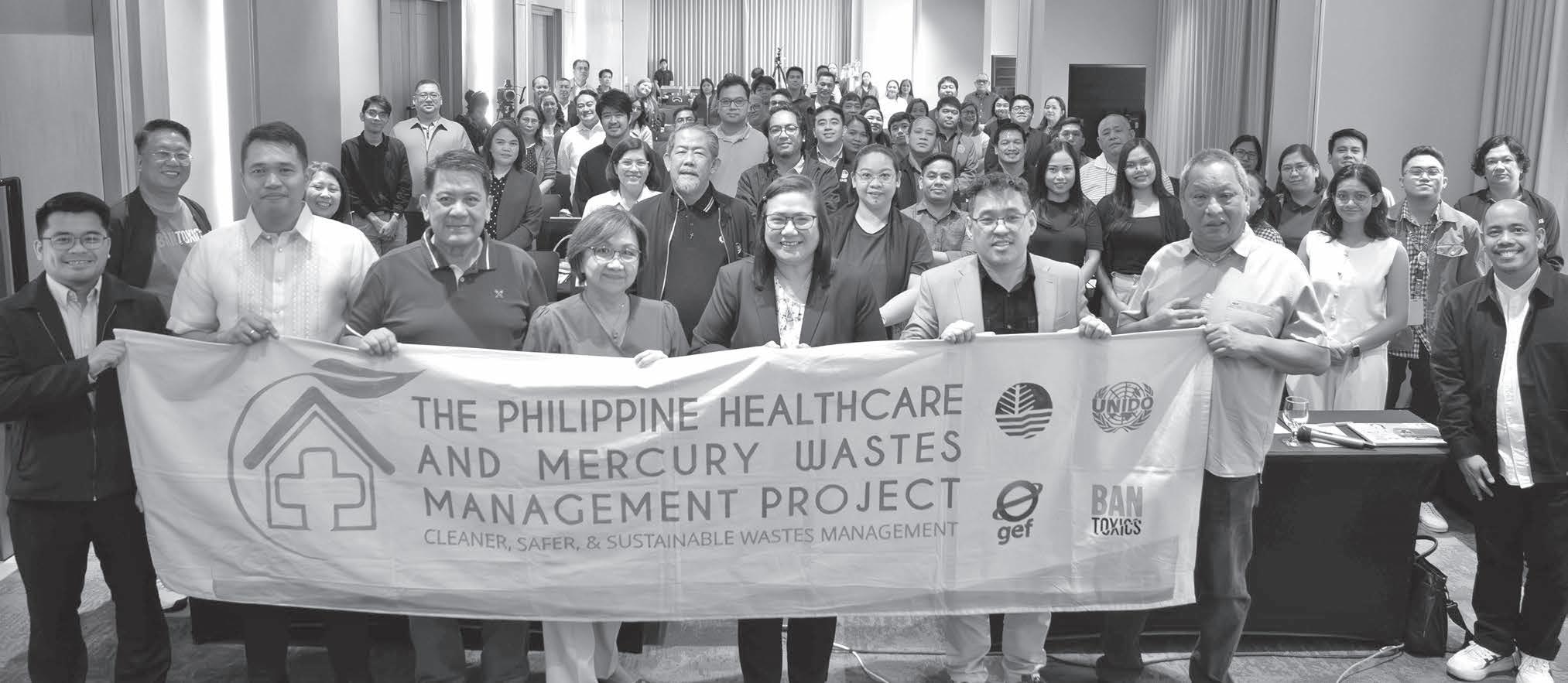
Hospitals cite litany of woes MONROY made the alarming revelation as 100 key stakeholders held a national workshop on January 31, 2025, to kick off the five-year Philippine Healthcare and Mercury Wastes Management Project (HCW Project).
During the workshop, partner hospitals shared concerns about inadequate waste storage and treatment facilities, compounded by delays in waste collection due to the limited capacity of local government units for general waste and treatment, storage and disposal (TSD)
Additionally,
in awareness about proper

2, and Eastern Visayas Medical Center in Region 8, treatment, storage and disposal (TSD) facilities MetroClark, Cleanway, and Envirocare, local government units, and representatives from national agencies, such as the Department of Health, and the De -


velopment Bank of the Philippines.
The workshop marked the end of its inception phase and the execution of its comprehensive plan. Officially launched in December 2023, the HCP Project is a partnership between the United Nations Industrial Development Organization (UNIDO) and the Philippine government, led by the Department of Environment and Natural Resources-Environmental Management Bureau (DENR-EMB). With funding from the Global Environment Facility (GEF), this initiative supports the shared commitment of developing countries to
address the world’s most pressing environmental issues. Executed by BAN Toxics, the project focuses on reducing the release and emissions of toxic substances from healthcare waste, aligning with global efforts to protect public health and the environment while fostering responsible and sustainable practices in the Philippines. “ This workshop represents more than just a gathering of experts. It is a call to action. The responsibility we shoulder is immense, and it is our collective commitment, cooperation, and
Continued from A1 determination that will shape the project’s success. By working together, we will not only address the environmental and health challenges posed by hazardous waste but also lay the foundation for a cleaner, safer future for generations to come,” Jacqueline A. Caancan, OIC-Assistant Secretary for Environment and Concurrent EMB Director, said in statement.
Dr. Carmela Centeno, UNIDO Head for Responsible Materials and Chemicals Management Unit, underscored the pivotal role of the HCW Project in advancing global sustainability and fostering a greener future.
This project is a testament to our commitment to achieving Sustainable Development Goals (SDGs), particularly SDG 3 on good health and well-being, SDG 6 on clean water and sanitation, and SDG 12 on responsible consumption and production. By promoting sustainable and inclusive healthcare waste management practices, we are addressing environmental challenges and improving public health outcomes,” she stated.
She also highlighted UNIDO’s broader efforts on a global scale. “UNIDO continues to support countries in advancing inclusive and sustainable industrial development, recognizing that economic growth and environmental stewardship must go hand in hand. In the Philippines, this project demonstrates how targeted interventions in healthcare waste management can be a model for other countries. Globally, we remain steadfast in fostering partnerships, driving technology transfer, and advocating for innovative solutions to environmental and industrial challenges.”
WHO: 15% healthcare waste hazardous
THE World Health Organization (WHO) estimates that approximately 85% of healthcare waste is general and non-hazardous, while the remaining 15% is hazardous, including materials that may be infectious or toxic.
Improper disposal methods, such as open burning or lowtemperature incineration, release
‘This workshop represents more than just a gathering of experts. It is a call to action. By working together, we will not only address the environmental and health challenges posed by hazardous waste but also lay the foundation for a cleaner, safer future for generations to come.”— Jacqueline A. Caancan, OIC-Assistant Secretary for Environment and Concurrent EMB Director
harmful pollutants like dioxins, furans, and particulate matter into the environment. Healthcare facilities can also be significant sources of mercury pollution if waste from mercury-containing medical measuring devices and lamps is not properly managed.
A d ay before the National Workshop, the PSC convened and officially approved the project’s five-year work plan. PSC members, including the Department of Health (DOH), Department of Interior and Local Government (DILG), the Food and Drug Administration (FDA), and the Development Bank of the Philippines (DBP) affirmed their roles and responsibilities in ensuring the success of the project’s objectives and goals.
The HCW Project will focus on several interventions, including conducting a policy gap analysis with corresponding recommendations, hiring technical experts to identify environmentally sound technologies and strategies on management, and raising awareness while building stakeholder capacity.
A critical aspect of the project is reducing unintentional persistent organic pollutants (uPOPs), such as dioxins and furans, commonly released while burning chlorinated waste materials. Sources of chlorine include chlorine-based disinfectants and PVC (polyvinyl chloride) plastics.
The project will also address the stockpiles of toxic mercury waste in hospitals by ensuring its
proper storage and disposal. Mercury-containing products such as thermometers, sphygmomanometers, dental amalgam capsules, liquid mercury for dental restorative purposes, and fluorescent lamps have been banned in healthcare facilities since 2022 following the issuance of FDA Circular No. 2022003. While healthcare facilities have generally shifted to mercuryfree products, stockpiles of mercury waste have yet to be properly disposed of.
Th e initiatives will also focus on improving waste inventory systems and assessing the technologies and capacities of TSD facilities to identify opportunities for technology transfer and green financing.
Key discussions during the national workshop included an overview of the HCW Project’s inception activities, updates from partner healthcare facilities, and expert insights on best practices for managing uPOPs and mercury in healthcare waste. The presentation of the work financial plan and stakeholder engagement strategies laid the groundwork for the project’s next steps.
“ The successful implementation of this plan over the next five years is crucial for achieving sustainable healthcare waste management interventions, and will have long-term benefits for the health of our communities and our environment,” said Jam Lorenzo, BAN Toxics Deputy Executive Director and HCW Project Manager.
By Derek Decloet
IT was -20C (-4F) in Ottawa on the night of Feb. 1, one of the most bitterly cold days in Canada’s winter of discontent. Shortly after 9 p.m., in a historic government building known as the West Block, Justin Trudeau walked to a lectern placed in front of four Canadian flags. Everyone had been waiting for hours to hear how he planned to respond to US President Donald Trump’s Mar-a-Lago broadside.
Trudeau did something unusual. He began talking about war, and history. Saying that he wanted to speak to Americans directly, he quoted John F. Kennedy, reminded people that Canada helped try to free US hostages in Iran in 1979, and spoke of the Canadian soldiers who were left to bleed to their deaths in Afghanistan after 9/11. “From the beaches of Normandy to the mountains of the Korean Peninsula, from the fields of Flanders to the streets of Kandahar, we have fought and died alongside you,” he said.
But the prime minister’s main audience was not US television viewers. By invoking Canada’s military past, Trudeau was also trying to achieve something he has struggled to do as his political capital dwindled over the past few years. He was trying to stir patriotism and unity among Canadians, while stoking their outrage at Trump’s decision to break the countries’ trade arrangement. He wanted them to feel pride and anger at the same time.
Trudeau struck back at the US, saying that Canada would put its own 25 percent tariffs on thousands of US products— Harley Davidsons and Tropicana orange juice and yes, Elon Musk’s Teslas. Two days later, the countries declared a shortterm truce after Trudeau agreed to extra measures to stamp out drug trafficking, Trump’s stated reason for putting tariffs against Canada and Mexico.
The 30-day tariff delay does a lot to minimize the immediate damage to Canada’s economy. It does little to stem Canadians’ fury and bewilderment—because that part isn’t about trade, really.
In December, when it emerged that Trump had poked Trudeau over dinner in south Florida about Canada becoming the 51st state, Canadians mostly took it as a joke. When Trump kept going with social media posts mocking the longest-serving leader in the Group of Seven as “Governor” Trudeau, they saw it as punching down. By this point, the prime minister was a spent force, politically.
Trudeau announced his resignation on January 6. The country was still vibrating from that news the following day when Trump gave a press conference about buying Greenland, taking the Panama Canal and using “economic force” to absorb Canada into the US.
In Canada, a switch was flipped on January 7: Oh, he means it.
And as Trump has continued to throw the 51st state jab— accompanied by a carousel of grievances about the trade deficit, the border, and the fact that Canada manufactures cars—the relationship between two of the closest democratic allies of the postwar era has ruptured. No matter what happens with trade and tariffs, the damage may last for a generation, especially if Trump persists.
“It’s not just because this is how he does business, this is how he negotiates,” said Lori Turnbull, a professor in the faculty of management at Dalhousie University in Halifax, Nova Scotia. “There’s every reason to think that he is looking at the resources Canada has—whether it’s energy,
By invoking Canada’s military past, Trudeau was also trying to achieve something he has struggled to do as his political capital dwindled over the past few years. He was trying to stir patriotism and unity among Canadians, while stoking their outrage at Trump’s decision to break the countries’ trade arrangement. He wanted them to feel pride and anger at the same time.
water—he’s looking at that and thinking, ‘Why do we have barriers to that at all?’”
Political theater IT has been a dizzying month since that news conference.
Canadian politics has been turned upside down. The contest to replace Trudeau as prime minister now turns on the question of who is best to manage the Trump Factor. The leading Liberal Party contenders—Mark Carney, the former central banker, and Chrystia Freeland, the former finance minister— take turns using ever more heated language to denounce Trump and to promise a strategy that will protect Canadian sovereignty.
Pierre Poilievre, a combative and social-media-savvy conservative, looked to be on a path to an easy win over the Liberals as long as Trudeau stuck around. He’s still the favorite to win the national election that may come as early as April, but some recent polls suggest there’s movement against him.
Poilievre, 45, is easily the most sure-footed Conservative Party politician since Stephen Harper, who governed for almost a decade before he was bested by Trudeau in 2015. He understands policy, speaks to economic issues that people care about, and is skilled at turning a tough question into his favorite talking points. He’s a patriotic Canadian who has been trying on “Canada First” as his new motto lately. If he has a problem, it’s that nobody has any idea how he would handle being bullied over dinner at Mar-a-Lago.
“The election is no longer about Trudeau, it’s no longer about a carbon tax. It is about a much more existential question, about what’s best for Canada and who is best to do that,” Turnbull said. “That could split all kinds of ways.”
Ontario Premier Doug Ford, who was caught on a hot mic saying that he was happy when Trump won in November, saw an opportunity in the trade crisis to call an early election. He’s now campaigning for a third term and is likely to win a huge majority by running against an opponent who’s not on the ballot—Trump.
“I love the Americans, I love the US,” Ford, a former businessman who had corporate interests in Chicago, said in an interview with Bloomberg shortly before Christmas. “I just look forward to a rewarding business relationship, back and forth across the border.”
And there was Ford again on Monday, saying that he would bar all US companies, including Musk’s Starlink, from getting government contracts.
“No matter if we’re building a hospital, if we’re building anything—we could be building a doghouse—I want to make sure that we’re using Ontario steel, Canadian products.” As he spoke, the managers of the government-controlled liquor distributor were readying to pull bottles of Jack Daniels and California pinot noir off the shelves—with the television cameras invited to record it.
Some of this is simply political theater.

Trudeau, Ford and every economist understand how vulnerable Canada is in a trade war with its largest trading partner. Fully three-quarters of Canadian exports go to the US, with some of the biggest products being oil, gas and the Ontario-made auto parts and vehicles that Trump dislikes so much. Ontario’s worst-case projection for a trade war that hammers its auto sector is 500,000 lost jobs. That would be about 1 in every 16 working people in the province.
Canada was lulled into complacency by decades of relatively low-friction trade with the world’s largest economy and by an early-century oil boom—before the US shale revolution—that briefly gave Canadians the false impression that they were indispensable to American economic power. For years, the goal was to build more and bigger oil and gas pipelines going south.
That old-economy bet doesn’t look so good today. The US technology sector is riding a wave, or perhaps a mania, of enthusiasm for artificial intelligence, led by trillion-dollar companies. Canada boasts some promising startups and excellent universities— the most recent Nobel Prize for physics went to a University of Toronto professor—but just one tech company worth more than $100 billion. As good as Canadians are at digging Earth’s treasures out of the ground, they’ve been even better at allowing foreigners to snap up their best companies, brightest talent, and most important research and intellectual property.
“Is our economic structure too close to Russia’s? The shame of that is we have tremendous potential to be much, much more than that,” said Jim Balsillie, the former co-chief executive officer of BlackBerry Ltd., once the world’s most valuable smartphone company. “So, I don’t think we should consign ourselves to be a low-value-added petrostate, selling a few other resources and a bit of agriculture.”
Balsillie said that while Canada was busy extolling the virtues of liberalized global trade and trying to expand commodity production, the US was focused on owning intellectual property, controlling data, and changing the rules to make “free trade” less free. Deals like the US-MexicoCanada Agreement, which Trump signed in 2020, are less about promoting tarifffree exchange and more about
exerting “strategic behavior” that strengthens US dominance.
“I read agreements, and I know how Americans work,” Balsillie said.
Canada’s identity SO, Canada has woken up. If the US won’t honor its treaties, the northern nation of more than 41 million people will have to rethink, well, just about every basic assumption they’ve held about economics and security since at least the 1980s. Robert Asselin, one of Trudeau’s former advisers, calls it a “Sputnik moment.” Promoting exports is out. Self-reliance is in.
In his view, Canada needs its own version of DARPA, the technology research agency launched by the US Defense Department after the Soviet Union launched the first satellite in the late 1950s. That means a concerted government push to bring more investment in Canadian-owned tech, defense, energy and AI.
“You need a technology strategy,” said Asselin, now a policy adviser to the Business Council of Canada. “Other countries have done it, and there’s no ingredients we don’t have to make it work.”
Ideas once left for dead are now getting another look. Energy East, an ambitious plan for a pipeline to pump crude oil from Alberta to Quebec, was shelved in 2017.
Now it’s being talked about as a way to sell more western oil to other markets, including eastern Canada, which currently takes some of its energy via pipelines that come back into the country via the US.
But those are long-term answers. In the meantime, Canadians are figuring out small gestures: passing around guides on how to find Canadian products in stores, canceling US
vacations, and lashing out as people do when hurt. Six years ago, the most heralded athlete in Canada was Kawhi Leonard, the American basketball star who led the Toronto Raptors to their only championship. On Sunday, Leonard’s current team, the Los Angeles Clippers, played in Toronto. Fans booed “The StarSpangled Banner.” Why does Trump’s 51st state notion offend people in Canada? Wouldn’t it make them richer, as the president says? Yes. And yet polls show that a large majority of Canadians are against the idea.
“It’s demeaning to Canada to say, ‘Oh you’re just a country that we could absorb’ when in reality it’s a country that has its own sense of place in the world,” said Terri Givens, a political science professor who’s from Spokane, Washington, but now lives in Vancouver and teaches at the University of British Columbia. That “sense of place” comes from the history that Trudeau alluded to in his February 1 speech. In fact, Canada exists because of the fear of annexation.
By 1867, having witnessed the violence of the American Civil War and fearful of US aggression, the leaders of British North American colonies decided to link up and form the Dominion of Canada. It was still a relatively young nation when it sent its soldiers to the front lines in 1914, a nd when it declared war on Nazi Germany in September 1939, as the US hesitated.
Canadians understand this history. Each year, many of them visit the cemeteries and memorials of western Europe and look at the names. This is the problem for Trump’s 51st state project. You can buy oil and cars, or not. But you can’t buy a nation’s identity. With assistance from Thomas Seal/Bloomberg

By Cathy Bussewitz Business Writer
snooze in parking garages, on side streets before the afternoon school run, in nap pods rented by the hour or stretched out in bed while working from home.
People who make a habit of sleeping on the job comprise a secret society of sorts within the US labor force. Inspired by famous power nappers Winston Churchill and Albert Einstein, today’s committed naptakers often sneak in short rest breaks because they think the practice will improve their cognitive performance but still carries a stigma.
Multiple studies have extolled the benefits of napping, such as enhanced memory and focus. A mid-afternoon siesta is the norm in parts of Spain and Italy. In China and Japan, nodding off is encouraged since working to the point of exhaustion is seen as a display of dedication, according to a study in the journal Sleep.
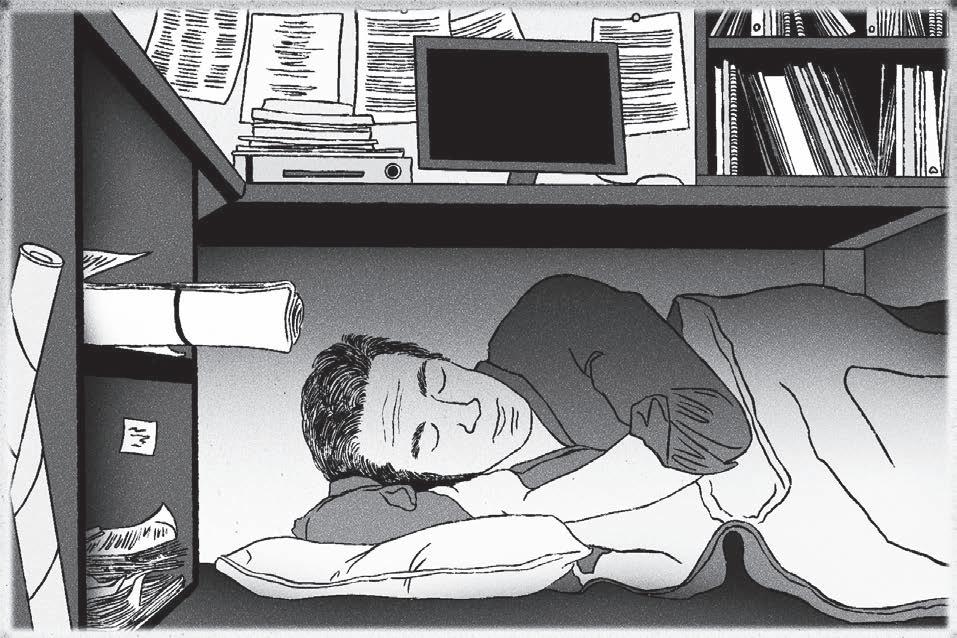
of taking a dose of microsleep. Marvin Stockwell, the founder of PR firm Champion the Cause, takes short naps several times a week.
“They rejuvenate me in a way that I’m exponentially more useful and constructive and creative on the other side of a nap than I am when I’m forcing myself to gut through being tired,” Stockwell said.
The art of napping
SLEEP is as important to good health as diet and exercise, but too many people don’t get enough of it, according to James Rowley, program director of the Sleep Medicine Fellowship at Rush University Medical Center.
“A lot of it has to do with electronics. It used to be TVs, but now cellphones are probably the biggest culprit. People just take them to bed with them and watch,” Rowley said.”
Napping isn’t common in academia, where there’s constant pressure to publish, but University of Southern California lecturer Julianna Kirschner fits in daytime naps when she can. Kirschner studies social media, which she says is designed to deliver a dopamine rush to the brain. Viewers lose track of time on the platforms, interrupting sleep. Kirschner says she isn’t immune to this problem—hence, her occasional need to nap.
The key to effective napping is to keep the snooze sessions short, Rowley said. Short naps can be restorative and are more likely to leave you more alert, he said.
“Most people don’t realize naps should be in the 15- to 20-minute range,” Rowley said. “Anything longer, and you can have problems with sleep inertia, difficulty waking up, and you’re groggy.”
Individuals who find themselves consistently relying on naps to make up for inadequate sleep should probably also examine their bedtime habits, he said.
MID-AFTERNOON is the ideal time for a nap because it coincides with a natural circadian dip, while napping after 6 p.m. may interfere with nocturnal sleep for those who work during daylight hours, said Michael Chee, director of the Centre for Sleep and Cognition at the National University of Singapore.
“Any duration of nap, you will feel recharged. It’s a relief valve. There are clear cognitive benefits,” Chee said.
A review of napping studies suggests that 30 minutes is the optimal nap length in terms of practicality and benefits, said Ruth Leong, a research fellow at the Singapore center.
“When people nap for too long, it may not be a sustainable practice, and also, really long naps that cross the two-hour mark affect nighttime sleep,” Leong said.
Experts recommend setting an alarm for 20 to 30 minutes, which gives nappers a few minutes to fall asleep.
But even a six-minute nap can be restorative and improve learning, said Valentin Dragoi, scientific director of the Center for Neural Systems Restoration, a research and treatment facility run by Houston Methodist hospital and Rice University.
Bucking the trend
WHILE workplace dozing is uncommon in the US, some companies and managers encourage it. Will Bryk, founder of AI search startup Exa, swears by 20-minute power naps and ordered two sleeping pods for employees to use in his company’s San Francisco office.
Ice cream maker Ben & Jerry’s has had a nap room in its Vermont headquarters for a couple of decades, and a handful of employees use it, company spokesman Sean Greenwood said. “Employees who feel taken care of are much more likely to use this responsibly,” he said.
Arianna Huffington, the celebrity author who co-founded the news website Huffington Post, became an advocate of a good night’s sleep and occasional naps after she collapsed from exhaustion in 2007. She installed a nap room at her former company, now called HuffPo, and at Thrive Global, a behavior change technology company where she serves as founder and CEO.
“If people have been up all night because of a sick child or a delayed flight, if they have the opportunity to nap, ... then they will be much more productive and creative for the rest of the day instead of dragging themselves or trying to boost their energy through multiple coffees or cinnamon buns,” Huffington said in an e-mail.
Kirsten Perez, 33, is a devoted napper. She used to use her lunch break at work to catch a few winks in her car. When she got her own office, she closed the door for a siesta while sitting at her desk.
Nowadays, working from home as a marketing manager at Nvidia, the Atlanta resident usually takes her daily nap in bed. She sets an alarm for 15 minutes, falls asleep within a minute and wakes up 30 seconds before the alarm rings.
“I can tell when my reasoning and my mood are dropping, just kind of feeling the drag of the day,” Perez said. In those situations, she asks herself, “’Do I have a chunk of time in the next hour or so?’ And then I’ll figure out when I can find 15 minutes and find myself horizontal.”
Creating space for sleep NAPS are accepted and even a necessity in some occupations. The Centers for Disease Control and Prevention encourages naps for nurses working night shifts. But many nurses can’t sleep at the hospitals where they work because they’re too busy and aren’t given access to beds.
Nurses “regularly struggle to have sufficient time to use the bathroom or go outside for fresh air, no less take a nap,” said a spokesperson for the National Nurses United union.
Some companies are trying to fill the void. Inspired by his mother who worked as a nurse, Neil Wong founded Nap York, which offers sleeping pods in Manhattan and Queens that can be rented for about $27 an hour.
His regular customers include super-commuters, UPS drivers, a security guard who works two full-time jobs, and doctors who work at nearby hospitals. Nap York also gives half-off prices to essential workers such as police officers, firefighters and emergency medical service personnel.
“In this society, you really only have two place to sleep: you have your bed at home and you have a hotel room you can probably get for 100 bucks,” Wong said. “There’s really no third space that’s quiet, that provides some privacy, where you can also rest.”

THE country’s key sectors of agriculture, healthcare, and manufacturing are facing critical problems that hamper people’s livelihood, and local and national development. To address the challenges and provide solutions to these areas, the government launched eight transformative research and development (R&D) programs.
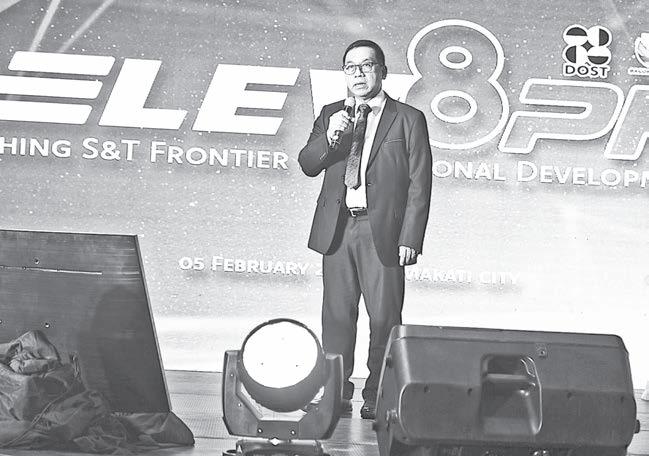
Dubbed, “ELEV8PH: Pushing S&T Frontiers for National Development,” the Department of Science and Technology (DOST) brought together key stakeholders from industry, academe, foreign partners, and the DOST research community during the recent launching of the initiative.
The R&D programs involve Artificial Intelligence (AI), Quantum Computing Technology, Geospatial Analytics Solution, Industry 4.0, Circular Economy, Smart Agriculture, Biologics in Pharmaceuticals and Smart Technologies.
Science Secretary Renato U. Solidum Jr. pointed out that the key R&D programs are designed to advance science and technology for national development.
He further emphasized the vital role of unity and collective action in achieving a future defined by progress and innovation.
“With collaboration as our corner -
stone, let us embark on decisive steps toward the progressive nation we all yearn for,” Solidum added.
DOST Undersecretary for Research and Development Leah J. Buendia highlighted the immense potential of innovation and the collective drive that propels progress forward.
“Together, we embody the spirit of innovation and collaboration that turns visions into reality,” Buendia in her speech during the event.
ELEV8PH is one of DOST’s programs that aims to strengthen industry innovation and promote technological advancement through collaborative research among academia, industries, and government sectors.
The eight transformative R&D priority areas in ELEV8PH the following:
1. Artificial Intelligence (AI) Virtual Hubs
WITH the rise of AI, there are concerns that developing countries like
the Philippines may be left behind. But it should be noted that the recent AI Readiness Index 2024 shows that the Philippines has improved its ranking from 65th in 2023 to 56th in 2024, positioning the country to take a leadership role in the global AI landscape.
One of the program’s major components, the AI Virtual Hubs, was established through the Advancing Computing Analytics, Big Data, and Artificial Intelligence in the Philippines (ACABAI-PH) initiative.
This program offers accessible AI tools that enable businesses, researchers, and communities to utilize AI solutions without needing extensive technical expertise, ensuring practical and innovative answers to meet the needs of Filipinos.
According to Franz A. De Leon, director of the DOST-Advanced Scientific Technology Institute (DOST-ASTI), it is crucial to maintain the integrity of the AI program to gain the trust of stakeholders. Therefore, all AI solutions must be transparent, explainable, and capable of identifying biases in AI models.
2. Quantum Computing Technology
THE Science department is committed to enhancing the computing power and capabilities of the local industry through quantum computing technology.
This cutting-edge computing surpasses the capabilities of classical computers and has advanced features that can support growth in various fields, including cryptography, cybersecurity, pharmaceutical development, materials science, climate
forecasting, and financial services.
3. Geospatial Analytics Solution (GATES Hub)
T HE GATES Hub aims to advance the application of geospatial science in addressing critical issues, such as disaster risk reduction, urban planning, and environmental management. This program is envisioned to be adopted by the government to mitigate disaster risk, tackle urban planning challenges, and improve scientific datasets for environmental management.
4. Industry 4.0
AT the heart of this initiative is the Cuatro program that helps strengthen companies’ capabilities in utilizing core technologies such as additive manufacturing, autonomous robots, augmented reality, the Internet of
Why chocolates are the usual gifts on Valentine’s Day
By Raymond Jacinto Sucgang
THE tradition of giving choco -
lates on Valentine’s Day is tied not only to cultural symbolism but also to scientific mechanisms that enhance feelings of affection.
When we look deeper into the chemistry behind chocolates, we find that they contain several compounds that can have an effect on our mood, making them an ideal gift for a day dedicated to love and affection.
The combination of compounds like phenylethylamine, theobromine, serotonin, and flavonoids work together to produce pleasurable feelings, making chocolate a powerful vehicle for enhancing emotions.
1. The role of phenylethylamine (PEA)
ONE of the key compounds in chocolate is phenylethylamine (PEA), often referred to as the “love drug.”
PEA is a naturally occurring alkaloid that stimulates the brain’s release of endorphins and dopamine. These chemicals are often associated with the “feel-good” sensation one experiences when they’re in love or experiencing pleasure.
PEA is known to mimic the brain activity that happens when people are in love, increasing energy and pleasure, which is why chocolates are often linked with romantic gestures.
Molecular mechanism of PEA: It increases the levels of dopamine in the brain, a neurotransmitter responsible for the feeling of reward and pleasure. It also triggers the release of norepinephrine, which plays a role in arousal and attention, intensifying the feeling of excitement and affection.
2. Theobromine, a mild stimulant
ANOTHER important molecule found in chocolate is theobromine, a stimulant that is chemically similar to caffeine.
Things (IoT), cybersecurity, system integration, simulation, big data, and cloud computing. These technologies will support the technological needs and upgrades of micro, small, and medium enterprises. Additionally, a Smart Manufacturing Hub will be established to assist clients within Metro Manila in upgrading their technology.
5. Circular Economy
THE concept of a Circular Economy is gaining global traction as economies increasingly focus on sustainable manufacturing to protect the environment. This initiative aims to develop strategic human resource capabilities and promote innovative R&D technologies, facilities, and by developing policies on resource recovery plans to ensure compliance with solid waste management.
6. Smart Agriculture
TO confront significant challenges in the agriculture sector—such as farm damage from natural disasters and other phenomena, oversupply of vegetables, pest infestations, and commodity price fluctuations—science-based solutions using smart technologies are crucial. This program seeks to leverage existing R&D initiatives in precision farming, digital agriculture, and the use of drones, sensors, and data analytics to enhance productivity in agriculture. It aims to address challenges related to climate change, food security, and the sustainable use of natural resources.
7. Biologics in Pharmaceuticals THROUGH this initiative, the DOSTPhilippine Council for Health Research has launched various programs to encourage local industries to engage in manufacturing, as well as in drug discovery, diagnostics, and therapeutics. The focus is on improving public health outcomes by providing precise and personalized treatments for all.
8. Smart Technologies DOST is creating advanced and interconnected systems that improve efficiency, sustainability, and quality of life by integrating smart technologies, such as IoT, 5G, AI, and Big Data. This effort aims to accelerate the development and widespread adoption of these technologies across various sectors, including smart communities, industries, healthcare, and beyond, ensuring that these devices and technologies are accessible to all. Abigael S. Omana/S&T Media Service

experiences, eating chocolate together can also enhance feelings of intimacy and connection, reinforcing romantic bonds.
Molecular mechanism of oxytocin: Oxytocin enhances the feelings of trust, affection, and bonding between individuals, making it easier to form strong emotional connections.
It is also known to reduce stress and promote feelings of calm, which adds to the comforting nature of chocolate as a gift.
5. Flavonoids and antioxidant effects
DARK chocolate, in particular, is rich in flavonoids, which are antioxidants that help improve blood flow and reduce inflammation.
The increase in blood circulation can lead to a feeling of warmth and comfort, which is symbolic of love and affection.
UPMin student gets DOST grant for study of 2 epiphytes’ anti-inflammatory potential
By Manuel T. Cayon
DAVAO CITY—A student of the University of the Philippines Mindanao (UPMin) was awarded a P75,000government grant for her undergraduate research on the anti-inflammatory potential of two native epiphytes, or plants that grow on another plant but are not parasitic, such as ferns, bromeliads, air plants, and orchids growing on tree trunks in tropical rainforests.
ARTISANAL chocolates are displayed in a box at The Chocolate Line in Bruges, Belgium, on February 6. AP/VIRGINIA MAYO
Theobromine works by stimulating the heart and the central nervous system. This stimulant effect can produce a feeling of increased alertness and mild euphoria, adding to the moodenhancing properties of chocolate. Molecular mechanism of theobromine: It inhibits phosphodiesterase, which leads to the increase in cyclic AMP (cAMP) in cells, promoting increased heart rate and dilated blood vessels.
It also promotes the release of serotonin, a neurotransmitter known to improve mood and induce feelings of happiness and well-being.
3. Serotonin and endorphins CHOCOLATE contains tryptophan, an amino acid that is a precursor to serotonin, often referred to as the “happiness hormone.” By boosting serotonin levels, chocolate can help regulate mood and al -
leviate feelings of anxiety or stress. Serotonin is linked to feelings of contentment and well-being. Molecular mechanism of serotonin: It enhances mood by acting on various receptors in the brain, such as the 5-HT receptors, which are involved in regulating mood, appetite, and sleep.
Higher serotonin levels have been linked to an increase in feelings of love and affection, making chocolates an ideal gift for romantic occasions like Valentine’s Day.
4. Oxytocin and the ‘bonding hormone’
THE act of gifting chocolate, especially when shared with a loved one, may also trigger the release of oxytocin, sometimes called the “bonding hormone” or “cuddle hormone.” While oxytocin is released through physical touch, hugging, and bonding
Flavonoids can also enhance cognitive function, promoting mental clarity and focus, which may contribute to a deeper emotional connection between individuals.
Molecular mechanism of flavonoids: Flavonoids, particularly epicatechins, promote the production of nitric oxide, which relaxes blood vessels and improves circulation.
Enhanced blood flow can promote feelings of warmth and relaxation, contributing to a positive emotional experience when sharing chocolate.
Thus, the importance and popularity of chocolate as a gift on Valentine’s Day has a strong scientific basis. Whether it’s the “love drug” PEA, the stimulant effects of theobromine, or the mood-lifting serotonin and oxytocin, chocolates serve as a sweet way to connect on an emotional and biochemical level, making them a perfect gift to express love and affection.
Sucgang is a Supervising Science Research Specialist at the Philippine Nuclear Research Institute.
Charlisze Ayeesha Tapsirul was awarded the grant from the Department of Science and Technology-Philippine Council for Health Research and Development for her undergraduate thesis in natural products. She will explore the antiinflammatory potential of two native Philippine epiphytes, the Piper betle (buyo) and Epipremnum pinnatum (tibatib).
“These plants have been used in folk medicine for years, but their ability to fight inflammation hasn’t been fully studied,” Tapsirul said. “By learning more about their properties, we hope to discover natural treatments for diseases linked to excessive inflammation.”
Tapsirul said the research focuses on how the natural compounds in the plant locally known as “buyo” and “tibatib” may help control the body’s overreaction to inflammation and how to prevent complications.
She said the P75,000 research grant will help her conduct more advanced tests to analyze the plants’ healing effects. The funding covers laboratory materials and specialized equipment needed to extract and study the plants’ natural compounds.
“I am incredibly grateful to be a recipient of this grant,” she said. “It allows me to pursue my research without financial constraints and reinforces the importance of natural product drug discovery in the Philippines.”
“As a BS Biology student at UP Mindanao, our coursework strongly emphasizes biological sciences, conservation, and plant knowledge. While researching natural products can be challenging, it is also incredibly rewarding,” she added. She said the Philippines has an incredible wealth of untapped plant resources.
“To fellow undergraduate researchers interested in natural products and health sciences, stay curious and believe in your ability to contribute to the greater good,” she added. The DOST said that as the study continues, “Charlisze [Tapsirul] hopes the findings will open doors for more scientific exploration of Philippine plants and their potential as natural medicines.”
She said Inflammation is the body’s way of fighting infections, but too much of it can be dangerous. In severe Covid-19 cases, for example, a “cytokine storm” may occur where the immune system overreacts and causes serious damage to the lungs and other organs.
A6 Sunday, February 16 , 2025

MBy David Crary
ORE than two-dozen Christian and Jewish groups representing millions of Americans—ranging from the Episcopal Church and the Union for Reform Judaism to the Mennonites and Unitarian Universalists—filed a federal court lawsuit challenging a Trump administration move giving immigration agents more leeway to make arrests at houses of worship.
At the same time, Pope Francis issued a major rebuke to the Trump administration’s plans for mass deportations of migrants, warning that the forceful removal of people purely because of their illegal status deprives them of their inherent dignity and “will end badly.”
Francis took the remarkable step of addressing the US migrant crackdown in a letter to US bishops in which he appeared to take direct aim at Vice President JD Vance’s defense of the deportation program on theological grounds. (See related story: https://businessmirror.com.
ph/2025/02/12/pope-slams-trumpsdeportation-policy-warns-it-will-endbadly/)
The lawsuit, filed in US District Court in Washington, contends that the new policy is spreading fear of raids, thus lowering attendance at worship services and other valuable church programs.
The result, says the suit, infringes on the groups’ religious freedom—namely their ability to minister to migrants, including those in the United States illegally.
“We have immigrants, refugees, people who are documented and undocumented,” said the Most Rev. Sean Rowe, the presiding bishop of the Episcopal Church.
“We cannot worship freely if some of us are living in fear,” he told The Associated Press. “By joining this lawsuit, we’re seeking the ability to gather and fully practice our faith, to follow Jesus’ command to love our neighbors as ourselves.”
The new lawsuit echoes and expands on some of the arguments made in a similar lawsuit filed on Janurary 27 by five Quaker congregations and later joined by the Cooperative Baptist Fellowship and a Sikh temple. It is currently pending in US District Court in Maryland.
Names as defendants in the new lawsuit are the Department of Homeland Security (DHS) and its immigration enforcement agencies.
The DHS assistant secretary for public affairs, Tricia McLaughlin, responded via email: “We are protecting our schools, places of worship, and Americans who attend, by preventing criminal aliens and gang members from exploiting these locations and take safe haven there

because these criminals knew that under the previous administration that law enforcement couldn’t go inside.”
“DHS’s directive gives our law enforcement the ability to do their jobs,” she added.
A memorandum filed Friday by the Department of Justice, opposing the thrust of the Quaker lawsuit, outlined further arguments that may also apply to the new lawsuit.
In essence, the memo contended that the plaintiffs’ request to block the new enforcement policy is based on speculation of hypothetical future harm—and thus is insufficient grounds for issuing an injunction.
The memo said that immigration enforcement affecting houses of worship had been permitted for decades, and the new policy announced in January simply said that field agents—using “common sense” and “discretion”—could now conduct such operations without preapproval from a supervisor.
One part of that memo might not apply to the new lawsuit, as it argued the Quakers and their fellow plaintiffs have no basis for seeking a nationwide injunction against the revised enforcement policy.
“Any relief in this case should be tailored solely to the named plaintiffs,” said the DOJ memo, contending that any injunction should not apply to other religious organizations.
The plaintiffs in the new lawsuit represent a vastly larger swath of American worshippers—including more than 1 million followers of Reform Judaism, the estimated 1.5 million Episcopalians in 6,700 congregations nationwide, nearly 1.1 million members of the Presbyterian Church (U.S.A.), and the estimated 1.5 million
active members of the African Methodist Episcopal Church—the country’s oldest predominantly Black denomination.
Among the other plaintiffs are the Christian Church (Disciples of Christ), with more than 3,000 congregations; the Church of the Brethren, with more than 780 congregations; the Convención Bautista Hispana de Texas, encompassing about 1,100 Hispanic Baptist churches; the Friends General Conference, an association of regional Quaker organizations; the Mennonite Church USA, with about 50,000 members; the Unitarian Universalist Association, with more than 1,000 congregations; the United Synagogue of Conservative Judaism, with more than 500 U.S. congregations; and regional branches of the United Methodist Church and the United Church of Christ.
“The massive scale of the suit will be hard for them to ignore,” said Kelsi Corkran, a lawyer with the Georgetown University Law Center’s Institute for Constitutional Advocacy and Protection who is lead counsel for the lawsuit.
The plaintiffs joined the suit, she said, “because their scripture, teaching, and traditions offer irrefutable unanimity on their religious obligation to embrace and serve the refugees, asylum seekers, and immigrants in their midst without regard to documentation or legal status.”
Prior to the recent Trump administration change, Corkran said immigration agents generally needed a judicial warrant or other special authorization to conduct operations at houses of worship and other “sensitive locations” such as schools and hospitals.
“Now it’s go anywhere, any time,” she told the AP. “Now they have broad authority to swoop in—they’ve made it very clear they’ll get every undocumented person.”
She cited a recent incident in which a
banking services to Catholic institutions, including churches and charities.
It also supports the Church’s global mission and charitable work by managing funds and investments.
Tan is an accomplished lawyer with over 30 years of experience in banking and asset management.
She is currently a member of the Manila Archdiocesan Finance Board, the Pius XII Catholic Center Board of Trustees, and the San Juan de Dios Educational Foundation Board of Trustees.
A graduate of Economics and Law from the University of the Philippines in Diliman, Quezon City, Uriarte-Tan brings extensive expertise in providing legal counsel on corporate and banking transactions. Additionally, her experience in managing financial operations and leading major trust groups in the Philippines will be valuable to the IOR Board.
Uriarte-Tan has held key roles at the Bank of the Philippine Islands, including president and CEO of BPI Asset Management and Trust Corp., the country’s largest independent trust company.
She has also held executive positions at BPI Capital Corp.
Her previous experience includes serving as co-managing director of Ayala Group Legal, where she gained a broad range of professional experience across Ayala Corp. and its subsidiaries. CBCP News
Honduran man was arrested outside his family’s Atlanta-area church while a service was being held inside.
The lawsuit includes details from some of the plaintiffs as to how their operations might be affected. The Union for Reform Judaism and the Mennonites, among others, said many of their synagogues and churches host on-site foodbanks, meal programs, homeless shelters and other support services for undocumented people who might now be fearful of participating.
One of the plaintiffs is the Latino Christian National Network, which seeks to bring together Latino leaders with different traditions and values to collaborate on pressing social issues. The network’s president is the Rev. Carlos Malavé, a pastor of two churches in Virginia, who described to the AP what network members are observing.
“There is deep-seated fear and distrust of our government,” he said. “People fear going to the store, they are avoiding going to church.... The churches are increasingly doing online services because people fear for the well-being of their families.”
The US Conference of Catholic Bishops, which leads the nation’s largest denomination, did not join the lawsuit, though it has criticized Trump’s migration crackdown.
On Tuesday, Pope Francis issued a major rebuke of the deportation plan, warning that the forceful removal of people purely because of their illegal status deprives them of their inherent dignity and “will end badly.”
Many conservative faith leaders and legal experts across the US do not share concerns about the new arrest policy.
“Places of worship are for worship and are not sanctuaries for illegal activity or for harboring people engaged in illegal activity,” said Mat Staver, founder of the conservative Christian legal organization Liberty Counsel.
“Fugitives or criminals are not immune from the law merely because they enter a place of worship,” he said via email. “This is not a matter of religious freedom. There is no right to openly violate the law and disobey law enforcement.”
Professor Cathleen Kaveny, who teaches in the theology department and law school at Boston College, questioned whether the plaintiffs would prevail with the religious freedom argument, but suggested the Trump administration might be unwise to disregard a traditional view of houses of worship as places of sanctuary for vulnerable people.
“These buildings are different—almost like embassies,” she said. “I think of churches as belonging to an eternal country.” AP
Editor: Lyn Resurreccion • www.businessmirror.com.ph

FATHER Luciano Felloni was laid to rest at a cemetery in Quezon City on Monday, with calls to honor the legacy of the “very passionate” priest and his deep love for the Church and country.
At the funeral, Bishop Roberto Gaa of Novaliches led mourners and praised the Argentine priest’s dedication to ministry and to communities.
“He was the kind of person who was very spirited. He never entered any endeavor half-heartedly,” Gaa said in his homily at San Bartolome Parish Church.
“Whether it’s social action, parish work, or in social communication...he fully committed to it,” he said. Felloni, a popular vlogger, died February 2 at 51, following complications from skin cancer.
In a January 17 social media post, he opened up about the challenges of his treatment.
“Cancer treatment is a real rollercoaster,” Felloni wrote. “One day you are super ok and the next you are down with fever.”
Felloni first garnered media attention when Pope Francis visited the Philippines in 2015.
He shared that, in Argentina, the then-Bishop Bergoglio had led spiritual recollections during his time at the major seminary, and seminarians often went to him for confession.
Felloni arrived in the Philippines in early 2000s and was assigned to the newly established parish of Mother of Divine Providence in Payatas, Quezon City, one of the country’s poorest communities.
Later, while serving at Our Lady of Lourdes Parish in Caloocan City, another urban poor area, he led a community-based rehabilitation program for drug users amid the Duterte administration’s anti-narcotics campaign.
He also served as social communications director of the Novaliches diocese.
Felloni’s vlog, AlmuSalita, became one of the most followed among Catholic vloggers. The name, a play on the Filipino words “almusal” (breakfast) and “salita” (word), referred to the vlog as a daily companion for Gospel reflections.
He was also a “Hall of Famer” at the
Catholic Social Media Awards, winning Male Social Media Influencer from 2017 to 2019. His last assignment was as parish priest of Jesus, Lord of the Divine Mercy Parish in Quezon City’s Mapayapa village and director of the diocese’s social communications ministry.
Despite his illness, Gaa said, Feloni remained energetically engaged in his work.
“May what he started be continued… perhaps in a different manner, but with the same passion, the same intimacy, and the same spirited engagement that we received from Father Luciano,” he said.
“He is now passing on that legacy to us. Let us not let this love and service end with him. I hope we can continue this. If we can’t do it alone, like Father Luciano did, let us seek out others and work together,” Gaa added. From 2011 to 2019, Felloni also served as executive director of Caritas Novaliches and as coordinator of the diocese’s Social Service Development Ministry from 2013 to 2019.
“His deep love for the Church and commitment to justice, especially for the marginalized and victims of violence, embodied the true essence of Christian service,” said Bishop Jose Colin Bagaforo, president of Caritas Philippines. After the funeral Mass, Felloni’s remains were buried at the diocese’s Clergy Plot at Manila Memorial Park Holy Cross in Novaliches. CBCP News

VATICAN—Pope Francis onadded the September 5 feast of St. Teresa of Calcutta to the Catholic Church’s liturgical calendar as an optional memorial.
The decree issued February 11 by the Vatican noted the influence of St. Teresa’s spirituality around the world and said her name “continues to shine out as a source of hope for many men and women who seek consolation amid tribulations of body and spirit.”
The General Roman Calendar is the liturgical calendar of the Catholic Church, which denotes the dates of holy days and the feast days of saints commemorated annually.
The September 5 memorial of St. Teresa of Calcutta will now appear in the Church’s calendars and liturgical texts with specific prayers and readings to be used at Mass and the Liturgy of the Hours. Memorials rank third in the classification of feast days on the Catholic Church’s liturgical calendar. The memorial of St. Teresa of Calcutta will be an optional memorial, which means it is voluntary whether to observe it.
Popularly known as Mother Teresa, St. Teresa of Calcutta was an Albanian sister who founded the Missionaries of Charity. She died in 1997 at the age of 87 after
spending most of her life serving the poor in Calcutta, India. She was canonized by Pope Francis in 2016.
The decree, signed by Cardinal Arthur Roche, prefect of the Dicastery for Divine Worship and the Discipline of the Sacraments, said: “Radically living the Gospel and boldly proclaiming it, St. Teresa of Calcutta is a witness to the dignity and honor of humble service. By choosing not only to be the least, but the servant of the least, she became a model of mercy and an authentic icon of the Good Samaritan.”
“Jesus’ cry on the cross, ‘I thirst’ (Jn 19:28) cut St. Teresa to the quick,” the decree continued.
“Thus, for her whole life she dedicated herself completely to satiate the thirst of Jesus Christ for love and souls, serving him among the poorest of the poor. Filled with the love of God, she radiated that same love in equal measure to others.”
The decision to add the memorial of St. Teresa of Calcutta to the General Roman Calendar was approved by Pope Francis on December 24, 2024.
On February 11, the liturgy dicastery published the decree and issued Latin texts for the new optional memorial to be translated by bishops’ conferences into the local languages and approved for
publication by the dicastery.
According to a note from Roche, the first reading chosen for Mass for the September 5 memorial of Mother Teresa is taken from Isaiah 58 on the fast that is pleasing to God. The Psalm for the Mass will be Psalm 33: “I will bless the Lord at all times.” The Gospel, he said, will be taken from St. Matthew, “which, after enumerating the works of mercy, contains the following words brought wonderfully to life in Mother Teresa: ‘Whatever you have done to the very least of my brothers and sisters you have done also to me’ [Mt 25:40].” Hannah Brockhaus/Catholic News Agency via CBCP News


Editor: Lyn Resurreccion

By Jonathan L. Mayuga
ANILAO, home to some of the world’s breathtaking underwater landscapes, is home to a diverse species of hard and soft corals. It is one of the 19 coastal barangays of the municipality of Mabini in Batangas.
It sits at the mouth of Verde Island Passage, which scientists declared as the center of the shorefish biodiversity.
Amazing sea critters
MORE than the colorful corals of different shapes and sizes, Anilao is also home to amazing underwater critters such as rhinopias, harlequin shrimp, tiger shrimp, bumble bee shrimp, blue-ringed octopus, mimic octopus, hairy frogfish, bobbit worm, and boxer crab, and hundreds of nudibranch species.
A recent underwater photography competition revealed some of these amazing underwater creatures that are rarely documented.
The Anilao Underwater ShootFest 2025 also showcased world-class talents in underwater photography of new and seasoned scuba diver-photographers who took part in a fiveday dive as part of a tourism promotional activity of the Tourism Office of Mabini, Batangas.
Winners
THE winners of the competition and their entry for the different categories are the following: COMPACT CLASS WINNERS
Macro: Jay Calauag
Champion Aquaman Ida First
Suliguin
Nudi: Luzelle Artillero
Calauag
Fish: Aquaman Ida
Carunungan
BlackWater: James Magsino
For Compact Class Luzelle Artillero was adjudged as “Photographer of the Year,” Jachille Aristorenas bagged the “Dive Guide of the Year.”
Open Class winners
Macro: PJ Aristorenas
Champion
Mark Chang First place
Marivic Maramot
Second place
Nudi: Claudine Lagman
Champion Marivic Maramot First place
Dennis Corpuz Second place
Fish: Mark Chang
Champion
Niel Anthony Torres First place Seongil Kim Second place
Blackwater: Reggie Casia
Champion
Dennis Corpuz First place
PJ Aristorenas Second place
FOR OPEN CLASS
Regie Casia was adjudged the “Photographer of the Year” Ramil Ochea bagged the “Dive Guide of the Year.”
Short Film: Jobet de la Cruz
Champion Aquaman Ida
First place
James Magsino
Second place
Underwater photography
SIMPLY described as the process of taking photographs while underwater, underwater photography is usually done while scuba diving, although it can also be done while diving on the surface, snorkeling, swimming, from a submersible, remotely operated underwater vehicle, or automated cameras lowered from the surface.
Veteran underwater photographer and scuba divemaster Danny Ocampo, one of the judges in the competition, said underwater photography is not an ordinary skill you acquire overnight. It takes years and years of practice in both scuba diving and photography. You have to familiarize yourself with scuba diving first,
Pampanga recycling project turns plastic waste into school furniture
By Ashley J. Manabat
ITY OF SAN FERNAN -
CDO—Some 5,000 students from this city’s public elementary joined the launching of an initiative aimed at recycling single-use plastic waste into school furniture.
The initiative calls for the students to bring used but clean plastic saches from their homes every Monday morning for the Eco Protect Management Corp. (EPMC)’s “Lunes Malinis” (Clean Monday) project.
EPMC donated two 120-liter trash bins to the San Fernanando Elementary School (SFES) for the project. For every 18 kilograms of plastic sachets collected, EPMC will produce one upcycled plastic armchair, which will be donated back


photography second.
“Underwater photography is not as easy as taking photos on land. First of all, the environment is very different, and you have to wear scuba gear so you can stay underwater for a prolonged period,” said Ocampo, also an ocean conservation advocate.
He told the BusinessMirror via Messenger that an underwater photographer needs to consider a lot of factors when underwater before taking the photos at the right place and moment.
“Another factor to consider is your surroundings since you have to be very mindful of the impact you will have on corals and other marine life; that’s why buoyancy is very, very important. Being on scuba, one has limited time being underwater, and if the subject you want to photograph is in deeper waters, you have to ensure that you don’t exceed your limits or you risk getting decompression sickness or the bends,” he said.
Some subjects are also very cryptic, he said, which means they hide in corals and crevices, while some only come out at night, so patience is very important.
One also has to consider the impact of artificial light (strobes or flash) on their subjects.
“In my case, I started shooting using film, and I always have the mindset to ensure that I get the settings right and take only a few frames per subject,” Ocampo explained.
“Lastly, in the case of blackwater/
to the school.
SFES itself, with its 5,000 pupils, generates tons of plastic waste weekly that may be recycled into school furniture.
The SFES principal, Marilen Calma, recognized that garbage disposal is a persistent challenge in the school despite.
Calma said that seeing a tangible product created from trash will motivate students to participate and will even involve their parents in collecting discarded plastic items.
The school on the other hand, Calma said, may eventually integrate waste management education in the curriculum, and foster a deeper understanding of the importance of recycling and the harm that plastic waste does to the environment.
“We know that one of our biggest problems is garbage. We have
5,000 learners and each contributes to the solid waste. Disposal is a constant challenge. There are efforts, but through this program what we throw away can be turned into something beneficial for the students,” Calma said.
“We teach solid waste management to students, it’s in the curriculum, but without seeing actual products made from the waste they discard, it’s hard for young students to fully understand. This project will make them more aware of the importance of recycling,” she added.
Allaine Tan, EPMC president and CEO, said 15 percent of the waste that the company processes for recycling comes from single-use plastic.
The company operates a 34-hectare Category 4 sanitary landfill in Porac town with a daily capacity of 2,500 tons. The landfill, which opened in November 2021, primarily serves the three cities of Pampanga.


bonfire photography, one’s vision is limited by the coverage of your lights, and sometimes, not having a point of reference can be disorienting. Of course, sometimes, there are strong currents when you are underwater,” he added.
IVAN MANZANARES , one of the organizers of the event, told the BusinessMirror during a telephone interview on February 11 that participants in the competition have shown exceptional skills and produced world-class digital images and even short films.
“Some of them have sophisticated equipment, too,” Manzanares said partly in English, adding that such equipment could easily be worth a fortune.
“The cameras are worth millions. For the compact, it is easily worth around P100,000 to P150,000,” he said.
He also credited the participants, including the guides and spotters, saying they had shown exceptional skills and endeavored to come up with the entries.
With a total of 68 entries, he said, “The photos are for international competition level.”
According to Manzanares, also a diver, Anilao is incomparable with other known dive spots, such as in Malapascua, Cebu or anywhere else in the country.
“Anilao is very rich in biodiversity.
It has an impressive soft and hard corals and a lot of critters. We have a diamond squid, paper nodilus, and a lot more,” he said.
The black water category, he explained, is very challenging because it is done at night. With the use of a special light to attract planktons, various species show up to feed, allowing the divers to take the photographs.
MARIVIC VERDADERO MARAMOT
one of the winners in the competition, shared in a telephone interview with the BusinessMirror that the competition was an “extra challenge” for her because she was working as a diving instructor during the event, while also considering the underwater conditions and diving without a spotter to help her digitally capture the best subject.
“I was on my own looking for the subject. I dive to shoot only when my schedule allows me to,” she said. Maramot founded and manages the Batangas Diving Academy.
“On my end it was really hard because I am also teaching during the competition…. But when I won, it was worth it,” Maramot said.
Some of Maramot’s students who took part in the competition also won in other categories.
Ridge to reef protection
THROUGH the Anilao Underwater Shootfest 2025, the Tourism Office of Mabini intends to promote
tourism in Anilao, said Acting OIC of the Tourism Office Nini
But on top of promoting tourism, she said the shootfest also highlights the need to protect and conserve Mabini’s coastal and marine environment through the ridge-to-reef approach.
“It means protection from the mountain down to the coastal areas,” she said.
Back in 2021, Casapao said the local government of Mabini commissioned a team of environmentalists that helped the town develop its Integrated Coastal Management Code. In 2023, the Municipal Council passed and approved the Mabini Integrated Coastal Management code and it is now being implemented by the local government, she said. In a telephone interview on February 12, Casapao said the competition highlights the rich marine biodiversity of Mabini, particularly Anilao.
“The last time we held an underwater shootfest was in 2021. This was the eighth time we held this similar activity, which primarily aims to promote tourism in Anilao and our town,” she told the BusinessMirror partly in Filipino.
According to Casapao, the winning photos and short films will be used by the tourism office to showcase Anilao’s rich marine biodiversity and highlight the town’s best diving spots. There are around 40 known dive spots in that part of Balayan Bay, including four locally-managed Marine Protected Areas (MPAs).
“In our Tourism Office Building in Anilao, we will have an exhibit showcasing these photos and we will run the short films on a TV screen we plan to acquire,” she added. Casapao also said through social media that the Mabini Tourism Office will encourage scuba divers to visit and experience Anilao. Like other coastal towns in the country, Mabini is also facing numerous threats of plastic pollution, underscoring the need to further intensify the campaign against the dumping of waste not only in in the area or other towns in Batangas but also in other parts of the country, she pointed out.
“Most of the wastes we collect and gather during coastal clean-ups were not from tourists, but from other areas,” she said.
She admitted that Anilao, being a tourist magnet, needs to be protected constantly from the unruly behavior of tourists who discard their waste anywhere.
In 2024 more than 2 million tourists visited Anilao and other parts of Mabini and Balayan Bay.
She said the local government of Mabini is also mulling over partnering with other institutions to create a database and document the town’s rich coastal and marine biodiversity.
MANILA Water Foundation (MWF), the social development arm of East Zone concessionaire Manila Water Company, celebrates two decades of championing water access, sanitation and hygiene (WASH), sustainability and environmental protection, and partnerships for lasting change.
Established on February 11, 2005, Manila Water Foundation has since uplifted marginalized communities across the Philippines through providing sustainable water, sanitation and hydration facilities. MWF delivers its programs through synergies and partnerships with both the private and the public sectors.
Its portfolio of programs includes installing built-to-last sanitation and hygiene facilities in public spaces and learning institutions, the distribution of much-needed potable water for disaster-affected communities to leading hygiene education campaigns on proper toothbrushing, sanitation and proper
handwashing.
With the mission, WASH for All Communities, the foundation hopes to create a positive impact where everyone enjoys the basic human right to clean, safe and potable water.
For its 20th year, MWF celebrates with the theme “Daluyong,” the Filipino term for tidal wave.
Commonly associated with devastating storms, Manila Water Foundation wields its strength for environment and WASH (short for water access, sanitation and hygiene) to become a stronger force for good.
It has also taken on a fresh direction as the steward of the eco-learning and #BiodiverCity hub: the La Mesa Ecopark.
Throughout February, WASH milestones will be achieved through the support of valued partners and stakeholders from government and private partners, synergizing for the common goal of serving Filipinos through WASH.
The month-long celebration includes a guided bird watching and tree planting activity in La Mesa Ecopark, WASHAralan sessions in Quezon City and Marikina City, handover of refrigerated drinking fountains for major hospitals in Quezon City and Pasig City through its Lingap Ospital program and a hygiene facility inauguration in San Mateo, Rizal under its Lingap Eskwela program. Manila Water Foundation is also set to honor its partner organizations and institutions in fostering change in the Manila Water Foundation Partners Recognition Night, to be held at a hotel in Mandaluyong City.
MWF also invites the public to join the “Punla ng Pag-ibig”, a fundraising concert to rebuild the La Mesa Ecopark nursery, also to be held at the La Mesa Ecopark. It will feature performances from Hangad Music Ministry, Ballet Philippines, and Reservoir Dogs, a homegrown Manila Water music band.
PABLO LOBREGAT captained Despacito and Roman Azanza helmed Tututango to the overall Cruising and Multihull crowns, respectively, in the recent 22nd Punta Fuego Regatta in Nasugbu, Batangas.
O rganized by the Philippine Inter-Island Sailing Foundation (Phinsaf) and the Punta Fuego Yacht Club, and co-presented by Landco Pacific Corp., the event is one of the country’s longest-running yachting tournaments.
T he regatta, known for its intense but friendly competition, included a Windward Leeward course, the challenging Fortune Island Race and a coastal course along Nasugbu Bay.
R ounding up the winning circle in the Cruising division are Dantes led by Eric Nicolas, Papaya of Renato Ticzon and the Puerto Galera-based Neptunus III captained by Richard McGonegal.
C ariño of veteran sailor Monchu Garcia settled for runner-up honors in the Multihull category.
“ With thousands of beautiful islands, friendly people, ideal wind and alluring seas, the Philippines is a haven for sailing potential to put the country on the map of the globe’s best sailing destinations,” Department of Tourism Calabarzon regional director Marites Castro said. Punta Fuego, a Fisher Island-Inspired (Miami, Florida) residential resort managed by AHG (Anya Hospitality Group), has also been serving as the starting point of the long-distance Busuanga Cup for the past decade, which is part of the BPI Private Wealth’s yacht series.



SAN FRANCISCO—There will be no Stephen Curry vs. Sabrina Ionescu rematch at All-Star weekend. The National Basketball Association (NBA) said that the 3-point shooting event bringing together two of the biggest stars in the NBA and Women’s NBA (WNBA)—which was one of the highlights of last year’s All-Star weekend in Indianapolis— is not going to be part of the lineup in San Francisco. Talks went on for weeks to try to make it happen, even stretching into All-Star week itself. It seemed more than logical that a rematch would occur; All-Star weekend is on Curry’s home floor this weekend and Ionescu—who plays for the WNBA champion New York Liberty—is a Bay Area native who grew up watching Curry and the Golden State Warriors.
“ We weren’t able to land on a plan we thought would raise the bar off of last year’s special moment,” NBA spokesman Mike Bass said.
“We all agreed not to proceed and will instead keep the focus on AllStar Sunday’s new format.” C urry was on record saying he wanted the rematch to occur, and there were talks of making it a 2-on-2 format this year—potentially involving Klay Thompson, Curry’s former Warriors teammate, and reigning WNBA rookie of the year Caitlin Clark. The 2-on-2 talks seemed to fall apart in recent weeks,
Curry vs. Ionescu back—potentially even including it in Sunday night’s lineup between games of the new AllStar Game mini-tournament and not having it be part of All-Star Saturday like it was a year ago.
We’ve been talking about finding different ways to change this up next year,” Ionescu said after last year’s event—when she and Curry both made clear, at the time, that they wanted to bring the competition back this year. “I think he has a partner in mind that’s going to join him. So, I’m open to any partner that could help me win and take that belt that he has up front and center away from him.”
C urry beat Ionescu 29-26 in the Steph vs. Sabrina competition last season, the first such himvs.-her event of its kind at the league’s weekend showcase. The competition generated money for their foundations. AP


By Tim Reynolds The Associated Press
SAN FRANCISCO—There was a conversation that Los Angeles Lakers star LeBron James had with Nikola Jokic and Luka Doncic during last year’s All-Star Game that went viral, since microphones picked up the exchange. The question was about who James played with in his first All-Star appearance.
It was me, Wilt Chamberlain, Bob Cousy...that was my first All-Star Game back in ‘68, I think,” James said. I t was an exaggeration. A slight one, perhaps.
James’s first All-Star Game was in 2005—not 1968, of course—and he hasn’t missed one since, meaning Sunday’s All-Star event in San Francisco will be his 21st and further extend his all-time record in that department. It’s always special and very humbling and I don’t take it for granted, being an All-Star,” James said. “It’s something that, when I was a kid, I always watched the All-Star Game and I always wanted to be on that floor. It’s always special and I’m pretty happy about it.”
He went over the 70 million mark in career All-Star votes from fans this season (a record), has been the leading vote-getter 10 times (another record)—and those are just the start of
James’s long, long, long list of All-Star accomplishments.
James—the oldest current player in the league and the National Basketball Association’s (NBA) all-time leading scorer—will play on the team drafted by Shaquille O’Neal this weekend, along with Golden State’s Stephen Curry, Dallas’S Kyrie Irving, Boston teammates Jayson Tatum and Jaylen Brown, Phoenix’s Kevin Durant, Milwaukee’s Damian Lillard and the Los Angeles Clippers’ James Harden. A l ook at some of James’S allstar career ranks:
Games played and started—1st THIS will be LeBron James’s 21th All-Star game selection, two more than
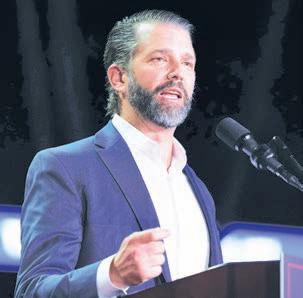
GROUP led by Donald Trump Jr. is infusing funding and some political muscle into the Enhanced Games, a sports festival that would hold


The difference between ageing and frailty: One is inevitable, the other is not
FEBRUARY 16, 2025 | soundstrip.businessmirror@gmail.com
By Bless Aubrey Ogerio
THIS young crooner from Manchester isn’t just reviving the golden age of music—he’s living it.
With his slick, retro aesthetic and a voice straight out of the ‘50s, Elliot James Reay first captured hearts by sharing classic covers on TikTok in 2019. His vintage sound quickly went viral, propelling him into the spotlight.
Now, fresh off his Manila show on February 2, Elliot is proving that timeless romance still has a place in today’s music scene.
“I feel like today, we have a little bit too much scrutiny on people that do that (lovey dovey),” he shared during a press conference. “So I think [my music] is mostly for people who just want to have that 1950s love,”
His debut single, ‘I Think They Call This Love,’ dropped in July last year, racking up 20 million YouTube streams and 69 million on Spotify. Then came ‘Boy in Love’ in November, cementing his rise

Publisher :
T. Anthony C. Cabangon
Lourdes M. Fernandez
Editor-In-Chief :
Concept :
Aldwin M. Tolosa
Y2Z Editor :
SoundStrip Editor : Group Creative Director : Graphic Designers :
Jt Nisay
Edwin P. Sallan
Eduardo A. Davad
Niggel Figueroa
Anabelle O. Flores
Contributing Writers :
Tony M. Maghirang
Rick Olivares
Jill Tan Radovan
Reine Juvierre S. Alberto
John Eiron R. Francisco
Pocholo Concepcion
Francine Y. Medina
Justine Xyrah Garcia
Bea Rollo
Trixzy Leigh Bonotan
Bless Aubrey Ogerio
Photographers :
Bernard P. Testa Nonie Reyes
Y2Z & SOUNDSTRIP are published and distributed free every Sunday by the Philippine Business Daily Mirror Publishing Inc. as a project of the
The Philippine Business Mirror Publishing, Inc., with offices on the 3rd Floor of Dominga Building III 2113 Chino Roces Avenue corner Dela Rosa Street, Makati City, Philippines. Tel. Nos. (Editorial) 817-9467; 813-0725.
Fax line: 813-7025
Advertising Sales: 893-2019; 817-1351,817-2807. Circulation: 893-1662; 814-0134 to 36. www.businessmirror.com.ph
with another 1.2 million YouTube streams and 3 million on Spotify.
Despite his growing fame, Elliot admitted it took time to embrace his identity as an artist. “It took me a while to show the world who I was,” he reflected. “But now that I have, I feel so much better for it.”
THE Manchester-born singer love for old-school music started young, thanks to his parents introducing him to legends like Elvis Presley and Buddy Holly. But it wasn’t until his teenage years, when his voice took on its deep, velvety tone, that he fully leaned into the retro sound.
“I used to sing these songs in the streets of my hometown,” he recalled. “People loved it… That just pushed me to dig deeper into the genre.”
Then it was his girlfriend who finally nudged him to put his “real self” online, which was a move that changed everything. “It changed my whole thing, changed my whole career. I’m doing something I enjoy and I’m happy doing it. That’s what matters.”
When it comes to songwriting, Reay t refuses to force creativity. “There’s no real structure to a writing session. It’s whatever happens, happens.”
Some songs, like ‘I Think They Call This Love,’ took hours of trial and error. Others, like ‘Boy in Love,’ just… happened. “That [one] took like three to four hours to write, whereas ‘Boy In Love’ was written in, like, 20 minutes. It was an idea that I just came up with, I think it was in the bathroom at the time and the bassline just came into my head,” he said.
AHEAD of his Manila show, Elliot promised not just a concert but an experience, and he delivered.
His set featured three unreleased songs, seamlessly blending into his nostalgic, emotionfilled setlist. Though it was his first time connecting with Filipino fans as an artist, he instantly felt the country’s warmth.
“You guys are some of the most welcoming

people I’ve ever met,” he said. “And I try to take a piece of that and give it back. That’s important to me.”
But the retro-pop artist’s ties to the Philippines go deeper than just a tour stop. His grandfather lived in Bayambang, Pangasinan for a decade, and Reay spent time there as a child, immersing himself in the local community.
“There’s a lot I learned from you guys that I took back to England,” he said. “It changed my whole outlook on life.”
AN album is on the horizon. But first, some singles.

“We just wrapped up four singles in London over the last two weeks,” Elliot revealed. “We spent a lot of time making sure they align, so they could end up on the album… or maybe a little EP. We’ll see.” Right now, it’s all about strategy. “These tracks are ready. It’s just a matter of choosing the right order and making sure they land exactly how we want them to.”
As for a possible collaboration with a Filipino artist? The nostalgic hitmaker is open to it. “I would definitely consider working with a Filipino artist. I think it’s got to make sense,” he said. “We’ve got to find someone who is, you know, matching the style. But I don’t think that’d be really hard to do.” He doesn’t box himself in when it comes to inspiration. Instead, he lets life, and his favorite films, do the talking.

“We take ideas from whatever happens throughout the day,” he explained. “We’ll be watching a movie, and a single line might stand out. We’ll hear it and think, ‘That could be a lyric.’”
As for his go-to genre? The classics. “We watch a lot of old-school rom-coms to keep things in line with the sound.”
With influences that blend nostalgia, spontaneity and cinematic storytelling, it’s no surprise that Elliot James Reay is carving a space of his own, one timeless love song at a time. And with new music on the way, this is just the beginning.


By Ica Hontiveros-Cheng
YOU never know how these online interviews would go. When I received the assignment to interview American-Korean singer Samuel (eagle-eyed K-Pop aficionados may recognize him from season 2 of the reality series ‘Produce 101’) and Vietnamese singer Hoàng Mỹ An. I didn’t expect to interview them (via zoom) in a moving car!
There was a change in their flight schedule and they had to rush to the airport to catch it. But such is the life of jet-setting superstars such as Samuel and Mỹ An.
As real as it gets
I THOUGHT that it was amusing that both artists were graduates of reality TV shows, Samuel from ‘Produce 101’ while Hoàng Mỹ An did a stint on ‘Dancing With The Stars’ and ‘Masked Singer’ and here they were jumping in a car to rush to the airport and the whole situation with the angle of the camera reminded me of an episode of yet another reality series - The Amazing Race! I already had that question prepared, of whether they would consider being a team on The Amazing Race. “Yeah, I’m down.” Mỹ An eagerly answered with her bright red hair. “They gotta give us
good food.” was Samuel’s reply. “I’m a food lover.” the 23-year-old singer added.
“I enjoy eating as well.” Mỹ An quipped smiling.
The power of collaboration
WE then got to talking about the duo’s (at that time) upcoming Valentine’s collaboration –“Wanna Hear You Say” which is actually the first collaboration between a Vietnamese and South Korean artist. “I am very excited and I’m looking forward to releasing this song and to see how the audience will react to it”
Mỹ An said.
I asked them about the trend of two or more artists from different countries coming together to do a collaboration and what were their thoughts about it.
“The music industry now is open, widely across the globe, (so) that we can reach out to each other, listen to the music,
(and) find the right song that will fit. And I think that it’s a good sign because we can blend our different cultures and our uniqueness into the song. Mỹ An said.
This collaboration really came at a good time, it was good timing. Samuel said, fixing his cap in place.
Great timing and a Valentine’s gift M Ỹ An agreed: “One of the things that I would love to do in 2025 is go around Southeast Asia and to collaborate with more international artists.”
Of course, being a hospitable Filipino I extended an invite to Mỹ An and Samuel and told them about the great food here (them being food lovers and all).
Because it’s a Valentine song released in time for the love month, we talked about their ideal Valentines dates, and gifts (flowers or chocolates).
“I would love to spend time with my loved one and enjoy the day.” Mỹ An said.
Samuel mused about spending Valentine’s Day with his family or fans, or even some quiet time alone. “TMI (too much information) though, I don’t eat too many chocolates, because I’m afraid of the dentist.” Me too Samuel, me too.
“This year we’re giving the biggest gift from us to our fans and it’s our collaboration ‘Wanna Hear You Say’ and we hope that you like it.” Mỹ An said. “You can give and share that song to your loved one.” she added, smiling.
Our whole interview, the rushing to the airport scenario reminded me of the many rom-coms that I have to love, and I can’t help but smile that now it has an official Valentine’s song to go with it.
Whether you are celebrating heart’s day with your loved one, with your friends (Galentine’s Day - spending Valentine’s day with your girlfriends is super fun) check out this sweet collaboration from Mỹ An and Samuel! After all it is their Valentine’s gift to us all.

By Julee McDonagh & Caleb Ferguson University of Wollongong
AGEING is a normal part of the life course. It doesn’t matter how many green smoothies you drink, or how many “anti-ageing” skin care products you use. You can’t stop the ageing process.
But while we’re all getting older, not everyone who ages will necessarily become frail. Ageing and frailty are closely related, but they’re not the same thing. Let’s break down the difference between the two.
What is ageing?
ON a biological level, ageing is the result of the build-up of cellular and molecular damage in the body over time. The ageing process causes a gradual decline in physical and mental function, a higher risk of disease, and eventual (and unavoidable) death. Still, some people think they can cheat the system, spending millions trying to stay young forever. While we may be able to reduce the appearance of ageing, ultimately there’s no magic pill to increase our longevity.
What is it about ageing we are so afraid of? When it comes down to it, many people are probably less afraid of ageing, and more afraid of becoming frail.
What is frailty?
FRAILTY is defined as a state of vulnerability characterized by a loss of reserve
across multiple parts of the body. It manifests in several physical symptoms, such as weakness, slow walking speed, exhaustion, unintentional weight loss, and low activity level.
Notably, someone who is frail is less able to “bounce back” (or recover) after a stressor event compared to someone who is not frail. A stressor event could be, for example, having a fall, getting a urinary infection, or even being admitted to hospital.
Frailty is more common in older people. But in some cases, frailty can affect younger people too. For example, people with advanced chronic diseases, such as heart failure, can develop frailty much younger.
Frailty is dynamic. While it can get worse over time, in some cases frailty can also be reversed or even prevented through health and lifestyle changes.
For example, we know physical inactivity and a sedentary lifestyle can significantly increase a person’s risk of becoming frail. On the flip side, evidence shows doing more exercise can reduce frailty in older adults. There are other lifestyle modifications we can make too. And the earlier we make these changes, the better. Here are some key things you can do to help prevent frailty:
Exercise more, including resistance training, such as squats and lunges, or grab some stretchy resistance bands. Many of these sorts of exercises can be done at home. YouTube has some great resources.
The physical activity guidelines for older Australians recommend at least 30 minutes of moderate intensity physical activity on most days or preferably every day. The guidelines also highlight the importance of incorporating different types of activities (such as resistance, balance or flexibility exercises) and reducing the

time you spend sitting down.
2
Stay socially active
Social isolation and loneliness can contribute to the progression of frailty. Reach out to friends and family for support or contact local community groups that you may be able to join. This might include your local Zumba class or bridge club.
3
Ask your doctor or pharmacist to regularly check your medications
“Polypharmacy” (when someone is prescribed five or more medications) is associated with an increased risk of frailty. The presence of frailty can also interfere with how the body absorbs medicines.
Home medicine reviews are available for older adults with a chronic medical condition or a complex medication regimen. These reviews aim to help people get the most benefit from their medicines and reduce their risk of experiencing adverse effects.
Always consult your doctor before making any changes to your current medications.
4
Eat a protein-rich diet with plenty of fruit and vegetables
Low nutrient intake can negatively impact physical function and may increase your risk of becoming frail. There’s some evidence to suggest eating more protein may delay the onset of frailty.
A food-first approach is best when looking to increase the protein in your diet. Protein is found in foods such as lean meats, poultry, seafood, eggs, dairy products, legumes and nuts.
Ask your GP for a referral to a dietitian who can provide advice on a dietary regime that is best for you. Supplements may be recommended if you are struggling to meet your protein needs from diet alone. The Conversation
By Pauline Joy M. Gutierrez
I
N 2018, Armita Rufino approached Security Bank with an idea inspired by her mother’s quiet legacy: a plaza built with her own savings, a haven for the elderly, and decades of unrecognized community work.
“She never wanted awards—she just did,” Rufino recalled.
The conversation gave birth to the Bravo Empowered Women Awards, now on its sixth year, celebrating Filipinas whose work thrives far from the limelight. Security Bank and the Zonta Club of Makati & Environs have officially opened nominations for the 2025 cycle of the awards, guided by a rigorous set of criteria. Nominees must have at least three years of advocacy work, a track record of sustainable projects, and must not have received any major national or international awards.
“This event [is] more than just the recognition of achievements; it is a celebration of women whose brilliance might otherwise have gone unnoticed,” said Joanne
Zapanta-Andrada, president of the Zonta Club of Makati & Environs.
The awards honor an outstanding woman from eight
categories: Arts, Culture & Heritage; Business; Education; Media & Public Affairs; Science, Technology, Engineering, and Mathematics (STEM); Social Services; Sports; and Culinary & Tourism. Winners will receive financial donations to further their advocacies.
“We recognize that when women succeed, communities thrive,” said Tanya Ansaldo-Deakin, Security Bank’s First Vice President and Corporate Communications Division Head.
One recipient used her grant to purchase devices for underprivileged students during the pandemic, enabling them to continue their education online. Another winner dedicated her prize to helping prisoners reintegrate into society.
Other recent honorees include a Bacolod-based biologist transforming invasive seaweed into eco-friendly textiles, a Cebu mechanic training out-of-school youth in solar panel installation, and a Naga lawyer championing indigenous land rights.
“We try to get nominees from different regions, not

just the NCR,” noted Rufino, now the District 17 Zonta Foundation for Women Endowment Ambassador. She added that there is no age limit for nominating awardees in an effort to showcase diverse stories of impact across the country. While the Bravo grant provides immediate support, Security Bank hinted at deeper collaboration for winners whose projects align with its core missions.
“Beyond the award, we’re open to funding initiatives that reflect our pillars: education, livelihood development, community-building, and women’s empowerment,” Ansaldo-Deakin explained. “Where we can find synergies, we leverage those.”
With nominations closing on April 30, 2025, Aileen Ruiz–Zarate, Bravo Committee Chair, encouraged the public to recognize the women in their lives who demonstrate unwavering commitment to leadership and service. “The more people looking, I think the more we’ll be able to find our eight Bravo Empowered Women.”
Those who wish to send nominations can visit www. securitybank.com/BravoAwards